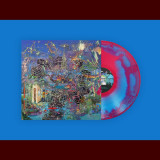
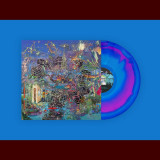
“Irreverent and playful” MOJO // “...an utterly distinctive, mental world.” The Financial Times // “From keening ballads to haunting waltzes, Paradise has never seemed stranger” Shindig // “There’s a buoyancy to even the most lacerating lines now, a liberating relief in pressing on” Uncut // Way back when, before the pandemic, and before the release of Alex Rex’s last album Paradise escaped the confines of lockdown, Alex Neilson took a break from the road and set about putting together a record of poems extracted from the collapsed goldmine of his brain. Returning to his experimental roots, Mouthful of Earth’s cutting and oft heart-wrenching stanzas are set to music largely from underground legends Alastair Galbraith, Richard Youngs and Alex’s cult experimental drone record Belsayer Time (originally released on Time Lag Records in 2006. This is the first time that this music has ever been made available digitally). And for one track, Alex reunites with ex-Trembling Bells mucker Lavinia Blackwall for some free-form experimental jazz, reminiscent of the more psychedelically unhinged moments of Cammell/Roeg´s Performance soundtrack. To quote Stuart Maconie’s sleeve notes for the record, “One of the first things I learned about Alex’s musical imagination and modus operandi was a joy in collaboration, and Mouthful Of Earth continues in a tradition that has seen him work with many kindred spirits across many genres; Bonnie ‘Prince’ Billy, Current 93, Jandek, Kan Mikami, Shirley Collins, Six Organs of Admittance, Josephine Foster and Baby Dee. The list is disparate and stellar, the results are always interesting and alive.” Continuing in the spirit of collaboration, Mouthful of Earth’s words and music are accompanied by a digital book of drawings by Kent-based visual artist, musician and art psychotherapist, Benjamin Prosser (Insta: @benjaminprosser). These are not so much literal illustrations as reactions. The combination of poems and visuals works a suite of haunted vignettes, dense with bleak humour and hallucinatory images. “The phantom hand of a lover pressed over the mouth of your mother” / “the whole gurning universe” / “the collapsed farmhouse of my mouth”. Mouthful of Earth is both visceral and corporeal, flecked with blood, sweat and beers. Or as Alex puts it "a continuous project of describing the human spirit pushed to the point of crisis”. Mouthful of Earth finds beauty in scarring and peace in torment. It’s both an assault and a balm of sorts. Life, says Neilson “is not a golden arc / It's a bent aerial / connected to a vast and terrible machine/operated by a child”. But listen hard and you will also hear beauty… “The song of yourself, roaring like a cloud, explicable only by light”. With sleeve notes by BBC Radio presenter and author Stuart Maconie, Mouthful of Earth is released on limited edition vinyl (300 copies only) and digitally via Neolithic Recordings. Reminiscent of his early work with Trembling Bells, and again featuring Lavinia Blackwall on vox, the track is a red herring; a nod towards a lighter shade of darkness.
Cerca:f free
Hailing from Ancaster, Ontario, Carl Didur has been an enigmatic fixture of Toronto’s underground music community for close to two decades. Originally traversing the Golden Horseshoe with The Battleship, Ethel, a band which sprung from his first outfit CEDRUMATIC, Didur soon moved to Toronto. Throughout the mid-2000’s he could be spotted playing his trademark ace-tone organ as a member of No Dynamics and Rozasia in the city’s crammed rogue venues, such as The Bagel and the infamous and transient Extermination Music Night. During these years The Battleship, Ethel continued to tour, often performing as backup band for Damo Suzuki, while at other shows inviting Dave Byers (Simply Saucer) and Bob Bryden (Spirit Of Christmas) to perform alongside the band. Perhaps the most enduring legacy of "The Battleship, Ethel", which dissolved in 2009, is that it laid the creative foundation for Carl and bandmate Michael McLean's next project, the prolific, studio focused, Zacht Automaat. As Zacht Automaat released music at a frantic pace, Carl continued to collaborate with members of a tight-knit group of Toronto’s downtown scene including touring with U.S. Girls and Slim Twig, performing and recording with Colin Fisher as Fake Humans, guesting on Absolutely Free’s Currency EP and producing New Fries’ most recent album The Idea of Us. Throughout the last decade Didur’s purely solo output has served to document his unimpeachably singular approach to music making. I Cannot See You Too Well (2011), Nothing is the Secret to Anything (2014) and Is It Yesterday? (2020) all released on cassette were followed by a digital album of gentle minimalism called Natural Feelings Vol I (2020). His solo shows consist of multiple tape machines running loops through various analog devices (a Certified Electronics Technician Didur now spends his non-piano playing hours of the day repairing all manner of tape echoes and synthesizers) or solo Wurlitzer electric piano improvisations, his performances gracing both stage and gallery. With his latest release Maybe Next Time, Didur further establishes himself as a singular artist with a unique methodology honed from years of music-making and listening. The album’s compositions swing from lush Axelrod-ish affairs filled with Mellotron strings to the album’s spiritual jazz influenced centerpiece The River Meets The Sea. “I was inspired by Eno's Here Come the Warm Jets, Crazy Horse but only when they are sad, Alice Coltrane, Jessica Pratt, McDonald and Giles, and so many others…” states Didur. Infused with a melancholic tone throughout, tracks such as Close My Eyes and Autumn’s Here invoke cinematic memories with tape echo and reverb applying a softened focus to the proceedings. Carl explains the context for the tone and the setting for the record’s gestation: “Maybe Next Time is a record I made after the world lost a sweet person that many in our community loved. Unlike most of my albums this one never seeks to shock or surprise you. It is about sadness, confusion, dissolution, transformation and ultimately a deeply forgiving sense of love. It is a concept record about being a human being!”
This May, Italian alchemists and power trio Ufomammut return with their ninth studio album, Fenice via Neurot Recordings. But not as we’ve heard them before, now “more intimate, more free.”
For over 20 years, the band has combined the heaviness and majesty of dynamic riff worship with a nuanced understanding of psychedelic tradition and history in music, creating a cosmic, futuristic, and technicolor sound destined for absolute immersion.
Fenice (meaning Phoenix in Italian) symbolically represents endless rebirth and the ability to start again after everything seems doomed. The album is the first recording with new drummer Levre, and truly marks a new chapter in Ufomammut history.
“I think we lost our spontaneity, album after album,” says Urlo. “We tried to make more complicated songs and albums, but I think at some point we just ended up repeating ourselves. With Fenice, we were ready to start from zero, we had no past anymore - so we just wanted to be reborn and rise from the ashes..”
While the band are well-known for their psychedelic travels into the far reaches of the cosmos, Fenice is a much more introspective listening experience. Fenice was conceived as a single concept track, divided in six facets of this inward-facing focus. Sonic experimentations abound in the exploration of this central theme; synths and experimental vocal effects are featured more prominently than ever before as the band push themselves ever further into the uncharted territory of their very identity.
The towering synths on the opening track ‘Duat’ evoke an almighty machine rising from the depths of primordial ooze. There’s a shift to a frenetic garage-psych pace before mellowing out into a more familiar doomy stomp. ‘Kepherer’ is a respite, albeit a slight one, returning to the pulsing rhythms of the album’s intro before plunging the listener into the menacing build and release of ‘Psychostasia’ next. Each oscillation of this extraordinary album feels inevitable - Ufomammut are after all, masters of their craft, and when it comes to creating enveloping sonic journeys into the unknown, it’s their uninhibited sense of exploration that breaches new sonic ground.
Fenice is the sound of a band whose very essence has been rejuvenated, and are welcoming the chance to create music in the way they know best; by unfolding carefully and attentively, by melding those extreme dynamics which render Fenice as a living and breathing creature - and by writing gargantuan riffs that herald their very rebirth.
BBC 6 MusicAlbum of the Yearas chosen by
DJ Craig Charles
★★★★Mojo
★★★★★Blues & Soul
★★★★★UK Vibe
9/10 DJ Mag (Single I Miss You)
"One of the very best soul voices I've heard for a very long time"
Craig Charles (BBC 6Music)
"Delivered with a vocal dripping with yearning and desperation"
4/5 Mojo
"A high octane soul masterpiece"
Blues & Soul,5/5Album of the Month
"Undoubtedly the album of the year"
5/5 UK Vibe
Burundian soul singer JP Bimeni is set to release his first music since his BBC 6 Music award winning album Free, from 2018. Give Me Hope is a slice of horn heavy, Afro tinged, Stax inspired soul and is the first taster of a new album set for release in early 2022
Give me Hope is the title track from his new album, featuring his band The Black Belts, set to drop on February 4thon Lovemonk Records.
A supremely funky number it boasts bassline and powerful horn arrangements, and gives a taster to a new work that dots between classic '60s Motown, psychedelia and Afro-funk.
- A1: Right Now
- A2: I Love You (And I'm Glad That I Said It)
- A3: You And I
- A4: Teenager In Love
- A5: Sail On Sailor
- A6: It Always Hurts The Most In The Morning
- B1: Moonfire
- B2: You Didn't Feel That Way Last Night (Don't You Remember)
- B3: Along Came Jones
- B4: Savin' My Love For You
- B5: I Remember The Feeling
- B6: Sweet Heart Attack
- C1: Last Train To Clarksville
- C2: Medley: Valleri/Daydream Believer/A Little Bit Me, A Little Bit You
- C3: I Wonder What She's Doing Tonight
- C4: (I'm Not Your) Steppin' Stone
- C5: I Wanna Be Free
- C6: Savin' My Love For You
- C7: Pleasant Valley Sunday
- D1: I Remember The Feeling
- D2: A Teenager In Love
- D3: Cuddly Toy
- D4: Medley: Come A Little Bit Closer/Pretty Little Angel Eyes/Hurt So Bad/Peaches 'N' Cream/Something's Wrong With Me/Keep On Singing
- D5: I Love You (And I'm Glad That I Said It)
- D6: Action
7A Records announces the release of Dolenz, Jones, Boyce & Hart’s original studio and live albums. In the mid-1970s promoters were trying to reunite the Monkees, but with Michael Nesmith and Peter Tork unavailable, it was suggested that Micky Dolenz and Davy Jones team up with Tommy Boyce and Bobby Hart to tour as ‘The Golden Great Hits Of The Monkees Show - ‘The Guys Who Wrote ‘Em & The Guys Who Sang ‘Em’’. The group signed a deal with Capitol Records to record a self-titled studio album of new material. They later released a live album from their tour of Japan. Both albums have been unavailable and out of print for many years. 7A Records have tracked down the original master tapes, that were presumed missing for at least 27 years, and remastered both albums for this release. Available as deluxe 2CD and 2LP sets, the CD version will include a big 40 page colour booklet featuring extensive liner notes and previously unseen photos. The 2LP version comes in a gatefold sleeve and is pressed on special 180g Green, Black and Yellow Quad Vinyl.
- 11: Non- Specific Song
- 12: Charterhouse
- 13: Happy Shopper
- 14: Useless Second Cousin
- 15: Ex- Cable Street Tomorrow Attacking
- 16: Son Of Nothing
- 17: Ropeswing
- 18: Rent Act
- 19: Invisible People
- 20: A Mess Of Paradise
- 21: No Soap In A Dirty War
- 22: Red Tape Red Light
- 23: Natural Disasters
- 24: Cottonmouth, Torture
- 25: Tied The Small Death
- 26: A Mess Of Paradise (Scarf Demo)
- 27: I’m Not Like Everybody Else
- 28: Set Me Free
- 29: Second Son
- 30: Everybody, Recycle
Deluxe reissue of their 1989 sophomore album pressed on pale blue colour vinyl.
Presented in a gloss laminated gatefold sleeve, which features the original LP plus a bonus disc with all the A and B sides, some compilation tracks and an outtake, plus a 12-page booklet containing previously unpublished lyrics and tons of contemporary reviews and photos.
Completely remastered for your listening pleasure.
In 1989, while the musical world was fêting serial-killer worshipping noise bands, white boys with dreadlocks and the first glimmers of techno, one band – The Wolfhounds – was describing the times and the country exactly as they were. Or at least as they saw it.
Well, not exactly. The privations of finding enough money to live on, a semi-permanent roof over your head and perhaps the hope of real change were all there in the lyrics along with the multitudinous shards of ideas in the music, both raging and reflective – but there was also a sense of magical realism and authentic personal circumstance imbued in it all.
Formed as a frantic noisy fusion of sixties garage and independent post-punk in Romford in 1984, by 1986 it was the band’s misfortunate to be corralled with the jangly and quirky bands of the era-defining C86 tape, given away free with the NME that year. The frustration of being lumped with the lumpen was already spilling over into a heightened creativity that would see the band release three LPs in 18 months, the first and perhaps most fully realised of which was Bright & Guilty.
The band’s sense of melody saw three singles taken off it, and all received plentiful radio play that resulted in enthusiastic audience responses when the band toured with My Bloody Valentine and the House of Love shortly after the LP came out. This renewed attention also saw them being threatened with legal action by the food company satirically targeted by one of the singles – Happy Shopper.
The band’s magpie listening habits also saw the first glimmers of an interest in sampling with the track Cottonmouth, hip hop in the drum rhythms of Invisible People and Son of Nothing, discordant post- hardcore in Non-specific Song and even percussive hints of Tom Waits’ Rain Dogs in Charterhouse.
The album’s lyrical themes have sustained the relevance of these 30-something year-old songs. The dictatorship of the class system over the economy is touched on in Charterhouse, the unfairness of housing policy in Rent Act and Red Tape Red Light, the desperation of not having enough money to even seek employment in Useless Second Cousin. But there is contemplation and mystery, too: Rope Swing’s nostalgia for pre-teen childhood, Invisible People’s detailing of intangible weaknesses.
Of all their peers, The Wolfhounds post-C86 output stands up straight and proud, and you’ll find echoes of their sound in Fontaines DC, Idles and many others – but not performed with the brashness, vigour and uniqueness of the originals.
A Colourful Storm presents Enteha, the latest piece by Elodie, the duo of Andrew Chalk and Timo van Luijk.
Chalk and van Luijk embody a free-spirited approach to music making whose improvisational process can be traced to a distinct period of Europe's post-industrial landscape. More than two decades of ambitious solo and collaborative work would solidify both Chalk and van Luijk as masterful craftsmen exploring the tension between composition and free improvisation: their individual lists of collaborators boasts Christoph Heemann, Giancarlo Toniutti, David Jackman and Colin Potter, to name but a few.
A figment of two imaginations, Elodie appeared in 2011 almost fully formed with each record patiently revealing glimpses into a world concerned with time dilation, the phantasmagoric and spirits of the everyday. Enteha is one of the duo's more melancholic pieces and can be seen as a human response to seasonal transition. It's one of their uniquely longform explorations of mood and atmosphere as an air of romance drifts deftly into mystery and despair. The delicate hues of autumnal haze. The deceptive optimism of morning light. A work of supremely understated beauty that will appeal to anyone who finds solace in Harmonia, Gas, Joanna
**Hardcore, FWD dance music from two leading sound artists. Edition of 500, Mastered and cut by Matt Colton** Mark Fell and Gábor Lázár ratchet the game with their razor-sharp debut collaboration, 'The Neurobiology of Moral Decision Making'. As promised in the wake of Gábor's acclaimed vinyl debut, 'EP16', the duo have colluded on a full set of ten tracks, ranging from short synapse bursts thru to an uncannily emotive 12 minute masterpiece on the closing side. As the 10th release on The Death of Rave, it demonstrates the distance travelled since the early '90s paradigm shift of original rave culture, effecting a radical recalibration of meter and tone conventions in electronic/dance music, and by turns, acutely probing our perception of time and space. Essentially it's incredibly "funky", if "funk" is taken to mean syncopation or a play on tension-and-resolution. By utilising the grid-morphing potential of Max/MSP software, they unlock mutant ballistic patterns cleanly weaving between and recoding the tendons and ligament of techno, garage, footwork and hardcore with muscle memory-reprogramming impact. Kicks, claps and visceral chromatic stabs land at irregular, blind-spot junctures, acutely rewiring our sense of rhythmic anticipation and offering a thrilling new freedom of expression and dancefloor discipline in the process. It's a masterful step forward from Yorkshireman, Mark Fell's Sensate Focus output and SND classics, and, likewise, a logical leap from Budapest-based Max whizz, Gábor Lázár. If you're into Mumdance, Errorsmith, Lorenzo Senni, Autechre, Actress or SND; we'd say it's as essential as they come.
Being in a band is like being in a marriage: sometimes it’s magical, sometimes it’s unbearably challenging. To reinvigorate that marriage, Deap Vally have made their third album a genre-bending experiment with new collaborators and instrumentation that push the limits of what has previously defined the duo - Marriage is their musical Rumspringa, if you will. The album sees Julie and Lindsey break free of the rigid creative constraints within which they previously existed (two members, two instruments, two voices) and invite in collaborators such as KT Tunstall, Peaches, Jennie Vee and jennylee, as well as a range of producers including Allen Salmon, Josiah Mazzaschi and Harvey Mason Jr.
For genre-bending band Whiskey Myers, 2019’s self-titled and self-produced album offered a watershed moment. With Rolling Stone raving that the “irresistible” album was “the record the band was poised to make” while declaring them “the new torch bearers for Southern music” in a story titled “How Whiskey Myers Won Over Mick Jagger and Made the Album of Their Career;” Billboard and No Depression naming the album to best-of-the-year lists; 41,000 first week album sales; and the project debuting atop both the Country and Americana album charts (as well as at No. 2 on the Rock charts, behind only a re-release of The Beatles’ Abbey Road), the band celebrated mainstream success a decade in the making. Now, after spending 21 days isolated at the 2,300-acre Sonic Ranch studio deep in the heart of their native Texas, just miles from the U.S./Mexico border, the Gold-certified renegades have doubled down on what they do best: sharing honest truths with no-holds-barred instrumentation, letting the self-produced music speak for itself. Yet with Tornillo, named for the border town that is home to the pecan orchard-filled recording complex and set for release on July 29 via their own Wiggy Thump Records with distribution by Thirty Tigers, the six-piece band has taken their solid decade-plus foundation and pushed themself to further explore new sonic landscapes. “It’s going to have a little bit different sound,” lead singer Cody Cannon shared recently with Outsider. “It’s still Whiskey Myers at its core, but it’s kind of fresh… We did a lot of bass and horns on this one, which is something we’ve always wanted to do. Just being fans of all that old music and Motown stuff, and a lot of the stuff coming out of Muscle Shoals, old rock and roll. “We’re going to bend genre even more, I think, with this new record,” he continued. “It’s all over the place. But that’s fun, right? I hate the whole ‘Put it in a box. You gotta be this.’ … That’s not art to me. I love the idea of just doing, really, whatever you feel. It comes out a certain way because that’s just how it comes out. Whiskey Myers never really tried to be a certain way. It’s just how we are. So I think that’s really the whole thing about music, or the beauty about music; it’s just that freedom to create.” Tornillo as a whole does exactly that, drawing as much inspiration from Nirvana as from Waylon Jennings – even adding the legendary McCrary Sisters’ gospel influence to the project on background vocals. With Cannon leading the way on songwriting, the album also features writes from lead guitarist John Jeffers and fellow bandmembers Jamey Gleaves and Tony Kent, as well as rising singer/songwriter Aaron Raitiere (Anderson East, Oak Ridge Boys, A Star is Born).
In association with DJ Amir’s 180 Proof Records, BBE Music continues its exploration of rare gems from the Strata Records catalogue, with previously unreleased Sam Sanders album ‘Mirror Mirror’. A collector’s dream come true, this is musical treasure is so rare that the recordings on this album have never before seen a proper release and even the cover art had to be created from scratch. An almost unbelievable fact, given that it ranks as one of the strongest releases in the already air-tight era of Strata’s Detroit. Although he’s been compared to John Coltrane, Ornette Coleman and Joe Henderson, saxophonist Sam Sanders stands out as one of the most unique phenomena to come from the Motor City. Sanders’ approach to life was so 'out there' that one might say his relative obscurity was a personal choice. Sanders caught glimpses of fame early on performing with several internationally known acts and subsequently, he also learned a bit about what the Record Industry’s primary goals were. Realizing that he did not share them, Sanders chose instead to walk his own path. This drive for artistic freedom turned out to be a double-edged sword: while it allowed Sanders to produce some of the most electric jazz, funk, and soul to come from Detroit, it also meant that most of his recordings were never widely released, if they were released at all. Drawing on his experience with Motown acts like Stevie Wonder and Smokey Robinson, Sanders incorporated a fresh soul sound into recordings that would have otherwise been categorised as jazz. As such, 'Mirror Mirror' moves seamlessly between spirit and style: The album starts on the street with “Inner City Player,” a superfly breakdown of a Detroit hustler’s life, before moving into distinctly abstract territory with the melancholy “Face At My Window.” The experience is held together by a no-nonsense rhythm section featuring the aggressive drumming of Jimmy Allen and the intensely focused bass playing of Ed Pickens. Perhaps the most straightforward jazz song on the album, “Lover’s Gain” showcases Sanders at his freewheelin’ best. And if there was to be any doubt that 'Mirror Mirror' can get funky as hell, look no further than the wah-wah guitar and early synth sounds of “Funk’ed Up,” easily the greasiest cut on the album. 'Mirror Mirror' is remastered from the original reel to reel master tapes.
“Rob wanted the world of The Northman to feel harsh and uncomfortable, and for everything to feel like it was caked in mud and dry blood, so it was crucial for the score to mirror that.” Composers Robin Carolan (Tri-Angle Records) and Sebastian Gainsborough (Vessel) were given a task of epic proportions when director Rob Eggers (The VVitch, The Lighthouse) asked them to create the score for his ambitious and highly anticipated new film The Northman, releasing on April 22nd. They needed to make a score that both honored the immense research that had gone into the authenticity of this Viking era period piece and complimented the cinematic maximalism of the film for a modern audience. The artists stretched themselves to the depths of their creativity and the resulting album is a gorgeous sonic tableaux that places the listener right in the center of the film.
While arranging the score the composers consulted musician and ethnographer Poul Høxbro for inspiration and insight into the history of Viking music. Having backgrounds in left field electronic music, Robin and Sebastian felt liberated by the constraint of using a small selection of musical tools for this piece. “Electronic music has almost limitless potential when it comes to making sounds and that’s obviously an incredible thing, but you can also go down the wormhole and get lost in it sometimes. There’s no risk of that happening when you only have a few primary instruments to draw upon.” Robin remarked.
They utilized traditional instruments such as the tagelharpa, langspil, kravik lyre, and säckpip to build the cinematic world of The Northman but they also took creative freedoms in adding instruments likes drums, which some academics believe wouldn’t have played a big part in Viking musical culture, simply due to the lack of archaeological evidence of actual drums. “One of the pieces we wrote was intended to emulate the sound of a bullroarer; an ancient instrument used in sacred rituals or in battle to intimidate enemies. It makes a really disorienting roaring vibrato sound and low frequencies capable of traveling insane distances.” Robin says when asked about one of the more unique aspects of the score. Everyone involved put so much effort into both their research and their creativity and this richness is evident in every track. The album as a whole is a cinematic masterpiece of sound and ambiance, both gorgeous and disturbing, like the film it so beautifully accompanies.
“Rob wanted the world of The Northman to feel harsh and uncomfortable, and for everything to feel like it was caked in mud and dry blood, so it was crucial for the score to mirror that.” Composers Robin Carolan (Tri-Angle Records) and Sebastian Gainsborough (Vessel) were given a task of epic proportions when director Rob Eggers (The VVitch, The Lighthouse) asked them to create the score for his ambitious and highly anticipated new film The Northman, releasing on April 22nd. They needed to make a score that both honored the immense research that had gone into the authenticity of this Viking era period piece and complimented the cinematic maximalism of the film for a modern audience. The artists stretched themselves to the depths of their creativity and the resulting album is a gorgeous sonic tableaux that places the listener right in the center of the film.
While arranging the score the composers consulted musician and ethnographer Poul Høxbro for inspiration and insight into the history of Viking music. Having backgrounds in left field electronic music, Robin and Sebastian felt liberated by the constraint of using a small selection of musical tools for this piece. “Electronic music has almost limitless potential when it comes to making sounds and that’s obviously an incredible thing, but you can also go down the wormhole and get lost in it sometimes. There’s no risk of that happening when you only have a few primary instruments to draw upon.” Robin remarked.
They utilized traditional instruments such as the tagelharpa, langspil, kravik lyre, and säckpip to build the cinematic world of The Northman but they also took creative freedoms in adding instruments likes drums, which some academics believe wouldn’t have played a big part in Viking musical culture, simply due to the lack of archaeological evidence of actual drums. “One of the pieces we wrote was intended to emulate the sound of a bullroarer; an ancient instrument used in sacred rituals or in battle to intimidate enemies. It makes a really disorienting roaring vibrato sound and low frequencies capable of traveling insane distances.” Robin says when asked about one of the more unique aspects of the score. Everyone involved put so much effort into both their research and their creativity and this richness is evident in every track. The album as a whole is a cinematic masterpiece of sound and ambiance, both gorgeous and disturbing, like the film it so beautifully accompanies.
Tortoise has spent nearly 30 years making music that defies description. While the Chicago-based instrumental quintet has nodded to dub, rock, jazz, electronica, and minimalism throughout its revered and influential discography, the resulting sounds have always been distinctly, even stubbornly, their own. There is a always the pervasive element of group play, or ensemble?mindedness, as opposed to emphasis on a virtuoso soloist or frontman, despite the fact Tortoise is composed of members who could each easily have taken center stage in another group. In their debut, Tortoise is composed of Douglas McCombs, John Herndon, Dan Bitney, John McEntire, and Bundy K. Brown. This self-titled, incorporates many musical styles and influences, but no one style alone is sufficient to fully describe the distinct sound they craft. This unique blending of styles caused them to be recognized as the leaders of a new musical movement. Tortoise utilize the recording studio, not only to put their music to wax, but in a way that their recording process becomes a compostional tool described at times as the "sixth member", thus creating a boundless parameter in which to create and manipulate music. Tortoise's self-titled debut was originally released in 1994. This re-issue is re-mastered by Roger Seibel at SAE Mastering, in jacket with art insert, both designed by Sam Prekop as well as a free download card. 2022 version is available on limited edition white with hi-melt black vinyl
“Follow Your Heart is all about resilience, connection and joy. How we reunite with our souls, our power, our love’s and our heart as we go through the greatest challenges our world has seen. I wanted to make a record that was uplifting and vulnerable. These songs have all been written during the pandemic, a time in which I lost my father to Covid, lost my job (as a touring musician), and leaned on my wife, family and friends and found a closeness with them that I never knew before. I laughed louder, played harder, cried deeper and danced with more freedom than I’ve ever felt during this crazy time - this music reflects it all. While I will never be grateful to the pandemic that has taken many friends and relatives from my life, I am deeply indebted for the time it has given me to reflect, re-connect with my calling and re-envision the musical soundscape of my life’s journey and find the light in a way that’s brighter than ever!!!” -- Michael Franti
Lasse Marhaug is one of those characters that operates at the nexus of so much stuff that’s important to us here - working as a producer (over the last couple of years alone he’s helped shape albums by Jenny Hval, Kelly Lee Owens, Okkyung Lee, Hillary Woods etc etc), a mastering engineer (far too many releases to mention), a prolific sleeve designer (likewise), publisher (his occasional Personal Best magazine is still going strong) and, perhaps most importantly - a recording artist in his own right. ‘Context’ is his most substantial release in years - a crushing assembly of bone-dry/darkside drone/machine malfunctions that’s bursting with a visceral, throbbing, mass of feeling. If yr into anything on the spectrum from Mika Vainio to Grouper to Kevin Drumm or Deathprod - this one’s as good as it gets
Over almost three decades of activity, Marhaug has carved out notoriety as a solo performer, a prolific collaborator (working with everyone from Sunn O))) to Jim O'Rourke) and as a busy producer, who's notched up credits on some of the most striking-sounding albums of the last few years. This new album was created as a swan song for the infamous Oslo studio that he's inhabited for 17 years, prior to his move back to the Arctic Circle where he originally came from. Recorded over a 14-month period and painstakingly edited from hours upon hours of material, it might just be the most impressive, moving record we’ve heard from him so far.
The interplay between piercing softness and deafening noise is the key to "Context", displaying a philosophy Marhaug has been exploring for years. Few other artists are able to balance chaos and harmony with such ease; Marhaug does it without grandstanding, it's music that sounds as simultaneously beautiful and as daunting as the Arctic landscape he's returning to. At any moment a sound can be alluring or treacherous, like the frozen sun reflecting on a snowy mountaintop. Marhaug's deftness with rhythm and bass emerges on 'Context 3', as he pairs Vainio-esque low-end pulses with crumpled noise and widescreen tones; as disquieting music-box chimes absorbed into the blasted soundscape on 'Context 5', while we're thrust into the freezing cold on 'Context 6', subjected to punctuating gusts of white noise and trapped string loops.
Trust it’s a rare and near-mythical beast, conjuring vast, treacherous soundscapes illuminated with pangs of sentiment that naturally weave strands of his non-musical practice in their psychosensual lustre and gritty attrition. As he steps into a new phase of his career, we're left with a concluding chapter that stands as a summation and open-ended post-credits reveal.
21st Century pop is curiously irrelevant: autotune, twelve 'writers' on a single song, sensationalist yet skin-deep social commentary . . . with none of the joy, excitement and surprises of pop's lengthy heyday, from the Brill Building through the New Wave era. Where did it go? That would be an apt introduction to an album of calculated throwbacks to a three-minute pop ideal . . . but No Place Like Home isn't that record. We doubt even Gemma could tell you where this collection of beguiling jewels came from exactly, each fully-formed, complete and satisfying, no two quite alike, and each devoid of Wet Leg or Dry Cleaning's crafty calculation, but with every bit of those acts' charm. The first single, Stop, is based on an idea so simple that it's nearly unfathomable why no one had come conjured it earlier. Like toilet paper or a pair of scissors, the song feels entirely obvious until one ponders its late arrival. Stop's motorik beat propels verses to a chorus of pure delight, bested by a bridge occurring so late in the tune that it comes across like a surprise second dessert. My Idea Of Fun, a tale of frequent drunken regret, comes with a video of minimalist humour and visual brilliance. On other songs, Gemma channels acts Delta 5, Au Pairs and The Raincoats, along with the humour of Ian Dury and a similar verité of London life found in the best of Madness. The more serious fare is equally compelling. Rabbit Hole projects a daring newness of young freedom, Dance Of A Thousand Faces veers into Sprechstimme and expands into a swooping chorus, the feel of which subtly conveys present-day tensions reminiscent of the Weimar era. Tailspin captures the dark feeling which comes burdened with real-time consciousness of a loss of control, while the album closer, Frida, a tale of the loss of a dear friend manages to end in a guardedly upbeat tone. Gemma's debut album is sure to stir up deep interest and will be supported by a number of videos and live performances, plus free digital singles featuring otherwise unavailable non- album tracks.
- A1: Bcalm X Banks - Hot Spring
- A2: Living Room - Brazilian Sunset
- A3: Kainbeats - Noddin Off
- A4: Kazam - Chromatic
- A5: Goson X Krynoze - Little Moment
- A6: Sleepdealer - Roses
- A7: Renboz - Better Days
- A8: Honshu Lo Fi - Morning
- A9: Screen Jazzmaster - Rio Donuts
- A10: Oilix | - Feelings
- B1: Saib - Samui Sunrise
- B2: Mujo X Hakone - Nagata Lights
- B3: Shierro - Hiding In A Hoodie
- B4: Matchbox Youth - Freeze
- B5: Dpsht - Feelin
- B6: Enoki - For You
- B7: Hikari - Rooftop Late Night Chill
- B8: Goodge - Skies The Limit
- B9: Duan Wasi - Thrill Devine
Belgian instrumentalists Glass Museum have found the perfect balance between piano and drums, where jazz and electronics collide, uniting the surgical precision of the best contemporary jazz, à la Gogo Penguin and Badbadnotgood, with the electronic influences of Jon Hopkins or Floating Points.
In motion since 2016, the duo consisting of keyboardist Antoine Flipo and drummer Martin Grégoire, have a rich history written around a powerful connection to duality. From the initial impact of the 'Deux' EP in 2018, to the synthetic and organic textures of the critically acclaimed 2020 album 'Reykjavik', Glass Museum has found its balance in symmetry.
Released 29th April via the groove-obsessed Sdban Ultra label, 'Reflet' was born out of a desire for freedom, a wish to innovate and travel differently. This new piece stands out as an artistic climax crafted at the crossroads of time and genres, an electronic proposition wrought by two brave hearts, tempered by the organic reflections delivered through computer free melodies. An album which places the human at the core of its compositions and in order to return to a more instinctive and instantaneous means of creation, the duo retreated to a secret location in one of the most remote parts of the Ardennes. It's there, in the shade of spruces, that the album was first born.
Extremely cinematographic, 'Reflet' delivers a panoramic view point: jazz, breakbeat, minimal techno and deep house, collide on neo classical grounds. From the dynamic instrumentation of album opener 'Caillebotis' to the absorbing oscillations of 'Shiitake' and grand gestures of the album title track, 'Reflet' is an odyssey running through troubled times, an ode to night time, to life, dreams and to all rhythms that convey emotions beyond words. Like its immersive creative process, the album offers a counterpoint and, above all, endless perspectives. Elsewhere, the pulsing, melodic 'Auburn' and entrancing electronic textures of 'Opal Sequences' continue the exploration before the strutting 'Kendama' showcases the electronic sensibilities that are buried within their productions.
Shining as a true instrumental tour de force, 'Reflet' also takes inspiration from the progress of the Ohme Collective. At the crossroads of art disciplines, science, new technologies and societal challenges, this creative community draws the future of visual arts and created the album artwork for this resolutely futuristic album.
Having initially won the opportunity to perform at the Dour Festival, Tournai back in 2016, Glass Museum have picked up a series of awards and distinctions back home in their homeland and they now find themselves dining at the top table of Europe's contemporary music scene. The international music scene opened itself to the band once again in 2019, with the duo performing at Elb Jazz in Hamburg, the legendary Ancienne Belgique in Brussels and the Iceland Airwaves Festival, Reykjavik.
In 2020, Glass Museum distinguished themselves by remixing a track for electronic artist, Rone. Having recently received a César Award for his soundtrack to the Jacques Audiard film, Les Olympiades, the French producer called on the Brussels duo's know-how - a mark of confidence which once again underlines the international reach of Glass Museum. Germany, Iceland, Turkey, Romania, Greece, France or Czech Republic have already approved Glass Museum's singular recipe.
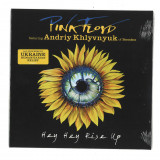
Pink Floyd are to release two physical versions of their first newly recorded music in over 25 years, ‘Hey Hey Rise Up’. The single, which was initially released digitally in April in support of the people of Ukraine and was #1 in 29 countries, will be available on 7” and CD single. Both formats will also feature a newly reworked version of ‘A Great Day For Freedom’ from the band’s 1994 album, The Division Bell. The track sees David Gilmour and Nick Mason joined by long time Pink Floyd bass player Guy Pratt, with Nitin Sawhney on keyboards and a lead vocal by Andriy Khlyvnyuk of Ukrainian band Boombox. It also has vocal harmonies by Romany and David Gilmour
When the track was first recorded at the end of March, Andriy, who left his band’s US tour to return home and fight for his country, was in a hospital bed in Kyiv recovering from a shrapnel injury. Proceeds for the physical release and the ongoing digital proceeds will go to Ukraine humanitarian relief.
For this limited edition release, David Gilmour revisited The Division Bell track ‘A Great Day For Freedom’. He has reworked the song using the original tapes which, as well as David, feature Nick Mason on drums and Richard Wright on keyboards, along with backing vocals from Sam Brown, Claudia Fontaine and Durga McBroom. The artwork for the track ‘The Sunflower Look’ features a painting of the national flower of Ukraine with a twist by the Cuban artist Yosan Leon. The cover is a direct reference to the woman who was seen around the world giving sunflower seeds to Russian soldiers and telling them to carry them in their pockets, so that when they die sunflowers will grow.
Das Talking Therapy Ensemble, das neue Projekt von Emma-Jean Thackray, die 2021 ihr gefeiertes Debütalbum 'Yellow' veröffentlichte, liegt irgendwo zwischen Free-Jazz-Wahnsinn und Groove, Komposition und Improvisation, dem Öffentlichen und dem Privaten. Durch den kathartischen Prozess der Improvisation finden es Befreiung von Stress und Leid, seine Sprachtherapie, inspiriert durch Blues, Crusty Punk, die bekennenden Dichter der 1950/60er und Künstler wie Art Ensemble Of Chicago, Sun Ra Arkestra, Albert Ayler, Irreversible Entanglements. Aufgenommen in den Abbey Road Studios im Zuge der Abbey Road x Pitchfork Studio-Session-Serie.
When Isa Gordon sent the demo of this album to me I knew I wanted to release it before I had got half way through it. I had previously released her super good Resili collaborative project but I wasn’t quite prepared for how good this was going to be. Isa is patently a once in a blue moon talent and I feel honoured to help get her unique, visionary sounds out into the world. This is next level programming & sound design but always with soul, and musicality. Sui generis.
Isa says
“For you only came about in the lockdown winter in 2020. I started seeing a lot of beats and motifs that I’d been working on working together as a collection and spent a few months compiling, completing, mixing and weaving together the tracks into a coherent album.
It was many nights tucked away entering the wormholes of making music and trying to honour the emotion contained in each song by expanding the sentiments within them into complete pieces, chasing down the journey in each one.
It was a very personal, solitary exploration of how I interpret and compose instrumentals, with the rare global situation inhibiting outsider contact and influence. I include a mix of tempos, styles and freely combine digital and live instruments in order to serve whatever intention or feeling needs to be heard”.
Isa is an Ayrshire bred, Glasgow based producer and singer. Impressed upon by myriad styles; Singing folk music since a youngster, Playing guitar since a teen, Producing electronic music thereafter. Now freely cherry-picking whatever sounds, instruments, words and methods serve the feeling. Exploring solitary beat making as Isa Gordon and Singing and writing heartfelt lyrical ditties with her band Fantasy Land.
- A1: The Plastik Beatniks Feat. Angel Bat Dawid - The Sun Is A Negro
- A2: The Plastik Beatniks Feat. Doseone - Hollywood Beat
- A3: The Plastik Beatniks Feat. Allen Ginsberg - What He Looks Like_
- A4: The Plastik Beatniks Feat. Angel Bat Dawid - Westcoast Sound 1956
- A5: All Those Streets I Must Find Cities For
- A6: The Plastik Beatniks Feat. Angel Bat Dawid - Bagelshop Jazz
- B1: The Plastik Beatniks Feat. Moor Mother - War Memoir
- B2: The Plastik Beatniks Feat. Angel Bat Dawid - Harwood Alley Song
- B3: The Plastik Beatniks Feat. Patti Smith - Ginsberg (For Allen)
- B4: Would You Wear My Eyes
- B5: A Particular Police Officer
- B6: The Plastik Beatniks Feat. Angel Bat Dawid - The End Always Comes Last
Sounds like supergroup. Rarely have outstanding figures of such a variety of musical styles collaborated on one album to pay homage to a nearly forgotten artist, one of the few black Beatnik poets, Bob Kaufman.
"All Those Streets I Must Find Cities For" by The Plastik Beatniks is an attempt to acoustically reanimate Bob Kaufman, to return the Beat to him in a transatlantic collaboration. It is a shimmering psychedelic, at times jazzy concept album, sometimes reminiscent of Krautrock or hip hop, about a Beat-era poet who was as great as he was forgotten. It takes spoken word to a new level, as a transatlantic showcase of musical avant-gardes and a joyful "sound archaeology" of modernity, in which the tracks of the "Plastik Beatniks" meet the best voices of America.
The 12 wildly different songs and audi collages, on the transatlantically-produced album, "All the Streets I Must Find Cities For," is based on lyrics by Beat author Bob Kaufman. They were originally part of the radio play "Thank God for Beatniks," for which author Andreas Ammer ("Ammer & Einheit"), Notwist‘s Markus Acher and Micha Acher and loop maker Leo Hopfinger ("LeRoy") formed "The Plastik Beatniks." On the eastern side of the Atlantic they composed music and crafted soundscapes. On the west side of the ocean, they asked three of the most renowned singers, activists and producers in the U.S. to recite or sing Bob Kaufman's poetry.
Punk-pop icon Patti Smith immediately signed on to read Kaufman's poem "Ginsberg (For Allen)". Free jazz vocalist Moor Mother passionately performed Bob Kaufman's "War Memoir". American jazz clarinetist, composer, singer and “International Anthem” labelmate Angel Bat Dawid, a legitimate successor to Sun Ra, polyphonically read and sang such poems as "The Sun is a Negroe" and "West Coast Sound 1956" and included some clarinet solos on top. Also on the album, Bob Kaufman himself recites his previously unknown poems "Hollywood Beat", "Would You Wear My Eyes", and the "Jail Poem" "All Those Streets I Must Find Cities For". Beat chronicler Raymond Foye, who still lives at the Chelsea Hotel in New York, contributed an interview he conducted with late beatnik Allen Ginsberg about Bob Kaufman. Completing the circle was hip-hop artist Adam "DoseOne" ("13&God"), who once gave Markus Acher a well-thumbed volume of Bob Kaufman, whom he admired. He contributed some raps. Thus 12 tracks emerged, as diverse as the artists, poets and musicians who contributed to it. More than an album. An epitaph. A work for the eternity of Beat.
Regarding Bob Kaufman - of course the FBI kept a file on him – first as a sailor, then a communist, and finally a Beat poet. As one of the mainstays of the movement, he edited the literary magazine "Beatitude" in San Francisco and defined "Beatnik" to Allen Ginsberg: half rhythm, half sputnik. Bob recited his poetry loudly on the streets (when he wasn't sunk into years of silence in protest of the Vietnam War) and in the bars and bagel shops of North Beach. Once, he almost landed a pop hit ("Green Green Rocky Road"), which then made Dylan's companion Dave van Ronk famous. That Kaufman is today less known than his friend Allen Ginsberg may be because he was a black Beat poet, and also a Jew. This was not compatible with fame in the US of the 1950s. Though Kaufman had the same publisher, City Lights, as Ginsberg, he was frequently arrested and jailed, and was treated with electric shocks until he developed serious mental heath issues. There he wrote his "Jail Poems". The seventh of these lent this album its name:
"Someone whom I am is no one / Something I have done is nothing Someplace I have been is nowhere / I am not me What of the answers / I must find questions for? All these strange streets I must find cities for, Thank god for beatniks."
Waltari Mastermind Kärtsy Hatakka veröffentlicht mit HEAD FIRST deren Debutalbum. Der Status des finnischen Crossover-Monsters Waltari ist nicht leugnen, doch nur noch wenige können sich erinnern, dass Kärtsy Hatakka schon damals eine andere Band unter dem Namen HEAD FIRST hatte... die einzige echte Funk-Metal-Band aus Finnland!
In einigen der ersten Waltari Songs war der funkige Einfluss von HEAD FIRSt auch noch deutlich heraus zu hören. Und nun bringt eben diese Band ihr Debüt heraus... nach 30 Jahren des Wartens!
Basierend auf den größten Live-Killern wurde das vorhandene Songmaterial den heutigen Sounderwartungen angepasst. Dazu entstanden auch einige brandneue Stücke.
HEAD FIRST bedeutet Old-School-Funk-Metal mit einer frischen Kante grooviger Beats und mitreißender Energie!!
*Gatefold sleeve - black vinyl**
In many ways Kumoyo Island represents the culmination of a journey for Kikagaku Moyo. While their decade-long career can be summarized as a series of kaleidoscopic explorations through lands and dimensions far and near, there’s a strong intention in each of their works to take the listener to a particular place, however real or abstract they may be. In that sense, the title and cover art for the band’s fifth and final album draws you into a magical mass of land surrounded by water—but the couch suggests that Kumoyo Island may not be a fleeting stop, but rather a place of respite, where one could pause and take it all in.
Reconvening at Tsubame Studios in Asakusabashi, Tokyo, where their earliest material had been recorded, the five members of Kikagaku Moyo found new inspiration in a familiar and comfortable environment. With their adopted homebase of Amsterdam under lockdown and their touring activities halted due to the pandemic, the band felt a renewed sense of freedom being back in shitamachi, or the old downtown area of their hometown. With unrestricted time in the studio, they began to build upon the demos and song fragments they’d amassed since their last tour. In the 1.5 months spent in Tokyo, everything started to come together.
“Monaka”, its name taken from a type of Japanese wafer sweets, takes melodic inspiration from traditional minyo folk styles, while “Yayoi Iyayoi” is a rare instance of the band singing in their native tongue, its evocative lyrics utilizing archaic words taken from old poetry and nature books found in one of the many secondhand bookstores of Tokyo. For “Meu Mar”, an Erasmos Carlos cover, the original Portuguese lyrics were translated into English, then to Japanese. Strangely enough, the words seem to conjure an image of the protagonist floating among the clouds, looking down upon Tokyo Bay.
In fact, it may be possible to draw a parallel between the topography of the band’s home country—an island nation, surrounded by bodies of water—and the mysterious isle of Kumoyo. Are they one and the same? Has the band finally made it back home? It’s up to the listener to decide.
- A1: Pale Blue Care Biobiopatata06 09
- A2: Crossing The Tamariver Maher Shalal Hash Baz 48
- A3: Bayern Mitamurakandadan? 02 39
- A4: Anton Popo 04 08
- A5: Tohonoko Kourakuen 03 03
- A6: People Have Called Them Flowers Various Sighhorns 03 32
- B1: A Sparkle To Your Eyes Zayaendo 04 58
- B2: Swamp Strada05 18
- B3: New Window (Onto A Collapsed House) Sekifu 01 41
- B4: Gone Astray Hose 04 44
- B5: Ghhgh Compostela02 40
- B6: Wippi Zayaendo 01 25
- C1: Just Watching Gratin Carnival 04 35
- C2: Apple Ringo Pascals 02 50
- C3: Way To The Seatail 02 59
- C4: Pensive Miss Noahlewis’ Mahlon Taits 03 33
- C5: Nagyon Szeretrek Mindenkinek K`dlokk 05 57
- D1: Kemuri Fuigo 04 28
- D2: Mado Petit Daon 05 53
- D3: Minato Nrq 02 35
- D4: The Ending Theme Tenniscoats 02 59
- D5: A Day With The Saints Satomi Endo 03 13
Alien Transistor present Alien Parade Japan, a joyous double-album compilation of groups from Japan’s indie-pop and avant-garde undergrounds, all of which feature brass or woodwind instruments as part of their line-up. Compiled by Markus Acher (Alien Transistor, The Notwist, Hochzeitskapelle) with plenty of support and help from his Spirit Fest bandmate, Saya (also of Tenniscoats), it features some familiar names – Tenniscoats, naturally, but also Zayaendo, Tori Kudo’s Maher Shalal Hash Baz – alongside lesser-known groups like Biobiopatata, Mitamurakandadan?, Kourakuen, sekifu, and Noah Lewis Mahlon’ Taits, amongst many others.
The collection of songs here rests upon a simple question, and an interesting parallel: Why do so many groups from Japan include brass and woodwind, and how closely does this echo the scene that Acher is involved with in Munich? The idea was formulated in Acher’s mind after one of his groups, Hochzeitskapelle, had been invited by Saya to Japan in 2019, to take part in the Alien Parade Japan tour. “Saya and her friends recommended a lot of music to me that I didn’t know of,” Acher recalls, “and I was surprised and excited to find so many Japanese bands who use brass and woodwind instruments.”
This approach was something Acher had been familiar with for a while, thanks to his experiences in Munich: “Until then I thought of the Munich scene, where Hochzeitskapelle come from, as being quite unique in having ex-punk and still-indie musicians form loud acoustic bands with many brass instruments and play a wild mixture of styles.” And indeed, that variety is reflected in the twenty-two songs on Alien Parade Japan, which flits from the pastoral melody of Maher Shalal Hash Baz’s “Crossin The Tama River”, through the tenderness of various sighhorns’s “people have called them flowers”, to the folksy lament of Gratin Carnival’s “Just Watching”.
Alien Parade Japan reaches further afield, too, drawing in some groups, like HOSE, Fuigo, and popo, that feature musicians like Toshihiro Koike, Masafumi Ezaki and Taku Unami, who may be better known for their experimental and improvised releases on labels like ftarri and Erstwhile. It also looks back to material recorded in the 1990s - the swinging slide guitars and sax/tuba duet of Strada’s “Swamp”, from 1998, and Compostela’s energetic, rousing “ghhgh”, from 1990. Both pieces were written by, and feature, saxophonist Kanji Nakao; Compostela’s membership also included late saxophonist Masami Shinoda, who was also part of such storied Japanese groups as Pungo, A-Musik, Orquestra Del Viento, Ché-SHIZU, and the fiery free jazz outfit, Seikatsu Kōjyō Iinkai.
Groups like Compostela help to draw some through-lines to the aesthetics of chindon’ya, a type of Japanese marching band made up of costumed street performers who advertise businesses; the music made by these bands is brash, spirited, and full of energy. Alien Parade Japan weaves all of this together – chindon’ya; jazz; indie-pop; psych-folk; big band – into one beautiful, big tapestry of gorgeous melody, sweetness, and melancholy, with plenty of creative fraying at its edges. “The collection is a very personal view of Japanese bands using brass and woodwind instruments,” Acher concludes: “it’s not a representative anthology, it’s mainly held together by my personal taste, experiences, and friendships.” But it’s also a wonderfully coherent collection of some of the most playful and elated music you’re likely to hear this year. As musician and writer David Grubbs says:
„Now it is confirmed: my favorite genre of music is Alien Parade Japan. Hopefully now people will know what I’m talking about when I gush about the unassailable brilliance of longtime favorites like Maher Shalal Hash Baz, Popo, Mitamurakandadan?, Hose, and Tenniscoats, presented here alongside others whose music I have only begun to search out. Please share in my gratitude and enjoyment of this lovingly assembled collection, one that I welcome into my home as I would a long-anticipated guest.“
Smokey Vinyl
Dynamic Reflection proudly presents a new vinyl release on their Limited Series (vinyl only) from a Saint Petersburg-based producer Aleksei Nikitin, better known as Nocow. In true Nocow's fashion, the album encapsulates an array of intertwined genres that goes beyond techno and results in a refreshing take on techno music.
Ambient drones, tribal undertones, UK garage influences and 90's aesthetics are among some of the impressions we've gotten from the project. On "ILES" he shows such a diverse spectrum of electronic music sub-genres is something that comes naturally for the artist, who is known for his versatility in music production. In the words of Nocow himself, this allows him to express his ideas to a higher degree of freedom.
The music on "ILES" serves as a language of subconscious that simultaneously brings out thoughtful reverie and the feeling of saudade. It is an emotional experience that connects the sense of nature's mysticism with the notion of human self, which allows for the listener's inner dialogue in a moment of reflection.
Nocow's music solidified him as a prominent artist within the contemporary techno scene and his new album is yet another proof of it. We are fascinated by the project and feel certain you will be mesmerized by the sonic world of "ILES" as well. We hope you enjoy this as much as we do.
Love,
Paul & Dave
In the Beginning (Vol. 2) continues the treasure trove of the early works of Declaime & Madlib, the longtime collaborators who helped usher in a new sound and style from the city of Oxnard, Calif. This collection is brimming with previously unheard tracks from this beyond-creative duo that blends hip-hop with funk, jazz, soul, and psychedelia to lay the groundwork for so many other emcees and producers.
For Declaime (a/k/a Dudley Perkins), this series serves as a way to honor his friends and the city that raised them. He shouts out names like The Almighty Metaphor (aka MED), Oh No the Disrupt, DJ Romes, Kazi, and more, who he says “created a lane for the city of Oxnard to get the recognition it deserves.” Some of them make an appearance in one form or another on this collection, too—Romes, for example, mastered the project—that compiles 10 previously lost tracks that were recorded from 1993 to ‘96.
In The Beginning (Vol. 2) is entirely produced by Madlib, who provided all the cuts as well. His instrumentals are on that raw and dusty vibe as they move freely through genres and sounds, like on standout cuts “Bandwagon,”WLIX,” and “Signs (feat. Wildchild).” Those are all highlights for Declaime, too, and they demonstrate his ability to blend his observations of the world with bravado and third-eye insights. Even as young kids just getting their feet wet in the studio, these two were firmly on their path.
Wewantsounds is delighted to present the first retrospective on vinyl of Saravah Records, one of the most influential French labels founded in Paris by singer, songwriter and producer Pierre Barouh in 1966. Featuring Brigitte Fontaine, Jacques Higelin, Alfred Panou, and many rare tracks reissued on vinyl for the first time, the set gives a glimpse of the free-form, groovy sound of the label between 1965 and 1976. Supervised by Pierre Barouh's son and Saravah historian, Benjamin Barouh, The 2-LP Gatefold set comes with a 4p insert featuring liner notes (Eng/Fr) by Benjamin plus an exclusive interview of Barouh's partner Fernand Boruso by Jacques Denis telling fascinating anecdotes around the label.
Available on color vinyl for the first time on limited edition opaque blue packaged with download code. Isotope 217 is made up of Dan Bitney, John Herndon, and Jeff Parker from Tortoise along with Rob Mazurek (Chicago Underground, Exploding Star Orchestra), and Matt Lux (Iron & Wine). The music of Isotope 217 is as complex and varied as the influences of it's members. Isotope 217 on Isotope 217: "It is hard to state exactly what this band is because of the diverse influences of the participants. One might say an eclectic avant funk ensemble dedicated to the Phonometric * system of universal thought. One might also say a freewheeling trans-moleculer unit dedicated to the betterment of all worlds." *Note phonometrics are, as described by Satie, the Science of measuring sound.
Acid Rooster were described by ‘Le Guess Who Festival’ as a ‘wet dream for heads who cram their record collection with Amon Düül, Spacemen 3, Wooden Shjips, Tangerine Dream’ – a statement we wholeheartedly endorse.
Ad Astra was recorded live in July 2020 in a private garden with a field recorder in front of a small audience of friends during the lockdown in the middle of the corona pandemic. The two long jams were the opening and the closing track of a completely improvised concert and are a spontaneous snapshot of Acid Roosters approach to free floating consciousness expanding psychedelic music.
So 2 tracks and 46 minutes of Acid Rooster digging deep into the well of far-out psychedelic rock that is one mind-expanding journey to the innermost limits of your mind.
Zu den Sternen was the intro and is a slow-burn trip where you ride wave upon wave of ecstatic highs until you eventually hit the peak in freak out territory as Acid Rooster merge with the cosmos and then ride the golden afterglow home into an eternal locked groove.
Phasenschieber rides that afterglow of galactic intensity – a place where you can just let go as the music created drifts and pulses away. It is a Beautiful, hypnotic, spaced out, blissful state where Acid Rooster takes you beyond the Astral Planes.
Released by Cardinal Fuzz (UK), Sunhair Music (EU) and Little Cloud Records (US) in an edition of 600 (300 x Galaxy and 300 x Black)
Artwork by our beloved Chris Kröber
Azure, Vinyl Williams' fifth album was released on French label Requiem
Pour Un Twister in 2020
Azure marks a point of higher equilibrium for songwriter Lionel Williams, using far
more restraint and speed than his earlier releases, as well as a concentration of
unifying paradoxical qualities. Vinyl Williams' Opal (2018) was critically acclaimed
and his earlier releases, Brunei (2016) and Trance Zen Dental Spa (2015) - a
collaboration with Chaz Bear of Toro Y Moi - are fan favorites for their incessant
bliss and driving rhythms. Vinyl Williams' live shows are a spectacle of
pearlescent sights and sounds, with all of Williams' work combined and
synchronized together in rapturous hyper- dimensional moments.For fans of
Morgan Delt, Toro Y Moi, Ariel Pink, Part Time, Maston, Jacco Gardner, Arthur
Verocai, Sunbeam Sound Machine, The Free Design, Curt Boettcher, Chris Cohen,
Dungen.
Azure, Vinyl Williams' fifth album was released on French label Requiem Pour Un Twister in 2020 Azure marks a point of higher equilibrium for songwriter Lionel Williams, using far
more restraint and speed than his earlier releases, as well as a concentration of unifying paradoxical qualities. Vinyl Williams' Opal
(2018) was critically acclaimed
and his earlier releases, Brunei (2016) and Trance Zen Dental Spa
(2015) - a collaboration with Chaz Bear of Toro Y Moi - are fan favorites for their incessant bliss and driving rhythms. Vinyl Williams' live shows are a spectacle of pearlescent sights and sounds, with all of Williams' work combined and synchronized together in rapturous hyper- dimensional moments.
For fans of Morgan Delt, Toro Y Moi, Ariel Pink, Part Time, Maston, Jacco Gardner, Arthur Verocai, Sunbeam Sound Machine, The Free Design, Curt Boettcher, Chris Cohen, Dungen.
Azure, Vinyl Williams' fifth album was released on French label Requiem
Pour Un Twister in 2020
Azure marks a point of higher equilibrium for songwriter Lionel Williams, using far
more restraint and speed than his earlier releases, as well as a concentration of
unifying paradoxical qualities. Vinyl Williams' Opal (2018) was critically acclaimed
and his earlier releases, Brunei (2016) and Trance Zen Dental Spa (2015) - a
collaboration with Chaz Bear of Toro Y Moi - are fan favorites for their incessant
bliss and driving rhythms. Vinyl Williams' live shows are a spectacle of
pearlescent sights and sounds, with all of Williams' work combined and
synchronized together in rapturous hyper- dimensional moments.For fans of
Morgan Delt, Toro Y Moi, Ariel Pink, Part Time, Maston, Jacco Gardner, Arthur
Verocai, Sunbeam Sound Machine, The Free Design, Curt Boettcher, Chris Cohen,
Dungen.
Billed as 'controversial' in its press materials for its open spiritual message, this jazz inspired record was Prince’s first fully independent release, issued without any major label backing. One of its songs 'The Work, Pt. 1' was released by Prince as a free download on the file sharing service Napster - this move, along with direct to consumer stream and download options on the NPG Music Club, made Prince a digital music pioneer. This record is a favourite among Prince’s most fervent admirers due to its complex musical narrative, its use of live drums/full horn section and the striking album art by artist Cbabi Bayoc, which still hangs in the hallowed halls of Paisley Park today. The CD has long been out of print and the original vinyl pressing was incredibly limited.
A warm welcome to Italian-American producer Matasism, who debuts on BPitch with his four-track EP Can You Feel My Soul. Matasism launched his own label Ma¨ta¨sism in 2017, releasing exclusively via the platform until very recently. He lands on BPitch with an EP that channels the essence of freedom and liberty found in the rave. It’s a compelling EP that blends trance, techno and acid influences into a memory evoking collection of music.
The remake of ‘Can You Feel My Soul’ kicks things off, firing on all cylinders with a hypnotic riff and hea- vyweight kicks. More layers are added to increase the depth and energy, leading into a mesmerising break- down. Meanwhile, the following original mix has a grizzly bassline spliced with hard-hitting beats. On the flip ‘Age Of Fantasy’ opens up with a dramatic intro leading into a powerful, enchanting main riff. Vintage sounds with a contemporary flavour. Next up is ‘Space Invaders’, a high-octane cut that utilises a trance-esque oscillating low end to captivate the listener. Get ready for an explosion of energy after the bre- akdown, transcendent.
RLSD Records is proud to showcase its 4th instalment on the Irish imprint. Presenting a Mighty 4 track EP from the heart of Dublin’s Live Techno 'Fran Hartnett' with Radial on remix duties providing rotisserie, synergistic slickness.
For Fran’s second appearance on RLSD he returns with a four track record comprised of FM techno righteousness. From wonky broken thrillers, to straight four to the floor functional deepness, a live excerpt that is simply analogue heaven & the record is complete with a remix from Audio Assault co-founder, Radial.
Only a handful of Irish techno producers have been able to create an enigma quite like Fran Hartnett. With just over a handful of releases to his name, the Dublin based techno arbiter has crafted a legacy that still percolates and influences newer generation while also galvanising Dublin techno mainstays.
This record is a tip of the hat remembering the memorable & pushing the techno sound into its welcomed, evolved soundscape. As a whole this 12" brings a new dimension to FM techno & solidifies the next wave of dark & driving Techno.
Includes a free Poster as a tribute to 'The Dj' exclusively designed by Fran Hartnett
Now onto its fourth volume, NuNorthern Soul’s annual Summer Selections EP is fast becoming a must-check for fans of slow-motion sunshine sounds, contemporary Balearic beats and sumptuous downtempo grooves.
Summer Selections Four showcases six hand-picked tracks from EPs and albums to be released by NuNorthern Soul in 2022. A genuine ‘cream of the crop’ or ‘best in class’ feel, with NNS label boss and curator Phil Cooper putting together a varied EP piled high with evocative melodies, atmospheric chords, tactile grooves and ear-catching instrumentation.
First to step up to the plate is experienced producer James Bright, whose cut ‘Amber’ offers a bubbly, colourful and analogue-rich stroll through mid-tempo Balearic house territory. The track is one of the highlights of Bright’s forthcoming Totem EP. It’s quickly followed by ‘Nana a Leon’ from Be.Ianuit’s Entre Dos Islas EP, a gorgeous mixture of deep bass, twinkling pianos, sultry synth-strings, sparkling synthesiser arpeggios, echoing machine drums and spoken word vocals from guest performer Marcos de la Fuente.
San Francisco’s Cole Odin offers a snapshot of his forthcoming Songs For Suns EP via ‘Growing’, a slow-motion sunset soundscape built around ethereal chords, chiming melodies and head-nodding drums, while Gold Suite’s ‘The Cowboy’ – taken from the On My Horizon EP – brilliantly joins the dots between jangling Americana, mid-‘80s Balearic reggae and sun-soaked instrumental synth-pop. While brand-new, it could easily be mistaken for the kind of obscure, hard-to-find gem that gets Balearic record collectors so hot under the collar.
Next up is another new signing to NuNorthern Soul, North of the Island, whose debut EP Feeling Free is undoubtedly a highlight of the label’s 2022 release schedule. ‘I Feel’, the track showcased here, adds attractive, sunset-ready musical flourishes to a chugging, delay-laden rhythm track and the kind if squelchy bass-line most often found in proto-house and early ‘80s electro-funk cuts. It’s a spaced-out, mind-altering delight.
Rounding off another sizzling Summer Selections excursion is ‘Smoke & Fly’ from fast-rising twosome Residentes Balearicos, an Ibiza-based Italian duo who impressed many with their 2021 EPs on Balearic Ensemble. Dusty, bass-heavy, drowsy and picturesque, the track is a simply gorgeous chunk of Balearic dub piled high with organic percussion, undulating acid lines and mazy solos. It provides a fittingly triumphant conclusion to another essential sampler EP from NuNorthern Soul.
"This album is about influence, inspiration, perception & reality. Every song was written in an outside environment, so that I could observe the subjects that would become my subject matter. All too often in Hip Hop, reality is limited to that of the artists own, actual experiences. People Hear What They See is my attempt to liberate the MC from those constraints & allow reality to be penned other than my own. Listening to congressmen & lawyers converse on the steps of the supreme court inspired 'American Greed', Watching a couple argue over the phone in a bar inspired 'Maybes'. By having a visual representation of my subject matter, my hopes are that the listener will see them through the worlds & melodies of my songs."
- A1: Marvellous Cain - Hitman (Gun Talk Album Only Version)
- A2: Marvellous Cain - Hitman (Dj Stretch 95' Dubplate)
- B1: Marvellous Cain - Life Is Rollin
- B2: Marvellous Cain - Miss Out
- C1: Marvellous Cain - Will I See You? (95' Unreleased Promo Iq012)
- C2: The Runninz Kru - Hi Chaperal (Cain Dubplate Version 1995)
- D1: Marvellous Cain - Jump Up (Dubplate Special 1994)
- D2: Co-Cain - Homicide (Paul Z Remix 1996)
- E1: Marvellous Cain & Bizzy B - Everyday Junglist
- E2: Marvellous Cain - Believe It
- F1: Libra & Marvellous Cain - Nu Music (Unreleased Alternative Studio Version 1996)
- F2: Lion Man Aka Marvellous Cain - Wheel Up
- G1: Marvellous Cain - Cb4 (Still On The Block' Remix 2022)
- G2: Marvellous Cain - Dubplate Style (Freezeuk & Nicky Blackmarket Remix)
- H1: Marvellous Cain - Respect Down (Cain Unreleased Personal Dubplate 95')
- H2: Marvellous Cain - Da Power (Vip Duplate Version 96')
THE HITMAN aka MARVELLOUS CAIN delivers his most sought after tracks on vinyl!
RETURN OF THE HITMAN collects together 16 of the most exclusive cuts from Marvellous Cain’s extensive back catalogue, all remastered and presented as a collectable vinyl box set package.
This album has been a long time coming, much of that time spent by Marvellous Cain digging through his studio to find original DAT recordings of his most in demand hits, in the process unearthing some exclusive, never before released gems!
This album kicks off with 2 versions of arguably his most notorious track Hitman, a certified jungle classic from 1994! For this compilation, Marvellous Cain has selected the version of Hitman previously only available on his debut Gun Talk LP back in 1995 (released on Suburban Base). He’s also treated us to the very long overdue, unreleased, DJ Stretch Dubplate VIP, originally produced in ’94, but never pressed to vinyl!
On the flip are two cuts from the infamous Lucky Spin imprint... Life Is Rollin & Miss Out. Both tracks were originally available as a very limited white label press, but never got a full release. This has been selling for £90 on reseller sites due to its scarcity.
Record 2 is again packed with rare music, with 3 of the 4 cuts being unreleased to date. The first track Will I See You? has traded hands for an incredible £500 on Discogs, we can see many buying Return Of The Hitman for this track alone!
Our 3rd slice of vinyl see’s Marvellous Cain teaming up for studio collaborations with original jungle don Bizzy B on Everyday Junglist, also with Libra for an unreleased alternative version of Nu Music discovered on the original session DAT from 1996.
The 4th and final slice of wax in this package introduces new remixes of a couple of classic tracks. CB4 has been reworked for 2022 by Marvellous Cain himself. Dubplate Style has a fresh ‘22 lick by D&B’s hardest working DJ Nicky Blackmarket alongside production partner FreezeUK who’s recently released on Ram Records sister label Prog:Ram!
We close out with two dubplate exclusives from 95 & 96 respectively, taken from Marvellous Cain’s personal arsenal of DJ ammunition, and now available for the first time to the record buying public.
Joining the dots between Brazilian musical culture and the sonic melting pot that is New York City, Saidera are a trio on the rise. They’ve already released a pair of critically acclaimed, carnival-ready singles on Brooklyn’s Let’s Play House label and are now ready to make their debut on Leng Records.
The band’s roots can be traced back to a trip that Lemonade band member Alex Pasternak made to Brazil in 2014. While DJing at a house party in the bohemian Rio de Janeiro neighbourhood of Sta Teresa, Pasternak was left gobsmacked when a mysterious local singer/sambista Vadinho Freire, grabbed the mic and started freestyling lyrics and melodies over his set. Realising their instinctive musical connection, Pasternak and Freire decided to work together on some music, with New Yorker Le Chev joining them to complete the Saidera trio.
Now based in Rio and California, the group’s sun-soaked sound – which they describe as “samba disco-Afro melody” – is a cross-cultural stew in which infectious Brazilian percussion, colourful synth sounds, glistening guitars and celebratory vocals combine to create magical, life-affirming musical moments.
‘Luzes Da Cidade’, their first outing on Leng, encapsulates all that’s good about the Saidera sound and the trio’s approach to music. The song is about identity and connection and in its original form is languid, loved-up and joyous, with acoustic and electric guitars, Portuguese vocals and Korey Riker’s gently breezy flute solos rising above a squelchy synth bassline and energetic, sweat-soaked samba drums.
The song’s main mix comes accompanied by a wonderful instrumental pass featuring more extensive solos by Riker, and Saidera’s own remix of ‘Luzes Da Cidade’ – an extra-percussive, breakbeat-tinged fusion of hazy deep house, energetic samba and sunset-ready synth-disco that will delight DJs and dancers alike.
To round off the EP, Saidera has delivered a brand new “Uprockin Dub” of debut single ‘Deixa Tudo Fluir’, this time with female vocals from Irina Bertolucci taking the lead. Brilliantly kaleidoscopic sonically, with dub delay-laden vocals, guitars and flutes, it’s a superb, life-affirming Balearic reggae interpretation of a now familiar favourite. If you’re not singing along with the chorus after your first listen, we’d be very surprised.
“Total Terror” is the second of two self-released cassette tapes by EBM-industrial act Front Line Assembly. At this point, Bill Leeb was the band's only dedicated member, with some help from Rhys Fulber. Most of the original cassette was remixed and remastered to be commercially released on CD in 1993 as “Total Terror 1”. This edition added three previously-unreleased bonus tracks from other old sessions: "Freedom", "Distorted Vision" and "Cleanser”. The original recordings of these songs were done in 1986 using nothing more than a four track recording system. This would be quite primitive for today's standards and sound quality will not be so effective, however the ideas are all there letting us enjoy some of the first songs created by Front Line Assembly.
Deluxe re-release including all tracks from “Total Terror 1” plus the rare song “Eternal” and some bonus taken from old compilations. Limited pressing of 500 copies with double vinyl record, deluxe gatefold sleeve and new vintage artwork.
Cheri Knight's music emerges from the outskirts of late seventies / early eighties Olympia, Washington, offering sound that is both performative and meditative, electronic and organic, collaborative and self-contained, and richly rewarding. Nestled in the nascent milieu of Evergreen State College, where Cheri studied music composition, her practice developed between campus studios and expeditions to San Francisco and Mt. Temper, New York, where she apprenticed and collaborated with Pauline Oliveros and Linda Montano; always adapting to the musical and philosophical timbre of those times and places. American Rituals captures an artist's environmental emergence, unearthing a unique compositional voice and spotlighting regional sonic ethos. The seven works collected here, largely from various DIY cassette and vinyl compilations, range from polyvocal chants, pensive instrumental works, spoken-word collages, primal post-punk excursions, and hymn-like incantations. All are bound by a performative energy, expressing a Cage-ian commitment to the present moment, but also harboring a meditative interior. Marrying the seeing and hearing senses, Cheri's early work primarily plays with words-spoken, sung, recited, incanted, chanted, instructed, whispered - expressing the ritualized patternings of everyday material turned beautiful and strange, musical and hummable, conceptual and devotional. Freedom to Spend excavates this verdant period of experimentation, meeting Cheri at a moment of elemental evolution. Restored and remastered from original tape sources by Josh Bonati, the vinyl edition includes comprehensive liner notes by Steve Peters, a high quality, multi-format digital download, and a future world of past possibilities.
- 1: Connais Tu L'animal Qui Inventa Le Calcul Integral?
- 2: Evariste Aux Fans
- 3: Les Pommes De Lune
- 4: La Chasse Au Boson Intermédiaire
- 5: Dans La Lune
- 6: La Faute À Nanterre
- 7: Ma Mie
- 8: Wo I Nee
- 9: Si J'ai Les Cheveux Longs C'est Pour Pas M'enrhumer, Atchoum!
- 10: La Révolution
- 11: Je Ne Pense Qu'a Ça
- 12: Je Chante Pour Vous Faire Marcher
- 13: Je Ne Suis Pas Simple
- 14: Si Les Étoiles Pouvaient Parler
Évariste is one of the rare specimens of artist-cum-scientists. Among his kind stand others like Pierre Schaeffer, a Polytechnique graduate (an engineer but also the father of musique concrète) and the eccentric Boby Lapointe (graduate of the École centrale and inventor of the Bibi-binaire system, patented in 1968). Évariste's songwriting, joyful and full of energy (albeit extremely critical), shrouds an original tragedy: born in 1943 among résistants, Joël Sternheimer (aka Évariste) grew up without a father, lost to Auschwitz. Although he makes little reference to Jewish culture in his music, his origins leave their mark: in 1974, he sings a Hebrew song on television. In 1966, the young Joël sports Princeton's colourful paraphernalia - that's because he's freshly returning from the US, where he was sent to pursue his research on "particle mass and the interpretation of observed regularities, such as the effects of a wave" (will understand who may). When he gets there the country's in the midst of the Vietnam War. With McNamara keen to find an alternative to the nuclear weapon and calling upon the country's biggest brains to undertake the task, there's a "fund shift" within the university - a diplomatic way to give notice to whoever may not be disposed to follow the government's scheme. Joël, who's under the supervision of a rebellious physician, is dismissed. He regardless keeps following the prestigious seminaries of the Institute for Advanced Study, chaired by Oppenheimer, inventor of the atomic bomb. Likely inspired by the hippie movement and music, Joël buys a guitar and starts playing in Washington Square - after all, Bob Dylan himself started there. He blithely skips Oppenheimer and receives a warm (though surprised) welcome from a crowd thoroughly unfamiliar with French. When the ageing physicist questions him about his decreasing attendance, Joël explains how drawn he is to music, and how he thinks it could help him in self-financing his research. Évariste recalls seeing the sickened man, his face torn by remorse, lighten up to his words and say: "What's keeping you - go for it! If I was still young that's exactly what I'd do." The student takes these words as a testimony from his professor - and it's enough to convince him . And so he takes the leap during the Christmas vacations he spends in Paris. A journalist friend he often sees around the Sorbonne introduces him to the artistic director of Disques AZ. The latter passes the tapes on to the label's boss, Lucien Morisse, also program manager on Europe N°1. Morisse is blown away - and signs him onto the label right away. Michel Colombier, arranger for Serge Gainsbourg and co-author of "Psyché Rock", with Pierre Henry, contributes some of his original ideas to the 7 inch "E=mc2": Évariste's preoccupation with the percussion sound on the track "Le calcul intégral" is that it goes "poom poom" and not "tock tock" - Colombier is aware of the issue and records Évariste's guitar like a percussion in an isolated booth. The organist Eddy Louis, who is to participate, in 1969, to the success of Claude Nougaro's "Paris mai", also appears on the record. It's 1966 and the Antoine phenomenon (signed on Vogue) storms through France. The two singers share similarities: Antoine is an engineer of the École centrale, gifted with a great originality in his song-writing. A godsend for the two labels who turn this resemblance into a commercial strategy, setting them out as rivals. To this day though, Évariste still denies what was little more than slushy tabloïd gossip. Success comes around swiftly and in 1967 Évariste launches into a second 7 inch, "Wo I nee", again arranged by Michel Colombier. Quantum mechanics fans finally get their anthem with "La Chasse Au Boson Intermédiaire" (or the "Intermediary Boson Pursuit"). To sum up what's a boson, say he's a close pal of the meson, photon and other gluons. A few months later, it's May 68 and everything's turned upside down. Évariste writes a series of songs inspired by the events, which he immediately submits to Lucien Morisse. When the man behind "Salut les copains", once married to Dalida, hears the song "La révolution" - a father and son dialogue - he can't take any more: AZ simply cannot release this. But there and then Lucien Morisse makes a gesture which will remain engraved in French music's history: sorry to be unable to officially stand by the singer, he encourages him to self-produce the record, but with his tacit support. He calls the pressing factory and asks they apply the same rate for Évariste as they would for AZ. The singer and his musicians use the same studio as for the previous record, all of them playing for free awaiting a return on investment. Évariste keeps singing at the Sorbonne with "Jussieu's gang" and "the young Renaud" he nicknames "le p'tit gavroche" (or "street urchin"). Renaud volunteers to type the lyrics of the song "La révolution" so that the chorus can be sung and recorded. A boy in the group is related to Wolinski and introduces them. The two get along so well that Wolinski ends up drawing the cover for the record "La révolution", for free. The self-released 7 inch "La révolution / La faute à Nanterre" is sold under the table and door-to-door for half the price of a standard record, on and around the boulevard Saint-Michel; and it runs out fast. In the end, there will be 6 releases of the record, and 25000 copies sold. When the theatre director Claude Confortès decides to adapt Wolinski's drawing series titled "Je ne veux pas mourir idiot" ("I don't want to die a fool"), he asks Évariste to write the original soundtrack. His friend, now cartoonist for Hara-Kiri Hebdo, often promotes him in accordance with a principle dear to him by virtue of which he gives a special place to his friends. Dominique Grange (writer of the song "Nous sommes les nouveaux partisans") soon joins the team. After 150 performances, Évariste leaves his place to Dominique Maurin (brother of Patrick Dewaere). Évariste composes the songs for Claude Confortès' next play, "Je ne pense qu'à ça" ("That's all I think about"), co-wrote with Wolinski in 1969. The comedians of the play record the songs on a 7 inch, with a cover signed, again, by Wolinski. In 1971, French television produces the documentary "Évariste et les 7 dimensions", but doesn't air it. Indeed, the scientific sub-comity of the programming comity (sic) censors the show. The given justification is that "Évariste dangerously mixed science with science-fiction, numerology and other non-scientific disciplines". The underlying motive might have been a will to censor the singer-mathematician's political discourse. In the documentary and among other things, Évariste discusses hierarchy, alienation and revolution. Half a century later the documentary remains invisible, though some excerpts resurfaced in 1992 in the cult show "L'oeil du cyclone", on Canal +. Though flourishing, Évariste's career is nearing its end. 1970 is the beginning of a decade in the course of which he is to make a decisive discovery in the musical and scientific domains. Following this breakthrough, he moves away from self-produced music and gaucho magazines to focus on science. He keeps Oppenheimer's encouraging words in mind, now freely pursuing his research thanks to the sales of his records. Joël realises that when decoding protein sequences, one finds musical sequences recognisable to humans. He names them "proteodies". If, when listening to a proteody, one responds by being so sensitive as to finding it beautiful, then it reveals a deficiency of the related protein - and this peculiar music may be the cure. We could trace back the music history in light of proteins lacking in a given artist, or within a public's majority. You always thought these hysterical groupies who'd throw their underwear with passion and faint in the pit had miraculously appeared because they had never heard anything as wonderful as the Beatles? Make no mistake! For Évariste, it all boils down to an intro's protein content. Indeed, the beginning of their first hit "Love Me Do" corresponds to dopamine, the neurotransmitter linked to compulsive buying. An intro like this could only unleash the fervour of groupies, victims of fashion and biology. Évariste's success is such that the income from his sales gives him the autonomy to which he had aspired when confiding to Oppenheimer. It made it possible for him to pursue his research without any institutional constraints. He now devotes himself to his proteodies, sat in the offices of the European University for Research, just around the corner from the Sorbonne he knew so well. Évariste is no more. Joël regained control of this strange and comical beast.
EAT is the brand new album from your favourite rapper trumpeter, Pan Amsterdam. Made with fans of both food and hip hop in mind, the LP opens up a new pocket in the Pan Am dimension: the rapper-producer album. The whole thing’s a collaboration with underground legend and Def Pressé family Damu The Fudgemunk.
EAT lands in the wake of the success of Pan Am’s second album, HA Chu. Food, of course, was a vital component in the culture of that work, with GUTS-produced single Carrot Cake receiving plaudits from the likes of BBC 6 Music, and interludes taking place over Chinese food. HA Chu was named his ‘hostile industry diss record’ by Bandcamp and ‘a jazz musician’s vision of what hip-hop can be’ by The Times.
Whereas HA Chu was conceptualised while Pan Am’s real life alter ego Leron Thomas was on tour as Iggy Pop’s bandleader (Iggy had loved Pan Am’s debut LP, The Pocket Watch, leading to him asking him to write and produce his 2019 album Free), and saw guests such as Sleaford Mods’ Jason Williamson and Doves’ Jimmy Goodwin in his El Diablo guise, EAT’s genesis was slightly different.
About to fly on tour in Europe last year, Pan Am was in need of a DJ. Up steps Damu The Fudgemunk, fresh from creating his KPM library-sampling opus Conversation Peace (on Def Pressé Editions). Tour life led to a mutual musical respect, Damu creating soundscapes in his head as he got to know Pan Am’s intricacies whilst performing together.
‘We had some good hangs and talks,’ recalls Pan Am. ‘In those hangs and talks, it seems Damu was taking musical notes because the music he would give me was fitting like a glove. It reminded me that artists be observant and it pays off in the end. Damn fun making this project.’
Perceiving the world in terms of taste, EAT is musically wistfully joyous and lyrically playful, a full menu with Pan Am your maître d' and Damu the chef du cuisine. Damu’s beats are deep, warm, melodic and progressive, a perfect playground for the duality of Pan Am’s beat poetry and Leron’s caressing trumpet, which as always is a persona in itself.
In the late 90’s and early aughts, internet video capabilities like Real Video and Quicktime were expanding, proving the early prophecy that ‘anyone would be able to have their own television channel on the internet’ was indeed coming true. After the critical success of Mulholland Drive, director David Lynch doubled down on the medium, funneling virtually all of his time into personally animating, filming, and scoring content for his own internet destination: davidlynch.cm. It was fertile and limitless ground for a creative like Lynch, allowing him to return to the days of his experimental film roots, where it was actually possible for him to have his hands on every element of the process.
It was out of this newfound digital freedom that the early seeds of Inland Empire were born, evolving and fissuring from an internet-bound experiment itself, into something much more expansive. The film collated a variety of ideas and working methods that the recent web paradigm had nurtured in Lynch, one of which was an increased frequency of his own solo music productions. Having finished constructing his own personal recording studio in 1998, he was no longer tethered to the scheduling and high premiums of rented studio time and was free to accelerate his musical experimentation without constraint. As a direct result of this was a unique shift in Lynch’s musical trajectory; a shift that would eventually bear multiple albums and a short film featuring a lounge-crooning monkey. In the first weeks of 2005, Lynch would record a blues instrumental and instead of getting someone else to sing on the song, he would sing, via a formant and pitch-altering piece of equipment known as the Boss VT-1. It was because of the davidlynch animated series “Dumbland” that the director had discovered the device that would enable him to be ‘any character he needed.’ With “Ghost of Love,” Lynch was experimenting with bringing those ‘characters’ into his own musical compositions. Intrue Lynch fashion, it’s difficult to know which inspired which: did “Ghost of Love” birth a scene in Inland Empire, or did the film’s ideas birth the song? Just as “In Heaven” had served to encapsulate Eraserhead, “Ghost of Love” managed to encapsulate Inland Empire allowing its listener to close their eyes and immediately channel the film’s images and mood onto the screen of the mind.
“Ghost of Love” is backed with “Imaginary Girl,” originally released via CD single in 2006 are now finally seeing their vinyl and digital release for the first time in celebration of Inland Empire’s 2022 theatrical re-release. Both are signature cinematic Lynchian classics that feature Lynch on guitar and vocals, accompanied by his long-time collaborator and Sacred Bones staple Dean Hurley on bass.
EAT is the brand new album from your favourite rapper trumpeter, Pan Amsterdam. Made with fans of both food and hip hop in mind, the LP opens up a new pocket in the Pan Am dimension: the rapper-producer album. The whole thing’s a collaboration with underground legend and Def Pressé family Damu The Fudgemunk.
EAT lands in the wake of the success of Pan Am’s second album, HA Chu. Food, of course, was a vital component in the culture of that work, with GUTS-produced single Carrot Cake receiving plaudits from the likes of BBC 6 Music, and interludes taking place over Chinese food. HA Chu was named his ‘hostile industry diss record’ by Bandcamp and ‘a jazz musician’s vision of what hip-hop can be’ by The Times.
Whereas HA Chu was conceptualised while Pan Am’s real life alter ego Leron Thomas was on tour as Iggy Pop’s bandleader (Iggy had loved Pan Am’s debut LP, The Pocket Watch, leading to him asking him to write and produce his 2019 album Free), and saw guests such as Sleaford Mods’ Jason Williamson and Doves’ Jimmy Goodwin in his El Diablo guise, EAT’s genesis was slightly different.
About to fly on tour in Europe last year, Pan Am was in need of a DJ. Up steps Damu The Fudgemunk, fresh from creating his KPM library-sampling opus Conversation Peace (on Def Pressé Editions). Tour life led to a mutual musical respect, Damu creating soundscapes in his head as he got to know Pan Am’s intricacies whilst performing together.
‘We had some good hangs and talks,’ recalls Pan Am. ‘In those hangs and talks, it seems Damu was taking musical notes because the music he would give me was fitting like a glove. It reminded me that artists be observant and it pays off in the end. Damn fun making this project.’
Perceiving the world in terms of taste, EAT is musically wistfully joyous and lyrically playful, a full menu with Pan Am your maître d' and Damu the chef du cuisine. Damu’s beats are deep, warm, melodic and progressive, a perfect playground for the duality of Pan Am’s beat poetry and Leron’s caressing trumpet, which as always is a persona in itself.
: Following support from Mojo, 6Music, Amazing Radio, BBC Introducing and beyond, alongside their first headline dates, shows with The Coral, Buzzard Buzzard Buzzard and more, The Dream Machine have announced details of a vinyl release that collect together each of the band’s four track EPs in one place. Volume 1 - 3 features the twelve tracks released on Volume 1: Sacrements; Volume 2: On The Water and Volume 3: Pooch Slingers’ Wild Round-Up.
The Dream Machine are a four piece from Liverpool who tap into that city’s free flowing wellspring of glorious psychedelic melody; the latest in a long line of dreamers who effortlessly create the kinds of tunes that lodge deep inside your brain and refuse to move on. Twelve of those tunes can be heard on Volume 1 - 3, the collection of The Dream Machine’s EP releases of 2021/22.
Non Series diez. T-Shirt 240 gr LTD Edition.
- Crew neck t-shirts with set sleeves
- 100% organic cotton open end single jersey fabric
- Very high grammage of 240g/m2
- Oversize floor cut
- Neck with 1x1 elastic knit and reinforced inner tape
- Wide double stitched hem and sleeves
- High quality ethical and ecological seals
- Ready to embroider or print with your designs
The open end cotton has a much rougher finish than Stanley/Stella is used to, looking for a somewhat rougher effect.
The Freestyler shirt with its super heavy weight is synonymous with quality, durability and comfort.
Non Series diez. T-Shirt 240 gr LTD Edition.
- Crew neck t-shirts with set sleeves
- 100% organic cotton open end single jersey fabric
- Very high grammage of 240g/m2
- Oversize floor cut
- Neck with 1x1 elastic knit and reinforced inner tape
- Wide double stitched hem and sleeves
- High quality ethical and ecological seals
- Ready to embroider or print with your designs
The open end cotton has a much rougher finish than Stanley/Stella is used to, looking for a somewhat rougher effect.
The Freestyler shirt with its super heavy weight is synonymous with quality, durability and comfort.
Dancefloor Freetekno sound. A new crew joining the Tikal sound familly !
- A1: The Tale Of Clan Sakai
- A2: Lightning In The Storm
- A3: Sacred Medicine
- A4: The Battle For Iki Island
- A5: Eternal Blue Sky
- B1: Ankhsar Khatun, The Eagle
- B2: The Eagle's Curse
- B3: The Legacy Of Kazumasa Sakai
- B4: May Your Death Benefit All Beings
- B5: Forged In Blood
- B6: The Forbidden Ritual
- B7: Sukhbataar's Revenge
- B8: Oni Of The Void
• Ghost of Tsushima: Music from Iki Island and Legends builds on the groundbreaking soundtrack to Ghost of Tsushima, the third-person adventure game by Sucker Punch Productions and published by Sony Interactive Entertainment. Featuring music by Chad Cannon and Bill Hemstapat, it includes selections from Ghost of Tsushima’s popular Iki Island and Legends expansions.
• The 2020 award-winning open-world video game, Ghost of Tsushima, follows the samurai Jin Sakai, who must protect Tsushima Island from invasion, defeat the ruthless Mongol invaders and protect what’s left of his home and people. As he embarks on an epic adventure for the freedom of Tsushima, he is forced to set aside samurai traditions and become a new kind of warrior.
• This vinyl release from composers Chad Cannon and Bill Hemstapat features 45 minutes of all new music written for the Ghost of Tsushima Director’s Cut. It contains 15 tracks, of which 10 are from Iki Island and 5 are from Legends.
• This release includes a black LP housed in a beautiful gatefold jacket with a folded insert.
• Chad Cannon has worked with several of the world’s best-loved film composers as arranger and orchestrator. As chief arranger for Studio Ghibli composer Joe Hisaishi since 2017, Chad has created large symphonic suites for Kiki’s Delivery Service, Castle in the Sky, and Spirited Away. His score to the Academy Award- winning Netflix documentary American Factory has been called “stirring” (NY Times) and “graceful” (Washington Post) and was nominated for a Cinema Eye Honors Award for Outstanding Original Score. The film is the first release by Barack and Michelle Obama’s Higher Ground Productions.
• Originally from Thailand, Bill Piyatut Hemstapat is a composer and record producer based in LA whose works have been featured in Video Games, TV and cinemas all over the world. Bill’s passion for video games music has led him to working at Sony PlayStation’s music department. Along with his most recent work re-imagining Shunsuke Kida’s iconic music of Demon’s Souls for the PS5 remake, he also contributed additional music and arrangements for Ghost of Tsushima as well as music editing for God of War, Days Gone and Hideo Kojima’s critically acclaimed Death Stranding.
Limited edition classic LP, reissued on 180g vinyl, audiophile pressing
Tenor saxophonist John Coltrane's 1957 studio session in Hackensack, New
Jersey produced all the material for the legendary album, Blue Train. The album
marked the first time that Trane was given the opportunity to select his own
sidemen for a date. He made effective use of his newfound freedom, enlisting the
support of trumpeter Lee Morgan, trombonist Curtis Fuller, pianist Kenny Drew,
bassist Paul Chambers and drummer Philly Joe Jones. When asked in a 1960
radio interview which was his favourite of all the albums he recorded up to that
point, Coltrane was quick to reply, Blue Train.
This LP repress is on black vinyl, includes A3 Theatrical Poster, Booklet + DL Card. Following the huge recent success of ‘King Rocker’, spotlighting The Nightingales as one of the best band’s in Britain, comes the soundtrack. Comedian Stewart Lee and director Michael Cumming (Brass Eye, Toast Of London) investigate a missing piece of punk history. Robert Lloyd, best known for fronting cult Birmingham bands The Prefects and The Nightingales, has survived under the radar for over four decades. But how, if at all, does Robert want to be remembered? The anti-rockumentary ‘King Rocker’ weaves the story of Birmingham’s undervalued underdog autodidact into that of the city’s forgotten public sculpture of King Kong, eschewing the celebrity interview and archive-raid approach for a free-associating bricolage of Indian food, bewildered chefs, vegetable gardening, prescription medicines, pop stardom and pop art. All of the highlights from the film are here, along with rarities which won’t appear on any of the deluxe reissues of the Nightingales’ catalogue, among them 7″ versions of “Use Your Loaf”, the Bob Luman hit “Let’s Think About Living” and “Black Country”, a glam remix of crowd favourite “Thick And Thin” and a version of Christy & Emily’s “Ghost” which rivals the Nightingales’ take on TLC’s “Unpretty” for sheer beauty. The only act with roots in the punk era that have gone on to make records more captivating, cutting and entertaining today than at any point in their past; 2022 will be a busy year for the Nightingales, with months of live dates planned, a limited edition remix 12″, deluxe reissues of both ‘Hysterics’ and ‘In The Good Old Country Way’, and a hardcover book collecting Robert’s lyrics. “An inspiring comeback story that feels profoundly necessary” The Quietus // “Lee tells Lloyd’s story with skill, passion and verve” The Times // Track listing: A1 Use Your Loaf
Decomposed recalls classic American hardcore like Bad Brains, Poison Idea and Jerry’s Kids or Japanese ragers like Paintbox, The Comes, Eiefits and Skizophrenia. But there’s also a healthy slug of classic UK and US punk and even a bit of Krautrock, psychedelia and Black Sabbath in there too. Nottingham has always been a melting pot for heavy music. For a small city, it has boasted more than its fair share of genre defining bands and artists, not to mention record labels. Bands cross-pollinate, form projects and offshoots and play one-off gigs that would result in lengthy careers and world tours if they had happened across the Atlantic. It has always been like that there. No big deal (but yet, a really big deal if you know). One such band/project/offshoot were Endless Grinning Skulls. Formed by guitarist Andy Morgan (also from Bloody Head, Army Of Flying Robots, Nadir and countless more), drummer Steve Charlesworth (Heresy, Wolves Of Greece, Meatfly, Geriatric Unit) and bassist Gords (Hard To Swallow, John Holmes, Geriatric Unit) in the early twenty-teens, they re-set the bar for the 3-piece hardcore band before (perhaps inevitably) burning out in 2018. Morgan and Charlesworth weren’t done though. They’d forged a bond in EGS and wanted to carry on playing together so - in a familiar Nottingham storyline - they recruited former Pitchshifter guitarist Stu Toolin on bass and Anmarie Spaziano (who you might know from running a famous burger joint) on vocals and formed Blind Eye. They knew Toolin was about to relocate to Portland, Oregon so they wrote and recorded an EP (released on Morgan’s own Viral Age Records). Quick-sharp. No messing about. And that – by rights – should have been that: over and out. New band please. However, the demo captured a rare intensity and vitality that more considered projects often fail to achieve. This was a band let loose, free from previous shackles and loving the noise they made. It seemed a shame to stop there. Recruiting Matt Grundy (a former bandmate of Morgan’s in both Nadir and Dead In The Woods) to the bass vacancy they went back to Stuck On A Name Studios in 2021 with Ian “Boulty” Boult at the helm again and delivered the album Decomposed.
Decomposed genuinely rocks out without losing one iota of the effervescent anger that made the demo such an essential listen. From the insistent, minimal opener Ready To Go Now via the unhinged thrash of Straw Man and the menace of the stomping Pero No Quieres, to the measured chugging and epic crescendo of closer Broken Star, this record is a fucking blast. Needle off, flip it back over, play it again. Your neighbours are loving it so much they’re banging on the walls to tell you. “I suppose the intention was to write high energy, catchy hardcore, with a nod to what has come before, but also to do our own thing,” explains Andy. “Lyrically, the album was written during the pandemic, and although it’s not ‘a pandemic album’, I think it deals with a lot of the feelings of loss, separation and isolation
OZRIC TENTACLES' ED WYNNE ANNOUNCES NEW ALBUM WITH GRE
VANDERLOO FROM 'GRACEROOMS'.Since 1983, the Ozric Tentacles have
woven psychedelic audio-tapestries that capture the almost dangerous
musical diversity of the free festival scene, blending acid rock with dub,
reggae, ethnic world music & electronic, jazzy experimentation
Ed Wynne, founding member & leader of the outfit, now presents a new project. A
long- term admirer & friend of Gre Vanderloo, better known from his project
'Gracerooms', the two have now teamed up to record 'Tumbling Through The
Floativerse'.
"I've always enjoyed the synth orientated musical worlds he creates with his
project 'Gracerooms'" says Ed of his new collaborator. "Shortly before lockdown
2020, whilst making the early stages of the recent Ozrics album 'Space for the
Earth', we decided to try & make some tunes together. Gre came over from
Holland where he lives, to the Blue Bubble Studio here in Fife & we started
recording pretty much straight away. We ended up with about six definite starting
points, which then developed & unfolded into a harmonic realm we referred to as
'The Floativerse'… A place where you might escape gravity for a moment".
Featuring guest appearances from 'Gracerooms' bassist, Paul Klaessen & longterm Ozrics synth player Silas Neptune, the entire album was recorded at Ozrics
headquarters; Blue Bubble Studios, engineered & produced by Ed Wynne &
mastered by Adam Goodlet. Mind- bending artwork comes courtesy of Valerie
Fangman.
Limited 300 COPIES
PHONOREM: ITALIAN DJ, RECORD COLLECTOR AND BEAT-MAKER HE SPROUTS HIS ROOTS INTO GOLDEN-ERA HIP HOP. SINCE 2017 HE LEADS THE PHAT! RADIO SHOW, AT ROCKET RADIO VERONA, OCCASIONALLY WITH INTERNATIONAL HOSTS.
IN 2020 PHONOREM RELEASED A CASSETTE ALBUM “CRUISE CONTROL”, FUSING DOWNTEMPO BEATS, SYNTH AND SAMPLES MANIPULATIONS, INCLUDED ALSO A REMIX BY MAX GRAEF (TAX FREE RECORDS).
ALGORYTHM SHINES LIGHT ON HIS BACKGROUND IN ELECTRONIC MUSIC: SYNTH-WAVE SOUNDS ON WONKY HOMEMADE DOWNTEMPO BEATS, FUSED TOWARDS AMBIENT AND CINEMATIC ATMOSPHERES, WITH LIVE DRUM RECORDINGS, DRUM MACHINES AND FEW SAMPLES.
Music Produced by PHONOREM
Master by REEL MASTERING
Cover Artwork by AYCE BIO
Distributed by RUBADUB
All Rights Reserved to FUNCLAB RECORDS
Back In Stock!
‘Cranes In The Sky,’ was originally written by Beyonce’s baby sister Solange alongside Raphael Saadiq, for her album back in 2016 that was cited by Rolling Stone as one of the most important 500 records of all time. The words exploring a fearless journey inward, pulling up the root of a problem, and the first glimpse of blue sky after the storm has passed.
Fast forward to 2022 - Ross Allen and Andy Thompson’s Foundation Music Productions enlist the expertise of Baltimore club legend, Dj Oji, together with Tracy Hamlin (Pieces Of A Dream), to take Solange’s breakout delivery to the dancefloor. Soulful vocals will heal you, while the mid-tempo moments will mellow the masses, and UK Funky grooves will keep the shuffle moving along way into the early hours. Three remixes come in the form of the ethereal DJ Pope Funkhut Reprise, a signature Joe Goddard groover and the Star One. KDA. Meltdown Dub.
DJ Feedback:
FRANCOIS K
Yes! I played the vocal version the other day again.
KAI ALCE
Dope re-interpretation from Baltimore stalwarts OJI, POPE & Tracy!
GREG WILSON
What's not to like? Love the orig Solange jam!
DANNY KRIVIT
Nice, I like a lot of DJ Oji.
SOUL CLAP/ ELI GOLDSTEIN
Fire right here
DAZ I KUE/ BUGZ IN THE ATTIC
Yea I love this one…cool vibes.
THATMANMONKZ
Oh yeah, love the Solange original, and I’m a big Oji fan! That reprise version might come in very useful for the right set!
TERRY FARLEY/ FAITH
Got to be contender for single of the month with that story x
HOT TODDY
Simply beautiful.
CRAIG SMITH/ 6TH BOROUGH PROJECT
Loved the original of this from Solange a few years back, this is a real nice interpretation of it. Liking the reprise and Dub, handy tools
CHARLES WEBSTER
Nice soulful groover. Like this.
FISH GOO DEEP/ GREG DOWLING
Lovely re imagining of one of my favourite tracks of all time
FRANK BOOKER
Love this package. Reprise mix is the one for me. Very cool!
NICK V/ LA MONA
Thanks a lot I actually prefer the dub version :)
JIMPSTER/ FREERANGE
Killer groove on this and really nice to hear a housed up version of Cranes which is such a stunning song in it’s OG form. Def something I’d like to play out.
FELIX JOY/ SWU.FM
Yes ! I flippin love a good reprise mix and this one is doing it for me. Love the original version by Solange and this is a really great rework!
STEVE PARRY / FOR SASHA
Really Smoove love it.
GROOVE ARMADA/ TOM FINDLAY
THIS IS LOVELY!!
RALPH SESSION/ HALF ASSED RECORDS
Wow the dubstrumental really gives it new life.
QUENTIN HARRIS
I love this package.
GRAME PARK/ THE HACIENDA
This is tremendous
HECTOR ROMERO/ DEF MIX
Good to see this one got picked up. I’ve played this a few times since 2018 but will get it back in rotation. Glad to see this song is getting some traction. I look forward to the unreleased versions.
ANDY BUCHAN
What a sun-dappled slice of beauty! Full support on this, what a gorgeous EP. And those drums are ace, really propulsive.
DANIELLE MOORE/ CRAZY P
Yeah I really like this. I mean I love the original but theres something quite interesting about this. Nice yeah x
MARC MEISNERE/ SOL POWER SOUND
Yes please! Can’t wait to play this one!
STEFANO TUCCI/ HELL YEAH
This is one of the best best vocal of recent times, I love It, the crescendo towards half of the track is nothing but gorgeous!
TREVOR FING/ GRAFITTI KINGS
Love these remixes.
MAX P/ HELL YEAH
Yeah, full pack is what I needed !
HORSE MEAT DISCO/ SEVERINO
Really into this!
SEAN JOHNSTON/ ALFOS
I wouldn't play it, but it's a beautiful piece of work
GRAEME PARK/ THE HACIENDA
I’m gonna enjoy playing this its lovely.
NICK V/ LA MONA
Thanks a lot I actually prefer the dub version :)
TREVOR FUNG/ GRAFITTI KINGS
Love this !!
QUENTIN HARRIS
Being a fan of the Original I love everything about this.
ALAN DIXON/ MIDNIGHT MAGIC
Killer!!!!
DAVE JARVIS/ FAITH
This is amazing! Absolutely love xx
NICK V/ LA MONA
This is a fantastic track!
MAX P/ HELL YEAH
Oh yeaahhhh
RICK GILL/ OUTLAWS YACHT CLUB
Beautiful soulful house. Quality production and top draw vocals.
MICKEY JUKES/ 1BTN
Ooof! Such a strong record to step to but i love this. Classy production, vocals are killer. All round winner!
TOMMY TURBO JAZZ/ JAXX MEDICINE
I was a fan of the OG but I really needed this cut!!
RUSSELL FORMAN/ PIKES/ HARRYS KEBABS
This is great .... I'm writing an article on the Coney Island Boardwalk house parties atm.
JIM LISTER/ 1BTN
Loving the reprise and the dub!I'm a big fan of the Solange original, so it's nice to hear a new angle on it
CHRIS DE BEURRE/ THE EAGLE
Gorgeous vocal! And such a deep production - really like this! Infectious x
DAIRMONT/ ROOM WITH A VIEW
Amazing track. Loving it!
STEVE PARRY/ FOR SASHA
Beautiful super smooth.
LES CROASDAILE/ FREIGHT ISLAND
Tune this, reminds of Southport weekender!
Available In An Opaque Lavender Colored Vinyl Pressing! Up & Away was a pivotal bridge in Los Angeles Rapper/Producer Kid Ink's career that took him from a successful underground/Indie "blog rapper" and set the table for him to crossover into Rap superstardom. This album included Ink's first real radio hit "Time Of Your Life" in addition to the cult classic "Hell & Back" - the first song Ink received an RIAA Certified plaque for. At the time in 2012, Ink was unproven in his ability to sell records to the masses, mainly surviving off free internet downloads to spread his music around the world. This led to the shaky/unsure record deals on the table, and at that point left Ink and his manager/partner DJ ill Will at a major crossroads. Either self finance, and prove yourself and go back to the table for a deal they believed they deserved... or sign a record deal for peanuts. They decided to put their own money up and the dice landed for them selling 20k albums first week Independently... reaching #2 on the Billboard Rap charts... also, leading to a major label bidding war. Eventually they went on to sign a record deal with RCA that spawned 3 commercial albums ("My Own Lane", "Full Speed", "Summer in The Winter" and over 20 Million singles sold (Show Me, Main Chick, Body Language, Be Real, Promise etc).
White Vinyl.
Includes postcard and poster.
Part of the Optic Sevens 3.0 Reissue Series.
Originally released on the Sub Aqua label in 1988. It appears here on 7” for the first time. This is a previously unreleased version of Back Between Places. The band were never really happy with the original single release and having discovered the master tape of a superior version, it is to be mixed and released here for the very first time.
From East Village
Both tracks were recorded at Greenhouse Studios at the same one day session in August 88 and are technically unreleased.
‘Back Between Places’ is an alternate mix made at the time and better than the one we chose to release.
‘Violin’ is a completely unreleased recording. It was planned as the original B-side but ended up being replaced by two early recordings ‘Her Fathers Son’ and ‘Precious Diamond Tears’ on the actual 12” release.
We rerecorded ‘Violin’ at few months later at Scruttocks along with ‘Freeze Out’, ‘Vibrato’ and a couple of others that have appeared on the ‘Hotrod Hotel’ LP.
A masterpiece of the schooner rock variety, Black and White Raven is an album that emerged from Archie James Cavanaugh’s youthful dream of recording his own music while stuck in the Alaskan wilderness. With a freewheeling cast culled from Archie’s travels around the Pacific Northwest, including Redbone's Tony Bellamy and Pete DePoe, Black and White Raven was set down as the ’70s crested. Traces of disco, AM gold, gospel, and yacht mixed freely with his Tlingit heritage, creating a breezy and optimistic portrait of life in the 49th state.
(Half-Speed Remastered 2021)
Am 8. Juli veröffentlichen The Who ihr Album ”Tommy“ erneut, welches als eines der wichtigsten Alben
aller Zeiten gilt.
Das Album ist eine Rockoper über einen taubstummen und blinden Jungen und enthält Songs wie ”Pinball Wizard”, ”The Acid Queen” & ”I’m Free”. Es wurde 1969 veröffentlicht und erreichte Platz 2 in den
britischen Charts und Platz 7 in den USA. ”Tommy“ wurde vom langjährigen Who-Ingenieur Jon Astley von den Originalbändern gemastert und ist in einer Originalhülle mit Obi und Echtheitszertifikat verpackt.
Diese schwarze Vinyl-Version wurde von Miles Showell in den Abbey Road Studios mit einer Half-SpeedMastering-Technik gemastert, die einen hochwertigen Vinylschnitt erzeugt.
Third pressing on transparent pink vinyl. At the 2018 edition of Roadburn Festival - a congregation of all things obscure, heavy and experimental in Tilburg, the Netherlands - two generations of Japanese Krautrock genius took to the stage for a live collaboration that was just as hypnotic as it was inevitable. The artists in question were Tokyo's Minami Deutsch and the legendary ex-Can frontman Damo Suzuki. With Minami Deutsch's heady metronomic jams providing the backdrop on which Suzuki was left free to deliver his distinct improvised vocals, the Live At Roadburn LP is challenging, raw and, at times, totally alien. Divided into three parts, from start to finish the LP is consumed by an unrelenting motorik rhythm section that never lets loose for a second. At the flick of a switch, intricate guitars veer from hypnotic and meditative to skewed psychedelic freak-outs drenched in fuzz. Where Minami Deutsch's playing is sharp and meticulous, Suzuki's stream-of-consciousness ramblings steer the music into whatever direction he sees fit. The result is equal parts disorientating, sporadic and totally all-consuming - the only thing keeping you grounded being that distorted and seemingly-endless 4/4 drive. Repetition. Minimalism. Improvisation. Transcendence. That was the ideology of seminal Krautrock pioneers Can, whose 1970-1973 work with Damo Suzuki at the helm unleashed something in music that would change it forever. Some 45 years since Can's final record with Suzuki - the inimitable Future Days - and the spirit of that era still lives on. Not least because ever since then Suzuki has embarked on an endless one-man tour, traveling around the world and taking to the stage backed by countless different bands. Crossing paths at Roadburn, Suzuki's ensuing performance with Tokyo via Berlin-based group Minami Deutsch is now available to relive on wax.
These limited-edition black vinyl versions have been mastered by long-time Who engineer Jon Astley and cut for vinyl by Miles Showell at Abbey Road Studios with a half-speed mastering technique which produces a superior vinyl cut and are packaged in original sleeves with obi strips and certificates of authenticity.Tommy - Regarded as one of the most important albums of all time, Tommy is a rock opera about a Deaf Dumb and Blind Boy, which, when released in 1969, reached number 2 in the UK charts and #7 in the US. The album contains songs such as “Pinball Wizard”, “The Acid Queen” & “I’m Free” and is packaged in the original sleeve artwork. Sell Out - Released in 1967 Sell Out was the third album released by the Who and is revered for being one of the first concept albums, celebrating the short-lived pirate radio stations of the late 60s with its groundbreaking use of fake adverts and jingles between songs. Highlights include such as “I Can See for Miles”, “Armenia City in the Sky” and “Tattoo”
Imperfect Stranger is the pseudonym of Glasgow based soundtrack composer and producer Kenny Inglis. “Everything Wrong is Right” is his debut solo album for Castles in Space.
Born in 1975, Kenny didn't listen to much music, unless it was the opening credits to a TV show or a film score that had caught his ear. "I loved the pre-title music on a lot of those 80's U.S. TV shows. From the family orientated stuff like The A-Team, to darker dramas such as The Equalizer. My mother would let me stay up to watch the opening sequence of the latter then send me to bed because the story would be too heavy for a kid. That left me with this hanging sense of ambiguity as to what would happen in that hour after the titles came up.”
Exposure to a work colleague’s tiny project studio in a kitchen cupboard was a lightbulb moment for him and the experience of utilising music technology as a way of writing and producing entire tracks stirred a wave of determination to chase a career in music using the opportunities that technology could offer. Kenny figured the best way to move forward was to start a small project studio and learn his craft as a recording engineer. "It was a bit of a shock to the system. I literally had no idea how to work any of the equipment. Kenny focused on learning as much about the craft as he could whilst winging his way through recording and mixing everyone from the likes of singer/songwriters to bands, to voiceovers artists and anything in between. "Eventually, I stopped writing the music I thought people would want to hear, and started writing the music I wanted to make. I didn't come from a music loving background, but I was always obsessed by the way music and film would interact - how music brings this atmosphere and tone to even the most mundane visual stuff. I wanted to capture that. I wanted to grab some of that ambiguity I felt from the TV shows of my childhood and make it into a project of some sort". That project was Spylab. A dark, downtempo project with a cinematic edge. The initial demo consisted of three tracks, with the melancholic 'This Utopia' leading the playlist.
"At the time you did demos on normal cassette tapes. I remember having this endless battle with the bias control to try and get the best sound I could on these little tapes. Ten went in the post one Monday morning, and the following Monday there were three offers from three different labels. Studio K7 were interested in a singles deal, as was Flying Rhino in London. But then there was an offer from a Chicago based label by the name of Guidance Recordings. They wanted an album, and were offering a $15,000 advance. It wasn't a difficult decision to make"
Writing and recording Spylab 'This Utopia' began in 1999. The album took a whole year to produce. The album was to catch the attention of Mary Anne Hobbs at Radio One. At the time Mary Anne was presenting The Breezeblock - a late Sunday night show with an eclectic playlist of alternative electronic music. Picking out the album's title track 'This Utopia', Mary Anne would go on to play it no less than 8 weeks in a row. A request for Spylab to DJ on the show was to follow. "I had never DJ'd before. I think I had a week to figure out how to do that and put a playlist together. I'm not entirely sure how I pulled that off.” In March 2001 the Spylab album was finally released to a hoard of excellent reviews. A North American live tour would follow. From the launch party in Los Angeles, to a sell out show at SXSW in Austin. "I then started a new project under the name Cinephile. It had some of the core elements of the Spylab sound but it was deeper, more cinematic.” Kenny received news that a track from the previous project Spylab had been requested by HBO for the first episode of a new TV drama called Six Feet Under. This was to become a major turning point in Kenny's career. The Spylab track 'Celluloid Hypnotic' dropped during a poignant party scene of the first Six Feet Under episode. Within a couple of days Kenny was getting requests for music from other music supervisors. "It was a chain reaction. The Six Feet Under sync was like the tip of an iceberg. One day I called CBS in America and they put me on to the CSI music supervisor and I managed to get on a call with him. I sent the Cinephile stuff out and within a few months I got this fax through from CBS - a quote request for one of the tracks for a potential use on CSI. It changed my life."
The tone and style of Kenny's music sat perfectly with the CSI score requirements. So much so he found himself part of a pool of incidental writers who worked on all three aspects of the franchise - CSI, CSI: NY, and CSI: Miami. This would continue until 2013, when the last of the series would come to an end.
"I was juggling a bunch of stuff for those ten years. Writing material for CSI, whilst releasing new Cinephile stuff and playing live. As Cinephile continued to gather pace, one of the tracks from Kenny's efforts on CSI was chosen for the Hollywood trailer for the Samuel L. Jackson film 'Lakeview Terrace'. Further trailers would follow, from Gangster Squad to Dead Man Down, Spike Lee's Undisputed Truth, to Fifty Shades Freed.
At the same time, Kenny picked up his first factual commissions in the UK, and this too would be the beginning of a regular run of fully scoring factuals and documentaries. By 2021, six of these had won BAFTAs. He also would find himself soundtracking adverts for the likes of Nike, Audi, and American AirlinesIn early 2020, Kenny made a return to focusing on his own music under the pseudonym Imperfect Stranger. A tweet from Colin Morrison from Castles In Space regarding a charity compilation album 'The Isolation Tapes' caught his eye. Kenny had made a start on his debut album as Imperfect Stranger and submitted the track 'Hymn To The Sun' (which would become the lead track on the album). Further discussions ensued, and the album found a home on CiS. "I had been doing TV and film stuff for almost ten years. It paid the bills and was as close to a 'real job' as I'd had, but I yearned to get back to writing for myself, so doing an album for Castles in Space was a joy.
“The music I write is like a diary. There's an authentic narrative to everything i do. I don't write tracks for the sake of writing. I write tracks to diarise and process the stuff that I've lived through, and the experiences that have come along with the passing years. That's what makes me tick. It's a very public and vulnerable way of expressing myself. If people want to know the real me, all they have to do is listen."
Matte Silver 180g. Free MP3 Download. GUM aka Jay Watson is a multi-instrumentalist, founding member of POND and touring member of Tame Impala. Gum’s solo debut album was originally released in 2014 and has now been newly remastered by tour mate Kevin Parker. Delorean Highway is a collection of 10 songs, described as “paranoid pop songs, mostly about falling in love and all of the things that he thinks are going to kill him”. ‘Delorean Highway’ is the first track off the album of the same name, inspired by a dream Gum had of driving through the desert in the silver car from Back to the Future, before taking off into the night. In the real life, Gum can’t drive, but he has seen Back to the Future and it’s fair to say he does look a little bit like Doc. The second single, ‘Growin’ Up’ was unleashed onto willing ears towards the end of 2013 and taps into every emotion that the name would suggest – a sense of paranoia, doubt, fear, honesty and hopefulness.
Matte Gold 180g. Free MP3 Download. GUM aka Jay Watson is a multiinstrumentalist, founding member of POND and touring member of Tame Impala. Gum’s 2015 album Glamorous Damage has been newly remastered by tour mate Kevin Parker. ‘Glamorous Damage,’ is a warped comb running thru the shiny blonde hair of pop and disco. Produced and mixed by GUM and mostly recorded at home, the album is at times reminiscent of the elastic robo-glam of Prince, the sci-fi waves of Chrome, early Eno experimentalism and a love of Beach Boys melody. In 2015 ‘Glamorous Damage’ was critically acclaimed by the likes of Pitchfork, NME and Stereogum and featured on the longlist of the 2015 Australian Music Prize. Glamorous Damage features lead single ‘Anesthetized Lesson.’
Repress back in soon, now on black vinyl. Genre: Rock-Alternative; Dreampop, Indiepop, Lo-fi. RIYL: Jesus and Mary Chain, Galaxie 500, Belle and Sebastian, Sarah Records.
The purest a band can aim for is to present their milieu as a time capsule from the morning of. April Magazine deals deep in the hypnagogic charm of their surroundings. Since the 2018 release of “Shirley Don’t” a sneaky classic that first turned ears outside their SF Bay Area home the band has stirred out a handful of cryptic indie pop recordings nestled in warm aerosol hiss and scrappy hand-drawn cover art. Music that glints in the far back of an urban daydream where guitars could be bells, bells could be voices, and voices hardly find use in words. If The Ceiling Were A Kite is a document of things losing definition and time gone slack. The songs on If The Ceiling Were A Kite were recorded over a span of about two years, after Peter, Mike and Kati started playing together around a four track cassette player in Peter’s bedroom. Other kindred spirits like Julia Waves, Ian Collins, Anthony Comstock OBC, Zach Vito, and eventually David Diaz joined in on some of the recordings and live shows adding to the collective ‘whatever works’ ethos of April Magazine. April Magazine is Peter Hurley, Katiana Mashikian, Mike Ramos, David Diaz.
Greek genius Christos Chondropoulos’ stunning debut for The Death of Rave finally lands on vinyl - an incredibly imaginative masterwork rich with quartertone melody and meticulously chiselled production, shaped into a future-folk songbook that deeply expands on his wonders for 12th Isle and The Wormhole. Highly recommended if yr into Paul DeMarinis, Rashad Becker, Ryuichi Sakamoto, Kara-Lis Coverdale's 'Aftertouches', Jonathan Bepler’s soundtracks for Matthew Barney, Black Sabbath or Aphex Twin. Floors us every time!
Continuing Christos’ singular fascination with, and reappraisal of, Ancient Greek modes, ’Relics’ further excavates the deeptime topography of Greek music prior to the ban of “oriental” or 1/4 tone microtonal modes nearly 100 years ago.
Clandestine, euphoric, hyperreal and otherworldly; it takes shape as faintly familiar forms of new age folk, avant-techno and metal musicks, but with an alien appeal that treats the past almost like another planet, never mind a foreign land. Christos studiously raids the past for lost treasure, navigating his tuned instincts as an improvising percussionist, and lover of non-Western composition, to create a uniquely absorbing soundworld that resembles an AI’s dreams after ingesting encyclopaedia entries on thousands of years of Greece prior to 1936. In the process, the album acutely questions his and our relationship to the past, and what has become lost in translation with reliance on prelaid templates and the “wisdom” of elders.
Bursting to life with the iridescent arps and new age AI chorale of ‘First Love Fereter’, and concluding with bone-clacking raverie of ‘Jungle X’, the album offers a stunning advance of the themes and aesthetics in Christos' previous records, from the self-released free jazz of ‘Fingerpainting’ (2013) to 2021’s 12th Isle released ‘Athenian Primitivism.’
Thanks to meticulous detailing, ‘Relics’ allows a finer play of textured light and almost tangible - yet entirely generated - voices into his music: most strikingly on the sublime songcraft of ‘Regret’ and ‘I Dream Of You’, while the likes of ‘Asham’ are bathed in deeply uncanny atmosphere, and his percussive proprioceptions are most heightened in the delirious battery of ‘War Horns’ and ‘Sacrifice’, with ‘Cyber Crust’ calling up demonic, cthonic pagan spirits resembling Black Sabbath undergoing regression therapy.
The Logic of Chaos is the latest release of Elisa Batti for the label One Instrument that gathers music composed over a period of 3 years. Fascinated by the idea of developing pieces with strict and limiting guidelines, the confined environment gave her the possibility to explore and expand the creativity and the freedom of composing. Each single piece has a specific story and is recorded with a different instrument.
“Asa” is produced together with Sebastian Josef Brunnlechner while composing the sound design for an installation. The piece comprises repetitions of a few simple loops layered and arranged over a carpet of long notes played with a bow. The bow has been intentionally played slowly in order to obtain as many overtones as possible. The short pizzicato melodies consist in small and simple repeated loops that appear and disappear dissolving with the other sounds. The intention behind this track is to let the beautiful sound of the instrument speak for itself evoking a dreamy atmosphere.
“Slow Fall” sees the collaboration with the pianist Marko Ivic and has an improvised approach. While Ivic was playing the piano Elisa Batti was processing the sounds on the fly. The piece is based on a minimalistic procedure, where continual loops create a scenographic effect.
“Taiga” includes different patches of the Moog Mother-32 and is an emotive landscape where sounds rise and disappear again, leaving space to thoughts and images.
The EP ends with “Ecstatic” created with the Korg Minilogue. It was part of a commissioned dance piece that afterwards has been readapted for the release. The final outcome sees a more complex and erratic behaviour.
Elisa Batti’s work induces a state where time stands still whilst simultaneously being in motion. Her sound palette is broad and expresses a high artistic achievement.
Overcome is a new Dave Douglas recording, alongside vocalists Fay
Victor and Camila Meza, trombonist Ryan Keberle, bassist Jorge Roeder,
and drummer Rudy Royston, who banded together over a period of
months to create a new album of songs
A statement of purpose, an acknowledgement of forebears, and an exhortation to
activism, Overcome involves the six musicians in an emotional and powerful
statement of human engagement towards justice: Racial justice. Climate justice.
Voting justice. Gender justice. The project began with a reimagining of the Civil
Rights anthem, "We Shall Overcome," featuring Victor and Meza each singing a
verse before joining for arousing final verse. As Douglas began working on the
originals for the album, this unique communal vocal interplay became a key
element of three more pieces: "Overcome" and "When We Are Together Again" are
both inspired by the challenges of pandemic isolation; "Good Trouble" celebrates
activist John Lewis. Victor takes the spotlight on "Peace" as she voices poignant
poetry from Langston Hughes. And the free- spirited Royston original
"Perspective" brings a nice balance to the proceedings. This is spirited communal
music on a mission. Released direct- to- fan previously, the LP is available
worldwide for the very first time. Pressed on 180 gram black vinyl.
American jazz pianist Chuck Marohnic was in Denmark in the summer of
1981 on a European tour, when he recorded this intriguing solo album in
Copenhagen
Marohnic (b. 1941) has an impressive background having played with Ira Sullivan,
Eddie Jefferson, Richie Cole, Bill Hardman, Junior Cook, Chet Baker, Buddy Rich to
mention a few.
"The eight performances here are bright and absorbing examples of what
Marohnic means when he says that awareness of the harmonic permutations of
a tune gives a musician great freedom." - Chris Sheridan
It's hard to believe it's taken this long for a proper retrospective of legendary Los Angeles collective CVE. "We Represent Billions" is a crucial portrait of one of the West Coast's most low-key influential crews - a hydra-like collective of rappers, producers, designers and engineers who were key members of the Good Life Cafe's open mic scene, going on to inspire artists like Jurassic 5, Kendrick Lamar amongst many other. Initially called Chillin Villain Posse before morphing into Chillin Villain Empire in the late 1980s, they eventually centered around the core trio of Riddlore, NgaFsh and Tray-Loc. The crew were years ahead of their time, self-producing music without samples and pioneering a stream of consciousness lyrics that still sound fresh and innovative. CVE were self-sufficient and motivated from the beginning, named "Chillin Villains" because that's how they were perceived by white America. This social motivation was channeled into their groundbreaking performances at Good Life Cafe, the South Central session that evolved into Project Blowed and later on came to influence LA club night 'Low End Theory'. It was chronicled by Ava Duvernay, herself an MC in short-lived duo Figures of Speech, in her "This is the Life" documentary, where she interviewed CVE alongside Jurassic 5, Freestyle Fellowship, Abstract Rude and Busdriver. On "We Represent Billions", we're treated to a snapshot of the CVE sound from 1993-2003, their most prolific era. The retrospective collects music from the handful of albums the crew released on their own Afterlife Recordz label (mostly as limited edition CD-R's) plus many previously unreleased tracks and highlights their untethered eccentric creativity and sheer breadth of influence. Whether twisting twitchy West Coast electro on 'All Over Da Globe' or free associating over horror synths and foley sounds on 'Made in Chillz Ville' there's a sense that their music was just too future for its time. Assembled from heaving industrial samples and graced by back-and-forth tongue twisting flows, 'Thugs and Clips' is as eerie and hard-hitting as anything 2Pac's "The Don Killuminati: The 7 Day Theory" full-length. Fuzzed-out and unsettling, 'Calistylics' welds an ambient synth loop and bone-rattling percussion to Tricky-esque percussion, while the flickering closer 'Unicycle' is a cross between Dr. Dre's icy G-gunk pressure and Three 6 Mafia's pitch black lo-fi funk. In many ways, 2022 is the perfect time to rediscover this music: an urgent, creative fusion of spine-tingling pre-grime electronic minimalism and mind bending wordplay that still sounds completely idiosyncratic and utterly alien. Tracks: 1 All Over Da Globe 2 Thugs and Clips 3 C.V. Vault 4 Made in Chillz Ville 5 Bring It On 6 Calistylics 7 No Feelins 8 Let's Get It On 9 Today Was A Fucked Up Day 10 Untitled (Freestyle) 11 Unicycle
- A1: Kartell - Pantera
- A2: Fritz Kalkbrenner - Back Home
- A3: Young Franco - Miss You
- A4: Kazy Lambist - Doing Yoga
- A5: Jean Tonique - Open Market (Feat Pink Flamingo Rhythm Revue)
- A6: Kidswaste - Free
- B1: Fakear - La Lune Rousse
- B2: Thylacine - Saksun
- B3: Maribou State - Turnmills
- B4: Zimmer - Fire
- B5: Rone - Parade
- A1: Way Out
- A2: Greener (Feat Santana)
- A3: Us
- B1: The Mission
- B2: Can't Stop (Feat Little Dragon)
- B3: Ihm
- B4: Brass Necklace (Feat ((( O )
- C1: Different Masks For Different Days
- C2: A Moment Of Mystery (Feat Toro Y Moi)
- C3: Let's Live
- D1: Once Again I Close My Eyes
- D2: New Life
- D3: Does It Exist
- D4: Stay A Child
“V I N C E N T” is FKJ’s second album and signals a new dawn, not just as a go-to producer and remixer for artists like PinkPantheress and Moses Sumney but as an artist in his own right, continuously selling out headline tours across the globe with his acclaimed ‘one-man-band’ live shows, and having a billion plus streams across all platforms for his music.
The concept for “V I N C E N T” came about during a solo trip to Los Angeles before 2020. “I just stayed in this house totally on my own, turned my phone off and had some time away from everything to figure out what I wanted to do.” He realised he wanted to tap into the freedom of being a teenager: “back then, I was making music strictly for playfulness, without overthinking it,” he says. “V I N C E N T’s” opening and closing songs underline the sentiment of the new album: the future-jazz of ‘Way Out’ (a playful mini soundtrack in one; a dainty piano motif underscored by a skittering trap beat and serene strings) and the lullaby-styled “Stay A Child”. “I wanted to get back some of that lost innocence of making music purely for pleasure,” he says.
Back in his home studio in the Philippines, with no wifi and an impending global lockdown, FKJ was quite literally cut off from the world, able to explore music’s endless possibilities. “Sometimes I would get into it for the whole night and go to bed when the sun came up.” Out of this freedom comes an expressionistic, touching album that’s impossible to pin down. There’s no more hiding behind a branch of leaves, as he did on the cover of his 2017 debut: “V I N C E N T” marks FKJ out as a crucial new voice. He’s redefining chillout music with his bursts of late-night jazz sax and piano, coupled with his wood-cabin whispery vocals, recalling Bon Iver’s early work, and those Santana-styled guitar flourishes.
Much of “V I N C E N T” is wilfully romantic, sometimes super sexy, and often with its head in the clouds, as on tracks like “Us”, a dreamy ode to his wife June, or “IHM”, which has a 90s hip-hop flavour slowed right down to lights-out tempo. Not entirely a solo record, ((( O )))) appears on ‘Brass Necklace’ – which has the soft power of The Internet and Stevie Wonder’s keys. It’s no wonder that lead single ‘A Moment of Mystery’, featuring Toro Y Moi, has a spacey vibe: while recording in San Francisco together, FKJ, Toro and his keyboard player Tony took some of what Tony called “holy water” – “we shared this bottle and took a bit of a trip,” laughs FKJ. The result is a gentle electronic ode to long-term love that could rival Tame Impala for melodic progginess.
Little Dragon’s Yukimi Nagano vocal, meanwhile, laces its way through the stunning “Can’t Stop”, and there is a call back to FKJ’s dancier beginnings with “Let’s Live”, a galvanising techno-pop number that blends piano, handclaps and soulful vocals to dazzling effect. Each of FKJ’s songs glistens, lambently, with a myriad of ideas but it never sounds overblown or too dizzying.
“V I N C E N T” is a marvel – and testament to the magic that can happen when you dig deep. “This was a challenging record,” he says. “I’m a perfectionist and it’s hard to shake that off. But once I did, and I let the music take over, I felt totally free.”
- A1: Asha Puthli & The Savages - Pain
- A2: Ornette Coleman - Sound Of Silence (With The Surfers)
- A3: Ornette Coleman - Sunny (With The Surfers)
- A4: Charlie Mariano - Fever (With The Surfers)
- A5: What Reason Could I Give
- B1: All My Life
- B2: Mirror
- B3: Right Down Here
- B4: Lies
- B5: Devil Is Loose
- C1: Space Talk
- C2: One Night Affair
- C3: I'm Gonna Dance
- C4: Music Machine (Dedication To Studio 54) (Dedication To Studio 54)
- C5: Peek A Boo Boogie
- D1: Mister Moonlight
- D2: Prism Of The Sun (Song For Dieter) (Song For Dieter)
- D3: 1001 Nights Of Love (Reprise)
- D4: We're Gonna Bury The Rock With The Roll Tonight
- D5: Chipko Chipko
We can't think of many other performers like the singer/songwriter/dancer/actress Asha Puthli who have excelled in such a broad range of genres. From 60s psych, Classical Indian music, Free Jazz, Pop, Soul, Disco, to Rock, the list goes on. A 'best-of' or an 'essential collection' is always going to be a subjective thing, but for what is unbelievably the first official compilation covering the full breadth of Asha's illustrious career, we aimed to provide a snapshot into her ever-evolving musical journey and a tribute to the vast richness of her catalogue.
Some singers want to be famous, others are pop star icons, and some are artists; Asha is the latter. Asha is a true force of nature, regardless of the genre she explores, she fully commits, moves on, and reinvents herself, always progressing. Looking back on Asha's career, it is evident what a trail-blazer she was, opening doors for her contemporaries and those who came later to step through. Whether it was conscious or not, you can recognise Asha’s influence in aspects of Kate Bush's ethereal image and performance, in Donna Summer’s high-smooth vocal sound and disco stylings, and in the gumption and power of Grace Jones.
Kick-starting the compilation is ‘Pain’, the Indian psychedelic garage rock sounds of The Savages featuring Asha. We have to admit, we had to strongarm Asha into letting us include this track at first; also due to its rare nature (and lack of any master tapes) the recording we present here is raw and low-fi. However, we felt its inclusion was important to fully represent the journey of Asha's career, the same consideration was also applied to two of the Asha & The Surfers’ songs that we have included in this collection.
Asha saw a link between jazz and classical Indian music "the improvisation, the minor chords, the free form, the liberalness of the art" we showcase her love of jazz here with seminal works with the legendary Ornette Coleman, taken from the revered 'Science Fiction’ album. Asha's 'CBS years' are represented here, how could we not include 'Space Talk' on this collection, and how these years progressed into her amazing disco offerings such as 'I'm Gonna Dance' & 'Music Machine'. The bizarre 'We're Gonna Bury The Rock With The Roll Tonight' from 1980 has also won us over. A pseudo-50s throw-back song that sounds not un-similar to the post-modern, leftfield, pop of an MIA production to come years later. Rounding off the compilation we have Asha's interpretation of a Michael Jackson classic that sat lost on a cassette-only released in India.
CLASSIC ALBUM REMASTERED BY ED WYNNE & RE-ISSUED ON CLASSIC BLACK VINYL.
One of the most influential bands to emerge from the UK's festival scene, the Ozrics layer ambient & ethereal landscapes with freeform dub trips, incredible rave grooves & psychedelic progressive rock
It's an open exploration of music & the soul. One of the most influential bands to emerge from the UK's festival scene, the Ozrics layer ambient & ethereal landscapes with freeform dub trips, incredible rave grooves & psychedelic progressive rock. It's an open exploration of music & the soul.
For over 30 years, the Ozrics have experienced the vicissitudes of the rock & roll life. The band has flourished through several line- up changes, spawned several side projects, created their own record label, put out close to 25 albums, scored a hit record & sold over a million albums world-wide. And yet, the basic motivation behind the band's existence has never wavered. Their signature blend of hippy aesthetics & raver electronics with spiraling guitars, textured waves of keyboard & midi samplers & supergroovy bass & drum rhythms continues to delight fans across the world to this day.
'Strangeitude' was released in 1991 & featured the band's first single, 'Sploosh!' which reached number 1 in the UK independent chart. Presented for the first time since its original release on classic black vinyl by Kscope.
Born in a Gambian griot family, kora virtuoso and afro-fusion pioneer Jally Kebba Susso has been active in the UK music
scene for twenty years. While based in London, he has tirelessly, through both personal and collective endeavours, built a
singular musical identity by working hard on making the timeless Mandinka kora, an instrument he's been playing since
his youth, sound like never before, combining the ancient West African strings with forward-thinking aesthetics and myriad
of musicians and producers from the thriving London music scene such as Onipa, Dark Sky and Kay Suzuki.
Jally Kebba Susso has already released two albums as a solo musician ("Malaye Warr", 2012 and "Banjul - London",
2017), as well as a member of the successful afro-fusion band Afriquoi, whose latest EP has garnered a very wide
support, culminating in several million streams and performances on some of UK's biggest festival stages (Boomtown,
Glastonbury).
Freedom! A heartfelt shout expressing the newfound joy of an African musician whose working conditions, despite his
long-standing roots in the London music scene, have sometimes been precarious.
A newfound freedom to be able to look ahead and fully persue one's need of self-actualisation. Hence this new EP, written
with the help of Jally's accomplished band members (Yuval Juba Wetzler, Nim Sadot and Oli Arlotto) and produced
by Tom Excell (Onipa, Nubiyan Twist), whose 4 tracks all deal with topics (identity, homesickness, family, social justice)
which are dear to Jally's heart as a Gambian native and West African musician settled in Europe.
A pleasant atmospheric opener, "Wulu Doula" rides on a classic Afrobeat groove, while Jally reminds us how we are only
what we become, no matter where we come from and who we inherit from.
"Justice" is a stomping mandinka funk hit, in which "freedom, equal rights and justice" are claimed by Jally for all fellow
artists and musicians from the West African diaspora working in Europe.
Clearly anchored in Gambian music tropes and reminiscent of the pioneering mandinka fusion of Ifang Bondi, "Fakoly"
tells the story of Jally's family lineage, as a member of the 74th Susso generation. As Jally puts it, "being a griot is a way
of life".
Homesickness can be a bitter feeling. But you can turn it around. That is exactly what Jally achieves with "Banjul", a
cheerful, funky tribute to the Gambian capital, in which Jally grew up, learning words of wisdom from his elders.
A revelatory collection of recordings from Japanese free-sound quintet Gu-N. Formed in 1994 by Fumio Kosakai (Incapacitants, Hijokaidan, C.C.C.C.) and Hidenobu Kaneda (Yuragi), alongside Ikuro Takahashi (Fushitsusha, Kousokuya, LSD March), Ryuichi Nagakubo (C.C.C.C., Yuragi), and Morihide Sawada (Yura Yura Teikoku, Marble Sheep), Gu-N played regularly at Plan-B in Tokyo, but released little during their relatively short time together. Hazy and hypnotic, their laminar improvisations, four of which appear on this untitled album, are compelling, oneiric visions for the ear.
In his liner notes for the album, Michel Henritzi writes that these Gu-N recordings situate the group within a broader trajectory of free improvisation and collective sound within Japan – Taj Mahal Travellers, East Bionic Symphonia, Marginal Consort, each of whom sprung, in many ways, from the radical vision and creativity of Takehisa Kosugi. But there’s a unique spirit here that aligns Gu-N with these predecessors, while also marking out singular territory.
Kosakai’s background in noise, via his participation in Hijokaidan and Incapacitants, can be heard in the unrelenting oscillations and heavyweight drones that purr throughout each of these four tracks. Both Kosakai and Nagakubo were members of C.C.C.C., perhaps the clearest precursors to Gu-N in their psychedelic density, though Gu-N trade in C.C.C.C.’s volcanic energy for a more tempered, sensuous exploration of tone and time.
There’s also a brutish element to Gu-N’s improvisations – see the saturated spectrum, rumbling and phasing throughout the album, and the crushing, almost Amon Düül-esque drum tattoos that Takahashi pounds out on the second track (recorded in 1998), punctuating the music from deep inside its hallucinatory murk. Elsewhere, as on the third track (one of three recorded in 1994), Kosakai’s cello scrapes out armfuls of buzz-tone as Sawada’s bouzouki trills out, elastic and vibrant, across spindrift electronics and lung-spun winds.
What’s most impressive here, though, is the way each player, formidable musicians in their own right, defers to the might of the communal and the collective. The quintet broke up in 1998, leaving behind scant recorded evidence – just one, self-titled CD, on Pataphysique, released in 1995. This LP is a most welcome addition to the small but blissful body of recorded work made public by this mysterious quintet of spirit channelers.
What if music had no beginning, no end Can music exist 'for itself' or 'of itself,' without structure constraining it, defining it Can music be non-linear, non-narrative, simply experiential, existential The second full-length album on Mysteries of the Deep, Musica Enterrada from Portland's William Selman, neither answers these questions nor supposes them. But in listening, one can't help but wonder: What if I disappeared into this record forever In another time and place, William Selman was known as Warmdesk, an alias through which he issued a series of sharply precise minimal techno records. In recent past, Selman shifted gears, shedding the dynamics of tension and release that characterized his previous alias' output. Under his own name, Selman began releasing process-oriented, freeform experimental music on cassette-focused outlets like Digitalis and Hausu Mountain. Now comes Musica Enterrada, a diaphanous, weightless musical vision not unlike the theoretical square root of GRM and Popol Vuh's early electronic forays. Split into six tracks across two sides of vinyl, Musica Enterrada bubbles, churns, drifts, and dozes. Dulcet tones pile up gently like waves on shore. Patterns repeat and reconfigure, as if heard from different angles. Rhythms appear, shift the frame, then disappear, into the ether whence they came. Play Musica Enterrada on repeat. And if you disappear into it, fret not — you have drifted into solace.
- A1: Maria Maria
- A2: Cozinha
- A3: Pilar (Do Pila) (Do Pila)
- A4: Trabalhos (Essa Voz) (Essa Voz)
- B1: Lilia
- B2: A Chamada
- B3: Era Rei E Sou Escravo
- B4: Os Escravos De Jo
- B5: Tema Dos Deuses
- C1: Santos Catholicos X Candomble
- C2: Pai Grande
- C3: Seducao
- D1: Francisco
- D2: Maria Solidaria
- D3: De Repente Maria Sumiu
- D4: Eu Sou Uma Preta Velha Aqui Sentada No Sol
- D5: Boca A Boca
- D6: Maria Maria
Repress incoming...
Far Out Recordings proudly presents Milton Nascimento's Maria Maria. Recorded in 1974 and unreleased until almost thirty years later, the album was written as the soundtrack to a ballet which dealt with the legacy of slavery in Brazil. Raw, atmospheric and emotionally charged, Maria Maria reveals one of Brazil's greatest ever songwriters at his creative peak. Featuring an all-star cast of fellow Brazilian legends including Nana Vasconcelos, Joao Donato, Paulinho Jobim, and members of Som Imaginario, Maria Maria holds what Milton considers to be the definitive versions of some of his classic songs, including 'Os Escravos De Jó' and 'Maria Maria'.
Originally released in 2003 as a double CD package, with Milton Nascimento's 1984 follow up ballet soundtrack Ultimo Trem, Maria Maria will be available on vinyl for the very first time from December 2019, with Ultimo Trem set for vinyl release early 2020.
Milton Nascimento possesses one of the most immediately recognizable voices in Brazilian music: high and sweet and as breathtakingly sublime as that of any soul singer. It was this voice that the legendary Brazilian singer Elis Regina fell in love with back in 1964, having heard Milton perform his song 'Canção do Sal (Sultry Song)' at a private party in Sao Paulo. Ellis went on to record the song in 1967 -giving Milton his first hit in Brazil and beginning a career that has spanned over 50 years.
Born in Rio on the 26th October 1942, Milton moved with his adoptive parents at the age of 18 months to Tres Pontas, a rural town in the state of Minas Gerais, 500 miles north of Rio. He began his musical career as a young teenager, singing in a crooner style he learnt from listening to Brazilian singers and US groups such as The Platters on the radio. Hungry for more opportunities to perform, Milton moved to Belo Horizonte, the capital of Minas Gerais, at the age of twenty. By the beginning of the 60s Milton had made a name for himself both as an accomplished singer and guitarist.
Milton became part of a local network of musicians, film makers, dancers, theatre directors and writers that included the journalist and song writer Fernando Brant as well as lyricist Marcio Borges and his younger brother Lo Borges. Together these four wrote and produced what would become Milton's milestone album, 'Clube da Esquina (Club on the Corner)'. The originality of 'Club da Esquina' shaped the local scene, and it reflects the essence of 'the Nascimento Sound'. Milton's religious upbringing as an Afro-Brazilian Catholic saw him exposed to church choral music from an early age. His love of this genre of music is apparent in both his celestial falsetto and vocal choral arrangements. This collection also displays his early fascination with evocative, non-verbal, scat-style singing, spare, harmonic guitar work and local folk music, jazz and rock.
In 1976, Milton and Fernando Brant teamed up with a new contemporary dance company called Grupo Corpo, whose Argentinian choreographer Oscar Araiz, would become a collaborator with the two musicians. Together, they conceived a show based on the composite life story of the daughter of a black slave called Maria. Nascimento wrote music to Brant's lyrics and "Maria Maria" was premiered in the main theatre of the Belo Horizonte Palacio das Artes that year. "Fernando wrote the lyrics for the ballet, but there were originally no lyrics for the theme song, "Maria Maria'". Milton and Fernando worked on the lyrics together, basing them on folk stories about black women of the countryside. Adds Milton "These memories are mostly things that we witnessed – Fernando and I – rather than what we experienced ourselves.
Milton's music is impressionistic, emotional and romantic. Relying on songs without lyrics as well as evocative vocalizing and choruses, Milton experimented heavily with Afro-Brazilian percussion and taped jungle sounds. His composing method for these recordings was highly unconventional: "I wrote the music for 'Maria Maria' in a tiny Rio apartment with friends and their kids running around and having fun! I love to be in noisy places, surrounded by people", he says.
The music on 'Maria Maria' was performed by an impressive group of young musicians who are today household names in Brazilian music, including Naná Vasconcelos (percussion and effects), Toninho Horta (guitars) and Paulo Moura (sax). Several vocalist including Naná Caymmi, Fafá de Belém, Beto Guedes, and Milton himself, had hits in years to come with reworkings of these songs.
Milton says his compositions follow his visions "like a movie", and he believes that reflects his long love affair with cinema. "I only began composing because of enjoying the movies so much," he says. "I wrote my first song "Peace for the Coming Love" after seeing 'Jules et Jim' (the cult 60s French film directed by François Truffaut), with my friend Marcio Borges. We went early in the morning and watched it four or five times in a row, then went to Márcio's home and wrote the song."
The songs also include solo spoken passages set to music, clearly influenced by this style of French art cinema. On the title track, Maria's story is narrated and translated to music through the use of African Percussion, drums and metal signifying the field slave tools of the day. 'Trabalhos (Works)' runs to work rhythms and whipcracks: no words, just pain. 'Lília' documents the beating of the slave woman. After 'A Chamada (The call)' and the triumphant 'Era Rei e Sou Escravo (I was a king now I am a slave' things begin to turn and Milton employs tropical jungle cries to symbolize freedom. 'Santos Catholicos x Candomble (Catholic Saints vs Candomble)' represents the battle between African and European religions through the music of both sides. Milton's heavenly falsetto pours into 'Francisco' and 'Pai Grande (Great Father)' and the outstanding 'Eu Sou Uma Preta Velha Aqui Sentada no Sol (I'm an old black lady, sitting under the sun)' conjures images of an old woman sitting deep in the forest, her memories painted in drums, piano and voices.
Like the MIMIKOTO project’s previous albums, also “Blackbird’s Philosophy” can be described as a symbiosis of jazz with electronic music and other styles of groovy stuff.
On this album the electronic elements melt into the acoustic sounds and rhythms on a quite subtle way, while the acoustic patterns partially adopt styles of electronic music reminding of deep house, ambient and Detroit house.
Jazzy Rhodes, bass, drums and sax solos performed by jazz-rooted musicians like Darius Blair, Uli Schiffelholz, Johannes Schwarting and Justin Zitt, play a more important role than on former releases and bring nuances of funk, modal jazz, free jazz and bebop to this album.
With Fabio Kumori’s string orchestral sound created with upright bass, effects and looper in the track “Notes from Kirishima”, even elements reminding of classical music and atmospheres from soundtracks become a part of this album. These elements merge with rhythmic sound arpeggios of analog synths and vibraphone, which create a maybe unknown style of new music.
On the last track of the album, namely on the track “Blackbird’s Philosophy (Part II)”, you hear the soulful and expressive voice of Noomi Mae Coleman, who joined the MIMIKOTO crew in 2020.
The MIMIKOTO project was founded in 2019 as a collective of musicians related to jazz, funk, soul and electronic music, after a certain period of composing and playing as duo, trio and quartet
Sechstes Album der norwegischen Kultband. Oliver und Svein Kersbergen zaubern einen neuen Mix aus Drones und Soundscapes mit wunderschönen Melodien. Mit dabei, eine sehr ungewöhnliche Zusammenstellung an Gästen: Kjetil Manheim (Mayhem, Order, Big Robot), Sandy Dedrick von der 60s Sunshine-Pop-Band Free Design sowie Mark Refoy von Spacemen 3 und Spiritualized.
Für Fans von Fans von Vintage, verträumtem Pop und Kraut.
Yellow Vinyl-Version in streng limitierter Auflage!
“I’ve been playing since I was 11 years old,” says Charlie Gabriel, the most
senior member of the legendary Preservation Hall Band. “I never did anything in
my life but play music. I’ve been blessed with that gift that God gave me, and I’ve
tried to nurse it the best way I knew how.”
While he’s faced plenty of challenges nursing that gift for more than 78 years,
none likely rank with last winter’s passing of his brother and last living sibling,
Leonard, lost to COVID-19. For the first time ever, Gabriel put down his horn,
filling his days and weeks instead with dark reflection, a stubborn despondency
broken now and then by regular chess matches in the studio kitchen of Hall
leader Ben Jaffe, working overtime to bring his friend some light.
One such afternoon also included Joshua Starkman, sitting off in a corner
playing his guitar and half-watching the chess from a distance. When Charlie
returned the next day, he brought his saxophone. “I was just inspired to try it, to
play again. It had been a long time, and a guitar makes me feel free. I do love the
sound of a piano, but it takes up a lot of a space, keeps me kind of boxed in.”
That day was to be the first session for ‘Eighty Nine’, almost entirely the work of
Gabriel, Jaffe and Starkman, recorded mostly right there, in the kitchen, by Matt
Aguiluz.
Charlie Gabriel’s first professional gig dates to 1943, sitting in for his father in
New Orleans’ Eureka Brass Band. As a teenager living in Detroit, Charlie played
with Lionel Hampton, whose band then included a young Charles Mingus, later
spending nine years with a group led by Cab Calloway drummer J.C. Heard.
While he’s also fronted a bebop quintet, played and/or toured with Ella
Fitzgerald, Tony Bennet, Aretha Franklin and many more, this is the first time his
name appears on the front of a record, as a bandleader.
Since 2006, Gabriel has been a member of the Preservation Hall Jazz Band,
featuring prominently on ‘That’s It, So It Is’, and ‘Tuba to Cuba’. ‘Eighty Nine’ was
different, and not simply due to a smaller ensemble. “We had no particular plan,
or any particular insight on what we were gonna do. But we were enjoying what
we were doing, jamming, having a musical conversation,” Charlie says, further
musing, “Musical conversations cancel out complications.”
The album includes six standards and three newer pieces on which Gabriel is a
writer: ‘Yellow Moon’, ‘The Darker It Gets’ and ‘I Get Jealous’. The record also
marks Charlie’s return to his first instrument, clarinet, on many of the tracks. “The
clarinet is the mother of the saxophone,” he says. “I started playing clarinet early
in life, and this taught me the saxophone.”
Finally, ‘Eighty Nine’ includes three tracks of Charlie singing. “I always sung, but
it wasn’t my forte to become a singer,” he says. “The truth is, people often
develop a real relationship with a song once they hear the words. Sometimes I
enjoy singing them.”
First pressing on translucent gold Loser Edition coloured vinyl
Recorded for Benin’s Communist revolution,
‘Rhythm Revolution’ is a rare and truly unique
Afrobeat record - it’s rumoured only 200 copies of
the original release survived.
Ferry Djimmy was a schoolteacher, former boxer,
and a personal friend of Muhammad Ali and Fela
Kuti. He was later Jacques Chirac’s personal
bodyguard.
Recorded at the Satel Studio in Cotonou, the
album is one of the toughest, wildest and deepest
slices of Afro-Funk cut - with raw African rhythms,
distortion, energy and wit.
Alongside nods to Hendrix, Kuti and James Brown,
there is something truly unique about Ferry
Djimmy’s musical legacy.
A must-have for Afrobeat, Afro Funk and Psych
collectors.
After the 1974 release of The End…the magnetic and controversial Warhol muse went on a fruitful partnership with French director Philippe Garrel, for almost seven films. Back in New York in 1979 she started to perform again live, appearing firstly at the CBGB with John Cale and musical partner Lutz Ulbrich (former guitarist of Agitation Free and Ash Ra Tempel)… Back in France, she met young and talented Corsican bassist Philippe Quilichini who produced her comeback, Drama of Exile, in 1981. The album was released twice, in two different versions. Hereby we present the second, appearing in 1983, after a legal controversy was settled with Aura Records that released the first issue. While the first press was a 9-track offering, this second issue excludes “Purple Lips” but adds the tracks “Saeta” and “Vegas” released on a 7″ single in 1981. For this album, Nico recorded covers of the Velvet Underground’s “I’m Waiting for the Man” and David Bowie’s “Heroes”.
An avant-garde masterpiece, a vocal-instrumental suite, a work of
collective improvisation, directly addressing the racial and political issues
of it's day, We Insist! Max Roach's Freedom Now Suite is one of the most
important artistic statements of the Civil Rights Movement and one of
the most groundbreaking jazz albums of all time
The second release from the newly launched New York City based jazz label
Candid Records, and produced by label co-founder, famed music critic and social
activist, Nat Hentoff, the album is a bold statement, focussed on civil injustices in
black history ranging from slavery to contemporary racial prejudices, and
featuring some of the finest jazz musicians ever, including Abbey Lincoln,
Coleman Hawkins, Eric Dolphy, Booker Little, and Michael Babatunde Olatunji.
Playing in Dixieland jazz bands during his teens and then passing through some Kansas City jazz acts, New York-born alto saxophonist Steve Lacy became associated with the avant-garde jazz movement from the mid-1950s, playing on free jazz pianist Cecil Taylor’s influential debut LP and early work by the Canadian pianist Gil Evans, before serving a long tenure with the idiosyncratic improv pianist Theolonius Monk, whose work he would continue to reference throughout his career. Visiting Europe from the md-1960s, starting with a trip to Copenhagen with pianist Kenny Drew (who made the Danish city his home thereafter), Lacy later travelled to Italy to form a quartet with Italian trumpeter Enrico Rava (who had earlier played in Argentinian sax player, Gato Barbieri’s group), plus South African exiles and former Blue Notes members Johnny Dyani on double bass and Louis Moholo on drums. Lacy subsequently moved to Paris, which became his permanent base from 1970, leading a sextet there whilst also exploring the limits of the alto saxophone as a solo instrument. The disparate and often discordant album Threads was recorded in Rome at Mama Dog studio in 1977 for filmmaker-turned-record producer Aldo Sinesio’s Horo Records label; comprised of six of Lacy’s own compositions, the album saw Lacy supported by Alvin Curran on piano and Frederic Rzewski on flugelhorn, synthesizer and percussion, the pair both longstanding members of the experimental group, Musica Elettronica Viva.GO
Graeme Martin and Liam Karima made the new pet deaths album to be
both explored and sat with
In age of dull disconnection and constant refreshing, unhappy ending, the London
duo's second full- length effort, was deliberately and acutely considered to be a
journey of its own; nine new songs but one whole immersive piece for the listener
to climb inside, in the quiet of reflection, in the sobering commute to and
from.Following on from the sparkling celestial folk of the band's 2019 debut To
the Top of the Hill, unhappy ending is the next step in pet deaths' somewhat
remarkable journey. Setting out to make their new album, the band had one
question in the forefront of their collective mind: Is life an unhappy ending, or do
we become part of a bigger movement to more positive things?
Across the album's nine tracks, this conundrum is explored in many and
meaningful ways, their subtle take on melancholic folk- pop conjuring a
bewitching atmosphere that hangs over every inch of the album. unhappy ending
thrives within the world it creates for itself, one of distinctive colours and shapes
that feel intimate and familiar but always slightly off- kilter, as if you've
momentarily stepped into someone else's dream. It sings of love and loss and the
unwieldy connection between those two things, in ways that feel quietly radiant
and beguiling, caught in an alluring contrast. Recorded at a residential studio in
Oxfordshire which they used as a retreat from the business of London – fleshedout and toyed with over time with their acclaimed producer Ian Davenport
(Slowdive, Gaz Coombes, Radiohead's Philip Selway) who encouraged the duo to
lean into the wilder parts of their creativity. Inspired, musically, by the spiritual
moments of Alice Coltrane, the freeness of Miles' 'Bitches Brew', with a sprinkling
of Talk Talk's 'Spirit Of Eden' in its colourful unravelling, unhappy ending is an
enveloping experience, touching upon universal themes but all shone through the
lens of Karima's signature perspective.
Tour in May & June in support of the release - dates in Newcastle, London, Bristol,
Manchester & Sheffield.
Pet Deaths previously supported the likes of Elbow and Arab Strap.
Support from So Young Magazine, Chris Hawkins (BBC 6 Music), DIY Mag, Clash,
Huw Stephens (BBC Radio 1)
Fantastic Negrito's upcoming album and short film "White Jesus Black
Problems" was inspired by a search into his ancestry where he found that
his 7th generation grandmother was a Scottish indentured servant who
entered into a common law marriage with an African American enslaved
man, his 7th generation grandfather, in open defiance of the racist laws of
1750's colonial Virginia
Their love story is a healing testament to standing up against inhumane and
brutal systems with love as your only weapon. Their perseverance is a lesson in
today's polarized society on the virtues of constant struggle in the face of
ignorance, fear, and violence, which is still present in the contemporary
embodiments of white supremacy, bigotry, and hatred. It's important to tell the
story of how those who suffered much greater indignities and violence than we
do in contemporary times were nonetheless able to preserve their humanity
through human connection and the determination to love. If they can do it in
1759, we can do it 2022.
- A1: Me & Mary Jane
- A2: Burnin
- A3: Again
- A4: Yeah Man
- A5: In My Blood/Island Jam
- A6: Ringin' In My Head
- A7: Like I Roll
- A8: Cheaper To Drink Alone
- B1: Hell & High Water
- B2: Soulcreek
- B3: Devil's Queen
- B4: Drum Solo
- B5: Things My Father Said
- B6: In Love With The Pain
- B7: Blind Man
- B8: Blame It On The Boom Boom
- B9: White Trash Millionaire
- B10: Lonely Train
- B11: Peace Is Free
- C1: Live From The Royal Albert Hall Y'all! (Blu-Ray)
Black Stone Cherry returns with a new live album, 'Live From The Royal Albert Hall..
Y'All!', available via Mascot Records.
Taken from their sold out performance at London's world famous Royal Albert
Hall on September 21st, 2021, this release marks a new milestone for the band,
and serves as a celebration of their 20 year career. Featuring songs from Black
Stone Cherry's entire catalog, 'Live From Royal Albert Hall... Y'All!' has something
for every BSC fan.
Number 23 from Continental Drift seems to be all about the journey. These are slowly evolving groovy tracks, never staying totally loopy and often being a bit sly about the direction they're headed.
Perspectives Shift, the rst track and release namesake starts out as a oating tune centering around the Mathew Jonson-style wandering bassline melody; it gradually churns thick with rhythmic action and
counterpoint chords. Deep Summer Techno is trippy acid that plays with time and space, maybe channelling a bit of that CABARET Recordings spirit from Ospovat's time in Japan. Finally, the whole B-side is dedicated to Conoley’s rework of label co-owner and dear friend c_olvrin’s Cryogenic Freezing Of Friends, a more Chicago-house excursion, full of groove and many-textured details.
Cosmic jazz from the Canary Islands. After a few years in London, where he worked with Archie Shepp and recorded a sought-after album for the famed library music label De Wolfe, Argentinian pianist Luis Vecchio settled in the island of Gran Canaria following advice from a superior entity from outer space. Vecchio subsequently opened the first jazz school in the Canary Islands, effectively planting the seeds of jazz in the archipelago.
In Contactos, recorded in 1978 in the Mayra studio owned by Ramiro González, Vecchio gives a free jazz account (with a dash of funky jazz rock) of his contacts with Adionesis, who delivers his ominous message upon the human race on side B of the album. Fellow Argentinean Fernando Bermúdez on percussion and Japanese bass player Yoichi Yahiro complete the line-up of Contactos.
Electronic jazz pioneer, pianist, producer, re-mixer Mark de Clive-Lowe has an envious reputation as a cross genre creative artist who blends acoustic, electronic and world music exploring themes of belonging and identity. Equal parts jazz, house, hip hop and broken beat artist, Jazziz summed him upperfectly - "way before jazz hybridity became a worldwide phenomenon, de Clive-Lowe was busy designing its blueprint." Freedom is a live concert recording made at the Blue Whale, Los Angeles -where Mark put together a Los Angeles based collective made up by very accomplished and suitably talented Teodross Avery - saxophone, Corbin Jones - bass, souzaphone drummer Tommaso Cappellato Carlos Nino -percussion and the highly renowned spiritual jazz vocalist Dwight Trible.
BBC 6 MusicAlbum of the Yearas chosen by
DJ Craig Charles
★★★★Mojo
★★★★★Blues & Soul
★★★★★UK Vibe
9/10 DJ Mag (Single I Miss You)
"One of the very best soul voices I've heard for a very long time"
Craig Charles (BBC 6Music)
"Delivered with a vocal dripping with yearning and desperation"
4/5 Mojo
"A high octane soul masterpiece"
Blues & Soul,5/5Album of the Month
"Undoubtedly the album of the year"
5/5 UK Vibe
Burundian soul singer JP Bimeni is set to release his first music since his BBC 6 Music award winning album Free, from 2018. Give Me Hope is a slice of horn heavy, Afro tinged, Stax inspired soul and is the first taster of a new album set for release in early 2022
Give me Hope is the title track from his new album, featuring his band The Black Belts, set to drop on February 4thon Lovemonk Records.
A supremely funky number it boasts bassline and powerful horn arrangements, and gives a taster to a new work that dots between classic '60s Motown, psychedelia and Afro-funk.
Freestyle continues with their drive to unearth rare and classic UK funk, soul & boogie records with a reissue of a formerly white label-only, rare-as-hens-teeth debut 12" by UK soul icon Rick Clarke from way back in 1981.
Sharing the same line-up of performers as the eponymous group Potion (Rick Clarke, Carlton White on bass & Everton McCalla, formerly of Light of the World and later Freeez, on drums) though credited on the OG press as Rick Clarke alone, this 12" came out originally in the same year as the also sought after Potion 12" "Catch The Feelin' (Showstopper)" - a year before we would see Rick & Everton release the classic british electro funk of "Magic" as Side On (with Peter Mass) on Beggars Banquet.
This is a classic slice of British disco funk, showcasing an early vocal talent that would go on to become a key feature of the late 80s UK soul scene, alongside a tight-as rhythm section. The subtly dubbed-out instrumental mix is a real treat too, bringing those synth flourishes and soaring horns to the fore and letting us hear Carlton's bass work wonders unencumbered.
Transformer is the second solo studio album by American recording artist Lou Reed. The album is considered an influential landmark of the glam rock genre, anchored by Reed's most successful single, "Walk on the Wild Side", which touched on then-controversial topics of sexual orientation, gender identity, prostitution, and drug use. Produced by David Bowie and Mick Ronson, the album was released in November 1972 by RCA Records. Though Reed's self-titled debut solo album had been unsuccessful, Bowie had been an early fan of Reed's former band The Velvet Underground, and used his own fame to promote Reed, who had not yet achieved mainstream success.
On Origin , celebrated pianist, bandleader, and three-time Grammy
nominee Joey Alexander has written the next chapter of his career:
composer
His longstanding trio featuring Larry Grenadier and Kendrick Scott is the
backbone of his creative freedom, with Chris Potter (a previous collaborator) and
Gilad Hekselman joining the fray to bring to life the spectacular vision of
Alexander's first full length release of all original music and debut with Mack
Avenue Records.Over the course of his astonishing career, Steinway Artist
Alexander has performed with Wayne Shorter and Esperanza Spalding at the
Obama White House, for President Bill Clinton at the Arthur Ashe Learning Center
Gala, at the Grand Ole Opry, the Apollo Theater, Carnegie Hall and at major jazz
festivals and night clubs around the world. He has also been the subject of
profiles on 60 Minutes and The New York Times.
Joey Alexander, now 18, is stepping out as a composer and bandleader as well as
a virtuoso pianist. "These past years have been especially trying for everyone,
including those of us who didn't know when we would ever perform for live
audiences again," Alexander said. "Origin represents a turning point for me — the
time when I decided to turn frustration into an opportunity to truly express myself
and to rise above the circumstances."
After her stunning collaboration with Jim O’Rourke (Le Piano Englouti, BT055), Brunhild Ferrari returns to Black Truffle with Stürmische Ruhe, her first duo with Christoph Heemann. A legendary figure in underground music, Heemann has quietly produced a unique body of work since his beginnings with the absurdist cutups of H.N.A.S. in the mid-1980, including collaborations with Merzbow, Organum and Nurse With Wound, the eerie psychedelia of Mirror (with Andrew Chalk), In Camera (with Timo van Lujik) and Plastic Palace People (with Jim O’Rourke), and the precise cinema pour l’oreille constructions of his solo works. Created together in Ferrari’s Parisian studio (once shared with Luc) between 2011 and 2014, Stürmische Ruhe is a single half-hour piece that folds rain and storm recordings into a intricately woven fabric of haunted electronics, unexpected edits and disorienting processing. Banging with the jarring thump of a slamming door (an element that will reappear periodically throughout the piece as a kind of punctuation mark), it is immediately obvious that concrete sound is used here in a free, poetic way outside of the strict confines of documentary field recording. The wind captured by Ferrari’s microphone roars and whistles, accompanied by thick clusters of wavering tones whose unpredictable rises and falls in volumes are synchronised with the bumping and thudding of windows and doors. At some points the microphone sound melts into a wavering low-bit digital smear before fanning out into broad, atmospheric depths. The cinema for the ear constructed here suggests not linear narrative or documentary, but an organic flow of cross-fades, double-exposures and abrupt cuts, a free-associative dream in which wind and water take on mythical characteristics. Throughout the piece's second half, layers of synthetic floating tones and pinging upward glissandi negotiate a constantly shifting balance with wind-borne whispers and rustles, at times dropping to silence, at others rising up with elemental force. As Ferrari explains in her liner notes, Stürmische Ruhe is a meeting of ‘completely opposite sound worlds’ in which ‘almost-violence’ is joined with a ‘reconciling harmony’. Reaffirming the infinite possibilities of the musique concrète tradition while avoiding its academic tropes, Stürmische Ruhe is accompanied by tri-lingual liner notes from Brunhild Ferrari and arrives in a sleeve graced with the beautiful art informel paintings of her father, Wolfgang Meyer Tomin. Cut at 45rpm for maximum fidelity.
- A1: Solo Dancer (Stop! & Listen, Sinner Jim Whitney!)
- A2: Duet Solo Dancers (Heart's Beat & Shades In Physical Embraces)
- A3: Group Dancers (Soul Fusion) Freewoman & Oh This Freedom's Slave Cries (Soul Fusion)
- B1: Trio & Group Dancers (Stop! Look! & Sing Songs Of Revolutions!)
- B2: Single Solos & Group Dance (Saint & Sinner Join In Merriment On Bottle Front)
- B3: Group & Solo Dance (Of Love, Pain, & Passioned Revolt, Then Farewell, My Beloved, 'Til It's Freedom Day)
Welcome back our longtime friends on Mule Musiq.
Finland born now Berlin based producer Freestyle Man aka Sasse and no explanation needed, German house music producer Henrik Schwarz teamed up for their collaboration 12inch.
A side “Moat” feat veteran producer Jimi Tenor is elegant deep house and b side “dub 5” is German style dubby minimal House.
Hope you enjoy.
FRENCH COMPOSER, PRODUCER AND MULTI INSTRUMENTALIST ADRIEN DURAND’S THIRD ALBUM
"Our last album, “La Course” was released in 2020 during the lockdown. Inspired by the feedback from listeners, who received the music with special attention, the idea and need for “(Loin des) Rivages” was born.” - Adrien Durand
Bon Voyage Organisation is the story of the construction of an ensemble, the quest for harmony, through music, between beings. This story has been the central leitmotif in Adrien Durand's composition and production work for almost ten years. Adrien Durand is a renowned Parisian bass keyboard player, composer, producer and mixing engineer having worked with noteworthy projects such as Amadou & Mariam and Papooz among others. Known for his knowledge of ensemble recording and arrangement techniques, BVO is his attempt at meticulously creating a musical dialogue around his compositions with a distinguished cast of musicians from di?erent backgrounds without the pressure associated with pop music recordings reminding us of the musical ensembles of the 70’s such as that of Carla Bley, Soft Machine or Irakere. (Loin des) Rivages was recorded over five days in June 2020 at Studio Atlas, the studio of Air’s Jean- Benoit Dunckel and mixed the following summer by Adrien Durand in his Parisian studio, Bureau 12. It was an orchestrated performance considering that all ten tracks of the album were played live, gathering up to thirteen musicians in the same room. The album follows what was initiated with BVO’s previous album La Course: an entirely instrumental sound free from any constraints. The close collaboration between Adrien Durand and the members of the ensemble allowed for an exquisite completion. Together, they deliver the incredible energy of "Le Sentier des Orpailleurs", the depth of melancholy of "Apacheta", and the originality of "Et s’éveillent"... Inspired by the great explorers of the soul: Sun Ra, Moondog and Coltrane - a cover of his Naïma actually opens the album - Adrien Durand mixes humanity’s first instruments (percussion and the wind) with its latest ones (mixing desks and synthesizers). Thus, he continues the most interesting yet rewarding artistic journey: The journey inward, far from the standards of civilization, in the heart of what some can take for madness, reaching into a jungle of the soul so marvelously represented in Clément Vuillet’s artwork. This is not an intellectual record but rather a spiritual e?ort, because, as Adrien Durand likes to repeat in his concerts: "Let us step into music as we step into a sanctuary."
- A1: Grand Master Caz & Chris Stein - Wild Style Theme
- A2: The Chief Rocker Busy Bee Vs Lil Rodney Cee & Dj Grand Wizard Theodore - Mc Battle
- A3: The Cold Crush Bros Vs The Fantastic Freaks - Basketball Throwdown
- A4: Kevie Kev, Master Rob, Prince Whipper Whip, Mc, Rubie Dee, Dota Rock & Dj Grand Wizard Theodore - Fantastic Freaks At The Dixie
- A5: Grand Wizard Theodore & Dj Kevie Kev Rockwell - Military Cut (Scratch Mix)
- A6: Grand Master Caz, Jdl, Easy Ad, Kg, Dj Charlie Chase & Dj Toney Tone - Cold Crush Bros At The Dixie
- B1: Double Trouble, Rodney Cee & K K Rockwell - Stoop Rap
- B2: Rodney Cee, K K Rockwell & Dj Stevie Steve - Double Trouble At The Amphitheatre
- B3: Grand Master Caz & Chris Stein - Wild Style Subway Rap
- B4: The Chief Rocker Busy Bee & Dj Aj - The Chief Rocker Busy Bee, Dj Aj At The Amphitheatre
- B5: Dj Grand Wizard Theodore & Kevie Kev Rockwell - Gangbusters (Scratch Mix)
- B6: Rammellzee & Shock Dell & The Grand Mixer Dst - Rammellzee & Shock Dell At The Amphitheatre
Animal Records – founded by Chris Stein of Blondie fame – only ever released one album in its brief early-80s history, but what an album that was. Wild Style remains the most seminal soundtrack in hip-hop history, a snapshot of the scene as it evolved from the streets to the recording studio. But it’s not just a vital document, it’s also a damn good listen.
The line-up is a who’s who of those who stood out from hip-hop’s nascent block party days. The Double Trouble pairing of Rodney Cee and KK Rockwell, The Chief Rocker himself, Busy Bee, the mighty line-ups of both The Cold Crush Brothers and The Fantastic Freaks. The music captures the free-form, roaming nature of the film – it’s rough at the edges, it’s occasionally amateurish, but it’s completely, utterly glorious.
The original Animal tracklisting, of which this is a reissue, is full of recurring sounds and motifs, all of them co-produced by Chris Stein and Fab Five Freddy, stepping away from breakbeats to produce a sound that reminds you of them, while being totally unique. The epic drums are courtesy of Lenny ‘Ferrari’ Ferraro, a Vietnam vet and punk drummer whose career spanned stints backing Aretha Franklin and Lou Reed.
Over time, those sounds – the Charlie Chase and Grand Wizard Theodore scratches, the indelible lyrics - have become hip-hop touchstones, endlessly sampled and referenced, the bedrock of so much music to follow. That’s because the soundtrack perfectly encapsulated the essence of the film, the scene and hip-hop’s emergence from The Bronx to the attention of the wider world. Presented in this reissue with the original artwork, it remains the blueprint.
Veyl is pleased to welcome Marco Freivogel’s Prequel Tapes for an immense 8 song release, 'The Golden Cage'. Completing an album cycle of themes and exploration which began with 2015’s 'Inner Systems', 'The Golden Cage' is perhaps Prequel Tapes’ most diverse and expansive work - utilising the artist’s own vocals for the first time and evolving his production and sound to new, uncharted dimensions.
Working off the trauma of his father’s suicide, 'The Golden Cage' was spawned from a hyper-realistic dream experience which revealed the artist’s path, catalysing new productions and techniques. The result is a striking work of unconventional electronics that journeys through rhythms, atmospheres and experimentations. A true narrative of a continuously challenging personal journey Beginning with the tension-building, free flow of 'My Turn', we then delve into grief and anger with 'I Hate You', which transforms into the pulsating tempos of 'Stranger or Lover'. The glistening nostalgia of 'Last Things' marks the halfway point before grappling with the heavy introversion of 'Alone' and devious energy of 'Mind Corner'. Nearing the end of our trip, 'Without Remission' uncovers the most dance floor tuned
piece while finally the title track closes things out with an energy that will linger long after you’ve listened.
Black Vinyl[24,33 €]
SAOR in Scottish Gaelic means free, without obligations, unconstrained. All of these characteristics intrinsic to the music of SAOR, the musical entity spearheaded by sole member Andy Marshall. Presenting his fifth album and first release on Season of Mist, 'Origins' comes across as a more raging, black metal-infused effort, copiously evocative in its imagery and even melancholic in places, but decisively strong and abrasive at the same time.
For fans of: SOJOURNER, WINTERFYLLETH, DRUDKH, UADA
Marbled Grey Vinyl[24,33 €]
SAOR in Scottish Gaelic means free, without obligations, unconstrained. All of these characteristics intrinsic to the music of SAOR, the musical entity spearheaded by sole member Andy Marshall. Presenting his fifth album and first release on Season of Mist, 'Origins' comes across as a more raging, black metal-infused effort, copiously evocative in its imagery and even melancholic in places, but decisively strong and abrasive at the same time.
For fans of: SOJOURNER, WINTERFYLLETH, DRUDKH, UADA
“Sounds Like Freedom” is the second release from LA-based record label, Domanda Music. It was recorded in September 2021 in Verona, Italy and conceived by bass player Rosa Brunello with notable contributions from UK Jazz star Yazz Ahmed, Arabic experimental music pioneer Maurice Louca and Italian drumming sensation Marco Frattini. Each track is the result of spontaneous improvisations, which have been lovingly post-produced by Rosa Brunello herself and label founder Tommaso Cappellato.
Rosa Brunello is an Italian bass player and composer whose skills range from free radical improvisations to electric rock, dub and modern mainstream. She loves to blend acoustic and electronic sounds in order to challenge the boundaries between genres and live up to her motto of music without borders.
- A1: The Reaping
- A2: No World For Tomorrow
- A3: The Hound (Of Blood And Rank) (Of Blood And Rank)
- A4: Feathers
- B1: The Running Free
- B2: Mother Superior
- B3: Gravemakers & Gunslingers
- B4: Justice In Murder
- C1: The Fall Of House Atlantic
- C2: Radio Bye Bye
- C3: The End Complete
- C4: The Road & The Damned
- C5: On The Brink
Lonefront puts out his first EP on wax with Kajunga Records. Two raw and hypnotic techno tracks channeled from deep.
“Additive spectra” uses the basics masterfully to draw in the mind and body and transport the spirit to ancient spaces. A deep kick and bass drive through the whole track while the high end remains sparse with a subtly shifting pulse and restrained hi hats keeping the tension alive.
On the B side, “South of Forever” is an even more stripped back, slow burner. Nonstop kick and trance inducing percussion anchor the listener in while resonations and reverberations are twisted and mangled to create a strange evolving space out of darkness.
Lonefront is an artist out of MN by way of the bay area. He produces raw explorative techno tracks and performs live using modular hardware. His stripped back productions shift between the speculative future of progress and the drone of decay. Get in tune with carcasses of factories, a chorus of tongues spouting silent mantras, a silent stream of error-riddled program scripts: the flux and snap of trauma incants the noise beyond language that compels movement, and sets you free.
- A1: Kartell - Pantera
- A2: Fritz Kalkbrenner - Back Home
- A3: Young Franco - Miss You
- A4: Kazy Lambist - Doing Yoga
- A5: Jean Tonique - Open Market (Feat Pink Flamingo Rhythm Revue)
- A6: Kidswaste - Free
- B1: Fakear - La Lune Rousse
- B2: Thylacine - Saksun
- B3: Maribou State - Turnmills
- B4: Zimmer - Fire
- B5: Rone - Parade
Dark Entries presents a reissue of Shawn Pittman’s 1989 Dreams, an obscure and highly sought-after private press gem produced and written by Art Forest. An undersung figure in the development of the late 80’s Detroit techno sound, Forest collaborated with, produced, or penned material for many of the key players in the movement, including Inner City, Suburban Knight, and the Belleville Three themselves (on Kreem’s “Triangle of Love”). This reissue gives Forest’s own productions some shine while providing a thrill for both dancers and collectors.
Dreams features two songs, both written and produced by Art Forest and featuring Shawn Pittman on vocals. The A-side contains two mixes of “Dreams”, a smooth R&B/modern soul number driven by Pittman’s vocal. While the song is undeniably radio-friendly, it contains some of the hallmarks of the Detroit techno sound – sparse arrangement, lush reverb, and booming bass. On the B-side, we are treated to two different versions of the clubbier “I’m Losing Control”. The original mix leans towards boogie/freestyle, with syncopated 909 beats and sassy synth vamps, and wouldn’t sound out of place next to Forest’s work with Inner City. The Extended-Bass-ment Club Mix strips things down and dubs them out, leaving us with shards of bass synth, brooding strings, and Pittman’s vocals eerily warped to the edge of recognition; a perfect late-night warehouse anthem.
All songs were remastered by George Horn at Fantasy Studios. The sleeve is a replica of the original cover art. Also included is a 2-sided postcard with lyrics and photos of Art.
Rising St Petersburg producer Meowsn purrs onto ROOB for the Running Out Of Steam sub-labels inaugural release, bringing the producer's trademark choppy hip-hop, sleazy hip-house and nostalgic radiance on a killer debut.
There's a free jazz spirit that flows through CATMOUSEGAME2; the dusty smell of an underground speakeasy can almost be felt on the EPs opener - 'DrunkCat' - a bouncing cut of NYC influenced hip hop that inspires images of large concrete buildings and greetings on the street. Appropriately named, this might be what those jazz-cats in Aristocats would be making had the movie not been for children.
The subterranean spirit of hip hop is alive still on 'Wistleman'; an improvised jazz cut that is simple and effective, before heads begin bopping with a little more conviction on the low-swing and vibrant soul of 'Ganksta'; infectious hip-house that can't help but be moved to.
The A-side completes with an alternative listening experience; subdued and experimental it encapsulates the energy of a lowly-lit after hours joint, before the dub-peppered vibes and let-go-for-a-walk basslines of 'Cashflow' invite you back to the dancefloor, 'Ladies You Know' maintaining that same scratch-influenced nostalgia that just feels oh so warm.
Rounding off the B-side is 'Winter Swapping'; cold winds whip up a storm as snowflakes slowly invade the windows while we're wrapped up warm and cosy inside with phat beats and friends.
- A1: Faux Suspense
- A2: L'or Rouge, Richesse Du Zaire
- A3: Le Soleil Qui Rit Rouge - Maquette
- A4: Les Petites Filles Modèles
- A5: Donne|Moi La Terre
- A6: Lualaba, Source D’énergie
- A7: Fair Pale Sweet And Nice
- A8: Safari Au Kivu Thème 1
- A9: Évocation Du Shaba
- A10: Bayou
- A11: Safari Au Kivu Thème 2
- B1: Sans Préméditation
- B2: Le Ballet Inachevé
- B3: Les Bijoux De Famille, Thème
- B4: Mélodie Retrouvée
- B5: Tartares
- B6: La Rage De Lire
- B7: Le Vin Des Carpathes
- B8: Les Bijoux De Famille, Thème 2
- B9: Chili
- B10: L'œil De La Nuit
- B11: Madame Holle
Maurice Lecoeur could be considered as France’s best kept secret composer. Although hardly known outside of « digging-nerds » circles, he produced an incredible number of themes for movies, TV programs and commercials. Inspired by his friend and mentor François de Roubaix, he managed to create his own print, juggling freely with genres, harmonies, tonalities and string arrangements.
This fine compilation gathers together the cream of his 70s-to-mid-80s work ; a journey overflowing with pop fantasies, crazy drum-breaks and beautiful orchestral themes.
Most of these magnetic tapes are totally unrealeased and could have burned in the terrible fire that devastated Lecoeur’s home studio in the early 90’s. For fans of Jean Claude Vannier, Michel Colombier, François De Roubaix and Janco Nilovic…
Israeli producer Nenor delivers a 4-tracker of impeccably produced dancefloor weapons for his second outing on Razor-N-Tape.
Since releasing on Moodyman’s legendary Mahogani label a few years back and as part of duo Rabo & Snob, Nenor has been honing his craft in the studio, and now puts his skills on full display on an EP that ranges from the poppy disco house of 'How Can I Be Free' to the deep Larry Heard-esque textures of 'Do You Remember,' and the gritty underground bangers of the title track and 'Work That.' He did indeed take his time on this beautifully crafted record, and the result is something quite special.
Tidal Waves Music now proudly presents: the official reissue of this fantastic album, back available on vinyl for the first time since 1987. Available as a deluxe 180g 2XLP set, with TWO bonus tracks from the same session that were not featured on the original vinyl release. Pharoah `Farrell' Sanders (born 1940) is a leading figure in the world of jazz and one of the last living legends with connections to players like Sun Ra and John Coltrane. His tenor saxophone playing has earned him royal status amongst free jazz players, critics and collectors. On "Africa" from 1987 Sanders plays with an all-star line-up consisting of Idris Muhammad, John Hicks and Curtis Lundy. Muhammad brings his trademark tight sense of timekeeping, but with a looseness that we love - and Lundy's warm soulful bass does more than enough to give the set a sound bottom- all this while Hick's free lyrical piano works nicely with Sander's spiritual horn. The brilliant `Africa sessions' features the quartet at their best...soulful but also searching for a strong groove at the same time. The music here is less ornamented than on most of Sanders' studio recordings, where sextets, septets or larger lineups have been the norm, but this brilliant effort here remains every bit as compelling. Pharoah and his crew play with the utmost sensitivity and give a demonstration that shows us the full extent of their skills.
A spellbinding tribute from one multi-faceted artist to another. New York-based artist Aki Onda (b. 1967) conjured a transduction to the Korean multi-media pioneer Nam June Paik (1932-2006). Aki himself describes the project:
“Nam June’s Spirit Was Speaking to Me occurred purely by chance. In 2010, I was spending four days at Nam June Paik Art Center in South Korea for a series of performances and had plenty of free time to wander. The building was packed with Paik’s artwork and related material. I have always felt a close kinship with him as an artist, and so it was a great opportunity to immerse myself in his works and ephemera.
It was that night I made the first contact, via a hand-held radio in a hotel room in Seoul. It was literally out of the blue. Scanning through the stations, I stumbled upon what sounded like a submerged voice and I began to record it in fascination. I concluded this was Paik’s spirit reaching out to me.
The project continued to grow organically as I kept channeling Paik’s spirit over long distance and receiving cryptic broadcasts/messages. The series of séances, conducted in different cities across the globe, began in Seoul in 2010, and continued in Köln, Germany in 2012, Wrocław, Poland in 2013, and Lewisburg, USA in 2014. The original recordings were captured by the same radio which has a tape recorder, with almost no editing, save for some minimal slicing and mastering.
Paik is known for his association with shamanism, a practice that constantly surfaces in his works all through his career. In an interview, he stated “In Korea, diverse forms of shamanism are strongly remained. Even though I have created my work unconsciously, the most inspiring thing in my work came from Korean female shaman Mudang.” Paik himself was a master shaman and vividly used shaman rituals and symbols for staging his performances and installations.
These recordings also became a way for me to explore the mythic form of radio—a medium which is full of mysteries. The transmissions captured may be “secret broadcasts” on anonymous radio stations. There are in fact hundreds of those stations around the world, although the numbers dwindle as clandestine messages can now be sent via encrypted digital channels. Some of these stations were likely for military use or espionage or relics of the Cold War. But many others continue without apparent explanation. These are just some of the questions that remain unanswered.”
Commissioned in 2017 by documenta 14's radio program “Every Time A Ear di Soun,” these recordings were continually broadcast on eight radios stations around the world that year. Nam June’s Spirit is a beautifully formed homage, I cannot think of any other like it. An intimate, flickering language discovered through the air. The LP comes replete with a booklet of photographs of Paik on the set of Michael Snow’s unreleased film Rameau’s Nephew (1974).
Sean McCann, 2020
Aki Onda, 2017
20-page art booklet including rare photographs of Nam June Paik from the set of Michael Snow’s film Rameau’s Nephew (1974), two essays on radio-wave phenomenon (by Onda and Marcus Gammel), and a remembrance of Paik by Yuji Agematsu
"Prime Sequences" is the latest album by dj and electronic music producer GummiHz, real name Alexander Tsotsos. Alex has an ear for what he describes as elastic frequencies, thus gummi-hertz! In other words, low bass lines, airy synth phrases and shuffle rhythms, playfully arranged within loose forms. A philosophy that comes across throughout this long player. Elements fall in and out of order, time swings back and forth, all together in perfect harmony! Pushing the boundaries of what has become his signature sound, a fusion of house and techno all the way from Berlin to Detroit! This package features underground music coming straight from the heart, or the Hertz more appropriately! The story unfolds within no less than nine tracks showcasing Alex's versatility in making waves!
The opening track titled "Berlinopolis" is a sonic portrait of the city of Berlin, where Alex lives since more than a decade. A smooth soundscape produced by combining abstract melodies with field recordings of the city's ambience. "'Second Wave" follows airy jazz chords and drum parts to launch the listener into trajectory. It feels like the sort of track that would probably make it into Herbie Hancock's deep house collection! The title track "Prime sequence" is a Detroit brewed piece with some Berlin minimalism rawness in the rhythm section! Combining a mixture of drama, suspense and shaking drums to dominate the dance floor. Next up comes "Submerge", a tight and hypnotic affair carrying the right amount of subtle release. It locks in right from the start and doesn't let go! "Prime Dub" dives deeper into the frequency spectrum. Rhythm and sound stimulate the brain waves as a heavy chord phrase cycles to infinity. "Proto Sequence" follows a simple still infectious groove laced with various modulations. This track has party written all over it! Inspired by proto-house motifs pioneered by artists like Chi-town's Ron Hardy. "Metafunk" reaches out to Berlin's club culture at its core. That is, the youth and street culture! The phrase on repeat signifies the urge to reclaim the streets, while endlessly flowing within finely tuned electronics. "Mindloop" is a track written for the after hours looping state of mind. Another minimal house cut with a fair dose of psychedelic sound design. Lastly, "Descension" relaxes the mood through deep pulsating rhythms and playful arpeggios. Pushing towards a meditative state by stimulating mind, body and soul!?
"Prime Sequences" covers a wide range of styles like ambient electronics, peak time house and techno, as well as seriously effed up after hour minimalism! Made for both djs and music lovers, this is the second long player by GummiHz to come out on vinyl after his debut album "Sleepless Nights" back in 2009! While it succeeds his latest EP, "Groove is in the Hertz". What makes it even more special is that it comes out on brainchild Claap, giving the artist total freedom of expression.
Tetra Hydro K is a laboratory in which two dub alchemists are experimenting with multiple sounds to mark their imprint on the French electro-dub scene. The duo of producers returns this year with a new album "Odyssée".
Coming respectively from the free party and trip-hop universe, they took their inspirations from French dub tenors such as High Tone, Improvisator Dub or Kaly Live Dub. Kanay creates a strong rhythm while Krilong brings his melodic genius with his saxophone. Electronic? Acoustic? Dub? Drum'n'Bass? Tetra Hydro K focuses on the combination of organic elements in an electronic universe. After 4 EPs since 2010, the band decided to evolve in 2016 with a first album "Labotomie". It was followed by 2 albums in 2017 and 2018 and season 1 of the amazing "Smoking Sessions" last year.
With this new album "Odyssée", THK rightly marks its stamp on the French dub landscape. They turned their passion in a life-size experimentation, a great diversification of the genres and musical influences that shines through various guests. The stellar dub of the French producer Panda Dub remixed by THK in "Labyrinthe" confronts with the Raggatek rhythm of the track "Nah Come Fi Test" for a top-notch collab alongside Sensi T. On "Black Ship" the duo signs a deep instrumental with a dark and dubby psychedelic vibe.
The rapper KT Gorique shows all her power on the track "L'impasse", displaying her powerful flow, no matter the rhythm. On this album, THK collaborates on two tracks with Tom Spirals. This MC from Glasgow lay down his voice in two different ways, first with a Hip-Hop vision, slightly Trap, in "Expedition 808" then with a Reggae flow on "Cut to the Chase". "Skanking Trip" adds a touch of Dub Stepper in this album with vocalist Loïc Paulin in full power over the heavy-weighted bass. Three instrumental tracks complete this album including the monstrous "Charcuterie Monin".
Tetra Hydro K is back on the road in 2022 to take us in their new odyssey !
- 1: The Moomins (Occarina Theme)
- 2: Raft Journey The Cave
- 3: Climbing The Lonely Mountain
- 4: The Moomin Hornpipe (Part One)
- 5: Woodland Band (Parade)
- 6: The Observatory (Unabridged)
- 7: Locusts
- 8: The Moomin Hornpipe (Part Two)
- 9: Indigenous Woodland Band
- 10: The Tornado
- 11: The Moomins End Titles (Occarina Theme)
From deep in the heart of Moomin Valley, frozen in time for many
midwinters passed, comes a genuine treasure chest of never
heard Moomin melodies and instrumental comet songs composed
for the continued animated adventures of our Fuzzy-Felt freak folk
friends who disappeared from UK TV pastures in the mid-1980s.
From the top of the Hobgoblin’s Hat and the bottom of Snufkin’s
satchel, original Moomins composer Graeme Miller (‘The Carrier
Frequency’) kindly shares this patchwork selection of spellbinding
sound poems and percussive peons made using the very same
selection of ocarinas, kalimbas, miniature squeak boxes, Waspy
synths, cornflake box shakers and a seemingly endless array of
talent and lo-fi home studio trickery.
Regarded as one of the most enigmatic, beguiling and haunting
imported children’s programmes to ever grace UK TV screens,
‘The Moomins’ was one of the first-ever commissions by Anne
Wood (‘The Teletubbies’) who ingeniously replaced the original
Polish/Austrian/Finnish soundtrack with homemade music
experiments by unknown post-punk theatre students Graeme
Miller and Steve Shill (aka The Commies From Mars) who, after
the screening of two unforgettable series in 1983 and 1985, were
left in eager anticipation of rescoring further Moomin adventures
with new melodies, arrangements and sound designs, which then
lingered in the ether waiting until the Groke awoke and
Snorkmaiden sang once more.
With future felt adventures screened exclusively in Poland and
Germany for many years (often as feature films) these unheard
recordings are the only genuine musical sequel to the bizarre UK
version of ‘The Moomins’ and stand as important inclusions in
Graeme Miller’s own portfolio of theatrical theme music and sound
installations as part of The Impact Theatre Cooperative, including
collaborations with artists and writers such as Russell Hoban.
Witnessed in fragmented form during a short run of incredible rare
live screenings at The Barbican Theatre and various film festivals,
this record marks the first time this music has been heard in its
original full-length form, free from sound effects, dialogue and
whimpers of euphoric joy and nostalgia from those who have
continued to crave the company of our Moomintrolls and their
mysterious music over the last five decades.
Without a brutal evaluation of their own becoming, TV Priest might have never made their second album. Heralded as the next big thing in post-punk, they were established as a bolshy, sharp-witted outfit, the kind that starts movements with their political ire. There was of course truth in that, but it was a suit that quickly felt heavy on its wearer's shoulders, leaving little room for true vulnerability. "A lot of it did feel like I was being really careful and a bit at arm's length," says vocalist Charlie Drinkwater. "I think maybe I was not fully aware of the role I was taking. I had to take a step back and realize that what we were presenting was quite far away from the opinion of myself that I had. Now, I just want to be honest." Having made music together since their teenage years, the London four-piece piqued press attention in late 2019 with their first gig as a newly solidified group, a raucous outing in the warehouse district of Hackney Wick. Debut single "House of York" followed with a blistering critique of monarchist patriotism, and they were signed to Sub Pop for their debut album. When Uppers arrived in the height of a global pandemic, it reaped praise from critics and fans alike for its "dystopian doublespeak," but the band - Drinkwater, guitarist Alex Sprogis, producer, bass and keys player Nic Bueth and drummer Ed Kelland - were at home like the rest of us, drinking cups of tea and marking time via government-sanctioned daily exercise. As such, the personal and professional landmark of its release felt "both colossal and minuscule" dampened by the inability to share it live. "It was a real gratification and really cathartic, but on the other hand, it was really strange, and not great for my mental health" admits Drinkwater. "I wasn't prepared, and I hadn't necessarily expected it to reach as many people as it did." As such, My Other People maintains a strong sense of earth-rooted emotion, taking advantage of the opportunity to physically connect. Using "Saintless" (the closing song from Uppers) as something of a starting point, Drinkwater set about crafting lyrics that allowed him to articulate a deeper sense of personal truth, using music as a vessel to communicate with his bandmates about his depleting mental health. "Speaking very candidly, it was written at a time and a place where I was not, I would say, particularly well," he says. "There was a lot of things that had happened to myself and my family that were quite troubling moments.Despite that I do think the record has our most hopeful moments too; a lot of me trying to set myself reminders for living, just everyday sentiments to try and get myself out of the space I was in." "It was a bit of a moment for all of us where we realised that we can make something that, to us at least, feels truly beautiful," agrees Bueth. "Brutality and frustration are only a part of that puzzle, and despite a lot of us feeling quite disconnected at the time, overwhelmingly beautiful things were also still happening." This tension between existential fear born from the constant uncertainties of life, and an affirmative, cathartic urge to seize the moment, is central to My Other People, a record that heals by providing space for recognition, a ground zero in which you're welcome to stay awhile but which ultimately only leads up and out. For TV Priest, it is a follow-up that feels truly, properly them; free of bravado, unnecessary bluster or any audience pressure to commit solely to their original sound.
- A1: The Gripsweats - Gripsweats Theme
- A2: Kelly Finnigan - I Don't Wanna Wait
- A3: The Flying Stars Of Brooklyn, Ny - My God Has A Telephone
- A4: Aj & The Jiggawatts - It Is What It Is
- A5: Ikebe Shakedown - Supermoon
- B1: Derobert & The Half Truths - Judgement (Part 1)
- B2: Leroi Conroy - Tiger Trot
- B3: Orgone - Big Day
- B4: Jungle Fire - Nusau
- C1: Durand Jones & The Indications - Don't You Know
- C2: The True Loves - Famous Last Words
- C3: The Soul Chance - Give Love A Try
- C4: The Dip - Sure Don't Miss You
- C5: The Sure Fire Soul Ensemble - Aragon
- D1: Black Market Brass - War Room
- D2: Jr Thomas & The Volcanos - What A Shame
- D3: The Harlem Gospel Travelers - He's On Time
- D4: Delvon Lamarr Organ Trio - Concussion
- E1: Wesley Bright & The Honeytones - Happiness
- E2: Thee Sinseers - It Was Only A Dream
- E3: Soul Scratch - America
- E4: Mestizo Beat - Featherbed Lane
- F1: Ben Pirani - Light Of My Life
- F2: The Freedom Affair - Rise Up
- F3: Monophonics - Bang Bang
- F4: Jake Najor & The Moment Of Truth - High Costa Living
- F5: The Rugged Nuggets - Rugged Walk
Repress, note new price. Black vinyl issue of the long sold out RSD compilation. Housed in heavy duty slipcase box. FOR FANS OF… Daptone Records, Big Crown Records, 45s, Soul, Funk, R&B. This is the follow up to our first volume of Soul Slabs, which is a collection of tracks from our 7” release series. For many of them, it's the first time they'll be appearing on an LP. Soul Slabs Vol. 2 is a collection of A-sides from the 7” catalog of Loveland Ohio’s Colemine Records. Specializing in heavy soul, funk, and R&B, Colemine prides itself on authenticity and an old school production style, while still making songs that seem fresh and are moving the genre of soul forward. This 3LP collection of 27 tracks puts their diverse catalog on full display, many of these songs being presented for the first time on an LP. Featuring artists such as Durand Jones & The Indications, Kelly Finnigan, Ben Pirani, Jr. Thomas & The Volcanos, Delvon Lamarr Organ Trio, Monophonics, Ikebe Shakedown, The Dip, The Sure Fire Soul Ensemble, Soul Scratch, and more!
- A1: Queen & David Bowie - Bohemian Rhapsody
- A2: Queen & Elton John - Another One Bites The Dust
- A3: Queen & David Bowie - Killer Queen
- A4: Freddie Mercury & Montserrat Caballe - Fat Bottomed Girls
- B1: George Michael & Queen - Bicycle Race
- B2: Brian May - You're My Best Friend
- B3: Freddie Mercury - Don't Stop Me Now
- B4: Freddie Mercury - Save Me
- C1: Queen & Wyclef Jean - Crazy Little Thing Called Love
- C2: Somebody To Love
- C3: Now I'm Here
- C4: Good Old-Fashioned Lover Boy
- D1: Play The Game
- D2: Flash
- D3: Seven Seas Of Rhye
- D4: We Will Rock You
- D5: We Are The Champions
- E1: A Kind Of Magic
- E2: Under Pressure
- E3: Radio Ga Ga
- E4: I Want It All
- E5: I Want To Break Free
- F1: Innuendo
- F2: It's A Hard Life
- G1: Headlong
- G2: The Miracle
- G3: I'm Going Slightly Mad
- G4: The Invisible Man
- H1: Hammer To Fall
- H2: Friends Will Be Friends
- H3: The Show Must Go On
- H4: One Vision
- I1: The Show Must Go On
- I2: Under Pressure (Rah Mix)
- I3: Barcelona
- I4: Too Much Love Will Kill You
- J1: Somebody To Love
- J2: You Don't Fool Me
- J3: Heaven For Everyone
- J4: Las Palabras De Amor (The Words Of Love) (The Words Of Love)
- K1: Driven By You
- K2: Living On My Own
- K3: Let Me Live
- K4: The Great Pretender
- K5: Princes Of The Universe
- L1: Another One Bites The Dust
- L2: No-One But You (Only The Good Die Young) (Only The Good Die Young)
- L3: These Are The Days Of Our Lives
- L4: Thank God It's Christmas
- F3: Breakthru
- F4: Who Wants To Live Forever
Released for the first time on vinyl, Queen’s compilation ‘The Platinum Collection’, featuring all three of their Greatest Hits albums, shows their unrivalled track record of chart-topping, award-winning, record-breaking rock and pop classics. June 17th will see the limited edition 6LP colour vinyl set released in a slipcase with brand new artwork. Each piece of vinyl will be a different colour and come in its own individually designed sleeve. The set also comes with an exclusive 24-page 12″ photo booklet. LIMITED EDITION
- Eye For An Eye
- No Hope = No Fear
- Bleed
- Tribe
- Bumba
- First Commandment
- Bumbklaatt
- Soulfly
- Umbabarauma
- Quilombo
- Fire
- The Song Remains Insane
- No
- Prejudice
- Karmageddon
- Back To The Primitive
- Pain
- Bring It
- Jumpdafuckup
- Mulambo
- Son Song
- Boom
- Terrorist
- The Prophet
- Soulfly Ii
- In Memory Of…
- Flyhigh
- Downstroy
- Seek 'N' Strike
- Enterfaith
- One
- L.o.t.m
- Brasil
- Tree Of Pain
- One Nation
- 9-11: 01
- Call To Arms
- Four Elements
- Soulfly Iii
- Sangue De Bairro
- Zumbi
- Prophecy
- Living Sacrifice
- Execution Style
- Defeat U
- Mars
- I Believe
- Moses
- Born Again Anarchist
- Porrada
- In The Meantime
- Soulfly Iv
- Wings
- Cangaceiro
- Ain't No Feeble Bastard
- Possibility Of Life's Destruction
- Chaos
- Soulfire
- I Will Refuse
- Under The Sun
- Tribe (Tribal Terrorism Mix)
- Quilombo (Zumbi Dub Mix)
- Umbabarauma (World Cup Mix)
- Terrorist (Total Destruction Mix)
- Berimbau Jam
Driven by Max Cavalera's unrelenting energy, unmistakable growl, and instantly recognizable riffage, the earthy tones and motivational rhythmic bounce of Soulfly maintain a gritty spiritual heart while pushing the boundaries of what's possible in metal. Nowhere is that more apparent than on the four triumphant, redemptive, and crucial eclectic offerings presented in this brand new box set, celebrating the first six years of the band career.
Soulfly (1998) was a riotously heavy escalation of the innovation established on Max's final album with Sepultura, launching a brand-new era. Primitive (2000) and 3 (2002) stomp with tribal groove; Prophecy (2004) is as unsettling but evocative as the tombs of the martyrs across Europe. Max introduced metalheads to the berimbau. His music is brutal yet unapologetically transcendent punk-infused extremity. To commune with the burning muse of metal's shamanistic tribal leader is to envelop oneself inside a post-modern sonic sweat lodge. Brutal riffs, trippy esoteric ritual, unrelenting percussion, primal screams; no matter what Cavalera hammers out on his four-string guitar, it always sets souls free.
Second Sub Pop album by acclaimed UK act TV Priest finds them building on the
post-punk of their early material and maturing into a powerhouse of tense, politically
caustic, and thoughtful rock music.
Without a brutal evaluation of their own becoming, TV Priest might have never made
their second album. Heralded as the next big thing in post-punk, they were
established as a bolshy, sharp-witted outfit, the kind that starts movements with their
political ire. There was of course truth in that, but it was a suit that quickly felt heavy
on its wearer’s shoulders, leaving little room for true vulnerability. “A lot of it did feel
like I was being really careful and a bit at arm's length,” says vocalist Charlie
Drinkwater. “I think maybe I was not fully aware of the role I was taking. I had to take
a step back and realize that what we were presenting was quite far away from the
opinion of myself that I had. Now, I just want to be honest.”
Having made music together since their teenage years, the London four-piece piqued
press attention in late 2019 with their first gig as a newly solidified group, a raucous
outing in the warehouse district of Hackney Wick. Debut single ‘House of York’
followed with a blistering critique of monarchist patriotism, and they were signed to
Sub Pop for their debut album. When ‘Uppers’ arrived in the height of a global
pandemic, it reaped praise from critics and fans alike for its “dystopian doublespeak,”
but the band - Drinkwater, guitarist Alex Sprogis, producer, bass and keys player Nic
Bueth and drummer Ed Kelland - were at home like the rest of us, drinking cups of
tea and marking time via government-sanctioned daily exercise. As such, the
personal and professional landmark of its release felt “both colossal and minuscule”
dampened by the inability to share it live. “It was a real gratification and really
cathartic, but on the other hand, it was really strange, and not great for my mental
health,” admits Drinkwater. “I wasn’t prepared, and I hadn’t necessarily expected it to
reach as many people as it did.”
As such, ‘My Other People’ maintains a strong sense of earth-rooted emotion, taking
advantage of the opportunity to physically connect. Using ‘Saintless’ (the closing
song from ‘Uppers’) as something of a starting point, Drinkwater set about crafting
lyrics that allowed him to articulate a deeper sense of personal truth, using music as
a vessel to communicate with his bandmates about his depleting mental health.
“Speaking very candidly, it was written at a time and a place where I was not, I would
say, particularly well,” he says. “There was a lot of things that had happened to
myself and my family that were quite troubling moments. Despite that I do think the
record has our most hopeful moments too; a lot of me trying to set myself reminders
for living, just everyday sentiments to try and get myself out of the space I was in.”
“It was a bit of a moment for all of us where we realised that we can make something
that, to us at least, feels truly beautiful,” agrees Bueth. “Brutality and frustration are
only a part of that puzzle, and despite a lot of us feeling quite disconnected at the
time, overwhelmingly beautiful things were also still happening.”
This tension between existential fear born from the constant uncertainties of life, and
an affirmative, cathartic urge to seize the moment, is central to ‘My Other People’, a
record that heals by providing space for recognition, a ground zero in which you’re
welcome to stay awhile but which ultimately only leads up and out. For TV Priest, it is
a follow-up that feels truly, properly them; free of bravado, unnecessary bluster or
any audience pressure to commit solely to their original sound.
The Smile veröffentlichen ihr mit großer Spannung erwartetes Debütalbum "A Light For Attracting Attention" am 13. Mai 2022 digital auf XL Recordings. Die Vinyl- und CD-Veröffentlichung folgt am 17.06. Die 13 Tracks des Albums wurden von Nigel Godrich produziert sowie gemischt und von Bob Ludwig abschließend gemastert. Die Songs werden von Streichern des London Contemporary Orchestra und einer kompletten Bläsersektion zeitgenössischer britischer Jazzmusiker wie Byron Wallen, Theon und Nathaniel Cross, Chelsea Carmichael, Robert Stillman und Jason Yarde begleitet. Die Band, bestehend aus Thom Yorke und Jonny Greenwood von Radiohead und Tom Skinner von Sons of Kemet, hat bereits die Singles "You Will Never Work in Television Again", "The Smoke" und "Skrting On The Surface" veröffentlicht. "The Smoke" wurde außerdem als Dub-Remix des legendären Reggae-Produzenten Dennis Bovell veröffentlicht. Die letzte Single "Pana-vision" von The Smile wurde bereits am 3. April veröffentlicht und lief im Finale der BBC-Serie "Peaky Blinders". Das animierte Video zu Pana-vision zeigt Artworks des Radiohead-Künstlers Stanley Donwood sowie Thom Yorke. Die brandneue Single "Free In The Knowledge" erscheint heute parallel zur Albumankündigung. Das Video zum Song entstand unter Regie von Leo Leigh. Der Song wurde erstmals im Dezember 2021 von Thom Yorke im Rahmen der "Letters Live"-Veranstaltung in der Londoner Royal Albert Hall aufgeführt - dem ersten Auftritt von Thom Yorke seit Beginn der Pandemie. Bei der Vorstellung des Songs widmete er ihn allen britischen Musikerkollegen. Im Januar spielten The Smile drei aufeinanderfolgende ausverkaufte Liveshows innerhalb von 24 Stunden in London. Diese Shows wurden gleichzeitig per Livestream an ein weltweites Publikum übertragen. Die Band beginnt ihre Europatournee Mitte Mai 2022 und wird am 20.05 in Berlin im Tempodrom spielen.
Propulsive tabla percussion and meditative drones collide in deep instrumental conversation on Shruti Dances, the debut collaborative album between UK heavyweights Auntie Flo and Sarathy Korwar, forthcoming on the newly relaunched, Make Music imprint.
Across six exchanges of dynamic electronic production and richly layered Indian classical percussion, Shruti Dances discovers two architects of rhythm and movement on an explorative journey through South Asian tonality and diasporic identity.
One an elemental force on drums, the other on the decks, London-based, Indian-raised drummer/composer, Sarathy Korwar and Scottish-Goan producer/DJ, Auntie Flo first connected back in 2019, unaware both were navigating opposite ends of the beat equilibrium. Where Auntie Flo (aka Brian D’Souza) was new to Korwar’s reimagining of jazz, Indian classical music, electronics and spoken word, Korwar was already a big admirer of Auntie Flo’s intl-facing club output, having first discovered D’Souza’s Rainfall On Red Earth off his Soniferous Garden 12” and 2019 SAY award-winning (Scottish Album of The Year), Radio Highlife. Once properly acquainted, Korwar invited Auntie Flo to remix a track off his landmark 2019 album, More Arriving, described by The Guardian as “a stylistic leap from jazz to hip-hop to spoken word…a protest record encompassing the breadth of immigrant experiences”.
The seeds of an unlikely yet powerful musical bond had been sown and when mutual friend, co-founder of Mixcloud, and Make Music label organiser, Nikhil Shah, asked the duo to inaugurate the label’s new live/electronic direction (previously home to Leon Vynehall, U and George Fitzgerald), Korwar and D’Souza hit the studio. Expanding on early conversations around traditional Indian instrumentation, practicing meditation and improvisation, Shruti Dances (a riff on free dance movement, Ecstatic Dance) was born. Meaning 'that which is heard' in Sanskrit, shruti refers to a note in musical terms, but in this case also references the album’s most prominent influence and instrument, the shruti box.
“The shruti box formed the basis of the sound of the project. It’s a drone instrument, similar to a harmonium, and it makes an amazing sound. I’ve spent the last two years studying sound therapy, and immersing myself in ambient and drone through the Ambient Flo project, and am particularly interested in how they can induce meditative states of consciousness. I was really excited to hear what the Shruti box could do with this EP.” Auntie Flo
Across six tracks, (each named after 6 of the 7 main musical notes in the Indian solfege system), Shruti Dances draws on a celestial mix of traditional percussion and processed digital effects. On opening track Dha, Korwar’s sparse tabla rhythms hop across D’Souza’s scattered, arpeggiated synths, where as on Pa, a Balearic shuffle channels Moroccan Gnawa music and Senegalese sabar meets Mark Ernestus’s Ndagga Rhythm Force. Harmonic speed tabla and roaming drones provide a sense of the ethereal and fourth-worldly on Ma, a track that’s resplendent, curious atmosphere would fit snug into the deep listening-focused programming of Auntie Flo’s Ambient Flo online radio station, a curatorial platform and avenue exploring his interest/promotion of mental health, launched over the UK’s first lockdown. Ni sees Korwar pick up the sticks, thrashing toms in a spirited frenzy, whilst downtempo album closer Sa offers some room for reflection, its slow, swirling chords cloud our focus, leaving us with all but the distant sound of birdsong.
In his tenth year with Acid Jazz, the ever-prolific Matt Berry
has crafted a psych masterpiece. Once again proving that
his artistic progression and ambition knows no bounds.
Following the acclaim of last year’s Top 30 album
‘Phantom Birds’ (★★★★ The Times), Acid Jazz release
‘Blue Elephant’, Matt Berry’s sixth studio album with the
ground breaking label.
Recorded during the summer of 2020, ‘Blue Elephant’ is
testament to Matt’s exceptional musicianship, production
skills and songwriting prowess with every instrument
played by Matt - including guitars, bass, a variety of
keyboards and synthesizers (piano, Wurlitzer, mellotron,
Moog, Hammond, Vox and Farfisa organs) - with the
exception of drums (supplied by Craig Blundell), on
arguably his best album to date.
This music soundtracks an album that explores themes
surrounding today’s close scrutiny in all its bewildering,
objectifying and unnerving experiences. Very much a
conceptual and, therefore, continuous long-player, the
album’s infectious grooves come to the fore on standout
tracks ‘Summer Sun’, heavy-psych instrumental ‘Invisible’
and the three-part ‘Blues Inside Me’, which encompasses
a psych journey through a late ‘60s and early glam filter,
mixed with the propulsive ‘Like Stone’.
‘Blue Elephant’ is available on digipack CD, blue vinyl,
black vinyl and audio cassette.
Delayed...
Rolling Blackouts Coastal Fever return in 2022 with Endless Rooms, the Melbourne quintet's third album proper. Described by the band - comprised of Fran Keaney, Joe White, Marcel Tussie and brothers Tom Russo and Joe Russo - as them "Doing what we do best: chasing down songs in a room together", Endless Rooms stands as a testament to the collaborative spirit and live power of RBCF. While initial ideas were traded online during long spells spent separated by lockdowns, the album was truly born during small windows of freedom in which the band would decamp to a mud-brick house in the bush around 2hrs north of Melbourne built by the extended Russo family in the 1970s. There, its 12 tracks took shape, informed to such an extent by the acoustics and ambience of the rambling lakeside house that they decided to record the album there. The house also features on the album cover. For the first time, the band self-produced the record (alongside engineer, collaborator and old friend, Matt Duffy), creating their most naturalistic and expansive document yet. The result is a collection of songs permeated by the spirit of the place; punctuated by field recordings of rain, fire, birds, and wind. "It's almost an anti-concept album," say the band. "The 'endless rooms' of the title reflects our love of creating worlds in our songs. We treat each of them as a bare room to be built up with infinite possibilities."
- 1: Scroll
- 2: Montana (Main Theme)
- 3: Noise Destroys Something
- 4: Wonderful
- 5: Pesticides
- 6: Revenge
- 7: Comtech
- 8: Greyhound
- 9: Second Test
- 10: Desecration
- 11: Tell Me Your Heart
- 12: Dark Materials
- 13: Becky's Theme
- 14: Blue Tunnel
- 15: Manifesto
- 16: Ranger Gary
- 17: At Peace - Freedom Club
- 18: Prophecy
- 19: Skidders
- 20: Montana (Reprise)
Ted K. Kaczynski is notorious for both tragically murdering three people (and wounding an additional 23) via bombs sent in the mail and for his numerous writings on the evils of technology he composed during his primitive residency in the woods of Montana. Film director Tony Stone's choice to have the renowned electronic artist Blanck Mass score the film is somewhat ironic and creates an obvious tension perfect for the controversial and complex subject matter. 2020 saw the first Blanck Mass movie score, for the soundtrack to Nick Rowland's acclaimed cinematic debut Calm with Horses. This expansion into new areas of melodic composition and textural exploration won Blanck Mass many new fans, with the BBC's acknowledged number one film buff Mark Kermode proclaiming the work the soundtrack of the year. In 2021, Blanck Mass won the prestigious Ivor Novello Award for Best Original Film Score and has firmly established himself at the forefront of the latest wave of experimental soundscape wizards. Recording during lockdown at his studio in Edinburgh, Scotland, Blanck Mass's Ben Power was in the perfect setting for a musical piece intended to capture the isolation central to Kaczynski's story. Power was also working with a director in a time zone 10 hours behind and thus many sessions required working in the middle of the night, which added a fitting intensity to the composition process. He said of the project "I wanted it to feel like an `epic'" and drew on the legends Sergio Leone and Ennio Morricone for inspiration in encapsulating the energy of the perceived good vs. evil. The gentle madness of sound achieved is exquisite and slowly builds in intensity and desperation as the score moves along. Power is able to perfectly capture the complexity, the terror and the deep emotionality of the film while presenting an often breathtakingly beautiful and always masterful album that stands on its own as a work of art. For Fans of Tim Hecker, Oneohtrix Point Never, DJ Shadow, Coil, Arca, Andy Stott, Fuck Buttons.
The Spy from Cairo (aka Moreno "Zeb" Visini) returns with his 5th studio album on Wonderwheel Recordings: "Animamundi" features some special collaborations from his travels & live shows from over the past few years. The album reflects the move from his home in NYC to his mother's home in a quiet village in Italy to take care of her in her older age. It's been a difficult transition with Italy's challenging experience with the pandemic, including some of the strictest measures enforced on the public. He recalls by stating "This album was conceived between 2020 and 2021 in Italy, between lockdowns, restrictions, and various pandemic mandates. Its message is of hope and positivity - a reminder that we are all spiritual beings… Free spiritual beings… and that freedom can't be broken."
"Animamundi" is a reconfirmation that The Spy from Cairo overcomes all obstacles & delivers a diverse progression of his iconic "Arabadub" sound, with the help of collaborators like Andalucian vocalist Carmen Estevez, Mexican vocalist Mambe Rodriguez on the heavy hitting "Criminal," Egyptian vocalist Adii Small on "Beautiful Baraka," and former touring band member, the multi-instrumentalist and vocalist Fatima Gozlan from Hungary. The music can vary from heavy deep electronic synths and live eastern instrumentation with Zeb playing oud, saz, chiftelli, bass, percussion, and other instruments, all along giving it his signature dub mixing style.
The songs take inspiration from a wide range of musical traditions and cultures, including Turkish (on "Cosmic Pasha," "Qanun in Dub" – using the qanun, an instrument popular across the Middle East, with a sound between the European harp and a dulcimer – and "Black Sea," which utilises a typical Dabke melody), Egyptian ("Mizmirized," sampling riffs from a mizmar), Indian ("Seeds of Culture), and Sufi ("Divination," a devotional composition), fusing these reference points with healthy doses of cumbia, funk, reggae, psychedelic, and dub. Thematically, "Animamundi" deals with some of the struggles Zeb – and all of us – have faced the last two years, through the lens of his personal experiences. Yet, the tone of the record manages to remain positive, like an uplifting dance through the world's sounds; after all, "Animamundi" means "soul of the world" in Greek. With album art by Sam Angeli and layout design by Marcial Arts, this beautiful album is a truly well-rounded worldwide collaboration.
"Animamundi" will be released digitally on March 4th, 2022, with the LP to follow shortly after.
Folksongs and Ballads by Tia Blake & Her Folk-Group, is more than just a “lost classic”. As clear and honest as can be, Folksongs and Ballads is a magnetic record, a refuge like only Nick Drake, Nico, and a few others have been able to create. A graceful, delicately minimalist approach to classic Appalachian and British folk songs.The perfect balance between melancholy and daydream. Originally released only in France in 1971, Ici Bientôt is very pleased to present the first-ever reissue on vinyl.
When she recorded her only album, Tia Blake was nineteen years old and had just arrived in Paris a year and a half beforehand. She spent most of her time at Disco’Thé, a record shop in the Latin Quarter, a free space, peaceful and inspiring, a hub for students as well as the local artistic community.
There, Tia would occasionally sing—when she managed to overcome her shyness. Two young guitarists who were passionate fans of folk music and regulars at the shop began to accompany her, forming “Her Folk Group.” One year later, they cut 11 tracks at Pierre Barouh’s Studios Saravah.
Folksongs and Ballads is composed of traditional tunes that have been covered many times, but they’re not the best-known folk standards. A collection of stories ranging from the Middle Ages to the 1960s, bringing together sublimely doleful ballads, lamentations for a lost lover, and an unexpected, brilliant version of the road anthem “Plastic Jesus.”
Tia Blake's haunting, unaffected voice captivates and comforts us, wrapping us in its cool embrace. Meanwhile, the tasteful, stripped-down, mellow acoustic arrangements provided by the guitarists, reminiscent of Bert Jansch and John Renbourn, occasionally supported by a kena flute, have created the space Tia Blake needed to reinvent these traditional songs.
Folksongs and Ballads is a timeless record, deep and unique, a longtime companion for repeated listening, in the vein of works by Sibylle Baier, Bridget St. John and Vashti Bunyan.
- A1: Sleepwalkers
- A2: Money For All
- A3: Do You Know Me Now?
- A4: Angels
- B1: World Citizen - I Won't Be Disappointed
- B2: Five Lines
- B3: The Day The Earth Stole Heaven
- B4: Modern Interiors
- C1: Exit - Delete
- C2: Pure Genius
- C3: Wonderful World
- C4: Transit
- D1: World Citizen
- D2: The World Is Everything
- D3: Thermal
- D4: Sugarfuel
- D5: Trauma
REMASTERED
Grönland Records announce a revised, remastered reissue of “Sleepwalkers” by DAVID SYLVIAN. Available as a gatefold 2LP with exclusive art print and as a gatefold digipack CD, this new edition also features the previously unreleased track “Modern Interiors”.
in the 00s, DAVID SYLVIAN produced two of his strongest and most solitary statements, BLEMISH and MANAFON. but those records don’t tell the whole story. during that the same period, SYLVIAN created an alternate body of work: a series of collaborations and side projects with leading talents of pop and improv, electronic and contemporary classical music. the best of these recordings are gathered here on SLEEPWALKERS, meticulously sequenced and remixed: the fruits of one-off meetings and lifelong partnerships, they jump from bliss to intrigue, romance to sensuality, as arch experiments lead into the lushest pop.
the single ‘world citizen – i won’t be disappointed,’ written with RYUICHI SAKAMOTO, is a sublime example, with an impeccable melody and lyric warmed by SYLVIAN’S gorgeous tenor. SYLVIAN has worked with SAKAMOTO for close to three decades. by contrast, on ‘pure genius,’ a collaboration with CHRIS VRENNA aka tweaker, he sounds like he’s walked into a heist flick, singing the part of a delusional, dangerous bedroom genius. as sylvian explains, tracks like this ‘give me a chance to write in a way that’s completely non-personal, playful. it’s an exercise of some kind, working within the parameters of a given assignment.’
intrigue of a different kind drives ‘sugarfuel,’ with music by JEAN-PHILIPPE VERDIN, aka READYMADE FC. the lyrics offered ‘an opportunity to grapple with a more overt sexual theme than anything i’d previously attempted, as suggested by a vocal sample in the original track provided, a threateningly insistent ‘i’m on your side.’ so i took that as my point of entry and ran with it. i would love to write more on this subject should i find the right context. you’re always aware of walking a thin line exploring sexuality with language alone. the failings of the great and the good are strewn all around.’
NINE HORSES’ ‘wonderful world’ strolls in on a black tie bassline and the echoing coos of swedish chanteuse STINA NORDENSTAM, whose high chirps brush hands with SYLVIAN’S lead; there’s the blistering ‘money for all’ by FRIEDMAN and SYLVIAN, an oblique response to the fallout of 9/11 and the war on iraq. this is followed by the last known recording of SYLVIAN’S singing voice in over a decade, ‘do you know me now?’, a live studio recording later augmented by JAN BANG, EIVIND AARSET and ERIK HONORÉ. it’s certainly a title that’s become more relevant over time as SYLVIAN, in the latter stages of his career, repeatedly comes face to face with a new generation of admirers fixated on the life and times of the band formed by his younger self. SYLVIAN is one of only a handful of musicians to have successfully moved on from overt pop beginnings into a domain all his own but is consistently plagued by the misguided desires or expectations of some unfamiliar with his evolution to do a u-turn, pick up where he left off in the late 90s. although this compilation, as well as his writing for NINE HORSES, adequately shows SYLVIAN’S traditional love of melody is
intact, that it’s consistently remained part of his output, there’s no denying his focus has shifted, evolved.
the refusal to embrace complacency, the need to cover new ground ‘as older generations of popular musicians have a moral duty to explore despite, or because of, the greater possibility of failure’ will, i believe, lead to a reassessment of his later work that embraces a sightly more complex relationship with what we’re referring to as ‘melodic’, accompanied by an exploration of improvisation without dogma or beholden to any ‘givens’ for which he’s not infrequently been castigated. for SYLVIAN, there are no such boundaries. it’s obvious that different facets of his work co-exist without conflict but not necessarily for the majority of his audience. again, this places SYLVIAN in the odd, rare, unenviable(?) position of moving forwards leaving many in his devoted audience behind as, should he decide to return to music, it’s unlikely he’ll be aiming to placate an audience in love with work that preceded the 00s. in fact we’ve no idea where new work, should it surface, may lead.
SLEEPWALKERS also spotlights the innovators who contributed to MANAFON and BLEMISH. CHRISTIAN FENNESZ hangs a crackling, shimmering curtain behind the vocal on ‘transit,’ matching his signature mass of sui generis sounds to sylvian’s stately performance. and the title track began with an instrumental handed to SYLVIAN by MARTIN BRANDLMAYR of POLWECHSEL, soon after the first recording session for MANAFON. spite crackles in the gaps between the percussion, and onkyo artists TOSHIMARU NAKAMURA and SACHIKO M set the stage for the scathing lyrics in the chorus.
it cuts close to the bone and so do the two spoken word cuts, ‘angel’ and ‘thermal,’ produced by SAMADHISOUND recording artists JAN BANG and ERIK HONORÉ (and featuring ARVE HENRIKSEN on trumpet). SYLVIAN describes the latter work as a ‘love poem’ to his daughter. ‘‘thermal’ reflects on a period when our time in sonoma, ca was coming to an end. we’d stayed in temporary accommodation which had lulled us into a false sense of security. we had pear, apple, lemon, and figs trees growing in the yard. a small but exotic paradise. a cocoon. but the cracks were beginning to show in the relationship between ex-wife INGRID CHAVEZ and i which is where i think this underlying sense of anxiety, which runs throughout the poem, is derived from, coupled with the need to provide physical and spiritual stability to the children, the youngest of whom was just under two at the time. the poem is addressed to her. our world was dissipating, coming apart at the seams, but we were an island unto ourselves.’
‘five lines’ marked the start of a new partnership with acclaimed young composer DAI FUJIKURA, who at the time of recording was also working on remixes of MANAFON for what became DIED IN THE WOOL. the string quartet was performed by the celebrated ICE ENSEMBLE and written for SYLVIAN, who FUJIKURA cites as an early influence. says SYLVIAN, ‘the composition moves through numerous changes in time signature but as i had no knowledge of what these were i just relied on my gut instinct, and responded, as i always do, with what felt right to me, composing an entirely new melody in the process. some months later i was working in a studio in london and dai dropped by. i rather tentatively asked if he’d like to hear a rough mix of the song as it stood, painfully aware that my contribution might make no sense to him at all but, to my relief he loved the result.’
there’s one further new addition to this collection, the first official release of a track composed in response to the tsunami in fukushma, ‘modern interiors’, featuring SYLVIAN once again in collaboration with BANG and AARSET.
like 2000s EVERYTHING AND NOTHING, SLEEPWALKERS is a retrospective of a particular decade when SYLVIAN was free of major label interference and could follow his own instincts without having to explaining himself – but it’s also an eye-opening complement to his solo releases. as SYLVIAN explains, ‘some collaborations seem to be a one-off exchange but you can never be too certain of that fact. others have been long term. in this respect, RYUICHI comes to mind. there’s others with whom you hope to continue working as you feel you’ve barely scratched the surface. other times offers come out of the blue, welcome, inspired. regardless, it’s wonderfully explorative to have so many possibilities to juggle with. each collaboration seems timely. it’s as if there’s a rightness to the exchange at a given moment in time.’
in the meantime, we hope you enjoy the work presented here, personally selected, remixed and sequenced and entirely remastered. these are the orphans, abused, estranged, exotic, migrating from diverse corners of the globe, brought together under one roof which they're learning to share despite their differences.
‘as many of you will already be aware, despite relatively continuous work on solo albums, i’ve maintained strong ties with a number of musicians throughout my life in one context or another. on this new collection, let’s call it SLEEPWALKERS 2.0, a selection of collaborative work produced over the period encompassing blemish through to manafon, i’ve included compositions by nine horses as well as more fleeting flirtations and one-offs. neglected offspring. represented also is long term friend and writing partner, RYUICHI SAKAMOTO, as well as more recent but potentially equally productive partnerships such as CHRISTIAN FENNESZ, ARVE HENRIKSEN and contemporary classical composer DAI FUJIKURA.
i hope you enjoy the work presented here, personally selected, remixed and sequenced and entirely remastered. these are the orphans, abused, estranged, exotic, migrating from diverse corners of the globe, brought together under one roof which they're learning to share despite their differences.
we contain multitudes. we’re nothing if not contradictory.’
DAVID SYLVIAN, 2010
(consistency is contrary to nature, contrary to life: aldous huxley)

Black Truffle is pleased to present Landscape and Voice, a radical new work (and rare vinyl release) from major Japanese sound artist Toshiya Tsunoda. Undoubtedly one of the most influential artists working with location recordings since the 1990s, Tsunoda’s work possesses a rigorously searching quality that sets him apart from his contemporaries. Tsunoda is known to many listeners for the subtle atmospheric poetry of his early Extract from Field Recording Archive series, which focussed on vibrations recorded in various indoor and outdoor environments in his native Miura Peninsula, often inside pipes, bottles and other vessels. In more recent years, his work has explored the implications of his claim that field recording should be seen as ‘depiction’ rather than ‘documentation’. He has explored disorienting editing and processing in his works with Taku Unami, and, perhaps most radically, represented Maguchi Bay as a kind of kinetic sculpture for shaking speakers by removing all but the inaudible low frequencies from a field recording (Low Frequency Observed at Maguchi Bay).
One of the recurrent concerns of Tsunoda’s recent work, as he explains in the crystalline liner notes accompanying this release, is ‘exploring how I can establish a subjective relationship with an environment, rather than seeing it merely as an object to be recorded’. This has taken various forms, from documenting simultaneously an outdoor environment and the blood flowing through the listener/recorder’s body (captured with a stethoscope) on The Temple Recordings, to representing his own experience of the landscape as made up of ‘grains of space and time’ by inserting looped fragments into field recordings in Grains of Spring.
On Landscape and Voice, this meeting between subject and object becomes an almost mystical union between the natural and the human. As with all of Tsunoda’s work, a relatively simple concept leads to compelling, thought-provoking results. Landscape and Voice combines vowel sounds spoken by six voices with short, looped fragments of field recordings, their noise character suggesting consonants: voice and landscape thus join together in something like words. The record consists of three pieces, each using a different, richly evocative field recording, which periodically freezes, catching on a looped fragment to which is synchronised an abruptly looped spoken vowel sound. The lengths between these interruptions vary, as do the tempi of the loops. The interruption of these lushly immersive recordings of the world – bristling with bird song, rushing water, distant traffic, and clinking metal – only serves to intensify them, as if the depicted environment itself had been returned to the listener each time it abruptly reappears. At the same time, the constant interruption creates an uncannily frozen effect, as if the recorded environment were an object rather than a stretch of recorded time. When combined with the bare human presence of the vowel sounds, the result is both austere and magical. Pressed on 45RPM for maximum fidelity, in a gorgeous sleeve designed by Lasse Marhaug with liner notes from the composer, Landscape and Voice is a radical proposition from one of the deepest thinkers in contemporary sound.
The clandescent Federico Sutera and Laurent Schmidhäusler form the insidious duo Rotkeller, known for their excursions into ponderous and maundering interpretations of electronic music. Their last release on Thrènes was an experimental and perplexing delight that perpetuated their virtuosity. The Swiss pair has returned to release a pressing technoid sound on the Thrènes imprint entitled Antimatter.
The project kicks off the track 'Antimatter'. It has distinctive and emphatic patterned percussions and a wandering pad that wistfully saunders in and out. There are clever uses of claps, crisp hats and insisted clicks. The track lays the foundation of the sound to expect from the EP with comprehensive yet wonderous beats.
'DipK' follows the opening track, which has a bit more body and sways. It was made for the waning hours of a club when it might be getting bright outside, but the crowd doesn't want to leave. It has a captivating synth that runs throughout and an infectious bassline; the sound allows the mind to roam free but rhythmic drums, hits and snares make the body move.
Midway through is the Kangding Ray remix of 'Tetra4'. The French-born but Berlin-based artist is known for his mastery in blurring the lines between techno and experimental, and this track is a testament to his talents. The cut has a classic underground club feel as it simply keeps up the tempo. The oscillating synth is compounded with spacy fluttering stabs with a kick drum that adds resounding velocity to the track.
The penultimate track, 'Skpp Skpp', features B.Skupin. It has an enchanting heavy breath prominent throughout the cut, accompanied by ethereal choir chants and a deep repetitive voice before being replaced by a siren-like synth. The beats fluctuate by dropping in and out, enhanced by the catalyst of deep drums and luring drops.
The final cut is the original mix of 'Tetra4', which keeps the same modus operandi of the remix. The telling differences come in the pensive drops and ability to slow tempo momentarily with hypnotic synths and drifting rhythms.
Fuchs is a band that never was. It vanished as quickly as it appeared in the picture, much like the animal that can be seen on this album and after whom it was named. In 2005, Kante singer and guitarist Peter Thiessen travelled to Weilheim to visit Markus and Micha Acher in their studio, where they were joined, among others, by Notwist-affiliated musicians like Cico Beck, Robert Klinger, Carl Oesterhelt and Stefan Schreiber. Spirits were high, but schedules were full: after a week of improvised sessions, everyone went their own way. The recordings gathered dust until Markus Acher found them again in 2021 while cleaning out his studio. After carefully re-evaluating the rough mixes, the musicians decided to finally release them. The resulting album comprises six tracks that musically draw on jazz, aesthetically lean on dub techniques and ideologically pick up on krautrock: there’s no solos to be heard on this record, just a few equally skilled and open-minded musicians listening to each other carefully, providing each other with space in which to unfold. »Fuchs« is a document of egos dissolving in a collective spirit.
Thiessen and the Acher brothers met in the 1990s and bonded not only over their shared background in hardcore music and the DIY ethos in which it was rooted, but also over their love for jazz. »If you look at those two things combined, you will eventually become convinced that you don’t have to be formally trained to make music that at least resembles jazz«, says Thiessen today. He invited Micha Acher to join his band Kante on flügelhorn in 2004 for a tour that saw the expanded group play unusual encores after the official concert was over. »Micha had taught us some dixie pieces, so night after night we would play a freestyle dixieland ska set in front of the remaining audience!« Naturally, the Acher brothers didn’t have to ask twice when they invited him for a visit in Weilheim to further explore their mutual interests in a studio setting. »I got on my way immediately and took two or three loose ideas, a tape echo and a guitar on whose headplate you could create fantastic sounds with me«, says Thiessen.
Between immersing themselves in books by the photographer Leonore Mau, cooking together and drinking the occasional fruit schnapps, the trio went into the studio. Says Thiessen, »Micha brought his flügelhorn and some wonderful ideas with him, Markus an Indian harmonium and a plan, Carl Oesterhelt came with a glockenspiel and a Chinese zither and a bunch of amazing jazz musicians joined in, too.« He considers the resulting recording sessions to be a kind of attempt at musically translating their conversations during those days. They discussed different approaches to jazz, whether sampling and musical miscitations can unlock ecstatic potentials and the possible parallels between syncretistic religions and pop music. »There’s traces of glossolalia, it's like a blurry séance«, adds Thiessen in regard to the sessions.
It is especially this spirit that managed to live on even though the recordings themselves were abandoned. »What we all liked most when listening back to the recordings is probably their marginal and fragmentary character, the empty spaces—the moments in which the virtuoso solo never comes, in which the centre remains empty.« The six pieces on »Fuchs« are chock-full of exactly these moments. When at one instant, the players seem to disperse and improvise freely, they always meet again on common ground a short time later, continuing on their way together. There are no conventions or even previous agreements that guide them, just a shared will to explore a vast range of curious sounds and unusual rhythms together as a truly unified constellation of very different musicians. Fuchs is a band that never was. Its ideas still reverberate vividly even 17 years later.
Unrestrained by notions of style or genre, there is a distinct air of freedom that permeates Picture Music, the new project from André Bratten. On what is his fifth album, the electronic visionary didn't enter the studio with the notion of making a particular type of record. Conversely, it was viewed as an opportunity to simply create - to let the music take over and guide the journey. Bringing together sparse strings, meditative synths, lingering piano chords and fleeting field recordings, the result is a collection of captivating sonic vignettes - deftly assembled into something profound and endearing. Eschewing the darker, more abrasive elements of most recent LP Silvester, Picture Music features some of Bratten's most accessible and melodic music to date - a shift in outlook no doubt expedited by the isolation of multiple Covid-19 lockdowns. These minimalist compositions ruminate on how the past two years have forced people to reconsider the concept of "normal life", as well as the birth of Bratten's second child - an experience he describes as "like death in reverse". The album title is taken from a compilation on the legendary Sky Records, a label that has been an enduring source of inspiration for Bratten along with that of Klaus Schultze's Innovative Communication. But rather than mimicking the work of these electronic luminaries,Picture Music sees him forge his own path: one that uncovers beauty in the simplicities of everyday life. Norwegian electronic artist André Bratten released his debut album Be A Man You Ant on Prins Thomas' Full Pupp label in 2013. He has since released three albums on Smalltown Supersound, and more recently produced Cracks, the acclaimed project from avant-garde saxophonist Benedik Giske. On June 10th Bratten returns with fifth studio album Picture Music.
Die aus Tempe in Arizona stammende Deathgaze Band KARDASHEV wird ihr atemberaubendes zweites Album "Liminal Rite" am 10. Juni über Metal Blade Records veröffentlichen. Die Mission der Band lässt sich am besten wie folgt beschreiben: "Es ist der Versuch, die schönste, schwerste Musik im Metalspektrum zu erschaffen, die sich mit Themen wie Liebe, Verlust und Altruismus beschäftigt." Die Band veröffentlichte 2015 ihr Debütalbum "Peripety" und hat sich seitdem auf kurze Konzeptalben konzentriert, zuletzt 2021 das mitreißende "The Baring Of Shadows". Sie gehen selten mit vorgefassten Meinungen oder Plänen an die Entstehung eines Albums heran, sondern arbeiten so lange, bis sich das, was sie sich im Allgemeinen vorstellen, manifestiert. Das Ergebnis ist das diesjährige Album "Liminal Rite", das elf mitreißende, ergreifende und musikalisch grandiose Stücke enthält. Das Album beginnt mit dem wunderschönen "The Approaching Of Atonement", bevor es in das dicht geschichtete, wogende "Silvered Shadows" übergeht. Ein Hauch von Tragik liegt über einem Großteil des Albums und fordert bei jeder musikalischen Wendung eine emotionale Reaktion. "Liminal Rite" ist lyrisch tiefgründig und komplex und konzentriert sich vor allem auf die Stimmung. Gitarrist Nico Mirolla beschreibt die Songs treffend als musikalisch ähnlich wie Freeform-Jazz oder eine progressive Platte, denn: "Die Geschichte steht im Mittelpunkt. Es findet eine wichtige Erzählung statt, die durch die absichtlich dafür entworfenen Klangstrukturen und -qualitäten unterstützt wird."
Limited Edition 180g Vinyl LP! All-Analogue Mastering by Kevin Gray!
Pressed at RTI!
This mid-period masterwork from jazz piano's most uncommon voice finds Monk and his quartet (Charlie Rouse on tenor, Ben Riley on drums and Larry Gales on bass) exploring every texture, tone and melodic turn of seven expansive tracks. This group was subtle, mature and confident, easily supporting Monk's more idiosyncratic side-tracks (check out the solo on "Locomotive" or the restless exposition on "Japanese Folk Song") while allowing listeners freedom to move through or contemplate all the sublime subtexts Monk conjures from the endless well of his inspiration.
This emphasis on laid back and mature presentation aided the recording as well. These master tapes sound amazing and getting them to disc was a pure pleasure. Subtle changes in atmosphere, tone and melody fill the space between the speakers, a wide soundstage and expansive dynamics the gift of music indelibly played. This is one sonic powerhouse for the ages.
Available for the first time on 180-gram 2-LP with the full performances of the original tracks and including two bonus tracks, this new Impex release gets you closer to Monk's genius than ever before. Kevin Gray and Robert Pincus used analogue master tapes and minimal processing to great effect, while original session and jacket images were culled to create the deluxe gatefold jacket. Add in the sound-of-silence pressings from RTI and you have a can't miss jazz disc ready to delight and inspire every time it spins on your turntable. Impex has pulled out all the stops on this mesmerizing Monk classic. All you have to do is get one and enjoy before they're all gone.
The music world is most fortunate that the past two decades have witnessed the rediscovery of mind-opening music that went under-recognized when originally released, and the wellspring of musical content produced by a generation of brilliant musicians. One such musician was the late great drummer Steve Reid, whose reissued eclectic recordings on his own Mustevic Sound label gave his career a second wind.
Though teased on a well-received compilation, one Mustevic release never saw reissue: New Life Trio’s Visions Of The Third Eye, a tremendous collaborative effort between Reid, guitarist Brandon Ross and bassist David Wertman.
Due to overwhelming demand, Early Future Records and Finders Keepers Records are proud to announce a second limited edition pressing of the classic and final Mustevic recording. The release also includes a 20-page written zine featuring an in-depth testimonial and interview with Brandon Ross, and an explorative essay by Finders Keepers’ Andy Votel, as well as a wealth of archival photos, scores and reviews.
Reid’s long and varied career began in his native New York City, where he was involved early on as a member of the Apollo Theater House Band and the R&B scene of the 1960s, including recordings with Martha Reeves and James Brown. In the late 1960s, Reid spent three years in West Africa absorbing musical traditions and experimenting with artists such as Fela Kuti, Guy Warren and Randy Weston. After a stint in prison for dodging the draft as a conscientious objector, the drummer came out swinging in the 1970s. He worked regularly as a session and Broadway musician even while immersing himself into the jazz world, from the straight-ahead styles of Freddie Hubbard and Horace Silver to the otherworldly sounds of Sun Ra and Charles Tyler.
The do-it-yourself ethos of the New York Loft Scene inspired Reid to create his own label, Mustevic Sound, on which he began releasing his own recordings and those of a couple of friends. One of these trusted friends was David Wertman, a young bassist from New York who released his own Kara Suite on Mustevic in 1976.
New Life Trio’s story began when Wertman moved from New York to the more sedate but creatively vibrant town of Northampton, Massachusetts. Here Wertman met Brandon Ross, a young guitarist from New Jersey who had relocated there with his brother to join a coterie of New York expats who had found a comfortable, collaborative environment amidst the liberal college towns in the area, including avant-garde legends Archie Shepp and Marion Brown. Wertman and Ross became friends and began to perform together regularly, both formally and informally.
A string trio of Wertman, Ross and violinist Terry Jenoure was set to record, but Jenoure dropped out just prior to the date. This led Wertman to call his friend Steve Reid to come join the two at the Tin Pan Hollow Studios in Vermont to record what would become Visions Of The Third Eye on December 6, 1978. Originally conceived as an all-acoustic date, the recording would morph slightly when Ross added electric guitar muscle on a number of pieces. Reid would then take the helm and release the recording in 1980, giving a very auspicious birth to what has now become a classic spiritual jazz recording.
Fast forward to 1995…..New Life Trio gets a belated second wind from Stuart Baker’s inclusion of the Ross-voiced “Empty Streets” on his Universal Sounds of America compilation. The brief, haunting lead track just hinted at what the full Visions Of The Third Eye album had to offer. Audience awareness resulted in the pursuit of out-of-print original LPs, thus the rarity of Visions Of The Third Eye led to it becoming a kind of “holy grail” record for collectors of jazz and creative music. The album’s cover image was even incorporated into the cover of Freedom, Rhythm & Sound (SJB, 2009), a wonderful coffee table book presenting album covers from those revolutionary decades in Black creative music. The recording’s legend was cemented.
New Life Trio’s legend continues to grow partly due to the brevity of its existence. The triumvirate of Reid, Ross and Wertman would never work together again. Each member would continue along his own path, finding success in numerous projects. Reid’s career was reinvigorated with the reissue of the bulk of his Mustevic Sound recordings in the early 2000s, which led him to a rewarding partnership with Four Tet’s Kieran Hebden until Reid’s untimely passing in 2010. Wertman balanced life between Florida and Massachusetts as a regular in the local jazz scene, recording numerous projects with his wife, Lynne Meryl, before passing away in 2013. The fantastically creative Ross has remained active in the New York creative music scene with a number of projects, most notably with Henry Threadgill, Cassandra Wilson and Harriet Tubman, a wildly eclectic co-led band with underpinnings of rock, dub and free jazz.
Mondo, in partnership with Back Lot Music Wright, are proud to present the premiere physical release of Steven Price's electrifying score to LAST NIGHT IN SOHO, the latest film by Edgar Wright.
Edgar Wright wanted a score to soundtrack the two eras of Last Night in Soho and tie together the stories of these two very different young women. To achieve this, Wright turned once again to his now-regular composer, Academy Award® winner Steven Price, who successfully scored both Baby Driver and The World’s End.
While Price’s influences for the score included contemporary film music by the likes of Ennio Morricone and John Barry, a “’60s session band” sound with echoing fragments of dialogue add a different and sometimes subliminally sinister edge to the score. The sounds of ‘60s Soho blend into the present-day London scenes as Eloise is sucked further into the past. “The idea is that Sandie’s voice becomes part of the film, so you hear her siren song from the ‘60s coming through, and Anya became an intrinsic part of it… I was pleased that the lead actress is also the lead singer in the film score; the whole thing knitted together.”
The album also features songs performed by Anya Taylor-Joy, including the lead single from the film "Downtown (Downtempo Version)"
Peer through the windows of the sun-dappled homes in Sicily and you will be faced with a small, strange ceramic object adorning each hallway. It is a glistening pine cone standing upright – a pigna – the longstanding symbol of Sicilian openness and welcome hospitality.
The pigna is a delightfully unusual and yet apt symbol for the title of the third record from Benjamin Harris, AKA Yarni. Ever since his debut LP release in 2017, Yarni has established a following committed to his musical openness, an intuitive curiosity that has spanned everything from house and techno to cinematic ambience and Japanese percussion, as well as jazz horns and afrobeat fanfares. For Yarni, anything goes and everyone is welcome. Now, Pigna sees Yarni reach his fullest and most musically diverse expression, taking its name and ethos from Sicily, but finding a sonic home in the luscious orchestration of a new ensemble of musicians.
Here, at the helm of a nine-person ensemble, Yarni artfully pieces together live improvisations to create the warmth of a seasoned group performing deep within the groove. Opener “Midnight Getaway” places the listener squarely within the disco-funk of Daft Punk as Yarni’s top-line synth intersects with a rolling bassline and a lyrical flute solo from Rachel Shirley. This optimistic tone of sunlit spaciousness is then heightened on “Utopia”, as Yarni’s horn section comes to the fore to pay homage to the ineffable syncopations of Fela Kuti’s pioneering afrobeat.
Rather than scratch at the surface of these musical genres, Yarni’s attuned ear embodies the emotive essence of his various sounds by paying intimate attention to their creation. There is the punch of that afrobeat sax on “Utopia”; the rhythmic skitter of breakbeats on “The Astral”; the sludging thump of funk in the bassline on “Nova”. Collaborators are given free reign, too, to incorporate their own unique stylings into this remarkable whole, from vocalist Emily Marks’ languid tone on “In A Dream”, to saxophonist Jonoa’s innate swing on “Cherub”, and the metronomic movement of bassist Ally McMahon’s playing throughout.
Listening to Pigna is ultimately to find yourself squarely within the comforting embrace of Yarni’s musical mind. It is a truly LP experience – a record to be placed on the turntable’s platter and then left to play, allowing yourself an immersion in these journeying soundscapes. It is no wonder fellow sonic travellers such as the late Andrew Weatherall and DJ Harvey have been supporters of Yarni’s work, since here is a kindred spirit – an artist shaped in the form of radical openness, speaking the hospitable, universal language of beautiful music.
Peer through the windows of the sun-dappled homes in Sicily and you will be faced with a small, strange ceramic object adorning each hallway. It is a glistening pine cone standing upright – a pigna – the longstanding symbol of Sicilian openness and welcome hospitality.
The pigna is a delightfully unusual and yet apt symbol for the title of the third record from Benjamin Harris, AKA Yarni. Ever since his debut LP release in 2017, Yarni has established a following committed to his musical openness, an intuitive curiosity that has spanned everything from house and techno to cinematic ambience and Japanese percussion, as well as jazz horns and afrobeat fanfares. For Yarni, anything goes and everyone is welcome. Now, Pigna sees Yarni reach his fullest and most musically diverse expression, taking its name and ethos from Sicily, but finding a sonic home in the luscious orchestration of a new ensemble of musicians.
Here, at the helm of a nine-person ensemble, Yarni artfully pieces together live improvisations to create the warmth of a seasoned group performing deep within the groove. Opener “Midnight Getaway” places the listener squarely within the disco-funk of Daft Punk as Yarni’s top-line synth intersects with a rolling bassline and a lyrical flute solo from Rachel Shirley. This optimistic tone of sunlit spaciousness is then heightened on “Utopia”, as Yarni’s horn section comes to the fore to pay homage to the ineffable syncopations of Fela Kuti’s pioneering afrobeat.
Rather than scratch at the surface of these musical genres, Yarni’s attuned ear embodies the emotive essence of his various sounds by paying intimate attention to their creation. There is the punch of that afrobeat sax on “Utopia”; the rhythmic skitter of breakbeats on “The Astral”; the sludging thump of funk in the bassline on “Nova”. Collaborators are given free reign, too, to incorporate their own unique stylings into this remarkable whole, from vocalist Emily Marks’ languid tone on “In A Dream”, to saxophonist Jonoa’s innate swing on “Cherub”, and the metronomic movement of bassist Ally McMahon’s playing throughout.
Listening to Pigna is ultimately to find yourself squarely within the comforting embrace of Yarni’s musical mind. It is a truly LP experience – a record to be placed on the turntable’s platter and then left to play, allowing yourself an immersion in these journeying soundscapes. It is no wonder fellow sonic travellers such as the late Andrew Weatherall and DJ Harvey have been supporters of Yarni’s work, since here is a kindred spirit – an artist shaped in the form of radical openness, speaking the hospitable, universal language of beautiful music.
Tape
The trio Susana Santos Silva / Torbjörn Zetterberg / Hampus Lindwall emerged in 2015 with their first album, which was received with critical acclaim. The unique conceptual approach to composition & improvisation rooted in both free jazz and contemporary classical music was described as “guaranteed a unique listening experience” (JazzIn), “It is art!” (Gapplegate Music Review) and “unique sound and style” (New York City Jazz Record). On their new album »Hi, who are you?«, they have taken the musical creation a step further by adding live electronics for real time sound treatment. Different techniques from experimental electronic music is juxtaposed with simple use of electric guitar effects to obtain tight and highly emotional sound.
Susana Santos Silva - trumpet Torbjörn Zetterberg - double bass, and electric noise on track 5 and 10 Hampus Lindwall - pipe organ and live electronics
Mieko Shimizu is a London based Japanese singer, songwriter, composer and producer. Mieko first erupted onto the UK electronic scene as Apache 61; her searing alter ego, fusing layers of cross-woven breaks and battling shards of sub-bass within stateless melodies drawn from the fringes of the avant-garde. Garnering plays by John Peel she quickly build herself a name across the underground scene. Originally trained in Jazz, she cites the multidisciplinary performance artist Meredith Monk and composer Terry Riley as early influences, but also draws inspiration from many genres.
Phenomena of the mind is a re-mastered EP of selected tracks from the album of the same title released in 2006, the year after the London Terror attacks. Something dispirited and unexplainable lay heavy in the air of this immense city that we lived and breathed. In the title song “ Phenomena of the mind” Mieko’s intense Japanese rap echoed the din of the chaotic streets we walk.‘Visualise’, she says, try to imagine a way to fight our way our way out of this ominous struggle.
In the track “Signal Found”, the theme continues to shattered Dance Hall beats that reverberate to the “Twisted Sound” of “Broken down” “London Town”. “Have you lost a plot? Are you ok?” she asks?
In the track ‘Black Salt” a dark melancholic theme floats over fragmented, glitchy beats compounded by the repetition of the word “black” which hammers the constant bombardment of racism prescient of the call for freedom that “Black Lives Matter.”
Wonderland Magazine has described Mieko’s music as “beautiful poetic verses and stunning musical arrangements and Mark Taylor describes Mieko in Record Collector as “An avant-garden artist pushing boundaries”
• Re-mastered EP of selected tracks from the album of the same title released in 2006
• Premiering the re-release at Twenty One in Southend on 21st April
• Mark Taylor describes Mieko in Record Collector as “An avant-garden artist pushing boundaries”
- Z]C To Infinity
- A2: Home Team
- A3: The Pit
- A4: Girl Guide Cookies (Feat Robo Robb & Eddie Quotez)
- A5: Well Wishers (Feat Illgil)
- A6: Translucence (Feat Kamilah Apong)
- A7: Years (Feat Nole)
- A8: To Friend Too Fortunate (Feat Thesis Sahib)
- B1: S Morganstern (Feat Ginzuintriplicate)
- B2: Nothin Fri3Ndly (Feat More Or Les, Wordburglar, Swamp Thing, The Mighty Rhino & Ghettosocks)
- B3: Lush Karma
- B4: Gjhs
- B5: What Would Buffy Ste-Marie Do? (Outro)
- B6:
The Library Steps is a new pairing of an old rapper named Jesse
Dangerously and a young producer named Ambition
The duo is named in remembrance of the now demolished stone stairs of the
Halifax Memorial Library entrance, where among a loose and ragtag assortment
of the city's rappers they would gather across generations every Friday as the
doors locked, to freestyle, beatbox, and play tapes in a cipher called Public Rhyme
Distribution. Jesse and Ambition have been members of the Canada- wide
collective Backburner since 2001 and 2009 respectively, but only started making
songs as a rapper/producer duo in the spring of 2017. It took them more than a
decade of intention to pair off as a team. All of the beats and rhymes for Rap Dad,
Real Dad were created in the next few months as a time capsule of that season's
preoccupations. The beats are jazzy, soulful, and moody, with a prominent nod
factor, and the rhymes are confessional and witty, vulnerable and boastful,
intimate and intimidating. Under their fingernails, no microscope is needed to
detect the DNA of golden era rapper/producer teams like Pete Rock & CL Smooth,
Gang Starr, a gentler Beatnuts, or any group that was part of Native Tongues or
Hieroglyphics. Just as present are the influences of turn- of- the- century
underground boundary pushers like Sage Francis, Aesop Rock, MF DOOM, and
Buck 65, and for that matter, just about everyone who was on Roc-A-Fella at its
peak. Refracted here, those chosen ancestors and more recombinate into a hiphop that challenges, from unexpected angles, traditional modes and narratives of
masculinity. They are your rap dads, and they just may be your real dads, too.
[n] B6 . [A,Z]A+[A,,Z]B+
- A1: Scroll
- A2: Montana (Main Theme)
- A3: Noise Destroys Something
- A4: Wonderful
- A5: Pesticides
- A6: Revenge
- A7: Comtech
- A8: Greyhound
- A9: Second Test
- A10: Desecration
- B1: Tell Me Your Heart
- B2: Dark Materials
- B3: Becky's Theme
- B4: Blue Tunnel
- B5: Manifesto
- B6: Ranger Gary
- B7: At Peace - Freedom Club
- B8: Prophecy
- B9: Skidders
- B10: Montana (Reprise)
Ted K. Kaczynski is notorious for both tragically murdering three people (and wounding an additional 23) via bombs sent in the mail and for his numerous writings on the evils of technology he composed during his primitive residency in the woods of Montana. Film director Tony Stone's choice to have the renowned electronic artist Blanck Mass score the film is somewhat ironic and creates an obvious tension perfect for the controversial and complex subject matter. 2020 saw the first Blanck Mass movie score, for the soundtrack to Nick Rowland's acclaimed cinematic debut Calm with Horses. This expansion into new areas of melodic composition and textural exploration won Blanck Mass many new fans, with the BBC's acknowledged number one film buff Mark Kermode proclaiming the work the soundtrack of the year. In 2021, Blanck Mass won the prestigious Ivor Novello Award for Best Original Film Score and has firmly established himself at the forefront of the latest wave of experimental soundscape wizards. Recording during lockdown at his studio in Edinburgh, Scotland, Blanck Mass's Ben Power was in the perfect setting for a musical piece intended to capture the isolation central to Kaczynski's story. Power was also working with a director in a time zone 10 hours behind and thus many sessions required working in the middle of the night, which added a fitting intensity to the composition process. He said of the project "I wanted it to feel like an `epic'" and drew on the legends Sergio Leone and Ennio Morricone for inspiration in encapsulating the energy of the perceived good vs. evil. The gentle madness of sound achieved is exquisite and slowly builds in intensity and desperation as the score moves along. Power is able to perfectly capture the complexity, the terror and the deep emotionality of the film while presenting an often breathtakingly beautiful and always masterful album that stands on its own as a work of art. For Fans of Tim Hecker, Oneohtrix Point Never, DJ Shadow, Coil, Arca, Andy Stott, Fuck Buttons.