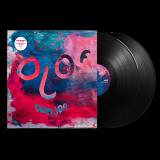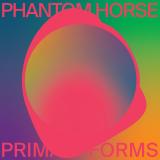
After their last album six years ago, "Primal Forms," the new album by Phantom Horse, finally arrives. The German duo of Ulf Schütte and Niklas Dommaschk have long established a reputation for expertly crafted, hypnotically slow-burning electronic music, and we do not hesitate to say that "Primal Forms" stands among the epitomes of their discography.
The sequencing of "Primal Forms" cannot be underestimated. It is an album in the classic sense. It demands to be listened to in its entirety, which also points to a closer affinity with Krautrock. Likewise, a touch of dub is perceptible, wafting around the songs, which, as usual, bear clandestine titles. It is not unreasonable to see in these compact compositions a clear statement against multitasking.
Phantom Horse are not trumpeters of dystopia. They present themselves resolutely, almost stoically, turned away from the world. This turning away is clearly a statement that can be contemplated in the Mariana Trench as well as in comet belts. In any case, it is best experienced in a space without any human beings. This does not mean that grumpy hermits are tinkering with synths behind closed shutters, armed with wooden walking sticks. This is still open minded music with a connection to current developments. The approach itself is what is audible, and with it, Phantom Horse proves once again that their main connection to time is timelessness.
In an age of all-encompassing distraction on every sensory, thematic, and semantic level, Phantom Horse explores the possibilities of reduction, searching for simplified melodic arcs without resorting to the vocabulary of classical minimalism. The overall impression is more electronic; the slowly shifting, polyrhythmic compositions repeatedly lead to a peculiar danceability. However, these are perhaps the dances of mechanical birds, undeterred by anything.
Written and produced in Hamburg, Nijmegen and Ojén by Niklas Dommaschk & Ulf Schütte
Mastering by Rafael Anton Irisarri at Black Knoll
Artwork by Daniel Castrejón
Buscar:forms
Making his long-awaited return to Spatial, JLM Productions serves up another sizzling andvaried concoction of atmospheric breakbeat goodness.
A1 - Unraveling
Opening with a blissful, playful melody which fades in and out of effects and padwork,Unravelling shows off an insanely crisp 2-step break at its core - definitely suited for thedancefloor with a buoyant bassline rumbling beneath the waves. The track leaps furtherinto life with JLM adding some additional drums to elevate the breaks further still, all withserene, harmonious melodies dancing around in the mix.
A2 - Forced Perspective
A purposeful melody opens Forced Perspective as JLM Productions unleashes a stellarblend of atmospheric bliss with a unique epic urgency. Sci-fi synthwork surrounds anenergetic selection of drums edited with trademark clarity as layers upon layers of synthintertwine dynamic patterns with ease. This is a great example of JLM's expansive suite ofinfluences combining to create a deliciously detailed and unique whole.
AA1 - Surface Scan
Light cymbals commence a DJ-friendly intro to the second track, Surface Scan. Bothrousing and deep, smooth padwork leads into a drop which brings with it long, whooshingmelodic synths and crunchy stacked breakbeats. As the atmosphere develops, JLM addsin a bunch of effects and subtle, sumptuous sci-fi synthwork, strings and more to completeanother masterpiece from a true pillar of "old school brand new" methodology.
AA2 - Mixed Motive
Straight into a serving of subdued breaks perfect for the intro, JLM rounds off this stunningEP with Mixed Motive. This is a track which explores the atmospheric drum & basslandscape in style. Our creatively-edited breaks soon evolve into a crescendo of joyousdrum patterns with an old 720-style stabby melody punctuating the mix while deep &melodic basslines jostle below, adding dense texture to a stunning piece of music.
Words by Chris Hayes (Spatial / Red Mist)
Forms in Motion marks the debut release from Earthbound Recordings, a new label founded by producer Mihail P as a home for deep, transportive electronics. Active since 2016 and known for releases on labels such as Seventh Sign Recordings, Verdant, Distant Worlds, Magnonic Signals, Propersound, and Nebulae, Mihail P launches this new chapter with a four-track EP that pays homage to the 90s UK techno and Detroit lineage.
“Millenium” sets the tone with layered pads and cosmic momentum, nodding to 7th Plain. “Echo Drift” fuses crisp electro rhythms with spacious melodic detail, while “Green Route” reflects the melodic introspection of Likemind Records. The closer, “Shape Without Form”, dives into abstract territory with glimmers of early AFX.
“It’s been a dream to form my own label for years,” says Mihail P. “This felt like the right time to create a space for timeless music that doesn’t chase trends.”
Earthbound’s first step—grounded in memory, aimed at the beyond.
Forms is the debut release from Naturalisten. Behind this name is Rado, one of the founders of the Unknown Species collective. They’ve put together some great underground parties in London through the years, giving space to new talents and sounds, and blissfully ignoring trends and fads.
Rado’s colourful and imaginative take on deep techno shines through all the six tracks here. Fans of the sounds we often hear on the likes of Delsin, Nous’Klaer Audio, Spazio Disponibile, Bitta, Animalia, are likely to find plenty to love here. Starting with the subtlety of “Release The Tension”; passing through the swampy “Against The Tide”, the bleepy minimal drum’n’bass of “Woodpecker”, the acid deepness of “Aves Acid”; and landing on the early-morning atmospheres of “Canopy Dreams”, which we find very much reminiscent of some exquisite James Holden moments from a time long gone.
The final touch to an already beautiful body of work is added by Forest Drive West with his remix of the opening track “Release The Tension”. His reinterpretation slowly creeps in and wraps you up in a wave of low frequencies, before blossoming into an epic outro.
Early support for this release came from Sunju Hargun, Sybil, Aaron J, Benedikt Frey, among others.
Subtil proudly presents: IULY.B - Time Forms contains a minimalistic three tracker from the upcoming Romanian artist IULY.B.
Starting with 'Imaginary Forms' trippy sounds and a rolling bassline. The second track is called 'Gateway' which is more darker, produced exactly on point. On the flipside you will found
'Timeworn', a mystical trip, influenced by alternated voices. Early support by Rhadoo.
Hikmah is an astonishing solo piano work from virtuosic and far-ranging
sound scientist; deep and compassionate thinker and musical treasure: Pat
Thomas
Pat Thomas was Born in Oxford, UK to Antiguan parents on July 27, 1960.
Interestingly, just over 4 months separate his birth to that of fellow modern piano
master Matthew Shipp (Dec 7, 1960) - whose The Piano Equation was TAO Forms
inaugural release. Thomas is most certainly among the Black Mystery School Pianists
of which Shipp elucidates in the title essay of his recently published first book.
Eight thoroughly focused improvised and otherwise compositions recorded at Fish
Factory studio in London. The album's title, Hikmah, means "wisdom" in Arabic. The
title is also presented in two different forms of Arabic calligraphic script on the cover
artwork. This album brings the information. The vibrantly living jazz tradition and new
modes of expression in abundance are brought forth from a lifetime of work and a
decades long devotion to Sufism, understanding that the practice and performance of
this music is an elemental form of spiritual practice. As William Parker writes in the
liner notes, "the music becomes the prophet and the prayer all in one gesture." And,
"If you haven't yet heard the music of Pat Thomas, get hip to it quickly."
Attuned American audiences are most likely to have become familiar with Pat
Thomas through his work with the quartet [Ahmed] , whom over recent years have
amazed with their mesmeric, long-form explorations on the compositions of Ahmed
Abdul-Malik, and more recently, Thelonious Monk. Their debut US performance took
place in March 2025, and TAO Forms were lucky members of the rapt audience at
Roulette in Brooklyn that night; the group flew to Knoxville the next day to perform to
an equally rapt audience at Big Ears.
Available on 6- panel digipak CD printed on heavyweight board, with liner notes by
William Parker and LP with insert featuring liner notes by William Parker & Pat
Thomas Discography + download card. Ltd edition of 500.
- Watch The Water
- The Way Of The World
- Coombe House
- Wash What You Eat
- Like When
- Basic Everyday Life
- Hold Onto I.d
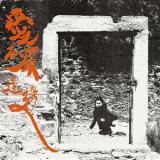
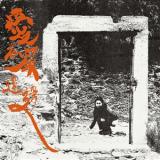
Recorded from late 1996 through early 1997, Hold Onto I.D., The Shadow Ring's fourth album, marks the apogee of the trio's experimental rock epoch - their last record clinging to their factitious bandness before they let all song and structure go awash in sonic malaise for their final run of releases on Swill Radio. The surrealist dreams of City Lights and Put the Music in Its Coffin give way to pseudo-expressionistic lyrics mired in the banality and bleakness of the everyday, set against the backdrop of the Coombe House (as pictured on the album's cover). While Hold Onto I.D. is the group's most overtly autobiographical release to date, Lambkin's lyrics obfuscate his expressionist tendencies filtering them through the codes and languages of officialdom, linking the "inner self" with documents of the state_identification cards, National Insurance numbers, and British passport numbers. Having moved out of their parents' homes and into the top floor of the famed Coombe House, Graham Lambkin and Darren Harris set out to rework material drafted over the previous year, aided by Tim Goss, still safely in residence at the "Valebrook Inn." While the familiar sounds of Harris's deadpan recitation and Lambkin's electric guitar, amateurishly strummed, dominate the album, the emotive interludes of Goss's keyboards populate the record along with of home-cooked tape experiments and dime-store concrète. Originally released on CD and supported by a US tour with friends Scott Foust and Karla Borecky's Idea Fire Company, Hold Onto I.D. is perhaps the band's best-known and most accessible album. (The Shadow Ring's sole representative on a streaming platform, it was once acknowledged by the Guardian as one of "the 101 strangest records on Spotify.") Offered here for the first time on vinyl, Hold Onto I.D. is an essential album for both completists and the uninitiated alike. Throughout their legendary, decade-long run, the Shadow Ring were an enigmatic force on the international musical sub-underground. Before their disbandment in 2002, this shambolic rock outfit, formed by a group of rowdy teenagers in southeast England, left behind a mighty run of eight LPs, a handful of 7"s, and a spate of raucous live shows and cryptic zine appearances on both sides of the Atlantic, all which have bolstered their enduring word-of-mouth mystique. Beginning in 2023 with the first-ever vinyl pressing of the self-released pre-Shadow Ring tape The Cat & Bells Club (1992), Blank Forms Editions has been conducting a systematic retrospective of the storied group. Wax-Work Echoes and Hold Onto I.D. are the latest releases in a multiyear reissue effort that includes several LPs, a comprehensive CD box set, and a nearly five-hundred-page book.
Originally conceived as a compilation of outtakes and live recordings from The Shadow Ring's 1995 stateside tour, Wax-Work Echoes takes its name from the first line of "Put the Music in Its Coffin," the title track of the group's breakthrough release. Lambkin abandons the bitsand- bobs approach, advancing the Shadow Ring concept with entirely original material that builds on the unit's self-mythologizing lyrics, celebrates the clicking of horse hooves, ponders on the sociability of rats and mice, and warns of the dangers of poultry. The first Shadow Ring album to officially include Tim Goss in the main lineup, Wax- Work Echoes reveals the group in its final and lasting form, awash in the outer bounds of atmospheric exploration, with Lambkin's familiar wry and morbid lyricism and the stripped-down angularity of amateurishly detuned guitars fully intact. While Klaus Canterbury and Tony Clark seem all but forgotten, and the shrugged off S. Fritz is listed on the liner notes as performing only "when required," Lambkin did solicit contributions from outside the inner circle. A bit of "Mambo Twist," lifted from a tape of unreleased Vitamin B12 material sent to Lambkin by Alasdair Willis, found its way into "V.E.R.M.I.N.," while an extended epistle contribution from Richard Youngs (and, technically, Brian Lavelle) would be employed in the second half of "Catching Sight/Of Passing Things." Released on CD in 1996 for Bruce Russell's newly minted Corpus Hermeticum, Wax-Work Echoes was recorded concurrently with intense rehearsal periods, in anticipation of the forthcoming "Rose Watson Tour," and was supported by a celebratory fanzine media blitz. The album seemingly absorbs the frenetic excess of the band's transatlantic travels; Wax-Work Echoes channels the trio's wilder instincts into an unresolved catharsis, not yet free of frustration or restlessness. Out of print for almost three decades and available here for the first time ever on long-playing disc, Wax-Work Echoes is a classic from the outer eddies of The Shadow Ring's sound, a must-have for any aficionado's collection: "A window slides, glass slips from frame / And canvas carcass breathes again." Throughout their legendary, decade-long run, the Shadow Ring were an enigmatic force on the international musical sub-underground. Before their disbandment in 2002, this shambolic rock outfit, formed by a group of rowdy teenagers in southeast England, left behind a mighty run of eight LPs, a handful of 7"s, and a spate of raucous live shows and cryptic zine appearances on both sides of the Atlantic, all which have bolstered their enduring word-of-mouth mystique. Beginning in 2023 with the first-ever vinyl pressing of the self-released pre-Shadow Ring tape The Cat & Bells Club (1992), Blank Forms Editions has been conducting a systematic retrospective of the storied group. Wax-Work Echoes and Hold Onto I.D. are the latest releases in a multiyear reissue effort that includes several LPs, a comprehensive CD box set, and a nearly five-hundred-page book.
Still Forms in Air is the debut album by Italian composer Francesca Marongiu under her own name. It draws inspiration from mid-1980s Japanese ambient music — Hiroshi Yoshimura, Satoshi Ashikawa, Takashi Kokubo — and, more subtly, from Italian experimental echoes rooted in both personal and cultural memory.
The album unfolds like suspended time, like architecture that quietly bears witness to the shifts that have shaped our cities and the ways we live in them. These tracks reflect an emotional and urban landscape, shaped by a gaze cast upon the mid-1980s and early ’90s — a time of subtle yet lasting changes in the form and meaning of shared space. That period marked a delicate turning point, later described as les années d’hiver: the slow onset of fragmentation beneath a surface of creative openness.
Still Forms in Air doesn’t dwell in nostalgia (though it draws from it), but reimagines that duality through a contemporary lens. Its sound blends memory and presence, layering ambient textures with a refined spatial sensitivity. It is a dialogue across decades — clear-eyed, affectionate, and quietly luminous.
Written, arranged and recorded by Francesca Marongiu in Rome and Pistoia between May 2024 and March 2025.
Francesca Marongiu: electronics, synthesizers, vocals, sound objects.
Antonio Gallucci: wind arrangements on track 1 and 4, bass and sound objects on track 3, drums on track 3 and 4.
Mixed by Francesca Marongiu and Antonio Gallucci. Mastered by Antonio Gallucci at Mercurial Mastering in Pistoia. Artist photo by Elisabetta Scarpini. Artwork by Daniel Castrejón.
- Circle
- Eye Contact
- Seventeen Nights
- My Waterfall
- Wasting Time
- Final Lap
- Eraser Ii
- Shipwrecked
- Open Shadow
- Like A Stone
Neo Gibson, born in Virginia and based in New York City, records, performs, and produces as 7038634357. This numerical alias, under which Gibson has been releasing work since 2016, offers a window into the careful ambivalences of the musical project. It conjures the impersonal_the opacity and randomness of data, a number that is hard to remember or even say out loud_while also suggesting a direct line of communication with the artist, down to an area code indexing their biography. 7038634357 uses a restricted palette to achieve music that is formally precise and emotionally direct. Their digital-native approach to production, in which frank melodies cross paths with heavy distortion, contains traces of both trance's maximalist arcs and a songwriterly intimacy. Expressive details may appear submerged or abraded, subjected to a canny sense of dynamics and textural specificity. Waterfall Horizon, Gibson's second vinyl record with Blank Forms Editions under the moniker 7038634357, was written for live performance and workshopped over successive shows during their 2022 European tour. Here, hallmarks of their earlier, studio-crafted recordings_digital distortion that obfuscates their lyrics and a slow-burning ambience_are noticeably pared back. Instead, Waterfall Horizon takes on a pop inflection, adopting more traditional lyric scaffolds so that the interstices from verse to chorus or track to track can flourish within their limited tonal range.Across recordings and performances, Gibson activates wide-ranging mechanisms of audience connection: from the relative anonymity of internet platforms to live experiments with the spatial effects of amplification. They have a particular interest in site-specific performances in non-musical spaces, and have performed in a variety of contexts, including the mezzanine of the West 4th Street subway station in New York City and INA GRM/Radio France's Présences électronique festival. Under their own name, Gibson has maintained a longstanding collaboration with the artist Charles Stobbs, working primarily with FM transmission and techniques derived from the early-seventeenth-century English tradition of change-ringing bells. The first 7038634357 vinyl record, Neo Seven, was released on Blank Forms Editions in 2023; previous releases include self-released cassettes and CD-Rs, as well as a pair of EPs on Genome 6.66 Mbp (2018, 2019).
- Nightclouds
- Still Life
- Chordalities
- Nightclouds (Variation)
- Morningclouds
Das vierte Album von Ellen Arkbro, "Nightclouds", versammelt fünf Improvisationen für Orgel solo, die 2023-24 in Mitteleuropa aufgenommen wurden. "Nightclouds" ist unverhohlener romantisch und introspektiver als ihre früheren Werke, obwohl es fest in der Strenge und Präzision verwurzelt, die Arkbro's Konzept ausmachen. Es ist die Erweiterung ihrer Erkundungen von räumlicher Harmonie, Taktilität und Textur, Arkbro schöpft gleichermaßen aus sakraler Musik, Jazz im ECM-Stil und Minimalismus und beschwört eine kühle Intimität und einen kühlen Ton herauf. Ihre entschleunigten Akkordimprovisationen hüllen den Zuhörer in düsteres verwaschen, während ihre Mikrofonierung die raue haptische Maserung des Rohrblatts offenbart und den Zuhörer sowohl innerhalb als auch außerhalb des Klangs bringt. Sie evoziert Duette von Kjell Johnsen und Jan Garbarek oder La Monte Young und Tony Conrads Bearbeitung von Euringers und Harmer's Cowboy-Song ,Oh Bury Me Not". "Nightclouds" kanalisiert spirituelles Pathos durch eine rigoros zurückhaltende Architektur. Anknüpfend an das letztjährige Album "Sounds While Waiting" (W.25TH, 2024), einer Auswahl von Stereomischungen, die Arkbro's räumliche Orgelinstallationen dokumentieren, ändert Nightclouds die Richtung und konzentriert sich auf unmittelbare Komposition und Improvisation. Elegante, einfache akkordische Gerüste unterstützen reiche, sich ständig verändernde Texturen; genaues Hinhören erfordert die Hingabe an anhaltende Unentschlossenheit. Den Abschluss einer Sammlung von kurzen Stücken bilden zwei Variationen über die titelgebende Komposition ,Nightclouds", eine eine schelmische Anspielung auf den britischen Jazz-Gitarristen Allan Holdsworth: Die erste Aufnahme verlangsamt und dehnt eine kontinuierlich modulierte harmonische Progression, während die kurze Schlussversion einfach drei Akkorde schleift. Zwischen diesen Stücken liegen ,Still Life" und ,Chordalities", zwei kurze Werke, die im Temple de La-Tour-de-Peilz in Vevey, Schweiz, aufgenommen wurden. Die zweite Hälfte des Albums ist folgenden Stücken gewidmet ,Morningclouds", ein weitläufiges Werk, das in der rekonstruierten Gedächtniskirche (Kaiser-Wilhelm-Gedächtniskirche) in Berlin aufgenommen wurde. Arkbro's prägnantes musikalisches Vokabular und formale Architektur evozieren ein Gefühl der emotionalen Ambivalenz, gleichzeitig erhebend und schwermütig und führt den Hörer mit kühler und distanzierter Schönheit. "Nightclouds", das als tiefgründiges Statement in Arkbros sich entwickelndem Werk steht, das zugleich introspektiv und expansiv ist, bestätigt ihre einzigartige Fähigkeit, harmonische Einfachheit in tief berührende Klanglandschaften zu verwandeln, die den Hörer in einen Raum der Kontemplation und emotionalen Tiefe führen.
- Timing
- Unavailable
- Did You Know?
- Modern Spanking
- A Space Of Transit
- The Long Goodbye
- At Last I Am Free (Live)
"How do I know if my cat likes me?" ist die erste Zusammenarbeit der Organisten Ellen Arkbro und Hampus Lindwall mit der bildenden Künstlerin Hanne Lippard, eine existenzielle Meditation über die leeren Weiten unseres automatisierten Alltags. Das Stück entstand während Arkbro und Lippards Residenz 2023 im La Becque in La Tour-de-Peilz, Schweiz, Das Album persifliert die lähmende Ästhetik des Geschäftslebens, von der Warteschleifenmusik bis zum Onlinebanking. "How do I know if my cat likes me?" führt die Linie von Roberts Ashley von Roberts Ashley und Barry fort und hämmert auf die Klänge der Sprache ein, bis sie alle Bedeutungen durch angenehm betäubende Wiederholungen verdrängen. Die Platte zu hören ist, als würde man ein Captcha wieder und wieder lösen bis alle Zeichen zu Hieroglyphen verschwimmen, oder man findet sich in einem tautologischen Kundendienst-Argument verstrickt, nur dass man, nachdem man in der Sackgasse des Unsinns gelandet ist, eine unerwartete transzendente Schönheit findet, in der die Sprache von der reinen Funktion zur reinen Ästhetik umschlägt und vor Möglichkeiten schimmert. Selbst subtile Brüche in lyrischen oder musikalischen Mustern können eine grundlegende Veränderung in der Welt des Songs auslösen. Auf der gesamten Platte begründen strenger Formalismus und Minimalismus eine Erzählung. ,The Long Goodbye" stellt sich einen quälenden Dialog zwischen Bekannten vor, die sich nicht höflich voneinander lösen können: ,It's my pleasure!", stöhnt Lippard, die sich selbst antwortet: "Pleasure is all mine! / See you soon! / See you next time! / See you then!". Obwohl die Zeilen immer wieder dieselben wenigen Abschiedsworte wiederholen, akkumuliert sich eine geheimnisvolle Kausalität in den winzigen Variationen, die einen erzählerischen Bogen kreieren, weniger für die Figuren des Liedes, sondern für den Zuhörer, der sich mit Verzweiflung, nihilistischem Humor oder tiefer Dankbarkeit über die Fähigkeit der Kunst konfrontiert sieht. An anderer Stelle, als ,Modern Spanking" sich frei assoziierend von der Phrase "Online-Banking" in Richtung "breathing down your neck banking" und ,sexy but bankrupt banking" wandelt, wird eine ganze Welt oberflächlicher Vergnügungen ins Blickfeld gerückt. Während minimalistische Bewegungen in der Musik und der bildenden Kunst eine gewisse Situiertheit des Blicks fördern, erinnert ,Modern Spanking" an den glatten, reibungslosen Minimalismus eines gehobenen Einkaufszentrums: eine Menge wahlloser Passanten, die sich zwischen Sex und Geld, Fantasie und Realität, zerstreuter Aufmerksamkeit und intensiver Ablenkung befinden. In einer Welt wie dieser ist der Unterschied zwischen Bankgeschäften und Prügelstrafe zu vernachlässigen.
- Basho
- Sill Forms
Der Titel dieser Arbeit von Beatrice Dillon ist dem Begriff ,basho" entnommen, der von Kitaro Nishida, dem japanischen Philosophen und Vater der Kyoto-Schule, entwickelt wurde. Kitaros ,basho" bezieht sich auf einen grundlegenden Ort oder ein Feld, in dem Dinge existieren und interagieren. Dabei geht es nicht nur um einen physischen Ort, sondern um einen abstrakteren Raum, in dem alle Erfahrungen, Gedanken und Phänomene miteinander verbunden sind. In Nishidas Philosophie ist ,basho" ein dynamischer, lebendiger Ort, an dem Subjekt und Objekt, Selbst und Welt, nicht getrennt sind, sondern sich gegenseitig bedingen. Inspiriert davon entwickelt Beatrice Dillon eine Musik von komplexer Natur, die nie aufhört, sich als reine Präsentation zu konstituieren, die ständig neu belichtet wird und in jedem Moment sowohl das Objekt der Aufmerksamkeit als auch den Hörer, der darauf zielt, reaktiviert. Dillons Basho, das sowohl seine Klänge (die keinen wirklichen Ursprung oder inneren Raum haben) als auch seine Idiome aus der elektronischen Musik entlehnt, ist eine Ablenkung, eine Neuanordnung, die uns durch vertraute, aber plötzlich fremde Elemente in ein Feld des reinen Hörens zurückführt. Still Forms des japanischen Komponisten Hideki Umezawa schöpft sein Klangmaterial aus der Erforschung der Baschet-Klangstrukturen, Instrumente, die von den Brüdern Bernard und François Baschet in den 1950er Jahren entwickelt wurden und seitdem in der Welt des zeitgenössischen Musikschaffens hoch geschätzt werden. Diese Strukturen wurden 1970 auf der Weltausstellung in Osaka vorgestellt, und einige sind in Japan geblieben. In verschiedenen Aufnahmesitzungen in Japan, aber auch in Frankreich, erforscht Hideki Umezawa das faszinierende klangliche Potenzial dieser atypischen Instrumente neu, um sie in eine hochgradig beherrschte Komposition einzubinden, in der Klänge akustischen Ursprungs und elektronische Texturen aufeinander reagieren, wie in der verzerrten Reflexion der Resonatoren der Baschet-Strukturen. Still Forms ist somit eine Hommage an und eine Zeitreise durch die unglaubliche Inspirations- und Erfindungskraft dieser Klangstrukturen, aber auch ein zugespitzter Vorschlag für eine zeitgenössische elektroakustische Komposition, die sich zu erneuern weiß, ohne ihre Ursprünge zu verleugnen.
Welcome to Forms World.
Our fi rst outing takes shape as a 4-tracker from ADMNTi, delving deeper into the sounds that have shaped the Londoners aural palette.
'Second Hand Sushi' kicks things off to a rowdy start - a real slab of energy that consists of paces drum patterns, twisting synths, and gritty, rattling basslines.
This one's a no-frills dancefl oor destroyer. The steppy drums of 'Lost Fruits' pull us further in, paired with shifting subs and laced with soundbites that echo the era of tape packs and pirate radio.
As we fl ip to the B-side, ‘Diptych’ delivers a still pacey yet more soothing vibe, blending lush orchestral strings with warped vocal chops, all while keeping the head-bopping grooves intact. Rounding things off , a dub-tinged stepper which comes in the form of 'Shrublands'. Eerie chords evolve throughout the track, accompanied by melancholic flutes that bode well with the heavily delayed sax and wobbing basslines. Dialogue from London graff royalty weave in and out, as well as a certain Brooklyn king.
- 1: #4
- 2: #7
- 3: #
- 4: #
- 5: #2
- 6: #10
- 7: #11
- 8: #
- 9: #
The work of each of these powerfully creative & exceptionally perceptive individuals - poet and scholar Fred Moten and jazz bassist Brandon Lopez - concerns itself with how one might navigate the ascending reign of longinstitutionalised madness while simultaneously keeping humanity and sanity intact The synergistic mesh of these two voices in Duo is here presented on record for the frst time, following two acclaimed works on the Reading Group label in trio with Gerald Cleaver. Inimitable poet, cultural theorist, author, 2020 MacArthur Fellow, Fred Moten creates new conceptual spaces that accommodate emergent forms of Black cultural production, aesthetics, and social life. Moten is a professor of performance studies and comparative literature at New York University concerned with social movement, aesthetic experiment, and Black study. He is also a United States Artists Rockefeller Fellow and was elected to the American Academy of Arts and Sciences. Puerto Rican- American bassist Brandon Lopez is the son of a gravedigger who himself put time in doing the same, developing muscles that serve him well in his thorough command of the upright bass. On moving to NYC, Lopez made himself indispensable within numerous realms of creative music. As the Cleveland Review of Books noted, "This is virtuosity as vocabulary, a total command of texture, subtlety, and a depth that can be reached into."
On their previous work in trio with Gerald Cleaver:
"Best Jazz Albums of 2022: Moten is after nothing less than a full interrogation of the ways Black systems of knowledge have been strip-mined and cast aside, and yet have regrown." - New York Times
"8.0 - A conceptually rich, politically weighty album that asks timeless questions without over-explaining...breathlessly complex" - Pitchfork
Fred Moten: texts, voice
Brandon Lopez: bass
- A1: Shudder Before The Beautiful
- A2: Weak Fantasy
- A3: Elan
- B1: Yours Is An Empty Hope
- B2: Our Decades In The Sun
- B3: My Walden
- C1: Endless Forms Most Beautiful
- C2: Edema Ruh
- C3: Alpenglow
- C4: The Eyes Of Sharbat Gula
- D1: The Greatest Show On Earth
Finland’s Nightwish have always stood for virtuoso perfection. They are able to evoke fantastic dream worlds, fade out time and space, and touch you deep inside with their symphonic majestic compositions. Since their formation in July 1996, they have risen long ago to become the most successful Symphonic Metal band.’Endless Forms Most Beautiful’ is their critically-acclaimed 2015 (8th) studio album.
Whereas Lewis used his transformative talents to newly illuminate renaissance man George Washington Carver onJesup Wagon, the saxophonist does the same here for gospel- music force of nature Mahalia Jackson. And this time it's personal, because Lewis lived her music growing up, nurtured by a grandmother who had received Mahalia's singing like a bolt from above. Much more than a tribute, this work is"really a three- way conversation between Mahalia, my grandmother and me."
The challenge was to turn these songs into jazz, the 21st century variety. What James and the band (William Parker- bass, Chad Taylor- drums, Kirk Knuffkecornet, Chris Hoffman-cello) conjure with this music is miraculous.
The CD & LP editions also exclusively include the contemporaneous suite, "These Are Soulful Days", JBL's first composition for strings; performed with the Lutoslawski Quartet. It is included as a 2nd disc on CD version & via an exclusive download card with the LP
Rediscovered and compiled for release shortly before her death in November 2023, Further Selections from the Electric Harpsichord presents a never-before-heard recording of composer and artist Catherine Christer Hennix's early magnum opus. Originally debuted in 1976 at the festival Brouwer's Lattice at Stockholm's Moderna Museet, The Electric Harpsichord has steadily mystified fans and students of Western minimalist music for its implacable, transformative qualities, and the long-held, relative obscurity of its creator. Like the work of Hennix's close friend La Monte Young, the piece is set in just intonation and focuses on the transcendental potentials of precise tuning, inspired by their studies with Pandit Pran Nath. Composed of bursts of oscillating, synthetic tones using a carefully retuned synthesizer and a tape-based system for feedback delay, the sounds swirl, twinkle, and appear to bend time, space, and perception. Additional, sustained chords on the sheng, most likely played by her Deontic Miracle bandmate Hans Isgren, are present at the opening of the piece and reemerge towards the end of the recording. The release of Further Selections constitutes the most comprehensive original recording of this foundational work to date. Originally billed as The Well-Tuned Organ during its debut in Sweden, The Electric Harpsichord has developed a legendary reputation, predicated on a twenty-six minute fragment salvaged and circulated by Hennix's friend Henry Flynt. Promoting its importance on multiple occasions, Flynt aired the work on WBAI radio, organized a pair of tape concerts at New York alternative arts spaces in 1970s, and later penned a 1998 essay which served as the liner notes to its eventual CD release in 2010. For him, this work not only represented a sterling milestone in minimal sonic aesthetics, but also spawned a new genre that he dubbed "hallucinogenic/ecstatic sound environments (HESE)," which in turn inspired his own drone-like compositions. Gradually, interest in the recording led to a spate of archival projects, public performances, and new compositions by Hennix in the 2010s, in turn drawing into focus her multifarious practice, which includes serious contributions towards mathematics, poetry, sculpture, Noh drama, philosophy, and light art. Since 2018, Blank Forms has spearheaded a comprehensive publication effort in support of her work, including the writing collection Poësy Matters and Other Matters (2018); archival recordings like Selected Early Keyboard Works (2018) and The Deontic Miracle's Selections from 100 Models of Hegikan Roku (2019); and recent compositions such as Blues Alif Lam Mim (2021) and Solo for Tamburium (2023).
RIYL: Don Cherry, Alice Coltrane, Remi Álvarez, Juma Sultan's Aboriginal Music Society, Horace Tapscott. Atrás del Cosmos were a central force in Mexico City's creative arts community, and often considered the first free jazz group in the country. Founded by a trio composed of pianist Ana Ruiz, percussionist Evry Mann, and saxophonist Henry West, the ensemble was prolific in mentoring a generation of improvisers, cultivating an expanded additive roster, and organizing workshops in downtown Mexico City including inviting Don Cherry to play and instruct on his "organic music" approach in 1977. Between 1977 and 1983, the group lived and rehearsed in a residential space behind the Cosmos theater, hence their celestial-tinged name. But despite their central importance to the local scene, Atrás was rarely recorded and had a scant international presence, leaving behind just a single cassette before their disbandment. Now issued on LP for the first time, the aforementioned tape Cold Drinks, Hot Dreams is a red-hot recording documenting the core group plus double-bassist Claudio Enriquez performing live in 1980, a delirious improvisation with high peaks and low valleys, sucking in an amalgam of influences including New York loft style, Mexican folk music, and the surrealism of Alejandro Jodorowsky into its heady gravitational pull. Ruiz's playing style is virtuosic and expressive, pulling off monumental chords and using the piano's whole register, recalling Cecil Taylor's percussive approach, Matthew Shipp's emotive voicing, and Duke Ellington's mystifying arabesques. Evry Mann dabbles in polyrhythms in tracks like the solo marimba meditation "Clapping Music II," and Henry West wails heavy in the show-stopping cut "M.D." Now finally available after forty years, the music of Atrás del Cosmos will be sure to stun spiritual jazz veterans and newcomers alike3
Repress!
While the recent Keinemusik album is still making waves, here’s already the next big tune following hot on the heels of that very Send Return. On Forms of Love you’ll find KM’s own Adam Port teaming up with the virtuoso of all things harmonic, Alan Dixon. And a harmonic joint venture it is, climaxing in this übercatchy piano-hook you’ll most probably find all over the place this summer season. The arrangement has it intertwine with string- and horn-pads and grounding with a groove that finds the ideal balance between dreamlike drift and floor-bound euphoria. Already much requested, this one is out to be an essential tune of the year.
“Worldwide Heavy Industries Vol.1: A Bold New Vinyl Release fromFlux Musical Art and Brutal Forms Flux Musical Art and Brutal Forms have teamed up to release Worldwide Heavy Industries Vol.1, a groundbreaking vinyl that promises to push the boundaries of industrial and rhythmic music. This limited edition release, available in just 300 copies, offers an immersive exploration of mechanized soundscapes and futuristic themes. An Industrial Sonic Journey The album presents a compelling journey through industrial rhythms and dystopian landscapes, with each track showcasing a unique interpretation of the genre. On side A, Dominik Müller opens with “Too Many Posers,” delivering an intricate and immersive soundscape characterized by his signature depth and complexity. Following this, Ryuji Takeuchi’s “In Your Mind” introduces innovative rhythmic structures, adding a fresh and dynamic dimension to the release. The B-side features a powerful collaboration: 6SISS and Hypnoskull’s “Losss” combines intense rhythms with a raw, industrial edge, creating a track that is both abrasive and compelling. Low Order’s “Taste My Venom” delves into the darker and more experimental aspects of industrial music, bringing a raw, experimental touch. Closing the release is Skumring’s “CorpseRidden,” which blends precise rhythms with expansive sound design, offering a rich atmospheric quality that reflects his role as co-founder of Brutal Forms. With only 300 copies available, this limited edition vinyl is a coveted collector’s item. Each record features bespoke artwork that complements the album’s industrial theme. *Worldwide Heavy Industries Vol.1* is set to reach a global audience of dedicated collectors and fans. This release is more than just a vinyl; it’s a journey into a futuristic world through the lens of industrial music. For further details on track listings and purchasing options, visit Flux Webzine or the official websites of Flux Musical Art and Brutal Forms. Dive into this cutting-edge release and experience the forefront of industrial music with Worldwide Heavy Industries Vol.1.”
Hardware Emotions
The sophomore effort from Gray/Smith refines their petroleum-based, hard-lullaby sound with a decidedly dusty precision. To call this pair's brand of country-rock détournement "cosmic" would be too breezy: L. Gray and Rob Smith prefer to stare into sunken depths, channeling their recondite affections for lay-by mauve zones and red-dirt guitar wanderings. Formed in the outer-edges of Kings and Richmond counties circa 2020, Gray/Smith is something of an East-Coast involution. L. Gray (guitar and vocals) and Rob Smith (drums, guitar and vocals) are both trusty veterans of "band's bands" like Pigeons (Soft Abuse), No-Neck Blues Band (Revenant, Locust), Rhyton (Thrill Jockey), and The Suntanama (Drag City), freewheeling groups known for mining from polyglot sources: rough-hewn folk and the spiritual avant-garde, bargain-bin hard rock and and collector's-choice psychedelia alike. On their first, self-released LP Gray/Smith, serendipitously recorded at Gary's Electric at the top of 2021, the pair trained their assured chops onto the great American song-form, honing a murky but tight approach that variously cribs "urban cowboy" and finger-picked primitivism. A string of cryptic appearances soon followed, including a short-lived residency at a now-shuttered vodka dive; a micro-tour with Coloradan songstress Josephine Foster; and a series of backyard and barroom gigs sharing stages with compatriots like Stella Kola, Blues Ambush, Samara Lubelski, and Wednesday Knudsen. Heels in the Aisle is the slipshod, burnt-out, mid-'70s unter-prog comedown to their debut's backwoods, bushy-tailed, early-'70s, country-rock meanderings_expect more unrestrained riffs, artful studio wizardry, and worn-down introspection. Joining the ranks of bloodshot-eyed, blues-rock medleys à la Canned Heat's "Parthenogenesis" and Grand Funk's "Into The Sun," "The SDSPS" is the nearly side-length opening cut, an expanded song-cycle condensing and riffing on the themes of their debut. "Help Me" ventriloquizes Pomona College outlaw Kris Kristofferson's slow-roaring ballad of libidinal woe. On the flip side, "Verrazano Tile" and the title track pay heed to lower bays of Staten Island, while their arrangement of the traditional Zimbabwean tune "Guabi Guabi" is a bright Dead/Feat-like jaunt with blissed-out wah-wah pay-off. "Gaslight Boulevard" is lean, mean, and eight-beers-in space rock, and the closing track "Kekule's Ring" is a slack-jawed, wistful crash back down to earth. All this, packaged in a luxe, expertly-printed sleeve photographed by downtown artist Lary 7 and designed by Eric Wrenn (Sophie's Oil of Every Pearl's Un-Insides).
First vinyl edition pressed on Cirrostratus Cloud colored vinyl and includes a "Footlong" OBI.
Underground lifer Nick Sakes returns on the debut LP from Upright Forms. The tight-knit Minneapolis trio feels like the culmination of Sakes' varied and prolific career to date, bringing together the unhinged prog-punk ferocity of Dazzling Killmen & Colossamite with the careening chaos of Xaddax and the shout-along hooks and dynamic songcraft of Sicbay. Blurred Wires is skewed yet tuneful, challenging yet compulsively listenable, concise yet brimming with invention. The experience of a lifetime distilled to 33 rotations across a gripping 33 minutes.
Consider "They Kept on Living," a song that first appeared in an earlier version on the SKiN GRAFT comp Sounds to Make You Shudder!. It starts off with a grinding 7/4 groove, with cryptic lines over scratchy noise-punk chords. After a brief build, the band explodes into a massive chorus, with Sakes shouting the title line against a fist-pumping riff.
The trio sound equally convincing digging into the pummeling aggression of "My Lower Self," where Sakes' vocals start off as a feral snarl and then soar triumphantly during the chorus, or the soothing indie-pop hush of the Paster-penned "Drive at Night."
Various "tug-at-your-heartstrings" touchstones informed "Long Shadow". Sakes channeled Television Personalities, cult heroes of melodic British post-punk, on "Animositine," which he accurately labels "our prettiest song."
Nearly 35 years into his career, Sakes is finding new ways to challenge himself -- and in Paster and Westphal, he's found two musicians who are equally comfortable with both the thorniest and the loveliest manifestations of underground rock. When they reflect on their chemistry, they agree that their openness to collaboration is, as Sakes puts it, "one of our superpowers."
On Blurred Wires, that superpower yields dynamic, challenging and profoundly memorable results.
- A1: Chandelier 3:36
- A2: Big Girls Cry 3:31
- A3: Burn The Pages 3:16
- A4: Eye Of The Needle 4:09
- A5: Hostage 2:57
- A6: Straight For The Knife 3:33
- B1: Fair Game 3:52
- B2: Elastic Heart 4:18
- B3: Free The Animal 4:26
- B4: Fire Meet Gasoline 4:02
- B5: Cellophane 4:27
- C1: Dressed In Black 6:40
- C2: Elastic Heart Feat. The Weeknd And Diplo 4:18
- C3: Chandelier 4:00
- C4: Elastic Heart 4:10
- C5: Chandelier 4:31
- D1: Chandelier 4:28
- D2: Elastic Heart 5:17
- D3: Elastic Heart 5:09
- D4: Big Girls Cry 4:23
- D5: Big Girls Cry 4:05
Sie schrieb Rihannas Überhit "Diamonds" (in 14 Minuten!), sang und schrieb die David Guetta-Hits "Titanium" und "She Wolf" sowie Flo Ridas Millionseller "Wild One" und komponierte zahllose Songs für Katy Perry, Beyoncé, Britney Spears, Birdy, Christina Aguilera, Kylie Minogue und Eminem. Im vergangenen Jahr gab sie mit dem Song "Elastic Heart" (auf dem "The Hunger GamesSoundtrack" und auch auf ihrem kommenden Album) ihr internationales Chart-Comeback unter eigenem Namen. 2014 veröffentlicht die australische Sängerin und Songwriterin SIA nun endlich ein neues, eigenes Album "1000 Forms Of Fear". Die 1. Vorabsingle ist die in jedweder Hinsicht atemberaubende Pop-Hyme "Chandelier", die mit Jesse Shatkin entstanden war und von ihrem langjährigen Studiopartner Greg Kurstin (P!NK, Lily Allen etc.) produziert wurde. In ihrer Karriere veröffentlichte Sia bislang 5 Solo-Alben, zuletzt 2010 die LP "We Are Born", die Platz 2 der australischen Charts erreichte und ihr auch in Deutschland die erste Album-Chartplatzierung bescherte. Das Billboard Magazin widmete ihr eine Titelgeschichte mit der Headline: "This artist is responsible for 12 million track sales and doesn't want to be famous".
Underground lifer Nick Sakes returns on the debut LP from Upright Forms. The tight-knit Minneapolis trio feels like the culmination of Sakes' varied and prolific career to date, bringing together the unhinged prog-punk ferocity of Dazzling Killmen & Colossamite with the careening chaos of Xaddax and the shout-along hooks and dynamic songcraft of Sicbay. Blurred Wires is skewed yet tuneful, challenging yet compulsively listenable, concise yet brimming with invention. The experience of a lifetime distilled to 33 rotations across a gripping 33 minutes.
Consider “They Kept on Living,” a song that first appeared in an earlier version on the SKiN GRAFT comp Sounds to Make You Shudder!. It starts off with a grinding 7/4 groove, with cryptic lines over scratchy noise-punk chords. After a brief build, the band explodes into a massive chorus, with Sakes shouting the title line against a fist-pumping riff.
The trio sound equally convincing digging into the pummeling aggression of “My Lower Self,” where Sakes’ vocals start off as a feral snarl and then soar triumphantly during the chorus, or the soothing indie-pop hush of the Paster-penned “Drive at Night.”
Various “tug-at-your-heartstrings” touchstones informed “Long Shadow”. Sakes channeled Television Personalities, cult heroes of melodic British post-punk, on “Animositine,” which he accurately labels “our prettiest song.”
Nearly 35 years into his career, Sakes is finding new ways to challenge himself — and in Paster and Westphal, he’s found two musicians who are equally comfortable with both the thorniest and the loveliest manifestations of underground rock. When they reflect on their chemistry, they agree that their openness to collaboration is, as Sakes puts it, “one of our superpowers.”
On Blurred Wires, that superpower yields dynamic, challenging and profoundly memorable results.
Limited Edition MOD Compact Disc in Digipak Lite packaging."
The Shadow Ring (1992-2002) presents a comprehensive overview of the work produced by British musicians Graham Lambkin, Darren Harris, and later Tim Goss over the course of a decade. Throughout their legendary ten-year run, this shambolic rock outfit, formed by a group of teenagers in the port town Folkestone, were an enigmatic force on the international musical sub-underground. The group have left behind a mighty run of eight LPs, a handful of 7-inches, and a spate of raucous live shows and cryptic zine appearances on both sides of the Atlantic. Collected here for the first time are The Shadow Ring's live cuts, rarities, and complete commercial releases, spread out across eleven CDs and a DVD, accompanied by an nearly five-hundred-page book that includes a monographic biographical survey, more than one hundred color photos, a comprehensive discography with transcribed lyrics, and a selection of zine appearances, fliers, postcards, and other miscellanea. In aggregate, this significant collection not only plums the depths of the band and its attendant lore, but reveals a vivid minor history of mail-order networks, bedroom recording sessions, cross-USA couch-surfing, and encounters with fellow travelers such The Dead C, Harry Pussy, Charalambides, Richard Youngs and the No-Neck Blues Band. Where is the connecting thread between Ralf Wehowsky and Squirrel Nut Zippers? Inquire within. The roughly 200 songs in this set trace the band from its earliest days recording in Lambkin's parents' house (SHP Studios), through its brooding mid-period, garnering word-of-mouth notoriety that peaked with the trio turning down an invitation to tour with Pavement, to a string of increasingly uncompromising experiments with electronics, voice, and tape. Although the band's sound morphs considerably during this time period, from spartan beginnings using pots and pans as a drum set to their ultra-deconstructed latter-day approach, certain core sensibilities are apparent throughout: brash youthful rawness, wry and morbid lyricism, stripped-down angularity, and a penchant for atmospherics. This boxset, featuring every record and single, and buttressed by twenty-nine rarely-heard recordings, including proto-Shadow Ring projects such as the Cat & Bells Club and Footprint cassettes, and their unearthed final CD-R Darren Harris Reads Graham Lambkin, presents the first opportunity to hear this arc in full. The ebbs and flows of the band_their schoolboy beginnings, initial successes, first shows and tours, life milestones, and Lambkin's gradual development as a solo artist_are painstakingly detailed in a sizable band history-cum-Künstlerroman by Blank Forms artistic director Lawrence Kumpf, illustrated with candid photos, sketches, letters, newspaper clippings, and other ephemera. The music and videos can speak for themselves, but taken as a mass, this collection makes sense of the group's utter uncanniness without comprising one iota of their mystique, bringing something new to the table for completionists and the uninitiated alike.
One of the true masterpieces in the Verve catalogue, Kenny Burrell’s Guitar Forms features unforgettable arrangements by Gil Evans. Nominated for three Grammy awards in 1966, Guitar Forms stands as Burrell’s definitive musical statement.
Verve’s Acoustic Sounds Series features transfers from analog tapes and remastered 180-gram vinyl in deluxe gatefold packaging.
The latest in a prolific string of solo and collaborative releases by James Rushford, Turzets collects a pair of new works primarily created and recorded last year while the Australian composer-performer was in residence at La Becque, an art center on Lake Geneva in Switzerland. The side-length piece "Fallaway Whisk" explores hesitation in its many forms_reticence of speech, sonic restraint_using live, abstracted translations of text from English to German against a lush and swelling soundscape. On the flip side, "Quire" is a work in ten movements influenced by the composer's study of late medieval repertoire on portative organ, weaving the instrument's woodsy interlocking melodies with angelic Yamaha CS-80 synth sweeps and stuttering glitches. The combined effort is somewhat a departure for Rushford, working in traces of Klaus Schulze, concrete poetry, and ars subtilior into a precise and ever-unfolding tapestry. Rushford's work draws from a wide range of collagist and improvisatory musical languages, staking out an idiosyncratic stylistic space that has been variously described as "electro-acoustic experimentation with a beating heart" (Boomkat) and "haunted Jacobean ASMR" (The Wire). Investigating the creases, cracks, and folds in traditions ranging from early music to New Age, Rushford's work subtly exaggerates seemingly liminal aspects such as atmosphere and the bodily presence of the performer until these take on a weight equal to musical elements such as pitch, rhythm, and timbre. In recent years, Rushford's solo work has been guided by his theorization of sonic images, particularly the shadow, which has inspired pieces as diverse as an hour-long companion to Federico Mompou's 1959-67 piano cycle Música Callada (2016) and a sumptuous translation of the play of light across flat surfaces into synthetic sound (The Lake from the Louvers, Shelter Press, 2021). His long-standing performance practice for piano, portative organ, synthesizers, and electroacoustic devices, is constantly infused with a delicacy of touch and a harmonic sensibility in which unorthodox tunings coexist with influences from fin de siècle Impressionism, the twentieth century avant-garde, and popular musical structures. He has worked with a vast range artists including Klaus Lang, Annea Lockwood, David Behrman, Tashi Wada, Haroon Mirza, Dennis Cooper, Ora Clementi, crys cole, Oren Ambarchi, Kassel Jaeger, Will Guthrie, and Graham Lambkin. He has performed as Golden Fur (with Sam Dunscombe and Judith Hamann) and Food Court (with Joe Talia and Francis Plagne).
Reissue des 2011 erschienenen Albums: REVOCATION haben mit Chaos Of Forms mit einem neuen Album meisterhaften modernen Metals zurück.
Wie "Cradle Robber", "Dissolution Ritual", "No Funeral", "Cretin" und andere zeigen, wurde jeder Aspekt der Band bis zur tödlichen Perfektion
verfeinert und erfüllt das Versprechen, das das vorherige Album Existence Is Futile angedeutet hat. Chaos Of Forms beweist ohne Zweifel, dass
REVOCATION ihr Handwerk beherrschen.
Early Life Forms is a new quartet fronted by Belgian guitarist and sound wizard Vitja Pauwels, and on the 26th January, they are set to release their self-titled debut album via W.E.R.F. Records; a stunning, one-off live show recorded with American guitarist Marc Ribot (Robert Plant, Tom Waits, Wilson Pickett, Marianne Faithfull, The Black Keys, John Zorn).
Having already earned his spurs as a sideman with artists including Naïma Joris, Bombataz and Lara Rosseel, rising Belgian star Pauwels released his debut album 'Day at Half Speed' in 2019, which explored the possibilities of acoustic guitar and live electronics. This experiment became a new artistic path for Pauwels and showcased his musical versatility, with second album 'Drift By, Sink In', released to critical acclaim in 2022.
The same year, Pauwels was invited as special guest by the BRAND! Festival, Mechelen, to showcase new material and he came up with the idea of putting together his 'dream' live band which included his hero Marc Ribot, one of world's most accomplished and acclaimed guitar players. Reaching out to him via videos and early demos for this new recording project, Ribot liked what he heard and agreed to perform with Pauwels and his new project Early Life Forms in what would be the band's first ever live show.
Joined by Frederik Leroux (baritone guitar), Laurens Dierickx (Hammond organ) and Casper Van De Velde (drums), during the lead up to the festival, Pauwels wrote a number of songs he felt would work for the live show, with the only agreement being that there would be no rehearsals ahead of the performance, only a brief soundcheck beforehand with Ribot. The music was stripped down to its essentials - compelling melodies, themes, and clear forms but with the possibility to change direction at any given moment. "The music was played and heard for the first time, and it felt like a birth of something that needed to be alive. We felt connected in the right state of mind - relaxed and focused - and it all happened in a rush of shared energy. No ego's or fear, only connection and the music", states Pauwels.
Drawing on latin, jazz, cuban, and rock with a touch of exoticism and cinematic explorations, 'Early Life Forms' cites Ry Cooder, Henry Mancini, Los Lobos, Ennio Morricone and of course Ribot, as heavy influences. There is something existential, primary, something epic and at the same time youthfully uncomplicated, which is strongly associated with the music. From the mischievous and imaginative 'My Little Renaissance' to the adventurous and hypnotic 'Latin Dancer', 'Early Life Forms' is overflowing with sharp twists and turns, with Ribot's heavily rhythmic, distorted guitar amplifying the cinematic feel to the sound. The on-stage relationship between each member of the band and Ribot is childishly uncomplicated, something primary but always epic. The music is left to the moment and the magic of their first encounter with their hero Ribot. "Marc's commitment in the music was better than I could have hoped for. What he played was with 200% intention, putting the rest of us in a state of hyperfocus. Given the fact that it was a one-time thing and a recording, we took risks without 'overplaying' or overthinking it. Right before the gig, we felt an urge to play, Marc said, "Let's rock!!" and we hit the stage", says Pauwels.
DINGGGDONGGGDINGGGzzzzzzz!!!!!!! In the newest record by the iconoclastic Brooklyn-born composer Charlemagne Palestine (b. 1947), find two mesmerizing works for carillon, the keyboard-controlled bell tower derived in the 16th century. On side A, a new piece recorded at the artist's studio in Belgium_a high-ceiling, stuffed-animal-packed paradise he calls Charleworld_among friends and "divinities," his name for the thousands of plush toys he's amassed since the '60s. On the flip side, Blank Forms Editions' very first and long out-of-print release appears on vinyl for the first time: a cathartic street recording of the minimalist composer's 2018 musical eulogy for his late friend Tony Conrad, performed on the bells of St. Thomas Episcopal Church where the two first met. Two mesmerizing "klanggdedangggebannggg" sessions in the Quasimodo of 53rd Street's unmistakable improvisatory style. Perhaps more than any of his contemporaries in the bustling, cross-disciplinary downtown New York arts scene of the '60s and '70s, Charlemagne Palestine has embodied the notion of the artist as playful polymath, testing and transcending nearly every creative form imaginable in his more than six-decade career. Originally trained in Jewish sacred singing to be a cantor, he began his artistic life as a musician, studying piano and accordion, accompanying figures like Tiny Tim and Allen Ginsburg on percussion, using early synthesizers as an assistant to Alwin Nikolais, and eventually landing a long-running gig as the carillonneur at Midtown's St. Thomas Episocal. This libertine spirit of experimentation soon led to adventures in other aesthetic arenas: making kinetic light sculptures with Len Lye, devising choreographed performances with Simone Forti, and producing over a dozen visceral videotapes with the Castelli Gallery. In the '70s, he was particularly prominent on the burgeoning loft movement, becoming well-known for his sparse, intense, and exacting long-form piano concerts, that seemed to bend the very nature of time and space. Beginning in the '80s, he spent decades in self-imposed exile from the new music scene, absconding to a palace in Europe and privately honing his hermetic sonic and visual practice, until his resurgence among record fanatics in the mid-'90s.
RIYL: The Fall, Royal Trux, The Dead C, Shirley Collins, ’70s British progressive rock, Dean Blunt.
Throughout their legendary, decade-long run, the Shadow Ring were an enigmatic force on the international musical sub-underground. Before their disbandment in 2002, this shambolic rock outfit, formed by a group of rowdy teenagers in southeast England, left behind a mighty run of eight LPs, a handful of 7"s, and a spate of raucous live shows and cryptic zine appearances on both sides of the Atlantic, all which have bolstered their enduring word-of-mouth mystique. Beginning this year with the first-ever vinyl pressing of the self-released pre-Shadow Ring tape The Cat & Bells Club (1992), Blank Forms Editions is conducting a systematic retrospective of the storied group, including a multi-year LP reissue effort and a forthcoming comprehensive CD box set and an over five hundred page book. Recorded in summer of 1994 at S.H.P studios (frontman Graham Lambkin’s parents’ home), the group’s sophomore record Put the Music In Its Coffin is a more sinister, saturnine affair than their debut City Lights. Coffin was many listeners’ introduction to the Shadow Ring, who had hitherto self-released their music, courting a steady stable of international fans through the magazine and mail-order catalog Forced Exposure. For their follow-up, the duo reached out to the ascending Philadelphia label Siltbreeze, whose eclectic roster of sneering, low-fidelity rock and noise connected disparate subterranean scenes from rust-belt America to the English Midlands, Dunedin, and beyond. As luck would have it, Siltbreeze proprietor Tom Lax was already a fan of the band’s first record and arranged to release both a 7” and their “difficult second album.” The connection proved to run deeper than vinyl within six months, Lax would pick up the pair from the airport for their spring 1995 US tour. This episode marked not only their first trip to the States but their first live performances at all, formally introducing the Shadow Ring to the American underground and solidifying the allure of the Folkestone pair. From the get-go, the record has a menacing, vile ambience. Its opening track “Horse-Meat Cakes,” inspired by an anecdote by pulp author Philip K. Dick about how he and his wife subsisted off low-grade pet food when he first arrived in San Francisco, sets the tone lyrically and sonically. Subsequent tracks are filled with Rabelaisian body horror and sinewy, haptic diction. “I try to pass out vital organs, convinced that they are waste,” intones Lambkin in “Heart, Liver & Lungs,” before a chorus of detuned guitars kicks in, nearly drowning out the speaker’s account of consuming chevaline intestines. Later songs similarly detail vernacular cooking (“Caribbean Porridge,” about a cornmeal hangover cure), bodily processes (“Nocturnal Middle Rumbles,” about nighttime defecation), and creaturely conflict (“Crystal Tears” and “Spin The Animal Dial”). The album’s makeshift percussion and teenaged rawness resembles the verve of City Lights, while its screeching strings and gnarly distorted vocals give it a sparse, miasmic atmosphere that look towards the uncompromising, otherworldly experimentation of the band’s Hold Onto I.D. (1996) and Lighthouse (1997), making this one of the Shadow Ring’s most distilled musical statements
Rare Jazz-Soul-Funk Fusion From Milwaukee.
Originally released as a private pressing in 1982.
First Ever Vinyl Reissue.
Released in collaboration with the Numero Group.
180g BLACK vinyl limited to 500 copies w/obi strip. Non-Returnable.
James Dallas is a talented producer, songwriter and saxophonist from Milwaukee. He started playing the clarinet in Junior High School at the age of thirteen, during this time public schools would loan students an instrument who could not afford their own. James originally requested an alto saxophone but none of those were available. In 1967 he got his hands on a baritone saxophone…and it became his main instrument for the next 15 years.
Dallas decided to pursue a career in entertainment (influenced by his parents who allowed him to play in a professional R&B band at the age of 14) and was possessed by an exceptional drive to excel in music. James wanting to showcase his talents as a multi-instrumentalist led him to his pursuit in playing the flute, various forms of the piano…and of course all the saxes & clarinets.
Soon he started playing with local bands and solo artists in the jazz & blues scene, he even participated on several recordings (mostly as part of the horn section)…but things really started to take of when James (together with his brother Chris and his cousin Kevin) started the outfit Heavy Weather. Most of the other bandmembers where his friends and would later become regular players on Dallas’ two solo albums ‘Life Forms’ (1982) and ‘Here And Now’ (1984).
The album we are proudly presenting you today: Life Forms (1982) was James Dallas debut album. Recorded at Mauer Brothers’ Studio and completely self-funded with the help and encouragement of his peers and family. Dallas paid for all the recording time and the privately pressed 1000 copies of the album…back then he could not have imagined that decades later it would become a much sought-after collectible that fetches high prices.
On Life Forms James Dallas is joined by a top cast of musicians such as Earl Thompson on percussion, Myron McClain and Noland Clark on drums, Rick Lacey and Robert Walls Jr. on guitar, Jake Simmons and Kevin Whitehead on bass. Kevin Whitehead (who is James’ cousin and known for his work with Ben Webster, Ella Fitzgerald, Miles Davis, Sun Ra and Pharoah Sanders) also wrote a track for the album. The whole venture truly is a family affair because James’ brother Christopher can also be heard on keyboards and the album design was handled by his other brother Calvin.
James Dallas surely deserves the title of ‘multi-instrumentalist’ because not only did he compose the majority of the songs (and produced the whole album) but next to his trademark soprano saxophone work, he also took care of playing the electric piano, flute, vocoder and keyboards.
The six songs on the fantastic Life Forms album are a heavy mix of mind-blowing funk, fusion and Vocoder/Odyssey synth extravaganza. If you are a serious collector or a smooth jazz underground enthusiast, then this is the thing for you! Also included is the magnificent ‘Sidetrack’ song that was included on the Numero compilation ‘NuLeaf’ released in 2020.
Throughout their legendary, decade-long run, the Shadow Ring were an enigmatic force on the international musical sub-underground. Before their disbandment in 2002, this shambolic rock outfit, formed by a group of rowdy teenagers in southeast England, left behind a mighty run of eight LPs, a handful of 7"s, and a spate of raucous live shows and cryptic zine appearances on both sides of the Atlantic, all which have bolstered their enduring word-of-mouth mystique. Beginning this year with the first-ever vinyl pressing of the self-released pre-Shadow Ring tape The Cat & Bells Club (1992), Blank Forms Editions is conducting a systematic retrospective of the storied group, including a multi-year LP reissue effort and a forthcoming comprehensive CD box set and an over five hundred page book. Recorded and self-released by the group's own Dry Leaf Discs in 1993, City Lights is the debut record of the then duo Graham Lambkin and Darren Harris_an assured arrival statement teeming with stripling angst and ambition. Lifelong chums Lambkin and Harris were barely nineteen and living at home in the seaside town of Folkestone, Kent, with few overhead expenses. The two were freshly employed as a forklift operator at a hardware store and an aide at a home for children with disabilities, respectively, affording them the time and funds to commit to a proper full-length release. Frontman Lambkin describes the album as a "microscopic examination of leisure activities, this time centered around a nightclub," a conceit surging through its lyrics, song titles, cover art (depicting an audience of cats and mice at the Leas Club, a Folkestone fixture), and flip side (replete with fictional bandmates and pseudonymous liner notes). On a recently-acquired secondhand guitar, Lambkin plays repetitive, brooding licks that form the record's backbone, weaving in and out of sync with Harris's free-form percussion and the pair's sing-song poetry. Tracks range from unraveling nursery-rhyme ditties to extended jams awash with Casiotone and toy piano noodling. The duo's musical hobby-horses work themselves in: the influence of Mark E. Smith's breathless deadpan, the headless outer-edges of ESP-Disk's back catalog, the eerie atmospherics of Hirsche Nicht Aufs Sofa, and the deconstructed rock tunes of the Dunedin scene are all detectable, although there is a sui generis quality to the Shadow Ring's artless temerity. "I've got to see and taste those city lights," intones Lambkin on the album's title track_indeed, this is a record of naked drive and pent-up desperation, and a shimmering glimpse of what's to come. For Fans of The Fall, Royal Trux, The Dead C, Shirley Collins, '70s British progressive rock, Dean Blunt.
Earlier this year, Subwax Bcn made an important contribution to the electronic music community by having the timeless dub techno compilation Vibrant Forms II by Fluxion remastered and reissued. First released in the year 2000 on Chain Reaction, Earlier this year, Subwax Bcn made an important contribution to the electronic music community by having the timeless dub techno compilation Vibrant Forms II by Fluxion remastered and reissued. First released in the year 2000 on Chain Reaction, Vibrant Forms II is widely considered to be one of the greatest achievements in the genre. As it turned out, Vibrant Forms II became one of the last records to be released on Mark Ernestus and Moritz von Oswald's classic label - a suitable swan song if there ever was one. And that's it, right
Well not quite.
If one would search for Fluxion - Vibrant Forms III, Discogs would come up empty and Google would treat it as a misspelling. Until now.
Konstantinos Soublis, aka Fluxion, and Subwax Bcn have decided to pick up the banner and release Vibrant Forms III as a CD as well as four individual 12" records under 2016. It contains everything you could hope for and more: The massive, booming basses, the clicks and hisses, the atmospheric thunderstorms, the opium smoke-scented streaks of reverb and dub echoes. The warmth. Yes, above all else the warmth: Sometimes moist and dripping as in Safe Harbour, sometimes blisteringly dry as in Variant. It's no easy task, giving cold, dead machines warm breaths. And no-one quite does it like Fluxion.
The Reissue of Vibrant Forms II was an act of cultural preservation. It reminded us about the legacy of the Basic Channel label family, in which Chain Reaction played an important part. Without this legacy, the contemporary body of electronic music would look different and make very different sounds. With the Release of Vibrant Forms III, Subwax Bcn takes it one step further. Fluxion's Vibrant Forms III album remind us of the timelessness of truly great music, never mind the genre.
Gatefold single vinyl LP with an 8 page 12" size bookelt in the other side of the gatefold.
We're thrilled to announce the return of Tobor Experiment, the visionary musical project led by the enigmatic Giorgio Sancristoforo, to the Bearfunk fold. After a twelve-year hiatus, Tobor Experiment emerges from the shadows with their second LP, "Available Forms". Picture the ethereal ambiance of a dimly lit jazz club colliding with the futuristic vibrations of a 1970s sci-fi TV show, and you'll begin to grasp the sonic experience that awaits. Giorgio draws on a whole host of musical inspirations, from the name checked Tim Gane & Letitia Sadier to the moog pioneers Claude Denjean & Jean Jaques Perrey. With the moogsploration of contemporary jazz Tobor Experiment invites listeners on an extraordinary musical odyssey where jazz meets electronica meets nu-disco.
Prepare to be captivated from the very first note of the infectious opener, "Lowpass Risotto" as Tobor Experiment masterfully combines familiar elements with their unique artistic vision. Resonating with undertones reminiscent of the timeless classic "Take Five" the track immediately grabs your attention. While the familiar drum shuffle sets a comforting foundation, Tobor Experiment takes an unexpected twist by infusing the composition with squelchy Moog lines and captivating hollow body guitar solos. The result is a harmonious blend of nostalgia and innovation that transports you to an entirely new sonic realm.
Continuing the journey, the mesmerizing 6/8 rhythm of "Up!" pays homage to the iconic sounds of Stereolab while showcasing Tobor Experiment's innovative spirit. As enchanting synth pads weave through the air, you find yourself immersed in a dream-like state, carried away by the hypnotic shifting patterns of the bass and drums.
With "Astounding Stories" Tobor Experiment returns to the energetic vibes of the album opener, inviting you to surrender to a sonic tapestry rich with musical exchanges. In traditional jazz style we receive solo's from all parties. Each instrument adding its unique voice to the narrative, creating a dynamic and engaging musical conversation.
As the album progresses, "Moonscape Dust" emerges, drawing inspiration from the atmospheric brilliance of "Low." This track serves as a portal to an otherworldly sonic landscape where time and space lose their hold. Here, organic drums step aside, making way for a low-fi drum pattern that lays the foundation for ethereal synth pads. The composition invites you to explore the depths of your imagination, transcending earthly boundaries and allowing you to float in an immersive soundscape.
The album's closing track, "Monsters" has an air of "Air" about it... the ethereal synths beckon you to surrender to the weightlessness of space, just allow yourself to be carried away by the infectious rhythms, intricate melodies, and atmospheric textures that shape this extraordinary musical journey.
Each track on "Available Forms" showcases Tobor Experiment's exceptional ability to transcend musical boundaries, creating a genre-bending album that defies all expectations. From start to finish, the soundscape presented is a testament to Tobor's relentless pursuit of musical innovation. Each composition is a fusion of diverse elements, seamlessly blending organic instruments and electronic textures in a way that challenges traditional genre classifications.
The AI-generated artwork serves as a portal to an alternate dimension. Paying homage to the retro-futuristic aesthetic of 1970s science fiction TV shows, it captures the essence of the album's fusion between organic and electronic realms.
Graham Lambkin (of Shadow Ring fame) returns with a long awaited epic double LP, Aphorisms, his first major solo outing since Community (Kye, 2016). Recorded mostly during the early winter months of 2022, in post-pandemic New York and post-Brexit London, Aphorisms assembles the sonic detritus of daily life into hauntingly intimate aural soundscapes. Made between Lambkin's residence in East London and Blank Forms in New York, Aphorisms superimposes the two spaces onto one another creating an imaginary stage where his musical dramas unfold. A transatlantic mediation on the rooms where Lambkin has lived and worked, Aphorisms summons up hallucinatory vistas by way of the composer’s collage technique, layering field recordings, piano, guitar, percussion, vocal fragments, and repurposed elements on top of one another in double, triple, and quadruple exposures. Like the Shadow Ring’s Lindus (Swill Radio, 2001) recorded between Folkestone and Miami Aphorisms ruminates on estrangement and displacement, catching Lambkin as he returns to London after two decades of living in the States, in his words, “leaving home to return home.” Aphorisms continues Lambkin’s synthetic-naturalist approach to sound-making, twisting disparate and unique elements together to create the sensation of a coherent sonic space. At the heart of his practice is the illusion of form, whereby Lambkin combines sonic elements, documenting the moment that they coalesce into music only to disintegrate back into incidental sound. The album is centered around two pianos, one in New York and one in London, sounding together as if through the ether, creating a spectral atmosphere that Lambkin fills with melodic snippets, fragments of songs, spoken-word musings, and guttural barks or “the animal purity of voice,” as he has it. The superimposition of the two spaces is maximized in the album's closing titular track, where, much like on earlier works such as Salmon Run (Kye, 2007) and Softly Softly Copy Copy (Kye, 2009) fragments of familiar melodies float through the mix as though being played from afar. Aphorisms is Lambkin at his best, extending methodologies only hinted at previously and taking his now-idiosyncratic mission statement to a new chapter.
Having spent the past few years supplying low notes as bass player for a who’s who of UK Soul and Jazz talent (including Tom Misch, LoyleCarner, Berwyn, Jordan Rakei, Poppy Ajudha, Jamie Isaac, Puma Blue, Jorja Smith, Alfa Mist & Charlotte Dos Santos) Rudi Creswick steps into the spotlight with his first full length solo offering ‘Different Forms’ on Alfa Mist’s Sekito imprint.
Hailing from Newcastle-Upon-Tyne, Rudi was immersed in club culture from a young age, the low end sonics of which guided his playing, and led him to discovering his own style In the years that followed, Rudi continued to hone his craft, melding the sub rattling sounds of Hip-Hop producers such as J Dilla, MF Doom and Knxwldge with the technical sensibilities of influential Jazz players such as Pino Palladino, Derrick Hodge and Thundercat.
With this record serving as a chance for Rudi to stretch his creative legs, the aim was to showcase the many musical sides of his creative spirit. The first single lifted from the project ‘Sometimes’ enlists the vocal talents of the incredible Emmavie - who dives into self-reflective and cutting, honest lyrics. She explains: “No one ever leads with “often temperamental, quick to anger and generally hot and cold” when describing themselves. Something about Rudi’s laidback production and bouncy singing bass line pulled this reflective and apologetic yet playful subject out of me. “
On the LP, Rudi says: ‘This whole project is thanks to Alfa , Barney Artist and the team at Sekito who’ve helped me realise my dream. They had faith in me for which I’ll always be grateful. The project’s kind of all over the place because there’s so many corners to anyone’s being, inspirations and their musicality, so I wanted Different Forms to reflect that’
Throughout the record, Rudi’s musical prowess and vast influences are laid bare for all to see. From the gliding melodies and twinkling keys and hazy fanfares of second single ‘Peace Of Mind’ (Feat. Manny & The Coloured Sound) through to the sparse and haunting tones of ‘Charlotte’ the LP traverses high peaks and deep valleys, channelling a sense of beauty of textured mystique throughout. Sporting an impressive roster of collaborators including Alfa Mist himself, Trumpeter Sheila Maurice Grey (Kokoroko), Chelsea Carmichael on Tenor Sax, Barrel Jones (Drummer for Nubya Garcia) and Vels Trio’s Jack Stephenson-Oliver (who played synth for the track ‘With Want You’). The lush instrumentation provides an incredible backdrop for esteemed performers such as Barney Artist to drop bars over the crisp drums and laid back strut of ‘Holding The Fence’, meanwhile Berwyn supplies sombre lyrics of the vast expanses of ‘96BPM’. An emotive and engaging listen from start to finish, ‘Different Forms’ is a truly stunning debut.
Earlier this year, Subwax Bcn made an important contribution to the electronic music community by having the timeless dub techno compilation Vibrant Forms II by Fluxion remastered and reissued. First released in the year 2000 on Chain Reaction, Earlier this year, Subwax Bcn made an important contribution to the electronic music community by having the timeless dub techno compilation Vibrant Forms II by Fluxion remastered and reissued. First released in the year 2000 on Chain Reaction, Vibrant Forms II is widely considered to be one of the greatest achievements in the genre. As it turned out, Vibrant Forms II became one of the last records to be released on Mark Ernestus and Moritz von Oswald's classic label - a suitable swan song if there ever was one. And that's it, right
Well not quite.
If one would search for Fluxion - Vibrant Forms III, Discogs would come up empty and Google would treat it as a misspelling. Until now.
Konstantinos Soublis, aka Fluxion, and Subwax Bcn have decided to pick up the banner and release Vibrant Forms III as a CD as well as four individual 12" records under 2016. It contains everything you could hope for and more: The massive, booming basses, the clicks and hisses, the atmospheric thunderstorms, the opium smoke-scented streaks of reverb and dub echoes. The warmth. Yes, above all else the warmth: Sometimes moist and dripping as in Safe Harbour, sometimes blisteringly dry as in Variant. It's no easy task, giving cold, dead machines warm breaths. And no-one quite does it like Fluxion.
The Reissue of Vibrant Forms II was an act of cultural preservation. It reminded us about the legacy of the Basic Channel label family, in which Chain Reaction played an important part. Without this legacy, the contemporary body of electronic music would look different and make very different sounds. With the Release of Vibrant Forms III, Subwax Bcn takes it one step further. Fluxion's Vibrant Forms III album remind us of the timelessness of truly great music, never mind the genre.
Available from Blank Forms for the first time since its original 1980 release on ALM-Uranoia, New Sense of Hearing documents a collaboration between Takehisa Kosugi and Akio Suzuki, two luminaries of Japanese experimental music in the lineage of Fluxus. Blank Forms's high-quality reissue of the sought-after, long out of print LP, is produced by musician-artist Aki Onda and mastered from the original tapes recorded on April 2, 1979, at Tokyo's Aeolian Hall. Described by Suzuki as the "culmination" of their sound,New Sense of Hearing features the two musicians improvising together in that empty Tokyo theater, Kosugi on vocals, violin, and radio transmitter and Suzuki on the Analapos, his namesake glass harmonica, spring cong, and kikkokikiriki, all apparatuses of his own invention. Suzuki and Kosugi first met at the city's Minami Gallery in 1976 on the occasion of "Sound Objects and Sound Tools," an exhibition of Suzuki's homemade instruments. Two years later, at the Festival d'Automne in Paris, Suzuki invited Kosugi to join him for a suite of performances as part of the exhibition "MA: Espace - Temps au Japon," organized by architect Arata Isozaki and composer-writer Toru Takemitsu. Suzuki and Kosugi performed together at the Musée des Arts Décoratifs, Paris, nearly fifty times, honing their approach to mutual improvisation, before traveling with the exhibition to Stockholm and New York_critic Tom Johnson wrote in the Village Voice that he had "seldom seen two performers so completely tuned in on the same types of sounds, the same performance attitude, the same philosophy, the same sense of what music ought to be."For New Sense of Hearing, the duo reunited in Japan and produced an extraordinary dispatch from their collaboration of arioso violin, echoing vocals and bangs, and metallic twangs. As Johnson observed in 1979, Kosugi and Suzuki are "in a very subtle artistic world where there can be no direct relationships. . . . Only coincidence." Takehisa Kosugi (1938-2018) was a composer, artist, and violinist from Tokyo. In 1960, Kosugi founded Group Ongaku, the country's first improvisational performance collective dedicated to Happenings, with Mieko Shiomi and Yasunao Tone. Four years later, Fluxus leader George Maciunas published Events, an eighteen-piece set of his text compositions. Between 1971 and '74, his band the Taj Mahal Travelers produced four live albums. In 1977, the Merce Cunningham Dance Company invited Kosugi to be their resident musician; from 1995 to 2011 he served as the company's musical director. The Whitney Museum of American Art presented "Takehisa Kosugi: Music Expanded," a two-day retrospective of Kosugi's work, in 2015. Akio Suzuki (b. 1941) was born in Pyongyang, North Korea, to Japanese parents. For the artist-musician's first Fluxus-style work Kaidan ni Mono wo Nageru (Throwing Things at the Stairs), 1963, Suzuki tossed a bucket of miscellaneous objects down a flight of stairs in Nagoya Station and listened to the sounds it produced. During the next decade, he would create original instruments including the Suzuki-type glass harmonica and the echo instrument Analapos. In 1976, Tokyo's Minami gallery hosted his first exhibition, "Akio Suzuki's World: Sound Objects and Sound Tools." For his 1988 performance piece Space in the Sun, Suzuki spent twenty-four hours listening to his surroundings on the meridian line which runs through Amino, Kyoto. Suzuki has performed and exhibited at many venues and music festivals, including Documenta 8 (Germany, 1987), the British Museum (2003), Musée Zadkine (France, 2004), Kunstmuseum Bonn (Germany, 2018), and the Museum of Contemporary Art Tokyo (2019).
Black/White Splatter Vinyl[29,79 €]
Green/Black Marbled Vinyl[29,79 €]
Gold/Clear Marbled Vinyl[29,79 €]
Red/Black Marbled Vinyl[29,79 €]
Green/Black Marbled Vinyl[29,79 €]
Gold/Clear Marbled Vinyl[29,79 €]
Red/Black Marbled Vinyl[29,79 €]
Black/White Splatter Vinyl[29,79 €]
Gold/Clear Marbled Vinyl[29,79 €]
Red/Black Marbled Vinyl[29,79 €]
Black/White Splatter Vinyl[29,79 €]
Green/Black Marbled Vinyl[29,79 €]
Jerry Hunt, Philip Krumm, Jerry Willingham, James Fulkerson, Larry Austin, Dary John Mizelle, BL Lacerta, Gene DeLisa, Robert Michael Keefe, Rodney Waschka II Irida Records: Hybrid Musics from Texas and Beyond, 1979-1986 Irida Associates U.S.A., an obscure and short-lived record label formed by composer-performer Jerry Hunt, offers a glimpse into the revelatory world of new music and composition in the artist's native Third Coast. Based first in Dallas and later in Hunt's home outside the rural town of Canton, Texas, Irida presented the innovative and daring experiments_into aleatoric methods, environmental acoustics, improvisation, homemade technologies, and more_pursued by Hunt and his select collaborators, primarily working in or near Texas between 1979 and 1986. Irida's brief and compact output_seven non-sequentially numbered LPs released in unknown quantities_shared work by artists whose practices often challenged the limitations of vinyl recording. Hunt called the label a "vanity project" and frequently talked of a tax loophole he could claim if it all went belly up, but in its short lifespan Irida captured a tremendous period of creative experimentation by the artist and his friends and collaborators. This boxed set gathers Irida's complete discography for the first time. These records include early attempts by Hunt to record his generative and highly permutable scores and performances on vinyl in Cantegral Segment(s) 16.17.18.19. / Transform (Stream) / Transphalba / Volta (Kernel), as well as his only composition for piano, "Lattice," on Texas Music (both records 1979). The label distributed solo and group recordings by those in Hunt's circle as well, including Larry Austin's electroacoustic, syncretic compositions in Hybrid Musics; James Fulkerson's unique, extended techniques for the trombone on Works; a fusion of three overlaid compositions in Dary John Mizelle's Music of Dary John Mizelle; spontaneous pieces and riff-based "character improvisations" in Music of BL Lacerta by the four piece "orchestra in miniature" BL Lacerta Improvisation Quartet; and experiments in compositional "mapping" by external structures in Cartography, featuring Austin, Gene De Lisa, Robert Michael Keefe, and Rodney Waschka II. Accompanying the boxed set is a richly-illustrated reader with a detailed essay on on the label by Lawrence Kumpf and Tyler Maxin; never-before-published archival materials; newly commissioned reflections by Fulkerson and the composer Jerry Willingham; as well as an interview with Hunt and ephemera including album and concert reviews, artworks, posters and flyers, and correspondences from the musicians and composers involved.
Note price increase and cat number change from last time around. In 1968, Don Cherry had already established himself as one of the leading voices of the avant-garde. Having pioneered free jazz as a member of Ornette Coleman's classic quartet, and with a high profile collaboration with John Coltrane under his belt, the globetrotting jazz trumpeter settled in Sweden with his partner Moki and her daughter Neneh. There, he assembled a group of Swedish musicians and led a series of weekly workshops at the ABF, or Workers' Educational Association, from February to April of 1968, with lessons on extended forms of improvisation including breathing, drones, Turkish rhythms, overtones, silence, natural voices, and Indian scales. That summer, saxophonist and recording engineer Göran Freese who later recorded Don's classic Organic Music Society and Eternal Now LPs invited Don, members of his two working bands, and a Turkish drummer to his summer house in Kummelnäs, just outside of Stockholm, for a series of rehearsals and jam sessions that put the prior months' workshops into practice. Long relegated to the status of a mysterious footnote in Don's sessionography, tapes from this session, as well as one professionally mixed tape intended for release, were recently found in the vaults of the Swedish Jazz Archive, and the lost Summer House Sessions are finally available over fifty years after they were recorded. On July 20, the musicians gathered at Freese's summer house included Bernt Rosengren (tenor saxophone, flutes, clarinet), Tommy Koverhult (tenor saxophone, flutes), Leif Wennerström (drums), and Torbjörn Hultcrantz (bass) from Don's Swedish group; Jacques Thollot (drums) and Kent Carter (bass) from his newly formed international band New York Total Music Company; Bülent Ates (hand drum, drums), who was visiting from Turkey; and Don (pocket trumpet, flutes, percussion) himself. Lacking a common language, the players used music as their common means of communication. In this way, these frenetic and freewheeling sessions anticipate Don's turn to more explicitly pan-ethnic expression, preceding his epochal Eternal Rhythm dates by four months. The octet, comprising musicians from America, France, Sweden, and Turkey, was a perfect vehicle for Don's budding pursuit of "collage music," a concept inspired in part by the shortwave radio on which Don listened to sounds from around the world. Using the collage metaphor, Don eliminated solos and the introduction of tunes, transforming a wealth of melodies, sounds, and rhythms into poetic suites of different moods and changing forms. The Summer House Sessions ensemble joyously layers manifold cultural idioms, traversing the airy peaks and serene valleys of Cherry's earthly vision. In the Swedish Jazz Archive quite a few other recordings from the same day were to be found. Some of the highlights are heard as bonus material on the CD edition of this album. The octet is augmented by producer and saxophone player Gunnar Lindqvist, who led the Swedish free jazz orchestra G.L. Unit on the album Orangutang, and drummer Sune Spångberg, who recorded with Albert Ayler in 1962. The bonus CD also includes a track without Cherry featuring Jacques Thollot joined by five Swedes including Lindqvist, Tommy Koverhult, Sune Spångberg, and others. With liner notes by Magnus Nygren and album art featuring a cover painting by Moki Cherry: Untitled, ca. 1967-68. Track list: 1. Summer House Sessions 2. Summer House Sessions.
Note price increase and cat number change from last time around. In the late 1960s, the American trumpet player and free jazz pioneer Don Cherry (1936-1995) and the Swedish visual artist and designer Moki Cherry (1943-2009) began a collaboration that imagined an alternative space for creative music, most succinctly expressed in Moki's aphorism "the stage is home and home is a stage." By 1972, they had given name to a concept that united Don's music, Moki's art, and their family life in rural Tagårp, Sweden into one holistic entity: Organic Music Theatre. Captured here is the historic first Organic Music Theatre performance from the 1972 Festival de jazz de Chateauvallon in the South of France, mastered from tapes recorded during its original live broadcast on public TV. A life-affirming, multicultural patchwork of borrowed tunes suffused with the hallowed aura of Don's extensive global travels, the performance documents the moment he publicly jettisoned his identity as a jazz musician, and represents the start of his communal "mystical" period, later crystallized in recordings such as Organic Music Society, Relativity Suite, Brown Rice, and the soundtrack for Alejandro Jodorowsky's The Holy Mountain. The musicians in Don Cherry's New Researches, hailing from Brazil, Sweden, France, and the US, converged on Chateauvallon from all over Europe. The five-person band Don and Moki Cherry, Christer Bothén, Gérard "Doudou" Gouirand, and Naná Vasconcelos performed in an outdoor amphitheater and were joined onstage by a dozen adults and children, including Swedish friends who tagged along for the trip and Det Lilla Circus (The Little Circus), a Danish puppet troupe based in Christiania, Copenhagen. The platform was lined with Moki's carpets and her handmade, brightly colored tapestries, depicting Indian scales and bearing the words Organic Music Theatre, dressed the stage. As the musicians played, members of Det Lilla, led by Annie Hedvard, danced, sang, and mounted an improvised puppet show on poles high up in the air. The music in the Chateauvallon concert aspired to a universal language that would bring people together through song. In a fairly unprecedented move, Don abandoned his signature pocket trumpet for the piano and harmonium, thereby liberating his voice as an instrument for shamanic guidance. The show opens with him beckoning the audience to clap their hands and sing the Indian theta "Dha Dhin Na, Dha Tin Na," and the set cycles through uplifting and sacred tunes of Malian, South African, Brazilian, and Native American provenance including pieces that would later appear on Don's albums Organic Music Society and Home Boy (Sister Out) all punctuated by outbursts of possessed glossolalia from the puppeteers. "Relativity Suite, Part 1" notably spotlights Bothén on donso ngoni, a Malian hunter's guitar, prior to Vasconcelos taking an extended solo on berimbau. A vortex of wah-like microtonal rattling, Vasconcelos's masterful demonstration of this single-stringed Brazilian instrument is a harbinger of his work to come as a member, with Don, of the acclaimed group Codona. The sounds of children playing on the ensemble's achingly tender rendition of Jim Pepper's oft-covered beacon of spiritual optimism, "Witchi Tai To," lends the proceedings an especially intimate, domestic glow. Given the context of the star-studded international jazz festival, the concert's laid back, communal vibe feels like an attempt by the Cherrys to show Don's jazz audience that he was moving on. At the same time, however, Don was extending a warmhearted invitation for them to come along for the ride. With liner notes by Magnus Nygren. Track list: 1. Intro: Dha Dhin Na, Dha Tin Na 2. Butterfly Friend 3. Elixir 4. Amazwe 5. Interlude with Puppets 6. Ganesh 7. Elixir Reprise / Witchi Tai To 8. Resa 9. Relativity Suite, Part 1 10. Berimbau Solo 11. Interlude / North Brazilian Ceremonial Hymn 12. Elixir Reprise / Ganesh 13. Ntsikana's Bell / Traditional Melody
The exemplary and well-travelled cornetist Kirk Knuffke presents a bold
new trio, with bassist Michael Bisio and pianist Matthew Shipp, on an
intimate and expansive double album
'Gravity Without Airs features' the three world- class musicians on Knuffke
compositions and in open form, creating a tour-de-force of poetry and verve. It's
available as a 2CD in deluxe 8-panel digipak and a 2LP in deluxe gatefold sleeve
with download card, the liner notes are by Francis Davis.
This is Knuffke's debut as a leader for TAO Forms. Accolades for the cornetist's
recent work as leader include NPR's Jazz Album of the Year laurel for 2017's
Cherryco, his homage to Don Cherry, a prime influence. DownBeat praised the
way that album showcased Knuffke's "nonchalant versatility and ebullient
melodic gifts," while esteemed critic Francis Davis called it "nothing short of
spectacular." Davis also wrote the liner notes for Gravity...noting the allure of
Knuffke's instrumental aplomb: "Kirk plays as if his cornet is a part of him - he
plays with it, not just on it."
On his guiding artistic impulse, Kirk Knuffke says: "I'm concerned with making
beautiful music. Beauty is always first, though not in a precious way. It can be in a
rough way, too." A prolific, lauded record- maker, 'Gravity Without Airs' fulfils his
poetic aims as well as any recording he has made. This work finds Knuffke in the
rare, even unique, trio format of cornet, piano and double-bass. His partners are
two ever- estimable pillars of creative music, and the work they've created
together here brims with melody and mystery, intimacy and dynamism.
"Rhythmically precise, New Orleans funky and full of grace, Kirk Knuffke's music is
a reflection of his multifaceted personality: part musical sage, part jazz
philosopher, a self-taught musician with wide interests, endless curiosity and an
abundance of good humour." - DownBeat
At the tender age of twenty-five, while he was working part-time at an Italian restaurant in Tokyo's Kamata district, Kazuki Tomokawa released his debut record, fittingly titled Finally, His First Album. While he had already penned hundreds of songs, including his first single "Try Saying You're Alive!," written on a long train ride past fields and rice paddies, it was this recording that introduced Japan to one of its most unique musicians of the postwar era. Each track, as record label exec Kiichi Takahara writes in the LP's liner notes (here translated for the first time), is not a song but a "flesh-and-blood human being," birthed by the singer-songwriter and the raw, guttural cries that would become a hallmark of his incomparable sound. 1970s Japan was a time and place marked by a profound desire for authenticity amidst the onset of television and media saturation. Tomokawa arrived on the scene as a musician with "the personality of a hydrogen bomb," to borrow a phrase from his frequent collaborator Toshi Ishizuka. In an unwieldy interview included here, members of the notorious leftist band Zun? Keisatsu (Brain Police) put it bluntly: here was a man surrounded by the "disingenuous," the "wishy-washy," and the "superficial," who was delivering "real life, unvarnished." These songs are lullabies for the lost, staring not into the void but-as the fourth track declares-from inside it. Finally, His First Album is the first of three Tomokawa records to be reissued by Blank Forms Editions in conjunction with the US release of Tomokawa's memoir, Try Saying You're Alive!, the first-ever English translation of his writing. This debut captures the self-assured trademarks that Tomokawa would hone over the course of decades. Multiple tracks are performed in his native Akita dialect, a distinct and highly regional vernacular of northern Japan seldom heard outside the prefecture-and even more rarely heard in music. Tomokawa's lyrics locate profound interiority in the rituals of everyday life, and are sung against sparse folk arrangements of tender, lilting chords-a prelude to the rock and electronic stylings to come in later years. A self-proclaimed "living corpse," Tomokawa wallows, whispers, shouts, and cries, yet still, through his existential doubt, asks to be heard.
In a generation of musicians that came of age in postwar Japan, Kazuki Tomokawa stands as a pioneer of radical individualism, with a sound marked by shocking intimacy and blistering honesty. In his third album, A String of Paper Cranes Clenched between My Teeth, released by Harvest Records in 1977, Tomokawa creeps "ever more inward," as Kiichi Takahara writes in the record's original introductory text-embracing an attitude pervasive amongst musicians of the time who interrogated the prosaic and the profound alike, eschewing politics and society in favor of an "attitude of total self-containment." Tomokawa recorded the album over the course of a month-from August 24 to September 25, 1977-at Tokyo's famed Onkio Haus studio in the bustling Ginza district. The arrangements, accordingly, are amped up: paired with the Black Panther Orchestra, Tomokawa's "screaming philosopher" vocals find their match with the orchestra's electric guitar, bass, piano, tuba, and ground-thumping drums played by the Brain Police's Toshi Ishizuka-who appears on Tomokawa's first three records and remains his collaborator to this day. "This is Kazuki Tomokawa in the flesh," concludes Takahara. A String of Paper Cranes Clenched between My Teeth is, in Tomokawa's uncanny way, able to cut through facade and artifice in pursuit of truth. "You call that life?" he heckles, exhausted by the melodrama and nihilism of youth counterculture, "try saying you're alive!"
In the 1970s, Kazuki Tomokawa catapulted into Tokyo's avant-garde scene with his cathartic and utterly electrifying performances. Straight from the Throat, Tomokawa's second album, released in July 1976 by Harvest Records, finds the musician in his truest form: as the "screaming philosopher" he would come to be called-cynical but fair, cheeky and melancholic, and looking at the world with truth-seeking eyes. In Straight from the Throat, Tomokawa shrieks and shouts and wallows with ritualistic abandon-his avant-folk stylings are cosmic and, at times, well to ground-shaking rock. He speaks of adolescence, passing hearses, and wedding chapel cars in a poem to his younger brother, Tomoharu, and watches ice melt on the Mitane River with spring's turn. Tomokawa's sound is, as Kiichi Takahara would later dub it, "I-music": revelatory and deeply intimate songs that turn to the everyday and the interior. They are portraits of a man in search of meaning, who is taking stubborn control of his life by doing so. As he croons in "The Spring Is Here Again Song," "I'll drink till I've had my fill / And fall in love until I die."
Five smudgy smacktrax straight from the sewers of The Hague. Rural style midnight cowboys acid punch. Filled with trippy sounds and distorted drums for distorted nights. From peaktime acid till dark ambient, it's all there. So take a deep breath, activate your dirty brain and join the The Hague partytrain.
MEDWAY GARAGE UPSTARTS! 2nd LP! The Shadracks are a three-piece rock n’ roll group hailing from Medway, Kent. With timeless and expert precision the Shadracks play from 37.3 years in the past 33.7 years into the future. The actual origins of the group date back even further with their cultural appropriation of Babylonian 'Rhythm and Punk. A mere 3 years ago Huddie Shadrack and Elisa Abednego had a brief encounter in deserted parkland. Discovering sheared an interest in vacant park benches, herbaceous borders and beat music it became paramount that they form a group - and quickly. After the release of there self titled debut LP, a subsequent live BBC 6Music session for Marc Riley and a fast selling EP, Elle Meshack retired from The Shadracks to peruse a career as a Poly Styrene impersonator aboard a Tahitian cruise liner: SS Honolulu Baby. Fortunately for the bass bereft Shadracks an advert placed in the window of a local stationers was answered by a certain Rhys ‘King Nebuchadnezzar’ Webb. A meeting issued and after proclaiming "Oh merciful Marduck, may the house that I have built endure forever” Their followed a two-hour induction ceremony (in which to learn all the new tracks for their forthcoming long player From Human Like Forms and Webb, for it was he, was sworn into The Shadracks fraternity. From Human Like Forms sees The Shadracks achieving giddy new heights in their song writing and performing abilities - pushing their ancient sound 3.7 years ahead of the current lunar time module. Councillor Duxbury. 2021
Having already unearthed three collections of archival ‘70s recordings by Catherine Christer Hennix, Blank Forms continues their annual illumination of the visionary Swedish composer’s music by turning to more recent work with this first-time vinyl edition of Hennix’s “Blues Alif Lam Mim in the Mode of Rag Infinity/Rag Cosmosis,” a 2014 piece first released as a CD in 2016 (Important Records).
The double album captures the April 22, 2014 premiere of Hennix’s composition by by the Chora(s)san Time-Court Mirage, her expanded just intonation ensemble, featuring a brass section of Amir ElSaffar, Paul Schwingenschlögl, Hilary Jeffery, Elena Kakaliagou, and Robin Hayward; live electronics by Stefan Tiedje and Marcus Pal; and voice by Amirtha Kidambi, Imam Ahmet Muhsin Tüzer, and Hennix herself. Intended to reveal the blues’ origins in the eastern musical traditions of raga and makam, “Blues Alif Lam Mim in the Mode of Rag Infinity/Rag Cosmosis” has its roots in Hennix’s 2013 realization of an “Illuminatory Sound Environment,” a concept developed in 1978 by anti-artist Henry Flynt on the basis of Hennix’s own “The Electric Harpsichord.”
As Hennix explains in Other Matters, Blank Forms’ 2019 collection of her writings:
“Rag Infinity/Rag Cosmosis presents fragments of ‘raga-like’ frequency constellations following distinct cycles and permuting their order, creating a simultaneity of ‘multi-universes.’ When two such ‘universes’ come in proximity of each other and begin unfolding simultaneously along distinct cycles, there is a kaleidoscopic exfoliation of frequencies as one universe is becoming two, but not separated—the effect of cosmosis is entrained, binding two or more frequency universes into proximity where their modal properties interact and blend, creating in the process entirely new microtonal constellations in an omnidirectional simultaneous cosmic order with phenomenologically ‘transfinite’ Poincaré cycles (cyclic returns to initial conditions).”
As with Hennix’s best work, the organic unfolding of this quivering drone belies a precision that opens onto the infinitesimal. Upon its mesmerizing ebb and flow, the vocalists incant a devotional poem written in Arabic by Hennix and featuring quotations from the Quran. Also reproduced on the album’s gatefold jacket, Hennix’s reduction of the sacred text to its most elegant formulation invites the contemplator to bring their inner knowledge to the composition for use as a prompt for meditation. Yet the piece offers depth to even the most secular listener willing to immerse themselves in music brimming with such serene intensity.
Catherine Christer Hennix (b. 1948) started her creative life playing drums with her older brother Peter, growing up in Sweden where she heard jazz luminaries, such as John Coltrane, Eric Dolphy, Dexter Gordon, Archie Shepp, and Cecil Taylor perform from 1960 to 1967. Directly after high school, Hennix went to work at Stockholm’s pioneering Elektronmusikstudion (EMS), where she developed early tape music, incorporating computer generated speech done at the Royal Technological University (KTH), where she was an undergraduate student. After traveling to New York In 1968, she met artists Dick Higgins and Alison Knowles who invited her to stay at the Something Else Press Town House where she had the opportunity to meet, among others, composers John Cage, James Tenney, and Phil Corner. During the following years she developed fruitful collaborative relationships with many composers in the burgeoning American avant-garde, including, most significantly, Henry Flynt and La Monte Young. Young introduced Hennix to Hindustani raga master Pandit Pran Nath and she would later study intensively under him as his first European disciple. While Hennix continued to make music performing alongside Arthur Russell, Marc Johnson, Henry Flynt, and Arthur Rhames, she also served as a professor of Mathematics and Computer Science at SUNY New Paltz and as a visiting Professor of Logic (at Marvin Minsky’s invitation) at MIT’s Artificial Intelligence Laboratory. In recent years Hennix has led the just-intonation ensemble the Chora(s)san Time-Court Mirage, which has featured musicians Amelia Cuni, Amirtha Kidambi, Chiyoku Szlavnics, Hilary Jeffrey, Amir El-Saffar, Benjamin Duboc and Rozemarie Heggen. She currently resides in Istanbul, Turkey pursuing studies in classical Arabic and Turkish makam.
A balancing act between diverse genres, bound together by a distinctive, emotive and rough edged sound. That is what Danny Jeroense a.k.a. CANVAX creates in his small homestudio in Deventer (NL). The Koortsdroom EP is exactly that. You probably know what it's like. Waking up in the middle of the night screaming, with your heart beating in your throat. But are you really awake... or stuck in limbo. You just can't tell.
Absolutely stunning second album from Trees Speak new on Soul Jazz Records. Trees Speak's new album 'Shadow Forms' is a blend of 1970s German electronic and 'motorik' Krautrock instrumentals (think Harmonia, Can, Cluster, Popul Vuh, Neu!), haunting and powerful 1960s & 1970s soundtracks (think Italian prog-rock Goblin and John Carpenter horror movies, Morricone and existential John Barry spy movies), together with a New York no wave electronic synth and guitar analogue DIY-ness (think Suicide, anything on Soul Jazz's New York Noise series or Eno's New York No Wave)! Trees Speak' segue together all these elements into 'Shadow Forms,' which follows on from their critically-acclaimed debut LP 'Ohms,' released on Soul Jazz Records less than six months ago. Trees Speak are Daniel Martin Diaz and Damian Diaz from Tucson, Arizona and their music often draws on the cosmic night-time magic of Arizona's natural desert landscapes. 'Trees Speak' relates to the idea of future technologies storing information and data in trees and plants - using them as hard drives - and the idea that Trees communicate collectively. The album includes an exclusive bonus 45 single 'Outtake' and 'Transmitter' that will only be available with the first order of this amazing and ground-breaking new album.
Unbegrenzt is the third in an ongoing series of archival records of the unheard music of Swedish composer Catherine Christer Hennix, co-released by Blank Forms Editions and Empty Editions. It follows Selected Early Keyboard Works and Selections from 100 Models of Hegikan Roku (named the #1 archival release of 2019 by The Wire), in addition to a two-volume collection of Hennix’s writing titled Poësy Matters and Other Matters.
Recorded in February of 1974 and featuring Catherine Christer Hennix (recitation, percussion, and electronics) and Hans Isgren (bowed gong), Hennix’s realization of Karlheinz Stockhausen’s “Unbegrenzt” (German for “unlimited”) from Aus den Sieben Tagen is an elaboration both rigorous and radically different from the canonical 1969 recording issued by Shandar. The collection of 15 text pieces written in Paris during May of 1968, Aus den Sieben Tagen, denies its performers notated direction and instead provides poetic cues that hinge upon Stockhausen’s conception of “intuitive music,” a Eurocentric perspective on improvisation antithetical to the vernacular forms Hennix had engaged with as a young drummer performing in Stockholm jazz clubs with musicians like Bill Barron, Cam Brown, Hans Isgren, Lalle Svenson, Allan Vajda, Bo Wärmell, and many others. While both Hennix and Isgren saw the formal prospect of Aus den Sieben Tagen as a productive development of and beyond La Monte Young’s event scores, she here steadfastly counters his rationalization of intuition with the Principle of Sufficient Reason. (Cf. Brouwer’s Lattice.) Eschewing the busy, conservatory-addled lapses into idiomatic citation of Stockhausen’s 1969 recording, Hennix’s alternative realization of the “Unbegrenzt” score’s instructions to “play a sound with the certainty that you have an infinite amount of time and space” is based on her concept of Infinitary Compositions, the trademark of her ensemble The Deontic Miracle which, at one time, considered adding Stockhausen, La Monte Young and Terry Jennings scores to its repertoire. Taking a mature, minimal iteration of Stockhausen’s compositional method of “moment-forming” to heart, her version’s dark, controlled feedback and amplified bowed gong subtly shift through an immanent sequence of formative moments, step by step. Its bubbling computer noise, percussion, and repeated ominous transient sounds of temple blocks over the bowed gong terminate with the integrated recitation of exotic text fragments from Hevajra Tantra which faithfully take Stockhausen’s score into deeper vistas of the unconscious and a more devastating opening to the unlimited time and space of a dreaming mind.
Audio restoration and mastering by Stephan Mathieu, with an essay by Bill Dietz.
Catherine Christer Hennix (b. 1948) started her creative life playing drums with her older brother Peter, growing up in Sweden where she heard jazz luminaries, such as John Coltrane, Eric Dolphy, Dexter Gordon, Archie Shepp, and Cecil Taylor perform from 1960 to 1967. Directly after high school, Hennix went to work at Stockholm’s pioneering Elektronmusikstudion (EMS), where she developed early tape music, incorporating computer generated speech done at the Royal Technological University (KTH), where she was an undergraduate student. After traveling to New York In 1968, she met artists Dick Higgins and Alison Knowles who invited her to stay at the Something Else Press Town House where she had the opportunity to meet, among others, composers John Cage, James Tenney, and Phil Corner. During the following years she developed fruitful collaborative relationships with many composers in the burgeoning American avant-garde, including, most significantly, Henry Flynt and La Monte Young. Young introduced Hennix to Hindustani raga master Pandit Pran Nath and she would later study intensively under him as his first European disciple. While Hennix continued to make music performing alongside Arthur Russell, Marc Johnson, Henry Flynt, and Arthur Rhames, she also served as a professor of Mathematics and Computer Science at SUNY New Paltz and as a visiting Professor of Logic (at Marvin Minsky’s invitation) at MIT’s Artificial Intelligence Laboratory. In recent years Hennix has led the just-intonation ensemble the Chora(s)san Time-Court Mirage, which has featured musicians Amelia Cuni, Amirtha Kidambi, Chiyoku Szlavnics, Hilary Jeffrey, Amir El-Saffar, Benjamin Duboc and Rozemarie Heggen. She currently resides in Istanbul, Turkey pursuing studies in classical Arabic and Turkish makam.
Under his Klankman moniker, Maarten Epskamp brings his own twisted take on techno with a lavish amount of acid. Displaying a free-form DIY approach of rhythmic electronic music with an intuitive compositional approach. The result might sometimes be experimental and certainly be intriguing, but the dancefloor is never far away.
Dutch techno duo D&S - or Dennis & Stephan to their parents - hail from Rotterdam and have a penchant for the classic sounds of Detroit. Their previous releases on SK Black, Orbis Records, Indigo Aera's AEX compilations, ARTS and Girada Unlimited have earned them support from the likes of Adam Beyer, Marco Bailey and Ilario Alicante, and this tasty new EP for Abstract Reasoning looks set to find similar favour.
The pitter-patter of classic drum machine hi-hats drive the title track along with swooping, filtered pads and gentle licks of acid, the track gradually evolving into a veritable bubble bath of 303 goodness and gated synth swells. Incidence continues the theme, with gentle cymbal rides splashing over continually evolving acid blips and bleeps while mystical waves of chord melody envelope your senses in a foggy haze.
The second half of the EP flips the script beautiful with two broken beat tracks that show they have a real prowess for melody as well as rhythm. Lost In Sequence's thumping kicks are punctuated by the rolling tribal percussive elements and looming, sorrowful pads. Intricate rhythms and beautiful use of reverb and other FX create a dreamy atmosphere throughout. Partisan sees a morphing, resonant synth motif pulse over another pleasingly thick kick rhythm, and swirling, ethereal layers of atmosphere. All in all it's a superb release that has something for the dancefloor as well as the home stereo.
Nexe Records is back, this time featuring the debut EP from SAMOT, "Forms Of Perception". The NX1 member and label co-owner returns with his solo project delivering a vigorous record including a remix of the French producer UVB.
"Petricor" opens the EP, a slow-burning broken track with electrifying synths driving powerful drums and inducing the listener in an hypnotic dance. "Cutis Ansarina" is a muscle flexing exercise, conceived for the dance floor, solid and classy, executed to perfection.
On the B-side "Kinestesia" is and lightning attack against the mind, wildly acid synth and percussions strike your brain. The UVB remix of "Kinesthesia" is taken to his territory where forcefulness dwells at will, built to raze the club.
From the heart of Macedonia comes Herzel with his first EP for Uncanny Valley. The four tracks point him out as an expert for creating tracks on the blurred line between Rave and darkness. If you are listening on a proper sound system, it is almost impossible not to be moved by the mighty drones of FORMS that almost feel like tectonic shifts. GLIDE runs in similar veines and brings power to the dance floor with rolling bass synths and sublime pads. A little more straightforward is GLOWWORMS with sharp drums and an acidic synth theme only to finally merge into an elegiac climax. Finally, TWO hits hard with slapping synths and a dubby bass line, a gripping yet somehow nasty track.
Following our first release with Opal, which aimed at the dance and the bodies, we wanted with this second EP to reach to people's mind. As a Geneva-based techno label, it was fundamental to work with our local hero: Opuswerk. He's already been working outside of the country with artists like Fran ois X and labels such as ARTS, Semantica or Dement3d. It was time we involved him in our project. Through this EP, Opuswerk clearly shows what he knows and does best. Much like his DJ Sets, he connects dots and layers in unexpected ways, like a rhizome connecting different multiplicities. Inspiration for the original tracks came from designing systems of independent yet connected sounds, where events are triggered, un-triggered and alter other events, each behaving on their own. As one of those elements, the artist acts as a guide, directing them from one place to the next acting as and with the machines. The "mot d'ordre" is about becoming one of the machines, blending techniques with vibes and catching them like ever escaping dreams. The result is two uniquely sounding spaces, either filled with raw energy like on Extensum or with subtle and serene ever-evolving bleeps on Spatium. Those two extremes are fitting to how we want present the multiple dimensions of our artist's works to the world. The same logic went into choosing the remixers, with whom Opuswerk had a human connection with. Inland and Antigone need no introductions, having both established their sound on labels like Countercharge or Token. Each brought their own re-interpretations of the original tracks bringing them closer to the dancefloors.
The Micronaut creates the soundtrack for those moments when the screeching of the subway and the steps on the wet pavement have echoed away into the dark city sky. Those moments when the ghosts of fumes and stop lights haunt the empty streets, when behind glowing windows dreams and urban exit strategies get ready for bed. When everybody is close to each other, but everyone is on his own. When the city comes to a standstill, but the wheels inside the heads of its inhabitants keep spinning. Stefan Streck discovers the musical equivalent for this epic atmosphere somewhere between Bass Music, Electronica and Pop. The cinematic soundscapes of his nocturnal City Blues have a somewhat tragic vibe, which is very noticeable both during the impulsive, passionate live shows of The Micronaut and on 'Forms', his third studio album on Acker Records, distributed through Kompakt. Between moments of deep melancholy and sudden eruptions of blissful euphoria he creates a feverish state of tension.
Earlier this year, Subwax Bcn made an important contribution to the electronic music community by having the timeless dub techno compilation Vibrant Forms II by Fluxion remastered and reissued. First released in the year 2000 on Chain Reaction, Earlier this year, Subwax Bcn made an important contribution to the electronic music community by having the timeless dub techno compilation Vibrant Forms II by Fluxion remastered and reissued. First released in the year 2000 on Chain Reaction, Vibrant Forms II is widely considered to be one of the greatest achievements in the genre. As it turned out, Vibrant Forms II became one of the last records to be released on Mark Ernestus and Moritz von Oswald's classic label - a suitable swan song if there ever was one. And that's it, right
Well not quite.
If one would search for Fluxion - Vibrant Forms III, Discogs would come up empty and Google would treat it as a misspelling. Until now.
Konstantinos Soublis, aka Fluxion, and Subwax Bcn have decided to pick up the banner and release Vibrant Forms III as a CD as well as four individual 12" records under 2016. It contains everything you could hope for and more: The massive, booming basses, the clicks and hisses, the atmospheric thunderstorms, the opium smoke-scented streaks of reverb and dub echoes. The warmth. Yes, above all else the warmth: Sometimes moist and dripping as in Safe Harbour, sometimes blisteringly dry as in Variant. It's no easy task, giving cold, dead machines warm breaths. And no-one quite does it like Fluxion.
The Reissue of Vibrant Forms II was an act of cultural preservation. It reminded us about the legacy of the Basic Channel label family, in which Chain Reaction played an important part. Without this legacy, the contemporary body of electronic music would look different and make very different sounds. With the Release of Vibrant Forms III, Subwax Bcn takes it one step further. Fluxion's Vibrant Forms III album remind us of the timelessness of truly great music, never mind the genre.
UK wave funk veteran DMX Krew returns to Abstract Forms with his latest double album project. Escape-MCP features 13 tracks of synth drenched electro and elastic techno grooves drawing inspiration from a 1983 computer game where the player is trapped inside a computer by a rogue processor. Fortunately DMX Krew isn't trapped inside a computer and is still with us making killer grooves. Don't sleep!
Sie schrieb Rihannas Überhit "Diamonds" (in 14 Minuten!), sang und schrieb die David Guetta-Hits "Titanium" und "She Wolf" sowie Flo Ridas Millionseller "Wild One" und komponierte zahllose Songs für Katy Perry, Beyoncé, Britney Spears, Birdy, Christina Aguilera, Kylie Minogue und Eminem. Im vergangenen Jahr gab sie mit dem Song "Elastic Heart" (auf dem "The Hunger GamesSoundtrack" und auch auf ihrem kommenden Album) ihr internationales Chart-Comeback unter eigenem Namen. 2014 veröffentlicht die australische Sängerin und Songwriterin SIA nun endlich ein neues, eigenes Album "1000 Forms Of Fear". Die 1. Vorabsingle ist die in jedweder Hinsicht atemberaubende Pop-Hyme "Chandelier", die mit Jesse Shatkin entstanden war und von ihrem langjährigen Studiopartner Greg Kurstin (P!NK, Lily Allen etc.) produziert wurde. In ihrer Karriere veröffentlichte Sia bislang 5 Solo-Alben, zuletzt 2010 die LP "We Are Born", die Platz 2 der australischen Charts erreichte und ihr auch in Deutschland die erste Album-Chartplatzierung bescherte. Das Billboard Magazin widmete ihr eine Titelgeschichte mit der Headline: "This artist is responsible for 12 million track sales... and doesn't want to be famous".
I am very happy and excited to present the new EP by 'Claudia Anderson' on Singular Rec., it's her second release on the label and it's a real pleasure.
She cooked a really varied record once again, 'Liquid Forms' takes place on A1 and it's real voodoo here, the effect of this track is very unique, it's space and deep, surrounded by many little effects that give such a special result, then comes 'Neutral State', a timeless dub & house feeling, very loopy, that reminded me some STL cuts.
'Be One' opens the B... I ve been really sensible to its very sexy percussion's play and delayed lead, it transports literally during all the length, it's very high quality.
To end properly this ep, Claudia did a superb ambient cut, everybody knows I love ambient and so here I ve been charmed... it's a deep, noisy atmospheric track that close the all perfectly, with simple little percussions that come and go, just what it takes...
It's a confirmation of all the good I thought about Claudia's talent, a very subtle, deep and charming record, and I hope you will like it as much as I do!
Marcelus.
Donor, the Brooklyn-based artist, known for his releases on Stroboscopic Artefacts, Semantica and Prosthetic Pressings, steps up on Sublunar with a brand new EP. The record consists of three original cuts plus a remix from the key figure in the legendary 'No Way Back' parties and 'The Bunker NY' resident Patrick Russell.
'Identity Revealed' is the first track of the EP, a half-stepping creature clanking and booming like steelworks surrounded by a claustrophobic noise that increases in intensity during its development.
Patrick Russell, with his interpretation of 'Identity Revealed', raises the temperature level pushing even further the noisy elements of the track and its thick atmosphere while the bassline takes an unpredictable route becoming something sparse and syncopated.
On the B-side 'Lesser Forms' merges booming kick drums with finely sculpted industrial drones, everything is perfectly lined up until the last microscopic sonic detail.
'Forgotten' closes the EP, a tortuous path carved into glitches and twists where every broken beat hits with brute force and moves onward with a curious poly-rhythmic gait.
- 1: Seba - Addicted (Technimatic Remix)
- 2: Glxy - Antwerp
- 3: Utah Jazz - Hold On
- 4: Lsb - Rolling Sideways (Spectrasoul Remix)
- 5: Zero T - 1000 Miles
- 6: Tim Cant - Heaven
- 7: Hybrid Minds - Meant To Be (Lsb Remix)
- 8: Mutated Forms - Body Needs
- 9: Bcee - Lost & Found Feat. Rocky Nti (The Vanguard Project Remix)
- 10: Forren & Philth - Shelter
- 11: Seba & Jr Vallo - Rotate
- 12: Vector, Macca & Loz Contreras Feat. Charli Brix - Lose Myself
- 13: Need For Mirrors - Marina Blue
- 14: Muffler - Can't Breathe (The Vanguard Project Remix)
- 1: Villem & Mcleod - Perfect Solution Feat. Mc Fats
- 2: The Vanguard Project - Stitches Feat. Jemimah Read
- 3: The Invaderz - So Divine
- 4: Lsb - The Hurting (Lenzman Remix)
- 5: Pola & Bryson - Things I Do
- 6: Muffler - Dark Flower
- 7: Dexcell - Running Feat. Champion & Charlotte Haining
- 8: Roy Green & Protone - The Healer
- 9: Nymfo - Melting Pot Feat. Robert Manos
- 10: Fd - Heart Of Gold Feat. Roisin Brophy
- 11: Bcee - Back To The Street Feat. Philippa Hanna (Nu:tone Remix)
- 12: Riya - Confessions (Break Remix)
- 13: Villem - Maneuvers In The Dark
* 15 brand new and exclusive cuts from some of their favourite producers, alongside another 13 tracks that have been the soundtrack to your clubbing experience their nights. If you have been to any of their nights in the last few months then you may well have heard these being road tested.
* Highlights include the Spectrasoul remix of LSB's 'Rollings Sideways' and the sublime Vanguard Project rework of BCee's 'Lost & Found'.
* Support from High Contrast, LTJ Bukem, Fabio, London Elektricity, Rockwell, Etherwood, Technimatic and a whole load more...
'The Roundhouse Tapes' contains a captivating Opeth performance from
the Camden Roundhouse, London, UK, on November 9th, 2006 (a gig
which also featured Goth metal legends Paradise Lost), & sees mainman
Mikael Akerfeldt & co in scintillating form, churning out a selection of
classics from their illustrious career to date
Since their formation in 1990 in Sweden, Opeth has risen to the forefront of the
metal world over the years; bringing many aspects of progressive rock/metal to a
whole new audience by combining soft acoustic ambience with complex, melodic
& heavy guitar often familiar to forms of death/black metal, perfectly concocted
into a completely peerless sound. A constant factor of their success is that the
band have never been afraid to experiment with their song- writing, taking us
through some truly magical & hypnotic soundscapes from blackened death/prog
debut opus, 'Orchid' back in 1995, through to the highly accomplished prog/rock
outfit witnessed in recent years
A guitar stands alone in Wedding, that metropolitan biotope in the western center of Berlin, caught in constant transformation between idyll and abyss. It lets its gaze wander, unsettled, almost shy, until it encounters a trumpet, with which it begins a cautious, then ever more intimate pas de deux.
Welcome to the second studio album by the Berlin-based band Conic Rose.
The album title Wedding is no coincidence. The story of Conic Rose is closely intertwined with the Berlin neighborhood that gives the record its name. The band's studio is located here, and both studio albums were created in the immediate vicinity of the small river Panke. This place settles over the music like a warming patina. The album feels as though the musicians and the neighborhood have invited one another to get to know each other. Not least because Wedding also means marriage. These marriages between a band and an urban landscape, a fading past and an emerging future, fear and hope - unfold in every single song on Wedding.
For their second album, Conic Rose repositioned themselves completely. Not in terms of personnel, but in the question of how to move forward. Conic Rose still sound like Conic Rose; their distinctive blend of cinematic jazz, ambient textures and guitar-led contemporary music remains untouched. And yet Wedding is, in many ways, the conceptual counterpart to their debut album Heller Tag. Where the debut documented movement within an urban setting, Wedding describes a state of being. Behind every piece seems to hover a large question mark.The group opens up its palette, allowing more influences, becoming at once more subtle, more profound, more filigree. It is less about definition than about the spaces in between. The most immediately striking difference from the previous album is the strong presence of the guitar. In Bertram Burkert's playing, many voices seem to converge. His yearning openness forms an equal counterpoint to Döben's trumpet and flugelhorn. Blurred and layered sounds occasionally make the ground seem to slip away beneath one's feet, while Döben's gliding lines create both closeness and distance. Together, the band express in a deeply subtle way a sense of life that corresponds precisely to our time. Something lurks in the background, omnipresent yet still unnameable. Conic Rose need no words to convey this feeling of uncertainty with remarkable eloquence. Perhaps this has something to do with Wedding being a place of confrontational introspection, but Conic Rose confront the escape from escape itself. With the recording and release of Wedding, this process is far from complete. The seed only begins to grow in the listener's ear. With every listen and the echo it leaves behind in memory, the studio bud continues to bloom. The album is merely the point of departure. What ultimately matters is what it sets in motion within those who encounter it.
From Wisdom Teeth’s recent compilation nagoyaka na kaze / 和やかな風 (quiet wind)—which cast a spotlight on the Japanese city of Nagoya—emerges “2++”, a new label launched by abentis, who curated the compilation alongside Facta and K-LONE as a central figure in the scene. Conceived as a series introducing facets of Nagoya’s underground electronic music to the world on vinyl, its inaugural release is abentis’ debut album, Dim Grow.
Across the album, intricately designed electronic mallet sounds—created using Ableton Live’s physical-modeling synthesizer—take center stage. Fresh and percussive like marimba or kalimba, yet simultaneously carrying an otherworldly, unreal quality, these tones form the core of the record’s sonic identity. In moments of near-silence, a crystalline resonance poised between glass and metal shimmers with subtle shifts in temperature, giving the album its distinctive texture.
While resonating with the sonic sensibilities of fellow Wisdom Teeth affiliates such as K-LONE, Tristan Arp, and Salamanda, abentis’ uniquely strange palette can be traced back to one of his strongest influences: Haruomi Hosono. In particular, Hosono’s mid-’70s tropical-infused solo albums — Tropical Dandy (1975), Bon Voyage Co. (1976), and Paraiso (1978) — serve as a key reference point. Symbolically reflected in Hosono’s marimba and vocal performance at a 1976 live show in Yokohama Chinatown, the marimba functioned as a central instrument for constructing imagined exotic landscapes inspired by Martin Denny and Hawaiian music.
For abentis—who worked at a local jazz bar before becoming active as a hip-hop beatmaker—the language of “tension chords,” a harmonic vocabulary rooted in jazz and R&B that hovers ambiguously between brightness and darkness, forms a consistent grammar throughout Dim Grow.
Behind the album’s core theme of “mallets + tension chords” lies a broad musical lineage: the harmonic sensibility of Claude Debussy, who anticipated the tensions of jazz; the proto-minimalist spirit of Erik Satie; the marimba-centered structures of Steve Reich; their continuation in Japan through Mkwaju Ensemble (with Midori Takada and production by Joe Hisaishi); and the subsequent branches into post-rock, electronica, and ambient music.
Growing up in Nagoya—an industrial city where creative independence is deeply valued—and being rooted in punk and hip-hop counterculture scenes naturally fostered abentis’ affinity with these predecessors. His practice between genres, combined with an encounter with the highly cross-pollinated musical perspective cultivated around Wisdom Teeth, provided the framework through which his own musical language crystallized. Dim Grow stands as the natural culmination of that journey.
Niels Orens is an electronic producer and live performer working at the intersection of acoustic instrumentation and immersive electronic sound design, creating deeply textural compositions that prioritize atmosphere, space, and emotional weight overtraditional song structures. "Never Again EP" expands on the introspective tone of slow night/s, pushing further into rhythm and sonic detail while exploring themes of alienation, loneliness, and quiet internal violence.
After successful collaborations with Max Cooper, the new EP marks a pivotal moment in Orens' evolution. "Never Again EP" forms the foundation of a new live chapter currently unfolding across Europe, while signaling a deeper dive into experimentation, texture, and the evolving dialogue between acoustic sound and electronic manipulation.
- A1: No Problem
- A2: Dangerous Bees
- A3: Pas Contente Feat Roger Damawuzan
- A4: Meva
- A5: Happiness
- B1: Ata Calling
- B2: Wrong Road
- B3: No Way To Go
- B4: Djin Ku Djin
- B5: Think Positive
Repress of the 1 st album of the fresh Afro funk sensation ! Recorded on analog equipment in Lyon in 2014 !
Peter Solo is a singer and composer born in Aného-Glidji, Togo, the birthplace of the Guin tribe and a major site of the Voodoo culture. He was raised with this tradition’s values of respect for all forms of life and the environment. With his new band, Vaudou Game, Peter Solo claims, and spreads this spiritual and musical heritage. Chants are at the heart of the Voodoo practice, but for times immemorial, harmonic instruments have never accompanied them. No balafon, no kora - only the “skins” support the singers. However, in 2012, Peter, along with his band based in Lyon, France, decided to explore and codify the musical scales that are found in sacred or profane songs of Beninese and Togolese Voodoo so they can be played easily on modern instruments. Peter composed the album Apiafo, using the two main musical scales of this tradition. The first musical scale on Apiafo leans towards raw Funk with a sound similar to the famous 70’s bands, L’Orchestre Poly Rythmo De Cotonou and El Rego. Funk, is the skeletal structure of this record, and provided the opportunity for Peter to invite his uncle, Roger Damawuzan - the famous pioneer of the 70s Soul scene - on two tracks. Their collaboration on “Pas Contente” is a highlight on this 100% analog album. Apiafo was entirely recorded, mixed and mastered with old tapes and vintage instruments. The second scale, which had never before been transposed for instruments, evokes deeper feelings and a sacred ambiance. The moving song Ata, an invocation to a supreme divinity is another highlight of this record. Even if some can recognize similarities between this scale and Ethiopian scales, they are in fact different. Peter, the only African band member, introduced the other musicians to the universal values of Voodoo and he taught them his native language. On the recording of Apiafo and during their live performances, the musicians all sing and answer Peter in the Mina language. The strive for authenticity, the analog sound and vintage looks don’t mean that Vaudou Game is looking backwards. This is Togolese funk, born in the post-colonial era but that never before explored its ancient roots so deeply and proudly.
Antoine RAJON
BLUE & WHITE COLOUR IN COLOUR VINYL
In the culinary arts, it’s easy to overcomplicate the final product. Theme, presentation, texture…they’re important but should work to complement the raison d'etre of any food. At the end of cooking a dish, it should taste good and feed people. Some dishes, like barbeque or provoleta, resist the tendency towards hollow showmanship. One of their expressions can be more or less aesthetic, but the first purpose is to be simple and tasteful. Argentinian provoleta goes so far as to blur the line between ingredient and dish. It relies on the inherent flavor of provolone being heated at the right speed for the perfect amount of time. You can add garlic or chives or red pepper to the slice, but ultimately they serve to bring out an essence that’s already there.
Los Angeles’ Cousin Feo has developed his rapping acumen in the five years since releasing Provoleta, but returning to the project today shows that he always had the penmanship, grit and delivery that christens an emcee worthy of remembrance. Like the bubbles rising up in the appetizer that is the album’s namesake, Feo showed that true profundity is found in the simple gestures.
Since dropping the project in 2019, Cousin Feo has expanded his vision of a world where hip-hop and football, two proletarian art forms, mingle in creative and compelling ways. He has collaborated across multiple continents, chronicled football histories, aided in canonizing legends, kept the flames high in age-old rivalries and constantly forced his audience to search for the last time they heard bars this hard. In anyone else’s hands it would be too great a task.
The maturity he showed on Provoleta wasn’t nascent, it was an inherent quality forcing itself to the surface. The songs refract his experience as a working class Angeleno through the archetypes of Argentinian football legends. The kernel that unites the two worlds is hustle. When Feo was coming up, missteps had greater consequences than crashing out in the group stage and street deals had the weight of a Boca-River Plate match.
Each track uses slightly different ingredients to let Feo’s underlying talent shine. “Maradona” feels salvific, fitting for a football legend canonized from the Andes to the Alps and a Los Angeles rapper looking to inspire similar hope in the neighborhoods that raised him. On “Di Stefano” Feo massages the instrumental with the same composure of the late forward, until he pierces through the headphones like one of Di Stefano’s arrows. It’s also refreshing to hear a song celebrating Messi before his meme-ification, focusing on the universal truths contained in his footballing talent instead of using number 10 as a stand-in to make a point in a fruitless argument. And he still finds space to show deference to Batistuta, Kempes and other members of the Argentinian pantheon who’ve been erased from the popular imagination by the national team's contemporary success.
Real ones know that true players, true rappers, and true artists will always stand the attacks of time and consensus. In Provoleta’s first verse, Cousin Feo says he moves with the hand of God. Maybe one day he’ll tell the whole truth and let us know how he was able to wrestle the pen away too. Limited edition of 300 hand-numbered copies.
Concert at Prades-le-Lez marks the origins of the Intercommunal Free Dance Music Orchestra. In 1974, François Tusques and his companions (Michel Marre, Jo Maka, Adolf Winkler and Guem), in the spirit of Don Cherry or Chris McGregor, playfully dismantle all borders and all styles of creative music.
On this second volume, the Intercommunal builds unprecedented soundscapes around a song of revolt, a dance tune, or a burst of dissonance. The journey is unforgettable, no question about it. On repeat listening, it even becomes… lunar!
“The music that we make is primarily meant to be listened to live,” warned a leaflet from the Intercommunal Free Dance Music Orchestra. This is precisely why the (restored!) reissue of the two volumes of Concert at Prades-le-Lez, recorded on January 25 and 26, 1974 by François Tusques and his comrades, is such an important event.
In 1971, after recording a series of albums that would leave a lasting mark on French jazz (Free Jazz, of course, with Michel Portal, François Jeanneau, Bernard Vitet, Beb Guérin and Charles Saudrais, but also Le Nouveau Jazz with Barney Wilen, or the solo Piano Dazibao), François Tusques founded the Intercommunal—a grouping whose very name called for the fraternization of the various communities making up the country: Our music will help, we hope, to resolve the contradictions that exist between workers be longing to different communities, by breaking down various forms of national chauvinism, and more particularly the chauvinism of certain French people toward the cultures of Third World countries… Long live the friendship between the peoples of the whole world!
Among the great records made by the Intercommunal Free Dance Music Orchestra, the two volumes of Concert at Prades-le-Lez come first, before L’Inter Communal, Vol. 4, Le Musichien, and Après la marée noire (four titles already reissued by Souffle Continu). François Tusques and his companions (Michel Marre and Jo Maka on saxophones, Adolf Winkler on trombone, and Guem on percussion) performed on January 25 and 26, 1974 at the Moulin de Prades-le-Lez, a few kilometers from Montpellier. It was thus in the southern region of Occitanie that the first echoes of this musical vision of a borderless brotherhood were recorded.
“We’re not among the Colonels,” the Intercommunal reassures us right away, performing a stride piano tune carried by African winds that the audience cannot resist for long. The energy is already striking and it never lets up throughout these two recordings, from start to finish: jazz, blues, traditional music, minimalism, even funk… The musicians of the Intercommunal have heard a lot of great music and now delight in reinventing it by mixing it all together.
“We want the song form to take its place as a weapon in the struggle against capitalist exploitation and all those who oppress us morally and materially,” declared an Intercommunal leaflet, quoting Jean-Baptiste Clément, author of the lyrics to “Le Temps des cerises.” The struggle was therefore serious—but it did not prevent François Tusques and his group from waging it in a festive spirit: each piece on Concert at Prades-le- Lez sends out a call for love and fraternity. Fifty years later, the message remains as relevant as ever—and once again, it is François Tusques who makes it heard.
- On N'est Pas Chez Les Colonels
- Intercommunal Blues
- Mazir
- Kan-Ha-Diskan - We Shall Over Come
- African Rythm-N-Logy
2[23,95 €]
Concert at Prades-le-Lez marks the origins of the Intercommunal Free Dance Music Orchestra. In 1974, François Tusques and his companions (Michel Marre, Jo Maka, Adolf Winkler and Guem), in the spirit of Don Cherry or Chris McGregor, playfully dismantle all borders and all styles of creative music.
On this first volume, the Intercommunal takes its audience from New Orleans to Brittany and on to North Africa. The journey was bold, without a doubt—and its memory remains unforgettable.
“The music that we make is primarily meant to be listened to live,” warned a leaflet from the Intercommunal Free Dance Music Orchestra. This is precisely why the (restored!) reissue of the two volumes of Concert at Prades-le-Lez, recorded on January 25 and 26, 1974 by François Tusques and his comrades, is such an important event.
In 1971, after recording a series of albums that would leave a lasting mark on French jazz (Free Jazz, of course, with Michel Portal, François Jeanneau, Bernard Vitet, Beb Guérin and Charles Saudrais, but also Le Nouveau Jazz with Barney Wilen, or the solo Piano Dazibao), François Tusques founded the Intercommunal—a grouping whose very name called for the fraternization of the various communities making up the country: Our music will help, we hope, to resolve the contradictions that exist between workers be longing to different communities, by breaking down various forms of national chauvinism, and more particularly the chauvinism of certain French people toward the cultures of Third World countries… Long live the friendship between the peoples of the whole world!
Among the great records made by the Intercommunal Free Dance Music Orchestra, the two volumes of Concert at Prades-le-Lez come first, before L’Inter Communal, Vol. 4, Le Musichien, and Après la marée noire (four titles already reissued by Souffle Continu). François Tusques and his companions (Michel Marre and Jo Maka on saxophones, Adolf Winkler on trombone, and Guem on percussion) performed on January 25 and 26, 1974 at the Moulin de Prades-le-Lez, a few kilometers from Montpellier. It was thus in the southern region of Occitanie that the first echoes of this musical vision of a borderless brotherhood were recorded.
“We’re not among the Colonels,” the Intercommunal reassures us right away, performing a stride piano tune carried by African winds that the audience cannot resist for long. The energy is already striking and it never lets up throughout these two recordings, from start to finish: jazz, blues, traditional music, minimalism, even funk… The musicians of the Intercommunal have heard a lot of great music and now delight in reinventing it by mixing it all together.
“We want the song form to take its place as a weapon in the struggle against capitalist exploitation and all those who oppress us morally and materially,” declared an Intercommunal leaflet, quoting Jean-Baptiste Clément, author of the lyrics to “Le Temps des cerises.” The struggle was therefore serious—but it did not prevent François Tusques and his group from waging it in a festive spirit: each piece on Concert at Prades-le- Lez sends out a call for love and fraternity. Fifty years later, the message remains as relevant as ever—and once again, it is François Tusques who makes it heard.
Several years after the release of ‘Metamorphosis’ (with Sid Hille), Multicast Dynamics (Samuel van Dijk) reemerges on Astral Industries with ‘Circles’ - an enchanting two-part work venturing into deep unconscious realms. Sonic landscapes unfold in a sequence of hidden spaces and intimate revelations, featuring detailed sound design and rich thematic content.
Circle One initiates the process, opening gently with glassy drones and the patter of distant voices. A faint light shimmers through swirling pools of liquid memories and melting forms. The atmosphere builds, and everything is engulfed in the act of transfiguration.
Passing through the threshold, Circle Two traverses further into cavernous territories. Boundless drifting soon becomes a gravitational pull toward something deeper. Submitted to the powerful undercurrent, incoming primordial pulsations signal a quest that reaches its fated culmination.
Perhaps the revelation of something long-lost, entering the Circle eludes to that which on the surface remains hidden, yet its rediscovery inevitable.
Newly remastered version of Oren Ambarchi’s long out-of-print classic Hubris originally released on Editions Mego in 2016. Expertly remastered by audio wizard Joe Talia who worked with the original mixes, highlighting the myriad details of the audio with forensic precision, previously unheard up until now.
From the 2016 press release:
Hubris continues the exploration of relentless, driving rhythms heard on Ambarchi’s Sagittarian Domain (2012) and Quixotism (2014). Where those records looked to Krautrock and techno for their starting points, the sidelong opening track here begins from the perhaps unlikely inspirations of disco and new wave, drawing particularly from Ambarchi’s love of Wang Chung’s soundtrack to William Friedkin’s To Live and Die in L.A. Leaving behind the song-forms of these reference points, Ambarchi weaves a sustained and pulsating web of layered palm-muted guitars from which individual voices rise up and recede, eventually setting the stage for some lush guitar synth from Jim O’Rourke. Arnold Dreyblatt collaborator Konrad Sprenger contributes overtone-rich motorized guitar, pushing the piece into a satisfying intersection of shimmering minimalism and rhythmic drive that smoothly builds up until the entrance of Mark Fell’s electronic percussion in its final section.
After a short second part, in which Ambarchi, O’Rourke and crys cole pay tribute to the skewed harmonic sense of Albert Marcoeur with a track built from layered guitar figures and abstracted speech, the long final piece pushes the concept of the first side into darker and denser areas. Joined by electronics from Ricardo Villalobos and the twin drums of Will Guthrie and Joe Talia, the layered guitars of the first piece are transformed into a raw and tumbling fusion-funk groove that calls to mind early Weather Report or even the first Golden Palominos LP. As this stellar rhythm section rides a single repeated chord change into oblivion, a series of spectacular events emerge in the foreground: first, aleatoric synthesizer burbles from Keith Fullerton Whitman, then slashing skronk guitar from Arto Lindsay, until finally Ambarchi’s own fuzzed-out harmonics take center stage as the piece builds to an ecstatic frenzy. Few artists could hope to include such an incredible variety of collaborators on one record and still hope for it to have a unique identity, but Ambarchi manages to do just that, crafting three pieces that emerge directly out of his previous work while also pushing ahead into new dimensions.
Players: Oren Ambarchi, crys cole, Mark Fell, Will Guthrie,
Arto Lindsay, Jim O’Rourke, Konrad Sprenger, Joe Talia, Ricardo Villalobos, Keith Fullerton Whitman.
Returning to Peak Oil for a second expedition, veteran Russian producer Kirill Vasin, aka Hoavi, explores an untrodden path on 'architectonics', drawing from his lifelong appreciation of Indonesian gamelan musics to mastermind a rhythmelodic hybrid sound that's sinuous, subtle and remarkably dubby. Over the last three and a half years, Vasin has used the music's methodologies and rhythmic forms to evolve his existing processes and signatures and transform his musical philosophy. To start the exercise, he knew he needed percussion, so used his phone and a contact microphone to pick up nearby sounds, drumming on various tables, railings, empty glasses and other objects to create a library of textured, tonally complex percussive sounds. But the work wasn't done yet - in fact, it was just the beginning of a long process of trial and error: Vasin created two full versions of the album before 'architectonics' was finished.
There are still echoes of the chrome-plated sci-fi atmospheres and complex, stuttering beatscapes that underpinned 2021's 'Invariant', but 'architectonics' asks very different questions, prompting fresher, more innovative responses. Leaning on his bank of organic percussive sounds, Vasin is able to concoct a tactile aura that he fills with eerie fluctuating repetitions that shift subtly, sometimes imperceptibly. The cavernous reverb and booming bass that supported his last few albums is still present, now employed as scaffolding for different architectures: skittering sequences and ornamented overlapping phrases that owe as much to Steve Reich's hallowed minimalist compositions as they do to Indonesian traditional forms. Lulling, almost hypnotic tessellations appear like fractals on the polished surfaces, morphing from jazz to techno and dub while retaining gamelan's haunting xenharmonic resonances and Vasin's concept becomes crystal clear. 'architectonics' isn't an attempt to make a gamelan album, it's Vasin's way of developing his own artistic process by looking far beyond the traditional boundaries of electronic music.
2026 Repress
London based composer, multi-instrumentalist and producer Akusmi announces 'Lines', an exhilarating new collection of works born from the desire to take where the acclaimed debut album 'Fleeting Future' left off - in search of new forms.
" 'Secant', I must have listened to this tune 3 times in a row, this one soundtracked my night drive through the winding roads" - Benji B, BBC Radio 1
'Lines' is presented as a Limited edition clear vinyl (500 copies only worldwide), printed in heavy-weight reverse board sleeve with a hand-numbered edition sticker. The vinyl edition also features 'Oblique' (A2), an exclusive version for the vinyl format, plus the now revered 'Longing for Tomorrow' - (Brandt Brauer Frick Remix), previously unreleased physically and now pressed on vinyl format, ending side B. The cover artwork features another collaboration with Dutch visual artist Sigrid Calon and design by label founder Adam Heron.
Formed with a sense of urgency and a reductive approach 'Lines' is almost entirely comprised of alto saxophone, clarinet and piano with embellishments of ambience and minimal percussive elements. Recorded in full at his home studio in London, Pascal Bideau speaks about the process:
"I wanted to go a bit more a bit more horizontal and ambient, work with layers of lines, might they be dotted or straight, and leave them to unfold and see where they would take me."
Akusmi uniquely finds the spaces in between experimental jazz, crossover classical and ambient music.
- 01: Cel
- 02: Imakara
- 03: Kaminari
- 04: Sad Vacation
- 05: Hikari
- 06: Mint Dance
- 07: Koe No Hou
- 08: Strange Party
- 09: Echo Dub
DJ Himitsu is a Tokyo-born, London-based producer and DJ, known for his understated approach and deep knowledge of Japanese vinyl and book culture. Following a debut EP of acid house on Australian imprint Lunatic Music in 2023, 'Exotic Animals' marks a new waypoint in Himitsu's artistic evolution.
On this debut full length, driving 303 basslines and kickdrums are traded in for obscure recordings and convoluted samples, which spiral and fuse to form shuffling, heady new compositions. Like shattered pottery reassembled into top-heavy sculptures with golden glue, 'Exotic Animals' shapes and juxtaposes opposing forms and fragments, with lolloping aplomb.
When not producing, DJ Himistu runs Caravan - a vintage Japanese record, ceramics and bookshop in London. It's with the same warmth, care and curiosity that he arranges his findings in the plunderous grotto of 'Exotic Animals'. In this way, stepping inside this work is like entering a remote trading post of instruments, memoirs and other sonic curios - as Himitsu stands patiently at the counter.
Recommended for fans of Jon Hassell, Giovanni Venosta, Discrepant.
With our 12th anniversary approaching, we invited Dutch artist Human Space Machine, who delivered Perception Field, a five track EP built around the idea that perception is never fixed.
Across a wide tempo range, the record explores how the same material can shift depending on focus and context. Foreground and background exchange roles. Subtle textures and negative space shape the impact as much as the main rhythmic elements. Perception Field approaches club music as something fluid and responsive, where meaning forms through the act of listening itself. It’s an impressive showcase from an artist that shows once again he’s capable of merging layers of his excellent sound design with deeper feelings.
With our 12th anniversary approaching, we invited Dutch artist Human Space Machine, who delivered Perception Field, a five track EP built around the idea that perception is never fixed.
Across a wide tempo range, the record explores how the same material can shift depending on focus and context. Foreground and background exchange roles. Subtle textures and negative space shape the impact as much as the main rhythmic elements. Perception Field approaches club music as something fluid and responsive, where meaning forms through the act of listening itself. It’s an impressive showcase from an artist that shows once again he’s capable of merging layers of his excellent sound design with deeper feelings.
- A1: Echi Tribali 2:01
- A2: Danza Della Pioggia 2:31
- A3: Totem 2:51
- A4: Danza Della Morte 3:14
- A5: Rito Della Fecondazione 2:45
- A6: Danza Di Guerra 2:29
- B1: Rito Nuziale 1:55
- B2: Iniziazione 2:09
- B3: Rito Del Sole 1:14
- B4: Invocazione 1:07
- B5: Rito Della Fertilità 1:23
- B6: Danza Dello Stregone 2:28
- B7: Rito Di Propiziazione 2:35
- B8: Adorazione 1:58
Black Vinyl[23,74 €]
“Alle Sorgenti Delle Civiltà Vol. 3 - Africa, Australia, Nuova Zelanda” (1971) is the third and final chapter of a triptych of folk-based sound recordings released by Folkmusic. The album contains a total of fourteen tracks by Braen and Raskovich, i.e. the a formidable multi-instrumentalists Alessandro Alessandroni and Giuliano Sorgini, each grappling with seven different compositions characterised by a tribal mood. Among the grooves of this record, repressed on vinyl for the first time by Musica Per Immagini, it is possible to discern an in-depth study of one of those forms of popular culture referring to a specific geographic area, comprising the types of traditions often handed down orally and concerning knowledge, beliefs, fairy tales, legends, myths, narratives linked to the dimension of the fantastic, customs and traditions, namely music. Festivals and propitiatory rites, fights and dances, magical and sacred representations were all expressions of life whose sound and rhythm contributed to an appropriate description of the environment. Alessandro Alessandroni and Giuliano Sorgini have chosen some of the most significant musical characters that even belong to specific ethnic realities scattered across two distant continents, where the use of some of the typical instruments has favoured the realisation of sonorities of considerable interest.
‘White Series #4’ marks the debut EP of Marc Feldmann and Dominik André as a producer duo. The record opens with ‘Natural Oscillation’
, a hypnotic techno piece where flowing percussion meets subtle trance influences. ‘A Breeze of Mistral’ builds on this energy with layered repetition and a deep pulse that unfolds gradually, drawing the listener further in. On the flip side, Audrey Danza reinterprets Natural Oscillation with a direct, dancefloor-focused approach. She sharpens the groove, raises the tempo, and pushes the track forward with her signature, driving drums and a tightly locked kick, transforming the original’s hypnotic flow into a no-frills cut. The EP slows the pace with ‘Discernible Rhythms’, a reflective, 80s-influenced synth chugger that adds warmth and restraint to the record. Released as a hand-stamped white label on Subject To Restrictions Discs, White Series #4 reflects and continues the label’s contribution to the more understated forms of electronic club music.
Superonda’s debut release, Aurora Spectralis, introduces the latest project from Mahatmos, a duo emerging from long-established practices in electronic music, sound design and composition for moving images. Released on 12” vinyl and digitally, the EP unfolds across four tracks of electronic ambient music shaped by atmosphere, con1nuity and restrained propulsion. Ambient textures open a broad emotional and spa1al field, while slow, insistent rhythms provide steady forward motion.
Superonda has created a space for Mahatmos to sharpen their focus on sound as material. Modular synthesis, analogue instruments and live processes techniques are balanced with precision and restraint, resulting in music that moves between progressive and hypnotic forms, informed as much by underground club culture as by cinematic composition.
Mahatmos is a Rome-based duo with complementary and deep-rooted practices. Gianluca Meloni brings a long-standing presence in techno and experimental music scene, with international releases and performances (as Laertes and as part of Modern Heads). Maurizio Loffredo contributes an extensive background in composition, production and sound engineering across popular music and film, with a refined sensitivity to timbre, structure and sonic narrative.
Superonda is a Rome-based label founded by artists engaged in deep sonic research and advanced technical exploration. Operating as an open platform, it connects collaborators working across recording, synthesis and composition, approaching music as a process-driven practice rather than a fixed genre. Each release stands as a distinct exploration, linked by shared sensibilities rather than formal constraints.
The physical edition of Aurora Spectralis is conceived as an extension of the work itself. Alongside a standard black vinyl pressing, a limited run of color and marbled copies has been produced, each one unique. Variability and tactility are embraced as part of the object’s identity, reinforcing the record as something to be experienced gradually, over time.
- 1: Requiem For Johan
- 2: In Distance Pavilion
- 3: You Get So Far Away
- 4: Breath Inside Your Breath
- 5: Through Nameless Air
- 6: Without Which Nothing
- 7: Traces Disappear
- 8: Like A Sadness We Get Used To
- 9: Nevertheless
- 10: Watching You Collapse
- 11: All Flesh Is Grass
Nevertheless, the latest album from Hammock, exists in a state of awakening. Across 11 ambient guitar string, and piano works, ethereal light crests and contrasts with darkness, giving shape to physical forms and feelings. Amidst sorrow and grief, melodic motifs and refrains echo from the past to reanimate dreams and faded memories. As Nevertheless asks questions of permanence and purpose, beauty takes shape in the intangible_the traceless connections that gave, and give, meaning. "Nevertheless has been one of those words that has outlasted my upbringing," says Hammock's Marc Byrd. "Being from the deep South, I most often heard it said or read at funeral services. It's meant to imply a type of sacred pause . . . a space of in between. Between the grief of being broken by the world and the impossibility of moving into a future that feels more like empty space and less like solid ground. This album is for a friend who lost a daughter and a son to addiction within a couple of years of each other. Requiem for Johan sets up the context for what is to follow throughout the rest of the album. . . a passage through the aftermath of devastation. Unfortunately, and fortunately, these seasons of loss are what we all share in common. Nevertheless . . . we limp on."
Through her compositions, Oonagh Haines explores nocturnal atmospheres where contemporary electronic music, underground aesthetics and deconstructed pop forms intersect.
Her music is built on a play of opposites: a modified voice performs its antipodal double, while avant-garde techno and sentimentalism coexist, carried by a certain nonchalance and a restrained posture that is not without recalling Anika.
Not Not Pretending is her first album. It will be released by moli del tro on 24 April 2026.
No matter where you are in the world, distance fades when like-minded people connect.
Clima Futuros understands climate as a condition rather than a setting. An environment where trajectories take shape, move forward and, sometimes by chance, intersect. Each track follows its own path until those paths briefly align — not as a destination, but as a shared moment in time.
At the center of the record, DJ F outlines a common atmosphere shaped by movement, reinterpretation and intent. The EP unfolds through original cuts and reworked versions, where ideas circulate, transform and return with renewed meaning.
One of the tracks features saxophone lines by Nala Rami, adding a melodic presence that sits naturally within the climate, while remixes by Less J and Jarren expand the EP from different angles.
Rather than a fixed narrative, Clima Futuros presents a shared space — shaped by aligned paths, recycled forms and the quiet convergence of futures moving in the same direction.
Karkossyn returns to the shadows with Undergrowth, a harrowing descent into the Bristolian void that pushes dark drum and bass into its most predatory forms. The EP opens with a cold, eerie prologue. A warning that constructs a menacing world before the listener is dragged into the sonic abyss.
Drawing from dnb, trip-hop, and jungle, the soundscapes are characterized by a visceral dread birthed from the dampest corners of the South West. These tracks are built on distorted bass, gritty drums, and raw percussion, layered with atmospheric drones that heighten the feeling of suspense throughout.
Adding to the murk, Bristol’s own Pessimist provides a remix that results in a skeletal, rhythmic haunting. It is a definitive statement of UK dread, solidifying Karkossyn’s place as an uncompromising architect of industrial-tinged carnage.
Marking a milestone for the imprint, this serves as Erosion’s first physical release.
First released back in 1998, Random Factor's Too Fast Into The Future returns to wax and serves as a reminder of just how far UK mainstay Carl Finlow was already thinking ahead. The album was also a standout moment in the Leeds-based 20/20 Vision label catalogue that threads house, techno and electro into something more unsettled and brilliant. 'Lead Me Blind' and the title track fold processed vocals into stark machine rhythms, while 'First Principles' and 'When Daylight Fades' remain DJ touchstones. There is tension in every bar and introspection rubbing against dancefloor drive. Decades on, it still bangs.
'Like the sharpshooting carnival contestant who knows that the winning practice isn’t to aim for the red star itself, but rather to shoot out a perimeter around the star and thus remove it, Old Saw have historically dealt with forms by tracing their boundaries rather than going for the target outright. If the first three records hinted at but never touched song-shaped forms, The Wringing Cloth makes at least glancing contact while retaining the layered haze and drawl that threads their sound together.
'Contrary to the often-used ambient tag, Old Saw shows up here in a markedly active and sculpted form — manipulating, unwinding, and pivoting with a strange and warped precision. What has always been uncanny about this music is that it arrives in a state at once familiar and obscured, like a memory weighed down with sensory information but no identifying details to place it.
'The Wringing Cloth walks off further into that geographical dream without time or language until it’s just a speck of light.'
Call it soulful dream pop, proto-trip hop or downtempo jazz - "Tender Rain" is the follow-up LP to the successful "This Is" album and continues to deliver Ghia's unmistakable sonic magic. On this release, the band shares a selection of previously unreleased vocal songs alongside instrumental pieces, all carried by their trademark chilled and almost meditative atmosphere. Most of the recordings date from the early 1990s, while early demo versions of "New Love" and "Teardrops in Your Eyes" may reach back as far as the late 1980s.
The album opens with the title track "Tender Rain," where smooth vocal jazz harmonies merge effortlessly with soulful pop elements. The track originally appeared only on CD in 1993 on the small Mikado label run by renowned German guitarist Ulli Bögershausen. The band recalls that the piece was first pre-recorded using MIDI equipment and a Tascam 16-track recorder before being completed in the studio with drums by legendary drummer Mickie Stickdorn (Carsten Bohn's Bandstand, Cyklus, Elephant, Lake), percussion by Corinna Ludzuweit, and the final touch-Lisa Ohm's remarkable vocals.
At the time, Mikado was also looking for instrumental material for radio and synchronization use. They selected the track "Tropfstein" for a sampler CD and requested more pieces. In response, "und recken ihre schlanken Glieder" (roughly translated as "and stretching their slender limbs") was composed especially for the project, as Frank Simon remembers. Both tracks appeared on the now rare Mikado sampler CD under the alias z. Zt., short for "zur Zeit" ("at present" or "these days").
Several further pieces in a similar vein were created during this period, including the previously unissued "Auf unserm grünen Sofa," "Reise bei Nacht," and "Was ich Dir noch sagen wollte." These tracks are beautifully crafted downtempo pieces featuring smooth, jazzy piano lines combined with touches of ambient and New Age aesthetics. "Auf unserm grünen Sofa" stands out in particular and will likely resonate with all downtempo enthusiasts. Lutz Boberg recalls that many of these recordings were captured during a single afternoon in the studio, fueled by spontaneous ideas and creative momentum.
On tracks such as "Teardrops in Your Eyes," "New Love," and the haunting Dark Spirits Mix of Ghia's song "What's Your Voodoo?", singer Lisa Ohm delivers soulful pop performances with her clear and captivating voice. "Change Your Sex," the third track previously featured on the Mikado sampler, leans more toward late-1980s funk and was aimed at radio and DJs at the time. Its subject matter was relatively daring for the period, telling the story of someone contemplating a change of sex "to get rid of the troubles."
Together with "This Is" and "Curacao Blue", "Tender Rain" forms another essential chapter in the rediscovery of the band's work. More than thirty years after their creation, these recordings still sound strikingly fresh, reflecting a unique style that in many ways anticipated the rise of trip-hop in the early to mid-1990s.
'We Fell In Turn' is the solo debut from Brooklyn-based trombonist, composer, and quartet leader Kalia Vandever. Vandever, who plays with Harry Styles and Japanese Breakfast, “sculpts her trombone’s golden tones into dazzling compositions” (Pitchfork), writing music that tends to “dip you into a feeling or a pattern or a breathing speed, and keep you there” (The New York Times). In 2022, Vandever released Regrowth, an album that “features the ecstatic, brilliant melodies that have become Vandever’s signature sound” (Bandcamp). This spring, Vandever brings contemplative reflection to We Fell in Turn, a brave and understated work from an ascending voice in American jazz.
Recorded over three days in upstate New York, 'We Fell In Turn' is improvisational — a stark palate of solo trombone, voice, effects, and little more. “My solo process has always been heavily rooted in improvisation,” says Vandever. “I wanted the process to feel similar to the way I perform. Lee Meadvin, who engineered and produced the album, had a heavy hand in the creative process as well. He would dictate prompts before I started improvising and those pieces ended up shaping a lot of the imagery that comes up throughout the record.”
Connecting the dots between Jeff Parker’s 'Forfolks', and early releases from Grouper, 'We Fell In Turn' is a study of space and patience, embracing vulnerability in its sparse adornment. At times, the album is reminiscent of Patrick Shiroishi’s 'Hidemi', both in its familial inspiration and solo instrument study, while sharing the ineffable feel of William Basinski’s 'The Disintegration Loops' — the traces of her trombone folding in on themselves in an organic loop. Emotionally generous throughout, Vandever acts as a torchbearer for jazz’s historical yearning for connection.
On 'We Fell in Turn' Vandever draws inspiration from childhood memories — events that shaped her approach to love, community, and partnership, and her maternal homeland of Hawaii. “We were exploring childhood memories, earliest experiences with disappointment and pain, and my Hawaiian roots,” says Vandever. “We Fell In Turn came after I titled the track "We Wept In Turn". Both come from the intangible feeling of waking up from vivid dreams, particularly the experience of falling right before waking up or waking up in tears.”
Through this exploration into her heritage, Vandever also found guidance. “In Hawaiian mythology, ‘aumākua are known as ancestral spiritual guides that manifest in different forms, whether physical or intangible,” says Vandever. “My ‘aumākua visits me in my dreams, usually with a reassuring hug or a reminder of my past. Memories and early experiences seem to escape me, but find their way back in dreams.” And now they’ve found their way into 'We Fell in Turn', Kalia Vandever’s stunning solo debut.
- A1: Jackson Mico Milas - Sea, Interior
- A2: Majid Bekkas & Magic Spirit Quartet - Annabi
- A3: Jesse Bru - The Coast
- A4: Loket - Afternoon At Barenquell
- B1: Superpitcher - Yves (Exclusive Lnt Edit)
- B2: Scott Orr - Scott B3 Barry Can't Swim - Sometimes I Feel So Alone
- B4: Marigold Sun - Here Lies Love
- B5: Barry Can't Swim - Chala (My Soul Is On A Loop)
- B6: Freddy Da Stupid - Back To Pangea Part Ii (Jazzapella Version)
- C1: Factory Floor - How You Say(Daniel Avery Remix)
- C2: Ronald Langestraat - Lowdown
- C3: Lance Desardi - The Power Of Suggestion
- D1: O'flynn - Kola
- D2: Accelera Deck - This Bliss
- D3: Pépe - Goma (A-Mix)
- D4: This Mortal Coil - The Lacemaker
- D5: St Francis Hotel - Dawn
- D6: Barry Can't Swim - Ferdinand Magellan (Exclusive Felt Cover Version)
- D7: Seamus - Ultrasound (Exclusive Lnt Spoken Word Track)
In the last two years, Barry Can’t Swim has released two albums – When Will We Land? and Loner. The debut was nominated for a Mercury Music Prize, winning 2024’s Best Dance Act on BBC Radio 1 and being nominated for Best Dance Act at the BRIT Awards in the same year. The latest album, 2025’s Loner, hit the top ten in the UK charts and was number one in the dance charts. This summer, Barry Can’t Swim cemented his position as one of the most singular new voices in electronic music with a gangbusting performance as a headliner at All Points East in London’s Victoria Park, building on his back-to-back performance with Bonobo at Coachella in 2024. Barry’s Late Night Tales mix brings together disparate styles and forms them into a coherent narrative. The powerful house tracks, like Lance DeSardi’s ‘Power of Suggestion’ and Daniel Avery’s remix of Factory Floor, intertwine with the abstract grooves of Freddie Da Stupid or Ronald Langestraat’s leftfield reading of Boz Scaggs’ ’70s smash ‘Lowdown’. There are exclusive tracks from Barry Can’t Swim himself (in the form of new single ‘Chala’ and an exclusive edit of Superpitcher’s ‘Yves’) and from friends and contemporaries, like Ninja Tune labelmate O’Flynn. Leaving aside the obvious quality of the mix, with its serpentine twists and dramatic turns, you can tell Josh is a fan of this series by bringing in his own personal poet, the brilliant Seamus, for the spoken word section right at the end. He’s a one-man Late Night Tales programmer.
- A1: Coquet
- A2: Place Saint Bruno
- A3: Heat
- A4: Fenêtre Sur Cour
- B1: Chamber Dress
- B2: Soleil Lourd
- B3: Fifth
With Heat, Société Étrange extends its work around repetition, groove and cyclic structures, shaping an instrumental music that is both hypnotic and enveloping. Without any radical shift, the Lyon-based trio subtly moves towards more melodic and more cinematic forms, revealing warmer, more textured and sometimes more luminous atmospheres.
Tajemnica is a transgression—too gentle for dancing, too euphoric for standing still. Sparse, scarce, and subtle, the new album by Polish performance artist, musician, and poet Wojciech Kosma, aka spalarnia, eagerly explores modern dance genres, experimental production, and nostalgic electronics to surrender to what is truest—essential song forms, melodies, harmonic and rhythmic basics, the most resonant feelings.
Sung in spalarnia’s trademark soft, low, almost tactile voice, the eight hypnotic songs tell stories of closeness and love, and their favored companions—pain and heartbreak. In “Bliżej” he sings “I love not loving you / I want to be a part of you.” And in “Jedyna”—the album's single—he states: “You are the only one / there is no other me / only the one for whom you are the only one.”
Contrary to the meaning of its Polish title (Tajemnica translates to “secret”), the album that moves between ghostly ambient pop, languid R’n’B, and Eastern European folk doesn’t reveal anything outright—the music only points to where the secrets might lie. One can choose whether to hear them or not.
- A1: Love Is Feat. Alona
- A2: Love Is (Richard Sen Remix)
- B1: Let Me Show You Feat. Alona
- B2: Let Me Show You (Dub)
40 Thieves have been part of the Leng family since 2011 during which time they have released many quality singles and EPs as well as their sole full-length album, 2014’s epic The Sky Is Yours. Even so, double A-side ‘Love Is’/’Let Me Show You’ still marks their first release on Leng for almost three years.
In keeping with their signature sound, ‘Love Is’ is trippy, hallucinatory and gently mind-altering, with psychedelic guitar sounds, echoing percussion, and a heady lead vocal courtesy of crew member and Alona, all of which rides a chunky dub disco bassline and chugging mid-tempo beats. Richard Sen, a DJ and producer known for his love of dubbed-out sonics and pulsating grooves, delivers a typically spaced-out and otherworldly rework. Rooting his revision to the dancefloor via an undulating electronic bassline that throbs away restlessly throughout, Sen stretches out the track and emphasises its more trippy elements before introducing dreamier chords and heady vocals with a brilliant interpretation.
On ‘Let Me Show You’, 40 Thieves step things up to deep house tempo while remaining firmly rooted in 21st century San Francisco nu-disco with rich, dubby bass guitar, tactile piano chords, futurist synths and knowing nods to Patrick Cowley productions of the late 1970s and early ‘80s. The track is presented in two forms: the superb ‘Vocal Mix’, where Alona’s vocal rises above the groove and intoxicating electronics, and a genuinely radical and out-there dancefloor focused ‘Dub’. Pushing the track’s wilder and more out-there elements to the max via stripped-back arrangements and a smorgasbord of effects, 40 Thieves re-wire the cut as a heads-down psychedelic disco chugger topped off with wonderfully loved-up chords.
- 1: Coquet
- 2: Place Saint Bruno
- 3: Heat
- 4: Fenetre Sur Cour
- 5: Chamber Dress
- 6: Soleil Lourd
- 7: Fifth
With HEAT, Société Étrange extends its work around repetition, groove and cyclic structures, shaping an instrumental music that is both hypnotic and enveloping. Without any radical shift, the Lyon-based trio subtly moves towards more melodic and more cinematic forms, revealing warmer, more textured and sometimes more luminous atmospheres.
2026 Repress
Rhythm by Nature is back with Somefink Old, Somefink New, a three-tracker from seasoned producer Grant Dell that bridges past and present: sketches first laid down in the mid-2000s rediscovered and reworked alongside a brand-new cut, forming a dialogue between memory and renewal.
The EP opens with Feel Me?, a deep tech construction driven by a heavy low-end, its groove unfolding patiently while flashes of disco glimmer through the framework. On Light of Day, Dell shifts into full deep house territory — spacey pads and floating strings suspended across open structures until acidic stabs break through, twisting the track into brighter, playful directions. Closing with Death Disco in Dub, Dell channels the hallmarks of his Tribalation project: dub-infused atmospherics, light percussion and echo-drenched fragments circling around a hypnotic core, equally suited to open or dissolve a night.
With Somefink Old, Somefink New, Rhythm by Nature traces the arc of an artist deeply embedded in the underground, reuniting past forms with present gestures in a release that reaffirms the label’s consistency in quality and commitment to timeless club music.
WRWTFWW Records is very happy to announce the release of Renga, the new collaborative album from Gak Sato and Tadahiko Yokogawa - available on limited edition LP (300 copies worldwide !) housed in a heavyweight sleeve with inside out print of a beautiful artwork by Aoi Huber Kono.
Renga (??, linked poem) is a genre of Japanese collaborative poetry in which alternating stanzas, or ku (?), of 5-7-5 and 7-7 morae (sound units or syllables per line) are linked in succession by multiple poets.
Inspired by the traditional Japanese poetic form of linked verses, Renga unfolds as a fluid 10-track journey spanning ambient, jazz, breakbeats, electronica, environmental music, techno, cinematic, library music, and musique concrète. Much like its literary namesake, the album is built on intuition and shared momentum, each piece emerging from what came before while opening new paths forward. Beats appear, disappear, then reassemble, while textures shift between organic warmth and electronic abstraction. The result is music that resists fixed categorization, existing somewhere between known subgenres and free-form exploration.
The album's visual counterpart, created by Aoi Huber Kono, mirrors the sensibility of the music. It's elegant, modern, and quietly expressive, extending the idea of linked forms from sound into image.
Points of interest
- For fans of ambient, experimental electronic music, jazz-inflected compositions, breakbeats, techno, cinematic soundtracks, library music, musique concrète, genre-blurring sonic exploration, linked verses, and dark blue.
- A unique collaboration between Gak Sato and Tadahiko Yokogawa, inspired by the Japanese poetic form of linked verses.
- Presented on limited edition LP housed in a heavyweight sleeve, edition of 300 copies.
- Artwork by acclaimed visual artist Aoi Huber Kono, extending the album's concept of interconnection across disciplines.
A Sudden Burst of Noise is a study in equivalence between rotational frequency, material structure and sonic form. The album is based on sonified pulsar data and field recordings captured at a concrete radiotelescope located in the Eifel region of West Germany.
Following the core concept of BRUTALISM, architecture and infrastructure are not treated as backdrop but as structural agents. The radiotelescope – its reinforced concrete body, rotational mechanics and scientific function – serves as compositional framework. Rotational movement becomes rhythm. Structural tension becomes texture.
Measured cosmic data becomes sound.
The source material consists of astronomical measurement data translated into sound, combined with field recordings from the site itself: interacting with exposed concrete, mechanical resonance and electromagnetic presence. Dornen and Lomi process these elements into compositions that oscillate between abstraction and physical density.
The result is not a documentary representation of the site but a sonic architecture derived from it. Each track reflects a structural component: axis, mirror, descent, radiation. The record unfolds as a sequence of material states – from reduction and
erosion to rotation and amplification.
With A Sudden Burst of Noise, BRUTALISM continues its transformation of material, texture and structure into sonic forms. The vinyl format captures our site-specific research process as a physical object.
Budapest-based concept label, Blue Sun is launching their new line of vinyl focused releases, aimed primarily on DJs and collectors: the Blue Series. A counterpart to the Orange Series launched last year that showcases a more upbeat side of the label, the new collection presents a darker, more experimental, and introspective musical vision.
The first release in the Blue Series is a six-track EP by Budapest based multimedia artist, Virág Réti. Choosing her legal name as her artist persona (“Flower of the Meadow" in Hungarian) also with the track titles capturing the folk names of local fauna, Peremidő evokes the artist's innate connection to nature as a place of refuge from the noise of Eastern European urban life.
The EP’s motifs point back to early memories of sitting by a river, simply observing time flowing by. The arc of the songs follow the passage of a day, beginning with the hesitant sounds of early morning, gradually moving on toward more defined, rhythm-driven forms. As the airy textures slowly give way to structure and percussion comes to the forefront, the sense of direction becomes clearer, letting moments of gentle disorder and unexpected sounds to surface.
Virág previously appeared on the label’s Blue Sun VA II compilation with her track Bíbic. Since launching her ambient music project in the fall of 2024, she has become one of the promising newcomers in the Hungarian experimental electronic music scene. Her debut EP, Minden Ami Megmaradt (All That Remains), was released last November as the final offering of temporary nites label (2023–2025). She is also the founder and organizer of the Budapest-based experimental electronic event series Still Places.
Primordial Mind forms the mysteries and intensity of inner life into eight mandalic instrumentals where Mas Aya and Khôra, artists who share 15 years of music making, orchestrate an inspired, prismatic palette of percussive and melodic sources. Each composition presented stages a vigorous meshwork of colours and textures, contrasting riveting polyrhythms with towering arrangements for flutes, synths, and processed acoustic instruments. Tendencies which the artists trace in their solo practices are amplified, blended, and refracted sublimely in unison, serving as energetic portals to the collective awareness.
Combining trans-ethnic scaling alongside a heady brew of rhythmic influences and advanced electronic processing, the recordings on this album operate with a tactility that vaults between free jazz, dub, raga, ambient, and ritual music. Assimilated powers of primal drum patterning and psychoactive, ceremonial melodies, invoke fourth world adjacencies with the work of Don Cherry, Jon Hassell, Popol Vuh et al. There is an alchemical, Buddhist/Taoist/Hindu inflection that guides the record’s narrative, formed through dialogue between the artists over lifelong shared interest in spiritual modalities generally and the tantric approaches of the global east in particular. The album title is derived from an unexcelled esoteric work known as the Kalachakra (Wheel of Time)Tantra and its associated commentary the Ornament of Stainless Light which detail forms of inner and outer transubstantiation within its complex cosmology and metaphysiology.
Mas Aya is the moniker of Brandon Miguel Valdivia, acclaimed Nicaraguan-Canadian composer, producer, and musician whose electronic and jazz inspired works creatively interlace Colombian, Cuban, and a wide array of traditional music. Khôra is the name of the occult entity that uses multi-instrumentalist, producer, and writer Matthew Ramolo to pronounce itself. Returning to Marionette following 2024's monumental Gestures of Perception, Primordial Mind reinforces the rigorous and magical approach to creation which defines Khôra’s two decades of sonic output. Brandon and Matthew met back in 2011 and the pair toured around eastern Europe with Toronto band Picastro in 2013, also performing as a duo with Brandon contributing drums to Khôra's opening sets. After a short spate composing and playing in the ensemble Bespoken together, they continued to discover shared inspiration in psych/art rock, jazz, experimental and electronic music, providing a fertile soil for friendship and collaboration resulting in their collaged, lo-fi album Tangled Roots in 2017. Mythic and talismanic, the duo's Marionette debut weaves a luminous tapestry of organic pulses, offering itself as a support for resonant meditation and a motor for lucid action and intuition.
Brandon Miguel Valdivia: Percussion, Flutes, Log Drum, Korg Lambda, Angklung, Tambor Alegre, Udu
Matthew Ramolo: Modular Synth, Archival Samples, Angklung, Guitar, Duduk, Bass, Percussion, Arrangements and Mix
Cassette[14,50 €]
Aspen is very proud to introduce ‘Non Sonett’ by the Christian Wallumrød Ensemble. This ensemble is a pioneering Norwegian chamber group whose work on ECM and Hubro has redefined the boundaries between jazz, contemporary composition and folk music.Across seven albums, the ensemble has developed a highly distinctive l anguage built on restraint, timbral nuance and collective interplay, placing it among the most influential European ensembles of the 21st century.
Bringing together some of the finest musicians in Norway, the ensemble draws on a rare collective sensitivity, where each player contributes to a deeply integrated and texturally rich sound world.
With Non Sonett, the Christian Wallumrød Ensemble opens a new chapter that grows directly out of recent years of work in more solitary and cross-disciplinary contexts. In this period, Wallumrød has developed material for solo performance as well as for dance, allowing ideas to take shape in more fluid and exploratory formats. Some of this material now finds its way into the ensemble, where it is met by the possibilities offered by instrumentation, collective playing, and the distinct voices of the musicians. At the same time, older pieces—originating in entirely different settings— re-emerge here in new forms, reshaped by the ensemble context.
A defining aspect of Non Sonett is the way many of the pieces function less as fully determined compositions and more as open frameworks: starting points, suggestions, or “springboards” for music. These structures invite response rather than prescribe outcome, relying on the ensemble’s inherent sensitivity and capacity to realize and transform the material in performance. The result is music that feels both precise and fluid, shaped in equal measure by composition and by the interpretative presence of the players.
Central to this album is a continued deepening of Wallumrød’s long-standing interest in ambiguity and in dissolving boundaries between different musical elements and expressive worlds. By placing contrasting materials and associations side by side—sometimes subtly, sometimes more overtly—the music opens up spaces where meanings remain fluid and interconnected. On Non Sonett, this approach is taken a step further, allowing these juxtapositions to play an even more active role in shaping the music’s character and flow.
This approach connects closely with the ensemble’s broader artistic trajectory. Over time, the Christian Wallumrød Ensemble has developed a language that is immediately recognizable—marked by reduction, clarity and a deep attention to sonic detail. While each release has its own character, the underlying aesthetic remains consistent: a focus on the inner life of sound itself. Rather than foregrounding gesture or virtuosity, the music draws the listener toward the smallest elements, where meaning emerges gradually through texture, spacing and timbre.
The listening experience becomes one of concentration and proximity, where each sound carries weight, and the accumulation of detail forms a larger whole. References may be sensed—to early polyphonic music, Norwegian folk traditions, or more recent experimental practices—but these are absorbed into a singular musical language that resists categorization.
As with the ensemble’s recent work, Non Sonett also continues the integration of electronics as a fundamental part of the sound world. Each musician engages with electronic elements alongside their acoustic instruments, creating a layered and dynamic sonic environment. At times, this leads into extended, exploratory passages reminiscent of analogue musique concrète; at others, electronics operate almost imperceptibly, subtly altering and extending the acoustic textures in real time.
vinyl[21,81 €]
Aspen is very proud to introduce ‘Non Sonett’ by the Christian Wallumrød Ensemble. This ensemble is a pioneering Norwegian chamber group whose work on ECM and Hubro has redefined the boundaries between jazz, contemporary composition and folk music.Across seven albums, the ensemble has developed a highly distinctive l anguage built on restraint, timbral nuance and collective interplay, placing it among the most influential European ensembles of the 21st century.
Bringing together some of the finest musicians in Norway, the ensemble draws on a rare collective sensitivity, where each player contributes to a deeply integrated and texturally rich sound world.
With Non Sonett, the Christian Wallumrød Ensemble opens a new chapter that grows directly out of recent years of work in more solitary and cross-disciplinary contexts. In this period, Wallumrød has developed material for solo performance as well as for dance, allowing ideas to take shape in more fluid and exploratory formats. Some of this material now finds its way into the ensemble, where it is met by the possibilities offered by instrumentation, collective playing, and the distinct voices of the musicians. At the same time, older pieces—originating in entirely different settings— re-emerge here in new forms, reshaped by the ensemble context.
A defining aspect of Non Sonett is the way many of the pieces function less as fully determined compositions and more as open frameworks: starting points, suggestions, or “springboards” for music. These structures invite response rather than prescribe outcome, relying on the ensemble’s inherent sensitivity and capacity to realize and transform the material in performance. The result is music that feels both precise and fluid, shaped in equal measure by composition and by the interpretative presence of the players.
Central to this album is a continued deepening of Wallumrød’s long-standing interest in ambiguity and in dissolving boundaries between different musical elements and expressive worlds. By placing contrasting materials and associations side by side—sometimes subtly, sometimes more overtly—the music opens up spaces where meanings remain fluid and interconnected. On Non Sonett, this approach is taken a step further, allowing these juxtapositions to play an even more active role in shaping the music’s character and flow.
This approach connects closely with the ensemble’s broader artistic trajectory. Over time, the Christian Wallumrød Ensemble has developed a language that is immediately recognizable—marked by reduction, clarity and a deep attention to sonic detail. While each release has its own character, the underlying aesthetic remains consistent: a focus on the inner life of sound itself. Rather than foregrounding gesture or virtuosity, the music draws the listener toward the smallest elements, where meaning emerges gradually through texture, spacing and timbre.
The listening experience becomes one of concentration and proximity, where each sound carries weight, and the accumulation of detail forms a larger whole. References may be sensed—to early polyphonic music, Norwegian folk traditions, or more recent experimental practices—but these are absorbed into a singular musical language that resists categorization.
As with the ensemble’s recent work, Non Sonett also continues the integration of electronics as a fundamental part of the sound world. Each musician engages with electronic elements alongside their acoustic instruments, creating a layered and dynamic sonic environment. At times, this leads into extended, exploratory passages reminiscent of analogue musique concrète; at others, electronics operate almost imperceptibly, subtly altering and extending the acoustic textures in real time.
A new EP by Extrawelt is always something special, as they continually manage to reinvent themselves while remaining unmistakably true to their sound. The a-side „Moonster“ of their latest record forms a subtle and almost magical bridge to early musical influences such as Immortal Coil, Chris & Cosey, The Cure, and Throbbing Gristle.
In doing so, they reclaim, or rather reintroduce, a powerful, mystical element into their music, one that is integrated so naturally it feels as if it has always been an essential part of Extrawelt’s sonic DNA. Beyond that, the track unfolds through numerous facets, constantly shifting and evolving. Just when you think it is settling into a familiar direction, small variations emerge, keeping the piece remarkably alive and unpredictable.
You can clearly sense how much fun Extrawelt had working on this track. It is bursting with ideas, energy, and vitality, radiating a playful confidence that makes it endlessly engaging.
The b1 track „Bettermaker“ takes a different route, dedicating itself entirely to a single mood. Through subtle pitch bending and a carefully shaped tonal palette, the track unfolds with a slightly eerie, enchanted atmosphere.
From beginning to end, „Bettermaker“ remains focused and unwavering. There are no breaks or dramatic shifts in direction, instead, the piece commits fully to its initial setting. A monolithic, almost mantra like motif forms the core, creating a distinctive ambience, mystical, shadowy and faintly oriental in character.
This atmosphere is carried and reinforced by percussive, ethno inspired drums, which add an organic, ritualistic pulse. The result is a hypnotic soundscape that draws its strength from consistency and depth rather than contrast, inviting the listener into a secluded, otherworldly space.
The final piece of the EP „Popcorn Forever“ reveals another side of Extrawelt’s thinking. The track unfolds like a curious experiment in motion. Instead of building toward a predictable climax, sounds are gradually tossed into an ever running loop fragments, textures and small rhythmic ideas appearing almost casually, as if the piece were assembling itself in real time.
At first the elements seem loosely connected, sometimes abstract, sometimes slightly mischievous in the way they twist and bend. It almost feels like an impossible construction task. But Extrawelt’s experience quietly guides the process. Bit by bit the scattered parts begin to communicate with each other.
Repetition becomes the hidden engine. With every return of the loop new details slip into the structure, and what once appeared random slowly starts forming relationships inside the listener’s mind. The track never forces a clear explanation, yet the brain begins to tie the loose ends together almost automatically.
Popcorn Forever therefore works beautifully as a kind of transit piece within the EP. It moves between ideas, linking moods rather than closing them off. In typical Extrawelt fashion, the result is playful, slightly surreal and full of subtle discoveries that reveal themselves over time.
With Black Koyo, Mattias De Craene enters a sound world at once intimate and vast. Born from journeys in Morocco and Brussels, the project traces the rhythms, chants, and spirits of the Gnawa tradition, revealing a quiet resonance that echoes De Craene's own search for depth and presence. Guibri, qraqueb, call-and-response chants, saxophone, loops, and electronics come together in a trance-induced dialogue - ritualistic, elemental, and dreamlike - creating a space where listening becomes immersion, tradition meets imagination, and music unfolds as a shared act of reflection and wonder.
About Mattias De Craene
Mattias De Craene's artistic path is marked by rare coherence. As a central voice in Nordmann and MDC III, he developed a physical, rock-inflected jazz language driven by propulsion, volume, and trance-like collective energy. Over time, a period of personal rupture - burnout, tinnitus, depression - shifted his focus inward. The saxophone became a breathing, textural presence, and in his solo work, he weaves saxophone, electronics, loops, and minimal forms into a cinematic, hushed world where repetition, resonance, and silence slow perception. Rooted in ambient and introspection, his music prizes attention over impact, precision over excess - a quiet intensity recognized with a nomination as Musician for the Music Industry Awards (MIA's).
About Black Koyo
Black Koyo is a Brussels-based ensemble and one of the most compelling voices of the Gnawa tradition outside Morocco. Led by maalem Hicham Bilali, the group brings guibri, qrraqueb, and call-and-response chants to life with trance-like intensity and ritual precision. Their music is both rooted and contemporary, weaving earthbound rhythms and vocal invocations into ecstatic, immersive soundscapes, creating a space where ancestral resonance meets present-day imagination.
About Jan Bang
Jan Bang is a pioneering Norwegian producer and musician, celebrated for his mastery of live sampling and his ability to merge electronics with improvisation, rhythm, and texture in real time. He mixed the album and occasionally joins live performances, bringing his signature approach to sound as co-founder of the influential Punkt Festivaland collaborator with artists such as Jon Hassell, David Sylvian, Arve Henriksen, and ECM Records' roster. As a performer and sound architect, Bang creates immersive, trance-like sonic textures where silence and sound carry equal weight. Within Mattias De Craene ftBlack Koyo, his live sampling becomes an organic instrument, weaving saxophone, electronics, and Gnawa rhythms into hypnotic, physically charged soundscapes.
Line-up & credits
Mattias De Craene - sax, electronics | Hicham Bilali - guibri, vocals, qraqueb |Ismael Akhraz - vocals, qraqueb | Marwan Abantor - vocals, qraqueb
All tracks are original gnawa traditionals played by Black Koyo and arranged by Mattias De Craene.
Album produced & recorded by Mattias De Craene in Essaouira, Morocco and hometown Ghent, Belgium 2025.
Text by Hicham Bilali.
Mixed by Jan Bang at Punkt Studio
Mastered by Lieven Van Pee
Artwork by Marina Sviridova
Design by Benoit Van Geel
Manufactured and distributed by N.E.W.S.
Executive production by W.E.R.F. records
Supported by Flemish Government, Jazzlab, nona, HA Concerts, Aubergine artist Management,
KAAP, La Bestia (Wout Van Putten) & mdcmu.sic vzw.
2026 (c) W.E.R.F. records
Red Vinyl[27,31 €]
1/2 of seminal electronic act The Knife, Olof Dreijer will be releasing his debut album 'Loud Bloom' via dh2 this May following years of drip feeding solo music under various aliases and lending his production talents across the scene. The 14 track (double vinyl) album consists of equal parts dancefloor ready bangers (some of which have been previously released) and more still, ambient moments that highlight Olof's versatility as a producer as well as the sounds from around the globe that he takes inspiration from.
In a burst of colour and rhythm that cuts a distinctive path through modern club music, Olof Dreijer crystallises his solo work around a gleaming debut solo album, Loud Bloom, out 8 May via dh2.
Across the album, Dreijer toys with the tension between pure pleasure music and his tireless thirst for the new. You might hear the structure of a Chicago house beat or a classic drum machine hit, but at every turn these tropes are remoulded into dazzling new forms. Taking inspiration from Nigerian author Akwaeke Emezi and their ability to deliver bold, progressive themes and visionary sci-fi through the accessible lens of romantic fiction, Dreijer makes vividly unconventional dance music utterly instinctive and easy to love.
Black Vinyl[27,31 €]
1/2 of seminal electronic act The Knife, Olof Dreijer will be releasing his debut album 'Loud Bloom' via dh2 this May following years of drip feeding solo music under various aliases and lending his production talents across the scene. The 14 track (double vinyl) album consists of equal parts dancefloor ready bangers (some of which have been previously released) and more still, ambient moments that highlight Olof's versatility as a producer as well as the sounds from around the globe that he takes inspiration from.
In a burst of colour and rhythm that cuts a distinctive path through modern club music, Olof Dreijer crystallises his solo work around a gleaming debut solo album, Loud Bloom, out 8 May via dh2.
Across the album, Dreijer toys with the tension between pure pleasure music and his tireless thirst for the new. You might hear the structure of a Chicago house beat or a classic drum machine hit, but at every turn these tropes are remoulded into dazzling new forms. Taking inspiration from Nigerian author Akwaeke Emezi and their ability to deliver bold, progressive themes and visionary sci-fi through the accessible lens of romantic fiction, Dreijer makes vividly unconventional dance music utterly instinctive and easy to love.
JUDDER opens a new chapter in its history with its first 12-inch vinyl release As part of a new mini-album series, the label brings together artists from diverse backgrounds and musical perspectives. What unites them all is an openness to experimentation and a deep affinity for sub-frequencies. Side A is driven by a bold, high-impact sound with references to techno, grime, and baile funk. The release opens with Komo by Italian producer Coido. The track unfolds in unpredictable ways, its rebellious character maintaining tension from start to finish and refusing to let go of the dancefloor. This energy is carried forward by Oddkut. His Phase Shift is a pure body-mover, where the core bassline and rhythms awaken a raw, primal energy. Side B shifts the focus toward more minimalist, rhythm-centered forms of bass music. In Diligence by Nattah, breakbeat and UK techno merge into a hybrid where atmospheric reverbs are expertly balanced with the drive of sub-bass pressure. Inspired by racing games, Naprimer closes the release with Carrera. This new 100 BPM experiment brings together the best elements of the Bristol and Manchester scenes. Tracklist: A1 Coido – Komo A2 Oddkut – Phase Shift B1 Nattah – Diligence B2 Naprimer – Carrera
Gravity Pleasure welcomes Maude Vôs for their most intimate EP offering to date, Medicinal Properties. Dripping in serenity and grounded in connection, Medicinal Properties is a musical elixir concocted with the healing modalities of the natural world and derived from the intentional planting and nurturing of sapphic seeds. Through minor modes, swimming cinematics and mineral-rich textures, Vôs traverses an ecosystem of sensuality and bonding, a symbiotic journey of long-distance love colored and shaped by their affinity for the earth.
Taking root in California and continuing throughout Ireland, Iceland, and Montreal, the EP translates this cross-continental connection by blurring the lines of timezones, genres, and natural landscapes. Inspired by sea swims, country oyster cottages, diner pancakes, snow flurries, geothermal soaks, mossy mornings, and adventures to igneous formations, Vôs invites you to experience this potent body of work, which forms the harmonious emotional bedrock of both kinship and creation.
Support comes from Yushh (“LOVE, so good!!!”), Jossy Mitsu (“Incredible <3”), Mixtress (“v pretty”), Peder Mannerfelt (“hot”), Batu (“like Maude Vos, downloading”), Vladimir Ivkovic (“Good! Thank you”), and OM UNIT (“Orr kore is lush”), amongst others.
- 1: Have You Ever
- 2: Love From Survivors
- 3: World Class Citizen
- 4: No Talent
- 5: The Plaice
- 6: Underdog Bark
- 7: Tears Won't Tell
NO TALENT ED[24,79 €]
Lane Shi Otay Onii, known professionally as Otay:Onii, is one of the most inquisitive and genre-defying artists of her generation. A multifaceted creator whose work spans performance art, composition, installation, and avant-garde music practice. Otay:Onii is the first ever artist selected for the three-year Triennium Residency at Roadburn Festival. She was a contributing composer and performer in Florentina Holzinger's groundbreaking opera production `SANCTA` and has performed at festivals world-wide such as SXSW, Roadburn, CTM, Fusion, Creepy Teepy, LGW, Fekete Zaj, and Full of Lava. Otay;Onii has already been celebrated with many awards worldwide, included the Global Music Awards `Bronze Prize for Best Female Vocalist` and `Best Sound' at Audiovisual Arts Industrial Incubator Awards. Otay:Onii's new album `Love is in the Shit', is a deeply intimate album that reaches a striking balance between control and chaos. Harnessing her ability to move from serenity to madness, `Love is in the Shit' is an exploration in representing trialing conscious states. Drawing-in and challenging the listener, the songs play with comfort and discomfort, deliciously crafting the sonic arc of the story so that intention is undeniably felt. Low frequencies vibrate with a bodily presence, while sharp, high-frequency textures cut through with urgency. There is a sense of movement embedded in the sound; music that pulses, sways, and surges, never settling into static forms. Even at its most aggressive, there is an undercurrent of precision and intention. Her voice becomes increasingly elastic and versatile through the service of melody, spoken poetry and pain-ridden wails. "Many songs begin with a need to sing - I sing to summon grace at the peak of anger and tournament, I sing to summon tranquility from a 6 hour panic attack, I sing to get out of my mind which shows mercy for fear.
- B1: Ore-Se-Rere (Nigerian Juju Hilife)
- B2: The Gathering
- B3: Spiritual Blessing
- A1: Elevation
- A2: Greeting To Saud (Brother Mccoy Tyner)
Elevation, released in 1974 on Impulse! Records, finds saxophonist Pharoah Sanders expanding his spiritual jazz vision on an album that balances ecstatic expression with focused ensemble interplay. Produced by Ed Michel and recorded in 1973 across two live performances and a studio session, Elevation features a dynamic ensemble including Joe Bonner on piano, Calvin Hill on bass, and Michael Carvin on drums.
The album’s open forms, modal grooves, and spiritual themes underscore Sanders’s ongoing search for transcendence and cultural affirmation through sound. With chant-like melodies, circular motifs, and immersive rhythmic textures, pieces like “The Gathering” and the title track reflect a more meditative and exploratory side of Sanders’s aesthetic. Elevation comes towards the end of Sanders’ tenure on Impulse!— a cohesive and spiritually resonant statement that bridges the raw fire of earlier albums with a deeper, more spacious sound.
The album’s open forms, modal grooves, and spiritual themes underscore Sanders’ ongoing search for transcendence and cultural affirmation through sound. With chant-like melodies, circular motifs, and immersive rhythmic textures, pieces like “The Gathering” and the title track reflect a more meditative and exploratory side of Sanders’s aesthetic. Elevation marks the culmination of his Impulse! discography — a cohesive and spiritually resonant final studio statement that bridges the raw fire of earlier albums with a deeper, more spacious sound.
The Verve Vault series is always mastered from analog tapes and pressed on 180g vinyl at Optimal.
a A1. Elevation 18:26
b A2. Greeting To Saud (Brother McCoy Tyner) 4:15
[c] B1. Ore-Se-Rere (Nigerian Juju HiLife) [6:20]
[d] B2. The Gathering [14:09]
[e] B3. Spiritual Blessing [6:20]
[a] A1. Elevation [18:26]
[b] A2. Greeting To Saud (Brother McCoy Tyner) [4:15]
[c] B1. Ore-Se-Rere (Nigerian Juju HiLife) [6:20]
[d] B2. The Gathering [14:09]
[e] B3. Spiritual Blessing [6:20]
[a] A1. Elevation [18:26]
[b] A2. Greeting To Saud (Brother McCoy Tyner) [4:15]
[c] B1. Ore-Se-Rere (Nigerian Juju HiLife) [6:20]
[d] B2. The Gathering [14:09]
[e] B3. Spiritual Blessing [6:20]
[a] A1. Elevation [18:26]
[b] A2. Greeting To Saud (Brother McCoy Tyner) [4:15]
[c] B1. Ore-Se-Rere (Nigerian Juju HiLife) [6:20]
[d] B2. The Gathering [14:09]
[e] B3. Spiritual Blessing [6:20]
[a] A1 | Elevation [18 26]
[b] A2 | Greeting To Saud (Brother McCoy Tyner) [4 15]
[c] B1 | Ore-Se-Rere (Nigerian Juju HiLife) [6 20]
[d] B2 | The Gathering [14 09]
[e] B3 | Spiritual Blessing [6 20]
The second solo chapter in EC13’s trajectory.
Loto Azul (EP) distills EC13’s sonic identity into four focused pieces shaped for the 12″ format: cinematic atmospheres, cosmic resonance, and meticulously crafted rhythmic structures — infused with high-energy dynamics, epic tension, and textured distortions that add depth, grit, and dramatic weight.
From the mystical tension of Astrum Nox (Phase I) to the melodic, ascending narrative of Sinfonía Tercera, the EP moves between introspection and propulsion.
Perdiendo, in both its original version and the Jupiter Rhythms reinterpretation, forms the emotional core of the release — a hybrid between electro, techno, and celestial harmonic design.
A refined work that expands EC13’s role within the Cosmic Tribe universe, reaching toward new sonic dimensions with precision and depth.
Music For Stalagmites is a slow-form, immersive album, marking the accumulation of over 20 years of experimentation from the Middlesbrough based artist.
The album explores the duality of both primal and futuristic worlds, drawing inspiration from nature, technology and evolution to create a body of work that transcends beyond any timeline that has come before us. Forging vivid and otherworldly subterranean environments that transport the listener to an alternate haven. Music for Stalagmites embodies the sound of animism, a concept where all forms of nature hold a spiritual essence.
illo.trio are representatives of the contemporary jazz scene who have already made their mark on numerous stages through other the world. Seamlessly blending elements of different styles, the musicians reinterpret familiar forms in fresh ways, filling them with unconventional meanings and stepping beyond the boundaries of expectation.
The new album is titled Wandering. It brings together 10 compositions that invite each listener to embark on a search for meaning and answers to essential questions.
This is a multifaceted journey where dramatic episodes coexist with retro-wave vibes, intimate chamber lyricism shifts into psychedelic phantasmagorias, and the trio's concise acoustic sound is interwoven with rich electronic textures and experimental effects.
Vertigo is proud to announce their debut physical release Necessity from Perth/Boorloo electronic duo Ezines, available March 20th. Necessity is a sleazy, pressure-driven club record, built on a balance of short, immediate ideas and long-term structural development. Across four original tracks and a remix — Dissolve, Necessity, Pacer, Ekspres, and Necessity (Liquid Earth Heaven ’N’ Hell Dub) — Ezines balance instant impact with slow-burn momentum, allowing tracks to hit fast before stretching into longer, more patient forms. The EP thrives on tension, repetition, and release, shaped equally by instinct, live performance, and hands-on studio refinement.
uper Deception dives into the uncanny beauty within the everyday, drawing inspiration from M.C. Escher’s idea of “super deception”: the art of creating the impossible without illusion. Nelson of the East translates that concept into sound: deep, tactile basslines and intricate percussion twist familiar rhythms into hypnotic new forms. Textures and samples are lifted from their origins and reimagined, creating tracks that feel both ancient and futuristic, physical and dreamlike. The result is an electronic landscape where sound folds in on itself: a timeless, shape-shifting exploration of rhythm, resonance and perception.
Nelson of the East is a Berlin-based sound artist, producer and educator. He operates at the intersection of experimental composition and club culture, shaping his craft both as a music teacher and behind the scenes as an experienced ghost producer.
Artwork & Layout by Alicia Carrera
Arriving twenty-six years after his debut Cell, Particle further sharpens the fractured electronics and muted melodic language explored on 2021’s From Stasis, presenting a crisper, more immediate set of compositions.
Cadoo, also widely known as a founding member of pioneering electronic project Gridlock, has used Dryft as a consistent outlet for his electronic work across decades, bridging early post-industrial IDM with more contemporary, restrained forms.
Long recognized for beat structures that feel precarious, rhythms that seem to strain, erode, and reassemble in real time, he approached Particle with a renewed focus on allowing these patterns to fully resolve. Melodic elements are given a more direct role, actively driving momentum rather than hovering in the margins.
Emphasizing clarity and immediacy, Particle favors tactile sound design and forward-pushing arrangements over density or abstraction. The result is a notably focused Dryft release that functions as an all-encompassing signpost for Cadoo’s electronic output to date, informed by decades of exploration while remaining resolutely forward-looking
New album by SABA ALIZADEH, a groundbreaking voice in contemporary Iranian music who blends classical Persian traditions with avantgarde experimentation.
Born in Tehran in 1983 as son of the world renowned tar and setar virtuoso HOSSEIN ALIZADEH, SABA ALIZADEH established himself not only as a true master on the Iranian spike fiddle kamancheh but one of the groundbreaking voices in contemporary Iranian music, blending classical Persian traditions with avantgarde experimentation. His music, praised by THE WIRE as "a bridge between the ancient and the contemporary", turns sound and image into powerful narratives of memory and resistance. Over the past years, ALIZADEH (who relocated to the Netherlands a few years ago) has appeared at key festivals and venues such as Reeperbahn Festival, CTM, Flow Festival, Philharmonie Berlin, Kölner Philharmonie, solidifying his reputation as a singular live performer.
After the critically acclaimed releases "Scattered Memories" (his international debut, released on Karlrecords in 2019), "I May Never See You Again" (2021) and last year's "Temple of Hope", his new album fascinates again with a unique artistic voice, weaving together centuries-old sonic heritage and the urgency of the present through deeply immersive, meditative landscapes in two epic pieces. "Rituals Of The Last Dawn" may feel like a sad or resigned title (compared to the positively fierce "Temple Of Hope"), but at the same time the highly meditative music provides a good lot of contemplative strength. Appealing to an open-minded "world music" audience as well as fans of current streams of ambient or drone in its most subtle forms, ALIZADEH's latest work is a strongly needed soul food in bitter times. Created on the spot with his musical partners PIETRO CARAMELLI (guitar and electronics on "First Ritual") and LIEW NIYOMKARN (lap steel and electronics on "Last Ritual"), "Rituals Of The Last Dawn" is a pure, unfiltered emotional expression from one of contemporary Iranian music's leading artists.
The collaborative project of Lawrence English and Werner Dafeldecker has consistently been concerned with processes of transformation. This is all the more true for »Fathom Tides,« the duo’s second album for Hallow Ground following up on »Tropic of Capricorn« from 2023. Using field recordings collected from diverse coastal environments made by English and later treated extensively by Dafeldecker, the two sound artists explore cyclical changes in nature across these seven pieces. Through its abstracted soundscapes, »Fathom Tides« poses concrete questions: What impact do we have on the world we inhabit?
»Tropic of Capricorn« was based on material English had recorded around Australia to highlight the country’s colonial past. On »Fathom Tides,« water and tides provided a conceptual framework for the duo’s remote working process—notions of states of action and tidal dynamics becoming guiding principles in their work with the source material. English and Dafeldecker were led by the question how the morphing of solid forms into more liquid states might be captured and used as compositional guides for their respective preparations treatments and the addition of electronics to the source material.
While eroding coastlines, river systems, and glacial transformation served as inspiration, the seven pieces resulted out of the two sound artists paying close attention to seemingly minute details through which immediate and distant histories peek through often in the most unexpected and rewarding ways. Hence, »Fathom Tides« does not provide a macro view on the catastrophic changes humans have facilitated on Earth. It is its own sound world guided by both the pace of its subjects and a recognition that time is fluid—a reminder that our clocks are not those of the world around us.
- A1: Yede Aba
- A2: Mene Menua Mienu
- A3: Sabarima
- A4: Ebia Nie
- A5: Amintiminim
- A6: Siakwaa
- A7: Nana Agyei
- B1: Efie Ne Fie
- B2: Nyankonton Nko Nyaa
- B3: Kwankwaasem Nti
- B4: Egya Ananse Yi Wonan Baako
- B5: Kwaadede Meyare Merewu
- B6: Eda A Mewu
Strut proudly presents the first-ever reissue of a landmark 1974 Ghanaian highlife classic Sikyi Highlife by Dr K. Gyasi & His Noble Kings, originally released on Essiebons.
A defining recording of the era, Sikyi Highlife bridges tradition and innovation at a pivotal moment in Ghanaian music. Deeply rooted in the classic 1950s–’60s highlife sound, K. Gyasi drew inspiration from the ancient sikyi drum-dance of the Akan people of southern Ghana, shaping the album’s rhythms around its distinctive pulse.
The vocal arrangements echo the traditional Akan modal style, grounding the music firmly in Ghana’s cultural heritage. Yet Sikyi Highlife is equally forward-thinking. As electric guitars became standard in highlife during the 1960s, the 1970s ushered in further experimentation. The Noble Kings broke new ground as the first highlife guitar band to incorporate keyboards and a full horn section into their sound, expanding the genre’s sonic possibilities while retaining its rootsy spirit.
Gyasi’s approach was part of a broader indigenisation movement among Ghana’s electric highlife bands in the post-independence era. Inspired by the nation’s ‘African Personality’ ethos and reinforced by Afrocentric messages arriving from American soul and funk, artists began reclaiming traditional forms within modern arrangements. Contemporaries included Koo Nimo, who revived the older palmwine style, and drummer Nii Ashitey, whose Wulomei band pioneered a folklorised Ga highlife sound from 1973.
Like many musicians of his generation, Gyasi was a passionate supporter of Ghana’s independence movement. In 1963, he travelled as a musical ambassador alongside Ghana’s first president, Kwame Nkrumah, performing across North Africa and the USSR and carrying Ghanaian culture onto the world stage.
The Noble Kings’ mid-’70s line-up featured some of the country’s finest musicians, including guitarist Eric Agyeman (who led the band at the time), Thomas Frimpong on drums and vocals, Ernest Honny on organ, and bassist Ralph Karikari - who was renowned for his innovative technique of translating the rhythms and tonal language of the traditional talking drum onto electric bass.
Upon its original release, Sikyi Highlife became one of the biggest-selling albums of the 1970s for Essiebons, earning Gyasi the affectionate honorary title of “Dr” from his devoted fans. Today, the album remains an evergreen classic, still cherished across Ghana and beyond.
- A1: A Long Distance Call
- A2: The Book Of Self Doubt
- A3: In A Rut Ft Sydney Spann
- A4: Score Ft Anysia Kym
- A5: Seems Like I A6. Flatline Ft Miho Hatori
- B1: Peak Again Ft Alan Sparhawk
- B2: Habits And Patterns Ft Tirzah
- B3: Wish I Was Like U
- B4: Ending Us All Ft Le3 Black X Fyn Dobson
- B5: Forever Still (Steel)
- B6: See Through
Forged from the fire of internal struggles, Loraine James was wrestling with confidence and a desire for change when she embarked on “Detached From The Rest Of You”. A guiding hand came through producing 2025's “Clandestine” EP with singer Anysia Kym, which gave her the experience of a more 'pop' setting and the tools and insight to work her instrumentals into more conventional shapes; a shift from club driven sounds and winding instrumentals into more precise song forms.
Loraine’s production is stripped to the bone, soundscapes of clicks and glitches inspired by Aoki Takamasa, Ryoji Ikeda, and the early-00s Clicks & Cuts school. Here, often with not much more than sparse keyboard chords to fill in with subtle colouring, she uses the space around the sounds and vocals to draw the listener in to a succinct and direct album, her most confident yet.
Guest contributors include vocalist Sydney Spann on “In a Rut”, Alan Sparkhawk (Low) on downcast anthem “Peak Again”, Miho Hatori (Cibo Matto) on “Flatline”, Anysia Kim on “Score”, and Tirzah on “Habits and Patterns”. Finally her old spar, the rapper Le3 bLACK returns to spit fire with the jazz-indebted track “Ending Us All” with Fyn Dobson backing on tumbling drums.
Persistence of Sound releases a new work by Brunhild Ferrari called »L’oreille Voleuse« (The Thieving Ear). The LP features an extraordinary live reinterpretation by Eiko Ishibashi and Jim O’Rourke, recorded in October 2025 in Paris.
»No, without listening at doors, the ear captures noises here and there and unexpected sounds without choice, but remains attentive to the messages of each one picked up over the years. It gathers surprises and impressions, bringing them together in a simple mix. In waking up these ear memories again, which were mostly recorded on magnetic tapes, I am very happy about the collaboration of Eiko Ishibashi and Jim O'Rourke in playing on this mix tape.« Brunhild Ferrari
Eiko Ishibashi is a Japanese composer, singer, and multi-instrumentalist who has developed a unique body of work blending experimental pop, improvisation, and film music. Her work, praised for its expressive intensity and sensitivity to sonic textures, has led her to collaborate with numerous musicians on the international scene, including Jim O'Rourke, with whom she forms a long-standing duo. She is also the composer of several film scores, notably for the films of Ryusuke Hamaguchi (Drive My Car, Evil Does Not Exist), which have helped to bring her work to a wider audience beyond experimental music circles.
Jim O'Rourke is an American composer, producer, and multi-instrumentalist, and has been a major figure in experimental and independent music since the 1990s. His work spans rock, improvised music, electronic music, and contemporary music. A former member of Sonic Youth and a collaborator with Wilco, Gastr del Sol, and Merce Cunningham, he has released numerous solo albums and film scores. Based in Japan since the early 2000s, he continues to pursue a rich and multifaceted musical practice, where formal rigor and freedom of invention coexist.
Persistence of Sound was founded in 2019 by Iain Chambers (Langham Research Centre, Rubbish Music). The label explores the world of electroacoustic music, contemporary global field recordings, and the unclassifiable music spanning these genres.
Australian composer-performers Judith Hamann and James Rushford have worked together in countless projects for two decades, perhaps most notably in Golden Fur, their trio with Sam Dunscombe. Black Truffle is pleased to announce Midmeste, their first work as a duo. Its title is Middle English for ‘the middlemost point’, alluding to how the piece builds on the points of overlap between the highly personalised musical languages Hamann and Rushford have developed in recent years. Performed on cello and a variety of pipe organs, Midmeste is a spacious, sometimes unsettling exploration of their shared interest in alternative tunings, psychoacoustic phenomena, the physical properties of their instruments, and the usually peripheral sounds generated by the performing body.
Beginning with a sequence of austerely vibrato-less harmonics from Hamann's cello, trailed by Rushford's whistling portative organ tones, the music soon expands into a slow-moving melodic wander, pausing at times to linger over an uncomfortable harmony or particularly resonant cello tone. Hamann and Rushford have long histories of engagement with pre-Classical European musical traditions, having in past projects performed and radically extended the work of Solage, Louis Couperin, Johann Conrad Beissell and other composers. Here they use a 15th century song by John Dunstaple, ‘O rosa bella’, which returns throughout the piece, distorted, aerated and splayed into new forms.
Developed while the two shared residencies at Akademie Schloss Solitude, Stuttgart in 2020 and La Becque on Lake Geneva in 2023, Midmeste integrates recordings made (at at the invitation of the Biennale Son) on the organ of the Basilica St Valere in Sion, Switzerland—the world’s oldest playable organ, built in the early 15th century. Played by both Rushford and Hamann, the instrument’s idiosyncratic features, including bellows pumped manually using massive wooden beams, are integrated into the music through amplification. Creaks and thumps locate the music physically both in the performers’ bodies and the specific site of its making. Moving through a series of distinct episodes across its forty-minute span, Midmeste makes space for near-silent duets of high harmonics and hissing air, moments where twittering high tones and rumbling sub-bass could be electronic, and static fields that unexpectedly blossom into almost Romantic harmonies.
Listeners familiar with Hamann and Rushford’s work will find many familiar features here: the stunningly rich cello tones, their patient sustain allowing heightened awareness of the inner life of sound and its interactions with the environment; the care with which acoustic space is activated, becoming at times a third instrumental voice; the attention to fragile, unstable sonorities that sometimes have a comic edge. A major work from two key figures in contemporary experimental music, Midmeste synthesises rigorous exploration of fundamental questions of sound and performance with an unapologetic embrace of beauty.
Garage Hermétique celebrates its tenth release with what could be described as a mini-album. Multi-talented producer Levat's electronic vision comes in different shapes and forms. Whether it's Electro, Italo, IDM, Trip Hop, Techno or Electronica, his brush paints a diverse yet cohesive collection of tracks, united by the ability to create dreamy atmospheres, emotional leads and punchy drum patterns, always bordering on the edge of pungent eeryness.
- A1: Jackson Mico Milas - Sea, Interior
- A2: Majid Bekkas & Magic Spirit Quartet - Annabi
- A3: Jesse Bru - The Coast
- A4: Loket - Afternoon At Barenquell
- B1: Superpitcher - Yves (Exclusive Lnt Edit)
- B2: Scott Orr - Scott B3 Barry Can't Swim - Sometimes I Feel So Alone
- B4: Marigold Sun - Here Lies Love
- B5: Barry Can't Swim - Chala (My Soul Is On A Loop)
- B6: Freddy Da Stupid - Back To Pangea Part Ii (Jazzapella Version)
- C1: Factory Floor - How You Say(Daniel Avery Remix)
- C2: Ronald Langestraat - Lowdown
- C3: Lance Desardi - The Power Of Suggestion
- D1: O'flynn - Kola
- D2: Accelera Deck - This Bliss
- D3: Pépe - Goma (A-Mix)
- D4: This Mortal Coil - The Lacemaker
- D5: St Francis Hotel - Dawn
- D6: Barry Can't Swim - Ferdinand Magellan (Exclusive Felt Cover Version)
- D7: Seamus - Ultrasound (Exclusive Lnt Spoken Word Track)
In the last two years, Barry Can’t Swim has released two albums – When Will We Land? and Loner. The debut was nominated for a Mercury Music Prize, winning 2024’s Best Dance Act on BBC Radio 1 and being nominated for Best Dance Act at the BRIT Awards in the same year. The latest album, 2025’s Loner, hit the top ten in the UK charts and was number one in the dance charts. This summer, Barry Can’t Swim cemented his position as one of the most singular new voices in electronic music with a gangbusting performance as a headliner at All Points East in London’s Victoria Park, building on his back-to-back performance with Bonobo at Coachella in 2024. Barry’s Late Night Tales mix brings together disparate styles and forms them into a coherent narrative. The powerful house tracks, like Lance DeSardi’s ‘Power of Suggestion’ and Daniel Avery’s remix of Factory Floor, intertwine with the abstract grooves of Freddie Da Stupid or Ronald Langestraat’s leftfield reading of Boz Scaggs’ ’70s smash ‘Lowdown’. There are exclusive tracks from Barry Can’t Swim himself (in the form of new single ‘Chala’ and an exclusive edit of Superpitcher’s ‘Yves’) and from friends and contemporaries, like Ninja Tune labelmate O’Flynn. Leaving aside the obvious quality of the mix, with its serpentine twists and dramatic turns, you can tell Josh is a fan of this series by bringing in his own personal poet, the brilliant Seamus, for the spoken word section right at the end. He’s a one-man Late Night Tales programmer.
- A1: Jackson Mico Milas - Sea, Interior
- A2: Majid Bekkas & Magic Spirit Quartet - Annabi
- A3: Jesse Bru - The Coast
- A4: Loket - Afternoon At Barenquell
- B1: Superpitcher - Yves (Exclusive Lnt Edit)
- B2: Scott Orr - Scott B3 Barry Can't Swim - Sometimes I Feel So Alone
- B4: Marigold Sun - Here Lies Love
- B5: Barry Can't Swim - Chala (My Soul Is On A Loop)
- B6: Freddy Da Stupid - Back To Pangea Part Ii (Jazzapella Version)
- C1: Factory Floor - How You Say(Daniel Avery Remix)
- C2: Ronald Langestraat - Lowdown
- C3: Lance Desardi - The Power Of Suggestion
- D1: O'flynn - Kola
- D2: Accelera Deck - This Bliss
- D3: Pépe - Goma (A-Mix)
- D4: This Mortal Coil - The Lacemaker
- D5: St Francis Hotel - Dawn
- D6: Barry Can't Swim - Ferdinand Magellan (Exclusive Felt Cover Version)
- D7: Seamus - Ultrasound (Exclusive Lnt Spoken Word Track)
In the last two years, Barry Can’t Swim has released two albums – When Will We Land? and Loner. The debut was nominated for a Mercury Music Prize, winning 2024’s Best Dance Act on BBC Radio 1 and being nominated for Best Dance Act at the BRIT Awards in the same year. The latest album, 2025’s Loner, hit the top ten in the UK charts and was number one in the dance charts. This summer, Barry Can’t Swim cemented his position as one of the most singular new voices in electronic music with a gangbusting performance as a headliner at All Points East in London’s Victoria Park, building on his back-to-back performance with Bonobo at Coachella in 2024. Barry’s Late Night Tales mix brings together disparate styles and forms them into a coherent narrative. The powerful house tracks, like Lance DeSardi’s ‘Power of Suggestion’ and Daniel Avery’s remix of Factory Floor, intertwine with the abstract grooves of Freddie Da Stupid or Ronald Langestraat’s leftfield reading of Boz Scaggs’ ’70s smash ‘Lowdown’. There are exclusive tracks from Barry Can’t Swim himself (in the form of new single ‘Chala’ and an exclusive edit of Superpitcher’s ‘Yves’) and from friends and contemporaries, like Ninja Tune labelmate O’Flynn. Leaving aside the obvious quality of the mix, with its serpentine twists and dramatic turns, you can tell Josh is a fan of this series by bringing in his own personal poet, the brilliant Seamus, for the spoken word section right at the end. He’s a one-man Late Night Tales programmer.
- 1: Sigil To Ruin
- 2: Capture/Release
- 3: Through Zero
- 4: Strata
- 5: Sight Unseen
- 6: Blighted Age
Two decades into their existence, Elder remain an anomaly in the heavy underground - a band with the ability to absorb and shed influences from a myriad of genres without falling into pastiche or losing their identity. Their new album Through Zero is a reaffirmation of their commitment to pushing boundaries and cements their status as leaders in heavy psychedelic rock. Elder has long since mastered crushing riffs, melodic jaunts, progressive patterns, hypnotic grooves and ethereal atmosphere along their path of music-making in the past twenty years. On Through Zero, Elder takes these years of experience and forms possibly their most immediate and engaging record to date, while allowing seeds from outside the sphere of rock music to take root and bloom within their progressive framework. Listeners will find familiar elements of new textures, sequences, and sounds alongside Elder"s iconic take on heavy rock. As always, every spin reveals new details. Recorded in Berlin across several months between tours in 2025, Through Zero is the first album which the band not only produced but also comixed together with longtime collaborator Richard Behrens. The album sounds more like a full extension of the band"s creative intentions than ever before.
Shed makes his first appearance on Dekmantel with Rave Echoes — a supple, mesmerising album of angular techno caught between the heat of peak time and the time-blurred hours after the club.
A combination of dreamlike atmospherics and rugged propulsion takes on many forms across the album. It's submerged and restrained on 'Loot 25', speckled with sharply sliced breaks on 'Everybody' and scattered across a sparse, steppy soundscape on 'Rave Predator'. Emotive, swooning strings collide with tough, squashed breakstep drums on 'Double Scoop' and 'Taking You Home' thrusts with urgency and rave romanticism in equal measure.
Wielding his signature blend of UK-school soundsystem pressure and Berlin-school techno momentum with poise and purpose, on Rave Echoes Shed offers a perfect impression of those wild, indescribable sensory overloads that leave their mark on anyone devoted to the dancefloor.
Church Andrews and Matt Davies return with Tilt, a pinpoint collection of skewed microtonal and discordant compositions for percussion and digital synth.
Tones ascend but don’t resolve, rhythms loop, collapse and reassemble, patterns wriggle with geometric precision, sounds tilt, the edges fray.
Kinetic, elastic, wonky without being obtuse, Church Andrews (aka Kirk Barley) and Matt Davies new LP Tilt is the culmination of six years of creative collaboration, refining and redrawing the relationship between Davies’ virtuoso percussive practice and Barley’s off-kilter synthesis.
Where their 2024 release Yucca, took rhythmic cues from the Fibonacci sequence, Tilt explores a more intuitive approach, returning the duo to a minimal sound interrogating the interplay of chance and control, system and body, freedom and mechanisation. Featuring prepared guitar, finely resonant muted percussion and a crisp palette of digital synths, it draws on the pair's long-standing interest in alternate time signatures.
Here, a tripped-up 11/8 beat gives ‘Yokai’ a disorientating quality, threading unusual paths through the playful, mysterious 5-note Hirajoshi scale - a pentatonic scale from Japan hinted at in the track’s playful reference to a supernatural spirit in the country’s folklore.
Using a simple on-off system between drum and synth to trigger a Shepard tone - an auditory illusion of a sound that ascends or descends in pitch without actually changing - ‘Shepherd’ revels in the stripped-back simplicity of its sonic palette, where the nuance lies in what Barley calls “subtleties in the timbre of the sounds” as they dialogue with Davies’ warped loops.
It’s these finely tuned melodic drum tones and an eerily abstracted prepared guitar that give ‘Debris’ its uncanny feel, yet never feeling overly controlled. Like the album’s meticulous, graphic artwork, Tilt seeks the shifting ground between the physical and the digital, as acoustic tones are tweaked and disambiguated into new and unexpected forms.
Tilt represents Church Andrews and Matt Davies’ ongoing collaboration in its purest form - a hyper-defined evocation of gravitational potential in their live sound.
- A1: Echi Tribali 2 01
- A2: Danza Della Pioggia 2 31
- A3: Totem 2 51
- A4: Danza Della Morte 3 14
- A5: Rito Della Fecondazione 2 45
- A6: Danza Di Guerra 2 29
- B1: Rito Nuziale 1 55
- B2: Iniziazione 2 09
- B3: Rito Del Sole 1 14
- B4: Invocazione 1 07
- B5: Rito Della Fertilità 1 23
- B6: Danza Dello Stregone 2 28
- B7: Rito Di Propiziazione 2 35
- B8: Adorazione 1 58
Blue Vinyl[22,65 €]
“Alle Sorgenti Delle Civiltà Vol. 3 - Africa, Australia, Nuova Zelanda” (1971) is the third and final chapter of a triptych of folk-based sound recordings released by Folkmusic. The album contains a total of fourteen tracks by Braen and Raskovich, i.e. the a formidable multi-instrumentalists Alessandro Alessandroni and Giuliano Sorgini, each grappling with seven different compositions characterised by a tribal mood. Among the grooves of this record, repressed on vinyl for the first time by Musica Per Immagini, it is possible to discern an in-depth study of one of those forms of popular culture referring to a specific geographic area, comprising the types of traditions often handed down orally and concerning knowledge, beliefs, fairy tales, legends, myths, narratives linked to the dimension of the fantastic, customs and traditions, namely music. Festivals and propitiatory rites, fights and dances, magical and sacred representations were all expressions of life whose sound and rhythm contributed to an appropriate description of the environment. Alessandro Alessandroni and Giuliano Sorgini have chosen some of the most significant musical characters that even belong to specific ethnic realities scattered across two distant continents, where the use of some of the typical instruments has favoured the realisation of sonorities of considerable interest.
Following their 2023 LP Presents, Nathan Nelson's American Cream Band bring the Twin City heat back to Quindi with an album rooted in duality. From the yin and yang party-starting A side and meditative B side to the dual-attack boy-girl vocals, the nature of opposites and equals steer the expansive, artful strain of rock n' roll that spill out of this wholly unique Minnesotan export. For the ever intriguing Quindi, it's a strident step into Spring after the frosty introspection of Roudi Vagou & Läuten der Seele's Taghelle Nacht. While the world burns and injustice prevails, Twin is a celebration of unity and radical expression-all the more urgent against the backdrop of authoritarian overreach and righteous protest that has whipped through Minneapolis in recent times.
Twin continues Nelson's drive at the helm of American Cream Band to draw in a colourful cast of players to feed into his orgiastic sound, meshing the trance-induction of krautrock with the irrepressible funk of the post-punk-new-wave explosion. But principal among the cast of characters and forming a central tenet to the identity of this album is Liz Buhmann, lead vocalist and a formidable, playful foil to Nelson's own Midwestern twang. Around the electric spark between Buhmann and Nelson, a heavy duty ensemble wrangle guitar, bass, sax, a cornucopia of synths and a battery of percussion into all manner of sonic forms.
The double-sided concept manifests throughout Twin. On 'Call Me' Buhmann sings in French to contrast Nelson's English, while the strident strut of the NYC disco groove is offset by an inherent dreaminess that turns the track into a more cosmic kind of dancefloor workout. 'Ethical Vampire' is a spiky cut with a garage rock patina that spirals into a psychedelic, synth-soaked get-down. 'Don't Burn The House Down' is a loose and limber roller that captures Can at their funkiest along with the hypnotic vibe of other such esteemed long format jammers, but American Cream Band boils that energy into a hook-laden art pop sensibility before a gentle, drawn out landing.
Even the more pensive moments on Twin find space for friction. For all its tender, smoky temperament, 'Leda and the Swan' lets the electric piano and guitar fray at the edges and bleed into the red while Mat Heinrich's tumbling drums lurch with pent-up intensity on the one. 'No Funeral Necessary' skirts around the mellow pools of new age but prefers to let liberally doused Tape Echo tweak out Alex Meffert's honeyed sax inflections and Buhmann and Nelson's disparate sermons.
Nelson describes Twin as "an oppositorum coincidentia" - a reference to the mystical Latin concept of the coincidence of opposites that suggests contradictory ideas 'fall together' in a higher reality. Beyond the sound of the album, this idea also manifests in the cover photography by Sho Nikado and the swans on the LP labels by Autumn Garrington. As freewheeling and wide-open as American Cream Band feels, nothing appears by accident. The end result feels like a nourishing whole - rich with substance and nuance, deep enough to be explored and absorbed yet also so brazen and immediate you can't help but feel its surface charms from the first thrusts of 'The Hive Is Pissed' to the last ripples of 'We're Not So Sinister'.
Following his collaborative EP with Om Unit, titled Pressure 3D, the Italian born, London-based producer Dario Picchi, aka Soreab, presents his new album CU, which compresses techno, grime, dub and industrial into compellingly taut, musculoskeletal forms.
Short for Completely Unstable, but also pronounced See You – suggesting an acknowledgement and also a farewell, the album is characterised by pressurised jettison, where personal disquiet fuelled compelling results. With its track titles reading like a process, the record could be viewed a set of exercises from a mental health toolkit, or a series of diagrams for the liberation of wellbeing.
Bursting forward with momentum like the uncoiling of a tightly wound spring, CU’s unleashed energy is captivating across 10 combinations of texture, tension and torque; each of which was recorded in just four takes, allowing unfiltered impulses to resonate with honesty.
Like Radical Minimalism for sound systems, discarding stress by cathartic decluttering, and stripping elements to their rawest forms, CU shows that that instability, when harnessed, can yield something elemental, and essential.
A fragile sense of time and memory runs through 'Thrill', the third collaborative album from Yana Pavlova and Pavel Milyakov. Recorded across four years and completed shortly before Pavlova's passing in February 2025, the collection expands the delicate language they introduced on Blue. The 14 scratchy, diaristic pieces move between ambient drift, field recordings and loose jazz inflections where haunted vocals, blurred guitars and faded textures surface then dissolve again. Rather than settling into fixed forms, the music unfolds patiently, revealing quiet emotional weight and space. It makes for a fitting closing chapter and a great document of Pavlova's singular, ethereal voice.
A milestone in electronic music, is finally receiving its well-deserved re-release: Liaisons Dangereuses' legendary self-titled debut album still fascinates today, through its innovative sound and the mystery encompassing it. Since its release in 1981, it has become a classic in electronic music. The 10 electrifying songs produced by Chrislo Haas (DAF) and Beate Bartel (Mania D. / Matador) - reinforced by Krishna Goineau's French and Spanish Speech-Attack-Lyrics - created a unique style. The album - anything other than a Berlin or Düsseldorf 'thing' - was propelled to an international favourite. Songs such as 'Peut Être... Pas' and 'Los Niños Del Parque' played a decisive role in the development of Detroit and Chicago's house sound, as well as various forms of European techno
HIND001 features four stripped-back productions, with contributions from Alexis Cabrera, Seafoam ft. Hipp-E, Pheek & Kiké Mayor, and Muted Forms.
Nicolás Mirón presents Hi-Tech Thoughts, his debut release on Echo Alpha Recordings. A record that draws inspiration from Detroit Techno, as well as New York Hip-Hop and MPC culture, reflected in the way he works with samples and programs chops on his AKAI MPC 2500. His production focuses on beat-making, pursuing a raw, hardware-driven sound rather than an overproduced one.
Nico’s creative foundation is rooted in Black music in all its forms, from soul and jazz to electronic sounds, while also embracing the legacy of figures like Kraftwerk, and genres such as Italo Disco, and New Wave. His musical career began with his residency at Radio Relativa in 2022, with his program “Pa’ Riparla Benne”, a connection between skateboarding and music, as well as its evolution and close relationship with contemporary culture. In the show you can hear different styles of music that have appeared within this scene through legendary video parts from skateboarding history, along with stories and curiosities behind these pieces of art.
Tilaye Gebre is one of Ethiopia’s most soulful saxophone giants, with a musical legacy that’s hard to surpass. A founding member of the Equators, later renamed the Dahlak Band, he was a key figure in Ethiopia’s vibrant hotel music scene and a sought-after musician and arranger for artists like Aster Aweke, Mahmoud Ahmed, Tilahun Gessesse, and Muluken Melesse.
Tilaye — still going strong — was at the epicenter of the Ethiopian music scene during one of the most turbulent periods in the country’s history. Tilaye’s musical trajectory, regardless of the forms it has taken over the decades, is simply ceaseless. The road to a musical career spanning six decades started out winding, and the first steps came almost as a fluke.
With the Dahlak Band, Tilaye had managed to secure a musical residency at the legendary Ghion Hotel, where they honed their skills and developed their musical expression to unparalleled levels. From the late sixties onwards, Dahlak Band lit up Addis Ababa with a mixture of James Brown and Wilson Pickett tunes, rhythm and blues, soul, funk, and the sound of the disco era — mixed with modern Ethiopian styles — serving up majestic concoctions with full-range instrumentation, featuring trumpet, keyboard, saxophone, bass, drums, and guitar. Through their hotel sessions, Tilaye developed further as an arranger, arranging fellow band member Muluken Melesse’s first solo album, Muluken Melesse with the Dahlak Band (Kaifa Records – LPKF 39), recorded during the turbulent years of 1975–1976, following the fall of Haile Selassie. Everything was in flux in this transitional period, but a constant was how Tilaye stood in the spotlight. On that record, there’s a loose vibe to the soundscape that lets Tilaye’s skills shine, while all the other musical contributions coalesce into a slowly cooking atmosphere where the groove at times fluctuates into psychedelic territory, making the music stand out from most contemporaries.
Most of their recorded output came from one-take live cassette recordings at the Ghion, or from music shops at that time — one microphone at the front, hit record: no EQ, no reverb, just some delay. Some of the Dahlak Band’s releases featured Tilaye as frontman, such as Tilaye’s Saxophone with the Dahlak Band from the late 1970s — typical of a rare groove on the Ethiopian scene — with excursions into reggae territory, including the band’s characteristic sound featuring Tilaye Gebre (tenor and alto saxophone), Dawit Yifru (organ), David Kassa (electric guitar), Shimelis Beyene (trumpet), Moges Habte (tenor saxophone), Abera Feyissa (bass guitar), Tesfaye Tessema (drums), and Muluken Melesse (cowbell). The Dahlak Band’s output was so prodigious that they simply couldn’t be pigeonholed.
No saxophonist in Ethiopia influenced the sound of popular music more than Tilaye in the 1970s, yet his recordings have been hard to come by for ages, which has meant that newcomers to the scene have gems to uncover in retrospect. Arguably, Tilaye shifted gears when he relocated to the U.S. to such an extent that his musicianship became even more renowned, accompanying the greatest of his contemporaries internationally. Tilaye is one of Ethiopia’s all-time greats, with a musical legacy — both as musician and arranger — that’s hard to surpass. It’s a wonder to be able to enjoy a recording like this half a century later.
Emily Wittbrodt's "Wearing Words" is a cycle of ten instrumentals and songs for harpsichord, cello, drums, clarinet, accordion and tenor. With precision, humor and grace, Wittbrodt translates a baroque sensibility into pop terrain, combining her fascination for language and poetry with her love for unusual instrumentation and classical forms.
An incising snare marks the return of Luxus Varta to Shipwrec. Since his last appearance, Aquamarine Puzzle in 2017, the Frenchman has been honing his craft with releases on a spread of stellar imprints. Noise Figure is the culmination of that refining process, his sound and style being forged and framed within the parameters of electro. And these parameters are immediately tested. From the warbling bass and tight percussion of The Resetter, crystalline chords cascade before a shimmering string of wintery warmth. Terse beats introduce Building Peaks, wraith-like rinses offering space for playful forms to take hold. Fudgey basslines are unsettled by sci-fi synths, a touch of the otherworldly balancing this unique cut. The warm current of Lizardous penetrates the frostier funk of the EP, delicate and fragile notes thawing the cold rhythms and glacial undertones. Silver Girl contrasts autumnal shades with brittle harmonies, angles and lines curved by sheer musical craftsmanship. Shifting into electronica, the close is a complex composition that demonstrates Luxus Varta's breadth of ability. Gentle melodic ebbs are countered by echoes of the factory floor, the human touch coming to the surface with understated radiance.
Rosa Brunello returns with Reworks, a 5-track EP featuring new reinterpretations of music from her acclaimed and now out-of-press albums Sounds Like Freedom (2022) and Senseless Acts Of Love (2024). Following recent highlights including the Women In Jazz Compilation, Gilles Peterson’s Brownswood Basement and a sold-out Ronnie Scott’s show, Brunello invites a diverse group of collaborators to reshape her bass-driven compositions across jazz, dub and electronic forms. Featuring reworks by Eva Geist, Khalab, Neil Bopperson, Paolo Baldini and Joe Christensen (DJ Stepmom / King Pari), Reworks bridges contemporary jazz and forward-thinking club music. Released on limited 12” vinyl and digitally via Domanda Music.
Kordian Nieznanowski’s first vinyl release and Nottetempo’s first 2x12" album opens a new chapter for both artist and label. Across ten tracks, Thawed Psychedelic Rhizomes unfolds a dense yet fluid narrative, a sonic organism that spans from ambient soundscapes to a psychedelic reading of electronic dance music.
Rather than settling into one mood, the album flows through shifting forms and tonalities, woven into a sound that remains distinctly its own. Layers bloom and dissolve, echoing Kordian’s diverse background in experimental and acoustic music, while maintaining a sense of introspection and organic motion.
From Stasis is the fourth full-length album from Mike Cadoo's Dryft alias.
The album finds the n5MD owner-operator shifting his focus back toward more industrialized forms of electronic music.
Grey with Black marble limited to 250 copies worldwide.
Comes with download card to download 24bit audio files.
Two seriously high-grade legends come together to mark the 30th anniversary of the cultured Seasons Limited imprint here: Don Carlos is behind one of Balearic house music's most enduring anthems in 'Alone' and Robert Owens has been voicing the genre since the 80s with his signature smoky tones. Here they cook up 'Inspired' in three different forms - there's a deep and soulful House Mix with an electric delivery from Owens, then a chord-laced and warm Classic Mix with a throwback Chicago bassline and finally a Dub Mix that strips everything back to a more breezy late-night sound that sinks you into the groove perfectly.
Achievement presents a vinyl edition combining selected originals from Wigbert's Momentum album with remixes from the Momentum Remixes series. The A-side features reworks by Cirkle, Linear System, and Red Rooms. The B-side includes Wigbert's originals Synapse Impulse and Pattern Cycle, alongside Linear System's Deep Version of Supercell. The release highlights the core material of Momentum in both its original and reinterpreted forms.