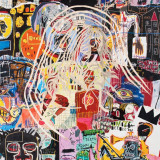
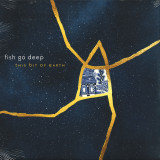
Perhaps the best Soul / Funk LP Athens of the North has ever released and you know we have high standards, not one filler and mostly unreleased tracks – Essential LP
The Up Tights were formed by Henry Bradley in Forrest City, Arkansas in March of 1967 while most of the band members were attending Lincoln High School.They took their name from the Stevie Wonder song "Uptight - Everything's Alright." Playing at school functions, they quickly branched out to playing bigger shows and headlined the 1968 St. Francis County Fair in Forrest City.
The Up Tights first recorded for Action Records in Memphis as Noble and the Up Tights. The 45 featured an original song by singer, Izear "Ike" Noble Jr. titled "Don't Worry About It."
Henry Bradley was drafted into Vietnam in 1968. He served in the 1st Squadron, 11th Armored Cavalry Regiment. While he was away, the Up Tights continued with Henry's brother, Arthur, taking over all the guitar duties. The band also hired a manager named John Mitchell. In 1968, the band met Joe Lee, who owned Variety recording studio in Jonesboro, Arkansas.
For the band's first recordings at Variety, Lee chose two originals by Noble titled "Look a Little Higher" and an updated version of "Just a Dream" which Lee released on his Alley Records label in 1968. Lee continued to record the band over the next several months. He liked to experiment in the studio and produced many versions of the group's original songs, adjusting the mix and adding elements to each unique take.
For the group's second Alley release, they appeared simply as Ike Noble on the record label. Lee brought in a local songwriter named Charles "Jamie" Holmes, who had previously written for Alley records and Joe Keene's studio in Kennett, Missouri
The resulting 45 from this collaboration was "It's Bad" backed with "That's What I Get," two Holmes originals. Another Holmes original was unreleased at the time, but available here titled "There's Gonna Be a Better Day Coming." Stax Records was interested in signing the group and wanted to re-cut "It's Bad" at their studio, but ultimately the label passed since they generally had a policy of working with Memphis based groups.
As the band grew in popularity, they began appearing with and competing with Memphis legends, the Bar-Kays. The group's biggest show in Arkansas was an opening slot at Barton Coliseum, one of the largest venues in the state, in Little Rock in mid-1969. As a result, the band was offered a spot on George Klein's "Talent Party" television show on WHBQ in Memphis in July of 1969..... Further Sleeve notes on back of the LP
out of Stock
Last delivered 2 years ago available to reorder, subject to availability
The groove-obsessed Sdban Ultra label are pleased to present an outstanding new collection of musical gems from Belgium's thriving jazz scene, compiled by Belgian DJ and eclectic connoisseur, Lefto.
'Lefto presents Jazz Cats volume 2', released 24th June, features a balance of known and obscure artists. From the thrilling frenetic grooves and innovative soundscapes of Bandler Ching and the electronic influenced Stellar Legions (Andrew Claes from (STUFF.), to the jazz fusion collective L?p?GangGang and weaving musical odyssey that is M.CHUZI, 'Lefto presents Jazz Cats volume 2' is a melting pot of the best musical talent coming out one of the smallest countries in Europe. In addition, there's the beautiful unease of One Frame Movement, the laidback 'acoustic electronica' of Boombox Experiments, the classic funky jazz stylings of Cargo Mas and the cinematic The Brums, making 'Lefto presents Jazz Cats volume 2' an essential release for any jazzhead with a passion for new sounds.
"By collecting all the music for 'Jazz Cats volume 2', I come to the conclusion that we are living in an era of very talented individuals and collectives. Even more so than 4 years ago. I have the impression that the Belgian jazz sound is more diverse, with more influences and more creativity. There was a time that jazz would be the starting sample to create a beat for rappers, today it is electronica, rap or afrobeat that influences our youth to create a sound or style that suits their vision of what jazz sounds like in 2022. So, once again it is with extreme pleasure that I present to you some of the best present and next generation of jazz cats this little country has to offer."
2018's 'Lefto presents Jazz Cats' included tracks from some of Belgium's biggest hitters including Black Flower, STUFF., and Glass Museum who have all gone on to receive global acclaim. The album was given the accolade of 'Album of the Week' on Worldwide FM and also received further radio support from Jazz FM in addition to numerous glowing reviews.
Tastemaker, selector, curator, DJ and producer, Lefto is one of the most important and respected tastemakers around the world with a record collection of over 15,000 records. Cutting his teeth on jazz and new beat, a genre that moulded the shape of electronic music in 80s Belgium, Lefto formed his early tastemaker know-how via his dad's record collection.
Creating his fine ear for music and the cutting edge at Belgium's legendary Music Mania record store in his hometown Brussels, he has been a resident on Belgium's leading radio station Studio Brussel and currently hosts a show on Kiosk Radio (BE) and The Lot Radio (US). He also curates his own stage at the Dour Festival and hosts his own nights in Gent. World renowned, he regularly blesses sound systems from Tokyo to Seoul, Singapore to Manila, Kazakhstan to Germany, San Francisco and Los Angeles, with residencies in Amsterdam and New York.
out of Stock
Last delivered 4 years ago available to reorder, subject to availability
Limited version 2LP on red vinyl in gatefold sleeve. An outstanding new collection of musical gems from Belgium's thriving jazz scene, compiled by Belgian DJ and eclectic connoisseur, Lefto.
The groove-obsessed Sdban Ultra label are pleased to present an outstanding new collection of musical gems from Belgium's thriving jazz scene, compiled by Belgian DJ and eclectic connoisseur, Lefto.
'Lefto presents Jazz Cats volume 2', released 24th June, features a balance of known and obscure artists. From the thrilling frenetic grooves and innovative soundscapes of Bandler Ching and the electronic influenced Stellar Legions (Andrew Claes from (STUFF.), to the jazz fusion collective L?p?GangGang and weaving musical odyssey that is M.CHUZI, 'Lefto presents Jazz Cats volume 2' is a melting pot of the best musical talent coming out one of the smallest countries in Europe. In addition, there's the beautiful unease of One Frame Movement, the laidback 'acoustic electronica' of Boombox Experiments, the classic funky jazz stylings of Cargo Mas and the cinematic The Brums, making 'Lefto presents Jazz Cats volume 2' an essential release for any jazzhead with a passion for new sounds.
"By collecting all the music for 'Jazz Cats volume 2', I come to the conclusion that we are living in an era of very talented individuals and collectives. Even more so than 4 years ago. I have the impression that the Belgian jazz sound is more diverse, with more influences and more creativity. There was a time that jazz would be the starting sample to create a beat for rappers, today it is electronica, rap or afrobeat that influences our youth to create a sound or style that suits their vision of what jazz sounds like in 2022. So, once again it is with extreme pleasure that I present to you some of the best present and next generation of jazz cats this little country has to offer."
2018's 'Lefto presents Jazz Cats' included tracks from some of Belgium's biggest hitters including Black Flower, STUFF., and Glass Museum who have all gone on to receive global acclaim. The album was given the accolade of 'Album of the Week' on Worldwide FM and also received further radio support from Jazz FM in addition to numerous glowing reviews.
Tastemaker, selector, curator, DJ and producer, Lefto is one of the most important and respected tastemakers around the world with a record collection of over 15,000 records. Cutting his teeth on jazz and new beat, a genre that moulded the shape of electronic music in 80s Belgium, Lefto formed his early tastemaker know-how via his dad's record collection.
Creating his fine ear for music and the cutting edge at Belgium's legendary Music Mania record store in his hometown Brussels, he has been a resident on Belgium's leading radio station Studio Brussel and currently hosts a show on Kiosk Radio (BE) and The Lot Radio (US). He also curates his own stage at the Dour Festival and hosts his own nights in Gent. World renowned, he regularly blesses sound systems from Tokyo to Seoul, Singapore to Manila, Kazakhstan to Germany, San Francisco and Los Angeles, with residencies in Amsterdam and New York.
out of Stock
Last delivered 4 years ago available to reorder, subject to availability
THE CULT 1990 DEBUT ALBUM OF INFLUENTIAL UK GRINDCORE FROM
PROPHECY OF DOOM - PRESENTED ON THE VINYL FORMAT WITH
COVER ARTWORK FROM THE ORIGINAL 1990 PRESSING.UK grind/death
veterans Prophecy Of Doom formed in Gloucestershire, 1988, with
bassist Martin Holt & vocalist Shrew Schroder uniting to embark upon a
journey to create something challenging & memorable to stand out in the
UK scene
After a few personnel changes whilst looking to establish a permanent recording
line-up after their 1988 demo & the 1989 EP, 'Calculated Mind Rape' (which had
brought the band to the attention of legendary DJ John Peel), the time had come
to create their debut full- length album. And so 'Acknowledge the Confusion
Master' came to be & was released in 1990 on the burgeoning Peaceville Records
& their then newly established sub- label, Deaf Records. A highly effective
concoction of blasting amid a titanic wall of raw grinding riffs & chaos propelled
Prophecy Of Doom to the forefront of the scene, also leading to two recording
sessions with John Peel & further enforcing Prophecy Of Doom's position on the
map of notable British grind acts.
As a further distinguishing factor, there was a great depth & consideration to the
themes of the album, perhaps in stark contrast to how the tracks were presented
sonically. Written by mainman/vocalist "Shrew", there with a strong philosophical
element to the lyrics, an exploration of awareness & intuition amid an era of
increasingly suppressed feelings & an urge to rise above mental restrictions.
This vinyl edition of 'Acknowledge the Confusion Master' contains cover artwork
from the 1990 release with printed inner sleeve containing lyrics & receives its
first vinyl pressing on Peaceville since that initial 1990 edition.
Leeds art-rock group Mush (Dan Hyndman vocals / guitar, Phil Porter drums,
Nick Grant bass, Myles Kirk guitar) are set to return with album ‘Down Tools’
via Memphis Industries. The new record marks the prolific band’s third album
in as many years, following hype-building early singles ‘Alternative Facts’
and ‘Gig Economy’, 2020’s debut album ‘3D Routine’ and 2021’s acclaimed
‘Lines Redacted’, which pushed their sound further and, as Uncut wrote, saw
them become “kindred spirits to Wand and King Gizzard & The Lizard
Wizard, two other bands prolifically honing their sound and approach,
steadily developing their voice.”
On ‘Down Tools’, this voice grows again into a more brilliantly singular
sound. It sees Mush getting loose, moving away from the defined moods and
textures of ‘Lines Redacted’ with a musical openness, straddling genres
while avoiding pastiche. Hyndman says of the lyrics on ‘Down Tools’ that
“there was a conscious decision to retreat further from an observational
approach” with vocals being ad-libbed lending the record a more abstract
feel. Hyndman continues: “this album is less dark than the previous one. The
Armageddon obsession has eased, or at least the symptoms have become
milder due to saturation. Musically there’s a lot more chill on the record -
there’s a few more mellow tracks out there and the most astute listener may
even be able to decipher some of the words, fingers crossed.”
While grief and work balance form themes on the record, Hyndman’s
approach is largely made up of abstract, disconnected streams of
consciousness and lines liberally taken from books, paintings, films and
beyond. On ‘Human Resources’, Hyndman dramatically retells a battle he
had with an HR department at a job in a David and Goliath style. The song
‘Group Of Death’, a phrase chillingly familiar to any football fan, is
emblematic of the turn towards softer, more considered sounds. Hyndman
says: “In my warped imagination it just sounds like a Paul McCartney song,
but it won’t to others. I initially had the idea of doing a World Cup song called
‘Group of Death’, but by the time it was written nothing beyond the title had
any relevance to football. Anyway, the next World Cup is in Qatar so fuck
that shit.”
‘Northern Safari’, meanwhile, is a song about the way the North of England
has been portrayed in the media and used as a mirror to reflect some of the
nastier elements of what’s going on in society, in particular vox pops around
Doncaster, portraying a particular narrative of the collapse of the red wall and
the disgruntled ex-miners.
‘Down Tools’ sees Mush idiosyncratically ping-pong from finger picked
looseners to noise-rock bangers to brilliantly entertaining effect, avoiding
post punk saturation with an easy style and wit.
1985 session by piano great Duke Jordan alongside bassist Jesper
Lundgaard and drummer Billy Hart
Duke Jordan (1922-2006) famous for his intense lyricism embarked on the world
jazz scene as a member of the classic Charlie Parker Quintet in the late 40s with
his trademark introduction to "Embraceable You". Jordan unlike many other
American jazz musicians in Bebop era found his artistic and personal living space
in Europe since the early '70s. His extensive recording output on SteepleChase
including this album from 1985 recorded in Denmark makes up the huge part of
his discography.
"A most agreeable set that is both eminently listenable and very
enterprising...Jordan was always a fleetly swinging but subtle pianist whose allround musicianship has never got the recognition it merits. This fine trio deserves
to sell well and spared his name further afield." - Richard Palmer, Jazz Journal
International
'Mellow Moon' is the debut album from Alfie Templeman - an album that
"feels like something of a miracle, landing somewhere between an
otherworldly trip and a joy-filled ode to life back on earth"
Like all journeys, the change in mood is palpable throughout Mellow Moon, with
songs like the nostalgic '3D Feelings' or 'Broken', which is about "all the little
wobbles of being a teen and figuring yourself out," that bristle with the energy of a
life being lived again.
There's nuance in there, too. Candyfloss suggests that life can sometimes appear
too good to be true, something Alfie has felt since was a kid. "There's always a
downside to the cool shit," he says. "Candyfloss is what it all appears to be until
you get deeper into it."
The result is an easily accessible comfort place. Across 14 tracks Alfie closes his
eyes and imagines another world, one where he's at ease and not distracted by
life's many challenges.
Inspired by modern influences like Steve Lacy, Khruangbin and Leon Bridges, as
well as Alfie's constant cosmic guide Todd Rundgren, Mellow Moon flows with an
ease that belies its difficult creation. "It's a moment in my life that I want to
remember forever. I've put so much effort into this and it's a real experience to
listen to."
Acting as both an intimate diary entry and a communal call to arms, Mellow
Moon is Alfie's most complete work to date and a platform from which he will
surely use to propel himself further into the stratosphere. If ever proof were
needed that music is a salvation or a transportative force, this is it.
Live sessions with Radio 1, Radio 2 and Virgin have now aired.
TV performances confirmed with Sunday Brunch (22 May) and Blue Peter (20
May), the week prior to album release (EMBARGOED!!!!!).
135M total global career streams
»Tableau« is Rolf Hansen's second full-length album under his given name and acts as a sequel to his solo debut »Elektrisk Guitar«, released in 2019 through Karaoke Kalk. On the 14 new pieces, the Copenhagen-based composer and musician further explores the sonic possibilities of the electric guitar by opting for a radically different approach and putting great limitations on himself as a performer. »Tableau« is an experimental record in the truest sense of the word, eschewing conventional modes of playing the instrument and instead turning the guitar into a sound source for compositions that are at once abstract and concrete.
Already on his last album, Hansen had found a different approach to playing and composing, but this time went even further and created a set-up in which the electric guitar becomes a different instrument altogether. This is also expressed in its title: a tableau is, broadly understood, an image-forming momentary bodily pause in a dramaturgical or narrative process. In the context of the album, tableau is the form and sound that emerge when the musician’s usual approach to playing and the compositional practice is halted and transformed. To achieve this, the guitar is placed on a table with microphones installed around it and tuned in a static microtonal modality thanks to wooden replacement frets that have been inserted under the strings. This alters how the sounds are being generated with the instrument, which is now played from above, occasionally strummed or stroked with a tool.
The opener »Begyndelse« already sets the tone by punctuating dense layers of sound with a one-note melody that provides a rough rhythmic structure and harmonic anchor for the track that still seems to mutate wildly the further it progresses. Even in moments in which Hansen opts for a more directly accessible approach like on the following »Over Grænsen« or »Tid«, the pieces’ emotional qualities are greatly amplified by their sonic idiosyncrasies. This is best exemplified by the first track on the second side of the LP, »Højre hånd«. Using high microphone gain to magnify the high-frequency acoustic sounds of the electric guitar, Hansen captured a rich near-symphonic changing spectrum of overtones. This is typical for the attention to detail put into the overall record whose approach maximises the music’s affective impact by focusing on minute nuances.
»Tableau« is full of moments marked by almost unnoticeable shifts and changes, offering a wealth of sounds that are as evocative as they come unexpectedly. Despite their aesthetic differences, the kinship between its predecessor »Elektrisk Guitar« and these 14 compositions is undeniable. Both are based on self-imposed constraints, a radical form of reduction that made it possible for Hansen to broaden his sonic palette and compositional approach. Though mostly short, concise, and abstract-sounding, the pieces on »Tableau« speak a clear, varied and simple language.
Planet Battagon – Episode 01, a labyrinth of different sounds and textures was created live, purely on machines. Creating Experimental and other-worldly tones, all three tracks hail from the quirky "Planet Battagon" world, with "Like You, Like Me" the most likely contender for Club play by the more adventurous DJs. Touching on early Techno and Space-Jazz, Episode 01 is certain to take you on a sonic journey like no other...
Gilles Peterson – “Love it, I can’t wait to play this one out”
Rob Da Bank - “ WOW what a fresh and unique sounding record…drumtastic! "
Felix (Basement Jaxx) - " It's like the Clangers playing at a bass music festival ”
Rhythm Doctor - “ Explosive, Techno Jazz experiment. . .will become a classic ”
Toddla T - "Refreshing, Sic!”
Further support from Riton, Sinden, Canblaster and Brodinski
"Emotional Rescue continues its 10th anniversary by again presenting Jorge Reyes’ collaborative album with Antonio Zepeda – a masterpiece and therefore, worthy of the time and effort to share.
From cult artist to becoming an essential musical discovery, Jorge Reyes is an example that no one discovered or owns the music beyond the writer and creator.
Growing up in Mexico’s 2nd City, he spent much of his life dedicated to travelling and learning music traditions and instruments. While at University to study Flute, he was involved in several influential bands of the era before going on to travel the world to further his learning, before returning to found the seminal Chac Mool group.
By the early 80s he went solo, exploring an increasing interest in the use of Prehispanic instruments mixed with electronics. In the opening songs, I-Cana and A La Izquiedra Del Colibri, the interplay between flute, guitar and vocals with TR-700, Poly 800 and DX7, all fuse his vision perfectly.
The additional contribution of Antonio Zepeda’s percussion creates a timeless mystique to the album, taking you on a journey deep in the mind of one of Mexico’s most important experimental artists.
Passing away at just 56, Jorge Reyes work was cut short, however he has left over a dozen albums to be explored. While critics increasingly question the valedictory of reissues, the premise on whether something should be heard is if it’s good. Therefore, let A La Izquierda Del Colibri be heard."
out of Stock
Last delivered 4 years ago available to reorder, subject to availability
"The past 5 years we have taken our music all over the world: Europe, Asia, Africa besides our homeland Denmark, and even though we cannot speak with many of the people we meet, our music is a universal language that transcends borders. The meetings we have had (and continue to have) all over inspire us to create new music. But of course we are the composers of the music, so this is our representation of those meetings.
Our 3rd album is called AFROTROPISM. Tropism is a biological phenomenon that indicates growth of a plant in response to the environment; so when you see a plant turning for the sunlight, this is tropism. In other words, this is not so much about the plant's roots but more about how it reacts when it touches the air, feels sunlight or rain - in other words the outside world. So AFROTROPISM refers to the fact that we are drawn towards the African traditions, but we are "growing" our own music.
On our first two albums we have recorded extensively with African musicians, and AFROTROPISM is centered around The KutiMangoes (TKM) as a band. We are developing our artistic direction by going more in depth with how we can mix our inspirations with our own musical heritage. Our musical mission is (and has always been) to mix cultures and create our own sound.
With our background in jazz music, TKM counts virtuoso instrumentalists with a heartfelt intent and sound innovators with our horns, effect pedals, synthesizers, drums and percussion from all over the world. AFROTROPISM is a further and deeper development of our trademark bold sound that experiments with synthesizers, soundscapes and a bit of electronic effects without losing it's focus on groove, melody, atmosphere and musicianship."
The KutiMangoes, July 2019
About each track:
STRETCH TOWARDS THE SUN
This track opens up with a synthesizer groove that is inspired by the polyrhythmic grooves played by the balafon (a predecessor of the piano) from West Africa. Our rolling sequence could not be played on the balafon because of the key changes, but the basic idea comes from that instrument. Quick and light, we wanted to write a song where you can feel the sun coming out and feel the energy it's rays give. The combination of the programmed groove, the horn-arrangement, the huge percussion section and the live instruments makes for a sound that we have not heard before, and it illustrates what this album is all about (and what the track's title refers to): that we stretch towards the things that give us energy – and that although our roots are in Denmark, when we encounter a musical tradition as rich as in West Africa, it changes us and our music.
A SNAKE IS JUST A STRING
The first time we saw Mali-bluesman extraordinaire Vieux Farka Touré on stage was just after we had played at a huge festival in Burkina Faso, and we almost literally caught on fire. Their groove was so strong and insistent that we were mesmerized, and it inspired us to come up with the opening guitar part of this song. Basically a bluesy tune with some unusual chord changes and a crazy synthesizer solo by Johannes Buhl Andresen reminiscent of that fuzzy guitar-sound we love so much in the Mali blues. The title is an homage to the Nigerian writer Chinua Acheba, who in his masterpiece novel "Things Fall Apart" tells that in the village during the night, to ward off the fear of darkness, people would call dangerous animals by a different name: don't be afraid, a snake is just a string.
KEEP YOU SAFE
It is a basic human necessity to have a place where you can feel safe. But there are far too many people in our world that fear for their safety, their livelihood, their children, their relatives – and this is surely not a feeling that helps us to flourish as humans. With this song we are saying that we all need to make it a priority to help our fellow humans to feel safe. And of course, if our song can offer a feeling of safety and comfort for a short time to those who listen, we are truly thankful.
MONEY IS THE CURSE
This track is directly inspired by Fela Kuti's ability to create music that is both physical and political. Dance music with a serious message about our times. For the solo part we wanted a more melancholy, pensive feel (than the full-on baritone-trombone melody) and also wanted to experiment with some choppy, stuttering effects to make the horns sound desperate. Money is the curse because it can become the objective of our life; money is the curse because it changes the relationships we have with our fellow humans. Money is the curse.
THORNS TO FRUIT
This melody is inspired by the scales and developments of a traditional Bambara folk-song. We love the way these melodies constantly evolve with small developments and changes. We felt like an accompaniment that is really dry, sparse and earthy would fit well and then made a contrasting solo part. As a group we are interested in how to develop our improvisations together and create sonic landscapes that evoke a distinctive atmosphere – so here, we have no soloist, but a collection of synthesizer parts, saxophone lines and guitar-sounds that together create a dreamy and lush ambience.
SAND TO SOIL
We started out with a short ngoni riff played by our good friend and master musician Aboubacar Konaté. We then sampled it, built soundscapes and our own both meditative and pumping groove around it. We created a melody with both melancholy and joy, with afterthought and impulse and then the brilliant Aske Drasbæk added an emotive and blistering saxophone solo. The title refers to the contrasts in our humanism. As part of our human nature, we have a dark side that drives us (and each other) towards destruction – making the fertile soil into barren sand. The title is an encouragement to emphasize the opposite movement in our nature: to create life and help it flourish. We keep ourselves human by insisting that we must never forget this side of our nature no matter how tough, tiresome or trying it might be. Let's keep our focus on the light, the warmth, the positive energy – that can turn the cold stone into fertile ground.
out of Stock
Last delivered 4 years ago available to reorder, subject to availability
London producer Yosh continues his hot streak of putting out a twelve inch a month with typically breaksy, UK focused EP on Distant Horizons that further earmarks the emerging artist as one of the producers to watch in 2021.
Following releases on Time Is Now and an announcement on Desert Sound Colony’s Holding Hands sub-label, Yosh serves up four steppers that navigate us from the doors of the club to front left of the speaker. ‘Don’t Say’ is a fast cut of subby breakbeat-garage; the producer’s knack for emotionally stimulating vocal samples and peak-time basslines moving into the frame.
‘All That Acid’ gives squirming acid lines and stripped-back percussion, mutating the breaksy, UK energy into something more electro focused, and in doing so provides what could be the score for an old racing video game, before ‘Choose One’ takes us back into familiar Yosh territory with a cut of dreamy garage, with the odd dubby wobble for good measure.
We finish on a personal note with ‘Home’, a cut that epitomises that good feeling that can only come with returning to a place of comfort; relaxed atmospherics and 2-step rhythms providing the perfect warm up number.
out of Stock
Last delivered 4 months ago available to reorder, subject to availability
Helmed by Dave Watts aka D.WattsRiot (Fun-da-mental), the debut KingL Man album, ‘Headonix’ is beat-laden shout out in response to the perpetual state of war we seem to find ourselves at. Outrage and disgust, love and hate, history and presence.
Contributions come from four continents.
Fresh on the scene is Senegalese vocalist Sidi I.B., who arrived on Canarian shores with two hundred other compatriots, cold, wet and hungry after seven days at sea with nothing but his future in his hands.
Temporarily housed at the infamous migrant holding centre in Las Raíces, Tenerife, the studio environment provided an avenue of relief from the inadequate conditions at the overcrowded camp.
Also from Senegal, living in Santa Cruz de Tenerife, is rapper Ibrahima El Latigazo who delivers his lyrics in French, Wolof, Spanish, English & Sérère. Rounding up the Senegalese contingent is Mame Samba, a group that hold the spirits close when performing. Their contribution is from recording sessions they had with François R. Cambuzat & Gianna Greco (Putan Club / Ifriqiyya Electrique).
Kiki Hitomi (Waq Waq Kingdom/King Midas Sound) returns to the fold, exhaling positivity with Canarian multi-instrumentalist Javier Afonso (Grenouille). The Canarian faction also includes violinist Mónica Viñoly, Dani Garcia (Lagoss/Tupperwear) and Vakawuare. Further guests include percussionist Miroca Paris (Cesária Évora/Madonna); Hamid Mantu (TransGlobal Underground);
Ramjac (Dub Colossus), drums and percussion respectively.
Since slipping out a decade ago, Fürsattl’s sole 12” on Claremont 56 has become an in-demand item, thanks to a mixture of its’ undeniable quality and the patronage of several high-profile, well-regarded DJs. Because of this, the label has responded to demand for a reissue of those two tracks and announced the release of a double-album of the krautrock-inspired trio’s works for the label.
Presented in a gatefold sleeve sporting Mark Warrington’s original 2012 artwork and limited to 400 copies, the 2022 album edition of Rheinlust not only tells the tale of the band’s now decade-long association with Claremont 56, but also features a previously unreleased track from the archives, ‘Für Paul’. Tucked away at the end of the LP, the track is amongst the most atmospheric in their catalogue – a slowly building number in which celestial synthesizer chords, ambient textures, echo-laden electric piano chords and lilting synth strings rise above a rubbery bassline and Jaki Liebezeit style drums.
It provides a superb conclusion to a genuinely evocative album of music you can get lost in, but it’s by no means the only highlight. Fittingly, the album’s first slab of wax boasts both tracks from Fürsattl’s hard-to-find debut 12”: title track ‘Rheinlust’, a driving but deep and hypnotic krautrock masterpiece full of elongated chords, restless bass, twinkling motifs and cascading electronic melodies, and the wonderfully epic ‘Links Der Pegnitz’. Clocking in at just under 15 minutes, this sublime excursion features band members trading glistening guitar and colourful synthesizer solos over a funky but laidback groove that sits somewhere between krautrock and cosmic funk.
The album’s second slab of wax showcases Fürsattl’s lesser-known tracks for Claremont 56, alongside the previously mentioned unreleased cut. These two workouts were originally featured on the label’s Claremont Editions compilations and further expand on their now trademark krautrock sound. There’s ‘Leerlauf’, a breathlessly up-tempo, weighty and immersive chunk of low-slung dancefloor creepiness that you’ll want to get lost in time and again, and the twangy and buzzing ‘Haru’, a birdsong-splattered affair that sounds like their tribute to krautrock originals Neu! and Harmonium. Like the rest of the album, these are seriously seductive outings that slowly build towards impactful, emotive conclusions.
out of Stock
Last delivered 3 years ago available to reorder, subject to availability
IATT is pleased to once again team up with Black Lion Records for the follow up to 2019's Nomenclature; our new full length album entitled Magnum Opus. We've meticulously crafted this album to leap from where Nomenclature left us thematically.
The listener is catapulted from the 1700s (Arsenic Ways) further back in time to a much darker, older world and the esoteric sciences of Alchemy. It was in this time man aimed to harness the world around him, bending the natural elements in a quest to obtain power, knowledge, control, and even immortality itself.
Alchemy was the key to unlocking the secrets of existence and elevating one's self to the pinnacle of enlightenment through transmutation and manipulation of the earthly elements. It was only through the process of Magnum Opus (the great work) that alchemists could harness the elementals in their purest form to create the Philosopher's Stone - the key to power, enlightenment, and immortality.
Just as in alchemy itself, creating this album has been a journey of transformation for us; a period of great growth as individuals and as a unit. It's through adversity, struggles, and the forging of the elements - of literal blood, sweat, and tears - we strive to transcend and elevate to our highest selves, "the great work", Magnum Opus.
Sound Like: (Immolation, Spawn of Possession, Death, Emperor, Obscura)
Sofatalk & XL Regular have come up with a wonderful jazzy EP for Outplay. Filled with warm chords and broken house beats.
Italy’s Piero Paolinelli and Alessandro Giacchi are the newest addition to our Outplay family. They have released music previously on Omena, ANMA, Cognitiva Records (Sofatalk’s own label), INI Movement, Nómada and Monologues. Their EP for Outplay is called Afro Quarters EP and contains 4 electronic jazzfunk infused house
tracks and make for a perfect testimony of their musicianship.
Rumble Strip kicks off with broken beats turning into a 4x4 house beat filled with percussion, dreamy keyboard licks and sultry vocals to underline the floaty vibe.
The title track, Afro Quarters, is up next pushing us further into their signature jazz infused broken beat house style. With the funky bassline and the stabby keys it’s hard not to move. Throw in tastefully done flute and Rhodes solos for the mature sound they’re known for.
The third piece is called Easy and contrary to its name it’s not as chilled out as you’d think. It’s incredibly groovy, with heavy staccato bass and keys, while keeping the dreamed out jazzy chords to balance it out. It makes us think of the masterful work of Kaidi Tatham.
“On The Run” concludes the EP and continues the vibe displayed throughout the release filled with arpeggiated and stabby keys and vocal bits.
It’s our absolute pleasure to be able release this and we are excited to share it with you!
out of Stock
Last delivered 3 years ago available to reorder, subject to availability
Available on vinyl for the first time since it's original CD-only release in 2007. Tenor saxophonist Fred Anderson and drummer Hamid Drake had the closest of relationships, as close as a father and son might have. Their communication was at a higher level musically and emotionally. The music on this album reflects not only their masterful musical skills, but a conversation in music that is exceptionally powerful and unique. For From the River to the Ocean, they assembled a band consisting of fellow Chicagoans to record the most relaxed, perfectly balanced album they made together. It may seem hyperbolic to call From the River to the Ocean Fred Anderson's greatest album, but the empathy and cohesiveness of the ensemble, coupled with the saxophonist's brilliant, searching improvisations, makes it a powerful contender. From the River to the Ocean is an especially varied outing, ranging from Anderson's classic set-closing blues "Strut Time" to the meditative, spiritual, modal track "For Brother Thompson," dedicated to the late trumpeter Malachi Thompson and featuring bassist Harrison Bankhead on brooding piano and Drake chanting in Arabic. The record's title track and the closer, "Sakti/Shiva," find bassist Josh Abrams laying down an astounding bed on guimbri, the threestringed Moroccan acoustic bass familiar to fans of Gnawa music. Another of the album's delights is guitarist Jeff Parker, well known Jazz guitarist as well as member of Tortoise. Here, Parker displays an immense sensitivity and melodic genius, sharing solo spotlight with Bankhead's cello on "From the River to the Ocean" and sculpting a stunning array of shapes on the group's swinging take on Anderson's "Planet E." Underneath it all is Hamid Drake, an intensely creative soul continuing to challenge himself. Drake's growth is not measured in how many different instruments he plays - indeed, he's scaled back his arsenal over the years - but in the depth and musicality of his feeling. On this record he is remarkably light and airy, playing with tremendous delicacy and clarity. Propulsion can be introduced without a pneumatic drill, and Drake instigates an avalanche of rolling forward momentum on the opening moments, inspiring the two basses and guitarist to move, to make something moving, and in turn to further inspire Fred Anderson to some of his most forceful and imaginative playing ever documented. If the individual is a small receptacle of expressivity, a mountain spring if you will, then it is in ideal settings like this one that the springs join forces, turning into streams, then bigger and bigger tributaries, finally swelling into rivers that open into the oceanic creative waterways. Thank goodness Anderson and Drake tapped into that wellspring, drawing directly from the source
Available on vinyl for the first time since it's original CD-only release in 2007. Tenor saxophonist Fred Anderson and drummer Hamid Drake had the closest of relationships, as close as a father and son might have. Their communication was at a higher level musically and emotionally. The music on this album reflects not only their masterful musical skills, but a conversation in music that is exceptionally powerful and unique. For From the River to the Ocean, they assembled a band consisting of fellow Chicagoans to record the most relaxed, perfectly balanced album they made together. It may seem hyperbolic to call From the River to the Ocean Fred Anderson's greatest album, but the empathy and cohesiveness of the ensemble, coupled with the saxophonist's brilliant, searching improvisations, makes it a powerful contender. From the River to the Ocean is an especially varied outing, ranging from Anderson's classic set-closing blues "Strut Time" to the meditative, spiritual, modal track "For Brother Thompson," dedicated to the late trumpeter Malachi Thompson and featuring bassist Harrison Bankhead on brooding piano and Drake chanting in Arabic. The record's title track and the closer, "Sakti/Shiva," find bassist Josh Abrams laying down an astounding bed on guimbri, the threestringed Moroccan acoustic bass familiar to fans of Gnawa music. Another of the album's delights is guitarist Jeff Parker, well known Jazz guitarist as well as member of Tortoise. Here, Parker displays an immense sensitivity and melodic genius, sharing solo spotlight with Bankhead's cello on "From the River to the Ocean" and sculpting a stunning array of shapes on the group's swinging take on Anderson's "Planet E." Underneath it all is Hamid Drake, an intensely creative soul continuing to challenge himself. Drake's growth is not measured in how many different instruments he plays - indeed, he's scaled back his arsenal over the years - but in the depth and musicality of his feeling. On this record he is remarkably light and airy, playing with tremendous delicacy and clarity. Propulsion can be introduced without a pneumatic drill, and Drake instigates an avalanche of rolling forward momentum on the opening moments, inspiring the two basses and guitarist to move, to make something moving, and in turn to further inspire Fred Anderson to some of his most forceful and imaginative playing ever documented. If the individual is a small receptacle of expressivity, a mountain spring if you will, then it is in ideal settings like this one that the springs join forces, turning into streams, then bigger and bigger tributaries, finally swelling into rivers that open into the oceanic creative waterways. Thank goodness Anderson and Drake tapped into that wellspring, drawing directly from the source
The Entertains were a vocal group from Cleveland Ohio whose line up at different times varied between four to five members. Initially signed to Belkin Productions in Cleveland the group were persuaded by Nick Holiday to move to his Pittsburgh Steel Town Records Label. The group had already been working on two songs penned by C-Way Productions Richard Calloway who had strong links with Cleveland through his work with Jesse Fisher and Lester Johnson at Way Out Records. The two songs in question being “Love Will Turn It Around” and Why Couldn’t I Believe Them”, demo cuts of both songs where touted around to several major labels with 20th Century showing some serious interest, but the owner reputedly turned down 20th Century’s advances and instead chose to release the songs on his own Steel Town Label. Recorded at Jerree’s Studio in New Brighton P.A with the musical arrangements being provided by Don Groton, The Entertains 45 received limited local airplay reputedly due in part to Holiday’s refusal to provide a set of Dining Room furniture for an influential local radio promotion man. Greater radio play was eventually received with “Love Will Turn It Around” gaining air time on WANN, Annapolis Maryland’s largest Black radio station, courtesy of Disc-jockey Charles “Hoppy” Adams. For a time, a popular tune throughout Baltimore, Washington and Delaware without breaking out nationally. Wider appreciation of the Entertains 45 would come from foreign shores as copies of the 45 found their way in the UK. The effervescent dance side of the 45 “Love Will Turn It Around” was heavily championed by Legendary DJ Colin Curtis and became a firm favourite with the dancers within the Highland Room of the Blackpool Mecca and subsequent Northern Soul venues of the time. The Entertains line up on the Steel Town sessions where Donald Rice, Howard Rice (the cousin of Donald) Alfred Wilson and Andrew Wright the lead vocalist on all The Entertains songs. During 1978 Richard Calloway held a second recording session on The Entertains again at Jeree’s Studio’s which yielded a further two songs “I’ll Answer You With Love” and “Your Love I Give It Up” which due to lack of finance at the time of their conception remained in the can. These two songs have now been brought to life through Soul Junction’s licensing deal with C-Way Production’s in the format they originally intended for. The A-side of the release is the emotional charge stepper “I’ll Answer You With Love” with the opening monologue parts been performed by Howard Rice. While the B-side “Your Love I Give It Up” is a punchier up-tempo version of Richie Merrett’s earlier C-Way Records recording “I Gave It Up”, the flipside to “You’ll Always Have Yesterday Standing By” (C-way 103).
In later life Donald Rice would perform with Lonnie Turner Jr a former member of the Detroit groups The Mighty Lovers (Boo-Ga-Loo and Soulhawk) and Innervision (Private Stock and Ariola America) and his daughter Africa Turner in a vocal combo known as The Ambassadors Of Soul, sadly Donald has now passed. It is believed that the other members of The Entertains are still out there performing solo or as members of other different groups.
The original version of 'Angel' needs no further introduction as its
already been a big club smasher since released in mid March.
The remixes are now about to hit the clubs and of course we got
something special everyone. Ripperton is behind the haunting and techno driven remix which definitely up there with his best work to date and Hot Since 82 does his thing and delivers a phat driving tech house remix sure to pack the floors around the globe.
To round the package of singer/songwriter Hayze has given us his wonderfull deephouse interpretation of the song and this will go down well for the early hours we reckon.
out of Stock
Last delivered 3 months ago available to reorder, subject to availability
Following on from 2018’s SHULULULU EP, the duo are back channeling their sound-design focused experimentalism into a brace of characteristically high energy recordings. Melding contemporary explorations in rhythm and texture with more traditional club tropes, Kongestion places recognizable leitmotif’s from the dance music continuum in the context of the pair’s inimitable production prowess
A1 Kong and follow up Onge offer two takes on a similar template that marry a stepping kick drum pattern with dense, ever-shifting granules of processed white noise. The mentasm sample, that will become a recognizable device across the EP’s course, provides it’s own twisted energy – front and center on the former, and sunk – but no less effective, on the latter. With Nges SHXCXCHCXSH draw on their beatless material for inspiration, inviting a more musical sensibility into the work. What begins life as a staccato, monotonal recording develops slowly and organically into an emotive patchwork piece – drawing on the mentasm, but this time twisting it further and introducing a bassline and shuffling hats. Relentless rhythm track Gest follows – a dense, thorny construction that segues neatly into Esti, another more caustic composition that places it’s focus on intricate, delay-driven sound design with ghostly lead tones that operate just below the surface. As the record approaches it’s close, the duo showcase their range with Stio – a pulsing, meditative ambient cut. Final track Tion wraps up the EP neatly, acting as a fulcrum for the themes explored so far. Bending the mentasms into a hook, the artists create a wall of undulating sound, broken by sporadic kick drum hits and propelled forward with percussive strikes that run through the track before dissolving into soft reverb tails.
out of Stock
Last delivered 20 months ago available to reorder, subject to availability
Acid Jazz proudly presents: Orchestre Les Volcans Du Benin - Vol. 1!
Originally released in 1980 on the Albarika label, 'Orchestre Les Volcans Du Benin Vol. 1' has long been a holy-grail LP for Afro-Cuban music aficionados.
It now sees its first official reissue through Acid Jazz and is available for the first time with four infections tracks, including 'Oya Ka Jojo': Latin dancefloor dynamite, and a DJ must-have.
Remastered by Frank Merritt at The Carvery, further igniting these killer recordings.
out of Stock
Last delivered 4 years ago available to reorder, subject to availability
Between the late 70s and the early 80s, pop music was in a transitional phase. After a return to the roots of punk, rock was morphing into new wave, while disco was rapidly declining and the electronic revolution, already on the rise, was ushering in the transition from analog to digital. This period also saw the emergence and relatively brief flowering of a commercially dominant style that mixed soul influences (especially Stevie Wonder and Ear th Wind & Fi re) , folk/pop songwriting and jazz sensibilities in equal measure, creating a hybrid easy on the ears but also emotionally and musically rich. It was the style represented by artists like Christopher Cross, Michael McDonald, Gino Vannelli and Kenny Loggins, who were all influenced by black music. They belonged to a larger trend that took place in all major music producing countries, including Italy where, like so many other things, the style was not merely imported or copied, but reshaped into a specifically local version based on the nation's tastes and cultural traditions. In Italy, a soulful and sophisticated approach to pop music was embraced not only by established names like Mina, Alan Sorrenti and Loredana Berté, but also, and perhaps most importantly, by an entire generation of writers, arrangers and musicians who had grown up listening to early fusion, to Steely Dan's refined recordings, and to Quincy Jones's productions. So, with this compilation we hope to give new exposure to artists and songs that, despite having moderate or little success when first released, must be regarded as among the creative peaks of Italian pop music. "Paisà Got Soul" features pop veterans Peppino Di Capri, Mario Lavezzi and Alberto Radius alongside atypical singer-songwriters (Enzo Carella, Enzo Cervo, Gino D'Eliso), Italo-disco heroes (Stefano Pulga), international hit composers (Beppe Cantarelli, who has co-written for Aretha Franklin and Mariah Carey), Brazilian-born naturalized Italians (Jim Porto) and complete unknowns (Franco Camassa, I Ricci, Massimo Stella).It brings together little gems that in most cases are no longer available on the market, or only available in their original and now very rare vinyl format. We believe they all deserve to be rediscovered today, partly because of the recently renewed interest in "yacht rock", as this music style has been retrospectively named, and partly because they provide further evidence that Italian artists rework international music styles in creative and original ways.
Compiled and conceived by David Nerattini partnered by Pierpaolo De Sanctis
out of Stock
Last delivered 4 years ago available to reorder, subject to availability
Busy is Good is an assemblage of rare-groove and jazz-funk cuts pulled from 45s of the 70s and 80s. A project that celebrates pure creative expression, these under-appreciated tracks reflect the individual efforts of artists both of their time and ahead of it; local legends who challenged convention and produced work steeped in ambition.
From the seductively smooth “Twilight,” by New York’s own Febop, to the blistering key breaks and infectious funk of Bob Payne’s “Side By Side”, this anthology highlights the fusions and crossovers that occurred in jazz, rock, funk and soul at the time. Buddy Emmer’s jazz-kissed breezer “That Summer Nite” and Forest’s synth-pumped AOR cut “Crazy Days” further traverse the many styles that bloomed in the 70s and 80s.
out of Stock
Last delivered 4 years ago available to reorder, subject to availability
‘Mehldau can truly translate his thoughts and feelings into complex and lasting music. He is one of those people whose brain and fingers and musical ability is all one beautiful entity.’ – Jamie Cullum
Nonesuch Records releases Brad Mehldau’s Jacob’s Ladder on 2 x 140g black vinyl on June 17th . The album features new music that reflects on scripture and the search for God through music inspired by the prog rock Mehldau loved as a young adolescent, which was his gateway to the fusion that eventually led to his discovery of jazz. Featured musicians on the album include Mehldau’s label mates Chris Thile and Cécile McLorin Salvant, as well as Mark Guiliana, Becca Stevens, Joel Frahm, and others. The album’s first single, ‘maybe as his skies are wide’, builds off an interpolation of one portion of Rush’s classic ‘Tom Sawyer’.
Mehldau explains, “We are born close to God, and as we mature, we invariably move further and further away from Him on account of our ego. Jacob’s Ladder begins at that place closer to God with the voice of child, and then moves into the world of action. God is always there, but in our discovery and conquest, and all the joys and sorrows they bring, we may lose sight of him. He sets a ladder before us though, like in Jacob’s dream, and we climb towards him, to find reconciliation with ourselves, to stitch up all those worldly wounds and finally heal. The record ends with my vision of heaven – once again as a child, His child, in eternal grace, in ecstasy.
“The musical conduit on the record is prog,” Mehldau continues. “Prog – progressive rock – was the music of my childhood, before I discovered jazz. It matched the fantasy and science fiction books I read from C.S. Lewis, Madeleine L’Engle and others at that time, aged ten through twelve. It was my gateway to the fusion of Miles Davis, Weather Report, Mahavishnu Orchestra and other groups, which in turn was the gateway to more jazz. Jazz shared with prog a broader expressive scope and larger-scale ambitions than the rock music I had known already.
“The prog from Rush, Gentle Giant, and Emerson, Lake and Palmer here only hints at the genre’s conceptual, compositional and emotional range. These bands and others have continued to influence newer groups that bring prog impulses into the arena of hard rock and screaming math metal, like Periphery, whose music is included here, and also inspired the screaming vocals on ‘Herr und Knecht.’ I tried to avoid a direct tribute approach to all the songs, and opted in some cases for excerpts, or reworking of themes.”
Although Brad Mehldau is best known as a jazz composer and improviser, he has made several albums that fall outside of the mainstream jazz genre, including his 2001 Largo, produced by Jon Brion. Wide-ranging in texture and big in scale, it features woodwind or brass ensembles are on several tracks, as well as a heavy emphasis on powerful drums. In 2010, Nonesuch released his second collaboration with Brion, Highway Rider, which includes performances by Mehldau’s trio – drummer Jeff Ballard and bassist Larry Grenadier – as well as drummer Matt Chamberlain, saxophonist Joshua Redman, and a chamber orchestra led by Dan Coleman. Mehldau also orchestrated and arranged the album’s fifteen pieces for the ensemble.
Mehldau’s 2014 collaboration with Mark Guiliana, Mehliana: Taming the Dragon featured Mehldau on Fender Rhodes and synthesizers and Guiliana on drums and effects, playing twelve original tunes – six by the duo and six by Mehldau. His 2019 album Finding Gabriel featured performances by him on piano, synthesizers, percussion, and Fender Rhodes, as well as vocals. Guest musicians included Ambrose Akinmusire, Sara Caswell, Kurt Elling, Joel Frahm, Mark Guiliana, Gabriel Kahane, and Becca Stevens, among others.
From deep in the heart of Moomin Valley, frozen in time for many
midwinters passed, comes a genuine treasure chest of never
heard Moomin melodies and instrumental comet songs composed
for the continued animated adventures of our Fuzzy-Felt freak folk
friends who disappeared from UK TV pastures in the mid-1980s.
From the top of the Hobgoblin’s Hat and the bottom of Snufkin’s
satchel, original Moomins composer Graeme Miller (‘The Carrier
Frequency’) kindly shares this patchwork selection of spellbinding
sound poems and percussive peons made using the very same
selection of ocarinas, kalimbas, miniature squeak boxes, Waspy
synths, cornflake box shakers and a seemingly endless array of
talent and lo-fi home studio trickery.
Regarded as one of the most enigmatic, beguiling and haunting
imported children’s programmes to ever grace UK TV screens,
‘The Moomins’ was one of the first-ever commissions by Anne
Wood (‘The Teletubbies’) who ingeniously replaced the original
Polish/Austrian/Finnish soundtrack with homemade music
experiments by unknown post-punk theatre students Graeme
Miller and Steve Shill (aka The Commies From Mars) who, after
the screening of two unforgettable series in 1983 and 1985, were
left in eager anticipation of rescoring further Moomin adventures
with new melodies, arrangements and sound designs, which then
lingered in the ether waiting until the Groke awoke and
Snorkmaiden sang once more.
With future felt adventures screened exclusively in Poland and
Germany for many years (often as feature films) these unheard
recordings are the only genuine musical sequel to the bizarre UK
version of ‘The Moomins’ and stand as important inclusions in
Graeme Miller’s own portfolio of theatrical theme music and sound
installations as part of The Impact Theatre Cooperative, including
collaborations with artists and writers such as Russell Hoban.
Witnessed in fragmented form during a short run of incredible rare
live screenings at The Barbican Theatre and various film festivals,
this record marks the first time this music has been heard in its
original full-length form, free from sound effects, dialogue and
whimpers of euphoric joy and nostalgia from those who have
continued to crave the company of our Moomintrolls and their
mysterious music over the last five decades.
THEME reshapes Arp Frique & Mariseya with their third release
THEME drives us further into their experimental/electronic mission with their third release, a remix of Arp Frique & Mariseya’s "Nyame Ye". Pulling its soulful vocal into a looping playground of crafted grubby synths that fill all the right spaces, it dials down the tempo effortlessly whilst leaving just enough feeling from the original in its wake, THEME slowly sucks you deep into this downtempo gem
out of Stock
Last delivered 4 years ago available to reorder, subject to availability
Alex the Fairy is an artist based in Berlin producing music with an emphasis on electronic and concrete methods. Alex the Fairy is also part of the 3Ddancer trio, a live act focusing on improvisation and expression using electronics.
Alex The Fairy writes: "I had sent The Tapeworm tracks before, but I was being difficult so was asked to send a new bunch, with a deadline. I sent the new bunch, a fairly odd collection expecting perhaps some of them to be combined with the older stuff but not seeing any coherence in them. I figured The Tapeworm would find at least something. To my surprise the suggestion that came back was exclusively the tracks I had sent the second time, and, re-listening through the tracks in this new order after returning from a Christmas dinner lying on the floor of my nephews bedroom gave them a completely new context. Despite them being quite varied in terms of age (one had been flung together a few days earlier on the train while another was approaching Schulreife) they seemed to meld together in such a way that I hardly recognised them…
Last year my grandmother died. My last grandparent. I had put off seeing her during corona, as I thought it best not to put her at risk and had almost left to visit her days before her death but had delayed my departure because of a medical appointment. My failure to her weighs heavy on my mind - fates grimacing grin: too little, too late. The approaching march of death, one generation closer was a confrontation I wasn't prepared for.
While clearing out her flat in the following weeks I had kept some of my grandfathers cassettes, live recordings of jazz greats, Pink Floyd, Sade and some classical among them, none originals, several presumably from the radio e.g. a church organ rendition of Bach. At the time I wasn't sure why I was hanging on to them, other than the urge to hoard, and that it felt wrong not at least to keep some. Half a year later, half way through mixing this cassette, suffering from my first bout of COVID, I had the insatiable urge to hook up the cassette player I had received from my grandfather after his death around nineteen years earlier and had been dragging along with me since. I stuck a cassette in only to immediately return to the safety of my covers. I began to work my way into what I had saved, hearing the fruits of my grandfathers labour decades before. It felt like quite an intimate interaction with someone I had long lost contact to/was long gone. Quite a wonderful thing, these time traveling cassettes.
I returned to the tracks to mix them shortly before my corona/cassette experience, with a new mixing console at hand. I had been looking for one for several years, but nothing had ever clicked, until I found this old broadcast desk 30 minutes from my place (it also coincided with a payment from a job the sum of which matched the price identically… fates return). Installing became a massive hassle and I doubted my decision continuously, but the further it was implemented the more it made sense. The first track I recorded with the mixer is on this cassette. Shortly before the mixing I was introduced to an Effektgerät by a friend, Rapha. Another good friend Art lent me their one, and I ended up using copious amounts of it throughout mixing, alongside my usual space creators. All the tracks on this release were mixed again on this mixer and are in a sense all a bit of a dub of the originals. I wouldn't have worked this way without the mixer, and the effect gave me a dimension I hadn't had before, so, from a technical perspective, the mixer and this effect define this release, giving it a coherence, at least for me. Emotionally of course the chaos and turbulence of the preceding year and my newfound appreciation for the medium give it a meaning I will struggle to formulate." – Alex The Fairy, Berlin, 9 May 2022
out of Stock
Last delivered 4 years ago available to reorder, subject to availability
Grönland Records announce a revised, remastered reissue of “Sleepwalkers” by DAVID SYLVIAN. Available as a gatefold 2LP with exclusive art print and as a gatefold digipack CD, this new edition also features the previously unreleased track “Modern Interiors”.
in the 00s, DAVID SYLVIAN produced two of his strongest and most solitary statements, BLEMISH and MANAFON. but those records don’t tell the whole story. during that the same period, SYLVIAN created an alternate body of work: a series of collaborations and side projects with leading talents of pop and improv, electronic and contemporary classical music. the best of these recordings are gathered here on SLEEPWALKERS, meticulously sequenced and remixed: the fruits of one-off meetings and lifelong partnerships, they jump from bliss to intrigue, romance to sensuality, as arch experiments lead into the lushest pop.
the single ‘world citizen – i won’t be disappointed,’ written with RYUICHI SAKAMOTO, is a sublime example, with an impeccable melody and lyric warmed by SYLVIAN’S gorgeous tenor. SYLVIAN has worked with SAKAMOTO for close to three decades. by contrast, on ‘pure genius,’ a collaboration with CHRIS VRENNA aka tweaker, he sounds like he’s walked into a heist flick, singing the part of a delusional, dangerous bedroom genius. as sylvian explains, tracks like this ‘give me a chance to write in a way that’s completely non-personal, playful. it’s an exercise of some kind, working within the parameters of a given assignment.’
intrigue of a different kind drives ‘sugarfuel,’ with music by JEAN-PHILIPPE VERDIN, aka READYMADE FC. the lyrics offered ‘an opportunity to grapple with a more overt sexual theme than anything i’d previously attempted, as suggested by a vocal sample in the original track provided, a threateningly insistent ‘i’m on your side.’ so i took that as my point of entry and ran with it. i would love to write more on this subject should i find the right context. you’re always aware of walking a thin line exploring sexuality with language alone. the failings of the great and the good are strewn all around.’
NINE HORSES’ ‘wonderful world’ strolls in on a black tie bassline and the echoing coos of swedish chanteuse STINA NORDENSTAM, whose high chirps brush hands with SYLVIAN’S lead; there’s the blistering ‘money for all’ by FRIEDMAN and SYLVIAN, an oblique response to the fallout of 9/11 and the war on iraq. this is followed by the last known recording of SYLVIAN’S singing voice in over a decade, ‘do you know me now?’, a live studio recording later augmented by JAN BANG, EIVIND AARSET and ERIK HONORÉ. it’s certainly a title that’s become more relevant over time as SYLVIAN, in the latter stages of his career, repeatedly comes face to face with a new generation of admirers fixated on the life and times of the band formed by his younger self. SYLVIAN is one of only a handful of musicians to have successfully moved on from overt pop beginnings into a domain all his own but is consistently plagued by the misguided desires or expectations of some unfamiliar with his evolution to do a u-turn, pick up where he left off in the late 90s. although this compilation, as well as his writing for NINE HORSES, adequately shows SYLVIAN’S traditional love of melody is
intact, that it’s consistently remained part of his output, there’s no denying his focus has shifted, evolved.
the refusal to embrace complacency, the need to cover new ground ‘as older generations of popular musicians have a moral duty to explore despite, or because of, the greater possibility of failure’ will, i believe, lead to a reassessment of his later work that embraces a sightly more complex relationship with what we’re referring to as ‘melodic’, accompanied by an exploration of improvisation without dogma or beholden to any ‘givens’ for which he’s not infrequently been castigated. for SYLVIAN, there are no such boundaries. it’s obvious that different facets of his work co-exist without conflict but not necessarily for the majority of his audience. again, this places SYLVIAN in the odd, rare, unenviable(?) position of moving forwards leaving many in his devoted audience behind as, should he decide to return to music, it’s unlikely he’ll be aiming to placate an audience in love with work that preceded the 00s. in fact we’ve no idea where new work, should it surface, may lead.
SLEEPWALKERS also spotlights the innovators who contributed to MANAFON and BLEMISH. CHRISTIAN FENNESZ hangs a crackling, shimmering curtain behind the vocal on ‘transit,’ matching his signature mass of sui generis sounds to sylvian’s stately performance. and the title track began with an instrumental handed to SYLVIAN by MARTIN BRANDLMAYR of POLWECHSEL, soon after the first recording session for MANAFON. spite crackles in the gaps between the percussion, and onkyo artists TOSHIMARU NAKAMURA and SACHIKO M set the stage for the scathing lyrics in the chorus.
it cuts close to the bone and so do the two spoken word cuts, ‘angel’ and ‘thermal,’ produced by SAMADHISOUND recording artists JAN BANG and ERIK HONORÉ (and featuring ARVE HENRIKSEN on trumpet). SYLVIAN describes the latter work as a ‘love poem’ to his daughter. ‘‘thermal’ reflects on a period when our time in sonoma, ca was coming to an end. we’d stayed in temporary accommodation which had lulled us into a false sense of security. we had pear, apple, lemon, and figs trees growing in the yard. a small but exotic paradise. a cocoon. but the cracks were beginning to show in the relationship between ex-wife INGRID CHAVEZ and i which is where i think this underlying sense of anxiety, which runs throughout the poem, is derived from, coupled with the need to provide physical and spiritual stability to the children, the youngest of whom was just under two at the time. the poem is addressed to her. our world was dissipating, coming apart at the seams, but we were an island unto ourselves.’
‘five lines’ marked the start of a new partnership with acclaimed young composer DAI FUJIKURA, who at the time of recording was also working on remixes of MANAFON for what became DIED IN THE WOOL. the string quartet was performed by the celebrated ICE ENSEMBLE and written for SYLVIAN, who FUJIKURA cites as an early influence. says SYLVIAN, ‘the composition moves through numerous changes in time signature but as i had no knowledge of what these were i just relied on my gut instinct, and responded, as i always do, with what felt right to me, composing an entirely new melody in the process. some months later i was working in a studio in london and dai dropped by. i rather tentatively asked if he’d like to hear a rough mix of the song as it stood, painfully aware that my contribution might make no sense to him at all but, to my relief he loved the result.’
there’s one further new addition to this collection, the first official release of a track composed in response to the tsunami in fukushma, ‘modern interiors’, featuring SYLVIAN once again in collaboration with BANG and AARSET.
like 2000s EVERYTHING AND NOTHING, SLEEPWALKERS is a retrospective of a particular decade when SYLVIAN was free of major label interference and could follow his own instincts without having to explaining himself – but it’s also an eye-opening complement to his solo releases. as SYLVIAN explains, ‘some collaborations seem to be a one-off exchange but you can never be too certain of that fact. others have been long term. in this respect, RYUICHI comes to mind. there’s others with whom you hope to continue working as you feel you’ve barely scratched the surface. other times offers come out of the blue, welcome, inspired. regardless, it’s wonderfully explorative to have so many possibilities to juggle with. each collaboration seems timely. it’s as if there’s a rightness to the exchange at a given moment in time.’
in the meantime, we hope you enjoy the work presented here, personally selected, remixed and sequenced and entirely remastered. these are the orphans, abused, estranged, exotic, migrating from diverse corners of the globe, brought together under one roof which they're learning to share despite their differences.
‘as many of you will already be aware, despite relatively continuous work on solo albums, i’ve maintained strong ties with a number of musicians throughout my life in one context or another. on this new collection, let’s call it SLEEPWALKERS 2.0, a selection of collaborative work produced over the period encompassing blemish through to manafon, i’ve included compositions by nine horses as well as more fleeting flirtations and one-offs. neglected offspring. represented also is long term friend and writing partner, RYUICHI SAKAMOTO, as well as more recent but potentially equally productive partnerships such as CHRISTIAN FENNESZ, ARVE HENRIKSEN and contemporary classical composer DAI FUJIKURA.
i hope you enjoy the work presented here, personally selected, remixed and sequenced and entirely remastered. these are the orphans, abused, estranged, exotic, migrating from diverse corners of the globe, brought together under one roof which they're learning to share despite their differences.
we contain multitudes. we’re nothing if not contradictory.’
DAVID SYLVIAN, 2010
(consistency is contrary to nature, contrary to life: aldous huxley)
out of Stock
Last delivered 4 years ago available to reorder, subject to availability
Fuchs is a band that never was. It vanished as quickly as it appeared in the picture, much like the animal that can be seen on this album and after whom it was named. In 2005, Kante singer and guitarist Peter Thiessen travelled to Weilheim to visit Markus and Micha Acher in their studio, where they were joined, among others, by Notwist-affiliated musicians like Cico Beck, Robert Klinger, Carl Oesterhelt and Stefan Schreiber. Spirits were high, but schedules were full: after a week of improvised sessions, everyone went their own way. The recordings gathered dust until Markus Acher found them again in 2021 while cleaning out his studio. After carefully re-evaluating the rough mixes, the musicians decided to finally release them. The resulting album comprises six tracks that musically draw on jazz, aesthetically lean on dub techniques and ideologically pick up on krautrock: there’s no solos to be heard on this record, just a few equally skilled and open-minded musicians listening to each other carefully, providing each other with space in which to unfold. »Fuchs« is a document of egos dissolving in a collective spirit.
Thiessen and the Acher brothers met in the 1990s and bonded not only over their shared background in hardcore music and the DIY ethos in which it was rooted, but also over their love for jazz. »If you look at those two things combined, you will eventually become convinced that you don’t have to be formally trained to make music that at least resembles jazz«, says Thiessen today. He invited Micha Acher to join his band Kante on flügelhorn in 2004 for a tour that saw the expanded group play unusual encores after the official concert was over. »Micha had taught us some dixie pieces, so night after night we would play a freestyle dixieland ska set in front of the remaining audience!« Naturally, the Acher brothers didn’t have to ask twice when they invited him for a visit in Weilheim to further explore their mutual interests in a studio setting. »I got on my way immediately and took two or three loose ideas, a tape echo and a guitar on whose headplate you could create fantastic sounds with me«, says Thiessen.
Between immersing themselves in books by the photographer Leonore Mau, cooking together and drinking the occasional fruit schnapps, the trio went into the studio. Says Thiessen, »Micha brought his flügelhorn and some wonderful ideas with him, Markus an Indian harmonium and a plan, Carl Oesterhelt came with a glockenspiel and a Chinese zither and a bunch of amazing jazz musicians joined in, too.« He considers the resulting recording sessions to be a kind of attempt at musically translating their conversations during those days. They discussed different approaches to jazz, whether sampling and musical miscitations can unlock ecstatic potentials and the possible parallels between syncretistic religions and pop music. »There’s traces of glossolalia, it's like a blurry séance«, adds Thiessen in regard to the sessions.
It is especially this spirit that managed to live on even though the recordings themselves were abandoned. »What we all liked most when listening back to the recordings is probably their marginal and fragmentary character, the empty spaces—the moments in which the virtuoso solo never comes, in which the centre remains empty.« The six pieces on »Fuchs« are chock-full of exactly these moments. When at one instant, the players seem to disperse and improvise freely, they always meet again on common ground a short time later, continuing on their way together. There are no conventions or even previous agreements that guide them, just a shared will to explore a vast range of curious sounds and unusual rhythms together as a truly unified constellation of very different musicians. Fuchs is a band that never was. Its ideas still reverberate vividly even 17 years later.
Landscape Tantrums Lost for two decades, the recent rediscovery of Landscape Tantrums the first attempt at recording the music that would become The Mars Volta’s De-Loused In The Comatorium revealed an important and hitherto missing chapter in the group’s evolution. Selfrecorded by Omar (assisted by Jon DeBaun) at Burbank’s Mad Dog Studios within a head spinning four days, Landscape Tantrums captures De-Loused in somewhat embryonic form, though much of what would make The Mars Volta’s debut album such an electrifying, sublime experience was already in place: the fearless invention, the fusion of futurist rock elements and traditions from outside of the rock orthodoxy, the sense of virtuosity working in service of emotional effect. From a distance, The Mars Volta must have seemed as if they were on a high when they walked into the studio to record what they expected to be their debut album (“I didn’t think of it as demos or a dry run,” Omar says). The group had recently played the Coachella festival to rave reviews, a vindication of the quixotic risk Omar and Cedric had taken, quitting At The Drive In to lead such an uncompromising musical proposition.
Their debut EP, Tremulant, had similarly signalled their singular vision, and been rewarded with similarly positive feedback. But the truth was that The Mars Volta entered Mad Dog in tatters, scarcely believing anything other than failure lay within their reach. They’d recently lost their bassist, Eva Gardner, and parted ways with keyboard play Ikey Owens. Tensions were brewing with drummer Jon Theodore, too himself a replacement for founding drummer Blake Fleming Omar questioning Theodore’s commitment to the group. And sound manipulator Jeremy Michael Ward’s drug problem had gotten so far out of hand that he’d been sent to rehab, and wouldn’t return until two days into the Landscape Tantrums. The pressure upon Omar was intense, and it began to manifest in the form of physical and emotional breakdowns. His art was his life, but now he began to wonder if it was actually going to kill him. Under such heavy manners, miracles occurred at Mad Dog. Surely that’s the only way to describe the music contained on Landscape Tantrums, as Omar fashioned early versions of Inertiatic ESP, Drunkship Of Lanterns and Eriatarka that rivalled the Rick Rubin produced versions that ended up on De- Loused for intensity, precision and immediacy, as Cedric delivered a powerfully intimate reading of Televators, and as a bare bones version of the group sketched out the peaks of what would become their debut masterpiece in barely half a week, on a shoestring, and believing they wouldn’t last long enough to see it hit the shelves. Listening to Landscape Tantrums now, with the benefit of hindsight and the knowledge of what these songs will become, one notices Cedric has yet to fully find the voice that will lend The Mars Volta their devastating authority, that Eriatarka will evolve even further under Rick Rubin’s watch, and that the lyrics to De-Loused’s climactic chapter, Take The Veil Cerpin Taxt, have yet to be penned. But one also notices how lithe the group sound here, how hungry, and one appreciates the raw edge that Rubin would later polish to a venomous sharpness. More than mere historical curiosity, Landscape Tantrums is an essential text for the dedicated Mars Volta aficionado, and a breathtaking album in its own right.
[a] a1. Roulette Dares (The Haunt Of) [Unfinished Original Recordings Of De-Loused In The Comatorium]
40-plus years since its original release, the pop-punk-new wave inventions of Anthony
Moore’s ‘Flying Doesn’t Help’ are freshly remastered, blasting the sparkling, angular
sounds into today with perfect vitality.
After spending the early years of the 1970s making experimental music first as a solo
artist, then with Slapp Happy and Henry Cow, 1976’s ‘OUT’ sessions had reinvigorated
Anthony’s youthful love of the naive pop melodies of pop radio, the undeniable excitement
of songs. While ‘OUT’ ultimately went unreleased at the time, the iconoclasm clouding the
late ’70s air was addictive and transformative for Anthony. England seemed to be roiled
as violently as it had been in counter-cultural days a decade earlier; the UK pop charts
breathlessly reflected the changing spectrum with equal parts aging hippie and prog
delicacies alongside new ascendant sounds: rough-hewn pub and punk rock, plus dub
reggae and disco and ska and Stiff and Krautrock. This proved to be an ideal environment
for Anthony to make records by exploring, as he puts it, the “deep connection between
minimalism, repetition, working with tape and celluloid and forming the modules of a
three-minute pop song.”
Caught up in a no-holds-barred era, Anthony was more than happy to play the out-of-hishead madman, raving through outrageous exchanges with the press, while ‘Judy Get
Down’ received Single Of The Week honours from the NME (with review penned by Brian
Eno). Represented by Blackhill Enterprises, Anthony did production work throughout
1978-1979, on Kevin Ayers’ ‘Rainbow Takeaway’, Manfred Mann’s Earth Band’s ‘Angel
Station’ and the first This Heat album, meanwhile cutting his own songs on a dead time
deal at Workhouse Studio with engineer / producer Laurie Latham. Through the wee
hours of countless nights, the two pieced together ‘Flying Doesn’t Help’, with a little help
from friends (an inspired bunch, including Bob Shilling, Charles Hayward, Chris Slade,
Robert Vogel, Festus, Matt Irving, Sam Harley, Bernie Clark, Edwin Cross and Martine
Moore on the telephone).
Building upon the axis of pop and experimental impulses that distinguished ‘OUT’, and
informed further by the raw sensibilities exploding everywhere, ‘Flying Doesn’t Help’
blasts out of the speakers with its own unique blend of sophistication and aggression,
Anthony’s keyboard flashes between arpeggiations and outright stabs among the noise of
slicing guitars, funk basslines and the reverbed blare of the drumkit. Opening with
Anthony’s greatest hit, ‘Judy Get Down’, and containing a noise-laden remake of the
Slapp Happy/Henry Cow number, ‘War’, among other delightful sweet-and-salty
confections, ‘Flying Doesn’t Help’ never stops moving, fuelled with raw outrage and dark
satirical intent, churning with the energy of next-gen types like Tubeway Army and DEVO,
while shimmering with the elegance of the still-challenging old guard types, like Cale and
Bowie.
Clearly, ‘Flying Doesn’t Help’ was steeped in the time, and the original release reflected a
deep mistrust of the corporation mindset. Information was a dubious concept, and
connections to any recognizable organization were seen as untrustworthy, so facts like
musician credits were left out of the package, and even Anthony’s name was altered (he
was credited as A. More on the album and Tony More on a single release). The label
name QUANGO was conceptual as well, standing for ‘Quasi Autonomous NonGovernmental Organization’; each record was sealed with red tape that the listener was
required to cut through in order to get to the music. Rather than recreate the conditions of
the original release of ‘Flying Doesn’t Help’, this reissue instead embraces the changed
environment of the current time and place: instead of no credits, now they are complete,
with Anthony’s full name restored and even the artwork subtly ‘relocated’ to reflect a new
set of relationships. All of which brings the forward-looking sounds of ‘Flying Doesn’t Help’
into the more independent-minded 21st Century syntax where it belongs.
Mondo, in partnership with Back Lot Music Wright, are proud to present the premiere physical release of Steven Price's electrifying score to LAST NIGHT IN SOHO, the latest film by Edgar Wright.
Edgar Wright wanted a score to soundtrack the two eras of Last Night in Soho and tie together the stories of these two very different young women. To achieve this, Wright turned once again to his now-regular composer, Academy Award® winner Steven Price, who successfully scored both Baby Driver and The World’s End.
While Price’s influences for the score included contemporary film music by the likes of Ennio Morricone and John Barry, a “’60s session band” sound with echoing fragments of dialogue add a different and sometimes subliminally sinister edge to the score. The sounds of ‘60s Soho blend into the present-day London scenes as Eloise is sucked further into the past. “The idea is that Sandie’s voice becomes part of the film, so you hear her siren song from the ‘60s coming through, and Anya became an intrinsic part of it… I was pleased that the lead actress is also the lead singer in the film score; the whole thing knitted together.”
The album also features songs performed by Anya Taylor-Joy, including the lead single from the film "Downtown (Downtempo Version)"
The trio Susana Santos Silva / Torbjörn Zetterberg / Hampus Lindwall emerged in 2015 with their first album, which was received with critical acclaim. The unique conceptual approach to composition & improvisation rooted in both free jazz and contemporary classical music was described as “guaranteed a unique listening experience” (JazzIn), “It is art!” (Gapplegate Music Review) and “unique sound and style” (New York City Jazz Record). On their new album »Hi, who are you?«, they have taken the musical creation a step further by adding live electronics for real time sound treatment. Different techniques from experimental electronic music is juxtaposed with simple use of electric guitar effects to obtain tight and highly emotional sound.
Susana Santos Silva - trumpet Torbjörn Zetterberg - double bass, and electric noise on track 5 and 10 Hampus Lindwall - pipe organ and live electronics
Dama Scout's first full-length sees the London/Glasgow trio stretch their creative muscles, further building upon their unique, individual tastes to bring together a world that’s ever-changing, infectious and brilliantly fresh. By pushing through the barriers of genre, Dama Scout’s constantly curious dive into contrasting sonic landscapes allows them to craft new terrain that takes its cues from East Asian pop and film. Mimicking the unpredictability of playing live shows, the tension between audience and artist and the push-and-pull of creative collaboration, 'gen wo lai (come with me)' ushers in an authoritative new era for the band. Here, jolting nightmares and reality-bending dreams exist side-by-side, and Dama Scout are our guides for every unnerving, enchanting moment.
3rd album by Have You Ever Seen the Jane Fonda Aerobic VHS? Artist: Have You Ever Seen the Jane Fonda Aerobic VHS? Genre: Garage pop Formats: Digital + vinyl (Black Vinyl + Ltd Edition Yellow Vinyl) Finnish“flower-garage”3-pieceHave You Ever Seen the Jane Fonda Aerobic VHS? have carved out a unique sound for themselves, opting to use keyboards instead of guitars. This is after songwriter Ekku Lintunen and drummer Janne-Petteri Pitkälä, on seeing the film Drive, instantly decided to form an 80ssynth-pop band as a side project to the garage-rock act they were in at the time. When Susse Stemma-Sihvolacame in on vocals, bringing her scuzzed out bass tones with her, it ended up being garage-rock with a twist. They are further shaped by the aesthetic and sonics of the underground cassette culture punkbands in their small town of Kouvolarely on, as well as the thread of styles that have tied the towns musical history together through the decades. Amish-mash of 60s girl-groups, punk, glam, grunge and NYC/Manchester indie coming together generates their electrifying style that has given rise to one of the most exciting and infectious bands to come out of the Nordics in recent years. Lintunen likens his songwriting to crafting surreal movies. Starting with a picture in his mind, he throws out lyrical phrases to create this image for the listener. Enough is held back though that there are more questions than answers. Like all great films, the listener interprets as they do. After their debut album Teenage Sweetheartwas released in autumn 2015and following with their sophomore album Jazzbelle 1984 / 1988the trio have been praised in the international music media, and gathered fans around the world.
3rd album by Have You Ever Seen the Jane Fonda Aerobic VHS? Artist: Have You Ever Seen the Jane Fonda Aerobic VHS? Genre: Garage pop Formats: Digital + vinyl (Black Vinyl + Ltd Edition Yellow Vinyl) Finnish“flower-garage”3-pieceHave You Ever Seen the Jane Fonda Aerobic VHS? have carved out a unique sound for themselves, opting to use keyboards instead of guitars. This is after songwriter Ekku Lintunen and drummer Janne-Petteri Pitkälä, on seeing the film Drive, instantly decided to form an 80ssynth-pop band as a side project to the garage-rock act they were in at the time. When Susse Stemma-Sihvolacame in on vocals, bringing her scuzzed out bass tones with her, it ended up being garage-rock with a twist. They are further shaped by the aesthetic and sonics of the underground cassette culture punkbands in their small town of Kouvolarely on, as well as the thread of styles that have tied the towns musical history together through the decades. Amish-mash of 60s girl-groups, punk, glam, grunge and NYC/Manchester indie coming together generates their electrifying style that has given rise to one of the most exciting and infectious bands to come out of the Nordics in recent years. Lintunen likens his songwriting to crafting surreal movies. Starting with a picture in his mind, he throws out lyrical phrases to create this image for the listener. Enough is held back though that there are more questions than answers. Like all great films, the listener interprets as they do. After their debut album Teenage Sweetheartwas released in autumn 2015and following with their sophomore album Jazzbelle 1984 / 1988the trio have been praised in the international music media, and gathered fans around the world.
The second album from Wehrmacht, “Biermächt” saw the band maturing while still retaining their Thrashcore roots. Released in mid-1988, “Biermächt” featured a slightly cleaner production than the one found on their debut album. To some fans this rendered the album with much less intensity, but to our ears the sound was still very powerful. The massive reverb used on the first album made “Shark Attack” sound like a true shark attack and only added to the overall intensity. This time around the drums are more compressed and some blast beat parts tend to get lost in the overall blur of things. But on the same token, the guitars are much sharper sounding. Marco Zorich and John Duffy were truly evolving as guitar heroes. The thing that is really great and different compared to “Shark Attack” are the funny bit songs. We love them and enjoy them. A lot of the songs on “Biermächt” were leftovers from their demo days, including the phenomenal “Night Of Pain”, one of our all time favorite Thrash songs ever, but newer stuff like “Radical Dissection” and “Balance Of Opinion” showed the band handling a more mainstream Thrash sound somewhere in the middle of a Slayer/Kreator sound and Metallica/Megadeth. There is a certain progressiveness to those songs that hint to a more elaborate musical future. “Biermächt” is a very strong Crossover/Thrash album with a laid back party vibe to it. The sound, however, is very in-your-face. This is not a subtle album by any means. It’s not that they were the funniest bunch around (their side project Spazztic Blurr went a lot further). But Wehrmacht did have their own specific sound (mostly because of the vocals and guitars). Especially after all these years it becomes obvious all Crossover lovers and Thrashers from those days do in fact have this album and hold it dearly. The album has historic importance as well as huge sentimental value. Biermächt is a landmark in eighties Crossover Thrash and should be checked out immediately by all newbies.
Repress coming in June of this sold out LP from last year. LP, 45 RPM, Limited Edition. Style: Post Rock, Downtempo, Shoegaze. The last widely available Hood album was 2005’s critically acclaimed Outside Closer on Domino Records but the Leeds post-rockers actually released a later collection of songs entitled “The Hood Tapes”. This was presented at the time as a tour-only CD available at their final burst of shows and later part of their highly sought after Recollected box set. Until now the standalone album has been impossible to find even on CD and has never been issued on vinyl. In the sleeve notes to the Recollected set, the band describe the album as ‘something made in a hurry in order to have something to sell on the road’ but “The Hood Tapes” is a lot more than that. It contains all new music that seems to straddle their career from scratchy experimental New Zealand weirdo lo-fi to the stuttery and staccato r&b influenced pop they sprinkled over that last Outside Closer missive. “The Hood Tapes” could also be seen as a series of sketches of potential future musical avenues open to the band who eventually instead chose to remain silent and although key band members still operate under such names as Bracken, The Declining Winter and A New Line (Related), there has never been any further work issued under the Hood umbrella. “The Hood Tapes” therefore is an overlooked key component to their storied history and this essential release brings it in line with their more well-known work.
Greg Dowling and Shane Johnson return to the Go Deep label for their third album, ‘This Bit of Earth’. Beginning work in the relative normality of 2019 and finishing over the strange summer of 2020, the resulting music mirrors the thoughts that such upheaval brings out - our world and our place in it - while also functioning as a kind of travelogue of journeys past and planned, real and imaginary.
Mixing samples with modular synths, programmed drums with jazz loops, and quirky plugins with outboard gear, the album ranges far and wide while retaining a warm, natural core sound.
The title track opens proceedings on an ambiguous note. A simple double bass motif weaves around a misheard vocal sample, layers of piano and vibraphone take up the call, and the whole thing gradually spins off axis to a distorted, disjointed finish. ‘Suburban Key’ follows on a groove of busy drum work and deep sub bass, the stately piano and strings setting the stage for an undulating synth solo.
Further in, ‘Alice on Jupiter’ takes a deep breath and blends field recordings, gently swelling pads, modular bursts and a recurring picked melody.
‘Back Trace Dub’ strolls the imagined streets of Irish author Kevin Barry’s ‘City of Bohane’, noting the “taint of badness” in the air and revelling in the tense, dub-noir atmosphere. Later on, the spoken word intro of ‘I Could See’ expresses the dread of confinement and the relief and ecstasy of release, a theme the music reflects as it steadily builds to a joyful climax.
And closing the album on an optimistic note, the languid, emotional Culatra Ferry remembers better, beautiful days in the sun and looks hopefully forward to more.
“Highlights are the stunning sonics of Suburban Key, with its dusty groove and fast paced drums, stately piano, and cinematic strings reminiscent of a Four Hero orchestral masterpiece. High As Scaffold is full of warmth and soul and is yet another example of Fish Go Deep going even deeper into the dark blue waters of their brilliant musical minds.” Ban Ban Ton Ton review, Japan
“So good. Real beauty” Laurent Garnier, Radio FG, France
“Really liking this, would love to support on radio” Colleen 'Cosmo' Murphy, WorldwideFM, UK
“Lovely album” Osunlade, Yoruba Soul, US
“Very very nice album...love the new directions here” Charles Webster, Openlab, SA
“Absolutely beautiful piece of work” Darimont, RWAV, Germany
“A lovely LP of eclectic sounds” Jimpster, Freerange Records, UK
“Delightful album this. Very much appreciate the musicianship and we need that in the world right now as the commercial music world starts to fire up its nonsense for the new beginning” Vince Watson, Yoruba, Netherlands
“Such a fucking great body of work, and on par with ANY of the great albums I've listened to recently” Billy Scurry, Ireland
“There’s some REAL magic here. Possibly the deepest year from this duo” Charles Levine, Soul Clap, US
“A fabulous surprise. I'm sure if he were still alive Jose Padilla would have hailed this as his number one album of the year, it certainly is mine” Steve Miller, Afterlife, UK
“Great album... will play in next shows” Franck Roger, Real Tone, France
“Beautifully produced and great atmospherics” Ashley Beedle, Black Science Orchestra, UK
Radio and DJ support from Ron Trent, Hector Romero, Ame, Cian Ó Cíobháin, Bill Brewster, DJ Sprinkles, Harri, Honey Soundsystem, Alexkid, Moodymanc, Hifi Sean, Kassian, Freddie Garcia, 6th Borough Project, Stuart Patterson, Lars Behrenroth, Fred Everything, Mark Roberts, Cut n Shut, Will McGiven, Stefano Tucci, Tristan Jong, Matthias Schober, Trevor Fung, Ben Davis, Max P and more.
out of Stock
Last delivered 19 months ago available to reorder, subject to availability