GodSexy (the best unused track title in Prince’s sadly now dormant Future Titles notebook) throbs and bounces in all the right places. Positively sprightly whilst also oozing depth, it unveils itself layer after beautiful layer. In true Howells style, it sits alone and imperious in a world above and beyond mere genres, sonically cerebral yet simultaneously 100% dancefloor ready. Urgently uplifting, inspirationally intense.
Shut Down is House Heaven meets Danny Does Disco in characteristically off-kilter (and peerless) fashion. Driven by a twisted percussive loop and a seductive vocal sample, aided and abetted by hypnotically funky guitar licks and lush chords that duck and dive like the (original) Artful Dodger, it’s all about the tension between analogue evangelism and digital futurism.
Hotrocks, your bonus vinyl only offering, will have you heading through the door marked ‘Magic Black Plastic’ at a rate of techno-infused knots. This is serious heads down business, a rave monster, Joey Beltram and Patrick Cowley’s mystery lovechild. Blistering, breathless, bounteous, bloomin’ brilliant.
DJ Support: Mochakk, Joseph Capriati, Jamie Jones, Purple Disco Machine, Groove Armada, Marco Carola ,keinemusik, Adrian Roman, Bill Brewster, Rino, Ruben Mandolini, Terry Farley, Nicolas Masseyeff, Echonomist, Robosonic, Nuno Dos Santos, diskJokke, Dan Marciano Jody Wisternoff / Way Out West, Eelke Kleijn, Henry Saiz, Digitalism, Sister Bliss / Faithless, Innellea, Adriatique, Judge Jules, Sam Divine, TSHA, Simone Vitullo, Joris Voorn, Tommie Sunshine, Fahlberg, Stijn D'hont / DJ Neon
D Stone is a rising force in Amsterdam’s electronic music scene, blending live instruments with electronic production to create his unique take on house music. His sound bridges true house to proto-disco and deeper percussive elements, as showcased in his release Total Unison. A passionate DJ and producer, D Stone crafts infectious tracks by combining samples with live instruments, driving dance floors with his grooves. Born into a musical family, D Stone was immersed in sound from an early age. His father’s influence exposed him to diverse musical styles, sparking his lifelong curiosity. He began playing piano at eight, learned guitar at twelve, and by fifteen discovered electronic music, exploring house as a DJ. A year later, he ventured into production, gaining recognition and landing his first gigs. Inspired by 70s and 80s disco, funk, garage, and 90s tech house, his music blends energy, groove, and soul. With his foundation in live instruments and his forward-thinking approach to electronic music, D Stone strives to create more than tracks—he’s shaping moments that linger in the minds of his listeners.
Envision remixed by DJ & producer Julya Karma Emerging from Brooklyn’s underground and now rooted in Berlin, her practice isn’t about fitting into a lane, it’s about finding what is alive and letting it shape the moment.
Across diverse stages and platforms from Coachella and Lost Village to Berghain, Cercle, Space, The Brooklyn Mirage, DGTL, Time Warp, Audio Obscura, Tomorrowland, and within the orbit of Innervisions, Julya’s performances reflect a commitment to exploration over formula, earning recognition from artists like Laurent Garnier, Dixon, Âme, Adriatique, Rüfüs Du Sol, and Sven Väth.
Phenomena begins with two artistic voices that seem to speak different languages. Barcelona-based producer R-010 (Lucas Rojo) approaches composition through rhythm, space and electronic transformation; Madrid-born vocalist and multidisciplinary artist Venerandi through texture, breath and the expressive possibilities of the human voice. By the time the album reaches its final moments, that distinction has quietly disappeared.
Rather than functioning as a meeting point between two individual practices, Phenomena gradually
becomes a third language—one that belongs to neither artist alone. Voice no longer sits above the music
but moves inside it, dissolving into layers of synthesis, percussion and guitar until performance itself
becomes another malleable sound source. Likewise, electronic production never behaves as a fixed
environment; it constantly adapts, absorbs and responds, allowing acoustic gestures and digital
manipulation to reshape one another in real time.
This continuous transformation defines the record more than any particular genre ever could. Echoes of trip hop, bass music, psychedelia and experimental electronics drift across its surface, yet they are never
presented as stylistic markers. Instead, they appear as temporary states within an ecosystem that remains
in constant motion, where dense rhythmic passages collapse into suspended atmospheres and moments
of stillness carry as much weight as those driven by pulse.
The presence of Matteo Caro (guitar and percussion), Pablo Gorostiaga (guitar) and Alessio Rodolico
(percussion) further expands this dialogue. Their contributions are not decorative additions but structural
ones, gradually dissolving the distinction between composition, improvisation and production. Instruments
emerge, mutate and disappear inside the same sonic fabric, making it increasingly difficult to distinguish
what was performed from what was transformed.
With Phenomena, Lapsus Records presents a work that feels less interested in crossing genres than in
questioning the borders between artistic identities themselves. The album never asks the listener to decide
where the human ends and the machine begins. Instead, it quietly suggests that, after enough careful
listening, the question itself may no longer matter.
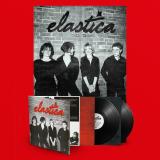
Elastica’s iconic self-titled debut album is set to be reissued by Rough Trade Records on 2 October in a new edition boasting rarities and b-sides.
Striking their own, distinct path in March 1995, Elastica proved uniquely fresh-sounding as the London four-piece delivered on the reputation they had built up gigging around the capital beyond in the months ahead its release.
Home to the likes of Line Up, Waking Up and Connection, singles at once timeless yet in the moment, Elastica’s debut captured the fraying emotions, hazy experience and burning energy of life, love and after-hours adventure.
Absorbing atmospheres and attitudes of their post-punk and new wave forbears, Justine Frischmann (vocals, guitar), Annie Holland (bass), Donna Matthews (guitar, vocals) and Justin Welch (drums) poured their own identities into the album’s 15 tracks which balancing youthful swagger, with sage-like observation and a knowing cool that made Elastica and their debut effortlessly timeless.
Time to turn on and turn it up, theres a brand new Carlton Melton in the offing… its been a good couple of years since the West Coast space/sike travellers have dropped new music.
‘Phantomize beyond the window, into the portal, the panes of eternal returns, wooden spirals, roots into the realms of everything and nothing, the reason beings’
With Anthony Taibi fully ensconsed in the metaphorical Melton Dome, this four piece is ready to soar, go deeper and wider into the sike psyche than on previous recordings, now fully recording live with drums, bass, guitars and keys...recorded at 3D Light in Freshwater, CA by Anthony Tiabi in 2025, and mastered by the inimitable John Mcbain in 2026.
We have a single LP of 40+ minutes spanning 4 tracks, that have textures, and waves and patterns to lull you into some fever dream of motorik psych! Touchstones like Träd, Gräs Och Stenar / Kandodo / Guru Guru / Eno & Fripp / Birds of Maya / Parson Sound come into view.
There are moments of gentle ambience bordered by speaker shredding guitar soloing, whole passages of Krautrock inspired jams that have form and focus.. you blink and your live flashes before you, the record ends, you want more..
There are moments of gentle ambience bordered by speaker shredding guitar soloing, whole passages of Krautrock inspired jams that have form and focus.. you blink and your live flashes before you, the record ends, you want more.. Carlton Melton masterfully blend hypnotic, long-form psychedelic jams with drone and Krautrock influences.
Band:
Rich Millman
Andy Duvall
Clint Golden
Anthony Taibi
Announced to celebrate summers solstice.. released on the Autumn equinox.. with a full UK tour to boot..
The first leader album by Ryo Kawasaki, a jazz and fusion guitarist whose talent was recognized by Gil Evans and who went on to work internationally. The album presents a cool cosmic sound, including "Agana," where Kawasaki delivers breath-taking guitar playing over high-speed percussion, and the dazzling jazz-funk number "Phil."
It was in the year 2008 when Too Much came out: a 15-track debut that turned Berlin's underground upside down and made excess into a musical principle.
The album sounds like a party that has already gone off the rails - and is getting better because of it. Tobias Jundt's deadpan, heavily accented delivery collides with jagged guitars, rattling bass, vintage synths and restless dance grooves. Rock'n'roll, electroclash and dance-punk blur into something that never quite sits comfortably in any genre.
The songs are deliberately ridiculous, catchy and hedonistic. Too Much is full of party anthems, absurd one-liners and hooks that get stuck in your head whether you want them to or not. The title track itself became one of Bonaparte's signature songs - one of the early Myspace-era tracks that helped turn the band into a genuine underground sensation.
But Too Much was never just a record. Bonaparte's world extended into circus costumes, provocative performances, striptease, queer aesthetics and wildly excessive live shows. What began with illegal gigs under Alexanderplatz quickly moved to the Montreux Jazz Festival, international tours and legendary parties - with the band becoming one of the most distinctive acts to emerge from Berlin in the late 2000s.
Now Too Much returns on vinyl. A document of a particular Berlin moment - chaotic, funny, sweaty and impossible to ignore.
15 songs. Zero restraint. Still too much.
ALLVEI (pronounced AHL-vay) is an ambient-jazz trio featuring Norwegian guitarist Eivind J. Vullum (HMD,Vibrasjon), Polish saxophonist Jerzy Mączyński (Polish Jazz, UHF) and Swiss drummer Nicolas Stocker (ECM, Nik Bärtsch’s Mobile). With its roots and meaning coming from a specific region on the North-Westcoast of Norway, ALLVEI describes an eternity in time, and the endlessness in space. It’s a musical and physical journey that begins deep in the mountains of Norway via Warsaw, Zürich and ends in Kristiania. It’s a fitting name for the trio’s musical experiments, operating in a continuous evolving sonic space. The five compositions act as a visual site-map of the first cycle of the ALLVEI project. From the subtle minimalism of ‘Almberg’ and unruffled sounds of ‘Driva,’ an enchanting web of rhythmical structures and ethereal sounds unfold, centred around subtle polyrhythms and free improvisation. ‘Mariensztat’ brims with exotic textures and tasteful arrangements, while understated explosions and quietly composed atmospheres dictate the pace of ‘Züri,’ before the album climaxes with the surging ‘Kristiania,’ awash with Stocker’s shuffling drumbeats.
Erasmo Carlos’ Carlos, Erasmo is a landmark of early-’70s Brazilian rock, where Tropicalia, fuzzed-out psych, soul, funk and Brazilian pop meet in brilliantly adventurous form. Produced by Manoel Barenbein with arrangements by Rogério Duprat, it also features Os Mutantes players Sérgio Dias, Dinho Leme and Liminha, plus guitarist Lanny Gordin.
Opening with De Noite na Cama, written for Erasmo by Caetano Veloso, the album moves with real freedom between sensual pop, hard-edged psych and off-kilter grooves. Erasmo’s partnership with Roberto Carlos sits alongside songs by Jorge Ben and Marcos Valle, making this a genuine meeting point for some of Brazil’s most inventive voices.
Tracks like Maria Joana, Agora Ninguém Chora Mais, 26 Anos de Vida Normal, Ciça Cecília, Mundo Deserto, Sodoma e Gomorra and Masculino Feminino show just how wide Erasmo’s vision was: raw, playful, soulful and beautifully unruly.
“The Hollowing of Godflesh is the most complete representation of Crown Magnetar we've ever put together. We pushed every aspect of our songwriting further without losing the intensity and rawness that defines the band. We wanted to take what people expect from us and push it further by adding more atmosphere, bigger moments, and even more aggression without sacrificing anything. You’ll hear it in the insane riffing of new guitarist Rob Maramonte, who has spent time as a member of Fallujah and The Zenith Passage, as well as performed live with Thy Art Is Murder and All Shall Perish.” “The Hollowing of Godflesh is a highly sharpened version of Crown Magnetar. It delivers unrelenting brutality and is sure to please old and new fans alike.”
Trixie Whitley returns with 'Folded Time', her first full-length album in seven years and one of her most adventurous and rhythmically driven records to date. Written largely at the kitchen table of her Brooklyn apartment and recorded between Brussels, New York and Montréal, the nine-track album finds Whitley moving freely between rock, soul, R&B and more experimental territory.
Rhythm sits at the heart of 'Folded Time'. Whitley plays drums, bass, guitar and piano herself, with her love of polyrhythms running throughout the record. Heavy, slow-moving drums turn opener 'Carry' into a mantra, 'Fascinating and Fun' grew out of studio improvisation, while on 'Carnaval' Whitley and Cem Misirlioglu face each other behind two drum kits for what she calls a "drum rave". Her unmistakable voice remains at the centre, moving just as easily between restraint and raw power.
Across the album, Whitley looks at motherhood, womanhood, heartbreak, desire and forgiveness, and at how the past continues to shape who we become. It is a record about taking stock without standing still: instinctive and physical, but full of detail.
It’s rare for a hardcore punk band to make four full-length albums, and rarer still for the fourth album to be the band’s masterpiece. Yet Paratiisi, the fourth album from Helsinki punks Kohti Tuhoa, stands as the undeniable coup de grâce of a catalog overflowing with classic hardcore punk. If you’re already a fan, it’ll comfort you to know Paratiisi leans heavily on the strengths Kohti Tuhoa has possessed since their earliest releases: a timeless sound that combines UK82 drive and hooks with dramatic metal flourishes; a captivating vocalist with the perfect balance of grit and clarity, who can both howl like a banshee and carry a tune; and a particularly Finnish way with a driving, medium-fast tempo. But for all the continuities with Kohti Tuhoa’s excellent previous records, Paratiisi almost feels like the work of a new band. The riffs and choruses that anchor the album are impossibly catchy; Paratiisi bulges with huge moments that practically force you to air guitar and sing along (even if you don’t speak a word of Finnish), the band’s peerless chops and the rich and clear recording driving these climaxes to dizzying highs. But while the hooks are memorable, there isn’t a moment on Paratiisi that feels dumbed-down or overly familiar.
In fact, the album feels notably ambitious, pulling influences from across punk’s historical and aesthetic breadth and digesting them seamlessly into Kohti Tuhoa’s distinctive sound. The lyrics (don’t worry: English translations are included!) meet the same high bar as the music. They’re direct, assertive, and punk, but they’re also subtle and insightful, whether they’re tackling huge issues like microplastics or sharing a very personal account of a sexual assault and its aftermath. And then there’s Paratiisi’s most unexpected moment, “Eliitin Psykopatia,” a free punk freakout in the tradition of “Why (Reprise)” and “L.A. Blues.” If Kohti Tuhoa’s brief foray into free jazz tries your patience, though, don’t worry, because after three minutes of building tension, they reward you with what is bound to be the best riff of 2026, a clash of chords potent enough to blow holes through walls the world over. Paratiisi is the sound of one hardcore punk’s most exciting bands at the height of their powers.
Adam Freeland’s return continues with the relaunch of Marine Parade and the release of the Twister EP, marking his first solo material since 2007.
“Twister” draws on Freeland’s love of psych rock, drone, leftfield techno and breakbeat, combining raw bass, polyrhythmic grooves and cavernous dub hits before building into a hypnotic drone-driven climax and cinematic guitar finish. On the flip, “Kiligurl” pairs pulsing drone and broken rhythms with spring reverb for an organic dub feel.
The EP follows Transhuman, Freeland’s collaboration with Spooky’s Duncan Forbes, and marks the next chapter for Marine Parade, the influential label that helped pioneer the edgier side of breakbeat in the 2000s. After closing in 2009, the label’s return follows Freeland’s decade living off-grid in California’s Mojave Desert and his work with The Acid alongside Ry X.
Chicago producer and composer Will Miller’s Resavoir has established a strong following at the intersection of jazz, electronic music, and beat-driven production, with more than 9,000 vinyl records sold and 82M+ streams across the project’s first three albums. Resavoir’s 2019 self-titled debut received an 8.2 from Pitchfork alongside broad international critical acclaim, with ongoing support from Gilles Peterson, Lefto, Anthony Valadez, Somewhere Soul, Andrew Jervis and Lovie, plus airplay on BBC 6 Music, KEXP and NPR. Recent recognition includes placements on NPR, KMHD and New Commute’s Best Albums/Songs of 2025, while Resavoir has toured extensively in the UK and Europe and opened for Khruangbin, BADBADNOTGOOD and Kassa Overall.
Above The Clouds finds Resavoir moving further into electronic territory, combining jazz improvisation with dreamy synthesizers, booming drums, smeared samples and electronic instrumentation. Recorded through loose studio sessions with longtime collaborators Lane Beckstrom and Jeremy Cunningham, with contributions from Kenneth Leftridge Jr. and Gregory Uhlmann, the album incorporates wind synthesizers, samplers, guitars, electronic drums and woodwinds into a fluid, groove-oriented sound. The album follows Resavoir’s growing presence across editorial and playlist platforms including Apple Music, Spotify, TIDAL and Delicieuse Musique, with US and EU/UK touring planned for Fall 2026.
Chicago producer and composer Will Miller’s Resavoir has established a strong following at the intersection of jazz, electronic music, and beat-driven production, with more than 9,000 vinyl records sold and 82M+ streams across the project’s first three albums. Resavoir’s 2019 self-titled debut received an 8.2 from Pitchfork alongside broad international critical acclaim, with ongoing support from Gilles Peterson, Lefto, Anthony Valadez, Somewhere Soul, Andrew Jervis and Lovie, plus airplay on BBC 6 Music, KEXP and NPR. Recent recognition includes placements on NPR, KMHD and New Commute’s Best Albums/Songs of 2025, while Resavoir has toured extensively in the UK and Europe and opened for Khruangbin, BADBADNOTGOOD and Kassa Overall.
Above The Clouds finds Resavoir moving further into electronic territory, combining jazz improvisation with dreamy synthesizers, booming drums, smeared samples and electronic instrumentation. Recorded through loose studio sessions with longtime collaborators Lane Beckstrom and Jeremy Cunningham, with contributions from Kenneth Leftridge Jr. and Gregory Uhlmann, the album incorporates wind synthesizers, samplers, guitars, electronic drums and woodwinds into a fluid, groove-oriented sound. The album follows Resavoir’s growing presence across editorial and playlist platforms including Apple Music, Spotify, TIDAL and Delicieuse Musique, with US and EU/UK touring planned for Fall 2026.
Hector Gannet have always known that place and music are inseparable. For songwriter and guitarist Aaron Duff, North Shields high on England’s north east coast, shaped by fishing, shipbuilding, and the sea, is not just a backdrop but a source. Everything flows from it: the imagery, the politics, the particular stoicism of people who absorb more than their share and keep moving anyway.
‘The Great Shakedown’, their third album, is where that source runs deepest. Featuring bold brass arrangements alongside choir and church bells recorded live at the 17th-century Christ Church in North Shields, the album is Hector Gannet’s most ambitious and most searching work. The brass is a constant throughout: driving the Dexys-style urgency of the title track, lounging through the jazz-tinged Big White Telephone, surging euphorically through singles The Mother Tongue and Seven Signs.
The singles capture something essential about the album, euphoric on the surface, quietly devastating underneath. Beneath its propulsive brass lies an examination of stoicism as both armour and wound, of shared language used to avoid saying the very things that need to be said. It’s a quality that runs through the whole record, which looks at human history and art, the ordinary and the extraordinary, the actions of those in power and the communities who live with the consequences. It is both communal and euphoric - a powerful rallying cry for people at a time when we need it most.
The Malian virtuoso, indisputably one of the most creative talents of his country, deserved his solo career decades ago. In May 2026, we released his debut solo album SOBRA DANCE featuring his wife Mariam Kouyate on vocals. The groovy and variated electric album, went straight to the top lists of World Music Charts Europe and Transglobal World Music Chart as well as selected for TOP OF THE WORLD by SONGLINES. Gaoussou's solo debut got several 5 star reviews.DJANGO BLUES is a tribute to Gaoussou's father and childhood teacher, who's nickname is Django. On this album the talented guitarist and composer goes deeper into the roots of Malian Dessert Blues, with the variations from the Arabic soundscapes from the north.In Senegal, Gaoussou is nick named "The new Ali Farka Toure". But even though Ali Farka was one of Gaoussou's greatest inspirations, Gaoussou has developed an unmistakable style of his own. He breathes music and goes to his studio every day to work. He uses his composing to reflect, and as a ventilator when things are hard -they often are in his country of contrasts- and as a love declaration to life itself. He is a true Mandingue, a Griot, peaceful and kind, as the philosophy preaches.Accompanying such legends like Toumani Diabate and Kasse Mady Diabate, Gaoussou Kouyate, with his beloved village 'Sobra' as his middle name, has long proven his level. Yet his name has been relatively undiscovered. The trio performed a memorable concert at Dakar Music Expo, led by their producers, Dudu Saar and Lucy Duran. What started being noticed internationally through this exceptional trio was Gaoussou's composing skills.The electric SOBRA DANCE album was released first, to contrast and give space to the acoustic GUITARI BARO album. Now comes the time for DJANGO BLUES. This great album features Gaoussou's band as well as an exceptional Moroccan Ribab- Amazigh violin master and singer, Aziz Ozouss.
Following the international praise for their 2024 debut album Where Did You Go?, Sandman Project return with Hearts Forever, the first album entirely composed, arranged and produced by guitarist, composer and bandleader Tal Sandman. Rooted in psychedelic groove, Middle Eastern musicality, funk, jazz and desert rock, it is a record driven above all by a wider spiritual belief in music as a force for connection.
If Where Did You Go? introduced Sandman Project as a borderless, brass-heavy outfit with a cinematic sound, Hearts Forever takes that vision somewhere more intimate and self-assured. Written following Tal's move from Jaffa to Leipzig, the album reflects a period of personal and creative transformation. Arriving in Germany without knowing whether she would find the right collaborators, she gradually assembled a new band through recommendations from fellow musicians, discovering a group capable of bringing her musical vision to life. For Tal, the music is not about drawing neat lines between styles or traditions. It is about taking inspiration from wherever it appears and reshaping it into something honest and alive. "If music touches my heart, it inspires me", she says. "So much music already exists, but what we are doing is creating something new out of inspiration. You take the ingredients and make a new thing".
This is the quiet force behind Hearts Forever. Almost entirely instrumental, the album deliberately leaves space for listeners to find their own stories within it. Without lyrics, the music is never confined to one language, nationality or identity.
Following support for Where Did You Go? from All About Jazz, DJ Magazine, Bayern Radio, Greedy For Best, Pipelines Magazine, Ban Ban Ton Ton and Laurent Garnier, Hearts Forever finds Sandman Project entering a new chapter: more confident, broader in vision and more deeply rooted in Tal Sandman's own creative voice. Rich, restless and full of feeling, Hearts Forever is music for uncertain times; a record about holding on to innocence, choosing compassion and believing, however quietly, that connection is still possible.
Pablo Volt and J.G.G. make dub-folktronica the unpolished way: guitar, horns, drums and synths, recorded loose, drenched in echoes and tape saturation. They met in Barcelona over a shared love of experimental beers and even more experimental sessions, determined to see how far their musical chemistry could take them. "Mordida", their 2023 tape, spent months on repeat at the Pingipung office. Now comes the debut LP: Aqui me quedo. It's a record built on the gap between two childhoods. Pablo Volt (aka Pope, as producer) grew up in Mendoza, Argentina; Jordi Gege aka J.G.G. in a suburb of Barcelona. What they share is a language and a curiosity about each other's memories and musical roots - the studio is where they embrace their different origins in improvisations. A ditch from Pablo's childhood becomes "Zanjon". A mountain Jordi used to roam becomes "Emisora". An ice cream shop, a Sunday market, a football club: small doors into a past the other never lived, but somehow recognises. Aqui me quedo, "I'm staying here", is also the name of the Barcelona bar where they toast after a good session. Two friends, tracing their way back through the past, decide the present is where they'd rather be. Handmade, melodic, unashamed of a smile as they greet from the LP sleeve: this is the spirit in which Pingipung was founded 24 years ago and these two guys, muy simpatico, are living proof of it.
There's a moment during every great dance floor experience when the music takes over and everyone becomes part of something bigger. "SHOUT!", the latest release from 2SoulFusion Presents Ascension, captures that feeling in its purest form. Featuring the powerhouse voices and ad-libs of Dames Brown and Dawn Tallman, along with an all-star ensemble of master vocalists including Josh Milan, Rahsaan Patterson, Lisa Fischer, Cindy Mizelle, Audrey Wheeler, Ramona Dunlap, and Lea Lorien, this joyful anthem is an invitation to let go, lift your spirit, and celebrate through music.
Produced, written, arranged, and mixed by 2SoulFusion—Louie Vega and Josh Milan—"SHOUT!" draws inspiration from the communal spirit of gospel while embracing the energy and freedom of house music. Driven by simple yet powerful affirmations—"Shout," "Sing," "Move," "Love," "Get Up On Your Feet," "Listen Up," and "Let This Music Take You Higher"—the song transforms into an experience where every voice becomes part of the celebration. It's a journey of anthemic hooks, soaring harmonies, infectious grooves, and unforgettable melodies designed to ignite dance floors, uplift hearts, and remind us that music has the power to unite people through rhythm, joy, and love.
The inspiration for "SHOUT!" was born from a creative exchange between Louie Vega and Charaf Tajer, founder and creative director of the internationally acclaimed fashion house Casablanca. Introduced by longtime friend Joseph Capriati, Charaf shared a bold vision—to bring together the worlds of fashion, gospel, and house music for one unforgettable Casablanca runway presentation in Paris.
Louie Vega recalls: “Charaf was introduced to me by my friend Joseph Capriati, who said Charaf was looking to meet me about an idea he had. His vision was to marry fashion, gospel, and house music within Casablanca's collection. At first, he wanted me to DJ and play gospel house music. I said, 'Instead of playing existing music, why don't I create an original song with a gospel house flavor?' I immediately got together with my 2SoulFusion partner Josh Milan, and together we came up with 'SHOUT!'”
That vision came to life during Casablanca's spectacular Paris presentation inside a breathtaking cathedral, where Louie Vega premiered the original twelve-minute and nine-second composition live. As the music echoed through the cathedral, Dames Brown joined the London House Gospel Choir in a soul-stirring performance while the models walked the aisle on Casablanca's carpet made of their signature green color and a dashing vibrating giant mirror echoing the runway visually. Renowned DJs Luciano and Chloé Caillet were among those who walked the runway, while friends of Charaf Tajer and special guests—including Jaden Thompson, Folamour, Dimitri From Paris, Kapela, and many others—were in attendance, making it an unforgettable gathering where music, spirituality, fashion, and culture merged into one extraordinary experience.
Inspired by that magical evening in Paris, Louie Vega and Josh Milan returned to the studio to expand the original composition into the powerful recording heard today. Built around rich live musicianship, Josh Milan's keyboards, organ, piano and synth bass provide the foundation alongside Axel Tosca's expressive grand piano recorded live, Sherrod Barnes' soulful guitar, and Gene Perez's unmistakable bass groove. Together they create an infectious, organic driving sound that allows the vocals to soar while delivering the unmistakable musical depth and musicianship that define 2SoulFusion.
Leading the celebration are Dames Brown and Dawn Tallman, whose commanding performances are elevated by an extraordinary choir of world-class vocalists. Dames Brown's spirited sermon and ad-libs, and Dawn Tallman’s powerful ad-lib vamping out together with the soaring harmonies of Lisa Fischer, Cindy Mizelle, Audrey Wheeler, Rahsaan Patterson, Ramona Dunlap, Lea Lorien, and Josh Milan, recreate the feeling of a joyful gospel congregation—not confined to four walls, but alive on dance floors around the world. Every chorus encourages listeners to get up, listen up, feel it, sing, move, love, and become part of the experience. Recorded between Honeycomb Studios in Pennsylvania, The Hub Ibiza and Manhattan Center Studios, New York City, and mixed at The Hub Ibiza, "SHOUT!" reflects the continuing vision of the Ascension project, where spirituality, musicianship, community, fashion, and dance music become one.
Rock is rich krovvy that froths in the veins of Chicago's Axis: Sova, the trio of Brett Sova, Jeremy Freeze, and Josh Johannpeter. Progressive earworm hooks, phased/fuzzed guitars, and live/electronic drums for metronomic flexibly give Flowerage a visceral pull and elegant bloom. An energetic mix of art rock and post-punk with uniquely tight vocal harmonies/arrangements to focus an eye in the world's chaos.
Rock is rich krovvy that froths in the veins of Chicago"s Axis: Sova, the trio of Brett Sova, Jeremy Freeze, and Josh Johannpeter. Progressive earworm hooks, phased/fuzzed guitars, and live/electronic drums for metronomic flexibly give Flowerage a visceral pull and elegant bloom. An energetic mix of art rock and post-punk with uniquely tight vocal harmonies/arrangements to focus an eye in the world"s chaos.
For nearly a decade, fans have become familiar with Entheos through the unmistakable chemistry and creative vision of vocalist Chaney Crabb and her musical and life partner, multi-instrumentalist, Navene Koperweis. Whether through Crabb’s viral vocal performances and unbelievable range or Koperweis’ boundary-pushing musicianship and songwriting, the duo has established Entheos as one of the most forward-thinking acts in modern metal. On the band’s latest album, Empty on the Inside, they are joined by guitarists Scott Carstairs (Fallujah) and Michael Stancel (Allegeon) along with longtime contributor and former bandmate Evan Brewer, creating the most fully realized incarnation of the band to date.
FORBIDDEN’s legacy is one of being the youngest, hungriest and most ambitious of the Bay Area brethren that has launched metal paradigm-shifters from Metallica to Machine Head. With a reconstituted lineup, guitarist Craig Locicero and bassist Matt Camacho, have crafted an hour-plus masterpiece of thrashy predilection, emotive musical movements, and prog-scraping sonic ambitions. From the intensity of opening track, “Single Point Failure” to the philosophical shades of 9-minute closer, “Flower of Life”, this is FORBIDDEN not merely stretching beyond the steely foundations of 1988’s classic Forbidden Evil or the quantum leap of 1990’s Twisted Into Form, but the sound of a band with a new sense of scope and purpose. Produced by Zach Ohren (Machine Head), Forbidden isn’t merely a revival for quintet whose membership has included players from Machine Head, Voivod and Imagika, but full-blown reinvigoration and purgative endpoint for this Bay Area metal institution.
FORBIDDEN’s legacy is one of being the youngest, hungriest and most ambitious of the Bay Area brethren that has launched metal paradigm-shifters from Metallica to Machine Head. With a reconstituted lineup, guitarist Craig Locicero and bassist Matt Camacho, have crafted an hour-plus masterpiece of thrashy predilection, emotive musical movements, and prog-scraping sonic ambitions. From the intensity of opening track, “Single Point Failure” to the philosophical shades of 9-minute closer, “Flower of Life”, this is FORBIDDEN not merely stretching beyond the steely foundations of 1988’s classic Forbidden Evil or the quantum leap of 1990’s Twisted Into Form, but the sound of a band with a new sense of scope and purpose. Produced by Zach Ohren (Machine Head), Forbidden isn’t merely a revival for quintet whose membership has included players from Machine Head, Voivod and Imagika, but full-blown reinvigoration and purgative endpoint for this Bay Area metal institution.
“Slide in the party like three monkeys wearing a trench,” GDP says in the opening seconds of Cross Off Matthew, his first solo album in over a decade. The line is indicative of the New Jersey emcee/ producer’s relationship with music, one that’s ebbed and flowed throughout his career and eclectic discography. Entirely self-produced, Cross Off Matthew feels like a reintroduction as well as an expansion of what makes the cult rapper so beloved. GDP came up in the respective punk, hardcore, and skateboarding scenes of New Jersey, roots that inspired his DIY approach to making hip-hop. He applied a decidedly punk ethos to his brand of neo- boom bap on early releases like 2009’s Realistic Expectations and 2011’s Useless Eaters, albums that celebrated his youthful indiscretions but also signaled an old soul lying beneath the surface.
He opted to release them on punk/indie labels (including Run For Cover and Ride The Fury Records) instead of more traditional hip-hop outlets, and along with an ambitious touring schedule, he carved out a dedicated fanbase throughout the early 2010’s. Cross Off Matthew is a slow-cooked labor of love, born out of taking enough time away from something to understand the journey with greater perspective and appreciation.“I’m older, arguably wiser, but that creative fire stayed with me,” he says. “I wanted to make something that felt nuanced, something that I could feel proud of.” Throughout the album, the production toggles between foreboding and facetious just as deftly as his bars. Tracks like “Island In The Sky” and “Location Therapy” make rap confetti out of caustic guitars and glaring distortion, while “Seroquel” and “Rock For Light,” (the latter a nod to NJ rap royalty, The Outsidaz) embrace GDP’s signature blend of East Coast hip-hop and punk sensibilities, with lyrics that highlight the sharp wit and heady philosophizing that he made his name on. GDP examines vices, interpersonal relationships, the collective dread of late-stage capitalism as well as the pitfalls and rewards of trying to lead a creative life throughout it all. The wiseman that peaked out from beneath the shield of debauchery on his early releases has now come to the forefront, as GDP’s trademark humor and commentary feel refined by years of life lived experience
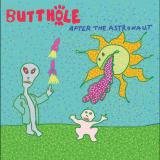
Riding the least likely commercial success of the 90s with Modern Rock chart topper "Pepper," Austin odd rockers Butthole Surfers returned to the studio in 1998 for the followup, After The Astronaut. Leaning further into experiments with electronics, hip-hop, acid grooves, and the otherwise unusual, the result is a dizzying orbital trip expanding the idea of what's possible in rock music.
Disputes between the Butthole Surfers and Capitol Records left the album unreleased, while the band regrouped and re-recorded some of the material for 2001's Weird Revolution, released through Hollywood Records. After The Astronaut collected dust, eventually developing a mythic status.
A quarter century later, Butthole Surfers are realizing their vision for After The Astronaut. Newly mixed by guitarist/producer Paul Leary, After The Astronaut corrects the record on the band's activity in the late 90s with a bold, idiosyncratic evolution of their sun-fried psychedelia.
Fishtailing across a trimmed sod lawn, the parking lot of a box-store strip mall, a fast food drive-thru––it’s a hyperreal Americana fantasy that calls Caroline Rose (she/they) home on 'Gentling the Horse at the Walt Whitman Mall'. The release doubles as the debut of SUCK records, the LA based artist’s own imprint—a fitting next form for an enigmatic musician whose work resists settling into one shape.
'Gentling the Horse at the Walt Whitman Mall' stretches the ordinary into the uncanny. The record pairs sharply observed, memoiristic songwriting with expansive guitar textures that render the everyday with violent clarity and mythic scale. Beneath its melodic sweep and signature hooks runs a current of violence and American dream leakage.
It’s Ennio Morricone with an AR15: surf guitars, spaghetti westerns, and suburban dread colliding until they become their own sharp vernacular. Reality is unstable, so we’ll keep telling stories—and for Rose, the sinister slickness of the everyday grows a new head.
Working with producer John Congleton, Rose built the record through humor, layering, and instinct rather than polish. Songs like “Conversations with Shiv,” “Goddamn Train,” and “Everything in its Right Place” were recorded in studio for the first time, with sessions that prized first impulses over perfection. The result is panoramic but never precious—songs that feel meticulously constructed while always threatening to mutate.
Over the last six years, Rose’s music has evolved alongside their work organizing around stronger labor protections and collective bargaining rights for musicians and crews. Creative and political practice have increasingly become the same project as Rose’s career has taken on its hyper-independent form. Those concerns echo throughout 'Gentling the Horse'. Its landscapes are populated by inherited systems that feel absurd yet inescapable, where humor becomes a survival tactic and satire reveals the quiet violence embedded in everyday Am
For over 25 years, David Madson (aka Odd Nosdam) has been stationed away from the light of the mainstream, diligently working the nightshift. Every so often, we awake to find another of his bleary and beautiful missives slung into the waking world – albums whose assemblages of sampled grooves, atmospheres and voices are unified by a hallucinatory sense of melody, like disparate visions strung together through ribbons of sleep-talk. From his earliest days as a member of the seminal group cLOUDDEAD, through his remixes for artists such as Boards of Canada and Black Moth Super Rainbow, Nosdam has been reporting back from his rounds upon the perimeters of culture and consciousness, forging a musical language all of his own.
On Patrol is the second Odd Nosdam LP to be released on The Notwist’s imprint Alien Transistor – following on from the 2019 album Mirrors – and continues a collaborative history that begun with a 2008 remix of The Notwist song, “Sleep”. It’s a love letter to the vinyl format, produced with the aim of optimizing for a single LP. This objective permeated every aspect of the album’s production, from the duration of each side through to the vinyl mastering (Jessica Thompson) and lacquer-cutting (Dubplates & Mastering, Berlin). As we've come to expect, the album is built almost entirely from found sounds, many of which were taken from obscure and second-hand vinyl gathered during Nosdam’s ceaseless crate-digging escapades. Other sources include field recordings made in 2022 at the Catalonia summer home of artist Salvador Dalí, which are baked into the swirling sci-fi glide of “Here to Know (Adéu Mix)”, and a sumptuous clunking bass line courtesy of Organi’s Mike Walti, which runs like an infinite highway through the fuzzy, sunbaked sprawl of “Deepsimple”.
Odd Nosdam’s work has always swept the entire atmospheric spectrum, from rhythmic vigour to levitational beauty. On Patrol is perhaps his finest assimilation of these extremes. “Sgt. Pepsi” is the perfect case in point: a formidable slow groove capsizes into vinyl crackle after a mere minute, before the song resurrects itself through sweeping strings and vocal harmonies, sliding against each other like the overlain romantic denouements to a dozen Hollywood films from the 1940s. Elsewhere, “Get You In (Belong Mix)” drapes shoegaze guitar over a trundling funk backbeat, straddling the physical world and the outer realms, while hushed voices point toward the song's implied themes of cultural cliques, critical consensus and the plight of the eternal outsider: “Sure, I can get you in... these people are my friends, I’m one of them - I belong.”
This is music that both endures and disappears. Odd Nosdam has always wielded a strange relationship with time, scrambling association with any specific era, weaving together numerous tempos simultaneously. There is no master clock. Each track could happily hold up as an infinite loop, yet Nosdam clearly favours the potency of the gone-too-soon, applying the fadeout just as hypnosis starts to crest. Indeed, the songs are both the product of meticulous long-term construction and spontaneity. While the foundations of On Patrol have come together over several years, the recording process involved channeling vibes through a vintage Roland Space Echo and bouncing song fragments back and forth from hard disk to cassette 8-track, gifting a phased permanence to creative decisions made on the fly – a hat-tip to the production processes of Nosdam's longtime hero, Lee ‘Scratch’ Perry. Like a recurring dream, On Patrol appeals to both the plains of momentary ephemera and the long-established backchannels of the unconscious, equal parts revelation and deja vu.
With NIGHTS AFTER VAMP, Magnolia Park have spun an electrifying mix of hard rock, punk, nu-metal, hip-hop and metalcore into a dizzying, multisensory experience. Throughout its 17 songs, the record soundtracks an ominous journey through the fictional world of Nocturne Nexus; where rulers and rebels battle with the future hanging in the balance. Heavily inspired by the band's love of anime, horror and fantasy, the album's narrative was spurred by the long-running Vampire Hunter D, iconic works like Star Wars, Dracula and Joseph Campbell's legendary monomyth. Produced by the band's in-house producers alongside Andrew Wade (A Day To Remember, Wage War), Hiram Hernandez (blessthefall) and Andy Karpovck (408, Taylor Acorn) and mixed by Zakk Cervini (Bad Omens, Bring Me The Horizon) - Magnolia Park soundtrack this dramatic tale of crimson blood and chrome-plated courage through their own mix of man and machine, stacking whirring electronics and industrial undertones alongside sledgehammer breakdowns, walls of detuned guitars and Roberts' seam-splitting vocals.
Fishtailing across a trimmed sod lawn, the parking lot of a box-store strip mall, a fast food drive-thru––it’s a hyperreal Americana fantasy that calls Caroline Rose (she/they) home on 'Gentling the Horse at the Walt Whitman Mall'. The release doubles as the debut of SUCK records, the LA based artist’s own imprint—a fitting next form for an enigmatic musician whose work resists settling into one shape.
'Gentling the Horse at the Walt Whitman Mall' stretches the ordinary into the uncanny. The record pairs sharply observed, memoiristic songwriting with expansive guitar textures that render the everyday with violent clarity and mythic scale. Beneath its melodic sweep and signature hooks runs a current of violence and American dream leakage.
It’s Ennio Morricone with an AR15: surf guitars, spaghetti westerns, and suburban dread colliding until they become their own sharp vernacular. Reality is unstable, so we’ll keep telling stories—and for Rose, the sinister slickness of the everyday grows a new head.
Working with producer John Congleton, Rose built the record through humor, layering, and instinct rather than polish. Songs like “Conversations with Shiv,” “Goddamn Train,” and “Everything in its Right Place” were recorded in studio for the first time, with sessions that prized first impulses over perfection. The result is panoramic but never precious—songs that feel meticulously constructed while always threatening to mutate.
Over the last six years, Rose’s music has evolved alongside their work organizing around stronger labor protections and collective bargaining rights for musicians and crews. Creative and political practice have increasingly become the same project as Rose’s career has taken on its hyper-independent form. Those concerns echo throughout 'Gentling the Horse'. Its landscapes are populated by inherited systems that feel absurd yet inescapable, where humor becomes a survival tactic and satire reveals the quiet violence embedded in everyday
Despite the widespread popularity of reggae music in the UK, following its explosion onto the international music scene in the late 1960s, many of these in charge of Britain's mainstream media were reluctant to give the exciting new sound coverage, wither in print or over the airways.
In an attempt to counter this prejudice, Trojan Records took the bold step of embellishing recordings from Jamaica with sophisticated orchestration, with the resultant ‘commercial reggae’ sound immediately finding favour with the country’s reggae fans.
Consequently, the company not just maintained, but in fact extended the procedure, employing producers to record the country’s finest British-based reggae acts. The result was the release of an abundance of superbly crafted recordings, the production values of which rated with the best that British pop had to offer.
The songs of Jules de Corte are condensed, folky gems with an almost effortless charm. Poised between the intimate and the universal, between lightness and darkness, they touch on religion, love, loss, and the small dramas of everyday life. Yet they resist easy translation. Packed with wordplay, de Corte’s signature alliterations, humor, and local cultural references, the songs inevitably lose something in another language. Still, when a Belgian quartet of improvisers takes them on, joined by American songwriter Bonnie ‘Prince’ Billy, the songs are reborn rather than merely transposed: literal fidelity gives way to interpretation, and what is lost in words is often gained in spirit.
Even without tracing every change, their overall effect is fascinating. Songs are slowed down, often doubled in length, and filled with unexpected musical intrusions. They gain fuller arrangements and are placed in an entirely new context. Replacing de Corte’s piano with guitar can create a radically different vibe, as in “Mariska.” An added solo can heighten the contrast between childlike perspective and the almost matter- of-fact brutality of “Little Anita.” In “The Stranger,” another use of contrast unsettles the everyday harmony, transforming it with a subtle, disorienting twist.
Ultimately, these performances show that interpretation is not successful simply because it is literal. With the groundwork laid by Linus, Bonnie ‘Prince’ Billy further liberated the songs from their original versions. Lyrics and melodies become malleable, shaped by his recognizable cadences, timbre, and personal quirks. Like his collaborators, he allows himself the freedom to bend the material to his own approach. There is no radical break between this performance and his other records. Listeners familiar with the originals may be puzzled at first; for those new to de Corte, it is a wholly different experience.
Does it really matter that the original “Little Jesus, Mighty God” is a 100-second nugget combining playful naivete with biblical fervor? In the hands of these five explorers, the song becomes an intriguing contemplation, with subtle musical shades and a recitation in which every syllable carries a maturity that offers a new perspective. Then there is “The Outsider,” which feels as genuine as any original American folk song. The musicians’ process is more than reinterpretation—it is reimagination, bringing new musical compatibility and emotional depth. Whether that depth was there from the start, waiting to be uncovered, or created in the process is beside the point. What matters is that Linus and Bonnie ‘Prince’ Billy have made the essence of these songs their own, paying homage yet dancing to their own tune.
Linus is the Belgian duo of guitarist and banjo player Ruben Machtelinckx and reedist and synthesiser player Thomas Jillings. Across five previous albums — Onland (2014), Linus + Skarbø / Leroux (2015), Felt Like Old language at the crossroads of folk, jazz, minimalism, chamber music and free improvisation. Their music is adventurous, shaped by a particular sensitivity to texture, timbre and the subtle interaction between musicians.
What began as a duo gradually grew into a flexible musical world, bringing Linus together with musicians such as Nils Økland, Ingar Zach, Niels Van Heertum, Øyvind Skarbø and Frederik Leroux. Yet each new constellation has remained recognisably Linus: music in which carefully considered forms leave space for intuition, interaction and the unexpected.
For their sixth album, Linus takes a new step by moving into the world of song and text. Inspired by a shared love for the late Dutch songwriter Jules De Corte, the album is a reimagining of De Corte’s unique repertoire. More than simply interpreting De Corte’s songs, they absorb and reshape them, bringing them into dialogue with their own musical language. In keeping with this open approach, they are joined by celebrated vocalist Bonnie “Prince” Billy. With albums such as 1999’s I See a Darkness appearing on several greatest album lists, Bonnie “Prince” Billy is a cult figure in the alternative folk scene, and his highly intuitive way of singing seamlessly matches the subtle interplay Linus has developed over more than a decade.
The Bratislava-based band 52 Hertz Whale release their new album Present Sense Impression in a collaboration of the labels Weltschmerzen and Full Moon Forum.
Three years since their album I've Met a Lot of People, the band brings forth a lot of new ideas, finding a new resonant space, and utilising the fierceness // savageness of their live shows, in an intimate stare at contemporary guitar music.
52 Hertz Whale is a band well known in the Central European music context. Their ferocious sound, mixing the intensity of post-punk, heavy guitar wails, and melancholic // stark vocals of Dominik Prok has been tearing down the fixtures of many festivals and venues, all the while being a great example of a band driving at 200mph nonstop. On Present Sense Impression, the band, composed of Dominik Prok, Dominik Fabian, Patrik Nagy, Tomáš Tabiš and Adrián Krišák, have arrived at a record full of manifold manifestations of their live sound, but at times recalling the more marginal waves of 80s pop // rock sound. Resolute drums, heavyweight guitar and bass riffs now deem closer to the lightness of early ethereal darkwave, just to indulge in the classic melancholic heaviness they are known for only seconds after.
Some of the songs have been produced by "Prague's favorite rock'n'roll enfant terrible" Lazer Viking as well as Pulp Studio's Jakub Hríbik, and one features a special guest - the cemballo virtuoso Marcel Comendant. The traditionally stunning artwork was created by the accomplished Martin Mesaroš.
Present Sense Impression is the 20th album released under the Slovak romantic // experimental label Weltschmerzen focused on emotionally hypercharged, humanely intertwined, and acutely sounding contemporary music. This time in collaboration with the czech label Full Moon Forum. It releases August 26th on limited edition baby pink, standard edition black vinyl and on all streaming platforms.
The creation and release of this record have been supported using public funding by the Slovak Arts Council, and SOZA. Fullmoon Forum project was supported by the Ministry of Culture of the Czech Republic.
Ma Ze Music is just seven releases deep but is already overdelivering on expectations. This latest offering is a second from Yanuka, which is the solo project of acclaimed keyboardist, composer and producer Tomer Zuk. Here he hooks up with Elran Dekel on 'Where Is My Love' for a gently psyched-out and global soul and downtempo fusion that pairs textured guitar riffs with cartoon boings, conscious vocal musings and a blend of romantic and heart-aching moods. It's warm and intimate and then Ma Ze's regulars UV & Nenor take care of the flip with 'Where Is The Dub' which strips the original to a hazy, slow-motion dub.
Mysticisms completes its archival releases of the Dub Specialists with a 3rd EP of the outer reaches of the Digi Dub realm, this time mainly drawing from the project’s final album Loop To Loop.
Conscious Sounds head honcho Dougie Waldrop, working again with Chris Petter (Love Grocer) runs the desk, the heavy sample originals move from House to Breaks, Dub to Funk.
For the final reversions, label co-owner and editing specialist Piers Harrison returns, turning Love Song in a long form 4/4 romantic digi bounce. A sure-fire winner, the catchy groove and trippy beats, the template of what makes Dub Specialists come alive.
Following is Lotion Dub, edited by Vanity Project. A key part to the project, working with Millie Mckee, as well assisting Chuggy, his solid arrangements and engineering skills take the old school original, with digi horns, electro stabs and reggae “skanking” guitar, accentuating the drum and bass to effect.
The final side of edits come from Chuggy, taking the steppers of Dub Downtown, teasing the drop, looping and riding the riddim and also, finally, from rising producer and label head of Spiritual World Recordings, N1 Sound who sticks to the true essence of re-editing, creating a DJ friendly excursion, extending and live dubbing the sought after 808 Dub from Dub Specialists debut Break To Break, thus bringing the whole project full circle and complete.
"After a couple of years shaping her sound in the studio, Budino lands the "Signal EP", a record that grew out of the desire to make music for her own sets. Citing the journey she aims to create in the club as a key inspiration, she certainly put in the mileage, with a booking schedule tirelessly spanning all points of the compass. Although this is her first label-released original record, it's no novice effort: ALT027 shows a confident artist, fully in control, with a distinct vision and the technical expertise to bring it to life. On opener "Stay More", a trippy trance rendition, the sturdy kick and distorted sines leave ample room for mid-bass acid lines to roam freely. In its company, a myriad of risers, gated white noises and delayed fills appear - signifiers within the artist's palette, as will become apparent. "Wireless" features similar crafty sub movement, but this time the drums are infused with conga patterns and other exotic slices of battery. Because of the zest these rhythms bring, the track can keep building for several minutes until a synthesised lead emerges. When that finally happens, the affair really takes off. On the other side, "Alpha 7" rides the call-and-response dynamics between different formant and deep-vibrating leads, its shimmering arpeggios and atmospheric pads adding colour. Closer "1031" provides an organic touch with its live guitar bass pulse and enigmatic, eerie vocals. Amidst ever-evolving micro-frills, a sturdy square lead thrusts it forward. The groove, again, is endlessly seductive. This characterizes Budino's skilled approach: it's often so hypnotic it feels unclear whether the themes materialise from the surrounding, seemingly fluid compositions - or dissolve into them. In any case, these are multi-dimensional cuts you will love getting lost in on a nearby dancefloor."
New Time is an ode to musical innovation, a captivating fusion of nu jazz, nu funk, and soul that captures the essence of the contemporary era. Mr. Thruout's skillful production combines with Sandro Lilliu's masterful guitar work, creating a unique sonic experience.
New Time is a work that redefines the concept of contemporaneity in the music scene, offering a unique and engaging experience for enthusiasts of nu jazz, nu funk, and soul. With the signature of Mr. Thruout and the collaboration of Sandro Lilliu, this vinyl is destined to become a modern classic.
Across the cosmic boundaries via spiritual exploration and in the void between shimmer and shadow you will find the astral soundscapes of Birds Of Pandaemonium...
Emerging from Brooklyn's late-night music ecosystem, 'Hazy James' Armstrong and Tim Wagner met nearly 20 years ago through the city's DJ and club scene. Each with different but complementary musical backgrounds which included a mix of folk, guitar, DJing, synths, drum machines, country rock, disco, jazz, and rhythm-heavy club music (being just a few!), the duo began various musical endeavours together & "exploring the darkness while pursuing light" which eventually lead to the birth of Birds Of Pandaemonium.
It was only a matter of time that the stars aligned (via an introduction from Shane Watson of Causeway) to bring the Birds onto the musical radar at Sprechen which led to the release of 3 renowned E.Ps and ultimately, their debut album, Eudaemonia. Obscure covers including Idris Muhammed's Loft classic 'Could Heaven Ever Be Like This', the rave defining Born Slippy by Underworld and the post punk/new wave 'On Islands' by New Musik sit alongside original songs shaped by fresh reflections on life, grief, and love with elements of dream pop, shoe-gaze & gothic pop to give wistful and pulse-driven listening experience that is hazy, romantic, and deliberately genre-blurring.
A truly unique listening experience that delivers broad strokes of sunsetting psychedelia and bleary-eyed optimistic, astral dream-pop across all 8 tracks.
Is it balearic? Not really, it's pretty much a genre all on its own (answers on a postcard).
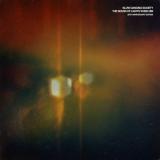
Almost 20 years on, Washington-based Drew Sullivan's 2007 debut as Slow Dancing Society hasn't dated the way you'd expect. The Sound Of Lights When Dim is a reserved work with reverberating guitar drifting through broad, unhurried tones. On opener 'Be There' reversed guitar and blurred vocal traces dissolve before they resolve on 'The Delicate Sound Of Silence.' It's deeply emotional ambient with endless oceanic scale and plenty of encouragement to reflect on your own. The glowing synths, patient guitar work and preoccupation with memory that would define Sullivan's next two decades are all present from the start and still have the same lasting impact.
MRD's highly anticipated "August Memories" EP is OUT NOW — available in both vinyl and digital. The Norwegian producer further asserts his versatile and distinctive sonic identity. The result: 2 techno weapons and 2 peak-time anthems fusing trance, 80s guitar riffs, and shoegaze intensity. Expect pure euphoria on the dancefloor. Spotify, Apple, etc: bfan.link/august-memories-1 Mastering: Charles Accarisi Cover Picture: Hugo Wirth
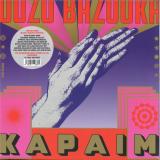
Ouzo Bazooka enchant on Kapaim, drawing listeners through a maze of hypnotic, head snapping grooves, cosmic string bending, and swirling guitar explorations. As trailblazers of the new Middle Eastern psychedelia movement, the band fuse traditional folk sounds with gritty soul, funk, and rock.
“The Long Transition From Death To Wisdom” marks a new chapter in Dmitry’s evolving sonic world – a contemplative, slow‑burning journey through grief, memory, and the quiet emergence of clarity. Rooted in a brooding fusion of shoegaze, goth, and darkwave, the album drifts through washed out guitars, spectral synths, and poignant vocals – its emotional landscape suspended between sadness and awakening. On vocal duties is Dmitry’s longtime collaborator Valeria Simonova, whose presence deepens the album’s atmosphere. Each track feels like a step forward in the ritual of becoming aware of one’s own existence, moving through silence and ancient memories toward a sense of spiritual renewal.
The album opens with the mysticism and layered metaphors of “Liar,” before descending into the ancient, biblical presence of “Serpent Queen.” Midway, “Zenith” rises with shimmering synths and steady, triumphant percussion, while “Echoes of Yesterday” lingers in celestial melancholy, dissolving the boundary between remembrance and insight. The Bside begins with “The Other Side of Life,” a threshold into a quieter, more reflective space, followed by the meditative, ritual like ambience of “Shrine of Ruins.” Closing track “Cold” offers a final exhale from the fading realm of the past – an acceptance shaped by distance, time, and the erosion of old wounds.
An array of musicians contributed to the recoding of the album: Mathys Dubois (No One Is Innocent, exBlack Strobe), Loïc Maurin (M83), Victor Sologub (Deadушки, Странные Игры), Alexander Titov (Кино, Аквариум), Ben Easton (Deary), and others. The album was mastered at Abbey Road Studios by Miles Showell.
“Cue Blue”, the latest and fifth studio recording from Australian down under, gritty jazzfunk grooves ensemble Kerbside Collection sees a return to a more classic, stripped back, meat-and-potatoes, home-cooked, quartet formation sound of guitar, bass, drums and brass.
A sound formed on previous, recent recordings (incl. Golden Rules compilation tune “Fleet Streak” etc), seemingly harking back to the approach of the group’s first recordings (2013’s “Mind The Curb”, “Night in Tunisia” etc), whilst embodying inspirations from more ‘true school’, classic, bluesy New Orleans funk and soul groove flavours à la early Meters, Boogaloo Joe Jones, Melvin Sparks, Billy Butler etc. But it’s not all completely ‘retro’ and ‘looking back’, the album definitely taps into some of the current exponents and leaders of the contemporary deep funk sound – The Greyboy Allstars, Eddie Roberts, The New Mastersounds, The Mighty Mocambos, Breakestra and fellow Aussie funksters Cookin’ on 3 Burners, Lance Ferguson and The Bamboos etc.
The lead single and first tune “Shivers” gives us a clear, picture and definitive opening statement to the record with all the characteristics you’ve come to expect from the Kerbside gritty jazzfunk sound: silky guitar line phrasing, rubbery bass-lines, tight crusty drum breaks, and sweet brass arrangements. Then it’s straight into a frenetic, jangly, mod-funk workout complete with Northern Soul & Motown inflections in the surging B sections. “City Park Avenue” conjures up classic New Orleans funk flavours with its strutting brass, slinky guitar and swinging tambourine groove. There’s classic, b-boy funk territory covered in “Coffee Grinder” (a breakdance move) with its razor-sharp drum break groove and chunky riff complete with sizzling trombone solo. Before the pace of the record changes up with the finger-clicken’, hand-clappin’ boogaloo, reminiscent of early 60s Harlem x Puerto Rican Bronx sounds (à la Willie Bobo, Mongo Santamaria, Ray Barretto) loaded with a scintillating baritone sax solo from long standing part of the collection ‘Papa Joe’ Roberts.
“Sittin’ On The Porch” cools the temperature down even more, delving into slight Southern Louisiana Delta blues territory, while suggesting some of the hot and muggy atmosphere and imagery of their home town location in suburban Brisbane Australia, complete with kooky Casio percussion representing familiar yard sounds such as sprinklers (spinning lawn watering devices) and ‘mozzies’ (mosquitos), passing cars indicated by trombone, and guitarist TC Tyler, channelling some bluesy John Lee Hooker, R.L. Burnside guitar flavours - you can almost feel the humidity on your skin.
Then it’s time for a stroll down memory lane, with their version of a People Under The Stairs hip hop classic “San Francisco Knights”, bringing the tune full circle back into band mode, also with another tasty guitar solo. The album then enters its final stages with a mesmerising, soulful, jazz ballad “Shimmer”, complete with Elliott Parker’s sultry upright double bass, and trombone taking the melody for a gentle stroll down the street. The album finally closes and arrives at its title “Cue Blue”, a classic blue-eyed soul number (penned by bassist Parker), emitting the scent of true school, vintage R&B and soul (à la Donny Hathaway, Marvin Gaye).
An album of funky arrangements and refined compositions, mostly penned by recent new-ish member, guitarist Tyler (for fans of Tower of Power & John Scofield guitar playing) taking the ensemble through their paces with all the usual characteristics of the Kerbside sound, on top a groove that will take you round-the-block-and-back :P Gritty jazzfunk and rustic soul grooves with definite bluesy overtones, some classic 60s, 70s flourishes and down-home funk flavours.
Mighty Music is proud to announce the release of "What Are We Waiting For", the brand-new studio album from Danish rockers ELECTRIC GUITARS. The band's sixth studio album marks a bold new creative direction, with drummer Morten Hellborn taking over production duties and leading Electric Guitars into fresh sonic territory. Recorded at Medley Studios Copenhagen, "What Are We Waiting For" is the first Electric Guitars album produced without founding members Soren Andersen and Mika Vandborg behind the controls. The final mix was also handed over for the first time, with former Duné member Ole Bjorn shaping the album's modern and forward-looking sound. Despite its contemporary production, the album features more guitars than ever before, while deliberately moving away from traditional blues-based and classic rock formulas. Every song was carefully evaluated, resulting in what the band considers its strongest collection of material to date.
More than five decades into one of Brazilian music's most remarkable careers, Joyce Moreno returns with a new collection of songs that reflect the warmth, lyrical sophistication and innovation that have made her one of Brazil's most defining musical voices.
Produced by Joyce Moreno alongside her husband and longtime collaborator Tutty Moreno, the album finds the Rio-born singer, guitarist and composer at her most reflective. Across nine beautifully crafted songs, Joyce pairs intricate guitar work, lyrical intimacy and effortless swing with the musical curiosity that has defined her work for more than half a century.
Invited into the studio by Roberto Menescal at just sixteen years old, Joyce emerged during a transformative period for Brazilian music, releasing her self-titled debut in 1968. She soon established herself as one of Brazil's pioneering female songwriters, writing unapologetically from a woman's perspective at a time when few women were afforded that voice. Her song “Me Disseram” sparked national debate, while later works including “Feminina” cemented her reputation as an artist unafraid to challenge convention.
While some of her politically charged songs were censored during Brazil's military dictatorship, Joyce continued to write with honesty and independence. After studying journalism in the late 1960s, her gift for observation and storytelling became an even more defining feature of her songwriting. Over the following decades she released a succession of acclaimed albums, including the now-classic Feminina and Água e Luz, earning widespread recognition both in Brazil and internationally. Antônio Carlos Jobim would later describe her as "one of the greatest singers", while generations of musicians have drawn inspiration from her fearless artistry and enduring originality.
That same artistic fearlessness remains at the heart of her latest work. The album brings together an exceptional ensemble of Brazilian musicians. Tutty Moreno's expressive drumming underpins Joyce's vocals and guitar throughout, while Jorge Helder's bass, Lula Galvão's guitar and Marcos Nimrichter's warm Fender Rhodes create a sound that is both intimate and expansive. Contributions also come from the legendary Toninho Horta, alongside José Arimatéa, Teco Cardoso, Nailor Proveta, Josué dos Santos and Raphael Sampaio, whose additions add colour and texture without overshadowing Joyce's understated brilliance.
Throughout the album, Joyce balances quiet reflection with effortless rhythmic vitality. “Chovendo na Horta” serves as both a heartfelt dedication and a celebration of Joyce's enduring musical connections, featuring the unmistakable guitar of Toninho Horta. Elsewhere, “Aldeia de Ogum” receives a fresh new arrangement by Nailor Proveta, revisiting one of Joyce's most beloved compositions. Originally released in 1980, the track has enjoyed a remarkable resurgence in recent years, embraced by a new generation of listeners and became an underground favourite among DJs including Floating Points, Four Tet and Danilo Plessow. Now a staple of Joyce's live performances, this reimagined version brings renewed energy to a song that continues to transcend generations.
At seventy-eight, Joyce Moreno continues to write with the same curiosity, generosity and quiet innovation that have defined her career from the very beginning. "For me, it's never too soon to try something new, either in music or in life," she reflects - a philosophy that gives both the album and its title their enduring sense of optimism. This latest album is neither a retrospective nor a reinvention, but the work of an artist who continues to refine her voice with remarkable grace, proving that her most compelling music remains firmly rooted in the present.
Following the album's release, Joyce Moreno will embark on a European tour this November, bringing her celebrated live show to audiences across the UK and Europe. A rare opportunity to experience one of Brazil's most influential and enduring artists in concert, the tour showcases a songwriter whose voice, virtuosity and musical vision remain as compelling today as ever.
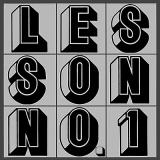
After cutting his teeth in the late '70s No Wave scene with bands Theoretical Girls and The Static, Glenn Branca made his first solo statement, Lesson No. 1, in 1980. The inaugural release on legendary post-punk / dance label 99 Records, Lesson No. 1 unveils Branca's visionary guitar concepts with two monstrous, side-long compositions that helped forge NYC's downtown art-punk sound and acted as a massive influence on countless young groups, including Sonic Youth and Swans.
The title track is easily Branca's most-accessible moment; its driving beat and interlocking patterns resemble German pioneers Neu! playing Philip Glass. Never before (or since) has minimalism sounded so euphoric. "Dissonance" is the A-side's polar opposite. Dark, skittish and unhinged, Branca leads his band (guitar, keyboard, bass, drums and sledgehammer) through block after block of industrial terror, leaving listeners drained in the process.
This is the sound of dream Texas, the cinematic Texas conjured in film and 20th century literary and art myth… big dark blueing horizons swallowing the infinite distance, a lonely poetry of sound, but also a stock taker of the iconoclastic, psychedelic, art rebel side of Texas… the cracked rock music side of Texas, the avant-garde in concrete cracks, the recklessly used, mind expanding drugs Texas, the dripping eastern swamps, the Houston house parties with the sounds of records blasting down the block and becoming musique concrète in the hot summer night.
Chrome Chasm’s debut album Interpreter is ambient, minimal in feel, maximal in texture, beautifully disorienting, vastly spacious— until it isn’t. It's a naturalistic shapeshifter, taking majestic form in the aforementioned elements and then dissolving back to raw genetic material to form anew. Spiritual jazz overtones, pedal steel moans and buzzing, noisy ambient visions are upended by grey-folded psychedelic unveilings. Interpreter’s three expansive tracks present a most detailed performance by its three deft musicians and the outcome often feels like a gorgeous collage in real-time.
Chrome Chasm was formed in 2024 by three of Houston’s brightest underground stars: Mlee Marie (Hearts Of Animals) on alto saxophone, flute and voice (whose long-form experimental sax performances helped inspire the formation of the band), Will Adams (Lower Dens/ Ka-Nives) on pedal steel, synth, percussion and voice, and Tom Carter on guitar. Carter has been casting a long shadow over Texas psychedelia and American underground music for over 3 decades, most notably with the Houston based Charalambides, a powerful creative force of the pre-new weird America era of experimental and avant psychedelic music, and most notably since with his solo guitar magnum opus Long Time Underground (which was deemed among the best experimental albums of 2015 by Pitchfork).
Interpreter’s opening track “The Star,” recorded almost completely live in one room and one take, is a 16-minute manifesto on ‘Dream Noir.’ An astute scholar of cross-genre connectivity and the through-lines of kosmische and spiritual-leaning sonic realms can hear echoes of Cluster, the skronk and beauty of Rahsaan Roland Kirk, and the architectural ambient flow of Harold Budd and Philip Glass in the tidal lapping of distorted guitar, mantra-like saxophone and pedal steel flow. From its deconstructed, pastoral opening moments to its proto-electronic center that crests into a bombastic polytonal climax, Chrome Chasm never neglect narrative arc for experimentation and avant technique. In fact, as a group, they effortlessly control, open, fill and contract space in abeyance to emotional vibration. “The Star,” and indeed the album as a whole, feels more like a communion or extended poem, in direct communication with the listener, than it does a ‘captured experience.’
Across the three longform tracks of Interpreter, Chrome Chasm conducts a masterclass in fusing real time performance energy with an abstract, cut-up master’s reimagining of the literal. They demand the listener meet their music with dream logic and then, like the best dream peddlers, they present a labyrinth to fall into and experience, a place where explanation and conclusion become obsolete, and engagement and immersion become sublime.
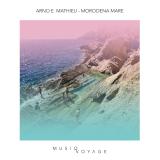
Arno E. Mathieu returns with a new EP on Musiq Voyage
A Mediterranean horizon in motion.
Arno E. Mathieu returns with a new Balearic journey where electronic disco grooves meet funky guitar, atmospheric synthesizers, mystic chants and driving percussion.
Rooted in the warmth of the Mediterranean but built for movement, the EP unfolds like an endless landscape — from the coastline to the distant horizon. Organic guitar lines, hypnotic bass and percussive rhythms lock into spacious electronic textures, creating a sound that feels simultaneously earthy, cosmic and deeply danceable.
Balearic in spirit, disco at heart, house and psychedelic in atmosphere and driven by a strong sense of place.
After releases and remixes connected with labels and artists including Compost, Real Tone, Earthrumental, Joe Claussell, I:Cube, Mark E, Beanfield and Max Essa, Arno E. Mathieu continues to build a body of work where dance music becomes a form of landscape painting.
Sun on the water. Bass beneath the feet. Guitar in the distance. The horizon keeps moving.
La Dispute is an American post-hardcore band formed in Grand Rapids, Michigan in 2004. The band consists of vocalist Jordan Dreyer, guitarist Chad Sterenberg, drummer Brad Vander Lugt, bassist Adam Vass, and guitarist Corey Stroffolino. Known for their intense and emotionally charged sound La Dispute has released five studio albums to critical acclaim, including “Somewhere at the Bottom of the River Between Vega and Altair” (2008), “Wildlife” (2011), and “Panorama” (2019). Their music often explores themes of loss, grief, and human relationships through a series of interconnencted stories. La Dispute has developed a devoted fanbase and is known for the powerful, unforgettable live performances.
For Luca, Cuylan’s new album of elegant modern classical, globally informed folk and gentle electronic music, is in part a tribute to his dearly departed dog. Luca came into Cuylan’s life like a key unlocking a door, leading to experiences and experiments simultaneously new and familiar. Back then the Turkish-born musician was living in LA with his wife, leading a busy creative life, writing and recording scores for films and Netflix series, and suddenly with the adoption of Luca here’s this bouncy, furry being demanding constant attention. Cuylan accepted the responsibility like a father welcoming a child. He grew closer to his wife. He started psychoanalysis. He returned to acoustic guitar, his original instrument, waylaid for 20 years in favor of synthesizers and electronics, pulsing post-rock and skittering jazz. Luca was there in the studio when Cuylan recorded his first solo album, 2021’s No Such Thing As Free Will, which The Guardian said “seems to invent new languages for the guitar.” Without a doubt, Luca the dog made Deniz the musician more expressive and more vulnerable. Better at his craft. Better at his humanity. Luca was just five years old when bone cancer struck. He exited far too quickly, a comet of joy passing into the dark, unfathomable universe. Cuylan found his absence very hard to process–he was just right here! It took a couple years, but inevitably Luca, the catalyst for Cuylan’s current chapter, inspired new artistry after his death–from Cuylan, and from a host of collaborators from around the world who contributed to For Luca. All of them share an abiding compassion for the more-than-human creatures with whom we share this planet–dogs, cats, whales, ants, trees. The entire menagerie, humankind’s kindred. The album is a collective meditation on–and celebration of–their immeasurable essence. It was born not from despair but from a transcendent love that burns all the brighter for its brevity.
In August 2025, we gathered in Tindafel, a village by the sea in the north of Morocco, with a bunch of instruments our friend Abdou had lent us, along with a few things we brought ourselves.
At the core, Pablo plays gimbri, Miguel plays drums, Juan plays guitar and keyboards, sings and handles the radio transmissions, and Javier sings, plays keyboard and works with digital effects. Loops were created interchangeably by Pablo, Miguel and Javier, while Pablo would often also pick up the guitar or keyboards, with everyone moving between instruments and roles throughout the recording.
Nothing was written beforehand. All tracks were improvised and recorded in a single take using a room microphone, so no mixing was possible. To this day, as we write this, none of the tracks have been played again — yet!
The album was edited by Pablo and mastered by Tobias.
The cover photograph was taken in the kitchen of the house, the same place where Magic Pony Productions first came together.
The poem on the sleeve was written by Oscar García Sierra.
Wildweeds Volume II is the followup to Wildweeds (2021), Loren Connors’ first art book, and continues a series of limited artist’s books from Recital devoted to his work outside of music. Following Night of Rain, the book returns to the fragile flower forms of the original Wildweeds, but in a more expansive and varied collection of paintings, drawings, and haiku. Across 108 pages of full-color, hardbound printing, thin stems wander through enormous fields of white, blooming in eruptions of radiant yellow, blue, green, red, and violet. Some pages are nearly empty. Others retain stains, folds, shadows, and the physical disturbances of the original works. The result is a rare survey of Connors’ art, gathering years of paintings and drawings that have largely existed in isolation into one continuous sequence.
The haiku appear throughout the white space as small interruptions, sometimes nearly swallowed by the page. “wandering / into the sky / April mist.” They do not caption the paintings so much as drift alongside them, creating another kind of line, pause, and disappearance. The effect is deeply consonant with Connors’ music: the brief guitar poems of Airs, the shadowed miniatures of Lullaby, and the many other recordings and editions that have established his singular language across decades. A note from Connors’ guitar can hover on the edge of audibility, its beauty emerging through restraint and duration; the paintings possess the same fragility. A line bends, a flower appears. Colors pool and then recede into the surrounding white.
For this volume, Connors mailed hundreds of paintings and drawings as they were being made, arriving in folders with little concern for preservation or presentation. New drawings arrived often, another envelope every few weeks for a year. From this accumulation, the book was photographed, edited, sequenced, and arranged into its present form. In the preface, Yuko Otomo places Connnors’ work within the tradition of Haiga, the Japanese practice of bringing haiku and visual art together. She writes of Mujo, or impermanence, and Ku, or emptiness: the open, shifting space in which things appear and disappear. A flower blooms, a leaf falls, a line fades into the page. Francis T. Patnaude, Jr. describes Connors’ artistic impulse as an attempt to “give form to the formless.” Wildweeds Volume II is an opportunity to spend time inside his quietly accumulated body of visual work: a monograph giving sustained form to years of paintings and drawings. Portrait photograph by Suzanne Langille; art photography and design by Sean McCann.
Battle of Clontarf collects a remastered series of late-90s guitar jewels by Loren Connors, most appearing on vinyl for the first time. At its center is an unrealized double 7" from 1996, Battle of Clontarf, named after the bloody battle fought outside Dublin in 1014. Gestures of blistered guitar billow, but underneath a defiant elation prevails. Loren’s partner Suzanne Langille composed and performed the poem in Part II and the song in Part V of the Clontarf sequence. The six pieces are followed by a curated circlet of recordings from around the same period, including the complete 1994 EP The Five Points (originally issued by Table of the Elements) and several other short works from the years surrounding Connors’ notable albums Airs (1999) and Lullaby (2001). These recordings occupy only a few minutes at a time, but manage to convey such vulnerability. Each seems to find its way toward the next, like a chain of small amulets.
The collection continues with the Star of Bethlehem suite from 2000, and concludes with Connors’ arrangement of Gershwin’s “I Love You, Porgy.” The latter is a personal favorite, with a breathtaking cadence that shares the beauty of Billie Holiday’s version, but transmitted from the solitude of a dream. Battle of Clontarf gathers all these scattered parcels of Connors’ work into one fluent LP, released on Recital alongside Connors’ new art book Wildweeds Vol. II in celebration of his 77th birthday in late October.
Finnish-American guitarist Raoul Björkenheim and Norwegian drummer Paal Nilssen-Love join forces on their new album PING, released by We Jazz Records on 30th October on LP, CD and digital formats. Recorded in Helsinki, the album finds the seasoned duo firing on all cylinders and delivering a remarkable set of contemporary free music.
PING brings together nine excursions beyond “guitar + drums” and way beyond “free jazz”. That being said, those are still good touching points for the music that is wild, imaginative, raw, yet also at times delicate and introspective. Friends and collaborators for decades in groups such as the lauded Scorch Trio, Raoul and Paal have the history and the trust to create memorable and original improvised music that stuns and moves the curious listener.
Raoul Björkenheim (b. 1956) is a Finnish-American guitarist and composer who has been creating original music for the past four decades living in New York City and Helsinki, where he is presently based. Describing his on-going work as investigative guitarism, he is best known for an expressionistic and lyrical guitar style. Björkenheim’s eclectic discography numbers 50+ albums, ranging from ambient soundscapes to visceral free jazz, from duo to big band. His large-scale works for symphony orchestra have yet to be recorded, and he has also composed scores for over ten films and dance productions. Björkenheim has collaborated musically with Bill Laswell, Toshinori Kondo, William Parker, Mats Gustafsson, Hamid Drake, Ingebrigt Håker Flaten, Gerald Cleaver, Henry Kaiser, Lukas Ligeti, Morgan Ågren, Paul Schütze, Edward Vesala and Juhani Aaltonen, for the labels ECM, Rune Grammofon, Cuneiform, Tum Records and Long Song records. Björkenheim has been awarded various prizes including the Emma prize for best jazz recording of the year, and been nominated three times for the Nordic Music Award.
Paal Nilssen-Love (b. 1974) is a Norwegian drummer, composer, bandleader, and producer known for his central role in Scandinavian free jazz and improvised music. Since the mid- 1990s, he has appeared on more than 280 albums, including 70 released through his label, PNL Records. He has performed with influential groups including Atomic, The Thing, Peter Brötzmann’s Chicago Tentet, Scorch Trio, and Frode Gjerstad Trio, and collaborates regularly with artists such as, Ken Vandermark, Akira Sakata, Otomo Yoshihide, David Murray, Arto Lindsay and more. Paal Nilssen-Love’s fascination with traditional and experimental music has taken him around the world. Since his first visit to Ethiopia in 2009, he has built strong connections with musicians and artists in Addis Ababa, leading to collaborations, performances, teaching, and artist exchanges with Norway. Since his first trip to Brazil in 2013, he has returned regularly, developing collaborations with artists and musicians across the country. His musical explorations have also brought him to Tsugaru and Aomori in northern Japan, where he has developed an interest in the region’s traditional music. Nilssen-Love is also an active organizer and educator. He started both Oslo’s all-Ears festival, the Blow Out festival and FRAM Kunstfest, and has led workshops internationally and in Norway.
Phren, the first collaborative work by Marta Salogni and Stefano Pilia, emerges as a layered and articulated sound-hymn-dialogue between Stefano’s abstract guitar work and Marta’s manipulation of tape machines. Conceived alongside the imagined space created by Sarah Mazzetti for the Opale series, a project by Maple Death Records and Canicola edizioni, the album becomes a form-shifting composition where memory itself is continuously transformed through resonance, repetition and reconfiguration.
Here, sound is not preserved as an object of the past, but treated as a living material: something capable of carrying traces, absorbing new meanings and generating unfamiliar voices.
The album develops from a simple yet constantly shifting principle: a sound is set in motion and then passed through a series of interconnected systems where it is delayed, altered and returned in another form. Stefano Pilia’s guitar travels through a complex chain of modular processes, composed of different stages of preamplification and filtering, before entering a tape echo system that introduces further layers of repetition, resonance and spatial displacement. These signals are then absorbed into Marta Salogni’s Revox tape machines, where additional lines of delay, modulation and environmental transformation reshape the material once again.
The resulting music is not a dialogue between two instruments, but a shared system — a living architecture in which a single signal moves simultaneously through parallel and serial pathways, gathering traces of each passage. Sound becomes a material in constant motion: a gesture becomes an echo, the echo becomes a new gesture, and the distinction between origin and reflection gradually begins to dissolve.
History has shown that the greatest bands–bands with that certain, ever elusive quality called lasting power–neither conform to nor buck the trends of their time, but rather force the times to catch up to them. Sheer Mag has such lasting power in droves. After almost a decade spent carving out a career that has already become the stuff of modern underground legend, the band’s new stand-alone single, “All Lined Up,” comes alongside the announcement of their signing to Third Man Records–their first partnership with a larger independent label–who will also be physically and digitally re-releasing the entirety of Sheer Mag’s back-catalogue, including their cult-beloved early EPs I (2014), II (2015), and III (2016), as well as their first two breakthrough LPs, Need To Feel Your Love (2017) and A Distant Call (2019). Sheer Mag’s sensibility, as fervently beloved by baseball-tee clad garage rockers and tattoo-less indie kids as it is by leather-and-stud-loyal punks, finds its strength in an unconventional mixture of refined complexity and straight-forward pop prowess. Seamlessly trading between head-turning guitar heroics and a charmingly timeless blend of disco, hard rock, and garage inflected hooks, Sheer Mag’s oft-referenced, never-replicated sound has played an undeniably large role in stoking the current resurgence of interest power-pop forward rock music. While quickly adopted as a fan-favorite amongst the sweat-caked crowds of the early 2010’s underground, time has attested to Sheer Mag’s singular cultural mutability: though never straying too far from their home-town Philadelphian origins
It’s Italian time! Sam Ruffillo is back. Sicilian producer doing smooth Balearic disco with Italian vocals. The direction is clear: Sam Ruffillo's music brings us back into the Italian riviera and the hippy days of Ibiza in the late 1970ies. Even his way of production is similar to how the early days disco producers in Italia used to work: No samples needed. Instead a few guest musicians come to jam over Sam's beats in his Italian studio space. Guitar, bass, percussions. Sam later makes the production and added keyboard solos and put together the vibes into what is this new EP.
The girl voice comes from NINFA. It’s the classic studio story: Ninfa is a singer and DJ and friend of Sam. She was hanging at the studio while Sam was finishing these tracks. She stated to sing along... the words came up spontaneously… so they decided to record her and finally decided to keep them. The vibe was too good. Why talk English if u can do it better: in Italian! :)
This is second for Toy Tonics after his Sport House EP from last year. Sam also appeared on the solo record of Joel Holmes on Toy Tonics. Together with Kapote Modica he co-produced and made the beats on that record. Now Sam is back with this pure Italian EP. Inclusive remixes by new German artists Gome and Italian Musemeci - known to many from his fabulous Italo-trance releases on Diynamic records.
Jack Hamill concludes his trilogy of space saga albums with The World Overhead landing on Tiraquon Recordings on October 30, 2026, with a special limited transparent blue edition issued exclusively via Bandcamp from October 16, 2026.
Introducing the science fiction realm of Mikrosector-50 and Mr. 8040 on breakthrough electro funk 12-inch, The Love Quadrant (2009), Hamill signed to R&S Records with the double 12-inch "prequel", The Pathway to Tiraquon6 (2011), setting the stage for debut-album proper Welcome to Mikrosector-50 (2013), where Prince-inspired funk and sleek '80s synth-pop soundtracked Mr. 8040's hazardous journey home via heartbreak and drugs. By Love Beyond the Intersect (2019), Hamill's vocoded opus turned introspective, pairing gentle krautrock influences with themes of love, redemption and self-discovery, mirroring Hamill's personal life, sobriety and creative renewal. Through lockdown Hamill retreated to the countryside around Belfast to reacquaint himself with his machines, experimenting with driving acid and trance, and playing guitar, culminating in a fuzzy shoegaze meets banging IDM sound. Relocating to Amsterdam in 2024 and setting up a new studio, Hamill wrote the third installment of Mr. 8040’s saga, bringing the storyline – and himself – back to earth.
Presenting under the new moniker, Jack Tiraquon, and releasing via his own label, Tiraquon Recordings, The World Overhead is the sound of Hamill removing the guise of Space Dimension Controller and concluding the space-themed concept to move forward as the cinematic hardware musician he's always been at the core.
The seminal psych-rock classic The Evil One by Roky Erickson And The Aliens is reissued by Fire Records in a deluxe 15-track edition, restoring the original front cover from San Francisco’s 415 Records release for the first time since 1981. Presented across two LPs cut at 45 rpm for maximum sonic depth and clarity, the release brings together the complete recordings from the legendary 1978 and 1979 sessions. The package includes a collector’s booklet with liner notes by acclaimed Austin music journalist Joe Nick Patoski, who attended a recording session for The Evil One in 1979. Alongside rare photographs and archival images from the collection of Roky’s then manager, Craig Luckin.
Following his release from Rusk State Hospital in 1974, Erickson formed The Aliens and channelled his experiences and fascination with horror and science fiction into a singular new sound. Moving beyond the psychedelic garage blues of the 13th Floor Elevators, the band created harder, more ferocious rock built around jagged guitars, strange melodies and a propulsive rhythm section.
Produced by Creedence Clearwater Revival bassist Stu Cook, The Evil One includes some of Erickson’s most celebrated recordings, including ‘Two Headed Dog’, ‘I Walked With A Zombie’ and ‘It’s A Cold Night For Alligators’. Erickson’s unmistakable voice and surreal lyrics, populated by zombies, demons, vampires and atomic monsters, gave the album a character unlike anything else in rock. Both the LP and CD editions feature rare photographs and images from the archive of Erickson’s then manager and the sessions’ executive producer, Craig Luckin.
The Evil One has since become a landmark of cult rock, with its songs covered by generations of artists and its influence extending across punk, alternative and psychedelic music. As Craig Luckin recalls, “Roky considers The Evil One to be his favourite album that he ever recorded. He really loves that album.”
Austin music journalist Joe Nick Patoski, who attended one of the album’s 1979 sessions, contributes a new essay to the LP and CD packaging, exploring Erickson’s extraordinary career, enduring influence and place in Texas rock history.
More than a standalone reissue, this deluxe edition of The Evil One opens an exciting new series honouring Roky Erickson’s extraordinary body of work, with Gremlins Have Pictures and Don’t Slander Me to follow in 2027.
The seminal psych-rock classic The Evil One by Roky Erickson And The Aliens is reissued by Fire Records in a deluxe 15-track edition, restoring the original front cover from San Francisco’s 415 Records release for the first time since 1981. Presented across two LPs cut at 45 rpm for maximum sonic depth and clarity, the release brings together the complete recordings from the legendary 1978 and 1979 sessions. The package includes a collector’s booklet with liner notes by acclaimed Austin music journalist Joe Nick Patoski, who attended a recording session for The Evil One in 1979. Alongside rare photographs and archival images from the collection of Roky’s then manager, Craig Luckin.
Following his release from Rusk State Hospital in 1974, Erickson formed The Aliens and channelled his experiences and fascination with horror and science fiction into a singular new sound. Moving beyond the psychedelic garage blues of the 13th Floor Elevators, the band created harder, more ferocious rock built around jagged guitars, strange melodies and a propulsive rhythm section.
Produced by Creedence Clearwater Revival bassist Stu Cook, The Evil One includes some of Erickson’s most celebrated recordings, including ‘Two Headed Dog’, ‘I Walked With A Zombie’ and ‘It’s A Cold Night For Alligators’. Erickson’s unmistakable voice and surreal lyrics, populated by zombies, demons, vampires and atomic monsters, gave the album a character unlike anything else in rock. Both the LP and CD editions feature rare photographs and images from the archive of Erickson’s then manager and the sessions’ executive producer, Craig Luckin.
The Evil One has since become a landmark of cult rock, with its songs covered by generations of artists and its influence extending across punk, alternative and psychedelic music. As Craig Luckin recalls, “Roky considers The Evil One to be his favourite album that he ever recorded. He really loves that album.”
Austin music journalist Joe Nick Patoski, who attended one of the album’s 1979 sessions, contributes a new essay to the LP and CD packaging, exploring Erickson’s extraordinary career, enduring influence and place in Texas rock history.
More than a standalone reissue, this deluxe edition of The Evil One opens an exciting new series honouring Roky Erickson’s extraordinary body of work, with Gremlins Have Pictures and Don’t Slander Me to follow in 2027.
Ian Pooley's 'Roller Skate Disco EP' Returns with Digital Debut and Vinyl Repress
Definitive Recordings brings back one of the label's early house gems with a remastered reissue of Ian Pooley's 'Roller Skate Disco EP'. Originally released in 1994, the EP returns for the first time as a digital release while also receiving a new vinyl repress. Alongside the original material, the reissue expands the package with the previously unreleased track 'Unity' and the Bandcamp-exclusive 'Never Give Up'.
For more than three decades, Ian Pooley has been one of house music's most respected producers and DJs. Emerging from Mainz, Germany, with a deep love for the sounds of Chicago and Detroit, he has built a career defined by subtle artistry, impeccable groove, and timeless musicality. His acclaimed albums 'Meridian' and 'Since Then', remixes for artists including Daft Punk and Jovonn, and releases on labels such as Plus 8, Innervisions, Rekids, and his own Pooledmusic have established him as one of the true masters of deep and soulful house music.
The title track, 'Roller Skate Disco', immediately captures the uplifting spirit of classic 90s house. Built around an infectious disco-inspired sample, funky guitar loops, and a warm, rolling house bassline, the track is complemented by a looping female vocal that gives it an unmistakable feel-good energy. 'Sure!' follows with a groove driven by crisp TR-909 drums, deep synth chords, and a playful TB-303 sequence, while a repeated female vocal ties the arrangement together into a hypnotic club workout.
'The Brückenkopf at 7 AM', named after the legendary club in Pooley's hometown of Mainz, moves into deeper territory. Dreamlike synth textures, a memorable deep house piano motif, and another signature 303 sequence combine to create one of the EP's most atmospheric moments. The previously unreleased 'Unity' continues this journey with a hypnotic groove, deep house aesthetics, and another beautifully woven acid line, making it a natural addition to the original release. Completing the digital edition, 'Never Give Up' arrives as a Bandcamp exclusive, pairing playful M1 organ sounds with a rolling 303 sequence and an effortlessly flowing house groove.
More than thirty years after its original release, 'Roller Skate Disco EP' remains a perfect snapshot of Ian Pooley's early sound and a testament to the timeless appeal of classic house music. This expanded edition celebrates one of Definitive Recordings' defining releases while introducing it to a new generation of listeners.
Bo Harwood (1946–2022) was one of those behind-the-scenes figures of American independent cinema: a self-taught musician, composer, sound editor, sound mixer and songwriter.
Harwood started out as the lead singer and guitarist of a Southern California rock band before a chance meeting with John Cassavetes changed the course of his career. He scored his first feature, The Bach Train, in 1969, and later joined Husbands as an inexperienced assistant in the editing room. He gradually became Cassavetes’s sound editor, music supervisor, composer and sound mixer, eventually working across six of his films, from Husbands and A Woman Under the Influence through The Killing of a Chinese Bookie, Opening Night and Love Streams.Harwood’s music is inseparable from the peculiar emotional universe of those films: strange, romantic, funny and often devastating.
Harwood and Cassavetes worked closely and instinctively together, developing music in the process of making the films. The surviving master tapes reveal something of this exchange: alongside finished pieces are improvisations, experiments and conversations, capturing the two of them working through ideas in real time. Harwood’s compositions were often recorded as rough “scratch tracks”, with Cassavetes preferring their immediacy and vulnerability to more polished arrangements.
This nine-track LP brings together some of that work. There is something wonderfully intimate about hearing these recordings outside the films: the songs stand on their own, while retaining the rawness and emotional charge that made Harwood’s collaboration with Cassavetes so distinctive.
A small document of a remarkable and largely overlooked body of work.
It's fitting that Mike Jefford is both a photographer and a musician, his music career having slowly evolved like a developing photo coaxes Technicolor images out of the shadows. His sonic palette began taking shape in Medway, Kent with darker, grittier strains: teenage grunge and metal turned into drum & bass and IDM, following the Brighton club scene to Berlin as Positive Centre, until he made a nest in rural Portugal where Laguna Seca’s bright, expressive range would blossom.
A longstanding friendship with Chris Clark supported Jefford’s most pivotal artistic evolution yet, jumping from a decade of techno dusk to music practically overflowing with life as Laguna Seca debuted on Throttle Records.
“O tempo” can mean “the time” or “the weather” in Portuguese, two intensely changing powers whose many different connotations Jefford reflects in a highly varied tracklist. The breadth of climatic catharsis permeates through textural production and songwriting experiments, down into the very bedrock of the album’s engineering process where Jefford traces the long signal chain of time: the amps, desks, and tapes of Motown, the vinyl mastering studio’s intricacies, the Akai samplers that gave modern hip hop its “ghostly and impressionistic” sound, the software that drives electronic music today.
Much as 2026’s O Tempo was inspired by vintage tonality, retro aesthetic, and the likes of CAN, Kraftwerk, and Jimi Hendrix, it’s not an exercise in nostalgia; this is music that could have only been made with today’s technological advancements, revelling in anachronisms and collisions between hindsight and present tense.
It’s tempting to view Jefford’s projects as opposites, but they come from the same sonic values. Positive Centre’s “bleak” and “sinister” world is also incredibly detailed, constantly updating pile-driving grooves with microscopic flourishes and vast ambient swells. The flaring psychedelia of Laguna Seca is a continuation of those textural, material, and kinetic explorations, where plate reverb splashes, blistering and crunchy beats, vocal glimmers, and guitar swagger are all glued together by recurrent themes of memory and time. As each of his projects travel to the same destination, all of Jefford’s roads have eventually led to vibrant colour.
Yr Knives is a Chicago instrumental quartet built around two very different guitar voices. The band came together sideways: composer Paul Karner wanted guitarists Andrew Trim and Brian Sulpizio to play disparate parts on a recording of his own, and when the two finally rehearsed together, a band fell into focus. Trim leads the groups Hanami and Retroreflector; Sulpizio is the constant behind Health and Beauty. Anchoring them are two Chicago mainstays, bassist Douglas McCombs (Tortoise, Eleventh Dream Day) and drummer Quin Kirchner. Two of them come up as rock and roll players, two as jazz players, and the music lives in how closely they listen across those languages.
Their debut, Begin Yr Singing, centers on two overdriven guitars merging into something neither could produce alone, over a rhythm section that can lock a groove or let it drift. The result is exploratory but grounded, "a searching music," in Trim's words, that asks questions it doesn't always answer and shifts from one performance to the next. Recorded live in a single room at Chicago's Palisade studio with Nick Broste engineering and mixed by Cooper Crain with Sulpizio, the six tracks draw on Sonny Sharrock, Neil Young and Crazy Horse, Albert Ayler, Erik Satie, and Television. The band has toured supporting The Messthetics.
Black Mekon gelten als Kultfavoriten und verbringen seit mehr als 15 Jahren ihre Zeit damit, rund um den Globus zu touren und eine Reihe hochgelobter Geheimtipp-Alben zu veröffentlichen. Dabei haben sie ihren einzigartigen Mix aus Lo-Fi-Garage-Rock, Punk und Blues stetig perfektioniert und sich eine treue Fangemeinde aufgebaut.Nachdem sie bereits mit Künstlern wie Jon Spencer, Black Lips, Kid Congo und The Scientists die Bühne geteilt haben, wurden sie kürzlich persönlich von Jack White als Support-Act ausgewählt. Dies geschah kurz nach einer weiteren Japan-Tournee gemeinsam mit Guitar Wolf.13 Songs About Monsters hält genau das, was der Titel verspricht: eine Sammlung von Horror-inspirierten Garage-Rock-Hymnen, die pünktlich zu Halloween erscheint und als streng limitierte Glow-in-the-Dark-Vinyl-Edition veröffentlicht wird.
WHIMM formed around the shadowy heart of the Toronto post-punk underground over a decade ago. The partnership between Mounir Al Shami and Andrew Matthews has emitted sporadic musical shards over time, while slowly evolving into something so much bigger than its beginnings. Ideas seep out of every corner of No Promotion, showcasing a burning desire to explore and challenge while delivering very direct sonic offerings. The result is an album that feels as if you took the entire Coil discography and smashed it into pieces, assembling these precious songs from the fragments. Or as if Vangelis beckoned Section 25 to the studio in hopes of recording the score to a seedy film. The resulting LP is in a state of flux – equal parts motion and decay.
Patrick Flegel, of Cindy Lee, welcomed Al Shami and Matthews into REALISTIK Studios in Montreal to engineer half of the tracks for the album, including lending guitar to the opening track "Five in Decline." That influence is evident early on, as the first three songs are taken from those sessions. "Five in Decline" throbs and barks before racing through the hallways closing in around it. "Another Labour" slows to a spidery waltz as anxious melodies call out to one another. "Returnal" pulses, floats through the night sky and haunts you forever. "Rye" carves a percussive pathway toward similar travellers like Terry Riley and Jon Hassell, before the lament of "A Death Remembered" forms the perfect midpoint for the record. A slow build countered by twitching drums and blanketed by organs recorded at Metropolitan United Church in Toronto, it feels like emotion right on the edge of resolve.
"Rhymes of December" screeches through on a solitary train under the towering cityscape as the flickering lights blur past, its doors opening to the candlelit altar of "After the Last Sky" (those beautiful organs again) with an operatic swirl. "K'20" throws you into a claustrophobic and chaotic cab ride (Who is talking? Are those sirens?) until you finally find the quiet of the early morning, waiting at the window for the sun to join you once again as the first notes of "No Promotion" are delicately plucked. The final song from the Flegel sessions, it is over eight minutes of contemplative beauty. A restless heart that is ready to rest. Closing with a final apparition in the key of The Caretaker, "After the Last Sky (Reprise)" is a return to melody when words lose all meaning.
Al Shami and Matthews weave their lyrics throughout, words describing a search for lucidity, and of reactions and reflections. Al Shami – speaking from the Palestinian diaspora – ruminates on displacement, both personal and collective. His journey from having "been without a land and I can still see clearly" in "Rhymes of December" to a more defiant "we will be back again, no matter how it ends or where we've been" in "Returnal" takes a very insular turn on No Promotion. That sense of alienation pulls at the very center of a relationship when land and circumstances separate: "And after our last breath, all that's left in me is our flesh and fears, your last words would swim for years, you'll never find a home in me." Hearts on the outskirts that know the direction.
Ghanaian producer, songwriter, and cultural innovator Delasi has earned international recognition for his forward-thinking blend of traditional Ewe rhythms, soul, jazz, hip-hop, and electronic music, with recent releases on Gilles Peterson's Brownswood Recordings and support from outlets including Bandcamp Daily, CLASH, CRACK, COLORS, and BBC Radio 6 Music. His music has also appeared in the indie feature Dreams in Nightmares and the UK Premier League. Joining him are Tokyo's acclaimed experimental pop outfit TAMTAM, whose distinctive fusion of reggae, dub, jazz, soul, exotica, and electronic music has drawn praise from Gilles Peterson, Bandcamp, NTS, Mr. Bongo, and Rolling Stone Japan, alongside performances at Fuji Rock and international tours across Canada, Australia, and South Korea.
This limited 7" brings the two artists together across two richly textured collaborations. A-side "Guardian of The Green" blends alternative soul, downtempo electronica, trip-hop, and cinematic post-rock into a lush, organic soundscape where futuristic electronics meet live instrumentation. On the flip, "Celestial Bodies" explores dream pop, ambient electronica, and jazz-inflected soul, pairing hypnotic rhythms with shimmering synths, expressive guitars, and warm lo-fi grooves. Together, the release showcases a cinematic, globally minded approach to contemporary electronic music that will appeal to fans of Bonobo, Khruangbin, Little Dragon, and Cinematic Orchestra.
Blending shimmering disco grooves, warm analog synths and soulful vocals, Luna Soul bring together the elegance of the 70s and 80s with contemporary disco pop. Formed by German singer Lisa Michèle Lietz and Spanish guitarist Jordi Arnau Rubio, the band creates music that feels equally at home on the dancefloor and during a quiet drive home after midnight.
Following the release of their debut album „First Move“ (2025), Luna Soul have established themselves as an internationally touring live act, performing more than 50 concerts each year across Germany, Spain, France, the Netherlands and Denmark. Airplay and features on radio stations including Deutschlandradio Kultur, Radio Eins, NDR and Bayern 2 introduced the band to a growing European audience.
With their new album „Second Nature“ Luna Soul expand both sonically and emotionally. Written between tours and shaped by constant movement, the record explores themes of change, longing, resilience and the search for genuine connection. Ten new songs unfold like scenes from a midnight movie. Synthesizers, guitars and soulful melodies accompany stories of long journeys, quiet conversations, fading memories and the hope found in new beginnings. The album’s first singles, “Only Human” and “Down The Line” capture the two emotional poles of the record. „Only Human“ embraces vulnerability and acceptance with an uplifting warmth, while „Down The Line“ moves through nocturnal cityscapes, combining cinematic intimacy with the pulse of the dancefloor. Together they introduce an album that feels equally suited to solitary late-night drives and crowded dancefloors.
Live, Luna Soul perform as an multi-national four- to six-piece band, seamlessly moving between disco, sophisticated indie pop, yacht rock and atmospheric slow-burners. Their performances combine musical precision with emotional immediacy, inviting audiences into the same cinematic world that defines „Second Nature“.
„Second Nature“ defines Luna Soul‘s most mature artistic statement to date, a record less concerned with nostalgia than with preserving fleeting moments before they disappear.
Red w/ black splatter vinyl. Savage Grace return with Underworld, their fourth studio album and first new full-length since 2023's acclaimed Sign of the Cross. Led by founding guitarist Christian Logue and featuring a powerful new lineup of Sebastian Hauser (vocals), Cristian Blade (bass), and Marcus Dotta (drums), Underworld delivers classic high-speed power/speed metal intensity with modern fire.
“Quinto” is Escapismo’s finest release to date. An exceptional blend of shoegaze, darkwave and gothy electronics that poetically appeals to the emotions with thunderous guitars and captivating melodies. Limited edition of 99 numbered copies on 10″ vinyl (33 black, 33 crystal clear and 33 translucent red). No reissues planned.
Jakob Bro, Brian Blade, Craig Taborn, Chris Cheek, Jesper Zeuthen, Anders Christensen, Larry Grenadier & Marcus Gilmore, playing compositions by Paul Motian and Jakob Bro.
The album was recorded in a single session at New York’s Power Station with engineer James Farber, following a week-long residency at the Village Vanguard.
‘Danish guitarist and composer Jakob Bro is celebrated for his pure reflective expression and penchant for celestial textures, effortlessly distilling and refining quiet sonics. At the Village Vanguard, he leads an impressive group – featuring two bassists and two drummers – for a nearly week-long residency.
‘The perfectly poised, ambient-leaning soundworld that characterizes Bro’s compositions was discomposed and distended by this octet, probing thrilling sounds and providing ample opportunity to create spontaneously. It was an exhilarating jazz night with some of the most esteemed players out there.’ ()
Recorded in a remote mountain cabin,'Liguna' gradually found its form. What began as an open ended collaboration between Tarjei Nygard and Are M. Foss unfolded through recording sessions, splitting firewood and changing seasons. Ideas arrived from many directions: a guitar phrase, a synthesizer line, a change in season, the mood of the forest itself. The result is nine tracks connected less by genre than by atmosphere and a shared sense of place. Debut album by Norwegian duo Liguna. Its members have previously released music on Full Pupp, Eskimo Recordings and ESP Institute.
MALEDICTUS is a Portuguese metal band formed in Lisbon. Bringing together experienced musicians with a shared vision, the band creates dark, powerful and atmospheric heavy music. With a foundation of aggressive riffs, haunting melodies and emotional vocals, the band blends modern heavy metal with darker, more melodic influences.
The group was formed by musicians seeking to explore a heavier and more expressive sound, combining technical musicianship with compelling songwriting and a cinematic atmosphere. Their music strikes a balance between intensity and melody, moving between crushing guitar passages, dynamic rhythms, and dramatic vocal performances. ""Our music reflects who we are and how we process life and our own emotions. Music is life manifested through an artist's soul. We all process life with a sense of dark melancholy”, comments guitarist Ben Stockwell. As history has taught us, Portuguese metal bands are known for their melancholic sound, which reflects their cultural identity.
Since their formation, MALEDICTUS has been focused on creating music that reflects the darker and more emotional aspects of the metal genre. Drawing inspiration from classic and contemporary metal acts, the band aims to create a sound that feels familiar yet distinct, appealing to fans of powerful, atmospheric metal.
Boasting a line-up of seasoned performers and a clear artistic vision, MALEDICTUS is developing new material and establishing its presence in the Portuguese metal scene and beyond. Their debut album, „Lazarvs“, is set to be released on Friday 13th of November. The album title draws heavily on the biblical story of Lazarus in the Gospel of John, in which Jesus performs the great miracle of raising his deceased friend Lazarus from the dead after he had been in the tomb for four days.
With Rez on vocals, the band has an exceptional singer with a distinctive, powerful voice. „He is undoubtedly one of the best out there having power, soul, range and timbre. Everything fits perfectly with our sound. We couldn't have asked for a better voice or frontman"", says the guitarist. Rez’s lyrics are another perfect addition to the band's dark, epic and partly progressive sound. The lyrical themes focus on life's darkest moments. „Death brings an opportunity for renewal, as do our most difficult struggles, which require part of us to die in order to be overcome.
Bill Beau was born in Toronto, Ontario, Canada, but was raised in the western provinces, finishing high school in Edmonton, Alberta. It was while in high school that the "righteous rays" via radio struck Beau in the form of Meade Lux Lewis, Pete Johnson and Albert Ammons at the height of the Boogie Woogie rage. It was while in high school that Bill got his first gig. He played piano and worked with Wilf Harper, a guitarist of local renown. Beau played on weekends and during the week worked as a clothing salesman, stock clerk, refinery worker, service station attendant and freight checker. He travelled all across Canada, and finally landed in Los Angeles, California.
In 1958 his love of music compelled him to direct all of his energy toward the perfection of his musical talent, so he decided to settle permanently in Los Angeles. Beau first worked there as a vibraphonist, gigging with such stars as Ben Webster, Rex Stewart, Pete Fountain, and Stuff Smith. Once, when his regular organist failed to show up for a date, Beau ended up on the Hammond. Beau then formed his own group, and the trio got a standing date at the Blue Port Lounge. The other two members of the trio are Jo Stafford on guitar, Lorenzo Green on drums, plus the pretty and petite vocalist with the group, Chi Chi.
"Live at the Blueport Lounge" by the Bill Beau Trio is mod-soul-jazz at its very best! A stunning treasure rarely to be found - unless it's on Mo-Jazz!
Berlin-based trio Roomer weave noise, melody, and memory into expansive guitar-driven songs. Formed by long-time friends and collaborators Ronja Schößler, Ludwig Wandinger, and Luka Aron, the band brings together distinct voices from across Europe's avant-garde, folk, and electronic scenes, folding these lineages into a sound that moves between shoegaze density, diaristic songwriting, and sonic exploration. Their music often holds opposites in suspension: clarity and blur, structure and drift, intimacy and collapse.
Their debut album Leaving It All to Chance (2025,) introduced this language in full, pairing emotionally direct songs with shifting textures and dense layers of distortion. With Staircase Made of Rope, their second album on Squama, Roomer widen the frame further. Built largely from improvisations and first takes, the record embraces instability as method, moving between density and silence while allowing melodies to surface and dissolve in unexpected ways.
Synth driven perpetual punk rock, darkened by atmospheric touches in its production and songwriting, yet uplifted by its intention to distill that darkness into light. Pop music from France on either side of the punk explosion has never shy’d away from electronic elements and on Nuits Blanche’s Helás LP there is plenty to remind us of that legacy. The sounds we are given rub against neither pop or dance, but instead absorbs the impact of quite tough sounding street punk. Four on the floor drums, like Disco’s ghost stamped across the face by the weight of the electric guitar run with songs not out of place if “A Country Fit For Heroes” got shoved inside the sleeve of “Wanna Buy A Bridge” and the two became one. Helás has the heft and the violence of boots treading across concrete en masse but within that is the lightness and the style of a dark smokey room filled with people wearing dark glasses and considering the inevitability of the pointlessness of existence…off the dance floor anyway. (Jonah Falco)
Celebrate the incredible music from the first half of the 70s with this brand-new 2LP collection packed with the era’s most iconic hits.
LP1 kicks off with Queen’s ‘Killer Queen’, followed by Elton John’s timeless ‘Goodbye Yellow Brick Road’ and Mott The Hoople’s anthemic ‘All The Young Dudes’. Glam-rock favourites from Sweet, Mud and Wizzard sit alongside Pilot’s feel-good ‘Magic’ and David Essex’s distinctive ‘Rock On’. Side Two turns up the guitars with Rod Stewart’s ‘You Wear It Well’, Free’s legendary ‘All Right Now’ and Bachman-Turner Overdrive’s ‘You Ain’t Seen Nothin’ Yet’. Alice Cooper’s rebellious ‘School’s Out’, Status Quo’s ‘Down Down’ and Thin Lizzy’s ‘Whisky In The Jar’ continue an incredible run of rock classics before Bob Dylan closes the LP with ‘Knockin’ On Heaven’s Door’.
LP2 opens with Paul McCartney & Wings’ epic ‘Band On The Run’, before Simon & Garfunkel’s ‘Bridge Over Troubled Water’ and Billy Joel’s ‘Piano Man’ showcase some of the decade’s finest songwriting. Harry Nilsson’s unforgettable ‘Without You’ and Terry Jacks’ ‘Seasons In The Sun’ lead into soulful classics from Harold Melvin & The Blue Notes and The Stylistics. Side Two opens with Neil Diamond’s enduring ‘Sweet Caroline’ and Carly Simon’s ‘You’re So Vain’, before Diana Ross’ ‘Ain’t No Mountain High Enough’ and Stevie Wonder’s ‘Signed, Sealed, Delivered I’m Yours’ launch an irresistible run of soul and dancefloor favourites. Barry White’s ‘You’re The First, The Last, My Everything’, George McCrae’s ‘Rock Your Baby’ and The Three Degrees’ ‘When Will I See You Again?’ lead into Michael Jackson’s beautiful ‘Ben’, bringing this celebration of 1970–1974 to a memorable close.
Tramp Records International proudly presents: The 1975 Baltimore Colts Glenn Doughty and his All-Pro Shake & Bake Band! In 1975 Glenn "Shake & Bake" Doughty Wide Receiver for the Baltimore Colts formed the Shake & Bake Band. Glenn Doughty and his Baltimore Colts Shake and Bake Band of the 70's is the first musical group consisting of former NFL All-Pro players that Tramp Records has partnered with in its history!
Doughty is a Detroit 'Motown' native and All-American from the University of Michigan, that was recently crowned national champion and the winningest college football program in NCAA History. Doughty and his four world-class athletic teammates formed the heart of the band. The Shake & Bake Band in the mid 70s played live at Baltimore's hottest Clubs with teammates in attendance on Monday nights after Shakin' & Bakin' their opponents on Sunday at Memorial Stadium. Doughty's sports hero was Muhammad Ali. He originated the popular Shake & Bake athletic movement scoring touchdowns. He recited Shake & Bake poetry like Ali to make predictions after games on local and national TV to celebrate Colts victories. His lyrics in his music were used to fire up thousands of his Colts fans and his teammates. Many fans felt the group sounded like WAR the popular funk group from California. Members of the Shake & Bake Band were: Glenn "Dr. Shake" Doughty #7, All-Time Colts leading Wide Receiver, producer, lead singer, congas and lyrics, Ray "RC Cola" Chester, All-Pro Tight End, Super Bowl Champion, Bass, Baltimore, Maryland, David "DT" White, Wide Receiver Lead Guitar, producer, sound technician. Buffalo N.Y., Lloyd "The Bullet" Mumford, Defensive Back Harmonica, Miami Florida, Freddie "Bones" Scott, All-Pro Wide Receiver on percussion, Grady Arkansas, and Bruce "Turn it Loose" Barnett, Drummer and shoe salesman. Randallstown, Maryland. This group of talented stars lead the Colts to its first ever three consecutive Eastern Division Championships.
Additionally to this 45 RPM single release, "Starflight Disco #1 Pt.1&2" has been featured on the "Can You Feel It Vol.5" compilation album.
"Temporary World" sees the return to Canopy of musical whizz kid Joi N'Juno, teaming up with the creative force of Kaleta, who has been a long-time collaborator of the label and long known for his work with Nigerian legends Fela Kuti & Sunny Ade.
For this project, the inspiration came from vintage Nigerian funk & disco, channelled through modern production aesthetics, bridging the gap between past & present.
Joi N'Juno's bouncy disco beats and groovy basslines lay the foundation over which Kaleta's funky guitars and the horn section from London Afrobeat Collective pepper the details. Keys bubble and synths soar as Kaleta's vocals, sung in both English & Yoruba, bring his evocative soulfulness. The culmination is an authentic melting pot of both vintage influence and originality.
Joi N'Juno turns in two different mixes of each song, the first in a "live", sounding approach and a second Mmore "oomphy" mix with fat synth bass, suited to the late night dance floors
Jazzbois Around The World - a project built around mutual musical respect, encompassing MCs from all around the globe - Some who we've had the pleasure of meeting personally, some who we connect with online. Much love to all of you for being a part of this.
Absolutely born out of an admiration of live hiphop and beats culture - a musical collage of international collaboration. So proud of all our culprits:
now available on 500pcs limited edition 12" vinyl
Artwork/Illustration: Roland Herczkó
Print master: Lobotworks
All tracks produced by the jazzbois
Track 6 co-produced by Franky Bones
Track 3 co-produced by FAKT
Track 1 co-produced by MrSlipz
Track 10 co-produced by BluntOne
All tracks mixed & mastered by Czirják Tamás / jazzbois
Jazzbois are
Bencze Molnár - keys, sampling, editing
Viktor Sági - bass, guitars, sampling, editing
Tamás Czirják - drums, editing, drum sampling
A collaboration few would have predicted, and one that makes perfect sense once you hear it. Munich producer Skee Mask (Bryan Müller) has spent over a decade turning hazy, atmospheric techno, breakbeat, dub and jungle into some of electronic music's most acclaimed records, from 2018's Compro to 2024's Resort. North Americans, the ambient country-folk project of guitarist Patrick McDermott, brings a completely different palette of slow-unspooling drones.
Final Circle finds these two worlds colliding, pairing rhythmic electronic detail with the wide-open, meditative textures both artists are known for.
Belfast artist ffolliott draws on family archive and analogue sounds for debut album full of life and texture.
In a world awash with AI slop, here is the antidote. Written and recorded over five years in a Belfast home studio, ffolliott’s debut album Gree leaves the hiss, crackle and instability of life intact - pairing a deeply personal record with decades of artwork and sketches from his late father’s archive.
Released via Kitto Records, Gree is built from vinyl samples, analogue equipment, and intimate guitar with vocals laced with fragments of childhood memory. The album also features unexpected contributions from Grammy Award winning artist Kaidi Tatham. Gree is just the second release from the idiosyncratic artist ffoliott, following IDKWHY, which was released quietly as part of Rhythm Section's Shouts 2021 compilation, and went on to garner millions of streams and support from tastemakers across KCRW, NTS and BBC Radio.
“I generally found that the more I leaned into anything I didn’t like about my music, the more I would end up writing songs that meant a lot to me.” - ffolliott
Pure loveliness. Proper music-making,
DIY Classical, but nothing slapdash or posey. Intimate and tentative, seamed with risk, occasional mis-steps, dodgy tuning, minor technical fuck-ups; but driven by gripping, stilled dedication and deep musical understanding.
Double bass, electric guitar, flute, melodica, singing; recorded at home in NYC, on dodgy gear, with snug, woody, shhshh-ing, analogue-style ambience.
The trio hovers between cheerful relish - who’s that giggling at the back - and hushed, humble reverence, basking in the processes of musical communion and learning. They play like they are gingerly passing on a precious, fragile gift; but without prissy conceit.
Luminous selections from the last six hundred years - John of Dunstable meets Friedrich Nietzsche - are lovingly arranged by the group, with a bent for stripped-to-the-bone, emotionally restrained sublimity, steady as she blows.
Very warmly recommended. Soul food.
SELN Recordings is proud to present Sillons, the debut release from French musician Pierre François.
Straight from Nantes with love and sadness; Sillons is the soundtrack to being shut inside and sheltered from all the dread beyond your bedroom door. What may at first appear as a collection of abstract loops unravels into something much greater throughout its entirety.
Underneath a thick atmosphere of tape hiss and crackle, minimal synth explorations emerge and float away while the occasional guitar-esq riff ebbs in and out of the foreground like waves at the shore. Percussive refrains come through with perfect timing, their occasional rudimentary timbre all in the spirit of ‘do it yourself magique’.
Picture the following: it’s been decades and you’ve forgotten how to communicate with the world outside, all you have left are message-songs which leave behind a story of what it was like to be separated from everything you’d ever known during an existential sabbatical. This is very near to the audio experience that Sillons gives and thus makes it so real. On this merit alone François deserves his flowers.
Even the shortest of songs manage to conjure up visceral imagery. For example ‘Abouile’, with an impressive runtime of 51 seconds, dives straight into the eeriest corners of a Cold-War era ‘Numbers Broadcast’ being sent out from malfunctioning military personnel venturing off into the depths of their consciousness.
All in all there is something distinctly ambitious and positive within Francois’ work. It takes you to a place where little else matters except the mood and feeling the music provides, a hopeful and emotive landscape.
Repress of 2024’s self titled masterpiece. ‘One More Death’ and ‘Goatbrain’ are spectacular curtain-raisers, embodying a hedonistic spirit driven by incisive funk and possessed by merciless fuzz/wah-drenched guitar. Yet elsewhere, the band’s love of hip hop is the fuel for the end-credits-epic album closer ‘Ourobourus’ which marries infectious chant to breathless Lalo Schifrin-style breakbeat action. And which also means ultimately, like the titular oldest allegorical symbol in alchemy, we’re right back where we started. As Brad Dourif’s character Hazel Moates intones in the 1979 movie Wiseblood, “Where you come from is gone; where you thought you were going weren’t never there. And where you are ain’t no good unless you can get away from it”; in Goat’s eternal now of renewal and revelation, there’s never been a more potent means of escape.
EPILOGUE is the culmination of more than four decades of music-making by Japanese composer, producer and multi-instrumentalist Ken-ichiro Isoda, an album in which environmental sound, electronics, contemporary classical composition and memory converge into a deeply personal late-career statement. Isoda moved through video-game music, film composition, classical production, Okinawan music, television and collaborative projects, continually developing an approach in which acoustic instrumentation, field recordings and electronics could coexist naturally.
His collaborative album Interwoven with aus, released through WRWTFWW, further demonstrated the openness of a musical philosophy Isoda describes as being rooted in fluctuation, imperfection and organic movement.
EPILOGUE brings those threads together while refusing to function simply as a retrospective. The album consists largely of older compositions that Isoda has returned to, reconstructed and reinterpreted from the perspective of the present.
Opening track “TANEKOMA” refers to the Izu Robin, a rare bird native to Hachijō-jima, the volcanic island where Isoda lives. Its song, recorded by Isoda in the mountains, becomes part of the composition itself. Placed at the beginning of the album, “TANEKOMA” becomes both document and prayer.
Elsewhere, “Circulation 2” develops from a work created around the relationship between forest, sea and the movement of water. Flutist Dogen Kinowaki replaces Isoda’s original piano melody with a performance that gives the piece a distinctly Japanese sense of place. Kinowaki also appears on a newly reimagined version of “Beach of the Pliocene”, one of Isoda’s most recognised compositions.“STEPS”, first composed for film in 2008, looks back toward the electronica of that period. For this definitive version, Tsutomu Sonoda of maya ongaku provides vocals, bringing new emotional and lyrical depth to a piece Isoda had wanted to properly complete for more than a decade.
The title track from Isoda’s 1991 New Age album “Yume no Sazanami” is similarly reconsidered. Originally recorded with a small chamber orchestra, the new arrangement replaces elements of the harp and cello with layers of nylon-string guitar performed by Tatsuro Murakami. Perhaps the album’s clearest meeting point between past and present is “WATERWAYS.”The mysterious European ambient artist Aiko Takahashi, transforming an abandoned demo into what is simultaneously the oldest and newest work on the album.
“A Flowering Tree,” written for film in 2013, is reconstructed around multi-tracked flute performances by Dogen Kinowaki. Isoda carries that association into his own arrangement, allowing the piece to function as another quiet meditation on memory, loss and hope.
The album closes with “EPILOGUE” —less a grand conclusion than a moment of acceptance. Isoda chose it as the album’s title piece to hold what he describes as the complex emotions that accompany the twilight of a life spent making music. EPILOGUE is not simply a look back. It is the sound of older music continuing to move, change and breathe in the present: a lifetime of ideas distilled into Isoda’s own form of pure music, shaped by memory, collaboration, nature and the world immediately outside his home on Hachijō-jima.
“Carl layers willowy guitar arpeggios, foggy keyboards, and chimes over Windy’s murmured intonations and rippling basswork. Everything sounds fresh and unaffected in the careful hands of these two gentle souls. Pick it up, lie back, and allow it to lull you into an undisturbed reverie.” Big Takeover
At the time of original release it was written that the album "will transport the listener to other plains of reality.” (Acid Test). Meanwhile, Alternative Press called it “alluring and addictive.” and CMJ called it "expansive, daydream enhancing music.”
The pair have also recently released their collaborative album with Optigan Conservatory, which can be revisited here. A beautiful and hermetic energy larger than the sum of its parts was captured in the collaborative process of making this album. There are echoes of the earliest releases from Windy & Carl as well as refractions of the same opacity that surfaced in the early kranky catalog.
A fine time to be shining a light on these label stalwarts as the dark Autumn evenings roll in
"The bad news is you're falling; the good news is there's no ground."
The second album from Glasgow's Effective Dreaming (Iain P. Ross), on Texas label Aural Canyon. Six long-form pieces that build slowly, looping and folding in on themselves: glistening synthesiser leads over shifting analogue drones, field recordings surfacing at moments, and fingerpicked acoustic guitar on the opening "Physis". Listening feels like being suspended in a current, gently buffeted, as edges and definitions blur. The follow-up to Dream Catalogue Vol. 1 (Fluere Tapes, 2025). Cassette, edition of 50.
We are very glad to present this masterpiece of contemporary leftfield music by Pieter Kock and Nate Davis under their project ‘Sports Café’. If you liked the previous 2xLP of Pieter (The End ll), you will love this new one pairing with Nate. The 2 buddies deliver the perfect soundtrack for lazy afternoons and kinky listening session: put the record on the turntable, play ON, first pop, the feelings is good, you want to chill, you go in the fridge, you open a can of beer, sit on the sofa, start to roll your cigarette, the guitars (Vini Reilly style) are playing, the acid lines show up, nice melodies are coming, nice synths too, little vocals here and there that can remind some sort of PMU’s cafe rooms vibe (it’s from where the name of the project is coming from)… it’s cool, yeah baby, you enjoy, you feel good!!, the more you listen to it the more you love it… A proper shroomy excursion if you are into the trip. Trust us this album is a must have, big TIP ;)
Curses' dark, romantic take on electronic music is often linked to EBM, new beat, synth-pop, and the offshoots in between - but, as the artist states, it's feelings, not genres, that motivate his music. Especially the underground and its niche sounds, brimming with collective energy, drive and passion, make for a major impetus. It's no coincidence that he's drawn to the era when man turned to the machine, as a collaborative force, and a new kind of liveliness, timelessness, emerged. In Curses' practice, this synergy translates into an enticing mix of synthesisers and voices, electronic drums and guitars. Nostalgia operates as an influence rather than a motive, though: despite its affinities with the past, his music is stridently contemporary and idiosyncratic. On the "Perfect High" EP, this approach is rendered in a resolutely dancefloor-oriented selection. It's rich in detail and constantly evolving; each time a new element appears, it's treated with such delight and care that you could imagine the track to flit off and turn it into the main theme. This doesn't happen, however, as the sense of cohesion and momentum is paramount: there's a relentless forward drive that keeps engagement tight from start to finish. The detuned, chorus-heavy leads of title track "Perfect High" and the clockwork-tinged percussion of "Weapon Of Time" jell with lustrous hooks. The ominous choirs on "Dare To Dream" and the proto rolling-and-scratching squelches of "Killer Instinct" similarly fall into place. Bravado never stands in the way of flow. Everything is kept in check by gated R-50 rhythms, and in the vocal department, Curses finds the sweet spot between his own voice and a slew of off-kilter samples. On closer "Blasted" NYC royalty Andi joins for a slab of synth-driven groove. It's shiny and sensuous, like patent leather - a perfect distillation of club music channeled through pop aesthetics, and thus a right coda for ALT028.
Some recordings herald the future in ways that are impossible to see in real time. Teodros Makonnen With His Organ (ቴዎድሮስ መኮንን ከኦርጋኑ ጋር), by the artist Teodros Makonnen, also known as Teddy Mak, is one of those. Today, electronic sounds, synthesizers, and digital production are taken for granted in Ethiopian music, but in the early 1980s, they were novelties that polarized opinion. Even to this day, the story of Teodros Makonnen’s legacy has never been properly told. He played a decisive role in defining the sound of the digital era of Ethiopian music that emerged in the 1980s and beyond, both as a keyboard player and as a producer, songwriter, performer, and sound designer.
Ethiopian music was at a crossroads in the early 1980s. Much like music in the rest of the world, technology and automation heralded either a quantum leap in musical development or the annihilation of musicianship, depending on who you’d ask. The changes were incremental nonetheless, but with the benefit of hindsight one can clearly see that the changes meant different things in different contexts. Drum machines and electric organs came to replace many hotel bands because, all of a sudden, one musician could control drums, melody, and accompaniment. Teodros was one of the first musicians in Ethiopia to explore the possibilities this opened up.
Teodros’ father, Captain Makonnen Beri, was a chief pilot at Ethiopian Airlines and a music enthusiast at that. This would prove important to his development, as Makonnen brought back a piano from Germany, which would lead to the first steps in Teodros’ long musical career. Captain Makonnen’s work as Head of Flight Operations and as a pilot exposed him to the wider world that was far from commonplace for most Ethiopians. In a house where music captivated the whole family, the piano gave Teodros’ talent an outlet. Not only was a piano at home rare in Ethiopian households, his father also brought an Indian teacher to their home to teach Teodros and his brother, Captain Samuel Makonnen, music theory (solfeggio or ear training) and piano. Teodros and his youngest brother, the late great Dereje, a member of both the legendary Ibex Band and the Ethiopian reggae group Dallol, took up music from that point onward, with Teodros beginning to develop his proficiency at the age of eight. His father encouraged him to practice tirelessly at home, and Teodros later received musical schooling at the German School in Addis Ababa. His obvious talent led to studies and formal education at the Yared School of Music, followed by continued studies in American jazz at Northern Virginia Community College in Virginia. Teodros cut his teeth professionally in his mid-teens, not only as a keyboardist, but also as an arranger for the Wabi Shebelle and Dahlak bands in the 1970s. He mastered electronic sequencing early, rising to prominence through the midnight recording sessions held during the military curfew. The pressures imposed by the curfew required precise and disciplined recordings, and Teodros delivered just that. This, in turn, led to collaborations with iconic artists such as Mulatu Astatke, Aster Aweke, Menelik Wossenachew, Tilahun Gessesse, Mahmoud Ahmed, and Alemayehu Eshete. In those days, he sat in as a keyboardist with the Dahlak Band when Dawit Yifru took a hiatus to study in Russia, and also with the Ethiostar Band. He secured a residency at the Wabi Shebelle Hotel with the Shebele Band, together with Zelalem Tadese (drums), later succeeded by Elias Bekele, Mulugeta Hailu (bass), Teferi ‘Bibisha’ Mengesha (guitar), Kumelachew G/Selassie (trumpet), and Teshome Deneke (saxophone). A friendly competition developed between the bands associated with the Ras Hotel (the Ibex Band), Ghion Hotel (the Dahlak Band), and Wabi Shebelle Hotel (the Shebele Band). The music scene at Wabi Shebelle saw teenagers commanding the spotlight in an industry otherwise dominated by musicians of an older generation. At the Wabi Shebelle Hotel, Teodros met a diplomat from Saudi Arabia and later visited him at his home in Addis Ababa, a meeting that had unexpected musical consequences. The man owned a Yamaha double-deck keyboard. That evening, they recorded Teodros Makonnen With His Organ (ቴዎድሮስ መኮንን ከኦርጋኑ ጋር) in one take. This recording, a cornerstone in the early digital sound of Ethiopian music, came about almost by chance, simply because Teodros got the opportunity. Traditional Ethiopian songs were cast in a wholly electronic style. Once freed from backing duties, Teodros’ keyboards could explore dreamlike soundscapes that took Ethiopian music in new directions. Even though the cassette contained well-known Ethiopian songs, they were given highly original arrangements, performed on an electric organ with drum machine backing and rhythm patterns that left the listener with suggestive, lingering sounds. “Libesh Kabashen” (also known as “Anchi Bale Game”) and “Odu Gol Golesa” wrap you in the very stuff that dreams are made of. Originally released on cassette only, this recording exudes a mystique that surpasses even some of the most obscure Ethiopian recordings of the day. It remained more or less unknown outside of Ethiopia until now. Some of the tracks, like “Addis Fikir,” are permeated with an almost naive buoyancy, free-floating sounds that lost contact with the ground the moment they were conceived. Others, like “Meche New Hageren Yemayew” and “Lelitu Alnega Alegn,” carry a moodier, quirkier timbre, with pulsating rhythms in the background. Yet even the darker pieces contain an unmistakable wave, something essentially Ethiopian. If most recordings of Teodros’s contemporaries at the time were teeming with atmosphere, his songs seem instead at home in the stratosphere, almost ethereal. Some of the music here could be filed under “lullabies,” were it not for the recurring, almost brooding feeling that engulfs the listener on the aforementioned tracks. You could easily be forgiven for drifting into a blissful haze as the music washes over you.
Up to the advent of electronic music production, Ethiopia was totally dominated by big bands on the one hand, and small groups on the other. The former were tied to large institutions such as the military, the latter emerged from the entertainment industry, in hotel bars and nightclubs. These groups were commercially driven, and bands ultimately had to foster a mercenary approach to employment, albeit not to the passion for music. In the light of this, Teodros’ musical legacy can be seen in two ways. On the one hand, he is a key player in Ethiopian music from the 1970s onwards, leaving an indelible mark through hundreds of compositions and arrangements, including soundtracks for numerous documentary films and advertisements for different companies. On the other hand, the way he and others employed electronics brought Ethiopian music onto a fork in the road.
The replacement of traditional instruments with electronic equipment was seen as impending doom by some. Others, like Teodros, saw new avenues for performance, production, and creativity. Just as later producers like Abegasu Shiota of Admas, Teodros was a trailblazer who opened paths that it took Ethiopian music as a whole more than a decade to rush into. The hotel scene had already been pushed toward electronic music by financial necessity and cost-cutting. Today’s revived global interest in Ethiopian music from the seventies and eighties, alongside a broader resurgence, has changed the reasons for using digital means of music production. They have become tools for musical dreaming. This is where the dreaming began.
After releasing their first LP on PPU under the name of CEEOFUNK, Spaced Out Knew and Orion Westbrook are releasing a brand new 6-track EP entitled "Friends, Love, Freak."
Watch out: an "unidentified sonic object" is heading your way!
It’s a funky anomaly that pays tribute to 80's grooves while asserting a fresh style all its own—decidedly "offbeat." The sound blends unique touches of cosmic soul-funk and European 80's synth-pop influences with a "DIY" approach, sitting somewhere between "disco-not-disco" and unconventional grooves.
Vocals are performed in Italian, French, and English, featuring the excellent Ghostape, Lydie Gaga, Marius Cyrilou, and Chérie Bibi. Themes include love, desire, and bonds of brotherhood...
On the menu: fat slap-bass lines, funky guitars, smooth electric piano, sparkling analog synths / Solina String Machine, and on top, an abundance of Casio SK-1 synth and lo-fi sampling gadgets.
The vibe oscillates between boundless energy and laid-back grooves, all served up with a non-conformist freshness and a touch of originality that can be read "between the lines."
Based between Brussels and Berlin, Golden Hours is comprised of past and present members of Gang Of Four, The Brian Jonestown Massacre, Tricky, The Fuzztones and The Third Sound, to name just a few. A band with mileage and stories, they trade in rock’n’roll missives that are at times dark, tense and hypnotic, at others sweaty, relentless and danceable. Made up of Hákon Adalsteinsson (Guitar/Vocals), Rodrigo Fuentealba Palavacino (Guitar), Tobias Humble (Drums/Vocals) and Wim Janssens (Bass/Keys/Vocals), Golden Hours’ self-titled debut album is due for release March 31st 2023 on Fuzz Club Records. Wim says of the project and its incoming debut: “The musical backgrounds of each member are pretty broad but somehow when we come together there’s a pretty clear definition of what our music should sound like. There’s a beautiful friction between the noise we produce and the love for melody that seems to overtake at just the right moment. There never seems to be a lack of ideas when we come together. In silent agreement, every idea gets tried and will be further developed into a song or skipped in a heartbeat. No time is wasted. It all happens pretty automatically
Jonah Ellis came to the Drifters as a guitarist but was soon singing with the group and acting as their musical director.
This multitalented musician/ songwriter hailed from DC where he was born on 25 August 1947 and grew up to graduate from Springarn, Senior High in Washington.
He went on to study further at Morris Town Junior College in Morris Town, Tennessee.
Then he received a BA degree in Music from Knoxville College in Knoxville, Tennessee, and a Master of Arts in Music from Michigan State University in East Lansing, Michigan.
His first move into recording came with his group Jonah and the Whales and ‘Savannah Sun’ which sold well locally by didn’t chart nationally.
Jonah’s second single ‘I Get Hot/ Popcorn Cellar’ on Viking Records in 1970 had similar results but he was writing great songs and creating a lot of interest. In addition to penning Yarbrough and Peoples big hit ‘Don’t Stop The Music’ in 1980 which hit platinum.
Jonah was writer/ producer at Total Experience Records where he found time to cut a single under his own name ‘Christmas Won’t Be Christmas Without My Baby’ and also wrote hits for the Gap Band the biggest hit being ‘Desire’. Jonah only stayed a Drifter for about a year between 1986-87.
A short time later he joined the Temptations as their lead guitarist but didn’t stop writing songs for other artists (sometimes in his pen name Lonnie Simmons) like Alicia Keys ‘Gangsta Lovin’, Puff Daddy ‘Soul Food’, Evelyn ‘Champagne’ King ‘Shame’, Billy Paul ‘Fire In Her Love’and so many more including Aretha and sister Carolyn Franklin, Esther Phillips, Rose Royce and Burt Bacharach.
Jonah continued to write and perform internationally until his untimely death from a stroke on 22 February 2010.
La Dispute is an American post-hardcore band formed in Grand Rapids, Michigan in 2004. The band consists of vocalist Jordan Dreyer, guitarist Chad Sterenberg, drummer Brad Vander Lugt, bassist Adam Vass, and guitarist Corey Stroffolino. Known for their intense and emotionally charged sound La Dispute has released five studio albums to critical acclaim, including “Somewhere at the Bottom of the River Between Vega and Altair” (2008), “Wildlife” (2011), and “Panorama” (2019). Their music often explores themes of loss, grief, and human relationships through a series of interconnencted stories. La Dispute has developed a devoted fanbase and is known for the powerful, unforgettable live performances.
Deluxe LP features 140g virgin vinyl; heavy-duty board jacket, artwork by Art Rosenbaum + DL. RIYL: Bob Dylan, John Prine, Townes Van Zandt, Ry Cooder, Michael Chapman, Michael Hurley, The Youngbloods & Bonnie “Prince” Billy. Jake Xerxes Fussell’s 4th album finds the acclaimed folksong interpreter, guitarist, and singer navigating fresh sonic and compositional landscapes on the most conceptually focused, breathtakingly rendered, and enigmatically poignant record of his wondrous catalog. Produced by James Elkington and featuring formidable players both familiar (Casey Toll, Libby Rodenbough) and new (Joe Westerlund, Bonnie “Prince” Billy), it includes Jake’s first original compositions; atmospheric arrangements with pedal steel, horns, and strings. One of the most striking and strangely moving moments on Jake Xerxes Fussell’s gorgeous Good and Green Again an album, his fourth and most recent, replete with such dazzling moments arrives at its very end, with the brief words to the final song “Washington.” “General Washington/Noblest of men/His house, his horse, his cherry tree, and him,” Fussell sings, after a hushed introductory passage in which his trademark percussively fingerpicked Telecaster converses lacily with James Elkington’s parlor piano. That’s the entire lyrical content of the song, which proceeds to float away on orchestral clouds of French horn, trumpet, and strings, until it simply stops, suddenly evaporating, vanishing with no fade or trace, no resolution to its sorrowful minor-key chord progression, just silence and stillness and stark presidential absence. It feels like the end of a film, or the cold departure of a ghost, and is unlike anything else Jake has recorded. In all his work Jake humanizes his material with his own profound curatorial and interpretive gifts, unmooring stories and melodies from their specific eras and origins and setting them adrift in our own waterways. The robust burr of his voice, which periodically melts and catches at a particularly tender turn of phrase, and the swung rhythmic undertow of exquisite, seemingly effortless guitar-playing here he plays more acoustic than ever before pull new valences of meaning from ostensibly antique songs and subjects. On Good and Green Again, Jake not only ventures beyond his established mastery of songcatching and songmaking into songwriting, but likewise navigates fresh sonic and compositional landscapes, going green with lusher, more atmospheric and ambitious arrangements. The result is the most conceptually focused, breathtakingly rendered, and enigmatically poignant record of his wondrous catalog. It’s also his most deliberately premeditated album, representing his fruitful return to a producer partnership after two self-produced projects, What in the Natural World (2017) and Out of Sight (2019) (William Tyler produced his friend’s self-titled 2015 debut.) This time James Elkington produced and played a panoply of instruments, bringing to Jake’s arcane song choices his own peerless sense of harmony and orchestration, balance and dramatic tension. The pair enlisted a group of formidable players including regular bandmembers Casey Toll (Mt. Moriah, Nathan Bowles) on upright bass, Libby Rodenbough (Mipso) on strings, and Nathan Golub on pedal steel. They were joined by welcome newcomers Joe Westerlund (Megafaun, Califone) on drums, Joseph Decosimo on fiddle, Anna Jacobson on brass, and veteran collaborator and avowed Fussell fan Bonnie “Prince” Billy, who contributes additional vocals. Album opener “Love Farewell” (featuring some beautiful singing by Bonnie “Prince” Billy), an elliptical tale of the folly of war, set to the world’s most heartbreaking goodbye march for a lover left behind. “Carriebelle” and “Breast of Glass” each similarly concerns, in its own way, romantic love and leavings. All three songs highlight Jacobson’s diaphanous, understated brass parts, tying them together in a true lover’s knot. “Rolling Mills Are Burning Down,” with its distant keening strings and capacious sense of space, observes and mourns the loss of work and community in the wake of elemental disaster. Nine-minute tour de force “The Golden Willow Tree,” the sole explicitly narrative song herein, is a hypnotic, minimalist rendering of a tragic maritime ballad about scuttling an enemy ship in exchange for wealth and glory and a captain’s inevitable betrayal. “Fussell is creating his own legacy within the long lineage of traditional folk musicians and storytellers that have come before him.” The New York Times // “So elegant … It’s relaxing in the way that pondering a Zen koan is relaxing, and sweet in the way that the wounded, honey-voiced blues of Mississippi John Hurt are sweet.” Pitchfork // “Music that resides at the seams of Appalachia and the cosmos.”
Ezra Feinberg's third album Soft Power sees the composer-guitarist enlist an impressive array of fellow musicians including Mary Lattimore, David Moore (Bing & Ruth), Jefre Cantu-Ledesma, Robbie Lee and share the life affirming lead single 'Future Sand'.
Defined by its abundance of melodies, repeating figures and ecstatic improvisations, Soft Power exudes an enlightened and transformative spirit to empower the listener. Feinberg, a practising psychoanalyst and former founding member of the San Francisco psychedelic collective Citay (Dead Oceans / Important Records) resides in the artistic enclave of upstate New York's Hudson River valley. Initial recordings emerged in the late summer of 2020, before added synthesis with collaborator John Thayer (Arp, Sunwatchers) during early 2021. Soft Power follows previous albums 'Recumbent Speech' (2020) and 'Pentimento and Others' (2018).
Feinberg artfully transcends the listener to an enriched place, his compositions distinguished by the deep humanity that lies at their core, plugging the listener into a state of wide eyed being, open and alive. Soft Power then is Ezra's own mantra but also one of power giving - a colourful catharsis translated into music.
Feinberg's music always speaks to the listener, but Soft Power, in whispering, speaks loudest.
"Much like everyday life, I wanted to convey these very plain, simple, tranquil, nearly quotidian aspects, but each piece contains this arc in which that form expands, is broken out of, so what starts out like a painting of flowers in a seaside motel turns into a riot of color and sound, or you feel slipped into a dream that feels like it could go on forever"
Kokoroko today announce Tempos Difíceis Sempre Passam, a new remix EP reimagining tracks from their acclaimed album Tuff Times Never Last through the lens of some of Brazil's most exciting contemporary artists.
Translating the album's title into Portuguese, Tempos Difíceis Sempre Passam reflects both the enduring message at the heart of the original record and the creative dialogue between Kokoroko's expansive musical world and Brazil's rich, genre-defying music scene. The four-track collection brings together a handpicked group of artists whose individual approaches blur the boundaries between a variety of genres and contemporary Brazilian sounds.
To be released digitally and on limited vinyl, the EP also sees the return of acclaimed artist Luci Pina, whose artwork for Tuff Times Never Last is reimagined for this new chapter, creating a visual thread between the original album and its Brazilian counterpart.
Leading the announcement is Never Lost (Luedji Luna Remix), available now on all digital platforms. The celebrated Brazilian singer-songwriter brings her unmistakable warmth and emotive vocal sensibility to the track, offering a beautifully understated reinterpretation that deepens the song's themes of hope, resilience and togetherness.
Completing the EP are three further remixes from across Brazil's vibrant musical landscape. Onome of Kokoroko joins forces with acclaimed guitarist Nyron Higor for a richly textured rework of Da Du Dah, while producer Aleh Ferreira delivers a rhythm-driven reinterpretation of the same track. Closing the collection, Bruno Berle transforms Closer To Me with his signature blend of intimate songwriting, Brazilian groove and experimental pop sensibilities.
Together, the remixes offer fresh perspectives on Tuff Times Never Last, extending the album's spirit of optimism while celebrating the creative connections between London and Brazil.
Kokoroko today announce Tempos Difíceis Sempre Passam, a new remix EP reimagining tracks from their acclaimed album Tuff Times Never Last through the lens of some of Brazil's most exciting contemporary artists.
Translating the album's title into Portuguese, Tempos Difíceis Sempre Passam reflects both the enduring message at the heart of the original record and the creative dialogue between Kokoroko's expansive musical world and Brazil's rich, genre-defying music scene. The four-track collection brings together a handpicked group of artists whose individual approaches blur the boundaries between a variety of genres and contemporary Brazilian sounds.
To be released digitally and on limited vinyl, the EP also sees the return of acclaimed artist Luci Pina, whose artwork for Tuff Times Never Last is reimagined for this new chapter, creating a visual thread between the original album and its Brazilian counterpart.
Leading the announcement is Never Lost (Luedji Luna Remix), available now on all digital platforms. The celebrated Brazilian singer-songwriter brings her unmistakable warmth and emotive vocal sensibility to the track, offering a beautifully understated reinterpretation that deepens the song's themes of hope, resilience and togetherness.
Completing the EP are three further remixes from across Brazil's vibrant musical landscape. Onome of Kokoroko joins forces with acclaimed guitarist Nyron Higor for a richly textured rework of Da Du Dah, while producer Aleh Ferreira delivers a rhythm-driven reinterpretation of the same track. Closing the collection, Bruno Berle transforms Closer To Me with his signature blend of intimate songwriting, Brazilian groove and experimental pop sensibilities.
Together, the remixes offer fresh perspectives on Tuff Times Never Last, extending the album's spirit of optimism while celebrating the creative connections between London and Brazil.
or its first release, CRVSH introduces the new 6-track EP by Zaatar, co-founder of the label, entitled First Crush. Zaatar unveils a collection of new anthems that reflect her distinctive sound, standing between club music and live performance energy. Throughout the EP, she blends diverse cultural influences that echo across each track.
With First Crush, Zaatar develops a musical language of her own, where her North African roots meet the rawest forms of electronic music. Percussions borrow from rock’s intensity, while dissonant synths crackle like guitar riffs, all driven by the power of deep bass frequencies.
The voice takes a central role throughout the EP, shifting from a sensual whisper to a mechanical and robotic texture. It creates a constant tension between human and machine, between organic warmth and mechanical coldness.
Hot Digits main guy Fingerman - a veritable of the UK nu-disco and disco re-edit scenes - is the man at the controls on the latest missive from the imprint's vinyl-focused Wax Digits offshoot. He's in prime form from the off, offering a deliciously chunky, effects-laden, dub disco style rework of a New York no-wave era 'downtown' disco classic. He doffs a cap to pal Chewy Rubs and their joint love of heavy, looped bass guitar lines on the stretched-out funk-goes-deep disco wonder that is 'Bestest Beat', before cunningly rearranging a more string-laden slab of disco-funk grandiosity on closing cut 'We Love It'. We certainly do, and there's a fair chance you will too.
San Francisco’s 21 st century take on disco has long tended towards the cosmic and
psychedelic, a reflection of the Bay Area’s long association with trippy, mind-altering music.
Over the years, Leng Records has periodically dived into these fertile waters, delivering
inspired slabs of cosmic-minded and dub-flecked excellence from 40 Thieves and, more
recently, Marshall Watson and Cole Odin.
It’s to Watson, a long-serving producer and sound designer whose work has previously
appeared on labels including Sprechen, Shades of Sound, Seven Villas, Italians Do It Better, Highpoint Lowlife and NuNorthern Soul, that Leng has turned this time around. It marks his first solo appearance on the imprint and lands two years on from his inspired Odin collaboration, Voyager. ‘Little Monster’ is Watson at his most potent, club-focused best. Built around rock-solid
disco drums and a deliciously dubby, low-slung bassline, the track slowly builds via waves of intergalactic electronics, spaced-out and echoing vocal samples, audible nods to cosmic rock and bursts of starry synth melodies. Thickening and increasing in effects-laden intoxication as it progresses, ‘Little Monster’ not only lives up to its name but also cements Watson’s growing reputation as one of 21st century cosmic disco’s most distinctive talents.
Fittingly, the accompanying remix comes from Leng regulars and fellow San Francisco
residents 40 Thieves. Delivering a genuinely epic, near nine-minute excursion, the veteran
collective drag Watson’s inspired original mix further towards Daniele Baldelli style dub
disco-meets-Afro-cosmic territory. Expect bolder, funkier bass, echoing synth motifs, eyes-
closed electric guitar solos, echoing synth snippets and wild, sustained organ chords. It’s
cosmic disco in dub… and the perfect accompaniment to Watson’s future cosmic disco
classic.
A limited 45, lifting two of the most transportive moments from Manifest, the fifth studio album from BALTHVS, and pressing them together on a standalone 7". "Eternal Flow" closes Side A of the LP, a slow-building groove that became the lead single of the album campaign. "Pale Blue Dot" opens Side B, a meditation on smallness and the cosmos that stretches out over nearly five minutes.
BALTHVS is the Colombian trio of guitarist and producer Balthazar Aguirre, bassist Johanna Mercuriana, and drummer Santiago Lizcano. Over five years the band has amassed more than 140 million streams, performed in over 26 countries, earned a Libera Awards nomination, and appeared at Electric Forest, Austin City Limits, Outside Lands, Lollapalooza, Jam Cruise, and SXSW Sydney. Manifest, out 10/9/2026, marks their most adventurous work to date, reaching past psychedelic rock into drum and bass, Ethio-jazz, and trip hop.
This 7" is a collector's companion to that album, not a reissue of it. Both sides are drawn from the LP sequence and paired here as a standalone 45 for the shops and the heads who chase the format. Limited to 300 copies worldwide. The band supports the release with a US fall tour running October 8 through 25.
Since emerging from Italy's underground over a decade ago, Ninos Du Brasil (Nicolò Fortuni and contemporary artist Nico Vascellari) have developed a potent sound that blends live batucada percussion, electronics, punk energy, and visceral vocals sung in an imagined language. Along the way, they've built a reputation for incredibly intense and unpredictable live performances.
This fifth full-length follows Antro Pop, released on Codalunga / Hospital Productions in 2021 in the middle of covid lockdowns with a canceled world tour leaving the world in wait. Out of that imposed hiatus Orden Micelial began to take shape.
The trademark Ninos elements remain intact: frenetic drumming, ritualistic chants, and relentless percussive intensity, while exploring new sonic territory. Most notably on "Innaya Som," the duo embrace a full-blown guitar-driven rock assault, revealing the hardcore roots that have always underwritten their music.
Recorded and produced by longtime collaborator Rocco Rampino, the album achieves a veritable wall of sound—dense and overwhelming, yet retaining remarkable clarity and separation throughout.
Part carnival rave, part punk freak-out, Orden Micelial finds Ninos Du Brasil expanding their mythology without losing any of the wild energy that has made them one of contemporary underground music's most distinctive acts.
Minutiae is the first full-length release form Stockholm’s Ināra Quartet, made up of brothers Kasper (guitar, banjo, mandolin) and Mauritz Agnas (bass, cello), Johan Graden (piano, harmonium, synths) and Mischa Grind (percussion). Drawing on wide performance and composition experience in free improvisation, jazz, and composed new music, the quartet have carved out a unique niche where radical approaches to rhythmic organisation and group interaction are wedded to immediately accessible, folkish melodic and harmonic material. Unfolding briskly across eight pop-song length tracks, Minutiae places these folk fragments under a microscope, expanding them into intricate patterns of group interplay by turns austere and lushly psychedelic.
The quartet’s layering of independent rhythms, pulses, and tempi suggests a range of precedents, from Ligeti’s ticking clock textures to the pulse music of John McGuire, the repeating asynchronous cycles of The Necks, and the intricate irregular crosshatching of Banda music. Rhythm, harmony and melody shade into one another within each of the instrumental layers that overlap to form the music’s rippling surface. At points guitar, bass, percussion, and keyboards can seem each to occupy their own world, each player moving independently according to their own internal tactus, but attention to the details of group interplay reveals carefully planned collective movement. On ‘Klapparen’, strummed acoustic guitar chords and clinking percussion accelerate and decelerate in unison, washed over by floating synth lines. At other points, the quartet as a whole suddenly shift direction like a This Heat tape edit. Check the opener ‘Box Pieces’, where a brief percussion tag cues an unexpected cut from frenetic layering of percussive attacks undergirded by slow moving synth and bass foundations to a rumbling, locked-in dirge.
The eight pieces span a range of tones, from plaintive abstraction to surging minimalism. Touches of whimsy relieve any threat of over-seriousness: witness the wacky electric guitar glissandi that open ‘Tilting’ or the lovely, almost Pascal Comelade-esque fairground wobbles that begin the wayward journey of ‘Cadence: not even,’ before it stumbles into a totally different zone of spacious Paul Bley balladry sprinkled with banjo plucks. Recorded across two days at Stockholm’s Atlantis studios, Minutiae’s minutiae truly sparkle thanks to the careful mixing work of Ghosted drummer extraordinaire Andreas Werliin. A wonderfully approachable document of the richness of the next generation of contemporary creative musicians from Sweden, Ināra Quartet’s debut also looks back to 70s touchstones like Archimedes Badkar in its joyful embrace of musical collectivity.
A landmark of 1970s Turkish psychedelic funk, Zafer Dilek’s Oyun Havaları returns to vinyl 50 years after its original 1976 release on the legendary Yonca Müzik label.
One of the defining figures of the 1970s Turkish studio scene, Zafer Dilek transformed Anatolian melodies through his distinctive microtonal electric guitar and groove-driven arrangements. Across twelve instrumental reinterpretations of regional Turkish melodies, psychedelic guitar, bağlama, heavy bass and tightly locked percussion meet in a sound deeply connected to the golden age of Yeşilçam cinema and embedded in Turkish collective memory.
The album’s influence reaches directly into today’s global Anatolian psychedelic movement: Altın Gün later reinterpreted two tracks from the record, while Khruangbin championed the cult dance-floor cut “Yekte.”
Long sought after by collectors in its scarce original pressing, Oyun Havaları is finally available again as an official archival reissue, restored from the original master tapes, mastered and lacquer cut by Frank Merritt at The Carvery, London, and pressed on 180g black vinyl at Record Industry, the Netherlands.
“I am not sure which of us it is that's writing this page” - Jorge Luis Borges. There are places where a river runs through the story even when you cannot see it. Austin Cash grew up in the Arkansas Delta, and Nathan Smerage in the Chicago suburbs, their paths crossing years later in Fayetteville, Arkansas, where both became members of the Ozark Free Music Society, a loose congregation of musicians who made free and experimental music in non-traditional venues across the city. ‘River Season’ began as an impulsive text sent to Smerage in the summer of 2024, Cash suggesting they should make an album of guitar duets. Calling his bluff, Smerage returned a folder of recordings within a week. Cash had a handful of pieces of his own, originally written for an unreleased film about an Ozarks ceramicist. The songs began traveling back and forth between them by email, however, after opening for the Magic Tuber String Band and playing the compositions live for the first time together, realised the decision to record them live was the only true option. For four days, in the basement apartment where Cash lived, they recorded River Season live. The result is a meticulously composed collection of steel-string guitar music: part folk record, part road map.
Fahey and Ackerman are somewhere in the distance, alongside Bert Jansch, Nick Drake, Marisa Anderson, Nathan Salsburg, Loren Connors, and others. But River Season belongs to neither Arkansas nor Chicago entirely. Cash grew up in Arkansas before moving to Chicago, whereas Smerage grew up in Illinois before moving to Arkansas. River Season catches the two musicians at an intersection in their paths; it belongs to the stretches of road and rivers between them, real and imagined. "This new collaboration between Austin and Nathan is intimate and tonally diverse. Many of the tracks see Austin playing acoustic and Nathan on electric. The statements are succinct (all but two clock in under four minutes) and idiosyncratic. "Bell Harp" and "Painting Friend" are two stand out examples for me in which the textures of the electric/acoustic pairing play off each other in a way that I can't say I have encountered before." -Evan Morgan (Magic Tuber Stringband)
Alek Lee and vocalist Margeeah come together for a boutique 7″ pressing limited to 200 copies, featuring two tracks blending soul, reggae, disco and dub. Lee, whose catalogue includes releases on Antinote and Isle of Jura, brings his background in slower, dub oriented productions to a collaboration built around Margeeah’s vocals and live instrumentation. The sound sits somewhere between Massive Attack’s Blue Lines and Grace Jones.
Margeeah comes from the Israelite community, whose musical history includes The Soul Messengers. Her debut album, Looking for Love, was recorded in 1983 with Kingdom Sounds, originally issued as a private press LP and reissued by Frederiksberg Records in 2025. Its musicians included Abshalom Ben Shlomo, associated with Sun Ra. Her vocal style spans soul, jazz, funk and reggae, with reference points including Roberta Flack and Doug & Jean Carn.
For this release, Lee records his own live drums and percussion for the first time, alongside his signature smoky melodica lines. The production develops the reggae elements of Margeeah’s singing, combining bass driven arrangements with live rhythms, spacious guitar lines and dubby approach.
On the A side, “The Music Inside”, Margeeah effortlessly projects Lee’s lyrics about optimism and the desire for inner and outer freedom. Built around a recurring vocal refrain, the track places her voice over a rooted reggae arrangement.
The B side, “Can You Feel It?”, moves seductively towards a slower disc-dub sound. Bass and drums provide the foundation, with the percussion developing from a restrained groove into a fuller live kit arrangement. Melodica and guitar weave around Margeeah’s lead vocal and the hypnotizing title phrase.
This 1981 album marks the debut of the most revered and iconic figure in Peruvian chicha: Chacalón. His music combines fuzz- and wah-wah-drenched distorted electric guitars with tropical percussion and even elements of huayno. This passion for electric guitars also fueled his admiration for the British band Cream -- and, of course, Eric Clapton -- which ultimately inspired the name of his band: La Nueva Crema.
His songs speak to the working classes who migrated from rural areas to the major cities in search of better employment opportunities and portray the hardships they faced. The lyrics tell stories of heartbreak, drunken nights amid everyday struggles, and marginalization -- common experiences in the poorer communities of Peru. Chacalón became a cult figure among the most disadvantaged sectors of Peruvian society, a devotion that remains strong years after his death. The album is essential listening for anyone interested in psychedelic cumbia and the roots of Peruvian chicha. This reissue preserves the album's original artwork as it appeared on Discos Horóscopo and includes liner notes by genre expert Víctor Zela (La cumbia de mis viejos).
Bosco Sacro is an Italian quartet formed in 2020 by Paolo Monti (The Star Pillow, DAIMON), Giulia Parin Zecchin (Julinko), Luca Scotti, and Francesco Vara (both formerly of Tristan da Cunha, with Vara also active in Altaj).
Inspired by the sublime and restorative power of nature and its landscapes, and driven by a shared belief in music as a healing and liberating force, Bosco Sacro create immersive soundscapes where dreamlike atmospheres, slow-moving rhythms, and spiritual depth converge. Their music draws from ambient, doom, and trip-hop, transforming these influences into a deeply personal and evocative sonic language.
Ihabit, their second studio album is a captivating exercise in sonic existentialism and a bold departure from their previous release, Gem. Composed entirely live in their rehearsal room and recorded over seven days with producer Lorenzo Stecconi, the album captures a raw, collective energy. Across eight interconnected tracks, the band crafts a modern ritual of ego dissolution and rebirth, weaving a diverse sonic tapestry where the crushing weight of doom and slowcore meets the weightless beauty of dreamgaze, ambient, and trip-hop.
BOSCO SACRO are:
Paolo Monti – guitar
Giulia Parin Zecchin – vocals, lyrics
Francesco Vara – guitar
Luca Scotti– Drums
The modern day torch carriers of electric Brazilian jazz-funk. Fans of Azymuth, Marcos Resende, Antonio Adolfo and Cesar Mariano look no further !
Ultracooked infuses the Sao Paulo trio’s deep understanding of Brazilian music history with their consummate musicianship and infectious joy of playing. Their distinctly electric jazz-funk flavour rises to the top, as they pay homage to some of their musical heroes and teachers.
Where previous albums nodded to the lineage of Azymuth, Antonio Adolfo, Cesar Camargo Mariano and Marcos Resende, Ultracooked walks ! ! straight up to the greats and shakes their hands. Gilberto Gil and Caetano Veloso are here, with fresh versions of Espresso 2222 and Odara respectively. Garoto - the great choro guitarist and composer whose harmonic imagination quietly laid the ground for bossa nova - is here too, and honoured with a deconstructed reading of "Jorge do Fusa".
Recorded in the wake of the passing of both João Donato and Hermeto Pascoal, each has a song on the album named after them. Listen to Caixa Cubo and you can see why, their playfulness echoes Donato’s mischievous cheek, while their creative openness is clearly Hermeto inspired. But with both “Hermeto” and “Dontao” each featuring the sampled voice of the late masters themselves, the songs read more as conversations than eulogy. Caixa Cubo carry forward these legacies with care.
In good company, Zé Leônidas, who lit up 2023's Agora, returns to sing on "Expresso 2222", "Essa é Pra Tocar no Rádio" and "Cortejo", while guitarist Edson Woiski brings his sinewy sound to those Gil interpretations and to "Cabaré", before adding his voice to the closing chorus.
Ultracooked was produced by Caixa Cubo alongside Frederico Pacheco, who recorded and mixed the album at O&O Studios in São Paulo, with mastering by Casper Sutton at Gearbox Studios in London.
Bristol trio Jabu return with their first release for two years. Following on from their widely acclaimed third LP ‘A Soft and Gatherable Star’, this stand-alone double A-side Disco Mix 12” features four exclusive new tracks, while signposting fresh material currently being written, recorded and mixed for their forthcoming LP, due 2027.
If 2023 LP ‘Boiling Wells’ documented Jabu learning to be a live band, leaning into writing collectively in-the-moment, ‘A Soft and Gatherable Star’ took that record’s ad-hoc/mixtape blueprint, and fleshed out their transformation from an outfit rooted in hiphop and dubstep, to a guitar-based band with a unique take on dream-pop. It saw them described by The Face as “an experiential trio blending the raw edge of industrial dub with dreamy layers of ambient pop and shoegaze", and by The Wire as “like Mazzy Star remixed by The Mad Professor“.
Jabu have continued to grow in the space between releases, touring regularly for the first time, playing festivals such as Rewire and Le Guess Who?, and supporting the likes of Maria Somerville and AR Kane. Their extended live line-up now regularly incorporates those that contributed to ‘A Soft and Gatherable Star’, with new material often further developed as it gets passed back and forth between collaborators. Cellist Josh Horsley (Powders / Nightingale Floor) and multi-instrumentalist Will Yates (aka Memotone) both feature here, under the guiding hand of Birthmark’s mixing.
Titled after the rural, estuarine landscape bordering their Bristol hometown, ‘Severn Flood Plain’ sees the band pivot towards a more jagged and up-tempo, post-punk sound. It runs on a nagging drum machine pulse that feels closer to Joy Division than Sly Stone; while the echo-laced vocals and tremolo guitar phrasing hark back to the ‘50s slapback sound of Lee Hazlewood or Duane Eddy. Written and sung by Jasmine Butt, the lyrics describe a visit to a friend near the mouth of the Severn, and hint towards a darkness that can also be felt across that tidal landscape.
Dropping the pace to a languorous, sensual sprawl, ‘Where You Run To’ is plaintive and yearning, an opiated, ethereal flipside to ‘Severn Flood Plain’s more urgent, anxiety-laced opener. Alex Rendall’s vocals glide over a stripped, metronomic backdrop, eventually entwining with Memotone’s ghostly, processed clarinet.
If the band’s musical reference points appear to have shifted, their process remains indebted to dub and still very much rooted in the multicultural cross-pollination peculiar to their home city of Bristol. Both tracks are extended, with dub versions courtesy of Birthmark. The band sat in on those sessions, completing the circle that began with J’s on-stage mixing of their live sets. The strands provided by Will and Josh provide introspective counterpoint to the sound system leanings.
Jabu’s influences are threaded together as naturally here as on their long-running NTS radio show, ‘Music For Lovers’, which now occasionally guests on the Early Bird show slot. They are due to play World of Echo’s ‘Expected Music 2.0’ at London’s Walthamstow Trades Hall on 21st November with Loopsel, Insides, Giulio Erasmus, Thomas Bush, and Raime amongst others.
Skilled guitar dances over the ultimate groove by Marcus Miller and Omar Hakim.
This important Japanese fusion album was recorded by guitarist Kiyoshi Sugimoto, who was extremely busy at the time as a first-call musician, together with Marcus Miller, Omar Hakim, and Warren Bernhardt, who were in Japan for Kazumi Watanabe’s "TO CHI KA" tour. The lively playing of Marcus Miller, then 21 years old and just before being discovered by Miles Davis, is a must-hear.
Limen brings together two artists whose musical paths converge around a shared sensitivity to listening, resonance, and the evocative power of sound.
Recorded at Ritmo e Blu Studio during a five-day residency between spring and summer 2025, the album emerged from a series of spontaneous encounters free from predetermined structures. The pieces preserve their original form, retaining the immediacy and temporal flow of the dialogues as they first unfolded.
Subsequent interventions were conceived not as revisions, but as an exploration of the open spaces already present within the recordings—deepening what remained unspoken and extending resonances without altering the music's natural evolution.
The title, derived from the Latin word for “threshold,” reflects the nature of the project itself: a place of passage between improvisation and composition, silence and vibration, memory and imagination. Limen inhabits a suspended territory where listening becomes an experience of openness, presence, and transformation.
---
Lino Capra Vaccina
Lino Capra Vaccina is one of the most distinctive voices in Italian experimental music. A percussionist, composer, and pioneer of minimalist and meditative sound practices, he first emerged in the early 1970s as a founding member of the influential group Aktuala, whose visionary fusion of ancient traditions, improvisation, and contemporary research anticipated what would later become known as world music.
Over a career spanning more than five decades, Vaccina has cultivated a unique artistic language centred on vibration, resonance, and the transformative power of sound. His landmark 1978 album Antico Adagio remains a touchstone of European minimalism, while his collaborations have included figures such as Franco Battiato, Juri Camisasca, Markus Stockhausen, Keith Tippett, Paolo Tofani, and many others.
Whether working with percussion, piano, electronics, or voice, Vaccina's music seeks a state of suspension and contemplation. His compositions unfold as immersive sonic environments whereancient echoes and contemporary sensibilities meet, inviting listeners into an experience that is at once intimate, spiritual, and timeless.
---
Luca Formentini
Luca Formentini is an Italian composer, sound artist, and improviser whose work unfolds at the intersection of experimentation, atmosphere, and deep listening. Active since the late 1990s, he has developed a highly personal language in which guitar, voice, field recordings, and electroacoustic processes become tools for exploring memory, perception, and the expressive potential of sound itself.
His music resists easy categorization, moving freely between ambient, contemporary composition, improvisation, and sound art. Throughout his career he has released numerous solo works and collaborated with a wide range of internationally acclaimed musicians, including Holger Czukay, Robert Rich, Markus Stockhausen, Steve Jansen, Theo Travis and Steve Lawson.His recordings have appeared on labels across Europe, Asia, Australia, and the United States.
Rooted in a practice of attentive listening and sonic exploration, Formentini creates evocative musical landscapes that invite reflection rather than certainty, opening spaces where silence, texture, and resonance become as meaningful as melody itself.
Private Mexican lounge that still burns long after the cruise ship disembarks. Armed with a single nylon string guitar , a toy chest of rudimentary percussion, and the emotional microtones of the Spanish tongue, Alejandro Bravo’s lone LP blends bossanova, samba, and the Brill Building into a horny margarita for the tourist class. Recorded at home in Acapulco in 1971, Bravo’s self-released LP slaps and thrills with its taps and trills. Pair with a pregnancy test for best results.
Power Ballads and The Wash is the sophomore album from London-based multi instrumentalist James Howard, due for release on 6th November 2026 via boutique
label Faith & Industry. James is known as founder of critically acclaimed 2010’s band Blue House and collaborator with luminaries such as Rozi Plain, Dana Gavanski, Kate Bollinger and Alabaster Deplume.
For Power Ballads and The Wash James has worked with producer Mike Lindsay, co-founder of folktronica group Tunng. Power Ballads and The Wash follows James's debut solo album Peek-A-Boo, released to great acclaim in April 2023.
All eight songs of Power Ballads and The Wash began life as intimate live takes of
guitar or piano and voice, recorded at Howard’s studio in Deptford, south London.
Steeped in the energy of the local environment, each session was preceded by a visit to the Thames to ask for its muddy blessing, with the DLR rumbling by. The sessions at Lindsay’s Margate studio built a widescreen world around Howard’s original performances, from the restless Eventide vocal treatments on Seven Seconds to the Hollywood string samples of The Moon In The Movies and the Moog bass that quietly anchors the record throughout. Howard also praises violinist Magdalena MacClean's (Caroline) contributions.
Beneath this gentle absurdity, though, lies something quietly powerful. Howard’s
song-writing explores the notion that, despite our ever-shortening attention spans,
there is still the possibility of quiet reflection and the discovery therein of revelations hidden in plain sight. The world of these lucid dream-esque reveries is unmistakably London. The record began with a wing-and-a-prayer visit to the Thames, and ends there too: the wash from the Thames Clipper / nearly breaks through your shoe / like some feelings sometimes do.
"Thank Goodness brings together an overdubbed ‘chamber band’ of bass guitar, viola, piano, harpsichord, voice and drums. Made on my own in London and Ireland between 2023-26 as a slow channelling inward of a lot of social energy.”
Seán Being is a committed figure at the sharp edges of Irish music, including being the key instigator of the band Princ€ss, touring bass player with Maria Somerville, and a long-time affiliate of Dublin label wherethetimegoes. Their various collaborations include contributions to live and recorded projects with the likes of Spellcaster, Nashpaints, Florian TM Zeizig, Jennifer Moore, Olan Monk, Dylan Kerr, Asa Nisi Masa, Life is Beautiful, Polido, Adriana João and Usof.
Not always in the business of ‘popular music’, Seán also has Gregorian Chant and car horn performances in their repertoire.
Aspects of all of this activity have made their way, directly or otherwise, into this first full-length album.