As 2025 unfolds, Frenzy wastes no time in unleashing its next chapter. For our ninth release, we welcome Ukrainian mastermind Gene Richards Jr.
Known for his raw, uncompromising energy, Gene delivers a blistering 4-track EP rooted in ghetto-driven rhythms and industrial grit. This is no-holds-barred techno - pure, percussive, and primed for peak-time chaos.
Titled Ride This D, the EP kicks off with four original tracks that showcase Gene's signature blend of punchy drum work and infectious vocal chops. The intensity only builds with two standout remixes: UK legend Mark Broom injects his classic mechanical funk into the title track, while Spain's rising phenomenon DJ Swisherman brings an electrified bounce that reimagines the groove through his distinct, playful lens.
From shadowy warehouse floors to open-air summer raves, Ride This D is designed to detonate.
quête:hi tech root
We’re hyped to welcome back the French producer Carriego, who already made waves with a standout EP on our sister label Cosa Vostra. This time, he lands on Griffé with a four-tracker that dives deep into stripped-back grooves, rhythmic precision, and textured soundscapes.
True to his style, Carriego merges Detroit roots with early 2000s minimal vibes—tight drum machine programming, detailed sound design, and a strong focus on mood and arrangement. The drums hit with intent, and every element feels built for purpose.
The EP unfolds like a proper journey: Hazard sets the tone with tension and space—ideal for an opening move. The Bridge follows up with drive and pressure, perfect for peak-time intensity. Curtain Call brings in a hypnotic, late-night energy, subtly nodding to the Time Passages spirit—refined, trippy, and deep. Then comes Seems Like to close the ride—more introspective, with a dub techno edge that lets everything breathe again.
Techno, minimal, electro, dub—Carriego connects the dots without forcing it. Just functional, thoughtful club music that works on multiple levels.
Space Dimension Controller (Ninja Tune, R&S, Dekmantel, Royal Oak) returns with a six-track EP that pays homage to the early 90s Artificial Intelligence era—think Warp Records, ambient techno, and the roots of IDM—but with his signature futuristic twist. While the foundation is unmistakably retrofuturist, SDC propels the sound into new dimensions, blending slow-motion acid lines, ethereal textures, and subtly propulsive rhythms for daydreamers and dancefloors alike.
System Error is proud to present our first LP, a feature length presentation from Vortex.
A dedicated DJ since the ‘90s and deeply rooted in the Neapolitan underground, his highly technical, delicate sound is beautifully presented on this LP. Crafted exclusively with analogue machines, the LP seamlessly melds influences from House, Acid, Techno, Trance, and IDM, for a masterfully curated journey.
This record is dedicated to Cristiano’s family, and to Franco and Alfredo, with love, wherever you are.
This third volume of RAVEBREAKERZ presents again four banging anthems! Signed by Sunil Sharpe (on RAVE OR DIE 07 with Umwelt), LPV & Umwelt aka Dystopian Attack, Formshift, Ramel featuring Jeune Lord, here is the new ecclectic but never boring compilation mixing big names and new names for one of the best uncompromised crazy techno-rave-trancy sounds tinted with raw french hip hop roots !
Technoclub Retro präsentiert ein weiteres Label-Highlight: Talla 2XLC und Torsten Stenzel aka York haben 2023 das Remake des zeitlosen Klassikers „The Wave“ von Sosa (Media Records) aus dem Jahr 1997 veröffentlicht. Jetzt erscheint diese Version endlich auf einer farbigen, limitierten Vinyl Edition – ein absolutes Must-Have für Fans und VinylSammler!
Inner City’s sojourn at Network resulted in a series of classic recordings.
As well as perfectly crafted vocal tracks including “Your Love”, “Share My Life” and “Do Me RIght” it meant that Kevin Saunderson could also return to his Techno roots with underground Inner City tracks.
None more so than the wonderful “Ahnonghay” which perfectly joined the dots between electronica and the brutal urgency of Kevin’s Reese persona which helped shape the early Detroit Techno landscape.
This 12 contains the Saunderson original plus wonderfully contrasting remixes from Detroit’s Carl Craig and the UK’s Dave Clarke which were equally acclaimed when released on Network’s six6 label.
Another reissued gem from Network.
Credit 00 is still doing his thing with PUT THE FUNK BACK IN 2 TECHNO, saving you from the horrors of today's life with a bunch of stirring tracks to dance against oppression. On his seventh EP for Uncanny Valley the Leipzig based funkster finds solace in his craft, doing what he does best. And that is to make dance music that is both undeniably catchy and blessed with an ever-surprising range of ideas and styles. What all the tracks have in common is that they have been written by someone who is deeply committed to the roots of dance music. On top of that, he has the enviable ability to find titles that already give you a hunch of sound and message of the tracks, even before you listen to them. Be it the title track with its wild Detroit rhythms and piano sound bits or the closer YOU NEED 2 CHILL, a still highly danceable ode to 90s chill out floors. While the stomping BRAZILIAN BUTT LIFT gets use of Credit 00's own voice, the chords heavy CHURCH FOR THE RENEGADES is a perfect example of inventive use of vocal samples. All in all, it's music you pretty much can't help but love. Also, don't miss a closer look at the front and back cover, which are full of references and iconographies from the history of dance music. In typical Credit 00 style, it's a super entertaining way for the artist to give credit to a lot of his influences.
Z.I.P.P.O returns to SK11 with his second EP 'Eleven', a collection of four tracks that defy formula while remaining anchored to the roots of techno. Boldly unconventional yet highly functional, each piece serves as a passage: a shift in tempo, tone, or texture, shaped by a deeply personal sonic vision. Rather than offering a fixed narrative, the record encourages fluid movement - between genres, emotional states, and sonic architectures. Eleven is a finely tuned exercise in tension, groove, and release a thoughtful and uncompromising work from one of Italy's most singular voices.
The EP kicks off with the title track "Eleven", which carries the weight of a timeless hymn - balancing melancholy and release through an impactful lead motif, anchored by a heavy, hypnotic kick. "Hypernova" dives into submerged territory, where swinging percussions, chopped vocals, and aquatic atmospheres unfold with eerie precision on its 909 workout. On the B side, "Kaus" moves in a state of continuous evolution: elegant and deep, driven by tribal rhythms and swelling chords that glide into trance-like dimensions. "Replication" closes the cycle with relentless pressure: twisted sound design, full-bodied groove, and a sense of motion that refuses to resolve.
The Situation collective headed up by Mr Mulatto and Frank Situation return with their much-anticipated new album ‘Audio Proxemics’. Across nine sumptuous tracks it explores a warm array of sounds from jazz-flecked deep house to soulful nu-disco with guests like Javonntte, Faze Action's Robin Lee and more. Situation is a collective of DJs, producers, editors, and musicians who hail from the five valleys of Stroud in the UK. Between them they have deep roots in electronic music and have been entrenched in the scene on many levels from hosting their own events, organising free parties, releasing everything from deep house to tech under several aliases and, since 2014, have established Situationism Records with cultured sounds from the likes of Ashley Beedle, Greg Wilson, Dr. Packer, and more.
This accomplished new album has been two years in the making and began with three tracks recorded by South African vocalist Venessa Jackson while she was on tour in the UK. As well as Venessa’s sweet tones, vocalists from across the globe contribute alongside some core Situation members: James Payne, Phil aka Dr Keys and Jon Gray aka BitterSuite who take care of bass, arrangement, production, and guitar.
It’s a timeless record that spans everything from jazz to funk with real musicality and standout instrumental skills lighting up each track. Underground favourite Javonntte adds deep and smoky tones to the flute laced and sunny house sounds of 'Bullit' while 'Never Taken A Weekend Off' is a lush broken beat sound with radiant synth leads and vocal hooks that echo classic Brit funk. 'Mrs Donovan' is a more club-ready sound with dazzling keys dancing over dusty house drums and 'Fairy Godmother' is a gorgeous slice of disco house with vibrant strings from Faze Action's Robin Lee and an effortlessly cool acid jazz vocal. Add in 'Over & Over', a lovely jumble of chords, organic percussion and life-affirming horns, and the hip-swinging drums and expressive interplay of sax and synth on the uplifting 'Rodborough Groove' and you have an album perfectly suited to bright days and hot summer nights.
Collecting Orders For Repress
Debut EP on Grape City Records for French young wizard Alpine DJ, full-heart producer, profoundly musician, formerly known behind the decks for depicting his high intensity creativity through energetic DJ skills, or sharing machines with his companions of Hanna & Robbie, delivering entrancing and shamanic live acts.
Alpine DJ evolves in « Illusions » with playful synths, epic adventurous lines, shooting star lasers, penetrating colors and pearlescent layers, and delivers a glazed 4-track EP rooted in post disco heritage gloomily twisted with new-school trancy house oddities and futuristic techno driven bass lines. Propulsive gear for peak time and ascensions of euphoria, settled in dreamy and spacey energies, proving Alpine’s shrewdness in musical and production search exploration, a juvenile yet extra-sharp lucidity.
South Londons’ indomitable Medlar delivers an ambitious new album
The long-time underground favourite has collaborated with the likes of Dele Sosimi, Rebekah Reid, Deevoenay, Finn Peters, Sam Virdie, Afla Sackey and Arnau Obiols on an album that finds him taking his production to new levels.
From roots playing illegal raves in the South West to building up a cultured catalogue that bounces between house and garage, Medlar has long been part of the underground conversation. He has dropped a previous album and many innovative remixes and edits for the likes of Billy Cobham and Shirley Lites, worked in the studio and on stage with Afro legend Dele Sosimi and most recently released an album under his own name that collected myriad different sonic sketches from the past 15 years.
Islands is an altogether different proposition that comes after establishing himself as a mix engineer and producer of other people's music. In that time, Medlar has honed his skills, learnt new tricks and grown more able to express himself in sound. The result is an album that explores a more electronic palette inspired by '80s fusion sounds whilst maintaining a loose, organic flow through his use of live instrumentation. “The idea for the LP was for a collection of music which could sit alone as club tracks, but would work equally well as part of a whole. The name Islands came from this, as there's some connecting ideas but the tracks sit independently in their own little sonic worlds. I took a lot of inspiration from early 80’s electronic music produced during early years of MIDI technology… proto house, jazz fusion, electronic disco and experimental ambient. I wanted to juxtapose some of these methods with more contemporary production and make something that's ultimately quite fun!” says Medlar of the record which could easily soundtrack a summer road trip.
Across 11 tracks, he blends old-school techniques like a fusion of live instruments, FM synthesis and MIDI triggered vocal samples with more contemporary touches such as punchy, club-friendly drums and dub inspired, speaker-wobbling low end. The result is less reliant on samples than his previous works and makes for a perfect blend of retro authenticity and future freshness.
Kicking off the New Year with a release that truly stands out, Slamm! EP is a high-energy, retro-inspired journey through house and techno. This record is particularly special, featuring a remix by none other than Diego Krause—an artist whose work with the Beste Modus crew was instrumental in shaping my journey into music production. Having admired his craft for years, it’s a privilege to collaborate on this project, especially with both of us sharing roots in Berlin.
The title track, Slamm!, delivers a driving groove packed with punchy percussion and hypnotic synth work, setting the tone for the EP. Diego Krause’s remix refines the original, layering it with intricate textures and deep, rolling basslines that showcase his signature sound. Soul of Fantasy (House Mix) brings a touch of classic house warmth, blending soulful chords with a steady rhythm, while Euro Phase leans into a progressive flow, building tension through evolving layers. Closing out the EP, Landing Time (Digital Bonus) captures the deeper, late-night essence of house, rounding off a versatile and dynamic release.
Rooted in the uptempo energy of early ‘90s house and techno, Slamm! EP fuses past influences with a fresh, modern approach—making it a must-have for house music lovers.
Roberto Intrallazzi and Dario Piana, two unheralded sons of Italy’s original Afro-cosmic movement of the 1980s, have joined forces in the studio for the first time. The result is the 99% Stories EP, a collaborative debut for Leng inspired by the formative years of the duo’s near 45-year friendship and their shared musical roots.
The duo both started DJing in and around Milan in 1981, drawing inspiration from pioneering contemporary Daniele Baldelli. Intrallazzi found international success following the birth of Italy’s distinctive house scene, collaborating with other like-minded producers as part of FPI Project and Cube Guys, while Piana continues to be a prolific solo artist whilst also working extensively with mentor and friend Baldelli.
The EP begins with ‘Out Of Control’, a dubbed-out cosmic disco chugger with guitar snippets, spoken word samples and sonic textures over a percussive beat and low-slung bass guitar line. Fellow long- serving Italian LTJ Xperience drops a remix that highlights the acid-flecked electronic sounds, rubbery bass and hypnotic beats in his trademark style.
Intrallazzi and Piana explore the middle ground between psychedelic, pitched down acid and cosmic- disco on ‘Lazise’, offering up a blend of percussion-enhanced beats, undulating 303 motifs and intergalactic electronics, before once more reaching for the bass guitar to drive the vibraphone, bleeps, keys and vocal enhanced midtempo shuffle of ‘Saocraffen’.
The digital version of the EP has bonus cut: ‘SP-15’. Named in honour of the Technics turntables used by Daniele Baldelli at the iconic Cosmic Club – where he first showcased his hybrid and decidedly psychedelic ‘Afro-Cosmic’ DJ style – the track is murky, immersive, trippy and picturesque in equal measure, with waves of glistening synth sounds and musical flourishes winding in an out of a charred, midtempo cosmic disco groove. We have no doubt that Baldelli approves!
Every label’s first release sets a tone. With "Pegasi EP", Saraw establishes itself with a focus on sonic precision and ethereal atmospheres, exploring the intersection of house, techno, and minimalism. Founded by Root, the label debuts with Apolinic, a project that approaches these genres with a sharp, cinematic aesthetic. "Pegasi EP" emphasizes rhythm, space, and texture, with remixes by label owner Root and seasoned producer Tommy Vicari Jnr.
'Alt Nod De Cravata' (A1) builds around crisp percussion and evolving walls of sound, creating a subtle yet persistent momentum perfect for special peak-time moments. 'Root’s remix' (A2) deepens the original’s swing, heightening its hypnotic effect through morphing basslines, shuffling hi-hats, whispered vocal fragments, and emotive pads. 'Sense Of' (B1) plays like a sequel to A1, delving further into its subdued yet cinematic power, infused with oriental-tinged atmospheres. 'Tommy Vicari Jnr’s Remix' (B2) reshapes the original with a refined, pumping house structure, threading acidic undertones through the same atmospheric palette.
Saraw is centered on refined electronic music—focused, understated, and designed for both dancefloor action and deep listening, and "Pegasi EP" marks the beginning of a carefully curated catalog.
The Deep Series imprint operated as a sub-label of Diaphan Music, both of which released material between 2009 and 2014, as can often be the way for many artists family life and other responsibilities stepped up on the priority list and the label was put on hiatus.
Now back to reboot things with a fresh perspective and a focus on Georgios’ music and music from artists he admires, Deep Series begins its new chapter for 2022, bringing fresh deep and dynamic cuts and an uncompromising approach with its future direction. Leading the release and following on from his recent debut album on Dial is XDB with his ‘Back To The Roots Mix’, the title tells all as this Greek Techno aficionado delivers a classic groove fuelled by loose, bumpy drums, chugging synth stab sequences and twisted resonant loops.
‘Dark Path’ follows next, edging into dubby house territory with skippy percussion, expansive chords, choppy bass stabs and hypnotic vocal chants. Opening the b-side is ‘Distorted DRMS’, as the name suggest laying focus on raw, crunchy drums throughout while dreamy synth lines and heavy sub bass swells ebb and flow within. Lastly the original mix of ‘GR2’ rounds things out, stripping things back to hazy, ethereal textures, robust, low-slung drums and acid-tinged bass stabs.
Over Under marks a significant evolution in Secondo's artistic journey, showcasing a refined balance between the functional and the experimental within house music and techno. The release reflects two decades of musical exploration and innovation, while drawing inspiration from his early production style. Now, fueled by the lessons learned over the years, Secondo returns, synthesizing new ideas from his roots in the ’90s.
Opening with the beatless, kosmische pulse of Occhi Nuovi, Over Under crosses different tempos and moods, shifting from club-ready tracks — like the alien funk of the first single Unlikely Companions and the album’s tense coda Nowhere Man — to the bubbling, mid-tempo step of Slow Space, and deeper, more reflective moments like the modulating jazz moods of the title track and the centerpiece Solar Funk. The album’s progression ebbs and flows, guiding the listener through a carefully crafted narrative. Narrative, it seems, is key to Over Under.
- A1: Belle Vie
- A2: Ahh-Haa Ft Lamine Sonko
- A3: Asskin For More Ft Sampa The Great
- A4: Aunty Modu
- A5: Vibe Breaktion Interlude
- A6: Ohellyeh Ft Bilalli & Vida Sunshyne
- B1: Kingdom | Come Ft Lamine Sonko
- B2: Sa Udade (Interlude)
- B3: Lions
- B4: Sankofa
- B5: Slow Down Learn Fast Ft Bilalli
- B6: Heal Up Ft Lamine Sonko
- B7: Ancestors (One Love)
WE ARE EXCITED TO PRESENT THE NEXT RELEASE ON THE NORTHSIDE LABEL, COURTESY OF MELBOURNE HIP HOP / AFROBEAT GROUP : COOL OUT SUN.
Melbourne's Afro Hip Hop veterans, Cool Out Sun are releasing their sophomore LP 'A LION IS A LION' October 4th.
Spearheaded by the duo of Nfa Jones and Sensible J (known for their work across 1200 Techniques, REMi, Sampa The Great & solo projects) are joined by a star studded line up of guests. These include Sampa The Great, Lamine Sonko, Immy Owusu, Vida Sunshyne, Bilalli and more as COS aim to shine light on on their local circle of creatives and inspirations.
Cool Out Sun creates music bridging the traditions of classic Hip Hop with the traditions of Afrobeat, Afro soul & roots music blending West African language and culture with modern sonics that jump out the speakers. Beats are built on the MPC & refined with all live instrumentation & vocals recorded in their lofi indie label, House of Beige studio in the middle of nowhere.
The group's explosive live show has them performing consistently, and their music has been getting a lot of Australian airplay as well as spins across the US, EU and the UK radio.
Cool Out Sun songs go deep into social subjects and storytelling with historical and cultural messaging hidden in catchy hooks and heavy grooves. This collection of songs continues this theme while leaning into the more vibrant side of what Cool Out Sun cooked up in the studio in the creation of this album, 'A LION IS A LION.
To order copies at the WHOLESALE RATE of $25 comes with a minimum of 3 units with each order. Shipping can be arranged and also records can be picked up from here in Fitzroy at Northide.
On the third Ziemia release, Private Press invites their long-time friend Piotr Baranowski, known as Mutual Attraction. Piotr is a veteran of the local Warsaw scene, recently channeling his talent through a combination of jazz and house music. The musical inspirations and absolute joy of studio time shared by Piotr, Jan and Adam (Private Press) form a solid foundation for this compilation.
The first side of the record is dedicated to a signature corroded dub sound, infused with an emphasis on rolling bass and heavily delayed stabs. While A1 is an old-school-leaning take on fast, straightforward techno, A2 is a minimalistic definition of a tool track, executed with metallic chords and a frosty atmosphere.
The situation changes dramatically on the other side, bringing warmer and more uplifting vibes, yet it still maintains the energy as all the artists focus on a moodier, more laid-back sound. Mutual Attraction brings his skills, laying down the smoothest melodies and chords, while Private Press dubs out the sounds to their limits. This collaboration offers a beautiful contrast between the functional roots of club music and more storytelling melodies cut from a late evening jam. It’s all held together by classic house grooves, bridging the familiar sounds of Chicago and Berlin in these two collaborative tracks.
Everything is perfectly finalised by on-point mastering by Wouter Brandenburg and the atmospheric artwork on the label. This record offers a great, cohesive atmosphere from top to bottom.
Roy Rosenfeld is a relentless innovator, continuously refining his craft in unparalleled ways. His distinct musical signature is instantly recognizable, yet he deftly ensures that each track offers a fresh perspective. Rosenfeld continues to assert his presence with the second release from his No Drama label, advancing sonic expression and audio techniques.
The opening track, Da Vision, introduces a rich blend of oriental motifs and unique, pitched synth lines set against a percussive, tribal backdrop. Unified by an unmistakable touch, this piece brings an exotic flair and unexpected vitality. Every detail in Da Vision reflects a meticulous approach. Rosenfeld offers a vibrant listening experience with every beat, creating a dynamic, organic flow. Rosenfeld's approach makes each moment in his track feel spontaneous and human.
The second track, Get Loose, is aptly titled, inviting listeners to shed the burdens of daily urban life. In an era of stress, congestion, and constant demands, his music offers an escape-a brief yet rejuvenating mini-vacation
from the urban hustle. Researchers have long explored the therapeutic power of music, and Get Loose stands as a testament to that potential. The track weaves a hypnotism uncompromising in its primal allure. Layered with a resonant mantra that pulses through consistent intervals, Rosenfeld merges cutting-edge production techniques with a deep-rooted respect for musical heritage, culminating in a melodic crescendo.
With this release, No Drama Records proves that Rosenfeld is as committed as ever to transforming music into an immersive, healing experience for the modern listener.
NEW LP PRESSING on Opaque Yellow Wax
Released in September 1978, a mere two months before YMO’s debut, Cochin Moon is a clear precursor to the groundbreaking synth and sequencer-dominated sounds that would come to define the iconic trio. Huge tip!
Credited to Hosono and Pop Art legend Tadanori Yokoo (who created the cover art), Cochin Moon is a fictional soundtrack to a journey into unknown worlds, inspired by Hosono and Yokoo’s trip to India.
The unbelievably prolific Haruomi Hosono is one of the major architects of modern Japanese pop music. With his encyclopedic knowledge of music and boundless curiosity for new sounds, Hosono is the auteur of his own idiosyncratic musical world, putting his unmistakable stamp on hundreds of recordings as an artist, session player, songwriter and producer. Born and raised in central Tokyo, his adolescent obsession with American pop culture informed his early forays into country music, which he would revisit later in his career. Hosono made his professional debut in 1969 as a member of Apryl Fool, whose heavy psychedelia was somewhat at odds with his influences, which leaned towards the rootsy sounds of Moby Grape and Buffalo Springfield. The latter was one of the main inspirations for his next group, Happy End, whose unique blend of West Coast sounds with Japanese lyrics proved to be highly influential over the course of three albums. After the band’s amicable break up in 1973, Hosono began his solo career with Hosono House, an intimate slice of Japanese Americana recorded inside a rented house with recording gear squeezed into its tiny bedroom. Hosono’s solo career would take many twists and turns from this point forward, with forays into exotica, electronic, ambient, and techno, culminating in the massive success of techno pop group Yellow Magic Orchestra (YMO).
Released in September 1978, a mere two months before YMO’s debut, Cochin Moon is a clear precursor to the groundbreaking synth and sequencer-dominated sounds that would come to define the iconic trio. Credited to Hosono and Pop Art legend Tadanori Yokoo (who created the cover art), Cochin Moon is a fictional soundtrack to a journey into unknown worlds, inspired by Hosono and Yokoo’s trip to India. Initially the album was to be a kind of ethnographic musical document, using found sounds and field recordings made by Hosono himself. Instead, after Yokoo introduced Hosono to the sounds of Kraftwerk and krautrock during the trip, Cochin Moon became something much stranger. Created almost entirely on synthesizers and sequencers with the help of future YMO collaborators Ryuichi Sakamoto and Hideki Matsutake, the music on the album is the perfect encapsulation of Hosono’s concept of “sightseeing music,” transporting the listener to an exotic place that may or may not exist. This highly sought-after album sees its first-ever official release outside of Japan.
From an artist in their seventies, you probably wouldn’t expect to hear an album like this. But Brazilian drumming legend Ivan ‘Mamão’ Conti has been experimenting and innovating for the last half a century. As one third of cult Rio jazz-funk trio Azymuth, Mamão was at the root of the group’s ‘samba doido’ (crazy samba) philosophy, which warped the traditional samba compass with jazz influences and space age electronics. Even with his lesser known jovem guardua group The Youngsters, Mamão was experimenting with tapes and delays to create unique, ahead-of-its-time sounds, way back in the sixties. More recently Mamão recorded an album with hip-hop royalty Madlib under the shared moniker ‘Jackson Conti’.
With his first album in over twenty years, and the first to be released on vinyl since his 1984 classic The Human Factor, Mamão shares his zany carioca character across eleven tracks of rootsy electronic samba and tripped out jazz, beats and dance music. Featuring Alex Malheiros and Kiko Continentino on a number of tracks, the Azymuth lifeblood runs deep, but venturing into the modern discotheque (as Mamão would call it), Poison Fruit also experiments with sounds more commonly associated with house and techno, with the help of London based producer Daniel Maunick (aka Dokta Venom).
Take a bite of Mamão’s psychoactive Papaya and join the maestro on a weird and wonderful stroll through the Brazilian jungle.
United by a love for the music of Mamão and Azymuth, the CD and digital edition also feature the previously released remixes and dubs from some of today’s most forward-thinking producers with a penchant for percussion, including IG Culture, the 22a crew, Max Graef and Glenn Astro.
Legendary French DJ and producer The Hacker debuts on Radio Slave’s Rekids with the ‘Laser & Smoke’ EP on 21st February 2025. The two-track ‘Laser & Smoke’ EP harkens back to The Hacker’s early 90s roots in Detroit-inspired Electro & Techno. First, he starts with ‘Turborave’, a tasteful, bleepy cut with an unignorable bassline and muted dub chords that wash over its snappy groove. ‘Turborave’ is the kind of heads-down, lose-yourself dancefloor moment for the later hours before ‘Harmonia’ sees The Hacker play with high-voltage cables on the B-side. Charged-up zaps and zippy acid call and respond while bodied drum hits keep the rhythm moving, whistles and pads occasionally joining in.
Pioneering DJ and producer The Hacker is renowned for being a leading proponent of Electroclash in the early 2000s, his Techno and EBM-infused sound, and iconic collaborations with Miss Kittin. With releases on labels like Dark Entries, Mannequin Records, and Turbo, as well as remixes for Air, Soft Cell, Dave Clarke, and Front 242, The Hacker remains a vital force in electronic music. He now adds Radio Slave’s Rekids to his extensive discography for the first time via the ‘Laser & Smoke EP.
Radio Slave’s Rekids was founded in 2006 and has since spawned successful offshoots with the Techno-focused Rekids Special Projects in 2017 and its newest sublabel, REK’D, in 2024. With Matt Edwards as the sole A&R, Rekids has been crucial in developing early artist careers and has become a haven for established acts operating in House and adjacent genres, having recently featured the likes of Harry Romero, Hilit Kolet, William Kiss, Bushwacka, Mathias Kaden, Tiger Stripes, Tal Fussman, and many more.
Dajusch unleashes the 'Ambition EP', a raw and uncompromising statement of techno tradition. Berlin-based producer, DJ and sound engineer Dajusch returns with his latest four-track EP, a high-powered offering that channels the essence of Detroit and Chicago techno while pushing the boundaries of contemporary club sound. Known for his deep connection to electronic music's pioneering roots and his work behind the scenes as a mastering engineer, Dajusch brings an intense and refined energy to this release. The EP opens with the single 'No Mas', a relentless percussive workout where hypnotic synths intertwine with driving drum patterns, setting the stage for an unyielding ride. The title track 'Ambition' follows suit with a high-octane groove, combining raw machine-funk aesthetics with a pulsating bassline and intricate, evolving textures that command the dance floor. On the flip side, 'Split' takes a darker and more cerebral turn, layering industrial-tinged sonics over a tight, rolling beat, blurring the line between peak-time energy and introspective depth. Closing out the EP is '36g', a heady, propulsive cut that builds into a whirlwind of syncopated rhythms and distorted stabs, rounding off the record with a powerful, no-holds-barred climax. With Ambition, the Spandau20 artist Dajusch reinforces his position as a purist and innovator, delivering a release that feels both timeless and forward-thinking. Whether experienced in the heart of a sweaty warehouse or through the pulse of a late-night drive, this EP stands as a testament to the raw, unfiltered power of techno.
2026 Repress
Oscar Mulero keeps busy in his studio facilities as usual. His musical output keeps growing and always wandering into new directions and flavors while preserving his artistic integrity. For this Ep on his very own Pole Group imprint he showcases his combative side after some excursions into more profound and intricate territories.
Poisonality EP is about the wise use of distortion on techno, is about non conforming with the seasonal standards, about investigating new rhythms, new types of arrangements and new boundaries in sound design, always remembering the roots.
Aroma de Falso Amor is the first exercise, exploring the abrasive power of broken distorted beats, overdriven drones and textures and hyper dynamic song structures. The result is a non conventional techno workout, essential to give spice to any set.
Poisonality gives name to the EP and works with asymmetry combined with the right dose of crispiness, creating a super shuffled hi tech jam. Chaotic, hypnotic and mental.
Iris Malicioso opens the B side with an eye on the funkier Detroit tradition combined with the power of the best British influences from the nineties. Here drums and stabs are the main ingredients, interleaving, mutating and constantly evolving. Hi tech funk in its purest expression.
Dos Pequeños Zorros closes the tracklist, again focusing on the dancefloor and keeping the ingredients minimal, continuous and obsessive with a rugged, constantly twisted sequence running over a precise groove, keeping things busy through all the structure
Scanning Backwards, Phase Fatale’s second full-length album originally released on Berghain’s in-house label Ostgut Ton in 2020 is now reissued via his label BITE on limited edition pink marble vinyl after being long sold out and sought after. Using the connection between weaponized sound and psychological manipulation as a conceptual foundation, Hayden Payne explores the ways in which music – and sub frequencies in particular – are used to influence thinking and to synchronize emotions and behavior: from military technology to sound systems and the physicality and sexuality of queer techno culture.
Known for his innovative post-punk takes of dance music as featured on EPs for unterton and Ostgut Ton, the Berghain resident draws on his background as both a guitarist and sound engineer to create a heady mix of broken rhythms, noise-, and shoegaze-inflected techno, often at slower tempos. The result is music with space and pace to expand, highlighting the intense rushes of frequencies found in both sonic warfare and functional dance music. Over eight tracks named after a combination of historical and fictional narratives from literature and science fiction, Payne’s rhythmic excursions explore different manifestations of sound as power – specifically within the context of seeing Berghain as an instrument itself. This is also reflected in the album artwork, taken from an early flyer for the SNAX party series and an obvious ode to the fetishization of power dynamics.
In his own words: “All tracks on the album, no matter the style, were tailored to sound a certain way in Berghain – something I figured out through years of dancing in the middle of the floor, DJing as a resident and investigating what frequencies really penetrate the body. This includes speech and high-frequency, brain-penetrating instrumentation and drilling textures that I had not utilized so often before, but which I think also have an effect on thought and memory. It’s especially true in a space where gay and fetish roots combine with music in unexpected ways, almost in a cultish manner. A musical and physical deprogramming and reprogramming, psychic driving and de-patterning, the erasing and replacing of memories.”
Ultimately, Scanning Backwards surveys not only the manipulative properties of electronic music (mantras, loops, subliminal messages) but also how rhythm facilitates both moving and thinking in synchrony; a pulse of coordinated sound- and brainwaves.
Chapeau Music presents its second vinyl release, this time by Resonances (IT). "Signal" is a record that connects diverse shades of electronic music: from jazzy undertones to industrial techno, from punchy and intricate rhythms to straight and clean grooves. It's a collection of tracks that showcases the vision of the "man behind the Octatrack".
The title track "Signal" develops naturally, immersing the listener in its dynamic layers of piano stabs and synth elements with a fast-paced groove. The subtle distortion of the rhythmic elements injects raw energy without compromising the track's underlying elegance. It reimagines the genre's darker roots, offering a bold and innovative perspective.
Gene Richards Jr's remix of Signal intensifies the journey, delivering a high-impact, hard-groove edge that perfectly complements the EP.
"Please" concludes the A-side with a pulsating rhythm and a cadence that keeps the dancefloor in motion. Its energetic progression completes the A-side with an undeniable dancefloor weapon.
The flip side begins with "Randomizer", an exploration of atmospheric and industrial textures. The track builds around a solid kick drum and spatial synths, with scattered elements orbiting like satellites to create an extraterrestrial experience.
To close, "The Stand" merges classic influences with melodic, Detroit-inspired elements. Wide, reverberated synths fill the space, crafting a fusion of rhythm and melodies to deliver a standout closing track that feels timeless.
Returning to his roots in live production, OTON shares the 4-track EP Aurora on his imprint Alliance Club. Following his previous neo-rave stylings on the label, Aurora is the product of hours spent in OTON’s Brussels-based studio, where he worked with a DAW-less setup and a newly acquired tangle of gear. Such tools remained instrumental in crafting the sonically rich textures of Aurora and OTON’s forthcoming album, New Forms Of Silence, drawing from a palette of mental techno, hypnotic tribe, and psy tek. Two tracks from the album—due for release in spring 2025—feature on Aurora, comprising the title track and ‘Voltage Controls’.
After a brief hiatus from regular releasing (yet closely following the hit 36-tracker VA compilation), Motive Hunter Audio steps back into Jungles spotlight with The Pressure - EP from ARKYN, available on an ultra-sleek marble grey double-sided 12 vinyl, as well as all digital streaming platforms + Bandcamp.
The release thoroughly embodies a modern rendition of Hardcore Jungle Technos unmissable resurgence, yet matched with an evident ode to the genres roots. Piano-stabs-galore and 4x4 kicks guide you through two sides of controlled mayhem, the epitome of a club-ready release. ARKYN calls up SYNTAX & DJ B for collaborations, both effortlessly adding their touch sonically and also with the bonus of a closing track as his alter-alias DJ TUF - channelling his influence from the Dutch early rave scene.
Having already had support from artists at the top of their game, internationally and on the airwaves - there is no way of shying from the fact that these have been some of the most sought-after dubs in Modern Jungle.
***** AUGMENTED REALITY COVER *****
For the third release on Dust In Grooves, Olivia Mendez curates a compilation EP that honours the boundary pushing spirit of the vinyl-only imprint and presents a collection of mind bending tracks by emerging and established techno producers. The first VA instalment on DIG showcases adventurous, challenging, and dynamic cuts while maintaining the groovy and raw signature sound of the label. Bridging the analog format with a forward thinking design is the animated cover created by visual artist Deniz Bicer, she is also known as Ojelibalon.
LKY - Bitter
Bitter by Manchester based producer LKY is a direct immersion in the atmospheric depths conveyed within a minimalistic tool track. With trippy loops and changing beats, this opener leaves a bitter taste of the sweaty, trance-infused 90s.
Deluka - R.A.W
R.A.W glistens with a mind-bending sound design, produced by the No Signal Records founder Deluka. He delivers a visceral, hypnotising track with quirky highs and stomping, rhythmic lows, captivating the attention all throughout the end.
Metapattern - Tamakotuma
On the B side, the relentlessly driving and layered Tamakotuma by Metapattern, beams with melting synths, intense rhythm and skewed melodies. After joining the Mord and HAYES families, Metapattern contributes a dynamic track with evolving retro-futuristic design, journeying across dimensions.
Dotdat - Take me to Detroit
An homage to the roots of timeless sound and community, Take me to Detroit by Dot Dat is a soothing dance-floor energy tamer, filled with melodic arpeggios and spacious drums. After his release on Truncate records, Dot Dat closes out the DIG VA with a slower-paced track, laced with classic synths.
Words by Lora Mateeva
Animation - Deniz Bicer
Master - Nihad Tule
Graphist - Ferdinand Prat
Limited Edition White Vinyl
At the forefront of a rising wave of Brazilian artists captivating international audiences, Nyron Higor brings a quiet yet potent sense of wonder to his new self-titled album. Born in Maceió, Higor’s latest work is rooted in the traditions of Northeastern Brazilian music and golden-era MPB. Within the peaceful surroundings of his home, Higor weaves these roots together with global influences and contemporary production techniques, for a uniquely dreamlike vision of hope.
Following the success of his self-released debut Fio de Lâmina—an instrumental record of delicately balanced rhythmic and harmonic patterns, which earned support from tastemakers like Mr. Scruff, Gilles Peterson, and John Gomez—Higor’s new album is a move towards a more expansive, lyrical exploration of transcendence and triumph. As Higor explains, “This album is a test of resistance and a big event in my life as a young Black man from the Northeast and coming from a humble background, financially speaking, its context is political.”
Taking his demos and unfinished tracks to São Paulo, Higor worked alongside friends and collaborators from Brazil’s vibrant contemporary music scene—including fellow Maceioense artists Bruno Berle, Batata Boy, and New York-based Brazilian vocalist Alici Sol—assembling a rich musical landscape and a cutting edge development on the musical world from which he emerges.
For Higor, the process of recording and producing in close collaboration with Berle and Batata Boy allowed him to fully cultivate the emotive power of his compositions. Album opener "Ciranda" sets the tone with a slow frevo rhythm, as wistful trombone melodies and melancholic acoustic guitar harmonies create an atmosphere both intimate and grand. Lead single "São Só Palavras," featuring Alici Sol and Bruno Berle, captures both the lightness and depth of young love in an all too fleeting minute-and-a-half moment of soaring brilliance.
Building upon the instrumental sound of his debut, “Louro Cantador” with its playful organ, birdlike whistles and elegant acoustic guitar, emanates a kind of rare natural beauty, as each sound dances amidst the gentle pulse of Higor's bass—his main instrument.
Through ten carefully crafted tracks, Higor’s acuity for sound and silence draws listeners into a place that feels both deeply personal and universally resonant. “Above all, I value making music that brings me genuine satisfaction. I’m always looking for depth in the things I create.”
This album is a testament to the timeless themes that define Higor’s artistry, as well as his creative drive to overcome the obstacles he faces. Conveying his feelings of jubilance for his work, Higor notes, “This work is liberating, contemplative and victorious!” Each track invites the listener to experience the raw intimacy, the joy and longing, and the otherworldly ingenuity of Brazilian music, which seems to endlessly keep us coming back for more.
CREDITS
Ciranda (Nyron Higor)
Tico Lima: Trombone, Nyron Higor: Drums, Bass, Synthesizers, Electric Piano, Guitar, Molho de Jatobá, Ganzá, Caxixi, and Indigenous Whistle
Louro Cantador (Nyron Higor)
Nyron Higor: Drums, Bass, Keyboards, Guitar, Percussion, and Direct Sound
Demo Love (Nyron Higor)
Nyron Higor: Drums, Bass Synth, Keyboards, and Synthesizers
São Só Palavras feat. Alici, Bruno Berle (Nyron Higor, Batata Boy, Alici Sol, and Bruno Berle)
Alici Sol: Vocals, Bruno Berle: Vocals and Bass, Nyron Higor: Drums, Guitar, Keyboards, Synthesizers, and Whistles
Estou Pensando Em Você feat. Johanna (João Menezes, Rubens Adati)
Nyron Higor: Vocals, Johanna: Vocals. Bruno Berle: Vocals, Rubens Adati: Piano, Guitar, Programming, Stefan Costilhes: Bass, Batata Boy: Programming
Maravilhamento feat. Nathalia Grilo (Nyron Higor, Nathalia Grilo)
Nathalia Grilo: Vocals, Nyron Higor: Drums, Bass, Guitar, Keyboards, and Synthesizers
Som 24 (Nyron Higor)
Nyron Higor: Sampler, Keyboard, Bass Synth, Vocoder, and Steel Guitar
Pizzicato (Nyron Higor)
Nyron Higor: Double Bass and Keyboards
Eu Te Amo (João Menezes)
Nyron Higor: Vocals and Bass, João Menezes: Guitar, Batata Boy: Rhodes Piano, Bruno Berle: Xylophone
Me Vestir De Você feat. Johanna (Paulo Novaes and João Menezes)
Nyron Higor: Vocals, Johanna: Vocals, Bianca Godoi: Drums, Bruno Berle: Bass, Guitar, Percussion, and Rhodes Piano, Batata Boy: Rhodes Piano and Guitar
===================
Tracks 1, 2, 3, 4, 6, 7, and 8 were recorded by Nyron Higor in Maceió
Track 4: Bass and Synthesizers recorded by Ico dos Anjos. Vocals recorded by Batata Boy at Estúdio Rural
Track 5: Guitars, Bass, Programming, and Pianos recorded at Inhame Estúdio. Coproduced by Rubens Adati
Tracks 9 and 10 Recorded and Co produced by Ico dos Anjos
Mixed by Batata Boy, Ico dos Anjos, Bruno Berle, and Nyron Higor
Mastered by Batata Boy
Produced by Batata Boy, Bruno Berle, and Nyron Higor
Lacquer Cut by Caspar Sutton Jones @ Gearbox Records
Cover photo by Claudio Virginio
Vinyl centre label artwork by Tadáskía
Sleeve design by Alessandro Renaldin
Konstantin Sibold makes his debut on Adam Beyer’s revered imprint with compulsively danceable, highenergy, abrasively dark yet, in Sibold’s expert hands, somehow upbeat three-tracker ‘Lost In Space’. Previously releasing on Afterlife, Running Back, Aufnahme + Wiedergabe and Innervisions, the German producer eschews any genre straitjacket with his underground roots and mix of very diverse sub-genres. As a DJ, Sibold plays iconic venues worldwide inc.
Panorama Bar, Fabric, Tomorrowland, Awakenings and is famed for his marathon B2B sessions with artist inc. Solomun, Kobosil, Kerri Chandler, Kevin De Vries, and his remixes of such differing luminaries as Vintage Culture, Rebuke, Adriatique, Lana Del Rey, Laibach, Royksopp & many more. For the title track, Konstantin collabs with rising 20-years-young Brazilian talent KAF3R who aims to bring ‘sentimental and memorable experiences’ to all, creating a maelstrom of yin & yang. ‘Lost In Space’: This Peaktime Mainstage Melodic Techno monster efficiently resets the dance floor and turns it upside down at the same time.
A spacey robot vocal riff predicts a massive synth orchestrated shutdown. Konstantin Sibold debuted this beast at Tomorrowland Winter Mainstage. Heavily supported by Kolsch, Vintage Culture, ANNA, Kevin De Vries, Innellea and many more. ‘The Arrival’: This catchy stadium singalong hymn unites the dance floor with its Hands-Up hook, gated vocals and rolling baseline. Feels like a retro futuristic classic you already seem to know from a distant euphoric memory. ‘Dark Matter’: A hypnotic, recurring melody transcends between light and darkness. Referring to Konstantin Sibold’s old melodic techno hits such as 'Mutter', but with the addition of a trippy, alarming vocal fragment.
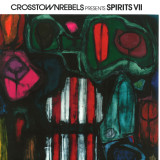
Damian Lazarus uncovers ‘SPIRITS VII’, the seventh chapter of Crosstown Rebels’ visionary annual compilation series. The eight-track package sees the Crosstown Rebels founder curate another stellar lineup of emerging and established talent for the latest instalment of the ongoing highly acclaimed series.
Since its debut in 2017, Damian Lazarus’ SPIRITS series has become a definitive platform for rising stars and established talent pushing cutting-edge sounds, consistently setting the tone for the year ahead. With the release of ‘SPIRITS VII’ this February, Crosstown Rebels continues its tradition of curating groundbreaking talent, delivering an impressive collection of tracks from both new and returning names. Building on the momentum of previous volumes, the eight-tracker offers an expertly crafted selection of deep grooves, hypnotic rhythms, and forward-thinking productions - providing a glimpse into the future of house and techno while staying true to the genre’s roots.
Opening the release, US-based duo Lisbona Sisters present ‘OK GURL’, a trippy and warping track with their original vocals that sets an otherworldly tone. Next, Netherlands-based SHARE follows releases on Mobilee and Abracadabra with ‘Oh Please…’, an acid-led cut with hooky vocals from Def Eff that leave a lasting impression. Next, Bonafique, part of the Maccabi House family, infuse ‘Desperadio’ with signature Middle Eastern influences and organic, rhythmic drums, while Dino Lenny delivers ‘I Have Sampled Father’, a playful yet off-kilter cut loaded with a kaleidoscope of diverse elements balanced by captivating grooves.
The journey continues with Upercent’s ‘Where Are You’, a dynamic composition characterised by soaring synths, sharp drums, and heavy bass licks. Collaborating on ‘Le Tourbillon’, Timo Maas & Inámo craft a hypnotic blend of grooves and sweeping melodies, perfect for late-hour moments. Recorded in his Ibiza studio, John Monkman energises the collection with ‘Colours’, a track brimming with intricate synth work, standout vocals, and dynamic sound design, before Enamour closes with ‘Jackpot’, a dreamy and hazy masterpiece featuring colourful sonics and enchanting soundscapes.
With its distinct ability to uncover hidden gems and elevate them to global recognition, Crosstown Rebels remains a leading force, and this latest edition of SPIRITS proves precisely why it remains at the forefront of the global electronic scene as one of its most vital imprints.
La Pointe debut on Damian Lazarus’ Secret Teachings with ‘Umbra’, featuring remixes from Nathan Fake and Jonny Rock. The experimental label opens its 2025 schedule on 24th January with the Geneva-based trio’s warping original backed by a pair of late-hours remixes from two of the best in the scene.
Emerging from a confluence of rave culture and artistic mastery, La Pointe make an impressive label debut on Damian Lazarus’ Secret Teachings imprint with the enigmatic ‘Umbra’. The release, set for 24th January, is accompanied by stellar remixes from revered producer Nathan Fake and the ever-versatile Jonny Rock, delivering a sonic journey that transcends the ordinary. La Pointe, a trio formed by Geneva-based techno pioneers Crowdpleaser and Entlet alongside New York City’s Jonny Sender, represents a fusion of cultural and musical legacies. Rooted in the dynamic after-hours scenes of Geneva and New York’s underground club culture, the trio creates music that is both innovative and steeped in tradition. Their studio, located in an old factory by the meeting point of the Rhone and Arve rivers, lends its name—and its industrial inspiration—to their project.
The original mix of ‘Umbra’ is a hypnotic exploration of light and shadow, blending atmospheric melodies with deep, pulsating rhythms—a testament to their ability to craft soundscapes that resonate emotionally and physically. Nathan Fake’s remix ventures into intricate, textural layers, marrying ethereal tones with electronic intensity. Jonny Rock injects a raw, off-kilter groove and late-hours energy into his reinterpretation, blending his eclectic influences from disco, funk, house, and beyond. The genesis of La Pointe is as captivating as its sound. Crowdpleaser and Entlet are celebrated architects of Geneva’s rave scene, running the legendary after-hours party The Shark for over a decade and hosting luminaries like Alexander Robotnik, Boo Williams, and Sonja Moonear. Jonny Sender, a stalwart of New York’s downtown music revolution in the 80s to 00s and bass player of post-punk band KONK, brought his unique perspective honed in venues like Mudd Club to the trio when he moved to France. This debut appearance on Secret Teachings is not just a collection of influences but a narrative woven from decades of underground culture and musical exploration - making it a perfect fit for Lazarus’ label as he continues to champion boundary-pushing artistry, curveball signings and inspired remix curation.
Gems is a brand-new label dedicated to unearthing the seminal and original tech-house cuts from the 90’s and early noughties from the producers that birthed the genre term. Label boss Paul Still was a music industry don and has proud connections with the trailblazers of the scene from his Croydon roots, the OG home of the sound, where he sourced and sold these vinyl bombs from the back of his van around London and beyond during that time. The rare and choice cuts he has uncovered are now remastered and reissued, offering this legendary sound life to a new fanbase all over again.
The first in the series see the one and only Terry Francis take the remix reigns on the Radical Chic classic; a bomb that changes hands for upwards of £50. An essential tech-houser of the day and THIS was the mix that is in demand. Flipped with the equally brilliant Space Bunny jam, The Key, of which OG copies would cost between £50-£100.
2 of the original tech-house jams on one essential slice of wax.
- A1: Vajolet (Feat Lukas Lauermann, Wolfgang Pfistermüller & Flip Philipp)
- A2: Autostrada Del Brennero (Feat Diggory Kenrick)
- A3: Latzfonser Kreuz (Feat Mamadou Diabate & Hamidou Koita)
- A4: Lago Di Garda (Feat Roger Robinson)
- A5: Alfa Romeo 145 (Feat Kwame Yeboah)
- A6: Feltuner Hütte (Feat Osman Murat Ertel)
- A7: Avrupa Köprüsü (Feat Osman Murat Ertel)
- A8: Europabrücke (Feat Susanna Gartmayer)
- B1: Ancient Atoll (Feat Reinhilde Gamper, Martin Mallaun & Flip Philipp)
- B2: Latemar (Feat Reinhilde Gamper & Martin Mallaun)
- B3: Brennerautobahn (Feat Taka Noda)
- B4: Echoes Part I (Feat Flip Philipp)
- B5: Echoes Part Ii (Feat Flip Philipp)
- B6: Transit Tribe (Feat Didi Kern)
- B7: Latemar (Reprise)
12"[23,49 €]
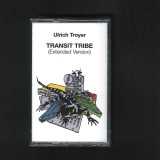
Ulrich Troyer has been producing music now solidly for over twenty years within a largely genre free framework, but whilst navigating forms such as avant-garde, techno, leftfield, field recording, electronica, glitch and ambient it is the aesthetics of dub that guide his creative direction. Not really recognisable in an orthodox form as remixed versions of roots reggae songs but in the way sonics are manipulated with space, the application and layering of delay, reverb and echo that fixes his output well within the scope of what might be called futurist dub.
The nearest comparisons to his new album TRANSIT TRIBE can only be established by a synthesis of some of the more adventurous explorations in modern music such as African Head Charge, Jon Hassell, Pole (Stefan Betke), Bill Laswell or even Miles Davis; featuring a diverse selection of artists and friends not only from Vienna and environs but also from around the world, sounds are not so much fused but allowed to float along the continuous flowing tide of warm waves of bass.
Rather than to allow the names of Ulrich Troyer's collaborators be merely listed in the album credits, what they bring to this joyful affair needs to be outlined, albeit briefly: Co-producer credits go to Osman Murat Ertel from Istanbul, who employed a variation on the old foolproof Nick Lowe method for checking out the impact quality of his own sound productions by playing tracks through his car sound system speakers!
Murat is a member of the electro-psych-folk group Baba Zula where he plays electric saz, oscillators and theremin and played a key part in the creative development of the album. Mamadou Diabate, the balafon master originally from Burkina Faso and now resident in Vienna, has developed his own unique technique of playing solos that replicate the sound of three instruments playing in unison; however the multi-talented Mamadou is engaged here on singing and playing the talking drum. From South Tyrol Reinhilde Gamper is a member of the experimental trio Greifer who are bringing the sound of the zither into the twenty-first century using new playing techniques and electronic gadgets. Susanna Gartmayer is an Austrian composer and bass clarinetist specialising in improv and multimedia sound research. Diggory Kenrick has been engaged with creating new dub fusions and also re-energising classic rocksteady and roots reggae classics, renowned for his interventions on flute. Didi Kern is an electronic dance musician and drummer from Vienna with a focus on free improvised music. Hamidou Koita, a singer and multi-instrumentalist, is from a traditional Griot family in Burkina Faso but now resident in Vienna and a regular musical partner of Mamadou Diabate playing drums and calabash. Austrian Lukas Lauermann is both a studio and live musician playing cello, also working on electronic sound design and writing string arrangements. He has recorded extensively and appeared on stage with both Mark Lanegan and Hans-Joachim Roedelius. Martin Mallaun is a Tyrol-born specialist in both the development of the zither in modern music and also as a researcher in the effects of climate change on the vegetation of Alpine ecosystems. Mystica Tribe is the musical alias of Tokyo-based dub/techno producer Taka (Takafumi) Noda. He collaborated with Vienna's own Vegetable Orchestra on 2020's "Transplants (Mystica Tribe Version)". After studying classical percussion Flip Philipp is now a jazz vibraphone player and member of the Vienna Symphony Orchestra. Wolfgang Pfistermüller is a member of the Vienna Trombone Quartet and the developer of the incredible bass-trombone Aurora with its uniquely warm and resonant sound. Roger Robinson is a renowned British poet, winner of many contemporary poetry prizes and member of the experimental music group King Midas Sound. Kwame Yeboah is a Ghanaian born UK based keyboard wizard who tours regularly with Yusuf / Cat Stevens, Ms. Dynamite and Pat Thomas.
So contained on the album is an astonishing mix of musicians and instruments: sounds of cowbells recorded in the South Tyrolean alps processed by modular synthesizers and heavy analogue bass synths combined with instruments such as zither, bass-zither, electro saz, flute, talking drum, trombone, cello, vibraphone, marimba, djembe, contra-alto clarinet, melodica, Farfisa - all bound together by organic live-drums and dub effects.
Liner notes by Steve Barker
Follow-up album to cult-classic debut, Mantra Moderne.
‘Melodi’ is the second album from captivating duo Kit Sebastian (aka Kit Martin and Merve Erdem). Those familiar with the band's cult classic 2019 debut record 'Mantra Moderne' will instantly recognise their unique sound that blurs boundaries of world music, jazz and psychedelia. Not to be content replicating the same album, sonically the feel of ‘Melodi’ is a maturation. It is more diverse and provides glimpses into many different worlds from the Italian Riviera to the mountains of the Caucasus, the beaches of Bahia to the city streets of Istanbul and Paris. This joyous merging of soundscapes evokes a borderless planet with music as an international language, belonging everywhere and nowhere.
‘Melodi’ is imbued with Kit Sebastian's love of vintage records and world cinema, but it is not a retro homage. It celebrates its influences but is very much a modern record, being simultaneously brand new and retro. This is a credit to the duo's craft as musicians and songwriters, presenting their influences as a circular interaction between the present and the past rather than a linear one.
The music was written during the first UK lockdown and recorded that summer, a time of opening up that only briefly existed. In a world with a slower pace than before the Covid crisis, the band were able to spend more time experimenting in the studio. The album’s range of instrumentation has expanded from the previous record to include zithers, harpsichords, congas, bongos, bulbul tarang, and a mock-up choir on top of the synthesizers, balalaikas, organs, and saxophones. Session musicians and friends were also booked to introduce trumpet and string sections giving the album an added depth and orchestral texture. Despite the added complexity, the album was recorded using the same techniques employed for the previous album with various tape machines, bouncing back between cassette and ¼” tape for practicality and sonic abstraction. To pierce through this abstraction, the vocals are intentionally more expressive. Merve took cues from the Turkish singers of her youth, adding a slightly more melancholic, darker and more reflective style than 'Mantra Moderne’. Rooted in observations from everyday life, they speak often about the worlds and thoughts that arise from the end of the night.
Like with many of the best albums, the record seems over all too soon and has you instantly wanting to play it again. On each listen you decide on a track that you think is your favourite from the album only for it to be replaced with a different one on the next listen. The songs and production have hidden depths that seem to evolve and morph the more you devour them. Moments of pure pop, moments to fall in love, moments to contemplate. This journey is rich in musical vitamins and nourishment, but like all the best things still leaves you wanting more.
- A1: Madness
- A2: You Were Mine
- A3: Revolution Come
- A4: Man Free Dub
- A5: Days Of Old
- B1: Dubb Girl
- B2: Dubb Girl Rhythm
- B3: Official Sound
- B4: Fragile Rhythm
- B5: Kid Phil Rhythm
- C1: Zion City - Jacob Miller
- C2: Zion City Dub Wise
- C3: Lorraine Dub Wise - Jacob Miller
- C4: Rock My Soul Dub Wise
- C5: Trying Man - Johnny Clarke
- D1: You Were Dubbing
- D2: Sit And Cry
- D3: Iron Bird - Jacob Miller
- D4: Riding On A High & Windy Day (Alt. Take) - Breezy & Hugh Mundell
- D5: Riding Rhythm
This compilation is dedicated to the memory of the late great “Prince” Philip Smart - the first apprentice of King Tubby and the first engineer at Tubby’s studio besides Tubby himself. Alongside Tubby, Philip was integral to the innovation that took place at Tubby’s studio in the mid 1970s, where the mixing of new roots reggae revolutionized the sound of Jamaican music and created styles and techniques that are still being echoed today, nearly 50 years later.
Though rarely credited on records in comparison to Tubby, Philip also mixed a lot of the paramount music produced by those close associates of Tubby’s studio such as Bunny Lee, Yabby You, and Augustus Pablo. Philip was closely tied to Pablo due to their childhood friendship and was a partner in his stylistically significant early production works. In the early years of Tubby’s studio, both men were making and cutting custom dubs there for their sound systems before starting to produce their own tunes from scratch, and Philip becoming the second chair engineer.
Several of the songs on this compilation are a selection of the aforementioned work. All of the songs here are sourced from Philip’s personal tape archive, and basically all of these mixes and versions have been scarcely if ever heard, and never released before. This double album comprises a rare and genuine glimpse into the dubplate workings of the inner circle of Tubby’s studio in the mid 1970s, where the prime players and emerging giants of reggae music production and sound system versioned, remixed and voiced rhythms for custom and exclusive cuts. Some of the cuts heard here were formerly exclusive power plays on King Tubby’s own legendary sound system, and unlike some previous issues of such material, these are genuine mixes done at the time. Some other tracks clearly exude the youthful enthusiasm of the participants. In both cases we find this collection of tracks to be truly compelling, so please enjoy this glimpse into such rare air. Rest in power Prince Philip Smart.
-RB/DKR, Summer 2023
ReKaB drops another strong four-track EP, rooted firmly in the Detroit sound with a nod to the soulful techno styles that shaped the UK underground in the 90s. His second EP for Cologne's YORE Records. The production, as always, is spot on—sharp, detailed, and endlessly listenable. While the tracks carry the weight of tradition, they’re not stuck in it. There’s a fresh, forward-facing energy here that keeps things exciting.
My Inspiration opens with classic metallic strings and a tight, robotic square bass that locks you in straight away. Just when you think you know where it’s going, the vocal drops—a bold touch that shifts the track into more human territory, giving it an emotional pull without losing its edge.
Soul Brother is a late-night cruiser. Rhodes chords, rolling bass, and lush strings set the scene for a proper cityscape vibe. It’s smooth, it’s warm, and it glides effortlessly, all while keeping enough groove to move.
Future Times kicks things up a gear with more tempo and bite. Acidic basslines and a writhing lead sit alongside deep chords, making it equal parts hypnotic and urgent. It’s the kind of track that turns heads in the club—direct and effective without being predictable.
Wrapping it up, Random Fragments pulls things back into a more reflective, dubby space. The layers are rich but restrained, with chirps and analogue echoes drifting through a hazy atmosphere. It’s introspective but not sleepy, the perfect comedown to round off the EP.
ReKaB’s consistency is something else—each release feels like it’s levelling up, pushing his sound forward without losing its roots. This EP is no different. It’s a tight package of ideas, all executed with precision and style. One for the heads, no question.
Fresh and direct from Toronto, Pacific Rhythm is pleased to welcome Emissive (aka Evan Vincent) for a solo cruise on the label. While Vincent has appeared on the label twice as part of house music duo Active Surplus (alongside Ian Syrett), this new EP entitled Wave Science sees the young musician push his sound into warmer and more melodic waters.
Vincent says the new tracks pay tribute to the Black American roots of electronic music; a historical fact the producer says is an ongoing source of motivation and inspiration in his work.
Indeed, this new four-tracker sees Emissive bring in a pinch of futuristic boogie and cosmic funk to his dancefloor recipe—versatile flavours that should go down quite well at a variety of Dance Opportunities in the very near future! All of the tunes were composed and mixed at Vincent’s home studio in Canada’s largest city, with the tracks getting a warm, Hi-Fi mixdown via Syrett’s Nagra IV reel-to-reel. Tech talk aside, Vincent says he wanted to avoid over-analyzing the production and instead summon the spirits of dance, love and seasonal warmth.
Or as the artist himself says: “Less thinking, more feeling.” Check it out and we’re sure you’ll agree his approach paid off!
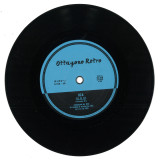
Claudio Mate introduces from the Italian headquarters a new label from the Ottagono family. Influenced by his sister Vala, which she introduced Claudio in the early 90s, in club music and club culture. Ottagono Retro is a new fashion retro vintage outlet record label, inspired by Vala’s fashion, vintage clothing, and handmade accessories shop called Ottagono Retrò. You can visit the physical store on the first floor of Ottagono’s historic place in Nocera, close to the beauties of Naples, Sorrento, Pompei, Salerno, and the Amalfi Coast in southern Italy .
Hansol Oh is a South Korean singer, songwriter, and multi-instrumental electronic musician, currently living between South Korea and Germany, proudly representing Gyeonggi (State) Province as its promotional ambassador. She first captured the spotlight as the Korean representative in the 2017 MTV Aloft Star competition, marking the beginning of her journey as an electronic musician and also becoming a Korean Ableton testimonial under the name Uza. In the last few years, during the COVID-19 era, she earned international attention as one of the most interesting indie solo K- wave artists. She is renowned for its robust philosophy and a distinctive, hard- hitting sound rooted in synthesizers with a retro analogue feeling. More recently, she introduced to the music world her new figure as Tova Oh.
A side: S.O.S club extended, for the fans of k-wave music since the COVID-19 has been a true sensational song. Club extended mix is exclusive for this vinyl release, keeping the original sounds which are a crossover mixture between 80s new wave, electro-pop, techno, house music, playing like a club anthem from deep to dark rooms to Balearic dance floors.
B side: Suitable Kimchi mix sounds like music coming from Netflix, Stranger Things show as the perfect soundtrack for any late-night party. It strikes the perfect harmony between EBM, new wave, electro, and techno, converging with disco soul music. The outcome is a cosmic journey reminiscent of the ’80s, both fiery and flavourful like Kimchi !!!
- A1: Vajolet Feat Lukas Lauermann, Wolfgang Pfistermüller & Flip Philipp
- A2: Autostrada Del Brennero Feat Diggory Kenrick
- A3: Latzfonser Kreuz Feat Mamadou Diabate & Hamidou Koita
- A4: Lago Di Garda Feat Roger Robinson
- A5: Alfa Romeo 145 Feat Kwame Yeboah
- B1: Feltuner Hütte Feat Osman Murat Ertel
- B2: Avrupa Köprüsü Feat Osman Murat Ertel
- B3: Europabrücke Feat Susanna Gartmayer
- B4: Ancient Atoll Feat Reinhilde Gamper, Martin Mallaun & Flip Philipp
Cassette[14,92 €]
Ulrich Troyer has been producing music now solidly for over twenty years within a largely genre free framework, but whilst navigating forms such as avant-garde, techno, leftfield, field recording, electronica, glitch and ambient it is the aesthetics of dub that guide his creative direction. Not really recognisable in an orthodox form as remixed versions of roots reggae songs but in the way sonics are manipulated with space, the application and layering of delay, reverb and echo that fixes his output well within the scope of what might be called futurist dub.
The nearest comparisons to his new album TRANSIT TRIBE can only be established by a synthesis of some of the more adventurous explorations in modern music such as African Head Charge, Jon Hassell, Pole (Stefan Betke), Bill Laswell or even Miles Davis; featuring a diverse selection of artists and friends not only from Vienna and environs but also from around the world, sounds are not so much fused but allowed to float along the continuous flowing tide of warm waves of bass.
Rather than to allow the names of Ulrich Troyer's collaborators be merely listed in the album credits, what they bring to this joyful affair needs to be outlined, albeit briefly: Co-producer credits go to Osman Murat Ertel from Istanbul, who employed a variation on the old foolproof Nick Lowe method for checking out the impact quality of his own sound productions by playing tracks through his car sound system speakers!
Murat is a member of the electro-psych-folk group Baba Zula where he plays electric saz, oscillators and theremin and played a key part in the creative development of the album. Mamadou Diabate, the balafon master originally from Burkina Faso and now resident in Vienna, has developed his own unique technique of playing solos that replicate the sound of three instruments playing in unison; however the multi-talented Mamadou is engaged here on singing and playing the talking drum. From South Tyrol Reinhilde Gamper is a member of the experimental trio Greifer who are bringing the sound of the zither into the twenty-first century using new playing techniques and electronic gadgets. Susanna Gartmayer is an Austrian composer and bass clarinetist specialising in improv and multimedia sound research. Diggory Kenrick has been engaged with creating new dub fusions and also re-energising classic rocksteady and roots reggae classics, renowned for his interventions on flute. Didi Kern is an electronic dance musician and drummer from Vienna with a focus on free improvised music. Hamidou Koita, a singer and multi-instrumentalist, is from a traditional Griot family in Burkina Faso but now resident in Vienna and a regular musical partner of Mamadou Diabate playing drums and calabash. Austrian Lukas Lauermann is both a studio and live musician playing cello, also working on electronic sound design and writing string arrangements. He has recorded extensively and appeared on stage with both Mark Lanegan and Hans-Joachim Roedelius. Martin Mallaun is a Tyrol-born specialist in both the development of the zither in modern music and also as a researcher in the effects of climate change on the vegetation of Alpine ecosystems. After studying classical percussion Flip Philipp is now a jazz vibraphone player and member of the Vienna Symphony Orchestra. Wolfgang Pfistermüller is a member of the Vienna Trombone Quartet and the developer of the incredible bass-trombone Aurora with its uniquely warm and resonant sound. Roger Robinson is a renowned British poet, winner of many contemporary poetry prizes and member of the experimental music group King Midas Sound. Kwame Yeboah is a Ghanaian born UK based keyboard wizard who tours regularly with Yusuf / Cat Stevens, Ms. Dynamite and Pat Thomas.
So contained on the album is an astonishing mix of musicians and instruments: sounds of cowbells recorded in the South Tyrolean alps processed by modular synthesizers and heavy analogue bass synths combined with instruments such as zither, bass-zither, electro saz, flute, talking drum, trombone, cello, marimba, djembe, contra-alto clarinet, Farfisa - all bound together by organic live-drums and dub effects.
Time Ghost Technologies - Ghost One - E-Control “Evasional Feelings” Mini Lp.
A Childhood Intelligence Project.
Our newest record label was born from the urge to represent electro music through our Childhood Intelligence Universe. “Time Ghost Teknologies” is an entity dedicated to timeless and futuristic electro—one of the genres with the deepest roots in the age of technology, which has established itself into the 21st century and beyond. Tales of sci-fi endeavors, forgotten technologies, UFOs and outer world civilizations, yokai and spirits — electro has united mysticism and magic as one of the ancient pillars in electronic history.
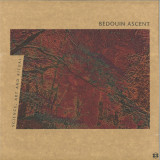
'Science, Art And Ritual' is a story of ‘process'. Growing up in Harrow (a then quiet suburb of London) in the 70’s and 80’s from the age of about 10, Kingsuk Biswas aka Bedouin Ascent's ears opened up to sound as he scanned the airwaves. The undeniable righteousness of 80’s dub via David Rodigan’s Roots Rockers shows was the first prominent influence he received, and with punk roots —and his burgeoning record collection— became exposed to the breathless post punk experimentation that followed in the early 80’s sweeping up free jazz, noise, dub and much more. Throughout though, he maintained his fascination with Indian Classical music which was a mainstay in his parent’s house and spoke with the same infinite space as Joy Division's 'Unknown Pleasures', and King Tubby’s Studio dispatches. Through those teens he assembled and de-assembled, knocking about with fellow travellers —punk bands, garage, space rock, noise. Something was happening. On-U Sound, ECM, Factory Records kept him plugged in and sane.
At that time Kingsuk's core studio setup revolved around his vintage Gretsch, Fender Jazz, Moog, TR-606 and rudimentary FX. He added congas, folk instruments, pipes, hand percussion, gongs, and jammed out shards of funk, noise, jazz fusion, electro and ambience into his hungry Tascam Portastudio. By 1987 these had morphed into what we’d now refer to broadly as techno, but the genre didn't exist beyond the reverberating walls of his bedsit, and he hadn’t yet plugged into the global conversation.
'Science, Art And Ritual' was released in 1994 by Rising High Records and was presented as Bedouin Ascent's debut album, although 'Music for Particles' (released in 1995, again on Rising High) was recorded even before —'SAR' sessions span from 1992-1993, whereas 'Music for Particles' were earlier from 1989-1992, with some older 4-track references from about 1986 too.
Weaved in throughout the album are subconscious references to music that Kingsuk heard in the past that still remained within sight as companions. The opening track "Ancient Ocean III", referencing the extinct ocean Tethis, unapologetically channels Tackhead, Colourbox, Mantronix and Lee Perry. The style was also deliberately juxtaposed to the prevailing sound in techno at the time, which had locked onto a rigid form of symmetrical kicks and light snare drums. Elsewhere 80’s soul and funk are frozen and captured in fragile glass lattices. Electric pianos resound throughout, such as in "He Is She", probably a half-memory of 70’s MOR radio from childhood sleepy night drives. A duel between kick drums from three generations of Roland drum machines —TR-808, TR-707 and R-8— is a central theme in "Transition-R", all in conversation, calling and responding. These were not just machines to Bedouin Ascent, but part of an extended family, with heart and soul.
Three decades after seeing the light, Lapsus is proud to present a special 30th anniversary reissue of this
left-field techno gem in a repackaged and redesigned edition. All pressed on a deluxe 3LP marbled vinyl and including a limited lithographic insert print of the original album cover. All tracks have been restored and remastered directly from the original DAT tapes, and the album also features previously unreleased tracks such as "In the Clouds" and "Thru Water" —regularly performed live at that time and produced in the same period as the album sessions in 1993.
'Science, Art And Ritual’ may refer to esoteric traditions in Indian philosophy, but equally embodies the collision of the science, the art and the ritual that is at the core of being immersed in a deep musical journey.
Remastered reissue of this seminal EP by Speedy J originally released on Detroit's Plus 8 records. Taking his inspiration from the early Detroit and Chicago imports that landed on the Dutch coast in the late 80's Speedy J ended up creating a classic that innovated and embodied the raw energy of the then still emerging sound of Techno. After all these years this is the very first repress of this landmark release!
The Concealed Club Manifesto project pays homage to the mid 2000s underground UK club music scene, an era of music which acts as well of inspiration and creativity for the Nouveau Monica, and has no doubt helped shaped his sound. For the French producer, the UK club scene holds a special allure and mystique, especially since he observed this phenomenon from afar, and was idealized as one of the most “pivotal” moments in underground club culture, making it seem intangible, hence concealed. Nouveau Monica’s sound palette is deeply rooted in the UK scene, which he combines with his own personal musical background. This mid 2000s UK club sound is what the producer defines as his “Golden Era” and the genres created during that time are the building blocks of the Concealed Club Manifesto EP.
“See the Light” closes the EP as a triptyque. First with the OG version, cut out to be the straightforward, grimy, clean, and uncluttered bass track the producer always seeks for when going for the uncompromisingly strong raw material.
The second version conducted by Nouveau Monica as an alternate 4/4 version of the same title, harmonizes the repetitive chopped vocals with a technically syncopated drum loop designed for a new mental perspective, an after-hours sensation that blurs the line between euphoria and melancholy.
The last iteration of “See The Light” comes from none other than Hodge himself. A club tailored cut with a heavy groove, pattered with percussive elements, followed by sun drenched melody and sweltering pads that unleash into a a bellowing bass track, perfectly suited for peak sunset hours at a day rave an unforgiving Soundsystem.
Jean-Phi Dary's much-anticipated *MIND* project gets its first release with the *For Peace Remixes EP*. The record is set for release on September 20, 2024, via Comet Records. Featuring the extraordinary talents of French producer *I:Cube*, who brings his extensive expertise in the electronic scene to reinterpret Dary's original MIND compositions in his own unique way.
The record opens with a masterful blend of rhythmic precision and electronic depth, infused with Dary's signature style with a mindful, meditative quality. This 3-tracker delivers a dynamic and immersive experience with *I:Cube* signature rhythmic excellence and sharp focus on dance floor ready grooves.
Jean-Phi Dary, a producer and keyboardist with deep roots in Paris, London, West Africa, the Caribbean, and the United States, has crafted his debut project MIND to serve as a culmination of his musical journey. With sounds inspired by legends such as Herbie Hancock, Wally Badarou, and Brian Eno - Dary's work is bedded deeply in the modern modular synth culture and enriched by his collaborations with renowned artists like Tony Allen, Papa Wemba, and Jeff Mills - who Jean-Phi is currently collaborating with on "Tomorrow Comes The Harvest" with their album Evolution out last year, soon to be followed by a worldwide tour in 2024!
His innovative use of technology and analog instruments, combined with the unique contributions of I:Cube make the *For Peace Remixes* a notable release.
*Artist Quote* "I had the opportunity to use magnificent samples of the voices of singers from the Maroni River in French Guiana on certain tracks, these voices of the Bushinengé people reconnect me to my Guyanese and neg-maroon origins, my mother was born on the river and my father grew up in the Amazon region..”
Toronto's newest vinyl label, Afalinas, proudly presents its debut EP, crafted by the talented Olekhar. Known for his Ukrainian roots and extensive DJ experience, Olekhar delivers four dance-floor ready tracks. The Fin Groove EP kicks off with "API Call," hitting the perfect blend of tech funk with trancy sequences and flowing tension. Up next is the breaks track "Squat Funk," infused with vibrant electro funk and minimal elements. On the flip side, the dance-floor killer "Bowser's Castle" is sure to elicit maximum stank face with its funky lead, gated acid energy, and robotic vocoder synth, before closing with "WLB," a '90s-influenced breaks track that wraps the package up nicely. Something classy for all occasions.
2025 Repress
Roots Underground kicks off 2024 with a bang, presenting the EP of one of the most fascinating living legends of Detroit techno: John Beltran. Although he has never stopped producing music (luckily for us!), this EP represents a more than welcome return of John Beltran to those more classic techno sounds that have made him one of the most iconic producers of this musical genre in the world.
Markantonio's record label, AnalyticTrail, proudly presents "Groove Impact," an dynamic techno EP by young Irish talent CULT, known for his fast-paced rhythms sequenced into jackin' grooves.
CULT, one of Europe's most talked-about young talents, has a raw style defined by intricate synths creating upbeat machine-funk. Influenced by '90s techno, his music perfectly blends captivating atmosphere with driving energy. Known for his warm, punchy basslines and tribal drum patterns, CULT's tracks are already staples at Vault Sessions events and are championed by DJs like Alarico and Future666 among others.
Founded in 2001 and based in Naples, Italy, AnalyticTrail has been pivotal in shaping the Neapolitan techno sound. A cornerstone of the scene, the label has achieved great success with
its groovy, dancefloor-engineered tracks. With "Groove Impact," AnalyticTrail returns to its roots restarting vinyl releases driven by the desire to produce timeless music that endures on physical formats, just like in the good old days. The label has also started signing techno that puts a contemporary spin on the classic hardgroove style that first brought it success in the early '00s.
The EP opens with A1 "Jumpin' Traxx," featuring cowbells and a dramatic hip hop vocal sample layered over a throbbing bassline to create an upbeat groove. On A2, "High Pressure" follows with booming percussion, fizzing ride cymbals, dystopian synths, and invigorating vocal stabs. B1 features "Anotha Beat," combining hypnotic vocal tones, relentless percussion, and intense synth stabs. The release closes with B2 "Brass Tac," offering a jazz-infused groove built around a live percussion loop.
Sasha returns with atmospheric gem 'How to Wear Raybans Well' Featuring remxes from heavyweights Roman Flügel and Nathan Fake.
Electronic luminary Sasha has had a busy 2024 that has so far yielded standout collaborations with the likes of Super Flu & Sentre and a solo single 'Florian Drift' that proves he remains at the cutting edge. His Last Night on Earth label continues to serve up a rich mix of melodic house and techno from the most exciting names in the scene and this latest solo single finds the boss head into new realms once more.
The superb 'How to Wear Raybans Well' is awash with fizzing dub chords and electric lines that flash about the mix. The deep rooted drums have a subtle bounce as they serve to sweep the floor off its feet and lock them into a state of melodic techno bliss.
First to remix is Nathan Fake, a UK talent who has always had his own unique sound. It's based on his mastery of synths and melody and has arrived on labels like Ninja Tune and Border Community as well as his own Cambria Instruments. His remix ups the ante and strips things away to bring more defined drums and crisp hits. The synths bring a range of emotions as they unfold with a mind of their own throughout this most captivating track.
Roman Flügel has been an ever present in the electronic world almost since the start. The German's output has covered endless ground from micro house to acid to techno on the most tasteful labels from his own Playhouse to Mule, Dial and Live At Robert Johnson. His remix is timeless surging techno that comes with waves of warming synths and unrelenting drum pressure designed for peak time dance floor wig-outs.
Introducing "Faith in Another EP” by Christian Kroupa – a captivating blend of raw, hypnotic, big room ready techno. Presented by Bardo Records, a boutique record label from Ljubljana, this vinyl EP marks their very first physical release, showcasing the talent and ambition of the music producer behind it.
With this release, Christian Kroupa who is known for his innovative and insatiable drive, returns to his roots of techno with a refreshing approach. Embracing a non-mainstream sound, he dives deep into the essence of this genre, redefining its boundaries with each track.
"Faith in Another" takes listeners on an immersive journey, showcasing Kroupa's ability to create intricate layers of pulsating beats and electrifying melodies. Each track is carefully crafted to evoke a medley of emotions, inviting all listeners to explore its uncharted sonic territories.
With a dedication to preserving the richness of techno's inviting sound, Faith in Another promises to captivate a broad audience of music lovers. Loose yourself in the pulsating beats and allow the hypnotic melodies to transcend.
Slave To Society (ex AnD) returns to Natural Selection with a white-hot industrial Techno EP, entitled 'Ai Invasion', accompanied by an IDM-infused remix from hard electronica duo; Somatic Responses.
Format : 12" Vinyl / Digital
Mastered by Dadub Studios, Berlin. Cut by Simon at The Exchange Vinyl.
After a decade of redefining techno dance floors as AnD, Andrew Bowen returned to his experimental, hardware-focused roots as Slave To Society in October 2019. Since then he has seen his music released by highly revered institutions in the world of hard techno, noise, breakcore, IDM and industrial electronica, such as PRSPCT, Pure Hate, Ohm Resistance and BANK Records NYC. After forming a close connection to Natural Selection in recent years, Slave To Society returns to the London based imprint after releasing via their VA compilation 'NSUKR' with his track 'Tundra', followed by his remix of Kamikaze Space Programme's 'Dust To Dust' from his physical EP entitled, "Ashes to Ashes, Dust To Dust", released on Natural Selection in 2022.
In the form of a 4-track physical and digital EP, 'Ai Invasion' is a sonic exploration of the symbiotic relationship between humanity and technology.
Slave To Society uses carefully designed futuristic soundscapes and atmospheric textures, layered with AI generated vocals, combined with heavy and fiercely unpredictable drum elements.
Expect advanced, experimental hard techno and noise, fused with powerful low-end muscle, raging hi-hats, fragmented percussion and augmented amens.
The release also features a razor sharp and well-placed remix of track B1 - 'Robot Dementia', courtesy of legendary hard industrial electronica duo; Somatic Responses.
In true Slave To Society fashion, all rules and boundaries are smashed to pieces and all tracks are equally suitable for blasting through the world's biggest club systems and rigs as they are for home listening.
'Ai Invasion' challenges listeners to question the impact of artificial intelligence on our society and the implications of our relentless pursuit of technological advancement.
Introducing the inaugural release from Immersive Patterns,
our new platform for dance music off the beaten track. This
¦rst four-tracker comes from Jonas Orbiting, a seasoned DJ
with over 20 years of experience behind the decks. The
tracks pay homage to the 90s roots of Techno, nodding
towards the sonic vision of Detroit, while weaving in his own
distinctive touch. Expect intricate arrangements, glitched-out
groovy rhythms, dub-infused effects, and a fresh perspective
on the ways of techno and it's essences. Aimed at dance
§oors, steering clear of the trends governing the clubs. Keep
an eye out for future releases, Immersive Patterns is here to
stay. Limited copies in full colour sleeve
ETC Records proudly presents the official follow-up to RADIUS’ highly acclaimed limited 7”, Infinite Roots Vol.1. Chicago-born worldwide documentarian & respected producer/performer, RADIUS unveils Infinite Roots Vol.2, produced and recorded from 2015 to 2023. This volume showcases his diverse range of styles: Chicago Jazz roots, bboy/hip hop & house music lineage, Detroit techno connections, dub/Rastafari dissporic expansions, and cinematic soundscapes.
Infinite Roots Vol.2 features heavy hitters from RADIUS’ previous digital only releases, live performances, dance competitions, and unreleased gems. Created within Brooklyn where he was based early pandemic time, as well as throughout Mexico, Detroit, Barcelona, Berlin, Rotterdam, and of course Chicago. These diasporic roots run deep and are a reflection of everything: as above so below, as within so without, infinite. The sounds are meant to be Banged loud and proud!
"Following on from May's "ECHOES Part 1 & 2" this is the second single of three to be released as an introduction to the next album project of Ulrich Troyer - TRANSIT TRIBE - to be released later this year.
This time it's one for the reggae fans and dubheads with contributions from Diggory Kenrick who has been busy over the last few years adding the distinctive sound of his flute to many new reggae productions. He is also an associate of the U.K. reggae label Pressure Sounds that specialises in reviving classic sounds from the roots and dancehall eras of the genre. Also joining the production is Takafumi Noda aka Mystica Tribe, a Japanese producer and musician who has specialised in a new form of dub techno and is known for adding the signature sound of his melodica to productions of dub friends from around the world.
The subject of travel, especially along modern, fast routes has long been subject to fascinate musicians, from the days of Kraftwerk's "Autobahn" and now the whole genre of dub techno seems to be one built for listening on long journeys. The Autostrada Del Brennero / Brennerautobahn is one of the most important motorways in Italy, as it connects the Po Valley with Austria through the Brenner Pass and features many modern bridges and overpasses that are ready built illustrations for the covers of dub techno albums! On this release this major European truck route is celebrated musically by Ulrich Troyer with inputs from Diggory and Taka to create two modern dub classics."
Steve Barker (DJ, Radio Presenter - On the Wire, BBC 1984 – 2023,
now Slack City Radio & reggae/dub columnist and contributor to The Wire)
Credits:
Diggory Kenrick: flute
Taka Noda: melodica
Didi Kern: drums
Ulrich Troyer: analog synthesizers, analog drum-machines, sampler, dub effects
A written by Diggory Kenrick & Ulrich Troyer
B written by Taka Noda & Ulrich Troyer
Recorded by Ulrich Troyer at 4Bit Studio & 4Bit Bungalow, Vienna - except flute recorded by Diggory Kenrick at Holloway Studio, London / melodica recorded by Taka Noda at Mystica Sound Studio, Tokio
Mixed & arranged by Ulrich Troyer at 4Bit Bungalow, Vienna
Produced by Osman Murat Ertel & Ulrich Troyer
Mastering & Lacquer Cut by Kassian Troyer at Dubplates & Mastering, Berlin
Cover Drawing by Ulrich Troyer
Special thanks to Steve Barker, Osman Murat Ertel, Diggory Kenrick, Eva Kelety and Takafumi Noda
Kindly supported by the City of Vienna (MA7 - Kultur), Federal Ministry Republic of Austria (Arts, Culture, Civil Service & Sport), SKE-FONDS (AT) & Amt für Kultur, Bozen (IT)
TRM-202MK3 ROTARY MIXER
Back to the roots For some time now, rotary mixers have been making a big comeback in the world of electronic dance music. The TRM-202 MK3 from Omnitronic offers the DJ all the classic features of a rotary mixer with its ALPS knobs (Blue Velvet RK27) and the built-in 3-band frequency isolator.
Smooth transitions
The high-quality components provide a good and appealing sound. The large knobs of both channels allow very smooth transitions, which are difficult to set with a conventional mixer (with faders). For both channels, you can switch between 2 x line & phono inputs or sources. A microphone input is also available. The isolator's kill characteristics completely eliminate bass, midrange, and treble for creative mixing
Classic Rotary Mixer With 2 Input Channels And Integrated 3-band Frequency Isolator For Djs
Gain Control, 2-way Equalizer (highs/lows) And Phono/line Switching Per Channel
Dedicated Boost And Kill Cut
Kill Cut Feature Allows Djs To Completely Remove Low, Mid And High Frequencies For Amazing Mixing
Vintage Alps Potentiometers (blue Velvet Rk27)
High-grade Components Ensure Long Life And Excellent Sound Quality
Dj Microphone Input With Separate Level Control
Prefader Listening To Input Channels And The Master Output Via Adjustable Headphones Output, With Cue Mix/split Function
12-digit Stereo Led Level Meter And Master Level Control
Booth Output With Separate Level Control
Inputs: 4 X Line And 2 X Phono (rca L/r), Dj Microphone (xlr) And Headphones (jack)
Outputs: Master And Booth (xlr/rca L/r), Record (stereo Rca)
Technical Specifications
Power Supply: 100-240 V Ac, 50/60 Hz
Gain:
Line: 20 Db
Phono: 60-75 Db
Mic: 44 Db
Max. Output Level: 22 Dbu
Frequency Range:
Line: 20-20000 Hz
Phono: 40-18000 Hz
Mic: 20-20000 Hz
S/r Ratio:
Line: 85 Db
Phono: 77 Db
Mic: 80 Db
Thd:
Line: <0.03 %
Phono: <0.1 %
Frequency Isolator: - To +9 Db
Lows: 20 Hz To 300 Hz
Mids: 300 Hz To 4 Khz
Highs: 4 Khz To 20 Khz
Inputs:
Line: Rca L/r
Phono: Rca L/r
Dj Microphone: Xlr
Outputs:
Master: Xlr/rca L/r
Booth: Xlr/rca L/r
Rec: Rca L/r
Headphones Output: 6.3 Mm Jack (min. 32 Ohms)
Dimensions (w X D X H): 190 X 250 X 107 Mm
Weight: 2,7 Kg
Power Consumption: 6,5 W
Height: 10,7 Cm
Depths: 25 Cm
Width: 19 Cm
Daniela La Luz announces her highly anticipated 3rd album, 'System Reset'. For the first time, Daniela has compiled all the music and artworks featured in the album, showcasing her genre-blending style in this 11-track collection rooted in electronic dance music.
Recognized and celebrated for her exceptional live sets and productions, Daniela has garnered support from some of the industry's most esteemed DJs, including Solomun, Adam Port, and Sven Väth. Her track 'Did You Ever', featured on Moodymann's 'DJ Kicks' mix, has amassed nearly 3 million plays on Spotify, proof of her growing influence and popularity.
'System Reset' is a testament to Daniela's ability to reflect on personal crises and global issues through her music. The album features dancefloor-oriented tracks with influences from a diverse range of genres including house, techno, dub, electro, wave, jazz, and breakbeat. The linguistic diversity of the songs, in English, Polish, and Arabic, further adds to the album's global nuance. The AI-generated artworks are a unique visual representation of the music. The tracks were mixed by Tobi Neumann and J Manuel at Apollo Studio Berlin and mastered by Manmade in Berlin.
Daniela's music serves as a powerful call to action against climate catastrophe, underlining her belief in the unifying and inspiring power of music for a sustainable future. The album will be released on double vinyl on June 14th and digitally on June 21st via her label, Dimension Of Being Human.
Pitch Dark is a new VA series brought to you by Berlins Pure Hate Trax. For this the 1st in the series they invite 3 new Artists to the label but by no means new to the scene in Codex Empire, Maedon & 7CIRCLE. Also making a welcome return after his debut on VHXX1 is STRISC. Codex Empire – Since 2014, British born, Vienna based Codex Empire has built an international reputation for dark and intense techno productions and live shows. Combining this background in dark electronic music with heavy rhythmic elements makes Codex Empire an intense and simultaneously danceable experience both live and on record. Codex Empire has performed over 100 live shows across Europe, Japan, Korea and Canada, as well as numerous appearances in Berlin at Berghain, Tresor, Arena Club, Suicide Circus and BoilerRoom. Maedon – A native of notoriously grimy Baltimore who spent some seasons in filthy Philadelphia learning the craft, her arrival in New York City circa 2018 signalled a shift in development, one confirmed by the emergence of her Maedon moniker and her partnership with Brooklyn/Berlin techno powerhouse Sonic Groove and its head Adam X. Fast forward three years to Berlin, two albums, a residency at Tresor and an entire world later, Maedon forges ahead to the next phase of a rapidly building career. Assuring her future as the world falls apart, Maedon’s bracing sound and undeniable skills are a story now unfolding, with its beginnings already written in grit.
7CIRCLE – At the helm of Destroy to Rebuild, 7CIRCLE is a musical project without boundaries. Drawing from post punk and metal roots, 7CIRCLE navigates across all genres including Techno and Industrial without compromise or frills. The journey through the discography of 7CIRCLE is a fascinating path filled with darkness and aggressive sounds which are sometimes embellished with a melancholy touch to satisfy lovers of strong emotions. STRISC. – Hailing from the East Midlands, UK and residing in Berlin for the last 8 years, STRISC. is an Artist, DJ & Label Owner who has been making waves due to a relentless output of no-compromise productions that have garnered him the respect and attention of Techno aficionados and peers alike.
Eccentric soundscapes, cryptic atmospheres, unexpected rhythms – with the second episode of the Intelliance series, the concept label Augmented Research once again holds up a mirror to the progressive present and provides various perspectives on the innovative electronic club sound of a new generation.
A1
Raär's music manages to draw the masses beneath the surface of common perception. The blend of deep, organic atmospheres, liquid sound design and supersonic drums awakens a deeply rooted but rarely accessible state of mind. "Riparian Zone" is a tool for transcendental experiences.
A2
There are only a handful of artists like Nebuchadnezzar who have made a name for themselves and demonstrate that rules in electronic music are meant to be broken. "Fidget" is a good example of the obsolescence of obsessive genre categorization. Unpredictable rhythms and glitchy, whipping drums feel like a race against time (extended to almost nine minutes).
B1
With "Sea And Bunkers", Sukkube proves her virtuoso and versatile handling of modular sound synthesis. The rapid, loopy beat, accompanied by a serious and simultaneously playful melody and hissing atmospheres, generates a mysterious, fresh mood. Influences from different eras form an interesting symbiosis of futuristic, uplifting techno and nuances of classic styles.
B2
If an artist were given the task of dealing with vintage drums in the most innovative way possible, while at the same time retaining a sense of nostalgia, "Pragma" would be the clear result. Edict has broken the rules of classic techno styles, pushing polyrhythm and distortion to their limits.
2026 Repress
DJ Support from Danny Howard, Annie Mac, Mistajam, Pete Tong, Charlie Hedges, Kraak & Smaak, Maxinne, Todd Terry, Alex Preston, Full Intention, GW Harrison, DJ Rae, Rudimental, Alaia & Gallo, Illyus & Barrientos, Johan S, David Penn, Sam Divine, Riva Starr, Claptone, Nice7, Dario D’Attis, Mousse T, S-Man, Huxley, KC Lights, Friend Within, Dombresky, Gorgon City, Chris Lake, Format:B, Pirupa, TCTS, Alan Fitzpatrick, Low Steppa, Mat.Joe, Raumakustik, Eskuche
Next up and with a label debut is one of the leading Female artists on the circuit, Tini Gessler! Tini dropped some straight-up club fire on our sister label Toolroom Trax earlier in the year alongside Juliet Sikora and digs deep into her clubby roots once again with 'Do What You Want'. After releases on the mighty Drumcode, Sola and Kittball in recent years, her 10 year career is going from strength to strength which is seeing her DJ all over the Globe on a weekly basis and her music production is making huge waves within the industry, and rightly so. Next up Italian born DJ and producer, CASSIMM is back on Toolroom with a straight up club weapon! After laying down the delicious disco number last year called 'Get On The Funk' with Kid Enigma, this follows suit perfectly and fuses chunky beats, disco licks and has Bruno Blanc sharing some sentimental lyrics about how important house music is to all of us. Last but not least, French artist Tony Romera is back on Toolroom with another slice of Tech House fire. Tony Romera first stepped onto the scene 10 years ago as a fresh-faced 20 year old looking to make waves and disrupt the electronic music world with his unique style and French-house inspired beats. Since then he's been busy releasing music and experimenting with different sounds and styles, putting out music on a range of powerhouse labels and gaining support from the likes of Diplo, Fisher, Chris Lake, Fatboy Slim, Deadmau5, Vintage Culture, Adam Beyer and more. House Y'all's distinct character is built upon a warped, creeping bassline and tough, relentless beats providing an irresistible pulsing backdrop as the familiar chanted vocal emerges. A sonic trip that transports you deep into the heart of the underground.
Countless radio plays on Radio 1 from Danny Howard, Sarah Storie, Pete Tong Other notable radio plays – Kiss FM, Toolroom Radio, Sirius XM, Data Transmission Radio, Radio 1 Dance Anthems, Radio 1 Party Anthems, Rinse FM, Select Radio, Tomorrowland Radio
Aerials live, dials tuned, Transmission Towers broadcasting. On either side of the river Mersey, transcendental communications are traded back and forth. Two late-night revellers, one firing messages filled with music, the other returning them laced with lyrics. The result, a dopamine hit of oddball machine soul, melded with a highlife, Afrofuturist touch. Wonky and murky yet deeply emotional, Transmission One, is a debut album that also marks the first release on Luke Una’s É Soul Cultura label, encompassing expertly the off-kilter atmosphere the label sets to orbit.
A synthesised landscape with a Northern charm, Transmission Towers marry the musical worlds of two artists that last collaborated over a decade ago. 10 years have passed, lives have been led, but a gravitational pull has placed Mark Kyriacou and Eleanor Mante back in each other’s spheres on opposite sides of the city of Liverpool. Energised with a newfound desire to strip it all back to the sounds that influenced their formative years in the late ‘80s and ‘90s - astral travelling, intoxicated on Motor City techno, Black Dog IDM and mystical Sun Ra.
Mark half Irish, half Greek Cypriot, Eleanor half Nigerian, half Ghanian, the music contained within is an alchemy of those roots and the pivotal acts that buried deep into their minds. A cosmic contrast, part machine-made, part distinctly human. Take the opener ‘UP’, an ESG-channelling, sci-fi punk beatdown or the polychromatic hyperspace anthem ‘Roller Skater 23’.
Transportive throughout, you ride the solar waves, pace and emotion ebbing and flowing. Tracks like ‘Go Slow Heart’ and ‘Cosmic Trigger’ step to a slower beat but hit with a punch. The former, a slo-mo blast of celestial tenderness, the latter an otherworldly, chugged-out lunar excursion, micro-dosing on whacked-out Wah Wah and Eleanor’s ethereal vocals. Beaming love letters to space and back, ‘Sparse’ marries the organic with the artificial, pianos and percussion circling around synth pads and broadcasting bleeps.
Elsewhere, vibrations move faster. ‘Mega’ strikes, fusing sonic tribalism with psychedelic swirls, as ‘Everything’ sweeps you up in its extra-terrestrial new wave grip. Synth stabs and basslines fizzing from every angle.
Demos of Transmission Towers music surfaced on Luke Una’s radar, making him stop in his tracks. Something magical was emerging, perfectly aligned with the E Soul guardian’s tastes. Guidance followed, quickly turning into conversations about Transmission One becoming the first release on Luke’s own label.
Escapist and futurist yet grounded and relatable. Transmission One is synthesis meets sentiment with a deep, spine-tingling soul at its core.
Feedback Waves - the new imprint from independent label Rings of Neptune - is proud to present Trill, the first and only album by Palomatic. Almost thirty years after its original release on CD in 1995, this beautiful nine-track work is now available on vinyl for the first time.
Palomatic is an alias of Koji Takahashi, an active member of the bubbling Japanese electronic music scene of the early-to-mid 90s. Besides his solo work, he was a core member of Takahashi Tektronix (with Nic Yoshizawa) and Mutron (with Kiyoshi Hazemoto, aka Interferon), as well as working as a synth programmer for supergroup Denki Groove.
Following the release of his debut track 'Halo' on Syzygy Records in 1993, Takahashi made a series of contributions to compilations on the scene-defining Transonic label. His first and only full-length album, Trill, combined these tracks with original material to form an absorbing and versatile standalone statement of the Palomatic sound.
From the oscillating lilt of 'Flutter', which opens proceedings at a measured 104bpm, through to the symphonic epilogue of 'Soar', Trill is rooted in the fertile territory between organic and synthetic sounds - ground that was nourishing the work of many likeminded producers worldwide at the time. West Coast psychedelia and East Coast funk, the moody bass weight of Bristol trip-hop and Sheffield bleep, and the chemical rush of German techno and Belgian trance: with a distinctly Japanese sensibility, Trill drew these strands together into an elegant musical tapestry. The result is timeless - indeed, album centrepiece 'Foaming Waves' would sound right at home on the faster-paced dancefloors of today.
This double LP features an alternative artwork by Feedback Waves co-founder Max Binski.
Techno luminary Keith Carnal returns with his latest EP, "SEC009," a four-track sonic odyssey that epitomizes his distinct style. From pulsating rhythms to introspective melodies, Carnal showcases his mastery in crafting immersive techno experiences.
"SEC009" features Carnal's hallmark blend of driving beats and emotive chords, inviting listeners on a captivating journey through the depths of electronic music. With tracks that range from high-energy underground stompers to introspective compositions, the EP highlights Carnal's evolution as an artist while staying true to his roots.
Set to release on April 8 on his label SEC NDº (Second Degree), "SEC009" promises to captivate audiences worldwide with its infectious rhythms and undeniable energy. Available in your favorite record store, this EP solidifies Keith Carnal's position as a leading figure in contemporary techno music.
2025 Repress
Chontane delivers six dynamic techno cuts via his 'Sycamore' EP on Mutual Rytm.
A firm fixture of the VOLTAGE roster and a rising name originating from Ukraine making an impact, Berlin-based DJ and producer Chontane is quickly finding his feet following a string of EPs via ARTS, Lobster Theremin and Rekids Special Projects. Already playing key clubs at the age of just 18, blurring the lines between techno, breaks and electro with his growing trademark sound, his performances across Berlin and beyond have captured the attention of many as he showcases his up-front and powerful sound. Next, he heads to SHDW & Obscure Shape's Mutual Rytm imprint for the first time as he reveals his six-track 'Sycamore' EP.
Lead cut 'Preserved' is a rugged yet soulful opener, settling into a rolling groove guided by crisp hats and sharp stabs, while 'Arakis' propels into more eerie and menacing spheres as waling vocals emerge and disappear into the track's relentless dynamic. Opening the B-side, 'Sitka' fuses jacking drums with playful flute interludes for a production set to get dancefloors moving, while 'Laboe' keeps things fiery as a peppy track which launches into fiesta mode. Closing the flip side, B3 'After Images' reveals the most emotive production on the package,
balancing the hard-hitting kicks with soulful vocals and hazy melodies for a classy slice of techno.
Once again, digital purchasers are treated to an exclusive bonus with 'In Roots' raising the temperature and jumping right back into the action to serve up another energising anthem from a label and artist on the rise.
Jack's House Recordings favourite (Alex Arnout), is back with another 4 track solid EP. This is the 3rd EP with Alex signed to the label. Alex was the first artist to release on the imprint back in 2016 with sell out Confirmation Bias ep followed by the Sync Jam release and further productions on some of the Jacks Tracks VA series. This latest offering with the new Burn EP does not disappoint
This limited vinyl press offers 4 distinctive tracks showcasing Alex's ability and talent to seamlessly blend influences from different genres making his production unique creating his staple sound.
First up is Burn which kicks of with tough tech beats quickly followed by some punchy chords before it develops into a beautiful fusion of an energetic original tech house sound merged with what can only be described as a pure soulful touch with the vocal snippet which occasionally and simply sings the the title track lyric (Burn). You could describe it as Tech soul if that were a thing. Punchy, warm and energising with a touch of a romantic notion in there while maintaining the techy roots, you will have this on repeat.
2nd up is Tribespeople, which takes you into Alex's tougher side. Leading with a full on kick and rounded sound, it is perfectly suited for true underground dance floors at the height of their energy, or to wake it up, this track is made for the committed clubber that really likes to go for it ! The track is laced with subtle fills that will jog your memory and take you back to the original days of rave. This is pure underground bliss.
On the flip side, is the popular Punkadelic. This was originally released back in 2022 on Jacks Tracks VA Vol 5 alongside tracks from Terry Francis, Lex & Legit Trip. It was always intended to be a vinyl release, so by popular demand, it is finally going onto wax, where it deserves to be. Punkadelic is dark with a real techno vibe, but even in here, if you have a good ear, you can hear subtle touches of Jazz in the percussion, which yet again showcases Alex Arnout's unique talent to fuse elements of different genres in an especially classy way.
Last but by no means least, is a slightly different flavour with the track Recall. This is a slightly more laid back number, but still punchy with a good chug to it, and keeping within the sounds of the underground. Vocal snippets are spoken and broken throughout the track laced over some ghostly chords accompanied by swinging hats, claps and a fierce bassline.
Far Out Radio Systems, the musical project by Thomas Neyens, is set to make waves with the release of his anticipated second album, "Mariana No Death." This transformative musical journey invites listeners to explore the depths of the Mariana Trench, where the protagonist seeks solace amidst the chaotic realities of our world. Drawing inspiration from the roots of early techno and lo-fi electronica, Thomas Neyens showcases a unique sound palette, embracing a DIY and raw production style. "Mariana No Death" is a testament to pure machine music that delivers a powerful message of honesty and a hopeful outlook for brighter days ahead.
Mood Child unleashes Sirus Hood and Trangaz’s ‘Ghetto Corazon’ EP, a blazing fusion of African, Latino, and Asian influences.
Label father Sirus Hood and Mood Child favourite Trangaz join forces to craft two original bangers, ‘Ghetto Corazon’ and ‘Boothy’, while Manda Moor, Mood Child's mother, spices things up with two different versions of remixes of the second track.
‘Ghetto Corazon’ is one of those tracks that ignites the dancefloor and highlights a DJ set. It’s primal, unique, tribal, and groovy. It has a Techno vibe with its high BPM and killer kick drum that has the power to tremble any dancefloor.
We can sense the Latin roots with the Spanish vocal singing "mi corazon" and the African flair with its broken swing percussion pattern.
‘Boothy’ is a playful acid-led tune enhanced by a unique hi-hat game, with vocals from Trangaz himself talking about the DJ booth adventures. The vocal depicts situations that are bound to happen in any club.
Manda Moor delivers two different remixes of ‘Boothy’: a ‘Punchy’ and a ‘Spicy’ remix. Her ‘Punchy’ rendition is vinyl only and adds a dirty punch to the original, while her ‘Spicy’ version has all the essence of the ‘Manda Moor groove’ - an addictive drum pattern with her unique style that is recognised right away. She is known for her picante sound, adding the perfect spice to this EP.
This release showcases the best of the heat from three minds with different roots. An irresistible melting pot, with early supports from all stars like the king Carl Cox and The Martinez Brothers.
Sirus Hood & Trangaz ‘Ghetto Corazon’ EP drops via Mood Child on 22nd March 2024.
- A1: Monika Kruse Meets Pig&Dan - So Good
- A2: Harrison Crump - Deep Down Inside (Michel Cleis Remix)
- B1: Jay Lumen - The One
- B2: Vsk - Echinopsis
- C1: Kevin Yost - Defence Mechanism
- C2: Tenzella - Hi 79
- C3: Uncertain - Cure
- D1: Juri Heidemann - Haras
- D2: Steve Robinson - No Space, No Time
- D3: Uncertain - Clash
- E1: Taster Peter - Body Call
- E2: D-Leria - Invisible
- E3: Filterheadz & Horatio - Bells Of Brightones
- F1: Uto Karem - Your Voice (Feat Biba)
- F2: George Vidal - Out From Obscurity
- F3: D-Unity - More Drums Please
Vol. 1[34,66 €]
We are so excited to present to the world the 3rd and final instalment in Danny Tenaglia’s GU Trilogy, Danny’s mixes have been a huge part of our DNA for many years, with his seminal Athens and London mixes forming the part of many people’s favourite DJ mixes of all time, Brooklyn is a stunning addition to that heritage and we can’t wait to release this album to the world.
This is the Vinyl Edition #2 of the album, curating a stellar selection of techno and melodic house. "As a native of Williamsburg, Brooklyn, this compilation is not only a celebration of my roots but also a tribute to the dynamic and ever-evolving nightlife that ignited and guided my musical career back in 1975.” Danny Tenaglia
- A1: Intro Feat Persa
- A2: Endless Dream
- A3: Live Your Live Feat Jae Franklin & Persa
- B1: Fred P Skit
- B2: Track For Clau
- B3: K-Brain Tribute Feat Nblue & Damian Schwartz
- C1: I Thought You Were The One Feat Jae Franklin & Persa
- C2: Rl Stadium 92 <3
- C3: Friends And Family Skit Feat Letras
- D1: Halftime Report (For Little José)
- D2: For Princess L Feat Jae Franklin
- D3: Mg Skit
- D4: Outro
Accomplished Spanish artist José Cabrera enters a fresh creative chapter with the new album Le Bateleur. The storytelling and hugely personal record arrives on his own A Harmless Deed label and is a deep dive into the house music he has always loved.
Over the last two decades and under several aliases, Madrid- born Cabrera established himself as a leading techno producer. He has released on influential labels like Fred P's Soul People Music, Tresor, Deeply Rooted and Ron Moreli`s' L.I.E.S. records and co-runs A Harmless Deed with friend Damian Schwartz. As a DJ he has toured Europe, Asia, North and South America and proven himself to be an experimental DJ with a long-standing residency at Tresor in Berlin.
When the pandemic hit in 2020, Cabrera felt detached from the techno world so used his time at home to explore new sounds. He has always had a love of house so set work on making a proper house record in the mold of greats who went before. He worked with other musicians and vocalists, made use of an array of Roland drum machines, Juno synths and Casio keys to cook up a raw and authentic sound and drew from a wide range of the back music that has soundtracked his life. The resulting album is packed with life and energy, skits from friends and timeless grooves.
The album opens up with cosmic synths radiating warmth and jazzy melodies then 'Endless Dream' is a steamy house thumper with aching r&b vocal fragments next to swirling pads. It's a passionate house cut followed by 'Live Your Life' feat Jae. This one brings classic piano energy and another gorgeous female vocal that explores dancers to cut loose and live. Following a dusty downbeat skit that features spoken word encouragement from former collaborator Fred P, 'Track For Clau' is hyper-speed future house with bumping kicks and busy synth arps bringing the light.
A prog rock guitar rings out in the cosmos during 'K-Brain Tribute' feat. NBlue and Damian Schwartz, and 'I Thought You Were the One' feat. Jae & Persa layers up booming kicks and claps with a spine tingling vocal and fat bassline. 'RL Stadium 92' taps into classic Chicago house and 'Halftime Report (For Little José)' gets down and dirty with a menacing bassline and dusty 909 sounds. Another US house heavyweight in DJ Qu features on the atmospheric ''Friends and Family Skit' alongside some of Jose associates and 'For Princess L (I Love You)' feat Jae is an exquisite deep house cut with crisp snares and a heart swelling that is loved up and blissed out. Another skit leads into the outro which is a melancholic ambient synth excursion that sends you off feeling utterly calm.
Le Bateleur is another captivating entry into the ever-evolving discography of José Cabrera.
SY Rockers is the new project from Ryan Aitchison aka Mella Dee and KALLIDA Festival bossman Reuben G. Their story goes all the way back to 2009, when Reuben invited Ryan to be a resident for his party LSS at Hi-Fi Club in Leeds.
The pair went on to bond over their shared love of bass-led music in the UK underground, a sound that was especially important to their native South Yorkshire. Fourteen years on, Ryan and Reuben revisit those early inspirations as SY Rockers. Their debut EP is a slickly produced expression of bleep, UK techno, bassline and dub, redrawing lines between the sound legacies of cities like Sheffield, Bradford and Leeds across three tracks.
True to those roots, the result is a hypnotic blend of raw drums and subsonic impact. ‘Windy Dub’ introduces the record with a hazy, heads-down bass, occasionally shivering into a cavernous space echo before it locks back into a haunting synth hook. ‘Modem’ does what it says on the tin: gameboy tones bounce around a warm sub, calling back the ‘less is more’ aesthetic of the original bleep era. Finally, ‘Rhythm Resonate’ zooms in on where it all started—the drum machine. 909s, lasers and a touch of perc combine to create the ultimate techno tool.
OOO002 - second, vinyl-only release debuts dark, galactic grooves featuring heavy bass lines and experimental elements from artists Chad Andrew and Len Lewis.
A1: “Battle 303”
Inspired by the soundscape of the 90’s techno scene, Battle 303’s punchy bass drums hold you captive as its sine wave bounce lures you into hypnosis with a progressive rhythmic beat. The track’s rolling 303, pyramid’s a myriad of elements before awakening you to the crisp subliminal vocal, just shy of the midway point. Battle 303’s multidimensional fury of movement refuses to slow its pace, inducing pure cardio for both the mind and body, inspiring peak dance performance.
A2: “Area 15”
Area 15 intros the swirling ambiance of dark, atmospheric, easy listening as it gradually accelerates into a journey of the unknown. Utilizing distortion effects, eerie drones and chimes, coupled with the rhythmic pattern of arpeggiated synths brings about a sense of intrigue that lends the listener the flexibility to determine their personal musical trajectory and experience.
B1: Battle 303 (Len Lewis S!th Remix)
Battle 303 (Len Lewis S!th Remix) is an introspective, sonic journey that slings you through a brooding origin story of tribal, galactic funk that echoes iconic samplings spanning over 5 decades seamlessly merged into one futuristic bop. Maintaining it’s old school, breakbeat roots with a driven, heavy bassline, claps and snares, Lewis remains true to his S!th style, by altering path and speed with his signature, unexpected musical transitions, highlighted by timely breaks and experimental elements. Be prepared to move and groove as this track reaches hyperspeed early on, stimulating intense movement and journey from start to finish.
B2: Battle 303 (Len Lewis G.H.M. Remix)
Battle 303 (Len Lewis G.H.M. Remix) leads with traditional, minimal components and a suspenseful bassline, laced with piercing elements and garbled synth vocals, creating a sense of awareness and urgency that gradually builds in intensity before throwing you into punchy, sinister darkness.
This groove, set against the backdrop of deep space and all its musical element oddities, mimics the drive of the original 303’s rolling bass line while seamlessly exploring Lewis’ S!thstylings of metallic synth scales and spooky drone effects, keeping you captivated as you strut the dance floor
The latest by New York-based producer Lamin Fofana further refines his cinematic dialect of fractured soundscapes, displaced rhythms, and tectonic unease. Unsettling scores aptly describes itself: grainy, bristling, and bruised, rippling with dread disguised as grandeur. The collection emerged from an extended reworking of his 2016 composition, “A Symbol of the Withdrawn God,” mining deeper into the piece’s “unvoiced fragments, shards, and utterances.” Other tracks were inspired by recent readings on climate emergency and its “specific implications for Black life, from hurricanes in the Caribbean to mudslides in West Africa.”
Fofana has spoken of his music as part of a “legacy of resistance,” spanning the roots of Detroit techno to the outer reaches of contemporary sound art as championed by his labels, Sci-Fi & Fantasy and Black Studies. His work here vividly embodies that spirit, seven hyper-textural transmissions of rumbling lament, shifting sands, and restless innovation, tracing jagged silhouettes of indeterminate futures: “The instability is worldwide.”
At times where technology inexorably infuses into humankind, Ammar808’s next adventures lays within the realms of Stambeli’s invisible creatures, an old genuine Tunisian tradition that has roots spreading out within the depths of the African continent.
Stambeli is a Tunisian musical therapeutic ritual that was implanted by afro-descendant communities. During the ceremonies, music, dance and chants are blended so as for some participants to reach the alternate state of trance while they are possessed by super natural entities. It is a syncretism between Islam and animist Yorisha religion’s voodoo beliefs, that has been disseminated during slave trade by Yoruba populations originating from current Benin’s gulf. Stambeli is a precious legacy the symbolizes the outstanding diversity and complexity of the North-African identity.
Using drum machines and analog synthesizers, he summons super natural creatures to visit our material world and taste human incarnations, form the audience’s collective experience. The album features vocals and gumbri from Bellassan Mihoub, who inherited his father’s knowledge and mastery, and currently embodies the avant-guarde of Stambeli’s revival. Two additional choristers round off the stage band, also playing the krekebs: these are pairs of large castagnet-like instruments oscillating in the limbo between binary and ternary rhythmic patterns. They breathe life and motion into this pagan communion, blessed by VJ Sia original visuals synchronized to the thundering music.
Super Stambeli is a contemporary interpretation of the Stambeli traditional repertoire, processed through a time-travel washing-machine, a parallel-dimension earthquake portal, that aims to echoes ancestral ceremonies through sub-harmonic speakers. It’s a dialogue between the wailing of the gombri, known to call for the spirits to descend into the bodies of the participants, but this time AMMAR808 directs them straight into the digital circuits of his clockwork-crafted machineries.
- A1: Dj Efx (Beta Test) - Star Trax
- A2: Wechselspannung - 220V (Extract)
- A3: Jupiter 6 - A8
- B1: The Ultraviolet Catastrophe - The Trip (Trip Harder)
- B2: Electroliners - Loose Caboose
- C1: High Lonesome Soundsystem - Champion Sound
- C2: Single Cell Orchestra - I Hear The Dj’s Here
- C3: Jim Hopkins - C’mon Now
- D1: Central Fire - Kamba (The Lost Mix)
- D2: Dj Emma - The Duster (Fuck Off And Dance Mix)
Vol.003[28,53 €]
In the late 1980s, Disco was taking a backseat to the burgeoning psychedelic scene in San Francisco, marking a pivotal shift in musical culture. A dynamic transformation was underway as the younger generation sought a fresh auditory adventure, all while the devastating AIDS epidemic cast a somber pall over the city's nightlife. Amidst this evolving backdrop, a subtle yet distinct sonic movement quietly emerged within the confines of San Francisco’s vibrant club scene, often referred to as "The Beat." Although Hip-Hop, New Wave, Gothic, Punk, and the burgeoning Modern Rock genre held considerable sway, the pre-RAVE clubs in SF witnessed the fusion of these genres into a unique amalgam of sound that insiders dubbed “The Beat.” This musical tapestry encompassed everything from Hip-Hop and Freestyle to Industrial, New Wave, Boogie, Miami Bass, and Techno – the unifying thread being the distinctive vibe that characterised this eclectic mix.
As House, Techno, and Raving gradually gained prominence along the West Coast, a distinctive interpretation of these evolving sounds took root. Drawing inspiration from influential hubs like New York, Chicago, Detroit, Europe, and notably the UK, which saw a wave of talented young DJs migrate to California, San Francisco became the backdrop for its own version of the second Summer of Love. While the exact chronology might spark debate – some recalling '92, while others leaning towards '93 – what remains indisputable is the era spanning from 1990 to 1994, an unparalleled epoch of exuberant dancefloor revelry on the western shores.
In the face of limited backing from major labels or established independent dance music entities of the time, a grassroots movement of labels and producers emerged organically, ardently championing this distinct sound and catapulting it onto the global stage. This sonic identity was deeply influenced by “the Beat,” acting as a creative wellspring that informed the musical landscape. While the tracks compiled in these volumes might not encompass the entirety of this transformative musical epoch, they offer a vivid snapshot of the melodious tapestry that coloured San Francisco and the broader West Coast during that era. Each track featured stands as a 100% Sure Shot that was played heavily by DJ Spun back in those very heady days.
The second installment of this remarkable journey into the underground scene maintains the same profound level of depth and significance as its precursor. Showcasing tracks from Electroliners, High Lonesome Soundsystem, Single Cell Orchestra, DJ Emma, and Spun's own Central Fire project, all harmoniously enclosed within the captivating and arresting artwork by Villain Standard, this release stands shoulder to shoulder with its forerunner. Beyond a mere compilation, it's an indispensable extension of the narrative that has indelibly shaped the culture of underground American dance music within the region, embodying the era and the individuals involved. This is the authentic underground sound that reverberated across San Francisco and its surrounding environs, a truly distinctive and exceptional moment in time and space.
Born in Berlin, DJ, producer, and label owner Ben Rau has an unmistakable talent for getting to the wants and needs of the dancefloor. Having experienced the vibrant music scene of Berlin during the mid-'90s, Ben found himself at the heart of one of the most exciting periods in musical history. As the Berlin Wall fell, the city opened its arms to the sounds of house, techno, and trance, propelling Ben into a world of endless inspiration.
After also spending some time living in London, this EP combines the essence of his German roots with the energy of UK’s electronic music scene. He brings plenty of studio skill and musical creativity here, with three varied offerings. The EP opens with ‘Won't Stop’, a powerful track infused with acid influences, headed by a ridiculously catchy vocal. Next up is ‘Drop The Bass’, a psychedelic, mid-tempo chugger adorned with rolling drums. Finally, ‘I Luv It’ closes with playful synth patterns tumbling down over invitingly warm deep house drums.
This is a chunky bass-filled EP, ready to do plenty of damage to any dancefloor.
A new artist on the Citizen Records / Clivage Music roster, Vhinz is a musician based in Brussels. After taking his time to break onto the electronic scene, he’s now ready to share Belvédère, his debut, dreamlike album, confidently intense, sweeping between cinematic songs and soaring, epic electronic sounds.
Vincent Honca is Belgian, with Armenian roots and a love of keyboards: the mini synth he used to play as a child, the classical piano of his years of training at the Académie de Musique, the Yamaha synth of his teenage years... During the noughties of his adolescence, electronic music was omnipresent in his life as he listened to and admired Daft Punk, Moby, Vitalic, Air and The Chemical Brothers. He also went out dancing, a lot, in the nightclubs and parties of Brussels and the vicinity, and soon his love of computers, technology and synthesisers led to him producing his own music. “I wanted to create beautiful textures with synths,” he says. “I wanted to have fun and discover the possibilities. As part of the internet generation, I taught myself everything I know through reading magazines and checking the forums.”
Vincent went on to become a computer programmer and decided to make music in as much of his spare time as possible. His first productions came out in 2015, including “Drastical”, one of three deep house dancefloor-orientated tracks recorded with none other than Kris Menace. “At the time I was really searching for my musical identity,” explains Vincent, and progressively his music started to lean towards another of his passions – films and film music. “I’ve listened to soundtracks a lot since I was a teenager, and they’ve been a big influence, in particular the music for Heat by Elliot Goldenthal, Gladiator (Hans Zimmer), Saving Private Ryan (John Williams), The Last Temptation of Christ (Peter Gabriel), The Virgin Suicides (Air) and Leon (Eric Serra).” Coincidentally, Vincent has already worked on two independent Belgian films by director Christophe Karabache, UltravoKal and Vortex, both collaborations with Michel Duprez.
Now Vincent has chosen the name Vhinz, bringing together his expertise with machines and computers, his passion and enthusiasm for the electronic sounds of his adolescence and his adoration of cinema’s powerful, impactful soundtracks. Vhinz’s first track is thus called “Aether”, a track brimming with character and confidence, with sung-spoken vocals that sweeps the listener up in bewitching synthetic themes and drums like an off- kilter heartbeat. The track perfectly encapsulates the Vhinz sound, and Citizen Records – the only label he sent it to – immediately loved it and were ready to release a 12” with more. “Then Covid and the lockdown happened, and everything came to a complete halt,” remembers Vhinz. During those long two years without anything being released, the project continued its gestation and has now grown in a mini-album of eight coherent, fascinating tracks. “I really wanted a strong concept for everything, and so was born this album that I’ve called Belvédère. I imagined myself on a belvedere with a panoramic view of the world, channelling all the emotions it elicited in me into music.”
Belvédère is a dreamlike debut album, confidently intense, sweeping between cinematic songs and soaring, epic electronic sounds. It’s a place for Vhinz to showcase his dreams, talk, sing and invite others too: Margot Ferro sings on “Le Passage” and “Envole-moi”, and Michael Meers lends his vocals to “Evolution”. “My album tells a story, with the tracks in chronological order. There are both times of hope and darker periods of my life, with sadness and love,” meaning that listeners are invited to experience a suite of different emotions and be swept along by the author’s musical daydreams. Musically, the album falls somewhere between Moby, Vitalic, Air and Serge Gainsbourg, with a density and atmosphere that are completely Vhinz. “With Belvédère I was looking for beauty, but also something darker, dirtier, more organic. The album is the culmination of that.”
Almost halfway through 2023, Voitax returns with a bass heavyweight of the highest order.
Marc alias Tymotica has been showcasing his musical ambitions not only as a founding member of the Munich-based label »Ruffhouse«, but also through his sonic ventures as a DJ and producer. Luca, on the other hand, an equally ambitious DJ and producer going by the name of DJ Ion, has his roots in hip-hop, jazz, and 90s techno. His debut on Don Williams’ a.r.t.less imprint proves that adequately. Their fusion turned out to be quite fruitful, as shown by their diverse yet well-centred record »Anthea« on Club Qu.
With »Bionic Gradient«, their promising collaboration enters another chapter, a representation of their precise curation of musical components, as well as an impressive design of their sounds. This progressive bass EP features dubstep-, grime-, trap-, and hip- hop influences, nuanced with dub and IDM. Through each track, the duo links crispy polyrhythms with well-chosen samples that perfectly complement the contemporary, high defined sound. Catchy leads, long reverb tails, metallic soundscapes, and detailed drum programming are carefully fused with the underlying warm bass body. All this comes down to an astonishingly eclectic bass EP that is built to be dropped on the dance floor, yet invites you to dive into an abstract and dreamy world on its own.
As both are continuously working on new material, we are more than excited about what is to come!
Nonverbal Language is back with its second vinyl release, 'Hellraiser EP' by CVRDWELL. It includes two original tracks by him and two remixes by the Italian groove master, Alarico, known for fast-paced rhythms and kinky grooves, and the always unpredictable, Swedish Peder Mannerfelt, who is "always rooted in the kinetic energy of techno even as it seeks to break down the genre's rigid, illusory formulae."
Croatian DJ & producer heavyweight Insolate debuts on Luke Slater's legendary Mote-Evolver imprint with a massive four-tracker of pure bred techno ready for the dance floor. After leaving her signature on highly respected labels such as DJ Deep's Deeply Rooted, Developer's Modularz, Ben Sim's Symbolism as well as her Out Of Place imprint which she operates along with Volster, she now delivers 'Push' a finely crafted EP of peak time material. Opening the A side, fierce workout 'Outer Bass' is showcasing a sinister driving energy that is followed by the raw frenetic groover title track 'Push'. On the flip side 'Blow' is a trippy, no-compromise cut, while closing, classy atmospheric track 'Desire' finishes off the EP with its effortless soulful touch and elegant, melodic synth pads flying by.
Recently created Guatemalan label Identidata is extremely proud to present Sacratávica, the very first collected survey of Joaquín Orellana’s compositions. With a career spanning over 50 years of activity across contemporary art, performance, theater and sound art, Orellana is a highly singular figure in Guatamalan culture. Often considered to be the sole avant-garde composer in the country, his work has a deeply interdisciplinary quality. Most of his music was created using an orchestra of his self-built instruments, also known as Útiles Sonoros. Sitting at the border of sculpture, sound installation and musical instrument, these Útiles Sonoros, which he’s been building and developing since the late ‘60s, are at the center of his artistic activity.
Aside the obvious formal aspect, his compositions also have a strong political message, while being deeply rooted in Guatemalan history, folklore and various identities, both indigenous and modern. Playful opener “Híbrido a presión” was one of the first of his compositions to be performed entirely using the Útiles Sonoros. However, due to its technical complexity the piece was seldom reproduced, except for a later staging that Orellana directed in Louisville, Kentucky. “Ramajes”(1984), initially titled “Evocación profunda y ramajes de una marimba” , tracks the many incarnations of the marimba across history, before reaching its final form as one of Orellana’s instruments by combining vibrational percussion with melody and poetry fragments.
The title track, ‘’Sacratávica’’, represents one of the most ambitious and emotionally charged pieces from the album. An expansive 22 minute composition mixing textures that mimick field recordings and multi-layered vocal melodies culminating in choral catharsis, ‘’Sacratávica’’ deals in baroque maximalism without ever feeling cluttered. For the casual listener, the track immediately stands out, not only because of the moving vocal layered harmonies, but also through its epic scale and strong sonic narrative. Dubbed “Las voces del Rio Negro”, the piece references the massacres that took place in Coban during a period where the army massacred numerous towns, throwing the bodies in the nearby Rio Negro (the Black River).
Final track, “Fantoidea”, a glistening, metallic ambient improvisation, was a reimagining of Disney’s Fantasia using Paul Dukas’s “The Sorcerer's Apprentice” as inspiration.
Despite his work being presented in numerous exhibitions and concerts in various prestigious museums and theaters across the world, very few quality recordings exist to date. The only previously available recordings so far or either of very poor quality or did not receive enough attention. This is why, although The compositions presented not being previously unheard, having them all together in a high quality audio object represents a key moment In Guatemalan and Latin American culture.
Recorded on August 31st 2016 during a historical concert attended by over 1000 people at the Centro Cultural Miguel Angel Asturias, designed by Efrain Recinos, one of Guatemala’s leading contemporary artist from the last century, the four pieces were performed by a selection of over 90 musicians (including 60 vocalists) who were already familiar with Orellana’s instruments, cherry-picked from the Guatemalan Conservatory.
For the people behind Identidata, it has been a long and arduous process to put together these pieces. Trying to offer a panoramic view of Orellana’s work, the curators have selected pieces ranging from different decades and artistic periods. Sacratávica is a portrait of a singular artist whose work speaks not only to his culture, but carries strong aesthetic sensibilities that resonate universally.
Flautist Johanna Orellana teams up with Carmen Villain for a collection of horizontal, pastoral field recordings and close mic-ed flute sounds that zero in on the instrument’s unstable resonance and levitational magic. There’s no cringe virtuoso business or fourth world firewalking here - just sonic purity, sublime minimalism and the precise capture of time, place and poetry.
You might have come across Johanna Orellana before if you’ve listened to Carmen Villain’s music (or seen her perform live), and Villain appears here in a producer’s role, using her engineering expertise to impart a level of restraint and sonic fidelity that’s quite startling. There are only really two central elements to the album: environmental recordings and flute. There’s no psychedelic delay, no cavernous reverb; no audible treatments at all - Orellana and Villain instead force us to consider the flute and its musical lineage.
‘El Jardín I’ introduces the instrument as a physical conduit; Orellana allows her breath to distort the sound - the padded pat pat of the keys forms a kind of rhythm, closely recorded so it’s amplified and jarring, linking to primal wind instruments like conch shells, bamboo flutes and wooden whistles. Recalling the way in which Debit interfaced with the ancient world using AI- assisted tech on last year’s ‘The Long Count’, Orellana uses a comparatively modern contemporary transverse flute, an instrument with roots that stretch back through the baroque era, into Medieval Europe, back to the Byzantine era and into Asia. The component that connects the instruments and eras is breath, and its amplification and modification through differently shaped pipes and vessels.
Orellana lets the environment sing: insects, rushing water and zephyr-like winds form a stage that presents her mortal energy, suggesting a harmony between our use of breath and its environmental ubiquitousness. Her technique is steeped in folk history and decouples itself from expectation by rooting itself in nature. It allows her to bridge the gap between equal temperament and less ordered (less commercially-focused) microtonality without overstating the concept. Other sounds waft in from the sidelines; what might be an Indian bansuri, stray notes, a gust of air.
There’s a link to the foundational new age recordings that Joanna Brouk made with Maggi Payne back in 1980, but Orelanna also absorbs the outdoor folk magic of Fonal or Stroom, and the improvisational grist of Bendik Giske or legendary US horn duo Nmperign.
DJ Eddie Fowlkes created the techno genre alongside Derrick May, Juan Atkins and Kevin Saunderson. Now the 'Godfather of Techno Soul' uses his extensive knowledge and experience to create a dynamic wax release drenched in Motor City inspiration - this four-track vinyl package is both a love letter to his musical roots and an inspired representation of the left-of-centre house that Classic is known for. For the lead track, 'AHYEE', Eddie carves out his own sound in a low growl as distorted percussion whirs over a four-on-the-floor beat. 'Blow' goes tougher, with an undulating bass that adds a wonky unease to the rhythmic kick and syncopated decoration. On the B-side, ‘Talking To Me’ makes use of a distinctive spoken-word vocal over an expansive and rhythmically intricate accompaniment, celebrating the culture through expert sampling and production techniques, whilst ‘Complex’ is more beat-focused with driving synth rhythms. Coming from producing some of the first techno records nearly 40 years ago, unique releases like this continue to prove Fowlkes' status as a constant innovator, and his ear for house music is undeniable.
From New Jersey via The Netherlands: longstanding US craftsman Joey Anderson makes his debut on Deeptrax with his inspiring new album… ‘Exotic Sequence’
His fourth LP to date, ‘Exotic Sequence’ is a fully instrumental deep dive into both Joey’s machines and mindset, as he explains himself… “The title ‘Exotic Sequence’ stood out to me because throughout the LP I tended to use a sequencer for the main melody of most of the tracks. Almost every time I approach a track with techno intentions it eventually ends up being deep / housey,” states the artist who broke through 15 years ago on Qu’s Strength Music and has worked closely with the likes of Dekmantel and, more recently, Avenue 66.
Now at home on the relatively new and positively thriving label arm of Dutch record store institution Deeptrax, Joey tells us where he’s at with a body of work that poignantly reminds us that it’s not the destination that counts; it’s the journey we endure to get there.
In this sense, ‘Exotic Sequence’ is the sound of Joey letting his instruments guide, inform and inspire him. Cuts like the constantly rising and hopeful ‘Sky Children’, the deep 808 bubbles and dreamy reflections of ‘Behind The Valley’ and the emotionally rich ‘Stop’ are just a handful of examples of Joey being lost in deep flow, channeling the creative energy in his studio.
It lands exactly three years after his last album ‘Rainbow Doll’, neatly bookending the strangest and most surreal start to any decade we’ve lived through since house and techno culture took root in the 80s. A timeless document that looks forward and back and remains unhurried, thoughtful and crafted with longevity, ‘Exotic Sequence’ is arguably the most honest and frank side to Joey Anderson we’ve heard in his extensive career so far.
The next issue in the on-going Mastermix series features a centerpiece of Frankfurt’s club history: Wild Pitch Club.
A predecessor to the esteemed Robert Johnson and a stepping stone for Panorama Bar’s very own nd_baumecker.
Founded by Playhouse masterminds Ata and the late Heiko M/S/O it was a Thursday club night that heavily featured house music as a prescription to the ongoing techno fever. Enamored with the US-American roots of it and all things deep, it not only presented the right records, but also their creators and protagonists. With a string of guest DJs from Robert Hood and Claude Young to Kerri Chandler and Theo Parrish as well as talent from the UK and Europe, it was one of the culture’s hubs at the time.
Here you have its testimony. Selected and mixed by Ata and nd_baumecker, it’s an authentic snapshot of the club’s vibe and spirit, spread over two 2x12” volumes, a collectable tape (download included) and a pleasant streaming version, it’s the full dosage. Like Roach Motel confessed: Wild Pitch, I love you.
- A1: Papermusic Issue One - Downtime
- A2: Louie Balo – Don’t Shut Me Out
- A3: Kgb – Detroit 909
- B1: Jovonn Feat. Krystine – Better Love
- B2: Wam Kidz – In Love Again
- C1: Kings Of Tomorrow Feat. Sean Grant – I Hear My Calling (Vocal Mix)
- C2: Free Energy - Happiness
- D1: Omegaman – Into The A.m
- D2: Presence – How To Live (2022 Remaster)
The next issue in the on-going Mastermix series features a centerpiece of Frankfurt’s club history: Wild Pitch Club.
A predecessor to the esteemed Robert Johnson and a stepping stone for Panorama Bar’s very own nd_baumecker.
Founded by Playhouse masterminds Ata and the late Heiko M/S/O it was a Thursday club night that heavily featured house music as a prescription to the ongoing techno fever. Enamored with the US-American roots of it and all things deep, it not only presented the right records, but also their creators and protagonists. With a string of guest DJs from Robert Hood and Claude Young to Kerri Chandler and Theo Parrish as well as talent from the UK and Europe, it was one of the culture’s hubs at the time.
Here you have its testimony. Selected and mixed by Ata and nd_baumecker, it’s an authentic snapshot of the club’s vibe and spirit, spread over two 2x12” volumes, a collectable tape (download included) and a pleasant streaming version, it’s the full dosage. Like Roach Motel confessed: Wild Pitch, I love you.
"Delivering his first solo EP in over two years, Blue Hour releases Origins, the 21st release on Blue Hour Music. Following a succession of remixes, V/A contributions and an EP under his Tracing Xircles alias earlier this year, the Berlin-based producer and DJ shares four tracks diving deeper into his UK roots. Channelling breakbeat, techno and trance with the hallmarks of 90’s rave, Origins builds upon the foundations created from his EP ‘Devotion’ in 2020.
In this eclectic EP, Blue Hour explores several sonic palettes. The title track blends celestial chords with urgent drums and acid basslines, while uplifting vocals and subtle melodies wind through the track. ‘True’ dips more heavily into breakbeat territory with evolving and immersive pads, soaring strings and a twinkling synth-line. A dynamic fusion of fast-paced energy and soft touches.
On the flip, ‘Emergence’ dances a delicate line between melancholia and elation, as dystopian chords pool with a squelchy acid sequence and a classic house vocal. ‘Searching’ closes on an ambient tip with spell-binding pads and an angelic melody, conveying a bright side to Blue Hour’s aesthetic, akin to Origins as a whole."
Welcome to Dazion’s Grooveboxxx – a maxi-sized love letter to The Hague’s 80s and 90s club scene crafted with minimal tools and loaded with vibe. It’s no coincidence it arrives on Dekmantel, a label with its own roots in the same Dutch city’s electronic music culture.
Dazion is The Hague’s Cris Kuhlen, previously spotted releasing on Second Circle, Safe Trip and Animals Dancing. He cut his teeth clubbing and working at long-since closed clubs like Eau, described in Kuhlen’s own words as, “clubs with blocks to dance on, lazers, decorations, crazy extravert sic parties.”
In capturing the spirit of Eau and the other formative parties of his youth, Kuhlen limited himself to just one machine to make his longest work to date – the Roland MC-303 Groovebox. While these entry level units from the mid-90s had stripped down functionality in the wider spectrum of studio gear, they contained all the iconic Roland sounds in a Rompler style, giving the user access to everything necessary to make raw, immediate club tracks without requiring an entire studio’s worth of hardware.
The brash gear of choice set the tone for a record of rough, ready and playful jams which end up more sophisticated than you’d expect from such limited means. ‘La DS’ jacks with a freaky, bleep techno intensity, while ‘Kimberly & Nance Backstage Rehearsal’ rides an angular groove tooled to inspire the weirdest dance moves of the night. Every track is named in reference to a particular nightspot, a hazy memory or moment from Kuhlen’s formative raving years.
This is the sound of Dazion having the time of his life. You might well hear a nod to the odd rock totem being given a re-version in irreverent new beat style or some gnarly US acid breaks vibes riding underneath helium rap licks. But for all the cheekiness, the tracks stand up both as nods to halcyon days and relevant workouts for the sweatiest parties in the here and now. As MC Paul T says in dramatic style heralding the intro of Grooveboxxx, “This movement will live on forever.”
SAISEI founder Junki Inoue continues his vital archival work uncovering the riches of Japan’s distinctive electronic music scene and bringing them to new audiences around the world. The Sounds Of Transonic compiles six tracks recorded in Tokyo between 1991 and 1995 and released by the pioneering Transonic label, founded in 1994 by Kazunao Nagata and active until 2004.
Transonic’s catalogue is a glittering roll call of the scene’s major players, whose inventive and genre-blending work established forward-thinking house and techno in Japan in a way that would shape the country’s electronic sound for years to come. Transonic was instrumental in giving exposure to the work of these artists with its emblematic series of CD compilations, released over a short couple of years in the mid 90s. Beginning with 970-1450km/h, Feedback and Range, the series also included The Roots Of Transonic, featuring music from parent label Trigger. Alongside these compilations came much sought-after solo albums each packaged with striking cover art that makes the discs a visual treat for collectors to this day.
The Sounds Of Transonic brings together six tracks from the catalogue into one breath-taking package. The influence of hi-tech jazz and machine funk from Detroit is undeniable in ‘Dream Trance’ (Mind Design) and ‘Blasting Soul’ (Interferon), while ‘Under The Ground’ (Palomatic) and ‘Chelsea’ (Suzukiski) are permeated by the artificial intelligence and trip hop emanating from the UK at the time. The compilation is bookended by two tracks by Nagata himself (as Organization): ‘Space Ball’, a Model 500-worthy chase through the cosmos, and ‘Call’, an eerie echo of Kraftwerk’s telephone, transmitting expectantly out into the void and, finally, receiving its celestial answer.
With The Sounds Of Transonic these formative pieces of music will now be available internationally and, for the first time, on vinyl.
SAISEI is a Japanese word which translates to ‘reproduction’ and ‘to play’ (as in playing records). Japanese culture is widely known for its traditional nature just as much as it is for being forward into the future and this label’s concept does justice to exactly that. Having started digging for records as early as 16 years old, Inoue delved into productions from 1990s Japan to uncover these native gems. SAISEI’s core concept is to recapture and reintroduce unique pieces of Japanese electronic music onto vinyl, to an audience it never reached before as most of this music was only released in Japan.
- A1: Ekonda Musicians - Généalogie De La Walé (Rumba Rules Edit)
- A2: Brigade Sarbati - Rando
- A3: Lumumba Ya Muana - Tozozela Ba Ancêtres
- A4: Brigade Sarbati - Edenda
- A5: Église La Résurrection - Nzambi Ya Babo
- A6: Werrason - Block Cadenas
- B1: Brigade Sarbati (Choeur) - Ma Descendance
- B2: Brigade Sarbati - Tshouna Baby
- B3: Papa Wemba - Excuse Me (Live Au New Morning, 2006, Rumba Rules Edit)
- B4: Franco Et Le Tout Puissant O K. Jazz - Kinshasa Makambo (Live From Télé Zaïre, 1982, 2022 Remaster)
- B5: Lumumba Ya Muana - La Vie Est Belle
The official soundtrack of the 2021 'Rumba Rules, New genealogies' documentary movie by Congolese artist Sammy Baloji and Quebec filmmaker David Nadeau-Bernatchez. A deep dive into Kinshasa’s vibrant Rumba scene, including remastered classics by Brigade Sarbati, Werrason, Papa Wemba, Franco & le Tout Puissant O.K. Jazz
Rumba Rules, New genealogies is about contemporary rumba in Kinshasa, but this music has deep historical roots nevertheless. Born in the interstices of the colonial world and thriving during the three decades of the Mobutu era in Zaïre, Congolese rumba has been iconic and popular all over Africa for decades. The roots of Rumba are even deeper, and the many paths it evokes trigger the imagination. The story goes that this music came with the migration of the ‘Kumba’ drum and dance in previous centuries, African slaves having carried it all around the Americas and giving birth to Cuban ’Rumba’, Colombian ‘Kumbia’ and many others. With its varied rhythms, guitars and horns, through LPs and radio stations, Rumba came back to (re)conquer Africa throughout the 20th century, paving the way for new practices. One could say this music is a sort of palimpsest, a memory in itself of Atlantic migrations and histories.
Rumba is nowadays discussed all around the world, igniting many debates among the Congolese diaspora. Being the constant talk of the town sometimes overloads public debate, and many people get tired of this broken record. Thus, over the last decade, enterprising producers have worked hard to promote Kinshasa’s musical diversity and tried to emulate new sounds to reach worldwide attention. But Kin’ locals and urban dwellers will not be fooled : new shoots cannot hide the forest. Despite some difficulties to innovate, despite the pastoralist sermons and the diaspora fighters pushing for concert cancelations, rumba is still at the core of the Congo today. Talented artists such as Fally Ipupa, Ferré Gola, Brigade Sarbati and others are leading the fifth generation, and the religious world has also proven to be a nurturing environment for the cultural and economic dynamism of this music.
Focusing on the music of Brigade Sarbati and his Orchestra, this record offers a deep dive into Kinshasa’s rumba scene. Halfway between professional studios and Zoom H4 field recordings, the rumba herein is about today’s youth: dense, full of energy and breakdowns, insights and name-dropping. The cavacha rhythm, the solo and bass guitar’s playing style, the singing style and numerous dedications all resonate with the history of Rumba. In an era where digital sound is taking over, it is interesting to highlight the instrumental and live performance compositions of this music. Digital technology is indeed used during the recording and mixing phases, but Congolese rumba still relies strongly on instrumental playing. There is all that but also, many other things to hear on this record… It’s time to let it be. A big thanks to Étienne Tron for making it possible: it is on his initiative and through his patience that this album is in your hands today. (David Nadeau-Bernatchez, december 2021)
Detroit's deep techno master, Deepchord, makes a more than welcome return to Soma after 5 years. With a brand new album dropping, Rod Modell delves deep into his ethereal sonic world to bring you 'Functional Extraits 1'. The first single to be taken from the forthcoming album. Built in a way that only Deepchord can, he transports you to different realms with lush soundscapes and perfectly processed electro-acoustics giving you an insight to the mind of the unique artist.
Shale glides across a field of electo-static noise, guided gently by cisps, fleeting percussion and gently warping synths. Lateral begins awash with waves of sound and glistening dub stabs while rolling beats acts as the heart beat of the track with a building intensity adding a sense of urgency. The uplifting yet dystopian sounds of Mapping spiral into existence urging you down the rabbit hole as more classic techno percussion manoeuvres this track on it's journey. Modell seeking out his roots as yet more traditional dub techno prevails via the final track, Ricochet. Pumping kicks and sub set to a perfect pace and ambience is a perfect, contemporary nod to the time honoured Deepchord sound.
- A1: Cha´kwaina (Marcel Dettmann Remix)
- A2: Beauty Begins With Us (Μ-Ziq Remix)
- B1: Clouds Over Clifden (Dauwd Remix)
- B2: Sun (Placid Angles Bonus Track)
- C1: Our Love Is The Place (Baltra Remix)
- C2: Natsukashii (Plaid Remix)
- D1: Deep Blue (Cassy Remix)
- D2: Touch The Earth (Feel The Rain) (Jakojako Remix)
- D3: When The Sun Shines Through (John Beltran Remix)
One year after its original release, the Placid Angles album Touch The Earth is being remixed by an impressive array of artists from the extended Figure family. With John Beltran being a distinct voice within the electronic music scene for over thirty years now, Figure is thrilled to reveal a whole LP’s worth of reinterpretations, including two works by the original artist himself.
Opening up is Marcel Dettmann, who seamlessly has integrated the lush soundscapes of the original album into a beat-driven but equally serene journey. Picking up on the LP’s underlying dark garage tropes, Planet Mu headmaster M-ziq infuses his rework with even more rolling drums and ethereal vocal chops. The also inherent IDM roots of Touch The Earth have been kept close by Warp-veterans Plaid who deliver a shuffling flurry full of horns, synths and syncopated rhythms. More straightforward interpretations include Dauwd’s dazzling piece of feathery, fast, atmospheric techno; a gorgeous melodic house remix by Baltra and Cassy who turns in a rigid UK stomper.
Amidst all the reworks, John Beltran himself makes two appearances across the record. As Placid Angles he adds another heads-down percussive/ambient swirl, which represents exactly what the producer has been hailed for since more than three decades now. His own remix finishes the record on an epic note, with an organic drum track that celebrates life and the necessity for communal gathering in order to dance.
Beltran’s own additions to this LP are like the essential glue that makes it all bind together, forging the old and the new into something equally exciting as already intimately familar.
This is the 4th release on Zimp Recordings, an independent techno label based in Scotland.
Edinburgh based DJ and producer Filthy Rich, label boss at Zimp Recordings, is a deliciously slippery artist with an engorged techno sack who’s always at the ready to spurt his computer generated juicy tit bits all over your proverbial techno flaps.
There’s five tracks full of sub-bass madness, as well as a plethora of dizzying scratch samples, on this release of intense experiences where beauty meets anger. Pulling influences from dubstep, roots and disciples, the tracks on this next instalment from Zimp Recordings dive deep into ska based warehouse techno, swelling basslines and utterly focused dance floor mayhem, all with the added bonus of feeling like you’ve been punched in the face by a massive bag of skunk. Along-with the three original tracks there’s a destructive hi-energy dancefloor banger of a remix by Edinburgh legend Morphamish and an industrially relentless, experimental, neuro-bass tonal pounder of a remix from Tokyo’s Yu Ikemoto.
With the two-part EP Mediterranean Dreams, Perugia producer and composer Feel Fly revisits his musical roots and pays tribute to the sounds and ‘sun-kissed nostalgia’ that informed his style.
Mediterranean Dreams Part 1 collected four tracks, and added that Feel Fly touch of emotive chord progressions and layered production onto cosmic disco grooves to powerful dancefloor effect. Now with Mediterranean Dream Part 2, Feel Fly switches the tempo both up and down, to fully demonstrate his affinity for club moments of all shapes and sizes.
Nebula flies out the gate with full intent, recalling classic Detroit techno while pushing the vibe even more wide-screen - it’s driving, melodic dance music that delivers on the fine details as much as it does on the life-affirming, big picture sentiment.
Optical Bells opens in meditative style, not unlike a new dawn in a Tibetan monastery, before each element of the track slowly reveals itself and assumes its place. It’s an arrangement technique that Feel Fly employs masterfully, and gives the impression of a camera lens moving into focus, or a storyteller setting the scene. The revolving chord changes pull you in and while whisking you away, you’re compelled to engage with the moment - like being asked to dance by a mysterious stranger.
The B side kicks off with Luce Eterna Ai Sognatori, still keeping the tempo high while cherry-picking disco house drum patterns and piano synths with a slight Italo flavor to create an irresistible slice of dancefloor dessert. This is a soundtrack for Sognatori, in whose dreams anything is possible.
The EP finishes up with a superb cut of echoey balearic dub in the form of Templum Dub. Putting the drums through its mixing desk paces, Feel Fly reanimates the drum kit with delays, phasers and flangers, and wraps it up in hazy drifting pads that could accompany any moment of contemplation - from that morning espresso to a midnight phone call.
Mediterranean Dreams Part 2 acts as the perfect compliment to its prequel Part 1, and shows a producer at the height of his powers, reimagining his musical roots and composing a love letter to the sounds and stories of his youth.
Since he started producing music, Berlin-based American sound artist Jake Muir has been obsessed with sampling. His 2018 album "Lady's Mantle" was based on manipulated chunks of vintage Californian surf rock, and its follow-up, 2020's midnight symphony "The Hum Of Your Veiled Voice" was sourced from a wide variety of old records, and inspired by the work of experimental turntablists like Marina Rosenfeld, Janek Schaefer and Philip Jeck.
On "Mana", Muir looks back to a misunderstood musical movement. Around 1995, a group of New York producers and DJs - including DJ Olive, DJ Spooky and Spectre - pioneered a genre-dissolving sound by unifying hip-hop techniques with ideas pulled from dub, jungle, ambient music and industrial noise. Badged "illbient", it was a short-lived genre that felt like a high-minded psychedelic cousin of the UK's trip-hop.
Muir uses illbient as the springboard for "Mana", utilizing a selection of samples to inform his frothy drones and foreboding atmospheres. He ushers the material into 2021 by diverting it through his own contemporary worldview, attempting to recreate the hyperreal fantasy histories of Japanese RPGs (think "Dark Souls" and "Final Fantasy") and nod to sensual, tactile soundscapes of European industrial labels Staalplaat and Soleilmoon. The result is a magickal, sensory journey that's as physical as it is representational.
If the illbient producers were encouraging a burgeoning experimental music landscape to emphasize the tactile feeling of turntablism and sample manipulation, Muir is doing the same with "Mana". Each track heaves and breathes not just with his cultural reference points, but with layered, complicated emotions. We can hear joy, sadness, desire and anguish, obscured by disintegrating noise, hallucinogenic harmonies and sub-aquatic bass. It's electronic music that's rooted not in technology, but in touch.
Charlotte de Witte continues her fantastic year with brand new EP, Asura, on her KNTXT label. All three of the tracks on this release will be exclusively included in her BBC Radio 1 Essential Mix, which is scheduled to be broadcasted on 18th of September.
As well as being back on the road and serving up her high-intensity DJ sets at the world's best clubs and festivals, Charlotte has also been busy in other areas. She has forged a new alliance with Apple Music and is now curating multiple exclusive mix series including a monthly KNTXT Residency Mix and KNTXT Active, which sees the Belgian artist and her label further investigate the connections between high-performance music, sports and BPMs. She has recently remixed the hugely influential trance classic 'The Age Of Love' by Age Of Love' alongside Enrico Sangiuliano and continues to A&R essential new tunes for the label.
Says Charlotte of this EP, "with Asura EP I’m trying to give you a little insight into my musical influences by going back to my roots. We’re speaking about a young Charlotte who, about 12 / 13 years ago, got indulged in the world of electronic music by going to her first underground clubs and raves. From electro and techno to acid core and hardcore to psytrance. This EP flirts with the soundscapes of the latter."
This EP finds Charlotte delve deep into her own past in electronic music with plenty of psychedelic influences. Opener Asura is a brightly lit techno track with big chords that bring the colour. They are sleek and metallic and sure to get hands in the air, with acid sounds and rumbling bass all adding extra weight and depth to this fantastic opener. 'Soma' is another dramatic and psychedelic track with hard-edged drums pounding away beneath celestial chords. They are mysterious and emotive and bring colour to the darkness. Last of all comes another big, psytrance-tinged and emotional roller coaster in 'Stigma' with its all-consuming techno groove and bass that sounds like it's fired from a machine gun. After an acidic breakdown, the drums roll again and even the biggest festival crowd is sure to be swept away.
Charlotte de Witte leads from the front once more with her standout new Asura EP.
KOKOROKO return with this exclusive Double A Side vinyl of 'Baba Ayoola' and 'Carry Me Home' released via Brownswood Recordings on 25th June 2021. Both singles achieved huge support upon digital release by BBC Radio, BBC 6 Music, 1Xtra, Afropunk, Clash, Rolling Stone France & NPR. 'Baba Ayoola' was written as a tribute to the grandfather of the band's alto saxophonist Cassie Kinoshi and is 'an invitation to celebrate life'. Whilst 'Carry Me Home' was inspired by conversations with the masterful Dele Sosimi, whose technical ability in bridging the gap between the West African afrobeat sound of his roots, and the London energy of his upbringing, has directly informed the ever-impressive capabilities demonstrated by London's eight-piece collective, KOKOROKO.
(gatefold 2LP with spot gloss finishing) Regal's debut album! His staunch productions have garnered support from techno's well-established vanguard, including noted collaborations, projects and remixes with Amelie Lens, Hadone, Nina Kraviz, Ellen Allien, Emmanuel Top and Len Faki. "Remember Why You Started is meant to be a message for everyone, including myself, to look back to your roots -where anything you do is influenced by nothing but passion" -Regal
Repress
Techno Letfield legend. Peder Mannerfelt returns, this time in original format, with the second version of a track called The B. The first version probably never existed. As you will hope that this one never existed too while your brain is melting in a Swedish oven spiced with hoovers and sub bass.
Hard to deny the back and forward energy between the Copenhagen scene and KAOS. Repro is back in the show. The moment of impact is a heavy trip on high energy mode. Please wear your helmets.
Dirty Rocking Bassline is most probably one of my (and SPFDJ) top 3 most played tracks ever. That would be a reason to be more than excited to welcome directly from Devon (UK) to Darc Marc. But you wanted more: Running With The Devil has been another sure hit in your TRACK ID?? requests in the last months. Free-party rooted, hyperdrive, sexy, dark, fast... And now you believe.
The hardcore-IDMish dystopia from Uncrat closes poetically this new issue, giving more meaning than ever to that mighty quote that once a wise friend of mine said at an after and that I take now as life motto.
#TOOMUCHISTHEMINIMUM
NOWNEXT is a voyage from the past to the future, from now to then, from what's behind us to what's waiting for us just around the next corner. In musical terms these are the gaps that appear when you drift between genres and take risks. Strolling far from the well travelled Zeitgeist path. The second album by the Sepalot Quartet floats through this timeless space and fills those cracks with a relaxed fusion of Jazz meets Indie meets Electronica, not once denying Sepalots hip hop roots.
This freedom of expression can also be considered a sign of our times, with a generation coming of age without rivalling youth phenomena. Where a jazz show is held in a techno club with no further explaination needed.
With their first release the Quartet still relied on remakes from the established Sepalot dicography, with their current work they laid the foundation for a truly solid form of musical self discovery.
NOWNEXT is enlivened by this spirit and offers a fascinating and confindent blend of varied sounds spanning time and space.
With all this being said, NOWNEXT is truly an up to date album of international format, feeding from the rich experience of its diverse members (Sepalot, Angela Aux, Fabian Füss, Matthias Lindermayr). Memories, associations and a well carved vision are melted into a masterpiece.
NOWNEXT is the latest offering by SEPALOT and his QUARTET and needs to experienced with all senses.
2022 Repress
In future times, culture historians will refer to Gabor Schablitzki aka Robag Wruhme as a creator of a singular techno sound, a rock in the murky sea of arbitrary musical dullness that befell mankind in the early 21st century.
Furthermore, a lesser known quality of Schablitzki will be praised and explored: He was a relentless wordsmith, a deeply passionate inventor of elegant idioms that enriched German language. Take ‘Freggelswuff’ or ‘Wemmel’ as shining examples.
It’s within this context that a certain cultural artefact released on a Cologne based record label called KOMPAKT (which towards the end of the 21st century made a hardly publicised turn to manufacturing CO2-neutral wall plug systems) that went by the sonorous title ‘Topinambur’ has to be mentioned. Legend has it that Schablitzki claimed to have created the word ‘Topinambur’, unknowingly that local farmers have been marketing a root tuber under the same name since it got imported from America in 1610 AD. The following tenacious copyright lawsuit between Schablitzki and a large agricultural consortium lasted for many years. It isn’t considered as a highpoint in Schablitzki’s turbulent life but it still serves a staircase wit that is passed on from generation to generation amongst Black Forest moonshiners.
Kulturhistoriker künftiger Generationen werden Gabor Schablitzki alias Robag Wruhme als Schöpfer eines singulären Techno-Sounds preisen, als einen Fels in der Brandung der im frühen 21. Jahrhundert vorherrschenden Beliebigkeit. Als DJ und Produzent war ein Meister des deepen Abrisses, werden sie weiterhin formulieren, obschon es weitere 136 Jahre dauern wird, bis die subkulturelle Bedeutung des Wortes 'Abriss' zweifelsfrei geklärt werden konnte.
Es wird aber auch eine weitere einzigartige Qualität Gabor Schablitzkis hervorgehoben werden: Er war ein unermüdlicher Wortschöpfer, der die deutsche Sprache um elegante Idiome wie Freggelswuff oder Wemmel bereicherte. In diesem Zusammenhang findet meist eine Veröffentlichung des Kölner Labels KOMPAKT (welches im ausklingenden 21. Jahrhundert einen wenig bemerkenswerten Wandel zum Hersteller von CO2-neutralen Dämmstoffdübeln vollzog) Erwähnung. Diese Veröffentlichung erschien unter dem klangvollen Namen "Topinambur" und die Legende besagt, dass Schablitzki behauptete auch hier der Nachwelt eine neue Wortschöpfung hinterlassen zu haben, nicht wissend, dass europäische Landwirte bereits seit 1610 A.D. unter diesem Namen ein aus Amerika importiertes Knollengewächs vermarkteten. Der sich daran anschliessende Copyright-Streit zwischen Schablitzki und einem mächtigen Agrarkonzern, zählte nicht zu den rühmlichen Episoden seines bewegten Lebens, sorgt aber seit Generationen als Treppenwitz unter Schwarzwälder Schnapsbrennern für viel Geschmunzel.
DJ Deep's Deeply Rooted label once again spotlights rising French talent Marina Trench for the second instalment of 'Signature featuring remixes from the boss and Hugo LX. Arriving on Deeply Rooted in March with the slick sounding 'Signature EP1', since then Trench has debuted at Rex Club where she played alongside Kerri Chandler, further bolstering her rising reputation as one of the Parisian scene's most exciting names. She now returns to Deeply Rooted bringing another instalment of classy House music - perfectly suited to the respected label's aesthetic. She shows off her knack for jazzy keys on the lively, raw-edged 'Thema Urbain' which oozes late night soul and effortlessly intimate house vibes. The equally excellent 'Ahead' is a surging house cut with well-crafted synth stabs fleshing out an off balance groove while a twanging bass riffs props things up from below. It's perfectly propulsive but has a real sense of heart. The third sublime original is 'Navigo', a bottomless track with splashy hi hats and suggestive string stabs up top. A rasping bassline brings texture to the smooth grooves as they keep rushing over you to make this another fresh and original offering from Trench. Remixing 'Ahead' is Hugo LX, who cruises from downtempo beats to soulful electronic sounds on the likes of Balance and NDATL Muzik. His classy version is a dubbed out classic with a musical bassline tumbling down the scales as you're sunk ever deeper into his pillowy pads. Deep himself then steps up to flip 'Navigo' into a driving deep techno number that surges on soaring synth smears and prickly percussion. This EP is set to take Trench to the next level and confirms she is one of 2019's brightest new stars.
We are proud to present Christian Nielsen's debut release on Noir
Music. Noir and Christian has been friends for many years and
therefore we have been following the Danish talent closely and
waited for the perfect time and the perfect tracks to create his first
release on the label. So....here it is.....
Over and Over' sits right in between tech and techno with those
irresistible vocals that's become Christian's signature. On Speeding'
Mr. Nielsen digs a little deeper and the result is a fantastic techno-
groover which roots back to early Detroit underground. We
recommend you give in and play both.
A hypnotic melodica-led instrumental from singer, composer and
multi-instrumentalist G.T. Moore who first recorded the track at Harry J's Studio in
Jamaica in 1980. This later cut was originally released under G.T's `The
Outsider' guise for Rej Forte's Jah Works label back in 1991 appearing on the
long-deleted album 'The Outsider Meets The Hi-Tech Roots Dynamics at Channel One UK'.
*Now appearing on 45 for the first time backed with a dub version from the deepest vaults..
José González has delivered a new album, Against the Dying of the Light, a companion and further meditation on the themes of his critically acclaimed album, Local Valley. Where Local Valley turned inward toward place, language, and personal reflection, this new record widens its gaze, becoming an urgent call to preserve the light of humanity with all its flaws, at a moment when, technology increasingly shapes how we think, feel, and relate to one another.
While José has always embraced technological advancement, he questions the assumption that every new possibility must be pursued to its maximum potential, especially when progress comes at the expense of human flourishing, attention, and empathy.
Keeping in the tradition of folk music as protest, José’s new single — sharing its title with the forthcoming album — urges listeners to resist systems that dehumanize and divide: “Disconnect from every algorithm, every perverse incentive that drags you down. Let’s rebel against the replicators, against the dying of the light. Kill the codes that feed the hate, keep the codes that make you thrive, celebrate the **king fact that we’re alive.”
Across the album, González works within a deliberately minimal framework, pushing his familiar palette to new heights through subtle variation, restraint, and detail. Each song unfolds with its own distinct character, proving how much emotional and musical range can be achieved within self - imposed limitations. Written in English, Swedish, and Spanish, the record reflects his Swedish - Argentine roots and frames its humanist message as a global one rather than a purely personal or political statement.
José González is one of the most quietly influential artists of our generation. The Swedish - Argentine artist has built a singular musical world from hypnotic, minimal guitar work and his unmistakably gentle voice — a sound that has become deeply personal to millions of listeners worldwide. With billions of streams across platforms and hundreds of thousands of physical records sold, González’s songs often act as emotional landmarks. Ask almost anyone, and they can name at least one of his tracks tied to a defining moment in their lives.
- A1: Let It Hurt – 2:24
- A2: Dub, It Hurt – 0:54
- A3: My Moon – 3:05
- A4: Hang On Feat. Benji. – 3:32
- A5: Call Me Back Feat. Sadboi And Kabusa Oriental Choir – 2:56
- A6: Let Go – 3:02
- A7: Interlude 1 – 0:28
- B1: I Am What I Am What I Am – 2:39
- B2: I Dream, I Rush – 2:21
- B3: Interlude 2 – 0:53
- B4: Room333 Feat. Zacari – 3:01
- B5: Sodom And Gomorrah Feat. 36Birds – 3:34
* Edition of 500 colored vinyl (transparent purple)
* Artwork developed in collaboration with Paris-based visual artist Caroline Ventura
* Including download code
i got a song, it’s gonna make us millions is the highly anticipated new album by Sirens Of Lesbos, led by sisters Jasmina and Nabyla Serag. The dynamic release is a vibrant showcase of the group's expansive musical range, blending R’n’B/Soul, Afrobeats, electronic music, and lo-fi indie pop into a rich, genre-defying experience. With its eclectic sound and captivating melodies, the album solidifies Sirens Of Lesbos as a standout force in modern music.
Featuring on the album are the singles “Room 333” feat. Kendrick-Lamar-collaborator Zacari, a futuristic R’n’B song with progressive club beats; the epic “Call Me Back” (feat. Drake-co-signed rapper SadBoi and the Kabusa Oriental Choir); and dub-infused reggae song “Let It Hurt”, plus new song “My Moon”, which draws inspiration from artists like Bruce Hornsby, Justin Vernon, and Jai Paul. Sirens Of Lesbos have earned widespread acclaim from outlets like CLASH, COLORS, Dork, Tsugi and Earmilk, with BBC 1Xtra’s CassKidd calling the collective “magical.”
As Black women living in the diaspora, Jasmina and Nabyla navigate the intersection of their parents’ collectivist North-East African culture and the Western emphasis on individuality. Questions of identity have always been central to their journey. While society often demands clear-cut definitions, the sisters have come to embrace their multifaceted identities: “We have always been many things.”
Both artists are deeply rooted in the technical and philosophical dimensions of sound. Jasmina recently completed her Sound Arts degree, and Nabyla is now finishing hers. Their academic pursuits have included creating abstract sound installations in exhibition spaces. However, their focus for the foreseeable future is on elevating the Sirens Of Lesbos project, writing and producing standout indie pop tracks, performing live, and delivering unforgettable experiences for their audiences.
—
The vinyl version of i got a song, it’s gonna make us millions is published by Präsens Editionen, a Switzerland-based publishing house and music label. Founded in 2011 in the process of launching zweikommasieben Magazin, Präsens Editionen has since released music on vinyl, cassette, CD, and digital formats—alongside magazines, books, and other printed matter. Recent audio releases include works by Martina Lussi, spalarnia, Magda Drozd, Anom Vitruv, Belia Winnewisser, and Red On, among others.
Ashley Tindall, AKA Skeptical, returns in peak form with Blimp EP — the fourth release on his Rubi Records imprint — delivering four meticulously crafted cuts of uncompromising drum & bass.
Opening with the title track, Blimp sets the tone with a deep, steppy wobbler that nods subtly to the title track from his second Rubi Records release, Capsize EP. All the signature Skeptical hallmarks are here: hypnotic, pared-back metronomic drums and shimmy-inducing, undulating subs that demand movement. Yet this time there's a noticeable shift — warm, underlying melodic pads bring an unexpected emotional depth. It's not dreamy, but it is more introspective than we're used to, showing another layer to his sonic palette.
So Good flips the script entirely. A dark, cinematic growler, it leans into ghosted vocal fragments and a futuristic film-noir aesthetic. Tense, claustrophobic rhythms and sinister textures create an unsettling atmosphere — tailor-made for those lights-out, pressure-heavy dancefloor moments.
Third comes the undeniable monster of the EP, Technology. Trademark "stink-face" Skeppiness is in full effect from the first bar. Disjointed sci-fi stabs and eerie pads collide with clinical, almost militaristic drum programming, all anchored by a devastatingly weighty bassline. Movement isn't optional — this is pure Skeptical, uncompromising and lethal.
Closing the EP is Bad Generation, a sound system–influenced weapon that finds Skeptical operating at his dubwise best. Fusing minimal D&B with heavyweight, roots-inspired rhythms is no easy task, but here it's executed with effortless authority. It's equally suited to shelling down a rave or getting lost in a deep, eyes-closed session.
Four tracks. Four distinct moods. 100% Skeptical.
Blimp EP confirms once again that his sound continues to evolve — sharper, deeper, and more refined with every release.
Support: Ben UFO, Joy Orbison, Gilles Peterson, dBridge, Break, DLR, Doc Scott, Mefjus, Kasra, Kings of the Rollers, Alix Perez, Jubei, Dub Phizix, Flight, Tasha, Loxy, Lens.
- A1: Bwi-Bwi - Nu Sides
- A2: Ayo B - Impact
- A3: Nico Belic - La Discoteca
- B1: Joziciu - Teknik
- B2: Prince De Takicardie - Free Love (Take Off 1 Mix)
- B3: Tibahuult - Alone With Me
- C1: Lamalice - Fiction
- C2: Dynasty Of Dreams - Syunik Horizons
- D1: Man/Ipulate - Voidance
- D2: Curtis Od - Electrical Energy
- D3: Djon Bull - Tidal Wave
11 artists. 11 tracks. 1 city.
From the heart of the most vibrant French city, Marseille, comes a project that redefines the enthusiasm, energy and growing talents around the underground music scene.
Consisting of eleven djs/producers bound to the Phocaean city, this 2x12LP is not just an ordinary album: It is a cultural marker in a city deeply rooted in urban music, reasserting its young and strongly emerging electronic landscape. It is a celebration of Marseille’s musical identity through house, techno and electro.
Originally a record shop, Mindtrip has been promoting and advocating for the electronic movement for 4 years. Olivier aka HI.lo now invites you to deep dive into Marseille’s sonic uproar with his new born label, an extension of the music he has been playing and representing through his shop, putting marseille on the map with an essential first release gathering the city’s finest: MAN/IPULATE, TIBAHUULT, LAMALICE, PRINCE DE TAKICARDIE, JO’Z, CURTIS OD, DJONN BULL, BWI-BWI, DYNASTY OF DREAMS, NICO BELIC & AYO’B.
- A1: Ismistik - Cassis
- A2: Acid Junkies Feat The Doctor - Telephone Terror
- B1: China White - No Sell Out
- B2: Greyhawk - Epidemic Future
- B3: Storm - Takaru
- C1: Hexagone Burning - Trash Floor
- C2: Phase Phorce - Complications
- D1: Mike Dearborn - Raw Acid
- D2: Mike Dearborn - Outer Limits (Trance Mixx)
- D2: Planet Gong - Eight Miles High
- E1: Group X - Tranze X
- E2: Edge Of Motion - La Orilla
- F1: Random Xs - Aftermath V1 2
- F2: Miss Djax - Killer Train
Delsin is pleased to announce an extensive compilation series combing through the catalogue of landmark Dutch techno label Djax-Up-Beats. The series, curated by Rush Hour co-founder Christiaan Macdonald, launches with a look at the label's legacy in the development of acid music through the 90s. In total, this first entry in the Djax-Up-Beats 1990-2005 series comprises 20 tracks, presented as a main triple-vinyl album plus two additional 12" EPs. The compilation also features all-new illustrations from Alan Oldham, the Detroit-rooted visual artist who gave Djax-Up-Beats a distinctive visual identity from very early on, and design by Lost Communication. Each volume of the series also features liner notes from music journalist Oli Warwick. Crucially, every track featured on the series has been carefully mastered by Johanz Westerman, bringing the best out of tracks that often had very little post-production treatment before they were originally pressed to wax. Volume 1 - The Acid Trip focuses on an area the label is best known for - acid house and techno. After the pioneering breakthroughs Chicago-based producers made with the Roland TB-303 in the late 1980s, acid music creation was starting to become more widespread when Djax-Up started in late 1990. The rebellious, rave-ready sound was an instant draw for label founder Miss Djax, and so her label ended up reflecting the development of acid as it spread from the Chicago roots across the world. Volume 1 - The Acid Trip looks at the diverse approaches to acid taken by artists on Djax-Up. Tracks on the compilation include an early outing from Ludovic 'St Germain' Navarre and Bjorn Torske's Ismistik alias, as well as Dutch pioneers such as Edge Of Motion, Spasms, Random XS and Acid Junkies, and Chicago heavyweights Mike Dearborn and Gene Hunt. With five more, equally extensive, volumes to come in this series, Djax-Up-Beats 1990-2005 is a thorough exploration of a true totem of techno culture - a renegade label that operated on its own terms and carried surprises and slammers in equal measure.
- A1: Chris Liebing - Unfold
- A2: Chris Liebing, Charlotte De Witte - Symphonie Des Seins
- A3: Chris Liebing, The Advent - Subjective Immortality
- B1: Chris Liebing - Roy Batty
- B2: Chris Liebing - Evolver
- B3: Chris Liebing - John Connor
- B4: Chris Liebing, Luke Slater - Double Split
- C1: Chris Liebing, The Alte Stuben Modular Ensemble - Entangled Circuits
- C2: Chris Liebing - Higher Things
- C3: Chris Liebing, Speedy J - Shaping Frequencies
- D1: Chris Liebing - Brooks Ave
- D2: Chris Liebing - Eye C
- D3: Chris Liebing - Endtrack
Chris Liebing's first full solo techno LP, 'Evolver' is released on 27th March 2026, via his own CLR imprint. The German techno don's LP features a host of collaborators across music, images, and artwork. Luke Slater, Charlotte De Witte, Speedy J, The Advent, Terence Fixmer, Pascal Gabriel, Daniel Miller contribute to the music, while long-time collaborators Studio Bergfors deliver design, and legendary photographer Anton Corbijn shot Liebing for the project.
The Evolver LP is the sum total of Chris Liebing's three decades at the beating heart of techno. It's the record only someone whose first break as a techno DJ was playing five hours at Sven Väth's infamous Omen in Frankfurt - and who has ridden out every twist and turn of life and subcultures since, while remaining rooted in the true school, dark, sweaty techno sweat pits of the world - could have made. It's the result of deep introspection, but it's about utter immediacy. It's the sound of someone previously driven along by compulsion and happenstance at last finding the confidence to be utterly intentional about their practice, allowing them to take the most classic, familiar, proven elements from the past and render them completely new.
Evolver is also Liebing's first completely solo album. There are collaborations, yes: with old friends from the OG techno generation, Luke Slater, Speedy J, and The Advent, all on uncompromising form, and with new generation figurehead Charlotte De Witte, who provides a thrilling narration of total surrender to the moment on acid clarion call "Symphonie des Seins". But unlike all Liebing's albums to date, there's no co-pilot. Every structure, every mixdown, every choice serves his singular vision of how his untold immersion in the surging currents of the world's greatest clubs should sound. The elements are all those forged in the white heat of Omen and Tresor in the mid 90s - brutal repetition, titanium kick drums, industrial atmospherics, but also dark rave euphoria, ever present surging acid lines just on the cusp of trance, and just enough human voices to remind you of bodies on the dance floor - but rendered with all the extraordinary accumulated skill and technological developments since then.
It's Chris's vision entirely, his musings on sound, technology, and life birthing tracks like "Roy Batty." Inspired by thoughts of AI becoming sentient and hungering for more life like Rutger Hauer's titular Blade Runner character, it was one of the first tracks to emerge and a foundation stone for the album. And in pursuit of that vision, it's built like a "proper album". The anticipation and menace of intro "Unfold" tip over into the glowing hot high drama psychedelia of "Symphonie…" then the breathless headlong rush of The Advent collab and on through an unfolding narrative that goes deep, goes dark, opens out into grand vistas, takes strange turns before finally landing on the alien landscape of… well… "Endtrack".
Not everything is pummelling on Evolver - the dazzling title track feels like you've been welcomed into the courtly dance of a higher dimension civilisation, and the audacious Speedy J collab "Shaping Frequencies" is a beatless flow that tests the boundaries between signal and noise. But for all its complexity, conceptualism, and stylistic branching out, every last part unmistakably powered by that dark techno-cavern energy above all else. All of it positively radiates the qualities of Liebing's greatest work and sets to date - but somehow even more so than before. Whether you're listening for aesthetic inspiration, cerebral stimulation or just that raw physical power, this album will sweep you up into its momentum and won't let go of you until it's done.
From his roots in House, Alex Finkin is a renowned producer and creative director. Working in his Paris studio he has developed numerous projects, notably his own (Roseaux), as well as commissions for radio and television. Meanwhile, with 30 years of production and DJing under his belt, Rocco Rodamaal belongs to the elite circle of House innovators who continue to influence the scene. He's played alongside some of the best in the industry showcasing his versatility and deep understanding of the genre, and remixed artists including Marshall Jefferson, Kerri Chandler, Louie Vega & Moodymann, Todd Terry, Barbara Tucker and Robert Owens to name just a few. Alex Finkin befriended Rocco Rodamaal, who he met via the soulful Parisian club Djoon, where Alex was resident from 2006 to 2014. They have since collaborated on a number of projects together, including "In Da Hood" released on COD3 QR in 2023. Kenny Dope's "O'Gutta" remixes are a series of house and club-focused reworks characterized by raw, gritty and often stripped-back percussion, which he now brings to "In Da Hood".
Ross McMillan, known professionally as Carlos Nilmmns, is a Scottish electronic music producer, DJ and composer originally from Glasgow. Over the years he has collaborated with a range of notable artists, including Grammy-nominated and Grammy-winning figures, including Kenny Dope, Carl Craig, Kevin Saunderson and Davina Bussey, plus respected artists like Niko Marks, Rolando, Laurent Garnier, Santiago Salazar, Hardrock Striker, Karl The Voice, Zadig, Ben Sims, Andrés (who worked with Jay Dilla and Moodymann), and YouANDme. His music has been released on Planet E, Trax, Cocoon, Ornaments, Circus, Virgin, Skylax/Universal Music France and more. His style draws from house, techno and jazz influences, often combining analogue and digital production methods. A returning regular and COD3 QR favourite, he's back with another stunner in "Latin Quarter".
K' Alexi Shelby is a prominent figure in electronic music and with a career spanning decades, he's established a significant influence on House and Techno. Throughout his career he's worked with many well-known artists and remixed tracks that are now key pieces. The cultivation of his massive musical catalogue has overflowed into albums and the three labels he heads. It's also led to legendary collaborations with artists such as The Pet Shop Boys, Robert Owens, Kenny Dixon, Roy Davis Jr., Maurice Joshua, Terry Hunter, Joe Smooth, Steve Silke Hurley, Tyree Cooper, Ron Trent, Glenn Underground, Larry Heard, DJ Pierre, Carl Craig, Felix da Housecat, Marshall Jefferson, Will Smith and countless others. Already respected around the world as a true underground House legend, he delivered "Flame" in 2025 for COD3 QR. Now he's back with "When I", another deep and sexy cut.
Benny Rodrigues a.k.a. ROD unveiled his new moniker, The Lost Souldancer when he dropped "No More Voices" for COD3 QR last year. In his own words, Benny says: "The Lost Souldancer is about coping with the loss of what once was. Finding comfort in the invisible rather than what can be seen. Disconnect to connect in order to be loved rather than liked." He continues this ethos with the delicate and melodic closing track "Life and Death".
- A1: Last Of A Dying Breed (Feat. Jigsaw)
- A2: Scared Money (Feat. General Vee)
- A3: Never Be (Feat. Royal Flush,Vado & Folkland Los)
- A4: Fly Til I Die (Feat. Big Daddy Kane)
- A5: Critical (Feat. Nems)
- B1: Born Hustler (Feat. 38 Spesh, Az & General Vee)
- B2: Official
- B3: Donald Goines
- B4: Million Reasons (Feat. Al Skratch)
- B5: Winning Hand (Feat. Lil Dee & Alicia Renee A.k.a Blue Eyes)
- B6: Born N Raised (Feat. Grandmaster Caz, Marley Marl & Dj Doo Wop)
Hip Hop’s golden era constituent, Queens’ native, the godfather of Mafioso rap, legendary and influential emcee, Kool G Rap, broke out in the late 80s and early 90s as one half of the duo with DJ Polo. Together, Kool G Rap and DJ Polo released three undisputed classic albums; beginning with their debut album, Road To The Riches (1989), Wanted: Dead or Alive (1990) and Live and Let Die (1992).
Simultaneously, G Rap and DJ Polo gained notoriety as members of the Juice Crew, whose noteworthy membership includes DJ Marley Marl, Big Daddy Kane, Masta Ace and Roxanne Shante At the height of hip-hop’s golden age, The Juice Crew was the definition of innovative and not only influenced the culture as a whole (style, lyricism, creativity), but also impressed the importance of style, substance and technique upon the next wave of street ambassadors.
After a successful run with DJ Polo and the Juice Crew, G Rap embarked on a solo-career, with his solo debut, 4, 5, 6, (1995), which was preceded by Roots of Evil (1998) and The Giancana Story (2002). Since then, we’ve only been intermittingly blessed by bodies of work from the Kool Genius Of Rap; Half a Klip (2008), Riches, Royalty, Respect (2011), Return Of The Don (2017) and Son Of G Rap with 38 Spesh (2018).
Now, the recent National Hip-Hop Museum inductee returns with his first solo-album in
five-years with Last Of A Dying Breed, entirely produced by Domingo, which features collaborations with AZ, NEMS, Vado, 38 Spesh, Royal Flush and Big Daddy Kane; with production supplied by Domingo. Kool G Rap’s "Last Of A Dying Breed" is now available on limited edition vinyl, digipack CD and cassette.
Formed in Taipei in 2013, Scattered Purgatory (破地獄) has occupied a liminal space between drone, ambient, psychedelic folk and ritualistic kosmiche experimentation. Their early work, including ‘Lost Ethnography of the Miscanthus Ocean’ (2014) and ‘God of Silver Grass’ (2016), blended dense instrumental drones, improvisational guitar, and ambient textures rooted in the heat, humidity, and urban pulse of Taiwan. Over the years, the duo-turned-band has drawn on Krautrock, minimalist electronic music, and heavy drone traditions while remaining firmly grounded in Taiwanese geography and culture.
‘Post Purgatory’ emerges after a three-year hiatus following the pandemic, a period the band describes as pivotal to the album’s conception. “The feeling of loss and uncertainty has later become the inspiration of this record, and ‘time’ is the main theme – it can heal or it can destroy,” they explain. Musically and lyrically, the record traverses Taiwanese, traditional Chinese, and English, reflecting the multilingual fabric of Taipei life. While there isn’t a linear storyline, metaphor and poetry imbue the lyrics with reflections on love, loss, and the human experience, interlaced with influences of Hokkien and Mando pop and traces of trip-hop.
Recorded half in their home and half at the studio where they composed their first album, ‘Post Purgatory' integrates precision, clarity, and digital production techniques. Guest contributions—from White Wu’s dynamic drumming to Minyen Hsieh’s tenor saxophone and dotzio’s sci-fi-infused vocals—expand the band’s sonic palette, creating a doom metal record shaped by electronic sensibilities.
‘Post Purgatory’ is a statement of loss and re-empowerment, a bridge between their past and present. Through it, Scattered Purgatory reclaim their distinctive voice, presenting a sound that is at once rooted in Taiwan, informed by global musical traditions, and unflinchingly forward-looking.
credits
- 01: Maanitus &Amp; Tšiižik
- 02: Markka
- 03: Melkutus
- 04: Letška
- 05: Kuuen Parin Hoirola
- 06: Brišatka
- 07: Tšiižik
- 08: Kirkonkellot
- 09: Kirkonkellot Korkea
- 10: Hoirola, 3 Parin
- 11: Lippa
- 12: Kyngäkiža
- 13: Ristakondra
- 14: Vanha Polkka
- 15: Viistoista
- 16: Vanha Valssi
- 17: Kiberä
- 18: Maanitus Kuokan Kanteleella
- 19: Tuuti Lasta Nukkumahe
Vinyl[22,65 €]
Death Is Not The End present a further volume of Arja Kastinen's eerie amalgamations of 110 year old wax cylinders with her own meticulously transcribed takes, this time focussing in on Armas Otto Väisänen's field recordings of kantele player Iivana Mišukka (b. 1861 d.1919).
"Ivana Mišukka (1861–1919) was one of the Karelian kantele players recorded by the folk music researcher Armas Otto Väisänen on wax cylinders in 1916 and 1917. In the early 20th century, the remote areas of Border Karelia were undergoing the final phase of a transformation in musical culture, with the ancient runo song tradition giving way to newer forms of music. This transition is reflected in Mišukka's repertoire and choice of instrument. The ancient small kantele, hollowed out of a single piece of wood, was already rare at the turn of the century. Mišukka's kantele was a new type of instrument with 26 strings, constructed of several parts, but he played it using the traditional plucking technique. Like other Border Karelian kantele players, his repertoire consisted of music rooted in runosong culture, as well as newer dances and songs from the east and west. Most of the recorded material falls into the latter category.
Ivan Bogdanov Mišukka was born out of wedlock in Suursara village, Suistamo, on 1 May 1861. He began playing the kantele at the age of five or six, quickly mastering the instrument. In adulthood, he was considered one of the area's best master players. Mišukka was landless for most of his life and lived in different parts of the Suistamo parish. His first wife, Tekla Markintytär, died in 1897 at the age of 40, and his second wife, Jevdokia Filipintytär Jeminen, died in 1907 at the age of 50. Seven children were born from the first marriage, two of whom died young. The third wife, Maria Ignatintytär Gurnan (Kuurnanen), was a well-known master of lamentations. Together with Maria, Iivana Mišukka worked as a tenant farmer in the village of Suursara. Mišukka suffered from rheumatism, which prevented him from participating in physical work like Maria. This was apparently partly the reason why Iivana Mišukka went to earn extra money by playing the kantele on gig trips. He often had other traditional artists from Suistamo as his travelling companions, such as the runosingers Konstantin Kuokka and Iivana Onoila. Iivana Mišukka died in Leppäsyrjä village, Suistamo, on 18 May 1919 at the age of 58, and his kantele was donated to Teppana Jänis.
Mišukka only used 14 of the 26 strings on his kantele, playing the same tunes either a fourth higher or lower. He tuned his kantele to the major scale using fifths, except for a low seventh scale degree on the upper strings, but not below the fundamental. Since he did not use the seventh note of the scale on the upper strings at all, he could use the major scale both lower and a fourth higher with this tuning. According to Mišukka, the sound of higher, or 'finer', strings is 'more beautiful', while that of lower ones is 'greater'. Among runosingers, the size of the thirds varied, ranging from major to minor to neutral. A similar phenomenon can be observed in kantele tunings, where the third, sixth and seventh scale degrees vary in a comparable way.
During a meeting, Väisänen suggested that Mišukka play the smaller kantele belonging to Konstantin Kuokka. The idea was to bring it closer to the horn to improve the recording quality. However, the kantele was completely out of tune, and now Mišukka tuned it to the Lydian scale (track 18).
Using the old plucking technique, Mišukka placed his right middle finger on the fundamental tone, his right index finger on the second scale degree, his left middle finger on the third scale degree and his left index finger on the fourth scale degree, and his right thumb on the fifth. The thumb also played the notes above the fifth note of the scale. As Mišukka remarked to Väisänen: 'Peigaloll' tuloo enemb ruadoa' (the thumb has to do more work). However, he did not use the seventh note of the scale on the upper strings at all. Below the fundamental note, he played the seventh and sixth notes of the scale with his right middle finger of and the fifth note of the scale with his right ring finger. This fifth scale degree below the fundamental is almost always used as a drone. Sometimes, when the melody required it, Mišukka, like other players, also varied the fingering. He would also occasionally strike the same string with the side of his fingernail after plucking it.
The wax cylinder recordings of Karelian kantele players are kept in the archives of the Finnish Literature Society in Helsinki, Finland. Copies were made of them onto reel-to-reel tapes in both the 1960s and 1980s. The 1960s copies are mono and the 1980s copies are stereo. However, not all kantele recordings from these decades have survived.
The sound of the kantele is difficult to hear in wax cylinder recordings due to its low volume, and it occasionally becomes completely obscured by noise. During the copying process, the cylinder sometimes rotates unevenly, resulting in breaks or jumps in the music. Additionally, the rotation speed of the cylinder in the copies does not correspond to the performance speed of the original music, which alters the pitch. However, since Väisänen's precise notes are available in the archive, it is possible to deduce the melodies, their speed, and the tuning level of the kantele in the recordings. Of the copies of the original recordings from the 1960s and 1980s, I have selected the one that best met the requirements of this publication and adjusted the speed of the recording to align with Väisänen's notes. To enhance the listening experience, I have replayed the songs, which now partly overlap the old recordings on this release."
— Arja Kastinen
- 01: Maanitus &Amp; Tšiižik
- 02: Markka
- 03: Melkutus
- 04: Letška
- 05: Kuuen Parin Hoirola
- 06: Brišatka
- 07: Tšiižik
- 08: Kirkonkellot
- 09: Kirkonkellot Korkea
- 10: Hoirola, 3 Parin
- 11: Lippa
- 12: Kyngäkiža
- 13: Ristakondra
- 14: Vanha Polkka
- 15: Viistoista
- 16: Vanha Valssi
- 17: Kiberä
- 18: Maanitus Kuokan Kanteleella
- 19: Tuuti Lasta Nukkumahe
Tape[16,39 €]
Death Is Not The End present a further volume of Arja Kastinen's eerie amalgamations of 110 year old wax cylinders with her own meticulously transcribed takes, this time focussing in on Armas Otto Väisänen's field recordings of kantele player Iivana Mišukka (b. 1861 d.1919).
"Ivana Mišukka (1861–1919) was one of the Karelian kantele players recorded by the folk music researcher Armas Otto Väisänen on wax cylinders in 1916 and 1917. In the early 20th century, the remote areas of Border Karelia were undergoing the final phase of a transformation in musical culture, with the ancient runo song tradition giving way to newer forms of music. This transition is reflected in Mišukka's repertoire and choice of instrument. The ancient small kantele, hollowed out of a single piece of wood, was already rare at the turn of the century. Mišukka's kantele was a new type of instrument with 26 strings, constructed of several parts, but he played it using the traditional plucking technique. Like other Border Karelian kantele players, his repertoire consisted of music rooted in runosong culture, as well as newer dances and songs from the east and west. Most of the recorded material falls into the latter category.
Ivan Bogdanov Mišukka was born out of wedlock in Suursara village, Suistamo, on 1 May 1861. He began playing the kantele at the age of five or six, quickly mastering the instrument. In adulthood, he was considered one of the area's best master players. Mišukka was landless for most of his life and lived in different parts of the Suistamo parish. His first wife, Tekla Markintytär, died in 1897 at the age of 40, and his second wife, Jevdokia Filipintytär Jeminen, died in 1907 at the age of 50. Seven children were born from the first marriage, two of whom died young. The third wife, Maria Ignatintytär Gurnan (Kuurnanen), was a well-known master of lamentations. Together with Maria, Iivana Mišukka worked as a tenant farmer in the village of Suursara. Mišukka suffered from rheumatism, which prevented him from participating in physical work like Maria. This was apparently partly the reason why Iivana Mišukka went to earn extra money by playing the kantele on gig trips. He often had other traditional artists from Suistamo as his travelling companions, such as the runosingers Konstantin Kuokka and Iivana Onoila. Iivana Mišukka died in Leppäsyrjä village, Suistamo, on 18 May 1919 at the age of 58, and his kantele was donated to Teppana Jänis.
Mišukka only used 14 of the 26 strings on his kantele, playing the same tunes either a fourth higher or lower. He tuned his kantele to the major scale using fifths, except for a low seventh scale degree on the upper strings, but not below the fundamental. Since he did not use the seventh note of the scale on the upper strings at all, he could use the major scale both lower and a fourth higher with this tuning. According to Mišukka, the sound of higher, or 'finer', strings is 'more beautiful', while that of lower ones is 'greater'. Among runosingers, the size of the thirds varied, ranging from major to minor to neutral. A similar phenomenon can be observed in kantele tunings, where the third, sixth and seventh scale degrees vary in a comparable way.
During a meeting, Väisänen suggested that Mišukka play the smaller kantele belonging to Konstantin Kuokka. The idea was to bring it closer to the horn to improve the recording quality. However, the kantele was completely out of tune, and now Mišukka tuned it to the Lydian scale (track 18).
Using the old plucking technique, Mišukka placed his right middle finger on the fundamental tone, his right index finger on the second scale degree, his left middle finger on the third scale degree and his left index finger on the fourth scale degree, and his right thumb on the fifth. The thumb also played the notes above the fifth note of the scale. As Mišukka remarked to Väisänen: 'Peigaloll' tuloo enemb ruadoa' (the thumb has to do more work). However, he did not use the seventh note of the scale on the upper strings at all. Below the fundamental note, he played the seventh and sixth notes of the scale with his right middle finger of and the fifth note of the scale with his right ring finger. This fifth scale degree below the fundamental is almost always used as a drone. Sometimes, when the melody required it, Mišukka, like other players, also varied the fingering. He would also occasionally strike the same string with the side of his fingernail after plucking it.
The wax cylinder recordings of Karelian kantele players are kept in the archives of the Finnish Literature Society in Helsinki, Finland. Copies were made of them onto reel-to-reel tapes in both the 1960s and 1980s. The 1960s copies are mono and the 1980s copies are stereo. However, not all kantele recordings from these decades have survived.
The sound of the kantele is difficult to hear in wax cylinder recordings due to its low volume, and it occasionally becomes completely obscured by noise. During the copying process, the cylinder sometimes rotates unevenly, resulting in breaks or jumps in the music. Additionally, the rotation speed of the cylinder in the copies does not correspond to the performance speed of the original music, which alters the pitch. However, since Väisänen's precise notes are available in the archive, it is possible to deduce the melodies, their speed, and the tuning level of the kantele in the recordings. Of the copies of the original recordings from the 1960s and 1980s, I have selected the one that best met the requirements of this publication and adjusted the speed of the recording to align with Väisänen's notes. To enhance the listening experience, I have replayed the songs, which now partly overlap the old recordings on this release."
— Arja Kastinen
- A1: A Perfect Storm
- A2: Etyd
- A3: Against The Dying Of The Light
- A4: For Every Dusk
- A5: Sheet
- A6: Pajarito
- A7: Losing Game (Sick)
- B8: Ay Querida
- B9: U / Rawls Slöja
- B10: Gymnasten
- B11: Just A Rock
- B12: You & We
- B13: Joy (Can’t Help But Sing)
White Vinyl[28,99 €]
José González has delivered a new album, Against the Dying of the Light, a companion and further meditation on the themes of his critically acclaimed album, Local Valley. Where Local Valley turned inward toward place, language, and personal reflection, this new record widens its gaze, becoming an urgent call to preserve the light of humanity with all its flaws, at a moment when, technology increasingly shapes how we think, feel, and relate to one another.
While José has always embraced technological advancement, he questions the assumption that every new possibility must be pursued to its maximum potential, especially when progress comes at the expense of human flourishing, attention, and empathy.
Keeping in the tradition of folk music as protest, José’s new single — sharing its title with the forthcoming album — urges listeners to resist systems that dehumanize and divide: “Disconnect from every algorithm, every perverse incentive that drags you down. Let’s rebel against the replicators, against the dying of the light. Kill the codes that feed the hate, keep the codes that make you thrive, celebrate the **king fact that we’re alive.”
Across the album, González works within a deliberately minimal framework, pushing his familiar palette to new heights through subtle variation, restraint, and detail. Each song unfolds with its own distinct character, proving how much emotional and musical range can be achieved within self - imposed limitations. Written in English, Swedish, and Spanish, the record reflects his Swedish - Argentine roots and frames its humanist message as a global one rather than a purely personal or political statement.
José González is one of the most quietly influential artists of our generation. The Swedish - Argentine artist has built a singular musical world from hypnotic, minimal guitar work and his unmistakably gentle voice — a sound that has become deeply personal to millions of listeners worldwide. With billions of streams across platforms and hundreds of thousands of physical records sold, González’s songs often act as emotional landmarks. Ask almost anyone, and they can name at least one of his tracks tied to a defining moment in their lives.
For our first EP and 12", we're joined by Italian sound artist and long-time Goodness friend Yraki for 5 tracks of sonic hypnosis on a bass-heavy theme: ‘Tendril’ is meditative future-techno meticulously constructed through an experimental, high-poly lens.
Detailed, tactile sound design with deep, hypnotic momentum, it shapeshifts between stripped-back bass pressure and elastic, experimental flow in one costant, evolving, unravelling thread.
--
The shadowed interstice between root and circuit, Tendrils creep through soil and signal alike, tracing patterns unseen, carrying memory and mutation. Time folds in layers of sediment and data; decay becomes growth, fracture becomes connection.
Tendrils are the pulse of the unseen, a meditation on growth, entropy, and the uncanny geometry of becoming.
Meticulously assembled from a good 15 years' worth of source material, Cong Burn boss John Howes' second Paperclip Minimiser transmission proliferates its predecessor's network of turn-of-the-millennium aesthetics and concepts, bringing us closer to the lost future promised by the mid-digital age. If the debut album rooted itself in 2006, using an era-specific rig to activate its vintage Winamp-ready sound, 'II' pushes the clock forward just a little, recycling an unreleased album that Howes engineered in various locations across the north of England, starting way back in 2011. Working quickly and methodically with his homebrewed "DIY DAW" system, Howes improvised live using the record's bank of sounds, transforming the skittering bio-electronic rhythms, bitcrushed modem whines and inclement Lancs soundscapes into a suite of sleek, bass heavy steppers.
Howes has refined his setup and process over the years to function as an antithesis of contemporary production logic, a system that he can use easily to retreat from the excessive layering, overdubbing and editing that plagues modern electronic music. With only limited separate channels in each track, 'II' sounds both archaic and strangely novel. Showing respect to the early days of techno, when stone-cold classics were jammed out live using just a drum machine, a sampler and a couple of synths, Howes simultaneously acknowledges the promise of the transition to a digital future, as nascent algorithmic technology began to rehydrate stale rhythmic and melodic patterns. Fabricating its wrinkled cyberpunk landscape from shovelware blips and whines, spacious environmental echoes and lustrous, plasticky FM hits, 'II' is dense but never congested. It's a reminder that bass music thrives when it's given the room it needs to breathe.
Driveline Records launches its catalog with a focused four-track vinyl EP built for the dancefloor, presenting four distinct yet cohesive techno cuts driven by groove, atmosphere and functionality.
The A-side opens with Invexis - "Roots", a hypnotic builder that slowly unfolds into a funky-driven rhythm. Tight hi-hats and rolling basslines carry the track forward, culminating in a subtle yet engaging melodic progression that lifts the energy without losing tension.
Next, Pylot - "Observation" delivers a highly functional club tool based on steady loops and an aquatic sound design. Aggressive low-end and raw basslines support an atmospheric and hypnotic flow, making it a solid choice for mid-set pressure and long blends.
On the B-side, Berlin-based duo Disguised contribute "Gitty (Dub Mix)", a dub-influenced and dreamy track designed to keep the dancefloor moving while creating a floating, immersive mood. Deep grooves and spacey textures balance rhythm and emotion.
Closing the EP, Shadow Hrym - "Delia" explores more melancholic territory, combining tribal and funky rhythms with emotive soundscapes, offering a powerful and memorable ending to the record.
A strong debut statement that defines Driveline Records' sonic vision: DJ-oriented techno with depth, groove and atmosphere, pressed on vinyl for dedicated selectors.
2026 Repress
French DJ/producer Mathys Lenne's artistic vision is rooted in his deep connection to rhythm. Telling stories with his sounds while drawing inspiration from poetry and cinema and blending hypnotic textures with raw intensity, his music is widely supported across the scene via labels like Mord, Hayes and more. Across five vinyl cuts and three digital bonuses, the four-deck wizard keeps it deeply atmospheric with his label debut on SHDW's Mutual Rytm imprint, combining elements of psychedelic rock, unique voice samples and saturated synths to create a sound that feels immersive and unrestrained in contrast to the fast-paced, visceral techno he has become known for.
'Detlev' opens up with hefty kicks that demand you quicken your step, while industrial effects and creepy design brings the detail that makes the track pop. The classy 'Natural Born Killers' rides on firm kicks with loopy percussive details tightly coiled, ensuring you are forever on edge as the drums march on. 'Choose Your Pill' is a stripped-back and pulsing deep techno cut with deft synths that peel off the groove, before 'Untidy Echo' delivers a cavernous sound with sparse hits and low-end rumbles that place you in the centre of an underground cavern. 'Enfer ou Ciel' featuring D.E.S brings a sense of melancholy in the occasional string sounds and watery droplets that float over more frictionless, meditative beats - while the trio of digital bonus cuts brings moody subterranean rollers ranging
from snaking and dubby to more drum-led and eerie tones.
Swiss DJ and producer Audrey Danza returns with Next Stop, her first self-released vinyl EP on her own imprint, Proxima. The four-track release sharpens her sound into a direct, club-focused statement rooted in acid techno.
Each track is carefully engineered for the dancefloor. Driving acidic basslines and distinctive percussion interlock with warped, spacey textures to form forward-moving, high-pressure grooves. Processed vocal fragments punctuate the tracks, heightening tension and momentum. The EP moves through trippy, mental territory, balancing functional DJ tools with off-kilter details and strange sonic flourishes.
Built for movement and momentum, Next Stop works equally well in late-night warehouse settings and peak-time club moments.
Splatter Vinyl[20,97 €]
Fifteen years after it first surfaced on the short-lived Lithuanian netlabel Dumblys, Sraunus – Out Of The City returns remastered, recontextualized, and ready for a new wave of deep listeners. What once felt like a hidden gem now reads as a quiet cornerstone, a record whose significance only grew clearer with time.
Behind Sraunus is Paulius Markutis, one of Lithuanias earliest deep-dub explorers. His moniker translates to “flowing” or “fluid,” and that spirit runs through the entire album: the music breathes, circulates, and drifts with calm inevitability, revealing fresh details on every pass. Rooted in the classic Berlin-born dub tradition yet unmistakably shaped by Markutis own sense of space, mood, and narrative, the result feels beautifully suspended in time, warm in its chords, patient in its arrangements, and guided by a subtle emotional current. This is dub techno at its most enduring: fluid, deep, and endlessly replayable.
The reissue, part of Greyscales Archive Series, arrives on superbly pressed double vinyl, with artwork chosen with intent: Marija Marcelionytė-Paliukės “High Tide and Low Tide,” an image of perpetual motion that perfectly mirrors the albums flowing spirit.
French modular tribalist Sindh launches the Komudo Origins Series on his own label with a fierce first chapter built for deep physical immersion. Still rooted in rythmic ritualism, these four tracks push further into shadowy, shape-shifting techno. 'Sauros' is the beatless opener, all hovering, menacing atmospheres and sonically refracted voices. 'Arbhar' glides along with a sleek, understated techno framework that feels like it's made of pure air. 'Mystic Sun' begins to edge towards the pumping, firing echoes and low level spoken words across a progressive-style builder, before 'Denali' closes things off via thumping, late-night techno charge. Subtle darkness, alien textures and body-focused grooves define this potent new series.
Black Vinyl[20,97 €]
Fifteen years after it first surfaced on the short-lived Lithuanian netlabel Dumblys, Sraunus – Out Of The City returns remastered, recontextualized, and ready for a new wave of deep listeners. What once felt like a hidden gem now reads as a quiet cornerstone, a record whose significance only grew clearer with time.
Behind Sraunus is Paulius Markutis, one of Lithuanias earliest deep-dub explorers. His moniker translates to “flowing” or “fluid,” and that spirit runs through the entire album: the music breathes, circulates, and drifts with calm inevitability, revealing fresh details on every pass. Rooted in the classic Berlin-born dub tradition yet unmistakably shaped by Markutis own sense of space, mood, and narrative, the result feels beautifully suspended in time, warm in its chords, patient in its arrangements, and guided by a subtle emotional current. This is dub techno at its most enduring: fluid, deep, and endlessly replayable.
The reissue, part of Greyscales Archive Series, arrives on superbly pressed double vinyl, with artwork chosen with intent: Marija Marcelionytė-Paliukės “High Tide and Low Tide,” an image of perpetual motion that perfectly mirrors the albums flowing spirit.
**Cassette release
SELN Recordings is proud to present DJ Gonz’s first solo outing on the label.
The label’s co-founder explores dissonant terrain over seven
tracks, all rooted within his own brand of techno.
From the pumping frontrunner “Who Do You Ride For?” to the
neo-noise industrial blackout title track “Magical Negro
Overdrive”, the EP lays out DJ Gonz’s talents in compact style.
SAM GOKU (Permanent Vacation / Dekmantel / Atomnation)
Paryìa marks its eighth release with Sam Goku, whose contribution showcases not only the creative depth of his dreamy side but also just how club-ready his tracks can be. Rooted in shimmering house and techno yet fluid across a wider spectrum, both Sam Goku’s sets and productions strike a balance between effortless buoyancy
and intricate depth. A distinctive sound that seamlessly blends elements of his roots with everything dance music lovers cherish: richly textured layers, hypnotic repetition, and a subtle sense of unpredictability. This balance is also reflected in his EP on Dekmantel (2024) and Permanent Vacation (2025), shaping a sound that is instantly recognisable and quietly enduring.
Blue Vinyl Repress
The special one! Mr. G’s productions are distinctive, deep, driving and, above all, a listen to behold. Like the man–machine interface between hypno house and roots techno, he manages to unite dance floors either through his High Mass–like live sets full of swing, grit and soul, or simply through other DJs playing his records.
Blessing Running Back for the second time, Mr. G’s Reconnection EP is the result of a serious dive into his vaults.
City Heat (G’s Underground Dub) is a picture-perfect example of his skill to groove without a doubt: raw, funky and fabulous. Serendipity and Work on the flip side complete this picture. Decades of record buying, music making and a love supreme for this culture rolled into one. Made yesterday, released today, and it will still sound great tomorrow. A personal gift from Mr. G’s archive to Running Back.
- 1: You Can Give
- 2: The Fall
- 3: Lifeline
- 4: Will You Remember Me
- 5: Misunderstood
- 6: Start To Fight
- 7: All I'd Do
- 8: Free To Be
- 9: The End Of Me
- 10: Quite The Ride
Joel Hoekstra’s 13 returns with its fourth studio album, “From the Fade” — a dynamic collection of 10 brand-new tracks that combine soaring melodies, thunderous riffs, and the high-level musicianship fans have come to expect. Once again, guitarist and composer Joel Hoekstra (Whitesnake, Cher, Trans-Siberian Orchestra) is joined by an elite cast of rock veterans: powerhouse drummer Vinny Appice (Black Sabbath, Dio), legendary bassist Tony Franklin (The Firm, Blue Murder), virtuoso keyboardist Derek Sherinian (Dream Theater, Sons of Apollo), and rising vocal sensation Girish Pradhan (Girish and The Chronicles, The Nail). “From the Fade” delivers a blend of classic hard rock and modern melodic metal, characterized by tight arrangements, technical precision, and emotionally charged performances. Each track reflects Hoekstra’s signature songwriting — rooted in tradition but pushing the genre forward with a fresh and contemporary sound. This is more than just a studio project; it’s a statement of intent from one of rock’s most respected guitarists and his band of world-class collaborators.
Idriss D returns to Memento Records with his brand new track "Oct. 13", kickstarting the label's 20th anniversary in 2026, a year that will see quite a few special events to celebrate this milestone.
True to his musical roots and upbringing, Idriss heads right into experimental territory here, merging different styles and vibes: echoes of the upbeat mid '00s Minimal Techno craze fuse masterfully with sci-fi sounds and robotic vocals, with glitchy percussions and an infectious funky bassline creating an irresistible groovy rhythm. It's a track that boldly encapsulates the history of the label, from its raw beginnings in Italy's underground clubs to the more sophisticated latest outputs, a nod to its past while looking at the future.
Mr. Marc Houle is onboard here on remix duties: the man responsible for tracks like Bay Of Figs and Techno Vocals graces the release with an outstanding production. Slightly speeding up the pace, Marc adds spacey acid synth melodies and frenetic vocal loops drenched in delay, making this even trippier and more energetic than the original.
Black and House Music fan Munir Nadir rounds off the EP with a personal rendition playing squelchy keyboard arpeggios and hard slapping synth stabs, bringing a musical live-session feel to his contribution.
Malmo-based producer Martinou returns to his roots with a debut on hometown label Kontra-Musik. Since crafting his first album for Nous'Klaer Records (NL) at Inkonst's studio, Martinou has steadily built an international presence through acclaimed releases on Mule Musiq (JP) and Turbo Recordings (CA). This three-track EP is the result of a long-running dialogue with label head Ulf Eriksson--blending Detroit-inspired techno, hypnotic depths and broken lush, all produced with subtle precision and emotional weight. A homecoming of sorts, but also a new departure.
“Tubby did three original dub albums, ‘Dub From The Roots’. ‘The Roots of Dub’ and the third is ‘Brass Rockers’ with Tommy McCook ‘pon the flying cymbals. Where he mixed it with the horn going in and out in a dub way and one named ‘Shalom Dub’ you can call Tubby’s too because he mixed the versions as they were off forty fives’’
Bunny ‘Striker’ Lee
King Tubby and Producer Bunny ‘Striker’ Lee are intertwined in the birth of Dub Music. After discovering a mistake that made a ‘serious joke’ (more of which later...) they went on to release the first pressings of this new musical genre namely ‘Dub Music’. Tubby’s vast knowledge of electronics and Bunny’s vast catalogue of rhythms would lay the foundations of what today is taken as a standard... the Remix / Version cuts to an existing vocal tune.
Osbourne ‘King Tubby’ Ruddock was born in Kingston, Jamaica on 28th January 1941 and grew up in the High Holborn Street area of downtown Kingston. He studied electronics at Kingston’s National Technical College and also on two correspondence courses from the U.S.A... When he had qualified Tubby began repairing radios and other electrical appliances in a shack in the back yard of his mother’s home. His work in the early days included winding transformers and building amplifiers for Kingston’s Sound Systems. Tubby built his first Sound System in 1957 playing jazz and Rhythm & Blues at local weddings and birthday parties. His reputation as a man who knew and understood both electronics and music grew steadily and as the sixties drew to a close. Tubby
purchased his own basic two track equipment. He installed this alongside his dub cutting machine, a home-made mixing console, and his impressive collection of jazz albums in the back bedroom of his home at 18 Dromilly Avenue which he christened his music room.
Tubby and Striker were at Treasure Isle Studio’s one day while Ruddy from Spanish Town was working with the engineer Byron Smith....
“Tubby and myself was talking when Ruddy was cutting some dub but Smithy (engineer) made a mistake through we were talking and forgot to put in the voice. It was two track recording in those days. Ruddy said ‘No Man! Make it stay! and so they cut the rhythm. When I went over to Ruddy’s that Saturday night a dance was in progress and when they played the vocal to the tune... then he said we’re going to play ‘Part Two’. They never called it ‘Version’..and then he played the rhythm track. The song was a catchy song and everybody started to sing along and the deejay started to toast so everything went down well. On Monday morning I went up and I said ‘Tubbs the mistake we made was a serious joke.It mash up Spanish Town! The people went wild. So you have to start to do that now ‘cause when the man put on the ‘Part Two’ everyone start singing this song. It played about twenty times. I said you try Tubbs!’...Well the next Saturday night now when Tubby strung up down the farm U Roy said he’s going to play ‘Part Two’ but Tubby did it different now. He started with the voice then dropped it out and let the rhythm run and then he brought in the voice in the middle and from there Tubby started to get really popular.’’
Bunny ‘Striker’ Lee
Dynamic Sounds upgraded to sixteen track recording in 1972 and Tubby purchased, again with the help of a deal brokered by Bunny Lee. The old four track equipment and the MCI console from their Studio B. The four tracks now gave him far wider scope to work with and he began to create a new musical form where the bass and drum parts were brought up while the faders allowed Tubby to ease the vocal and rhythm in and out of the mix. It was only a matter of time before Tubby’s dub plate experiments began to make it on to vinyl and the first ever long-playing King Tubby releases would feature a collection of his mixes to a selection of Strikers rhythms. So please sit back and enjoy this historic set of sounds. Lovingly restored and with a few extra gems added to the CD Editions. These releases were the first to carry the name of King Tubby and the first to credit the great musicians that contributed so much to the rhythms that made these albums possible.
With Coalescence, The Third Room brings together artists from distinct yet interconnected techno lineages, united by a shared understanding of the music as both physical and introspective. Rather than staging contrasts, the EP focuses on convergence, where propulsion, atmosphere and restraint fold into a coherent whole. Rene Wise & Ignez open the release with Anjos, pairing Wise's tactile, percussive pressure with Ignez's expansive, oceanic pads. The result sits at the intersection of functional drive and elevated, almost devotional space, reflecting a new generation's approach to techno as both tool and inner landscape. Norbak's remix draws the track further inward, deepening its hypnotic pull and extending its energy into a more meditative, slow-burning form. On the B-side, Claudio PRC & Luigi Tozzi present Onirica, a deeply restrained and immersive composition rooted in atmosphere, spatial detail and subtle psychedelia. Unfolding with patience, it rewards attentive listening and long-form dancefloor contexts. Markus Suckut closes the EP by reducing Onirica to its bare essentials, applying his signature economy and precision to heighten tension and focus. Coalescence reflects The Third Room's vision of techno as a shared terrain, where different voices and generations meet, align and quietly reinforce one another.
Finnish dub-techno craftsman TM Shuffle, head of Vuo Records, resurfaces with a deep and distilled EP that goes straight for the late-night heart of the dancefloor. Rooted in Tampere’s raw, analog dub sound, his productions have long balanced weight and warmth, smoked-out chords, rolling low-end and subtle shuffle that keeps the groove in constant motion.
The lead track “Kellari” dives into basement mode: pressure-cooker drums, slow-burning stabs and a humid, lived-in atmosphere that feels equally at home on a huge system or in headphones at 4 a.m. On the second original cut, TM Shuffle links up once again with long-time collaborator Monoder, the alias of Jussi-Pekka Parikka, known for his dubbed-out explorations on labels like Statik Entertainment and Pakkas-Levyt since the early 2000s. Their joint track stretches time, letting echo, tape hiss and distant melodic fragments float around a rock-solid groove, channelling years of shared studio language into one focused, hypnotic flow.
On the flip, Anton Kubikov (SCSI-9) steps in with a lush reinterpretation of Kellari. A true Russian techno veteran with a catalog that spans Kompakt, Force Tracks, Mayak and beyond, Kubikov melts the original into a widescreen, dream-state trip, soft-focus pads, gentle yet insistent percussion and that unmistakable rolling pulse that made his work so enduring. The remix doesn’t just extend the track; it opens a new dimension, turning the basement pressure into a slow-rising, celestial drift.
Pressed on limited coloured vinyl, this EP is built for selectors who like their dub techno deep, human and timeless, a record that will quietly live in bags for years and keep resurfacing whenever the room calls for true late-night elevation.
Rosa is a new project from two long established Berlin-based artists, Roman Lindau and Sascha Rydell, and ColorCode is the new label they have minted together. Building on the success of their first three EPs is this fourth collaborative offering that is essential once more. As close friends with more than 20 years of experience DJing and producing, this pair know a lot about crafting weighty grooves that make floors move. They have done so many times over on labels like Berlin's well regarded
Fachwerk and this new project is rooted in the belief that you should "not take yourself too seriously, and have fun doing what you love." First up is 'Just Wanna' with its galloping, rubbery kick drums and incendiary hi hats. Whirring vocal loops and heavy hits builds the pressure and lock you in this most chunky and funky of techno grooves. The excellent 'Flash' then traps you deep in the dance floor amidst the smoke and the lasers, with well sequenced chords panning about the mix and brooding bass sucking you in from below. It's is suspensory techno with a real emotional quality.
M-Plant's 2026 schedule starts as it means to go on with a blistering, adrenaline-charged Techno EP from the minimal master, Robert Hood.
Robert Hood's minimalist approach helped define Techno's evolution in the early 1990s, as he's continued to push a stripped-down, hypnotic sound. His solo work, marked by precise drum programming and deep grooves, has become hugely influential across modern Techno. While he continues to innovate through projects like Floorplan (with daughter, Lyric) here he returns to his roots on the "Soul Sonic Force EP".
From A-side opener "Insurrection" that blends a tough peak-time Techno sound with sweeping strings, to the reverberating tonal "Black Ops". Then flip to the AA-side for the relentless pared down groove of "Soul Protector", before "Warfare" with its layered precision. This is classic Hood in action; unparalleled.
2026 Repress
Dam Swindle's new 'Backyard Galaxy' EP is an ode to house music and the classic Swindle sound.
It's only been a few months since Dam Swindle released their highly acclaimed album "Open" and already the boys are back on Heist with a new release that takes you right back to the dancefloor. Where they've spent the better part of the last 3 years writing their album with all its sonic explorations and collabs, this new EP sees the duo return to their roots of club-ready house music. The 'Backyard Galaxy' EP comes with 4 high-energy house tracks made in their Amsterdam studio that have been road-tested all summer.
EP opener "Feel it much?" has all the ingredients of a classic Swindle heater, with warm pads, rich organic percussion and tons of soul. There's a simple and effective vocal running throughout the track that blends nicely with the classic house elements and electronic textures that are layered throughout the track. There's an effortless flow to this track and it comes as no surprise that it has been a highlight in their sets this summer.
The EP title track 'Backyard Galaxy' is an up-tempo Latin-themed jam with a hint of old school techno. The synth stabs hit you just right and the modulated vocal chops are a lovely boost for the build ups and add a touch of swing to a track that already has a tight groove. Add to that a huge breakdown and drum roll and you've got yourself a track that'll light up any dancefloor.
On the flip, we're moving into garage territory with the shuffling vibes of 'Rhythm Baby'. The current popularity of the genre is not missed on Dam Swindle, but when you look closely, you'll see this track is full of elements that the duo have built their legacy on. The vocal chops, transposed key samples and swing are all on point and work just as well below, as above 130 bpm if speed is your thing.
The EP closes with the NY-style house cut 'What you give', which reminds us of Dam Swindle's remix of Cinthie's Heist hit 'Won't U take me' with its lush organs and moody keys. It's perhaps the most classic house track they've made in a long time and you can hear they had a great time recording this. It's playful, vibey and catchy. Just the way we like it.
Dam Swindle might have delivered one of the standout cross-over albums of 2025, but on this EP the message is clear: Once a househead, always a househead.
As always, enjoy the music and play it loud!
Much love,
Heist HQ
- A1: Original
- B1: Dub Version
The second single from the Skinshape x Horus dub album, “N’tero” is a soulful, dub track featuring Senegalese vocalist Modou Touré, singing in his native tongue Wolof.
Produced using fully analogue techniques and recorded in the spirit of vintage Jamaican dub, this 7" is a perfect blend of old-school authenticity and modern production finesse.
Skinshape (Will Dorey) and Ben Bell (Horus Records / Lion Vibes) bring over two decades of collaboration and deep roots to this project.
Known for their love of rare roots reggae and dub, the pair are now crafting original material with the same dedication to sound and detail that defined the golden era of Jamaican music.
- A1: Robert Pico - Le Chien Fidèle
- A2: Annie Girardot - La Femme Faux Cils
- A3: Spauv Georges - Je Suis L'état
- A4: Zoé - Zoé
- A5: Jacques Da Sylva - Fou
- A6: Valentin - Je Suis Un Vagabond
- A7: Jacques Malia - Histoire De Gitan
- A8: Bernard Jamet - Raison Legale
- B1: Jean-Pierre Lebort - Barbara Au Chapeau Rose
- B2: Les Concentrés - Fils De Dégénérés
- B3: Les Missiles - Publicité
- B4: Hegessipe - Le Credi D'hegessipe
- B5: Marechalement Votre - Ethero Disco
- B6: Mamlouk - Decollez Les
- B7: Mozaique - L'amour Nu
- B8: Jean-Marc Garrigues - Je Dis Non
- B9: Penuel - Astronef 328
The journey through French-speaking pop archives continues with this fifth volume, packed with fuzz, gimmicks, and dissent. Far from the charts, the selected tracks display a great creative freedom, often backed by corrosive humor. Welcome to the surprising, kaleidoscopic, and colorful world of the late sixties and early seventies, Wizzz!
Born in Montauban, Robert Pico stumbled into music by chance when he met René Vaneste, then artistic director at Pathé-Marconi. René brought him to Paris to record his first 45 RPM EP in 1964. A year later, Pierre Perret introduced him to Vogue, where he recorded his second album with Claude Nougaro’s orchestra. Sylvie Vartan then introduced him to RCA, where he recorded four singles, including the astonishing "Chien Fidèle," a track backed by a hair-rising fuzz guitar. Alongside his solo career, he also composed for other artists like Alain Delon (the song was recorded but remains unreleased), Magali Noël, Bourvil, and Georges Guétary. In the Paris of the sixties, he mingled with Mireille Darc, Elsa Martinelli, Marie Laforêt, France Gall, Françoise Hardy, Petula Clark, Régine, Dani, Serge Gainsbourg, Joe Dassin, Franck Fernandel, Charles Level, and Roland Vincent. Despite his efforts and winning a Grand Prix Sacem for his final record, Robert Pico didn’t achieve the expected success in show business and decided to leave Paris and return to the Southwest, where he devoted himself to writing. He is the author of 23 books (including Delon et Compagnie, Jean-Marc Savary Editions 2025, a memoir about his youth and his many encounters). Today, he is relieved to never have become a celebrity and devotes himself to his work with passion.
In 1969, the Franco-Italian movie Erotissimo was released, directed by Gérard Pirès (who later directed Taxi in 1998, written and produced by Luc Besson). This pop comedy features Annie Girardot, Jean Yanne, Francis Blanche, Serge Gainsbourg, Nicole Croisille, Jacques Martin, and Patrick Topaloff. The soundtrack was written by Michel Polnareff and William Sheller, with lyrics by Jean-Lou Dabadie. "La Femme Faux-cils," performed by Annie Girardot. It recounts the feelings of a rich CEO's wife who seeks to develop her sex appeal under the influence of advertisement and magazines. Groovy, sparkling and light, this track, with ITS lush arrangements humorously critiques consumer society and feminine beauty standards.
“Je suis l’Etat” (1967) is the flagship track of the first EP by singer-songwriter Spauv Georges, aka Georges Larriaga, better known as Jim Larriaga (1941-2022). Born into a family of bakers, the young man was initially planning to become a hairdresser when he discovered English-speaking music through Elvis Presley and the Beatles. After this revelation, he decided he would become a songwriter and gave himself five years to succeed. He recorded his first two EP’s independently for RCA under the pseudonym Spauv Georges; meaning “that poor George”, a nickname given to him by the mother of her friend Jean-Pierre Prévotat (future drummer of the Players, Triangle, or Johnny Hallyday). Portraying a depressed and eccentric young man, Spauv Georges created corrosive and amusing songs that didn’t reach a wide audience, despite a TV appearance with Jean-Christophe Averty.
Supported by his loyal friend and fellow songwriter Jean-Max Rivière, Georges Larriaga met the future singer Carlos in the early '70s, then Sylvie Vartan’s assistant. He wrote songs for Carlos, including the popular "La vie est belle," "Y’a des indiens partout," and "La cantine", which went onto become a huge hit in 1972. He also composed for Claude François (“Anne-Marie”, 1971), Charlotte Julian (“Fleur de province”, 1972), helped launch child singer Roméo (who sold 4 million records), and later wrote the hit "Pas besoin d’éducation sexuelle" (1975) for the young Julie Bataille. In 1971, Jim recorded an album for Disc'Az: “L’univers étrange et fou de Jim Larriaga”, which featured pop gems like “La maison de mon père”.
The story of the song "Zoé" began when Pierre Dorsay, artistic director at Vogue Records, asked Swiss singer and musician Pierre Alain to write a song for a new female singer. The inspiration came when he realized that Zoé (the artist's name) was also the name of France's first atomic battery, created in 1948, which consisted of uranium oxide immersed in heavy water! The lyrics reflect a bubbling energy that must be handled with caution, while the instrumentation echoes this atomic theme, notably with the use of a theremin.
Zoé’s career lasted only as long as a single 45 RPM, but it seems Christine Fontane was the vocalist behind this pseudonym, who is known for several EPs, a good "popcorn" album in 1964, and a handful of children’s singles in the '70s. Regardless, the photograph on the cover is of a different girl entirely.
Later, Pierre Alain continued his career, writing songs for himself, Marie Laforêt, Danièle Licari, Alice Dona, Arlette Zola (3rd place in Eurovision 1982), and achieving multiple gold and platinum records in Canada. Also an inventor with several patents, president of the Romande Academy, and head of the French Alliance in Geneva, he now composes atonal music, books, and poetry. Moreover, he is also the host of "Les Mardis de Pierre Alain" at "Le P'tit Music'Hohl" in Geneva.
Filled with oriental choruses and fuzz guitar, "Fou" is from Jacques Da Sylva's only EP released by Vogue in 1967. Despite the quality of this recording, all traces of this singer disappear after this first effort.
Valentin is a baroque pop singer born in Belgium. He is the songwriter and composer of most of the tracks on his three singles released in the late 60s in Canada. A legend says that he reincarnated himself as Jacky Valentin during the 1970s for a rock'n'roll revival career in Belgium, but his older brother sadly debunked this story. Valentin's first two singles were arranged by Claude Rogen, a Parisian session pianist who had come to Canada to promote the song “Mister A Gogo”, a cover of David Bowie’s “Laughing Gnome”, adapted by singer Delphine, his wife at the time. Far from his usual network, Claude Rogen arranged music for Polydor, including the arrangements for “Je suis un vagabond” in 1969, a jerk tune with string arrangements and a furious optimism.
Jacques Malia wrote, composed, and recorded his only 45 EP for Festival in 1966. “Histoire de gitan” is an incredible beat track with bohemian scat that tells the story of a gypsy musician who came to Paris to make it in the Music-Hall, to no avail. The hero of the song and its author probably shared a similar fate, as Jacques Malia faded into anonymity after this remarkable attempt.
Bernard Jamet recorded two EPs for Barclay in the late sixties and co-wrote several songs with Christine Pilzer, Pascal Danel, and prolific songwriters Michel Delancray and Mya Simile. The track “Raison Légale” (1968), his masterpiece, immerses the listener in a courtroom right when a murderer is being judged, with jerk rhythm and free arrangements. A unique, paranoid, judicial, and psychedelic oddity.
Jean-Pierre Lebrot-Millers started his career in show business in 1967 as a singer and songwriter for the Philips label. After three singles, he wrote several songs of a new kind with his friend Pierre Halioche, in the midst of the sexual liberation movement and the democratization of drugs. With provocative lyrics, “Les filles du hasard” and “Barbara au Chapeau Rose” were released on a Philips singles in 1968. The character of Barbara was inspired by a queen of Parisian nightlife during the psychedelic years: model Charlotte Martin, who dated Eric Clapton from 1965 to 1968, then Jimmy Page from 1970 to 1983. Jean-Claude Petit’s arrangements, with a table-filled intro, soul brass, and Hendrixian guitar, emphasize the flamboyance of a hedonistic and sexy character, whose dog is named Junkie because “Junkie est un nom exquis”! The track was recorded live in three takes with a full orchestra.
Upon its release, the record was censored by Europe 1 and RTL due to its references to drug use. Jean-Pierre Lebrot was then banned from the airwaves and later dismissed by his record label. He changed his artist name to Jean-Pierre Millers, while his companion Pierre Halioche became D. Dolby for a new dreamy composition, “Chilla”, which Jean-Pierre produced himself with arrangements by Jean Musy. Once again, the song was immediately censored everywhere. After this setback, he decided to stop singing and started taking on odd jobs to support his Swedish wife and their son until the day he met Jean-Pierre Martin, then production manager at Decca, who had worked with Manu Dibango. Martin offered Jean-Pierre Lebrot-Millers, then employed at Rank Xerox, the position of artistic director at Decca. He accepted and became, a year later, promotion director (radio, press, TV). He worked on Julio Iglesias’s first album for Decca, which became a massive hit and allowed him to meet Claude Carrère. The latter asked him to write new songs and find their performers, much like a “talent scout.” It’s through him that Jean-Pierre discovered Julie Pietri and Corinne Hermès. He composed “Ma Pompadour” for Ringo, Sheila’s husband, and took the microphone again for the syncope hit “Rendez-Vous” in 1982.
That same year, Jean-Pierre Lebrot-Millers tried to release a track for which he had heavily gone into debt: “Si la vie est un cadeau”. Having recorded it in London, he presented it to numerous professionals, all of whom refused to get involved. The same thing happened with Antenne 2 and the Sacem when he proposed the song as France’s entry for Eurovision. He then met Haïm Saban, who was producing cartoon soundtracks and had just launched the Goldorak theme song. Saban, having listened to the song, declared it had the potential to become a hit. He sent Jean-Pierre and Corinne Hermès to meet the CEO of the Luxembourg radio and television network. The latter received them, asked to hear a verse and chorus a cappella in his office, and immediately hired them to represent Luxembourg at Eurovision 1983. They reworked the arrangements and recorded a new version with Haïm Saban as co-producer. The song ended up winning Eurovision 1983, a great comeback for our hero. He continued producing and hung out with the band Nacash in Belgium when a couple came to introduce their daughter for an impromptu audition in a hotel room. The girl sang “Les démons de minuit” while dancing to a radio cassette. Impressed, he had her take singing lessons for a year and composed a song for her (for which he had the melody and title, but no lyrics). This required him to go on the hunt for a lyricist, who ended up being Guy Carlier. They recorded the song, which was initially a ballad, at Bernard Estardy’s CBE studio, and gave the singer a new name: Melody. They showed the song around their industry network without success. Later, Estardy called Jean-Pierre to suggest changing the rhythm and making it pop-rock. Orlando, Dalida’s brother, liked the result and decided to co-produce the track. “Y’a pas que les grands qui rêvent » became a classic hit. The song has since been covered by Juliette Armanet (as a ballad, like the original) and Valentina.
Born into an aristocratic Breton family, Hervé Mettais-Cartier worked as a DJ at Queen Kiss, a nightclub in Poitiers, where he formed the band Les Concentrés with Michel (an actor) and Christian (a radio technician). Together, they created a repertoire of whimsical songs (“Ma bique est morte”, “J’suis un salaud”, “Fils de dégénéré”...) that they performed on stage dressed in white (in homage to “concentrated milk”). They performed at Bliboquet and Olympia in 1968 for the 10th edition of the “Relais de la chanson Française” organized by L’Humanité-Dimanche and Nous les Garçons et les Filles, sponsored by Pepsi Cola. Winners in the author-composer category, alongside Danish singer Dorte, their visibility allowed them to record a 45, and appear on television in Jean-Christophe Averty’s show. The A-side of the disc features Bruno le ravageur, a casatchok dedicated to Bruno Caquatrix, the director of Olympia, nicknamed in the song “Coq Atroce” or “croque-actrices”. The B-side is dedicated to “Fils de dégénéré”, a quirky tribute to Hervé's aristocratic roots, mixing absurdity with sophisticated vocal harmonies.
After Les Concentrés, Hervé Mettais-Cartier formed the duo La Paire et sa Bêtise with his friend Olivier Robert. They performed in Parisian cabarets and toured with Pierre Vassiliu. In the late 1970s, Hervé began a solo career. He recorded two albums for the Motors label in 1978 and 1979, which did not achieve their anticipated success due to lack of promotion. In 1980, he met Bernadette, with whom he started a family and created a “Chansons à voir” (songs to see) show that he performed until his death at the end of 2024.
Publicité comes from the final EP by the Missiles (Ducretet Thomson, 1966), a disc that also includes “La (nouvelle) guerre de cent ans”, featured on Volume 4 of our Wizzz! series. Please refer to the booklet for the story of the band.
“He’s 1.82 meters tall, 28 years old, weighs 135 kg, is black and Belgian”: this is the description of singer Hegesippe on the back of his sole single (Decca, 1967). He appears on the album cover wearing a Greek toga, like a hippie gag – we are at the end of the year 1967. In “Le crédo d’Hegesippe”, this former bodyguard of Antoine and the Charlots plays the delightful card of the thick brute converted to Flower-Power and non-violence, with arrangements by Jean-Daniel Mercier, aka Paul Mille.
“Ethéro-disco” was released on a promotional record for clients of the Maréchal company (Liège, Belgium) for the New Year 1979. Over a funky rhythm, celebrity impersonations (Brigitte Bardot, Jacques Dutronc, Fernandel…) deliver an enigmatic text about pharmaceutical products like ether, bismuth, and aspartate. The track was composed by Dan Sarravah (responsible for Joanna's “Hold-up inusité” featured on Wizzz! Volume 3) and Tony Talado, who was also a singer (one 45 in 1967), songwriter (with over a dozen credits between 1964 and 1985 in various styles from surf music to disco), author (Devenez Végétarien, Dricot Editions, 1985), ad designer, and psychologist.
Décollez-les is on the A-side of Mamlouk's only single, a pseudonym for Marsel Hurten, who is known for his work on several EPs in the late sixties, as well as composing music for Hervé Vilard’s “Capri, c’est fini”, Claude Channes' “La Haine”, Annie Philippe’s “On m’a toujours dit”, and Nancy Holloway’s “Panne de Cœur”.
This strange song, with Afrobeat horns and absurd dialogues between a chef and his kitchen staff, is the result of a collaboration between Marsel Hurten and one of his neighbors, a photographer from Pavillon-sous-Bois (93), where the musician settled after returning from the Algerian War. A music video was shot to promote the record.
Marsel Hurten was born in Tourcoing (59) into a musical family. At a young age, he joined the brass band founded by his grandfather, playing the piston before studying trumpet at the conservatory, as well as teaching himself how to play the guitar. As an orchestra musician, he toured in France, Belgium, Germany, and England. He released a series of solo 45’s between 1965 and 1968 for the DMF and Az labels before stopping recording to focus on working for other artists (Gilles Olivier, Noëlle Cordier…).
“L’amour nu” (Vogue, 1971) is the work of the short-lived Belgian band Mozaïque. The track, written by singer Jacques Albin, closely resembles another of his compositions, “Carré Blanc”, which he recorded in 1969 for Disc’AZ.
Represented by the Lumi Son micro-label based in Marignane (Côte d'Azur), Jean-Marc Garrigues released two 45 RPMs in the late sixties, defending the French jerk sound. The song “Je dis Non” is a short, joyful ode to youth, pop music, and rebellion.
Songwriter and performer Jacques Penuel released three singles. The first one, “Astronef 328” (Fontana, 1969), features a dizzying series of chords punctuated by sound effects, a sci-fi story, and arrangements by Jean-Claude Vannier.
We would like to sincerely thank Pierre Alain, Moon Blaha, Marsel Hurten, Bastien Larriaga, Jean-Pierre Lebrot-Millers, Bernadette Mettais-Cartier, Robert Pico, Olivier Robert, Claude Rogen, Micky Segura.

Mikkel Metal makes a welcome return to Echocord with his new ‘Rebuild’ EP, accompanying remixes from Luke Hess and Frenk Dublin.
Copenhagen’s Mikkel Metal is a pioneering figure in dub-techno and minimal house, known for his atmospheric soundscapes and textured production. With acclaimed releases on Kompakt and Echocord, including Close Selections, Victimizer, and Peaks and Troughs he’s cemented his place as one of Denmark’s most distinctive electronic artists. Here he continues to dispay this further diving into new sonic realms with a new EP for Echocord.
Title-track ‘Rebuild’ opens, a hazy excursion through metallic, reverberations, expansive atmospherics and crisp drums before Detroit’s own Luke Hess steps in to offer his interpretation, delivering his signature groove-driven style, extracting the essence of the original and stirring it in amongst robust drums and spiralling dub echoes. ‘Bend’ is up next and displaying Mikkel’s production prowess as he blends murky bass flutters and analogue rhythms with psychedelic guitar melodies and dynamic space echoes, resulting in something that sounds uniquely his own. ‘Steam’ continues this theme with further psychedelia infused guitar tones flowing alongside breathy vocal stylings and fluttering atmospherics tucked into the depths. Rotterdam, Netherlands based artist Frenk Dublin delivers his ‘Deep Space Rework’ of ‘Stream next, reshaping the original into something entirely different with a dropped-tempo roots dub aesthetic, weaving fragments of the original into the composition alongside swaying dub drums and heavy doses of sub. ‘Midnite’ then concludes the release, another experimental sonic foray into unique effect processing, glitched out percussion, haunting vocals, plucked bass notes and expansive atmospherics
- 1: Let Us Burn
- 2: Dangerous
- 3: And We Run
- 4: Paradise (What About Us?)
- 5: Edge Of The World
- 6: Silver Moonlight
- 7: Covered By Roses
- 8: Dog Days
- 9: Tell Me Why
- 10: Whole World Is Watching
- 11: Keep On Breathing
- 12: One Of These Days
- 13: Living On Fire
- 14: And We Run
- 15: Silver Moonlight
- 16: Covered By Roses
- 17: Tell Me Why
- 18: Whole World Is Watching
"‘Hydra’ is the sixth studio album by Dutch symphonic metal band Within Temptation. It was originally released on January 31, 2014 in Europe and on February 4, 2014 in North America. The album contains guest appearances by singer Howard Jones (ex-Killswitch Engage), rapper Xzibit, metal vocalist Tarja Turunen (ex-Nightwish) and alternative rock singer Dave Pirner (Soul Asylum). It was the first album by Within Temptation to be recorded with three guitarists, with Stefan Helleblad making his Within Temptation studio debut on ‘Hydra’ since his addition to the band shortly after the release of ‘The Unforgiving’ in 2011. ‘Hydra’ is also the first Within Temptation album to feature Robert Westerholt's growling techniques since the band's debut album, ‘Enter’ in 1997. The band wanted it to be a real Within Temptation record, but heavier, more musically challenging, pushing borders and frontiers with new elements and influences, and at the same time bring back more from their early metal roots “... A bit like the past and future at the same time"" – as stated by the band.
The album title refers to the great variation in musical genres, the band improves on with each new release. Guitarist Robert Westerholt adds: ""Hydra is a perfect title for our new album, because like the monster itself, the record represents the many different sides of our music"". According to the ancient Greek mythology, the Hydra was a giant multi-headed serpent that, for each severed head, sprang forth two more in their place. This new Expanded Edition comes with 8 bonus tracks, never released on vinyl before.
CAY unveils his personal side on Another Life, a debut album rich in melancholic euphoria
The expressive, multi-faceted 10 tracker comes on Mind Against's HABITAT label in January 2026
Cologne-born producer CAY explores beyond the dancefloor with Another Life, a debut album that trades peak-time pressure for an ambitious and artful exploration of self. Far from being rooted in one genre, the record weaves his own honest vocals with a wide range of powerful rhythms that pull from progressive, broken beat, techno and trance.
For CAY, making music has always offered refuge and a place to calm his mind, process life’s chaos and channel personal experiences into sound. His journey started in the clubs of Cologne, in illegal forest raves and with trips to Berlin to soak up big room techno. His search for more purpose, away from mental demons and the darker side of the party lifestyle, led him to production. DJing followed after a push from his brother turned Manager, and while those experiences around Europe shaped his understanding of dance floor dynamics, he was never in a rush to release his early experiments.
Instead, CAY took private time to evolve into an accomplished artist with his own musical voice. Label heads Mind Against were so impressed when they heard what he sent to their demo inbox, they both reached out to collaborate, and he has since released on their label HABITAT.
With Another Life, he is making music that is multilayered and rich in narrative, rather than defined purely by big moments. It is drawn from years of writing, with more than 60 tracks whittled down to one concise, impactful statement. "There wasn't one big concept,” says CAY “but there was direction. It's a big risk for me, but I wanted to introduce people who like club music to something deeper. I want the music to say something real.”
Because of that, Another Life introduces CAY the vocalist. For the first time, he sings on several tracks. The subjects are real, whether that's an important friend, a moment with his girlfriend or, on 'Runaway', the thought of giving up and escaping everything. The lyrics are honest but often slightly oblique, so they invite your own readings rather than spelling everything out.
Sonically, the album moves between optimistic grandeur and introspective reality. It's cinematic but personal and bridges the gap between dancefloor drive and vulnerable storytelling. There is a grand scale to many of the tracks, with arching synths reaching and heavyhearted drums anchoring a groove: you'll dance, you'll cry, maybe both at the same time.
Another Life is the sound of a producer granting himself permission to sing, turn inwards and risk audience expectations. It’s intimate without being insular, club-capable without being confined, and a compelling first chapter for an artist who has spent years building toward this moment of truth.
Over the past year, No Drama, the label founded by Roy Rosenfeld, has established itself as a space for creative independence and artistic authenticity. Known for his refined fusion of house, techno, and downtempo, Rosenfeld channels the same principles into his imprint, prioritizing artistic freedom, emotional resonance, and sonic exploration.
The label's fourth release, No Drama V.2, delivers a cohesive four-track EP spanning over twenty-six minutes of forward-thinking electronic music.
Opening with Dubi, Rosenfeld crafts a composition built on contrasts and playful percussion set against a wistful melodic backdrop. Over nearly seven minutes, the track unfolds gradually, expanding into a hypnotic crescendo that captures both dance floorintensity and introspective depth.
Next comes Coral by Dulus, a Colombian-born artist, based in Santiago, Dominican Republic. With roots in guitar and vocal performance, his understanding of musical structure permeates the composition. Layers of subtle vocal textures, resonant basslines, and scattered sonic details create a sense of depth and movement. The track's hypnotic progression rewards close listening, revealing intricate nuances beneath its steady groove.
The third track, Pink Hearts, by Sydney-based producer Luka Sambe, draws from his experience in Australia's festival scene. Sambe blends melodic house structures with acid-tinged flourishes and offbeat sonic details. Each element lands with intent, building an infectious energy that feels effortless yet deeply crafted.
Closing the release is Oscar Wave by Darco, a rising artist celebrated for his immersive live performances that blend electronic textureswith organic instrumentation. The track channels early trance influences and Middle Eastern tonalities into an uplifting, psychedelic journey. Its central section bursts into a wave of euphoric release, bringing a fitting conclusion to a compilation that celebrates both diversity and unity in sound.
No Drama V.2 stands as a testament to Rosenfeld's curatorial vision and sincerity. Each track resonates with purpose, offering a glimpse into a global community of artists united by their shared pursuit of creation.
- 01: Funky Raver
- 02: Get The Groove
- 03: I Misplaced You
- 04: Funky Raver (Victor Muerte Remix)
- 05: Get The Groove (A.fruit Remix)
- 06: I Misplaced You (Nite Fleit Remix)
Belgian producer and DJ Ethan Fawkes returns with Funky Raver, a vibrant six-track vinyl release that channels the spirit of 70s funk and disco through a modern electronic lens. It features three originals alongside remixes from Victor Muerte, A.Fruit and Nite Fleit.
Fawkes, known for pairing raw rhythm with emotional punch, dives headfirst into the golden age of groove and rebuilds it for today's dance floor. The result feels warm and energetic, fresh take that nods to disco's roots while pushing forward.
Each remixer takes the core idea in a new direction without losing its heartbeat.
Victor Muerte takes "Funky Raver" track into a remix out a driving techno rework marked by hypnotic whiper repetition. It taps into the darker side of the groove, building steady pressure and giving the release a powerful late-night edge.
A.Fruit flips her version of "Get the Groove" into a fast, broken beat-driven workout full of tight percussion and futuristic low-end, giving the original a kinetic bass-forward storm that keeps the momentum surging.
Nite Fleit, the producer with a reputation for bold, genre-blending club tracks, injects her remix with electro pressure. She delivers a high-voltage version of "I Misplaced You" to take that turns the funk foundations into pure rave.
Taken together, the originals and remixes trace a full arc, from glittering disco lights to the throb of the warehouse. Funky Raver is a celebration of groove, motion and emotion. A reminder of how timeless dance-floor energy can be.
Straight from Michigan’s underground, Myles Sergé resurfaces on his own (MS) imprint with the FANPRO EP, a stripped, smoking 140g 12" that connects dub techno pressure, hazy dub house and Detroit-rooted machine soul in one focused statement. Known as a “reclusive perfectionist” and low-flying techno lifer, Sergé channels decades of Midwest grit into four cuts that feel raw, intimate and club-ready.
To push things further into the future, he invites a heavyweight remix squad: Toxido Mask, the Berlin sound designer and Tresor mainstay whose hypnotic, cathartic sets have become the stuff of late-night legend; Ackermann, the Stuttgart house-to-techno shapeshifter behind the Safe Space universe; and Myk Derill, a Berlin-based specialist in deep, dub-soaked, industrial-tinged techno.
Each artist takes the FANPRO blueprint and bends it in their own direction: from smoked-out dub chords and creeping low-end to sharpened Detroit stabs and tension-loaded rhythms built for strobe-lit basements. No filler, no throwaway tools, just four uncompromising trips for DJs who still live for the craft.
Color Vinyl[13,03 €]
- A1: Jomo
- A2: Genesis
- A3: Seen It All
- A4: Make It Out
- B1: Walking On Business
- B2: White Lines
- B3: Call On Me
- B4: Opp Thot
- C1: This Shit Still In Harlem
- C2: Dope Boy
- C3: Cinema
- C4: Ray Ray Skit
- C5: Back In My Bag
- D1: Whats Going On
- D2: Back In The Day
- D3: End Of Summer
- D4: At The Church Steps
This holiday season, Harlem’s Capo, Jim Jones, brings At the Church Steps to vinyl for the very first time — and it’s more than just a reissue. A founding member of The Diplomats, platinum-selling artist, and a pioneer of NYC street rap, Jones has long been a voice of the hustle, style, and raw authenticity that define East Coast hip-hop. With over 2 million records sold and a deep-rooted influence on music and culture, At the Church Steps is now set to become a collector’s essential — reimagined for vinyl in a way no fan has ever experienced.
This limited-edition, audiophile-grade 2LP set is crafted for true connoisseurs. Pressed on premium Neotech 100% virgin vinyl, the release uses exclusive mastering technology that employs predictive analysis to correct groove deformation — delivering unmatched clarity, fidelity, and warmth. Every detail, from the sonic depth to the physical finish, speaks to the cult following Jones commands. Tailored for both the streets and the crates, this vinyl is a tribute to legacy and craftsmanship. Store it upright, keep it out of direct sunlight — and know you’re holding a piece of hip-hop history made to last.
Key Marketing Highlights:
Available on vinyl for the first time as a limited numbered 2LP set on Audiophile-Grade, COllector's Quality Vinyl
Brand new studio album from Jim Jones now available on 2LP
Jim Jones is a member of legendary hiphop group The Diplomats
- A1: Rone - The Dolphin Ambassador
- A2: Mézigue & Swooh - Broken Roll To Venice
- A3: Kink - Give Me
- B1: Belaria & Madben - Into The Void
- B2: Oniris & Benjamin Rippert - Sonate
- C1: Legowelt & Cuften - Liar
- C2: Zaatar & Trunkline - Come Into The Light
- C3: Scan X & Electric Rescue - Lost In Time
- D1: Manu Le Malin & Kmyle - Little Big Man
- D2: Célélé & Théo Muller - Drum And Drift
Astropolis Records — the label born from the legendary electronic French festival — celebrates a decade of electronic devotion with a generous and deeply emotional anniversary compilation - a bit late, but never short on flair.
This double vinyl gathers the many faces of the Astropolis galaxy: in-house artists, long-time companions of the festival, and rising voices from a perpetually vibrant French scene. Across 18 artists, listeners are invited on a sonic journey where rave legacy, electronic dreamscapes, and collective fervor intertwine — true to the DNA of a festival that’s never known boundaries.
The record opens with grace and wonder courtesy of Rone, whose electronic touch channels both the intimate and the infinite. Between electronica and downtempo, The Dolphin Ambassador bathes in luminous melancholy, offering a moment of calm before the storm. In the same contemplative vein, we’re proud to unveil one of the first productions from Célélé alongside Théo Muller: Drum and Drift, a subtle blend of dubby vibrations and sunlit textures.
Astropolis has always thrived on happy collisions — and this compilation is proof of it. The unlikely meeting between Mézigue and Swooh sends house spiraling into a g-tech vortex on Broken Roll To Venice, a playful burst of groove, hybrid energy, and cheeky mischief. The same spirit of alchemy fuels Belaria & Madben, whose Into The Void burns bright as a 90s rave-meets-EBM anthem wrapped in hypnotic trance. Zaatar & Trunkline bring raw intensity to Come Into The Light, a sweaty, visceral banger at the crossroads of techno, dark disco, and EBM.
French techno pillars Scan X & Electric Rescue deliver a masterclass in elegant machine soul on Lost In Time. When Manu Le Malin teams up with Kmyle, the result is as sharp as it is cinematic: Little Big Man pulses with dramatic tension, balancing raw emotion and restrained fury. Elsewhere, Oniris & Benjamin Rippert reconnect with the melodic techno spirit of the label’s early days on Sonate, guided by a craftsman’s sense of harmony.
For the machine lovers, Legowelt & Cuften resurrect the spirit of early electroclash on Liar, a carnal fusion of analog synths and DIY attitude. And for the diehard dancefloor devotees, KiNK finally releases a cult track from his live sets: Give Me, a breakbeat-meets-vintage-house stormer tailor-made for those late-night sweats.
This anniversary compilation reaffirms the label’s openness to new generations and hybrid sounds, while paying tribute to the techno roots that shaped its foundation. Like the festival itself, it embodies sincerity and collective energy — a small manifesto linking generations, aesthetics, and territories, celebrating roots without nostalgia and the future without bending to trends.
Rooted in Tbilisi’s ever-evolving electronic scene, Levan Grdzelidze continues to shape his distinctive sound as a producer, DJ, and co-founder of Glispy Records. After a first appearance on our sister label Chat Noir Tools, he returns to the family with a new release on Griffé, a record that reflects both his precision and emotional depth as an artist.
Across four tracks, Levan explores the tension between movement and stillness, blending tech-house grooves, hypnotic techno pulses, and subtle downtempo moods. The result is a collection that feels timeless rather than trend-driven, equally suited for the dance floor or more introspective listening moments.
This release holds a special significance for Levan as it is dedicated to someone very dear to him, adding an intimate layer to its sound and spirit.
SKYLAX RECORDS presents a monumental new release by two of France’s most revered electronic music icons: ARNAUD REBOTINI & ACID WASHED. This record marks the first chapter of a secretive 4-part project — each release forming a piece of a bigger picture — a bold and mysterious tribute to the roots and future of rave culture. Following in the footsteps of Rebotini’s landmark album "Musical Component", this new project feels like a natural evolution — deepening his vision while expanding it into new sonic territories. Without giving too much away, this is SKYLAX BLACK 2 (after the LAXBLACK 1 "Winter Sequences EP" which marked the collaboration between Rebotini & Skylax) and features a set of four stunning tracks. On the A-side, Redshifts to Blueshifts opens the EP with an epic and soulful Detroit-style journey, evoking the finest moments of Underground Resistance — militant yet emotional, full of futuristic melancholy. 99 Shakes follows with a more direct club-driven assault, propelled by massive synth riffs and machine-gun rhythms, pushing the boundaries of dancefloor energy. Flip to the B-side and discover Futur Race, a pure electro odyssey à la Juan Atkins and early Metroplex (think 1985 sci-fi transmissions), sharp, robotic, and ultra-funky. Closing the EP is Gen Mix, a powerful and cinematic slice of what can only be called Wagnerian techno — intense, dramatic, orchestral in scope, and unmistakably Rebotini. This release is a statement — timeless and forward-thinking. This release is the first in a series — a mysterious and powerful journey through sound, vision, and legacy. What’s next? You’ll find out… one piece at a time.
We are excited to welcome Rill for the fourth installment on our label!
Rill's sound is rooted in a deep appreciation for early-2010s techno aesthetics: atmospheric yet driving, detailed but never overstated.
His tracks merge spatial textures, rolling percussion, and carefully sculpted synth work - creating an immersive flow that balances hypnotic rhythm with creative, futuristic sound design.
Following the completion of the Pulse EP series, Peverelist invites four producers to present their own refreshing takes on choice cuts from his most recent phase of club exploration.
Fadi Mohem channels the bright angles of 'Pulse IX' into a buoyant, sleek run of uptempo dub techno with an unmistakable Berlin focus. Huey Mnemonic takes the crafty, curious swerve of 'Pulse XX' and sets it to a 4/4 rush of exuberant, steady-climbing techno informed by his Detroit surroundings. Munich-based artist Polygonia's snaking electronica response to 'Pulse VII' capitalises on the swooning melody of the original's second half and matches it with vibrant sound design. Rounding off an especially invigorating round of remixes, the stark jack of 'Pulse V' becomes a twinkling, dreamy Motor City reverie in the hands of the legendary Optic Nerve, aka Keith Tucker.
The end result is a collection of remixes bursting with the same vibrant, uplifting energy that courses throughout the Pulse series.
Livity Sound is a label set up by Peverelist in 2011 as a vehicle for a raw and exploratory strain of UK techno, rooted in the heritage of UK dance music and sound system culture. It has since become one of the UK's foremost protagonists for cutting edge underground electronic music.
VRNT presents VRLTD008, bringing together French producer Praymond with remixes by Guy From Downstairs and Cabanne. The label, vinyl-only, rooted in minimal techno and deep house, originally founded in Calgary and based in the Canada/USA-region, has built a reputation for high-quality, rhythm-centered releases. With L’odeur des rêves, Praymond delivers two originals and two reinterpretations that move in the micro-house and deep-house spectrum with subtlety and refinement. The A-side track presents a detailed groove with space and elegance; the Guy From Downstairs remix expands that vision with his signature swing. On the flip, “73 Infuse” anchors the release, and Cabanne’s remix reshapes the piece with clarity and finesse.
This 12″ (transparent vinyl, 140 g, four cuts) speaks to selectors and listeners who value texture, groove and mood ahead of showmanship. VRNT’s catalogue emphasises these traits, and this release slots in perfectly, warm, composed, and deeply musical.
Izil Recordings returns with its second statement of intent, bridging continents and sounds with Moroccan visionary Mr. ID at the controls. The IDK EP unfolds as a ritual of rhythm, hypnotic, tribal, and deeply human - where North African heritage meets the pulse of the modern club. The original track, “IDK,” is a driving blend of raw percussion, ancient chants, and forward-thinking groove design. It’s music that feels both ancestral and futuristic, a sonic journey through heat, dust, and night. Remix duties come from Floyd Lavine, who injects his signature Afro-tech elegance, expanding the horizon with rolling basslines and fluid tension. Amine K and Dilby then reimagine IDK for late-night dancefloors, weaving melody and groove into a transcendent neo-trance narrative.
A powerful record that connects roots and movement - Morocco to the world.
SPFDJ steps up for her long-awaited debut EP, Heel Thyself, out Friday 7th November on Intrepid Skin.
A core figure in grassroots techno circuits, and an internationally lauded DJ, SPFDJ's ascent reflects a passion for music governed by love and grit in equal measure. At once providing a gleefully chaotic two-fingers to dance music's self-serious establishment, whilst also flexing an ever-expanding knowledge of its roots and potentials, her musical armoury is renowned the world over for inspiring debauchery and sweat-soaked hedonism.
As an artist whose journey has been defined by challenging the norms of electronic music, SPFDJ's rebel spirit is recognised locally and globally, but guiding this attitude is a vulnerability to the realities of the music industry, and the rise of conservatism that permeates every aspect of life. And whilst sensitive to the use of buzzwords like community, it's ultimately a respect for the people who keep these scenes alive that motivates her artistry.
In releasing this EP, she taps into a more vulnerable side. The title - a nod to internal healing processes, and a play on words to motivate queers and women to 'boot up for battle' against increasingly oppressive structures - shines a light on some of the values she holds up to electronic music culture. At once playfully chaotic and deeply energising, Heel Thyself spins us through a cyclone of kicks, punches, and noise.
Opener 'Cluster B Intro' is a tempo-twisting barrage of gabber led by a robotic vocal command, setting the scene for pretty much anything to happen. 'That Stiletto Track' kicks in like a tweaked out distortion of 90s trance before spiralling upwards into a storm of heavy breaks. 'F*ckboi' is hot n heavy electro - classic in its structure, but with the added industrial touch of hammerdrill synths and razor sharp percussion. Swinging into a bouncier state, 'The Hot in Psychotic' flings ricocheting rhythms through frantic claps, with a donk to keep things moving. Rounding things off, 'Mindless Counting' flies higher with pummeling drums lifted by a touch of euphoria.
A debut laced with both defiance and self-reckoning, Heel Thyself finds the rebel looking inwards - vulnerable, but sharpened and ready.
Introversion delivers a powerful five-tracker on FJAAK's CROWD with 'Ghost Rockets', pushing his signature blend of gritty textures, stripped-down rhythms and emotional weight even further. Known for fusing 90s-rooted techno with contemporary clarity, Introversion opens the EP with 'Lights', a track that rides a relentless hardgroove rhythm before lifting off into an epic, melodic climax made for big rooms and peak-time moments. The title track 'Ghost Rockets' follows with the unmistakable CROWD signature: rolling, minimalistic grooves anchored by Detroit-inspired synth stabs and tense, driving percussion. On the B-side, 'Visitors' starts deep and atmospheric, slowly morphing into a propulsive, forward-pushing roller that balances subtlety and pressure. On 'Hessdalen' things take a darker turn: A menacing groove emerges, led by evil synth stabs that march with precision through a hypnotic, unrelenting beat. The EP closes with 'Wow-Signal', a digital-only track that begins with a long robotic intro, building tension before unfolding into a groovy, nerdy banger loaded with synthetic detail and energy. Introversion's 'Ghost Rockets' EP is a high-impact release that balances floor power with intricate design, being a perfect fit for both deep club nights and peak festival moments. The Berliner will present the release as part of the CROWD Showcase along with label-heads FJAAK on November 29th at Gew?lbe in Cologne - make sure to be there in the first row!
Beat Machine Records is proud to present the fifteenth chapter of its iconic Swinging Flavors series, starring Ac1d Vicious—a brutalist force in underground jungle and acid rave—backed with a remix from high-speed specialist Samurai Breaks.
“Screamer” is exactly that: a hardware-driven sonic assault that draws from 90s breakbeat chaos and acid techno ferocity. Think distorted amen breaks colliding with tortured 303 riffs, all arranged on glitchy hardware gear with no safety nets. Every snare slices through, every bass stabs deep—it’s raw, unstable, and unapologetically intense.
The B-side flips the script with Samurai Breaks’ signature footwork‐meets-jungle rework. Twitchy, fast-paced and percussively scattered, his remix injects hypermodern energy while preserving the original’s rave DNA. The two tracks together form a high-pressure 7” that captures both the nostalgia of old-school warehouse violence and the momentum of cutting-edge club experiments.
Following artists like DJ Sofa, Ornette Hawkins and naco, to name a few recent ones, Ac1d Vicious marks a new evolution for the Swinging Flavors series—one where tempo and texture are weapons, and the dancefloor is a war zone.
This release continues Beat Machine Records' mission to highlight forward-thinking club music rooted in global underground culture, with a sharp focus on physical formats and hybrid rhythms.
b b1. Screamer Samurai Breaks Remix
- A1: The Bug – Hooked (Hyams Gym, Leytonstone)
- A2: Ghost Dubs – In The Zone
- A3: The Bug – Believers (Imperial Gardens, Camberwell)
- B1: Ghost Dubs – Hope
- B2: The Bug – Burial Skank (Arches, Vauxhall)
- B3: Ghost Dubs – Dub Remote
- C1: The Bug – Alien Virus (West Indian Centre, Leeds)
- C2: Ghost Dubs – Down
- C3: The Bug – Militants (The Rocket, Holloway)
- D1: Ghost Dubs – Into The Mystic
- D2: The Bug – Dread (Mass Brixton)
- D3: Ghost Dubs – Midnight
When Chuck D proclaimed "Bass, how low can you go?" on Public Enemy's anthemic 'Bring the Noise,' maybe he was pre-empting or inciting the 10,000 fathoms-deep, spine-bending basslines and sub-quake tremors of 'Implosion.'
Implosion is a crushing split album, appropriately released on The Bug's own PRESSURE label. Mapping out a new form of spectral dub, the sound is deliberately immersive, introverted, and yes, definitely implosive. In pursuit of heavy lids, blurred vision, and merciless bass bin punishment, it’s one part meditation, two parts low-end theory, and essentially a confession of devoted sound system addiction.
As expected from a tag team featuring British soundlab explorer and 'London Zoo' composer Kevin Martin, aka The Bug, and Michael Fiedler, aka Jah Schulz—a long-time graduate of Germany's new school of sound system reggae culture—the duo approaches their target differently yet share the goal of keeping their sound "raw" (Fiedler) and "brutally minimal" (Martin). This proves that opposites can attract, even if their tools are different and their methods sometimes diverge.
From such a disparate combo, hailing from different geographical and aesthetic backgrounds, contrasts are certainly on display, even within each artist's own contributions. From the melancholia and transcendence of 'Alien Virus (West Indian Centre, Leeds),' to the duality of ascension and descension on 'Hope,' or the Sunn 0))) in dub, visceral drone of 'Dread (The End, London),' to the tripped-out repetitions of 'Midnight,' which reinvents Chain Reaction for post-millennials, the result is both sacred and narcotic. Each track illuminates the emotional impact and atmospheric pressure being explored across this deceptively sparse album—a mastery of tone and texture.
This collection might be as reduced, minimal, and deep as The Bug has ever gone, perhaps echoing the solemnity of his recent Kevin Richard Martin Black release and invoking the futurist steppas self-pioneered on his previous Pressure album. Alternatively, Fiedler‘s Ghost Dubs project ventures into his most heavyweight direction yet, which is no mean feat considering his previous, the critically acclaimed album Damaged, was a monstrously massive triumph of analogue weight and enviable sound design.
Implosion is ice-cool, a stark contrast to the warmth and sociability of traditional Jamaican roots and the current trends in digi-dub. Instead, the mood is soaked in tension and intense dread, finding an unexpected melting point where classic dub's stark rhythm attack, isolationist ambience's eerie drift, dub techno's floatation strategies, and even the relentless riffs of doom metal collide. As the bass-obsessed pair drop what is arguably the heaviest ambient dub album to emerge from any electronic sector—a moody counterpoint to The Orb's fluffy clouds, etc, Martin has cited The Roots Radics, Black Jade, and On U Sound's Pounding System as heavily influencing his approach to the album, while Fiedler has expressed his admiration for Adrian Sherwood's productions and Rhythm & Sound's enchanting soundscape. Yet, the super heavyweight pulsations, emotive resonances, and bone-rattling vibrations detonated here effortlessly go far beyond these influences.
Shadowy and elusive, there’s a mysteriousness at this record's core. A haunting moodiness oscillating between nostalgia and future shock. Despite the deadly fixation with SLOW and HEAVY, the album maintains a totally hypnotic swing throughout. Implosion and its lead single 'Imploded Versions' are testaments to being enveloped in bass, seduced by bass, submerged in bass, and utterly crushed by bass, as The Bug and Ghost Dubs seek to craft a new form of dub for zonal headz and Babylon seekers.
Mastered by Stefan Betke (a.k.a. POLE) at Scape Mastering studio, this record is heavy as f-ck without resorting to continuous distortion. It’s low-end worship taken to an absolute extreme, yet remains highly listenable and definitely danceable, albeit at the slowest of paces. Sacred and narcotic, this is low-end worship amplified to the max. Dive in if you dare.
François X closes The Skin Between Us with a final chapter that sharpens his vision.
Where Part I explored heritage and tension, Part II brings clarity — two new tracks that affirm his belief in techno as something lived, not abstracted.
Before I Knew The World is immersive and weighty, built on reverberant kicks and magnetic pads. In Memory Of is more direct — a driving, knight-like piece balancing percussive force and tenderness.
Rooted in the legacy of Black American dance music yet shaped by the European club experience, François X’s sound remains hybrid, sensual, and human.
This vinyl edition gathers the complete project — all five tracks from Part I and Part II — pressed into one record, capturing the full journey from friction to clarity.
Serenity Now returns with the next dose of bangers from DOC ’N ’ P1LL in the form of RX
PRESCRIPTIONS Volume 2.
Following last year ’s widely appreciated debut, the Stockholm-based duo is back with four
brand new club-oriented tracks, once again rooted in their self-made genre Synth-Tech – a
fusion of
synth-driven techhouse, melodic tech and deep house, built around a sound that ’s cerebral
and deep. With their unique sound, DOC ’N ’ P1LL mix snappy drums and percussive
elements with hard-hitting melodies, creating tracks that hit with precision and energy.
Volume 2 explores a wider range of moods while keeping things direct and floor-focused.
From the bouncy opener to the more hypnotic and stripped-down moments, each track
reflects the duo ’s long-standing experience both behind the decks and in the studio.
If Volume 1 laid the foundation for Synth-Tech, this second installment takes it further –
deeper, weirder, and even more confident. Four new flavours. Same prescription. No filler –
just four cuts made for peak-time impact.
Sonetos del Amor Oscuro is an ode performed by four enchanted souls who have intertwined their hearts and conjured harmonies and rhythms that wander endlessly among the spellbinding words of a poet from Granada... Federico García Lorca;
He wrung, pushed and vibrated words like tectonic plates, transforming plains into poetic mountain landscapes. He then covered them with a Moorish carpet of snow crystals and had them reflected by the dark locks of hair of a gypsy girl from Albaicín who, with a voice forged in gold and silver, sings her little sister to sleep with a soothing lullaby.
Helena Casella – vocals
Myrddin De Cauter – flamenco guitar
Stijn Kuppens – cello
Stefan Bracaval – flute, bass flute
Helena Casella, the Belgian-Brazilian vocalist with a deep, soft and warm voice, translates her multicultural background and personal thoughts into music in a passionate, soulful and refined way. With her roots in an exceptionally musical family, her music exudes this unique heritage. She effortlessly interweaves genres such as R&B, soul, hip hop and modern jazz, while remaining true to the vibrant sounds of Brazil, an essential part of her roots.
Her debut album was released earlier this year on W.E.R.F. records.
Myrddin De Cauter's music is deeply moving, complex, passionately rhythmic and deeply emotional. He has mastered the compás of flamenco, which gives him the freedom to converse with elements from jazz or classical music. His speed sometimes seems otherworldly, but those who take the time to listen closely to his music will quickly discover an immense world of pure emotion, beauty and tranquillity. After six albums and countless concerts, Myrddin proves that great virtuosos do not necessarily have to come from Spain. At the tender age of eleven, his father taught him to play the clarinet in jazz and gypsy swing style; he became part of the family orchestra and gained his first experiences on stage. A classical melody composed on the guitar prompted him to ask his father to teach him the basics of flamenco guitar. Soon after, Myrddin seemed ready for the real thing and went to Andalusia to learn from Manolo Sanlucar and Gerardo Núñez. This inspired him to compose in his own unique language, deeply rooted in the pure flamenco tradition but enriched by boundless creativity.
Stijn Kuppens is a cellist, composer and producer. In his own genre, which he describes as non-classical cello, he uses the cello in his own unique way. His profound knowledge of the complex history and techniques of the style is clearly audible: Kuppens' mastery of classical music is evident in every note he plays, whether he is performing solo or collaborating with other musicians. His skill as a musician and ambition to explore the boundaries of conventional classical music is evident in his ability to seamlessly blend different genres.
Stefan Bracaval is a classically trained flutist who graduated from the Royal Conservatory of Antwerp. His fascination with the expressive potential of improvisation led him to jazz, where he became a self-taught jazz flutist. Bracaval has collaborated on projects with prominent jazz figures such as Charles Loos, Bert Joris and the Brussels Jazz Orchestra. In addition, he worked as a soloist and arranger with the VRT Radio Choir in 2016. Bracaval leads the Stefan Bracaval QU4RTET, which emphasises the flute as a central jazz instrument and brings new repertoire rooted in jazz traditions.
Live
31/10/2025 – Café Silverio, Gent (BE)
15/01/2026 – Kloosterkapel Diepenbeek (BE)
16/01/2026 – ‘t Ey, Belsele (BE)
17/01/2026 – Sint-Luciakerk (kerkconcerten Merode), Engsbergen (BE)
23/01/2026 – Muziekcentrum Dranouter (BE)




![VARIOUS - [QR]V.093.STTP!.26](https://www.deejay.de/images/l/8/2/1218782.jpg)