Pink Sweat$ has finally arrived with the unveiling of his highly anticipated debut album, PINK PLANET via Atlantic Records. PINK PLANET is a 16-track testament (plus 2 bonus tracks) to the Philadelphia rising superstar’s sonic abilities, luring in fans with ballads about his highs and lows, many successes and a heart-warming number from Pink along with family members. For his heartwarming debut, production credits include D Mile (Lucky Daye, H.E.R.), John Hill (Khalid), Rogét Chahayed (Drake, Miguel) and Michael Keenan.
PINK PLANET CD and vinyl will be available on 9th July. “Pink Planet is about love, it’s about inclusivity, and it’s about creative freedom. “As an artist you should have the ability to make whatever music feels good to you, and that’s what I tried to do with this album. Top to bottom, I’m giving a glimpse into my creative world; and I hope there’s a little something for everybody in it.” – Pink Sweat$
The new album includes eight brand new songs alongside six stellar tracks released in 2020 as THE PRELUDE EP, a token to fans adjusting to a new landscape surrounding the pandemic. His debut embodies a world that we aren’t living right now, with a purpose to heal and gift fans with a stellar project that speaks to listeners’ daily experiences. PINK PLANET further includes such captivating tracks as “Icy,” “17,” and the powerful “Not Alright,” all joined by official music videos streaming now at YouTube.
In 2021, Pink Sweat$ welcomes the year with a brand new remix to “At My Worst” featuring Kehlani, along with today’s release of his debut album, Pink Planet. Ultimately, Pink Sweat$ makes a statement by unapologetically bringing love to the forefront.
Search:highl
To mark the 40th anniversary of Yello this year, a series of highly sought after classics will be re-released on vinyl on July 9th, including the cult albums “Baby“, “Zebra“, “Pocket Universe“, “Motion Picture“ and “The Eye“.nNot just interesting for collectors, but also a chance for Yello fans who would like to own the rare albums “Baby“ (1LP), “Zebra“ (1LP) and “Pocket Universe“ (2LP) on vinyl. As a special surprise, the two albums “Motion Picture“ (2LP) and “The Eye“ (2LP) will appear on vinyl for the first time. All pressed on 180g vinyl, with original artwork and limited to this one-time reissue edition.
Krystian Zimerman, Sir Simon Rattle, and Ludwig van Beethoven: three exceptional musicians and five great piano concertos are brought together for a landmark recording. This release is among the biggest highlights to conclude the Beethoven anniversary celebrations. Over 30 years ago, in 1989, Krystian Zimerman and Leonard Bernstein recorded Beethoven’s Piano Concertos Nos. 3, 4 and 5. They were united in their total dedication to music – in mind, heart and soul – resulting in an exceptional recording. Sadly, Bernstein died before the cycle was recorded in completion. Zimerman went on to conduct the remaining Concertos Nos. 1 and 2 from the keyboard in 1991. “The impression Bernstein’s approach to music made on me was very clear,” Zimerman says. “He gave me the courage and confidence to be daring with my interpretations, trying out musical ideas that were completely new.”
In the Italian panorama of the '70s, Chrisma (Christina Moser and Maurizio Arcieri) skirted the common rules of Italian pop (the aura of progressive rock or the first wave of prolific folk singers); in fact, they created Italian new wave from scratch. After the release of their 1977 debut album Chinese Restaurant (SPITTLE 051LP) -- so far from the punk revolution and so deep into the algid dynamics of the Mittel-European sound -- came Hibernation, their creative peak on which they embrace the revelation of the man-machine and venture into the realms of incomparable robots Kraftwerk. Again the album was produced by Niko Papathanassiou (brother of the Greek legend Vangelis), and it features very sophisticated cover artwork created by famous photographer Mario Convertino. Chrisma, so far ahead of their time, crafted an opus that should be considered at the same emotional level as the most famous synth-pop bands from the UK and Germany. Highlights include "Vetra Platz," a long digital ride worthy of the most famous Kraftwerk singles; "Calling" and "Gott Gott Electron," a primeval couplet of furious post-punk numbers; and the lush "Lover," with Miss Moser still in top form. This reissue includes the original artwork with a silver background. RIYL: T. Rex, Nico, Kraftwerk.
Riding the razor’s edge between rigorous experimentation, innovation, and tradition, London based, Italian composer, cellist, and electronic performer, Sandro Mussida, joins the Die Schachtel family with Rueben, his 3rd solo LP.
Active since the early 2000s, Sandro Mussida worked extensively with Mark Fell, Curl Collective, Lorenzo Senni, Oren Ambarchi, and Alessandra Novaga, among others, as well as a founding member of the interdisciplinary artists' group TQS Collective, before releasing his solo debut, Ventuno Costellazioni Invisibili, on Metrica in 2017, followed by Eeeooosss, released by Soave in 2019. Rueben, like its predecessor, deploys a microtonal vocabulary within a three-instrument sound palette and builds upon Mussida’s long-standing investigations of active listening, augmented by a developing practice that challenges aural perceptions of historical, non-equal-tempered tuning systems.
The 3rd instalment of Die Schachtel’s Decay Music series - launched to highlight inspired contemporary experimental efforts in the ambient, ethereal, and emotively abstract music - Rueben was recorded during 2018 in the church of St.Giusto in Volterra, Italy. Deeply inspired by Italian Renaissance paintings encountered by Mussida during the work’s composition, and conceived at the intersection of acoustic and electronic aural fields, in careful response to the space itself, the sounds of electric guitar, bass clarinet and cello - treated as minuscule sound atoms, rapidly projected to form structures of evolving densities - harmoniously enter into dialogue, forming a multi-layered, contemplative sonic landscape, within the interwoven complexity of their own reflections.
Central to Mussida’s work is the role of the performer, the experience of sound in a given space, and the relation of those sounds to memory and observation. Across the length of Rueben, bound to the work’s inspiration in the visual realm, the interplay between the senses blurs, presenting the act of listening as a mirror for the experience and legacies of seeing. In Mussida’s hands, sound emerges as a trace or memory suspended in a non-linear conception of time, where imprint, movement, and event, as they relate to place and happening, are perceived by the ear, recalling the Russian theologian Pavel Florenskij’s idea of ‘reverse time’, that likens temporal condition activated by experiences with art as similar to that of dreams.
Vast in scope and intricate detail, the 9 discrete compositions that form Rueben unfold in a series of interconnected, shimmering landscapes of tone and texture, each, through the interplay of their elements, configuring a radically dense rendering of minimalist, ambient music that challenge the perceived boundaries of those historical definitions. The identity of individual sound sources fades against their collective whole, sculpting an inward-looking aural image of the church of St.Giusto, that echoes the radiance of the paintings that lay at the heart of the album’s inspiration.
An inspired and radically forward-thinking realization of electro-acoustic music, Mussida pushes toward innumerable possible futures of experimental practice, imbued with ghosts and histories of the past. Rueben is issued Die Schachtel on vinyl in a one-time edition of 250 copies, pressed to 180g marble vinyl and housed in a pro-printed inner sleeve and jacket, featuring an original Sumi-e painting by Japanese artist and avant rock drummer Akihide Monna (Bo Ningen), contained in a silk-screen PVC sleeve.
RAWAX proudly welcomes Kim Nazel, one of the founders of N.W.A. aka The Arabian Prince to the Family! We are happy to present you in future some classic releases and new productions, including a brand new album on the RAWAX WEST COAST EDITION. Starting with "The Arabian Prince And The Sheiks - Take You Home Girl/ Innovator" from 1985, originally released on RAPSUR Records. Our release contains for the first time the unreleased extended version of "Take You Home, Girl"!!! Another highlight is " Innovative Life" this track was done by Kim Nazel together with another legend who is Dr. Dre!!!
Highly recommended!
HET returns with a Various Artists EP.
Featuring tracks from talented Berlin-based artists, this release offers a wide range of sounds, that fit different dancefloor situations perfectly.
With ‘’Sleeping Paralysis’’ Tigerhead is delivering a driving and dynamic sound. Her uncompromising track reaches the future post-pandemic floor at peak time.
Justine Perry’s ‘’All of a Sudden’’ is her very first solo track release.Through a deep bassline and intense rhythmicexplores a more hypnotic side of the Techno genre.
Jay Quentin returns after his highly anticipated track ‘’Information Superhighway’’ for the :// about blank004 EP. Here, his track ‘’Fatal Accident in Suicide Forest’’ takes ravers and listeners on a deep musical journey.
Velour’s highly praised debut album on WOLF Music sees four of its standout tracks remixed from WOLF family old and new. Mainstays of the label Frits Wentink and Hulk Hodn join forces with new link ups, Footshooter and 20/10, for this crispy 10 inch.
First up to bat, German beatsmith Hulk Hodn fires up the MPC and chops ‘Tom’s Garage’ into a hazy, head nodder before South London’s Footshooter takes ‘Into The Blue’ through a synth heavy whirlwind of broken beat grooves.
On the flip, and fresh off the back of his Dekmantel release, Frits Wentink stamps his idiosyncratic expertise on ‘Pose’ for a walking bass bubbler. Closing out proceedings, Velour’s very own Vinzent Wirth, under the moniker 20/10, reworks ‘Luminate’ into a Detroit influenced, jazz tinged, sunset house gem.
Aye Aye Mi Mi’ is the second single from Mano Le Tough’s new album, ‘At The Moment’ which is coming soon on Pampa Records; . The single really highlights the vocal & instrumental skills of the Irish producer, resulting in an indie dance ear-worm that’s hard to shake.
“It’s the only tune on the record that survived from my original batch of demos and sketches” says Mano. “It’s a kind of reflection on narcissism, social media saturation and the ego”.
‘ACR:EPC’ is the second of a trilogy of EPs by A
Certain Ratio.
‘ACR:EPC’ is dedicated to Andrew Weatherall.
All four tracks on ‘ACR:EPC’ are collaborations.
‘Emperor Machine’ is a collaboration with Andy
Meecham, also known as Emperor Machine.
‘YOYOGRIP’ is a collaboration with Maria Uzor
from Sink Ya Teeth and Jacknife Lee and ‘Music
Control’ is a collaboration with Chris Massey who
remixed ‘Dirty Boy’ in 2019. The track ‘The
Guv’nor’ is inspired by longtime ACR friend
Andrew Weatherall and is a collaboration in spirit.
The EP follows the band’s highly acclaimed album
‘ACR Loco’ and ahead of a nationwide tour.
12” pressed on cornflour blue vinyl with digital
download code.
- A1: Africa Is My Root - Osayomore Joseph And The Creative Seven
- A2: Ta Gha Hunsimwen - Akaba Man The Nigie Rokets
- A3: Popular Side - Akaba Man And The African Pride
- B1: Iranm Iran - Victor Uwaifo And His Titibitis
- B2: Sakpaide No 2 - Victor Uwaifo And His Titibitis
- B3: Ta Ghi Rare - Akaba Man The Nigie Rokets
- C1: My Name Is Money - Osayomore Joseph
- C2: Ogbov Omwan - Akaba Man The Nigie Rokets
- C3: Aibalegbe - Victor Uwaifo And His Titibitis
- D1: Who Know Man - Osayomore Joseph And The Ulele Power Sound
- D2: Obviemama - Victor Uwaifo And His Titibitis
- D3: Ororo No De Fade - Osayomore Joseph And The Ulele Power Sound
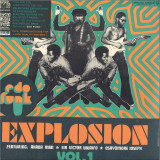
Analog Africa Presents Edo Funk Explosion Vol. 1, available on
2xLP/Gatefold LP with 20-page booklet / CD with 36-page booklet. It was
in Benin City, in the heart of Nigeria, that a new hybrid of intoxicating
highlife music known as Edo Funk was born.
It first emerged in the late 1970s when a group of musicians began to experiment with different ways of integrating elements from their native Edo culture
and fusing them with new sound effects coming from West Africa s night-clubs.
Unlike the rather polished 1980 s Nigerian disco productions coming out of the
international metropolis of Lagos Edo Funk was raw and reduced to its bare
minimum.
Someone was needed to channel this energy into a distinctive sound and Sir
Victor Uwaifo appeared like a mad professor with his Joromi studio. Uwaifo
took the skeletal structure of Edo music and relentless began fusing them with
synthesizers, electric guitars and 80 s effect racks which resulted in some of the
most outstanding Edo recordings ever made. An explosive spiced up brew with
an odd psychedelic note known as Edo Funk.
That’s the sound you’ll be discovering in the first volume of the Edo Funk Explosion series which focusses on the genre’s greatest originators; Osayomore
Joseph, Akaba Man, and Sir Victor Uwaifo: Osayomore Joseph was one of the
first musicians to bring the sound of the flute into the horn-dominated world
of highlife, and his skills as a performer made him a fixture on the Lagos scene.
When he returned to settle in Benin City in the mid 1970s - at the invitation of
the royal family - he devoted himself to the modernisation and electrification
of Edo music, using funk and Afro-beat as the building blocks for songs that
weren’t afraid to call out government corruption or confront the dark legacy of
Nigeria’s colonial past.
Akaba Man was the philosopher king of Edo funk. Less overtly political than Osayomore Joseph and less psychedelic than Victor Uwaifo, he found the perfect
medium for his message in the trance-like grooves of Edo funk. With pulsating
rhythms awash in cosmic synth-fields and lyrics that express a deep personal
vision, he found great success at the dawn of the 1980s as one of Benin City’s
most persuasive ambassadors of funky highlife.
Victor Uwaifo was already a star in Nigeria when he built the legendary Joromi
studios in his hometown of Benin City in 1978. Using his unique guitar style as
the mediating force between West-African highlife and the traditional rhythms
and melodies of Edo music, he had scored several hits in the early seventies,
but once he had his own sixteen-track facility he was able to pursue his obsession with the synesthetic possibilities of pure sound, adding squelchy synths,
swirling organs and studio effects to hypnotic basslines and raw grooves. Between his own records and his production for other musicians, he quickly established himself as the godfather of Edo funk.
What unites these diverse musicians is their ability to strip funk down to its
primal essence and use it as the foundation for their own excursions inward to
the heart of Edo culture and outward to the furthest limits of sonic alchemy.
The twelve tracks on Edo Funk Explosion Volume 1 pulse with raw inspiration,
mixing highlife horns, driving rhythms, day-glo keyboards and tripped-out guitars into a funk experience unlike any other.
- A1: Conjunto Típico Corazón De La Selva - Alegría En La Selva (02:47)
- A2: Los Pihuichos De La Selva - La Carachama Coqueta (02:46)
- A3: Los Pihuichos De La Selva - Chupizinatay Yacui (02:37)
- A4: Los Pihuichos De La Selva - Shamuy Pacarina (02:32)
- A5: Los Pihuichos De La Selva - El Montañés (02:41)
- A6: Los Pihuichos De La Selva - El Huancahui (02:38)
- A7: Los Pihuichos De La Selva - Flautero De La Montaña (02:31)
- A8: Los Pihuichos De La Selva - El Jornalero (02:30)
- B1: Los Pihuichos De La Selva - La Danza Del Trapichero (02:32)
- B2: Conjunto Típico Corazón De La Selva - Picaflor Loretano (02:31)
- B3: Conjunto Típico Corazón De La Selva - Ushpagallo (02:56)
- B4: Conjunto Típico Corazón De La Selva - Punchacacho Tutacacho (02:50)
- B5: Los Pihuichos De La Selva - De Dónde Vienes Loretano (02:31)
- B6: Conjunto Típico Corazón De La Selva - Bailando En La Selva (02:52)
- B7: Los Pihuichos De La Selva - La Huayranguita (02:34)
Andrés Vargas Pinedo is a prominent composer of Amazonian popular music from Peru. He is blind and has excelled as a player of the quena and the violin. He was born in the city of Yurimaguas but he developed as an artist in Lima, for thirty years he has worked as a traveling musician on a street in the San Isidro district of Lima. Throughout his career, he has formed and joined various popular music groups. This compilation presents fifteen songs of his authorship, belonging to his first two groups: Conjunto típico Corazón de la Selva and Los Pihuichos de la selva, active between 1965 and 1974, and which helped define the sound of Amazonian popular music.
These years saw the emergence of an Amazonian popular music movement led by Vargas Pinedo as well as groups such as Los Solteritos, Flor del Oriente or Selva Alegre. These artists based their music on the rhythms of the Amazonian folklore (pandilla, sitaracuy, movido, cajada, chimayche) and were nourished by influences from the coast and the highlands of Peru, as well as by the tropical rhythms of Brazil, Colombia and Ecuador, achieving a musical synthesis that is an invitation to collective celebration and endless dance. A sound that is defined by a constant and hypnotic rhythmic base of kick and snare drums, upon which the quena and violin develop imaginative melodic lines. Sometimes there is a singing voice, sometimes the voices playfully appear as sounds that identify Amazonian popular speech or that emulate jungle animals.
The fifteen tracks gathered in 'El fabuloso sonido de Andrés Vargas Pinedo: Una colección de música popular amazónica' (1966-1974) / 'The fabulous sound of Andrés Vargas Pinedo: A collection of Amazonian popular music' (1966-1974) are a good introduction to the work of an essential creator of Peruvian music, whose sound expresses the spirit of the Amazonian people and summarizes the transition from tradition to the popular in the context of the emergence of a record industry of Amazonian music. Andrés Vargas constitutes a fundamental basis for the music of the Amazon, as his work synthesizes diverse influences, having that original root as its main motive.
This compilation is presented in vinyl format and includes a brochure with extensive information and photos. The audio has been remastered directly from the original tapes. Edition of 300 copies. Art by Jordy García (Blumoo Posters).
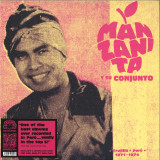
Following the 70s Peruvian cumbia compilation by Ranil last year, Analog Africa returns to Latin America to highlight the work of one of Perú’s undisputed masters of the electric guitar: Manzanita. This 13th release in the Limited Dance Edition Series includes 14 mostly instrumental compositions of electrifying Peruvian cumbia and guaracha. Manzanita's unique guitar lines rest on confident foundations that shifts gears effortlessly. Limited Edition LP in Gatefold Cover pressed on 180g high quality virgin vinyl
"I was in Lima, hanging out with collector-extraordinaire Victor Zela, who had spent the previous few years pouring his passion for Peruvian Cumbia into the blog „la cumbia de mis viejos“, a trove of incredible music. But after the birth of his first child, his priorities shifted and he decided to part with some of his rarest LPs. I was one of the lucky few given an early chance to examine his treasures, and when I picked up the album Manzaneando com Manzanita, Victor said: “Take it! its one of the best LPs ever recorded in Perú … easily in the top five”. That was all the encouragement I needed … two years later many of the songs from that masterpiece have made it onto Manzanita y su Conjunto, a compilation of electrifying Cumbia sides from Manzanita’s golden era.
Berardo Hernández – better known as Manzanita – first surfaced during the psychedelic Cumbia craze. At the head of the scene were the magnificent Los Destellos, whose leader, Enrique Delgado, was such a six-string wizard that other guitarists found it impossible to escape his shadow. But when Manzanita arrived, his electric criollo style sent shockwaves through Lima’s music scene and posed a serious threat to Delgado’s dominance as king of the Peruvian guitar.
Manzanita had come to Lima from the coastal city of Trujillo, five hundred miles up the coast – a place where Spanish, African and indigenous populations had been living and making music together for centuries – and came of age at a time when the first wave of psychedelic rock from the US and UK was starting to sweep the airwaves. But the sounds of Cream and Hendrix disappeared from the radio just as quickly in 1968 when Juan Velasco seized control of the country in a military coup. The new regime, which favoured local traditions over cultural ‘imports’ from the north, was a blessing in disguise for the Peruvian music scene.
Record labels flourished as new bands, raised on a hybrid diet of electric guitars and Cuban rhythms, rushed in to fill the vacuum created by the lack of imported rock. A new genre, known as Peruvian cumbia, was born and Manzanita quickly became one of its most original voices.
Starting in 1969, Manzanita y su Conjunto released a steady stream of singles that used Cuban guaracha rhythms as the foundation for dazzling electric guitar lines. After countless 45s and several years on the touring circuit, the band signed to Virrey, an important Peruvian label, and recorded two LPs acknowledged as masterpieces among aficionados of tropical music. Most of the songs on Analog Africa’s new compilation Manzanita y su Conjunto are drawn from those legendary sessions of 1973 and 74.
Although he scored a few more hits in the later 70s, his dissatisfaction with the music industry caused him to withdraw from the scene for several years; and when he finally retired for good, the golden age of Peruvian cumbia was a distant memory. But when Manzanita was at the top of his game he had few equals. Victor Zela was right: this is some of the best music ever recorded in Perú."
Clear Vinyl
DDS catch enduringly absorbing sonic alchemist Jim O’Rourke at his knottiest and most ingenious in a wormholing suite of amorphous rhythm and psychedelic electronics - a massive RIYL Autechre, Roland Kayn, Bernard Parmegiani, NYZ, Keith Fullerton Whitman.
Playing up to and into DDS’ freeform aesthetics, O’Rourke renders 40 minutes shearing hyaline synth tones and ruptured rhythm generated at his Steamroom facilities in Tokyo, a modular outzone trawling that harks back to his iconic Mego releases and some of the more recent Steamroom experiments. It’s an ideal addition to the ever expanding DDS cosmos, following Demdike’s recent ‘Drum Machine’ expo with a slice of purist and screwed modular magick that transcends early
electronics and modern styles in pursuit of musical sensations that defy stylistic brackets.
‘Too Compliment’ was assembled using a bespoke Hordijk modular system, a rare West Coast-style setup hand made by Dutch engineer Rob Hordijk. O’Rourke focuses on the frequency shifter here, using it to coax out fluxing tone thickets, haphazard frequencies and elongated drone corridors.
It’s transportive stuff, harking back to the early days of private press academic synth music but also sitting on edge alongside Autechre’s recent long-form work, as well as O’Rourke’s classic “I’m Happy, And I’m Singing, And A 1, 2, 3, 4” In O’Rourke’s hands, the mass of electronics takes on throbbing, organic dimensions, congealing
grey matter and purplish veins of fluid in viscous transitions that glisten and spark with invention as they form new tissue. What comes out is as unearthly as the earliest electronic music, but also
blessed with a psychedelc spirit in a way that’s long kept O’Rourke right out on his own, teetering between paradigms yet never settling into any single style. If you’ve always been keen on finding a way into that sprawling soundworld, ‘Too Compliment’ is a perfect entry point into a highly rewarding creative macrocosm.
I first discovered khroniky – Ukranian folk songs – in the Highlands of Scotland. I was watching a screening of Bajka, a mesmerising documentary made by the filmmaker Lucia Nimcová and sound artist Sholto Dobie. I knew nothing about these ballads beforehand, but I was fascinated by these odd, beautiful songs, especially the easy way in which they mixed misery and levity, where gentle melodies blend with tales of dark violence. The folk songs describe hardship, murder, torture, death in gulags, heavy drinking, outsmarting men, love affairs. But they’re often very funny too – many of the songs make fun of marriage, and there’s an amazing subcategory of khroniky songs called potka (vagina) songs.
The khroniky have never been properly documented because they were considered too crude, or contained lyrics that were problematic, politically. When Ukrainian folk songs have been archived in the past, it’s normally a sanitised, more polite version of the ones that Lucia remembers from her childhood. Lucia grew up on the other side of the Ukrainian border in Slovakia. She is part of the Rusyn (Ruthenian) minority ethnic group found in the borderlands of Slovakia, Hungary, Romania, Ukraine and Poland. Rusyn is a centuries-old Slavic language, looked down upon as a poor, uneducated dialect by the neighbouring Ukraine and Slovakia. It was forbidden to talk about Rusyn culture at Nimcova’s primary school, but the khroniky stayed in her memories.
“I remember weddings when I was young,” says Lucia, who now lives in Addis Abeba, Ethiopia. “At the end of the night, when everyone was drunk and the young couple would go around their guests, people would sing in Rusyn. There was singing and dancing, and songs about being in prison or falling in love. I picked up the lyrics and sometimes my mum would make my sister and I sing them for people we met on the train. I was about five or six but the lyrics still come back when I sing to my kids.”
Determined that these rich, nuanced, unique songs shouldn’t be forgotten, she decided to record them. Over two years, Lucia, joined by experimental musician Sholto Dobie, visited Rusyn villages high in the Carpathian mountains to rediscover the songs and make the documentary. It was at the beginning of war breaking out in Ukraine in 2014.
“The Rusyn community is a very closed one,” explains Lucia. “Sometimes we’d have to wait several days to hear someone sing; we had to earn their trust before they shared something very personal to them. We’d stay up ‘til 5am at a wedding, then go straight to a morning baptism, or collect haystacks with the villagers, hoping they’d sing while they were working.”
DILO is named after an important independent Ukrainian daily newspaper that was shut down when the Red Army entered Lviv in 1939. The four long tracks on DILO blur field recordings with song; an unpolished, privileged glimpse into a private world. We hear dogs barking and insects buzzing in the summer heat, then a blast of hurdy gurdy or violin will drift in, or a plaintive song soars softly over the rural background noise, with casually harrowing lyrics about a cuckoo, “lifeless in a world of misery”, as translated in the album’s booklet.
For both Lucia and Sholto, it was important not to tamper too much with what they heard. “When you think about ethnography,” Lucia explains, “you have to have a lot of time, love and respect to document it with sensitivity.”
“The songs all have their own atmosphere and intimacy from the spaces they were recorded in and it was important to maintain these particularities and move with them,” adds Sholto, who now lives in Vilnius, Lithuania. “They guide and sometimes interrupt a journey between interiors – domestic spaces; in kitchens, by the fire – and exteriors; marketplaces, cow sheds. We used contact microphones to record metal bridges and fences, and we spent one afternoon recording a wool processing machine, the details of the rattling and tuning wheels are the ground layer for the third track.”
Lucia took rough notes and diary entries during the recording process, which are now shared in the booklet alongside a selection of lyrics, loosely translated, but revealing the depth and astonishing beauty that sometimes lies in the language of these folk songs.
The feel of the album is intimate, flipping between laughter, where a woman sings about selling her pussy to buy a cow in one track, then shifts to a raw, painful truth; an adult son asks his mother why his dad won’t be back for dinner, as he’s gone to war.
Since Lucia and Sholto began working together in 2014, they have shared the audio recordings on radio and film and shown photos in gallery spaces, making sure these special, smutty, poignant songs don’t get lost. This new record and booklet joins that same continuum, another glorious fruit from the same rare tree.
Re-mastering by: Cicely Baston at Alchemy/Air Mastering, Lyndhurst Hall, London
A two-LP set on Theresa, Rejoice features Pharoah Sanders in excellent form in 1981. Sanders sounds much more mellow than he had a decade earlier, often improvising in a style similar to late-'50s John Coltrane, particularly on "When Lights Are Low," "Moments Notice," and "Central Park West." The personnel changes on many of the selections and includes such top players as pianists Joe Bonner and John Hicks, bassist Art Davis, drummers Elvin Jones and Billy Higgins, vibraphonist Bobby Hutcherson, trombonist Steve Turre, trumpeter Danny Moore, a harpist, and (on "Origin" and "Central Park West") five vocalists. The music always holds one's interest, making this one of Sanders' better later recordings. Scott Yanow/AMG
COLTRANE'S classic "Moments Notice" is a complete gas! Sanders like Coltrane, pulls and holds attention with his entrances. Bobby Hutcherson's and Hicks solo's are heated and models of vivid imagination. The three put forth some of the very best solo...'s in the entire album.
Then there's the arresting new talent introduced here -GEORGE V JOHNSON JR., whose marvelous lyrics and vocal work are truly auspicious! He sings with James Moody on occassion and is happily remindful of the insistent giftness of the late EDDIE JEFFERSON. Johnson's three stanzers close with "Relax dig the sounds of Coltrane's Music. Coltrane fills your heart with love and harmony. Trane played with magic. Listen to the melodies and you will see momently. When you here the message of his song!". There's no doubt in my mind that henceforth George V Johnson should and will be sought for his own gift to the music. He sang the song for Sanders at the Village Vanguard, and Sanders "felt that George ought to be heard".Thank you, Pharoah Sanders for Sharing.... by Herb Wong
Nimbus West spirit jazz essential: the Creative Arts Ensemble's classic debut One Step Out. One of the most sought after and highly-regarded titles to have appeared on Tom Albach's celebrated Nimbus West imprint, One Step Out is a timeless work of spiritualized jazz. A true gem from the Los Angeles jazz underground, the album was pianist and composer Kaeef Ruzadun Ali's first recording as leader of the Creative Arts Ensemble, the only large ensemble group that emerged directly from Horace Tapscott's legendary Pan Afrikan Peoples Arkestra community jazz group. A Los Angeles native, Kaeef was introduced to the Tapscott circle in the late 1970s. His first experience of the Arkestra's ethos was through PAPA tenorist Michael Session, who took him to the famous "Great House" at 2412 South Western Ave., LA -- a large mansion house which members of the Arkestra had taken over as a space for communal living. Life in the Great House was a continuous stream of music, dance and community events. "When I walked in there," recalled Kaeef, "it was like this whole rush came over me, just from going in the front door -- It was like a very, very warm feeling of love. I went and I came out with 'Flashback Of Time', and that was my first arrangement." Kaeef quickly became a significant contributor of compositions to the Arkestra's songbook -- his piece "New Horizon" would be recorded by Horace Tapscott for the latter's Tapscott Sessions series. But "Flashback Of Time" would eventually appear on One Step Out, played by the new group he had put together from stalwart Arkestra members. Inspired by both Tapscott's example and by the Art Ensemble of Chicago, Kaeef had wanted to follow their lead by assembling a larger unit. Featuring seasoned Arkestra regulars including reedsman Dadisi Komolafe, drummer Woody "Sonship" Theus and altoist Gary Bias, with veterans Henry "The Skipper" Franklin on bass and George Bohannon on trombone, One Step Out is a key document of the Los Angeles radical jazz underground. Featuring the sanctified vocals of Kaeef's sister, B. J. Crowley, the album is a tour de force of spiritually energized independent jazz music.
Re-mastering by: Ray Staff at Air Mastering, Lyndhurst Hall, London
Owning both this disc and Live at Slugs', Volume 1 is essential for hardcore Jazz fans. Part two of the Slugs' date is just as impressive and again feature three originals all penned by the group. Here we get a better example of Tolliver's compositional work with the touching Coltrane tribute Our Second Father. Again Tolliver's trumpet is simply stunning. The rhythm section of Cecil McBee and Jimmy Hopps also deserve mention as these two really drive the quartet along in a similar fashion to Garrison and Jones did with Coltrane. The McBee original Wilpan's also highlights the strength of McBee's writing and is probably the pick of the tunes here.
Another top notch Funky Spiritual Jazz release from Paul Murphy's Jazz Room Records. Featuring Strata-East stalwart Shamek Farrah on Saxes and an all star cast including Trumpet Legend Malachi Thompson.
The music is a Funky Spiritual Afro-Latin Soul mix with the Miriam Makeba influenced Cape Township Party title track and the Jazz Soul grooves of "Waiting For Marvin" both highlights..
Get down to the Worldwide Sound with the Latin Jazz grooves of "The White Lady" featuring Sonelius Smith on Piano and "Along Came Ron Rahsaan" with Vivian Chandler singing a wordless Spiritual Jazz Headspace Lullaby.
Totally obscure and his recordings fetching exhorbitant prices (a re-issue Japanese CD is 3 figures) Shamek Farrah ranks with the great unrecorded. Two releases on Strata East in the '70s, a couple for RA, a release in '95. The reissue of this 1978 recording for RA by Jazz Room Records reintroduces a roomful of rarely heard musicians, along with a young Malachi Thompson soon to become an Internationally renowned Jazz Heavyweight.
Parisian label Chuwanaga proudly presents Latitude, Saint-James label co-founder new studio project. Keeping it close to the deep jazz-funk ethos of the label, Latitude brings to the light two luminous songs of joy and hope for a better day, highly danceable yet rich and complex grooves with a human feel to feed your soul and make you move. Their new EP Leo / Attitude presents these first effort with a Dub Remix by Mato: plenty of diverse tastes for every music enthusiasts. Available as Vinyl 12" and Digital.
Latitude is french. Not a random collection of chansons sung in french. Latitude is so french in its sheer elegance, in its simple yet so sophisticated seemingly effortless attempt to groove in a pop context, trying to create moments of grace in the process. Latitude is here with the right vibe as the chorus of "Attitude" says it in french: "It’s the bad attitude, always the good latitude". Latitude is sprung out of the wicked musicianship of Parisian jazz-funk and fusion mavericks and Saint-James tight and adventurous compositions and production. All that jazz combined with David Cukier (Greita) retro-futurist engineering skills in these intense sessions captured in his cutting edge vintage Delta studio.
On A Side, "Leo (Extended Mix)" is an uptempo disco track for the dancers but also a beautiful song for the summer. A seductive number with a pregnant classic French jazz-funk feeling with the help of Parisian singer Club Celest’s energy and beautiful voice. It comes on digital as a short edit for radio but as a serious extended 12inch mix on the vinyl with 8 minutes and 10 seconds of pure pleasure, ending in a real climax after an irresistible percussion break.
On B1, "Attitude" enchanting quality shines with a banging rhythm section and goes for the win as an anthem chorus while sweeping synths keep on growing till the very last drop. On B2, Reggae/Dub don Mato (Stix Records) delivers a sweet dub wise riddim for the Lovers Rock massive.