The Hammond Organ is lead singer on this soulful and orchestral journey about industrial decay and the death of the steel town. Deep from the rusted steel mills of Youngstown Ohio, we bring you the much-anticipated reissue of the melting debut from the Scone Cash Players. It's the same organist that brought you the screaming organ on all those Daptone favorites from The Sugarman Three. Scone was behind that organ bench on the modern classics as follows. "Sugar's Boogaloo", "Soul Donkey", "Pure Cane Sugar", and "What the World Needs Now." Adam Scone entered the studio on Dunham Street in Brooklyn. He was wearing a blue Adidas jump suit. The studio had just opened. At the helm were his old compadres from The Dap-Kings. Namely Thomas Brenneck, Eric Kalb, Homer Steinweiss and lan Hendrickson-Smith. They make up the "Bliss Machine" behind Scones's groove. It was a truly rare moment to catch these masters of music and taste in between tours of Sharon Jones and Charles Bradley. Tommy put the mics around. Scone powered up the organ. The analog tape machine turned and turned until they couldn't turn any more. These songs were recorded. We worked all day and all night. Tears were shed. Espresso was made. There was beer on tap. 3 days of life were taken to make this album. We will never get them back. They were distilled to 40 minutes of pure emotion. It's a tale of woe. It's a tale of leaving art for responsibility. It's a farewell to an era. It's a journey that the Hammond B3 organ wasn't accustomed to. You can't compare this album to any other organ record. Don't expect to hear what you want. Free your mind. Be open. Your world is going to feel the heat of the BLAST FURNACE! It never quite feels how you want it to. Don't get burned... FOR FANS OF: Delvon Lamarr Organ Trio, The Sure Fire Soul Ensemble, New Mastersounds, Soulive, Jimmy Smith, Khruangbin
Buscar:his trio
There have been many great Jazz Pianists, but foremost amongst them is Bill Evans.
Accepted by all fans as being supremely influential for defining the format and scope of the
Jazz trio, Evans entered his first purple patch in the mid to late fifties and refined his playing
with a series of album. Over the years he recorded many trio albums with frequent changes
of members, with the most lauded being his first and second line-ups. By May 1962 Evans
cut what would be his seventh album for Riverside . New Bassist, Chuck Israels, joined the
group, and together this second classic line-up cut two albums in the same sessions. The
first was Moon Beams which contained ballads, while the second one, How My Heart Sings,
had the up-tempo numbers. These were recorded as a mixture during the sessions as
producer Orrin Keepnews wanted to release an album of just ballads from Evans, and so
made up the album from the varied session tracks. During the recordings, Evans only
revealed the tracks to his trio at the session itself. Fans and critics alike were more than
appreciative of Chuck Israels' ability to meld into the trio with his punchy lines, meshing in
especially well with Motian
Standout favorites of RidingEasy Records’ Brown Acid compilation series, White Lightning’s stellar discography of rare and under-appreciated heavy psych, proto-metal rock gets a vital revival for new generations to learn how swinging, swaggering and often blazingly fast rock’n’roll is done.White Lightning was formed in Minneapolis, MN in 1968 by guitarist Tom “Zippy” Caplan and bassist Woody Woodrich after leaving garage psych band The Litter (themselves popular standouts from the Nuggets and Pebbles series of garage rock rarities.) Originally a power trio, the band later expanded to a 5-piece in 1969 while shortening its name to Lightning. The quintet’s brilliant and rare 1970 self-titled album on Pickwick International’s P.I.P. imprint provides 6 of the 10 tracks on Thunderbolts of Fuzz.The original White Lightning trio only released one 45-rpm single “Of Paupers and Poets” during their existence (on local Hexagon label in 1968, later reissued by major label ATCO Records in 1969.) A long out-of-print posthumous album released in 1995 gathered unreleased recordings, 3 of which are found here. This rounds out this collection of recorded highlights from the band’s rocky history.
Taking their name from a particularly potent type of LSD, White Lightning laid out from the start that it was not cute and cuddly 70s rock. In fact, the band’s aggressive tempos are like punk rock way before punk. However, their dirty blues groove and musical prowess shows the band was more than unrefined ne’er-do-wells, they had true versatility.
Drummer/lead vocalist Mick Stanhope later relinquished his drum throne to take center stage as lead singer of the expanded lineup. Throughout its initial 1968-1974 run, the band had 10 different lineups, with Caplan, Woodrich and Stanhope the most consistent members — though the band points out that no one member has played in all 11 incarnations of the group. For more facts and information visit thelitter-lightning.
Album opener “Prelude to Opus IV” is a wailing rocker with blazing double-kick drum, sizzling melodic riffs and Jim Dandy howls jam packed into an epic 4 minutes that serves enough testament to the band’s greatness, nothing more need be heard or said. However, the would-be hits keep coming as the Led Zeppelin meets Black Oak Arkansas thwack of “Hideaway” and “Born Too Rich” come screaming out of the speakers. “When A Man Could Be Free” shows the band could also reign in the fury, at least a little bit, for a warm Southern rock style ballad. “Borrowed and Blue” echoes the stately poetry of Electric Ladyland-era Hendrix with a dash of The Who’s rollicking psychedelia. “1930” is, quite simply, insane. Searing twin guitars with incredible fuzz-drenched tone, a warm and buzzing bass line bounce atop drummer Bernie Pershey’s unrelenting bass drum triplets while Stanhope ravages his lungs with soulful abandon. The album closes with the aptly titled “Before My Time” a barnstorming boogie rock instrumental the proves the band vanished long before receiving their due.
Jazz iconoclast Albert Ayler took the experimental leanings of contemporaries like John Coltrane and Ornette Coleman as a starting point and then blasted them to stratospheric extremes, creating some of the most polarizing and brilliant music of the 20th Century. In particular, 1964 was a pivotal – and well documented – year in the free jazz artist’s career. After returning to New York, Ayler assembled a brilliant group with Sunny Murray on drums and Gary Peacock on bass, recording Spiritual Unity, Ayler’s first record for the legendary ESP-Disk’ label, that summer.
Soon after that session, Ayler took his trio to Europe where they were joined by cornetist Don Cherry for a tour of The Netherlands, Sweden, and Denmark. The Hilversum Session is a live radio session recorded on November 9th, 1964. At that point the quartet was months into its European tour and the interplay is extraordinary. On classic Ayler compositions like “Spirits” and “Ghosts” the band absolutely rip, with a kind of intuition and connectivity rarely heard, creating some of the most untethered and undeniably powerful music in the history of free jazz. Our Swimmer is pleased to present the first official vinyl reissue of The Hilversum Session in over thirty years.
1970 album that marked a milestone in the history of Peruvian tropical music comprising an outstanding repertoire of Cuban rhythms as a response to the trends of the moment: boogaloo and Colombian cumbia. Guitarist Pancho Acosta lead the band and Kiko Fuentes delivered the vocals across some juicy descargas and guarachas. In the late sixties, a generation of young Peruvian musicians, who were fans of tropical sounds, chose Cuban rhythms over the onslaught of boogaloo and Colombian cumbia. This musical movement attracted a legion of young followers, mostly from popular districts of Lima. In 1969, percussionist Domingo Guzmán Villanueva was commissioned by the MAG record label to get together a group to revive Cuban musical tradition. To lead the project he recruited, Francisco "Pancho" Acosta, founder and guitarist of the Company Quinto. The new group was baptized Los Kintos, in a nod to their desire to carry on playing in the Compay Quinto style. The link between the two groups appears on this first album, as the group's name is written in two different ways: Los Kintos, on the front cover; and Los Quintos, on the back. Recordings began in 1969 and included the stunning 'Descarga Kinto', Richie Ray and Bobby Cruz's original 'Pancho Cristal' -renamed here 'Pancho Guzmán- and Cuban classics from the repertoire of the historic Trio Matamoros like 'Lágrimas Negras' or 'Mentiras', all with lead vocals by Kiko Fuentes. The success of their concerts would take them on tours across the country, always recognized as outstanding figures of Cuban music in Peru. This reissue brings back an album that marked a milestone in the history of Peruvian tropical music and revives the fame of the group's legendary live performances. First time vinyl reissue.
For Thee Sacred Souls, the first time is often the charm. The band’s first club dates led to a record deal with the revered Daptone label; their first singles racked up more than ten million streams in a year and garnered attention from Billboard, Rolling Stone, and KCRW; and their first fans included the likes of Gary Clark Jr., The Black Pumas, Princess Nokia, and Timbaland. Now, the breakout San Diego trio is ready to deliver yet another landmark first with the release of their self-titled debut on Daptone Records.
“Every step of the way has just been so organic,” says drummer Alex Garcia. “Things just seem to happen naturally when the three of us get together.”
Indeed, there’s something inevitable about the sound of Thee Sacred Souls, as if Garcia and his bandmates—bassist Sal Samano and singer Josh Lane—have been playing together for a lifetime already. Produced by Bosco Mann (aka Daptone co-founder Gabriel Roth), Thee Sacred Souls is a warm and textured record, mixing the easygoing grace of sweet ’60s soul with the grit and groove of early ’70s R&B, and the performances are utterly intoxicating, with Lane’s weightless vocals anchored by the rhythm section’s deep pocket and infectious chemistry.
Hints of Chicano, Philly, Chicago, Memphis, and even Panama soul turn up here, and while it’s tempting to toss around labels like “retro” with a deliberately analog collection like this, there’s also something distinctly modern about the band that defies easy categorization, a rawness and a sincerity that transcends time and place.
. An original suite by Bruno, the starting point for Out of Doors was the eight Hungarian folk melodies used by Bela Bartók in his 1920 composition 8 Improvisations Op. 20.
Over the 8 movements, Bruno's roots in impressionistic classical music are concentrated by Andrea's classical training and deep understanding of European jazz and Gene’s renowned groove and swing.
Bruno Heinen – Piano
Andrea Di Biase – Bass
Gene Calderazzo – Drums
From colossal opening track 'A Cleaved Head No Longer Plots', CONAN’s upcoming magnum opus will overrun you like a steamroller. The British kings of brutally heavy slowness put their down-tuned pedals to the limit, crushing ears and minds when huge, rumbling chords and riff beasts muscle their way in over lances of infinite distortion. On tracks such as 'Levitation Hoax', CONAN showcases their trademark sound combined with uptempo, fierce riffage, and a pounding, impulsive groove in epic Caveman battle doom grandeur, before the song drags you into a safe, deep black hole. Second album single, 'Righteous Alliance', emphasizes that CONAN are the masters of their craft, while Jon Davis spits his lyrics over the uber-synchronized power chord changes and tempo shifts of the anti-holy trio of bass, drums and guitar. Evidence of Immortality was recorded and mixed by Chris Fielding, was mastered by James Plotkin, and also sees former band member Dave Perry performing on 'Grief Sequence'. Bow down and hail CONAN, as their sound will live immortal on the battlefield of doom, and their new album will be the ultimate Evidence of Immortality! 1. SINGLE - EN On first single 'Levitation Hoax' off of Evidence of Immortality, CONAN showcases their trademark sound combined with fast-paced riffage and a pounding groove in epic doom metal grandeur, before dragging you into a safe, deep black hole. The British trio is one of the leading and most heavily touring doom metal bands of modern times, with millions of streams on Spotify alone. This further proves that their sound will live immortal! 2. SINGLE - EN Evidence of Immortality single 'Righteous Alliance' emphasizes that CONAN are the masters of their craft, while frontman Jon Davis spits his lyrics over the uber-synchronized power chord changes and tempo shifts of the anti-holy trio. Boasting sold-out international headline tours, frenetically acclaimed appearances at Hellfest, Desertfest and more, and millions of streams on Spotify alone, England’s doom metal masters strike back again on their new album. Hail Conan!
- A1: Gole Yakh
- A2: Dar Enteha
- A3: Hajme Khali
- A4: Paiz
- B1: Leila
- B2: Del Dareh Pir Misheh
- B3: Akhm Nakon
- B4: Shirin Joon
- E1: Saraabe Toe
- E2: Reyhan
- E3: Baroona
- F1: Khaar
- F2: Havar Havar
- F3: Ashiooneh
- C1: Ghazal F4. Bachehaye Khoobe Koocheh
- C2: Tavalode Yek Seda
- C3: Mosafere Shar Baran
- D1: Saghe
- D2: Entezar
- D3: Niyayesh
Repressed , please note price increase, all orders have been cancelled, please re-order! Pre-Revolution Psychedelic Rock from Iran: 1972 - 1979
Now-Again Records is proud to present Back from the Brink, the only legitimately licensed collection of the godfather of Iranian psychedelic rock, Kourosh Yaghmaei. Known within the Iranian diaspora simply by his first name, Kourosh’s Pre-Revolution recordings were thought lost after Islamic fundamentalists took control of Iran. They weren’t: Kourosh had protected them – along with key ephemera from the 70’s. Their collection here - spread over two CDs, a 3-LP and a 4x7” box set - bolstered by Kourosh’s first person recollections of Iran’s 70s rock scene and its death after the Revolution, tells the story of an immensely talented artist’s desire to persevere in the face of terrible adversity.
Kourosh Yaghmaei and his brothers Kamran and Kambiz were amongst the few inspired Iranian musicians determined to change Tehran’s musical landscape in the late 60’s and early 70’s. The trio, armed with rented, second-hand instruments and records by The Ventures, The Kinks, The Doors, merged Western garage rock, psychedelia and Iranian folkloric music to create a sound unlike anything that came before them. Later, inspired by the unlikely duo of Elton John and James Taylor, Kourosh’s music took a sophisticated turn, and he churned out funky, progressive rock that is as imminently enjoyable as it is impossible to categorize.
His star on the rise was knocked off course by the Revolution, and its backdrop of Islamic fundamentalists burning record companies and harassing musicians. But while most Pre-Revolution musicians – including his brothers – fled Iran in 1979, Kourosh stayed, loyal to the country of his birth. He has suffered a performance and recording ban for twenty-two out of the last thirty-two years. Yet he remains stoic and resolved to continue bolstering Iranian musical tradition.
Kourosh still lives in Tehran and is pleased that his story – and his glorious 70s recordings – will finally spread the world over.
Bis ins Jahr 1973 reicht die Historie von Mass zurück, als Günther V. Radny (das V. steht für Viktor) mit Sänger Josef Hartl, Gitarrist Walter Speck und dem Schweizer Drummer Charles Frey (heute als Akron bekannter Autor) die Formation Black Mass startete. Nachdem Speck wegen psychischer Probleme mit tödlichen Folgen ausfiel, ersetzte ihn der Saarbrücker Gitarrist Gerd Schneider, der zuvor mit ScorpionsSchlagzeuger Hermann Erbel alias Herman Rarebell bei RS Rindfleisch gespielt hatte. Schneider musste allerdings nach einem Jahr wegen massiver Drogenprobleme wieder gehen und wurde durch den englischen Gitarristen Mick Thackeray (The Merseys), der in der Schweiz mit den Slaves und Countdowns, und in München mit Abi Ofarim spielte, ersetzt. Zur gleichen Zeit ersetzte Johannes Eder, von der englischen Band I Drive kommend, Drummer Frey, der sich laut Radny „auf den Büchertrip“ begeben hatte. Zudem wurde der Bandname auf Mass verkürzt. In dieser Besetzung nahm MASS im April 1975 im Studio 7o in München mit Dave Siddle am Mischpult,
der unter anderem mit den Beatles, Jimy Hendrix, Jeff Beck, Animals und Deep Purple arbeitete ein Album auf. Aufgrund der Drogenprobleme von Sänger Josef Hartl wurde dieses Album nie veröffentlicht. Leider sind diese Bänder bis heute verschollen. Doch damit nicht genug der unruhigen Zeiten: Ein Jahr später mussten Hartl (Drogenprobleme, verstorben 1998) und Thackeray (übermäßiger Alkoholkonsum), gehen. Mit dem aus Berlin gekommenen Detlef „Dave“ Schreiber als neuem Gitarristen war die Formation als Trio 1976 erst einmal stabilisiert. 1977 entstand das Album „Back To The Music“, welches bei United Artists Records (Hawkwind, ELO, Don
McLean) erschien.
In Folge wurden Mass als teils boogieorientierte Hardrockgruppe, anschließend als Heavy Metal Band bekannt und genießen heute ähnlich wie Accept, Scorpions, Trance oder Fargo Pionierstatus. Nach einer zeitweisen Umbenennung in Monsters kehrte Bandboss Günther V Radny kürzlich mit Mass zurück und lieferte eine gefeierte Reunion-CD. Die Band wurde auch kürzlich von Golden Core/ZYX geehrt, da je ein Track von Mass und Monsters auf der Compilation „Sound & ActionGerman Hardrock & Heavy Metal Rarities Vol. 1“ zu finden ist. Im Zuge dieses Kontaktes kam es zu der längst überfälligen Idee, das Debütalbum von Mass erstmals auf CD (und erneut auf Vinyl) zu bieten.
Long before Lina Seybold became a geologist, the singer and guitarist was already writing songs and making a name for herself far beyond the city limits of Munich with her Steve Albini-trained (and produced) quartet candelilla, before the band dispersed into new projects. During her studies, she met Moritz Gamperl and the two realised that what they learned in rock research could also play a role in rock music. Thus, the material history of the planet became both a source of existential reflections for the two and the impetus for a highly accomplished and often graceful sound, which has been expressed in the band pirx together with drummer Sascha Saygin since 2019: Technically sovereign, obstinate songs that - with Seybold now on bass and vocals - create subtle dramaturgies, cinematic aesthetics, far-reaching arcs of tension.
With Lamina, the trio now presents an excellent debut album, recorded by Martin M. Hermann, which shoots out of the earth with explosive force as hot lava, only to flow into the valley in glowing beauty the next moment, changing the earth's surface, telling of elemental forces - until it finally evaporates the water in the sea and lays a comatose fog over all existence. Or in other words: pirx make creation music, in all directions of time!
Collins Dictionary Example sentence: „Other ocular signs include involuntary rhythmic movement of the eyeball.“ Someone in the editorial department wasn‘t paying attention and involuntarily spoke a deeply buried truth: The movement from the eye to rhythm and from there to sound is sometimes a small, puny one.
Now Infuso Giallo provides the proof at the same time and implements his live show for last year‘s debut album „Ocular Soda“ as an audio-visual show, as intertwined senses. Visible sound, audible images. Such ideas only last when they are put to the test and scrutinised by several experts.
The duo Globus, which consists of 2/5 of the post-hardcore band PTTRNS, examines the synth hook of the second part of the double-opener „Every Waking Hour Pt.2“ by playing it, varying it, letting it sway.
In contrast, Anatolian Weapons from Athens can‘t help but immerse the ambient, Soft Machine-production-like first minutes of „Every Waking Hour Pt.1“ in a sinister black light. Staggering into a basement club filled with nocturnal shadow people and indulge in carousing. Cautiously at first, then more and more determinedly.
From Hamburg and Berlin, the „Mole Gaze“ gets a special treatment. The trio Love-Songs drags the number off to Hamburg harbour, packs it onto a steamer, deep into the bow and lets it operate the sonar there. Conrad Schnitzler would have been delighted.
Infuso Giallo, meanwhile, realises that there is nothing more boring than standing still, so he revamps „Hello World“ and gives it a rear spoiler that keeps this number in lane even at club speed.
Speaking of „keeping in lane“: Niklas Wandt, the magician, doesn‘t even try such tricks. He simply throws an acid bolt on the closer „Ocular Soda“ and waits to see what happens. Alongside breakbeats from nowhere, Albert Hoffmann himself appears on a bicycle.
„Ocular Soda Remixes“ is the first tape on the Kame House label, so there‘s only one thing to do: open your eyes and listen!
Here’s Lantern Heights’ personal tribute to the one and only Michael Chapman, a hero in his own right, a ‘Fully Qualified Survivor’ (just to mention one of his most successful creations). An unreleased live album on vinyl in the form of an astonishing trio.” A live set recorded at Nottingham’s Playhouse Theatre on July 23rd 1977 by Chapman and a power house rhythm section in Lindisfarne bassist Rod Clements and former John Mayall drummer Keef Hartley. Some of his best-loved songs are showcased in “And There Were Three” – a jocular reference to Chapman’s ever-shrinking band, also known as ‘a beast with three heads’.
John Ondolo spent his life traveling between Tanzania, where he was born, and Kenya, where he recorded a string of singles for independent labels in the late 1950s and early 60s. Unlike most guitarists from the region, Ondolo used open tuning (a favorite of American blues guitarists), creating a hypnotic drone over which he laid down endless rhythmic variations on his main themes. Inspired by the exploding pop music scene in Nairobi, the newest rock and roll imports from the US, and the Abakuria tribal music of his youth, Ondolo transposed traditional instruments and rhythms to his guitar, playing it more like a traditional harp at times, and inventing a sound totally unique in the recorded history of African guitar. This album brings together John Ondolo's rare early 78rpm recordings in the first-ever overview of this innovative but overlooked artist. The music traces Ondolo's creative output, from the resonant acoustic guitar masterpiece Tumshukuru Mungu to the relentless guitar and flute (!) interplay of Kenya Style to his later electric guitar, bass, and drum recordings with the Jolly Trio, all tied together by Ondolo's unique rhythmic sense and vocal style. The breadth and variety of Ondolo's recordings may be a result of his sporadic recording history. Unlike more famous artists, Ondolo wasn't sucked into the Nairobi nightlife scene of the early 60s, instead traveling from his farm in the foothills of Kilimanjaro on occasion to record. An outsider and devout Catholic whose music was sometimes at odds with the style of the times, he later left music entirely, shifting to film and driving a mobile cinema van for the Tanzanian government, introducing socialist and Pan-African films to the countryside. An accident in his mobile cinema led to the loss of his left arm, though he continued his travels. He died in 2008 in Dar Es Salaam, leaving behind two wives and 11 children. Over a decade in the works, Hypnotic Guitar of_ includes an insert with lyrics and translations, as well as notes by Tanzanian musician and historian John Kitime. Expertly restored and mastered by Michael Keiffer and pressed on 160gm black vinyl at Smashed Plastic in Chicago. Licensed from the Ondolo family in Tanzania.
New label Golden Ape Records kick off their journey with some raw Electro-Funk chic from the Funk Messiahs with their brilliant debut single, 'Save Me' Vocalist Lucy (Veeresh's Humaniversity Sound), whose deep sultry understated vocals soothe the soul; the amazing Pest trio (Ninja Tune) of Matt on guitar, Vinny on sticks and Tom on Trombone to provide the rhythm and driving funk. Super talented Kitty (Kitty, Daisy & Lewis) moving booties with the bass, and A-Lo adding Electro vibes with his vintage synths. Remixes from Crazy P's Jim Baron, who delivers a seductive percussive Disco vibe under his Ron Basejam moniker; 'Dark Wobble' (aka Michel Williams), who injects some Scouse street style flavas; and Ben Pest amps up the electro filth with a gritty electronic outing.
A match made in heaven and hell, since forming in the cradle of Europe Athens, back in 2012, dark synth duo Selofan have paved their own perditious way, reinventing the modern Darkwave scene throughout the continent and worldwide with their prolific creativity and work ethic over the past decade. Through varied experimental synth-scapes conjured with keen ears for sound design, production, and theatrical aesthetics, Selofan rest not on the laurels of just creating highly danceable coldwave infused music, but with together with Joanna Pavlidou's haunting vocals, and Dimitris Pavlidis' throbbing bass guitar, and modular synth compositions, the pair conjure whole other worlds and narratives throughout each album and music video they create. Thus far the Selofan have released 5 studio albums, issued through their own legendary label they curate themselves: Fabrika Records. Through their Fabrika family, Selofan have championed such acts as Lebanon Hanover, and She Past Away, aiding these bands in becoming two of the most popular Darkwave acts worldwide. Drab Majesty even cameoed in a She Past Away video while being hosted by Selofan during one of the band's frequent stays in Athens, and Kaelan Mikla, a handpicked favorite of The Cure, were first championed by Selofan, through the release of the Icelandic Trio's self-titled debut in 2016. In the Spring of 2020, Selofan released the video for the hopelessly plaintive "There Must Be Somebody", the first single from their forthcoming sixth studio album Partners In Hell, the follow-up to 2018's widely popular Vitrioli LP. "There Must be Somebody" is a discordant composition, mimicking the startled song of birds after a disturbance in a wooded enclave on a mountainside, while a magick ritual unfolds. The album itself opens with "Grey Gardens", a menagerie of morose melodies setting a sombre tone for the rest of a bleak record whose sound design and dreamscapes evoke the best sounds of British and German post-punk of the 80s. "Almost Nothing" is a brooding bell-driven track with a dark and pirouetting melody that is the perfect soundtrack to a figurine twirling in a music box. The German language "Nichts" means No, and this song is both sinister and cinematic with sighing keys, shuddering drum machines, and German lyrics sung with sorrowful conviction. "Zusamen", is a word often asked if you are together, or separate, is a dark ballad whose shadowy keys weave a nightmarish delirium, evoking the soundscapes of a lullaby sung in a haunted dollhouse. "4am" is a restless rhythm, whose soft percussive melody tosses and turns alongside subtle bass and string accents overlaid with despondent vocals. "Happy Consumers" sounds like the swirling of a finger drawn upon the edge of crystalline glass, with vocals and drum machines coming emanating from an adjacent room with echoing acoustics, collectively evoking the sound like lingers when the somnambulist wakes from his dream. "Absolutely Absent" hums onward like a phantom train ride that is a one-way ticket to madness, and with the next track "Metalic Isolation" the locomotive beats gather more steam, propelled forward with anachronistic melody. The album closes with "Auf Dein Haut", which translates as on your skin, and the song is both tactile and tenebrous with sensuously dark synth textures amidst howling German vocals that take flight like witches during a sabbat. Partner's In Hell was mixed and produced by Serafim Tsotsonis, and mastered by Doruk Ozturkcan. Genre: Alternative / Post-Punk / Cold Wave
FP030F pressed in half black half purple vinyl 500 copies hand-numbered. FP030G pressed in black with red splatter vinyl 500 copies hand-numbered. A match made in heaven and hell, since forming in the cradle of Europe Athens, back in 2012, dark synth duo Selofan have paved their own perditious way, reinventing the modern Darkwave scene throughout the continent and worldwide with their prolific creativity and work ethic over the past decade. Through varied experimental synth-scapes conjured with keen ears for sound design, production, and theatrical aesthetics, Selofan rest not on the laurels of just creating highly danceable coldwave infused music, but with together with Joanna Pavlidou's haunting vocals, and Dimitris Pavlidis' throbbing bass guitar, and modular synth compositions, the pair conjure whole other worlds and narratives throughout each album and music video they create. Thus far the Selofan have released 5 studio albums, issued through their own legendary label they curate themselves: Fabrika Records. Through their Fabrika family, Selofan have championed such acts as Lebanon Hanover, and She Past Away, aiding these bands in becoming two of the most popular Darkwave acts worldwide. Drab Majesty even cameoed in a She Past Away video while being hosted by Selofan during one of the band's frequent stays in Athens, and Kaelan Mikla, a handpicked favorite of The Cure, were first championed by Selofan, through the release of the Icelandic Trio's self-titled debut in 2016. In the Spring of 2020, Selofan released the video for the hopelessly plaintive "There Must Be Somebody", the first single from their forthcoming sixth studio album Partners In Hell, the follow-up to 2018's widely popular Vitrioli LP. "There Must be Somebody" is a discordant composition, mimicking the startled song of birds after a disturbance in a wooded enclave on a mountainside, while a magick ritual unfolds. The album itself opens with "Grey Gardens", a menagerie of morose melodies setting a sombre tone for the rest of a bleak record whose sound design and dreamscapes evoke the best sounds of British and German post-punk of the 80s. "Almost Nothing" is a brooding bell-driven track with a dark and pirouetting melody that is the perfect soundtrack to a figurine twirling in a music box. The German language "Nichts" means No, and this song is both sinister and cinematic with sighing keys, shuddering drum machines, and German lyrics sung with sorrowful conviction. "Zusamen", is a word often asked if you are together, or separate, is a dark ballad whose shadowy keys weave a nightmarish delirium, evoking the soundscapes of a lullaby sung in a haunted dollhouse. "4am" is a restless rhythm, whose soft percussive melody tosses and turns alongside subtle bass and string accents overlaid with despondent vocals. "Happy Consumers" sounds like the swirling of a finger drawn upon the edge of crystalline glass, with vocals and drum machines coming emanating from an adjacent room with echoing acoustics, collectively evoking the sound like lingers when the somnambulist wakes from his dream. "Absolutely Absent" hums onward like a phantom train ride that is a one-way ticket to madness, and with the next track "Metalic Isolation" the locomotive beats gather more steam, propelled forward with anachronistic melody. The album closes with "Auf Dein Haut", which translates as on your skin, and the song is both tactile and tenebrous with sensuously dark synth textures amidst howling German vocals that take flight like witches during a sabbat. Partner's In Hell was mixed and produced by Serafim Tsotsonis, and mastered by Doruk Ozturkcan.
This May, Italian alchemists and power trio Ufomammut return with their ninth studio album, Fenice via Neurot Recordings. But not as we’ve heard them before, now “more intimate, more free.”
For over 20 years, the band has combined the heaviness and majesty of dynamic riff worship with a nuanced understanding of psychedelic tradition and history in music, creating a cosmic, futuristic, and technicolor sound destined for absolute immersion.
Fenice (meaning Phoenix in Italian) symbolically represents endless rebirth and the ability to start again after everything seems doomed. The album is the first recording with new drummer Levre, and truly marks a new chapter in Ufomammut history.
“I think we lost our spontaneity, album after album,” says Urlo. “We tried to make more complicated songs and albums, but I think at some point we just ended up repeating ourselves. With Fenice, we were ready to start from zero, we had no past anymore - so we just wanted to be reborn and rise from the ashes..”
While the band are well-known for their psychedelic travels into the far reaches of the cosmos, Fenice is a much more introspective listening experience. Fenice was conceived as a single concept track, divided in six facets of this inward-facing focus. Sonic experimentations abound in the exploration of this central theme; synths and experimental vocal effects are featured more prominently than ever before as the band push themselves ever further into the uncharted territory of their very identity.
The towering synths on the opening track ‘Duat’ evoke an almighty machine rising from the depths of primordial ooze. There’s a shift to a frenetic garage-psych pace before mellowing out into a more familiar doomy stomp. ‘Kepherer’ is a respite, albeit a slight one, returning to the pulsing rhythms of the album’s intro before plunging the listener into the menacing build and release of ‘Psychostasia’ next. Each oscillation of this extraordinary album feels inevitable - Ufomammut are after all, masters of their craft, and when it comes to creating enveloping sonic journeys into the unknown, it’s their uninhibited sense of exploration that breaches new sonic ground.
Fenice is the sound of a band whose very essence has been rejuvenated, and are welcoming the chance to create music in the way they know best; by unfolding carefully and attentively, by melding those extreme dynamics which render Fenice as a living and breathing creature - and by writing gargantuan riffs that herald their very rebirth.
Paul Wise aka Placid is the driving force behind ‘We’re Going Deep’ – a thriving online community and record label that’s showing no signs of slowing down as we pop, dip and spin into the spring season. As a label owner, Paul’s mission couldn’t be clearer - releasing new music for heads of all persuasions. Fresh cuts aimed squarely at the dance floor, your front room or even just the headphones. Rather than staying too hung up on the past, he continues to focus on serving up the best in new Acid, Electro, Techno, Deep House alongside scintillating slices of Downtempo music.
Sticking to the trusted format of 4 superlative cuts from equally talented producers, the quality and talent on show does not disappoint on WGD 007. Starting the dance with 303 maestro and label legend Tin Man, A1 “I Said Acid” is a tantalising twist on the classic combination of a Roland TR-707 and SH-101. As a metronomic pulsating kick carves out a squarely hewn path, slow opening filtered lead and hauntingly repetitive “Acid” vocals exert maximal pressure to create a sheer moment of joy. Balanced out by the dreamy atmospherics of A2 “I’ll Meet You On The Dancefloor”. UK Deep House supremo Rai Scott exerts her perfected knowhow: blending organically tinged percussion with profound melodic touches that meander across the borderlines of your consciousness.
On B1 “Necessary Order”, the machine mastery of Sound Synthesis collides in perfect harmony as Keith Farrugia demonstrates his deft turns of the dials that are becoming more in demand. A sprinkle of stargazing soul is woven around light touch acidic tweaks and snappy drums, echoing the twinkling embers of the cosmos. Not to be outdone, Dutch born German bred producer Roger Van Lunteren takes control with the final slice on B2 “Le Dee Trois Trio Prends Trois”. A wince inducing, sawtooth heavy jam that should not be taken lightly. As the saying goes, this one’s only for headstrong.
Inspired by the recordings of Charlie Christian with the Benny Goodman Sextet. Kenny began playing guitar aged 12. Other important influences were Oscar Moore and Django Reinhardt and in 1952, as a university student he made his recording debut with The Dizzy Gillespie Sextet. In 1955 he joined Oscar Peterson's Trio depping for Herb Ellis and moved from Detroit to New York where
he played with Benny Goodman from 1957 to 1959, following in the footsteps of Charlie Christian. Midnight Blue was produced by Alfred Lion and swiftly became one of Burrell's most popular albums for Blue Note, and was critically acclaimed as a fine example of Soul-Jazz. Such was the impact of Midnight Blue, that Peter Frampton often proclaimed that Burrell was his favourite Guitarist.
- 1: Whatever (Live)
- 2: Wherever (Live)
- 3: Gravel (Live)
- 4: Willing To Fight (Live)
- 5: Shy (Live)
- 6: Joyful Girl (Live)
- 7: Hide And Seek (Live)
- 8: Napoleon (Live)
- 9: I'm No Heroine (Live)
- 10: Amazing Grace (Live)
- 11: Anticipate (Live)
- 12: Tiptoe (Live)
- 13: Sorry I Am (Live)
- 14: The Slant/The Diner (Live)
- 15: 32 Flavors (Live)
- 16: Out Of Range (Live)
- 1: Untouchable Face (Live)
- 2: Shameless (Live)
- 3: Distracted (Live)
- 4: Adam And Eve (Live)
- 5: Fire Door (Live)
- 6: Both Hands (Live)
- 7: Out Of Habit (Live)
- 8: Every State Line (Live)
- 9: Not So Soft (Live)
- 10: Travel Tips (Live)
- 11: Wrong With Me (Live)
- 12: In Or Out (Live)
- 13: We're All Gonna Blow (Live)
- 14: Letter To A John (Live)
- 15: Overlap (Live)
Living In Clip (25th Anniversary Edition) Newly remastered for vinyl + cd in deluxe packaging. This landmark double album by Ani DiFranco, features her trio from 1995-1996 with Andy Stochansky (drums) and Sara Lee (bass). Twenty-five years later the album is recognized as a point of entry that radically expanded DiFranco’s audience, and a historically important testament to the relationship between Ani as a live performer and the devoted community she created with her fans. If there was ever a record to help you pull through until the next time the Folksinger makes her way to your town, Living In Clip is the one. Affectionately named after the state of stage amps about to blow out, the record is constructed like a show complete with the onstage humor and antics we love. The culmination of years of studio work and constant touring, Living In Clip is a tour in itself: nearly two-dozen venues provide the atmosphere for over two hours of music complete with intermission and encore. Recorded straight from the soundboard on an 8 track ADAT, digital videotape and mixed by Ani and Andrew Gilchrist – Living In Clip is conceptually designed to preserve the authenticity and pulse of a live show. There are jazzy folkalicious renditions of "Letter to A John," "Fire Door," "Diner" and "Anticipate." Amusing and sweet snippets are interwoven throughout the songs and sometimes during them - "Out of Habit" harbors a little cinematic glimpse into Ani's first days in New York City. This dynamic collection also offers The Buffalo Philharmonic Orchestra playing on "Both Hands" and "Amazing Grace" at a hockey arena as well as a phenomenal version of "Shy," that was nominated for a Grammy for Best Rock Vocal Performance – Female (or whatever). Living In Clip is also considered one of Rolling Stone Magazine's essential albums of the 90's. Living In Clip includes a beautiful photo gallery that contains pictures of the sparkling faces, questionable attire and unique persons behind the road show.
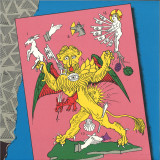
The Idealist is one of the many projects of Joachim Nordwall who has a long history in Swedish experimental music running the quintessential iDEAL Recordings record label since 1998, as a member of the psych-drone duo Alvars Orkester, avant punk rock trio Kid Commando and ritual drone rock group The Skull Defekts and through his many solo recordings and collaborations with people such as John Duncan, Aaron Dilloway, Mika Vainio, Mats Gustafsson, Leif Elggren, Gabi Losoncy, Mark Wastell and Christine Abdelour.
As The Idealist, he has been delving into an amalgam of experimental techno, dub and industrial music since 2006. His new A Lion Is A Lion And Not A Lamb continues this perspective unabatedly, conjuring up six tracks that shimmer with an almost psychotropic intensity, sometimes including acidic touches, dwelling in a confrontational minimalist musical stance where repetition, bursts of gorgeous noise and dubbed out skeletal rhythms make for wayward yet driving grooves at home on the dance floor and a set of headphones alike. The Idealist looks for engagement within rhythm, in its almost purest
form.
Originally released as an obscure private-press LP by the Florida trio of Ben Champion, Ken Burkhart and Danny Burger.
Special guest on this super rare funky jazz outing is Mike Longo who says a few words on behalf of the group on the back cover, and sure enough he contributes scorching Rhodes in the style of his early 70s Greasy Groove sides for Groove Merchant and Mainstream. Also on board are Kelton Champion on guitar, Gary Champion on Bass, Mickey McGann on keys and David Winters on Congas and Percussion: (Just what we love to see on these kind of grooves. Added Phat Funkiness!)
The 20 minute title number weaves, bobs, and scorches with a sound that has been described as a "Headhunters Headspace" the groove never dropping for an instant with a Fender Rhodes meets Hammond B3 Prestige Style Scene with an added flavouring of some chunky Moog Synthesizer.
This has gotten a lot of chatter on the underground Jazz Vibes lately, copies changing hands for $300 and more. The track "These Are My Friends " regularly sells for upwards of $500 and is one of the most hard to find singles on the Rare Soul circuit.
The band are from South Florida, a well known melting pot of culture and music.This area has produced an impressive number of Super Star Jazz Musicians.
Among them Cannonball Adderly, Blue Mitchell, Jaco Pastorius, and Mike Longo and a multitude of others.
Jazzberry Patch can now be added to that roster with this fantastic re-issue from Jazz Room Records.
Joining the dots between Brazilian musical culture and the sonic melting pot that is New York City, Saidera are a trio on the rise. They’ve already released a pair of critically acclaimed, carnival-ready singles on Brooklyn’s Let’s Play House label and are now ready to make their debut on Leng Records.
The band’s roots can be traced back to a trip that Lemonade band member Alex Pasternak made to Brazil in 2014. While DJing at a house party in the bohemian Rio de Janeiro neighbourhood of Sta Teresa, Pasternak was left gobsmacked when a mysterious local singer/sambista Vadinho Freire, grabbed the mic and started freestyling lyrics and melodies over his set. Realising their instinctive musical connection, Pasternak and Freire decided to work together on some music, with New Yorker Le Chev joining them to complete the Saidera trio.
Now based in Rio and California, the group’s sun-soaked sound – which they describe as “samba disco-Afro melody” – is a cross-cultural stew in which infectious Brazilian percussion, colourful synth sounds, glistening guitars and celebratory vocals combine to create magical, life-affirming musical moments.
‘Luzes Da Cidade’, their first outing on Leng, encapsulates all that’s good about the Saidera sound and the trio’s approach to music. The song is about identity and connection and in its original form is languid, loved-up and joyous, with acoustic and electric guitars, Portuguese vocals and Korey Riker’s gently breezy flute solos rising above a squelchy synth bassline and energetic, sweat-soaked samba drums.
The song’s main mix comes accompanied by a wonderful instrumental pass featuring more extensive solos by Riker, and Saidera’s own remix of ‘Luzes Da Cidade’ – an extra-percussive, breakbeat-tinged fusion of hazy deep house, energetic samba and sunset-ready synth-disco that will delight DJs and dancers alike.
To round off the EP, Saidera has delivered a brand new “Uprockin Dub” of debut single ‘Deixa Tudo Fluir’, this time with female vocals from Irina Bertolucci taking the lead. Brilliantly kaleidoscopic sonically, with dub delay-laden vocals, guitars and flutes, it’s a superb, life-affirming Balearic reggae interpretation of a now familiar favourite. If you’re not singing along with the chorus after your first listen, we’d be very surprised.
The exemplary and well-travelled cornetist Kirk Knuffke presents a bold
new trio, with bassist Michael Bisio and pianist Matthew Shipp, on an
intimate and expansive double album
'Gravity Without Airs features' the three world- class musicians on Knuffke
compositions and in open form, creating a tour-de-force of poetry and verve. It's
available as a 2CD in deluxe 8-panel digipak and a 2LP in deluxe gatefold sleeve
with download card, the liner notes are by Francis Davis.
This is Knuffke's debut as a leader for TAO Forms. Accolades for the cornetist's
recent work as leader include NPR's Jazz Album of the Year laurel for 2017's
Cherryco, his homage to Don Cherry, a prime influence. DownBeat praised the
way that album showcased Knuffke's "nonchalant versatility and ebullient
melodic gifts," while esteemed critic Francis Davis called it "nothing short of
spectacular." Davis also wrote the liner notes for Gravity...noting the allure of
Knuffke's instrumental aplomb: "Kirk plays as if his cornet is a part of him - he
plays with it, not just on it."
On his guiding artistic impulse, Kirk Knuffke says: "I'm concerned with making
beautiful music. Beauty is always first, though not in a precious way. It can be in a
rough way, too." A prolific, lauded record- maker, 'Gravity Without Airs' fulfils his
poetic aims as well as any recording he has made. This work finds Knuffke in the
rare, even unique, trio format of cornet, piano and double-bass. His partners are
two ever- estimable pillars of creative music, and the work they've created
together here brims with melody and mystery, intimacy and dynamism.
"Rhythmically precise, New Orleans funky and full of grace, Kirk Knuffke's music is
a reflection of his multifaceted personality: part musical sage, part jazz
philosopher, a self-taught musician with wide interests, endless curiosity and an
abundance of good humour." - DownBeat
Pressing Info: 180g black vinyl, standard sleeve, printed inner sleeve. In dark, troubling times, maybe the most instantly gratifying solace one can seek is a wittily barbed diagnosis of the situation. “The fox has his den. The bee has his hive. The stoat … his stoat-hole,” Stewart Lee once remarked: “But only man chooses to make his nest in an investment opportunity.” Caustic retorts like this are what fuel the debut EP by dance-punk outfit Regressive Left, ‘On The Wrong Side of History’. For pervading through their dynamic and glitching music is a duty to report unflinchingly society’s ills. They are a staunchly political group, but far from your average po-faced by-numbers punk band. There is a gristly social commentary at the band’s core, but the songs themselves are characterised by a need to have fun, to find some kind of solace and escapism from the inevitable rapture. Recorded over an intense 5-day spell with in-demand producer Ross Orton (Arctic Monkeys, MIA, Amyl and The Sniffers) in Sheffield, Regressive Left’s debut EP ‘On The Wrong Side of History’ was immortalised over a handful of 11am-1am sessions in his studio. In many ways it is a time capsule of the maelstrom of ideas that got the group to this point in the first place – the infuriating, bleak political climate, and the urge to find escapism from it – consigned to vinyl in one herculean effort. Taking influence from the booming post-punk, funk and disco scenes of New York, Regressive Left’s sound is stark and danceable. Angular guitar scratches meet dirty synth basslines, whilst Simon Tyrie’s Edwyn Collins croon is chased around by effervescent drums. The banal horror of life in Tory Britain expressed with sharp and dry wit, and then set to truly barnstorming and infectious dance music Due out July 15th on Bad Vibrations Records, the new EP arrives following a trio of acclaimed singles (‘Eternal Returns’, ‘Take the Hit’, ‘Cream Militia’), tours with the likes of Bodega and Folly Group, festival appearances at End of the Road, Latitude, Great Escape and Wide Awake, and a sold out headline at The Windmill.
Jazz writer Walter Kolovsky has said that Friday Night In San Francisco "may be the most influential of all acoustic guitar albums." LPs of it have been a demonstration staple on turntables around the world for over 40 years. To celebrate the lasting impact of this singular album and the legendary concert that it represents, Impex Records is proud to announce the long-awaited follow up: Saturday Night In San Francisco.
Working with hours of original 16-track live session tapes, Al Di Meola and his team have brilliantly curated this musical tour-de-force, bringing to life for the first time on LP, SACD-Hybrid and CD the explosively virtuosic final performance of Di Meola, John McLaughlin, and Paco De Lucia at the Warfield Theater in San Francisco, December 6, 1980. In the exclusive essay by music historian Charles L. Granata, Di Meola says of that final night: "It's exciting because the audience was right there with us, savoring every single note of music. And, we were ripping. It was crazy good!"
Impex worked carefully with Di Meola, mixing engineer Roy Hendrickson (SPIN Studio), and mastering engineer Bernie Grundman to recreate the magic of Friday Night In San Francisco so these never-before-released solos and trios burst out of your system with striking clarity, dynamics and technical brilliance. "Crazy good," indeed.
Tim Pinch
Musicians
Al Di Meola guitar
John McLaughlin guitar
Paco De Lucia guitar
Selections
Jazz writer Walter Kolovsky has said that Friday Night In San Francisco "may be the most influential of all acoustic guitar albums." LPs of it have been a demonstration staple on turntables around the world for over 40 years. To celebrate the lasting impact of this singular album and the legendary concert that it represents, Impex Records is proud to announce the long-awaited follow up: Saturday Night In San Francisco.
Working with hours of original 16-track live session tapes, Al Di Meola and his team have brilliantly curated this musical tour-de-force, bringing to life for the first time on LP, SACD-Hybrid and CD the explosively virtuosic final performance of Di Meola, John McLaughlin, and Paco De Lucia at the Warfield Theater in San Francisco, December 6, 1980. In the exclusive essay by music historian Charles L. Granata, Di Meola says of that final night: "It's exciting because the audience was right there with us, savoring every single note of music. And, we were ripping. It was crazy good!"
Impex worked carefully with Di Meola, mixing engineer Roy Hendrickson (SPIN Studio), and mastering engineer Bernie Grundman to recreate the magic of Friday Night In San Francisco so these never-before-released solos and trios burst out of your system with striking clarity, dynamics and technical brilliance. "Crazy good," indeed.
Tim Pinch
Musicians
Al Di Meola guitar
John McLaughlin guitar
Paco De Lucia guitar
Selections
Roy Mills readies a whirlwind trio of bass-bin-rattling tracks for his Local Knowledge label.
This is the third full solo release for Roy, who turns in a set of genre-spanning, sound design heavy cuts - channelling his twisted, thrilling take on dance music.
Leading the A1 is ‘Chinchilla’, a weighty tripped out stepper with mind-bending basslines, bubbling synths, and sharp stuttering drums taking charge.
Following is the low slung mutant ‘My Safeword is Dolphin’, a tongue in cheek break up song that serves up wonky percussion, vocal chops, and uneasy bleeps, fragmenting between dance floor tension and prog-matic might.
The 10 inch release settles it’s vibrations below the surface, ending with ‘Aquatiqué’. Gentle, reverberated drums work in tandem with spacious, considered sound design for a comparatively calm but no less club relevant closer to the EP.
The record comes complete with an AR interactive 70 x 48cm Offset printed poster, printed inserts, stickers + special treats.
Keep The Peace™ 2022
Includes AR Interactive 70 x 48cm Offset printed poster
Includes Printed Inserts
Includes Roy Mills ‘Mascot Sticker’ + special treats
Includes Poly-lined Paper Sleeve for Safe Storage
ft Alton Miller Mix
Razor-N-Tape co-founder JKriv delivers a trio of all-original cuts on his Something Else EP, bringing together a cast of featured hometown Brooklyn talent to center dynamic songwriting with club-ready vibes.
On the A1 title track, a playful funk-laden bassline lays the foundation for an explosive hook and soaring vocal performance from Brandon Markell Holmes. Dynamic live instrumentation take center stage in the soulful Try Again, which builds to an anthemic peak as guests Nic Hanson and Phenomenal Handclap Band intone the song’s hopeful message.
On the flip, the laid-back boogie groover Shoulda Been Me slow-burns with heavy bass, percussive rhythms, and serene synth-work to support the layered vocal textures by Toribio (of Conclave). Detroit legend Alton Miller takes the tune in a classic soulful deep house direction, with a bouncing rhodes pattern revolving over solid drums, and showcasing Toribio’s vocal prowess in a new light.
- A1: The Darkest Burden
- A2: Broken Maze
- A3: Behind Closed Doors
- A4: When Talking Fails, It's Time For Violence
- A5: Your Dystopian Hell
- A6: Unrecognizable
- A7: Hatred Transcending
- A8: Doomsayer
- A9: Pale Moonlight
- A10: Seizures
- A11: Voiceless Choir
- B1: Grieve
- B2: Sea Of Disease
- B3: Noxious Cloud
- B4: Shattered Faith
- B5: Desolate Landscapes
- B6: Spiral Eyes
- B7: Vicious Circle
- B8: Weeping Willow
- B9: All Will Wither
- B10: Glass Shards
Wormrot return with their most stunning work to date! Following on from
2016's critically acclaimed album 'Voices', Wormrot's 4th studio album
'Hiss' is released 24th June 2022 on Earache Records
The Singaporean trio features the same line up as 2016's Voices with Arif
(Vocals) Rasyid (Guitar) and Vijesh (Drums) and is without doubt their most
ambitious and creative work to date. Having already made their mark as one of
Grindcore's biggest names, Wormrot are intent on bringing Grindcore back to the
masses with a sonically stunning record of wildly unhinged and downright feral
noise..
Cassette[13,03 €]
Available for distribution for the first time! The new album by drummer producer Teppo "Teddy Rok" Mäkynen continues where his trio 3TM was last spotted: "Atonal Drums", out on Helsinki's We Jazz Records, lives someplace in & around the new spots where acoustic jazz and electronic music spill into each other in ways previosuly unheard. Each vinyl copy is unique and comes "edited" by Teddy Rok with personalized signatures and extra bespoke stickers glued in. "Atonal Drums", initially a Bandcamp only exclusive, was featured in Wilco's best albums of 2021. Vinyl and tape copies include download code.
Black Vinyl[25,00 €]
Available for distribution for the first time! The new album by drummer producer Teppo "Teddy Rok" Mäkynen continues where his trio 3TM was last spotted: "Atonal Drums", out on Helsinki's We Jazz Records, lives someplace in & around the new spots where acoustic jazz and electronic music spill into each other in ways previosuly unheard. Each vinyl copy is unique and comes "edited" by Teddy Rok with personalized signatures and extra bespoke stickers glued in. "Atonal Drums", initially a Bandcamp only exclusive, was featured in Wilco's best albums of 2021. Vinyl and tape copies include download code.
During the summer of 2020, SACRILEGA burst from the void with their debut EP, Rites of Macabre. Although a brand-new entity, the Californian power-trio features members currently aligned with Rites of Thy Degringolade, Impure Consecration, and Invocation War among others. As such, it was not surprising that that their Impious Death Metal worship was so powerful and punishing this early on. However, SACRILEGA are set to eclipse those not-inconsiderable expectations with their full-length debut, The Arcana Spear. Recorded at Ramona Studio with Charlie Koryn, SACRILEGA's debut album is a veritable firestorm of finessed fury - malice, malevolence, and mesmerizing visions writ large across throttling death metal songwriting both classic and contemporary. Driving that propulsion is underground drum-god Paulus Kressman, whose veritable eight octopus arms create a dizzying, dread-inducing landscape for his bandmates to slay with their razor-wire strings. Their songwriting always pushes forward with a near-bestial pulse that cannot be denied; still, attention is duly paid to detail within riffing and atmosphere alike, elevating The Arcane Spear beyond a mere exercise in ultraviolence. SACRILEGA thus locate that elusive balance between the cunningly precise and rabidly maximal, placing due emphasis on the songwriting itself and allowing the execution to tell the grandiose-yet-doomed tales it so requires. Featuring suitably stark-yet-grandiose artwork courtesy of Artem Grigoryev, SACRILEGA deliver one of death metal's most stunning debuts with The Arcana Spear. Embrace the grand tyranny!
Following the precursor singles of 2021, Formality Jerne-Site’s unveiling is finally cast upon her already-growing fanbase. Trained classically as a composer and completing a masters at the Royal Danish Academy of Fine Arts, Jura introduces a highly-anticipated playground of carefully sculpted characters, plots and lessons - sometimes charming, sometimes nefarious, always absolute and sincere. A fictional land opens its doors and roof to us. A trio of trans kids run amok in rural suburbia. Various sorcerers of the wild future enter the scene on some songs; on others, the mind is cast to sun-drenched drives and journeys of yesteryear. At the heart is a pop sensibility: yearning, reflections, vanity, guesswork, hope. Jura is adamant about practice and precision. Dead seriously she offers, about making music: ‘Nothing should be half-hearted or an accident.’ There’s a maturity and elegance to her compositions, arrangements that - although at first sound seem abstract - lean away from experimental, somehow. She sing-speaks in English, and somehow not typically theatrically for such a play of a record. The theatrics are all real. It’s a fantasy land for sure, but it's based on hard facts. Like academia subdivided into poetry. It’s that weird-ass specificity she mentioned. Opener ‘Someone’s Lifework’ introduces less a choir of voices, than a choir of personalities. The art of storytelling is at the center of the musical expression. A protagonist relinquishes control of chaos that’s bigger than them on a perilous journey on some vessel: they comfort their co-passengers. There’s a sense that the hero - or anti-hero - might be more canny and cunning than the sweetness they first sell to fellow players. 'Is this our getaway chance?’ sings fellow Copenhagener Ydegirl amongst swelling synths and reverb that become so definitely Jerne-Site as the quest continues. The search? For intimacy, perhaps. ‘Same late Age (dIcK bIfFeReNcE)’ imbibes at once, some further disorientation, perhaps a little hallucinatory feeling which may come over the listener. Through a synthesizing of political themes that work across time ‘Same Late Age (dIcK bIfFeReNcE)’ bears reminiscences of the musical expressions of anti-capitalism in the 1980es, although in a new body and context. “I have a feeling that music reconjures societal morals and ideas from the time in which it was written when we press play or hear a live performance. From the moment at a concert when the symphonic orchestra starts tuning in, the time traveling begins. So I imagined how it would be to be trans sitting there playing the first violin, having the job of producing that first tone that all the other musicians around me tune in ona, ” Jura explains. The listener yearns for more; and subsequent tracks deliver. On ‘How Intimate It Gets,’ Jura meditates on the futility of closeness, begging the audience to enter the blood and guts of their own entanglements, the blueprints of focusing entering. Jura sings richly about fingers being lines, pointing or bending, and we’re reminded of their own wicked ways we can’t control. A history of singing in choirs informs the harmony of myriad inner voices heard across the album. At once prophetic and enigmatic, some of the songs rearrange historical events out of pop musical language. The enormously entertaining ‘Pinot-Botticelli Toast to European Users’ conjures scenes of Cold-War world leaders stuck on a cruise in the Transatlantic vacuum, and the protagonist watches a devastating heartbreaker careen on into the picture, led by his own hips on ‘The Lasceaux Associate’. Finally, on title track ‘Formality Jerne-Site’, American English rises to the occasion like a verdict around the narrative of three trans teenagers in rural Colorado: language turns into something sensual and haptic, playing with the snare and sizzle of syllables. The words twist and bend, while the music follows its own synaesthetic logic: “around us pop culture made a vow to a normative desire, drawing in like water color percussion”. Anyines is a site of play and documentation, with a canon so far quite nice. Their future is one that envisions supporting the galaxies their dear friends embody, be it music, performance, video games or beyond. Highlights from their discerning back catalogue include myriad formats: live and digital, plus releases binded to physical artefacts that enhance the live experience such as sculptures and scents. Their history also includes disappearing time-sensitive shadow-tracked material and cross-disciplinary opportunities that reflect deep professionalism and a totally non-schooled semblance of sound and drama. Recent releases include a dance-theatre soundtrack, a traditional shiny pop record, and the acclaimed ML Buch sophomore, Skinned.
Oslo-based American-Norwegian trio Buster Sledge releases their first
studio album Call Home in May 2022, following up on their self-recorded
and self-released debut Spirit (2020)
Fiddle, banjo, guitar and three voices are the vehicle for lyrical storytelling against
an orchestral background anchored in the acoustic music traditions of the United
States. Hailing from northern California, lead vocalist and songwriter Michael
Barrett Donovan mixes themes from personal experience with folk and country
music archetypes to breathe new life into time-tested song structures. Banjoist
Mikael Jonassen and guitarist Jakob Folke Ossum both share a thorough
appreciation for the fundamentals of bluegrass music, clear melodies and
harmony- singing through the lens of being trained jazz musicians. In eleven
tracks, Call Home tips its hat to artists such as Norman Blake, The Punch
Brothers, Tim O'Brien and John Hartford. Buster Sledge was the first group to
record in the recently relocated Globus Studio of Sjur Lyseid (Little Hands of
Asphalt) and his influence from behind the mixing board pushed the band into a
slightly-augmented acoustic sound with more streamlined arrangements which is
a suiting duet with the album art by William Hay that realizes a scene of a rider
overlooking a large river-valley in impressionistic swaths of color.
Banjoist Mikael Jonassen, from Bodo in the far north, is Norway's first and only
higher-education certified banjo player. Despite beginning with an electric banjo
and playing exclusively fusion jazz, Jonassen currently focuses his efforts on
Scrugg's style acoustic banjo and the playing of Bela Fleck and has taken several
trips to the US to learn from the masters. Jakob Folke Ossum, jazz- guitarist
turned flat- picking aficionado, discovered the sound of acoustic flat- picking
through Tony Rice and Bryan Sutton and meticulously taught himself from
records and videos. Fiddler Michael Barrett Donovan made a living as a musician
in New York City doing a master's in classical composition while touring with a
Grateful Dead tribute band. The three met in a comment section on a bluegrass
forum after Donovan moved to Norway in 2019. The rest of the story you'll have
to ask them at a show sometime. Buster Sledge has been on stage in many small
venues in southern Norway, don't miss them the next time they come to town!
- A1: Stevie Qngo - Trois Hommes Dans Un Wagon
- A2: Bandler Ching - Pousmousse
- A3: One Frame Movement - Stokstaart
- A4: Stellar Legions - Wessel
- B1: L?P?Ganggang - Kienda
- B2: M.chuzi - Tzatzìki
- B3: Boombox Experiments - Miscellaneous
- C1: Echt! - Parakeet
- C2: Cargo Mas Feat. Mike 'Maz' Mahez - Samsara
- C3: Kau Trio. - Nightgrazer
- C4: Schroothoop - Obsolescence Programmée
- D1: Dishwasher¦ - Home Cinema
- D2: The Brums - Barbara
- D3: Tukan - Boréal
- D4: Shungu & Mejiwahn – Mejigu
Vol. 1[22,27 €]
Vol.2 Limted Red Vinyl[26,01 €]
Vol. 3 Black Vinyl[24,16 €]
Vol. 3 Transparent Violet Vinyl[27,52 €]
The groove-obsessed Sdban Ultra label are pleased to present an outstanding new collection of musical gems from Belgium's thriving jazz scene, compiled by Belgian DJ and eclectic connoisseur, Lefto.
'Lefto presents Jazz Cats volume 2', released 24th June, features a balance of known and obscure artists. From the thrilling frenetic grooves and innovative soundscapes of Bandler Ching and the electronic influenced Stellar Legions (Andrew Claes from (STUFF.), to the jazz fusion collective L?p?GangGang and weaving musical odyssey that is M.CHUZI, 'Lefto presents Jazz Cats volume 2' is a melting pot of the best musical talent coming out one of the smallest countries in Europe. In addition, there's the beautiful unease of One Frame Movement, the laidback 'acoustic electronica' of Boombox Experiments, the classic funky jazz stylings of Cargo Mas and the cinematic The Brums, making 'Lefto presents Jazz Cats volume 2' an essential release for any jazzhead with a passion for new sounds.
"By collecting all the music for 'Jazz Cats volume 2', I come to the conclusion that we are living in an era of very talented individuals and collectives. Even more so than 4 years ago. I have the impression that the Belgian jazz sound is more diverse, with more influences and more creativity. There was a time that jazz would be the starting sample to create a beat for rappers, today it is electronica, rap or afrobeat that influences our youth to create a sound or style that suits their vision of what jazz sounds like in 2022. So, once again it is with extreme pleasure that I present to you some of the best present and next generation of jazz cats this little country has to offer."
2018's 'Lefto presents Jazz Cats' included tracks from some of Belgium's biggest hitters including Black Flower, STUFF., and Glass Museum who have all gone on to receive global acclaim. The album was given the accolade of 'Album of the Week' on Worldwide FM and also received further radio support from Jazz FM in addition to numerous glowing reviews.
Tastemaker, selector, curator, DJ and producer, Lefto is one of the most important and respected tastemakers around the world with a record collection of over 15,000 records. Cutting his teeth on jazz and new beat, a genre that moulded the shape of electronic music in 80s Belgium, Lefto formed his early tastemaker know-how via his dad's record collection.
Creating his fine ear for music and the cutting edge at Belgium's legendary Music Mania record store in his hometown Brussels, he has been a resident on Belgium's leading radio station Studio Brussel and currently hosts a show on Kiosk Radio (BE) and The Lot Radio (US). He also curates his own stage at the Dour Festival and hosts his own nights in Gent. World renowned, he regularly blesses sound systems from Tokyo to Seoul, Singapore to Manila, Kazakhstan to Germany, San Francisco and Los Angeles, with residencies in Amsterdam and New York.
- A1: Stevie Qngo - Trois Hommes Dans Un Wagon
- A2: Bandler Ching - Pousmousse
- A3: One Frame Movement - Stokstaart
- A4: Stellar Legions - Wessel
- B1: L?P?Ganggang - Kienda
- B2: M.chuzi - Tzatzìki
- B3: Boombox Experiments - Miscellaneous
- C1: Echt! - Parakeet
- C2: Cargo Mas Feat. Mike 'Maz' Mahez - Samsara
- C3: Kau Trio. - Nightgrazer
- C4: Schroothoop - Obsolescence Programmée
- D1: Dishwasher¦ - Home Cinema
- D2: The Brums - Barbara
- D3: Tukan - Boréal
- D4: Shungu & Mejiwahn – Mejigu
Vol. 1[22,27 €]
Vol.2 Black Vinyl[24,79 €]
Vol. 3 Black Vinyl[24,16 €]
Vol. 3 Transparent Violet Vinyl[27,52 €]
Limited version 2LP on red vinyl in gatefold sleeve. An outstanding new collection of musical gems from Belgium's thriving jazz scene, compiled by Belgian DJ and eclectic connoisseur, Lefto.
The groove-obsessed Sdban Ultra label are pleased to present an outstanding new collection of musical gems from Belgium's thriving jazz scene, compiled by Belgian DJ and eclectic connoisseur, Lefto.
'Lefto presents Jazz Cats volume 2', released 24th June, features a balance of known and obscure artists. From the thrilling frenetic grooves and innovative soundscapes of Bandler Ching and the electronic influenced Stellar Legions (Andrew Claes from (STUFF.), to the jazz fusion collective L?p?GangGang and weaving musical odyssey that is M.CHUZI, 'Lefto presents Jazz Cats volume 2' is a melting pot of the best musical talent coming out one of the smallest countries in Europe. In addition, there's the beautiful unease of One Frame Movement, the laidback 'acoustic electronica' of Boombox Experiments, the classic funky jazz stylings of Cargo Mas and the cinematic The Brums, making 'Lefto presents Jazz Cats volume 2' an essential release for any jazzhead with a passion for new sounds.
"By collecting all the music for 'Jazz Cats volume 2', I come to the conclusion that we are living in an era of very talented individuals and collectives. Even more so than 4 years ago. I have the impression that the Belgian jazz sound is more diverse, with more influences and more creativity. There was a time that jazz would be the starting sample to create a beat for rappers, today it is electronica, rap or afrobeat that influences our youth to create a sound or style that suits their vision of what jazz sounds like in 2022. So, once again it is with extreme pleasure that I present to you some of the best present and next generation of jazz cats this little country has to offer."
2018's 'Lefto presents Jazz Cats' included tracks from some of Belgium's biggest hitters including Black Flower, STUFF., and Glass Museum who have all gone on to receive global acclaim. The album was given the accolade of 'Album of the Week' on Worldwide FM and also received further radio support from Jazz FM in addition to numerous glowing reviews.
Tastemaker, selector, curator, DJ and producer, Lefto is one of the most important and respected tastemakers around the world with a record collection of over 15,000 records. Cutting his teeth on jazz and new beat, a genre that moulded the shape of electronic music in 80s Belgium, Lefto formed his early tastemaker know-how via his dad's record collection.
Creating his fine ear for music and the cutting edge at Belgium's legendary Music Mania record store in his hometown Brussels, he has been a resident on Belgium's leading radio station Studio Brussel and currently hosts a show on Kiosk Radio (BE) and The Lot Radio (US). He also curates his own stage at the Dour Festival and hosts his own nights in Gent. World renowned, he regularly blesses sound systems from Tokyo to Seoul, Singapore to Manila, Kazakhstan to Germany, San Francisco and Los Angeles, with residencies in Amsterdam and New York.
1985 session by piano great Duke Jordan alongside bassist Jesper
Lundgaard and drummer Billy Hart
Duke Jordan (1922-2006) famous for his intense lyricism embarked on the world
jazz scene as a member of the classic Charlie Parker Quintet in the late 40s with
his trademark introduction to "Embraceable You". Jordan unlike many other
American jazz musicians in Bebop era found his artistic and personal living space
in Europe since the early '70s. His extensive recording output on SteepleChase
including this album from 1985 recorded in Denmark makes up the huge part of
his discography.
"A most agreeable set that is both eminently listenable and very
enterprising...Jordan was always a fleetly swinging but subtle pianist whose allround musicianship has never got the recognition it merits. This fine trio deserves
to sell well and spared his name further afield." - Richard Palmer, Jazz Journal
International
On Origin , celebrated pianist, bandleader, and three-time Grammy
nominee Joey Alexander has written the next chapter of his career:
composer
His longstanding trio featuring Larry Grenadier and Kendrick Scott is the
backbone of his creative freedom, with Chris Potter (a previous collaborator) and
Gilad Hekselman joining the fray to bring to life the spectacular vision of
Alexander's first full length release of all original music and debut with Mack
Avenue Records.Over the course of his astonishing career, Steinway Artist
Alexander has performed with Wayne Shorter and Esperanza Spalding at the
Obama White House, for President Bill Clinton at the Arthur Ashe Learning Center
Gala, at the Grand Ole Opry, the Apollo Theater, Carnegie Hall and at major jazz
festivals and night clubs around the world. He has also been the subject of
profiles on 60 Minutes and The New York Times.
Joey Alexander, now 18, is stepping out as a composer and bandleader as well as
a virtuoso pianist. "These past years have been especially trying for everyone,
including those of us who didn't know when we would ever perform for live
audiences again," Alexander said. "Origin represents a turning point for me — the
time when I decided to turn frustration into an opportunity to truly express myself
and to rise above the circumstances."
An absolutely legendary album from Lebanon by Issam Hajali’s group Ferkat Al Ard, “Oghneya” stands out as one of the great musical gems of the Arab world. A groundbreaking release from 1978 that represents the meeting point of Arab, jazz, folk and Brazilian styles with the talent of Ziad Rahbani, who did the albums arrangements. Filled with a variety of sounds and genres, from Baroque Pop to Psych-Folk to flashes of Bossa Nova, Tropicalia and MPB, “Oghneya” is like if Arthur Verocai took a trip to Beirut in the 70’s to record an album.
In 2015 we heard Ferkat Al Ard’s music for the first time, a Lebanese trio compromised of Issam Hajali, Toufic Farroukh and Elia Saba. It was a stunningly unique release that blends traditional Arabic elements, jazz and Brazilian rhythms hand in hand with poetic-yet-politically engaged lyrics. The band was active in the left-wing movement of Lebanon of the time and they communicated their political ideas candidly through their songwriting.
In our mind the idea was to see whether Issam was interested in re-releasing “Oghneya.” He was not opposed to it, but also made it clear that it was not his priority for a first project. He suggested we start with his first album, before Ferkat Al Ard was formed, “Mouasalat Ila Jacad El Ard,” which was recorded in 1977 in Paris together with his friend Roger Fakhr (whose work we have been privileged to re-release in the meantime as well.) “Mouasalat Ila Jacad El Ard” is melancholic, stripped-down, guitar-based folk intertwined with jazz-fused breaks, and the unique sound of the santour glistens through. While the music is very accessible, some song structures are rather atypical, neglecting common patterns of verse, hook, verse, hook. The lyrics mostly trace back to the poetic work of Palestinian author Samih El Kasem, with one song also written by Issam, who composed the music for the whole album.
We re-released Issam’s “Mouasalat Ila Jacad El Ard” in 2019 to a great reception, with positive reviews all over the place and an ongoing appreciation for the album. This meant it was time for us to undertake an “Oghneya” re-release again!
If you compare “Mouasalat Ila Jacad El Ard” and “Oghneya,” one apparent distinction is the strong Brazilian influence in the music. Issam Hajali explained that you can already hear traces of this influence on his debut, but it’s “Oghneya” where this musical relationship really peaks. Lebanon and Brazil have had a strong connection for nearly a century due to the continuous flow of immigrants from one country to the other. Today, Brazil has the largest Lebanese diaspora in the world, the “Brasilibanês”. The migratory route was not a one-way street, however, and some Lebanese returned to their home country, taking recordings of the music they learned to love in Brazil with them. They were followed by Brazilian musicians who visited primarily Beirut during the 1960’s and the first half of the 1970’s, just like many other musicians from around the world. In these years between the independence and the beginning of the civil war, Beirut became even more of a cultural center and regional hub than it already was.
Bossa Nova, at that time, was one of the defining sounds of Brazilian popular music. Issam Hajali remembers hearing it at a bar in Beirut’s Hamra district in 1974, which hosted musicians from Brazil playing the occasional gig. When Issam had returned from Paris in 1976 he got to know Ziad Rahbani, son of Fairouz, who had a shared passion with Issam for a lot of things, among them Brazilian music. Issam showed him some of the tracks he was working on, and Ziad agreed to help with arranging. The music that evolved from this cooperation between Ferkat Al Ard and Ziad Rahbani’s arrangement is, to put it lightly, outstanding. Issam’s singing is embedded into the uniquely beautiful string arrangements backed by the band’s poignant, swinging groove. The lyrics of the songs on “Oghneya” are based on poems by Mahmoud Darwish, Samih Al Qasem and Tawfiq Ziad, three pillars of Palestinian poetry within the last century, and their influence on “Oghneya” was itself a strong political statement during the Lebanese war.
“Oghneya” was eventually released in 1978 by the band themselves on cassette tapes. Finding a blank tape that fit the playing time proved to be impossible during the war so they needed to open up the case of each cassette to physically cut down the tape and customize it to the playing time. The album was well received, though some cultural critics deemed it too “occidental” in its sound. While the cassette was circulating, Ziad Rahbani started a label called Zida, together with Khatchik Mardirian. They decided to help the band with a re-release on vinyl in 1979, a year after “Oghneya” was originally released on cassette.
Sadly, there are two tracks from the original release of “Oghneya” that did not make it onto the reissue. “Ghfyara Ghaza” was replaced by the song “Juma’a 6 Hziran.” while “Huloul” was taken off without a replacement. This happened as a precondition from the band for this reissue to happen. We would have loved to include all tracks, but the decision ranged between having either a reissue like the one we put out or no reissue at all. Thus, an easy choice for us.
As always both vinyl and CD come with an extensive booklet with an interview with Issam as well as unseen photos from the recording sessions.
restock
We are proud to present the stellar debut and collab between the renowned Peruvian duo Dengue Dengue Dengue and Argentinian Prisma. ‘Pliegues' creates a hypnotic journey and infectious cadences that invites you to close your eyes while your hips move to the sound of colliding polyrhythms and powerful FM synth lines.
But there is also room for the oneiric realm on this EP, with the track 'Grietas' this new trio opens a portal to steep and melodramatic terrains. Meanwhile the remix of ‘Brechas’ from our friend empanadas aka DJ Python unleashes his sincere trademark of atmospheric and sentimental dembow. Finally, el paisa Verraco makes his label debut reshaping the lead track with a bombastic, deconstructed, bipolar summer banger full of edgy sound design.
Red Vinyl 7"[12,56 €]
repressed !
incl. Floorplan Remixes!
Sophie Lloyd produced 'Calling Out' in a dreary January as an antidote to the pervading doom and gloom of the news, summoning the power of the most joy-filled sound of all, gospel. The track radiates all the live atmosphere of gospel worship in mid flow, with soul trio Dames Brown bringing the authenticity. Following the 7' release, which sold out due to huge demand, comes the 12' complete with the original version plus two brand new mixes from Floorplan. The duo of Detroit techno pioneer Robert Hood and his daughter Lyric Hood are well known for their gospel-infused sound with Hood's hometown influences always apparent. Their Club Mix opens with a heavily swinging groove which breaks down into pure 4/4 indulgence, while the Revival Mix singles out the looped piano and organ riffs. Putting their assertive spin on this new Classic anthem, Floorplan turn up the levels on 'Calling Out', bathing it in further glory.
- A1: Nonato & Seu Conjunto - Cafua
- A2: Os Novos Crioulos - Mar Afunda
- A3: Jose Roberto - Crioula Multicolorida
- A4: Rita Lee & Tutti Frutti - Agora E Moda
- A5: Trio Esperanga - Nao Aguento Voce
- B1: Robson Jorge & Lincoln Olivetti - Aleluia
- B2: Erasmo Carlos - Jeep
- B3: Chalo Eduardo - Beija-Flor Suite
- B4: Ely Camargo - Taieiras
- B5: Silvio Cesar - A Festa
- C1: Toni Tornado - O Jornaleiro
- C2: Som Tres - Tanga
- C3: Noriel Vilela - 16 Toneladas
- C4: Chocolate Da Bahia - Ele Guenta
- C5: Tim Maia - E Necessario
- C6: Joao Bosco - Cobra Criada
- C7: Os Incriveis - Uma Rosa Pra Dita
- D1: Edson Frederico - Tava Mas Nao Tava
- D2: Helio Matheus - Mais Kriola
- D3: Miguel De Deus - Black Soul Brothers
- D4: Ana Rosely - Skim Dum Dum Dum
- D5: Luiz Gonzaga & Ze Dantas - Sao Joao Antigo
Compiled by Sean Marquand and Greg Caz, 2 DJs well-known for their epic parties at Williamsburg’s legendary Black Betty club, that sadly closed in 2009. The duo played a deep variety of strictly vintage samba, samba-rock, Tropicalia, and Brazilian funk under the banner of ‘Brazilian Beats Brooklyn’.
Sean is known as half of Embassy Sound Productions. He took his team to Brazil to help resurrect Black Rio legends Uniao Black for a new release. Greg has DJ'd at some of the hottest Brazilian parties around the globe and presents a monthly radio show ‘Warm Wave’ on Soho Radio NYC.
Featuring Noriel Vilela’s singular “16 Toneladas,” a sublime cover of the Tennessee Ernie Ford smash “16 Tons” with a spare samba groove and unbelievable baritone vocals and hot jams from Tim Maia, Erasmo Carlos, Joao Bosco, Toni Tornado.
Included in this compilation of original 60's and 70's Brazilian gems are some of Greg and Sean's favourite tracks that have been filling dancefloors for years.
- 1: Maybe As His Skies Are Wide
- 2: Herr Und Knecht
- 3: (Entr’acte) Glam Perfume
- 4: Cogs In Cogs, Pt. I: Dance
- 5: Cogs In Cogs, Pt. Ii: Song
- 6: Cogs In Cogs, Pt. Iii: Double Fugue
- 7: Tom Sawyer
- 8: Vou Correndo Te Encontrar / Racecar
- 9: Jacob’s Ladder, Pt. I: Liturgy
- 10: Jacob’s Ladder, Pt. Ii: Song
- 11: Jacob’s Ladder, Pt. Iii: Ladder
- 12: Heaven: I. All Once – Ii. Life Seeker – Iii. Würm – Iv. Epilogue: It Was A Dream But I Carry It Still
‘Mehldau can truly translate his thoughts and feelings into complex and lasting music. He is one of those people whose brain and fingers and musical ability is all one beautiful entity.’ – Jamie Cullum
Nonesuch Records releases Brad Mehldau’s Jacob’s Ladder on 2 x 140g black vinyl on June 17th . The album features new music that reflects on scripture and the search for God through music inspired by the prog rock Mehldau loved as a young adolescent, which was his gateway to the fusion that eventually led to his discovery of jazz. Featured musicians on the album include Mehldau’s label mates Chris Thile and Cécile McLorin Salvant, as well as Mark Guiliana, Becca Stevens, Joel Frahm, and others. The album’s first single, ‘maybe as his skies are wide’, builds off an interpolation of one portion of Rush’s classic ‘Tom Sawyer’.
Mehldau explains, “We are born close to God, and as we mature, we invariably move further and further away from Him on account of our ego. Jacob’s Ladder begins at that place closer to God with the voice of child, and then moves into the world of action. God is always there, but in our discovery and conquest, and all the joys and sorrows they bring, we may lose sight of him. He sets a ladder before us though, like in Jacob’s dream, and we climb towards him, to find reconciliation with ourselves, to stitch up all those worldly wounds and finally heal. The record ends with my vision of heaven – once again as a child, His child, in eternal grace, in ecstasy.
“The musical conduit on the record is prog,” Mehldau continues. “Prog – progressive rock – was the music of my childhood, before I discovered jazz. It matched the fantasy and science fiction books I read from C.S. Lewis, Madeleine L’Engle and others at that time, aged ten through twelve. It was my gateway to the fusion of Miles Davis, Weather Report, Mahavishnu Orchestra and other groups, which in turn was the gateway to more jazz. Jazz shared with prog a broader expressive scope and larger-scale ambitions than the rock music I had known already.
“The prog from Rush, Gentle Giant, and Emerson, Lake and Palmer here only hints at the genre’s conceptual, compositional and emotional range. These bands and others have continued to influence newer groups that bring prog impulses into the arena of hard rock and screaming math metal, like Periphery, whose music is included here, and also inspired the screaming vocals on ‘Herr und Knecht.’ I tried to avoid a direct tribute approach to all the songs, and opted in some cases for excerpts, or reworking of themes.”
Although Brad Mehldau is best known as a jazz composer and improviser, he has made several albums that fall outside of the mainstream jazz genre, including his 2001 Largo, produced by Jon Brion. Wide-ranging in texture and big in scale, it features woodwind or brass ensembles are on several tracks, as well as a heavy emphasis on powerful drums. In 2010, Nonesuch released his second collaboration with Brion, Highway Rider, which includes performances by Mehldau’s trio – drummer Jeff Ballard and bassist Larry Grenadier – as well as drummer Matt Chamberlain, saxophonist Joshua Redman, and a chamber orchestra led by Dan Coleman. Mehldau also orchestrated and arranged the album’s fifteen pieces for the ensemble.
Mehldau’s 2014 collaboration with Mark Guiliana, Mehliana: Taming the Dragon featured Mehldau on Fender Rhodes and synthesizers and Guiliana on drums and effects, playing twelve original tunes – six by the duo and six by Mehldau. His 2019 album Finding Gabriel featured performances by him on piano, synthesizers, percussion, and Fender Rhodes, as well as vocals. Guest musicians included Ambrose Akinmusire, Sara Caswell, Kurt Elling, Joel Frahm, Mark Guiliana, Gabriel Kahane, and Becca Stevens, among others.
"There's scarcely a more towering figure in modern jazz — save Miles and Coltrane — than Bill Evans. His relaxed and emotional style at the piano would prove influential to not only his peers but to generations of pianists who would follow him. It also doesn't hurt that he appeared on (and had great influence over the direction of) Kind Of Blue and that two of his trio’s LPs from the Village Vanguard in 1961 are both stone-cold classics.
Evans is joined here by bassist Chuck Israels and drummer Larry Bunker for this 1965 recording. The album includes the heart-wrenching ""Who Can I Turn To?"" alongside ""If You Could See Me Now"" and Johnny Carisi's ""Israel.""
Verve’s Acoustic Sounds Series features transfers from analog tapes and remastered 180-gram vinyl in deluxe gatefold packaging."
* Over the past six years, Dimensions has become a leading name in the underground, with its festival, International Series, DJ Directory and Dimensions Soundsystem. Now, Dimensions extends its influence with the start of its label - Dimensions Recordings. The label launches with a 12-track compilation across three separate discs. 'An Introduction' makes a huge statement in setting out the label's intent and breadth. With artists established and new stepping up to present 12 exclusive tracks.
* Dimensions Recordings explores its darker side on An Introduction Part 3 with intergalactic oddities and twisted techno constructions, the release is definitely ones for the late hours. 'Crosstalk' from gear heads London Modular Alliance opens; a squelching, electro, hardware excursion demonstrating a small snippet of what's to come from the talented trio. Next, French artist, Upwellings steps up to demonstrate his purist approach as he unites elements of dub and techno to create the beautifully spacey 'Soft Shadows'. The third offering comes courtesy of Fachwerk label boss and prolific techno artist, Mike Dehnert; who presents raw but melodic track in 'Tokio,'which maintains his minimal and stripped back aesthetic beautifully. Chicago's Steven Tang in his Obsolete Music Technology rounds off the release with 'Comb Freq,' a devastatingly powerful mix of acidic, bleeping dance floor energy!
Alex the Fairy is an artist based in Berlin producing music with an emphasis on electronic and concrete methods. Alex the Fairy is also part of the 3Ddancer trio, a live act focusing on improvisation and expression using electronics.
Alex The Fairy writes: "I had sent The Tapeworm tracks before, but I was being difficult so was asked to send a new bunch, with a deadline. I sent the new bunch, a fairly odd collection expecting perhaps some of them to be combined with the older stuff but not seeing any coherence in them. I figured The Tapeworm would find at least something. To my surprise the suggestion that came back was exclusively the tracks I had sent the second time, and, re-listening through the tracks in this new order after returning from a Christmas dinner lying on the floor of my nephews bedroom gave them a completely new context. Despite them being quite varied in terms of age (one had been flung together a few days earlier on the train while another was approaching Schulreife) they seemed to meld together in such a way that I hardly recognised them…
Last year my grandmother died. My last grandparent. I had put off seeing her during corona, as I thought it best not to put her at risk and had almost left to visit her days before her death but had delayed my departure because of a medical appointment. My failure to her weighs heavy on my mind - fates grimacing grin: too little, too late. The approaching march of death, one generation closer was a confrontation I wasn't prepared for.
While clearing out her flat in the following weeks I had kept some of my grandfathers cassettes, live recordings of jazz greats, Pink Floyd, Sade and some classical among them, none originals, several presumably from the radio e.g. a church organ rendition of Bach. At the time I wasn't sure why I was hanging on to them, other than the urge to hoard, and that it felt wrong not at least to keep some. Half a year later, half way through mixing this cassette, suffering from my first bout of COVID, I had the insatiable urge to hook up the cassette player I had received from my grandfather after his death around nineteen years earlier and had been dragging along with me since. I stuck a cassette in only to immediately return to the safety of my covers. I began to work my way into what I had saved, hearing the fruits of my grandfathers labour decades before. It felt like quite an intimate interaction with someone I had long lost contact to/was long gone. Quite a wonderful thing, these time traveling cassettes.
I returned to the tracks to mix them shortly before my corona/cassette experience, with a new mixing console at hand. I had been looking for one for several years, but nothing had ever clicked, until I found this old broadcast desk 30 minutes from my place (it also coincided with a payment from a job the sum of which matched the price identically… fates return). Installing became a massive hassle and I doubted my decision continuously, but the further it was implemented the more it made sense. The first track I recorded with the mixer is on this cassette. Shortly before the mixing I was introduced to an Effektgerät by a friend, Rapha. Another good friend Art lent me their one, and I ended up using copious amounts of it throughout mixing, alongside my usual space creators. All the tracks on this release were mixed again on this mixer and are in a sense all a bit of a dub of the originals. I wouldn't have worked this way without the mixer, and the effect gave me a dimension I hadn't had before, so, from a technical perspective, the mixer and this effect define this release, giving it a coherence, at least for me. Emotionally of course the chaos and turbulence of the preceding year and my newfound appreciation for the medium give it a meaning I will struggle to formulate." – Alex The Fairy, Berlin, 9 May 2022
The music world is most fortunate that the past two decades have witnessed the rediscovery of mind-opening music that went under-recognized when originally released, and the wellspring of musical content produced by a generation of brilliant musicians. One such musician was the late great drummer Steve Reid, whose reissued eclectic recordings on his own Mustevic Sound label gave his career a second wind.
Though teased on a well-received compilation, one Mustevic release never saw reissue: New Life Trio’s Visions Of The Third Eye, a tremendous collaborative effort between Reid, guitarist Brandon Ross and bassist David Wertman.
Due to overwhelming demand, Early Future Records and Finders Keepers Records are proud to announce a second limited edition pressing of the classic and final Mustevic recording. The release also includes a 20-page written zine featuring an in-depth testimonial and interview with Brandon Ross, and an explorative essay by Finders Keepers’ Andy Votel, as well as a wealth of archival photos, scores and reviews.
Reid’s long and varied career began in his native New York City, where he was involved early on as a member of the Apollo Theater House Band and the R&B scene of the 1960s, including recordings with Martha Reeves and James Brown. In the late 1960s, Reid spent three years in West Africa absorbing musical traditions and experimenting with artists such as Fela Kuti, Guy Warren and Randy Weston. After a stint in prison for dodging the draft as a conscientious objector, the drummer came out swinging in the 1970s. He worked regularly as a session and Broadway musician even while immersing himself into the jazz world, from the straight-ahead styles of Freddie Hubbard and Horace Silver to the otherworldly sounds of Sun Ra and Charles Tyler.
The do-it-yourself ethos of the New York Loft Scene inspired Reid to create his own label, Mustevic Sound, on which he began releasing his own recordings and those of a couple of friends. One of these trusted friends was David Wertman, a young bassist from New York who released his own Kara Suite on Mustevic in 1976.
New Life Trio’s story began when Wertman moved from New York to the more sedate but creatively vibrant town of Northampton, Massachusetts. Here Wertman met Brandon Ross, a young guitarist from New Jersey who had relocated there with his brother to join a coterie of New York expats who had found a comfortable, collaborative environment amidst the liberal college towns in the area, including avant-garde legends Archie Shepp and Marion Brown. Wertman and Ross became friends and began to perform together regularly, both formally and informally.
A string trio of Wertman, Ross and violinist Terry Jenoure was set to record, but Jenoure dropped out just prior to the date. This led Wertman to call his friend Steve Reid to come join the two at the Tin Pan Hollow Studios in Vermont to record what would become Visions Of The Third Eye on December 6, 1978. Originally conceived as an all-acoustic date, the recording would morph slightly when Ross added electric guitar muscle on a number of pieces. Reid would then take the helm and release the recording in 1980, giving a very auspicious birth to what has now become a classic spiritual jazz recording.
Fast forward to 1995…..New Life Trio gets a belated second wind from Stuart Baker’s inclusion of the Ross-voiced “Empty Streets” on his Universal Sounds of America compilation. The brief, haunting lead track just hinted at what the full Visions Of The Third Eye album had to offer. Audience awareness resulted in the pursuit of out-of-print original LPs, thus the rarity of Visions Of The Third Eye led to it becoming a kind of “holy grail” record for collectors of jazz and creative music. The album’s cover image was even incorporated into the cover of Freedom, Rhythm & Sound (SJB, 2009), a wonderful coffee table book presenting album covers from those revolutionary decades in Black creative music. The recording’s legend was cemented.
New Life Trio’s legend continues to grow partly due to the brevity of its existence. The triumvirate of Reid, Ross and Wertman would never work together again. Each member would continue along his own path, finding success in numerous projects. Reid’s career was reinvigorated with the reissue of the bulk of his Mustevic Sound recordings in the early 2000s, which led him to a rewarding partnership with Four Tet’s Kieran Hebden until Reid’s untimely passing in 2010. Wertman balanced life between Florida and Massachusetts as a regular in the local jazz scene, recording numerous projects with his wife, Lynne Meryl, before passing away in 2013. The fantastically creative Ross has remained active in the New York creative music scene with a number of projects, most notably with Henry Threadgill, Cassandra Wilson and Harriet Tubman, a wildly eclectic co-led band with underpinnings of rock, dub and free jazz.
Since his debut with the "Darling Darling Darling"track, immediately spotted by the media as well as by electronic music lovers, Louis Warynski has continued to evolve a world that belongs to him alone, over the last ten years and eight albums.Like Lewis Caroll's universe, Chapelier Fou's music is multiple, simple and complex, serious and light, classic and modern. Louis Warynski's work is woven on a classical basis, but it is constantly disrupted by subtle electronic arrangements and rhythms, thus taking the tracks outside of all convention.We find in Chapelier Fou the facetiousness of French composers such as Erik Satie, François de Roubaix or Robert Cohen Solal, not hesitating to blend pop and concrete music, but also this formidable capacity to make serious what is not serious, and vice versa of course. His music, very much at home on screen as well as on stage, has everything that makes up the trait of genius composers: accessible in appearance and adaptable in all forms. This is how Chapelier Fou has performed on stage as a soloist, juggling between violin, guitar, keyboards and pedals, in trio, quartet and even in orchestral formation with the Orchestre National of Metz. Often described as "electronic chamber music", it was expected that one day Chapelier Fou would offer us a version of his music without a single electronic or electrified part. It is now done with this Ensemb7e who performed on the stage of L'Arsenal de Metz, broadcasted by Arte Concert. Chapelier Fou Ensemb7e has received direct support from a wide audience, but also from venues programmers where the septet has been performing since June 2021. Ensemb7e stands for a mainly wooden septet: violin, viola, cello, piano, clarinet and drums accompany the multi-instrumentalist composer. It's hard to resist such musical enthusiasm! The magic happens immediately because the re-reading of these little jewels in pop format gives a touching and fulfilling dimension to Chapelier Fou's work: even more dreamy versions, sometimes more mischievous, but the richness of the classical instruments and the obvious pleasure of the musicians in interpreting them give a new life to all these titles that have filled us with wonder. It therefore seemed obvious to us after listening to his Ensemb7e concerts that there was more than a concert to be recorded, but a real album to offer. A studio album, but with the energy and vitality of a live one, produced with the care and generosity of Thomas Poli (who has collaborated with Dominique A, Yann Tiersen and many others).
Fuchs is a band that never was. It vanished as quickly as it appeared in the picture, much like the animal that can be seen on this album and after whom it was named. In 2005, Kante singer and guitarist Peter Thiessen travelled to Weilheim to visit Markus and Micha Acher in their studio, where they were joined, among others, by Notwist-affiliated musicians like Cico Beck, Robert Klinger, Carl Oesterhelt and Stefan Schreiber. Spirits were high, but schedules were full: after a week of improvised sessions, everyone went their own way. The recordings gathered dust until Markus Acher found them again in 2021 while cleaning out his studio. After carefully re-evaluating the rough mixes, the musicians decided to finally release them. The resulting album comprises six tracks that musically draw on jazz, aesthetically lean on dub techniques and ideologically pick up on krautrock: there’s no solos to be heard on this record, just a few equally skilled and open-minded musicians listening to each other carefully, providing each other with space in which to unfold. »Fuchs« is a document of egos dissolving in a collective spirit.
Thiessen and the Acher brothers met in the 1990s and bonded not only over their shared background in hardcore music and the DIY ethos in which it was rooted, but also over their love for jazz. »If you look at those two things combined, you will eventually become convinced that you don’t have to be formally trained to make music that at least resembles jazz«, says Thiessen today. He invited Micha Acher to join his band Kante on flügelhorn in 2004 for a tour that saw the expanded group play unusual encores after the official concert was over. »Micha had taught us some dixie pieces, so night after night we would play a freestyle dixieland ska set in front of the remaining audience!« Naturally, the Acher brothers didn’t have to ask twice when they invited him for a visit in Weilheim to further explore their mutual interests in a studio setting. »I got on my way immediately and took two or three loose ideas, a tape echo and a guitar on whose headplate you could create fantastic sounds with me«, says Thiessen.
Between immersing themselves in books by the photographer Leonore Mau, cooking together and drinking the occasional fruit schnapps, the trio went into the studio. Says Thiessen, »Micha brought his flügelhorn and some wonderful ideas with him, Markus an Indian harmonium and a plan, Carl Oesterhelt came with a glockenspiel and a Chinese zither and a bunch of amazing jazz musicians joined in, too.« He considers the resulting recording sessions to be a kind of attempt at musically translating their conversations during those days. They discussed different approaches to jazz, whether sampling and musical miscitations can unlock ecstatic potentials and the possible parallels between syncretistic religions and pop music. »There’s traces of glossolalia, it's like a blurry séance«, adds Thiessen in regard to the sessions.
It is especially this spirit that managed to live on even though the recordings themselves were abandoned. »What we all liked most when listening back to the recordings is probably their marginal and fragmentary character, the empty spaces—the moments in which the virtuoso solo never comes, in which the centre remains empty.« The six pieces on »Fuchs« are chock-full of exactly these moments. When at one instant, the players seem to disperse and improvise freely, they always meet again on common ground a short time later, continuing on their way together. There are no conventions or even previous agreements that guide them, just a shared will to explore a vast range of curious sounds and unusual rhythms together as a truly unified constellation of very different musicians. Fuchs is a band that never was. Its ideas still reverberate vividly even 17 years later.
Bill Evans' 'Easy To Love' plus bonus track pressed on limited edition
180g orange vinyl, includes a unique sticker
Compiled from early sessions for Riverside during 1956, 1958 and 1962, this
elease presents pianist Bill Evens unaccompanied, apart from one trio
performance with bassist Teddy Kotick and drummer Paul Motian. Produced by
Orrin Keepnews, these are among the earliest recordings of Bill Evans under his
own name.
LIMITED TO 500 COPIES // HIGH-QUALITY TIP-ON COVER // INCL. DOWNLOAD CODE
OFFICIAL RE-ISSUE, DONE IN COOPERATION WITH THE FAMILY OF BOBBY COLE !!!
If you lived in New York during the 1950s through the 1990s and liked jazz, you knew about Bobby Cole. He played piano, sang, composed, arranged and, in 1967, released an album of original compositions titled "A Point of View" (Concentric Records). He had fans but avoided becoming mainstream. He stayed contemporary without becoming current. Jazz, folk, rock, modern dance scores…he wrote and performed them all. He smoked too much, drugged too much, drank too much. He was also cerebral, curious, a prodigious reader of poetry, philosophy, theology, and an uncommonly intelligent and literate lyricist.
On a December night in 1996, he had a heart attack while walking to work. An ambulance brought him to New York Hospital where, a few hours later, he died. Bobby Cole performed throughout Manhattan for forty years, but he spent most of the 1960s headlining at Jilly's, the midtown bistro owned by Frank Sinatra and his friend Jilly Rizzo. Sinatra called Bobby "my favorite saloon singer."
Bobby Cole caught the attention of Judy Garland, who visited Jilly's one night in 1964. She was hosting a weekly television show, and in the midst of a feud with her special materials arranger, Mel Torme. Three weeks later, Mel was out, and Bobby was in. He performed on Judy's show with his Trio. Bobby was scarcely 30 years old and it was his first time on television, but he was unruffled, sophisticated, and so damn cool. After Judy's show ended, Bobby occasionally arranged and conducted for her until she died.
Today, Jilly's is called the Russian Samovar and the piano is in the same spot. My husband and I ate there a few years ago. As we enjoyed our meal, I talked about Jilly's in the Sinatra era. Jilly had an apartment on the upper floor. I pointed up to the apartment and the balcony, where Jilly and Frank would sometimes drop water-balloons on unsuspecting pedestrians below. Another story described Jilly's as "tough, and you had to be tough to work there. Bobby Cole was tough. Frank and Jilly used to throw firecrackers at him to see if they could rattle him, but nothing rattled Bobby Cole. He ignored them and kept on playing." In the 1980s, Bobby headlined at a club called the Café Versailles. His daughter sometimes visited with her friends. She recalled that when she and her father would exit the club after work, a panhandler would be waiting for him. Bobby, who fought his own losing battle with the bottle, would slip the guy twenty dollars and wryly admonish him, "Be sure not to spend it on food." The night my husband and I visited the Russian Samovar there was a guy playing piano there, very young, and trying hard. I talked to him a little bit between his numbers about Bobby and the history of Jilly's and he was sweet, but I could tell he didn't care. I felt like one of those old people who bore young people to death with stories about things that happened before they were born – which, let's face it, is what I was. Nonetheless, when we were ready to leave, I put twenty dollars in his tip jar and said, "This is with compliments from Bobby Cole." After we left my husband said I should have added, "Be sure not to spend it on food."
Marie Hegeman (December 2021)
3rd album by Have You Ever Seen the Jane Fonda Aerobic VHS? Artist: Have You Ever Seen the Jane Fonda Aerobic VHS? Genre: Garage pop Formats: Digital + vinyl (Black Vinyl + Ltd Edition Yellow Vinyl) Finnish“flower-garage”3-pieceHave You Ever Seen the Jane Fonda Aerobic VHS? have carved out a unique sound for themselves, opting to use keyboards instead of guitars. This is after songwriter Ekku Lintunen and drummer Janne-Petteri Pitkälä, on seeing the film Drive, instantly decided to form an 80ssynth-pop band as a side project to the garage-rock act they were in at the time. When Susse Stemma-Sihvolacame in on vocals, bringing her scuzzed out bass tones with her, it ended up being garage-rock with a twist. They are further shaped by the aesthetic and sonics of the underground cassette culture punkbands in their small town of Kouvolarely on, as well as the thread of styles that have tied the towns musical history together through the decades. Amish-mash of 60s girl-groups, punk, glam, grunge and NYC/Manchester indie coming together generates their electrifying style that has given rise to one of the most exciting and infectious bands to come out of the Nordics in recent years. Lintunen likens his songwriting to crafting surreal movies. Starting with a picture in his mind, he throws out lyrical phrases to create this image for the listener. Enough is held back though that there are more questions than answers. Like all great films, the listener interprets as they do. After their debut album Teenage Sweetheartwas released in autumn 2015and following with their sophomore album Jazzbelle 1984 / 1988the trio have been praised in the international music media, and gathered fans around the world.
Patrice returns to home base with a fresh trio of sonic delicacies for the Sistrum faithful. Bringing his signature depth of soundyet infusing a sense of funk, Patrice lays it out proper, as always. A1 Soulfood Crisp breaks meet a solid 4/4, moving quickly into top-shelf broken/nu-jazz vibrations. A deep, punchy bassline follows warm key stabs as metallic percussion shuffles amongst the tones. Think of modern, late night machine funk and you're on the right track with this savory slice of goodness. Soulfood for discerning ears, indeed. B1 Feels So Good A 4/4 rides over a looped break, warm chords float in and the groove is locked in. Sweet, jazzy stabs ensue before Patrice brings in that bassline... Punchy in all the right places. The title really says it all - this tune just feels good and could roll on forever, without a care in the world. B2 InstantGratification Patrice brings it back to traditional vibes with this deep, stripped down groove. As the kick marches on and looped hand percussion begins to hypnotize, a rotund square wave bassline bumps through the mix to excellent effect. Signature, deep Detroit keys creep in and are soon accompanied by delicately processed synth textures - like transmissions intercepted from deep space. Gratification comes to those who open their ears and hear between the sounds.
Third album of this post-punk/avant-rock french project.
RIEN VIRGULE is before everything else musically, the meeting of four people, islands of desires, tentacles that embrace each other. Or “the meeting of a soldering iron and an iceberg, a pigeon asleep in a packet of chips, a smashed path in a debaptized city” (according to J. Burgun).
For 8 years, two albums and numerous concerts, they have been peddling a generous, graceful and cold, intensely vibrating music.
In a radical and deviant approach to Pop music, the classical structures of verse-chorus serve as a playground and experimentation, where rhythmic, melodic and noisy functions merge.
In June 2019, Jean-Marc Reilla passed away. His homemade instrumentarium and laughter continue to resonate for his loved ones, and his memory lives on in the music of RIEN VIRGULE that has become a trio.
Following his trio debut ‘Triptych’ last year, trumpeter Matthias Lindermayr presents his duo record ‘Sequence’ with long-time companion and ECM Recording Artist Matthieu Bordenave on tenor saxophone.
In contrast to its technical title, ‘Sequence’ is a very lyrical record, sacral at times. Like two figure skaters, the voices gracefully glide along and whirl around in perfect synch, always sensing where the other one is going. A fitting comparison also, as the recording session was equally exhausting, due to the level of concentration required to perform this music.
The minimalist line-up and the hyper-focused playing gives the album both a breath-like purity and solemn depth.
Once again, accordionist Vincent Peirani
reshuffles the cards. As a good jazz musician, he
likes to venture into unexplored territories. As a
good music fan and a very good musician in
general, he is curious, enthusiastic, and eager to
make new discoveries and find new things to listen
to or play. ‘Jokers’, his first album in trio, goes
even further, and elsewhere.
Vincent chose to turn to the jazz trio for the first
time, a formula with such a long history that it is
almost sacred, and certainly intimidating. But
typically, he used that framework only to escape
from it. His two accomplices, Federico Casagrande
on guitar and Ziv Ravitz on drums and keyboards,
both have a wealth of experience and skills, an
interest in rock and electronic music, and a taste
for musical hybridity.
Now available on vinyl with digital download code.
A new 6-track mini album from a musician with a long list of credits including South African trumpet legend Hugh Masekela, afrobeat co-creator Tony Allen and Ethiopian jazz originator Mulatu Astatke as well as many Brit-jazz and international roots artists. "It's Time" blends spiritual Afro-jazz groove with free improv, spoken poetry and other-worldly atmosphere, with lyrics and titles hinting at unorthodox takes on reality and the times we live in.
Phil Dawson is a top London guitarist who has worked and schooled himself extensively in many different African, Latin and Brazilian music traditions together with styles that more typically cross the radar of someone with a similar British background: roots reggae, punk rock, blues, soul, R'n'B, jazz and funk. As a sideman, he's played with a host of living legends of Afro-fusion music including South African jazz trumpet giant Hugh Masekela, Nigerian afrobeat co-creator Tony Allen, Ethiojazz pioneer Mulatu Astatke, the Algerian "king of rai" Khaled, and London based Ghanaian afro-rock dons Osibisa. Heavy company for sure.
Now he's releasing a new mini 6 track album of original compositions under his own name and band - Phil Dawson ٤-tet - and he's joined by a stellar cast of London's finest players who include Rowland Sutherland (flutes - Airto Moreira, David Murray, Carla Bley), Khadijatou Doyneh (spoken word - The Heliocentrics, Danny Keane), Gaspar Sena (drums - Alfa Mist, Maria Chiara Argiro), Marius Rodrigues (drums - Oriole, Hermeto Hermeto Hermeto), Lekan Babalola (percussion - Cassandra Wilson, Ali Farka Toure) and Matheus Nova (bass - Antonio Forcione, Ed Motta, Jazzinho). Phil himself features on guitars, Fender Rhodes and piano.
'This is great' - Gilles Peterson, BBC Radio 6 (on 'It's Time)
'Beautiful' - Kassin (producer Caetano Veloso, Sonzeira etc) (on 'It's
Time')
'Rapid-fire guitar work with variety and energy' – The Guardian, UK
'A great guitarist' – Tony Allen
'An absolute killer - irresistible' - Snowboy (on 'Gnostic Hilife')
'Phil Dawson and his (quintet) are really smoking at the mo. No wonder the London jazz young guns are ripping it up with bands
like this leading the way. Miss them at your peril' – Russ Jones (Future World Funk)
Jazzwise Review
The British guitarist Phil Dawson is a fixture of a plethora of Brit-jazz bands and international roots outfits; his nuanced stylings have graced the work of A-listers from Ethio-jazz guru Mulatu Astatke to such late African greats as Tony Allen and Hugh Masekela. Like any an in-demand session player worth his chops Dawson also fronts his own trio/quartet/quintet, all of which allow him to stretch out and do his own thing, which – with his quintet - he does to pleasing effect here.
Buoyed by flute, bass and percussion, It's Time is a six-track brew combining free improv and spoken word with Afro-spiritual groove and a far-out esotericism befitting these strangest of times. Opener 'It's Time (Radio Edit)' is a psychedelic romp through a beneficent cosmos where ringing chords and woodwind trills underpin Khaditjatou Doyneh's pathos-laden musings on love and the universe and one of three variations on a theme. Over three minutes longer at 9:34, 'It's Time (aka Ougama)' is a freewheeling instrumental made dazzling by Dawson's silver-fingered guitar work; Doyneh resumes her pronouncing on the more dissonant but equally mind expanding 'It's Time (Fully Spoken)'. Then there's 'Gnostic Hilife', whose three interpretations each juxtapose the structures of this West African lingua franca in ways tight, spacious and inventive
2022 Repress On Elephantine, Cairo-based Maurice Louca guides a 12-piece ensemble through a 38-minute masterwork that might best be described as panoramic. Elements of free improvisation, Sun Ra's cosmic jazz, gorgeous Arabic melody, trancelike African and Yemeni music and minimalism meet in his wholly unique compositional vision. Louca also makes vital contributions on guitar and piano, and inspires stirring performances from a global lineup.
One of the most gifted, prolific and adventurous figures on Egypt's thriving experimental arts scene, Louca has in recent years garnered a global reputation through two previous solo albums and an expanding, evolving lineup of genre-defying collaborations. The Wire called his 2014 sophomore solo effort, Salute the Parrot, "remarkable music-dense, driven and splashed with colour." In 2017, the self-titled debut by Lekhfa, the trio of Louca and vocalists Maryam Saleh and Tamer Abu Ghazaleh, was praised as an "edgy triumph" in The Guardian and picked by BBC Radio 3's Late Junction as one of the very best 12 albums of 2017.
For Louca, 36, Elephantine serves as both the pinnacle of his wide-ranging experience and a bold next step in his development as a composer, arranger and bandleader. The celebrated Egyptian visual artist Maha Maamoun has created the album cover art, following her contribution to Salute the Parrot. "There was a blessed thing about the process of making this record," Louca says of the sessions, held last year in Stockholm and featuring the leader on guitar and piano. "The dynamic between us musically but also as people ...What these musicians delivered was really more than I could ask for, Everyone played their hearts out on this record."
The music-from its pensive lulls through its stretches of hard-grooving hypnosis and moments of avant-jazz catharsis-testifies to that rapport. Best absorbed as a continuous performance, Elephantine's six individually named tracks nonetheless present striking self-contained landscapes. "The Leper" entrances through a deft use of repetition that Louca gleaned from cosmic jazz, African and Yemeni music and other transcendental modal traditions. (Those who've followed Louca's work might be reminded of the Dwarfs of East Agouza, his mesmeric unit with Shalabi and Sun City Girls' Alan Bishop.)
"Laika" manages to evoke the minimalists, though on the combustible terms of '60s and '70s free jazz; "One More for the Gutter," on which Louca ingeniously pits one half of his ensemble against the other, albeit in a synergistic way, mines similarly fiery terrain. "The Palm of a Ghost" distills the band to a Cairo-rooted core, featuring stirring spontaneous melodies from oud player Natik Awayez, violinist Ayman Asfour and vocalist Nadah El Shazly. The album's title track follows, and it too blurs the border between composition and improvisation with gorgeously atmospheric results. "Al Khawaga," with its colossal ensemble riffs, beautifully dirty swing and impassioned blowing, is an ideal finale.
Dirty Lagoon is a sonic call-to-action, inspired by his experiences living in Ibiza and witnessing first-hand the contrasts between the island’s stunning natural beauty and the environment degradation that occurs due to human-made waste.
The title track is masterclass of kaleidoscopic techno; both colourful and jacking, it is testament to the rich array of sounds the artist has been exploring throughout the past year. An inspiring addition to his discography.
‘Dub Embassy’ is a stirring accompaniment, a beautiful tripped out record full of warm cascading dubby rhythms that begs to be played on a festival system.
Completing the trio, ‘Code is the Code’ is a pin-sharp cut that combines powerful rhythms with peak-time melodic flourishes. In both sound and name, it’s a fitting tribute to Drumcode signature sound that’s thrilling and functional in equal measures. A ‘Code is the Code’ merchandise drop will accompany the release of this track, more details TBA.
Beyer will be donating 100% of the profits from ‘Dirty Lagoon’ to Coral Vita, an award-winning company that protects eco-systems by growing diverse and resilient corals that are then out-planted into damaged reefs.
- A1: Unforgettable
- A2: Mona Lisa
- A3: When I Fall In Love
- A4: Let There Be Love
- A5: Nature Boy
- A6: On The Street Where You Live
- A7: Fly Me To The Moon
- A8: Smile
- B1: Papa Loves Mambo
- B2: Straighten Up And Fly Right
- B3: The Very Thought Of You
- B4: (Get Your Kicks On) Route 66
- B5: Too Young
- B6: Autumn Leaves
- B7: Stardust
- B8: Nat King Cole - Quizas, Quizas, Quizas (Perhaps, Perhaps, Perhaps)
Nat ‘King’ Cole was born in Alabama in 1917. He began his musical
career in the 1940s with his own Jazz trio, but his skills as an innovative Jazz Pianist soon became overshadowed by his skills as a ballad singer. Cole’s phrasing, his uncanny ability at interpreting a song and his sheer style made the whole business seem natural and effortless. Smoother than Sinatra, cooler than Crosby, when it came to crooners, Nat Cole truly was the King. His mellow approach influenced not only other ballad singers, but a whole generation of 1960s soul singers. This 16-track ‘greatest hits’ collection is a superb selection.
- A1: Popsicles
- A2: Whistleblower
- A3: Jolly Tumbleweed
- A4: Pockets (Feat Olivier St Louis)
- B1: Deep Color Jam
- B2: Ndidi (Feat Nneka)
- B3: Moonshine
- B4: Albatross (Feat Lui Hill)
- C1: He's Coming
- C2: The Center (Feat J Lamotta)
- C3: Pho Tang Clan
- C4: Wasting All Your Lovin' (Feat Bowie)
- D1: Rauschgift (Part Ii)
- D2: Rainbow Runners (Feat Flo Mega)
- D3: Abstract Light
Created in the middle of the pandemic this album celebrates the magic that happens when 4 very uniquely gifted, but very complementary, instrumentalists come together for a jam session. From hazy guitars & warm keys over to funky beats & psychedelic grooves to ease you into an album that circumnavigates 360 degrees of soulful music.
Adding some garnish to this rhythmic stew are an impressive
collection of special guests: Olivier St. Louis, Nneka, Lui Hill,
J.Lamotta, Bowie & Flo Mega.
The KBCS represent the musical coming together of four very uniquely gifted, but very complementary, instrumentalists from Hamburg, Germany. Color Box, their sophomore LP, happened almost by accident, born as it was out of a series of freestyle jams.
The album kicks off with three instrumental openers - the first of which, Popsicles, is best described by the band them- selves as “a late summer teenage adventure”. Hazy guitars and warm keys playfully amuse each other over a solid, funky beat on what is an evocative and vivid introduction to this talented foursome. It’s followed by Whistleblowers, a sweet and somewhat whimsical piece where another sturdy bottom end allows keys and strings to enjoy some lively interplay, and Jolly Tumbleweed which, with its optimistic yet melancholic feel, completes the trio of warm, hazy psychedelic grooves to ease you into an album that circumnavigates 360
degrees of soulful music.
Adding some garnish to this rhythmic stew are an impressive collection of special guests. Berlin based, and internationally adored vocalist Olivier St.
Louis sprinkles a little Cali sweetness with the head nodding Pockets - one of the most immediate and soulful cuts on the album. A guaranteed ear worm, bringing a little sunshine to the winter months to come.
Elsewhere, multi-talented Nigerian singer Nneka lends her distinctive voice to the very succinct but powerful Afro-soul of Ndidi; the enigmatic Lui Hill lays his soul bare with honesty and candor on the alluring Albatross; Tel Aviv born J. Lamotta gives The Center a somewhat delicate and fragile dimension that plays perfectly alongside graceful guitars and contrasts with a sturdy backbeat of bass and drum; and Viviane Ann, AKA Bowie, smooths out the rough edges on the very radio friendly Wasting All Your Lovin’.
This is indeed music from the heart; a document of their coming together; and music that needs to be heard live!
Famed free jazz concert registration of an early New Direction for the Art performance. Recorded in 1971. Old-style Gatefold LP, with rare photographs & extensive liner notes by Alan Cummings.
The performance by Takayanagi Masayuki New Direction for the Art at the Gen’yasai festival on August 14, 1971 was an intense, bruising collision between the radical, anti-establishment politics of the period in Japan and the febrile avant-garde music that had begun to emerge a few years before. The ferocious performance that you can hear here was received with outright hostility by the audience, who responded first with catcalls and later with showers of debris that were hurled at the performers. Takayanagi though described the group’s performance to jazz magazine Swing Journal as a success, “an authentic and realistic depiction of the situation”.
In 1962, Takayanagi, bassist Kanai Hideto and painter Kageyama Isamu went on to form an AACM-style musicians’ collective called the New Century Music Research Institute. Every Friday, members gathered at Gin-Paris, a chanson bar in the fashionable Ginza district of Tokyo, to push the outer limits of jazz creativity.
But the pivotal moment for his music was the creation a new trio version of his New Directions group in August 1969, with the free bassist Yoshizawa Motoharu and a young drummer Toyozumi (Sabu) Yoshisaburō. Experiments eventually led to the creation of two basic frameworks for improvisation that Takayagi referred to as Mass Projection and Gradually Projection.
“La Grima” (tears), the piece that was played at the Gen’yasai festival, is a mass projection and listening to it, you can get a clear sense of what Takayanagi was aiming at. Mass projection involves a dense, speedy and chaotic colouring in of space that destroys the listener’s perception of time, and thus of musical development.
The ferocity of the performance of “La Grima” at the Gen’yasai Festival in Sanrizuka on August 14, 1971 was consciously grounded by Takayanagi in a particular historical moment, ripe with conflict and violence. A month after the festival, on September 16, three policemen would die during struggles at the site. This was the context that the three-day Gen’yasai Festival existed within. The line-up reflected the radical politics of the movement, with leading free jazz musicians like Takayanagi, Abe Kaoru, and Takagi Mototeru appearing alongside radical ur-punkers Zuno Keisatsu, heavy electric blues bands like Blues Creation, and Haino Keiji’s scream-jazz unit Lost Aaraaff.
New Direction for the Arts trio topped the bill on the opening day, playing an aggressive, uncompromising “mass projection” set of polyphonic improvisation. Alongside drummer Hiroshi Yamazaki and saxophonist Kenji Mori, Takayanagi soloed hard and continuously for forty minutes. This was performance as precisely calibrated metaphor: three musicians responding to the demands of the moment with instinctive force and fury, untethered by rules, leaderless yet not rudderless (the direction part of the group’s name was no accident). The piece was entitled La Grima – tears - and the fusion between the palpable anger of the performance and hopeless sadness of its title were also perfectly apt for the situation. This was a fight that the state was always going to win. Yet, by all accounts, the band’s set went down like a fart at a funeral. The band were showered with catcalls and debris throughout, and by chants of “go home” when the music finally came to an end.
However, looking back at the event in the year-end issue of Japan’s leading jazz magazine, Swing Journal, Takayanagi was surprisingly upbeat: New Directions brought a solid political consciousness to our performance and succeeded in an authentic and realistic depiction of the situation. But journalism revealed its superficiality in its inability to penetrate the core of the music. I don’t know much about anyone else, but we at least left behind a competent record.
It’s a fascinating statement in many ways. Perhaps on one-hand it can be read as stubborn, solipsistic and self-justifying, yet in conjunction with his statement in 1971 there are points that guide us towards an understanding of just what Takayanagi intended with his performance at the festival. As Kitazato Yoshiyuki has argued, it becomes an almost religious act, directed at the earth deities of the land. A union of anger, sorrow and malevolence that can be placed nowhere effective, all it can do is find expression and channeling. The forcible land seizures at Narita, the eviction of farmers from land that had been in families for generations, the destruction of communities: none of this can be prevented, not least by an artistic action. All that can be done is an attempt to mark the land itself, to soak it with the combined force of emotions and the volume of the performances, to bury something there that cannot be drowned out, even by the coming roar of jet engines.
Ferocious JP / US free jazz bomb. A rare meeting between the NYC free jazz scene and the Japanese free music scene. Old-style Gatefold LP, with rare photographs & liner notes by Alan Cummings.
Following hot on the heels of the first, mid-sixties generation of Japanese free jazz players like Kaoru Abe, Masayuki Takayanagi, Yōsuke Yamashita, Motoharu Yoshizawa, etc., an exciting second wave of younger players began to emerge in the seventies. Two of its leading members were the saxophonist Kazutoki Umezu and multi-instrumentalist Yoriyuki Harada. Both were post-war babies and immigrants to the city, Umezu from Sendai in the north and Harada from Shimane in the west. They first met as students in the clarinet department at the Kunitachi College of Music, a well-known conservatory in western Tokyo. Harada was already securing sideman gigs on bass with professional jazz groups and was active in student politics, making good use of his connections to set up jazz concerts on campus. It was around this time that the two began to play together in an improvised duo, with Umezu on clarinet and bass clarinet and Harada on piano. They also experimented with graphic scores and prepared piano.
These experiments eventually led to the creation of a trio, with a high-school student called Tetsuya Morimura on drums, that they decided to name Seikatsu Kōjyō Iinkai (Lifestyle Improvement Committee) in joking reference to the Marxist discourse of the student radicals of the time. Around 1973, Umezu and Harada decided to call it a day and go their separate ways. Umezu began playing with the Toshinori Kondo Unit and Harada with the Tadashi Yoshida Quintet. In 1974 Harada formed his own trio and began to play at jazz coffeehouses across Japan.
Then, in September 1974 Umezu travelled alone to New York, where he set about building connections with the loft jazz scene in the city. It was a fortuitous moment to arrive in New York. Rents were cheap in the Lower East Side, possibilities for squatting existed, so many musicians and artists had moved to the area. Umezu soon became known on the scene as Kappo and he started to make connections with some of the young musicians like David Murray, Arthur Blythe, and Oliver Lake. He recalls making the rounds of the lofts every evening, checking out the performances, and getting the chance to sit in with many groups including Juma Sultan’s Aboriginal Music Society and trumpeter Ted Daniel’s orchestra.
Things were going so well that Umezu wrote to Harada and invited him to come to New York. He accepted and arrived in the city in July 1975. Harada and Umezu took the opportunity to resume their artistic collaboration. Their first concert together in over two years took place on July 20th at another loft, Sunrise Studios at 122 2nd Avenue. Umezu remembers Sunrise as an unusually sunny loft with the rarest of things, a grand piano. He invited along Ahmed Abdullah, a trumpeter he had got to know while playing with Ted Daniel. Abdullah led his own group and was a long-term Sun Ra sideman. William Parker, one of the key figures in the loft jazz scene of the period, was on bass. Abdullah also brought along Rashid Sinan on drums. Sinan drummed in Abdullah’s units throughout the seventies, but he had also played on Frank Lowe’s immortal Black Beings album and collaborated with Arthur Doyle, playing on Doyle’s Alabama Feeling album. By all accounts the evening was a huge success, with speed and dynamism of Harada’s piano playing gaining him lots of support.
Since they had managed to save some money from their day jobs, Umezu and Harada decided to set up a recording session with the same line-up on August 11 at Studio We, where there was a well-equipped studio on the third floor. Umezu recalls the session as follows, Of course, we recorded our performances in one take, with zero retakes as far as I remember. On all the tracks we recorded, we moved as one unit, sharp and fast. That was the nature of Lifestyle Improvement Committee, New York Branch.
Umezu and Harada would later become known for the elements of parody and entertainment that they brought to their music, a freewheeling blend of pastiche, humour and on-stage performativity that paralleled the approaches of the Art Ensemble, Sun Ra, and Holland’s ICP. But here, on their first recordings, the humour element is not yet present. Instead, there is a febrile sense of joy in creation and connection. On the Umezu-penned “Kim”, for example, Harada opens the piece with a speedy exploration of the full-range of the keyboard, hitting hard on the bass keys to create a rhythmic bed out of which patterns begin to emerge. Umezu enters at a much slower pace, longer held notes that at first float weightlessly over the urgency of the piano before they begin in splinter and accelerate. When Parker and Sinan kick in, it’s a rollicking tempo with Parker plucking deep and hard and the left-handed Sinan skittering hard across the topside of his kit. Abdullah kicks in a glorious solo twelve minutes in, bright and breathy at once. The piece slows and grows more spacious towards the end, giving Parker a chance to showcase some arco work that shades beautifully into the air against Abdullah’s trumpet.
The Diva Faïrouz.
Her real name Nouhad Haddad, she was born in the Zokak el Blat district of Beirut. The eldest of a modest Maronite family, she developed a passion for singing very early on. Her parents are too poor to afford the luxury of a radio, so she spends most of her time listening, her ear glued to the wall, to the neighbors. Nouhad quickly memorizes the songs she hears and gives a few samples at parties organized by her school. It was there that she seduced her comrades with her vocal abilities and that she was noticed in 1947 by the composer Mohammed Fleyfel.
The echo of his velvety voice reaches Halim el Roumi, talent scout, renowned singer-songwriter and director of Lebanese Radio, who asks to audition him immediately. Literally fascinated, el Roumi introduced him to the choir of Radio Beirut, baptized it with the name of Faïrouz and became its appointed composer. Then, he introduces her to Assi el Rahbani, a young avant-garde composer who, in the company of his brother Mansour, wishes to renew a Lebanese song under profound Egyptian influence.
The teenager Faïrouz succumbed to the personal charm of Assi, whom she married in 1954, and to that of his compositions (the model couple of Arab song would be separated by the death of their husband in 1986). The heavenly trio causes, from the publication of its first titles, a real musical revolution. Traditionalists howl at sacrilege and distortion while sympathizers of the rejuvenation and modernization of Lebanese folklore, weary of insipid refrains and pale copies, show their enthusiasm.
In 1957, Faïrouz opened the International Festival of Baalbek (a locality mentioned in one of his flagship titles) and sang in the middle of the six columns of the Roman temple. This initial encounter with his audience, who warmly welcomed him, earned him the nickname "seventh column". Faced with this fabulous galloping success, the Rahbanis are stepping up their offensive and courageously playing the card of constant innovation. They wrote for Faïrouz musical sketches, operettas and, from 1962 to 1976, about fifteen sung plays in which she plays the role of a woman in love with Love, the true, the pure, the innocent. , and that of hope. She also appears in a few films but she quickly interrupts her cinematic odyssey.
It is still and always one of the major references of Arabic song and many of its titles, such as "Bint el Chalabia", are hummed as much by the new generation as by the old.
To celebrate the 45th anniversary of iconic Dutch jazz label Timeless Records, Music On Vinyl is releasing a series that features albums that are part of the Timeless Records legacy and will be released mainly throughout 2022.
To this day, jazz pianists are influenced by Bill Evans by his use of impressionist harmony, interpretation of traditional jazz repertoire, and his trademark rhythmically independent, “singing” melodic lines. Evans gained his first spotlight when joining Miles Davis’ sextet during the time Kind of Blue was recorded. After leaving the sextet, Evans began his career as bandleader. As trio with Marc Johnson on bass and Joe LaBarbera on drums, they recorded The Brilliant in 1980, just before Evans’ passing.
The Brilliant is pressed on coloured vinyl for the first time and available as a limited edition of 750 individually numbered copies on gold coloured vinyl. The package includes an insert with other titles from the Timeless Records 45th Anniversary Jazz Series
To celebrate the 45th anniversary of iconic Dutch jazz label Timeless Records, Music On Vinyl is releasing a series that features albums that are part of the Timeless Records legacy and will be released mainly throughout 2022.
To this day, jazz pianists are influenced by Bill Evans by his use of impressionist harmony, interpretation of traditional jazz repertoire, and his trademark rhythmically independent, “singing” melodic lines. Evans gained his first spotlight when joining Miles Davis’ sextet during the time Kind of Blue was recorded. After leaving the sextet, Evans began his career as bandleader. As trio with Marc Johnson on bass and Joe LaBarbera on drums, they recorded The Brilliant in 1980, just before Evans’ passing.
The Brilliant is pressed on coloured vinyl for the first time and available as a limited edition of 750 individually numbered copies on gold coloured vinyl. The package includes an insert with other titles from the Timeless Records 45th Anniversary Jazz Series
After the successful start with the release of “Follow The Master” by Substantial, Origu teams up with Misfit Music for a 7” by the trio of Kayohes, V3RB and Rusher, two MCs from the US and a producer
and filmmaker from Germany. “Some Way, Some How” gives you powerful raps from V3RB over a deep rhodes-filled instrumental, as “March On” enters your ears with a mellow horn-sample and a stomping drumbreak. Both MCs shine with lyrical skills and clever wordplay, and DJ S.R. delivers some on point cuts.
File alongside your Lord Finesse and Black Moon records.
V3RB, Kayohes & Rusher:
In the late 2000s German producer and filmmaker Rusher and MC and producer Kayohes from Albuquerque, USA, met over Myspace and shortly thereafter united with V3RB to start working on musical projects. Ironically, V3RB, originally from California, and Kayohes met in Germany, while V3RB was on Army duties and Kayohes lived there for a few years. They have maintained their skill trades eversince. With Rusher in the mix, and travelling back and forth between his homecountry and the States for his film projects, it was easy for the three to keep up their artistic operations, recording tracks and making videos.
- A1: Vacushna
- A2: Fish This Week But Next Week Chitlings
- A3: For Carl Perkins
- A4: The Truth
- B1: A Little ¾ For God & Co
- B2: Oat Meal
- B3: Little Girl From Casper
- B4: Chip Monk
- C1: One More Ham Hock Please
- C2: Gone On & Get That Church
- C3: Pia
- D1: They Call It Stormy Monday
- D2: God Bless The Child
- D3: Willow Weep For Me
- D4: Lost & Lookin
- D5: Blues Is A Woman
Coleman Leslie McCann, known as Les McCann, is arguably the most soulful jazz pianist of the sixties. All you have to do to be convinced of this is to go and listen to him, all business ceasing, with Eddie Harris, in concert in Montreux, on June 21, 1969. This recording is a monument in the history of soul jazz.
But before this concert, the trio of Les McCann with Herbie Lewis and Ron Jefferson, imposed a new style characterized by joy and pleasure, to play, to groove, to listen. Impossible in a Les McCann concert not to participate in his joy, in his desire to share, impossible not to beat time.
- 01: Tony Hall&Apos;S &Quot;Hallstars&Quot; - Hi-Ya Mr. Jackson
- 02: Wilton Gaynair - Wilton&Apos;S Mood
- 03: Ronnie Scott &Amp; Dizzy Reece Quartet - Out Of Nowhere (You Came Along From)
- 04: Don Rendell - You Stepped Out Of A Dream
- 05: Tony Kinsey Trio &Amp; Joe Harriott - It Don&Apos;T Mean A Thing If It Ain&Apos;T Got That Swing
- 06: Eddie Thompson - Nelson&Apos;S Column
- 07: Ginger Mofolunsho Johnson &Amp; His Afro-Cuban Band - Egyptian Bint Al Cha Cha
- 08: Johnny Dankworth - Treasure Drive
- 09: The Joe Harriott Quintet - Spiritual Blues
- 10: The Jazz Five, Vic Ash &Amp; Harry Klein - Hootin&Apos;
- 11: Shake Keane Quintet - Morning Blue
- 12: Dizzy Reece - I Had The Craziest Dream
A survey of the modern jazz & hard-bop scenes that emerged in the new cultural melting pot of post war London, with recordings from the end of the 1940s through to the early 1960s.
Featuring representations from players whose roots lay in the East-End's jewish community, such as Ronnie Scott, Vic Ash & Harry Klein, alongside a wealth of talent of Caribbean and African descent playing and recording in post war London during this period, incl. Dizzy Reece, Wilton Gaynair, Joe Harriott, Shake Keane & Ginger Johnson.
Made in partnership with the Barbican to coincide with the exhibition Postwar Modern: New Art in Britain 1945-1965.
Wu-Tang Clan founder and producer RZA releases a 12" vinyl single
featuring a collaboration with Flatbush Zombies.Robert Fitzgerald Diggs,
better known by his stage name RZA, is an American rapper, actor,
filmmaker and record producer
He is the de facto leader of the hip- hop group Wu- Tang Clan, having produced
most albums for the group and its respective members. He is a cousin of two
other original Wu- Tang Clan members: GZA and Ol' Dirty Bastard. He has also
released solo albums under the alter ego Bobby Digital, along with executive
producing credits for side projects. After forming the Wu-Tang Clan, RZA was a
founding member of the horrorcore group Gravediggaz, where he went by the
name The RZArector.
Flatbush Zombies are an American hip- hop group from the Flatbush section of
Brooklyn, New York City, formed in 2010. The group is composed of rappers
Meechy Darko, Zombie Juice and Erick Arc Elliott, with Elliott also serving as their
regular record producer. The trio are part of the East Coast hip hop supergroup
Beast Coast, with fellow Brooklyn-based rap groups the Underachievers and Pro
Era.
A new album by legendary Estonian pianist Tõnu Naissoo, accompanied by his new group Tõnu Naissoo Electric Trio !
Accompanied by his synthesizers and two of the best Estonian jazz musicians, bassist Mihkel Mälgand and drummer Ahto Abner, Tõnu Naissoo began recording his album “Different Directions” in the autumn of 2019 at the legendary Linnahall studio that he had booked for that purpose several years in advance. The new tracks he composed for the album flow from jazz-rock to smooth jazz, lingering briefly on the frequency of free jazz.
The popular Estonian jazz pianist Tõnu Naissoo was born in Tallinn, Estonia in 1951. His father Uno Naissoo was a renowned composer and an organizer of jazz festivals, who encouraged Tõnu to take an interest in jazz and improvisation. By the age of 15 he had already begun participating in local jazz orchestra. He performed first time with his trio and presented his jazz music compositions at the international Tallinn Jazz Festival of 1967 in Tallinn. The next year he was given an opportunity to record his own album. Since then he has dedicated himself to jazz music and recorded around 30 albums that have been released in Estonia, Japan and Russia. Most of his earliest recordings have been reissued in recent years.
“Different Directions” feels like Tõnu Naissoo’s ’missing piece’ album from the 1980s. It will be a worthy addition to Tõnu Naissoo’s and Frotee’s discography.
Without the West German-born Väth, techno would look, sound and feel very different. Since falling in love with electronic music and DJing in 1981, his dedication to the art has never faltered. He plays every party as if it were his last. His broad smile has connected with millions of people around the world. His colourful and curious character has imbued techno with a personality it was often lacking. His selections remain hugely unpredictable, despite the fact that he has been playing around the world for more than 40 years. To remain not only relevant but innovative after so long is a testament to Sven's ability to connect through music on a deeper level.
Technically, of course, he is a DJ who can play for thirty hours and not miss a beat. His track selections seem almost divine, and his aura is certainly otherworldly. But more than that, he is a ringleader who is able to mix the artful side of techno with the playful side of partying. Most famously he has done this for more than 20 years at his iconic Cocoon parties in Ibiza. They single-handedly introduced techno to the White Isle and have been its beating heart ever since. Under his charge, strict style guidelines and exaggerated pigeonholing no longer apply. Instead, he has perfected the art of playing far and wide while always remaining true to his own musical identity.
In the studio, Sven has always been just as unique. He has worked under several aliases but always brought a fresh perspective. Whether securing chart hits as part of OFF in the eighties, serving up brutalist techno and trance-tinged sounds in the nineties or crafting major label albums in the 2000s, his music has remained utterly forward-looking. That legacy continues with Catharsis as Sven teams up with highly respected producer Gregor Tresher for his latest long-form offering. Tresher has long been part of the Cocoon family and is a revered artist in his own right, when the two got together in the studio it was clear they had an instant connection and there would only be one person fit to co-author this LP.
It is a record inspired by Sven's interest in the physical and spiritual processes that take place when we dance. "They are realms into which we immerse ourselves to experience our own mysticism and ecstasy," he muses. "Dancing is a conversation between body and soul and it spiritually connects us with each other." Because of the pandemic, that is of course a feeling that we all missed out on for so long. "No dancing, no paradise!" says Sven. "My imagination for this record was fueled by the many cultural experiences and encounters I have had in my life. They gave me the strength to find a way, the way to myself." And that way to himself is through music, through purifying dancing rituals and the exchange of spiritual energies that are generated in the club.
The thirteen-track album explores all facets of Sven's sound. It opens with the stomping drums but sleek synths of 'What I Used To Play' and unfolds through deep and dirty rhythms like 'The Worm', subtly euphoric highs on 'The Inner Voice' and the bubbly tribalism of the title track. There is the impassioned call-to-arms that is 'Feiern', peak-time melodic workout 'Mystic Voices' and soothing electronic lullabies like 'Being In Love'. The second half of the album takes in many more twists and turns such as the exotic strings and driving drums of 'Butoh', the paranoid techno minimalism of 'NYX' and expansive synthscapes of ambient gem 'The Cranes Of Gangtey Valley' before things play out though rugged beats and emotive chords on 'We Are', which is named after the idea that we are what we think. "With our thoughts, we make the world.? says Sven.
Then comes the moody reflection of 'Silvi's Dream', which was written in French for Sven's girlfriend. Last but not least we have the immersive dream that is 'Panta Rhei', which completes a trio of electronica tunes on the album. Ambient music has been an integral part on almost every album Sven has written because it can bring a certain emotional deepness, a quality that Sven always has been looking for.
'Catharsis' is an adventurous album that captures the good times, the sad times and, most importantly, the times of hope.
The latest entry in An’archives’ ‘Free Wind Mood’ series, Ki is a trio that pits long-time collaborators Tamio Shiraishi (saxophone, voice) and Takahashi Michiko aka Mico (drums, voice, vocoder, melodica, piano, percussion) against drummer, percussionist and vocalist Fritz Welch. They each bring a wealth of experience, from Shiraishi’s early moves in the Japanese underground of the late ‘70s and early ‘80s – he was a founding member of Fushitsusha, and played with Taco and Machinegun Tango – to his legendary, late-night solo New York subway performances; he and Mico also spent some time playing with No Neck Blues Band, while Welch, currently based in Glasgow, has a long history taking in stints with Peeesseye, Lambs Gamble and FvRTvR.
Tearful Face Of My Cute Love (Is Begging To Me), named after a yakuza song, is Ki’s first LP, after CD-Rs on Chocolate Monk (Ki No Sei, 2009) and Unverified (Stops Dropping, 2010). Documenting two live performances from 2008, it’s a startling, wild freedom chase, each piece stretching languorously across one side of the vinyl, giving the trio maximum space to thunder their way through space and time. Their West Nile 2008 show, on side one, opens with a battery of drums, fierce and livid, before Shiraishi’s unmistakable and remarkable whinnying, high-zone tone slithers into earshot. The stage is set, the battle moves forward, yet there’s remarkable simpatico between the three players, with Mico and Welch volleying guttural vocal exhortations at each other. When it does offer respite – see the sudden swoop into near- silence at around 12:30– everything’s still tense; who knows what’s around the corner?
For all its fury, though, Tearful Face Of My Cute Love... is full of oddly lyrical moments, too – see the sweet melody that winds out, with gentle melancholy, near the very end of the West Nile performance. This lyricism also haunts the second side of the album, a performance from Glassland, Brooklyn, which seems more focused on the intersection of incidents, from clattering cymbals to ghostly swarms of sax scream, to dive-bombing spirals of vocoder. There’s an appealing sense of audio verité here, as though you’re in the room with the performers, shaken and stirred by every movement, lost in the interlocking maze they’re weaving in real time. It’s a bracing, thrilling document of very immediate, human music – of three bodies moving through the world, sounding their environment.
[a] a1 Tearful face of my cute love [is begging to me] (Side A)
[b] b1 Tearful face of my cute love [is begging to me] (Side B)
Rare 1966 Brazilian album with a jazz/bossa nova take on songs by the Beatles, all served up with plenty of great keyboard work from the legendary Manfredo Fest who would later become member of the Sergio Mendes band. The songs are all played with imaginative scents that really take them from their roots as pop songs and open them up as groovers filled with keyboard improvisations. First time vinyl reissue. DESCRIPTION Rare 1966 Brazilian LP with a jazz/bossa nova take on songs by the Beatles performed by the very talented Manfredo Fest and his trio. It was originally released right after their classic 1965 RGE album and has a very similar jazz-based sound. Manfredo Fest was part of the gathering of Brazilian musicians of the late-'50s who were developing the bossa nova movement, and he made a number of trio recordings in that vein from 1961 to 1966. After emigrating to Minneapolis in 1967, Fest moved to Los Angeles where he served as keyboardist and arranger for Bossa Rio and toured with Sergio Mendes. This recording is all instrumental, strongly jazz-based, with piano as the main solo instrument, soaring over the top of some tight, crackling rhythms! The songs are all played with imaginative scents that really take them from their roots as pop songs and open them up as groovers filled with keyboard improvisations. A nice slice of how the bossa nova sound was evolving in its homeland as well as the international impact the Beatles were having on countries outside of the U.S., England, Japan, and Germany. First time vinyl reissue.
Spectacular live recording from 1986 of two seminal figures of the Japanese avantgarde - Akira Sakata on saxophone and Takeo Moriyama on drums.
Mitochondria captures the reunion of the two free jazz masters, who started playing together in the Yosuke Yamashita Trio in 1972 until 1975. For both, the experience with the trio was an important step in the development of their own career and musicianship. The recordings are a remarkable performance in which each successfully highlights the essential elements of his playing while giving of room for the other musician.
Recorded at Kashiwa Church Chiba Pref. In Japan on 24 May 1986 by Yukio Tezuka on Sony stereo cassette recorder.
Mixed by Jim O’Rourke, Mastered by Martin Siewert. Graphic design/cover photo by Lasse Marhaug.
Liner notes by Kazue Yokoi.
Honeyglaze are the South London-based, Haiku-loving trio comprised of vocalist and guitarist Anouska Sokolow, bassist Tim Curtis and Yuri Shibuichi on drums.
Born out of lead songwriter Sokolow’s un-desire to be a solo act, the group met officially at their first ever rehearsal - just three days ahead of what was to become a near-residency, at their favoured Windmill in Brixton. Forming a mere eighteen-months ahead of a subsequent eighteen-months of mandatory solitude, a parallel that’s both aligned and universally un-timely, Honeyglaze, at first appearance, are a group who play with chance, time, and synergetic fate, in mannerisms few others are able to do.
Pricking the ears of seminal producer Dan Carey and his team of merry tastemakers, the Speedy Wunderground / Honeyglaze partnership would manifest into a dynamic that, despite not having met prior, quite simply just worked.
Much like the eponymously debuted statements of contemporary folk-singer Bedouine’s ‘Bedouine’, ‘Crosby, Stills and Nash’, or, dare we suggest Madonna’s ‘Madonna’, ‘Honeyglaze’ the album presents to the world an audibly picturesque documentation of soul-searching, in all its figment’s of reality; a proclamation of cultivated intent which in turn creates a subliminal safe-space between relatability and self-projection, and creative-comradery paired with introspective artistry.
A self-described “opposite to a concept album” that sonically encapsulates the who, what, where and how of their individual circumstances coming together as one, Honeyglaze is a meticulously transformative feat of which, in their own eyes, is a “quite accurate” sonic encapsulation of who the trio believe to be.
This is storytelling at its most soulful, and ‘Honeyglaze’ presents human instinct in a manner that accepts all of the insecurities that come from their present adolescence, whilst acknowledging the formative maturity that’s earned when we allow ourselves to embrace the unknown, of our futures ahead.
“If someone is going to find you special - then you want to show what’s most special about yourself,” notes Curtis. “Then you can do what you want from there.”
Mixing the personal with romanticised ideals in ways that are simultaneously heart-wrenching, and humorous to a dead pan effect, there is no one trajectory for Honeyglaze, whose greatest ability is finding ways to present what’s written in-between the lines, in moments of beautifully well-versed clarity.
In their own words: “Hi we are Honeyglaze, and there’s no time to explain.”
From the mountains of Utah to the trenches of Vimy Ridge, Elliott Brood's songs have travelled the gore and glory of history in equal measure for nearly a decade. With the stomp and thrash of their early albums, Elliott Brood carved their niche drawing from history and memory. As heavy and harrowing the past can be, for Elliott Brood, it is also a generous companion, giving the gift of appreciation for times of peace and grace. With Keeper, Elliott Brood's seventh album, the trio deals with the past in more personal terms. The title, which speaks to loyalty and longevity, sets the tone for an album that explores the strength of conviction, and how that strength is tested, again and again, over time. Thoughts of worthiness and dedication, and their emotional flip sides, inform a collection that sees the band exploring those battlefields much closer to home.
You might know Bert Dockx from the inimitable alternative jazz-rock-trio Dans Dans; or from his moody, psychedelic rock formation Flying Horseman; or from his more intimate but equally special solo records. In 2019, the ever productive guitarist released an album with Ottla, a jazzy sextet blending different genres, textures and moods in wholly original ways, resulting in long, evocative pieces, brooding with tension and atmosphere. Recently, the band has transformed into a quartet, a tighter unit with a sparser and slightly more electric sound. This new Ottla is playing a mixture of reimagined tracks from the aforementioned album, and several brand new pieces. Ottla's music - like all music for which Dockx is responsible - is imaginative, intense and deeply felt.
In the spring of 2021, actor and writer Josse De Pauw contacted Bert with a question. He wanted to perform work of the Uruguayan writer Eduardo Galeano on stage, texts about the madness of colonialism and slavery, and about the beauty and mystery of the jungle, and asked Dockx to come up with a live soundtrack. Dockx invited two friends from his jazz band Ottla (Thomas Jillings and Louis Evrard) and a fourth musician (bass player Axel Gilain). He composed new material, adapted some existing Ottla pieces and could count on the improvisational talent of his fellow musicians for the rest of the soundtrack. In a handful of rehearsals, an impressive concert was put together that captivated the audience during a short run in August. This live EP contains two pieces recorded on one of these blistering evenings. Side A opens with the authoritarian voice of De Pauw, who recites the Song of the Fire, before making way for a scorching, almost apocalyptic version of 'Stofwolk'. On side B we hear Thomas Jillings perform an impressionist clarinet improvisation while De Pauw conjures up images of the unlimited sea and the winds, ships and slaves, heaven and hell.
The story of Tonic revolves around the longstanding, close brotherhood shared among members Emerson Hart, Jeff Russo, Dan Rothchild and Kevin Shepard. Russo is best known for his work as a soundtrack composer, notably Star Trek: Discovery, Star Trek: Picard and Fargo. For this latter Russo won the Primetime Emmy Award for Outstanding Music Composition for a Limited Series, Movie, or Special in 2017.
This Grammy Award-nominated Multi-Platinum trio released their debut album Lemon Parade in 1996. The album was produced by Jack Joseph Puig, who also worked among The Black Crowes, Green Day and No Doubt. The album included the hit single “If You Could Only See”, which became a #1 hit on the Billboard Mainstream Rock Track Charts and reached #11 on the Billboard Airplay Hot 100, where it remained for 63 weeks.
Spectacular live recording from 1986 of two seminal figures of the Japanese avantgarde - Akira Sakata on saxophone and Takeo Moriyama on drums. Mitochondria captures the reunion of the two free jazz masters, who started playing together in the Yosuke Yamashita Trio in 1972 until 1975. For both, the experience with the trio was an important step in the development of their own career and musicianship. The recordings are a remarkable performance in which each successfully highlights the essential elements of his playing while giving of room for the other musician. Recorded at Kashiwa Church Chiba Pref. In Japan on 24 May 1986 by Yukio Tezuka on Sony stereo cassette recorder. Mixed by Jim O'Rourke, Mastered by Martin Siewert. Graphic design/cover photo by Lasse Marhaug. Liner notes by Kazue Yokoi
Building on the success of a solo EP released in early 2021, Franco-American jazz pianist Tom Sochas, previously known for his work with London staple Phoenician Blinds, releases his debut album 'The Sorcerer', which introduces Tom's new trio with Greek bassist Thodoris Ziarkas and British drummer Olly Sarkar. The record is very much an ode to story-telling, to ancient myths and tales, which presents itself as a present-day reimagining of a classic character. The album follows a linear story-line through which Tom Sochas blends his love of hard hitting post-bop and his passion for western classical repertoire to create an atmosphere rich in risk and solace.
2 rare historical recordings (1983 and 1986) originally released as single sides and gathered here for the first time.
"Conductor might be my favourite composition and Life And Death Of Pboc might be my most sincere. Conductor was my first composed piece with no obvious reference points ... Life And Death Of Pboc was the second. These two compositions gave me the title Godfather of Dark Ambient."
Carl Michael von Hausswolff, born in 1956 in Linköping, Sweden, lives and works in Stockholm. Since the end of the 70s, von Hausswolff has worked as a composer using recording technology as his main instrument and as a visual artist using light projections, film/video and still photography as well as other media. He has exhibited at dOCUMENTA (Kassel), the biennials in Venice, Moscow, Liverpool, Istanbul, Sarajevo etc and in Copenhagen, Stockholm, Nicosia, Kaliningrad, Tokyo, London, New York, Philadelphia etc. His music has been played in festivals such as Sonar (Barcelona), CTM (Berlin), L'audible (Paris), el niche Aural (Mexico City), MUTEK, (Montreal) etc. and release works on LP/CD/DL by labels like Erototox (Ashevile), Sub Rosa (Brussels), Touch (London), Pomperipossa (Göteborg) and iDeal (Göteborg). He recently curated the 2nd part the sound-installation FREQ_OUT named freq_wave in co-operation with TBA21-Academy and collaborates with artist Leif Elggren, EVP re-searcher Michael Esposito, composers Hans-Joachim Roedelius, Mark Fell, Jim O'Rourke, author Leslie Winer and as Dark Morph (with Jónsi of Sigur Rós). He has also collaborated with Pan sonic, The Hafler Trio, Freddie Wadling and Erik Pauser (as PHAUSS).
Nile Marr is the son of former Smiths guitarist and current solo artist
Johnny Marr and his wife Angela
He was named for one of his father's musical heroes, Chic's Nile Rodgers. Marr
started out as a solo artist, then as a duo with American singer- songwriter
Meredith Sheldon, and then in the trio Man Made, alongside drummer Scott
Griffiths and bassist Callum Rogers, with future tour manager for Blossoms, Dan
Woolfie, as their sound engineer. They released their debut album TV Broke My
Brain in 2016, although its constituent songs were written over a period of eight
years. Marr released a debut solo album in 2020, titled Are You Happy Now? 'Part
Time Girl' was released as its first single in 2019. 'Are You Happy Now?' followed
in June 2020. An EP, Still Hearts, was released on 24 April, 2020. 'Still Hearts' was
its first single. Aside from the title track, there are two other tracks: 'Hush' and
'The Pusher'. Marr added acoustic guitar and backing vocals on 7 Worlds Collide's
2009 album The Sun Came Out. He has also appeared on two of his father's
albums: on 2013"s The Messenger he plays as a soloist, while on 2014"s Playland
he adds backing vocals. Marr has toured extensively with German film score
composer and record producer Hans Zimmer. His influences include John
Martyn, Fugazi and Elliott Smith.
The start of the new "Live At Fabrik Hamburg" series on Jazzline in
cooperation with the legendary venue and NDR Kultur - is this previously
unreleased concert from jazz greats Freddie Hubbard and McCoy Tyner
from 1986
It will be released as a double CD in a three-part digipak and as a triple LP in a
triple gatefold cover that includes detailed Liner notes by Michael Laages. In the
Altonaer Fabrik in 1986, the master trumpeter Freddie Hubbard was a guest in the
trio of one of the most important pianists of contemporary jazz: McCoy Tyner,
whose extremely powerful attack always added percussive power of the most
energetic kind to his virtuoso playing.
McCoy Tyner died in March 2020, the recording from 1986 (he was 58 years old
at the time) show him at the height of the unmistakable jazz expression that
defined him. His piano and the enormous radiance of the Hubbard trumpet (born
in the same year as Tyner in 1938, but died in 2008) are the outstanding
protagonists. But the recording also features bassist Avery Sharpe, born in 1954
and with excellent acoustic and electrical credentials, as well as Louis Hayes, still
today the most indestructible of all modern drummers at well over 80 years of
age. Together they refine the nine titles of this two- hour concert on this truly
remarkable evening of music!
Historically informed violin player, prize-winning street musician, new age experimentalist, chamber ensemble performer and conservatoire deviant. The career of Valentina Goncharova (b. Kyiv 1953) shares parallels with those associated with the broader new music movement of the 20th century and the dissemination of home recording technologies.
Valentina’s was a youth spent immersed in the world of classical music study under soviet rule, first in Kyiv- later in Leningrad & now St. Petersburg, from the age of 16. With the supervision of professors M. Vayman and B. Gutnikov she learned concert violin and developed alternate playing styles alongside skilled pianists. A student of the Leningrad conservatoire during the years 1969 - 1983, her repertoire included music for violin and later expanded to contemporary music composition.
The improvisatory nature of free jazz and then-budding experimental rock circles also intrigued Valentina during this period in Leningrad. Departing from the rules of the conservatoire, she briefly performed in underground rock clubs alongside future members of the industrial group Pop- Mechanika (Popular Mechanics). This perpetual state of flux is central to the variety found within ‘Recordings Vol. 1’, though as opposed to any degree of uncertainty Valentina’s practice is one
in flux by way of earnest curiosity.
Pushing further into an exploration of solo electro-acoustic sounds, she took to home taping on a modified Olimp reel to reel recorder. Intrigued by the manipulability of dubbing and the fresh sounds of DIY effects chains, Goncharova developed pickups alongside her husband Igor Zubkov. Her infatuation with the music of Stockhausen, Xenakis, Ganelin Trio and Pierre Boulez channels through considerations of space and erratic sound design, the 3 movements of ‘Metamorphoses’ embodying this textural approach to musique concrete.
The compositional skills developed in Leningrad unfold in the romantic gestures of ‘Higher Frequencies’, whilst manipulated cello combines with synthesise keys across ‘Passageway To Eternity’.
The slow, pulsating drone soundscapes recall the likes of Robert Rutman’s US Steel Cello Ensemble or even deep listening pioneer Pauline Oliveros.
The juxtaposition of written notation and improvisatory flare is central to Goncharova’s sound world. This period of home recording documents a confluence of minimalism, free form and flirtations
with new age tropes (inc. bell chimes and cavernous vocal mantras).
Experimenting with unusual performance techniques, such as shouting into amplified cello strings, Valentina’s home studio functioned as a place to foster full artistic and creative freedom
away from any academic strictures.
Relocating to Estonia in 1984, and in parallel to the deeply personal music of ‘Recordings Vol. 1’, Valentina performed at jazz festivals and gave classical concerts across Eastern Europe. In a sense, the recordings on these discs offer only a glimpse into her lifelong body of work. Over the past few decades she has taught at Tallinn Music College, expanded and updated post- Soviet popular music repertoire, collaborated with the Russian Philharmonic Society of Estonia and given concerts and charity events alongside the Catholic Church.
Hers is a life dedicated to the exploration of sound, a career forged through careful study and ceaseless intrigue. In a time where technological interconnectedness has allowed for music of the pas
to be continually mined and evaluated through new lenses, Shukai present an artist whose tendency for private home-taping had allowed recordings to go unheard for thirty years.
Joe Tatton, keyboard player with UK/US funk/soul jazz kings The New Mastersounds, releases this new 7 inch single in March 2022 and this time there is a lovely double A-side 7" physical vinyl option. Two tracks that showcase Joe's skills as a pianist and vocalist and confirm his talent for writing quality original compositions.
"Timeline" is Joe's spotlight on today's social media obsessed society delivered in the style of his musical hero Mose Allison. The latter was the legendary Mississippi born/New York based jazz/blues musician and singer whose wry and intelligent lyrics married to amazing original music shone a light on society and the world from the mid-1950s until his death in 2015. Mose was a huge influence on musicians like Georgie Fame, Van Morrison and Ben Sidran and was and still is one of Joe Tatton's favourite musicians of all time. This song is the title track for Joe's debut solo album due for release later this year on Rodina Music.
"Stomp" is a slow bluesy instrumental funk burner that has a New Orleans swagger about it and features Joe's grand piano solo followed by JTQ band member Gareth Lockrane cutting loose on the flute. If you like music by Allen Toussaint, Ramsay Lewis and Herbie Mann, you'll be feeling this one.
Joe Tatton has been a member of The New Mastersounds now for 16 years now and has recorded over a dozen albums and many singles with them playing organ, piano and keyboard. Annually, he tours 8-9 months a year with the band, mainly in the USA but also across Europe and Japan too. Prior to joining The New Mastersounds, Joe held down the keyboard role with UK jazz-funk kings The Haggis Horns appearing on their first two albums "Hot Damn!" and "Keep On Movin". He's also featured on piano/keyboards on the worldwide hit single "Put Your Records On" by Corinne Bailey Rae.
Over the years he has played live sets with Maceo Parker and Fred Wesley as well as Art Neville, George Porter Jr and Zigaboo Modeliste of The Meters. He's always maintained his own trio under his own name as a side project, releasing singles and EPs via ATA Records (UK) and Color Red Music (USA).
A few years ago, he needed to find the time and place to record them. So in 2020, between New Mastersounds gigs, he managed to book a few days at a studio near Nashville USA, "The Rockhouse", run by Grammy winning engineer Kevin Mckendree. He hooked up with a couple of Nashville session musicians, Steve Mackie (double bass - longtime Dolly Parton bassist) and Kenneth Blevins (drums), and put down all his original songs and also a cover of Mose Allison's "Ever since the world ended", the first single released last year
Now comes the second double A-side single and a further taste of what's in store from Joe and the band later this year when the "Timeline" album drops later in the year. However this time, there's a lovely little black vinyl offering for all the record lovers out there. Just a small first pressing which will no doubt sell out very quickly so people need to jump on it super fast. Once they're gone, they're gone.
"Time line / Stomp" double A-Side single by the Joe Tatton Trio. Released worldwide on Rodina Music - March 31st March 31st 2022.
- A1: Hidden Portal
- A2: Early Waves
- A3: Sensitive (Feat Jerome Thomas)
- A4: Nacre
- A5: Skybox (Feat Blue Lab Beats)
- A6: Monkeyflower (Interlude)
- A7: One4Dumile
- A8: Dust On A Curb (Feat Summers Sons & C Tappin)
- B1: Levada (Feat Dal)
- B2: Orbit Sundog
- B3: Mount Rakko
- B4: Seaside Dreams (Feat Hunter Rose)
- B5: Uteki (Feat Alfa Mist)
- B6: Warplude
- B7: Half Nine (Feat Keepvibesnear)
- B8: Ajar
New album by pioneering German beatmaker FloFilz. On Close Distance, the lofiturned-hifi producer blends hip-hop inspired beats with contemporary jazz, alt r&b and a little rap. Featuring Alfa Mist, Blue Lab Beats, Jerome Thomas,
KeepVibesNear, Summers Sons & C.Tappin, Dal & Hunter Rose. Close Distance is his fourth album for Melting Pot Music. Since 2013, the self-taught bedroom producer and classically trained violinist has sold more than 10k LPs and gained 200 million streams.
Close Distance literally means “near in space or time” (or “nah dran”, as we say in German). The 16 songs on Close Distance came to life over the past two years. Many sketches were birthed at FloFilz's old home studio in Aachen. Some songs were made from scratch in London, where Flo did sessions with UK jazz supremos Alfa Mist and Blue Lab Beats at their studios. One was recorded in a kitchen in Streatham, where rap duo Summers Sons and pianist C.Tappin reside.
More sessions were already in planning when lockdown kicked in and travelling was no longer an option. Around the same time, Flo was about to move from Aachen to Berlin which he eventually did in November 2020. Once installed, he started sharing beats and files out of his makeshift studio in Moabit. Beat folders were sent to
London where two of our favourite new alt R&B vocalists – Jerome Thomas and KeepVibesNear – live. Another one went to Dartmoor where the jazz/hip-hop trio Dal added their magic touch while Hunter Rose processed her sultry vocals in Cape Town - 12 flying hours away from Berlin.
The album artwork has been created by Indonesian illustrator Fatchurofi, who caught FloFilz's attention through his work for everybody’s favourite band Khruangbin. Taking influences from Japanese Ukiyo-e art, Fatchurofi is adding a zen-like clarity (and tranquility) that resonates very well with the album.
It is no exaggeration to say that FloFilz has not only created another inspiring album with Close Distance but one that demonstrates how music can close the distance which we all have experienced (and still do) in a beautiful way.
Clear Vinyl
The Psychedelic Romance experience is birthed, combining future-facing electronic music, art and healing. The venture is a collaboration between former Trouw & De School resident JP Enfant, energy practitioner & artist Cuevawolf and artist & label manager Maren Monika Brombeiss. It will offer an immersive sensory experience to its audience via an event series and label, with music produced at 432hz, a frequency known to uplift emotional wellbeing.
The trio linked in Amsterdam last year. JP had been previously running Psychedelic Romance events at the legendary Trouw, an opportunity he used to explore the musical terrain linking techno, UK bass and ambient. Over the years, the cream of the underground scene was invited to play, from Pearson Sound to boundary-pushing dubstep/bass producer 2562. He met Cuevawolf by chance mid-way through 2020, after fate would have the Mexican artist “stuck” in the Dutch capital during the pandemic. The click was instantaneous. Seasoned music industry professional and yoga practitioner Maren Monika completed the triangle. Together they seek to combine their passion for cutting-edge electronic music with consciousness-raising events and healing.
The label strand of Psychedelic Romance comes to life via JP Enfant’s ‘Somewhere Else EP’, a veritable musical Rubik’s Cube encompassing techno, ambient and bass. The five-track work includes a remix of lead track ‘Muzieklokaal’ from Bristol’s acclaimed experimental producer LCY, who reworks the playful original into a dynamic pastiche of industrial breaks and techno.
Dubbed a “local legend” of the Amsterdam scene by RA, JP Enfant has built up a credible reputation with gigs across Europe including Berghain, Melt Festival and fabric. His nuanced approach to techno has seen releases on Planet X, a.r.t.less and DGTL Records.
The conscious ethos of the project runs through every thread of Psychedelic Romance. Alongside the music being produced at 432hz, a frequency believed to support a calm body and mind, at upcoming Psychedelic Romance events, Cuevawolf will play the crystal singing bowls, which will transition the night from an uplifting sound healing session into an immersive electronic rave experience, led by JP. “Our goal is to create purposeful healing frequencies through music and art that ultimately raises and harmonizes our audience’s vibration,” Cuevawolf explains. “The idea is to marry electronic music and spirituality providing a safe space for transcendental and self-healing experiences that evolve onto a dancefloor.”
Psychedelic Romance hosted an intimate family and friends gathering during ADE week at Amsterdam’s Pamela, with music led by JP and emerging Amsterdam selector DJ Corridor. On the label front, other artists slated for appearances on Psychedelic Romance include Dutch techno artist Mary Lake and ascendant Austrian talent Arthur Robert.
Back in May 2019, Vancouver trio Corner Boys released their sole album… and promptly split a few months later. In retrospect, they couldn’t have known that the album’s title (‘Waiting For 2020’) would soon seem grimly ironic - and we all know why, right? No reason to go over all that shit again. But while the past two years have at least seen drummer/songwriter Patrick McEachnie staying active across two essential records with hardcore heroes Chain Whip, lockdown saw him switching roles. Basically, he bought a guitar and made an excellent record all on his lonesome, and as followers of his other projects will have come to expect, it’s fucking excellent. ‘Glad To Be Forgotten’ is the debut album by Pack Rat - in some ways you can see some level of crossover with Corner Boys in its manic energy and dedication to hooks (cuts like ‘Next Time Hit Me’ and ‘My Own Reality’ are so damn catchy, you could be forgiven for thinking you’ve already been listening to ‘em on repeat for the past 20 years). Familiar reference points show up (the melodies of the Pointed Sticks; the garage-slanted rifferama of Rudi or The Undertones) while a tinny budget synth keeps things ticking along nicely, just to remind you that this is a homespun DIY project. But honestly, this has the feel of a fully fleshed-out project and leaves you desperate for another fix of its sweet’n’sour tang. For anyone who loves the collision point between ‘New Rose’, powerpop sunshine and sheer rock’n’roll exuberance, this is essential. For everyone else, this is surely the gateway to all of that good stuff. You want to hear the tunes that’ll star on future generations’ equivalents to the Killed By Death comps? That’ll set your pulse soaring and your pogo muscles into overdrive? That’ll remind you of why this punk rock business still feels worth dedicating your life to, even after all this time? Hey, Pack Rat’s got ‘em. Now do your part
With ‘Love on My Mind’ - the six-song mini-album, mixed by Claudius
Mittendorfer (Tennis, Parquet Courts, Johnny Marr) - Bambara condense all the energy and darkness that have made them so compelling and rearrange it into something defiantly new.
Opening track, ‘Slither in the Rain’, all hissing high-hat and spectral
synthlines, is a true statement of intent. It’s minimal and atmospheric,
foregrounding Bateh’s raw vocals as he introduces one of ‘Love on My Mind’s main characters years after the events of the album are over, a lonely man who throws bottles at airplanes and dances a two-step in the pattern of a figure-8. While Bateh has always been adept at character sketches, tracks like ‘Slither’ introduce a newfound vulnerability that runs true through the entire album and cause the songs to hit on a more human level.
Similarly, ‘Point And Shoot’ - in which each stanza describes the louche, lawless scenes of “rooftop girls / standing shoulder-to-shoulder, naked figures with their hips / cocked,” busted up jaws, and couches full of burnholes captured by the snapshots of ‘Love on My Mind’s female lead - displays an autobiographical intimacy that is not as apparent in Bambara’s previous releases. This tenderness is echoed on ‘Birds’, a rare love song (from which the EP’s title is derived), and album closer ‘Little Wars’, a gripping finale of loneliness and isolation.
But while these songs may display a softer side of Bambara, it’s important to note that they haven’t lost the thrill of what attracted so many people to them in the first place. ‘Mythic Love’ (featuring vocals from Bria Salmena), with its driving bassline and ricocheting guitar lines, brings to mind past rave-ups like ‘Serafina’ and ‘Sunbleached Skulls’ but obliterates them in the process, while ‘Feelin’ Like A Funeral’ - a dangerously oscillating tale of a city knifing - is probably the most thrillingly anthemic song the band have ever recorded.
Taken together, ‘Love on My Mind’ amounts to another massive step forward for Bambara - the boldest thing they’ve ever done - and the sound of yet another breakthrough.
“Engrossing, dark and irresistible… an adventurous group, who just keep getting better all the time.” - CLASH
“Never anything less than captivating.” - Upset
“What Athens, Georgia bunch Bambara do, they do very well… the trio’s commitment to the dark side is never in question.” - DIY
“Bambara are ice cold and sharp as a knife’s edge.” - Loud & Quiet
“Brooklyn based doom-mongers delight… the trio go further than most in their quest to rattle.” - Q (4/5)
For fans of Daughters, Protomartyr, IDLES, King Krule, Ice Age.
- A1: Luli Lucina E O Bando - Flor Lilas (Kenny Dope Remix)
- B1: Jayme Marques - Berimbao
- C1: Di Melo - Pernalonga (Kenny Dope Remix)
- D1: Toni Tornado - Sou Negro
- E1: Milton Banana Trio - Primitivo
- F1: Milton Banana Trio - Cidade Vazia
- G1: Papete - Procissao Dos Mortos
- H1: Papete - Domingo No Parque
- I1: Antonio Carlos & Jocafi - Quem Vem La (Kenny Dope Remix)
- J1: Miguel De Deus - Black Soul Brothers (Kenny Dope Edit)
This special Record Store Day 5 x 45s collection comes packaged in a limited-edition Brazil 45 clamshell collector’s box.
The long-running relationship between Masters At Work and Mr Bongo has been a fruitful affair. Beginning in the 90s, it has included releases such as their seminal 'Brazilian Beat' 12" featuring Liliana, their magnificent rework of Atmosphere’s ‘Dancing In Outer Space’, and their recent hit Surprise Chef remixes 12". The influences of Brazilian music is evident in their DJ sets and productions, take the poly-rhythms of the 'Nervous Track’ as a prime example. We couldn't think of anyone more fitting to curate the third volume in our "Brazil 45 Boxset Curated by" series than one half of the MAW duo, the mighty Kenny Dope.
For his volume of the series, Kenny selected 10 knockout tracks from the golden era of Brazilian music. As you would expect from such a legend, he surpassed the brief of simply compiling the tracks, as he re-edited and remixed a number of his favourites especially for this boxset. Amongst these exclusives is a blazing, heavy psych-funk remix of Antonio Carlos & Jocafi's 'Quem Vem Lá’, and a hip-hop breakbeat bounce woven into Luli Lucinha E O Bando's folky-MPB beauty 'Flor Lilás’. Di Melo and Miguel De Deus are also given the Dopeman remix and edit treatment.
Kenny's selections pull out some forgotten classics and recently overlooked gems, many of which were once top of the want-lists for collectors in the 90s. These include Milton Banana Trio and the irresistible version of 'Berimbao' by Jayme Marques. Along with the Brazilian funk and jazzy-bossa dancefloor-oriented tracks, Kenny has also chosen the leftfield, deeper, trippy psychedelic folk sounds of Papete.
As with previous volumes, the selections are very personal and represent the individual sound and taste of the selector digging from the rich tapestry of Brazilian music. Its unique palate and stamp are exactly what you would expect from a Master At Work.
Pressed on recycled vinyl.
Oonops's first encounter with Japanese producer Shin-Ski dates back six years when he asked him for an exclusive guest mix for his show on Brooklyn Radio. He became aware of him years ago through his group ShinSight Trio with Insight and DJ Ryow a.k.a. Smooth Current. After one more mix and two collaborations on his Resense-series plus "Oonops Drops - Vol.1" compilation via Agogo Records they started working together on a whole album of instrumentals.
For this 45 Oonops had the chance to dig through an amount of unreleased tracks and selected some of the essential essences with different influences from Jazz, Soul, Funk and much more.
"The 4th volume of The Amazing Bud Powell series recorded in 1958 found the brilliant bebop piano master in particularly fine form on an ebullient set of his original tunes including “Buster Rides Again,” “Monopoly,” and “John’s Abbey.” Powell’s inventive solo flights shine in a trio setting with Sam Jones on bass and ‘Philly’ Joe Jones on drums.
This Blue Note Classic Vinyl Edition is all-analog, mastered by Kevin Gray from the original master tapes, and pressed on 180g vinyl at Optimal."
- A1: The Allergies - Move On Baby (Exclusive Trunk Of Funk Mix)
- A2: Cha Wa - My People
- A3: Acantha Lang - He Said/She Said
- A4: Lafayette Afro Rock Band - Soul Makossa
- A5: Str4Ta - Rhythm In Your Mind
- B1: The Bamboos - Ride On Time
- B2: Jay Nemor & Electrified - Sitting On Top Of The World
- B3: Mario Biondi & The High Five Quintet - This Is What You Are (Radio Edit)
- B4: Luther Ingram - If It's All The Same To You Babe
- B5: The Souljazz Orchestra - Sorrow Fly Away
- C1: Smoove & Turrell - Slow Down (Smoove Exclusive Trunk Of Funk Remix)
- C2: Joseph Malik - Mixed Race Combination
- C3: The Crow - Your Autumn Of Tomorrow
- C4: Ferry Ultra - Why Did You Do It (Feat Ashley Slater - The Reflex Revision - Edit)
- C5: The Traffic - Beat It
- D1: Lettuce - Checker Wrecker (Feat Big Tony & Jungle Boogie)
- D2: Joel Culpepper - War
- D3: Delvon Lamarr Organ Trio - Hole In One
- D4: Pm Warson - (Don't) Hold Me Down (Don't)
As a lifelong soul boy - poet, actor, presenter Craig Charles has been adding to his trunk of funk music since his youth, and now after almost 20 years hosting his world renowned BBC6 Music and Radio 2 shows, DJing at clubs and festivals around the globe his reputation as an ambassador for all things soulful & funky is indisputable. Craig was overwhelmed with the success of Volume 1 which hit the Official UK Album charts; "It's been a whole year (and what a weird year) since I unleashed Volume 1 on a music starved world. It clearly hit home with a funk hungry public as it got into the UK charts, nestled between film soundtracks and pop compilations, so I'd like to thank everyone for supporting - especially those who grabbed the double vinyl album - that was an instant sell out!" Volume 2 contains all the trademark features his fans have come to love -kicking off with The Allergies - and their 100% exclusive Trunk Of Funk remix of their bombastic Move On Baby.
'Revisited' is a hybrid of studio and concert recordings from the
acclaimed Norwegian pianist/composer Helge Lien and his trio
Miraculously, however, you can't hear the hybrid nature of the source material. All
tracks blend into a cohesive, 50- minute piece: There are no sounds from the
audience and the studio takes feel as urgent as the live performances.
After the departure of Frode Berg (after 'Guzuguzu') and Per Oddvar Johansen
(after '10'), Helge Lien had to re-think and re-assemble his trio. All the while, he
continued to record and (virtually) perform you could call it improvisation
squared.
The courage has paid off: The new formation - Johannes Eick joining on bass
alongside the returning Knut Aalefjaer on drums - arrived at interpretations which
felt like a look back and a fresh departure all at once: This is not a revolution, it's
passion under the microscope.
Reissue of a 1969 trio recording by American guitarist Jim Hall, who
resides at the top of the jazz guitar pantheon
At the time of his death in 2013 at the age of 83, he had long been considered
one of the jazz greats, a major influence on generations of jazz guitarists. It
seems that virtually every major musician wanted to play with Hall. His work as a
sideman ranged from swing era giant Ben Webster to new music pioneer Ornette
Coleman. HIs recording credits include a series of classic albums with groups
headed by Jimmy Guiffre, Sonny Rollins, and Bill Evans; Hall often spoke of
Rollins and Evans as two of his major influences.
This intimate June 1969 musical get-together was due in large extent to the close
friendship between the Hall and legendary German writer/ critic and producer
Joachim-Ernst Berendt. As Hall, his wife and daughter were visiting him in Berlin,
Berendt noticed that, although he had been recording extensively with a number
of major jazz figures over the last years, including several collaborative gettogethers, Hall had not recorded an album solely under his own name in over a
decade. Berendt immediately set up a trio recording for Hall that included two
internationally renowned musicians with whom Hall had previously worked, the
American expatriate bassist Jimmy Woode and Swiss- French drummer Daniel
Humair.
In such a transparent setting, Hall unfurled his finest qualities. Humair
perceptively summed it up: Hall played with "more clarity, more purity, more
sensitivity" than any other guitarist of the period. It resulted in an album of
intensely introspective music.
Back in stock! Ghanaian Afro-Rock From Producer/Composer JJ Whitefield, Inspired By His Karl Hector & The Malcouns And Whitefield Brothers Projects JJ Whitefield, who in the early ‘90s revived the gritty, analogue Funk sounds of the ‘60s and ‘70s with his Poets Of Rhythm, has been working with Now-Again Records for over decade, releasing a flock of acclaimed projects with Karl Hector & The Malcouns, Whitefield Brothers, Rodinia and the Original Raw Soul anthology. He first started exploring African rhythms with the Whitefield Brothers in the late ‘90s, continuing in the ‘00s with Karl Hector & The Malcouns. He’s been instrumental in launching Ghanaian Afro Beat/Funk legend Ebo Taylor´s international career, decades after the maestro recorded the landmark albums that have inspired thousands. Whitefield recorded two new studio albums with Taylor and toured in his band between 2009 and 2013, where he met Taylor’s son Henry and percussionist/Singer Eric Owusu. The trio now front the Johnny! band and find inspiration not only in Ghana’s hypnotic grooves, but also the full frontal fuzz guitar assault heard on the legion of 70s Zambian Zamrock albums reissued by Now-Again. Indeed, Whitefield credits his tours with Zamrock godfathers Rikki Ililonga and WITCH’s Jagari Chanda as instrumental in creating the Johnny’s sonic backdrop. The band is rounded out by Turkish drummer Bernd Oezsevim (Woima Collective, Rodinia) and Indonesian bassist/multi instrumentalist Tomi Simatupang (Whitefield Brothers). This is what was oft-called “Afro Rock” at the core, with the possibilities to stretch out into swinging highlife, sweet soul or psychedelia . The results, point at a new direction for the music inspired by the Great Continent. One that takes a direction once mocked as derivative and asserts its importance on the globe’s current musical stage.
Nonesuch Records releases Ghost Song, the label debut of singer/songwriter Cécile McLorin Salvant. Ghost Song features a diverse mix of seven originals and five interpretations on the themes of ghosts, nostalgia, and yearning. Salvant says, “It’s unlike anything I’ve done before – it’s getting closer to reflecting my personality as an eclectic curator. I’m embracing my weirdness!” Cécile McLorin Salvant plays at Cadogan Hall on November 16 as part of the EFG London Jazz Festival, four shows at SFJAZZ in February, and two nights featuring the music of Ghost Song at Jazz at Lincoln Center in May. Salvant says of the title track, out now, “What if the love has gone, the love has left you and you have the emotions around that, and you’re still going through them, still engaging with the ghost of that love?” She continues, “Some songs are so painful to come out but this one came out pretty quickly. I’ve had some loss the last couple of years: my grandmother, the drummer in my band Lawrence Leathers.”
Ghost Song opens and ends with a sean-nós (traditional Irish unaccompanied vocal style) performance by Salvant, recorded in a church. On track one, she transitions into Kate Bush’s 1978 classic ‘Wuthering Heights’. Salvant says of the song, “Wuthering Heights is a book that really struck me to my core as I was making this album, during the pandemic. And the best interpretation of the novel is Kate Bush’s song.” She continues, “It’s the most classic ghost story. I decided I wanted to do an album called Ghost Song, and I knew that one had to be on it. Then I had the idea to mix it in with the sean-nós ‘Cúirt Bhaile Nua’, which binds it to the traditional ‘Unquiet Grave’, the last track on the album. The ghost is not haunting me; now I am haunting the ghost. They parallel each other so well and they’re such different time periods. I wanted the album to be a circle, with the sean-nós reference at the beginning and at the end. So it is the first track but it’s also the last track and it’s also the middle track, which is how I listen to music, walking around my neighborhood, on a plane, travelling somewhere, putting stuff on repeat.” “All the songs on the album kind of mirror each other. I tried to create this strange symmetry. So as you go in from both ends, the songs are sort of matched together,” Salvant says. “‘I Lost my Mind’ is the center of the Russian doll. I wrote that in the middle of the pandemic. There were nights when I wanted to just scream. It was this deeper part of me saying, ‘It’s OK if this sounds completely crazy, OK to just go with the completely crazy thing and not worry if people think you have lost your mind for doing it.’
“The bands also mirror each other from top to bottom. In terms of the instrumentation, everything,” Salvant explains. “That’s why the songs are there in that relationship: they match each other, they’re like fraternal twins, or one is the evil twin of the other. I, as the living, am visited by the ghost, and then I go visit the ghost in turn. I am haunting the ghost and annoying the ghost, which is saying, ‘Get out of here and go live.’” Of the sonic variety on Ghost Song, Salvant says, “Texture is a big part of how I sing, having multiple textures in one song. It’s almost a compulsion. I can’t allow myself to stay in one texture. The instrumentation creates that but the recording process as well. It’s something I like, even when I’m eating. You want the creamy and chewy and crunchy at the same time. Warm and cold.”
Cécile McLorin Salvant, a 2020 MacArthur Fellow and three-time Grammy Award winner, is a singer and composer bringing historical perspective, a renewed sense of drama, and an enlightened musical understanding to both jazz standards and her own original compositions. Classically trained, steeped in jazz, blues, and folk, and drawing from musical theater and vaudeville, Salvant embraces a wide-ranging repertoire that broadens the possibilities for live performance. Salvant’s performances range from spare duets for voice and piano to instrumental trios to orchestral ensembles. Her unreleased work Ogresse is an ambitious long-form song cycle based on oral fairy tales from the nineteenth century that explores the nature of freedom and desire in a racialized, patriarchal world. Salvant studied at the Université Pierre Mendès-France. She has performed at national and international venues and festivals such as the Newport Jazz Festival, the Monterey Jazz Festival, the Village Vanguard, and the Kennedy Center. Salvant is also a visual artist.
Curtis Godino’s first album producing for The Midnight Wishers. Mastered by Shimmy-Dic’s Kramer. “Golden Wish” Yellow Vinyl LP ltd edition of 500. RIYL: the Shangri-Las, the Chiffons, the Crystals, the GTOS, Ween. What if a cute girl group scored a hit song about a car crash, then actually died in a car crash, but decades later, David Lynch conjured their spirits for a beach-themed Halloween special? That’s a feeble attempt to describe the fun, spooky universe evoked by musician, songwriter and producer Curtis Godino with his latest project, Curtis Godino Presents the Midnight Wishers. “I’ve always been a fan of girl groups and old generic love songs,” says the Brooklyn-based artist, previously known around town for his psychedelic band Worthless and his ’60s-style light projection shows. “No matter how cheesy, they always get stuck in my head, so I decided I would try to make some of my own, with the help of my friends.” Chief among those friends are the Midnight Wishers: lead vocalist Jin Lee and backing singers Rachel Herman and Jessica McFarland, all of whom Godino recruited for the project. Lee also contributed lyrics, which she tends to recite as often as she sings in a dreamy, earnest voice. The trio are the perfect messengers for Godino’s tunes, visually as well as sonically. In photos, they pose before bubble-gummy backgrounds, playing with a ouija board by candlelight, elemental like a cartoon crime-fighting team with their respective black, red and blonde hair. But make no mistake: This project belongs to Godino, a musical ringmaster in the tradition of Phil Spector or more aptly Shadow Morton, whose noir sensibilities spawned such uncanny pop marvels as the Shangri-Las’ “Leader of the Pack” and “Remember (Walking in the Sand).” In this case, Godino built the wall of sound almost entirely by himself, recording on his eight-track tape machine during the pandemic shutdown. Starting with drum tracks from Andrew Max and Adam Amram, he would add picked bass guitar in the style of L.A. studio legend Carol Kaye, then go bonkers with fuzzy guitars, Farfisa organ, mellotron, analog synthe- sizers, glockenspiel, an arsenal of other percussion instruments and an array of mysterious electronic effects. To fully realize the vision, however, Godino knew he needed more firepower. The Wishers’ multilayered harmonies and other vocal tracks were recorded and engineered by his roommate, Paul Millar, at Millar’s Bug Sound East studio. “I'm sure all those incredible old records were recorded on a four-track or whatever, but I don’t have the same discipline,” says Godino, whose stated goal was to create “songs so sweet they’ll give you a cavity
With her very own musical language, pianist Julia Kadel has become a
regular talking point in jazz circles, releasing her first two records on Blue
Note/Universal she and her trio were nominated in 2015 for the
prestigious German Music Award Echo Jazz as "Newcomer of the year"
and Julia Kadel as "Female instrumentalist of the year"
Julia Kadel's variable competitions, her imaginative playing and the band's
striking improvisations became more courageous over time. On 'Kaskaden' they
have now reached a new dimension of detail and intensity. More determined than
ever, the trio balances the fine line between harmony and atonality, intuition and
reflection, poetry and austerity.The live qualities of the trio, which was founded in
2011, its subtle interaction and intuitive understanding encouraged the trio to
produce the new album under live conditions - especially as it took place in the
legendary MPS studio in Villingen (Black Forest, Germany). Its history dates back
to 1958, great jazz pianists such as Oscar Peterson, George Shearing, Monty
Alexander and Bill Evans once recorded here. With the Bösendorfer Grand
Imperial grand piano - once acquired for Friedrich Gulda - in the center
surrounded by classic analogue technology, Kaskaden was captured to tape oneto- one. This influenced not only the charismatic sound but also the special
atmosphere that characterises the album.
Furthermore, the location of the recording not only came as a surprise but
probably also as a small sensation to every fan of MPS as the Julia Kadel Trio is
the first MPS act after over 35 years recording again in the historic studios; the
popular German magazine Der Spiegel reported about it.
Erik Escobar with his third release on Ten Lovers Music is joined by Michael Pipoquinhal on Bass and Miguel Assis on Percussion and Drums for five amazing Brazilian Jazz Fusion tracks. The EP is titled New Brazilian Trio and first up is a track called Arcanjo Miguel which is dedicated to the aforementioned drummer and percussionist Miguel Assis. Following that is Chick which is dedicated to the late great Chick Corea who is still one of Erik's main references. Onto the AA side and Samba for Petrucciani is another track dedicated to one of Erik's main influences, the track is inspired by a Michel Petrucciani track called Bite. Next up is Maraca - Funk, this song is a fusion of a Brazilian rhythm called “Maracatu” with added Funk in the style of Herbie with The Headhunters, another one of Erik's influences since his teenage years. Finally Change of Plan is a song dedicated to the memory of his father, Freddy Escobar who was his mentor.
FFO: Arthur Russell, Stealing Sheep, Neu!, Agar Agar, Galaxians
Holodrum are a new disco-infused synth-pop group, who feature members of Hookworms, Yard Act, Cowtown, Virginia Wing, Drahla and more.
Maybe Holodrum were destined to start at this point. This might be the first time they’ve all officially worked together, but between Emily Garner (vocals), Matthew Benn (synth/bass/production), Jonathan Nash (drums), Jonathan Wilkinson (guitar), Sam Shjipstone (guitar/vocals), Christopher Duffin (sax/synth) and Steve Nuttall (percussion) they’ve shared bands, mixed each other’s records, promoted live shows and made music videos together in and around Leeds. As Holodrum, this is the 7 piece’s debut album, but the interlocking grooves and hot headiness of their repeato-rock-via-CBGBs dopamine hits have in one way or other been fermenting for years.
“When it comes to doing music most bands fall between two extremes of doing it for some goal or as an end to itself” says Shjipstone. “I think Holodrum is about the joy and complexity of living, and I just hope to god everyone gets to have a good time doing it.”
Ultimately the core of the group comes from Shjipstone and his former Hookworms bandmates Benn, Nash and Wilkinson. After their abrupt dissolution in late 2018, the four of them spent six months apart; Benn still had Xam Duo, his ongoing project with Virginia Wing and some-time James Holden & The Animal Spirits live member Duffin, Nash remains vocalist and guitarist of long-running DIY rockers Cowtown and helms his solo project Game_Program; and Shjipstone plays guitar with Yard Act. However, the four of them missed the sixth sense synergy they’d built-up playing together over a decade and soon enough demos were being swapped and new ideas were discussed.
The vision of a large live electronic ensemble formed quickly. Friends were added: Duffin and Nuttall – who was keen to resurrect the double percussion interplay that he and Nash had been exploring as part of motorik trio Nope joined first. Then animator and VIDE0 singer Garner crystallised the line-up by joining on vocals.
“Apart from Emily, all of us had actually played together before in a covers band at a New Year’s Eve party at the Brudenell Social Club a couple of years ago, so we knew we could have fun together” says Benn. “So we set up to be a live party band early on. We wanted lots of people on stage having fun, playing for people that also wanted to have fun. It makes sense we take inspiration from bands like Tom Tom Club and Liquid Liquid; they were trying to help people to party at a point when New York was quite a scary and dangerous place we’re doing the same, albeit in the face of a decaying world and a global pandemic.”
Covid-19 hasn’t given them much opportunity to do that yet, with two fledgling shows in late 2019 to their name before festival appearances at the likes of Bluedot, Sounds From The Other City and Gold Sounds were scuppered last year. However, the 6 tracks on Holodrum crackle with the energy of the dancefloor. Opening cut 'Lemon Chic' described by Garner as her “workout track” starts out sparsely, with tight drum claps and burbling synths holding a teetering suspense before the whole thing’s prised open, allowing beaming saxophone skronk to shine in. Garner’s vocals bob and weave around the syncopations of the track’s building cacophony.
It sets the stall for an album heavy on euphoria, built atop crisp interplaying percussion and acid-flecked grooves. At times Shjipstone provides a raw counterpoint on vocals, while elsewhere - like on the strutting, swirling disco of 'Free Advice' and 'Low Light'’s late night ping pong synths - the pair indulge in playful call and response as the instrumentation builds and contorts around them. 'Stage Echo' provides a respite of sorts halfway through, a swirling, fever dream of a track that peaks with big squelchy frequencies and cavernous reverb, before the album returns to its repetitious exercises in body-moving catharsis underpinned at all times by a relentlessly propulsive rhythm section.
The beauty of the sound: clear, transparent, precise, a work of art - and
that includes both the actual recording, and the subsequent production -
something that was already an essential difference in clarinettist,
composer and sound researcher, Rolf Kühn's musical concept
The pieces were recorded on separate sound tracks, in a stereo technique that
lends a visual sense to the music. In fact, there is a cinematic feel as sounds
project on the mind's eye. For this special, sensual production, Kühn has gathered
his Berlin trio around him - his "working band" with Christian Lillinger (drums),
Ronny Graupe (guitar) and Johannes Fink (bass). Their previous studio
recordings have had a sense of freedom about them that has indicated the
direction in which these musicians are heading. Theirs is a concentrated,
compact play that has moved further and further away from the delineation
between notated and improvised music. Duo and group improvisations flow
across the interstices between the sketched-out musical islands. On 'Stereo' Rolf
Kühn goes even one step further; he condenses the compositions, providing
accurate and concise sound ideas. The sound of 'Stereo' is reminiscent of the
Blue Note aesthetics of the 1960s, when the stereo sound was something
outrageously new and greatly enhanced the tonal possibilities of the recordings.
In many ways, this trio recording is a milestone in the career of this young
Californian
Duke unveils more of his early experiments with the ARP synthesizer, as well as a
new creativity on such more conventional keyboards, as the Wurlitzer, Fender
Rhodes, and the clavinet. As a result, Faces in Reflection is characterized by a
wide variety of tonal hues. The journey moves from the explosive The Opening on
to the tender- tinged Capricorn, which Duke had snatched from the Cannonball
Adderley repertoire. Adderley had been the second major player he had worked
with during that early period; Frank Zappa was the first. Two impressionistic solo
intermezzi segue into the funky fusion escapade Psychosomatic Dung, with
superb interplay between drummer Ndugu and bassist John Heard. The title
piece's secretive synth lines are the moments of calm before Duke's passionate
love affair with Brazil on the B side. The most surprising excursion on this side is
the vibrant and rhythmically intricate adaptation of Milton Nascimentos' Maria
Três Filhos, counterbalanced by the synth laboratory of North Beach. Duke
himself cherished the recordings; he stated that, "This was the first LP that really
said what I wanted to say."
- A1: Graceful (1:53)
- A2: Drumcrazy (2:58)
- A3: Giants (2:26)
- A4: Sound Inventions (3:04)
- A5: Glide (1:06)
- A6: Greenwich Street (0:50)
- A7: Stretching Out (1:42)
- A8: Air Space (2:11)
- A9: Statements (1:24)
- A10: Don’t Stumble (0:56)
- B1: Beauty (2:12)
- B2: Rhythm Function (1:20)
- B3: On Disco Street (0:56)
- B4: Fidget (0:38)
- B5: Waves (1:44)
- B6: Funky Art (2:06)
- B7: Rainbows (1:28)
- B8: Uncertain (0:56)
- B9: A Few Cuts (1:37)
- B10: Hot Chocolate (1:17)
- B11: Sections (1:20)
- B12: Early Start (1:01)
The second Be With foray into the archives of revered German library institution Selected Sound is one of our favourites, Sound Inventions from Klaus Weiss Rhythm And Sounds, originally released in 1979.
From the notoriously strong mind of Niagara drummer / library-funk overlord Klaus Weiss, Sound Inventions is loaded with tripped out studio funk-freakery, mad samples and swaggering abstract funk grooves. From dramatic deep disco with dark Italo/Moroder leanings to heavy German funk breaks, this is absolutely sensational. Absolute synth-and-string-drenched magic.
Born in 1942 in Gevelsberg, Germany, Klaus Weiss began his career as a jazz drummer at sixteen (with a group called the Jazzopators) before working with the internationally successful 60s groups the Klaus Doldinger Quartet and the Erwin Lehn Big Band. In 1965 he formed his own trio, the first of many groups to bear his name, and as his renown as a bandleader grew over the next decade it naturally lead to working in production music.
About as cult as it gets when it comes to library music legends (German or otherwise), he produced essential records on German library labels Coloursound, Selected Sound and Sonoton, as well as making two essential entries in the Conroy catalogue. Collections of music in the trademark Klaus Weiss sound of electronics unsurprisingly built on top of sometimes funky, sometimes frenetic, but always hard-hitting drums.
Sound Inventions is one of those library records with a hefty track list, 22 in total, but they’re all pretty stunning. That’s not something you can often say and picking out the highlights is almost impossible. If pushed, we’d steer you towards the tough teutonic funk of “Drumcrazy”, the by turns juddering and sweeping majesty of the title track “Sound Inventions”, the aquatic serenity of “Glide”, the elegant strut of “Greenwich Street”, the muted, eerie cosmic-funk of “Air Space”, the squelchy acid-clavs of “Rhythm Function”, the calming, melodic “Waves”, the stuttering proto-Timbaland sensation that is “Rainbows” and the percussive funk-fuelled workout of “A Few Cuts”. Phew. Heavy indeed!
Founded in the late 60s by German composer and musician Klaus Netzle, Selected Sound began as a production music company specialising in jazz, orchestral and electronic recordings. You can’t miss those early LPs in their iconic glossy metallic copper sleeves with minimal German typography. Serious, classy stuff.
This re-issue of Sound Inventions has been mastered for vinyl by Be With regular Simon Francis from audio from the original tapes. Richard Robinson has handled reproducing the glossy metallic (iconic) original Selected Sound sleeve. Essential.
- A1: Speed Unlimited A (2:00)
- A2: Speed Unlimited B (0:45)
- A3: Speed Unlimited C (0:41)
- A4: Hurricane Wheels A (2:15)
- A5: Hurricane Wheels B (0:51)
- A6: Hurricane Wheels C (1:43)
- A7: Hurricane Wheels D (0:45)
- A8: Hurricane Wheels E (1:42)
- A9: Hurricane Wheels F (0:45)
- A10: Hurricane Wheels G (1:42)
- A11: Route Africaine A (1:14)
- A12: Route Africaine B (1:14)
- A13: Route Africaine C (1:14)
- B1: Kabul Trip A (1:58)
- B2: Kabul Trip B (1:58)
- B3: Kabul Trip C (0:47)
- B4: Kabul Trip D (1:16)
- B5: Water Pollution A (1:47)
- B6: Water Pollution B (1:02)
- B7: Water Pollution C (0:29)
- B8: Centurion A (1:47)
- B9: Centurion B (1:33)
- B10: Centurion C (1:09)
- B11: Gladiators (1:54)
- B12: News Background A (2:31)
- B13: News Background B (1:39)
C-L-A-S-S-I-C library breaks and beats set of super-heavyweight espionage-funk.
One of two Be With forays into the archives of revered British library institution Conroy, we present one of our favourites on the label - the super in-demand Background Action from Sammy Burdson, originally released in 1975. Rare and sought-after for many years now, this is one of those cult library LPs that rarely turns up on even the deepest dig.
Sammy Burdson was one of the many, many aliases of the mighty Austrian composer, arranger and conductor, Gerhard Narholz. Founder of adored library label Sonoton in 1965, and a classically trained composer, his work runs from easy listening through pop, jazz and electronic, to avant-garde.
Background Action’s first side is all Blaxploitation wah-wah, funky clav and heavy, heavy drums. It’s top-quality takes on the sort of hard-knocking psychedelic sleuth-funk that the library labels gave us in spades. However, we think the real killers are over on side B. Styles upon styles upon styles is what we have. The trio of swish “Water Pollution” variations are pure gold. The two-part mid-tempo b-boy drumathon “News Background” is nothing short of epic whilst the sensational “Kabul Trip A” and “Kabul Trip B” are two different takes on some tough funk, street jazz style with some dope organ, bass and drum sounds. In short, this is a must for both DJs and producers.
The British library label with those instantly recognisable “orangey-red” sleeves, Conroy began releasing production music in 1965. A sub-label of Berry Music Co, its catalogue typified the library industry’s strange mixture of tradition and experimentation from the start. Conroy’s early releases included work by big band stalwarts like Eddie Warner as well as early electronic recordings by the likes of Belgian experimental pioneer Arséne Souffriau. With Berry Music Co working as a distribution partner to the German library label Sonoton, it was through the Conroy that a great deal of German library music found its way into the UK market.
Conroy stopped putting out new music in the 1980s, but its history and its catalogue offer an excellent window into the trends and eccentricities of a highly unique industry at the height of its international appeal.
This re-issue of Background Action has been mastered for vinyl by Be With regular Simon Francis from audio from the original tapes. Richard Robinson has handled reproducing the iconic, hypnotic original Conroy sleeve. Essential.
Prong’s distinctive industrial Metal sound influenced subsequent bands such as Korn and Nine Inch Nails.
Former New York club CBGB’s soundman Tommy Victor founded Prong in 1987 as his outlet for sonic fury. Having their roots in the Thrash Metal and Hardcore scenes, Prong carved a niche for themselves - groovy, angry, massive; just perfect mosh music.
The trio wrecked stages and impressed audiences all over the world. They built on their signature sound with their 4th full length album Cleansing. Aptly titled, the album indeed cleansed their sound, resulting in 12 stripped down, highly effective musical precision bombs. The single “Snap Your Fingers, Snap Your Neck” became one of their significant highlights.
Cleansing is produced by Terry Date and feat. ex-Killing Joke members Paul Raven and John Bechdel. Prong will be performing the album live around the globe in 2019.
This is a limited 25th anniversary edition of 666 individually numbered copies on silver & black marbled vinyl.
Multi-instrumentalist UMUT ÇAĞLAR (KONSTRUKT, KARKHANA), former BABA ZULA-drummer FAHRETTIN AYKUT and the Finnish saxophone player / shakuhachi specialist JONE TAKAMAKI join forces in a stunning improvised live set that blends Free Jazz with East-Asian ZEN-sounds.
The idea for "Myth Of The Drum. Urban Transformation" dates from an art exhibition in Istanbul 2017 where FAHRETTIN AYKUT exhibited an installation called "Urvban Transformation" that combined painting and music, dealing with the relation of humankind and earth which is symbolized through a tree put upside-down.. AYKUT, former drummer in the Turkish group BABA ZULA and these days a well-known architect in Turkey, asked his longtime friend UMUT CAGLAR, multi-instrumentalist in KONSTRUKT and KARKHANA, to join for an actual performance … CAGLAR on his side was in touch with JONE TAKAMAKI who has been a central figure of the Finnish Free Jazz / Avantgarde scene since the 1970s. His album "Universal Mind" (1982) is a sought-after collector's item of European Spiritual Jazz, he was a member of the group ROOMMUSHKLAHN (with RAOUL BJÖRKENHEIM a.o.) and in 1991 he joined the ECM signed Finnish jazz/rock/improv collective KRAKATAU, founded and run by RAOUL BJÖRKENHEIM, and last but not least TAKAMAKI received the first ever Pekka Pöyry Award. Besides being deeply rooted in jazz, he is also a specialist in Japanese shakuhachi and hocchiku flute playing which makes this adhoc-trio so extraordinary: repetitive drumming, shamanistic throat sounds and plenty of string and reed instruments, a constant ebb and flow of sounds and energy … neither pure jazz nor world music but a blend of both, forming a fascinating third! Meditative in its continuously pulsating rhythm, cathartic in the moments of sonic outbursts …
A few months after the Istanbul art fair performance, the trio (augmented to a quartet by ALAN WILKINSON) played 2 showsatLondon's Cafe OTO and gossip has it saying that THURSTON MOORE who attended the show confessed afterwards that he was very touched emotionally.
Credits:
All Music by Fahrettin Aykut/Umut Çağlar/Jone Takamäki.
A Konstrukt Joint.
Jone Takamäki: tenor saxophone, ney, shakuhachi, clarinet.
Umut Çağlar: guimbri, kalimba, gralla, zurna, mey, flutes.
Fahrettin Aykut: electronic percussion; drums, cymbals.
Recorded live at BantMag. Havuz/Bina in Istanbul (October 3rd, 2017) through a Tascam portable recorder.
Produced by Umut Çağlar.
Mastered & cut by Anne Traegert at D&M, Berlin
Former New York club CBGB’s soundman Tommy Victor founded Prong in 1987 as his outlet for sonic fury. Having their roots in the thrash metal and hardcore scenes, Prong carved a niche for themselves - groovy, angry, massive; just perfect mosh music. The trio wrecked stages and impressed audiences all over the world. Their first album on a major label, Beg To Differ, promised a bright future for industrial New York hardcore metal band Prong. Beg To Differ contains 10 hard-hitting tracks, of which the video for “Beg To Differ” got heavy rotation on MTV. The single “Lost And Found” was even used for commercial breaks of MTV’s Headbangers Ball in the early Nineties.
Prong’s distinctive industrial metal sound influenced other bands such as Korn and Nine Inch Nails. Former New York club CBGB’s soundman Tommy Victor founded Prong in 1987 as his outlet for sonic fury. Having their roots in the thrash metal and hardcore scenes, Prong carved a niche for themselves - groovy, angry, massive; just perfect mosh music. The trio wrecked stages and impressed audiences all over the world.
Rude Awakening is Prong’s fifth album. Prong continued to refine their piercing attack on Rude Awakening, while simultaneously expanding their sonic vocabulary. Throughout the record, they continue to mix in industrial rhythms and effects - there are samples scattered all over the album - but the key to the success of Rude Awakening is the precise, drilling effect of the group’s jackhammer riffs.
After it became known that the Red Light Complex in Amsterdam had to close Gilb’R invited his friends Satoshi Yamamura and Abel Nagengast down for a session up in the ‘… studio’.
The trio dived in head first and with eyes closed. The night was buzzing with impromptu music, singing and poetry and one evening lead to another. The gathered results are a raw homage to its illustrious surroundings and can be listened to on an inspired 6 track 12”. The Babel EP is out on Versatile Records.
A musical journey with Emile Parisien is an adventure, something way out of the
ordinary. The soprano saxophonist’s sound is instantly recognisable - as is the way
with the greats - and you know that you are in the best possible company to set off
for a destination shrouded in uncertainty.
For the past twenty years, the one-time child prodigy of Marciac has found ways to
astonish, to shake up and to enchant listeners with colourful and productive
experiments. His driving force is a passion which seems physically to take hold of
him as he plays.
Anyone who has seen his development as a performer knows what he’s about; there
is an element of the dance but also the tension of a coiled spring. And among the
musicians who seek him out are not only the very best of his own generation but also
the jazz masters, such is his reputation both as a leader and as an inspirational
partner.
As a musician he is one of a kind, with a power to be evocative and to bring
convincing shape to the unpredictable. His musical language can express sudden
frenzy, keeping the listener completely on tenterhooks, but there are also outbursts of
tenderness and a palpable emotional honesty.
‘Louise’ takes its title from Louise Bourgeois and more specifically her sculpture of a
spider, ‘Maman’. Her monumental work has motherhood as its theme, also conveyed
through the metaphor of weaving, an underlying thread that runs through Emile
Parisien’s creation.
He has assembled a group of musicians who bridge the two sides of the Atlantic. The
saxophonist has set out to combine the essence of jazz with his own purposes; so,
what shines through here are both his kaleidoscopic imagination and his appetite for
breaking down barriers. Three American musicians are in the group, all of them
friends whom he has got to know over time.
Their eagerness to engage in fruitful conversations with a trio consisting of Parisien
himself and two of his closest colleagues from France is miraculous. All kinds of
nuances and a confluence of influences are to be heard here. We find variations of
pace from skittering syncopations to the softly majestic.
Textures are meticulously calibrated, with a broad palette of instrumental colours
both in the original compositions and in a burning cover of Joe Zawinul’s
‘Madagascar’. This collective endeavour leaves plenty of room for individual
inventiveness, yet there is a happy balance between the different personalities as
well. Emile Parisien, always hyperalert, knows when to step back and to leave the
initiative to his partners, but will then re-enter authoritatively and be the catalyst who
completely re-energise them.
‘Louise’ is just magnificent in its twists and turns, and in the way it celebrates the
sheer joy of the groove. ACT have taken a path towards intoxicating freedom with a
team of artists in complete balance both individually and collectively. Through its
subtle amalgamation of diffidence and affirmation, this pellucid music tells us the
truth about life.
The latest addition to Chick Corea's remarkable discography is Chick
Corea Akoustic Band 'LIVE', the long-anticipated reunion of his beloved
Akoustic Band with bassist John Patitucci and drummer Dave Weckl,
together as a trio for the frst time in more than two decades
Under any circumstances, these thrilling live recordings would be a welcome
addition to Corea's prodigious discography. With the news of his passing still so
fresh in listeners' minds, its release comes as an opportunity for fans to bid
farewell while cherishing the communal energy and playful vigor that made the
pianist a favourite of jazz lovers around the world for nearly 60 years. 'LIVE', the 2-
CD/3-LP set was recorded January 13, 2018 at SPC Music Hall in St. Petersburg,
Florida. The trio's intricate interplay and highwire jousting refects more than 30
years of collaboration between Corea's Akoustic and Elektric Bands and serves as
a celebratory reminder of Corea's singular genius, with more than two hours of
inspired playing and spirited camaraderie.
Chick Corea attained iconic status in music. The late keyboardist, composer and
bandleader was a DownBeat Hall of Famer and NEA Jazz Master, as well as one
of the most nominated artists in GRAMMY Awards history with 68 nods - and 24
wins, in addition to 4 Latin GRAMMYS. From straight-ahead to avant-garde, bebop
to jazz- rock fusion, children's songs to chamber and symphonic works, Chick
touched an astonishing number of musical bases in his career after playing with
the genre-shattering bands of Miles Davis in the late '60s and early '70s
Beyond their highly sought after 1978 album Festa Para Um Novo Rei - home to the mystical jazz-funk classic ‘Vidigal’ and released on Philips’ iconic Musica Popular Brasileira Contemporanea series (MPBC) - little is known about Marcos Resende & Index, even to aficionados of obscure Brazilian music. Far Out Recordings is immensely proud to present their previously unreleased self-titled debut album from 1976, contributing a crucial missing work from the glory days of progressive Brazilian instrumental music.
Born in Cachoeiro de Itapemirim, Brazil in 1947, Marcos Resende was a prodigious child who learned to play the accordion at the age of two, and the piano aged six. In spite of his immense musical potential, he travelled to Lisbon in the 60s to study medicine. Yet continuing to explore his musical passion on the side, he formed a trio which went on to open for Dexter Gordon at the Cascais Jazz Festival in 1971. From here he formed the electronic oriented prog-jazz group Status, who opened shows for the likes of Elton John, Phil Woods, Stan Getz, Art Blakey & The Jazz Messengers, but in spite of their relative live success they have no known recordings.
Now established as a highly regarded keyboardist, composer, and innovative electronic musician, Resende returned home to Brazil following Portugal’s Revolução dos Cravos in 1974. Inspired by US jazz and British progressive rock he’d experienced while residing in Europe, Resende went all out acquiring a keyboard arsenal to be reckoned with, which included the Prophet 5, Yamaha CP-708 and Mini Moog. Determined to integrate his newfound inspirations with Brazilian rhythms and jazz traditions, he formed a new quartet with Rubão Sabino (bass), Claudio Caribé (drums) and the late great Oberdan Magalhães, of Banda Black Rio and Cry Babies fame. Marcos Resende & Index recorded their self-titled debut at Sonoviso Studios with the legendary sound engineer Toninho Barbosa, known as the ‘Brazilian Rudy Van Gelder’ whose impressive resumé includes the era defining classics Light As A Feather by Azymuth, Previsão Do Tempo by Marcos Valle, and Quem É Quem by João Donato. Marcos Resende & Index fits perfectly amongst these masterpieces, sharing both the timeless ethereal qualities as well as the progressive and futuristic ideals of Light As A Feather in particular.
- A1: Aquarela
- A2: Tristeza
- A3: Desafinado
- A4: Agua
- A5: Orpheu Negro
- A6: The Girl From Ipanema
- B1: One Note Samba
- B2: Saudade Do Rio
- B3: Rio
- B4: Little Boat
- B5: Vôce E Eu
- B6: Din! Din! Din!
Nico Gomez, a Belgian orchestra leader of Dutch roots, has long been a favourite with Latin fans, record diggers, DJs, and collectors alike. His blend of bossanova, latin jazz, and easy listening always turns up a few choice nuggets and surprises; what is perhaps most remarkable is that it was recorded in Europe.
Back in 2013, Mr Bongo re-issued Nico Gomez's sought-after 'Ritual' album from 1971, and now we follow it up with another jewel from his catalogue his 1972 album 'Soul Of Samba'. For this re-issue, we have opted to present it with the cover art originally used on the Trio Records version released in Japan. In the Netherlands and Belgium, the album was released with different cover art under the title 'Bossa Nova’, on Omega International and International Bestseller Company records, respectively. We loved the beautiful psychedelic design of the Japanese version and wanted to use it for this re-issue.
'Soul Of Samba' features several euro-bossa-jazz favourites such as the catchy 'Rio'; which was a firm DJ choice cut at jazz dance nights, including Brighton's 'Jazz Rooms' in the 90s. It also featured in Rainer Trüby's classic ‘Glücklich' compilation series which explored European-Brazilian-inspired music. The beguiling ‘Aquarela', with its engaging latin shuffle, entices feet to the dancefloor and is not one to miss. 'Agua’ has a lazy-quirky latin-funk feel with breathy-stoned vocals floating in the background. The album additionally features numerous breezy latin, Brazilian, and easy listening joints, some of which are ripe for sampling.
There’s an ancient Japanese legend in which a horde of demons, ghosts and other terrifying ghouls descend upon the sleeping villages once a year. Known as Hyakki Yagyō, or the Night Parade of One Hundred Demons, one version of the tale states that anyone who witnesses this otherworldly procession will die instantly—or be carried off by the creatures of the night. As a result, the villagers hide in their homes, lest they become victims of these supernatural invaders.
Such is the inspiration for the latest album from EARTHLESS. “My son is really into mythical creatures and old folk stories about monsters and ghosts,” bassist Mike Eginton explains. “We came across the ‘Night Parade of One Hundred Demons’ in a book of traditional Japanese ghost stories. I like the idea of people hiding and being able to hear the madness but not see it. It’s the fear of the unknown.”
Whereas 2018’s Black Heaven featured shorter songs and vocals from guitarist Isaiah Mitchell on much of the album—an unprecedented move for the San Diego power trio—their latest is a return to the epic instrumentals EARTHLESS made their unmistakable name on. Night Parade Of One Hundred Demons is comprised of two monster songs—the 41-minute, two-part title track and the 20-minute “Death To The Red Sun.”
The scenario that allowed for this kind of exploration was a stark contrast to that of Black Heaven. At that point, Mitchell was living in the Bay Area, which made it difficult for the band to get together and work on the type of long instrumental pieces they’re known for. But in March 2020, the guitarist moved back to San Diego. More specifically, he moved back the night the pandemic lockdown kicked in. Bad timing, perhaps—or maybe perfect timing.
Plus, they were all on the same page about not wanting to do another record with vocals. “In a way, I think this album was a reaction to our last record,” Eginton says. “Black Heaven was outside our comfort zone. I think it was a good record, but it was challenging to write songs in a more traditional verse-chorus-verse format. This one was more enjoyable. I’m sure we’ll do more vocal tracks in the future, but for the time being I see that album as a one-off.”
Given the record’s inspiration, it should come as no surprise that Night Parade of One Hundred Demons strikes a more sinister tone than the rest of the band’s catalogue. “It definitely has a darker, almost evil kind of vibe compared to stuff we’ve done in the past,” Rubalcaba says. “There’s more paranoia and noise, and some of Isaiah’s whammy-bar stuff kind of reminds me of these Jeff Hanneman moments in Reign In Blood, where it just seems like everything is going to hell. It’s pretty fun.”
Night Parade of One Hundred Demons was recorded in San Diego with Rubalcaba’s childhood friend Ben Moore, who’s worked with everyone from DIAMANDA GALAS and BURT BACHARACH to CEREMONY and HOT SNAKES. When Eginton wasn’t tracking his bass parts, he worked on the album’s incredible sleeve art. “He really dedicated himself to the project,” Rubalcaba says. “He’d be drawing in the studio with, like, a coal-miner’s lamp on his head while we were doing overdubs. He really knocked it out of the park.”
All told, Night Parade of One Hundred Demons isn’t just a return to the band’s traditional format—it’s a return to their very beginnings. “This album actually has the very first Earthless riff in it,” Eginton reveals. “We just recorded it 20 years after we wrote it. But we’re really happy with how this record came out. We feel it might be our finest to date.”
- A1: John Mehegan – Mabomvana
- A2: The Jazz Epistles - Uku-Jonga Phambili
- A3: Dollar Brand Trio - Eclipse At Dawn
- A4: Miriam Makeba - Ngola Kurila
- B1: Chris Mcgregor & The Castle Lager Big Band – Switch
- B2: Gideon Nxumalo - Chopi Chopsticks
- B3: Miriam Makeba - Love Tastes Like Strawberries
- B4: Dollar Brand – Gafsa
South Africa is in fact the only country in the whole African continent that has developed a strong Jazz tradition. Initially influenced by the great American stylists, (Ellington, Gillespie...) South Africa gradually developed its own soulful style based on a distinctive taste for melody and a deep sense of groove. Masterfully selected from the so-called Golden Age of the genre, (late Fifties / early Sixties), this compilation represents the best introduction to the work of a large and varied body of musicians and composers who inevitably developed their music as part of the historical Anti-Apartheid struggle, and as means of self expression in the dark times of exile. Kippie Moeketsi, Hugh Masekela, Dollar Brand, Chris McGregor, Dudu Pukwana, Mongesi Feza, Barney Rabachan, Nick Moyake and of course the queen Miriam Makeba are just some of the main voices represented here. A bunch of true warriors. in one word: A must!
Looking at Dan Andriano's catalog, one might assume that making new music is old hat for the veteran vocalist, songwriter, bassist and primary member of the beloved Chicago punk outft Alkaline Trio
Decades into his prolifc career, though, Andriano is just as in love with the process as he was in those early days of sweaty clubs and cramped vans.
On Andriano's new Epitaph Records album, Dear Darkness, that unceasing passion is evident on this solo, self- produced project, which follows his 2015 release (as Dan Andriano in the Emergency Room) Party Adjacent, fnds Andriano venturing into deeply personal lyrical territory while also pushing the limits of just what his unclassifable sound can be.
*Text by Philip Sherburne: In the beginning, there was just a box of tapes and “Fate’s Gentle Hand.”
It was the autumn of 2010, and an anonymous figure known only as the Head Technician, an employee of Pye Corner Audio Transcription Services (“Magnetically aligning ferrous particles since 1970”), found himself at an auction in the village of Coldred, pop. 110. He was on the hunt for tobacco pipes when he chanced across a trio of boxes listed in the auction catalog, which described their contents only as “archived magnetic recordings.” The sole bidder, he won the lot, and upon receipt of his purchase took possession of an unspecified number of mouldering cassettes and ¼" reel-to-reel tapes. The collection contained no identifying information save for a single phrase scrawled on each box: “Black Mill Sessions.” And so, armed with razors, eyedroppers, and a bevy of solid-state circuitry, the Head Technician sat down at his machines and got to work
The third entry in Lucy's trio of adventurous full-lengths is visually introduced by artwork of a pearl-bearing shell, designed by Stroboscopic Artefacts' resident visual artist (and Lucy's brother) Ignazio Mortellaro. This drops a subtle hint as to the nature of its contents: just as a pearl slowly forms within its enclosing body in response to organic challenges, Lucy's work is also a kind of crystallization of memory and experience into an artifact of great value.
Listeners to this album will be struck immediately by how different it sounds from past Lucy productions, while still retaining the feel of relentless questing that defined his previous two solo LPs Wordplay for Working Bees and Churches, Schools, and Guns (or, as Lucy himself defines the feeling, the equal valuation of precision and exploration'). Initially feeling like Lucy is guiding his listeners on a slow and slightly apprehensive down-river trip through the Amazon, or some similarly thriving but as-of-yet undiscovered terrain, the album is enriched by several layers of ambience and by the wordless, improvisational (yet still somehow narrative) vocals and flute of Jon Jacobs. Without a doubt, it's an album with an initiatory' atmosphere that listeners should commit themselves to hearing in one sitting, with as little interruption as possible. However, unlike many initiatory rites, this is no arduous ordeal at all: great care has gone into connecting each chapter of the album with the same silver thread of entrancing story-telling. On standout pieces like She-Wolf Night Mourning,' electronic arpeggiation and persistent synthetic flutters perfectly merge with the unique tone colors of resonant acoustic percussion and pensive woodwind. Elsewhere, pieces like A Selfless Act' reconcile technoid pulses with melancholic, yet intoxicating echoes of Mediterranean musical traditions.
Interestingly, many of the tracks on Self-Mythology refer to old legends and well-known fairytales (e.g. the opening track which references Baba Yaga's magical hut), or to more broadly defined states of consciousness ( Samsara,' which features an especially strong, sustained choral interplay between glassy synth sequences and earthy flute sonorities). This is where the album is truly unique and relevant in its ambition. The interplay between the graphic design, the vocal and flute performances of Jacobs, and the sound design chosen by Lucy aims to be an intimate audio autobiography of its creators while also referring back to the stories that have shaped human destiny for millennia. This work is a meditation upon the reciprocity between personal hopes and fears and collective dreams and nightmares, an exploration of the endless interplay between the universal and the deeply individual. It is the tale of that uncanny process by which our own conscious experience draws from the pool of archetypal information, while also contributing to it.
Soundtrack from Academy Award-nominated actor Ethan Hawke’s 2001 film Songs written by Wilco’s Jeff Tweedy with the score performed by Tweedy and Glenn Kotche Featuring two previously unissued bonus tracks and available on CD and (for the first time) Vinyl. Includes performances by Wilco, Billy Bragg, Robert Sean Leonard, “Little” Jimmy Scott, and more Packaging features new liner notes from Ethan Hawke, Glenn Kotche, and a conversation between Jeff Tweedy and Grammy®-winning set producer Cheryl Pawelski “It was pivotal for me. There was a burst of creativity that continues to this day because I took the last remaining guardrails off of what I’d been willing to allow myself to do.” –Jeff Tweedy The same year of his Oscar®-nominated performance in Training Day, Ethan Hawke made his full-length film directorial debut with Chelsea Walls (starring Kris Kristofferson, Uma Thurman, Vincent D’Onofrio, Robert Sean Leonard, and more). A fan of Wilco, Hawke approached Jeff Tweedy about scoring the film, and Tweedy agreed. Around this time, Tweedy had collaborated with musician and producer Jim O’Rourke (Sonic Youth, Stereolab) for a special live performance. As fate would have it, O’Rourke had been working with Glenn Kotche, and O’Rourke introducing Tweedy to Kotche would lay the groundwork for the trio’s work together on the debut album by their band, Loose Fur. Tweedy also asked Kotche to work with him on an improvised soundtrack to the movie he had agreed to score.
[m] 13. Finale (Extended) [Bonus Track]
[n] 14. Promising [Bonus Track]
MOTOR CITY SCENE, also released as Stardust, by American saxophonist PEPPER ADAMS and trumpeter DONALD BYRD, was recorded in 1960 and released on the Bethlehem label. Donald Byrd and Pepper Adams—and their ace band, including Kenny Burrell, Tommy Flanagan & Paul Chambers—deliver what is one of the finest performances of “Stardust” you’ll ever hear on this album. And that’s just the first track; this is Donald Byrd hitting his first peak, and summoning a band behind him that was formidable, and deft.
"Of the records Ayler made during 1964, the LP New York Eye and Ear Control...is probably the most important link between the epoch-making collective improvisation Free Jazz by the Ornette Coleman double quartet, and John Coltrane's Ascension. Apart from that, it is—in my opinion—one of Ayler's very best recordings. New York Eye and Ear Control owes a large part of its success to the contrasting temperaments of the three musicians used by Albert Ayler in addition to his trio, namely, trumpeter Don Cherry, trombonist Roswell Rudd and alto saxophonist John Tchicai. Don Cherry improvises in broad melodic lines or places sharply accented staccato passages. Roswell Rudd interposes fragmentary flourishes in the highest register, or growl sounds and glissandos in the manner of the old tailgate trombonists. John Tchicai presents the polarity of a slightly 'cool,' linear style and offers motivic linkage by insistently repeating melodic patterns. All three inspire Albert Ayler to a breadth of expression which is too often missing in his improvisations with smaller groups. There is less limitation to his sound-span playing, more contrast, more punch and rhythmic accentuation, and with quick response Ayler takes motives from Cherry, Rudd and Tchicai, transforms them
into his own musical idiom, and in turn gives a new direction to the flow of ideas." - Free Jazz by Ekkehard Jost
"The music is fiery but with enough colorful moments to hold one's interest throughout." - Scott Yanow, All Music Guide
"...a valuable window into the music's early history as well as what might have happened outside record dates, more than one is usually privy to." - Clifford Allen, AllAboutJazz
Between the 60s and 80s, Albert Verrecchia played a major role in Italian pop music and on the European disco and Afro-cosmic scene, both under his own name and under the monikers Albert Weyman and Albert Prince. He was the keyboardist of legendary Italian-French r'n'b band I Pyranas, served as a session Hammondist for singer and TV star Raffaella Carrà, and produced the disco trio Belle Epoque as well as the debut album of singer-songwriter Alan Sorrenti. Among his many incarnations, in the early and mid-70s he also composed a few soundtracks for Italian genre cinema, including for movies such as the poliziottesco Roma drogata, la polizia non può intervenire (Hallucinating Trip, 1975, Lucio Marcaccini) and the erotic drama Tecnica di un amore (1972, Brunello Rondi).
The score he wrote in 1975 for Il tempo degli assassini (Season of Assassins, a film about a gang of criminal youths who terrorize the city of Rome in the already violent 70s) is certainly his most accomplished work in the genre. Conceived for a small ensemble, it was written almost entirely on the spot in the recording studio. Verrecchia himself played the Moog, and his dynamic and percussive approach to the instrument resulted in a style midway between funk and proto-disco. A modern rhythmic style - or Ritmico Moderno, which is the title chosen by CAM for the LP containing the soundtrack and released two years later as part of a promotional library music series only distributed to film professionals and radio and TV programmers (CML series, cat. no. 131). One is led to wonder whether it was thanks to that LP that, in 1977, three pieces from the soundtrack found their way into another film about youth gangs, the Spanish Perros callejeros (Street Warriors), written and directed by Jose Antonio de la Loma. On a side but important note, there's the added bonus of popular 70s and 80s entertainer Sammy Barbot singing on Gang Leader alongside female vocal group Baba Yaga. What a pity that Verrecchia's career as a film composer ended here!
Black 12 Inch + 7 Inch[28,53 €]
Blue 12 Inch[22,31 €]
Blue 12 Inch + 7 Inch[28,53 €]
Tenor saxophonist Timo Lassy, one of Finland's leading jazz artists, is back with a new album release "Trio" on We Jazz Records. The album, to be released on 27 August, introduces Lassy's new combo with bassist Ville Herrala and drummer Jaska Lukkarinen – both We Jazz Records roster artists on their own right.
The new Lassy sound is tight, swinging and funky, led by the strong and riff-ready sax of the tenorman. That being said, the album's sound is not limited to that of the swinging trio. Lassy's new vision also brings in some subtle electronics (played by Lassy, Dalindèo frontman Valtteri Laurell Pöyhönen and Ilmiliekki Quartet pianist Tuomo Prättälä) and lush strings performed by Budapest Art Orchestra as arranged by Finnish artist Marzi Nyman. It's a new sound for Lassy, but one which keeps true to his no-nonsense cookin' on the tenor.
This combination proves to be a winning one on the album, ranging from the more solemn moments on tracks such as "Sunday 20" and "Sointu" to the all out groovers like "Pumping C" and "Subtropical". The basic three sylinders of the band tenor sax, bass and drums, are strong throughout and the strings add air beneath the wings to really lift things off. Electronics are used as a tasty condiment, not taking over the main course but adding to it just right.
"We began the process with the bare bones trio but along the way, the sound started evolving into something else" Lassy explains. "That's how I like to work, anyway, while the trio can take this music to great lengths live, on the album I like to paint a fuller, more colourful picture sonically."
Speaking of painting, the sleeve of the album features the original artwork "Subtropic" by Finnish artist Ilari Hautamäki. "Trio" by Timo Lassy will be released by We Jazz Records as blue and black vinyl editions complete with a heavy duty tip-on sleeve, on CD and digitally. The special BUNDLE version includes the LP with a 7" featuring two non-LP tracks, available with blue LP + blue 7" or as black LP + black 7", bound together in a re-sealable "Japanese styled" sleeve, plus a We Jazz sticker.
Tenor saxophonist Timo Lassy, one of Finland's leading jazz artists, is back with a new album release "Trio" on We Jazz Records. The album, to be released on 27 August, introduces Lassy's new combo with bassist Ville Herrala and drummer Jaska Lukkarinen – both We Jazz Records roster artists on their own right.
The new Lassy sound is tight, swinging and funky, led by the strong and riff-ready sax of the tenorman. That being said, the album's sound is not limited to that of the swinging trio. Lassy's new vision also brings in some subtle electronics (played by Lassy, Dalindèo frontman Valtteri Laurell Pöyhönen and Ilmiliekki Quartet pianist Tuomo Prättälä) and lush strings performed by Budapest Art Orchestra as arranged by Finnish artist Marzi Nyman. It's a new sound for Lassy, but one which keeps true to his no-nonsense cookin' on the tenor.
This combination proves to be a winning one on the album, ranging from the more solemn moments on tracks such as "Sunday 20" and "Sointu" to the all out groovers like "Pumping C" and "Subtropical". The basic three sylinders of the band tenor sax, bass and drums, are strong throughout and the strings add air beneath the wings to really lift things off. Electronics are used as a tasty condiment, not taking over the main course but adding to it just right.
"We began the process with the bare bones trio but along the way, the sound started evolving into something else" Lassy explains. "That's how I like to work, anyway, while the trio can take this music to great lengths live, on the album I like to paint a fuller, more colourful picture sonically."
Speaking of painting, the sleeve of the album features the original artwork "Subtropic" by Finnish artist Ilari Hautamäki. "Trio" by Timo Lassy will be released by We Jazz Records as blue and black vinyl editions complete with a heavy duty tip-on sleeve, on CD and digitally. The special BUNDLE version includes the LP with a 7" featuring two non-LP tracks, available with blue LP + blue 7" or as black LP + black 7", bound together in a re-sealable "Japanese styled" sleeve, plus a We Jazz sticker.
Black 12 Inch[22,31 €]
Black 12 Inch + 7 Inch[28,53 €]
Blue 12 Inch + 7 Inch[28,53 €]
Tenor saxophonist Timo Lassy, one of Finland's leading jazz artists, is back with a new album release "Trio" on We Jazz Records. The album, to be released on 27 August, introduces Lassy's new combo with bassist Ville Herrala and drummer Jaska Lukkarinen – both We Jazz Records roster artists on their own right.
The new Lassy sound is tight, swinging and funky, led by the strong and riff-ready sax of the tenorman. That being said, the album's sound is not limited to that of the swinging trio. Lassy's new vision also brings in some subtle electronics (played by Lassy, Dalindèo frontman Valtteri Laurell Pöyhönen and Ilmiliekki Quartet pianist Tuomo Prättälä) and lush strings performed by Budapest Art Orchestra as arranged by Finnish artist Marzi Nyman. It's a new sound for Lassy, but one which keeps true to his no-nonsense cookin' on the tenor.
This combination proves to be a winning one on the album, ranging from the more solemn moments on tracks such as "Sunday 20" and "Sointu" to the all out groovers like "Pumping C" and "Subtropical". The basic three sylinders of the band tenor sax, bass and drums, are strong throughout and the strings add air beneath the wings to really lift things off. Electronics are used as a tasty condiment, not taking over the main course but adding to it just right.
"We began the process with the bare bones trio but along the way, the sound started evolving into something else" Lassy explains. "That's how I like to work, anyway, while the trio can take this music to great lengths live, on the album I like to paint a fuller, more colourful picture sonically."
Speaking of painting, the sleeve of the album features the original artwork "Subtropic" by Finnish artist Ilari Hautamäki. "Trio" by Timo Lassy will be released by We Jazz Records as blue and black vinyl editions complete with a heavy duty tip-on sleeve, on CD and digitally. The special BUNDLE version includes the LP with a 7" featuring two non-LP tracks, available with blue LP + blue 7" or as black LP + black 7", bound together in a re-sealable "Japanese styled" sleeve, plus a We Jazz sticker.
Tenor saxophonist Timo Lassy, one of Finland's leading jazz artists, is back with a new album release "Trio" on We Jazz Records. The album, to be released on 27 August, introduces Lassy's new combo with bassist Ville Herrala and drummer Jaska Lukkarinen – both We Jazz Records roster artists on their own right.
The new Lassy sound is tight, swinging and funky, led by the strong and riff-ready sax of the tenorman. That being said, the album's sound is not limited to that of the swinging trio. Lassy's new vision also brings in some subtle electronics (played by Lassy, Dalindèo frontman Valtteri Laurell Pöyhönen and Ilmiliekki Quartet pianist Tuomo Prättälä) and lush strings performed by Budapest Art Orchestra as arranged by Finnish artist Marzi Nyman. It's a new sound for Lassy, but one which keeps true to his no-nonsense cookin' on the tenor.
This combination proves to be a winning one on the album, ranging from the more solemn moments on tracks such as "Sunday 20" and "Sointu" to the all out groovers like "Pumping C" and "Subtropical". The basic three sylinders of the band tenor sax, bass and drums, are strong throughout and the strings add air beneath the wings to really lift things off. Electronics are used as a tasty condiment, not taking over the main course but adding to it just right.
"We began the process with the bare bones trio but along the way, the sound started evolving into something else" Lassy explains. "That's how I like to work, anyway, while the trio can take this music to great lengths live, on the album I like to paint a fuller, more colourful picture sonically."
Speaking of painting, the sleeve of the album features the original artwork "Subtropic" by Finnish artist Ilari Hautamäki. "Trio" by Timo Lassy will be released by We Jazz Records as blue and black vinyl editions complete with a heavy duty tip-on sleeve, on CD and digitally. The special BUNDLE version includes the LP with a 7" featuring two non-LP tracks, available with blue LP + blue 7" or as black LP + black 7", bound together in a re-sealable "Japanese styled" sleeve, plus a We Jazz sticker.
Bill Evans catapulted to the top of the jazz world in June 1961 after reeling off three straight masterpiece sessions at New York's Village Vanguard with his trio. Yet the emotional highs came to a screeching halt shortly thereafter when bassist Scott LaFaro died in a car accident. Devastated, Evans refrained from playing for nearly a year. If not for an inspirational collaboration of tremendous creative outpouring, one wonders what fate may have befallen Evans. Undercurrent, the outcome of two studio sessions with guitarist Jim Hall, is that project.
Mastered on Mobile Fidelity's world-renowned mastering system and pressed at RTI, this Silver Label LP edition bursts forth with brilliant textures, you-are-there realism, and extraordinary tonalities. No other version outside of this analogue copy brings you face-to-face with these two jazz giants' sonic communion, a kind of spiritual musical summit on which Evans' deft keyboard touches and Hall's reliably subtle phrasings seamlessly mesh and wonderfully dance, the compositions streaked with natural instrumental decay, full-frequency extensions, and poignant emotionalism that, on this LP, you can feel.
While Evans managed to sit down for a few one-off takes between LaFaro's passing and these April-May 1962 dates, he largely remained on hiatus and abstained from recording. Whether it owes to the intimate pairing, he and Hall's brotherly chemistry, or the exquisite selection of program material, the results consistently come across as the equivalent of a private meditation - such is the level of introspective depth and quietly shaded interplay throughout. For Evans, the duet clearly functions as therapy, a healing episode in which his partner patiently lays back, shadowing moves and suggesting others, neither musician interested in the spotlight but each striving for (and achieving) transcendent beauty.
In tackling standards such as Rodgers and Hart's "My Funny Valentine" and the Broadway classic "Darn That Dream," as well as the Hall original "Romain," the pair traverses complex harmonies with the astute elegance of a figure skater. At times, Evans and Hall go for broke on a hard-swinging romps, yet it's their implied melancholy and drifting, softly struck melodic refrains on waltzes and ballads that bestows Undercurrent with a nuanced romanticism and whispered atmosphere befitting the record's title.
Indeed, even the album's cover - an iconic photograph by Toni Frissell - exhibits the surreal, almost-hallucinogenic properties of the fare contained within.
A fascinating thing about jazz is what can arise through force of
circumstance rather than the result of planning. The drummer
scheduled to appear in a trio with Jan Lundgren at the Ystad
Sweden Jazz Festival had to cancel because of the pandemic,
which forced Lundgren to rethink the gig. The pianist - who is
also artistic director of the festival - quickly realised that things
could also work without a drummer. Serendipitously, the name
of Emile Parisien came to his mind... and a new trio was born.
The three musicians had never played together in this
configuration before; so, after a single day of rehearsals, the
band took to the festival’s main stage on 1 August 2020.
Jan Lundgren is one of those pioneers who gave European jazz
its distinct identity and freed it from American jazz. The Ystadbased pianist combines virtuosity, an acute sense of tonal
colour, awareness of form from European classical music and
his own folk music tradition. For him, to make music where
many different genres coalesce is both inevitable and natural.
Lars Danielsson’s bass playing is unmistakably melodic and
lyrical. He is one of just a handful of bassists who stand out
both as creative composers and as distinguished band leaders.
Technical brilliance, outstanding musical imagination and an
almost telepathic understanding of his fellow musicians - his
presence is ideal in this trio.
Soprano saxophonist Emile Parisien found his way into this
band practically out of nowhere. The vivacious Frenchman lives
jazz with body and soul and his honesty and authenticity ring
true in every note he plays. Parisien is a visionary of jazz,
aware of its legacy but always looking forward in an innovative
way.
This unique performance leaves the listener begging for more.
Having started this new venture so auspiciously, Jan, Lars and
Emile are surely going to want to aim even higher.
Recorded live in concert by Mattias Dalin (Eurosound AB) at
Ystad Sweden Jazz Festival, August 1, 2020. Mixed by Bo
Savik, Jan Lundgren and Lars Danielsson at Tia Dia Studios,
Mölnlycke, Sweden. Mastered by Bo Savik.
- Song From The Valley (Traditional)
- Calling The Goats (Traditional)
- Kauk (Traditional)
- Kristallen (Traditional)
- Mattmar (Traditional)
- Lakk (Traditional)
- Höpsi (Traditional)
- Calling The Cows (Traditional)
- Lullaby (Traditional)
- Simple Song (Traditional)
- Layers Of Light (Svensson, Esbjörn)
- Lonely At The Lakeside (Traditional)
- Norwegian Fox Trot (Traditional)
- Nils Walksong (Traditional)
- The Farewell (Wallin, Bengt-Arne)
Nils Landgren was born in 1956 and grew up with the music of his
father, a jazz cornetist, and the church music of his grandfather, a
pastor. He never lost his strong affinity for his own musical heritage.
Esbjörn Svensson, born in 1964, didn’t want to play folk music at first.
At home with the music of Chopin, Ellington, or disco-pop groups
such as The Sweet, the pianist had first found his place in the
competitive music scene in Sweden. His trio was a success and in his
homeland, he was voted Jazz Musician Of The Year in 1995 and
1996. The first sprinkling of jobs became a steady flow. Svensson
proved himself in the bands of his friend Nils Landgren. The music
was about funk and soul, occasionally pop and, in the main, classic
jazz. But not folklore.
It was through the influence of Landgren and Svensson’s former
teacher Bengt-Arne Wallin, who recorded the landmark album ‘Old
Folklore In Swedish Modern’ back in 1962, that Svensson and
Landgren were inspired to make a duo album centred around folk
songs. In August 1997, both went into the studio and, with only
trombone and piano, recorded ‘Swedish Folk Modern’. Their
improvised treatments of the classic songs of the folk culture not only
impressed the public; it brought praise from the press. Svensson and
Landgren had created more than just a few impressions in duo.
Discarding any sort of large conceptual superstructure, they had
continued what Jan Johansson’s Jazz på Svenska and Bengt-Arne
Wallin had begun in the early Sixties and what has since become a
major force within the inner workings of European jazz.
The time after ‘Swedish Folk Modern’ was hectic and exciting. Nils
Landgren’s Funk Unit advanced to the position of a celebrated festival
act. Svensson’s own trio, E.S.T., expanded beyond Scandinavia’s
borders, where the band’s fortunes skyrocketed. Inundated with jobs,
the musicians finally found the time to once again get together, in
December 1999 in Oslo’s Rainbow Studio. It would be a meeting full
of exceptional jazz energy. Even more than the first time, they would
rely on the force of reduction. Moods would be suggested, left open.
Melodies worked out in simple clarity. Delicate variations
supplemented and amplified both the original and traditional motifs of
the central musical im- pressions. ‘Layers Of Light’ is an affair of the
hearts of two artists who went back to their roots. That makes their
music truthful, direct and authentic in a wondrous way.
Breathe captures the Hammond B-3 organ legend Dr. Lonnie Smith during his 75th birthday run at the Jazz Standard in NYC in 2017, the same week he recorded his acclaimed trio album All In My Mind. On this night the good doctor took the stage with an expanded line-up featuring Jonathan Kreisberg on guitar, Johnathan Blake on drums, John Ellis on tenor saxophone, Jason Marshall on baritone saxophone, Sean Jones on trumpet, and Robin Eubanks on trombone. Two additional studio tracks that open and close the album present the unique collaboration between Doc and Iggy Pop including a sublime cover of Donovan’s 1966 hit “Sunshine Superman.”
One of the most important harmony groups in the entirety of Jamaican music, the Paragons have a long and complicated history. First formed in the ska years by Bob Andy and Tyrone Evans as the duo of Andy and Ronnie, the group soon expanded to a quartet through the addition of Howard Barrett and John Holt, the latter naturally assuming lead duties, following the subsequent departure of Andy, Holt, Evans and Barrett made the Paragons the quintessential rock steady trio. They had an incredible run of hits for Duke Reid and Coxsone during the mid-to-late '60s, and also issued some self-produced work, before Holt's solo career skyrocketed, leaving the group on the back-burner. Then, in the mid-1970s, the Paragons reformed, cutting material for New York-based labels such as Clocktower and Clintones, which led to this intriguing album, which saw material recorded in Jamaica at Harry J for Bunny Lee mixed with work cut at Bullwackie's studio in the Bronx, along with re-workings of classics such as 'Left With A Broken Heart' and 'Memories By The Score' is a whole range of new material, dealing with contemporary themes.
Ethan Gold's new double a-side 7'' single from the film The Song Of Sway Lake is a limited edition talisman from a film about characters fixated with the past, and searching for old records in a grand lake house in the Adirondack Park.
The inimitable John Grant sings the haunting, quiet moonlight Lost Record Version, arranged to sound like a small group of musicians in 1939 playing after midnight in a barn. His range as a vocalist brings a pathos and gravity that is timeless, utterly convincing as a 30s performance, filled with emotion and longing.
English sisters trio The Staves sing the brassy daylight Big Band version, arranged as if it were a pop hit of 1947, all brash tight three-part harmonies, reflecting the razzle dazzle arrogance and exhuberance of post-War America. Swing your honey around the dance floor!
Composed & Produced by Ethan Gold. Arrangements by Gina Leishman. Mixed by Flood.
Opera Multi Steel was born during the winter of 1983 in Bourges, a city in the center of France. The band started off as a trio with Franck Lopez (Vocals, Keyboards,Recorder, Guitars), his brother Patrick L. Robin (Vocals, Percussion) and Catherine M. Marie (Keyboards, Vocals). They began to record demos utilizing a Elex Keyboard, Casio VL-Tone, Roland TR-606 drum machine, guitars and bass pedals. Layering organ-like keyboards over drum machine snares and a woodwind recorder, they created a unique style of Medieval or Baroque synth pop.
In November 1976, Jef Gilson’s phone rang. What a surprise! It was Serge Rahoerson, one of the musicians he had met in Madagascar at the end of the 60s and who had played on his first album “Malagasy”. Rahoerson announced that he was in Paris for a few days.
Immediately, Jef wanted to organise a recording session, starting the next day. He thought of a trio including Serge, Eddy Louiss on organ and cellist Jean-Charles Capon, who had also been on one of the trips to Tananarive and so had also known Rahoerson there. Unfortunately, Eddy Louiss –who had already played with Gilson and Capon on the album “Bill Coleman Sings And Plays 12 Negro Spirituals” in 1968- had to drop out at the last minute: he was delayed by a session with Claude Nougaro. Jean-Charles Capon had also become a sought-after studio musician since his trip to Madagascar in 1969. He appeared on several key albums on the Saravah label including the now famous “Comme À La Radio” by Brigitte Fontaine, “Un Beau Matin” by Areski and “Chorus” by Michel Roques, without mentioning the album by his own Baroque Jazz Trio. He was also to be found with Jef Gilson for his album on Vogue with the ex-drummer from Miles Davis’ first great quintet, Philly Joe Jones, or also in the orchestra led by Jean-Claude Vannier for the album “Nino Ferrer & Leggs”. He also played regularly on albums by Georges Moustaki.
Jean-Charles Capon and Serge Rahoerson found themselves thus in the studio, with Jef at the controls. He had decided to record the rhythmic structure right away. He would find the soloists later, that didn’t worry him. Serge Rahoerson was on drums. Though a saxophonist by training, Jef remembered that Serge was also capable of great things behind a drum kit: he was the improvised drummer on their cover of “The Creator Has A Master Plan” on the album “Malagasy”... The great memories came flooding back (the nod on the title “Orly - Ivato”), and the old magic worked again.
Brought in momentarily from Europamerica, Gilson’s new big band, in which JC Capon also played, the saxophonists Philippe Maté, from France (another Saravah stablemate) and the American Butch Morris (soon to be a key member of David Murray’s band) were invited to record their parts later and Gilson mixed it all as if it had been one single session (as he had already done on other albums, with the tracks by Christian Vander recorded before the creation and success of Magma).
The album would not appear until 1977, on Palm, Jef’s own label, and was dedicated to the memory of Georges Rahoerson, Serge’s father, who had also played on the album “Malagasy” and who had died prematurely at the age of 51 in 1974.
“I only received my own copy of the album in 1981 when I came to live in France definitively”, a still-moved Serge Rahoerson told us in 2013. “I was playing in a club one night and Jef turned up by surprise with a copy of the album for me, I was so pleased to see him again. When I arrived in France, I told everyone that I had played with Jef Gilson a few years previously, and I was surprised to learn that so few people knew of him. For us, he was of one of the great jazz visionaries.” (Jérôme "Kalcha" Simonneau)
Hedvig Mollestad must surely be one of the hardest working musicians on the Norwegian music scene at the moment, with “Tempest Revisited” being her third album in a mere 18 months, all at a consistently high artistic level. Her first solo album, “Ekhidna” (2020), received a Spellemannpris (Norwegian Grammy), appeared on several jazz and rock best of the year lists and got her into Downbeat´s “25 for the future” selection. “Tempest Revisited” draws lines back to 1998 and the very beginning of Rune Grammofon. This was the year we released “Electric”, the collected electronic works of Arne Nordheim, one of Norway´s greatest composers. It was also the year when parts of “The Tempest”, possibly his most cherished and well-known work, was chosen to be performed at the opening of Parken, the new cultural house in Ålesund, birthplace of Hedvig Mollestad. To celebrate 20 years, the culture house was ready for a new storm, and the first name that came to them was Hedvig, a local artist that was already making waves on the international scene with her power-trio. Hedvig took inspiration from the front of the house, adorned with Nordheim´s score for “The Tempest”, at the same time making a direct connection to the sometime heavy weather conditions of this coastal area in the northwest part of Norway. One could say it´s a big paradox that over all this might be Hedvig´s most lyrical and less aggressive collection of music. On the other hand it´s quite a dynamic record, lots of light and shade and enough sonic parts at work to evoke the elements, the mighty Gran Cassa drum only one of them. The music included here was adapted from the initial performance in 2018 and produced by Hedvig in the studio the following year for this album release. The musicians included are old friends Marte Eberson from the Ekhidna band, Ivar Loe Bjørnstad from her trio and Trond Frønes (Red Kite) on bass as well as three sax players. Yet another triumph in a more than impressive discography.
Maurice Louca is one of the most gifted musicians and composers on Egypt's thriving underground music scene. This forthcoming full-length album draws voraciously on Arabic music, psychedelic folk. The title Saet el Hazz is a coded saying in Egypt to refer to a good time and usually implies a great deal of debauchery. “When you mention to someone that you’ve had a saet hazz, there are no questions asked. It is what it is.”
The initial spark for Saet El-Hazz (The Luck Hour) was Louca’s desire to collaborate with 'A' Trio, the Lebanese improvisational group featuring Mazen Kerbaj on prepared trumpet, Sharif Sehnaoui on prepared guitar, and Raed Yassin on prepared double bass. 'When the three of them come together they create a sonic cosmos entirely their own. I started by composing music that I wanted to have exist within this sonic world— at times in harmony, or clashing with it, and all the emotional ranges in between.' Just as 'A' Trio served as the spark, a commission from Mophradat, an arts organization based out of Brussels, was the tinder. The commission was for a new composition to be performed using instruments that Louca would modify to play microtonally. This led him to Turkey and Indonesia. In Istanbul, he worked with a Lutheran to custom-make a guitar. In Surakarta, he ended up with an instrument maker tuning a Serang—referred to as the Indonesian xylophone, part of the family of Gamelan tuned percussion instruments. These new modified instruments opened up the composition to new tonal possibilities which drove Louca to expand his line up to include Khaled Yassine, a longtime collaborator and versatile percussionist and drummer, Christine Kazaryan, a dynamic harpist whom he met via Praed Orchestra, and Anthea Caddy, a cellist who came highly recommended from the Berlin free improv scene.
'There is something about linking luck to decadence that resonates with me, and even if I can't fully articulate it in words, the drive behind the music of this album and how it came to be, and the energy between us at the studio rehearsing and recording it, was in a lot of ways for me a saet hazz.'
Saet El Hazz (The Luck Hour) is a long form composition of six movements, recorded over the course of a week in August 2019 at A/B studios in Brussels.
The Ethiopians are one of the great vocal groups to come out of Jamaica. Singing songs of life and times as they found them, themes that resonated with the people of the Island that made them such a treasured group. Lenard Dillon (b. 9 December, 1942, Port Antonio, Jamaica) the founding member of the Ethiopians began his singing career at Clement 'Coxonne' Dodd's Studio One. Initially he recorded under the name of Jack Sparrow, and backed by the Wailers, cutting 'Ice Water' and 'Suffering In The Land'. Under The Wailers encouragement, he went on to form his
own vocal group. Recruiting singers Stephan Taylor (b.1944, Portland, Jamaica) and Aston 'Charlie' Morris to become The Ethiopians. They cut 'Live Good', 'Why You Gonna Leave Me Now' and 'Owe Me No Pay Me'. Although receiving favourable response, Aston Morris decided to leave the band and the remaining pair carried on and cut 'I'm A Free
Man' and 'Don Dead Already' and 'For You'. On meeting contract builder Leebert Robertson who had recently returned to live in Jamaica, ashad he wanted to get into the music business, a session was booked for Treasure Isle Studios. The session produced their seminal 'Train To Skaville' track, which became an immediate hit in Jamaica and in the UK, when in 1967 it reached number 40 in the charts. They also cut 'Engine 54', which became the title of their debut album. Its
follow up 'I Need You / Do It Sweet', did not fare so well and the band moved over to Sonia Pottinger's stable, where they cut 'The Whip / Cool It Amigo' which revived their fortunes and proved another big hit for the band. Two more hits followed 'Stay Loose Mama' and 'The World Goes Ska', after which the band decided to return to a trio, adding
Melvin 'Mellow' Reid to the line up. The band now hit another run of successes with producer JJ Johnson 'Everything Crash, 'Gun Man', 'Hong Kong Flu' and 'The Selah'. Many hits followed leading the band to work with a variety of Jamaican producers. Such tracks as 'I Want To Be a Better Man, ' Conquering Lion', 'Fire A Mus Mus' Tail', and the timeless 'Reggae Hit The Town' to name a few. Two albums 'Reggae Power' (1969) and 'Woman Capture Man' (1970), pulled a lot of these tunes together. Sadly Taylor was killed in 1975 after been struck by a van in a road accident. Dillon returned to Port Antonio till 1977, when he was persuaded to return to Treasure Isle studios with producer Niney The
Observer and cut the Rasta based album 'Slave Call'. Additional members who joined for this album were Bro Fatty, Bro Ewing, Bro T, Mello and Hychi Dread. An album that showed all the Ethiopians magic had not been lost.
For this release we have included the full 'Slave Call' set, 'Ethiopian National Anthem', 'Slave Call', 'Guilty Conscience', 'Hurry On', 'Mus Follow Babylon'(on CD Edition), 'Train To Skaville (1977 version, on CD Edition), 'Culture', 'Obeah Book', 'Let It Be' and 'I Love Jah'. Alongside some of the bands early hits including the original version of 'Train To Skaville', 'Engine 54', the great and poignant 'Everything Crash', 'Reggae Hit The Town' and 'The Selah'. An interesting set to remind us what a great group the Ethiopians really were.
Stargazing from the sands of the Niterói beach, Tempos Futuros is low-end-led Brazilian futurism from one of Brazil’s most prolific and influential bassmen. As one third of legendary trio Azymuth, Alex Malheiros has pioneered a unique fusion of space-funk, samba and jazz since the early seventies. His playing can be heard on the records of Jorge Ben, Milton Nascimento, Roberto Carlos, Marcos Valle, and Mark Murphy (to name a few), and he’s performed and toured with everyone from Stevie Wonder to Chick Corea.
Written and recorded in Niterói, Brazil, overlooking Guanabara and the beaches, mountains and forests of Rio de Janeiro, Tempos Futuros has deep roots in Brazilian soil. The rhythms of Malheiros’ homeland have always permeated his music. But just like the Oscar Niemeyer designed Niterói Contemporary Art Museum which stands spaceship-like over the water, Tempos Futuros - while inspired by terrestrial forms, reaches out, deep into the great unknown.
Produced by acclaimed London-based producer Daniel Maunick, who has worked with Marcos Valle, Azymuth, Terry Callier, and Ivan Conti, the funk comes full circle. Daniel’s father Jean-Paul “Bluey” Maunick and Alex Malheiros shared a reciprocal stream of influence throughout the 80s, between London and Rio; Azymuth and Incognito; brit-funk and samba-funk. But just as with Azymuth’s music, you can also hear the influence of stateside jazz-funk masters like Roy Ayers, Weather Report, Lonnie Liston Smith, Mtume and Pleasure.
Tempos Futuros features Alex’s daughter, a Brazilian star in her own right, vocalist Sabrina Malheiros, Brazilian percussion master Sidinho Moreira, London based saxophonist Sean Khan, Marcos Valle’s go-to drummer Massa, and Brazilian keyboard player Dudu Viana. Featuring the late Azymuth keyboard maestro Jose Roberto Bertami on Fender Rhodes, the title track “Tempos Futuros” was originally recorded as a demo in 1995. On this finished version, Alex Malheiros used Bertami’s original keyboard take, explaining the posthumous release.
The Scottish wunderkind pianist’s second album, Cairn, looks set to establish his global presence as a formidable composer, pianist and bandleader with its freshness of sound and originality. - Rooted in the Scottish tradition and inspired by Scottish landscapes, Cairn combines contemporary, jazz and classical influences in a profound, mesmerising and compelling way. - Fergus works with established trio of bassist David Bowden and drummer Stephen Henderson; Cairn is a testament to their instrumental command, originality and communication. - In October 2020 Fergus was awarded Best Instrumentalist at the Scottish Jazz Awards.
Mega rare 1974 jazz funk rock album recorded by Argentina's top jazzmen Pocho Lapouble, Ricardo Lew and Adalberto Cevasco (also members of Quinteplus, Jorge Lopez Ruiz's band and Gato Barbieri's group among many others). Includes the irresistible fast-paced funk rock track 'Se Acabó el Recreo' and the ethereal 'Todo en Su Medida y Armoniosamente' and 'Haceme Shaft', featuring Patricia Clark on vocals and unexpected moog arrangements. First time reissue, with remastered sound and original artwork.
Those into world jazz will be aware of the amazing modal, big band and post-bop jazz recordings released in Argentina in the '60s. The body of work produced by the likes of Chivo Borraro, Jorge López Ruiz or Enrique Villegas would be able to rival the recordings of their American counterparts.
The following decade would see a great openness to the exploration, with a jazz language, of other musical genres, with a certain preponderance of rhythm. The members of El Trio are part of a jazz generation with a greater propensity to experiment with electricity and with what could be considered an avant la page exercise of what soon afterwards would be called jazz rock -it is music composed and played, in the faraway Buenos Aires, at the same time Miles Davis adventured into new fields, with such records as "In a Silent Way" or "Bitches´ Brew".
"Todo en su medida y armoniosamente" reflects that same spirit of experimentation and fusion of diverse influences with an eye on both rock and local folklore. It's not surprising that the protagonists of this recording -Pocho Lapouble (drums), Ricardo Lew (guitar) and Adalberto Cevasco (bass) - had accompanied Gato Barbieri himself in his project "Latinoamérica" shortly before the release of this album where the presence of rhythms from the southern hemisphere infused the avant-garde jazz of the Argentine saxophonist. Drummer Pocho Lapouble had also created Quinteplus, which in 1972 released a single studio LP inspired by those same premises of fusion jazz.
This album was originally released on the eclectic local label Music Hall in 1974 and probably distributed in tiny quantities, hence the rarity of this record and the current crazy prices in the collectors' market.
"Live in Paris" - Nathan Davis, (sax); Georges Arvanitas (p, org); Jack Diéval (p); Jacky Samson, Jacques Hess (b); Franco Manzecchi, Charles Saudrais (dr)
Style is not a given. Not many musicians reach the level of artistic personality where you can unmistakably recognize them. It takes character, roots, honesty, soulfulness. Nathan Davis had style.
His tone on tenor was unique. So was his soprano sound and his distinctive approach to flute. His musical world was equally original and knew no boundaries.
This concert in Paris is audible proof that as a performer, his fluid phrasing, distinct articulation, booming bottom register, growls and shrieks were fuelled by tremendous drive and furious invention - the man was on fire!
These live sessions demonstrate the limitless invention of Nathan’s solos. Holding no punches, weaving signature phrases, shouts and riffs into his solos, he was a fierce and fervid performer. With a sort of hollow resonance at the heart of his reedy and warm sound, Nathan Davis was a highly original artist, from an era when having a distinct sound on your instrument was the grail of jazz artistry. Harold Land, Jimmy Heath, John Gilmore, Paul Gonsalves, Charlie Rouse, George Coleman, Booker Ervin, Clifford Jordan ... Jazz is made of such giants and Nathan Davis was one of them.
- A1: Enrico Rava Quartet - Line For Lyons
- A2: Maurizio Lama Trio - Tema For Franco
- A3: Sergio Fanni And His All Stars – Duo
- A4: Sergio Fanni And His All Stars – Circeo
- A5: Azzolini, Donadio, Mondini, Piana - Bag’s Groove
- B1: Charleston
- B2: Blues Passacaglia
- B3: Slow
- B4: Boogie Woogie - Invenzione A Quattro Voci
- B5: Modern Jazz Gang - The Drum Is A Tramp
- B6: Modern Jazz Gang - Blue Mirria
- B7: Dino Piana Quartet Feat. Gianni Basso - Tempo Di Febbraio
This compilation comes as a perfect introduction to vintage Italian Jazz. A fine selection of some of the best Italian mainstream jazz masters of the sixties and seventies such as the young trumpet genius of Enrico Rava, or maverick film music composer Piero Umiliani, whose jazz influence is well known worldwide. Throughout this record you will bump into both famous and obscure swing / bop stylists of the likes of bass player, Giorgio Azzolini, trombonist Dino Piana, tenor saxophonist Gianni Basso, and drummer Gil Cuppini, a bunch of true pioneers who made the sound of Italian Jazz.
On November 12, Merge will reissue two crucial releases from The Clean's distinguished discography. The "Tally Ho!" b/w "Platypus" 7-inch and the Boodle Boodle Boodle 12-inch EP, the Dunedin trio's first official recordings as a band, both celebrate their 40th anniversary this year. These reissues have been remastered by Tex Houston with assistance from the Alexander Turnbull Library New Zealand, and The Clean's David Kilgour and Robert Scott oversaw the careful re-creation of the original packaging. Merge is thrilled to make these records globally available for the first time since their original release in 1981. Pitchfork described "Tally Ho!" as "a classic of immense proportions, from its Velcro melody, absurdly mixed garage organ and motorik beat, to the crusty, hiss-laden home eight-track recording that embodies it." Recorded in the middle of a New Zealand tour for a humble NZ$60, the song broke into the country's Top 20 singles chart at #19, surprising everyone including the band. Its B-side "Platypus" was recorded live at a show just days prior, capturing the band's buoyant and elastic sound on stage. The 7” reissue will be available on limited-edition silver Peak Vinyl and standard black vinyl, as well as limited clear vinyl exclusively in New Zealand.
Known for his soothing trumpet work in German jazz group Fazer, Matthias Lindermayr is back on Squama with an all-new trio and his third album 'Triptych'.
With Philipp Schiepek on acoustic guitar and Simon Popp on percussion, the Munich-based musician created a forward-thinking record between jazz and contemporary classical, conceptually bold and utterly beautiful.
'Triptych' is a thrillingly quiet record. While the album's predecessor 'Newborn' (2018) featured a quintet, the rather unusual trio line-up on 'Triptych' gave Matthias more room to share the nuances of his playing.
His compositions, most written especially for this group, are of a noble simplicity allowing the musicians to focus more on interaction and sound.
Clear History are a scorching post-punk trio from Berlin who make a big deal out of little things, sometimes vice versa.
Pressing of 500 copies worldwide on 180GM black vinyl.
Clear History’s debut mini-album is entitled 'bad advice good people' and will be released by Upset The Rhythm on November 5th. The six songs here cast a huge net across themes of raucous opposition, identity, closeness, gifting and exploding cars. They are a full-hearted call to arms from a stubborn Aries concerned with wasting time and energy. With such rapport for the touchstones of danceable post-punk (ESG, Kleenex, Gang of Four) Clear History are proud hi-hat botherers, bounding along with the plummy bassline, joining the dots whilst thinking to the beat. This debut documents the tantalising first sparks from a band intent on holding up a magnifying glass to the sun.
Their influences include correct grammar, Rihanna & ‘The Waiting Room’ by Fugazi. They make muscular songs about intimacy whilst dreaming of an extravagant breakfast the day after the rapture. What will the dance floors look like over there? What music will ring true and make the people move? Clear History are giving this their full atttention!
BBE Music celebrates the centenary of recorded Ghana Highlife music with a double album reissue of two rare 80s LPs recorded by the late Atakora Manu, AFRO HIGHLIFE and OMINTIMINIM. Born in Toase, Ghana, a proud Asante, Atakoras musical talent made itself clear from an early age. But it wasn’t until his late teens that he put that talent to use as a performer, first founding the legendary Princess Trio from 1961 till 1963 with drummer Togas and multi-instrumentalist Elder Osei Bonsu. After a spell from 1963 till 1966 as guitarist with the United Ghana Farmers’ Council Drama Troupe, Manu teamed up with Moses Kweku Oppong to form the legendary Kakaiku No. 2 Band, producing a string of national hit singles over the following three or four years. There followed a three year break from music until fate struck: Atakora found a job in 1973 as Recording Studio Attendant- and later recording engineer- at Ambassador Recording Studios in Kumasi, at that time the country’s largest independent label. On seeing his musical talents behind the studio desk, it wasn’t long before the boss suggested to Manu that he get back to making music himself, an opportunity that he was quick to take up- as will be more than apparent from the hardcore, rootsy Highlife and palmwine selections reissued here. As well as long-time associates Togas and Elder Bonsei, local Kumasi legends CK Mensah, Amoako Agyeman, Agyei Kyeremanteng (of the famous Keyeremanteng All Stars) , and Atta Fofie lent a hand from time to time, along with a handful of other seasoned Ambassador studio session players. THE MUSIC A unique selling point here is the mix of vintage, rootsy ‘palmwine’ blues-style guitar Highlife with quirky keyboard electronics, a sound well-established today but revolutionary in the comparatively conservative world of 70s and 80s Highlife. This comes across beautifully in Dada and Cape Coast Cousin, the latter toasting off guitar licks with bubbling wah wah organ. We find a similar juxtaposition in Asante Kotoko, a shout-out to Kumasi’s champion soccer team, which also features some sweet ‘village’ drumming, and in Meka A Ensa..
This double album is a new collaboration between long-time Umor Rex artists Andreas Gerth (one half of Driftmachine) and Carl Oesterhelt (11 Pieces for Synthesizer). Both developed their shared musical cosmos during their time with the now defunct Tied +Tickled Trio. Oesterhelt is also known for his solo compositions for orchestras and for collaborations with Johannes Enders and Hans-Joachim Irmler of Faust.
As futurism seems inherent to electronic music, the backward-looking view is alien to its nature – consequently, a dialectical struggle between these principles is rarely expressed with the means of electronics. Especially today, its essence as a medium of progress stands in opposition to a sceptical position. By reconnecting us with history, The Aporias of Futurism seeks to define a critical location, that stands in opposition to the postmodern concept of interpretation, deconstruction and reformulation and the belief in progress that goes with it.
The working method for the album Andreas and Carl followed was the usual musique-concrète-technique – cut/assemble/edit/process pre-recorded sounds – but instead of deconstructing the concrete noises into an abstract sound entity, they followed a different path: the organic interweaving of orchestral structures with the electronically processed noise layers into a composition in the sense of classical modernism at the beginning of the 20th century.
Carl started with sketches recorded via a broken CD player, processed through a ring modulator, which sounded like old electronic music from the 1950s. To interact with these fragments Andreas recorded and processed a plethora of everyday noises, atmospheres, tonal fragments from the modular, industrial and shortwave radio noise, percussion in the form of door slamming, falling metal sheets, ball tracks, and so on. So, while they still played within the futuristic discipline, the reference to the past is actually unmistakable. One can hear it in the tonality of the contrasting orchestral passages, in the sound character of the processed samples and the sonic electronic layers. But it is precisely here, where a narrative tension develops. Theses and antitheses, extreme (unresolved) opposites, contrasts… essentially inner contradictions, or expressed in another word aporias… … but there is another factor at play here, something that plays a subordinate, almost ostracized role in the post-modern context: beauty (albeit the beauty of ruins) – beauty, the only refuge of the pessimist.
In the course of the process, a wide range of motifs and ideas emerged from the fog of memory. Free associations of concepts, books and authors from a wide period of time, such as Milton's Paradise Lost, William Blake, Robert Graves, ancient Rome, as well as Borges and Juan Rulfo. This flood of images is also incorporated on the album cover as a "free interpretation" of cultural objects and their relations in time.
The overarching motif of a sceptical rejection of the idea of Futurism is illustrated by a quote from Emile M. Cioran, the writer who most closely embodies the common spirit of the work presented here.
"But here comes the strangest thing: the Futurist idolizes becoming only until he has enforced that order for which he fought; then the ideal conclusion of time becomes apparent to him, the ‘always’ of utopia, which concludes and crowns the historical process. The conception of the Golden Age of Paradise par excellence, thus grips believers and unbelievers alike. But between the original paradise of the religions and the eschatological of the utopia there is the whole distance that separates a nostalgia from a hope, a repentance from a delusion, an achieved from an unrealized completion."
All music composed by Andreas Gerth and Carl Oesterhelt between Berlin and Munich, Germany in 2021. Produced and mixed by Andreas Gerth in Berlin. Mastered by John Tejada in Sherman Oaks, USA. Artwork by Daniel Castrejón in Mexico City.
What happens when you put four of the most creative musicians from the Norwegian jazz scene in lockdown? They create. In march 2020, when the corona pandemic forced Norway into lockdown, Flukten found their oasis. Flukten springs out of one thing - the will to create music. Flukten consists of musicians from some of the most critically acclaimed jazz groups in Norway: Hanna Paulsberg Concept, Atomic, Moskus, GURLS, Wako, Espen Berg Trio, Hullyboo, Skadedyr and Trondheim Jazz Orchestra.After Flukten's debut concert last year one music critic wrote: "if there is one band debut that really has left their mark in soul and heart, it is this".With a musical reference library filled with the likes of John Scofield, Joe Lovano, Per "Texas" Johansson, Salif Keita and Paul Motian, they take detours through hip hop, soul and folk music from all over the world. Here, all spontaneous whims can be cultivated and explored. Flukten gives you dirty jazz that makes you move, and soft, fine tuned jazz that makes you think. This is music that celebrates life and embraces the unbelievable. In February 2021, the four musicians entered the recording studio with the same open attitude as when they first jammed together. On Flukten`s debut album you hear saxophonist Hanna Paulsberg's eternal vocabulary and multifaceted tone unfold completely without compromises. You hear guitarist Marius Klovning somewhere in the middle of John Scofield, sharp soul, western and Norwegian folk music. Hans Hulbækmo's drumming is tempting to compare with the playing of a solo pianist in his melodic repertoire. Bassist Bárdur Reinert Poulsen drives everything with his punchy, hard swinging hand, but also provides us with emotional solos.Together, Flukten are an explosion of joyful playing from some of Norways most talented musicians. The songs of Flukten's debut album span from playful melodies to dissonant harmonies. Sometimes it's a composition based on a voice memo of someone humming. Other times we hear snapshots from improvisations in the vivid studio atmosphere. The music dances, other times it is like a soft caress. Suddenly they fly into ecstasy. This album is the sonic equivalent to jumping from a hot sauna and into cold water. The music wakes you up. This is music that could only appear this exact moment from these exact musicians. Maybe you spend hours lying on the floor, lost in a book. Maybe you get drunk, or you run into the woods? We all need to escape now and then.
Juno-winning saxophonist Chet Doxas is a guiding voice in the world of creative improvised music. Doxas, co-leader of Riverside with trumpeter Dave Douglas and a respected collaborator of Carla Bley and Paul Bley, joins Whirlwind for 'You Can't Take It With You', his ninth album as a leader and first at the head of a trio. He's joined by two stand-out collaborators - Ethan Iverson (piano) and Thomas Morgan (bass) - for a meticulously constructed album with playful positivity at its heart.
In 2020 Sunnyboys will celebrate 40 years since their inception (though a mere 12 years of actual existence) via a new release SUNNYBOYS 40 that brings together the first ever re-release of the band’s much loved 1980 eponymous debut 7” - featuring the original version of the classic Alone With You - alongside four new recordings culled from the archives of chief songwriter Jeremy Oxley.
Recorded over two days in October 1980 and released via independent Sydney label Phantom Records on December 31st the same year, the four songs featured on the EP were essentially the first songs Jeremy Oxley had presented to the band on his arrival in Sydney from Kingscliff just a few months earlier. Alongside Alone With You they included Love to Rule, What You Need & The Seeker.
The debut ‘yellow’ ep was an instant underground smash selling out its initial pressing of 1000 copies in just 2.5 weeks. A further pressing of 1000 would follow but then all further attempts of a repress were quashed when the ep master mysteriously disappeared after band signed to Mushroom Records in February 1981. The tapes having never been recovered these masters have been taken from the cleanest vinyl available and appear here for the first time ever outside the 7” ep format and that limited run of 2000.
Fast forward 40 years (as you do) and Sunnyboys are enjoying a renaissance rarely seen for any band from any era. In truth their popularity now eclipses what it did in 1980-1984 with each successive tour selling more tickets and faster than the tour previous. Why not then give the people new music?
Part 2 of Sunnyboys 40 was recorded between touring commitments in 2018 at Airlock Studios, Brisbane. Overdubs were added over the following twelve months at locations in Sydney & Brisbane and the mixing completed in the summer of 2019 by current in-demand producer Konstantine Kerstin. The idea being to tackle some material Jeremy had written for other projects post-1984 and to complete some unfinished business from back in the band’s original lifespan.
Can’t You Stop is a reworking of a song Jeremy recorded as The Fisherman in 1986. The short-lived trio were Jeremy’s immediate post-Sunnyboys band and the original version was released on the Waterfront label the same year. In this guise Can’t You Stop features an all new arrangement plus those trademark Sunnyboys harmonies.
Lovers (On Another Planet’s Hell) meantime, is a reworking of a track from the Sunnyboys third album Get Some Fun. The original version featuring a 4/4 beat often referred to as the “AC/DC beat” which never sat well with the band. The opportunity to readdress that all these years later proving irresistible. The added keyboards of Alister Spence and brass playing of Eamon Dilworth and young Nico Oxley (Peter’s son) also adding a new dimension to the original.
Strange Cohesion was actually written post-Get Some Fun in 1984 and was performed by the band regularly during their final tour. It would feature on the band’s swansong release, 1984’s Real Live but was never recorded in the studio. 40 gives the track its recorded debut and gives some small hint as to what Sunnyboys album no.4 may have sounded like.
Originally released as a solo recording back in 1991 under the banner Jeremy ‘Ponytail’ Oxley Way After Five shares perhaps the strongest relationship to the ‘40’ concept. Jeremy’s voice at times just a croak - a by-product of the life he has lead for much of last 40 years - adding further poignancy to the songs lyric; and it’s another Oxley classic.
And what better way to celebrate both the new release and the milestone anniversary than by doing what Sunnyboys do best - play live! And so Sunnyboys hit the east coast this February including first time ever shows in Torquay and for Sydney’s Twilights @ Taronga. Special guests Painters & Dockers will join Sunnyboys for the shows in Victoria while garage rockers Rocket Science will join the birthday boys in Sydney.
“We really didn’t think we would ever play again as a band. But wow, we have and we sure are having a bloody great time doing it.” - Peter Oxley
After the demise of the Ooga Boogas in the Before Time,
the four band members went their very separate ways. Being
in that band was such an intense high pressure experience,
some chillax time was well-deserved.
Leon Stackpole aka Stacky recorded under the name
Leon, Per Byström joined Voice Imitator, Mikey Young
recorded with The Green Child and Richard Stanley
played in Drug Sweat. All quite deserving projects, but it
was Stackpole’s solo outing that garnered the most interest
from public and industry alike. The demand for live shows
led him to recruit Byström from Ooga Boogas and a guy
named Brad into his touring lineup.
The trio was red hot, but inevitably the venues they
filled required a fuller sound so Stackpole recruited Young
as well on second guitar. The gruelling touring schedule
became too much for family-man Brad, so Stanley jumped
in to fill his size 11s and off they went for another lap of
regional Victoria.
Eventually the question presented itself to this freshlyminted
foursome: should they continue as Stackpole’s
backing band or strike out anew with a fresh identity? The
answer came in a moniker too electrifying to resist; a name
as clever, enigmatic and indeed, as powerful as the band
itself: Power Supply.
Back in the shed, jams became songs, jokes became
lyrics and long afternoons spent together became this record—
listen though, and one will hear life through the lens
of Stackpole and the tactile tentacles of his pals. In The
Time Of The Sabre-toothed Tiger contains ten songs that
listen so easy, one will barely notice when they’re gone.
LP + DVD
Factory Benelux presents a 180gm vinyl edition of The Invisible Girls, a collection of rare lost studio recordings by legendary new wave production duo Martin Hannett and Steve Hopkins (aka The Invisible Girls).
The album has been newly remastered by Peter Beckmann at TechnologyWorks and is pressed on 180gsm black vinyl. The outer sleeve is printed in black with a silver pantone. The inner bag includes detailed liner notes by Steve Hopkins, as well as archive TIG and Strawberry images.
Martin ‘Zero’ Hannett is the legendary Manchester producer famous for his work with Joy Division, Buzzcocks, New Order, Magazine and Happy Mondays. Steve Hopkins was his musical partner in The Invisible Girls, a floating studio collective which shaped epochal records by John Cooper Clarke, Pauline Murray, Nico and several others.
The first five tracks on the album are a selection of previously unreleased demos (‘moods’) recorded at the famous Strawberry Studios between 1980 and 1987. “These were the beginnings of Martin’s Invisible Girls world domination plan,” ace arranger Hopkins explains. “The idea was to assemble a roster of key instrumental players, produce tracks to be fronted by different singers/stars - and get some hits!”
Also included are 3 Hannett solo pieces recorded in 1978 and 1979, with the deluxe package rounded off by a DVD featuring a remarkable 13 minute trio improvisation by Hannett, Hopkins and Vini Reilly of The Durutti Column, recorded for television in January 1980.
Praise for FBN 65: ‘This store room grab conjures Manchester’s scarred wastelands, jazz-funky library music and ambient disquiet. Blade Runner via the Arndale Centre. A strange wayward collection, just like the thought processes of Hannett’s brain’ (Mojo)
‘Lovingly annotated, these effortlessly melodic backdrops offer a glimpse into what could have been as a post-punk one-stop-shop Chic’ (Q); ‘Captivating’ (Classic Pop); ‘The Nelson Riddle of narcotic rock’ (The Wire)
Biffy Clyro will release the surprise new project ‘The Myth of the Happily Ever After’ on October 22nd. The record is a homegrown project that represents a reaction to their #1 album ‘A Celebration of Endings’ and a rapid emotional response to the turmoil of the past year. It is the ying to the yang of ‘A Celebration’, the other-side-of-a-coin, a before-and-after comparison: their early optimism of 2020 having been brought back to earth with a resounding thud. It’s the product of a strange and cruel time in our lives, but one that ultimately reinvigorated Biffy Clyro.
“This is a reaction to ‘A Celebration of Endings’,” says vocalist / guitarist Simon Neil. “This album is a real journey, a collision of every thought and emotion we’ve had over the past eighteen months. There was a real fortitude in ‘A Celebration’ but in this record we’re embracing the vulnerabilities of being a band and being a human in this twisted era of our lives. Even the title is the polar opposite. It’s asking, do we create these narratives in our own minds to give us some security when none of us know what’s waiting for us at the end of the day?”
Grounded by lockdown, Biffy Clyro recorded ‘The Myth’ in a completely different way to how they approached ‘A Celebrations’. Rather than spending months in Los Angeles, they traded one West Coast for another by recording for just six weeks in their rehearsal room (converted DIY style into a fully functional studio by rhythm section brothers James and Ben Johnston) in a farmhouse closer to their homes.
The trio went in with the intention of completing some unfinished songs from ‘A Celebration’, but instead ‘The Myth’ took over as it started to take shape late in 2020, with everything written and recorded within a ten-mile radius. Traditionally, 90% of Biffy songs have been written in Scotland before the band head to London or Los Angeles for recording, but this represented the first time they’ve ever recorded in their homeland. As Simon jokes, “It’s our first full-on tartan album!”
‘The Myth’ blends experimental flourishes with flashes of old school Biffy. ‘Existed’ is the moment that shaped the record an elegant expression of self-doubt that redefines the sonics of the band’s catalogue of vulnerable slowburners, while ‘DumDum’ is an even bigger departure, having been constructed primarily around soft synths sampled from Simon’s voice. And ‘Slurpy Slurpy Sleep Sleep’ is just as audacious a closer as ‘Cop Syrup’ from ‘A Celebration’. It also represents one of a selection of “easter eggs” or “turns of phrase” that subtly complement and contrast the two records.
At the other extreme, devoted fans will connect with the feral anger of ‘A Hunger In Your Haunt’, the arena-scaled drama of ‘Errors In The History of God’ and the sheer catchiness of ‘Witch’s Cup’.
‘The Myth’ has been launched alongside the new track ‘Unknown Male 01’. In six adventurous minutes, the band explore every facet they’re renowned for, taking in the unguarded emotion of its introduction, a skewed off-kilter breakdown, and a jagged, spiralling riff that builds towards a cataclysmic crescendo. The song reflects on friends who have taken their own lives.
“When you lose people that you love deeply and have been a big part of your life, it can make you question every single thing about your own life,” he says. “Like a lot of creative people, I struggle with dark thoughts. If you’re that way inclined you realise you’re staring at darkness, but you don't want to succumb. Those moments don’t stop. As the song says, ‘The devil never leaves.’ There’s never a day where you wake up thinking, ‘I feel great, it won’t cross me ever again.’”
A recurring concept of the album is the power of personal convictions, which have taken on an almost religious fervour via the echo chambers of social media and news platforms. But that idea has the nuance to rise above contrasting sides of an argument, arguing that greater unity and open-mindedness is the only way forward. Elsewhere, it spans everything from gaslighting to the ultimate devotion of cults and the beautiful failure of a Japanese racehorse.
‘The Myth of the Happily Ever After’ is now available to pre-order here, with ‘Unknown Male 01’ provided as an instant download. It will be released on CD and digital formats, as well as a limited edition red vinyl which is packaged with a must-have bonus CD for fans: full audio of the acclaimed livestream show that Biffy Clyro performed at Glasgow Barrowland in August 2020 to commemorate the release of ‘A Celebration of Endings’.
After headlining Reading and Leeds in August, Biffy Clyro will also play further large-scale outdoor gigs this summer at Cardiff Bay and Glasgow Green. Plans for 2022 are also taking shape, with April’s long sold-out ‘Fingers Crossed’ intimate tour and a huge Saturday night headline set at Download. Please see the band’s official website for a full list of shows and ticket information.
Bad Bad Hats are an indie rock trio from Minneapolis, Minnesota.
Known for bringing a joyful, exuberant presence to their live shows, touring
with The Beths, Margaret Glaspy, The Front Bottoms, Hippo Campus, and
Third Eye Blind, the group took specific care to bring their fun-loving spirit
to their third LP, Walkman.
Kerry (guitar/vocals), Chris (bass), and Con (drums) let their collective hair
down on Walkman, bringing raucous and explosive riffs alongside witty lyrics.
Though you might not notice from their indie rock exterior, Bad Bad Hats draws
a heavy influence from classic pop songwriting that shines through in their
hooky choruses and strong melodic sensibilities.
For this release the band set out to push their capabilities as a trio. Subtle
changes in process helped the band achieve this goal, such as shifting Chris
from a wider multi-instrumental role to allow him to prioritize his bass playing, having Kerry record the bulk of the guitars instead. ‘You can hear all of our
musical voices a lot better on this record.’
A carefully crafted studio sound brings the record to life, injecting it with an
energetic voice that is unique to Bad Bad Hats. Walkman is the group’s fourth
time working with producer Brett Bullion, including their previous two LPs, Psychic Reader and Lightning Round, and the Wide Right EP.
Bullion and the band use the studio as an instrument, resulting in their most
polished work to date.