GALA announce Ten Years of GALA – a compilation marking a decade of independent culture
Ten Years of GALA is both an archive and a horizon: a reflection on where GALA has come from, and a signal of what lies ahead.
Founded in 2016 as a one-day gathering in South London, GALA has grown into a global point of reference for dancers, artists and collectives drawn together by a shared commitment to independence, collaboration and underground music culture. Rather than charting success through scale alone, the festival has consistently prioritised integrity, community and musical curiosity – values that underpin this release.
Spanning fifteen tracks, Ten Years of GALA unfolds as a considered journey. It opens with an intimate spoken contribution from Charlie Dark, grounding the compilation firmly in GALA’s home of Peckham before gradually expanding outward into fuller, club-focused terrain. From there, the record moves between moods and tempos, tracing a path from reflective moments into the physical language of the dancefloor.
The compilation brings together longtime friends of the festival alongside newer voices drawn into its orbit in recent years. Each artist contributes a distinct perspective, but collectively the tracks form a coherent portrait – not of a single sound, but of a shared ethos shaped over ten years of gatherings, collaborations and days spent dancing together.
Rather than a retrospective in the conventional sense, Ten Years of GALA functions as a living document. It captures fragments of past editions, scenes and relationships, while remaining firmly oriented toward the future. These are not museum pieces, but records designed to be played, shared and folded back into the spaces from which they came.
Together, the compilation holds a piece of GALA’s first decade – not as a closed chapter, but as a foundation for what comes next.
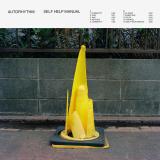
/// First track, Symmetry, debuted on BBC Radio 6 New Music Fix, 10th February: "A beautiful, beautiful album" /// I got my life back. On 17 February 2025, 1024 rays of ultra sound converged at an operation table in Bern, Switzerland, and disconnected a noisy circuit on my brain. 90% of the manifestation ceased – of a disease that I no longer wish to mention by its name. During the same period, I completed my new album: Self Help Manual. I’ve read more current research about the nameless disease than my neurologist, who despite that I didn’t follow his advice on suitable treatment, called me after the successful operation: a brave, brave man. I have composed the music in the same way as in my previous album – Songs for the Nervous System – through layers upon layers of improvisations in dialogue with my synthesizers, most of which are the same age as me. I made the majority of the songs in my studio in the remains of Old Hagalund in Solna. I edited the recordings in my bed during the waking hours of clarity at night. Some songs – NAC, Ketosis, Overkill – were recorded in the basement of my childhood home in Skutskär, in Norduppland, where I’d returned to be nurtured by my retired parents – who during a night when I couldn’t turn over in bed, or pull the blanket over me – made a list of what would happen to my belongings. To my friends who have stood out with me despite my disease, I want to state: you will not inherit me yet. On the new album, the electric bass takes on a leading role. ESG and Liquid Liquid have been important when I reinvented my baselines, limited and liberated by my poor fine motor skills. Plasma is my homage to Summertime Rolls by Jane’s Addiction, that I listened to frequently in my youth. I guess that no one will hear the resemblance. In several songs, the Fender Rhodes plays an important role, a magical instrument that I bought shortly after my diagnosis over a decade ago, and for a long time didn’t dare to touch out of respect for Herbie Hancock and Fela Kuti. A couple of songs draw inspiration from the Horn of Africa – Inner Nile and Delta. At first, subconsciously in the reverb-drenched Inner Nile, then more consciously in Delta. I’m sorry it doesn’t swing the right way, but it was my attempt to return to the cradle of humanity. Longevity is possibly my favourite. The melody is played by an arpeggiator that I controlled by pressing down different keys in an exhilarating sense of freedom. One song in particular, the second track – One – has caused friends to associate freely: one thought it sounded like Patrick Cowley, another like Sly & Robbie meets Kraftwerk, a third like Air – Moonlight Safari. I made one song just before the surgery: opening track Symmetry. It’s the mightiest and most minimal song. I made one song after the surgery: finishing track Self Help Manual. My previous medication pump is heard through the microphone of my Ovation Magnum. It’s the most hopeful song on the album. I took the cover photos with my Hasselblad during walks in Tokyo suburbs of Ōmori and Kamata more than ten years ago. It was something about the faith of the traffic cones that fascinated me – born in the same streamlined form, they had over the years become increasingly individual and lovable. The mixing was finalized by Christoffer Roth in the newly built Studio Dubious in Nacka. Rashad Becker, who in an interview said that he listens as much with his mouth as with his ears, mastered the album at Clunk in Berlin. Right now it feels like anything is possible. My recovery is perhaps a small step for mankind, but a giant leap for me. I hereby leave the music to you. Joakim Forsgren
Jorge Ben is someone who needs no introduction. Since his first hits in the early 60s, this the greatest icons of the greatest icons of Brazilian pop music. His anthems 'Mais Que Nada' or 'Pais Tropical' are among two of the most ever listened Brazilian songs of all time. Ben's self-titled 1969 album is a true samba-soul masterpiece from one of Brazil's most creative voices. This isn't your typical late-'60s LP: Jorge Ben blends the hypnotic swing of samba with funk, psychedelia, and sun-soaked soul in a way that feels both classic and ahead of its time. Released in November 1969, this was Jorge Ben's sixth studio record, and his first back with the Philips label after a creative hiatus. He recorded it with the tight-knit, percussive groove of Trio Mocoto -- whose rhythms lock in beautifully with Ben's laid-back guitar and vocals. On top of that, the album features lush orchestral arrangements from Jose Briamonte and Rogerio Duprat, adding a soaring, psychedelic dimension to Ben's sound. Standout tracks? You've got the joyous anthem 'Pais Tropical', a perfect celebration of Brazilian life.
Then there's 'Take It Easy My Brother Charles', a socially conscious number that tells the story of a rebellious sailor -- Ben weaves in themes of race, identity, and resilience. And songs like 'Que Pena' bring in that sweet, soulful melancholy, while breezy cuts like 'Criola', 'Domingas', and 'Barbarella' highlight his playful, poetic side. This record is a rare blend of genres -- samba, soul, funk, psychedelia -- and it's got a timeless energy. Whether you're already into Brazilian music or just looking for something fresh and soulful, Jorge Ben's 1969 album is a joyous entry point. Reissue on 180g vinyl.
Vinyl packaging includes 12" gatefold vinyl with matte UV and spot gloss finish, 2x black vinyl, dust sleeves, and digital download card. In the year 2000, Brother Ali Joined Rhymesayers with a self-produced demo called Rites of Passage. Three years later Ali took the underground by storm with an undeniable stage presence and his critically acclaimed debut full-length Shadows On The Sun. The impact was unquestionable and that next year Ali solidified his place amongst the independent Hip Hop elite with the release of 2004's The Champion EP. Like deja vu, here we are three years later and Ali is ready to take the world by storm with his latest creation. After struggling through a series of personal roadblocks, from parting ways with his wife of 10 years, becoming homeless and trying to secure custody of his only son... Brother Ali along with Atmosphere producer and Shadows & Champion collaborator Ant, present the long awaited sophomore full-length album The Undisputed Truth. Personal, political and more powerful than ever, simply put, the truth is here. "I wanted to make an album that gives you no choice but to feel what im saying at that given time", Ali explains of The Undisputed Truth. "I made choices that sent me through a lot of struggle in the past few years and Ant and I have made music that really communicates the exact feeling of those situations." -Brother Ali
The world of discovering Soul music and artists can lead to sheer moments of jubilation. The thought of igniting a long lost sound, reviving the energy of a once exuberant individual . But not every story that's told is filled with joy. Some are peppered along the way with struggles and heartache. Over time artists have battled with over powering label owners, record executives who just don't back what you do. The story of Tommy Hill is one such story. Tommy along with friend and longtime collaborator Ricky Tarbo had a deal with Motown records back in the early 1980's which turned sour very quickly. His release "Flame"/"Super Star Of Love' was dropped pretty quickly with no promotion and record boss Sylvia Rhône calling the shots within the duo questioning skin colour within the group and even trying to get vocals wiped off the release to sabotage it.
This said the single didn't amount to much and nothing else was recorded for Motown records. The duo did record some 4 demo's in LA before Tommy headed to re-record them again in New York circa 1982.
The A side has never been released until now, which is such a crying shame as the quality is so damn good. It's an uptempo boogie cut called "All My Love" which we gave a sexy 45 mix so you get some slamming synth work half way in. Tommy Hill's vocal range is nothing but astonishing. Just check out the 2 step ballad of "Can't Get Over You", which was recorded and released back in 1980 by The James Simpson penetration Band written by Tommy Hill, who went back into the studio 2 years later to give the song much more depth not only within the production but also to his vocal range. Tommy Hill headed back to LA after not securing a record deal and a few years later tried to get this singing career back on track. Like many of the artists who have moved on to a higher place Tommy succumbed to his own mental health issues and took his life. We hope this record does you proud Tommy Hill
Red and Black Galaxy Vinyl. Kmoe is a young Canadian artist who emerged from the 2021 SoundCloud/Discord scene. Kmoe blends hyperpop and glitchy production with catchy indie-pop melodies and pitched up vocals. His sound is characterized as a "modern-day romantic" take on electronic music, heavily influenced by shoegaze, hip hop and experimental pop.
4/5 Mojo review: ‘Sparse, hypnotic big-room techno that builds from the bass drum up
Double LP is released on 140gm black vinyl in a transparent gloss foil sleeve, artwork and design by Ian Anderson for Designers Republic. Circuitry Electronic launches with a release that stands as a statement of intent - an artist with few true peers within English electronic music, with an album that jumps out of the speakers and slaps you around the chops. G-Man is Gez Varley - one half of Sheffield pioneers LFO, and thirty years into his solo career, with his first vinyl album release since Avanti on Force Inc way back in 2002. Speaking to DJ magazine in 2014 Gez recalled his early days working with Mark Bell as LFO: “We were influenced by groups like 808 State. Unique 3, Nightmares On Wax and also stuff like Kraftwerk, Detroit techno and early electro. So when we first hooked up and made tunes together we just wanted to rock the dancefloor at our local club The Warehouse”.
Their eponymous track ‘LFO’ – a classic of the bleep and bass techno movement – was one of the first releases on the Warp label, gate- crashing the UK’s Top 20 whilst annoying Simon Mayo along the way. Having worked with the likes of Richie Hawtin, Karl Bartos, Laurent Garnier, Art of Noise, Radiohead, YMO and Alan Wilder, in addition to the LFO output, you'd expect Gez to know his way around a techno dancefloor rhythm and drum pattern, and this is an inventive funk-filled journey that never veers too far into experimental territory yet avoids the cliches and generic tropes that too often lose the listener when techno manifests in album form.
One of the most innovative and ambitious albums ever made, Genioh Yamashirogumi’s Ecophony Rinne is a sonic masterpiece featuring over 200 musicians that expanded the limits of what music and sound could do.
Before Akira there was Ecophony Rinne. Originally released in 1986, Ecophony Rinne is a four-part symphony of “ecological music” by Geinoh Yamashirogumi that married ancient tradition with technological innovation, and changed the way we listen to music in the process.
Half-speed mastered at Abbey Road by Miles Showell, Time Capsule’s high-tech analogue reissue is the first to reproduce composer Ōhashi’s ground-breaking “Hypersonic Effect” theory on vinyl, cutting frequencies beyond the realm of human hearing into wax to capture the full spectrum emotional impact of this extraordinary work.
Founded by genius polymath Tsutomu Ōhashi aka Shoji Yamashiro, Geinoh Yamashirogumi is a shapeshifting collective of over a hundred members from across disciplines. Rejecting professional musicianship, Ōhashi cultivated an ethos where neuroscientists, psychologists, doctors, journalists, engineers and students could critique society through artistic expression and pursue their research in ethnomusicological performances that spanned global traditions, Eastern spirituality and Western classical form.
Ecophony Rinne represents the pinnacle of this vision - an expansive orchestral suite made with over 200 musicians that channeled Ōhashi’s thinking about mankind’s relationship with nature, and fundamental questions of life, death and rebirth.
Here pipe organ synths made from sampled Tibetan horns sit alongside field recordings from Central African forests, Buddhist mantras circle dummy head microphones, Javanese Jegog percussion ensembles pulse like verdant ecosystems, and the acoustics of temples, caves and landscapes are conveyed in the mix. Weaving together culture, nature and technology, it is a record that vibrates with the polyphony of life on Earth.
But Ecophony Rinne was not only musically innovative. Noticing the difference between vinyl and CD versions of the album where digital reproduction limited the sound, Ōhashi developed a theory of “Hypersonic Effect”, determining that ultra-high frequencies above 20khz can impact human perception even if they are inaudible. At once a physical and a psychological experience, to listen to Ecophony Rinne is to feel music differently.
The rest is history. After its release, Ōhashi was approached by director Katsuhiro Ōtomo to produce the soundtrack for Akira, the work for which Geinoh Yamashirogumi is best known. Emerging from the shadows at last, Ecophony Rinne was its transcendental blueprint, reissued in its most complete hypersonic form on vinyl for the first time.
Rather than describe nature, Ecophony Rinne embodied it. Rather than reflect culture, Ecophony Rinne defined it. Rather than explore technology, Ecophony Rinne changed it. As a work of art, it is more relevant than ever. You won’t have heard anything like it.
I first encountered Pascal Comelade’s music thirty years ago—and nothing has sounded quite the same since. I was immediately captivated: he is an artist like no other, whose sincere and selfless love of music is always evident, especially in his tender reworkings of other people’s songs.
Comelade seems to work like a watchmaker: meticulous, precise, and obsessive—yet always drifting into something dreamlike. His music opens hidden doors, telling strange and beguiling stories filled with obscurity, kindness, and reserved humour.
Back then, my fascination was instinctive. Today, with a few more words at my disposal, I look to this exceptional 70-year-old French musician and feel exactly the same pull.
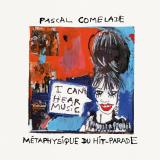
Métaphysique Du Hit-Parade is the first vinyl compilation devoted to Pascal Comelade’s favourite cover versions. It spans a forty-year career and traces sixty years of rock and roll history along the way. “Sheena Is a Punk Rocker” becomes a soft, soothing lullaby that may well have made the Ramones weep. Then there are his idiosyncratic tributes to Jonathan Richman (“Egyptian Reggae”) and The Kinks (“Sunny Afternoon”), alongside nods to formative heroes such as The Gun Club, Captain Beefheart, and MC5.
Two exclusive recordings stand out particularly: Bob Dylan’s “Girl from the North Country” and Nirvana’s “Come As You Are”—a song that shaped my early youth. Both were recorded especially for this release.
“Ed Spinning” is straight 90’s hip-hop beats, pressed on 7"vinyl.
This project hits like the old party mixes: heavy looping beats, vocals that stick in your head, edits made for DJs back when digital wasn’t a thing (shoutout AV8 series).
For these two new volumes, Ugly Mac Beer is on the boards. Two tracks per side: vocal on the A-side, full instrumental on the B-side, plus drum loops dropping right from the jump. Raw boom bap, lo-fi heat, the way it used to be — for the real heads.
Titles and visuals nod to the BMW E30 and spinning: endless loops, burnouts, tires smoking, just like the beats blazing on the turntables.
“The beat has to follow the movement, never the fashion.”
"Life & Death has been a bucketlist label for me since day one. I've always been inspired by the way DJ Tennis approaches music and the whole philosophy around the label. What always stood out to me is the variety in the releases. One record can be deep and emotional, the next one raw and club-focused, but it still feels like it belongs to the same world. That balance is something I am always chasing in my music. Next to this: in a world that is focussed more and more on short term wins and commercial performance, i really can tell that Tennis still values the art and process of making music the most, which is something i really appreciate"
I remember hearing him play at Circoloco in Ibiza and later in the Loft in Amsterdam and thinking: 'fuck, I should've send him the tune I made last week.' When I came back home, I immediately put together a pack of tracks to send to him. Two were released as part of the Fabric release, and 4 of them are on this EP.
For me, this release is a next step in my career, and I'm happy and proud to be part of a label that is both legendary and super relevant in 2026."
Jess Sah Bi is well-known as half of the legendary duo Jess Sah Bi & Peter One who brought homegrown Country-Americana to the West African masses with their smash debut Our Garden Needs Its Flowers in the mid-1980s. Touring stadiums and reaching listeners worldwide, their music has racked up millions of spins on YouTube and remains imprinted in the hearts of Ivorians of a certain age. ATFA reissued their album in 2018, garnering critical acclaim from publications including Pitchfork and Rolling Stone and reaching a new generation of listeners outside Ivory Coast (Cote d'Ivoire). Sometime in the early 90s, Die Sahbi - or Jesse, as he known to friends-became gravely ill with an unknown ailment and almost died. He visited various doctors and all kinds of religious healers and nothing helped. One day he went down to an Evangelical Christian revival in his neighborhood. They prayed over him and he was delivered. He says, "Their prayers helped chase out whatever demons and unhealthy spirits were inside me. After that my illness went away. When I went to the United States a few months later on an exchange program I wanted to make music to thank God because I was saved." He recorded an album of music praising God in order to honor a promise he made to himself at the depths of his desperation in the hospital. The album Jesus-Christ Ne Deçoit Pas Jesus Christ Does Not Let Us Down came out in 1991 and sold around 3000 cassettes in Ivory Coast. The master tape was lost along the way so the recording has never been on digital platforms until now. Jesse didn't have much time to record while visiting South Carolina, hence the relatively short album, 6 songs including two reprises for filler. A local pastor connected him with a studio and some American musicians (Robert Fortner and Gary Davis) to help. They added acoustic guitar, percussion and keyboard accompaniment to Jesse's soaring French and Gouro vocals, harmonica and finger-picked acoustic. The resulting recording is deeply soothing and contemplative music that perfectly compliments the songs already embraced by millions. But he had to find the rest of the studio expenses-$600 total-which he secured drawing cartoons for UNICEF. Jesse is Ivory Coast's first political cartoonist, a vocation for which he was widely celebrated at the time. It also made him a few enemies which lead to him leaving the country permanently a few years later. Jesus-Christ Ne Deçoit Pas is Jess Sah Bi's first and only gospel album. Fortunately, fans responded with enthusiasm: widespread radio airplay and concerts followed, along with a growing solo profile in the country. The first big gospel artists in Ivory Coast were the duo Mathieu et Constance, who emerged in 1989. There was a bigger gospel music movement in English-speaking counties like Ghana and Nigeria (Christians make up roughly 40% of the population in Ivory Coast, slightly less than Muslims). Jesse didn't have any intention of working in Christian music but he realized, "You don't make music to make money-you want to send a message." In the years since Jesus-Christ's release, gospel music in Ivory Coast has grown to become a key part of music culture in the country. Spiritual music appears in community actives across the public and private spectrum from religious gatherings and parties to television broadcasts and music festivals. And, as it has evolved and indigenized locally, gospel music has picked up elements of traditional Ivorian music, reggae and soul. The album ultimately precipitated the demise of the duo, who were soon separated geographically as Peter One relocated to Nashville. He went on to become a nurse and release a successful solo album on Verve following the ATFA collaboration. Nowadays Jesse lives in the Bay Area and continues to record and perform music wherever and whenever he has the chance. He is publishing a new book of humorous cartoons in 2025 and his most recent album Never Give Up came out in 2020
Paul Weller releases Weller At The BBC (Vol.2) on Friday 24th April.
This second BBC outing gathers live session and live in concert performances, including intimate stripped back acoustic versions and re-workings of tracks across The Jam, The Style Council and Paul’s extensive solo career.
From timeless classics such as Start!, Shout To The Top and Wild Wood, to deep cuts and covers, like The Zombies’ Time Of The Season and Billie Eilish’s What Was I Made For?
The album also features some beautifully orchestrated tracks with the London Metropolitan Orchestra, arranged and conducted by Hannah Peel, including Aspects, Boy About Town and Have You Ever Had It Blue.
Clairvoyant Dimensions is the first album by Mei Honeycomb, a new duo of Jordan Czamanski, renowned as a member of the acclaimed Juju & Jordash and the Magic Mountain High project, with solo work released as Jordan GCZ, and legendary saxophonist Jeff Hollie, known mostly for his work with Frank Zappa and Ike Willis. An explorative ambient album, Clairvoyant Dimensions is an exercise in distance and contemplation, and the exhilarating feeling of insight, however fleeting, like staring at the midnight flicker of an old VCR. Czamanski's music has a trademark tenderness and soft-spokenness, an ability to maximize minimalist musical elements and bring them to an open-ended conclusion. Jeff Hollie provides interpretative sax lines on all tracks, slipping into the scene like a shadow, silent and unexpected, touching upon emotional registers almost explicit, yet confounding.
As musical signifiers keep turning around themselves, they set up a mood of euphoria, one that suggests understanding. Never explicitly spaced-out, there is continuous reference to cosmoses both inward and far away. Ambient music in modern form. Jordan Czamanski uses his experience in producing off-the-charts club music to come up with five tracks that at times are standstills, and at times dwell in forward momentum. Jeff Hollie provides both comprehension and beautiful confusion. As grainy images switch into focus, Clairvoyant Dimensions is a beautiful and contemplative trip that suggests its own reality in delicate ways. One of the five tracks, the gorgeous live-recorded Painted Desert Pastel, features composer, performer, and researcher Ilya Ziblat Shay on double bass and electronics.
Screen-printed cover designed by Johan Kauth.
Mastering by Rashad Becker
Agent By Default In Hybrid Systems' is a deep dive into today’s and tomorrow’s society. Across four tightly constructed tracks, cinematic-surrealist musician and DJ JessyJiggy reflects on how mankind and machine-driven systems coexist and evolve. We act, respond, and adapt as agents by default caught between instinct and structure. Built for movement yet rooted in observation, every progression feels less like a command and more like a suggestion inviting listeners to negotiate their own place inside the grid.
This poetic concept translates into music where analogue and digital tools merge into a hybrid sound. Compositions carry an almost automatic rhythm that drives motion while sound design elements subtly reference modern technology. Raw, bass-driven, minimal and techno showcase the breadth and progressiveness of Rotterdam with its brutalist spirit embedded in every detail.
Carefully mixed and mastered by Simon Lescure, who works at the intersection of sound design, club culture, and contemporary art, the record is optimized for a wide spectrum of sound systems while offering a distinct, full-bodied experience on the dance floor. With his vision of music as a system of memory and tension, a way to hold time and transmit presence, raw energy is brought into focus, shaping JessyJiggy's signature sound with clarity, weight, and intent.
A work committed to pushing boundaries and contributing something lasting to the electronic music landscape, this record is crafted to become a cult classic.
Parris returns to his and Call Super’s can you feel the sun imprint with Drippin’. A four-track love letter to the amber-lit glow of communal field maneuvers in the dusk on his most house-focused and personal release yet.
Continuing the themes explored on 2024’s Passionfruit EP, Parris embarks further down his unparalleled sound path on Drippin’. His latest solo outing draws inspiration from vivid memories of yesteryear, particularly experiences at Watching Trees Festival and various trips to Amsterdam, and subsequently constructed with friends in mind to play out. The resulting four tracks encompasses some of his most intimate material to date.
The title track bursts with measured fervour and a raptor-like throb, percussive configurations in tight pistons which induce rave friction hysterics across the dancefloor melee. Got Me Feelin’ dramatically switches tact, a sentimental roller entangled in swooning pads and R’n’B vocals while swigging lovingly from the ecky spring. True Vargo stomps further with acute hedonism, a sun-descending swooner that flows effortlessly in melodic serenity. Closer Crooning In The Trees leans most wayward, an evolving scene architected by Parris’ uncanny samples and disassociated groove that purrs with wide-eyed wonder. Another stand-out release from one of UK club’s most unique voices.
This relatively new Stockholm duo have been making waves with their latest vinyl output. This EP conveys their love for the disco house sounds of Chicago, spearheaded by the likes of DJ Sneak. ‘Spoon Bait’ leads the way using an almost dreamlike vocal hook over a deep bass led groove with dub effects to boot. ‘Tuborg Translate’ picks up the tempo, chopping up a Philly style hook, underpinned by crisp beats and otherworldly space effects. Title track ‘Silja Line Superstar’ keeps the peak-time action going utilising warm emotive strings and brass whilst ‘Kenneth Knaster’ bounces along on a sublime disco ride bringing the EP to a close.
A new EP by Extrawelt is always something special, as they continually manage to reinvent themselves while remaining unmistakably true to their sound. The a-side „Moonster“ of their latest record forms a subtle and almost magical bridge to early musical influences such as Immortal Coil, Chris & Cosey, The Cure, and Throbbing Gristle.
In doing so, they reclaim, or rather reintroduce, a powerful, mystical element into their music, one that is integrated so naturally it feels as if it has always been an essential part of Extrawelt’s sonic DNA. Beyond that, the track unfolds through numerous facets, constantly shifting and evolving. Just when you think it is settling into a familiar direction, small variations emerge, keeping the piece remarkably alive and unpredictable.
You can clearly sense how much fun Extrawelt had working on this track. It is bursting with ideas, energy, and vitality, radiating a playful confidence that makes it endlessly engaging.
The b1 track „Bettermaker“ takes a different route, dedicating itself entirely to a single mood. Through subtle pitch bending and a carefully shaped tonal palette, the track unfolds with a slightly eerie, enchanted atmosphere.
From beginning to end, „Bettermaker“ remains focused and unwavering. There are no breaks or dramatic shifts in direction, instead, the piece commits fully to its initial setting. A monolithic, almost mantra like motif forms the core, creating a distinctive ambience, mystical, shadowy and faintly oriental in character.
This atmosphere is carried and reinforced by percussive, ethno inspired drums, which add an organic, ritualistic pulse. The result is a hypnotic soundscape that draws its strength from consistency and depth rather than contrast, inviting the listener into a secluded, otherworldly space.
The final piece of the EP „Popcorn Forever“ reveals another side of Extrawelt’s thinking. The track unfolds like a curious experiment in motion. Instead of building toward a predictable climax, sounds are gradually tossed into an ever running loop fragments, textures and small rhythmic ideas appearing almost casually, as if the piece were assembling itself in real time.
At first the elements seem loosely connected, sometimes abstract, sometimes slightly mischievous in the way they twist and bend. It almost feels like an impossible construction task. But Extrawelt’s experience quietly guides the process. Bit by bit the scattered parts begin to communicate with each other.
Repetition becomes the hidden engine. With every return of the loop new details slip into the structure, and what once appeared random slowly starts forming relationships inside the listener’s mind. The track never forces a clear explanation, yet the brain begins to tie the loose ends together almost automatically.
Popcorn Forever therefore works beautifully as a kind of transit piece within the EP. It moves between ideas, linking moods rather than closing them off. In typical Extrawelt fashion, the result is playful, slightly surreal and full of subtle discoveries that reveal themselves over time.
With Get Together III, the journey moves into its next chapter, as four artists come together once again to bring the many colors of electronic music to life.
modul808 opens the journey with deep, warm chords and a driving groove that instantly pulls the listener into the depths of its sonic landscape. In “Kamuro”, shimmering details line the explorer’s path, while the magical vocals of Igor Pose are elegantly woven into the arrangement, creating a dense and hypnotic atmosphere. With “Habits”, Heidmann continues the journey in a similarly groovy fashion, leading the way to sunlit clearings filled with memorable melodic gems. Cie effortlessly picks up the uplifting mood on the B-side, where the magnificent “Schlosshotel” unfolds with majestic chords and shimmering strings, inviting every house lover to stay for a while.
Finally, the journey home begins with Dip’s “Module”, which follows a deep path once more, uncovering sparkling sonic secrets along the way.
Together, the four tracks form another chapter in the Get Together series - a warm and timeless deep house journey shaped by four distinct artistic voices.
Mit Get Together III geht die Reise in ihr nächstes Kapitel: Vier Künstler kommen erneut zusammen und bringen die vielfältigen Farben elektronischer Musik zum Leuchten.
modul808 eröffnet die Reise mit tiefen, warmen Chords und einem treibenden Groove, der den Hörer sofort in die Tiefen seiner Klangwelt zieht. In „Kamuro“ säumen glitzernde Details den Weg des Entdeckers, während die magischen Vocals von Igor Pose elegant in das Arrangement verwoben sind und eine dichte, hypnotische Atmosphäre entstehen lassen. Mit „Habits“ führt Heidmann die Reise ebenso groovig fort und öffnet den Weg zu sonnendurchfluteten Lichtungen voller einprägsamer melodischer Klangperlen. Die gute Laune greift Cie auf der B-Seite mühelos auf: Vor ihm erhebt sich das prächtige „Schlosshotel“, das mit majestätischen Chords und schimmernden Strings jeden House Liebhaber zum Verweilen einlädt. Beschwingt beginnt schließlich die Heimreise mit Dip’s „Module“, das erneut einen deepen Pfad einschlägt und auf seinem Weg funkelnde klangliche Geheimnisse offenbart. So entsteht ein weiteres stimmiges Kapitel der Get Together-Reihe - vier Künstler, vier Perspektiven und eine gemeinsame Reise durch warme, zeitlose Deep-House-Landschaften.
Early DJ Feedback:
Christian Seitz / Show "Neuland" on Radio Z
A beautiful compilation that brings together deepness and dancefloor
Sebastian / f.a.r.e.s / Bass And Space
Great EP, thanks!
ed2000 / Dangerous Drums, Cashmere Radio, Face Radio, dub intervention
Very nice set of tracks, support and thanks radio and dj set plays.
Sasha / Circus Recordings, Renaissance, Global Underground
Cool from Cie
Anthony Pappa / Selador / Renaissance
Nice tunes. Thank you.
Timo Maas / Cocoon Recordings, Crosstown Rebels, Rockets and Ponies, Mobilee, Moon
Harbour, Tenampa, etc etc
Nice Heidmann
Stéphane Chambord / Radio Resonance ("DeeJay Academy" Radio Show)
repérages : Kamuro & Habits je prépare une émission spéciale avec un mix des productions du label
Cyprien Rose / Lui, Houz-Motik, Waxdoesmatter
Amazing > Modul808 - Kamuro feat. Igor Pose
Rob Zile / Brain Food Radio (Kiss FM) / Brain Food Records
Great deep tunes
John Digweed / Bedrock Records
Downloading
T. Carlita / In My House
Good Vibe
Laurent / WTM
Another wtm's playlist is coming soon…;)
Douglas Arellanes / Radio 1
Cool chilled out vibe on this record.
Valerio Vaudano
I like "Kamuro" and "Habits". Will try these warming up the dance floor. thx for sending
Stuart Bruce / Chain DLK
Downloading for possible review on ChainDK
Noah Pred / Thoughtless, Biotop, Highgrade
Some nice ones here, thanks.
Ninu / Hipodrome
I like Habits
BARRcode / Backseat Mafia
Solid release.
Carl Craig / Planet-E
dl 4 erno thx!
Ilario Alicante / Cocoon Recordings, Alphahouse, Bosconi, Prism
Downloading for Ilario Alicante, thanks for the music!
Andrew Till / Machine, Fnoob
Cool dubbed out grooves ,,,Heidmann - Habits is my pick.
Ju / Upperberry
Dope =)
Kat Davids
nice and smooth!
Como Las Grecas / Kali Modernphase, Denis Yurgens, Alejandro Club, German MT, Como Las
Grecas
Deep mind in house groove. Interesting VA of deep house.
Dole & Kom / Death By Disco, Mixmag
Really liking Modul808's and Cie's traxxx Thank you
A. WandalHouz – Jazz Do it
Full 13 and a half minute ride, Wandalhouz wanted you to nab some quality use of your favorite material on this earth (vinyl) to its fullest potential. “Jazz Do It” sparks the same feeling and vibe as a sit in studio in session. Using a unique spacey Sci Fi sound creation as its main loop character, its main stand out is its big, bouncing fatty synth bass. Each introduced sound is eloquently placed upon its next, giving each individual sound its own time to welcome itself to the greater whole, and no moment is wasted. Each sound is playfully placed, perpetuating a bounce between the synths rubbing the low end frequencies, while the melodic pipe organ stabs shine bright through the ebbs and flows of sweeping fx to give it movement through the entire wave of sound. Its a driving deep, jazzy, and funky House track that truly encourages you to “Jazz Do It” on the dance floor, and as much as you can, for as long as you can.
B. Dj Mourad TD216 – Summer night talk
“Summer Night Talk” is Deep House cut that meets Electronic Jazz for a drink, at a Broken Beat art show, thats coming from the brain of a Techno OG, and Professor with years of producing, Djing, remixing, and sound design.
Mourad uses “Summer Night Talk” as his latest musical canvas. His machines are his paint brushes, and this song is his poem for its soundtrack. Mourad delivers thumping bass, peppy percussion, skippity snares, and fx that grab attention like poppin off fire crackers inside an art museum. Hypnotizing bass rumbles up your backside, creeps over your shoulders, and then whispers in your ear with a moist breath “Listen….” With each kick of the drum, each new brassy and chunky horn that graces your ear drum, you get further lost in the groove. His melody grab and spin you around, making you take another moment to catch your balance. “Summer Night Talk” is thumping and melodically techy in all the right ways to keep it deep, and true to its title.
This EP marks the first release from a collaborative project between Tokyo based DJ/producer Iori Wakasa and Okayama's Keita Sano, born from a quiet resonance between their musical sensibilities.
In Japan, the academic year begins in April. Though born in 1988 and 1989, the two artists belong to the same school-year cohort under this system, yet within Japan's gengo era structure they stand at the symbolic end of one era and the beginning of another. The title 'A Shift of Eras' points to the moment when one era gives way to the next, suggesting not only the passage of time, but the subtle renewal of culture, perception, and values.
'Filtered Jewels' draws from the image of light shimmering like gemstones, or a space scattered with countless jewels, perceived through an imagined filter that gently alters the way the scene reveals itself.
'Heaven's Door' envisions the ascent of a transparent staircase floating above a sea of clouds, leading toward a quietly resting emerald-green door.
'Shocking Yellow', originally created in response to a specific request, incorporates carefully placed vocal samples while grounding the track in warm, rounded low frequencies and organic textures, shaped with DJ use in mind.
And finally, 'Time To Change' was reconstructed repeatedly with the hope of offering both solace and a quiet sense of encouragement, ultimately becoming a piece that reflects the underlying theme of the EP.
Gap Mangione's monumentally influential Diana In The Autumn Wind. AKA BEWITH200LP. And, without question, Be With's White Whale.
They said it could never be done. And with good reason.
We've spent the past 12 years trying to license this legendary 1968 recording from Gap and, after much work, it's finally here. Remarkably, this is the first ever vinyl reissue of Gap Mangione's Diana In The Autumn Wind, produced with the full and extensive participation of Gap. An exceedingly rare album, it's been coveted by funk, soul, jazz and hip-hop sample fiends for decades.
It's unarguably *the* most sought after album for J Dilla / Madlib sample collectors. It has also been brilliantly sampled by A Tribe Called Quest, Large Professor, Ghostface Killah, Kendrick Lamar and Talib Kweli.
But this record is so much more than a sample-spotters curio. It's solid gold throughout. Bursting with killer funky-jazz grooves and tracks adorned with warm electric piano, the release is notable for featuring some extremely significant players at the very outset of their careers; Tony Levin, at 21, whose superb playing on both acoustic and electric bass was the harmonic mainstay of the trio and Steve Gadd, at 23, one of the greatest drummers of his generation.
With acceptable copies of this holy grail changing hands for $400, to call this reissue "much-needed" underplays just how vital it is. Gap's story is told in his words alongside rare photos across a sumptuously designed 2-page insert and, to augment this deluxe edition further, its all wrapped up in a beautiful, no-expense-spared luxury tip-on sleeve, as per the original hens-teeth release. And, while we're talking packaging, just take a look at that cover - a work of art in and of itself.
The tracks are short but complex, with that extraordinary rhythm section backing the beautiful piano, organ and electric piano work of Gap. It's like the best ever library funk breaks record you never heard - but all your favourite golden age rap producers were all over it, long ago. It's a stunning blend of the vibrant, driving music of the Gap Mangione Trio coupled with the sensitive composition and superb orchestration of Gap's legendary brother, Chuck Mangione, who helmed an amalgam of seemingly disparate elements – rock, big band jazz, solo improvisation and "classical" music - into a spectacularly cohesive whole that has aged wonderfully well. As Gap himself notes in the liners, "with this group I was able to explore and add new and exciting elements from rock, Brazilian and then-current pop music."
Opener "Boy With Toys" triumphantly swaggers out the gate, all big band horns, flutes and dextrous organ work. The synthesis of everything going on is nothing short of stunning. When one wise YouTube commentator called this tune "old school superhero music", Gap agreed. Rap luminaries did, too, amongst them Talib Kweli, who rapped over DJ Scratch's chopped up intro for "Shock Body" on his Quality album back in 2002.
You've barely recovered from that incredibly affecting opener when you get hit over the head with the exquisite title-track. And now you see how two of the greatest beats of all time emerged from one single track produced nearly 50 years earlier. Unforgettably utilised by Dilla for Slum Village's heartbreakingly good "Fall In Love" and then Madlib for his "Official" beat for Dilla to rap over, on the Jaylib record. Regardless of the records it went on to spawn, this is just a staggering tune in its own right. Be beguiled by the flutes and the flutter tonguing, the counter-melody from the trombones, the soprano sax solo. All of it. Simply beautiful.
The questing organ and horn workout "Long Hair Soulful" deserves a lot more attention, overshadowed somewhat by the opening two monsters but no less fantastic. It swings, it grooves and Gadd and Levin truly cook. Up next, Gap's wonderfully percussive, mellifluously piano-heavy cover of "Yesterday" by some fellas called The Beatles. It's a subtly arresting gem. "The XIth Commandment" is damn fine, with thick, gorgeous electric piano and snappy drum work underpinning chaotic soundtracky horns. To close out the side, "St. Thomas" showcases the "fourth" member of the Gap Mangione Trio, conga drummer Dhui Mandingo. Having performed with the Trio since 1965, Dhui‘s African-based and jazz-latin-influenced style amazed listeners and its way to hear why.
Opening the B-Side, standard "You're Nobody Till Somebody Loves You" breezes along in the late-night jazz club fashion before things get super deep with the outstanding and - up to now - un-sampled "Pond With Swans". It's simply heavenly, and how its moody, melancholic intro has yet to be pilfered is anybody's guess. It oscillates between gentle, sombre movements and bombastic grooves, equally hypnotic and joyous. The rendition of "You Are My Sunshine" is yet another showcase for Gap's virtuoso playing and Gadd's mastery of the pocket. Indeed Gadd's drumming on "Free Again" is nothing short of neck-SNAPPING! Ghostface took it for not one but two "Iron's Theme" tracks across his seminal Supreme Clientele. It's got that Galt MacDermot "Coffee Cold" feel. Suuuuuper cool. The frantic "Dream On Little Dreamer" hurtles along and must've surely had the whole room absolutely swinging from the chandeliers back in Rochester in the late 60s. The album closes with the magnificent Graduate Medley, featuring memorable renditions of "Scarborough Fair", "The Sounds of Silence" and "Mrs. Robinson". The warm electric piano lines of the former were sampled by The Ummah (Dilla again!) for Tribe's "Pad & Pen" from their reappraised final album, The Love Movement, as well as by Large Professor on his much-loved "The LP (For My People)".
Under the watchful eye - and extremely attentive ears - of Gap Mangione himself, the audio for Diana In The Autumn Wind has been carefully remastered by Be With regular Simon Francis, with a few much needed tweaks here and there, according to the artist's wishes. At the prestigious Abbey Road Studios, Cicely Balston's expert skills have made sure nothing is lost in the cut whilst the records have been pressed to the highest possible standard at the always stellar Record Industry in Holland. The artwork restoration has taken place here at Be With HQ and has that drop-dead gorgeous cover artwork popping like new. Buy on sight!
In discotheques and dark rooms across Europe, Boys’ Shorts have earned the trust of the queer and wider clubbing communities as generous stewards of a timeless sound that, like themselves, never stops moving forward. The duo of Vangelis and Tareq initially met at an underground club in their native Greece. Sensing a rare sonic connection, the pair became friends, forming Boys’ Shorts to meet again and again, travelling from their adopted cities of Thessaloniki and London to appear as far afield as Berlin’s Panorama Bar and New York’s Le Bain, as well as supporting Goldfrapp and Hot Chip on tour. Their motivation? In their own words, “we make people dance!”
Following years of gradual, thoughtful studio sessions, and EP releases on tastemaking electronic labels including Phantasy Sound and Live At Robert Johnson, Boys’ Shorts establish their own imprint, ALL SORTS, in order to deliver a fantastically ambitious debut album, ‘What Does It Take To Make These Men Happy?’
The LP opens with the grandiose, cosmic vista of ‘The Space Between Us’, a classic passage of strings and synthesis, before the shared Boys’ Shorts vision falls back to earthier territory with deep groove of ‘Let’s Fall In Love’, mixing universal sentiment with a patient vision of human potential and the voice of Greek electronic pioneer, K.BHTA. ‘Come’ aligns with NYC’s Michael Cignarale, offering an excitable invitation to the mind and body sculpted by the way of a throbbing, warehouse-sized statement of nineties house sensuality. Channeling heroes Lowe and Tennant at their most introspective, ‘Short Life’ maintains the dance, yet dares to ask, “what if the parties aren’t enough anymore… Can you ask for something more?”
Out of the pet shop and straight into the strobe lights, ‘Disco Romantica’ makes true on the promise of its title, a lovelorn monologue giving way and slipping into rave stabs and whirring synthesis that looks forward to a memorable, emotionally-charged night ahead. Underpinning this feeling of anticipation, ‘Going Out Hoping To See You’ introduces the voice of Justin Strauss to Boys’ Shorts' musical world. A certified icon of club culture, spinning from The Mudd Club to modern day DJ booths, Strauss’s generation spanning experience of nightlife leans into the fundamentals of human connection and the pleasure of musical discovery, wrapped in irresistible chug.
Another transformative figure in club music, Fischerspooner’s own Casey Spooner dips into French for the Motorik cyber sleaze of ‘MECANIMAUX’, their own vocals pitching up and down with playful EBM abandon. ‘Montage’ offers a different kind of composition, conjuring an ecstatic club banger that finds inspiration in nineties indie rock motifs alongside the rave scene, while ‘Run’ promises to blow out sound systems before its weighty electro bassline succumbs to waves of glistening synths.
Such bombast into beauty perfectly sets up the record’s blissful conclusion; ‘The Stars Are Out For You’ is electro-pop so delicate as to heal aching feet (and mend broken hearts), while offering the final tender moments of the album as a form of tribute on ‘Untitled (For Mitsi)’. It’s a thoughtful ending to a thrilling trip through a shared passion for electronic and pop music in all its glorious potential. What does it take to make these men happy? It’s a pleasure to find out.
We're celebrating the 35th anniversary of Cherry Moon withan essential collection of the anthems that defined a generation. Hard to find tracks, classics and sounds from the underground combined in a splendid 10x12" Vinyl Box Set.
From the first beats of 1991 to the peak of the "House of House", this is the ultimate tribute to a legendary venue.
Guests is the home recording project of Jessica Higgins and Matthew Walkerdine. Vaguely named as such to avoid any problems with the poster if they pull out of a gig (which has only happened once, about a year and half before any songs were actually written to be fair) but also to capture a sense of reverse hospitality. That is, arriving at your door with a bottle of good wine (can’t turn up empty handed) or a fist full of savoury or sweet snacks (time of day dependant); oversharing at the afters (and then passing out on your couch); reading to your toddler while you make their lunch or put everything back where it was meant to go (only to get torn apart again). So, something about what happens when private worlds meet each other, making or having been made a space for. But at times, it’s a different kind of intimacy, a temporal or material one, like the feeling of crisp fresh sheets, and abundant and soft, body-part appropriate towels in a hotel in a city you’ve been to before and love to go back to.
Their debut record, “I wish I was special”, was variously described as “a collage of concrète experiments and outerzone pop gestures, music that sounds as if it’s been written from the depths of a dream”; “music for people who love music but also hate it too”; “something like chasing ghosts or befriending a wild animal”; “pulling apart nervous sensations with haphazard ease and requisite humour”; and “a melody of refusal, of being all-in (…) finding the exact right WRONG sound to express the discontent”. Common Domestic Bird continues in this vein, layering synthesiser, keyboards and samples over rudimentary drum rhythms and field recordings, which are in turn sung or spoken with to create nine new songs.
Written and recorded between autumn 2024 and summer 2025 in Reading, Berkshire, the music has matured since its last outing, in a way, leaning less into collage and more toward structured composition and melodic depth, yet retains a healthy dose of indeterminacy and off-kilter rhythms for the forever-amateur. The songs on Common Domestic Bird hint at some “about”-ness through a series of discrete vignettes which sound a bit like architecture or end of year lists, gossip or over-thinking subjectivity, like disappearances and impressions, the support structure of the spine, letters and signs offs, things you could really do without and where they should go, hoping you’ll see something that isn’t there, pretences and performance. At times they feel kind of funny, others kind of sad or a bit angry and annoyed, a bit like you really.
Death Is Not The End collaborate with Uzbek label Maqom Soul to deliver an LP counterpart to last year's mixtape of the same title, compiling specially picked & fully licensed individual belters from the ex-soviet studios of Central Asian republics between 1978 and 1989 - incl. Uzbek, Tajik, Kurdish & Uyghur artists pulling traditional folk motifs together with pop & rock and psych elements.
"These recordings do not form a smooth or coherent history. They feel more like a sequence of discoveries made at different moments and in different circumstances. Songs and instrumental pieces that once lived inside specific contexts radio broadcasts, philharmonic programs, touring routes now sit side by side, revealing hidden connections as well as clear fractures between them.
Nasiba Abdullaeva appears here as a voice from the end of an era. Trained within a conservatory system, she worked inside the format of the Soviet pop song while filling it with melodic logic that did not come from Moscow or Leningrad. Her voice is soft and sustained, shaped by Eastern melisma, and it never functions as decoration. Even in tightly structured songs there is a sense of resistance, an effort to preserve a musical language rooted in Uzbek tradition rather than fully adapted to an all Union standard.
The ensemble Sintez, later renamed Navo, represents a different path. Beginning as a student rock group, the band was gradually absorbed into the official VIA system with all its limitations and compromises. Yet it was precisely within those boundaries that Sintez and Navo developed a recognizable sound. Electric guitars and jazz rock harmonies do not overpower the folk material but remain in tension with it. Their recordings feel like negotiations between what the musicians wanted to play and what they were allowed to perform.
The Tajik ensemble Gulshan reflects an institutional approach carried to a high professional level. Formed under television and radio structures, the group treated folk material almost as a written score. Carefully constructed arrangements, close attention to orchestration, and restrained use of pop techniques define their sound. There is less spontaneity here, but a strong sense of discipline and structure, where national melody becomes part of a carefully controlled sonic framework.
Koma Wetan occupies a very different space. Formed in the 1970s, this Kurdish rock group approached poetry and folklore as tools of cultural assertion. Their psychedelic rock never feels like a stylistic borrowing. Instead it functions as a contemporary vessel for language and themes that might otherwise have remained unheard. Even today these recordings sound fragile and stubborn at the same time.
The Uyghur ensemble Yashlik, closely connected to a musical drama theatre, operated somewhere between stage performance and popular music. Their songs are built on folk melodies but shaped for wide audiences. What emerges is a constant attempt to preserve the recognizability of Uyghur musical identity without freezing it in a folkloric frame. Yashlik's music exists in a state of balance between representation and development.
Digging Central Asia does not attempt to establish hierarchies or offer a single wayof listening. Names and dates matter less than the sound itself. Tape noise, abrupt transitions, and unexpected timbres remain part of the material rather than flaws to be corrected. This music existed at the crossroads of multiple routes geographic, cultural, and ideological. Heard today in a new context, it no longer feels peripheral. Instead it stands as a reminder that the history of popular music is far more fragmented, layered, and polyphonic than it is usually allowed to be."
Ubisoft and Laced Records have forged a new trade alliance, expanding their economic tree to bring the lavish music of Anno 117: Pax Romana to glorious vinyl.
This vinyl set celebrates the ornate score for Ubisoft's richly detailed city builder, capturing the spirit and splendour of the Roman Empire at its peak. From the beautiful heartland of Latium to the mysterious Celtic wetlands of Albion (where no civilized Roman wants to be), every musical cue is steeped in world-building and crafted with remarkable care.
The outer sleeve features striking landscape art from the game, while the inner sleeves present detailed track lists framed with ornate motifs inspired by Roman architecture and pattern work. The result is a set that feels like a treasure from the imperial archives.
The soundtrack charts a journey across the empire, weaving together atmospheric strings, ancient-inspired instrumentation, and sweeping orchestral cues that capture both the serenity of prosperous provinces and the political tensions throughout. The music reflects every choice you, the governor, must make. Diplomacy or domination, tradition or transformation. An emotionally rich and immersive soundtrack worthy of Rome itself.
Mental baile future-funk.
Impossibly, round two ratchets through higher gears than round one. The cutting and scratching skills are brutally imperious, by turn eviscerating in split seconds a trembling flock of far-flung musical prey. Out of the wreckage looms the apotheosis of apocalyptic Techno Scratch terror; the ebulliently vengeful prophesy of forebears like Grand Wizzard Theodore and the Knights of the Turntable.
Blisteringly hot.
'A sequel. An escalation. Pressure spikes from bar one: future facing, low-latency. A firmware update for the body.
'Cuts bite into cuts. Fragments swarm, collide, die out. Drums stumble untile they speak; samples crop up without names and leave without warning. Momentum is the one and only rule. Unpredictable, gridless, post-genre.
'From Tik-Tok feed to vinyl: born digital, cut for the floor. The glitch grows a body, develops a nervous system.
'Match it or get out of the way. Damned be the ones that are stuck on tradition.'
Six years down the line we are welcoming back a very close friend of the label Aljaz who goes by the moniker Eliaz. The Slovenian resident of the infamous festival Butik is landing another EP on the label that is filled to the brim with roaring of his machines whom he controls like he controls his body and their sequences all combined + perfectly implemented with a lot of acid in the best possible way. As a society we have a mission in this world to connect to each other, that’s why this world is filled with so many opportunities and extra curriculum activities. This one is made to connect us with the extraterrestrial societies and it’s done so impeccably. Most likely after playing this record you will establish a contact with the other worlds. Do not panic, it is absolutely fine. How you will act after all this will depend on you, but sincere suggestion is to crank up the volume to the highest levels possible for our far away brothers and sisters to feel the rhythms loud & clear.
Black Label #36 is introducing Mladen Solomun to the Compost Black Label Crew. Solomun who was born in the heart of Bosnia, grew up and still lives in Hamburg. Beside his residency at "Uebel & Gefaehrlich" he is the host of Club "DIY" in his chosen hometown Hamburg since five years now. With his first releases on labels such as Diynamic Music, Sonar Kollektiv, Liebe*Detail and Steve Bug's Dessous Label his tracks were played and charted by DJs like Gabriel Ananda, DJ T., Tobi Neumann, Martin Landsky, Laurent Garnier, Tiger Stripes just to name a few.
For his Black Label debut Solomun has built three very deep and organic tracks.
In the spring of 1977, Millie Jackson was in Muscle Shoals, Alabama, laying down tracks for what became “Feelin’ Bitchy” with co-producer Brad Shapiro. Released in August 1977, the album reached #4 and #34 in America’s Billboard’s R&B and Hot 100, going gold with over 500,000 copies sold. Jackson’s cover of ‘If You’re Not Back In Love By Monday’ – already a hit for Merle Haggard in March 1977 – also reached #5 R&B and #43 in the Hot 100 in August. Although the album did not chart in the UK, “Feelin’ Bitchy” sold strongly to a dedicated fanbase who had voted her the #1 female singer in the Blues & Soul magazine annual poll. Jackson also performed much of the material on her sold-out UK dates in early 1978.
“Feelin’ Bitchy” was not only a commercial success, cementing Jackson’s no-nonsense reputation, but is now considered an all-time classic. Her rap on Benny Latimore’s ‘All The Way Lover’ stretched the original out like chewing gum to 10 minutes. “’Back In Love By Monday’ is a great song an’ that,” she told Black Echoes, “but it didn’t sell the album. ‘All The Way Lover’ sold the album.” Indeed it did, but other tracks like ‘A Little Taste Of Outside Love’ ‘Lovin’ Your Good Thing Away’, ‘Cheatin’ Is’ and ‘Feelin’ Like A Woman’ show that while Jackson’s tongue – front and centre on the LP cover – was always ready to hand out a lashing, it also helped her sing beautifully.
Ace are delighted to reissue “Feelin’ Bitchy’ on vinyl and Millie Jackson spoke to Ian Shirley about the recording of the album. This interview runs on an inner sleeve along with classic photographs of Jackson from this period.
Let's see now – you just love that hugely fertile foundation period of Jamaican pop music from the birth of ska, through the spectacularly brief two year heyday of rocksteady up to and including the arrival of the first incarnation of reggae a.k.a. early or 'boss' reggae. But you're also aware that the pioneers of these sounds (including The Pioneers!) won't be creating music in these styles or touring forever – so what do you do?
Well, if you're Neil Anderson, owner of Original Gravity Records, the creation bit isn't a problem. You put forth period-authentic style material from a 'roster' of acts – such as Junior Dell & The D-Lites - that in reality consist mostly of yourself (you are a multi-instrumentalist and lyricist after all!) and whichever extra musicians and session singer you rope in for a given track. In the case of Junior Dell & The D-Lites that singer was Adrian Dell – soon to be dubbed (no pun intended) 'Junior' - first appearing on 2021's uptempo ska tribute to Salvadoran retro-dancing internet sensation Aranivah, entitled Miss Aranivah. And you keep putting out stuff so profusely and effectively that there are clamours for you to tour 'the band' which - er - doesn't really exist. What a botheration! Still, maybe your session singer could become – well - a permanent singer? Maybe you can rustle up assorted bredren to become the rest of the band and...you know what? That might just work!
And so, in the blink of an eye, Junior Dell & The D-Lites becomes a bona fide actual live band fronted by a young Jamaican singer playing fresh 60s/70s-style Jamaican music with an energy last seen and heard in, well, the 1960s and 70s. And it tours so effectively that there are clamours for 'the band' – or more accurately, now – the band - to release an album. Wait...what now? And, by the way, you've got a European tour coming up in April wouldn't it be great if the album was ready to tour by then? Pressure drop? Pressure rise more like!
Then again, Junior Dell & The D-Lites have done so many sure-shot singles to date that assembling them along with a new cut, an extended version of one of the singles and re-recordings of two of the label's previous singles that were originally by 'label mates' The Regulators should be a cinch. So expect all the hits: bluebeat banger 20 Flight Ska, the euphoric ska bounce of the aforementioned Miss Aranivah and the title track, a de rigueur smattering of covers (opener Jump Around, midway markers Praise You and Just Can't Get Enough, and one of the re-recordings, closer Don't Look Back In Anger), early reggae groovers Cool Right Down, Last Night Reggay, Can't Stop The Reggae (in a new extended form) and crowd-pleasing new one Mi Try along with the other Junior Dell re-recording - the gorgeous Why Why Why which nods to the period of reggae between the sound of '69 and the arrival of roots.
Don't you brag and don't you boast but that's a Whole Lotta Skankin' going on! Do the ska, do the rocksteady, do the reggay, why– it's another scorcher!
Nicaraguan-American artist Dagmar Zuniga makes music that feels both intimate and expansive: songs drift like disrupted signals, carried by harmony, tape hiss, and a strong sense of touch. Her debut solo album in filth your mystery is kingdom / far smile peasant in yellow music — written and recorded in New York, Norway, and Athens, Georgia over a period of five years on her longtime companion, the Tascam 424 — was uploaded to Bandcamp and YouTube in January 2025, quickly garnering over two hundred thousand views and the attention of artists such as Mount Eerie, who invited her to tour with them that summer. This year, what was once a jewel of tapped-in algorithms and message boards will meet the world at large, with in filth arriving digitally on March 4, and physically on April 10, via AD 93.
in filth is an atmospheric, devotional collage where one voice multiplies into a chorus of selves, sometimes delicate, sometimes severe; an effect created by Zuniga’s masterful layering of texture and complex harmonies. Synths glitter out like spears of sunlight from beneath clouds of moody, time-distorted guitars, and songs spin about themselves like tightly-wound music boxes, making use of a kind of hypnotic repetition, before melting apart into their components or slipping into the following track.
Zuniga began recording to tape as a teenager, drawn to the physicality of the medium — how a tape recording is fragile, mutable, and alive. Though her ethereal sound may draw easy comparisons to other female pioneers of psychedelic folk, she is influenced just as much by the darker sounds of Syd Barrett and The Fall. Like Barrett, Zuniga is a painter, and she is interested not only in recording music but in creating a full, self-contained artistic universe: she creates her own artwork, merchandise, music videos, and bootleg tapes of new and unfinished music that she exclusively sells at live shows (“If something is not material, it does not exist,” she insists). Her world has not gone unvisited, garnering her a monthly show on NTS Radio ‘World of Pain’, as well as a forthcoming appearance at Rewire Festival in April 2026.
Though Zuniga’s work explores themes of solitude and suffering, the suffering in her songs is not borrowed or displayed; it is held, then opened outward through empathy — an exacting practice of attention that insists on shared ground. Solitude, in her work, is not withdrawal but a starting point for connection. Likewise, over time, her recording process has become increasingly communal, with in filth featuring musicians Hayes Hoey, Austyn Wohlers (Tomato Flower), and Zach Phillips (Fievel Is Glauque). Newer recordings widen the circle even more. For Zuniga, collaboration is a way to “find a place between worlds,” echoing Badiou’s idea of love as a vision refracted through the prism of difference. Meaning emerges there — in the space between voices, between artist and listener. “I hope my music helps people work through difficult experiences,” she says. “The same way it helps me.”
Engaging artistically with the unique oeuvre of the Pet Shops Boys through the form of cover versions is both an appealing and risky endeavour. Hundreds of such adaptations already exist, and covering songs is a complex undertaking, one that Neil Tennant and Chris Lowe themselves have mastered to perfection.
Exciting cover versions involve a skillful game of allusions and references, quotations and are entangled with personal as well as borrowed memories. Cover versions are homage, appropriation and interpretation — in many ways like adding letters in a Scrabble game: a new word, a new meaning emerge. Or, in the best case, a new song.
With her first debut EP ’Heart’, due for release in April 2026, Cat Storm dives into this labyrinth. It includes beguiling and intimate versions of 'Heart', ‘The Way It Used To Be’, ‘A Man Could Get Arrested’ and ‘Home And Dry’. The artist behind Cat Storm is Carmen Strzelecki. Born in Lörrach, raised in Mannheim and relocating to Cologne in the 1990s, Carmen has become an integral part of the Cologne art and culture scene since founding her publishing house ‘StrzeleckiBooks’ in 2009.
She produced her EP herself in collaboration with some of the grand masters of the Rhineland indie and electro aristocracy. The remixes by Christian Skrzypek, oskø and Clima ensure that it is well-suited for clubs.
Akusmi is the project moniker of French-born, London based composer, multi-instrumentalist and producer Pascal Bideau, who signs to the new Tonal Union imprint for the release of his album 'Fleeting Future.' With its hallucinatory, genre-defying blend of minimalism, cosmic jazz and Fourth World influences, and in its quest for optimism in the face of unknown and limitless possibility. 'Fleeting Future' stands apart as an inventive and inspirational debut.
The creation of the album's richly colourful and multi-layered sound world was originally inspired by Bideau's journey to Indonesia, where he immersed himself in traditional Gamelan and gong music. Many of the themes, motifs and melodies on 'Fleeting Future' seed from the 'Slendro' scale, one of the essential tuning systems used in Gamelan. However it is not musical scales, but scales as in the size or extent of things that most fascinates Bideau, specifically he explains; "the compelling way things dramatically change when you shift from any given scale to another."
The album connects directly to nature and the wider world in its evocation of perceptive shifts and transitions from microscopic to macro scale, as evidenced by the opening title track 'Fleeting Future', on which a simple dotted saxophone line morphs and billows into synths, brass and strings, indicating the musical voyage that lies ahead. Like the start of a journey or adventure it is full of anticipation, its arborescent growth conveying the optimism of the unknown and of limitless possibility. The album centrepiece 'Neo Tokyo' is a vibrating, ebullient mass of colliding elements which feels like zooming in to the electron level, as it teeters on the edge of chaos. The title is a reference to Katsuhiro Otomo's Akira, a dizzying work of art set in a sprawling futuristic metropolis.
'Yurikamome', meanwhile, is an imaginary soundtrack inspired by Bideau's yearning to visit Japan which he fuels by watching Youtube videos of drives and rides through Japanese landscapes and cities. "It's amazing" he adds, "that we have the ability to access almost anywhere in the world and see what it's like, that people document it and upload it. It's never going to be any replacement for the real thing, but with places that really touch you, it works." The track is named after a Japanese monorail train line which rides from Shinbashi to Toyosu, a last journey that feels like a new beginning.
'Fleeting Future' was composed and recorded by Bideau between 2017 and 2019 in his North London studio and features additional contributions recorded in Berlin by Florian Juncker (trombone), Ruth Velten (saxophone) and regular collaborator Daniel Brandt of Brandt Brauer Frick (drums / electronic percussion). Having been living through uncertain times, one thing that keeps spiralling into the unknown is the future, about which Bideau leaves us with a final thought:
"The future is fascinating: It is constantly readjusting to new events. I feel we left a linear approach to the future to enter an arborescent one where all the data and information we have about what could happen is exponentially ever-growing. Following a branch might allow you to glimpse into what it may become, but the evolution of the whole picture might very well render the prediction totally obsolete, and even meaningless. In that sense, there is not one future but innumerable ones all cancelling each other. That's what makes it fleeting."
This first-time reissue of Quinteplus’ 1971 album revives a key moment in Argentine jazz, featuring crisp trumpet and tenor sax, electric piano-driven funk and modal grooves, and a tight, spacious rhythm section. It showcases prominent figures like Jorge Anders and “Pocho” Lapouble.
==================================
Quinteplus was born in Buenos Aires at the end of the 1960s, emerging directly from the ideas and experiments of the legendary Agrupación Nuevo Jazz. Founded in the early ’60s, this collective brought together some of the most forward thinking figures in Argentine jazz functioned as a creative lab where musicians questioned where jazz could go next. Among the key ideas discussed was the fusion of jazz with Argentine folk styles such as zamba, chacarera, malambo, cueca, and candombe, as well as a deeper look into African rhythms as a bridge between musical worlds.
Two members of that collective, keyboardist Santiago Giacobbe and bassist Jorge “Negro” González, carried those ideas forward when they formed Quinteplus in 1969. The group came together naturally: all the musicians already knew each other and had played in different projects around the Buenos Aires scene. They shared a strong admiration for Julian “Cannonball” Adderley’s quintet, along with a clear goal—to develop a modern jazz language grounded in local Argentine rhythms.
From the start, Quinteplus stood out for its openness and adventurous spirit. Rhythm was central, and so was experimentation. The band belonged to a generation of Argentine jazz musicians eager to explore electric instruments and new textures, anticipating what would soon be known as jazz-rock. This was happening in Buenos Aires at the very same time Miles Davis was opening new doors with “In a Silent Way” and “Bitches Brew”. Giacobbe introduced one of the first Fender electric pianos in Argentina, while González pioneered the amplification of the upright bass and even developed a hybrid electric, boxless version of the instrument. Trumpeter Gustavo Bergalli, meanwhile, maintained close ties with the emerging Argentine rock scene, collaborating with Luis Alberto Spinetta and appearing on Almendra’s first album.
In 1971, Quinteplus recorded its first and only studio album for EMI. The original lineup featured Jorge Anders on tenor saxophone, Bergalli on trumpet, Giacobbe on keyboards, González on upright and electric bass, and Norberto “Pocho” Lapouble on drums and percussion—who also illustrated the album’s iconic sleeve. The record is a refined showcase of the band’s musical vision: original compositions, fluent jazz language, folk-derived rhythms, funky electric textures, tight ensemble playing, and standout brass solos. Though critically praised, the album received little label support and sold modestly, eventually becoming a sought-after collector’s item.
Quinteplus disbanded in 1973, their music was perhaps too bold and unconventional for its time.
Loud Ambient 2 picks up directly from where Loud Ambient left off. After picking the drum machines back up, we returned to the colourfield ideas that shaped the first record. Rothko remained a key reference, along- side a strong recommendation to spend time with the work of Josef Albers. We did exactly that, and it paid off.
Alongside the music, we created 50 new pieces of artwork for Loud Ambient 2. These became tools rather than decorations. Working this way felt open and rewarding, and brought a real sense of play back into the process. We already understood what a Loud Ambient track could be, so slipping back into that headspace felt natural. The tracks came together quickly, full of energy, movement and that familiar noodle quality.
The creative side landed easily this time. There is some- thing about working with colourfields that frees you up and pushes you further into abstraction. It removes hesitation and keeps the focus on instinct and response.
With the drum machines and synths loaded, we kept our heads down and made the kind of music we want to hear on a dance floor. Loud Ambient 2 is the result.
WRWTFWW Records is pleased to announce its fifth collaboration with NY-LA ambient / jazz / downtempo musician Danny Scott Lane with the first ever vinyl release of his 2022 full-length album Holy Goodnight, available on limited edition LP (500 copies worldwide) housed in a heavyweight sleeve.
After Home Decor, Shower, Caput, and Songs For Sex, here’s another Danny Scott Lane classic. On Holy Goodnight, he handles synths, keyboards, bass, guitar, percussion, and field recordings for a smooth nightride through city pop, contemplative jazz, vaporwave, slow funk, cozy ambient, library music vibes, and relaxed moods.
Holy Goodnight feels like cruising through a half-asleep city with the windows down and the radio low—lush harmonies and soft grooves guiding the way. It’s warm and hazy music for late hours and early mornings, introspective, comforting, cinematic, intimate…
Following the release of chillout staples on WRWTFWW, Danny Scott Lane further cements his unmistakable sonic universe. Complete the collection and sink deeper into the night.
Points of interest
For fans of ambient jazz, city pop, downtempo, smooth funk, vaporwave, library music, night drives, neon lights, quiet introspection, cozy late hours, and peaceful goodnights.
Super limited edition vinyl (500 copies worldwide) of Danny Scott Lane’s Holy Goodnight, available on vinyl for the first time ever.
To celebrate over ten years of groove and sonic elegance, Roche Musique presents its “BEST OF” compilation, available exclusively on vinyl. A handpicked selection of 20 essential tracks tracing the label’s DNA — a refined blend of modern soul, nuanced electronics, and timeless groove.
Featuring the label’s cornerstone artists — FKJ, Darius, Kartell, Zimmer, Cezaire, Crayon, Dabeull, Lossapardo — alongside acclaimed collaborators such as Reva De Vito, Darianna Everett, Ayelle, Leven Kali, Panama, Chester Watson, Sølv, and more. From “Vibin’ Out” to “Espoir”, through “Wildflowers” and “I Can’t Stop”, this compilation captures the very essence of Roche’s sound: warm, heartfelt, and endlessly groovy. A pure analog listening experience designed for true music lovers and vinyl collectors — every groove telling the story of a decade of passion and sound.