- A1: Blondie - "Call Me" (3 31)
- A2: Madness - "My Girl" (2 47)
- A3: Kate Bush - "Army Dreamers" (2 51)
- A4: Roxy Music - "Oh Yeah!" (4 50)
- A5: Grace Jones - "Private Life" (4 39)
- A6: Siouxsie & The Banshees - "Christine" (3 00)
- A7: Judas Priest - "Breaking The Law" (2 36)
- A8: Motorhead - "Ace Of Spades" (2 49)
- B1: Donna Summer - "On The Radio" (3 53)
- B2: Diana Ross - "I'm Coming Out" (3 57)
- B3: Change - "Searching" (3 12)
- B4: Stephanie Mills - "Never Knew Love Like This Before" (3 24)
- B5: Odyssey - "If You're Lookin' For A Way Out" (3 07)
- B6: The Korgis - "Everybody's Got To Learn Sometime" (3 54)
- B7: Andrew Lloyd Webber & Marti Webb - "Take That Look Off Your Face" (3 08)
- B8: Jona Lewie - "Stop The Cavalry" (2 57)
- C1: Adam & The Ants - "Antmusic" (3 31)
- C2: Toyah - "I Want To Be Free" (2 58)
- C3: Kim Wilde - "Chequered Love" (3 17)
- C4: The Human League - "Open Your Heart" (3 51)
- C5: Visage - "Mind Of A Toy" (3 35)
- C6: Altered Images - "I Could Be Happy" (3 30)
- C7: Fun Boy Three - "The Lunatics (Have Taken Over The Asylum)" (3 04)
- C8: Shakin' Stevens - "Green Door" (3 02)
- D5: Gary Numan - "She's Got Claws" (4 52)
- D6: Freeez - "Southern Freeez" (3 55)
- D7: Kiki Dee - "Star" (3 14)
- D8: Cliff Richard - "Wired For Sound" (3 38)
- E1: Duran Duran - "Hungry Like The Wolf" (3 25)
- E2: Haircut 100 - "Fantastic Day" (3 13)
- E3: Adam Ant - "Friend Or Foe" (3 25)
- E4: Soft Cell - "Torch" (4 08)
- E5: A Flock Of Seagulls - "Wishing (If I Had A Photograph Of You)" (4 06)
- E6: Japan - "Nightporter" (4 52)
- E7: Abc - "All Of My Heart" (4 38)
- F1: The Clash - "Should I Stay Or Should I Go" (3 01)
- F2: The Jam - "Beat Surrender" (3 22)
- F3: Bucks Fizz - "The Land Of Make Believe" (3 49)
- F4: Tight Fit - "Fantasy Island" (3 26)
- F5: Dollar - "Videotheque" (3 32)
- F6: Imagination - "Just An Illusion" (3 57)
- F7: Shalamar - "There It Is" (3 22)
- F8: Daryl Hall & John Oates - "I Can't Go For That (No Can Do)" (3 43)
- G1: Wham! - "Wham Rap! (Enjoy What You Do?)" (3 22)
- G2: Spandau Ballet - "Gold" (3 42)
- G3: Bananarama - "Cruel Summer" (3 30)
- G4: Billy Joel - "Tell Her About It" (3 45)
- G5: Paul Young - "Wherever I Lay My Hat (That's My Home)" (4 02)
- D1: The Police - "Invisible Sun" (3 22)
- G6: Carmel - "Bad Day" (3 37)
- D3: The Teardrop Explodes - "Reward" (2 45)
- G7: Culture Club - "Victims" (4 55)
- H1: Paul Mccartney & Michael Jackson - "Say Say Say" (3 40)
- H2: Kc & The Sunshine Band - "Give It Up" (3 55)
- H3: The Cure - "The Walk" (3 26)
- H4: Tears For Fears - "Change" (3 51)
- H5: Heaven 17 - "Come Live With Me" (3 30)
- H6: Elton John - "I Guess That's Why They Call It The Blues" (4 40)
- H7: Robert Plant - "Big Log" (4 54)
- I1: Queen - "Radio Ga Ga" (5 40)
- I2: Thompson Twins - "Doctor! Doctor!" (4 23)
- I3: Nik Kershaw - "I Won't Let The Sun Go Down On Me" (3 21)
- I4: Howard Jones - "Like To Get To Know You Well" (3 52)
- I5: Sandie Shaw - "Hand In Glove" (2 56)
- I6: Alison Moyet - "All Cried Out" (3 39)
- I7: Tina Turner - "Private Dancer" (4 03)
- J1: Lionel Richie - "Stuck On You" (3 07)
- J2: Rufus & Chaka Khan - "Ain't Nobody" (4 21)
- J3: Billy Ocean - "Caribbean Queen (No More Love On The Run)" (3 57)
- J4: Hazell Dean - "Whatever I Do (Wherever I Go)" (3 42)
- J5: Shakatak - "Down On The Street" (3 17)
- J6: Frankie Goes To Hollywood - "The Power Of Love" (5 31)
- J7: Band Aid - "Do They Know It's Christmas?" (3 45)
- D2: Pretenders - "Message Of Love" (3 25)
- D4: Orchestral Manoeuvres In The Dark - "Joan Of Arc" (3 14)
Поиск:image man
Все
'Quiet Pieces' initiates Abul Mogard’s personal imprint Soft Echoes with a definitive self-portrait of calm, contemplative, and discreet inner landscapes made audible. It is the first solo album on vinyl in four years. RIYL Alessandro Cortini, William Basinski, The Caretaker.
While sifting through archived material left idle from earlier projects, a chance encounter with a late uncle’s trove of beloved 78rpm classical and opera records prompted the reworking and completion of what would eventually become the album. Spinning dusty records at 33 and 45rpm, Abul Mogard recombined their enduring spectres with unfinished sketches from his archive. The resulting soundscape blurs distinctions between his memories and those of another, exquisitely short-circuiting the senses with its waking, dream-like lucidity.
This was a process I hadn’t explored in my earlier works. I began sampling brief moments from these records, altering them with studio effects and playing them at slower speeds. In many cases, I wasn’t entirely sure how the original music sounded. These fragments, once further processed, became a source of inspiration for my new compositions. Over time, I realised that the old pieces from the archive and the new material derived from the samples naturally complemented each other.”
The resulting pieces hover over a threshold, a liminal space that harmonises the old and older material. Voluminous waves of quiet and loud undulate between consonance and dissonance, conjuring imagery of a decaying grandeur that humanity’s decadence has surrendered to the elements. Abul Mogard’s seemingly abandoned yet vast landscapes are nevertheless intimate with timbral frissons of red-lined distortion. Elusive, yet as tangible as sea spray or smog, they affect the olfactory senses with a rarified, synesthetic quality that modestly engages one’s emotional register – a hypnotic, distinguishing feature long hailed as one of the hallmarks of his work. A fidelity to memory and dream recall is sensitively probed in the journey from the stately symphonic stasis of 'Following a dream' to the almost industrial, untethered brutality evoked by a looming silhouette that’s never fully visible in 'Constantly slipping away', culminating in the foreboding coda of 'Like a bird'. Those pieces appear to shield the album’s sentimental core, where the tempestuous play of light and shadow of 'In a studded procession' escalates to breathtaking, panoramic climax, while 'Through whispers' evokes an out-of-body-like experience encountered with visceral poignancy.
Looking back, Mogard notes an unexpected influence: “I realise being inspired by Phill Niblock, whose work I had barely known at the time but explored after his passing in 2024. His album 'Boston Tenor Index' changed the way I approached dissonance. It encouraged me to push my sound further, to the edge of a space where I began to feel uncomfortable.”
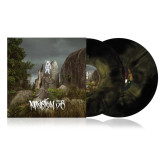
The album artwork, created by longtime collaborator Marja de Sanctis, features a photograph taken at the Temple of Jupiter Anxur, an archaeological site overlooking the Mediterranean Sea. Captured with an iPhone, the image traces the residual presence of construction techniques and architectural forms of the Romans, where material history is transcribed through contemporary tools. The convergence of ancient and modern technology aims to reverberate the site’s lasting spiritual presence – an echo persisting in what is now perceived as a quiet, emptied space. The spiral gestures towards infinity and light. Past and present dissolve into one another, reflecting 'Quiet Pieces' meditation on sound, memory, and time.
RIYL Alessandro Cortini, William Basinski, The Caretaker
- Metalhorse
- Nothin Worth Winnin
- The Test
- Override
- Dark Horse Friend
- Life's Unfair
- Plans
- Gas
- Comedic Timing
- Strange Gift
- Moon Explodes
Blue Galaxy Vinyl[27,52 €]
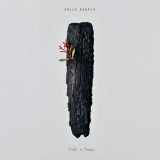
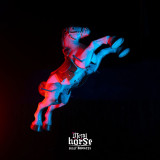
Silver Vinyl. Metalhorse is Billy Nomates' third studio release, following 2023's critically acclaimed, CACTI, and her self-titled 2020 debut. A concept album revolving around the image of a dilapidated funfair, representing the tumultuousness of life - risk and pleasure, danger and exhilaration. The 11 new songs here explore blues, folk and pianodriven arrangements that take Billy Nomates' stark punk sound in a more pastoral direction. Metalhorse is the first Billy Nomates album to be made in a studio and with a full band, the line-up inc. bass player Mandy Clarke (KT Tunstall, The Go! Team) and drummer Liam Chapman (Rozi Plain, BMX Bandits) plus a special feature from The Stranglers frontman Hugh Cornwell on "Dark Horse Friend". Metalhorse is a balancing of extremes. Reckoning with loss, material insecurity, and trying to stay true to yourself against an increasingly unpredictable backdrop of global chaos, the scales could easily have tipped towards darkness, but the more Maries has had to weather, the more precious those smaller moments of happiness have become. Metalhorse begs the listener to find their own funfair; there will always be things that feel perilous. At the same time, you have to marvel at the lights while they're still on. Dancing with those feelings of uncertainty and joy, Metalhorse is awash with both pain and perseverance.
Heavily supported by Flight for years, we’re extremely excited to at last welcome the inimitable Quartz to p:m, who serves up a sublime 4-tracker for our 10th single. Deeper and more emotionally reflective than previous Quartz releases, this is transcendental music that takes you to outer space and beyond…
Tracklist:
A1. W.Y.N: cosmic pads, jungle-y breaks, and a colossal bassline evoke images of Jupiter and molten lava, while a seductive vocal riff you’ll hum for days weaves in and out. A dance floor favourite.
A2. Taking Me Down: tight rolling beats, sparkly vox, filtered fx, and bass snarls sound like a tug of war between Venus and Mars. Straight up D&B produced alongside Quartz’s childhood friend, Pennygiles.
B1. Trauma Response: diving further into Techno- and Autonomic-inspired territory, this title track is best described by Paul Woolford aka Special Request “Man this tune is f***ing nuts. Reminds me of Black Dog and half of Detroit but through our UK lens, but totally NOW.”
B2. What Is Real Love: an orchestral intro replete with timpani and violins gives way to the big question - what is real love? - almighty bass weight, and a healing, warm golden sun feel. Simply majestic.
Wilson Tanner return to dry land with Legends, a wine-soaked agricultural fantasy, made among the grapevines at Manon Farm in South Australia. Where their earlier works settled into the sun-struck torpor of a suburban Perth backyard (69) or drifted off-course on a riverboat on Port Phillip Bay (ii), Legends trades salt air for vineyard sweat, the scrape of boots on dry earth and workers’ radios humming with the summer test cricket season.
Through this agricultural haze an image of a working vineyard emerges - ducks, dogs and plovers intrude; tractors and quads fly-by; stainless steel gleams at the edges. Recorded without mains power, the Manon demos overflow with farmyard ingenuity. Wind, brass, balalaika, balloon, pipe and synth are trained onto the staff with wire, tape and string.
A caricature of Australian viticulture, Legends is packed to the horns with the mythology and manure of natural wine. Swigging and belching in camaraderie, Wilson Tanner press their surroundings into something raw and unfiltered, letting bum notes, leftovers and sediment linger in the bottle. A cornucopia of biodynamic sounds.
- 1: Meadowland
- 2: The Dream
- 3: Burning 05
- 4: Call Up The Doctor
- 5: The Score
- 6: Boogietown
- 7: Tiergarten
- 8: Howling Dog Song
- 9: Twist Of A Nerve
- 10: Sun For Hire
'Gone Down Meadowland' is the much-anticipated debut album release from Norwich, UK psych outfit Floral Image, releasing 25th April 2025 on the renowned Fuzz Club. More than ever, the band wanted to produce a brand of East-Coast psychedelia that reflected the natural lusciousness and glorious solitude of the immediate world around them. Over 30 songs were conjured, considered and arranged before being whittled down to a final 10 that epitomise what they do best - ten tracks of vivid hue, harnessed live power, all laced together in fluid lyrical harmonies. Taking inspiration from band favourites Woods, KGLW, Stereolab, among many others, a string of at-home recording sessions commenced over a 6-week period across the summer of 2024. Side A is a sun-drenched journey through their whimsical Norfolk countryside, narrated with a surreal sense of lyricism which focuses on the undulating flow of the human psyche and the shape of relationships that can decide its fate. 'Burning 305' follows the mould of the band’s earlier creations with white-knuckled rhythms layered with dashing production and gritty guitars. 'The Score' summarises their love of Revolver-era Beatles and infuses it with a hint of 90's dance grooves. Side B is where the trip takes a heavier turn, the un-hinged night-time of the record. It is where the band best shows the force with which their live reputation has been built on. 'Tiergarten' - a motorik course through consciousness and 'Howling Dog Song' - all raucous, scuzzy-garage riffing. The album concludes with the 7-minute epic 'Sun For Hire'. Born out of a 30-minute live improvisation, it is the earliest written of all songs on GDM and a strong fan favorite for the audiences of the last 2 years. "A lot of themes are anti-establishment commentaries on the state of the modern world. It can feel isolating being bystanders of global concern in sleepy Norfolk, even though it’s easy to slip into a false comfort when you’re surrounded by vast space, natural beauty and friendly folks down the market. Gone Down Meadowland is that egoless escapist fantasy that still can't escape the world caving in on itself; Norfolk isolationism." Produced by the band themselves, mixed by Hugh Fothergill of Volleyball, and mastered by Joseph Carra at Crystal Mastering of KGLW fame, Gone Down Meadowland is Floral Image’s first full flourish. They take the record on the road across Europe and the UK throughout April & May 2025.
- Botch Job
- Up And Away
- The Avalanche Of Our Demise
- Imposturing
- Rookie
- Dead End Days
- What The F*Ck
- Bloodbather
- Dark Star
- Consumers
- What Do We Do Now
- The Age Of Impotence
- The Loss
Very few bands manage to last decades, and for the ones that do, it's often easy to settle down and get a little too comfortable. But there's nothing comfortable about Devourer, the explosive new album from Cursive. The iconic Omaha group is known for their intensity, ambition, and execution, and has spent 30 years creating a bold discography that's defined as much by its cathartic sound as its weighty, challenging lyrical themes. And Devourer is as daring as ever. Full of intense and incisive songs, the album proves exactly why Cursive have been so influential and enduring-and why they remain so vital today.In the years since their 1995 formation, Cursive developed into one of the most important groups to emerge from the late-'90s/early `00s moment when the lines between indie rock and post-hardcore began blurring into something altogether new. Albums like Domestica (2000) and The Ugly Organ (2003) became essential touchstones whose echoes can still be heard in new bands today. Devourer, as an expansive new double-album, examines humanity's bottomless capacity for consumption through a series of songs that act like vignettes, driven by frontman Tim Kasher's never-ending appetite for both taking in and creating art."I am obsessive about consuming the arts," he explains. "Music, film, literature. I've come to recognize that I devour all of these art forms then, in turn, create my own versions of these things and spew them out onto the world. It's positive; you're part of an ecosystem. But I quickly recognized that the term, `Devourer,' may also embody something gnarly, sinister." Fans have come to expect such heady topics from Cursive, but Devourer sets a new standard.While Cursive's music hasn't gotten any more comfortable, perhaps its being released into a world that's at least a little more shaped in their image. Devourer sounds urgent and fresh, the work of a band still experimenting, still hungering to find new creative heights. On album highlight "Consumers," the protagonist bemoans, "I saw our future and I want to go back." But Cursive are only moving forward.
- A1: Opening (3 11)
- A2: Crabby Beach (3 03)
- A3: Dark Ruins (3 02)
- A4: Cryptic Relics (3 08)
- A5: Stadium Attack (3 07)
- B1: Crumbling Castle (3 10)
- B2: Frosty Retreat (Inside) (3 09)
- B3: Frosty Retreat (Outside) (3 05)
- B4: Snowy Mammoth (3 24)
- B5: Specter's Factory (Outside) (2 05)
- C1: Thick Jungle (Woods) (2 55)
- C2: Thick Jungle (River) (3 04)
- C3: Molten Lava (2 52)
- C4: Results (1 03)
- C5: Molten Lava (T-Rex) (3 04)
- C6: Coral Cave (3 35)
- D1: Specter Circus (2 49)
- D2: Hot Springs (3 07)
- D3: Hot Springs (Maze) (3 08)
- D4: Laboratory (0 58)
- D5: Monkey Madness (2 58)
- D6: Wabi Sabi Wall (3 09)
- E1: Staff Roll (Normal) (2 59)
- E2: Opening (3 11)
- E5: Tv Tower (3 11)
- F1: City Park (3 04)
- F2: Stage Select (0 49)
- F3: Specter Boxing (2 54)
- F4: Primordial Ooze (3 22)
- F5: Western Land (3 12)
- F6: Fossil Field (3 10)
- G1: Staff Roll (2 59)
- G2: Dexter's Island (3 05)
- G3: Specter's Theme (2 57)
- G4: Ski Kidz Racing (Type A) (2 52)
- G5: Ski Kidz Racing (Type B) (3 04)
- G6: Ski Kidz Racing (Type C) (2 53)
- H1: Movie From Opening (1 05)
- H2: Movie From Shifting Time (1 34)
- H3: Crumbling Castle (Alternative Version) (3 11)
- H4: Hot Springs (Alternative Version) (2 59)
- H5: Specter Boxing (Training Version) (2 21)
- E3: Sushi Temple (3 17)
- E4: Peak Point Matrix (3 09)
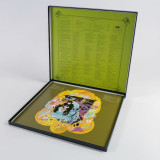
4XLP. Hardcover slipcase box. Liner notes from Soichi Terada, Colour: translucent red, clear, blue, and yellow vinyl
It has been 25 years since the release of Saru Get You (サルゲッチュ), known stateside and in the UK as Ape Escape. Ape Escape marked a significant milestone for the PlayStation, as it was the first game to require use of the PlayStation's DualShock (analog) controller. In Ape Escape, the use of the analogue sticks goes beyond camera rotation and acts as an extension of Kakeru's (Spike's) own character, controlling his many gadgets like the stun club, time net, and sky flyer. It's a unique form of control that, really, didn't become popularized until the release of the Nintendo Wii. It feels like a distinctly Japanese design, the sort of off-the-wall design that is either embraced or rejected on a global scale. In Ape Escape's case, the mechanic caught on.
Ape Escape is fast, frantic, and—at times—downright frustrating. Pipo monkeys dash, taunt, and swim away from your advances. They ride water monsters, fly UFOs, and even shoot uzis! Whether it's Kakeru, his friends, or the monkeys themselves, the characters are always running across the levels. This mad dash is enhanced by the game's soundtrack, composed by legendary composer Soichi Terada. As he recalls, the director of the production said, "Spike and his friends always have the image of running." In response, Terada happily produced fast songs with an average speed of over 170bpm. The resulting gameplay and audio is a match made in heaven.
Ape Escape is the first game soundtrack Mr. Terada ever created. The producers of the game heard one of his singles, "Sumo Jungle," and thought his frenetic drum-and-bass (Jungle) would be perfect for the game. The marriage of Ape Escape's charming overworld and Soichi's upbeat compositions is nothing short
of sublime. Especially now, it is difficult to separate the mischievous Pipos and fast-paced action from Soichi Terada's silky smooth synthesizer and heart-pounding bass. Earlier this year (2024), Soichi Terada's Ape Escape work was celebrated by the six-track EP Apes in the Net, which includes music from Ape Escape 1 and 3 (Terada did not compose the series' second installment). The label, Rush Hour Music, has prestigiously championed almost all of Soichi Terada's music, especially his (specifically non-VGM) house, jungle, and drum and bass releases (Sounds from the Far East, Asakusa Light, and more).
Before Apes in the Net, Terada's Ape Escape music was only available on CD, released in Japan around 2010. This release featured reconstructed tracks created by Mr. Terada himself, identical to the music arrangements featured in the game. The biggest difference, of course, was that they were of higher fidelity than was originally available on the PS1 disk format. Completing all of the aforementioned releases is this box set, released by Far East Recording in partnership with Cartridge Thunder and officially licensed by Sony Computer Entertainment. This box set release includes four LPs, housed individually by a hardcover slipcase. This box set includes every song from Ape Escape 1, except those available on Apes in the Net. This box set release also includes one bonus song, previously unreleased anywhere else (including the game itself!).
The music on this box set was meticulously mastered by Justin Perkins of Mystery Room Mastering. Using Mr. Terada's premastered source files, the music was completely and specifically mastered for vinyl. Rounding out the audio is absolutely stunning artwork created by Gobo3D. CT worked with Gobo to recreate some of Ape Escape's most iconic characters, referencing the original Japanese guidebook and other promotional materials. The result is visually delicious 300dpi artwork that takes you straight back to 1999. As uber-fans of the original PlayStation game, Cartridge Thunder and Far East Recording are proud to celebrate Soichi Terada's music and pay our respects to such a legendary PlayStation franchise—on the original hardware's 30th anniversary no less! It's with a happy heart, then, that Far East Recording and CT present to you Soichi Terada's Ape Escape Originape Soundtracks in a Box.
Please note: due to licensing exclusivity, this release does not include tracks previously released on Apes in the Net
The Ibex Band, with Giovanni Rico and Selam Woldemariam at the creative helm, provided the musical backbone for legends like Aster Aweke, Girma Beyene, Tilahun Gessesse, Mulatu Astatke, and Mahmoud Ahmed, including the iconic album Ere Mela Mela, shaping modern Ethiopian music as we know it today. This 1976 album (Ge’ez Year 1968) played a pivotal role in that legacy and has now resurfaced to set the record straight.
There’s a tendency to talk about the seventies as a golden age of Ethiopian music. There are good reasons for that, and just as good reasons against it. However, the notion of a golden past privileges the role of Western explorers and suggests that the pinnacle of Ethiopia’s musical culture is something only a foreigner can appreciate and unearth. It downplays the complexities of Ethiopia’s culture and history, creating an artificial divide between then and now. And it underestimates the constantly evolving sound that has followed.
The legendary musical outfit The Ibex Band, later metamorphosed into The Roha Band, has played a central role in defining the sound of many of the greatest stars on the music scene of Ethiopia from the mid-seventies onwards–but their golden output has never really waned. The story of the origins of the band that provided the musical backbone for greats such as Aster Aweke, Girma Beyene, Tilahun Gessesse, backing the solo career of group member Mahmoud Ahmed as well as backing Mulatu Astatke and many others has yet to be properly told.
Two misconceptions plague the image of Ethiopian music, one is that the music is pure because it is, by some notion, unexploited, the other is that it is all traditional. To begin with, a combination of political changes between the late sixties and the mid-nineties created an environment where only the most dedicated and skilled musicians struggled on and pursued a musical career against fierce odds. The whole Ibex Band, with Giovanni Rico and Selam “Selamino” Seyoum Woldermarian at the creative helm, are arguably the origo of the vibrant scene in the mid-seventies, and the said pair are foremost responsible for not only navigating the band through troubled times, but also modernizing the 6/8 chickchicka rhythm to a contemporary form. Giovanni laid the rhythmic foundation with heavy looped basslines that reinvented traditional melodies as dance music, and with Selamino’s innovative guitar work they influenced scores of musicians from Abegaz Kibrework Shiota to Henock Temesgen. Even Giovanni’s Fender bass and Selamino’s Gibson guitar inspired younger musicians in their choice of instruments. Not only in choice of instruments but also in sound–even as the digital revolution hit Ethiopian music, a lot of popular music still took its cue from the masters from Ibex and Roha.
Ibex emerged out of the ashes of the sixties group the Soul Echos band, adding Giovanni and Selamino to their ranks and taking their cues from a slew of influences, such as Motown and The Beatles, fused with traditional music. A tighter-knit unit than most bands at the time – Ibex has remained six to seven members throughout their whole career, compared to many bands that were as large as fifteen or sixteen men strong when Ibex set out. Their playing has been viciously focused, economical yet heavy. Just a year before the recording sessions of the album in your hands, Giovanni and Selamino made a contribution to the popular musical lexicon of Ethiopia that was simply defining the popular sound: their arrangement and recording of bandmate Mahmoud Ahmed’s solo effort and real commercial breakthrough tune and eponymous album, Ere Mela Mela, from 1975.
Selamino has never limited himself to being an adroit lead guitarist, but has always been a scholar of history, and as such he has probably contributed as much to modern Ethiopian music with his guitar playing and compositions as with a deepened understanding of modern or contemporary – Zemenawi – Ethiopian music. Selamino’s contributions serve as a metaphor for those of the whole band, at one and the same time creating and defining a new, danceable and updated sound anchored in Giovanni’s bass, whilst also elevating the broader scene through their support for others on the scene and on top of that, increasing the understanding of the music.
There is an understandable desire to romanticize the musical heyday Ibex and Roha were at the forefront of, because so much of the output is sorrowfully hard to come by. Ibex creativity was nothing short of ridiculously fierce compared to many of their Western contemporaries. Based on their sheer recorded output alone they could have usurped the title “hardest working in show business” from James Brown, recording more than 250 albums or 2500 songs in the seventies and eighties. Some only surface as cassettes today, others were never given full LP release, and some are simply impossible to find today. In the light of that, it’s nothing short of a miracle that the recording Stereo Instrumental Music from 1976 (Ge’ez Year 1968) has resurfaced. Unearthed in perfect condition on a chrome cassette, this is musical history comes alive–to set the future straight. Stereo Instrumental Music was recorded in collaboration with Karl-Gustav Lundgren, a Swedish national working for the Radio Voice of the Gospel. It took two sessions at the Ras Hotel ballroom in Addis Ababa. The Ibex Band was the first band in Ethiopia to employ a four-track recorder for their recording (the first available in the country, lent by Karl-Gustav). Later the same week, Giovanni and Selamino realized that, lengthwise, the recorded material fell short of what they wished for, so they recorded four more tracks in one more session on a single-track recorder. The Ras Hotel and Ghion Hotel, where the Ibex Band held musical residencies were to Ethiopia in general and Addis Ababa in particular what Motown was to the USA and Detroit a few years earlier – a hotbed of musical creativity and showmanship.
The most astonishing thing about Ethiopian music of the last half century is how tradition and modernity are intertwined. Because of this feature, it’s kind of hard to tell when there ever was or when we are in a “golden age”. So much of music from the past has been criminally neglected, but because of the hardships in the past, it would be an oversimplification to say that said past was a golden age. Probably, the golden age is what we are approaching, because for the first time both the past and future are accessible, and the monumental contributions from before can lay a firm foundation for a thriving music scene today. The Ibex Band stands firmly in the past, present and the future. That, if anything, is golden.
The detailed history of Stereo Instrumental Music is in many ways unique. To begin with, it couldn’t have been recorded earlier (there were no four-track recorders available) and it really couldn’t have been recorded afterwards either, at least not in the years directly following, because of the toll the musical scene took from the unfavorable political climate that followed when the nascent Derg regime and rival groups tried to assert themselves, the musical equipment lent from The Voice of Gospel Radio simply disappeared from Ethiopia when the radio station folded in 1977. Karl-Gustav Lundgren,
the Swedish foreign national who assisted during the recording, worked with the Ethiopian Evangelical Church Mekane Yesus at the time, recalls how they only had about fifteen minutes to get the microphones in place for the recording as to not alert neither the management at Ras Hotel nor the authorities and most importantly, to complete the recording before the curfew came into effect at midnight. In leaping to the opportunity to use previously unavailable equipment to push their sound forward and improvising to meet the logistical challenges, the Ibex Band displayed the very avant-gardism and adaptability that explains their longevity as a band through the years. The recording of Stereo Instrumental Music is from a given time in history, but it sounds as beyond time.
Much of the energy that burst out of the scene that Stereo Instrumental Music came out of dissipated or got sidetracked during the societal changes Ethiopia went through in the 1970s and 80s. Whilst leaders might have professed to be revolutionary, the work ethic of the Ibex Band can truly be described as that. They never called it quits, but adapted, toured extensively abroad in Africa, Europe, and the Middle East, and found ways to work even in the face of the curfew that curtailed a lot of musical life. They even played major arenas in the nineteen eighties, despite said curfew and restrictions. The whole extent of their legacy has never been told, but their music speaks louder than words, so therefore… tune in to the Ibex Band’s Stereo Instrumental Music.
- 1: Forgiveness
- 2: Embrace
- 3: Present Past
- 4: Compassion
- 5: Reflection
- 6: Past Present
- 7: Revelation
- 8: Peace
- 9: Heart
- 10: Gratitude
- 11: Acceptance
past present (tone poems across time)" is Mark de Clive-Lowe's exquisite new solo album and his debut for Greg Boraman's Impressive Collective label in partnership with BBE Music. Previously the pair released the Pharoah Sanders tribute album 'Freedom', and the equally lauded 'Hotel San Claudio' in collaboration with Shigeto & Melanie Charles. A deeply personal sonic exploration by Mark, "past present" is a reflection on family, heritage, and healing which was created in tandem with retracing his late father’s journey across Japan 70 years ago. The project is a collection of ambient jazz, emotional cinematic soundscapes that weave analog synths with field recordings from Japanese sacred sites and nature locations. "past present” partially came into existence thanks to the perseverance of producer, percussionist and Mark’s friend Carlos Niño, who after experiencing Mark's multi-layered motifs in the studio and in live contexts over many years explains, "I kept hearing him make an album like this, I kept telling him that he needed to, and that it would be his best album yet. Subtle, poetic, solo, texturally rhythmic, expressive, full of rippling layers, and arrangements representing such profound thoughts, feelings, relationships, and memories". Mark also took on board Carlos' recommendation of recording the bulk of "past present" at Ken Barrientos’ analog synth studio, 'The Breath' in Pomona, California - where he utilized no less than 22 different keyboards to create the ethereal and engaging soundscapes across all 11 tracks, also intertwining his own field recordings made during a long, explorative stay in Japan. Being such an individual and personal concept, it was only correct that Mark wrote the extensive album liner notes, to fully illustrate the decades-long backstory to this stunning collection. Mark completes the album's presentation using archive images from his family's private photo collection - an entire process he likens to time travel and signs off to the listener by stating that he hopes "it takes you on your own journey of imagination and reflection, leading to unexpected places, just as it has for me
ver the years, Andreas O. Hirsch has shaped a distinctive sound, exploring the possibilities of the electro-acoustic instruments he const- ructs. The Carbophone as well as the Electrified Palm Leaf are plucked instruments akin to the African Kalimba or Mbira. In combination with effects and loops, Hirsch creates an experimen- tal space, influenced by early electronics, Asian and African music as well as the possibilities of editing and collage. The majority of the pieces on The Salamander Treaty were made using the Carbophone Jr., a small traveling version of his original Carbophone which was the basis of the previously released Early Carbophonics. Shaped by the joy of discovery, the eight tracks traverse peculiar worlds of sound, carried by a warm downbeat and analogue vibe. Alongside the Car- bophone Jr., other instruments come into play: a vibrato-soaked guitar leads through the slowly evolving ‘Rise’, marked by a recurring Shepard tone and sounds made by striking the bars of an antique wall clock. In the straightforward yet sub-aquatic ‘Te- atime Unlimited’, a pitch-shifted Morse key wanders erratically in the background. Tape-delayed har- monicas serve as a flying carpet for ‘Drifting Newts’, and rubber bands make their melodic-rhythmical appearance through ‘Back Door Minimal’.
The Salamander Treaty refers to War with the Newts, a prophetic and black-humoured science fiction novel by Karel Čapek from 1936, which tells the story of the rise of the salamanders, who become in- creasingly intelligent and eventually begin to compete with mankind. The album is a pacifist response to this dark scenario: Hirsch’s salamanders prefer to hang out under the stars (‘Drifting Newts’), drink tea (‘Tea Time Unlimited’) and — as illustrated on the back cover — write conspiratorial-pacifist demands instead of calling for war (e.g., ‘Teaoism International’, ‘White Lilies’, ‘For Congress’). In image and word, the album invites looking at the term ‘treaty’, which phonetically contains the words ‘tree’ and ‘tea’, as a friendly reminder that the drafting of every treaty and agreement on this planet should be accompanied by a peaceful spirit.
Music, mix and artwork by Andreas Oskar Hirsch. Mastered by Volker Hennes. Pressed on BioVinyl by Optimal, who state that their manufacturing process reduces CO2 emissions by approximately 90% for the PVC component. 12“ LP, coloured sleeve, download code included,
LIMITED TO 100 COPIES!.
Every so often an album of such deceptive genius, of such aesthetic clarity, comes across our desk and transfixes us. Thought Leadership's III Of Pentacles is one such work of art. It's an instant classic and glides into the pantheon of timeless guitar-soul totems. Originally out on cassette only, we present the first ever vinyl issue. It's a hideously limited pressing of 300 for the world, so don't sleep on this.
Thought Leadership has already garnered big support from such tastemakers as Ruf Dug, Jason Boardman, Nathan Gregory Wilkins, J Walk, Evan Woodward, Justin Robertson and Heavenly's Jeff Barrett. The first time we heard III Of Pentacles, we nearly wept at the thought that something so beautiful, so bursting with real hope, could even exist in this brutal world. To quote the Quietus, "imagine if Stockport was situated somewhere along the Pacific Coast Highway rather than the M60, and you’ll have some idea of the coordinates to the post-industrial, sunburnt dream space opened up here."
So, who is Thought Leadership? What do we know about them? They reside in Stockport and are obsessed with ethereal guitar records. That’s about it. That and these X ideas shared with you, the listener.
Captured on a multitrack recorder in a terraced house in Stockport, this is as DIY as it gets. Glaringly obvious is a love for classic Factory and early 4AD. Perhaps it is the proximity to the River Mersey where the ideas arrived, and there being but three miles between where this and the Durutti Column’s classic “LC” was recorded, as the two operate across a familiar aural plain. Be it geographic or otherwise, limited by a true economy of means, namely guitar, pedals and drum machine, the fruit borne from these humble tools has been indelibly shaped by the perma-gloom that hangs low over the Manchester and Stockport environs.
Ushered in on 808 kicks, “I” opens the record as a beautiful Sketch for Stockport; a chiming maj7 chord dripping in chorus and delay sets us on our way. The Vini Reilly comparisons are unavoidable. “II” is all John McGeoch, with its trippy goth-psyche arpeggiated pattern cascading across the stereo image. Do those drums swing? But goths don’t swing?! They do here. We’re treated to a bit of crunch on the lead guitar part and some really lush reverb. We even step forth into shoegaze territory, albeit briefly, for the middle eight. “III”, a firm Be With favourite, continues the dreamy psyche leanings of the previous track, with an even bigger melody this time. We’re hearing The Teardrop Explodes on quaaludes here. A proto-dream pop cut soaked in melancholy. But watch out! The coda finds Johnny Marr has gotten into the ‘ludes and gatecrashed the final bars with some incredibly ignorant B minor pentatonic noodling.
“IV” ditches the drum machine for the first in a suite of three beatless electric guitar duets. The first of these semi-improvised rubato ideas is a striking departure from the earlier playful pieces, coming over emo and moody. Greyscale sulking for Stratocaster. Sign us up. “V” contains some really lyrical phrasing; a gorgeous conversation between two guitars. Real Stopfordian Primitive; meditative, crude, rain-soaked. We cycle through the same feels, then end on an alluring chord that breaks the pattern. Sometimes thoughts are like this. “VI” creeps in all plaintive, then a huge reverberating descending guitar line comes tumbling in like something off those classic Dif Juz 12”s. There’s some Maurice Deebank in there too, for sure, and the coda nods to early Meat Puppets.
“VII” rounds out the A Side, and succinctly presents a summary of all ideas explored thus far on our journey. The drum machine is back, this time with some wispy delay, before both guitars enter together playing interlocking lines. As we start, we end, with the delayed 808 guiding us out.
Opening Side B, “VIII” sees us embark on the other side of our journey as we slow down and space out. The drum machine is here, but the guitars are different now. Think Sensations Fix or Göttsching at his most peeled out. Drones, ambient drifts of broken chords and distorted lead lines all swirl round the mix. Side B is one for headphones for sure. “IX” is almost too exquisite for words. A New Age Mixolydian voyage through the cosmos. If you’re unmoved by the end you’ve probably got no pulse. We were left blunted ineffable by this one, such is the smudged elegance radiating from this idea. All hail the Thought Leader.
“X” is a full circle moment, and a fitting end. If you’ve not already elsewhere across the platter, you will be getting heavy Robin Guthrie vibes from this piece. Like the rest of Side B, this improvised jam sticks within a framework of related chords but the celestial energies channelled might invite us to wander “outside”, especially when the Tubescreamer is engaged.
RIYL Durutti Coulmn, Cocteau Twins, Dif Juz, Sensations Fix, Spike and adjacent guitar musicks – but, ultimately, this is just its own thing; such is the strength of ideas presented. "It’s good music to chill out to." (??)
Be With is honoured to present the first ever vinyl release of III Of Pentacles, carefully remastered by Be With's engineer Simon Francisco to ensure it sounds better than ever after its initial tape release. Cicely Balston's expert skills have made sure nothing is lost in the cut whilst the records have been pressed to the highest possible standard at Record Industry, in Holland. The original tape cover artwork, so crucial to Thought Leadership's striking visual aesthetic, has been rejigged for vinyl issue here at Be With. Its stark presentation befits the music contained within. They inform us that they shuffled their tarot deck to ask what the album should be called and the card you see on the cover popped out. The III Of Pentacles tarot card represents teamwork, shared vision and the ability to achieve goals through collaboration. We like to think Thought Leadership and Be With have nailed this one.
dreamcastmoe is the recording project of singer, songwriter, producer, and DJ Davon Bryant, a lifelong resident of Washington, DC. His music moves freely between moods and modes, hypnotic, romantic, traversing electronic, R&B, funk, soul, and hip-hop... Resident Advisor dubs it "soulful, cross-genre dance music." This ability to adapt and finesse, to twist in different directions while staying true and coherent in vision, can be traced to his home city and its complex cultural history. "Most Black kids in DC don't ever get to this point," he says. "This is what I am making this music for, in the DC tradition of soul and empathy and love that is rooted in this city. My music is for real people dealing with shit every day." A versatile, modern artist and collaborator, dreamcastmoe has thrived in the underground since his first uploads to Soundcloud and Bandcamp in 2017 and subsequent releases with labels like People's Potential Unlimited, Trading Places, and In Real Life Music. Bryant's laid-back personality, emotional honesty, and infectious energy shine through his work and how he talks about it, as Crack Magazine notes in their 2021 Rising feature: "a steady combination of confidence, creativity, and calmness." He grew up playing drums in church; he's worked dead-end jobs, had ups and downs, even sold off all his gear one time, but never stopped reinvesting in himself. He is quick to praise his co-producers, rattle off influences _ the visual feel of NBA 2K, the comedic timing of Bernie Mac, the savvy legacy of Duke Ellington, for starters _ and credit resourceful DC breakouts like Ankhlejohn that showed him the roadmap. His voice, a steady instrument, seemingly connects it all, capable of slow falsetto flow, swaggering talk-rap, and outright croon. His storytelling style is choppy yet fluid, like a mixtape, which is how Bryant sees Sound Is Like Water, his debut on Ghostly's International's freeform label, Spectral Sound. The two-part project culminates as a full-length LP release in November 2022. The first side, released as Part I, opens on the blurred beats of "El Dorado," which dreamcastmoe dedicates to his journey. It's a head-nodder, an off-kilter earworm co-produced by Max D (Future Times, RVNG Intl, etc.), with Bryant harmonizing hooks with synth jabs and a pitched-down presence. "Complicated" is the slow jam, delivered smoothly from a Saturday night crossroads. dreamcastmoe is contemplative and committed... gliding and locking ad-libs into skittering rhythms courtesy of co-producer Zackary Dawson _ but also willing to let something go, "acknowledging that everything in life IS NOT easy." "RU Ready" takes off from the jump as a tribute, challenge, and promise to his partner and his city ("The times you sat with me when I needed you the most / Told me the things that I needed to see / Young black man, really trying to be what I can be / And I'm really from DC). In its potent two-plus minutes, the sonics (co-produced by ZDBT) press the message, all cymbal crashes, breakbeats, and serrated synth lines. "Cloudy Weather, Wear Boots" is a blitzing dance-punk track made in collaboration with Jordan GCZ on Bryant's first trip to Amsterdam. The album's flipside opens on "Much More," the first of two synth-and-beat ballads co-produced by ZDBT. Later on "Long Songz," he claims, "I'm not writing love songs no more," prioritizing the vibe with "all my day ones." He calls it "a cry for more normal moments. Everything doesn't have to be a fantasy love story, more time spent getting to the money, growing, and making a way." He saves two of his most propulsive cuts for the finale, co-produced by Sami, co-founder of DC dance label 1432 R. As their titles suggest, "Take A Moment" and "Make Ya Mind" operate as anthems for movement, with Bryant free-flowing commands above wildly-styled percussion. Per Bryant, the latter is both "wake & bake jam" and a "dance floor bomb." His parting line: "Action / You got to show me action / Reaction." The world of dreamcastmoe straddles virtual reality and the realness of DC, images both imagined and lived-in. Bryant has a knack for unexpected melodies but what makes his music so exciting is his capacity to defy the expectations of genre and image. A fluid ingenuity and vulnerability bottled by Sound Is Like Water, and this is just the beginning.
- A1: Montego Bay - Everything (Paradise Mix) 04 59
- A2: Atelier - Got To Live Together (Club Mix) 06 06
- A3: Golem - Music Sensations 04 56
- B1: The True Underground Sound Of Rome Feat. Stefano Di Carlo - Gladiators 05 26
- B2: Eagle Parade - I Believe 04 26
- C1: Dj Le Roi - Bocachica (Detroit Version) 05 28
- C2: Green Baize - Synthetic Rhythm 01 41
- C3: M.c.j. Feat. Sima - Sexitivity (Deep Mix) 05 30
- D1: Kwanzaa Posse Feat. Funk Master Sweat - Wicked Funk (Afro Ambient Mix) 06 31
- D2: Progetto Tribale - The Bird Of Paradise 06 29
- D3: Mbg - The Quite 06 59
Vol 1[28,99 €]
Googling “paradise house”, the first results to pop up are an endless list of European b&b’s with whitewashed lime façades, all of them promising “…an unmatched travel experience a few steps from the sea”. Next, a little further down, are the institutional websites of a few select semi-luxury retirement homes (no photos shown, but lots of stock images of smiling nurses with reassuring looks). To find the “paradise house” we’re after, we have to scroll even further down. Much further down.
It feels like yesterday, and at the same time it seems like a million years ago. The Eighties had just ended, and it was still unclear what to expect from the Nineties. Mobile phones that were not the size of a briefcase and did not cost as much as a car? A frightening economic crisis? The guitar-rock revival?! Certainly, the best place to observe that moment of transition was the dancefloor. Truly epochal transformations were happening there. From America, within a short distance one from the other, two revolutionary new musical styles had arrived: the first one sounded a bit like an “on a budget” version of the best Seventies disco-music – Philly sound made with a set of piano-bar keyboards! – the other was even more sparse, futuristic and extraterrestrial. It was a music with a quite distinct “physical” component, which at the same time, to be fully grasped, seemed to call for the knotty theories of certain French post-modern philosophers: Gilles Deleuze, Félix Guattari, Paul Virilio... Both those genres – we would learn shortly after – were born in the black communities of Chicago and Detroit, although listening to those vinyl 12” (often wrapped in generic white covers, and with little indication in the label) you could not easily guess whether behind them there was a black boy from somewhere in the Usa, or a girl from Berlin, or a pale kid from a Cornish coastal town.
Quickly, similar sounds began to show up from all corners of Europe. A thousand variations of the same intuition: leaner, less lean, happier, slightly less intoxicated, more broken, slower, faster, much faster... Boom! From the dancefloors – the London ones at least, whose chronicles we eagerly read every month in the pages of The Face and i-D – came tales of a new generation of clubbers who had completely stopped “dressing up” to go dancing; of hot tempered hooligans bursting into tears and hugging everyone under the strobe lights as the notes of Strings of Life rose up through the fumes of dry ice (certain “smiling” pills were also involved, sure). At this point, however, we must move on to Switzerland.
In Switzerland, in the quiet and diligent town of Lugano, between the 1980s and 1990s there was a club called “Morandi”. Its hot night was on Wednesdays, when the audience also came from Milan, Como, Varese and Zurich. Legend goes that, one night, none less than Prince and Sheila E were spotted hiding among the sofas, on a day-off of the Italian dates of the Nude Tour… The Wednesday resident and superstar was an Italian dj with an exotic name: Don Carlos. The soundtrack he devised was a mixture of Chicago, Detroit, the most progressive R&B and certain forgotten classics of old disco music: practically, what the Paradise Garage in New York might have sounded like had it not closed in 1987. In between, Don Carlos also managed to squeeze in some tracks he had worked on in his studio on Lago Maggiore. One in particular: a track that was rather slow compared to the BPM in fashion at the time, but which was a perfect bridge between house and R&B. The title was Alone: Don Carlos would explain years later that it had to be intended both in the English meaning of “by itself” and like the Italian word meaning “halo”. That wasn’t the only double entendre about the song, anyway. Its own very deep nature was, indeed, double. On the one hand, Alone was built around an angelic keyboard pattern and a romantic piano riff that took you straight to heaven; on the other, it showcased enough electronic squelches (plus a sax part that sounded like it had been dissolved by acid rain) to pigeonhole the tune into the “junk modernity” section, aka the hallmark of all the most innovative sounds of the time: music that sounded like it was hand-crafted from the scraps of glittering overground pop.
No one knows who was the first to call it “paradise house”, nor when it happened. Alternative definitions on the same topic one happened to hear included “ambient house”, “dream house”, “Mediterranean progressive”… but of course none were as good (and alluring) as “paradise house”. What is certain is that such inclination for sounds that were in equal measure angelic and neurotic, romantic and unaffective, quickly became the trademark of the second generation of Italian house. Music that seemed shyly equidistant from all the rhythmic and electronic revolutions that had happened up to that moment (“Music perfectly adept at going nowhere slowly” as noted by English journalist Craig McLean in a legendary field report for Blah Blah Blah magazine). Music that to a inattentive ear might have sounded as anonymous as a snapshot of a random group of passers-by at 10AM in the centre of any major city, but perfectly described the (slow) awakening in the real world after the universal love binge of the so-called Second Summer of Love.
For a brief but unforgettable season, in Italy “paradise house” was the official soundtrack of interminable weekends spent inside the car, darting from one club to another, cutting the peninsula from North to centre, from East to West coast in pursuit of the latest after-hours disco, trading kilometres per hour with beats per minute: practically, a new New Year’s Eve every Friday and Saturday night. This too was no small transformation, as well as a shock for an adult Italy that was encountering for the first time – thanks to its sons and daughters – the wild side of industrial modernity. The clubbers of the so-called “fuoriorario” scene were the balls gone mad in the pinball machine most feared by newspapers, magazines and TV pundits. What they did each and every weekend, apart from going crazy to the sound of the current white labels, was linking distant geographical points and non-places (thank you Marc Augé!) – old dance halls, farmhouses and business centres – transformed for one night into house music heaven. As Marco D’Eramo wrote in his 1995 essay on Chicago, Il maiale e il grattacielo: “Four-wheeled capitalism distorts our age-old image of the city, it allows the suburbs to be connected to each other, whereas before they were connected only by the centre (…) It makes possible a metropolitan area without a metropolis, without a city centre, without downtown. The periphery is no longer a periphery of any centre, but is self-centred”.
“Paradise house” perfectly understood all of this and turned it into a sort of cyber-blues that didn’t even need words, and unexpectedly brought back a drop of melancholic (post?)-humanity within a world that by then – as we would wholly realise in the decades to come – was fully inhuman and heartless. A world where we were all alone, and surrounded by a sinister yellowish halo, like a neon at the end of its life cycle. But, for one night at least, happy."
- A1: Idrissa Soumaoro Et L'eclipse De L'ija — Nissodia (Joie De L'optimisme)
- A2: Rail Band — Mouodilo
- A3: Les Ambassadeurs Du Motel De Bamako — M'bouram-Mousso
- B1: Super Tentemba Jazz — Mangan
- B2: Sorry Bamba — Yayoroba
- B3: Super Djata Band — Worodara
- C1: Zani Diabaté Et Le Super Djata Band — Fadingna Kouma
- C2: Salif Keita — Mandjou
- C3: Alou Fané & Daouda Sangaré — Komagni Bèla
- D1: Super Djata Band De Bamako — Mali Ni Woula
- D2: Idrissa Soumaoro Et L'eclipse De L'ija — Fama Allah
Mr Bongo is proud to present 'The Original Sound of Mali', compiled by Vik Sohonie & David Buttle.
Malian music is arguably deeper, more sophisticated and lyrical than any other form of African music. Those of us deeply entranced by Malian culture, and, in particular, the immense hypnotic beauty of Malian music, have put together a
selection of songs from across the country.
Compiled by Vik Sohonie & Dave 'Mr Bongo' Buttle, the story of this release began in 2015 when Dave happened upon the Soul Bonanza blog. A treasure chest of rare finds from around the world! One mix in particular stood out and totally enthralled Dave - le monde à change: a tribute to mali 1970 - 1991. He
already knew of Malian legends such as the Rail Band, Salif Keita, & Les Ambassadeurs du Motel de Bamako, but this mix was something else! Deep & culled from the collections of some of the heaviest African music collectors in the world, legends like Vik Sohonie, Hidehito Morimoto, Philippe Noel, Gregoire
Villanova, and Rickard Masip. Dave immediately contacted Vik and a journey of discovery tracking down the rights-holders began. He also turned to the font of Malian music knowledge, Florent Mazzoleni. Florent has written the definitive book about Malian music - 'Musiques modernes et traditionnelles du Mali'. He
proposed some incredible tracks to include and provided the back bone of the sleeve notes and photos that are used in the album. No Malian album would be complete without a striking front cover photo, and ours is sourced from the late great Malian photographer Malick Sidibé.
On this album you will find well-known artists sitting next to rarer
discoveries. The Rail Band, who are one of the best known of all the big bands in Mali, gave us the stars Mory Kanté and Salif Keita. Les Amabassedeurs du Motel de Bamako were another big act that had Idrissa Soumaoro, Kanté Manfila, and for a while Salif Keita in their ranks. Sometimes Salif would play in both bands in one night, quite a feat considering the bands were fierce rivals. As an albino Salif has had to face considerable prejudice from society, focussing on his musical career to help overcome this.
A major discovery on the album has been Idrissa Soumaoro et L'Eclipse de L'Ija. L'Eclipse de l'Institut des Jeunes Aveugles was a Blind teenagers institute and their record was produced by the German association that took care of blind Malian teenagers in Bamako. It was never properly released commercially and was the first recordings by the legends of Malian music Idrissa Soumaoro, Amadou Bagayoko and Mariam Doumbia. Amadou & Mariam later got married and became household stars, including making an album with Manu Chao.
This album is a concerted global effort to showcase the most vital cornerstone of Malian culture in an attempt to preserve its reputation in the face of its current, grim reality. We hope our highlights of Mali's rich history of musical innovation will serve as a starting point for reclaiming an image tainted by unnecessary conflict. May peace and music return to Mali soon.
Dedicated to Malick Sidibé.
- A1: A Grave Fall (January)
- A2: Saddle Up
- A3: Was He Good - The Bunny Business
- A4: Bingo Bingo Bingo
- A5: They Say To The Mountain
- A6: Belly Up
- A7: Une Planete
- B1: Twist
- B2: Galveston Beach Pink Dust (April)
- B3: Hell Applaud This Turn!
- B4: A Greater Name Is You
- B5: Run It
- B6: Grab Her Neck And Tell Her I Love Her
On their most explicit venture into music for moving image, Miles Whittaker & Sean Canty rudely fracture piano and vocal recordings by US filmmaker-musician Kristen Pilon in a short-circuiting of style and pattern.
Shredding up definitions of electro-acoustic opera, spectralist chamber musique and concrète rave, Demdike hit square between the eyes/ears of film music vernaculars on a startlingly strong addition to their unique oeuvre, now in its 16th year of elusive psychoacoustic strafes and jump-cuts across putative borders. The 13-part, hour-long album dislodges source material made for the experimental film ‘To Cut and Shoot’, by Kristen Pilon, an NYC-based musician and filmmaker, to farther refract the film’s themes of serendipity and the nature of ghosts and dreams with a flickering flux of sound-imagery and aleatoric weirdness appropriate to her original meditations, but also freely messing with their forms.
Situated just a few miles north of Houston, Cut and Shoot is a relatively insignificant Texas town with an unforgettably bizarre name. Pilon grew up not far from Cut and Shoot, and it's there where she ran into 65-year-old machinist and motorcyclist Robert Lewis Stevenson, better known as Bobbo, who's pictured on the album's cover. The meeting occurred a few months after Pilon recorded her improvisations on piano, strings and voice in the basement cellar of the Halle in Manchester, with Bobbo providing the necessary narrative heft the trio needed to inspire an experimental film and its accompanying soundtrack.
Responding to Kristen’s initial piano and operatic vocal recordings, Demdike return a volley of discrete parts tilting from typically cantankerous mayhem to quieter, more clandestine buzzes sliced with crazed interstices of the imagination, all marbled with the plasmic contrails of the paranormal which have long been peculiar to their work. With a poetic flair reflecting Pilon’s own phrasing and melding of mediums, Demdike unfold and expand her melodic fragments into temporal mazes, variously resembling the most messed-up ends of The Caretaker in ‘A Grave Fall (January)’, but also liable to skew into buckshot club turbulence, as with ‘Belly Up’, or the bittersweet bruk contortions of ‘Twist’.
The storyline wickedly frays and loops into itself with a non-linearity that recalls the mid-to-latter stages of Lynch’s ‘Mulholland Drive’ or waking from a sweaty fever dream only to pitch back into its thorny bush of ghosts, often within the space of one track. It’s testament to the ever-tighter binds of Demdike’s symbiotic vision that the results nevertheless hold a thread of logic that weaves in everything from their Jon Collin jams to reams of mixes and Gruppo edits with an unresolved, open-ended quality that still keeps us on our toes, perhaps more so than ever here.
Barro Music Label sigue apostando por el techno más duro y oscuro y por eso, su lógico paso siguiente era publicar un EP de NX1. Necesitaríamos mucho espacio para describir todo lo que significa NX1, pero dejémoslo en que es el proyecto de los barceloneses Surit y Samot con el que llevan varios años reventando amplificadores y haciéndonos bailar hasta la extenuación. Con este AKA han publicado en sellos tan top como Bite, Semantica, Planete Rouge y Earwiggle, además de en Nexe Records, su propia casa (discográfica). Ahora podemos escuchar sus últimos temas en Barro, en un disco que reúne cuatro temas y una remezcla de Nöle. No será la última vez que los veamos juntos, ya que han unido fuerzas para crear un nuevo sello llamado Kätte que ya ha publicado su primera referencia.
En BR1 nos traen un contundente temazo de techno industrial post-apocalíptico dominado por un bombo atronador en el que destacamos el gran diseño de sonido. Los dos siguientes temas están más enfocados a la pista y son una gran muestra del lado más duro y oscuro de NX1. BR2 es una composición hipnótica con sonidos industriales y afilados con un bombo con una pegada tremenda y un bajo que se te queda marcado en la piel. Y aunque parezca imposible, el EP continúa con un tema incluso más duro: BR3. NX1 alcanzan una intensidad increíble en esta composición, marcada por unos sintetizadores saturados, un sonido duro y agresivo y un sample que te ordena obedecer. Para el siguiente tema, bajan los BPMs y se centran en crear una atmósfera industrial, que nos inspira imágenes de carreteras desiertas y ciudades abandonadas. Por su parte Nöle, pilla BR2 y le da protagonismo a los samples vocales mientras juega con el ritmo, creando otro irresistible rompepistas.
Support from: Dave Clarke, Phase Fatale, The Hacker, Lokier, NX1, Unhuman, Alienata, Reka, and many more.
Texto: El Garaje de Frank
Cindys petrochemical plant managed by her husband Norbert
He’s just half-eaten a sandwich, he’s got a little dino friend, a couple perhaps.
Surrounded by strange industrial structures and debris he’s quickly animated by inhuman images and sounds.
Fearful over a dream she had about sinking in quicksand she quickly remembered Pasolini’s words.
‘In a dense fog’ they read, no it was perhaps another instance.
She used to live on an island and swim off a beach at an isolated cove. She orders pizza often. Of all the rocks in the cove it seems that only one comes alive and sings to her.
In the voice of the core.
The factories wide consumption continues.
Twenty-two minutes per side.
Something good.
Mannequin Records proudly presents the debut release from Children Of The Night, a dynamic duo whose music is rooted in cinematic soundscapes. The project brings together Mexican techno producer Alejandro Barba, also known as Dellarge, and French documentary/film producer Pierre Labret, forging a distinctive creative partnership. Their collaboration masterfully combines dark, atmospheric elements with driving electronic rhythms, drawing heavily from the worlds of classic horror and psychological thrillers. The result is a collection of soundscapes that are as eerie as they are captivating, creating an immersive and haunting listening experience.
This album stands as an unconventional horror soundtrack for a film that never came to be—a tribute to the legendary Spanish filmmaker Jess Franco, known for his prolific work in the exploitation and horror genres. Born out of the quiet chaos of the pandemic, this project was originally intended to accompany a slasher film that was halted due to financial constraints. Despite the film’s cancellation, the duo pressed forward, turning the unfinished narrative into an imaginative auditory experience. The soundtrack will serve not only as a homage to Franco but also as a nod to Juan Mendez, better known by his alias Silent Servant, whose dark, minimalist electronic productions have left a deep mark on the underground music scene.
Dellarge and Labret’s creative process is shaped by an eclectic array of inspirations, pulling from both literature and cinema. They’ve cited films such as Franco’s "Paroxismus," "Gritos," and "Faceless" as vital to their sonic direction, as well as the eerie black-and-white imagery of F.W. Murnau's "Nosferatu." Additionally, the duo draws on the disturbing psychological tension of Stephen King’s "Carrie" and "Misery," and the surreal dystopian world of Stanislaw Lem's "Congreso de Futurología." The giallo horror aesthetics of Dario Argento's "Deep Red" also serve as a significant influence, merging surreal visuals with nerve-racking, visceral soundtracks—elements mirrored in Dellarge and Labret's own compositions.
The LP is not only rich with atmospheric storytelling but also boasts a range of remarkable remixes by prominent artists in the electronic music scene. Contributions from Alessandro Adriani, David Carretta, Legowelt, and Broken English Club inject new life into the original tracks, offering reinterpretations that span from industrial techno to Italo disco, further enhancing the project’s depth and versatility. Each remix complements the overarching horror theme while adding a modern, avant-garde twist to the duo’s work.
This debut album promises to be more than just a musical release—it's a vivid exploration of the horror genre through sound, creating a sensory experience that brings forgotten films, unrealized visions, and nightmarish stories to life through music. As the lines between fiction and reality blur, Dellarge and Labret invite listeners into a world where the echoes of lost films can finally be heard.
"With all songs written by the band over the past year or so, the album was recorded and produced by Michael Giblin (The Split Squad) at Mechanicsburg, Pennsylvania in Sep 24 and mastered at Rare Form Mastering by Greg Reierson, Like all three previous Vapors releases, this album conveys an individual feeling of it's own, both lyrically and musically. The title derives from a line in the song ""Forever & Ever"" but it also describes perfectly the high velocity, guitar and bass, heavy punked up tempo that runs through a number of the songs, whilst conjuing up an image of bottled-up anger that runs through a number of the album's lyrics.
Best known for their major worldwide 1980 hit ""Turning Japanese"", The Vapors originally split in 1981 after two short years producing six singles, two albums, three major US tours and an Australian tour, and countless shows in the UK. After a 35-year hiatus, the band reformed for a series of four shows in Ireland and England in 2016 which were so well recieved that they continue to tour extensively, with over 160 gigs played since, with a comeback album ""Together"", in 2020 and several singles released along the way."
- A1: Faith And Truth
- A2: Salvage
- A3: The Five Wounds
- A4: Obedience
- A5: The Image Of The King
- A6: Broken On The Body
- B1: Killing Vein
- B2: Defiance
- B3: Man Of Sorrows
- B4: A Little Heaven
- B5: The Mirror And The Light
- B6: Wolf Hall Suite
After 10 years, WOLF HALL returned our screens in 2024 bringing Hilary Mantel's epic saga to its grim conclusion in WOLF HALL: THE MIRROR AND THE LIGHT. Directed by Peter Kosminsky, the six episodes tell the continuing story of Thomas Cromwell (Mark Rylance) and his complex relationship with Henry VIII (Damian Lewis) after the execution of Anne Boleyn,.
The new soundtrack reunites original Wolf Hall composer Debbie Wiseman with The Locrian Ensemble. Debbie Wiseman comments on her return to that world - "The distinctive sound of Wolf Hall is all about immediacy and being in the present with these characters. Drawing on elements from the original Wolf Hall score, new themes have been created for our soprano, Grace Davidson, our viola player, Philip Dukes, and our mandolin player and guitarist John Parricelli. It's been the most thrilling experience composing the score for this production."
‘Insides is a cracking album of shifting ambient moods, riding on the cusp of technology without forgetting emotive credence’ 9/10 FUTURE MUSIC
Originally released in 2009 Insides is Jon’s third solo album and will be made available from the 18th December 2020 on the Just Music label, following on from his first two Just Music albums, Opalescent and Contact Note. It paved the way for both Immunity (his hypnotic breakthrough solo album) and Diamond Mine (his collaboration with King Creosote) which attracted Mercury nominations and for his recently released fifth solo artist album, Singularity.
The epic Light Through The Veins from Insides, which bookends Coldplay’s Viva La Vida album, is always a crowd favourite and is played by Jon as one of the closing tracks at almost all of his venue and festival shows. Small Memory, also from Insides has been streamed almost 57 million times on Spotify alone where Jon has 355, 462 followers and nearly 2 million monthly listeners.
Cited by The New Yorker as “One of the most celebrated electronic musicians of his generation”, electronic artist, producer and composer Jon Hopkins has forged a reputation for music that marries the dance floor to the devotional, and for live performances that are visceral, generous and charged with a rapt, sensuous beauty.
Jon has remixed artists as diverse as Flume, David Lynch, Moderat, Disclosure, Four Tet, Wild Beasts and Purity Ring. Other projects include collaborations with Natasha Khan of Bat For Lashes and Bonobo, as well as productions for London Grammar and Coldplay. His film credits include his Ivor Novello nominated score for the indie sci-fi classic Monsters, The Lovely Bones (scored with Brian Eno and Leo Abrahams), How I Live Now, Uwantme2killhim? and Rob and Vanentyna in Scotland. He also scored the National Theatre Live production of Hamlet and his work has appeared in many films and adverts.
‘Lilting piano and strings give way to industrial glitch with a calculated force, shifting the mood from tranquillity to terror’ 7/10 CLASH
‘Hopkins is a conjurer, an illusionist, symbolically combining imagery and sounds that shouldn’t work together, creating new dimensions of listening’ KRUGER
"Langt Fra Jorden" ("Lejos De La Tierra", in Spanish, for the book) is the result of the dialogue between the Spanish photographer and artist Irene Zottola and the Danish musician and artist øjeRum initiated by IIKKI, between June 2024 and November 2024.
øjeRum is Copenhagen based musician and collage artist Paw Grabowski. In his øjeRum guise, he plucks and strums his treated acoustic instruments, sounding at times like church bells, at times like angelic harp, at time like drones, and suspends the listener in the magic of his melodies.
With a deep back-catalogue of releases since 2014 - spanning labels such as eilean rec., Room40, Line, Opal Tapes and many more - he continues exploring his minimal, textural and deeply personal style of ambient music.
Irene Zottola is a Spanish photographer and artist who explores the limits of analog photography to generate a world of dreamlike and poetic character, often accompanying her images with text.
She has been self-taught in Madrid in the laboratory of the Slow Photo collective since 2016. In 2017 she is a finalist in the Rfotofolio Grant.
Her work has been exhibited in Spain, Italy and Morocco. She has published with editorials such as La Bella Varsovia and Lumen (Spain) and magazines such as She shoots film (Australia), Fisheyemagazine (France) and Vostmagazine (Korea).
In 2021 she received one of the Grants to Creation granted by VEGAP with which she began a new project in Paris and was part of the artistic residence ART(e)gileak of the BBK with a participatory photography project. She is one of the 33 authors of the Mission Region project organized by the Community of Madrid and is part of the platform of the National Image Centre in Spain. Winner in 2020 of the V Edition of the Photochannel Contest, she has published with Ediciones Anómalas her first photobook, "Icarus", which has been a finalist in PhotoEspaña and in Les Photobook Awards of Les Rencontres d'Arles 2022.
"Lejos De La Tierra’’ is her second book.
Fine Art Book, Ltd. to 500 copies:
Hardcover book printed on Munken Print Cream 115g/m2 // 80 pages, 17cm x 23cm, 42 photos // Logo and slot embossed // Hot gold stamping // Visible seam and cutting cover pages // Hand-numbered, hand-stamped.
- A1: Progetto Tribale - The Sweep
- A2: Onirico - Echo Giomini
- A3: Open Spaces - Artist In Wonderland
- B1: Alex Neri – The Wizard (Hot Funky Version)
- B2: M C.j. Feat. Sima - To Yourself Be Free - Instrumental Mix Energy Prod
- B3: Mato Grosso - Titanic Expande
- C1: Dreamatic - I Can Feel It (Part 1)
- C2: Carol Bailey - Understand Me Free Your Mind (Dream Piano Remix)
- C3: The True Underground Sound Of Rome - Secret Doctrine
- D1: Don Carlos - Boy
- D2: Lazy Bird – Jazzy Doll (Odyssey Dub)
Vol 2[28,99 €]
Volume 1 of this expertly curated project of 90s Italian House - put together by Don Carlos.
If Paradise was half as nice… by Fabio De Luca.
Googling “paradise house”, the first results to pop up are an endless list of European b&b’s with whitewashed lime façades, all of them promising “…an unmatched travel experience a few steps from the sea”. Next, a little further down, are the institutional websites of a few select semi-luxury retirement homes (no photos shown, but lots of stock images of smiling nurses with reassuring looks). To find the “paradise house” we’re after, we have to scroll even further down. Much further down.
It feels like yesterday, and at the same time it seems like a million years ago. The Eighties had just ended, and it was still unclear what to expect from the Nineties. Mobile phones that were not the size of a briefcase and did not cost as much as a car? A frightening economic crisis? The guitar-rock revival?! Certainly, the best place to observe that moment of transition was the dancefloor. Truly epochal transformations were happening there. From America, within a short distance one from the other, two revolutionary new musical styles had arrived: the first one sounded a bit like an “on a budget” version of the best Seventies disco-music – Philly sound made with a set of piano-bar keyboards! – the other was even more sparse, futuristic and extraterrestrial. It was a music with a quite distinct “physical” component, which at the same time, to be fully grasped, seemed to call for the knotty theories of certain French post-modern philosophers: Gilles Deleuze, Félix Guattari, Paul Virilio... Both those genres – we would learn shortly after – were born in the black communities of Chicago and Detroit, although listening to those vinyl 12” (often wrapped in generic white covers, and with little indication in the label) you could not easily guess whether behind them there was a black boy from somewhere in the Usa, or a girl from Berlin, or a pale kid from a Cornish coastal town.
Quickly, similar sounds began to show up from all corners of Europe. A thousand variations of the same intuition: leaner, less lean, happier, slightly less intoxicated, more broken, slower, faster, much faster... Boom! From the dancefloors – the London ones at least, whose chronicles we eagerly read every month in the pages of The Face and i-D – came tales of a new generation of clubbers who had completely stopped “dressing up” to go dancing; of hot tempered hooligans bursting into tears and hugging everyone under the strobe lights as the notes of Strings of Life rose up through the fumes of dry ice (certain “smiling” pills were also involved, sure). At this point, however, we must move on to Switzerland.
In Switzerland, in the quiet and diligent town of Lugano, between the 1980s and 1990s there was a club called “Morandi”. Its hot night was on Wednesdays, when the audience also came from Milan, Como, Varese and Zurich. Legend goes that, one night, none less than Prince and Sheila E were spotted hiding among the sofas, on a day-off of the Italian dates of the Nude Tour… The Wednesday resident and superstar was an Italian dj with an exotic name: Don Carlos. The soundtrack he devised was a mixture of Chicago, Detroit, the most progressive R&B and certain forgotten classics of old disco music: practically, what the Paradise Garage in New York might have sounded like had it not closed in 1987. In between, Don Carlos also managed to squeeze in some tracks he had worked on in his studio on Lago Maggiore. One in particular: a track that was rather slow compared to the BPM in fashion at the time, but which was a perfect bridge between house and R&B. The title was Alone: Don Carlos would explain years later that it had to be intended both in the English meaning of “by itself” and like the Italian word meaning “halo”. That wasn’t the only double entendre about the song, anyway. Its own very deep nature was, indeed, double. On the one hand, Alone was built around an angelic keyboard pattern and a romantic piano riff that took you straight to heaven; on the other, it showcased enough electronic squelches (plus a sax part that sounded like it had been dissolved by acid rain) to pigeonhole the tune into the “junk modernity” section, aka the hallmark of all the most innovative sounds of the time: music that sounded like it was hand-crafted from the scraps of glittering overground pop.
No one knows who was the first to call it “paradise house”, nor when it happened. Alternative definitions on the same topic one happened to hear included “ambient house”, “dream house”, “Mediterranean progressive”… but of course none were as good (and alluring) as “paradise house”. What is certain is that such inclination for sounds that were in equal measure angelic and neurotic, romantic and unaffective, quickly became the trademark of the second generation of Italian house. Music that seemed shyly equidistant from all the rhythmic and electronic revolutions that had happened up to that moment (“Music perfectly adept at going nowhere slowly” as noted by English journalist Craig McLean in a legendary field report for Blah Blah Blah magazine). Music that to a inattentive ear might have sounded as anonymous as a snapshot of a random group of passers-by at 10AM in the centre of any major city, but perfectly described the (slow) awakening in the real world after the universal love binge of the so-called Second Summer of Love.
For a brief but unforgettable season, in Italy “paradise house” was the official soundtrack of interminable weekends spent inside the car, darting from one club to another, cutting the peninsula from North to centre, from East to West coast in pursuit of the latest after-hours disco, trading kilometres per hour with beats per minute: practically, a new New Year’s Eve every Friday and Saturday night. This too was no small transformation, as well as a shock for an adult Italy that was encountering for the first time – thanks to its sons and daughters – the wild side of industrial modernity. The clubbers of the so-called “fuoriorario” scene were the balls gone mad in the pinball machine most feared by newspapers, magazines and TV pundits. What they did each and every weekend, apart from going crazy to the sound of the current white labels, was linking distant geographical points and non-places (thank you Marc Augé!) – old dance halls, farmhouses and business centres – transformed for one night into house music heaven. As Marco D’Eramo wrote in his 1995 essay on Chicago, Il maiale e il grattacielo: “Four-wheeled capitalism distorts our age-old image of the city, it allows the suburbs to be connected to each other, whereas before they were connected only by the centre (…) It makes possible a metropolitan area without a metropolis, without a city centre, without downtown. The periphery is no longer a periphery of any centre, but is self-centred”.
“Paradise house” perfectly understood all of this and turned it into a sort of cyber-blues that didn’t even need words, and unexpectedly brought back a drop of melancholic (post?)-humanity within a world that by then – as we would wholly realise in the decades to come – was fully inhuman and heartless. A world where we were all alone, and surrounded by a sinister yellowish halo, like a neon at the end of its life cycle. But, for one night at least, happy.
- 1: Missing
- 2: White Fleece_^°
- 3: An Eye For A Heart
- 4: Le Ranch De Mes Reves
- 5: I'll Remember This
- 6: The Lighthouse
- 7: Ballad Of Miss Keats
- 8: Free
- 9: How__?
- 10: Florida Mermaids
- 11: For Mary
- 12: Autopilot
- 13: Phony Cowboys
- 14: Codependency Interlude (Horny Country)
- 15: Horse Girl
- 16: Country
Lucy Sissy Miller is a French/British singer-songwriter, performer and artist based in Paris. On her latest release for Mêtron Records, Pre Country, she renders her own personal take on country music, an ambient and airy ode to her love of Americana. Across 16 tracks, Miller recollects about love-like friendships, breakups, mermaids and missing girl mysteries - the album acting as a movie-like homage to girlhood and desire.
“With this album I really enjoyed blurring the lines between fiction and reality, a bit like what movies are able to do to us. I hide a little bit of personal truth behind each song.”
Influenced by the tones of Laurie Anderson and Imogen Heap, as well as the imagery found in Twin Peaks and Paris, Texas, Pre Country is a rich and explorative record that mixes a wide range of sonic sources. Though very much rooted in folk music, Pre Country is laced with layers of autotune, bringing an other worldly and haunted presence to the work.
“It’s an album about memories and how we stitch up these moments, making them movie-like to make sense of these experiences.”
The record was crafted with notes from journals, poetry, voice memos, transformed and collected sounds and here it carries the many layers of desire, loss and fear that Miller wanted to convey in the songs, communicating an unsteady, explosion of feeling whilst remaining delicate and personal.
Music as the main vibration
the world shapes through its continuous flow,
able to lead the human mind,
who perceives its manifestation
through its physical properties,
into a deep state of trance,
enabling a connection to the soul,
who experiences space-time
alongside this sound flow,
to transmute it
in the image of itself.
- A1: Spirit Of Cyrus (Ft. Snoop Dogg)
- A2: The Force
- A3: Saturday Night Special (Ft. Rick Ross, Fat Joe)
- A4: Black Code Suite
- A5: Passion
- A6: Proclivitie (Ft. Saweetie)
- A7: Post Modern
- B1: 30 Decembers
- B2: Runnit Back
- B3: Huey In The Chair (Ft. Busta Rhymes)
- B4: Basquiat Energy
- B5: Praise Him (Ft. Nas)
- B6: Murdergram Deux (Ft. Eminem)
- B7: The Vow (Ft. Mad Squablz, J-S.a.n.d., Don Pablito)
Rock & Roll Hall of Fame inductee, two-time Grammy® Award-winning Hip-Hop icon, Kennedy Center Honoree, actor, author, NAACP Image Award winner, entrepreneur, philanthropist, and founder/CEO of Rock The Bells, LL COOL J continues his trailblazing career with upcoming album 'The FORCE'.
LL’s highly anticipated 14th studio album The FORCE (Frequencies of Real Creative Energy) set for release September 6th follows over a decade long hiatus. The record was executive produced by Hip-Hop innovator and Rock & Roll Hall of Fame inductee Q-Tip, of A Tribe Called Quest. With this album, LL will help celebrate the 40th anniversary of the creation of Def Jam Recordings. As LL was the label’s first release, there is no better way to represent the legacy of Def Jam Recordings on its 40th year
Rock & Roll Hall of Fame inductee, two-time Grammy® Award-winning Hip-Hop icon, Kennedy Center Honoree, actor, author, NAACP Image Award winner, entrepreneur, philanthropist, and founder and CEO of Rock The Bells, LL COOL J has created one of the most multifaceted careers and brands in entertainment and continues to display his wide range of talents with every project.
Four decades after he first burst onto the scene, LL COOL J continues his vibrant, trailblazing career. LL COOL J helped elevate the burgeoning rap and Hip-Hop scene of the 80’s, which developed into the musical and cultural phenomenon that is Hip-Hop as we know it today. Of LL’s many contributions to the culture, he also is credited with the creation of the acronym “G.O.A.T.” - short for “Greatest of All Time.”
First introduced to the world in 1984 as a Def Jam Recordings’ flagship artist, LL is the first rap artist to amass ten consecutive platinum-plus selling albums, including his critically-acclaimed debut album, RADIO, and the international, timeless anthem and album of the same name, MAMA SAID KNOCK YOU OUT. LL’s hit singles include “Going Back to Cali,” “Doin’ It,” “Around the Way Girl,” “Loungin’”, “Headsprung,” and Hip-Hop’s first rap ballad “I Need Love.”
Up next, this fall LL is back to make his latest artistic contribution and continue to elevate Hip-Hop culture after over a decade long hiatus with the release of his highly anticipated new album, The FORCE (Frequencies of Real Creative Energy), executive produced by Hip-Hop innovator and Rock & Roll Hall of Fame inductee Q-Tip, of A Tribe Called Quest. With this album, LL will help celebrate the 40th anniversary of the creation of Def Jam Recordings.
In December 2017, LL became the first rapper to earn the prestigious Kennedy Center Honor, which is America’s highest achievement for any performer. In addition, he received his star on the world-renowned Hollywood Walk of Fame on January 21, 2016.
In March 2018, LL launched his own SiriusXM timeless Hip-Hop channel entitled “LL COOL J's Rock The Bells Radio,” garnering millions of daily listeners. The channel features a wide range of innovative and timeless Hip-Hop content, music, interviews, and in-depth retrospectives curated, programmed, and presented by the award-winning artist himself. Since founding the radio station, Rock The Bells has developed into a global platform that has become the preeminent voice for timeless Hip-Hop. Rock The Bells focuses on content, commerce and experiences that honor the CULTURE and the core elements of Hip-Hop – MCs, DJs, Breakers, Graffiti Artists – and more. Rock The Bells hosted its inaugural eponymous music festival in Queens, New York in August 2022, which sold out back-to-back years in 2022 and 2023, where LL headlined both festivals.
LL COOL J was inducted into the Rock & Roll Hall of Fame on October 30, 2021, in Cleveland, Ohio for the 36th annual induction ceremony. Considered by most as the crowning achievement for one’s musical career, the ceremony was a celebration of LL’s lasting impact on Hip-Hop and the music industry.
In Summer 2023, LL COOL J, Rock The Bells, and Live Nation Urban kicked off his first arena tour in 30 years across North America called The F.O.R.C.E. Tour, inspired by the name of LL’s forthcoming album. Living up to the acronym for Frequencies of Real Creative Energy, the lineup for this tour was personally curated by LL COOL J. Building off their amazing performance together on the GRAMMY® Awards earlier that year celebrating the 50th Anniversary of Hip-Hop, all dates featured collaborative live performances with preeminent Award-winning Hip-Hop band The Roots, the legendary DJ Jazzy Jeff, and DJ Z-Trip.
LL hosted the GRAMMY® Awards for an unprecedented five years in a row from 2012-2016, for which he earned rave reviews. In addition, he hosted and produced the GRAMMY® Nominations Concert Live Special for seven years and has also been a presenter at the Emmy®, Golden Globe® and SAG Awards. Most recently, at the end of 2023, LL helped produce CBS’ live concert special A GRAMMY Salute To 50 Years Of Hip-Hop, which celebrated the 50th anniversary of Hip-Hop and was nominated for an NAACP Image Award.
LL has always been an avid philanthropist involved in numerous causes, including literacy for kids as well as music and arts programs in schools. Founded in 2005, LL’s charity “Jump & Ball” – which takes place every August in his hometown of Queens, New York – aims to give back to his local community by offering an athletic and team building program dedicated to bringing wholesome fun to young people.
Between being a musician, actor, philanthropist and entrepreneur, LL COOL J is the ultimate multi-hyphenate whose career continues to expand and where he remains one of the most beloved and innovative brands in entertainment. He currently resides in both New York and Los Angeles.
- When It Started To Begin
- Blue Hat For A Blue Day
- Two Make It True
- On A Sunday
- Club Boy At Sea
- Whistle Down The Wind
- Take That Situation
- The Kick Of Love
- The Day It Rained Forever
- Atlantic Monday
Released in October 1983, “North Of A Miracle” was Nick Heyward’s first solo album after leaving Haircut 100. Produced by Geoff Emerick (The Beatles, Elvis Costello, Badfinger, America, Supertramp and many more), the album features the hit singles “Take That Situation”, “Whistle Down The Wind”, “Blue Hat For A Blue Day” and “On A Sunday”. The album went on to sell over 100,000 copies in the UK, earning a Gold Disc Award.
Deluxe 3CD Edition:
Expanded to a Deluxe 3CD Edition, Disc One features the original album mastered from the original stereo tapes, Disc Two features the various 12” mixes, instrumental versions and non-album B-sides, while Disc Three, entitled “Recordings 1984”, features Nick’s 1984 single releases “Love All Day” and “Warning Sign”, along with the tracks from their accompanying 12” singles. Also featured are three previously unreleased tracks: “Teach Till You Reach” (an unreleased single), “Give Love More Time” (an alternate instrumental version of “Love All Day”), and “Kiss Those Tears Goodbye” (an unfinished recording featuring the backing vocals only). Annotated by author and journalist Daryl Easlea, based on a brand-new interview with Nick Heyward, this 3CD set is presented in Deluxe 7” Packaging, with a 20-page booklet.
180g Vinyl Edition:
This new edition has been expertly mastered by Barry Grint at AIR Mastering from the original stereo tapes using precision half-speed mastering. Half-speed mastering is a vinyl cutting technique that improves groove accuracy and transient information creating an incredibly detailed stereo image with a natural high frequency response.
Presented in its original gatefold sleeve, pressed on 180-gram heavyweight black vinyl, featuring an obi strip and housed in a poly-lined inner sleeve, with a 2-page insert.
Beirut Birds (طيور بيروت) is a sonic memory capsule honoring (inter)personal stories of migration, displacement, and the cyclical turbulent circumstances in Lebanon. Transforming her multi-year project, multidisciplinary artist and composer Nour Sokhon crystallizes the performance Beirut Birds (طيور بيروت) into her long-awaited debut album. When presented and performed live, it is accompanied by juxtaposed images of the Lebanese capital’s city life and avian migration across the Mediterranean Sea, representing themes strongly woven into the music.
In her variegated artistic process, Nour has undertaken and recorded interviews with diasporas and repatriates to commemorate, share, heal, and envision. These source materials become the album’s core elements that loop, narrate, and return throughout time, with Nour responding with both instruments and her voice. Chanting in dialogue with the interviewees, crafting near-mantras, Nour further congregates these materially-rooted soundscapes by including field recordings that she gleaned during 2018–2021 in Lebanon and her subsequent move to Berlin.
Embedded within the composition are manipulated sounds from objects that symbolize migration, such as office bells, a luggage wheel, car parts, and bureaucratic paperwork. Musically, the songs are enriched by Nour’s improvisations on classical piano, electronics, synthesizers, violin, and various percussion instruments. As time is sculpted and the layers blur, words become specters, while an entropic orchestra of drums and melody rises, giving shape to an in-between space for those who have left, and stayed.
Music and artistic research by Nour Sokhon, 2018–2024. Recording, editing, and mixing by Rabih Beaini at Morphine Raum, Berlin. Mastered by Rashad Becker at Clunk.
- A1: Open The Gates
- A2: Golden Bay
- A3: Cold Touch
- A4: Sinner For You
- A5: Hold On/Lean On Me
- B1: The Edge Of Light
- B2: Echo
- B3: Baby, Come Over Tonight
- B4: Anything Goes
- B5: What Are We Doing Here
Four silhouettes levitating above an endless expanse of sand, their movements being captured like stolen from time, that is the cover image of Later.’s sophomore album ‘Golden Bay’. This striking visual sets the tone for an album that delves into profound themes—exploring the sacred, the transformative power of music, and love as a gateway to an inner world. It offers a dreamlike escape into a world governed by instinct, passion, and freedom. ‘Golden Bay’ stands out with its distinctive fusion of electronic-pop, gospel, and rock influences. The prominent use of synthetic sounds intertwined with organic elements creates this warm feeling of being at the heart of Later.’s imagination. Lyrically, the album is infused with a blend of sensuality and raw honesty, retaining the unfiltered emotion that has become a hallmark of Later.’s music.
Quote from the band : “This whole album was built like a trip. After our first album it was hard for us to figure out where we wanted to go musically. We never made as many demos and drafts- almost forty or fifty - for any release before. Then suddenly Paul played a guitar riff and we knew that something had been unlocked in our creative process, like a revelation, it later became our album opener ‘Open the Gates’.
Everything escalated from this first melody and we began seeing the picture of what we wanted sonically: prominent synths creating this levitating feeling, powerful uplifting guitars and lyrics that captured the almost spiritual high we get when creating music. Every time we hit the studio, ‘Golden Bay’ became this sacred space—our escape where we could let go and liberate ourselves. Overall it’s a pop album, but it has this raw energy and carefree spirit that we wanted to preserve throughout the use of live sounds.
Our biggest wish with this album is that the listeners embark on a trip and feel the way we do when we’re in the studio, at 3am, and we don’t want to stop because you have to catch these rare moments when inspiration strikes you, and you become the messenger of something beautiful.”
- Jesus Frankenstein
- Sick Bubblegum
- What?
- Mars Needs Women
- Werewolf, Baby!
- Virgin Witch
- Death And Destiny Inside The Dream Factory
- Burn
- Cease To Exist
- Werewolf Women Of The Ss
- The Man Who Laughs
"Hellbilly Deluxe 2: Noble Jackals, Penny Dreadfuls and the Systematic Dehumanization of Cool is the fourth solo studio album by former White Zombie frontman Rob Zombie. The album is a sequel to his debut album Hellbilly Deluxe and was released on February 2, 2010. This is the first album with bassist Piggy D and the last with drummer Tommy Clufetos.
Hellbilly Deluxe 2 is also the first release where Rob Zombie worked with his full touring band. Previous albums were written and recorded by Rob Zombie himself and a rotating set of musicians. The lead single ""What?"" debuted on radio stations on October 6. Rob Zombie enlisted the help of artists Dan Brereton (creator of Nocturnals), Alex Horley (of Image Comics and DC Comics) and David Hartman (storyboard artist) to create the album artwork. British dark/horror/science fiction/steampunk artist Sam Shearon aka 'Mister Sam Shearon' (artwork for Ministry, Slayer, Clive Barker, and tour merchandise for Iron Maiden) also contributed to the artwork of Hellbilly Deluxe 2.
Hellbilly Deluxe 2 is now available on black vinyl. It's housed in a gatefold and it comes with a 4 page booklet."
"Langt Fra Jorden" ("Lejos De La Tierra", in Spanish, for the book) is the result of the dialogue between the Spanish photographer and artist Irene Zottola and the Danish musician and artist øjeRum initiated by IIKKI, between June 2024 and November 2024.
øjeRum is Copenhagen based musician and collage artist Paw Grabowski. In his øjeRum guise, he plucks and strums his treated acoustic instruments, sounding at times like church bells, at times like angelic harp, at time like drones, and suspends the listener in the magic of his melodies.
With a deep back-catalogue of releases since 2014 - spanning labels such as eilean rec., Room40, Line, Opal Tapes and many more - he continues exploring his minimal, textural and deeply personal style of ambient music.
Irene Zottola is a Spanish photographer and artist who explores the limits of analog photography to generate a world of dreamlike and poetic character, often accompanying her images with text.
She has been self-taught in Madrid in the laboratory of the Slow Photo collective since 2016. In 2017 she is a finalist in the Rfotofolio Grant.
Her work has been exhibited in Spain, Italy and Morocco. She has published with editorials such as La Bella Varsovia and Lumen (Spain) and magazines such as She shoots film (Australia), Fisheyemagazine (France) and Vostmagazine (Korea).
In 2021 she received one of the Grants to Creation granted by VEGAP with which she began a new project in Paris and was part of the artistic residence ART(e)gileak of the BBK with a participatory photography project. She is one of the 33 authors of the Mission Region project organized by the Community of Madrid and is part of the platform of the National Image Centre in Spain. Winner in 2020 of the V Edition of the Photochannel Contest, she has published with Ediciones Anómalas her first photobook, "Icarus", which has been a finalist in PhotoEspaña and in Les Photobook Awards of Les Rencontres d'Arles 2022.
"Lejos De La Tierra’’ is her second book.
Fine Art Book, Ltd. to 500 copies:
Hardcover book printed on Munken Print Cream 115g/m2 // 80 pages, 17cm x 23cm, 42 photos // Logo and slot embossed // Hot gold stamping // Visible seam and cutting cover pages // Hand-numbered, hand-stamped.
EN:
Automatic ultrasonic record washing machine
Disco-Antistat Ultrasonic - The most thorough way to wash records!
Our record washing machine Disco-Antistat Ultrasonic combines over 40 years of experience in the pflege and cleaning of records with highly developed, state-of-the-art cleaning technology.
The combination of ultrasonic cleaning and our proven goat hair brush system ensures gentle, groove-deep cleaning of your records and an audible improvement in the sound image. During operation, the cleaningfluid is permanently clarified by a filter system and dirt particles are rausgefiltert to minimize impurities in the liquid and thus achieve the best possible cleaning result.
Through our special cleaner, the record is treated antistatically and thus permanently prevented from re-soiling by adhering dust. With only a few handgriffen our washer is ready for operation and the intuitive operability ensures optimal results from the first record!
The simple and intuitive handling as well as the operating elements reduced to the essentials enable best cleaning results from the first record.
The cleaning time can be conveniently adjusted to the degree of soiling of the record, supported by a functional display.
A clearly visible progress indicator provides information on the cleaning status at a glance.
After use, the gefilterte Reinigungsflüssigkeit can be conveniently filled back into the bottle at the touch of a button via a built-in pump.
The permanent filtering of the cleaner prevents the liquid from accumulating dirt. Thus, a consistent cleaning result is achieved.
Thanks to the innovative magnetic coupling, inserting and removing the record is simple and quick.
Driven by an electric motor, the record rotates evenly in the tank, whereby a homogeneous treatment with ultrasound is achieved.
Cleanliness you can hear! A powerful ultrasonic transducer generates so-called cavitation bubbles, which act directly on the dirt and remove it gently and effectively. The ultrasonic waves also reach places that are inaccessible to conventional cleaning methods and ensure cleanliness down to the depth of the groove. The loosened dirt particles are then wiped off on the soft goat hair brushes.
DE:
Automatische Ultraschall Plattenwaschmaschine
Disco-Antistat Ultrasonic – Die gründlichste Art der Schallplattenwäsche!
Unsere Schallplattenwaschmaschine Disco-Antistat Ultrasonic vereint über 40 Jahre Erfahrung in der Pflege und Reinigung von Schallplatten mit hochentwickelter, modernster Reinigungstechnik.
Die Kombination aus Ultraschallreinigung und unserem bewährten Bürstensystem aus Ziegenhaar sorgt für eine schonende, rillentiefe Reinigung Ihrer Schallplatten und einer hörbaren Verbesserung des Klangbildes. Während des Betriebs wird die Reinigungsflüssigkeit permanent durch ein Filtersystem geklärt und Schmutzpartikel herausgefiltert, um Verunreinigungen der Flüssigkeit zu minimieren und somit das bestmögliche Reinigungsergebnis zu erreichen.
Durch unseren speziellen Reiniger wird die Schallplatte antistatisch behandelt und so dauerhaft die erneute Verschmutzung durch anhaftenden Staub verhindert. Mit nur wenigen Handgriffen ist unser Waschgerät betriebsbereit und die intuitive Bedienbarkeit sorgt für optimale Resultate ab der ersten Platte!
Die einfache und intuitive Handhabung sowie die auf das wesentliche reduzierten Bedienelemente ermöglichen beste Reinigungsergebnisse ab der ersten Schallplatte.
Die Reinigungsdauer kann, unterstützt durch ein funktionales Display, bequem dem Verschmutzungsgrad der Schallplatte angepasst werden.
Eine gut sichtbare Fortschrittsanzeige informiert auf einen Blick über den Status der Reinigung.
Nach Gebrauch kann die gefilterte Reinigungsflüssigkeit auf Knopfdruck über eine eingebaute Pumpe bequem in die Flasche zurück gefüllt werden.
Durch die permanente Filterung des Reinigers wird verhindert, dass sich die Flüssigkeit mit Schmutz anreichert. Somit wird ein gleichbleibendes Reinigungsergebnis erzielt.
Das Einsetzen und Entnehmen der Schallplatte ist Dank der innovativen Magnetankopplung simpel und schnell erledigt.
Angetrieben von einem Elektromotor rotiert die Schallplatte gleichmäßig in der Wanne, wodurch eine homogene Behandlung mit Ultraschall erreicht wird
Sauberkeit, die man hören kann! Ein leistungsstarker Ultraschallschwinger erzeugt sogenannte Kavitationsblasen, die direkt an den Verschmutzungen wirken und diese schonend und effektiv ablösen. Die Ultraschallwellen erreichen auch Stellen, die für konventionelle Reinigungsverfahren nicht zugänglich sind und sorgen für Sauberkeit bis in die Tiefe der Rille. Anschließend werden die gelösten Schmutzpartikel an den weichen Ziegenhaarbürsten abgestreift.
Writing music, for singer-songwriter and producer Fine, “feels like being entrusted with a secret.” On Rocky Top Ballads, the Copenhagen-based musician’s debut album, these secrets take the form of minimalist compositions that search for glimpses of beauty in the everyday. Recorded, produced, and mixed by Fine, the album is a mystical soundtrack to a captivating songwriter’s explorations of process and intuition.
“The whole album is about the moments when you see a crack in something,” Fine explains, “where you briefly see another side of yourself or of someone you've known forever.”
Fine grew up in Denmark’s rural Northern Jutland; there, her father’s guitar and banjo playing formed the sonic backdrop of her childhood. In the years since, her musical curiosity has led her to work across a range of styles and sounds. In her early twenties, she became part of Danish electronic trio Chinah, which released three albums. You might also have caught her sampled vocals on the joyfully rollicking Two Shell song “Home,” from 2021. Then, last year, she — along with Erika de Casier and Smerz — co-wrote three songs for the massive, critically lauded K-pop group New Jeans. Fine is also a part of Clarissa Connelly Canons group back home in Denmark, and writes music under the moniker Coined with composer and songwriter Astrid Sonne.
But Rocky Top Ballads is a turn back towards a more personal, stream-of-consciousness songwriting style. Fine wrote and recorded these songs sporadically over the course of the last few years. In light of Chinah’s collaborative, piecemeal production style, Fine craved a more organic, intuitive process for these songs. Her work on the record combines sample-based production with the sounds of instruments she and her collaborators could hold in their hands, ones that inspired free-flowing improvisation: electric and acoustic guitar, even the Ensoniq keyboard that was in her childhood home. The resulting songs are equally inspired by the country and folk of her childhood, the hazy beauty of Mazzy Star, the avant-garde pop of Dean Blunt, and the songwriting of ’90s singer-songwriters like Suzanne Vega.
Fine describes her songwriting process as a “magical thinking method”: being in contact with the present moment and pretending as if she already knows the song she’s about to write. Many of the songs on Rocky Top Ballads use the original takes of Fine’s vocals, an attempt to capture a song’s initial essence and avoid disturbing the song’s generative idea as much as possible. You can hear that well-preserved spark on songs like “Losing Tennessee,” a minimalist and wistful reflection on the inherent loss and change of growing older. She wrote other tracks, like the piano-led “Whys” and the woozy “Coasting,” through a process of cutting and layering her improvisations, carefully merging multiple musical snippets into newly seamless compositions. And the stunning closing track “A Star” is the product of a slow process of evolution: beginning as an understated expression of sincerity before dissolving into a rich, distorted guitar-driven exploration.
As a songwriter and producer, Fine’s work often peers into the universes of experience that can be hidden inside a fragmentary moment. Sometimes she explores this literally — as in “Days Incomplete,” which she built off a short sample from “A Star.” This impulse — to zoom in, to recontextualize, to excavate — threads throughout her lyrics, too. What happens, her songs ask, when we pay close attention to those everyday images and physical realities we might otherwise ignore: the sky, the rain, the sun, the sea? On the spacious and swoony “Big Muzzy,” with its gentle sway and Cocteau Twins-inflected vocals, Fine sings about watching the “summer turn blue”; the grooving, propulsive “Remember The Heart” is a love letter to the sea where she grew up. In her airy voice, Fine traces meandering melodies that continually unspool with fresh insights.
A particular mantra guided Fine’s songwriting throughout the creation of Rocky Top Ballads: “Everything has potential.” In these songs, small moments are worthy of deep contemplation, and gentleness can evoke worlds of emotion. The resulting songs offer a gift of momentary pleasure, flowing and unhurried as a gentle breeze.
Marissa Lorusso
- 1: Thrash (Party Starter)
- 2: Smack Talk
- 3: Trouble
- 4: Signal
- 5: Energy
- 6: Blind
- 7: Pain
- 8: 4Evr
ISOxo & Knock2 have been building towards the release of the forthcoming 4EVR album since the duo sold-out an historic four (4) consecutive headline performances at the Shrine Expo Hall in Los Angeles in November 2023. At the beginning of the year, the duo announced their Coachella debut and a select number of “ISOKNOCK 4EVR” headline events in Seattle (2X WAMU Theater) and Brooklyn (Under The K Bridge) – selling out 10,000 tickets per market in a matter of days. ISOKNOCK also will be headlining the North Coast Music Festival in Chicago. ISOKNOCK debuted at Coachella to a packed-out Sahara Tent with intricate, multi-tiered, live production from Production Club. Many of the songs from the forthcoming 4EVR album were first teased at this performance. Each of the subsequent ISOKNOCK shows in Seattle and Brooklyn had unique production – with special guest cade clair popping out in Seattle to perform forthcoming album focus track “4EVR”. In April 2024, Knock2 and RL Grime co-headlined Ultra Music Festival with a special back-to-back DJ set. During this performance, ISOxo popped out for a special guest appearance and the trio debuted the collaboration “SMACK TALK” to the roaring crowd. In support of the 4EVR album, ISOKNOCK will be producing a narrative short film that embodies the tagline of the album – “Pain is Temporary, ISOKNOCK is "4EVR” On the eve of their highly-anticipated collaborative album 4evr, ISOxo & Knock2 will present the 4EVR Gallery – a tribute to the DIY ethos, uncompromising vision, and longstanding partnership of the two artists who are pushing the boundaries of dance music and reshaping it in their own image. From their humblest beginnings in San Diego to dominating the world’s most prestigious festival stage at Coachella, the 4EVR GALLERY will give fans a rare opportunity to share space with artifacts of history-in-the-making.
Denovali presents the new album of the prestigious Swedish pianist and composer Matti Bye. Matti is well-known for his regular performances at various silent film festivals and screenings worldwide, where you can see him perform solo and with artists such as Lau Nau. Bye has been involved in several collaborations, including Hydras Dream, where he recorded and released an album with Anna von Hausswolff. Additionally, Matti is recognized for his scores in projects like ”Young Royals," ”Tove," „The Hundred-Year-Old Man Who Climbed Out of the Window and Disappeared,“ and "A Traves de tu Mirada” among many others.
Matti Bye's third album, "Capri Clouds", moves through the element of the air and further into space. A lone piano sounds, echoes - sometimes like a waltz. We have the sound of the wind with us and the sound of the sea below us as we fly, and above we hear the stars and planets spinning. A piano from the past, as if Satie met space - as if Spiritualized and Satie talked to each other across timeand space.These songs go straight to the heart and to the senses, and create images in your head. Stories from your own memory bank, as well as new visions – music to lean into, meditatively and hopefully longing. But there is also an undertone of something dark and desolate. Musically, Matti Bye moves within the realm of neo-classicism, but he is also approaching romanticism. References to composers suchas Schubert and Beethoven are to be found here, as well as to post-romantic bands such as Kraftwerk and The Cure. In this third album of a trilogy – the first was "Bethanien", the second "The Forgotten Land" – Bye continues his musical journey. Here we encounter a brighter and lighter production. Anders af Klintberg has brought "Capri Clouds" up from the underworld and the dreamscape, towards clouds and skies.
Well-versed in vintage vernaculars, Oakland-based producer/musician Mike Walti is about to return with his sophomore offering under the Organi moniker – as new album “Babylonia” follows 2020’s “Parlez-vous Français?,” a landmark in vibe acquisition ever since.
Wyldwood Studios is a portal. It’s a secret gateway to analog spheres. Cross the threshold and you’ll feel the difference: you can pick any ol’ time, any place, any tongue or vibe, in fact. Hit the dancefloor in 1967, feel that plushy loveseat in the early 70s. It’s a welcoming place where better, saner vibes are still within reach. Fueled, at least in part, by those long-classic 12”s on the walls – just imagine the sepia-tinted countenance of Melody Nelson alongside actual Birkin sans wig, right next to Shadow’s immortal crate diggers, forever blurred –, and channeled through ancient time travel devices such as the MCI 416B only to arrive on classic 2-inch tape (MM1000 aka Ol’ Bessy), it’s a haven for all things organic, for all things imbued with that warm élan. Built and run by Oakland’s own Mike Walti, countless artists from many different genres have felt that flair, creating sonic spheres and moving back and forth along the malleable axis that is space-time. Capturing magic.
Emerging from this unique portal back in 2020, Walti’s aka Organi’s first studio album was a stunning answer to its titular question – “Parlez-vous Français?” It was a soothing, somewhat psychedelic trip so magnétique and alluring that it immediately brought back those bits of Franglais you never knew you remembered. Whereas the debut LP indeed felt like a spontané voyage to the French Riviera ca. 1968, its follow-up “Babylonia” is so much more than linguistic confusion and ancient Akkadian Rhythms. Using that hidden portal near Alameda’s finest port to access all kinds of remote regions and sonic spheres, it’s super tight and feels, well, decent, even though, just like the ol’ Babylon, it’s full of surprising tongues and dreams, schemes and melodies.
“Where do we go from here?,” someone asks in opening “Organii-“ – all majestically cinematic boom bap, buoyant bass, sick strings. A fittingly massive opener that feels like cracking open a cold one after long weeks at work (that ecstatic “ahhhh”), it perfectly sets the tone for another half hour of pure time traveling, globe-spanning bliss. Whereas that certain prédilection pour all things French makes “La Rockette” so tempting and tantalizing (think MalMalNonBien), the sophomore album’s Berlin-based guest singer Nana Lacrima soon takes us elsewhere: title track “Babylonia” spins ever so softly, like a magic lantern, with images of dreamier Stones Throw funksters or Savath y Savalas looming over the steady flow of an arrangement that washes you clean like an ancient, unpolluted River Euphrates or Brazil’s actual Amazon. A sexy Portuguese-flavored anthem, occasional guest singer Alix Koliha also enters the scene to add yet another layer of French chic to this Brazilian landscape. Next, we’re back at the Riviera, but the “Italiano” version of it, splendido sunsets and bell towers in the distance, the ragazze laughing and shaking it up, perhaps even some Portofino Gin so you can really feel that “me ne batto il belin,” as your fingers align form some half-serious “ma che vuoi?”
Tim Maia-penned “Padre Cicero” (1970) deals with the stunning transformation of the titular hero – “De reverendo a lutador,” and what a soaring, sensual hook –, and Organi’s take on Elephant Memory’s “Old Man Willow” (now an “Old Man Waltz”) perfectly underlines what Walti’s Wyldwood endeavor is all about: Easy-Going Experimental Dream Pop, fueled by Gainsbourg, Broadcast, Stereolab, etc.
Later on, even though something seems to be tres complique in “Remembering Anna,” it all sounds carefree like a spontaneous Friday afternoon with a bottle of fine wine. Right before the outro, key album guest Yea-Ming Chen (of Yea-Ming & The Rumors) returns to the mic, adding her dark and dusky trademark timbre to melancholy anthem “Pictures Of Your Face”. Reminiscent of Nico and Trish (rip & rip), it’s a track that’s both dark and strangely propelling, hypnotic and hip-shaking.
A third generation Bay Area native, Mike Walti aka Organi has been running Wyldwood Studios in Oakland CA for some 15+ years (recording artists like Tommy Guerrero, Spelling, Why?, Latyrx, Del, Dan The Automator, and Big Freedia, to name but a few). A multi-instrumentalist who’s obviously in love with the 60s/70s, he loves to work with analog equipment (“We just love us some analog!” “Just listen to those relays purr…”). Recorded and mixed by Mike Walti at Wyldwood, “Babylonia” will be released on vinyl/digital by Alien Transistor.
In addition to the unique musical proposals and the large body of work that they have developed separately, Amelia Cuni and Werner Durand have been performing together as a duo as well as in collaborations (Tonaliens, Born of Six) for more than 20 years. Fusing her Indian Raga singing in the Dhrupad style with his minimalist and experimental approach, they have expanded the reach of their soundworlds as well as proposed new paths for contemporary music.In this occasion, Uli Hohmann joins them in a range of hand drums from the Middle East and North Africa, plus a dulcimer-sounding hammered guitar. Durand's various self-made wind instruments, soprano sax, and blown kalimba shine along with Cuni's astounding vocals, which are sometimes sung through a mirliton (a medieval type of kazoo). Clearing is the trio's first published recording.
Seconds of Thirst, recorded in one session at Uli´s studio in Bavaria in early 2014, is truly a conjuring where distinctive balances come to gather. A deep drone unfolds patiently in a hypnotic manner, comprised by Werner's characteristic PVC clarinets, a hammered guitar played by Hohmann, and subtle electronic tones. Above all, Amelia's singing voice, filtered through the mirliton, drifts buzzing along the gradually shifting harmonic waves, meandering through serpentine melodic lines and microtonality.
In the middle pieces, vocals turn into an ethereal multi-layered chorus, an exotic and astonishing instrument pulsing delicate and vaporously, like a gliding silk sail without a mast to bind it. Misty ambiances linger on as the soft atmosphere disperses the weight of undelivered syllables. Just intonation aligns the pan-ney's winds with vocal navigation. Foe to scattering, hurry, and affectation, Clearing's pace has lifted a fog translucent enough to reveal treetops calmly appearing, efficiently condensing damp into definite drops that fall drumming, forecasting what's yonder.
With a condensing sound going from Buddhist morning chants down to Indian festive traditional music, the title track, which closes the album, is the most vibrant of all, permeating a bit of commotion through buzzing drones and galloping percussion. Without disorder, yet without measure. Clearing is therefore this shuttle into the distance, this space that weaves, unites, and tenses the different cords that we are made up of.
When the clouds advance silently, gray, until they become dark in a few minutes, it means that the monsoon is coming. It reaches us without apparent noise, but then resounds in its images, leaving behind lightness, freshness, clarity, and a tremendous luminosity that comes from so far away: from the Himalayas, from so ancient, from Sanskrit, from a sound where the darkness and the divine, where the concrete and the landscape, where the rock and the humidity leave a mark that brings together and ties a sky loaded with new clouds.
The first vinyl release by the Melbourne Soul / Funk trailblazers The Bamboos in over a year since their 'This Is How You Do It' album and UK / EU tour (which included two sold out nights at London's iconic Jazz Café) is something that guitarist / bandleader Lance Ferguson has wanted to do for many years: a Christmas EP!
This limited edition 7" comes in custom printed knitted Christmas sleeve that will rival even the most garish seasonal woollen jumper.
A side "Wrapt In A Beau" is classic Sweet Soul Bamboos style, recalling fan favourites such as "I Don't Wanna Stop" and "Golden Ticket", with a perfect vocal by The Antipodean Queen Of Soul, Kylie Auldist.
On the flip is the string drenched Funk instrumental "The Bells Of Holly Hill", which kicks off with a crisp breakbeat plus sleigh bells intro.
Paid promo service to Soul / Funk DJs w/wide for radio, club and online incl presenters on key radio stations such as BBC6, FIP France, KCRW.
LANCE FERGUSON "I'm never going to make an Xmas track without putting some sleigh bells in the mix, and you should see some of my yuletide knitwear...but for everyone who celebrates Christmas in the Southern Hemisphere it's something that falls right in the middle of Summer, flying in the face of much of that iconic festive imagery.
With these songs we thought we'd lean into some of those unique things that make a sun-drenched, snow-less festive season special."
Previous Bamboos seven inch pressings sold out straight away, so don't sleep on this.
Indian born, UK artist Michael Diamond, co-founder of Vasuki Sound label and club night, announces new EP Placid Wakefulness, featuring single ‘Reverse Entropy’. available on all platforms 5th December via Vasuki Sound.
A uniquely multifaceted talent, Michael Diamond’s unforgettable ‘jazzed electronic’ sound is informed by a spectrum of influences, not least by intersection of the scientific and practical worlds of electronic music. From the music scholarship he won to read Medicine at Oxford where he quickly discovered new ways in which the two worlds can co-exist, his days were spent immersed in academic studies of music perception and cognition, while his nights were spent alongside the likes of Ben UFO, Batu & Ross From Friends, playing at one of UK’s most long-established nights ‘Simple’. A chance encounter there also led him to connect with musical collaborator Alex Wilson – the BBC Young Jazz Musician of the Year semi-finalist and then musical director of Oxford’s Jazz Orchestra – who appears frequently across Diamond’s compositions and on Placid Wakefulness.
No stranger to a concept piece, Diamond’s previous project, the highly personal and critically acclaimed exploration of culture and identity, Third Culture (album of the month/year acknowledgments from Stamp The Wax, Juno and Phonica Records, also earning him a DJ Mag ‘One To Watch’, a Youth Music Awards ‘Rising Star’ nomination and a Gilles Peterson’s ‘Future Bubbler’ accolade) explored the experience of being a ‘third culture kid’ born in Kerala, India and growing up in the UK with a sense of fractured identity.
On Placid Wakefulness, Diamond honours his academic research working alongside world-renowned musicologist Professor Eric Clarke. Specifically how music may affect our sleepfulness and wakefulness, how instinctively we are soothed by some sounds and energised by others - ‘what it is about dance music that makes people go hard all night long?’ and ‘what is it about ambient music that makes people feel the opposite way - to lull them into this sense of calmness or rest?’, mindful of the unconscious ways his findings were already manifesting in his work as an artist. And while his research provides a framework for some of the ideas within the piece, Placid Wakefulness can be viewed as more of an unintentional byproduct, or case-in-point of his findings, rather than a piece consciously constructed in their image.
Across Placid Wakefulness’s four tracks we find the artist unpacking a range of sonic ideas on this theme, from ambient calm to club-adjacent rhythms. The EP opens with hypnotic lullaby of ‘A Way of Listening’ complete with transcendent flutes provided by Alex Wilson, cello by George Lloyd-Own and a mellow groove. On the more energised ‘Reverse Entropy’, rhythmic ambiguity moves to rhythmic disambiguation with a four-to-the-floor beat as the track progresses, releasing tension and inviting an urge to dance as a jazz sax moment transmutes into glorious techno percussiveness.
On ‘Turning and Turning’ the bpm shifts down a gear, a sonic dreamstate where tough textural rhythms create a kind of liminal state tension. Closing out the EP we return to a sense of restfulness with the EP’s title track, where a gorgeous picked guitar loop interplays with vibrating ambient pads and a slow and steady beat. The Placid Wakefulness EP is a captivating testament to Diamond’s singular artistic talent and the fascinating interplay of neuroscience and how we experience and enjoy music.
- A1: Blondie - Call Me – (Theme From "American Gigolo") (Original 12” Version)
- A2: Grace Jones - Love Is The Drug (Long Version)
- A3: Loleatta Holloway – Love Sensation (A Tom Moulton Mix)
- A4: Stephanie Mills - Never Knew Love Like This Before (12” Mix)
- B1: Lipps Inc - Funkytown (12" Version)
- B2: Liquid Gold – Dance Yourself Dizzy (12” Mix)
- B3: The Spinners - Working My Way Back To You / Forgive Me Girl (12” Version)
- B4: Change – The Glow Of Love (Long Version)
- C1: Visage - Fade To Grey (12" Version)
- C2: Sheila & B Devotion – Spacer (Full Length Version)
- C3: Earth, Wind & Fire - Let's Groove (Holiday Version Remix)
- C4: Odyssey - Going Back To My Roots (12" Version)
- C5: Dollar - Hand Held In Black And White (Extended Version)
- D1: Olivia Newton-John - Physical (Long Version)
- D2: Haircut 100 - Favourite Shirts (Boy Meets Girl) (12" Version)
- D3: Spandau Ballet - Glow (12" Version)
- D4: The Specials – Ghost Town (Extended Version)
- E1: The Human League - The Sound Of The Crowd (12'' Version)
- E2: Duran Duran - Planet Earth (Night Version)
- E3: Talk Talk - Talk Talk (Extended Mix)
- F1: Soft Cell - Torch (Extended Version)
- F2: Japan - Life In Tokyo (1982 12" Extended Version)
- F3: Gary Numan – Music For Chameleons (Extended Version)
- F4: Simple Minds - New Gold Dream (81/82/83/84) (German 12'' Remix)
- H1: Carly Simon – Why (Full Length Version)
- H2: Rockers Revenge - Walking On Sunshine
- H3: Shalamar – A Night To Remember (12” Mix)
- H4: Kool & The Gang - Get Down On It (Original 12" Extended Version)
- I1: Abc - The Look Of Love, Pt 1 (Special Remix)
- I2: Bananarama - Shy Boy (Extended Version)
- I3: Heaven 17 - Let Me Go (12'' Extended Version)
- I4: Bow Wow Wow - Go Wild In The Country (12" Version)
- I5: Altered Images - See Those Eyes (12" Version)
- I6: Bucks Fizz - My Camera Never Lies (Extended 12” Version)
- J1: Tears For Fears - Pale Shelter (Long Version)
- J2: Blancmange - Living On The Ceiling (Extended Version)
- J3: Associates – Love Hangover (Extended Version)
- J4: Visage - The Anvil (Dance Mix)
- J5: Ultravox – Reap The Wild Wind (Extended Version)
- J6: Orchestral Manoeuvres In The Dark - Extended Souvenir
- G1: The Boys Town Gang – Can’t Take My Eyes Off You (Extended Version)
- G2: Patrick Cowley Feat Sylvester – Do You Wanna Funk (Remix)
- G3: Donna Summer – Love Is In Control (Finger On The Trigger) (Dance Remix)
- G4: Evelyn "Champagne" King - Love Come Down (12" Version)
xd H2 Rockers Revenge - Walking On Sunshine feat. Donnie Calvin (12" Version)
"This is the time that we, who have benefitted from the Last Poets shouldbe able to say, 'it's the Last Poets. It's them we should be honouring, because we did not honour them for so many years_"
KRS One wasn't just addressing the hip hop fraternity when he uttered
those words by way of introducing the video for Invocation - a poem
written thirty years ago, around the time of the Last Poets' last significant comeback. He was speaking to everyone who's been affected by the word, sound and power issuing from the most revolutionary poetry ever witnessed, and that the Last Poets had introduced to the world outside of Harlem at the dawn of the seventies.
In 2018 the two remaining Last Poets, Abiodun Oyewole and Umar Bin
Hassan, embarked on another memorable return with an album -
Understand What Black Is - that earned favourable comparison with theirseminal works of the past, whilst showcasing their undimmed passion andlyrical brilliance in an entirely new setting - that of reggae music. Trackslike Rain Of Terror ("America is a terrorist") and How Many Bullets demonstrated that they'd lost none of their fire or anger, and their essential raison d'etre remained the same.
"The Last Poets' mission was to pull the people out of the rubble o f their lives," wrote their biographer Kim Green. "They knew, deep down that poetry could save the people - that if black people could see and hear themselves and their struggles through the spoken word, they would be moved to change."
Several years later and the follow-up is now with us. The project started when Tony Allen, the Nigerian master drummer whose unique polyrhythms had driven much of Fela Kuti's best work, dropped by Prince Fatty's Brighton studio and laid down a selection of drum patterns to die for. That was back in 2019, but then the pandemic struck. Once it had passed, the label booked a studio in Brooklyn, where the two Poets voiced four tracks apiece and breathed fresh energy, fire and outrage into some of the most enduring landmarks of their career. Abiodun, who was one of the original Last Poets who'd gathered in East Harlem's Mount Morris Park to celebrate Malcolm X's birthday in May 1968, chose four poems that first appeared on the group's 1970 debut album, called simply The Last Poets. He'd written When The Revolution Comes aged twenty, whilst living in Jamaica, Queens. "We were getting ready for a revolution," he told Green. "There wasn't any question about whether there was going to be one or not. The truth was many of us still saw ourselves as "niggers" and slaves. This was a mindset that had to change if there was ever to be Black Power." He and writer Amiri Baraka were deep in conversation one day when Baraka became distracted by a pretty girl walking by. "You're a gash man," Abiodun told him. The poem inspired by that incident, Gash Man, is revisited on the new album, and exposes the heartless nature of sexual acts shorn of intimacy or affection. "Instead of the vagina being the entrance to heaven," he says, "it too often becomes a gash, an injury, a wound_" Two Little Boys meanwhile, was inspired after seeing two young boys aged around 11 or 12 "stuffing chicken and cornbread down their tasteless mouths, trying to revive shrinking lungs and a wasted mind." They'd walked into Sylvia's soul food restaurant in Harlem, ordered big meals, then bolted them down and run out the door. No one chased after them, knowing that they probably hadn't eaten in days. Fifty years later and children are still going hungry in major cities across America and elsewhere. Abiodun's poem hasn't lost any relevance at all, and neither has New York, New York, The Big Apple. "Although this was written in 1968, New York hasn't changed a bit," he admits, except "today, people just mistake her sickness for fashion." Umar is originally from Akron, Ohio, but had arrived in Harlem in early 1969 after seeing Abiodun and the other Last Poets at a Black Arts Festival in Cleveland. That's where he first witnessed what Amiri Baraka once called "the rhythmic animation of word, poem, image as word- music" - a creative force that redefined the concept of performance poetry and stripped it bare until it became a howl of rage, hurt and anger, saved from destruction by mockery and love for humanity. When Umar's father, who was a musician, was jailed for armed robbery he took to the streets from an early age where he shined shoes and raised whatever money he could to help feed his eight brothers and sisters. By the time he saw the Last Poets he'd joined the Black United Front and was ready to join the struggle. Once in Harlem, Abiodun asked him what he'd learnt in the few weeks since he'd got there. "Niggers are scared of revolution," Umar replied. "Write it down" urged Abiodun. That poem still gives off searing heat more than fifty years later. In Umar's own words, "it became a prayer, a call to arms, a spiritual pond to bathe and cleanse in because niggers are not just vile and disgusting and shiftless. Niggers are human beings lost in someone else's system of values and morals." And there you have it. It's not just race or religion that hold us back, but an economic system that keeps millions in poverty and living in fear - a system born from political choice and that's now become so entrenched, so bloated on its own success that it's put mankind in mortal danger. It was many black people's acceptance of the status quo that inspired Just Because, which like Niggers Are Scared Of Revolution, was included on that seminal first album. Along with their revolutionary rhetoric, it was the Last Poets' use of the "n word" that proved so shocking, but it would be wrong to suggest that they reclaimed it, since it never belonged to black people in the first place. There's never any hiding place when it comes to the Last Poets. They use words like weapons, and that force all who listen to decide who they are and where they stand. Umar's two remaining tracks find him revisiting poems first unleashed on the Poets' second album This Is Madness! Abiodun had left for North Carolina by then where he became more deeply enmeshed in revolutionary activities and spent almost four years in jail for armed robbery after attempting to seize funds related to the Klu Klux Klan. Meanwhile, the 21 year old Umar was squatting in Brooklyn and had developed close ties with the Dar-ul Islam Movement. A longing for purity and time-honoured spiritual values underpins Related to What, whilst This Is Madness is a call for freedom "by any means necessary," and that paints a feverish landscape peopled by prominent black leaders but that quickly descends into chaos. "All my dreams have been turned into psychedelic nightmares," he wails, over a groove now powered by Tony Allen's ferocious drumming. Those sessions lasted just two days, and we can only imagine the atmosphere in that room as the hip hop godfathers exchanged the conga drums of Harlem for the explosive sounds of authentic Afrobeat. Once they'd finished, the recordings and momentum returned to Prince Fatty's studio, since relocated from Brighton to SE London. This was stage three of the project, and who better to fill out the rhythm tracks than two key musicians from Seun Anikulapo Kuti's band Egypt 80? Enter guitarist Akinola Adio Oyebola and bassist Kunle Justice, who upon hearing Allen's trademark grooves exclaimed, "oh, the Father_ we are home!" Such joy and enthusiasm resulted in the perfect fusion of Nigerian Afrobeat and revolutionary poetry, but the vision for the album wasn't yet complete. He wanted to create a new kind of soundscape - one that reunited the Poets with the progressive jazz movement they'd once shared with musicians like Sun Ra and Pharoah Sanders. It was at that point they recruited exciting jazz talents based in the UK like Joe Armon Jones from Mercury Prize winners Ezra Collective, also widely acclaimed producer/remixer and keyboard player Kaidi Tatham, who's been likened to Herbie Hancock, and British jazz legend Courtney Pine, whose genius on the saxophone and influence on the UK's now vibrant jazz scene is beyond question. The instrumental tracks on Africanism are in many ways as revelatory and exciting as the Last Poets' own. It's important to remember that the kaleidoscope of styles and influences we're presented with here aren't the result of sampling but were played "live" by musicians responding to sounds made by other musicians. That's where the magic comes from, aided by Prince Fatty's peerless mixing which allows us to hear everything with such clarity. Music fans today have grown accustomed to listening to all kinds of different genres. Their tastes have never been so broad or all- encompassing, and so the music on this new Last Poets' album is as groundbreaking as their lyrics, and perfectly suited to the era that we're now living in. John Masouri

For Greg Mendez, reflection doesnüft mean a static image in a mirror, or even a face he recognizes. Itüfs more a kaleidoscopic mirage, where paths taken shapeshift with the prospect of paths untread, and the subconscious merges with the intentional. On his self-titled new album, the Philadelphia-based songwriter and multi-instrumentalist investigates the shaky camera of memory, striving to carve out a collage that points to a truth. But there isnüft a regimented actuality here; instead, Mendez highlights the merit in many truths, and many lives, and how even the hardest truths can still contain some humor. While this is technically Mendezüfs third full-length album, his back catalog boasts an extensive range of EPs and live recordings. Heüfs a prolific and thoughtful songwriter, understanding the joy in impulse, and shying away from the clinical sheen of overproduction. 2017üfs ügüP/ _(c)_ /üPüh and 2020üfs Cherry Hell garnered acclaim for their quiet, lo-fi urgency, exploring themes of addiction and heartbreak with an intentional, authentic haze, and itüfs this approach that has solidified Mendez as a staple in the DIY community for years. Greg Mendez was written in fragments, some stretching across more than a decade, with Mendez reworking old ideas and arrangements, and others blossoming much more recently. The weight of time..and perhaps the anxiety in running out of it..clouds the album, as Mendez prods at some painful experiences from his childhood and early adulthood. The common thread connecting the characters is their evident imperfections, and the various degrees of damage they cause, both knowingly and unknowingly. But where do we draw the line between a good person and a bad person? For Mendez, itüfs never been that easy. Greg Mendez is an intimate dialogue between the chapters weüfve experienced, and how they can inform the reality we perceive. Itüfs a reminder that we are constantly shifting, ever-changing selves and that if we ruminate too long, we may find ourselves stuck in the seriousness of it all. Here, Mendez allows us to take the time to notice what happens outside of the framework we may have built for ourselves, and the beauty that can occur when we finally do.
- Opening Drive
- Walking To The Grave
- Attacked
- Flight From The Cemetery
- Refuge
- Trophy Room
- The Clothesline
- Dead Connection / Corpse On The Stairs / Ben Arrives
- Panic
- Blood From The Landing
- Smashing The Headlight
- Tire Iron Attack
- Don't Look At It!
- Back Porch Bonfire
- Searching The House
- The Music Box
- Boarding Up The House
- Knocked Out
- Fireplace And Torch
- Lounge Chair Bonfire
- The Cellar Door
- Finding The Rifle
- Ben Comforts Barbra
- Cleaning Upstairs
- Grasping Hands
- Ghouls Approach The House
- Down To The Cellar
- Up From The Cellar
- Escape Plan
- Tom And Judy
- Unboarding
- Molotov Cocktails
- Escape From The House
- Truck Escape
- Truck On Fire
- Feeding Frenzy
- Lights Out
- Final Siege
- Breakthrough
- Helen's Death
- Ghouls Overrun
- Cellar Nightmare
- The Posse
- Bonfire
- End Credits
- Bonus Night Of The Living Dead 1968 Radio Spot
- New Arrivals
- Attack At The Window
B&W[48,95 €]
"Waxwork Records is honored to present the release of the Original Motion Picture Soundtrack to George A. Romero’s horror classic, NIGHT OF THE LIVING DEAD. Written, filmed, and released in 1968 by a rag tag group of Pittsburgh based misfits, NIGHT OF THE LIVING DEAD is an American independent horror film that follows the story of seven people trapped in a rural farmhouse that is besieged by a large and growing group of living dead ghouls. The film is regarded as a cult classic by critics, film scholars, and fans and has garnered critical acclaim. The film has been selected by the Library Of Congress for preservation in the National Film Registry and is deemed “culturally, historically, and aesthetically significant”.
Filmed and released on a shoestring budget, NIGHT OF THE LIVING DEAD became a smashing success earning over 250 times its budget. The film is a first of its kind and ushered in a new way of writing, directing, and filming horror films. The overused script of romantic, fantastical tales of otherworldly monsters and creatures was completely flipped and tossed aside by visionary George A. Romero. As the film’s writer and director, Romero created a new, obvious threat, and one that is universally recognizable - Our very own neighbors. Due to an unseen force beyond man’s control, the recently deceased arise from the dead in seek of living human victims. These ghouls kill and feast upon the flesh of their victims, and the only way of stopping them is by destroying their brains.
From 2015 to 2018, Waxwork Records worked closely with the remaining members of the independent production company that made NIGHT OF THE LIVING DEAD, Image Ten, to produce a definitive soundtrack album featuring all music from the film. Much of the film’s music was thought to be lost or destroyed but was located in its entirety and faithfully restored and re-mastered for vinyl. This special release of NIGHT OF THE LIVING DEAD features the complete soundtrack, double LP “Black & White Hand Poured” colored vinyl, all new artwork by Robert Sammelin, a booklet featuring never before seen production photos, liner notes by Daniel Kraus (co-author of THE SHAPE OF WATER with Guillermo Del Toro), liner notes by Night Of The Living Dead’s dialogue recorder and sound engineer, Gary Streiner, and deluxe packaging."
This band, and this album, function as critical missing links that takes one from The Fall to Yard Act, from Television and The Minutemen to Parquet Courts and Sleaford Mods, from punk as a sound to punk purely as an ethos. While any Van Pelt album is a stand alone album, the unique approach they take begs one to enter their world and dig deep in.
RELATED TO: The Lapse, Native Nod, St Vincent, Blonde Redhead, Enon, Jets to Brazil, Vague Angels, Ted Leo and the Pharmacists, American Football, Texas is the Reason.
‘The lines between post-hardcore, indie rock, and emo blurred on the two mid-’90s full-lengths from the Van Pelt.’ Pitchfork
‘New York City’s The Van Pelt are an influential, but too often overlooked indie rock band -- cult favorites for many an emo-inclined crate digger.’ Consequence of Sound
‘...should be mentioned a lot more than they are when you talk about the history of emo.’
Washed Up Emo
Back in the day there was this thing called an A&R guy. They would hang out at small venues looking to throw money at the next big thing. In the early 90s, everyone was looking for the next Nirvana of course. NYC's The Van Pelt had just released an album of anthems called "Stealing From Our Favorite Thieves" that seemed to be just that. The only thing is, they didn't want to sign. Legend has it $2 million was turned down over pierogies and coffee one Monday morning because The Van Pelt didn't want to risk crashing and burning. Instead, they were gunning for a long and stable stride even if that meant they would largely remain out of the public's eye forever.
Lack of willingness to play the game didn't mean people weren't waiting with baited breath for their follow up album though. In 1997 The Van Pelt released "Sultans of Sentiment", an album nearly devoid of the anthems and licks people were expecting. In fact, it's a complete bummer of an album that subjects the listener to the point on life's curve where the hubris of youth gives way to a cresting crashing defeat no kid with heart could ever have seen coming. Seeing as humanity are sick fuckers who revel in the misery of both themselves and others, the popularity of Sultans grew and grew and continues to win new loyal fans even today. It's for this classic album The Van Pelt has never fallen off the radar.
That being said, their swan song "The Speeding Train" was recorded while they were working on their third album. In any other age, in any other way, this song would have been a hit. The Van Pelt broke up mid-recording, released Speeding Train as a single, and the rest of the songs from that session didn't see the light of day until they were released in 2014 as the "Imaginary Third" lp.
Why are we here talking about them today in 2023? Because in preparation for the release of "Imaginary Third" The Van Pelt started playing some reunion shows. Soundchecks revealed to them that this band has a voice that was prematurely muted by their inability to see clearly in the thick of it. Returning to explore just what that is 25 years later has led to this first collection of 9 songs, "Artisans & Merchants". This is not a reunion album. This is vindication for that decision made over pierogies and coffee decades ago. The Van Pelt is a band in it for the long haul, free from whatever trappings the mayflies of trends and markets may bring.
For lovers of The Van Pelt, listening to "Artisans & Merchants" is like hearing the voice of a dear friend you haven't seen in years, a friend you used to share countless beers with over banter that went nowhere other than delivering a solid night. Your friend is older, they've changed. In some ways you're worried for them, looks like they might be teetering on the brink of something. In other ways it's the same old them, a nugget of a soul too unique to ever be altered. It's for those unfamiliar with The Van Pelt though for whom we should be truly jealous. This is a stand alone album, incredible vital song writing in and of itself regardless of the long history this band has. The climax of the single "Image of Health" perhaps describes the beautiful desperation best: "And you never felt more alive / Than when the priest came to read you your rites!"
- Will You
- Rain
- Alone With People
- Addiction
- A Mess Like This
- Remember
- Waves
- Kill Me Twice
- You're Lying
- Jasmine
- Love
Hailing from Nancy, France, Cyann is a young artist aged 19. She is preparing a debut album that will surprise you with its maturity, so abundant is her work and her imagination fertile.Cyann or Wysteria, her stage name, has been immersed in the world of musical environment.A multi-instrumentalist, she began her musical career learning to play the harp at the age of four, then violin at Nancy Conservatoire. Dedicated and passionate Cyann went on to teach herself piano and acoustic guitar, two instruments that are now at the heart of her creative process. A singer-songwriter, Wysteria is the heir of a light, airy and genuine folk sound and modern Pop, from Vashti Bunyan to Billie Eilish. Yet her music remains coherent in the themes it tackles. If Cyann is naturally gifted as a composer, she is also an excellent lyricist.She writes stories as well as poems.At ease in both English and French, her texts are a true declaration of love to nature and life. Water, air, fire and all the natural elements are inexhaustible sources of inspiration for Cyann, who succeeds in associating an imagery and an atmosphere with simple, meaningful sensations.Cyann is a spontaneous artist, and her voice doesn't betray her. Her singing comes straight from the heart, natural, unadorned singing, comparable to that of Beth Gibbons (Portishead). Bold and inspired, Cyann has many strings to her bow. The breathtaking freshness and the wide range of her repertoire will surprise many a listener
- Vintage Collection
- La Flare
- Deep Ain't It
- Sooth Sayings
- Mollyamory
- Over The Phone
- Candyman
- Supanatural
- Brick That Broke The Window
- Space Blue
- Buttaflies & Brownies
Hailing from the West side of St. Louis, Missouri, Mikahl Anthony’s sonic roots spread far across the global Alt-Soul / Hip-Hop scene. A highly soughtafter multidisciplinary artist (who has collaborated with the likes of Mick Jenkins, Chance The Rapper, Joey Purp, Smino and more), as well as being a founding member of Chicago’s THEMpeople collective, he now prepares to unveil his masterful full-length debut Muse via R&S Records.
Accompanied by several beautiful, self-directed film pieces, Muse is a record with storytelling at its core. Interspersed with commentary from a range of sources telling their stories to Mikhal, whilst collaboratively analysing their personal experiences, it speaks a candid and honest narrative, which reinforce the heartfelt lyrics within. With the project’s name anchored around a dual meaning acronym (1. Ms. Using sensual energy and 2. Making use of seclusion every day). The record is an audio version of docufilm, that creatively interprets the idea of self-therapy, an internal/interpersonal reflection of life experiences that serendipitously connect to Mikahl’s personal romantic relationships. Mikahl explains: ‘I wanted to use a unique style of songwriting, arrangement and filming with the intention of soundtracking my self-development/maturation process’.
On the project’s lasting impression on the listener, Mikahl elaborates ’The exploration of inner truth and vulnerability is key to the future of good music. I want this project to act as symbolism that highlights the mantra that honest approaches and authenticity still has the most value. I also want people to see how important the use of community is when you can connect them to your subject matter...I'd like my audience to observe and engage in their own self-reflections, approaches by way of listening or interacting with the story.’
Drifting to an elevated state of consciousness, Muse is a deeply intoxicating and engrossing listening experience from front to back. From the sliding, kaleidoscopic shadows of opening track ‘La Flare’, via the trepidation-laced atmosphere of ‘Polyamorous’ and the hazy, reverb drenched saxophone notes of LP closer ‘Eddie Kane’ - Mikahl channels moments of joy and pain, infused with spirit enriching instrumentation and gritty textures.
Visual stimuli play an integral role within Mikahl’s music. His songs represent transparency and openness dipped in funk. Layers of soft velvety vocals emerge from jazz harmonies, trap rhythms, and social commentary sourced from voiceovers/excerpts. His creations are the musical representation of documentary films. His art is imagery embodied.
- Sweet Georgia Brown
- Vagabond Shoes
- Oh! You Beautiful Doll
- Hard Hearted Hannah
- All By Myself
- Coastin
- Mama Goes Where Papa Goes
- Let's Fall In Love
- What'll I Do
- Limehouse Blues
- Sugar Town
- Button Up Your Overcoat
- My Buddy
- In Our Time (Bonus Track)
- Leave My Dog Alone (Bonus Track)
Pink Vinyl[32,35 €]
Sugar war das vierte Album, das Nancy Sinatra 1966 aufnahm - eine unheimliche Leistung, wenn man bedenkt, dass die Beatles zu dieser Zeit etwa zwei Alben pro Jahr aufnahmen. Das kultige Ron Joy-Coverfoto von Nancy im rosa Bikini (der erste auf einem Albumcover!) war 1967 ein gewagter Schachzug, der dazu beitrug, Sugar auf Platz 18 der Charts zu katapultieren (Nancys zweithöchstes Chartalbum nach Boots). Es ist ein seltsames Album, das einen von Nancys bekanntesten Songs, Sugar Town, mit Kompositionen aus den 1920er Jahren kombiniert, die in einem zeitgenössischen Dixieland-Jazz-Pop-Fusion-Stil aufgenommen wurden, der so nur von Produzent Lee Hazlewood stammen konnte. Nancy Sinatra war ihrer Zeit lange Zeit voraus - sowohl in ihren Entscheidungen als Künstlerin als auch als Geschäftsfrau - und zwar gleichermaßen stark, schwül und versiert. Unbeirrt schlug sie schon früh ihren eigenen Weg ein und ebnete den Weg für jahrzehntelang nachfolgende Künstlerinnen - und behielt dabei stets die Kontrolle über ihre Karriere, ihr Image und ihre Musik. Im Jahr 1965 veränderte Nancy Sinatra das Gesicht der Musik, der Mode und der Kultur. Die endgültige Vinyl-Neuauflage von Nancys legendärem Album von 1967 kommt alswunderschön verpackte und erweiterte Gatefold-LP mit 20-seitigem Booklet, enthält die Hits "Sugar Town", "In Our Time", und "Coastin'", wurde neu gemastert von den analogen Originalbändern vom GRAMMYr-nominierten Toningenieur John Baldwin und enthält zwei Bonustracks: die Non-Album-Singles "In Our Time" und "Leave My Dog Alone".
Carrying on a string of stunning archival releases from major figures of Indian classical tradition (including releases from members of the Dagar family and Amelia Cuni), Black Truffle is pleased to announce an unheard recording from tabla master Kamalesh Maitra (1924-2005). For over fifty years, Maitra devoted himself to the rare tabla tarang, a set of between ten and sixteen hand drums tuned to the notes of the raga to be performed. While the tabla tarang has its origins in the late 19th century, Maitra was the first to recognise its potential as a solo concert instrument, using the set of tuned drums to perform full-length raags. Seated behind a semi-circular array of drums, Maitra produced stunning waves of melodic improvisation enlivened with the rhythmic invention of a master percussionist.
Across his career, Maitra performed in ensembles led by Ravi Shankar, collaborated with George Harrison, and led his own East-West fusion group, the Ragatala Ensemble. However, it is in the solo setting that his remarkable artistry and the otherworldly timbral qualities of the tabla tarang are most strikingly on display. Recorded during the same 1985 Berlin sessions that produced Maitra’s self-released solo LP Tabla Tarang: Ragas on Drums, on Raag Kirwani on Tabla Tarang we are treated to Maitra stretching out for over forty minutes on the late night Raag Kirwani, accompanied by Laura Patchen on tabla and Mila Morgenstern and Marina Kitsos on tanpura. The performance begins with the traditional free-floating exposition section, where Maitra’s spacious melodic improvisation at times almost resembles a plucked string instrument (like the sarod, which Maitra also played). For the listener unaccustomed to the tabla tarang, the sound of these microtonally inflected melodic patterns played on drums has a magic quality. As Maitra begins to imply the rhythmic cycles more strongly, Patchen joins on tabla, beginning half an hour of rhythmic-melodic exploration, where virtuosity sits side by side with delicacy and meditative attention. Accompanied by beautiful archival images and extensive liner notes from Laura Patchen, for many listeners Raag Kirwani on Tabla Tarang will be the perfect introduction to the magical world of Kamalesh Maitra, released to coincide with the hundredth anniversary of the master musician’s birth.
The first eponymous album by Biglietto per l’Inferno, released in 1974, represents one of the most significant and influential peaks in the Italian progressive rock scene, a constant presence in any Italian rock records of all time “best of” list.
Anything related to this masterpiece has become iconic and timeless, from the cover image made by visionary photographer Cesare Monti to the album’s unique sound for that era, from the challenging and refined lyrics by the histrionic singer Claudio Canali, who later retired to a convent until his death in 2018, to the record company bankruptcy that caused the end of the band’s career after only two years, to a second album, “Tempo della Semina”, that remained unreleased until many years later.
Celebrating 50 years since the release of “Biglietto per l’Inferno” is therefore more than necessary.
This commemorative white vinyl edition, with a special 350gsm cover and a 60x30cm insert with lyrics, a presentation of the album written by music collector and connoisseur Mox Cristadoro, as well as a collection of photographs from those unforgettable years. A must-have release for any music collection!
"‘One of the most exciting composers alive.’ – Daily Telegraph
Nonesuch will release the original score for Ken Burns’s new two-part documentary, LEONARDO da VINCI, with new compositions by Caroline Shaw; the documentary airs on November 18 and 19 on PBS. The album features performances by the composer’s longtime collaborators Attacca Quartet, Sō Percussion, and Roomful of Teeth as well as John Patitucci. Shaw wrote and recorded new music for LEONARDO da VINCI, marking the first time a Ken Burns film has featured an entirely original score.
In celebration of LEONARDO da VINCI, New York City’s historic venue The Town Hall presents an evening of performances from Shaw’s score by Attacca Quartet, Sō Percussion, and Roomful of Teeth on October 29. The filmmakers will also preview excerpts from the four-hour film..
LEONARDO da VINCI is directed by Ken Burns, Sarah Burns, and David McMahon. The film, which explores the life and work of the fifteenth century polymath Leonardo da Vinci, is Burns’s first non-American subject. It also marks a significant change in the team’s filmmaking style, which includes using split screens with images, video, and sound from different periods to further contextualize Leonardo’s art and scientific explorations. LEONARDO da VINCI looks at how the artist influenced and inspired future generations, and it finds in his soaring imagination and profound intellect the foundation for a conversation we are still having today: what is our relationship with nature and what does it mean to be human?
“No single person can speak to our collective effort to understand the world and ourselves,” said Ken Burns. “But Leonardo had a unique genius for inquiry, aided by his extraordinary skills as an artist and scientist, that helps us better understand the natural world that we are part of and to appreciate more fully what it means to be alive and human.”
“To help give depth and dimension to Leonardo’s inner life, and to carry our viewers on his personal journey, we enlisted the composer Caroline Shaw,” McMahon says in the album’s liner note. “Caroline’s existing body of music—joyful, daring, at times transcendent, and wholly unique—seemed to speak directly to Leonardo, a seeking soul who, 500 years after his death, can come across as strikingly modern. A fully original score, we believed, would add crucial connective tissue to areas where the record of Leonardo’s life is thin and it’s possible to briefly lose his trail. The music Caroline created is dynamic, enthralling and filled with wonder.
“This soundtrack is a testament to the inspired efforts of Jennifer Dunnington, who marshaled it into being, the brilliant musicians and vocalists who, with the help of Alex Venguer, Neal Shaw, Colton Dodd and Tim Marchiafava, made it soar, and most of all Caroline Shaw, who might be Leonardo’s soulmate from across time,” he continues. “With her help, the Leonardo who emerges is no wizard shrouded in mystery, but a prideful, obsessive, at times lonely or flustered, occasionally ecstatic, and, in the end, content man who is in ways both modern and thoroughly of his time.”
“As we set out to explore Leonardo’s life, we realized that while he was very much a man of his time, he was also interested in something more universal,” said Sarah Burns. “Leonardo was uniquely focused on finding connections throughout nature, something that strikes us as very modern today, but which of course has a long history.”
Caroline Shaw is a musician who moves among roles, genres, and mediums, trying to imagine a world of sound that has never been heard before but has always existed. She is the recipient of the 2013 Pulitzer Prize in Music, several Grammy awards, an honorary doctorate from Yale, and a Thomas J. Watson Fellowship. She has worked with a range of artists including Rosalía, Renée Fleming, and Yo-Yo Ma, and she has contributed music to films and TV series including Fleishman Is in Trouble, Bombshell, Yellowjackets, Maid, Dark, and Beyoncé’s Homecoming. In addition to three albums with Sō Percussion, Narrow Sea, Let the Soil Play Its Simple Part, and Rectangles and Circumstance, Nonesuch has released her two Grammy-winning albums Orange and Evergreen, both of which feature Attacca Quartet. “Two-Step” and “Ghost,” Shaw’s songs with Ringdown, her duo with Danni Lee Parpan, are available now on Nonesuch. Caroline Shaw is Wigmore Hall’s 2024-25 Composer in Residence."
"Exhibit B: The Human Condition". It's really, really sick. It's really different from the last one and it's really different from the two before. But it's 100 percent EXODUS. Out of the last three, this one is faster, but it's also a little more melodic, and it's also a little bit more old school. Some of Rob's vocal patterns are just so old school; it's killer. The production is a little more, let's say, less sterile. Not less sterile, but less digital perfection, more organic. It's really, really lively. There is by far more melody on it as well. Thematically, it's a little different. The last one centered a lot on religion and this one is, as the title says, about the human condition; cruelty, ignorance, and inhumanity and brutality. Just the things that man has shown to be so adept at doing.” "Our goal in EXODUS is just basically to defy time, to defy age, to have every album just get more furious and more angry and more intense. A lot of people will ask me things like, 'EXODUS is achieving a lot of popularity again, do you think it's due to thrash metal coming back?`and I say, 'No. I think thrash metal's coming back because of EXODUS.'" The goal now, he says, is to remain "the most dangerous animal in the jungle." "We wanted to portray the violence of man at its finest, so we started with our own version of the Leonardo da Vinci sketch of Vitruvian Man, but done the ‘EXODUS’ way! I was pointed in the direction of Colin Larks of Rainsong Design for the cover and he killed it! To me, the artwork represents man and his affinity for bloodshed, ignorance, and all-around ability to be led like sheep to the slaughter. The image fits the songs on this record perfectly. The whole layout is going to be as sick as the record itself!" GARY HOLT, Exodus
- 1: Run Come Dance
- 2: Rub-A-Dub-School
- 3: Ting A Ling
- 4: Hard Road
- 5: Can't Keep A Good Man Down
- 6: Original Ganja Man
- 7: Travelling Man
- 8: Rootsman Party
- 9: Wheep Dem Jah Jah
- 10: Labba Labba Mouth
- 11: Bad Mind
- 12: Ruff Ina Dis Ya Time
With a career spanning over 50 years, U Brown is one of the last legends of Jamaican reggae. Singer, toaster and producer on the famous Hits Sound label, he has spanned the decades, leaving an indelible mark on roots reggae with hits like “Weather baloon”, “Superstar” and “Tu Shung Peng”.
His discretion and humility, despite being one of the world's greatest toasters like U Roy or Big Youth, make him a cornerstone of this music.
After many years of collaboration on stage and in the studio, U Brown and French label Irie Ites Records have teamed up to produce this new album entitled 'Still Chanting Rub A Dub'.
Comprising 12 tracks, this opus showcases U Brown's inimitable voice.
U Brown's inimitable voice and flow, recognizable from the very first notes. The themes addressed revolve around current social issues, in which the artist encourages us to surpass ourselves on a daily basis and to fight against the corruption of the most powerful. Lyrics that will speak to a wide audience!
Musicians on the album include the cream of reggae songwriters such as Roots Radics, Naram & Art, Med Tone, The Ligerians, Irie Ites All Stars, Nambo Robinson and Dean Fraser. Mixed by Roberto Sanchez and Irie Ites for a rootsy result in the image of 70s albums. A host of roots reggae greats feature on various tracks, including Eek A Mouse, Cornell Campbell, Frankie Paul, Sugar Minott, Linval Thompson, Glen Washington, Al Campbell, Naggo Morris and Trinity.
Still Chanting Rub A Dub is an album that will undoubtedly mark U Brown's long career as one of his landmark albums. A must-have for all fans of Reggae Roots and Rub-A-Dub!”
Since yeyeh brought them together in 2019 to record their first collaborative album, Swallow a Party, Oceanic and Greetje Bijma have become firm friends.
When they gathered in Studio Het Rode in Roderwolde for three days of improvised recordings based on existing ideas, Oceanic and Bijma set out to create music, through a mixture of voice and electronics, inspired by the mental sounds and images that appeared when they thought about the Wadden Sea’s celebrated landscapes. Extended improvisations were recorded, before Oceanic edited them down and they collaborated shaped the finished versions with added texture and structure.
Sykheljende Lûden (Frisian for “breathing sounds”), wears its central inspiration lightly, with many of Bijma’s startling and expressive vocalisations and Oceanic musical motifs subtly hinting at tidal flows, bird calls, and the comforting feeling of home that the environment stirs in both artists.
The eighth and latest slate of refined retro-futuristic synth-pop by Liz Wendelbo and Sean McBride aka Xeno & Oaklander is named after and inspired by "the study of what not to do, a negative image of a positive, the other side, the other:" Via Negativa (in the doorway light). Recorded in the fall of 2023 at their modernist Connecticut home fashioned into a two-story synthesizer laboratory and mixing studio, the album is uniquely visionary in spirit yet precision in execution, a contrast central to the duo's enduring chemistry. Embryonic piano sketches were translated to nuanced modular systems, which McBride weighted with "harmonic padding," tuned percussion, and a spectral transfer device capable of "rendering spasms of rhythmic overtonal filigree." Despite the technological complexity of their craft, emotively the songs require no deciphering - these are technicolor widescreen anthems of the cybernetic age. The eponymous opening track sets the pace, soaring sleekly over glittering synths and call-and-response vocals about arias, shattered light, and faces in stereo. From there the record expands and contracts, cycling through a gallery of moods and masks, animated by the band's fascination with drama, "the idea of personae," and theatrical characters. Track by track, a murky, tragic backstory reveals itself: forlorn figures navigating a treacherous mercury mine, alternately poisoned by fumes or buried in collapsing caverns. The tension between Teutonic, utopian synthetic pop and lyrical narratives of ghosts in silos, ruined mills, and the traumas of mineral excavation creates a compelling friction, alternately futurist and obsolete, elevated and subterranean. Wendelbo describes the music's polarities perfectly: "The heavy machinic din of extraction in contrast with the enchantment of the mined precious gems and metals." From bilingual odes to bloodstones ("O Vermillion") to cosmic chrome dance floor classics ("Lost & There" "The present tense can never feel real / So many pasts conspire in the burning sun") to strutting EBM sensualities ("Actor's Foil"), Xeno & Oaklander re-prove themselves masters of the axis of technology and poetry, snaking cables and synesthesia, mining melodies and myths across 15 years of focused artistry. Theirs is a muse still gilded and gleaming, burnished red and silver, attuned to "the unobservable, the unfamiliar, that which you don't see directly."
On his latest full-length, Low End Activist swerves towards weightless grime and suspended hardcore miniatures to tell a very personal story. The UK-rooted producer continues his habit of zeroing in on a distinct approach for each release, leaving a logical breadcrumb trail of soundsystem science in his wake as he channels decades of bass absorption into 14 atmospheric cuts that prize patience and precision over obvious club functionality.
Municipal Dreams plays out as a semi-autobiographical tour through the Blackbird Leys estate that the Activist grew up on. It’s a lived reflection on inequality and the ripple effect it has in working class communities, using the sonic palette to set the mood and scattering pointed samples throughout to spell out the story.
In sampling the exhaust of a stolen Subaru Impreza, ‘TWOC’ looks back to the recreational car theft which was standard entertainment for the kids in his community. There’s an underlying idea that this ‘council estate sport’ wouldn’t have been so prevalent if there were public services and opportunities presented to the scores of disaffected youth looking for somewhere to direct their energy and frustration.
In ‘Just A Number (Institutionalised)’ LEA alludes to the shattered juvenile detention system, growing up seeing friends and family members locked up at ease with little to no support on being released back into society, just meant that the same cycles of behaviour would play out over and over.
‘Violence’ samples from a short film shot by the drama division of the Blackbird Leys Youth Club to evoke the physical threat which formed a background hum to life on the estate. The industrial mechanics of the local car factory, which served an integral role as a workplace for many in the community, gets sampled in ‘They Only Come Out At Night’ while the ‘Everyone I look up to are either junkies or criminals’ sample in ‘Broke’ looks to a lack of positive role models.
Municipal Dreams isn’t a one-note indictment of life on the estate, ‘Innocence’ captures the simplicity of a child at birth before their environment has time to shape them. The Hope interludes cut through the grim honesty of the longer tracks while a subtle thread of wry humour finds its way into some of the talking heads cutting through the signature LEA murk.
But honesty is the operative word here, and the message feels all the more meaningful at a time when the UK’s social divisions are laid bare in the wake of a devastating stretch of austerity. Returning to Blackbird Leys to shoot images for the photo-zine and album cover, the Activist found the local community centre being demolished. The local pub stands derelict, its faded Welcome sign a grimly ironic portent of the options facing children of the estate in the wider world.
Funnelling his memories, hopes and fears into a singular twist on the bass weight tradition, LEA captures evocative scenes that land somewhere between kitchen sink realism and rave futurism.
Lili Holland-Fricke and Sean Rogan’s debut album “dear alien” is a constellation of radiant improvised impulses, imagined in lucent fragments of cello, guitar and voice. Spacious, tender and glistening with rich electronic distortion, the record melds a spectrum of processed and natural sound as the artists invite listeners into their dreamlike world of synergetic introspections.
Cultivated through a shared spirit of resourcefulness and play, “dear alien” emerges as an organic meeting place in the compositional output of British-German experimental cellist Lili Holland-Fricke and Manchester-born guitarist and producer Sean Rogan. Having studied their respective instruments at the Royal Northern College of Music, both artists have flourished in eclectic solo and collaborative projects, creating intricate and intimate spheres of sound with a deep appreciation for songwriting and improvisation.
Holland-Fricke’s transition from the classical world to writing her own material, and later vastly expanding her palette with electronics, first converged with Rogan’s distinctive flair for production in 2022 on her EP “birdsong for breakfast” and single ‘draw on the walls’. Now, the duo present an album envisioned through true ‘50/50’ collaboration during the summer of 2023, written across two intensive weeks of improvising and experimenting at Rogan’s Greenwich home studio. A convergence of the artists’ sounds and influences, the music was fostered by the idea of making an album with ‘no plan’ and their shared recent discovery of Arthur Russell, to whom the final track is dedicated.
“dear alien” assembles eight compositions that emerged naturally as the duo created sketches with cello and pedals, guitar, tape loops and poetic vocal musings, forming songs that explore themes of waiting, circling back around, and glitchy communication. Moments of drifting through pillowy layers of sound contrast with saturated visions of electronic modification, where the record’s glowing instrumental contours are pushed to the extremes.
The plaintive shades of ‘half blue’ and meandering deliberations of ‘slow thing’ are teased by the friction of static signals and a sense of ever-mutating sonic mass – a sensibility most acutely realised in ‘dawning’, where cello-vocoder eruptions grow in magnitude, the absence of sound between them burdened with something sinister and unspoken. As the artists expand on this piece, ‘It’s the sound equivalent of squeezing your eyes shut to shield against the brightness of something you don’t want to see, only to find that each time you open them again the world is not softening but getting more relentlessly overwhelming, to the point of being totally blinding.’
Three tracks with lyrics – ‘at first’, ‘dear alien’ and ‘seem asleep’ – refract the album’s wistful and melancholic colours into poetic imagery and metaphors, ushering in reflections on relationship tensions and someone close feeling unknown, with hints towards wider unsettled feelings about climate change. In the spirit of lyrical improv, ‘seem asleep’ compiles lone lines from Holland-Fricke’s journals into a cut-and-paste collage around hopeful patience or futile lingering – either way conjuring a softness that welcomes the hazy ambience of ‘for a. r.’, the final composition which soundscapes the summer days spent making the album. As the artists describe of this track, ‘The music kind of leads somewhere, but then kind of leads nowhere, and just meanders around where it is, content to just be walking in a circle back to where it started.’
The eighth and latest slate of refined retro-futuristic synth-pop by Liz Wendelbo and Sean McBride aka Xeno & Oaklander is named after and inspired by "the study of what not to do, a negative image of a positive, the other side, the other:" 'Via Negativa (in the doorway light)'. Recorded in the fall of 2023 at their modernist Connecticut home fashioned into a two-story synthesizer laboratory and mixing studio, the album is uniquely visionary in spirit yet precision in execution, a contrast central to the duo’s enduring chemistry. Embryonic piano sketches were translated to nuanced modular systems, which McBride weighted with "harmonic padding," tuned percussion, and a spectral transfer device capable of "rendering spasms of rhythmic overtonal filigree." Despite the technological complexity of their craft, emotively the songs require no deciphering – these are technicolor widescreen anthems of the cybernetic age.
The eponymous opening track sets the pace, soaring sleekly over glittering synths and call-and-response vocals about arias, shattered light, and faces in stereo. From there the record expands and contracts, cycling through a gallery of moods and masks, animated by the band’s fascination with drama, "the idea of personae," and theatrical characters. Track by track, a murky, tragic backstory reveals itself: forlorn figures navigating a treacherous mercury mine, alternately poisoned by fumes or buried in collapsing caverns. The tension between Teutonic, utopian synthetic pop and lyrical narratives of ghosts in silos, ruined mills, and the traumas of mineral excavation creates a compelling friction, alternately futurist and obsolete, elevated and subterranean. Wendelbo describes the music’s polarities perfectly: "The heavy machinic din of extraction in contrast with the enchantment of the mined precious gems and metals."
From bilingual odes to bloodstones ("O Vermillion") to cosmic chrome dance floor classics ("Lost & There" "The present tense can never feel real / So many pasts conspire in the burning sun") to strutting EBM sensualities ("Actor's Foil"), Xeno & Oaklander re-prove themselves masters of the axis of technology and poetry, snaking cables and synesthesia, mining melodies and myths across 15 years of focused artistry. Theirs is a muse still gilded and gleaming, burnished red and silver, attuned to "the unobservable, the unfamiliar, that which you don’t see directly."
The eighth and latest slate of refined retro-futuristic synth-pop by Liz Wendelbo and Sean McBride aka Xeno & Oaklander is named after and inspired by "the study of what not to do, a negative image of a positive, the other side, the other:" 'Via Negativa (in the doorway light)'. Recorded in the fall of 2023 at their modernist Connecticut home fashioned into a two-story synthesizer laboratory and mixing studio, the album is uniquely visionary in spirit yet precision in execution, a contrast central to the duo’s enduring chemistry. Embryonic piano sketches were translated to nuanced modular systems, which McBride weighted with "harmonic padding," tuned percussion, and a spectral transfer device capable of "rendering spasms of rhythmic overtonal filigree." Despite the technological complexity of their craft, emotively the songs require no deciphering – these are technicolor widescreen anthems of the cybernetic age.
The eponymous opening track sets the pace, soaring sleekly over glittering synths and call-and-response vocals about arias, shattered light, and faces in stereo. From there the record expands and contracts, cycling through a gallery of moods and masks, animated by the band’s fascination with drama, "the idea of personae," and theatrical characters. Track by track, a murky, tragic backstory reveals itself: forlorn figures navigating a treacherous mercury mine, alternately poisoned by fumes or buried in collapsing caverns. The tension between Teutonic, utopian synthetic pop and lyrical narratives of ghosts in silos, ruined mills, and the traumas of mineral excavation creates a compelling friction, alternately futurist and obsolete, elevated and subterranean. Wendelbo describes the music’s polarities perfectly: "The heavy machinic din of extraction in contrast with the enchantment of the mined precious gems and metals."
From bilingual odes to bloodstones ("O Vermillion") to cosmic chrome dance floor classics ("Lost & There" "The present tense can never feel real / So many pasts conspire in the burning sun") to strutting EBM sensualities ("Actor's Foil"), Xeno & Oaklander re-prove themselves masters of the axis of technology and poetry, snaking cables and synesthesia, mining melodies and myths across 15 years of focused artistry. Theirs is a muse still gilded and gleaming, burnished red and silver, attuned to "the unobservable, the unfamiliar, that which you don’t see directly."
- 01: Un Mondo - Generato Da Un Seme Casuale - Con Un Inventario Vuoto
- 02: Sottaceti Di Mare Che Si Generano In Un Burrone Sotterraneo
- 03: Il Nether Presenta Un Terreno Unico Simile A Una Caverna Senza Cielo
- 04: La Foresta Cremisi È Densa Di Funghi Distorti
- 05: Slime In Un Mondo Superpiatto Nella Versione 1.1
- 06: Una Immagine Ingrandita Di Una Foresta Distorta
- 07: Il Portale Dell&Apos;End Conduce Ad Una Dimensione Oscura Che Si Trova Nel Vuoto
nobile, one half of the former Milanese duo Voronoi, presents a new series of recordings of ephemeral ambient soundscapes, organic throbs and broken rhythmic textures that sublimate the more instinctual and playful side of his poetics.
The project is haunted by cavernous sounds and an obsession with the 'netherworld' of the videogame Minecraft, and by Le Matin des Magiciens - the classic and revolutionary book that popularised occultism, alchemy and paranormal phenomena in the 1960s. "...FANTASTICO INTERIORE is" - as the artist puts it - "a fantastic journey inside the body, perhaps also a journey into the unconscious to understand my gastritis?"
The seven tracks traverse underworlds, infused with fantastic realism, where odd sounds materialise like poltergeists of digital folklore. Creepy voices emerge from the hell-like nether, intertwined with clusters of gelatinous percussive sounds that trudge to the surface. Earthy streams of crackling white noise carry volatile sonic particles that bounce off walls with short delays and reverberations, giving an almost visible form to the space.
But it is not always serious. As soon as you come across the curiously long titles of the tracks (which are rough translations of the Minecraft manual into Italian) a subtle irony emerges. The imagery appears to be harmless and eventually, as in a video game, you can switch to safe-mode and refill your health-bar along the way...
No panic attacks in the soft-occultism of FANTASTICO INTERIORE ;)
Joel Sarakula's new album "Soft Focus" is a mid-career album spanning his many influences and genres including Soft-Rock, Funk and Indie Pop, all brought under the umbrella of his gentle gaze and a 'soft' aesthetic. "Soft Focus" is also the name of a photographic technique born out of a spherical abberation of the lens where the image is a bit blurry and undefined: it's both flattering and forgiving on the subject. It's an apt title. As a lifetime wearer of (vintage) glasses, Sarakula knows a lot about spherical abberations. Perhaps he produced these songs with his glasses off as these are abstract and warm vignettes, never overstaying their welcome and for this reason Sarakula manages to feature twelve new tracks on "Soft Focus".
Highlights include one of the two Shawn Lee produced tracks "I'll Get By Without You", the rockier, iberic beat of "King Of Spain", the soulful affirmation of "Back For Your Love" and the psychedelic-tinged "Bird Of Paradise" and "Microdosing". This is a lovingly crafted album, well polished and it feels like the culmination of Sarakula's adventures in soulful soft-rock and his defining statement in the genre. While comparisons will be made with contemporary projects like Shawn Lee's Young Gun Silver Fox, Drugdealer, Benny Sings and Prep, echoes of soft-rock icons Ned Doheny, Boz Scaggs, Todd Rundgren and Michael Franks also ripple gently through the album.
Imagine if Ray Manzarek was the frontman for the Bee Gees... It's a neat visual introduction to Joel Sarakula, a UK-based Australian artist who writes, produces and sings Soulful Pop, gazing out at a contemporary world through vintage glasses, vintage threads and long blond hair. His music is informed by a rich, 1970s-inspired palette, drawing on soft-rock, funk and disco influences: sunny, uptempo jams for darker times. Self-aware that he looks and occasionally sounds like the love child of Ray Manzarek and the Gibb brothers, his self-deprecating sense of humour is always there just below the fringe.
Born in Sydney, based in UK and international in outlook Sarakula is a songwriter who has travelled the world in search of his muse, experiencing everything from being a victim of Caribbean carjackings to performing in the remote fishing villages of Norway before finally establishing his career in the UK and Europe. Since then he has released albums such as "Island Time" (2023), "Companionship" (2020), "Love Club" (2018) and "The Imposter" (2015) that have racked up plays on rotation across national UK and European radio and got him noticed in The New York Times, The Independent (UK), The Irish Times, Rolling Stone Germany, El Pais (Spain) and Sydney Morning Herald. It's- been a long road finding his current cult status starting out at the piano from a young age in suburban Sydney, writing and singing songs by the time he was a teenager and onstage by fifteen years old playing jazz standards in his local golf club. "I came from humble beginnings, it's best not to mention" as he sings in his 70s boogie influenced song "I'm Still Winning". Joel Sarakula is a fixture on the festival and club circuit having previously performed at SXSW, Primavera Sound and Glastonbury festivals. Ever the internationalist, he tours with pickup bands sourced from each territory he plays in: a Barcelona band for Spain, a Berlin band for Germany and so forth. This cross-cultural exchange is another echo of the 1970s when world travelling soul and pop artists from the US did the same and guarantees that his live shows remain fresh, exciting and absolutely contemporary.
When the then 21-year old Mac DeMarco released his debut Rock and Roll Night Club 12" just a short while ago in the Spring of 2012, it was accompanied by a barrage of bizarrely funny promo videos, wildly unhinged live performances and a not-so-subtle disparate range of promo photos. The glam facade was purely that, an image that was manufactured for fun to confuse the stiff and compartmentalizing world of indie music journalists. But it wasn't all a jest, as that EP covered a whole range of music styles that were latent in the ex-Makeout Videotape frontman's already impressive slough of cassette-only releases. The sincere and warm Mac who sang "Only You" was the same lipstick-wearing sleazoid that crooned "Baby's Wearing Blue Jeans" and that suited him and his listeners just fine. Now, all of six months later, Mac is back with his first proper full length, Mac DeMarco 2. As opposed to RNRNC, "2" is a concerted effort to produce a cohesive work that showcases Mac's natural ability as a songwriter, singer and producer. With a new arsenal of recording gear, the fidelity has substantially improved without compromising the immediacy and organic quality of his prior releases under any monicker. The results are immediately rewarding, from the warm "Cooking Up Something Good" to the heartfelt "My Kind of Woman." It's obvious Mac is presenting himself musically in the most sincere way possible, no matter what happens in his wild videos or live shows. "Freaking out the Neighborhood," Mac's apologetic ode to his loved ones about such public behavior, shows that Mac DeMarco is still with us, coming along for the ride, getting everyone else in trouble. Even so, the maturation process of Mac DeMarco, recording artist, is in full swing. He did, after all, turn 22 this April.
Mac DeMarco, formerly Makeout Videotape, is the anti-thesis to your stereotypical singer-songwriter. Disregarding the seriously somber moments, he replaces them with whimsical and youthful spontaneity, whilst retaining the endearing and subtle commentaries that exude his familiarity. Promptly after leaving his Edmonton garage for Vancouver he embarked on a North American tour accompanying fellow Canadians Japandroids on a grand voyage of enlightenment and alcoholic debauchery. DeMarco's a weird cat cultivating an affinity for occult imagery, nudity and social satire. But his most impressive trait is his undeniable and instinctual ability to compose magical pop jangles, of which he'll likely refer to as "jizz jazz". His dusted jams have garnished him accolades that are as ever-increasing as his song writing abilities; his sound rendering comparisons, but in a nomadic fashion alluding no distinct origin. DeMarco's debut solo EP entitled "Rock And Roll Night Club" will ramble into the great unknown guided by Captured Tracks, DeMarco's inner Elvis a tow.
Hellbilly Deluxe 2: Noble Jackals, Penny Dreadfuls and the Systematic Dehumanization of Cool is the fourth solo studio album by former White Zombie frontman Rob Zombie. The album is a sequel to his debut album Hellbilly Deluxe and was released on February 2, 2010. This is the first album with bassist Piggy D and the last with drummer Tommy Clufetos.
Hellbilly Deluxe 2 is also the first release where Rob Zombie worked with his full touring band. Previous albums were written and recorded by Rob Zombie himself and a rotating set of musicians. The lead single ""What?"" debuted on radio stations on October 6. Rob Zombie enlisted the help of artists Dan Brereton (creator of Nocturnals), Alex Horley (of Image Comics and DC Comics) and David Hartman (storyboard artist) to create the album artwork. British dark/horror/science fiction/steampunk artist Sam Shearon aka 'Mister Sam Shearon' (artwork for Ministry, Slayer, Clive Barker, and tour merchandise for Iron Maiden) also contributed to the artwork of Hellbilly Deluxe 2.
Hellbilly Deluxe 2 is now available as a limited numbered edition of 1500 copies on Dracula coloured vinyl, housed in a gatefold and it comes with a 4 page booklet.
«Memory doesn't age, it always remains the same.
"Memoria" is an album about my memories, my hometown, the scent and flavours of my childhood, things I've read, movies I've watched at the cinema and my love for music. It's about going back home, re-establishing a link with the past and recalling cheerful and happy memories.
"Memoria" refers specifically to the regions of Minais Gerais and the Brazilian northeast, its hot climate, the religiousness of the people and its faith in miracles, calling to mind images of mysterious and surreal popular tales, where time flows slowly in an intimate dimension.»
Nach drei Alben auf Fearless Records erscheint das neue Werk der US-Emo-Rocker Real Friends via Many Hats. Bekannt für ihre aufrichtigen, ehrlichen und emotionalen Texte sowie treibende Pop-Punk-Riffs und mosh-fördernde Übergänge, stellt "Blue Hour" den Beginn eines neuen Kapitels der Band dar, in dem sie ihren Sound und ihr Image auf den neuesten Stand bringt. "Blue Hour" enthält die persönlichsten, intensivsten, eingängigsten und wichtigsten Songs, die Real Friends bisher gemacht haben. Canary Yellow Vinyl.
In 2007 an Italian film festival invites Mouse on Mars to score a film of their choice. The organizers claim to be able to clear the rights for any movie the band chooses. Werner Herzog’s fictional documentary Fata Morgana, which merges footage of several desert explorations by Herzog and his team into one continuous association, has long been a band’s favorite. The film comes with a soundtrack by Mozart, Leonard Cohen, Third Ear Band and field recordings. Andi Toma and Jan St. Werner are sent a DVD to Düsseldorf and start working. The idea is to score the film in real time so instrumentation has to be readily at hand: guitar, percussion, electronics, mouth harp, pedals, software, tapes, samplers. Once the arrangement for the three-part film is sorted Mouse on Mars bring their score to stage. Herzog Sessions is performed twice: first when the band still thought the rights had been cleared, and a second time at London’s Southbank Center knowing that Herzog would have never approved a new score.
--
Mouse On Mars – London Queen Elizabeth Hall soundtracking Werner Herzog.
By Mike Diver, 24.04.2009
Filmed in 1971, Fata Morgana is perhaps not one of Herzog’s best-known works (think Grizzly Man, Rescue Dawn, et cetera…), but then Mouse on Mars have never been ones to embrace the mainstream, quietly letting their modern, experimental take on krautrock do the talking over the years, thus producing some quietly brilliant electronica that far outweighs their modest profile.
The film itself is not altogether dissimilar to the wonderful, Phillip Glass-scored Koyaanisqatsi, with sweeping landscape shots and no obvious plot or narrative, though Fata is concentrated purely in one place – in and around the Sahara Desert, switching from images of barren wasteland to desert tribes and dead, skeletal cattle.
The obvious thing to do when soundtracking such powerful imagery is to vie for dreamy electronic soundscapes which can be sustained for a long period, and whilst this ambient shoegaze approach was present and correct (also carefully constructed and highly effective), Mouse on Mars added a human element to the performance, incorporating a live dimension by using and looping guitars, harmonicas, processed vocals and even a live horn player (quite possibly a flugelhorn. Look it up if you don’t believe me) for the final section of the film.
Some of the most interesting points arose when the duo suddenly switched from solemn, ambient tones to glitchy, bouncing electro (reminiscent of their more upbeat work) whilst on the same film shot – causing the audience mood to flick from tripped-out bliss to attentive semi-wired, utterly subverting any idea of a narrative the film may have possessed. Clever stuff.
Ranging from sinister to surreal to humorous, all the moods portrayed in Fata Morgana were successfully matched by Mouse on Mars’ live rescore – no mean feat. The duo also went above and beyond the call of duty with their own soundtrack, adding a fascinating personal signature to an already unique film.
‘Les Cigales’ takes its’ sonic cues from the structure of film and TV music from the 1960s and 70s, channelling the influence of film composers such as Francois de Roubaix and David Axelrod, whilst also sitting somewhere between the washed out, sun-soaked sonics of Surprise Chef and Robohands. As the EP unwinds, its narrative reflects a love story, full of longing, melancholy and drama, connecting with the story of Gyptis and Protis – the founding myth of Marseilles – whose love broke convention and welcomed the arrival of foreign people on French soil.
The project follows The Offline’s debut album ‘La couleur de la mer’, released in November 2023, which saw him create his own soundtrack to a film yet to be made. Inducing images of manorial, fog- swept villas at the seas edge, silhouetted sailing boats and cigar-chomping villains attempting to thwart the mission of an imaginary hero, the record is a masterfully composed sonic journey. ‘Les Cigales’ sees him continue to build upon a distinctive sound that moves from dramatic cues to fragile romanticism, incorporating psychedelic spaciness, retro soul and hip-hop sensibilities informed by his extensive record collection.
- A1: Queen & David Bowie - Under Pressure
- D5: Sheena Easton - For Your Eyes Only
- D6: Odyssey - Going Back To My Roots (Single Version)
- D7: Earth Wind & Fire - Let's Groove
- D8: Imagination - Body Talk
- E1: Duran Duran - Girls On Film
- E2: Spandau Ballet - Chant No 1 (I Don't Need This Pressure On) (I Don't Need This Pressure On)
- E3: Haircut 100 - Favourite Shirts (Boy Meets Girl) (Boy Meets Girl)
- E4: Abc - Tears Are Not Enough
- E5: Phil Lynott - Yellow Pearl
- E6: Landscape - Einstein A Go-Go
- E7: Orchestral Manoeuvres In The Dark - Souvenir
- E8: The Passions - I'm In Love With A German Film Star
- F1: Adam & The Ants - Prince Charming
- F2: Altered Images - Happy Birthday
- F3: Toyah - It's A Mystery
- F4: Tom Tom Club - Wordy Rappinghood (Single Version)
- F5: Bucks Fizz - Making Your Mind Up
- F6: Shakin' Stevens - This Ole House
- F7: Smokey Robinson - Being With You (Single Version)
- F8: Michael Jackson - One Day In Your Life
- A2: The Police - Every Little Thing She Does Is Magic
- A3: Blondie - Rapture
- A4: Olivia Newton John - Physical
- B2: Visage - Fade To Grey
- B3: Soft Cell - Tainted Love
- B4: Japan - Quiet Life
- B5: Duran Duran - Planet Earth
- B6: The Human League - Don't You Want Me
- B7: Kim Wilde - Kids In America
- B8: Adam & The Ant - Stand & Deliver
- C1: John Lennon - Woman
- C2: Roxy Music - Jealous Guy
- C3: Hazel O'connor - Will You?
- C4: Kim Carnes - Bette Davis Eyes (Radio Edit)
- C5: Reo Speedwagon - Keep On Loving You
- C6: The Who - You Better You Bet (Edit)
- C7: Electric Light Orchestra - Hold On Tight
- D1: The Specials - Ghost Town
- D2: The Jam - That's Entertainment
- D3: Ub40 - One In Ten
- D4: Madness - It Must Be Love
- A5: Lionel Richie & Diana Ross - Endless Love
- A6: Pretenders - I Go To Sleep
- A7: Abba - One Of Us
- B1: Ultravox - Vienna
NOW Music is proud to present the newest addition to the ‘Yearbook’ series: NOW – Yearbook 1981. NOW – Yearbook 1981; a celebration of the eclectic and creative brilliance of the year in pop. 4 CDs of 85 tracks that defined the charts in 1981. Available on a 4CD special edition which is housed in ‘hard-back book’ packaging, including a 28-page booklet with a summary of the year, a track-by-track guide, a quiz, and original singles artwork, and as a standard 4-CD package. A limited edition 3LP set pressed in translucent red vinyl, limited to 3,000 units and a 4CD set
Fables of the future fuel the present. Lisel (Eliza Bagg) draws from this tradition on The Vanishing Point, a daring musical odyssey of altered singing, experimental pop, broken melodies, and striking electronics. A culmination of her continual dissemblance of genre, Lisel’s new album is an epic composed of allegorical tales, forming a dystopian storybook of life in the shadow of impending catastrophe. It’s a high-concept work of contemporary pop sounds, hyperpop motifs and tropes. Every song reflects the shared psycho-emotional experience of moving towards unsettling futures and looking beyond these outcomes, to the point where the horizons vanish. Evolving the sonic toolkit she employed on Patterns For Autotuned Voices And Delay (2023), Lisel transforms pop into a canvas for operatic storytelling. Along with making her own work, Bagg is a classical singer working in baroque and contemporary experimental opera, and with her project Lisel, she seeks to develop new, expressive qualities out of ancient vocal techniques from the Baroque and Renaissance periods. Her opera experience has infused her with a desire for a big, cinematic sound and holistic world-building, creating a “total artwork,” and she fits that medium into the form of a solo project. From haunting whispers to soaring melodies, she reaches back towards ancient musical traditions while incorporating futuristic sounds in order to imagine how a possible future might look back at contemporary existence. Dystopic stories melt into pop songs, hammered to ruin. Both through sonics and lyrics, the album recounts urgent narratives as ancient mythological fables, chronicling in operatic density the deepening awareness of the world’s looming, inevitable vanishing point. Photographer Carla Rossi further builds Lisel’s world through a series of photographs that similarly draw on Renaissance and Medieval painting, while placing them aesthetically in a digital realm. In these dramatic, hyper-stylized photos, Lisel takes up classical poses and yields iconographic symbols, further exploring the dissonance in her work as these manufactured “paintings” recall storytelling of the past while depicting images from an imagined future.
- Opening Drive
- Walking To The Grave
- Attacked
- Flight From The Cemetery
- Refuge
- Trophy Room
- The Clothesline
- Dead Connection / Corpse On The Stairs / Ben Arrives
- Panic
- Blood From The Landing
- Smashing The Headlight
- Tire Iron Attack
- Don't Look At It!
- Back Porch Bonfire
- Searching The House
- The Music Box
- Boarding Up The House
- Knocked Out
- Fireplace And Torch
- Lounge Chair Bonfire
- The Cellar Door
- Finding The Rifle
- Ben Comforts Barbra
- Cleaning Upstairs
- Grasping Hands
- Ghouls Approach The House
- Down To The Cellar
- Up From The Cellar
- Escape Plan
- Tom And Judy
- Unboarding
- Molotov Cocktails
- Escape From The House
- Truck Escape
- Truck On Fire
- Feeding Frenzy
- Lights Out
- Final Siege
- Breakthrough
- Helen's Death
- Ghouls Overrun
- Cellar Nightmare
- The Posse
- Bonfire
- End Credits
- Bonus Night Of The Living Dead 1968 Radio Spot
- New Arrivals
- Attack At The Window
B&W[50,38 €]
"Waxwork Records is honored to present the release of the Original Motion Picture Soundtrack to George A. Romero’s horror classic, NIGHT OF THE LIVING DEAD. Written, filmed, and released in 1968 by a rag tag group of Pittsburgh based misfits, NIGHT OF THE LIVING DEAD is an American independent horror film that follows the story of seven people trapped in a rural farmhouse that is besieged by a large and growing group of living dead ghouls. The film is regarded as a cult classic by critics, film scholars, and fans and has garnered critical acclaim. The film has been selected by the Library Of Congress for preservation in the National Film Registry and is deemed “culturally, historically, and aesthetically significant”.
Filmed and released on a shoestring budget, NIGHT OF THE LIVING DEAD became a smashing success earning over 250 times its budget. The film is a first of its kind and ushered in a new way of writing, directing, and filming horror films. The overused script of romantic, fantastical tales of otherworldly monsters and creatures was completely flipped and tossed aside by visionary George A. Romero. As the film’s writer and director, Romero created a new, obvious threat, and one that is universally recognizable - Our very own neighbors. Due to an unseen force beyond man’s control, the recently deceased arise from the dead in seek of living human victims. These ghouls kill and feast upon the flesh of their victims, and the only way of stopping them is by destroying their brains.
From 2015 to 2018, Waxwork Records worked closely with the remaining members of the independent production company that made NIGHT OF THE LIVING DEAD, Image Ten, to produce a definitive soundtrack album featuring all music from the film. Much of the film’s music was thought to be lost or destroyed but was located in its entirety and faithfully restored and re-mastered for vinyl. This special release of NIGHT OF THE LIVING DEAD features the complete soundtrack, double LP “Black & White Hand Poured” colored vinyl, all new artwork by Robert Sammelin, a booklet featuring never before seen production photos, liner notes by Daniel Kraus (co-author of THE SHAPE OF WATER with Guillermo Del Toro), liner notes by Night Of The Living Dead’s dialogue recorder and sound engineer, Gary Streiner, and deluxe packaging."
2024 Repress
The newly remastered edition of the 1985 LP ‘Song of the Motherland’ by Shabaka’s father AnkAnu(formerly Anum Iyapo) will be reissued via Native Rebel Recordings. The album was remastered by Guy Davie at Electric Mastering, and has new cover art and design by Anum. The album will be available May 25th (African Liberation Day)
Info/Bio
Afrika Liberation Day (ALD) is observed on the 25th May. Events have historically been held on the weekend/bank holiday surrounding this date, which makes this coming weekend, ALD weekend.
The Album is a triumphant celebration of Afrikan-Caribbean verbal expression. The songs combine to haunting effect, the Rastafari Nyabinghi' drumming of Jamaican and continental Afrikan and Pan-Afrikan percussion and musical styles (even an Australian Aborigine Didgeridoo) with his folk-roots based Afrikan Jamaican vocal style.
The result is uniquely creative in construction and style, thought- provoking, entertaining and spiritual in content. The power of Anum I word and sound will paint mental imagery of red, gold, green and black.
Prepare yourself…
What an unbelievable record. From the wild cover to the iconic breakbeats, Roots from Ian Carr’s Nucleus is one of the dopest albums we know. This is seriously thick, funky-prog jazz-rock heaven. Originally released on Vertigo in 1973, other than a couple of versions at the time for other territories, Roots was never re-pressed since so it’s gone on to become another one of those impossible to find records.
Maybe it was a little too out there for the time, but it’s aged very, very well indeed and this Be With re-issue, re-mastered from the original analogue tapes, shows off just why this deserves to be back in press.
Genius trumpeter and visionary composer Ian Carr was one of the most respected British musicians of his era. He was a true pioneer and saw the potential in fusing the worlds of jazz with rock, just as Miles Davis and The Tony Williams Lifetime did in the US. In late 1969, following the demise of the Rendell-Carr quintet, and tiring of British jazz, Carr assembled the legendary Nucleus. Regarding music as a continuous process, Nucleus refused to “recognise rigid boundaries” and worked on delivering what they saw as a “total musical experience”. We can get behind that.
Under bandleader Carr, Nucleus existed as a fluid line-up of inventive, skilled musicians. This constant evolution and revolution was all part of the continuous musical exploration and discovery that took jazz to new levels.
Working together with producer Fritz Fryer and engineer Roger Wake, the seven compositions by Carr, Brian Smith and Dave MacRae that make up Roots flirt with perfection, and Nucleus at that time made up of the cream of 1970s UK jazz with Brian Smith on tenor saxophones and flutes, Dave MacRae on piano and electric piano, Jocelyn Pitchen on guitar, Roger Sutton on bass, both Clive Thacker and Aureo De Souza on drums and percussion, Joy Yates delivering the vocals and of course Carr on trumpet.
The spellbinding title track immediately renders the album indispensable. Riding the illest of loping breakbeats, “Roots” is low-slung, doped-out heist-funk. An absolute monster. If it sounds familiar then that’s likely down to it being sampled by Madlib for Lootpack and Quasimoto’s “Loop Digga”, as well as by a whole host of beat manipulators. “Roots” conjures prime instrumental hip-hop / beat music, only 20 years ahead of its time. Truly, these are the roots. Through sinuous bass, twinkling keys and a hypnotic guitar riff, a smoky brass motif weaves its way into a gloriously deep haze around Carr’s solos. “Roots” is over 9 minutes long, but there’s not a single wasted second, not surprising given that this is a condensed version of an originally 40 minute long commissioned composition.
The soothing vocal fusion delight of “Images” follows. Meticulously constructed, with gorgeous flute work from Brian Smith, with Joy Yates’ silky vocals and Dave MacRae’s Rhodes never sounding better. The cool, driving “Caliban” closes out the first side. Originally the third movement in a four part commission to celebrate Shakespeare’s birthday it stands up on its own, all robust rhythms and blended brass. Keyboard colour and Carr’s trumpet are splashed across the funk drums and basslines (and there’s even some bamboo flute). This really is fusion: the elements of jazz and rock coming together in beautifully synthesis.
Side two opens in riotous fashion with the short, thrilling samba of “Wapatiti”. Next up, “Capricorn” forms a smoothed-out, jazzy constellation. Mellow and dreamy, its twinkling percussion and languid horns slowly build the vibe before head-nod drums and a killer bassline enter the fray. With a distinct heaviness that Black Sabbath would’ve envied, “Odokamona” is a venomous slice of riff-soaked jazz metal (yes, you read that right), elevated by Carr’s wah-wah horns.
The album closes with MacRae’s exceptionally cosmic “Southern Roots and Celebration”. Very much in conversation with Weather Report, it opens as a languorous, spiritual jazz of chiming keys and serene guitar that turns slowly, gorgeously into a mid-paced, brass-laced banger. It’s another sure-fire party starter and the sound of the band having a righteous blast, building an ecstatic chaos that ends with Yates screaming.
And of course we need to talk about Keith Davis’ cover for Roots. Perhaps the coolest record cover of all time? Certainly one of the most bonkers. Just your run-of-the-mill high-gloss, acid-tinged airbrush dystopian/utopian living-room party scene. Consider this your chemical flashback trigger warning.
Front-and-centre the hip-to-death green robot holds court with their giant ball of yellow barbwire wool, hooked up to… something(?) being teased out from under the stairs (probably best not to ask). A thoroughly zoned-out, long-legged Pop Art party-goer lounges half-plugged in to the painting behind her as a pair of legs flail into shot from the the top of the stairs opposite. We won’t even begin to guess what the chap’s up to in the middle, but the view out of the windows is rather nice, and someone’s already got the hoover out ready to tidy up. All of the Nucleus sleeves are something special, but this particular one? Crikey.
This Be With edition of Roots has been re-mastered from the original Vertigo master tapes, Simon Francis’ mastering working together with Pete Norman’s cut to weave their usual magic with these wonderful recordings. The crazy cover has been restored at Be With HQ as the finishing touch to this long overdue re-issue.
-the groundbreaking third album from 1991
-first remastered re-release & also on vinyl for the first time
-Booklet/inlay with liner notes by guitarist Markus Steffen
-produced by Charlie Bauerfeind at AHA Studio, Munich
When four young musicians from Munich founded the thrash
band Sodom in the early eighties, nobody could have guessed
that they would deliver a milestone for European progressive
metal with their debut album „Life Cycle“ in 1988. Changes
could already be heard on „Steps“ (1990) and on „A Sense
Of Change“ in 1991 they managed to get fans of prog and art
rock on board for the first time. With the much more melodic
singer Jogi Kaiser, who is still active in musicals today, and a
reduced metal component, this balancing act was achieved
in an impressive way. It was the first Sieges Even album
that was no longer released as an LP by the label at the time
(Steamhammer/SPV), but only on CD. „A Sense Of Change“
was very successful in certain circles, but the band parted
ways with guitarist Markus Steffen. The following two albums
deviated from the previous style, but the reunion took place
in 2005, producing „The Art Of Navigating By The Stars“ and
„Paramount“. The chapter was closed in 2007 with the live
album „Playgrounds“. Markus Steffen and singer Arno Menses
founded Subsignal, who are still successfully active today.
„A Sense Of Change“ is finally being re-released in 2024,
with the argument „for the first time on vinyl“ standing out in
particular. The material was first remastered, then mastered
separately for CD and LP. The booklet and LP insert contain
images from the original release as well as liner notes by
guitarist Markus Steffen. The album was produced by Charlie
Bauerfeind in 1991.
-das wegweisende dritte Album von 1991
-erste remasterte Wiederveröffentlichung & erstmals auch auf
Vinyl
-Booklet/Inlay mit Liner Notes von Gitarrist Markus Steffen
-produziert von Charlie Bauerfeind im AHA-Studio, München
Als vier junge Musiker aus München Anfang der Achtziger
die Thrash-Band Sodom gründeten konnte niemand ahnen,
dass sie 1988 mit ihrem Debütalbum „Life Cycle“ bereits
einen Meilenstein für den Europäischen Progressive
Metal ablieferten. Schon auf „Steps“ (1990) konnte man
Veränderungen hören und auf „A Sense Of Change“ schaffte
man es 1991 erstmals, auch Fans des Prog- und Artrock
ins Boot zu holen. Mit dem wesentlich melodischeren
Sänger Jogi Kaiser, der heute noch in Musicals aktiv ist,
und einem reduzierten Metal-Anteil gelang dieser Spagat
auf beeindruckende Weise. Es war das erste Sieges Even
Album, welches vom damaligen Label (Steamhammer/SPV)
nicht mehr als LP, sondern nur noch auf CD veröffentlicht
wurde. „A Sense Of Change“ war in bestimmten Kreisen sehr
erfolgreich, dennoch trennte man sich von Gitarrist Markus
Steffen. Die folgenden zwei Alben wichen vom bisherigen
Stil ab, doch 2005 erfolgte die Reunion, die „The Art Of
Navigating By The Stars“ und „Paramount“ hervorbrachte.
Mit der Livescheibe „Playgrounds“ wurde das Kapitel 2007
geschlossen. Markus Steffen und Sänger Arno Menses
gründeten Subsignal, die bis heute erfolgreich aktiv sind.
„A Sense Of Change“ erfährt 2024 endlich die überfällige
Wiederveröffentlichung, wobei das Argument „erstmals auch
auf Vinyl“ besonders hervorsticht. Das Material wurde erst
remastert, dann für CD und LP separat gemastert. Das Booklet
und der LP-Einleger enthält neben Abbildungen vom OriginalRelease auch Liner Notes von Gitarrist Markus Steffen. Das
Album wurde 1991 von Charlie Bauerfeind produziert.
After over a year spent in a slight creative slump in a crumbling terraced house in Tottenham, Jam Baxter rang his label boss while heavily intoxicated to request they fly him to Bangkok forthwith, to rejoin forces with '...so we ate them whole' producer and engineer, Chemo. After an initial period of understandable hesitancy, the flights were booked and Baxter found himself suddenly regurgitated from the belly of a Jet Airliner into the magical and surreal surroundings of Mansion 38.
Mansion 38 is the name of the apartment block in Bangkok in which Baxter wrote the entire album, all the while going slowly insane on a heady mix of local liquor and multicoloured pharmaceuticals. The album is very much a product of the month he spent there in a dream-like state, becoming a delusional half-man half- goat figure to be admired and feared in equal measure.
Despite not being the wholesome and creative Zen retreat he anticipated and most probably needed, the backdrop of seedy late nights and impulsive tropical hedonism has resulted in some of his most intriguing and honest work to date. Chemo once again provides the haunting and evocative canvas that is all too perfect for Baxter's colourful imagery and dark psychedelic storytelling, blending a huge array of influences into an album that flows seamlessly from start to finish.
With comrades Lee Scott and Trellion flying to Bangkok on a whim to record their contributions and with videos shot in Bangkok, Hanoi and London this is truly an international project born of grand ambition and abject madness.
Mansion 38 is clear proof that after several years and multiple solo and group projects, Jam Baxter is still angrily shoving the boundaries of hip hop and lyricism further outward.
WE ARE WINTER'S BLUE AND RADIANT CHILDREN (WAWBARC) is the new quartet of Mat Ball (BIG|BRAVE), Efrim Manuel Menuck (Godspeed You! Black Emperor, Thee Silver Mt. Zion), and Jonathan Downs and Patch (both Ada). On "NO MORE APOCALYPSE FATHER" they present six modal lullabies drenched in seared distortion, slathered across striding electronic pulses. Ball and Menuck began creating music in and for the bleakest moments of Montréal winters: "We're honoring that idea of winter, when you come inside and your house is warm, a place that only exists because of how cold it is outside," says Menuck. They later recruited Downs and Patch to flesh out their initial ideas. Menuck met them in 2015 when recording Ada's final album at Montréal's Hotel2Tango _ where they reconvened to make this record. "NO MORE APOCALYPSE FATHER" is an album about witnessing bleakness from a place of safety. Carrying newfound descriptive depth, thanks to the quartet's open-ended songs freeing him from writing in meter, Menuck likens his lyrics to photorealism. On opener `Rats and Roses' he sings of an unnamed city struck by an unknown cataclysm, but the details are local: specifically, his neighbors inadvertently poisoning birds when tackling a rat infestation. It's backed by blown out synths and guitars reaching a soaring crescendo. "Seeing things from a distance and not being able to intervene happens a lot on the record," Menuck explains. "If you're a feeling and thinking person, that's just part of the human condition. We watch horror unfolding from afar, unable to do anything concrete to change it." A powerless witness, able to describe but not intervene. `Dangling Blanket From A Balcony (White Phosphorous)' references Michael Jackson holding his child over a hotel balcony in 2002_the bizarre media spectacle still lodged in Menuck's psyche. This and the album's closing track also elegize white phosphorous, a technology of war designed to light up battlefields but capable of inflicting horrific burns on those it touches. Illumination and horror in one, here underpinning scenes picturesque and terrifying. "The last song `(Goodnight) White Phosphorous' is deliberately like a lullaby," says Menuck. "Written from the viewpoint of watching white phosphorous falling outside your window." Scorched and tarnished and laden with harrowing imagery, "NO MORE APOCALYPSE FATHER" is also a record bathed in light: the bewilderment of hopeful spirits witnessing despair, watching a blizzard of distress unfold outside from a place of relative shelter and comfort. You could call that emotional ambivalence, maybe numbness. But those words are too passive for the weight of conflicted feeling resonating through the album. "I never know how I feel on an overcast day when the sun is still bright despite the grayness and the light is very flat. The colours become more saturated, and you see a single flower, say a morning glory, whose colour is so vibrant beneath the gray, I don't know if that's a lovely sensation or a terrible sensation. It's both," says Menuck.
With Between Time, the third album Steve Louw has delivered in as many years, he explores those
moments that fall just outside the strict constructs of time. The songs have a sense of past, future, and
present, using imagery that is both timeless and present.
Dark Entries and Honey Soundsystem Records have teamed up once more to release the final volume of gay porn soundtracks by San Francisco-based musician and producer, Patrick Cowley. One of the most revolutionary and influential figures in the canon of disco, Cowley created his own brand of Hi-NRG dance music, The San Francisco Sound.' Born in Buffalo, NY on October 19, 1950, Patrick moved to San Francisco in 1971 to study at the City College of San Francisco. He founded the Electronic Music Lab at the school, where he would make experimental soundtracks by blending various types of music and adapting them to the synthesizer.
By the mid-70's, Patrick's synthesis techniques landed him a job composing and producing songs for disco superstar Sylvester, including hits like You Make Me Feel (Mighty Real)', Dance Disco Heat' and Stars.' This helped Patrick obtain more work as a remixer and producer. His 18-minute long remix of Donna Summer's I Feel Love' and his production work with edgy New Wave band Indoor Life were both of particular note. By 1981, Patrick had released a string of dance 12 singles, like Menergy' and Megatron Man'. He also had founded Megatone Records, the label upon which he released his debut album, Menergy'. Around this time Patrick was hospitalized and diagnosed with an unknown illness: that which would later be called AIDS. Throughout 1982, he recorded two more Hi-NRG hits, Do You Wanna Funk' for Sylvester, and Right On Target' for Paul Parker, as well as a second solo album Mind Warp'. On November 12, 1982, he passed away.
In 1979 Patrick was contacted by John Coletti, owner of famed gay porn company Fox Studio in Los Angeles. Patrick jumped on this offer and sent reels of his college compositions from the 70s to John in LA. Coletti then used a variable speed oscillator to adjust the pitch and speed of Patrick's songs in-sync with the film scenes. The result was the VHS collections Muscle Up' and School Daze' released in 1979 and 1980. Afternooners' is the third collection of Cowley's instrumental songs, recorded in May 1982. These recordings were culled from two 23-minute reels in the Fox Studio vaults. All songs were originally untitled, so we've used the titles from Fox Studio's 8mm film loops. This compilation also includes three bonus tracks found in the archives of fellow Megatone Records recording artist Paul Parker and the attic of teenage friend Lily Bartels. Influenced by Tomita, Wendy Carlos, and Giorgio Moroder, Patrick crafted a singular sound from his collection of synthesizers, percussion, modified guitars, and hand-built equipment. The listener enters a world of forbidden vices, evocative of Patrick's time spent in the bathhouses of San Francisco. The songs on Afternooners' reflect the advances of the equipment available at the onset of the 1980s. Cowley's unadulterated electronic forms are stripped down and dubbed up. Lush electronic percussion, soaring synthesizer riffs and low slung funk grooves comingle on these magnificent soundscapes.
Featuring 70 minutes of music never before released on vinyl. All songs have been remastered by George Horn at Fantasy Studios in Berkeley, CA. The vinyl is housed in a gatefold jacket designed by Berlin-based artist Gwenael Rattke, featuring black and white photos of Patrick in his studio that opens to a full color array of x-rated scenes from the Fox Studio vaults. Included is a fold-out poster featuring a handmade collage using photography and xeroxed graphics of classic gay porn imagery and an essay from Drew Daniel of Matmos. For Patrick's 67th birthday, Dark Entries and Honey Soundsystem Records present a glimpse into the futuristic world of a young genius. These recordings shed a new light on the experimental side of a disco legend who was taken too soon.
More than two years after the release of 'Impressões de Outra Ilha', Discrepant's head honcho returns home under his birth name with the appropriately titled 'Exotic Immensity'. Conjured from the seeds of an exhibition of dioramas at Le Bon Accueil in Rennes, this double LP feels quietly epic in scope, a sprawling travelogue through imagined scenarios and what if possibilities. Discarding the more rough around the edges collages of previous works under a myriad of aliases - Discogs it, if you will -, Cardoso's approach here is more meticulously composed, with seamless transitions within his own personal soundworld giving way to this hallucinated landscape of field recordings, subtle electronic tweaks, cascading patterns, queasy ambiences and kösmiche-like synth harmonies.
Perfectly embodied in Evan Crankshaw's cut up poem, filled with occult and sci-fi references such as Agrippa's Book of the Occult, William Blake's Book of Urizen, Dr. Moreau or 50's pop-science books, the music on 'Exotic Immensity' transverses time and cartography in a deeply personal matter, from the cricket-like textures and reverse loops of 'Réplica(s)' until the closing moments with the touching chord progression and mangled voices of 'Pó Nuno'. In-between, the foghorn meets bass clarinet melody of 'Ossos' recalls the unassuming but essential harmonic patterns of Laurence Crane, surrounded by an almost percussive sheet of field recordings that drift into the gliding synth tones of 'Desumanização (I & II)' until tape orchestral swells carry us into the aether. 'Aquário Novo Mundo' brims in an undisplaced cartography, from electronic marimba stabs to synth choirs, the call of the loom to labyrinthine keyboard harmonies and underwater radiance. Are we still here? Somewhere? The muffled looped rhythmic sequence of 'Imagem/Miragem', cut by the glow of cascading synths doesn't offer a reply. Nor does it need to.
'Exotic Immensity' exists on the perpetual outside. Blessed be Cardoso for showing us a way in.
"Even God Has A Sense Of Humor" is the long-awaited follow up album to Maxo's critically acclaimed 2019 release Lil Big Man. Across the 14-tracks, Even God Has A Sense Of Humor pays tribute to the mercurial nature of life and includes features from Liv.e, keiyaA, LastNameDavid, and Melanie Charles along with the previously released singles "Free!," produced by Dev Morrison and "48," produced by Madlib and featuring Pink Siifu. The FADER recently sat down with Maxo to discuss the album, which they described as having "a defiant glow, like a bronze statue still standing after an intense tornado."
Born Maxamillian Allen, Even God Has A Sense Of Humor finds Maxo earnest, full-hearted, and lyrically agile. His delivery punches as he poetically unpacks the trials and blessings that have marked the last three years since Lil Big Man, his stirring and meditative debut album. “Life is always gonna be life-ing,” Maxo says, speaking to the spiritual lessons that inspired this new project and an album process that has revealed to him the many ways in which he’s divinely protected.
The album’s striking cover features three casted sculptures of Maxo by legendary NYC-based artist artist John Ahearn, photographed by the rapper’s friend Steven Traylor. The image both preceded the music and set the tone for the record’s overall aura. Experiencing the casting process—which required long periods of stillness for form, and breathwork to avoid claustrophobia—became a metaphor about ego death for Maxo. “I had to go to a space where I was just not there,” he says. As the molding was poured over his body and the voices of those in the room became distant, Maxo’s inner world came into focus. “By the time it hardened, it seemed like the sculpture had risen to be 20 feet above where it was first— almost like it grew tall,” he explains. EGHASOH, in its aural ebbs and flows, honest questioning, profound revelations, and elegant verse, is Maxo standing spiritually tall following a period of challenges with family and friends.
Maxo’s writing process has always been rooted in imagery, observation, and capturing moments. Growing up in Southern California, Maxo spent a lot of time combing through old family photo albums, some of whose contents have become the artwork for prior releases. But his fascination with visual memento is less about nostalgia or remembering, and more about exploring concepts of growth, healing, and cycles. His artistry is intentional and deeply sensitive: “If I’m not feeling it, I’m not gonna record.” While his past records openly grappled with emotional turbulence, anger and depression, EGHASOH is Maxo’s acceptance stage: “I can't really judge nothing. I can't sit up and be mad at shit because everything is, everything is kind of coexisting,” he says.
Musically, EGHASOH is an impressive evolution from Maxo’s earlier, unornamented lo-fi projects. With an emphasis on jazzy instrumentalism and soothing, intricate vocals from both the artist and featured chanteueses Liv.e, Melanie Charles, and keiyaA, EGHASOH is a welcome and beautifully complex sonic effort. Its contributors include a range of musicians: Pink Siifu, LastNameDavid, Madlib, GrayMatter, Karriem Riggins, Beat Butcha, Lance Skiiiwalker, and more. The album was executive produced by Mount Kimbie’s Dom Maker.
“Nobody talks about the fact that we’re changing as we get older... Everybody just acts like you supposed to know,” Maxo says on album standout, “Face of Stone”. It's moody bassline meets a cinematic accordion melody that paradoxically both broods and uplifts—a fitting production choice that mirrors the song’s story. “I’m seeing how this world is chipping you and withering your bones,” Maxo says. “I’m talking about myself, talking about my bro. But it’s never nothing you gonna do that’s a one stop shop in this life. You gotta keep staying diligent and consistent.” For Maxo, Even God Has a Sense of Humor is nothing more than another moment on the timeline of his offerings of self-expression as an artist—one whose sole intention is to, in his words, develop as a human being and heal.
"Dance With Me Volume 4" is the fourth compilation record from Salon Recordings’ artists and affiliates. Features thirteen tracks from twelve artists including label founder Damar Davis, residents Sevyn, Oye Manny, Grandfather, and Bobby Cabbagestalk. Salon’s yearly compilations are a showcase of musicians across the globe who understand the unique elements that make up the Salon sound. From the most atmospheric corners of house music to up-tempo beats designed for the dance floor, Salon Volume 4 stays true to the signature soulfulness of the independent label. Featuring a tight line-up of new and familiar producers from all the US and beyond the compilation is a sampling of the best that the label has to offer. The tracks range in tone from hypnotically entrancing to beautifully ruminative, each an offering from artists shaping the dance music scene as it navigates the post-lockdown age.
Mazandaran was born from an idea to make protest music that shone a light on the experience of the Iranian diaspora, many of whom were displaced by the current regime. All members share Iranian heritage and the lyrics and imagery speak of the ancient Persian mythology of The Shahnameh, with passages about the legendary hero Rostam slaying the Div-e Sepid, or White Demon, and overcoming evil. Musically, the band delve into the deep and rich history of Japanese and Skandinavian hardcore punk of the 80s, as what better type of punk is there to make you feel like you are battling demons and about to fuck shit up? Dedicated to the brave women and men of Iran suffering 44 years of oppression from the current theocratic, fascist, and fundamentally anti-Iranian regime occupying our ancestral home.
The Circus is a place of lights and colors, but also of shadows, even darkness. Admittedly, it delights children and makes adults laugh. But you only need one rainy autumn evening near a circus tent and the smell of fodder to think of the sadness of the clowns, the endless training of the animals and the freaks who are hidden in some caravan... cinema, the essence of the circus – movement, light, danger and burlesque – will have been admirably rendered in Notes on the circus by Jonas Mekas (1966), one of the inventors of the filmed diary. With Cirque, Michèle Bokanowski does similar work, entirely dedicated to spinning, in the musical field.
She distinguished herself in particular in the composition of musique concrète, among others Tabou and Trois chambres d'inquiétudes, after having studied with Pierre Schaeffer and Éliane Radigue. The latter, great lady of drone and minimalism, fell under the spell of Cirque and wrote the booklet for the piece as a poem.
The piece, divided into five movements, is based on the handling and editing of recordings captured within one or more circuses (this is not specified and is of no importance) between 1988 and 1993. The initial allegro reveals the gallop of a horse joined gradually by other images. The idea of the circular space of the circus tent is immediatly and magnificently rendered and will be constantly recalled by an insistent use of the loop technique. Children's laughter, applause and drum rolls are thus sheared, repeated before being brutally interrupted. Accordion interludes and the distortion of sounds create a dreamlike atmosphere. This beautiful nightmare reminds us, to quote Éliane Radigue, the "Magic of childhood still living in the heart of man even beyond its abrupt end."
Words by Alexandre Galand, from the book “Field Recording – L’usage sonore du monde en 100 albums” (ed. Le mot et le reste, 2012)
Major member of the french musique concrète scene, Michèle Bokanowski was born on August 9, 1943 in Cannes, FR, to a musician mother and a writer father. She now lives and works in Paris.
Music lover since adolescence, it was relatively late, at the age of 22, that Michèle Bokanowski decided to study composition. Reading In Search of a Concrete Music by Pierre Schaeffer was decisive. After classical training on harmony, she met Michel Puig, a student of René Leibowitz, who taught her writing and analysis based on the Treatise of Schönberg. In September 1970 she began a two-year internship in the ORTF Research Department under the direction of Pierre Schaeffer. She takes part in the same time in a research group on sound synthesis, studies musical computing at the Faculty of Vincennes and electronic music with Éliane Radigue.
Her main works are intended for concert: Pour un pianiste, Trois chambres d’inquiétude, Tabou, Phone Variations, Cirque, L’étoile Absinthe, Chant d’Ombre, Enfance, Rhapsodia, Cadence, Elsewhere. She has also composed for theater (with Catherine Dasté), dance (with choreographers Hideyuki Yano, Marceline Lartigue, Bernardo Montet) and cinema: music for the short films of Patrick Bokanowski and his two feature films L'Ange ( 1982) and A Solar Dream (2016).
Black vinyl[17,02 €]
Valuable reissue of slow Italo classic! Roberto Onofri, since he was a teenager, has developed his own culture independently. Whatever he liked to do, he immediately embodied it, instantly identifying with what he was passionate about. However, one certainly cannot expect the sixteen-year-old and self-taught disc jockey to be ready as a composer for his first time in a recording studio. He became an author, arranger and performer shortly after, but for his first experience on vinyl he had to resort to a cover, as many did to get noticed and have the limelight on him. There was no mistake in choosing 'Living with Passion'' by the Canadian band Moral Support, but only how to write the title of the piece on the album cover!!! At the time, not all Italian printers knew English well, which is why Italo Disco soon became sadly famous for the huge blunders that were written. It was love at first sight for Roberto, who played the song written and produced by Richard Cranford and Sandro Durante every night in the disco. There were some imperfections due to inexperience, but the electronics, more and more imperious and overwhelming, won over everything, effectively decreeing the beginning of a new musical style. The Italian one. Dave Mathmos did well to have the same passion as Onofri and his DJ Program Band, developing an excellent version that gave new life to the piece from 40 years ago, reprinted by Best Record in two different and limited editions, in black vinyl and in green vinyl with black shades. Both editions come out with the artwork and credits in relief and with the image of the very young DJ Onofri immortalized next to a drum kit with the microphone in his hand, ready as always to make people jump and have fun.
Green color vinyl[18,70 €]
Valuable reissue of slow Italo classic! Roberto Onofri, since he was a teenager, has developed his own culture independently. Whatever he liked to do, he immediately embodied it, instantly identifying with what he was passionate about. However, one certainly cannot expect the sixteen-year-old and self-taught disc jockey to be ready as a composer for his first time in a recording studio. He became an author, arranger and performer shortly after, but for his first experience on vinyl he had to resort to a cover, as many did to get noticed and have the limelight on him. There was no mistake in choosing 'Living with Passion'' by the Canadian band Moral Support, but only how to write the title of the piece on the album cover!!! At the time, not all Italian printers knew English well, which is why Italo Disco soon became sadly famous for the huge blunders that were written. It was love at first sight for Roberto, who played the song written and produced by Richard Cranford and Sandro Durante every night in the disco. There were some imperfections due to inexperience, but the electronics, more and more imperious and overwhelming, won over everything, effectively decreeing the beginning of a new musical style. The Italian one. Dave Mathmos did well to have the same passion as Onofri and his DJ Program Band, developing an excellent version that gave new life to the piece from 40 years ago, reprinted by Best Record in two different and limited editions, in black vinyl and in green vinyl with black shades. Both editions come out with the artwork and credits in relief and with the image of the very young DJ Onofri immortalized next to a drum kit with the microphone in his hand, ready as always to make people jump and have fun.
Not everybody has not one, not two, but twelve producers attached to her debut release. Not everybody has her one and only album pranked by British artist Banksy (who substituted a topless photo for the cover). Nope, not everybody is Paris Hilton, who has lived in the public eye since, well, forever. She first announced plans to make an album in 2003, during her run on the reality TV series The Simple Life. Originally entitled Screwed, and then Paris Is Burning, the record—finally simply entitled Paris—came out in 2006. And it was…uh… good? Yeah, for real. This record goes expensively pedicured cuticle to cuticle with anything Britney Spears, Jessica Simpson or any other pop culture chanteuse of the like ever put out, and the Paris the heiress displays some real savvy both in her taste of material and the Madonna-like manipulation of her sex symbol image. And her voice? Definitely respectable despite what the haters said. Indeed, the single “Stars Are Blind” went top 20, and the album itself went all the way up to #6, selling over 600,000 copies worldwide. Since Paris has finally answered the pleas of her fans and made a second album, we thought the time was right for a revival of Paris, so we’ve taken the fetching photos from the CD package and given them plenty of acreage to show their stuff, with a gatefold jacket and 4-color printed inner sleeve. And for this release, we’re pressing Paris’ album in her favorite color, pink…and of course it’s hot! A pop culture keepsake from an enduring pop culture icon!
GT Replacement stylus for tough handling - extremely sturdy for scratching DJs
GT was developed by Ortofon in close co-operation with SWS Audio GmbH. The cartridge was named "Great and Tough" and was based on the construction of the well-known Ortofon Series 500 design - mend for standard half inch mounting - in a black housing with white printing.
The vital parts in the GT are based on a very robust and reliable parts used in Scratch. Further, during development of GT, efforts were also concentrated on supplying a very high output of 8 mV and improvement of frequency response to give higher resolution and sound image.
Tracking avility is decisive for the DJs especially when scratching and back-cuing. In this situation raise of tracking force could be an immediate, but in many cases not very effective solution. The reason is that the antiskating adjustment, if not at a very moderate level, will double the skating effect when back-cuing.
As a rule, never use more than half of normal antiskating related to the tracking force! To make GT even more resistant against violent handling, such as drop or touch of fingers, we have made a rubber suspension of the cantilever even more rigid against axial pull.
GT Stylus Technical data
Output voltage at 1000Hz, 5cm/sec. - 8 mV
Channel balance at 1kHz - 1,5 dB
Channel separation at 1kHz - 25 dB
Channel separation at 15 kHz - 18 dB
Frequency response - 20-18.000 Hz +/- 2 dB
Tracking ability at 315 Hz at recommended tracking force - 80 μm
Compliance, dynamic lateral - 6 μm/m N
Stylus type - Spherical
Stylus tip radius - R 18 μm
Tracking force range - 3.0-5.0 g (30-50 mN)
Tracking force recommended - 4.0 g (40 mN)
Tracking angle - 20°
Internal impedance, DC resistance - 1000 Ohm
Internal inductance - 580 mH
Recommended load resistance - 47 kOhm
Recommended load capacitance - 200-400 pF
Not everybody has not one, not two, but twelve producers attached to her debut release. Not everybody has her one and only album pranked by British artist Banksy (who substituted a topless photo for the cover). Nope, not everybody is Paris Hilton, who has lived in the public eye since, well, forever. She first announced plans to make an album in 2003, during her run on the reality TV series The Simple Life.
Originally entitled Screwed, and then Paris Is Burning, the record—finally simply entitled Paris—came out in 2006. And it was…uh… good? Yeah, for real. This record goes expensively pedicured cuticle to cuticle with anything Britney Spears, Jessica Simpson or any other pop culture chanteuse of the like ever put out, and the Paris the heiress displays some real savvy both in her taste of material and the Madonna-like manipulation of her sex symbol image. And her voice? Definitely respectable despite what the haters said. Indeed, the single “Stars Are Blind” went top 20, and the album itself went all the way up to #6, selling over 600,000 copies worldwide.
Since Paris has finally answered the pleas of her fans and made a second album, we thought the time was right for a revival of Paris, so we’ve taken the fetching photos from the CD package and given them plenty of acreage to show their stuff, with a gatefold jacket and 4-color printed inner sleeve. And for this release, we’re pressing Paris’ album in her favorite color, pink…and of course it’s hot! A pop culture keepsake from an enduring pop culture icon!
Emerald vinyl LP is for Indies only. Cassette is also for indies only. San Francisco Bay Area-based metal desconstructionists’ latest is both inspired by the loss of a bandmate and the legacy of Oakland A’s legend Vida Blue. Time is a slippery fish. Loss has inspired Mamaleek’s latest full-length album, titled Vida Blue. This marks the San Francisco Bay Area metal deconstructionists’ eighth album and their third as a full lineup. Tragedy struck in March of 2023 when the band lost a longtime friend and member, keyboardist Eric Livingston, leaving the group, which began as a duo of two brothers and later expanded to a five-piece, now with only four members. Despite this profound loss, Mamaleek persevered, performing as a quartet at various festivals, including the 2023 edition of Tilburg. The band returned to the studio to create new material that appropriately reflects their journey through loss and honors their fallen comrade. The resulting album draws inspiration from the legacy of Oakland A’s baseball legend Vida Blue, whose former team coincidentally announced its relocation to Las Vegas that same year. The band members themselves describe this poignant chapter in their own words: “Time is a slippery fish. Maybe only someone like Vida could grasp it. Although he’s left time behind, his image and that lefty heat remain in the memories of many. Eventually they’ll be forgotten, and hopefully replaced with even more exultant ones. This musical recording is a reflection on loss and its acceptance. We explore several examples for each song, including the loss of pride, of money, of glory, of country, of sanity, of a favorite sports team, of significant others, and, every day, one’s self. It also explores various associated moods fear, panic, reverence, stoicism, and steadfastness—to arrive at a resolution: Loss is only a test, the glue that holds and erodes each memory, the connection that binds and loosens us all, pitch by pitch, inning by inning. This is your celebration.” Vida Blue is a person, moment, and memory, together the crystallization of apocalypse: “unveiling,” “disclosure.”
2024 Repress
Dauw welcomes Berlin based musician Midori Hirano to the label with her new album Soniscope. Award winning composer Robot Koch provided a rework of the track Patterns under his recently announced new ambient project Foam and Sand.
With releases on acclaimed labels such as Longform Editions, Sonic Pieces and Alien Transistor, Midori Hirano is no stranger within the field of electro-acoustic piano music. While she is more known for her studio-work, it is often forgotten that she also has a long tradition of writing for films and theatre productions. This forms an important part in her work and a constant inspiration for her autonomous work. Soniscope is no exception in that regard. While working on the film Mizuko (Kira Dane, Katelyn Rebelo, 2019), a still of many little Jizo statutes got her attention and came to be the first steps of her new album.
“I was fascinated by the combination of the image and sound which well emphasized the stillness with a slight of emotion.” (Midori Hirano)
With the Jizo statutes on her mind, Midori Hirano wanted to make an album and started envisioning several personal narratives. Soniscope can be considered as the soundtrack of her own personal stories related to these statues of which Mizuko Jizo was the starting point. With Soniscope, Hirano continues in the same vein as her previous albums in which piano and electronic arrangements hold a central place. However, on this record she specifically explored new possibilities in terms of techniques and instruments.
Midori Hirano is a Japanese musician, composer and producer, born in Kyoto and living in Berlin since 2008. She started learning the piano as a child, and this triggered what was to later see her study classical piano at university. Therefore her productions are based on the use of acoustic instruments such as the piano, strings or guitars, but yet experimental and an eclectic mixture of modern digital sounds with subtle electronic processing and field recordings.
Her first two albums were released on noble records, and her second, “klo:yuri”(2008), saw her further develop of her sound, garnering critical acclaim from various media including TIME magazine , BBC radio and FACT Magazine. Over the following years Midori has performed in venues and festivals as diverse as Club Transmediale, Heroines of Sound Festival, Erased Tapes Sound Gallery, L.E.V. Festival, Boiler Room Berlin, and Wonderfruit Festival.
The nine solo albums and numerous single track releases to date include the works of her other moniker MimiCof, in which she explores the realm of experimental music and detailed rhythmic patterns, combined with an idea of drawing melodic shapes and harmonies. Her recent works have been released by labels such as Sonic Pieces, Daisart, Alien Transistor, raster-media, 7k! Music and Longform Editions.
Besides producing her own works, she composes music for films, video installations and dance performances. The films that have commissioned works by Midori have been screened at Berlin International Film Festival, SXSW Film Festival, International Documentary Film Festival Amsterdam and among others.
Heaven Born and Ever Bright is the third studio album by British rock band Cardiacs. It was produced by Tim Smith, engineered by David Murder and mixed by both Available on CD Digifile and Single Sleeve Violet coloured vinyl (pressed from the 1991 master) Cardiacs are an English rock band formed in Kingston upon Thames by Tim Smith (guitar and lead vocals) and his brother Jim (bass, backing vocals) in 1977 under the name Cardiac Arrest. One of Britain's leading cult rock bands, Cardiacs' sound folded in genres including art rock, progressive rock, art punk, post-punk, jazz, psychedelia and heavy metal (as well as elements of circus, baroque pop, medieval music, nursery rhymes and sea shanties), all of which was topped by Smith's anarchic vocals and impressionistic lyrics. Their bizarre sound and image made them unpopular with the press, but they amassed a devoted following Tim Smith was the primary lyricist, noted for his complex and innovative compositional style. He and his brother were the only constant members in the band's regularly changing lineup. The band created their own indie label, the Alphabet Business Concern, in 1984 and found mainstream exposure with the single "Is This the Life?" from their debut album A Little Man and a House and the Whole World Window (1988). Their second album, On Land and in the Sea (1989), was followed by Heaven Born and Ever Bright (1992), which displayed a harder edged, metal-leaning sound retained in the subsequent albums Sing to God (1996) and Guns (1999). Tim Smith was hospitalised with dystonia resulting from a cardiac arrest in 2008, which brought increased and belated critical recognition to Cardiacs, with several music outlets calling Sing to God a masterpiece. His death in 2020 saw a raft of tributes on social media
Sumer Is Icumen In is Quentin Thirionet's (Dhavali Giri, Pairi Daeza) debut album. Still, his musical escapades are vast and varied, based almost entirely on improvisation and live recordings, of which he occasionally distributes tapes without further information. Elusive to categorization and identification, unwilling to fix his musical activity under a stable pseudonym, his projects have ranged from gypsy jazz guitar swings, French traditional songs from Auvergne, and various experimental collaborations. Increasingly closer to electronic instrumentation, he crafted what Belgian label KRAAK presents here as Maibaum, his first ever solo output. As the title goes, this may be a maypole on which his multicolored sonic visions spring about.
Former rope access worker and currently a farmer of organic greens, Thirionet lives up to these lines of work as a musician. He assembles precisely what seems like a subtle balance between high manmade structures and soft fertilized soils; a high voltage pylon placed in a biotic landscape. It's all an even blend, spontaneous and steady, but this contraption comes from profound considerations. "I chose these tracks among many others," says Quentin, "because I heard the melodies all the time in my mind, and because I cried while playing them without really understanding why."
Armed with nothing more than a blackbox, a sequencer, a freeze pedal, and a tape player, Thirionet orchestrates a vivid rite of polished futures. At times reminiscent of Hans-Joachim Roedelius' enveloping arrangements, Maibaum's ambiances rely on mild repetitive patterns subsequently textured by prickling sprouts, mechanic dislocations and revamps that stoke and brighten the stirring motions. Jim O'Rourke's I'm Happy and I'm Singing comes to mind in terms of its detailed and prismatic nature, but Sumer Is Incumen In has its particular narrative. It's a tale of regeneration, of spring's delicate procedures and allure, a celebration of gracious and fortunate junctions between nature and machinery.
The album unfolds like a massive engine being made flesh to drift along the ether of a sultry land. The terrain turns pleasant and fertile in the title track; the colors and melodies of May start to unravel. Chromatic columns rise and define the scenery's depth of field breeding a synesthetic stream between crystal lights and warbling organisms. Grande Albero Buono Magico Uoma's brisk kaleidoscopic arpeggios sound like scanning a tree's litmus foliage. Then Ciguri takes us back to the foggy swamp of the beginning but is suddenly lit by an insect’s labyrinthine roundabout. The Jeweled Grid is a poem Quanta Qualia's lustrous metallic voice recites as a report of the album's phenomena. "Shiny revelations jump out. Pearls of thought flicker about." Images from within that distill to swirl around among us. The thicket dissolves as the album concludes calmly in Le Concept De Chien N'aboie Pas. Swaying under sieved solar light, leaves and branches tingle until the winds grow weak. All the warm creatures gathered along the way, and all those who danced around the maypole's splendid equilibrium now withdraw, folding up small to foster rebirth once again.

José Badía Berner
- A1: Swollen Tongue Bums
- A2: Three Rocks Blessed
- A3: Images Of .44 Casings
- B1: The Untraveled Road
- B2: Praise Be The Man
- C1: And Hell Is Coming With Us
- C2: Pelt I’s To End (Demo Instrumental)
- C3: Gates Of Dawn (Instrumental)
- D1: Praise Be The Man (Remix)
- D2: Cement (Demo Instrumental)
- D3: Sweetwood Sound Session 404
Wiederveröffentlichung des Albums von 1998, mit dem für dälek alles begann, diesmal mit sechs Bonustracks. Enthält ein 12-seitiges Booklet mit Liner Notes von John Morrison und neuen Grafiken von Mikel Elam & Paul Romano.
Als Däleks Debüt 'Negro Necro Nekros' im Herbst 1998 erschien, befanden sich die ästhetischen und kommerziellen Konventionen des Hip-Hop im Umbruch. Während der Mainstream-Rap den Prozess der vollständigen Integration in die Mainstream-Popkultur mehr oder weniger abgeschlossen hatte, war im Underground-Hip-Hop eine aggressive Gegenbewegung entstanden.
Die Experimental-Hip-Hop-Pioniere Dälek haben Jahrzehnte damit verbracht, sich eine einzigartige Nische zu schaffen, in der sie Hardcore-Hip-Hop und Noise mit einer klanglichen Radikalität verschmelzen. Von Anfang an traten Dälek in die Fußstapfen ihrer Vorgänger Public Enemy und schöpften aus so unterschiedlichen Einflüssen wie My Bloody Valentine und den deutschen Experimentalisten Faust. Dälek ist es gelungen, der Rap-Musik völlig neue strukturelle Dimensionen zu verleihen. Seit 1998 haben sie sieben Studioalben und unzählige EPs, Singles und Kollaborationen veröffentlicht.
Repress!
The label has a simple mantra; no frills club cuts designed for the dancefloor. For their second outing, Demi Riquísimo has enlisted Kiosk Radio and Fuse Brussels resident DC Salas to fulfill the brief, via the ‘Tio’ EP.
A DJ noted for his versatility with his sets effortlessly melding a plethora of styles from house, techno and trance to disco & new beat. This broad range of influences is on full display on the buttons as DC Salas shows his range as a producer right across the ‘Tio’ EP.
The EP kicks off with the emotive title track ‘Tio’. DC explains the context:
“It features the voice of my godfather (my dad’s uncle, who was like a brother to him) who passed away unexpectedly some months ago. We found a video of him (he hated being filmed) one week after he passed away, with a wonderful talk he did on his birthday last year. The vocal is an extract of this video.”
Up next is 'Fearless Is More', a track where DC’s production dexterity comes to the fore. The track combines elements of 90’s trance, with a jackin’ bass line and vocal samples that evoke images of the early Amnesia Ibiza golden era.
The B-side opens with 'Never Ending Story', another track which speaks to Salas’ vast array of influences with a synth topline sounding like it was straight out of the Ancienne Belgique. 'A Departure' chugs along menacingly with an acid house flourish in its second stanza, for some peak time perfection. The EP is completed with 'Slowtospeed', which juxtaposes melancholic pads with progressive synths and a driving to bass to make for an extremely well rounded first outing for DC Salas on the burgeoning imprint.
DJ Feedback:
Job Jobse - Great release!!!
Make A Dance - this is wicked, Never Ending Story is the track for me.
Kiara Scuro - Absolutely love this! Definitely will be playing.
Dave Harvey - This is great.
Tech Support / Asa Tate - DC is king!
Timo Deeprhythms / Echocentric Records - Stupid good release!
REES - Love this one!
Martyn Bootyspoon - Absolutely send these over!!
Sara Miller / Public Possession - Really really like this record. Totally my vibe :) All are excellent tracks but Fearless is More is my fave. But really digging Never Ending Story and Tio too!
Aletha / Rinse FM - Sounding perfect for my sets at dimensions
Aiden Francis - Wooooah, love these. Such a varied release!
Ciel - I love the A1 on this! Tio is gorgeous.
Holly Lester - Great release, Tio is biggg!
GB's debut album, Gusse Music, emerges as a collaged symphony of experimental music with a pop sensibility. Its makeshift compositions, stretched out to linger in memory, offers a 33-minute textural plunge into the melancholy of the infinite – shadowed by loneliness yet illuminated by glimpses of light, a longing for the memories ahead. Tracks bleed into each other, like videos in a feed, momentarily grabbing the listener's attention only to be forgotten again shortly after. However, in the constant stream of impressions, GB patiently strives to inspire new thoughts and conjure an image, quaint and affectionate. From the sludged electric guitars and hypnotic baritone vocals of the opening track "FACETIME," to a solemn, almost Wicker Man-esque, acoustic instrumentation on "CONCRETE CITY," to stoned-out beats and rolling bass on "NEW PLANES”. Gusse Music evokes a world of music that is both welcoming and fun, hauntingly desolate, dark, and gritty. “the world in us, and all the spectacle, so much it hurt, wouldn’t trade anything”
- A1: Don't Be Scared (Feat Takura)
- A2: Go
- A3: Censor (Feat Popcaan & Irah)
- A4: Mixed Emotions
- A5: Over & Done (Feat Pip Millett)
- A6: Run Up (Feat Unknown T)
- A7: 5Am
- B1: Headtop (Feat Irah)
- B2: When It Rains (Feat Backroad Gee)
- B3: Hold Your Ground (Feat Ethan Holt)
- B4: Blazer (Feat Irah)
- B5: Consciousness
- B6: Forgive Dark
Last month, Chase and Status returned to the limelight unveiling their hard-hitting and trailblazing singles “When It Rains” ft. BackRoad Gee, complete with a Jack McMullen starring, Hector Dockrill-directed cinematic visual and the addictive smash “Don’t Be Scared” ft. Takura. Today, the duo are making a true statement of intent for the year ahead, with the announcement of their sixth studio album, What Came Before. Created by Crown & Owls, the accompanying artwork captures a truly special and magnetic live moment. Speaking on the concept, Crown & Owls state:
“We wanted to create an image that captured the very human compulsion to gather in a dark room and dance and sweat. Such scenes have a different weight to them after they were off the table for a good while, and we were very interested in capturing a moment of collective catharsis in the shadow of a period of history that pushed isolation on so many. We were really interested in the stories of the individuals in the image - what drives them to want to be in that room? The whole campaign kind of works backwards from that moment in the photo really - the intersecting stories of the dance floor, and the sense of freedom and release it brings to the individual. The record sleeve, the single covers, visualisers and elements of the music videos were all captured at this special night - it’s been a joy to work on.”
Landing alongside the album announcement is new single “Mixed Emotions” - a euphoric and recognisably brilliant dose of true Chase and Status energy that landed alongside an incredible video, filmed in two halves and directed by UKMVA-winning Femi Ladi (Pa Salieu - “My Family”). Femi Ladi states:
“On nights out like this, sometimes you just want to get fucked up. Trying to get to that moment, when you’re out of your head and completely in the moment. Sometimes music gets us there, sometimes drugs and alcohol, sometimes it’s a combination of all 3.
I want to connect our camera to the chasing of that high. A visual metaphor for trying to reach that euphoria. Each time she takes a bump, a line or a pill, the camera closes in on her. The closer she gets to that euphoric moment, the closer the camera gets to her.
By the end I want the audience to have an uncomfortable and claustrophobic feeling as our hero goes slightly overboard, a feeling that most of us know but won't dare to admit.”
Consisting of 13 tracks, What Came Before distills 15 years of unparalleled experiences into a bold, invigorating sixth album; informed by global tours, sold out headline shows, five albums, multiple awards, chart success, underground kudos, top tier collaborations and remixes, and, above all else, that unwavering dance floor energy that remains as tangible and transformative now as it has since the very beginning. This pure, unadulterated exhilaration is the glue that binds all of these experiences together, cultivating a legacy of positive vibes, unforgettable moments and the continued progression of British club culture.
For trailblazers Chase and Status, the story is cyclical - a constant process of regeneration and refinement that comes full circle. Everything that came before, from their inception point to now, has brought them back to their essence.
Landing in the wake of their critically acclaimed specialist album RTRN II JUNGLE, and the more recent news of their headlining ParkLife festival this Summer, Chase and Status’s musical return is highly anticipated. After a series of teasers were published on their social media, the duo directed their fans to whatcamebefore , unveiling a plethora of forthcoming Summer festival dates.
The forthcoming album marks the inception point for the duo’s next phase; while on forced hiatus they also went back to square one with their live show. With What Came Before Chase & Status prepare to embark on the next chapter of their illustrious career as a seasoned act ignited by the same excitement
Braulio Lam's Close-Up is a captivating soundscape that blurs the lines between music and photography.
Hailing from the border region between San Diego and Tijuana, Lam's inspiration stems from the vibrant cultural exchange and diverse musical traditions of the area. His creativity as a music producer and photographer converges seamlessly into this album, where he manipulates images and sounds, using light as a catalyst for his sonic experiments.
The album's eight tracks showcase Lam's eclectic sonic palette, ranging from electronica and dub techno to ambient and trip hop. The opening track, "Prologue," sets the stage with a haunting guitar echo and a spacious, downtempo beat. Angelic vocals float ethereal over the sonic backdrop, creating a sense of scenic grandeur. "Cinestill" immerses listeners in a sub-aquatic realm with its slow-pulsing beat and cavernous ambiance. "Buena Vista Social Dub" captivates with its sensual vocals, echoing drums, and hypnotic melody.
"Monika" evokes a sense of beachy tranquility with its electric guitar and ambient soundscapes, while "Mirror" transports listeners into an atmospheric swirl of broken beats and ambient textures. "Eastman" delves into the depths of dub techno, its hypnotic chords and airy soundscapes creating an otherworldly atmosphere. "Winter Light," showcases Lam's mastery of minimalism. Field recordings of natural sounds, sparse guitar plucks, and evocative imagery paint a stark but beautiful soundscape that lingers long after the music has faded. "Tiffen" closes the album on a serene note, its gentle island rhythms and floaty textures inviting listeners to relax and unwind.
Overall, Close-Up is a testament to Braulio Lam's boundless creativity and artistry. Its unique fusion of musical styles, experimental sonic textures, and evocative imagery makes it an immersive and captivating listening experience that transports listeners to a realm where the senses intertwine.
When the world's chatter is hushed to a whisper and emptiness replaces clutter, time falls away completely, exposing a vast, open canvas for the imagination fill with reflection, contemplation and abstraction. On their first collaborative album, released via Caterina Barbieri's light-year's label, Grand River and Abul Mogard gaze longingly into the abyss, capturing atemporality, splendour and tranquility with confident, impressionistic sonic strokes. Dynamic and poignant, 'In uno spazio immenso' balances on a knife-edge between booming, operatic grandeur and soft-focus simplicity, casting as much light on the subtle outlines and illusory rhythms as it does its dense, almost overpowering textures.
Berlin-based Dutch-Italian composer and sound designer Aimée Portioli, aka Grand River, has been evolving her unique musical language since she released 'Crescente' on Donato Dozzy and Neel's Spazio Disponibile imprint in 2017. A trained linguist, she uses her instrumentation and advanced processes to challenge cultural perceptions, portraying emotions and moods rather than fixed, visual images. Abul Mogard meanwhile is just one of veteran Italian producer Guido Zen's many aliases, and over a series of acclaimed albums for labels like Ecstatic, Houndstooth and VCO, he's muddled fiction with stark reality, shaking kosmische synth fantasies into post-industrial ambience and blissful shoegaze memories.
After the resounding success of their last album "Garden Island," released in 2021, the octet hailing from Tenerife is back with a new album titled "Ganzfeld."
While "Garden Island" drew inspiration from the philosophy of César Manrique and his groundbreaking ecological work on the island of Lanzarote, for this new album, Gaf & The Love Supreme Arkestra turn their creative gaze to the lowland areas of northern Tenerife aka Isla Baja (the low island). Here, they envision a retro-futuristic soundtrack for a misty coastal drive, filled with humid atmospherics and expansive jams featuring their trademark blend of avant-jazz, psychedelia, and freestyle rock.
Evoking a natural synergy to the proceedings, this new work presents the octet in a more ethereal tip than its predecessor. Saxophones, trumpet, bass, guitar, synths and marimba come together with added winds (Herreño and Vietnamese flutes) to create a wide spectrum of auditory escapism that, were it not for the band’s aforementioned natural instincts could result into a nightmarish vision. Instead they create an holistic esoteric sound where sea and earth come together in ecstatic ways conjuring images of peace and menace whilst never letting their raw, explosive energy go unchecked.
Another standalone work from a band that rejects banality, constant in their pursue of experimentation at the edge of the Atlantic ocean. Drive on!
Black Truffle is thrilled to present the first vinyl reissue of David Rosenboom’s unique Future Travel, originally released on the short-lived Detroit label Street Records in 1981 and here presented in an expanded edition with an additional LP of wild, previously unheard live and studio material from the same period.
Future Travel emerged from the confluence of two important streams in Rosenboom’s work at this time. First, his exploration of ‘propositional music’, defined as ‘complete cognitive models of music’ that start from the radical question, ‘What is music?’ In this case, the music belongs to the universe of Rosenboom’s In the Beginning (1978-1981), in which proportional relationships determine the material available to the composer in all musical parameters (harmonic relationships, melodic shapes, rhythmic subdivisions, dynamics, and so on). Second, the work documents a key moment in Rosenboom’s long collaboration with synthesizer pioneer Don Buchla. Having played a role in developing concepts for some of the modules of the Buchla 300 Series Electric Music Box (an innovative analogue modular system controlled by micro-processors), Rosenboom went on to write the software for Buchla’s hybrid analogue-digital keyboard synthesiser, the Touché, the instrument heard most prominently here.
In a way that no purely analogue synthesizer could, the 300 Series and Touché allowed Rosenboom to work with the In the Beginning algorithms in real time, the synthesizers becoming ‘intelligent instruments’ that actively collaborate with the performer. Developing the open structures of the electronic pieces from In the Beginning, Future Travel explored the possibilities of simply ‘playing the system’, recording live at Francis Ford Coppola’s Zoetrope studio in San Francisco. Working from loose sketches, Rosenboom added acoustic instruments to the electronic sounds and, on some pieces, the processed voice of Jacqueline Humbert. Like Rosenboom’s collaboration with Humbert on the abstracted synth-chanson of Daytime Viewing, this music set out deliberately to challenge the ‘stratified and illusorily coagulated identities in the musical culture of the time,’ refusing distinctions between ‘serious’ and popular music. But where Daytime Viewing achieves this in part through genre references, Future Travel is bracingly sui generis, existing in a unique universe where radical formalisation à la Xenakis spontaneously gives rise to expressive jazz harmonies and old-timey folk melodies.
The crystalline quality of many of the Touché sounds gives Future Travel a sparkling, immediately enticing surface, its layers of shifting ostinato patterns pulsating outside conventional meter, rippling like waves on the surface of water. On opener ‘Station Oaxaca’, ping-ponging synth arpeggios and hand percussion accompany a sentimental violin melody, abruptly overtaken by layered keyboard runs, before the entry of tinkling marimba-like sounds reframe the scene as sci-fi Martin Denny exotica. ‘Time Arroyo’ begins as an austere study in staccato synth sounds in multiple overlapping tempi, reminiscent of Ligeti’s famous ‘clock’ rhythmic effects. Before long, it opens up into a melodic passage with the gentle heroism of classic Roedelius, which proves to be only a brief interlude before the layers of rhythmically distinct synthesiser patterns begin to build and accelerate into an increasingly dense cacophony. The wildest twists and turns are saved for the epic closer ‘Nova Wind’, where the arrangement focuses on Rosenboom’s virtuoso piano playing, perfectly embodying the project’s radical disregard of stylistic orthodoxies as he moves from hyperactive pointillistic flurries to a kind of space-age gospel.
At several points throughout the record, the distinctive voice of Jacqueline Humbert is heard reading passages from the text component of In the Beginning, a dialogue between The Double (an embodiment of humanity’s timeless desire to replicate itself in spiritual and technological copies) and two Spirit Characters. Fittingly, as all are conceived as embodiments of a future form of techno-human collective consciousness, distinctions between the three characters are not immediately evident in Humbert’s delivery, just as the music blurs the boundaries between intelligent computing and human spontaneity. Adorned with a striking retro-futurist cover (and here accompanied by extensive new liner notes and archival images), Future Travel is a time capsule of radical imaginings at the birth of our digital age, reminding us of utopian possibilities of which our own present seems so often to fall short.
- A1: Ant Trip Ceremony – Pale Shades Of Grey
- A2: Heaven – Down By The Ocean
- A3: Christophe - Lo Prego E Pregherò (Je Sais Que C'est L'été)
- A4: Witch – Evening Of My Life
- A5: Pat's People – December Sequel
- A6: 5 Revolutions - Poor Man
- A7: David Lee Jr. - Love Parable
- B1: Joe Lano And Ed Whiting – Faith
- B2: Jose Mauro – Dois Ruas
- B3: Ton E Sergio – Vou Sair Do Cateveiro
- B4: Ofege - Sorrow
- B5: Image – Out Station
- B6: Image – Everybody’s Laughing
- B7: Witch - Evening Of My Life
Repress! Now-Again Records is completing the trilogy started with "Forge Your Own Chains" and followed by "Tickets for Doomsday" with "Pale Shades Of Grey" - another batch of rare, largely uncompiled - and sometimes barely heard - heavy psych-rock. Pounding drums, scathing fuzz guitar and morose, contemplative lyrics will bring you up on a downer. "Pale Shades Of Grey," as the title hints, is and perhaps the most contemplative of the series, heavy on ruminations of dark themes of love, death, pain and triumph, as performed by high school and college bands, Brasilian intellectuals, Nigerian rockers and even an Irish pub band from Michigan. A unique and compelling listen, and surely a worthy companion for these times.
2024 Reissue
Limited Clear w/ Silver Splatter vinyl. 15 years after the band's debut album was release, Sargent House is set to do a special anniversary re-issue with updated artwork and limited-edition clear w/ silver splatter vinyl with Silver/Red foil jacket available. Upcoming tour dates include multiple festival appearances and a UK/EU headline tour in August. 12th Nottingham Rescue Rooms, 13th Manchester Gorilla, 14th London Underworld, 15th Bristol ArcTanGent. For Fans of Fu Manchu / Melvins. This the debut is being repressed. Red Fang is the formation of long time friends and collaborators Bryan Giles (Last of the Juanitas, Party Time), Aaron Beam (Dark Forces, Lachrymator), David Sullivan (Party Time, facedowninshit, Shiny Beast) and John Sherman (Party Time, Bad Wizard, Trumans Water, All Night). Unleashed on New Year's Eve of 2006 in Portland, Oregon, Red Fang stormed out of the gates, introducing a sweaty, seething basement to a new kind of unforgettable fist-pumping, beer-chugging rock music. Since that night, the band has continued with the same intensity, energy, and intimacy to quickly become a touring juggernaut, playing shows all over the US with bands like The Melvins, Big Business, and The Sword, to name just a few. Residing somewhere between Black Flag and Black Sabbath, Red Fang recall a time when rock was more urgent and horrifying. Synthesizing a variety of heavy music influences into their own distinct musical identity, the band easily shifts from barn-burning punk to mid-tempo, hyper-distorted bass destruction all while maintaining a cohesive sound. Red Fang create gigantic rock songs that are easy to listen to (not easy listening, mind you) and qualify the simultaneous usage of both the thinking and the banging head, which are usually mutually exclusive. Their instrumentation is fluid and effortless, and the vocals are delivered melodically and forcefully, with enough rasp and effect saturation to fit nicely within the music. Paired with elemental imagery, the lyrics are immense and satisfying without any pretense.
A bit more than half a decade on from his widely acclaimed debut Vanishing Points from 2018, Swiss guitarist, composer, and improv musician Manuel Troller releases his new record Halcyon Future. A rhythmically dense and ambiguous, yet joyful ride for unstable times, a plea for warmth and hopeful resistance.
Troller’s mode of incorporating, zooming in, and expanding on small elements from improvised sessions creates a multilayered work of driving rhythms and abstract, vibrating textures. Opening with Halcyon Future I’s distinctive open pulse, this first piece guides us through subtle harmonic shifts that are almost unrecognizable as they take place over extended time, overlapping and creating a sense of ambiguity until the piece reaches an almost optimistic level with Mario Hänni’s unexpected introduction of driving acoustic drums. Relentlessly and with increasing excitement, heavy electronic 80s bass drums and an armada of layered hi-hats push them on, leading to the all-incorporating melodic finale.
The two long pieces Halcyon Future I and Halcyon Future II focus on forward momentum. In between them stands DNA, a purposely directionless contemplation on emotion as such. It is raw, naked, and confrontational, with a tender and subtly changing chord progression creating intimacy and proximity, abstraction and warmth, like a beautifully vibrant hologram for the listener to walk around in.
The B-side with its 20-minute Halcyon Future II features playful futuristic guitars, enhancing and challenging the stereo image that Troller is already well-known for. As it’s given time to develop and take root, the ever-varying guitar interactions densify and the staccato patterns jump out of the speakers with joy, creating excitement and building momentum. Compared to Side A, things turn to a slightly more complex rhythmical, melodic, and harmonic feel here. There are easy references, such as Manuel Göttsching’s E2-E4 or Pat Metheny performing Steve Reich’s Electric Counterpoint, but Troller goes a different and very much more concrete way. Although the piece has been recorded in various places and through a long process of overdubbing, there is an astonishingly strong live feel to it, from beginning to the end, from the slow rise to the full spectrum and the almost krautrock-like finale. Improvisers Hans Koch on soprano saxophone and Michael Flury on heavily fuzzed trombone join in, while Troller and Mario Hänni on many guitars, bass, drum machines, and acoustic drums provide a joyous driving entity, not giving up until it all breaks down again. There is overkill and brute force, though never without depth and a vision of future.
In the musical scope of Halcyon Future, there is no need for an absolute definition of things. A continuously changing interpretation of repetitive and variable elements fading in and out of focus tells a story of an excited sense of acceptance. Feelings of transcendence stem from Troller’s layering of constantly shifting rhythmic structures with unforeseen improvised harmonic changes. Drum machine parts overlayed with acoustic drums shift between musical modes, anchoring the album on the verge of a jazz-influenced, motorik, post-ECM balearic plateau. Abstract textural elements gently swirl around and behind all that is rhythm, providing a submissive counterpoint. As with much of Troller’s work, Halcyon Future is an album that unfolds slowly, revealing more of its richness, detail, and subtle beauty at each listen.
Halcyon Future is a joint release by three:four records and meakusma.
Galaxy Orange/Black Vinyl. Limited to 500 copies. Data Diamond is the sound of FOUR STROKE BARON at their most confidently unhinged. Originally conceived as two separate EPs (one purely electronic - Data, one heavy - Diamond) that would then meld together on one full length release, the idea morphed into what is now the succinct sucker punch of an album that is heading our way at speed. Heavily inspired by their own work on Data Diamond's predecessor, Classics, Witt and Vallarino got to work in their laboratory creating the most potent, concentrated form of FOUR STROKE BARON possible. Data Diamond - a dizzying sub-40 minute dive into the deranged psyches of its creators. The tracks on Data Diamond are lithe yet still allow enough room for idiosyncratic flourishes that mark this out as a true FOUR STROKE BARON opus. If Classics was a Man vs. Food belly busting plate of indulgence, Data Diamond is an upmarket Gordon Ramsay dish, served with a side of insanity. Finding a co-conspirator in Cynic's Paul Masvidal, the trio get somewhat psychedelic on the album's eponymous closing - and most expansive - track, which also features Vola's Adam Janzi on drums. Thematically, this is their most murderous anthology to date. Those who find themselves embroiled in these bloodthirsty tales include a Radio Shack CEO, an internationally acclaimed cyborg, an accidental trafficker of human body parts, and the leader of a death cult located in a convenience store. FOUR STROKE BARON's anomalous view of the world takes a particularly dark turn across the songs on Data Diamond, yet, as ever the macabre tragedies are dressed up with catchy melodies, pop hooks for days and a big shimmering bow of positivity.
“Thou Shalt” is the second album by The Answer Lies In The Black Void. Serene, invoking imagery of darkness; sweeping soundscapes tear and twist at the emotions. The latest album by The Answer Lies In The Black Void is a work of magical beauty. The duo, a collaboration of Martina Horváth from avant-garde folk metal project Thy Catafalque and Jason Köhnen from Celestial Season, The Lovecraft Sextet, Bong-Ra, Mansur and The Kilimanjaro Darkjazz Ensemble, follows up on their 2021 debut “Forlorn”.
The prevalent element here is doom, but there is so much more buried deep within the dark vaults of this compelling record. The nine new tracks are deep, richly layered songs, with Horváth demonstrating her stunning shimmering vocals over the complex creativity of Köhnen, the multi-instrumentalist who takes responsibility for everything instrument-driven here. There are crushing riffs, echoing lead guitar work, melodic choruses and harrowing passages which send shivers down the spine, and all the time the atmosphere builds; The Answer Lies In The Black Void seeks to embrace beauty in darkness and fragility in heaviness.
Data Diamond is the sound of FOUR STROKE BARON at their most confidently unhinged. Originally conceived as two separate EPs (one purely electronic - Data, one heavy - Diamond) that would then meld together on one full length release, the idea morphed into what is now the succinct sucker punch of an album that is heading our way at speed. Heavily inspired by their own work on Data Diamond’s predecessor, Classics, Witt and Vallarino got to work in their laboratory creating the most potent, concentrated form of FOUR STROKE BARON possible. Data Diamond - a dizzying sub-40 minute dive into the deranged psyches of its creators. The tracks on Data Diamond are lithe yet still allow enough room for idiosyncratic flourishes that mark this out as a true FOUR STROKE BARON opus. If Classics was a Man vs. Food belly busting plate of indulgence, Data Diamond is an upmarket Gordon Ramsay dish, served with a side of insanity. Finding a co-conspirator in Cynic’s Paul Masvidal, the trio get somewhat psychedelic on the album’s eponymous closing - and most expansive - track, which also features Vola’s Adam Janzi on drums. Thematically, this is their most murderous anthology to date. Those who find themselves embroiled in these bloodthirsty tales include a Radio Shack CEO, an internationally acclaimed cyborg, an accidental trafficker of human body parts, and the leader of a death cult located in a convenience store. FOUR STROKE BARON’s anomalous view of the world takes a particularly dark turn across the songs on Data Diamond, yet, as ever the macabre tragedies are dressed up with catchy melodies, pop hooks for days and a big shimmering bow of positivity.
A landmark recording and masterful symphony of performance, composition, and execution, Miles Davis' E.S.P. established the template jazz would follow for the following decade. The 1965 record splits the gap between accessible hard-bop and the cutting-edge approach Davis increasingly pursued into the 1970s. Adventurous, sophisticated, and yet altogether cohesive, E.S.P. stands out not only due to its elastic compositions but via its chemistry, interplay, and feeling attained by the instrumentalists. The first album Davis' classic second quintet made together, it's also very arguably the group's best. Never before has the effort been experienced in such transformational sound.
Pressed at RTI, this 180g 45RPM 2LP set of E.S.P. renders the music's dynamics, pitch, colors, and textures with lifelike realism and proper scale. Reference-caliber separation, wall-to-wall soundstages, and distinct images magnify the intensity and beauty of Davis and Co.'s creations. Whether it's the distinctive snap of Tony Williams' drum sticks against the snare head, air moving through Davis' trumpet, acoustic thrum of Ron Carter's bass, or upper register of Herbie Hancock's piano, the sound is better than you'd even hear in the most intimate jazz clubs. Prepare to be swayed on every level.
For many, E.S.P. looms among the decade's best albums if only because of the significance of Davis' line-up. While Hancock, Williams, and Carter are holdovers that began playing with one another on 1963's Seven Steps to Heaven, Wayne Shorter functions as the secret weapon and key addition responsible for this ensemble hitting a new peak. Indeed, the saxophonist helped pen two of the seven compositions here – notably, E.S.P. is entirely comprised originals and clocked in as one of the longest-running jazz LPs issued at the time – and, more importantly, grants Davis the confidence and leeway necessary for the eruption of enigma, steadiness, and tension.
As he did with John Coltrane year earlier, Davis hangs back and picks his moments to solo, with Shorter stepping up to supply the churn. Their bandmates respond in kind, itching to take off into new stratospheres all the while keeping their improvisations grounded and connected to the piece at hand. Guided by Davis' visions and inspired by current boundary-pushing works by the likes of Ornette Coleman, Cecil Taylor, and Coltrane, the magnificent results spark with variation, harmony, emotion, energy, and brilliant movement.
Interlocking lines drive "Little One," alternating rhythms pulse through the funky "Eighty-One," melodies soar on the balladic "Iris," the aptly titled "Mood" broods over minor-key structures, and "Agitation" – goosed by a two-minute percussive introduction by Williams – delivers on its promise. No record – and no group of musicians – have ever balanced coherent themes and exploratory playing in better fashion than Davis' quintet on E.S.P. It's the avant-garde record even jazz traditionalists love, and essential on every level.
Andrea has his roots in the independent musical scene in the first decade of the 2000s. In addition to his compositional and live experience as the first Nadàr Solo drummer, he is one half of the Turin duo Anthony Laszlo with Anthony Sasso, ex guitarist and singer of Milena Lovesick. Andrea Laszlo De Simone made his debut in 2012 when he released his first homemade album, Ecce Homo. Recorded at home by makeshift means and accompanied by the following videos: Solo un uomo, 11:43, I nostri piccoli occhi, Perdutamente.
At the beginning of 2014, he met some experienced musicians from Turin’s underground scene that later, after a few months in a rehearsal room, became his band: Damir Nefat (guitar/backing vocals), Dani C (bass guitar/backing vocals), Filippo Cornaglia (drums/backing vocals), Zevi Bordovach (keyboards/backing vocals) and Anthony Sasso (keyboards/backing vocals/percussions).
Anticipated by the individual tracks Uomo Donna, Vieni a salvarmi and La guerra dei baci on June 9, 2017 - for 42Records - Uomo Donna came out. It’s Andrea Laszlo De Simone’s first real album, a well received work by both audience and critics. It also was pointed as one of the best albums of 2017 by several national music magazines.
Uomo Donna is a complex, articulate and vital album that lives in its own time - where past, present and future coexist. It’s a time in which a sonic world takes shape blending classic and modern, Italian songs with psychedelia, Battisti and Radiohead, Modugno and Verdena, the Beatles and Tame Impala, the magical flight of Claudio Rocchi and the earthly flight of IOSONOUNCANE.
The album was self-produced and then post-produced by Andrea in collaboration with Giuseppe Lo Bue, a sound engineer from Bologna. The recordings were made between October 2014 and the end of 2016 with experimental techniques straddling digital and analogic.
After playing in some important Italian festivals as Siren Festival and TOdays -- that earned him a special mention in the live scores by Rolling Stones -- on October 28, 2017 the first Uomo Donna album tour started in the clubs of the major Italian cities.
On November 30th 2017, Andrea Laszlo De Simone presented his video, Sogno l'amore, during the Torino Film Festival as a short film, shot in Sicily and directed by Francesca Noto and Andrea Laszlo De Simone.
On March 15th 2018 the music video of Gli uomini hanno fame was released, the most political song of the album, an overlook through ferocious human emotions, an eleven and fifty minutes trip within human nature portrayed even in its most ferocious instincts. The music video was directed by Andrea Laszlo De Simone and the mysterious duo Sans. The official cycle of Uomo Donna ends on 31 December 2018 with the music video of Sparite Tutti created by the creative collective Irene&Irene.
2019 was a year of new goals for Andrea, in fact, the album Uomo Donna leaves national borders and got a special mention on social media by the famous American band The Lumineers which included Andrea Laszlo De Simone and Uomo Donna among the most interesting discoveries of the international musical underground and inserts Solo un Uomo in the Spotify playlist “Inspirations”. A few days later, Solo un Uomo was broadcasted by KEXP Radio. On November 4th Andrea and his band were chosen to open for The Lumineers’ only Italian show at Alcatraz, in Milan.
On November 8th Andrea released a brand new work, digitally and on vinyl for 42Records, Immensità, a ‘suite’ of four singles: Immensità, Conchiglie, Mistero and La Nostra Fine. Turned into a medium-length film using Immensità as the soundtrack.
Immensità was presented with four special sold out concerts in Rome, Turin, Padua and Milan. For these shows Andrea Laszlo De Simone was accompanied on stage by a mixed orchestra composed of synths, electronics, choirs, strings and woodwinds. Classic and modern instruments that are intertwined in a nine elements formation: an immersive concert, a contemporary version of chamber music.
In March 2020 Immensità was released also in France, UK, Canada, Belgium and the United States with Ekleroshock/ Hamburger Records (Roster: Benjamin Clementine, Polo & Pan, Limousine and many others). The response of the transalpine press and media, sector and not, was unexpected: major French newspapers and magazines - from Le Monde to Liberation, Vanity Fair and Les Inrockuptibles - dedicated entire pages and rave reviews to Immensità and Andrea Laszlo De Simone. The track Immensità entered, after a few days, at the fourteenth rank of Spotify’s Top viral 50 playlist and broadcasted on France Inter and Radio Nova.
“Immensità” is a complex cross media work of music and images. A project divided into four chapters (the songs) for nine tracks (each chapter has a prologue or a conclusion). A true suite, using the classic term that best describes an instrumental composition in several stages, that can be enjoyed in its entirety only by listening to vinyl or digitally in the innovative single track format, without pauses: a single symphony of 25 minutes and 6 seconds.
In September 2020, Dal giorno in cui sei nato tu was released on all italian platforms, a song dedicated to Andrea’s children, a real love letter in the form of a small speech, where he tries to give them the three keys to approaching life: fantasy, music and irony. Martino, 8 years old, replies to his father’s love letter by making the video accompanying the song, created in Super 8. It's the story of the world through the eyes of the child. It is also an homage to the new little girl in family, Lucia.
- The Witch
- Make It
- Long Green
- Bent Scepter
- There's Something On Your Mind
- Tall Cool One
- Straight Scepter
- Big Big Knight (On A Big White Horse)
- Little Sally Tease
- I'm Real
- Hey There Mary Mae
- Stagger Lee
- Blue Turns To Grey
- Louie Louie
- Turn On
- Money
- Jolly Green Giant
- Little Latin Lupe Lu
- You Were Just A Child
- Running Not Walking
- Lip Service
- You Did It Before
- High Heel Sneakers
- And It's So Good
- I Could Be So Good To You
"Rave-up & turn on! Fueled by a classy high-stepping image and hot instrumental licks born of old R&B and Northwest stalwarts the Kingsmen, Wailers and Sonics, this collection shows their always excellent material ranging from '60s punk to sunshine pop. Includes their debut single!
In many ways they were one of the quintessential Northwest bands. Their credentials were impeccable - leader Don Gallucci was a classically trained pianist who, as a younger teenager, played keyboards for the Kingsmen on "Louie, Louie." Early guitarist Pete Oulette had been in the Raiders and his replacement, Jim Valley, had founded the white hot Seattle band the Viceroys. When Valley got the call to become "Harpo," his slot was filled by Charlie Coe, who had played with the Raiders and Jack Ely and the Courtmen. And the last Goodtime guitarist was Joey Newman, who had made his mark with the Enchanters and Merrilee Rush and the Turnabouts.
Their only hit single, "I Could Be So Good to You," a Jack Nitzsche song, was their only national hit (#56) in spring 1967. Their Nitzsche-produced Epic album So Good was a curious amalgam of Overman originals and British Invasion covers.
Their earlier sound is much more raw – "You Were Just a Child" could have been a national hit. The dynamics and bridge in this are killer, as is the pulverizing fuzz bass. "I'm Real" may be the punkiest Don and the Goodtimes got; Note the cool reference to LA disc jockey "The Real" Don Steele. Other cuts like like "Make It" are as Northwest as they come. Rough and raunchy, this hot instrumental was the B side of their first single."
“All this I do for glory” is a reasoning and exploration of the machinations of ambition and legacy, an examination of the concepts of afterlife, and the first half of a doomed love story in the model of the greek tragedies. As a narra- tive, it exists temporally somewhere between 2015’s “Never were the way she was” (with Sarah Neufeld) and the 1st volume of the NHW Trilogy.
With this, his first solo outing since 2013’s “To See More Light”, Colin Stetson ventures into territory both familiar and strange. Here still, is the dogmatically stripped down approach to performance and capture (all songs recorded live with no overdubs or loops) but there is an immediacy to the album that belies a more invasive and thorough miking of the various instruments being utilized and a seeming influence drawn from the early nineties electronica of artists like Aphex Twin and Autechre, evident in the more pointed role played by the instruments’ many percus- sive elements.
There are ancestries, motivic and timbral, woven through these six songs that plainly anchor them within the shared universe of his Trilogy, though the overall experience is one of extreme intimacy, the sounds and imagery more tangible and immersive than previous offerings. The brief and brutal “In the clinches” recalls (or presages) echoes of songs like “Judges”, though now feeling like one has fallen down the bell of Stetson’s ancient bass sax- ophone itself. “Spindrift”, crystalline and serene, calls to mind the ambient works of Aphex Twin, while “Between Water and Wind” with it’s “Immigrant Song” swagger, relentlessly carves it’s way into the bedrock here, paving the way with an increasing focus on the minute and the minimal, with a deepened sense of patience shared by most of the album’s six tracks.
Engineered and mixed by Stetson himself, this album represents a decidedly independent approach across the entire creative process and finds him at the top of his game, both as a composer and instrumentalist as well as a producer.
SIHR: sonic manifesto by a post-anything quartet feat. multi-instrumentalists from the Mediterranean inland Sea. New folklore for a devastated planet, including Frédéric D. Oberland (Oiseaux-Tempête), Grégory Dargent (H), Tony Elieh (Karkhana) & Wassim Halal (Polyphème).
After a few concerts/screenings improvised as a duo in Cairo and Beirut, as well as for the Rencontres d’Arles, the Lille photography center and the Belgian magazine Halogénure, Dargent and Oberland have teamed up with mavericks Elieh and Halal for a puzzling cross-border manifesto. The first sonic moves of this eclectic quartet, made in a bunker studio somewhere between Paris and Berlin, urgently took the form of a quest, that of a neo-folklore for troubled times, a music seeping with many kinds of atavism and experimenting in all directions. A fertile no-man’s-land where trance and contem- plation, jazz and electronica, acoustics and electricity would merge in a stimulating mystical magma.
From the possible emergence of a Babelian language to the shared desire to rediscover music as a ceremonial act, this encounter took place over three days of improvised sound bacchanalia, the phases of which were all recorded by Benoit Bel (Zombie Zombie, Thurston Moore Group, Oi- seaux-Tempête). A hallucinated and generous testimony, SIHR is a synergy of many different worlds and many different possibilities, the sonic vision of a present conjugated in a hybrid tense and exalted by too many tangos danced on the glowing ashes of our days.
Multi-instrumentalist & photographer, Frédéric D. Oberland has been leading the Oiseaux-Tempête collective for over ten years, lying somewhere between avant-rock and free jazz, repetitive music and electronics. Founding member of the bands FOUDRE! and Le Réveil des Tropiques, he’s also perfor- ming solo and composing soundtracks for cinema and installation art. Since 2018, Oberland co-cu- rates the NAHAL Recordings imprint alongside producer Mondkopf.
Electric guitarist, oud player, composer and photographer, Grégory Dargent cultivates his musical schizophrenia and identity through improvised music, trance music, jazz, hijacked maqam, repeti- tive music, pop, electro-acoustic installations and French chanson. From L’Hijâz’Car to Babx, from Berber singer Houria Aïchi to Rachid Taha, from Trio H to Sirventés enragés, from music for images to contemporary choreography, from the most acoustic of ouds to the most nuclear of guitars, he conducts, accompanies, composes, deciphers, questions, delves, makes mistakes, bounces back, ar- ranges, orchestrates and tirelessly shares his creative passions.
Tony Elieh is one of the pioneers of experimental music in Lebanon. A founding member of the first post-rock group of post-war Lebanon, The Scrambled Eggs, he has since developed his unique elec- tric bass skills in various groups and styles of music including collaborating with in groups such as Karkhana, Calamita and Wormholes Electric. Relocated in Berlin in recent years, he has performed a solo set of heavily processed bass generated sounds.
Is Wassim Halal only a darbuka player? Maybe !? But what about his music, compositions, ideas. You can find him with Polyphème playing and co-composing popular-contemporary music with Gamelan Puspawarna, or next to the french bagpiper Erwan Keravec, with the Bey.Ler.Bey trio (w/ Laurent Clouet & Florian Demonsant) working on an improvised-balkan-already-improvised-music, with per- formers and drawers Benjamin Efrati and Diego Verastegui, with Gregory Dargent and Anil Eraslan in H, creating a new pedal generating »Random taksim«, composing his own »Poème Symphonique pour 100 youyou« or composing pieces for ensembles.
With his new instrumental album Ventas Rumba, the French composer (and singer) returns to his signature instrument, the piano, blending it with warm synth tones. This album represents a "return to his roots ", allowing Ezéchiel Pailhès to reinvent himself in a seamless way while still exploring ballads and ritornellos, halfway between light-heartedness and melancholy. Ezéchiel Pailhès has been meaning to write a solo piano album for as long as he can remember. Hardly surprising, of course, for this academically-trained pianist, brought up on classical music and then studied jazz. Yet, since his 2001 debut with the electro-pop duo Nôze, and his subsequent four albums, the artist had constantly postponed this project that was so close to his heart. Then in 2022, just as he was getting ready to start producing an album of new songs, this long-standing aim finally materialized.
The melodies he wrote seemed to stand on their own naturally, spurring him on to compose this series of fourteen tracks, recorded in sessions split between France and Latvia.
A new piano: the Una Corda
Ezéchiel wanted this project dedicated to the piano to begin a new narrative, to explore new instrumental terrain and new tones, something far removed from the familiar piano he has been playing all his life. He opted for the Una Corda piano, designed by David Klavins, a groundbreaking instrument builder renowned for his distinctive pianos with vertical shapes and frames.
The Una Corda, created in 2014, is an upright piano with a single string per note (unlike three strings on traditional pianos). Enticed by the "crystalline and unique" tones of this instrument, which is hard to find in France, Ezéchiel travelled to Kuldiga, Latvia (where David Klavins set up his workshops and studios), to record the first part of the album. Although the title of the album may initially conjure up images of a distant, sensual dance, the reality is quite different. Ventas Rumba indeed refers to the waterfall and rapids (in Latvian: rumba) of the river Ventas, which runs near this small village in the western part of the country. Ezéchiel chose to blur the lines, as the sound and musicality of the title likely evoke both his short stay in the Baltic country, and also a form of distant exotic imagery perfectly in tune with his own mischievous wit. Tracks as short stories
Back in France, Ezéchiel enhanced the first tracks recorded in Kuldiga with subtle synth tone layers, and added other tracks composed and recorded at his Montreuil studio. The album reflects a deliberate and sensitive orchestration of piano, synth keyboards and digital effects, as he puts it: "playing to erase the differences between the tones of the various instruments", as if each instrument's texture echoed the others. According to Ezéchiel, you can listen to Ventas Rumba as you would leaf through "a collection of short stories", through compositions that rarely exceed three minutes and evoke figures of movement, lightness, curves or modulation, such as "La ligne", "La valse des singes" or "Fly Finger". Others more seriously relate to a kind of spirituality, which quietly infuses such different tracks as "Ferveur", "Éclair" and "Louanges". Ezéchiel adds: “I’m by no means religious, but I like what God has managed to get musicians to achieve (laughs)". "Louanges", for instance, despite its electronic edge, "refers to Olivier Messiaen, a very devout composer who I greatly admire". Other tracks are directly inspired by the classical music he listens to on a daily basis. For example, Chopin's “8th Nocturne” formed the backdrop of “Pianovado”. Likewise, the harmonic structure of Beethoven's “Waldstein Sonata No. 21” inspired “Opus 53”. Aside from these multiple references and inspirations, which quickly recede behind a style that is uniquely his, Ezéchiel Pailhès keeps exploring ideas already found on his first solo albums, this time in an instrumental format, undoubtedly purer, fostering an imaginary world that evokes the shapes and themes of ballads, ritornellos, light-heartedness, passing time, reverie or a universal subdued melancholy.
Soft rock"s seminal band, The Blue Jean Committee, originated from blue-collar Chicago when the now legendary Clark Honus (Bill Hader) and Gene Allen (Fred Armisen) dropped out of sausage school to create the band of their dreams. With the help of famed music manager Alvin Izoff, the band reinvented their hard Chicago-blues image to instead transcend the laid-back essence of California. After studying bands like The Beach Boys, The Blue Jean Committee as able to find their signature sound and rise to the top of music charts. Despite Chicago"s resistance to their "vegetarian" facade and "hippy" vibe, the band became known for creating the quintessential California album. Their debut album, Catalina Breeze, spawned six consecutive hit singles for the band and for a moment it seemed like they would be a long-term fixture on the American musical landscape. However, some relationships are more complicated than they appear on the surface, and nowhere did this ring more true than for Gene Allen and Clark Honus, as their infamous on-stage fight at the Hollywood Bowl Animal Rights Now Benefit and subsequent break-up has since become the stuff of legend. Fans of the "Chicago band with the California sound" can celebrate once more! After over 30 years apart, Gene and Clark were recently reunited for their induction into the Hall of Fame in April 2015.
By now one of our most cherished and respected portuguese songwriters, Maria Reis has been steadily creating a legacy that will undoubtedly endure in the portuguese songwriting canon for years to come. Co-founder of the Lisbon based Cafetra label- collective, Reis spent her teenage years honing her craft, particularly with her co- leading role on Pega Monstro with her sister Júlia Reis, with albums like 'Alfarroba' and 'Casa de Cima' on Upset !the Rhythm and whose indefinite hiatus since 2018 opened the gateway for a prolific solo venture. After a raw debut EP released in 2017 – Maria -, 2019 saw the release of the celebrated 'Chove na Sala, Água nos Olhos', a definitive statement of Reis' almost casual gift of painting vivid and impressionistic portraits of everyday life, conveying all the anger, resignation and melancholic joy of moving on. Two years later, following a string of widely praised live appearances, Reis records the 'Flor da Urtiga' EP with musical production of Noah Lennox aka Panda Bear, a sweeter affair, crossed by a witty irony that tackles such subjects as family, love and toxic masculinity, through layered acoustic guitars, lightweight percussion and joyful harmonies. 'Benefício da Dúvida' from 2022, strips back most of the production to rely on simple but affirmative arrangements assembled with the help of her sister Júlia and longtime collaborator Leonardo Bindilatti.
And now, almost two years on the clock after 'Benefício da Dúvida', Maria Reis returns with a newfound maturity with 'Suspiro...' - Portuguese for sigh. Created in close collaboration with Tomé Silva - a young and versatile musician and producer who's been recently leaving a mark on the portuguese scene - and recorded in the intimacy of the latter's bedroom, 'Suspiro...' doesn't cut ties with that recent past but reflects the learning process embedded in previous ventures in its lyrics and arrangements, towards song's eternity. A projection of different emotional states and physical spaces throughout these years, 'Suspiro...' carries in the apparent simplicity of its title the plurality of meanings found in such a natural act, from anger to being in love, from resignation to resilience. Life in a sigh? We've been further from that.
An attentive and sensitive observer of both intimate and surrounding spaces, Maria Reis continues to explore wordplay in her very personal manner, a poetic act as brutally honest as filled with imagery allusions, enchanting the mundane with lyricism. Touched by a resigned and dreamy melancholy, 'Suspiro...' settles, for the most part, on electric and acoustic guitar lines, simple but expressive rhythms, floating vocal harmonies and a voice almost tangible in the way it conveys memorable hooks without fear of appearing both fragile and tenacious. 'Amor Serpente's low key tragedy turned mantra for life, the blissed pop of 'Estagnação' or 'T-shirt', 'Holofote's flailing rawness, the mesmerizing sparkle of 'Pico', 'Meta Data's electrified energy or the playful keyboards and sound effects of 'Coisas do Passado' composing a lively portrait of reality and expectations where we can all see ourselves reflected in. For Maria, almost a second nature, that through all her honesty, know how and imagination, reaches a new life with 'Suspiro...'.
Warehouse Find!
Eddy & Dus are long standing and highly respected Croatian DJ and production duo Eddy Ramich and Zvonimir Dusper. They've been responsible for many classic remixes on labels such as Compost, Especial and Schema but after a long hiatus we're happy to say the boys are back, on their best form yet and now we can present to you the mighty A From B.
In its original form A From B is some kind of mutant afro techno
deep house jam that could probably only ever be conjured up in
Zagreb. It's almost as if all those incredible festivals that
dominate the Croatian coastline every summer have spawned their own new genre of house music where tropical beats clash with classic techno and blunted jazz sits right alongside the deepest disco. A From B could be seen as something of a flag-bearer of this genre- bending antics, evoking images of packed dancefloors dancing under the starry skies in the warm night air. Or something. Who better to take on the remix than one of the masters of true deep and soulful house, Osunlade himself. Knowing a thing or two about delivering legendary DJ sets at Dalmation festivals his Yoruba Soul Remix drips with the kind of musicality and integrity that many can only aspire to.
Finally we have a brilliant dub version of the original, going
heavy on the beats, keeping things tribal and hypnotic for those
heavier moments when all you want is to get locked into the groove.
Mary Lattimore and Walt McClements are two of contemporary music"s most renowned innovators. Each has managed to expand the perception of their instrument"s capabilities. Lattimore inventive harp processing and looping has brought the instrument to a new audience. Her prolific run of celestial solo albums and evocative film scores have redefined the instrument in the modern consciousness. Her genre-agnostic collaborations include work with Kurt Vile, Steve Gunn, Jeff Zeigler, Meg Baird, and Thurston Moore. McClements, who tours as a member of Weyes Blood, is an acclaimed composer in his own right, sculpting glacial atmospherics from the accordion. The Los Angeles based duo became quick friends on overlapping tours, sharing both a drive to push the sonic possibilities of their instruments and roots in North Carolina. Mary Lattimore and Walt McClements debut collaboration Rain on the Road blossomed out of that time spent on the road together, capturing the liminal existence of touring life in deeply cinematic compositions. Recorded in the cozy setting of McClements" apartment during a rainy December in LA, Rain on the Road unfurls as a series of sonic vignettes, rolling landscapes hewn from longform improvisations for harp and accordion. Embellished with additional instrumentation such as the shimmering constellations of hand bells on "Stolen Bells" that glisten like lights on wet pavement, or the stately piano figures on "The Top of Thomas Street"; their pastoral pieces manage to paint vivid images.
- A1: Pikiran Dan Kepentingan (Thoughts And Concerns)
- A2: Fenomena Demi Fenomena (From Phenomena To Phe-Nomena)
- A3: Lubuk Yang Terdalam (The Depths Of The Depths)
- A4: Manusia Oh Manusia (Human, Oh Human)
- B1: Selalu Ada Jalan Keluar (There Is Always A Way Out)
- B2: Meyakini Sebuah Jawaban (Believe In An Answer)
- B3: Kepada Cahaya Yang Menerangi Jiwa (To The Light Which Illuminates The Soul)
Born in 1977, in Malang, East Java, Wukir Suryadi began playing music for theatre at the age of 12 with the Idiot The-ater Studio, and later with the Rendra Theater Workshop. In his solo work, and as a member of Senyawa, Error Scream, Bendera Hitam Setengah, Potro Joyo and other groups, Wukir breaks the boundaries of traditional music, death metal and avant-garde performance. On this new release, “Cycle and Prayer,” recorded in 2023, he expands the edges of his unique artistic world further, by digging in to meditative improvisation, art, and community building in his home workshop in the mountains of central Java. These recordings vibrate inwards, toward the microcosmic ecologies of forests and rivers; they distort outwards, resonating with global waves of apocalyptic change that are forcing all living beings to the edges of existence on earth. The result is a meditative poem that moves, as its titles an-nounce, from phenomena to phenomena, praying that humans find a way out from the depths of the depths to the light that illuminates the soul.
An essential mode of creative work for Wukir is the creation of unique instruments, using these sound sources as “bullets of expression.” In addition to the spear-like tube zither Bambu Wukir, he has created the Solet, Enthong, Garu, Luku, Arrows, and Industrial Mutant instruments, which in addition to being used in live performance, have been exhibited in the Instrument Builders Project and the 2017 Jakarta Biennale. In the past few years, Wukir has begun to collaborate with local guitar makers, carpenters, and suppliers of native endemic wood in the mountain region of Salatiga. Using earthen bricks along with local woods (suren, coconut, mindi, and waru lengis) as building materials, he constructed a new studio and workshop space in Tingkir, where this album was made. The trees, water and air of the local environment have exerted a powerful influence in Wukir’s documentations of instrumental sound. On this recording, he uses the simple Cetta guitar, an instrument designed in Bali and made for Indonesian children and local communities of folk and popular musicians, in order to explore the different sonic characteristics of a more “normal” instrument built from local wood.
The themes of the album -- cycle and prayer -- arise from a foreboding series of meta-events that shook Indonesia and the world over the past years, following one after the other: the COVID-19 pandemic, the Ukrainian-Russian war, the Kanjuruhan Stadium tragedy in which football supporters were gassed and killed by police, revelations of govern-ment failures and corruption, the rise of personal vehicles, the increasing disturbance of natural patterns of the rainy season and other ecological cycles. “In these waves of technology and narratives of truth made for certain interests, playing a sound at a certain frequency and repeating can try to bring images and feelings to a certain point of con-sciousness,” Wukir told me. “Sound is a prayer that creates a change, whether gradual or rapid, in the behaviour of living things, to face the demands of the time, as humans struggle to live according to what they believe.” The draw-ings and sketches used for the cover spontaneously emerged alongside the recordings, as an instinctive depiction of “time and sound, nature that is outside of oneself, and nature that is within.”
Repress!
The publication of "Jet Sounds" in October 2000 and its subsequent release on the international market represented the turning point from the initial productions carried forward by Schema and the new course taken by the label reaching sales of 40,000 copies and still counting. It's the year 2000 and the avant-garde of the new jazz pop Italian scene is called "Jet Sounds". The debut album by Nicola Conte features nearly 20 musicians and moreover the visionary, sophisticated appeal of Nicola with a sound that has already become T . He tells a cinematic story as the images become a soundtrack for the music: Scene 1: A young woman is walking on the sea shore. She's alone, only white sand and crystal blue water by her side. It's late in the afternoon and the sun is glancing over her shoulders while a soft bossa nova fills the air. Scene 2: He's drivin' fast, there's little time left and a man to chase. Like busy spiders working a web, the beat of the big band pulses a 5/4 jazz theme. Scene 3: It's night; the park; shadows following, shadows hiding mystery? Undefined eastern/oriental sounds adrift on a pulsing psychedelic beat. What's the next move...?
The opening line of Emily Dickinson’s short poem ‘‘Hope’ is the thing with feathers’ inspired the central image of Emily Barker’s new single ‘Feathered Thing’, written while she navigated cumulative grief.
When Barker was first introduced to producer Luke Potashnick (Gabrielle Aplin, Jack Savoretti, Katie Melua) in May 2022, she brought with her a full album’s worth of songs. But after visiting Potashnick’s storied studio, The Wool Hall and hearing his ambitious production ideas, she was inspired to write one more song.
“I also needed to process some heavy news” she comments. Barker and her husband Lukas Drinkwater had been trying to start a family. Following a couple of failed IVF cycles (and other “starts that we’d lost”), they investigated adoption and had decided to relocate to Australia to be closer to Barker’s family.
“It felt like we couldn’t work out what we wanted, but we finally reached a point where we both felt at peace with not having kids,” Barker recalls. “It had been an incredibly intense time, coinciding with a house move and the pandemic.”
And then Barker found she was pregnant. “We’d done all these things to try to make it happen, and then it happened naturally (and against all biological odds). Having previously navigated losses throughout our pregnancy journey, we now had to get our heads around what having this new person in our lives might look like - emotionally and practically.”
Soon after work began on the album, Barker had a miscarriage.
“Songwriting has always been a way of processing throughout my life.” Barker reveals how the new song came quickly as she sat at her piano at home. She shared an early version with Potashnick and remembers him politely asking, “Do you mind telling me what this is about?”
“I think I’d left it too abstract, initially,” she reflects. “It was difficult to open up about the miscarriage, but Luke was very supportive and encouraged me to dig a little deeper without necessarily being specific. I revisited the lyrics, and the result is much stronger.”
“I went to the burnt-out woods/ A tourist with some damaged goods/ Remembered how the trees withstood fires before…”
“The opening line is a metaphor for knowing that I’ll get through this,” Barker clarifies. “It’s about recovery and hope, allowing yourself both the space to grieve and permission to move on”. But Barker’s optimism is never misplaced – she knows the imprint of imagined futures and lost children are carried in hearts and minds forever:
“It’s so hard to let go, wanted to know wanted to know you …”
“I think that it's important to share and normalise these stories, which are all too common, yet not openly spoken about. People hide their pain and don’t want to burden friends and family. I think behind all this anguish, there’s a deep, often untold story.”
Now that Barker is settled back in Western Australia, she’s embracing being an auntie. “I’ve got three younger siblings over here who I’m close to, and they all have kids,” she enthuses. “I look after my brother's kids, aged two and five, one morning a week.”
Recorded - along with the entirety of the new album - at The Wool Hall, ‘Feathered Thing’ begins gently, with oscillating piano and distant drums, until the arrangement gradually transforms into an instrumental dervish of vibrant strings, bass drones and cymbal crashes. Throughout, Barker’s vocals float tantalisingly like a slipstreaming feather.
Watch the video, filmed at The Wool Hall here. The Wool Hall is a studio in Beckington, Somerset, set up by Tears for Fears in the 1980s and used by artists including The Smiths, Pretenders, Joni Mitchell and many more.
Emily Barker is an award-winning singer-songwriter, best known as the writer and performer of the theme to the hugely successful BBC crime drama ‘Wallander’ starring Kenneth Branagh.
Her last album, 2020's ‘A Dark Murmuration of Words’, was produced by Greg Freeman and recorded at StudiOwz, a converted chapel in the Welsh countryside. Lyrically probing, by turns both dark and optimistic, Barker searches for meaning through the deafening clamour of fake news and algorithmically filtered conversation, delivering a timely exploration of the grand themes of our age. It garnered widespread acclaim, with Uncut calling it “…a kind of Australian equivalent of PJ Harvey’s Let England Shake”.
Barker has released music and toured as a solo artist as well as with various bands and collaborations, most notably her long association with Frank Turner, and has written for TV and film, including composing the soundtrack for Jake Gavin’s lauded debut feature ‘Hector’ starring Peter Mullan and Keith Allen.
‘Fragile as Humans’ is scheduled for release on May 3rd 2024 through Everyone Sang/Kartel Music Group. The album will also feature earlier singles: the vast, cinematic ‘Wild to be Sharing This Moment’ and the meditative, crestfallen ‘Loneliness’.
First issued in 1961 on Columbia’s early music venture Colpix, Forbidden Fruit is widely acknowledged as the best of Nina Simone’s early releases. Producer Cal Lampley choose to cast her in varied settings, blending a rendition of Oscar Brown’s ‘Rags And Old Iron’ with a unique take of Bessie Smith’s ‘Gin House Blues,’ contrasting with Billie Holiday’s ‘No Good Man’ and ‘I’ll Look Around,’ which Simone shifts to her own image. Her backing trio aim for the understated, the rhythm section leaving ample room for Simone’s appealing piano lines, nicely complimented by Al Shackman’s guitar. An excellent set from Miss Simone – grab it!
Afro-Cuban star Daymé Arocena has announced her new album 'Al-Kemi' which will be released on February 23 via Brownswood Recordings. It is her first album since 'Sonocardiogram' in 2019.
Dayme's new single "American Boy" accompanies her album announcement. No other song on the album embodies Arocena’s artistic liberation like “American Boy” - an exhilarating, futuristic slice of progressive pop. “I wrote it ten years ago, but thought it was too much of a pop song,” Dayme reflects. “In an indirect way, the music industry had shown me that I wasn’t welcome in that world. There isn’t a Black woman like me who enjoys the kind of success usually reserved for Rosalía or KAROL G. The image of music genres like salsa or bachata has been painfully distorted throughout the years. You are supposed to clone and fuse yourself in order to conceal your Black or indigenous side. They told me I didn’t fit in that world, but I’m going to prove them wrong.”
When Daymé decided to switch gears and record her fourth studio album in Puerto Rico with the iconic producer Eduardo Cabra (Calle 13), she never imagined that she would end up moving there.
“From the moment I stepped foot on the island, I realized that I never wanted to leave,” says the 31 year-old Cuban singer/songwriter with a hearty laugh. “At the time, I had spent three years away from Cuba, living in Canada with my husband. I called and asked him to come over to Puerto Rico, and to please bring all my stuff. It wasn’t a conscious decision on my part. It was simply love at first sight.”
Relying on instinct and intuition is how Daymé has managed her career since she burst on the international scene with 'Nueva Era,' her prodigious debut album, in 2015. Now, she has fully reinvented her sound with 'Al-Kemi,' a revolutionary – and transformative – fusion of neo soul singing, Afro-Caribbean beats and slick new millennium pop.
The album is titled 'Al-Kemi' with the Yoruba word for alchemy. "It means the cosmovision of transformation," she explains. "It is mixing all the elements to achieve an unbeatable result, full of shine and light, like gold springing from the skin."
From the cosmopolitan smoothness of lead single “Suave y Pegao” – an effortless fusion of jazz, bossa nova and urbano stylings with reggaeton star Rafa Pabön on guest vocals – to the smoldering neo-soul of “A Fuego Lento,” with Dominican singer Vicente García, Daymé’s latest album relies on sacred formats of the past but rearranges them in a conscious quest to redraw the very definition of what Latin pop is supposed to sound like.
“It was definitely a team effort,” she reflects from her new home in San Juan. “Flexibility may well be my biggest virtue. I’m always open to every possible suggestion when it comes to making things better. My piano player, Jorge Luis "Yoyi" Lagarza, and I worked on the demos with the rest of my band. Then with Eduardo Cabra’s direction, we enlisted musicians from all over the Caribbean – Cuba, Puerto Rico, the Dominican Republic. Everybody added their energy and coloring.”
It was Daymé’s piano player who originally suggested she contact Eduardo Cabra known for combining commercial aptitude with a refined sense of craftsmanship. Not only did Cabra accept the singer’s offer, but he also invited her to stay at his home during the four months when they recorded 'Al-Kemi' in his Puerto Rico studio.
“I had no idea that he was familiar with my music,” she enthuses. “Eduardo has been in the industry for a long time, and he comes from a world that is more global and commercial than mine. He was the ideal candidate for this project, but I initially didn’t know if he would understand the social, psychological and personal complexities of the message that I wanted to express.”
“Daymé is one of the most talented musicians that I’ve ever worked with,” says Cabra. “Working together was a joy, because she knew exactly the kind of fusion that she was going for: a cross between her Afro-Cuban roots – which clearly are strong on this album – with the more contemporary vein of analogue synths, samples and a bit of electronica. We wanted both worlds to communicate, to be both respectful and disrespectful to the ancestral colors. I feel comfortable with both, and even Calle 13 walked the two paths. This is also the album where Daymé opened up to the Caribbean at large. Her understanding of harmony and her performance skills are out of this world.”
Born in Havana in 1992, Daymé grew up immersed in Afro-Cuban folk, but also listening to cassette tapes of Sade Adu, her father’s favorite singer. She was identified as a prodigious
talent at only 8 years old and soon started studying music. After studying at the prestigious Amadeo Roldán conservatory, she became co-founder and band member of the Cuban-Canadian jazz collective Maqueque in 2017. With the collective, she launched several international tours and earned a GRAMMY nomination.
“In Cuba, the emphasis on technique is exacerbated,” Daymé explains. "At the same time, opportunities are scarce on the island. A career in music provides a potential for escape, which is why the competitiveness is off the charts.”
Noir Brésil is the debut album from Franco-Brazilian artist, composer and producer Yndi. Formerly known as Dream Koala, she decided to retire the moniker back in 2017 and began writing what ultimately became Noir Brésil, a modern pop album where afro-Brazilian percussion meets French and Portuguese poetry to create an immersive soundscape. As Dream Koala, Yndi released EPs Odyssey (2013,) Earth. Home. Destroyed. (2014,) and Exodus (2015,) as well as popular single "We Can't Be Friends", gaining her international success and garnering multi-millions of streams across platforms. In 2020, there were so many images of black people suffering on social media. After that traumatizing year, Yndi needed images showing that being black wasn't only about suffering, she wanted healing images. It's exactly what the Afro-Brazilian culture has been doing for centuries, it conveys a strength that keeps us alive in a dehumanizing society. The title track "Noir Brésil" is a poem for her ancestors. Yndi wrote "Amazona" on an atabaque (Afro-Brazilian percussion) rhythm inspired by the myth of the Amazons, warrior women, and Douanier Rousseau's painting La Guerre. The violence of the lyrics contrasts with the melancholic harmonies. The song pays tribute to the anger and strength required by women to live in the contemporary world. The song "Novo Mundo" and its animated video directed by Nina-Lou Giachettia are a reflection of Brazil, through luminous and colorful landscapes. Here the evocation of the divine, the beauty and the violence of nature reflects perfectly the essence of Yndi'sdebut album.
Mattiu will release his new EP "Da Casa" on April 26, 2024, featuring lyrics in Romansh (the fourth official language of Switzerland), showcasing his expressive and characterful voice. He proves that he can deliver scenes and images with such overwhelming and captivating power that even without understanding the lyrics, listeners are guaranteed goosebumps. Translated from German, "da casa" means "at home" or "to home," describing a deep sense of gratitude and contentment that Mattiu associates with the feeling of being "at home." This emotion can be triggered by both a place and specific people. "Da Casa" lives up to Mattiu's debut. The Romansh artist once again uniquely showcases his mother tongue. With his extraordinary voice and knack for profound songwriting themes, he consistently manages to touch and inspire his listeners. Mattiu effortlessly translates his language and talent into tasteful, contemporary, yet emotional songs, promising him a bright future ahead. "Da Casa" features six new songs and will be available digitally, as a digipak, and on vinyl.
- A1: Magic Momentum
- A2: Rockets To Mars
- A3: The News These Days
- A4: Life (Skit)
- A5: Love Vibration
- B1: Original Flow
- B2: Hold On
- B3: Surviver (Skit)
- B4: Tatamaka Pt.1
- B5: Tatamaka Pt.2
- C1: Time (Skit)
- C2: Time
- C3: Jinja (Skit)
- C4: Kochirakoso
- C5: Our Tactus
- C6: Nah Personal
- D1: No Chains
- D2: Push Comes To Shove
- D3: We No Let Y'all In
- D4: Mexico (Skit)
- D5: Future For Our Children
We Release JAZZ is very happy to announce an exciting new body of work by Joseph Deenmamode aka Mo Kolours. The singular musical spirit’s new 21-track album Original Flow is available as a double LP housed in a heavy 350gsm sleeve with original artwork by Mo Kolours himself and the classic WRJ obi strip, as well as in digipack CD and digital formats.
A catalog of critically acclaimed records, including his self-titled debut (2014), ‘Texture Like Like Sun’ (2015), 2018 album ‘Inner Symbols’ and three companion EPs, established Deenmamode as a prodigious musician and vocalist. Pitchfork extolled his “hypnotic, tribal-infused dance grooves”, DJ Mag appreciated the “colourful celebration of soundsystem culture”, and Resident Advisor advocated that “no one sounds quite like Mo Kolours”. Musical analogies were drawn by The Guardian as “The best album Curtis Mayfield never made with A Tribe Called Quest and Lee Perry” and Mojo as “like Marvin Gaye produced by J Dilla”.
Five years ago, Deenmamode moved to the Japanese countryside. Far away from familiarity, he contemplated his place and further questioned his identity. “I had none of my ‘own’ people around. I had time to really find what makes me tick musically. Japan has helped me go back to those subconscious leanings, really go deep, and reflect the aspects that make up my story”.
The tracks on ‘Original Flow’ have been constructed from sessions, improvisations and soundbites captured around the world during this time; collecting contributions from musicians including Deenamode’s brothers Reginald Omas Mamode and Jeen Bassa plus Andrew Ashong, Charles Bullen, Dwaye Kilvington, Eddie Hick, Stefan Asanovic, Myele Manzanza, Ross Hughes, and Tom Dreissler. Deenamode says “I’m proud of this album’s creative process. Coming from a tradition of scouring through hours of records, I wanted to create my own samples, to find that perfect loop that no other producer could put their hands on. I decided to invite a group of friends and acquaintances, who also happen to be incredible musicians, to a studio in Crystal Palace to improvise based on some loose ideas I had. We spent all day, and recorded everything”.
‘Original Flow’ is an album of UK street-soul nouveau, future indigenous jazz fusion, Rasta Segga, Nyahbinghi jazz, Malagasy Hebrew hip hop. While retaining a spirit of exploration and improvisation, it sees Deenmamode grow and flex beyond beat tape brevity, expanding composition and stretching his musical muscle to play live with other musicians. Themes of empowerment, overcoming adversity, and mental liberation coexist with notes from ancient history, futurism, and science, as well as musings on family and togetherness.
‘Magik Momentum’ springs from a discussion that features at the start of the song, an inspiring mentor answering a question from Deenmamode about improvisation and what role it plays in life when planning and manifesting the future. ‘Rockets to Mars’ questions the lack of care for the billions of people with nothing, while governments plan to explore space. “This sparked a comparison in my mind to a Sonny Okuson song that I would reference when performing. Okuson’s song talked of the lack of resources in many communities in the world, while governments go to the moon”.
He says the music behind ‘The News These Days’ is “possibly my favourite on the album”. Looped like he would a late sixty jazz-fusion sample, there was nothing added and the track was complete within a matter of minutes. “It was the first and best moment from the entire Crystal Palace session”, he adds. The album’s contrasting title track with minimal instrumentation played solo by Deenamode. While frustratingly searching for gems in past recordings, he thought in a burst of ego, “I don’t need no-one else to make a dope beat!” picked up his ravanne, (the traditional frame drum of his fathers home-land of Mauritius), pressed record, and started to play. He says, “In my thoughts were the rhythms of the Nubians in Upper-Egypt and Sudan, the swing of the huge drums played by Mauritanian women, of-course the Sega beat of Mauritius, and the ever inspiring beat of James Yancey”.
Driven by UK broken beat, Cuban congas, Nigerian and Mauritian inflections, ‘Love Vibration’ follows the concept that all emotions carry a vibratory frequency and pays homage to the frequency of creation and the power of love. The two part ‘Tatamaka’ tells of the history of Deenmamode’s ancestors, the maroons of Mauritius. “We are people who managed to run from our oppressors and find refuge in a corner of the island called ‘Le Morne’ where they could not reach us. One bloody day they came in numbers to re-capture, to revenge. Many of us chose to jump to our deaths, rather than be taken back into subjugation. The poem by Creole Richard Sedley Assonne says; “there were hundreds of them, but my people, the maroons chose the kiss of death over the chains of slavery”. Tatamaka was the name of a famed maroon leader who was murdered for claiming his, and our people’s freedom. The song is the imagined journey of escape and freedom by an ancestor of the maroons of Le Morne”.
Born in the west midlands and raised on the traditional sega music of his father’s Indian Ocean homeland of Mauritius alongside records by the likes of Jimi Hendrix, Santana and Michael Jackson; his influences expanded with late 90s jungle and drum and bass nights in Bristol, experiments at art college in Camberwell, and the rich culture of Peckham, “at the time we called it the Afro Quarters of London” says Deenmamode, adding hip hop, dub, soul and soundsystem styles to his individual sound.
He explains, “I love drum music, from hand-drums to 808s. I love music from the ancient past, heritage music, indigenous music, traditional music passed down from the beginning of time. Music from the body, hand claps, grunts and foot stomps. Music with audible depth, busy, bustling, highly charged. Music from the soul, the music from beyond. I love music from the islands and the mountains. The music of the streets, hustle music, alleyway beats. Club music”.
He describes the creative process as thinking in images. “The visual world and the world of sound seem to intermingle in my thought process. When I play the drum with my eyes closed, a world of imagery dances and moves with beat. Improvised drumming feels like I am listening to what I want to hear, rather than trying to play what I want to hear. Following the rhythm and finding new pathways to walk within the patterns is what I experience. In this way I often feel I am just a listener, instead of the player”.
Original Flow is pressed on biovinyl, a sustainable alternative to traditional vinyl. Biovinyl replaces petroleum in S-PVC by recycling used cooking oil or industrial waste gases, resulting in 100% CO2 savings in bio-based S-PVC production. Furthermore, it is 100% recyclable and reusable, embracing the circular economy ideology.
Black Truffle is pleased to announce The Mountains Pass, a major new work from Olivia Block. A key player in Chicago’s vibrant experimental music scene since the late 1990s, Block has developed an extensive body of work grounded in a personalised, at times emotive approach to the studio-based practices of the musique concrète tradition, while also encompassing improvisation, orchestral pieces, sound installations, and a sustained engagement with the piano. On The Mountains Pass, recorded by Greg Norman at Steve Albini’s Electrical Audio and meticulously edited and constructed over the course of three years, Block pushes into new terrain, introducing her singing voice and drums played by Jon Mueller into flowing assemblages that move seamlessly from ruminative organ tones and fragmented piano airs to explosions of sizzling synths and thundering percussion. Like many of Block’s past works, which include, for example, a sculptural installation using the sound of oyster beds, The Mountains Pass draws inspiration from nature and the animal world. Time spent in a particular mountain range in Northern New Mexico informs this suite of pieces, whose lyrics and titles refer particularly to animal life in the area. Beginning with bursts of white noise and delicate synthetic pops and squeaks, opener ‘Northward’ very soon reveals the special direction the album will take, as lyrical piano lines are joined by Block’s fragile voice, singing words written from the perspective of f2754, an endangered Mexican gray wolf who wandered more than five hundred miles from Arizona to New Mexico in 2022. The fragment of song quickly breaks off, leaving us with a ghostly electronic hum. ‘The Hermit’s Peak’ follows, one of two epic pieces at the album’s core. Beginning with chiming, almost harpsichord-like tones, it moves through episodes of spacious, ruminative piano, Jon Mueller’s sparkling cymbals, stuttering cut-up piano sounds, and a climax of keening organ and trumpet tones (performed by Thomas Madeja). Continuing the exploration of vintage keyboard and synth tones heard on Block’s Innocent Passage in the Territorial Sea (Room 40, 2021), the music sometimes suggests the great outer-limits works of 70s Italian prog figures like Franco Battiato or Arturo Stalteri in the languorous drift of synthesizer, organ, and piano tones and the meticulous yet organic flow of its construction. ‘Violet-Green’ opens the second side with another epic journey, its lyrical content concerning ‘a mysterious bird die-off and a forest fire’. Block’s crystalline voice and rich piano chords at times call up the restrained chamber songs of Janet Sherbourne, but fragmented and threaded through passages of woozy pitch-bent keyboards, hypnotic distant thuds, tinkling bells, and searing distorted synth tones. On ‘f2754’, the freedom of the roaming wolf surges through dense layers of rapid keyboard attacks and long organ tones over a propulsive drum performance straight out of Animal Magnetism-era Arnold Dreyblatt. This distinctive sound world is then reencountered in a darkened mirror image in the uneasy, metallic shimmer of the closing ‘Ungulates’, named in reference to a heard of elk roaming through the mountains. Like Battiato’s Clic or Gastr del Sol’s Upgrade & Afterlife, The Mountains Pass inhabits the underexplored terrain where the beauty of song coexists with a radical formal openness, illuminating the deep musicality and warmth that have been present in Block’s work all along.
The last 3 critically acclaimed PiL albums on cassette for the first time… This is PiL first released in 2012, and the first PiL album in 20 years, followed by 2015's What The World Needs Now.... Completed by last years End of World. The cassettes were the last project that legendary PiL manager John Rambo Stevens worked on before his sad passing in December 2023. Released on the band's own PiL Official Limited label
REISSUE OF THEE HEADCOATS' FINAL ALBUM IN THEIR ORIGINAL INCARNATION! Originally released by Friends Of The Buff Medway Fanciers Association Records in 2000! The final studio release by Thee Headcoats (until last year's Irregularis: The Great Hiatus) gets a long-awaited vinyl reissue! Includes eleven Billy Childish originals plus a cover of Bo Diddley's 'Great Grandfather'! Recorded at May Road & Red Studios. Engineered by Graham Semark. "Thee Headcoats, who put out their first album in 1989, have recorded raw, primordial romps that seem inspired by American Delta blues musicians like Sonny Boy Williamson or the Southern swamp rock of Hasil Adkins, while maintaining a decidedly English sound. They've recorded under a slew of monikers, and issued an amazing discography of full-lengths, EPs, 7"s, and what-have-you for virtually every cool indie label since they formed (including US-based labels like Sub Pop, Get Hip, Sympathy for the Record Industry, and K, among others). Whether he's covering songs with a Bo Diddley beat, garage rock chug, or playing one of his angry young man/dysfunctional family rantings ('The Day I Beat My Father Up', for example), Billy Childish has built up a solid and somewhat rabid fanbase by releasing songs that you wouldn't normally think would attract a huge audience to begin with. However, I Am the Object of Your Desire has the distinction of being the last album by this band, as their prolific leader Billy Childish moved on to a new band; they're called the Buff Medways, which is apparently an ancient and now extinct breed of chicken which had feathered legs. It's also the name of the UK imprint this record was released on. This collection kicks right off with the album-titled track reveling in pure Headcoats fashion: that warm, fuzzy vibrato guitar with Childish's fuzzy, electronically distorted voice (an effect repeated throughout the album); Johnny Johnson's soft, flowing bassline; and Bruce Brand's primeval drums. The group keeps this sort of mid-tempo riffage going for the next couple of tracks. Johnson plays a mean harp on 'Hurt Me (Slight Return)', but things don't really take off until 'In a Dead Man's Suit' and the swaggering, Texas blues 'Chatham Town Welcomes Desperate Men'. The band's punk roots show up in songs like 'An Image of You' and 'Your Crying Means Nothing to Me' while 'Come into My Mind' has a definite Kinks influence. All in all, an excellent album from this soon to be sadly missed band." - Review from 2000 by Bryan Thomas (All Music Guide)
,somewhere in the nowhere, between cows and sheep, there's a little studio:"klingt als ob man den schrank aufmacht und einem fällt alles entgegen" (fortuna ehrenfeld) "sounds shit" (new york times) "nope" (bbc6) "i fucking love it!" (brian eno) "honestly?!" (meg white) "mind opening" (hans zimmer) "well done" (idles) bonny und clyde sind in ein, ja sie hören richtig, walisisch/oberösterreichisches indie-duo reinkarniert und plötzlich riecht hier alles wie reifenabrieb nach einem vollgas-start auf der straße richtung sonnenuntergang.an den drums wird hier schnell eine new sensation offenbar.tank girl, punkbraut, madonna, blumenmädchen.mit roher gewalt und einem einzigartigen stil ballert veva mit stampfenden beats den weg zum tresor frei, während tom lässig mit dem ellenbogen durchs regal geht und die erbeuteten juwelen in form von schmutzig geschliffenen britesquen songzeilen für die ewigkeit auf den pokertisch wirft.im haldern studio hat martin, sänger und mastermind von fortuna ehrenfeld, den beiden einen derart geschmackvollen noise appeal auf die leiber genagelt wie man in hierzulande nur (viel zu) selten hört." FALSE LEFTY stellt die punkwelt auf den kopf. sie brechen nicht nur optisch, sondern auch musikalisch jedes klischee. drei saiten, drei trommeln- mehr braucht das duo FALSE LEFTY nicht. die band bricht mit perfektionismus, reduziert sich von überflüssigem, lässt das unwichtige weg und setzt auf einen minimalismus, der die hoffnung weckt, dass es doch so wenig braucht, um gute musik zu machen- eine vision, zwei menschen, drei saiten, drei trommeln. FALSE LEFTY sind eine newcomer band, bestehend aus einer schlagzeugerin, die im stehen drei trommeln spielt und einem sänger, der seine gitarre nur mit drei saiten bespannt: die frage ist nicht, was gute musik braucht, sondern was sie nicht braucht. seit der gründung der Band vor einem jahr spielten FALSE LEFTY über 40 konzerte, sowohl als headliner wie auch als support für Public Image Ltd., Fortuna Ehrenfeld, The Lathums, SONS, Kapelle Petra, Cash Savage and the last Drinks und viele andere.
finally repressed !
ARCHIELONG LP album consists of 8 intensely rolled tracks dating between 2012-2020. The release unfolds on 4 discs of 180gr, with gatefold covers, coated in Sani Stranskiʼs artwork.
Throughout ARCHIELONG LP, we are absorbed by what typically characterizes his narrative: a peculiar style of story in constant development. Structure and flow are a hallmark feature of his selections, adding one more trippy, eerie minimal style on top of the other, creating a rich and quirky haunted sphere.
A – The opening track, I HEAR VOICES THROUGH THE PIPE sets the scene for whatʼs to come, stirring the imagination with its dreamy, cinematic, organic sounds in disguise. The track provides a guidebook to distilling story, emotion and image into sonic form.
B – EXCESS ALL AREAS – hypnotizes the dancers with endless, reverberating grooves and a punchy 4/4 beat, introducing the audience to his gloomy world of emotions.
C – LA MANIA – lights up some dark pitched atmosphere around you and makes you feel like you are on the mythical La Mania club dancefloor in complete harmony, surrounded by strange and beautiful trippers. The song is like a painting, with frames that evoke flashbacks.
D – NEW LIFE – is a perfect minimalist setup of a percussion loop, throbbing chords and a sinewy walking bass, and itʼs almost intimidatingly heady. Its militant kick and incessant hi-hats propel the beat – definitely a dancefloor highlight.
E – MELODROM – percolates with Latin percussion and shuffling snares, which commingle with an array of voices and whispers that come from every corner of the song. From toolish to melodic, itʼs the diversity that creates the magic.
F – SING AND RUN – is one of those tracks that gives you nostalgia and reminds us of early mornings at the end of the party when the sun would be coming in through the windows and the dancefloor was in total harmony. Could easily cast a spell with the right audience.
G –RUMBLING DREAM – is a ritualistic-sounding slice, crossing towards the kind of slow-burning, atmospheric cuts that doubtless inspire his intricate studio productions. The vocals are unusually illustrative and make a lasting impression.
H – KLAUS DID IT – is an intriguing interplay between dark functionality and high velocity grooves — the type of deep, trippy, IDM-tipped tunes. Its warped tones are forming dank, lurching rhythms that trap you like a spiderweb, venturing into a bizarre, rewarding territory. The conclusion? You can spend a decade honing a very particular personal vision and not run short of inspiration. Mihigh is a world-builder: everything he does is about further extending and reinforcing that world.
ARCHIELONG LP is capturing the beauty at the intersection of experiment and perpetual learning
Datashader emerges from the shadows with a striking breaks- and bass-heavy debut release that challenges the fabric of our digital existence. Replete with a Dopplereffekt remix, it nods to the legacy of revered anonymous acts such as Scopex, Drexciya and Underground Resistance, pushing the boundaries of both electronic music exploration and its conceptual underpinnings. As a critique of the erosion of genuine human connection in the digital age, Datashader delivers a barrage of billowing subs, infectious electro, recontextualized jungle, and techno, serving as a poignant counterbalance to current dance floor-centric norms. It’s a contemporary anti-soundtrack that offers a haunting mirror to the societal costs of technological convenience.
In a world engulfed by the digital realm, where social media platforms thrive and dominate every aspect of our lives, the enigmatic project known as Datashader was founded to reflect on the pervasive erosion of authentic human connection through various virtual realities. Artistically, Datashader seeks to critique the impact of technology on human identity and relationships, breaking with an archetype of digital conformity and expressing a profound disillusionment with the superficiality of online interactions through music. Genuine human connection and art cannot be quantified by likes, comments, or followers but rather thrives in the visceral realm of shared sonic experience and human emotion. This idea is at the core idea of Datashader, whose artistic expression ranges from avant-garde composition and electronic experimentations to art, installation, film and more.
Expressed within the varied contexts of diverse artistic mediums, Datashader explores the concept of “technological gentrification”, which describes the gradual displacement of human interaction by technology. Just as gentrification alters the urban landscape, driving out communities and cultures, digital gentrification transforms the social landscape, replacing genuine connection with curated online personas.
Musically, Datashader’s practice confronts this dystopian reality, highlighting the alarming consequence of people becoming mere nodes in a network, reduced to a collection of data points. This is manifested sonically by a blistering assault of breaks, recontextualized IDM, abstract electronics and otherworldly synthscapes, conceived as the aesthetic counterbalance to much of contemporary electronic music’s dancefloor focus.
Datashader dives deep into genres and influences which stand for a form of sonic resistance: A contemporary anti- soundtrack – a sonic mirror of the price we pay for convenience and instant gratification. A self-image in constant flux. No false technological idols.
If 2022’s The Children Of Scorpio was the debut album that turned people onto the world of Project Gemini aka Paul Osborne, Colours & Light is the body of work that will be buried deep into their hearts. It is a majestic album, bringing together the worlds of folk rock, psych soundtracks and hazy cinematic funk.
A growing confidence and ease emanate from the writing and production of this sophomore LP, bolstered by the reception to his standout debut. “It’s a more layered and diverse record” Paul mentions, “with a more outward-looking, global sound, born out of the records I was listening to and the musicians I was lucky enough to collaborate with”. It feels relaxed yet self-assured, with a kaleidoscope of sounds that twist together in a mesmerising fashion.
The theme of the album developed naturally through the lyrics Paul began writing. A creative process both plagued and fed by insomnia, nourished by relationships, entwined in emotions, nights out, nights in and the after-effects on the human condition. Relatable themes yet seen through the prism of a soundscape that takes in many a different culture and scene. From acid folk to psych-funk, Francophile elements to Anatolian and Eastern inspirations, all interlocking and rotating as one.
Drawing inspiration from those he admires, Colours & Light radiates with collaborations. The title track, which tips its hat to a live 1973 TV version of Pentangle’s ‘Wedding Dress’, features the folk rock, guitar brilliance of Jack Sharp from Wolf People/Large Plants.
Elsewhere, two tracks are blessed by the sultry, smokey French vocals of Gloria’s Wendy Martinez, ‘Extra Nuit’ and ‘Entre chien et loup’. The former echoes Paul's love of classic French psych-pop from the late ’60s and early ’70s and artists such as Laurance Vanay, Calcium, Leonie, and Serge Gainsbourg. Martinez's sublime vocal work nestles perfectly within Paul's psych-folk-funk productions, as her Gloria partner, Alexis Morel (aka Kid Victrola) sprinkles a dose of entrancing guitar line magic on proceedings.
The list of collaborations extends further with Raz and Markey Funk, drummer Tony Coote and percussionist Paul Elliott all featuring. Regular collaborator and underground icon Barrie Cadogan (Little Barrie) returns along with Bert Page from The Cromagnon Band, who between them provide a hit of whacked-out, fuzzed-up country guitar and Moog madness respectively on ‘Lost In The Woods (Bacchanal)’.
Rounding off the record Paul’s daughter, Olivia Osborne, supplies the keyboard intro on the penultimate track ‘Twilight’. Dorian Conway from The Soundcarriers (whose bandmate Paul Isherwood returns on mixing duties) then layers echoing heavy flute parts to magically capture the psychedelic sunrise images brought to mind.
Balancing light and shade on this record, there is beauty and tension all wrapped up in Paul’s vivid and visceral, storytelling gift.
If 2022’s The Children Of Scorpio was the debut album that turned people onto the world of Project Gemini aka Paul Osborne, Colours & Light is the body of work that will be buried deep into their hearts. It is a majestic album, bringing together the worlds of folk rock, psych soundtracks and hazy cinematic funk.
A growing confidence and ease emanate from the writing and production of this sophomore LP, bolstered by the reception to his standout debut. “It’s a more layered and diverse record” Paul mentions, “with a more outward-looking, global sound, born out of the records I was listening to and the musicians I was lucky enough to collaborate with”. It feels relaxed yet self-assured, with a kaleidoscope of sounds that twist together in a mesmerising fashion.
The theme of the album developed naturally through the lyrics Paul began writing. A creative process both plagued and fed by insomnia, nourished by relationships, entwined in emotions, nights out, nights in and the after-effects on the human condition. Relatable themes yet seen through the prism of a soundscape that takes in many a different culture and scene. From acid folk to psych-funk, Francophile elements to Anatolian and Eastern inspirations, all interlocking and rotating as one.
Drawing inspiration from those he admires, Colours & Light radiates with collaborations. The title track, which tips its hat to a live 1973 TV version of Pentangle’s ‘Wedding Dress’, features the folk rock, guitar brilliance of Jack Sharp from Wolf People/Large Plants.
Elsewhere, two tracks are blessed by the sultry, smokey French vocals of Gloria’s Wendy Martinez, ‘Extra Nuit’ and ‘Entre chien et loup’. The former echoes Paul's love of classic French psych-pop from the late ’60s and early ’70s and artists such as Laurance Vanay, Calcium, Leonie, and Serge Gainsbourg. Martinez's sublime vocal work nestles perfectly within Paul's psych-folk-funk productions, as her Gloria partner, Alexis Morel (aka Kid Victrola) sprinkles a dose of entrancing guitar line magic on proceedings.
The list of collaborations extends further with Raz and Markey Funk, drummer Tony Coote and percussionist Paul Elliott all featuring. Regular collaborator and underground icon Barrie Cadogan (Little Barrie) returns along with Bert Page from The Cromagnon Band, who between them provide a hit of whacked-out, fuzzed-up country guitar and Moog madness respectively on ‘Lost In The Woods (Bacchanal)’.
Rounding off the record Paul’s daughter, Olivia Osborne, supplies the keyboard intro on the penultimate track ‘Twilight’. Dorian Conway from The Soundcarriers (whose bandmate Paul Isherwood returns on mixing duties) then layers echoing heavy flute parts to magically capture the psychedelic sunrise images brought to mind.
Balancing light and shade on this record, there is beauty and tension all wrapped up in Paul’s vivid and visceral, storytelling gift.
The latest in a prolific string of solo and collaborative releases by James Rushford, Turzets collects a pair of new works primarily created and recorded last year while the Australian composer-performer was in residence at La Becque, an art center on Lake Geneva in Switzerland. The side-length piece "Fallaway Whisk" explores hesitation in its many forms_reticence of speech, sonic restraint_using live, abstracted translations of text from English to German against a lush and swelling soundscape. On the flip side, "Quire" is a work in ten movements influenced by the composer's study of late medieval repertoire on portative organ, weaving the instrument's woodsy interlocking melodies with angelic Yamaha CS-80 synth sweeps and stuttering glitches. The combined effort is somewhat a departure for Rushford, working in traces of Klaus Schulze, concrete poetry, and ars subtilior into a precise and ever-unfolding tapestry. Rushford's work draws from a wide range of collagist and improvisatory musical languages, staking out an idiosyncratic stylistic space that has been variously described as "electro-acoustic experimentation with a beating heart" (Boomkat) and "haunted Jacobean ASMR" (The Wire). Investigating the creases, cracks, and folds in traditions ranging from early music to New Age, Rushford's work subtly exaggerates seemingly liminal aspects such as atmosphere and the bodily presence of the performer until these take on a weight equal to musical elements such as pitch, rhythm, and timbre. In recent years, Rushford's solo work has been guided by his theorization of sonic images, particularly the shadow, which has inspired pieces as diverse as an hour-long companion to Federico Mompou's 1959-67 piano cycle Música Callada (2016) and a sumptuous translation of the play of light across flat surfaces into synthetic sound (The Lake from the Louvers, Shelter Press, 2021). His long-standing performance practice for piano, portative organ, synthesizers, and electroacoustic devices, is constantly infused with a delicacy of touch and a harmonic sensibility in which unorthodox tunings coexist with influences from fin de siècle Impressionism, the twentieth century avant-garde, and popular musical structures. He has worked with a vast range artists including Klaus Lang, Annea Lockwood, David Behrman, Tashi Wada, Haroon Mirza, Dennis Cooper, Ora Clementi, crys cole, Oren Ambarchi, Kassel Jaeger, Will Guthrie, and Graham Lambkin. He has performed as Golden Fur (with Sam Dunscombe and Judith Hamann) and Food Court (with Joe Talia and Francis Plagne).
Since their debut album in 2005, Finnish post-rock cinematic epics, Oddarrang, have been captivating audiences with their unique blend of atmospheric, melodically infused, and harmonically rich music, woven around an uncommon combination of guitars, cello, and trombone. The term "odd arrangement," from which Oddarrang takes its name, perfectly describes their effortless merging of atmospheric charm with post-rock influences, tasteful synth production, and resonant brass. In 2024, Oddarrang is set to release their fifth and self-confessed final album, an album that many consider their magnum opus.
This highly anticipated release blends all the elements from their previous works, resulting in a highly compelling musical masterpiece. The anticipation for this album is at its peak, representing the culmination of their artistic growth over the years. As a collective group, Oddarrang is a melting pot of diverse musicians, each contributing their distinct style to the musical canvas. Their evocative compositions possess a cinematic quality, conjuring a plethora of emotions and vivid imagery in the minds of their listeners. This forthcoming album stands as a true testament to Oddarrang's unwavering dedication and artistic evolution. It is a reflection of their authentic connection to the music they create, inviting audiences to embark on a transformative and emotionally charged musical journey.
"Oddarrang" includes the following tracks: "Lull", "Mishkan", "White Wall pt. 2" and more and comes on orange vinyl.
White vinyl w/ pink splatter, limited to 500 copies. New Orleans death grind/hardcore group BRAT are the latest addition to the Prosthetic Records roster. Formed in 2021, BRAT deals out blastbeats, bass-laden breakdowns and old school death metal and New York hardcore inspired riffs. Through the melding of their influences the four-piece's sound stands out from the more sludge orientated sounds that the Crescent City is known for, catching the attention of the Los Angeles label in the process. Speaking on the singing announcement, BRAT comments: "We're thrilled to be part of a label that's put out so many quintessential metal albums of the last 25 years. It's an honor to have the opportunity to contribute to that list. Let's rock." "Upon completion of our record we felt Social Grace, the title track, really encompassed a broad snapshot stylistically of the album at large. The song is an environmental commentary on the effects of the wealthy on the state of our planet and further ties to the greater theme of our album that explores the various plights of mankind. In tandem with the single is our music video that draws inspiration from classic murder mysteries and depicts the ugly realities behind the pomp and circumstance of the aristocracy." BRAT's self described yassified look shirks more traditional metal imagery in favor of a pink-pilled Y2K aesthetic, with plenty of nods to their favorite femme pop icons. As the band sets their sights on making strides in the heavy metal and hardcore world, BRAT's end goal is to "put bimboviolence and barbiegrind on the map". Through a consistent live presence that includes touring alongside NOLA legends EYEHATEGOD, Ringworm, labelmates ACxDC, fellow grindsters in No/Mas and contemporaries in Maul and Morbid Visions, BRAT has garnered praise from the likes of Revolver, Metal Injection, Metal Sucks and many more as a new band to watch.
2024 krempelt Sarah Lesch ihr Liedermacher-Image komplett um und läutet mit dem neuem Album "Gute Nachrichten" und neuem Sound den Anfang einer neuen Ära ein.
Lauter, leichtfüßiger und kantiger als je zuvor dreht sie 2024 so richtig auf! Ihre ansteckende Energie paart sich mit der wunderbaren, neuen und doch vertrauten Mischung aus rockigen Sounds und nachhaltigen Worten.
GUTE NACHRICHTEN ist ein Befreiungsschlag - und was für einer! Sarah lebt genau das, wo für Rockmusik steht: Befreiung, Liebe, Respekt und Diversität. Musikalisch wird es episch, punkig und bluesig. Neuer Sound mit gewohnter Haltung!
Sarah Lesch singt über sich und erzählt damit gleichzeitig viel über uns: Wie wir uns gerade selbst zerfleischen, zweifeln, trauern, lachen, sinnlose Diskussionen fuhren, verzweifeln an der Welt, Liebe machen und wie man überhaupt mit dem ganzen Gefu?hlschaos umgehen kann. Das, was wir alle kennen, worüber wir aber nur ungern mit jemandem sprechen
In pointierte Texten erzählt die Leipzigerin Geschichten, voller Kraft, Botschaft und Lebensfreude. Es ist, als hatten sich endlich die richtigen gefunden: Sarah, Rock und Punk. Definitiv GUTE NACHRICHTEN für 2024!
- A1: Love Images (Ka Baird Remix)
- A2: For Papa (Xiu Xiu Remix)
- A3: Return From La Ii (Moor Mother Remix)
- A4: Nocturnes No 4 (Jlin Remix)
- A5: Return From La Ii (Tom Vr Remix)
- A6: Love Valentine (Lex Luger Remix)
- B1: Bounding (Levon Vincent Remix)
- B2: Return From La Ii (Jlin Remix)
- B3: For Pauline (Yu Su Remix)
- C1: Return From La I (Jefre Cantu-Ledesma Remix)
- C2: Vibrafono Studio (Prefuse 73 Remix)
- C3: For Papa (Dj Marcelle/Another Nice Mess Remix)
- C4: Vibrafono Studio (Fennesz Remix)
- D1: Jennifer (Loraine James Remix)
- D2: Divertimento (Lafawndah Remix)
- D3: Roman (Xiu Xiu Remix)
- D4: For Pauline (Prefuse 73 Remix)
- D5: Jennifer (Carmen Villain Remix)
'Moments Remixes' began from a conversation with Jlin. We did an interview together for Talkhouse in fall of 2019, in season with the original Moments release on Unseen Worlds. Her poignant and effusive dialogue sparked the inspiration for us to do a remix together. That organically evolved into a full project idea. Xiu Xiu did the second remix in January 2020, and before things continued further - the pandemic was upon us. During the course of the pandemic, it evolved more, and organically became a more focused project for the isolation and lack of in-person collaborative environments/performance halls. All of but one remix were completed by 2021, and then refined and curated further over the following (four) years. The highlighted dialogue across the album is how these sparse, melodic minimalism of piano and vibraphone could manifest in a diversity of experimental sub-genres: electronica, IDM, avant-rock, drone/ambient. The careful curation and illustrative collaborators elicit the transportive 'new moments' and permeable qualities of the core compositions, that discover uncharted life in this project. (Michael Vincent Waller, October 2023)
- A1: The Deadstock 33S - My Best Dub
- A2: Bottin - Red Onions
- A3: Munk - Violent Love (2024 Version)
- B1: Leroy Hanghofer - Das Pi
- B2: Headman - Whomadewho – Satisfaction
- B3: Mercury - Sweetness
- C1: In Flagranti - In The Silver White Box
- C2: Munk - Kick Out The Chairs (Whomadewho Remix)
- C3: Golden Bug - St Tropez
- D1: Cecile - Sweetness 86
- D2: Hiltmeyer Inc - Chefsong
- D3: Nancy Whang & Bonar Bradberry - Working The Midnight Shift (Disco Version)
12 tracks originally released on the indie dance label GOMMA RECORDS between 2001 and 2010. (Gomma was the label Toy Tonics did before starting Toy Tonics.)
Along with DFA and Output records Gomma released a wild mix of electronic dance music, indie rock, undergound disco, post punk and new wave funk that was big in the 2000s. The Y2K sound!
Gomma released music by artists like Peaches, Whomadewho, The Rammellzee, James Murphy, LCD soundsystem and artists like Nick McCarthy of Franz Ferdinand.
Now it’s 2023 and its feels fresh to put a spotlight on some of these tracks again.
And so here comes a 2nd compilation part of Gomma tracks:
Nancy Whang the singer of LCD Soundsystem, WhoMadeWho (the band started their career on Gomma), Italian disco producer Bottin, UK Indie Disco hero The Deadstock 33s aka Justin Robertson, NY Disco hipsters In Flagranti, German producers Munk and many more on this compilation.
Gomma not only was a record label, but was also a home for cutting edge design, wild T-shirt styles, underground exhibitions with new artists from the Berlin scene and crazy poster and fanzine design.
Many graphic design trends of the last years were preceded by what the artists on Gomma were doing. And many record and street wear labels of today look a bit like Gomma was looking before ... copying the images that Gomma preceeded: ironic cartoons, trash aesthetics, greek symbols, ugly design ideas and lot of ironic things.
The Gomma visuals world was exposed in a couple of exhibitions around the world and at a big exhibition at #hausderkunst München before the label was closed in 2015. (when Toy Tonics took off...)
ORANGE VINYL
Daniel Boeckner understands the grit and gravel that accumulates in the heart and that it takes an unwavering courage to crack through that clutter and burrow to the other side. And in Boeckner's hands, that quest comes via post-apocalyptic synth and guitar heroism, a rallying cry for those always coming home through the scorched clouds. Throughout his work with Wolf Parade, Handsome Furs, Divine Fits, Operators, Atlas Strategic, and more, the iconic Canadian indie rocker recognizes that few feelings are more gratifying-more memorable, more generative, more abundant-than hope. But it takes getting the hell out of your own way. A culmination of that deep library of musical reference, Boeckner is set to release his first album under his own name: Boeckner! No matter where his genre exploration has taken him, there's something about growing up in punk and DIY spaces that puts collaboration in Boeckner's blood. Composed of a collection of intimately familiar elements, Boeckner! elicits the same thrill of young passion and discovery. It's a jet-powered chase through a tech-noir cityscape-fueled by a dream and that special someone in the passenger seat. That urgency and passion have always been a trademark of Boeckner's, and writing on his own pushes those feelings further into the center of the scope. But while Boeckner may be the clear driving force behind the album, he's not without collaborators for his solo debut. After meeting producer Randall Dunn while contributing to the soundtrack to the Nicolas Cage-starring psychedelic horror film Mandy, Boeckner knew he'd found the perfect counterpart for his solo debut. "I'd been a fan of his forever, especially the Sunn0))) records he produced," Boeckner says. "Working with Randall really unlocked some suppressed musical urges, things that I enjoy in my private life but don't normally weave into what I'm releasing-like occult synth, pseudo-metal, krautrock, and heavy psych influences." That base allows Boeckner to thoughtfully weave between emotional imagism and more grounded storytelling. Throughout the record, his imagery delves into science fiction, but it's charged first and foremost by experience. The trio of Boeckner, Dunn, and drummer Matt Chamberlain (Pearl Jam, David Bowie, Fiona Apple) formed a sort of dark engine for the album, and Chamberlain's ingenious approach of triggering a vintage Arp synthesizer simultaneously with each drum track helped Boeckner shape the record's atmosphere. That tense futurism was influenced by Boeckner's time staying in Dunn's Circular Ruin studio, a dusky, electronic aura burned into every track. By the end of the album, Boeckner! eases from sci-fi epic into something more akin to a torched VHS copy of a John Cassevetes film, the chemtrails and nuclear fallout fading long in the distance. Like all good sci-fi, the emotion and pain hits home for the author and listener alike, and the genre flourishes bolster the human experience. In revealing more than ever before, Boeckner! ratchets up the musical intensity to unforeseen levels and hopes to find some peace at the end of the journey.
Miles Davis created just one studio album with his original sextet: Milestones. And he made every moment count. Pairing with Cannonball Adderley, John Coltrane, Red Garland, Paul Chambers, and Philly Joe Jones, Davis not only laid the groundwork for the modalism that immediately followed but tailored a genuine modern-jazz masterwork laden with performances among the most explosive of his distinguished career. Sandwiched between the more famous 'Round About Midnight and the epochal Kind of Blue, Milestones remains a seminal work of art.
Sourced from the original master tapes and pressed on dead-quiet SuperVinyl, Mobile Fidelity's numbered-edition 180g LP grants each musician their own space amid broad soundstages. Afforded the benefits of a nearly non-existent noise floor and supreme groove definition, this vinyl reissue doubles as a time machine back to the February-March 1958 recording sessions.
Colors, shapes, and dimensions appear in the manner that resembles what you'd glean from behind a studio control room's window. Davis' burnished trumpet is rendered in three-dimensional perspective and seemingly coaxes the band to play with unburdened zest. Coltrane's trademark saxophone teems with lifelike tonality and images with specificity; his solos work in tandem with and against the driving rhythms. Garland's swaggering piano lines? Visualize the keys as he hits full stride, the chords and fills slithering around skeletal frameworks.
Inducted into the Grammy Hall of Fame and selected as a "Core Collection" record by the Penguin Guide to Jazz, Milestones is as famous for its title track – widely considered ground zero for modalism and bolstered by Jones' hallmark "Philly Lick" rim shot – as the players that produced it. The launching pad for many of Davis' improvisational flights, the album teases the explorations Coltrane would soon chase. Davis' own solo work broaches territories that far exceed what he had done in his bop-rooted past. Every song is a highlight.
Take the bravado "Dr. Jackle," featuring a hot-foot pace and bebop strains, or "Sid's Ahead," which continues the album's blues theme while juggling edgy harmonics and inside-out structures. On "Billy Boy," distinguished with an arco bass solo from Chambers, Garland gets a turn in the spotlight and channels the openness practised by one of his heroes, Ahmad Jamal. Even more instructive is the band's reading of Dizzy Gillespie's "Two Bass Hit." Three years removed from the version Davis and company recorded for the trumpeter's Columbia debut, this interpretation demonstrates the extent to which the group had jelled in a relatively short amount of time.
Then there's "Straight, No Chaser," the definitive rendition of Thelonious Monk's signature piece. Coltrane's marbled playing pulls at the tune's borders, Adderley takes liberty with solos, and Davis dances around his mates, at one point quoting "When the Saints Go Marching In" while demonstrating his knowledge of tradition and casting an eye towards the future.
About that future. Garland already had one foot out the door during the Milestones sessions to the extent Davis spells him on "Sid's Ahead." Jones would stick around for a bit longer but soon plot his exit. History proves Davis navigated the changes with visionary aplomb. Yet the chemistry, excitement, and beauty the sextet achieves on Milestones cannot be overstated. This reissue helps put the album in proper perspective – and presents the music the fidelity it deserves.
Miles Davis' A Tribute to Jack Johnson is the best jazz-rock record ever made. Equally inspired by the leader's desire to assemble the "greatest rock and roll band you have ever heard,” his adoration of Johnson, and Black Power politics, Davis created a hard-hitting set that surges with excitement, intensity, majesty, and power. Bridging the electric fusion he'd pursued on earlier efforts with a funkier, dirtier rhythmic approach, Davis zeroes in on concepts of spontaneity, freedom, and identity seldom achieved in the studio — and just as infrequently accepted by the mainstream.
Sourced from the original analog master tapes, pressed on MoFi SuperVinyl, and housed in a Stoughton jacket, Mobile Fidelity's 180g LP reissue brings it all to fore with startling realism. Benefitting from SuperVinyl’s nearly inaudible noise floor, superb groove definition, and clean, ultra-quiet surfaces, this 180g LP showcases everything — from the bold tonality of the headliner's white-hot trumpet solos to the decay of crashing cymbals, carry of wiry guitar notes, and echoes of the studio — in reference fashion.
Bristling with exuberance, Davis' high-register passages explode with authority and commanding presence. Around him, a barrage of urgent backbeats, knifing riffs, and supple bass lines emerge amidst black backgrounds. One of the most prominent differences long-time fans will notice is how much more aggressive, immediate, and vibrant the music sounds, with those aspects central to the composer's original desires.
Utilizing wah-wah and distortion, the go-to instrumentalist of the performances— guitarist John McLaughlin — attacks with a nasty edge, slashing style, and vicious streak that allows A Tribute to Jack Johnson< cross the until-then-impenetrable divide between rock and jazz. Davis puts both feet in the former camp and erases any gap. The stories of the record’s creation are nearly as legendary as the sounds within: Two sessions, multiple jams, different sets of musicians (several uncredited), and near-miraculous production perfectionism that made it all appear cohesive.
The least-well-known masterpiece of Davis' career, the 1971 record — seamlessly assembled and spliced together by producer Teo Macero — was a victim of limited record-label promotion. Audiences also didn’t immediately know what to make of its original cover art — faithfully replicated here. In addition, the powers that be at Columbia Records were directing the public’s attention to Miles at Fillmore, a completely different kind of album guided by two keyboardists. A Tribute to Jack Johnson practically lives in a different universe, one from the future. To many listeners who did manage to hear it — among them critic/musician Robert Quine, Stooges leader Iggy Pop, and renowned critic Robert Christgau — it surpassed everything that came before.
Indeed, Davis treated it as a personal manifesto: An opportunity to salute the Black championship boxer admired for his threatening image to the establishment and impeccable taste in clothes, cars, women and music. Davis explains in the liner notes his affinity for Johnson — a stance mirrored by the defiant music, which hits with a prize fighter's force and reflects the graceful elegance with which a pugilist navigates the ring — and closes the album with a Johnson quote read by Brock Peters.
Inspired not only by Johnson but by Jimi Hendrix and Sly Stone, Davis changed his approach and his band. He surrounds himself with a cadre of musicians in their 20s and, in the case of bassist Michael Henderson, a 19-year-old fresh from touring with Stevie Wonder. Henderson gives Davis what he requested: boogie-based grooves that don’t lose shape or direction. Soprano saxophonist Steve Grossman, drummer Billy Cobham, and organist Herbie Hancock adhere to a similar aesthetic that prizes brazenness, innovation, and energy.
In that vein, during a portion of “Yesternow,” Davis segues into a separate performance (which became known in its entirety as “Willie Nelson”) played by guitarists McLaughlin and Sonny Sharrock, bass clarinetist Bernie Maupin, keyboardist Chick Corea, bassist Dave Holland, and drummer Jack DeJohnette. Dig it!
Talking with jazz scholar Bill Milkowski — who himself noted how McLaughlin’s unrestrained style, decibel-forward volumes, and rapid-fire power chords engendered himself to the rock crowd at the same time that his harmonics and syncopation still definitely made him a jazz player — guitarist Henry Kaiser summed up part of the appeal of A Tribute to Jack Johnson as well as anyone, saying: “It’s a jazz record that way way more open than other jazz records at the time, but still not free jazz. McLaughlin’s rhythm guitar playing on ‘Right Off’ — the use of different chords in a rock shuffle than what anybody had used before — was revolutionary.”
And to think that’s just one aspect of a record that contains multitudes. “Never let them forget it.” Indeed.
One of the most successful and enjoyable debuts in history, The Cars' self-titled album doubles as a greatest-hits collection. That's because not one song here is unrecognized or unknown. A huge reason why the Boston quintet became America's most popular new-wave band, The Cars launched eight tracks still regularly heard on radio stations everywhere. Consider the hit list: "You're All I've Got Tonight." "Good Times Roll." "Just What I Needed." "Moving in Stereo." "My Best Friend's Girl." "Don't Cha Stop." If you're a fan of pop music, this album is mandatory. Just call it the best new-wave rock album ever made.
And now, The Cars sounds better than it has in any previous incarnation. Mastered from the original analogue tapes, Mobile Fidelity's numbered-edition LP allows the music's oscillating rhythms, futuristic keyboard passages, panned stereo images, and rippling textures to be experienced like never before. The songs take on a surreal quality, the Cars manipulating the vibrant music at will to mesmerize the listeners' senses and hold them at bay. Mobile Fidelity's pressing epitomizes the sensation of "moving in stereo."
Led by Ric Ocasek and Benjamin Orr, the Cars managed to unite then-disparate styles: bubblegum pop melodies, angular art rock, progressive arrangements, and terse minimalism. Orr's low, understated singing and Ocasek's cool, detached vocals lend shades of doubt and double meaning to the lyrics, which are further counterbalanced by orchestral keyboard flourishes and electronic beats. The brilliant arrangements also benefit from a laidback cool and understated irony that remain uncommon in the over-the-top world of mainstream music. Obsessed with incorporating the latest technologies and sounds into its palette, the band spiced its tunes with delightfully quirky accents — country-tinged guitar fills, echoing Syndrums, reggae splashes, hard-rock tones, robotic pulses.
The results are the sounds of a creative landmark. At once accessible and eccentric, edgy and catchy, The Cars explodes with emotion, energy, and hooks. It's impossible not to get caught up humming and singing along to every song, an appeal that comes courtesy of Roy Thomas Baker's stellar production. The legendary producer, best known for his work with Queen, ensured that the record seamlessly packed a smooth midrange, spacious imaging, and call-and-answer choruses in one tight package. Baker's trademark touches with harmony vocals abound.
"The MoFi disc is much better than the original in every way. It's more dynamic, much more natural on top, and all three dimensions have a lot bigger space. This disc is great from start to finish, but "Moving in Stereo" will blow you away on a great system in a big room."
—Jeff Dorgay, TONEAudio
The fresh-faced folk pop band Stornoway seem promising: They play with guileless vigor, have a light-stepping chemistry as a unit, harmonize well. Their lead singer Brian Briggs has a lovely, pure high tenor, the kind of voice that effortlessly conveys simple longing. And yet, on their second album, Tales from Terra Firma, they continue to be almost crushingly dull, making well-appointed and cheerfully empty music that successfully communicates next to nothing.
Their Achilles Heel is a simple and unfortunate one, the same on Tales as it was on 2010's Beachcombers Windowsill. Stornoway are clearly in love with Celtic and British folk, and yet they can't write a memorable melody to save their lives. Try to sing along to the verse melody of "Zorbing", their most well-known tune, and pay attention to what your face muscles are doing; most likely furrowing with the effort of recall. Each of Tales' painstakingly arranged nine songs sinks underneath the weight of this insurmountable problem, which is a shame.
If you're making folk-pop, an inability to write a catchy melody is a difficult deficiency to overcome. Stornoway try valiantly with their complex arrangements, which quickly grow exhausting. “You Take Me as I Am” is cluttered with horn charts and pointlessly banging piano. “(A Belated) Invite to Eternity” builds to a full Explosions in the Sky crescendo, with glimmering tremolo guitar and a “Tonight, Tonight”-style sweeping string section, but having built zero momentum and generated zero heat until that point, their planned fireworks display fizzles.
“Farewell Appalachia” follows the same pattern, with celesta, finger-picked acoustic and electric guitar all tracing an emptily pretty circle with nothing in the center. The melody of "The Great Procrastinator" is almost cleanly written enough to be memorable-- and then the ersatz Dixieland jazz interlude crashes in. Stornoway are deft players, and the transitions are tightly managed, but this is praise on the same order as praising the brushwork in a hotel-room painting.
Briggs’ lyrics are filled with uncomplicated images of the good old British countryside, but his lyrics trample over all these dew-covered fields with wordy, awkward phrasing: "And in the gathering dew, I was lucid as a floodlight,” goes a line from “(A Belated) Invitation to Eternity”. “There's a hunger in the air/ A lemon swollen in the trees" he bleats on “Knock Me on the Head”. On “The Great Procrastinator”, he sings that he is “a scientist with far too many metaphors and far too little data to conclude in time.” They don’t read particularly well, and they don’t sound much more natural when sung.
Tales From Terra Firma is a peculiar record-- carefree music that feels leaden; tuneful-sounding songs that offer no tunes to hold onto. They seem an odd fit for 4AD, a label mostly home to singular voices. They may be a mercenary signing, an attempt to ride the coattails of Mumford and Sons' success. But Mumford and Sons, as head-smack simple and pandering as they are, have a pretty crucial ingredient in their arsenal: they write anthems. In that regard, they have Stornoway pretty thoroughly beat.
Complete with 10" vinyl record and booklet presenting Laurianne Bixhain's photographic work and text by Chloe Chignell.
Presented at the Mudam (Museum of Modern Art of Luxembourg) and initiated by a photographic exploration by Laurianne Bixhain, the work "The day begins with a loud boom" interrogates the manner and extent to which we are defined by our relationship to the physical environment, and the cultural import of the techniques of production. Its imagery follows the trajectories of the materials subjected to the processes of diamond cutting and automotive glassware fabrication, and presents the traces of human intervention of which those materials are both the object and the repository.
The interplay of its imagery, music and text constitutes a theatrical whole: both the staging of the text and the sonorities create an architectural space within which each constituent object is deployed. That spatiality is shared and complemented by the text’s sonorous and performative qualities. Likewise, the elements of texture and abstraction in the imagery invoke our sense of touch, as a means of material and spatial appreciation.
The succeeding reiterations of the ostinato the day begins with are treated graphically by its progressive effacement, evoking the tension in assembly line work between repetition and linearity, accumulation and exhaustion, trace and erasure. Such attrition is equally conveyed by the harsh, impassive, and architectural qualities of both the images and the music which accompany the text. The latter notably deploys a range of insidious effects, from the marriage of dissonance and unsettling rhythm evocative of the competing cycles of multiple industrial machines, to sensual and reassuring sonorities which are contaminated by their contrast with the harsh acoustic aesthetic elsewhere.
- A1: Wear Your Love Like Heaven
- A2: Mad John's Escape
- A3: Skip-A-Long Sam
- A4: Sun
- A5: There Was A Time
- B1: Oh Gosh
- B2: Little Boy In Corduroy
- B3: Under The Greenwood Tree" (Words By William Shakespeare, Music By Leitch)
- B4: The Land Of Doesn't Have To Be
- B5: Someone Singing
- C1: The Enchanted Gypsy
- C2: Voyage Into The Golden Screen
- C3: Isle Of Islay
- C4: The Mandolin Man And His Secret
- C5: Lay Of The Last Tinker
- D1: The Tinker And The Crab
- D2: Widow With A Shawl (A Portrait)
- D3: The Lullaby Of Spring
- D4: The Magpie
- D5: Starfish-On-The-Toast
- D6: Epistle To Derrol
Donovan’s Original
A Gift From a Flower to a Garden made for a few firsts: the first double LP of Donovan’s
career, one of the first box sets in pop and, most importantly for Donovan himself; the first
pop album for the children of tomorrow.
He resolved to make A Gift From a Flower to a Garden an album of two halves. The first,
Wear Your Love Like Heaven, was intended for his own generation as they started to think
about the kind of world they wanted to leave behind. The second, For Little Ones, was for
the children they had or would have in the years to come. The result was a kaleidoscopic
folk-jazz suite on the power of love, imbued with all the romance and mystery of an Arthur
Rackham illustration for an ancient English fairy tale. The songs, remarkably adventurous
given Donovan was a globally famous singer at his commercial height, combined the
influences he had amassed so far.
There is something about A Gift From a Flower to a Garden that could never be repeated,
though. It is such an innocent evocation of the childlike imagination, so redolent of its time,
yet set apart from it too. All these years later, the peaceful qualities of this pioneering,
enchanting, deeply unusual album feel more valuable than ever.
The state51 Box Set
With authenticity core to the project, The state51 Conspiracy engaged one of the UK’s
leading experts in box set design, Daniel Mason at Something Else, to painstakingly recreate
the box, records and accompanying ephemera. The first challenge was to find the deep blue
leatherette paper the original box set was covered in; a problem since it was no longer in
production. “I knew people who had stacks of it, gathering dust on top shelves, so I bought it
up wherever I could find it,” says Mason. Then came the reproduction of 12 loose leaf lyric
sheets on fine art watercolour paper, each of them featuring a watermark and a fairytale-like
illustration by Donovan’s artist friends Sheena McCall and Mick Taylor. Where, though, to
find the same paper stock? “I found out that it was made at a paper mill in North Wales
called Abbey Mills. Unfortunately the mill dissolved in the early 70s and very little of the
paper remained. However enough paper remained to allow us to produce the numbered
certificate also signed by Donovan that sits within the box.”
Then to the iconic cover image. Donovan and Jimi Hendrix’s personal photographer Karl
Ferris, used infra-red film to achieve the psychedelic effect on the cover, but the original
negatives couldn’t be found. Mason then used digital technology to ramp up the colour levels
on a reproduction from an original copy of the album while allowing it to remain a little bit
faded, as it would be after half a century. The same labour of love and care has gone into
producing all elements of the box; from the rebuilding of the famous front cover font to the
hand-numbered and signed certificate; letterpress printed on the original paper stock of the
1968 UK release lyric sheets.
To cap it all off the original mono master tapes were waiting safely in the EMI Donovan
Archive and transferred from tape to digital by Abbey Road Studios where new lacquers
were cut, ensuring Donovan's favoured mono version of the album would be presented both
physically (and digitally for the very first time) in striking audiophile quality. The final touch to
It’s a family affair. One formed almost thirty years ago, back in the mid-nineties, when the pair joined seminal French jazz combo Olympic Grammofon. For twenty-four years they have worked together as Bumcello, each complementing the other, echoing polar opposites. The Boom in Bumcello is none other than Cyril Atef, incisive drummer, relentlessly pushing beats towards new horizons. The Cello is Vincent Ségal, cellist without blinkers and extraordinary musical alchemist. Since 1999, these two die-hard music fans, coming together for mercurial results, have released one record after the other whilst conquering the hearts of their live audiences, old regulars as well as new recruits. We have all been seduced by the way their music leapfrogs categories - these two experts are much more interested in kindred spirits than pigeonholing, and this very spirit is celebrated on more than one track of this ninth record, whose concept is original to say the least.
Everything began with an idea by Cyril Atef - a soundtrack based upon drawings penned by Marin, Vincent’s son, architect and visual artist. The musicians involved then coached their reaction to these images on a score, and the pair were charged with collating and adjusting the results. These thirteen ink drawings, in a heroic fantasy vein, constituted a matrix which was then to serve as a guide, like a roadmap through a singular and multi-faceted labyrinth. The key to this sonic fresco is in Bumcello’s image – an eclectic aesthetic twinned with a great sense of contrast. Herein lies the trademark of this entity animated by the gift of musical ubiquity, gorged on scales and rhythms, capable of a slap as much as a gentle caress. From classical music to electronics, from improvised music to sophisti-pop, everything is allowed with no preconceived ideas. They can even reclaim the traditions of others, all the better to propel them towards new horizons - this is how the very history of music has always panned out.
If you listen between the lines and look at the details, more than one piece bears witness to the moments and individuals that have impacted the criss-crossing lives of Vincent and Cyril. The track Crash is the perfect excuse to create a Jamaican-style jam with New York inflections, and we can see, in capital letters, the name Hilaire Penda, playing alongside Bumcello at the Apollo Theater in the associated drawing. This bass player from Cameroon, who died on 5th November 2018, was more than just a friend for the two Frenchmen. He was one of the family. Similarly, they give a nod to another Cameroonian, and another departed friend - singer of rock band les Têtes brûlées, Zanzibar, through the vocals of fellow countryman Zanzi. The ghost of Rémi Kolpa Kopul, emblematic voice of Radio Nova, haunts the margins of Spark Av, in a vocal sample with a smattering of effects. As for I Remember Tim, it directly honours the memory of Timothy Jerome Parker, aka The Gift Of Gab, another friend who left us in 2021. Tim is depicted in a drawing with the docks of Oakland in the background, and it’s his alter ego within Blackalicious, Chief Xcel, who remotely added his signature to the track, notably by adding the words of Lateef The Truthspeaker to brass and woodwind sounds.
These are the only additions to Bumcello’s original nucleus, all the better to create a genuine musical concoction where Vincent Taurelle is in charge of production and mixing sessions recorded live and direct. He is also invited for a twinkle on the keys (piano, synths, Wurlitzer, organ), on a handful of tracks. Already at the commands of previous opus Monster Talk, always taking care over the slightest detail, the one that makes all the difference, this pianist is now also part of the family. “Everything he brings is perfect, whether added though slight touches or through very important choices”, say the two members of a combo which today, appears to us under the guise of a trio, adding an extra dimension to a far-reaching mix, in the image of the veiled or more explicit tributes making up the cornerstones of this release.
Booker, a drawing where we see the musicians enter a club, honours James Booker, great pianist from New Orleans who has always fascinated Vincent, in a genre that is off-beat and gender defying. Her Story was created by Cyril in support of the Iranian women’s movement. Aysyen Kampe evokes, even in the original drawing, a tradition that remains impactful for Bumcello – Haitian mysticism, and Ouï Khouïette Ouï conjures up the beats of the Allaoui, a war dance from Western Algeria, one they have taken part in in the past with the help of Cheikha Rabia. They deliver a metal version, original and surprising, especially as Marin Ségal’s drawing features the Nicholas Brothers, those iconic dancers of the 30s jazz scene!
Resolutely hard to pin down, Bumcello’s beats can initially take on the structure of disjointed house, though Sangre begins like a film soundtrack, “in a Mexican style” adds Vincent, who was at the origin of this track. A delicate alap on the cello can open up onto afrobeat rhythms, a well-pitched voice can enchant, like on the amazing The City Has Eyes which has everything of a hummable pop hit. Emblematic of this manner of encompassing all music without being exclusive, Le Grand Sommeil, a direct reference to the Howard Hawks movie inspired by Raymond Chandler, a precursor of David Lynch, begins nice and smooth but ends on a wild tempo, on a drum’n’bass tip, as in the good old days of Cithéa, when this Party story began in the other century.
'And Also The Trees' compelling new album, 'Mother-of-Pearl Moon', was born from a series of extraordinary electric guitar improvisations created by guitarist Justin Jones in the pre- and postdawn hours during a month of solitude in 2020. Each piece then developed in its own way - the guitar, often left in its raw, unaltered form, is accompanied by the voice of his brother Simon, bringing imagery and narrative, Colin Ozanne's clarinet and piano adding poise, colour and harmony, Paul Hill's percussion creating depth_ on occasion an autoharp, a Moog_ all leading the listener from the depths of the English countryside far out in all directions of the compass. The music is often filmic, reminiscent of various film genres from the '50s to the '70s. This is most apparent in 'This path through the meadow', a song that explores the intertwining of human nature and nature in its animal and botanic form, and in its video where the band appear to be performing to an imaginary screening. Elsewhere, the album title track transports the listener across the oceans to the Far East...and to its exotic gardens, still waters and the 'Mother-of-pearl moon'. And Also The Trees (AATT) formed during the original post-punk era in rural Worcestershire, an environment that has provided a constant inspiration to a group whose music has often explored the dark underbelly as well as the beauty of the British countryside. They are renowned for their captivating live performances, a unique style of mandolin-like electric guitar, evocative lyrics and dark jazz rhythms - not to mention a creative independence fiercely preserved for over four decades. Founded by singer Simon Jones and his guitarist brother Justin, AATT have maintained a continuous presence on the post-punk, alternative rock and Gothic scenes worldwide. They have released fifteen studio albums.
- Road To Love
- How About Me
- Singin' To The Music
- Rainy Jane
- Look At Me
- Say It Again
- I Really Love You
- Love Me For A Day
- Sitting In The Apple Tree
- Take My Love
- Pretty Little Girl
- Welcome To My Love
- Girl (Mono)
- I'll Believe In You (Mono)
- Take My Love (Mono)
- Road To Love (Mono)
- How About Me (Mono)
- I Really Love You (Mono)
7A Records is proud to present Davy Jones "The Bell Records Story". A lavish reissue of Davy Jones' self-titled album remastered with 6 bonus tracks. The CD version comes with a big 36 page colour booklet, extensive liner notes from Monkees historian Mark Kleiner and rare and previously unseen pictures. This reissue gives fans the opportunity to reassess an album that was unfairly neglected by record buyers at the time of its initial release in the fall of 1971.
Prior to entering the studio with producer Jackie Mills, Jones had recorded a batch of more somber and adult contemporary-sounding demos than the eventual Bell recordings of big band sunshine pop. While the latter played quite squarely into Jones’ established image; the former suggested another path that may (or may not) have launched Jones into a more fecund musical and commercial direction. Who can say? At the end of the day, we have these recordings and their manifold (and for too long overlooked) pleasures to enjoy, a worthy entry in the broad category of early seventies sunshine pop and in the specific canon of Davy Jones and Monkees-related recordings. Here is primetime Davy Jones, singing like an angel, and pointing to a love that leads to joy for all mankind. This release comes with a Booklet & Liner Notes & Photos
Musique Infinie is the collaborative project of Manuel Oberholzer a.k.a. Feldermelder and Noémi Büchi.Their album »Earth«, released through the Hallow Ground label, is based on a spontaneously composed live score for Alexander Dovzhenko’s groundbreaking 1930 silent movie »Zemlya« (»Earth«) created for the 24th edition of the VIDEOEX festival for experimental film.
Frequently cited as a masterpiece of early 20th century filmmaking, the movie deals with the collectivisation of Ukraine’s agriculture. The Swiss duo complemented it with atmospherically rich electronic soundscapes that are both deeply immersive and highly evocative. As a stand-alone music release, the two-piece »Earth« album captures the essence of Büchi and Oberholzer’s collaboration that is marked by mutual trust and musical versatility that puts them in a state of »togetherness trance,« as they call it.
Oberholzer has been highly productive as a composer, musician, sound designer, and installation artist in recent years, releasing a slew of solo albums as well as a variety of collaboration records with artists such as Sara Oswald and Julian Sartorius. Büchi has recently debuted as a solo composer and sound artist working with electroacoustic techniques to create a »symphonic maximalism for the end of the world,« as she dubs it.
Both are prolific and versatile artists with a penchant for working conceptually, however their collaboration as Musique Infinie is an improvisational and thus by design an intuitive one.
Their sessions start with an exchange on emotions and thoughts rather than theoretical questions or aesthetic debates. When they get to work—often for several hours—they rarely talk.
They approached »Earth« the same way, improvising freely together and using only a few select samples from the film’s original score in the process. Their open-ended approach is marked by an aesthetic ambivalence that perfectly corresponds with the movie’s own inherent contradictions.
Dovzhenko approached his socio-political subject with poetic imagery and philosophical rigour, juxtaposing notions of traditionality with the depiction of modernity.
Büchi and Oberholzer accordingly work with motives that at o ce seem anthemic and elegiac, working with sounds and musical motives that evoke a sense of familiarity in one moment before transforming into something futuristic and uncanny in the next. Their score for »Zemlya« is not to be understood as a mere interpretation of the movie, but rather a re-narration or even re-negotiation of its aesthetic and emotional qualities under their very own terms. »Earth« is an album that concisely depicts what is at the core of the duo’s musical partnership
2023 Repress
Frank Maston’s Tulips is a sample-ready film score to the best 70s movie never made. Originally a super-limited self-release on his Phonoscope label in late 2017, Tulips has already become incredibly sought-after. Be With were introduced to Maston by mutual friends Aquarium Drunkard and it didn’t take long before we decided this modern classic deserved a reissue.
Inspired by the deep-grooving soundtracks of Italian cinema - think Morricone, Umiliani and Alessandroni - Maston conceived the entire Tulips project as a continuation of these revered works. Frank designed the artwork and made two 16mm films to accompany the music: “It wasn’t just the LP… it was kind of a whole vibe I was trying to create. Not really trying to emulate the things that influenced me but more trying to make something that could sit alongside those records on a shelf. I’m still very proud of the project.”
There’s a distinct library music feel too, with wiry organ, spacey keyboards and loping 60s guitar hinting at KPM and DeWolfe. Like the best library music, Tulips creates a cinematic universe through sound alone, evoking moving images in the listener’s technicolour imagination. It turns out that was accidentally on purpose: “I was discovering a lot of library music for the first time… listening to a composer’s entire catalog or finding all this obscure stuff. I wasn’t entirely conscious of the influence until I started making this music and realized I was channeling the vibe. That’s when I began focusing more on weaving melodic themes throughout the record to make it function more like a soundtrack”.
Tulips was recorded between 2015 and 2017 in a small studio in a village called Zwaag in Holland, during downtime from Frank’s touring duties with Jacco Gardner’s band. “Tulips” comes from the title of the very first demo he made in Holland, it was the first thing that came to mind. Makes sense.
Recording in Europe with some very European influences in mind, Frank wanted to eschew any American influences. But we can still feel the studio wizardry of the likes of Brian Wilson and Harry Nilsson in there somewhere. A psychedelic bedroom-pop song-cycle, full of hypnotic hooks and dusty drums, Tulips manages to sound charmingly homemade yet wholly widescreen.
Dreamy opener “Swans” is an exquisite soul instrumental and recalls the soft-psych of Koushik, which Be With loves of course. Tropicalia influences abound in the cool and breezy “New Danger” and the KPM-references are loud and proud on the lush organ pop of “Old Habits”. Fast-paced “Chase Theme No. 1” manages to be both tense and laid back, decorated by acid-drenched spaghetti Western guitars. The glorious Gainsbourg-esque melancholia of “Infinite Bliss” is all gauzy flutes and happy-sad vocalizing and the title is almost perfect: it’s bliss, no question; *if only* it went on forever. Side A closes with “Evening”, a subtle bossa nova beat thing. Gorgeous.
Side B opens with the heat-shimmer guitars of “Rain Dance”, evoking an unreleased Byrds or Buffalo Springfield backing track. Yes, it’s that good. “Sure Thing” is music to accompany an elevator ride you never want to end, but in a good way! The ornate “Garçon Manqué” is as beautiful as the instrumentals on Pet Sounds (think “Let’s Go Away For A While”) and the wistful “Turning In” starts like a stroll in the park before Maston introduces a scorched-Earth guitar solo that would startle if it wasn’t so pitch-perfect. “Chase Theme No. 2” is a briefer, more keening counterpart to what we hear on side A. The head-nod bass-drums-keys funk of “Hues” rounds out this staggeringly assured set; still opening each phrase with a plaintive strum, but using vibrato and heavy reverb to accent the electric organ melody. Sublime.
All these top drawer musical references might sound like just more of the usual release notes hyperbole, but there’s a reason that this still-young LP already changes hands for big money. It really is that good. Of course that first pressing didn’t hang around for long and Frank’s regularly been asked about a re-press pretty much ever since.
Re-issuing Tulips on Be With made sense to Frank “because the record would fit in so well with the catalogue”. Having already delved into the archives of KPM and Themes, and beginning to do the same with Coloursound and Selected Sounds, the collaboration “just makes sense and seems inevitable”. We agree.
Frank wasn’t sure a record of instrumentals with obscure soundtrack references would be an easy sell when it was originally released, and was surprised when Tulips turned out to be exactly what some people wanted to hear. We reckon its timeless beauty ensures that it’ll *always* have an audience.
The record was originally cut to be played at 45rpm, a technical quirk that grants the home listener the opportunity to go deeper, for longer. Played at 33rpm, the more languid unfurling of the tracks proves just as wonderful a trip. As a psilocybin-soaked case study from Aquarium Drunkard back in January of 2019 describes, some of the songs sound as if they were intended to be heard that way. The slower speed allowing the listener to step inside and perhaps even “crack the code” of the music’s meaning.
Mastered for this vinyl reissue by Simon Francis and featuring alternative burnt orange artwork from Maston himself, this Be With pressing is limited to just 500 copies. Hypnagogic it may be, but please don’t sleep.
- A1: Darkland (00:39)
- A2: Tulips (02:55)
- A3: Immaculate Conception (00:46)
- A4: Love Theme No 3 (01:23)
- A5: The Owl In Daylight (00:51)
- A6: Innovative Patterns (02:24)
- A7: Osiris (00:58)
- A8: Groove Experiment No 3 (01:49)
- B1: Raincloud (03:57)
- B2: Phonic (00:48)
- B3: Love Theme No 2 (01:58)
- B4: Italian Summer (00:52)
- B5: Endless (02:11)
- B6: Wonder Theme (01:09)
- B7: Willow (01:06)
2023 Repress
Maston’s Darkland is a breezy collection of the material from the Tulips sessions that didn’t make it on to the original LP. Originally a digital-only release for those in the know in the autumn of 2018, after re-issuing Tulips in 2020 it made too much sense for Be With to give Darkland a vinyl release.
Like Tulips, Darkland was recorded mostly in Hoorn, in the Netherlands, between 2015-2017 during downtime from Frank’s touring duties with Jacco Gardner’s band. Bits were also done in Los Angeles on some extended trips back home.
The collection plays like an alternate view of Maston’s instant modern classic Tulips; a companion piece to the LP proper with similar mixture of shorter themes and more full length tracks. As Frank Maston explains: “I think Darkland is the shadow of Tulips in a way… what it might’ve been in a different universe. But the heart of Tulips beats in these songs as well and they evoke the same memories and feelings for me. I see my process playing out across these songs - lots of experimentation and trying out new techniques and sounds and just sort of going for it.”
Frank goes on: “It was all from the same pool of material, like 30+ ideas. I was making a lot of little demos… some would be more fleshed out and become songs and others would just be a cool riff and not go anywhere. When I started trying to form it all into an LP I went through all the sessions and ideas and collected the ones I thought were the most fleshed out and cohesive together as a whole. There were a fair amount of songs that were finished and in hindsight really should have been on Tulips (like what would’ve been the title track). And the rest of these songs are either very early versions of tunes that ended up on Tulips or some cool ideas that just ended up being dead ends. It definitely shows how wide my net was in the beginning before I narrowed the record down stylistically.”
Darkland opens with its ornate 39 second title-track before striding into “Tulips”, that full-length title-track that never was. It’s a real head-nod, percussive-rich electric piano stunner that would’ve been a comfortable standout on the album proper. But now this “downlifting” gem is given ample room to shine on this record.
The funky organ-led bass and drums workout “Immaculate Conception” will keep your neck gently snapping while MPC fiends go reaching for their sampler. And that’s gospel. “Love Theme No 3” cuts a breathtakingly stylish vibra-slapped swathe through the middle of the opening side before we’re startled by the pronounced bass and twinkling percussion of “The Owl In Daylight”. Charming digi-drums underpin the wonky synth (quiet-)banger “Innovative Patterns” which has a lovely melodic switch-up in the final third before the tempo (and hairs on your neck) rise on the faintly creepy yet imminently groovy “Osiris”. The gorgeously soft-focus “Groove Experiment No 3” closes out the first half in slow-mo wonderment.
The lushly melancholic “Raincloud” ushers in side B before the emotionally-stirring “Phonic” taps at the door, coming on like the long lost sister to Pet Sounds’ “Let’s Go Away For A While”. Next up, the swooning beauty “Love Theme No 2” keenly sways in front of you, growing ever more insistent and hypnotic. The too-short “Italian Summer” conjures the same flirtatious imagery as the title hints at whilst “Endless” is a fascinating “piano-pella” alternative version to “Rain Dance” from Tulips. “Wonder Theme” has a nostalgic, exotic 60s swing and album closer “Willow” is a hushed, campfire folk gem. The gently circular strumming is just magical.
Speaking to Aquarium Drunkard back in 2019 about the sessions that became Tulips, Frank noted: “I was really surprised by the lack of sunlight during my first winter in Holland, so I would call it Darkland which then became the name of the first demo I wrote during that time. It was also the working title of the record when I first started writing. Some are full songs that didn’t make the cut (including what would have been the title track), some are just ideas that I never finished.”
Whilst we were working on Darkland’s vinyl release Frank explained more specifically about the music that didn’t make it on to Tulips: “When I was putting together the tracklisting for Tulips I was already thinking that whatever didn’t make it onto the LP would be cool to release eventually somehow. The response to Tulips has been so passionate over the years that it’s nice to be able to offer another piece of that world. And for me personally it’s amazing to have more of my work out there in the world. Most common bit of feedback was that many of these songs should have been on Tulips. The odd friend says it’s much better than Tulips.”
Just like Tulips before it, Simon Francis’s vinyl mastering for Darkland has been cut at 45rpm so you can trip out to this as well at a woozy 33 1/3. The artwork too has been designed by Frank himself as a literal visual continuation of the Tulips cover.
We couldn’t possibly say whether Darkland is better than Tulips, and luckily we don’t have to decide.
- A1: Stay Together
- B1: The Living Dead
As part of our continuing Suede30 campaign, Demon Records will be issuing Suede’s fifth, sixth, seventh and eighth singles as highly collectable 7” picture discs, reproducing the original arresting cover images on the discs. • Released on 14th February 1994, the band’s fifth single was a new song, “Stay Together”. Peaking at number 3 in the UK charts, it remains Suede’s highest-charting single (along with “Trash”). The Bside was “The Living Dead”. • Neither song was included on the “Dog Man Star” album, released in October 1994.
White Vinyl
Soon after the release in 2022 of a triple album dedicated to electronic language, Principles of Geometry continues their orbiting journey that began exactly 20 years ago with "Penta," a Maxi composed of five electro-geometric vignettes that confirm what we already knew: the discreet French duo pilots one of the most underestimated projects in European IDM.
By returning just one year after a massive fifth album (26 tracks), Principles of Geometry makes a clear artistic move: shifting from electronic language unfolded on ABCDEFGHIJKLMNOPQRSTUVWXYZ to gesture, as one would associate intellect with manual, actions with words. On "Penta," to be visualized as the five fingers of a hand sketching the immediate and spontaneous pleasure of a hand pressing a chord, Guillaume Grosso and Jeremy Duval thus combine two essential concepts of their electronic music: the need to make the listener dance with their brains, and to touch with their mental images.
With nods to the godfathers of the genre (Autechre and Boards of Canada) or crossing paths with Aphex Twin in a Michael Mann film, "Penta" is therefore a beauty of gesture first conceived with the fingers, and without the need for words to evoke either the romance or the violence of a chord on a Roland Juno 60.
Mastered by the legend Noel Summerville (Boards of Canada, Kraftwerk, My Bloody Valentine) and designed by Ian Anderson of The Designers Republic (responsible for the graphics of the cult WipEout and many collaborations with the Warp label), this Maxi is therefore listened to as much as a recreational return to the future of the 90s as it is a concise summary of the equilateral career of Principles of Geometry; equally distant between pure emotion and the need to ponder the notes played in this very special ship.
toechter is an all-female trio operating from Berlin. toechter’s 2nd full-length album »Epic Wonder« sees its classically trained members blend elaborate string arrangements with ethereal indie pop and delicate rhythms. Katrine Grarup Elbo, Lisa Marie Vogel and Marie-Claire Schlameus exclusively use analogue sound sources (such as violin, viola, cello, and their voices), which were then electronically processed.
Named after the Greek god of the wind, toechters 2022 album »Zephyr« exhaled deeply with concurrently invigorating and confusing sounds. »Epic Wonder«, their second album, was created in the spring and summer of 2023. Playing with forms and contours, the music sounds like the awakening of something new. One seems to be listening to an ongoing conversation, an exchange about what music could be, where it wants to go and how it contributes to our view of life. It all rests on a simple premise:
»Every sound you hear in our universe comes from us. The string trio is the core of toechter, the starting point of all our work.«
Those looking for new worlds of sound can find them in the work of this classically- trained musicians. Whether they add voices or percussive instruments, sample the sounds, or manipulate them electronically; ultimately they are exploring the string trio's place in a world shaped by the digital.
»Prelude« opens the album, seemingly a conversation, yet not only between humans. We catch the word ›love‹ which soon morphs into pure sound images, while a violin theme tentatively takes over. Is it the dawning of a new day? The chorus of sound transforms into a fascinating rhythmic figure, creating a club-like experience that fades out in delicate structures. A perpetual transformation.
According to toechter, »Epic Wonder« is all about making connections. Connections between people, animals, plants, fungi, rocks, soils, oceans, ice caps, stars, and planets. One imagines oneself in a folk-pop song of the 60s, or even blown around by Morricone's desert wind:
»The world as we see it is in desperate need for a deeper understanding; for compassion, for empathy. We have to understand that we are all part of the same organism. Epic Wonder is a dream, a wish, a longing for kinship between all species that share the world - all that is alive.«
The acoustic throbbing and knocking in »Sea Of Serenity« makes you think of encounters with mythical creatures or planetary oceanography; and out of the mechanically clacking groove of »Shift Souls« a gentle, but steady movement awakens with voices that seem to sound from the depths of the sea. Everything is in flux, floating in and out of dimensions and elements.
The album ends with »Mercury«, spherically elegant and almost science fiction-like. Here, a pizzicato melody leads us back to the baroque, simultaneously representing a detail of intertwined sonic worlds, while the steady, housy baseline develops its driving theme.
»Creating the music for the album, we allowed ourselves to waft away with the aspiration that connections are possible. Sometimes dwelling on subtle, yet marveling phenomena like the evening fog covering a valley on Midsummer, sometimes on grandiose splendors like the genesis of mountains or the birth of a child - letting interactions and encounters with other beings float through the musical universe as drips of emotional perceptivity.«
For the visual manifestation of »Epic Wonder«, toechter has engaged with Finish up-and-coming lens-based artist Aino Kontinen. Her work will grace both the cover art of the album and accompany the first single and video as an ephemeral tale in motion.
- A1: The Cyclones With Count Ossie – Meditation
- A2: Cornell Campbell – Natty Don't Go
- A3: Freddie Mcgregor – Africa Here I Come
- A4: Bunnie & Skitter – Lumumbo
- B1: Willie Williams – Addis A Baba
- B2: L Crosdale – Set Me Free
- B3: Leroy Wallace – Far Beyond
- B4: Lennie Hibbert – More Creation
- C1: Alton Ellis – Blackish White
- C2: Winston Jarrett – Fear Not
- C3: Devon Russell – Drum Song
- C4: The Gaylads – Africa
- D1: Black Brothers – School Children
- D2: Linton Cooper – You'll Get Your Pay
- D3: Sound Dimension – Congo Rock
- D4: Zoot Simms – African Challenge
This is the new 20th anniversary edition of one of Soul Jazz Records’ classic Studio One releases, now available as a one-off special blue vinyl very limited-edition pressing (2000 copies worldwide).
Studio One Roots set the standard for Soul Jazz Records’ long-standing series of Studio One collections and features many of the classic artists from Clement 'Sir Coxsone’ Dodd’s mighty roster of reggae. This album includes Freddie McGregor, Willie Williams, Cornell Campbell, Alton Ellis, Devon Russell alongside some of the defining crack-session men groups of Jamaican reggae history – The Sound Dimension, Brentford All-Stars, The Skatalites, New Establishment and more. As ever the album is filled with a mixture of
seminal cuts and super-rarities from the vast vaults of 13 Brentford Road.
Stand-out tracks include Alton Ellis’s Blackish White, a surreal and powerful Afro-centric dream, Count Ossie Nyabinghi and Rastafarian drummers genre-defying interpretation of Booker
T and The MGs ‘Meditation’, Willie Williams awe-inspiring versioning of the Skatalites seminal Rastafari anthem Addis Ababa and many, many more.
This album has been fully digitally remastered, analog cut and packaged complete with the following: Original sleevenotes by Lloyd Bradley (author of When Reggae Was King),
compiled by Mark Ainley (Hones Jons), high-quality Soul Jazz mastering, wicked images of Count Ossie and the Mystic Revelation of Rastafari on the cover, and a rare image of Clement Dodd and musicians inside the studio at Studio One on the full colour inner
sleeves.
“The music of this compilation is of a rare, rare beauty and is essential to anyone's reggae collection” All Music