Clikno Is Proud To Present The Second Strike Of Dr.nojoke's Double Ep 'zero'.
'aplose' Is A Straight 10 Minute-stomper, Which Sounds Like A Wild Horde Of Percussionists Clanging And Banging Cans And Pots. The Truth Is The Doctor Just Threw Glass Marbles On A Wooden Floor. Fun-time! For The Hips He Adds A Low Rolling Bassline And For The Head Some Freaky, Randomly Pitching Chords And Off It Goes! Call It Afro-kraut-jazz-tech Or Just Clikno - Aplose Is A Counter-action To Electronic Music Production With Electronic Machines - Marbles Do It As Well!
'kumuestu' On The Flipside Is The Antagonal Piece On Zero.two - More Dark And Deep It Is Music For A Fictional Ritual. Carried By A Hypnotic Fluctuating Bass-figure And Drones The Tune Slowly Mutates Into A Shamanic Rhythm Monster Creating A Resonating Field For Transcendental Dancefloor Action - From Here To Eternity.
Zero.two Is Purely Audiophile Electricity To Twitch Your Body In All Directions. Do The Clikno!
Again Zero.two Is A Limited Vinyl-only Release Pressed On Transparent Vinyl Coming In A Transparent Sleeve - Transparent As Light, As Ideas, As Music And As The World Should Be - No Borders, But Freedom, Peace And Equality For Everyone!
The 5th Re-issue Release Of Berlin Based Label Ltd, W/lbl Features Once Again Long Forgotten Gems And On Top An Exclusive Vinyl Rework. This One Won't Might Be As Jazzy As Usual But This Selection, Being Part Of The Channel For Quite Some Time Now, Was Worthy To Be Pressed!
Percussionist Jamie Muir was a member of King Crimson during the recording of Larks' Tongues In Aspic, in 1973. Staying less than a year with Robert Fripp, the Scot had already cut his teeth with another master guitarist, Derek Bailey, as part of the Music Improvisation Company, along with Evan Parker, Hugh Davies and Christine Jeffrey, whose eponymous 1970 album was one of the first releases on ECM. Muir and Bailey recorded Dart Drug eleven years later, in 1981.There's no shortage of great percussionists in the brief history of free improvised music but on the strength of Dart Drug alone Jamie Muir deserves a place at High Table. Unlike for example Han Bennink and John Stevens, though, you can't hear echoes of any particular jazz drummer in Muir's playing, even if he has expressed appreciation for Milford Graves (who himself sounded like nobody else who'd come before him).What on earth did Muir's kit consist of Some instruments are clearly identifiable (bells, gongs, chimes, woodblocks); others could be... well, anything. Old suitcases thwacked with rolled up newspapers Tin cans and hubcaps inside a washing machine Who cares It sounds terrific - but if you're the kind of person who faints at the sound of nails scraping a blackboard, you might want to nip out and put the kettle on towards the end of the title track.Dart Drug is consistently thrilling, and often very amusing - but it's certainly not easy listening. In music we talk about playing with other musicians, whereas in sport you play against another opponent (or with your team against another team). Why not play against in music, too That's precisely what happens very often in improvised music, and Bailey was particularly good at it. How can a humble acoustic guitar hope to compete with a Muir in full flight Sometimes Bailey's content to sit on those open strings, teasing out yet another exquisite Webernian constellation of ringing harmonics and wait for the dust to settle in Muir's junkyard, but elsewhere he sets off into uncharted territory himself.'The way to discover the undiscovered in performing terms is to immediately reject all situations as you identify them (the cloud of unknowing) - which is to give music a future.' Bailey evidently concurred with this spoken statement by Muir, including it in his book Improvisation.Derek Bailey is no longer with us, of course, and Muir gave up performing music back in 1989. All the more reason for seeking out this magnificent, wild album.
The - here & Now Ep' Is The Second Instalment Of A Three-ep-series Coming Up In 2018. Christophe Salin Is Taking Us On His Musical Journey And Paves The Way For Cooperation With Future Artists On His Very Own Imprint - salin Records' That He Runs With His Wife Daria Salin As A Platform For Electronic Music And Art.
No Intro Needed As - dreams Sometimes Come True' Instantly Takes Us On The Groove Line. - astra Perle' Keeps The Groove Alive With Some Heavy Jazz Samples. You Maybe Remember Sitting In Your First Car (christophe's First Car Was Named - purple Pearl' And Was An - opel Astra ) And Just Cruising Thru The City. Imagine To Be Suddenly Overwhelmed By A Creative Hole, - ohh No, Not You ... Turn Over To - can You Pay My Bills' The Journey Continues With More Jazzy Vibes To End Up With A Downtempo Lounge-dub-work Which Is Indeed - different But Sweet .
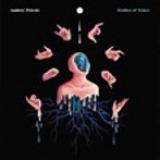
Captivating, ethereal and majestic, Mammal Hands (saxophonist Jordan Smart, pianist Nick Smart and drummer and percussionist Jesse Barrett) has carved out a refreshingly original sound from a disparate array of influences: drawing on spiritual jazz, north Indian, folk and classical music to create something inimitably their own. Hailing from Norwich, one of Britain's most isolated and most easterly cities, they have forged their own path away from the musical mainstream and their unique sound grew out of long improvised rehearsals. All three members contibute equally to the writing process: one that favours the creation of a powerful group dynamic over individual solos. Their records are entrancing and beautiful affairs, while their hypnotic live shows have seen them hailed as one of the most exciting bands in Europe as they push their unique line-up to the outer limits of its possibilities.
Shadow Work is their third album and the first they have self-produced. Recorded at 80 Hertz Studios, Gondwana Records home from home in Manchester, it is the result of 18 months of intensive touring and mammoth writing sessions. The energy from their exhilarating live performances has fed into the writing process and yet there is a quiet reflective side to this album, giving it an expanded emotional range that draws the listener deep into Mammal Hand's sound world. One that builds on the sound of their previous recordings, Animalia and the beautiful Floa, but is wider than ever, with the use of prepared piano strings, more prominent effects and field recordings all adding to the band's most ambitious and accomplished album to date. The striking artwork is by Daniel Halsall and reflects the organic, natural influences underpinning the band's music alongside a darker, modern minimalism.
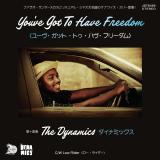
- A spectacular reimagining of one of the all time greatest
Northern Soul tunes, Timi Yuro 'It'll Never Be Over For Me'
whilst the original can change hands for upwards on £2000 a
group of young Argentinian Mods and rude boys have come
up with a reggae version.
- On paper it shouldn't work but it does. The most requested
song on Eddie Piller's Eclectic Soul Show on Soho Radio in
2017 following a chance meeting with guitarist Kevin Finigier
from Los Aggrotones in the studio.
- Acid Jazz are proud to release this as a limited edition vinyl
single (backed with one of the bands original organ
instrumentals) as a taster for the labels release of their
European debut LP later in 2018.
(en) Good things take time - ideally, including a great deal of oomph. At least when it concerns new tracks from within Monkey Maffia's inner circle. It has been four whole years since we received the momentary last piece of the 'Monkey Maffia Music Club', 12 inches full of funky nasty beasts dedicated to the best dancefloors of this world. In the meantime, a remix was released here and a track was presented there, but now we may once again enjoy a full load of Monkey Maffia. And on top of that the now 75th release of Freude am Tanzen!
Monkey Maffia is personally providing the soundtrack for this ceremonial occasion. His tracks continually supply tremendous amounts of oomph to parties as well as loads of gravity and funk. After all, as an experienced DJ he simply knows what an awesome night looks like - a straight bass drum fractured while simultaneously amplified with infinitely warm synths. On one track, bass and percussion are throwing all our worries overboard, on the next one pads and vocals are shimmering to the bet. Whatever may happen, it can be said with utmost certainty that it will never become boring on either secular flat earth.
A1 - Bad Or Good
A total brain and leg screw, that spins and spins and spins. Any DJ willing to test how much funk a dancefloor can bear up to the third decimal place, will be perfectly served with this track as proof.
A2 - Fake Heroes
Short reminder, but detailed clattering minimal with soul does still exist. At first, 'Fake Heroes' frostily shines through aerial heights; however, then submerges all the more into unforeseen depths.
B1 - MiniMi
Somehow jazzy, but was meant as house. Similarly hypnotic, equally free. Common thread is the bass drum, along which anything is possible. File under: secret weapon for truly late hours and DJs with guts.
B2 - Schörless
This is a track that sends Larry Heard on an Orient trip and thereby extends over a much longer period than its brief four-and-a-half-minute length. For all those who are still serious about 'deep' in house.
(de) Gut Ding will Weile haben - und reichlich Wumms am besten gleich noch mit dazu. Zumindest dann, wenn es sich mal wieder um neue Tracks aus dem engsten Kreis der Monkey Maffia handelt. Ganze vier Jahre ist es inzwischen her, dass uns von dort aus der vorerst letzte Teil des - Monkey Maffia Music Club' erreichte, eine 12-Inch voll funky-garstiger Biester für die besten Dancefloors dieser Welt. Zwischendurch erschien ein Remix hier und ein Track dort, doch nun gibt's endlich wieder Monkey Maffia satt. Und das nunmehr 75. Release auf Freude Am Tanzen gleich noch mit dazu!
Der Soundtrack zu diesem feierlichen Anlass kommt von Monkey Maffia höchstselbst. Stichwort Wumms: den bringen seine Tracks stets genauso mit zur Party wie massig Tiefe und Funk. Denn als routinierter DJ weiß der Mann einfach, was eine lange Nacht alles braucht - hier wird die gerade Bassdrum gebrochen, dort mit endlos warmen Synths unterfüttert. In einem Track klappern uns Bass und Percussion die Sorgen aus dem Leib, im nächsten flirren die Pads und Vocals sehnsüchtig um die Wette. Was auch immer passiert, langweilig wird's auf dieser wie jener weltlichen Erdscheibe mit Sicherheit nicht.
A1 - Bad Or Good
Totale Hirn- und Beinschraube, die dreht und dreht und dreht. Wer als DJ testen will, wieviel Funk bis auf die dritte Kommastelle genau so ein Dancefloor eigentlich aushält, ist mit diesem Track als Messgerät bestens bedient.
A2 - Fake Heroes
Kleiner Reminder, aber kleinteilig-klappernder Minimal mit Seele, das gibt's noch immer. - Fake Heroes' schimmert zunächst kalt durch die luftigen Höhen, taucht dann aber umso weiter vor in ungeahnte Tiefen.
B1 - MiniMi
Irgendwie Jazz, aber als House gedacht. Ähnlich hypnothisch, genauso frei. Als roter Faden dient die Bassdrum, entlang dieser geht aber eigentlich alles. File under: Secret Weapon für die ganz späten Stunden und DJs mit Mumm.
B2 - Schörless
Ein Track der Larry Heard auf Orient-Reise schickt und dabei viel weiter trägt als seine knapp viereinhalb Minuten Spielzeit. Für alle, die das - Deep' im House noch ernst meinen.
Common Series' footprint is the 'Experimentation' and you can find it in the sixth release too. Marco Erroi with some musicians give us four sunny tracks, as the cover tells. They have been exploring Italo House and Balearic sounds. The psychedelic touch together with some blue vocals and a jazzy saxophone make CS06 all different. It is the 'Aperitivo' time somewhere on the Riviera! Limited edition of 250 hand-numbered copies.
Parasole's music fits the bill for cutting-edge electronic music. Infrared Vision is a display of his love for polyrhythmic drum patterns, post-club sketches, twisted dance floor gems and classy, big room-ready tunes.
.
Few words of the artist:
''When I started to conceptualize my album I had a few end goals'', explains Parasole. ''I wanted to string my own style through Infrared Vision, so it would be familiar to the people who like my music. In tandem, I strived to produce a fresh voice sonically and experimented with a few new production techniques. I also grabbed ideas outside of techno and house, because I didn't want to be influenced by anything new. I was listening to a lot of jazz, hip-hop, Nine Inch Nails and Prince for example.''
Parasole took his time to write, produce and record Infrared Vision, dividing the process into three steps. ''First I wrote the album in words, pinning down ideas and track concepts on a notepad. Subsequently I transferred my ideas to my gear. Due to a heavy tour schedule I sometimes brought gear with me on the road, to continue my sketch process on the hardware. I then recorded it at home and at Phil Moffa's studio in New York. When the music was fully finished the album morphed to its final version. Phil Moffa laid down the final mixdown at Butcha Sound Studios, while Marco Spaventi handled the mastering.''
'an incredible, funked-out live show and production team with their own modern take on boogie, Philly soul, and NY disco.' - XLR8R The Possé are a new face to many people. The five piece run by Andrew Elston and Ross Ferraro is comprised of veterans from all over Australia's music scene. After a year of knuckling down in the studio and a string of sold out shows they've boiled down their favourite influences into an in-credible, raw, funked out live show and production team. Watch out for The Posse's debut EP, Our Thing, featuring contributions from Andrew Elston (Phy-sique/Toni Toni Lee/Catcall), Ross Ferraro & Jarrol Renaud (The Goods), Michael Di Francesco (Touch Sensitive/Van She) and NZ jazz keys prodigy Andrew Bruce.
Honey Soundsystem releases 'Cosmologist', the latest offering from our Resident DJ: Robert Yang aka Bézier. A multi-instrumentalist, Robert was trained in saxophone starting at age 10, before moving onto a Fender Telecaster after high school. After being exposed to Southern California rave culture in the late 90s, he moved onto DJing and collecting records. By the time he planted his roots in San Francisco in 2005, Robert had built an impressive analog synth-based studio, which also serves as the creative hub for his riveting live performances.
'Cosmologist' explores Robert's personal universe with three tracks that connect his varied musical lineages. "Cosmos", a celebration of the late 80s/early 90s KIIS FM universe, is built around an infectious freestyle hook that morphs into a seven minute tour of intersecting styles. "Ether" begins as gothic night-driving electro, but breaks into fantasy-scapes inspired by Italo and 1980s Japanese anime theme songs. The final track, "d. Quelle", clocks in at over 11 minutes, incorporating bebop jazz solos drawn from his early exposure to improvisation techniques by Charlie Parker, Cannonball Adderley, and Stan Getz. All songs have been mixed by Mark Pistel (Meat Beat Manifesto, Consolidated) at Room 5, San Francisco and EQed for vinyl by George Horn at Fantasy Studios.
RNT welcomes Manchester upstart Loz Goddard into the fold with his new outing, 'The Drunken Monk EP' on the Reserve imprint. Hot from recent successes on House of Disco and Dirt Crew, young Loz delivers yet again with a 4 tracker of dusty thumpers and jazzy burners, brewed with love and pressed to vinyl the color of a cool pint of ale!
Comet is pleased to announce the third volume of the Afrobeat Makers Series: Nu Guinea - The Tony Allen Experiments.By re-working the original magic drum patterns from the Afrobeat master Tony Allen, Nu Guinea created a compilation of tracks which is charged by a voluminous electronic jazz-Psyche funk imprint.For this release, Comet Records teamed up with Early Sounds Recordings, the berlin label, also home to duo Berliners Nu Guinea.The Naples formed, Berlin-based duo, is a project that arose out of jam sessions, melting synthesizers with instruments, containing a handmade sound that is not aiming for perfection but genuineness. It can be understood as a steadily shaping form, always open for collaborations with other musicians.
They've previously collaborated with singer Wayne Snow (fellow berliner artist on Comet) for the vocal edit of Nu-World, also delivered a remix for Wayne Snow' Rosie Ep' both recently released on Tartelet Records.Nu Guinea - The Tony Allen Experiments LP due to be out on February 9th 2016, as vinyl LP.
After contributing a remix for our label in 2011 Daniel Stefanik now returns to Raum with his first solo single under his new moniker DLSK. The A side - Sense of doubt' is a bit more stripped down and melodic, as the B side and also the title track of this release - Subterraneans' is more of a jazzy house groove, that simply doesn't stop rolling and keeps the tension with subtle variations and other nice little gimmicks. As always we truly hope that you enjoy these tracks as much as we do and we are happy to have Daniel back on board as for sure he can be called one of Germany's top notch producers.
London centric debut album from Floating Points with a host of guest musicians and vocalists.
the label say " Sam Shepherd spent five years putting together Elaenia, juggling the production with his DJ commitments and his now-completed PhD in neuroscience.
The album takes its inspiration from classical, jazz, electronic music, soul and Brazilian music, much of which can be heard in Shepherd's DJ sets. There's a long list of contributors, with Tom Skinner and Leo Taylor (drums), Rahel Debebe-Dessalegne and Layla Rutherford (vocals), Susumu Mukai (bass), Alex Reeve (guitar), Qian Wu and Edward Benton (violins), Matthew Kettle (viola) and Joe Zeitlin (cello) all featuring. Shepherd also provides some of the vocals.
Shepherd's influence on the album extends to the cover art: he built his own harmonograph to create Elaenia's sleeve, using fibre optic cables that were connected to light sources and responded to bass drum hits and other sounds.
Aside from a couple of early excursions on R2 Records and Planet Mu, Shepherd's solo material has come out through Eglo Records, the label he co-runs with Alex Nut. Records like Vacuum, Shepherd's breakthrough release in 2009, and 2011's Shadows, which scored a five-star review on RA, have cemented his reputation as a classy, inventive producer. On top of that he's also released music from his Floating Points Ensemble project, and produced some of Fatima's 2014 album, Yellow Memories. "
- Adolars phantastische Abenteuer ist eine mit feinster Ironie
gespickte ungarische Zeichentrickserie, die als Bestandteil der
Familie Mézga-Serienreihe in einigen Ländern Kultstatus genießt.
Adolar Mézga könnte der große Zeichentrickbruder von Comfort
Fit sein. Denn so lässig wie Adolar sein aufblasbares Raumschiff
aus einem Geigenkasten zaubert, so locker knallen die ftten Beats voll mit wärmender Kraft in den Orbit. Ein Neuling ist hier nicht am Werk. Comfort Fit dürfte allen Beatspezialisten an der Borderline von HipHop, Electronica, Abstract, Jazz, Broken Beat und Detroit Techno ein Begriff sein. Bereits seit 2001 switcht er sich mit seinen Veröffentlichungen durch verschiedene Musikstile. Den richtigen Punch fürs Genick, hat er dabei immer im Okular.
Auf der frühen Musik Krause-EP - Rausgefogen ertönt stimmlich
- Auf dieser Feier bin ich On Fire . Auch wenn hier keiner brabbelt,
Comfort Fit ist mit zwei Tracks sowas von on Fire. Das beste daran, er liefert gleich noch zwei Lieder zum Anzünden und Ablöschen mit.
Phonica Records inaugurate a new series of releases that will fall under the 'Special Editions' banner; a series that will feature collaborations, one-off releases and anything that doesn't fit into the main labels' outlook. The first release comes from Sinkane, a hotly tipped new artist from NY.
Sinkane is the project of Sudanese-born musician Ahmed Gallab. Gallab cut his own teeth as a youngster in the punk DIY landscape of middle America, and then found himself touring far and wide as a member of Yeasayer, Caribou, Eleanor Friedberger, Born Ruffians, and Of Montreal. He has emerged from it all as Sinkane, a project that identifies a renaissance within the space and spirit of the outposts of contemporary music. With an aesthetic range seamlessly shifting from soul to rock, and from jazz to pop, Sinkane's vibe is timeless and the sound is now.
Runnin' is a song taken from a collection of songs simply titled Mars. On this limited edition 12" from London's Phonica Records, the album version of Runnin' is re-imagined as an increasingly dense longburn club jam by Daphni (Dan Snaith of Caribou fame) and as a more angular headjam by Chandeliers of Chicago.
We welcome Art Bleek on klakson! this paris based producer/musician already released some nice quality house music on labels like connaisseur recordings but is also know for his more jazz orientated projects, playing live sax and piano! this EP brings you 3 beautifull, deep and soulfull tracks with a nice distinctive drive. Larry Heard meets Metro Area meets Raiders of the Lost Arp!
"Spiritual Jazz 19" besteht aus zwei Doppel-LP-Sets, die den Einfluss und die Ausdrucksformen jenes Underground-Jazz beleuchten, der sich in der zweiten Hälfte des 20. Jahrhunderts in Kalifornien und den angrenzenden Bundesstaaten entwickelte. Die insgesamt 24 Titel erscheinen in Gatefolds und enthalten Liner Notes, Fotos und Download-Codes.
Die US-Westküste wird oft mit dem Boom des Cool Jazz in den 1950er Jahren in Verbindung gebracht; doch überall dort, wo Jazz gespielt wurde, florierten auch modale, afrozentrische und spirituell geprägte Strömungen – und die Westküste bildete da keine Ausnahme. In der Nachkriegszeit rangierte die Central Avenue in L.A. als bedeutendstes Jazz-Viertel Amerikas direkt hinter Manhattan. Auch wenn Manhattan in jenen Jahren das faktische Zentrum des Jazz-Universums war, übte Kalifornien eine stärkere Anziehungskraft auf die Kultur im Allgemeinen aus und zog Menschen aus dem ganzen Land in den Bann seiner aufkeimenden Gegenkultur der 1960er Jahre.
Hier untersuchen wir die Auswirkungen dieser Gegenkultur auf den Jazz. Wir beleuchten den Einfluss der Black Panthers – der prägendsten Kraft innerhalb der schwarzen politischen Bewegung nach der Ära der Bürgerrechte – und widmen uns den neuartigen spirituellen Praktiken und Religionen des aufkommenden New Age. In Kalifornien waren zahlreiche eigenwillige Independent-Labels wie Arhoolie, Theresa und Nimbus sowie viele weitere private Unternehmungen ansässig; wir präsentieren die Ergebnisse ihres Strebens nach musikalischer Freiheit. All diese Faktoren beeinflussten die Entwicklung und Blütezeit des Jazz und der Jazzmusiker an der Westküste – und die Evolution des Spiritual Jazz in dieser Region wird hier eingehend betrachtet.
Spiritual Jazz 19" besteht aus zwei Doppel-LP-Sets, die den Einfluss und die Ausdrucksformen jenes Underground-Jazz beleuchten, der sich in der zweiten Hälfte des 20. Jahrhunderts in Kalifornien und den angrenzenden Bundesstaaten entwickelte. Die insgesamt 24 Titel erscheinen in Gatefolds und enthalten Liner Notes, Fotos und Download-Codes.
Die US-Westküste wird oft mit dem Boom des Cool Jazz in den 1950er Jahren in Verbindung gebracht; doch überall dort, wo Jazz gespielt wurde, florierten auch modale, afrozentrische und spirituell geprägte Strömungen – und die Westküste bildete da keine Ausnahme. In der Nachkriegszeit rangierte die Central Avenue in L.A. als bedeutendstes Jazz-Viertel Amerikas direkt hinter Manhattan. Auch wenn Manhattan in jenen Jahren das faktische Zentrum des Jazz-Universums war, übte Kalifornien eine stärkere Anziehungskraft auf die Kultur im Allgemeinen aus und zog Menschen aus dem ganzen Land in den Bann seiner aufkeimenden Gegenkultur der 1960er Jahre.
Hier untersuchen wir die Auswirkungen dieser Gegenkultur auf den Jazz. Wir beleuchten den Einfluss der Black Panthers – der prägendsten Kraft innerhalb der schwarzen politischen Bewegung nach der Ära der Bürgerrechte – und widmen uns den neuartigen spirituellen Praktiken und Religionen des aufkommenden New Age. In Kalifornien waren zahlreiche eigenwillige Independent-Labels wie Arhoolie, Theresa und Nimbus sowie viele weitere private Unternehmungen ansässig; wir präsentieren die Ergebnisse ihres Strebens nach musikalischer Freiheit. All diese Faktoren beeinflussten die Entwicklung und Blütezeit des Jazz und der Jazzmusiker an der Westküste – und die Evolution des Spiritual Jazz in dieser Region wird hier eingehend betrachtet.
Omasta step into their own voice with “Hits Different”, marking a new stage in their evolution as musicians and storytellers.
Following their debut “Jazz Report From The Hood", which proved a major success and brought attention to Omasta as one of the most distinctive groups emerging from the contemporary jazz scene, the musicians return with their second album, “Hits Different”. The record develops the language established on their debut, pushing it into new territory and shifting the perspective from that of the protagonists themselves to that of a narrator telling the story.
While the debut album was a story about the lives and emotions of the band’s members, “Hits Different” adopts the perspective of a narrator, giving the album a more cinematic structure. As on the first record, the story is never told explicitly. The track titles merely point the way, leaving space for listeners to bring their own emotions, imagination, and experiences to the music. Each track becomes another scene in a story that moves through a broad spectrum of emotions, from happiness and excitement to anxiety, tension, and disorientation. It is a story that allows everyone to create their own interpretation, but its ending leaves no room for doubt. There is no happy ending here.
FIRST TIME ON VINYL! “Instalação Do Samba”, originally released in 2004, has become one of the defining albums in the history of Schema Records. With producer Stefano “S-Tone Inc.” Tirone, Toco created an album that embraced the essence of samba and bossa nova while allowing them to breathe naturally within a contemporary musical landscape, blending Jazz, soul, understated electronics and sophisticated arrangements. Released only on CD at the time, “Instalação Do Samba” is finally given the analogue home it always deserved. This first-ever vinyl edition also includes “Qui C’Est Celui-Là”, previously included in the French CD edition. Over the years, Toco has become the most streamed artist in the entire Schema catalogue, introducing his music to audiences beyond the traditional boundaries of Brazilian jazz and contemporary bossa nova. His songs continue to resonate with listeners around the world, proving that authenticity never goes out of style.
Sweet Apricots presents its first vinyl release: Daniel Masson – Baul Dimension EP.
In the early 2000s, French composer and producer Daniel Masson travelled to Dhaka to record musicians and singers from Bangladesh’s Baul tradition, a mystical musical culture centred on freedom, inner exploration and universal love.
Originally released as a 13-track album, Baul Dimension appears here on vinyl for the first time through a carefully selected four-track EP. The record brings together the original version, Daniel Masson’s hypnotic Anniversary Version, and two remixes by Lucas Desmottes, aka Roy Vision.
A regular guest at Sweet Apricots parties, Roy Vision translates the spirit of the dancefloor into two deep, percussive and jazz-informed versions: the uplifting Higher Self Mix and its spacious, powerful dub counterpart.
Between organic voices, traditional instrumentation, electronic textures and hypnotic rhythms, Baul Dimension EP is a journey made for attentive listening as much as for adventurous dancefloors.
Cut at The Carvery, London and pressed with particular care by Disques Garcia
“Origen: Una Exploración por el Jazz Modal de los Trópicos” is a celebration of the human bonds that transcend cultural differences to create a shared language beneath the same sky. Asia, the Middle East, Africa, Europe, and the Americas are the protagonists of this sonic diaspora, where Modal Jazz, Spiritual Jazz, Egyptian Jazz, Ethiopian Jazz, Cape Verdean Kriolu, Brazilian Jazz, Latin Jazz, Caribbean Rhythms, and Flamenco Jazz come together, among many other influences, to shape a journey toward healing and a reconnection with our shared origin.
Credits
Anthonius — Composition, piano, keyboards, arrangements, production, and mixing.
Edu Pons — Saxophones, clarinets, and flutes.
Joana Morais — Vocals (B1).
Situasound — Vocals and guitar (A2).
out of Stock
Last delivered 2 days ago available to reorder, subject to availability
Sonor Music Editions proudly presents "A TEMPO DI JAZZ" by Maestro Piero Umiliani. This lost gem captures the formative years of Modern Jazz in late 1950s Italy - alongside the legendary Basso-Valdambrini recordings in the early 1960s, as well as the early years of Piero Umiliani's long and prolific career as a composer with over 190 soundtracks, 40 library albums, and 35 TV title themes recorded.
A TEMPO DI JAZZ includes seven original compositions by Piero Umiliani recorded in 1959. Here, at the age of 33, he lays a perfect ground with himself as a pianist, accompanied by some of the best Italian soloists at the time: Marcello Boschi on alto saxophone and flute, Ivan Vandor on tenor saxophone, Peppe Carta on bass, and the American trombonist Bill Gilmore. With plenty of room for improvisation, the sextet fuses Big Band moods with West Coast experimentation of Latin American rhythms and Modern Jazz ballads that sit perfectly between his soundtracks for the films "I Soliti Ignoti" (Big Deal on Madonna Street) from the same year that attained him international recognition, and his masterpiece "Smog" (featuring Chet Baker and Helen Merrill) from 1962.
Five compositions are outtakes from Piero Umiliani's mega-rarity "Tempo Jazz", released on RCA Custom in 1960, while 'Tema In Blues' has been published on the two - impossible to obtain - 45 releases "Moderato Swing" (RCA Camden 45CP 112) and "Tema In Blues" (RCA Custom 45 R3) from 1960 as well as the previously unreleased track 'Mezza Cottura.'
The music has been transferred and remastered from the original master tapes and lacquer cut in MONO, preserving the original sound of the recordings.
First released in a long-out-of-print limited-edition 7" box set, this album, now released on LP and CD, brings together 10 amazing, unreleased Studio One tracks, only ever released as extremely limited-edition hand-etched one-sided dubplates (most of these sold out in less than 2 hours!). Studio One Dub Plate Special brings together all 8 of these exclusive dubplate unreleased cuts, plus two more also never before released alternate cuts. Featuring Alton Ellis, Cedric Brooks, Brentford Road All Stars, Jacob Miller and more! From Alton Ellis' righteous uplifting 'Black People' to Brentford All Stars’ hypnotic cover of War's classic 'The World Is A Ghetto', groovy instrumental cuts from Cedric Brooks and The Soul Brothers, deep cuts from Alton & Zoot, George Phillip and Jacob Miller's wicked alternate cut of Dennis Brown's classic 'Westbound Train', all make Studio One Dub Plate Special a truly unique Studio One release
out of Stock
Last delivered 15 days ago available to reorder, subject to availability
We are celebrating 25 years since the release of Jaga Jazzists “A Livingroom Hush” with a reissue in 140g orange vinyl as a 2LP!
Originally released in Norway in 2001, with Ninja Tune coming on board to release it internationally the following year, Jaga Jazzist are a true musical one off.
Formed in the mid-Nineties around the nucleus of percussionist Martin Horntveth, his multi-instrumentalist brother Lars (who was 14 at the time), tuba-playing sister Line and an expanding coterie of musicians, they were determined to make a big, joyful sound that knew no boundaries of genre. 'We wanted to have a big, big band, but not one playing big band jazz,' as Lars Horntveth once put it.
Comparisons reached for by the press at the time were as broad - from Talk Talk, Soft Machine, Eric Satie, John Coltrane and Don Cherry to acts like Aphex Twin, Stereolab, Squarepusher and Tortoise. This range summed up the breadth and originality of the group's sound. Combining trumpets, trombone, electric guitar, bass, tuba, two bass clarinets, fender rhodes and vibraphone, and it is the mixture of these instruments with an electronic edge that really made it stand out.
The album is a journey that manages to sound both classic and contemporary and an oasis to anyone interested in music which combines iconoclasm with beauty, melody with avant gardism and, in general, a complete lack of interest in anything other than good music.
Product Specs:
Limited edition 2xLP on 140g orange vinyl in gatefold sleeve.
out of Stock
Last delivered 2 days ago available to reorder, subject to availability
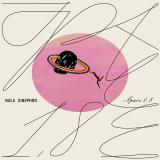
Anlässlich des fünfjährigen Jubiläums des gefeierten Debütalbums "Space 1.8" (2021) von Nala Sinephro, erscheint dieses als neue und einmalige Doppel-Vinyl-Edition, erstmals auf zwei Schallplatten geschnitten, im Gatefold mit gefütterten Innenhüllen.
„Wer behauptet,es gäbe keine neuartige Musik mehr, kann entdecken, wie falsch dieses Urteil ist.“ – stern, Heft 21.09.2021‘Space 1.8’ is Nala Sinephro’s debut album; each contributing piece is part of a connected,
collaborative and deeply personal body of music.
Performed and recorded at Pink Bird Recordings in Wanstead and in the comfort of Sinephro’s bedroom, tracks one through eight allow experimentation to breathe and borrow from jazz, electronic and folk influences.
On the LP, Sinephro invites a host of talented musicians to enjoy its confines, providing a quiet place to dissolve the edges of London from the senses.
‘Space 1.8’ is a record for healing, which could not have arrived at a more needed time.
out of Stock
Last delivered 2 days ago available to reorder, subject to availability
Ajo Se Po is the third album by alto-saxophonist and percussionist Kevin Haynes, released with his band Grupo Elegua. The album integrates musical elements with references to his deepening spiritual understanding. Haynes has created a modal harmonic language incorporating Afro-Cuban melodies and classical kora playing - his alto-sax, infusing the album with a personal 'voice'.
Yoruba spirituality is at the heart of Haynes' musical thinking which also includes both Nigerian and Cuban dimensions. This is especially reflected by the use of recitation and Cuban bata drumming being employed on all tracks, with each piece growing out of a particular bata rhythm. Each such rhythm is dedicated to a particular Orisha, or divinity.
As well as influences from Afro-Cuban, Native Nigerian and folkloric Bata, Haynes' music is a fusion of contemporary jazz incorporating Mandinga folk and praise songs and hard bop.
Kevin Haynes and Grupo Elegua have performed at renowned jazz festivals including Havana Jazz Festival, Cuba and Salamanca Jazz Festival, Spain. Haynes has also featured on Moses Boyd's hit album Displaced Diaspora.
Previously available on digital only, Ajo Se Po is now released on vinyl.
out of Stock
Last delivered 8 days ago available to reorder, subject to availability
OTHELLO is the debut album by pianist and composer Orson Claeys. Bringing together influences from jazz, hip-hop, urban culture, and everyday life, the record offers the clearest portrait yet of an artist shaped as much by the worlds around him as by music itself.
The title refers to Claeys' full name, Orson Dwight Othello Claeys, and reflects the album's central concern:identity. Throughout the record, personal experiences, cultural influences, and artistic inspirations converge into a body of work that seeks to understand how an artist is formed, both within and beyond music. Musically, OTHELLO builds on jazz, strongly intertwined with hip-hop, contemporary culture, and ideas beyond traditional musical frameworks. For Claeys, music is not a fixed genre, but an open and evolving form of expression.
This broad perspective is evident in the album's carefully chosen collaborations. A track like "WHAT A NIGHT" first took shape during a studio session with indie-soul singer Sevens, whose harmonic ideas laid the foundation for the track. As the composition evolved, Claeys felt it called for a stronger hip-hop voice. Through a recommendation from Mixmonster Menno of STUFF., he was introduced to L.A. rapper IAMOMNI, whose contribution brought exactly the energy and perspective the track needed. The result unfolds like a late-night journey through Los Angeles, with IAMOMNI's contribution adding a sense of movement, character, and place.
Elsewhere on the album, "SPIRAL", featuring Belgo-Brazilian vocalist Helena Casella, grew out of a long-standing mutual admiration. Conceived as a meeting point between R&B and jazz, the composition balances the groove and emotional depth of the former with the improvisational spirit and spontaneity of the latter. The collaboration developed naturally from the outset, with Casella instinctively understanding the atmosphere Claeys envisioned while enriching the music with her own warmth and nuance.
A long-held ambition materializes on "SHADOWBOXING", where Claeys is joined by drummer, producer, and one of the key figures in contemporary Belgian jazz, Lander Gyselinck. Gyselinck's work, particularly his collaboration with Zwangere Guy on Pourriture Noble, was instrumental in showing Claeys how the language of hip-hop could coexist naturally with jazz, an idea that runs through OTHELLO. Drawing inspiration from boxing, the track is a musical equivalent of a fighter's walk towards the ring: focused, intense, and driven by the sense of anticipation that precedes stepping into the fight.
After this heightened intensity, the album gradually moves toward its closing statement. OUTRO / HANIN", featuring oud player Akram Ben Romdhane, a longtime collaborator whose playing forms a natural bridge between Claeys' previous work and the broader musical landscape explored across the album. The title references the Tunisian Arabic word hanin, meaning "nostalgia", a fitting conclusion to a work deeply concerned with memory, identity, and personal history.
Beyond music itself, OTHELLO is informed by a wider cultural landscape. Urban culture, with its visual language, creative independence, and sense of community, forms an important backdrop to the record. Sport also plays a significant role, particularly boxing and basketball, whose emphasis on discipline, focus, and resilience mirrors Claeys' own creative process. Rather than being treated as separate influences, these worlds coexist without hierarchy, reflecting an artistic vision that resists rigid boundaries and allows different disciplines, communities, and experiences to inform one another.
Originally released in 2017, Zara McFarlane’s Arise represents a classic moment in Brownswood Recordings catalogue. Just before the global spotlight landed on London's new jazz generation, Zara McFarlane was already forging her own path - connecting jazz, soul, reggae and Afro-Caribbean traditions with a confidence and clarity that remains striking nearly a decade later. Arise captures an artist operating with singular vision, creating a body of work that sounds every bit as fresh and forward-thinking today as it did on release.
The album also stands as an early landmark in the career of Moses Boyd, who produced and co-composed the record while serving as Zara's longtime drummer and musical collaborator. Years before his Mercury Prize-nominated breakthrough, Boyd helped shape Arise into a deeply personal exploration of heritage. The credit list is remarkable: Moses Boyd, Binker Golding, Shabaka Hutchings, Nathaniel Cross, Peter Edwards and Shirley Tetteh all contribute to a record that now reads like a roll call of British jazz royalty. The iconic cover shot was taken by Adama Jalloh, around the corner from Brownswood’s North London HQ.
Upon release, Arise was met with widespread critical acclaim. The Guardian praised “A Class Act" and celebrated its exploration of African-Caribbean musical lineage, while Clash Magazine described it as “enchanting and intriguing”. All About Jazz called the album's fusion of jazz and Jamaican rhythms "spellbinding".
As Brownswood celebrates its 20th birthday, we're proud to return one of the label's defining releases to vinyl, with the original copies being highly sought after. Pressed on limited edition gold vinyl, this special anniversary reissue is both a celebration of Zara McFarlane's artistry and a reminder of a record that was both ahead of its time, and whose influence resonantes today.
Driven by a lush and irresistible energy, Beyond Brazilian Stories takes you on a musical journey between Brazilian traditions and jazz improvisation.
Introduced to the richness of Brazilian music by Philippe Baden Powell, pianist Mathieu Bélis and double bassist Stéphane Dardour founded BSP PRODUCTIONS and formed the quintet Beyond Brazilian Stories, joined by saxophonist David Florsch, drummer Louis Bao Lao, and Äulne, vocalist and flutist.
Together, they revisit masterpieces by giants such as Milton Nascimento, Airto Moreira, Hermeto Pascoal, Dorival Caymmi, Edu Lobo and Moacir Santos, blending popular melodies with soaring instrumental passages.
The group also brings its own compositions, inspired by the vibrant energy of Brazilian music, creating a sound that is both authentic and innovative.
Their new album O ritmo do sonho has been awarded the “Revelation” distinction by Jazz Magazine!
Album contributors:
Mariana Zwarg - flutist, daughter of Itiberê Zwarg, Hermeto Pascoal’s bassist.
Edmundo Carneiro - Brazilian percussion legend (Tania Maria, De La Soul, Saint Germain, etc.).
Jessica Simon - trombonist, member of the Orchestre National de Jazz.
“An explosive fusion where samba, bossa and jazz become the playground for joyful and virtuosic freedom....” Jazz Rhônes Alpes
“...the brilliant Hermeto Pascoal,
whose spirit is present throughout O ritmo do sonho...” Revelation Jazzmag
"Cinematic Visionaries Calibro 35 and Noir Master James Ellroy Pay Homage to L.A. with a Pure Crime-Funk Original Soundtrack. Out October 9" There are collaborations that feel inevitable like they were waiting to happen in some shadowed corner of culture. The union between Italian cinematic funk visionaries Calibro 35 and internationally acclaimed master of noir fiction and New York Times bestselling author James Ellroy is undoubtedly one of them. When Calibro 35 were invited to compose the original soundtrack for Francesco Zippel's documentary Ellroy vs L.A., they didn't simply write music for film. They stepped directly into Ellroy's universe the most dangerous corners of American crime fiction and discovered, to no one's surprise, that its darkness felt strangely familiar. The result is Ellroy vs L.A., the band's new album out October 9 on Record Kicks. Twelve brand new tracks of cinematic crime funk, psychedelia, and hypnotic groove that don't accompany Ellroy's world so much as inhabit it. The soundtrack's move through Ellroy's fictional and real-world mythologies with deliberate precision. Stylistically, the album finds Calibro 35 in their most natural yet most cinematic state: crime funk, psychedelia, and hypnotic groove pushed into darker, more narrative-driven territory by the weight of Ellroy's world. From the gloomy, suspense-laden groove of the opener Black Dahlia to the evocative closing piece Moonlight Sonative, the album unfolds as a complete cinematic arc, showcasing Calibro 35 at their very best. L.A. Confidential delivers a super-suspenseful, thrilling tension that feels like a chase through neon-lit streets, while Riots erupts into explosive cinematic funk, capturing chaos and urban unrest in full force. LSD on Sunset Boulevard drifts into a hazy, instrumental soul journey psychedelic, warm, and disorienting, like a late-night hallucination of the city itself. The Big Nowhere (Part I & II) expands the narrative into a slow-burning, atmospheric descent, unfolding like a two-act crime saga. Welcome to the Land of Vacation and Probation hits with kick-ass, uptempo crime-funk madness, urgent and relentless in its propulsion, while White Jazz is a mood of suspended, noir-infused jazz tension cool, shadowy, and unresolved. Together, the tracks map Los Angeles as a fractured yet hypnotic landscape suspended between glamour and violence, beauty and decay, myth and reality Born in Milan in 2007 with the mission of excavating the golden age of Italian film music Morricone, Piccioni, Trovajoli, Calibro 35 have spent nearly two decades transforming that initial obsession into a singular artistic language. Their work bridges vintage Italian soundtracks with contemporary jazz and cinematic funk, earning them a global following rare for an Italian instrumental act. Their music has been sampled by Dr. Dre (Compton, "One Shot One Kill" feat. Snoop Dogg), Jay-Z ("Picasso Baby"), and Damon Albarn's The Child of Lov. Rolling Stone described them as "the most fascinating, retro-maniac and genuine thing that has happened to Italy in the past few years," while Far Out Magazine called them "one of the most skilful and innovative instrumental outfits on the planet right now." The band (Enrico Gabrielli, Massimo Martellotta, Fabio Rondanini, and Tommaso Colliva) continue to evolve without losing their core identity. In 2025 they released the critically acclaimed Exploration, further expanding their sonic universe, and were invited to perform at the closing ceremony of the Winter Olympic Games at the Arena di Verona, confirming their growing international stature. With Ellroy vs L.A., Calibro 35 don't just compose a soundtrack they translate a mythology into rhythm, tension, and groove. Between fiction and reality, they find a city that never truly sleeps, only pulses in darkness. Press play, and Los Angeles begins to unfold in sound.
Here at Tuff Kong Records we really like to push our boundaries and explore different sounds, we're passionate with music at 360° and so are these guys we have decided to bring to your attention. Dumbo Station is a nu-jazz ensemble out of Roma, Italy that we've met during a live jam with legendary MC Danno of historical roman hip-hop group Colle Der Fomento. They immediately caught our attention and after listening to this masterpiece we decided to collaborate with them and Roman jazz imprint AlfaMusic to release their debut full-length "Tirana Cafè" on limited edition vinyl. The 11 songs featured on their first studio effort will take you on a trip through different soundscapes with the quartet as your guide, joined by Italian talents the such as vocalist Davide Shorty as well as Maurizio Giammarco's sax and Elvio Ghigliordini's flute. These young fellas have managed to merge nu-jazz with soul, funk and modern sounds creating a true masterpiece.
Common Primitives is the second collaborative album between Andy Bell (Ride guitarist, Oasis bassist) and Essex-based harp and synth duo Masal. It’s a stunning, meditative collection which veers from kosmische to astral jazz by way of Turkish folk tunes and all the way back again.
Their first outing, 2023’s acclaimed Tidal Love Numbers, consisted of four lengthy and almost ambient tracks and is included here on vinyl for the first time as part of a two-record set with the new album. By contrast, the seven tracks that make up Common Primitives are almost concise, but also a lot more layered and complex.
“We tend to work from initial, free-jammed ideas, building form and arrangement from there,” explains Masal’s Al Johnson. “Above all, we believe you should go where the vibe takes you.”
For Andy, that vibe was very much jazz legend Pharoah Sanders’ classic 1977 album Pharoah, which was reissued a few years ago.
“It puts me into a hypnotic state,” he explains. “That’s why I worked with more guitar loops on this record. The Tisziji Muñoz part on ‘Harvest Time’ has had me in a vice-like grip for the last three years and it arrives here via the Vini Reilly filter.”
For Özlem Simsek, there is nostalgia, too, and she even adds vocals as well as her heavenly harp to the opening track, ‘After Kâtibim’, based on a traditional Turkish folk song she had sung as a child growing up in Istanbul.
From there, the album takes us on a real journey, with the apt, impressionistic titles added by Andy once it had all been pieced together. There’s the beautiful, elegant ‘I Swear We Are Infinite’; the atmospheric ‘Yuzuki Fighting Spirit’ and the beatific ‘Soap And Water’. ‘Tower Of Babylon’ was named after the novelette by Ted Chiang, its structured creation reflecting that in the story; first single ‘The Morning Of The Trip’ finds Andy playing his guitar “as if it was a waterfall”. The journey ends with ‘Rudi’s Dream – The Third Bardo’, the trio accelerating onto the autobahn for a krautrock crescendo inspired by their studio’s resident cat.
Common Primitives is the second collaborative album between Andy Bell (Ride guitarist, Oasis bassist) and Essex-based harp and synth duo Masal. It’s a stunning, meditative collection which veers from kosmische to astral jazz by way of Turkish folk tunes and all the way back again.
Their first outing, 2023’s acclaimed Tidal Love Numbers, consisted of four lengthy and almost ambient tracks and is included here on vinyl for the first time as part of a two-record set with the new album. By contrast, the seven tracks that make up Common Primitives are almost concise, but also a lot more layered and complex.
“We tend to work from initial, free-jammed ideas, building form and arrangement from there,” explains Masal’s Al Johnson. “Above all, we believe you should go where the vibe takes you.”
For Andy, that vibe was very much jazz legend Pharoah Sanders’ classic 1977 album Pharoah, which was reissued a few years ago.
“It puts me into a hypnotic state,” he explains. “That’s why I worked with more guitar loops on this record. The Tisziji Muñoz part on ‘Harvest Time’ has had me in a vice-like grip for the last three years and it arrives here via the Vini Reilly filter.”
For Özlem Simsek, there is nostalgia, too, and she even adds vocals as well as her heavenly harp to the opening track, ‘After Kâtibim’, based on a traditional Turkish folk song she had sung as a child growing up in Istanbul.
From there, the album takes us on a real journey, with the apt, impressionistic titles added by Andy once it had all been pieced together. There’s the beautiful, elegant ‘I Swear We Are Infinite’; the atmospheric ‘Yuzuki Fighting Spirit’ and the beatific ‘Soap And Water’. ‘Tower Of Babylon’ was named after the novelette by Ted Chiang, its structured creation reflecting that in the story; first single ‘The Morning Of The Trip’ finds Andy playing his guitar “as if it was a waterfall”. The journey ends with ‘Rudi’s Dream – The Third Bardo’, the trio accelerating onto the autobahn for a krautrock crescendo inspired by their studio’s resident cat.
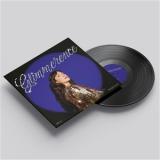
Mit Glimmerence veröffentlicht die Berliner Sängerin und Songwriterin Mirna Bogdanovic ihr drittes Album - eine eindringliche Sammlung poetischer Songs zwischen Jazz, Art-Pop und emotionalem Storytelling. Der eigens geprägte Titel beschreibt einen Schwebezustand zwischen Liebe und Illusion und bildet den roten Faden dieser zutiefst persönlichen Musik. Gemeinsam mit einigen der profiliertesten Musiker der Berliner Jazzszene entstehen fein nuancierte Klangwelten, in denen Stimme, Text und Arrangement untrennbar miteinander verschmelzen. Bogdanovic verbindet vokale Ausdruckskraft mit erzählerischer Tiefe und macht jeden Song zu einer atmosphärischen Momentaufnahme voller Nähe und Intensität. Mit einer eindrucksvollen Neuinterpretation von Chris Isaaks "Wicked Game" setzt das Album einen kraftvollen Schlusspunkt. Glimmerence ist ein vielschichtiges, emotionales Werk über Sehnsucht, Verletzlichkeit und Selbstermächtigung - und ein starkes Statement einer der spannendsten Stimmen des zeitgenössischen europäischen Jazz.
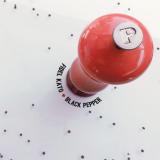
Fidel Kato is a producer based in Rome, Italy. In its sound we hear reminiscences of the boom hip-hop mixed with Latin jazz and today's Lo-Fi trends. In his upcoming full-length “Black Pepper” his productions are enriched by the presence of live instrumentation. Record drops on all digital platforms November 6th and Tuff Kong Records will be releasing it on vinyl November 23rd.
Creole Culture is the triumphant return of Dawn Richard’s King Creole era. Steeped in history but with its flag planted firmly in the future, Creole Culture pulls elements from Richard’s heritage as a Black and Native American woman who has spent a lifetime making and engaging with music. Following New Breed (2019) and Second Line (2021), Creole Culture is akin to a panel of a triptych: a fully-realized sonic and narrative universe in which Richard, as King Creole, rebuilds her hometown of New Orleans in her image. She not only honors her city for what it was or what it gave her, but stakes a claim for it as a cradle of global culture now and for all time.
Creole Culture follows two acclaimed avant-garde R&B albums with composer Spencer Zahn — the later of which, 2024’s Quiet in a World Full of Noise, found Richard exorcising the specters of grief and trauma in the wake of her father Frank Richard’s health struggles and the killing of her cousin Cisco. It is a softer take on the brass-soaked swagger of Richard’s previous King Creole efforts, an evolution brought about when she realized she had left a crucial viewpoint out of her exploration of New Orleans: her own. “New Breed was the story of New Orleans through my father’s eyes,” Richard explains. “I used his samples, his music, his cultures, his work with Chocolate Milk, his side of the family. Second Line was my mom — her interludes riddled the album with her depiction of what is meant to be a Creole woman in New Orleans. The masculine and feminine sides of King Creole had expressed themselves through them, but the story felt unfinished, like my version of the story was untold.”
That story is, for lack of a better word, complex: at turns triumphant and tragic, sexy and mournful, braggadocious and contemplative. Creole Culture presents Richard’s New Orleans as a utopian soundscape — an intoxicating blend of R&B, soul, hip-hop, pop, and jazz — that’s survived and thrived despite the dystopian circumstances visited upon it. Richard presents the melange of influence and artifact on Creole Culture with the care of a botanist nurturing new hybrids in a rose garden.
What emerges from that care is at once delightful and unexpected, enlisting a crew of guest stars including Big Freedia, Anjelika “Jelly” Joseph, Tarriona “Tank” Ball, and Durand Bernarr for features that play against type. Tank’s turn at spoken word verse on “l v r” serves to add dimension to King Creole’s New Orleans, as does Joseph’s undeniable voice on “chuuuurch.” “I’m not normally a features girl,” says Richard, ”but King Creole can’t build a world from scratch without help. What’s beautiful about the features here — which is also true of my band and producers — is they come from people who understand the materials of the world they’re from, they’re people I love, and they’re people who are just extraordinary at what they do. They’re part of the atmosphere of this place. You need them for the record to breathe.”
In the end, that’s what King Creole creates: a space where Dawn Richard can breathe, can be at peace with herself, and let loose with others. From finding love in opening single “enough” to relishing in the Afrocaribbean futurism of “fiesta,” Creole Culture is a tremendous, freeing breath of fresh air. It captures the resolve of a woman and a place who’ve survived the unimaginable and sees the future not as something to be endured, but as something to be created. Dawn Richard has been making that future one album at a time over the course of her career. Creole Culture is her most stunning one yet.
Creole Culture is the triumphant return of Dawn Richard’s King Creole era. Steeped in history but with its flag planted firmly in the future, Creole Culture pulls elements from Richard’s heritage as a Black and Native American woman who has spent a lifetime making and engaging with music. Following New Breed (2019) and Second Line (2021), Creole Culture is akin to a panel of a triptych: a fully-realized sonic and narrative universe in which Richard, as King Creole, rebuilds her hometown of New Orleans in her image. She not only honors her city for what it was or what it gave her, but stakes a claim for it as a cradle of global culture now and for all time.
Creole Culture follows two acclaimed avant-garde R&B albums with composer Spencer Zahn — the later of which, 2024’s Quiet in a World Full of Noise, found Richard exorcising the specters of grief and trauma in the wake of her father Frank Richard’s health struggles and the killing of her cousin Cisco. It is a softer take on the brass-soaked swagger of Richard’s previous King Creole efforts, an evolution brought about when she realized she had left a crucial viewpoint out of her exploration of New Orleans: her own. “New Breed was the story of New Orleans through my father’s eyes,” Richard explains. “I used his samples, his music, his cultures, his work with Chocolate Milk, his side of the family. Second Line was my mom — her interludes riddled the album with her depiction of what is meant to be a Creole woman in New Orleans. The masculine and feminine sides of King Creole had expressed themselves through them, but the story felt unfinished, like my version of the story was untold.”
That story is, for lack of a better word, complex: at turns triumphant and tragic, sexy and mournful, braggadocious and contemplative. Creole Culture presents Richard’s New Orleans as a utopian soundscape — an intoxicating blend of R&B, soul, hip-hop, pop, and jazz — that’s survived and thrived despite the dystopian circumstances visited upon it. Richard presents the melange of influence and artifact on Creole Culture with the care of a botanist nurturing new hybrids in a rose garden.
What emerges from that care is at once delightful and unexpected, enlisting a crew of guest stars including Big Freedia, Anjelika “Jelly” Joseph, Tarriona “Tank” Ball, and Durand Bernarr for features that play against type. Tank’s turn at spoken word verse on “l v r” serves to add dimension to King Creole’s New Orleans, as does Joseph’s undeniable voice on “chuuuurch.” “I’m not normally a features girl,” says Richard, ”but King Creole can’t build a world from scratch without help. What’s beautiful about the features here — which is also true of my band and producers — is they come from people who understand the materials of the world they’re from, they’re people I love, and they’re people who are just extraordinary at what they do. They’re part of the atmosphere of this place. You need them for the record to breathe.”
In the end, that’s what King Creole creates: a space where Dawn Richard can breathe, can be at peace with herself, and let loose with others. From finding love in opening single “enough” to relishing in the Afrocaribbean futurism of “fiesta,” Creole Culture is a tremendous, freeing breath of fresh air. It captures the resolve of a woman and a place who’ve survived the unimaginable and sees the future not as something to be endured, but as something to be created. Dawn Richard has been making that future one album at a time over the course of her career. Creole Culture is her most stunning one yet.
Danielle Ponder is done waiting for a future version of herself to arrive. Now, the Rochester-born, Atlanta-rooted singer-songwriter is unapologetically living in the moment. This realization powers Everything Has Changed, Ponder's anticipated sophomore album (and debut on Dead Oceans in partnership with Phoebe Bridgers). The LP is Ponder’s most self-assured statement to date: it was crafted through a period of immense transformation as the beloved vocalist propelled from being a lawyer to a full-fledged musical powerhouse. That artistic freedom threads the album, as heard on lead single, “Power”, which serves as both a declaration and an affirmation for the Black diaspora. Other highlights include the revelatory “Sun and Moon”, the towering blues ballad “God of You”, and the devastatingly vulnerable “Open Windows”. Everything Has Changed dismantles the stories Ponder once told herself and finds peace in what remains—all themes that have shaped much of her journey. Music was always a constant presence throughout her life, but practicality initially took over in adulthood. While performing with her family’s band and later developing her own projects, Ponder pursued a legal career focused on criminal justice reform.
It wasn’t until her late 30s that she allowed herself to seriously imagine music as more than a side pursuit. In 2021, at age 39, she finally took the leap, leaving law behind to pursue her artistry full-time. The gamble paid off: she signed her first record deal in 2022, becoming a trailblazer on her own unusual path to worldwide renown. Her debut album Some of Us Are Brave introduced Ponder as one of soul music’s most compelling new voices, thanks to singles like “Someone Like You”, “Roll The Credits,” and the empowering title track. The LP earned critical acclaim along with dozens of major sync placements, including the latest Apple campaign for the iPhone 16 Pro. She’s since had four major TV appearances, including Jimmy Kimmel Live! Ponder has also sold out shows across North America and Europe, including festival appearances at Bonnaroo, Lollapalooza, Afropunk, and the Montreux Jazz Festival.
But if that album documented her arrival, Everything Has Changed documents her evolution.
Danielle Ponder is done waiting for a future version of herself to arrive. Now, the Rochester-born, Atlanta-rooted singer-songwriter is unapologetically living in the moment. This realization powers Everything Has Changed, Ponder's anticipated sophomore album (and debut on Dead Oceans in partnership with Phoebe Bridgers). The LP is Ponder’s most self-assured statement to date: it was crafted through a period of immense transformation as the beloved vocalist propelled from being a lawyer to a full-fledged musical powerhouse. That artistic freedom threads the album, as heard on lead single, “Power”, which serves as both a declaration and an affirmation for the Black diaspora. Other highlights include the revelatory “Sun and Moon”, the towering blues ballad “God of You”, and the devastatingly vulnerable “Open Windows”. Everything Has Changed dismantles the stories Ponder once told herself and finds peace in what remains—all themes that have shaped much of her journey. Music was always a constant presence throughout her life, but practicality initially took over in adulthood. While performing with her family’s band and later developing her own projects, Ponder pursued a legal career focused on criminal justice reform.
It wasn’t until her late 30s that she allowed herself to seriously imagine music as more than a side pursuit. In 2021, at age 39, she finally took the leap, leaving law behind to pursue her artistry full-time. The gamble paid off: she signed her first record deal in 2022, becoming a trailblazer on her own unusual path to worldwide renown. Her debut album Some of Us Are Brave introduced Ponder as one of soul music’s most compelling new voices, thanks to singles like “Someone Like You”, “Roll The Credits,” and the empowering title track. The LP earned critical acclaim along with dozens of major sync placements, including the latest Apple campaign for the iPhone 16 Pro. She’s since had four major TV appearances, including Jimmy Kimmel Live! Ponder has also sold out shows across North America and Europe, including festival appearances at Bonnaroo, Lollapalooza, Afropunk, and the Montreux Jazz Festival.
But if that album documented her arrival, Everything Has Changed documents her evolution.
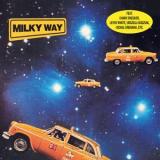
Mit "Milky Way" kehrt ein lange vergriffenes Juwel des Jazzrock und Fusion zurück. Das einzige Album der gleichnamigen Supergroup wurde Ende der 1980er-Jahre von dem renommierten polnischen Saxophonisten, Violinisten und Komponisten Michal Urbaniak initiiert und vereint einige der bedeutendsten Musiker des Genres. Zur hochkarätigen Besetzung zählen unter anderem Lenny White (Return To Forever), Victor Bailey (Weather Report), Randy Brecker (Brecker Brothers) und Ray Gomez. Gemeinsam verbindet die Band virtuose Improvisation, eingängige Melodien und den charakteristischen Sound des klassischen Fusion-Jazz. Ursprünglich auf Fritz Raus Label L+R Records veröffentlicht, war das Album über Jahre hinweg nicht mehr erhältlich. Diese remasterte Wiederveröffentlichung würdigt das musikalische Erbe von Michal Urbaniak und macht einen besonderen Titel der internationalen Fusion-Geschichte wieder zugänglich
The title of Ghost Bridge, the East-Coast-spanning chamber ensemble Hour's fifth record, is less metaphorical than one might expect. Bandleader Michael Cormier- O'Leary repurposed it from an unrealized movie concept about a bridge that inexplicably starts disappearing. On the nearly-ten-minute title track of this richly imaginative suite of songs_written for a 13-piece ensemble that includes woodwinds, strings, and vibraphone as well as a rock rhythm section_Hour conjures up this central image with spectral string harmonics and free-time percussion gestures. While writing the keyboard pieces that became the takeoff point for the album, Cormier-O'Leary also found himself reflecting on the loss of loved ones or even his own mortality. The six kaleidoscopic instrumental pieces on Ghost Bridge, though, feel more cosmically inquisitive than straightforwardly elegiac, sketching a progression from existential doubt toward understanding and acceptance. Ghost Bridge forms a contrast with Hour's art-rock-informed, more improvisatory early releases, representing a step further into intricate chamber orchestration. Known for his work with Friendship, Wendy Eisenberg, and 2nd Grade, Phillybased multi-instrumentalist and Dear Life Records founder Cormier-O'Leary has made Hour a home for increasingly cinematic instrumental compositions since the mid-2010s. With dazzling production by Lucas Knapp, Ghost Bridge delivers plenty of the live ensemble's trademarks, especially cyclically developing guitar and keyboard melodies. However, even more than on Hour's last studio album, unconventional harmonies and sophisticated counterpoint take center stage here. These emotionally multifaceted compositions feel as rooted in contemporary classical and film soundtrack music as in indie rock. One of the most striking elements of Ghost Bridge is the more significant developmental role the orchestral instruments assume in each piece. Instead of underscoring Cormier-O'Leary's central hooks, there is a new mesmerizing level of detail to the group's conversational interactions and kinetic energy. "Centralia" is a stately and idiosyncratic fugue built from repeated and overlapping phrases, while Ghost Bridge's compositions are full of unexpected pivots in harmony that allow recurring melodic motifs to sound continually reshaded. On "Pearls," the chords modulate drastically around Cormier-O'Leary's inviting central melody in a way that emulates cuts in a film telling several parallel stories. There is an unsettled quality to the chords on Ghost Bridge, with Cormier- O'Leary's progressions avoiding firm grounding in either clearly sunny or melancholy tonalities. This mood is made more concrete by the record's sole vocal track, the jazz-inflected "Sky is Blue," featuring an uncannily gorgeous performance by Heeyoon Won. The song seems to be a communication from a person who has departed, offering consolation or perspective to someone left behind. Though its sonic palette is often tranquil, Ghost Bridge explores heartbreak, grief, anger, and helplessness in a distinct and pretense-free way. The project represents a bold step forward for Cormier-O'Leary as a composer and arranger, and on Ghost Bridge Hour reaches its most fully realized form to date, connecting soaring themes with an inventiveness that perfectly suits the searching nature of the subject matter.
Edge Conditions is a fresh look at the beat-forward electronic music of Jeremiah Chiu. In Electric Time, his 2023 first-thought-best-thought album recorded at theVintage Synth Museum in LA, offered a glimpse a solo process and sound, fast becoming a fan favorite. In many ways this new work is a total reset. Following two ambient-leaning duo albums with Marta Sofia Honer and a pair of improvisatory trance-jazz LPs with LA quintet SML, Edge Conditions settles Chiu into a world of layered, alternately dance-able or chillout-able, rhythm excursions a la classic Four Tet or Aphex Twin.
Edge Conditions is a fresh look at the beat-forward electronic music of Jeremiah Chiu. In Electric Time, his 2023 first-thought-best-thought album recorded at theVintage Synth Museum in LA, offered a glimpse a solo process and sound, fast becoming a fan favorite. In many ways this new work is a total reset. Following two ambient-leaning duo albums with Marta Sofia Honer and a pair of improvisatory trance-jazz LPs with LA quintet SML, Edge Conditions settles Chiu into a world of layered, alternately dance-able or chillout-able, rhythm excursions a la classic Four Tet or Aphex Twin.
Die 1969 in München gegründete Band Embryo (feat. Mishra) verbindet auf diesem Album Krautrock, Jazz, freie Improvisation sowie europäische und indische Musikelemente. Seit 2015 wird das Kollektiv von Marja Burchard weitergeführt. Die Aufnahmen entstanden 2023 im Minga Records Studio in München und dokumentieren die langjährige Zusammenarbeit mit den indischen Musikern Deobrat Mishra (Sitar, Gesang) und Prashant Mishra (Tabla). Ergänzt wird das Album durch Gastbeiträge von Niko Schabel, Dr. Chandreyee Maitra und Dattatreya Desai. Die Besetzung umfasst Marja Burchard (Vibraphon), Maasl Maier (Bass, Flöte), Jakob Thun (Schlagzeug) sowie Deobrat und Prashant Mishra.
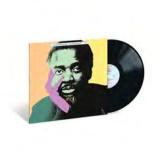
Nachdem der Pianist Ahmad Jamal zwischen 1968 und 1971 mit seinen langjährigen Trio-Partnern Jamil
Nasser (Bass) und Frank Gant (Schlagzeug) vier exzellente Alben für Impulse! Records eingespielt hatte,
wagte er 1973 bei dem Label 20th Century Records einen Abstecher in für ihn ungewohnte musikalische
Gefilde. Begleitet von einem Orchester mit Streichern und Stimmen ist Ahmad Jamal hier mit Versionen
damals aktueller Hits von Stevie Wonder und der Band War sowie mit Spiritual-Jazz- und Funk-Stücken
zu hören. Das ausgefallene Album ”Ahmad Jamal ’73” produzierte der Pianist, der hier auch erstmals am
E-Piano zu hören ist, zusammen mit Arrangeur und Komponist Richard Evans, der durch seine Arbeiten
mit u. a. Ramsey Lewis, Dorothy Ashby, Terry Callier und Marlena Shaw bekannt wurde.
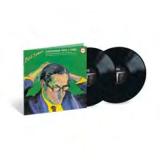
Sechs Jahre nach seinem legendären Live-Auftritt vom 25. Juni 1961, aus dem zwei der populärsten
und besten Alben von Bill Evans für das Label Riverside hervorgingen - ”Sunday At The Village Vanguard”
und ”Waltz for Debby” -, kehrte der einflussreiche Jazzpianist im August 1967 für zwei Abende in denselben
Jazzclub in Manhattan zurück. Diesmal trat er in der einmaligen Trio-Besetzung mit Eddie Gómez am
Bass und Philly Joe Jones am Schlagzeug auf. Die Aufnahmen erschienen 1982, zwei Jahre nach Evans’
Tod, auf dem Doppelalbum ”California Here I Come”, das seinen vielleicht etwas verwirrenden Titel dem
Opener des Albums verdankt. An beiden Abenden waren Evans und seine Spielpartner in Bestform und
zeigten bei Interpretationen von Standards wie ”‘Round Midnight”, ”In a Sentimental Mood” und ”Stella
by Starlight” sowie dem damals neuen Bacharach/David-Hit ”Alfie” ungezügelten Elan, rhythmisches Feuer
und ein energiegeladenes Zusammenspiel.
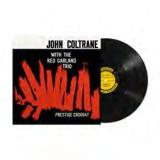
John Coltrane with the Red Garland Trio ist das dritte Studioalbum von John Coltrane und entstand 1957
im legendären Van Gelder Studio. Gemeinsam mit Red Garland, Paul Chambers und Art Taylor zeigt es
Coltrane in einer entscheidenden Phase seiner musikalischen Entwicklung. Das Album erschien 1958 bei
Prestige Records und wurde 1961 unter dem Titel Traneing In neu veröffentlicht.
Anlässlich Coltranes 100. Geburtstags erscheint der Klassiker nun als Teil der Original Jazz Classics-Reihe
neu – auf 180-Gramm-Vinyl, vollständig analog von den Originalbändern gemastert und im hochwertigen
Tip-On-Cover.
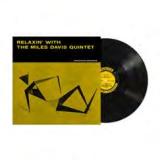
Relaxin’ with the Miles Davis Quintet fängt den mühelosen Swing und das außergewöhnliche Zusammenspiel der legendären Formation um Miles Davis, John Coltrane, Red Garland, Paul Chambers und Philly
Joe Jones ein. Aufgenommen 1956 im Van Gelder Studio, erschien das Album erstmals 1958 bei Prestige
Records.
Anlässlich des 100. Geburtstags von Miles Davis erscheint der Klassiker nun neu als Teil der Original
Jazz Classics-Reihe – auf 180-Gramm-Vinyl, vollständig analog von den Originalbändern gemastert und im
hochwertigen Tip-On-Cover
„A Charlie Brown Christmas“ vom Vince Guaraldi Trio –das meistverkaufte Jazzalbum aller Zeiten –
erscheint erstmals im Rahmen der Original Jazz Classics Reihe. Das ikonische Album enthält alle beliebten
Kompositionen aus dem PEANUTS-Weihnachtsspecial, und Guaraldi wird dabei von Fred Marshall, Monty
Budwig, Jerry Granelli und Colin Bailey begleitet. Diese festliche Neuauflage erscheint auf 180-GrammVinyl, gepresst bei QRP, mit vollständig analogem Mastering von den Originalbändern bei Cohearent Audio
und einem Stoughton-Tip-On-Cover.
Gabriella Cilmi's talents were undeniable from a young age, leading her to sign to Australia's Mushroom Records when she was just 13-years-old. Just a few years later, the breakthrough success of 'Sweet About Me' and her Gold-certified UK Top 10 debut album 'Lessons To Be Learned' took the teenager global. But she discovered that the more success she had, the more she was subjected to countless opinions on what she should do next - an awkward situation for an artist who just wanted to be herself. 'Pure Love' is a record she made having discovered the confidence and freedom to make exactly the kind of album she wants to make: a soulful organic one, on which she could sing from the heart. And it's certainly worth the wait, a triumphant return in which her warm, throaty, unmistakably expressive contralto wraps itself around the deep soul, jazz and classic rock that has always been closest to her heart.
Repress with regular picture sleeve (no gatefold) and without booklet!!
Since the last two years FloFilz played in the first league of european beat-producers. With his smooth jazz samples he catches them all: his 46.000 (!) Soundcloud-Fans, the "Beatgeeks" from Berlin, the "Rapkids" from the Splash Festival and the Boiler Room in London. With "Cenário" FloFilz continues his musically city-trip, which started in Paris with "Metronom" in 2014. For his new album he travelled with the photographer Robert Winter to Lisbon. The impressions from the trip FloFilz put into 16 new tracks, on two of them he gets support by jazzsinger Olivia Wendlandt (Relaén).
The "Cenário" LP comes in a perfect package with an effortful produced gatefoldcover including a 12 page photobooklet. The LP is limited to 2.000 copies.
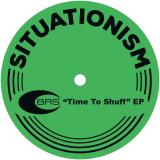
The “Time To Shuff” EP was the first ever release from UK deep house pioneers BRS (British Rhythm Services) in 2000, originally on Cyclo records.
Situationism Records are excited to be able to re-issue this timeless classic and sort after EP from BRS …26 years later and we have lovingly repressed on vinyl and emulated the original artwork.
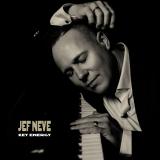
Der belgische Pianist Jef Neve, sowohl klassisch als auch im Jazz ausgebildet, legt ein sehr persönliches Soloalbum vor. Die elf Titel führen bis in seine Kindheit zurück, wo er schon am Klavier saß und in seiner Fantasie den verschiedenen Tönen bestimmte Farben zuordnete. Nach 25 Jahren auf der Bühne, Tourneen um die ganze Welt und zahlreichen Begegnungen mit Menschen und Orten stellt "Key Energy" eine Art Zwischenbilanz dar.
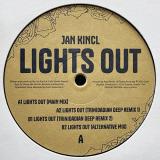
Jan Kincl, a Croatian producer, DJ and live performer with releases on BBE Records, Far Out Recordings, Sonar Kollektiv, and Get Physical, returns to his own Cycle Records with "Lights Out", the label's sixth release. Written and produced at Cycle Studio in Zagreb, it arrives in Main and Alternative mixes. The remixes come from Trinidadian Deep, a deep house producer and DJ mentored by Ron Trent, with releases on Neroli, Vision Recordings, Toto and Makin' Moves, as well as his own Native Bush - Many Moods of Music imprint. "An appropriate title. This is definitely a tune you want to hear when you closes your eyes on the dance floor, the vibe gets deep and you the lights go down." - said DJ Kemit. Intergalactic Gary called the record "Deep, atmospheric and emotional", while DJ Lady D summed up the contrast at the heart of the release: "Love the original, gives classic house vibes and TD offers a modern deep take." Early supporters include DJ Deep, Volcov, Ian Friday, DJ Kemit, Intergalactic Gary, Michael Reinboth, DJ Lady D, Bill Brewster (NTS Radio), Iron Curtis, Delfonic, ?me, Rohan Rakhit (Worldwide FM), Laani (Rinse FM / Worldwide FM / Jazz re:freshed) and Sebastian Hampf (ByteFM), among others.
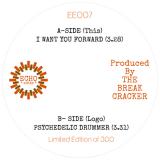
After a couple of Echo Labs 45s and an ECR release - the ECHO EDITS sub-label is back once again, with the BREAK CRACKER in 2026
After the last latin flavoured joint on the label, we head to an all out Funk and Jazz party with a couple of cover versions of dancefloor favourites, never on a vinyl 7” before - given an added makeover for a double sided 45 bomb.
“I Want You Forward” takes a big band version of the Jackson 5 monster hit originally released on an LP. After being chopped,looped and layered with sound FX plus JA hype vocals to take it to the next level - this has been a favourite dubplate to start DJ sets with a bang !
“Psychedelic Drummer” is the Horace Silver penned soul-jazz cut that spawned various other vocal and instrumental versions that have been dancefloor favourites in mod clubs and funky jazz sessions over decades. Originally a very short track on a private press LP - it was the massive drums that made this ripe for more exposure with nothing more added - just cut-up, rearranged and extended for club play.
out of Stock
Last delivered 6 days ago available to reorder, subject to availability
The track blends the popular disco and funk sounds of the late '70s while incorporating the growing popularity of rap and hip-hop and remains a quirky addition to Pickett's spooky legacy. The b- side features Edgar Winter's "Frankenstein," which blends elements of progressive rock, blues, and jazz fusion, creating a dramatic and otherworldly sound. This 7" single come on a Frankenstein-shaped vinyl.
a A1 Monster Rap (feat. Bobby Paine) [Radio Edit]
[a] A1 Monster Rap (feat. Bobby Paine) [Radio Edit]
out of Stock
Last delivered 6 days ago available to reorder, subject to availability
Semiratruth ist ständig in Bewegung. Der in Brooklyn lebende, in Chicago geborene Elektronik-Künstler reist von Bühne zu Bühne und pendelt zwischen unterschiedlichen Underground-Musikszenen - von den USA über Guatemala bis in die Niederlande -, Synthesizer und Sampler im Gepäck, als wären sie ein Teleportationsgerät. Auf der Bühne lenkt er intuitiv die Energie im Raum und scheint den kollektiven Herzschlag des Publikums mit einem universellen Metronom zu synchronisieren. Mit einem Tisch voller Elektronik-Geräte klopft er ganz beiläufig klangliche Portale in eine andere Welt auf. Semiras sich ständig wandelndes Umfeld und ihr eigener gelebter Schwung sind auf ihrer neuen LP ,S!M" zu hören, die am 25. September über das vielseitige Chicagoer Label Sooper Records erscheint. ,S!M" schafft eine einzigartige Balance: Der kompositorische Minimalismus von Acid, Juke und Baile Funk schlängelt sich in industrielle Klanglandschaften, um dann durch experimentelle und melodische Improvisationen ins Licht gerückt zu werden, die an Cosmic Synth und Spiritual Jazz der 1970er Jahre erinnern. Das Selbstbewusstsein, mit dem Semiratruth diese klangliche Dualität nutzt, spiegelt sich in den Themen ihres schwindelerregenden instrumentalen Multiversums mit 20 Tracks wider. Disharmonische Stimmen von Gedanken und Gefühlen, Sehnsucht und Hingabe, Hinterfragen und Träumen - all das findet Harmonie in Semiras Welt, in der unterschiedliche Realitäten gleichzeitig existieren. Jeder Track ist ein Universum, das sich in einem Existentialismus ergeht, der zu gleichen Teilen aus Freude und Schmerz besteht - eine Aufforderung, den Kosmos mit Kopfhörern zu ergründen oder ihn auf der Tanzfläche auszuleben. Semiratruths bisheriges Werk und vergangene Live-Auftritte haben dem Künstler einen Ruf für seine lyrische Gewandtheit eingebracht, doch ihre Leidenschaft für instrumentale Arrangements ist in all ihren bisherigen selbstproduzierten Werken zu hören. Auf ,S!M" richtet Semira den Fokus ganz einfach auf die Sounddesign-Aspekte ihrer Kunst. Tracks wie ,Atitlán", benannt nach Guatemalas großem See, zeigen Semiratruths disziplinierte kompositorische Stärke. In seiner Mikrotonalität sehr intim, breitet sich ein sich langsam wandelndes Synth-Pad aus, während Spritzer maschineller Töne die Mehrdeutigkeiten des Lebens zwischen den Noten melodisch zum Leben erwecken. Diese Zurückhaltung steht in krassem Kontrast zu Tracks wie ,Blood Moon Eclipse" und ,we gotta GO!", in denen dröhnende Kick-Drums den Hörer in den Rhythmus des Stadtlebens katapultieren. In jedem Moment könnte Semiratruth überall sein. Wo auch immer Semira nicht ist, füllt ihr Geheimnis die Leere. Ihr Schatten-Ich stürzt sich in ein pulsierendes Publikum von NYC-Fans, während sie die Lautsprecher mit einem Fingertipp zum Beben bringen. Im selben Moment wird ihre Geschichte zum Mythos in den Chicagoer DIY-Szenen, aus denen sie hervorgegangen sind. Genau in derselben Sekunde schwärmen Farm-Core-Songwriter hinter der Bühne eines Folk-Festivals von ihrer neu entdeckten musikalischen Obsession und rufen aus: ,Semira ist die WAHRHEIT!" Wie Semira es ausdrückt: ,All diese S!Mulationen und Zeitachsen finden S!Multan statt. Je tiefer du eintauchst, desto seltsamer wird es."
out of Stock
Last delivered 7 days ago available to reorder, subject to availability
Gary Bartz und das neue Londoner Ensemble Your Brother’s Keeper präsentieren mit "Where Rivers Meet" ein tiefgründiges und intuitives Studioalbum, das die seltene Begegnung zweier Generationen von Jazzmusikern einfängt. Das Album, das pünktlich zum 20-jährigen Jubiläum von Brownswood erscheint, vereint Bartz' Tradition mit der jungen, pulsierenden Szene Londons. Das Ergebnis ist Musik, die sich mit Offenheit und Intensität entfaltet, getragen von tiefem Zuhören und gemeinsamer Improvisation.
Im Zentrum des Projekts steht Bartz, eine der einflussreichsten Vertreter des modernen Jazz. Der Saxophonist, dessen Karriere sich über mehr als fünf Jahrzehnte erstreckt, machte sich einen Namen durch Auftritte mit Charles Mingus, Max Roach und Art Blakey, bevor er sich Miles Davis in dessen elektrisierender Phase der frühen 1970er-Jahre anschloss. Mit seinen gefeierten Aufnahmen mit der NTU Troop wurde er schnell zu einer prägenden Figur des Spiritual Jazz und schuf ein Werk, das Generationen von Musikern und Zuhörern gleichermaßen begeistert. Sein Spiel – lyrisch, tiefgründig und unverkennbar gefühlvoll – zählt nach wie vor zu den markantesten Stimmen des Jazz.
Das Album markiert zudem die Gründung von Your Brother’s Keeper, einem neuen Kollektiv um Schlagzeuger und Produzent Jake Long (Maisha), dessen musikalischer Dialog und die Improvisation tief in der Musik verwurzelt sind. Mit Ali MacSween (Piano, Synthesizer, modulare Effekte), Axel Kaner-Lidstrom (Trompete), Twm Dylan (Kontrabass), Tim Doyle (Percussion) und Chelsea Carmichael (Tenorsaxophon) sowie Long am Schlagzeug spiegelt die Gruppe eine Szene wider, die den Sound des zeitgenössischen Jazz im letzten Jahrzehnt maßgeblich geprägt hat.
out of Stock
Last delivered 8 days ago available to reorder, subject to availability
"Time Is Slipping Away is an album by American R&B/jazz fusion producer, composer, keyboardist and vocalist Dexter Wansel. It is the last of four studio albums released at Philadelphia International Records. The album contains songs with different styles from P-funk to sophisticated quiet storm music to instrumental jazz-funk. It features the two popular songs ""The Sweetest Pain"" and ""I'll Never Forget (My Favorite Disco)"". The former song features vocals by soul singer Terri Wells. Time Is Slipping Away is available as a limited edition of 500 copies on purple coloured vinyl and includes an insert with lyrics."
out of Stock
Last delivered 8 days ago available to reorder, subject to availability
Brownswood Recordings presents Brownswood Remix Editions 010: SAMURAI Edits, a new 12-inch/digital release that reboots a much-loved classic from the early 2000s for a new generation of dancefloors.
At the centre of the release is “Samurai”, originally released on 12-inch in 2003 as the B-side to Jazztronik’s ‘Dance With Me’. More than two decades later, the track remains a cult favourite within the jazz, broken beat and dance music continuum, it’s a record that helped bridge the worlds of Japanese nu jazz and the bruk scene emerging from West London in the early noughties.
For collectors, the timing is particularly apt: the original 2003 12-inch has become increasingly sought after, with copies commanding significant prices on the secondary market. SAMURAI Edits offers a new way into a record that has long circulated among DJs and collectors, and a chance for a new generation to discover these incredible edits as well as the iconic originals.
out of Stock
Last delivered 8 days ago available to reorder, subject to availability
Ronen Sabo aka Nenor has dropped his rough and ready blends of soul and house on labels such as Moodymann's Mahogani and UK powerhouse Defected. Having already found his way into top-level record bags with the first volume of this series on Fossils, he is now back on new label Mumtak with more fully re-imagined interpretations. 'Klock It' is a humid and steamy house sound with a throbbing low end and exotic vocals, while 'Clayers' rides on lovely claps with breezy vocal sounds, ensuring a smooth cruising vibe. 'To Be Free' is a jazzy laced and late night sound with dusty drums and scruffy samples adding up to something loveably rough around the edges and 'El Gato' then brings a more freewheeling sound with big percussive hints and darker bass.
out of Stock
Last delivered 8 days ago available to reorder, subject to availability
MFN Recordings presents the label’s debut release in the form of a special double-vinyl retrospective from one of the more singular and under-appreciated characters to emerge from the late 90’s West Coast house scene: Rithma.
Rithma’s music never sat comfortably in one box. House, techno, funk, breaks, psychedelia, and jazz-informed musicianship all found their way into his productions, often with a mischievous, wonky, and slightly surreal edge. This retrospective goes way back, bringing together ten sought-after tracks from the formative years between 1998 and 2010, all lovingly remastered by Martin Iveson aka Atjazz. Initially appearing on small, influential, and now defunct labels, the tracks here have since become increasingly difficult to find on their original vinyl pressings.
out of Stock
Last delivered 6 days ago available to reorder, subject to availability
Following the reissue of Fire & Sugar (1975), we present a special 45 focused on two standout tracks from the album.
If you’ve heard the album, you already know “Guaguanrock” had to make it to our favorite format. So here it is on 45.
Side A features “Guaguanrock (Le Spam Mix)”, a new version by Andrew “DJ Le Spam” Yeomanson, created from the original multitrack master tapes. The mix extends the intro break and brings the drums forward, enhancing the track’s raw, percussive energy for maximum dancefloor impact.
On the flip, “Bokolo” delivers a deeper, hypnotic groove, showcasing Caunedo’s unique blend of Afro-Cuban rhythms and jazz-funk textures.
A DJ-focused release, bridging rare groove authenticity with modern playability.
out of Stock
Last delivered 8 days ago available to reorder, subject to availability
In the early 90s, led by Nicola Conte, the Fez collective in Bari, Italy, reshaped contemporary jazz through groove, experimentation and a distinctly Mediterranean sensibility. Within this environment the earliest recordings associated with what would become Schema Records first appeared, released at the time through Right Tempo. With a series of three 45rpm releases Schema Records revisits some of its earliest productions, all newly remastered from the original masters. The first 7” in this series includes Quintetto X’s reinterpretation of Marcos Valle’s classic “Mentira”, here proposed in a completely new format, as a two-part composition, unfolding across both sides of a 45 rpm single. Originally released in 1994 on a rare EP, the track perfectly captures the musical identity of Quintetto X: sophisticated rhythms, refined jazz harmonies and melodic ideas shaped by both Brazilian influences and the vibrant acid jazz scene of the European club music.
out of Stock
Last delivered 9 days ago available to reorder, subject to availability
In the early 90s, led by Nicola Conte, the Fez collective in Bari, Italy, reshaped contemporary jazz through groove, experimentation and a distinctly Mediterranean sensibility. Within this environment the earliest recordings associated with what would become Schema Records first appeared, released at the time through Right Tempo. With a series of three 45rpm releases Schema Records revisits some of its earliest productions, all newly remastered from the original masters. This second 7” reveals two complementary sides of Quintetto X’s identity. On the A-side, “Senza Paura” reimagines a classic made famous by Ornella Vanoni with subtle jazz harmonies and elegant grooves. The B-side brings back Jorge Ben’s “Balança Pema” reinterpretation; rich with Brazilian flavours, jazz improvisation and infectious rhythmic interplay, it remains one of the finest examples of the musical language that defined both the Fez collective and the early years of Schema.
Trumpeter Don Cherry, an Ornette Coleman soulmate and a world musician decades ago, became one of jazz's many early losses 10 years back. But saxophonist Pharoah Sanders, who joins him on this fizzing 1966 set, has since ascended to cult status, and he is still around to admire . In the 1960s, he knew no melodic fear at all, in which respect he was aptly partnered with Cherry. This is a quartet set, strongly influenced by the melodic approach of Coleman, but with a fierce abstraction of tone quite different from Coleman's playful lyricism.
Moreover, the rhythm team of Ed Blackwell on drums and Henry Grimes on bass provides a scintillating underpinning for the music that is worth listening to all on its own. Sanders' mix of Coltrane's yearning long notes, Ayler's ghostly, fluttering wail, Coleman's fast, bumpy phrasing and his own manic bagpipe screams certainly separates the faint-hearted from the stayers on the opening Awake Nu. But the conversation between Sanders and Cherry is light, lyrical and engaging on The Thing, and the saxophonist even gets into a stubborn, Sonny Rollins-like repeating Latin vamp on There Is the Bomb. An unflinchingly quirky classic. (THE GUARDIAN)
The latest release from Rainbow Disco Club’s label imprint, Beyond Space And Time, is the debut compilation from The Melting Hours, a live project by Wata Igarashi and Kuniyuki. WataIgarashi continues to make his mark on the history of techno, whilst Kuniyuki has long been revered as one of Sapporo’s greatest treasures. The two artists, who have long held mutual respect for one another, met whilst performing at the Draaimolen Festival 2025, and this encounter gave rise to The Melting Hours.
‘Blue Sun’ is imbued with a freshness reminiscent of the ambient jazz masterpieces released by prestigious labels such as ECM and Windham Hill. ‘Liquid Dunes’ sees the organic tones of the flute and percussion melt into over ten minutes of abstract sound textures, whilst the breathtaking ‘Cloud Touch’ awakens amidst a swirling vortex of pulsating downbeats and arpeggios. It is said that ‘Blue Sun’ was created by reconstructing studio rehearsal recordings, whilst ‘Liquid Dunes’ and ‘Cloud Touch’ were crafted from live recordings at Draaimolen 2025. The essence of these works—and indeed of the project The Melting Hours itself—lies at the heart of their improvisational nature.
It brings to mind the Rainbow Disco Club event back in 2026, where they wove their sounds amidst fresh greenery and surrounded by listeners under a clear blue sky. It felt as though the pulsating energy was spreading across the dance floor, guided by a session from The Melting Hours that seemed almost like a living creature. The organic breath one senses in this work not only evokes precisely that scene but also allows us to feel the unique, ephemeral nature inherent in this project—and, consequently, the boundless possibilities that stem from it.
Rainbow Disco Club のレーベル・ライン'Beyond Space And Time'から放たれる最新作は、Wata IgarashiとKuniyukiによるライブ・プロジェクト、The Melting Hoursによる初の音源集だ。テクノ史に残る実績を現在進行形で刻み続けているWata Igarashi、長きに渡り札幌の至宝として尊敬を集めてきたKuniyuki。兼ねてよりリスペクトを送り合ってきた両名がDraaimolen Festival 2025への出演を契機に邂逅し、始動したプロジェクトがThe Melting Hoursである。
快晴の元で新緑とリスナーに囲まれ音を紡いでいった、去る2026年のRainbow Disco Clubを思い出す。まるで、生き物のようなThe Melting Hoursによるセッションに導かれ、脈動するエネルギーがフロアに伝播していたようだった。この作品から感じられる有機的な息遣いは、まさにそんな情景を思い起こすものであると同時に...このプロジェクトが宿すその場/その時限りの唯一無二性と、それ故に広がっていく限りない可能性をも感じさせてくれる。
out of Stock
Last delivered 2 days ago available to reorder, subject to availability
The Modern Jazz Quartet had become a jazz institution by the time Pyramid was recorded. Formed out of the rhythm section of the Dizzy Gillespie Big Band (1946 -48), founding of the members The MJQ , pianist Lohn Lewis and vibraphonist Milt Jackson , brought a sophisticated blend of jazz and classical music to audiences around the world. Active from 1952 through to 1997 (with a seven- year break in between), the MJQ's 38- year reign counts as being among the most enduring ensembles in jazz history. Presented here is their classic album Pyramid , featuring three compositions by the quartet's pianist John Lewis (including his hit 'Django), alongside jazz standards by Ellington, Ray Brown ('Pyramid'), and Jim Hall; plus, a unique take on the Nancy Hamiton & Morgan Lewis' popular standard, 'How High The Moon'.
Auf seinem 1961 erschienenen dritten Album für Blue Note Records, präsentierte sich Freddie Hubbard
nicht nur als äußerst dynamischer Trompeter, sondern zeigte auch erstmals wirklich sein kompositorisches
Können. Während das Repertoire seiner beiden vorausgegangenen Alben “Open Sesame” und “Goin’ Up”
noch überwiegend aus Standards und Stücken seiner Jazz-Messengers-Kollegen bestanden hatte, zeichnete
der Trompeter diesmal für vier der sechs Titel des Albums selbst verantwortlich. Zu hören ist er hier mit
einem Sextett, dessen instrumentale Besetzung an die Jazz Messengers erinnert. Im Guardian schrieb John
Fordham im Jahr 2003 in einer Rezension des Albums: “Die Musik versetzt einen zurück in eine Jazz-Ära,
in der die kraftvolle Dynamik des Hard Bop den erfolgreichen Jazz dominierte.”
Jazzing The Morning is a compilation built around a simple idea: bringing together slow-tempo tracks that quietly lived beyond the spotlight, and giving them a space of their own.
Inspired by Dubbyman's Jazzing The Morning sessions, the compilation explores the deeper, slower side of electronic music through six carefully selected tracks by Hanna, Martian Tin Can, Paka Project, Detroit's Filthiest, Seafoam, and Inland Knights & To-Ka Project.
Rather than focusing on genre, Jazzing The Morning follows a shared pace — warm grooves, long blends and music made to be mixed, not rushed.
Pressed on vinyl only.
For those who still listen from start to finish.
out of Stock
Last delivered 12 days ago available to reorder, subject to availability
This is both a blueprint and a definitive masterpiece. Effortlessly transcending eras and genres, Terumasa Hino continues to captivate audiences around the world.
His sound and presence are truly top of the tops. Long before Japanese jazz was labeled as “Wa-Jazz”, and even before the rare groove movement emerged, Hip Seagull has been shaking dance floors, stimulating listeners, and fascinating collectors alike. Since his debut album Alone, Alone and Alone, Terumasa Hino has remained at the forefront of the scene, consistently delivering works that can be called masterpieces in every era. Among them, this 1978 recording stands out as one of his signature achievements.
From the epic title track “Hip Seagull”, which unfolds from a mystical intro into a jazz-funk journey, to the mellow and cosmic “This Planet Is Ours,” the album is filled with tracks imbued with a truly unique atmosphere.
This is both a blueprint and a completed form. Hip Seagull continues to enchant the past, present, and future alike.
New super-groovy one-off pressing purple double-vinyl very limited edition of Miami Sound 2 housed in gatefold sleeve, complete with two full-colour inner sleeves containing extensive text and exclusive photography from TK Records in-house photographer Larry Warmoth. Soul Jazz Records’ Miami Sound 2 is a superlative collection of 70s soul, funk, disco and boogie featuring tracks from legendary artists such as Betty Wright, Timmy Thomas, Gwen McRae, Milton Wright, T-Connection and many more, all released on the mighty TK Records musical empire based in Miami, Florida.
Throughout the 1970s founder Henry Stone’s TK Records rose up to be one of the most important forces in black music, successfully pioneering the evolution in musical fashions from the early gritty funk and soul at the start of the decade to the arrival of disco in the mid-70s. This album is a rollercoaster journey across soul, funk, disco and boogie, a party-rocking dancefloor-filling collection of monster tracks that includes million-selling hits such as Betty Wright’s classic ‘Clean Up Woman’, Timmy Thomas’s ‘Why Can’t We Live Together’, T-Connection’s ‘Do What You Wanna Do’, anthemic rare groove club hits including Gwen McCrae’s massive ‘All This Love I’m Giving’ and Milton Wright’s ‘Keep It Up’, plus a host of hard-to-find gems and rarities from the likes of Raw Soul Express, Chocolate Clay, Beginning of the End, Robert Moore, Clarence Reid, Little Beaver, Paulette Reeves and many more. TK Records functioned more like a close-knit family than a typical record company. Based in the industrial Hialeah district of Miami, music man Henry Stone surrounded himself with a host of creative artists, musicians, songwriters and producers who created an immediately identifiable TK sound as well as making musical stars out of many of its artists
DAYBREAKERS Records proudly presents ROOT DOWN 30, a celebration of one of Europe's most influential club institutions. Curated by legendary DJ, producer and tastemaker Rainer Trüby, the compilation marks three decades of Root Down, the Freiburg party that has quietly shaped dancefloors, record collections and musical conversations since 1996.
Long before genre boundaries dissolved into today's eclectic club culture, Root Down championed a unique musical vision. Jazz, Brazilian grooves, soulful house, broken beat, Afro-Latin rhythms and future-facing electronic sounds were brought together under one roof, creating a community that became a vital meeting point for adventurous dancers and deep music lovers alike.
Across thirty years, Root Down has hosted an extraordinary roll call of artists and DJs including Jazzanova, Gilles Peterson, Theo Parrish, Kyoto Jazz Massive, Jimpster, Laurent Garnier, Dixon, Peter Kruder, Richard Dorfmeister and countless others, helping establish Freiburg as an unlikely but essential stop on the global underground music map.
ROOT DOWN 30 captures that spirit perfectly. Handpicked by Trüby, the collection brings together a selection of artists whose music embodies the warmth, sophistication and dancefloor energy that have defined the party since day one. Featuring music and remixes from Jimpster, Osunlade, Da Lata, Jazzanova, Crackazat and more, the compilation moves effortlessly between soulful house, jazz-inflected club music, Brazilian influences, broken beat rhythms and deep electronic grooves.
ROOT DOWN 30 is a snapshot of an enduring musical philosophy. Thirty years after the first Root Down dancefloor came to life in Freiburg, the spirit remains unchanged: open-minded, soulful and rooted in discovery.
ROOT DOWN 30 stands as both a celebration of that remarkable journey.
50th Anniversary on limited edition 180g aquamarine vinyl. Small Change is a masterpiece that contains some of Waits" best early work. Classic jazz, Tin Pan Alley, and Stephen Foster filtered through Tom"s unique worldview and lyrical genius. Heartbreaking, hilarious and always vivid, songs like "Step Right Up", "Tom Traubert"s Blues", "I Wish I Was in New Orleans", "The Piano Has Been Drinking", and "Invitation to the Blues" are all classics that have influenced generations of songwriters since. Recorded with a live orchestra and featuring jazz legend Shelly Manne on drums, Small Change is a classic and stands as one of Tom Waits" most popular recordings.
Featuring a collection of 10-new tracks produced by Boney, the album marks a high point in the chart- topping, smooth jazz icon's remarkable three- decade career, one that includes a long list of accolades; four GRAMMY nominations, three NAACP Image Award nominations, a Soul Train Award for Best Jazz Album and four RIAA Gold Record certifications, to name just a few. A Simple Man also features guest contributions from guitarist Larry Carlton, trumpeter Marquis Hill and vocalist Ledisi.
The scent of fresh greenery rising into the air. A youthful Hidefumi Toki weaves a vivid and beautiful story through a one-horn quartet.
Making his professional debut while still in high school, Hidefumi Toki went on to perform with groups led by New Herd, Isao Suzuki, Terumasa Hino, Ryo Kawasaki, and Fumio Itabashi. From the late 1970s onward, he also collaborated with Ryuichi Sakamoto and Tatsuro Yamashita, contributing broadly to Japan’s music scene across jazz, fusion, and pop.
This album, recorded in 1976, is his third release, following Toki and Lover Man, a dual-leader project with Yoshio Otomo. It features a lineup of dazzling performances and compositions, including “Sky View”, where his soaring saxophone shines over delicate arrangements, and “Let’s Get Together”, evoking the uplifting fragrance of fresh greenery.
With outstanding support from Mikio Masuda—who also contributes compositions—alongside Yoshio Ikeda and Steve Jackson, the ensemble achieves a remarkable balance.
Defined by a gentle perspective and refined, youthful playing, this is a masterpiece filled with the charm of Hidefumi Toki in his early years.
The second debut release by Fumio Karashima, who emerged in the jazz scene with his first leader album "Piranha" on WHYNOT. This popular piano trio work is known for its sophisticated, lyrical touch and outstanding jacket design. Series supervised by Koki Hanawa.
As well as being a supercluster of galaxies and the Hawaiian word for 'infinite sky', Laniakea is now also a brand-new supergroup. The stars in the firmament: Jeroen Van Herzeele, Jozef Dumoulin, and Nicolas Chkifi. These three gentlemen have long formed the vanguard of the Belgian avant-garde scene and have since toured the world in various lineups.
Jazz, electronica and musical alchemy explode in a big bang of unbridled improvisational joy.
Allison de Groot ist eine Clawhammer-Banjo-Spielerin aus Winnipeg, Kanada, deren Schaffen die Old-Time-, Bluegrass- und Folk-Traditionen umfasst. Als Preisträgerin des Steve-Martin-Preises für herausragende Leistungen im Bereich Banjo und als Nominierte für die Auszeichnung ,Instrumentalistin des Jahres" der Americana Music Association ist sie wohl vor allem für ihr Duo mit der Geigerin Tatiana Hargreaves bekannt, dessen Alben ,Hurricane Clarice" und ihr selbstbetiteltes Debütalbum Anerkennung seitens der IBMA, der Canadian Folk Music Awards und der JUNOs fanden. Rich Ruth ist ein in Nashville ansässiger Multi-Instrumentalist (geb. Michael Ruth), der bei Third Man Records aufnimmt. Seine Soloalben schöpfen aus Ambient, Spiritual Jazz, Minimalismus und synthgetriebenem Post-Rock - Kompositionen, die mit sich wiederholenden Drones und Synthesizern beginnen und sich durch Zusammenarbeit weiter entfalten. Er ist zudem ein Drittel von ,Shrunken Elvis", einem Trio aus Nashville, das aus langen Autofahrten durch Europa und winterlichen Jam-Sessions hervorgegangen ist und Ruth mit dem Pedal-Steel-Gitarristen Spencer Cullum sowie dem Gitarristen Sean Thompson in einem gemeinsamen kreativen Raum vereint, in dem Intuition Vorrang vor Ehrgeiz hat. Ihr vielbeachtetes, selbstbetiteltes Debüt erschien im Jahr 2025. Die beiden kamen zusammen, als Ruth im Begriff war, ein Soloalbum für de Groot zu produzieren. Im Laufe von etwa einem Jahr in Ruths Studio in Nashville veränderte sich das Projekt still und leise: Die beiden begannen gemeinsam zu komponieren, und das Ergebnis ist ebenso sehr von Raum und Prozess geprägt wie von der Melodie. De Groots Clawhammer-Banjo durchläuft Loops und Delays und wird dabei mit Ruths Synthesizer- Arrangements so kombiniert, dass die haptische Unmittelbarkeit akustischer Instrumente mit den umhüllenden Eigenschaften der Elektronik in Einklang gebracht wird. Patrick M'Gonigle steuerte durchgehend Violinen- und Streicharrangements bei, während Shrunken-Elvis-Bandkollege Spencer Cullum bei mehreren Titeln seine Pedal-Steel-Gitarre einbringt und der Klangpalette des Albums eine weitere Ebene atmosphärischer Tiefe verleiht. Kurz nach Fertigstellung des Albums präsentierte die Gruppe das Material erstmals live beim Big Ears Festival als einen der Überraschungsauftritte der Veranstaltung - ein reduziertes, minimalistisches Set, das den Geist der Aufnahmen widerspiegelte. Das Album fängt zwei unterschiedliche musikalische Stimmen ein, die weniger einen gemeinsamen Nenner als vielmehr eine neue, gemeinsame Sprache finden.
Vocalist, producer and musical visionary Jimetta Rose announces the release of solo album MettaSun, via our dub label Day Dreamer. Inspired by the interplanetary mythologies of Sun Ra, MettaSun reimagines a selection of the cosmic jazz pioneer"s most iconic recordings through Jimetta"s unique lens - a powerful expression of the female imaginary and a positive vision of radical hope and Black joy amid the chaos of contemporary America.
"Conclave" ist das Debütalbum des von Multiinstrumentalist und Sänger Cesar Toribio geleiteten Musikerkollektivs Conclave. Die ursprünglich 2021 auf Love Injection Records veröffentlichte Aufnahme verbindet improvisationsbasierte Kompositionen mit Einflüssen aus House, Soul, Jazz und afrokaribischen Rhythmustraditionen. Die LP enthält acht Tracks, darunter "Perdón", "Habla", "Rise" und eine Bearbeitung von Little Dragons "Twice".
»Baby Ghost« is the debut album by double bassist and vocalist Jordan Sand. Released through Hallow Ground, it blurs the lines between different genres and modes of expressions, improvisation and composition and showcases the unique playing style the composer has developed. Sand blends her voice with the bowed harmonics and subharmonics of her double bass. At once conceptually rigorous and musically open-ended, Sand’s wordless meditations on death and what comes after are both visceral and explorative.
Sand is a boundary-crossing instrumentalist, performer, and session musician who has worked in folk, free jazz, pop, classical and new as well as experimental music. In 2020, she took a hiatus. When she picked up the bass again, she began stripping down the relationship to her instrument to its core elements, searching for a way to melt the sounds of bow and voice together. This resulted in the appearance of ghost notes, tones emerging from the addition or subtraction of two frequencies, and harmonics that she adds with her falsetto.
On »Baby Ghost,« Sand utilises this acoustic sound and the spontaneous precision of her improvisational practice for pieces that deal with the subject of dying. They move from more polyphonic improvisations toward abstraction, touching upon harsh noise and minimalistic bow-chants before returning briefly to a melodic soliloquy, and finally landing on an extended subharmonic drone. This progression reflects the journey of the spirit after death; the experience of visions, memories, ecstasies and terrors before the dissolution of the self.
Sand performs this process physically, blending her voice with her instrument to explore how the senses might dissolve and merge when they enter a state between life and beyond-or-between-life. Born out of the moment and dedicated to a lost friend, »Baby Ghost« is quite literally an otherworldly achievement.
glass beach's debut album the first glass beach album is the first album from glass beach. That's a good place to start, but the album's plain & descriptive title does little to explain exactly what goes on in the hour-long adventure contained therein. the first glass beach album was initially self-released by the band in Spring 2019, but it's roots date back to as early as 2015 - songwriter & band leader j mclendon started demoing songs for the album when they first moved to Los Angeles & spent three years polishing those first demos into these songs with bassist Jonas Newhouse & drummer William White. On their Bandcamp page, the band describes their sound as the accumulation of jazz, new wave, synth music, and emo distorted through the lens of punk. The songs that make up the first glass beach album are ambitious, theatrical and chaotic. Abandoning genre limitations makes glass beach's talent for songwriting all the more apparent - mathy guitar leads, catchy drum grooves and the constant interplay of horns, synths, and even the intermittent theremin set the perfect scene for j's stunning vocal performance, which can shift from a charming falsetto to the lead of a sing-a-long in an instant.
Perhaps the most acclaimed pianist and composer from his generation in Norway, mostly known for his Lightning Trio and presence in a variety of bands - here with a new band playing in the crossroad between jazz, Norwegian traditional folk and improvisations from a very strong combination of musicians. Including Veslemøy Narvesen, Nicolas Leirtrø, Hans P. Kjorstad, Guro Kvåle and Brede Sørum.
Meshell Ndegeocello war schon immer für Überraschungen gut – jetzt erfindet die Bassistin, Sängerin und
Produzentin, die im Soul, Jazz und Funk immer wieder Zeichen gesetzt hat, einige der größten Popklassiker
als Duette neu neu!
Diese Coverversionen sind für Meshell Ndegeocello weit mehr als bloße Hommagen. Sie nimmt bekannte
Songs auseinander, legt ihre emotionale Substanz frei und setzt sie mit ihrer unverwechselbaren Handschrift
neu zusammen. Songs wie “Knew You Were Waiting (For Me)”, “Guilty” oder “Islands In The Stream”
hat man selten so cool und emotional packend gehört wie hier.
Das Repertoire reicht von den 1960er- bis in die 1990er-Jahre und verbindet Soul, Pop, Rock, Country
und R&B. Jeder der fünfzehn Songs entstand als Duett. Dafür versammelte Ndegeocello eine beeindruckende Riege prominenter Gäste, darunter Cynthia Erivo, Chaka Khan, Cat Power, Madison Cunningham,
Emily King, Lizz Wright, Lianne La Havas, Moses Sumney, Brandi Carlile, WILLOW, ANOHNI und Robert
Glasper.
Tenorsaxofonist Booker Ervin (1930-1970) wurde in den späten 1950er Jahren durch seine seine Zusammenarbeit mit Charles Mingus bekannt. Er war ein unverwechselbarer Solist mit einem kraftvollen Klang
und einer von Blues und Gospel geprägten Phrasierung. Eines seiner besten Werke als Bandleader war
das Album “Structurally Sound”, das er im Dezember 1966 mit einem Quintett engagierter Modernisten -
darunter der junge Trompeter Charles Tolliver- für das Label Pacific Jazz aufnahm. Es entstand bei einer
seiner letzten Aufnahmesessions und ist ein eindrucksvoller Beweis dafür, wie er seinen Stil in den Jahren
vor seinem viel zu frühen Tod weiterentwickelt hatte.
LUMINA marks a new chapter in C"mon Tigre"s evolution, where electronic music moves from the background to the core of the band"s sound. Across thirteen interconnected tracks, synthesizers, arpeggiators and club-inspired rhythms merge seamlessly with acoustic instruments such as oud, cello,vibraphone and percussion, creating an immersive, continuous listening experience. Rather than opposing tradition and innovation, LUMINA embraces their constant coexistence. The album explores how technology is reshaping not only the way music is created, but also how we experience sound, time and physical presence. Inspired by the rave as a space of collective ritual and temporary freedom, it treats repetition and rhythm as tools for communion rather than escapism, turning listening into a deeply physical experience. The music was first developed and tested live at Robot Festival (Bologna) and JazzMi (Milan) in late 2025. Those performances became a laboratory where the interaction between the music and the audienceultimately shaped the final record.
Introducing the third volume of the 30yrs of Freerange series. Six original tracks from AtJazz, Blue Method, Megatronic, Andre Lodemann, Manuel Tur & James Kumo.
Laura Nyro was an astonishing talent. She was born into a musical family in The Bronx, NY in 1947; her father, Louis Nigro (pronounced Nigh-gro), was a jazz trumpeter, and music was her coping mechanism during a difficult childhood. By the time she was 8 she had taught herself to play piano and was composing her own songs, and during high school she would sing with a group of Puerto Rican friends, harmonising on street corners and in subway stations.
Originally released in 1992, FM by Freddie McGregor brings together recordings made between 1977 and 1982 for Earl "Chinna" Smith"s High Times label. The album features backing from the Soul Syndicate and includes the tracks "Natural Collie," "Revolutionist," "Mission Impossible," "Strange Things," "Mark Of The Beast," "Sergeant Brown," "Leave Yah" and "Love Ballad." This reissue is presented in the original artwork, remastered for vinyl, and is available on cyan vinyl LP and CD formats.
Written in collaboration with British jazz pianist and organist Kit Downes, the album was recorded in the hushed, reverberant atmosphere of Bragernes Kirke in Norway in November 2024 - a setting that lends the record an intimate, almost sacred stillness. The album was mixed and mastered by Jorgen Traeen. The album takes its title from the landmark 14th- century mystical text by Julian of Norwich - the first book known to have been written in English by a woman. Sundfor encountered Julian's writing around the same time she and Downes were performing together in churches in 2024, and the timing felt fated. Drawn to the text's extraordinary themes of hope, resilience, and its quietly radical feminine perspective, she found in Julian's words a natural spiritual and artistic continuation from her acclaimed 2023 album Blomi . The connection felt so immediate and profound that she invited Downes to join her as a full collaborator on the project.
Miles Davis' quintet formed in 1955 is widely regarded as one of the greatest combos in jazz history. Each of its members was an individual creative force and each could easily have been the leader. Cookin' was the first in a series of four albums featuring this classic all-star combo: Miles Davis, John Coltrane, Red Garland, Paul Chambers, and Philly Joe Jones. Like its followers ' Steamin ', ' Workin' and Relaxin' , ' Cookin' is the product of two massively productive recording sessions during May and October of 1956, sessions required to fulfil Davis's contractually obligations to Presage Records before moving to Colombia Records. . A quartet version of the song 'When Lights Are Low' from a previous session has been added to this special edition as a bonus.
The year 1956 when Tenor Conclave was recorded represented a transitional period in the musical career of John Coltrane . He had first joined the Miles Davis Quintet in 1955 and would form his own celebrated quartet with McCoy Tyner, Jimmy Garrison and Elvin Jones in 1960. What we have here with Tenor Conclave is Coltrane in equal collaboration with four other giants of the tenor saxophone, Hank Mobly, Al Cohn, and Zoot Sims. Presenting the four players together under the group name of Tenor Conclave was an imaginative A&R idea by Prestige, but because of Coltrane's growing fame and the obvious marketing opportunities it presented, later pressing had Coltrane as the headline name on the cover, and Tenor Conclave as the album title. Includes the bonus track 'Polka Dots & Moonbeams'.
The long-awaited repress of "Baby EP" - Ricardo Villalobos's first solo single on raum...musik under the Villalobos moniker - is finally here. Featuring two tonally and energetically distinct cuts of dancefloor minimalism that are undoubtedly Ricardo. "Baby EP" sounds as cutting-edge as when it was initially released 12 years ago.
From the slightly euphoric and light-hearted atmosphere of 'hansup' (A) to the emotionally charged groove of 'Baby' (B), "Baby EP" travels through a world of intricately layered micro/macro percussions, eloquently programmed synths, and Ricardo's own vocals spread across the frequency spectrum - an added human touch to his usual machine funk. And while rhythm seems to be at centre stage here, in usual Villalobos fashion, both tracks resolve into pure jazzy melancholy. After dragging the listener into a world of (very) human feelings so uncommon in electronic dance music, "Baby EP" makes it very clear you are listening to Villalobos.
out of Stock
Last delivered 13 days ago available to reorder, subject to availability
Kukangendai are the innovative three-piece Kyoto based experimental rock band formed in 2006 with Junya Noguchi on guitar and vocals, Keisuke Koyano on bass, and Hideaki Yamada on drums. Since 2016 the band have set up shop in their studio and venue space, Soto, which houses an incredibly well tuned and powerful sound system that has become a well known destination for touring musicians. In March of 2025, Marionette was celebrating a belated 10 years of activity with label showcases across Japan in collaboration with Dotei Records, and Soto was inevitably one of the stops as many label alumni have set foot in the venue over the years. This is where I got to experience Kukangendai perform for the very first time and knew right then we were destined to work together.
Kukangendai embody an undeniable sense of timing and precision through collage-like repetition of minimalist phrases that manifest as a single unified rhythm. Their latest offering for Marionette, titled Baquet Wheel, is a purely acoustic endeavor, remarkably recorded live using Taku Unami's special binaural microphone. The trio seamlessly twist polyrhythms and melodies rooted in jazz, krautrock, blues, and Tuareg producing a timeless sound that preserves the primitive and memory evoking narratives buried deep within the music. Over the course of five tracks, the visceral nature of Kukangendai’s dynamic evolves from playful riffs that are seemingly familiar yet strikingly original, making it impossible to discern exactly when this material was conceived.
Kukangendai have maintained a prolific yet relatively low profile for the last two decades, with a handful of self-released editions on their own labels (Soto and Leftbrain) as well as a collaborative album with pioneering electronic music composer Ryuichi Sakamoto in 2018, then venturing outside Japan in 2019 to release their first widely distributed album on Ideologic Organ, a label curated by Sunn O)))’s Stephen O'Malley. Other collaborative projects to date include an album produced with rap group Moe and ghosts, live performances with Keiji Haino and with poet Gozo Yoshimasu, productions with the Chiten theater company, and most recently a remix album of their works featuring Carl Stone and Madteo.
Sisonke Xonti is a celebrated South African jazz saxophonist, composer, and bandleader. Originally from Cape Town, he relocated to Johannesburg where he deeply immersed himself in the local jazz scene, collaborating with esteemed artists like Nduduzo Makhathini, Abdullah Ibrahim, Hugh Masekela, Herbie Tsoaeli, and Zim Ngqawana.
6 years later, Sisonke is back with a powerfull album ‘”uKholo” with Shane Cooper on double bass, Yonela Mnana on piano and vocals, Ayanda Sikade on drums, Keenan Ahrends on guitar, and Gontse Makhene on percussion. The album opens with" Khanya (Prayer)", featuring Mandisi Dyantyis —a piece that immediately signals a more mature direction to Sisonke's debut on As-Shams. Between jazz and spiritual jazz, this album will soon become a benchmark in South African jazz history. Produced by Simbad and executive producer Fred “Spider” Jacquier.
Ian Simmonds presents his new album "The right side of kind" on Goldmin Music. Ian Simmonds is one of the most creative Nu-Jazz/Downtempo producers of the last 20 years.
Although these words can't describe his music properly as the man is always looking for an innovative sound that could cross the boundaries of musical styles. The Welsh-born found his inspiration in music from all over the world and his songs don't only express one clearly defined feeling. They are more of a subtle mix of emotions that let the listener interpret it his way. As Ian said himself: "I think there's a lot of beauty in melancholy". For example, he spent over a year living in a castle in Germany to record his last album " The Burgenland dubs" in a solitary atmosphere where he could really think, breathe, make a plan. That's the point, Ian is always re-thinking things over, looking for a new source of inspiration which results in a constant evolution. He had the chance to collaborate both with amazing musicians like Goldfrapp and electronic music heads like Mathias Kaden, Soulphiction, Krause Duo..
Roughly two years after the release of their initial statement of intent, debut single “Toutpartout PT2” with its hypnotic ripples, Andi Haberl and Florian Zimmer aka Bella Wakame have successfully channeled the magic of a 2024 live recording (captured at Berlin’s Donau115 & Silent Green) into their first proper studio offering. You can hear inspirations ranging from Bitchin Bajas, Jeremiah Chiu to Groupshow (Jelinek, Leichtmann, Pekler), the hypnotic, intricate battle between form and freedom (the fun of momentary formlessness) continues to unfold over the course of 10 new tracks, featuring album guest Indra Dunis (Peaking Lights). Their first single "Shades of Nambei" was very much inspired by the wonderful band Spirit Fest and their song "Nambei".
You can either shorten the reins, or you can loosen them – and give things more slack. With Bella Wakame, it’s definitely the latter. Constantly challenging each other, they’re tapping a whole new energy. Tons of different energies.
Based on the impulsive, propulsive interplay between drums/sensory percussion (Andi Haberl) and modular synthesizer (Florian Zimmer), the frenzied, free-form results take listeners into completely new dimensions – sonic worlds that don’t really sound anything like their other musical outlets (The Notwist, SUN, Saroos, Driftmachine etc.).
Whereas most bands tend to notoriously overthink names/monikers, these guys obviously only care about the ecstatic push-and-pull that occurs once their instruments meet and overlap: it’s wildly explosive textures with a booming heart. Moving restlessly between motorik club, electro-acoustic jazz experiments, ambient excursions, and fast-paced instrumental anthems that seem to explode at the seams, one can immediately tell how much they enjoy the newfound freedom, the turbulent encounters born on the spur of the moment.
It’s all about a quick-paced exchange of friendly blows, a chasing of tails into ever-new musical terrains. Relying on just enough form for that wildness to blossom within, their just-in-time dashes continually unfold, refold, return, grow bigger – and leave you startled.
out of Stock
Last delivered 13 days ago available to reorder, subject to availability
,Memoria", das neueste Album von Carmen Villain auf Smalltown Supersound, beginnt wie ein geöffnetes Ventil; ausatmende Flötenakkorde füllen langsam eine weite Klanglandschaft und laden den Zuhörer dazu ein, das Tempo zu drosseln und in einen Zustand des tiefen Zuhörens einzutreten. Es ist eine Einleitung, die gekonnt in ein Album aus verlangsamten, spektralen Dub-Klängen führt, die schimmern, knurren und über die narrativ geordneten sieben Titel hinweg ausklingen. In dieser Hinsicht knüpft ,Memoria" dort an, wo Villain mit ihrem 2022 erschienenen Album ,Only Love from Now On" aufgehört hatte, auch wenn der Schwerpunkt des aktuellen Albums auf Klang als Erinnerung liegt - und auf Erinnerungen als sich wandelnde, nicht statische Unvollkommenheiten. Wiederholung fungiert als neu erzählte Erinnerung; die Bearbeitung zersetzt und formt den Klang neu, und Abstraktion ermöglicht eine Art Freiheit von Linearität. Inspiriert von Pauline Oliveros' Schriften über innerlich abrufbare Klänge, die für andere unhörbar sind, sowie von Apichatpong Weerasethakuls Film ,Memoria" aus dem Jahr 2021, betrachtet Villain die Erinnerung sowohl als kognitive Fähigkeit als auch als Form der Komposition und formt Samples aus ihrem eigenen Archiv zu einer kosmischen Selbstbeobachtung - wenn auch zu einer, die das Gegenteil von Solipsismus ist. Der nach innen gerichtete Blick des Albums lässt sich vom tiefen Zuhören als Form der Empathie inspirieren, das uns gleichzeitig mit uns selbst und unserer Umgebung verbindet. Die Arbeit der letzten Jahre an Kompositionen für zeitgenössischen Tanz und Installationen - darunter Kooperationen mit der Choreografin Eszter Salamon und ein Aufenthalt am IRCAM, bei dem sie erstmals ambisonische Räumlichmachung erforschte - prägt ebenfalls die verstärkte Aufmerksamkeit, die ,Memoria" dem Klang als physischem Raum und immersiver Umgebung widmet. Ein Großteil von ,Memoria" basiert auf einer Kombination aus neuen Aufnahmen und älterem Archivmaterial: Aufnahmesessions mit der häufigen Mitwirkenden Johanna Orellana (Flöten) sowie Eivind Lonning (Trompete) werden neben Villains eigenen Klarinettenaufnahmen zerlegt und zu einer dichten, aber luftigen Sample-Bank neu zusammengesetzt. Die viszerale menschliche Präsenz (Atem, Wind, die Körperlichkeit der Luft, die durch Instrumente strömt) und harmonische Stränge des Free Jazz treten durch mehrere Bearbeitungsschichten hindurch zutage, als hörte man sie aus der Ferne - oder durch die Zeit hindurch. Rhythmen und Texturen lösen sich auf. Der Klang erodiert. Erinnerungen werden neu gestaltet. Und Melodien sind, anders als auf Villains früheren Veröffentlichungen, weniger deutlich und weichen anderen musikalischen Leitmotiven. Es lässt sich eine Tradition zurückverfolgen, die zu Rhythm & Sound, Clicks-and-Cuts, Pharoah Sanders, Jon Hassell, Actress und Ricardo Villalobos führt - wenn auch oft in abstrakten Formen: Kleine Klänge werden groß, während große in einen feinkörnigen Rhythmus zurücktreten. Minimalismus ist der Schlüssel, um die Details wahrzunehmen: knisternde Elektronik, Einatmen und Seufzer hallen in weiten Räumen nach und ruhen auf einem Fundament aus Rhythmus. Diese Zurückhaltung unterstreicht Villains Neigung, Klänge und ihre geisterhaften Klanggedächtnis-Doppelgänger nach Frequenzen chirurgisch voneinander zu trennen. Paradoxerweise lässt sich jedes Artefakt als Annäherung an eine Erinnerung mit äußerster Präzision hören. Für Villain scheint die Erinnerung im Klang bequem hinter dem Mischpult eines Dub-Labors Platz zu nehmen und dort gekonnt und unvorhersehbar Lautstärken, Texturen, Filter und alle anderen Parameter - bekannte wie unbekannte - in einer sich ständig wandelnden Erinnerung zu steuern.
out of Stock
Last delivered 13 days ago available to reorder, subject to availability
The fifth instalment in the label’s well-established Fluid Files series, this new mosaic of sun-streaked joints summons the voices of faces old and new, sewn together with that similar Chicago-typical, laid-back attitude and a thread of unstoppable funkiness.
Diving first with a slice of velvety, looped out piano house boogie on a solid French filtered house tip, Dutch outfit Fouk lays down a proper enticing number for the late summer hours, packed with elastic bass jack, anthemic stabs and a sun-kissed shimmer straight out a blissed out coastal escape. Label alum Danou P follows up with a further bouncy number, dishing out a seriously infectious mix of acid-abraded bass and warped floor dynamics, ready to knock dancers askew with its lush, synth-flooded hooks and fun-loving, oddball swing.
More on the muscular side of things, Ben Diggins clocks in with the steroid-fueled balearic hoodoo of ‘Mascotte’ - a tune built for the undying after vibes, when the sun begins to rise and the crowd’s levels of serotonin hit a new high. Prismatic and powered-up, Diggins’ track injects any heavy-lidded engine with his own concoction of driving percussion, utopian motifs and fluttering, ambient-leaning harmonics.
Rounding off this four-part sonic journey, Colombian vibist DFRA teams up with Argentinian singer Denise Izaguirre on the heavily Latin jazz-informed, ‘Impulse’. Soulful and oneiric, the song taps in both artists’ musical heritage whilst pushing for new directions through the combined use of electronic and acoustic instruments (congas, trumpet, synths, drum machine…) - contrasting and complementary, shaping an entirely new and singular vision that is drenched in a bittersweet blend of warm melancholy and bracing hopefulness
out of Stock
Last delivered 13 days ago available to reorder, subject to availability
Previously unreleased jazz funk from Suriname, recorded in 1981 by keyboardist Sonny Khoeblal and his band Thalamus.
The music of Thalamus is a time capsule and the best kept secret of post-independent Suriname. During this turbulent time, the band used the language of jazz to express their desire for unity and freedom.
The generation of Thalamus envisioned a future beyond the ethnic divide their parents knew as social barriers. After independence, young people met at work or in universities and shared principles of unity and international solidarity. Jazz played an important role in translating tensions and experimenting with a sound of the future.
The band members of Thalamus shared interests in jazz-fusion from Weather Report, Chick Corea, Bob James and Carlos Santana. Compared to contemporaries with more pop appeal, their sound remained obscure in Suriname. Still, people listened to them bending conventional rules of jazz, pop, latin, rock and funk. This fusion reflected the band, its diverse members and their country: Suriname is a multi-ethnic country by colonial force. If diamonds are formed under pressure, love and solidarity emerge under oppression.
Thalamus is a unique recording of this revolutionary period, with new people finding each other based on a universal language: jazz-fusion. It culminated in six songs, two of which are 'Summer of Love and Music' and 'Lady Amazone'. This 7" vinyl brings you their story, their experimentation with jazz-fusion and tells the parallel history of Suriname.
South African multi-instrumentalist Mpumi Dhlamini’s Nebula Nomad explores themes of deep inner reflection and cosmic wonder. The EP puts three tracks from the 2024 album on vinyl for the first time: two reimagined versions of earlier compositions ‘The Higher Being’ and ‘Sibusise Nkosi’, along with ‘Culmination’. Dhlamini writes, produces and performs all vocals and instruments, with contributions from Mzizi, Tendai 'Shoxx' Shoko, Ayo Solanke, Sibusiso Mkhize, Zoe The Seed and Sphelelo Mazibuko. A brief introduction to a remarkable talent at the vanguard of South African spiritual jazz who has battled adversity and come out stronger, with something important to say.
Following the success of Denshi Ongaku No Bigaku Vol. 1 and Vol. 2, Cosmocities returns with the third instalment of its celebrated compilation series dedicated to the rich and ever-evolving world of Japanese electronic music. Compiled by label owner Matt Soulie, Denshi Ongaku No Bigaku Vol. 3 continues the journey through Japan’s diverse sonic landscape, bringing together pioneering artists, cult favourites and contemporary innovators across ambient, house, jazz-infused electronics and experimental sound design.
A carefully curated snapshot of Japanese electronic music past and present, Denshi Ongaku No Bigaku Vol. 3 showcases the depth, innovation and enduring influence of one of the world’s most inspiring musical cultures.
Since its inception, the Denshi Ongaku No Bigaku project has paid tribute to a musical culture that has profoundly influenced the Cosmocities vision. Where the first volume explored dreamy ambient textures and deep electronic moods, and the second shifted focus towards boogie-laden rhythms and jazz-fuelled dancefloor excursions, Volume 3 finds a natural balance between introspection and movement.
The compilation opens with Yosi Horikawa’s sublime “Bubbles”, an ambient masterpiece whose delicate organic textures gently set the tone. Chari Chari’s “Luna de Ritmos” follows with deep, ethereal house atmospherics before Force Of Nature’s hypnotic “Skyy High” guides listeners further into immersive territory.
The journey continues through the experimental electronics of XTAL’s “Skygazer” and the analogue warmth of Takuya Matsumoto’s “Jump Rope Music”, while regular Cosmocities contributor Yuu Udagawa delivers the sophisticated high-tech jazz house groove of “Little Secrets”.
On the second half of the collection, Kuniyuki’s remix of Slow Didi’s “Follow Me” brings rich jazz-inflected elegance, leading seamlessly into the futuristic techno-swing fusion of DJ Eiji Takehana featuring Yusuke Nakamura’s “Deep Track Jazz”. Tominori Hosoya’s “Summer Dreamers” adds a deeply emotional and dreamlike house moment before Azzurro’s “Just A Touch Of Love” shifts the focus firmly towards the dancefloor with a hypnotic late-night thumper.
Closing the compilation is AcidGelge’s “Fatality 4”, a beautifully spacey and atmospheric finale that leaves the listener suspended somewhere between the club, the cosmos and the imagination.
out of Stock
Last delivered 15 days ago available to reorder, subject to availability
Hailing from the West side of St. Louis, Missouri, Mikahl Anthony’s sonic roots spread far across the global Alt-Soul / Hip-Hop scene. A highly soughtafter multidisciplinary artist (who has collaborated with the likes of Mick Jenkins, Chance The Rapper, Joey Purp, Smino and more), as well as being a founding member of Chicago’s THEMpeople collective, he now prepares to unveil his masterful full-length debut Muse via R&S Records.
Accompanied by several beautiful, self-directed film pieces, Muse is a record with storytelling at its core. Interspersed with commentary from a range of sources telling their stories to Mikhal, whilst collaboratively analysing their personal experiences, it speaks a candid and honest narrative, which reinforce the heartfelt lyrics within. With the project’s name anchored around a dual meaning acronym (1. Ms. Using sensual energy and 2. Making use of seclusion every day). The record is an audio version of docufilm, that creatively interprets the idea of self-therapy, an internal/interpersonal reflection of life experiences that serendipitously connect to Mikahl’s personal romantic relationships. Mikahl explains: ‘I wanted to use a unique style of songwriting, arrangement and filming with the intention of soundtracking my self-development/maturation process’.
On the project’s lasting impression on the listener, Mikahl elaborates ’The exploration of inner truth and vulnerability is key to the future of good music. I want this project to act as symbolism that highlights the mantra that honest approaches and authenticity still has the most value. I also want people to see how important the use of community is when you can connect them to your subject matter...I'd like my audience to observe and engage in their own self-reflections, approaches by way of listening or interacting with the story.’
Drifting to an elevated state of consciousness, Muse is a deeply intoxicating and engrossing listening experience from front to back. From the sliding, kaleidoscopic shadows of opening track ‘La Flare’, via the trepidation-laced atmosphere of ‘Polyamorous’ and the hazy, reverb drenched saxophone notes of LP closer ‘Eddie Kane’ - Mikahl channels moments of joy and pain, infused with spirit enriching instrumentation and gritty textures.
Visual stimuli play an integral role within Mikahl’s music. His songs represent transparency and openness dipped in funk. Layers of soft velvety vocals emerge from jazz harmonies, trap rhythms, and social commentary sourced from voiceovers/excerpts. His creations are the musical representation of documentary films. His art is imagery embodied.
out of Stock
Last delivered 15 days ago available to reorder, subject to availability
Forbidden Dance Records returns with its 13th release to the city where the label's journey first began: Chicago.
For The Black Is The Night EP, longtime Chicago house figure Vick Lavender joins forces with multi-instrumentalist Justin Dillard for three deeply musical downtempo cuts, bringing together the language of Chicago house with jazz, soul and live instrumentation.
Born and raised on Chicago's West Side, Dillard is a pianist, Hammond organist, percussionist, composer and arranger whose musical path has crossed with figures such as Branford Marsalis, Ornette Coleman, Roscoe Mitchell and the late Von Freeman. His musicianship has also become an integral part of Lavender's richly organic productions over the years.
Across three tracks, Lavender and Dillard slow down the tempo without losing the pulse. Warm keys, live instrumentation and loose percussion unfolding through the kind of deep, soulful arrangements that have long defined their work together.
A return to Chicago, but from a different angle.
out of Stock
Last delivered 15 days ago available to reorder, subject to availability
opo’s 666ridims (2020 - 2026), compiled by J.TRIPP, brings together tracks from his 666ridims netlabel, reflecting on the singular sound worlds of some of his solo work. Like a discovery made by neutrino sensors, opo’s tracks research the transformation of rhythm, swing, and structure, aiming for a new grid. Sketchy and raw, processing emotions and experiences, regaling stories, and asking questions, opo relates in trance verse. All tracks here breathe his focus on improvisation, experimentation, and collaboration. Some of the beats featured on 666ridims (2020 - 2026) are outlines for freestyles and songwriting ideas, a practice formed during a long-distance music conversation with illustrator, printmaker, painter, designer, and maker Billy Bigwood. Other tracks are more club-oriented, like speculative genres programmed in odd meters. Japanese Barcelona-based DJ Hanakito contributes to one track, using samples and chops sourced from her vinyl imports.
Through Afroelectronic experimentation and diasporic narratives, opo encodes his soul's past and future through his music. Encoded, activated, returned. Initiate only when you receive permission from all your mental fragments. Keep transmissions in mind and dislodge and follow the command cluster's trail. Strongly influenced by sci-fi, ancestral afro musics, jazz, performance art, and food, as musical lines and shards of meaning cascade, 666ridims (2020 - 2026) is a minimalist dive into strange meters, polyrhythm, and the transcendence of ideas. Fast, slow. Exhilarating. We don’t discover physical laws; we just collaborate on them.
out of Stock
Last delivered 15 days ago available to reorder, subject to availability
Originally from Bristol, England, Ben Jacobs, aka Crackazat, is a multi-Instrumentalist and electronic producer. Since his emergence on the international scene, he has quickly become recognised for his unique fusion of Jazz and House music. He now presents his latest EP, ‘The Nervous Chill’, releasing on longstanding House label Nervous's sublabel ‘Nervous Chill’.
Crackazat’s influences range from the underground hip hop of Madlib to the Jazz-funk of Jamiroquai, showcasing downtempo beats and synthfunk. In 2015, he released his debut album ‘Crescendo’ to critical acclaim, as well as forming an alliance with Swedish house label Local Talk and performing supporting sets for Bonobo and Floating Points. Crackazat’s growing popularity has led to remixes by Joey Negro, Moulinex, and Tom Misch.
He now debuts on Nervous Chill with four sophisticated and downbeat tracks. Rooted in jazz, Crackazat’s signature keyboard solos, gilded violin chords, and glistening textures blend swinging grooves with silky melodies. Wind instruments anchor the tracks without limiting versatility, paired with dynamic percussion and featherweight pads. ‘The Nervous Chill’ sees Crackazat crafting a joyous, soulful EP that works both on and off the dancefloor.
out of Stock
Last delivered 6 days ago available to reorder, subject to availability
Recorded spontaneously in Brooklyn and created entirely without written compositions, this album is an essential release for fans of ambient music, spiritual jazz, meditation, and deep listening. Features ISAIAH COLLIER on drums and tenor sax and produced by SONNY DAZE
Five years on from its first outing, Standards & Practices returns with a second volume of Out of Practice that assembles a roster of exclusive, unreleased material that moves between broken techno, electro, dub techno and bass-heavy experimentation. The strength lies in its range: in this third 12" instalment, Patrick Russell's opener brings meditative dub pressure, Ghost Warrior's 'Second Wave' is a sparse, suspensory underwater world, Pessimist layers deft percussion into fractured rhythm science and Blood Music's 'Figures For Laser' has a cascade of 8-bit melodies adding futurism to jazzy, off-grid drums in what is an eerie and engaging closer. A snapshot of a label finding new ways to bend electronic music's tried and tested boundaries.
out of Stock
Last delivered 16 days ago available to reorder, subject to availability
Dutch collective.multibeat return with OOO their third album and debut for Sonar Kollektiv. Rooted in Utrecht’s vibrant musical community, the trio of Boudewijn Pleij (keys), Thijs van Zutphen (bass) and Aron Smit (drums) blend hip-hop, jazz and beat culture into a groove-driven sound inspired by artists such as Robert Glasper, J Dilla and the contemporary UK jazz scene.
The three musicians first met while studying at the conservatoire in Utrecht, initially performing as a live backing band under the name Muddy Grease before evolving into a production-focused collective. Over the years they have built a reputation for connecting the worlds of jazz, hip-hop and contemporary beat music through an ever-expanding network of collaborators, while helping to foster a vibrant and experimental local scene around them.
Warm, collaborative and deeply groove-centred, OOO captures .multibeat at their most confident and expansive.
It is an album that honours the collective’s roots in jazz and hip-hop while continuing to push their sound into new and inspiring spaces, a fitting introduction to one of the most exciting young groups to emerge from the Dutch scene in recent years.
A classic album recorded in 1976, featuring a superb lineup including Sam Jones, Kazumi Watanabe, and Fumio Karashima, with expansive cello solos. Highlights include an exhilarating duo number with the seasoned bassist Sam Jones, as well as Kazumi Watanabe’s hip guitar solos throughout.
East Wind was a groundbreaking jazz label established in 1974 through the full cooperation of Ai Music, as it was then known, and Nippon Phonogram, as it was then known. Over a period of about five years, the label produced albums not only by Japanese musicians such as Masabumi Kikuchi, Sadao Watanabe, and Terumasa Hino, but also by musicians who were engaged in creative activity on the global jazz scene at the time. In addition to the quality of the performances, the artwork, created with leading designers and photographers, brought a fresh new image to jazz albums and had a major influence on later record production.
Kosuke Mine’s electric album, with a strong rock and funk flavor, is set for reissue as part of "Spin This Now!" Vol. 9. This classic album shines with the outstanding combination of Mine’s saxophone with a wah-wah pedal and Mikio Masuda’s psychedelic keyboards.
East Wind was a groundbreaking jazz label established in 1974 through the full cooperation of Ai Music, as it was then known, and Nippon Phonogram, as it was then known. Over a period of about five years, the label produced albums not only by Japanese musicians such as Masabumi Kikuchi, Sadao Watanabe, and Terumasa Hino, but also by musicians who were engaged in creative activity on the global jazz scene at the time. In addition to the quality of the performances, the artwork, created with leading designers and photographers, brought a fresh new image to jazz albums and had a major influence on later record production.
World-famous pianist Tsuyoshi Yamamoto’s second East Wind release, "Life," appears in the lineup for "Spin This Now!" Vol. 9. Backed by a golden rhythm section with Sam Jones on bass and Billy Higgins on drums, Yamamoto delivers a supremely swinging performance. His delicate ballad playing on "If You Could See Me Now" is also essential listening.
East Wind was a groundbreaking jazz label established in 1974 through the full cooperation of Ai Music, as it was then known, and Nippon Phonogram, as it was then known. Over a period of about five years, the label produced albums not only by Japanese musicians such as Masabumi Kikuchi, Sadao Watanabe, and Terumasa Hino, but also by musicians who were engaged in creative activity on the global jazz scene at the time. In addition to the quality of the performances, the artwork, created with leading designers and photographers, brought a fresh new image to jazz albums and had a major influence on later record production.
Bonding over a shared love of soul, jazz, funk and hip-hop, rapper Essa and producer / multi-instrumentalist J-Felix assembled a dream-team of top notch vocalists and players for this collective effort.
The result? Driving beats, poignant bars, soulful hooks and stirring brass.
The collective includes vocalists Avijè, Vanya Lyma, Marshall Mandiangu and Jerry Clavier, with Jack Kendon on horns and a guest appearance from your favourite drummer’s favourite drummer, Richard Spaven.
With his customary wit and masterful flow, Essa speaks on finding truth, confronting ego, eloping to the tropics and breaking generational curses. The esteemed lyricist was a key figure in UK Hip-Hop’s heralded “golden era”, alongside contemporaries and collaborators Jehst, Klashnekoff and TY, performing and recording with such luminaries as De La Soul, Wu-Tang Clan, Guru, Slum Village and Pharoahe Monch, winning praise from Nas and Mark Ronson.
J-Felix’s rich production takes in neo-soul, UK Jazz, boogie and hip-hop. His signature “J-Funk” style evokes classic samples but with all-original playing from the versatile multi- instrumentalist, who has worked with Swindle, Kojey Radical, Mahalia and Alice Russell.
The Fifth Foundation’s explosive live experience ranges from a versatile MC/DJ set-up to a full live band, with horns and multiple vocalists, mixing originals from this bold debut with inspiration from timeless soul, jazz, funk and rap classics.
Mit "Almost There", liefert der Pianist und Komponist ESPEN ERIKSEN nach einer äußerst erfolgreichen Reihe von sieben Alben in 16 Jahren, darunter zwei mit dem bekannten britischen Saxophonisten ANDY SHEPPARD, ein weiteres melodisches Meisterwerk ab. Fesselnd und lyrisch, stets melodisch, aber gleichzeitig auch melancholisch und erhebend, handelt es sich um wahrlich ergreifende Kompositionen. "Music with a rich sense of melody coupled with a poignant lyricism that is infectious". - All About Jazz "A wonderfully plaintive jazz record, abandoned to the lost art of melodic minimalism, stripped back and beautifully near bare. No smoke and mirrors, just the graceful chemistry of superb musicians at the top of their game". - BBC Erwähnt werden muss die atemberaubende Klangqualität des Albums. "Almost There" überzeugt mit einem detailreichen und dynamischen Klang, der insbesondere durch seine organische Natürlichkeit hervorsticht. Die Kompositionen wurden in ESPENs bevorzugtem Studio Propeller Music in Oslo aufgenommen und abgemischt. Dort hatte er sich bereits für seine letzten fünf Alben eingefunden, welche aufgrund ihrer außerordentlichen Aufnahmequalität auch häufig in Tests verwendet und in HiFi-Kreisen hervorgehoben werden. Das ESPEN ERIKSEN TRIO wurde im Jahr 2007 gegründet und veröffentlichte 2010 sein Debüt-Album. Als zunehmend beliebte Live-Band tourte das Trio, bestehend aus ESPEN ERIKSEN (Klavier), LARS TORMOD JENSET (Kontrabass) und ANDREAS BYE (Schlagzeug), bereits auf vier Kontinenten und verfügt über ein reichhaltiges Repertoire. Die Musik zeichnet sich durch äußerst melodische und lyrische Instrumentalstücke aus, manchmal versehen mit nordischem Einschlag, sowie durch einen "Weniger ist mehr"-Ansatz, der von der internationalen Presse oft als einzigartiger Beitrag zur heutigen Jazzszene gewürdigt wird. Alle drei Musiker verfügen über einen vielseitigen musikalischen Hintergrund, der von Pop bis Jazz reicht, und haben bereits mit Musikern wie Bugge Wesseltoft, John Scofield, Joshua Redman, Dhafer Yousef, John Taylor, Vince Mendoza, Eivind Aarset, Knut Reisersrud, Mathias Eick, Nils Petter Molvær, Thomas Stronen, Odd Nordstoga, Håkon Kornstad, Jarle Bernhoft und Bendik Hofseth zusammengearbeitet.
In 2024, Audrey Powne emerged as a compelling new voice in contemporary jazz with the release of her acclaimed debut album From the Fire; a self-produced and self-composed work celebrated for its lush string arrangements, soaring trumpet performances, and emotionally rich songwriting. Now, two years later, Powne returns with Bodies of Water, a bold and deeply introspective follow-up that continues her elemental exploration: from fire to water. An exploration of what it means to exist alongside others in an increasingly unstable world, Bodies of Water reflects on vulnerability, responsibility, and human interconnectedness. The album’s title and conceptual foundation were inspired by a passage from Caleb Azumah Nelson’s novel Small Worlds: “...to make himself a body, like water, a still surface, but beneath this, a ripple, and beneath this, an ebbing tide, and beneath that, a violent, constant tow…” Throughout the record, lyrics ruminate on the idea that like all bodies of water, we are vulnerable to disruption and catastrophe. Unlike inanimate bodies of water, however, we are conscious participants in both the damage and the repair. That tension between what we are made of and what we are responsible for became a grounding and harmonious thought. This album is a meditation on that idea, both in my personal life and in a broader, collective sense. Swollen, Broken Record, and Karma, reflect on moments of cruelty and error including her own that felt unbearable. Viewing them instead as forces moving through the landscape of a life, violent but temporary to survive their immediate impact. More socially conscious tracks Stay Awake, Creeds, RYV, and Two Sides confront frustration with political polarisation and the emptiness of language unaccompanied by action. The title and final track Bodies of Water brings these ideas together, reimagining both personal and societal upheaval as events shaped by bodies of water moving through the world destructive at times, transformative at others, and always in motion. Blending traditional jazz with Afrobeat rhythms, Dilla-inspired grooves, ambient textures, and expansive arrangements, Bodies of Water reveals the breadth of Powne’s artistic vision. The record moves fluidly between spiritual jazz, warped soul and rhythm-driven experimentation, while layered interludes and meticulous production thread its disparate influences into a unified and immersive sonic world.
“California Dreaming”, im September 1966 aufgenommen, war das letzte Album, das Wes Montgomery
(1923-1968) bei Verve veröffentlichte. Seit er 1964 von dem Produzenten Creed Taylor bei dem Label
unter Vertrag genommen worden war, hatte sich der Gitarrist vom reinen Jazz immer mehr in Richtung
Pop bewegt - und “California Dreaming” bildete da keine Ausnahme. Obwohl das Album mit einem aktuellen Pop-Hit begann und neben Bobby Hebbs “Sunny” sowie drei Stücken aus dem Repertoire der damals
angesagten Band Herb Alpert & Tijuana Brass präsentierte, fand Montgomery reichlich Gelegenheit, seinen
charakteristischen, von Oktaven geprägten Jazz-Gitarrenstil zur Schau zu stellen. So kam es, dass Montgomery mit “California Dreaming” nicht nur Platz 4 der R&B-Album-Charts erreichte, sondern sich auch
erstmals an die Spitze der Jazz-Album-Charts von Billboard setzte.
Mit “His Majesty King Funk”, seinem einzigen Album für Verve Records, schuf der Gitarrist Grant Green im
Mai 1965 einen absoluten Klassiker des Soul-Jazz. Zugleich war es das fünfte und letzte Album, auf dem
er mit dem aufregenden Hammond-Organisten Larry Young zusammenarbeitete. Einer der Höhepunkte ist
das von Green komponierte Stück “The Selma March”, das ein musikalischer Kommentar zu den Märschen
der US-amerikanischen Bürgerrechtsbewegung war, die zwei Monate zuvor Schlagzeilen gemacht hatten.
“Greens ‘His Majesty King Funk’ trägt seinen Namen zu Recht”. schrieb John Heidt 2007 im Magazin
Vintage Guitar über das Album. “Bei fünf Stücken voller soulgetränktem Jazz wird schnell klar, warum er
der Liebling der Acid-Jazz-Bewegung ist. Sein Spiel zeichnete sich durch eine Bodenständigkeit aus, die
man bei vielen anderen Jazzgitarristen vermisst, und dieses Album lässt diese besonders gut zur Geltung
kommen.”
Trá Pháidín are a mutable collective of musicians who are geographically, culturally and mentally torn between Conamara Theas, Cathair Chorcaí, Ciarraí, Uíbh Fhailí, Sligeach and Port Láirge, active in one form or another since 2019. The music they make, which to date has mostly been self-released, is of an ambitious breadth, embracing traditional Irish absurdity, jazz, folk and krautrock influences, whilst remaining tantalisingly beyond any one specific understanding of either the world around them or even themselves. More defined however, is their overall conceptual approach, focusing upon original Gaelic music and what lies beyond simply “conas atá tú?”.
Cloch ‘s Claí (trans. Stone & Wall), their first record to be released by World of Echo, develops their established interests into more adventurous waters (and walls!) than ever. Based on the historical significance embedded into dry-stone walls, the album presents a satirical view of Éire’s relationship with her native tongue and the Gaeltacht (regions where Gaeilge - Irish Gaelic - remains the primary language). Constructed of ten tracks, each representative of a stone in a metaphorical stone-wall, Cloch ‘s Claí draws from styles of improvisation in Irish traditional music, exploring avenues of ornamentation and accompaniment in the tradition. As such, the arrangement changes in every performance, a new stone-wall articulated each time - the recording on this album represents just one such arrangement in one such performance. Inspired by Myles na gCopaleen’s An Béal Bocht, the wall comes to embody a variety of themes scattered across the landscape and psyche of na Gaeltachtaí - tokenism, housing, gentry politics, ribbon developments and so on. The result is a music expressive of regional styles in traditional music, krautrock, free jazz, post-rock, minimalism and drone presented in a way that feels instinctively fluid and reflective of a hushed existentialism from the west of Ireland.
On Cloch ‘s Claí, Trá Pháidín are: Conal Ó hAinmhuighe, Ultan Ó Labhradha, Peadar-Tom Mercier, Micheál Fitzgerald, Pól Ó Lionáird, Ruairí De Búrca. Cloch ‘s Claí will be released digitally and as a limited edition LP on 25th September via World of Echo. This record was created through the support of the DEIS Recording Grant & Ealaín na Gaeltachta.
As always at U JAZZ ME Records we have limited edition (100 numbered copies) of 180g black vinyl with insert.
Astrocyrk (Astrocircus) is the next chapter in a story that began in 2123, when Captain Harrison Focus, after an emergency landing, finds himself on the mysterious planet Carmin. Following the events described in the previous album, the main character – Triceradiplodocus – leaves the planet's surface, following Ropuch’s instructions. However, the light on the horizon turns out to be the beginning of a new nightmare, and the dinosaur is trapped in the Astrocyrk. Under Klown’s guidance, he begins exploring this dark place. Only the finale reveals the true history of the Astrocyrk and
surprisingly intertwines Triceradiplodocus's fate with events from years past and the character of Captain Harrison Focus.
Musically, the album develops Twoosty Mayonez's distinctive style – one that focuses on improvisation and cinematic storytelling. Each composition represents a new chapter in the story, creating a cohesive musical journey through the world of Astrocyrk. Subsequent tracks lead the listener through the ship's dark attractions.
The new album is a natural continuation of the story from planet Carmin, while also opening a completely new chapter in the Twoosty Mayonnaise universe – one that is bigger, darker, and even more unpredictable.
The album features guest appearances by Szymon Białorucki (oud), Marek Konarski (sax), and Bartłomiej “Eskaubei” Skubisz (rap). The recordings were made at the Twoosty Room studio in Warsaw by the band's drummer.
Japanese crossover and fusion are hot again now. As either an outgrowth of, or a spin-off phenomenon from, the global reappraisal of city pop,
Japanese fusion has been rapidly rising since around last year.
This was the second release on AURA, the band’s own label established under Polydor, and their 13th studio album overall.
Because they had continued recording overseas for some time, they chose not to bring in guest musicians for this album, instead settling into their
home base at STUDIO JIVE and creating it solely with the band members.
As a result, the album offers a fresh and lively sound that returns to the group’s roots.
Alongside the live staple "SUPER SONIC MOVEMENT," it is also packed with new attempts, including the Japanese-flavored "Old Times," the technodriven big band-style jazz track "SOLID SWING," and the high-speed Latin funk number "RED ZONE."
This also became the final CASIOPEA album for the duo of Tetsuo Sakurai and Akira Jimbo.
Kenichiro Nishihara made a spectacular debut in 2008 with his first album ”Humming Jazz,” and is one of the most important figures in Japanese jazzy hip-hop, receiving high acclaim in the lo-fi hip-hop scene that continues the lineage of Nujabes.
a A1: Up All Night feat. SIRUP (DJ Mitsu the Beats Remix) feat. SIRUP
[b] B1: Heartless feat. Michael Kaneko (KAZUMI KANEDA Remix) [feat. Michael Kaneko]
[a] A1: Up All Night feat. SIRUP (DJ Mitsu the Beats Remix) [feat. SIRUP]
[b] B1: Heartless feat. Michael Kaneko (KAZUMI KANEDA Remix) [feat. Michael Kaneko]
[a] A1: Up All Night feat. SIRUP (DJ Mitsu the Beats Remix) [feat. SIRUP]
[b] B1: Heartless feat. Michael Kaneko (KAZUMI KANEDA Remix) [feat. Michael Kaneko]
The debut vinyl release from New Jersey–born, Brighton-based alt rock weirdo Lonnie Gunn, a 7-track EP on flesh slice coloured vinyl strictly limited to 300 copies. Hip new music for gingers and children of divorce.
The final album from Brian Auger & The Trinity released in 1970. Features inspired reinterpretations of material by Sly & The Family Stone, Herbie Hancock, Traffic and Gabriel Fauré, now regarded as a landmark British jazz-rock recording. Newly remastered reissue, curated ith the Auger family and presented as a high-quality single LP replica edition.
Courant Zéro is the new moniker of Montréal multi-media installation artist and Kohlenstoff label co-founder Maxime Corbeil-Perron, signalling his return to purely recording-based electronic music production following several years focused on award-winning experimental film and audio-visual works. Solari channels his cinematic sensibility and decade-long exploration of sound art and electroacoustic counterpoint into deep cuts of maximalist ambient electronica. Drawing on his early background as a pianist and jazz drummer, Corbeil-Perron weaves a fabric of melodic and rhythmic vectors with his unique timbral palette, intersecting modern composition, IDM, ambient, glitch, and noise on a debut album brimming with sonic detail and emotive resonance. A fixture of Montréal’s sound art community as both creator and curator since the early 2010s, Corbeil-Perron’s work has ranged from “hypnotic A/V onslaught” (FACT Magazine) to the “richly nuanced acousmatic journey” of his 2018 EP Polychrome (Bandcamp Best Contemporary Classical Of The Month), with earlier electronic and techno-adjacent projects like Political Ritual, Dresden, and Le poisson d’argent garnering accolades from avant-music outlets A Closer Listen, Silence and Sound, and Musicworks, among others. Courant Zéro mobilizes this cumulative wealth of explorative sonic experience in the service of distinctive compositional architectures and electronic music pathways that fans of Floating Points, Jan Jelinek, Squarepusher, Tim Hecker, and Oneohtrix Point Never should find compelling.
Courant Zéro’s debut is a vibrant sonic rebus at the junction of electronic, electroacoustic, noise and ambient music that resists easy categorisation. Solari strikes a compelling balance of unsettled disorientation and hospitable warmth, teeming with real feeling throughout. The album’s cover art painting Cryptography I by Yen-Chao Lin represents this prevailing sensibility, its mazelike circuitry distinctly carved and crisply rendered, while filigreed with handmade detail and artisanal patina. Thanks for listening.
Courant Zéro is the new moniker of Montréal multi-media installation artist and Kohlenstoff label co-founder Maxime Corbeil-Perron, signalling his return to purely recording-based electronic music production following several years focused on award-winning experimental film and audio-visual works. Solari channels his cinematic sensibility and decade-long exploration of sound art and electroacoustic counterpoint into deep cuts of maximalist ambient electronica. Drawing on his early background as a pianist and jazz drummer, Corbeil-Perron weaves a fabric of melodic and rhythmic vectors with his unique timbral palette, intersecting modern composition, IDM, ambient, glitch, and noise on a debut album brimming with sonic detail and emotive resonance. A fixture of Montréal's sound art community as both creator and curator since the early 2010s, Corbeil-Perron's work has ranged from "hypnotic A/V onslaught" (FACT Magazine) to the "richly nuanced acousmatic journey" of his 2018 EP Polychrome (Bandcamp Best Contemporary Classical Of The Month), with earlier electronic and techno-adjacent projects like Political Ritual, Dresden, and Le poisson d'argent garnering accolades from avant-music outlets A Closer Listen, Silence and Sound, and Musicworks, among others. Courant Zéro mobilizes this cumulative wealth of explorative sonic experience in the service of distinctive compositional architectures and electronic music pathways that fans of Floating Points, Jan Jelinek, Squarepusher, Tim Hecker, and Oneohtrix Point Never should find compelling. Title track "Solari" opens the album with a cavernous ambient glitch-drone soundscape that envelops ever-shifting timbres of modular arpeggiation, serving as introduction to the clarion call of "En deçà du réel", an homage to video artist Manon Labrecque, where layers of interweaving melodic counterpoint played on Buchla and other synths slowly build to widescreen immersive intensities; "I have this vision of Labreque vibrating eternally between two frames of magnetic VHS tape_ the slow pace of the piece also inspired by Tarkovsky's approach to scenography" says Corbeil-Perron. "Strange Aorta" is ectoplasmic ambient with wistful melody lines transmuting along a central filament, awash in shifting waves of low-end and ricocheting tonal glitch, the title a reference to "the thumping rhythm beating around the main melody_and the heavy remnants of grief related to my father's passing and a brutal confrontation with my own mortality a few years back." Tracks like "La peau des dents" and "Eroding Us" are more firmly rooted in electroacoustic and aleatory systems music, where colliding loops are shaped into unstable flows of deconstructed slippage and reconvergence. Those two pieces bookend the album's pivotal center: the gorgeous piano digitalia of "Horizon n'arrête" and the skittering electronica of 9-minute opus "Unyeldd", its loping broken beat and cascading melodic glitter like a cluster of wind-up music boxes in a dappled forest _ and for Corbeil- Perron also partly inspired by now fellow Constellation labelmates Do Make Say Think: "I spent a lot of time rediscovering their records after seeing them last September 2024 which definitely influenced this piece." Courant Zéro's debut is a vibrant sonic rebus at the junction of electronic, electroacoustic, noise and ambient music that resists easy categorisation. Solari strikes a compelling balance of unsettled disorientation and hospitable warmth, teeming with real feeling throughout. The album's cover art painting Cryptography I by Yen-Chao Lin represents this prevailing sensibility, its mazelike circuitry distinctly carved and crisply rendered, while filigreed with handmade detail and artisanal patina. Thanks for listening.
Iker is back with "Sinkronia". A gripping takes on Eastern and Western minimalist traditions influenced by the likes of Steve Reich, Suso Saiz or Midori Takada. Transcendental and esoteric rhythmic wonders that take time to unfold. A young percussionist and guitar player with electronic interests displaying a rich sonority and a great sense of structure and arrangements. This record shows the refinement of Iker's attributes, who initially worked in the noise/punk scene and now is part of the local Free Jazz/Improv landscape of San Sebastian, although he currently lives in New York where he has been playing several gigs including a rendition of Glenn Branca's Symphony No.13 at Lincoln center with 100 guitarists. For this new album he uses Xylophone, hand drums, electric guitar, synths and percussion instruments that guide us in an energetic way to territories somewhere between Italian avant-garde, Japanese New Age and American Minimalism. Iker Munduate Thusberg is a Basque multi-instrumentalist born and raised in San Sebastian and with strong ties to Mikkeli in Finland, where half of his family are from. A fine arts student at Bilbao's UPV (Basque university), his interest in sound, art and design has led him to combine all these different disciplines and convey them into his music and his work. "Iker Munduate is an artist and musician who brings a delicate sense of composition and design_ Inspired in part by new age music, Its rippling melodies and frictionless glide recall the futuristic utopias of Detroit Escalator Company and the interior reverie of Nobukazu Takemura (Derek Walmsley, The Wire Dec'24)"
Manchmal reicht ein Sommer, um zu zeigen, wohin die Reise geht. Fruchtiger Beigeschmack haben ihren nicht nur angekündigt, sie bespielen ihn gerade und begeistern dabei: 300.000 Streams in nur acht Wochen, zehntausende neue Fans auf den sozialen Netzwerken, ein ausverkauftes Releasekonzert, eine Zusatzshow mit Milla im September, die ebenfalls fast ausverkauft ist, ein Support-Slot vor 6.000 Menschen bei ZAZ in München, viele Festivals - und mittendrin "Löschzug", den die TAZ zum "linken Sommerhit des Jahres" erklärt hat. Auf den Socials wird das Trio gerade zur Band, über die man spricht, bevor man sie überhaupt gehört hat. Klare Haltung, großartige Songs, eine Band, die Musikfans begeistert, weil sie so ein wohltuender Gegenentwurf zum sonst vorherrschenden oder zumindest gefühlten Sound-Einheitsbrei im Netz darstellt. Jetzt kommt das Debüt, das all das einfängt: "Fast schon gut ist nicht schlecht" - die Debüt-EP von Fruchtiger Beigeschmack, erscheint bei superpolrecords. Ein Titel mit Understatement, der genau das Gegenteil meint. Fünf Songs, die Indie-Songwriting und Jazz-Offenheit zusammenbringen, ohne sich in Genreschubladen zu verlieren. Die wirbelnde Frontfrau Milena vorne, mit Texten, die nicht ausweichen und längst nicht nur der GenZ aus dem Herzen sprechen. Levi und Felix, die dem Ganzen Raum und Reibung geben, vorgetragen mit unbändiger Spielfreude, die sowohl auf Platte, aber vor allem live zündet. Das ist keine Band, die auf den Durchbruch wartet - sie ist bereits mittendrin, und die Zahlen sprechen für sich: Hunderttausende Streams, ausverkaufte Shows, ein Sommerhit im Feuilleton. "Fast schon gut ist nicht schlecht" ist der Beweis auf Vinyl - das Debüt einer Band, die längst mehr ist als ein Geheimtipp. Diese Zeit braucht einfach einen fruchtigen Beigeschmack.
Ein modernes Blue-Note-Werk mit ausgefeilten Beats, Grooves und harmonischer Raffnesse! Keyboarder
und Produzent Kiefer arbeitete unter anderem mit Dr. Dre, Drake, De La Soul, Pete Rock, KAYTRANADA
und Stanley Clarke zusammen. Für seine Arbeit mit Anderson .Paak erhielt er einen Grammy. Gerade erst
sorgte er als Mitglied des neuen Blue-Note Projekts FATHERS gemeinsam mit Nate Smith, CARRTOONS
und Kenny Beats für Aufmerksamkeit. Nun folgt der nächste Schritt: Der Kalifornier veröffentlicht mit
„Memory Bomb“ sein erstes Soloalbum für Blue Note.
Darauf verbindet er Jazz, Hip-Hop, Soul und elektronische Klangwelten zu einer organischen musikalischen
Sprache. Es entfaltet sich eine schwebende, cineastische Atmosphäre, in der improvisatorische Offenheit auf
präzise produzierte Beats trifft. Groove und harmonische Raffnesse stehen gleichberechtigt nebeneinander.
Zu den Album-Gästen zählen unter anderem Nate Smith, Walter Smith III, Erick the Architect, Planet
Giza, Tony Stone, Luke Titus, Amber Navran (Moonchild), Cisco Swank, Rae Khalil, Phil Beaudreau und
Gareth Donkin.
Das im Oktober 1957 aufgenommene Album “Sonny Clark Trio” sticht aus zweierlei Gründen aus der
Blue-Note-Diskografie des Pianisten Sonny Clark (1931-1963) heraus. Einerseits, weil er sich nicht wie
auf seinen anderen Alben für das Label mit einem Quintett oder Sextett präsentierte, sondern im Trio mit
dem Bassisten Paul Chambers und dem Schlagzeuger Philly Joe Jones. Zum anderen, weil er darauf keine
Eigenkompositionen spielte, sondern auf subtile Weise erstmals ausschließlich Standards aus dem Great
American Songbook und Werke führender Jazzkomponisten jener Zeit interpretierte. Das Album kam bei
den Fans und Kritikern so gut an, dass Clark im Dezember 1957 und im November 1958 nach demselben Muster mit zwei anderen Trio-Besetzungen zusammenarbeitete. Aus unerfindlichen Gründen sollten
diese Aufnahmen jedoch erst lange nach Clarks Tod veröffentlicht werden - und zunächst auch nur in Japan.
Nun erscheinen die kompletten Aufnahmen zusammen mit alternativen Takes des Albums “Sonny Clark
Trio” auf einer Doppel-LP innerhalb der audiophilen Blue-Note-Tone-Poet-Serie unter dem Titel “The Art
of the Trio”. Die Veröffentlichung kommt in einer luxuriösen Tip-On-Gatefold-Hülle daher und enthält ein
Booklet mit neuen Liner Notes von Syd Schwartz, den Original-Liner Notes von Ben Sidran und Bob Porter
sowie bisher unveröffentlichten Fotos von Francis Wolff.
A Flower to Water, the staggering new album from Greek Progressive-Post Metal outfit Playgrounded, finds the five-piece pushing their boundaries even further; welcoming the unquantifiable depths of loss, grief and finitude into their meticulous, fractal process as friends in defiance of neglect. Hailing from Athens, Greece but predominantly based in Rotterdam, Netherlands, Playgrounded have never ceased to push the envelope of Post Metal with genre-defying contemporary electronic and cinematic neo-classical elements since the band's inception almost two decades ago. A Flower to Water is Playgrounded's third full-length offering and sees the band thriving in their creative relationship with Pelagic Records. Recorded and produced by the band across multiple studios back home in Athens and Rotterdam, Playgrounded enlisted the help of longtime collaborators C. Cederberg (Leprous, Anathema) who mixed the album at Cederberg Studios in Kristiansand, Norway and George Tandero (Madrugada, Satyricon, Jaga Jazzist) who mastered it in Oslo. A profound sense of patience is keenly felt throughout the album. The deliberate spaces between each hammerblow guitar riff, pulsing bass line or hypnotic drum groove; each heavy, breathless pause and fizzing glitchy whisper all tell of unspoken loss and absence as an indelible part of A Flower to Water and indeed of Playgrounded forever more. In marking this absence however, in embracing loss head on, Playgrounded reify memory in defiance of neglect. By extracting such a colossal, breathtaking piece of work from a seemingly unassuming collection of sounds, clips and sonics; the quintet slow time to a standstill to present grief in bloom; a beautiful, perpetual flower with its roots in loved ones lost. FOR FANS OF Karnivool, Katatonia, Nine Inch Nails, Deftones, Moderat, The Ocean, Vola, Leprous, Skyharbor, Anathema
A Flower to Water, the staggering new album from Greek Progressive-Post Metal outfit Playgrounded, finds the five-piece pushing their boundaries even further; welcoming the unquantifiable depths of loss, grief and finitude into their meticulous, fractal process as friends in defiance of neglect. Hailing from Athens, Greece but predominantly based in Rotterdam, Netherlands, Playgrounded have never ceased to push the envelope of Post Metal with genre-defying contemporary electronic and cinematic neo-classical elements since the band's inception almost two decades ago. A Flower to Water is Playgrounded's third full-length offering and sees the band thriving in their creative relationship with Pelagic Records. Recorded and produced by the band across multiple studios back home in Athens and Rotterdam, Playgrounded enlisted the help of longtime collaborators C. Cederberg (Leprous, Anathema) who mixed the album at Cederberg Studios in Kristiansand, Norway and George Tandero (Madrugada, Satyricon, Jaga Jazzist) who mastered it in Oslo. A profound sense of patience is keenly felt throughout the album. The deliberate spaces between each hammerblow guitar riff, pulsing bass line or hypnotic drum groove; each heavy, breathless pause and fizzing glitchy whisper all tell of unspoken loss and absence as an indelible part of A Flower to Water and indeed of Playgrounded forever more. In marking this absence however, in embracing loss head on, Playgrounded reify memory in defiance of neglect. By extracting such a colossal, breathtaking piece of work from a seemingly unassuming collection of sounds, clips and sonics; the quintet slow time to a standstill to present grief in bloom; a beautiful, perpetual flower with its roots in loved ones lost. FOR FANS OF Karnivool, Katatonia, Nine Inch Nails, Deftones, Moderat, The Ocean, Vola, Leprous, Skyharbor, Anathema
It pairs Virelles - who is known for his all-encompassing approach to creativity that is deeply-rooted in the Cuban influences of his upbringing - with two towering figures of creative music, whose individual work have helped shape the evolution of modern jazz for more than six decades. Together, they create music that is spacious, lyrical, and uncompromisingly inventive, grounded in profound listening and collective imagination. The group evolved out of Trio 3 , which featured saxophonist Oliver Lake alongside Cyrille and Workman. Following Lake's retirement, the remaining members invited David Virelles to help continue the group's legacy. Recorded at the legendary Van Gelder Studio , the album captures three master improvisers in an intimate, deeply expressive dialogue that unfolds through shared intuition, revealing an ensemble whose interplay is marked by subtlety, trust, and fearless exploration.
Originally released in 1978. A Classic Reggae album re-released on 180 gram vinyl and produced by Linval Thompson with extensive sleeve notes.
Recorded at Channel One Recording Studio & Harry J's Recording Studio.
Cornell Campbell is one of an elite group of Jamaican reggae singers who has weathered the changes throughout the music's development - in his case, from the ska era to right up to date - whilst retaining their relevance. Witness his recent alliance with UK Afrobeat/reggae band The Soothsayers or Jazmine Sullivan's R & B hit Need U Bad, which sampled his classic 'Queen Of The Minstrel' -a song that still sounds fresh more than thirty years later.
Sweet Baby was pressed on bright red vinyl, which only added to the excitement when you saw the selector position it carefully on the deck.
On the LP cover was a painting of Cornell wearing an emerald green shirt and framed by a lurid sky, which might have left some people wondering if it was a soul album. It wasn't, although there is certainly soul in the grooves, and especially on R&B covers like Gonna Take A Miracle - first recorded by the Royalettes -and Darling You Send Me, which Sam Cooke had introduced to the US Billboard charts some twenty years earlier.
Both are among the highlights but then the whole album is good in truth, and a heartfelt I Need Somebody and My Sweet Baby, plus the two-step favourite Just Enough were regularly played on sound system. Blinded By Love, I Didn't Know and Can't Hide My Love are tinged with melancholy and like the seductive Whenever You Need Me, display all the hallmarks of a classic Cornell Campbell side -swooping vocals, a driving rhythm and seductive lyrics included.
Nearly forty years later, it is gratifying to know there is still no mistaking him when his records are played in a dance. That relaxed vocal style draws you in but it's his falsetto, quivering with understated emotion that hooks you and turns you into a lifelong fan.
A reggae cover of the classic track by Pharoah Sanders and War is being released on 7"!
Two legendary reggae covers from the album 『Drag'N Fly』, released in 2024 by the popular French reggae band The Dynamics, are now available on 7-inch vinyl!!
"You've Got To Have Freedom"is a bold reggae arrangement of the iconic track by spiritual jazz master Pharoah Sanders. It’s a standout cover with a powerful, dubby texture that really grabs you. The B-side features a reggae cover of"Low Rider,"the signature song released in 1975 by the legendary funk band War. With both sides sounding absolutely fantastic, this is an absolute must-have!
Intentions, the debut of LA-via-Chicago beat maker, composer, and multi-instrumentalist megiapa, is a 40 minute master class in synth-heavy, jazz-informed Neo-soul.
megiapa's lush and emotionally layered album feels less like a collection of songs and more like a living archive of transformation. Across its warm synths, fluttering basslines, meditative voice notes and spiritual grooves, the Los Angeles-based producer, vocalist and composer maps the uncertain terrain between heartbreak, healing, fear, and surrender.
The album's title is genuine.
"The record is literally my intentions," she says. "It's a representation of my intentions, my dreams over the last five years or so."
Those years carried the weight of upheaval: the pandemic, the collapse of a long-term relationship, a move away from Chicago, and the disorientation that follows when the structure of your life suddenly disappears beneath you. But Intentions never sounds defeated. Instead, it radiates the quiet confidence of someone learning to trust herself in real time.
out of Stock
Last delivered 19 days ago available to reorder, subject to availability
Intentions, the debut of LA-via-Chicago beat maker, composer, and multi-instrumentalist megiapa, is a 40 minute master class in synth-heavy, jazz-informed Neo-soul. megiapa"s lush and emotionally layered album, feels less like a collection of songs and more like a living archive of transformation. Across its warm synths, fluttering basslines, meditative voice notes and spiritual grooves, the Los Angeles based producer, vocalist and composer maps the uncertain terrain between heartbreak, healing, fear, and surrender. Featuring: Ahmad Muhammad (aka Kafari), Mekala Session, Blvck Spvde, Aankha Neal, Telemakus, Aisha Mars, 10.4 ROG
out of Stock
Last delivered 19 days ago available to reorder, subject to availability
Space Afrika, das in Manchester und Berlin ansässige Duo aus Joshua Tarelle Reid und Joshua Inyang, schafft rohe, detailreiche und eindringliche Musik mit Anklängen an Ambient, Trip-Hop, Techno und moderne Klassik, wobei es aus den Konturen seiner Stadt weitläufige urbane Dub-Landschaften entwirft. ,Quiet Storm" erweitert ihren Klang und ihre Bandbreite zu einer weitläufigen, kollaborativen Vision, die mit tiefer Geduld und Absicht geformt wurde und ihre eigene Coming-of-Age-Geschichte in eine bewegende Suite kathartischer Abstraktion einbettet. Die Songs spielen auf Spiritualität und die conditio humana an, auf die Spannung zwischen Kühnheit und Sanftheit, Ehrgeiz und hartnäckigen inneren Dämonen. ,Quiet Storm" ist eine Antwort auf den Werdegang des Duos seit der Veröffentlichung von ,Honest Labour" im Jahr 2021. ,Wir haben uns selbst und unsere eigenen Vorstellungen von Identität herausgefordert, insbesondere in Bezug auf Klasse und Diaspora, und wie dies in verschiedenen Musikgenres dargestellt wird. Wir wollten die Charakteristika unseres Projekts durch die Menschen zeigen, mit denen wir zusammenarbeiten wollten", sagt Reid. Inyang merkt an: ,Bei der Entstehung dieses Albums haben wir keine Kompromisse gemacht. Die Idee begann als eine Hommage an die Kunst der Schwarzen. Unsere Kooperationen waren sehr bewusst gewählt, als wir die Grundpfeiler der Geschichte entdeckten." Von der multidisziplinären Natur des Projekts zeugt die Beteiligung des gefeierten Künstlers Glenn Ligon, dessen Werk sich mit schwarzer Identität und Queerness befasst. Ligon, der zu Beginn der Aufnahmen eine zentrale Inspirationsquelle darstellte, stellte sein Werk ,Figure #30" (2009) für das Cover-Artwork zur Verfügung und erklärte sich nach Abschluss der Aufnahmen bereit, dem Projekt seinen Namen zu geben - eine beispiellose Geste dieses wegweisenden Künstlers. Beim Anhören der endgültigen Fassung dachte Ligon an ,Quiet Storm", das Radioformat der 1970er Jahre, das für seine sanfte Late-Night-Programmgestaltung mit Themen rund um Leben und Liebe bekannt war. ,Quiet Storm" führt den Hörer durch verschiedene Szenen, Zwischenspiele und Handlungsbögen, geprägt von dem Gefühl, dass seine Bewegung fließend und seine Figuren flüchtig sind. Monologe vor dem Spiegel setzen sich mit dem Existentiellen und dem Unmittelbaren auseinander: Überleben, Autonomie, Sinn. Das Album beginnt mit dem explosiven, von Streichern begleiteten ,Vanity", bei dem die Grammy-Preisträgerin Axelle Fanyo zu hören ist. Zunächst auf die Spalten eines stillen Raumes fixiert, entfaltet sich ,Vanity" unter Fanyos ausdrucksstarkem Sopran und durchläuft ein breites emotionales Spektrum von erhabener Kontemplation bis hin zu ergreifendem, herzzerreißendem Schmerz. Auf dem gesamten Album werden gesprochene und gesungene Worte sparsam eingesetzt, um eine kraftvolle Wirkung zu erzielen. Die Schönheit und Katharsis von ,MLN" ist ein kollektiver, langsamer Marsch, bei dem der britisch-nigerianische Künstler Tony Njoku mitwirkt, begleitet von Gabriel Evans an Gitarre und Lead-Bass, PIKE aus London am Schlagzeug und GB aus Kopenhagen an Keyboards und Streichern. Der letzte Satz verleiht ,Quiet Storm" seinen krönenden Höhepunkt. ,If This Is Hell" ist in einem einzigen Take als Bewusstseinsstrom des New Yorkers Deuén aufgenommen, dessen nachvollziehbare Spirale geistiger Aktivität von jazzigen, frenetischen Percussion-Klängen begleitet wird. Das Druckventil öffnet sich, als die phasenverschobenen Drums und die scharf beobachtenden, dialogartigen Phrasen abrupt nach der Zeile ,I wonder if that's what heaven's like?" abbrechen. Wir bleiben in der Behaglichkeit des Album-Closers ,Regards" zurück. Regentropfen treffen auf Orgel, Drone, Streicher und Keyboards, während das Nachladen von Waffen dem ruhigen Summen gegenübergestellt wird. Schwer und doch hoffnungsvoll erinnern Joshua Tarelle Reid und Joshua Inyang an ihre bisherige Reise. Als passend geheimnisvolles und mitreißendes Outro für ihr offenes Opus ist ,Quiet Storm" ein Meilenstein: selbst produziert, selbst finanziert und aus purer Tatkraft und Überzeugung entstanden. Durch verzerrte Zeit und schummrigen Dunst ist Space Afrika zweifellos angekommen
out of Stock
Last delivered 2 days ago available to reorder, subject to availability
Space Afrika, das in Manchester und Berlin ansässige Duo aus Joshua Tarelle Reid und Joshua Inyang, schafft rohe, detailreiche und eindringliche Musik mit Anklängen an Ambient, Trip-Hop, Techno und moderne Klassik, wobei es aus den Konturen seiner Stadt weitläufige urbane Dub-Landschaften entwirft. ,Quiet Storm" erweitert ihren Klang und ihre Bandbreite zu einer weitläufigen, kollaborativen Vision, die mit tiefer Geduld und Absicht geformt wurde und ihre eigene Coming-of-Age-Geschichte in eine bewegende Suite kathartischer Abstraktion einbettet. Die Songs spielen auf Spiritualität und die conditio humana an, auf die Spannung zwischen Kühnheit und Sanftheit, Ehrgeiz und hartnäckigen inneren Dämonen. ,Quiet Storm" ist eine Antwort auf den Werdegang des Duos seit der Veröffentlichung von ,Honest Labour" im Jahr 2021. ,Wir haben uns selbst und unsere eigenen Vorstellungen von Identität herausgefordert, insbesondere in Bezug auf Klasse und Diaspora, und wie dies in verschiedenen Musikgenres dargestellt wird. Wir wollten die Charakteristika unseres Projekts durch die Menschen zeigen, mit denen wir zusammenarbeiten wollten", sagt Reid. Inyang merkt an: ,Bei der Entstehung dieses Albums haben wir keine Kompromisse gemacht. Die Idee begann als eine Hommage an die Kunst der Schwarzen. Unsere Kooperationen waren sehr bewusst gewählt, als wir die Grundpfeiler der Geschichte entdeckten." Von der multidisziplinären Natur des Projekts zeugt die Beteiligung des gefeierten Künstlers Glenn Ligon, dessen Werk sich mit schwarzer Identität und Queerness befasst. Ligon, der zu Beginn der Aufnahmen eine zentrale Inspirationsquelle darstellte, stellte sein Werk ,Figure #30" (2009) für das Cover-Artwork zur Verfügung und erklärte sich nach Abschluss der Aufnahmen bereit, dem Projekt seinen Namen zu geben - eine beispiellose Geste dieses wegweisenden Künstlers. Beim Anhören der endgültigen Fassung dachte Ligon an ,Quiet Storm", das Radioformat der 1970er Jahre, das für seine sanfte Late-Night-Programmgestaltung mit Themen rund um Leben und Liebe bekannt war. ,Quiet Storm" führt den Hörer durch verschiedene Szenen, Zwischenspiele und Handlungsbögen, geprägt von dem Gefühl, dass seine Bewegung fließend und seine Figuren flüchtig sind. Monologe vor dem Spiegel setzen sich mit dem Existentiellen und dem Unmittelbaren auseinander: Überleben, Autonomie, Sinn. Das Album beginnt mit dem explosiven, von Streichern begleiteten ,Vanity", bei dem die Grammy-Preisträgerin Axelle Fanyo zu hören ist. Zunächst auf die Spalten eines stillen Raumes fixiert, entfaltet sich ,Vanity" unter Fanyos ausdrucksstarkem Sopran und durchläuft ein breites emotionales Spektrum von erhabener Kontemplation bis hin zu ergreifendem, herzzerreißendem Schmerz. Auf dem gesamten Album werden gesprochene und gesungene Worte sparsam eingesetzt, um eine kraftvolle Wirkung zu erzielen. Die Schönheit und Katharsis von ,MLN" ist ein kollektiver, langsamer Marsch, bei dem der britisch-nigerianische Künstler Tony Njoku mitwirkt, begleitet von Gabriel Evans an Gitarre und Lead-Bass, PIKE aus London am Schlagzeug und GB aus Kopenhagen an Keyboards und Streichern. Der letzte Satz verleiht ,Quiet Storm" seinen krönenden Höhepunkt. ,If This Is Hell" ist in einem einzigen Take als Bewusstseinsstrom des New Yorkers Deuén aufgenommen, dessen nachvollziehbare Spirale geistiger Aktivität von jazzigen, frenetischen Percussion-Klängen begleitet wird. Das Druckventil öffnet sich, als die phasenverschobenen Drums und die scharf beobachtenden, dialogartigen Phrasen abrupt nach der Zeile ,I wonder if that's what heaven's like?" abbrechen. Wir bleiben in der Behaglichkeit des Album-Closers ,Regards" zurück. Regentropfen treffen auf Orgel, Drone, Streicher und Keyboards, während das Nachladen von Waffen dem ruhigen Summen gegenübergestellt wird. Schwer und doch hoffnungsvoll erinnern Joshua Tarelle Reid und Joshua Inyang an ihre bisherige Reise. Als passend geheimnisvolles und mitreißendes Outro für ihr offenes Opus ist ,Quiet Storm" ein Meilenstein: selbst produziert, selbst finanziert und aus purer Tatkraft und Überzeugung entstanden. Durch verzerrte Zeit und schummrigen Dunst ist Space Afrika zweifellos angekommen
out of Stock
Last delivered 2 days ago available to reorder, subject to availability
The late sixties and early seventies spectacle of Jamaican Deejays taking their live performances out of the dance halls and translating them into hit records, not only marked the beginning of forty years of dance hall driven music on the island but also provided the original inspiration and template for the global dominance of rap and hip hop.
The art of deejay was now rightly recognised and the toasters or talk over artists advanced from introductions and interjections to stringing complete sets of lyrics together and riding the rhythm for the entire length of the song.
Deejays including U Roy, I Roy, Dennis Alcapone, Big Joe ,Little Joe and Prince Jazzbo who built their reputations working live on sound systems,now went one step beyond and moved on to become recording deejays with entire catalogues of hit singles and albums to their credit.
Throughout the seventies a whole host of mic men followed in their wake including Dillinger,Dr.Alimando,Clint Eastwood and Jah Stitch.
Talking records were not new, but 'talk over' records were...the repercussions of this uniquely Jamaican phenomenon would go on to reverberate worldwide...
Since launching the edit and remix focused Brooklyn Lathe Cuts imprint last year, Patrick Sullivan aka P-Sol has not put a foot wrong. He's already released a swathe of superb two-trackers this year and here returns with another notable entry to the label's growing catalogue. A-side 'Canvas' is simply superb, with effects-laden Godfather of Soul vocal samples rising above a slipped beatdown-house groove, dreamy deep house sonics and jazzy, sun-baked instrumentation. He once more reaches for Brown vocal snippets on the even stronger 'Circles', a languid, break-powered slab of summery and shuffling deep house excellence.
On this new album, the trio of Sanem Kalfa, George Dumitriu, and Joachim Badenhorst invites you on a poetic and sonic voyage. While their debut Black Sea Songs (2021) drew from traditional folk melodies, this work is a collection of original compositions and one improvisation, inspired by the rich cultures and emotions surrounding the Black Sea.
The music of this trio is elegant yet adventurous, blending jazz, improvisation, world traditions, and contemporary classical influences. Kalfa's distinctive voice and cello, Dumitriu's versatile viola and guitar, and Badenhorst's expressive clarinet and occasional vocals create a unique, dreamlike atmosphere. From the melancholic dance of "Denizi Özleyenler ?çin" (inspired by Orhan Veli Kan?k) to the hypnotic rhythms of "Intermezzo" and the narrative depth of "Fisherman" and "Black", each track breathes the freedom, longing, and interconnectedness that the Black Sea symbolizes.
This album is not just a collection of songs but a living story of travel, encounter, and belonging-whether evoking the ports of Istanbul, the shores of Bulgaria, or the emotional landscapes that connect us all. Black Sea Songs is a celebration of spontaneity, familiarity, and the universal language of music.
out of Stock
Last delivered 21 days ago available to reorder, subject to availability
Some recordings herald the future in ways that are impossible to see in real time. Teodros Makonnen With His Organ (ቴዎድሮስ መኮንን ከኦርጋኑ ጋር), by the artist Teodros Makonnen, also known as Teddy Mak, is one of those. Today, electronic sounds, synthesizers, and digital production are taken for granted in Ethiopian music, but in the early 1980s, they were novelties that polarized opinion. Even to this day, the story of Teodros Makonnen’s legacy has never been properly told. He played a decisive role in defining the sound of the digital era of Ethiopian music that emerged in the 1980s and beyond, both as a keyboard player and as a producer, songwriter, performer, and sound designer.
Ethiopian music was at a crossroads in the early 1980s. Much like music in the rest of the world, technology and automation heralded either a quantum leap in musical development or the annihilation of musicianship, depending on who you’d ask. The changes were incremental nonetheless, but with the benefit of hindsight one can clearly see that the changes meant different things in different contexts. Drum machines and electric organs came to replace many hotel bands because, all of a sudden, one musician could control drums, melody, and accompaniment. Teodros was one of the first musicians in Ethiopia to explore the possibilities this opened up.
Teodros’ father, Captain Makonnen Beri, was a chief pilot at Ethiopian Airlines and a music enthusiast at that. This would prove important to his development, as Makonnen brought back a piano from Germany, which would lead to the first steps in Teodros’ long musical career. Captain Makonnen’s work as Head of Flight Operations and as a pilot exposed him to the wider world that was far from commonplace for most Ethiopians. In a house where music captivated the whole family, the piano gave Teodros’ talent an outlet. Not only was a piano at home rare in Ethiopian households, his father also brought an Indian teacher to their home to teach Teodros and his brother, Captain Samuel Makonnen, music theory (solfeggio or ear training) and piano. Teodros and his youngest brother, the late great Dereje, a member of both the legendary Ibex Band and the Ethiopian reggae group Dallol, took up music from that point onward, with Teodros beginning to develop his proficiency at the age of eight. His father encouraged him to practice tirelessly at home, and Teodros later received musical schooling at the German School in Addis Ababa. His obvious talent led to studies and formal education at the Yared School of Music, followed by continued studies in American jazz at Northern Virginia Community College in Virginia. Teodros cut his teeth professionally in his mid-teens, not only as a keyboardist, but also as an arranger for the Wabi Shebelle and Dahlak bands in the 1970s. He mastered electronic sequencing early, rising to prominence through the midnight recording sessions held during the military curfew. The pressures imposed by the curfew required precise and disciplined recordings, and Teodros delivered just that. This, in turn, led to collaborations with iconic artists such as Mulatu Astatke, Aster Aweke, Menelik Wossenachew, Tilahun Gessesse, Mahmoud Ahmed, and Alemayehu Eshete. In those days, he sat in as a keyboardist with the Dahlak Band when Dawit Yifru took a hiatus to study in Russia, and also with the Ethiostar Band. He secured a residency at the Wabi Shebelle Hotel with the Shebele Band, together with Zelalem Tadese (drums), later succeeded by Elias Bekele, Mulugeta Hailu (bass), Teferi ‘Bibisha’ Mengesha (guitar), Kumelachew G/Selassie (trumpet), and Teshome Deneke (saxophone). A friendly competition developed between the bands associated with the Ras Hotel (the Ibex Band), Ghion Hotel (the Dahlak Band), and Wabi Shebelle Hotel (the Shebele Band). The music scene at Wabi Shebelle saw teenagers commanding the spotlight in an industry otherwise dominated by musicians of an older generation. At the Wabi Shebelle Hotel, Teodros met a diplomat from Saudi Arabia and later visited him at his home in Addis Ababa, a meeting that had unexpected musical consequences. The man owned a Yamaha double-deck keyboard. That evening, they recorded Teodros Makonnen With His Organ (ቴዎድሮስ መኮንን ከኦርጋኑ ጋር) in one take. This recording, a cornerstone in the early digital sound of Ethiopian music, came about almost by chance, simply because Teodros got the opportunity. Traditional Ethiopian songs were cast in a wholly electronic style. Once freed from backing duties, Teodros’ keyboards could explore dreamlike soundscapes that took Ethiopian music in new directions. Even though the cassette contained well-known Ethiopian songs, they were given highly original arrangements, performed on an electric organ with drum machine backing and rhythm patterns that left the listener with suggestive, lingering sounds. “Libesh Kabashen” (also known as “Anchi Bale Game”) and “Odu Gol Golesa” wrap you in the very stuff that dreams are made of. Originally released on cassette only, this recording exudes a mystique that surpasses even some of the most obscure Ethiopian recordings of the day. It remained more or less unknown outside of Ethiopia until now. Some of the tracks, like “Addis Fikir,” are permeated with an almost naive buoyancy, free-floating sounds that lost contact with the ground the moment they were conceived. Others, like “Meche New Hageren Yemayew” and “Lelitu Alnega Alegn,” carry a moodier, quirkier timbre, with pulsating rhythms in the background. Yet even the darker pieces contain an unmistakable wave, something essentially Ethiopian. If most recordings of Teodros’s contemporaries at the time were teeming with atmosphere, his songs seem instead at home in the stratosphere, almost ethereal. Some of the music here could be filed under “lullabies,” were it not for the recurring, almost brooding feeling that engulfs the listener on the aforementioned tracks. You could easily be forgiven for drifting into a blissful haze as the music washes over you.
Up to the advent of electronic music production, Ethiopia was totally dominated by big bands on the one hand, and small groups on the other. The former were tied to large institutions such as the military, the latter emerged from the entertainment industry, in hotel bars and nightclubs. These groups were commercially driven, and bands ultimately had to foster a mercenary approach to employment, albeit not to the passion for music. In the light of this, Teodros’ musical legacy can be seen in two ways. On the one hand, he is a key player in Ethiopian music from the 1970s onwards, leaving an indelible mark through hundreds of compositions and arrangements, including soundtracks for numerous documentary films and advertisements for different companies. On the other hand, the way he and others employed electronics brought Ethiopian music onto a fork in the road.
The replacement of traditional instruments with electronic equipment was seen as impending doom by some. Others, like Teodros, saw new avenues for performance, production, and creativity. Just as later producers like Abegasu Shiota of Admas, Teodros was a trailblazer who opened paths that it took Ethiopian music as a whole more than a decade to rush into. The hotel scene had already been pushed toward electronic music by financial necessity and cost-cutting. Today’s revived global interest in Ethiopian music from the seventies and eighties, alongside a broader resurgence, has changed the reasons for using digital means of music production. They have become tools for musical dreaming. This is where the dreaming began.
out of Stock
Last delivered 9 days ago available to reorder, subject to availability
Tucked in the heart of Koreatown, Los Angeles, lies The Libra Hotel—the titular architecture of Nick Malkin's new album and site of his musical and psychogeographic exploration. Unlike most musical "site-specific" studies, Malkin remains wholly ambivalent to the documentarian approach, instead sharpening an auteur-like focus on the site as a conceptual and highly expressive backdrop. The Libra is musically explored as a space that houses a noir fragmentation of identity—the exhausted trope of a complicated protagonist walking through rain-soaked street corners and fumy neon lights—where an inner monologue is rendered in both miniature and at a cosmic scale. Casting aside stifling tropes around field recording, ambient, and improvised music, Malkin's work finds its own unique fidelity and emotional core through the assembly and reassembly of memory. Nearly every sound on the album—from frayed saxophones, lambent pianos, and dissected jazz drum kits—are multiplied, shattered, and reconstituted into shapes that adorn The Libra in a motion-blurred fog. The narrative of the Hotel suddenly appears as if out of the mist, with intersecting characters interacting within its walls by happenstance. Adminst the languid set pieces, wraith-like sonic grains gravitate around wide subbass beams that give structural form to The Libra, a narrative tension like when a scene is shot from hundreds of different perspectives: an image both luminous and veiled.
Much like Frank Sinatra's own spatial residency immortalized on "Live at The Sands," "At The Libra Hotel" showcases an exuberant view of entertainment, hospitality, and a form of masculinity, one that can quickly detourn into darkness. Knowing this, Malkin extracts a melancholic core out of The Libra locale. The flickering shadows of American decadence are shown in their ephemeral honesty, lines that trace how even in everyday life virtue is tested, sanity is tested, even reality is tested within the confines of desire, within the night. The album is draped in fleeting textures, carefully arranged with a trance-like microtonality, the faint inflections and articulations of a jazz band cascading into dissipated stillness. Voicemails about changed locations and covert eavesdropping on guests' whispered conversations provide an atmosphere of missed connection and voyeurism—a purloined letter of desire receding into a vanishing point. Like the music itself, The Hotel, a chapel perilous at the intersection of desolation row, the center of it all, yet simultaneously at the edge of town, becomes a structure between libidinous virtuality and actuality—our inevitable half-light.
Ultimately, the pensive atmosphere of "At The Libra Hotel," powerfully asserts a plea for the kinds of intimacy only possible in transient spaces. Here, memory cascades into a force that feels like something supernatural, perhaps even religious, yet always subject to the infidelity of our imagination. Here, the album opens into its primary psychodrama, the transient nature of subjectivity itself and how this becomes fractured in the tumult between our commitments and desires. Within this nocturnal space, to quote Louise Bourgeois, "you pile up associations the way you pile up bricks. Memory itself is a form of architecture."
Sun Ra is better known to most as a musician than a poet, but he identified equally as both. My Words Are Music provides direct access to the sentiments of a poet who never called Earth home. The spoken word album hosts an inspired array of artists who personally chose their favorite Sun Ra poems to recite. Freed from the page, his poetry acquires an unexpected simplicity and poignance it possessed all along.
This all-star and intergenerational lineup of artists conjure wisdom from his words: spoken word elder Abiodun Oweyole of The Last Poets; rapper, and singer-songwriter Saul Williams; jazz experimentalist Melanie Charles; British-Trinidadian poet, novelist and musician Anthony Joseph; poet Mahogany L. Browne; poet, playwright, and conceptual artist Carl Hancock Rux; musician/digital composer L’Rain; singer, actor, and director Tunde Adibempe of TV on the Radio singer; British DJ and BBC radio host Zakia Sewell; ballistic hip-hop poet Jive Poetic; and longtime members of the Sun Ra Arkestra, Marshall Allen, Knoel Scott, and Tara Middleton.
Punctuated by impish electronic interludes composed and played by Marshall Allen, these voices bless Sun Ra’s poetry with new life My Words Are Music offers the opportunity to follow Sun Ra into a
better future. “Prepare for the journey,” he writes in his poem “The Cosmic Age”, “You have a rendezvous / With the living wisdom.” My Words Are Music is a project developed in conjunction with Living Sky, the all-instrumental Sun Ra Arkestra album released on Omni Sound in 2022
Jazz, Soul, Highlife and spoken reflection co-exist without apology on 13 new songs co-produced with Benjamin James and featuring his group The Cavemen as well as saxophonist Lakecia Benjamin. For the Grammy-nominated vocalist/songwriter Somi, each new album is an act of place-making. The catalogue of the Rwandan/Ugandan-American artist reads like a map of migration and memory, with records rooted in Lagos, in Harlem, and in the spirit and political inheritance of Miriam Makeba. 'What Does It Take To Bloom? Is her ninth album overall and her first collection of original songs in six years. Musically, it also represents a new chapter in collaboration. During sessions in Lagos, Somi connected with Benjamin James, whose partnership would become pivotal. As one-half of the Nigerian duo The Cavemen., James brings a contemporary approach to heritage-centred sound. The collaboration proved so seamless that Somi invited him to co-produce the full album, with moods and rhythms ranging from upbeat Highlife-Soul-Fusion ('Aiwah'), via jazzy statements ('Throw Something'), to soulful reflection ('What Does It Take To Bloom?').
out of Stock
Last delivered 23 days ago available to reorder, subject to availability
FKJ returns with Tyber— a project that captures a period of personal and creative transformation following the release of his acclaimed album ‘V I N C E N T’. Written and recorded across multiple continents, the album reflects years spent navigating movement, solitude, collaboration and renewal.
The result is FKJ at his most expansive and uninhibited. Across ‘Tyber’, groove-driven compositions sit alongside jazz-led instrumentals, sample-heavy explorations and more direct songwriting moments, moving seamlessly through genres without ever losing cohesion. The album feels both deeply personal and globally informed, spotlighting an artist documenting his evolution in real time. It captures musical snapshots across London, Los Angeles, Paris, Brazil, and beyond to create music that combines intricacy and intimacy seamlessly.
Anchored by themes of emotional equilibrium and self-care, Tyber balances vulnerable storytelling with an unmistakable, groove-laden optimism. The album seamlessly weaves together spontaneous, late-night collaborations with artists like Labrinth, Bas, and Baby Rose, alongside deeply personal solo compositions. Ultimately, Tyber is a vibrant celebration of human connection and resilience, offering listeners an immersive, cinematic invitation into FKJ’s newly restored world.
out of Stock
Last delivered 23 days ago available to reorder, subject to availability
Trusted Rhythm Records seeks to live up to its name right from the off with a debut vinyl compilation that explores deep house from multiple angles. Yuu Udagawa first comes at things from a soulful perspective, with diffuse pads and jazzy melodies heating up a nice soft groove. DFRA's 'Give Me' (Masaki Morii remix) is a playful, musical sunset sound for when you're dancing by the Med somewhere and the flipside begins with a tropical deep house heater that is organic and baked in sunlight. Trinidadian Deep keeps things dialled in and spiritual with his mix of Jean-Jez and a Coflo remix closes with more bold rhythms but no lesser depth. Sophisticated stylings all round.
out of Stock
Last delivered 8 days ago available to reorder, subject to availability
Over the last decade, Medlar has carved out a unique corner of the underground with releases on labels including Delusions of Grandeur, Wolf Music, Razor n Tape and Make A Dance, developing a sound that effortlessly bridges deep house, leftfield disco, broken rhythms, and jazz-infused electronics. Here he is with a brand-new Celestial Bodies EP on Delusions of Grandeur, deep, warm, Balearic sounds for the soul!
Following earlier appearances on Time Horizon IV and a remix for Pushlock's "Journey at the end of the Brain", Low End Activist returns to further cement his link with XCPT — this time with a full-length that extends into a shared message.
It’s a record that deals in pressure and placement where the rhythms carry weight without dominating, allowing tones to dissolve at the edges. Space isn’t decorative here, it’s structural — carrying as much intent as the low-end itself.
A respectful and meticulous approach emerges in the spectral handling of samples — spooked, finely cut, and quietly rooted in a jazz-derived sphere.
The album stays locked into its own logic of reduction, control, and tension. What emerges is a fluid listening experience less about peaks, more about persistence, 8 Tracks spanning the various palette of bass music through the art of good sampling; both for the floor but also for intimate momentum of introspection. A Journey into the sound merging the new with the old school.
out of Stock
Last delivered 23 days ago available to reorder, subject to availability
NEIL ARDLEY – KALEIDOSCOPE OF RAINBOWS The Definitive 2LP Reissue of a Landmark in British Jazz Fusion
Analogue October Records proudly presents the long-awaited reissue of Kaleidoscope of Rainbows, Neil Ardley’s 1976 masterpiece, originally released on Gull Records. Produced by Neil Ardley and recorded at London’s famed Morgan Studios, the sessions were engineered and mixed by Martin Levan, capturing one of the most ambitious and beloved works in British jazz. Following the acclaimed reissues of Courtney Pine’s Journey to the Urge Within (AOR-001-ST) and Neil Ardley’s Harmony of the Spheres (AOR-002-ST)—both praised by the audiophile press including The Tracking Angle—this third release confirms Analogue October as one of today’s most meticulous and exciting reissue labels.
A Suite of Sound and Colour
Commissioned for the 1975 Camden Jazz Festival, Kaleidoscope of Rainbows is structured as a seven-part suite, each movement reflecting a colour of the spectrum. Ardley’s composition weaves together jazz improvisation, progressive rock energy, and orchestral elegance in one of the most imaginative British jazz recordings of the era. Featuring Ian Carr, Barbara Thompson, Tony Coe, Trevor Tomkins, and Geoff Castle, the album is a who’s who of the UK’s vibrant 1970s jazz scene.
Cut at Abbey Road, Pressed at Record Industry
For this definitive edition, Analogue October worked directly from the original Gull master tapes. Mastering was entrusted to Miles Showell at Abbey Road Studios, using his renowned half-speed process to extract every detail and dynamic from Ardley’s score. To give the music the headroom it deserves, the reissue has been expanded to a deluxe 2LP set, pressed on the highest-quality vinyl at Record Industry in Haarlem, Netherlands. The result is a presentation that finally does justice to the scope and brilliance of Ardley’s vision.
Deluxe Package – Restored from the Source
The artwork has been meticulously restored from the original film elements, ensuring a sleeve of unmatched vibrancy and fidelity. Inside, a 12-page booklet printed on heavyweight card features an in-depth essay on Neil Ardley and the making of Kaleidoscope of Rainbows, written by Jazzwise magazine editor Mike Flynn, alongside rare photographs from the period.
Curated and Produced by Craig Crane
As with every Analogue October release, Kaleidoscope of Rainbows has been curated and produced by label founder Craig Crane with a collector’s eye for detail and a deep respect for the music’s legacy. This reissue is not only the definitive vinyl edition of one of the great British jazz fusion albums—it also continues the label’s mission to restore and celebrate the most vital recordings of the era.
Neil Ardley’s Kaleidoscope of Rainbows—vivid, expansive, and timeless—returns as the essential edition for audiophiles and jazz lovers alike.
Retail-ready product description (short form):
Produced by Neil Ardley and recorded in 1976 at London’s Morgan Studios, engineered and mixed by Martin Levan, Kaleidoscope of Rainbows is a cornerstone of British jazz fusion. This definitive 2LP reissue, mastered at Abbey Road by Miles Showell from the original Gull master tapes and pressed at Record Industry (NL), finally gives the music the dynamic headroom it deserves. The deluxe edition includes restored artwork and a 12-page booklet featuring an in-depth essay by Jazzwise editor Mike Flynn.
“A lush, heatwave-friendly piece of dancefloor innovation…” Clash Magazine
First Word Records is delighted to bring you the debut EP from Ships of the Pharaohs.
Ships of the Pharaohs are a London-based collective led by producer Last Nubian, who’s had releases in his own right on labels like CoOp Presents, Eglo Records & Touching Bass. Blending jazz, soul, bossa nova, d&b and house-influenced grooves, the band also consists of vocalist Achanté, keys player Goldbar & bassist, Dougan.
The 7-track EP kicks off with the high-energy, vitamin D-saturated lead single ‘Sun is Rising’, featuring the guest vocals of brilliant Berlin-based singer Red Bird, who appears on three tracks on this project (‘For You’ and ‘Seasons’). ‘Can’t Quit’ follows on a smooth soulful house/bruk tempo, and invites in the thought-provoking spoken word prose of AKEEM. ‘Seasons’, ‘For You’ and recent single ‘Joys’ add another element to the band’s eclectic take on fusion, leaning heavily into the bossa side of the quartet’s influences. The latter track sees Achanté’s soulful harmonies gracefully float across a warm bed of keys, percussion, guitar picks & synth strings. We take a short jazzy breather on the ‘Interlude’ cut, featuring the resplendent sax of multi-talented Norwegian artist, Bror Havnes, who also features on the outro cut ‘One’ - this one seeing the crew ride out with a sonic salute to jungle/d&b, closing this first opus from the group with the energy levels remaining high.
Tre Wright (aka Last Nubian) explains “Our debut EP is a reflection of who we are, both individually and as a collective. Drawing inspiration from jazz, jungle, bossa nova, house, r&b and the music that's shaped us, we've explored our own interpretation of these sounds and how they come together in a way that feels true to us. It gave us the space to experiment without boundaries, trust our instincts, and create something that genuinely reflects where we are creatively right now.”
Originally conceived to perform Last Nubian material live for a Touching Bass showcase at We Out Here festival in 2023, the project soon took on a life of its own, as the group effort unleashed a unique chemistry & sound of its own merit. Thereafter followed numerous sessions in a studio-converted bedroom of a Brixton flat, developing this new sound. The finishing touches were taken care of at the infamous Total Refreshment Centre in North London, resulting in the formation of captivating new original material, which appears across this first extended release.
Ships of the Pharaohs have additionally performed live across London at Brick Lane Jazz Festival, House of KOKO, Jazz on Wick Festival, Peckham Levels, 91 Living Room & GROW in Hackney. Developing their powerful stage presence has gone hand in hand with the creation of their own material.
The initial singles from this project received praise & support from a variety of DJs, press outlets & tastemakers from the worlds of jazz, soul and clubland, including Shy One (NTS), Tony Minvielle (Jazz FM), Rohan Rakhit (Worldwide FM), Somewhere Soul & Clash Magazine to name a few.
With sonics somewhat reminiscent of Acid Jazz legends Incognito, merged with the class of Nuyorican Soul, and the dynamic fluidity of 4Hero, the 4-piece have cooked up a set of style & flavours uniquely their own, fresh for modern dances, incorporating organic improvisation with more contemporary club sounds.
The Ships of the Pharaohs are about to set sail for what is sure to be an exciting journey ahead.
‘Part 1’ will be released on 12” vinyl & all digital platforms on September 18th 2026.