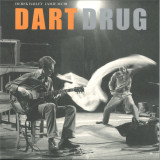
Percussionist Jamie Muir was a member of King Crimson during the recording of Larks' Tongues In Aspic, in 1973. Staying less than a year with Robert Fripp, the Scot had already cut his teeth with another master guitarist, Derek Bailey, as part of the Music Improvisation Company, along with Evan Parker, Hugh Davies and Christine Jeffrey, whose eponymous 1970 album was one of the first releases on ECM. Muir and Bailey recorded Dart Drug eleven years later, in 1981.There's no shortage of great percussionists in the brief history of free improvised music but on the strength of Dart Drug alone Jamie Muir deserves a place at High Table. Unlike for example Han Bennink and John Stevens, though, you can't hear echoes of any particular jazz drummer in Muir's playing, even if he has expressed appreciation for Milford Graves (who himself sounded like nobody else who'd come before him).What on earth did Muir's kit consist of Some instruments are clearly identifiable (bells, gongs, chimes, woodblocks); others could be... well, anything. Old suitcases thwacked with rolled up newspapers Tin cans and hubcaps inside a washing machine Who cares It sounds terrific - but if you're the kind of person who faints at the sound of nails scraping a blackboard, you might want to nip out and put the kettle on towards the end of the title track.Dart Drug is consistently thrilling, and often very amusing - but it's certainly not easy listening. In music we talk about playing with other musicians, whereas in sport you play against another opponent (or with your team against another team). Why not play against in music, too That's precisely what happens very often in improvised music, and Bailey was particularly good at it. How can a humble acoustic guitar hope to compete with a Muir in full flight Sometimes Bailey's content to sit on those open strings, teasing out yet another exquisite Webernian constellation of ringing harmonics and wait for the dust to settle in Muir's junkyard, but elsewhere he sets off into uncharted territory himself.'The way to discover the undiscovered in performing terms is to immediately reject all situations as you identify them (the cloud of unknowing) - which is to give music a future.' Bailey evidently concurred with this spoken statement by Muir, including it in his book Improvisation.Derek Bailey is no longer with us, of course, and Muir gave up performing music back in 1989. All the more reason for seeking out this magnificent, wild album.
Jon Spencer teams up with Kendall Wind and Macky Spider Bowman - the rhythm section from Woodstock NY punk rock wunderkind The Bobby Lees - to chew bubblegum and kick ass.
Two years after “Spencer Gets It Lit” (Marc Riley’s BBC6 Music Album of the Year, “hugely entertaining”**** MOJO, “a sonic witchdoctor who’ll blow your mind” UNCUT****) there is still more work to be done saving rock'n'roll music.
“Sick of Being Sick!” will be released on limited clear 45rpm Super-Stereo cut vinyl.
Jon Spencer has been innovative force in the independent music scene since the mid-80s. An acclaimed live performer, he has toured all the continents except Antarctica and has amassed a dizzying discography as the leader of Pussy Galore, The Jon Spencer Blues Explosion, Heavy Trash, and Jon Spencer & the HITmakers, as well as with Boss Hog, The Honeymoon Killers, The Gibson Brothers, and Taxi Girls.
His collaborations include (but are not limited to) working with Steve Albini, Add N To X, Nicole Atkins, Beastie Boys, Beck, Bomb The Bass, R.L. Burnside, James Chance, Coldcut, Chuck D, Dan The Automator, Jim Dickinson, DJ Shadow, Einsturzende Neubauten, Guitar Wolf, GZA, David Holmes, Japanese Popstars, Dr. John, Calvin Johnson, Steve Jordan, Khan, Moby, Money Mark, The Muffs, The North Mississippi All Stars, Princess Superstar, Puffy AmiYumi, The Sadies, Nancy Sinatra, Solex, Solomon Burke, Speedball Baby, Rufus Thomas, UNKLE, Unloved, Andre Williams, and Bernie Worrell.
His production credits include: Cheater Slicks, Demolition Doll Rods, Experimental Tropic Blues Band, Perrosky, Mike Edison, Jesper Munk, Sunshine & The Rain, The Bobby Lees, and Samantha Fish & Jesse Dayton.
johnny's disk record is an independent jazz label run by the owner of jazz cafe kaiunbashi no johnny located in rikuzentakata city in iwate prefecture, japan.
the legendary label released a string of albums of high quality but down-to-earth music, spanning from modern jazz, avant-garde jazz to left-field pop. albums such as 'farewell my johnny / left alone' and 'aya's samba' has reached cult status among fans as some of the best works to come out of the japanese jazz scene.
another japanese jazz classic, aya's samba was a debut effort by bassist eiji nakayama, who played as part of elvin jones' jazz machine and toured with don friedman.
this album is an important release in the johnny's disk catalogue, not only because it is the first ever release, but also because the owner hearing the band play was the reason why the label came to be.
'aya's samba' is a mellow jazz samba in minor key that's considered a japanese jazz classic. slow ballad 'yellow living' is drenched in melancholy with emotive keys and sax notes, while the dreamy 'sea sea town' impresses with a captivating, expressive sax solo. the 4 tracker ends with 'far-away road,' an uptempo tune with rhythmic keys.
out of Stock
Last delivered 3 years ago available to reorder, subject to availability
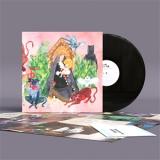
Father John Mistys bahnbrechendes zweites Album aus dem Jahr 2015, ,I Love You, Honeybear", ist zurück auf Vinyl, remastered und neu verpackt als Einzel-LP. Ursprünglich wurde es als Doppel-LP veröffentlicht. Das Album wird mittlerweile als Klassiker angesehen und enthält die Fan-Favoriten ,Chateau Lobby #4 (in C for Two Virgins)" und den Titelsong ,I Love You, Honeybear". Bei der Veröffentlichung erhielt ,I Love You, Honeybear" viel Kritikerlob, u.a. Pitchfork Best New Music, eine perfekte Bewertung von Exclaim! und begeisterte Kritiken von NME, Mojo, Q, Spin und anderen. Es wurde als eines der besten Alben des Jahres 2015 von Pitchfork, Billboard, The A.V. Club, NME und Stereogum gefeiert. ,I Love You, Honeybear" wurde von Josh Tillman und Jonathan Wilson produziert und von Phil Ek gemischt. Diese Ausgabe wurde 2024 von Adam Ayan bei Ayan Mastering neu gemastert. Diese zweite Ppressung kommt auf schwarzem Vinyl.
Father John Mistys bahnbrechendes zweites Album aus dem Jahr 2015, ,I Love You, Honeybear", ist zurück auf Vinyl, remastered und neu verpackt als Einzel-LP. Ursprünglich wurde es als Doppel-LP veröffentlicht. Das Album wird mittlerweile als Klassiker angesehen und enthält die Fan-Favoriten ,Chateau Lobby #4 (in C for Two Virgins)" und den Titelsong ,I Love You, Honeybear". Bei der Veröffentlichung erhielt ,I Love You, Honeybear" viel Kritikerlob, u.a. Pitchfork Best New Music, eine perfekte Bewertung von Exclaim! und begeisterte Kritiken von NME, Mojo, Q, Spin und anderen. Es wurde als eines der besten Alben des Jahres 2015 von Pitchfork, Billboard, The A.V. Club, NME und Stereogum gefeiert. ,I Love You, Honeybear" wurde von Josh Tillman und Jonathan Wilson produziert und von Phil Ek gemischt. Diese Ausgabe wurde 2024 von Adam Ayan bei Ayan Mastering neu gemastert. Diese zweite Ppressung kommt auf schwarzem Vinyl.
Love or its absence dominates the intimate songs on the new album from ARBORIST – the musical outlet of Mark McCambridge. Looking For Love, Arborist’s fourth album of exquisitely inventive Americana, places us firmly in his hometown of Belfast, allowing it to act as a microcosm of the wider-world, with all its foibles and charms. We find fictional protagonists scouring the dark corners of the city, wiling-away afternoons in strip clubs, wandering the streets in all weather and reflecting on the harsh reality of modern society, all in search of an elusive love – emphasising our need for it now more than ever.
Looking for Love is ARBORIST’s first album to be self-produced by McCambridge, largely from his home studio in Belfast – and at times it feels like we are in the room with him. It’s a different kind of record for him as previously he has always sought collaboration; whether it be with Kim Deal who chose to sing intertwined harmony on his debut single “Twisted Arrow”, or recording in The Curfew Tower owned by The KLF’s Bill Drummond who described Mark’s songwriting as being “riven with more loss than any record since Leonard Cohen quit this world”, and who Matthew E White and his Spacebomb band collaborated with to such astonishing effect on the previous Arborist LP, 2023’s An Endless Sequence of Dead Zeros, winner of the prestigious Northern Ireland Music Prize. This time, with no outside producer steering the way, McCambridge found that the quiet hours were where he felt most at ease, despite periods of trial and error, and, by his own admission, moments of feeling genuinely lost in it all.
Despite playing many of the parts himself, McCambridge still called upon old friends from the community around him; Spacebomb’s resident bassist Cameron Ralston (Bonnie Light Horseman, Hiss Golden Messenger) again features throughout the record, alongside Eamon Ferris (The Waterboys) on drums, with the great and the good from Belfast’s vibrant music scene. Grainne Meyer plays concert harp and Aga Olek plays violin for the quasi-title track “Looking 4 Love” – an off-kilter love-letter to Belfast. Meilana Gillard provides a sleazy saxophone on “Bye Bye Johnny Cash” – a seedy tale of a man obsessively visiting a dancer in a club, and The Larne Community Youth Choir provide backing vocals for “Go Kill The Fatted Calf” – a song Mark wrote about his son growing up, a take on the parable of the prodigal son, with Jonny Ashe’s blistering guitar solo adding an album highlight. The Errigal Ensemble String Quartet and Aisling Agnew’s breathtaking flute solo feature on “What Is It You’re Asking” – a song about love, or its absence, both personally and universally in these times.
McCambridge was recently honoured with a “Fellowship” by the Seamus Heaney Centre at Queen's University Belfast where he collaborated with such illustrious names from the literary world as Nick Laird, Caoilinn Hughes and Conor McPherson. Through the University he was given access to the music department's Steinways and pipe organs, and decided to try one out for the album’s centrepiece “I’ve Been A Flaneur”. As Mark explains, "The drone on the pipe organ — and the sound of it starting and stopping — was so visceral that I decided to try a half-written song against it right there and then, and this came out in one take… The song was a breakthrough artistically - I don't think I'll ever record in the same way again after this."
The album was engineered by longtime collaborator Ben McAuley (Van Morrison) and mixed by Jimmy Robertson (Anna Calvi, Beth Gibbons, Fat Dog). The results are staggering, devastating and uplifting in equal measure, calling to mind albums such as Songs Ohia’s Magnolia Electric Co., The Divine Comedy’s Regeneration, The Blue Nile’s Hats and Wilco’s Ode to Joy, as well as early-70s records from John Cale, John Lennon and Bill Fay.
Belfast native Mark McCambridge played his first show as Arborist supporting James Yorkston. A solo tour followed, and impressive performances led to notable support slots alongside Low, Cat Power, Echo & The Bunnymen and Guy Garvey. Arborist's debut single, the Americana-tinged "Twisted Arrow," caught the attention of the critics with an astonishing duet with Kim Deal of The Breeders. The debut album Home Burial (2016) and its follow-up, A Northern View, both received glowing praise, from The Guardian ("instant classic" ----) to MOJO ("devastatingly bleak… upliftingly beautiful" ----) to Uncut (8/10), with BBC 6 Music play from Cerys Matthews, Cillian Murphy, Lauren Laverne, Radcliffe and Maconie and Gideon Coe — and Steve Lamacq calling single "Taxi" "one of those records that makes you immediately stop what you're doing." He went on to even greater success with the 2023 Northern Irish Music Prize winning third LP, An Endless Sequence of Dead Zeroes, which was recorded at SpaceBomb Studios in Virginia with musician and producer Matthew E White. For his fourth LP, Looking For Love, he has signed with Fika Recordings and with a tour approaching in November, 2026 looks set to be a seminal year for the Irish artist.
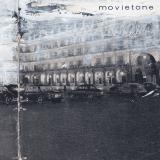
World Of Echo are proud to announce the long-awaited reissue of the self-titled debut album by Bristol’s Movietone. Originally released in 1995 by Planet Records and reissued on CD in 2003 by The Pastels’ Geographic Music imprint, this is the first time Movietone has been reissued on vinyl. An expanded double-LP edition, it includes the extra tracks from the 2003 CD (their first two singles, and an unreleased demo of “Chance Is Her Opera”), and adds three more unearthed gems: demos of “Alkaline Eye” and “She Smiled Mandarine Like”, and an early take of “Late July”, recorded in a garden by Dave Pearce (Flying Saucer Attack) in 1993.
Taken together, this is the definitive collection of music from the first phase of one of Bristol’s most remarkable groups. Movietone was the cumulation of a series of events, explorations, and discoveries, starting at secondary school – the group’s core membership of Kate Wright, Rachel Brook, Matt Elliott and Matt Jones met at Cotham School in Bristol. As for many other groups, their early years were all about experimenting, and finding ways to ‘make do’, a DIY sensibility that would inform Movietone through their decade-long lifespan. From formative rehearsals in a shed in the garden of Brook’s family home, to recording early material to four-track in Redland Library, and on into the Whitehouse and Mr Grin’s studio sessions for their debut album, Movietone’s music fell together in a creatively unpredictable, yet conceptually rigorous manner.
By the time they released Movietone, they’d found a home with Bristol’s Planet, run by author Richard King and James Webster, who had both released their first two singles, “She Smiled Mandarine Like” and “Mono Valley”. There was other music happening around them in Bristol, too, from the Jones brothers’ avant-rock outfit Crescent (who were Movietone’s closest conspirators), through Elliott’s jungle/electronica project Third Eye Foundation, and Brook and Elliott’s membership of Flying Saucer Attack. A closely knit community, Movietone are the centre of this nestling architecture of groups. The vision in the music, mostly, belongs to Wright, but Movietone ran in democratic creative consort. Listening back to Movietone, you can hear this democracy in action through the wildness of the music, which is balanced by the poetics of Wright’s lyrics and melodies.
Full of half-captured memories and entangled abstractions, there’s an elliptical, ruminative quality to much of the writing here that shows the deep influence of the Beat Generation writers, along with a twilight environment captured in the songs that’s pure third-album Velvets, Galaxie 500, early Tindersticks, Codeine. Unpredictable interventions – the crashing glass in “Mono Valley”, the sudden explosions of “Orange Zero” point towards the noise blowouts of My Bloody Valentine, the unpredictability of Sonic Youth; Wright’s understated vocal cadence suggest a deep, embodied understanding of John Cage’s Indeterminacy.
Movietone would go on to make 3 fantastic albums for Domino: Night & Day (1997), The Blossom Filled Streets (2000) and The Sand & The Stars (2003) and their Peel Sessions were released earlier this year on Textile. Still held in high regard by artists like Steven R. Smith, and The Pastels, whose Stephen McRobbie once described them as “one of the great unknown English groups,” it’s an absolute thrill to listen to Movietone anew – still inspired, still seductive, still magic, still mysterious.
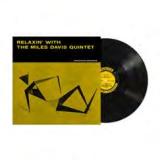
Relaxin’ with the Miles Davis Quintet fängt den mühelosen Swing und das außergewöhnliche Zusammenspiel der legendären Formation um Miles Davis, John Coltrane, Red Garland, Paul Chambers und Philly
Joe Jones ein. Aufgenommen 1956 im Van Gelder Studio, erschien das Album erstmals 1958 bei Prestige
Records.
Anlässlich des 100. Geburtstags von Miles Davis erscheint der Klassiker nun neu als Teil der Original
Jazz Classics-Reihe – auf 180-Gramm-Vinyl, vollständig analog von den Originalbändern gemastert und im
hochwertigen Tip-On-Cover
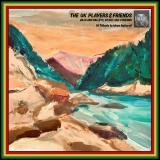
The UK Players & Friends Hills and Valleys, Rivers and Streams (A Tribute to Idren Natural) 9 brand new tracks by The UK Players. Voiced by Singers and Poets who knew Idren Natural personally. Recorded and Mixed by Supa Yout’ at Earth Works Studio, Amsterdam. Sleeve artwork and written testimonials from close friends and associates. Idren Natural aka Ras Natural aka InI Oneness, DJ, Singer, Chanter, Musician, was a pivotal player and pillar of UK/European Roots, Reggae, Dub, Sound System Culture. A humble Rastaman who did so much for so many, inasmuch as inspiring, encouraging, and connecting. He selflessly helped those less fortunate than himself. A strong advocate of the culture and philosophy of Rastafari. He was a commanding presence who lit up the stage, giving JAH all the glory. His passing was a great loss to the community. The UK Players Dub Band formed in 1996. They teamed up with Ras Natural/InI Oneness to record their debut 7” single ‘Further’ for Jah Works with Producer Jah Rej. This single gained exposure via Jah Shaka, Abashanti, and King Shiloh Sound Systems, even the famous Radio 1 DJ ‘John Peel’ played it. More recordings with Jah Rej at Seventh Sense Studio led to the debut album ‘Take Heed’. During the halcyon days of InI Oneness & The UK Players (1997-2004) they toured the UK and Europe, clocking up over 250 gigs in that time. Amongst brethren within the Rastafari community, the band became affectionately known as Ras Naturals band. Friends of Natural like Ras Iyah, Tony Roots, Sister Aisha, Wayne McArthur, and Barry Isaacs (among others) performed with them during this time. Members of InI Oneness & The UK Players never split up, throughout the years they branched out into other projects, reconvening for specials and one offs. Following Idren Naturals passing in 2022, the band stepped up to play his memorial show, where the idea formulated of making a tribute album to him. Ben King offered the use of Earth Works studio to help realise the vision. Work began with longtime live sound engineer Supa Yout’ in March 2024. Jah Rej assisted production on a number of these recordings, and sadly passed during the making of it, the last album he worked on. Various vocalists who were close to Natural, submitted vocals across the following year. The album was mixed and dubbed in March ‘25 at Earth Works by Soupa Yout' & Kingsway. Artwork and written memories/testimonials were then assembled. Everyone involved in the creation of this album knew Idren Natural personally. This album shines a spotlight on his spirit. Carrying songs of tribute, and messages for the times. ALPHA DUB: Every time the band played a gig, Natural would insist on starting with a dub. In that tradition, this album is no different. ‘Mandlion’ passing through the studio, headtopped a Melodica cut on it. Dubbed to the max by Supa Yout! NATURAL VIBE: The ‘Forward Fever’ crew from Belgium were one of the first collectives that Natural affiliated with in Europe. Here, Ras Cloud cleverly weaves all of Naturals song titles into the lyrics, creating a song in itself. WORD & FLESH: Fellowdread was born and raised in Kingston, Jamaica. Now living in Bristol, England, residing with Natural in his last days. His Poetry is rich in inflection, knowledge and wisdom, teachings that spark up the divine. ALL ABOUT LOVE: A pause for contemplation, this one stills the listener. Rootsman Rak’s words warn against complacency, and encourages action. A completely (natural) acoustic track featuring the skilled percussionist Jonah Dan. REMEMBER HIM: Inna Dubplate style, Barry Isaacs toasts to Idren in personal remembrance, reminding us all of the man he was. The track also features snippets of a phone call from Naturals oldest friend ‘Fergie Greenspears’ recounting memories. RISE UP RASTA CHILDREN: The legendary Tony Roots, graces the album with his unique delivery. Natural, The Players, and Tony go back a long way. A song of strength to affirm the soul, and rally against Babylon. Livicated to the one (Natural) SONG FOR THE RIVER MAN: During those halcyon days, many stages were shared with Albaroot, whom the band met whilst on tour in Scotland. Clark Innes (lead singer/songwriter) reminisces about the force of nature that was Natural, times shared, and that knowing, to never meet again. ONE STEP AHEAD: An interpretation of the ‘Look Inside’ riddim by Reuben Addis. Built for Sound System, it is the only track on the album that rolls into a dub. Lyrical Benjie literally entered the studio, rode the riddim without hearing it first, cutting his vocal in one take! A message for the times that sends shivers up your spine. THE PRAYER: Iman Onedub AKA Iman Gebre Iyesus, member of the Ethiopian Orthodox Tewahedo Church, met Idren Natural at Fairfield House in Bath. Here he seals the album with a recital of the Lord's Prayer in English, with Amharic. His rich textural tones elevated with a one away riddim to carry the listener home.
"Back in 2022, Ban Ban Ton Ton raved about George T’s then digital-only release, “Roll On, Kings Cross”. We described it as a “dynamite dose of poetry and digidub.” Likening the prose – which describes a train journey from the coast to the city – to Michael Smith and Joe Duggan, while comparing the production to Dennis Bovell’s remixes of Jarvis Cocker’s “Swanky Modes”, and The Sabres Of Paradise’s “Wilmot”. Melodica-led with a hefty post-punk flavour, its dub, which focuses on manipulating and morphing the bass-line, we called “hollowed out house.”
These tracks have now been pressed to vinyl for the second release on new imprint Noetic Rhythm, where they’re joined by Leonidas’ “Great Northern” mix. Eschewing his usual futuristic ethno techno jacking, here he drops into roots reggae. Creating something more skanking, more stepping. An extended “discomix” showered in filtered, Mutron Bi-phased percussion, ghostly horns and peppered with the odd syndrum pop. Washes of sampled surf appropriately accompanying George informing us that “to the left there’s the sea.”
The 12 also features, “Dr Doctor”, a fresh collaboration with Yas Mine, The singer / guitarist’s French vocals countering George’s Matt Johnson-esque delivery, and a John Barry / “Midnight Cowboy”-like melodica melody serenading the song’s slow, squelchy, electronic skanking. The dub, instead, showcasing Yas’ fine fretwork." BAN BAN TON TON review
-
"These tracks are massive! I love Roll On King's Cross the best" KAY SUZKI (Time Capsule)
"I played the dub (Dub On, King's Cross) at a club in Oslo alongside some Maurizio and it sounded great. Bit of an oddball." Also played on NTS Radio and in Mixmag mix. JONNIE WILKES // OPTIMO
"Really digging Mr Demure when he drops into dubwise" DR ROB // BAN BAN TON TON
"Yes. Nice" NICK THE RECORD
"Awesome" JONNY ROCK
"I really like this EP... Love the Leonidas dub!" CEDRIC WOO (Beauty & The Beat, LDN)
"Love the blend of Augustus P vibes with a post punk dub feel. Bingo!" DICKY TRISCO
"I love it and will be playing" TREVOR FUNG (Ibiza Legend)
"Yes this is dark but kinda friendly.... brilliant...It's like ghost town ...I love Leo's mix" FOR MANKIND (Pikes Ibiza)
"Love the release and LOVE LOVE LOVE Dr Doctor!!!! Psyched to play this one out all weekend." ZILLAS ON ACID // James Weissinger (Philadelphia, US)
"This is amazing. Dub on kings cross is a banger - really love this one" ARVEENE
"Loving the Leonidas dub" ATEMI (Blackbush Orchestra / Abstrack)
+
PREVIOUSLY
"Melodica heaven" JD TWITCH/OPTIMO (RIP)
"I love this" IVAN SMAGGHE
"It's hot!!" JONNY ROCK
+ plays/support from:
DON LETTS (BBC 6Music)
TOM RAVENSCROFT (BBC 6Music)
HARRI (Sub Club)
[f] Roll On, King's Cross [Leonidas' Great Northern Mix] 06:54
[g] Dr Doctor [Instrumental Mix] 03:25
Original, Baby Doc & The Dentis, John 00 Fleming, Reinier Zonneveld, Charlotte De Witte, Red Jerry remix
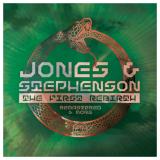
Embark on a nostalgic journey through the pulsating beats of the 90s with the iconic anthem “The First Rebirth” by the visionary duo Franky Jones and Axel Stephenson. Since its inception in 1993, this timeless classic has etched its place in dance music history, and now it returns in a dazzling new avatar.
The much-celebrated track has been meticulously repackaged in a sleek, cool sleeve, accompanied by an electrifying array of both recent and classic mixes. Some of these renditions, previously confined to digital realms, make their long-awaited debut on vinyl, adding an extra layer of allure to this collector’s dream.
This exclusive 2 x 12" vinyl edition is strictly limited to just 500 copies worldwide and features a unique Inside Out cut, pressed on stunning Starlight vinyl — a striking black colour with vibrant coloured speckles, making each copy visually unique.
Don’t miss your chance to own a strictly limited piece of dance music history and immerse yourself in the reawakening of this electronic masterpiece. Only 500 copies available — once they’re gone, they’re gone.
out of Stock
Last delivered 11 days ago available to reorder, subject to availability
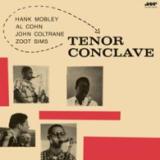
The year 1956 when Tenor Conclave was recorded represented a transitional period in the musical career of John Coltrane . He had first joined the Miles Davis Quintet in 1955 and would form his own celebrated quartet with McCoy Tyner, Jimmy Garrison and Elvin Jones in 1960. What we have here with Tenor Conclave is Coltrane in equal collaboration with four other giants of the tenor saxophone, Hank Mobly, Al Cohn, and Zoot Sims. Presenting the four players together under the group name of Tenor Conclave was an imaginative A&R idea by Prestige, but because of Coltrane's growing fame and the obvious marketing opportunities it presented, later pressing had Coltrane as the headline name on the cover, and Tenor Conclave as the album title. Includes the bonus track 'Polka Dots & Moonbeams'.
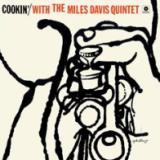
Miles Davis' quintet formed in 1955 is widely regarded as one of the greatest combos in jazz history. Each of its members was an individual creative force and each could easily have been the leader. Cookin' was the first in a series of four albums featuring this classic all-star combo: Miles Davis, John Coltrane, Red Garland, Paul Chambers, and Philly Joe Jones. Like its followers ' Steamin ', ' Workin' and Relaxin' , ' Cookin' is the product of two massively productive recording sessions during May and October of 1956, sessions required to fulfil Davis's contractually obligations to Presage Records before moving to Colombia Records. . A quartet version of the song 'When Lights Are Low' from a previous session has been added to this special edition as a bonus.
Der Soundtrack des von Jon Favreau inszenierten Weihnachtsklassikers „Elf“ mit Will Ferrell in der Rolle
des Buddy, eines Menschen, der am Nordpol als Elf aufgewachsen ist, kommt in einer brandneuen, festlichen
Picture-Disc Vinyl und Deluxe Edition CD wieder! Nachdem Buddy entdeckt, dass er in Wirklichkeit ein
Mensch ist, macht er sich auf den Weg nach New York City, um seinen Platz in der Welt und seinen Vater
zu finden. Dabei findet er nicht nur seine Familie wieder, sondern schafft es auch, den Weihnachtsgeist in
der Stadt wieder aufleben zu lassen. Die mitreißende Originalmusik stammt vom legendären Komponisten
John Debney, der auch an Familienklassikern wie „Hocus Pocus“, „Spy Kids“, „Das Dschungelbuch“ und
vielen anderen mitgewirkt hat.
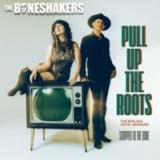
Marking their second release for GULF COAST RECORDS, the collection favours raw performance over polish, capturing the chemistry, spontaneity, and fearless musicianship that have defined the group for more than three decades. Fronted by the unmistakable voice of JERRY LANGER and the soulful guitar work of RANDY JACOBS - formerly of Was (Not Was) - the EP embraces honest, acoustic arrangements where every note and breath remains beautifully exposed. Produced by Jacobs, Langer, and JOHN WOOLER, the project reveals a band confident enough to let the songs speak for themselves. Recorded primarily at Kaleidoscope Studios in Berlin, the sessions continued wherever the road allowed, with additional performances captured in U.S. studios and hotel rooms between shows. This wandering spirit gives the EP a sense of movement and lived experience. A remarkable ensemble of collaborators adds depth throughout, including Holly Montgomery, Arthur Thompson, Joe Sublett, Mark Pender, Jon Gilutin, and Oliver Leiber. Across six tracks - bold reinterpretations and originals - the band blends Detroit soul, New Orleans groove, blues, and rock & roll swagger. Pull Up the Roots celebrates authenticity, proving that great songs and genuine soul need no embellishment.
Do Da Doo' Returns with New Life on Definitive Recordings
SPECIAL VINYL ONLY RELEASE
Definitive Recordings revisits one of its most iconic releases with a fresh reissue of Robotman feat. Marshall Jefferson - 'Do Da Doo', originally released in 1992. A cornerstone of the label's early catalogue, the track returns with newly re-recorded vocals by house legend Marshall Jefferson, bringing renewed energy to a timeless classic.
Robotman, a moniker of Richie Hawtin (aka Plastikman), represents an essential chapter in the evolution of house and techno. As one of the most influential figures in electronic music, Hawtin helped shape the sound of acid and minimal techno while co-founding the legendary Plus 8 label alongside John Acquaviva. His forward-thinking productions and groundbreaking DJ sets have defined generations of dance music culture.
On this release, the original Plastikman Acid House Mix stands as a true highlight. Spanning 12 minutes, it delivers a deep and hypnotic acid journey driven by classic TR-909 drums and a signature TB-303 bassline. The instantly recognizable vocal 'Got the Do Da Doo' sits prominently within the groove, creating a powerful and timeless club moment that defined an era.
On the flipside, Detroit's DJ Minx brings a fresh perspective with a groove-heavy house interpretation. Known as the 'First Lady of Wax' and a key figure in Detroit's scene, Minx reshapes the vocal into a rhythmic element, layering it into a shuffling and classic house framework. Her version adds warmth and swing while staying rooted in the track's original spirit.
With this reissue, Definitive Recordings celebrates a landmark release that continues to resonate across generations, combining legendary artists, timeless production, and the enduring energy of house music.
out of Stock
Last delivered 5 days ago available to reorder, subject to availability
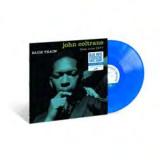
BLUE NOTE ESSENTIALS heißt die neue LP-Serie, die Klassiker des Labels erstmals kompromisslos
preiswert aber ohne Abstriche bei der Fertigung präsentiert (140g-Optimal-Pressung, Hi-res-Master, OriginalCover). Ein ganz besonderes Album erscheint innerhalb der Serie jetzt als limitierte Auflage in blauem Vinyl:
”Blue Train”.
Am 15. September 1957 nahm John Coltrane in Rudy Van Gelders Studio in New Jersey sein erstes
großes Meisterwerk auf. Es blieb das einzige Album des legendären Saxofonisten als Bandleader für Blue
Note. Inspiriert vom bluesigen Titelstück präsentiert das Album auf fünf Stücken ein hochkarätig besetztes
Sextett mit Lee Morgan (Trompete), Curtis Fuller (Posaune), Kenny Drew (Piano), Paul Chambers (Bass)
und Philly Joe Jones (Drums). Ein Meilenstein des Hard Bop.
With Random Constraint Satisfaction Problems, the ever elusive and shape-shifting Thomas Bush offers up a new album of category scrambling song craft. Since earlier solo efforts like Old And Red (2018), Preludes (2022) and The Next 60 Years (2024), Bush—currently based in Malmö—has traced a digressive path that has proven him capable of everything from murky wobbling dirges to uptight head-bopping laments to crystalline synth chords that hang precariously in the air over your new favourite bass line. Like its title, the album's songs/tunes/opportunities for pleasure offer the listener further evidence of a sensibility that is equal parts ambiguity and clarity.
In addition to his solo work, Bush has worked with a range of collaborators in one-off configurations and longer term projects like RAP (with Guy Gormley) and cATHOLIC CHURGH (with Jon Auman). Critical responses to Bush's output have often focused on his predilection for certain folk-ish impulses and instrumentation, but, judging from releases like 2026's guld, his definition of "folk music" seems to have as much to do with A Guy Called Gerald as it does with Shirley Collins or John Martyn.
For all of its diversity, what unites Bush's ever-expanding body of work is its dual commitment to experimentation and a job well done.
“Random Constraint Satisfaction Problems was recorded at Vista Studio 1, Malmö between 2022 and 2025. After creating an account at academia.edu for the purpose of reading a text now forgotten, I began to get emails asking me questions such as ‘Thomas Bush, did you write “Brucellosis and Sacroiliitis: A Common Presentation of an Uncommon Pathogen”?’ or ‘Are you the Thomas Bush who wrote “ATR-dependent phosphorylation of FANCA on serine 1449 after DNA damage is important for FA pathway function”?’, which began to make me wonder if I was, or if not, perhaps I should.
The resulting work is an attempt to find meaning in this, and other chaotic and ambiguous situations through analysis using materials and equipment available to hand. Being sensitive to signs and following them with enthusiasm. Both the source material and evaluation is presented.”
MEMPHIS, TN — Fat Possum Records and Hi Records are proud to announce the first vinyl pressing in half a century of Ann Peebles' 1975 album Tellin' It, fully remastered and recovered from the Hi Records vault, where it had sat untouched for decades. Available on vinyl in stores September 11, 2026 and can be pre-ordered now and also available streaming everywhere now.
Peebles was at the height of her career when she recorded Tellin' It — coming off her biggest hit, "I Can't Stand the Rain," the year before. Produced by Willie Mitchell at Royal Studios in Memphis, with the grooves that defined the label's sound, backed by Howard Grimes' drumming and the Memphis Horns.
"Peebles and Mitchell don't just recast "Rain" 10 different times—instead, they lean into the supple support laid down by the Hi Rhythm Section, who have plenty more uptempo grooves to offer." Andy Beta, Bandcamp
The original master tapes were sent to John Nicholson at Nashville Tape Transfer for their first listen in fifty years. From there, the project stayed close to home: remastered by Clay Jones in Taylor, MS, then back to Memphis for lacquers cuts by Jeff Powell (Take Out Vinyl), and was pressed & plated at Memphis Record Pressing.
Faith and Fate, Destiny and Devotion, Dark Nights and Dazed Illuminations. Josephine raises a stained-glass lamp and shepherds us spelunking the depths of spirit in this four-part double album. Following the fame of her voice are choruses of winged entities (and a space shuttle) that ascend and descend a maze of spirituals: ritual prayers, blues laments, vestal hymns and jubilant benedictions. The edges of the natural world are revolving backdrops from which our narrator perches upon symbolic precipice or saunters desolate snow-blanched forest, exploring eternal themes of mortality and morality, beneath the moon and in occasional dialogue with a mysterious lord of love, an ambiguous mystical figure. Accompanying herself on guitar, piano, organ, harp & autoharp, this cycle of 18 new songs hearken back to various facets of Foster's anachronic oeuvre (the esoteric balladry of This Coming Gladness, native rhythms of Blood Rushing, somnambulist waltzes of I'm a Dreamer, the Shaker primitivism of Hazel Eyes, I Will Lead you). Celestial humor and devastating innocence are delivered with contributions from Victor Herrero (lead guitars), Gyða Valtýsdóttir (cello), Chris Scruggs (pedal steel), Jon Estes (bass), as well as cameos by members of The Cherry Blossoms and others. Recorded, engineered and mixed by Andrija Tokic at his Nashville Bomb Shelter Studio, mastered by John Baldwin, and produced by Josephine herself.
Faith and Fate, Destiny and Devotion, Dark Nights and Dazed Illuminations. Josephine raises a stained-glass lamp and shepherds us spelunking the depths of spirit in this four-part double album. Following the fame of her voice are choruses of winged entities (and a space shuttle) that ascend and descend a maze of spirituals: ritual prayers, blues laments, vestal hymns and jubilant benedictions. The edges of the natural world are revolving backdrops from which our narrator perches upon symbolic precipice or saunters desolate snow-blanched forest, exploring eternal themes of mortality and morality, beneath the moon and in occasional dialogue with a mysterious lord of love, an ambiguous mystical figure. Accompanying herself on guitar, piano, organ, harp & autoharp, this cycle of 18 new songs hearken back to various facets of Foster's anachronic oeuvre (the esoteric balladry of This Coming Gladness, native rhythms of Blood Rushing, somnambulist waltzes of I'm a Dreamer, the Shaker primitivism of Hazel Eyes, I Will Lead you). Celestial humor and devastating innocence are delivered with contributions from Victor Herrero (lead guitars), Gyða Valtýsdóttir (cello), Chris Scruggs (pedal steel), Jon Estes (bass), as well as cameos by members of The Cherry Blossoms and others. Recorded, engineered and mixed by Andrija Tokic at his Nashville Bomb Shelter Studio, mastered by John Baldwin, and produced by Josephine herself.
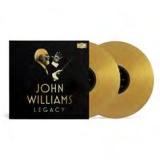
John Williams Legacy: Seine größten Filmmusiken in einer Edition
Dieses Album versammelt einige der bekanntesten Filmmusiken von John Williams, darunter Star Wars,
Harry Potter, Jurassic Park, Indiana Jones und E.T. Das Besondere an dieser Auswahl: John Williams dirigiert seine eigenen Kompositionen selbst. Die Aufnahmen entstanden mit den Berliner Philharmonikern,
den Wiener Philharmonikern und dem Recording Arts Orchestra of Los Angeles. Ergänzt wird die Veröffentlichung durch Booklet-Texte von Journalist Jon Burlingame.
So entsteht ein Album, das viele der prägendsten Stücke der Filmgeschichte in einer hochkarätigen Einspielung zusammenführt.
John Williams Legacy: Seine größten Filmmusiken in einer Edition
Dieses Album versammelt einige der bekanntesten Filmmusiken von John Williams, darunter Star Wars,
Harry Potter, Jurassic Park, Indiana Jones und E.T. Das Besondere an dieser Auswahl: John Williams dirigiert seine eigenen Kompositionen selbst. Die Aufnahmen entstanden mit den Berliner Philharmonikern,
den Wiener Philharmonikern und dem Recording Arts Orchestra of Los Angeles. Ergänzt wird die Veröffentlichung durch Booklet-Texte von Journalist Jon Burlingame.
So entsteht ein Album, das viele der prägendsten Stücke der Filmgeschichte in einer hochkarätigen Einspielung zusammenführt.
out of Stock
Last delivered 44 days ago available to reorder, subject to availability
John Tchicai (1936 – 2012) was one of the most important free improvising saxophonists of the 20th Century: an artist of rare vision and aptitude whose lines soared and stood out even in the most hallowed company, and whose body of work as a leader / composer is among the most singular and distinct within the entire canon of that music. But Tchicai’s importance doesn’t end there. Born in Copenhagen, Denmark, to a Danish mother and a Congolese father, his life and career represent a crucial bridge between the European and American traditions of free jazz. Initially trained on violin as a child, Tchicai shifted his focus to the clarinet and alto saxophone during his mid-teens, and began touring Europe as a professional musician by his early 20s, which landed him at a socialist youth festival in Helsinki, Finland, where he met the trumpeter Bill Dixon and saxophonist Archie Shepp. Impressed by what they heard, Dixon and Shepp encouraged the young saxophonist to move to New York, and in so doing changed the history of jazz forever.
Tchicai’s arrival in New York marks the rare occurrence of a European player joining the intimate circle that was first wave of American free jazz. Following his landing in the city in November of 1962, in addition to regularly sitting in with Don Cherry’s group, Tchicai began playing with Bill Dixon's band alongside Archie Shepp and Roswell Rudd, forming the nucleus of the foundation of the New York Contemporary Five - one of the most important groups of the era - which counted Tchicai, Shepp, Cherry, Don Moore, and J. C. Moses as its members. From the ashes of this group, Tchicai would go on to found the legendary ensemble, New York Art Quartet, with Roswell Rudd, Milford Graves, and Lewis Worrell, as well as working within Albert Ayler's band, recording “New York Eye and Ear Control”, Shepp’s band, recording “Four for Trane”, the ensemble that recorded John Coltrane's “Ascension”, and the Jazz Composer's “Orchestra”.
By the time he decided to return to Denmark in 1966, had Tchicai chosen to record little else, his legacy within the history of music would have been ensured. Incredibly ambitious, his arrival home marked the beginning of an incredible period of activity which saw him radically expanding his creative explorations, which by the end of the decade would include becoming a founding member of Amsterdam's Instant Composers Pool and helping to record John Lennon and Yoko Ono's “Unfinished Music No.2: Life with the Lions”. This, however, was proceeded the formation of a new orchestra, Cadentia Nova Danica, led by Tchicai, dedicated to radical cross-disciplinary exploration. Remaining together between 1966 and 1971, the group and its shifting membership regularly fell into collaboration with artists and composers, notably Musica Elettronica Viva, who existed beyond the realms of jazz, as well as participating within multi-media events that incorporated the visual realms.
Cadentia Nova Danica’s only two LPs - “Cadentia Nova Danica” (Polydor, 1968), and “Afrodisiaca” (MPS, 1969) - are effectively Tchicai recorded efforts as a leader, and are legendary. There’s little mystery, once heard, why the later landed on Thurston Moore’s iconic “Top Ten from the Free Jazz Underground”, published by Grand Royal in 1996. Sadly, despite playing extensively during their five year run, with exception of a CD documenting a performance at Jazzhus Montmartre, in 1966, until now there has been no other publicly available recordings that allow us to capture a glimpse of this astounding band at work. Alga Marghen / Formalibera’s vinyl pressing of a never before released body of recordings, made in Copenhagen between 1969 and 1970, changes that in the most exciting of ways.
Comprising three pieces - “Mc Gub Gub, (I–VIII)”; “Ode to Skt. John”; and “Pladepip” - the material on this stunning LP comes from two specific events. The first, which encompasses the first side, “Mc Gub Gub, (I–VIII)” was recorded by Cadentia Nova Danica - in this instance, Tchicai, Sune Weimar, Theo Rahbek, Christian Kyhl, Niels Holt, Jørgen Thorup, Michael Schou, Morgens Bollerup, Allan Gregersen, Ole Matthiessen, Pierre Dørge, Willy Jaegert, Anthony Barnett, and Jon Finsen - on May 29th, 1969, at the ABC-Theatre in Copenhagen. Penned by Tchicai, the piece is a sprawling, evolutionary composition at the outer reaches of free jazz, rooted in large blocks of colliding tonality and rhythm - a sound only accessible to larger ensembles - that push territories explored by Charles Mingus to previously unimagined heights, threaded by moments of hard blown fire. Writhing like a stormy sea - skronking and devilish - “Mc Gub Gub, (I–VIII)” is a work of profound complexity that singlehandedly illuminates not only Tchicai’s singular vision as a composer, but also the power and uniqueness of Cadentia Nova Danica during the band’s most vital period.
The two pieces - “Ode to Skt. John” and “Pladepip” - taking up the flip side, were recorded on February 21st, 1970, at the Danish Broadcasting Corporation’s Radio House, and are the outcome of Cadentia Nova Danica’s extended residency there between 1969 and 1970. In many ways, these two recordings offer some of the best insights into the broad collaborative approaches that defined the band, in this case encountering them working with Danish experimental composer, Svend Erik Werner, who was among the earliest in his country to embrace stylistic pluralism and the use historical forms within a modern context. “Ode to Skt. John” - based on aspects of Gregorian music - was penned by Werner, incorporating heady improvisation by the members of Cadentia Nova Danica, this time made up by Tchicai, Sune Weimar, Hugh Steinmetz, Theo Rahbek, Christian Kyhl, Michael Schou, Morgens Bollerup, Ole Kühl, Torben Enghoff, Mauritz Tchikai, Kjeld Ipsen, Willy Jaegert, Ole Matthiessen, Ole Thilo, Pierre Dørge, Steffen Andersen, Jon Finse, and Clause Bøje. The piece is a fascinating binary of the composed and improvised, utilising the band’s large scale to introduce a remarkable sound within its slow progressions and furious, driving free moments, in this incredible meeting of worlds.
The album’s final piece, “Pladepip”, is arguably its most historically significant: an entirely singular piece, unlike anything in Tchicai’s recorded canon as his foray into musique concréte. Drawing upon two recordings of full-band improvisations by Cadentia Nova Danica, for its creation Tchicai also gouged the surfaces of 78rpm records in his collection to skip and create repeated phrases and patterns, creating a stunning sound collage of hard angles and abrupt phrase, that creates a striking counterpoint to the band’s flowing improvisations that bookend those passages. The result is an engrossing listen and easily one of the most unique and culturally important gestures in the entire history of musique concréte.
Truly incredible, Alga Marghen / Formalibera’s vinyl pressing of this never before released body of recordings, made by John Tchicai’s Cadentia Nova Danica, in Copenhagen between 1969 and 1970, offers an unprecedented window into one of the most important groups working in Europe during that period, significantly expanding their rare and slim discography to date. Accompanied by extensive exploratory liner notes by veteran jazz writer, Ed Hazell, this is easily one of the most historically important archival releases of the year and is impossible to recommend enough. Absolutely essential on every count.
Nachdem Elvin Jones 1963 gemeinsam mit dem Bassisten Jimmy Garrison, seinem langjährigen Partner aus dem John Coltrane Quartet, für Impulse! Records das Septett-Album “Illumination!” eingespielt
hatte, legte der Schlagzeuger 1965 mit “Dear John C.” sein erstes Album als eigenständiger Bandleader
bei dem Label vor. Obwohl das Titelstück des Albums natürlich eine Hommage an Coltrane war, legte
Jones großen Wert darauf, eine gewisse Distanz zur modalen Musik zu schaffen, die er seinerzeit mit dem
Quartett des Tenorsaxofonisten spielte. Dies tat er zum einen durch die Zusammenstellung des Repertoires,
das neben Stücken von Charles Mingus, Duke Ellington sowie Charlie Parker und Dizzy Gillespie auch einige
klassische Popsongs umfasste. Zum anderen besetzte er sein Quartett nicht mit einem Tenorsaxofonisten,
sondern mit dem Altsaxofonisten Charlie Mariano, der sich zuvor in der West-Coast-Szene einen Namen
gemacht hatte
Obwohl der Bariton Johnny Hartman bereits in den 1940er Jahren mit den Orchestern von Earl Hines
und Dizzy Gillespie sowie mit dem Pianisten Erroll Garner aufgetreten war, erlangte er erst 1963 durch das
brillante gemeinsame Album mit John Coltrane große Bekanntheit. Bob Thiele produzierte für Impulse!
Records anschließend noch zwei Soloalben mit dem Crooner, die seine samtige Stimme und seine subtile
Phrasierung in den Vordergrund stellten. “The Voice That Is!” entstand bei zwei Studiosessions unter
der Regie des Arrangeurs Bob Hammer. Am 22. September 1964 nahm Hartman mit einem Quartett um
den Pianisten Hank Jones jazzige Versionen von Standards auf. Zwei Tage später kehrte er mit einem
interessant besetzten größeren Ensemble ins Studio zurück, um Nummern aus populären Musicals und
Filmen einzusingen, denen mit Perkussion, Marimba, zwei Gitarren und Flöte ein lateinamerikanisches Flair
eingehaucht wurde.
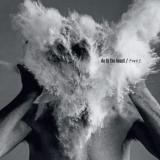
Schwarzes 180g Vinyl im Gatefold Sleeve! Die Innenhülle kommt im schwarzen Doppel-Druck mit UV-Spotlack. LP mit 16-seitigem 12" Booklet und Downloadcode. "Do To The Beast" ist das erste neue Album von THE AFGHAN WHIGS seit eineinhalb Jahrzehnten. Gegründet 1988 in Cincinnati, Ohio, war die Band mit ihrer wilden, stürmischen Mischung aus Alternative Rock, klassischem Soul und den Obsessionen ihres Frontmanns Greg Dulli ihren Zeitgenossen immer mindestens eine Nasenlänge voraus. Das neue Album ist somit sowohl eine Heimkehr - zum Label Sub Pop, das die Band 1989 als ersten Act unter Vertrag nahm, der nicht aus Seattle bzw. dem Nordwesten kam und die beiden Alben "Up In It" (1990) und "Congregation" (1992) veröffentlichte - als auch ein Blick in die Zukunft einer der anerkanntesten Rock Bands der letzten 25 Jahre. "Do To The Beast" ist damit ein angebracht wilder Titel für die vielleicht intensivste, kathartischste Platte in der Karriere von Greg Dulli und sorgt für frischen Wind im AFGHAN WHIGS-Kanon: Da gibt es die brutale Selbstprüfung von "Gentlemen" (1993), die Film Noir Erzählung von "Black Love" (1996), den Überschwang von ,1965" (1998). "Do To The Beast" versprüht ein galvanisiertes musikalisches Spirit und rhythmisches Gewicht, das inmitten des Aderlasses Transzendenz und Hoffnung suggeriert. Aufgenommen zwischen L.A., New Orleans, Cincinnati und Joshua Tree - eine Landkarte der aktuellen und vergangenen Heimatstätten der Band - wartet das Album mit den AFGHAN WHIGS Gründern Greg Dulli und John Curley auf, zusammen mit der Kernband aus den Gitarristen Dave Rosser und Jon Skibic, dem Multiinstrumentalisten Rick Nelson und Schlagzeuger Cully Symington. Außerdem mit dabei: der Soul-Bilderstürmer Van Hunt, Marc McGuire (EMERALDS), Johnny "Natural" Nagera (der Musical Director von USHER), Alain Johannes (QUEENS OF THE STONE AGE, ARCTIC MONKEYS), Clay Tarver (BULLET LAVOLTA, CHAVEZ), Dave Catching (QUEENS OF THE STONE AGE, EAGLES OF DEATH METAL).
Taylor Hollingsworth aus Birmingham, Alabama, hat sich schon immer einer einfachen Einstufung widersetzt. Als er gebeten wurde, seine Musik zu beschreiben, tat er sich schwer - ein bisschen Folk, ein Hauch von Blues, eine Prise Rock 'n' Roll, aber nicht wirklich in eine einzige Schublade zu stecken. Schließlich prägte er den Begriff ,Folk n' Roll", um seinen Sound zu beschreiben. Jetzt bekennt er sich stolz zu diesem Sound mit seinem neuesten Album, das treffend den Titel ,Folk n' Roll" trägt. Fans von JJ Cale, Mississippi John Hurt, Chuck Berry, Richard Thompson, Jonathan Richman und John Prine werden große Freude an Hollingsworths Mischung aus zeitlosen Einflüssen haben. In den frühen 2000er Jahren tourte Hollingsworth ausgiebig mit seiner punkigen Rockband (stell dir eine Mischung aus Ramones, Chuck Berry und ZZ Top vor) und arbeitete als Session-Musiker, der auf Tour mit verschiedenen Künstlern Gitarre spielte (vor allem mit Conor Oberst und der Mystic Valley Band). Doch nach der Geburt seiner Tochter legte er eine Tourpause ein, um sich ganz seiner Familie zu widmen und sein Handwerk als Vollzeit-Musiker vor Ort in Birmingham, Alabama, zu verfeinern. In dieser Zeit perfektionierte er seine fesselnde Ein-Mann-Show, die er nun ,Folk n' Roll" nennt. Seine Auftritte sind ein unvergessliches Erlebnis - fingergepickte E-Gitarre, ein mit Mikrofonen ausgestattetes Fußstampfer-Pedal, das den rhythmischen Rückgrat bildet, und gelegentlich ein Looper-Pedal, um Gitarrensoli einzuflechten, während er seine charakteristischen erzählerischen Texte vorträgt - Texte, die von zahlreichen Künstlern gecovert wurden, vor allem von Conor Oberst und Phoebe Bridgers bei Better Oblivion Community Center. ,Folk `N Roll" ist sein zweites Album für das beliebte Indie-Label Dial Back Sound, nach dem von Kritikern gefeierten und geliebten ,Yahola" aus dem Jahr 2025.
Bei HIGHSIGH - dem Trio aus Ro(b)//ert Lundberg (JOBS), John Dieterich (Deerhoof) und Matt Mehlan (Skeletons) - geht es genauso sehr um den Entstehungsprozess wie um das Endergebnis. Auch wenn der Bandname neu ist, wächst HIGHSIGH aus jahrelanger Freundschaft und Zusammenarbeit des Trios in anderen Konstellationen heraus - dem Zusammentreffen von Deerhoof und Skeletons in der Supergroup Congotronics International, Ro, der bei den Tour- und Aufnahmebands von Skeletons am Bass spielte, John und Matt, die beide auf verschiedenen JOBS-Alben mitwirkten und diese als Toningenieure begleiteten, sowie vielen gemeinsamen Kaffeepausen, Mahlzeiten und Wanderungen. Ihr Debütalbum ,Once Bend" präsentiert sich sowohl als entwaffnend vertraut als auch als seltsam undurchsichtiges Patchwork aus mutiertem Pop und abstrakten polyrhythmischen Klanglandschaften. In einer collageartigen Weise entstanden, brachte jedes Mitglied täuschend reichhaltige musikalische Fragmente ein, die aus anderen Projekten beiseitegelegt worden waren - fast wie kleine Fragezeichen, die die anderen Mitglieder entschlüsseln und interpretieren sollten. Diese Fragmente wurden frei und ohne konkretes Ziel unter den Mitgliedern ausgetauscht; jeder spielte damit herum und bastelte an dem, was er bekommen hatte, fügte Phrasen, Klänge und Texturen hinzu. Die musikalischen Schichten, die dabei entstanden, waren durchweg unerwartet und mitreißend. HIGHSIGH hatte nicht mit einem festen Schema begonnen, doch innerhalb jedes Songs entwickelte sich ein zusammenhängendes Patchwork - geschichtete Gitarren und gestrichener Bass stehen neben träge treibenden Synth-Klängen und knackigen, treibenden Akustik-Drums. Die Band erweiterte ihren Austauschkreis und schickte Tracks an Tim Barnes, Ben LaMar Gay, Max Jaffe, Lia Kohl, Booker Stardrum und Jon Starks, um Schlagzeug-, Cello- und Kornett-Parts einzufügen. Diese rohen Klangteppiche fanden ihre endgültige Struktur und Ordnung durch Texte, von denen einige von der Band selbst geschrieben wurden, andere von Macie Stewart (Finom) und Paige Alice Naylor. ,Textlich interessieren mich einfache Momente der Erkenntnis", sagt Matt Mehlan. ,Wie ist die Umgebung, wie ist das Gefühl?" Dieses Thema zieht sich durch das gesamte Album und verbindet die unterschiedlichen Stimmen, die mitgewirkt haben. Auf ,Once Bend" präsentiert HIGHSIGH ihre selbstgemachten musikalischen Patchwork-Decken - zusammengenäht aus Saiten, Schaltkreisen und Servern auf ganz Turtle Island.
Original Jazz Classics celebrates Miles Davis’ centennial with the release of Cookin' with the Miles Davis Quintet. Originally released on Prestige in 1957 and one of four albums recorded during sessions at Van Gelder studios, Cookin’ features Davis alongside John Coltrane, Paul Chambers, Red Garland and Philly Joe Jones. This new edition of the album is released on 180-gram vinyl pressed at RTI with all-analog mastering from the original tapes at Cohearent Audio and a Stoughton Tip-On Jacket.
Maverick folk artist and touring veteran Rev Hammer has been writing and releasing music for over 40 years. He regards his music not so much as a passport to fame and fortune but as a ticket to ride and has enjoyed numerous tours, collaborations, and projects over his long and varied career. The Old Crow Folk Club album features 23 of his songs re-imagined by friends and artists including Justin Sullivan (New Model Army), Mark Chadwick (Levellers), Maddy Prior (Steeleye Span), Simon Friend (Levellers), Seth Lakeman, John Jones (Oysterband), Dan Donnelly & Jon Sevink (Levellers), Nick Harper, Kathryn Roberts & Sean Lakeman, Nick Parker,
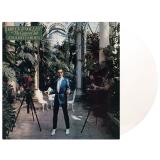
English Garden, by Bruce Woolley and the Camera Club, is an album steeped in British pop history. It is not only an amazing collection of new wave and power pop songs, but also the start of many fascinating careers. The first eye-catcher is the first recorded version of "Video Killed the Radio Star", written by Bruce Woolley, Trevor Horn and Geoffrey Downes (The Buggles).
The album also features none other than Thomas Dolby on keyboard and Matthew Seligman, who played bass in The Soft Boys. After the band broke up in 1983, Bruce Woolley enjoyed an impressive career in songwriting, with his songs being recorded by artists such as Grace Jones, Cher and Donna Summer.
English Garden is a limited edition on white vinyl and includes an insert.
In the early 1960s, beat groups from the Dutch Randstad dominated the national charts. Yet far from the big cities, in the clubs of Drenthe, one band was already being billed as “Beatgroup Number One”: Cuby + Blizzards. But frontman Harry Muskee never embraced that label. Raised on broadcasts from The Voice of America, he possessed a deeper understanding of the blues than most of his contemporaries. Muskee didn’t want to sing ‘songs,’ as he called them, he wanted to sing the blues, raw and unfiltered, in the tradition of Howlin’ Wolf, John Lee Hooker and Muddy Waters.
Their debut single “Stumble & Fall” was recorded in the Bavohuis, a simple gym hall in Amsterdam, with Addy Kleingeld as producer. But the debut album Desolation marked a turning point, recorded at the Phonogram Studios in Hilversum with renowned blues producer Tony Vos, it captured the band exactly as Muskee intended.
The resulting album became a jewel of Dutch music history. Never before had the Netherlands heard a blues singer who poured his emotions into a recording with such conviction and authenticity. Muskee even outshone his British peers. Eric Burdon (The Animals), Paul Jones (Manfred Mann), Mick Jagger (The Rolling Stones) and Van Morrison (Them).
At the 1968 Grand Gala du Disque (the Dutch equivalent of the Grammys), Muskee received an Edison Award for Desolation, handed to him by cabaret artist Wim Sonneveld, whose lukewarm speech couldn’t diminish the significance of the moment.
Sixty years later, the legacy of this groundbreaking album still resonates, an essential document of European blues and a defining moment in the story of Cuby + Blizzards.
This 60th anniversary edition of Desolation is now available as an expanded 2LP-set including the original 1966 album plus fifteen bonus tracks. The gatefold version features songs “Things I Remember”, “Stumble & Fall”, “L.S.D. (Got A Million Dollars)”, is a limited edition on blue vinyl and includes new liner notes by Dutch Blues authority Johan Derksen.
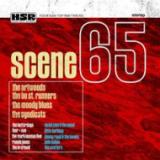
To compliment the run of EPs - Scene 65 covers the rest of the best with R&B pounders (David John & The Mood, The Betterdays), Soulful movers (Jimmy Royal & The Hawks, Ronnie Jones) bluesy soul from The Moody Blues, The Artwoods and out and out craziness from The Syndicats plus more
Soul Music legend Candi Staton returns to her down-home Alabama roots on her 32nd album, Back to My Roots. The twelve-track Americana set features an array of Staton-penned originals and some well-chosen covers.
"These songs represent my roots," Staton adds as she reflects on her many trials and triumphs. "Even the new songs on some level represent something I've experienced and that's what real soul music is about." Back to My Roots was produced by Staton with her second eldest son, Marcus Williams, a professional drummer who has toured with the likes of Peabo Bryson, Isaac Hayes, and Tyler Perry. They brought in Mark Nevers of Lambchop fame, who produced three of Staton’s prior Americana albums for Honest Jon’s and Thirty Tigers, to sweeten certain tracks. “Some of the first songs I ever heard were songs like `Peace in the Valley’ and `It’s Gonna Rain,’” says Staton. “The new songs or cover songs are tracks that remind me of that era when I was growing up as a child and evolving as a young woman. That’s why I named the album Back to My Roots because I’m going back to the roots that made me who I am.”
Staton received the Americana Music Association UK’s highest honour, the International Lifetime Achievement Award, at the UK Americana Music Awards ceremony at Hackney Church in London last year for her southern soul work that stretches from her 1969 Muscle Shoals hits to her more recent collaborations with the likes of Americana kings Jason Isbell and John Paul White.
The album opens with a mid-tempo Bonnie Raitt-styled contemporary blues “I Missed the Target Again” that finds Harry Connick Jr.’s longtime guitarist Jonathan DuBose Jr. (aka the Prophesying Guitarist) showing off his skills that set the tone for the song and the album.
Staton’s older sister, Maggie Staton Peebles (who alongside Staton was a member of the Jewel Gospel Trio in the 1950s), joins her for two duets. The first, “It’s Gonna Rain,” features just a drum, steel guitar and vocals. “My mother used to sing that song to us all the time when I was a child,” Staton recalls. “It’s a really soulful kind of song I wanted to revisit.” They then take turns leading Thomas Dorsey 1939 gem “There Will Be Peace in the Valley” that Elvis Presley popularized in the 1950s.
“Hang on in There” is a new, mid-tempo song that has an old school gospel flavour and features vocals from veteran bluesman, Larry McCray.
While in Europe in 2023 for her farewell concert tour that took her to the Glastonbury Festival and Love Supreme, Staton and her British band, PUSH, went into a London studio to record a new version of The Rolling Stones’ 1972 gem, “Shine A Light.” “I love the way that came out,” Staton says. “We put a big choir on it and put our own twist on it.”
From there, Staton revives another Thomas Dorsey classic, “The Lord Will Make a Way Somehow,” with a bluesy vibe. When Al Green started recording gospel in the early 1980s, he re-introduced this song into the culture.
“God’s Gonna Use Me Anyway” is a new mid-tempo blues with subtle Caribbean influences.
The mood takes a turn on “1963.” It’s a poignant, spoken-word reflection on September 15, 1963, when four black girls were killed in the Birmingham Church bombing. “I was in the city that day and I remember the chaos and horror after the bombing,” Staton recalls. “Just thinking of how racism and hatred caused those men to kill those girls was so emotional for me that I could only do it in one take.”
It's a perfect segue into "Reach Down and Touch Heaven," a haunting, plea for divine intervention into the affairs of mankind. "That's straight Baptist," she says. "I used to be a church pianist back in the 1960s. I've never played piano on one of my records before so that's a unique song for me because I’m finally playing on one of my records. The message of that song is about the homeless. It came to me when a homeless person on the street asked me for $5. When God touches your heart to help somebody else that’s heaven to God’s hears. So, when we reach into our purse or wallet to help someone, we’re touching heaven."
Staton offers love as an antidote to hate on the bouncy, Motown-styled, “Love Breakthrough.”
Her publicist brought Aaron Frazer & the Flying Stars of Brooklyn NY’s 2017 cut “My God Has a Telephone” to Staton’s attention. She shifts the track from a retro 1960s groove to more of a 1980s Malaco Records arrangement, a subtle but distinct variation. Staton brought in her longtime friend and STAX Records legend, William Bell (“I Forgot to Be Your Lover” and “Trying to Love Two”), to add raspy seasoning to the track.
The album closes with the wistful, “In God’s Hands We Rest Untroubled,” that was originally written and recorded by the late country star, Lari White, who died in 2017 at the age of 52. “Lari sent me that song to consider at least ten years ago and I always loved it,” Staton says. “The record label didn’t want it on the album or something, so I just held it.”
Staton says, “I grew up hearing a lot of these old songs when they were new songs. I toured with the Jewel Gospel Trio in the 1950s and we got to know people like Mahalia Jackson, Sam Cooke and others who sang these types of songs. So, I’m sort of paying tribute to them and the influence they had on me by refreshing these songs and making new songs in the old style.”’
'As I Slip Into the Sky reflects a particularly small sliver of time compared to Where the Smoke Goes, with recordings taking place in early 2025, while Johnny was bed-bound in an assisted living facility with multiple sclerosis. Alabama born, Portland based artist Joel Nelson helms the nearly entirely electronic backdrop, posing a new canvas for Johnny, with Buchla Music Easel bubbling up between Johnny’s lines. This album captures Johnny in a remarkably tender and emotive form. Love and all its permutations. The tangled, but caring nature of familial love, (“But you and me, we can talk on the phone every day. I would never leave you behind”), to the anguish and euphoria of romantic connection. Johnny has a remarkable ability to pose questions, ("What is real love like?), and provide answers that reflect the truest of realities, absent cliche ("I don't know. His curly hair, short on his head, his smile, his smile, his smile...that is what real love is like").
'Joel Nelson's nimble work across a small array of analog synthesizers creates a flowing backdrop to Johnny's stream of consciousness. At times, Broadcast's fuzzed out ballads come to mind, while at others, early Oneohtrix Point Never's gauzy, distant drones anchor beneath Johnny's slippery syntax.
'Johnny recorded his poems while confined to a hospital bed, through an iPhone laid gently on his chest. Assisted by the caring presence of friends John Albea and Lauren Jones, we can hear through these recordings Johnny immersed in his world of words, taking in the world of sounds Joel had provided for him. We hear his breath, at times we hear the harsh sibilance captured by the iPhone microphone, but more than anything, we hear the tenderness and poetic resolve of his caring soul. He was incredibly grateful for the past years of connecting with the small cohort of Birmingham-affiliated musicians and artists who upheld him as the unofficial poet laureate of "The Magic City", Birmingham, AL. Perhaps most appropriately, Johnny closes the album out in a state of gratitude:'
"My funeral was perfect
I was buried wearing a very charming jacket
A very charming jacket I just happened to have on when i died
He was always the lucky one, Mary-Ellen said
I've been looking for a nice casual jacket like that I could wear to casual little outdoor parties and to my funeral all my life
But Johnny just had one
Probably someone left it in his car
He was so lucky
It doesn't even make sense
But its true
He really was that lucky"
Following the genre-redefining revelations of A Love Supreme in 1965, John Coltrane began a dramatic shift toward spiritual free jazz, abandoning familiar forms in favor of a more abstract sonic palette and bold questions he'd spend the rest of his life and career pursuing. Meditations, released by Impulse! in 1966, continues that emotional throughline while retaining, for the last time in full, the classic quartet that propelled Trane to greatness: pianist McCoy Tyner, bassist Jimmy Garrison and drummer Elvin Jones. (They're further augmented by Pharoah Sanders on tenor sax and additional drummer Rashied Ali.) Meditations pushes Coltrane’s spiritual jazz into heightened realms of energy and abstraction — a powerful document of transformation, intensity, and devotion in Coltrane’s recorded legacy.
Chambers' Music , subtitled A Jazz Delegation from the East , was bassist Paul Chambers ' debut album as leader. Originally released in 1956 on Jazz West , it features Chambers with two his fellow bandmates from the Miles Davis Quintet, John Coltrane and Philly Joe Jones , along with pianist Kenny Drew . Featuring a wellrounded programme that includes Charlie Parker's 'Dexterity', Benny Goson's 'Stablemates, Cole Porter's 'Easy To Love', and Chamber's own composition'Visitation', the album also has the distinction of being the first record to include a composition by John Coltrane - 'John Paul Jones'
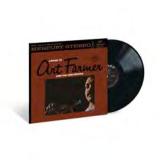
“Listen to Art Farmer and the Orchestra”, 1962 aufgenommen und im folgenden Jahr bei Mercury veröffentlicht, gilt als eines der ambitioniertesten Werke von Art Farmer. Der Trompeter und Flügelhornist, der
bereits brillante Aufnahmen mit von Quincy Jones, Benny Golson und Chico O’Farrill geleiteten Big Bands
gemacht hatte, präsentiert sich hier an der Spitze eines großen Ensembles unter der Regie von Oliver Nel-son. Das abwechslungsreiche Repertoire, das unter anderem Stücke von Billy Strayhorn und John Coltrane
enthält, wurde von Nelson gewohnt raffniert arrangiert und gibt Art Farmer reichlich Gelegenheit, als Solist
vor dem Orchester zu glänzen.
Across landscapes of electronica, ambient textures and jazz improvisation, Be Quiet unfolds as an intimate, spatial set of recordings - built on proximity and contrast, where different cultures, disciplines and sonic identities meeting Moalvaer's unmistakable trumpet voice. The album is accompanied by a documentary film directed by celebrated Norwegian filmmaker Per Manning, capturing the process, environments and relationships behind the music, and informing the project's visual world. Be Quiet unfolds as Molvaer steps into each collaborator's space, responding in real time and shaping a body of work that remains fluid, intimate and constantly in motion.