Multi-instrumentalist, composer, performer and curator L’Rain (Taja Cheek) returns with her third album I Killed Your Dog. Over-writing themes of grief and identity that informed her previous work, I Killed Your Dog considers what it means to hurt the people you love the most. Multi-layered in subject and form, L’Rain’s sonic explorations interrogate instead how multiplicities of emotion and experience intersect with identity. The experimental and the hyper-commercial; the expectation and the reality; the hope and the despair. “I’m envisioning a world of contradictions, as always,” Cheek explains. “Sensual, maybe even sexy, but terrifying, and strange.” Written amidst heartbreaks from the perspective of an earned maturity, I Killed Your Dog takes the sonic world laid out by L’Rain in 2021’s album Fatigue on a compelling new trajectory. Described by Cheek as an “anti-break-up” record, I Killed Your Dog takes the universal pop theme of love as its starting point – bold, bratty and even a touch diabolical – and inspects it through the form of a conversation with her younger self, untangling her relationship with femininity and the formal musical conventions that others have come to expect of her. Alongside long-time collaborators Andrew Lappin and Ben Chapoteau-Katz, Cheek has developed L’Rain into a shape-shifting entity that blurs the distinction between band and individual
out of Stock
Last delivered 2 years ago available to reorder, subject to availability
Gaucho — Steely Dan's Grammy-winning seventh studio album now on UHQR!
Definitive reissue Ultra High Quality Record, the pinnacle of high-quality vinyl!
45 RPM LP release limited to 20,000 numbered copies
Mastered by Bernie Grundman from a 1980 analogue tape copy originally EQ'd by Bob Ludwig
Pressed at Quality Record Pressings using 200-gram Clarity Vinyl®
Purest possible pressing and most visually stunning presentation and packaging!
Tip-on old style gatefold double pocket jackets with film lamination by Stoughton Printing
Gaucho — the iconic seventh studio album by Steely Dan, released in November 1980 — and Grammy-winner for Best Engineered Non-Classical Recording, was also Grammy-nominated for Album of the Year and Best Pop Performance by a Duo or Group with Vocals. The album represents the band's musical evolution towards a more polished and sleek sound, featuring a collection of meticulously crafted songs that blend jazz, rock, and pop music, while exploring themes of decadence, longing, and disillusionment.
Gaucho opens with the title track, a jazzy instrumental piece that sets the tone for the rest of the album. The standout tracks on the album include "Hey Nineteen," a catchy and upbeat tune that features a memorable saxophone riff and lyrics about an older man's attraction to a young woman, and "Babylon Sisters," a funky and groovy track that showcases the band's impeccable sense of rhythm and melody.
The sessions for Gaucho represented the band's typical penchant for studio perfectionism and obsessive recording technique. To record the album, the band used at least 42 different musicians, spent more than a year in the studio, and far exceeded the original monetary advance given by the record label. Still, the album features multiple layers of instrumentation, carefully crafted arrangements, and the use of top-notch session musicians to create a lush and sophisticated sound that is uniquely Steely Dan.
Despite its critical and commercial success, Gaucho was a challenging album to make. During the two-year span in which the album was recorded, the band was plagued by a number of creative, personal and professional problems. MCA, Warner Bros. and Steely Dan had a three-way legal battle over the rights to release the album. After it was released, jazz musician Keith Jarrett was given a co-writing credit on the title track after threatening legal action over plagiarism of Jarrett's song "'Long As You Know You're Living Yours."
Gaucho marked a significant stylistic change for the band, introducing a more minimal, groove- and atmosphere-based format. The harmonically complex chord changes that were a distinctive mark of earlier Steely Dan songs are less prominent on Gaucho, with the record's songs tending to revolve around a single rhythm or mood, although complex chord progressions were still present particularly in "Babylon Sisters" and "Glamour Profession." Gaucho proved to be Steely Dan's final studio album that Donald Fagen and Walter Becker would make together until the year 2000.
Gaucho reached No. 9 on the U.S. album chart and was certified platinum-selling. "Hey Nineteen" reached No. 10 on the U.S. Singles Chart and went to No. 1 in Canada. Pitchfork, in its review, describes the almost "pathologically overdetermined production" as elegant, arid and a little forbidding. "Every last tinkling chime sounds like it took 12 days to mix, because chances are, it did." The New York Times deemed Gaucho the best album of 1980, beating out Talking Heads' Remain in Light and Joy Division's Closer.
Founded by core members Walter Becker (bass) and Donald Fagen (vocals, keyboards), Steely Dan's popularity rose throughout the late 1970s on, and their seven albums throughout that period of time blended elements of jazz, rock, funk, R&B, and pop. Steely Dan created a sophisticated, distinctive sound with accessible melodic hooks, complex harmonies and time signatures, and a devotion to the recording studio. Becker and Fagen, with producer Gary Katz, gradually changed Steely Dan from a performing band to a studio project, hiring session musicians to record their compositions. The duo didn't perform live between 1974 and 1993. But their popularity nevertheless grew throughout the '70s as their albums became critical favorites and their singles became staples of Adult Oriented Radio and pop radio stations.
After a brief battle with esophageal cancer, Walter Becker died on September 3, 2017 at the age of 67. Steely Dan has sold more than 40 million albums worldwide and were inducted into the Rock and Roll Hall of Fame in March 2001. VH1 ranked Steely Dan at No. 82 on their list of the 100 Greatest Musical Artists of All Time. Rolling Stone ranked them No. 15 on its list of the 20 Greatest Duos of All Time.
This stereo UHQR reissue will be limited to 20,000 copies, with gold foil individually numbered jackets, housed in a premium slipcase with a wooden dowel spine.
Gaucho remains a testament to Steely Dan's enduring musical legacy and their ability to create timeless music that transcends genre and style.
Temple, Bassey, MacLaine and now, Hurt; in a world of Shirleys, the name Sophia Ruby Katz has chosen for her music is perhaps prophetic as it captures her stunningly emotive vocal approach. And whilst Shirley Hurt might be the perfect nom de plume for the creative Toronto-based artist, it’s her self-titled debut album which positions her as protagonist of her own universe.
Traversing sonic landscapes, Shirley Hurt’s vocals ebb and flow like lyrical Ley lines tracking the contours of her own well-travelled map. By the age of 18, Hurt had travelled extensively, having lived in upwards of 20 different apartments and houses, as a result never really feeling “at home” anywhere. At this age was when Hurt found herself in New York, dipping her toes into various scenes and musical realms. The first and only place she ever felt at home, and a partial home-base for her, she travelled between Toronto and New York until the age of 26.When the project she was working on in New York reached a dead-end she returned West, moving in with musicians Harrison Forman (Hieronymus Harry, Zones) and Patrick Lefler (Roy, Possum). Being surrounded by their improvising at all hours, a new approach emerged. “Harrison is a virtuosic guitar player, and I hadn't picked up a guitar in any serious way since I was 16,” she says, “by osmosis I started playing again for fun.” Without agenda, the process grew organically from there.
Hurt and Forman decided to travel across the US and Canada in a trailer for half a year, with the entire album written in the final months of their trip. Hurt had been writing loose ideas here and there but felt blocked creatively. When the pair reached Berkley, they wound up house-sitting for a tuned-in friend who recommended she pray, in a very direct way, to remove the block. “I took her advice and to my surprise it worked. The album was conceptualized and finished within a couple of months.” Shapeshifting in tone and phrasing, Hurt’s music alchemizes the furthest corners of experimental indie folk, pop, and country into a singular sound with elegant unpredictability.
Whilst Shirley Hurt’s lyrical and structural ideas may have emerged on the road, the album was self-produced and recorded at Joseph Shabason (The War on Drugs)’s Aytche studio in Toronto’s West End. It was engineered by Nathan Vanderwielen and Chris Shannon (Bart), and Hurt enlisted collaborators Jason Bhattacharya, Nick Dourado, Patrick Lefler, and Harrison Forman to hone her vision. “I wasn’t sure what was going to happen with the songs until we returned to Toronto,” she recalls. “Joseph and I had been talking about working together after sending across some demos and Jason happened to recommend his studio at the exact same time, so everything came together naturally at that point.”
Whilst her most recent adventures may have seen Shirley Hurt bound for Texas as an official SXSW artist (hand-picked by Gorilla Vs Bear to perform at their own showcase), she currently resides in her native Canada, more specifically rural Ontario, close to friends and family, and is already working on her second album. The ties to lineage are interwoven in the fabric of the music. Hurt’s mother, artist Leala Hewak, instilled a lust for life and innate value of creativity in her from a young age as she explored the role of gallery owner, vintage jewellery show host, mid-century modern furniture expert, real estate agent, painter. Hurt’s father, a civil litigation lawyer and new-wave obsessed music lover with an extensive vinyl collection, introduced Hurt to a wide-range of artists at a young age such as Nina Hagen, Laurie Anderson, Tom Tom Club, and endless others.
In her video for ‘Problem Child’ Hurt’s grandmother walks her through a generationally revered pie-making process. One would be tempted to hear this, and other songs, as autobiographical. Yet, Hurt’s lyrics are rarely pulled from her relationships or personal history––at least not consciously. Rather, they arise from somewhere less tangible or defined. “Lyrics tend to come to me when I am doing non-musical things - washing dishes, brushing my dogs, walking to the grocery store. I have a lot of voice memos on my phone and half-filled notebooks and when I hear something, I have to stop what I'm doing to get the idea down. Usually it’s bits and pieces. It's rare a full song comes to me in one go, but it's great when they do, and those are often my favourites.”
Carving out a space of her own in an all-encompassing universe, Shirley Hurt is the introduction to a long artistic story, and if the journey so far is anything to go by, it will be stippled with evermore unpredictable chapters.
Music compilation and art book. We open the GLITZERBOX again and look into a glittering kaleidoscope of music and illustration. Crossing genres, in handmade editions and with great attention to detail, Jimmy Draht fuses artistic ideas into a new whole.
The vinyl contains beautiful folk songs, experimental collages, field recordings and lo-fi pop. All tracks are exclusive or have never been released on vinyl before.
Featuring music by: Maxine Funke, Tenniscoats, Mouth Harp Ensemble, How to count planets, A Happy Return, Benoit Pioulard, New North Wales, Dump, My Two Toms, Oro Swimming Hour, Matthew de Gennaro, The Gentlist, Andersens, Jam Money, Michael Tanner.
The artists, whether they paint, draw, scribble or cut, whether analogue or digital, whether they are graphic artists, illustrators or visual artists: they combine image and sound, discover connections and show that music can create images and vice versa.
Art by Petra Péterffy, Laurent Impeduglia, Nadine Spengler, Michael Dumontier, Tomoko Mori and Nicholas Stevenson.
A limited and numbered edition of 300, with hand-printed 3 color silkscreen book. Compiled by Markus Acher (The Notwist) and Jimmy Draht.
Since the late 90s JIMMY DRAHT publishes elaborately designed music-graphic-comic-text hybrids, most of them handmade and screenprinted. Initiated by Marion Epp, often in cooperation with a music label, artists from various genres are invited to participate. Each release is accompanied by exhibitions and music events.
Bands such as Calexico, The Notwist, Lali Puna, Neoangin, Pram, Otomo Yoshihide, A Million Mercies, Ted Milton, MS John Soda, Schwermut Forrest, Tied & Tickled Trio have participated (to name a few).
In terms of design we were lucky to showcase the works of ATAK, Anna Sommer, Knust, CX Huth, Katz & Goldt, Judith Zaugg, Thomas Ott, Jochen Gerner, Martin tom Dieck, Jim Avignon, Le Denier Cri, Elvisstudio and many more.
ALIEN TRANSISTOR was founded in 2003 by Markus & Micha Acher of The Notwist. The concept of the label is to produce music that has a musical or personal reference to the Notwist microcosm: From electronic soundscapes to abstract hip-hop to laptop-treated contemporary, from processed oriental music to Nick Drake-inspired songwriting. Alien Transistor respects no musical boundaries.
teely Dan's gold-selling third studio album Pretzel Logic, charted at No. 8 on the Billboard 200 and restored the group's radio presence with the single "Rikki Don't Lose That Number," which became the biggest pop hit of their career and peaked at No. 4 on the Billboard Hot 100. The 1974 album was produced by Gary Katz and was written primarily by Walter Becker (bass) and bandleader Donald Fagen (vocals, keyboards). The album marked the beginning of Becker and Fagen's roles as Steely Dan's principal members.
They enlisted prominent Los Angeles-based studio musicians to record Pretzel Logic, but used them only for occasional overdubs, except for drums, where founding drummer Jim Hodder was reduced to a backing singer, replaced by Jim Gordon and Jeff Porcaro on the drum kit for all of the songs on the album. Steely Dan's Jeff "Skunk" Baxter played pedal steel guitar and hand drums.
Pretzel Logic has shorter songs and fewer instrumental jams than the group's 1973 album Countdown to Ecstasy. Steely Dan considered it the band's attempt at complete musical statements within the three-minute pop-song format. The album's music is characterized by harmonies, counter-melodies, and bop phrasing. It also relies often on straightforward pop influences. The syncopated piano line that opens "Rikki Don't Lose That Number" develops into a pop melody, and the title track transitions from a blues song to a jazzy chorus.
Other standout tracks include "Any Major Dude Will Tell You," a reflective ballad with lush harmonies, and "Parker's Band," a playful ode to the jazz great Charlie Parker.
Lyrically, the album explores themes of nostalgia, lost love, and the struggles of the creative process. In "Barrytown," the band reflects on their early days as struggling musicians, while in "Through with Buzz," they offer a biting critique of the music industry and the pressure to conform to commercial expectations.
One of the defining characteristics of Pretzel Logic is its use of unusual chord progressions and unexpected musical twists and turns. The band's intricate arrangements and skilled musicianship are on full display throughout the album.
Rolling Stone praised the album, calling Steely Dan the "most improbable hit-singles band to emerge in ages."
"When the band doesn't undulate to samba rhythms (as it did on 'Do It Again,' its first Top Ten single), it pushes itself to a full gallop (as it did on 'Reelin' in the Years,' its second). These two rhythmic preferences persist and sometimes intermingle, as on 'Rikki Don't Lose That Number,' which jumps in mid-chorus from 'Hernando's Hideaway' into 'Honky Tonk Women.' Great transition." — the review said.
AllMusic gave the album 5 stars, with reviewer Stephen Thomas Erlewine noting that "instead of relying on easy hooks, Walter Becker and Donald Fagen assembled their most complex and cynical set of songs to date." Dense with harmonics, countermelodies, and bop phrasing, Pretzel Logic is vibrant with unpredictable musical juxtapositions and snide, but very funny, wordplay.
The album's cover photo featuring a New York pretzel vendor was taken by Raeanne Rubenstein, a photographer of musicians and Hollywood celebrities. She shot the photo on the west side of Fifth Avenue and 79th Street, just above the 79th Street Transverse (the road through Central Park), at the park entrance called "Miners' Gate."
After a brief battle with esophageal cancer, Walter Becker died on September 3, 2017 at the age of 67. Steely Dan has sold more than 40 million albums worldwide and were inducted into the Rock and Roll Hall of Fame in March 2001. VH1 ranked Steely Dan at No. 82 on their list of the 100 Greatest Musical Artists of All Time. Rolling Stone ranked them No. 15 on its list of the 20 Greatest Duos of All Time.
This stereo UHQR reissue will be limited to 20,000 copies, with gold foil individually numbered jackets, housed in a premium slipcase with a wooden dowel spine.
Overall, Pretzel Logic is a standout album in Steely Dan's discography. The album's blend of catchy hooks, complex arrangements, and thoughtful lyrics has made it a favorite among fans of classic rock and pop music.
Recorded over the course of a 4,000-mile cross-country roadtrip,
Canadian Taylor Ashton's new album is a sonic odyssey through the heart
of America, one that works its way geographically from coast to coast as
it meditates on the meaning of closeness and connection
The performances are warm and inviting, anchored by Ashton's deft guitar and
banjo work and rich, easygoing melodicism, and the recordings-- helmed by
producer Jacob Blumberg and captured with a broad range of collaborators
including Courtney Hartman, Big Thief's Buck Meek, Lake Street Dive's Rachael
Price, Vulfpeck's Theo Katzman, and Late Show bandleader Louis Cato-- are
alternately sparse and lush. From a blanket in Brooklyn's Prospect Park to a
spiritual vortex in Sedona, AZ, the settings are inextricable from the songs, and
the result is a moving collection that evokes both the gentle virtuosity of Nick
Drake and the buoyant wit of Paul Simon.
Eine Frau verschwindet nach einem Erdbeben plötzlich spurlos. Was ist mit ihr geschehen? Die drei ??? begeben sich auf eine gefährliche Suche. Die junge Schneiderin Maya erscheint nicht zur Arbeit am Camelot Theatre. Justus, Peter und Bob haben den Verdacht, dass das Rätsel, das die Theaterleitung veranstaltet, etwas damit zu tun hat. Denn ein hohes Preisgeld ist zu gewinnen. Ist des Rätsels Lösung auch die Spur zu Maya? Die drei Detektive ermitteln, während erneut die Erde bebt ... Sprecher:innen und MitwirkendeErzähler Axel Milberg Justus Jonas, Erster Detektiv Oliver RohrbeckPeter Shaw, Zweiter Detektiv Jens WawrczeckBob Andrews, Recherchen und Archiv Andreas FröhlichTante Mathilda Karin LienewegOnkel Titus Erik SchäfflerTrenton Marco SteegerBuzzy Merete Brettschneider Harold Leonhard MahlichGeorge Robin Brosch Roberta Pamela Punti Evander Prettyman Nicolas BöllLiam Stefan BrönnekeLincoln Hans Peter Korff Maya Manuela EifrigHaylie Barbara SchipperProduktionshinweise:Buch und Effekte: André MinningerRegie und Produktion: Heikedine KörtingRedaktion: Maike MüllerTitelmusik: Simon Bertling & Christian Hagitte (STIL)Musik: Jan-Friedrich Conrad, Jens-Peter Morgenstern, Betty George und Constantin StahlbergCover-Illustration: Silvia ChristophDesign: Atelier SchoedsackBasierend auf dem gleichnamigen Buch von Marco Sonnleitner, erschienen im Kosmos Verlag, Stuttgart. Based on characters created by Robert Arthur.Mit freundlicher Genehmigung der Universität Michigan.
Balearia series stunning with a more groove-driven tracks made for the dancefloor. Starting with four new dancefloor tracks, a combination of 90s underground energy with modern grooves, a summer feelings the sea spoils you just like good wine and lots of sun... Includes Ricky Montanari remix
out of Stock
Last delivered 12 months ago available to reorder, subject to availability
Often dubbed reggae's answer to the Buena Vista Social Club, the notorious Jamaican collective prove that they are still on top of their game with a new album, which journalist David Katz already declaring it was "their best one yet".
In addition to the usual cast of Inna de Yard legends, this new album features the pristine vocals of '70s icon Johnny Osbourne and '60s memorable duo Keith & Tex. Thirteen songs of pure emotions, exceptional musicality and authenticity gathered on a riveting album which promises to be a firm favourite amongst reggae lovers and general music fans alike.
Often dubbed reggae's answer to the Buena Vista Social Club, the notorious Jamaican collective prove that they are still on top of their game with a new album, which journalist David Katz already declaring it was "their best one yet".
In addition to the usual cast of Inna de Yard legends, this new album features the pristine vocals of '70s icon Johnny Osbourne and '60s memorable duo Keith & Tex. Thirteen songs of pure emotions, exceptional musicality and authenticity gathered on a riveting album which promises to be a firm favourite amongst reggae lovers and general music fans alike.
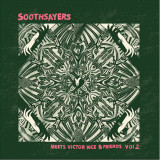
“On new album, Brixton’s dub/jazz/Afrobeat stalwarts Soothsayers offer 11 emotive instrumentals, their sonic textures afforded greater depth through the input of some of São Paulo’s finest musicians, including Criolo’s drummer, Bruno Buarque, and renowned guitarist/soundtrack composer Joao Erbetta of production team Capitão Monga. Led by the distinctive melodies of saxophonist Idris Rahman and trumpeter Robin Hopcraft, and supported by various colleagues in the UK and Brazil, the instrumentally-charged music is balm for the soul in these challenging times and the absence of vocal distractions allow the listener to fully absorb the group’s superb musicianship; there are 11 hefty companion dubs too, expertly crafted by the renowned producer and dub remixer, Victor Rice, resulting in what is easily the unit’s most instrumentally compelling release to date. ........David Katz”
Sacramento, CA duo Blank Gloss’s third album, Cornered, is an exquisite statement of pop ambient starkness, an album that oscillates between lush beauty and spare melancholy. It follows from their 2021 debut for Kompakt, Melt, an album that saw Morgan Fox (piano, synths) and Patrick Hills (guitar) aligned, loosely, with the cosmic pastorale of the ‘ambient Americana’ movement. Cornered feels like a significant step forward, though – by peeling back the layers of their music, they’ve revealed both its restful core and its solemn gravitas. It is unendingly lovely, but with something disquieting at its centre.
Cornered was recorded quickly, over two days in December 2020. There’s nothing rushed or haphazard about the album, though; everything has its place, with each sonic element contributing profoundly to these nine miniature dioramas. It signals change, quietly but perceptibly, through the way the duo sculpts their material, building out of loose improvisations that morphed into songs. While there was no plan in mind when Blank Gloss settled into the studio, Fox recalls that “right away we realised that things were sounding and feeling a bit different than any of the sessions we had previously.”
That difference can be heard in the increased amount of space Blank Gloss gift to their sound sources. Some of the most moving moments on Cornered come when Fox and Hills strip everything back – see, for example, “Crossing”, which sets pensive piano across a shyly humming drone and quiet arcs of guitar, recalling the driftworks of Roger Eno. Curiously, the album’s distinctive shape and mood develops, at least in part, from a change in instrumentation, with Hills using a MIDI pick-up on his guitar. “This resulted in making things happen a lot quicker,” Fox says. “It also helped create what I think is a bit more sombre, dark feeling to some of the songs.”
Elsewhere, on songs like “Salt”, the piano tussles with flecks of guitar, single tones sent out to mingle with the stars, like Morricone at 16 RPM, while Cornered’s centrepiece, the eleven-minute “No Appetite”, lets long arcs of electronic texture breathe and sigh, tangling together in a cat’s cradle of bliss. Throughout, it feels as though the music is blossoming as you hear it, like watching time-lapse footage of flora in bloom. But perhaps the most seductive thing about Cornered is the sense you get, listening, that the music was something unexpected, a visitation. “It almost felt like we weren’t dictating where the music went and how it sounded,” Fox agrees. “We were just there in a room together in December and these sounds were happening, and we were lucky enough to be recording the process.”
Cornered, das dritte Album des kalifornischen Duos Blank Gloss aus Sacramento, ist ein exquisites Statement von pop ambienter Krassheit, ein Album, das zwischen üppiger Schönheit und sparsamer Melancholie oszilliert. Es folgt ihrem 2021er Debüt für Kompakt, Melt, einem Album, auf dem sich Morgan Fox (Klavier, Synthesizer) und Patrick Hills (Gitarre) locker an der kosmischen Pastorale der „Ambient Americana“-Bewegung ausrichteten. Cornered fühlt sich jedoch wie ein bedeutender Schritt nach vorne an – indem sie die Schichten ihrer Musik abschälen, haben sie sowohl ihren ruhigen Kern als auch ihre feierliche Schwere offenbart. Es ist unendlich schön, aber mit etwas Beunruhigendem in seiner Mitte.
Cornered wurde relativ schnell aufgenommen, über zwei Tage im Dezember 2020. Es klingt jedoch nichts überstürzt oder willkürlich an diesem Album; alles hat seinen Platz, wobei jedes Klangelement einen wesentlichen Beitrag zu diesen neun Miniaturdioramen leistet. Es signalisiert Veränderung, leise, aber wahrnehmbar, durch die Art und Weise, wie das Duo sein Material formt und aus losen Improvisationen aufbaut, die sich in Songs verwandeln. Als Blank Gloss sich im Studio niederließen, gab es zwar keinen Plan, aber Fox erinnert sich: „Uns war sofort klar, dass sich die Dinge etwas anders anhörten und anfühlten als bei allen vorherigen Sessions.“
Dieser Unterschied ist in der größeren Menge an Raum zu hören, die Blank Gloss ihren Klangquellen bietet. Einige der bewegendsten Momente auf Cornered kommen, wenn Fox und Hills alles zurücknehmen – siehe zum Beispiel „Crossing“, wo ein nachdenkliches Klavier über einen schüchtern summenden Drone und leise Gitarrenloops setzt und an die Driftworks von Roger Eno erinnert. Seltsamerweise entwickelt sich die unverwechselbare Form und Stimmung des Albums zumindest teilweise aus einer Änderung der Instrumentierung, bei der Hills einen MIDI-Tonabnehmer an seiner Gitarre verwendet. „Dies führte dazu, dass die Dinge viel schneller abliefen“, sagt Fox. „Es hat auch dazu beigetragen, einigen der Songs ein etwas düstereres, dunkleres Gefühl zu verleihen.“ An anderer Stelle, bei Songs wie „Salt“, spielt das Klavier mit Gitarrenfetzen, einzelne Töne werden ausgesandt, um sich mit den Sternen zu vermischen, wie Morricone bei 16 U/min, während Cornereds Herzstück, das elfminütige „No Appetite“, lange Bögen schlägt, elektronische Texturen atmet und seufzt, um sich in einem Katzenkörbchen der Glückseligkeit zu verheddern. Während des Hörens fühlt es sich an, als ob die Musik blüht, als würde man sich Zeitrafferaufnahmen von blühenden Pflanzen ansehen. Aber das Verführerischste an Cornered ist vielleicht das Gefühl, das man beim Zuhören bekommt, dass die Musik etwas Unerwartetes war, eine Heimsuchung. „Es fühlte sich fast so an, als hätten WIR nicht diktiert, wohin die Musik geht und wie sie klingt“, stimmt Fox zu. „Wir waren just im Dezember zusammen in einem Raum, als diese Geräusche passierten, und wir hatten das Glück, dass die Aufnahme mitlief.”
out of Stock
Last delivered 17 months ago available to reorder, subject to availability
Cluster was the pioneering German duo of Hans-Joachim Roedelius and Dieter Moebius. Formed on the cusp of the 1970s, they were a part of West Germany's nascent Kosmische Musik scene. The group would use restrained improvisational techniques similar to Gruppo Nuova Consonanza, working with both electric and acoustic instruments (organ, guitar, tone generators, cello, etc.) to create a singular sound that Julian Cope called "a huge beating heart, planet-sized and awesome."
Originally released in 1972 on Brain, Cluster II features six pieces of atmospheric, proto-ambient drones – a step forward from Cluster's 1971 self-titled debut, which had all untitled songs. On "Im Suden," hypnotic bass pulsations and repetitive guitar patterns flow serenely, while side two opener "Live In Der Fabrik" dives deep into Roedelius and Moebius' foreboding industrial soundscapes and synergistic textural interplay.
As Roedelius told Uncut magazine in 2022, "This feels like a breakthrough? Well, we were just getting more into it, and getting more experienced at being able to elaborate it. Conny (Plank) was working with us again – as well as being a multi-talented artist, he was a very experienced sound master and great human being. He contributed as a fellow musician, adding sounds with his mixing table such as reverb, delay and other effects enriching the whole pieces so that they finally became somehow unique."
It's no surprise that when Neu! guitarist Michael Rother first heard Cluster II, he suggested a collaboration with the band – resulting in the supergroup Harmonia who would make their first album together the following year.
Black Truffle is pleased to announce Uri Katzenstein’s Audio Works, produced in collaboration with Holon’s Centre for Digital Art. Spanning sculptural installation, performance, video art, and many other media, Katzenstein’s absurdist, poetic, and often hilarious work made extensive use of sound and music. This, however, is the first release dedicated to the artist’s audio work, collecting 28 tracks produced between the early 1980s and 2017. Compiled from dozens of hours of recordings left uncatalogued (and in some instances unheard) at the artist’s death in 2018, these four sides are a treasure trove, offering a captivating glimpse into a uniquely uninhibited creative practice. Predominantly recorded alone, with some contributions from regular collaborators such as Ohad Fishof on the later pieces, many of these tracks stem from Katzenstein’s time living in New York in the 1980s. Feeding on the cross-pollination of post-punk energy, radical art practice, and new media possibilities that characterised the New York scene at this time, many of Katzenstein’s recordings squeeze multilayered vocal experimentation into synth-based miniatures with a distinctively pop twist, their forms ruptured with anarchic bursts of free-form electronics, sounds from self-built instruments, and field-recorded snatches of the outside world. Katzenstein’s electronic production calls up touchstones of skewed 80s art pop like Laurie Anderson, Ambitious Lovers, and Scritti Politti, but imbued with DIY directness and economy of means. The arrangements of synths, percussion, and noise elements are invigoratingly raw and, at times, almost austerely minimal. On ‘Intermission’, thick distorted chords accompany a wandering portamento melody, inhabiting the wayward carnival space of Roedelius’ most unhinged efforts. Many of the tracks centre on Katzenstein’s multi-tracked vocal performances, often moving between multiple languages, (most commonly English, German, French, and Hebrew). A bewildering range of vocal approaches are present on these pieces, from sweet wordless harmonies to hammed-up growls and monastic recitations. On ‘Skin O. Daayba – Complex Habits no. 3’, improvised resonance singing against a backdrop of echoing electronics and radio snatches. ‘Half Monk Half Herring’ layers multi-lingual syllabic fragments, crossing sound poetry techniques with melodic invention in a way rarely heard outside of Caetano Veloso’s Araçá Azul. On ‘Attempt to Raise Hell’, Katzenstein’s distorted voice spits out streams of alliterative nonsense (‘the hemlock of Henry, he was a hermit…purple pumpkin pulsates to pops’), while on the hilarious ‘Eric’, Katzenstein appears to instruct a small boy simultaneously in basic French and German conversation. On ‘Chicken’, vocal harmonies accompany the pecking and clucking of the titular fowl. Moving from bent, outsider synth pop to snatches of Jo Jones-esque automated instrumental clang and absurdist linguistic experiments, these are far more than footnotes to an artist’s gallery works. Accompanied by extensive, beautifully written liner notes by Roee Rosen and the little information that exists on the individual tracks, Katzenstein’s Audio Works inhabits an outer fringe of DIY pop and sonic experiment reminiscent of Pascal Comelade or Die Welttraumforscher, where accessible forms convey radical interrogations of song, word, and sound.
out of Stock
Last delivered 3 years ago available to reorder, subject to availability
Both Aesop Rock and Homeboy Sandman are regarded as top tier lyricists known for pushing the envelope of creativity in their writing, while covering a wide range of topics and moods. However, sometimes things are inherently simple. Take for example, the origin of their collaboration, born from a mutual appreciation for each other as artists Which became fully realized when Aesop Rock invited Homeboy Sandman to join him on tour in 2015. Traveling the country together, they built a connection beyond the music, resulting in a friendship that led to recording a few songs together, and before they knew it, there was an infestation...Lice. Initially released in 2015 as a free direct download, followed by an extremely limited vinyl pressing sold exclusively on tour, Aesop Rock and Homeboy Sandman's Lice is finally available to fans everywhere. The first in a series of EP releases, Lice featured production from DJ Spinna, Optiks, Blockhead, Alex "Apex" Gale and Mike Shinoda. The original cover art was designed by renowned illustrator Jeremy Fish.
This LP is the culmination of one and a half years of writing and
collaborating with musical friends, both old and new - Hunter is joined by
Label-mate Lady Dan, James Terris, Ashley Allred, Andy Pitcher, Gabe
Katz, Linden Reed, Asher Katz, Brandon Hendrickson, Ian Simpson, and
more
The drums were one of the last things recorded on Pete Townshend's Neve
console before it was parted out in 2022. The title and many lyrics come from
Hunter's daughter Alma, who was 2 and 3 during the writing and recording of this
album. The album art was designed by the god-father of Hunter's daughter, Clay
Hickson. LP to be followed shortly by an EP titled Torch Songs.
Pressed on Royal Blue color vinyl
For nearly 10 years, there's been one address in Tel Aviv where people
know they can find pure, fiery musical energy: TIGRIS - And with UTRY,
we've collected all the band's tightest grooves and most exciting
melodies on one career-spanning compilation
It's a Raw Tapes celebration; consider it our gift to you - nine party- starting
polyrhythmic tunes that melt down Senegalese percussion, East African tezeta
jazz, swirling psychedelic keys and surf guitar into a potent brew. Keyboardist
Roei Hermon, percussionist Oded Aloni, bassist Amir Sadot, guitarist Ilan Smilan
and drummer Itamar Katzir first assembled their musical vision in an Ethiopian
restaurant in Tel Aviv, and they've been diving head-first into electrifying grooves
ever since. On "UTRY," you'll vibe with their finest cuts, pulled from TIGRIS's three
LPs. It's your own tailor-made house party playlist. Just don't be surprised when
the party spins out of control.
Both Aesop Rock and Homeboy Sandman are regarded as top tier lyricists known for pushing the envelope of creativity in their writing, while covering a wide range of topics and moods. However, sometimes things are inherently simple. Take for example, the origin of their collaboration, born from a mutual appreciation for each other as artists which became fully realized when Aesop Rock invited Homeboy Sandman to join him on tour in 2015. Traveling the country together, they built a connection beyond the music, resulting in a friendship that led to recording a few songs together, and before they knew it, there was an infestation...Lice.
Initially released in 2015 as a free direct download, followed by an extremely limited vinyl pressing sold exclusively on tour, Aesop Rock and Homeboy Sandman's Lice is finally available to fans everywhere. The first in a series of EP releases, Lice featured production from DJ Spinna, Optiks, Blockhead, Alex "Apex" Gale and Mike Shinoda. The original cover art was designed by renowned illustrator Jeremy Fish.
Against the backdrop of Asbury Park , NJ rock and punk history comes
BEACH RATS
With a membership that includes four impossible- to- avoid New Jersey punk
stalwarts including Brian Baker (Minor Threat, Dag Nasty, Bad Religion), Ari Katz
(Lifetime), Bryan Kienlen and Pete Steinkopf (The Bouncing Souls) and rounded
out by Danny Windas, AKA "Dubs" on drums . BEACH RATS play a brand of
hardcore/punk that stays true to their members' roots while creating something
completely fresh and urgent."I had moved to Asbury Park," recounts guitarist Brian
Baker. "And it turned out that Pete Steinkopf and Bryan [Kienlan] from the
Bouncing Souls were sniffing around and had the idea to do a fun side-band with
Ari Katz from Lifetime. They had recently played together at a memorial for Dave
Franklin [Vision frontman, R.I.P.] and had a blast. That was the foundation of it.
Like most of my career, I walked into a pre-existing situation, ready to go. They
were talking about it and I was immediately like, 'I want to be in a band! Bands are
great, let's go!"The common denominator for BEACH RATS for was simple. "It's a
mix of the Jersey Shore thing and a bunch of guys that can endlessly create 80's
hardcore riffs because we were there," states Bryan Kienlan. "You're gonna get
authentic punk and hardcore from BEACH RATS because we are all from the 80's.
It's literally taking it back to some of our biggest influences like Negative
Approach and Poison Idea, And of course, Minor Threat."
This compilation presents for the first time various underground techno groups and projects that emerged in Lima in the mid-1980s. Projects such as Disidentes, Paisaje Electrónico, T de Cobre, Meine Katze Und Ich, El Sueño de Alí, Cuerpos del Deseo, Círculo Interior, Ensamble and Reacción. Disidentes and T de Cobre brought extreme sounds to local electronics, and which has made them an unavoidable reference for any historical account of techno and industrial music in Latin America. This compilation presents for the first time various underground techno groups and projects that emerged in Lima in the mid-1980s. Projects such as Disidentes, Paisaje Electrónico, T de Cobre, Meine Katze Und Ich, El Sueño de Alí, Cuerpos del Deseo, Círculo Interior, Ensamble and Reacción were responsible for introducing styles such as techno-pop, EBM, industrial and minimal synth in Peru. Coinciding with the explosion of punk in Lima and the appearance of the so-called Rock Subterráneo underground rock, these techno groups shared the same DIY spirit, performing in many punk concerts and even creating their own fanzines, and, above all, opening a space for other types of sonic experiences. Meine Katze Und Ich, El Sueño de Alí and Paisaje Electrónico were also the parallel projects of the members of Narcosis, the iconic punk band, one of the founders of Rock Subterráneo. Disidentes and T de Cobre brought extreme sounds to local electronics: viscerality, mechanical rhythms and the use of Casiotones or synthesizers, which resulted in an atypical sound that, in turn, portrayed a critical time in Peru, and which has made them an unavoidable reference for any historical account of techno and industrial music in Latin America. The title of this compilation is inspired by the name of a concert held in Lima in 1991, considered to be the first techno concert to have taken place in Peru. Even though not all intervening groups were doing techno at that time, they did share the fact that they all used keyboards. Four of them, however (Cuerpos del Deseo, Ensamble, Círculo Interior and Reacción), were in fact affiliated to an electronic sound (techno-pop, EBM). The concert was a sign of the diversification of musical styles in Lima's alternative scene, and in particular of the emergence of a micro scene, for which the concert Síntomas de techno [Symptoms of Techno] represented an important step towards the development of a local culture of electronic music during the 90s. Many of the recordings included here are extracted from demos with limited circulation, practically impossible to find. Other tracks are unpublished pieces which come from the private archives of the artists themselves. The compilation has been made by Luis Alvarado and is part of the Essential Sounds Collection, with which Buh Records is making available a vast archive of avant-garde Peruvian music. This compilation is published in vinyl format in a limited edition of 300 copies, with extensive information and visual documentation. Mastered by Alberto Cendra. Art by René Sánchez. Cover photography by Rogelio Martell. This project was awarded with funding from the Economic Stimuli program of the Peruvian Ministry of Culture.
Note - Sleeve says contains a bonus CD, these represses do not have a bonus CD, they have a download card.
Fire Records will be reissuing the first 3 albums by the Lemonheads, Hate Your Friends (1987), Creator (1988) and Lick (1989), featuring copious bonus tracks and many never-before released rarities and live recordings on the download card. Together, these seminal albums showcase the band's early punk rock roots and trace the Lemonheads’ transformation towards becoming one of the most successful and influential bands in indie rock. Before the 90s. Before the internet. Before Nevermind. Back when something called “independent music” first began reaching a wider audience, through college radio, word-of-mouth, and that small “underground” record store you seem to find in every town…there was a band from Boston called Lemonheads. High school friends Ben Deily and Evan Dando, Lemonheads’ primary songwriters, co-guitarists and co-vocalists, first recorded together on 4-track cassette in the spring of 1985; by the end of the decade they—together with bass player Jesse Peretz, sometimes-guitarist Corey Brennan, and successive drummers Doug Trachten and John P. Strohm—had created a body of recordings which would see them on MTV’s fledgling “120 Minutes,” beating out the Grateful Dead on college radio charts, and entering the consciousness of a generation of music fans. Cited as influences by artists as varied as Billie Joe Armstrong and Ryan Adams, these fledgling Lemonheads recordings—part rock, part pop, part unique hybrid of the 80s punk styles beloved by the band members—mark the start of the trajectory that would eventually lead to “mainstream” success and stardom for a later version of the band. But they also represent a distinct, never-repeated phase of the band’s history: one that is finally receiving the attention it deserves. Lick is the third full-length album by the Lemonheads, and the last to feature founding member Ben Deily. It was the group's last independent label-released album before signing to major label Atlantic. An odd mixture of brand-new, and considerably older, sounds, 1989’s Lick brings together the output of several distinct recording sources: six brand new songs recorded with Minneapolis-based band friend and producer Terry Katzman, and a collection of older, B-side and never-released material originally overseen by producer and engineer Tom Hamilton. The difficulties of writing and creating a new full-length album every year (Hate Your Friends and Creator were released in 1987 and 1988, respectively) are clearly in evidence on Lick. While the newest material (“Mallo Cup,” “A Circle of One,” “7 Powers,” “Anyway”) hints at promising new song writing directions for both Deily and Dando, there’s an almost valedictory sense of the past in the inclusion of versions of “Glad I Don’t Know” and “I Am a Rabbit” (from the band’s first-ever, self-released EP), and the now-classic track “Ever,” a previously-unreleased tune from the original 1986 Hate Your Friends sessions. At moments, Lick almost sounds like an elegy for itself—or an elegy for a band that has reached the end of the beginning. Also audible in the heterogeneous songs are the tensions of line-up changes—and inchoate, growing frustrations. After various band break-ups or threatened break ups (such as Dando’s brief departure to play bass for Boston band the Blake Babies), the Lemonheads convened to record new material for Lick now featured Dando on drums, Peretz on bass, Deily on guitar (and “piano,” according to the album credits) along with the addition of long-time band friend—and former member of TAANG! labelmates Bullet LaVolta—Corey Loog Brennan on lead guitar. And yet the frenzied, quasi-ironic hammer-ons of Corey’s axe provide some of Lick’s most entertaining moments—like the unaccountably-translated-into-Italian paen to 70s detective Ironside, “Cazzo Di Ferro.” (The song’s music was originally composed by Brennan for his Italian punk band, Superfetazione.) After the album’s completion, Deily opted out of the subsequent European tour, before leaving the band permanently. Jesse Peretz stayed on to record their Atlantic records debut Lovey, but left after the supporting tour in '91. Since then, Dando has been the Lemonheads' sole permanent member. BONUS TRACKS: Features bonus tracks including several never-before-released live tracks from a 1987 radio session, live tracks and an interview from the 1989 European tour, and the 4 tracks of the Lemonheads self-released debut EP, Laughing all the way to the cleaners.
A simple idea in an over complicated moment. Strip away aesthetics and be artist centric, sharing and explore collisions, sounds and genres. Step out of comfort zones to release a series of EPs of broad, challenging and deep music.
Starting with The Proposal by A Strange Wedding, this Lyon based producer from the Worst label, builds on their "modern style" slow trance to create a label anthem, a template. Stretched Arp, hypnotic bass and searing melody, underpinned by ocean wide kick. Merci for the perfect beginning.
Datasal are next, as this Gothenburg's trio's debut arrives. Acoustics (Miyazawa flute / Fender bass) and electronics (Roland RS-09 / Korg Mono) collide; prog rock meets post punk meets dance; outside organised compositions to improvise to the beat.
Side two leads back to the origin. 84PC, the dormant Tel Aviv collective that developed out of the city's Michatronix Crew (featuring Katzele, Naduve, Asaf and Yovav), return with a previously unreleased remix from Khidja. Their "Welcome To The Pleasuredome" moment is peak time perfection.
To close Barcelona's Iro Aka arrive with another debut. Having dispatched edits on Hard Fist and 44,100Hz Social Club, their bubbling 303 is a tender dreamtime finale that points ahead.
out of Stock
Last delivered 4 years ago available to reorder, subject to availability
A simple idea in an over complicated moment. Strip away aesthetics and be artist centric, sharing and explore collisions, sounds and genres. Step out of comfort zones to release a series of EPs of broad, challenging and deep music.
Starting with The Proposal by A Strange Wedding, this Lyon based producer from the Worst label, builds on their "modern style" slow trance to create a label anthem, a template. Stretched Arp, hypnotic bass and searing melody, underpinned by ocean wide kick. Merci for the perfect beginning.
Datasal are next, as this Gothenburg's trio's debut arrives. Acoustics (Miyazawa flute / Fender bass) and electronics (Roland RS-09 / Korg Mono) collide; prog rock meets post punk meets dance; outside organised compositions to improvise to the beat.
Side two leads back to the origin. 84PC, the dormant Tel Aviv collective that developed out of the city's Michatronix Crew (featuring Katzele, Naduve, Asaf and Yovav), return with a previously unreleased remix from Khidja. Their "Welcome To The Pleasuredome" moment is peak time perfection.
To close Barcelona's Iro Aka arrive with another debut. Having dispatched edits on Hard Fist and 44,100Hz Social Club, their bubbling 303 is a tender dreamtime finale that points ahead.
out of Stock
Last delivered 3 years ago available to reorder, subject to availability
Anthony Johnson's 'Gunshot' is one of the all dancehall-era defining records. The driving original rhythm, expertly constructed by ace deejay-turned-producer Jah Thomas with the Roots Radics at Channel One, formed a suitable platform for the strident wails of Anthony Johnson, a rising ghetto star that became one of the hottest vocalists on the evolving dancehall scene of western Kingston.
Reissued for the first time after its original release on the Midnight Rock label in 1982, with remastered audio and extensive liner notes by David Katz.
out of Stock
Last delivered 4 years ago available to reorder, subject to availability
Tankard is a German thrash metal band from Frankfurt am Main, founded in 1982. Alongside Kreator, Destruction and Sodom, Tankard is often considered one of the 'Big Four' of Teutonic thrash metal. Stylistically, Tankard have consistently played thrash metal that thematically centered primarily on alcohol. Zombie Attack was released in July 1986.
In October 1987 their sophomore album, Chemical Invasion, was released, followed a year later by The Morning After. Original drummer Oliver Werner quit the band to be replaced by Arnulf Tunn, and the band released three albums with this lineup: The Meaning of Life, Stone Cold Sober and Two-Faced. They also recorded the live album Fat, Ugly and Live during this time. This lineup then folded when Tunn was replaced by Olaf Zissel, who remains in the band to this day, in May 1994 and the next year founding member Katzmann was forced to leave due to osteoarthritis in the wrist. That year the band released The Tankard and was their final album with Noise. Now celebrating their 40th anniversary the band are still gigging all over the world and recording & releasing new music.
Remix album for Oké's Deserto featuring nine interpretations of tracks from the original with a focus on the dancefloor alongside some abstract beats and rap.
Oasi (Deserto Remixed) features two groups of transatlantic contributors: Shigeto, DJ Dez, and Sterling Toles from Detroit; Populous, Godblesscomputers, DJ Rocca, and Silvano Del Gado from Italy, all close friends of the band. The remixes are rounded off by two versions from the man behind Oké, Andrea Visani, under his Katzuma and King Dumitru aliases.
The library music, cosmic jazz, and afro-house vibes of the original are retooled into a variety of dancefloor friendly productions: Shigeto and Silvano Del Gado invoke the tribal spirits of 'Ochosi Ayilodà'; Dez turns 'Il Venditore di Elastici' into a warm and comfortable chugging groove; Populous zeroes in on peak time ecstasy with his take on 'Queens of the Supercolony'; Rocca injects electro funk into 'Tarantula'; and Katzuma keeps it slow and funky with his refixes of 'Tamahaq' and 'Sons of Cabila.'
Balancing all these are two mellower contributions, with Godblesscomputers flipping 'The Secret Baile of the Maharajas' into a laidback roller and Sterling Toles transforming 'Serir' into a haunting song of remembrance.
Released on single 12" vinyl with seven of the nine remixes (two edited for length) and artwork from Andrea Casciu.
out of Stock
Last delivered 4 years ago available to reorder, subject to availability
Welcome to NOPE23. Created by Jaguar Skills. Born from his love of underground Hip-Hop, Funk and Soul, ‘The Savage Planet’ by Jaguar Skills is his label’s first broadcast.
Utilising a band of experienced musicians to create the project, ‘The Savage Planet’ is 8 tracks, 23 minutes and 23 seconds of experimental Hip-Hop Funk, interwoven with official adverts and soundbites direct from the NOPE23 vault.
Featuring the vocal skills of rapper Crimeapple (Soul Assassins), New York MC Johnny Storm, guitar legend Simon Katz (Jamiroquai/ Gorillaz), renowned bass player Zoltan (Erka Badu), flautist Rowen Harwood, alongside the beat alchemist himself; Jaguar Skills.
‘The Savage Planet’ confirms once again, that Jaguar Skills is not of planet Earth.
Stay tuned for more fly sh*t.
NOPE23. For freaks and pencil necked geeks.
out of Stock
Last delivered 3 years ago available to reorder, subject to availability
'The inventive record producer and vocalist Lee 'Scratch' Perry was involved in every musical shift of note in his native Jamaica, from the rhythm and blues that pre-dated the arrival of ska in the early 1960s through the slower and more spacious rocksteady style that appeared middecade and, of course, the frenetic sound of reggae, which he helped to birth as an independent producer during the late 1960s. Operating as 'The Upsetter' from his base in a downtown Kingston record shop, Perry found his greatest success with instrumental music during this phase, the organ and saxophone re-castings of standard vocal issues proving exceptionally popular overseas.
'Scratch The Upsetter Again surfaced early in 1970 as a largely instrumental set, but with dreamy reverb a hefty feature and keyboards veering away from standard organ motifs. Dave Barker, who was soon to hit the pop charts as part of Dave & Ansel Collins, tackles The Shirelles' 'Will You Still Love Me' in soul reggae mode, only for Perry to shift things towards the emerging dub spectrum with 'Take One.'
'As Perry inched ever closer to the dub experimentation he would turn into an art form at his own Black Ark studio later in the decade, Scratch The Upsetter Again shows him moving away from the standard approaches of his competitors in his quest to test the very limits of recorded sound. And reggae was all the richer for it.'
—David Katz (excerpt from the liner notes)
NOTE: ALL FORMATS CONTAIN THE FULL VERSION OF "RAUSCH". THE ALBUM IS MEANT TO BE HEARD FROM BEGINNING TO END AS A WHOLE. IT HAS BEEN TRACK MARKED OR SEPARATED DUE TO FORMAT RESTRICTIONS
Rausch with no name / My beautiful shine / You are the sun / This is where I want to be / Rausch with no morning / This is where we burn / The Stars sparkle / In a sea of flames / Horns and fanfares / Fanfares of joy / Fanfares of fear / The wine we drink through the eyes / The moon pours down at night in waves / Careful with that axe Eugene / Personal Jesus / No beginning no end / Eighteenth of Oktember / The night falls / The king comes / The hunt starts / Freude schöner Götterfunken / The long march through the underwood / Trust me there's nothing / Once upon a time there was a bandit / Who loved a prince / That was long ago / Spring Summer Fall and Gas / There is a train heading to Nowhere / Drums and Trumpets / Future without mankind / Warm snow / Alles ist gut / The bells toll / You are not alone / The murmur in the forest / The murmur in the head / Light as mist / Heavy as lead / Music happens / To flow like gas / A clearing / Heavy baggage / Debut in the afterlife / Death has seven cats / World heritage Rausch / Finally infinite
Wolfgang Voigt 2018
Rausch ohne Namen / Mein schöner Schein / Du bist die Sonne / Hier will ich sein / Rausch ohne Morgen / Wir brennen hier / Die Sterne funkeln / Im Flammenmeer / Hörner und Fanfaren / Fanfaren der Freude / Fanfaren der Angst / Den Wein den man mit Augen trinkt / Gießt Nachts der Mond in Wogen nieder / Vorsicht mit der Axt Eugene / Personal Jesus / Kein Anfang Kein Ende / Achtzehnter Oktember / Die Nacht bricht an / Der König kommt / Die Jagd beginnt / Freude schöner Götterfunken / Der lange Marsch durchs Unterholz / Glaub mir da ist nichts / Es war einmal ein Räuber / Der liebte einen Prinzen / Das ist lange her / Frühling Sommer Herbst und Gas / Es fährt ein Zug nach Nirgendwo / Pauken und Trompeten / Zukunft ohne Menschen / Warmer Schnee / Alles ist gut / Die Glocken läuten / Du bist nicht allein / Das Rauschen im Wald / Das Rauschen im Kopf / Leicht wie Nebel / Schwer wie Blei / Musik ergibt sich / Strömt wie Gas / Eine Lichtung / Schweres Gepäck / Einstand im Jenseits / Der Tod hat sieben Katzen / Weltkulturerbe Rausch / Endlich Unendlich
Freestyle Records are proud to present the first ever reissue of this rare Black Ark-era Lee "Scratch" Perry production on LP & CD w/ bonus tracks. Both formats feature liner notes from author of the acclaimed People Funny Boy: The Genius of Lee 'Scratch' Perry and Solid Foundation: An Oral History of Reggae, David Katz.
The late Bunny Rugs was best known as the frontman for legendary reggae band Third World, but prior to that he completed an apprenticeship at Lee Perry's Black Ark resulting in this solo LP, originally released in 1975 and credited to Bunny Scott.
The album captures the laid-back sessions of the early Black Ark, with a few surprising innovations lurking amongst the soul covers and love ballads. Highlights include the sought after Blaxploitation-influenced funk track 'Kinky Fly' featuring members of The Chi-Lites' backing band, passing through Perry's infamous studio whilst in Jamaica for a series of shows - their horn section and Chinna Smith's wah-wah guitar give the track its outstanding difference as synth overdubs add to the moody feeling, underpinned by the ghostly click tracks of the Conn Rhythm Unit (constituting one of Perry's earliest experiments with drum machines).
Breakup track 'Second Avenue' shows how suited Rugs' powerful, deep tenor was suited to a soul framework, the Chi-Lites' horns again making a striking difference. The Bee Gees' evergreen 'To Love Somebody' takes James Carr's soulful rendition as its reference and 'Big May' re-works the 'Return Of Django'/'Sick And Tired' rhythm, with a new drum part. while the broken-hearted 'What's The Use' was cut at the request of Sonia Pottinger, who ultimately failed to release it.
Somehow the sublime rendition of William DeVaughans' 'Be Thankful', recorded during the same session, was left off the LP - but appears here as a bonus track on the CD along with I Never Had It So Good & Hip Harry + it's version track.
Looking back on the sessions documented on this LP, Rugs said that Perry's creativity taught him that music could be limitless. As he explained, 'It was so simple that it became complex. The approach he has to music and to recording, I think the music nowadays lack that kind of intuition. He's somebody that would use pliers and a screwdriver to create percussion; he wouldn't hesitate to experiment. He was a little...not crazy, but somebody with that kind of thinking must be somewhere else, in another zone sometimes.'
out of Stock
Last delivered 5 years ago available to reorder, subject to availability
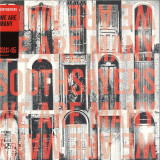
South London-based band Soothsayers are set to release their ninth studio album 'We Are Many'. Held together by heavy basslines, solid grooves, and socially and politically charged lyrics; the album takes the listener into different sonic spaces with elements of dub, Afrobeat, improvisational jazz and electronica.
The initial steps in recording 'We Are Many' came in January 2019 when the band's founders - saxophonist Idris Rahman and trumpeter Robin Hopcraft - set out on a journey to Brazil. With executive production in the Sao Paulo studio by renowned music journalist and author David Katz, they hooked up with bass player and producer Victor Rice who they'd met sharing the bill at Freedom Sounds festival in Cologne, Germany a year earlier. Victor organised a session in Studio Traquitana, home of acclaimed Brazilian band Bixiga 70, and invited a selection of local musicians. Percussionist and singer Ligia Kamara contributed lyrics and melodies written in the studio, and drummer Bruno Buarque, guitarist Joao Erbetta and bassist Victor provided some solid, personality-driven input. Fresh and vital, what came out was a fascinating blend of Soothsayers' dub and Afrobeat mixed with distinctly Brazilian inflections.
After arriving back in the UK, Idris and Robin set about creating the remainder of the album in a different, yet complimentary way, and called on the services of Wu-Lu and Kwake at their The Room studio in South London. Things started to take shape very quickly, Wu-Lu and Kwake combining Soothsayers' music with electronic elements, while also referencing elements of the current UK jazz scene.
When lockdown hit in March 2020, there was still a lot of work to do in order to complete a full album and Robin and Idris set about working on tracks with their musicians remotely. Having time to consider the album as a whole, they found strong connections between the music recorded in Brazil and the tracks recorded in London and they set about fusing and combining these elements further into a satisfying whole.
UK based Sengalese singer Modou Toure was enlisted to guest on one track while percussionists Satin Singh and Maurizio Ravalico were engaged to help affirm a sound-world where Brazilian flavours, such as the low-end Surdo drum, were combined with sounds more readily associated with reggae and Afrobeat.
Soothsayers' three part vocal harmony is a defining factor in this album. With strong references to the vocal styles of reggae legends such as The Gladiators, Mighty Diamonds, Heptones, and Abyssinnians; it has benefited from the long-standing friendship between Robin, Idris and Julia Biel. Lyrics, melodies and harmonies were presented, discussed, explored and recorded at Idris' and Julia's home studio in Streatham in a relaxed and positive way, with concepts from social and political commentary turned into powerful songs.
Themes cover political observations of Trump and beyond alongside Brazil's president Bolsanaro (Rat Race), speaking out against increasing levels of violence from the Brazilian government towards its native and indigenous people (Love And Unity) and keeping hopeful despite the impending horrors of a no-deal Brexit (We Won't Lose Hope).
Elsewhere they discuss striving to create space for meditation and reflection against the background noise of 24/7 news and social media (Move In Silence), the daily grind (No Sacrifice) and workers' rights (Slave), while highlighting those that fall through the cracks in society and end up without a permanent address, what led to this and how close we all are from this happening (One Step Away).
'We Are Many' represents a positive and uplifting statement in the face of challenging times - the overriding force, power and positivity of the music to continue forward, pushing the boundaries of musical concepts into the future.
"Whilst heavy questions of life and death and the future of our species surround us all, music is a guide that can help us perceive the challenges in a different way - a guide that can help us towards a deep inner peace. If we listen, music can help light the way. We hope you will listen, and we hope you will experience the joy, meditative power and beauty in the connection of different musical cultures that was experienced in the creation of this album."
out of Stock
Last delivered 5 years ago available to reorder, subject to availability
South London-based band Soothsayers are set to release their ninth studio album 'We Are Many'. Held together by heavy basslines, solid grooves, and socially and politically charged lyrics; the album takes the listener into different sonic spaces with elements of dub, Afrobeat, improvisational jazz and electronica.
The initial steps in recording 'We Are Many' came in January 2019 when the band's founders - saxophonist Idris Rahman and trumpeter Robin Hopcraft - set out on a journey to Brazil. With executive production in the Sao Paulo studio by renowned music journalist and author David Katz, they hooked up with bass player and producer Victor Rice who they'd met sharing the bill at Freedom Sounds festival in Cologne, Germany a year earlier. Victor organised a session in Studio Traquitana, home of acclaimed Brazilian band Bixiga 70, and invited a selection of local musicians. Percussionist and singer Ligia Kamara contributed lyrics and melodies written in the studio, and drummer Bruno Buarque, guitarist Joao Erbetta and bassist Victor provided some solid, personality-driven input. Fresh and vital, what came out was a fascinating blend of Soothsayers' dub and Afrobeat mixed with distinctly Brazilian inflections.
After arriving back in the UK, Idris and Robin set about creating the remainder of the album in a different, yet complimentary way, and called on the services of Wu-Lu and Kwake at their The Room studio in South London. Things started to take shape very quickly, Wu-Lu and Kwake combining Soothsayers' music with electronic elements, while also referencing elements of the current UK jazz scene.
When lockdown hit in March 2020, there was still a lot of work to do in order to complete a full album and Robin and Idris set about working on tracks with their musicians remotely. Having time to consider the album as a whole, they found strong connections between the music recorded in Brazil and the tracks recorded in London and they set about fusing and combining these elements further into a satisfying whole.
UK based Sengalese singer Modou Toure was enlisted to guest on one track while percussionists Satin Singh and Maurizio Ravalico were engaged to help affirm a sound-world where Brazilian flavours, such as the low-end Surdo drum, were combined with sounds more readily associated with reggae and Afrobeat.
Soothsayers' three part vocal harmony is a defining factor in this album. With strong references to the vocal styles of reggae legends such as The Gladiators, Mighty Diamonds, Heptones, and Abyssinnians; it has benefited from the long-standing friendship between Robin, Idris and Julia Biel. Lyrics, melodies and harmonies were presented, discussed, explored and recorded at Idris' and Julia's home studio in Streatham in a relaxed and positive way, with concepts from social and political commentary turned into powerful songs.
Themes cover political observations of Trump and beyond alongside Brazil's president Bolsanaro (Rat Race), speaking out against increasing levels of violence from the Brazilian government towards its native and indigenous people (Love And Unity) and keeping hopeful despite the impending horrors of a no-deal Brexit (We Won't Lose Hope).
Elsewhere they discuss striving to create space for meditation and reflection against the background noise of 24/7 news and social media (Move In Silence), the daily grind (No Sacrifice) and workers' rights (Slave), while highlighting those that fall through the cracks in society and end up without a permanent address, what led to this and how close we all are from this happening (One Step Away).
'We Are Many' represents a positive and uplifting statement in the face of challenging times - the overriding force, power and positivity of the music to continue forward, pushing the boundaries of musical concepts into the future.
"Whilst heavy questions of life and death and the future of our species surround us all, music is a guide that can help us perceive the challenges in a different way - a guide that can help us towards a deep inner peace. If we listen, music can help light the way. We hope you will listen, and we hope you will experience the joy, meditative power and beauty in the connection of different musical cultures that was experienced in the creation of this album."
New album from Bologna trio Oké, led by veteran Italian producer Andrea "Katzuma" Visani who began his career in the 1990s as part of Italy's foundational hip-hop group Sangue Misto.
Featuring production from Katzuma alongside percussion from William Simone and keys from Andrea Calì, Oké's new album Deserto is inspired by library music, cosmic jazz, and afro-house. It features 16 new tracks alongside two covers: one of Tony Esposito's 1974 fusion classic "Rosso Napoletano" and one of Dizzie Gillespie's 1940s standard "A Night In Tunisia." Also featured on the album are various musicians from the Bolognese scene including Venus Rodriguez on vocals, Nico Menci on keys, and Valeria Sturba on violin.
Deserto is a double vinyl LP featuring artwork from Andrea Casciu.
out of Stock
Last delivered 5 years ago available to reorder, subject to availability
Le Matin, always rare and uncategorised, following the reissue of his early synthwavepop tunes on « poussière d'époque » and a track on the good Lena Wilikens' Dekmantel Selectors 005 comp, this new EP on Lost Dogs Ent. let you hear some of his last works. Expect an ultra-cold-minimal-electro riddim, a less-mental-nearly-good-for-the-dancefloor tune with depitched haunted r&b vocals, an analog and bassy arpeggio ride ... On the flip side, Oh My God ! This is the peak-time-for-weirdo-nearly-techno tune, a blast, only for craziest DJs that like broken-frustrated-uncomfortable dandefloors and to finish this well balanced 5 trackers : the « are you depressed that much It's the 10th time you're listening to this OST of a dying world, this won't get any better but at least this is good music ! » tune. Le Matin is a good kept secret that prefer to take care of his kids than to travel the world of nightclubbing with drunk teens (ok that's how it is in France, that looks better in some other countries), but sometime you can hear his music on decks of some wise people and DJs like Call Super, Lena Wilikens, House of Traps, Charles Drakeford, Jon K, Bergsonist, Body Motion...
'Subclubsciously' takes you on a trip through She's Drunk's subconscious mind which pushes him to elevate production accidents into obsessive club gimmicks and delusional rhythms. Coming back from a Europe Tour with 'Zebra Katz' he finished his debut EP for Through My Speakers where he is opening up to new musical horizons, letting melodies and emotions flow into his produc-tions. Particularly noteworthy is the collaboration with the highly talented South African artist Sho Madjozi on 'Amadoda", where she's spitting fire in Tsonga. - already played by Sarah Farina, Neana (Night Slugs), Addison Groove, Skinny Macho (Boiler Room), Strip Steve - airplay on Radar Radio, NTS Radio
The totality of the many in one: Cologne Tape, an on and off gathering band from all over the world, did not call their second album "Welt" without reason. The collective incorporates the nucleus of the label Magazine and consists of the artists Ada, Barnt, Jens-Uwe Beyer, Jörg Burger, John Harten, Philipp Janzen, Mario Katz, John Stanier and Axel Willner. All members live scattered between Berlin, Cologne and Hamburg. They meet rarely and abruptly, but each of them always has the feeling that something relevant needs to be done. The ensemble's name represents a city and the musical recordings that are made in it.
Their "rst release, "Render", marked the start of the label Magazine in 2010 and found the way into DJ sets by famed artists like Dixon with music, which does not necessarily have the dance#oor in mind. Subsequently, little, absolutely sublime pieces of Cologne Tape appeared in the public.
Sometimes in the middle of a Magazine mix for London's online magazine Dummy, or on compilations like "My Heart's In My Hand, And My Hand Is Pierced And My Hand's In The Bag, And My Heart Is Caught" a double-vinyl sampler for an exhibition by British video artist Phil Collins.
And now, after six years of more or less overwhelming silence, "Welt" arrives and brings the world eight musical arrangements, all of which answer to the same name and only differ numerically in their title. They were performed and recorded at the Dumbo Studios in Cologne as part of a happening, during which the nine Cologne Tape members gathered in a room to play a solemn concert for themselves without a given frame.
Un"ltered emotions, which were later, re"ned with drums and synth sounds by John Stanier and Axel Willner and then arranged into a dramatic story arc under the direction of Jens-Uwe Beyer. Furthermore some of the recordings feature friends of the collective such as Mexican artist Rebolledo, the guitarist Burkhard Mönnich and the singer Isis Lace, who all happened to be close by and joined the band spontaneously during in their musical ritual. Now the recordings of their time without time will see the light of the day.
They all tell - together and alone - stories of deeply felt musical
experiences, which quickly become profound experiences too for those who listen to Cologne Tape, when they play the grand piano, synthesizer,vibraphone, organ, drums, guitar and more while celebrating afreewheeling ceremony. Panoramic music that enables the listener to enter a world of sounds and rhythms, which all re#ect in depth what Cologne Tape is as a band and a piece of art.
Since more than ten years close friends and metal heads Phillip Tielsch (von Spar) and Mario Katz (Cologne Tape) met for guitar sessions, trying to " nd the essence of their favourite metal records* and digest in their own sound". Quite ambitious but without any release plans so far... Magazines Jens-Uwe Beyer found out about their project and pushed them to produce an uncompromising condensate of their raw material. Beyer cut here and there, contributed some additional production and also got John Stanier (Battles) in the boat for the drums.
So ZON became a band and "Palace" became the most intense and sharp edged instrumental metal set you probably heard in years!
Crato's B-side counterpart, a 27min drone ambient interpretation of the ZON material, completes this literally thrilling album and makes it - wrapped up by John Harten's unique artwork series - another MAGAZINE release at its best.
Mastered by Matt Karmil. - 45 min playtime
- Endless loop on side A; B-side cut inside out
*
Death - Spiritual Healing
Entombed - Morning Star
Ministry - Psalm 96
Earth - Hex, Or Printing In The Infernal Method Autopsy - Mental Funeral
Napalm Death - Words From The Exit Wound Terrorizer - World Downfall
Misery Index - The Killing Gods
Morbid Angel - Domination
Sepultura - Beneath The Remains