Second release of the year already from the party music people of Abstrack. This time, it’s Brussels based artist Strapontin whose original production is on the menu, with re interpretation from several gifted companions. The multitude here is no excuse for genericity or easy recipes, rather a fertile playground for toying around with a wide range of vibes and moods.
Matches is a poetic, sensual spoken-word piece. The song feels like a flower about to blossom, though with plenty of hybrid DNA in it. In the end it leaves the way wide open for further emotions to get through. And they do.
Sasnal Park is the emotion of wander : looking for something forever, but for what? The drums make you believe that you found it but they turn out to be a mirage, and so does every tangible element of the track. A beautiful journey in the end even if you don’t know where you’ve been.
Family Diner … no ambiguity this time : a mystical roller as dark as it is trippy. Or maybe more trippy. Either way, not sure you can resist dancing to this one played out loud. Lose yourself to screaming halfway through, but only to fall back well rooted in those dancing feet afterwards.
On the flip, remixers put it where they’re expected to : A Strange Wedding takes the wandering “Sasnal Park” on the Edge of trancy club music, closer to the roots of Abstrack parties.
Feon turns the belter “Family Diner” into a road roller : sirens and massive subs engage into a memorable fist fight.
And home man Vidock choses the very dreamlike “Matches”, adding quite a touch of dancefloor but not removing one inch of dream.
out of Stock
Last delivered 5 years ago available to reorder, subject to availability
Pianist McCoy Tyner was an acknowledged force of nature. On the aptly-named Expansions, Tyner fronts a remarkable band consisting of Woody Shaw on trumpet, Wayne Shorter on tenor saxophone, Gary Bartz on alto saxophone, Ron Carter on cello, Herbie Lewis on bass, and Freddie Waits on drums. Stand-out tracks in a program of four Tyner originals and one standard include the timeless masterpiece “Peresina” and the immersive opening track “Vision.” Blue Note Records’ Tone Poet Audiophile Vinyl Reissue Series is produced by Joe Harley and features all-analog, mastered-from-the-original-master-tapes, 180g audiophile vinyl reissues in deluxe gatefold packaging. Mastering is by Kevin Gray (Cohearent Audio) and vinyl is manufactured at Record Technology Incorporated (RTI).
Next up on Slow Motion, Rodion and Fabrizio Mammarella are back with another precious collaboration EP since “Appennini” released in 2012 but never forgotten in the fame.
They have been like brothers for many years, and after many collaborations, these two producers are well attuned to each other in their musical soul. Rodion and Fabrizio are both very sophisticated producers and known for their dramatic melodies, mixed with synthesized funk and disco, which turns it into emotional freaky electronic music.
All tracks are recorded in Mexico City, bringing in Mexican artist Mijo as a featuring on the track ‘’Cerro Gordo’’. Moreover, italo-belgian duo Front De Cadeaux join with a remix that grabs elements from both the original tracks, reworked in one timeless piece of music.
We are proud and delighted to present to you: “Sierra Madre”.
out of Stock
Last delivered 2 years ago available to reorder, subject to availability
The Jamaican reggae group The Wailing Souls was formed in 1965. They released their debut album Wild Suspense through Island Records in 1979, after their singles releases through Channel One became popular. Wild Suspense became a roots reggae stemple, renowned for its staggering musicianship. The album contains a mix of Studio One do-overs (such as “Row Fisherman” and “Feel the Spirit”), a handful of self-productions with added horns (“Bredda Gravalicious”, “Very Well”) and tunes by Rudolph “Garth” Dennis (“Slow Coach”) and George “Buddy” Hayes (“Wild Suspense”). Wild Suspense, overall, contains a reflective and thoughtful body of music, with beautiful harmony singing and majestic instrumentation.
Rock ‘n’ roll is often hard to define, or even to find, in these
fractured musical times. But to paraphrase an old saying,
you know it when you hear it. And you always hear it with
The Wallflowers. For the past 30 years, the Jakob Dylanled act has stood as one of rock’s most dynamic and
purposeful bands - a unit dedicated to and continually
honing a sound that meshes timeless songwriting and
storytelling with a hard-hitting and decidedly modern
musical attack.
That signature style has been present through the
decades, baked into the grooves of smash hits like 1996’s
‘Bringing Down the Horse’ as well as more recent and
exploratory fare like 2012’s ‘Glad All Over’.
But while it’s been nine long years since we’ve heard from
the group with whom he first made his mark, The
Wallflowers are silent no more. And Dylan always knew
they’d return. “The Wallflowers is much of my life’s work,”
he says simply. That life’s work continues with ‘Exit
Wounds’, the brand-new Wallflowers studio offering. The
collection marks the first new Wallflowers material since
‘Glad All Over’.
‘Exit Wounds’ is an ode to people - individual and
collective - that have, to put it mildly, been through some
stuff. “I think everybody - no matter what side of the aisle
you’re on - wherever we’re going to next, we’re all taking a
lot of exit wounds with us,” Dylan says. “Nobody is the
same as they were four years ago. That, to me, is what
‘Exit Wounds’ signifies. And it’s not meant to be negative at
all. It just means that wherever you’re headed, even if it’s
to a better place, you leave people and things behind, and
you think about those people and those things and you
carry them with you. Those are your exit wounds. And right
now, we’re all swimming in them.”
Akron, Ohio's If These Trees Could Talk blend metal with sprawling post-rock to create their own brand of contemplative and kinetic instrumental rock. "Red Forest is a lush, epic tongue bath of an album, the aural equivalent of a long mediation session in which new levels of consciousness are attained. We love it — and we’re confident you will, too. " - Metal Sucks
Back in print ! Spittle Records present an expanded reissue of Massacre's Killing Time, originally released in 1981. Following the breakup of Cambridge's avant-rock legends, Henry Cow, guitarist Fred Frith moved to NYC in 1979, and soon found himself deep in the heart of the city's robust post-punk and free-jazz scenes. He performed with Bill Laswell and Fred Maher, from the group Material, as a power trio of sorts under the moniker of Massacre. The group quickly garnered a reputation around town, and around the world for that matter, as a heavy and heady band that experimented greatly with rhythm, time signatures, and tone. As Frith himself put it, "the group was a direct response to New York. It was a very aggressive group, kind of my reaction to the whole New York rock club scene." Massacre released one album, Killing Time, before disbanding for nearly 20 years. Their first wave as a group crashed fast and furiously and this one album, recorded in part live in Paris, and in part at Brooklyn's OAO Studio, is a perfect encapsulation of early '80s NYC. In addition to the original album, first released on Celluloid in 1981, this deluxe three-sided double LP includes eight bonus tracks recorded live between '80 and '81 at The Stone in San Francisco, and Inroads and CBGB in NYC. Avant-jazz-post-punk-noise of the highest order from several legends and one of the most important projects Frith and Laswell were ever involved in.
“TINDOUF” is Savana Funk’s visionary new album. Eight tracks of powerful and psychedelic grooves recorded live on analog tape.
Known for their explosive live sound they have managed to fully capture the gutsy experience and raw energy of their show with a vintage aesthetic and a deep interplay cultivated with over a thousand concerts and countless hours playing together. The original line-up of Aldo Betto on guitar, Blake C. S. Franchetto on bass, and Youssef Ait Bouazza on drums has now expanded to a quartet adding Nicola Peruch on keyboards.
Nicola has worked with the band since their first album and finally become an official member being involved in all the phases of this release, from composing to recording.
The world-renowned trombonist Gianluca Petrella from Bari appears on one of the tracks, an acquaintance made by Savana Funk at the ‘Jova Beach Party' where the band left its mark during their live performances which included jams with Jovanotti in front of tens of thousands of people.
Max Castlunger, a percussionist from South Tyrol, has already been a guest on the band’s first album. Here, he is present on nearly every track, contributing greatly to the album’s soundscape. Furthermore, Elena Majoni is the violinist on the title track.
Musique Pour La Danse is proud to present SPACED OUT!, a compilation curated by Belgian artist and producer DJ Athome (Front de Cadeaux) which focuses on psychedelic dub, space rock, and early electronica created in the UK's festival scene between 1986 and 1996, the result of a life long passion and 30 years of following artists from the festival scene.
It was a loosely organized British musical movement born in the early 80s and focused on free festivals in Stonehenge and other countercultural sites across the country. It represented a continuation of the psychedelic spirit of the 60s, with altered states of consciousness, dub production techniques, non-Western influences as well as instruments featuring heavily, along with a desire to side-step mainstream venues, labels, and attitudes.
Musically, it took on many forms, from mind-expanding space rock to third eye-opening electronica to shattering psychedelic dub. Visually, the zines, cassettes, LPs, and CDs created by this scene also displayed heavy influences from 60's psychedelia, updated for the late 80s and early 90s.
In the 90s, the zines and cassettes reached the eyes and ears of DJ Athome, then a young DJ living in Liège. After meeting a group of like-minded individuals organizing local gigs which was single-handedly responsible for putting Liège on the map for many British bands, he dived headfirst into the sights and the sounds of this festival scene, gathering as many albums as possible and joining local collectives involved in the organization of events.
This compilation is in equal amounts an introduction for newcomers and a confirmation for those who already know that this was without a doubt one of the trippiest and most compelling psychedelic musical movements of the last decades, notable for its hybridity, its sincerity, and above all its wonderfully life-changing effects for listeners and performers alike.
The compilation is presented in 2LP format, along with a limited edition Riso printed scene which features a foreword by acclaimed philosopher Timothy Morton, along with liner notes by David Borsu, one of the key players of Liège's musical collectives in the 90s and illustrations by designer Andrew Beltran.
out of Stock
Last delivered 22 months ago available to reorder, subject to availability
Original compositions for virtual game music recorded in 1995 by Los Microwaves founder David Javelosa. That period in the 90s was one of rare times that Los Angeles was sort of a fun. You'd go somewhere for a drink and hear the late 1950s-early 1960s quirky instrumental pop that became known that year by the "Space Age Bachelor Pad Music" sobriquet. Many of the 14 tracks you are ideally hearing now for the first time were inspired by that long-gone cocktail-glass-shaped crack in time. Made in a tiny Santa Monica studio, surrounded by bits and pieces of torn-apart game consoles, trashed Casios and forgotten keyboards, inventing this set of ephemeral computer-generated sounds. Javelosa remembers what begat the tunes. Thrasher in the Fast Lane, inspired by driving on Bay Area freeways, fast, after hours, an Astor Piazzolla melody blowing with the wind, a party in Mexico City, an exotic perfume, Chet Baker in the background. He's always been fascinated by the concept of computer-generated jazz – still is. The sound of uncertainty, musical cut 'n' paste, excitement when something occurs that maybe has never happened before.
out of Stock
Last delivered 5 years ago available to reorder, subject to availability
If you don't yet know, Flexi is a record store and music label based in Italy and run by Simone and Lorenzo.
Over the years, Flexi have gained both the respect and recognition of the music scene, earned by almost forty years of experience in the world of music and with the support of many DJs, artists and fans
Finally Flexi Cuts returns with a brand new release pressed on a “raw transparent" vinyl called “Velvet Series” no 2 – six quality tracks from six superb artists for an electronic journey that makes you fly over “velvet”.
Selection of the works wasn't easy; the tracks were chosen tryin' to maintain a high quality level, such as the oldest (v. series part 1) which have been so appreciated out there.
The A side opening is by Bologna-based Brine, with “YR Body” that provides a Juno-ish bassline with a catchy vocal and a jazzy mood.
Then we have “Benerice" from Daughters and Sons (aka the master Luca Fronza) who throws us into a beautiful Detroit-inspired analog jam.
This side ends with our very own Sicily man Manuold with fresh Italo-House vibes absolutely made for the dance floor.
On the B side, welcome back the veterans Tengrams (formerly the Piatto brothers from N.O.I.A Records) with the outstanding "Rapid Eye Movement"… travelling across retro-future influences and 808 patterns… under a dystopian-sci-fi movie theme.
B2 track is by the Calma duo who plays with a few elements to build a neverending techno climax...did you recognise the sample?
The last track is a sort of relaxing downtempo sunset closure complete with bells, from the California producer Gloved Hands, a name that speaks for itself.
out of Stock
Last delivered 4 years ago available to reorder, subject to availability
Tape Crackers: An Oral History Of Jungle Pirate Radio. Rollo Jackson is a London-based filmmaker who grew up immersed in the city's dance music culture of the mid-90's. His films, whether for the likes of Hot Chip, Man Like Me, or Warp Records bare the traits of someone whose formative years were spent clad in the brash hues of a Versace print shirt and the bright white of a fresh pair of Reeboks. Whatever his subject, the spirit of too many late nights spent doing homework to the crackling sounds of pirate radio, or of weekends spent in booming, sweaty warehouses on the outskirts of London is always threaded throughout. Rollo presents a documentary DVD entitled Tape Crackers, an oral history of Jungle music and an affectionate, touching, and, at times, incredibly funny, tale of bedroom obsessiveness. Told through Michael Finch's tape collection which he recorded while growing up in Islington, North London, it's also an untold (or more accurately unheard) history of UK underground music of the last 10 years - Jungle, Garage and Grime are all knitted into the story through the MCs and DJs who manned the decks and mics. Movers of the underground today such as Riko Dan and B Live are on some of the tapes played in the film. The D90s might be dusty but this music still sounds ultra-crisp. Warning, may contain: late days of Dream FM, middle days of Kool FM/MC Ruff and DJ Uproar on Dream FM/MC Fize and DJ Swiftly/Riko Dan on Pressure FM/Evil B on Rude FM/DJ Target and Maxwell D on Rinse FM/DJ Brockie, MC Five-O and MC Moose on Kool FM in 1993/DJ SL with Strings, Koji and Flinty Badman (Ragga Twins) + Demon Rockers.
Roma Zuckerman is in fact the trippiest artist on the label and he is back with a new solo release 'stage of loyalty'. Nobody ever knows what is on his mind when recording his next 13 minute long composition at home in Krasnoyarsk but his signature slow mo murkiness and Roma-like mental groove are unmistakable. 'Stage of loyalty' does just that but also contains minimalist techno tracks and a wonderful italo-esque sounding anthem ,,I like you" that could easily soundtrack a movie where everything is going to be just alright! Artwork by Daria Galeeva.
out of Stock
Last delivered 16 months ago available to reorder, subject to availability
The Spaces Between were formed out of creative studio sessions in the summer of 2020 and comprises of bona fide house legend Terry Farley, electronic music producer Wade Teo and renowned author and co-owner of Club Chi’ll Records, Ian ‘Snowy’ Snowball. The idea for ‘Ghosts’ came from Terry’s idea to reference the Jazz greats who have gone to glory leaving behind their astonishing musical legacies. Within days of emailing a comprehensive list of jazz artists to Chicago House luminary and The It/ Jungle Wonz member, Harry Dennis, an answer with Harry’s sparse, haunting vocals was received. These were laid down over a bed of live instruments and electronic sounds and the combined talents of The Spaces Between created the compelling jacking jazz vibe of ‘Ghosts’.
Snowy ran the track past Jo Wallace at F*CLR Records – it was love at first listen. Jo suggested the track should be part of an EP with remixes from the newly reformed Black Science Orchestra. It was agreed and provided an ideal opportunity for Ashley to work with Terry once again, reinforcing the Junior Boy’s Own heritage.
The first incarnation of Black Science Orchestra began life in 1992 when Ashley Beedle joined forces with Rob Mello and their debut release, ‘Where were you’ exploded onto the global dance scene via the iconic UK house label JBO. Broken in the US by the Godfather of House, Frankie Knuckles, ‘Where were you’ entered into the hallowed halls of immortal dance music. Black Science Orchestra has become one of the most respected deep house acts of the 1990s, with the revered album ‘Walter's Room’ and the legendary genre crossing 'New Jersey Deep' track that is considered one of the top dance tracks of all time and rarely leaves discerning DJs' record boxes. Fast forward 29 years and original BSO founding fathers, Ashley and Rob decided that both they and the world needed the sound of Black Science Orchestra again and decided to reform, inviting long time musical and studio accomplice Darren Morris to join the collective now in its 6th incarnation!
When presented with the original version of ‘Ghosts’, Rob, Ashley and Darren loved it and all heard various ways it could be reworked in a true Black Science Orchestra way. Donning their pandemic production hats and remotely getting their feet back under the studio desk again, they worked together to create distinctly different remixes ranging from the deep, spacy electronic to the tough and psychedelic sleazy funk. With original BSO productions included on this EP, 'Ghosts' has helped square off the circle and the Black Science Orchestra conductors are back and mean dance floor business!
out of Stock
Last delivered 8 months ago available to reorder, subject to availability
Legendary artist Isotonik steps back to the front with this HUGE ep of classic rave sounds. Hitting the slower, piano led and summery vibe had always been his strong point, and it remains so with these three future classics, each containing more soul and style than the majority of rave releases from then or now.
out of Stock
Last delivered 4 years ago available to reorder, subject to availability
‘ACR:EPC’ is the second of a trilogy of EPs by A
Certain Ratio.
‘ACR:EPC’ is dedicated to Andrew Weatherall.
All four tracks on ‘ACR:EPC’ are collaborations.
‘Emperor Machine’ is a collaboration with Andy
Meecham, also known as Emperor Machine.
‘YOYOGRIP’ is a collaboration with Maria Uzor
from Sink Ya Teeth and Jacknife Lee and ‘Music
Control’ is a collaboration with Chris Massey who
remixed ‘Dirty Boy’ in 2019. The track ‘The
Guv’nor’ is inspired by longtime ACR friend
Andrew Weatherall and is a collaboration in spirit.
The EP follows the band’s highly acclaimed album
‘ACR Loco’ and ahead of a nationwide tour.
12” pressed on cornflour blue vinyl with digital
download code.
out of Stock
Last delivered 5 years ago available to reorder, subject to availability
A must for all Thin Lizzy fans out there, "Selected BBC Peel Sessions" digs into the vast vault of the band's Peel Sessions to present the best of the best, and you know that's a lot when talking about Phil Lynott and his bandmates, known for being one of the best live bands (in and out of the studio) ever. 10 mind blowing tracks of pure Lizzy bliss ranging from 1973 to 1977, with amazing sound and beautiful art, what are you waiting for?
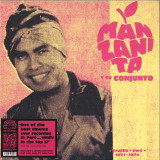
Following the 70s Peruvian cumbia compilation by Ranil last year, Analog Africa returns to Latin America to highlight the work of one of Perú’s undisputed masters of the electric guitar: Manzanita. This 13th release in the Limited Dance Edition Series includes 14 mostly instrumental compositions of electrifying Peruvian cumbia and guaracha. Manzanita's unique guitar lines rest on confident foundations that shifts gears effortlessly. Limited Edition LP in Gatefold Cover pressed on 180g high quality virgin vinyl
"I was in Lima, hanging out with collector-extraordinaire Victor Zela, who had spent the previous few years pouring his passion for Peruvian Cumbia into the blog „la cumbia de mis viejos“, a trove of incredible music. But after the birth of his first child, his priorities shifted and he decided to part with some of his rarest LPs. I was one of the lucky few given an early chance to examine his treasures, and when I picked up the album Manzaneando com Manzanita, Victor said: “Take it! its one of the best LPs ever recorded in Perú … easily in the top five”. That was all the encouragement I needed … two years later many of the songs from that masterpiece have made it onto Manzanita y su Conjunto, a compilation of electrifying Cumbia sides from Manzanita’s golden era.
Berardo Hernández – better known as Manzanita – first surfaced during the psychedelic Cumbia craze. At the head of the scene were the magnificent Los Destellos, whose leader, Enrique Delgado, was such a six-string wizard that other guitarists found it impossible to escape his shadow. But when Manzanita arrived, his electric criollo style sent shockwaves through Lima’s music scene and posed a serious threat to Delgado’s dominance as king of the Peruvian guitar.
Manzanita had come to Lima from the coastal city of Trujillo, five hundred miles up the coast – a place where Spanish, African and indigenous populations had been living and making music together for centuries – and came of age at a time when the first wave of psychedelic rock from the US and UK was starting to sweep the airwaves. But the sounds of Cream and Hendrix disappeared from the radio just as quickly in 1968 when Juan Velasco seized control of the country in a military coup. The new regime, which favoured local traditions over cultural ‘imports’ from the north, was a blessing in disguise for the Peruvian music scene.
Record labels flourished as new bands, raised on a hybrid diet of electric guitars and Cuban rhythms, rushed in to fill the vacuum created by the lack of imported rock. A new genre, known as Peruvian cumbia, was born and Manzanita quickly became one of its most original voices.
Starting in 1969, Manzanita y su Conjunto released a steady stream of singles that used Cuban guaracha rhythms as the foundation for dazzling electric guitar lines. After countless 45s and several years on the touring circuit, the band signed to Virrey, an important Peruvian label, and recorded two LPs acknowledged as masterpieces among aficionados of tropical music. Most of the songs on Analog Africa’s new compilation Manzanita y su Conjunto are drawn from those legendary sessions of 1973 and 74.
Although he scored a few more hits in the later 70s, his dissatisfaction with the music industry caused him to withdraw from the scene for several years; and when he finally retired for good, the golden age of Peruvian cumbia was a distant memory. But when Manzanita was at the top of his game he had few equals. Victor Zela was right: this is some of the best music ever recorded in Perú."
out of Stock
Last delivered 5 years ago available to reorder, subject to availability
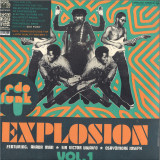
Analog Africa Presents Edo Funk Explosion Vol. 1, available on
2xLP/Gatefold LP with 20-page booklet / CD with 36-page booklet. It was
in Benin City, in the heart of Nigeria, that a new hybrid of intoxicating
highlife music known as Edo Funk was born.
It first emerged in the late 1970s when a group of musicians began to experiment with different ways of integrating elements from their native Edo culture
and fusing them with new sound effects coming from West Africa s night-clubs.
Unlike the rather polished 1980 s Nigerian disco productions coming out of the
international metropolis of Lagos Edo Funk was raw and reduced to its bare
minimum.
Someone was needed to channel this energy into a distinctive sound and Sir
Victor Uwaifo appeared like a mad professor with his Joromi studio. Uwaifo
took the skeletal structure of Edo music and relentless began fusing them with
synthesizers, electric guitars and 80 s effect racks which resulted in some of the
most outstanding Edo recordings ever made. An explosive spiced up brew with
an odd psychedelic note known as Edo Funk.
That’s the sound you’ll be discovering in the first volume of the Edo Funk Explosion series which focusses on the genre’s greatest originators; Osayomore
Joseph, Akaba Man, and Sir Victor Uwaifo: Osayomore Joseph was one of the
first musicians to bring the sound of the flute into the horn-dominated world
of highlife, and his skills as a performer made him a fixture on the Lagos scene.
When he returned to settle in Benin City in the mid 1970s - at the invitation of
the royal family - he devoted himself to the modernisation and electrification
of Edo music, using funk and Afro-beat as the building blocks for songs that
weren’t afraid to call out government corruption or confront the dark legacy of
Nigeria’s colonial past.
Akaba Man was the philosopher king of Edo funk. Less overtly political than Osayomore Joseph and less psychedelic than Victor Uwaifo, he found the perfect
medium for his message in the trance-like grooves of Edo funk. With pulsating
rhythms awash in cosmic synth-fields and lyrics that express a deep personal
vision, he found great success at the dawn of the 1980s as one of Benin City’s
most persuasive ambassadors of funky highlife.
Victor Uwaifo was already a star in Nigeria when he built the legendary Joromi
studios in his hometown of Benin City in 1978. Using his unique guitar style as
the mediating force between West-African highlife and the traditional rhythms
and melodies of Edo music, he had scored several hits in the early seventies,
but once he had his own sixteen-track facility he was able to pursue his obsession with the synesthetic possibilities of pure sound, adding squelchy synths,
swirling organs and studio effects to hypnotic basslines and raw grooves. Between his own records and his production for other musicians, he quickly established himself as the godfather of Edo funk.
What unites these diverse musicians is their ability to strip funk down to its
primal essence and use it as the foundation for their own excursions inward to
the heart of Edo culture and outward to the furthest limits of sonic alchemy.
The twelve tracks on Edo Funk Explosion Volume 1 pulse with raw inspiration,
mixing highlife horns, driving rhythms, day-glo keyboards and tripped-out guitars into a funk experience unlike any other.
out of Stock
Last delivered 5 years ago available to reorder, subject to availability
DJ Sotofett and LNS have teamed up with Tresor Records for Sputters. The double-vinyl album with 15 cuts spans a hybrid of warped electro and psychedelic hypnosis, all the while remaining fixed in an unmistakable dance release. Recorded between 2017 – 2020, and bookmarked throughout by intros and interludes dug out from archival material, it's a deconstructed yet classic compound of techno-sonics.
LNS from Calgary, Canada, is rooted in braindance, electro and acid. Releasing 12inches on both her self-titled imprint LNS and Sotofett’s Wania - LNS, whilst in the studio, has often pointed out “the lacking blend of dub and electro in dance music”.
DJ Sotofett, hailing from Moss, Norway, is among a myriad of things commonly known for the extended work of his Sex Tags Mania and Wania labels, without forgetting his afro, dub and jazz releases on Honest Jon's London.
Together both artists give space to a guest appearance by E-GZR, a fellow Wania artist, to open the Sputters journey. The sinus bending drum stutter of K.O. by E-GZR collisions flanging basses and chronic-inducing synth pads to blueprint the technoid atmosphere to come. LNS & DJ Sotofett take control with El Dubbing, evoking an effect-heavy demeanour, typical of the Sex Tags Mania soundworld that DJ Sotofett is responsible for, this time rubbing up against solid electrified rhythms. The hypnotic moods carry over to Dúnn Dubbing's deep delays, freely running over a surprisingly minimal skeleton retaining a solid direction. Crafting a warmly emotive end of Side-A with sparse rhythms to perfection.
A meaner turn introduces Side-B. Hints of electro are scattered everywhere, fat basslines, ricocheting drums and synths that mourn and drift in and out of harmony. Vitri-Oil exposes a tumbling sound design, fog-lit chords of material fragility and nosedives - with an alive mix that wallows and grows in equal measures. The side closes with Shim, a classic drift between house and techno releasing sensual euphoria with the albums first big surprise – grand strings.
“LNS wanted to sell her TR-606, while my reply was for us to make a track with the 606 sounding so fresh that she'd never even think about selling it again” Sotofett states. Side-C proves the artists to be some of the most singular producers around with album centrepiece The 606. Clocking in over 10 minutes, it kicks off as a driving techno banger, chugging bass and big chords. Midway through everything falls away, and out of the void enter scattered drums and improv piano lines emerge, while twisted dubs lead us back in an enduringly warm groove.
Side-D sets the clock back to the original electroid foundation of the album, casting fires with alien vibrations. Synchronic Bass Blort is a hard-hitting electro track, steaming sonics and thrills, its melodic hook diving in subterranean motions. On Sputtering the duo raspily beams into outer space, with fizzy motives that disfigure and dazzle while the harmonies of the closing track is for yourself to experience.
DJ Sotofett and LNS deliver an album inhabiting a world full of sci-fi sonics and fierce groove. Their sound is free and live, simultaneously wondrous and sharp.
out of Stock
Last delivered 3 years ago available to reorder, subject to availability
Primal Scream frontman Bobby Gillespie, alongside solo artist and Savages vocalist Jehnny Beth, presents this stunning debut solo project collection - exploring loss, miscommunication and emotional inarticulacy that a married couple experience as they realise that their relationship is breaking down.
‘Utopian Ashes’ draws on the tradition of country soul classics, such as Gram Parsons and Emmylou Harris’s ‘Grievous Angel’ and George Jones and Tammy Wynette’s ‘We Go Together’, to deal with the heavy realities of love turning sour. It’s an album for people who have dealt with the inevitable sadness that comes with age and acknowledged the realities of life. There is no sweetening of the pill, but it does achieve what should be the goal of all good art: to make us feel less alone. And while it’s not autobiographical, it channels heartfelt truth from the songwriters’ own experiences.
In addition to Bobby Gillespie and Jehnny Beth, the album features Johnny Hostile (bass) alongside Primal Scream trio Andrew Innes (guitar), Martin Duffy (piano) and Darrin Mooney (drums).
As the premier release on new Jungle & Breakbeat label Bukva Sound we find the amazing Response & Buda, northerners that gather to give us a four track EP with ravey, deep & subliminal vibes.
The title track, Illusions a 160 4x4 bomb that feature the tremendous voice of Lara Lee. Known from Response & Pliskins "Stolen Keys" release on legendary label Rupture London.
out of Stock
Last delivered 4 years ago available to reorder, subject to availability
Snapped Ankles return to the forest, but it's not as they left it. Trees planted in neat rows. A well-ordered monoculture with access roads and heavy machinery. The smell of greenwashed money in the air. There's no sign of the ancient woodland they emerged from on debut album, Come Play The Trees. And it's far cry from the gentrified East London they found themselves hawking on Stunning Luxury. All is not well in the face of progress. Welcome to the Forest Of Your Problems. Even among the famously close-knit woodwose community there are factions forming. Meet The Business Imp, The Cornucopian, The Nemophile and The Protester. Each with their own motivations and belief systems. Their own sense of injustice: contradictions, anxieties and guilt. There are woodwose who have risen to the top in the boom and bust world of real estate and hedge funds. Grab what you can before the next crash. Others find euphoria in the absolute conviction that wealth and technology will see us through this. There are those with their recycling in order, who are well-versed in the prospect of imminent ecological and economic collapse, burying themselves in vegan cookery and extensive international holiday itineraries. And there's an increasing number angry at the state of the world, ready to take to the streets and the trees in an attempt to force real change. Forest Of Your Problems runs the gamut of modern woodwose emotions. In this neat human approximation of the forest, it's an increasingly knotted affair. Despite all of this, Snapped Ankles haven't lost their innate ability to make you want to move your feet - their Teutonic forest rhythms are still shot through with post-punk lightning. Whether they're exploring those opportunities which might arise when a Nigerian prince emails out of the blue on 'The Evidence', or referencing the crooked woodwose attempting to go straight on 'Rhythm Is Our Business', this is music to lose your inhibitions to. The moments of pure elation on 'Shifting Basslines Of The Cornucopians' are worth the admission price alone - "It's a great time to be alive!" ...apparently. Snapped Ankles outsider status has always allowed them to hold a mirror up to society. Now the boundaries are not so clear. In the four years since Come Play The Trees was released, their cult has flourished. Previous album Stunning Luxury saw the band invited to play the BBC 6 Music Festival and a KEXP session on the back of a sold-out UK tour which culminated with two nights at Village Underground in London. As those who have witnessed the shamanic ritual of their live shows will attest, they are a truly unique, communal experience. Forest Of Your Problems will see the woodwose bring their ancient forest rhythms and high-wire, multi-media live act to ever bigger stages - including Camden's iconic Roundhouse in October.
DDS catch enduringly absorbing sonic alchemist Jim O’Rourke at his knottiest and most ingenious in a wormholing suite of amorphous rhythm and psychedelic electronics - a massive RIYL Autechre, Roland Kayn, Bernard Parmegiani, NYZ, Keith Fullerton Whitman.
Playing up to and into DDS’ freeform aesthetics, O’Rourke renders 40 minutes shearing hyaline synth tones and ruptured rhythm generated at his Steamroom facilities in Tokyo, a modular outzone trawling that harks back to his iconic Mego releases and some of the more recent Steamroom experiments. It’s an ideal addition to the ever expanding DDS cosmos, following Demdike’s recent ‘Drum Machine’ expo with a slice of purist and screwed modular magick that transcends early
electronics and modern styles in pursuit of musical sensations that defy stylistic brackets.
‘Too Compliment’ was assembled using a bespoke Hordijk modular system, a rare West Coast-style setup hand made by Dutch engineer Rob Hordijk. O’Rourke focuses on the frequency shifter here, using it to coax out fluxing tone thickets, haphazard frequencies and elongated drone corridors.
It’s transportive stuff, harking back to the early days of private press academic synth music but also sitting on edge alongside Autechre’s recent long-form work, as well as O’Rourke’s classic “I’m Happy, And I’m Singing, And A 1, 2, 3, 4” In O’Rourke’s hands, the mass of electronics takes on throbbing, organic dimensions, congealing
grey matter and purplish veins of fluid in viscous transitions that glisten and spark with invention as they form new tissue. What comes out is as unearthly as the earliest electronic music, but also
blessed with a psychedelc spirit in a way that’s long kept O’Rourke right out on his own, teetering between paradigms yet never settling into any single style. If you’ve always been keen on finding a way into that sprawling soundworld, ‘Too Compliment’ is a perfect entry point into a highly rewarding creative macrocosm.
Blue Vinyl
Lynch protégé and Twin Peaks sound designer Dean Hurley coaxes an incredible puzzlebox of atmospheres and mood pieces on this killer contribution to our Documenting Sound series, now remastered and pressed on vinyl for what is, perhaps unsurprisingly, the most cinematic and neon-lit instalment in the series. Like a
smudged and overdubbed copy of the BoC Maxima tape, with added iridescence.
Across almost 40 minutes we transition from aerosolised synths to romantic chromatics, thru to Nurse WIth Wound-style severed rhythms and fading glimmers of hope, ‘Concrete Feather’ epitomises Dean Hurley’s prized knack for nuanced instrumental story-telling in the finest and most engrossing style we could imagine. Against the backdrop of the Hollywood film industry that has primed us for as long as we can all remember, the music spans a panorama of lush, mirage-like choral pads and starry flickers thru to gloaming
nightmare sequences and screwed drums, while touching on some of the dankest synth tones this side of his ‘Anthology Resource’ volumes or indeed his soundtrack work for Twin Peaks: The Return. It’s full of dread and a slowly unfolding sense of tragedy.
“Having a regular practice of recording is probably the single most important element to my craft. It’s a way of dropping indiscriminate mile markers while constantly moving forward in time without ability to pause.
Over the years, working for David Lynch taught me a great deal about this and the concept and importance of experimentation. I’ve found myself clinging to those lessons during this time and using them as tools for both productivity and balance. His notion of experimentation is a simple one, yet incredibly profound. It was one of the very first words I heard him say during our initial meeting, and I never stopped hearing the term daily over the subsequent 13 years working together. An ‘experiment’ can provide a legitimate mental back-entrance into the act of creation. It can position an approach toward discovery as opposed to effort, and eliminate the thought that one needs to ‘will’ something into existence. It also aids in calming the judgmental
side of a brain from stepping on/interfering with expression…after all, experiments are not about success or failure, they’re simply about learning. In the Lynch school of thought, multiple experiments then become firewood…and with firewood, one can not only build but actually sustain a fire…even turn it into a multipleacre blaze or more.
Dean Hurley
A GROOVY SELECTION IN THREE ORIGINAL VINYLS TO DISCOVER THE GOLD NUGGETS OF FUNK, SOUL & HIP-HOP ! Selection by the journalist Olivier Cachin and illustrations by the artist LAZOO.
out of Stock
Last delivered 4 years ago available to reorder, subject to availability
Greetings to the new generation of ‘Hip-Hop’ and ‘Shake Your Butt’ music. The man behind ‘Timeless Funk’ ain’t exactly no ‘Spring Funky Chicken’, yet he is still the ‘Funkiest Soul’ to rock this here nation.
Rufus Thomas is the Soul King and Grand Daddy of Funk; as his generation knew him then, as we know him today.
In the beginning, the ‘Power of the Most High’ said: ‘Let it be funky’. Then there was Rufus.
Rufus Thomas was born in 1917 in a small town outside of Memphis, Tennessee. At the age of ten he became a tap dancer. In the 1930s, Rufus worked professionally at the infamous Palace Theatre, Memphis, TN, as M.C., performing comedy and dance routines.
During the early 1940s, Rufus began his singing career. He also continued his M.C. acts at various notable nightclubs and theatres, for amateur nights. He was then considered to be a triple threat: dancer, comedian and singer! The notables he crossed hands with in those days were B.B. King, Bobby Bland and Johnny Ace. In the 1950s Rufus became one of the ‘Hip-pest’ DJs in Memphis TN W.I.D.A. radio station and is affiliated with the company to this day. He was quoted as saying ‘I’m young and loose and full of juice’. At those times he recorded ‘Bear-Cat’ for Sun Records, their first R&B hit for the label.
All-right ‘Kiddies,’ now I take you into the light of Rufus in the 1960s. When most of us were on our way to our happy existence, Rufus was already 30 years in the entertainment circuit. He was affiliated with STAX Records. With daughter Carla Thomas, he gave STAX their first hit, the duet, ‘Cause I Love You.’ Rufus’ world famous hits continued under this label, pouring songs out such as ‘Memphis Train,’ ‘Can Your Monkey Do The Dog,’…
The foregoing is merely a scratch on the surface of a remarkable man, who has dedicated most of his life to the entertainment business. It’s kept short and sweet so you know what you are dealing with.
Rufus was quoted as saying, ‘I ain’t a star, I don’t want to be a star. Stars have a habit of falling. I’m like the moon. Clouds may come and cover it occasionally, but it’s always there, and always shining. It’s just sometimes you don’t see it for a while but it’ll be back.’
If it wasn’t for Rufus, Soul Music would be missing one of its loudest sons. If he didn’t exist, somebody
Continued over…
would have to get up and invent him. And Funk? The man practically invented the stuff with James Brown.
Now at the age of 75 ‘The Oldest Teenager Alive’ check him out on this recording of ‘Timeless Funk’. We’ll agree and leave you with this note: Rufus is the ‘Moon’ that brought us what was ‘Funky’ then to what is ‘Funky’ now. So let us get ‘Buck Wild’ on the Funky side of things
The Go! Team return with their new album ‘Get Up Sequences
Part One’ out via Memphis Industries and featuring the singles
‘Cookie Scene’, ‘World Remember Me Now’ and ‘Pow’.
On ‘Get Up Sequences Part One’, Ian, Ninja, Nia, Simone, Sam
and Adam have created a musical world distinctly of their own
making. A place where routine is outlawed and perfection is the
enemy. Where Ennio Morricone meets The Monkees armed
with flutes, glockenspiels, steel drums and a badass analogue
attitude. We’re talking widescreen, four-track, channel hopping
sounds that are instantly recognisable.
In The Go! Team's world, old’s cool, the future’s bright and
melody is the star. Just check the second cut ‘Cookie Scene’
with a bouncing flute and junk shop percussion it introduces
guest rapper Indigo Yaj, who delivers an old school vocal that
continues this sonic trip. ‘Pow’ channels Curtis Mayfield and
enter stage centre, the inimitable Ninja in full flow and you don’t
stop, you won’t stop to this flute driven free for all.
By way of demonstrating The Go! Team’s old’s cool manifesto
comes the ‘needle-in-the-red’ ‘I Love You Better’, a defiant
message to an ex love, spelling out exactly how he’s messed
up - and then there’s those steel drums. Following that comes
the soda fountain soul courtesy of ‘A Bee Without Its Sting’, a
groovy protest song that makes its point with a tambourine.
The musical wagon train then takes you into the widescreen
windswept Western that is ‘Tame The Great Plains’, heading off
into a polyrhythmic panorama that’s full of hope. Slappin’ you
back to reality comes ‘World Remember Me Now’, a timely
reminder that when you’re lost in the routine of life, you can
always count on The Go! Team.
Classic Tubby Hayes Sextet LP ‘Tubby The Tenor’ pressed on limited edition
180g audiophile vinyl, with 2 bonus tracks.
One of the best-known of all British saxophonists, Tubby Hayes was invited in
1961 to play at the Half Note Club in New York. While in America, he recorded
this brilliant LP with Clark Terry, Eddie Costa, and Horace Parlan. This album
is released with the added bonus of two tracks from the same session not included on the original LP.
“Top English saxophonist and an excellent hard bop stylist, Hayes’ solos were
dynamic, expertly articulated, and imaginative.” ***** Thom Jurek, AllMusic
Giancarlo Erra Returns With Spellbinding New Lp ‘Departure Tapes’ On
Kscope. Gatefold Oxblood Coloured Vinyl Edition.
UK based Italian composer, multi-instrumentalist and visual artist Giancarlo
Erra started his career in 2005 with one man studio project Nosound. In 2008
Erra signed with Kscope and released a string of albums under the Nosound
banner before recording the first album under his own name ‘Ends I-VII’ in
2019.
He now returns with a new album ‘Departure Tapes’, reflecting what has been
a difficult year with the loss of his father to cancer.
In Giancarlo’s own words “The end result is the most experimental (and darkest at times) material I ever wrote, without compromise or set plan. It contains
all the elements of my music in a very unconscious free flow way. It’s the first
album I wrote without knowing I was writing it, intrinsically linked to one of the
hardest and yet more healing parts of my life.”
‘Departure Tapes’ is an album of contemplative recordings, written while travelling between the UK and Italy. Most of these tracks have been recorded live
by Erra, so for the most part they are totally unique and hold a sincerity which
cannot be replicated.
Max Richter, Olafur Arnalds, Nils Frahm and the more electronic / ambient
recordings of Brian Eno may offer a reference point by which to enter Erra’s
world, but the depth within these recordings is truly original.
‘Departure Tapes’ is available in a gatefold sleeve on oxblood coloured vinyl and
The DVD-A/V includes high resolution stereo & 5.1 mix: DVD-V: stereo 24/48
LPCM lossless mixes, Dolby Digital 5.1 Surround, DTS 96/24 5.1 Surround DVDA: 5.1 Surround 24/48 LPCM lossless mixes
I first discovered khroniky – Ukranian folk songs – in the Highlands of Scotland. I was watching a screening of Bajka, a mesmerising documentary made by the filmmaker Lucia Nimcová and sound artist Sholto Dobie. I knew nothing about these ballads beforehand, but I was fascinated by these odd, beautiful songs, especially the easy way in which they mixed misery and levity, where gentle melodies blend with tales of dark violence. The folk songs describe hardship, murder, torture, death in gulags, heavy drinking, outsmarting men, love affairs. But they’re often very funny too – many of the songs make fun of marriage, and there’s an amazing subcategory of khroniky songs called potka (vagina) songs.
The khroniky have never been properly documented because they were considered too crude, or contained lyrics that were problematic, politically. When Ukrainian folk songs have been archived in the past, it’s normally a sanitised, more polite version of the ones that Lucia remembers from her childhood. Lucia grew up on the other side of the Ukrainian border in Slovakia. She is part of the Rusyn (Ruthenian) minority ethnic group found in the borderlands of Slovakia, Hungary, Romania, Ukraine and Poland. Rusyn is a centuries-old Slavic language, looked down upon as a poor, uneducated dialect by the neighbouring Ukraine and Slovakia. It was forbidden to talk about Rusyn culture at Nimcova’s primary school, but the khroniky stayed in her memories.
“I remember weddings when I was young,” says Lucia, who now lives in Addis Abeba, Ethiopia. “At the end of the night, when everyone was drunk and the young couple would go around their guests, people would sing in Rusyn. There was singing and dancing, and songs about being in prison or falling in love. I picked up the lyrics and sometimes my mum would make my sister and I sing them for people we met on the train. I was about five or six but the lyrics still come back when I sing to my kids.”
Determined that these rich, nuanced, unique songs shouldn’t be forgotten, she decided to record them. Over two years, Lucia, joined by experimental musician Sholto Dobie, visited Rusyn villages high in the Carpathian mountains to rediscover the songs and make the documentary. It was at the beginning of war breaking out in Ukraine in 2014.
“The Rusyn community is a very closed one,” explains Lucia. “Sometimes we’d have to wait several days to hear someone sing; we had to earn their trust before they shared something very personal to them. We’d stay up ‘til 5am at a wedding, then go straight to a morning baptism, or collect haystacks with the villagers, hoping they’d sing while they were working.”
DILO is named after an important independent Ukrainian daily newspaper that was shut down when the Red Army entered Lviv in 1939. The four long tracks on DILO blur field recordings with song; an unpolished, privileged glimpse into a private world. We hear dogs barking and insects buzzing in the summer heat, then a blast of hurdy gurdy or violin will drift in, or a plaintive song soars softly over the rural background noise, with casually harrowing lyrics about a cuckoo, “lifeless in a world of misery”, as translated in the album’s booklet.
For both Lucia and Sholto, it was important not to tamper too much with what they heard. “When you think about ethnography,” Lucia explains, “you have to have a lot of time, love and respect to document it with sensitivity.”
“The songs all have their own atmosphere and intimacy from the spaces they were recorded in and it was important to maintain these particularities and move with them,” adds Sholto, who now lives in Vilnius, Lithuania. “They guide and sometimes interrupt a journey between interiors – domestic spaces; in kitchens, by the fire – and exteriors; marketplaces, cow sheds. We used contact microphones to record metal bridges and fences, and we spent one afternoon recording a wool processing machine, the details of the rattling and tuning wheels are the ground layer for the third track.”
Lucia took rough notes and diary entries during the recording process, which are now shared in the booklet alongside a selection of lyrics, loosely translated, but revealing the depth and astonishing beauty that sometimes lies in the language of these folk songs.
The feel of the album is intimate, flipping between laughter, where a woman sings about selling her pussy to buy a cow in one track, then shifts to a raw, painful truth; an adult son asks his mother why his dad won’t be back for dinner, as he’s gone to war.
Since Lucia and Sholto began working together in 2014, they have shared the audio recordings on radio and film and shown photos in gallery spaces, making sure these special, smutty, poignant songs don’t get lost. This new record and booklet joins that same continuum, another glorious fruit from the same rare tree.
Fresh off of winning the Listener's Choice award at the 2020 Soundcity MVP Awards Festival, Fireboy DML follows up his debut album with "Apollo." Fireboy DML enlists help from fellow labelmate, Olamide, as well as D Smoke and Wande Coal.
Leng Records has long had close ties with the underground music scene in San Francisco, with low-slung dub disco and psychedelic disco outfit 40 Thieves releasing their acclaimed album The Sky Is Yours on the imprint way back in 2014. Now Leng has turned to another stalwart of the Bay Area scene, Cole Odin, on a single that’s every bit as trippy and engrossing as you’d expect from one of San Francisco’s most frequently overlooked talents. Cole made his Leng debut earlier in the year, contributing the electro-influenced track ‘Numbers Game’ to the label’s 10th anniversary compilation. On ‘Little Boxes’, he’s joined by good friend Eddie C, a much-loved disco and house producer from Canada best known for his releases on Endless Flight and Red Motorbike. The pair recorded the track while Eddie was staying with Cole in San Francisco last year.
In keeping with the low-slung, hallucinatory sound that has always been a big feature of the San Franciscan scene, ‘Little Boxes’ is a trippy, mind-altering affair in which waves of sitar sounds, cosmic synths, effects-laden guitars and kaleidoscopic electronics rise above a weighty punk-funk bassline and crunchy, snare-heavy beats. It has serious dancefloor chops but is also atmospheric and immersive: perfect 5am music for Bay Area beach parties and mushrooms-fuelled forest raves.
Fittingly, it’s 40 Thieves who provide the accompanying remix, a 10-minute epic created with the assistance of Adonis and Rodney from the psych rock band ‘Guavatron’ for additional synths and the guitars. Beginning with tabla-style percussion, swirling chords, psychedelic guitar licks and mystical sitar sounds, the remix builds in waves, with looser drums and even weightier bass propelling the track forwards at a metronomic and hypnotic pace. By the time the eyes-closed guitar solos drop two thirds of the way through, you’ll be tripping hard and reaching for the lasers. It’s a genuinely stunning remix of a genuinely intoxicating, mind-mangling track.
out of Stock
Last delivered 4 years ago available to reorder, subject to availability
A fantastic little record – and very much the kind of set that the Strata East label was created to represent! The music here would hardly have found a home on the bigger jazz labels of the period – not because it's too avant-garde or non-commercial, but just because it's so deeply personal and powerful – the boldest vision on record of trombonist John Gordon, who composed a mind blowing suite of tracks for the first side of the album, as well as some equally great tunes for the second half! Gordon leads the group on trombone – with solos that are soaring and soulful, alongside work by the great James Spaulding on alto and flute, Waymond Reed on trumpet, John Miller on piano and keyboards, Lyle Atkinson on bass, and Frank Derrick on drums! If you know some of the other players here from their own work of the time, you know you're in for a treat – as the music has this fantastic sound of strong individual voices coming together, instruments lifted high on a mission of music – with results that are as fantastic all these many years as they were in the 70s.
Strut presents one of the most in-demand and significant albums from the archives of Jimmy Gray's Black Fire Records, 'Bow To The People' (1976 )by theatre collective Theatre West, based out of Dayton, Ohio. Recorded at Arrest studios in Washington in '76, 'Bow To The People' brought together songs from several of Theatre West's best known plays including Bow To The People, The System and Black Love and unflinchingly explored serious issues around drug addiction, mental health and cultural awareness. "The whole idea of Bow To The People was to honour our black forefathers," explains Dillard. "It was important to do that for the kids that didn't know." Shelved following the original recording, the Bow To The People album eventually surfaced on a limited CD on Black Fire in 1993. Now receivingits first full international release, the album features the previously unreleased tracks 'Man Of Many Means' and 'I Don't Know Much About Love'
out of Stock
Last delivered 5 years ago available to reorder, subject to availability
Re-mastering by: Cicely Baston at Alchemy/Air Mastering, London
Electric blues guitarist Melvin Taylor had been sporadically recording solo albums for 20 years when Dirty Pool arrived — and was somehow just beginning to find fame. Already a hit in Europe, it had taken a steady run of performing in Chicago’s famed blues clubs to slowly earn Taylor a well-deserved reputation as an equal talent among the giants before him, such as Otis Rush, Albert King and Stevie Ray Vaughan.
While early records like Melvin Taylor Plays the Blues For You show off an equally amazing jazz side, Taylor traded away his Wes Montgomery-inspired runs for more Luther Allison/Jimi Hendrix attacks with the formation of the trio Melvin Taylor and the Slack Band in the mid ’90’s.
The title song of the second album by that outfit, “Dirty Pool,” is actually more the balls-to-the-wall, no-compromise, hard-rockin’ electric Texas blues of Vaughan and Johnny Winter than the sweet Chicago soul of Buddy Guy.
Indeed, three tracks on this 1997 release, including “Dirty Pool,” were SRV tunes. Other standards, like “Kansas City” and “Floodin’ in California” also have more of a Lone Star State approach to them. But the Jackson, Miss.-born Taylor’s guitar is cleaner than his forebears and technically, he even surpasses them, yet the anger and sorrow of the blues is readily evident in his playing.
This rare combination of qualities really comes out in a slow blues tune like his solo in “Dirty Pool,” which after repeated listens, still makes me head shake in disbelief when I hear it.
“Too Sorry” is a good example of how well Taylor fares when he treads in Jimi Hendrix territory, whereas his rhythm work is the best I’ve heard from a lead guitarist since Vaughan; listen to “I Ain’t Superstitious,” “Born Under A Bad Sign” and the funky “Telephone Song” for your proof.
It also helps that Taylor’s drummer James Knowles is well in synch with him, while Ethan Farmer completely owns the low end of the sound. Farmer’s peppering bass lines in and “Floodin’ in California” is the textbook way electric blues bass should be. Overall, a tight little band.
Taylor’s vocals certainly won’t draw any comparisons to the Wide-Brimmed–Hatted One but he holds his own just fine until it’s cuttin’ time. This is right at the top of my list of best blues guitar playing on record over the last couple of decades. If you decide to give this one a listen, prepare to be blown away.
Omar Khorshid (9-Oct-1945 – 29-May-1981) is an Egyptian musician, composer, accompanist, and actor.
Born in Cairo, Omar Khorshid was a well-known guitarist who accompanied many Arabic singers, including Farid Al Atrach, Oum Koulsoum, Mohammed Abdel Wahab, and Abdel Halim Hafez.
From 1973 to 1977, Khorshid moved to Lebanon and began recording albums under his own name, working with sound engineer Nabil Moumtaz at Polysound Studios in Beirut.
Khorshid's musicality in orchestra performances, original songs, and film scores was considered revolutionary at the time in the Middle East. His extensive theoretical knowledge, fusion of Western sounds with Eastern sounds, and incorporation of different, more modern instruments (e.g. the electric guitar, electric keyboard, and synthesizer) in Arabic music was previously unheard of.
Khorshid's unique style sparked inspiration from many aspiring musicians not only in the Middle East, but in Europe and the Americas as well. His mixing of "modern" instruments with older Arabic tunes spawned a new, more modern sound of Arabic music that many use for belly-dancing today.
Where have you gone, Charles Tolliver? There was such promise in the concept of Music Inc., and in Strata East, but evidently the music world's attention was elsewhere and this tremendous live set was probably heard by only a few hundred sets of ears. On the back of the record sleeve, Tolliver undersigned his mission statement: "Music Inc. was created out of the desire to assemble men able to see the necessity for survival of a heritage and an Art in the hopes that the sacrifices and high level of communication between them will eventually reach every soul." And he isn't kidding. You won't find a much higher level of communication than he, Cecil McBee, Stanley Cowell, and Jimmy Hopps engaged in on May 1, 1970 at Slugs' in New York City. This was much more than an attempt to merely 'preserve acoustic jazz' as in the stilted Marsalis vein. This was an attempt to preserve a measure of authenticity while maintaining the notion of forward-thinking, present-tense improvised music. They deserved a greater response than the lukewarm, sparse applause they received that night, and continue to deserve a far more cognizant audience for their efforts.
Tolliver ('Drought"), McBee ("Felicite"), and Cowell ("Orientale") each contribute a track to the set; though very much distinct, each is equally strong. "Drought" is the kind of dark-hued, well-honed burner which Tolliver routinely produced in his fertile years. "Felicite" is a more contemplative affair, a deeply felt and empathically performed piece; the unit here is in particularly sublime form, merging considerable skill with a staggering depth of emotion. "Orientale" falls somewhere in between the pace of the two, with Cowell's Eastern scales establishing an austere, industrious tone throughout its seventeen-and-a-half-minute length.
Through its duration, the music on Live at Slugs' is often riveting and incessantly compelling. Hopps is a lesser-known entity to me, but the other three players featured here are some of the all-time underrated presences in the jazz pantheon, and they play nothing short of masterfully. Always a presence on his recordings, Tolliver demonstrates tremendous range, flair, and command as a trumpeter and leader. Had he not come along at a time when pure jazz was falling out of favour, I have to believe his name (along with Woody Shaw's) would be every bit as prolific as Freddie Hubbard's or Lee Morgan's; the same holds for the always brilliant and expressive McBee on bass.
I feel saddened that Music Inc. fell so far short of "eventually reaching every soul" - yet fortunate that it eventually reached mine.