Grup Ses presents Program #03: A Mixtape of Rare & Unreleased Beats
İstanbul based producer Grup Ses returns with the final episode of 'Program' trilogy for Sucata Tapes. Program #03 focuses on productions of Grup Ses between 2008 and 2021.
Grup Ses project dates back to 2007 which at the time focused on v/vm style edits and breakcore infused mash ups. Starting from 2008 Grup Ses started to build a version of Stones Throw & Brainfeeder influenced beatmaking mixed with a touch of humour. A blend including all kinds of local recorded material like records, tapes, radio broadcasts etc., which became the building blocks of signature Grup Ses sound.
This hour long mixtape showcases styles Grup Ses visited last 10+ years. Enjoy!
Suche:l s b presents
- A1: Giovanni Lami - Stories From The Dotted Indian Whale (Part 1 Soap Wolf)
- B1: Giovanni Lami - Stories From The Dotted Indian Whale
- C1: Hannibal Chew Iii - Stories From The Dotted Indian Whale (Part 2 La Ballena Punteada)
- D1: Hannibal Chew Iii - Stories From The Dotted Indian Whale
- E1: Bardo Todol - Stories From The Dotted Indian Whale (Part 3 Mis Suenos Son Ballenas Con Un Punto Rojo En La Frente)
- F1: Bardo Todol - Stories From The Dotted Indian Whale
3xtape pack
* Three Cassette pack shrinkwrapped together therefore no returns for opened items *
Three part journey into an imaginary Indian Sub-Continent from three artists working on the fringes of Field recordings. Stories of the Dotted Indian Whale features italian artist Giovanni Lami, Hannibal Chew III aka Gonçalo F Cardoso and Argentinean noise prankster Bardo Todol.
First part from Italian sound artist Giovanni Lami, entitled Soap Wolf Giovanni presents a collection of ghost recordings from several places in India.
Second part from Hannibal Chew III is a collection of re-assembled recordings and in situ jams made in Arambol, Jaipur, Pushkar, Varanasi, Thar Desert, Pondicherry & Auroville between 2009 - 2019. Re-assembled in 2020.
The third and final part from Bardo Todol contains abrasive tape and digital field recordings manipulation made by Pablo Pico in Nepal, Kolkata, Varanasi and NewDelhi in 2012.
A new weird collection of re-interpreted field recordings from artists connecting the dots between musique concrete, naive improvisation and field recordings processing.
Artwork by Pablo Picco
- A1: Africa Is My Root - Osayomore Joseph And The Creative Seven
- A2: Ta Gha Hunsimwen - Akaba Man The Nigie Rokets
- A3: Popular Side - Akaba Man And The African Pride
- B1: Iranm Iran - Victor Uwaifo And His Titibitis
- B2: Sakpaide No 2 - Victor Uwaifo And His Titibitis
- B3: Ta Ghi Rare - Akaba Man The Nigie Rokets
- C1: My Name Is Money - Osayomore Joseph
- C2: Ogbov Omwan - Akaba Man The Nigie Rokets
- C3: Aibalegbe - Victor Uwaifo And His Titibitis
- D1: Who Know Man - Osayomore Joseph And The Ulele Power Sound
- D2: Obviemama - Victor Uwaifo And His Titibitis
- D3: Ororo No De Fade - Osayomore Joseph And The Ulele Power Sound
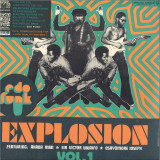
Analog Africa Presents Edo Funk Explosion Vol. 1, available on
2xLP/Gatefold LP with 20-page booklet / CD with 36-page booklet. It was
in Benin City, in the heart of Nigeria, that a new hybrid of intoxicating
highlife music known as Edo Funk was born.
It first emerged in the late 1970s when a group of musicians began to experiment with different ways of integrating elements from their native Edo culture
and fusing them with new sound effects coming from West Africa s night-clubs.
Unlike the rather polished 1980 s Nigerian disco productions coming out of the
international metropolis of Lagos Edo Funk was raw and reduced to its bare
minimum.
Someone was needed to channel this energy into a distinctive sound and Sir
Victor Uwaifo appeared like a mad professor with his Joromi studio. Uwaifo
took the skeletal structure of Edo music and relentless began fusing them with
synthesizers, electric guitars and 80 s effect racks which resulted in some of the
most outstanding Edo recordings ever made. An explosive spiced up brew with
an odd psychedelic note known as Edo Funk.
That’s the sound you’ll be discovering in the first volume of the Edo Funk Explosion series which focusses on the genre’s greatest originators; Osayomore
Joseph, Akaba Man, and Sir Victor Uwaifo: Osayomore Joseph was one of the
first musicians to bring the sound of the flute into the horn-dominated world
of highlife, and his skills as a performer made him a fixture on the Lagos scene.
When he returned to settle in Benin City in the mid 1970s - at the invitation of
the royal family - he devoted himself to the modernisation and electrification
of Edo music, using funk and Afro-beat as the building blocks for songs that
weren’t afraid to call out government corruption or confront the dark legacy of
Nigeria’s colonial past.
Akaba Man was the philosopher king of Edo funk. Less overtly political than Osayomore Joseph and less psychedelic than Victor Uwaifo, he found the perfect
medium for his message in the trance-like grooves of Edo funk. With pulsating
rhythms awash in cosmic synth-fields and lyrics that express a deep personal
vision, he found great success at the dawn of the 1980s as one of Benin City’s
most persuasive ambassadors of funky highlife.
Victor Uwaifo was already a star in Nigeria when he built the legendary Joromi
studios in his hometown of Benin City in 1978. Using his unique guitar style as
the mediating force between West-African highlife and the traditional rhythms
and melodies of Edo music, he had scored several hits in the early seventies,
but once he had his own sixteen-track facility he was able to pursue his obsession with the synesthetic possibilities of pure sound, adding squelchy synths,
swirling organs and studio effects to hypnotic basslines and raw grooves. Between his own records and his production for other musicians, he quickly established himself as the godfather of Edo funk.
What unites these diverse musicians is their ability to strip funk down to its
primal essence and use it as the foundation for their own excursions inward to
the heart of Edo culture and outward to the furthest limits of sonic alchemy.
The twelve tracks on Edo Funk Explosion Volume 1 pulse with raw inspiration,
mixing highlife horns, driving rhythms, day-glo keyboards and tripped-out guitars into a funk experience unlike any other.
Primal Scream frontman Bobby Gillespie, alongside solo artist and Savages vocalist Jehnny Beth, presents this stunning debut solo project collection - exploring loss, miscommunication and emotional inarticulacy that a married couple experience as they realise that their relationship is breaking down.
‘Utopian Ashes’ draws on the tradition of country soul classics, such as Gram Parsons and Emmylou Harris’s ‘Grievous Angel’ and George Jones and Tammy Wynette’s ‘We Go Together’, to deal with the heavy realities of love turning sour. It’s an album for people who have dealt with the inevitable sadness that comes with age and acknowledged the realities of life. There is no sweetening of the pill, but it does achieve what should be the goal of all good art: to make us feel less alone. And while it’s not autobiographical, it channels heartfelt truth from the songwriters’ own experiences.
In addition to Bobby Gillespie and Jehnny Beth, the album features Johnny Hostile (bass) alongside Primal Scream trio Andrew Innes (guitar), Martin Duffy (piano) and Darrin Mooney (drums).
- A1: Conjunto Típico Corazón De La Selva - Alegría En La Selva (02:47)
- A2: Los Pihuichos De La Selva - La Carachama Coqueta (02:46)
- A3: Los Pihuichos De La Selva - Chupizinatay Yacui (02:37)
- A4: Los Pihuichos De La Selva - Shamuy Pacarina (02:32)
- A5: Los Pihuichos De La Selva - El Montañés (02:41)
- A6: Los Pihuichos De La Selva - El Huancahui (02:38)
- A7: Los Pihuichos De La Selva - Flautero De La Montaña (02:31)
- A8: Los Pihuichos De La Selva - El Jornalero (02:30)
- B1: Los Pihuichos De La Selva - La Danza Del Trapichero (02:32)
- B2: Conjunto Típico Corazón De La Selva - Picaflor Loretano (02:31)
- B3: Conjunto Típico Corazón De La Selva - Ushpagallo (02:56)
- B4: Conjunto Típico Corazón De La Selva - Punchacacho Tutacacho (02:50)
- B5: Los Pihuichos De La Selva - De Dónde Vienes Loretano (02:31)
- B6: Conjunto Típico Corazón De La Selva - Bailando En La Selva (02:52)
- B7: Los Pihuichos De La Selva - La Huayranguita (02:34)
Andrés Vargas Pinedo is a prominent composer of Amazonian popular music from Peru. He is blind and has excelled as a player of the quena and the violin. He was born in the city of Yurimaguas but he developed as an artist in Lima, for thirty years he has worked as a traveling musician on a street in the San Isidro district of Lima. Throughout his career, he has formed and joined various popular music groups. This compilation presents fifteen songs of his authorship, belonging to his first two groups: Conjunto típico Corazón de la Selva and Los Pihuichos de la selva, active between 1965 and 1974, and which helped define the sound of Amazonian popular music.
These years saw the emergence of an Amazonian popular music movement led by Vargas Pinedo as well as groups such as Los Solteritos, Flor del Oriente or Selva Alegre. These artists based their music on the rhythms of the Amazonian folklore (pandilla, sitaracuy, movido, cajada, chimayche) and were nourished by influences from the coast and the highlands of Peru, as well as by the tropical rhythms of Brazil, Colombia and Ecuador, achieving a musical synthesis that is an invitation to collective celebration and endless dance. A sound that is defined by a constant and hypnotic rhythmic base of kick and snare drums, upon which the quena and violin develop imaginative melodic lines. Sometimes there is a singing voice, sometimes the voices playfully appear as sounds that identify Amazonian popular speech or that emulate jungle animals.
The fifteen tracks gathered in 'El fabuloso sonido de Andrés Vargas Pinedo: Una colección de música popular amazónica' (1966-1974) / 'The fabulous sound of Andrés Vargas Pinedo: A collection of Amazonian popular music' (1966-1974) are a good introduction to the work of an essential creator of Peruvian music, whose sound expresses the spirit of the Amazonian people and summarizes the transition from tradition to the popular in the context of the emergence of a record industry of Amazonian music. Andrés Vargas constitutes a fundamental basis for the music of the Amazon, as his work synthesizes diverse influences, having that original root as its main motive.
This compilation is presented in vinyl format and includes a brochure with extensive information and photos. The audio has been remastered directly from the original tapes. Edition of 300 copies. Art by Jordy García (Blumoo Posters).
- 01: The Wrestlers (With Bob Rutman)
- 02: Palmistry (With Marnie Weber And Walter Hus)
- 03: Fire Is A Mirror (With Jabir)
- 04: Sideways In Time
- 05: A Descant For El Fuego Es Un Espejo (Performed By Jabir)
- 06: No-End Street (With Walter Hus)
- 07: Edgeways In Time
- 08: Valley Of Dry Bones
- 09: When Youre Really Gone (With Walter Hus)
- 10: 8-Infinities
- 11: Palmistry (Instrumental)
8-Infinities represents Discos Transgénero’s first contemporary release after several reissues and archival projects. Stepping away from customary North-American guitar traditions, Ameel Brecht (core member of Razen) presents an utterly singular take on early European music with an album which evokes the inner conflicts of growing up and their connection to the concerns of fatherhood.
A classically trained musician, Brecht resorts once again to the use of resophonic guitars and mandolins as a way of finding a middle ground between the virtues of being a schooled musician and the ability to escape pre-established tendencies in pursuit of what he has referred to as ‘metaphysical freeform string music’.
Additionally, the album features a series of fascinating and subtly merged contributions by label associates Marnie Weber and Jabir, along with Bob Rutman’s distinguished steel cello and Walter Hus’ automated glockenspiel. Echoing the likes of Renaissance and Baroque music on plucked instruments, Brecht assembles here a collection of timeless compositions.
(part 2/3 featuring Sept, Raven, Frazi.er & Trym) Amelie Lens' EXHALE Records continues to deliver fiercely dynamic techno from the underground's most promising, rising and established artists with its second VA compilation.
Amelie Lens' EXHALE Records continues to deliver fiercely dynamic techno from the underground's most promising, rising and established artists with its second VA compilation.
Following EXHALE's first VA release in 2020, the party series turned label once again welcomes existing members, flourishing producers and blossoming new artists to the EXHALE family for its second various artists compilation.
Opening the second EXH002 vinyl is 'Bóg Jest w Techno' event boss Sept, who presents us with a stripped back cut layered with piercing synth keys and gentle electro elements in 'Beyond The Veil'. Acid stabs and a female voice echo the track title in Raven's trippy cut 'Metal On Metal', with light airy synths to close out that simulate euphoria. We're taken on a dark and weighteir expedition with Frazi.er in 'Systematic Ignorance' - a brooding bass drives the sound, with acid melodies adding texture throughout. Keeping up pace is 'Kendall' by Trym, a cinematic composition that utilises cymbals, hi-hats and synth notes to create a brighter melody over its dark percussion.
Strut presents one of the most in-demand and significant albums from the archives of Jimmy Gray's Black Fire Records, 'Bow To The People' (1976 )by theatre collective Theatre West, based out of Dayton, Ohio. Recorded at Arrest studios in Washington in '76, 'Bow To The People' brought together songs from several of Theatre West's best known plays including Bow To The People, The System and Black Love and unflinchingly explored serious issues around drug addiction, mental health and cultural awareness. "The whole idea of Bow To The People was to honour our black forefathers," explains Dillard. "It was important to do that for the kids that didn't know." Shelved following the original recording, the Bow To The People album eventually surfaced on a limited CD on Black Fire in 1993. Now receivingits first full international release, the album features the previously unreleased tracks 'Man Of Many Means' and 'I Don't Know Much About Love'
Parisian label Chuwanaga proudly presents Latitude, Saint-James label co-founder new studio project. Keeping it close to the deep jazz-funk ethos of the label, Latitude brings to the light two luminous songs of joy and hope for a better day, highly danceable yet rich and complex grooves with a human feel to feed your soul and make you move. Their new EP Leo / Attitude presents these first effort with a Dub Remix by Mato: plenty of diverse tastes for every music enthusiasts. Available as Vinyl 12" and Digital.
Latitude is french. Not a random collection of chansons sung in french. Latitude is so french in its sheer elegance, in its simple yet so sophisticated seemingly effortless attempt to groove in a pop context, trying to create moments of grace in the process. Latitude is here with the right vibe as the chorus of "Attitude" says it in french: "It’s the bad attitude, always the good latitude". Latitude is sprung out of the wicked musicianship of Parisian jazz-funk and fusion mavericks and Saint-James tight and adventurous compositions and production. All that jazz combined with David Cukier (Greita) retro-futurist engineering skills in these intense sessions captured in his cutting edge vintage Delta studio.
On A Side, "Leo (Extended Mix)" is an uptempo disco track for the dancers but also a beautiful song for the summer. A seductive number with a pregnant classic French jazz-funk feeling with the help of Parisian singer Club Celest’s energy and beautiful voice. It comes on digital as a short edit for radio but as a serious extended 12inch mix on the vinyl with 8 minutes and 10 seconds of pure pleasure, ending in a real climax after an irresistible percussion break.
On B1, "Attitude" enchanting quality shines with a banging rhythm section and goes for the win as an anthem chorus while sweeping synths keep on growing till the very last drop. On B2, Reggae/Dub don Mato (Stix Records) delivers a sweet dub wise riddim for the Lovers Rock massive.
Scissor Tail presents the first vinyl issue of Marc Barreca’s
1986 album The Sleeper Wakes, originally only released on
cassette by the Seattle electronic ambient label Intrepid.
Marc Barreca has been creating and performing electronic
music since the mid-1970s. His 1980 album, Twilight,
reissued on vinyl in 2016, was one of the earliest releases
on Palace Of Lights. Recent releases include Shadow
Aesthetics (2018) and three collaborations with K. Leimer.
Previous reissues include work on the acclaimed VOD box
set American Cassette Culture, the Cherry Red compilation
of seminal U.S. electronic music and the 1983 cassette
Music Works For Industry. His work is also included in the
collection of The British Library.”
The Sleeper Wakes has been out of print for many years
and Scissor Tail is very happy to remaster and reissue this
great work that was ahead of it’s time, employing analog
treatments of sampled sounds arranged in a very interesting
and intuitive way.
- A1: Anthony
- A2: The Rest Of My Life
- A3: For Colette
- A4: The Next Time
- B1: Beautiful Lies
- B2: My Irascible Friend
- B3: Believe In Me
- B4: Fermina
- C1: Where I Should Be
- C2: Fado
- C3: Madre Mio
- C4: Blue Period
- C5: War Torn
- D1: Picking Guitar For The Shrimp
- D2: The Celestial Bar
- D3: Jumble Drums, Growling Bass & The Whammy Bar
- D4: For Cameron De La Isla
Factory Benelux presents an expanded double vinyl edition of Sex and Death, the 11th studio album by lauded Factory Records ensemble The Durutti Column.
Originally released in 1994 on CD only, the album has now been re-mastered with 5 bonus tracks and appears on vinyl for the VERY FIRST TIME in a coloured vinyl edition limited to 1500 copies.
The vinyl edition is housed in a gatefold sleeve . Disc 1 is pressed in blue vinyl, and disc 2 in silver. A 2xCD edition is also available (FBN 201 CD).
The writing and recording of Sex and Death closed an uncertain period for Vini Reilly and the group following the collapse of Factory Records in 1992. Factory founder Tony Wilson remained in post as manager of the band, but Sex and Death would be their last album with producer Stephen Street, famed for his work with Morrissey, The Smiths and Blur.
Writer and master guitarist Vini Reilly remained philosophical. “People say the Durutti Column is this or that. I don’t care, so long as we make good music. There’s screaming feedback on some tracks, heavy metal guitar, Spanish picking. It’s not just this ethereal trip. Don’t listen to the form, never listen to the form. Listen to the content.”
Stand-out tracks include Anthony (dedicated to Wilson), The Rest of My Life, and Believe In Me. Guest musicians include viola player John Metcalfe, vocalist Ruth-Ann Boyle (later to form hitmakers Olive with Tim Kellett), programmer Martin Jackson (Magazine, Swing Out Sister) and bassist Peter Hook, then on furlough from New Order post-Republic.
All 5 bonus tracks are previously unreleased, having been retrieved from a long-lost DAT tape located in Tony Wilson’s personal archive. All tracks on the album have been newly re-mastered in 2020 by Peter Beckmann and Technology Works.
Lisa Milberg and Jon Bergström started their band Miljon over a pitcher of margarita in Mexico City and have since kept busy writing gorgeous little pop-songs in makeshift studios in and around their hometown of Stockholm, Sweden – mostly in their bedrooms and various cabins in various woods surrounding the city, never staying too far from the pine trees.
Having assembled a collection of 13 pieces of proper flaskpost-disko, these demos were passed on to Studio Barnhus’ in-house mixmaster Matt Karmil, who worked his studio magic on the recordings, turning them into a seductively warm and spacious debut album. “Until then, our only expenditures for the album were wine bottles and taxis”, says the band.
This isn’t the first time Miljon has teamed up with Studio Barnhus, the ever-explorative Stockholm dance label. The band collaborated with Barnhus co-founder Axel Boman on the wistful piano-house ballad “Forgot About You” in 2018 (“a summer anthem … a marvel of simplicity” - Pitchfork) and the label’s core personnel are all regulars at Arranging Things, the design store (“Stockholm’s coolest” - Vogue) that Lisa runs with another friend.
Going further back, Miljon isn’t the first musical project of neither Lisa’s nor Jon’s – the former enjoyed her fair share of 00's indie rock success as drummer and eventually lead singer of The Concretes, while Jon has earned a reputation as the hardest working man in several Swedish music scenes, bringing energy and expertise to punk stages around the country as well as Stockholm’s electronic underground.
With Miljon, the two friends make sure to keep it short and sweet, happily celebrating imperfections. “We believe in ‘first thought, best thought’ and try to work on the songs as little as possible, instead trusting a good melody and a nice vibe, not overthinking it. We dare you to find a bridge on this album!”
With “Don’t They Know”, the duo presents not only 13 beautiful songs (perfect for shower-humming, living roomshuffling and warm summer night boombox-blasting alike) but also an album that turns into something grander than the sum of its parts.
“We made it because it’s the kind of album we’ve been wanting to hear ourselves. It’s all quite song-centric these days and it feels rare to find a whole album to step into and stay inside, you know? We hear great songs all the time, but we wanted an album that was its own little universe, with its own mayor, own happy hour, its own yard sales and extramarital affairs.”
“Don’t They Know” is released through Studio Barnhus as a vinyl LP June 18.
Black Truffle is pleased to announce the first-ever vinyl reissue of Remko Scha’s Guitar Mural 1 featuring The Machines, originally published as a rare cassette edition by Taal Beeld Geluid in 1982. A computational linguist by profession, Scha played an important role in the development of sound, installation, and digital art in the Netherlands from the late 1970s onward, co-founding the performance and exhibition space Het Appolohuis in Eindhoven in 1980. Alongside Paul Panhuysen and Jan Van Riet, Scha was a founding member of the radical improvisation group The Maciunas Ensemble, though he is best known for his work with mechanised electric guitars, documented on the legendary 1982 LP Machine Guitars.
Guitar Mural 1 documents an installation of Scha’s mechanical guitar ensemble The Machines held at a Groningen gallery space in 1982. Five electric guitars hang from the wall, their strings sounded by rotating rubber strings and a sabre saw controlled by a mechanical apparatus, as well as four ropes criss-crossing the five instruments on the wall. Once the mechanism was set up, Scha’s only intervention was to vary the speed at which it operated. Where Machine Guitars presents short excerpts clearly distinguished by rhythmic and timbral variation, here we are confronted with four enormous side-long slabs of percussive string attack and the resulting clouds of harmonics. Variation is minimal across the duration of each side, making for a sculptural listening experience, as if we are patiently examining each facet of a static object. But significant variety exists between the four sides, each of which shows off a different facet of what The Machines were capable of. The first two excerpts feature open strings sounded at rapid tempos, dissolving the percussive attack into a continuous stream of sound reminiscent of Charlemagne Palestine’s ‘strumming’ technique. On the third side, the strings are partly muted and the tempo slightly lowered, resulting in layers of relentlessly chugging rhythm somewhere between an ensemble of hand drums and an early Velvet Underground bootleg. On the fourth side, havoc breaks loose in percussive waves of asynchronous repetition that bring Scha’s sound world close to that of another pioneer experiment in musical mechanisation, the Solar Music of Joe Jones.
Presented as a limited edition 2LP set in a deluxe gatefold sleeve accompanied by stunning visual documentation of the original installation, remastered audio and new liner notes from Alan Licht and Van Lagestein, Guitar Mural 1 is an exhilarating document occupying a unique space between kinetic sculpture, hardcore minimalism and rock & roll.
- A1: Guaxo (Popular, Arranged By Helena Meirelles)
- A2: Saudades Do Meu Velho Pai (Helena Meirelles)
- A3: A Familia Arrastapé (Helena Meirelles)
- A4: O Passo Do Tico-Tico (Helena Meirelles)
- A5: Mercedita (Ramon Sixto Rios)
- A6: A Volta Da Guira Campana (Helena Meirelles)
- A7: Fiquei Sozinha (Helena Meirelles)
- B1: Flor Da Guavira (Helena Meirelles)
- B2: Fandango Em Porto (Helena Meirelles)
- B3: Chalana (Arlindo Pinto/Mario Zan)
- B4: Limpa Banco (Helena Meirelles)
- B5: Durcelina (Popular, Arranged By Helena Meirelles)
- B6: Epitaciana (Helena Meirelles)
- C1: Tropeiro (Popular, Arranged By Helena Meirelles)
- C2: Cerro Cora (Hermínio Gimenez/Felix Fernandes)
- C3: Flor De Jasmin (Helena Meirelles)
- C4: Guiomar (Wilson Baptista/Haroldo Lobo)
- C5: Quatro Horas De Madrugada (Helena Meirelles)
- C6: Rincao Guarani (Helena Meirelles)
- D1: Amelia Boiadeira (Popular, Arranged By Helena Meirelles)
- D2: Me Pega Por Favor (Délio/Delinha)
- D3: 1º De Maio (Helena Meirelles)
- D4: Viradouro (Helena Meirelles)
- D5: Xote Bem-Te-Vi (Helena Meirelles)
- D6: Epitaciana (Helena Meirelles)
It's about time to uncover the most unknown Brazilian music style. Unlike other Brazilian musical traditions as samba and bossa-nova, never ever anything of caipira music has been released outside Brazil. Repairing this huge gap, Vampisoul presents Helena Meirelles - A Rainha da Viola Caipira, a stunning 25-track compilation of the revered Queen Of The Viola Caipira, Mrs Meirelles
A stunning compilation of the revered Queen of The Viola Caipira, Helena Meirelles, once included in the Top 100 World's guitar players by Guitar Player Magazine.
On this double-LP anthology you will face some of the most expressive Helena's creations. 'Guaxo', for example
contains an ultra-melodic guitar riff that will stick in your ears for ages while 'Mercedita' has an evolving rifferama. 'Saudades Do Meu Velho Pai', on the other hand, is a typical baião, a very peculiar Northeastern
rhythm in Brazil, de-constructed by her very own style. 'Flor Da Guavira' is a delicious caipira-ballad. These are only a few great ones, amongst so many other exquisite, and unusual delights.
A fascinating journey into one of the lesser covered Brazilian genres, caipira, rich in folk and country music elements. Reissued on vinyl for the first time.
Weird.ltd presents its second reference in the hands of the AREA 51 duo made up of Camilo Gil & Rodrigo Valdivia.
Four fresh house cuts in their deep nuances, and hypnotic cuts of minimalism with a South American flavor.
Plus two remixes, like ASTRAL, by UK legend TOMMY VICARI JNR.
And the Venezuelan based in Berlin, ARGENIS BRITO.
Undoubtedly a must for lovers of dance worship.
Here I leave you the support, and the feedback from the djs, so you can listen, and hopefully these days contact Jordan, to make that possible.
support of Djs such as:
Rick Wade - Dj Aakmael - Dorian Paic - Maher Daniel - Sascha Dive - Jef K - Norm Talley - XDB - Delano Smith - Politics of Dancing - Djebali among others ..
Feedback:
Jorge Caiado: Remix for Argenis its for me.
Dorian Paic: Remix for Vicari Jnr Killer!
Gari Romalis: All the stuff its for me, thanks
Amir Javasoul: A2 and B1 for me, strong stuff.
Mariano: All tracks for me !!!
XDB: argenis brito did a killer remix --- from first listen seems to be a dancefloor weapon,
Norm Talley: World of deep, yeah!
Peter Grummich: Solid Ep, Remix Argenis Brito its for me
Djebali: "Love the Ep, great music with superb remixes! Will play"
Repress
Punctual like a Swiss watch, Driftmachine presents a new album that once again astounds and delights. We know their trademark: solid mechanical percussions, forceful bass and melodies systematically built around circular patterns. "Spume & Recollection" is the sixth Umor Rex album by the Berlin duo, and what better way to celebrate the label's 15th anniversary than with a new record from the masters of labyrinthine cables and patches. Regarding "Nocturnes" (UR 2014), their debut album, we described their sound as precise and symmetrical, identical concrete blocks mounted and articulated in a random order. Their already obsessive style continued to evolve with their third record, "Colliding Contours" (UR 2016), now pushing further into abstract dub, ultra-tense grooves, and even more kinetic loops, moving further away from conventional musical structures. Between these two albums they released the remarkable "Eis Heauton" (UR 2015), a kind of hypnotic experiment informed by shadowy atmospheres, chance, and an intuitive dialogue with their musical machines, a unique situation in which they acted as bemused observers in hunt for epiphanies, resulting in an exquisite amalgamation of lucid dream-logic and mechanical precision. A one-of-a-kind soundtrack for minute and wordless scenes unfolding in pitch-black back alleys and hidden, alchemical basements. A similar map was explored with "Shunter" (UR 2018), a superb secret meeting between avant-garde phantasmagoria and concrete experimentation. "Radiations" (UR 2017) offered B-sides and bonus tracks, in addition to collaborations with Shackleton and The Sight Below, a kind of preamble that united Driftmachine’s different expressions and leanings.
When Andreas Gerth and Florian Zimmer come up with new material, one listens with high expectation. Looking back on their discography, one could safely anticipate a high quality album densely layered with their familiar leitmotifs. And yet, "Spume & Recollection" takes us by surprise and finds a new way to transfix. Fresh methods and ideas are introduced to their dynamics and formula. Yes, of course, you can still expect a healthy dose of kosmische, which is one of the dominant features in Driftmachine’s DNA; but this is now entwined with novel materials, semi-material patterns of alien code stretching over exhilaratingly tense and detailed grooves, clouds of gas shifting on top of deep dub architecture and blocking out the sun for prismatic effect. Even more of a surprise is the immediate, streamlined nature of these tracks, making "Spume & Recollection" their most accessible record and, perhaps, the most addictive (and this without sacrificing the essential mystery and strangeness at the core of Driftmachine’s sound).
We have previously described their work as post-industrial-dub; right now, we might just call it hypno-music for man and machine to dance and dream together. "Spume & Recollection" takes this concept as far as it can go without breaking, and finds some strange new feelings, and weirdly danceable grooves, to shed some light on this dark and dazzling ride.
All songs written & produced by Andreas Gerth & Florian Zimmer in Berlin Mastered by John Tejada Artwork & Photos by Daniel Castrejón
His new album Silfur presents highly streaming-friendly new arrangements (with strings) & re-recordings of his acclaimed solo piano works. Featuring a selection of works from his solo pianos albums: Piano Solos I & II, Vorleben, Lumiere. Including two brand new compositions (Opus 56 & Constellation No. 2). Album touring planned for 2022.