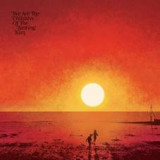
Artefacts is the second part of the diptych of 2 albums by Hihats In Trees, pseudonym for Belgian drummer, producer Lander Gyselinck
HHIT’s unprecedented experiments with rhythm and acoustic textures on its debut album ‘Disleksikon’, released in 2019, was well received. On Artefacts HHIT takes it a step further. A truly sensational sonic realm is explored.
Hihats In Trees’ obsession with singular physical objects, materials of wood, stone, metal evokes a dark dystopian sentiment and a recurring melancholy. A poetic expression of the solid object. In Artefacts, through this language with materials, the physical objects come to life sonically. The 10 compositions revolve around this peculiar vocabulary of texture and rhythm, balancing between the dance floor and a solitary ritual, reminiscing on HHIT’s major influences of gqom, detroit techno, hiphop and experimental ambient.
Fashion designer Dries Van Noten was fascinated by HHIT’s musical experiments, This resulted in a collaboration with photographer Viviane Sassen for his Spring Summer collection in 2021 with music by HHIT, partly from Disleksikon, partly tracks later to be released on Artefacts. Artefacts is released on the Brussels based label Maloca Records, run by dj, producer Le Motel.
Cerca:lang it
LP SHIPPING ONLY / CD DELAYED “This is definitely the most honest and mature record Deathchant has ever made.” That’s Deathchant vocalist and guitarist T.J. Lemieux talking about the band’s third and latest album, Thrones. Think of it as not just the follow-up to 2021’s Waste, but the other side of the coin. “While Waste and our self-titled album touched on similar themes, they were sort of from a problem standpoint,” he explains. “Thrones is full of reflection, self-realization, and solutions for moving forward and conquering those problems.” Which isn’t to say that Deathchant have gone soft. Far from it, dude. In fact, Thrones just might be their heaviest record thus far. The band’s seamless swirl of classic rock guitar harmonies, syrupy sludge, blues boogie and psych bombast has reached a thrilling new apex as Lemieux spins high-powered tales of reckoning from beyond the wall of sanity. Thematically, Lemieux and his bandmates—bassist George Camacho, guitarist Doug Stuckey and drummer Joe Herzog—peel back the veneer of self-delusion to expose the fork in the road. “Thrones is meant to represent things that rule you, things you worship, things you rely on or think you need,” Lemieux says. “Sometimes those things make you feel in control, safe, on top of the world like you're in power—which over time often proves untrue.” Witness lead single “Mirror”: Kicking off with gleaming Lizzy-isms, the song rumbles into a thick groove overlaid with lysergic fireworks that conjure the shaggy European movers of decades past. “‘Mirror’ is the key to the whole Thrones theme,” Lemieux explains. “It’s about looking inward to realize what's ruling you, what's consuming you, and how delusional you've been about those things. Your sense of self is so damn important, and fully facing your truths is not an easy thing to do. It’s admitting that you’ve intentionally dulled and quieted your mind to distract, avoid and run from yourself, from memory, from loss and truth. At some point, you have to face that shit.” The languid and dreamy “Mother Mary” is also crucial to Thrones’ trajectory. “If the album was a book, ‘Mirror’ would be the first chapter and ‘Mother Mary’ would be the last chapter, though they’re not the first and last track for sonic reasons,” Lemieux explains. “‘Mirror’ is saying, ‘I’m looking inward because some things need to change,’ while ‘Mother Mary’ is saying, ‘Okay, things are fucked and have gone way too far but now we have this understanding—and acknowledging things is key to overcoming.’” Thrones was recorded live in a cabin in the remote mountain community of Frazier Park, CA, with trusty engineer Steve Schroeder (a.k.a. Schroeds). “We moved in for a week, rehearsed a bit and went for it,” Lemieux says. “Each tune got three or so takes, but we nailed ‘Mother Mary’ and ‘Canyon’ right away.” Overdubs were done at the cabin, Schroeder’s Studio 3, and Lemieux’s place. The album was produced by Lemieux and Schroeder. “Overall, it’s a pretty dark record,” Lemieux says. “It's serious and leans into heavy themes, sometimes using metaphor and imagery to soften those blows, but sometimes it hits direct. It’s positive, though—and cathartic. Forever riding on the line of total insanity and flirting with mental degradation. It’s our most realized and ambitious record to date.”
“A piece of music never truly comes to An end. Revisiting a theme illustrates this idea that life goes on.” These are the words of Wayne Shorter, uttered in 2018 upon the release of Emanon, his final opus. On this record, the octogenarian uses dusky hues to shade in the passions of his youth - drawing and science-fiction, as well as the causes he has defended all his life - the fight against ecological upheaval and structural racism. This sentiment did not fail to resonate with Julien Lourau, who has reached a stage in life where he has begun to look back over certain pages written by the man he has always considered one of the masters of his trade. Five years later, this Parisian native has also chosen to revisit his glory days, offering reworked versions of specific tracks composed by his titular elder throughout the 80s. “When I play this music, I find myself back in my teenage bedroom. These are my standards, and they remind me of autumn in Rambouillet.” At that time, after practising his scales, Julien would also play Dungeons & dragons, and immerse himself in SF as well as heroic fantasy - epic influences which are not without a certain connection to the dreamworlds Shorter conjured up, as another fan of landscapes beyond the grasp of reality.
This album features four themes taken from Atlantis, which came out in 1985, and two from Joy Ryder, released three years later. To these, he has added a composition penned at around the same time for Sportin’ Life, the penultimate LP by Weather Report. This is rounded off by a tune taken
from Native Dancer, the record which, ten years earlier, in 1975, brought together this saxophonist who learnt his trade alongside Art Blakey, before joining Miles’ second quintet, and Brazilian Milton Nascimento.
“Between Native Dancer and Atlantis, Shorter did not release anything under his own name, but he took the time and care to really perfect his writing. Upon his return, he injected a very Brazilian form of subtlety into his compositions, especially rhythmically. And from a harmonic point of view, these themes are extremely sophisticated, and reveal truly singular colours. In fact, he decided to display the score as if it constituted the liner notes of Atlantis.”
Julien Lourau is a fan of every Wayne Shorter era, from his Blue Note days, where Mr Gone defined the bases of a truly unique repertoire, all the way to his final quartet - a reference like no other. He decided to focus on this “highly electric” period, which is not necessarily Shorter’s best known, nor his most widely appreciated - despite being a unanimous reference, Shorter has nonetheless never had a direct descendent. In Lourau’s line of sight there lies a desire to focus on typically South American tonic accents which characterise this repertoire, twinned with the ambition to switch up their actual sound “by attempting to open up onto a production highly influenced by eighties fusion". However, he admits that modifying the structures of these most unique of worlds constituted a fresh challenge. “There’s this labyrinthine harmonic system where you’ve no idea how it holds together, but where it’s actually impossible to touch the slightest element without the whole edifice wavering. It is in fact a very difficult thing to achieve!”
In order to successfully transcribe all this creativity free of obstacles, Julien Lourau once again called upon the help of Mathieu Debordes. From January 2023 onwards, Mathieu endeavoured to break down all the musical elements, on paper, before creating any actual music. The record was therefore constructed on the faith of these scores, without necessarily transiting through a creative residency - just two live gigs, to make sure the setup worked. Besides Mathieu Debordes and his synthesisers, Julien Lourau has assembled an ad hoc team by his side. On the bass, according to the track, we can hear erstwhile companion Sylvain Daniel or a new acolyte on the fretless bass, Joan Eche Puig.
Stéphane Edouard, on percussion, even dives headfirst into an unlikely proto-rap of sorts, on Pearl On The Half Shell (where, on the original version, Bobby McFerrin adjusted his interventions in a rather madcap style). Aesthete and drummer Jim Hart as well as pianist Leo Jassef also figure on this release - both were present on previous project devoted to label
CTI. “At sixteen, I wanted to sound like Michael Brecker rather than Ben Webster - that was equated with modernity in those days”, adds Julien with a smile, as for him, all this rings out a little like a logical next step, a joyful immersion into the fountain of youth. And if, for this record, he plays the soprano more than ever, the saxophone Shorter set in his sights on, he never tries to replicate an unattainable ideal note by note. What would be the point?
“Wayne Shorter is not just a saxophonist’s saxophonist. In fact, I don’t know a single person who has risen to challenge of his solos. I have not done it myself either, but on the other hand, I have retained a lot of his phraseology. His way of approaching the instrument reveals a more evanescent language, a work on colour and shape. Keeping this in mind has allowed me to gravitate towards certain elements, that in hindsight, I find echoes of in my work, even in Groove Gang.” Shorter etches out these phrases, creating a groove within which Lourau had traced subtle punctuation, managing, from a highly written base, to create fresh apertures, promises of a great escape. Emblematic of this standpoint, his regal version of Ponte de Areia, originally a wonderful dialogue between Milton Nascimento and Wayne Shorter. Here, the Frenchman takes liberties with the original melodies, without ever growing distant from the original spirit, extending one section with delicacy, offering a rubato development and then a groove “like a little suite”. Julien Lourau also renews with an accomplice from last century, Magic Malik, who lends his high-pitched vocals to the track. Though they had not recorded together for more than twenty years, the two of them got on as if they had only ceased collaborating yesterday, everything flowed naturally. The track was wrapped up in just one take, much like other themes, such as opener Who Goes There where the flautist deploys smooth, enchanted and smoky wisps.
Fundamentally, reflecting of the sleeve which features a child playing with a ball, image that could symbolise the sun just as much as the moon, Julien Lourau manages to translate the ambiguous candour which characterizes Shorter’s work - solar and crepuscular at the same time, that of a visionary and poet definitively situated outside of all chronology, but with whom Julien shares surprising and ‘timely’ coincidences. Shorter was born August 25, 1933, the same day as Julien’s father, “if we take time zones into account”, and who died on Lourau’s birthday, March 2, 2023. Should we take this as a random fact? Or could we not see here the sign of a destiny connecting the agnostic Frenchman to the man who, as a fervent Buddhist, believed in the transmission of his spiritual flow ?
Originally released as a hand-numbered CD on New Year's Eve of 2004, Last Light captures Tor Lundvall 's hushed songcraft at its most ghostly and grayscale, stripped bare like branches bracing for winter. Initially conceived of as "a piano album with sparse electronics" (with the working title November), Lundvall's palette steadily expanded, incorporating synthesizer, samples, bass, metronomes, and his signature spectral vocals. A journal entry from the spring of 2002 proved formative to his evolving vision: "I remember watching the blueish-grey light shimmering outside and hearing distant sounds echoing far away, eventually sinking into silence and stillness." The album's 12 tracks are steeped in this sense of autumnal transience, of bearing witness to what fades. The music moves in whispered swells, between dirge, drift, and devotional. Synths chime like slow-tolling bells; percussion shuffles and shivers, icy and isolated; bass traces a low-lidded plod - it's a mode both austere and seductive, lulling the listener into its landscapes of deepening dusk. Lyrically, Lundvall's language skews observational and depressive ("through lace curtains / grey light falls / dark clouds gather / in my soul" ), with each song like a gauzy glimpse into a different tableau framing winter's descent: rust - colored leaves, frozen ponds, cold crescent moons. Lundvall has long considered Last Light a "personal favorite" in his discography, and it's easy to hear why. In texture, finesse, and pacing, it vividly evokes the rare mood of fragile, frosty pastoral noir depicted in his iconic oil paintings. His is an art of the half-seen and half-remembered, of fleeting figures, shapes and shadows, and gathering darkness. Of all that disappears, and the ghosts that never leave: "So I wait / as the years / slowly drain the magic and the light / and the girl / I never loved / haunts me through the dark roads of my life."
- A1: The Its Way
- A2: Mindful Solutionism
- A3: Infinity Fill Goose Down
- A4: Living Curfew (Feat Billy Woods)
- A5: Pigeonometry
- B1: Kyanite Toothpick (Feat Hanni El Khatib)
- B2: 100 Feet Tall
- B3: Salt And Pepper Squid
- B4: Time Moves Differently Here
- C1: Agressive Steven
- C2: Bermuda (Feat Lealani Teano)
- C3: By The River
- C4: All City Nerve Map
- D1: Forward Compatibility Engine (Feat Rob Sonic)
- D2: On Failure
- D3: Solid Gold
- D4: Vititus
- D5: Black Snow (Feat Nikki Jean)
A tech company's "senior spirit guide" finally comes to the defense of the "financially unsuccessful" Vincent van Gogh; wonders of the natural world are reimagined as "muster points for brainstorming innovators"; the "artificial char lines" on fast-food burgers are cited as if signs of the apocalypse. For the better part of three decades, Aesop Rock has used the syntax of the moment to pinpoint the fault lines in that moment's supposedly solid foundation. With his tenth album, Integrated Tech Solutions, Aes wields insidious corporatespeak as a tool to pry that parasitic worldview away from the parts of life that truly matter. A concept album about an organization offering "lifestyle- and industry-specific applications designed to curate a desired multi-experience," Integrated Tech Solutions picks apart the charlatan language that hears app inventors put themselves on continuums starting with cavemen and continuing through da Vinci. On "Mindful Solutionism," the wheel evolves seamlessly into modern agriculture - and then into atomic bombs, Agent Orange, cigarettes, and surveillance cameras. In a rare moment of transparency, the engineers Aes give voice to sum up this spiral in just a few words: "We cannot be trusted with the stuff that we come up with." Appropriately, the album sounds like the past and future at once. Largely self-produced, Integrated Tech Solutions catches Aes at his leanest and most innovative, leveraging "SolutionismÖs careening bounce against the wistful "By the River" or the slow creep of "Salt and Pepper Squid." The effect is a record that sounds itself like an organism growing, mutating, hurtling toward profitability - and then destruction. As fans have come to expect, Aes is cuttingly funny and slyly profound at once, whether recounting a childhood restaurant run-in with Mr. T ("100 Feet Tall") or quipping, on "Pigeonometry," that "white dove is a pigeon - you motherfuckers is bigots." At the same time, Integrated Tech Solutions is working on another parallel project: tracing the sprawl of modernity and cutting directly to its core. "I've been doing laps of the lost worlds," he raps on "All City Nerve Map," sounding at once wearied and reinvigorated. "I can draw a map to the raw nerve."
A tech company's "senior spirit guide" finally comes to the defense of the "financially unsuccessful" Vincent van Gogh; wonders of the natural world are reimagined as "muster points for brainstorming innovators"; the "artificial char lines" on fast-food burgers are cited as if signs of the apocalypse. For the better part of three decades, Aesop Rock has used the syntax of the moment to pinpoint the fault lines in that moment's supposedly solid foundation. With his tenth album, Integrated Tech Solutions, Aes wields insidious corporatespeak as a tool to pry that parasitic worldview away from the parts of life that truly matter.
A concept album about an organization offering "lifestyle- and industry-specific applications designed to curate a desired multi-experience," Integrated Tech Solutions picks apart the charlatan language that hears app inventors put themselves on continuums starting with cavemen and continuing through da Vinci. On "Mindful Solutionism," the wheel evolves seamlessly into modern agriculture—and then into atomic bombs, Agent Orange, cigarettes, and surveillance cameras. In a rare moment of transparency, the engineers Aes give voice to sum up this spiral in just a few words: "We cannot be trusted with the stuff that we come up with."
Appropriately, the album sounds like the past and future at once. Largely self-produced, Integrated Tech Solutions catches Aes at his leanest and most innovative, leveraging "Solutionism"'s careening bounce against the wistful "By the River" or the slow creep of "Salt and Pepper Squid." The effect is a record that sounds itself like an organism growing, mutating, hurtling toward profitability-and then destruction. As fans have come to expect, Aes is cuttingly funny and slyly profound at once, whether recounting a childhood restaurant run-in with Mr. T ("100 Feet Tall") or quipping, on "Pigeonome- try," that "white dove is a pigeon-you motherfuckers is bigots." At the same time, Integrated Tech Solutions is working on another parallel project: tracing the sprawl of modernity and cutting directly to its core. "I've been doing laps of the lost worlds," he raps on "All City Nerve Map," sounding at once wearied and reinvigorated. "I can draw a map to the raw nerve."
[f] Kyanite Toothpick [feat. Hanni El Khatib]
[k] Bermuda [feat. Lealani Teano]
[n] Forward Compatibility Engine [feat. Rob Sonic]
[r] Black Snow [feat. Nikki Jean]
- A1: She Belongs To Me - Live At The Royal Albert Hall (04:49)
- A2: Fourth Time Around - Live At The Royal Albert Hall (04:45)
- A3: Visions Of Johanna - Live At The Royal Albert Hall (09:29)
- A4: It’s All Over Now, Baby Blue - Live At The Royal Albert Hall (05:10)
- B1: Desolation Row - Live At The Royal Albert Hall (12:29)
- B2: Just Like A Woman - Live At The Royal Albert Hall (05:55)
- B3: Mr. Tambourine Man - Live At The Royal Albert Hall (06:29)
- C1: Tell Me, Momma - Live At The Royal Albert Hall (04:46)
- C2: I Don’t Believe You (She Acts Like We Never Have Met) -Live At The Royal Albert Hall (05:33)
- C3: Baby, Let Me Follow You Down - Live At The Royal Albert Hall (02:47)
- C4: Just Like Tom Thumb’s Blues - Live At The Royal Albert Hall (05:51)
- D1: Leopard-Skin Pill-Box Hat - Live At The Royal Albert Hall (03:42)
- D2: One Too Many Mornings - Live At The Royal Albert Hall (04:02)
- D3: Ballad Of A Thin Man - Live At The Royal Albert Hall (06:11)
- D4: Like A Rolling Stone - Live At The Royal Albert Hall (06:36)
Cat Power veröffentlicht am 10. November ein Live-Album Cat Power Sings Bob Dylan: The 1966 Royal Albert Hall Concert via Domino.
Cat Power Sings Dylan: The 1966 Royal Albert Hall Concert" wurde am 5. November 2022 in der berühmten Londoner Royal Albert Hall aufgenommen und zeigt Chan Marshall wie sie Song für Song eines der legendärsten und transformativsten Live-Sets aller Zeiten nachspielt. Im Mai 1966 fand das Konzert in der Manchester Free Trade Hall statt, das aufgrund eines falsch beschrifteten Bootlegs lange Zeit als "Royal Albert Hall Concert" bekannt war. Bei dem Originalauftritt wechselte Bob Dylan in der Mitte des Konzerts von der akustischen auf die elektrische Gitarre, was den Zorn der Folk-Puristen auf sich zog und den Verlauf des Rock 'n' Roll für immer veränderte. "Cat Power Sings Dylan: The 1966 Royal Albert Hall Concert" würdigt liebevoll Dylans Spuren in der Geschichte und bringt eine bezaubernde Vitalität in viele seiner am meisten verehrten Songs, einschließlich "She Belongs to Me" und "Ballad of a Thin Man"."
- A1: Leise Rieselt Der Schnee 02:24:00
- A2: Stille Nacht, Heilige Nacht 02:20:00
- A3: O Du Fröhliche 02:53:00
- A4: Süßer Die Glocken Nie Klingen 02:45:00
- A5: Schneerose 02:40:00
- A6: Schau, Es Schneit 02:10:00
- A7: Schreib Deine Wünsche In Einen Brief 03:48:00
- A8: Ach Papi, Geh Doch Heuer Nicht Auf Die Weihnachtsfeier 02:38:00
- B1: Nürnberger Christkindlesmarkt-Walzer (Kinder-Wunderland) 03:15:00
- B2: Wünsche Zur Weihnachtszeit 02:57:00
- B3: Schau In Die Augen Der Kinder 02:58:00
- B4: Der Kleine Trommlerjunge (Durch Die Stille Der Nacht) 02:30:00
- B5: Viele Bunte Päckchen (The Christmas Song) 03:04:00
- B6: Eisblumen 03:26:00
- B7: Still, Still, Still 03:57:00
- C1: Wenn Ein Stern Vom Himmel Fällt 02:58:00
- C2: Weihnachtszeit - Kinderzeit 02:34:00
- C3: Wünsche Sind Wie Wolken 03:13:00
- C4: Merry Christmas Allerseits 04:36:00
- C5: Tage Des Friedens 02:45:00
- C6: Ein Guter Stern 03:52:00
- C7: Was Wirklich Zählt Auf Dieser Welt 02:47:00
- D1: Wer Ist Er 02:55:00
- D2: Du Allein 03:22:00
- D5: Auf Meinem Tisch Ein Weißer Bogen 03:47:00
- D6: Ihr Lieben Daheim 05:07:00
- E1: Ein Lied Für Alle, Die Einsam Sind 03:27:00
- E2: Nur Ein Lächeln 04:32:00
- E3: Ein Paar Worte, Ein Paar Töne 04:21:00
- E4: Ist Das Nichts? 04:40:00
- E5: Und Es Gibt Dich 04:08:00
- F1: Bring' Ein Licht Ins Dunkel 04:28:00
- F2: Das Jahr Deiner Träume 03:57:00
- F3: Nächstes Jahr Wird Alles Anders 03:59:00
- F4: Mein Größter Wunsch Mit José Carreras 03:52:00
- F5: Merry Christmas Allerseits 03:39:00
- G1: Jingle Bells 02:12:00
- G2: White Christmas 02:35:00
- G3: Tempo Di Natale (Weihnachtszeit - Kinderzeit) 02:38:00
- G4: Buon Natale Mio Amor (Leise Rieselt Der Schnee) 02:30:00
- G5: Magica Notte Felice (Süßer Die Glücken Nie Klingen) 02:48:00
- G6: Natale E´qui (O Tannenbaum) 02:34:00
- G7: Giorni Di Pace (Tage Des Friedens) 02:49:00
- G8: C´e´ Una Stella In Ciel Qui (Wünsche Zur Weihnachtszeit) 03:01:00
- G9: Corre E Va (Jingle Bells) 02:04:00
- H1: Bianco Natale (White Christmas) 02:39:00
- H2: Dolce Notte (Stille Nacht, Heilige Nacht) 02:23:00
- H3: Guarda Negli Occhi Del Bimbo (Schau´ In Die Augen Der Kinder) 03:03:00
- H4: Nevica (Schau´ Es Schneit) 01:59:00
- H5: Lungo Un Tavolo Di Natale (O Du Fröhliche) 02:57:00
- D3: Es Ist Zeit Für Die Liebe 03:20:00
- H6: Mon Beau Sapin 02:30:00
- H7: Minuit Chrétiens 02:38:00
- H8: Yo Creo (Ich Glaube) 03:54:00
- D4: In Dieser Welt 02:35:00
Udo Jürgens, wohin man auch hört! Nach dem Chart-Stürmer "da capo, Udo Jürgens - Stationen einer Weltkarriere" und dem kürzlich veröffentlichten Kinderliederalbum "Die Blumen blühn überall gleich" erscheint am 10. November die Edition "Die schönsten Lieder zur Weihnachtszeit". 3 CDs mit 55 Songs in 5 Sprachen, darunter deutsche und internationale Weihnachts-Klassiker, ein Duett mit José Carreras und einer von Pepe Lienhard neu arrangierten Version des spaßigen "Merry Christmas allerseits". 14 der Titel sind erstmals digital verfügbar, 2 bislang unveröffentlicht. Die einzigartige Sammlung liegt auch auf Vinyl vor. /// CD1 - Weihnachten zu Haus - Beinhaltet vierzehn Kompositionen von Udo Jürgens, darunter den Titel "Schneerose" aus dem Jahr 1967, der nach längerer Zeit wieder digital verfügbar ist. Dazu fünf absolute Klassiker: "Leise rieselt der Schnee", "Stille Nacht, heilige Nacht" (das berühmteste Weihnachtslied der Welt), "Oh du Fröhliche", (ein Lied aus Deutschland zu einer Melodie aus Sizilien), "Süßer die Glocken nie klingen" und "Der kleine Trommlerjunge" (1941 in den USA entstanden). Als Bonustrack "Merry Christmas allerseits", eine Live-Aufnahme aus Udos letztem Konzert in Zürich. Mit einer humorigen Einleitung des großen Meisters. /// CD2 - Weihnachten in aller Welt - Enthält internationale Weihnachtsklassiker wie "Jingle Bells" und den Welthit "White Christmas", geschaffen von Irving Berlin, 1947 von Bing Crosby zum ersten Mal veröffentlicht. Dazu zwei Songs auf Französisch, "O Tannenbaum" und "Minuit chrétiens", auch bekannt als "O Holy Night". Ferner alle Lieder von Udos Weihnachtsalbum "Buon Natale da Udo Jürgens", das in den 70er Jahren in Italien veröffentlicht wurde und hier erstmals digital verfügbar ist. Als Bonustrack "Yo creo", die spanische Version von "Ich glaube". /// CD3 - Zeit der Lieder, Zeit der Stille - Die Botschaft von Christi Geburt geht weit über das eigentliche Fest hinaus. Getragen von der Hoffnung, dass es Frieden werde, dass wir Menschen Freunde sind, ein Lächeln uns verbindet, dass Liebe regiert. Und dass jedes Jahr alles besser wird. Udo hat viele Songs über diese Themen geschrieben. Die emotionalsten davon gibt es auf der dritten CD zu hören. Darunter auch ein Duett mit dem Klassik-Star José Carreras "Mein größter Wunsch". Zum guten Schluss noch einmal das amüsante "Merry Christmas allerseits", neu arrangiert und eingespielt von Pepe Lienhard, selbstverständlich mit Udos unverwechselbarem Gesang. Ende gut - alles Udo!
Zero Years Kid is the alter ego of Joachim Badenhorst, one of the most fascinating and adventurous Belgian jazz musicians from the last 2 decades. He plays with the international band Carate Urio Orchestra but also as musician with Naima Joris or Chantal Acda.
Zero Years Kid started of as a solo project, but has grown into a full and organic live band.
Badenhorst sees Zero Years Kid as a kindergarten to explore other ideas and interests besides of jazz. Together with Jan de Vroede, Lennart Heyndels and Erik Heestermans he brings a colorful amalgam of hip-hop, pop, dance and r&b with playful and poetic lyrics in his native language: Dutch. Next to his clarinet and sax he adds samples and electronica which results in a surprising fantasy world where it is wonderful to wander.
In 2019 debut album Ongerijmde Rijmen was released. Successor Geen Grenzen is ready and will be released on November 10th of this year on Klein. Geen Grenzen is an ode to breaking boundaries, to color outside the lines and to don’t get hung up on expectations.
The title track is a rework of No Limits by 2Unlimited. The song got translated, slowed-down and distorted to the universe of Zero Years Kid. The album is a poetic and humorous trip with a melancholic twist, and themes like the covid pandemic, intense arguments that are forgiven, writers-block, desire and love.
On For Annette, singer-songwriter ronja summons forth a certain unbridgeable void within our existence and the acceptance of the deafening silence that comes with it. Weaving the strands of her previous release something about us with multiple openings towards more abstract territory, this 5-track EP marks her debut under the forward-thinking Unguarded label, astutely situating her music well beyond the confines of the genre.
The opening track “Nothing Makes Me Feel” beckons the listener into a discreet moment amid the early light of dawn, commencing with an up-close acoustic guitar, soon to be graced by ronja’s hushed voice, softly whispering, as if to avoid waking someone near. “Just Once”, with its weeping waltz, is about losing one’s place in the world, about choosing the imaginary over the real. Behind the strummed chords hides a soft dither of sine tones that attempts to fill the gap that cannot be filled, only to transform into quavering distortion ever after. Where language may falter, ronja turns to choral-like instrumental pieces (“Light” & “Grass from Below”), characterized by her distinctive and multi-layered flute arrangements. The absence of words here allows for a sensible stage of introspection, a fleeting and diaphanous pause, forging a passage to a more hopeful outlook. Yet, these pieces are not isolated; hints of fluttering air and cavernous depths are subtly alluded to in the earlier, more song-based tracks. In just under 18 minutes running time, the theme of loss, or the anticipation of its arrival, lingers solemnly before transcending intermediate states in “Almost There”.
Admirers of the dreamgaze band Roomer, which made waves in and around the Berlin music scene this past year, might detect faint resemblances. Nonetheless, ronja—a pivotal presence in said band—unveils a distinct effort here, striking subdued but enticing tones, a foreshadowing of what is yet to come from this luminary artist. – Luka Aron
Svart Records are proud to present the vinyl debut of the album '8 Convulsions' (1994) by Crisis (NYC, USA) "I am really glad that Svart are re-releasing 8 Convulsions, so more people can rediscover this wonderful and intriguing heavy music." Michel 'Away' Langevin, Voivod Remastered and repackaged with the vinyl format in mind, the package comes with a large booklet full of lyrics and exclusive photos. This is the first time an album from the NYC cult band's oeuvre is pressed on vinyl. There will also be a CD edition of the remaster. Hailing from the mean streets of NYC in the year 1993, Crisis was a band that defied classification from the very start. During a time when heavy music was dominated by a mostly male presence, founders Afzaal Deen and original drummer Fred Waring envisioned a female-fronted band to run against the grain and destroy expectations. Seeking out a singer with a singular sound and presence, and found their match in groundbreaking vocalist and avant-visual artist Karyn Crisis. Soon after, a newspaper ad for a bass player was answered by Gia Chuan Wang and the original unit was formed. During their first rehearsal, Karyn became so enmeshed and driven by the music that she inadvertently destroyed a microphone stand and threw herself to the floor in an outpouring of unmitigated expression. This was barely a hint at the intensity she would soon bring to the stage and studio. Karyn’s guttural growls and angelic melodic notes meshed perfectly with the mixture of grinding guitar, pounding rhythm and deep bass tones. The underground music scene would now begin to experience the dynamic intensity of this burgeoning powerhouse band in full force. Crisis signed to Too Damn Hype records and released their debut album '8 Convulsions', now being reissued to mark its 30th anniversary. In a time where inclusivity is more crucial than ever, Crisis remains a band as diverse and distinct as the city from which they originally hailed. “The United Nations of Rock” as they’ve been called, continue to break boundaries and crush antiquated archetypes with their unprecedented sound and vision. "One of the most captivating bands I’ve ever experienced in New York City in the early 90s. They had a very unique sound where you couldn’t categorize them though they had elements of metal, punk with a very dark experimental approach, which gave them their unique sound. Just raw and relentless energy." Roy Mayorga, Ministry/Soulfly/Nausea etc 8 Convulsions is available on Svart exclusive blue/red marble vinyl, limited transparent yellow vinyl, classic black vinyl, and CD. Release date October 20th.
Malian and French pair Siraba unveil their much-anticipated self-titled debut LP on Damian Lazarus’ Secret Teachings label, a 10-track odyssey fusing Mali’s rich musical traditions with cutting-edge electronic music.
Malian hunter Boubacar Samake and Damien Vandesande, one half of the French electronic band dOP, have won plenty of plaudits for the early singles taken from their debut album as duo Siraba. Those singles, spanning across the summer months, have found the pair bring the traditional sound of the Wassoulou - a river valley of West Africa - to the electronic world after 20 years of friendship. The music comes with an important underlying message of love and respect and results in spellbinding tracks that move heart, body and soul, finding a perfect home on Secret Teachings - a left-of-centre alternative label to Lazarus’ celebrated and often more club- focused Crosstown Rebels. With the arrival of the full album, the pair exhibit and showcase the emotional breadth and depth of their music, with detailed explorations of organic textures and native sounds merged with future-focused ideas and concepts.
The title track opens with an atmospheric mix of spoken words and spine-tingling chords that bring rich Afro flavours, while ‘Dounoiia’ is a languid groove made from hand drums and pixelated synth leads that cast a fine spell. The slow-blooming ‘Bani’ brings rich Malian blues and melancholic horns, while ‘Komafly’ is a rich mix of acoustic strings and broken beats that transports you to a hot and dusty landscape. A vital component of the sounds of the Wassoulou, the indigenous stringed instrument the Ngoni features again on the rousing ‘Nanse’ as spiritual vocals sung in Bambara rouse the soul.
‘Djandjo’ is another rich infusion of Malian culture with simmering electronics to make for something both ancient sounding yet futuristic, and the hypnotic ‘Ngana Fôlly’ with its rich bass is a song ‘dedicated to those who fight for the well-being of their families, for unity... a song for the people who also fight a great disease, between life and death’. The sublime ‘Toro’ is a wavy groove perfect for sundown - a deep and inviting sound rich in soulful vocals and dreamy melodies, while ‘Tolonawoulile’ is driven by the intense strumming of the Ngoni with busy hand claps and hurried drums and last of all ‘Fo Te Mokobana’ sinks into a heart-warming slow groove with sweeping strings and Malian percussion all overlaid with impassioned vocals.
A rich listening experience, Siraba’s debut album is an immersive journey and absorbing dive into the minds of two artists breaking new grounds while spotlighting native traditions and musical techniques spanning hundreds of years.
Balmat co-founders Philip Sherburne and Albert Salinas have been fans of Shy Layers’ lilting, Balearic pop for years, so when Shy Layers’ JD Walsh asked us to listen to a set of demos he was working up with fellow Atlanta multi-instrumentalist Jeff Crompton, we jumped at the chance. And once we heard their work in progress, the decision was almost immediate: We have to release this.
Together, Walsh and Crompton are Anagrams, and their debut album together, Blue Voices, might initially seem like a departure from Balmat’s habitually electronic terrain. It’s not ambient music, but it’s also not not ambient music, at least to listeners in the right frame of mind. The two musicians, who met when Walsh moved from Brooklyn to Atlanta in 2016 and began collaborating a few years later, see the music in similarly ambiguous terms. “I like it because it’s not jazz,” jokes Crompton, a veteran and credentialed jazz player. “And JD likes it because it’s jazz.”
Crompton is a musician (and former high-school band teacher) with deep roots in Georgia’s improvised and experimental music scenes; his credits include shows with Eugene Chadbourne, a guest appearance with Godspeed You! Black Emperor, and a collaboration with Duet for Theremin and Lap Steel’s 12-hour drone performance at Knoxville’s Big Ears. On Blue Voices he plays alto and tenor saxophone, clarinet, electric piano, and organ. Walsh has been releasing music as Shy Layers since 2015, when he started self-releasing on Bandcamp; the following year, Germany’s Growing Bin packaged his first two EPs as a self-titled album, and in 2018, Tim Sweeney’s Beats in Space label put out Shy Layers’ sophomore album, Midnight Marker. Where those records channeled Walsh’s playful harmonic instincts into wistful songwriting with tropical overtones, on Blue Voices he lets his experimental tendencies take the lead. Playing acoustic and electric guitars, electric lap steel, bass, Moog Matriarch, modular synth, and programmed drums, he concentrates his energies on richly textural layers and abstract assemblages of tone color.
Across the album’s 11 tracks, there are faint echoes of familiar touchstones: the atmospheric twang of Daniel Lanois’ pedal steel on Apollo: Atmospheres and Soundtracks; the mercurial modal runs of Ethio- jazz; the late-summer calm of Fuubutsushi; the versatility of players and composers like Patrick Shiroishi and Sam Gendel, who are asking similar questions about where jazz ends and some other, nameless territory begins. Mostly, though, what Blue Voices captures is the quixotic sound of two restless musical imaginations making it up as they go along, two voices discovering a shared language in a hitherto unexplored shade of blue.
Es heißt, lang lebe der König und so weiter, aber nichts ist jemals in Stein gemeißelt. Ein Vierteljahrhundert nach seiner selbstverschuldeten Krönung und seinem selbstveröffentlichten Debüt-Soloalbum hat Kenny Anderson - DIY-Pop-Reisender, Restaurator eines angestammten Hauses am Meer, Squeezebox-Lothario, Fife for life, Diamantenschürfer, Herzensbrecher, und der Mann, der auch als King Creosote bekannt ist - über 100 Platten veröffentlicht (wenn man relativ konservativ schätzt), mit Künstlern wie Jon Hopkins, KT Tunstall und Lone Pigeon von Beta Band zusammengearbeitet und seine Songs von Künstlern wie Patti Smith und Simple Minds covern und aufführen lassen. Jetzt hat er trotz oder vielleicht gerade wegen all dem eine neue LP angekündigt. Sie heißt I DES und wird am 3. November veröffentlicht.
Und nein, es ist nicht an ihm, der so sehr von spielerischer Lyrik beseelt ist, vorbeigegangen, dass der Titel seiner neuesten Veröffentlichung ein einfaches Anagramm von "Dies" ist. Aber man sollte sich ein paar Dinge vor Augen halten: 1) I DES ist eine Anspielung auf KCs wichtigsten Kollaborateur dieses Mal - Multiinstrumentalist und Co-Produzent Derek O'Neill alias Des Lawson of Blantyre (From Scotland With Love von 2014, Astronaut Meets Appleman von 2016); und 2) HRH King Creosote hat sein ganzes musikalisches Leben lang um sein Ende gerungen.
Das Album wurde größtenteils zwischen 2016 und 2020 geschrieben, aber nichts ist jemals so einfach: Es gibt etwas Altes (Bäume), etwas Blaues (ebenfalls Bäume), etwas Geliehenes (Heimkassetten und Gesang aus allen Epochen; Texte aus der fernen Vergangenheit) und etwas Neues (KC scherzt, dass ein möglicher Titel für dieses Album We All Got Synths for Christmas war).
Und hier ist King Creosote: Sänger, Songwriter, rosaroter Schwindler, Vater dreier wunderschöner Töchter. Er wurde im Winter 1967 geboren. In jenem Jahr wüteten Überschwemmungen und Schneestürme, aber alles wuchs und überstand den Sturm.
Toy Machine skateboard's seminal 1996 video “Welcome To Hell” features a unique and progressive patchwork of skateboarders, most of which would become icons in their world, and helped redefine
what the modern skateboarding video could be. A young Joseph Shabason felt that impact. The acclaimed musician hit rewind on his VHS copy of “Welcome To Hell” hundreds of times in his youth,
each watch as thrilling as the last. That invigorating, improvisational, full-body experience of skateboarding is one that Shabason likens to jazz, where a shared language exists between the wheels and woodwinds. The way the skateboarder and musician command that language is what distinguishes them, adding definition to the mercurial concept of “style.” This connection becomes most apparent in collaboration; ensembles of skaters and musicians are a noisy, creative bunch.
Reflecting on this relationship and the Toy Machine classic would ultimately lead Shabason to wonder: what does hell sound like? The answer was a concept album that, like his previous records, lives in
the personal. One that, much like skateboarding itself, would push him to try something new: rescoring "Welcome To Hell". Out on October 20th, 2023.
"The Twits" wurde von der Band im Februar 2023 innerhalb von nur acht Wochen in einem provisorischen Heimstudio auf Mallorca aufgenommen und von Marta Salogni abgemischt. Nach einem Kinderbuch von Roald Dahl benannt, zeigt sich das Songwriting von bar italia in rauen, mystischen, ungebürsteten und gelegentlich düsteren Arrangements. Songs wie "my little tony" mit seinen harten Riffs und dem kathartischen Sound ist ein klassischer Indie-Banger für die große Bühne. In anderen Momenten wagt sich die Band auf bisher unbekanntes Terrain, auf dem sie eine hypnotische Dissonanz ihrer Stimmen schaffen. "Jelsy" zum Beispiel spielt sich wie ein Gespräch zwischen Freunden über wehmütigen, summenden Country-Blues ab, wobei die Stimmen abwechselnd tröstlich, ironisch und hoffnungslos sehnsüchtig sind. Der geschmeidige, langsam brennende Walzer "Twist" besticht durch seine nackte Lyrik und scheint jedes Bandmitglied zu einem individuellen Bekenntnis einzuladen. Während "Tracey Denim" von seinen kompakten 2-3-minütigen Songs lebte, besticht "The Twits" durch seine eher offenen und mitunter uferlosen Kompositionen. "glory-hunter" nimmt z.b. spielerische Wendungen, bevor es an einem völlig anderen Ort endet, als es begonnen hat. Das abschließende "bibs" ist ein seltener Fall, in dem alle drei im Einklang zu hören sind. Eine Prozession geradezu geisterhafter Akkorde mit einer zerreißenden Rückkopplung bildet den Abschluss des Albums. Das im Mai veröffentlichte Matador-Debüt "Tracey Denim" von bar italia wurde schnell zum Gesprächsthema der weltweiten Indieszene. Publikationen wie The Guardian ("eines der Alben des Jahres 2023 bisher"), The Times ("excellent debut album"), The Observer ("Artist To Watch"), NME ("a lasting impression that"s all of their own making"), The Quietus ("endlessly evocative") und Pigeons And Planes ("quickly establishing themselves as one of the most enticing upcoming bands") feierten das Album. Im Juni gaben bar italia ihr Live-Debüt in den USA mit fünf ausverkauften Konzerten in New York sowie vier in Los Angeles und auch ihre Debüt-Show in Berlin war binnen kürzester Zeit ausverkauft. Über einen der New Yorker Auftritte schrieb Brooklyn Vegan: "Live spielt die Band ganz natürlich und großartig auf, mit Songs wie "Punkt", "Changer" und "Nurse!" (...), die Post-Punk der frühen 80er mit Indie-Rock der 90er und einem Hauch Trip-Hop mischen".
There’s a connection between the musical history of the Mediterranean that can’t be explained through academia alone. It’s an expression of simultaneous grief and celebration that trespasses cultures and generations; and demands to be felt, or even better, danced, to be understood. The same spirit weaves Rebetiko from the ashes of the Ottoman empire to the heavy Hafla soundtracks on the Koliphone label in ‘70s Jaffa, or rebellious Turkish psychedelic music to the first generation of surf guitarist migrants in America. It's an infectious feeling that travelled and evolved wherever it was called, and that passion is embodied in “Back to the Taverna”, the new album by Berlin based bouzouki quintet, Cherry Bandora.
On the milestone of their third release, original members Liad Vanounou (Bouzouki) and Lorena Atrakci (Vocals) have bolstered their sound with longtime friends and collaborators Moshe ‘Moosh’ Lahav on Keyboards and flute, Tamir ‘Hassan’ Chen on Bass and Nimrod Lieberman on Drums to create an album celebrating the ecstasy of being able to drink and perform together again, freed from the anathema of the last years. The band has evolved considerably since their beginnings ten years ago as an Agean-influenced part of the local Balkan Swing scene; the most significant addition being the deployment of “The Hardest Working Man in Tropical Music” Alex Figueira as musical director for this album. His scorched fingerprints are unmissable throughout the extended psychedelic breakdowns and percussive overdubs that make “Back to the Taverna” such a dynamic offering.
Cherry Bandora have always been a very personal band; collecting songs from nearby cultures and history and blending them into their own experience by developing new arrangements or lyrics, just as musicians from those times would have. Lorena delights in expressing herself away from her mother tongue or providing modern lyrics for an updated feeling, as she does to the beloved Turkish standard, “Rampi Rampi”. In this interpretation she uses her native Hebrew in a saucy lockdown-delivery-guy romance... This track also features Baris Öner from local Turkish rock band Kara Delik on his signature flanging Saz.
Singing in Greek, English, Turkish and Hebrew was also a natural choice on the album, representing the “multikulti” area of Berlin that the band lives and records in. These languages would all be heard on the street as they walked to record in the analog Studio Wong in Kreuzberg.
“As descendants of Mizrahi Jews (Jewish migrants from non-European countries), growing up listening both to Beatles and Umm Kulthum, playing in jazz music departments in high school, and now living in Kruezkölln, we basically pay tribute and revive this shared heritage in the context of the global music scene of today” says Lorena.
The opening track, The Sound Of Baglama, is an interpretation of the anthemic Tsitsanis homage to the tavernas and sweethearts of Thessaloniki. It lays the ground for what to expect from Cherry Bandora’s exceptional live performances, featuring effortless switch-ups between surf rock choruses and laid-back verses dipping into Persian disco funk. This song will be accompanied by a tour-collage “found footage” style film clip in production at this
time.
Cherry Bandoras show their dedication to the bit with a rousing English version of the canonical rembetiko tune Dimitroula Mou. This amour song, popular with generations of female singers, is accompanied by real studio plate smashing, a ritual which sealed their final session for the album. 2 bonus tracks are included on the digital release, both a little more raw from the band’s home studio: the reeling dervish Rubi Rubi (which will be released as a second single with a video clip) and the emotionally dense and hypnotic slow burner Esý.
The album will be released digitally and on vinyl as a collaboration between Rebel Up Records (Belgium) and Rumi Sounds (Berlin) on Friday 3 november 2023 and is a prime example of what a raunchy, open minded and tireless bouzouki band can do as they hit their prime.
An extensive highlighted review will appear in Songlines magazine #135 December issue and the track ‘Benimde Canim Var’ will be featured on their free compilation. Also radioplay on Radio Campus France playlist (allover) during November and December.
Off World presents the final album in its trilogy of surreal and spacious leftfield electronics. "A stellar project headed by Sandro Perri, one of the most singular producers in contemporary music" (Boomkat), this third volume is another distinctive collection of tracks constructed from semi-improvised ensemble recordings made over the past decade with a varied cast of coconspirators. Drew Brown, Matthew Cooper, Susumu Mukai and Andrew Zukerman join Perri again on a variety of synths and machines, along with violinist Jesse Zubot (Tanya Tagaq, Fond Of Tigers). Perri also continues to add organ and piano to the mix, while Volume 3 notably features first-time Off World contributors Nicole Rampersaud on trumpet and Martin Arnold on guitar, both mainstays of Toronto's vibrant improv and out-music scenes. The Quietus calls Off World "genuinely explorative_the musical equivalent of a Dali-esque landscape" which through all sorts of genre-defying twists and turns, at times evokes "offkilter, late Miles Davis ambience". Off World 3 doubles down on that jazz-adjacent trope in certain respects, while holding fast to Pitchfork's dictum that Perri "cultivates his own genreless brand of futurism." Marked by longer tracks than previous collections, three of the album's five songs clock in around the 10-minute mark, where overtly improvised instrumental playing wends its way across alternately bubbling and woozy electronic beds. "Impulse Controller" is a languidly skewed rhumba where ambling melodic undercurrents and dubby electronic pointillism provide a dulcet promenade for Rampersaud's Miles-esque trumpet excursions. "Ludic Loop" see-saws along in a slow synthy two-step, punctuated by Perri's restrained piano chords and Arnold's fried electric guitar. "Empasse" is perhaps most reminiscent of earlier Off World collections, though again slowed and stretched, with oozing synth bass ostinatos counterposed by ambient layers of viola and violin filigree from Zubot. These three centerpiece longform tracks each highlight one of the album's instrumental improvisers, and taken together, make for the most scintillating sedate and ruminant album in the trilogy. Off World 3 sounds as sui generis as ever, but in wrapping up the series, Perri sprinkles the project's emblematic alien surrealism with decidedly anthropic elements and temporalities. This final volume in the trilogy could also be seen as a re-statement of Perri's politico-aesthetic mission, as aptly celebrated by Pitchfork and its glowing 8.0+ reviews of Perri's 2018/2019 solo albums In Another Life and Soft Landing (released between Off World 2 and the present volume): a uniquely purposeful, subtly detailed cannon of songs "busy, vibrant, and bursting with life, but that aren't ever in a rush to get anywhere."
Österreichs Crossover-Legenden KONTRUST melden sich zurück!
Die österreichischen Crossover-Legenden KONTRUST melden sich nach neun langen Jahren endlich mit ihrem mit Spannung erwarteten, neuen Studioalbum zurück. madworld erscheint am 3. November 2023 via Napalm Records. Auf dem Nachfolger des 2014 veröffentlichten Explositive stellen KONTRUST die beiden Neuzugänge, Sängerin Julia Ivanova und Schlagzeuger Joey Sebald, zum ersten Mal auf Platte vor.
Beide präsentierten bereits 2022 ihr energiegeladenes Live-Potenzial auf den Hauptbühnen einiger der größten europäischen Festivals - wie dem Graspop Metal Meeting, Hellfest Open Air, Barcelona Rockfest oder Resurrection Fest. Sängerin Julia hat sich zudem bereits durch ihren Auftritt bei der ukrainischen TV-Show ”X-Factor” einen Namen gemacht und zeigt jetzt ihr beeindruckendes Talent auf den insgesamt 11 Tracks der neuen Scheibe.
KONTRUST gehören zweifelsohne zu den ausgefallensten und aufregendsten Acts der Szene. Die Band begeistert Fans und Kritiker gleichermaßen durch ein unnachahmliches Gespür, verschiedene Genres wie Reggae, Pop und Dance mit schweren Hardrock-Riffs zu fusionieren. Gepaart mit ihrer ganz eigenen Art, die Wurzeln ihrer Heimat klanglich und visuell zu repräsentieren, liefern KONTRUST ein einzigartiges aufregendes Gesamtpaket. Mit ihrem neuen Album madworld beweisen KONTRUST, dass sie voller Überraschungen stecken und bereit sind, alles bisher Erreichte zu toppen!
Structured Records presents the continuation of their previous work, signed by The Wire Alliance, untitled "Mathspace."
The new EP consists of 4 solid and impactful Techno remixes, where the diversity within each track defines this 12-inch as the perfect tool to set the dancefloor on fire.
Silez, Swarm Intelligence, Rommek, and Irrational Language dive into a whirlwind of drones, aggressive rhythmic patterns, exquisite basslines, and other sonic elements that creatively and deeply dissect the original songs.
A compilation that at times sounds reminiscent of early 2000s Birmingham, while at other times injects a sound closer to IDM, all without straying from its own essence: precise Techno execution, without frills or pretensions but with a lot of personality and a clear direction—to provide timeless material for the most demanding DJs.
Structured Records' new release is here to stay in your record collections. And we're not just saying it, just hit play. We love what we do. Enjoy it.
Artist and multi-instrumentalist Flaer looks to the landscape to explore pastoral melancholy on debut release, Preludes.
Ensconced in his family home in rural Leicestershire in the early months of 2020, painter and musician Realf Heygate (b. 1994) picked up his childhood cello for the first time in several years and began to play. Setting himself parameters to only record onto 4-track tape with acoustic instruments – cello, piano and acoustic guitar – he assembled a suite of instrumental compositions that form the basis of Preludes, his debut album as Flaer and the inaugural release on Odda Recordings.
Channelling the tension and unease between the pastoral idyll of the English countryside and the darkness which lurks beneath the surface, the mini-album draws inspiration from the analogue aesthetic of 1970s folk horror films, weaving field recordings of birdsong, church bells and the natural environment into chimerical melodies that reflect on Heygate’s childhood experiences of rural England.
“It was really important not to isolate the sound from its environment,” he explains, describing the compositional and recording process as “site-specific”. Developed over a series of intuitive musical enquiries, the mini-album’s uncanny quality emerges from combining raw demo takes with overdubs of almost orchestral grandeur.
Heygate points to the final track as indicative of the work as a whole: “‘Follow’ really is the mantra for the release and embodies the practical approach I was taking to music making: not to force the music but see where it takes you.”
As a painter, Heygate’s practice takes artefacts through sequences of reproduction that embrace the fluctuating materiality of the copy. Since obtaining a degree in Fine Art from Central Saint Martins in 2017, he has exhibited solo at Peter von Kant and Springseason galleries in London, and has participated in group shows at Saatchi Gallery, Cob Gallery and Senesi Contemporanea.
Describing his artistic practice as one of self-erasure, music instead provides Heygate with a more personal and autobiographical outlet. Where the two worlds combine is on Preludes’ striking artwork, which features paintings of 13th century stone carvings from the font of the church in the town where he grew up.
Speaking to a time where people were connected to the land in a more profound way, each symbol is assigned to a track on the album, which Heygate likens to giving them a title.
“To add that one juxtaposition might open a whole new interpretation or language that might be hard to find otherwise,” he explains.“Over time it might reveal itself to you, which is why I'm excited about it being released. To throw them out there and see what comes of it.”
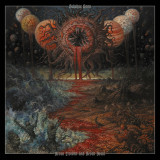
SULPHUR AEONs neuestes Werk ist gesegnet mit Kontrasten, klanglicher Ebbe und Flut. Ein Taifun kantiger Riffs und wilder Blastbeats, raffinierte Melodieschichten, dichte Atmosphäre und triumphal gesungene Refrains reißen dich mit. Ätherische Akustikgitarren, subtile Synthesizer, einen Hauch von Gothic ('The Yearning Abyss Devours Us'), satte Leads, E-Bow-Parts, heftige Aggression ('Arcane Cambrian Sorcery'), monumentale Schwere, die in hypnotische Gesangsmuster übergeht ('Seven Crowns And Seven Seals'), und ein großes Finale ('Beneath The Ziqqurrats') - "Seven Crowns And Seven Seals" überschreitet Genres; es wütet und zerstört, lullt dich im nächsten Moment in gefährlich täuschende Ruhe, nur um dich unwiderbringlich in den dunklen Strudel des Ozeans zu reißen. SULPHUR AEON meistern ihren durchdringenden Cinematic Death Metal der Extraklasse, gehen über sich hinaus und klingen dabei doch unverkennbar kohärent - perfekt eingefangen und verfeinert von den langjährigen Mitarbeitern Simon Werner und Michael Zech (Secrets Of The Moon, Bølzer etc.), während das Mastering von V. Santura (Triptykon, Dark Fortress) übernommen wurde. Was das Artwork betrifft, so haben SULPHUR AEON diesmal mit der Tradition gebrochen, wieder mit Ola Larsson zu arbeiten, und sich mit dem Italiener Paolo Girardi zusammengetan, um eine Lovecraft'sche Apokalypse darzustellen, die der Opulenz und Dynamik des Albums einen raueren Stil entgegensetzt.
Repress.
EYE is back. Metamujer marks the third installment on the Knekelhuis label and we’re extremely happy to release this document of another chapter in Laurène Exposito’s life. Recorded on various locations ranging from the Swiss mountains to the chalky coasts of Brittany, Metamujer is an 8-track ode to salty love and closeness to nature, a tribute to a modest lifestyle à la Henry David Thoreau. Far from being praise for self-sufficiency, this new LP is deeply influenced by Laurène’s environment. We can hear Korg MS-10 created synthetic waves (Sanatorium) and birds (Luscinia), but one can also catch her singing in Italian, one of 3 languages spoken in Switzerland. Still minimalist and yet more aesthetically diverse, her new sounds are on the edge of EBM and synth pop, between classic minimal wave tunes and rustic ballads on acid.
Fulco Ottervanger and Lander Gyselinck, you remember them from their debut album Duizeldorp which included cult classic Isabellade.
On October 27 they add the second album Altijd Bewust Bewegen to their discography.
On this album the duo goes in search of reasons for movement. Head and body harmoniously translated into Beraad-language. The two 2 improvisational athletes once again gracefully stretch themselves between the limits of gravity.
Admiration for movement culture takes them from gym to racetrack, from apps to abs. A breaststroke here, a backhand there. An aimless goalkeeper musing on a distant acquaintance. From village to town and back, the tandem rustles at to tennis lessons.
Talk about it with your coach.
Confidence Freaks Me Out is an exercise in patiently constructed joyous absurdity. Each compositional choice was guided by a desire to confound and amuse. Scaffolded by process-first mutant serialism and maximalist cheek, the album crams every inch of the canvas with stimulation, tempered by a lighthearted stupidity. It’s artrock with a bit of orchestral goof, a timid ensemble with party hats on, two composeurs playing musical parlour games
The music of Justin Walter veers between nebulous and numinous, coaxed from the translucent tonalities of his signature instrument, the EVI (Electronic Valve Instrument).
Destroyer, his latest, and third for Kranky, marks his most multifaceted work yet. Inspired by minimalistic urges (evading grandiosity, condensing scope, embracing spatial restraint) tempered with the drama of triptychs (becoming, destruction, aftermath), the album’s 11 tracks thread a keening suite of aching, opaque beauty, traced in absence and breath.
First begun in the no man’s land summer of 2020, Walter gradually amassed nearly two hours of demos, drafts, and ideas, then steadily whittled them to their essence. Destroyer enlists the sounds of a recently restored pump organ, adding pulses and quaking texture, but otherwise the album is a shimmering showcase of the EVI: miasmic, melodic, intuitive, infinite. It’s music of fraught devotion and uneasy peace, questing yet languorous, forever rapt and untethered.
2023 Repress!
A stunning follow-up to his late 2018 release. Mostly recorded live at the Apollo Hotel Amsterdam in 1991. This is a compilation of the ''Apollo Hotel CD box'', that Ronald made himself, for family and friends.. BIG tip!
Some words from the label:
From 1986 until 1992, Ronald had a residency in the lounge of Amsterdam’s Apollo Hotel. He would play there 5 days a week, for 5 hours a day. In 1991, throughout several sessions, he recorded himself on a cassette recorder. The recordings were ranging from re-interpreted cover versions to multiple own compositions.
The Apollo was particularly known for its sophisticated and elegant crowd. Guests would come to meet in the lounge to talk business, or end the day with a drink at the bar - dancing was never an option.
Listening to the album, one must wonder how some of this music would go hand in hand with a place like that. It seems Ronald gets lost in music and returns in unequally balanced patterns. Lounge sounds meet drum computer rhythms, punchy baselines, distorted space noises, reoccurring clarinet interludes and improvised piano solos.
Back then, just as now, Ronald never liked to be the center of attention. He simply tried to interact with the surrounding as a provider of the mood - as he explains himself.
Instruments
Live: Grand Piano, Yamaha QX1 Sequencer, 2x Yamaha TX7 Tone Generator, Drumtraks Sequential Circuits, Clarinet, Voice
Added at home: Yamaha DX7 Sounds, Roland R-8
Space Train: Kurzweil Piano, Yamaha DX7, Roland R-8, Soprano Sax, Voice
Recorded live at the Apollo Hotel Amsterdam in 1991, except 'Space train', which was recorded in Ronald’s living room.
All instruments played and arranged by Ronald Langestraat.
All tracks written an composed by Ronald Langestraat, except 'Lowdown' which was written by David Paich & Boz Scaggs, 'Give and take' which was written by Michael Shrieve, Tom Coster & Carlos Santana and 'Orpheus' which was written by David Sylvian.
In the early 1990s, a team of linguists, engineers, anthropologists, and archaeologists were tasked with constructing a type of communication that could transcend time. How might we converse with future civilizations when language may evolve or dissolve entirely? The result yielded the design of spike fields; a strange construction of granite thorns bursting from the earth to alert its viewers to the deadly uninhabitability of nuclear waste disposal sites. For Maria BC (they/them), this state of temporal focus molds the wanderings on their second full length album Spike Field. How do we connect with the weathered shadow of our experience, while envisioning the self a few steps ahead of us? While their debut album Hyaline (2022, Father/Daughter) explored grief and anxiety through a series of character-led accounts, Spike Field recognizes that the past will continue to lurk below the surface until we decide to break through the soil. Spike Field was recorded in the home of a family friend. The home featured an out-of-tune baby Steinway piano, complete with squeaky hammers and strange, sporadic sounds. The piano is sprinkled throughout the album, and features extensively on opener "Amber," showcasing Maria BC's looser, more extensive arrangements. The song flickers with electronic wonder, like a wave seeking out its station, before crashing into the angelic choral introduction of "Watcher". Strings, plucked guitar and buzzing swells accompany their classically-trained mezzo-soprano voice on "Return to Sender," a song that focuses on the frustrations and turmoil of being unable to reach a loved one--both physically and emotionally. Spike Field reminds us that despite our best efforts to bury certain aspects of ourselves, they will always lurk beneath the surface. Instead of ignoring the seeds striving to break through, we can point to these places with a curious grace, concocting a language that transcends words to converse with our previous selves. Maria BC pieces together juxtaposing sonic landscapes and oscillating vocals to represent the thread of miscommunication, or the failure of words, that weaves throughout the album, transforming it into a distinct and ever-evolving sonic tongue. If we listen, we might find something new within ourselves.
The central theme of Steady is perseverance. Each track is based on a personal story or a fleeting encounter with people these past few years, from close friends to total strangers, either at home or on night shift commutes. People navigating their own hardships, almost giving up but always struggling through. More broadly, it’s about multiplicity, and contradiction. These central figures displaying hope and determination within a city of development and neglect, uniformity and chaos - an unfiltered representation of a city with all its jagged edges, darkness, and shards of light. It's broken and disheveled, but never not beautiful, just like the people in it. Musically, Steady continues where Bleach (debut album) left off - a sonic language of glitch, decaying tape and analogue distortion through which hints of RnB and soulful ballads bleed through. With a greater emphasis on beats, albeit lopsided on pitch-shifted tape loops, Steady feels more self-assured, more confident, more recognisable. At the same time, it's never stable or predictable - choruses break down early, harmonies bend into beating microtones, tracks emerge before others have finished. The symphonic scope of Bleach is still retained in Steady though. This is music of motivic development, of micro and macro form, of meticulous refining. The work of two classically trained composers, the album's chaos is heavily considered and carefully shaped. Hours of improvisation sessions have since been painstakingly refined into ten distilled tracks, owing to Steady's three year gestation.
Auf „Blame It All On Love“, Poolsides viertem Studioalbum, verlässt Jeffrey Paradise (aka Poolside) seine eigene Komfortzone und taucht in die Tiefen seiner eigenen kreativen Stimme ein. Die elf Tracks sind funky, gefühlvoll, entspannt und voller Hooks, die Poolsides Sound zu ergreifenden Pop-Höhen erheben. Anstatt erneut seine elektronischen Fähigkeiten zu demonstrieren, markiert die aalglatte Produktion eine Rückkehr zu seinen Live-Musik-Wurzeln und findet Leichtigkeit in einfachen und strahlenden Klangschichten. Es ist ein wahres Produkt all der Orte, an denen er war, und der langen und abenteuerlichen Reise, die er unternommen hat, um zu diesem Moment zu gelangen, an dem es nichts mehr zu kämpfen oder zu beweisen, sondern es nur noch perfekte Grooves gibt.
Initial LOSER copies pressed on lovely Transparent Sun Yellow vinyl! This 2023 edition of The Shins's beloved second album, Chutes Too Narrow, celebrates the album's 20th anniversary with a fresh remaster by Adam Ayan, supervised by band leader James Mercer, and lovely new packaging for the vinyl. Following The Shins's breakout 2001 debut, Oh, Inverted World, singer/songwriter/guitarist James Mercer and drummer Jesse Sandoval moved from Albuquerque to Portland, OR and bassist Neal Langford was replaced with Dave Hernandez (ex-Scared Of Chaka), who played bass on the stand-out track from the first record, "New Slang." Chutes Too Narrow, their heavily anticipated follow-up, was recorded in James' basement home studio, with later mixing assistance from Phil Ek (Built to Spill, Modest Mouse, David Cross, Les Savy Fav, etc.). And, with 10 songs, clocking in at just over 30 minutes, Chutes Too Narrow is a brief yet entirely scintillating glimpse at chiming, reflective and perfectly skewed pop innovation. It was released to widespread acclaim in 2003, garnering Pitchfork's Best New Music, four stars from Rolling Stone, and raves from the New York Times, MOJO, the Village Voice, SPIN, and tons more. It subsequently made best-of-the-decade lists from The AV Club, NME, Paste, Pitchfork, and Uncut. Critically acclaimed on release, and widely considered one of the best albums of the 2000s. Remastered from original tapes by Adam Ayan at Gateway Mastering.
This 2023 edition of The Shins's beloved second album, Chutes Too Narrow, celebrates the album's 20th anniversary with a fresh remaster by Adam Ayan, supervised by band leader James Mercer, and lovely new packaging for the vinyl. Following The Shins's breakout 2001 debut, Oh, Inverted World, singer/songwriter/guitarist James Mercer and drummer Jesse Sandoval moved from Albuquerque to Portland, OR and bassist Neal Langford was replaced with Dave Hernandez (ex-Scared Of Chaka), who played bass on the stand-out track from the first record, "New Slang." Chutes Too Narrow, their heavily anticipated follow-up, was recorded in James' basement home studio, with later mixing assistance from Phil Ek (Built to Spill, Modest Mouse, David Cross, Les Savy Fav, etc.). And, with 10 songs, clocking in at just over 30 minutes, Chutes Too Narrow is a brief yet entirely scintillating glimpse at chiming, reflective and perfectly skewed pop innovation. It was released to widespread acclaim in 2003, garnering Pitchfork's Best New Music, four stars from Rolling Stone, and raves from the New York Times, MOJO, the Village Voice, SPIN, and tons more. It subsequently made best-of-the-decade lists from The AV Club, NME, Paste, Pitchfork, and Uncut. Critically acclaimed on release, and widely considered one of the best albums of the 2000s. Remastered from original tapes by Adam Ayan at Gateway Mastering.
country songwriter from Brooklyn's indie underground, Dougie Poole blurs the lines between genre and generation on his third solo album, The Rainbow Wheel of Death. Rooted in sharp songwritingvand the organic sounds of a live-in-the-studio band, it's a classic-sounding record for the modern world. The Rainbow Wheel of Death's title nods to the colorful pinwheel that appears onscreen whenever a computer's application stalls. For Poole _ who found himself working as a freelance computer programmer once the pandemic brought his touring schedule to a temporary halt in 2020 _ it's also a reference to the holding pattern that's left much of society feeling stuck, unable to move ahead in an uncertain world. That feeling was pervasive when he in his New York City bedroom and wrapping up the songwriting process in the recording studio itself. Once hailed as the "patron saint of millennial malaise" for his sardonic wit and topical, tongue-in-cheek songwriting, Poole broadens his reach here. "High School Gym" builds a bridge between 2020s lo-fi textures and 1980s pop vibes, while "Must Be In Here Somewhere" _ whose narrator sits at a lap top, searching through "every server burning in North Carolina" for a digital souvenir of a long-lost relationship _ mixes modern concerns with classic country instrumentation. If records like 2017's Wideass Highway and 2020's breakthrough release The Freelancer's Blues told stories about uninspired Millennials languishing in dead-end jobs and no-good relationships, then The Rainbow Wheel of Death focuses on more universal issues like mortality, love, and the passing of the time. With The Rainbow Wheel of Death, Dougie Poole breathes new life into country music, retaining the acclaimed elements of his previous work _ drum machines, synthesizers, and his deep-set voice _ while pushing toward something warm, organic, and prismatic.
Der vielschichtige schottische Künstler und Musiker Barry Can’t Swim veröffentlicht sein Debütalbum, „When Will We Land?“, auf Ninja Tune. Das elf Tracks lange Album, bewegt sich von Deep House bis Jazz, von Ambience bis zur perkussiven Ladung Afrobeat und ist sein bisher umfassendstes und vielfältigstes Projekt. Alles wird durch seinen einzigartigen Sinn für Zielstrebigkeit und die typische Lebhaftigkeit zusammengehalten; mit seiner geschickten Finesse ist es ein Album, das als eine Art musikalische Autobiografie fungiert.
Der in Edinburgh geborene Musiker erregte 2020 mit einer Reihe von Veröffentlichungen Aufmerksamkeit, bevor er beim Ninja-Tune-Label Technicolor für seine sensationelle EP „More Content“ aus dem Jahr 2022 unterschrieb. Billboard ernannte ihn zu einem ihrer „10 Dance Artists To Watch“, während die Single „Blackpool Boulevard“ auf der Playlist von BBC Radio 1 landete – der Radio-Legende Pete Tong war begeistert, während Tastemaker:innen wie The Blessed Madonna und Annie Mac große Fans wurden. „Man kann sein Debütalbum nur einmal machen.“, betont Barry Can’t Swim. „Deshalb möchte ich alle Elemente der Dinge präsentieren, die mir bis jetzt an der Musik Spaß machen.
American blues musician Buddy Guy is an exponent of Chicago blues and influenced many prominent guitarists, including Jimi Hendrix, Jimmy Page (Led Zeppelin), Eric Clapton, and John Mayer. His 1998 album Heavy Love is one of his fine blues-rock records. Besides two songs of his own material, he covered classics including Willie Dixon “I Just Want to Make Love to You", Tony Joe White "Did Somebody Make a Fool Out of You", ZZ Top "I Need You Tonight". It is heavier compared to many of his other recordings, but he still finds his way back to the blues.
Heavy Love is available as a 25th anniversary edition of 1500 individually numbered copies on pink & purple marbled vinyl, housed in a gatefold sleeve.
Nachfolger des von der Kritik gefeierten, selbstbetitelten Debütalbum, Vambo mit ihrem 2. Studioalbum. Zwölf Tracks dienen als Schaufenster für das beeindruckende musikalische Talent und die energiegeladenen Auftritte der Band. Die Songs bieten eine Mischung aus melodischen Refrains, knallharten Riffs und dynamischen Gitarrensoli und versprechen ein aufregendes Hörerlebnis. Das Album lässt sich sowohl von "klassischen" Rock-Sensibilitäten als auch von zeitgenössischen Einflüssen inspirieren und präsentiert eine frische und innovative Herangehensweise an das Genre. Produziert von Ray Stiles, ehemaliges Mitglied der 70er-Jahre-Glam-Rocker Mud und langjähriges Mitglied von The Hollies. Jack Stiles Gesang, mit seiner fesselnden Präsenz und kraftvollen Stimme, ist eine magnetische Kraft, an der Gitarre entfesselt Pete Lance eine donnernde Energie, die die Aufmerksamkeit des Publikums vom ersten Powerchord an auf sich zieht, David Flitt, ein dynamischer Schlagzeuger, der die treibende Kraft hinter Vambo ist, der Kraft und Subtilität verbindet. Schließlich noch James Scotts provokante Basslinien verleihen Vambos Musik Tiefe und Kraft. Wie in der "High Hopes"-Strecke des Classic Rock Magazine zu sehen ist, haben sich Vambo als aufstrebende Kraft in der Rockszene etabliert, die nicht zu übersehen ist. Als Live Band ausgiebig auf großen Festivals unterwegs, z.B. das Download Festival, das Isle of Wight Festival und das Stone Free Festival und als Support für Acts wie Jared James Nichols, Y&T, Praying Mantis, Stray und Cats in Space.
Seitdem seine Musik in Quentin Tarantinos Film "Django Unchained" sowie auf den Discovery Channel und National Geographic Kanälen zu hören war, kann Bruder Dege nicht länger behaupten, "eines der bestgehüteten Geheimnisse im tiefen Süden" zu sein. Dege ist Musiker, Schriftsteller, Arbeiter und Erbe einer langen Reihe ungewöhnlicher Charaktere, die im Süden der USA geboren und aufgewachsen sind. Wie das verrückte Liebeskind von Son House, Faulkner und Patti Smith hat sich Dege einen krummen Weg ins Gelobte Land gebahnt. Nach seinen beiden früheren gefeierten Soloalben ("Folk Songs Of The American Longhair" von 2009 und "How To Kill A Horse" von 2013) bietet "Scorched Earth Policy" eine Mischung aus neu aufgenommenen Studio-Songs, Demos, Coverversionen und Feldaufnahmen.
German jazz singer with Belgian roots Sophie Tassignon has built up a solid reputation in Germany. She has a whole series of well-received records to her credit, which not only showcase her musical versatility but also demonstrate what an incredible vocalist and composer she is. Sophie is a musical chameleon, constantly seeking to challenge and renew herself.
When the refugee crisis erupted and millions of Syrian refugees flocked to continental Europe in search of a better life and safety, it resulted in a lot of fear and opposition from the European population. The perception on refugees is often very negative and creates divisions on the political field.
When a shelter was started up two blocks from Sophie's home in Berlin, she decided to help and take care of some refugees. To get a better understanding on the culture and stories of those people and to bridge with our culture, she decided to study Arabic. Meanwhile, we are more than five years on, and not only is she proficient in Arabic, but she has also gained a better understanding of the culture and customs of the Arab community. Friendships for life were formed.
She decided to incorporate Arabic into her own musical language - jazz - fusing two worlds. From this was born the project and the eponymous record "Khyal. The word refers to the imagination and is literally translated as "remembering and/or longing for something from the (distant) past." With this project, Sophie especially wants to encourage tolerance and acceptance towards people regardless of their cultural background or religion and show how intercultural interaction can lead to very beautiful and artistic results.artwork &
New The Hague based recordlabel Otherminds is landing with their first ever release ’Symbolic Language’, from local cosmox.
From day one OTM witnessed his obsession for electronics. Manifested by throwing countless raves, playing otherworldly dj-sets, co-running an atomic studio bunker & label and making mind-bending music. Now it’s time for his solo vinyl debut.
The 5-track EP is a blend between IDM, ambient and techno influenced pieces. A story which symbolizes a deeply shared connection and a transformative period in which the producer expands his palette further into the sonic realm.
- 1: White Christmas
- 2: The Christmas Song
- 3: Winter Wonderland
- 4: Have Yourself A Merry Little Christmas
- 5: Last Christmas
- 6: O Holy Night
- 7: This Christmas
- 8: Same Old Lang Syne
- 9: Silent Night
- 10: I’ll Be Home For Christmas
- 11: Christmas In New York
- 12: Together
- 13: Happy Days
- 14: Feliz Navidad
- 15: It’s Christmas Time Again
The Backstreet Boys with a deluxe version of their first ever holiday album “A Very Backstreet Christmas”! It features 15 tracks including classics like “I’ll Be Home For Christmas”, “Last Christmas”, “Silent Night” and new future holiday mainstays like “Christmas In New York,” “Together,” and “Happy Days.”
This deluxe special edition is pressed on emerald green vinyl and includes two bonus tracks: “Feliz Navidad” and “Christmas Time Again”.
The debut recording by Setting, a trio comprising Nathan Bowles (solo/trio, Pelt, Black Twig Pickers); Jaime Fennelly (Mind Over Mirrors, Peeesseye); and Joe Westerlund (solo, Califone, Sylvan Esso, Jake Xerxes Fussell). Deluxe LP edition features 140g black virgin vinyl and a reverse board jacket with art by Timothy Breen. Deluxe CD edition features a gatefold jacket with art by Timothy Breen. RIYL: Popol Vuh, Brian Eno’s Ambient 4, Harmonia, The Necks. Setting, befitting its name which can be read as noun or verb, and simultaneously suggests the sun, or any star in the firmament from our earthbound perspective; a story and its surroundings, its scenic context or mise en scène; or a psychedelic experience, as in the prescription to mind one’s “set and setting” arose outdoors, uncontained and unconstrained by architecture. The group’s debut recording Shone a Rainbow Light On traverses textural, phosphorescent topography with a certified organic folk-engine. Kosmische correspondences are inevitable and valid, but also somewhat deceptive, given this meditative music’s terrestrial rootedness in the familiar natural world, more in native humus and humidity than in outer space. Fuelled by a vibratory hybrid of acoustic and electronic instrumentation, these four stately longform pieces sound like a UFO slowly sinking into a peat bog (or, as we call it in North Carolina, a pocosin). An instrumental trio comprising Nathan Bowles (solo/trio, Pelt, Black Twig Pickers) on strings, keys, and percussion; Jaime Fennelly (Mind Over Mirrors, Peeesseye) on harmoniums, synthesizers, and piano zither; and Joe Westerlund (solo, Califone, Sylvan Esso, Jake Xerxes Fussell) on drums, percussion, and metallophones, Setting established its own setting and found its footing in regularly scheduled improvisational sessions outside Westerlund’s home in Durham, North Carolina, beginning in 2021. The three players began as two, in the context of occasional Bowles and Westerlund percussion duo performances dating back to 2018. Fennelly provided the initial impetus to gather and play together with intentionality and discipline, as well as an harmonic adhesive and thickening agent in the grain and gravity of his harmonium and synthesizer. As always, Bowles’s background as a pianist and drummer informs his approach to banjo, imparting a woodiness, a piney verticality and resinous tang. Westerlund’s training with Milford Graves is apparent in his polyrhythmic flow and its correspondences to human circulatory and corporeal rhythms. They recorded their collective discoveries with engineer Nick Broste in the spring of 2022.The record begins, like the group’s name, and like the language of its unique instrumental interplay, with ambiguous grammar: “We Center,” the first and longest track at thirteen and a half minutes, builds patiently to a percolating climax of tidal heaving, with ceremonial connotations. “Zoetropics,” the shortest piece, follows, offering a more diaphanous counterpoint to the density of its predecessor. The zithery, shivering “A Sun Harp,” its title redolent of Sun Ra, showcases Westerlund’s unfettered drumming, which skitters restlessly until anchored, at its conclusion, by a minor bass progression. Finally, “Fog Glossaries” exhales through the maritime and meteorological evocations of its title, distant buoys clanging. Although certainly elements and strategies of so-called ambient and drone musical traditions are invoked and deployed, those diffuse terms feel inadequate to describe everything else happening here: the devotional valences, the minimalist rigor, and even submarine jazz inclinations perceptible beneath the surface. Throughout this four-movement program, which invites deep listening, it is often difficult to differentiate individual instruments from the massed choir of the group’s unified sonic presence. At times what sound like field recordings cicadas, birds, wind, water splash out of this slow but powerful current, only to be revealed as overtones produced by harmonium, banjo, or cymbals. Setting’s sound is fundamentally synthetic in the sense of synthesis, not artifice—in a manner remarkable for its almost entirely acoustic arsenal of instrumentation, often registering as the product of a single alien technology, perhaps the rainbow lights of that bog-marooned UFO. (“Setting,” of course, can also refer to a machine’s variable operational amplitude its temperature, volume, speed, elevation, etc.) Sometimes the most seemingly extraterrestrial lifeforms are in fact our unfamiliar earthbound neighbors. Despite the destruction of many such habitats, the coastal plains of eastern, tidewater North Carolina is home to more pocosins freshwater, evergreen wetlands with deep, acidic, sandy, peat soils than anywhere else in the world. These threatened peat-bog ecosystems are the only native environment to sustain the carnivorous Venus flytrap, among other oddities. The sonic ecosystem of Setting similarly deep, acidic, and boggy contains equivalent wonders, savage and delicate, for listeners willing to take the time to sink.
- 1: White Christmas
- 2: The Christmas Song
- 3: Winter Wonderland
- 4: Have Yourself A Merry Little Christmas
- 5: Last Christmas
- 6: O Holy Night
- 7: This Christmas
- 8: Same Old Lang Syne
- 9: Silent Night
- 10: I’ll Be Home For Christmas
- 11: Christmas In New York
- 12: Together
- 13: Happy Days
- 14: Feliz Navidad
- 15: It’s Christmas Time Again
The Backstreet Boys with a deluxe version of their first ever holiday album “A Very Backstreet Christmas”! It features 15 tracks including classics like “I’ll Be Home For Christmas”, “Last Christmas”, “Silent Night” and new future holiday mainstays like “Christmas In New York,” “Together,” and “Happy Days.”
This deluxe special edition is pressed on emerald green vinyl and includes two bonus tracks: “Feliz Navidad” and “Christmas Time Again”.
Auf ihrem umfangreichen neuen Album "Water Made Us" stellt die Chicagoer Musikerin und Dichterin Jamila Woods die Frage, was es bedeutet, sich der Liebe voll und ganz hinzugeben. Auf "Water Made Us" umarmt Jamila neue Genres, verspielte Melodien und hypnotisierende Wortspiele, während sie durch die berauschenden Turbulenzen von Liebeswracks und Zuflucht watet. Während Jamila auf "HEAVN" (2017) ihre Community innerhalb der schwarzen feministischen Bewegung feierte und auf "Legacy! Legacy!" (2019) ihre Lebenserfahrungen durch die Geschichten schwarzer und brauner Künstlerinnen und Künstler verarbeitete, ist "Water Made Us" eine völlig neue Art der Selbstoffenbarung und damit ihr bisher persönlichstes Album. "Water Made Us", das sie zusammen mit dem in LA ansässigen Produzenten McClenney aufgenommen hat und auf dem langjährige Freunde aus Chicago wie Saba und Peter CottonTale zu hören sind, ist ein weitläufiges und intimes Porträt der Selbstreflexion, das geschickt die verschiedenen Phasen einer Beziehung widerspiegelt: Die Anfänge, in denen man leicht Kompromisse eingeht, kokettiert und Spaß hat; das vorsichtige Aushandeln von Momenten des Konflikts oder der Verletzung; die Trauer über etwas Verlorenes; und die zärtliche Erkenntnis am Ende von allem, dass die Person, die gegangen ist, einen nie wirklich verlässt, sondern bei einem bleibt, während man bereit ist, es noch einmal zu versuchen, erfrischt und beruhigt. Der Titel des Albums - eine Zeile aus dem Highlight des Albums "Good News" - ist eine subtile Anspielung auf das berühmte Toni-Morrison-Zitat "All water has a perfect memory and is forever trying to get back to where it was". Es ist dieses Gefühl - der Erinnerung, des Ortes und der Rückkehr - das als Pfeiler für den Bogen des Albums dient. "Water Made Us" erinnert uns daran, dass die Liebe im besten Fall ein warmer, stiller Ozean ist. Tief, schimmernd und endlos in seinem Wunder. Und im schlimmsten Fall kann die Liebe ein reißender Strom sein, der uns so weit von uns selbst entfernt, dass wir kaum den Weg zurückfinden, ja nicht einmal mehr wissen, wie wir schwimmen sollen. Und doch ergibt sich Jamila dieser Brandung - jeder Welle und jedem Sog - weil vielleicht sogar die schmerzhaftesten Enden eine Einladung sein können, die sie zurück nach Hause ruft, zurück ans Ufer, zurück zu sich selbst.
SULPHUR AEONs neuestes Werk ist gesegnet mit Kontrasten, klanglicher Ebbe und Flut. Ein Taifun kantiger Riffs und wilder Blastbeats, raffinierte Melodieschichten, dichte Atmosphäre und triumphal gesungene Refrains reißen dich mit. Ätherische Akustikgitarren, subtile Synthesizer, einen Hauch von Gothic ('The Yearning Abyss Devours Us'), satte Leads, E-Bow-Parts, heftige Aggression ('Arcane Cambrian Sorcery'), monumentale Schwere, die in hypnotische Gesangsmuster übergeht ('Seven Crowns And Seven Seals'), und ein großes Finale ('Beneath The Ziqqurrats') - "Seven Crowns And Seven Seals" überschreitet Genres; es wütet und zerstört, lullt dich im nächsten Moment in gefährlich täuschende Ruhe, nur um dich unwiderbringlich in den dunklen Strudel des Ozeans zu reißen. SULPHUR AEON meistern ihren durchdringenden Cinematic Death Metal der Extraklasse, gehen über sich hinaus und klingen dabei doch unverkennbar kohärent - perfekt eingefangen und verfeinert von den langjährigen Mitarbeitern Simon Werner und Michael Zech (Secrets Of The Moon, Bølzer etc.), während das Mastering von V. Santura (Triptykon, Dark Fortress) übernommen wurde. Was das Artwork betrifft, so haben SULPHUR AEON diesmal mit der Tradition gebrochen, wieder mit Ola Larsson zu arbeiten, und sich mit dem Italiener Paolo Girardi zusammengetan, um eine Lovecraft'sche Apokalypse darzustellen, die der Opulenz und Dynamik des Albums einen raueren Stil entgegensetzt.
SULPHUR AEONs "Seven Crowns And Seven Seals" ist der offensichtliche und - zumindest im Moment - möglicherweise auch der Höhepunkt einer Band, die besessen von ihrer Kreativität ist und sich leidenschaftlich und bereitwillig der Herausforderung stellt, Musik zu produzieren, die so zeitlos und originell ist wie das literarische Vermächtnis von H.P. Lovecraft. Stürzen Sie sich in die dunklen Gewässer und lassen Sie sich von der Flut des Ozeans verschlingen...
GER SMILE zeigen mit ihrem hervorragenden Debut PRICE OF PROGRESS leichtfüßig auf, dass Post Punk im Jahre 2023 noch immer erfrischend klingen kann. Sie nehmen ihre Referenzen nicht als Dogma, bleiben experimentell, eigensinnig. Erzählerisch, eingängig, rough und anschmiegsam verschmelzen dabei die feinsinnigen, poetischen Beobachtungen von Sängerin Rubee True Fegan (USA) mit dem versierten Sound einer Band, die von Produzent Olaf Opal genau dahin gebracht wurde, wo sie hingehört: an den Startblock innovativer, kluger und sinnlicher Gitarrenmusik. In PRICE OF PROGRESS manifestiert sich das Zusammenspiel aus musikalischem Sturm und Drang und der Reife einer reflektierten Erzählperspektive. Was hier entstanden ist, klingt nun, 2023, in seiner jugendlichen Frische durchaus nach einem Debut - gleichzeitig aber nach dem Werk einer erfahrenen, über lange Zeit gewachsenen Band. Nur deutsch klingt es nicht, was sicher im Wesen von Sängerin Rubees True Fegans Heimat Albuquerque (New Mexico) begründet liegt, gleichsam aber in der Vielseitigkeit, die sich SMILE erlauben - und ihrer einhergehenden Virtuosität an den Instrumenten. SMILE versuchen sich dabei - einem Post-Punk britischer Machart folgend - durchaus in homogener Geradlinigkeit (Herrengedeck), lassen Kühle zu (Machine Dreaming) und folgen einem düsteren Ernst (Säge). Diese Facetten aber vermengen sich mit einer heiteren Experimentierfreude (Stalemate, Produce, Hungry Ghosts), mit Humor (Doohickey), mit verträumter Beschwingtheit (Commuter) und Genresprengender Pop-Af finität (Protection). So zeigt sich dieses stilsichere Album in einer Vielseitigkeit, die heute selten zu finden ist - und klingt trotzdem wie aus einem Guss. Auch die ersten drei Singles zeigen gut das Panorama, das SMILE mit ihrem Debut aufmachen: Dog In The Manger erinnert zunächst an Talk Talks Happiness Is Easy, wechselt aber nach dem Drum-Intro schnell die Spur. Der Opener der Platte stellt Rubee als Sängerin vor, die, trotz einer gewissen Gelassenheit in der Performance, von Wut und Traurigkeit getrieben ist. Der Text ist eine politische Reflexion, ausgelöst vom gekippten Abtreibungsrecht in den USA, das sich mit einer alten griechischen Fabel verbindet. So startet das Album mit einem Rätsel und offenbart, das Musik noch immer eine Waffe sein kann - aus Sound, Herz und Verstand. In Doohickey, einem der beschwingtesten Songs der Platte, kramt Rubee in ihrer Erinnerung, besucht ihre verstorbene Großmutter, eine unfreundliche alte Frau, die in ihrem Haus hortete, was sie fand. So entsteht eine Kurzgeschichte über die weirdest person alive und zeigt SMILE als Band, in der Text und Musik nicht konkurrieren, sondern stets Symbiose feiern. Zackig und temporeich wie das erzählte Leben kommen auch Gitarren und Rhythmussektion daher, finden zu einer soghaften Dynamik, ohne mit billigen Sing-alongs zu arbeiten. Protection, die dritte Single, ist wohl das eigensinnigste Stück der Platte, erzeugt, gesanglich pendelnd zwischen Blood Orange und Bands wie Siouxsie & The Banshees oder Bow Wow Wow, eine breite und intensive Palette, bringt einen The Fall-artigen Witz ein und wird zwischen den vermittelten Gefühlen zur Achterbahnfahrt. Das Stück schrieb Gitarrist Lars Fritzsche, mit dem Ziel, einen klassischen Hit zu schaffen (gelungen, wenn auch nicht klassisch!) - und schuf in der Offenheit des Songs dabei eine perfekte Fläche, die nun gleich mehrere Stimmen der Band versammelt. Im Zentrum: Rubee, die hier einen Text performt, der zwischen Traum und Cut-up ihren poetischen Glanz scheinen lässt. Die aus der Hüfte geschüttelte Dramaturgie ist dabei Paradebeispiel für die Innovation einer der spannendsten neuen Gitarrenbands, die nun auf dem Indielabel Siluh (Wien) eine Heimat zwischen Köln, Bonn und Albuquerque gefunden hat. Wahnsinn! (Hendrik Otremba)
ENG SMILE IS A POST-PUNK BAND WITH A SINGER, WHO PREFERS NOT TO SING. INSTEAD, SHE INTONES HER POETIC STORIES SPIKED WITH PERSONAL REFLECTIONS. With their excellent debut PRICE OF PROGRESS, SMILE light-footedly show that post punk can still sound refreshing in 2023. They don't take their references as dogma, remain experimental, stubborn. Narrative, catchy, rough and cuddly, the subtle, poetic observations of singer Rubee True Fegan (USA) merge with the accomplished sound of a band that producer Olaf Opal has put exactly where it belongs: on the starting block of innovative, clever and sensual guitar music. In PRICE OF PROGRESS, the interplay of musical Sturm und Drang and the maturity of a reflective narrative perspective manifests itself. Ltd pink vinyl LP!
GER SMILE zeigen mit ihrem hervorragenden Debut PRICE OF PROGRESS leichtfüßig auf, dass Post Punk im Jahre 2023 noch immer erfrischend klingen kann. Sie nehmen ihre Referenzen nicht als Dogma, bleiben experimentell, eigensinnig. Erzählerisch, eingängig, rough und anschmiegsam verschmelzen dabei die feinsinnigen, poetischen Beobachtungen von Sängerin Rubee True Fegan (USA) mit dem versierten Sound einer Band, die von Produzent Olaf Opal genau dahin gebracht wurde, wo sie hingehört: an den Startblock innovativer, kluger und sinnlicher Gitarrenmusik. In PRICE OF PROGRESS manifestiert sich das Zusammenspiel aus musikalischem Sturm und Drang und der Reife einer reflektierten Erzählperspektive. Was hier entstanden ist, klingt nun, 2023, in seiner jugendlichen Frische durchaus nach einem Debut - gleichzeitig aber nach dem Werk einer erfahrenen, über lange Zeit gewachsenen Band. Nur deutsch klingt es nicht, was sicher im Wesen von Sängerin Rubees True Fegans Heimat Albuquerque (New Mexico) begründet liegt, gleichsam aber in der Vielseitigkeit, die sich SMILE erlauben - und ihrer einhergehenden Virtuosität an den Instrumenten. SMILE versuchen sich dabei - einem Post-Punk britischer Machart folgend - durchaus in homogener Geradlinigkeit (Herrengedeck), lassen Kühle zu (Machine Dreaming) und folgen einem düsteren Ernst (Säge). Diese Facetten aber vermengen sich mit einer heiteren Experimentierfreude (Stalemate, Produce, Hungry Ghosts), mit Humor (Doohickey), mit verträumter Beschwingtheit (Commuter) und Genresprengender Pop-Af finität (Protection). So zeigt sich dieses stilsichere Album in einer Vielseitigkeit, die heute selten zu finden ist - und klingt trotzdem wie aus einem Guss. Auch die ersten drei Singles zeigen gut das Panorama, das SMILE mit ihrem Debut aufmachen: Dog In The Manger erinnert zunächst an Talk Talks Happiness Is Easy, wechselt aber nach dem Drum-Intro schnell die Spur. Der Opener der Platte stellt Rubee als Sängerin vor, die, trotz einer gewissen Gelassenheit in der Performance, von Wut und Traurigkeit getrieben ist. Der Text ist eine politische Reflexion, ausgelöst vom gekippten Abtreibungsrecht in den USA, das sich mit einer alten griechischen Fabel verbindet. So startet das Album mit einem Rätsel und offenbart, das Musik noch immer eine Waffe sein kann - aus Sound, Herz und Verstand. In Doohickey, einem der beschwingtesten Songs der Platte, kramt Rubee in ihrer Erinnerung, besucht ihre verstorbene Großmutter, eine unfreundliche alte Frau, die in ihrem Haus hortete, was sie fand. So entsteht eine Kurzgeschichte über die weirdest person alive und zeigt SMILE als Band, in der Text und Musik nicht konkurrieren, sondern stets Symbiose feiern. Zackig und temporeich wie das erzählte Leben kommen auch Gitarren und Rhythmussektion daher, finden zu einer soghaften Dynamik, ohne mit billigen Sing-alongs zu arbeiten. Protection, die dritte Single, ist wohl das eigensinnigste Stück der Platte, erzeugt, gesanglich pendelnd zwischen Blood Orange und Bands wie Siouxsie & The Banshees oder Bow Wow Wow, eine breite und intensive Palette, bringt einen The Fall-artigen Witz ein und wird zwischen den vermittelten Gefühlen zur Achterbahnfahrt. Das Stück schrieb Gitarrist Lars Fritzsche, mit dem Ziel, einen klassischen Hit zu schaffen (gelungen, wenn auch nicht klassisch!) - und schuf in der Offenheit des Songs dabei eine perfekte Fläche, die nun gleich mehrere Stimmen der Band versammelt. Im Zentrum: Rubee, die hier einen Text performt, der zwischen Traum und Cut-up ihren poetischen Glanz scheinen lässt. Die aus der Hüfte geschüttelte Dramaturgie ist dabei Paradebeispiel für die Innovation einer der spannendsten neuen Gitarrenbands, die nun auf dem Indielabel Siluh (Wien) eine Heimat zwischen Köln, Bonn und Albuquerque gefunden hat. Wahnsinn! (Hendrik Otremba)
ENG SMILE IS A POST-PUNK BAND WITH A SINGER, WHO PREFERS NOT TO SING. INSTEAD, SHE INTONES HER POETIC STORIES SPIKED WITH PERSONAL REFLECTIONS. With their excellent debut PRICE OF PROGRESS, SMILE light-footedly show that post punk can still sound refreshing in 2023. They don't take their references as dogma, remain experimental, stubborn. Narrative, catchy, rough and cuddly, the subtle, poetic observations of singer Rubee True Fegan (USA) merge with the accomplished sound of a band that producer Olaf Opal has put exactly where it belongs: on the starting block of innovative, clever and sensual guitar music. In PRICE OF PROGRESS, the interplay of musical Sturm und Drang and the maturity of a reflective narrative perspective manifests itself. Ltd pink vinyl LP!
Die Musik von Arabrot ist zeitlos. Gerade wenn man glaubt, einen Einfluss oder Bezugspunkt ausgemacht zu haben, entzieht sie sich dem Zugriff, dreht und wendet sich in unerwartete Richtungen und formt einen Sound, der wirklich einzigartig ist. In den letzten zwei Jahrzehnten hat sich Arabrot durch mehrere Iterationen gewandelt; sie haben verschiedene Formen und Größen ausprobiert, verschiedene Stimmungen aufgenommen und die Außengrenzen verschiedener Genres erkundet und klangen dabei nie weniger als ganz sie selbst. 2023 erscheint ihr zehntes Album, Of Darkness and Light - ein Grund zum Feiern. Kjetil Nernes war der Kern und die Konstante von Arabrot, und seit einiger Zeit schlägt neben ihm ein weiteres Herz im perfekten Gleichklang. Karin Park, eine Partnerin im Leben, in der Liebe und in der Musik, trägt seit zehn Jahren in unterschiedlichem Maße zu Arabrot bei, und auf Of Darkness and Light ist ihre Präsenz sowohl gefestigt als auch verstärkt. Die beiden leben zusammen in einer Kirche in dem schwedischen Dorf, in dem Karin aufgewachsen ist, und haben sich ihr eigenes Reich geschaffen, in dem sie ihre Kinder, ihr Handwerk und ihre kreativen Visionen pflegen. Of Darkness and Light brauchte einige Zeit, um Gestalt anzunehmen. Der Lebenslauf von Produzent Alain Johannes liest sich wie ein Who's Who der Rockmusik. Er ist selbst ein versierter Musiker (er spielte mit PJ Harvey, Queens of the Stone Age und Them Crooked Vultures und hatte auch seine eigene Band Eleven) und verfügt über langjährige Erfahrung als Produzent. Es war seine Arbeit an Mark Lanegans Album Straight Songs of Sorrow aus dem Jahr 2020, die Kjetil auf ihn aufmerksam machte, bevor Kismet eingriff und die beiden zusammenbrachte. Alain erklärte, dass "mein Bauchgefühl immer richtig ist" und zog im August 2022 ins Djura Missionshus, auch bekannt als die Kirche von A°rabrot, um mit der Arbeit zu beginnen. Das Trio verbrachte mehrere Wochen damit, die Arbeit mit dem Familienleben zu verbinden und die Puzzleteile zusammenzusetzen, aus denen sich Of Darkness and Light zusammensetzt - ihr erstes Album, das komplett in der Kirche aufgenommen wurde. Das Ergebnis ist ein echtes Rockalbum - unter der elektrisierenden Fassade aus flirrenden Synthesizern und raffiniertem Glitzern schlägt ein schweres Rockherz. Die Worte werden dem unbändigen, konkupiszenten Verlangen kaum gerecht, das sich hinter ihrem Schlachtruf We Want Blood verbirgt - einem hymnischen, mit den Füßen stampfenden Vorstoß, der in der Mitte des Albums liegt. An anderer Stelle stehen düstere Mörderballaden neben feierlichen "Fuck Yeah"-Momenten der Freude; ihre reduzierte Herangehensweise an die Instrumentierung schmälert nicht den Reichtum ihres Sounds. Für Freunde von SWANS, KILLING JOKE, WOVENHAND, CHELSEA WOLFE, THE MELVINS, CAPTAIN BEEFHEART, NINE INCH NAILS Ltd Pink Single Colour LP (We Want Blood Edition), Gatefold Cover
Since forming in 1999, Suishou No Fune (A Ship Of Crystal), the vehicle for long-term musical collaborators Pirako Kurenai (guitar, voice) and Kageo (guitar), have been one of the most compelling groups in the Japanese underground. Their long, languorous songs are devastating in their simplicity, as though the gently sung ballads of the Velvet Underground’s third album were re-scored by the legendary Japanese free-rock gang, Les Rallizes Denudes. Their new album, 風は春、空は虹、愛は波間に隠れている (The wind is spring -. There is a rainbow in the sky - Love is hiding in the waves.), documents a live performance from May 2021, at Silver Elephant, where the duo are joined by Matsuedo Hideo on bass, and Mark Anderson (Greymouth, Mysteries Of Love) on drums.
The duo of Pirako Kurenai and Kageo have come a long way since their early performances and self-released CD-Rs – in the intervening decades, they’ve released albums on P.S.F., Holy Mountain, Important, Archive, 8mm and Essence, amongst others, each album another manifestation of the duo’s ever-changing same. You can hear them patiently toiling over these beauteous songs, with their choral melodies and lush waves of tonology, Kageo’s guitar radiating bejewelled chimes and dense passages of texture, pulling the songs into a black hole of quietude and sadness. And as Kurenai once told journalist Phil Kaberry, “Suishou No Fune’s songs, sounds and words are often born from heartrending feelings like sadness and pain”.
The wind is spring. There is a rainbow in the sky. Love is hiding in the waves begins with the deep blues of “Cherry”, a drawn-out drift-song that pivots on a most elegant two-chord mantra, as Kurenai sings, siren-like, amidst the sheets of noise Kageo peels from six strings. There’s something painterly about the duo’s playing here, and indeed, Kageo was a painter and Kurenai was a doll maker and watercolour painter when they met in the late ‘90s. On the flip side, a spare, spaced-out improvisation, “A Rainbow Is Floating”, acts as a prelude to “Endless Descent”, one of Suishou No Fune’s most remarkable songs, where a mesmeric guitar line endlessly coils and twines around the flicker and toll of Kurenai’s hypnotic one-chord strum. It’s a bruised, quietly desperate ending to an album that has an achroamatic air, as though the songs were transmitting to a cabal of lost spirits.
Black vinyl, in 3 colour variations of silkscreened jacket with obi in black or kraft, with inserts and a postcard Liner notes by Jon Dale Printed by Alan Sherry
Now comes the vinyl LP format of the album with reduced track listing to fit on one disc. After their previous two more concept- based releases, 'David Gordon Trio Speaks Latin' and 'Alexander Scriabin's Ragtime Band', the second of which was Mojo Magazine's jazz CD of the year, the trio returns to its roots with a elease entirely of original compositions from the pen of award- winning composer/ pianist David Gordon. A heady mixture of innovation, deep understanding of musical traditions, spontaneous wit, rich melodic language and deep grooves ensures a musical result that couldn't be mistaken for any other trio working in the jazz world today.
- A1: Tower Of Meaning I
- A2: Tower Of Meaning Ii
- A3: Tower Of Meaning Iii
- A4: Tower Of Meaning Iv
- A5: Corky I / White Jet Set Smoke Trail I
- A6: Consideration
- B1: Tower Of Meaning V
- B2: Tower Of Meaning Vi
- B3: Tower Of Meaning Vii
- B4: Tower Of Meaning Viii
- B5: Tower Of Meaning Ix / Corky Ii
- C1: Tower Of Meaning X
- C2: Give It To The Sky
- D1: Tower Of Meaning Xi
- D2: Tower Of Meaning Xii
- D3: Corky Iii / Tower Of Meaning Xiii
- D4: White Jet Set Smoke Trail Ii
Black vinyl[26,01 €]
Im Herbst 2023 erscheint bei Erased Tapes das Album Give It to
the Sky: Arthur Russell"s Tower of Meaning Expanded. Bei der
vom Komponisten und Producer Peter Broderick und dem 12-
köpfigen Ensemble 0 aus Frankreich aufgenommenen Version,
handelt es sich um eine erweiterte Neuinterpretation von Arthur
Russells minimalistischer Orchesterkomposition "Tower of
Meaning", die erstmals im Jahr 1983 veröffentlicht wurde. "Give
It to the Sky.." vereint zudem auch unveröffentlichte Stücke von
Russell, die überarbeitet und neu aufgenommen wurden. Mit
ihrer umwerfenden, insgesamt 80 Minuten langen Hommage
hauchen Broderick und Ensemble 0 dem "Tower of Meaning"
neues Leben ein und verknüpfen diesen minimalistischen
Meilenstein mit etlichen verlorenen Songideen aus Russells
Nachlass. Das komplette Album, das so gut wie ohne Overdubs
auskommt, wurde live in einem kleinen Theater im Südwesten
Frankreichs eingespielt. Gewiss war Russell nie ein Freund
endgültiger Versionen. Er dachte kontinuierlich über die
Möglichkeiten eines Stücks nach und fragte sich, was es sonst
noch alles sein oder werden könnte. "Give it to the Sky" knüpft
ganz klar an diese Herangehensweise an, indem es "Tower of
Meaning" als grobes Framework nutzt, um darauf aufzubauen,
diesen atmenden Kern nach oben und nach außen zu erweitern
- und insgesamt etwas entstehen zu lassen, das man ganz klar
in Russells wundersam-paradoxer Welt verorten kann. Auch
"Give it to the Sky" kann somit keineswegs als letztes Wort oder
ultimative Interpretation gedacht sein. Broderick und Ensemble
0 sind längst darüber im Austausch, welche Formen es auf der
Bühne annehmen oder wohin es sonst führen könnte.
- 1: Tower Of Meaning I
- 1: 2Tower Of Meaning Ii
- 1: 3Tower Of Meaning Iii
- 1: 4Tower Of Meaning Iv
- 1: 5Corky I / White Jet Set Smoke Trail I
- 1: 6Consideration
- 1: 7Tower Of Meaning V
- 1: 8Tower Of Meaning Vi
- 1: 9Tower Of Meaning Vii
- 1: 0Tower Of Meaning Viii
- 1: Tower Of Meaning Ix / Corky Ii
- 2: 1Tower Of Meaning X
- 2: Give It To The Sky
- 2: 3Tower Of Meaning Xi
Clear vinyl[25,17 €]
Im Herbst 2023 erscheint bei Erased Tapes das Album Give It to
the Sky: Arthur Russell"s Tower of Meaning Expanded. Bei der
vom Komponisten und Producer Peter Broderick und dem 12-
köpfigen Ensemble 0 aus Frankreich aufgenommenen Version,
handelt es sich um eine erweiterte Neuinterpretation von Arthur
Russells minimalistischer Orchesterkomposition "Tower of
Meaning", die erstmals im Jahr 1983 veröffentlicht wurde. "Give
It to the Sky.." vereint zudem auch unveröffentlichte Stücke von
Russell, die überarbeitet und neu aufgenommen wurden. Mit
ihrer umwerfenden, insgesamt 80 Minuten langen Hommage
hauchen Broderick und Ensemble 0 dem "Tower of Meaning"
neues Leben ein und verknüpfen diesen minimalistischen
Meilenstein mit etlichen verlorenen Songideen aus Russells
Nachlass. Das komplette Album, das so gut wie ohne Overdubs
auskommt, wurde live in einem kleinen Theater im Südwesten
Frankreichs eingespielt. Gewiss war Russell nie ein Freund
endgültiger Versionen. Er dachte kontinuierlich über die
Möglichkeiten eines Stücks nach und fragte sich, was es sonst
noch alles sein oder werden könnte. "Give it to the Sky" knüpft
ganz klar an diese Herangehensweise an, indem es "Tower of
Meaning" als grobes Framework nutzt, um darauf aufzubauen,
diesen atmenden Kern nach oben und nach außen zu erweitern
- und insgesamt etwas entstehen zu lassen, das man ganz klar
in Russells wundersam-paradoxer Welt verorten kann. Auch
"Give it to the Sky" kann somit keineswegs als letztes Wort oder
ultimative Interpretation gedacht sein. Broderick und Ensemble
0 sind längst darüber im Austausch, welche Formen es auf der
Bühne annehmen oder wohin es sonst führen könnte.
Der renommierte Blues-Gitarrist und Sänger Jim Kahr hat die Musikwelt mit seinem neuesten Meisterwerk verzaubert: „Keepin‘ It Hot“. Das lang erwartete Album ist eine eindrucksvolle Sammlung von 9 selbst komponierten Tracks und 2 Bonus- Cover-Versionen, die die Seele berühren und das Feuer des Blues neu entfachen.
Jahrelange Arbeit floss in die Entstehung dieser Albumveröffentlichung, das in Memphis vom renommierten Grammy-Preisträger JIM GAINES aufgenommen wurde und nun auf dem Label Peppercake (ZYX) erscheint.
Mit ihrem fünften Album "Calling the Dogs" setzen Citizen ihre Bemühungen fort, melancholische, energiegeladene Rockmusik zu machen, die sich nicht auf einen einzigen Sound festlegen lässt, sondern eine Vielzahl von Einflüssen einbezieht. Produziert von Rob Schnapf (Saves the Day, Joyce Manor, Elliott Smith) ist "Calling the Dogs" ein Album, das mit dem Blick nach innen beginnt und mit dem Blick nach außen schließt. Es ist ein Album, das sich mit den Menschen beschäftigt, die wir durch die Menschen um uns herum werden. Es läutet nicht nur personell eine neue Ära der Band ein, sondern atmet auch thematisch neue Luft. Es ist ein Album der Selbstreflexion, aber auch eines, das die Wut auf direktere Weise als je zuvor zum Ausdruck bringt. Mit Einflüssen von Künstlern wie den Ramones, Violent Femmes und Bloc Party fühlt sich "Calling the Dogs" wie ein neues Kapitel für Citizen an. Songs wie der Opener "Headtrip" und die Leadsingle "If You're Lonely" wirken wie typische Citizen-Songs, die von Produzent Rob Schnapf mit einer neuen Energie versehen wurden. Wie schon bei ihrem 2021er Album "Life In Your Glass World" ist bei Songs wie "Hyper Trophy" und dem groovigen "Can't Take It Slow" ein deutlicher Einfluss des NYC-Garage-Rock-Revivals zu erkennen. Aber Citizen lässt auf "Calling the Dogs" nie eine einzige Stimmung zu lange bestehen - auf der Platte gibt es Momente der Pop-Seligkeit, der Punk-Aggression und der üblichen Citizen-Melancholie. Auf der Grundlage ihrer persönlichen Erfahrungen und ihres kollektiven musikalischen Könnens haben Citizen ein Album geschaffen, das Grenzen überschreitet und den Hörer herausfordert, seine eigenen emotionalen Landschaften zu erkunden. Für Fans von Turnstile, Fiddlehead, Angel Du$t, Militarie Gun, Drug Church, Narrow Head.
- Ain’t Gotta Do It
- Spinning Round (Feat. Viktoria Tolstoy)
- Who’s Right, Who’s Wrong
- I Had To Learn Not To Care
- Moonlight (Feat. Seven)
- Turn The Lights Down Low (Feat. Kim Sanders)
- Carnaval De La Gente (Feat. Bireli Lagrène)
- Soul Searching (Feat. Nils Landgren)
- Walk Away (Feat. Randy Brecker)
- Naked Funk
- Keep On Running (Feat. Pete York)
- Wade Groove
- I’ll Do It Anyway (Feat. Ida Sand)
- Paradox Jam (Feat. Magnus Lindgren)
- Another Star
A warm, loving collection of electropop, ‘I Made an Album’ was recorded and produced entirely by Daði Freyr: every programmed note, every melody, every harmony and every beat has come from him alone in his small studio. “I basically wanted this to be a very true record, to my sound and to what I've been working towards for the past four years”. With themes of reflection and appreciation for both fans and loved ones, the songs in this collection are defined by an innate sense of niceness: there are no tricks or twists, no snark, just genuine good energy. A debut English language record that gives Daði’s dedicated fan base everything they know and love, whilst proving that he's an artist with plenty more to offer. He made an album and it’s going to get you dancing all night.
The iconic voice of Luzmila Carpio rings out from the Andes, spreading messages of indigenous struggle, female empowerment and unceasing love for both the people and planet around us. An undeniable icon of Bolivian Andean culture whose career spans multiple decades, Luzmila has released more than 25 albums (there’s a reason that Rolling Stone described her as”one of the most prolific indigenous singers of South America”), inspiring millions while singing in both her native Aymara-Quechua language and Spanish. Yet Luzmila Carpio isn’t someone who’s content to simply rest on her laurels; she continues to take risks and push her music into vibrant new soundworlds. On new album Inti Watana: El Retorno del Sol (her first LP in a decade), she’s teamed up with Argentinian producer Leonardo Martinelli (a.k.a. Tremor), a ZZK veteran who’s spent the bulk of his career finding the common ground between Latin American folk rhythms and modern electronics. Building off the momentum created by 2015’s Luzmila Carpio Meets ZZK collection in which her music was reworked by not only Tremor, but standout electronic artists like Nicola Cruz, Chancha Vía Circuito and El Búho this new album is meant to stretch across genres, generations and continents, with Luzmila’s sonorous, occasionally birdsong-inspired vocalizations gracefully gliding amongst ambient textures, programmed beats and (of course) a bevy of traditional instrumentation from around the globe. Over the course of the LP, Bolivian charangos and quenas sit comfortably alongside the sounds of harmonium, violin, acoustic and electric guitar, Argentinian bombo leguero and sacha guitar, Armenian duduk and a litany of Asian percussion. Inti Watana: El Retorno del Sol which will be accompanied by a full length documentary might not sound like previous Luzmila Carpio releases, but on a spiritual, political and lyrical level, her core values remain unchanged. A native of Bolivia’s Potosí region, she’s long been a beacon for indigenous communities in not just her home country, but throughout Latin America, her voice inspiring joy and pride amongst ancient peoples whose culture and inherent beauty are often overlooked. Her pursuit of music a field traditionally dominated by men in Andean communities long ago made her a pillar of women’s empowerment, but Carpio has also been a vocal proponent for social change, using her influence to advocate not just for the rights of women, but for the protection and increased visibility of all indigenous people. Yet it’s the planet itself that Carpio is most passionate about, and she’s devoted much of her new album to conversations with Mother Earth and Father Sun
- A1: Dual To The Death (Outro)
- A2: Tinkerhatfield
- A3: Me Love Me A Lot
- B1: Tanoy
- B2: Slowchain
- C1: Hense The Name
- C2: Remains
- D1: Tubular Heaven
- D2: Acidjamprophet12
- E1: Made Up Reality
- E2: Drag A Friend
- E3: Ibogastomp145
- F1: Life Is A Glitch And Than You Die
- F2: Kaal Ii9
- F3: Gums
- G1: Intentionally Beat
- G2: Daydreamdenhaag (070)
- H1: Bubbles (Korrel - P155)
- H2: Dlpfc
- I1: The Memory Palace
- I2: Sensed
- J1: Onehundredand64 (Ft Spekki Webu)
In a realm where the threads of fate intertwined with the tapestry of existence, there existed a timeless construct we call “MENG”. This transcendental domain pushed a sanctuary where an unholy wisdom was safeguarded. Within its twenty-two walls, the experiences of countless sages and seekers resided, forming a reservoir of enlightenment, of vision and of identity.
Among the enigmatic texts that adorned the shelves of The Memory Palace, one stood out—the "Tubular Heaven," a chapter that held the essence of the universe's patterns and transformations. The book we speak of is the Book of Change - I Ching. Legend has it that the Memory Palace embodied the vibrations of those who sought its wisdom, guiding them to the Slow-Chain’s pages where hexagrams unveiled the secrets of existence.
Amidst this cosmic dance of knowledge, there lived a young wanderer whose name we do not say out loud. Driven by a deep yearning for understanding, this Warrior ventured into the city of Tanoy. With every step, he felt the resonance of centuries long gone, as if the walls whispered to him the essence of reality itself - “you may fall as long as you stand up again. Repeat this 1000 times and you will understand me. Only then can we control the sound.” As he reached for the illuminated Book of Change, a light was cast onto a newly fabricated realm of questions.
One hexagram, in particular, was essential. The cryptic symbolism was perplexing. Upon meditation, we slowly begin to realize that life is indeed a tapestry of imperfections, yet from these glitches we arise with profound growth and transformation.
As our curiosity spikes, we delve into the pages that follow, discovering an unexpected connection between I Ching and the world of Jeans, no denim. In ancient times, the craft of weaving denim mirrored the wisdom of these hexagrams. Just as threads interwove to create a durable fabric, I Ching reveals how life's experiences intertwine to form a meaningful existence. Denim, like life, is sturdy yet adaptable - a true testament to the harmonious balance between falling and standing.
As this journey comes to a gentle end, we must stress that hexagrams prove that other divination systems exist. It has become clear that the patterns hitherto observed are not confined to one culture, tradition, mind or body. Instead, they echo throughout history, manifesting in various divination systems across our globe. Hexagrams are a universal language, transcending boundaries and demonstrating the interconnectedness of humanity's pursuit of higher understanding.
We can now truly emerge from the Memory Palace, carrying the wisdom of everything above us. It’s time to Drag A Friend into this Made Up Reality. Or is it? We now understand that life's glitches are the catalysts for growth and that just as threads wove together to create denim, experiences wove together to create a meaningful existence.
As we walk beneath the open sky, we whisper into the wind, "Hexagrams are the echoes of universal truths, proving that the search for wisdom knows no bounds."
The chimes tingle in the deep subset of your imagination. As the pages of the Book of Change unfurl one last time, the shimmering tapestry of our shallow minds unravels.
We have revealed the kaleidoscopic corridors where perceptions dance in hallucinogenic symphony to the hymns of our rich minds.
Lower-case and higher-vibes, loket is the saxophonic alias of Tahl Klainman, a versatile presence in Berlin’s alternative and underground scene, whose diverse productions have traversed ambient, trance, techno and jazz on labels such as Mama Told Ya, Hot Concept and Tax Free Records. More recently loket also guested on Massimiliano Pagliara’s LP ‘See You In Paradise’, which received the 2023 German Record Critics’ Award, as well as establishing Klainman as one of the few saxophonists to have jammed live to a peak-time Panorama Bar dancefloor.
Reigniting the languid futurism of trip-hop and downtempo, ‘All Ages’ ably delivers the most inclusive distillation of loket’s sound thus far, paying respect to the influences such as William Orbit and Moby, as well as fourth-world innovator Jon Hassell’s philosophy of blending traditional instrumentation with contemporary electronic experimentalism. Mixed in collaboration with Angus Finlayson, aka Minor Science, each of ‘All Ages’ four pieces transmit the wonder and free-spirited optimism reflected on photographer Jordan Kirk’s wide-eyed cover art.
Title track ‘All Ages’ prizes open a saxophonic wormhole to beckon an infectiously baggy groove, unexpectedly referencing the optimistic rhythm of acid-house inflected Madchester, only with gnarlier guitars to contrast a seriously insistent bassline. ‘Afternoon at Bärenquell’ boldly teases out sonic pleasure from even more idiosyncratic means, melding baroque strings and twinkling new-age melodies to loket’s emotive brass, culminating in a neo-classical finale that seems to suspend itself mid-air.
‘Sanders Groove’ sees loket’s sax step back on a bed of soft, jazz-inflected percussion and unpredictable electronics, melting as one into a slow-motion riff that’s equal parts indie jam and musique concrete. Finally, ‘Soft as Moonlight’ makes good on its romantic namesake with a swelling arrangement that free floats into deft percussion, dreaming and teeming with positive energy.
Accomplished duo Paradigm Shift debuts on Lone Romantic with a powerful new single that comes remixed by cult electronic hero Nathan Fake.
Paradigm Shift is a dynamic duo pushing the boundaries of sonic exploration with a mix of ethereal melodies and pulsating beats. The Dallas, Texas pair of Coy Wright and Trent
Pawley make everything from ambient downtempo to high-energy electro and have since their early days in the mid-90s. They show here that they are still very much at the forefront with a sound as fresh as ever.
The cinematic 'Force One' is a smooth electronic cruise on snappy drums and languid synths. It's a carefully layered track with cosmic drama coming from the evolving leads and scattered hits and one that will sweep up the dance floor and take it to all new levels.
Border Community, Ninja Tune, and Cambria Instruments associate Nathan Fake has been crafting leftfield sounds for 20 years. He is a true innovator who paints with his synths and crafts some of dance music's most immersive sounds. He flips 'Force One' into a more kinetic cut that is dense with scintillating synth craft, oversized hi hats and melancholic leads. It makes for an epic journey that never stops shifting and seducing.
This is another adventurous package from the always forward thinking Lone Romantic.
‘Force One’ (incl. Nathan Fake Remix) by Paradigm Shift is available on Lone Romantic from 29th September 2023.
A 1968 British psychological horror film from the Boulting Brothers, ‘Twisted Nerve’ starred Hywel Bennett, Hayley Mills and Billie Whitelaw. The film itself has little to offer, however its soundtrack remains one of Herrmann's finest and, alongside the film, would have probably languished in obscurity but for the intervention of Quentin Tarantino who revived its main whistle theme for his 2002 film ‘Kill Bill: Vol. 1’, bringing Herrmann's music to a whole new audience. At long last, the soundtrack to Elle Driver’s infamous hospital scene in ‘Kill Bill: Vol. 1’ and the inspiration for countless ringtones and samples the world over comes to record stores in 2015 - when ‘Twisted Nerve’ is released in a Super-Deluxe soundtrack package by Stylotone working closely with the composer’s family, The Bernard Herrmann Estate and with a little help from director Quentin Tarantino. The complete Original Motion Picture Soundtrack composed and conducted by Bernard Herrmann for the Boulting Brothers’ Production of ‘Twisted Nerve’ has been Assembled, Mastered and Cut at London’s world famous Abbey Road Studios to produce a stunning Master
A pungent ooze emanates from the subway. As a sticky drum machine sequence rolls out like thick dark fog, ice cold synth swirls rise from the depths.
Since the debut album Europe By Night, one of the main references associated with Henrik Stelzer and his Metro Riders project has been that of cinema, and particularly the European genre films of the 1980s. With its seedy subject matters manifesting both in visual style and music, the vibe of that era has crystallized over time. Passed down to us from deteriorating video cassettes, it became an invaluable key to decoding our present day reality.
And this is true for this album as well; Stelzer does not hide the fact that he builds heavily on that vibe; referencing it through track titles and utilizing a particular recording setup consisting of a Fostex and a reel to reel in order to achieve and recreate the feeling of those soundtracks — as heard on magnetic tape rather than vinyl.
The motion picture soundtrack as an arbitrary genre definition becomes, in the hands of Stelzer, a pair of X-ray specs for him to envision a kind of music that deals in grains and contrasts rath- er than hooks and choruses. And like Roddy Piper in John Carpenter's 1988 film They Live, he hands those glasses over for us to see the true face of our times.
On Lost In Reality Metro Riders maps out an emotional geography of the cities at night, wherein the cinematic haze becomes a tool by which we can view the cities with new eyes. Not steering away from the darker alleys nor the harsh realities of modern day politics masquerading as progress. Yet escapism, in the end, seems the only viable option. But not as an endgame, but rather a stepping stone for building a new vocabulary for an utopian language.
Balmat is a new label with a cloudy outline.
Jointly shepherded by Philip Sherburne and Albert Salinas, two friends living in Cardedeu, Catalonia, and on the Balearic island of Menorca, Balmat grew out of Lapsus Radio, a weekly show on Spain’s Radio 3. Balmat’s mission is simple: to foster new ideas, expand upon personal obsessions, and put enveloping sounds out into the world.
“Balmat” means “empty” or “void” in Catalan. But quite apart from any negative connotations, we prefer to think of it in terms of possibility: a space waiting to be filled.
Balmat’s first release comes from Luke Sanger, a Norwich, UK-based artist whose two decades of electronic music making have encompassed a range of tools and techniques, from MaxMSP to modular synthesis. Along the way he has built an extensive catalog encompassing ambient atmospheres, abstract soundscaping, and more. With Languid Gongue, he puts multiple approaches into play. Experiments in microtonal composition balance out pieces in standard tunings, while esoteric electronic machines merge with familiar acoustic treatments and microphone techniques.
The result is a constellation of his signature sounds: freeform new-age fantasia; spring-loaded toytronic arpeggios; quartz-driven braindance clockworks. Drifting between consonant, almost lyrical compositions and shape-shifting textural sketches, the album drifts with the nonchalance of a sky-high cirrus cloud, and it glows as if illuminated from within. When we heard the material, we knew that it was the perfect choice to launch the label. To us, it sounds like a roadmap for points unknown.
Animal Collective veröffentlichen ihr neues Studioalbum "Isn't It Now?". Das Quartett, bestehend aus Avey Tare, Panda Bear, Deakin und Geologist, nahm das Album mit dem Grammy-Preisträger und Produzenten Russell Elevado (D'Angelo, The Roots, Kamasi Washington) auf, der es auch mitproduzierte und abmischte.
Die Struktur von Animal Collective ist seit langem eine Spielwiese, ein offener Raum, um neue Ideen und Einflüsse auszuprobieren und auszuleben. Und warum auch nicht? Es kann bedeuten, dass man Panda Bear erlaubt, sich mehr auf sein Schlagzeugspiel zu konzentrieren, oder dass man Deakin ermutigt, tiefer in sein Klavierspiel einzutauchen. Oder man lässt dem aufkeimenden Interesse von Avey Tare und Geologist an der Musik der Renaissance - dem Flötenspiel, der Drehleier, der vergoldeten Polyphonie - Raum zur Entfaltung. Diese Impulse sind der Kern von "Isn't It Now?", dem zweiten Animal Collective-Album in ebenso vielen Jahren und ein markanter Meilenstein auf ihrer fröhlichen Rundreise. Mit 64 Minuten ist Isn't It Now? das längste Animal-Collective-Album aller Zeiten, wobei fast ein Drittel der Laufzeit auf die hinreißende und eruptive 22-minütige Ode an die hoffnungsvolle Beharrlichkeit, "Defeat", entfällt. Sie haben es in nur 12 Tagen fertiggestellt und dabei höchstens 24 Kanäle verwendet, was nicht nur davon zeugt, dass sie diese Songs auf der Time Skiffs-Tour aufgenommen haben, sondern auch davon motiviert, dass sie wieder in einem Raum zusammen waren.
Animal Collective veröffentlichen ihr neues Studioalbum "Isn't It Now?". Das Quartett, bestehend aus Avey Tare, Panda Bear, Deakin und Geologist, nahm das Album mit dem Grammy-Preisträger und Produzenten Russell Elevado (D'Angelo, The Roots, Kamasi Washington) auf, der es auch mitproduzierte und abmischte.
Die Struktur von Animal Collective ist seit langem eine Spielwiese, ein offener Raum, um neue Ideen und Einflüsse auszuprobieren und auszuleben. Und warum auch nicht? Es kann bedeuten, dass man Panda Bear erlaubt, sich mehr auf sein Schlagzeugspiel zu konzentrieren, oder dass man Deakin ermutigt, tiefer in sein Klavierspiel einzutauchen. Oder man lässt dem aufkeimenden Interesse von Avey Tare und Geologist an der Musik der Renaissance - dem Flötenspiel, der Drehleier, der vergoldeten Polyphonie - Raum zur Entfaltung. Diese Impulse sind der Kern von "Isn't It Now?", dem zweiten Animal Collective-Album in ebenso vielen Jahren und ein markanter Meilenstein auf ihrer fröhlichen Rundreise. Mit 64 Minuten ist Isn't It Now? das längste Animal-Collective-Album aller Zeiten, wobei fast ein Drittel der Laufzeit auf die hinreißende und eruptive 22-minütige Ode an die hoffnungsvolle Beharrlichkeit, "Defeat", entfällt. Sie haben es in nur 12 Tagen fertiggestellt und dabei höchstens 24 Kanäle verwendet, was nicht nur davon zeugt, dass sie diese Songs auf der Time Skiffs-Tour aufgenommen haben, sondern auch davon motiviert, dass sie wieder in einem Raum zusammen waren.
- 1: We Said
- 2: Different Rings
- 3: Unbeknownst
- 4: Predestined Confessions
- 5: How Prophetic
- 6: A Caged Dance
- 7: I Have Long Been Fascinated
- 8: Enthralled Not By Her Curious Blend
- 9: No Way Chastened
- 10: But I Never Heard A Sound So Long
- 11: The Promise
- 12: Shake My Bones
- 13: A(Way) Is Not An Option
- 14: For They Do Not Know
- 15: Others Each
- 16: Ain't I...your Mystery Is Our History
Celebrated composer, performer, saxophonist, soloist, band leader, educator, activist, and mixed-media artist Matana Roberts returns with a new installment of their acclaimed Coin Coin series. For over a decade, Coin Coin has been the central artistic project for Roberts, a remarkable exploration of American ancestry and the nature of memory through "sound quilting": modern composition that draws on a wide range of musical sources and traditions, along with research-driven historical and genealogical narratives that yield prose and poetry both spoken and sung, field recordings, and graphic scores. The Quietus declares "when the 12-album cycle is complete, it will be regarded as a singular masterpiece of 21st century sonic and narrative art" and Pitchfork calls it "one of the most provocative ongoing bodies of work by any American musician." Coin Coin Chapter Five: In the garden... is the first new recorded audio chapter since 2019 and centers upon reproductive rights, summoning the story of a family ancestor who died in early adulthood, from a cause kept obfuscated and hushed, shrouded in disinformation and shame. Roberts reimagines diaristic and oral narratives, delivered in strident streams of spoken word that punctuate the hour-long work, with recurring musical themes frequently accompanied by the declarative refrain "my name is your name / our name is their name / we are named / we remember / they forget." As Roberts writes in the accompanying liner notes essay: I find it absolutely disgusting that the same trauma my grand ancestor, whose story we are telling in this chapter, is closely mirroring the experiences of some poor soul today as I write this... Our aforementioned grand, who perished at a young age, leaving her growing children motherless, did not have to die. The negative consequences of her death have reverberated down through generations in my family line, in the same way that a similar resounding might happen for someone else's ancestral line generations from today. While often jazz-adjacent, and with Matana's inimitable saxophone and indomitable voice at the core, Roberts situates Coin Coin outside the Jazz genre and within heterodox pathways of post-modern composition, electroacoustic music, sound collage, experimental voice, and sound art. In the garden... undeniably continues to express and expand upon the project's magnificent iconoclasm, nonetheless being the most jazz-inflected chapter since Coin Coin Chapter Two: Mississippi Moonchile(2013). Recorded in Brooklyn with a stellar acoustic ensemble that includes Stuart Bogie, Gitanjali Jain, Darius Jones, Matt Lavelle, Mike Pride, Ryan Sawyer, Corey Smythe, and Mazz Swift, abetted by some sparkling pieces featuring modular synthesis courtesy of album producer Kyp Malone (Bent Arcana, TV On The Radio), In the garden... traverses a vivid stylistic array of thematic overtures, excursions and set pieces, ranging from spacious textural invocations to gorgeously tempered horn-led compositions to driving free jazz and exhilarating through composed bursts of cacophony. With storytelling spoken-word lead vocals by Roberts channeled recurringly throughout, alongside various other deployments of layered and group voices, the album is alternately a meditation and fever dream of narrative potency. This is some of the most intense and intensive music Roberts has composed and captured to date, richly conceived and deeply felt, restless yet focused, unflinchingly substantive and unique. Coin Coin Chapter Five: In the garden... channels epigenetic trauma and tragedy with teeming complexity and fierce beauty _ a eulogy, testimony, and celebration, melding music and language in a stunning polychromatic flow of vernaculars and poetics. A powerful work of subjective commemoration and historical-cultural communion that speaks indelibly to the present moment.
2x10” in 350 gsm widespine jacket w/interior colour flood + 300 gsm printed inners + 20”x 10” fold-out insert + DL card
Dreams are made and displaced on Mark Fell & Rian Treanor’s oneiric electro-acoustic inception 'Last Exit', borne from long days in the family garden, and assembled into a mesmerising masterpiece of minimalist modal rhythm and atmospheric exploration, into rapt smallsound detailing in breathtaking form. It’s a bit like listening to Virginia Astley’s ‘From Gardens Where We Feel Secure’, with washes of Autechre seeping into the mix from outside.
‘Last Exit…’ originally appeared in a different form as a cassette release for our Documenting Sound series in 2021, and was edited this year by Mark and Rian for this new expanded and altered edition, mastered by Rashad Becker. It renders a painterly,psychedelic, and diaristic depiction of sublime atmospheric tension, occasionally ruptured by their typical, asymmetric rhythm impulses in a form that rudely transcends their respective aesthetics. Across four parts, they kern, juxtapose and diffract synthesised percussion and field recordings into polymetric arrangements riddled with timbral nuance of a highly unpredictable nature.
While patently inflected with nods to Indonesian gamelan, Ugandan folk, Indian Carnatic classical, Morton Feldman-esque minimalism, free jazz improvisation and a sort of rhythmic cubism that speaks to their mutual, voracious listening habits and tastes, the results are arguably without direct compare. Attentive listeners will recognise, however, that ‘Last Exit’ effortlessly transcends their respective styles, achieving a new high watermark of imaginary future-hyperfolk expressed in a sort of personalised but highly relatable meta-musical language.
Seriously, they’re working beyond known conventions here; opening to a sublime frisson of Feldman-esque keys, birdsong and distant car engines, and closing to a combo of just-intoned drone and wafts of distant ballroom music. The 80 minutes in between feel like returning to a dream, with flashes of FM strings dabbed to sloshing rhythms and domestic detritus, tilting into a nervously tentative tension ruptured with abstract dance dynamism and angular free jazz ballistics.
The rejigged recordings also reflect the fidelity of memory recall, expressing an altered perspective on their time spent in the multigenerational family’s Rotherham garden during spring/summer 2020, replete with their mum/grandmother on piano and overheard singing and in convo, but now fraught with a more melancholic, distempered quality that makes for a genuinely unforgettable listening experience. A long-form isolationist fantasy, consider it crucial listening if yr into Robert Ashley's 'Automatic Writing', Graham Lambkin, Autechre or Nuno Canavarro.
- A1: Mystery Probe (Intercept I) (Intercept I)
- A2: Exosphere Antennae (Bridge I) (Bridge I)
- B1: Archaic Syntax (Bridge Ii) (Bridge Ii)
- B2: Chamber Of Serenity (Resonance Ii) (Resonance Ii)
- C1: Gateway Realm (Spiral I)
- C2: Existential Void (Spiral Ii) (Spiral Ii)
- D1: Chambers Of Rebirth (Ovum I) (Ovum I)
- D2: Distant Lights (Ovum Ii) (Ovum Ii)
LILA mainstay Ayaavaaki and ambient veteran Purl speak different languages but used a translator to convey ideas to one another as they made this record. And they very much foment their own unique musical language on Ancient Skies, an album that blends ambient, drone and space music into richly layered soundscapes that are constantly on the move. Each piece is meticulously crafted and suspense you up amongst the clouds, hazing on at the smeared pads and swirling solar winds that prop you up. It's a record that would work as well in the depths of winter as a bright spring day such is the cathartic effect of the sounds. Beautiful, thought-provoking and innovative, this is as good an ambient record as we have heard all year.
e C1 Gateway Realm (Spiral I) Outer Helix (Spiral I)
Revealed a few seasons ago thanks to the abrasive potential of their riffs, the French duo Bandit Bandit consisting of Maëva & Hugo imposes its musical genre, as well as an insolent ease to handle the French language, which one can hear in their amazing first album, 11:11.
In 2019 came the first show, the first music video, the first studio session. The name "Bandit Bandit" was born during a photo shoot with a friend, in a desert landscape, wearing scarves, boots and pistols. As for the repetition of Bandit, it is to better underline the duality of the project which, very quickly, found its own public, thanks to tracks as striking as "Maux", the first french-written one, and an imagination which incites the press to nickname them the Bonnie & Clyde of rock.
After two electrifying EPs, "Bandit Bandi"t and "Tachycardie", the duet needed to "explore further than the rock-genre itself" on a 11:11 produced by Azzedine Djelil (Rita Mitsouko, Catherine Ringer, Minuit, Lulu Van Trapp...). This first album mixes music genres, investigates pop music with all its amplitude, as a guiding thread between raw rock and the more sophisticated alternative style. Until now self-centered and cathartic, the texts of Bandit Bandit remain intimate on 11:11 while proving to be political, freed from prudishness, playing with words. Their unrestrained music resonates loudly throughout this album with a devouring desire as insatiable as contagious.
"11:11", frist album. Includes "Toxique Exit", "Si j' avais su " & " La marée ". Available on Cd & Vinyl.
- Für Mich Soll’s Rote Rosen Regnen
- Berlin, Dein Gesicht Hat Sommersprossen
- Sei Mal Verliebt (Let’s Do It)
- Eins Und Eins, Das Macht Zwei
- Er Hiess Nicht Von Oertzen
- Ich Brauch‘ Kein Venedig
- Ich Möchte Am Montag Mal Sonntag Haben
- In Dieser Stadt
- Die Herren Dieser Welt
- Nichts Hat Mich Um – Aber Du – I Get A Kick Out Of You
- Heimweh Nach Dem Kurfürstendamm
- Ich Glaub‘, ‚Ne Dame Wird‘ Ich Nie
- Macky-Messer
- (Ich Brauch‘)Tapetenwechsel
- Ich Zieh‘ Mich An Und Langsamen Aus
- Love For Sale
- Es War Beim Bal Paré
- Von Nun An Ging’s Bergab
- Ostseelied
- Aber Schön War Es Doch
“Für mich soll‘s rote Rosen regnen – Ihre 20 schönsten Songs“ ist eine 1993 erschienene Compilation der 20 schönsten Songs von Hildegard Knef. Diese wird nun wieder neu aufgelegt als 2LP auf schwarzem Vinyl und als 1CD.
Carole King is the most successful female songwriter of the 20th century, having written or co-written 118 pop hits on the Billboard Hot 100 between 1955 and 1999. Carole King has won four Grammy Awards and was inducted into the Songwriters Hall of Fame and the Rock and Roll Hall of Fame for her songwriting.
Love Makes The World was officially released in 2001 and features a variety of well-known musicians, including Babyface, Steven Tyler, Céline Dion, Wynton Marsalis and k.d. lang. The album was produced by Humberto Gatica (Céline Dion, Michael Jackson, Barbra Streisand), Babyface, and King herself. The tracklisting includes “You Can Do Anything” and “The Reason”.
Love Makes The World is available as a limited edition of 1500 individually numbered copies on translucent pink coloured vinyl and includes a 4-page booklet.
Dimension Hatröss is the fourth studio album by the Canadian heavy metal band Voivod. It was released in 1988 on Noise Records and is a concept album which narrates the exploits of Voivod’s mascot cyborg Korgull.
The cover concept and artwork was produced by drummer Michel Langevin. Estimated sales are more than 70,000 copies, worldwide. In 2017, Dimension Hatröss was added by the US magazine Rolling Stone to its Top 100 Metal Albums of All Time list at No. 78.
The word Hatröss is pronounced by singer Snake (Denis Bélanger) in French as the word atroce, meaning terrible or horrible
- A1: Gentle Confrontation
- A2: 2003
- A3: Let U Go Ft. Keiyaa
- A4: Déjà Vu Ft. Ritchie
- B1: Prelude Of Tired Of Me
- B2: Glitch The System (Glitch Bitch 2)
- B3: I Dm U
- B4: One Way Ticket To The Midwest (Emo) Ft. Corey Mastrangelo
- C1: Cards With The Grandparents
- C2: While They Were Singing Ft. Marina Herlop
- C3: Try For Me Ft. Eden Samara
- C4: Tired Of Me
- D1: Speechless Ft. George Riley
- D2: Disjointed (Feeling Like A Kid Again)
- D3: I’m Trying To Love Myself
- D4: Saying Goodbye Ft. Contour
‘Gentle Confrontation’, Loraine James's third Hyperdub album, opens a new chapter of her real and sonic life in which she examines her past and present. It's a positively languid, enjoyably disjointed set made while listening to her teenage favourites; math rock and emo-electronic such as DNTEL, Lusine and Telefon Tel Aviv. The album also features an ever more diverse set of peers, placing them in her unusual musical settings and drawing out sensitive and reflexive performances. At other times the album stretches out into a drifting ambience as if seeking a sense of bliss in the everyday. ‘Gentle Confrontation’ is about relationships (especially familial), understanding, and giving back a little grace and care, while the tone of the record criss-crosses watery ambience with denatured rhythm and asmr beats. These 16 tracks are Loraine's best work yet, and a personal and musical leap forward, delivering a totally unique vision of electronic pop music.
Yellow Vinyl[24,58 €]
Es beherrscht ein grauer, stimmungsvoller und dichter Spätherbst-Tag das Geschehen. Viel zu früh hat der Himmel sich verdunkelt. Jetzt plätschert gleichförmig und regelmäßig Regen auf die Straßen, auf die Erde, auf die griesgrämig wirkenden Menschen herab. So stellt man sich die Atmosphäre vor, in welcher das sechste Subsignal-Studioalbum "A Poetry of Rain" entstanden ist.
Fünf endlos wirkende Jahre ließen Subsignal ihre Anhänger auf neue akustische Klang-Abenteuer warten. "Und auch das hatte wieder mit der Pandemie zu tun", offenbart Markus Steffen den Grund für die quälend lange Pause. "Existenzängste schlichen sich ein", reflektiert er. "Im Zuge dessen verließ der langjährige Bassist Ralf Schwager die Band. Mit Martijn Horsten aus Rotterdam war allerdings rasch würdiger Ersatz gefunden. Dennoch schwelgen die zehn Kompositionen vor Sehnsucht und einer gehörigen Portion Wehmut."
Der progressive Mix aus Rock, Metal und Artrock gelingt scheinbar spielerisch. Ausnahme-Drummer Dirk Brand setzt dabei eine fulminante Basis, auf die mal rockige, mal elegante Gitarren-Sounds zusammen mit den Keyboards einmalige Klangwelten zaubern. Darüber schwebt das wunderbare Timbre von Sänger Arno Menses - immer präsent, immer einnehmend, voller Leidenschaft und Kraft. Dazu trägt auch die kristallklare und druckvolle Produktion von Yogi Lang von ihrem Label Gentle Art Of Music bei.
Presse:
Rocks 9/10: "Songs wie ›Impasse‹ oder "Marigold‹ berühren, transportieren Gefühle und packen den Hörer, wie es sonst Marillion, Yes oder Kansas am besten können. Auf welch hohem Niveau die Herren musizieren, wird bei Nummern wie The Art Of Giving Ins oder ›Sliver (The Sheltered Garden)‹ klar, aber Komplexi-lät ist hier nie Mittel zum Zweck."
Deaf Forever 8.5/10: "…meistens die wie immer großartigen Refrains, die einen aufrichten. ….wie gewohnt exzellent gesungene Artrock-Stücke, die von den nach fünf Jahren Wartezeit dürstenden Anhängern nun endlich auch zu Hause genossen werden können."
Rock It - Soundcheck #6/32: "…so steht der Name Subsignal auch auf Album Nummer sechs doch für handgemachte Qualitätsarbeit mit Herz und Seele. Reinhören, eintauchen und mitfühlen!"
Break Out: "Mit "Poetry Of Rain" unterstreichen Subsignal ihre Ausnahmestellung im Rock: Scheibe unbedingt zulegen! Ich bin mir sicher, dass niemand bei diesem Longplayer enttäuscht sein wird, der sich in melodischen Bereichen mit progressiven Parts wohlfühlt."
Gäste:
David Bertok - Keyboards "Embers Part II - Water Wings)
Marek Arnold - Saxophon "The Last of its Kind"
Yogi Lang - Keyboards
Dietmar Waechtler - Pedal Steel "The Art of Giving In"
Iraklis Choraitis - Backing Vocals "Sliver (The Sheltered Garden)"
Mix & Master von Yogi Lang, Farm-Studios Freising
Green Vinyl[22,90 €]
Es beherrscht ein grauer, stimmungsvoller und dichter Spätherbst-Tag das Geschehen. Viel zu früh hat der Himmel sich verdunkelt. Jetzt plätschert gleichförmig und regelmäßig Regen auf die Straßen, auf die Erde, auf die griesgrämig wirkenden Menschen herab. So stellt man sich die Atmosphäre vor, in welcher das sechste Subsignal-Studioalbum "A Poetry of Rain" entstanden ist.
Fünf endlos wirkende Jahre ließen Subsignal ihre Anhänger auf neue akustische Klang-Abenteuer warten. "Und auch das hatte wieder mit der Pandemie zu tun", offenbart Markus Steffen den Grund für die quälend lange Pause. "Existenzängste schlichen sich ein", reflektiert er. "Im Zuge dessen verließ der langjährige Bassist Ralf Schwager die Band. Mit Martijn Horsten aus Rotterdam war allerdings rasch würdiger Ersatz gefunden. Dennoch schwelgen die zehn Kompositionen vor Sehnsucht und einer gehörigen Portion Wehmut."
Der progressive Mix aus Rock, Metal und Artrock gelingt scheinbar spielerisch. Ausnahme-Drummer Dirk Brand setzt dabei eine fulminante Basis, auf die mal rockige, mal elegante Gitarren-Sounds zusammen mit den Keyboards einmalige Klangwelten zaubern. Darüber schwebt das wunderbare Timbre von Sänger Arno Menses - immer präsent, immer einnehmend, voller Leidenschaft und Kraft. Dazu trägt auch die kristallklare und druckvolle Produktion von Yogi Lang von ihrem Label Gentle Art Of Music bei.
Presse:
Rocks 9/10: "Songs wie ›Impasse‹ oder "Marigold‹ berühren, transportieren Gefühle und packen den Hörer, wie es sonst Marillion, Yes oder Kansas am besten können. Auf welch hohem Niveau die Herren musizieren, wird bei Nummern wie The Art Of Giving Ins oder ›Sliver (The Sheltered Garden)‹ klar, aber Komplexi-lät ist hier nie Mittel zum Zweck."
Deaf Forever 8.5/10: "…meistens die wie immer großartigen Refrains, die einen aufrichten. ….wie gewohnt exzellent gesungene Artrock-Stücke, die von den nach fünf Jahren Wartezeit dürstenden Anhängern nun endlich auch zu Hause genossen werden können."
Rock It - Soundcheck #6/32: "…so steht der Name Subsignal auch auf Album Nummer sechs doch für handgemachte Qualitätsarbeit mit Herz und Seele. Reinhören, eintauchen und mitfühlen!"
Break Out: "Mit "Poetry Of Rain" unterstreichen Subsignal ihre Ausnahmestellung im Rock: Scheibe unbedingt zulegen! Ich bin mir sicher, dass niemand bei diesem Longplayer enttäuscht sein wird, der sich in melodischen Bereichen mit progressiven Parts wohlfühlt."
Gäste:
David Bertok - Keyboards "Embers Part II - Water Wings)
Marek Arnold - Saxophon "The Last of its Kind"
Yogi Lang - Keyboards
Dietmar Waechtler - Pedal Steel "The Art of Giving In"
Iraklis Choraitis - Backing Vocals "Sliver (The Sheltered Garden)"
Transparent-bernsteinfarbenes Vinyl, limitiert auf 100 Exemplare! Values Here ist eine neue Band, gegründet von Sängerin Chui und dem legendären Gitarristen John Porcelly (Youth Of Today, Shelter, Judge). Die Entstehungsgeschichte von Values Here ist lang: Chui und Porcell trafen sich zum ersten Mal vor Jahren bei einer Shelter-Show in Chuis' Heimatstadt Barcelona, Spanien. Sie führten ein eher scherzhaftes Gespräch über die Gründung einer Band und Chui hielt den Kontakt zu Porcell über die sozialen Medien, bis er ihr eines Tages während der Pandemie einige ungenutzte Demos schickte und sie am nächsten Tag mit "Will Be Tomorrow" zurückkam, komplett mit mehreren Gesangsspuren und Harmonien. Von da an verbrachten die beiden ein Jahr mit dem Schreiben von Songs und beschränkten sich auf das, was schließlich die dreizehn Tracks auf "Take Your Time, I'll Be Waiting" werden sollten. Das Album selbst ist optimistisch und hoffnungsvoll und vermittelt ein positives Mindset. Es gibt Tracks mit klassischem New York Hardcore-Einfluss wie das treffend betitelte "Bring Me The PMA" und solche, die sich in Pop-Rock-Gefilde wagen, wie "We Get Stronger". Durch die Produktion von Tom Soares (Judge, Shelter) und dem Mastering von Dave Kutch (Billie Eilish, The Weeknd) war die Band in der Lage, einen dynamischen Sound zu kreieren, der sowohl ins Radio passt als auch zum Herumspringen in einem Moshpit geeignet ist. Über die klangliche Ausrichtung sagt Porcell: "Personally I always like to push the envelope with every band and record I do. I never just want to live off of past accomplishments and recreate a sound I did with previous bands just because I know it will be immediately accepted. I'd rather push forward and always challenge myself to make newer and more interesting music. I knew Chui was an amazing singer so I wanted to write songs that would showcase her voice and harmonies. I'm a punk rocker at heart so I'll always make music that's energetic and rallies around a message, but for this record I wanted to go further into the melodic side of things." Eines ist sicher: Values Here kreieren hymnische, energiegeladene Songs zum Mitschreien und Tanzen, die sich an die positive, optimistische Perspektive anlehnen, die dem Hardcore-Punk überhaupt erst ein Gefühl von Gemeinschaft und Verbundenheit verliehen hat.
- 01: Gentle Confrontation
- 02: 2003
- 03: Let U Go (Ft. Keiyaa)
- 04: Déjà Vu (Ft. Ritchie)
- 05: Prelude Of Tired Of Me
- 06: Glitch The System (Glitch Bitch 2)
- 07: I Dm U
- 08: One Way Ticket To The Midwest (Emo) (Ft. Corey Mastrangelo)
- 01: Cards With The Grandparents
- 02: While They Were Singing (Ft. Marina Herlop)
- 03: Try For Me Ft. Eden Samara
- 04: Tired Of Me
- 05: Speechless (Ft. George Riley)
- 06: Disjointed (Feeling Like A Kid Again)
- 07: I'm Trying To Love Myself
- 08: Saying Goodbye (Ft. Contour)
`Gentle Confrontation', Loraine James's third Hyperdub album, opens a new chapter of her real and sonic life in which she examines her past and present. It's a positively languid, enjoyably disjointed set made while listening to her teenage favourites; math rock and emo-electronic such as DNTEL, Lusine and Telefon Tel Aviv. The album also features an ever more diverse set of peers, placing them in her unusual musical settings and drawing out sensitive and reflexive performances. At other times the album stretches out into a drifting ambience as if seeking a sense of bliss in the everyday. `Gentle Confrontation' is about relationships (especially familial), understanding, and giving back a little grace and care, while the tone of the record criss-crosses watery ambience with denatured rhythm and asmr beats. These 16 tracks are Loraine's best work yet, and a personal and musical leap forward, delivering a totally unique vision of electronic pop music.
A Crimson Shore is Saåad’s first studio album since Présence/Absente in 2018. In the interim, Toulouse-based composer and producer Romain Barbot has enriched his experience as an artist through multiple collaborations, the composition of soundtracks and commissioned pieces, as well his involvement with the bands FOUDRE! and Sables Noirs.
This new chapter in the artist’s discography reflects this artistic maturity, evoking the project’s finest ambient recordings while revealing a new, unfiltered and decisive personality. Saåad’s use of a more direct musical language (exclusively electronic on this album) is intended to lay bare the inner life of its creator: the tracks are structured in a cycle of loops, vibrations and drones which respond to and confront each other like the torments of existence, torn between the twilight of sombre music reduced to its purest function of catharsis and the dawn of a new, luminous narrative journey.
A Crimson Shore is a raw, all-encompassing album, shot through with the fear of death, of growing old, of accepting it, of grief — past, present, imagined and future — and the search for a transcendental refuge.
English: Melodies that stay in the ear, with at the same time merciless speed and brutality and always a clear political message – this is what the modern death metal band NECROTTED from Southern Germany stands for now more than 15 years! Founded back in 2008, the band from Abtsgmünd (Baden-Wuerttemberg) has since grown to become a notable force in the scene, constantly thrilling their growing fan base and the music press with both their musical releases and their energetic live shows. In the time of their existence, NECROTTED have already released four albums with ‘Anchors Apart’ (2012), ‘Utopia 2.0’ (2014), ‘Worldwide Warfare’ (2017) and ‘Operation: Mental Castration’ (2021) and two EPs with ‘Kingdom Of Hades’ (2010) and ‘Die For Something Worthwhile’ (2019). In addition, the quintet has played hundreds of live concerts over the years on smaller and bigger stages in various countries. Now, the new album ‘Imperium’ marks another milestone in the band’s history. The LP is once again designed as a concept album and consistently develops the elaborate storyline of its predecessor in a substantial as well as in a visual way. Also, NECROTTED continue to tread experimental parts in a musical way. Their proven recipe of melodic guitar riffs, thundering blast beats and oppressive slams is joined by more and more black metal elements. In the lyrics, which are basically written in English, there are also more and more text passages in the German native language, which are performed as usual in banefully deep growls and strident screams. ‘Imperium’ will be released in September 2023 via the label Reaper Entertainment Europe and will almost certainly leave a resounding echo in the field of contemporary, diversified death metal.
Dunkelgrünes Vinyl. Vor einigen Jahren, irgendwo in einem Tour Van in Idaho, wurde den Chastity Belt Mitgliedern Julia Shapiro, Gretchen Grimm, Lydia Lund und Annie Truscott zu langweilig und sie fanden eine recht ungewöhnliche Beschäftigung: Sie fingen an einander Komplimente zu machen, sehr detailliert und umfangreich. Das mögen wir an dir am Liebsten; Deshalb lieben wir dich. An dieses Bild denke ich die ganze Zeit, die Vier, wie sie sich den anderen gegenüber auf diese Weise offenbaren, freiwillig. Es fällt schwer sich vorzustellen, dass das andere Bands tun würden. Jenseits ihrer doch recht omnipräsenten Social Media Seiten mit tonnen von Duck Face Schnuten, der ,I don't care" Attitüde, liegt ganz am Grund eine Ehrlichkeit und Intimität als auch eine emotionale Brillanz, die alles was Chastity Belt kreieren, verschmelzen lässt. Simple ausgedrückt: Sie sind witzig aber auch in der Lage sehr verletzlich zu sein. Giant Vagina und Pussy Weed Beer, zwei Highlights ihres 2013er Debüts No Regerts, wurden prompt gefolgt von dem großartigen aber leicht zu übersehenden Happiness. Bei dem 2015er Time to Go Home habe ich ständig meine jüngere, unstetere Version vor Augen gehabt. Der kommende Juni markiert die Veröffentlichung von I Used to Spend So Much Time Alone, ihr drittes und bisher bestes Album. Mit dem Produzenten Matthew Simms (Wire) live im Juli 2016 in Portland / Oregon (Geburtsstätte einiger ihrer favorisierten Elliot Smith Alben) aufgenommen, ist es ein dunkles und ungewöhnlich schönes Set aus Moody Post Punk, dass die Gefühlsbreite der Band aus Seattle in vollem Ausmaß und nicht durch Humor gefiltert zeigt. Da ist keine Ironie im Titel: Bevor sie Chastity Belt gründete, sah sich Shapiro klar als einsamen Wolf. Das ist keine kleine Geste. Ich kann dieses Album so sehr nachempfinden wie in meinen 20ern: Das ist ein mutiges und oft berauschendes Gewirr aus gemischten Gefühlen und quälenden Melodien, die atemberaubende Angst (This Time of Night) mit schimmernder Erkenntnis (Different Now) und hauchdünner Ungewissheit (Stuck - geschrieben und gesungen von Grimm) verbindet. Es ist eine ernste Platte. Shapiro definiert es wahrscheinlich am besten selbst: ,I wanna be sincere." Als ich die Band frage, wie dieser Text hier werden soll, war ihr einziger Anspruch, dass er kurz, ehrlich und ohne Übertreibung sein soll, Als ich mehr erfahren will sagt Truscott: "Just say that we love each other. Because we do." So sind sie, deshalb liebe ich sie. - David Bevan (Pitchfork), Februar 2017
- A1: Kaoru Inoue ‘Em Paz’
- A2: Gabby And Lopez ‘Drive From Miracles ‘ (Kaoru Inoue Remix)
- A3: Inner Science ‘Alight’
- B1: Aquarium ‘Rainy Night In Shibuya (外神田Deepspace Slow Down Mix)
- B2: Naohito Uchiyama ‘Shugetsu’
- B3: Keta Ra ‘Equals’
- C1: Yuu Udagawa ‘Infinite Possibility’
- C2: Noah ‘Gemini ― Mysterious Lot ‘
- C3: Sauce81 ‘Sign Of Secret Love’
- C4: Keita Sano ‘Tai + Dai’
- D1: Waltz ‘Folkesta’
- D2: Kuniyuki ‘ Free’
- D3: Ken Ishii Presents Metropolitan Harmonic Formulas
Vol. 2[29,20 €]
Still on and about after years of the most intense crate digging, gem mining, desperate head-scratching and avid schooling, thirsty as ever for the next musical thrill to wrap our ears and brains around, here comes the fruit of our life-long love story with Japanese electronics, Denshi Ongaku No Bigaku Vol. 1 and Vol.2. From the soul-fulfilling first crush felt upon hearing the iconic soundtrack of ‘Merry Christmas Mr. Lawrence’ by Ryuichi Sakamoto onto our release of Inner Science ‘Cosmo Tracks’, through the life-affirming sets of Laurent Garnier at Dijon’s seminal club, l’An-fer, which have at all times nurtured and expanded our taste for Easternmost delicacies, the influence of Japanese music on our vision and endeavours was paramount to the development of our catalogue, whether directly or indirectly.
This first volume gets the ball rolling with a fine assortment of mostly ambient, electronica and deep house-focussed joints. Draped in organic membranes and ASMR-like synth tapestries, K. Inoue’s nu-agey opener ‘Em Paz’ takes us on a ride across the most serene dreamscapes. Jazzing up these lush and oneiric coastal vibes, Gabby & Lopez ‘Drive form the Miracle’ merges a sense of Californian psychedelia with a straight out hard-bop swing. No stranger to our catalogue, Inner Science returns to serve up a crystalline slice of laid-back house on a mystique-imbued tip he holds the secret to. Flip it over and here comes Aquarium with the splendidly immersive ‘Rainy Night in Shibuya’, which very much feels like wandering amidst its neon-upholstered streets and swarming hallways in a bubble of your own.
Naohito Uchiyama treats us to a synth-drenched nocturnal ballad with the ‘80s-inflected vibes of ’Shugetsu’, whereas Keta Ra cuts a path of ethereal sublimation via the mischievously fun and bouncy balearic lounge of ‘equals’. Masterly crafted by Yuu Udagawa, ‘Infinite Possibility’ eases us in a realm where weightless pop and low-slung abstract hip-hop combine to further exhilarating effect. All in harp-driven brittleness and velveteen sub-bass stealth, Noah ‘Gemini - Mysterious Lot’ has us drifting to a lavishly orchestrated headspace, laying down an impressive work on textures and arrangements. All in on the sedated drip-tease flex, Sauce81 ’Sign of Secret Love’ is a blast of freaky hedonism, just as ready to cast its hypnotic spell down the sweatbox as it was upon its original release ten years ago.
Languid jacking house tune ’Tai+Dai’ from Keita Sano blows the winds of discoid luvin’ across the room with its impeccable balance of sharp, glimmering synthwork and driving bass onslaughts from the depths. An odd slice of reshuffled folk music, Waltz ‘Folkesta’ makes for some eerie invitation of sorts, enchanting and spookily haunting in equal measure. Back to a fevered, hip-swaying mindset, Kuniyuki hi-NRG jazz number ‘Free’ is an absolute wonder of piano and drums-driven boogie, cut from the same cloth as some of Blue Note’s finest Cuban jazz classics. Rounding off the package, Japanese legend Ken Ishii’s version of Larry Heard’s house Hall-of-Famer ‘Can You Feel It’ is pure bliss in a can, tailored to turn any crowd into a shapeless cloud of balmy euphoria and universal love, whatever the place or time.
- A1: Seiji Ono - Celebrate Your Life
- A2: Uyama Hiroto - Compass
- A3: J A.k.a.m - Pray
- B1: Yuu Udagawa - We Float
- B2: Jazztronik - Neon Forest (Vinyl Only)
- B3: Brisa - State Of Mind
- C1: Ryoma Takemasa - Deepn’(The Backwoods Remix)
- C2: The Backwoods - Cloud Nine
- D1: 909 State - Ratatatam (Hiroshi Watanabe Instrumental Remix)
- D2: Tomi Chair - Remorse (Satoshi Fumi Mix)
Vol. 1[28,53 €]
Still on and about after years of the most intense crate digging, gem mining, desperate head-scratching and avid schooling, thirsty as ever for the next musical thrill to wrap our ears and brains around, here comes the fruit of our life-long love story with Japanese electronics, Denshi Ongaku No Bigaku Vol. 1 and Vol.2. From the soul-fulfilling first crush felt upon hearing the iconic soundtrack of ‘Merry Christmas Mr. Lawrence’ by Ryuichi Sakamoto onto our release of Inner Science ‘Cosmo Tracks’, through the life-affirming sets of Laurent Garnier at Dijon’s seminal club, l’An-fer, which have at all times nurtured and expanded our taste for Easternmost delicacies, the influence of Japanese music on our vision and endeavours was paramount to the development of our catalogue, whether directly or indirectly.
This first volume gets the ball rolling with a fine assortment of mostly ambient, electronica and deep house-focussed joints. Draped in organic membranes and ASMR-like synth tapestries, K. Inoue’s nu-agey opener ‘Em Paz’ takes us on a ride across the most serene dreamscapes. Jazzing up these lush and oneiric coastal vibes, Gabby & Lopez ‘Drive form the Miracle’ merges a sense of Californian psychedelia with a straight out hard-bop swing. No stranger to our catalogue, Inner Science returns to serve up a crystalline slice of laid-back house on a mystique-imbued tip he holds the secret to. Flip it over and here comes Aquarium with the splendidly immersive ‘Rainy Night in Shibuya’, which very much feels like wandering amidst its neon-upholstered streets and swarming hallways in a bubble of your own.
Naohito Uchiyama treats us to a synth-drenched nocturnal ballad with the ‘80s-inflected vibes of ’Shugetsu’, whereas Keta Ra cuts a path of ethereal sublimation via the mischievously fun and bouncy balearic lounge of ‘equals’. Masterly crafted by Yuu Udagawa, ‘Infinite Possibility’ eases us in a realm where weightless pop and low-slung abstract hip-hop combine to further exhilarating effect. All in harp-driven brittleness and velveteen sub-bass stealth, Noah ‘Gemini - Mysterious Lot’ has us drifting to a lavishly orchestrated headspace, laying down an impressive work on textures and arrangements. All in on the sedated drip-tease flex, Sauce81 ’Sign of Secret Love’ is a blast of freaky hedonism, just as ready to cast its hypnotic spell down the sweatbox as it was upon its original release ten years ago.
Languid jacking house tune ’Tai+Dai’ from Keita Sano blows the winds of discoid luvin’ across the room with its impeccable balance of sharp, glimmering synthwork and driving bass onslaughts from the depths. An odd slice of reshuffled folk music, Waltz ‘Folkesta’ makes for some eerie invitation of sorts, enchanting and spookily haunting in equal measure. Back to a fevered, hip-swaying mindset, Kuniyuki hi-NRG jazz number ‘Free’ is an absolute wonder of piano and drums-driven boogie, cut from the same cloth as some of Blue Note’s finest Cuban jazz classics. Rounding off the package, Japanese legend Ken Ishii’s version of Larry Heard’s house Hall-of-Famer ‘Can You Feel It’ is pure bliss in a can, tailored to turn any crowd into a shapeless cloud of balmy euphoria and universal love, whatever the place or time.
«Opening Soon» is a culinary buddy movie with a background of gourmet grooves where body tricks at the turntables have been replaced by acrobatic pizza tricks. This album from Jean Tonique and Mi Man is a real tomato concentrate and ingredients cleverly dosed which abound in suave and feel good tracks. 11 tracks that we can imagine as the perfect soundtrack to accompany the dolce vita 2.0 of this great musical duo (between Mario Bros and Cheech & Chong).
A tasty and pop cuisine that gives pride of place to a nostalgia that gathers behind the tiled counter («No One Really Knows», «Memories») or on the dancefloor («Running After Time», «The Music»). We let ourselves slide and be lulled by the smoothness of the arrangements as silky as an «Extra Virgin Olive Oil».
Do The Right Thing, as they say, and it seems like those two found a way to celebrate a lifestyle full of friendly looks.
Tonique, who had already accustomed us to the spiciness of his sharp guitars continues to demonstrate a knowledge all in funk and finesse. He is accompanied by Man, who brings his sweetness and harmony. They combine their strength on this project initiated with the title «Day & Night» and its languorous disco tinged with rhodes and percussions with Salsoul accents.
If the tablecloths are white and red, we don't doubt that the inside of the delivery van is lined with silk and velvet of the most beautiful effect to "cruise" the night as in Brooklyn and East Harlem to the rhythm of «Never Get Old». Lightness and nonchalance for a songwriting full of coolness and analogical charisma boosted by a Moog which invokes the best of the 70/80's.
Iconic and timeless, with or without a disco ball, wouldn't the key word be Pizza-Yolo?
Proper full-length outing from Naarm quartet and venerable live show Polito! Though prior associations with Butter Sessions have birthed EP's and compilation appearances, Collapse Phase gathers the most cohesive body of work from the group to date. Self-described as "a meeting of improvised contemporary dance and live improvised techno music, working together to create entrancing performance experiences", the project translates impressively to the long-player format. Holding no pretence with its title, opening cut 'Chuggalug' swirls around the stereo field building upon sustained synth warbles with low-key basslines and breaks propelling the track. As the album progresses from the chug into gridlocked, Mills-ian loops and fast, extra-terrestrial sound design (all swinging 909s + decay), we're also treated to contrasting downtempo acid cuts and dubwise, day-time festival vibes ('Fortune Teller'). 'Nine Lines' layers various patterns in a classy exercise of dancefloor tension building, with an undoubtedly in-the-moment feeling evidencing Polito's live show foundations. Across the board the group showcase their mastering of a kind of addition/subtraction push and pull, but the varying influences in sound design provide an extra layer of depth to the whole thing and cement the Polito brand. On both 'Inside The Sphere' and 'The Sphere Is Collapsing', the dreamier, more reflective edges of 90s IDM are given a nod and these two strike as up there with the best on the album. Head for 'Mercado Waltz' for a super interesting fusion of loopy techno and modular dubstep.
Polito is a collaboration between musicians Robert Downie and Finnian Langham, and dancers Arabella Frahn-Starkie and Hillary Goldsmith.
BOTANICA is the newly established Japanese label created by DJ/ Producer, Iori Wakasa. It was formed for him to utilize it as a foundation for the realization of his own unique, artistic expression.
And now, he has the pleasure to announce his label’s inaugural title with the release of his own BOTANICA EP.
Born in 1988 in a rural Japanese city surrounded by mountains and the sea with a mild climate, Iori grew up playing RPGs with a father who was a devoted game aficionado. And he was introduced to electronic music through game music from an early age and formed his musical sensibilities through playing the classical piano around the same time.
Influenced by the spirituality and idiosyncrasies of punk rock and ethnic and indigenous music in his youth, also gradually influenced by the Tokyo club scene and the music, it didn't take him long before
he made the choice to start DJing at the age of 17 and soon afterwards, started exploring the path of music production as a form of self-expression.
Iori set up Botanica to convey 2 main concepts of 'presenting music that provides each listener with their own viewpoint' and ‘to construct a fusion between 'nature' and 'man-made objects and human
activity’. Through the experience of traveling around Japan, Europe and Asia and connecting with people of different languages and cultures, he became to appreciate that music transcends all languages and grooves, and the framework in which he would like to shape his perspective and embody it as his way of life is what he envisions as the vital expression for BOTANICA, The two tracks and the artwork included in this first EP are the first steps towards hopefully chronicling the story of the vortex that he resides in now and the new forest that he plans to weave in the future with his label.
'The Pure Land' means in Japanese 'Gokuraku-Jodo (= a space where you can live in bliss)', but in English it is closer to 'utopia' or 'paradise'. However, 'The Pure Land' is a musical work that evokes a
hypnotic and pleasant euphoria through the gradual layering of multiple rhythms and soft particles of spatial sound design. It is also shaped with the aim of liberating the listener and guiding them towards their primal self.
In contrast, 'Lunar Down' expresses the changes that occur in the human state of mind during the extended period from moonrise to moonset especially when the moon sets from its zenith and is completed with a focus on maximum dance floor impact via an inner voice that resonates in the brain that echoes throughout a well-textured bass line and rhythm track.
The artwork for the front cover of this EP was created by SHINOZAKI HILOSHI, an illustrator who has been traveling and painting to express his true way of life that he learnt in the 10+ years of commuting between Tokyo (the end) and the Hawaii Islands (the beginning), and the graphic designer hiro, who stands by Iori`s side as his life partner and as the person who understands him the best. Iori`s first steps are complemented by the label design and art direction by graphic designer hiro, who stands by his side as his life partner and most understanding partner, and the proof is the physical cut, which is presented as the foundation for the future.
Ende März veröffentlichte die Multi-Platin-Hitmacherin Bebe Rexha die mitreißende neue Single "Call On Me".
Die treibende und ausgefeilte Club-Hymne besticht durch ihre mitreißenden Vocals, die schwindelerregende House-Produktion und den selbstermächtigenden Text. Es ist das neueste Werk des Popstars aus seinem Album Bebe, das am 15. September endlich auf Vinyl erscheint.
Mit insgesamt 16 Milliarden Streams ist Rexha die am längsten in den Charts vertretene Künstlerin in der Geschichte der Billboard Hot Country Charts und wurde diese Woche mit der David Guettacollaboration I'm Good (Blue)" zur am längsten in den Charts vertretenen Frau in den Billboard Dance/Electronic Charts. Sie war 50
Wochen lang auf Platz 1 der Hot Country Songs-Charts und hat gerade 38 Wochen auf Platz 1 der Dance/Electronic Songs-Charts verbracht.
On Rock Island, their second LP, Palm produces evidence of a distinct musical language, developed over time, in isolation, and out of necessity. On the island, melodies are struck on what might be shells or spines. Rhythms are scratched out, swept over, scratched again. Individual instruments, and sometimes entire sections, skip and stutter. There is the sense of a music box with wonky tension or a warped transmission in which all the noise is taken for signal.
Like other groups so acclaimed for their compulsive live show, Palm has been burdened by the constant comparison between their recorded material and their touring set. On Rock Island, they render this tired discussion moot, using the album form to present that which could never be completely live, reserving for performance that which could never be completely reproduced.
Despite appearing behind the instruments typical of rock music, Palm trades in sounds of their own making. On these songs, one of the guitars and the drum kit are used as MIDI triggers, producing an index that can be combed through later and replaced with new information. The percussion is sometimes augmented so as to suggest a multiplication of limbs. The strings are manipulated to choke, crack, and hum like other instruments, or other bodies, might.
Working again with engineer Matt Labozza, the band spent the better part of a month in a rented farmhouse in Upstate New York. With the benefits of time and space, Palm recorded the various elements piecemeal, only rarely playing together in groups larger than two or three. While some members tracked, others holed up in the next room, experimenting with quantization, beat replacement, and other methods borrowed from electronic music. Even accounting for the many labors that brought them to be, these materials seem produced by an organic logic. Their complex friction forms a habit of thought, scores a network of grooves on the floor of the mind.
This is music with dimensionality. Sonic objects are deployed, developed, and dissected in various states of mutation. The listener flits about between the field and the lab. The tone is warm in a way only the sun could make, the pace as forceful and as variable as a gale. Whether one locates Rock Island in a sea or in a refinished attic (as in Greg Burak's album cover), whether one escapes to there or is banished, its psychic environs are charted clearly enough. Only at this remove from the mainland can we sense the conditions necessary for such a strange species of sound.
Different Fountains return with Time Signatures, an ep that boasts luscious leftfield house grooves, other-worldly rhythms and dubby melodies. Four tracks, ready for the dancefloor, whilst brushing against the avantgarde.
"Dirty Tree" (A1) is moody four to the floor, carried by tumbling percussion over a droning synth line, while "Drain Eye" (A2) serves some jumpy not-quite-jungle vibes over a smooth melody, on the flip "Said Its Fine" (B1) is broody house again revolving around warm chords and whimsical percussive elements, "Water Ending" (B2) is a more introspective yet funky track where counter-rhythms are the true stars.
Time Signatures sees the light a year after Different Fountains’ acclaimed album “Cue Raw City”.
Different Fountains also released records on Meakusma, Shubaka and their own imprint Different Fountains Editions.
Different Fountains consists of Michael Langeder (Austria) and Bernardo Risquez (Venezuela).
Time Signatures is the fourth record on the Brussels’ based label Someguy Records, a label that focuses on leftfield house music.
- 1: Hello
- 2: A Love From Outer Space
- 3: Crack Up
- 4: Timewind
- 5: What's All This Then?
- 6: Snow Joke
- 7: Off Into Space
- 8: And I Say
- 9: Yeti
- 10: Conundrum
- 11: Honeysuckleswallow
- 12: Long Body
- 13: In A Circle
- 14: Fast Ka
- 15: Miles Apart
- 16: Pop
- 17: Mars
- 18: Spook
- 19: Sugarwings
- 20: Back Home
- 21: Down
- 22: Supervixens
- 23: Insect Love
- 24: Sorry
- 25: Catch My Drift
- 26: Challenge
A.R. Kive collates the three most astonishing works from that most miraculous of duos - A.R. Kane - comprising the ‘Up Home’ EP from 1988 that signified the band’s dawning realisation of their own powers and possibilities, their legendary debut LP ‘sixty nine’ (1988) and its kaleidoscopic, prophetic double-LP follow up ‘i’ (1989).
In founder-member Rudy Tambala’s new remastering, the music on these pivotal transmissions from the birth of dream pop, have been reinvigorated and re-infused with a new power, a new depth and intimacy, a new height and immensity. Vivid, timeless and yet always timely whenever they’re recalled, these records still force any listener to realise that despite the habits of retrospective myth-making and the
safe neutering effects of ‘genre’, thirty years have in no way dimmed how resistant and dissident to critical habits of categorisation A.R. Kane always were. Never quite ‘avant-pop’ or ‘shoegaze’ or ‘post-rock’ or any of those sobriquets designed to file and categorise, A.R. Kive is a reminder that those genres had to be coined, had to be invented precisely to contain the astonishing sound of A.R. Kane, because
previous formulations couldn’t come close to their sui generis sound and suggestiveness. This is music that pointed towards futures which a whole generation of artists and sonic explorers would map out. Now beautifully repackaged, remastered and fleshed out with extensive sleeve notes and accompanying materials, ‘A.R. Kive’ reveals that 35 years on it’s still a struggle to defuse the revolutionary and inspirational possibility of A.R. Kane’s music.
A.R. Kane were formed in 1986 by Rudy Tambala and Alex Ayuli, two second-generation immigrants who grew up together in Stratford, East London. From the off the pair were outsiders in the culturally mixed (cockney/Irish/West Indian/Asian) milieu of the East End, with Alex and Rudy’s folks first generation immigrants from Nigeria and Malawi, respectively. The two of them quickly developed and fostered an innate and near-telepathic mutual understanding forged in musical, literary and artistic exploration. Like a lot of second-generation immigrants, they were ferocious autodidacts in all kinds of areas, especially around music and literature. Diving deep into the music of afro-futurist luminaries such as Sun Ra, Miles Davis, Lee Perry and
Hendrix, as well as devouring the explorations of lysergic noise and feedback from contemporaries like Sonic Youth and Butthole Surfers, they also thoroughly immersed themselves in the alternate literary realities of sci-fi and ancient history (the fascination with the arcane that gave the band their name), all to feed their voracious cultural thirsts and intellectual curiosity.
It was seeing the Cocteau Twins performing on Channel 4 show the Tube that spurred A.R. Kane into being - “They had no drummer. They used tapes and technology and Liz Fraser looked completely otherworldly with those big eyes. And the noise coming out of Robin’s guitar! That was the ‘Fuck! We could do that! We could express ourselves like that!’ moment”, recalls Tambala - and through a mix of
confidence, chutzpah, ad hoc almost-mythical live shows and sheer innocent will the duo debuted with the astonishing ‘When You’re Sad’ single for One Little Indian in 1986. Immediately dubbed a ‘black Jesus & Mary Chain’ by a press unsure of WHERE to put a black band clearly immersed in feedback and noise, what was immediately apparent for listeners was just how much more was going on here - a
tapping of dub’s stealth and guile, a resonant umbilicus back to fusion and jazz, the music less a conjuration of past highs than a re-summoning of lost spirits.
The run of singles and EPs that followed picked up increasingly rapt reviews in the press, but it was the ‘Up Home EP’ released in 1988 on their new home, Rough Trade that really suggested something immense was about to break. Simon Reynolds noted the EP was: Their most concentrated slab of iridescent awesomeness and a true pinnacle of an era that abounded with astounding landmarks of guitar-reinvention, A.R. Kane at their most elixir-like.
If anything, the remastered ‘Up Home’ that forms the first part of ‘A.R. Kive’ is even more dazzling, even more startling than it was when it first emerged, and listening now you again wonder not just about how many bands christened ‘shoegaze’ tried to emulate it, but how all of them fell so far short of its lambent, pellucid wonder. This remains intrinsically experimental music but with none of the frowning orthodoxy those words imply. A.R. Kane, thanks to that second generation auto-didacticism were always supremely aware about the interstices of music and magic, but at the same time gloriously free in the way they explored that connection within their own sound, fascinated always with the creation of ‘perfect mistakes’ and the possibilities inherent in informed play.
‘sixty nine’ the group’s debut LP that emerged in 1988 had
critics and listeners struggling to fit language around A.R. Kane’s sound. As a title it was telling - the year of ‘Bitches Brew’, the year of ‘In A Silent Way’, the erotic möbius between two lovers - and as originally coined by the band themselves, ‘dream pop’ (before it became a free-floating signifier of vague import) was entirely apposite for the music A.R. Kane were making. Crafted in a dark small basement studio in which Tambala recalls the duo had “complete freedom - We wanted to go as far out as we could, and in doing so we discovered the point where it stops being music”. There was an irresistibly dreamy, somnambulant, sensual and almost surreal flow to ‘sixty nine’s sound, but also real darkness/dankness, the ruptures of the primordial and the reverberations of the subconscious, within the grooves of remarkable songs like ‘Dizzy’ and ‘Crazy Blue’. Alex’s plangent vocals floated and surged amidst exquisite peals of refracted feedback but crucially there was BASS here, lugubrious and funky and full of dread, sonic pleasure and sonic disturbance crushed together to make music with a center so deep it felt subcutaneous, music constructed from both the accidental and the deliberate, generous enough to dance with both serendipity and chaos. ‘sixty nine’ remains - especially in this remastered iteration - ravishing, revolutionary.
The final part of this ‘A.R. Kive’ contains 1989’s astonishing double-LP ‘i’ which followed up on ‘sixty nine’s promise and saw the duo fully unleash their experimental pop sensibilities over 26 tracks, plunging the A.R. Kane sound into a dazzlingly kaleidoscopic vision of pop experiment and play. Suffused with new digital technologies and combining searingly sweet and danceable pop with perhaps the duo’s strangest and boundary-pushing compositions, the album did exactly what a great double-set should do - indulge the artists sprawling pursuit of their own imaginations but always with a concision and an ear for those moments where pop both transcends and toys with the listeners expectations. Jason Ankeny has noted that “In retrospect, ‘i’ now seems like a crystal ball prophesying virtually every major musical development of the 1990s; from the shimmering techno of ‘A Love from Outer Space’ to the liquid dub of ‘What’s All This Then?’, from the alien drone-pop of ‘Conundrum’ to the sinister shoegazer miasma of ‘Supervixens’ — it’s all here, an underground road map for countless bands to follow.” Perhaps the most overwhelmingly all-encompassing transmission from A.R. Kane, ‘i’ bookended a three year period in which the duo had made some of the most prophetic and revelatory music of the entire decade.
After ‘i’ the duo’s output became more sporadic with Tambala and Ayuli moving in different directions both geographically and musically, with only 1994’s ‘New Clear Child’ a crystalline re-fraction of future and past echoes of jazz, folk and soul, before the duo went their separate ways. Since then, A.R. Kane’s music has endured, not thanks to the usual sepia’d false memories that seem to maintain interest in so much of the musical past, but because those who hear A.R. Kane music and are changed irrevocably, have to share that universe which A.R. Kane opened up, with anyone else who will listen. Far more than other lauded documents of the late 80s it still sounds astonishingly fresh, astonishingly livid and vivid and necessary and NOW.
A long-in-the-works project of ours, here comes A Tribe Called Kotori's first foray into full-length territories, as the immensely talented Rampue takes us on a melancholy-riddled ride across his phantasmatic mindscapes. A true sound explorer, deftly steering his ship down the junction of electronica, abstract and balearic-infused prog house, the Berlin-based vibist has us transfixed and elevated throughout the twelve cuts that form the backbone to this lushly textured promenade in sound - at times understatedly euphoric, at others rivetingly exotic.
Of the creative process that lead to 'Bubblebath Trance', Rampue explains "It all started and ended in the same moment: my cherished feline companion, my laptop awash with an unintended bath, and alas, a dearth of backups. The resultant calamity, an echo of chaotic tranquility." Under the generous layer of irony lies some unaltered truth about Rampue's debut long-player for A Tribe Called Kotori: this sense of serenity that goes with stepping into this warm and bubbling primitive chaos of sorts infuses the listening experience far and wide. Distantly emulating the "euphonious strains" of iconic PS1 video games soundtracks from his youth days, the album has us surfing a constant paradox of emotions, wistful but not abandoning itself to sorrow, dynamic yet suspended in some sort of mind-expanding stasis. As if you were looking at the world beneath you in exploded view, conscious of all thing, slowly moving up the many layers of our atmosphere towards uncharted skies.
A paragon of Rampue's most poignant take on classic electronica tropes, 'Harmonie' blazes with a poetic fire that engulfs about everything in its wake. Just figure yourself riding a chocobo across the sand-covered expanse of North Corel (toasting to the FFVII nerds here) as this blasts out in the distance. From this trancey bubblebath emerge lots of musical shades and nuances, from the nicely dubbed-out, brass-heavy coastal jazz of 'Schattenschranz' to the choppy, trip-hop-adjacent future electronics of 'Inside', via the exuberantly joyous mess of faux-organic number 'Tripomatic' and cinematic charisma of 'Ich hasse Sonne' high-flying orchestrations.
Connecting the dots between that trance-indebted ebullience and further downtempo-friendly attraction, 'Verfahren' perhaps encompasses best what 'Bubblebath Trance' is about: gracefully walking the tightrope in-limbo nostalgia-soaked inner movements and a powerful outward thrust, burning to let the feelings ooze out from the shell that holds them.Clad in purely 90s-compatible breaksy motion, 'Salz' is another attempt to reconcile emotional and physical dissonance, like kneading all states - solid, liquid and vaporous - into an impossible mega-vibe of its own; malleable, strong and enveloping in equal measure. Borrowing from two-step and UK garage, 'Take Away' is a definite high in Rampue's master unfolding of musical twists and turns, summoning a Boarder Community-esque atmosphere and clashing it alongside floor-ready footwork motifs to fascinating effect.
An ode to his studio companion, 'Buchla Trip' finds Rampue's exploring his machinic friend's quirky yet soulful array of electronic potentialities - making it sound like a conversation you'd have with R2-D2 in the heart of a Sandcrawler, whereas 'Kajal' beams us up to a fragmented headspace, halfway altered PC-Pop and arps-loaded electronica on amphetamines. Effusive and transporting, the title-track 'Bubblebath Trance' could well figure as the album's no.1 medley in essence: a bountiful lucid dream of dancing forms, colours and sentiments to wrap your head around, confidently drifting from a liminal state of consciousness down the rapids of one's troubled inner workings.
Rounding off the package, the languid ambient finale of 'Die Leiden des hungrigen Fruehstuecks' rubber-stamps the feeling that 'Bubblebath Trance' belongs to that rare category of albums. The ones that mint their own alphabet aside from typical norms and expectations, teaching you the ropes of their new language as it unreels between your ears - real and unreal, elusive to any other meaning than the one your guts and brains will be inclined to give it to, in real time. A crystal-pure object if you will, that shall not reveal its secrets, even after a thousand listens and just as many wowing moments.
Recorded in 1995 and 1996, mostly in John Fahey"s room at a Salem, Oregon boardinghouse, the performances on Proofs and Refutations prefigure the ornery turn of the page that marked Fahey"s final years, drawing another enigmatic rabbit from his seemingly bottomless musical hat. Cloaked in the language of dogma - what is he proving? refuting? - this is Fahey dancing a jig in the Duchampian gap, jester cap bells a-jingling. True believers? He"s got something for you: an uncompromising vision that you can sneer at ("guy can"t play anymore and refuses to concede!") or embrace as evidence of his genius ("the reinventor does it again!"). Skeptics? He"s there with you, too: sending up the fallacy of certitudes altogether. Institutions, systems, accepted wisdoms. Heroes. Alternative facts, indeed. Right out of the gate, Fahey re-materializes before us, somewhere between Oracle of Delphi and Clown Prince at Olympus. Mounting a thundering dialectic from on high, "All the Rains" resembles nothing else in his extensive discography - betraying roots in everything from Dada to Episcopal liturgical chant - and contains nary a plucked guitar note. You can"t fool him! When the lap steel of yore appears on "F for Fake," it serves more as soundbed for an extended sequence of vocal improvisations, running the gamut from wordless Bashoian caterwauling to free-form (but decidedly fake) Tuvan, even revealing a burnished falsetto in the process. Fahey takes on a different kind of provocation in the two acoustic guitar-based tracks closing Side 1 - "Morning" parts 1 and 2 - the first of 4 recordings in this session that have him wrestling with the ghost of Skip James, perhaps Fahey"s effort to wrench the "bitter, hateful old creep" (his words) back into the grave. Anchoring Side 2 is the two-part "Evening, Not Night," the second half of his extended cathexis on James (and the latter"s avowed castration complex - another story for another day, perhaps). Bit of a chill in the air - where"s the impish Fahey from earlier? Unmistakably working through some psychic wounds here, we might think: the unheimlich rendered in glistening viscera. Or is he playing with our notions of authenticity, of his reputation as troubadour of raw emotional states, a pilgrim of the ominous, the simmering unconscious? These cards are kept decidedly close to the vest. The opening and closing pieces again feature Fahey"s guitar as drone soundbed - employing distortion, oscillation, and an altogether absurd quotient of reverb to create texture and harmonics that are - if we wanna go there - not dissimilar to the sustained tonic clusters of Tibetan singing bowls, the hurdy gurdy, Hindustani classical music, or La Monte freaking Young. Portions of this material appeared on obscure late "90s vinyl in the 7" or double-78 rpm format, but as a "session" it has lain dormant more than a quarter century now. Taken together, we can now see these tracks as secret blueprints to latter-day Fahey provocations, several years prior to records like 1997"s City of Refuge and Womblife.
- A1: The Devil Is Your Only Friend
- A2: Do You Remember
- A3: Henry Guitar Solo
- A4: Hey Hey Mama
- B1: She's A Fighter
- B2: Blame It On The Whiskey
- B3: Old Friend
- B4: Shine A Light On Me Brother
- C1: Oh Miss Carolina
- C2: Steve Keyboard Solo
- C3: The Death Of Me
- D1: Don't Let Me Go
- D2: Tired Of Drinking Alone
- D3: Cold Night
'Live At The Ancienne Belgique' ist das erste offizielle Live-Album von Robert Jon & The Wreck, aufgenommen im Juni 2022 bei einer ausverkauften Show im Brüsseler Ancienne Belgique. Die Setlist umspannt das letzte Jahrzehnt der Band, einschließlich Songs vom 2015er Debütalbum 'Glory Bound' bis zu neuen Singles aus 2022. Es war die bislang längste Tournee von Robert Jon & The Wreck mit 67 Shows in 75 Tagen in 9 Ländern. Beim 55. Gig in Brüssel funktionierte die Band wie eine gut geölte Maschine und riss das Ancienne Belgique vom Hocker. Der spektakuläre Abend wurde wunderschön auf CD & DVD sowie auf Vinyl festgehalten und ist ihre erste Veröffentlichung auf Joe Bonamassas Label Journeyman Records.
- A1: Mystery Of You - Jeff Scott
- A2: Palavras - Caixa Cubo
- A3: I Had A Friend - Peter Gallway
- A4: We Don't Have To Talk About It - Bell Helium
- B1: Como Aprendi A Soportar Tus Inseguridades - Litto Nebbia & Los Músicos Del Centro
- B2: A Place In Space - Joe Thomas
- B3: Heaven - Crosswind
- C1: Life - Bugs Beddow
- C2: I Know (Demo Version) - Astronauts, Etc
- C3: Factory Rhythms - Jr Quintet
- D1: Make The Call (Extended Version) - Mf Robots
- D2: For Us - April Fulladosa
- D3: California (Shawn Lee Mix) - Kirk Reed
- D4: Smile Upon Your Brother - The Ambassador College Band & New World Singers
- D5: Easter Suite (Edit) - John Standefer
Curated by Reference Point residents Mark GV Taylor and George Arthur, this 15 track
compilation album features tracks the pair have played at their peripatetic, Europe wide
events since 2012.
Stretching from the 1970s to the present day the Reference Point compilation spans a whole
range of genres, tempos, languages and grooves where the quality of music is paramount
whether $1.00 bin records or $1000 rarities.
Reference Point, 'a place to hear the music', is a truly trans-global album with music from
Argentina, Brazil, Oakland, Detroit, Texas, London and more, including tracks from private
press albums, from artists who have played at Reference Point events and from current
artists such as MF Robots and Caixa Cubo.
Releasing as a CD, digital and a double LP, Reference Point is another essential compilation
from BBE Music and one that belongs in the collection of all collectors and lovers of great
music
Each song has its own story, which the duo has reimagined in their own unique way, covering topics such as love, heartbreak, and friendship - with tradition with emotions nestled underneath.Nominated for Best Vocalist at the Scottish Jazz Awards in 2022, vocalist and songwriter Louise Dodds released her self-penned album The Story Needs an Ending in 2022, subsequently touring the album around the UK. The album was selected as one of three notable jazz releases of 2022 by The Scotsman. Prior to this, 2020 saw Louise having the honour of opening for Norma Winstone MBE.
Elchin Shirinov is a jazz pianist, composer, and arranger, originally from Azerbaijan. Most recently he was included in All About Jazz's December 2022 poll of the Top 200 favourite living pianists in the world. From 2018 to 2022 he was a member of the famous jazz double bassist Avishai Cohen's trio, during which time he recorded three albums and toured internationally as a member of the trio.
“Orlando Furioso is a haunting, one-of-a-kind statement, from an important new voice in improvised music.” - Steve Lehman
“…imagining instruments that haven’t been invented yet: space harps, cosmic gamelan, Venusian banjo. It’s the purest distillation of Atria’s musical language, simultaneously grounded and unearthly.” - Stewart Smith for The Wire (November 2022)
“Making liberal use of microtonal harmony and hypnotic, ostinato rhythms – as well as the occasional stylistic smash-cut, reminiscent of John Zorn – Orlando Furioso announced itself on Wednesday as a punchy, creative force on the New York scene. (…) Atria’s rhythms had a welcoming, social propulsion, and the microtonality of his writing for keyboard proposed an individual – even insular – language.” - Seth Colter Walls for The New York Times.
Early European composers felt that their work reflected in its structure the divine nature of the material world. Via tuning, form, and contrapuntal alchemy, these musicians sought to illuminate and edify the complex and perfect order of existence. The music recorded here also reflects the contours of an ordered world, but it is no place any of us has ever visited. By assembling far-flung building blocks from the detritus of a 21st-century musical vocabulary, Orlando Furioso brings the listener into a bizarre new cosmos. The result is deeply expressive music that speaks not with the voice of a narrator or memoirist, but with that of a cartographer.
Like a science-fiction Dante, the listener is taken on a tour of many diverse and colorful provinces of an alien world. Though each composition references its own set of real-world musical locales (from the Andes to Indonesia to Italy to New Orleans), they are bound by stylistic consistency into a coherent, continuous geography. Permeating this world is an uncompromising commitment to microtonal harmony, rhythmic intensity, and an ability to deploy the esoteric (Nicola Vicentino's notorious 31-tone temperament) and the head-smackingly obvious (a surprise djent breakdown) with equal conviction. Though Vicente's compositions are steering the ship, serious recognition is due to all the players on the record for their ability to meet these demands.
Our omnivorous musical diets offer real abundance. They enrich our craft by providing access to limitless approaches from which to choose - more masters to study, traditions to absorb, and techniques to hone than is possible in multiple lifetimes. They can also inflict heavy and often contradictory burdens of influence. When every corner of the map has been charted, it becomes difficult to find a new direction in which to travel. One solution I hope to see more often is the one pursued on this record: breaking down distinct musical worlds into component parts and reassembling them into a language. When completed with precision and with no stone left unturned, the seams between the pieces vanish and the listener is deposited somewhere beautiful and strange, left to assign their sensations meanings of their own. - Mat Muntz
Orlando Furioso is led by Vicente and features David Acevedo, David Leon, Andrew Boudreau, Alec Goldfarb, Daniel Hass, Simón Willson, and Niña Tormenta. Orlando Furioso celebrated its release at Roulette Intermedium in Brooklyn, NY, as a part of Wet Ink Ensemble's 24th Season opening concert, a performance which The New York Times heralded as "virtuosic", "punchy, creative" and "even revelatory."
Winner of the Deutscher Jazz Preis: Best International Debut Album 2023
“Upopo Sanke“ means “Let's sing a song" in the Ainu language. Umeko Ando (1932-2004) was one of the best-known artists of the Ainu, an indigenous, long-suppressed community in northern Japan. She sings their traditional songs together with Oki Kano on the Tonkori harp, who also recorded the album. The two are supported by members of the female vocal group Marewrew as well as Ainu percussionists, a string player and a male singer who provides rhythmic shouts and also throat singing. The call-and-response structure of many of the songs is performed with a mantric quality in a vocal style that is perhaps best described as elastic and breathing. There seems to be a gentle smile in every note and syllable. This music softly hits the heart.
Upopo Sanke was recorded on a farm in Tokachi in the summer of 2003. We hear dogs barking, a distant thunderstorm and voices imitating animals. The liner notes that accompany the 2LP release gather the anecdotal memories of Umeko Ando and Oki Kano about the stories of the 14 songs. Oki Kano is a musical ambassador of the Ainu culture who tours worldwide with his Oki Dub Ainu Band and also gives solo concerts, always playing the Tonkori, the five-stringed Ainu harp.
The Ainu have suffered from the oppression of their culture and language by Japan, especially since the 18th and 19th centuries. Only recently, in 2008, were the Ainu officially recognized again as an indigenous people culturally independent of Japan. As a result of the marginalization, there are now only a few hundred native speakers of the Ainu language left, making it a particularly worthy object of preservation.
"Upopo Sanke" was mixed again in part by Oki Kano, before being mastered and cut to vinyl by Kassian Troyer. The 2LP plays on 45rpm and it sounds fantastic. This album was the second album by Umeko Ando, the follow-up to „Ihunke" and also re-released in 2018 by Pingipung together with Oki Kano.
YMO DRUMMER YUKIHIRO TAKAHASHI'S SOPHISTICATED CITY FUNK CLASSIC FROM 1978 CO-PRODUCED BY RYUICHI SAKAMOTO AND FEATURING HARUOMI HOSONO, MINAKO YOSHIDA AND TATSURO YAMASHITA. RELEASED FOR THE FIRST TIME OUTSIDE OF JAPAN - WITH REMASTERED AUDIO, LP COMES WITH OBI AND FOUR PAGE INSERT
Wewantsounds is delighted to announce the release of Yukihiro Takahashi's debut solo album 'Saravah!'. One of the key Japanese albums of the 70s, it was released in 1978 at a key time when, following his tenure with Sadistic Mika Band, Takahashi had just joined the nascent line up of Yellow Magic Orchestra. A sophisticated mix of Disco Funk, synth Pop, Ambient, French Exotica and Bossa Nova, the album has the stylish feel of a night out clubbing in Paris circa 1978. It’s the missing link between the City Pop scene of the late 70s and the synth sound of YMO which was about to revolutionise the world. Newly remastered by renowned engineer Mitsuo Koike, the LP features original artwork with photos by Masayoshi Sukita (David Bowie's Heroes), a 4-page insert and a new Introduction by Benjamin Barouh (Saravah records).
The month before recording the YMO debut album that would help alter the course of music, Yukihiro Takahashi entered the studio with his fellow band-members Ryuichi Sakamoto and Haruomi Hosono to record 'Saravah!' together with the cream of the Japanese scene. He drew his inspiration from globe-trotting French musician Pierre Barouh who had introduced Bossa Nova in France in 1966 with "Samba Saravah" (featured in soundtrack the Oscar Winner A Man And A Woman which he co-wrote) and subsequently launched Saravah Records.
'Saravah' starts off with a couple of French and Italian exotica classics ('Volare' and 'C'est Si Bon') with delicious touches of synth while 'Saravah!' a nod to Pierre Barouh, is a languid Bossa Nova with beautiful soulful strings arranged by Ryuichi Sakamoto. The album gets hotter with 'La Rosa' a superb mid tempo ambient funk featuring Takahashi's beat backed by Haruomi Hosono's bumping bass line, Sakamoto's Hammond Organ and Shigeru Suzuki's fluid guitar.
The first side ends with an amazing exotica-synth version of the standard 'Mood Indigo', announcing the midi revolution that was to come before things get funkier on Side Two starting with Ryuichi Sakamoto's superb up-tempo Disco instrumental ‘Elastic Dummy’ featuring soulful strings and horns with solos by Sakamoto and guitarist Tsunehide Matsuki. The album then moves on to the ambient synth pop of ‘Sunset’ before switching back to Disco Funk with 'Back Street Midnight Queen’ which. like 'Elastic Dummy' has become a dancefloor cult classic over the years.' Saravah! ends on a perfect note with the beautiful 'Present' a perfectly crafted pop song which Takahashi wanted to do in a City Pop mode, featuring a superb melody and high-class arrangements. The perfect soundtrack to an early morning stroll in the Paris streets as illustrated by Masayoshi Sukita's photos featured on the album cover.
A sophisticated album full of glitz and fun, 'Saravah!' gives a unique insight into the versatility the YMO musicians and how funky they could play under Yukihiro Takahashi's influence. This was a key time when the three musicians were just transitioning to a sound that would be dominated by synthesizers and 'Saravah' catch them just at that fascinating moment.
- A1: The Shadows Dance
- A2: Mojave
- A3: Fields Of Green
- A4: Colorado-Red Sky
- B1: Wet Dreams
- B2: It All Comes Around
- B3: Be With Me
- C1: Playin' Your Game
- C2: Mystery Man
- C3: Storm In The Sky
- D1: Autumn
- D2: Von Aspen Shaden
- D3: Over & Over
- E1: Surfer Girl
- E2: In-Passing
- E3: She Misses You (Children Of The Sun Version)
- F1: Nur Gitarre
- F2: Don't Ever Say Never (Instrumental)
- F3: Aranha
- F4: The Light
Paul Hillery's third compilation in this series of rare and hard to find grooves is as much a geographical journey as it is a musical one. With acts, artists and tracks linked to London, Florida, Atlanta, the Netherlands, Switzerland, California, India and Germany and more this compilation is very much proof of the global language that is music. With many of the recordings only previously existing on sold out and obscure private pressings and small runs on indie labels this collection of tracks really is a must have. Complementing the previous two albums curated by Paul Hillery we really do get to see and hear the history of studio recordings from a plethora of touring and travelling troubadours, jobbing composers and song-writers, session musicians, producers and engineers. Again, as with the previous two volumes in the 'Children of the Sun' series, this is an eclectic gathering of styles and genres that have been curated into an accessible fusion of Jazz, Rock, AOR and Folk tinged grooves that all have soul. With many tracks getting a first time digital release this 3 LP album sits nicely alongside the previous albums in the series and rates as an essential compilation for any serious lover and collector of music. In Paul Hillery's words: "Let us gather one more time on another journey through the rhythmic sands of time, traversing continents and genres one track at a time. Taking in joyful places and wide-open spaces while dropping out to the musical pulse that unites us all An album to remind us that we are all made of stardust with more to connect than drive us apart, for . . . We Are The Children of the Setting Sun"
Repress!
Robert Cotters lange verschollenes New York Funk Meisterwerk mit der pre-Chic 'Big Apple Band' mit den Mitgliedern Nile Rodgers, Bernard Edwards, Tony Thompson und Robert Sabino zum ersten Mal seit 1976 neu aufgelegt mit Original Artwork, Remastered Audio und neuen Liner Notes von Barbie Bertisch & Paul Raffaele (Love Injection).
- A1: Fred Und Luna "Intro (Future Sounds Of Kraut)
- A2: Baikonour "Oben Beg (Mk2)
- A3: Musiccargo "Ich Geh Den Weg Mit Dir
- A4: Abrão "Intensidade (Rina Remix)
- B1: Listening Center "Portable Electronic Musical Instrument
- B2: Higamos Hogamos Presents Spacerocks "Elkamonious Split
- B3: Gilgamesh Mata Hari Duo "Florian Schneider-Esleben
- B4: Kosmischer Läufer "In Der Stadt Und Auf Dem Land
- B5: Sankt Otten "Hymne Der Melancholischen Programmierer
- C1: Pyrolator "Die Geschichte Vom Heißgelaufenen Reißwolf
- C2: I Cube "Vantableu
- C3: Organza Ray "Preen Scene
- D1: Sula Bassana "Tropfsteinhöhle
- D2: Halwa "Drehwurm
- D3: Lionel, Julien, Marceau Et Rainer "Reise
- D4: Fred Und Luna "Outro (Auf Wiederhören)
16 moderne krautige elektronische Tracks inspiriert von Kraftwerk, CAN, Neu, Rother Klaus Schulze und Konsorten. Kuratiert und kompiliert von Compost Künstler Fred und Luna. Seine Auswahl (mit sechs exklusiven Stücken!) zeigt, wie gut jüngere Künstler die Kraut-Szene beleben. Die langjährig Bekannteren wie Pyrolator, Sankt Otten, I:Cube, sowieso. Und Vol. 2 ist auch schon in der Mache, folgt im Winter 2023. Die Collage auf dem Cover ist von der fantastischen Künstlerin Norika Nienstedt extra für die FSOK angefertigt worden. Sie lebt in der Kraut Metropole Düsseldorf.
Intro: Future sounds of Kraut, what’s it all about? Keine Ahnung, I don’t know. Überraschung, where we go...Alles andere als einfach oder im Grunde unmöglich, die Begriffe „Krautrock“ oder „Kraut“ zu definieren. Dennoch begeben sich Compost Records und Fred und Luna auf eine Zeitreise, um die unterschiedlichen Elemente deutscher elektronischer Musik der 1970er und 1980er Jahre und ihre Auswirkungen auf die neuere deutsche und weltweite Musikszene zu entdecken. Auf „Future Sounds Of Kraut, Vol. 1“ präsentieren die beiden Kuratoren Fred und Luna als erste „Forschungsergebnisse“ hauptsächlich Bands, die vom repetitiven Charakter vergangener deutscher Elektronika à la Kraftwerk, Can, Neu!, Harmonia und Cluster, beeinflusst sind.
Viel Vergnügen und erfolgreiches Krautifizieren!
Blow Your Brains Out formed in 2019 with members of Stand United, Inside, Die Birth, Civil Defense and Soul Vice from Tokyo and Kanagawa. The band are all active members of their local hardcore communities whether it's putting on shows or running a popular radio show called Sick People. Hardcore fans were hyped for the demo with its instant hit mix of Cro-mags and Dynamo style influenced hardcore, and were excited to hear what the band would do next. However, as with all things at this time, they had to put everything on pause. Fast forward to 2023 and the band have recorded their debut 12” ‘The Big Escape’. This sees the band keep true to their demo influences but with greater flair, and will have you humming the tunes in no time at all. It was important for vocalist Kai to sing in Japanese, a language with a unique rhythm and flow that he wanted to match to the riffs, as well as to communicate about topics important to the local, as well as global community, using powerful Japanese words. ‘The Big Escape’ 12” talks about cult religions, political corruption, domestic violence, and companies that force people to work in poor conditions, as well as the suppression of citizens who resist authoritarian forces. I see through their lies and madness and act with the determination I have squeezed out, without succumbing to after-the-fact sophistry or threats. The underlying theme is the understanding that structural issues in society and politics cannot be easily solved, but it’s important to voice dissatisfaction and anger, and resist, and sometimes that’s by running away to survive, but it’s difficult to put this into practice in everyday life. However, there is hope that one day, the big escape will be achieved.
- Theres A Fish On Top Of Shandon Swears Hes Elvis
- The Glee Club
- Lorry Across The Lee
- Na- The Woodcutter Song
- Fishing For Compliments
- What Happened Your Leg
- Another Spark
- Beethoven - Day Tripper
- Knocknaheeny Shuffle
- The Glee Club - Jumping Joley
- Nun Attax - White Cortina
- Often
- Aunt Nelly
- Are You A Horse
- Elephants For Fun Anf Profit
Next on Allchival is a compilation tracing the musical pursuits of Cork’s (via Belfast) Finbarr Donnelly and his trilogy of bands – Nun Attax, Five Go Down To The Sea? and Beethoven - before his untimely death by drowning in London’s Hyde Park in 1989. From the post punk of the first band via the discordant indie of the second to the chaos of Beethoven’s short lived existence this compilation shines some light on one of Irelands most enigmatic frontmen over a ten year period. Released on 18th April Record Store Day on a 15 track LP and an expanded CD version with 24 tracks. Featuring tracks released on Setanta, Creation, Kabuki & Abstract plus previously unreleased Fanning Sessions, the LP also comes with a fanzine with detailed liner notes and ephemera.
Nun Attax, formed in the late 70s, are synonymous with the Downtown Kampus at Cork’s Arcadia Ballroom, the lynchpin of the city’s post-punk music scene. Their live performances being the stuff of Southern legend - unforgettable, incendiary events, examples of which can be heard on the tracks here White Cortina, Reekus Sunfare. In the early-80s the band changed its name to Five Go Down To the Sea? and recorded the Knot A Fish EP 7’’ for London–Irish label Kabuki Records and soon after the band left recession-ridden Cork for the UK capital.
Squatting south of the River, working on building sites and collecting welfare under several aliases recording and gigs were sporadic but by 1984 they had hooked into the early Creation scene, and played gigs at Alan McGee’s Living Room club. Working with The Mekons Jon Langford they release The Glee Club on Edward Christie’s Abstract Sounds label. Following it up with the last of their three releases as Five..on Creation itself the band’s chaotic existence led to its demise only re-emerging in 1988 as Beethoven. Down to two original members – Donnelly and guitarist Ricky Dineen – plus two new additions their only release – a 12” on the fledgling Setanta records – features a cover of “Day Tripper” backed with original tracks and was NME’s Single of the Week in the summer of ‘89 when such things carried weight. The planned second single doesn’t go ahead after Donnelly’s death.
On its’ release in November 2022, Daniel Stenger’s debut mini-album as Flashbaxx, Take Care My Friend, won plenty of plaudits for its’ enticing blend of jazz-funk instrumentation, audible warmth, effortless musicality, and memorable, sun-soaked songs. Now the set returns in remixed and reworked form, with a sextet of artists taking it in turns to put a new spin on the German producer’s carefully crafted and immaculately executed tracks.
The six-cut vinyl version boasts two revisions that have already made waves on digital download: a genuinely life-affirming hip-hop-soul take on ‘Strangers’ courtesy of East Midlands’ maestro Atjazz, where Katherine Kempf’s smouldering lead vocals rise above head-nodding beats, woozy electric piano chords, yearning horn arrangements and smooth bass guitar, and a sublime Moods mix of ‘Love Boat’ that re-frames the track as a languid, groove-fired shuffle through Balearic jazz-funk territory.
The other four reworks, which are exclusive to this EP, are similarly inspired. Chris Pookah collaboration ‘City Lights’ is given the remix treatment not once, but twice. First NuNorthern Soul regulars Mike Salta and Mortale re-imagine the track as a gently breezy, dusk-ready blend of bouncy, samba-influenced grooves and colourful Balearic nu-disco, before BJ Smith – the first artist to release music on Phil Cooper’s imprint way back in 2012 – takes the track into semi-acoustic, blue-eyed-soul-meets-Balearic jazz-funk territory. Gentle, tactile, and vibrant, it’s a stunning, soul-stirring revision.
To round off the EP, two producers renowned for creating atmospheric, sunrise-ready soundscapes deliver their versions of Stenger’s kaleidoscopic, musically rich aural visions. Marshall Watson handles ‘Alright’, smothering a languid, slow-motion drum machine beat in jazzy double bass, delay-laden electric piano motifs, lazy jazz guitars, rising synth strings and the dreamiest of pads.
Then, to round things off in considerable style, Tambores En Benirras reworks title track ‘Take Care My Friend’, teasing out the track’s inherent musical colour and warmth whilst adding his own distinctive spin. Pleasingly hard to pigeonhole, his remix makes extensive use of deep, dubby bass, Latin-style percussion, leisurely beats, blossoming synth sounds and all manner of effects-laden instrumental flourishes – including guitar solos that recall some of Dave Gilmour’s most laidback, eyes-closed moments. It provides a genuinely brilliant conclusion to an effortlessly impressive set of remixes.
Reuniting after 35 years, multi-platinum selling artist Belinda Carlisle and iconic songwriter Diane Warren come together to release Kismet – a 5-song EP that comes out on Diane’s imprint RAF through BMG.
Discussing working with Diane Warren, Belinda Carlisle commented, “Twenty-seven years on from making my last English language pop record I really wasn’t thinking I would ever make one again...... and I was quite happy with that idea. Then a chance encounter in a coffee shop led me back to the wonderful Diane Warren and she gave me the incredible gift of this song and the other songs on my upcoming EP.”
Carlisle goes on to add, “Diane’s songwriting is both a joy and mystery to me. She makes it look so easy, where I imagine it must be unbelievably hard, to do what she does so amazingly well over so many years
In dem Moment, als die Nadel auf die neue A Giant Dog-Platte fällt, krümmt sich die eigene Vorstellung davon, wie eine A Giant Dog-Platte klingen soll, wie Raum und Zeit um ein Raumschiff, das mit Lichtgeschwindigkeit fliegt. Bite ist ein Konzeptalbum, in dem es um Charaktere geht, die sich in einer virtuellen Realität namens Avalonia bewegen und zugleich ist es das erste Album von A Giant Dog mit eigenen Songs seit Toy von 2017.
Sabrina Ellis, Andrew Cashen, Danny Blanchard, Graham Low und Andy Bauer - auf ihrem Höhepunkt als Musiker, fordern sie sich mit komplexeren Arrangements heraus und versetzten sich hinein in die Köpfe der Figuren, die dieses vermeintliche Paradies Avalonia bewohnen. "Wir mussten uns in den Hauptfiguren wiederfinden oder uns in die Hauptfiguren hineinversetzen. Wir entwickelten sie, lernten ihre Gedanken, Emotionen und Motivationen kennen und brachten diese dann in neun Songs zum Ausdruck", erklärt Ellis. Themen wie Sucht, Geschlechterfluidität, ethisches Leben in einer kapitalistischen Gesellschaft, körperliche Autonomie, Geiz, Trauer und Zustimmung sprudeln unter dem versprochenen Glück von Avalonia.
Dies wird in Songs wie "Different Than" deutlich, in dem Ellis singt: "My body can't explain the things my mind don't comprehend", als ob der gesellschaftliche Geschlechterdruck seine Protagonistin aus ihrer Haut herausquetscht. Die Songs auf Bite sind voller Bombast und erinnern abwechselnd an den raumfahrenden Opernrock des Electric Light Orchestra und die hohe Dramatik einer Ennio Morricone Filmmusik. Der erzählerische Bogen des Albums ist von epischer Tragweite, seine Charaktere stehen vor unmöglichen Unwahrscheinlichkeiten und sind mit dem sicheren Untergang konfrontiert, und ist so bequem vergleichbar mit der Sci-Fi-Grandezza von Thin Lizzy's Jailbreak wie auch mit der High Fantasy von Dio und Iron Maiden. Passenderweise sind A Giant Dog bis an die Zähne bewaffnet mit neuen Ideen zu dieser Erzählung gekommen, mit Synthesizern und Streichern, um das zu schaffen, was Ellis als orchestral beschreibt: symphonischen, futuristischen Punk. Um dies zu erreichen, verließen sie ihre Heimat Austin, Texas, in das La Cuve Studio in der Nähe von Angers, Frankreich.
Auf dem französischen Land legten A Giant Dog ihre Zukunftsvision vor einer ausgesprochen pastoralen Kulisse nieder. Auf den Wanderungen von Angers nach La Cuve, so Ellis, sahen sie "viele Dinge, und auch gar nichts. Schwäne auf dem Fluss. Romani, die in kleinen Anhängern leben, mit einer Hütte für ihren Hund an der Seite Ein Jongleur auf einem Einrad - ich verarsche dich nicht. Wir dachten, wir dürften nach dieser Reise nicht mehr nach Frankreich zurück, um ehrlich zu sein", fährt sie fort. "Fünf laute, stampfende, klatschende, randalierende Amerikaner, die im November 2022 drei Wochen lang durch die Straßen von Angers gelaufen sind." Diese Erfahrung war der Höhepunkt von zwei Jahren Planung und Schreiben, in denen das Universum von Avalonia Gestalt annahm. Die daraus resultierenden neun Songs besetzen nicht nur diesen Raum: Sie haben darin gelebt und sie wollen raus.
In dem Moment, als die Nadel auf die neue A Giant Dog-Platte fällt, krümmt sich die eigene Vorstellung davon, wie eine A Giant Dog-Platte klingen soll, wie Raum und Zeit um ein Raumschiff, das mit Lichtgeschwindigkeit fliegt. Bite ist ein Konzeptalbum, in dem es um Charaktere geht, die sich in einer virtuellen Realität namens Avalonia bewegen und zugleich ist es das erste Album von A Giant Dog mit eigenen Songs seit Toy von 2017.
Sabrina Ellis, Andrew Cashen, Danny Blanchard, Graham Low und Andy Bauer - auf ihrem Höhepunkt als Musiker, fordern sie sich mit komplexeren Arrangements heraus und versetzten sich hinein in die Köpfe der Figuren, die dieses vermeintliche Paradies Avalonia bewohnen. "Wir mussten uns in den Hauptfiguren wiederfinden oder uns in die Hauptfiguren hineinversetzen. Wir entwickelten sie, lernten ihre Gedanken, Emotionen und Motivationen kennen und brachten diese dann in neun Songs zum Ausdruck", erklärt Ellis. Themen wie Sucht, Geschlechterfluidität, ethisches Leben in einer kapitalistischen Gesellschaft, körperliche Autonomie, Geiz, Trauer und Zustimmung sprudeln unter dem versprochenen Glück von Avalonia.
Dies wird in Songs wie "Different Than" deutlich, in dem Ellis singt: "My body can't explain the things my mind don't comprehend", als ob der gesellschaftliche Geschlechterdruck seine Protagonistin aus ihrer Haut herausquetscht. Die Songs auf Bite sind voller Bombast und erinnern abwechselnd an den raumfahrenden Opernrock des Electric Light Orchestra und die hohe Dramatik einer Ennio Morricone Filmmusik. Der erzählerische Bogen des Albums ist von epischer Tragweite, seine Charaktere stehen vor unmöglichen Unwahrscheinlichkeiten und sind mit dem sicheren Untergang konfrontiert, und ist so bequem vergleichbar mit der Sci-Fi-Grandezza von Thin Lizzy's Jailbreak wie auch mit der High Fantasy von Dio und Iron Maiden. Passenderweise sind A Giant Dog bis an die Zähne bewaffnet mit neuen Ideen zu dieser Erzählung gekommen, mit Synthesizern und Streichern, um das zu schaffen, was Ellis als orchestral beschreibt: symphonischen, futuristischen Punk. Um dies zu erreichen, verließen sie ihre Heimat Austin, Texas, in das La Cuve Studio in der Nähe von Angers, Frankreich.
Auf dem französischen Land legten A Giant Dog ihre Zukunftsvision vor einer ausgesprochen pastoralen Kulisse nieder. Auf den Wanderungen von Angers nach La Cuve, so Ellis, sahen sie "viele Dinge, und auch gar nichts. Schwäne auf dem Fluss. Romani, die in kleinen Anhängern leben, mit einer Hütte für ihren Hund an der Seite Ein Jongleur auf einem Einrad - ich verarsche dich nicht. Wir dachten, wir dürften nach dieser Reise nicht mehr nach Frankreich zurück, um ehrlich zu sein", fährt sie fort. "Fünf laute, stampfende, klatschende, randalierende Amerikaner, die im November 2022 drei Wochen lang durch die Straßen von Angers gelaufen sind." Diese Erfahrung war der Höhepunkt von zwei Jahren Planung und Schreiben, in denen das Universum von Avalonia Gestalt annahm. Die daraus resultierenden neun Songs besetzen nicht nur diesen Raum: Sie haben darin gelebt und sie wollen raus.
Der in Texas aufgewachsene Singer-Songwriter und Big Thief-Gitarrist Buck Meek kündigt sein neues Album "Haunted Mountain" für den 25. August an. Seine erste Solo-Veröffentlichung bei 4AD folgt auf das 2021er Album "Two Saviors" und handelt von der Liebe...und etwas anderem. Etwas Größerem, etwas, dass Liebe nicht wirklich herausfordert, eher im direkten Kontrast dazu steht. Eine völlige Erfüllung der Seele. Meek gesteht ein, dass Liebeslieder für ihn die am schwersten zu schreibenden sind. Vielleicht holte sich Meek auch deshalb beim Schreiben Verstärkung in Form der Freundin und langjährigen Heldin Jolie Holland, die bei fünf von elf Songs des Albums Co-Autoren-Credits hat. Die ersten zwei Verse und der Chorus von "Haunted Mountain" stammen von der Texanerin, die diese als Liebeslied für Mount Shasta in Nord-Kalifornien geschrieben hat. Meek fügte den finalen Vers hinzu, in der gemeinsamen Suche nach dem Austausch mit der Natur. "It"s about being humbled by the thing you"re drawing power from only at which point an actual, fair relationship begins", erklärt er. Seit seinem selbstbetitelten Solo-Debüt sind Meeks Band-Kollegen die gleichen: Adam Brisbin (Gitarre), Austin Vaughn (Schlagzeug) und Mat Davidson (Pedel Steel, Bass). Für "Haunted Mountain" stießen noch Ken Woodward (Bass) und Meeks Bruder Dylan (Klavier, Synths) zu diesem eingeschworenen Haufen dazu. Davidson übernahm die Produktion, während Adrian Olsen, der auch die Sound Manipulation mit einem Modular Synthesizer übernahm, das Album innerhalb von zwei Wochen mixte. Der Ansatz war ein hi-fi-Album als Gegensatz zum lo-fi-Ansatz des Vorgängers zu erschaffen, während die Intimität erhalten bleiben sollte. Meek glaubt selbst daran, dass alle großen Liebeslieder noch nicht geschrieben wurden. Zwischen den Zeilen von "Haunted Mountain" hört man, dass Liebe in jeglicher Form die Erschaffung eines Zuhauses ist, von innen - für immer auf der Suche nach dem anderen.
Stephen Steinbrink discovered a short YouTube video of a street magician who approaches a highschooler walking home in Barstow, California. “Here, let me show you my idea,” he says, as he places a quarter on the kid’s hand. The magician performs some relaxed flourishes, and the coin vanishes. In silence, the kid stares at his hand at the nothing where there once, indisputably, was something, until his wonder finds a single word: “Cool.” The title of Disappearing Coin, the new album from Oakland songwriter Stephen Steinbrink, comes from this short clip. “When I look at it now,” he says, “I relate to the kid, who’s obviously uneasy in his body, and going through the experience of being a teenager in the early 2000s growing up in a bleak desert town like I did. I also relate to the coin, an inanimate disc of possibility. And I relate to the magician, an absurd facilitator of sending what is tactile and concrete into the wispy conceptual realm.” “I’ve watched it probably a hundred times,” he says. “It cracked me up but also blew my mind open the feeling of wonder I experienced watching this video became a guide as I navigated new ways of staying in the realm of what’s both real and magical.” Following the 2018 release of Utopia Teased, Steinbrink completed an apprenticeship in the nearly-lost art of Stained Glass, becoming a glazier at a studio that over three years, fully restored the enormous 90-year-old windows in San Francisco’s Grace Cathedral. He committed to his Buddhist study, beginning lay monastic training before the process was thwarted by the pandemic. He dove deeper into music production for other artists, engineering two albums by Boy Scouts released on Anti- Records in 2018 and 2021. Steinbrink delighted in the way these pursuits pulled at the thread of ego’s tapestry and decentralized him from his craft, allowing him to embody a new role as a creative caretaker engaging in practices that felt communal and restorative. “As I slowly began writing for myself again, I tried to imbue my new songs with this sense of playfulness and wonder I felt while exploring these other interests.” He says. Feeling unlocked from the pressures of perfection that he often felt in his earlier work, creating Disappearing Coin felt buoyant and healing. “The album feels like an integration of all of my past musical selves zeroing in on the present,” Steinbrink explains, “I felt free to explore new ways of writing, through different perspectives, experimenting with fictional songwriting, visual archetypal language, and total collaboration.” This “total collaboration” was a joyous new venture after years of solo performing and recording. The album can be seen as a 42 minute session of show and tell, the manifestation of Steinbrink repeating the mantra of “Here, let me show you my idea” to himself over and over. Disappearing Coin is at once a welcome return for the veteran Steinbrink and the debut of a totally new artist, one who has found a new path to himself with new goals of openness, curiosity, and self-acceptance. “Recalls the magic pop purity of Arthur Russell...its minimalism manages to feel enlightened and transformative.” PITCHFORK // “Melodic and self-assured. Steinbrink delivers his knotted lyricism with a smooth lilt.
- 1: Émilie
- 1: 2I Thought I Understood
- 1: 3Finite As It Is
- 1: 4Another Country
- 1: 5Frame Of Obsession
- 1: 6Interlude
- 1: 7Nostalgia's Glass
- 1: 8The Allure Of The Light
- 1: 9Omsk Lullaby
- 1: 0Epilogue (Feat. Josef Van Wissem)
Nostalgia's Glass" ist das elfte Studioalbum der aus Manchester stammenden und in Berlin lebenden Post-Punk-Kultband The Underground Youth, das am 18. August auf Fuzz Club erscheint. "Nostalgia's Glass wirft einen Blick zurück auf die Musik von The Underground Youth und formt neue Songs in einem Stil, der an die Vergangenheit der Band erinnert", schreibt Bandleader Craig Dyer: "Das Ziel war es, eine Sammlung von Songs zu schaffen, die unserem Backkatalog huldigen und versuchen, nicht nur die positiven, sondern auch die negativen Elemente der Nostalgie zu sezieren, vor allem die Romantisierung der Vergangenheit - sei es die Politik eines Landes, das kontroverse Vermächtnis von Film- und Musikikonen oder die sentimentale Idealisierung längst vergangener toxischer Beziehungen."The Underground Youth wurde 2008 als kreatives Projekt von Craig Dyer gegründet. Die Band, zu der neben Craig nun auch Olya Dyer (Schlagzeug), Leonard Kaage (Gitarre/Produzent) und Samira Zahidi (Bass) gehören, hat im Laufe der Jahre elf Alben und vier EPs veröffentlicht und dabei einen einzigartigen Sound entwickelt, der von cineastischer Lo-Fi-Psychedelia bis hin zu einer rauen und lauten, wenn auch romantisch-melancholischen Form des Post-Punk reicht. Umhüllt von einer dunklen Ästhetik und den Bildern verschiedener Kunstfilmbewegungen haben sich The Underground Youth eine treue weltweite Fangemeinde erspielt, die sie durch ihre ausgedehnten Tourneen durch Europa, Asien und Nordamerika kontinuierlich ausbauen. Vinyl in hellblau, 180gr, Kastentasche, bedruckte Innenhülle, mit DLC
- A1: Ennio Morricone - Mio Caro Assassino (From Mio Caro Assassino/My Dear Killer (1971)
- A2: Bruno Nicolai - La Notte Che Evelyn Uscì Dalla Tomba (Feat Edda Dell'orso - Long Version - From La Notte Che Evelyn Uscì Dalla Tomba/The Night Evelyn Came Out Of The Grave (1971)
- A3: Bruno Nicolai - La Dama Rossa Uccide Sette Volte (Edit - From La Dama Rossa Uccide Sette Volte/The Red Queen Kills Seven Times (1972)
- A4: Stelvio Cipriani - Tribal Shake (From Reazione A Catena/A Bay Of Blood (1971)
- A5: Stelvio Cipriani - Il Sesso Del Diavolo (Finale) (Finale)
- A6: Stelvio Cipriani - Deviation-M1 (From Deviation (1971)
- B1: Riz Ortolani - L'etrusco Uccide Ancora (Titoli) (Titoli)
- B2: Daniele Patucchi - Giallo In Tensione (From Frankenstein '80 (1972)
- B3: Ennio Morricone - Ansimando (Feat Edda Dell'orso - From Macchie Solari/Autopsy (1975)
- B4: Manuel De Sica - Black Dream (From Mystery Tour (1985)
- B5: Paolo Gatti & Alfonso Zenga - Cerro Torre (From Cesare Maestri: Il Ragno Delle Dolomiti (1980)
- B6: Berto Pisano - Greta (From La Morte Ha Sorriso All'assassino/Death Smiles On A Murderer (1973)
- B7: Sante Maria Romitelli - Bambola Sensuale (From La Rossa Dalla Pelle Che Scotta/The Sensuous Doll (1972)
- C1: Adolfo Waitzman - Languidamente (From Pensione Paura/Hotel Fear (1978)
- C2: Nico Fidenco - Il Demonio In Convento (From Immagini Di Un Convento/Images In A Convent (1979)
- C3: Ettore De Carolis - Flavour Of Death (From Il Cavaliere, La Morte E Il Diavolo (1983)
- C4: Marcello Giombini - Un Gioco Per Eveline-M11 (From Un Gioco Per Eveline (1971)
- C5: Carlo Maria Cordio - Absurd (From Rosso Sangue/Absurd (1981)
- C6: Stelvio Cipriani - Devil Dance (Performed By Goblin - From Un'ombra Nell'ombra/Ring Of Darkness (1979)
- C7: Daniele Patucchi - E Tanta Paura-M2 (From E Tanta Paura/Plot Of Fear (1976)
- C8: Marcello Giombini - Orinoco: Prigioniere Del Sesso-M19 (From Orinoco: Prigioniere Del Sesso (1980)
- D1: Franco Micalizzi - Bargain With The Devil #3 (From Chi Sei?/Beyond The Door (1974)
- D2: Stefano Liberati - The Prophecy (Version A - From I Pensieri Dell'occhio (1978)
- D3: Luigi Ceccarelli - Walking Through The Shadows (From Difendimi Dalla Notte (1981)
- D4: Daniele Patucchi - Minaccia Sulla Citta (From Belve Feroci/Wild Beasts (1984)
Red vinyl[28,53 €]
PAURA explores the horror repertoire from the precious CAM Sugar archives taking us on a hypnotic journey into the labyrinths of fear, through the different variations that Italian horror took on from the esoteric and supernatural to the slasher films of the early 1970s; to reinterpretations of Romantic literature and gothic fiction to the splatter films of the ‘80s; and from witchcraft to metropolitan horror. This is not a real “best of” but an eclectic menu full of mysterious voices, childlike lullabies, sweet melodies, obsessive music boxes, obstinate harpsichords, crazy distortions and threatening synthesizers, conceived as a succession of sequences, as if a film edit. The new collection includes some of the most creative music ever written and strives to do justice not only to some of the best known composers in this genre, but also to many great unsung composers: From celebrated composers like Ennio Morricone, Riz Ortolani & Stelvio Cipriani to long-forgotten personalities who fed the industrial backbone of Italian cinema such as Daniele Patucchi, Marcelo Giombini & Berto Pisano. The collection includes 6 previously unreleased tracks plus 3 tracks released on vinyl for the first time and 5 tracks available commercially for the first time (originally released only as a limited promo item).
Vom kultigen Live-Act in seiner Heimatstadt Kapstadt bis hin zu einem Album, das im Inland die Charts toppt – Jeremy Loops legt mit seinem musikalischen Werdegang eine Bilderbuch-Karriere hin. Als Tour Support von Twenty One Pilots gelang Jeremy Loop sein internationaler Durchbruch. Es folgte eine eigene ausverkaufte Headline-Show mit 30.000 Besuchern, die eine ebenso ausverkaufte Headline-Show in Londons zur Folge hatte. Es ist die Kombination aus verschiedenen Genres, die er stimmig in einanderfließen lässt
– moderne Folklore mit einer urbanen Note, die von sanften, mitreißenden Balladen bis hin zuhymnischen, arenafähigen Knallern reicht. Mit seinen Shows erobert und begeistert Jeremy sein Publikum – denn diese sind absolut nicht Genre-typisch! Statt langsamen und bedachten Shows erschafft er eine einmalige und energiegeladene Atmosphäre, die seine Fans mitreißt.Mit seiner Hit-Single„Down South“ aus seinem Debütalbum „Trading Change“ wurde Jeremy zu einem gefeierten Star in seinem Heimatland Südafrika. Sein zweites Album hingegen schaffte es weit über die Grenzen hinaus und begeisterte auch den Rest der Welt.Durch seine Kollaborationen, darunter mit Will Hicks (Ed Sheeran’s Perfect) und Jake Gosling (The
Libertines, Shawn Mendez), machte er sich einen hervorragenden Namen in der Musikszene. Jeremy Loops hat ein wahrhaftes Händchen für musikalische Meisterwerke.
- A1: Realities . Com
- A2: I'm Starting A New Life Today
- B1: Mother Cross (We Think We Think)
- B2: A Better Day
- C1: Casting A Spell
- C2: You May Leave But This Will Bring You Back
- D1: Mother Cross (We Think We Think)
- D2: Itopia Chant
- D3: A Better Day
Nach dem Albumvorgänger „Acoustic Space“ (2019) ist „Spells“ der zweite Teil der ungewöhnlichen MusikTrilogie „The Invisible Light“, mit der der legendäre Grammy- und Oscar-Gewinner T Bone Burnett in Zusammenarbeit mit Jay Bellerose und Keefus Ciancia eine Verschmelzung von Trance, elektronischer, Folk-, Tribal- und Weltmusik versucht. Die „The Invisible Light“-Alben beschäftigen sich mit der These, dass unsere Gesellschaft über ein Jahrhundert lang elektronischer Programmierung, einer sogenannten „Programmierpandemie“, unterworfen wurde, die dazu führt, dass wir unsere Fähigkeit verlieren, Fakten von Fiktion zu unterscheiden.
Der mehrfache Grammy- und Oscar-Gewinner Burnett ist Produzent, Musiker und Songwriter. Er hat mit Bob Dylan, Elvis Costello, Roy Orbison u.a. zusammengearbeitet. Für das Album „Raising Sand“ von
Robert Plant und Alison Krauss wurde er mit dem Grammy für das Album des Jahres ausgezeichnet. Als Komponist für Film & TV ist Burnett inzwischen ebenso bekannt, u.a. für “The Big Lebowski” und “The Hunger Games”.
Kombinat 100, the suspiciously band-like live act from northern shores, are set to unleash their eagerly awaited debut album ‚Wege Übers Land’ (ways across the land). Here, everything we know and love about these notorious dancefloor smashers reemerges from the studio, squeaky clean and freshly rinsed, polished and arranged. An irresistible retrospective of Kombinat 100’s countless live gigs, there is no other way this album could have come about: All of the four Mecklenburgers’ tracks have their origins on stage.
So don’t be surprised if you find yourself moshing along from beginning to end! Kombinat100’s eclectic mix and match of influences touches on more genres than you could possibly think of, from techno, house, dub and pop to jazz and beyond, interspersed with plenty of lovingly crafted moments of homemade bliss. And it is precisely those moments, when the boys reach for their acoustic sidekicks, from accordion and melodica to congas and hammond organ, that our hearts miss a beat. Unafraid to flaunt grand emotions, melancholic opener ‚Flieg kleine Taube’ (fly away, dove’) and the sun-drenched sounds of ‘Hanne Nüte’ meet their match in the rocking grooves of ‘Out Of My Space’. In-between, the boys invariably return to their gig-inspired dancefloor roots – ‘Woterfitz’, ‘Del Maritim’ and ‘Der Pomel’ are set to move your heart, feet and mind. So, finally: a breath of fresh, Open Air for your living room!
Kombinat 100, der bandverdächtige Liveact aus dem Norden, veröffentlicht nun mit "Wege übers Land" sein lang erwartetes Debüt- Album. Das, was bisher den Dancefloor zum Einstürzen brachte, bekommen wir nun sauber im Studio aufpoliert und arrangiert. Dabei handelt es sich um eine Retrospektive der unzähligen Live-Gigs der vier Jungs aus Mecklenburg. Ihre Tracks entstehen auf der Bühne, sind für die Bühne konzipiert. Deshalb muss es auch niemenaden verwundern, wenn man von Anfang bis Ende mitgeht. Kaum ein Genre wird ausgelassen, wenn Kombinat 100 seine Einflüsse aus Techno, House, Dub, Pop und Jazz reflektiert. Aber auch die heißgeliebten handgemachten musikalischen Augenblicke dürfen natürlich nicht fehlen. Denn genau dann, wenn sie ihre akustischen Instrumente, wie Akkordeon, Melodika, Conga`s und Hamond Orgel zum Einsatz bringen, schlägt unser Herz am höchsten. Diese Tracks stehen zu ihren großen Gefühlen, wie der melancholische Opener-Track "Flieg kleine weiße Taube" oder das sonnenverwöhnte Stück "Hanne Nüte". In der Mitte wirds dann mit "Out Of My Space" shufflig und rockig. Dominiert wird das Album jedoch durch die Tracks "Woterfitz", "Del Maritim" oder "Der Pomel", welche ganz klar für den großen Floor zugeschnittenen sind. Endlich: Kombinat 100 gibt uns ein Stück Open Air-Feeling für's Wohnzimmer!
How sad, if timely: this stunning reissue of the 1994 live album arrived in the very week that trumpeter Masekela passed away. One of the most successful ambassadors ever for African music, his fusing of the continent's rhythms and instruments with contemporary jazz and rock proved irresistible. Nearly every one of you has heard him, thanks to guess spots with The Byrds and Paul Simon. His breakthough hit from 1968 — the infectious "Grazing In The Grass" — is here, along with another 11 tracks recorded at Blues Alley, the U.S. club that gave us Eva Cassidy. Notably, despite its early-1990s origins, this is all-analogue." — Sound Quality = 90% - Ken Kessler, HiFi News, May 2018
"...Hope is one of those intensely visceral, large as life, and immediately present recordings that will make pretty much any system sound at least very good, and will cause better ones to raise goose bumps." - Wayne Garcia, The Absolute Sound, August 2008
"...The high quality original mix plus Analogue Productions' superb mastering has resulted in a terrific, very transparent sonic with great impact." - John Henry, Audiophile Audition
What more can be captured from the masterpiece that the late trumpet great Hugh Masekela left devoted fans, the effervescent Hope. Now cut at 45 RPM and spread over four 200-gram premium LPs, you're about to discover the answer to that question. The eight sides of vinyl reduce distortion and high frequency loss as the wider-spaced grooves let your stereo cartridge track more accurately. And this set is plated and pressed at Quality Record Pressings, Acoustic Sounds' own industry-lauded LP manufacturer. Virtually silent surfaces coupled with sharp delineation of musical detail are QRP pressing hallmarks.
Two Stoughton Printing old-style tip-on gatefold jackets house the four LPs, which are contained in a custom-designed slipcase reproducing the original artwork.
A longtime audiophile demonstration disc. Hope will show off your system's dynamic range as well as any record ever released. Hugh Masekela, the outstanding South African trumpeter, assembled a seven-piece group and recorded this great set live at Washington, D.C.'s Blues Alley. The songs stretch over a period of nearly five decades and serve as an informal guided tour of Masekela's life. The songs are honest and bare, and as for the sound — WOW!
Unlike a prior 45 RPM version that included seven songs, this 45 RPM reissue contains the full program as originally recorded with all 12 tracks included! Plus, as an added bonus, we've included a special insert — featuring an exclusive interview with Grammy/Emmy Award-winning engineer David Hewitt, who recorded Hope originally.
"Hugh's record is right up near the top for a lot of reasons," Hewitt says.
Hewitt and his team were afforded the time they needed, and they pulled out all the stops to pull off what's now recognized as an all-time great recording. They used better-quality microphones, they were mic-ing the room for ambient sound, and Masekela was performing for a sophisticated and appreciative audience.
"We used stuff from our stash of mics as opposed to what you'd find typically at a jazz club. We actually had control via the record label and producers, so we could take our time. We had the ability to mic the room for abient sound. ... you've got people that actually know and appreciate the music and respond accordingly. What you've got there is all the right stuff at the right time and the right people, and then something magical happens."
Listen to that magic unfold — put on this Analogue Productions 45 RPM 4LP reissue of Hope, and be transported.
The Fall's fourth studio album Perverted by Language was released in 1983. The album was produced by the band's vocalist and songwriter Mark E. Smith and recorded at various studios in Manchester.
Perverted by Language features some of The Fall's most renowned tracks, including "Garden". The album's sound is characterized by its sharp and angular post-punk guitar riffs, driven by a heavy bass and drums rhythm section, all layered with Mark E. Smith's distinctive vocals.
Lyrically, Perverted by Language deals with themes of alienation, disorder, and the unpredictability of modern life. Smith's idiosyncratic and cryptic wordplay, including his penchant for inventing new words and phrases, adds to the album's overall sense of unease and dislocation.
Despite its challenging sound and lyrics, Perverted by Language is considered by many critics and fans to be one of The Fall's finest albums, showcasing the band at their creative and innovative peak. The album is available as a limited edition of 1500 individually numbered copies on pink coloured vinyl and includes an insert.
Blue/Black Marble Vinyl, limitiert auf 100 Exemplare. NYHC-Schlagzeuger Legende "Will Shepler" (früher bei Agnostic Front, Madball) und Sick Of It All-Bassist Craig Setari (ebenfalls früher bei Agnostic Front) hatten die Idee eine neue Punk Rock Band zu gründen. Will rief seinen langjährigen Freund, den Gitarristen und Sänger Scott Roberts (früher bei Biohazard, The Spudmonsters, Bloodclot!) an, der Biohazard nur wenige Wochen zuvor verlassen hatte. Für Scott war es das perfekte Timing, denn er wollte weitermachen und etwas Neues von Grund auf mit völliger kreativer Freiheit und Leidenschaft schaffen. Bald darauf begannen Scott und Will mit der Arbeit an dem selbstbetitelten Debütalbum von The Take. Craig war mit dem hektischen Tourneeplan von Sick Of It All beschäftigt, also rekrutierte Scott seinen Freund Eric Klinger (ehemals Pro-Pain), um das Line-up zu vervollständigen.
Rare 1986 Funk/Soul From Alabama.
Originally released as a private pressed cassette tape only.
First Time On Vinyl.
Released in collaboration with the Numero Group.
180g BLACK vinyl limited to 500 copies w/obi strip. Non-Returnable.
Armed with little more than his Peavey T-60 guitar and a Jumbo Fuzz pedal, Errol Stubbs and his bar-band cohorts cranked out a self-released tape of funked-up disco soul in 1986. With no label or distribution to speak of, Errol would simply put on his best suit and sell the cassettes by hand. The tape languished into obscurity…until now!
The story of Errol Stubbs begins in Birmingham, Alabama in 1959. The youngest of five, he was surrounded by music as a child–his aunt taught piano at Daniel Payne College while his older brother, Avery Beavers, was an accomplished jazz trumpeter. Under the guidance of Avery, Errol started playing trumpet at the age of nine, though he gravitated toward songwriting and quickly picked up the guitar. Inspired by blues greats the likes of Albert King, Buddy Guy, and Little Milton, 12-year-old Errol began mimicking the sounds that filled southern airwaves. As a teenager, he played at barbecues, fish fries, and dive bars across the Magic City. After a brief stint at Jefferson State studying music, Errol’s passion for songwriting beckoned him away from the classroom.
Stubbs bounced around bar bands before settling on a live lineup and saving enough dough to take his vision to the recording studio. Over the course of two days, his well-rehearsed band recorded Turning it Out mostly live to tape at the Sound Of Birmingham Studio. Located on Birmingham’s east side, the state-of-the-art studio kept the lights on by recording commercial jingles but was more than happy to open their doors to local talent.
Taking notes from guitar god Ernie Isley and funk legend Rick James, the resulting recordings are drenched in cosmic phaser-fuzz guitar work, slapping bass lines, and sexual disco innuendos. Big brother Avery lends a hand on Clavinet for “Sweat,” while studio owner/engineer Don Mosley adds a tasteful dose of Moog synthesizer across a handful of cuts.
Soon after the Sound Of Birmingham sessions, Errol released the private pressed EP “Dancin’ Fancy,” b/w “Spaced Out On Your Love,” the latter of which was featured on Numero Group’s 2019 compilation Visible and Invisible Persons Distributed In Space.
The seven-song cassette Turning It Out was sold in local record stores and from night club stages, but only a few copies made their way out of Birmingham.
- A1: Zagueiro 3:05
- A2: Assim Falou Santo Tomaz De Aquino 3:04
- A3: Velhos, Flores, Criancinhas E Cachorros 3:16
- A4: Dorothy 3:58
- A5: Cuidado Com O Bulldog 2:53
- A6: Para Ouvir No Rádio (Luciana) 4:20
- B1: O Rei Chegou, Viva O Rei 3:03
- B2: Jorge De Capadócia 3:53
- B3: Se Segura Malandro 2:53
- B4: Dumingaz 3:30
- B5: Luz Polarizada 2:20
- B6: Tesualda 4:06
A reissue of Jorge Ben's Solta o Pavao, originally released in 1975. Jorge Ben is one of Brazilian music's iconic and best-loved figures. Born Jorge Duilio Lima Menezes in Rio in 1942, he took the stage name, Jorge Ben, in deference to his mother's Ethiopian roots, and later used Jorge Ben Jorge for further distinction. Playing tambourine and singing in a church choir from an early age, Ben began playing in Carnival blocos and was performing in nightclubs as a teen. Signed to Philips in 1963, his "Mas Que Nada" became an instant international sensation that has never waned, despite being sung entirely in Portuguese. Beginning in samba, Ben's openminded approach saw him embrace aspects of bossa nova, the "Jovem Guarda" rock movement of the mid-1960s and the experimental Tropicalia form, the broad palette and diverse influences yielding a number of adventurous and abstruse albums during the 1970s, of which Solta o Pavao is one of the most rated by connoisseurs, though somewhat overlooked in general; its title translates roughly to "Unleash the Peacock" and apparently concerns the outward expression of inner beauty. Against a backdrop of lushly produced samba rock with shades of MPB, highlights include opener "Zagueiro", in which Ben salutes football center-backs in typically playful and poetic language; closing number "Jesualda" is a heady ballad of a chance encounter leading to a girl's social climbing and "Para Ouvir No Radio (Luciana)" a love song with striking flute and string arrangements; Dadi Flavi's bubbling bass and occasional string synths help keep the sound non-standard.
Fans des ursprünglichen Death/Thrash Metal der 80er Jahre können sich freuen! Das lang erwartete Album mit den Demobändern der legendären Band Samhain (später bekannt als Desexult) ist endlich da.Obwohl die dänische Band Samhain in ihrer Blütezeit nie einen Plattenvertrag erhielt, gewann sie eine treue Fangemeinde und wurde zu einem Begriff in der Underground-Thrash- und Death-Metal-Szene, wo sie mit Bands wie Kreator, Pestilence, Imperator, Illdisposed, Exumer, Mezzrow und Invocator spielte.
Jetzt können eingefleischte Metal-Fans zum ersten Mal die rohe Kraft von Samhains frühen Aufnahmen auf Vinyl erleben.Das Album enthält alle Songs der ersten beiden Demobänder der Band, die 1985 und 1986 aufgenommen wurden. Remastered für maximale Audioqualität von einem der Besten des Metals: Kein Geringerer als Ex-Desexult-Schlagzeuger und Metal-Produzent par excellence Tue Madsen im Antfarm Studio (Rob Halford, Sick Of It All, The Haunted, Vio-Lence, etc.), dies ist so true wie es nur geht.
Die Veröffentlichung enthält außerdem ausführliche Linernotes von namhaften Metallern und seltene Fotos aus den Anfangstagen der Band.
Swami John Reis celebrates his 100th year in rock ’n’ roll with a brand new band and record! “Ride The Wild Night” is neither completely similar nor dissimilar to his previous bands (Hot Snakes, Night Marchers, The Sultans, Rocket From The Crypt, Drive Like Jehu, etc).
Yet the sound is immediately familiar and assuring (like an old friend you lost touch with that comes back into your life only to ask to borrow money).
The music is an amalgam of ’60s folk-punk, ’70s punk-punk and pre-Vietnam War rock ’n’ roll, filtered through the Reis’ unregistered, trademark sensibilities. “I wanted to celebrate some of my favorite rock n roll in its transitional periods. Flaming Groovies, Paul Revere and the Raiders, The Kinks, The Saints and others created some of the most exciting recordings while also connecting the musical past to its future. That really appeals to me”.
Although titled a “solo” record it is predominantly in name only. The record is built on stentorian bedrock of savage drumming by J. Sinclair K. of Hot Snakes and the pounding acoustic piano of Joe Guevara. Also adding their expertise to the mix is Chris Prescott (Pinback) Gar Wood (Hot Snakes), Glen Galloway (Truman’s Water), Jacob Turnbloom (Mrs. Magician) and Jordan Clark (PLOSIVS). With this backing, Swami John Reis finalizes it with his throaty basso and weaponizes the files with roaring electric guitars, rapid acoustic guitar strum and bass.
Hear his defiant, croak-howl in what might be his most autobiographical work yet. “All of these stories are real. They just might not be completely true.” Reis adds, ”The words come from what I overhear through my fence, what I see across the street, pictures I see in my head, experiences that I can’t forget or am grateful to remember.” If there is a loose theme throughout the record he offers, “Musically and lyrically there is a motivation to surrender to a restless and impulsive spirit that can only be satisfied by breaking things. Creating rubble for better or worse. “
Music critics and fans alike have long referred to Reis’s signature voice as “The Velvet Yawn” and never has that description been more apt. “Ride The Wild Night” was recorded by Reis at City Of Refuge (Night Marchers, Black Lips, The Spits) and mixed by Ben Moore (Hot Snakes, Diamanda Galas) at Singing Serpent.
Letta Mbulu was lucky when she emigrated from South Africa, where blacks were troubled and ridiculed by the Apartheid system. She was lucky to rescue a recording deal with A&M records, and even the label's founder, Herb Albert, produced the record, Johnny Mandel did the orchestrations, and Quincy Jones wrote the liner notes. However, it wasn't only luck - Letta Mbulu's talents as a singer are such that they couldn't be overheard. Her husband, Caiphus Semenya, also from South Africa and a musician, helped her throughout. There's Music in the Air from 1976 features songs varying in tempos and moods and languages, and there's a mellow aura of purity and peace, almost innocence, that captures the listener.
In an era defined by futility, isolation, and precarity, it can be difficult to envision a utopia. But on Skeleten’s thrilling, immersive debut album, Under Utopia, the Sydney musician dares to imagine new ways of being that are not characterized by doom or despair. Across eleven tracks of free-flowing, transcendent, and often euphoric electronic music, Skeleten praises the power of comradery and community; while dreaming of a future that is joyously boundless.
Skeleten, real name Russell Fitzgibbon, has always been fascinated by the ideas of utopias. He’s thought a lot about how the concept has shifted and morphed throughout history, and how the goal post for a utopia is always moving further and further away. “We're more familiar with the idea of a dystopia in the modern world - that's more close to our consciousness. I think on this album I wanted to explore the importance of imaging and embodying a new world.”
Written before and during the pandemic, the album was born out of a desire to connect with others and to shake the mantle of introspection that had been placed on his previous works. From the opening notes of the otherworldly album opener “Generator”, it's clear that this record prioritises immediate pleasures without forgoing intimacy. The lyrics are also more explicit, reaching outward with inviting choruses and mantra-like melodies. “I think the album came out of the experience of feeling this great desire to reconnect and dreaming of the power of community,” says the musician.
This is especially present in lead single ‘Sharing The Fire’, a song that crackles with optimism. A sprawling dance track with pulsating synths and Fitzgibbon’s gentle, warm vocals, the song is about futures that are full of brightness and bliss. As the artist repeats in the song’s chorus: “for all that you know, summer could be around the corner.” The song is about an “almost frustrated desire to connect with more people and feel that sense of community through shared goals.” The accompanying video clip, shot on 35mm, is similarly invested in ideas of companionship and gathering. Shot in a clinical, drab office space, friends and revelers fill the space with warmth and energy.
Elsewhere, this invocation of paradise is infused in the stripped-back, singular title track “Under Utopia”. The song was significant to Fitzgibbon, as it allowed him to gather all his thoughts and ideas about his new music under one message. “It’s something I wrote when I had this collection of songs and wanted to give it a single voice, which was about seeing the world entirely new, full of hope and beauty, and all of us underneath pushing it upwards.”
An antidote for gloom presented in Under Utopia is the transformative power of love. There’s “Heart Full Of Tenderness”, a woozy, languorous love song, awash with cloudy vocals and glistening synths; the truncated beats and hypnotic pleading of “Territory Day” and “Right Here It’s Only Love” which explores the icier and ambient side of R’n’B.
Another hallmark that characterizes Under Utopia is Fitzgibbon’s airy and spacious mix, which gives his songs room to sprawl out and simmer; as well as allowing his calming baritone to come to the fore. This is notable in the contemplative, synth-laden “Colour Room”, the funk-tinged “Walking On Your Name,” the previously released “No Drones in the Afterlife,” and the beloved early single “Mirrored,” which speaks of finding yourself through a connection to those around you.
Fitzgibbon has been enmeshed in the Sydney music scene for years. Skeleten emerged out of a need to experiment and make music without worrying about the outcome. “It was just me making music that felt right, and very much focusing on this kind of meditative aspect of exploring without any goal,” says Fitzgibbon. But as the project has evolved, the artist has gained clarity on what he hopes his music will achieve: bringing people together, and creating an atmosphere of elation. Or as Fitzgibbon puts it on Under Utopia’s hallucinatory album closer “We’re gonna get everything we need in the world.”
- Street Fighting Man
- Gimme Shelter
- (I Can't Get No) Satisfaction
- The Last Time
- Jumpin' Jack Flash
- You Can't Always Get What You Want
- 19: Th Nervous Breakdown
- Under My Thumb
- Not Fade Away
- Have You Seen Your Mother Baby?
- Sympathy For The Devil
- Mother's Little Helper
- She's A Rainbow
- Get Off Of My Cloud
- Wild Horses
- Ruby Tuesday
- Paint It, Black
- Honky Tonk Women
- It's All Over Now
- Let's Spend The Night Together
- Start Me Up
- Brown Sugar
- Miss You
- Beast Of Burden
- Angie
- You Got Me Rocking
- Shattered
- Fool To Cry
- Love Is Strong
- Mixed Emotions
- Keys To Your Love
- Anybody Seen My Baby?
- Stealing My Heart
- Tumbling Dice
- Undercover Of The Night
- Emotional Rescue
- It's Only Rock 'N' Roll
- Losing My Touch
- Don't Stop
- Happy
Ursprünglich im September 2002 zum ersten Mal veröffentlicht, bekommt „Forty Licks“ noch einmal die Aufmerksamkeit, die es verdient: Die Kollektion von 40 der bekanntesten Songs der Stones wird nun zum ersten Mal sowohl digital als auch auf Vinyl veröffentlicht!
Ab dem 26. Juli – Mick’s 80. Geburtstag – kann man im Streaming in das Album reinhören und ab dem 28. Juli findet die 4LP als limitierte 180g Schwarze Vinyl ihren Weg in die The Rolling Stones Sammlung.
Die damalige Veröffentlichung des Albums markierte das 40-jährige Jubiläum der Band und den Start ihrer erfolgreichen „Licks“-Tour. Teil der zweieinhalb Stunden langen Tracklist sind unter anderem Songs wie „Satisfaction“, „Miss You“, „Paint It, Black“, „Get Off Of My Cloud“ und „Angie“. Diese Kollektion sollte also in keiner Fansammlung fehlen!
To call Current Affairs a Glasgow band may initially seem misdirection. Though Joan Sweeney (ex-Rose McDowall’s Band, Aggi Doom, The Royal We) is a lifer, Sebastian Ymai (Comidillo Tapes, Pissy, Anxiety) came from Chile via York, recently relocating to Berlin in 2021, and new member Gemma Fleet (The Wharves, Order of the Toad, Dancer) alongside Andrew Milk (Shopping, Pink Pound) were persuaded to leave London for the ‘second city’ after touring through with previous bands. However, Glasgow is the heart and hub of the band’s music, musical life and the place where Off the Tongue was solidified and produced. Their current line up formed in 2020, but the four have been circling each other for years, touring and playing with their previous bands within the close UK network of DIY music. Stalwarts of their respective scenes they finally began working together through the creation of the Spitehouse collective – a project designed to promote Queer and female-fronted music through events mainly held at Transmission Gallery and Glasgow Autonomous Space, putting on many local and international acts (Sneaks, Sacred Paws, Still House Plants and Comfort amongst others). When an opening for a new bassist arrived, Gemma was the obvious compliment, the slogan of Spitehouse being the language of Current Affairs – “Everyone’s welcome, but don’t get it twisted.” Following on from 2019’s singles collection, Object & Subject, the wait for their debut full-length may belie the urgency of its sound. Songs that were written in pieces over a long time and distance, but fully formed in the instant of the recording room across just a few days by producer Ross McGowan at Chime Studio. Current Affairs’ song-writing process has always been collaborative. Songs are developed responsively, with each of the band’s members sending/bringing elements or hooks to each other, but practices being the place where the songs flesh out, structure and are fully realised. These new songs feel a little brighter than their previous offerings, yet still hold true to their propulsive and caterwauling sound. Still embryonic in the most exciting way that that can be. Current Affairs’ music straddles new-wave pop and gothic post-punk in the way that you should expect a Glasgow-Berlin band to do so: with grit and panache. Written from within the world of crumbling services, broken bonds and wounded spirits, Off the Tongue rolls off an ecstatic rage, filled with hope for you, them and everyone else. It’s a rallying cry away from hopelessness, forgiving your fears and laying them to waste. Their album holds a place for you to be angry and to be focussed. In lieu of having anything else, we’ve always got each other, and an uncertain future is open game for us too
Zwölf lange Jahre nach ihrem letzten Album 'Declaration of Dependence' kehrten Kings Of Convenience 2021 endlich mit einem neuen Album zurück. 'Peace Or Love' heißt der vierte Longplayer des norwegischen Duos, bestehend aus Eirik Glambek Bøe und Erlend Øye und sie bleiben ihrem unverwechselbar-unaufgeregten Sound treu: Akustische Gitarren treffen auf ruhigen Chorgesang. Jetzt wieder erhältlich als LP!
it 'Loving You' zollt die mit einem Grammy ausgezeichnete Sängerin, Songwriterin und Multiinstrumentalistin Amanda Shires einer Frau Respekt, die für sie Inspiration und Wegbereiterin war und der sie laut eigener Aussage viel verdankt.
Bobbie Nelsons musikalische Karriere reicht bis in die 1940er Jahre zurück. Als begnadete Pianistin spielte sie in Kirchen, Revival Tents, Konzertsälen und Honky-Tonks und schloss sich schließlich in den frühen 70er Jahren der Family Band ihres Bruders Willie Nelson an. Shires und Nelson taten sich 2021 zusammen, um in den Arlyn Studios in Austin, Texas, Aufnahmen zu machen - eine Einrichtung, die von Nelsons Sohn Freddy Fletcher mitgeleitet und betrieben wird. Das Album 'Loving You' enthält Songs, die Nelson und Shires ihr Leben lang begleitet haben, sowie Nelsons eigenes elegantes Solo-Piano-Titelstück.
Ein Cover-Album der besonderen Art.
Bosq & Kaleta return for the second single off their forthcoming full length album. Uplifiting Afro Disco & Funk are the name of the game on this beautiful release with artwork by Amanda Lobos from Brasil.
It's not possible to pick an A & B side between these two quality cuts, recorded between Bosq's Medellin Studio, NYC & Cotonou, Benin (one of Kelata's hometowns).
Sonayon is a midtempo summertime Afro Disco burner that almost doesn't need a translation from it's Gun (A language native to Benin and some parts of Southern Nigeria) lyrics for you to understand that it speaks of overcoming hardship & brighter days ahead.
Meji Meji, loosely meaning something akin to "two heads are better than one" in Yoruba takes a similarly positive stance, with Kaleta singing about unity over division on a heavy Disco Funk groove with blistering horns and heavy percussion.
Both sides already getting heavy support on dancefloors worldwide.
She may be making her first appearance on NuNorthern Soul, but Zeynep Erbay is no newcomer. A classically trained pianist who took a turn towards the dancefloor while at university, the Turkish DJ/producer earned her first release on Compost Records way back in 2007 after taking part in 2006’s Red Bull Music Academy programme. Since then, her career has been on an upwards trajectory, with releases on Fools Gold and Soul Clap Records confirming Erbay as a genuine rising star of underground electronic music.
On the Healer EP, the Istanbul-based producer showcases the more atmospheric, sun-kissed end of her productions, taking a turn away from synth-powered, disco-leaning club tracks towards something more suitable for al-fresco events, sun-down sets, and sofa-bound listening sessions.
Inspired by a poem inscribed on the back cover of the EP, Erbay’s two original instrumental tracks simply ooze with emotion. The poem tells the story of a whale searching for her family while helping others along the way, which acts as a metaphor for our wider search for belonging and acceptance.
This aural narrative unfolds firstly across ‘Heart of a Healer’, a slowly unfurling stunner in which emotion-rich chords, gentle electronic melodies and Erbay’s poignant and picturesque piano motifs, gently rise above a chunky dub disco bassline and mid-tempo, triple-time drums.
Delving further, the effortlessly emotional, life-affirming composition ‘Healer Whale’, where Erbay’s impeccable piano playing ushers in languid, jazz-flecked drums, dubby bass, sumptuous synth-strings and colourful, slow-moving chords.
On remix dutires, NYC-based Italian Danilo Braca, who also mastered the release, provides a fine club-focused fix of ‘Heart of a Healer’, laced with crunchy machine drums and undulating TB-303 acid lines. NuNorthern Soul regular Marshall Watson handles ‘Healer Whale’, first delivering a fine ‘Remix’ version that effortlessly blurs the boundary between dub disco and Balearic nu-disco, before serving up a shorter, ambient ‘Reprise’ version.
Second album from West London, singer-songwriter, producer and multi-instrumentalist, Oscar Lang. A split from his childhood sweetheart sent Lang spiralling, dramatically changing the course of the follow-up to the psychedelic-tinged fuzzy-rock of his 2021 debut Chew The Scenery at the same time as driving Lang into the most creatively fruitful period of his short career. The diversion has resulted in Look Now, an astounding record that makes Lang’s previous output sound like he was just testing the waters. Chew The Scenery and three melodically-breezy EPs that preceded it introduced Lang as a songwriter of rare talents but here is where he really lays down a marker, emerging with an album that takes in playful hooks, poignant lyricism, orchestral swells, ba-roque-pop instrumentation, a record that’s expansive but never overblown, intimate at the same time as being epic. It is his definitive artistic statement. Formats; CD, LP
Tricatel is proud to release for the first time on vinyl the reissue of this album released in 2001. It is a single vinyl with a printed sub-sleeve containing vintage studio photos.
Inspired by Barthes, who wrote that the resistance would probably be one day in the affirmation of happiness, I wanted to write a happy record, so happy that it would be a provocation.
So I wanted to sing about love in the naive and poetic language that Portuguese is for me. It is the language of secrecy and modesty, of sensuality and eroticism.
So we recorded Azul in the offices/studios of Tricatel in four days. With the Recyclers (Steve Arguëlles, Benoit Delbecq, Christophe Minck), we created these versions on the spot and on ADAT tape for a budget of thirty thousand francs. It is, until now, my album which travelled the most, and which found the most aficionados.
This reissue for the first time on vinyl, almost 23 years later, fills me with joy.
Die Autofenster sind heruntergelassen, die Luft ist warm, und die Möglichkeiten sind grenzenlos. Auf Cut Worms, dem neuen, selbstbetitelten Album des aus Brooklyn stammenden Max Clarke, setzt der Singer-Songwriter und Musiker seine Erkundung dessen fort, was er "Pop-Essentialismus" nennt. Indem er die goldenen Hits vergangener Tage für einen zeitlosen Doppel-A-Seiten-Sound ausgräbt, betrachtet er uralte Fragen durch eine moderne Linse. Hier lässt er das legendäre Studio und die gefragten Produzenten hinter sich und arbeitet mit einer Reihe von begabten Freunden und Kollaborateuren zusammen, um seinen eigenen Ansatz zu finden. Das Ergebnis ist eine kompakte Sammlung von Tagtraum-Hymnen, die zwischen den hoffnungsvollen Anfängen des Sommers und dem flüchtigen Ende der Saison angesiedelt sind. Anstatt das gesamte Album in einem Stück in einem Studio aufzunehmen, variierte Clarke seine Methoden. Drei der Songs wurden von Anfang bis Ende in seinem gemeinsamen Proberaum aufgenommen. "Don't Fade Out" und Living Inside" wurden in Brooklyn von Brian und Michael D'Addario von den Lemon Twigs aufgenommen, die bei diesen beiden Stücken auch Klavier bzw. Bass spielten. Weitere grundlegende Aufnahmen wurden von Rick Spataro (von der Indie-Folk-Band Florist) in seinem Studio Onlyness Analog im Hudson Valley gemacht, mit Beiträgen der langjährigen Live-Band Cut Worms - Keyboarder John Andrews, Bassist Keven Louis Lareau und Schlagzeuger Noah Bond (der bei allen drei Sessions mitwirkte). Die neun Songs sind von einem jugendlichen Geist durchdrungen. Die mit Nelken geschmückte Schulball-Serenade "I'll Never Make It", die sternenklare Verliebtheit von "Is it Magic?", das erste Herbstlaub auf der Busfahrt zur Schule in "Living Inside" - sie alle beschwören einen Ort der Wärme und Sicherheit. Erklärungen wie "Don't Fade Out", "Let's Go Out On The Town" und "Use Your Love" stellen hohe Anforderungen an das Leben, um es zu verändern, bitten aber gleichzeitig darum, das zu bewahren, was uns als Menschen ausmacht. Clarke ringt mit einem Paradoxon: Die Freuden der Erfahrung können nicht ohne den Verlust der Unschuld gewonnen werden.
“As I walk between the shadows I can see my full light” is the mantra and story Anna Vs June tells on “Ersi”, her debut on Subject To Restrictions Discs.
It is about personal thoughts and experiences on topics like faith and motherhood. Beginning with “As I Walk” as the clumsy state of any beginning, it continues with “Between The Shadows” where Anna relives her years as a teenager.
Continuing the narrative with “I Can See”, we listen to what it was like to grow up, finally ending with the yearning acceptance of the unknown on “My Full Light”. Anna Vs June’s musical language is based on her exploration of traditional Greek music, which she learns and whose characteristics she reinterprets in her own production. This album was produced in Anna’s studio in Athens during the months of lockdown.
- A1: Dry (Demo - Lp1 - B Sides Demos & Rarities - Record 1)
- A2: Man-Size (Demo)
- A3: Missed (Demo)
- B1: Highway '61 Revisited (Demo)
- B2: Me-Jane (Demo)
- B3: Daddy (Demo)
- C1: Lying In The Sun (Lp2 - B Sides Demos & Rarities - Record 2)
- C2: Somebody's Down, Somebody's Name
- C3: Darling Be There
- C4: Maniac
- C5: One Time Too Many
- D1: Harder
- D2: Naked Cousin
- D3: Losing Ground
- D4: Who Will Love Me Now
- D5: Why D'ya Go To Cleveland
- E1: Instrumental #1 (Lp3 - B Sides Demos & Rarities - Record 3)
- E2: The Northwood
- E3: The Bay
- E4: Sweeter Than Anything
- E5: Instrumental #3
- E6: The Faster I Breathe The Further I Go (4 Track Version)
- E7: Nina In Ecstasy 2
- F1: Rebecca
- F4: Memphis
- F5: 30
- G1: 66 Promises (Lp4 - B Sides Demos & Rarities - Record 4)
- G2: As Close As This
- G3: My Own Private Revolution
- G4: Kick It To The Ground (4 Track Version)
- H1: The Falling
- H2: The Phone Song
- H3: Bows & Arrows
- H4: Angel
- H5: Stone
- I1: 97° (Lp5 - B Sides Demos & Rarities - Record 5)
- I2: Dance
- I3: Cat On The Wall (Demo)
- I4: You Come Through (Demo)
- I5: Uh Huh Her (Demo)
- I6: Evol (Demo)
- J1: Wait
- J2: Heaven
- J3: Liverpool Tide
- J4: The Big Guns Called Me Back Again
- J5: The Nightingale
- J6: Shaker Aamer
- K1: Guilty (Demo - Lp6 - B Sides Demos & Rarities - Record 6)
- K2: I'll Be Waiting (Demo)
- K3: Homo Sappy Blues (Demo)
- F2: Instrumental #2
- K4: The Age Of The Dollar (Demo)
- K5: The Camp
- L1: An Acre Of Land
- L2: The Crowded Cell
- L3: The Sandman (Demo)
- L4: The Moth (Demo)
- L5: Red Right Hand
- F3: This Wicked Tongue
Am 4. November veröffentlicht PJ Harvey eine Sammlung von B-Seiten, Demos und Raritäten.
Die Sammlung beinhaltet 59 Tracks der letzten drei Jahre und wurde von Jason Mitchell zusammen mit dem langjährigen Produzenten von PJ Harvey neu gemastered. Zusätzlich enthält die Sammlung 14 zuvor unveröffentlichte Songs und gibt Fans die Möglichkeit, die bereits veröffentlichten Songs erneut zu genießen.
Zudem zeigt das Artwork bisher unveröffentlichte Archivfotos.
Diese Sammlung ist als 3CD und LP Box Set erhältlich.
Repress!
Funkiwala Records presents the third in the series of "Lokkhi Terra meets"albums, with the London fusionistas creating another unique sound-clash, this time with ex-Fela Kuti keyboardist and legendary UK Afro-beat ambassador Dele Sosimi, and members of his critically acclaimed Afro-beat Orchestra.
This particular collaboration has been bubbling away for a few years now, teasing audience expectations with a handful of sold out shows each year in between both bands busy schedules.
Featuring the two pianos of Kishon Khan and Dele Sosimi – Cuban percussionists/vocalists Geraldo De Armas (Yoruba Andabo), Oreste Noda (Ariwo), Javier Camilo (Ibrahim Ferrer) - a horn section led by Justin Thurgur (Bellowhead) featuring Yelfris Valdes (Sierra Maestra) and Graeme Flowers (Kyle Eastwood) to name a few – this is an All-star cast.
Kishon Khan's Lokkhi Terra have over a number of years now been quietly establishing themselves as one of London's more unusual heavyweight outfits, described as "Stunning Headliners… A majestic multi-cultural blend of sounds… effortlessly builds bridges between rolling Indian raga rhythms, Afro-Cuban grooves, Acid Jazz/funk and free flowing improvisation" (Timeout London). Included amongst the band members are London's top Cuban musicians, adding their infectious rich musical history to the city's melting pot.
When the band wanted to explore Cuban links with another of their favourite traditions, Afrobeat, who better to bring in then one of the Afrobeat originators – maestro Dele Sosimi – "Sosimi creates some of the most bewitching grooves in modern African music" E Jazz News.
Bringing together two Yoruba speaking musics - with different accents, from different sides of the Atlantic - Havana meets Lagos in London – A Cuban-Afrobeat-Experience. CUBAFROBEAT.
All About Jazz 4star review
A younger version of London's Grand Union Orchestra, founded by world-jazz pioneer Tony Haynes in 1982, Lokkhi Terra was put together by keyboard player Kishon Khan in 2005. Both ensembles have made a specialism of jazz / South Asian fusion, with Lokkhi Terra also giving as much attention to music from Cuba, where Bangladeshi-born, London-based Khan lived for a while in the early 2000s.
Cubafrobeat, as the title foretells, is a blend of Cuban dance music and Nigerian / Yoruban Afrobeat—a fusion rendered seamless by the synergies existing between Afro-Cuban and Yoruban music, language and mythology. The album is Lokkhi Terra's third and partners the band with the keyboard player and vocalist Dele Sosimi .
A young-going-on-child-prodigy member of Fela Kuti's Egypt 80, Sosimi went on to become musical director of Femi Kuti's Positive Force, before relocating to London and setting up Dele Sosimi's Afrobeat Orchestra, the finest Afrobeat band outside Nigeria, bar none, now with a string of consistently engaging albums under its belt. Cubafrobeat features Sosimi as lead vocalist on all four tracks, and on Fender Rhodes on two of them. His singing plays a prominent role in the Afrobeat Orchestra, but, such is the whirlwind impact of the band in full instrumental flight, that Sosimi is often thought of first and foremost for his keyboard and arranging talents. That may change by the time 2018 is over. Cubafrobeat is the third album in as many months to feature Sosimi as guest vocalist, spotlighting the gravitas, air of mystery, intimacy and ferocity his voice can bring to an occasion.
The first of these albums was the genre-bending spiritual-jazz band Emanative's Earth (Jazzman). One of the stand-out tracks, "Ìyáàmi," features Sosimi making obeisance to the titular Mother Goddesses of the Yoruba spirit worlds. His raw and intense invocations carry the track for nine mesmerising minutes. Otherwordly is not the half of it. Next up was dub / reggae / jazz band Soothsayers' Tradition (Wah Wah 45s), which featured Sosimi as lead vocalist on the compelling "Sleepwalking (Black Man's Cry)." Earth and Tradition are both outstanding albums and have previously been reviewed here.
Cubafrobeat is a total stonking blinder, too. It is an effectively nuanced affair, opening with the fiery "Afro Sambroso" and closing with the relatively reflective "Rumbafro." Sosimi's vocals light up the music, as do the several solos from trumpeters Graeme Flowers and Yelfris Valdes Espinosa and trombonist Justin Thurgur (a member of both Lokkhi Terra and the Afrobeat Orchestra). Sosimi and Kishon Khan's intertwining Fender Rhodes solos on "Cubafro" are also a delight, as is the drum and percussion section throughout.
The sound of summer, for sure, Cubafrobeat has enough depth and variety to make it something for all seasons.
Songlines 4star review
Lokkhi Terra are one of London's most authentic groups. They are a Latin-flavoured collective whose keyboard player and bandleader Kishon Khan segues from percussive montunos to complex Bengali rhythms and back, with jazz chops sparking funky and outward-looking fusions. Their collaboration with Dele Sosimi, Britain's foremost Afrobeat ambassador, has been bubbling for a while; here four tracks at ten minutes see musical conversations that never lose their sense of flow. An extensive line-up of stellar players, including trumpeter Yelfris Valdés, conguero Oreste Noda and trombonist Justin Thurgur, highlights the genre-crossing potential of world traditions. Opener 'Afro Sambroso' showcases batá drums from Gerardo de Armas Sarria before the track links Cuban grooves with Afrobeat. 'Timbafro' crackles and sways via Khan's organ, Sosimi's vocals and Oscar Martinez's timbales. 'Cubafro' features dazzling interplay between Khan, Sosimi and Javier Camillo's Spanish-language vocals. 'Rumbafro' is all rumba choruses, Yoruba vocals and Afrobeat horns. Rooted in their sources, but with musical threads intertwining, separating and reconfiguring – with grooves at a premium – this is a fusion lover's dream
Five years after the release of ‘Luyando’, Zimbabwe’s most celebrated music export returns with their long-awaited follow-up album ‘Tusona: Tracings in the Sand’. The six musicians from Victoria Falls are refining their unique sound: infectious Afro grooves deeply connected to Zimbabwe’s cultural DNA. ‘Tusana’ is their most danceable album to date, a DIY production recorded in Zimbabwe. It features horns by Ghanaian highlife outfit Santrofi.
Every Sunday, there is a gathering in the sweltering heat on grounds of an old local beer hall in the Chinotimba township in Mosi-o-Tunya (Victoria Falls). Entertainment is provided by various traditional groups including the Luvale Makisi masquerade. It is a day full of singing, drumming, dancing and storytelling. Mokoomba’s lead vocalist Mathias Muzaza can often be found here singing with a voice both soaring and vulnerable. In the course of the afternoon the other band members - guitarist Trustworth Samende, bass player Abundance Mutori, keyboard player Phathisani Moyo, percussionist Miti Mugande and drummer Ndaba Coster Moyo - often join in with singing. The drum driven song “Bakalubale” featured on their new album invites you to this gathering.
Mokoomba recorded ‘Tusona: Tracings in the Sand’, the follow-up album to ‘Luyando’ (2017, Outhere), in Zimbabwe during the pandemic. Instead of working with outside producers like Manou Gallo or Steve Dyer as they have in the past, this album was entirely recorded in a DIY fashion by Mokoomba. The collective from Zimbabwe put in all the experiences made over the previous years and have forged their music into a unique Zimbabwean sound. On popular demand from their fans in Zimbabwe they have even re-recorded three songs from their last more acoustic album ‘Luyando’ turning them into dancehall bangers (featured on the CD and digital versions of the album). In short, this album is more Mokoomba than any of the ones before.
On the album Mokoomba are singing about love, loss, courage in a changing society. The first single “Nzara Hapana” means “no money” in Shona. The song talks about a man who wants to ensure the future of his wife and family and is trying to protect them against the greed of his relatives. The danceable up-tempo song “Nyansola” praises the goddess of harvest and asks her for rain. “Makisi” is sung in Luvale. It celebrates the beauty of the initiation ceremony for which the whole community comes together. “Manina” is a song about losing a loved one. It was written during the pandemic and features the young singer Ulethu from Harare. Mokoomba sing in many different local languages. Their songs are in Tonga, Luvale, Shona, Nyanja and even Lingala used in “Makolo” when they team up with Congolese singer Desolo B. (The album also features horns by Nobert Wonkyi Arthur (trumpet), Bernard Gyamfi (trombone) and Emmanuel Arthur (sax) from Ghanaian highlife outfit Santrofi.)
The title of the album is a nod towards their immense respect for tradition. ‘Tusona’ refers to an ancient system of signs and symbols, drawn in the sand and used for instruction during initiation ceremonies by the Luvale in Southern Africa. Another important part of the Mukanda initiation ceremony is the incredible Makisi masquerade. Since 2008 the Makisi dances are on the UNESCO list of intangible heritage. The Makisi are masked characters, representing the spirit of deceased ancestors. During the yearly initiation ceremony the Makisi return to the living world to teach the young children to become responsible adults among the Lubale people of Southern Africa. In the last decade the interest - especially among the young people – has faded and the Makisi dances have nearly died out.
“Our inspiration comes from these gatherings”, Trustworth Samende explains, “from listening to and playing pure traditional music with everyone in the township. We then add influences from music that we listened to in our homes growing up and the sounds we experience travelling around the world.” It is the connection with the cultures around them that gives Mokoomba’s music its spiritual power. When you hear Mathias Muzaza singing and you watch closely, you will see the music carrying him away to a different sphere, a place where he is singing with the ancestors. Only a split second later though Trust Samende’s sparkling guitar riffs kick in, blending Congolese influences from neighbouring Kasai with Zamrock and Mbira inspired Chimurenga music, making you want to hit the dancefloor. It is this unique blend of local musical styles with contemporary dance music that is at the heart of Mokoomba’s music. The strong reference to tradition is also reflected in the cover illustration by young Zimbabwean visual artist Lomedy Mhako.
It has been nearly 10 years since this young energetic band from Zimbabwe has exploded onto the international music scene. Since then they have shared their music with fans all over the world: Mokoomba have performed in over 40 countries, rocking audiences in places like Roskilde festival (Denmark), WOMAD festival (UK), Sziget festival (Hungary), SXSW (USA), Apollo Theatre (New York) to name but a few.
Like anywhere in the world Africa’s musical output has become more and more producer based. Mokoomba are the living proof that Africa’s great guitar band heritage is well alive and ready to set any dancefloor on fire. Most important though is that deep below the surface of Mokoomba’s sound - flowing like the Zambezi River - you can still hear the heartbeat and the rhythm of a community connected by its music. Like ‘Tusona’, it is a source of rejuvenation, resilience and strength in these changing times. May the tracings in the sand not fade.
- 1: Level Up (Feat. Youssou N’dour)
- 2: Alarm Clock
- 3: Way Too Big
- 4: Bebo
- 5: Wonderful
- 6: Onyeka
- 7: Naughty By Nature (Feat. Naughty By Nature)
- 8: Comma
- 9 23:
- 10: Time Files (Featuring Sauti Sol)
- 11: Monster You Made (Feat. Chris Martin)
- 12: Wetin Dey Sup
- 13: Real Life (Feat. Stormzy)
- 14: Bank On It
GRAMMY NOMINATED AFRO-FUSION SINGER, SONGWRITER, AND PERFORMING ARTISTE The Nigerian singer-songwriter, Burna Boy, was born Damini Ogulu on the 2nd of July, 1991 in Port Harcourt city, Nigeria to Bosede and Samuel Ogulu and he is the only son and eldest of three children.
He started producing music when he was ten years old. After graduating from college, Burna relocated to London to attend university. After two years, he dropped out and moved back to Nigeria to pursue his passion. Coming from a family where music was loved but where a greater premium was placed on education, he spent most of his summer holidays in the UK and in language immersion summer camps in France, Togo and Cote d'Ivoire, before finally moving to the UK where he picked up the Brixton Patois accents which have become a signature in his music.
Young Damini attended Montessori International primary school in Port Harcourt (1993-2002) and Corona Secondary School, Lagos (2002-2008). It has always been music for Burna Boy as observed by his mum when he was still a teenager. She recounts that he was always hanging around his Grandfather, listening to classical music; little wonder his role model later became the man his grandfather managed, Fela Anikulapo Kuti.
His quest for knowledge took him outside the shores of Nigeria to the United Kingdom to study Media Technology at the University of Sussex (2008–2009) and Oxford Brookes University (2009–2010) to study Media Communications and Culture.
Thereafter, he did a one-year internship with Rhythm 93.7 FM Port Harcourt before officially launching his professional music career when he was signed on to Aristocrat records - prompting a permanent relocation to Lagos.
Burna Boy has released a series of EPs, singles, mixtapes, and albums including 2018’s extraordinary “Outside”. The award-winning collection led to Burna’s U.S breakthrough, debuting at #3 on Billboard’s “Reggae Albums” chart, which was partly fueled by the blockbuster single/video, “Ye”. His most recent album, “African Giant”, released in July 2019 has garnered praise from both Nigerian and international media.
Furthermore, the “African Giant” album got nominated for the 62nd Annual Grammy Award in the Best World Album category. Burna is among the contemporary African music’s brightest stars and also the pioneer of an enigmatic genre he simply dubs “Afro-fusion”. The gifted singer-songwriter got featured on American songstress Beyonce's curated Lion King soundtrack, “The Gift”. He also recently took home the 2019 BET Best International Act Award and 2019 MTV Europe Music Award for “Best African Act”.
"Live From Union Transfer" ist ein Live-Album in limitierter Auflage, dass es nur auf Vinyl gibt und das Live-Aufnahmen mit seiner langjährigen Tour-Band John Heywood (Bass/Gesang), Sam Acchione (Gitarre/Tasten/Gesang), Tom Kelly (Schlagzeug) und Molly Germer (Geige/Tasten/Gesang) enthält. Die Songs wurden auf drei ausverkauften Konzerten im Union Transfer in Philadelphia aufgenommen , die im November letzten Jahres den Abschluss seiner 2022er Herbst-Headliner-Tour bildeten; Die 14-Song-Trackliste enthält einen Großteil seines international gefeierten 2022er Albums God Save the Animals sowie eine Auswahl von Favoriten aus seinem bisherigen Katalog.
Neuaufgelegt - das unglaubliche Debütalbum der 90er Popgruppe RSF ist endlich wieder in seiner ursprünglichen Form auf CD und LP erhältlich. Mit den Hitsingles "Deeply Dippy", "Don't Talk Just Kiss" und dem Welthit "I'm Too Sexy" (kürzlich neu interpretiert von Beyoncé, Taylor Swift und Drake). "A cultural touchstone" Rolling Stone. UP ist das erste Album der englischen Popgruppe Right Said Fred, das ursprünglich 1992 veröffentlicht wurde. Das Album (Us Billboard # 46, UK Album Charts # 1) enthält RSFs einzigen Top-40-Hit in den Vereinigten Staaten, "I'm Too Sexy", der im Februar 1992 sogar drei Wochen lang die Nummer eins der US Billboard Hot 100 war, sowie ihren einzigen Nummer-Eins-Hit im Vereinigten Königreich, "Deeply Dippy", der sich von April bis Mai 1992 drei Wochen lang in dieser Position hielt. Neben "I'm Too Sexy" gibt's auf UP noch mehr unerbittliche Hooks, viele campy Albernheiten und niveauvollen Trash, welche sich fast alle zu Ohrwürmern entwickeln, darunter die Albumtracks "No One on Earth", "Do Ya Feel" sowie natürlich die allseits beliebten "Don't Talk Just Kiss" (#2 Deutsche Single Charts) und "Deeply Dippy" (#1 UK Single Charts).1992 Album Charts G/S/A: Österreich (Ö3 Austria) #1, Deutschland (Offizielle Top 100) #8, Schweiz (Schweizer Hitparade) #22! "If Martians tried to approximate Earth music by channeling frivolous Top 40 like ABBA's, overwrought cabaret like Liza Minnelli's, and smart disco like the Pet Shop Boys', the result might sound like Up. - Arion Berger/Entertainment Weekly, 1992 Als klassisch schwarzes Vinyl mit DLC (streng limitierte rote LP mit DLC ebenfalls erhältlich) oder CD in Karton-Klappcover!
- A1: Portrait Robot D'une Poupée Gonflée (2'00)
- A2: Kim, Programmée Pour Le Désir, Équipée Pour Le Plaisir (1'59)
- A3: Le Programme Mateur Dans L'amatrice (2'21)
- A4: Les Bacchanales Horizontales De Marie-Chantal (1'39)
- A5: Rodéo Romantique Pour Angélique (1'55)
- A6: Eros, Thanatos Et Mykonos (2'14)
- A7: Olga Et L'attachée De Fesses (4'15)
- A8: Kim Et Olga Dézipent Les Gigabits (4'40)
- A9: Energie Cinetique Pour Surtension Erotique (1'31)
- A10: Kim, Prise Femelle Pour Mâle En Panne (3'19)
- B1: Rencontre Du Troisième Sexe (4'03)
- B2: Laura, La Dernière Mise À Jouir (7'06)
- B3: Supernaturiste (3'55)
- B4: Robot À Tout Faire Pour Parties De Jambes En L'air (2'23)
- B5: Amour Mélancolique Et Plaisirs Mécaniques (1'56)
- IB6: Nterlude Interlope (0'48)
- B7: Lucille Préfère Les Disques Durs (1'32)
- B8: Sécrétaire Intérimaire (5'50)
- B9: Olga, Lucille, Kim Et Les Autres (2'05)
2023 Repress
Les Disques de culte are back with a new exploration of the original soundtracks of the golden age of French X-rated films, the cult movie La Femme-objet, which has never been released before (neither on LP or any other format). A tribute to pleasure, composed by Jean-Claude Nachon, who at the dawn of the eighties was using without any restrains all the arsenal of the pioneers of the "electro-porn" to enhance the prodigious performance of Marilyn Jess. Languorous and effective beats, between psychedelic reggae, synth-pop and electro-orgasmics take-offs, gathered in this intimate selection to listen alone or accompanied…
Fully restored the audio tracks from original material. Inside, in a gatefold, you'll find a copy of a rare vintage italian X-rated comics (translated in english) starring Marilyn Jess and la Cicciolina, so that you can get busy with your hands while listening to your LP.
Supermodels ist eine Platte, in der man sich selbst wiedererkennen kann, egal wie alt man ist oder wo man steht. Clauds fesselndes und ergreifendes zweites Album ist ein selbstbewusstes Tagebuch über das Quecksilber des Lebens und der Liebe in den frühen 20ern, ob es nun die Selbstzweifel sind, die sich durch die Songs schleichen, oder der Ort des Kompromisses, den sie zu finden versuchen. Es ist eine exakte Karte der emotionalen und logistischen Wechselfälle, denen sie in ihren frühen 20ern begegnet sind. Risse in Romanzen und Freundschaften, der Druck der Plattenkarriere, die Verluste des Erwachsenwerdens: Jeder dieser 13 Songs ist ein weiterer artikulierter Tagebucheintrag, der ohne Rücksicht auf das Genre und mit der Achterbahn der Gefühle zusammengefügt wurde, die jedem Stück eine so spezifische Schwere verleiht. Für Claud sind dies vertraute Themen, die zum Teil das gleiche Terrain abdecken wie Super Monster von 2021. Aber die Ideen haben ein neues Selbstvertrauen, das sich in Strukturen und Hooks ausdrückt, die nicht zweideutig sind, wenn sie sich von stirnrunzelndem Folk über ungestümen Pop bis hin zu verdrehten Klavierkuriositäten bewegen. Während Supermodels größtenteils im Schlafzimmer ihrer Kindheit entstanden ist, wurde dieses Album an einem eigenen Ort aufgenommen und von einem Team von Vertrauten und Mitarbeitern zu prächtigen Produktionen ausgebaut. Supermodels hat seinen Namen aus dem Albumsong „Screwdriver“. „You caught me looking at photographs of supermodels“, singen sie, wobei sich ihre Stimme langsam über die elegische Zeile erhebt, die auf dem kaputten Klavier geschrieben wurde. "Trying not to cry when I look back at myself". Es ist ein erschütternder Moment, eine Erinnerung daran, wie wir alle daran arbeiten, uns nicht mehr als minderwertig und nicht gleichwertig zu sehen, um ein Dutzend verschiedener Unsicherheiten zu überwinden, die wir in den tiefsten Nischen unserer Fassade zu speichern versuchen. Aber Claud verbirgt bei Supermodels nichts. Es sind Kerne der Verzweiflung, der Erlösung und letztlich der Einsicht, die uns daran erinnern, dass wir weder die Ersten noch die Letzten sind, die sich diesem Blues stellen und weitermachen.
Timeless minimalist approach to composition braced by repetition and playfulness.Alberto’s music reflects calm, focus and intimacy. Ethereal and atmospheric, his pieces operate within the digital as well as the analogue realm in equal measures. Sampling, Midi sequencing and field recordings are the instrumentation used in these 15 songs recorded on a four track reel to reel tape. Highest possible recommendation for fans of Suso Saiz,Jon Hassel, Eno or Harold Budd
“Haizetxe” which stands for wind house, is the first ever record consisting of unreleased material recorded between mid 80’s and 90’s by musicianAlberto Lizarralde in Zaldibia, Basque Country.
One of the founders of the first school of Improvisational jazz and contemporary music (Jazzle) established in San Sebastián to In the early 1990s,Alberto is a well-known figure among Basque musicians but not so much among the general public. In his professional curriculum we find the direction of the Plaza Festival, the Zirrara record company, his work as a producer, editor (editions 3e argitalpenak), the direction of the audiovisual installation JAArtzeren Unibertsoa, the arrangements and composition for the Iparraguirre 7 project, etc...And even so, he has managed to stay away from the spotlight.
In all this time he was composing and recording music, but the right circumstances never arose for its release.Thus, it has remained stored in a drawer all these years. Finally the music of Alberto Lizarralde sees the light on Hegoa label in a limited run of 300 LPs.
The collaborative bi-coastal project between Andi (NYC) and Machino (LA) is dark, spiraling music that conflates the tension of running EBM basslines with the monstrosity of electro-saturated, industrialized beats. In 2021, Andi and Machino began sending music back and forth to each other virtually—thousands of miles apart—as they built upon their passion for creating off-the-cuff, dangerously degenerate dance tracks.
Parafernales, their first release out this summer on Mannequin, is a conceptual EP that deals with power struggles: love and lust, strength and destruction, dominating and domination. Andi's vocals are spoken, whispered, and yelled simultaneously, as if to mirror the mania of having control and losing it at the same time. The EP title, Parafernales, is a nod to Machino's first language of Spanish and stems from the idea of miscellany: it is parafernalia for drugs, or, simply, accessories for unsavory activities. With inspirations from turn-of-the-90s erotic thrillers to the Chilean post-punk band, Los Prisoneros, the duo collide in a manner that is unadulterated and, at times, completely unhinged.
Machino is an electronic performer and music producer from Mexico based in Los Angeles who started out making moody ambient, techno and has now pivoted towards industrial music. He has released several EPs on different labels such as Tresor and X-IMG. Andi is a DJ, producer and music journalist based in NYC. She runs the nine year strong label/party SYNTHICIDE in NYC.
ME LOST ME led by Newcastle-based artist Jayne Dent announces a new album RPG via Upset The Rhythm on 7th July, and is touring across the UK including support dates with Pigs x7. RPG (recorded in Blank Studios with Sam Grant of Pigs x7) is ME LOST ME’s fourth outing as a collective, having transitioned from an ambitious solo project in 2017, Jayne now regularly collaborating with acclaimed North-East jazz musicians Faye MacCalman and John Pope.
ME LOST ME delights in experimenting with songwriting and storytelling, creating a beguiling mix of soaring vocals and atmospheric electronics that playfully weave together disparate genres, drawing influence from folk, art pop, noise, ambient and improvised music. Hauntological in part, RPG is concerned with tales and with time - are we running out of it? Does insomnia cause a time loop? Do the pressures of masculinity prevent progress? Jayne Dent asks these questions and more on RPG, her homage to worldbuilding and the story as an artform, calling back to those oral traditions around a campfire, as well as modern day video games - bringing folk music into the present day as she does so.
ME LOST ME presents sound reaching in opposite directions, straddling time towards the archaic and timeless traditions of folktales, and towards the possible and potential futures of pastoral Britain and the world at large. Part speculation, part reminiscence, what results on the new album RPG is music that sounds ultimately displaced and yet omnipresent, adjacent to a hapless Vonnegut hero whose life is scattered throughout time and history, but full of wonder and curiosity rather than fear.
On track “The Oldest Trees Hold The Earth”, we see time stretched out between the branches of impossibly old beings in the woods. This track was co-written in Aarhus, Denmark with fellow Newcastle folk musician (with Danish heritage) Ditte Elly. The pair wordlessly passed a sheet of paper between each other to write the lyrics, inspired by Højbjerg and Mosegård, the woods they were sitting in. “How long should I wait/Before the moss grows?/On my skin, on my outstretched arms,” the lyrics are sung in a round, the close harmonies delicate and detailed.
A central thesis of this album is the joy of creation, something which is paid homage to in the album’s final track, “Science And Art” (Not because we need it to last/just because we needed to make it - so we invented the words/this language). It is also reflected in the definition that Jayne gives for “folk” itself. She comments, “To me, folk is quite an expansive idea. I think of it as creative work that's often made ad-hoc, with things that are at hand and more often than not it's born of a DIY ethos. It is songs and stories of the people, as in the traditional sense, but also creative coding, game design etc. Whatever outlet someone has for their creative expression could be described as folk. It's the things we make because humans need to make things, and the stories we tell about ourselves and the world around us.”
Crucially, on latest album RPG, Dent expands her songwriting and looks towards the unreal locations of worldbuilding in video games for inspiration. She comments, “I think the main similarity is the importance of a song's setting/environment to inform its narrative and textures, I'm often most inspired when out walking in the natural landscape, in cities and travelling to places I've never been before - the environment I'm in really impacts the work I make. While writing this album, however, I found myself inspired by imaginary landscapes, those in video games, paintings, etc. I was writing stories into these unreal locations instead. Even the songs inspired by real places, like The Oldest Trees Hold the Earth, have a very surreal quality to them in the songs, like they're being warped and turned into something not of this world. I think that's the main difference for me in terms of the thematic content and inspiration behind this album - I've been getting more and more interested in balancing surreal and fantastical environmental elements with ordinary and everyday settings.”
RPG upends the concept of the eternal return - we may be in the midst of inevitable repetition, but we tell stories whilst awaiting the passage of time.
"Being familiar with, and a fan of Jayne's earlier work, it was great to get the opportunity to work with her on the production of her new record. I had in mind a sense of what the record might be, but what came of the sessions, led by the vision Jayne had for the record, totally exceeded my expectations. As far as albums go, it has a breadth of writing and a sonic depth that made it a truly brilliant record. Having Jayne join us on a leg of the Pigs x7 tour in April is going to be ace. The creative nature, the sincerity and bold strokes of ME LOST ME put it in that space outside of any genre pigeonholes, and between our two sets I imagine the audience is going to have a proper sonic bath..."
Sam Grant, Pigs Pigs Pigs Pigs Pigs Pigs Pigs, 2023
“The music of Me Lost Me is beguiling, idiosyncratic and cinematic - or should that be video-game-omatic? This suite of songscapes often hits the sweet spot between ancient and modern with its masterful blend of stark folk, neon electronic burbling and unusual arrangements. Jayne's singing is refreshingly straightforward and nuanced - it's exquisite! - and perfectly punctures the nebulae of synths and brass which billow around the old wooden frames of the songs. Whilst listening I had images in my mind of what Northumberland might look like through the eyes of Simon Stalenhag - foggy moors, a robot looking across the sea to Lindisfarne, twinkling lights on metal towers.... that sort of thing. It's a really great album.”
Richard Dawson, 2023
Die Apart Demos wurden zwischen 1980 und 1984 in verschiedenen Kellern und professionellen Studios in Chicago aufgenommen und dokumentieren 12 intime und reduzierte Skizzen, Demos und unveröffentlichte Tracks von Andre Gibson und der Universal Togetherness Band, als sie sich auf ihre Solokarrieren zubewegten. Von tief empfundenen Huldigungen an die Liebenden, die von einem seidigen Fender Rhodes verziert werden, bis hin zu Disco-Party-Startern über spirituelle Dankbarkeit - Andre Gibson lässt uns in sein Herz blicken und bringt am Ende alles zusammen. Die Universal Togetherness Band aus Chicago, verband in ihrem eklektischen Sound Funk-, Soul-, Disco-, Jazz-, Rock- und New-Wave-Einflüsse mit intelligenten und fantasievollen Texten. 1978 gegründet und geleitet von Andre Gibson, mit seinem Bruder Arnold Gibson (Schlagzeug, Bass), dem ehemaligen Colorvision-Mitglied Fred Misher (Bass, Hintergrundgesang) und Freds Bruder Leslie Misher (Leadgitarre), während Andre die Keyboards, das Vibraphon und den Leadgesang übernahm. Obwohl die Gruppe mehrere Jahre lang in den Clubs von Chicago auftrat und gelegentlich größere Auftritte absolvierte (vor allem als Vorgruppe von Peter Gabriel), hatte sie Mühe, ein größeres Publikum für ihre anspruchsvolle R&B-Melange zu finden. Zwischen 1979 und 1982 nahm die Band Dutzende von Sessions auf, die Gibsons weitreichende Vision als Komponist und Bandleader dokumentierten. Während Gibsons Zeit am Columbia College kamen Paul Hanover (Mundharmonika und Klavier) und Louis Sanford (Schlagzeug) zu den ursprünglichen vier Multiinstrumentalisten hinzu. Nachdem sich die ursprüngliche Besetzung der Universal Togetherness Band schließlich Mitte der 1980er auflöste, nahm Andre Gibson weiterhin mit einer Besetzung mit Frank Alexander (Schlagzeug), Allen Burroughs (Gitarre), Art Love (Bass) und Michael Young (Saxophon) auf. 2015 veröffentlichte Numero Group eine erste Zusammenstellung mit unveröffentlichten Aufnahmen mit dem schlichten Titel Universal Togetherness Band.
Valentine Lover Red Vinyl. Die Apart Demos wurden zwischen 1980 und 1984 in verschiedenen Kellern und professionellen Studios in Chicago aufgenommen und dokumentieren 12 intime und reduzierte Skizzen, Demos und unveröffentlichte Tracks von Andre Gibson und der Universal Togetherness Band, als sie sich auf ihre Solokarrieren zubewegten. Von tief empfundenen Huldigungen an die Liebenden, die von einem seidigen Fender Rhodes verziert werden, bis hin zu Disco-Party-Startern über spirituelle Dankbarkeit - Andre Gibson lässt uns in sein Herz blicken und bringt am Ende alles zusammen. Die Universal Togetherness Band aus Chicago, verband in ihrem eklektischen Sound Funk-, Soul-, Disco-, Jazz-, Rock- und New-Wave-Einflüsse mit intelligenten und fantasievollen Texten. 1978 gegründet und geleitet von Andre Gibson, mit seinem Bruder Arnold Gibson (Schlagzeug, Bass), dem ehemaligen Colorvision-Mitglied Fred Misher (Bass, Hintergrundgesang) und Freds Bruder Leslie Misher (Leadgitarre), während Andre die Keyboards, das Vibraphon und den Leadgesang übernahm. Obwohl die Gruppe mehrere Jahre lang in den Clubs von Chicago auftrat und gelegentlich größere Auftritte absolvierte (vor allem als Vorgruppe von Peter Gabriel), hatte sie Mühe, ein größeres Publikum für ihre anspruchsvolle R&B-Melange zu finden. Zwischen 1979 und 1982 nahm die Band Dutzende von Sessions auf, die Gibsons weitreichende Vision als Komponist und Bandleader dokumentierten. Während Gibsons Zeit am Columbia College kamen Paul Hanover (Mundharmonika und Klavier) und Louis Sanford (Schlagzeug) zu den ursprünglichen vier Multiinstrumentalisten hinzu. Nachdem sich die ursprüngliche Besetzung der Universal Togetherness Band schließlich Mitte der 1980er auflöste, nahm Andre Gibson weiterhin mit einer Besetzung mit Frank Alexander (Schlagzeug), Allen Burroughs (Gitarre), Art Love (Bass) und Michael Young (Saxophon) auf. 2015 veröffentlichte Numero Group eine erste Zusammenstellung mit unveröffentlichten Aufnahmen mit dem schlichten Titel Universal Togetherness Band.
- A1: Mina - Heisser Sand
- A2: Freddy Quinn - Alo-Ahe
- A3: Petula Clark - Monsieur
- A4: Gerd Bottcher - Geld Wie Heu (Johnny Will) (Johnny Will)
- A5: Connie Francis - Paradiso
- A6: Gerhard Wendland - Tanze Mit Mir In Den Morgen
- A7: Caterina Valente & Silvio Francesco - Quando, Quando, Quando
- A8: Ted Herold - Sei Doch Mein Talisman (Good Luck Charm) (Good Luck Charm)
- B1: Renate & Werner Leismann - Gaucho Mexicano
- B2: Nana Mouskouri - Einmal Weht Der Sudwind Wieder
- B3: Ivo Robic - Ein Ganzes Leben Lang
- B4: Conny Froboess - Zwei Kleine Italiener
- B5: Rex Gildo - Kleiner Gonzales (Speedy Gonzales) (Speedy Gonzales)
- B6: Peter Kraus - Sweety
- B7: Bill Ramsey - Ohne Krimi Geht Die Mimi Nie Ins Bett
- B8: Ralf Bendix - Babysitter-Twist
Bound to Be is Power POP veering from muscular rock songs to languid pop confessionals, from stunning atmospherics to raw intimacy. Corvair is a husband/wife duo from Portland, Oregon. Threading together 70’s pop, 80’s synth rock and 90’s indie rock, with influences from Berlin-era Bowie to Blondie, Lee and Nancy to the Breeders, Corvair’s evocative power pop is timeless and resonant. The duo’s second album, Bound to Be, veers from muscular rock songs to languid pop confessionals, from stunning atmospherics to raw intimacy, held together by sharp lyrics and potent imagery. Naubert and Larimer have previously recorded or performed on more than twenty albums. Larimer’s musical mainstay was the garage pop band Eux Autres, broadly hailed as a “veritable cult classic” band and radio-debuted by the late John Peel. Naubert is a longtime fixture of the Northwest rock community, having played in vital bands such as Tube Top, Pop Sickle, The Service Providers, and the critically-lauded Ruston Mire, since 1995. Bound to Be is the duo’s second album and will be released in June 2023 on Paper Walls and the cult indie pop label Where It’s At is Where You Are records out of London, UK. It features Larimer and Naubert on vocals and instruments, along with Northwest powerhouse drummer Mike Musburger (Fastbacks, The Posies).