The first vinyl LP by Moscow-based Boris Solomatin also known as DJ Kassir. An outsider from the beginning, this singular producer has shaped his universe around the denial of common sense. Obsessed with absurdity, confusion and weirdness in everyday life, he creates his own narrative where low quality is part of the message. His layering of obscure sound artifacts into psychedelic collages makes the music seem like a sonic counterpart to Russian meme culture. He acts as a modern ragman pursuing the documentation of this delirious post-reality using the language of sound. The album consists of the works created by him and his fellow producers around 2015-2017 and it's truly a blessing that these haven't been lost and are finally available on vinyl.
Поиск:lang ru
Все
- A1: Mala Morska Vila
- A2: Witches Firewall
- A3: Pearls From The Deep
- A4: King Of The Ocean
- A5: The Pendant/The Little Mermaid (Theme)
- A6: The Song Of The Siren (Theme)
- A7: The Sixth Sister
- A8: Statue Of Salt 1
- A9: Aquatic Babicka (Theme)
- A10: In Safe Hands
- A11: Aquatic Babicka (Song)
- A12: The Black Sea
- B1: Statue Of Salt 2
- B2: Carodejnice's Castle
- B3: The Song Of The Siren (Song)
- B4: Prince Of The Southern Empire
- B5: Games/Echoes
- B6: The Kiss
- B7: Ascension To Fireworks
- B8: Bird In A Cage
- B9: The Voice
- B10: Behind The Rock
- B11: Sunken Dagger/The Little Mermaid (Song)
- B12: The Pendant
2020 PRESS
The original orchestral/electronic score from Karel Kachyna’s 1976 Czech film adaptation of Hans C. Anderson’s The Little Mermaid, composed by Zdenek Liska (The Cremator / Fruits of Paradise) featuring Lenka Korinkova. Available for the first time since being originally pressed in 2011 as part of the ongoing Finders Keepers’ 15th anniversary retrospective. Check!
Liska's legacy in the history of European cinema is huge in volume but relatively modest in it’s celebrity. Having already composed nine scores for Kachyna’s films to add to his 1976 filmography of 150 completed soundtracks.
Back in 2005, five years before Finders Keepers Records released Zdenek Liška’s soundtrack to Malá morská víla for the first time, folklore and fairy tale fanatics around the globe celebrated the 200 year anniversary of the birth of one of the world’s most celebrated children’s authors of the published era. This Danish born writer’s stories have been translated into over 150 languages and have continued to enchant and inspire children and adults, arts and crafts, film and theatre, providing a creative binding substance in modern society’s social fibre. With a life story that entwines equal measures of tragedy, mystery, intensity and majesty to that of his own written work, Hans Christian Andersen’s early years balancing contradictory roles as a weaver’s apprentice, a soprano singer, a fledgling poet and an abused grammar school pupil with speculative links to the monarchy, manifested themselves in his written world of fantasy and fiction. His running themes of mutation, metamorphosis, rebirth, prejudice and class distinction are none more prevalent than in what are perhaps his two best known tales The Ugly Duckling, first published 11th November 1843, and the bittersweet surrealist tale of The Little Mermaid, printed in the third booklet of the first volume of Eventyr, Fortalte For Børn (Tales, Told For Children) in 1837.
One of the most idiosyncratic and haunting undiscovered scores in the annals of European cinematic history, Liska’s forward thinking score has all the hallmarks of a Broadcast record, some 20 years before the band first committed sound to vinyl..
Beautifully remastered with updated liner notes including rare photos ith the full cooperation of the seminal Barrandov studios in Prague.
GES: Anthology of American Pop Music
Six great pop standards remembered: five pop songs are dissected by sampler, stretched, compressed, and re-collaged. In this way, their identity is lost. What remains is a vague concreteness: flashes of déjà vu and remote echoes that evoke the original.
GES (Gesellschaft zur Emanzipation des Samples)
-
Active members: Helmut Schmidt, Jan Jelinek
Founded: 2009
Headquarters: Federal Court of Justice, Karlsruhe, Germany
-
GES Glossary
Acoustic Surveillance Series
A 7-inch vinyl record series curated by GES focussing on historical methods of acoustic surveillance. Each record introduces a surveillance system from the past. Starting with Uguisubari in 2017, the series will continue with the release of Orecchio di Dionisio in 2021. GES is open to further suggestions on this subject.
Bundesgerichtshof (German Federal Court of Justice), Karlsruhe
“The use of audio samples as artistic practice may justify the infringement of copyright and intellectual property rights.” (ruling of the German Federal Court of Justice pertaining to Metall auf Metall II, 2016). The court is also the official headquarters of GES.
Circulations
What happens to copyright claims when music from a passing car is captured in a street recording? Is it legal to use this recording freely or is it necessary to obtain licensing rights? Circulations re-enacts this recording situation: audio players are placed in public spaces, where they reproduce the desired sample material. The acoustically choreographed space is then recorded, creating a field recording in which everyday noises circulate together with seemingly incidental music.
Emancipation of Sampling
Fuelled by its criminalization, the act of sampling existing recordings forfeited some of its artistic prestige (see Sampling). GES wishes to rehabilitate and re-emancipate the practice of sampling as a form of art in its own right. Strategy: 1. Name samples and sources explicitly. 2. Choose samples that are as popular and as recognizable as possible (Beatles, Carpenters, etc.). 3. The editing and manipulation of the sample must not compromise its recognizability (negotiable). 4. Use as many samples as possible. 5. Always name more sample sources than were actually used in the composition.
Field Recording
A compositional practice widely used in sound art and ethnomusicology that involves the recording of natural acoustical phenomena. Two additional requirements are usually imposed: The recording process should take place outside a studio environment, i.e. outdoors. And the person recording does not generate any of the acoustic material him/herself. GES expands this definition by introducing the concept of choreographed public space (see Circulations).
Gambling
An acoustic event favoured by GES, already used in numerous sound collages (must take place in public). The most popular option is thimblerig, a cup and ball gambling game commonly played in the street. Compositional instruction by GES: Place an audio playback device in the proximity of a thimblerigger. Play works for orchestra (by Debussy or Mahler). Move slowly towards the gamblers with a microphone.
Helmut Schmidt
Multiple identity and fictional character devised by GES. Figures variously within the semiotic system of GES as member, guest artist or public representative. Following the historical example of Subcommandante Marcos (EZLN).
Kraftwerk
The German band founded by electropop musicians Florian Schneider-Esleben and Ralf Hütter (a.k.a. Die Prozessoren) is the natural enemy of GES. Protected by computer-generated avatars, Kraftwerk operates a quote-hostile cultural hegemony. Their strategy: Install a special brand in the collective consciousness by means of a sophisticated system of quotations and references that may in turn not be quoted by anyone else. Other bands with such delusions of omnipotence: U2, Metallica.
Marcel Duchamp
As the inventor of the readymade, Duchamp may be viewed as a precursor to the art of sampling. However, the artist is appreciated above all for his sonorous qualities, as his vocal silence has often been sampled and processed. It was the inspiration for Jelinek's radio play Zwischen.
Orecchio di Dionisio
This 65-meter-deep limestone cave in the Sicilian town of Syracuse, carved out of a hillside in ancient times, has exceptional acoustics: A person standing at the cave entrance can hear every word whispered deep down inside it. The painter Michelangelo da Caravaggio gave it its name (The Ear of Dionysius) in 1608. The cave indeed resembles an ear and – according to Caravaggio – had a specific function: The tyrant Dionysius I imprisoned his political prisoners in the cave in order to spy on them. Orecchio di Dionisio will be featured in the Acoustic Surveillance Series in the near future.
Sampling
Compositional practice whereby recorded music is fragmented, turned into sound collages and transferred into different contexts of meaning. Since the advent of affordable sampling technology in the 1990s, the music industry has been trying to criminalize and/or promote the practice. Both strategies are driven by the same principle: Profit.
Uguisubari
Sound-making floorboards in Japanese temple and castle complexes, featured in the Acoustic Surveillance Series in 2017. In the Edo period, the “nightingale floor” (literal translation of uguisubari) was a popular acoustic warning system. The principle was straightforward: When someone stepped onto the boards, nails would rub against metal clamps beneath the floor, creating a tell-tale squeaky sound that was said to resemble the chirping of the Japanese nightingale.
Wind
A generator of acoustic events and an amplifier/transmitter of existing sounds. A meteorological form of energy appreciated by the GES on account of its unpredictability. A series about wind as an acoustic phenomenon is planned. Working title: Hotel Corridors.
Zwischen (Between)
Radio play by GES member Jan Jelinek based on recordings of various public interview situations. From the speech of the interviewees (all of them eloquent personalities) the pauses between coherent utterances were extracted and assembled. What we hear is an archaic body language: modes of breathing, word particles and onomatopoeic turmoil. A key question for GES: Which comes first, personal rights or artistic freedom? For Zwischen, Jelinek used only recordings by public figures that were already available to the public.
- A1: Loyal Apology
- A2: News Summary
- A3: Constable Savage
- A4: Baronet Oswald Ernold Mosley
- A5: University Challenge
- A6: (I Like) Trucking
- A7: Sir Robert Mark
- A8: Hi-Fi Shop
- A9: England My Leotard
- A10: Divorce
- A11: Political Obit
- A12: The Main Points Again
- A13: Bad Language
- A14: Gift Shop
- B1: Hedgehog Apology
- B2: Supa Dupa
- B3: Soccer Violence
- B4: (Because I’m) Wet And Lonely (Barry Manilow Song)
- B5: That’s Lies
- B6: Creed (The New Revised Version)
- B7: I Believe (The Reagan Song)
- B8: The Aide
- B9: The Main Points Again
- B10: Not The Parrot Sketch
- B13: And Finally…
- B11: Open Marriage
- B12: Lager
“Not The Nine O'Clock News gave the world alternative comedy and made the media scene we have today.” – Mark Lewisohn, Radio Times Guide to TV Comedy
Celebrating over 40 years since the ground-breaking comedy series arrived on BBC TV, Demon Records proudly presents Hedgehog Sandwich - lovingly mastered on 180g heavyweight Hedgehog Splatter vinyl.
Let the famous signature tune take you back to the heady days of 1979, when Labour gave way to the Conservatives, striking workers created the Winter of Discontent, and Not The Nine O’Clock News inherited the BBC2 time slot vacated by Fawlty Towers. It quickly became a trailblazing smash hit, running for four series and making stars of Rowan Atkinson, Mel Smith, Pamela Stephenson and Griff Rhys-Jones.
Among the many famous, and much-loved, sketches included on the LPs are David Bloody Attenborough (aka Gerald the Gorilla), Points of View, General Synod’s “Life of Python”, Constable Savage, University Challenge, Hi-Fi Shop, That’s Lies, Not The Parrot Sketch, Open
Marriage, Question Time, Game For A Laugh, Two Ninnies, McEnroe’s Breakfast, What A Load of Willies, The Pope’s Visit, Simon and Garfunkel and – yes – The Return of Constable Savage. Produced and devised by John Lloyd and Sean Hardie, Not The Nine O’Clock News won a Silver Rose at the Montreux Festival and a BAFTA for Best Light Entertainment Programme. Its large writing team included such future luminaries of TV comedy as Richard Curtis, David Renwick,
Andrew Marshall, Guy Jenkin, Laurie Rowley, John Lloyd and Andy Hamilton. Presented as a faithfully reproduced facsimile gatefolds, and remastered from the original tapes
West coast composer, artist, and producer Kaitlyn Aurelia Smith has chartered a pioneering career with multiple critically-acclaimed albums since 2015. Following the release of The Kid in 2017, Smith focused her energy in several directions. She founded Touchtheplants, a multidisciplinary creative environment for projects including the first volumes in her instrumental Electronic Series and pocket-sized poetry books on the practice of listening within. She's continued to explore the endless possibilities of electronic instruments as well as the shapes, movements, and expressions found in the physical body's relationship to sound and color. It is this life-guiding interest that forms the foundational frequencies of her most recent full-length, The Mosaic of Transformation, a bright, sensorial glide through unbound wave phenomena and the radiant power discovered within oneself. "I guess in one sentence, this album is my expression of love and appreciation for electricity," says Smith. While writing and recording, she embraced a daily practice of physical movement, passing electricity through her body and into motion, in ways reflecting her audio practice, which sends currents through modular synthesizers and into the air through speakers. Not a dancer by any traditional definition, she taught herself improvisatory movement realizing flexibility, strength, and unexpectedly, a "visual language" stemming from the human body and comprised of vibrational shapes. Understood as cymatics, as Smith says, "as a reference for how frequencies can be visualized," much like a mosaic. Smith describes her first encounters with this mosaic; "the inspiration came to me in a sudden bubble of joy. It was accompanied by a multitude of shapes that were moving seamlessly from one into the other...My movement practice has been a constant transformation piece by piece. I made this album in the same way. Every day I would transform what I did yesterday...into something else. This album has gone through about 12 different versions of itself." As it has arrived, in a completed state, The Mosaic of Transformation is a holistic manifestation of embodied motions. Smith's signature textural curiosity that fans have grown to adore pivots naturally into a proprioceptive study of melody and timbre. Airy organ and voice interweave with burbling Buchla-spawned harmonic bubbles. "The Steady Heart" quivers to life, peppering blasts of wooden organ between winding vocal affirmations. As with a body, moving one portion requires a balance and counterbalance; here, subtle tonal twitchy signals fire in conjunction with coiling arias to create a mesmeric core. When the beat arrives at the midway mark, a swooping and jittery waltz, a sense of stasis in motion, a flow state, is sonically achieved. As soon as it syncs, it disappears back into the swirling ebbs of electric force. Other tracks stray into more ruminative physical realms. "Carrying Gravity" is built around string-like pads that expand and contract like a solar plexus, becoming taught and then loose. If the record could be summarized in a single movement, it is the 10-minute closing suite, a rapturous collage called "Expanding Electricity." Symphonic phrases establish the piece before washes of glittering electric peals and synthesized vibraphone helix into focus. Soon, Smith's voice grounds it all with an intuitive vocal hook, harmonized and augmented by concentric spirals of harp-and-horn-like sounds. Smith's music doesn't capture a specific emotion as much as it captures the joys of possessing a body, and the ability to, with devotion and a steady open heart, maneuver that vessel in space by way of electricity to euphoric degrees.
A 38 minutes exorcism, dionysac sexyness fueled with romanticism, made of mechanical incantations mixed with spectral vocals of forgotten imaginary tribes, words from a physicist (Incomprehensible Image), and mystical breathings… To remind you that music is demanding your soul and body, fully.
A master irritator, disclosing this talent all the way, down to every chosen title, for the album itself and all of its components (would you put Milk in Water ?). As repetitive or minimalist music may already make some of you feel nervous, it seems more accurate to talk here about primitive music – notwithstanding a non violent anarchism. But those are only words and vain attempts to attach TLT to a region or a family. Neither the burden of classical European music legacy, which eventually lead to pop music, seemed to interfere with his wild mind, and if it is no surprising to hear Bach in German electronic music, there is here a clear statement that you are out of this sirupy prison…
For D.W. is a sorcerer. He’s been empirically learning the speaking of trance with years of touring and experimenting with all kinds of audience and venues, from clubs to museums, from Mongolia to Brazil, from his performances with his bands Kreidler or Toresch to solo ones, sustained by a steady limited set up, as the one used when he’s recording : one MPC, rudimentary synths, few effects and a mixer. No sound engineer on stage as only he knows his secret language… Raw dubmaking, leaning towards hip hop, indubitably underlining here a significant distanciation from his previous industrial inspirations. The bewitchment of this record is operating with no warning from the very first seconds until the last epiphany of Sales Pitch.
He is using his knowledge of techno, psychedelism (Inverted Sea), UK bass (Jumping Dead Leafs), only to bring you out of it. We all tend to be slaves, without even being conscious about it, and a balance must be existing between being a slave and showing off. Mr. Weinrich’s answer is unsettling because it is an utter call to this balance, in our world of black and white and political correctness. There is no morality in music… Don’t expect anything else than an unaccountable liberating immediate experience. Don’t expect any kind of music because you are already in the past or the future… From his recording technique mainly relying on one takes, his adoration of mistakes and jeopardy, to the core essence of repetitive music, it is all here about being in the present. No ears no glasses.
- A1: Jetzt Passt Auf
- A2: Wo Geht's Lang?
- A3: Hausmeister Thomas "D" (Lp Mix)
- A4: Großstadt
- A5: Ich Muss
- A6: 45 Fieber
- A7: Zerkratzt
- A8: Mikrofonprofessor
- A9: Fühl Dich Frei
- A10: Dumm, Das!
- A11: Ich Krieg Nie Genug
- B1: Jetzt Geht's Ab (Radio Edit)
- B2: Das Geschieht Dir Recht (Part 1)
- B3: S M.u.d.o. Ich Bin Halt So
- B4: Das Geschieht Dir Recht (Part 2)
- B5: Auf Der Flucht
- B6: Das Geschieht Dir Recht (Part 3)
- B7: Kartoffelclip
- B8: Spiesser
- B9: Hausmarke Ist
- B10: Böse
- B11: Is Ja Gut Jetzt
JETZT GEHT’S AB ist das Debütalbum der HipHop Formation DIE FANTASTISCHEN VIER und wurde am 27.08.1991 veröffentlicht.
Im Dezember 1988 kehrten Smudo und Thomas D, die Teil der größtenteils auf Englisch rappenden Combo The Terminal Team waren, von einem gemeinsamen Aufenthalt in den USA zurück, wo sie auch einige Auftritte absolviert hatten. Während ihre englischsprachigen Texte weitgehend belächelt worden waren, hatten sie für die deutschsprachigen Raps Anerkennung erhalten. Nach ihrer Rückkehr schlugen sie DJ Hausmarke und And.Ypsilon, die ebenfalls Mitglieder des Terminal Teams waren, daher vor, dass sie fortan konsequent als deutschsprachige Band auftreten sollten, was auf Zustimmung stieß.
Smudo hierzu:
„Ab diesem Moment übersetzten wir alles. Wirklich alles. Wir sagten nicht mehr „scratchen“, sondern „Platten kratzen“. Unsere Musik hieß natürlich nicht mehr Rap, sondern Sprechgesang. Es war eine Mission. Es diente unserer Selbstfindung.“
Bereits 1990 hatten Die Fantastischen Vier mit dieser neuen Ausrichtung einen Ruf als gute Liveband erlangt. 1991 schließlich folgte der Plattenvertrag.
”Jetzt geht’s ab“ stellte in der deutschen Hip-Hop-Szene, die überwiegend anglophone Texte schrieb, ein Novum dar und schaffte es auf Platz 22 der deutschen Musikcharts.
- A1: Brian Bennett - The Swan 1
- A2: Francis Monkman - Stargazing
- A3: Steve Gray - Billowing Sails
- A4: Frank Ricotti - Vibes
- A5: Frank Reidy & Eric Allen - Reflections
- A6: John Cameron - Tropic 2
- B1: Orlando Kimber & John Keliehor - One Language
- B2: Johnny Scott - Utopia Revisited
- B3: Les Hurdle & Frank Ricotti - Dissolves
- B4: John Cameron - Floatation
- B5: John Cameron - Drifting
- B6: John Cameron - Trek
- B7: Alan Hawkshaw - Saturn Rings
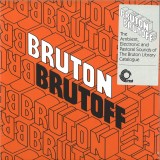
Rare musical magic from the Bruton library catalogue – ambient, spacey, pastoral and electronic. Music by John Cameron, Alan Hawkshaw, Fran-cis Monkman, Brian Bennett and more – all total masters of the scene. All very cool. All very now. All will sell very fast.
Over the last three decades Jonny Trunk has collected and written about library music. But he’s never had a great deal of luck with the Bruton catalogue. By this he means that he’s never stumbled across a massive stash, or lucked-out buying a huge run for practically nothing –that’s the kind of thing that used to happen in the 1990s and the early noughties if you were out there looking hard for library music. But he did manage to get about 25 in one hit about 20 years ago when the BBC shut down their “TV Training Department” near Lime Grove and also when a box of Brutons ended up being dumped at a hospital radio, and they didn’t want the records, so Jonny got a call.
There are lots of Bruton albums in existence – over 330 LPs in the vinyl catalogue, issued between 1978 and 1985. That’s a lot of music to wade through if you are looking for sublime modern day sounds. For many years now the “trophies” from the Bruton catalogue have been the beat or action driven LPs – the two Drama Montage albums (BRJ2 and BRJ8) have always been the big hitters, and others such as High Adventure (BRK2) too.
But Jonny has always found himself drawn to the lime green LPs, the pastoral, peaceful albums (The BRDs), which were full of the kind of gentle, lovely music that would turn up in Take Hart as Tony was paint-ing a woodpecker or a badger or an Autumn tree. The other Brutons he likes are the orange ones (The BRIs) simply because they are full of ex-perimental futuristic electronics and would remind him of 1980s ITV backgrounds. This LP series includes Brian Bennett’s cosmic classic Fantasia (BRI 10). Jonny has been knows to refer to this style of library music as “Krypton Factor library”, because it’s exactly what that strange but successful 1980s TV quiz show sounded like.
In recent years as interest in library music has expanded, we’ve watched
the price of a handful of Brutons really going through the roof - not the just the action and drama ones, but the more esoteric and experimental LPs too – like the BRDs and the BRIs. Jonny gets the vibe that people fi-nally want to hear this other more interesting and experimental side of the Bruton catalogue. So what better time than now to put together a compilation of such sublime period sounds.
Not only does this album bring together a set of fabulous cues that would cost the average man in the street a month’s wages (if the origi-nals were all wanted and if you could even track them all down), but it also chops out the need to listen to other tracks on library albums that are nowhere near as good.
The cues here all date from between 1978 and 1984. They come from the BRD, BRI, BRH, BRJ, BRM, BRR and BRs catalogues.
The composers are all legends within the genre, and here, were doing what great library composers do best – fulfilling a brief and utilising modern studio equipment to both commercial and beguiling effect.
HIGHLIGHTS First ever reissue of "Kabwlú", a very hard-to-find album released by Discos Fuentes in 1965. The mysterious Los Picapiedra (which translates as The Flintstones, inspired by the 1960s American cartoon show), was a short-lived studio group with one albumto their name, "Kabwlú", mixing 'folkloric' and 'modern' elements with calculated 'caveman' humor. It is very musically diverse; not only are there the requisite genres that could be found on similar Colombian teenage-oriented groups' records of the time, such as cumbia, gaita, rock, twist and pachanga, but there is also a smattering of surf, doo-wop, Latin jazz, guajira, ska, and calypso. But what makes the whole thing so special is the odd, off-kilter arrangements, spooky tunings, rudimentary clanging percussion, invented 'cave' language, prominent twanging electric guitar and many zany sound effects. Several of Los Picapiedra's songs became very popular in Colombia as well as Venezuela and especially in the 'rebajada' (slowed down) version as played by the 'sonidero' sound system DJs in Mexico, such as "La Hossa". Presented in its original artwork and pressed on 180g vinyl. Part of Vampisoul's reissue series of classic Fuentes LPs. DESCRIPTION While Discos Fuentes was known for recording all sorts of interesting sounds from traditional folkloric Colombian music to the latest popular international styles, every once and a while they would put out a "novelty" record, perhaps to exploit a passing fad, and at times the label would green-light something strange or even outlandish. Many of those left-field releases have their merits and have subsequently become collectors' items over the years. One such case is the mysterious Los Picapiedra (which translates as The Flintstones, no doubt inspired by the 1960s American sitcom cartoon show), a short-lived studio group with one album to their name, "Kabwlú" (an unpronounceable, invented "caveman" term that is also untranslatable, but seems to have been the 'traditional rhythm' of Los Picapiedra's 'homeland'). What is interesting about the record is that it is very musically diverse; not only are there the requisite genres that could be found on similar Colombian teenage-oriented groups' records of the time, such as cumbia, gaita, rock, twist and pachanga, but there is also a smattering of surf, doo-wop, Latin jazz, guajira, ska, and calypso. But what makes the whole thing so special is the odd, off-kilter arrangements, spooky tunings, rudimentary clanging percussion, invented 'cave' language, prominent twanging electric guitar and many zany sound effects. Much like its namesake American cartoon The Flintstones, "Kabwlú" trades in creative anachronism, mixing 'folkloric' and 'modern' elements with calculated 'caveman' humor that works on many different levels. For instance the title tune seems to have been inspired by the pachanga craze and recalls the vibe of Ray Barretto's massive 1962 hit, 'El Watusi', but it has a certain joyful simplicity and rock-solid underpinning that elevates it beyond mere novelty or exploitation - and argues for its timely reissue for today's audience. The band was a studio invention that had no major significance in Medellin's live music activity. However, several of Los Picapiedra's songs were very popular in Colombia as well as Venezuela and especially in the 'rebajada' (slowed down) version as played by the 'sonidero' sound system DJs in Mexico, such as "La Hossa". Pablo E Yglesias (aka DJ Bongohead, Peace & Rhythm) Additional research by Luis Daniel Vega
‘LiteAce Frequency’ is a collection of songs influenced by 70s Manila Sound and Pinoy soul, as well as incorporating elements of Japanese funk, Brazilian sounds and hip hop.
‘LiteAce Frequency’ follows Vex Ruffin’s ‘Emilio’ EP, released on Stones Throw in May.
The album will appeal to fans of Bullion, James Pants, Dam-Funk, Teebs, Daedelus, Paul White, Anika, Toro Y Moi, Ariel Pink.
Vex Ruffin’s music has featured on soundtracks for HBO’s hit series ‘Girls’ and Netflix’s ‘Russian Doll’. Vex Ruffin has a monthly radio show on NTS and will be supporting the release of his new album
with DJ sets, live streamed performances and active social media engagement.
Vex Ruffin has previously collaborated with artists including Anika, James Pants and Bruce Haack.
- A1: Our Time
- A2: Hungry (Feat Rapper Big Pooh & Black Milk)
- A3: Lower The Boom (Feat Oddisee & Ken Starr & Sareem Poems)
- A4: Real Detroit (Feat The Left)
- A5: Seasons (Feat Stik Figa)
- A6: Brag Language (Feat Buff1 & Magestik Lengend)
- B1: Streets Won't Let Me Chill (Feat Diamond District)
- B2: Balance (Feat John Robinson & Kenn Starr)
- B3: Turn & Run (Feat Med & Rapper Big Pooh)
- B4: Odds Ain't Fair (Feat Hassaan Mackey)
- B5: Brainwash (Feat Yu & Grap Luva & Finale)
- B6: Propa (Feat Oddisee & Tranqill)
Apollo Brown, one of the first members of the Mello Music Group production team, is the Detroit producer first grabbed the nations attention on Finale's Pipe Dream & a Promise album and then again as the Detroit Red Bull Big Tune Champion. The Reset is the first Apollo Brown-produced release in 2010 on MMG.
The Reset was an introduction to Apollo Brown's production: Reworked tracks, fresh verses, new production, new hooks, and new features, recombined to create an entirely new album that captures the haunting street soul of Detroit.
Producers: Apollo Brown
Featuring: Oddisee, Tranquil, Hassaan Mackey, Buff1, Magestik Legend, Diamond District, John Robinson, Kenn Starr, Rapper Big Pooh, Black Milk, Stik Figa
(Original Release May 25, 2010)
The Oystercatcher is the first collaborative LP from Cucina Povera (Maria Rossi) and ELS (Edward Simpson)
Recorded in London over two days, hours' worth of improvisations have been edited down to form these six tracks.
A fragile interplay is at work between Maria's drifting vocals and the ominous churn of Edward's modular synth. Each sonic element takes a turn at leading the way.
The opening track 'Mantle' is formed from sparse, monolithic electronics, woven gently with a thread of vocals. In the closing track 'Eon' Maria's voice shepherds spontaneous bursts of sounds, almost Rave-like if order were imposed, through 15 minutes of turmoil and resplendent until the end.
Maria's vocals make their own trails amongst the noise, bringing to mind the the exploratory language from Ursula K. Le Guin's album 'Music and Poetry from the Kesh', recalling the same understated mystery.
The overall effect of this collaboration is a completely unique creation albeit within a recognisable lineage of predecessors.
The artwork reflects the vision of these two artists, collaged together. Both images are from a trip to Helsinki. Edward's photograph of Tulips caught after dark are reviled by a flash. Maria's seemingly abstract drawing is a graphite rubbing taken from a granite slab of a pavement somewhere in Kallio. Together the two images represent two different methods for capturing a city's haptic landscape.
The album moves with a feeling of transience, which is no surprise given that the idea to collaborate was formed in Helsinki, realised in London and edited together in Rotterdam.
The Oystercatcher tells a fragile tale, one that spins out into the unknown. A cold union of voice and machine, still tentative and probing, learning to co-exist. A kind of fundamental shift whereby shared moments have been turned to sound.
The Oystercatcher is a bird that can freely travel between the earth, sea and sky. The motif is taken from a Tove Jansson short story. A dead bird washes ashore, two different versions of events are presented to how the bird came to die. The album feels like two different stories being presented on top of one another but ultimately coming to the same tragic conclusion.
Cucina Povera is Maria Rossi - Vocals
ELS is Edward Simpson - Synthesisers
Recorded in London across two days during the Summer of 2019
Mastered by Russell Haswell
"Listening To Pictures", Jon Hassells erste neue Arbeit seit fast einer Dekade, war eine lebhafte Anordnung von Instrumentals in seinem einzigartigen 'Fourth World' Sound aus Jazz, Dub und electroacoustischen Techniken. Mit "Seeing Through Sounds" dringt Hassell tiefer in unbekannte, imaginäre Regionen. Die Atmosphären sind dichter, das Werk klingt nachdenklicher als sein Vorgänger, eine gewisse Spannung lauert in dunklen Ecken. In der Mitte des Albums bemerkt man ein Ruckeln, Stottern, Störgeräusche, bevor langsam wieder Ruhe einkehrt, um schliesslich mit überwältigenden Klängen das Finale einzuleiten, bei dem Avantgardisten wie William Basinksi und The Caretaker grüssen. "Seeing Through Sounds" enthält einige der detailliertesten und verfrachtesten Musiken in der langen Karriere des 'Fourth World' Pioniers.
- A1: Fireflies & Palmwine
- A2: Big Man (Feat Shungudzo)
- A3: Patty Cake
- A4: Rebosando (Feat Chico Mann)
- A5: Body Yako (Feat Kongo Elektro & Thornato)
- A6: Ghost Dance
- B1: Fly Where You Want (Feat Jesse Royal)
- B2: Mi Poni (Feat Zuzuka Poderosa)
- B3: Makubenjalo (Feat Ongx & Epplesauce)
- B4: Yalla (Feat Karenbe)
- B5: Come Along (Feat Sye Elaine Spence)
- B6: Ghazal (Feat Alsarah)
- B7: New Story
The globetrotting beat maestro is back, with a truckload of tropical vibes and the irresistibly danceable soundtrack to your Summer! 3 years after releasing his groundbreaking collaborative album with singer Chico Mann (which landed him live sets on Boiler Room & KCRW's Morning Becomes Eclectic as well as a feature on NYTimes "Best Songs Of The Week") DJ/producer Captain Planet returns with NO VISA, set to drop June 26th on Bastard Jazz Recordings. In his trademark "Gumbo Funk" sound, the album mixes rhythms and musical styles from the Caribbean, Latin America, the Middle East and Africa, over highly danceable electronic beats, all firmly rooted in the hip hop, dancehall and house music that the Captain grew up playing as a DJ. Seamlessly bouncing from Brazilian Baile Funk, to Afrobeat, to Roots Reggae and Latin House, the entire record delivers the uplifting feel of one of the Captain's legendary boundary-crossing DJ sets. Building on these traditions he draws from, the Captain has created something fully original and unique.
NO VISA, the 5th full-length album from producer Charlie Wilder (aka Captain Planet), is both a return to form and a launchpad into the future. With 13 songs that feature vocalists from around the world, long-time fans will recognize several previous collaborators as well as the global influences that have always been central to Captain Planet's music. New friends, like prolific Zimbabwean-American singer Shungudzo (who has recent hits with Oliver Heldens & Rudimental), and Jamaican reggae star Jesse Royal, bring powerful subversive messages to the music as well. Showcasing the Captain's production chops and songwriting talents equally, the album unveils a unique musical landscape, a place where our political boundaries and cultural hierarchies begin to dissolve, where foreign languages mingle together and deep rooted traditions dance with the future.
With NO VISA, Captain Planet unveils a fully matured and truly unique form of electronic music- one that bridges gaps between worldwide cultural diasporas as well as contemporary dance music sub-genres (house, hip hop, dancehall & global bass). Throughout every Captain Planet song, it's clear to hear his inspired appreciation for breaking the boundaries between genres and bridging continents through rhythm.
L’Escalier des Aveugles, or The Stairway of the Blind, was commissioned in November 1990 by Spanish National Radio (Radio Nacional de España). Asked for a piece to premiere as part of the European Day of Music, Luc Ferrari returned with a radiophonic concept that organised his anecdotal music into montage form, sequencing short, elusive narratives in a successive way.
The completed composition is formed of thirteen chapters containing a mixture of environmental and synthesised sound, commentary, chatter, and encounters with people and places. Each focuses on a small event within this playbook, and Ferrari notes that each “in addition to being a realistic photograph, will be the subject of a ‘setting to music’: fragments of voice and atmosphere will be sampled and will produce musical matter or a ‘song’.”
The sonic language of Madrid forms the setting to which Ferrari lays out the persistent theme of the piece, that of the composer being guided throughout the city by a young woman. Using a game-like structure (liners for this edition include Ferrari’s “Regles de Jeu”, or “Rules of the Game” which act as a script or score to the piece) the motivation is posed: imagine that one day you are told “I know a place in Madrid that sounds amazing (or bizarre)”, to which you reply “Let’s go to it together.” The recordings toy with the relationships between guide and tourist, translator, director and actress, and masculine and feminine that emerge as Ferrari and the actresses follow this action, documenting the shared experience and connections they make as they visit these places.
Six actresses guide Ferrari (and the listener) through locations simultaneously ordinary and sonically rich: the metro; the El Corte Inglés department store where we hear the gossip from changing rooms set against music emanating from the PA; vagabonds declaiming their political stance in the Conde de Barajas plaza; interactions buying apples in a market; the reverberant and spacious halls of the Prado Museum where one actress gives a moving description of her favourite painting - Goya’s The 3rd of May 1808.
Ferrari replies in French to their comments in Spanish, and there are several self-referential plots, devices, and word games that flirt with the poetics and rhythm of language and sound. A recital of Lorca’s poem "La Casada Infiel" in “Hommage À Lorca” in amongst the location recordings feels striking, and the call and response of “La Nouvelle de L’Escalier”, where one of the actresses descends the staircase of the blind - a long stone stairway in Madrid proposed to Ferrari as an interesting location to visit during the trip by producer José Iges. She replies to Ferrari’s vocal enunciation of the place (and title) in French - L’Escalier des Aveugles - with the place-name in Spanish: La Escalera de los Ciegos.
Using this repeated title and image of the staircase of the blind as a symbolic place, a line is drawn to a situational landscape experienced and diffused through snapshots and allusion rather than holistically overviewed, sound conjuring pictures within the imagination. In the sensorial qualities of Ferrari’s treatment of emotion and language—fortified with electro-acoustic motifs and musical properties—the piece accelerates towards a render that is truthful, beautiful, yet also surreal; somewhere between theatre and reality, a gonzo cinema of the ear.
The Beneficiaries ist ein brandneues Detroit-Projekt von Jeff Mills, für das er sich mit zwei weiteren Detroiter Legenden zusammen tat: dem nicht minder visionären Detroit Techno-DJ/Produzenten Eddie Flashin' Fowlkes und der Poetin Jessica Care Moore, bekannt durch ihr 2015er Album "Black Tea: The Legend Of Jessi James" (feat. Roy Ayers, Talib Kweli, Jose James, Ursula Rucker), ihrem Beitrag zu Rawkus' legendärem Spoken-Word-Sampler "Eargasms", aus Russell Simmons' HBO-Serie "Def Poetry Jam", sowie Kollabos mit Nas ("Nastradamus"), Jeezy und den Silent Poets. Ferner wirken Amp Fiddler (Keyboards) und die beiden Perucssionisten Sundiata O M und Efe Bes mit. Die 6 Tracks haben eine Länge zwischen fünf und vierzehn Minuten.
To say Fredfades and Jawn Rice are House music producers would be sneering at their efforts across genres like Hip Hop, Soul, and Jazz. The Mutual Intentions collaborators have forged a sound together in classic House, siphoning a myriad of influences through their intricate constructions in the studio as solo acts since first meeting in 2007. Becoming fast friends over a shared love of the dusty beats of an SP1200, Jawn Rice and Fredfades started working together while the Mutual Intentions collective gestated around them. Individual works by Jawn and Fred dot the collective’s back catalogue like various nodes of evolution through the course of MI’s output.
“We’ve always been sharing sketches,” explains Jawn Rice, “but I feel that these past years have been more productive in getting some of these sketches out as songs with Fredrik. It’s just a continuation of our friendship.” Emboldened by this friendship and with their finely tuned skills in the studio,
honed to near-perfection, they eventually started making music together. Following two seminal solo LPs – Fredfades’ Warmth and Jawn Rice’s Highlights – the pair consolidated their music as a duo in 2019, striking out with their electrifying debut, Jacuzzi Boyz. In a fusion between Jawn’s electronic inclinations and Fred’s soulful eccentricities, Jacuzzi Boyz established the duo as a new force workingNew Release Information within the broad scope of House music, with a sound imbued in the origin story of House and the genre’s hip-hop allegiances.
In 2020 they continue to pursue music together in the sophomore LP, Luv Neva Fades. Following the release of the title track and lead single, Luv Neva Fades finds the producers cementing their artistic voice and re-enforcing their commitment to a singular sound. Lush Rhodes keys and bouncing percussion lay the foundations for the album, while buoyant bass-lines and sparkling synthesisers provide
the catalyst for a crooning vocal or ruminating melody. It’s a record that thrives in a sultry mood; an LP that basks in the warmth of its analogue origins and cools in the shade of languid chord progressions.
Like Jacuzzi Boys, this album is an extended collaborative affair, as Mutual Intentions’ reach stretches across the Atlantic with guest appearances from Byron the Aquarius, Javonntte, Arthur Kay, Bendik HK and the SP1200 that started it all. Shimmering melodies, hazy harmonies and boisterous beats draw Fredfades and Jawn Rice out of the jacuzzi and onto the dance floor, moving under shimmering stars, where the duo cement what they started with Luv Neva Fades.
'Foom label head Benjamin Freeney reworks Tim Burgess & Peter Gordon's restless, psychedelic epic, "Temperature High" into three new forms (two cuts for the dancefloor, and one ambient interlude), rearranging the rich source material of the original (metallic field recordings from the New York subway, Peter Gordon's original Korg bassline reincarnated in sub-bass form, Tim Burgess' ethereal vocal cut-up into new patterns) and fusing it with new percussive and melodic elements. The original track was featured on Tim Burgess & Peter Gordon’s Same Language, Different Worlds album from 2016, with contributions from Arthur Russell's close collaborators Peter Zummo and Mustafa Ahmed, as well as Factory Floor’s Nik Void.'
Fusing dexterous hand-percussion, hypnotic guitar riffs & soaring melodies, Waaju rise from London’s rich cultural palette with their latest album ‘Grown’, proving UK Jazz doesn’t have to sound the way we expect it to. Led by drummer and percussionist Ben Brown (Alfa Mist, Dizraeli, Ashley Henry), the band comprises percussionist Ernesto Marichales (Jordan Rakei, Sigala), guitarist Tal Janes (Nubiyan Twist, Bahla), Sam Rapley (Fabled, Maria Chiara Argiro) and Joe Downard (China Moses, Judi Jackson), each with their own strong presence on the UK’s extensive music scene. Waaju’s refined and divergent sound connects the dots between the likes of Ali Farka Touré, Alain Peters, Los Muñequitos de Matanzas, Oscar D’Leon and Beth Carvalho. Waaju formed as a means of exploring music’s hidden connections, from trance-inducing Moroccan Gnawa to Caribbean carnival music, and embracing them to reflect different shades of London’s own musical culture. It was the band’s love for Mali’s folk music – and Ali Farka Touré’s stylistic prowess in particular – that first set the project in motion. London’s Jazz Cafe invited Waaju to reinterpret classic tracks from Farka Touré’s catalogue to sold-out audiences in 2018 and 2019. According to Brown: “Ali’s one of the best. He has such a unique sound. His playing is so gnarly. His spirit and attitude are things I always think of when making music.” Waaju (meaning ‘to urge, inspire or influence to take action’ in Malian language Bambara) blends pulsing Latin polyrhythms, psychedelic Malian blues licks and cinematic textures. Following the group’s 2018 self-titled debut record, Grown presents a group more unified and distinctive-sounding than ever with six fresh, bold compositions. The record begins with Moleman, a potent reminder of the intricacy and energy Waaju’s become known for. Gritty, clattering metal defines the landscape for sizzling builds, hinting at rave culture styles like Bashment and Jungle. Listening Glasses follows and it’s clear why this is the album’s lead single – its Afrobeat-like energy and joyful interplay between guitar and tenor sax lies somewhere between Tony Allen’s grooves, Chimurenga guitar and Headhunters’ funk. On late night jam Rollando, Joe Downard’s skulking bass frequencies rule and wonkiness reaches new heights as heavy dub grooves almost tear themselves apart. Time’s Got a Hold was co-written by Waaju and Jordan Rakei for a show together in November 2018. Kicking off side B, this version features special guest vocalist Will Heard over bouncing triplets evocative of 1970’s Sega from La Reunion. A kind of looseness found only at night, the quiet drive of Wassoulou is sparse yet purposeful. Pulling back the tempo and dimming the lights, cavernous percussion fills each corner of the room, springing back as spectral reverbs. The title and final track shows the many dynamic sides of the outfit’s far-reaching sound, with its expansive harmonies and explosive psychedelia, spanning Yoruba Andabo to Hendrix, signing off an exciting and energetic second LP from Waaju at their most scintillating.
Repress
First up is a reinvention from Coby Sey - the Lewisham, South London musician who's founded the Curl collective alongside Mica Levi and Brother May and collaborated with Babyfather, Klein and Tirzah, noted as one of the 50 best new artists of 2019 by the guardian. The tone and atmospherics of the original’s combination of synthesiser and woodwind are sliced into ghostly, mesmeric fragments and refitted in layers around loping, propulsive rhythms with something like UKG's steppiness - languid despite being uptempo, bright and almost gleeful despite the inescapable mournfulness of the source material.
Who’s The Technician? of Ireland's Wah Wah Wino label - turns in a remix that wrestles with the original over seven- and-a-half-minutes of relentlessly captivating deep digi-dancehall, less of a remix than a rebirth cycle, with the latent soul-splitting lament of Kolida Babo’s duduk copy-pasted onto a delirious mercurial lead rotating through hedonistic ecstasy and burnout, a snake-eating-its-own-tail of a version cracking open the third eye with a crowbar, plus a post- apocalyptic, ruthlessly space-invading dub that blasts the remix’s scale out to the starkest retreats of the universe in search of...
For the second instalment of Subaltern’s 2020 program, we welcome one of the scene’s best-kept secrets – Imajika. The three hard-hitting tracks take listeners on a sonic journey through tribal rhythms, punchy drums and immaculate sound design. Calling upon ancient forces, Imajika makes a powerful statement with the Stagger EP.
Stagger
Ethereal glass chimes sing in the distance underneath an airy pulse to create an eerie intro until the groove enters to break the tension. We are offered a moment to breathe before being submerged by staggering drums driven by powerfully persistent bass-waves. Playful dubby FXs, gritty wobbles and naughty drum fills keep the head nodding throughout this stomper. After offering one last breath, the second drop hits with a relentless grunt that leaves us gobsmacked and then proceeds to devastate any sub to cross its path.
Unti Pundi
Mystical textures set a ghostly tone, overlaid by the meditative ‘Unti Pundi’. We are whisked through the caverns of time - space is created through reverbs and echoes of snares and droplets. A sinister pitch-oscillating synth takes your hand and as Imajika takes you deeper down the rabbit hole. Evolving basslines and masterfully placed drum fills add new depth to this monstrous beat before a shattering second drop wreaks havoc - Imajika shows no mercy.
Inside the Sycamore Root
Foreboding voices whisper in a secret language, seemingly summoning ancient spirits in a circular tree-based ritual. A cataclysmic drop fused with a tribal rhythm and propels us deep Inside the Sycamore Root. The spirits have been awoken. A gnarly bass pulsates as calls of the wild and menacing laser-synth stabs respond to the ancestral voices. The summoning continues and takes us even deeper into the wilderness as rumbling bass and tribal percussion take over - the descent into the great unknown continues.
- A1: Muskrat Ramble (Side 1 Louis Armstrong & His Hot Five (1926-1928))
- A2: Oriental Strut
- A3: Sweet Little Papa
- A4: West End Blues
- A5: Basin Street Blues
- A6: Beau Koo Jack
- A7: St James Infirmary
- B1: (What Did I Do To Be So) Black & Blue? (Side 2 Louis Armstrong & His Orchestra (1929-1938))
- B2: The Peanut Vendor
- B3: I'm In The Mood For Love
- B4: Solitude
- B5: On A Coconut Island
- B6: I'm Confessin
- B7: When The Saints Go Marching In
- C1: Perdido Street Blues (Side 3 Satchmo In The Forties (1939-1950))
- C2: Jeepers Creepers
- C3: You Rascal You
- C4: Do You Know What It Means To Miss New Orleans
- C5: Where The Blues Were Born In New Orleans
- C6: Russian Lullaby
- D1: C'est Si Bon (Side 4 Louis In The Fifties (1950-1968))
- D2: La Vie En Rose
- D3: Kiss Of Fire
- D4: Mack The Knife
- D5: What A Wonderful World
- D6: Hello Dolly
Louis Armstrong is one of the most important jazz musicians. He belongs to those who transformed the local music scene born in the Southern States of the United States - around New Orleans - into an international language.
It was in the 1920's, in Chicago, that he recorded his first records with His Hot Five and His Hot Seven. His personality and his natural enthusiasm, combined with his talent as a trumpet player and singer, helped him pave his way to success.
He traveled the United States with his orchestra throughout the 1930's and the 1940's, and appeared on television sets from all around the world throughout the 1950's and the 1960's. In five decades, Armstrong's music had evolved into jazz music, then known as a familiar universal language, popular on five continents.
The four sides of this double album revive the history of jazz, from "Muskrat Ramble" to "Hello Dolly".
LTD. BLUE SEAFOAM WAVE VINYL
Holy Hive ist ein Folk-Soul-Trio aus Brooklyn, bestehend aus Folksänger/Gitarrist Paul Spring, dem begehrten Soul-Schlagzeuger Homer Steinweiss und dem Bassisten Joe Harrison. Die Band hat sich durch fast schon legendäre Konzerte und ihre EP "Harping" einen Namen gemacht. Als Holy Hive erforschen sie die Beziehung zwischen den lyrischen Traditionen des Folk mit dem Rhythmus und der Ästhetik des Soul. Das Debütalbum "Float Back To You", aufgenommen in Queens im Studio Diamond Mine (von dem Steinweiss Mitbesitzer ist), besteht aus 10 eigenen Songs, einem Cover von "Be Thou By My Side" (ursprünglich von der britischen Gruppe Honeybus aus den Sechzigern) und einer Adaption des irischen Folksongs "Red Is The Rose". Steinweiss hat das Album produziert, als Gäste treten die Harfenistin Mary Lattimore, Leon Michels (El Michels Affair) am Saxofon und Keyboard, Shannon Wise (The Shacks) als Backgroundsängerin, Dave Guy (The Roots) an der Trompete, Nick Movshon am Bass und Paul Springs Ehefrau Sophia Heymans am Klavier auf. Homer Steinweiss arbeitet seit zwanzig Jahren als professioneller Schlagzeuger und hat in dieser Zeit den Beat zu Hits von Amy Winehouse, Bruno Mars, den Jonas Brothers, St. Vincent und Charles Bradley beigesteuert - um nur einige zu nennen. Als Gründungsmitglied von Sharon Jones & The Dap-Kings ist er mit der legendären Gruppe durch die ganze Welt getourt, bis er sich für eine Karriere im Studio entschieden hat. Paul Spring hat als Solokünstler sieben Alben mit eigenen Songs veröffentlicht, darunter, "Home of Song", eine von Kritikern sehr gelobte Platte mit Kinderliedern. Der Multiinstrumentalist Joe Harrison hat unter anderem mit Frank Dukes und Charles Bradley gespielt. Die symbiotische Beziehung zwischen Steinweiss und Spring ist wie die eines Spechts, der auf dem Rücken eines Nashorns sitzt. Springs zarter Gesang und seine flatternde Gitarre schweben in perfekter Harmonie über Homers bulligem Schlagzeug. Holy Hive sind eine vielschichtige Band: Manches an ihnen erschließt sich sofort, anderes erst später. Wie der Titelsong des Albums, der sich zuerst wie ein wunderschöner klassischer Liebessong anhört und sich dann als die Gefühle einer Frau entpuppt, die sich auf ihre Katze freut. Dafür steht Holy Hive: Die Musik geht verführerisch einfach ins Ohr und entfaltet sich dann sehr langsam - bis sie ganz aufblüht.
Mameen 3 are soFa and Cheb Runner from Brussels. Both versatile players in the rather niche scene of oriental electronic music in the European capital, they only ran into each other at the Nyege Nyege Festival in Uganda two years ago. They clicked and after a first jam session they immediately launched Mameen 3.
Cheb Runner is the young Moroccan producer previously known as Gan Gah, now focussing on giving a modern outfit to various MENA music traditions. soFa is a true digger between all crates (his Pingipung Podcast is a gem!), as well as the curator behind the highly recommended Elsewhere vinyl compilations, released on labels such as Emotional Response or Music For Dreams. Following the Mameen 3 debut singles on Bongo Joe with excellent spaced out reggae- disco hybrids, Pingipung proudly unearths the Collapse EP featuring two collabs with legendary musicians.
A side: "Impostrazione" is a collaboration with Claudia Radulescu and Walter Hus. Radulescu is a Romanian visual artist who has written the lyrics for the song, boldly interpreted by the legendary Walter Hus on the occasion of her exhibition 'Hit' in Kanal - Centre Pompidou Brussels in 2019. Hus gained international reputation as a pianist in the 1980s and works as an avantgarde composer today, among many projects he created an opera for the graphic novel “Lint” by Chris Ware. Walter Hus performs an effusive vocal style accompanied by his modified Decap organ which became his trademark sound in the past decade. This jam delivered the material which Mameen 3 subsequently transformed into a hypnotic oriental slow-mo banger.
B side: "Wireless C" features another music veteran, Rodion GA, who describes himself as „Romania’s first one man band". He produced a remarkable electro-prog output in the 1970s and 80s. “Rodion GA sounds like he learned about music from hearing someone describe it in their second language, drunk. It sounds like nothing else: wrong in all the right ways,“ says The Guardian about his music. His collab with Mameen 3 turns out as a balearic, space reggae trip, with dreamy vocals by Rodion and solid bass, definitely a hymn in this year’s festival season, if only there was one...
Tyyni is the third album by Finnish-born sound artist and musician Cucina Povera aka Maria Rossi. The second album recorded using a more studio-based scenario – as opposed to last year’s Zoom, a collection of in-situ, spontaneous recordings – Tyyni feels like a slowly unfurling mediation on the clash between nature and mechanical living, a rumination on the complexities of modern life that begin to unveil more about the inner landscape of the artist as it progresses. A Finnish word referring to still, serene weather, the title belies a new note of turmoil in Cucina Povera’s soundworld. Tyyni represents a more detailed focus on the sculpting of sounds that curl around Rossi’s hymnal vocal performances. It’s a more adventurous work than Rossi’s previous output that goes further into noise elements and vocal abstraction while maintaining the balance and ecclesiastical ecstasy of her debut Hilja.
While tension at the core of Cucina Povera is always prevalent, previously it was organic sounds that were used to counterpoint Rossi’s singing but on Tyyni these are often replaced with aggressive synths and distortion, profane clashes with the seemingly sacred hymns. Whether close mic’d and intoning in a loop or in full flight, Maria Rossi’s voice remains in the foreground, set here against a more synthetic backdrop. This development builds new worlds for Cucina Povera, a digital environment which brings in a sense of the alien for Rossi’s vocal to duel. The effect is often dazzling. On Salvia Salvatrix, an ode to the medicinal plant used to ward off evil spirits, Rossi’s invocation is encircled by a distorted synth sound tearing at the fabric of the composition. It’s an inspired juxtaposition, leaving the listener to appreciate both sounds as separate and as a duet. Anarkian kuvajainen embraces a sense of chaos, an accidental transmitting mobile phone’s pulse is swept up gently with looped synth swells as Rossi’s prayer-like vocal rhythmically teases the composition into loops that embrace and then drift apart. Teerenpeli flirts with a minimal beat rendered by sampler and processed, layered field recordings of capercaillies, while Side A ends with one of Rossi’s most beautiful, simple tracks yet recorded. Varjokuvatanssi is an a cappela recording built on top of a wordless glossolalia, a shadowy interplay which foregrounds the solo vocal.
Pölytön nurkka is the most melodic song yet recorded by Cucina Povera. While it still maintains an off-the-cuff performance style, the synthesized chimes and 4/4 beat are smothered by a distorted synthesizer which almost replicates the bravado of an electric guitar feedbacking into the night. Rossi’s subject matter talks of trying to start anew, getting rid of extraneous material, perhaps still feeling powerless to affect positive change. On Haaksirikkoutunut, the protagonist vocal is lost, a vessel rudderless on the ocean, buffeted by waves metaphorical or real, digital, atonal chords gurgling and splashing against the bow, a storm forever brewing on the horizon. Saniaiset recalls Coil in its eldritch, nocturnal tone and digital-bell like synth, Rossi’s half-spoken/half-sung voice attaining a creepy tone before flipping into flight. Album closer Jolkottelureitti uses an escalating, sequenced synth that splinters into both abrasive tones and harmonising chords creating a kosmische effect, reminding the listener of Kluster or synth-era Popol Vuh, all the while elevated by Rossi’s searching vocalising.
For an artist with such a singularly unique musical language, Cucina Povera is continually teasing new strands and emotive tones from an evolving palette. Most importantly, Tyyni appears to be pulling back the veil to uncover an artist finding a synergy between her own emotional inner world and practice. As such, on her third album, Maria Rossi has found a third way between abstraction and extraneous emotion, personal experience turned inside out to reveal more about the listener.
ALLES IN ALLEM (LIMITED DELUXE BOXSET
Nach über 12 Jahren erscheint nun endlich das lang ersehnte neue Studioalbum der Band Einstürzende Neubauten ALLES IN ALLEM. Das Album markiert die Quintessenz ihres Schaffens und es öffnet sich wieder eine unerwartete Tür der mittlerweile 40 Jahre dauernden Klangexperimente des Forschungsteams um Blixa Bargeld. Wie kaum eine andere Band haben sie es geschafft einen eigenen musikalischen Kosmos zu erschaffen, ja sogar ein eigenes Genre zu kreieren, das sowohl klangliche Härte als auch ausgefeilte Poesie auf einzigartige Weise vereint. Passenderweise im Jahr der Ratte, gemäß Chinesischem Horoskop dem Symbol für Einfallsreichtum und Vielseitigkeit, ruht sich die Band nicht auf dem nunmehr vier Dekaden umfassenden Werk aus, sondern agiert zukunftsgewandt und erforscht weiterhin neugierig und mit grenzenloser Spielfreude alles, was das Klang-Universum hergibt. In den einzigartigen Klang- und Textlandschaften der 1980 in Berlin gegründeten Gruppe offenbart sich so jene Zeitlosigkeit, die sich Blixa Bargeld, N.U. Unruh, Alexander Hacke, Jochen Arbeit und Rudi Moser stets erhalten haben: Durch ihre experimentellen Herangehensweisen ans Songwriting, die in vier Jahrzehnten entwickelten Instrumente und das kollektive Arbeiten klingt die Band in ihrer eigenen Zeitrechnung auffallend gegenwärtig. Ja, die Einstürzenden Neubauten scheinen mit ihrer einzigartigen Musik stets äußerst präzise im jeweiligen Jetzt zu walten, ob im Industrial der Frühphase, den treibenden 90er-Jahren oder dem bedachten Spätwerk. Die Verse "Wir hatten tausend Ideen / Und alle waren gut" aus dem Albumtrack "Am Landwehrkanal" könnten durchaus eine Selbstbeschreibung der Band sein. So ist eine besondere Platte entstanden: ALLES IN ALLEM das erste reguläre Studioalbum der Einstürzenden Neubauten seit 12 Jahren, zeigt eine unvergleichbare Band, die ihre eigene Kategorie bildet, ihr eigenes Genre stiftet. Neben der CD und LP wird es auch ein limitiertes Deluxe Boxset geben. Dieses beinhaltet neben der CD und LP eine CD mit Bild-Tonaufnahmen aus dem Studio, welche die Entwicklung sowie Fortschritte der einzelnen Stücke festhalten. Einige Stücke sind ungeschliffen, aber schon fast fertig und andere noch in der experimentellen Findungsphase. Eine kleine Dokumentation der Entstehung des Albums. Abgesehen davon beinhaltet die Box ein 164-seitiges Buch mit allen handschriftlichen Aufzeichnungen von Blixa Bargeld hinsichtlich der Entstehung der Liedtexte sowie Essays von einigen Supportern.
In den späten neunziger Jahren war Wien Welthauptstadt der elektronischen Musik - Namen wie Kruder & Dorfmeister, Pulsinger & Tunakan, Waldeck, Electric Indigo oder Fennesz künden davon. Danach kam lange Zeit nichts, bis eine neue Generation - von HVOB bis Parov Stelar, von Dorian Concept bis Elektro Guzzi - sehr nachdrücklich eigene markante Sound- und Leuchtspuren setzte. Und nun kündigt sich abermals ein Zeitsprung an.
Zu große Töne gespuckt? Nein. Selbst Christian Fennesz zieht schon den Hut. Vor Drahthaus. Einer Band, die eigentlich keine Band ist. Noch nicht einmal eines der vielen Projekte, die immer und überall rasch entstehen und noch rascher wieder vergehen. Hier ist etwas radikal anderes im Kommen. Das 2015 gegründete Kollektiv Drahthaus ist ein Zusammenschluss diverser in Wien lebender Kreativer (Musiker, Künstler, Designer, Filmemacher, Techniker, Programmierer, Handwerker, Veranstalter und Kreativer jeglichen Geschlechts) mit der Vision, alte Strukturen in Frage zu stellen. Und Raum für gänzlich Neues zu schaffen.
Die Faktoren Lust, Neugier, Fachwissen und künstlerische Vernetzung sind mit im Spiel. Auch wenn Drahthaus den anarchischen Freiraum der Kunst mit präzisen, systematischen, analytischen Fragestellungen vermessen. Im April erscheint das erste Album - es trägt keinen Titel. Aber es wird die Elektroniksphäre aus den Angeln heben. Lokal, national, international. Willkommen im Drahthaus.
"Small Worlds" (2004) a is 42-minute composition for improvising sextet by Austrian double bassist, composer and improviser Werner Dafeldecker. The score is written for any instrument and divides the players into two virtual trios whose constellations change every 3 minutes. No restrictions are made regarding material or playing techniques, the only specification is that in each 3-minute trio, one player has the role of the "dynamic leader" which means that no other player within the trio should play louder than the one on that leading position. Apart from that, the only other restriction concerns how pauses are to be made when two players interchange their positions within the trios.
According to Dafeldecker, the object of the piece is to provide a structure that doesn't curtail the qualities of the musicians, yet forces them to listen very closely to each other and make focused decisions about parameters that are often overlooked in completely free improvisation. Especially, the given structure avoids the emergence of certain clichés that are often present in Free Improvisation, while retaining a very high level of openness with regard to how the piece is performed.
The first published recording of "Small Worlds", by Australian ensemble Quiver, was released in 2017 on CDr by Tone List. This LP contains a recording made in 2004 at Taktlos Festival in Basel, Switzerland, that features the line-up that Dafeldecker originally had in mind when he wrote the piece: Burkhard Beins (percussion), Martin Brandlmayr (percussion), Werner Dafeldecker (double bass), Klaus Lang (organ), Michael Moser (cello), and John Tilbury (piano). Partly, this constellation later also played together in the long-running avant-garde group Polwechsel.
Edition of 300 in regular sleeve with three inserts: two featuring an extensive conversation between Werner Dafeldecker and Matthias Haenisch discussing "Small Worlds", Polwechsel and Free Improvisation in general (German and English), the third reproducing the score of the piece.
Following his last EP for the label, "Immaculata", VOITAX mainstay Makaton returns to form with his second solo EP - "Crime Wave". His meticulously crafted brand of techno spans over four dance-floor cuts, covering all the bases for the mind, body and soul.
Early support by A Made Up Sound, Aiken, Ancient Methods, Blue Hour, DVS1, Etapp Kyle, Eric Cloutier, Inigo Kennedy, James Ruskin, Mark Broom, Marcel Dettmann, P.E.A.R.L, Peder Mannerfelt, Phase Fatale, Pfirter, Psyk, Positive Centre, Rhyw, Scalameriya, Stephanie Sykes, SLAM, UVB, and Vincent Neumann
Dadub is a project synonymous with the deepest rhythms from the interior of the human psyche. Low-end mysticism. Tribalist periodic audio patterns. The Berlin-based Italian producers behind the project, now constructed of sonic warlock Daniele Antezza and performance artist Marco Donnarumma, supply an unmistakably unique vision of post-apocalyptic dub landscapes. Past, present, and future blend into one, backed by the supremely sublime BASS of creators who are light years ahead in their field. A Sun Called Moon is a superior first representation on Ohm Resistance, detailing their ongoing mission of creating bass-present music, regardless of dancefloor conformity. The Time You Killed opens as a psycho-acoustic audio film, depicting the unknown world from which the EP emanates. I Would Gladly Die… introduces the first heavy rhythmic patterns, completely alien to identified structures, while unmistakably pushing a groove that entrances hypnotically. Past Times Present Ruins lowers the tempo and continues extrapolating into new rhythmic territory – or is it ancient? It Was Too Soon follows with beat driven hednod, as influences from Scorn to Autechre are subsumed into the universal language that comprises Dadub. Feeling both familiar and foreign, both modern and eternal, Dadub’s first appearance on Ohm Resistance is a fascinating drama played out in 4 acts. Spliff recommended – subwoofer required. All tracks Written and Produced by Daniele Antezza and Marco Donnarumma Mixed by Daniele Antezza and Marco Donnarumma at Dadub Studio, Berlin Mastered by Xergio Cordoba @ Eternal Midnight Studio, Madrid Photography by Flora Schwartz Layout by MachineTM
- A1: The Big Country
- A2: Surfari
- A3: Positive Thoughts & Mind
- A4: Unplanned
- B1: Treatment For A Septic Horn
- B2: Drumming Is A Language
- B3: Mr Whippy Does Djibouti
- B4: Run Come See
- B5: Ran Came Saw
- C1: Blessed Works
- C2: Work Blessed
- C3: More Fluid
- C4: Who Are You?
- D1: Ready You Ready
- D2: Ready You Ready (Part 2)
- D3: What Is The Plan? (Feat Mutabaruka)
- D4: What Is The Plan? (Feat Mutabaruka - Version)
The first album African Head Charge made for OnU since 1993, this 2005 set was a triumphant return that saw longtime collaborators Bonjo Iyabinghi Noah and Adrian Sherwood reunited in the studio once more, the album title referring to the project’s original mission statement (nicked from Brian Eno!)
This album is African Head Charge at their very
best, rich in varied percussion and spiritual chants,
set over hypnotic and transcendent layers of
African rhythms, trippy and bubbling dubbed-out
effects and trademark pounding bass.
This is the first time the album has been released
on vinyl. Cut over 4 sides for maximum dynamics
by King Kevin Metcalfe.
Includes double-sided poster insert featuring a
new interview with Bonjo, two bonus tracks and
digital download card for full contents.
Another win for the Glowing Pin as Müller & Wandt drop a fresh new age groover on a killer club dub tip. Elsewhere Phazer Boys, Suzanne Kraft, Philipp Otterbach and River Yarra remix the pscht out of their favourite tracks from ‘Instrumentalmusik..’. Expect Goan hits, cosmic trips, loved up rave and chilled out wave on this flawless five tracker.
Growing Bin becomes Glowing Pin for the most anticipated rematch of the century. Back at the beginning of 2018, Wolf Müller and Niklas Wandt went head to head for a box office smash, throwing a high school percussion tray, wall of hardware and voodoo skull into the ring for the tribal trip of ‘Instrumentalmusik Von Der Mitte Der World’. Now the multi-instrumental duo face off once again, but this time it’s a royal rumble with Phazer Boys, Suzanne Kraft, Phillip Otterbach and River Yarra all bringing the noise to the Glowing Pin.
Müller and Wandt dominate the action on the A1, playing loose with sampler vox, serene pads and future primitive rhythms on the unreleased ‘Fun Dub’ of the also unreleased ‘Dub Dub’. Imagine Ferris Bueller’s trampoline tumble trading Chicago to the Weissenhof and you’ll sense the mood of this New Age groove. Germany’s number one party dudes, those freaky Phazer Boys take a break from dropping killer Candomblé cuts to reach for the lasers on the A2, taking ‘Ahu’ to another dimension. Dripping in neon body paint and armed with fire poi, the Düsseldorf duo power up progressive house sequences, didgeridoo bass and thumping tribal house percussion for a wall-shaking, speaker-breaking remix.
The B1 belongs to synth whiz Suzanne Kraft who revels in glistening, gliding glory on an expansive remix of ‘Auflösung’. Sleek, serene and futuristic, the track shimmers like Fritz Lang’s Metropolis, free from inequality and rendered with the 5D(ub?) majesty of a DMT breakthrough.
B2 hears Salon associate and serious talent Philipp Otterbach take over on a stripped back and psychedelic post punk dub of ‘Expedition’. Angular bass by Süne Große and a stuttering rhythm underpin astral flourishes and the hazy vocals of Lucas Croon before the African elements begin to move to the forefront.
Last man standing is Australian outlier River Yarra, who leads us into the Krautback with a chugging dub of ‘Weltraumsandalen’. Lent a lysergic sparkle by a percolating one-note bassline, this slow motion stunner masters perpetual motion amid the eerie echoes of the bush, organic percussion and electronic animal cries fading into the night. Let the pins glow again.
Patrick Ryder
States of Fugue SF02 is the adventurous & uncompromising new record from Zoë Mc Pherson. It follows the success of her critically acclaimed 2018 album String Figures SF01, an audiovisual project that earned her invitations to perform around the world.
States of Fugue SF02 also inaugurates her new hybrid label SFX, a collaborative project with fellow multimedia artist Alessandra Leone. The label presents an opportunity for the pair to fully embody their creative vision whilst building bridges between, and for practitioners working at the intersection of different creative fields.
Zoë Mc Pherson's recent recorded work includes collaborations with Rupert Clervaux and Christina Vantzou, and a remix for Contagious, which was released on Rabih Beaini's Morphine imprint. SoF features collaborations with Elvin Brandi and dutch free improv scene singer Greetje Bijma, a cast which reveals Zoë's punkish & deviant taste and who's vocal work provides moments of both ballistic & mystic power.
Brandi features on Learn Ur Language with a rabid diatribe, somehow flowing through Zoë's staccato barricades. On album closer Bug, Greetje's alien annunciations are neatly vaporised into the year 3000.
The album relentlessly toys with typical dance music meter, creating complex organic structures that activate forgotten muscles in those exposed at sufficient volume, puppeteering the obedient dancer into new patterns of movement. Tenace is the prime example, where wormhole rhythms pull you in with the gravity of an unknown planet.
The album within it's singular feeling for electro-naturalism is rich in humanity and personality, aided throughout by the diverse terrain of Zoë's voice - a tool she uses for full spectrum expression, from whispers to screams. With the launch of SFX and a clutch of multimedia collaborations alongside, we are witnessing her evolve in all directions.
SFX is a new hybrid label from Zoë Mc Pherson and Alessandra Leone. After collaborating for three years on their multimedia String Figures project, the label will build on this foundation, continuing to develop and release objects and experiences across various mediums.
The labels first release will be Zoë Mc Pherson's sophomore LP
States of Fugue, released February 20th 2020.
- A1: Haruna Ishola & His Apala Group - Ewure Ile Komoyi Ode
- A2: Adebukonla Ajao & Her Group - Aboyin Ile
- A3: Rapheal Ajide & His Apala Group - Adura Fun Osiwowo
- A4: Haruna Ishola & His Apala Group - Orin To Mo Gbon Wa
- A5: Ra Tikalosoro & His Group - Agilinti Lomu
- B1: Adebukonla Ajao & Her Group - Abd Alawiye
- B2: Haruna Ishola & His Apala Group - Asa Ko Gbodo Wole Gbeiyele
- B3: Adeleke Aremu & His Group - Egbe Arowolo
- B4: Haruna Ishola & His Apala Group - Rufai Baolgun
- B5: Ra Tikalosoro & His Group - Kiniun Kuro Leran Amu Sere
- C1: Haruna Ishola & His Apala Group - S Aka
- C2: Adebukonla Ajao & Her Group - Lekele Bale
- C3: Kasumu Adio & His Apala Group - Odale Ore
- C4: Ayisatu Alabi & Her Group - Oko Lolomo
- D1: Jimoh Agbejo Bo Ogun & His Group - Oriki Ibeji
- D2: Ayisatu Alabi & Her Group - Omo Olobi
- D3: Rapheal Ajide & His Apala Group - Orin Aje
- D4: Adebukonla Ajao & Her Group - Sunday Babayemi
Soul Jazz Records new ‘Apala: Apala Groups in Nigeria 1964-69’ is the first ever collection of Apala music ever to be released outside of Nigeria. The album focusses on a wide selection of recordings made in Nigeria in the 1960's, a time when Apala music was at the height of its popularity. Apala is a deeply rhythmical, hypnotic and powerful
musical style that combines the striking nasal-style vocals and traditions of Islamic music, the Agidigbo (thumb piano), and the equally powerful drumming and percussion rhythms and
techniques of the Yoruba of Nigeria.
The most significant figure in Apala music is undoubtedly Haruna Ishola who features throughout this album. Ishola holds an almost mythological status in his role as populariser of Apala music in
Nigeria. Ishola’s singing was believed to be so powerful that, without proper restraint, it could kill the recipient of his music.
Apala is a popular music that also functioned as a form of cultural resistance – Apala music involved no western instrumentation and is sung in the Yoruba language, its aesthetic an implicit cultural
rejection of the British Empire’s colonial rule over Nigeria which lasted from 1901 until independence in 1960. Apala music was popular and widely accepted in Nigeria due to its philosophical and profound
lyrical content alongside the complex rhythmic patterns of this heavily percussive style, which highlighted many of the percussion instruments of south-west Nigeria.
He's one of a number of popular urban styles of music that came out of Nigeria in the 20th century and sits alongside the more well-known (in the West) styles of Fuji, Highlife, Juju and Afrobeat. Of these modern forms Apala remains perhaps the most ‘roots’ style (sometimes described as ‘neo-traditional’) due to the authenticity of its sound. It has similar Islamic roots to other neo-traditional styles of Nigeria – including Waka and Sakara – examples of which are also
included on this collection contextualising the music of Apala.
These recordings were originally made and released locally by Decca and EMI Records as well as a variety of independent labels in Nigeria and have never been released outside of the country before. Soul Jazz Records are releasing this album as a deluxe double gatefold vinyl (download code), CD, slipcase and booklet, both containing full text and photography.
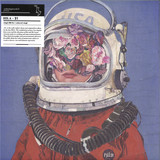
"21" is the well-crafted, sharp and original first album by the duo HILA, composed by American cellist Artyom Manukyan (who already worked with Kamasi Washington, Daedalus, Flying Lotus, Run DMC, Gretchen Parlato, Raphael Saadiq, Clive Lowe Mark...) and french producer Dawatile.
The combination of jazz, Los Angeles beat-scene and the vibrations of 80s and 90s Soviet Armenia make it a striking and unprecedented fusion. These kind of nostalgic and unconventional references forcefully shake the codes of mainstream culture to create a sincere, raw and intimate expression.
"HILA" was born from a spontaneous and intense creative impulse between Artyom Manukyan, a Los Angeles-based Armenian celloist and his partner in crime, David Kiledjian aka Dawatile, a French multi-instrumentist of Armenian descent. This project is proving to be a true master stroke given that it only took 21 days for the duo to make it a reality.
"HILA" was made in less a moon cycle but captivates and electrifies audiences upon its first outings. "H.I.L.A" colors the warmth of the Californian "High" with Armenian vibes. The artists chose this name for their creation since both have a close and valuable connection to these locales. This journey began in 2007, on the day Dawatile went to Yerevan, the capital of this small country in the Caucasus mountain to realize a first fusion project centered around local folkloric music genres.
There he was introduced to local musicians including the Armenian Navy Band, one of the country's foremost groups in which Artyom played the bass and cello. In this context, he also met many musicians such as Tigran Hamasyan and Norayr Kartashyan. This will be the beginning of connections between Lyon, Yerevan and Los Angeles. The following year, the two artists will be be seen performing next to Taylor Mc Ferrin at the Jazz à Vienne festival. More recently, they partnered up again when the cellist, who had freshly relocated in California, invited Dawatile to produce his album. As soon as the studio’s threshold was crossed, they decided to postpone this record and create a joint project: Hay (as the Armenians call themselves) / High In Los Angeles. HILA was born at the end of these 21 days of intense creation. The association of Artyom Manukyan and Dawatile is the combination of two visions, two versions of Armenia, two personalities, the reunion of the Eastern and Western blocs.
One grew up nurtured by the sounds of hip-hop and jazz in Europe and the other by art music and Russian-influenced 1980s Armenian folkloric music before moving to L. A., Ca. The cornerstone of it all, the glue that unites everything : Armenia and music. They generate a new identity synthesizing two perceptions, their complicity transcending these cultural discrepencies. To achieve this, they will scour through images of Artyom’s childhood, within the popular culture of Soviet Armenia. Together, they revisit this decidedly retro vibe, based on the work of Caucasian groups inspired by African American music. This background is rehashed and fused with ancestral Armenian sounds. The DNA of the album "21" is molded by these dear influences.
We can also hear the ancestral sounds of Armenia, a country at the edges of both Europe and Asia. The presence on two tracks of Armenian music Master Norayr Kartashyan, infuses the languor of past melodies and traditions. These purposeful anachronistic sounds offer a fantastic depth to this powerful opus. Listening to the album, one can appreciate the successful fusion of styles and influences. Those combinations, however, manage to preserve individual identities only to enhance the art through an adamant musical dialogue.
Being driven by the urge to transpose Armenian musical traditions into a unique universe, the daring artists, offer an innovative combination by blending, for the first time, these ancestral sounds with the world of Los Angeles beat-scene and jazz. An invention largely fueled by the magic strings of Artyom and maestro Miguel Atwood-Ferguson, a pillar of the genre in Los Angeles combined. These associations resonate with a triumphant equilibrium. HILA is musical uncharted territory in which Artyom's cello strings intertwine to ignite the harmonies of keyboards, the machines, the vocals and electronic layers Dawatile pieced together. HILA plays the soundtrack of an adventure set between Armenia around the end of the Soviet era and a mysterious near future.
Artyom Manukyan grew up in Armenia in the 90s. At the time, he studied Russian classical music while learning jazz with assistance by his father, a music journalist. Being an unconditional music lover, he went on to sharpen his skills at the prestigious Berkelee College of Music. Subsequently, he’s been lucky enough to travel the world touring with numerous acts and mainly with the Armenian Navy Band. The group has fostered alacritous success honored by a BBC Award as a crowning achievement. He moved on 10 years ago and made his way to L.A. with his cello on his back. In the City of Angels, he quickly became a popular figure of the jazz and hip-hop scenes thanks to his first album "Citizen". He’s accompanied prestigious musicians such as Kamasi Washington, Melody Gardot, Daedalus, Flying Lotus, Run DMC, Gretchen Parlato, Raphael Saadiq, Clive Lowe Mark, or Vulfpeck. He released his solo album on the cello, "Alone" in October 2019.
Dawatile is a bold producer and multi-instrumentist as well as a passionate and resolute musician molded by jazz. As a versatile artist, he handles and juggles the saxophone, the keys, the bass and composition. Simultaneously, Dawatile produces cross-over projects and soundtracks for the movie industry. He, as well, has had the opportunity to be a part of many tours, including with his electro hip-hop band, Fowatile and more recently with the "Future Kreyol" trio, Dowdelin. Being the ever workaholic, he has under his belt a string of prestigious collaborations with the likes of Talib Kweli, Foreign Beggars, Roy Ayers, Tigran Hamasyan, Mathieu Boogaerts, Voodoo Game and Piers Faccini. His taste for developing new musical recipes and his know-how in production make him a much sought-after album producer. In concert, the HILA duo offers a sober, precise and rhythmic performance. "21" is an aerial and lively album taking the audience on an at times joyous and sometimes melancholic dreamlike journey. The magic of "HILA" operates at the speed of light and positions it already as an avoidable group.
- A1: Michna - Triple Chrome Dipped
- A2: Dabrye - Temper
- A3: Dark Party - Active
- A4: Tycho - Cascade (Live Version)
- A5: Jdsy - All Shapes
- B1: Deastro - Light Powered
- B2: Matthew Dear - R+S
- B3: Flyamsam - The Offbeat
- B4: Cepia - Ithaca
- B5: Aeroc - Idiom
- C1: The Reflecting Skin - Traffickers
- C2: Ben Benjamin - Squirmy Sign Language
- C3: Kill Memory Crash - Hit + Run
- C4: Osborne - Wait A Minute
- D1: Milosh - Then It Happened
- D2: 10 32 - Blue Little
- D3: Mux Mool - Night Court
- D4: Solvent - Hung Up
Legend has it that Brian Eno’s concept of ambient music came to him while laid up in a hospital bed after an automobile ac-cident in the 70's. A friend brought him some records, playing them too low to be properly heard, and Eno couldn’t get out of bed to adjust the volume. While the record spun softly, Eno’s idea for music you could ignore as easily as you could give it your full attention, like a sort of sonic wallpaper, was born. It’s in that spirit of quiet isolation that Ghostly International, in associ-ation with Adult Swim, shares Ghostly Swim 2, our way of giving listeners a space to get away from the manic holiday bustle.
For those keeping track at home, Ghostly is wrapping up its 15th anniversary as an Ann Arbor/Brooklyn-based indie. 2014 has seen the company soundtracking video games (Playstation’s Hohokum), collaborating with awesome companies like Warby Parker and VOID watches, and clearing 300 releases of for-ward-thinking music with records from Tycho, Com Truise, and HTRK. What better way to end this banner year than to revisit one of our favorite partnerships from the past decade and a half?
Released in 2008, Ghostly Swim was praised for its adventurous survey of exploratory dance and pop music. Our curatorial focus has shifted this time around, moving further inward (spiritually) and outward (as far as our roster goes) to reflect the electron-ic underground in all of its hazy and vibrant experimentalism. Ghostly Swim 2 is a document of textured ambient zone-outs and woozy, granular house and techno that will help you find some downtime away from The Most Wonderful Time of the Year. So sit back, lower the volume, and enjoy our selections.
- A1: Toto Chiavetta - Thank You In All Languages
- A2: Echonomist - Overseas
- A3: Unnayanaa Feat Visalakshi - Eru Maliye (Toto Chiavetta "Vinyl Edition"Remix)
- B1: Eri - Lapsed Technology
- B2: Unnayanaa & Irfan_Rainy Feat Ibtisam - Taht Min Aini (Toto Chiavetta Remix)
- C1: Siza - Primitivismo
- C2: U A - Ederlezi (Toto Chiavetta Feat. Sead Ajaz Ensemble Edition)
- D1: John Falke - Villam
- D2: Pergola Feat Lygdamo - Rocking' In The Free World
- D3: Olaf Stuut Feat Marlon Penn - Run (Toto Chiavetta Private Edit)
J A surfaces on RUBBER with six disorienting wave tracks, reigniting the catalogue after a short hiatus. Crafted by Andrea Noce (Eva Geist, As Longitude) and Jonida Prifti (Acchiappashpirt, Opa Opa), these productions find elegance in their noir aesthetic and sketch-like composition, breathing filmic atmospheres of its creative process and the hedonist self alike. Straying away from the societal drift for efficiency and make belief, this record was produced over a timespan of five years, while shifting between Berlin and Rome. Dancing and loafing, mirrors were splintered and scattered shards reflected a new light. Here, Noce her serpentine sense of melody guides uncharted signatures of reverberating syncopated drums, while soundscapes move in and out as apparitions fogging the mind. The poetic spoken-singing of Prifti subdues the tracks, through a linguistic form where Albanian and Italian intertwine, channeling her scientific field into art. Cleverly processed, the vocals take on many shapes, blurring lines between instrumentation and recognition, creating meaning where language ends.
“Experimental trio Giraffe crystalize time on ‘Desert Haze’, their new LP on Marionette. Giraffe is the musical project of Sascha Demand (guitar), Jürgen Hall (keys), and Charly Schöppner (percussion). Sascha Demand is a composer that comes from a contemporary and improvised musical background, collaborating with the likes of Ensemble Integrales and Vinko Globokar. Jürgen Hall works in electroacoustic experimental projects, theatre and film scores, with releases on Staubgold and Edition Stora. Charly Schöppner is known for his popular music releases such as Boytronic on major production companies in the 1980´s and composes for theatre, dance, and film scores. With only a couple of releases to date on the wonderful Meakusma imprint as well as an EP on Marmo, little is known about Giraffe. After letting go of other artistic projects, the trio now focuses solely on Giraffe by continuously searching for and finding their own unique language.
Sascha, Jürgen and Charly have quite diverse musical backgrounds, though morphing into Giraffe they tower into one single composer. Their music is a critical statement, not in a political sense but rather an artistic one. Being mindful about what it means to create and how to position themselves as artists nowadays (without the constant hassle of being en vogue and short-lived trends) shaped their rather rare and stoic artistic stance. It is refreshingly honest to see their expression develop so naturally.
On Desert Haze, they’ve created a vibrant and minimalistic tribal sound that feels inspired by the Saharan traditional music of the Tuareg, Jazz, and German psychedelic krautrock. Giraffe themselves also list the radical music of the Viennese School (Schoenberg along with his pupils Berg and Webern) as well as the Köln School with its early electronic experiments as their main influence and inspiration. More precisely the composition process and the organization of musical material within space and time, where a conceptual and intellectual approach melds with an experimental yet expressive sound searching method.
Side A focuses on the trios studio work; it is built around tone color and pitch analysis of resonating prepared guitar sounds. Through a unique mixture of free improvisation and a serialism "rule set”, they develop instrumental layers and structures to form their tracks. Side B sees Giraffe playing more freely with a reduced setup - representative of what you may hear when listening to them live.
Desert Haze, along with its track-titles, showcases an almost mimetic approach to art. The haptic music grabs the listener not as a passive recipient but as an active resonant body to vibrate through. One can almost feel the Elements, pressure and heat forming a diamond, hypnotic overtones ringing through windy caves, shamanistic rhythms conjuring up mysterious and ancient landscapes - where the constant cycle of sedimentation and erosion reveals structures of fragile beauty - always gentle to the hand’s touch and the mind’s eye.”
Adapted Vinyl was a UK based techno label active in the late 90’s that picked up regular DJ support from taste makers of the time ranging from Jeff Mills to Mr C.
This, the label’s 7th record disappeared before a public release when the Integrale Muzique distribution company went out of business in 2008, but now gets its first official release date after years of very limited availability
Label founder Suade is the artist behind this release and these days he is best known as a highly-sought-after mastering engineer working for artists like Dense & Pika, Paranoid London, Jamie Jones and Vitalic.
Focusing his energies into family life and the fine tuning of other peoples music it’s rare to see Suade’s own music on a new release, but this hasn’t stopped him from collaborating on original tracks with the likes of Magda and Radioactive Man in recent years.
The EP has four contrasting tracks all with different moods and tempos all blended with Techno’s classic motoric drive.
With it’s absence from the usual music marketplaces creating something of a mystery this record ended up receiving a new, unofficial name on Discogs - The Citadel EP which is a title taken from the broken-beat second track on the B side of the record.
The Citadel is just one of the highlights on this eclectic EP, as it’s a Latronic Notron sequencer workout that patiently deploys layered synths in ever-shifting cross-rhythms for a languid 5 minutes before its deep, underpinning bass arrives evoking desert travel and arrival.
Baikal, named after the huge freshwater lake in Russia, is another stretched out meditation on tone and harmony acting as a foil to the delicate and vibrant Latin American percussion that filters in and out through a massive stereo Moog Modular system creating an energetic yet static, ritualistic atmosphere.
Trajan - the most driving track on the EP, gives a nod to the Probe era Richie Hawtin sound with a touch of Drexciyan melodics with shuffled percussion and bleeps over a snaking TB303 shaped bassline where the classic Acid box is given the role of control sequencer only commanding the thick, dirty oscillators of the big Moog.
A1 track Felix is a contrast yet again. A big room melodic Techno piece with another massive bassline and an almost orchestral level of layering, building to nine counter-melodies in total before letting rip with a classic TB303 acid line that builds from the heart of the track.
After their brilliant label debut with "Grow Yes Yes" in 2017, Professor Wouassa now returns with their brand new third album on Matasuna Records.
The Swiss band's career spans more than 15 years, where they have played at many major festivals in Switzerland and abroad. The 11 members of the band have perfected their musical qualities over the years and captivate as a well-rehearsed live band with their energetic and rousing shows. So it isn't surprising that they supported concerts of Afrobeat legends like Ebo Taylor or Seun 'Anikulapo' Kuti.
Their still exuberant creativity can also be heard on their new work entitled Yobale Ma!, which in Wolof's language can be translated as "take me" or "get me". With their new album they take the listener to their musical island to explore the borders of Afrobeat and beyond.
The song Fallou Fall opens the album in a jazzy & big band way, and quickly switches to an afrobeat theme and solo. In the middle the song breaks into an Afro-style pattern, which is performed by Thaïs Diarra in Bambara (Malian dialect) in a traditional Mandingo way of singing. The track ends with a Sabar percussion part - a traditional Senegalese drum.
Yobale Ma is the single of the album, which is inspired by the funky guitars of a Nile Rodger and some typical fast Ghanaian highlife of Ebo Taylor.
The track Thiaroye Gare is about the Tirailleurs sénégalais, a unit of the French army who fought for France in WWII. After returning from captivity they were taken in Camp Thiaroye northeast of Dakar. Corrupt and racist colonial officials led to a revolt, which was bloodily suppressed by French troops.
From the musical point of view the song shows a link between afrobeat and funky James Brown rhythms, which ends in a fast afrobeat style with baritone saxophone and trombone solos.
Beguente Len in the middle of the album is a kind of interlude that represents Wouassa's own way of interpreting traditional afro beats and rhythms.
With the two songs Djongoma and Sama Yone Professor Wouassa leaves his usual afrobeat path to explore the "sound of the islands" (Mauritius, La Réunion, Cape Verde or Cuba) and blend it with their personal and unmistakable style.
With Iba Niawoulo the professors investigate a kind of Ghanaian highlife medium tempo with a chord progression from Serge Gainsbourg's song "Initial BB". The tracks change in the middle to a fast Rhythm'n'Blues beat, which is accompanied by afro guitars. The singer "Mamadou Diagne" talks about his alter ego in Dakar.
In Djougoudja typical afro rhythms are mixed with pure Ethiopian 70's brass sounds and funk guitars. As heard several times in other songs, the track breaks into a very personal and hard to describe Wouassa beat in it's middle. At this time, Mamadou Diagne recites a big slam about the spiritual ideas and the history of the famous senegalese theologian and poet Serigne Touba (Cheikh Ahmadou Bamba). Under his flow some sabar percussions (typical senegalese percussions) build a strong and intense musical rug.
Von Brüchen und Kämpfen: Das Berliner Electro/Pop-Duo Yeah But No kündigt sein zweites Langspielalbum "Demons" an.
Yeah But No sind Douglas Greed und Fabian Kuss. Elektronische Musik mit klassischen Songstrukturen zu einem klugen und mitreißenden Hörgenuss verschmelzen, ist schon immer das Anliegen der beiden. Die Stücke des neuen Albums "Demons" kreisen um innere und äußere Konflikte und Gegensätze und zeigen die Band von einer dunkleren und detailreicher ausgearbeiteten Seite als auf ihren vorherigen Veröffentlichungen, und erweitern das breite Spektrum der Band von elegantem Deep House über friemelige Electronica bis hin zu hypnotischem Techno und großartiger Popmusik.
- LP: schwarzes Vinyl, Gatefold-Cover, 4c-Innersleeve mit Lyrics, Downlode-Code liegt bei
For its 3rd releases, Nubiphone is proud to present you a compilation of the best early 7inch releases of the mythical Cameroonian band Los Camaroes.
10 raw tracks taken from various singles from 1968 to 1975, that present the musical diversity played by those seven young people: Bikutsi, Afro-Funk, Jerk, , Soukous, Rumba & Blues music. The band led by the charismatic lead vocal Messi Martin that managed to modernized Cameroonian music. Deluxe edition that includes an 8-pages booklet, with exclusive pictures, biography in both English and French languages, and a HQ digital download
card.
Strangelove’s latest release turns left somewhere near the edge of the Atlantic, with Electricidade Estética” documenting a vibrant window into the musical landscape of 1980’s counter-culture Portugal. Compiling early un-issued works, DWART’s organic Ash-Ra Balearics meld with spikey Iberian electronics, coalescing around the floating beauty of ‘Mate’, reissued for the first time on vinyl. With emergent music technologies of the era enthusiastically adopted by Lisbon’s avante-garde, there was a collective desire by DWART and their contemporaries to push existing sonic boundaries;- Post new wave sounds melded with distinctive local sensibilities. Vítor Rua & Jorge Lima Barreto of the legendary Telectu (whom Antoñio currently tours with) were regular collaborators while composer/ guitarist Nuno Rebelo and guitarist/singer Bernardo Devlin feature throughout. Antoñio & Manuela Duarte’s search for an artistic language melded a continuing curiosity with aural and physical dualities: experimental pop integrated with performance art, mathematics sound-tracked on canvas, organic found sounds at ease alongside synthetic drum machines. The 9 songs found here document the early emergence of their own ‘Electricidade Estética’ (Big shouts to Invisible Cities & Steele Bonus- early champions of ‘Mate’) Vital Sales Points: Follow up to the labels previous releases - Frank Harris & Maria Marquez ‘Echoes’ and previous Portuguese release Lena d’Água ?- Jardim Zoológico
Keiji Haino,Jim O'rourke,Oren Ambarchi
In the past only geniuses were capable of staging the perfect...
- A1: In The Past Only Geniuses Were Capable Of Staging The Perfect Crime (Also Known As A Revolution) Today Anybody Can Accomplish Their Aims With The Push Of The Button Part 1
- B1: Decorously Decorously Decorously Decorously Decorously Decorously Decorously Decorously Decorously Decorously To Make Something Beautiful And Then To Smash It Decorously
- C1: Head-On Collision If It Still Has Bones It Shall Move Forward (Which Is Different To Progress)
- D1: In The Past Only Geniuses Were Capable Of Staging The Perfect Crime (Also Known As A Revolution) Today Anybody Can Accomplish Their Aims With The Push Of The Button Part 2
For its 50th release, Black Truffle presents the 9th album from one of the label’s core ensembles, the power trio of Keiji Haino, Jim O’Rourke and Oren Ambarchi. Drawn from a November 2015 performance at Tokyo’s now-defunct SuperDeluxe, the record’s opening piece drops us immediately into the maelstrom, abruptly cutting into an extended episode of Ambarchi’s pummelling drums, O’Rourke’s fuzzed-out 6 string bass and Haino’s roaring guitar and electronics. Eventually settling into a hypnotic bass and drum groove over which Haino unleashes some almost Ray Russell-eque skittering atonal screech, these opening 13 minutes act as a potent reminder of the trio’s power. Alongside showcasing the steady development of a unique language for the guitar-bass-drums power trio, the group’s succession of releases over the last decade has demonstrated a constant experimentation with new instruments, which continues here with O’Rourke use of Hammond organ (played at the same time as his roaming, sometimes knotty basslines). On the album’s second piece, the organ plays a key role, furnishing a harmonically rich shimmer over O’Rourke’s angular 6 string bass chords, Haino’s distant, chirping electronics and Ambarchi’s crisp cymbal work; arriving somewhere halfway between Albert Marcoeur and Terje Rypdal, this piece is undoubtedly a highlight in the trio’s catalogue so far. Sides two and three are given over to slow-burning, multi-part epics that range from spacious reflection to furious tumult. Where the trio’s previous 2LP set (This Dazzling, Genuine “Difference” Now Where Shall It Go?, 2017) was primarily instrumental in focus, here we find Haino’s voice taking the spotlight on the expansive third side, intoning, wailing and exhorting in Japanese and English over a backdrop that moves from hushed bass and organ atmospherics to rolling toms and cymbal crashes before arriving at an ecstatic finale of searing guitar, tumbling drums and reverb-saturated bass. The fourth side returns to the hypnotic grooves of the opening piece, fixing on an relentless riff and riding it into oblivion under Haino’s roaming psychedelic soloing and jagged chordal slashes.
'Mantra Moderne' is a stunning, contemporary masterpiece that fuses Anatolian Psychedelia, Brazilian Tropicalia, 60’s European pop and American jazz. A must for fans of Khruangbin, Portishead, Arthur Verocai, Goat, Caetano Veloso, Tom Zé, Os Mutantes, Cortex and co.
The duo is formed of Kit Martin, who lives between London and France and plays all instruments on the album, and Merve Erdem, vocalist and multi-disciplinary artist from Istanbul, now based in London. This is their debut album.
The album explores universal themes such as love, loss, decay, language and ideology, mixing three different languages: English, Turkish and French. Written and recorded by the duo - Kit composed all the songs and Merve wrote the lyrics - in rural France during 2018, each song was completed within a 12-hour window, pawning contemplation for spontaneity.
Dubbed by Kit and Merve as ‘lo-fi-hi-fi’ in reference to the high-end tube equipment that helped it find its way to 8-track cassette tape. The style owes its sound to narrow tape width, valve distortion, spring reverb, the mixture of high end gear with lo-fi equipment as well as a disregard to the norms of hi-fi studio techniques. All instruments were analogue and no samples were used. The instruments that are used range from tablas to darbukas, balalaikas to ouds, MS20 synths to Farfisa organs and a lot of cuica. The mixing techniques were done on-the-fly, tracking immediately to tape: compression, EQ, delay and reverb; meaning mixing could not be revisited!
- A1: Jacques Thollot - Cécile
- A2: Philippe Besombes - La Plage
- A3: Igor Wakhévitch - Materia-Prima
- A4: Mahjun - Les Enfants Sauvages
- B1: Lard Free - Warinobaril
- B2: Etron Fou Leloublan - Le Désastreux Voyage Du Piteux Python
- B3: Jean Cohen-Solal - Captain Tarthopom
- C1: Z. N. R. - Solo Un Dia
- C2: Red Noise - Sarcelles C’est L’avenir
- D1: Pierre Henry - Générique (Thème De Myriam)
- D2: Horrific Child - Freyeur
- D3: Dashiell Hedayat - Fille De L’ombre
- D4: Jean Guérin - Triptik 2
After years of mythology, misinterpretation and procrastination Nurse With Wound’s Steven Stapleton finally chooses Finders Keepers Records as the ideal collaborators to release “the right tracks” from his uber-legendary psych/prog/punk peculiarity shopping list known as The Nurse With Wound List, commencing with a French specific Volume One of this authentically titled Strain Crack Break series. Featuring some Finders Keepers’ regulars amongst galactic Gallic rarities (previously presumed to be imaginary red herrings) this deluxe double vinyl dossier demystifies some of the essential French feee jazz and Parisian prog inclusions from the alphabetical “dedication” inventory as printed the anti-bands 1979 industrial milestone debut.
When Steven Stapleton, Heman Pathak and John Fothergill’s anti-band Nurse With Wound decided to include an alphabetical dedication to all their favourite bands on the back of their inaugural LP the notion of creating a future record dealers’ trophy list couldn’t have been further from their minds. By adding a list of untravelled European mythical musicians and noise makers to their own debut release of unchartered industrial art rock they were merely providing a suggestive support system of existing potential likeminded bands, establishing safety in numbers should anyone require sonic subtitles for Nurse With Wound’s own mutant musical language. Luckily for them, the record landed in record shops in the midst of 1979’s memorable summer of abject apathy and its sound became a hit amongst disillusioned agit-pop pickers and artsy post-punks, thus playing a key role in the bourgeoning “Industrial” genre that ensued. On the most part, however, the list , like most instruction manuals, remained unreadable, syntactic and suspiciously sarcastic... As potential “real musicians” Nurse WIth Wound became an Industrial music fan’s household name, but in contrast many of the names on The Nurse With Wound List were considered to be imaginary musicians, made-up bands or booby traps for hacks and smart-arses. It took a while for the rest of the record collecting community to catch on or finally catch u
Since then, many of the rare, obscure and unpronounceable genre-free records on The Nurse With Wound List have slowly found their own feet and stumbled in to the homes of open-minded outernational vinyl junkies, D’s and sample hungry producers, self-propelled and judged on their own merit, mostly without consultation of the enigmatic NWW map. But, to the inspective competitive collector’s chagrin, one resounding fact recurs, NWW got there first! Via vinyl vacations, on cheap flights and Interrail tickets, buying bargain bin LPs on a shoestring while oblivious to the pending pension worthy price tags after their 40 year vintage, Stapleton and Fothergill, even if you’ve never heard of them, were at the bottom of the pit before “digging” became paydirt. And NOW at huge international record fairs that occur in massive exhibition halls (or within the confines of your one-touch palm pilot) amongst jive talk acronyms such as SS, PP, BIN, DNAP and BCWHES the coded letters NWW have begun to appear on stickers in the corner of original copies of the same premium progressive records accompanied by a customary 50% price hike to titillate/coerce the initiated as dealers extort the taught. Like “psych” “PINA” or “Krautrock” did before, “NWW” has become a buzzword and in the passed decades since its first publication The List has been mythologised, misunderstood and misconstrued. It’s also been overlooked, overestimated and under-appreciated in equal measures, but with a growing interest it has also come to represent a maligned genre in itself, something that all members of the original line-up would have deemed sacrilegious. Bolstered by the subtitle “Categories strain, crack and sometimes break, under their burden,” all bands on the inventory (many chosen on the strength of just one track alone) were chosen for their genre-defying qualities... A check-list for the unchart
Forty years after Nurse With Wound’s first record, Finders Keepers Records, in close collaboration with Steve Stapleton remind fans of THIS kind of “lost” music, that there once existed a feint path which was worn away decades before major label pop property developers built over this psychedelic underground. As long-running fans and liberators of some of the same records, arriving at the same axis from different-but-the-same planets, Finders Keepers and Nurse WIth Wound finally sing from the same hymn sheet resulting in a collaborative attempt to officially, authentically and legally compile the best tracks from the list, succeeding where many overzealous nerds have deferred (or simply, got the wrong end of the stick). Naturally our lavish metallic gatefold double vinyl compendium would only scratch the surface of this DIY dossier of elongated punk-prog peculiarities hence out decision to release volume one in a series which, in accordance with Steve’s wishes, focusses exclusively on individual tracks of French origin, the country that unsurprisingly hosted the highest content of bands on the list. Comprising of musique concrète, free jazz, Rock In Opposition, Zeuhl School space rock, macabre ballet music, lo-fi sci-fi, and classic horror literature inspired prog, this first volume of the series entitled Strain Crack And Break throws us in at the deep end, where the Seine meets the in-sane, introducing the space cadets that found Mars in Marseilles.
Like the Swedish flat-pack record shelves that attempt to house the vast amounts of vintage vinyl that goes into a multi-volume compilation like this, its time to prepare your own musical penchants and preconceived ideas about DIY music and hear them slowly strain, crack and b
Manchester songwriter Ryan Kennedy returns with his fourth album "The Unforgiving Current". Recorded in and around Tokyo hotel rooms, apartments and studios, the album is a badly lit stroll through Tokyo's winding streets, stopping in only the most questionable bars. Despite its seemingly overpopulated centres, there is often a strange isolation. This Isolation would be the fuel behind "the Unforgiving Current".
After moving to Tokyo early 2018 Kennedy began work on the album. Amidst language and work issues his rosey outlook soon dimmed and what follows is Kennedy's exploration and loneliness in this foreign land. Previous musical similarities may be unearthed but what runs through this record is a vein of (dare I say) mature introspection which sets it apart from previous works.
In her varied career that would combine art gallery installations, major film soundtrackings and commissions for Atari, Suzanne Ciani’s earliest experiments remain some of her most challenging, beguiling and timeless... Flowers Of Evil ticks all the above boxes and flicks switches that would power-up a new uncharted universe of her own musical modernité. Finders Keepers present the first-ever release of these vital archive recordings.
As a genuine vanguard of electronic music composition at the forefront of the modular synthesiser revolution in the late 1960s, Suzanne Ciani’s forward-thinking approach to new music would rarely look to the past for inspiration, which makes this unheard composition from 1969 a rare exception to the collective futurist vision of Ciani and synthesiser designer Don Buchla. In choosing to adapt the controversial prose of French poet Charles Baudelaire, Suzanne would join the ranks of ongoing generations of pioneering musicians like Olivier Messiaen, Karlheinz Stockhausen, Serge Gainsbourg, Etron Fou Leloublan, Celtic Frost and Marc Almond (not forgetting Star Trek’s William Shatner!), all equally inspired by the 19th century writer’s works of “modernité” (modernity), a self-coined term dedicated to capturing the fleeting, ephemeral experience of life in an urban metropolis, best exemplified in his symbolic, erotic and macabre ode to Parisian industrialisation, Les Fleurs du mal (Flowers Of Evil).
In her varied career that would combine art gallery installations, major film soundtrackings and commissions for Atari, Suzanne Ciani’s earliest experiments remain some of her most challenging, beguiling and timeless... Flowers Of Evil ticks all the above boxes and flicks switches that would power-up a new uncharted universe of her own musical modernité. For the many enthusiasts that have already drawn the parallels between Baudelaire’s writings and experimental/electronic music (a relationship rivalled only by the likes of J. G. Ballard and Aldous
Huxley) some might instantly recognise an unconscious sistership between this recording and another 1969 electronic adaptation of Flowers Of Evil by celebrated female electronic composer Ruth White. An interesting distinction of White’s excellent version of Flowers Of Evil (released via Limelight records, home to the likes of Fifty Foot Hose and Paul Bley) is that its dark tone generation and vocal manipulation was created with a Moog synthesiser, the commercially triumphant
rival to Suzanne and Don’s Buchla Systems (Buchla and Moog’s historic, simultaneous, neck-and-neck synth developments are well documented.) The fact that Ciani’s version was never intended for commercial release (not unlike her 1975 Buchla concerts, which could easily have taken Morton Subotnick’s Bull by the horns!) is also poetically reflective of the nature of Ciani and Buchla’s alternative perspective. The choice to present this extract from Flowers Of Evil in its intended French language further distances Ciani’s faithful reaction from some of its better-known variations. Having attempted to voice the poem herself, the multilingual Italian-American composer’s French accent did not meet her own standards, resulting in the request for a fellow unnamed French student who lived on campus at Mills College in Oakland to accurately verbalise the section of Baudelaire’s collection entitled Élévation.
Eno Williams, frontwoman of Ibibio Sound Machine, uses both English and the Nigerian language from which her band's name is derived for the dazzling new album Doko Mien. Long lauded for jubilant, explosive live shows, Ibibio Sound Machine fully capture that energy on Doko Mien, the followup to their Merge debut Uyai.
In a glowing piece in the New York Times, those songs were praised for following 'in the tradition of much African music, [making] themselves the conscience of a community.' By pulsing the mystic shapes of Williams' lines through further inventive, glittering collages of genre, Ibibio Sound Machine crack apart the horizon separating cultures, between nature and technology, between joy and pain, between tradition and future. That propensity for duality and paradox seems common in people whose lives span continents.
Williams was born in the UK, but grew up in Nigeria, always steeped in her family heritage. She obsessed over West African electronic music, highlife, and the like, but was equally empowered by Western genres such as post-punk, disco, and funk. The London octet have enveloped themselves in that maximalist quilt proudly since their 2013 formation. Though it can often bring with it news of stress and uncertainty, the modern world further brings all these disparate traditions into connection.
'Everyone has everything now,' says multi-instrumentalist Max Grunhard. 'Everyone has immediate access to every genre, picking things up from everywhere—like magpies.' And while they haven't suddenly left their African roots behind, Doko Mien does find increased representation of English lyrics in the ratio. By sharing more directly with more universal lyrics, the record feels more anthemic, reaching for grander heights.
'We wanted to give people a reason to sing along, to find their soundtrack every day,' Williams says. 'We wanted everyone to feel as if they're part of the music as well.'
Late album highlight 'Guess We Found a Way' addresses the change with a coy smile. 'Guess we found a way to speak to you/ Guess we found a way to say what's true/ To say what's real,' Williams coos over glistening chains of reverberant synth and diamond dust percussion, before returning to Ibibio in the chorus. Perhaps the best example of the group's ability to convey meaning across language and tradition, to blend past and future into a singular present comes on 'She Work Very Hard'. The traditional Ibibio folk tale bobs over the waves of tuned percussion, chunky synth, and pinprick highlife-esque guitar, while Jose Joyette's drums and Derrick McIntyre's bass funk groove bring everyone to the dance floor. 'These stories won't be forgotten. Feel the music: it speaks to everybody,' Williams says. 'We can travel back in time together, while convening on a futuristic, present tense. We hope that we can give people that reason to wake up, that one song to sing and dance and be happy.'
Doko Mien: Tell me everything. On their new album, Ibibio Sound Machine provide the perfect companion, ready to digest as much as possible and then further unfurl beauty and hope. They remember and honor the past and charge forward toward the future, all while intensely expanding the present.
Two years ago, Ferdi Schuster was a young multi-instrumentalist and producer
daydreaming of releasing his music on Claremont 56, one of his favourite labels.
Now he’s set to release his stunning debut album, “All One”, on Paul Murphy’s
long-running imprint.
It’s been a long time between drinks for the German producer, who last graced
C56 with his superb double A-side single, “Little River/Befreit”, in the autumn of
2017. Fittingly, it’s “Little River” – a babbling brook of audio bliss rich in samba
influenced drums, soothing acoustic guitars and spacey synthesizer licks – that
kicks off “All One”, a seductive set in which every drumbeat, piano note, guitar
riff, synthesizer flourish and freside-warm bassline was played by the man
himself.
Throughout, it’s easy to see why Murphy decided to snap up Schuster and
push the producer to record a debut album. Check, for example, the dubbed
out shuffle of “Thinking of You”, where ghostly chords, soft-focus guitar solos
and ethereal vocals drift across the soundscape, and the slowly unfurling bliss
of “The Good Fight”, an effortlessly Balearic workout rich in sun-kissed guitars,
bubbly synth lines and chords so snugly they could probably be used as a
comfort blanket.
Schuster’s greatest strength is undoubtedly the evocative and enveloping nature
of his instrumental music, which draws on a variety of complimentary influences
but never sounds anything less than original and fresh. Some listeners may be
enchanted by the loose and languid pulse of “Fading Away” or the lo-f reggae
jazz of dusty closing cut “Night Talk”, though others may prefer the stoned funk
shuffle of “Interaction” or the spacey vibrations of “Pulsa”, where intergalactic
synthesizer lines wind their way around heady bass guitar and sparse, off-kilter
deep electro drums.
“All One” is that kind of set; an atmospheric and musically accomplished
collection of cuts capable of muting the mundane and distracting from the stress
of 21st century life. As debut albums go, it’s something of a stunner
"Amyl and the Sniffers" sind die langersehnte, unbekümmert-energiegeladene Wiederbelebungsmaßnahme, die dem Punk noch einmal neuen Atem eingehaucht hat. In allerbester trotzig-rotziger Punk-Manier wirft das australische Quartett um Frontfrau Amyl Taylor "Amyl and the Sniffers" AC/DC, Cosmic Psychos, Dolly Parton und Die Antwoord in einen Topf und rühren einmal kräftig um. Als Resultat spucken sie das nach sich selbst benannte Album "Amyl and the Sniffers" aus, um den Punk und uns noch einmal ordentlich wach zu rütteln. Dass man dabei bloß nicht zu perfektionistisch zu Werke gehen darf, bewies die Band schon mit ihrem Debüt-Album, das von der Bandfindung (die schnell von statten ging, Dreiviertel der Gruppe bewohnten gemeinsam eine WG) über das Schreiben der Songs und deren Aufnahme bis hin zur Veröffentlichung nur 12 Stunden brauchte. Inzwischen sind sie die Melbourner die Speerspitze einer neuen Garagenrock- und Punk-Szene und eine Band, die, ausgestattet mit reichlich Energie, rockendem Spirit und Vokuhila, einen Pub Punk vorlegt, der sich selber nicht zu ernst nimmt, mitreißt und noch einige Überraschungen für uns bereithalten wird.
Hard Fist comes back stronger than ever with a sixth release, this time from Pletnev with a remix from Sascha Funke.
Extra prolific Russian born Alex Pletnev has been making music under various aliases and in a number of live bands. Now settled in Vilnius he explores stellar chugging rhythms, afro and oriental vibes for labels like Media Fury and Bahnsteig23 and more atmospheric, dark and industrial EPs on Le Temps Perdu records. This new one is “the tale of an imaginary world, a babel myth of when human beings were together as one because they spoke a single language. It is an allusion of No Border movement supporting freedom of mobility and fighting human immigration control.”
This fantastic release is the most club focussed music Pletnev has ever produced with instrumental, heady opener ‘Guest from Bangkok’ really locking you in a groove. Loose percussion and churning drums make for dark disco of the highest order. Then comes ‘Peep of Dawn,’ an almost frightening, long and slow ceremony of menacing electronic music. A voice resonates while powerful bass sends shivers down your spine and the whole atmospheric and absorbing affair really casts a spell.
Excellent punchy guitar riffs and shamanic rhythms on ‘Red Shoes’ reminds you of a run to catch the setting sun. It’s another spellbinding and rock-laced disco track that oozes grit and rawness. With the closing track, BPitch Control man Sascha Funke remixes ‘My Word Against Yours' into a cosmic and jerky affair that alludes to a journey into outer space. It’s sparse and creepy and brilliantly evocative.
Once again here, the Hard Fist label—which has its own residency at Paris’s mighty Rex Club—tells its unique story with forward thinking club music full of a wide array of influences.
Alt-rock icon Josephine Wiggs is best known as bassist in The Breeders, rising to superstardom in the '90s and continuing to draw crowds and critical acclaim in the wake of their 2018 album All Nerve.
But over the years, Wiggs has released several of her own albums, all of which delightfully defy genre. Her new solo record, We Fall, is both a departure and a distillation of an enduring personal aesthetic: moody and spare but also melodic, at once contemporary and nostalgic.
Some influences are clear: We Fall is reminiscent of the experimentalism of Brian Eno's Another Green World and recalls the delicate, languid minimalism of Harold Budd. The album's classical inflections, sharpened by a dialog with electronic elements, evoke Alva Noto and Ryuichi Sakamoto. This is an album of juxtapositions: minimalist at moments, richly layered in others; ambient while also sharply focused; melancholy yet resolute.
There's something both dreamy and scientific about We Fall. Wiggs, an enthusiastic amateur mycologist, has an impressive collection of mushrooms she's photographed in her travels. We Fall could be the soundtrack to what can't be captured in a single photo—the growth and decay of miraculous creatures that a less astute and sensitive eye might overlook entirely.
Composed, performed and recorded by Wiggs, with drums and electronics by her longtime friend and collaborator Jon Mattock (Spacemen 3, Spirit , We Fall is a lyrical, bucolic album with an undercurrent of disquiet. Think of a wintertime walk in the woods as dusk falls too soon. True to the classic album form, the 10 almost entirely instrumental tracks on We Fall form a compelling whole: a crystalline meditation on paths not taken and words unspoken, an elegy for moments lost and last embraces.
JOSEPHINE WIGGS BIO
Josephine Wiggs grew up in an unconventional family north of London. Returning home from a summer holiday with a donkey riding in the back of the family's 1927 Rolls Royce was not considered at all bizarre. Wiggs studied cello as a child, segued from college in London to undertake a master's degree in Philosophy, and then, in a move few would have predicted, joined a rock band.
After making three albums with The Perfect Disaster (1987-1990), Wiggs left to join Kim Deal (Pixies), Tanya Donelly (Throwing Muses), and Britt Walford (Slint) in forming indie supergroup The Breeders, whose debut album Pod came out in 1990. Following a shift in line-up—with Kelley Deal on guitar and new drummer Jim Macpherson—The Breeders released Last Splash in 1993; with its hit single 'Cannonball' and 'Divine Hammer,' they became alternative rock superstars.
During the same period, Wiggs released two lower-key albums with Jon Mattock (Spacemen 3, Spiritualized): Nude Nudes (1992) under the name Honey Tongue, and Bon Bon Lifestyle (1996) using the moniker The Josephine Wiggs Experience. She also recorded and produced Klassics with a K (1996), the beloved and only album by the Kostars (Luscious Jackson's Jill Cunniff and Vivian Trimble). During a brief run of shows, Wiggs joined the band on drums, showing her range of musical ability.
In the late '90s Wiggs collaborated with Vivian Trimble as Dusty Trails, whose eponymous 2000 album is an homage to neo-noir soundtracks, spaghetti westerns, and Gallic pop. Time Out described it as 'one of the most subtly suggestive, understatedly elegant...things likely to have caressed your cochlea in years.'
Allusions in Dusty Trails to film music foreshadowed the next stage of Wiggs's career, writing scores for feature and documentary films—from Happy Accidents by Brad Anderson in 1999 to Appropriate Behaviour by Desiree Akhavan in 2014. Her new album We Fall began as a suite of short pieces for the documentary film Built on Narrow Land. Wiggs has also composed and recorded music to accompany live performance and short films by the acclaimed Brazilian choreographers chameckilerner.
In 2013, following the 20th anniversary of Last Splash, the classic lineup of The Breeders reunited for a world tour. Five years later in 2018 they released All Nerve, with Wiggs co-writing two songs and singing lead on the standout track 'Metagoth.' We Fall, Josephine Wiggs' third album of her own design and ninth album in a career spanning three decades, will be released on vinyl and available for download and streaming on April 12, 2019 by Sound of Sinners.
Sometimes, - despite today's high-octane, fast-track and hyper-hysteric music business - you come across things that seem so pure, perfect and poetic that it almost hurts. "Socialo Blanco" is one of these objects.
It appears understated at a first listen, startling at the second and totally enamouring by the third run. To lay it all out on the table: it sounds like a Music from Memory re-issue, looks like a Growing Bins Records discovery and feels like a flea-market-hippie-uncle-record-collection find.
Based on the language (coincidences and misbehaviour included) and direction of the classic EMS Synthi AKS and recorded by hand and directly to tape (no midi, no sync, no computer), it is at once out of time and out of touch with current sound aesthetics, but that only makes it even more contemporary (vintage) - like a great piece of furniture.
Unsurprising, if you know that Feater is helmed by Daniel Meuzard. Hailing from Vienna and having made a name for himself as a trustworthy and skilled studio equipment dealer and working closely with producer and studio engineer Sam Irl, the man has a knack for turning yesterday into today.
Already is his project's second album, "Socialo Blanco" is the result of all of this and some magical and effortless sessions. The voice of Vilja Larjosto from Finland and Ghana's Eric Owusu (Pat Thomas, Ebo Taylor) on percussion, spontaneously invited to the recording sessions by fellow Viennese Giuseppe Leonardi, are the icing on the cake. All of that and especially the non-conformist pop song "Time Million" symbolizes the heart and soul of an album that deserves to be billed as such. And that is no mean feat.
Eagerly awaited debut album from oft-cited UK's most out-there band, features in the works with The Quietus and Wire already.
180GM PRESSING - 500 COPIES ONLY.
Difficult times required difficult music, my Yarns, that's why we had Guttersnipe; with its own sort of energy-kind there then.Reiner: A singular yield, a singular yield now.Barns: A whot
Reiner: A singular yield mate! Rich guitar strang, flow motive pounding underneath.Vox like Death come winding through the fields. Barns: Hell of a way to describe a vocal style.
Me: Nah but for real my Donny, Have you read a presser 1 sheet lately It's the most
They say the PR era, circa late 80's killed the golden age of music journalism:
They say Guttersnipe have continuously melted all the forms that they come up against. They are right. Because Guttersnipe is not part of a tradition we know well. You will identify the departure from it though, immediately, upon hearing My Mother The Vent. This LP, the promotional version of which, likely sits in your hands (disk, whatever). The innovation here is a FIRM commitment to the flowmotive polyrhythm underwriting the seared, nay fried, tonal rainbow and de-reasoned vox.
Not Nate Nelson, nor John the masseuse dude from Sightings but TIPULA CONFUSA. Don't want to put the captain obvious pants on so tight I can't jump around the yard because why waste a good yard hang. I'll put on my blighty nighty instead. UROCERAS GIGAS has bridged so many gaps, finally unlocked the AxeWeld CODE and is really playing the thing. Not to mention bringing forth a world-view so utterly unique. Good luck finding anything like it.
Finally some REAL disjunction in the music; clear and intended. In an age when most computer music composers use stochastic systems and still manage to drop some linear pathground shit, the brawler drums and slanky guitar constructions on My Mother The Vent are a genuine treat. I've spent too much of my adult life so far hearing too much of this shit to not recognize REAL GAME. And here it crawls out of the grey shadows of ol' BLIGHTY.
Our post-music age: after the fine human endeavour known as music, the result of letting the cybernetic run ITS horrible game on us. I'm not waxing confusingly in a rarefied tone here. Nor running the boring sci-fi script. I really think that is were we is. We left the human-music-on-a-human-scale behind and much to our detriment. Here we sit in our crumbling reality. But Guttersnipe come paleo, like the rhapsodes with long ass memories rattling off Homeric verse well into the age of manuscript culture, but here, with future tones. Luckily. Otherwise, me and the record label here wouldn't be wasting our time and yours with a 1 sheet for My Mother The Vent.
So a proper first time on wax for these amazing creatures is a welcome addition to the world of things. These drums and these guit-lines are so cranké, as they say here in my odd neighborhood. These voices are so utterly expressive without even the damn language at hand ; like the great horns. We'll rinse this record out, I'll put on my old blighty nighty and go dance in the street. Alex Moskos, Montreal, August 2018Guttersnipe is:UROCERAS GIGAS - Guitar, Analog Synth, VoxTIPULA CONFUSA - Drums, Drum Synth, Vox
Alien Transistor and Tokyo-based label Afterhours release a vinyl-version of tenniscoats' masterpiece "music exists", which consists of 4 LPs in total.
Disc 3 reunites the couple with their old friends and collegues, the swedish musicians from Tape, they concentrate once more on their very own language of making music, and give us another collection of essential tenniscoats-songs.
With the forth LP, there will be a strictly limited box available, either for putting your already purchased other 3 records in, or as the whole glorious 4-LP-package.
Tenniscoats have devoted followers allover the world, but their releases were always hard to find outside of Japan. Except for their album "Tokinouta", which saw a very limited run on vinyl, and the seminal "Two Sunsets", their collaboration with the Pastels (and a small handfull of 7"s), there were never any vinyl-releases, and also the CDs were hard to get for any-one, who doesn't speak or read japanese.
So, this is the chance to dive deep into the beautiful, unique world of the tenniscoats and their opus magnum "music exists".
"It may even be their greatest ever music, essential plus" Monorail Music, Glasgow
"Whatever's ailing you, Tokyo's Tenniscoats have got something for that" Boomkat, Manchester
The fourth AF Trax release is a three-track EP from our long time ally The Fantastic Twins, who has the following to say about her EP:
This EP is a small collection of works I crafted over the past couple of years in the process of working on my live show. I have been performing versions of these tracks countless times and yet never played them twice the same way. To me, they have been material in constant motion, so shaping them into a 'finished' form was a risky challenge. Something I was also wary of - would it mean they would become set in stone Would it mean I'd have to somehow 'rationalise" the music - via the mind - as opposed to letting it run into the wildness of its physical live experiences
Whilst editing these tracks into a format that could be released, I realised that instead of shaping them into the mould my mind first intended to give them, I could in fact use the power they revealed each time I performed them to an audience and inject some of that energy - as much as it is possible to capture and recreate it in the studio - back into this EP. Then of course, it meant letting go on things I usually like to control more, and better.
But isn't it the power of music to let it take you where you didn't plan to go And how incomplete would the music be if our inspiration didn't feed off the collective experience of dancing to music together I've lost myself (and my twins) many times throughout the process - not only on German soil - I have sometimes landed in the wrong place, but I may have found one answer yet in the form of another question. Why are we here if we can't dance
That reminds me of the words of Pina Bausch 'Dance, dance or we are lost'. Lost in our internal struggles as individuals (or imaginary twins). Lost in a society where our relation to the other is often marked by fear, power or violence. We feel the need to resist. Yet nowadays, taking a political stance as an artist is too often being instrumentalised as another tactics or accessory to gather more popularity, reducing the political message to nothing else but a branding attempt. Isn't it anyway the power of capitalism to assimilate everything, even contradictory or once-upon-a-time subversive voices All to end up on a 'Rave' or 'Feminist' H&M t-shirt. Slogans that have been emptied of their initial force and substance, now replaced by their commercial value. I strongly doubt that more empty words poured in vain on social media will help us much. But, like Pina Bausch, like JD Twitch, I have always firmly believed in dancing as a physical, social and fundamental act that leads us to share a common space with others and embrace otherness. Standing together, dancing together when everything else forces us to divide.
- A1: Birth Of The Sparkchild (Ft. O. Watson & S. Novsky)
- A2: Schizophrenia (Ft. H. Feraud & J. Jt Thomas
- A3: We Play What We Want (Ft. The Insane Vocal Society, No Dfinition+Brother P.)
- A4: Bobby Sparks Sr.s Famous Chili (Ft. M. Miller, K. Anderson & M. Letteri)
- A5: The Comanche Are Coming (Ft. R. Sput Searight & Mononeon)
- B1: Girls From Tahiti (Interlude)
- B2: So Fine (Ft. J. Rob, I. Sharkey & E. Gales)
- B3: I Miss U (Ft. F. Mccomb)
- B4: Black Man Running From The Police (Ft. S. Novsky, M. Mitchell & T. Parsnow)
- B5: Stono River (Ft. L. Peterson & M. Simmons)
- C1: Lio Is Weird As Hell (Ft. M. Letteri & Mononeon)
- C2: All Mine (Ft. Mental Chaos & Damascus)
- C3: Lets Take A Journey (Ft. S. Novsky & G. Maret)
- C4: Too Late Now, Boss Man!(Interlude)(Ft. C.sweet Thang Sparks & B.r. Sparks S
- C5: Islam (Hadjdj From India) (Ft. S. Novsky & Dj Ernie G.)
- D1: Take It! (Ft. R. Hargrove & Rev. H.l. Stegar)
- D2: Zelin (Ft. D.g. Bonaventure & Y. Edorh)
- D3: Black Change (Ft. J. Rob, Verb & S. Carrol)
Bobby Sparks II ist vielen ein Begriff. Sei es als Keyboarder bei Snarky Puppy, Marcus Miller, Prince oder Liz Wright, Bobby hat überall markante musikalische Spuren hinterlassen. Und nun ist es endlich soweit: Mit "Schizophrenia - The Yang Project" steht Bobby Sparks Debutalbum (2CD Set) zur Veröffentlichung bei LEOPARD an. Es hat gedauert, um diese außergewöhnliche Sammlung unterschiedlichster Songs zu produziern. Aber es hat sich mehr als gelohnt: zeigt sich darin doch das breite musikalische Vokabular und der schier unerschöpfliche Schaffensdrang des Keyboarders. Vom slammenden Funk bis zu langsamen, groovigen Soul-Balladen und Streifzügen in die Genres Straight-ahead-Jazz, Fusion, Orchester- und Weltmusik: das sehr passend betitelte Album "Schizophrenia - The Yang Project" vereinigt eine Vielzahl verschiedener Musikstile in sich, ohne dabei das Gesamtbild aus den Augen zu lassen. Mit an Bord auf dieser außergewöhnlichen musikalischen Reise sind eine Reihe seiner alten Freunde aus Dallas, sowie viele Stars des Genres - etwa die Bassisten Marcus Miller, Pino Palladino, MonoNeon und Hadrien Feraud, der Trompeter Roy Hargrove, die Sänger Frank McComb und James - J. Rob' Robinson, Snarky Puppys Michael League und Jason - JT' Thomas, die Gitarristen Lucky Peterson und Eric Gales sowie die Drummer Mark Simmons, Brannen Temple und John - Li'l John' Roberts.
- A1: Dancing Alone (Actor's Studio)
- A2: Cold Summer (Fred Ventura)
- A3: Lazy Days (Fred Ventura)
- A4: Running In The Dark (Fred Ventura)
- A5: Dancefloor Theme (Actor's Studio)
- A6: Zeit - 1St Demo (Fred Ventura)
- A7: An Endless Night (Actor's Studio)
- A8: Brave Runner (Actor's Studio)
- B1: International Language - 1St Demo (Fred Ventura)
- B2: Hollywood Party - 1St Demo (Fred Ventura)
- B3: Love Parade (Actor's Studio)
- B4: Sunrise (Actor's Studio)
- B5: Summer Of '83 (Fred Ventura)
- B6: Follow Your Way (Actor's Studio)
Bordello A Parigi presents a compilation of demo tracks from the legendary Italo Disco icon: Federico di Bonaventura, better known as Fred Ventura. These demo tracks were supposed to remain secret until Fred started to digitalize them from tape a few years ago. Most of these tracks were part of the transitional period between the exit from his early 80's band State Of Art and start of his first solo project Actor's Studio and career as Fred Ventura. A versatile treasure of lost music recorded from 1982 until 1984 in Milan, Italy.
Comes with double front sleeve and printed inner sleeve.
- A1: Moeder En Haar Jongens - Hollandse Taal
- A2: Jimmy Frey - Eva's Pakje
- A3: Lieven - Spitsuur
- A4: Daan Broos - Handicap 2000
- A5: Spectrum - Wie Weet
- B1: André Van Der Veken - Jimmy
- B2: Jan De Beer - Dat Soort Lui
- B3: Magenta - Als Je Iets Wil Doen, Dat Je Echt Doen Wil
- B4: Lamp, Lazerus & Kris - Huisje
- B5: Daan Broos & Dapokaster - Maan-Dag
- B6: Elly & Rikkert - Het Oink-Beest
- C1: Liesbeth List - Hee Ouwe Meneer
- C2: Josine Van Dalsum - Nooit Meer
- C3: Raymond Van Het Groenewoud - Ze Weet Niet Wat Ze Doet
- C4: Laurentius - Zomerliefde
- C5: Luk Bral - Het Huis Van Wilde Tederheid
- D1: Bizjoe - Lui
- D2: Lamp & Lazerus - Onheil
- D3: Schralen Tsjip En De Mussenschrik - De Mens Is Een Beest
- D4: Herman De Bruycker - Gemengd Gevoel
- D5: Della Bosiers - Rust
After taking a deep dive into the dusty crates with Belgian & Dutch music, Harde Smart now unearths a smooth selection of jazzy, funky & soulful gems from their collected vinyl stash. All the music you hear, was recorded and produced during the 1970's, in either Flanders (the Dutch-speaking part of Belgium) or Holland. Besides exquisite grooves and hard-pounding drums, the selected songs also have Dutch lyrics in common, making this a rather unique way to approach and compile lyric-driven Flemish and Dutch music from back in the days. Record collectors all over this language area seem to have neglected a considerable part of their own musical legacy for a few decades, while firmly searching for rare grooves and breaks in the bins with more exotic music.
Yet nothing is so certain as the unexpected. 'Flemish & Dutch grooves from the 70's' is the first 'Dutch' compilation album to uncover the genuine, Afro-American funk and soul vibe. A sound that - albeit infrequently - influenced the work of some of the popular and less popular singers and musicians in this small part of the world in the 70's. Although influences undoubtedly also derived from the French chanson and rock music from that era. This 21-track album smashes all musical predictability and takes you on a weird and nostalgic trip; offering a revised set of 'essential homegrown classics' for the local listener, yet also being very exciting to the ears of the non-Dutch speaking audience.
Die Geschichte von Lambchop ist die der steten Veränderung und Weiterentwicklung. Was vor fast 30 Jahren im Keller von Kurt Wagner begann und von ihm selbst scherzhaft als 'most fucked-up country band in Nashville' bezeichnet wurde, hat sich inzwischen nicht nur als eine der dienstältesten sondern auch innovativsten Bands der US amerikanischen Musikszene etabliert. Seit jeher verbinden Lambchop unterschiedlichste Genres wie Folk & Country, mit Soul und Urban Electronica zu einem ganz eigenen, unnachahmlichen Sound. Kein Lambchop-Album klingt wie das andere, aber jedes klingt immer unverwechselbar nach Lambchop. Nach ihrem wegweisenden Album - Flotus' (2016) hat die Band aus Nashville jetzt ein neues Album für den 22.03.2019 angekündigt. Für 'This (is what i wanted to tell you)' arbeitete Kurt Wagner mit Matthew McCaughan (Bon Iver, Hiss Golden Messenger) zusammen, der ihn auch als Teil des Lambchop Live Ensembles im April auf Tour begleiten wird.
Im Sommer 2017 machte sich Wagner auf, über die Blue Ridge Mountains in Richtung North Carolina, zum Geburtstag seines langjährigen Freundes und Chef des Merge Labels: Mac McCaughan. Dort traf er auf seinen jüngeren Bruder Matt McCaughan, der das letzte Jahrzehnt als Schlagzeuger für Bon Iver und Hiss Golden Messenger verbrachte. Matt und Kurt kannten sich schon viele Jahre, aber erst an diesem Abend beschlossen sie zusammen an Musik zu arbeiten. Wagner schickte Mac neue Songideen und McCaughan schickte Wagner Synthesizer-Stücke zur Inspiration. Schließlich gingen beide gemeinsam in Nashville ins Studio, Pedal Steel und Piano und der Harmonika von Nashvilles Legende Charlie McCoy, die diesen schwarz-weißen Skizzen Leben einhauchte.
- 180g heavy, black Vinyl, extra-großes, gefaltetes Booklet, Cover Sleeve mit Mittelloch auf der Rückseite
Das Ergebnis ist This (is what I wanted to tell you)", ein Album, ergreifend ehrlich, atemberaubend, wunderschön und überraschend. Aber Lambchop sind nicht immer nur für eine Überraschung gut, sondern überraschen immer wieder mit verdammt guten Songs. Wenn Kurt Wagner etwas zu sagen hat, hören wir natürlich hin, das sollten sich alle zu Herzen nehmen. Diese Platte muss man einfach hören!
Heute gibt es die erste Single aus dem Album: 'The December-ish you' eine verblüffende Mischung aus bewährt emotionalen Slide-guitar und Pianoflächen alter Lambchop-Schule und effektiven PVC Pop Beats, Claps und Samples, über die Kurt Wagner die melancholischste 'Friday Night Fever' Ballade der Dekade croont.
- Limited edition, 180g heavy, weisses Vinyl, extra-großes, gefaltetes Booklet, Cover Sleeve mit Mittelloch auf der Rückseite
Die Geschichte Von Lambchop Ist Die Der Steten Veränderung Und Weiterentwicklung. Was Vor Fast 30 Jahren Im Keller Von Kurt Wagner Begann Und Von Ihm Selbst Scherzhaft Als most Fucked-up Country Band In Nashville' Bezeichnet Wurde, Hat Sich Inzwischen Nicht Nur Als Eine Der Dienstältesten Sondern Auch Innovativsten Bands Der Us Amerikanischen Musikszene Etabliert. Seit Jeher Verbinden Lambchop Unterschiedlichste Genres Wie Folk & Country, Mit Soul Und Urban Electronica Zu Einem Ganz Eigenen, Unnachahmlichen Sound. Kein Lambchop-album Klingt Wie Das Andere, Aber Jedes Klingt Immer Unverwechselbar Nach Lambchop. Nach Ihrem Wegweisenden Album - flotus (2016) Hat Die Band Aus Nashville Jetzt Ein Neues Album Für Den 22.03.2019 Angekündigt. Für this (is What I Wanted To Tell You)' Arbeitete Kurt Wagner Mit Matthew Mccaughan (bon Iver, Hiss Golden Messenger) Zusammen, Der Ihn Auch Als Teil Des Lambchop Live Ensembles Im April Auf Tour Begleiten Wird.
Im Sommer 2017 Machte Sich Wagner Auf, Über Die Blue Ridge Mountains In Richtung North Carolina, Zum Geburtstag Seines Langjährigen Freundes Und Chef Des Merge Labels: Mac Mccaughan. Dort Traf Er Auf Seinen Jüngeren Bruder Matt Mccaughan, Der Das Letzte Jahrzehnt Als Schlagzeuger Für Bon Iver Und Hiss Golden Messenger Verbrachte. Matt Und Kurt Kannten Sich Schon Viele Jahre, Aber Erst An Diesem Abend Beschlossen Sie Zusammen An Musik Zu Arbeiten. Wagner Schickte Mac Neue Songideen Und Mccaughan Schickte Wagner Synthesizer-stücke Zur Inspiration. Schließlich Gingen Beide Gemeinsam In Nashville Ins Studio, Pedal Steel Und Piano Und Der Harmonika Von Nashvilles Legende Charlie Mccoy, Die Diesen Schwarz-weißen Skizzen Leben Einhauchte.
Das Ergebnis Ist "this (is What I Wanted To Tell You)", Ein Album, Ergreifend Ehrlich, Atemberaubend, Wunderschön Und Überraschend. Aber Lambchop Sind Nicht Immer Nur Für Eine Überraschung Gut, Sondern Überraschen Immer Wieder Mit Verdammt Guten Songs. Wenn Kurt Wagner Etwas Zu Sagen Hat, Hören Wir Natürlich Hin, Das Sollten Sich Alle Zu Herzen Nehmen. Diese Platte Muss Man Einfach Hören!
Heute Gibt Es Die Erste Single Aus Dem Album: the December-ish You' Eine Verblüffende Mischung Aus Bewährt Emotionalen Slide-guitar Und Pianoflächen Alter Lambchop-schule Und Effektiven Pvc Pop Beats, Claps Und Samples, Über Die Kurt Wagner Die Melancholischste friday Night Fever' Ballade Der Dekade Croont.
Genre: Electronic, World (Arabic). 180gram vinyl includes 12'x24' art print poster + 320kbps DL card. RIYL: Matar Mohammad, Pauline Oliveros, Nadah El Shazly, Lucrecia Dalt, Chino Amobi, Sote, Arca, Fatima Al Qadiri, Tacita Dean, Stan Brakhage. Jerusalem In My Heart (JIMH) returns with Daqa'iq Tudaiq, the third full-length album from the Montréal-Beirut contemporary Arabic audio-visual duo, following the acclaimed 2015 release If He Dies, If If I f If If If (ye ar-end li sts at The Wire (#39), The Quietus (#24) and A C loser Listen (Top 10), among other accolades).
Featuring voice, electronics, buzuk and other instrumentation from composer-producer Radwan Ghazi Moumneh (Matana Roberts, Suuns, Big Brave) and abetted by the 16mm analog film work of Charles-André Coderre in live performance, JIMH continues to expand the horizons of its profound conceptual and aesthetic engagement with Arabic/Middle-Eastern traditions. Daqa'i q Tudaiq translates as 'minutes that bother/oppress/harass'—which presumably needs no further explanation—and features two distinct album sides of music. Side One realizes a long-held dream of Moumneh's to record a modern orchestral version of the popular Egyptian classic 'Ya Garat Al Wadi' by the legendary composer Mohammad Abdel Wahab. JIMH assembled a 15-piece orchestra in Beirut, enlisting the celebrated Montréal-Cairo composer Sam Shalabi (Land Of Kush) as arranger and musical director for the session. Anchored by the stately hypnotic pace of mallet and percussion instruments (riq, santur, derbakeh, kanun), the piece unfolds with lush, languid, reverb-drenched manoeuvrings through virtuosic Maqam shifts (Oriental scales). Moumneh's melismatic lead vocals and electronic production sensibility pay homage to the genre's documented historical recording traditions, while pushing things subtly and respectfully into new territories of sonic distortion and noised, artefact-laden transmission.
The song's original title (with lyrics penned in 1928 by the poet Ahmad Shawqi) translates as 'Oh Neighbour Of The Valley', but JIMH takes a different line from the original lyric as the new title for its orchestral-electronic re-interpretation. 'Wa Ta'atalat Loughat Al Kalam' (' The Language Of Speech Has Broke Down') is an expression of wordless love and transcendent communication between two lovers' eyes in Shawqi's poem; JIMH re-titles the song with this line, exploding the sentiment with more complexity, tragedy and socio-political meaning - also prefiguring the formal aesthetic ruptures JIMH bring to the piece itself. Love in a time of politics, politics in a world conspiring against love, and the specificity of Arab diasporic experience in our brutish 21st century. Side Two comprises four tracks of non-ensemble 'solo' material by Moumneh which push rupture and decomposition/recomposition of tradition further into avant-garde territory - voice, buzuk and electronics take the lead on a suite of emotive and evocative songs, including the percussive loopdriven instrumental 'Bein Ithnein' ('Between Two' ) and the stunningly unsettling processed vocal track 'Thahab, Mish Roujou', Thahab' ('(The Act Of) Departing, Not Returning, Departing'). Daqa'iq Tudaiq is a masterful, mesmerizing artistic statement and confirms Jerusalem In My Heart as one of the most engaged and forward-looking avant-Arabic projects at work in contemporary music today. Thanks for listening.
A mythical and misplaced masterpiece of lost soft rock and acidic folk funk by a one-hit wonderer lost in the wilderness for four decades. From the producer of Margo Guryan, writer behind Wool, Gerry Mulligan collaborator, Tarantino soundtracker and Wendy & Bonnie confidant, Paint A Lady now emerges from folkloric obscurity, to bring a wash of soft psychedelic colour to your vinyl collection and quench the repeat requests of a thirsty new found audience waiting for the rain.
Within certain record collecting circles, especially those who gather under the umbrella that covers fragile niches like 'acid folk' and 'soft rock', it's difficult to imagine a time when the legendary Susan Christie album didn't exist. When Finders Keepers Records first shared the unheard 60's songs like Paint A Lady, For The Love Of A Soldier and Echoes In Your Mind with a wide-eyed audience thirsty for organic soul and festival friendly acoustic funk, Susan's new found fan base instantly felt like they had known these songs all of their lives, and with a single needle drop we saw the birth of what could rightfully be described as an 'instant classic'. Which is why it's hard to believe that the music on this lost 60s acetate was only pressed 12 years ago. As our lucky seventh release in an international discography that now surpasses the 100 mark (and one of a small clutch of English language recordings on the label) Paint A Lady has slowly become one of our most requested re-releases, and with this 2018 edition it is technically accurate to say that this pressing is the first-ever reissue of this elusive and essential LP.
The oft over used term mythical applies to this album on many levels. Perhaps it's the woozy nostalgia found within the pop craft of Paint A Lady that has led to false rumours that original 1960's copies used to exist on the collectors market, or the bizarre claim that songs like the head-nodding title track, and the acid-drenched sound effects on Yesterday Where's My Mind were just a product of a contemporary studio band trying to create a fake folk funk red herring. As a result Susan Christie and her producer and husband of 40 years, John Hill have happily taken the repeat phrase 'unbelievable' as a compliment to their songwriting skills and foresight. In all fairness, with a decade to ponder, the original 1969 song titles alone do seem custom-built for the nostalgia market... No One Can Hear You Cry might lament the unrequited yearning for a record deal which never quite followed Susan's won one-hit wonder novelty hit I Love Onions; similarly When Love Comes might allude to the subsequent 35 year wait for the right label to eventually come along. Echoes In Your Mind and the aforementioned Yesterday... could easily allude to the haunting melodies that sat in the can on John Hill's studio shelf while his projects for Margo Guryan, Wool and Pacific Gas & Electric sat proudly in record racks before benefitting successful French cover versions or making their way on to Quentin Tarantino soundtracks. The track Paint A lady itself, complete with it's future-proofed sample-worthy rhythm section, seems like the perfect title for a mock rock pseudo psych contender - at which point you eventually step back and see the bigger picture. These guys were simply one drop too far ahead of their time; a family force of experimental pop perfection that late 60's America simply wasn't ready for. It is just over 12 years since champion record rustler Keith D'Arcy (who you'll meet on the inside sleeve) stumbled upon one of the original acetates that led to the final release of Paint A Lady, and it's almost a longer 50 years since Susan and John added their final touches to these recordings which tragically went into hibernation for over four decades.
Whether this album has been on your wish-list for what seems like a lifetime, or you are taking a plunge into this deep puddle for the first time, when the needle drops on the first track you'll find that Susan Christie, John Hill and Finders Keepers have been saving up for a very rainy day.
Schneller Als Du Milchstraße Sagen Kannst Hat Rolf Seinen Phaser Aus Der Spandex Gezaubert. Phew! Phew! Phew! Jeder Schuss Ein Treffer, Denn Dieser Mann Weiß Was Er Tut. Schwer Getroffen Liegst Du Am Boden, Glückseeligkeit Durchströmt Dich Und Langsam Setzt Die Schwerelosigkeit Ein. Alles Schwebt. Wie Hat Dieser Royce Das Gemacht Physik Oder Vodoo Rolf Royce . Fruit Company. Weltfrieden Mit Der Brechstange. Dessau A.d. 2019
- A1: Genesis
- A2: Gedankenflashflowsnacks
- A3: Microphonecheck Einszwei
- A4: Wasserfarben Decken Nicht
- A5: Raus Aus Babylon
- B1: Kingstyles
- B2: Glam Jam (Part 1)
- B3: Lyrics Like Sirup
- B4: Der Eine
- C1: Sounds Fürs Auditorium
- C2: Das Bildnis
- C3: Combinations From The Masters
- D1: Zu Fünft Unterwegs
- D2: Chill Mit Meinen Homes
- D3: Der Letzte Dreck
- D4: Lyrics Like Sirup Feat Get Open (Sbg Version)
Der Hip Hop Klassiker Von 1998 Ist Zurück.
2018 Zum 20. Jubiläum Erscheint Das Album Komplett Überarbeitet, Neu Abgemischt Und Remastert Auf Dem Hauseigenen Label 58beats In Neuem Gewand.
Anstatt Nur Das Alte Master Für Ein Einfaches Reissue Zu Verwenden, Haben Sich Die Jungs Von Main Concept Dazu Entschlossen Zum 20ten Jubiläum Des Langspielers Die Files Der Platte Neu Aufzumachen Und Das Album In Ein Zeitgemäßes Licht Zu Setzten.
Glam Aka Glammerlicious, Produzent Von Main Concept, Hat Allen Beats Einen Neuen Anstrich Verliehen, Alle Alten Maschinen Mit Den Original Files Beladen Und Das Album Komplett Überarbeitet Und Neu Abgemischt.
Die Tracks Wurden Editiert, Komplettiert, Erweitert, Teilweise Leicht Verändert, Oder Auch Gekürzt, Ohne Dabei Den Charakter Der Platte Zu Verändern.
Ein Reissue, Dass Diesem Klassiker Angemessen Ist.
Der Sender Puls (bayrischer Rundfunk) Hat Das Album Zum 20 Jährigen Jubiläum Mit In Die Br Ruhmeshalle Aufgenommen.
Flo Kreier (puls) Schreibt Über Main Concept - genesis Exodus :
- Freshe Skillz, Groovige Beats Und Die Heilige Realness: Main Concepts Zweites Album Ist Ende Der Neunziger In Diesen Punkten Nicht Zu Überbieten. Vielleicht Beginnen Deshalb Viele Andere Rap-crews, Gezielt Die Charts Zu Stürmen. -
- Mitte Der Neunziger Ist Hiphop In Deutschland Eine Puristische Angelegenheit. Bekannte Crews Tuckern In Mini-bussen Durchs Land Und Spielen In Kleinen Clubs. Niemand Trägt Goldketten Oder Ohrringe. Stattdessen Sind Baggypants Und Baseballcaps Angesagt. Und Die Meisten Raps Drehen Sich Um Ein Thema: Die Realness. Damit Ist Gemeint, Hiphop Ernst Zu Nehmen Und Nicht Nur Kohle Zu Scheffeln. Außerdem Geht's Darum, Diesen Echten Hiphop Zu Zelebrieren. In Dieser Zeit Bringen Die Münchner Main Concept Ihr Zweites Album "genesis, Exodus, Main Concept" Raus, Das Vielleicht Realste Deutsche Hiphop-album Überhaupt.
- rapper David Pe Ist Der Unterhaltsamste Mc, Den Der Deutsche Hiphop Bis Dahin Gehört Hat. Er Ist Wortgewandt, Witzig Und Schafft Es Auf Charmante Art, Auch Wissenschaft Und Philosophie In Seine Texte Zu Verbasteln. Dabei Klingt Er Aber Nicht Oberlehrermäßig. Eher Als Würde In Seinem End-zwanziger-körper Der Geist Eines 70-jährigen Stecken. Wie Ein Till Eulenspiegel Des Rap Schafft Er Es, Mystik Und Komik Zu Verbinden. Der Gipfel: Er Zelebriert Immer Wieder Eine Mystische Zahl, Die 58. Mit Viel Fantasie Spinnt Er Absurde Geschichten Um Diese Geheimzahl - Die Am Ende Nur Die Nummer Seiner Buslinie Ist.
- groovige Beats Statt Poppige Hooks
Glammerlicious, Der Musikalische Chef Der Truppe, Schafft Einen Seltenen Spagat: Einerseits Grooven Main Concepts Tracks Wie Hölle - Zu Jedem Beat Beginnt Man Sofort Mit Dem Kopf Zu Nicken. Dazu Kommen Fette Samples, Die Eine Perfekte Stimmung Aufbauen, Aber Nie Poppig Werden: Abwechslungsreich, Verspielt Und Irgendwie Augenzwinkernd.
"genesis, Exodus, Main Concept" Spielt Nicht Umsonst Auf Die Bibel An. Vielleicht, Weil Sich Die Jungs Vom Münchner Goetheplatz Damit Über Die Hiphop-dogmatiker Amüsieren, Die Sich Selbst Zu Ernst Nehmen. Vielleicht Aber Auch, Weil Die Platte, Wie Eine Offenbarung, Alles Auf Den Punkt Bringt, Was Der Deutsche Hiphop Dieser Zeit So Heilig Ist: Die Realness. -
Known for a broad swath of genre-obliterating club tracks on crucial labels including Critical, Exit, and 50Weapons, Sam Binga approached us earlier this year with a radically different kind of project, a collaboration with Welfare, true junglist and label boss at D&B bastion Rua Sound. The result of their team-up is Conamara Fieldworks. Its unique inspiration and patient process are best described by the duo themselves:
"In early November 2016, we set off through the bleakness of an Irish November into the wilderness that is Conamara, County Galway, Ireland, with about half an idea of what we wanted to do. Our friend Laney had been kind enough to allow us the use of a 300 year old cottage overlooking the sea, itself belonging to her family through generations which she was bit by bit restoring to its former glory. The isolation was perfect - very little in the way of creature comforts, no network coverage, but plenty of turf for the stove and Guinness for the belly.
Our routine for the next few days consisted of trudging the length of the rugged coastline in search of interesting sounds we could potentially process into usable elements for some kind of dub/dub techno-inspired composition...This took us inside tidal caves and abandoned ruins, across sheep fields, up and down mountains and winding country lanes, in and out of the odd pub, under upturned boats and (carefully) across huge washes of seaweed-covered shoreline. Using our handheld recorder (shouts Danny Scrilla for the lend) we assembled a palette of varied noises, constantly battling with the peaking and distortion created by the incessant Atlantic gusts.
Each evening, following some intense huddling around the stove and vital Irish home cuisine and stout, we'd examine and dissect what we had collected that day, sometimes discovering the most interesting material firmly planted in the background of the soundscapes. A certain amount of (but not too much) processing later we had the bones of a few short loops of each sound which made some kind of musical sense when played alongside each other.
Binga suggested staying true to the craft and keeping the rawness to the foreground by attempting to develop the loops into full compositions via live desk mixing, arrangement and effects. We said our goodbyes to Conamara and a month or two later said our hellos to the Dubkasm shedio. Following a crash course from the dynamic duo, we set to work for the day, learning as we went along and enjoying to the full the unpredictability, intuition and sheer vibes a dubbing session can bring, particularly in a studio kitted out with some fine analogue gear which undoubtedly helped us to keep that damp, saturated feeling that Conamara had sown."
The resulting collection of music speaks for itself, and does so in its own language. It is meditative, deeply textural, and richly saturated, with awesome sound design, generous bass weight, and dubwise finesse. Referencing ambient, concrete, and dub techno while never letting any genre dictate its path, Conamara Fieldworks is a deeply rewarding and intensely involving listen. A restrained yet transporting remix from the one Ossia completes the set.
Last February, We Had The Delightful Surprise To See Dominique Dalcan On The Victoires De La Musique Stage (main French Musical Award). The Elegant Singer Received The Award For The Best Electronic Album For His Project Temperance, An Album In English Full Of Reliefs, Dense And Splendid. We Are Delighted To See Today That Dominique Publishes A Second Volume Of Temperance. The First Albums Of Dominique Dalcan Came Out In The Early 90's, Especially On The Belgian Label Crammed Discs. He Is Considered One Of The Ambassadors Of The New French Pop, Combining Electronic And Orchestral Arrangements. At The Same Time, Under The Name Of Snooze, He Immerses Himself In Electronic Music And Creates Soundtracks For Cinema And Contemporary Art. In 2013, He Switched To The English Language And Adopted A New Artistic Identity: Temperance.
The Project Moves Away Freely From The Format Of The Song To Dive Into A Vast Electronic Palette. In Temperance 2, We Hear Contemporary R & B Ballads Full Of Artificial Strings, Collisions Of Textures, Even Balinese Sounds But Nothing That Never Steals The Show With Dominique's Voice And Lyrics. The Temperance Repertoire Addresses The Confusion Of The Human World And A Wild Nature. There Is Also A Question Of Fusional Love With Pop And Soul Songs. This Gives An Album That Rushes Against Each Other Joy, Fury, Despair, Desire Or Pleasure, Without Them Ever Contradicting Each Other, And That Moderates With Art And Temperance, In Short.
Die Zeiten, In Denen Herausfordernde Musik Die Charts Stören Könnte, Sind Längst Vorbei, Aber Es Wird Immer Leute Geben, Die In Musik Mehr Als Nur Hintergrundgeräusche Sehen. Es Wird Auch Immer Leute Geben, Die Musik Spielen, Die Man Hören Sollte.
Blackberries Nehmen Diese Herausforderung Seit Geraumer Zeit An, Und Während Sie In Der Deutschen Psycho- Und Kraut-szene Eine Art Geheimtipp Bleibt, Wird Die Welt Langsam Aufmerksam.
Ihre Energetischen Und Intensiven Live-shows Brachten Ihnen Einen Schnell Wachsenden Ruf Als Einen Der Interessantesten Acts Derzeit Ein. Große Festivals In Amerika, Kanada Und Sogar China Erhielten Die Nachricht Und Luden Die Band Ein, Ihre Eigene Farbe In Den Mix Einzufügen.
Während Ihr Letztes Album "greenwhich Mean Time" In Magazinen Wie Rolling Stone Gelobt Wurde Und Eine Ihrer Amerikanischen Shows In Shindig! Eine Begeisterte Kritik Bekam, Haben Blackberries Keine Zeit Verschwendet, Um Ihr Drittes Album "disturbia" Aufzunehmen, Das Im November 2018 Auf Unique Records Erscheinen Wird.
Ihr Letztes Album War Ein Neuanfang, "disturbia" Ist Eine Natürliche Entwicklung. Die Erfahrung Von Hunderten Von Live-shows Ist All Diesen Neun Brillanten Neuen Songs Zu
Verdanken, Die Immer Noch Auf Ihren Kraut- Und Psych-wurzeln Basieren, Aber Auch Eine Frische Und Moderne Dringlichkeit Haben. Während Die Melodische Stärke Immer Noch Als Eines Der Schlüsselelemente Hell Leuchtet, Sind Die Themen Dieser Neuen Stücke Deutlich Dunkler Geworden.
Die Band Ist Sich Der Gefährlichen Veränderung Des Politischen Klimas Bewusst. Die Aufzeichnung Reflektiert Diese Beobachtungen In Düsteren Songs Über Gewalt, Ignoranz Und
Einsamkeit, Ohne Die Uralte, Aber Immer Noch Relevante Botschaft Zu Vergessen, Sich Gegenseitig Zu Verstehen Und Das "wir" In All Dem "ich Mir Mich" Zu Finden.
Alle, Die Musik Mögen, Die Einen Aufrütteln Und Mitnehmen Kann, Sollten Definitiv Diese Vier Jungen Männer Im Auge Behalten, Die Sich Blackberries Nennen.
For Fans Of Hot Chip, J-pop, Dada. Perlita Is Responsible For 'sex Instruments', The First Ever Song Made Entirely Out Of Sounds Produced By Sex Toys, Including Guitars Played With Vibrators, Bass Notes From Anal Beads And Strokers For Rhythm. The Track Was Made Especially For A Pornhub Toys Ad Campaign.
Caballo Rojo ("red Horse") Is The Second Album By Perlita, A Band From Cádiz, Spain, Once Described By A British Critic As "a Hot Chip Fronted By Freddy Mercury". For The Follow-up To Their 2016 Debut Cangrejo Yeti ("yeti Crab"), The Threesome Have Come Up With A Titanic Piece That, Mood-wise, Jumps Around And Gallops Between Pop, Flashes Of Andalusian Folkloric Music, Drum Machines, Japanese Voices, Synths And Verses By Spanish Poet And Nobel Prize Laureate Juan Ramón Jiménez, Among Many Other Things.
Perlita Are Based Part-time Between Puerto De Santa María, Cádiz, And The Madrid Borough Of Lavapiés. That In Itself Could Constitute A Music Genre, But It's Not On Wikipedia Yet. Their Music Speaks Many Languages, Some Of Them Invented. There's Something In It That Echoes The South - The South Of The Andalusian Psychedelic Rock Bands Of Yore, But Also Of The Typical Cádiz Brand Of Humour, Of The Famous Carnival, And Of The Northwest-african Radio Waves Reaching The Beaches Of The City From Across The Gulf Of Cádiz.
Having Cut Their Teeth In Many Spanish Indie Bands, With Perlita, The Three Band Members Decided To Explore Other Worlds - Worlds Where Synths And Drum Machines Rule, Yet With Plenty Room For Wild Percussion And Marvellously Poppy Melodies. The New Direction Became Clear On Their First Effort Cangrejo Yeti, And Is Continued On Caballo Rojo: Electronic Pop Made With An Open Mind, With A Special Fondness Of The Poetry In Details, And With A Production That Is Morphing Throughout The Record - From A Sophisticated Accompaniment Gently Rocking Some Precious Verses To A Raw And Forceful Sound Slinging Almost Dada-like Shouts, Like A Poet At A Rave Hollering About The Dunes.
- A1: Till The World Falls Featuring Mura Masa
- A2: Boogie All Night Featuring Nao
- A3: Sober Featuring Craig David And Stefflon Don
- A4: Do Ya Wanna Party Featuring Lunch Money Lewis
- A5: Dance With Me Featuring Hailee Steinfeld
- B1: I Dance My Dance
- B2: State Of Mine (It's About Time!)
- B3: Queen Featuring Emeli Sandé & Elton John
- B4: Want Your Love Featuring Lady Gaga
- B5: (New Jack) Sober Featuring Craig David And Stefflon Don
The artwork recreates the cover of the band's 1977 debut album with modern fashion icons Duckie Thot and Jazzelle Zanaughtti
'I've had the great privilege of producing some of the greatest artists in the world so when it came time to collaborating for my own record the barometer was shall we say pretty high' explains Nile. 'Nao, Mura Masa and Cosha were important to me and to be able to debut the songs we wrote live with them on Later . . . With Jools before we've even put out recorded versions makes it even more special.'
Nao shares: 'We all grew up on CHIC! No matter who you are or where you're from, they're one of those bands that have sound tracked at least one part of your life. So to now be part of that story and playing in the band - albeit temporarily - is just wild. We've had such great fun making records and playing together, it's been a joy. I'm so glad they're back, the world - especially right now - needs more CHIC!'
'BOOGIE ALL NIGHT' ft Nao is lifted from the long anticipated 10th studio album 'It's About Time'.
Coming this September though Virgin EMI, it's the group's first album in 25 years!!
Inspired by talent, multiple Grammy-winning composer, producer, arranger and guitarist Nile Rodgers is always collaborating, working with musical superstars and breaking artists alike. He amplifies his legacy by constantly traversing new musical terrain and successfully expanding the boundaries of popular music. The new record sees the UK's Nao, Mura Masa, Stefflon Don, Cosha and Craig David share in the journey alongside the likes of California's Anderson .Paak and Chicagoan Vic Mensa, with many more exciting collaborations to be announced.
The album's cover revisits a strong sense of conceptual aesthetics that have run through the bands career since the very start. The artwork of their debut self-titled album (inspired partly by Roxy Music album covers such as 'Stranded' and 'Country Life') featured Valentine Monnier and Alva Chinn, and personified the band's unique style and intent. The 'It's About Time' cover features models Duckie Thot and Jazzelle Zanaughtti. Shot by Britt Lloyd and directed by Greg Foley, co-founder of V Magazine, Duckie and Jazzelle are not only modern fashion icons, but also activists making huge strides for women of colour in fashion.
'When I first came up with the concept for the first CHIC album cover more than 40 years ago it was a deliberate statement that we could all be abundant, we could all be with the beautiful people, we could all be included, we could all have good times. Looking at the world today for the release of 'It's About Time' I felt that it was important to make those statements again for a new generation' Nile explains.
As the co-founder of CHIC, Rodgers pioneered a new musical language with chart-topping hits like 'Le Freak,' (the biggest selling single in the history of Atlantic Records!) and 'Everybody Dance', even sparking the advent of hip-hop with 'Good Times'.
His work in CHIC and his production work for artists like David Bowie, Diana Ross, and Madonna have sold over 500 million albums and 75 million singles worldwide while his innovative, trendsetting collaborations with Daft Punk, Avicii, Sigala, Disclosure, and Sam Smith have kept him in the vanguard of contemporary music.
Nile Rodgers & CHIC have already confirmed several festival performances across the UK this summer, including Isle of Wight and Wilderness, full list of dates below.
Rodgers transcends all styles of music with a catalogue of work that's garnered him plaudits from the Rock & Roll Hall of Fame (2017) and the Songwriters Hall of Fame (2016). More recently, he was appointed as the first ever Chief Creative Advisor for Abbey Road Studios to cap off a year that included 'festival best' performances at both Glastonbury and Coachella and a BBC Music Awards nomination as 'Best Live Performance Of 2017'.
* Belia Winnewisser is returning to Präsens Editionen with Radikale Akzeptanz. The record is her debut album as a solo artist and it marks her second release on 'the curious label arm of Lucerne's zweikommasieben magazine.'
* Radikale Akzeptanz, a furious amalgamation of (synth-)pop references and more abstract sounds, combines long running traits from Winnewisser's practice in various band projects with rather new interests from her studies in sound art. Thus, bittersweet off-pop-hymns with bubble-y melodies can be found next to austere examinations. Add a good amount of time spent in clubs and you get a Skull Disco-esque banger at the end of this gutsy album.
The title Radikale Akzeptanz—or radical acceptance—stems from a concept in evidence-based psychotherapy. Even more than the concept as such that is about accepting uncompromisingly your situation, however, it is the expression's mere sound that is of interest to Winnewisser. Homey and adventurous, gentle and challenging, at ease with itself and full of tension(s).
Edition of 300copies, artwork (incl. booklet) by Vinzenz Meyner.
Quotes:
'Interesting stuff! It has a surprising bit of post-rock language in it to my ears, just executed with electronics.' - Byron Westbrook (Hands In The Dark, Umor Rex)
'A pleasant listen! Especially 'III,' 'Trapped In My Mind,' 'The View' and 'Albasty.' Also, found that the idea behind the title is weighty to the extent it can be related to relevant issues of today's ways of interaction!' - Arcagelo de Castris (Macao, Dance Affliction)
'Sounds like John T Gast, Caterina Barbieri and Klara Lewis making tunes on a space ship!' - James Marrs of Laura Lies In
'This is really good.' - Hypermedium's Timos Alexandropoulos
Press / Promotion*Airplays on NTS Radio by Flora Yin-Wong, Hypermedium and more, airplay on Radio Raheem by Arcagelo, feature on Noods RadioVarious (release) events upcoming, incl. a show at London's Café Oto, an exhibition in Lucerne and gigs next to Lorenzo Senni, Puce Mary and more.
Premiere of 'WAHDWTH' on Bizaarbazaar.PE / zweikommasieben mailing list = 2000 subscribers
Social NetworkingPräsens Editionen - Facebook = 550 likes / Insta = 500 / Spotify = 350 subscriberszweikommasieben - Facebook = 5200 likes / Insta = 2000 / Twitter: = 680 followers
Nick Klein is an artist making electronic music born in southern Florida and based in Brooklyn, New York since 2012. Upon moving to New York the concentration of his works output has been to mine and investigate the troped qualities in various forms of electronic music, and then to realize singular directions in how to communicate these ideas himself. Alongside Miguel Alvarin~o he runs the music imprint Primitive Languages.
His latest offering since the January 2018 EP "Lowered Flaming Coffin" (Alter) is a continuation of his burnt dance music explorations with "The Bathroom Wall" on Bank Records. As a totem to reflect onto with text, to rest ones eyes in blur, or to physically hold ones self up in the throes of intoxication, the bathroom wall takes and gives numerous gestures of use. Klein uses the symbology of the bathroom wall to construct five disparate wall scrawlings and hazed meditations into the compositional grounds for four meaner mid-tempo, rhythmic purges. Tracks "The Worst Band In The World" and "American Gut" take on the pulsing build of an intoxicated night out. The record divides in on and itself in tone with "Rather Be Your Enemy", an homage in title to the legendary Lee Hazelwood song, wherein the synthesizer convulses slowly conjuring the bleaker qualities of tinnitus taking the lead over your senses. Side B of the record throbs quickly with the blown bass drums and hissing rhythms of "Pushing Your Luck" and comes to a drawn conclusion with the ten minute come-down at sun rise burner of "Poor Me Another".
The record was recorded using a modular synthesizer to tape by Nick Klein and mastered by Josh Bonati. Design work taken on by visual provocateur Chris Norris (Steak Mountain).
AUDREY CHEN's long-awaited new solo album "Runt Vigor" is an adventurous sonic exploration of the voice, cello and analog electronics.
AUDREY CHEN began her relationship with sound through the cello and voice over 30 years ago and since the past 15 years, her predominant focus has been her solo work, joining together the extended and inherent vocabularies of the cello, voice and analog electronics.
More recently, she has begun to shift back towards the exploration of the voice as a primary instrument, delving even more deeply into her own version of narrative and non-linear storytelling. She derives her sound material in continuous process, championing the "in-between" and overlooked. Regardless of instrument, CHEN's mode of experimentation touches both the abstractly beautiful and the aggressively unsettling, creating a kind of curiously imagined architecture, non-prosaic song or ritual that reaches beyond gravity or language.
Recent projects, aside from performing solo, includeher long running voices duo with PHIL MINTON, duos HISS & VISCERA with modular synth player RICHARD SCOTT, BEAM SPLITTER with Norwegian trombonist HENRIK MUNKEBY NØRSTEBØ, and the "romantic noise duo" AFTERBURNER with DORON SADJA (electronics/light projection). Past projects include work with German conceptual artist JOHN BOCK, a duo with NYC abstract turntablist MARIA CHAVEZ, and a quartet with NATE WOOLEY, C. SPENCER YEH and TODD CARTER that released a LP on MONOTYPE. Hernew projects include a double duo/quartet with BEAM SPLITTER and STREIFENJUNKO's, EIVIND LØNNING and ESPEN REINERTSEN and MOPCUT with LUKAS KÖNIG and JULIEN DESPREZ.
- 1: Caribou
- 1: 2 Vamos
- 1: 3 Isla De Encanta
- 1: 4 Ed Is Dead
- 1: 5 The Holiday Song
- 1: 6 Nimrod's Son
- 1: 7 I've Been Tired
- 1: 8 Levitate Me
- 2: 1 Bone Machine
- 2: Break My Body
- 2: 3 Something Against You
- 2: 4 Broken Face
- 2: 5 Gigantic
- 2: 6 River Euphrates
- 2: 7 Where Is My Mind?
- 2: 8 Cactus
- 2: 9 Tony's Theme
- 2: 10 Oh My Gotty!
- 2: 11 Vamos
- 2: 1 I'm Amazed
- 2: 13 Brick Is Red
- 2: 14 Caribou
- 2: 15 Vamos
- 2: 16 Ista De Encarta
- 2: 17 Ed Is Dead
- 2: 18 The Holiday Song
- 2: 19 Nimrod's Son
- 2: 0 I've Been Tired
- 2: 1 Levitate Me
- 3: 1 Holiday Song(Live From The Fallout Shelter)
- 3: 2 I'm Amazed(Live From The Fallout Shelter)
- 3: Rock A My Soul(Live From The Fallout Shelter)
- 3: 4 Isla De Encanta(Live From The Fallout Shelter)
- 3: 5 Caribou(Live From The Fallout Shelter)
- 3: 6 Broken Face(Live From The Fallout Shelter)
- 3: 7 Subbacultcha(Live From The Fallout Shelter)
- 3: 8 Build High(Live From The Fallout Shelter)
- 3: 9 Ed Is Dead(Live From The Fallout Shelter)
- 3: 10 Nimrod's Son(Live From The Fallout Shelter)
- 3: 11 Down To The Well(Live From The Fallout Shelter)
- 3: 12 I've Been Tired(Live From The Fallout Shelter)
- 3: 1 Boom Chicka Boom(Live From The Fallout Shelter)
- 3: 14 Vamos(Live From The Fallout Shelter)
- 3: 15 In Heaven(Live From The Fallout Shelter)
Mit brachialen Tempowechseln und sägenden Gitarrenriffs sowie klebrig-süßen Arrangements und ungestümen Ausbrüchen zwischen Hardcore, Punk und Alternative stiegen die Pixies gegen Ende der Achtziger zu Independent-Superstars auf. 1987 nahmen Frank Black & Co. bei einer dreitägigen Session 17 Songs für das Demo "The Purple Tape" auf. Eines dieser lila Bänder fiel Ivo Watts-Russel in die Hände, der die Pixies schließlich bei 4AD unter Vertrag nahm. Acht der Demo-Stücke landeten auf der EP "Come On Pilgrim", der ersten Veröffentlichung der Band. Im Jahr 1988 entstand das Debütalbum der Pixies, "Surfer Rosa", produziert von Steve Albini. Wieder hielt sich das Quartett nicht lange im Studio auf, in vierzehn Tagen war alles im Kasten. "Surfer Rosa" enthält "Where Is My Mind?" und damit den sicherlich berühmtesten Song der Band. Das Debüt begeisterte die Kritiker, "Melody Maker" und "Sounds" zeichneten es als "Album des Jahres" aus. Auch rückblickend gilt die Platte als eines der wichtigsten Rockalben jener Zeit. Zum 30-jährigen Veröffentlichungsjubiläum bringt 4AD die beiden Meilensteine zusammen mit dem 1986 mitgeschnittenen Radiokonzert "Live From The Fallout Shelter" noch einmal als Triple-Album heraus.
Two Words is the debut release from the duo of Canadian sound artist crys cole and Australian songwriter Francis Plagne. Building on a series of experimental live performances in which the pair toyed with possible common languages for their seemingly unrelated approaches to music, the LP's two sides present a single piece that brings together abstract texture and slow-motion song in a sonic space where genre cedes to the logic of dreams.
The piece begins with a long, nearly static sequence built primarily from rubbed surfaces, using movement in the stereo field and changing mic placements to create a unified but unstable sonic environment that mimics wind, water, and breath, opening an impossible space between nature and artifice. This artificial outdoors ultimately makes room for Plagne's electric organ, which sounds a series of melancholic chords to accompany a wandering Wyatt-esque keyboard line as cole's intimate contact mic textures sizzle and pop in the foreground.
From here the piece makes a surprise detour into song, as the majority of the second side finds Plagne intoning a series of obtuse two word phrases (from a text by Berlin-based poet Marty Hiatt) to an austere organ accompaniment. Working closely with engineer and producer Joe Talia, cole and Plagne extend the studio-as-an-instrument tradition of Teo Macero and This Heat, introducing subtle yet unexpected production shifts that lead the listener from the initial austerity of the organ and voice to an oneiric space of asynchronised vocal doubles, creaking textures, and distant whistling, ultimately arriving at something like an imagined meeting of Organum and Arthur Russell.
Packaged in a suitably mysterious sleeve featuring a lush work by Australian painter Anne Wallace on the front and text by Hiatt on the back, Two Words is both comforting and strange, a disorienting blend of seemingly discrepant elements.
In 1982, a group of friends deep into post-punk, jazz and dub got together in Mad Professor's studio and lay down their youthful interpretation of a NYC disco cut. Their unique take included trombone, vibraphone, piano, and an ital dose of tape delay. They called the song Trouble and released two versions (vocal and dub) on their friend Tony McDermott's !Drum! label with artwork inspired by Russian Constructivism. TIP!
.
The group, comprised of Justin Langlands, Chrysta Jones, John Schofield, Tom Dixon, and Dave Killen, decided to call themselves A-Team, having no idea that Mr.T and Co. would make them almost totally ungoogle-able 30 years later. The result of their adolescent studio idealism sounds akin to otherdisco misfits like Arthur Russell, Maximum Joy, Talking Drums and wouldn't sound out of place on legendary NYC label 99 Records. Remastered with an extended Club Dub formaximum dance-floor action.
- A1: Henry Mancini - The Evil Theme
- A2: Roger Webb - Moonbird
- A3: Eden Ahbez - Eden's Island
- A4: Lee Hazelwood - The Nights
- A5: Nora Dean - Ay Ay Ay Ay (Angle-Lala)
- B1: Yello - Great Mission
- B2: Quarteto Em Cy With Tamba Trio - Aleluia
- B3: Lena Platonos - Bloody Shadows From A Distance
- B4: Ray Davies - I Go To Sleep
- B5: Alfred Schnittke - Piano Quintet, V
- C1: Agnes Obel - Stretch Your Eyes (Ambient Acapella)
- C2: The Bulgarian State Radio & Television Female Choir - Pilentze Pee (Pilentze Sings)
- C3: Agnes Obel - Glemmer Du
- C4: Agnes Obel - Bee Dance
- C5: Sibylle Baier - The End
- D1: Michelle Gurevich - Party Girl
- D2: Can - Oscura Primavera
- D3: David Lang - I Lie
- D4: Nina Simone - Images (Live In New York 1964)
- D5: Agnes Obel - Poem About Death
to Me, Sounds Have Always Been More Interesting Than Words,' Says Agnes Obel. i Love It When The Voice Becomes An Instrument And You Almost Forget It's A Human Voice.' Never Is This More Apt Than On This Beautifully Programmed And Bewitching Selection Of Music.
Agnes' 2010 Debut Album Philharmonics Went Platinum In France And Belgium And, Unsurprisingly, Quintuple Platinum In Her Native Denmark, Where She Also Won Five Danish Music Awards (equivalent To The Brits) In 2011. The Follow-up Aventine, Released In Late 2013, Was Imbued With The Same Measured Calmness As Her Debut. It Went Platinum In Belgium And Gold In Denmark And France.
For The Mix You Have In Your Hands It Feels Almost As If Agnes Has Scoured The World Looking For Kindred Spirits - Or Kindred Songs. There's A Quietude About It All, The Antithesis Of A Rush Hour, Like A Frozen Lake On A Sunday Morning. This Is Aided By A Veritable Cornucopia Of New Obel Material, Including A Haunting Reading Of Danish Song 'glemmer Du', Inger Christensen's 'poem About Death' Set To Original Music, And An Agnes Original, 'bee Dance'.
Among Them, There's The Enigmatic Jamaican Singer Nora Dean Who Weighs In With The Hypnotic And Slinky Duke Reid Production, 'ay Ay Ay Ay (angie-lala)' And The Sparse, Sardonic 'party Girl' By Michelle Gurevich, So Good It Inspired The Eponymous French Movie. There Are The Plangent Voices, The Bulgarian Folklore Choir, Nina Simone, Ray Davies And Agnes Herself, Ringing True. Somehow, Ms Obel Makes Even Makes The Electronic Tracks Bow To Her Needs As With Yello Whose 'great Mission' Is More Martin Denny Than Underworld And Cult Greek Composer Lena Platonos' 'bloody Shadows From A Distance' Pulses Gently Rather Than Throbs And Can's Recently Rediscovered 'obscura Primavera', Unusually Hushed.
"i Was Surprised At How Much Time I Ended Up Spending On This. I Collected All The Songs Together With My Partner Alex And We Just Spent Time Listening To Records, Trying To See What Would Fit Together. Some Of The Music I've Included Here Is On Mixtapes We Made When We Were Just Friends As Teenagers. Each One Of The Tracks Produces Stories In My Head." - Agnes Obel, February 2018
æ Productions in association with Sure Shot! are pleased present the new single from Oxygen and Paul Nice.
The main cut 'Body Language' has Oxygen weaving tales of New York City nightlife over a hunk of obscure b-boy Funk from the crates and sampling wizardry of Paul Nice. Perfect record bag flavour for Hip Hop DJ's!
The B-side 'Feel Good Music' has been rescued from the Paul Nice vaults and thankfully given a vinyl release. The microphone mastery of Oxygen has the perfect bedrock of a familiar laid back Funk groove that will have your neck snapping within seconds!
Available on black vinyl 7' in a limited run of 350 retail copies not to be repressed and presented in full colour sleeve designed by Mr Krum with artwork by the incomparable Dan Lish. Also available on download.
- A1: Moment Of Collapse (Feat. Heidi Vogel)
- A2: Palmares Fantasy (Feat. Hermeto Pascoal)
- A3: Waltz For Hermeto (Feat. Hermeto Pascoal)
- A4: The Blonde
- B1: Montreux (Feat. Hermeto Pascoal)
- B2: Said (Feat. Hermeto Pascoal)
- B3: Tudo Que Voce Podia Ser (Feat. Sabrina Malheiros)
- B4: The Conversation (Feat. Hermeto Pascoal)
For his third album for Far Out Recordings, London based multi-instrumentalist and one of Europe's finest saxophonists Sean Khan ventures to Rio de Janeiro to collaborate with iconic Brazilian polymath Hermeto Pascoal. Taking its title from the escaped slave settlement 'Palmares' in the Northeast of Brazil during the 1600s, Palmares Fantasy is Khan's utopian jazz message for the world, and features Azymuth drummer Ivan 'Mamao' Conti, bassist Paulo Russo, guitarist Jim Mullen, and guest vocals from Brazilian chanteuse Sabrina Malheiros, and Cinematic Orchestra frontwoman Heidi Vogel.
Like Hermeto Pascoal, Sean Khan is a self-taught musician. Never able to afford his original dream of studying at Berklee, and having been turned away from Guildhall School of Music for being 'too raw', he became disillusioned with what he saw as the exclusivity, elitism and dangerous institutionalisation of the jazz world. Yet Sean's love for music and the drive to create never faltered.
Hermeto Pascoal, the man Miles Davis once dubbed the most impressive musician in the world', is a similarly independent artist. A true maverick whose ingenuity and freedom from conventional restraints is so great that he has essentially conceived his own musical language, made him the dream collaboration for Sean.
Aspiring to inclusivity and equality also informs the message in Khan's music. Inspired by the 17th Century settlement of Palmares in Brazil's Alagoas region, which was free from the Portuguese crown's murderous exploitation of South America for a century, Khan notes his fascination with the fact that while majoritively made up of escaped African slaves, many deserter conquistadors also joined the settlement.
Hearing the deep-grooving title track with this history in mind, the listener is transported to a futuristic musical eden, with Mamao's insatiable 10/8 rhythm back-boning Hermeto's wild improvised vocals, rhodes and whistles, while Sean's harmonically brilliant sax and flute add more layers of moody, characterful expression. 'Moment of Collapse' is Sean's poetic study on the uncertainties of modern day western civilisation, delicately presented by the gorgeous vocals of Heidi Vogel and drenched in lugubrious strings and Alice Coltrane-esque harp. The two covers on the album are of Hermeto's own 'Montreux' (on which Hermeto plays solos on a teapot and a pint of water), and an uplifting soulful jazz-funk take on Milton Nascimento & Lo Borges MPB classic 'Tudo Que Voce Podia Ser' featuring the vocals of pioneering nu-bossa voice Sabrina Malheiros.
The recording sessions for the album were part of an intensive and hugely productive eight-week excursion to South America for Far Out boss Joe Davis in the summer of 2016, which also saw the sessions for Azymuth's Fênix and a forthcoming album from Uruguayan fusion legend Hugo Fattoruso.
Fantastic' Gilles Peterson
Loving this!' Opolopo
Thank you!' Sassy J
Proper! Great track.' Colin Dale
this is great!' Yannick Elverfeld (RBMA / Needs Records)
I've enjoyed Sean Khan's earlier releases, but this really seems like he's grown into his fairly considerable talent.' Mark Sampson (Songlines)
His last album was his best so far, but I think this one may be even better.' Laurence Pragnell (Soul Brother Records)
dope!!!' Kyri (R2 Records)
this is great - really cool vibe!' Sam Redmore
wonderful track - can't wait to hear the lp.' Simon Harrison (Basic Soul Radio)
This is very tasty indeed.' Gavin Boyd (Soul Has No Tempo)
Stunning!!!' Mark Milz (Further In Fusion)
Oi Oi' Samuel Lloyd (Balamii Radio)
PRESS / ONLINE
VINYL FACTORY (UK) News (Anton Spice) 09/03/18 online
SOUNDS & COLOURS (UK) News (Gabriel Gahan) 09/03/18 online
THE WIRE (UK) Review confirmed (Joseph Stanard) print
EVENING STANDARD (UK) Review confirmed (Jane Cornwell) print + online
ECHOES MAGAZINE (UK) Review confirmed (Laurence Pragnell) print
LIBERATION (FR) Feature confirmed (Jacques Denis) print + online
MUSIC IS MY SANCTUARY (CA) Premiere confirmed (Mike Jones) online
JAZZ MAGAZINE (FR) Review confirmed (Frederic Goaty) print
SHINDIG! (UK) Review confirmed (Grahame Bent) print
MUSICA MACONDO (UK) Premiere confirmed (Tim Garcia) online
RAWCKUS MAGAZINE (USA) News (Randy Radic) online
KIND OF JAZZ (UK) Review confirmed (Fernando Rose) online
TONART MAGAZINE (DE) Review confirmed (Michael Moehring) print
WORLD MUSIC NETWORK (USA) Review confirmed (Raul Da Gama) online
BADD PRESS BLOG (USA) Review confirmed (Kevin Press) online
ORKESTER JOURNALEN (DK) Review confirmed (Patrik Sandberg) print
LIVE
WORLDWIDE FM (UK) Sean Khan live session confirmed (Gilles Peterson)
RADIO
BBC RADIO 6 (UK) Gilles Peterson - Palmares Fantasy (24/02/18) link
OTHER
BRITISH AIRWAYS On board BA flights (June 2018)
Here Appear is an invocation, a salutation, and a celebration — of past and perfect lives, forgotten and remembered, exchanged and borrowed. Eve Essex's solo debut is a multi-instrumental fea(s)t combining synthesizer, drum machine, alto saxophone, piccolo, electric organ/harpsichord, harmonica, slide whistle, bells, guitar pedals, and voice— composed, arranged, and performed by Essex herself. What began as an improv set at Berlin's Harlekin bar, developed over the past two years into a complete body of work evoking multiple time periods, genres, characters, and sonic landscapes. The seven tracks that make up Here Appear harness elements of classical, drone, avant-jazz, and distorted pop, coupled with an ambitious vocal delivery that draws on the phrasing and articulations of Essex's own woodwind playing, to create a quasi-narrative me´lange retaining the vulnerability of live performance. On the opening track Grind Away,' otherworldly harmonica strains set the stage for lyrics citing Chinese sci-fi novel The Third Body Problem as source material. Saxophone and piccolo interludes Immediate Communicator' and Colorless Stone' move between medieval-tinged melodic inventions and textural noise, recalling a Pharoah Sanders-influenced fever dream, while the linguistic abstractions of Russian conceptual poet Lev Rubinstein guide the looped, layered, and textured vocals of title track Here Appear.' The album closes with a languid take on Jacqueline Humbert & David Rosenboom's 1978 composition Clear Light' from My New Music, recently reissued by Unseen Worlds. Here Appear owes its minimal production to the conditions of its genesis, evidencing the restrained process of the solo artist, instrumentation is confined to what can be played simultaneously. True to the album's avant-garde roots, each song involves an element of improvisation, often taking the form of prompts or variations on a melody rather than explicit compositions. Even its most structured pieces make use of live-sampled loops, which inject a spirited unpredictability into the songwriting process and subsequent performance. Classically trained in bassoon at New England Conservatory before receiving a BFA in sculpture from RISD, Eve Essex has performed as a solo artist at Artists Space, Commend, Safe Gallery, Signal, Trans Pecos, and U.S. Blues, in New York, Harlekin/Mathew Gallery and StudioAcht in Berlin, and the PUFFERSS Festival in Providence, RI. In addition to her solo practice, Essex regularly performs as one half of Das Audit (with Craig Kalpakjian), as well as in trios Hesper (with James K and Via App) and HEVM (with MV Carbon and Hunter Hunt-Hendrix), and has collaborated extensively with Juan Antonio Olivares as installation/performance-art duo Essex Olivares. Prior to the LP release on Sky Walking (April, 20), Here Appear arrives via New York City-based label Soap Library on March 9, 2018 in both cassette and digital format, mastered by Helmut Erler at Dubplates & Mastering, Berlin and recorded by Al Carlson at Gary's Electric, Brooklyn.
LP+DL
To those familiar with the output of Cologne-based imprint Firm from back in the early '00s, the name of Geiger, alias Nass, shall undoubtedly ring a bell. Herald of an hedonistic melange of funk- soaked electro pop and guitar-riddled synth music, sitting somewhere close to acts like Ween and Junior Boys, Alexander Geiger is about to break a eight-year hiatus with the drop of his debut album under the newly-founded moniker of Fahrland. A release that both encompasses a healthy dose of the discoid tropes from the Firm era but also aspires to split with a segment of it, geared towards exploring further undisclosed fringes of his shape-shifting sound universe, 'Mixtape Vol.1' is the fruit of a decisive move from the sleepless Berlin to the peaceful countryside landscapes of Fahrland - a lushly forested area near Potsdam which you'll have understood played an essential role in Geiger's longed-for return. Versatile and inclusive, the album sweeps a polyamorous gamut of styles and tempos like an answer to the virtual prisons that inhibit us on a daily basis, straying away from normative standards and classic full-length calibration as a result. Instead weaving a singular narrative course, clear from all type of shackles and chains, Geiger navigates on sight, reflecting on notions as wide and universal as freedom, friendship and love across a multiversal patchwork of sounds and feels. From the languid sexy vibe of 'Beggin', 'Plastic People' and 'Yesterday' - all three featuring the sensual whispers of multi-talented vocalist and artist MZ Sunday Luv, through the heavily vocodized, chip- implemented groove of I AM ROBOT - reminiscent of Telex and Space Art, balearic jazz & rap shine of 'Sky So High', smokey lounge ambience of 'L AND H' onto broader ambient-friendly spans such as 'Suspension', 'Windshield Gently Wipers' and the smooth, sun-basking closer 'Get Down', each track holds a fragile cocooned world at its heart.
Bei denjenigen, die mit dem Output vom Kölner Label Firm aus den frühen Nullerjahren vertraut sind, sollte der Name Geiger alias Nass zweifellos die Glocken klingeln lassen. Als der Herold einer hedonistischen Melange aus Funk durchdrungenem Elektro-Pop und Gitarren durchzogener Synthie-Musik irgendwo zwischen Ween und den Junior Boys, bricht Alexander Geiger seine achtjährige Schaffenspause mit der Veröffentlichung seines Debüt-Albums unter neuen Pseudonym: Fahrland.
Ein Release, das sowohl die diskoiden Tropen der Firm-Ära affirmiert, als auch danach strebt ein bestimmtes Segment davon zu spalten. Aufgenommen um ungeahnte Interferenzen seines gestaltverändernden Sounduniversums zu entdecken, ist 'Mixtape Vol.1' das Resultat eines bewussten Umzugs aus dem schlaflosen Berlin in die friedliche Landschaft von Fahrland - einem üppigen Waldgebiet in der Nähe von Potsdam, das eine entscheidende Rolle in Geigers ersehnter Rückkehr zur Musik gespielt hat.
Vielfältig und offen erforscht das Album polyamorös eine Skala von Stilen und Tempi als Antwort auf die virtuellen Ketten, die uns tagtäglich hemmen. Bewusst vergessen werden dabei normative Standards und klassische Langspieler-Kategorien. Geiger webt stattdessen ein einzigartiges Narrativ, frei von jeglichen Fesseln und Ketten und führt uns auf seinem multiversalen Flickenteppich aus Sounds und Gefühle mit Sichtkontakt an so allgemeingültige und universelle Begriffe wie Freiheit, Freundschaft und Liebe.
Vom nochalanten Vibe von 'Beggin', 'Plastic People' und'Yesterday' (alle drei mit der sinnlich wispernden und vielseitigen Sängerin MZ Sunday Luv), bis zu dem durch den Vocoder gejagten und computergenerierten Groove von I AM ROBOT; Reminiszenzen an Telex und Space Art, balearischen Jazz und Rap erklingen in 'Sky So High', rauchiges Loungeambiente auf 'L AND H' bis zu völliger Ambient-Anschlussfähigkeit in 'Suspension', 'Windshield Gently Wipers' und dem sanften, Sonne anbetenden Schlusslied 'Get Down' - jeder Track hält eine Welt für sich in seinem Herzen.
LP+DL+MC Limited
To those familiar with the output of Cologne-based imprint Firm from back in the early '00s, the name of Geiger, alias Nass, shall undoubtedly ring a bell. Herald of an hedonistic melange of funk- soaked electro pop and guitar-riddled synth music, sitting somewhere close to acts like Ween and Junior Boys, Alexander Geiger is about to break a eight-year hiatus with the drop of his debut album under the newly-founded moniker of Fahrland. A release that both encompasses a healthy dose of the discoid tropes from the Firm era but also aspires to split with a segment of it, geared towards exploring further undisclosed fringes of his shape-shifting sound universe, 'Mixtape Vol.1' is the fruit of a decisive move from the sleepless Berlin to the peaceful countryside landscapes of Fahrland - a lushly forested area near Potsdam which you'll have understood played an essential role in Geiger's longed-for return. Versatile and inclusive, the album sweeps a polyamorous gamut of styles and tempos like an answer to the virtual prisons that inhibit us on a daily basis, straying away from normative standards and classic full-length calibration as a result. Instead weaving a singular narrative course, clear from all type of shackles and chains, Geiger navigates on sight, reflecting on notions as wide and universal as freedom, friendship and love across a multiversal patchwork of sounds and feels. From the languid sexy vibe of 'Beggin', 'Plastic People' and 'Yesterday' - all three featuring the sensual whispers of multi-talented vocalist and artist MZ Sunday Luv, through the heavily vocodized, chip- implemented groove of I AM ROBOT - reminiscent of Telex and Space Art, balearic jazz & rap shine of 'Sky So High', smokey lounge ambience of 'L AND H' onto broader ambient-friendly spans such as 'Suspension', 'Windshield Gently Wipers' and the smooth, sun-basking closer 'Get Down', each track holds a fragile cocooned world at its heart.
Bei denjenigen, die mit dem Output vom Kölner Label Firm aus den frühen Nullerjahren vertraut sind, sollte der Name Geiger alias Nass zweifellos die Glocken klingeln lassen. Als der Herold einer hedonistischen Melange aus Funk durchdrungenem Elektro-Pop und Gitarren durchzogener Synthie-Musik irgendwo zwischen Ween und den Junior Boys, bricht Alexander Geiger seine achtjährige Schaffenspause mit der Veröffentlichung seines Debüt-Albums unter neuen Pseudonym: Fahrland.
Ein Release, das sowohl die diskoiden Tropen der Firm-Ära affirmiert, als auch danach strebt ein bestimmtes Segment davon zu spalten. Aufgenommen um ungeahnte Interferenzen seines gestaltverändernden Sounduniversums zu entdecken, ist 'Mixtape Vol.1' das Resultat eines bewussten Umzugs aus dem schlaflosen Berlin in die friedliche Landschaft von Fahrland - einem üppigen Waldgebiet in der Nähe von Potsdam, das eine entscheidende Rolle in Geigers ersehnter Rückkehr zur Musik gespielt hat.
Vielfältig und offen erforscht das Album polyamorös eine Skala von Stilen und Tempi als Antwort auf die virtuellen Ketten, die uns tagtäglich hemmen. Bewusst vergessen werden dabei normative Standards und klassische Langspieler-Kategorien. Geiger webt stattdessen ein einzigartiges Narrativ, frei von jeglichen Fesseln und Ketten und führt uns auf seinem multiversalen Flickenteppich aus Sounds und Gefühle mit Sichtkontakt an so allgemeingültige und universelle Begriffe wie Freiheit, Freundschaft und Liebe.
Vom nochalanten Vibe von 'Beggin', 'Plastic People' und'Yesterday' (alle drei mit der sinnlich wispernden und vielseitigen Sängerin MZ Sunday Luv), bis zu dem durch den Vocoder gejagten und computergenerierten Groove von I AM ROBOT; Reminiszenzen an Telex und Space Art, balearischen Jazz und Rap erklingen in 'Sky So High', rauchiges Loungeambiente auf 'L AND H' bis zu völliger Ambient-Anschlussfähigkeit in 'Suspension', 'Windshield Gently Wipers' und dem sanften, Sonne anbetenden Schlusslied 'Get Down' - jeder Track hält eine Welt für sich in seinem Herzen.
There are some records that manage to sound both of a time and utterly timeless and Bon Voyage Organisation's Jungle Quelle Jungle (a nod to Supertramp's Crisis What Crisis) is one of those albums. Its silken-smooth production, irresistible grooves, funk-tinged guitars, lush soundscapes and general glowing presence could easily lead one to believe that have dug up a lost disco gem from the 1970s. However, behind the disco-pop gleam lies eerie dystopian sci-fi ruminations of a futuristic bent and tones that can often feel as French as they do Asian or African.
This sort of cross-continental exploration is an expansion on BVO's previous two EPs, the man behind the Organisation, Adrien Durand, says. 'I tried to continue the musical expedition between dystopian Science-Fiction Haunted Africa - plus Haitian Vaudou on 'Soleil Dieu' - and futuristic Asia. Addressing, in a double entendre manner, some of the political issues that I am sensitive to.' In fact the jungle in question in the album's title is a metaphorical one and one that creates a vast series of environments for Durand to explore such subjects as world trade, utopian ideals and themes of idols, as well as of time and communication. However, one will need to speak French to decipher such explorations, as well as shake off the natural impulse to move with every glorious beat on its 13 tracks, of which are moved along by Maud Nadal and Agathe Bonitzer's golden vocals.
Durand is a full-time producer based in Paris, working with the likes of Amadou & Mariam, so it makes sense that this record would absolutely sparkle in this department. Durand feeds off the variety of musicians coming and going during recording sessions as well as the rotating members and numbers of people involved with the band but fundamentally he writes all songs on piano first before bringing them to record live. 'We recorded a rhythm section of five - drums, percussion, guitar and myself on bass/synth bass and keyboards - at La Frette which is a studio located in a mansion outside of Paris and fitted with a beautiful 1973 NEVE desk. We only used analogue gear, by taste really, and found it a pretty reliable way of doing things. This simply consists of putting good players together in a room and waiting for the right take to happen.' Two four-day sessions and a 'cooling off' period (to let the recordings settle) soon followed before Durand picked the material back up to give it a final polish.
The resulting album is one loaded with intricacies and idiosyncrasies, something that Durand puts down to his own unique approach. 'I don't consider myself much of a songwriter but I love arranging rhythm sections and I'm pretty proud of the ones on this record.' This applies when it comes to working with such musicians as Inor Sotolongo Zapata, who with Durand used traditional Cuban percussive instruments and explored Haitian rhythms. When Durand expands on some of the ideas and influences that were funnelled into the record, you begin to get a sense of the vastness of the sounds that fill his world, from Trevor Horn's production work on ABC's Lexicon of Love, to the literary work of JG Ballard to the visual flair of the original Blade Runner and even the Tuareg sounds of Tinariwen, due to the fact that his studio neighbours their manager's and he would hear their rhythms bleeding through the walls. You therefore end up with an album that offers tracks such as 'GOMA' that fuses Chinese and African rhythms as well as 'SI D'Adventure' a piece of pop music that is dazzlingly hook-laden.
As a result of this cooking pot of sounds, influences, thoughts and creations, Durand has more of a gumbo approach to making this music than a set-out scientific formula. 'There is no definite recipe for me to like the production of a record,' he says. 'Of course it really sticks out that my work is really influenced by the 1978-1983 period, the golden age and last stand of analogue studios and session musicians.' Whilst Durand adores the traditional and conventional music, he really views this as something bigger and wider. 'I have a taste for the otherworldly vibe from records coming from less sought-after musical scenes, particularly Poland, Haiti, Ethiopia, Somalia, Congo and early Cantonese pop. Languages and the rapport of the people involved in the making of those records really inspires me. I particularly hate the use of the word 'World Music' as a potpourri for everything that doesn't sound quite western enough.'
Bubblewrap Collective and The Gentle Good are proud to present 'Y Gwyfyn', a new EP entirely in the Welsh language to celebrate Welsh Language Music Day 2018. The EP contains brand new tracks and previously unreleased material as well as outtakes and an album track from the recent Welsh Music Prize winning 'Ruins/Adfeilion'.
In keeping with the'Ruins/Adfeilion'album, themes of the naturalworld,cultural identityandsocial justice feature prominently in 'Y Gwyfyn' EP. The title track describes a hot summer evening as perceived through the senses of a moth, whilst 'Briwsion' (Crumbs) is a critique of social inequality in today's modern world. Fan favourite track 'The Fisherman' (Y Pysgotwr) is reworked into the Welsh language, followed by a brand new recording of traditional Welsh folk song 'Cariad Cyntaf' (First Love). The EP ends with an epic 8 minute instrumental, 'Golwg y Gwdihw' (An Owl's Eye View), a musical representation of a nocturnal woodland scene originally recorded as part of a project for National Museum Wales. The EP features some of the finest musicians in Wales, including Jack Egglestone on drums, Callum Duggan on bass and Georgia Ruth on vocals. The EP also gives a platform to the stunning string arrangements of Cardiff based composer Seb Goldfinch, performed beautifully by the Mavron Quartet.
- A1: Get Wid It Feat. Tyna (Visioneers Version)
- A2: Happy Days Feat. Bagi & Sarah Ann (Peter Kruder Remix)
- A3: Code Of The Snake Feat. Blabbwona (Pulsinger & Irl Codeine Shake Dub)
- A4: Why We Feat. Ward 21 (Jstar Remix)
- B1: Holdin´ Back Feat. Wordsworth (Flip Remix)
- B2: Concussion Feat. Blurum13 (Trishes Remix)
- B3: Get Wid It Feat. Tyna (Visioneers Version Instrumental)
- B4: Holdin´ Back Feat. Wordsworth (Flip Remix Instrumental)
- B5: Concussion Feat. Blurum13 (Trishes Remix Instrumental)
Die zweite Runde von Remixen zu dem selbst betitelten Album von Urbs ist eine fesselnde Zusammenstellung von zeitlosen HipHop sowie Downtempo Nummern.
Marc Mac: Gibt es zu dieser Person etwa noch was zu sagen Als Teil des UK Duos 4Hero hat er Musikgeschichte geschrieben und sein Visioneers Projekt setzte neue Standards in Sachen organischem HipHop. Sein Remix zu - Get Wid It featuring Tyna aus Neuseeland, besitzt alles, was man sich von diesem Musikgenie erwartet. Ein souliges, harmonisches Meisterwerk, welches auch auf einem seiner legendären Visioneers Alben hätte veröffentlicht werden können.
Peter Kruder hat als Teil von Kruder & Dorfmeister sowie mit seinem Projekt Peace Orchestra Musikgeschichte geschrieben. Sein Remix zu - Happy Days feat. Bagi und Sarah Ann ist eine Reise zurück zu seinen musikalischen Wurzeln, welche ihn berühmt gemacht haben - eine relaxte Downtempo-Nummer. Der Remix weckt Erinnerungen an die Zeit, als seine Musik Millionen von Menschen berührte.
Patrick Pulsinger ist der dritte im Bunde aus der Riege der Helden der 90s. Gemeinsam mit Sam Irl, seinem derzeitigen Komplizen, zeigen die beiden was herauskommen kann, wenn ein Studio-Zauberer mit Techno Wurzeln auf ein Musikgenie mit HipHop Wurzeln trifft. Ihr Remix zu - Code Of The Snake feat. Blabbwona ist eine trippige HipHop-Tech-Dub Nummer mit viel Bass und als solches absolut einzigartig.
Jstar aus London hat sich bereits einen Namen gemacht als Produzent von unzähligen Remixen und Edits auf seinem eigenem Label Jstar. Seine Spezialität sind Dub und Reggae Remixe von HipHop Classics. Er ist ein Großmeister des Digital Dancehall und transformierte den Golden Era Sound von - Why We feat Ward 21 (aus Kingston Jamaica) in etwas absolut Futuristisches.
Flip: Rapveteran von Texta aus Linz, der zuletzt durch sein Soloalbum auf dem New Yorker Raplabel Ill Adrenaline Records aufgefallen ist, bringt einen Remix zu - Holdin' Back feat Wordsworth. Mit einem genialem Chuck D Sample und einem funky Beat setzt dieser Remix Tanzflächen von Alaska bis Auckland in brannt.
Trishes: Last but not least: Moderator der legendären HipHop Radioshow Tribe Vibes auf FM4 und integraler Bestandteil der Wiener HipHop Szene. Für seinen Remix zu - Concussion feat BluRum13 von Oneself, setzte er auf einen heftigen Groove mit lauten Becken um einen Underwater-Funk-Beat zu kreieren und somit einen neuen Hintergrund für diese echt verrückte Geschichte zu gestalten.
Über das Album 'Urbs':
Ganze elf Jahre sind seit - Toujours Le Meme Film', dem letzten Album von Urbs vergangen. Auf Kruder & Dorfmeisters G-Stone Label lieferte der Wiener Musiker, DJ und Producer damals den Soundtrack zu einem fiktiven Film Noir, zog sich aber nach einer Europa-Tournee fast gänzlich aus der Öffentlichkeit zurück. Er sieht sein Schaffen nicht als Karriere, sondern als Teil seines Lebens, welches in den seltensten Fällen einer konkreten Planung unterliegt, und deshalb hat Urbs sich auch bewusst viel Zeit gelassen für sein aktuelles -unbetiteltes - Album.
Urbs: - Der Vorgänger "Toujours Le Meme Film" kam bei sehr vielen Leuten extrem gut an, und über die Jahre habe ich mitbekommen, daß es manchen Leuten richtig viel bedeutet. Das war eine gewisse Belastung, weil man diese Leute natürlich nicht enttäuschen will. Mittlerweile denke ich, daß genug Wasser die Donau runtergeflossen ist, um vielleicht den einen oder anderen mit etwas ganz Neuem zu überraschen. Die Leute, die mich kennen, wissen ja, daß ich im Grunde immer dopen HipHop produziert habe.'
Konsequenterweise handelt es sich diesmal nicht um ein Instrumental-Album sondern um eine Sammlung von 12 souligen HipHop Nummern, die mit handverlesenen Vokalisten der internationalen Rap-, Dancehall- und Soul-Szene aufwarten. Neben den New Yorkern Wordsworth von EMC sowie R.A. The Rugged Man, finden sich unter anderem Ward 21 aus Kingston, Jamaica, Voice Monet aus New Orleans, Blu Rum 13 von One Self aus Washington DC, als auch alte Weggefährten wie dem Wiener Skero oder dem Wahl-Münchner Blabbwona von Abstract Art auf dem Album.
Auf die Frage, wie es sich anfühlt, nach mehreren Instrumental-LPs erstmals ein Album mit Vokalisten aufzunehmen, erwidert Urbs mit einem Augenzwingern: - Generell war es für mich schwierig die Songs loszulassen und mich den MCs auszuliefern. Man verbringt viel Zeit mit einem Stück und baut eine gewisse Beziehung auf. Die Musik erzeugt Bilder im Kopf und hat oft eine schwer fassbare Bedeutung für den Producer. Dann geht ein MC drüber und es ist ein bisschen als würden die brutalen Freunde deines älteren Bruders dein Kinderzimmer verwüsten- in deiner Anwesenheit.'
Wieso das Album keinen Titel trägt, ist auch schnell beantwortet: - Dieses Album ist nun sozusagen meine Leistungsschau auf diesem Gebiet und durch den unendlich langen Reifeprozess, ist es auch schön intensiv eingekocht und auf dem Punkt. Deshalb auch keine Intros, keine Interludes, kein Titel, no Gimmicks, einfach 12 gute Songs - Punkt.'
Neben dem Album werden auch zwei EPs mit Remixes von Retrogott, Brenk Sinatra, Visoneers (Marc Mac von 4 Hero), Peter Kruder, Cookin' Soul, J*Star, Flip (Texta) und anderen veröffentlicht. Für das Artwork zeichnet DJ DSL verantwortlich.
'Intraverso is a journey in that momentary 'inbetween land' that many of us experience sometimes. It explores the turmoil of feelings of when one gets stuck in the middle, floating in between ambition and complete stillness'.
Fabrizio Lapiana is a well-known name on the contemporary Italian techno scene. He has been involved in music since the 90's when he started DJ'ing in his hometown Rome. To date he has over two handfuls of releases on labels such as Figure Jams, Arts and M_Rec Ltd - as well as his own imprint, the well renowned Attic Music, founded in 2008.
Intraverso is Fabrizio's debut album, set for release on his label. The record is a very personal journey, according to the artist himself. You here find him examining different territory than where he usually heads within his productions. The album, which consists of nine songs in total, was composed between April 2016 and February 2017 in his studio in Rome. Written in a state of 'introspect', we here see an artist in motion. Changing. Evolving. The perfect moment to explore something new and unveil a different side of yourself to the world.
The intro 'Early Morning Waves' opens the album with its own quiet dramatic tone, waves hitting the shore as we move into 'Bret'. A cloud-walking kind of melody welcomes you, accompanied by a curious beat driving the journey forward. A deep heavy bassline and almost ancient sounding melody rises in 'Onironauta' (reflecting 'Early Morning Waves' mystical mood) until more playful elements blends in. The contemplative bass elements continue in the title track of the album; 'Intraverso' is a track of mind traveling discovery, yet before drifting too far you are grabbed by a snare, a clap of white noise and a pulsating beat to keep you on track. Further on, 'Lost In Negative Thoughts (reshaped)' reveals itself with its heavy ominous drumbeats and a dark spun web of strings is joined by sounds of distant life and machinery. Then there is 'Distance' which is the album's first flirt with more dancefloor friendly territory. Still under a veil of ill-lit melodies, expertly programmed percussion and claps creates something for a more personal body move experience. Moving into 'Again' sees the expedition continuing journeying through the dancefloor, albeit in a deeper landscape where flickering extraterrestrial sounds watches you go along. In 'Backlit' you find the albums most organic moment, an ambient slow thoughtful walk through the consciousness of the producer - only to end up with the album's final moment; 'Freckles (beatless)'. Here we drift deeper off into slow ambient melodies with a comforting thoughtful bassline taking us to the end of our voyage.
Lapiana has composed an album where you get to travel with him on a sonic journey into the deepest corners of his mind, baring vulnerabilities as well as strengths. Intraverso carries a feeling of ancient atmosphere via its melodic language through its whole running time, perhaps since the foundation of the album is based on emotions and the mind. Thoughts, feelings and mental states that always have been with us, no matter the time and place. It is a mature debut album for an artist that proves he is willing to risk going into different areas than the tried and tested ground. One might say Intraverso is a record created for an introvert introspective dancer, willing to see what lies beyond that of which is visible at first glance.
Ilija Rudman presents Andre Espeut 'Tears To Sound'
featuring Ron Trent Mix
Over the last decade and a half, Ilija Rudman has been responsible for many high quality releases, delivering distinctly warm, sun-kissed, analogue-rich material on labels including Bearfunk, Instruments Of Rapture, Compost , 20/20 Vision, Electric Minds, Is It Balearic Recordings, Rong Music , Classic Music Company and of course, his own Red Music imprint.
Even so, the Croatian has rarely made anything quite as deep and sensual as the material showcased on this first full EP for NuNorthern Soul. Top billing must go to the "Aquapella" version of "Tears To Sound", a spellbinding acapella cut that puts the enchanting vocals of storied soul man Andre Espeut front and centre.When Rudman sent the track to old friend Phil Cooper, the NuNorthern Soul boss thought it sounded like something he'd hear from US deep house legend Ron Trent. So, he approached the Prescription co-founder to see if he fancied remixing it. As you might expect, the results are astonishingly good.
Rich in rising and falling new age melodies, darting synthesizer motifs, languid piano flourishes and heavy analogue bass, Trent's wonderfully ultra-deep interpretation naturally gives pride of place to Espeut's seductive vocal. Even by the Chicagoan's infamously high standards, his epic Vocal Mix is incredibly special.
All versions of the single also feature two other original Rudman productions, both of which are wonderfully deep and dreamy. "Distant Feelings" is fluid, deep and yearning, with twinkling electric piano motifs and dreamy chords reclining over sizzling drum machine cymbals, no-nonsense beats and a gently pulsing analogue bassline. Those who enjoy the Balearic side of Rudman's work should also check out "Deep Sensation", a jazzy and breezy fusion of tumbling, vibraphone style melodies, rolling electric piano riffs and rubbery boogie bass. Both tracks are every bit as magical in their own way as the producer's thrilling Andre Espeut collaboration.
For this release Metrist delves into a set of carefully constructed and deeply rhythmic but ear-grabbingly idiosyncratic, mixed fidelity dancefloor-geared oddities.
The first three tracks are united, in a fashion, by the artist's skill at programming a series of drum tracks that set a definite tone for the productions. Within a quite partisan field of often microscopic generic variety, largely pinned down to the tempo and timbre of electronic drums, here Metrist has pursued a tricky-to-define path. The bounce of new jack swing is twisted amongst stripped back polyrhythms, equal parts groove and glitch seasoned by some futuristic acid filters that create a constantly shifting aura of space and textural nuance around the individual drum hits. Quite often arrhythmic interjections punctuate these 'grooves', be it the sawing bursts of noise and snarled, incoherent vocals on 'An Soaep', the non-language and playful, bubbling bass surrounding the half time feel of 'On Golden Seize' that builds to something approximating an industrial take on UK Funky or the brash sub-wobbles that intrude 'Pantomimer Tongue's juddering knife-scraping-on-a-balloon stutters.
'Caaacel the Horze' closes the record in a less weighty style, with crunchy arpeggios running on a synth that sounds like it's picking up interference from a radio channel, as snatches of moaned vocals allude to a deeply ambiguous yet chilling narrative behind the music. Thudding kicks intrude on the skittish melody but in a non-rhythmic way reminiscent of someone trying desperately to snatch your attention by banging on the adjacent wall. Gauzy melodic textures in the background provide a calming counterpoint to the uneasy qualities of the composition.
Fernando Pulichino is no stranger to Leng Records. The bass guitar-wielding Argentine made his first appearance on the label five years ago via the cosmic disco/psychedelic rock fusion of Blue Impala, returning two years later with the similarly inclined brilliance of Giant Desert. Pulichino then resurfaced on Leng late last year with a superb, digital-only three-tracker called Natural 77.
Now he's back on wax, buoyed by the success of the acclaimed Shining EP on Is It Balearic
Recordings. This time round he's in Search of Indigo, shaping hazy, sun-baked soundscapes around his distinctive basslines, echo-laden synthesizers, meandering Fender Rhodes solos,
gentle dub vibrations and glistening, early morning jazz guitars. This is music for the heads, hips and feet, soaked in Fernet and left in the afternoon sun to slowly ripen.
Arguably the most arresting of the four cuts is the title track, a head-in-the-clouds vocal number rich in bubbly electronic riffs, laidback electro beats, ricocheting percussion hits, swirling wind
effects and rubbery funk-rock bass.
Pulichino's penchant for intergalactic disco shufflers once again comes to the fore on killer Sundown Visions', a saucer-eyed chugger that simultaneously throbs, pulses and sparkles
thanks to sparring synthesizer motifs and eyes-closed space rock guitars. We suspect Daniele Baldelli and Andrew Weatherall would approve.
Elsewhere, Pulichino indulges his passion for sofa-surfing jazz-funk on solo-laden EP closer Frontera', a relaxed and undulating jam rich in cascading electric guitars, fluid electric piano, delay-laden flourishes and deep space synthesizers. You won't know whether to lie down, dance enthusiastically or wearily shuffle, either way, play at sunrise or sundown for maximum
enjoyment.
The EP also boasts a first vinyl outing for the title track of last year's digital-only EP, Natural '77'. Seemingly partly inspired by legendary West Coast funkateers Steely Dan, it's a lazy, low-
slung affair full of languid guitar solos, freestyle vocal improvisations, bongo-laden drums and one of his most inspired and elastic basslines to date.
- A1: Tender Surrender (3:59)
- A2: Let's Talk About Privileges (4:03)
- A3: Mona-Lisa's Smile (3:10)
- A4: Memory Foam (3:45)
- A5: American Express (4:34)
- A6: Money Never Dreams (3:09)
- B1: Not Today Satan (4:28)
- B2: Think Pink (3:14)
- B3: Modern World (2:46)
- B4: Inner Cities (3:59)
- B5: Theory Of Life (3:41)
- B6: Afterlife (3:34)
That we live in a world changed is beyond question. Since 2015's Zenith, Berlin-based songwriter Molly Nilsson has surrendered to the world, traveling from Mexico to Glasgow, observing the changing socio-political landscape and imagining a better world. For an artist who has so successfully created her own environment and gradually let others in, her 8th studio album Imaginations sees Nilsson directly engaging with her surroundings, engendering change and allowing love in. Imaginations dreams big, recasting storming, stadium-sized pop into the internal language of the solo auteur. Imaginations is not escapism, it's a kaleidoscope and an alternative view, an agent of change.Opener Tender Surrender encapsulates Imaginations, a tango on the ruins of the past, like many of Nilsson's best songs a collision between the political and personal. Though potentially a love song, there's a glowing anger in the lines I want your ruin, I want destruction, I won't be through until we mend this...' this is rapturous transformation, order and chaos. Molly has built an almost 10 year career on perfectly summing up how we feel and this is no different... Who else could write a song about privilege (Let's Talk About Privileges) and make a heart-rending chorus of It's never being afraid of the police, it's expecting every thank you, every please.' The artist's vision on this album is perhaps more forceful than the emotionally fragile moments of previous album Zenith, at times exemplified on songs like Memory Foam, a bright, driving pop song that belies themes of nostalgia and the past, reminding us that Molly alone can make us feel so welcome in loneliness. If there's overt anger in songs like Money Never Sleeps, an anthem for a post-capitalist utopia if ever there was one, there's also seams of optimism sewn into the album's genetic code. Any revolutionary will tell you that anger alone achieves nothing - Nilsson's mission on Imaginations is to offer some alternatives we can hold close. Not Today Satan is a song about accepting love as the agent of change, Don't be sad, but do get mad at all the small men who act so tall, in the end they always fall, there ain't no sin in giving in to love, that's just how we're winning the fight.' Love can be visceral, a weapon with which to fight the power.On Imaginations Molly is recasting her interior monologue as a prism through which to see the world, a means to live differently and to reject the status quo. We can Think Pink, change our destiny together. This is an optimism about the future when we need it the most. New boys, new girls.. give me your smile and I'll give you mine' Clearly, we are living through a transformation but with alchemists like Molly Nilsson, we're never alone in the process.
Aketi Ray are an all-acoustic dub-jazz group, playing original compositions grounded in the instrumental music of post-independence Jamaica -ska, rocksteady, reggae, rockers, dub -but drawing inspiration and influence from Ethiopian and US jazz, west African percussion traditions, all with the mind set of UK steppas. An outernational sound: Kingston to Chicago to Addis Ababa to Dakar to London.The sound of "From Ever Since" draws on the vibes and heritage of pre-electr(on)ic music, but gives that traditional sound new power through the use of dub techniques of reverb, delay and EQ manipulation.The Aketi Ray sound Band leader 'Mikus' Gorecki explains: At the time I was listening to a lot of tuff digital dub tunes, and much as I love that sound still, I thought there was a lack of dubwise music getting made that had that live feel of the 60s and 70s. At the same time I didn't want to just rehash the past - the best you can do is come close to replicating that sound, you definitely won't beat it. So I decided to try something different, and bring in other connected jazz and African influences to the mix. 'Sometimes when people fuse different music traditions it can sound a bit of a collage, the elements are all there but they don't actually fuse together. I think we have our own sound, and it's greater than the sum of its parts.The compositions are forward-looking, form-pushing, and although there are no vocals, they are message-driven, concerned with conditions of modern life, spirituality and politics. Mikus says The music definitely has a message. Each track has a very clear subject in mind when writing it, but it's down to the listener to tune in to that and take from that what they will. I find you can say more with the abstract language of music than you can in words.'
Throughout its nearly 20year heroic label's journey, Turbo Recordings has fulfilled its pledge to 'keep on lookin' for the music' no matter where it takes them, working with artists from cultures as diverse as Sweden, Finland, England, Spain, Scotland, Mexico, Australia, France, Argentina, Switzerland, Germany, Belgium, Italy, the United States, Israel, Denmark and Toronto. We realize that certain parts of the world are still underrepresented, and are working hard to correct this. Our Antarctic A&R guy has been asleep at the wheel for far too long, and can expect a sternlyworded email any day now.All of which brings us to our newest core artist, Russia's Dimitri Veimar. We'd like to tell you we discovered him when he and his friends shot down our Eurasian Outreach Ableton Tutorial Helicopter for being 'too condescending,' but the truth is actually much simpler. Veimar is merely fluent in the universal language of floorfilling, one that transcends borders and skincrawling descriptions alike. It is a primal tongue describing a future where all communication is elevated to an endless loop of sweatdrenched clubgoers pressed tightly against the front of the stage, smiling at everything you do.
(180gr) An incredible album from Lo Borges - one of the best singer/songwriters on the Brazilian scene of the 70s!
An incredible album from Lo Borges - one of the best singer/songwriters on the Brazilian scene of the 70s! Borges first burst into the spotlight for his work on the Club Da Esquina album by Milton Nascimento - and his work as part of Milton's "corner club" really helped shape the style of the more famous singer. Yet Borges is almost an equally great talent on his own - with a soaring, soulful approach that's every bit as great as the best Nascimento material from the period - and recorded in a wonderfully similar spirit! The sound here is completely sublime right from the start - music that moves us, even if we can't understand the language of the lyrics - like some of the best work by Caetano Veloso and Gilberto Gil. There's maybe a bit more guitar than on some of the Milton Nascimento work of the period - but used in a fuzzy way that slides in nicely with some of the jazzy phrasing of the instrumentation - which is delivered with help from key contemporaries who include Beto Guedes, Nelson Angelo, Toninho Horta, and Tenorio Jr. The songwriting is amazing - and titles include "Cancao Postal", "Voce Fica Melhor Assim", "Nao Foi Nada", "Calibre", "Faca Seu Jogo", "Toda Essa Agua", "Pensa Voce", "Como O Machando", and "Aos Baroes".
Franco Battiato is often heralded as Italy's answer to Brian Eno. A quizzical composer/lyricist, Battiato turned pop music upside down in the early '70s with three classic LPs - Fetus, Pollution and Sulle Corde Di Aries - that formed a confluence of avant-folk sensibilities and analog electronics.
Pollution from 1972 is the captivating follow-up to Fetus. Like its predecessor, the album features Baroque textures, motorik rhythms, weird tape effects and Battiato's perfectly oblique vocals. Upon hearing Pollution, Frank Zappa joyfully proclaimed it "genius."
While Battiato's core group of collaborators remains largely the same as on his debut, this phenomenal band (joined by an eighteen-year-old Roberto Cacciapaglia on keys) appears even more in the foreground on Pollution. Out of the Ash Ra Tempel-like riffs and urgent guitar strumming emerge hypnotic grooves and cinematic flourishes, suggesting a futuristic meeting point between Stereolab and Ennio Morricone.
Dedicated to the Centro Internazionale Studi Magnetici, Pollution touches on themes of environmental catastrophe. Futurist allusions seep in through eccentric lyrics (at times sung backwards) about hydraulics, magnetic fields, etc., yet listeners don't need to speak the artist's language to grasp his melancholy vision. With Pollution, Battiato solidifies not only his cult figure status, but also many of his forward-thinking ideas on rock 'n' roll.
Superior Viaduct is honored to present the first-time domestic release of Pollution on vinyl. Reproducing the original gatefold jacket, this reissue is part of an archival series that chronicles Franco Battiato's masterful body of work from 1971 to 1978.
Autotomy is a collaboration between Belgium's Sleeperhold Publications, Brooklyn-based musician Patricia (Max Ravitz) and the Dutch artist Louis Reith. This output is the result of a long process of contemplation, discussion and elimination which gave us a record that encapsulates both Patricia's sense for hardware production and dance floor rawness. Describing this release is not a simple task. So we'll just tell it like it is: it's a record that slows down and, in this process, reveals its mystery. Referencing the title of this release, wunderkind Max Ravitz seems to provide the listener with the possibility of transformation, a way to shed part of your own being.When running though the tracks, one discovers the essentials of Patricia's sound architecture: the presence of lightness, of longing, mixed with the ability to deny it in the next instant. Sonically, there's a careful balance in these productions that belies their fundamental function as body music. It's ambient yet danceable, approachable despite it's often deconstructed layout, and ultimately warm and inviting.The entire record is made using Ravitz collection of hardware, which gives it its uncompromising texture. The presence of kicks, beats and soundscapes does not originate from a clean digital source but from a physical action, an excerpt of movement, a tick of the human hand. It is floating versus rhythmical movement, visceral versus strict. But above all, it is alive.The artwork used for Autotomy's sleeve design and the etching on the B-side was provided by Louis Reith. (All three tracks feature on the record's A-side.) Just as Patricia, Reith tries to resist technology in favour of physical and craft-based media, though the contrast between digital and analog is always present.Dutch artist Louis Reith produces works through a variety of different media, ranging from collages to wood sculptures, to paper objects and ink on paper works, always keeping an interest in simple abstract shapes and their combination. With an interest in materiality Louis resurrects found footage and creates new landscapes of shape and color, celebrating the human hand at work. Deliberate compositions form an illegible visual language where hidden words are portrayed as abstract sculptures.Reith also co-runs Jordskred, an independent publishing company worth checking out.Ravitz certainly is unstoppable and releases in a relentless and uncompromising fashion.Besides many collaborative projects with an array of artists (released under monikers such as Masks, Pulpo, Inhalants, DSR.MR...) he's released music on labels like Opal Tapes, L.I.E.S., Russian Torrent Versions, Ghostly Intl.,... 2017 has been quite a year for him so far. He not only founded his own imprint, Active Cultures, but also released a triple LP. Ghostly Intl. describes the release as a 'kaleidoscopic, a multi-faceted techno trip' and we couldn't agree more.
(en) Constantly on the move, never standing still. Always looking ahead and never back. Everything sooner rather than later. This is what our modern lifestyles feel like, keeping us prisoners in the wake of time while everything around us is in a permanent state of change. It seems as though Andrei Anto- nets, aka OID, could sing a song, or at least produce a track about it. But rather than the soundtrack to our hurriedness, the Russian musician has seemingly created the opposite with his new track - Perma- nent Departure'. He achieves this by letting various sounds meander alongside a bass drum for about eleven minutes. Guitars, pads, Hi-Hats, everything comes and goes, arranged with tremendous flair. Antonets has already proven his capability to do exactly this with his project Alexandroid or with his work on labels like Pampa and Sealt Records.
The French Band dOP's remix on the B-side is much shorter but sends us on the same trip as the ori- ginal. Shortened to just eight minutes with a slightly new route, the dOP remix takes us directly to the club and peak time for the advanced. If we have to have a departure, then this is the way.
Also available as a digital mini album together with the MMR 28 and four other tracks by OID.
(de) Stets auf Achse, immer unterwegs. Den Blick geradeaus, nie zuru¨ck. Und alles lieber heute als morgen. So fu¨hlt es sich an, das moderne Leben, das uns gefangen im Sog der Zeit und alles um uns herum im permanenten Aufbruch ha¨lt. Es scheint so, als ko¨nnte Andrei Antonets alias OID ein Lied davon singen - oder zumindest einen Track dazu produzieren. Doch statt den Soundtrack zur Hast, erschafft der Russe mit - Permanent Departure' lieber einen kontemplativen Gegenentwurf dazu. Knapp elf Minuten lang la¨sst er dafu¨r weitla¨ufige Sounds entlang der Bassdrum ma¨andern. Gitarren, Pads, Hi-Hats, alles kommt und geht, arrangiert mit massig Gespu¨r statt purem Geto¨se. Dass Antonets genau das kann, hat er bereits zuvor mit seinem Projekt Alexandroid oder auf Labels wie Pampa und Sealt Records bewiesen.
Fu¨r die Ru¨ckseite lo¨sen die drei Franzosen von dOP mit ihrem Remix von - Permanent Departure' hin- gegen nur ein Kurzstrecken-Ticket - das uns aber genauso auf einen Trip wie das Original schickt. Auf acht Minuten und eine neue Route verku¨rzt, steuert der dOP-Remix ohne große Umwege geradeaus gen Club und die Peaktime fu¨r Fortgeschrittene. Wenn schon Abfahrt, dann bitte so. Auch als digitales Mini-Album zusammen mit der MMR 28 und vier weiteren Tracks von OID erha¨ltlich.
Nummer 8 der - The Golden Ravedays Serie stellt uns zwei weitere Langspiel-Stücke vor. Während "Tuesday Paris Texas uns mit seinen schwermütigen Gitarrenstrings und einem galoppiernden Pferderücken-Beat an einen Western erinnert nimmt uns - Mirage mit auf einen Trip bei dem der Weg das Ziel ist. "Einfach laufen lassen lautet die Anweisung der wir gerne nachkommen derweil wir immer tiefer in den Sessel rutschen und sich unsere Gedanken immer weiter entfernen....
Mit - Keine Nacht für Niemand', dem dritten Studioalbum der Band Kraftklub, gelingt den Chemnitzern ihr bislang vielseitigstes Album. Zwischen Euphorie und Aufruhr, Liebe und Depression, Galligkeit und fein ausziseliertem Humor treffen Kraftklub auf insgesamt 12 Tracks die alte Tante Zeitgeist genau zwischen den Augen. Vor allem aber ist - Keine Nacht für Niemand' genau das zeitgeistig-politische Album, auf das wir alle in diesen Tagen gewartet haben. Es wird ein langer und aufregender Sommer
mit Kraftklub!
For nearly a decade, Raíz and Subversive have distributed their vision of dance music on various labels including Historia y Violencia, Electric Deluxe, Construct Reform, Droid Recordings and their own imprint, VRV. Three years into the VRV project, the label heads have decided it is time to expand the roster and showcase artists on a similar plane, producers they know can speak to the sound. The chosen interpreters on this release include DJ Hyperactive, Santiago Salazar and Voiski.
Before Voiski's well-deserved attention from work on Dement3d, L.I.E.S., and Delsin, he and Subversive had a chance meeting in the bars of Paris in search of the same musical ideals. As they formed a lasting bond, it was a natural choice for Voiski to be tapped on the shoulder for remix duties on Subversive's 'Chainbreaker.' This epic take on the original showcases the similar musical visions that can be shared across oceans, where the music's place of origin is less important than the destination it delivers.Santiago Salazar brings his Latin/Midwest sound that's been found on labels such as UR, Rush Hour, H&V, and Ican. The Underground Resistance veteran invokes Detroit-inspired pads and dubby chords that speak techno's language of the future.DJ Hyperactive is a Chicago acid legend who found himself reinvigorated in the 2000s to take up the DJ/producer torch in conjunction with the Droid crew. His early support of the original 'Telomere' made him the perfect candidate for this remix, which tracks a straight forward, bass-grounded groove, met with the producer's own subtle swing sensibilities.
- A1: The Cactus Rose Project - Jelly
- A2: Leston Paul - Santa Cruz
- A3: Dancing Fantasy - Voodoo Jammin' (Eros Mix)
- B1: Bandolero - Rêves Noirs (Instrumental)
- B2: Don Carlos - Aqua (Part One)
- B3: Language - Tranquility Bass
- C1: Kamasutra - Sugar Step
- C2: Moodswings - The Jazz Man
- C3: Congarilla - Sacred Tree
- C4: Red Sun - Honey From The Baka
- D1: Coste Apetrea - Hej Där
- D2: Christoph Spendel Group - Forever
- D3: Frank De Wulf - The End
- D4: Cantoma - Gambarra (Unreleased Mix)
Over the years, Phil Mison has become the go-to selector for those looking for Ibiza-themed compilations. None of his previous collections, though, have been quite as personal as Out Of The Blue, a compilation inspired by his first spell behind the decks at the Café Del Mar in 1993 - and the remarkable chain of events leading up to it.
Mison made his first trip to Ibiza in the summer of 1991 and quickly fell in love with the magical music being played by Café Del Mar resident DJ, Jose Padilla. On his return to the UK, Mison began to cultivate his own take on the laidback, open-minded style, recording mix-tapes of Ibiza style chill out' tunes to give to friends.
In November 1992, Mison was hanging out in Tag Records, Soho, when Padilla walked in. He plucked up the courage to speak to the Spaniard because earlier that summer Mison had given one of his friends some tapes to take out to Jose in Ibiza so he wanted to see if he had got them. During the conversation Mison invited him down to his next DJ set at Nicky Holloway's club, the Milk Bar and less than three months later, and clearly impressed by what he'd heard on the tapes, Padilla invited Mison to fill in for him at the Café Del Mar, beginning in April '93.
It's that first trip to DJ in Ibiza - a crazy six-weeks spent dividing his time between spinning records at Café Del Mar, hanging out in Jose Padilla's house in the hills, and meeting some particularly eccentric White Isle residents - that proved the inspiration for Out Of The Blue.
The compilation contains a mixture of records that Mison played in his earliest Ibiza sets, those that remind him of that period, and recent discoveries that boast a similarly warm, loved-up vibe. Mison is at pains to point out that it's not a track-for-track representation of his first sets, but rather a collection inspired by this most momentous of experiences.
As you'd expect from a selector of Phil Mison's standing, Out Of The Blue is an outstanding collection. Some will no doubt hear the influence of his mentor - the man he credits with effectively turning his DJing career around - in the undulating rhythms and new age melodies of Kamasutra's Sugar Step', the meandering synthesizer solos and Spanish language vocals of Congarilla's sublime Sacred Tree', and the lilting flamenco guitars of Gambarra', an unreleased mix from Mison's popular Cantoma project.
Elsewhere, listeners can marvel at the starry ambient bliss of Belgian legend Frank De Wulf's The End', recline to the saucer-eyed fusion jazz of the Christoph Spendel Group, shuffle along to tactile, hard-to-find period deep house from Language, Moodswings and Don Carlos, and marvel at The Cactus Rose Project's ridiculously rare Jelly', a sparkling, disco-era jazz-rock outing partly inspired by the Doobie Brothers' Long Train Running'.
Out Of The Blue may well be a very personal selection of tracks celebrating a moment in time, but it's happily one that we can all enjoy.
De-Bons-en-Pierre is a project from Beau Wanzer & Maoupa Mazzocchetti. Beau Wanzer spends the majority of his days sifting through paraffin embedded animal tissues and reading old issues of Fangoria, occasionally breaking his monotonous routine to record in various fits and bursts. As well as solo material, he is also in numerous projects including Streetwalker, Mutant Beat Dance, Civil Duty, and Corporate Park. He's released on many labels including; Diagonal, L.I.E.S, Cititrax, Nation, Rush Hour, and Light Sounds Dark. Maoupa Mazzocchetti is the pseudonym of Florent Mazzocchetti, a French producer based in Brussels. Florent is strictly devoted to a DIY mentality around music production and his sound revives the electro-industrial aesthetic of the late 70s and early 80s. He's released notable productions on labels such as Unknown Precept, PRR! PRR!, Knekelhuis and Mannequin Records.
While Beau was visiting Brussels he stopped by Maoupa's house to jam for a bit. All songs were recorded on April 4, 2016 between 11:00am and 11:00pm, as single live takes.'Crepes' is a 6-track EP, titled so because they ate crepes the majority of the session. Beau says, "There was a bit of a language barrier. We'd mostly just laugh and nod when something sounded cool to us." The equipment set up included a Roland TR-808, TR-606, SH-101, CR-78, CR-8000, two Syncussions and effects. Over 23 minutes of garbles, sludgy synths and leviathan rhythms. Surfing the slippery slope between industrial and electro, but never quite falling in, just a dip of your pinky toe to to test the temperature.
All songs are mastered by George Horn at Fantasy Studios in Berkeley. Housed in a sewage green/blue jacket featuring a crepe-masked duo reminiscent of pulpy VHS covers. Designed by Eloise Leigh and Florent Mazzocchetti. Each copy includes a 2-sided postcard with a photo taken during the recording session.
Born and raised in Atlanta, Georgia, Fit of Body (aka Ryan Parks) is part of a new generation of ATL producers; underground artists who draw on the space and grit of Southern hip hop and team it with curveball electronica discovered on late night, weed-fuelled web trawls.Having honed his sound on a string of feted self-released cassettes released on his own Harsh Riddims label - which has also put out everything from bizarro hip hop to gleaming synth pop - and dropped a hyped 12' released on the CGI imprint, the Healthcare EP finds Fit of Body delivering his most accomplished work to date. Five woozy original tracks jammed out on second hand drum machines, bass guitar, cheap mics and creaking synths, this is techno as it was first imagined; raw machine soul made for strange times and unknown futures.
Finding a commonality between Arthur Russell's vocal delivery, Jermaine Dupri's club shaking bass, and the militant drum attacks of Underground Resistance, the EP ghosts past rigid categories, instead taking a journey through heat and haze. On the A side, Parks switches between the languid analogue house of 56k, the melancholic Drexciyan electro of Ridin 2 That Trap or Die, and the lo-fi post punk grooves of 770-997-2341. On the flip he offers the late night 808 soul of Antonio Girl, followed by the uptempo techno ballad All This Time (Since), a song sad and euphoric in equal measure. On 12', the EP is closed with a remix from fellow ATL producer Divine Interface who stretches 56k into a glistening shard of time-stretched trip hop.
Taking charge of the first release is Lucy, who has evolved his distinct sound signature by reconciling the deeply personal with the esoteric, and by harmonizing the spheres of technology and biology. Whether he is acting in the role of producer, DJ, performer, or Stroboscopic Artefacts' curator, Lucy's clear passion for creative evolution and mutation is something that continues to attract new listeners, and keeps giving his current supporters new reasons to continue tuning in. EP opener 'The Hermit' is eight minutes of spacious and cerebral techno. Rolling drums are buried deep as little flecks of sound design peel off the groove. Occasional bell hits bring a sombre and languid feel despite the drive of the drums, and it is the sort of perfectly absorbing track that will suck you down a 5am rabbit hole. On the flip, 'The High Priestess' is a similarly mental work out that is empty and eerie, with distant drones and yawning pads outlining a vast underground space. The drums here are again rubbery and rolling, but a little more prominent, and the whole thing manages to be both soothing and unsettling. After this fine EP starts the label in style, a remix EP from Blawan will follow.
Er ist Musiker und Schauspieler - Noch einer. Er bringt den Sound der 90er in modernem 2016er Gewand - Nicht schlecht. Er war bereits auf #17 in den Albumcharts als noch wirklich viel verkauft wurde - So ein Comebackding. Er kann nach 20 Jahren im Rapgame mit einem ewig langen Pressetext beworben werden - aber das ist alles egal! Er ist nämlich einfach der Freak, das Reimemonster, der fertigste der Mongos und ab heute ist er auch noch "Der Phönix aus dem Aschenbecher". Man kann sich einfach freuen das einer der ganz, ganz großen wieder da ist. Einmal Freak, immer Freak. - Ferris MC
A real rarity! 1977's "Stepping Out" by obscure Oliver Sain produced Funk/Soul outfit The 13th Floor has always been a tough LP to catch, the only release by this lesser known St.Louis outfit showcased a unique blend of jazz, funk and soul that has intrigued hardcore collectors of rare grooves and black music since it's release. Released on the highly collectable Blue Candle sub label of Miami's TK Disco empire, "Stepping Out" features lots of different musical flavours - from the languid, Ohio Players-esque "Hang loose" and the incessant mid-tempo burner "Leanin" to the dance-floor groove of "Sweet thang", the LP showcases across it's 9 tracks show a band at the top of it's game, completely in tune with each other and firmly in the pocket. This should be no surprise when you consider the opening track of the album is co-written by a young Chaka Khan and members of the band went on to form parts of her band Rufus and played alongside artists such as Patti Austin, Maxayn Lewis, Ronnie McNeir and High Voltage. The overall feel of the album is one of amazing musicians keeping it gritty, soulful and most of all, funky! This album has always demanded high prices on the second hand / used vinyl market and is a truly lesser spotted gem, which is surprising considering the eye catching sleeve artwork!
This is the first time that The 13th Floor's "Stepping Out" has been reissued on vinyl, fully remastered from TK's original tapes, represented the way the the LP was issued in 1977 with all original cover and label artworks intact. Now, almost 40 years after it's original release the album has now been made available again for 2016, fully licensed in conjunction and with the full permission of Henry Stone music / TK Disco, Miami, FL.
Bonobo veröffentlicht den lang erwarteten Longplayer-Nachfolger auf seine Erfolgalben Black Sands & The North Borders inklusive Vocal-Features von Chet Faker, Rhye & Hundred Waters!
Simon Green, alias Bonobo, kehrt mit seinem sechsten Album zurück, dem meisterlichen, gebieterischen "Migration" - ein Werk mit dem er sich ein für alle Mal an der Spitze der elektronischen Musik verortet. In abwechselnden Zügen opulent, manisch, wunderschön, melancholisch, freudig, voller Emotion und technischer Fertigkeit, ist dies womöglich sein bislang ehrgeizigster Versuch, die grundlegende Beschaffenheit menschlicher Existenz und deren ausgedehnte Dynamik zu erfassen. Neben Zeitgenossen wie Four Tet, Jon Hopkins oder Caribou, zählen Wiz Khalifa, Skrillex, Disclosure oder Warpaint zu Bonobos prominentesten Fans. Sein 2013er Album "The North Borders" erreichte im UK die Top 30 und katapultierte sich auf Platz #1 der elektronischen Charts, sowohl in den USA als auch im UK. Im Zuge dessen spielte sein 12-köpfiges Kollektiv weltweit über 175 Konzerte, darunter zwei ausverkaufte Shows im Sydney Opera House, ein ganztägiges Festival im Londoner Roundhouse, eine ausverkaufte Show im Londoner Alexandra Palace sowie einige renommierte Festival-Slots. Inzwischen verfügt Bonobo rund um den Globus über eine umfangreiche, loyale und engagierte Fanbase. Mehr als eine halbe Million verkaufte Alben und über 150 Millionen Spotify-Streams gehen auf sein Konto und verdeutlichen den Erfolg, den sich dieser ruhige, bescheidene Mann erarbeitet hat. Dank "Migration" wird seine wunderschön raffinierte und gefühlsgeladene Musik in Kürze ein noch größeres Publikum erreichen. Das zutiefst Persönliche kann schließlich ebenso gut allgemein gültig sein.
Das britische Produzentenduo Letherette veröffentlicht sein lang erwartetes zweites Album auf Ninja Tune!
Das britische Produzentenduo Letherette veröffentlicht Ende November sein zweites Album "Last Night On The Planet" auf CD & Vinyl via Ninja Tune. Zehn Songs, die die volle Bandbreite zwischen Hip Hop, 80er R&B und straighten House bis hin zu deepen Downtempo-Momenten abdeckt. Neben Stones Throw's Pyramid Vritra finden sich auf dem Album auch Rap-Features von Rejjie Snow und Ubiquity Records' Jed & Luca.CD im Digipack, Die Erstauflage erscheint als gelbes 180g Vinyl inklusive - Downloadcode.
Nick Höppner returns to Ostgut Ton after last year's Folk album and a split release with Fort Romeau (Cin Cin, 2015). The Fantastic Planet EP sees him collaborating with Japanese DJ and producer Gonno on three bouncy, clubenabled tracks, steeped in early 90s House and UK Electronica vibes.
Höppner met Sunao Gonno on his first travels to Tokyo in 2008 where they clicked immediately: A similar musical upbringing from Post Hardcore to club music paved the way for Gonno and Nick where the language barrier would've been a stumbling block otherwise - firstly as a foundation for a personal relationship, later for an ad hoc three day stint in Höppner's studio when Gonno visited Berlin for his DJ debut at Panorama Bar. Despite the limited time together, all three pieces evolved from initial jams and sketches to tidied up tracks, not only sharing a resembling emotion but also playful and detailed musical elements.
Spocking Fivers' on A opens on a more jazzy and breakbeat note, with snapping fingers, various synth pads and percussion slowly building layer upon layer, up until a warm kick, some gentle melody and bubbling sounds take over. It's a grower, in terms of running time and track development.
Fantastic Planet' on B1 comes with a strong, continuous 4/4 bassline and organic percussion from start to end, further on dominated by hypnotic melody stabs and a swelling climax - a muscular yet detailed piece. Finally As Above, So Below' follows more romantic and dreamy motifs, by using a more mellow downbeat theme it lets all squeaky sounds mesh nicely.
Figure SPC inevitably arrives at the alphabet's last letter and therefore the end of what has been a most prosperous runtime and success story. Already accountable for its first release 'A' seven years ago, Jeroen Search has proven essential to the sublabel's course with his many cornerstone contributions. This final, special extended release grants him the ample scope to tell the closing chapter in all proper detail. Spread across two fully packed 12s the Dutch veteran producer wastes no time but lets his ever evolving array of machines do the talking. They speak in many tones - be it snappy or propelling, vivid or restrained, stomping or intricate - yet they all retain Search's consistently singular voice. Each of the nine tracks was composed as a live take, with elements being reduced to the utmost minimum but always carrying the kinetic energy onto the next bar. Thus this ultimate catalogue number SPC Z not only bears witness to an artist's impressive ability to reliably distill the pure essence of a groove. It is also the grand conclusion to an esteemed series that has become a staple in many DJ's bags, brought forth plenty of future classics and left its unmistakable mark on techno. Crafty, refined and irresistibly moving, this record is sure to be stirring up dancers around the globe.
When Kompakt came across Amsterdam-based Harm Coolen and Merijn Schotte Albers aka WEVAL back in 2014, we were blown away when we heard their slow-burning, darkly emotive tracks.
Their debut EP 'Half Age' on Atomnation featured painfully intimate and surprisingly kinetic electronic chamber pop that convinced us they were a perfect fit in Kompakt's family. Following two widely acclaimed EPs for Kompakt and playing numerous festivals including DGTL, Reeperbahn, Iceland Airwaves and Piknic Electronik, we now see the two tackle their self-titled debut full-length WEVAL. What you have before you is not a mere collection of tracks, but a complete listening experience with organic flow, emotional heft and a narrative thread.
Smitten with WEVAL's uniquely personal and catchy approach to producing dark electronic music, it didn't take much to win us over... and so came WEVAL's acclaimed 2014 label debut EASIER EP (KOMPAKT 318), followed by the bold and beautiful 2015 offering IT'LL BE JUST FINE / GROW UP (KOMPAKT 344) which saw the two soundsmiths digging deeper into the granularities of electronic funk than ever before. However, Harm and Merijn's music - while astonishingly fully-formed even in its earliest stages - always seemed destined for more, a bigger format, more space to explore the nooks and crannies of their rapidly evolving sound cosmos. Simply put, they needed to think about an album and their beloved living room studio wasn't cutting it anymore.
An old school building became WEVAL's new home, repurposed to house small creative businesses - but in the summer of 2015, it was abandoned most of the time, with everybody out in the sun while our heroes turned the building's attic into a sweet spot to make some noise, have 24-hour access and lose track of time. And apart from a sketchy tenant being evicted, the occasional soccer game with friends and live gigs across Europe, there really was no interruption to the focussed vibe. It's not like they were looking for distraction anyway: "working on the album all by ourselves in this bloody hot attic was all we had on our mind", the artists admit. And they decided that their album shouldn't sound too clean: "We try to find the beauty in imperfection. It makes things sound more human".
Weval draw their inspirations from no single genre of music but a cumulation of music that inspires them. The results present an astonishingly coherent vision - cuts like the dramatic THE BATTLE, bass growler I DON'T NEED IT or the trippy epic MADNESS share the same DNA of zestful nostalgia, a knack for immersive sound-sculpting and that certain kink in the groove. They also feed on deeply personal experiences and moods, as exemplified by the haunting electronic ballad YOU'RE MINE, the carefully layered, polaroid-tinted JUST IN CASE or the beautifully voiced closer YEARS TO BUILD. And sometimes, it's just an old, out-of-tune piano that stands in the hallway: "Whenever I'd pass by it, I couldn't resist playing it", says Merijn, "so Harm decided to start recording and it became an integral part of YOU MADE IT (PART I)". No doubt about it: this is WEVAL's most powerful and organic material yet - which means a lot, considering the amount of skill already on display in their small, but weighty portfolio.
(de) Als sich 2014 in Amsterdam Kompakts Wege mit denen von Harm Coolen und Merijn Schotte Albers aka WEVAL kreuzten, waren wir sofort Feuer und Flamme für ihre schwelenden, emotional aufgeladenen Tracks. Ihre Debüt-EP "Half Age" auf Atomnation präsentierte intimen und überraschend kinetischen, elektronischen Kammer-Pop, der wie angegossen zu Kompakt zu passen schien. Nach zwei vielbeachteten EPs auf dem Label und einer Reihe von Festvialgigs (inklusive DGTL, Reeperbahn Festival, Iceland Airwaves und Piknic Electronik) nehmen Weval nun mit dem gleichnamigen Release ihr erstes Album in Angriff. Und legen dabei nicht einfach nur eine Ansammlung von Tracks vor, sondern kreieren eine komplette Hörerfahrung mit organischem Flow, emotionalem Gewicht und einm roten Faden.
Angetan vom einzigartig persönlichen und mitreissend düsteren Klang WEVALs brauchte es nicht viel um uns zu überzeugen... und so kam es 2014 zum gefeierten Labeldebüt EASIER EP (KOMPAKT 318), gefolgt vom kühnen und wunderschönen 2015er Release IT'LL BE JUST FINE / GROW UP (KOMPAKT 344), für das die beiden Soundtüftler tiefer denn je in die Granularitäten des elektronischen Funks abtauchten. Nichtsdestotrotz - und obwohl sie schon von Anfang an ausgereift klang - schien die Musik von Harm und Merijn auf dem 12"-Format stets bestimmt für mehr: mehr Freiraum um auch die äussersten Winkel ihres rapide expandierenden Soundkosmos zu erkunden. Sie mussten schlichtweg zum Langspielformat wechseln, und ihr heissgeliebtes Wohnzimmerstudio konnte da nicht mehr mithalten.
Ein altes Schulgebäude wurde schliesslich WEVALs neues Zuhause, umfunktioniert für kleine Kreativunternehmen - doch im heissen Sommer 2015 stand es zumeist leer, da alle draussen in der Sonne badeten, während unsere Helden im Schweisse ihres Angesichts das Kellergeschoss in ein lärmfestes Aufnahmestudio verwandelten. Mit Studiozugang rund um die Uhr liess es sich bestens die Zeit vergessen. Und abgesehen von der Räumung eines zwielichtigen Nebenmieters, dem gelegentlichen Fussballspiel mit Freunden und natürlich Live-Gigs in ganz Europa, gab es auch keine Ablenkungen vom hochkonzentrierten Kreativfluss. Ablenkungen, die das Duo ohnehin nicht suchte: "ganz allein in diesem verdammt heissen Keller am Album arbeiten war alles, was wir im Sinn hatten", geben die Künstler zu. Und sie entschieden sich, dass ihr Album nicht zu sauber klingen sollte: "Wir versuchen die Schönheit im Makel zu finden. Es lässt die Dinge einfach menschlicher wirken."
Weval beziehen ihre Inspiration nicht aus einem einzelnen musikalischen Genre, sondern eher aus einer Akkumulation von Musik, die sie inspiriert. Die Ergebnisse zeichnet eine beeindruckend kohärente Vision aus - Aufnahmen wie das dramatische THE BATTLE, der Bassknurrer I DON'T NEED IT oder die Trip-Saga MADNESS teilen diesselbe DNA aus schwungvoller Nostalgie, einer Schwäche für immersive Klangschnitzerei und einer gewissen Delle im Groove. Sie nähren sich auch aus zutiefst persönlichen Erfahrungen und Stimmungen, wie zum Beispiel bei der eindringlichen elektronischen Ballade YOU'RE MINE, dem vorsichtig geschichteten, polaroid-gefärbten JUST IN CASE oder dem wunderschön gesungenen Schlussakt YEARS TO BUILD. Und manchmal ist es nur ein altes, verstimmtes Klavier, das im Flur herumsteht: "Immer wenn ich dran vorbei lief, musste ich darauf herumklimpern", erklärt Merijn, "also wurde es ein zentraler Bestandteil von YOU MADE IT (PART I)". Kein Zweifel: dies ist WEVAL's stärkstes und organischstes Material bisher - was durchaus was bedeutet, wenn man das Talent bedenkt welches bereits in schmalen, doch gewichtigen Portfolio der Band steckt.
In 2015 beging Ostgut Ton das zehnjährige Label-Jubiläum, gefeiert wurde mit einer 30 Stücke starken Compilation, Ostgut Ton-Zehn betitelt, verteilt über zehn 12' Vinyl in einem limitierten Boxset. Dieser Sampler war ruckzuck ausverkauft, weshalb diese zehn 12"es nun in 2016 von Ostgut Ton einzeln wiederaufgelegt werden.
Es sei gesagt, dass Ostgut Ton stets mehr als nur ein House- und Techno-Label war - Zehn-Sechs ist eine Reflektion der musikalischen Vielfalt. Der Titel der Barker & Baumecker A-Seite 'Love Is A Battlefield' ist eine schöne Anspielung auf Pat Benatar und Pop einerseits, während musikalisch eher abstrakte UK Breakbeats und arpeggiertes Terrain über die Länge dieses verspielten Zehnminüters abgeschritten werden.
Die B-Seite beginnt mit Uwe Schmidt als Atom™. - Stromlinien' ist natürlich eine tolle Klammer seines reduzierten aber sich clever entfaltenden und pumpenden Analogsynth-Dub Techno-Stücks. Anthony Parasoles - Heartbeat' schert sich herzlich wenig um unsere menschliche, lahme BPM-Herzschlagrate und widmet sich lieber einer schnellen, muskulösen Kick um die 132 BPM, umkreist von tribalistischen und verdrahteten Elementen um den Groove zu komplementieren.
Forbidden Colours is proud to announce the final remix pack for El_Txef_A's sophomore album We Walked Home Together'.
After 2 remix EPs featuring Eduardo De La Calle, The Black Madonna, Lake People, Ada, HRDVSION and Bostro Pesopeo to name a few, the label is wrapping up the remix triptych with yet another impressive run of artists.
Kompakt co-owner Reinhard Voigt delivers a weird, dry yet easy and acid influenced reinterpretation of The Love We Lost'. Dave DK is the first one to rework Mugarrirantz' showing his love for the Basque Country. The song which is written in Euskara, the Basque language is beautifully composed.
Bringing in the analog and classic flavor is Damian Schwartz with a classic mpc sound for Claim Of Planet Earth'. Finally, El_Txef_A also worked on a reinterpretation giving the same track a mystic feel reminiscent of Orbital's first albums.
My love wears forbidden colours
My life believes
My love wears forbidden colours
My life believes in you once again
The vinyl release will be limited to 300 copies.
Ostgut Ton wiederveröffentlicht Eins von Zehn mit Stücken von Boris, Norman Nodge, Luke Slater und Marcel Dettmann.
In 2015 beging Ostgut Ton das zehnjährige Label-Jubiläum, gefeiert wurde mit einer 30 Stücke starken Compilation, Ostgut Ton Zehn betitelt, verteilt über zehn 12 Vinyl in einem limitierten Boxset. Dieser Sampler war ruckzuck ausverkauft, weshalb diese zehn 12"es nun in 2016 von Ostgut Ton einzeln wiederaufgelegt werden.
Zehn Eins kommt mit zwei raren, exklusiven Tracks der langjährigen Berghain- Residents Norman Nodge und Boris. In Norman Nodges - Beastmode entwickeln sich stoische, trippige Acid-Bleeps um eine gerade 4/4 Hi-hat und ein markantes Zischen - ein eigensinniger und reservierter, dabei sehr wiedererkennbarer und breaklastiger Track. Das 11-minütige - Lock von Boris beginnt langsam mit Ambient Drones - bis man ‚locked' (oder: drin) ist und die Kick ins Spiel kommt. Ab da geht es um knöchernen Techno begleitet von ausgefeilten Synth-Flächen. Das ungewöhnlichste Stück dieser 12 kommt in Form einer Kollaboration zwischen Marcel Dettmann und Luke Slater als S/D, ihr erster Auftritt unter diesem Alias. - The Launderette ist ein recht abstrakter, pulsierender und ‚dubby' Track mit blubbernden Synths und unbehaglichen Klaviertastenschlägen, dazu gibt es auf Deutsch und Englisch Geschichten von der Waschmaschine aus Slaters und Dettmanns Mündern: - Es gibt so vieles, was man hier sehen kann. - - Watching.
Does the treasure chest of Lex Grauwen have a bottomless pit After the re-discovery of Tranquil Eyes Walks cassette a few years back and more recently the Frozen Ducks legacy, it's time for another dazzling project originating from the man's brain. Cheiron is Lex Grauwen, he plays all the instruments & produced all the music and José van Waveren, who sings distinctively. The album Land After Life aims for the dance floor with it's high energy minimal synth and electro stylings.
In the mid-80s Lex Grauwen was asked to participate in the 'Pas de Deux' compilation album, a legendary new wave compilation album featuring Bene Gesserit, Algebra Suicide & Psyclones. Lex asked high school sweetheart José van Waveren to join up for a few songs. Land after Life' was chosen for the vinyl and began to lead it's own life for many years on the internet. 'Serenity world', recorded during the same sessions is of an equal spellbinding beauty. It got released on the 'Top Tape' label cassette called 'L'Embrasse' in an edited mix.
The third song recorded; 'Finally Free Four' is a José only composition, previously unreleased till now. José and Lex had been making music before though, one of those older tracks is 'No Trace', from '81-'82. Shortly after 'Pas de Deux', they tried to record some more tracks, but the demo's were never really finished. A while later Lex asked Paul Oosterbaan of 'Tranquil Eyes' and Ruud Braumuller of 'Beatnik Love Affair' to help finish these tracks. The results are 'Your life, your body', also a José solo-piece and 'Ping Pong', the last recorded track. Today José is a singer-songwriter, performing in the French language.
(en) French duo THE SILENT ONES aka Aalik and Fred Traverso have specialized in their own brand of indie-infused electronic pop, putting a modern spin on vintage cold wave and minimal synth influences. MAGICAL PARTY is a prime example for their distinct melange of swirling melodies and catchy songwriting, an iridescent piece of dreamy musical drama with lots of charm. Known as incurable romanticist, fellow countryman JONAS BERING was the obvious choice for a remix, finally returning to Kompakt after his 2008 release CAN'T STOP LOVING YOU (KOMPAKT 172) - his immersive rework successfully trims the vocals and transplants the original's delicacy into a deep, but buoyant mover geared up for the distinguished floor. Pushing for a trance-inducing throb, the BEN WATTS mix is a fitting companion cut, promoting a slightly bouncier approach and seasoning its propulsive beats with tension-building synths for that special whiff of epic broadness.
(de) Das französische Duo THE SILENT ONES alias Aalik und Fred Traverso hat sich auf eine eigene Variante von Indie-geprägtem, elektronischem Pop spezialisiert, eine zeitgemäße Übersetzung von klassischen Cold-Wave- und Minimal-Synth-Einflüssen. MAGICAL PARTY ist ein herausragendes Beispiel für ihre individuelle Melange aus wirbelnden Melodien und mitreissendem Songwriting, ein irisierendes Stück verträumtes musikalisches Drama mit viel Charme. Bekannt als unverbesserlicher Romantiker, ist ihr Landsmann JONAS BERING eine offensichtliche Wahl für einen Remix - eine langerwartete Rückkehr zu Kompakt nach seinem 2008er Release CAN'T STOP LOVING YOU (KOMPAKT 172). Seine einnehmende Neubearbeitung stutzt die Vocals zurecht und verpflanzt die Zartheit des Originals erfolgreich in einen deepen, aber lebhaften Schieber, bestens gerüstet für anspruchsvolle Tanzflure. Dank eines grossen Interesses an Trance-induzierendem Pulsschlag entpuppt sich der BEN WATTS Mix als ein äusserst passender Begleiter der eine eher federnde Gangart einschlägt und seine treibenden Beats mit spannungsgeladenen Synthies abschmeckt - für das gewisse Extra an epischer Breite.
Kyle Geiger returns to Droid Recordings for a three-track suite of techno and rhythmic experiments, Jupiter Storm.
A1 (Jupiter, Hydrogen Edit) builds from a rumbling kick, slowly constructing a space of delayed tones and filtered noisse pressure aimed at the dancefloor.
B1 (Mars) takes things for a truly unexpected turn, borrowing some of Jupiter's sonic language and reformulating a triple-metered groove with waves of noise and distortion.
The title track, Jupiter Storm(B2) brings the full kick back into the picture riding the Mars rhythms against the standard kick for a track that's driving and infectious
Es ist die langerwartete Rückkehr einer klassischen Kombo - die Kompakt-Koryphäen MICHAEL MAYER und REINHARD VOIGT verbünden sich für TIME IS RUNNING, der nächste Geistesblitz in einem fortlaufenden Dialog, der uns bereits legendäre Releases wie etwa Speicher 2 bescherte (KOMPAKT EXTRA 2, mit den Tracks "Pride Is Weaker Than Love" und "Supertiel"). Wie von tanzflurerprobten Produzenten wie diesen beiden zu erwarten war, trägt das neue Material alle Kennzeichen eines Clubfavoriten, geprägt sowohl von der knackigen Rauheit der frühen Kompakt-Stampfer als auch vom ausgeklügelten Klangspektrum unseres aktuellen Katalogs.
Kaum eine andere Band hat in den vergangenen Jahren so viel Wirbel in der deutschsprachigen (Emo-)Punkrock-Szene verursacht wie Captain Planet aus Hamburg. Vor allem ihr Album "Treibeis" von 2012 untermauerte ihre Ausnahmestellung, legendär ihre energetischen, fast immer ausverkauften Konzerte: Live hinterlassen sie allerorts glückliche Menschenknäuel. Eine Band, deren Textzeilen man sich auf die Zunge tätowieren möchte. Lange Zeit waren ihre ersten beiden Alben, "Wasser kommt Wasser geht" von 2007 und "Inselwissen" von 2009, als LP vergriffen. Die Reissues erscheinen beide auf farbigem, auf 500 Exemplare limitiertem Vinyl, neu gemastert und inklusive eines MP3-
Die langerwartete Rückkehr eines Kompakt-Pioniers steht ins Haus: endlich präsentiert REINHARD VOIGT mit RACHANEE neues Solo-Material - das erste 12'-Release unter eigenem Namen seit ALL IN von 2007 (KOMPAKT 168). Zwei beeindruckende Techno-Stücke rangeln hier um die Führungsspitze im Frequenzbereich, erfolgreich die altbewährten Methodiken des Künstlers aufbohrend für eine zeitgenössische Meute am Rande des Abhebens.
Was erste Eindrücke angeht, sammelt der Opener und Titeltrack RACHANEE bereits in den ersten paar Sekunden eifrig Punkte, dank des inspirierten Einsatzes eines hypnotischen Vocalsamples. Eine Lektion in griffigem Minimalismus, ist es vor allem dieser wogende Stimmschnipsel, der den Hörer ins Geschehen zieht - gefolgt von einer stoischen, aber überraschend funkigen Bassline deren Sex-Appeal eindeutig in ihrer Einfachheit liegt. Die DNA des Tracks weist ihn als Verwandten des Outputs von Voigt & Voigt aus - insbesondere deren wendiges Debüt-Album - Die Zauberhafte Welt Der Anderen' (KOMPAKT 274 CD 104) und die Verwendung von Found Footage und Collage-Ästhetik mit attraktiven Rhythmusmustern.
Der rückseitige Klopfer TISCH FÜR ZWEI hat eine etwas andere Mentalität und zeigt offen seine schwindelerregende Vorliebe für oldschoolig schleifende Synth-Spuren - erinnernd an eiskalte Klassiker aus dem Voigtschen Katalog wie etwa How We Rock' (KOMPAKT 72) oder - Supertiel' (KOMPAKT EXTRA 2). Als aufgebockte Reminiszenz und meisterhafte Wiederaneignung dieser traditionellen Kunst der Hirnschraube funktionieren die ausscherenden Synth-Bleeps hier prächtig - sie halten die Beats am Raten und sichern das richtige Maß an Irrsinn in einem Track der exklusiv nur nach eigener Pfeife tanzt. Hier springt keiner zweimal in den gleichen Fluß.
Great Debut album by Matt Karmil
matt karmil ---- worauf berufen wir uns was erlernen wir durch erfahrung was unterscheidet uns vom tier wer hat angst vor der freiheit wer bewertet opportun wer war hier pionier wahre kommunikation passiert nonverbal - point of view einer avantgardistischer wirklichkeit - einer temporären party. die welt ist nicht rund - sie ist eine scheibe. Nach Jahren der Arbeit in verschiedensten Bereichen der Musik wurde Matt Karmil fast mit der Veröffentlichung seiner ersten eigenen 12 " gezwungen - eine zufällige Begegnung mit Ada während einer Session der Kölner Band Cologne Tape führte zu der irr 15 - der Reverse Peephole EP. Mit Support unter anderen von Barnt , Dj Koze , Axel Boman und Michael Mayer verwandelten sich die Dinge zu einem überraschenden Start - " Ich habe noch nie ein Demo verschickt und dachte wirklich, es würde auch keinen die Musik interessieren, die ich nur für mich selbst gemacht habe, aber ich realisiere langsam, dass je mehr ich Musik auf der Grundlage dieser Prämisse mache, um so mehr scheinen die anderen Menschen es zu genießen . " Der sozusagen Nomade Matt Karmil produziert und ist DJ seit Jahren unter vielen Alias-Namen in verschiedenen Formen, aber hat nun den Flow und den Sound, der ihn in eine rosige Zukunft schreiten lässt. Releases auf Tim Sweeney`s Beats In Space , der a lot to share 12" (PNN06) , die geheimnisvolle HAF001 und nun sein Debüt- Album auf PNN (PNN07) werden ihr übriges tun, dass 2014 ein sehr spannendes Jahr für Matt Karmil sein wird.
Sie spielten nur einen Song, In de Desert (Very Strange)m, und das zwei Stunden lang. Martin Hossbach beschloss sofort, ein Label ({Martin Hossbachm) zu grÛnden, als er On+Brr im April 2012 in Hamburg im {Westwerkm auf der BÛhne sah. Rund zwei Jahre spÅter erscheint nun am 9.6.2014 die um zwei StÛcke ({Groove Is in the Hairm und {Golden Citym) erweiterte Maxi-Single der beiden Hamburger Produzenten Rodion Levin und Philipp Meiers mit der Katalognummer 1: Dada-Braindance mit irrem Bariton-Gesang. Sehr merkwÛrdig!
Wallis Bird ist der leibhaftige Gegenentwurf zu den zahllosen Gesichtern, die von der - 15-Minuten-des-Ruhms'-Welle an den Charts-Strand gespült werden, ohne uns wirklich zu berühren. Mit dem neuen Album "Architect", dass die 31-jährige irische Künstlerin und 2-fache irische Musikpreisgewinnerin veröffentlicht ist ihr etwas gelungen, das allem bisher Erreichten die Krone aufsetzt. Denn der eigentliche Triumph von "Architect" besteht weder darin, dass Wallis Bird mit ihrem viertem Album erfrischend selbstbewusst auf Genregrenzen pfeift, oder darin, dass es ihr gelingt, dabei nicht einen Deut an Originalität einzubüßen, sondern ihr Profil sogar noch zu schärfen. Nein, "Architect" ist deshalb Wallis Birds größter Triumph, weil ihr mit diesem Album ein Werk gelungen ist, das sich noch entschiedener im Hier und Jetzt positioniert, als alles, was sie bisher geschrieben und aufgenommen hat - vielleicht, weil sie dabei noch nie so sehr bei sich selbst war, wie diesmal. "Architect" feiert den Moment, den Augenblick des Überwindens und Loslassens, des Aufbruchs. Es ist ein in Songs gegossener Triumph über die langen Schatten der Vergangenheit und die vermeintlichen Verpflichtungen gegenüber der Zukunft zugleich.
Jetzt erhältlich als exklusive Deluxe-Vinyl-Edition! Die Deluxe-Vinyl-Edition enthält das Album "Architect" und die Bonus-LP "I Did A Cover Of Your Song" mit insgesamt 10 Cover-Songs. Schwarze Doppelvinyl (180g) im wertigen Gatefoldcover inklusive 2CD!
- A1: Kahedi Radio Intro
- A2: Hallo Welt!
- A3: Aufruhr (Freedom Time) Feat. Patrice
- A4: Kahedi Radio Interlude 1
- A5: Jeder Tag Zuviel Feat. Patrice & Joy Denalane
- A6: Esperanto Feat. Joy Denalane
- B1: 1Ste Liebe Feat. Joy Denalane
- B2: Du Du Du
- B3: Kahedi Radio Skit 1
- B4: A-N-N-A Prelude
- B5: A-N-N-A (Immer Wenn Es Regnet)
- C1: Kahedi Radio Skit 2
- C2: Rap Ist Feat. Afrob & Megaloh
- C3: 1992 (Fab 5 Freddy Exclusive) Feat. Samy Deluxe
- C4: Eimsbush Bis 0711 Feat. Samy Deluxe
- C5: Einstürzen Neubauen Feat. Samy Deluxe
- C6: Zu Elektrisch
- D1: Fremde Feat. Sophie Hunger
- D2: Berlin / Tel Aviv Feat. Sophie Hunger
- D3: Solang Feat. Tua & Grace
- D4: Wolke 7 Feat . Philipp Poisel
- E1: Kahedi Radio Skit 3
- E2: Tabula Rasa Pt. 1 Feat. Gentleman & Sékou
- E3: Tabula Rasa Pt. 2 Feat. Gentleman, Sékou, Afrob & Joy Denalane
- E4: Fk 10
- E5: Kahedi Dub / Yogibär Feat. Megaloh
- F1: Alter Weg
- F2: Er-Sagt-Sie-Sagt
- F3: Wo Rennen Wir Hin
- F4: Fühlt Sich Wie Fliegen An
- G1: Kahedi Radio Skit 4
- G2: Vida Feat. Gregory Porter
- G3: Kahedi Radio Interlude 2
- G4: Niemand (Was Wir Nicht Tun) Feat. Joy Denalane
- G5: Kahedi Radio Interlude 3
- G6: Mit Dir Feat. Joy Denalane
- G7: Leg Dein Ohr Auf Die Schiene Der Geschichte Feat. Grace
- G8: Flor Que Marchitará Feat. Don Philippe & Laura López Castro
- H1: Wenn Der Vorhang Fällt Feat. Don Philippe, Megaloh, Afrob & Grace
- H2: So Wundervoll Feat. Gregory Porter
- H3: Halt Dich An Deiner Liebe Fest
- H4: Kahedi Radio Outro
Max Herre hat ein MTV Unplugged aufgenommen. Das rückt ihn in eine Tradition mit Udo Lindenberg, Eric Clapton, Lauryn Hill, Jay Z. Mehr noch als ein konsequenter Karriereschritt und popkultureller Ritterschlag aber ist das Konzert eine Rückkehr zu seinen Wurzeln. Denn lange bevor er als Texter und MC einer ganzen Generation eine neue Stimme geben sollte, war er vor allem der Junge mit der Gitarre, der einfach nur spielen wollte. Das Gefühl, das er als 15-Jähriger im Proberaum suchte, hat er nun im 'Großen Saal'des altehrwürdigen Funkhaus Berlin Nalepastraße wiedergefunden.
Die Geschichte dieses besonderen Abends beginnt vor knapp 25 Jahren in einem Keller in Stuttgart-West. Dort jammte er mit Freunden zu dem Funk, Soul und Reggae, den er liebte - und legte, ohne es zu wissen, den Grundstein für das, was da kommen sollte. Zwei klassische Alben mit Don Philippe und DJ Friction als Freundeskreis zum Beispiel, die sich nicht nur weit über 500.000 mal verkauften, sondern eine ungehörte Musikalität in die deutsche Rap-Landschaft einführten. Drei Soloplatten, die den Bogen spannten von der '1sten Liebe' HipHop zu fragilem Folk im Stile eines Singer-Songwriters (und zurück). Eine Zweitkarriere als Labelbetreiber und Produzent. Und dazwischen immer wieder Auftritte, bei denen all diese Erfahrungen und Einflüsse auf fast magische Weise zusammenliefen.
Max Herre hat Rap immer in einem Bandkontext gedacht, HipHop stets in einem Kollektivgedanken gelebt. Das war Anfang der Neunziger so, als er als Kind der Kolchose seine ersten Live-Auftritte in süddeutschen Jazzclubs hatte. Das war später so, als er aus Freundeskreis die FK Allstars erwachsen ließ und mit ihnen über die größten Festivalbühnen des Landes tourte. Und das ist heute nicht anders, wenn er wie 2012 auf seinem fulminanten Gold-Album Hallo Welt! alte wie neue Inspirationen zu seelenvoller Rapmusik mit Ewigkeitsanspruch bündelt.
So ist es nur konsequent, dass für MTV Unplugged / KAHEDI Radio Show zahlreiche Featuregäste und Freunde nach Berlin gekommen sind: wichtige Weggefährten wie Joy Denalane, Afrob, Sékou, Gentleman, Samy Deluxe, Patrice, Sophie Hunger, Philipp Poisel oder US-Ausnahmesänger Gregory Porter, aber auch das 26-köpfige, eigens für den Abend zusammengestellte KAHEDI RADIO ORCHESTRA. Unter der Führung des musikalischen Leiters Lillo Scrimali kommen so mehr als 40 Musiker aus drei Generationen zusammen. Produzent Samon Kawamura und Host Fab 5 Freddy, einst erster Moderator der wegweisenden HipHop-Sendung Yo! MTV Raps, ziehen im Regieraum zusätzlich dramaturgische Fäden.
'Ich bin sehr dankbar und glücklich, dass ich für dieses Projekt mit einigen der besten arbeiten durfte: viele davon langjährige Freunde und Wegbegleiter', so Max über das mehr als zweistündige, komplett akustische Konzert. 'Sie alle haben nicht nur ihr Spiel und ihre Fähigkeiten eingebracht, sondern ihr Herz und ihre musikalische Vision.'
Den passenden Rahmen bietet das Funkhaus Berlin Nalepastraße am Köpenicker Spreeufer. In dem ehemaligen Hauptsitz des DDR-Hörfunks, in dem schon Barenboim und die Bartoli, aber auch Portishead und Sting gearbeitet haben, vereinen sich Feierlichkeit und funktionelle Strenge auf ganz erstaunliche Weise. Max Herre hat diesen geschichtsträchtigen Ort für MTV Unplugged / KAHEDI Radio Show neu erdacht, indem er seine ursprüngliche Funktion als Aufnahmeraum unterstrichen hat. Vom Publikum umgeben spielen die Musiker in einer 360°-Konstellation zueinander und empfinden gemeinsam nach, wie in den siebziger Jahren Soulmusik gemacht wurde.
MTV Unplugged / KAHEDI Radio Show ist ein erlebtes Experiment mit offenem Ausgang und maximaler künstlerischer Freiheit. Eine kollektive Verneigung vor Soul, Jazz, Funk, Reggae und Rap. Und die in Musik gefasste Botschaft, dass Zukunft stets auch ein Stück Vergangenheit in sich trägt.
Zumindest, wenn sie so klingt wie die Musik von Max Herre.
Satte acht Jahre ist es her, daß MICHAEL MAYER sein Debut-Album 'Touch' veröffentlichte, doch niemand wird Kompakts Labelchef in der Zwischenzeit mangelnde Präsenz attestieren wollen: der Terminkalender bleibt zum Bersten befüllt mit DJ-Gigs und Remix-Aufträgen. Deshalb erfreut es Kompakt umso mehr das neue Album MANTASY vorstellen zu dürfen, ein langersehntes, dringend notwendiges Update des Mayer'schen Klangkosmos und ein essentielles 2012er Release für das Label.
RAWAX IS PROUD TO WELCOME MR. K-ALEXI SHELBY TO THE FAMILY!
Mr. K Alexi Shelby
Like a moth drawn to a flame, there is something utterly infectious about the music of Mr.K Alexi Shelby, better known as K-Alexi one of the founding fathers of house music direct from his home city of Chicago. Since the late 1980s, he has pioneered the true house sound, leading to a DH and production career spanning over 20 years, including collaborations with artists ranging from The Pet Shop Boys to Derrick May and from Larry Heard and Felix da Housecat to Will Smith, as well as gigs across the globe.
An impressionable young teenager, Mr.K Alexi Shelby developed friendships with Frankie Knuckles and Ron Hardy whilst attending seminal venues like The Warehouse and The Music Box in the mid 1980s. Being here at this embryonic stage of dance music culture, there were no rules or precedents, so K Alexi drew on a rich musical heritage that had seen him grow up in the 70s and 80s listening to Stevie Wonder, Prince, Curtis Mayfield and David Huff. Those roots continue to influence his music to this day.
It was under the moniker Risque III that Essence Of A Dream was released in 1987, firmly establishing the name of Mr.K Alexi Shelby amongst the most prominent of all house producers at the time. Moreover, those early tracks are still recognized to be the quintessential Chicago house sound. The rumbling and dark bass, smooth strings, incredible percussion and the spoken word poetic and erotic lyrical flow became the trademark for classic Chicago house and the template for everything else that followed. To reiterate, there was no template before this. This was the beginning.
This initial success has lead to Mr.K Alexi Shelby working with the leading names across the electronic music world and beyond. Collaborations and remixes for Chicago peers like Mike Dunn, Mr. Lee and Marshall Jefferson merely served as the springboard for Alexi to work with the best in the electronic scene, from Derrick May to Paul Johnson ,Ron Trent Dave Angel to Felix ad House Kat. Furthermore, his talents have also lead to him working with The Pet Shop Boys and Will Smith.
On top of this, his tracks have appeared on compilations by artists varying from Laurent Garnier to DJ Hell, who used It's Me 2010 contribution to the Body Language series for Get Physical Music. Produced under the Club M.C.M. moniker, the 1991 EP It's Me/Club M.C.M. has been a frequent selection for compilations for 20 years and is rightly regarded as a true underground techno classic.