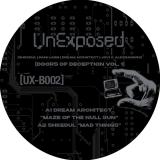
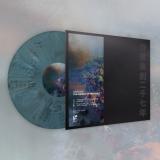
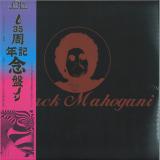
For the first Vinyl VA on UnExposed we wanted to showcase a few of our very favorite producers to kick things off with a dark & spacey bang.
A1 comes by way of “Dream Architect” (Alias for Colombia’s Buraye). “Maze of The Null Sun” is a dark & twisted journey through space. One of the best pieces of production to ever grace wax for this Colombian live-set master.
We fly across the pond for A2 to meetup with Italy’s rising star, Shkedul w/ “Mad Things”. Like most of Shkedul’s releases on wax, Mad Things is a trance, acid, techno-infused masterpiece. Nothing over the top. Not a banger by any means but still perfect for peak time or the afters. Absolute production mastery on A2. Elegant production work.
On the B-Side we travel back across the map to retrieve an original track by label boss, Jovi, and Honduras’ Adrian Alessandro. “Horror Film” is an eery techno-electro suspenseful nightmare of a track. This is the first of many VA appearances on UnExposed by this emerging powerhouse duo. Their first appearance on wax is a special one but there is much more to come. For now, enjoy their first serving.
To accompany Jovi & Alessandro’s original mix of “Horror Film”, UnExposed’s Mastering Engineer, Dani Labb steps in for remix duties! The Argentina Legend takes over control of the spaceship and drives us at the speed of life towards an alternate universe harboring a revered revision of Horror Film. A lot of attention to detail on Dani’s Remix. Intricate and very tasteful darkness.
If you have seen any of Dani Labb or Stefano Andiezzi’s tour stops the past few months then you have likely seen them utilizing B2 as a very effective tool for the late hours.
Professor Roth's debut EP, self-released on his newly formed label Maestro, is music that feels half remembered. Familiar enough to settle into, strange enough to keep shifting beneath your feet, it lives in that sweet spot where groove and abstraction lean into one another. Dusty textures, hazy melodies and understated rhythms never demand attention, yet quietly refuse to let go. Every track feels like another realm of the same dream: warm, weightless and just slightly out of focus.
‘Daydreaming’ is an inviting first step into the haze, opening the door without ever fully revealing what's on the other side. Gentle movement carries drifting melodies that seem to appear and disappear with every listen. An ethereal vocal breakdown creates the feeling of being quietly carried away from its hypnotic groove before pulling you back under its spell. Patient and understated, ‘The Way It Is’ lets the groove do the talking while subtle details gradually come into focus. Dubby percussive chaos is softened by warm, lifelike pads, encouraging your body to move while your mind wanders elsewhere.
As the name suggests, ‘Swells’ arrives in waves. Layers fold over one another, building and dissolving without urgency. There's a beautiful tension between motion and stillness, leaving the track suspended somewhere between the dancefloor and a reverie. ‘Shades’ is a fitting close that blurs the edges even further. Soft, hypnotic and quietly psychedelic, it feels less like an ending and more like waking up slowly. Content to linger in that in-between a little longer, glitchy samples drift through swirling soundscapes, keeping the dancefloor gently spun until the very end.
A flash of light hits your eyes. Your ears hear muffled bass. As bright white fades to amber, you find yourself in a familiar place. A place you have been to many times. Though the edges of your memory are no longer sharp, the shape of it all is in your DNA.
The smell of rusted metal, dirt-covered floors that once hosted workers, machines and industry mixed with spilled beer and the sweat of a thousand bodies moving to syncopated music. As your vision comes into focus, you’re back there.
A warehouse in the former industrial part of town. You’re surrounded by hundreds of strange but familiar faces, each of you dancing into a frenzy countless times under the moonlight — moving, jumping, laughing and connecting.
Sunlight pours through warehouse windows or appears over a distant horizon.
The DJ plays a song that completes the journey you all just shared. You are desperate to hold on to the feeling of the last song that lands you safely from the night and into a new day. The feeling is deep. Pure.
Especially when communal ecstasy is juxtaposed against the edges of the warehouse floors, the intimacy of city lofts, the spiritual nature of open fields or forests.
The Custodian
I spent just shy of two decades in spaces like that — as a raver in early 1990s Los Angeles, then a DJ, producer, label owner and head of Moulton Studios in San Francisco.
The Custodian Project is a memoir of a life lived deep inside the culture and business of house music from 1990 to when I stepped away from music as a full-time life in 2015 — told through music, stories and DJ events.
Each release of new music draws inspiration from feelings, emotions and memories of that life — different rooms, different eras. It is an exploration to understand and capture what those feelings were, and in some cases still are.
The Music
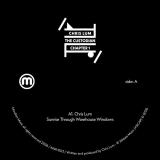
This EP is the beginning. 1990. When I first found the rave and re-ordered my DNA based on the sounds, songs and feelings of that era that can be summed up in the title track — Sunrise Through Warehouse Windows.
All three tracks here are an attempt to reach back and touch those mornings again. To put the listener back in the warehouses or open spaces where we would dance as the sun rose over the horizon.
To capture what I felt back in 1990 when the night transitioned into daybreak. Bodies moving in unison. People, places and music all connect. An era before algorithms.
(tracklisting)
A1 — Sunrise Through Warehouse Windows — 7:51
B1 — *Truly Amazing — 8:16
B2 — Sunrise Through Warehouse Windows (Floating Beatless Mix) — 4:20
Written and produced by Chris Lum for Abitare Music (ASCAP)
* Written and produced by Chris Lum - Abitare Music (ASCAP) & Jay-J Hernandez Stopped in Time (ASCAP). Originally released on Leaf Recordings 2000
Mutual Rytm welcomes new school tastemakers Klint and Hemka to sub-label Versus for imprint’s second drop. SHDW’s Mutual Rytm welcomes back two standout label alumnus for the second edition of Versus, a newly-launched conceptual sub-label focused around two artists whose sound works individually and in unity. Hemka made an impressive and well-received debut with her full solo EP back in 2025, while Klint appeared on ‘Federation of Rytm IV’. Both artists hail from France, and have crafted a well-earned reputation for their own distinctive approaches to sound design - pairing locked in grooves with cosmic synth escapes. Across the EP, each artist delivers three individual takes on techno to make for an essential collection of high-end cuts, exploring the label’s ethos of creative symbiosis between two artists on one shared release. Klint’s tracks lean towards minimal yet highly effective, dance floor-focused DJ tools, starting with the lithe, stripped back menace of ‘Prism’, before the sparse eeriness of ‘Dobermann’ keeps you looking over your shoulder while remaining trapped in the groove. Third cut ‘Romance’ is more bold and muscular, with contoured drums and icy pads ramping up the tension and energy. Hemka then dives deeper into a hypnotic and anthemic direction while introducing her own voice into the mix. ‘Leave It’ is textured, percussive deep techno with shadowy whispers, while ‘Breathe’ has a dark, grinning undercurrent and scintillating snares fluttering over the drums. ‘Mindness’ then pairs spoken word atmospherics with taught drum pressure and an ethereal backlit glow. In addition, Klint's digital only cuts ‘1112’ and ‘Blue’ marry minimal synths with meticulously defined drums that hit hard, while Hemka's ‘Push’ is an anxious percussive trip, contrasting with the introspective emotional core of ‘Live To Tell’.
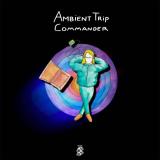
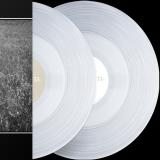
This 2 x 12-inch vinyl release is a reissue of the original soundtrack to the animated feature Ambient Trip Commander. With a running time of 70 minutes, the soundtrack was first performed as a live synthesizer improvisation by Danny Wolfers (Legowelt) at the film's premiere on May 28, 2022, at EYE Filmmuseum. Wolfers continued to perform the soundtrack live at numerous subsequent screenings before releasing it on cassette on August 4, 2023. The 2026 vinyl reissue presents the compositions in four parts, aiming to put weight on the listening experience as a cohesive album.
Ambient Trip Commander is a hand-drawn and painted feature-length animated film by Danny Wolfers (Legowelt), marking his first feature in the medium. The animation brings Wolfers' paintings to life through frame-by-frame watercolor techniques. The production process spanned eighteen months.
The film follows Samantha Tapferstern, a geeky young woman who works a mundane job at a synthesizer store in a medium-sized European city. She spends her nights playing RPGs and browsing dating apps. One day, she receives a train ticket and a cryptic message from a hacker group inviting her to Lonetal, a secluded village deep in the European Alps. As she boards the night train, a sinister adventure begins to unfold.
Curió Curió came to flight by chance. Two artists, Rio-born, Austria-based singer and actress Luiza Monteiro and German producer Dustin Braun, had separately reached a fork in their journeys. An opportune encounter soon blossomed into an uplifting, heartfelt Brazilian MPB-groove project shaped by psychedelic disco and studio experimentation. In their own words Curió Curió’s sonic vision “is not straight disco, not straight samba, not strictly old-school but inspired by all of them, creating something contemporary but still nostalgic”.
A modern fusion influenced as much by Gal Costa and Jorge Ben Jor as Say She She and Bala Desejo, their sound deftly plots a course all of its own. A celebration of freedom, movement, love and life, intertwined with introspective moments of reflection. Treating tradition as something alive, migratory and unresolved, the album is not simply bound by a shared love of Brazilian music, but by a deeper question that runs through every track; where does one belong when home becomes plural? As a Brazilian living in Europe, Luiza's lyrics explore themes of identity, culture, and existence. The tracks move between cities and emotional registers without settling, tracing a sense of identity that shifts rather than resolves. Songs like ‘Amor Doente’ and ‘Mar sem Dar Pé’ circle around relationships that resist clarity, while ‘Menina Passarinho’ captures the fear and necessity of committing to music as a path. For Luiza, deepening her commitment to music alongside years in theatre was both inevitable and difficult. Braun’s production follows a similar logic. Initial ideas were often built without obvious reference points, only later incorporating rhythmic and vocal elements that hint at Brazil without reproducing it. Analogue techniques, tape, ribbon microphones and live ensemble recording bring a tactile quality that reflects the duo’s interest in process as much as outcome. Highlights include ‘Bem Querer’, built on an authentic samba street vibe with a super-catchy sing-along chorus, and ‘Vem pra Casa’ with its cosmic-tinged Brazilian boogie flavour. The album closes with ‘A Cor do Meu Sonho’, a quiet act of insistence. A refusal to shrink in unfamiliar environments, and a belief in the strength of difference. It is less a conclusion than a continuation, leaving the central question open. “I started to understand that I can belong to many places at once”, Luiza reflects. “And that can be something to embrace”. Lyrics from the song ‘Raiz’ translate in English to “I value a burning sun and the cold in the air. Constant change is my companion”. With Curió Curió, that idea is lived through sound, story and collaboration. A debut that feels both searching and assured, grounded in heritage yet shaped by distance.
Knowledge The Pirate returns with a powerful new statement with his new album, The Round Table, which is now available. The Round Table is produced in its entirety by longtime collaborator and legend Roc Marciano through his Pimpire International imprint.
With roots in New York’s revered ‘90s hip-hop scene, Knowledge The Pirate has steadily built a reputation as one of the genre’s most consistent and authentic voices. A frequent Roc Marci collaborator and key figure in the modern underground renaissance, Knowledge fuses golden-age grit with new wave innovation—bridging generations while staying firmly rooted in New York’s timeless sound.
Since his 2018 debut Flintlock, Knowledge has carved a lane entirely his own through his label Treasure Chest Entertainment, Inc. With five acclaimed projects under his belt, including the recent 5lbs of Pressure, he continues to deliver unfiltered street wisdom and personal reflection in every bar.
The Round Table stands as a testament to his evolution—an uncompromising body of work laced with Roc Marciano’s signature production and Knowledge’s lived-in lyricism. It’s not just a record—it’s a meeting of the minds, an audio council of kings.
“The Round Table is cinematic storytelling, teaching street knowledge, eating etiquette that will save your life” Knowledge professes. “This album is like an Honorable Elijah Muhammad book; How To Eat To Live. Produced fully by the true creator of the new wave sound, Roc Marciano, you are all invited to a seat at The Round Table; and break bread with the true Godfathers of this new wave rap renaissance.”
Maltese talent Human Safari debuts on Mutual Rytm with jazz-influenced techno EP, 'Culture Shock'.
Human Safari is a key player in his native scene in Malta. He's a resident at Glitch Festival, has played cult spots, and has a dynamic sound that brings jazz improvisation to techno, often featuring live instrumental elements. His music has found its place on top labels like R&S Records, and most of this new EP for SHDW's Mutual Rytm imprint was produced during his Colombian summer tour last year - written and recorded amongst inspiring and unusual settings with just a laptop and headphones.
"This EP represents embracing new beginnings that, though might bring uncertainty and fear, the
light always guides you to where you were always meant to be." - Human Safari.
Opener 'Mouse on Keys' has been a key cut for the label boss across the past year, a unique track that peaks curiosity from dancers to DJs whenever it's played. Its cantering techno rhythm is overlaid with delicate, heartfelt piano keys straight from a smoky jazz bar, making for a great counter to the physical drums. 'Fragments' is a deeply personal track dedicated to the artist's late grandfather. It's a funky, soulful techno roller with blissed-out and sunny chords full of hope.
Next, 'Classique' gets more gritty with loopy drums and bass and glitchy percussion that fizzes with energy, while 'The Labyrinth' features piano motifs recorded in just one take. It brings a dark paranoia in the uneasy, off-grid keys which dart about with nervous energy over the booming low ends. There is just as much intensity and edge to the unresolved keys that loop over the raw drums on 'A Rainy Day in Bogota', before digital bonus cuts 'Dorian' and 'Phantom' bring more jazzed out techno madness with warped keys and expressive elements bringing great invention.
Bruno Berle is a singer, songwriter, producer, multi-instrumentalist and figurehead of a contemporary Brazilian music movement. With a quiet mastery of songwriting and an astonishing voice, his music has won hearts around the world. Since the release of his debut album No Reino Dos Afetos (2022), Berle has performed across the UK, Europe, Japan, South Korea, and China, only leaving his home country for the first time in 2023. Shaped by these journeys, Berle’s third studio album, Sem Fronteiras (Without Borders), reflects a utopian vision of a unified world.
Recorded across London, São Paulo, Minas Gerais, Germany, and Maceió, the album–co-produced alongside his longstanding musical partner Batata Boy–is the most expansive canvas Berle has worked on to date. Shot through with the imagery that has always animated his songwriting: open skies, morning light, vivid colours and the magic of human connection, Berle’s carefully crafted poetics and warm, delicate instrumentation drive this vivid body of work.
“I came from nothing”–Berle doesn’t take his rise to global prominence for granted.
Born to a working class family from Brazil’s northeastern Alagoas state, one of Brazil’s most economically deprived, Bruno moved frequently in his youth to follow any job opportunities his parents could find, before eventually settling in the coastal capital of Maceió. “I used to travel to Caruaru, Santa Cruz, Recife, Garanhuns, Arapiraca, which I loved and feel it made me ready to be in this rhythm i’, but at the same time I think not having friends from childhood and being in constant change made me a little numb to the constant upheaval”. On Sem Fronteiras, there is a similar duality at play. The album celebrates the collective joy and human connection that live touring brings, but it also sits with the darker realities of crossing borders. While music moves more freely around the world than ever before, our bodies are not granted the same privilege.
Though he’s never lacked self-belief, Berle recognises that talent alone doesn’t guarantee opportunity. “Before my second album No Reino Dos Afetos 2 everything I had ever recorded was made with the help and kindness of people who believed in my ability”. Determined to pay that kindness forward and help others from the sharp end of Brazil’s desperately unequal society, Berle produced and featured on the recent self-titled albums by his northeast Brazilian compatriots, Nyron Higor and Phylipe Nunes Araújo (both 2025), helping propel both onto the international stage. In turn, following the successes of Nyron & Phylipe’s albums alongside his own, Bruno finds himself at the forefront of a thriving community of artists now based in São Paulo, but primarily originating from northeastern states like Alagoas and Pernambuco.
Much like the famed Clube Da Esquina movement that spawned in 1970’s Minas Gerais, they operate with a free-exchange of ideas, writing songs with and for each other, performing on each other’s albums and on the live circuit together. Lead single ‘Manha’ flows from this ethos. It was written by Berle’s friend and fellow Alagoan João Menezes (writer of ‘Ate Meu Violao’ and ‘Te Amar Eterno’ from Bruno’s previous albums) and Marvin Viera, and originally recorded on their 2018 album Areia e Mar.
Sem Fronteiras opens with ‘Você Já Sabe Que Eu Te Amo’, just six beats of one nylon guitar chord ring out before changing key, paving the way for the gentle strike of fender rhodes and the arresting call & response duet between Berle and Higor. On ‘Amor Inteiro’, the album reaches a celebratory burst of catharsis, with the punch-packing drums of Pedro Lacerda and Nina Maia’s joyous backing vocals encapsulating the live energy that Berle and his band bring to the stage.
With the abundant talents of this musical community at its heart, Sem Fronteiras releases 10th July 2026 via Far Out Recordings, supported by a summer tour across Europe. Bruno Berle will perform in a four-piece band alongside Nyron Higor, Phylipe Nunes, and Batata Boy, culminating in an appearance at Roskilde festival, Berle’s biggest live show to date. He’ll continue to carry a hopeful vision of a world where artists and musicians can move as freely as their music flows.
Tracklist:
A1 “Você Já Sabe Que Eu Te Amo”
(Nyron Higor / Bruno Berle)
Nyron Higor – drums, bass, acoustic guitar, electric piano, synthesizers, vocals
Bruno Berle – piano, vocals
Batata Boy – piano
Jorik Bergman – score preparation and conducting
Klara Gronet – violin
Ségolène de Beaufond – violin
Cristina Ardelean Montelongo – viola
Ilektra Stevi – cello
A2 “Não Posso Viver Sem Você”
(Batata Boy / Bruno Berle)
Batata Boy – electric piano, organ, synthesizer
Bruno Berle – drums, bass, synthesizer, vocals
Jorik Bergman – score preparation and conducting
Klara Gronet – violin
Ségolène de Beaufond – violin
Cristina Ardelean Montelongo – viola
Ilektra Stevi – cello
A3 “A Noite de Estrelas”
(Nyron Higor / Bruno Berle)
Nyron Higor – synthesizers
Bruno Berle – bass, drums, vocals
A4 “Outra Noite”
(Bruno Berle)
Nyron Higor – drums
Bruno Berle – acoustic guitar, bass
Felipe Berle – congas
Lucca Francisco – guitar, vocals
B1 “Amor Inteiro”
(Bruno Berle)
Pedro Lacerda – drums, choir
Nyron Higor – bass, choir
Batata Boy – guitars, organ, electric piano, choir
Nina Maia – choir
Bruno Berle – guitars, acoustic guitar, congas, vocals
B2 “Ideias Mágicas”
(Batata Boy / Bruno Berle)
Heloisa Alvino – trombone
Batata Boy – synthesizers, beats, electric piano, organ, bass
Bruno Berle – synthesizer, vocals
B3 “Vim Dizer”
(Batata Boy / Bruno Berle)
Batata Boy – electric piano, organ, synthesizer
Thomas Stankiewicz – synthesizer
Nyron Higor – synthesizer
Bruno Berle – acoustic guitar, bass, vocals
B4 “Tô Assim”
(Bruno Berle)
Bruno Berle – acoustic guitars
Batata Boy – synthesizer
Nyron Higor – bass, synthesizer
B5 “Manhã”
(João Menezes / Marvin Silva)
Bruno Berle – acoustic guitar, vocals, congas, shaker
Batata Boy – piano, shaker, electric piano, vibraphone, synthesizers
Nyron Higor – drums, bass
B6 “Sem Fronteiras”
(Bruno Berle)
Filipe Mariz – guitar
Bruno Berle – acoustic guitar, vocals, bass
Jennifer Souza – vocals, acoustic guitar
Rudson França – drums
Credits:
Produced by Bruno Berle and Batata Boy
Mixed and mastered by Bruno Berle, Batata Boy and Felipe Berle
Audio engineering:
Nyron Higor (track 1 – production; track 4 with Felipe Berle)
Joe Osborne (tracks 7 and 9)
Victor Gelling (strings on tracks 1 and 2)
Filipe Mariz (track 10)
Photography: Claudio Virgínio
Design: Minchai
Recorded in:
Maceió, Alagoas, Brazil
Tamandaré, Pernambuco, Brazil
Belo Horizonte, Minas Gerais, Brazil
São Paulo, São Paulo, Brazil
London, England
Cologne, Germany
“LET IT SHINE” IS A MIX OF EXPLORATION, LIGHTNESS AND CREATIVE CONNECTION.
THE TITLE “ LET IT SHINE” HOLDS THE ESSENCE OF THE WHOLE PROJECT. IT’S ABOUT TRUSTING YOUR INSTINCTS, BEING OPEN, AND LETTING YOUR OWN SPARK COME THROUGH
NO MATTER WHAT FORM IT TAKES. IT’S AN INVITATION TO LET YOUR TRUE COLORS SHOW TO EXPRESS YOUR ENERGY AND LIGHT WITHOUT HOLDING BACK.
IN A WAY, IT’S A REMINDER TO STOP HIDING BEHIND WHAT’S EXPECTED AND INSTEAD LET WHAT’S TRUE SHINE THROUGH.
Rahaan has become a Chicago legend, a DJ who is widely recognised for his exceptional skills behind the decks and his exquisite taste in music. Lately he has also been earning plaudits for his production skills with some truly outstanding releases. Rahaan has collaborated on a very special release featuring Swiss-born and Italy-raised, Kihmy is an artist and producer who creates nocturnal soul music, where electronic textures and trip-hop atmospheres converge. Her sound lives in the shadows, intimate and cinematic, characterized by a deep and expressive voice and emotionally engaging lyrics.
"Let it Shine" EP released on Soulistic 360 (April 2026). Grab the limited edition vinyl before it's gone!
Freerange welcomes Italian via Berlin producer/DJ/label boss Enzo Elia for his debut on the label entitled The Lost Guitar Tapes. Enzo is someone who has been releasing consistently great music for many years, although
often hidden behind a myriad of pseudonyms and underground imprints. For starters he's responsible for a mysterious yet established and very excellent edits label as well as being a member of Balearic Gabba Sound System alongside Bjorn Torske amongst others. Following the philosophy of this collective, Enzo is also producing lovingly and respectfully created re-edits of long lost techno and house tracks as well as many new tunes
for influential labels including Golf Channel and Compost.
But for now we turn to The Lost Guitar Tapes and specifically the original mix of Drifting which opens up the release with a brilliant tension builder. A rolling bassline, crisp minimal drums and a subtly Middle Eastern-influenced melodic line give just a hint of mysticism to this jewel of a track.
For the remix we have none other than the Tel Aviv via Berlin producer Moscoman, fresh from his brilliant debut LP on ESP Institute and releases on Eskimo and his own Disco Halal label. Moscoman's organic, percussion- heavy sound and Middle Eastern roots make him the perfect choice to take
on Drifting and we couldn't have wished for a better outcome. He manages to inject his own identity to the track with newly recorded live guitar and bass parts and taking in elements of techno, new wave and house, he's created a sublime piece of dancefloor drama. Finally we have an alternate Dub version which lays down a firmer four on the floor, extra percussion and dubby stabs for a more driving atmospheric club tool.
Pianist Elias Stemeseder and bass player Thomas Morgan debut on Squama with 'Io Pur Respiro'. Recorded live at Sala Vanni in Florence, the album shows a duo at the height of their craft with an unmistakable instinct for melody and balance.
Io Pur Respiro ("Yet I breathe") is the title of an early 17th century madrigal by Italian renaissance composer Carlo Gesualdo that's also the harmonic basis for the album's opening track Madrigal, Variation, Courante. With two standards from the 1930s (Love Came / I Have The Room Above Her) and two original compositions by Stemeseder there's 400 years of melodic evolution enshrined in this record. Yet, the music sounds neither new, nor old giving the album a profound sense of timelessness that's owed to the eternal force of melody and harmony.
What changed between Av. General Roçadas and Junkeira? Seven years in people's lives — yet the team's commitment remains untouched, and the steady hand on the plumb line that keeps dance music (still) upright holds firm. Years of sustained research and field work from both producers, with their own records, mutually independent and independent too in how they brought them to life. Moreno Ácido has been navigating detours through a conceptual yet grounded underground — in sound and in format (two self-released cassettes since 2019) — while keeping one eye on the floor. His post pandemic reawakening carries a clear message: Call to Action is the label that in 2023 put the still-in-demand Trash/Treasure out on vinyl. Diogo keeps Discos Extendes as his shelter, gathering talent and retreating into it. At the same time, a disseminating vocation — that talent turned outward, on a mission to champion the different sensibilities that can converge in music made for dancing.
Junkeira is direct. It hides nothing in its intent, nor does it conceal the origin of its love, nor the way it exercises its fascination with the source. Geography can define movements, described and echoed countless times outside and then inside the net. The signifiers are known to all — it's a matter of applying them with respect and flow. Perhaps the craft in this production really does come down to love, when it comes to it. What is "WTF" if not a declaration of love — at the very least of closeness — to the sonic essence of the English rave? The piano stab, the breaks defining that hardcore state of mind, the string bed lifting feet off the floor. Closing out the EP, "Freak" gathers different emotions — eyes still shut, body in comedown while still moving. Chill. Everything rounded. Bassline, vibes, vocals woven into the rhythm.
Rewinding, the opening track "100 Planos" is a throwback to Roçadas (2019) — harder on the ground, with a 4/4 beat broken up by claps, a circular structure built for DJs, with mix-friendly entry and exit points. Then "Turbo Love" puts the keys in control, foregrounding them, letting a car alarm ring out and balance the beat — a reverential nod to UK Garage felt as raw material, already part of the lineage that has been the continuous evolution from Disco onwards: an evolution that traces a line and its branches, from which you can isolate any chronological point since at least 1977 and combine whatever elements form a personality. The spirit lives, as summer kicks in.
Arpy Brown & Kapote Announce Collaborative Album Memento Ludi via Toy Tonics
A sun-drenched fusion of yacht rock, house and modern indie dance energy – out June 26, 2026
BERLIN, GERMANY — Toy Tonics is proud to announce Memento Ludi, the first collaborative album by label founder Kapote and multi-instrumentalist producer Arpy Brown, arriving June 26, 2026.
The album is a funk-driven journey that bridges the warmth of 1970s analog recordings with the pulse of contemporary dance music. Blending neo-soul grooves, yacht rock harmonies and modern house rhythms, Memento Ludi captures the spirit of classic musicianship within a forward-looking club context.
But Memento Ludi is more than a typical house record. The album moves fluidly between dancefloor tracks and fully developed songs. Every instrument was performed live by the artists themselves: guitars, bass, keyboards and percussion recorded in the studio by Arpy and Kapote. After jamming and recording the basis of every song in a live procedure they carefully resample the parts to create the organic, human touch that defines the Toy Tonics sound.
The title Memento Ludi — Latin for “remember to play” — reflects the album’s philosophy: bringing joy, spontaneity and musicality back into dance music at a time when many club tracks feel increasingly mechanical and formulaic.
The collaboration arrives during a particularly busy moment for both artists. While spending countless hours in the studio, Kapote and Arpy Brown have also maintained intensive international touring schedules with the Toy Tonics crew, road-testing many of the tracks as “secret weapons” in their DJ sets from Melbourne to Los Angeles via their homebase Berlin.
“We wanted to make a record that felt like a lost studio session from 1978 — resampled and synthesised in 2026,” says Kapote.
Inweys is the new project from Scottish musicians Conal Blake (Feedback Moves, Domestic Exile, Infant Tree) and Murray Collier (Dip Friso, Grim Lusk, Real Landscape). Their debut self-titled 12’ was recorded in the summer of 2024 at La Chunky Studios in Glasgow.
They asked Fielding Hope of Counterflows Festival to write a short summary of the record:
“Inweys debut release arrives as four pieces of broken body music. Lurking, barely human fragments brought into the present. Using a short drum-machine improvisation as core material, the pieces are formed from a processes of mining and re-mining for small details, with each fragment zoomed in on and turned into new pieces. There’s a transformation taking place, but one that doesn’t obscure the materiality of the recording tapes as sticky, corrosive matter. On skewed and stretched fabric they enact their palimpsestic play, sketching and altering the grid with itchy technologies. What their edits and improvisations don’t say they let space say the rest, with vacuum aerated frames for bass to diffuse and beats to wriggle. More King Tubby than Cage, more Mantronix than Reich: minimalism with molten tips.
Both Conal and Murray’s past work has embraced malleable and iterative technologies; music whose feeliness figures itself out in space in a messy precomposed/improvised dialectic. This is the sort of thing most “new music” experimentalists (or anyone who spends most of their time obsessively manipulating tapes in expensive studios) often can’t achieve; a liveness, birthed from learning in situated play. Like the lore of Phuture’s Acid Trax, a poverty of material is at the heart of this, rendering the work with an abortive conviction: a corpse waking to consciousness becomes amphibious. Instead of the composer we have a relation, two people navigating the awkward spooling between the two reels of tape. Inweys is scots for “inwards”, and in their working process this is what they do. But the result is circular motion. Until the tape runs out, all in ways move out.”
Released on Polydor in 1972, He’s Coming captures vibraphonist Roy Ayers at a creative apex, as Ubiquity’s sound settled into the blend of jazz improvisation, funk rhythm, soul harmony, and spiritual import that would define his work throughout the decade. Emerging at the start of the 1970s, the album reflects Ayers’s deepening move toward a groove-centred musical language rooted in soul-jazz and early jazz-funk. The vibraphonist, keyboardist, composer, and bandleader is supported by a core ensemble that includes Harry Whitaker on electric piano, organ, and vocals; John Williams on bass, with Ron Carter featured on ‘We Live in Brooklyn, Baby’; David Lee Jr. and Billy Cobham on drums and percussion; guitarists Sam Brown and Bob Fusco; saxophonist Sonny Fortune; and percussionist Juma Santos. Tracks like ‘He’s a Superstar’, ‘Sweet Butterfly of Love’, and ‘Fire Weaver’ embody the record’s mix of urban narrative, spiritual reflection, and deep rhythmic momentum — qualities that would later make Ayers’s catalogue a source of inspiration for soul, funk, hip-hop, and neo-soul artists.
Turn On The Sunlight is the long-running project of Texas-born, Maui-based musician and producer Jesse Peterson.
Originally formed in New York in the late 2000s, Turn On The Sunlight has evolved into a fluid, location-spanning practice rooted in collaboration, intuition and process. Now based on Maui, Peterson’s work draws together a wide network of musicians and environments, with recordings taking shape across Los Angeles, Tokyo, London, San Miguel de Allende and Haʻikū.
Loosely situated within a framework of organic, ambient-leaning jazz, 'Iseo' unfolds as a series of open, exploratory pieces, with electronics sitting subtly beneath acoustic and environmental elements. Built from layered instrumentation including synthesizers, guitar, zither, flutes, voice and field recordings, Peterson moves between grounded, tactile detail and more expansive, immersive states. A sense of warmth and permeability runs throughout: organic percussion, environmental textures and drifting rhythmic elements lend the record a gently saturated humidity, reflecting Peterson’s base in Hawaii, where the presence of nature is felt as much as it is heard.
Underlying the project is a way of working rooted in gathering, listening and tending. Instruments, ensemble sessions, field recordings and everyday environments are approached with attentiveness, shaped through collecting, refining and allowing things to settle. Relationships, landscape and lived experience shape the sound, giving 'Iseo' a tactile, almost hand-made quality.
Rather than fixed arrangements, the album feels as if it has been organically and lovingly assembled through a process of listening and response, each element finding its place within a wider, evolving whole. This approach reaches a natural centre point in the 15-minute piece 'Medianoche En La Calle Aurora', which unfolds patiently, bending through shifting environments as motifs and textures emerge and dissolve with quiet continuity.
Peterson’s role as both instigator and facilitator is central to the project. Bringing together a diverse group of collaborators including Carlos Niño, Mia Doi Todd, Laraaji, Ko Ishikawa, Luis Pérez Ixoneztli and Miles Spilsbury, he creates space for individual voices to emerge within a shared language. The result is a music defined by openness and generosity.
'Iseo' takes its title from Peterson’s son’s middle name, a word that can be understood to mean ‘one-world life’. The piece itself takes the form of a gentle lullaby, its melody loosely shaped around the syllables of his name and sung to Peterson’s son by Luis Pérez Ixoneztli, a close collaborator whose presence across the record reflects a long-standing relationship that extends beyond the music itself.
Sleeve art and design by Michael Willis.
Few names carry as much weight in German techno as Alexander Kowalski. A producer and live performer since early 90, his work has shaped the sound of an era, from his early days at Tresor through to releases on Kanzleramt and MORD, and a live reputation that has held firm across three decades on stages worldwide.
Now Kowalski opens his own imprint. Cycles Music launches with Live II, and the choice of format makes perfect sense. Two sides, two cuts, no detours. Techno built from the same instinct that has made his live sets a benchmark in the underground for as long as most people can remember.
CYC001 is not an introduction. It's a continuation, and a clear statement of what Cycles Music is here to do.
Eleven years in the making, Kate Nash’s sixth studio album Cailín is a love letter to her Irish heritage. Produced by KoOoLkOjAk and recorded on the west coast of Ireland at Stiúideo Cuan, under the watchful eye of pioneering trad musician Charlie Lennon, Cailín is a raw, raucous album combining traditional Irish sounds with punk energy, nods to hip hop production and Nash’s knack for a killer hook.
“This was my first music,” says Nash, who grew up in an Irish community in North Harrow, where she attended a Catholic school. When visiting her mother’s “loving, vibrant Irish family” in Ireland every summer, she found that music infused the fabric of life in a way that felt natural and instinctive. “All my earliest musical memories were in Ireland: live music in the pub, going to Sharon Shannon gigs, seeing the best accordion player you’ve ever seen and it’s a bored-looking eight-year-old boy in a puffer jacket. There’s a real respect for musicians.”
Marrying punk protest songs with a joyful celebration of trad music, Cailín explores themes of colonialism, inequality, religion, internalised shame and forgiveness and family, drawing on the rich texture of Irish folklore and mythology. The tradition of strong Irish women is at the heart of the record, from the young girls celebrated on the “90s grunge eyeroll” of title track ‘Cailín’, to the resourceful single mother navigating the housing crisis in ‘Póg Mo Thóin’ (“There’s all these politicians arguing with each other on news programmes, then you cut to people’s real life and it’s like, can’t you just fucking help them?”), to Nash’s grandmother, memorialised in the poignant yet joyful ‘Irish Saints’.
Eleven years in the making, Kate Nash’s sixth studio album Cailín is a love letter to her Irish heritage. Produced by KoOoLkOjAk and recorded on the west coast of Ireland at Stiúideo Cuan, under the watchful eye of pioneering trad musician Charlie Lennon, Cailín is a raw, raucous album combining traditional Irish sounds with punk energy, nods to hip hop production and Nash’s knack for a killer hook.
“This was my first music,” says Nash, who grew up in an Irish community in North Harrow, where she attended a Catholic school. When visiting her mother’s “loving, vibrant Irish family” in Ireland every summer, she found that music infused the fabric of life in a way that felt natural and instinctive. “All my earliest musical memories were in Ireland: live music in the pub, going to Sharon Shannon gigs, seeing the best accordion player you’ve ever seen and it’s a bored-looking eight-year-old boy in a puffer jacket. There’s a real respect for musicians.”
Marrying punk protest songs with a joyful celebration of trad music, Cailín explores themes of colonialism, inequality, religion, internalised shame and forgiveness and family, drawing on the rich texture of Irish folklore and mythology. The tradition of strong Irish women is at the heart of the record, from the young girls celebrated on the “90s grunge eyeroll” of title track ‘Cailín’, to the resourceful single mother navigating the housing crisis in ‘Póg Mo Thóin’ (“There’s all these politicians arguing with each other on news programmes, then you cut to people’s real life and it’s like, can’t you just fucking help them?”), to Nash’s grandmother, memorialised in the poignant yet joyful ‘Irish Saints’.
Field Records proudly presents the first complete vinyl edition of Monolake’s seminal excursion into experimental dub techno, Hongkong. Originally released on the now-classic Chain Reaction label in 1997, this collection of early singles by Robert Henke and Gerhard Behles has gone on to become a vital listening experience in its own right - a genre classic alongside the other groundbreaking works from the likes of Porter Ricks and Vladislav Delay.
The tracks which make up Hongkong were made while Henke and Behles studied computer science and immersed themselves in Berlin’s techno scene. Their early forays into computer-based music production were enabled by the use of the Max/MSP programming environment, forming a backdrop to the landmark work they would undertake in developing the Ableton Live DAW. Henke and Behles travelled to Hong Kong in 1996 to attend the annual International Computer Music Conference, and while there recorded extensive field recordings. These recordings became the glue that pieced together their collaborative tracks into a fluid listening experience for a CD-compilation at Chain Reaction’s request.
While absolutely rooted in the embryonic sound of European dub techno, Monolake’s early work possesses a back room, headphone-ready demeanour which lends itself to the album listening experience. In the cascade of rhythms created by precision engineered delays and subliminal, expansive spatial world building occurring throughout Hongkong, the stage is set for a full and thorough immersion. Before the Monolake sound progressed into a more pointillist form of computer music as Henke’s solo project, Hongkong presented a gritty, grainy sonic still tied in some way to the traditional methods of techno production, even as the artists’ ideas were sending the sequencing and arranging in exciting new directions.
Remastered and presented for the first time as a complete double 12” package, this is the definitive edition of an essential work in the evolution of experimental techno. As Henke himself explains, “twenty-five years later, this record still holds immense value to me in many ways.”
When Spiral Tribe congregated in Berlin in the Winter of 1993, they found themselves squatting a series of trailers at Potsdamer Platz. In one of these trailers R-Zac was born. Musically the duo were transitioning from UK breakbeat techno as "The Spiral Tribe Liveset" into what would become R-Zac's signature hard psychedelic sound. This double LP marks the beginning of that journey.
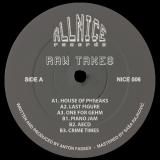
All Nice Records returns with the 006 instalment, welcoming Raw Takes to the roster for a self-titled six-tracker that lives up to its name. No frills, no fuss, just pure, unfiltered club music pressed on wax Side A kicks off with House of Phreaks, a dense Chicago house sledgehammer built around a heavyweight bassline that sets the pace from the first bar, no introduction needed. Last Figure pulls the tension tighter before One For Gehm closes the first side as a heartfelt nod to Andreas Gehm - the legendary German acid pioneer whose influence continues to ripple through the underground. Flip it over and Piano Jam brings an unexpected melodic warmth to the centre of the record, while AECD wears its influences proudly, a 303-drenched acid workout rooted deep in the classic Chicago house tradition, the kind of track that feels like it could have come straight out of the Warehouse era. Crime Times seals the deal... gritty, atmospheric, and built for the late hours.
One of the UK’s best loved and most respected dance music producers, Michael Gray, unveils his exciting third artist album, ‘You & Me’, on his own ever vibrant Sultra Records. Featuring a superb array of both fresh and regular vocal and musical collaborators, Michael delivers another superb helping of lovingly crafted discofied, boogie and soulful dance treats, where meaningful songwriting, passionate vocal performances and impeccable musicianship combine to create one of Michael’s best bodies of studio work to date!
“I’m really excited about this album. I enjoyed making ‘Optimism’ 2 years ago, but I feel like my sound and creativity have developed further during the production of my third album ‘You & Me’. I think there will be a few tracks that people are not expecting from me… and that’s the joy of making an album! You can really get creative”. – Michael Gray
Across the album, Michael brings together an impressive array of world class talent. Rising 29 year old vocalist Bran Mazz features prominently, delivering fresh performances on the standout cover of Maxwell’s ‘Ascension (Don’t Ever Wonder)’, as well as on ‘I Like The Way’, ‘Medicine’ and ‘Breaking Away’. Chi town house legend Mike Dunn joins Michael on the title track ‘You & Me’, built around a clever sample of Freeez’s ‘Flying High’. Vocal powerhouse Tania Foster turns up the heat on the Latin disco flavoured ‘Shake’. New York singer Kelli Sae lends her unmistakable soul to ‘Give It To Me’ and ‘Detonate’, the latter also featuring singer/songwriter Errol Reid (China Black / Axwell). Jamiroquai’s Derrick McKenzie adds his signature live drums to ‘Detonate’ and ‘I Like The Way’. Sian Lee appears on the current single ‘Gravity’, which is sitting at the top of the Traxsource chart. ‘Universe’ sees Michael deliver an instrumental jackin’ house twist, set for a full single release on Toolroom in June. Adding further depth to the album, superstar diva Phebe Edwards brings her impeccable soulful tone to a cover of Cleo Sol’s ‘Life Will Be’, Brit soul favourite Dyanna Fearon shines on ‘I’m Falling For You’, and Audrey Martells lifts ‘Beautiful’ with her stunning, uplifting vocal.
WRWTFWW Records presents the first ever vinyl release for the Startled Insects’ 1984-1985 abstract/synth-pop/post-punk/electronic run compiled into one album : The Antenna Years. The Bristol music must-have comes as a limited edition LP with astonishing artwork, liner notes and a heavyweight sleeve.
The Antenna Years compiles the independent EPs/mini-LPs the Startled Insects released in 1984 (self-titled) and 1985 (Underworld/Black Spring), with two bonus unreleased tracks that were only ever played in their live shows (W.W.W and What A Waste, both amazing).
Astonishingly futuristic when they landed in 1984, the Startled Insects sounded like they came from another planet while staying rooted in Bristol’s underground. Abstract electronic, leftfield synth-pop, dub science, gamelan heat, post-punk edge, cinematic atmosphere : The Antenna Years delivers one beautifully odd voyage into the sonic unknown.
In the 90s, the band released two albums, including the classic Curse Of The Pheromones via Antilles New Directions (Island Records), then evolved into The Insects: film composers for BBC/National Geographic, Emmy winners, and key architects of the 90s Bristol orbit, working with Massive Attack, Goldfrapp, Tricky, and members of Portishead.
Four decades on, The Antenna Years still hits like a transmission from the future. Dive in with no fear.
A deliberate sonic and emotional architecture that doubles down on intensity to shatter and rebuild the listener in one unrelenting wave.
Third album from System Olympia, following acclaimed releases like New Erotica Collection LP (2023) and Delta Of Venus LP (2020), solidifying her as a bold, self-produced voice in electronic and italo-disco-inspired music.
Releases on Okay Nature Records (her own independent label), with digital out now (March 6, 2026) via Bandcamp/Spotify and limited-edition black vinyl 12" LP shipping from April 6, 2026-fully written, recorded, produced, and mastered by System Olympia herself.
Extended tour in the months ahead, kicking off with confirmed live events including a Double Climax Listening Party, plus performances at The Cause (60 Dock Road, Outside) in London on April 3, 2026, and Burgess Park in London on August 2, 2026-expect further dates to build momentum through spring/summer 2026.
Phone Me Tonight was recorded in 1981 at Studio Maïa in Bondy, just outside Paris - a creative hub where many artists of the African diaspora shaped their sound. On this track, Eko Roosevelt collaborates with producer Gabriel Nahas, known for his work with artists such as Pasteur Lappe, Marthe Zambo, Toto Guillaume, and Manu Dibango. The result is a shimmering blend of synth-driven groove and Eko’s signature ‘Funky Disco Music’ sound, capturing a moment where analogue warmth met futuristic ambition.
For this 2026 reissue, Phone Me Tonight has been carefully restored and remastered, breathing new life into Eko’s iconic Yamaha DX7 synth lines. The track has been subtly tightened to the grid, making it perfectly suited for contemporary dancefloors & dj’s while preserving its original spirit and charm.
This EP also offers a glimpse into Eko’s creative world: rare photographs of his home studio in Lobé, featuring the very DX7 synth used during the original recording. In addition, you’ll discover exclusive footage from the Phone Me Tonight video shoot, filmed at the breath-taking Lobé Waterfalls, documented together with Lobé’s community throughout 2025 and 2026.
ABOUT LOBE MON AMI
Lobé Mon Ami was written by Eko Roosevelt in 1981 as a heartfelt tribute to his home community of Lobé in Cameroon. Two versions of the song exist; this EP presents the rare and original version, restored and remastered here for the very first time. Using the download code, listeners can also access an exclusive alternate version of Lobé Mon Ami and the full EP in digital formats.
The song weaves together multiple languages, including Batanga and French, reflecting the rich cultural fabric of the region. Through its lyrics, Eko tells the story of his life - born and raised in Lobé, venturing abroad in pursuit of music, yet always drawn back home. Each return rekindles his deep connection to Lobé. In a poetic gesture, he names surrounding villages in various languages such as Batanga throughout the song, turning it into both a personal memoir and a cultural map.
ABOUT EKO ROOSEVELT
Born on November 13, 1946, to princess Kethy Mbenyo and William Roosevelt, Eko Roosevelt has led a life filled with mythical appeal and musical excellence. Local lore recalls how, at the age of ten, he bravely fought off and killed a serpent near the waterfalls of Lobé. An event that became part of his local legend prior to his enduring legacy as a musician and traditional chief.
Eko Roosevelt discovered his passion for music in church before furthering his studies in Dakar, where he met his wife, Nicole. Together they moved to France, where Eko launched his recording career - first with the Dikalo Group, and later as a solo artist. His discography includes standout releases such as Kilimandjaro My Home, Funky Disco Music, and the hit single Nalandi. In 2020 he renewed his status as hitmaker through his work with Disclosure on the revised version of his single ‘Tondoho Mba’, originally released in 1982. His enduring legacy and pioneership within Makossa and Funky Disco music helped shape the sound of many DJ’s and producers such as Gilles Peterson, Disclosure, Folamour, Diplo, ANOTR, Jax Jones, Sonny Fodera and Daphni.
Over the years, he shared stages and collaborations with renowned artists including Claude François, Nino Ferrer, Manu Dibango, and Miriam Makeba. As a producer and arranger, he became a respected figure across the African diaspora, working with talents such as Toto Guillaume, Marthe Zambo, M'Pongo Love, and experimenting in the studio with visionary artist Francis Bebey.
In 1998, Eko returned to Kribi, where he continues to live, create, and perform. Alongside his musical career, he has composed three albums of Catholic music, still awaiting release, and is currently working on new material. Today, he remains a beloved figure both locally and internationally.
Since 1996, he formally assumed his role as traditional chief of Lobé (usually reffered to as 'Chef Traditionnel'), following in the footsteps of his grandfather; his majesty ‘Bevigna Eko Louis’ - an enduring source of inspiration throughout Eko Roosevelt’s life. Despite his royal duties, he continues to perform regularly across Cameroon. When he takes the stage, entire crowds sing along to Lobé Mon Ami and classics like Nalandi and Attend-Moi, celebrating a legacy that bridges generations.
Balancing tradition and music, his majesty Eko Roosevelt Louis remains deeply committed to both his community and his art. This reissue of Phone Me Tonight / Lobé Mon Ami marks a renewed chapter in sharing his rich musical legacy, and his musical future with the world.
This is not a Ben Vida, Booker Stardrum, and Will Epstein record; it’s a Play Time record. That’s a subtle but important distinction, for a couple reasons. One, the sound of Magic Object—a polymetric blend of improv and pulse minimalism for saxophone, drums, and Moog—doesn’t really sound anything like any of their many other ensembles or respective solo projects. And two, it was only while making Magic Object, their debut album, that Play Time realized they were a band at all.
Let’s back up. The roots of the trio date to 2020-21, when Will and then Booker moved to the Hudson Valley, where Ben was already living. The three got into the habit of playing together at Ben’s house, and they soon realized that their hang sessions felt fundamentally different from making music in some falling-down studio in Bushwick. Where those experiences were rushed and cramped, a new sense of time and space now suggested itself. Where once they rat-raced the music, now they relaxed into it.
Early gigs yielded similar revelations. A booking at Tubby’s, the beloved Kingston venue, evolved into a kind of residency. Tubby’s is a small space, fitting around 100 people, with a bar in the front room and a stage in the back. Play Time decided that they didn’t want to play on the stage; they wanted to play in front, among the people in the bar. Rather than hogging the spotlight and overpowering the other voices in the room, they blended with the energy of their surroundings and emerged as a sort of minimalist-jazz-krautrock bar band.
Gradually, they discovered a newfound “elasticity”—Ben’s word—that reshaped the music from inside. “It’s this communal thing,” he says. “It’s vibes. And it’s embedded in the community up here, which feels really vital and nourishing.” They were jamming, but it wasn’t just a free-for-all; they found themselves listening to each other in new ways. “Ben and Booker joke that they’re always playing in different time signatures,” Will says. “We’re all going forward with our own ideas, but we’re open to each others’ as well, and they’re all sort of dancing together.”
“We all have our painterly solo projects,” Will says—where, Booker adds, “we do a lot of studio arranging and thinking and composition that takes shape over a period of time.” Play Time, on the other hand, is all about being in the moment. That spontaneity was key to the process of recording the album. They booked two days in their friend Joey’s studio, a converted wooden barn. “It’s just a live room,” Booker says. “There’s no separation or anything. So we’re all in the space together and it’s got this beautiful, woody sound, and that’s very much the sound of the record.” For two days, they just jammed, for seven or eight hours each day. When it was over, they went through, edited down the portions they liked, and added very judicious overdubs designed to enhance the original recordings without fundamentally altering them, staying true to the spirit of the sessions.
The result is something like a snapshot and a mission statement all rolled into one. “You’re hearing us discover the voice of the band in real time,” Ben says. “We finished those sessions and we were like, ‘Oh, that’s what our band sounds like now.’”
Now, with Magic Object, the rest of us get to find out too.
—
Balmat is a label with a cloudy outline. Jointly shepherded by Albert Salinas and Philip Sherburne, two friends living in Cardedeu, Catalonia, and on the Balearic island of Menorca, Balmat grew out of Lapsus Radio, a weekly show born almost ten years ago. Balmat’s mission is simple: to foster new ideas, expand upon personal obsessions, and put enveloping sounds out into the world.
“Balmat” means “empty” or “void” in Catalan. But quite apart from any negative connotations, we prefer to think of it in terms of possibility: a space waiting to be filled.
dgoHn (pronounced “John") is the moniker of John Cunnane, who hails from somewhere between London and Essex. ‘Tessares,’ his fourth album but his first for Planet Mu, is playful, unconventional drum & bass that contrasts sparse effects and melodic elements with complex drumfunk and breakcore. He often uses unusual time signatures and head-spinning polyrhythms inspired by jazz and math rock, sometimes within the same track. Somehow he makes it sound effortless, and occasionally pretty as well, keeping a fine balance that never feels punishing; exploratory without getting lost.
He's built a name for himself over the last two decades performing live at festivals and events around the world, while collaborating with fellow artists such as Macc, Nic TVG, Jodey Kendrick and Badun as well as solo releases.
The album opens with ‘Waiting For’ which combines complex breaks with melodic fills, spacey effects and dubbed out vocals that feel like snatches of lost conversations - a combination he uses throughout the album giving it an eerie touch of humanity. Lead single ‘I Couldn't Remember So I Made Something Up’ is in 15/8 time. It feels like a conventional melodic drum & bass track, but the time signature disrupts the listeners’ expectations, while the detuned melody eases its sense of dislocation. ’Whistling On A Tuesday’ opens with a light echoey piano countdown into bass stabs which introduce heavy whirling amen breakbeats that switch between 180 and 120 bpm. ’Holly Can Swim But She Doesn’t Really Like It’ is the most rhythmically challenging track here. It feels hard to hang on to as its knotty breaks play out over bell chimes, like something Autechre might make if jungle was in their DNA. The album ends on the dubbed-out drumfunk of ‘7 Years Or More,’ with an arrangement that builds a filmic, dusty atmosphere of chimes and electric guitar, layering in vocals, vinyl crackle and echoing synth giving way to tough drums, before all that is taken away so that just a voice remains.
Globally adored Spanish techno protagonist Indira Paganotto releases her debut album 'Arte Como Amante' via ARTCORE / PIAS Électronique. It brings together thirteen fearless tracks that stretch way beyond any one genre. It's high-pressure, high-energy, and deeply personal. A full-spectrum dive into the world of one of electronic music's most dynamic artists.
It follows a huge 2025. She debuted at Coachella. Played her first ever b2bs with Armin van Buuren at Sonar and Sara Landry at EXIT. She became the first woman to close Monegros. She held down her first Club Room residency at Hï Ibiza for 14 weeks, and even launched her own creative studio space, ARTOPIA, in Santa Eulalia. Her label ARTCORE the home of this special album also took their presence in the dance world to the next level with their own curated stages at Tomorrowland, Mysteryland and Dreambeach.
Now, she's telling her story. The title 'Arte Como Amante' means 'art as a lover'. For Indira, that's not just a phrase. It's her life. This album has been 14 years in the making. It began in Madrid in 2012, when she was 19, and was completed in 2024. She waited for the right moment. She lived life. She collected experiences. She built the sound. "I know to take 14 years to make an album seems crazy," she says, "but without living those experiences, how could I have made the music about them?"
The result is a diverse, adrenaline-fuelled body of work that hits hard and moves deep.
pdqb shows no signs of slowing down. Relentlessly productive and constantly locked into transmission mode, it delivers 13 tracks of its unmistakable Electro-Cognition sound. Sharp, futuristic, body-moving music wired straight into the nervous system.
From precision electro workouts to mind-bending synth transmissions, every track hits with purpose, style, and identity.
However, the remix lineup is equally heavyweight. Four elite reworks from four serious operators, each one twisting the source code into new dimensions.
---
Half pinball table, half neural reactor, wired directly into a wall of aging synthesizers. The so-called Transient Witness (aka Preconscious Data Quantum Buffer) records not what people did - but what they almost did: Every flash of hesitation, every thought that vanished before becoming real, every dream erased at sunrise.
At its center pulses a synthetic brain, decoding impulses too brief for language. These signal transients are micro-events that appear and disappear in milliseconds.
When activated, the table will not play sound. It remembers it. Each collision of steel ball and sensor triggers forgotten futures, lost timelines, phantom rhythms from decisions never taken. Basslines from parallel selves. Melodies from unrealized lives. Percussion patterns from collapsing probabilities.
The 13 original tracks featured on this release are a transmission recovered from one of its sessions. Electro pulses, synaptic breaks, machine funk, and signals from thoughts that never survived long enough to exist.
A decade has now passed since French-Algerian collective Acid Arab (a studio and live outfit helmed by producers Guido Minisky and Hervo Calvalho) wowed the world with their debut album Musique De France. Since, they've delivered two more albums, both of which take different approaches to fusing electronic beats and instrumentation with North African and Middle Eastern sounds and vocals. Resonance, their fourth full-length, sees them return to the raw, analogue-rich and bass-heavy club sounds that marked out their formative years at the turn of the 2010s - all heady Arabic vocals, traditional instrumentation, moody grooves, twisted acid lines and knowing nods to everything from acid house, new beat and EDM to industrial funk, dark new-wave throbbers, and the mid-tempo psychedelic pulse of new beat.
On this recording, one can hear both resolve and farewell. Just before departing for the United States, Masabumi Kikuchi pours himself into these now-legendary compositions.
Gifted with a singular artistic voice and a keen sense of his time, Masabumi Kikuchi established himself as a pianist of international stature. In 1973, he relocated his base of operations to New York. Recorded immediately before that move, End For The Beginning captures a studio live performance held in front of invited fans, documenting a pivotal moment in his career.
During this period, Kikuchi was exploring innovative sounds through the use of electric instruments and unconventional ensembles. Yet on this album, he returned to a more traditional format: a two-horn frontline backed by a piano trio. The program consists entirely of five original compositions by Kikuchi himself.
The determination surrounding his imminent departure fuels the music's intensity, while the sense of farewell evokes a distinctly Japanese emotional depth. Masterpieces such as “Shuuu”, “GinKai”, and “Green Dance” emerge like waves from beyond an atmosphere charged with tension and anticipation. Each performance unfolds with remarkable focus, lyricism, and power.
A work of striking conviction and emotional resonance, End For The Beginning stands as one of the defining achievements of Kikuchi's career and a fitting summation of his artistic vision.
Narthex means railed-off western portico or ante-nave in earty Christian churches for women, penitents and catechumens.
Narthex is also a trio featuring (at the beginning) Daniel Denis (Universe Zero, Art Zoyd), Alain Neffe (Pseudocode, Human Flesh, Bene Gesserit) and Nicolas de Villemarqué (Nuwage Music). They had a very different musical background, mostly electric-electronic rock, and decided to work in the field of acoustic music recorded live (two microphones + portable DAT) in churches of their area. After several recording sessions, Nicolas de Villemarqué decides to leave the group. ln order to complete the trio, Daniel Denis and Alain Neffe ask the participation of some of their friends. Anna Homler, Michel Berckmans and Daniel Malempré have accepted the challenge and succeed to fit into their musical universe.
The instruments Church organ, harmonium, sitar, saxophone, oboe, bassoon, zither, valiha, senzas, tarang, voice, percussions, metal clarinet, classical guitar, mew's harp, ongolok, violin, dulcimer, mouth organ, etc.
The music Often dark, sometimes repetitive or experimental, sometimes rhythmical and exotic, always based on emotion inducted by the sound. One could define it as dark age music (as opposite to new age music), a sort of minimal come back to the roots and purity of acoustic sound without the cultural background linked to the 'academic' use of some instruments (for example African senzas are transformed and tuned to sound like Indonesian instruments, sitar or harmonium are used as rhythmical instruments, vahilla is played with a bow).
The places Churches located in an area of 20 kms in the region where Daniel Denis and Alain Neffe live for years and where they feel at home (and feel the vibrations. Every church, place emotionally loaded, has its own specific resonance and sound structure. Every church gave to the musicians a particular inspiration and fill the sound of the instruments with a natural reverberation/echo. The place but also the moment is important. They had the privilege to be allowed to record in the Ecaussines church at night lightened only by candles. lt was one of their most productive recording sessions.
MAUROMUSICA first appeared in 1999, when DJ Maurizio Schmitz introduced the name as an underground party brand shaped by long nights, afterhours and a deep passion for electronic music culture. For almost two decades, the project lived through intimate events and dancefloors before eventually going quiet for a number of years.
Now, MAUROMUSICA returns - not only as a party series once again, but finally as the music label Maurizio had envisioned from the very beginning. A long-held dream, brought back to life through a carefully curated first various artists compilation.
The first release brings together six artists from different corners of the electronic music world: Egyptian producer Raxon, German/French duo RE-ST, Italian artists JA:CK and Fedele, alongside Romanian producers Radu Dracul and Sublee.
Moving between warm-up atmospheres, emotional techno, afterhour moods and timeless club sounds, the compilation reflects the musical vision behind MAUROMUSICA - honest electronic music with character, depth and longevity.
Artwork comes from internationally acclaimed artist Tobias Rehberger, while the label typography was kindly provided by Buero New York.
Special thanks to Sven Väth for his continuous support and for championing Raxon's "Based In Space" in his sets for more than a year.
P.S. The handmade coloured vinyl edition of Raxon's "Based In Space" - limited to 100 copies - sold out within less than two hours. The track is now exclusively available as part of this compilation.
MAUROMUSICA first appeared in 1999, when DJ Maurizio Schmitz introduced the name as an underground party brand shaped by long nights, afterhours and a deep passion for electronic music culture. For almost two decades, the project lived through intimate events and dancefloors before eventually going quiet for a number of years.
Now, MAUROMUSICA returns - not only as a party series once again, but finally as the music label Maurizio had envisioned from the very beginning. A long-held dream, brought back to life through a carefully curated first various artists compilation.
The first release brings together six artists from different corners of the electronic music world: Egyptian producer Raxon, German/French duo RE-ST, Italian artists JA:CK and Fedele, alongside Romanian producers Radu Dracul and Sublee.
Moving between warm-up atmospheres, emotional techno, afterhour moods and timeless club sounds, the compilation reflects the musical vision behind MAUROMUSICA - honest electronic music with character, depth and longevity.
Artwork comes from internationally acclaimed artist Tobias Rehberger, while the label typography was kindly provided by Buero New York.
Special thanks to Sven Väth for his continuous support and for championing Raxon's "Based In Space" in his sets for more than a year.
P.S. The handmade coloured vinyl edition of Raxon's "Based In Space" - limited to 100 copies - sold out within less than two hours. The track is now exclusively available as part of this compilation.
For the second chapter of JESUS LOVES SKYLAX, we return to the source: raw emotion, machine soul, and the sacred pulse of the underground. A continuation of the Todd Edwards spirit — not imitation, but devotion. On the A-side, Byron The Aquarius opens with “House Music Was Good While It Lasted (Goodtimes)” — a bittersweet sermon in sound. Dusty, looping, hypnotic — somewhere between lost tapes and eternal truth, echoing the soul of Detroit at its most intimate. UK craftsman Tom Carruthers follows with “Crank Up” — raw, skeletal, almost industrial in its tension. A direct lineage from early machine music, channeling the stark energy of Cabaret Voltaire through a house framework. No compromise. Just rhythm and intent.
Flip the record.
Blue Mondays deliver “Warm Up For Ron Hardy (Disco Mix)” — a fever dream built for the booth. Loose, emotional, and dangerously effective. A tribute not in name, but in spirit — the kind of record that lives between two worlds, where disco dissolves into house under strobe lights and sweat. Closing the EP, CNVX – “L’Amour (Floorfillers Remix)” hits with pure peak-time electricity. Acid lines twisting through the mix, driven and ecstatic — a modern weapon forged in the language of the underground. A direct nod to the timeless pressure of Floorfillers energy, built for dancers who still believe.
The 41st release on TECHNO Records marks a defining milestone: the first full- scale solo record by the label’s founder, Nastia, in her music career. It opens up a new depth of detail within the character and identity of both the artist and the catalogue.
Rather than making a loud statement, Nastia focuses on a restrained and functional approach to techno, shaped through subtle shifts in tension, texture, and rhythm. The tracks move with intention, avoiding obvious peaks in favour of gradual development and controlled energy—a familiar methodology and a direct analogy to the evolution of the label itself. Crafted with dancefloor energy in mind but not bound by it, the release offers a fresh perspective on the author’s persona, stripping away excess and overexplanation. It leaves ample room for the listener’s imagination and a versatile, expert application within a DJ set.
The trajectory of ascents and shifting attention in an artist’s career is the only honest path, providing material for reflection and the anchoring of values. This depth of experience cannot be replicated by overnight success or short-lived peaks—only decades of exploration, trial, and error can forge a work built to endure. Studio work becomes a new instrument for Nastia to build value capital, while her debut solo EP stands as an artefact marking a historic point for the author and the label.
TECH041
A1 “Indoctrinated” — a masterclass in rhythmic interplay used as a narrative device. It functions as a sonic manifesto: universally accessible yet distinctly individual. A process-driven track, its strength lies in its ability to repeatedly shift the listener’s focus. It serves as an ideal transitional tool, offering a calculated awakening from a hypnotic state.
A2 “Ignorance Is Keelleeng” — a structured dancefloor powerhouse built on a precise understanding of peak-time energy. Functioning as a set-defining anchor, it allows the DJ to pivot the mix in any direction without losing momentum. A true catalyst track that opens up new sonic horizons.
B1 “True Majority” — the most forward-thinking cut on the record, providing a definitive blueprint for the hypnotic techno sound of summer 2026. It presents a multi-layered, all-encompassing sonic tapestry that interacts with the listener while maintaining a strictly restrained narrative. A motif-driven track that subtly exposes an underlying tension.
B2 “Additive Integration” — best conceptualised within an extended set where the goal is to gradually establish the atmosphere and dictate the rules of the journey. A track built on anticipation, it conserves energy and conceals its inner mechanics until the final acts. It compels the listener to decode its sonic language for full comprehension.
he all-time house music legend Roger Sanchez drops his brand new studio album ‘Spectrum’ - his first in twenty years. Previewed by three high-energy bangers - ‘Grinnin’ (with Fedde LeGrand), ‘Come My Way’ and ‘Temptation’ (with Low Steppa, featuring Ragdoll) - the record features the new focus track ‘How Do We Say Goodbye’, a collab with Karen Harding.
The globally celebrated and Grammy-winning DJ, producer and label head has been working on the album for years, much of it during his time in Shoreditch which has informed its euphoric UK summer sonic influences. But its diverse tracks reflect a spectrum of sounds, from pulsating club tracks to dancefloor fillers, through to more emotional moments and atmospheric elements. Lyrically it’s also the result of translating his personal experiences into song.
Roger says, “I’ve been working on this for the past six years, so it’s definitely a labour of love. During that time I got the chance to travel around the world and work with some amazing vocalists and songwriters to help me bring this project to life. I’ve got flavours from the UK, Spain, the US - all of this is part of the spectrum for. This project is about music and frequencies and light: so everything from the light to the soulful to the club-ready infrared, the emotionally-weighted ultraviolet. That’s what ‘Spectrum’ is all about for me.”
The new focus track ‘How Do We Say Goodbye’ was created with the topline extraordinaire and always in-demand collaborator Karen Harding, whose all-star credits include work with MNEK, Armand Van Helden, Rudimental, Wilkinson and many more. It’s a massive highlight of the album, with Karen’s soaring vocal class bringing both an irresistible hook and a touching sense of nostalgia, while Roger’s dynamic production ascends from a trance-like ambience into an electrifying drop.
Beyond the singles, ‘Spectrum’ also features a diverse array of other talents spanning multiple genres and nationalities. These include Melanic C, Kele Le Roc, Chico Castillo, Kelli-Leigh, Carnao Beats, Donae’O and more. It’s a guestlist which lives up to the anticipation for the record.
‘SPECTRUM’ is available as a special 3LP limited-edition pressed on red transparent vinyl.
Originally released by Time Capsule in 2021 and long out of print, Stories From Another Time 1982-1988 returns in an upgraded edition following years of demand and rising collector prices on the secondhand market. Widely regarded as a modern cult classic, Mário Rui Silva’s visionary recordings blend acoustic folk, cinematic soul, spiritual jazz and saudade-filled Lusophone rhythm into a deeply timeless and universal work that transcends genre and geography.
This new edition features half-speed mastering cut at Metropolis alongside an expanded 4-page insert with a tribute essay and unseen photographs following Silva’s passing in 2024.
The roots of Angolan popular music explored in the meticulous guitar studies of Mário Rui Silva. For fans of Naná Vasconcelos, John Hassell’s Fourth World ambient, Eduardo Mateo’s psychedelic folk and Cameroonian electronic music visionary Francis Bebey.
Whether on mesmerising acoustic ballads or hypnotic groove-led tracks, the music of Angolan guitarist, researcher and intellectual Mário Rui Silva has a beguiling, melancholy quality, woven into the dynamics of his deft guitar playing.Rhythmically complex yet supremely effortless, the music collected here stems from three albums Mário released in Luanda in the 1980s that reflect his diverse range of influences, from traditional Angolan and West African rhythms to European jazz and classical instrumentation. It is united by a sense of low-key beauty, whether on the chugging opener ‘Kazum-zum-zum’, the jazz-funk keys of ‘Lembrança Dum Velho’, or the twinkling, late-night poly-rhythms of ‘Kizomba Kya Kisanji’.
Born in Luanda, Angola in 1953, Mário dedicated his life to Angolan popular music. His fifty-year career has seen him live between Angola and Europe, rub shoulders with Cameroonian musicians Francis Bebey and Ewanjé, record the seminal album Angola ’72 with fellow Angolan musician Bonga, and draw influence from Brazilian guitarist Baden Powell.
It was the teaching of Angolan legend and Ngola Ritmos co-founder Liceu Vieira Dias that Mário gained a technical, political and spiritual understanding of Angolan musical culture. In the hands of Liceu, the traditional Angolan semba and kazukuta rhythms of the 1940s and ‘50s helped create an emancipatory sense of national pride and collective agency that awakened its listeners to the racism and tyranny of colonial rule, underpinning the country’s push for independence in the process.
What might sound like the intonations of Brazilian influence are what Mário attributes to the “African rhythms taken by the slaves which gave rise to other musical cultures” around the globe. Instead, this music emerged from a collective instinct to assert a cosmopolitan Angolan identity free from the patronising falsehoods of Lusotropicalism.
“There was a need within me to contribute in doing new things,” Mário describes. “In the sense of solidifying the music of Angola that was the result of the meeting of two cultures, and wanting to value the Angolan part whenever possible.”A selection from Mário’s three 1980s albums, Sung’Ali (1982), Tunapenda Afrika (1985) and Koizas dum Outru Tempu (1988) have been compiled here as a 2xLP release by Time Capsule’s Sam Jacob and Kay Suzuki. Together, they provide a snapshot of one man’s journey to the core of his nation’s music, charged with the search for a culture uprooted by colonialism
Música para Plátanos takes its name — and much of its inspiration — from the group’s recording studio, situated in the heart of a banana plantation on the humid north shore of Tenerife, Canary Islands. The ever-present sight of the green, sun-drenched fields surrounding their weekly sessions seeped directly into the music: improvised jams that are playful, layered, and deeply connected to place.
This release gathers a distilled selection from those sessions — a kind of “greatest rotten hits” distinct from their ongoing Imaginary Island Music volumes.
The album functions as a living archive bringing together a distilled selection of recordings spanning more than five years: from dusty, long-forgotten sessions to evolving tunes that have become staples of the band's live sets but have never before been committed to record. These long-form sessions served as a petri dish for the Lagoss sound, allowing their experiments to putrefy into their chaotic signature strain of cyber-exotica, unstable kosmische or heavily-corroded dub.
The title obvs nods to Brian Eno’s Music for Airports, but the logic is inverted. Instead of clean, ambient drift, the record inhabits a dense and fertile environment: polyrhythmic structures, Latin-infused electronics, and shifting counter-tempos that feel weighted by the local humidity.
Ultimately, Música para Plátanos is as much about the process as it is the place. Like the plantation outside, the music is subject to the elements; the tracks change shape depending on the heat of the day, what we drank, what we ate. It’s an unstable, honest harvest of sound—shaped by the weather and the state(s) of mind alike.
LOS ANGELES—To celebrate the 40th anniversary of the celebrated Talking Heads and Jonathan Demme’s concert film Stop Making Sense, the set will be re-released as a 2LP and 2CD/Blu-ray set this summer.
Released last year, the sold-out Deluxe Edition of the soundtrack will return as a 2-LP black vinyl on Rhino and 2-LP crystal clear vinyl at retail. Both variants feature a 12-page booklet with liner notes from all four band members –Tina Weymouth, David Byrne, Chris Frantz, and Jerry Harrison—and band photos. The 2CD/Blu-ray version includes the entire 28-page booklet from last year’s Deluxe Edition and a Dolby Atmos mix of the complete concert, mixed by Jerry Harrison and E.T. Thorngren, who also mixed the original release. Both will be available on July 26. Pre-order now.
The band appeared together for a sold-out screening and Q&A last night at the Pantages Theater, the same theater at which Stop Making Sense was recorded. They were joined by Blondshell, who performed “Thank You For Sending Me an Angel.” Another special screening with the band will occur in Brooklyn at the King’s Theater on June 13, with the Q&A hosted by Questlove and The Linda Linda’s performing “Found a Job.” The two events cap off a banner year of celebrations for what many consider to be the best concert film of all time.
The inspiration for Stop Making Sense came when director Jonathan Demme saw Talking Heads perform during the band’s 1983 tour for Speaking in Tongues. Afterward, he approached them with the idea of making the show into a concert film. They agreed and worked together over the next few months to finalize the details. Ultimately, Demme filmed three shows at Hollywood’s Pantages Theater in December 1983 to create Stop Making Sense.
The concert film presents a retrospective of the band up to that point, with a performance that weaves together songs from all six of its studio albums. The show progresses methodically, opening with Byrne onstage performing “Psycho Killer” alone with a drum machine. After each song, he’s joined by a new band member until Weymouth, Frantz, and Harrison are all on stage with him. The group continues to grow throughout the concert as members of the stellar touring band are added: keyboardist Bernie Worrell, percussionist Steve Scales, guitarist Alex Weir, and backup singers Lynn Mabry and Ednah Holt.
The band performs 18 songs in Stop Making Sense, including its recent single at the time, “Burning Down The House.” That summer, the song was in heavy rotation on radio and MTV, helping the song become the band’s first top 10 hit in America. It was, however, a different song from Speaking in Tongues that was destined to deliver one of the film’s signature moments. Talking Heads would perform “Girlfriend Is Better” wearing the now iconic, oversized suit inspired by costumes worn in traditional Japanese theater. For good measure, a picture of David Byrne in the suit also graces the album cover.
Stop Making Sense focuses mainly on music by Talking Heads but does include a few songs recorded outside the band: “Genius Of Love” by Tom Tom Club, “What A Day That Was” and “Big Business” from Byrne’s 1981 album, The Catherine Wheel. Limited edition vinyl versions of both of these albums, along with Harrison’s The Red And The Black, were released for this year’s Record Store Day.
When it arrived in September 1984, Stop Making Sense was an artistic and commercial triumph. The film had people dancing in theatre aisles, and the soundtrack sold over two million copies. Just last year, the Library of Congress added Stop Making Sense to the National Film Registry in recognition of its cultural, historical, and aesthetic significance.
Weymouth praises Demme as a collaborator: “…Jonathan was a very enthusiastic, highly adaptive, and imaginative guy who was just as good a listener as he was a talker and collaborator. From the get-go you just got the impression he was as flexible as he was disciplined. Being team players, that boded well for a great relationship and a great film!”
Harrison says the film still holds up today: “To me, Stop Making Sense has remained relevant because the staging and lighting techniques could have been created in a much earlier time period. For example, Vari-Lights, lights with motors to re-aim them, had just come into vogue. Had we used them, there would have been a timestamp on the film, and it eventually would have felt dated...The absence of interviews, combined with the elegant and timeless lighting, created a film that can be watched over and over.”
Byrne says it’s interesting that this album was – for many people – an introduction to Talking Heads. “We had done a live album before this, but coupled with the film, and with the improved mixes and sound quality, this record reached a whole new audience. As often happens, the songs got an added energy when we performed them live and were inspired by having an audience. In many ways, these versions are more exciting than the studio recordings, so maybe that’s why a lot of folks discovered us via this record.”
Frantz recalls the sheer joy surrounding the entire Stop Making Sense experience. “I’m talking about real, conscious, transcendent joy… I’m talking about what the Southern gospel people call ‘getting happy,’ which means ‘to be filled with the Spirit.’ That is what happened to us onstage every night, and from my seat behind the drums, I recognized that this was happening to the audience too. Joy was visible in front of me and all around me every night.”
The Dead Mauriacs is the project of French artist Olivier Prieur, "Paravents et miroirs, une cérémonie" is a live soundtrack.
The Dead Mauriacs describe their music as "Exotica Concrete" - their music is composed of field recordings made on a daily basis, as well as a diverse collection of sounds, including piano, Indian harmonium, violin, ukulele, didgeridoo, pieces of wood, glass, paper, and metal plates. The album is a spectacular 40-minute sound collage, assembled by sampling Exotica music represented by musicians and arrangers such as Les Baxter and Arthur Lyman, who were active in the 1950s.
"Exotica is a musical genre or sub-genre that emerged in the 1950s in the United States with musicians and arrangers like Les Baxter or Arthur Lyman. It is an extraordinary music because it is false: bird calls imitate bird songs, you can hear the sound of the waves, it is a Western fantasy, particularly North American, of a world and an imagery that never existed. It is a music associated with mass tourism, mass entertainment, consumerism. Arthur Lyman recorded about 30 records in 10 years in Waikiki. With his band, they played and recorded under a geodesic aluminum dome. The dome belonged to the owner of the hotel he played for every night. They did this at night to avoid noise. It's music that is both profoundly naive and totally flawed. In this, it is seductive and intellectually interesting. It is music that could easily be criticized today, but it is an imaginary in itself, like the Italian film music of the 1960s and 1970s." (Excerpt from the calax's interview)
The Dead Mauriacs are not only involved in music, but also in a wide range of other creative endeavors, including video and painting. He also repsonsible for the artwork of this LP. The inside of the product is also accompanied by an 8-page interview with Mauriacs and compiled his amazing artworks.
The Dead Mauriacs
Paravents et miroirs : une cérémonie / Screens and mirrors: a ceremony
Side A
Courte dérive, une ouverture / Short drift, an opening
Le retour des insectes électriques / The return of the electric insects Les oiseaux étranges / The strange birds Tension, terreur factice / Tension, false terror
Dénouement malais / Malaysian ending
Rituels et vanités 1 / Rituals and vanities 1
Rituels et vanités 2 / Rituals and vanities 2
Italiens dʼHambourg / Italians in Hamburg
Side B
Secrets pour piano / Secrets for piano
La suite Monory, Padoue-Le Caire-Nassau / The Monory Suite, Padua-Cairo-Nassau Hommes à découper / Men to cut out Lassitude moite / Clammy weariness
Le soleil artificiel du pont croisière / The artificial sun on the cruise deck
Pirogues et palmiers, vus de la scène / Pirogues and palm trees, seen from the stage La traversée / The crossing Rideau / Rideau
Fields recordings : Semproniano and Siena, Italy, Figueira, Portugal, Charentes, France. An electrical wire with a frequency shifter gave birth to the insects. Real and fake piano. Everything made with a computer and a midi keyboard.
Music premiered at Hörbar, Hamburg, 28th of December 2017. Music (and video) Olivier Prieur.
Thanks to Thorsten Soltau and all people at Hörbar.
Hello to Felix Kubin & Marie-Pierre Bonniol, Julia & Jan Warnke. Kisses to Hélène.
Another Taste is back with their follow up album: Another Taste II delivers eight new cuts of boogie, funk, and obscure disco influenced productions, recorded live to tape. Comes with Download code.
After lighting up renowned clubs like KOKO London, Jazz Café London,Tresor Berlin, New Morning Paris, and festivals like Love Supreme (UK), Lost Village (UK), Nuits Sonores (FR), Hamburg Jazz (DE), Lowlands (NL), ADE Amsterdam - the band has surfaced from the studio anew, mixing myth with music.
If their debut record in 2024 was an introduction to their musical range, Another Taste II is the full immersion. The two-sided album plays like a neon-lit cab ride where the radio is set to groove. Expanding their palette with sharper songwriting, denser arrangements, and a fictional universe.
The album showcases Another Taste’s collective at full strength: Barend Lippens, Bobby van Putten, Bob Roche, Teun van Zoggel, Sarina Voorn, Diogo Carvalho, and Florian Verhagen. Together they summon a sound that is electrifying, communal, and unmistakably theirs, joined on “Peace Call” by Arp Frique and the Perpetual Singers, and bolstered throughout by a dedicated brass section.
Another Taste II is engineered and mixed by Bobby van Putten, mastered at The Carvery by Frank Merritt, with artwork and design by Timo ter Braak, Walt van der Veen and Robert Reinartz.
The new album presents a collaborative creation that’s both timeless and unpredictable, pulling listeners deeper into the band’s universe with every spin.
Celebrating a decade since its live debut, Detroit-based artist Rebecca Goldberg announces the first-ever vinyl release of her original score for A Trip to the Moon, the iconic 1902 silent film by Georges Méliès. Composed in 2016, Goldberg’s reimagining of the groundbreaking film—originally titled Le Voyage dans la Lune—translates early cinema fantasy into a minimalist electronic soundscape shaped by synthesis, texture, and composed foley.
Goldberg’s approach honors the wonder and theatricality of Méliès’ vision while grounding it in Detroit’s lineage of forward-thinking electronic music. The score premiered in Paris in 2016 with live performances at Silencio, the club founded by David Lynch, and at Bar à Bulles, located above the legendary Moulin Rouge. The Paris events were produced by Why So Serious Productions and marked a rare convergence of experimental electronic performance and historic cinematic space. Goldberg also presented the live score in her native Detroit, reinforcing the transatlantic bridge that has long shaped her conceptual record projects.
Now, ten years later, the score will be released for the first time on vinyl in a limited edition of 300 copies. The pressing captures the nuance of the original live compositions while offering listeners a new way to experience the interplay between silence, rhythm, and sonic illusion. As with Goldberg’s previous conceptual 12" releases, the vinyl format serves not only as a medium but as an artifact that preserves and reframes cultural memory.
We feel like Frank & Tony and Smallville have been on the same musical wave-length since forever. Our musical paths have crossed back and forth over the years and we have always shared a lot of the same values- steadily putting out quality music, that stands the test of time - growing consistently - never stop following our very own way - always not-following trends forever..
Frank & Tony is the collaborative guise of Scissor & Thread co-founders Francis Harris and Anthony Collins aka Grant. Both have long been staples of the underground with material under their own names and numerous other guises shaping the musical landscape of House Techno and beyond since the turn of the millennium. Both lived together in New York and as Frank & Tony the pair have delivered multiple albums and many EP’s on their own label, Tokyo’s Mule Musiq and Pacific Rhythm- now they are warmly welcomed onto the Smallville Records roster with their latest collection of works.
‘Ways Of Mine’ leads on the A-Side and showcases the pairs signature deep hypnotic house style via soft billowing pads cascading metallic chimes psychedelic spoken word and dreamy dubbed out keys floating atop a robust bouncy rhythm
section.To open the flip-side title-track ‘After All’ lays down a subtly blooming chord sequence shuffled drums and bumpy bass stabs at its core all subtly nuanced while the latter half introduces more dynamic rhythmic elements and intertwined melodic touches. ‘Dimension’ then concludes the release diving deeper with saturated ethereal pads and bubbling resonant arpeggio lines alongside heavily swung crisp drums jazzy keys and delayed vocal chants.
After All comes with a full cover artwork by Stefan Marx.
All tracks written & produced by Francis Harris & Anthony Collins
Mastering and Vinyl cut by Helmut Erler at Lathesville
Continuing its faithful documentation of the early years of Monolake, Field Records proudly present the first-ever vinyl pressing of seminal 1999 album Interstate. In a kaleidoscopic lattice of micro-rhythms and exquisitely dynamic textural work, Robert Henke and Gerhard Behles fully collaborated for the final time on this record — and created an electronica landmark in the process.
Monolake's evolution from their earlier dub-techno-tinted works saw their exploration of Max/MSP go further out. The duo yielded greater complexity in the behaviour of their sound palette to achieve an organismic quality that remains an enduring influence on so many strands of experimental electronic music today. Interstate is a vivid record that builds up eight different ecosystems of sound and subtly threads elegant grooves through their root structures.
There's a house-like undulation to the low-end driving 'Tangent-I' and 'Tangent-II', but the infinitesimally detailed layers of sound on top swoon from techno synth shimmers to trickling waters, snaking delay trails and pin prick percussion. You can hear the unmistakable, snappy rhythmic thrust of drum & bass driving 'Ginza', but here it's used as an engine for the crispest array of designer percussion and dub-soaked synth chirrups. Across every track, Henke and Behles demonstrate a potent combination, both groovily instinctive and eternally fascinating to try and pick apart.
After Interstate, Behles departed to focus entirely on the development of Ableton Live and Henke steered Monolake towards a leaner — but no less pioneering — sound. Every Monolake record has its own unique context and sound, and the circumstances of Interstate could never be repeated. Capturing the leaps in progress that were being made in digital music production at the end of the millennium, it's an information-rich document of a moment in time that still sounds wildly futuristic 27 years later.
Dario Rossi approaches electronic music like few others. His work as a percussionist has brought his unique rhythmic abilities to audiences around the globe. Born in Italy, Rossi combined percussion with samplers and synthesizers. His energy and talent have allowed these machines to be incorporated into his distinctive palette with very special results. 07Sep83 is his Bordello debut, with the title piece opening the four tracker. Beats cascade as analogue warmth laps the shore. Slow with a magnetic groove, elements of italo, wave and synth-pop intertwine to create a clean, bright sound that is at once familiar and totally unique.
Vocals arrive with “We’ll Meet Again.” Tempos rise while keys are emboldened by rich guitar strings. Lyrics counter with a melancholic tone that shifts into hope and fortified belief as melodies rise ever higher. The flip is “Lost.” Sharp drum patterns support notes that hark back to the majesty of Bobby O, the live sax by Augusto Pallocca and disco glory combining in this journey through genres. “Beat the Devil” closes. Sizzling from the outset, snares roll and snap. Rossi’s percussive prowess is on full display as synthlines flow over rhythmic ripples to the subtle and soulful strings that bring down the curtain.
Balancing glitch-pop and contemporary piano, the Belgian pianist explores the edges of her voice, language and twisted electronica
The Belgian pianist and producer maya dhondt releases a new album titled 'wow, x', marking her debut solo album under her own name. Navigating between bedroom glitch-pop and contemporary piano, she presents sounds of alienating beauty.
The album ‘wow, x’ will be released on September 13 on vinyl and all digital platforms via VIERNULVIER Records.
“I find beauty in the uncomfortable and disorienting" - maya dhont
The first single, 'desire,' is a mutated synth-pop track that gets under the skin. The song centralizes longing for something you don't know (yet). Perhaps it's the smell of damp earth, which can be both pleasant and unsettling? The single is now available on all streaming platforms and comes with a schizophrenic video by Sakis Brönnimann.
The first release show is scheduled for Saturday, October 5, at De Koer, Ghent.
More shows will be announced soon.
A postmodern cramp, that's how one could describe the music of pianist and producer maya dhondt. Her music is an intuitive and a never ending exploration that has the potential to be and become a multitude of things at once.
On her first solo album under her own name, 'wow, x,' she presents 10 varied tracks in which she creates equally idiosyncratic sound worlds. She takes the liberty to endlessly experiment with vocals, piano, and a mix of distorted lo-fi electronic sounds with an open mind. The result is sometimes synthetic and weird, sometimes compellingly beautiful, and always captivating, drawing you into its underlying melody. These intelligently crafted productions are connected by a penchant for alienating beauty: like a warm, but damp cave where it’s pleasant to linger just a little longer. Her original sound moves within a sonic spectrum reminiscent of contemporary artists such as Lolina, Astrid Sonne, claire rousay, aya or Carla Dal Forno.
"What I create never stands alone, it can be many things at once"
If the world were a sculpture garden, maya dhondt eagerly picks from it to draw inspiration from both visual and literary passages as well as personal experiences. Her highly personal bedroom productions are grounded firmly in the world due to philosophical references and politically charged messages. And the world she lives in is being questioned on 'wow, x', as the title refers to "What Or Why?". This is evident in the single 'desire': "What is the thing that matters / to exist / or to know you’re existing?" What does one choose in life: to live in the moment or to live to remember that moment?
In the lyrics on 'wow, x', maya dhondt plays - at times childishly - with language and its boundaries. On 'tip toe tip,' banal wordplay leads to an unexpected confession, and the seemingly simple phrases in 'untitled' conceal hidden life lessons. dhondt's world of words is multilayered and multilingual: Dutch ('kleine cijfers, groot verlies'), English ('desire'), and French ('untitled') are at her disposal. And on the fierce track that is 'minimalinvasiv,' not only she turns to hardstyle, but also to German - a language dear to her due to her Swiss heritage.
Belgian saxophonist, composer, and producer Mattias De Craene (Nordmann, MDCIII) announces a new solo album, ‘A House Where I Dream,’ on VIERNULVIER Records. On his second album, he delivers a highly personal and healing journey, presented as an alternative soundtrack to the 1973 cult film ‘The Holy Mountain.’
The record will be released on October 11 on vinyl LP and through all digital platforms.
"The Holy Mountain" is a surreal Mexican film from 1973 directed, written, and produced by Alejandro Jodorowsky, who also stars in the film. The film holds a prominent place in avant-garde cinema and explores themes such as spirituality, mysticism, and the quest for enlightenment. It is in this vein that ‘A House Where I Dream’ is crafted.
“My mind and soul - and thus my music - come home to this motion picture” - Mattias De Craene
The album will be presented live with the film on October 16 at Videodroom during Film Fest Gent.
ABOUT THE ALBUM
With hypnotic tape loops, grainy textures, and mesmerizing saxophone, Mattias De Craene creates possible worlds that herald a spiritual transformation. From the Scottish Highlands and desolate mountains to the deepest recesses of the soul, this music has the power to create cinematic landscapes that transcend time and space. The sound of these 8 tracks is closely related to the minimalist compositions of Terry Riley, but the work of contemporary artists like KMRU or William Basinski is also drawn from the same material.
Above all, this album is a deeply personal journey and unintentionally serves as a metaphor for De Craene's ascent of his own mountain. For the Videodroom festival by Arts Center VIERNULVIER, the saxophonist began working on a new soundtrack for the film ‘The Holy Mountain’ in 2023, but his body and mind abruptly called him to a halt, forcing him to take a professional break. However, this project never left him, leading to an honest and raw quest to find himself as both a person and an artist, with Jodorowsky as a companion de route and music as an anchor. It initiated a long process of dismantling, searching, healing and back again. The album not only provides a sanctuary for dreaming to all who listen, but for its creator it also serves as both an outcry of despair and a source of comfort during challenging times.
All the tracks on 'A House Where I Dream' share an unfiltered grain of life, as one can almost feel the damp breath of the saxophone blowing.
The album opens with the three-part strong 'Transcention,' where the hypnotic interplay between soprano sax and lo-fi tape loops leads to higher realms of the mind and soul.
Alternating between deep frequencies and farout folk modalities, this mantra-like triptych acquires an alchemical character and ultimately transcends time and space.
In the ethereal 'Away,' one can peer into an abyss of resonance while a saturated tenor sax lends guidance in the spirit of Terry Riley's productions. 'You and Me' also bathes in a similar atmosphere, albeit in the vein of healing 90s ambient as granular sax tones converge with celestial chants. 'Gazing Upwards Towards The Sky,' offers different shades of blue as a slumbering tenor sax is juxtaposed to swift sax patterns. On 'A Stranger That Moved Me,' beauty lands in a soft and subtle manner, while the closing track 'Shepherd's Glow' drifts like a mountain wind flaring up at the darkest hour of the night.
The artwork is created by Gent-based artist Sam Timmerman, who portrays the world of 'A House Where I Dream' with playful repetition and mystique.
BBC and Parliamentary Jazz Awards winner Tony Kofi 's ANOTHER KIND OF SOUL traces the explosive music of Cannonball Adderley from his first session as leader in 1955 through his work with Miles Davis to the soul-jazz of the 1960's. Recorded live at Luton's Bear Club in 2019, it also features Andy Davies on trumpet, pianist Alex Webb, bassist Andrew Cleyndert and Alfonso Vitale on drums. This is the distilled version of two very special nights, immortalised by Paul Riley's recordings. The album is available in limited edition 180 gm vinyl the medium of Adderley's erato best replicate the ambience of this remarkable live recording, and in digital format. The album is not called A Portrait of Cannonball as there is already one bearing that name by the great man himself. It is however, without a doubt,
Another Kind of Soul by Tony Kofi.
Kofi has performed with the World Saxophone Quartet, Clifford Jarvis, Courtney Pine, Donald Byrd, Dr. Lonnie Smith, Eddie Henderson, Jamaaladeen Tacuma and Ornette Coleman. The Guardian has described his improvisational skill as having "an arrestingly raw power".
"This majestic Italo-Disco tune, arranged by Pierluigi Giombini, possesses something magical and mysterious. "On Ice" begins with Natasha King's a cappella vocals and a sweet piano melody by the same composer who wrote "Masterpiece" and "I Like Chopin" for Gazebo. A classic Italo-Disco piece from the mid-1980s, which, more than its sales, achieved success in live performances and on TV shows for the grace and charm exuded by the artist, who was also a dance teacher at the time. The elegance and precision of every move are the foundation upon which Natasha builds her technique. The reissue of "On Ice" was never fully embraced by lyricist Natascia ''Nati'' Maimone, straying from her tastes in soul, blues and jazz. It was also overshadowed by her previous hip-hop track, "AM-FM" - released from Best Record in 1983 - which made the artist world-famous at the age of twenty. This reissue in both original versions was also created to allow new generations to relive, at least in part, the great musical era of the 1980s, a period of incredible musical richness combined with a carefree spirit."
Eliza Rose joins the ‘FABRICLIVE. presents’ series with a release that reflects the breadth of her creative journey in club music culture. A DJ, vocalist and songwriter from London’s vibrant underground, she has become one of the UK’s most compelling voices, equally at home in the DJ booth, on record, and crafting music that resonates across dancefloors and charts alike.
To accompany the release, fabric presents commissioned a bespoke, hand made tapestry depicting Eliza Rose and her friends at Carnival, a celebration of community, heritage and collective joy that runs through her story and the culture she represents. Rich in texture and detail, the piece transforms a living moment into something timeless and craft led. Eliza is pictured alongside the tapestry in an iconic hot pink tracksuit, set within a council estate garden that feels instantly recognisable as a portrait of London life. Surrounded by nostalgic children’s toys, from a rocking unicorn to a plastic slide, the scene captures the everyday intimacy and character of the city’s estates, spaces where music, family and friendship intertwine.
The contrast between the ornate woven artwork and the raw familiarity of the setting creates a striking visual metaphor, bridging past and present, celebration and reality. Together, the imagery reflects the spirit of the release itself: rooted in community, shaped by lived experience and grounded in the environments that continue to inform Eliza’s creative world.
Released independently and on her 30th birthday, "Water Baby" is Giorgia-May's stunning debut album. Spanning over 8 tracks & recorded live at The Famous Goldwatch Studios in Berlin, Giorgia collaborates with some of Berlin's finest musicians to enhance her craft at putting emotions into songs. Each track highlights something different in her ability to channel pain, desire, lust and heartbreak, all whilst (most of the time) making you want to dance & smile.
Stemming originally from Brighton (UK), Giorgia-May has been pursuing a musical career through the means of travel. Now based in Berlin, she combines sensual lyrics, mesmerising tones and exciting arrangements which draw upon her personal experiences of love, loss and coming into womanhood. Blending soulful melodies with jazzy chords and hints of RnB, she takes influence from writers such as Olivia Dean & Amy Winehouse.
Extensive independent European tour in August & September 2026 through the following cities: Berlin, Paris, Bilbao, Porto, Lisbon, Valencia, Barcelona, Marseille, Cannes, Milan, Lake Como, Zurich, Luxembourg, Brussles, Cologne, Amsterdam and more ...
For his sixth solo album, Ezéchiel Pailhès returns with a new collection of songs infused by a sunny wandering spirit.
Within each of the twelve songs on SOL is a thread of melancholic happiness that has permeated much of Pailhès’ music and songwriting. He addresses love, the passing of time, hope, lost illusions, fleeting moments of grace, the temptation of forgetting, a need to escape, and desire. All this is
insulated by understated orchestrations that blend acoustic and electronic instrumentation with deft confidence.
The Portuguese and Brazilian concept of saudade—a form of melancholic longing and nostalgia— pervades, thanks in part to Pailhès decision to record the album in Rio de Janiero and to reinterpret some of the finest works of Música Popular Brasileira (MPB). In particular, he revisits a handful of
lesser known classics from the mid-century samba and bossa nova era—originally written or performed by talents including Vinícius de Moraes, João Gilberto, Tom Zé, Dorival Caymmi, João Donato, Os Tincoãs, and Ataulfo Alves.
The shift from Brazilian Portuguese to French and the decision to adapt rather than perform a straightforward cover versions, allows Pailhès to invent a form of prosody and euphony (the musicality and harmonious combination of words) that feels vibrant and unlike anything else in today’s French
chanson landscape.
“Some lyrics are simple translations from Portuguese, in what I’d call an expanded version. For others, I started from a single word or a single phrase and embroidered an entirely new text that carried me elsewhere,” explains Pailhès. “I allowed myself great interpretive freedom, while preserving the humanist dimension of the original songs. I’ve always been deeply moved by the way Brazilians transfigure reality through heightened emotion. I love this visceral and spontaneous country, which always seems to live through emotion. And above all, I love its music both popular and unifying,
bringing together all social classes. In that sense, it’s very political music, but even more so utopian, made by the people and for the people.”
On this new album, however, the French artist was keen to avoid cliché. Each song is therefore built around a carefully balanced interplay between Pailhès’ piano and synthesizers, alongside restrained arrangements of percussion, brass, bass, and cavaquinho (a small four-string plucked guitar). These parts were recorded in Rio de Janeiro with two musicians who regularly perform alongside the legendary Caetano Veloso—Kainã Do Jêje and Alberto Continentino—joined by Thomas Harres, Antônio Neves, Eduardo Neves, and Gabriel Loddo.
Since the 1960s, France and Brazil have shared a long-standing cultural and musical relationship. Some Brazilian artists, most famously Gilberto Gil, took refuge in France during the dictatorship years (1964–1985). But above all, French chanson quickly fell in love with the richness and ingenuity of
bossa nova and samba, translating and reinventing them in the language of Molière. Throughout the 1960s and 1970s, albums and hits by Henri Salvador, Georges Moustaki, Pierre Barouh, Pierre Vassiliu, and Claude Nougaro all drew from the MPB repertoire.
Fifty years later, with SOL, Ezéchiel Pailhès reinvents this rich Franco-Brazilian musical legacy, bringing to it a personality and modernity that stand confidently alongside those of his forbears.
If – in some parallel universe (or perhaps a not-so-distant-future version of the one we’re already sentenced to living in) – the evil overloads of artificial intelligence were actually successful in their attempts to create convincingly enjoyable “original music,” more specifically tasked with wholly encapsulating my own personal tastes by data-chugging some cocktail of – oh, I don’t know – the posters on my wall, the records in my “most listened to” pile, the mixtapes I made for others, intensive physical scans of my auditory cortex, amygdala, hippocampus, heart strings, whatever else they have splayed out on their autopsy table with the intention of generating one all-encompassing “perfect band” based on the fruitful sum of their findings – that band, for me, would be (or would at least sound exactly like) the Tara Clerkin Trio. It is, quite simply, without exception, the music I wish to hear.
Formed in Bristol UK (where none of them are from yet all of whom are deeply engrained) in 2020, the Tara Clerkin Trio – as it somewhat democratically exists today, despite the singular authority implied by its name – consists of the titular Tara Clerkin, her partner Sunny Joe Paradisos, and Sunny’s brother, Patrick Benjamin. I’ll confess, I don’t know what their respective roles are within the operation and there’s only a very small part of me that cares to learn, as one of my favorite qualities in an objective listening experience is the mystery of who is playing what, which sounds are “authentic” versus synthesized, which chunks are performed “live” in a room together versus meticulously Frankenstein’ed from measure to measure, or how exactly the overall sound is so (seemingly) effortlessly achieved. Though, I suspect, if and when I do witness a live performance by this band at any point, my enjoyment of the music will not be lost in my better understanding of it.
With two extraordinary mini-albums – In Spring (2021) and On The Turning Ground (2023) – making a splash on London’s formidable World of Echo label in wake of their self-titled 2020 debut, this upcoming Somewhere Good LP is, in many ways, the band’s most realised work. In running their usual gauntlet of idiosyncratic (*an overused adjective for which here there is regrettably no sufficient alternative) approaches, Clerkin & co. colour in and outside of compositional lines over the course of 40+ celebratory minutes - never wallowing, despite inherently somber subject matters of self-defeat, disease, displacement, restlessness, gentrification - allowing their arrangements and improvisations ample space and time to situate, stretch out, breathe, cross-pollinate, and ultimately take deeper hold on the listener’s imagination – all while somehow sounding more like themselves than ever before.
Of course, there are traceable influences herein, if one felt that such comparisons were necessary to properly examine and enjoy this music (they aren’t)… Being the big dumb American from the small boring town that I am, cornfed on ‘90s alternative radio with the enchantingly exotic sounds of Maxinquaye and Mezzanine emanating from my chunky tube television, I can’t help but to make a blatantly obvious reference to a “Bristol sound”, ie the whole trip-hop trip, the pastoral crooning over the suggestive urban grime of cracked electro/piano treatments, the digitally-yet-primitively reconstructed James Bond soundtrack string-beats, etc.. But the Tara Clerkin Trio is so infinitely much more than that. There are elements of avant-pop, modern classical, kraut-folk, audio verité, dare I say indie rock (and not of the beer guzzling, masturbatory fuzz-flex variety but perhaps more like a Trish Keenan-fronted Faust, Adrian Sherwood at the mixing desk of If You’re Feeling Sinister, or – in expanding on our alternate reality – a world in which High Llamas cut a full-length for Warp Records with Andrew Weatherall on coffee duty).
The hazy, unmappable skyline-mirage of droning harmonium, upright bass, peculiarly accentuated wind instruments, acoustic guitar, hushed yet literally mighty keys combine to hypnotizing effect. The band may make underlying nods to jazz, sure, but it’s not appropriation, it’s that they have the actual chops to build it out. Beneath the janky samples and oddball percussive embellishment lies actually great drumming. Beyond the manipulated vocal witchery and woefully reflective plain-spoke moments are Tara’s subtly inspired melodies, sung with what might honestly be the glue to the whole crazy equation. A calming consistency throughout the otherwise unpredictably dynamic, boldly intuitive, uniquely British exploration of this (their own) universe in song. – Ryan Davis (Chicago, February 2026)
Acclaimed producer, DJ, and dancefloor healer Octo Octa (Maya Bouldry-Morrison) announces her fourth full-length album, Sigils For Survival. Following 2013's Between Two Selves, 2017's Where Are We Going?, and 2019's Resonant Body, the new record marks a decade since Maya publicly came out as transgender in November 2015. ''As an autobiographical artist, I set out to write an album that would be a milestone for this past decade of joy and sorrow,'' Maya explains. ''Sigils For Survival is my attempt to encapsulate the intentions and techniques that I used to move through life into a spell.'' For each of the record's eight tracks, Maya drew a sigil. Each is a personal symbol intended to ''bind magic to the song and seal its intention.'' These drawings appear throughout the physical edition's design. Maya's sister, New York artist Hope Morrison, incorporated each sigil into her original paintings, which comprise the album's vivid artwork. Hope Morrison, whose imagery translates the sigils' energy into vivid form; the layout was designed by Jo?o Ervedosa. Created entirely on hardware instruments and later mixed in Logic, Sigils For Survival captures the tactile immediacy of live performance. Maya preserved the feel of MIDI-clock drift and off-grid recording, letting her machines interact in the rhythmic pocket, rather than confirming them to a click. Alongside her signature deep, ecstatic electronics, the album features hand-played dulcimer, hand-pan, and recorder. Her voice also returns, carrying spells of love, protection, and transformation. Across Sigils For Survival, Octo Octa channels the ecstatic house lineage into an intimate ritual space. The music speaks of immediacy, play, and communion -- of magic as method, love as survival, and sound as spellcraft. Sigils For Survival is both a document of ten years lived fully and an invocation for the next chapter -- a glowing testament to music's power to protect, transform, and set the spirit free.
“ko mixtape” is okgiorgio’s personal vision of club culture: a 15-track journey where electronics,
acous c instruments, and samples coexist. Capturing two years of live performances across Italy
and Europe, it embodies the privilege of connec ng with so many people and bringing them
together on the dancefloor. The album is designed to be heard in one breath, much like a DJ set,
and is performed en rely in Italian—driven by the belief that even when traveling the world, it’s
vital to showcase where you come from.
okgiorgio is a musician and producer born in 1996. Based in Bergamo, he is a member of the band
ISIDE and has produced for major Italian ar sts such as Pinguini Ta0ci Nucleari, Loredana Bertè,
Carl Brave, Tancredi, and many others. His solo project—a blend of refined, powerful electronic
textures held together by an uncanny use of vocal manipula on—launched in 2022 with the track
"okokok" and a packed debut live show at the APE event in Milan.
His music has gained significant recogni on abroad. In December 2022, he was named one of
Rockit’s "CBCR" (Ar sts to Watch) for the following year.
Born in Wroc?aw. Known and liked as a member of the Wroclaw-based duo Skalpel. Much less known and liked as the author of several solo albums that illustrate and explore different states of consciousness: Breslau (solo debut released on Ninja Tune) - the frenzy of war, Dream Logic - the meanders of dreams, Delirium - psychedelic hallucinations, Fyodor - religious exaltation and ethical illusions. On the album "Refleks", he explores the state of consciousness of an old digger and beatmaker. He lives in Wroclaw.
About Refleks:
Refleks is tender and free. Of the two meanings of this word in Polish, I choose the one that is a reflection of light on a river. Hypnotic and never monotonous, brilliant and charming, with depth slumbering beneath. The whirlpools we encounter on the album are only slightly cunning; they are rather playful. Although one can look into the abyss, it is not greedy-it allows you to stay on the shore and does not consume you unconditionally.
In some tracks, it even throws you out: you think you're still riding that slide-a tunnel you think is endless-but it ends safely and suddenly in the grass. In the plush. As if a momentary wind carried you away, only to stop at the least expected moment, finding yourself in a completely new yet seemingly familiar space-time-at home, which is not yours, yet not foreign either. While the titles clearly suggest Wroc?aw-based situations, in my opinion, we are moving on a higher level of intimacy and abstraction. On the waves of the ether, the forgotten element of everything that cannot be measured, weighed, or counted. What we know for sure, but might only seem so to us. In the hospitable cosmos of a well-settled head.
Factory Floor return to Phantasy with ‘Buzz Saw’, a driving new single that once more re-establishes the trio of Nik Colk Void, Gabe Gurnsey and Joe Ward as amongst the most vital forces in live electronic music.
Following on from 2025’s sold-out vinyl singles ‘Between You’ and ‘Tell Me’, the spacious groove of ‘Buzz Saw’ bridges the sharp, bracing synthesis of the band’s origins in London’s post-industrial warehouse scene. Once again mixed by legendary engineer David Wrench (Daniel Avery, Floating Points), it captures the band’s most dancefloor-forward instincts, recently rejuvenated via appearances at Berghain, festivals such as No Bounds and Simple Things, plus a headlining UK tour.
As before, Gurnsey’s peerless drum work - tracked in the studio by Stephen Morris of New Order - proves forceful and delicate in tandem with Ward’s percussion, encountering suspenseful breakdowns in the space between Voids enveloping basslines. In dreamlike accompaniment, Colk Void’s own voice drifts serenely upwards, itself slowly consumed and obscured into the band’s full-bodied electronic rush, which is also available here as a more minimal, no-less powerful dub version.
In sonic contrast, ‘Guitar_1342’ finds the band experimenting in their starkest terms, stripped back of their luminescent flow and boldly reduced to an abrasive, dissonant guitar feedback.
Factory Floor’s ‘Buzz Saw’ will be released via Phantasy on 29th May 2025, available as a limited-edition vinyl pressing in a risoprint sleeve, as well as digitally.
Voices From the Lake (consisting of Donato Dozzy and Neel) mark the 10th anniversary of their influential self-titled album with a fully remastered reissue on Spazio Disponibile. It arrives in full on vinyl for the first time, as well as on digital formats, first quarter of 2023 as the pair continues to play select live shows around the world. The release will see the light of day as a 4-set vinyl LP release, including download. Italians Dozzy and Neel have been friends united by a shared vision of music since their teenage years. They are immaculate sculptors of sound who fuse evocative ambient and leftfield techno into multi-layered soundscapes. For many years they worked as established solo artists but came together in 2011 to craft what is now regarded as one of techno's most pure and absorbing listening experiences. It's often said that the best music comes about as a happy accident, and that is certainly true of Voices From the Lake. The career-defining album first arose in the thoughts of Dozzy and Neel when the latter was preparing a mix for the former's wedding and named it Voices From The Lake. It was a pertinent title that stuck in the mind: both grew up by waters around the coast of Italy, and in their early days the pair even held private parties on the shores of a lake. Fittingly, Japan's celebrated Labyrinth festival at that time was also held by a river and a lake in the middle of a forest on a serene mountainside. It was that exact setting the pair envisaged when making music to play live on stage. During preparations, they "accidentally" wrote an entire album. It has only ever been performed live a few times - once at Japan's Labyrinth festival in 2011, at London's Barbican, Barcelona's Mira Festival, Paris' Marathon Festival and once during 2022's Amsterdam Dance Event. Those shows saw the pair using banks of analogue and digital equipment to improvise in the moment and essentially remix the album live on stage. That spontaneity is captured in the original Voices From the Lake recordings and on later LPs such as Live at Maxxi in 2015, and the most recent EP Quarto Freddo from 2020. But the debut album remains a standout achievement. A decade on, it's quiet intensity, musical storytelling and slowly unfolding tension remain in a class of one. Each sound is meticulously designed and placed, and the spaces left behind are just as important in conveying such a captivating mood and emotion. Rather than traditional kick drums, hi-hats or snares, this is music crafted from layers of real-world sound - dripping water, chirping birds, rustling leaves or a distant breeze - and it's that which defines the album's organic allure. From deeply contemplative to cautiously optimistic, pastoral organic scenes to more underwater worlds, Voices From the Lake is a cohesive collection of tracks that add up to one inseparable whole.
Ten years ago, in a sharehouse on Chapel Street, four 20-year-olds with zero expectations wrote and recorded an EP in a single afternoon. Those six blistering minutes of music became Giddy Up. An hour later, Amyl and The Sniffers had a name, a Bandcamp upload, and the beginnings of a legacy.
Following a year of backyard gigs, playing for friends and partying across Melbourne's sticky carpet music scene, the band released their iconic second EP Big Attraction in 2017.
Now, to celebrate a decade of raw power and reckless spirit, Giddy Up/Big Attraction returns in a definitive 10th anniversary 12-inch vinyl edition — fully remastered for maximum punch.
Featuring early classics like “I’m Not A Loser” and “Stole My Pushbike,” plus enduring live favourites “Balaclava Lover Boogie” and “Westgate,” this is the sound of Amyl and The Sniffers before the world caught up — feral, funny, and unstoppable.
The LP is housed in a gatefold sleeve showcasing Chris Sutherland’s iconic 2017 band photo, alongside an exclusive new essay from Amy Taylor and a heap of never-before-seen behind-the-scenes shots from the band’s earliest days by Jamie Wdziekonski. As Amy recalls: “We recorded and wrote over the afternoon… we’d never played together before that day… it’s spontaneous, and fun and achievable in that time because to us it sounded more than good and we weren’t perfectionists and it didn’t matter.”
From DIY house shows in Melbourne to international stages, it all started here.
From Wisdom Teeth’s recent compilation nagoyaka na kaze / 和やかな風 (quiet wind)—which cast a spotlight on the Japanese city of Nagoya—emerges “2++”, a new label launched by abentis, who curated the compilation alongside Facta and K-LONE as a central figure in the scene. Conceived as a series introducing facets of Nagoya’s underground electronic music to the world on vinyl, its inaugural release is abentis’ debut album, Dim Grow.
Across the album, intricately designed electronic mallet sounds—created using Ableton Live’s physical-modeling synthesizer—take center stage. Fresh and percussive like marimba or kalimba, yet simultaneously carrying an otherworldly, unreal quality, these tones form the core of the record’s sonic identity. In moments of near-silence, a crystalline resonance poised between glass and metal shimmers with subtle shifts in temperature, giving the album its distinctive texture.
While resonating with the sonic sensibilities of fellow Wisdom Teeth affiliates such as K-LONE, Tristan Arp, and Salamanda, abentis’ uniquely strange palette can be traced back to one of his strongest influences: Haruomi Hosono. In particular, Hosono’s mid-’70s tropical-infused solo albums — Tropical Dandy (1975), Bon Voyage Co. (1976), and Paraiso (1978) — serve as a key reference point. Symbolically reflected in Hosono’s marimba and vocal performance at a 1976 live show in Yokohama Chinatown, the marimba functioned as a central instrument for constructing imagined exotic landscapes inspired by Martin Denny and Hawaiian music.
For abentis—who worked at a local jazz bar before becoming active as a hip-hop beatmaker—the language of “tension chords,” a harmonic vocabulary rooted in jazz and R&B that hovers ambiguously between brightness and darkness, forms a consistent grammar throughout Dim Grow.
Behind the album’s core theme of “mallets + tension chords” lies a broad musical lineage: the harmonic sensibility of Claude Debussy, who anticipated the tensions of jazz; the proto-minimalist spirit of Erik Satie; the marimba-centered structures of Steve Reich; their continuation in Japan through Mkwaju Ensemble (with Midori Takada and production by Joe Hisaishi); and the subsequent branches into post-rock, electronica, and ambient music.
Growing up in Nagoya—an industrial city where creative independence is deeply valued—and being rooted in punk and hip-hop counterculture scenes naturally fostered abentis’ affinity with these predecessors. His practice between genres, combined with an encounter with the highly cross-pollinated musical perspective cultivated around Wisdom Teeth, provided the framework through which his own musical language crystallized. Dim Grow stands as the natural culmination of that journey.
We are pleased to announce the first FEX live album, Don't Look Back. The release features selected recordings from two concerts in Paderborn and Uelzen, both captured in 1985. All tracks on the album are previously unissued, including entirely unheard songs such as It's a Hard Life, Just Get Back, Legend, and Waiting Song, alongside a previously unreleased version of Subways of Your Mind, widely known as "The Most Mysterious Song on the Internet."
One of the most striking aspects of the album is the remarkable sound quality of the live recordings, as well as the strength of the performances themselves - particularly given that FEX were still considered a newcomer band at the time. The four-piece lineup consisted of singer, guitarist, and primary songwriter Ture Rückwardt, Michael Hädrich on keyboards and occasional second guitar, Norbert Ziermann on bass, and Hans-Reimer Sievers on drums. In 1985, the band was preparing for broader exposure through a nationwide tour organized by the small promotion company HBM-Musikbüro.
The album opens with the psychedelic Skyscraper, a track Rückwardt reportedly regarded as a personal favorite to perform. Hädrich contributes dynamic synthesizer layers, while Ziermann underpins the track with a distinctive slap bass groove. This is followed by the energetic rock number It's a Hard Life, which once again demonstrates that the band possessed multiple songs capable of matching the impact of their best known track Subways of Your Mind.
After this energetic opening, the album shifts into a more restrained mood with the synth-pop ballad I Got My Eyes On You. It is followed by Strange Feeling, presented here in a particularly compelling live version that arguably surpasses the previously released studio demo featured on the Skyscraper LP, with Rückwardt delivering one of his most expressive vocal performances. On Goldrush, another fan favorite, it is Hädrich's DX7 synthesizer work that stands out.
Don't Look Back continues to flow seamlessly, moving between styles such as new wave, synth pop, and a blues-influenced form of classic rock. On It's Good To Know, a song addressing the theme of stardom, the band returns to a heavier rock sound. In contrast, the synth-driven Just Get Back reflects on the conflict in Northern Ireland, then ongoing at the time. Lines such as "It's the money, it's the money why they come along" are directed at mercenary soldiers, while "even Sunday's a killing time" directly references Sunday Bloody Sunday by U2.
Previously known songs such as Dirty Slapstick and Heart in Danger lead into We Don't Want It No More, perhaps the band's most striking pop ballad. It is easy to imagine that the track had the potential to achieve radio success in the 1980s. The following piece, the epic Legend, explores themes of loneliness and love simultaneously. With poetic and abstract lines such as "some isolate in the falling rain" and "that's why I count all the reasons they call out for living, sadness is falling inside," it builds an almost eerie atmosphere.
One of the final highlights of the album is Subways of Your Mind, recorded in Uelzen. In this version, Rückwardt's vocal performance is even more on point than on the previously issued recording from Paderborn. Another notable moment is the driving, 1970s-inspired rock 'n' roll track Waiting Song. Both the composition and its live performance carry an energy that could easily stand alongside the repertoire of bands such as AC/DC. It was usually the track that FEX ended their concerts with, calling out each band member at the end of the song.
This leads to a broader reflection: it is striking that FEX did not achieve a wider breakthrough at the time. The performances captured here suggest a band capable of delivering consistently, song by song, note by note. It is not difficult to imagine FEX performing in large venues and engaging sizeable audiences. In reality, however, most performances in 1985 took place in front of relatively small crowds. The recordings featured on this album originate from the Roxy club in Paderborn and a small, unknown venue in Uelzen, likely in front of fewer than fifty attendees.
An essential figure behind these recordings is the engineer known only under his nickname Hase (German for "rabbit"), who was responsible for capturing not only these concerts but many other surviving FEX recordings. Bringing his own mixing desk to performances, he developed a deep familiarity with the band's material and was able to shape the live sound with precision, including the timely use of vocal effects. The original recordings existed only on cassette and required careful and extensive restoration work. Zoey Cairs was finally responsible for bringing them to their present quality.
This album marks the beginning of the Live Waves series, following the rediscovery of additional recordings that have gained international attention since November 2024, when they surfaced through what has been described as the largest "lost wave" music search to date. The title of this first live LP Don't Look Back carries a certain paradox. While the album invites listeners to revisit recordings from forty years ago, FEX themselves were always oriented toward the future. In that spirit, further releases of brand new material are already planned.
The cover artwork is once again based on an image by Magnussen from the Kiel archive, depicting the Prinz-Heinrich-Brücke. The bridge, once located in the northern part of the city, no longer exists. As a symbol, however, it remains fitting: a bridge stands for movement and connection - qualities that FEX sought to embody on tour, bringing their music to different places and audiences.
One year on from his first Samurai release, Vardae returns to plunge even deeper into his mesmerising strain of hyper-mobile drum mantras and textural intrigue. Cédric Arnous' prolific run over the past few years has rapidly positioned him at the forefront of a scene between scenes where the rhythmic intrigue of drum & bass collides with modern techno's hypnotic linearity. On The Energy Of Presence he relishes the flexibility afforded by this intersection to deliver four distinct, high-impact workouts made with his ever-evolving live set in mind. 'Grounded Attachment' leads with the sonar strafe and broken beat pulse readily associated with the Vardae sound, threading twitchy percussion and steely brushstrokes around the bedrock of low-end pressure. It's the slowly emerging drone sweeps that round out the character of the track, betraying a warmth encased within the metallic overtones that deepens the emotional weight immeasurably. By contrast, 'Magnetic Flux' swerves towards a more direct thrust with its high-tempo 4/4 undercarriage and a limber, acidic lead line that helps join the dots between Vardae's modernist sheen and the roughneck days of free party tekno. This is still charged, atmospheric dance music, but it has no problem showing its teeth, too. 'Electric Feelings' is similarly sprightly in its tempo, but as ever Vardae runs a tight game with the weight of his drums, finding lightness and dexterity even at 170BPM while the transcendental wormhole opens up around the rhythmic force at the centre. Ensuring there's no space for predictability on this release, 'The Energy Of Presence' plies its own trade in sumptuous dub techno chords and angular groove designed to make you move on a different kind of downbeat. The consummate title track, it's the most roundly melodic offering on the record, served as a crescendo to the whole listening experience comfortably nestled on the B2 of the physical edition. Capitalising on the hypnotic codes etched into the dub techno sound, Vardae dials up the delay feedback for a psychedelic release at the end of a record that covers a lot of ground without losing focus.
New repress of the first album "Midnight Walkers". We have used the same vinyl metal works as the first 2012 pressing.
After several releases on 7 and 12inch, Stand High Patrol, the french crew of Pupajim, Rootystep and the legendary Mac gyva is back with a long awaited LP. With strictly brand new killer dubadub, digital and hip hop tracks including crazy echos, “Midnight Walkers” is totally unique! It contains all elements of a Stand High live session and offers an evolving dubadub. With the crazy voice of Pupajim and totally timeless dubs, the first album of the three “dubadub musketeerz” deals with the particular originality that made of Stand High Patrol one of the toughest dub sound system of France. Every bass addict and every dub fan should enter the Stand High experience. If you are ready, fasten your seat belt and run the track! We hope that you will enjoy the flight!
Beaubien is the name of the street I lived on in downtown Detroit in the late ’90s. Sometimes people forget how much trance influence was in that early techno from the area. I made this string patch back in 1999 in my loft above Nikki’s Pizza, and it’s been sitting on my hard drive with that title ever since. I never imagined I’d be playing it at Panorama Bar in Berlin one day, and that it would work. That track went off!
Produced by Masters At Work (Kenny Dope and Louie Vega).
'Collaboration is stimulating, it's in my blood.' Thus speaks Brian Jackson and his philosophy for making music and it's indeed collaboration that runs through this amazing album of reimagined and revisited songs from his artistic past. Featuring artists such as Black Thought, Rahsaan Patterson, Josh Milan, Moodymann, Omar, J. Ivy and others and being produced by Masters At Work, Now More Than Ever takes the enduring classic tracks that Brian made with Gil Scott-Heron and places them in the now over nineteen tracks and across a triple vinyl LP or double CD.
Songs such as Lady Day & John Coltrane, The Revolution Will Not Be Televised, Home Is Where The Hatred Is, Winter In America, The Bottle and more soundtracked a generational movement of Black Consciousness in the 70s and 80s. As Brian says, 'This album is one way to connect to what we were about in the 70s; we were about change and this is part of the lineage of resistance. These tracks mark a period of time when resistance was essential and now a younger generation has picked them up.'
'As young men in their twenties we (Brian and Gil) just wrote about what we saw and were feeling and people interpreted these songs in ways we never thought about but as Sly stone said the song comes from me but it's for you.' This statement from Brian perfectly sums up the collaborative nature of Now More Than Ever and the relevance of these songs in a contemporary perspective can be perfectly summed up by the songs themselves. The formidable stable of artists contributing to each track and the excellent production from Louie Vega and Kenny 'Dope' Gonzalez make this album an event in itself. However, these songs are there to be enjoyed as a canon or as individual masterpieces, whether on the dancefloor or on a home system. ‘Now More Than Ever’ just has to be in everybody’s music collection.
third album, "Magic Seeds". The record represents his most personal and collaborative work and blends live recordings and analogue synths to create an organic, rhythmic sound reminiscent of trip-hop and hip-hop.
"Magic Seeds" explores themes of growth and reconnection, featuring unexpected musical moments and influences from 90s electronic music to neoclassical. Tracks like "Smoke in the Air" and "Inner Child" highlight his ability to balance emotional peaks with deep, moody atmospheres. The album’s dynamic range and authenticity reflect James's commitment to musical freedom and societal reflection, making it a compelling sonic collage of his recent experiences.
Over the past few years, Leifur James has steadily built a reputation as a vital new voice in electronic music on both sides of the Atlantic. He’s played prestigious London venues like the Barbican and Village Underground in London and toured Europe, as well as being named Pitchfork and KCRW’s ‘best new music’ in the US, and his music has been championed by the likes of tastemakers Gilles Peterson, Mary Anne Hobbs, Bradley Zero and actor Cillian Murphy, and from BBC 6Music to NTS via KCRW and RMC Italia. James has also enjoyed further flagship press support from Consequence of Sound, Clash, CRACK, Passion of the Weiss, XLR8R, Complex, MixMag, DJ Mag, The Vinyl Factory, and more
For two decades, Gun Outfit has been a band defined less by genre than by continuity, patience, and a commitment to making music that reflects their lived experience.
Formed in Olympia, Washington in 2006 but long since rooted in Los Angeles, the group has evolved from a raw duo into a quietly formidable five-piece, their sound growing from scrappy post-punk beginnings into something spacious yet intimate, and always underpinned by an experimental edge.
On Process & Reality, Gun Outfit return with their most ambitious and immersive work to-date, a sprawling 80-minute double album shaped by time, environment, and philosophy. Recorded over the course of a single month in the late summer of 2020, on an 80-acre ranch in Pine Flat, California, while a massive forest fire burned less than ten miles away, the seeds of these songs were stark and strange.
Its title, Process & Reality, draws from the central work of philosopher Alfred North Whitehead, whose philosophy places intuition, experience, creativity, and relationality at the center of existence.
The band’s current lineup reflects both longevity and openness. Sharp and Keith remain the band’s primary architects, joined by longtime drummer Daniel Swire, multi-instrumentalist Henry Barnes, and bassist Kayla Cohen. Additional collaborators include Chris Cohen, Warren Lee, and Danny Sasaki all of whom add further depth, leaving subtle fingerprints across the album.
Musically, the album expands the band’s palette without abandoning its core sensibility. Dulcimer, autoharp, sitar, melodica, keyboards, homemade electronics, and a wide range of acoustic and electric textures appear throughout. The sound is mellow yet expansive, songs move between fragility and hefty atmospheric passages.
Influences surface obliquely rather than overtly. Elements of reggae and dub inform the production’s spatial sensibility. Echoes of long-form European jam bands coexist with sharp post-punk. British folk traditions, American country, and classic West Coast songwriting drift in and out of focus; the band is never afraid to lead or follow.
If art is to be exhibited, then Ulrika Spacek will ensure that their art is collective; that even as the world becomes inhospitable to community, their intentions are an act of resistance.
Whether it is Oysterland, the self-curated night the band have been Hosting for over ten years to platform artists of other disciplines in live music spaces, or Total Refreshment Centre, the East London studio Syd runs which connects the dots between the jazz scene and like-minded experimental artists of the capital and beyond, or their creative bleed as musicians and producers over the years with the likes of Crack Cloud, caroline, DIIV, Holy Wave and Slowdive, the band’s existence is inseparable from their community.
In a hyper-individual world, the band’s fourth album, ‘EXPO’, offers an antidote. It’s there, in the shared dream logic of the music, the off-kilter melodies, jagged guitars and cirrus cloud atmospherics. It’s there, in all the things that are said and unsaid between them; there in the writing, producing and mixing processes they share in. And even as each of their parts Moves toward a unified vision, it’s never more keenly felt than in the bigger Picture to which Ulrika Spacek belong.
Though their well-established foundations are in the art-rock world - and though they are inspired by electronic elements more than ever - Ulrika Spacek are interested in the glitch that exists between the two. Their Music reckons with human warmth and digital isolation, equal parts welcoming and altogether alienating. “Our music has always been a collage - a bit patchwork, sonically - but what makes this album a landmark for us is that we went one step further and made our own sample bank,” explains singer / guitarist Rhys. They create their own doppelgängers in a world of almostreal, where the band appear as if in a hall of mirrors. Digital drums are sampled layered upon real drums, and the effect is almost like birth in reverse - pulled from the ether and returned back to the tangible world.
“There’s a lot that can be said about writing when there is no aim, there is a freedom and a purity in it which opens a door to more music, and in this case, it set a mood for a new album, one that would be colder, darker and one that would embrace electronics and new instrumentation in a new terrain,” the band share. “The album’s greater theme is isolation and alienation in an online world where it seems everybody around you is constantly exhibiting themselves, living in public wanting to be seen and heard. The age of ‘individuality’ is lonely, it’s a room of concave mirrors, and with this in mind, we set upon making our most collective effort; ‘It’s back to strength in numbers, count in fives.”
For fans of Radiohead, Moin, DIIV, Astrel K, Slowdive.
Sirens" resonate a lot in 2026. "Sirens" are everywhere right now, in the many fields of the human reign, sounding at its highest level ever... Pioneering Swiss DJ and electronic music producer Ripperton joins forces with Berlin-based singer, composer and passionate aural storyteller Joy Frempong (OY) to create a beautiful and deeply moving piece of electronic music. And after three years in the making, “Sirens” finally emerges. The roots of this collaboration however reach back more than a decade. Around 2010, Ripperton first encountered Joy’s first album with Oy after hearing it on Swiss national radio Couleur 3. Shortly after, he saw her playing live — a moment he describes as pure magic. So inspired, Ripperton approached her label with a request to remix her music. The label agreed, and in exchange, Joy promised to feature on one of his future productions. What began as a mutual artistic gesture quietly planted a seed and eventually, pretty much fifteen years later, that seed has fully grown. “Sirens” began as one of Ripperton’s nocturnal modular jams — exploring and playing around with pulsating sequences, pure analogue sound textures and fluid, hypnotic structures. The track was then elevated to an entirely new level by Joy Frempong’s deep, evocative lyrics and her celestial voice, transforming the song into something haunting and profoundly human. The song also grew on a shared work ethos rooted in patience, trust and refinement. A slow process, shaped by intuition and feeling rather than pressure. Listening over noise. The result is an emotionally charged composition that blurs the line between inner reflection and collective awareness — a sonic response to the sirens of our time.
Quotes: Laurent Garnier: “This is lovelyyyyy * “ Aera: “Love it! A brooding masterpiece. Simple yet multilayered, the real action is happening beyond the surface.” Acid Pauli: "This is really special. Like it a lot." Kalabrese: "Wonderful collaboration between two outstanding artists. Fresh sounds, deeper rauschen, beautiful vocals, hypnotic tribe. a bliss!” Vladimir Ivcovic: "Das ist so gut, aufrichtig, rein und kommt zum richtigen Zeitpunkt. Die Abwesenheit von Hysterie. Ich liebe es. Downcast Euphoria of the highest order und gerade. In der Tat wunderschön. Besonders Clouds Mix, gerade."
William Onyeabor was born outside Enugu, a small, rural town in Eastern Nigeria, he created his own genre of African electronic funk in the late 70s and early 80s, making music completely unique for his time. Today, he is reaching cult status among a growing list of admirers, including everyone from Damon Albarn and Hot Chip to Carl Craig and Madlib, with some likening him to the Kraftwerk of West Africa, or a precursor to LCD Soundsystem.
Among the crate-digging few that knew of him, he is considered a complete myth. While he has never performed live and almost never given interviews, his fantastical biography is scattered and has to this day not been verified. And, though he is still alive, he refuses to speak about anything regarding the past.
According to various rumors, he left home following the Biafran War and went to study cinematography in the Soviet Union, returning in the mid-70s to start his own film company and record label, Wilfilms. He then self-released eight remarkable records from 1978-1985. He wrote and produced everything on his own, and possibly played every instrument himself. Then, at some point of his life, he became born again and denounced his earlier music, deciding it is something he would never speak about.
Jess Sah Bi is well-known as half of the legendary duo Jess Sah Bi & Peter One who brought homegrown Country-Americana to the West African masses with their smash debut Our Garden Needs Its Flowers in the mid-1980s. Touring stadiums and reaching listeners worldwide, their music has racked up millions of spins on YouTube and remains imprinted in the hearts of Ivorians of a certain age. ATFA reissued their album in 2018, garnering critical acclaim from publications including Pitchfork and Rolling Stone and reaching a new generation of listeners outside Ivory Coast (Cote d'Ivoire). Sometime in the early 90s, Die Sahbi - or Jesse, as he known to friends-became gravely ill with an unknown ailment and almost died. He visited various doctors and all kinds of religious healers and nothing helped. One day he went down to an Evangelical Christian revival in his neighborhood. They prayed over him and he was delivered. He says, "Their prayers helped chase out whatever demons and unhealthy spirits were inside me. After that my illness went away. When I went to the United States a few months later on an exchange program I wanted to make music to thank God because I was saved." He recorded an album of music praising God in order to honor a promise he made to himself at the depths of his desperation in the hospital. The album Jesus-Christ Ne Deçoit Pas Jesus Christ Does Not Let Us Down came out in 1991 and sold around 3000 cassettes in Ivory Coast. The master tape was lost along the way so the recording has never been on digital platforms until now. Jesse didn't have much time to record while visiting South Carolina, hence the relatively short album, 6 songs including two reprises for filler. A local pastor connected him with a studio and some American musicians (Robert Fortner and Gary Davis) to help. They added acoustic guitar, percussion and keyboard accompaniment to Jesse's soaring French and Gouro vocals, harmonica and finger-picked acoustic. The resulting recording is deeply soothing and contemplative music that perfectly compliments the songs already embraced by millions. But he had to find the rest of the studio expenses-$600 total-which he secured drawing cartoons for UNICEF. Jesse is Ivory Coast's first political cartoonist, a vocation for which he was widely celebrated at the time. It also made him a few enemies which lead to him leaving the country permanently a few years later. Jesus-Christ Ne Deçoit Pas is Jess Sah Bi's first and only gospel album. Fortunately, fans responded with enthusiasm: widespread radio airplay and concerts followed, along with a growing solo profile in the country. The first big gospel artists in Ivory Coast were the duo Mathieu et Constance, who emerged in 1989. There was a bigger gospel music movement in English-speaking counties like Ghana and Nigeria (Christians make up roughly 40% of the population in Ivory Coast, slightly less than Muslims). Jesse didn't have any intention of working in Christian music but he realized, "You don't make music to make money-you want to send a message." In the years since Jesus-Christ's release, gospel music in Ivory Coast has grown to become a key part of music culture in the country. Spiritual music appears in community actives across the public and private spectrum from religious gatherings and parties to television broadcasts and music festivals. And, as it has evolved and indigenized locally, gospel music has picked up elements of traditional Ivorian music, reggae and soul. The album ultimately precipitated the demise of the duo, who were soon separated geographically as Peter One relocated to Nashville. He went on to become a nurse and release a successful solo album on Verve following the ATFA collaboration. Nowadays Jesse lives in the Bay Area and continues to record and perform music wherever and whenever he has the chance. He is publishing a new book of humorous cartoons in 2025 and his most recent album Never Give Up came out in 2020
Clairvoyant Dimensions is the first album by Mei Honeycomb, a new duo of Jordan Czamanski, renowned as a member of the acclaimed Juju & Jordash and the Magic Mountain High project, with solo work released as Jordan GCZ, and legendary saxophonist Jeff Hollie, known mostly for his work with Frank Zappa and Ike Willis. An explorative ambient album, Clairvoyant Dimensions is an exercise in distance and contemplation, and the exhilarating feeling of insight, however fleeting, like staring at the midnight flicker of an old VCR. Czamanski's music has a trademark tenderness and soft-spokenness, an ability to maximize minimalist musical elements and bring them to an open-ended conclusion. Jeff Hollie provides interpretative sax lines on all tracks, slipping into the scene like a shadow, silent and unexpected, touching upon emotional registers almost explicit, yet confounding.
As musical signifiers keep turning around themselves, they set up a mood of euphoria, one that suggests understanding. Never explicitly spaced-out, there is continuous reference to cosmoses both inward and far away. Ambient music in modern form. Jordan Czamanski uses his experience in producing off-the-charts club music to come up with five tracks that at times are standstills, and at times dwell in forward momentum. Jeff Hollie provides both comprehension and beautiful confusion. As grainy images switch into focus, Clairvoyant Dimensions is a beautiful and contemplative trip that suggests its own reality in delicate ways. One of the five tracks, the gorgeous live-recorded Painted Desert Pastel, features composer, performer, and researcher Ilya Ziblat Shay on double bass and electronics.
Screen-printed cover designed by Johan Kauth.
Mastering by Rashad Becker
May 2026 marks the arrival of TYGAPAW (aka Dion McKenzie)’s first full-length album on Tresor Records, entitled Together You Gather All Power Applied Worldwide. An acronym of its creator’s name, TYGAPAW’s third studio album is a deeply personal collection of music building worlds where Black queer and trans siblings can thrive, while unifying dancefloors worldwide. A proposition that collective wisdom liberates us from the matrix of domination we live within. The album unfolds as the latest chapter in TYGAPAW’s ongoing techno opera opus, continuing to center the voices of Black women, which surface as layered incantations rather than lyrics - powerful, haunting, sensual, activating.
With the process of creating the album starting in 2023, as TYGAPAW (Dion McKenzie) was in the first year of their transition, the music reflects the intensity of that period, where they were experiencing deplatforming as a response to the shift in their physical appearance: Tracks like ‘M32 Riddim’ and ‘Helicopter hovers over my Crown Heights Apartment’ feature high-paced rhythms intersecting with intense siren-like synths to form demanding compositions echoing a heightened sense of alert. Yet throughout the album, relief comes in the form of TYGAPAW’s vocal features, co-conspirators, and chosen family, whose voices are treated with reverb and echo, a sonic fingerprint that leads back to the pioneers in the legendary studios of TYGAPAW’s native land, Jamaica, an important reminder that the past will always inform the future. It is an album for dancers first and foremost, where joy, defiance, and integration with the natural body coexist, and every drop feels less like a climax than a transformation. Expect a bass that permeates your soul and melodic synthesized sequenced phrases echoing the dancehall eras of TYGAPAW’s youth, reshaped into hypnotic melodies that glow over industrial kicks designed to command attention, reasserting Jamaica's pioneering yet often overlooked contribution to electronic music.
In the opening track, ‘Can I Live’, Precious Okoyomon’s words feel like the beginning of a ritual; setting the intentions for the rest of the proceedings. As McKenzie puts it, their “work is about regeneration, resetting, getting integrated into nature, and about rebirth. That’s the tone I wanted to set at the outset of the album.” Ms Carrie Stacks continues this thread of support in ‘Don’t Panic’ with heavily processed vocals on top of a beat that takes inspiration from another important ingredient in the antidote to the oppression of isolation: Ballroom culture. “ I feel like I found my queerness in Ballroom, that’s why this track is very important to me.”
Echoes of NYC Black queer nightlife scene also permeate in the energetic drums of ‘Exorcise the Language of Domination’, in which Julianna Huxtable’s spoken performance complements the various movements and tones of the music. “My producer brain thought this was the one that Juliana’s vocals would be best suited for. I hinted: ‘what do you think of this one?’ She just went into her notes and picked some passages to go with the first section of the track. From there, it was a year-long process of development. It required time and space for this thing to evolve, but I think it’s one of the most powerful tracks on the album.” London’s SUUTOO contributes the album’s only musical collaboration on ‘B2B’, a track that emerged from sessions in McKenzie’s New York studio where the real objective was to connect and have fun; a time out from the demands of life outside.
The album closes out with a double hit of emotion in the form of ‘Effects of Resistance and Black Trans Masculine Experience’. The former features South African scholar Khanyisile Mbongwa drawing connections that exist between Africa and the Black diaspora, whilst looking to the future and calling for a shared sense of community.
The latter piece, an instrumental version of the piece which featured on the IMMIGRANT E.P. of 2025 is a gentle and deeply affecting end to the record, a place of peace and acceptance. This end-of-cycle tone is mirrored in the sleeve photography, which also ties back to IMMIGRANT by finally revealing what was hidden: a portrait of the artist fully self-actualized; a step towards true inner liberation. TYGAPAW is sonically defiant across this album; bass frequencies feel tactile — less heard than inhabited — infectious lead synth melodies remain with you long after the track ends. An overall sound that leaves asserting an urgent need for connection. From Detroit to New York to Berlin to Jamaica, despite geographic distance, this album reminds us that we remain in solidarity, recognising that meaningful world-building requires collective input and action, both personal and communal, if we are to move toward liberation.
Passages in Time, the third album from Kasper Bjørke Quartet, traces the contours of a blend of spiritual jazz reverence and the calming grandeur of '80s ambient. Inspired by Christopher Nolan's observation that "time is the most fundamental part of our human experience," the compositions are approached as fragments of time and memory. Meditations on the elusive nature of time form the heart of the work, merging freeform jazz improvisations with cyclical synthesizer patterns that mirror its quiet undulations.
Dreamy synths intertwine with guitar, harp, trumpet, flugelhorn, saxophone, and flute, creating a spacious environment for contemplation. The music invites reflection on the choices that shape our lives and the lives of those closest to us, and on the quiet weight of our priorities within the brief span we call life on this planet. Each passage unfolds as a fleeting moment suspended in time. The subtitles hint at fragments from someone's diary, tender observations of love, parenthood, and connection. Together, the passages form a musical memoir of sorts, where memory and emotion are gently woven into the compositions.
Passages in Time does not impose structure or meaning, it reflects them, offering an open space as the instruments drift in and out of focus, tracing time's subtle rhythms and inviting the listener to infuse their own memories and meaning into these passages.
The album also marks a transformation for the Quartet project itself. Langstrakt (Claus Noreen), part of the original ensemble, continues to operate the synthesizers alongside Bjørke, while the wider constellation of contributing musicians has evolved. Strings and piano give way to flute and saxophone by Oilly Wallace, guitars by Danish ambient composer Anna Roemer, trumpet and flugelhorn by Malthe Kaptain, and cascading orchestral harp by Katie Buckley, principal harpist with the Icelandic Symphony Orchestra.
The cover painting is by American artist Marcus Leslie Singleton, courtesy of V1 Gallery, and reflects the meditative and timeless atmosphere of the music.
Passages in Time is released on Bjørke's own imprint, Sensitive Records, following the two previous Quartet albums released on Kompakt Records: The Fifty Eleven Project (2018), a debut that introduced Bjørke's ambient and neoclassical explorations, and Mother (2022), which expanded the ensemble's sound with emotive choir compositions and guest appearance by Sofie Birch (Unsound / Stroom). Together, these three albums trace a journey of artistic growth, from introspective experimentation to a fully realized, contemplative expression of time, memory, and human connection.
"Wired" ist ein harter Neustart für Basement. Es markiert das erste Album der britischen Band seit acht Jahren, eine Wiedervereinigung mit ihrem ursprünglichen Label Run For Cover Records und eine Rückkehr zu jener ungebändigten Leidenschaft und kreativen Intuition, die schon immer ihr bestes Material ausgezeichnet hat. Seit ihrer Gründung im Jahr 2009 besteht Basement aus denselben fünf Freunden - Sänger Andrew Fisher, den Gitarristen Alex Henery und Ronan Crix, Bassist Duncan Stewart und Schlagzeuger James Fisher - und derselben alchemischen Verbundenheit. Das Einzige, was sich in den letzten Jahren verändert hat, ist ihr erneuertes Gefühl von Zielstrebigkeit. Und das macht ihr neues Album deutlich hörbar. "Wired" ist das dynamischste, mutigste und inspirierteste Werk, das Basement je geschaffen haben, und bewahrt zugleich die zeitlosen Grundlagen ihres einzigartigen Sounds: grollende Gitarren, mitreißende Refrains und eindringliche emotionale Sprache. Basement sind zurück und laufen auf allen Zylindern, aber sie haben kein Interesse daran, alte Erfolge zu wiederholen. Die gesamte Band war entschlossen, dass "Wired" ihr bisher klarstes künstlerisches Statement werden musste. Der Titelsong ist das drängendste Stück ihrer Karriere - ein sicherer Live-Favorit, getragen von stechenden Gitarren, einem wuchtigen Schlagzeug und einem himmelhohen Hook, bei dem Fishers Stimme in Bestform ist. "Broken By Design" zeigt den gegenteiligen Charakter: düster, zart, bassgeführt, aber dennoch typisch Basement in seiner sofortigen Eingängigkeit und stimmungsvollen Atmosphäre. Nichts auf Wired klingt stagnierend, kein Teil wirkt unausgereift. Die Band ließ sich von einer Vielzahl abenteuerlustiger Vorbilder inspirieren (R.E.M., Interpol, Smashing Pumpkins, um nur einige zu nennen), ohne jemals wie eine dieser Bands zu klingen - und auch nicht wie eine Kopie ihrer selbst. Der Albumtitel fasst all das in einem einzigen Wort zusammen. Die texturalen Konnotationen von "Wired" - metallisch, scharf, zackig - spiegeln die stählernen Klangwelten des Albums wider. Auf konzeptioneller Ebene spricht der Titel für die unerschütterliche Zähigkeit der Band: eine analoge Band, die in einer immer digitaleren Welt erfolgreich bleibt, ohne sich auf nostalgische Bequemlichkeit zu verlassen. Fünf Freunde, die mehrere Trennungen und Neuanfänge überstanden haben und dabei als Menschen und musikalische Einheit gewachsen sind. Basement müssen ihr Schicksal akzeptieren: Sie sind einfach dafür gemacht.
Human Tree Records proudly presents Ghost Town, the third EP by Bam Bam’s Boogie, landing on 30 January. Following the exclusive vinyl release on Bandcamp, this marks the digital edition of the record
The project unfolds across four tracks that push the band’s hybrid language into darker, heavier territory, while also marking a new point of departure. Ghost Town consolidates what makes the trio so compelling, a rare alignment of sound, research, and pure energy, sharpened into a focused statement that still refuses to sit inside one genre.
Ghost Town is a collision of drum and bass, funk, breakbeat, and afro inspired grooves, built for maximum impact. Expect pounding rhythms, sharp textures, infectious melodies, and lyrics that cut deep. At the core is Jacopo Aluzzi, producer, bassist, and multi instrumentalist, transforming the bass into guitars, synths, and otherworldly noise through live looping and effects. On vocals, Kiko King delivers haunting words with magnetic presence, while Eric Oder on keys and synths expands the palette and amplifies the band’s live intensity. A visceral soundtrack for nocturnal movement, a chase through neon streets and empty corners, where the ghosts of the title feel uncomfortably close.
Number 5 of Fluyo Records arrives with The Headmaster, a project conceived in the early 90s from an attempt to “master my own head” and express feelings through sound. The music is mainly instrumental and beat-driven, focusing on emotion and atmosphere rather than vocals, though the right vocal sample can sometimes enhance a track , like B2 - Eternity ¨
Growing up around the Melbourne electronic music scene inspired me to have a go at making music myself. The Melbourne rave scene of the 90s eventually sealed my fate, leading me to perform live, DJ, and release tracks on various Australian and European labels.
With Black Koyo, Mattias De Craene enters a sound world at once intimate and vast. Born from journeys in Morocco and Brussels, the project traces the rhythms, chants, and spirits of the Gnawa tradition, revealing a quiet resonance that echoes De Craene's own search for depth and presence. Guibri, qraqueb, call-and-response chants, saxophone, loops, and electronics come together in a trance-induced dialogue - ritualistic, elemental, and dreamlike - creating a space where listening becomes immersion, tradition meets imagination, and music unfolds as a shared act of reflection and wonder.
About Mattias De Craene
Mattias De Craene's artistic path is marked by rare coherence. As a central voice in Nordmann and MDC III, he developed a physical, rock-inflected jazz language driven by propulsion, volume, and trance-like collective energy. Over time, a period of personal rupture - burnout, tinnitus, depression - shifted his focus inward. The saxophone became a breathing, textural presence, and in his solo work, he weaves saxophone, electronics, loops, and minimal forms into a cinematic, hushed world where repetition, resonance, and silence slow perception. Rooted in ambient and introspection, his music prizes attention over impact, precision over excess - a quiet intensity recognized with a nomination as Musician for the Music Industry Awards (MIA's).
About Black Koyo
Black Koyo is a Brussels-based ensemble and one of the most compelling voices of the Gnawa tradition outside Morocco. Led by maalem Hicham Bilali, the group brings guibri, qrraqueb, and call-and-response chants to life with trance-like intensity and ritual precision. Their music is both rooted and contemporary, weaving earthbound rhythms and vocal invocations into ecstatic, immersive soundscapes, creating a space where ancestral resonance meets present-day imagination.
About Jan Bang
Jan Bang is a pioneering Norwegian producer and musician, celebrated for his mastery of live sampling and his ability to merge electronics with improvisation, rhythm, and texture in real time. He mixed the album and occasionally joins live performances, bringing his signature approach to sound as co-founder of the influential Punkt Festivaland collaborator with artists such as Jon Hassell, David Sylvian, Arve Henriksen, and ECM Records' roster. As a performer and sound architect, Bang creates immersive, trance-like sonic textures where silence and sound carry equal weight. Within Mattias De Craene ftBlack Koyo, his live sampling becomes an organic instrument, weaving saxophone, electronics, and Gnawa rhythms into hypnotic, physically charged soundscapes.
Line-up & credits
Mattias De Craene - sax, electronics | Hicham Bilali - guibri, vocals, qraqueb |Ismael Akhraz - vocals, qraqueb | Marwan Abantor - vocals, qraqueb
All tracks are original gnawa traditionals played by Black Koyo and arranged by Mattias De Craene.
Album produced & recorded by Mattias De Craene in Essaouira, Morocco and hometown Ghent, Belgium 2025.
Text by Hicham Bilali.
Mixed by Jan Bang at Punkt Studio
Mastered by Lieven Van Pee
Artwork by Marina Sviridova
Design by Benoit Van Geel
Manufactured and distributed by N.E.W.S.
Executive production by W.E.R.F. records
Supported by Flemish Government, Jazzlab, nona, HA Concerts, Aubergine artist Management,
KAAP, La Bestia (Wout Van Putten) & mdcmu.sic vzw.
2026 (c) W.E.R.F. records
"Music, like love, surprises you, makes your heart race, gives you new eyes with which to look at yourself in the mirror..." (Gigi Masin)
With an exclusive presentation by GIGI MASIN, UP TO 23 release their second album, now with an expanded three-member lineup following the permanent addition of ENRICO CONIGLIO over the founder members MARCO BUFFETTI and FRANCESCO FINCATO. The album draws inspiration from the 1980s, evoking atmospheres reminiscent of sci-fi soundtracks. Partly romantic, partly doom ambient, the work unfolds as a requiem for our planet. Liquid and enveloping atmospheres drift between melodic ambient territories — explored through processed guitars and synthesizers — and soberly electronic paths traveled to the rhythm of sequencer-driven patterns and programmed structures.
Dramatic and evocative moments emerge throughout this succession of varied yet perfectly integrated and fluid soundscapes, where sounds and progressions combine with ever-shifting solutions, following a descriptive thread that remains consistent as it continuously unravels through encompassing and emotionally engaging textures. AN APPLE A DAY YOU DIE ANYWAY is the perfect soundtrack to these dark times that UP TO 23 want to color in order to continue to hope, to live without having to survive.
"After being praised as one of the best releases of 2025 by multiple platforms, the highly praised debut album from Obeka lands on vinyl via YUKU.
The rhythmic dynamics and emotive attitudes of A World No More captures the density of soundsystem culture in Obeka's ancestral roots. YUKU presents the Bermudians debut album capturing a Neo-Colonial dystopia, protest and Afro-Futurism hyperextended through decaying sonic structures of a dark past and its grievances which very much exist today.
Growing into adulthood within the walls of British and European Colonial systems meant the disconnection and lostness in a new country hid me from the world at a young age. Unlike London's vast and culturally engaging migrant communities, the industrial milling town of Stockport introduced a coldness towards people from other countries I experienced in my first year after relocating from Bermuda. I couldn't understand why. Whether cold words thrown towards me or actions upon other people who look like me, it has shown to be a dooming societal virus with no cure. The most comfort was found through what was familiar - drums and rhythmic spirituality of my homeland. It was a safe-haven, a place to empty the anger and confusion. It's been 15 years since relocating and as my sound evolved, it seems classism, racism, oppression and civil control of ethnic peoples has become worse - even now more legalised and normalised. Ogun (a powerful Yoruba deity associated with anger, justice and war) acts as the opening sequence of the record and its symbolism. Using distorted bass frequencies and dissected Regga-Dub immersed in live-sampled ghostly voices of the lost ones. This sonic exercising is also applied in Drillaman - a stampede of industrial framework and metallic instruments wielded over moody Dancehall MC'ing, magnifying two parallel worlds in cocooned evolution. The resurrection of Transatlantic African cultures and identity have never been silenced, rather carried elsewhere through trade routes of enslavement, which was pivotal when composing and completing the album upon returning home to the Caribbean for the first time ever. After reconnecting with my heritage my blurred vision of what's wrong in the world became so clear. Guidance in empty plains seek truth throughout the pain - A statement of finding oneself expressed on the poetic closing track A World No More.
On Fawohodie (A West African Adinkra symbol that represents independence, freedom, and emancipation stamped on the album cover) the motive and atmosphere begins to change. Afro-Caribbean idealism which refers to the philosophical concept that emphasizes the interconnectedness of individuals and the importance of community, often contrasting with Western individualism, begins to take shape in a new universe. We can co-exist. The track framework uses machine-led software forming frequencies we have no control over, then manipulated through decomposing soundscapes, scattered hand-drums and human-made weapons of control - exposing the hidden disparity that's been carried over generations whilst balancing hopeful and musical foundations towards equality and peace. On Pressure and Kuduro! the writing direction attempts to wake people up. Not settling for a composed approach like in past projects, quite the opposite. A call for native sonic awareness, dismantled vocals of protests, eroded percussion using chains, gears and motorised harmonies sculpted in challenging abstract behaviors far outside my comfort zone. A direct abrasiveness and weight I want people to feel, whilst finding hope and solace through enchanting choirs and hypnotic basslines in complete synchrony.
"Purity in sound manifests when you least expect it. The smallest memory or feeling grows from a seed into a sonic language that you, and only you can interpret and release back into the world." "
“The music on this record is a reflection of journeys and travel. The real world kind and the metaphorical ones as well. Having experienced the arrival of my children, the decline and departure of my parents, and the many years of venturing out and returning home in my own life, travel feels like the perfect tropology to consider the mysteries we inhabit. Travel and its impressions, rituals, superstitions—the possibilities and risk-all open up onto the landscape of our biggest questions, fear and wonder.
“Two songs established the spine of this music. Songs I’ve always loved, it seems even before I’d heard them. The first one, and the source of the title is ‘You Belong to Me’ by Jo Stafford. Colonial overtones unmissable to our modern ears aside, it’s also a beautiful mid century romance—and an ode to the threat of a shrinking world. The song represents the loneliness and the mystery of being alone and left behind. The singer is not asking their loved one to shut down horizons, merely reminding them to return when the traveling is done. To set aside The Silver Plane of transition, change and the in-between for the intimacy of solid earth.
“The second song is ‘Promised Land’ by Chuck Berry. Also about a journey and another one that moves easily between allegory and narrative. The singer is on the move across segregated America trying to get to the promised land of California. The song is both a tall tale that evokes Mark Twain, and an American epic that can keep good company with Herman Melville. When the hero finally makes it to California, his first instinct is to call home and reassure the Old World that he’s safely arrived in the new one.
“The songs on Fly the Ocean in a Silver Plane were recorded at home over the last couple years. I played electric guitar, rubber bridge acoustic guitar, Ableton Live and an Electron Digitone synth. My friend Mallory Linnehan aka Chelsea Bridge contributed beautiful violin and vocals to a couple of the songs. We recorded those performances on a summer afternoon in Chicago at the Not Not space with the windows open.
“The cover is a photo of my mom—one I never saw when she was alive. With the headscarf and that excited, nervous expression, she looks about to embark on a journey. Ready, finally, to cross the tarmac and board the Silver Plane. “Wishing safe travels to all.” — Mark N / Pan•American
In discotheques and dark rooms across Europe, Boys’ Shorts have earned the trust of the queer and wider clubbing communities as generous stewards of a timeless sound that, like themselves, never stops moving forward. The duo of Vangelis and Tareq initially met at an underground club in their native Greece. Sensing a rare sonic connection, the pair became friends, forming Boys’ Shorts to meet again and again, travelling from their adopted cities of Thessaloniki and London to appear as far afield as Berlin’s Panorama Bar and New York’s Le Bain, as well as supporting Goldfrapp and Hot Chip on tour. Their motivation? In their own words, “we make people dance!”
Following years of gradual, thoughtful studio sessions, and EP releases on tastemaking electronic labels including Phantasy Sound and Live At Robert Johnson, Boys’ Shorts establish their own imprint, ALL SORTS, in order to deliver a fantastically ambitious debut album, ‘What Does It Take To Make These Men Happy?’
The LP opens with the grandiose, cosmic vista of ‘The Space Between Us’, a classic passage of strings and synthesis, before the shared Boys’ Shorts vision falls back to earthier territory with deep groove of ‘Let’s Fall In Love’, mixing universal sentiment with a patient vision of human potential and the voice of Greek electronic pioneer, K.BHTA. ‘Come’ aligns with NYC’s Michael Cignarale, offering an excitable invitation to the mind and body sculpted by the way of a throbbing, warehouse-sized statement of nineties house sensuality. Channeling heroes Lowe and Tennant at their most introspective, ‘Short Life’ maintains the dance, yet dares to ask, “what if the parties aren’t enough anymore… Can you ask for something more?”
Out of the pet shop and straight into the strobe lights, ‘Disco Romantica’ makes true on the promise of its title, a lovelorn monologue giving way and slipping into rave stabs and whirring synthesis that looks forward to a memorable, emotionally-charged night ahead. Underpinning this feeling of anticipation, ‘Going Out Hoping To See You’ introduces the voice of Justin Strauss to Boys’ Shorts' musical world. A certified icon of club culture, spinning from The Mudd Club to modern day DJ booths, Strauss’s generation spanning experience of nightlife leans into the fundamentals of human connection and the pleasure of musical discovery, wrapped in irresistible chug.
Another transformative figure in club music, Fischerspooner’s own Casey Spooner dips into French for the Motorik cyber sleaze of ‘MECANIMAUX’, their own vocals pitching up and down with playful EBM abandon. ‘Montage’ offers a different kind of composition, conjuring an ecstatic club banger that finds inspiration in nineties indie rock motifs alongside the rave scene, while ‘Run’ promises to blow out sound systems before its weighty electro bassline succumbs to waves of glistening synths.
Such bombast into beauty perfectly sets up the record’s blissful conclusion; ‘The Stars Are Out For You’ is electro-pop so delicate as to heal aching feet (and mend broken hearts), while offering the final tender moments of the album as a form of tribute on ‘Untitled (For Mitsi)’. It’s a thoughtful ending to a thrilling trip through a shared passion for electronic and pop music in all its glorious potential. What does it take to make these men happy? It’s a pleasure to find out.
Anané’s colourful life in music has seen her do everything from singing at the famous pre-game show at Super Bowl XLI as part of the group Elements of Life, DJ at hotspots like Hi Ibiza, Pacha NYC and Ushuaïa to name a few, while also curating her own monthly residency Nulu Movement, now ten years strong at Le Bain NYC, release unique blends of Afro, house, and pop on labels like Vega Records, and head up her own imprints, Nulu Music and Nulu Electronic. The Cape Verdean-born DJ, producer, vocalist, and songwriter has had countless club hits and has released acclaimed albums like ‘Ananésworld’ and ‘Chapters Of Becoming’, often with a lush, live, and orchestrated style that is truly unique.
With this release, Anané steps forward with her first solo production to date. Here she serves up the sumptuous ‘It Looks Like Love’, a poised, elegant house sound with her own smoking, soulful vocals and classy strings bringing colour to an Afro groove packed with infectious bounce. Neat guitar riffs and silky synths all enrich this most sophisticated sound. The first mix sees Anané link up with veteran Italian Christian Mantini, who has hosted Sunset Ritual parties with Anané and Louie Vega since 2013. Their dub is rooted in warm, rubbery drums that are even deeper and more immersive than the original.
Manda Moor & Sirus Hood are a red-hot contemporary pair who run the Mood label and are defining the contemporary underground. Their remix is more driving, but it retains the soulful vibe with breezy pads and jazzy motifs drifting in and out above the swaggering groove.
Rotterdam-based Chicagoan Jamie 3:26 is a master at blending disco, soul, and house into timeless sounds, and here he delivers a loopy rework that pairs deep drive and sun-kissed vibes with funky, Chic-style bass guitar motifs.
Producer and bassist Huw Marc Bennett presents ‘Tresilian Bay’, a new project that draws from artists such as Tim Maia, Augustus Pablo and Idris Muhammed as much as the jazz scene and community he has found in south-east London. The languid, sultry sound fuses both modern and vintage, travelling from South London electronica, to Brazillian groove, Nigerian Afrobeat and Ghanaian Highlife along with a streak of Welsh psychedelia.
‘Tresilian Bay’ is a nod to hedonistic summer nights, whether spent on the Glamorgan coast or the hot Lewisham streets. The album is titled in honour of the bay near where Huw grew up, an area steeped in stories of ancient Welsh royalty, smugglers and pirates.
The album started out as a lost live session recorded at the Total Refreshment Centre studios, featuring Chelsea Carmichael (sax), Rosie Turton (trombone), Shirley Tetteh (guitar) and Jake Long (drums) with Huw at the helm on bass and compositions. With glorious vocal contributions from Miryam Solomon; Huw utilised his human style of production and multi instrumentality heard in his Susso project (Soundway Records, 2016) to mold these recordings into this mature and emotional debut.
The album was mixed and mastered by Albert's Favourites co-founder Adam Scrimshire with artwork by Jonny Drop.
Sassy J’s acclaimed A Sanctuary tape mix arrives as a double vinyl release, featuring 18 of the 22 original tracks. All exclusive and previously unreleased music by 17 contemporary artists including Molinaro, Carlos Niño & Friends, K15, Kaidi Tatham, Legowelt, Afrikan Sciences, AsheTreJenkins, 2000Black and many more. A journey through sounds, spheres, moods and dynamics dedicated to the unity and empowerment of the independent artists.
XKatedral Anthology Series II (An Anthology Of Slowly Evolving Timbral Music), featuring exclusive music from Kali Malone, Jessica Ekomane, Mats Erlandsson, Theodor Kentros, Wilma Hultén, and Maria W Horn.
"XKatedral Anthology II is the second instalment in a series of archival releases dedicated to presenting music by composers affiliated with XKatedral working within the realm of slowly evolving harmonic and timbral music. This double-vinyl set contains an array of pieces dating from 2018 - 2020. This collection of pieces focuses on the use of synthetic sound and algorithmic composition languages as tools for precise work within the realm of spectral exploration. In addition to this, the electronic instrumentation in many of the pieces is augmented by acoustic instruments.
The first piece on side A is Kali Malone’s Music for Low Quartet. This piece is an adaptation of the composition “Rose Wreath Crown” originally released on The Sacrificial Code in 2019. In this iteration, the music is scored for two double basses played by Vilhelm Bromander and Zach Rowden, and sine tone electronics performed by Malone herself. The recording of this piece was made at EMS in 2019.
Closing side A is Jessica Ekomane’s ‘First Light’. This computer music piece focuses exclusively on digital sound, layering razor sharp synthetic textures into an otherworldly dynamic weave. The music heard here is a reworked version of a piece originally commissioned by Semibreve in 2020.
Side B contains the work ‘Hands Melt In The Sun’ by Mats Erlandsson. This composition is built from electronically processed tuned zithers and synthetically generated tones arranged in a series of chordal inversions over a sustained fundamental tone. This music, written as a love-letter to the localized drone tradition of Stockholm in the years 2008-2012, was composed and recorded in seven days while in residence at Ställbergs Gruva in Bergslagen, in the summer of 2018.
Opening the second half of the collection is Rough Draft v.7 by Theodor Kentros. Kentros’ compositional practice usually combines acoustic and electronic source material and in this piece he molds the sound of the Buchla 200 and a collection of recorded wind instruments into a molten mass of sound. In its original form, this music was presented as a multichannel immersive work and even in the current stereo configuration it retains some of that enveloping sense of depth.
The second piece on side B, Inertia, is by Wilma Hultén, who makes her debut on record here. An exclusively synthetic piece, Inertia utilizes internal digital feedback in a sealed synthetic system to manifest a harmonic field that swells and abates throughout the length of the piece, interspersed by small gestural elements.
Closing Anthology II is Maria W Horn's work ‘Dies Irae’ for female vocal quartet, pitched glass and synthesis. ‘Dies Irae’ uses a modified form of traditional tonal harmonic language to invoke an uncanny and restless middle ground between the classical western polyphonic vocal tradition and contemporary electronic music. The version heard here is a live recording from Eric Ericssonhallen in Stockholm on May 30th 2020. Performing the piece here are the vocalists Katarina Henryson, Lisa Holmgren, Vilma Ogenblad and Paula Wegmann, as well as Maria herself on glass and electronics."
Death Is Not The End collaborate with Uzbek label Maqom Soul to deliver an LP counterpart to last year's mixtape of the same title, compiling specially picked & fully licensed individual belters from the ex-soviet studios of Central Asian republics between 1978 and 1989 - incl. Uzbek, Tajik, Kurdish & Uyghur artists pulling traditional folk motifs together with pop & rock and psych elements.
"These recordings do not form a smooth or coherent history. They feel more like a sequence of discoveries made at different moments and in different circumstances. Songs and instrumental pieces that once lived inside specific contexts radio broadcasts, philharmonic programs, touring routes now sit side by side, revealing hidden connections as well as clear fractures between them.
Nasiba Abdullaeva appears here as a voice from the end of an era. Trained within a conservatory system, she worked inside the format of the Soviet pop song while filling it with melodic logic that did not come from Moscow or Leningrad. Her voice is soft and sustained, shaped by Eastern melisma, and it never functions as decoration. Even in tightly structured songs there is a sense of resistance, an effort to preserve a musical language rooted in Uzbek tradition rather than fully adapted to an all Union standard.
The ensemble Sintez, later renamed Navo, represents a different path. Beginning as a student rock group, the band was gradually absorbed into the official VIA system with all its limitations and compromises. Yet it was precisely within those boundaries that Sintez and Navo developed a recognizable sound. Electric guitars and jazz rock harmonies do not overpower the folk material but remain in tension with it. Their recordings feel like negotiations between what the musicians wanted to play and what they were allowed to perform.
The Tajik ensemble Gulshan reflects an institutional approach carried to a high professional level. Formed under television and radio structures, the group treated folk material almost as a written score. Carefully constructed arrangements, close attention to orchestration, and restrained use of pop techniques define their sound. There is less spontaneity here, but a strong sense of discipline and structure, where national melody becomes part of a carefully controlled sonic framework.
Koma Wetan occupies a very different space. Formed in the 1970s, this Kurdish rock group approached poetry and folklore as tools of cultural assertion. Their psychedelic rock never feels like a stylistic borrowing. Instead it functions as a contemporary vessel for language and themes that might otherwise have remained unheard. Even today these recordings sound fragile and stubborn at the same time.
The Uyghur ensemble Yashlik, closely connected to a musical drama theatre, operated somewhere between stage performance and popular music. Their songs are built on folk melodies but shaped for wide audiences. What emerges is a constant attempt to preserve the recognizability of Uyghur musical identity without freezing it in a folkloric frame. Yashlik's music exists in a state of balance between representation and development.
Digging Central Asia does not attempt to establish hierarchies or offer a single wayof listening. Names and dates matter less than the sound itself. Tape noise, abrupt transitions, and unexpected timbres remain part of the material rather than flaws to be corrected. This music existed at the crossroads of multiple routes geographic, cultural, and ideological. Heard today in a new context, it no longer feels peripheral. Instead it stands as a reminder that the history of popular music is far more fragmented, layered, and polyphonic than it is usually allowed to be."
Fresh Hold Releases presents Helen Ripley-Marshall's mysterious Australian ambient electronic album "Green Chaos", reissued for the first time on vinyl LP. Originally released in 1988 on Sydney based private press label Freefall, "Green Chaos" marks the sole release from Ripley-Marshall.
In the late 80's Ripley-Marshall lived a Bohemian lifestyle in inner city Sydney; "surrounded by musicians, actors and artists, there was an amazing creative experimental vibe going on". While playing in new wave/art rock band "D Face" she began Green Chaos as a personal project to counteract the creative friction sometimes experienced within a group dynamic, heavily inspired by Arnold Frolows' "Ambience" radio show on Australia's Triple J and particularly the music of Tangerine Dream, Harold Budd and Brian Eno.
Initially a solitary endeavour, once she decided to record in a studio Green Chaos morphed into a somewhat collaborative, improvisational project with other musicians invited into the studio to improvise and add their own interpretations and ideas, additional layers and dimensions, resulting in a work that combines a clear influence from the electronic repetition of the Berlin school with a meandering, futuristic lyricism. Although influenced by the long form sonic journeys of artists like Tangerine Dream, Ripley-Marshall's background in art rock and new wave brings a more concise approach, each song a self-contained universe that says only what is necessary in the arrangement.
After completing a sound engineering course Ripley-Marshall recorded the album at Sydney's Exeter House Studio over several months alongside studio engineer Andrew Knight, met through a fellow member of D Face. Knight ran Freefall, a private press recording label releasing folk and bluegrass music, which had Green Chaos as its sole ambient release. Ripley-Marshall self distributed the album to local inner city record stores and dropped a copy to Triple J, where it became a regular staple of Arnold Frolows' show.
These days Ripley-Marshall has moved away from music and is predominantly focused on visual art. "Green Chaos" stands as the only released product of her musical years, both a personal window into the vibrant experimental art scene of late 1980s Sydney and a deep, timeless anomaly of Australian electronic music.
Ubisoft and Laced Records have forged a new trade alliance, expanding their economic tree to bring the lavish music of Anno 117: Pax Romana to glorious vinyl.
This vinyl set celebrates the ornate score for Ubisoft's richly detailed city builder, capturing the spirit and splendour of the Roman Empire at its peak. From the beautiful heartland of Latium to the mysterious Celtic wetlands of Albion (where no civilized Roman wants to be), every musical cue is steeped in world-building and crafted with remarkable care.
The outer sleeve features striking landscape art from the game, while the inner sleeves present detailed track lists framed with ornate motifs inspired by Roman architecture and pattern work. The result is a set that feels like a treasure from the imperial archives.
The soundtrack charts a journey across the empire, weaving together atmospheric strings, ancient-inspired instrumentation, and sweeping orchestral cues that capture both the serenity of prosperous provinces and the political tensions throughout. The music reflects every choice you, the governor, must make. Diplomacy or domination, tradition or transformation. An emotionally rich and immersive soundtrack worthy of Rome itself.
Ayô Dele — which means "joy comes to me" in Yoruba — is neither a slogan nor a promised miracle. It is a breath of fresh air. That of an album born in the interstices, where the word find their way between shadow and light, between the disorder of the worldand the impulse to be .
At the heart of the project, Julien Gervaix and Damien Tesson, multi-instrumentalist beatmakers, share a groove language that is both dense and airy, where every detail breathes and finds its place.
With background in Afrobeat, Dub, Funk, Soul, Roots Reggae, and Electronic Music, they treat the studio to be their playground. Their music is a hybrid groove that speaks to the body: round or bouncing basslines, brass oscillating between melodic warmth and funk energy, textured guitars, arpeggios, enveloping Rhodes, clavinet that slides, presses, and embraces. Everything comes together with precision and flexibility, in an inventive and warm composition. The meeting of their experiences and sensibilities gives rise to open, generous music, made for dancing and vibration.
With Ayô Dele , Ireke is embarking on a new chapter: the duo is refining its style,allowing the voices to breathe. The groove remains the driving force but opens up to intimacy. This intimacy is carried by two unique female voices: Nayel Hoxo, a Beninese-Nigerian singer/rapper, and Agnès Hélène, who has already made a name for herself on Tropikadelic with "Petit a Petit". They don't sing side-by-side; they coexist, respond to each other, and sometimes intersect. But each follows her own path: Nayel, with the power of her words in Yoruba, offers songs of elevation, healing, and resistance — a light born in the cracks Agnès explores these cracks themselves: what wavers within us, what reinvents itself in bonds, glances, and gestures.
For one track, Olivya (Dowdelin) joins this dialogue in Martinican Creole. Her sunny soul sketches the contours of gentle resistance and celebrates rediscovered light.
Ayô Dele embodies a quiet yet radical determination: to smooth nothing over, to let plurality, contradictory emotions, and mixed heritage live. An album that moves forward through vibrations, that speaks of emancipation without slogans, love without clichés, anger without uproar.
Two women, two inner worlds: a sensitive complicity, a shared breath. Music that seeks not effect, but echo, weaving a living soundscape between reinvented traditions and contemporary textures. An alchemy faithful to the spirit of Underdog Records, where music unites and brings people together. Ayô Dele : "joy comes to me." A lucid joy, crossed by shadows, patiently regained. Music that welcomes, releases, gives, and in doing so, makes us feel good.
In a saturated world, Ayô Dele chooses nuance: transmission without emphasis, joy without naivety. An album that vibrates more than it demonstrates, that connects more than it imposes, and which, in its quiet clarity, resonates with a deep desire to be fully alive.
PAPER ROUTE iLLUMINATi is the compilation album from Paper Route EMPIRE, the label founded by late Memphis legend, Young Dolph, and home to the equally iconic Key Glock and an impressive roster of additional artists including Snupe Bandz & Big Moochie Grape. Including the hit songs, "Talking To My Scale," "I Do This," & "Mister Glock 2," as well as deep cuts like "Broccoli & Cheese," this album is a must have for Southern rap fans and encapsulates a time when PRE was at the height of their game, shortly before Young Dolph's untimely passing. 2xLP pressed on Red Snake Eyes Galaxy vinyl, and housed in a gatefold jacket. Long Live Young Dolph.
It’s True What They Say is the debut EP from Edinburgh-based, husband-and-wife duo Sarah/Shaun (pronounced simply Sarah Shaun), aka Sarah and Shaun McLachlan (pronounced “McLochlin”).
“Sarah and I both have a love for nostalgia,” explains Shaun. “We watched that amazing old 80’s Sci-Fi, (John) Carpenter movie, Starman, a few months back. Myself and my brother David used to watch it all the time. We must have been, roughly, 5-7 at the time. I remember loving the movie but the end, you know, with the beautiful, atmospheric, synth ending, I love that particular moment the most - best part of the movie, you know, when he goes home… It’s heartbreaking but stunning, all the same. It’s the music that moves you most… It did when I was 5 and it still does to this day. It must have had some form of a (much deeper) impact on me.”
The duo narrates stories across themes of love, hope, family, friends, dreams and sadness - the good that comes with the bad in everyday life, not just on a personal scale but within a community as well.
“Starbed is the first song I have ever written and just came out of the blue really, with Shaun playing a melody and me singing along,” says Sarah. “It’s simple and just about two people in love. Love songs are always the best songs, after all… Music has been a big part of my life from a young age. I was unwillingly dragged to piano and violin lessons, which I’m thankful for now! I’d say the first band I really became obsessed with growing up were the Beatles, and on the back of that a lot of 60s music and fashion. From then on, I had a love for music.”
“Shaun definitely opened my ears to a lot of sounds and got me thinking about soundtracks and all the noises that can be made,” she goes on. “We love just spending time experimenting in the house with instruments, pedals etc and Ali is a real magician to work with, too…”
The recordings took place over the summers of 2022 and 2023, with fellow Delta Mainline member Ali Chisholm (aka Jaguar Eyes) plus long-term friend and collaborator Gavin King. Further collaboration then came via the ‘net from the (international) likes of Chris Dixie Darley (Father John Misty), Darren Coghill (Neon Waltz) and Daniel Land (The Modern Painters), among others (see a full list of credits below).
Both Sarah and Shaun have a love for uber-soundtrack producers such as Hanz Zimmer, Max Richter, Cliff Martinez plus live acts such as Beach House, Spiritualized, M83, Suicide, Moby and OMD (to name a few). Shaun also credits the work of Kyle Dixon & Michael Stein (from Survive) on the Stranger Things score… “Even a moment in a movie, whether it be just 30 seconds during a particular scene, it grips you,” he says. But there’s something much deeper at play as well. “Music is a healer,” he goes on, “and I write from my own perspective but more so for others. Once I've done my bit, it doesn't belong to me any longer. It belongs to whoever wants it or needs it.”
The result is a cinematic, synth-wavey, dream poppy and downright beguilingly beautiful body of work. And they’re just getting started…
REVIEWS/RADIO/FEEDBACK:
“Starbed is folky, flavoured by pedal steel, cello, and brass. Dust Tears, in stark contrast, is a mini synth-pop rave epic. Part Bicep. Part Human League. Keep Your Eyes Closed summons a mood that’s romantic, but also dark and potentially doomed – like David Lynch’s Twin Peaks meets Cliff Martinez’s Drive score. My pick though is It’s True What They Say, whose interwoven jangle and picking recalls New Order’s more introspective moments (Love Vigilantes, Love Less… ). Drums crashing, cathartic. Guitar raising dramatic arcs. Its chorus a rush, like a reprise of Pains Of Being Pure Of Heart’s ‘Higher Than The Stars’.” BAN BAN TON TON
"Dust Tears sees them sharing vocal duties over a synth foundation reminiscent of Moby’s Go - Artist Of The Week” THE SCOTSMAN
"Woozy pop" NEMONE (Mary Anne Hobbs Morning Show, BBC 6Music)
"Nice one, very David Lynch meets Euro dream pop" YOUTH (Killing Joke, Paul McCartney, U2, The Orb, Spiritualized etc)
"Music sounds killer! Real emotion” DAVID HOLMES
"I’m enjoying it” TIM BRINKHURST aka LONDON (IKLAN, Young Fathers, Callum Easter)
“Oh, this is lovely!” SEAN JOHNSTON (A Love From Outer Space)
"It’s totally my cup of tea with milk and biscuit" BRENT RADEMAKER (Beachwood Sparks/GospelBeach)
"Beautiful, ecstatic electronica! Short and to the point" KEVIN BALES (Spiritualized, Julian Cope, Soulsavers, BE)
"Makes me wanna sit in the sun and sip an Arnold Palmer" CHRIS DIXIE DARLEY (Father John Misty)
“Really beautiful - Cocteau Twins / Spiritualized vibes but has its own thing going on, too - worth checking out!” JULIAN CORRIE (Franz Ferdinand, Miaoux Miaoux)
‘Sounded nice on a sunny day, makes me think of Twin Peaks, nice moods’ EAMON HAMILTON (Sea Power)
"Dealing in nostalgia, no bad thing at all, great to play that (Dust Tears) for you” RODDY HART (BBC Radio Scotland)
“I'll give the vocal tracks a spin before the release." VIC GALLOWAY (BBC Radio Scotland)
"Rather good!" IAIN ANDERSON (BBC Radio Scotland)
CREDITS:
Lyrics, Guitars, Keys, Synths, Drums, Drum Programming, Percussion, Mandolin, Glockenspiel: Shaun McLachlan
Lyrics, Vocals, Keys by Sarah McLachlan
Guitars, Synths, String Arrangements, Drum Programming, Engineering: Jaguar Eyes Percussion/Drums/Effects, Fire Extinguisher: Darren Coghill (Neon Waltz)
Guitars by Daniel Land
Slide Guitar by Chris Dixie Darley (Father John Misty)
Brass by Bruce Michie
Keys, pre-production & engineering on “It’s true what they say”: Gavin King
All produced by Jaguar Eyes and Shaun McLachlan and then mixed at Glasgow’s Chem19 Studios by David McCaulay (From Scotland With Love, Rick Redbeard, BBC TV’s Attenborough and The Mammoth Graveyard score).
Artwork: Jamie Walman (Fourteen Admirals)
MORE INFO:
Although Shaun released a pair of solo singles (When We Dance and Give Your Love To Me) during Lockdown, he will be better known to many via his work as the multi-instrumentalist in Edinburgh band Delta Mainline. With two albums released to date, Oh! Enlightened and Bel Avenir, both rapturously received by fans and critics alike, Delta Mainline have developed an international, cult following. Oh Enlightened (2013) achieved widespread critical acclaim on release, earning the band comparisons to Arcade Fire and Echo & The Bunnymen, while 2019’s Bel Avenir pulled in references to The Flaming Lips, Pink Floyd, David Bowie and krautrock. A third DM album is currently being mixed and due for release later this year…
Following Parnell March’s Back Bar Grooves EP in February and November’s release of the Dust Tears (lead song from Sarah/Shaun’s debut) remixes, Edinburgh’s Hobbes Music label returns with a second EP of dream pop from husband-and-wife duo Sarah/Shaun (pronounced simply Sarah Shaun), alias Sarah and Shaun McLachlan (pronounced McLochlun), who wooed hearts and wowed critics with debut EP ‘It’s True What They Say?’ last year.
‘It’s True What They Say?’ attracted fans across the board: Artist Of The Week in The Scotsman, rapturous reviews from The Skinny and Tokyo's Ban Ban Ton Ton blog, BBC 6Music airplay courtesy of Nemone (Mary Anne Hobbs' Morning Show), more radio play from Radio Scotland's Roddy Hart & Vic Galloway, plus Simone Butler (Primal Scream) and Jim Sclavunos (Bad Seeds) via their respective Soho Radio shows, not forgetting ringing endorsements from the likes of David Holmes, Youth, Kevin Bales (Spiritualized), Brent Rademaker (Beachwood Sparks) and Julian Corrie (Franz Ferdinand).
They played gigs supporting Glasgow's huge Glasvegas, at festivals (Kendall Calling, Dunbar Music, Hidden Door), plus a slew of venues across the Scottish capital, ending the year with a trio of shows supporting Glaswegian 80s pop legends The Bluebells at Aberdeen’s Tunnels, Dunfermline’s PJ Molloys and Edinburgh’s Liquid Rooms, while The List magazine tipped them among their Ones To Watch For 2025, with journalist Fiona Shepherd suggesting they were “blending the starry-eyed pop of Sonny & Cher with the electronic experimentation of Chris & Cosey.”
Very much the companion piece to the debut EP but arriving a full twelve months later, Someone’s Ghost is emblematic of the duo’s desire not to rush things or release anything half-baked.
“I’ve always wanted to create the perfect pop record and I do really feel that we’ve achieved that with this one,” says Shaun. And he’s clearly not the only person who thinks so.
REVIEWS, FEEDBACK ETC:
"I LOVE that! Dreamy dreamy pop." ROY MOLLOY (Marvellous Crane/Alex Cameron) on BLAST RADIO, Sydney
“the Scottish music scene’s cream of the cool... buzzy drum beats, high, distant chimes, and heavenly electronics…. very ethereal.” THE SKINNY
"Listening to Sarah/Shaun is like eavesdropping on a noir dreampop, long-distance phone call between them both, across two separate sonic locations. On this stunning 4-song EP, Sarah’s voice, effortlessly mesmerising, draws you into these big beautiful and haunting passages of perfect dream-pop. All beautifully produced in a multi-layered-scape of low-fi analogue textures, epic cinematic crescendos, intense electro-pulse grooves and warped psycho-pop guitar riffs. Within the songs lurk a sense of unresolved emotions, longing and pathos. There are shades of classic Lee Hazelwood & Nancy Sinatra but also Post-Punk Electronica and Beach House. But what a unique sound they’ve created of their own. I love it" DAVID MCCLUSKEY (The Bluebells)
"Absolutely beautiful" SEAN JOHNSTON (A Love From Outer Space)
"Lovely stuff here! Total quality." MARTYN 'MASH' HENDERSON
"Ooooh. Everything the last record promised is here. Well done" GEORGE T aka George Demure (Accident Machine)
"Vince clark Era Depeche Mode in places" KEVIN BALES (Spiritualized)
"Sounds cool. Well done" PETE KEMBER (Sonic Boom, Spacemen 3)
"Glorious, it (Debbie Harry) grabs hold of you and doesn't let go." IAIN DAWSON aka RAVECHILD (Everyone Wants To Play The Hits Podcast)
SOMEONE’S GHOST
Born out of an incredibly anxious, stressful time, the songwriting process for these recordings has been something of a personal tonic for Shaun…
“There was a period when I was having nightmares,” he reveals. “Apparently I was saying there was someone in the room, I was talking to that person and Sarah was seeing all this while I was still asleep.
So, I was thinking that this was my ghost. I started writing songs because I was going through something and I was dealing with something and writing songs was a comfort. My ghost was a comfort, whether it was real or not. The idea of it was a comfort.”
“I firmly believe that everyone has someone who watches over them but all of the songs are essentially about being there for someone,” he says. “Everybody needs someone but also everyone needs to stay real and keep what you have, keep it close, never let it go. If you don’t have it, continue to tell people you’re there for them. It’s about loving and hoping people will be good to you in return.”
While Shaun took the songwriting lead on Filter Of Love and EP closer The Sound Which Stresses The Sound Of My Ears, Debbie Harry was originally instrumentally conceived by producer Jaguar Eyes, alias Ali Chisholm, later lyrically completed by Shaun, and the EP’s lead track, Anhedonia, and one of its stand-outs (much like Starbed on the debut) was conceived by Sarah, as a result of experiencing a bit of a spiritual epiphany of her own.
“When I first heard the word Anhedonia, I didn't know what it meant but when I found out I thought about it quite a bit. How sad it would be to have no enjoyment in anything,” she explains. “This song is really about my own personal beliefs. When I have been down, that's one of the things that helps me the most. It talks about trying to make amends but realising, for some things, you can't. But I think with any kind of faith comes hope… which is always a good thing.”
A record about hope, truth, honesty, a belief in something bigger than oneself… and all set to a soundtrack that wouldn’t feel out of place in a David Lynch or Eighties feature film. What more could anyone ask for, really?
There’s equally a desire to offer something universal and positive to anyone who tunes in. The labels for the 12” edition reveal the dual mantras “Who just wants to survive?” and “It’s about time to live a little”, with both messages also engraved in each record’s run-out grooves. T-shirts accompanying debut EP It’s True What They Say? bore the slogan “Kill Them With Kindness” - leading caps intentional. Shaun carries the acronym KTWK everywhere he plays, as a reminder: it’s stitched into his guitar strap. And this particular wee pebble has already caused a few ripples: people have been approaching him at gigs to acknowledge their appreciation and respect for it.
"We feel we have made an honest, open, colourful, body of work,” say the duo. “We hope to go out and play the songs with the guys (our band) and then potentially make more records. We are taking things as they come. Everything has been organic so far, after all. We are looking forward to whatever this brings."
Nicaraguan-American artist Dagmar Zuniga makes music that feels both intimate and expansive: songs drift like disrupted signals, carried by harmony, tape hiss, and a strong sense of touch. Her debut solo album in filth your mystery is kingdom / far smile peasant in yellow music — written and recorded in New York, Norway, and Athens, Georgia over a period of five years on her longtime companion, the Tascam 424 — was uploaded to Bandcamp and YouTube in January 2025, quickly garnering over two hundred thousand views and the attention of artists such as Mount Eerie, who invited her to tour with them that summer. This year, what was once a jewel of tapped-in algorithms and message boards will meet the world at large, with in filth arriving digitally on March 4, and physically on April 10, via AD 93.
in filth is an atmospheric, devotional collage where one voice multiplies into a chorus of selves, sometimes delicate, sometimes severe; an effect created by Zuniga’s masterful layering of texture and complex harmonies. Synths glitter out like spears of sunlight from beneath clouds of moody, time-distorted guitars, and songs spin about themselves like tightly-wound music boxes, making use of a kind of hypnotic repetition, before melting apart into their components or slipping into the following track.
Zuniga began recording to tape as a teenager, drawn to the physicality of the medium — how a tape recording is fragile, mutable, and alive. Though her ethereal sound may draw easy comparisons to other female pioneers of psychedelic folk, she is influenced just as much by the darker sounds of Syd Barrett and The Fall. Like Barrett, Zuniga is a painter, and she is interested not only in recording music but in creating a full, self-contained artistic universe: she creates her own artwork, merchandise, music videos, and bootleg tapes of new and unfinished music that she exclusively sells at live shows (“If something is not material, it does not exist,” she insists). Her world has not gone unvisited, garnering her a monthly show on NTS Radio ‘World of Pain’, as well as a forthcoming appearance at Rewire Festival in April 2026.
Though Zuniga’s work explores themes of solitude and suffering, the suffering in her songs is not borrowed or displayed; it is held, then opened outward through empathy — an exacting practice of attention that insists on shared ground. Solitude, in her work, is not withdrawal but a starting point for connection. Likewise, over time, her recording process has become increasingly communal, with in filth featuring musicians Hayes Hoey, Austyn Wohlers (Tomato Flower), and Zach Phillips (Fievel Is Glauque). Newer recordings widen the circle even more. For Zuniga, collaboration is a way to “find a place between worlds,” echoing Badiou’s idea of love as a vision refracted through the prism of difference. Meaning emerges there — in the space between voices, between artist and listener. “I hope my music helps people work through difficult experiences,” she says. “The same way it helps me.”
Münchenbuchsee, a suburb of Bern, Switzerland. Stephan Eicher is the youngest of three children. His father, a radio and TV repairman, is also a jazz violinist and a sound tinkerer in his spare time. In the family home's converted fallout shelter turned studio, Mr. Eicher experiments with homemade sequencers, tortures handcrafted drum machines, and abuses reel-to-reel tape recorders—all under the fascinated gaze of young Stephan.
The boy quickly develops a musical curiosity, exploring sound through various experiments and wanderings. Alongside his younger brother Martin, Stephan crafts audio plays on a homemade multi-track recorder (essentially several cassette decks hooked together!), which they write, record, add sound effects to, and perform for family and friends. Just a couple of nice kids, really...
Then comes 1972, and Lou Reed's Transformer album changes everything for the Eicher kids. For 13-year-old Stephan, it's a revelation—especially "Vicious", the opening track, which he plays on repeat for months. He convinces his father to buy him an electric guitar. Not stopping there, his father also builds him a tube amp using an old radio.
Then comes adolescence. A rough one. Stephan leaves home at 16 and moves to Zurich. With obvious artistic talent, he persuades his art teacher to help him get into F+F, a radical, alternative art school—despite his young age. Accepted, he starts learning video techniques, determined to become a filmmaker.
At F+F, Stephan organizes Dada-style happenings and concerts with a group of friends known as the Noise Boys. Among them: one of his teachers on bass, Veit Stauffer on drums (who would later found ReR/Recommended Records), his girlfriend Sacha on vocals, and Stephan on guitar. In one of their early performances, they release a remote-controlled mouse covered in dull razor blades into the audience to create panic and chaos. Keeping with this aggressive, confrontational spirit, they once played a concert while wearing headphones blasting Tristan and Isolde, trying to perform their own songs simultaneously—to maximize the cacophony. The goal was always the same: clear the room.
Their “songs,” if you can call them that, followed suit. Take "Hungeriges Afrika", for instance—performed entirely with power drills and some drum feedback.
To make ends meet, Stephan returns to Bern on weekends to work as a waiter at the Spex Club, the city’s main punk venue. On September 16, 1980, during a show by proto-electro group Starter, the police raid the club and arrest everyone. Stephan, who manages to avoid arrest, seizes the opportunity to “borrow” Starter’s gear left behind. He suddenly finds himself in possession of a Roland Promars synth, a Korg MS20, and a gorgeous CR78 drum machine, which he runs through a Big Muff distortion pedal to get that perfect gritty sound.
He then sets out to reinterpret some Noise Boys tracks, reworking them during impromptu sessions recorded on a dictaphone (yes, a dictaphone—now the lo-fi sound makes more sense, doesn’t it?). He ironically titles the resulting cassette "Stephan Eicher spielt Noise Boys" ("Stephan Eicher plays Noise Boys"). This gem features seven tracks, which are the ones reissued here.
Back in Zurich, he visits his friends Andrew Moore and Robert Vogel, who have a DIY cassette duplication setup. They make 25 copies of Stephan Eicher spielt Noise Boys for Stephan and his friends. Robert encourages him to visit Urs Steiger of Off Course Records and play him the tape.
Without much hope, Stephan shows up at Urs’s office. But Urs is instantly hooked and suggests releasing a 7” single. Due to space constraints, they reluctantly drop two of the seven tracks ("Hungeriges Afrika" and "One Second"). As for the musical score featured on the cover—it was randomly chosen and remains a mystery to this day. Calling all music theory nerds!
The 7-inch is pressed in 750 copies and released in the first week of December 1980—a date Stephan remembers well, as it’s the same week John Lennon was killed. Smartly, Urs sends a promo copy to François Murner, Switzerland’s answer to John Peel, who hosts a show on alternative station Sounds. Murner falls in love with the record and starts giving it airtime. To Stephan’s surprise, sales follow—and people actually seem interested in his music.
Even this modest underground success scares Stephan a bit. He stops making music for a year and moves to Bologna, where he works as a programmer at Radio Città, a feminist radio station.
Meanwhile, Stephan’s younger brother Martin, who’s also involved in the punk scene, joins the band Glueams as a singer and guitarist. Glueams, named after the fanzine run by two of its members (drummer Marco Repetto and bassist GT), eventually rebrands as Grauzone. Stephan is invited to their shows to project hacked Super 8 visuals live on stage.
Urs Steiger, now working on a compilation titled Swiss Wave – The Album, asks Grauzone to contribute alongside bands like Liliput, Jack and the Rippers, The Sick, and Ladyshave (Fall 1980).
For the album, Martin tasks Stephan with producing their recording sessions. Under Stephan's artistic direction, two tracks emerge: "Raum" and "Eisbär". During "Eisbär", Martin plays a minimalist bass line borrowed from post-punk band The Feelies (just an open string). Drummer Marco Repetto struggles to keep time. Later that evening, unhappy with the takes, Stephan builds a four-bar drum loop from a ¼-inch tape and uses it instead of the flawed original. He then adds bleepy synths and wind sounds to complete the track’s icy vibe before handing it over to Urs.
The Swiss Wave – The Album compilation is released quietly at first, but things snowball thanks to "Eisbär", which eventually becomes a smash hit—selling over 600,000 singles.
Meanwhile, Stephan plays in a rockabilly band called SMUV (named after Switzerland’s social security agency) and begins producing artists, including the debut album of Starter (1981), which includes a more pop-oriented version of "Minijupe".
By early 1982, Stephan starts spending time with the post-punk girl band Liliput (formerly Kleenex). They’re older than him, and he happily drives them around in his Renault Major, acting as their roadie.
By 1983, Grauzone—signed to the major label EMI, which turned out to be a misstep—is falling apart. Stephan begins to pivot toward a more mainstream pop sound with his debut solo album Les Chansons Bleues.
After two co-headlining tours over the past decade, (the) Melvins are continuing their long tradition with us of teaming up with another band on an album. Next up – Napalm Death! This isn’t just some split release with the bands each getting a side. Savage Imperial Death March is a full collaboration with both Melvins & Napalm Death playing together on all the tracks.
This release originally came out on super-limited CD and vinyl via AmRep in 2025 (tour and AmRep store only). This will be an extended version with 2 extra songs, brand new artwork from Mackie Osborne, new vinyl variants, and will be the official release for the first time at record stores, DSPs and more.
Napalm Death are credited as pioneers of the grindcore genre by incorporating elements of crust punk and death metal. Even after exerting an indelible influence on the entire world of heavy music for nearly 40 years, there is still no band on Earth that sounds like Napalm Death. Not just pioneers, but an enduring benchmark for invention and fearlessness in heavy and experimental music of all kinds, the Birmingham legends are still hurtling forward at full pelt.
The Melvins are one of modern music’s most influential bands. Having formed in 1983, the group — founded by vocalist/guitarist Buzz Osborne, with drummer Dale Crover joining a year later — has been credited with merging the worlds of punk rock and heavy music, forming a new subgenre all their own. Over their 40-plus-year career, they’ve released more than 30 original albums, numerous live records, and far too many to count singles and rarities.
Multi Culti seasonal balance returns with Equinox III Kicking things off Guadalajara-based Bofo Dab (known for their blog 'Drops a Banger') does what their name suggests. This one has been getting caned by the Keinemusik crew, legions of phone-holders' shazam-prayers will only now be answered. It's a restrained big-room horn-loaded banger. Mehmet Aslan slides in to the proceedings with an awesome FM-sounding heads-down slice of clubby introspection. Long-time cult-hero Gilb'R of Versatile records fame spaces out the side with a deep, sparkly, live synth jam. On the flip, Mytron brings a fun stripped-back cover of a stone-cold classic with Higher (state of consciousness, that is). Brazillian hotboy Niev sounds right at home on the label with the aptly titled 'Professor Banjo.' Yuki Miyauchi lends an ethereal 90s bleep-inflected chunk of vibe with 'Donkey Conga.' Finally, fellow Japanese but London-based DJ Himitsu drops the deep, rollicking 'Waterfall.'
The duo Sławek Pezda & Witek Ryć is a project by Krakow-based musicians, a hybrid of ambient, noise, experimental music, jazz, trance, electronica, and ethnic music. The two musicians' musical paths were united by the practice of meditation, which also significantly translates into their musical language and the need to share the peace that flows to the listener through sound.
In their recordings and live performances, the musicians utilize tenor saxophone, modular synthesizers, electronics, drums, flutes, drum pads, Tibetan bowls, gongs, and a wide array of percussion instruments. They have played together in improvised concerts, relaxation concerts, chamber sessions, and even spiritual jazz.
"Kardamon" is the result of one of the live sessions, where the rhythm, based on a simple pulse flowing from a frame drum, accompanied by Ankle Bells (Indian janissary bells played with the foot), is enriched by Sławek's tenor saxophone. In addition to the aforementioned instruments, a synthesizer and a Roland HPD 20 drum machine were also used, accompanied by various percussion instruments (shaker, chimes, bells, etc.), as well as a fragment of Witek's own field recordings from the Polesie National Park.
The remix on the B-side was created by DJ PLASH, who gave the duo's original sounds a completely new dimension. Plash (Marcin Przeplasko) is arguably one of the most sought-after DJs playing for b-girls and b-boys worldwide, a feat culminating in his official performance behind the turntables at the last Summer Olympics. PLASH is Witek's neighbor from Krakow's Nowa Huta district.
The front cover artwork is a painting by Witek Ryć, and the entire album was assembled and framed by Animisiewasz. Mastering was handled by Eprom. The single is limited to 150 copies and is being released by Funky Mamas and Papas Recordings, a label specializing in seven-inch singles since 2008.
Delivering the second sermon in their Disco Gospel series, Chicago’s Sadar Bahar & Marc Davis hand-pick and re-edit two more under-the-radar disco/gospel fusion tracks for the modern dancefloor.
Both revered selectors and producers, Marc and Sadar are integral parts of Chicago's underground music scene, sharing the city’s spirit with the world. Through his own label, Black Pegasus, and the Chi Talo series, Marc has become an in-demand DJ known for his raw and eclectic sets. He joins forces with good friend, DJ’s DJ and Soul In The Hole head Sadar Bahar, whose name regularly tops the bill at some of the finest clubs and festivals around the globe.
Digging deep once again, the pair serve up two certified secret weapons from their renowned collections. Finding that sweet spot that drew out the most uplifting, powerful, and danceable elements of both gospel and disco, they shine a light on two beauties from Myrna Summers and also The Yancy Family. Tweaked and re-edited with style and consideration, they re-work the tracks with DJs and dancers in mind.
As Robert M. Marovich of Journal of Gospel Music puts it, “The rise of contemporary gospel music in the 1970s and 1980s changed the style, if not the substance, of Black sacred music. Artists, including the Yancy Family and Myrna Summers, worked within the groovy new sound to attract the attention of a generation growing up on rock, jazz, pop, and soul. Bring them into the church through the music, the maxim goes, and they’ll stay for the sermon. Likewise, these two re-edited album tracks by Sadar Bahar and Marc Davis keep the gospel music heritage alive while encouraging a brand-new generation to dance through the church doors.”
Up first, Myrna Summers ‘So Much to Live For’ channels that straight from the heart passion and collective joy that gospel embodies. Bursting with uplifting lyrics, scintillating organ melodies, and an infectious sing-along spirit, Marc and Sadar give it a club-ready DJ edit, extending it for maximum dancefloor deliverance.
The B side sees the duo work their magic on, ‘Lifted Me Higher’. Written by Kevin Yancy and taken from the Yancy Family’s 1989 album From One Christian Family to Another, it features vocals from siblings Kevin, Judy, and Rev. Darryl Yancy, along with Lois Scott. The all-star team of Chicago musicians includes Sherwin (Butch) Yancy on organ, Michael Wade on piano and synthesizer, and Richard Gibbs (longtime accompanist for Aretha Franklin) on piano and bass. With a soulful boogie flavour, dripping in slap bass and ‘80s synthlines, Marc and Sadar rework the intro so it rides out on a section of delectable instrumental grooves, before letting the glorious vocals hit home.
We are excited to continue our work with Art P / Art Programming by finally offering the first full-length work from this Bremen-based electronic group. Originally released only on cassette in 1983, the self-titled album has now been fully restored and remastered, complete with bonus tracks and unreleased mixes unearthed from a rare demo.
The LP opens with "Wesen vom anderen Stern" ("Beings from Another Planet"), a downtempo, 808-driven electro synth wave track with German lyrics telling a story of aliens capturing earth, becoming the new "Herren" (lords), while humans are reduced to mere "objects." Art Programming founding member Jens-Markus Wegener notes that this track has always been a favorite during live performances, and it's easy to imagine how the futuristic sounds would have blown people away at the time.
Next is the electro/proto-techno title track "Art Programming," which we previously issued on a limited 12" in its full-length form. With its straightforward Roland 808 rhythms, catchy synth lines, and vocoder vocals, it's a classic example of German electro, and one of the earliest proto-techno tracks - long before Cybotron claimed the techno mantle. Its extensive break and electronic twist make it an early precursor to the genre. Wegener recalls that this track was created exclusively by him and Grotelüschen, with Grotelüschen contributing most of the melodic elements, while Wegener focused on drum machine programming and vocoder vocals.
On "That's Me," the album welcomes back singer Claudia Roebke. Although it's an electronic composition, Roebke adds a rock-infused, almost psychedelic vibe to the song. The lyrics, written by Wegener, depict a person obsessed with their appearance, using irony to critique societal beauty norms, questioning the obsession with perfection and attraction.
The album continues with a series of uptempo electro tracks: "Videoscreen," "La Gare," and "Genscher Pull 'N' Push." The first two feature slightly different mixes from an earlier demo that we personally prefered over the versions that were available on the final cassette release. "Videoscreen" expands on the theme of social isolation, with lyrics reflecting on a world obsessed with watching video all day - a topic that resonates strongly with today's culture of doom scrolling and social media addiction.
Next up, "Genscher Pull 'N' Push" is an incredible electro/wave/proto-techno track recorded in October 1982 with a political edge. Originally omitted from the album, it was only available on the demo cassette we mentioned earlier. The song takes aim at German politics, with lyrics that shout "bitte geh nach links / bitte geh nach rechts" ("please go to the left" and "please go to the right"), referencing the shifting political allegiances during the 1982 coalition change, when Genscher's party, the FDP, left the Helmut Schmidt cabinet to join the CDU/CSU opposition. The track was never released as the political topic had become outdated just a few months later.
The album closes with "Light and Fire," which originally served as the album's opening track. Its quirky, upbeat vibe now makes for a fitting outro.
The gear used on this album reads like a dream list for early 80s electronic music production: Roland Jupiter 4, TR 808, TB 303, System 100, SVC 350, Korg Mono/Poly, Moog Prodigy, FRICKE-Sequenzer, Roland CSQ-100 Sequenzer, Coron DS-8, MM 12/2, Sony TC 399, TEAC-244 Portastudio, Ibanez DM 1000, EH-Electric Mistress, EV-Micro. This unique lineup of equipment sets the album apart from NDW releases of the era, lending it a distinct sound with heavy proto-techno leanings and that straightforward electro vibe we all love.
The album is being released as a very limited edition of 300 copies on transparent red vinyl, complete with a full picture sleeve and lyrics inlay. This is yet another rediscovered and restored 80s gem on our label that you definitely don't want to miss!
AE Productions in association with Sure Shot Recordings and In Effect Recordings are pleased to announce a 10 Year Anniversary Edition of the critically acclaimed Phill Most Chill and Paul Nice album as the Fabreeze Brothers.
The hugely successful first edition which was pressed on colour vinyl and supplied in double fold out sleeve sold out in only 2 weeks from release date and then the 2nd pressing black vinyl edition sold out a little while later but has for years been out of print but is increasingly requested by shops, via email, social media, AE Productions website back in stock requests, etc…
As it has been 10 years since original release back in 2015 at the time of proceeding with manufacturing, it was the perfect opportunity to do a 3rd pressing to mark the anniversary but we had to pull out all the stops for a 3rd run of this incredible album and also make it subtly different again in packaging design from the 1st and 2nd pressings so that each has it’s own particular feel and quality.
With help from the original designer and all-round vinyl artwork supremo Mr Krum we have found some nice adjustments for the gatefold sleeve where the detail from the insert sheet found in the original issues is incorporated into the inside panels of the sleeve. We have also tweaked the hype sticker to mark the 10th Anniversary Edition and updated the vinyl labels so as to work better with the new Splatter vinyl which follows the original red and yellow vinyl but each splattered with the opposite colour.
For something a little extra we have compiled a Limited Expanded Edition Double Cassette Box Set that includes the original album and also a ‘Bonus Tape’ which features all of the remixes, alternate versions, Original Versions of album cuts and bonus tracks found on B-sides of the array of singles and we included for good measure 2 tracks that only appeared on the promotional only LP sampler that ended up being different on the final release. This is limited to cassette just for the non-vinyl heads as all of these tracks already appear on vinyl. The outer box is A5 card in black with gold foil Fabreeze Brothers logo and comes with discography booklet.
‘The Bonus Tape’ from the box set is also available as a standalone cassette release with alternate j-card art work so that it has it’s own flavour and so that anyone that purchased one of the original run of cassettes that sold out before we could even ship any copies, did not need to purchase the main album again unnecessarily and to make it noticeable from the Expanded Edition Box Set version.
This version also has an alternate shell design in keeping with the clear shell with dark liner that was commonplace back in the 90’s and the cassette geeks may note the red text on the spine as was also a common design back then – giving this a pseudonym of ‘the 90’s tape’ during the design process.
We couldn’t stop there so we also have an extremely low quantity Limited Edition Mini Disc version which is the main album plus 8 of the bonus tracks from The Bonus Tape – only missing the 2 least significant alternate versions but clocking in at just a few seconds under 80 minutes – the absolute maximum for the format! Mini Disc???!!! You’re probably asking – yes!
While looking into the cassette duplication options we realised that the duplicator also offers Mini Disc production so we thought that it may be worth doing a very small run just because not only are professionally manufactured Mini Disc’s rare in Hip Hop, they are rare within the entire music industry as they never really took off as a medium to purchase music but ended up as the choice for home recorded Walkman and car use. Indeed, AE boss Mr Fantastic still has his main machine, portable and old discs. Amazingly also, the sleeve artwork transferred brilliantly to the Mini Disc template. They are manufactured using high quality Sony discs using ATRAC 4.5 codec.
All releases are supplied with unique free download codes on cards that are included inside the packaging but also with the Expanded Edition cassette and Mini Disc having 2 cards – 1 for the main album and a 2nd card for ‘The Bonus Tape’. The free downloads are supplied direct from Phill Most Chill’s Bandcamp page keeping it independent.
Tone Dropout Records kick off the new year in emphatic style with a brand-new 6-track vinyl EP that stays true to the label’s unmistakable dancefloor-driven sound.
Packed with heavyweight grooves, acid lines, breaks, and bleeps, this release delivers six high-impact tracks designed for late-night systems and packed floors. The EP also marks an exciting moment for the label, welcoming two new artists into the Tone Dropout family while celebrating the return of long-standing contributors.
Joining the roster for the first time are KWAKE and Harry Light, both making a powerful debut on the label. They sit alongside Tone Dropout regulars SkyWave Transmissions and XOTR, while label co-owners DAWL and SWEEN reunite once again, delivering an acid-fuelled opener and a special bonus breaks track on Side B.
As always, the EP is overflowing with breaks, bleeps, acid, and raw rave energy.
Side A – The Head Side
Side A opens strong with DAWL and SWEEN at the helm, laying down a driving four-to-the-floor acid groover that would warm up any dancefloor with ease. It’s a statement opener — and a sign of much more to come from the duo throughout the year.
Next up, SkyWave Transmissions brings his trademark experience and finesse, delivering a tightly produced acid-bleep track that showcases depth, quality, and character. Following seamlessly is long-time collaborator XOTR, who rounds out the side with a pure slice of northern bleep excellence — unmistakably Sheffield in style and sound.
Side B
Side B introduces the first of the new Tone Dropout members, KWAKE. A long-time friend of the label, this marks his first official appearance, and he doesn’t disappoint. His track is a full-force breaks banger, capturing authentic rave energy and guaranteed to ignite the floor.
Next comes Harry Light, making an immediate impact with a pounding house-and-breaks hybrid. Impeccably produced and relentless in energy, the track lives up to its name perfectly — “POWER HOUSE.” Both newcomers arrive firing on all cylinders, delivering two massive dancefloor weapons back-to-back.
Closing out the EP, DAWL and SWEEN return with Tones Breaks 5, a three-minute breaks workout and the latest installment in the label’s breaks series. This track also serves as a respectful nod to one of their musical heroes, Frankie Bones, rounding off the release on a high.
Six tracks. All killers. No fillers.
In challenging times, this EP delivers exceptional value — a complete package of club-ready music pressed to vinyl and built for real dancefloors.
Another quality release from Tone Dropout Records.
Incl. Remixes by Red Axes, Roman Flügel & Abe Duque
What does it mean to exist in sound?
It does not begin with a beat, but with a choice. With the moment when someone decides not merely to inhabit the space, but to shape it – and in doing so, makes themselves visible.
Roman Flügel stands as a constant in the background. Not as an authority, but as a collective consciousness. Since the 1990s, he has moved through club music like a seeker, never content with the first answer. House, techno, experimentation – these are not genres, but states of being. His remix thinks, hesitates, opens, strikes like a surging acid wave, warping reality and demanding true presence.
New York taught him that club music is never neutral. It is body, friction, attitude. Abe Duque’s remix carries a strangely enchanting relentlessness, a resistance to smoothness – as if the dancefloor were a place where freedom is not claimed, but fought for.
Red Axes do not enter this space; they conjure it. Their sound is raw, repetitive, circular, as if deliberately refusing linearity. House, dub, and acid elements become material for a movement that is more trance than structure. Their remix does not ask where it is going; it asks why one should ever stand still.
And then there is Tim Paris. Not at the center, but as a narrator. As someone who knows that the voice is an attitude. “That Boy” is not a pose, but a mirror, ironic, direct, vulnerable. Paris moves between new wave house and club, always aware that identity is never fixed, but formed in the moment.
This remix record is not a gathering of names. It is a situation, four perspectives on the same question:
What does it mean to exist in sound?
Yet sound alone does not tell the full story: like music, the visual is a space to be shaped, felt, and deciphered. The cover of Tim Paris feat. Foremost Poets – That Boy, created by Konstantin Fürchtegott Kipfmüller, a visual artist at the Hochschule für Gestaltung in Offenbach under Heiner Blum, embodies this principle. Drawing inspiration from the urban environment, Kipfmüller transforms traces of decay, weather, and time into abstract narratives that, like the music of Tim Paris, Roman Flügel, Abe Duque and Red Axes, unfold meaning layer by layer. The result is no mere adornment, but a mirror of the sonic landscape: every line, every surface an echo of the question of what it means to exist – fully, in the moment, in sound.
pdqb is an entity without a fixed form, moving through multiple timelines at once, performing in all of them simultaneously.
Every tone on this record was sampled somewhere else: in collapsed futures, unfinished pasts, and inside stress loops that never resolved. The tracks are not composed - they are retrieved, stitched together from moments that already happened and moments that haven't happened yet.
The music is unstable, dependent on who listens, and in which dimension, the tracks re-arrange themselves, revealing different harmonics, different fears, different exits. No two listeners hear the same, even if they play it at the same time.
The überskilled Detroit remixers provide a solution for Earthbound listeners - those unable to time-travel or shapeshift: By filtering pdqb's multidimensional signal through machine discipline, they force a temporary alignment - a version of a track that sounds the same to most listeners. Only then does collective rhythm become possible, a shared timeline where bodies on a dancefloor move to the same future at once.
---
Dr. Paul Dominic Quentin Bernard defines Future Traumatic Stress Disorder as a cognitive condition marked by a reversal of mnemonic orientation. Memory, in this model, no longer operates retrospectively but functions prospectively, encoding anticipated survival outcomes rather than past experience. Affected subjects do not recall what has been lived through; instead, they retain anticipatory memory structures of what will be survived. Bernard notes that this temporal inversion produces sustained psychological stress and warrants further empirical investigation.
With Le Tact, Joseph Schiano di Lombo delivers a work of rare finesse, conceived as a posthumous conversation with photographer Henri Cartier-Bresson. Through seven meditative pieces - whose evocative titles echo the photographer's words when describing the art of creating an image - this album explores the instinctive and delicate relationship that connects music and photography to our everyday lives.
Presented for the first time on stage during the 20th anniversary of the Henri Cartier-Bresson Foundation, Le Tact draws its inspiration from the photographer’s art: a sensitive and respectful approach, capturing the essence of things without altering them. This spirit of discretion and precision is distilled by Joseph into his music, blending composition and improvisation with intuitive elegance. While Joseph composed and performed the piano, organ, synthesizer, clarinet, and guitar himself, he opened his arrangements for the first time to other musicians. Agnes Wasniewska (oboe), Barbara Misiewicz (cello), and Tomasz Baye Zietek (trumpet) bring their sonic textures, enriching this work, which is both intimate and collaborative. The album was recorded between Paris and Sopot (Poland) during a residency organized by the CNM.
The album’s title perfectly encapsulates its essence: Le Tact. This simple word, evoking both the sense of touch and artistic intuition, reflects the way Joseph composes—with respect, humility, and attention to detail. Each note seems to float lightly, as if to preserve the serenity of the moment. Le Tact transcends genre boundaries. Between ambient music and contemporary art, this album invites listeners to slow down and truly listen. It is a tribute to the beauty of the world, captured with the subtlety of a photographer and the sensitivity of a musician.
Altiin Gün, die türkisch-psychedelische Band aus Amsterdam, veröffentlicht ihr sechstes Studioalbum "Garip", ein ehrgeiziges und vielseitiges Werk, das als Hommage an die türkische Volksmusiklegende Neset Ertas (1938-2012) dient. "Garip" enthält zehn von Ertas" ikonischen Kompositionen, die von Altiin Gün auf einzigartige Weise neu interpretiert und musikalisch erweitert werden. Die Band verbindet dabei eine Vielzahl von Einflüssen, von der klassischen Anatolischen Volksmusik über Arabesque und Bollywood-Soundtracks bis hin zu westlichen Rock- und Synth-Vibes. Das Album ist eine kreative Weiterentwicklung des bereits etablierten Sounds von Altiin Gün, der Elemente aus Funk, Rock, und türkischer Folklore miteinander vereint. Mit hypnotischen Basslinien, kräftigen Schlagzeugrhythmen und filigranen Synthesizer-Arpeggien schafft "Garip" eine Atmosphäre, die die Essenz von Ertas" emotional aufgeladenen Liedern einfängt und gleichzeitig die experimentierfreudige Energie der Band widerspiegelt. Die Band, die für ihre packenden Live-Auftritte bekannt ist, beweist mit "Garip" einmal mehr, dass sie zu den innovativsten Vertretern der modernen türkischen Musikszene gehört.
Bill Converse should be a household name in every head’s abode. He’s been DJing live with 3+ turntables since he was a teenager, always under the same name. Unfathomably envious record collection. Your favorite DJ’s as well as very likely your favorite DJ. Whether it is DJing or a live set, his presentation is head-spinning, hard-edged but hypnotic. His avalanching drum programming is as recognizable as Coltrane’s timbre. His records have been released on Dark Entries, Fit Sound, Texas Recordings Underground, Tabernacle Records, Immortal Sin, Acid Test, Feral Colony and Obsolete Future. Now Fixed Rhythms presents a 2×12” pack of Bill’s characteristically bewildering excellence.
The first 12” has four cuts. Woozy, heavy, bombastic machine workout opener “Stress Test” followed by the tension peaking sustainer “ZoneZone” on the A side. On the B side, “770” brings us to a new place of plucky bass lines and unconventionally tuned drum workouts, with “lure me” closing the first 12” with flexing low-end, percussive stabs syncopated with heavy snaredrum riffing.
Where does this music come from? Although you hear the decades of Midwest techno, jacking Chicago house, brain-tickling Warp Records cuts, and his dizzying skills as a DJ in the brew, his sound is uniquely Bill’s. The second 12” peels back the curtain a bit more, as the C and D side are two extended cuts from his live set at 2024’s Jackie O’Body Vol. 2 in Denton, Texas. We here at the label were at that gig. Pure energy. Sexy distortion. Rhythms that made you scream. After the set, the room erupted in a chant of “BILL! BILL! BILL!”. Dear reader, witness the power of Bill Converse’s raw, overdriven, drummy, jack house tech madness!
Guti returns to Crosstown Rebels with improvisational new EP, ‘You Know Ya Miss Me’.An exploration of instinct, groove, and the new Latin sound, the Argentinian live maestro returns to Damian Lazarus’ imprint on 13th March 2026.
A new wave of Latin-infused groove arrives on Crosstown Rebels, and South American favourite Guti is at the helm. Returning to Damian Lazarus’ imprint with a release that captures his music in its most immediate and expressive form, his four-track ‘You Know Ya Miss Me’ EP marks his first material on the label since 2020, reigniting a relationship that stretches back over 15 years. For the Argentinian artist, the studio has always been a living room, a jam space, a place where ideas can breathe, collide, and evolve naturally. Throughout his career, Guti has blended groove-driven house and Latin percussion into a signature sonic language in which spontaneity guides the process. The result here is a new release that feels as alive as it does intentional, designed for ears, hearts, and dancefloors alike.
Title track ‘You Know Ya Miss Me’ opens with warm rhythmic layers and subtle instrumental interplay, a space where melody and movement coexist freely. ‘What You Give’ follows, pulsing with the organic energy of jam-session dynamics, each percussive gesture and melodic line alive with intention. On the flip, ‘The Truth’ unfurls a rich tapestry of percussion, soulful vocals, and improvisational motifs, while ‘La Nueva Onda Latina’ closes the EP as a vivid statement; an embodiment of the “new Latin sound” at the heart of Guti’s ethos, where instruments, electronics, and collaborative energy meet on equal footing. At its core, ‘You Know Ya Miss Me’ is a showcase of a musical mind at work: deliberate yet free, precise yet flowing, rooted in tradition but open to the unexpected. It’s a reflection of Guti’s belief that dance music can be both kinetic and expressive, that improvisation and groove can coexist, and that the most resonant sounds are born when musicians let go in the moment. This EP invites listeners into that space, to move with the rhythms, and to experience a sound unmistakably Guti; organic, vibrant, and alive.
Small Great Things / Small Great Beats returns with a shiny yellow vinyl by Quadrakey - the Summer Vibes EP.
With SGB003, Small Great Things delivers a warm and groove-driven vinyl release from Quadrakey, featuring four carefully crafted cuts designed for both late-night dancefloors and sun-soaked daytime sessions.
The EP opens with A1 Good For You, bringing uplifting, feel-good house energy driven by a steady groove, playful details, and a warm bassline that instantly sets a positive tone on the floor. A2 Feel Alone follows on a deeper and more emotional tip, exploring hypnotic rhythms and moody atmospheres, perfectly suited for intimate club moments and late-night transitions.
Flipping to the B-side, B1 Dancing With You delivers a smooth and infectious flow built around rolling rhythms and subtle melodic touches, balancing elegance with dancefloor functionality. Closing the record, B2 Summer Vibes lives up to its name with sunny chords, relaxed grooves, and an effortless open-air feel, ideal for daytime sessions and sunset sets.
From hypnotic grooves to feel-good summer moods, SGB003 showcases a refined and confident production style, staying true to the Small Great Things philosophy: quality music, pressed on vinyl, made for DJs who value depth, groove, and longevity over short-lived trends.
A solid addition to any record bag, SGB003 captures the essence of modern house music with a classic touch, simple, honest, and effective.
The upcoming release scheduled for 2026 is made by the Irish London-based artist Cherrie Bea. Emerging electronic artist carving out a distinct space in the UK scene with thoughtful, deep and atmospheric productions that blend house, ambient textures and soulful guitar work. Their debut EP Jafar’s 21st introduced a warm, late-night sound that’s already earned support from underground tastemakers and NTS. Their latest release, Pearlescent, highlights Cherrie Bea’s playful, experimental edge, a collection of carefully crafted tracks that invite listeners to feel, interpret and experience the music in their own way Cherrie Bea stands as a reserved and introspective figure within the electronic scene, serves as a true statement piece, live instrumentation, ethereal synths, processed vocals, and dense harmonies wrapped in a late-night / early-morning atmosphere. The forthcoming “Pearlescent” EP, released on Series of Taboo, fully embraces that mindset: 4 tracks blending house, funk, and a touch of electro.
M’Bamina – African Roll (1975)
The story of an album born between Africa, Italy, and the nightclub culture of the 1970s
In the heart of 1970s Italy — a country undergoing profound social change and a music scene just beginning to open itself to distant sounds and cultures — an extraordinary, almost improbable story took shape. It is the story of a group of young African musicians who found their way to Europe, of a Turin nightclub that became a crossroads for communities and experimenters, and of an album which, released in small numbers and largely unnoticed at the time, is now considered a rare jewel of Afro-fusion.
The band called themselves M’Bamina — an ensemble of musicians from Congo, Cameroon, and Benin, who arrived in Italy in the early Seventies. Settling between northern Italy and the Pavia area, they began performing in small clubs and community events, bringing with them a vibrant rhythmic heritage: African polyrhythms, call-and-response vocals, funk-infused bass lines, and Caribbean or Afro-Latin colours absorbed along their musical journeys. Their raw, contagious energy on stage quickly drew attention.
Meanwhile, in Turin, another story was unfolding. There was a venue becoming almost legendary: Voom Voom, one of the city’s liveliest nightclubs, run by Ivo Lunardi. The club attracted an eclectic crowd — students, artists, foreigners, night owls — and Lunardi quickly understood that the dancefloor wasn’t just a place for music, but a melting pot for a new kind of cultural energy. Out of this vibrant atmosphere came his idea: to turn the club’s name into a small independent record label, Voom Voom Music, capable of capturing the spirit of those years and giving voice to unconventional projects.
When Lunardi heard M’Bamina, he immediately sensed that this was the sound he had been searching for: fresh, different from anything circulating in Italy at the time, and capable of blending African tradition with funk and European sensibility. He brought them into the studio.
Production was handled by Lunardi along with Christian Carbaza Michel, while the engineering was entrusted to Danilo Pennone, a young sound technician with a sharp, intuitive ear.
The recording sessions — held in Turin in 1975 — produced a remarkably warm and direct sound. The music feels almost live: grooves rooted in African tradition, but open to funk-rock structures and modern arrangements. It is a natural fusion, never forced. Tracks move between tribal rhythms, funk basslines, light electric guitars, congas and Afro-Latin percussion, with call-and-response vocals and melodies that echo both Congolese tradition and the lineage of Latin jazz. Not by chance, one of the album’s most striking tracks, Watchiwara, reinterprets a Latin standard through M’Bamina’s own rhythmic language.
The album was titled African Roll — a name that was already a statement of intention. It is African music that “rolls,” that moves, adapts, transforms within a new geographic and cultural setting. It is not strictly Afrobeat, nor Congolese rumba, nor Western funk: it is a spontaneous, hybrid blend, shaped more by lived experience than by any calculated aesthetic program.
When African Roll was released, the world around it barely noticed. Distribution was limited, and 1970s Italy had yet to develop a cultural framework for receiving such music. The national music press rarely paid attention to African or “world” productions. The album slipped into silence — though the band’s own story did not.
M’Bamina continued performing across Europe and Africa, even sharing a stage in Cameroon with none other than Manu Dibango. By the late Seventies, they moved to Paris, signed with Fiesta/Decca, and recorded a second LP, Experimental (1978). Meanwhile, the peculiar record they had made in Turin began to resurface quietly among vinyl collectors, Afro-funk enthusiasts, and DJs hunting for forgotten grooves.
That is when the album’s fate began to shift.
Over the decades, African Roll emerged as an almost unique document: a snapshot of an intercultural Italy before the word “intercultural” even existed, a fragment of migrant history, a spontaneous experiment in musical fusion born far from major industry circuits but rich in authenticity. Original copies began commanding high prices on the collector’s market, and the album became recognized as one of the hidden classics of European Afro-fusion from the 1970s.
Today, more than fifty years later, this reissue finally restores visibility and dignity to a project that deserves to be heard, studied, and celebrated. It is not simply an album: it is the testimony of a rare cultural encounter, born in an Italy unaware of how fertile such exchanges would one day become.
It is the story of a visionary producer, an extraordinary band, and a fleeting moment in which music, migration, and nightlife came together to create something genuinely new.
African Roll is — now more than ever — the sound of a bridge: between continents, between eras, between cultures. A record that, after rolling far and wide, has finally come home.
Early Dj plays from Louie Vega, Dj Sneak & Carl Cox!
Brand new vinyl-exclusive music for 2026 from 4 legends of electronic music.
Teachers is a new series from Only Cuts showing love and respect to the architects of our sound.
5th release from the Only Cuts label run by Sydney maestros, Mo’funk & Encee
All new music from these Teachers, Dj Sneak returns with one of his best works in a long time with ‘Hear The Music’ Todd Terry appears under his ‘House of Gypsies’ alias with a horn driven percussive groover. Junior Sanchez with a brilliantly produced Wham flip & The Stanton Warriors come at it with an anthem used in their live sets, appearing for the 1st time on vinyl!
The label Erdgeschoss celebrates the freedom of sound and vision at the bar of life, like football – only with a bass drum instead of a ball. And with beer. Because even with vinyl records, the ball has to go in the net.
Pop Vampires Cologne will kick things off; their surrealist debut masterpiece, Karianne, was already released at Total 25 last year. PVC lives up to its name. Like vampires, oskø and Wassermann once again sample their way through the pop supermarket of unlimited possibilities.
Almost overnight, in their illegal, digital garage, they clone hybrid sound structures, saturated with both foreign and self-injected blood doping. Forbidden fruit is known to taste the best. Consciously, explicitly, and provocatively, PVC explores sampling as an indispensable stylistic device, a universal tool for quotation and pop networking. Equally daring and respectfully irreverent, they oppose the new, all-disenchanting AI search engines on the internet with the freedom of art. The rest is surrealism. Just like the accompanying video, which isn't a video in the conventional sense, but rather a kind of making-of with Sabine as the main front character. And the digital versions of some tracks may differ slightly from the vinyl versions.
Because: Anything goes…
Das Label Erdgeschoss feiert an der Theke des Lebens die Freiheit von Sound and Vision wie Fussball - nur mit Bassdrum statt Ball. Und mit Bier. Denn auch bei der Schallplatte muss das Runde ins Eckige.
Den Anfang machen Pop Vampires Cologne, deren surrealistisches Debüt-Meisterstück Karianne bereits im letzten Jahr auf der Total 25 erschienen ist. Bei PVC ist der Name Programm. Wie Vampire sampeln sich oskø und Wassermann einmal mehr durch den Pop-Supermarkt der unbegrenzten Möglichkeiten. Quasi über Nacht klonen sie in ihrer illegalen, digitalen Garage hybride Sound-Gebilde, getränkt mit Fremd- und Eigenblutdoping. Verbotene Früchte schmecken bekanntlich am besten. Bewusst, explizit und provokant arbeiten sich PVC am für sie unverzichtbaren Stilmittel des Sampling als universelle Zitat- und Pop-Vernetzungsmaschine ab. Ebenso wagemutig wie respektvoll respektlos, halten sie den neuen, alles entzaubernden K.I. Suchmaschinen im Netz die Freiheit der Kunst entgegen. Der Rest ist Surrealismus. So wie das dazugehörige Video kein Video im herkömmlichen Sinne ist, sondern eine Art Making Off mit Sabine als Frontdarstellerin. Und die digitalen Versionen einiger Stücke sich leicht von den Vinyl Versionen unterscheiden. Denn: Erlaubt ist, was gefällt…
On a Sunday in the early 70s in South LA one could asily find themselves experiencing the Pan Afrikan Peoples Arkestra doing what they do for the community, performing incredible music. "Live at Widney High December 26th, 1971" is a previously unreleased PAPA recording. It finds director Horace Tapscott conducting the band at Widney Career Preparatory & Transition Center, a special-education magnet high school in Los Angeles. The band played shows here between 1970 and "72, often sharing the bill with contemporaries John Carter and Bobby Bradford"s group, and at one point the Sun-Ra Arkestra. These weekend shows were free and meant for the surrounding Black community. On this date the PAPA performed a range of compositions from the Ark"s expansive songbook, including arrangements of tunes by Pharoah Sanders and John Coltrane.
London-based producer IZCO is set to release his latest single, “Guiding Star (feat. Reek0)”, blending soulful nostalgia with the raw energy of the capital’s underground sound.
Drawing from influences that span UK dance music, hip hop, and soul, IZCO’s music captures both the energy of the dancefloor and the emotion of lived experience. Over the years, IZCO has become a key figure in London’s cross-genre underground scene, collaborating with artists like Reek0, Greentea Peng, Sam Wise, Liam Bailey, and Novelist, and performing at iconic venues and festivals across the UK and Europe.
His previous releases, including tracks like soulboy - IZCO Remix, Beauty Inside, and OBiNRin - IZCO Remix, showcase his knack for crafting warm, sample-rich productions that balance classic influences with a distinctly modern edge. Whether behind the decks or in the studio, IZCO continues to push boundaries, creating music that feels timeless, authentic, and deeply rooted in community.
“Guiding Star” is no different. It pairs warm, vintage soul textures with the sharp percussion and bass-driven pulse that have defined IZCO’s sound across his discography. Featuring long-time collaborator Reek0, the single bridges eras and styles; a homage to the past while firmly rooted in the energy of today’s London.
Speaking on this release, IZCO says:
“Guiding Star. That classic shit, Combining the soulful sample with the London grit, real London track. Inspired by a mixture of 70s soul, US hip hop and UK grime.
Made this track without thinking much, the sample spoke for itself.
Reek0’s vocal was from one of the first sessions we ever did years ago, and it had never been released but it sounded perfect on this track. A taste of nostalgia, this track reminds me of good memories and friendships. Simple but meaningful. And an honour to use such a beautiful sample”
Later this year, fans will be able to own an exclusive 7-inch vinyl edition of Guiding Star, featuring both the original and instrumental versions - a collector’s piece for crate diggers and fans alike. Out on the 5th December.
With “Guiding Star (feat. Reek0)”, IZCO continues to carve out his place as one of the most versatile and soulful producers in UK production, grounding every beat in authenticity, emotion, and connection
There’s a special kind of feeling when everything falls into place - when the drums bounce easy, the bassline rolls steady, and a bright guitar line cuts through the warmth of tape. That feeling became the heart of the FULLNESS, from Marcus I meets aDUBta. The sound of FULLNESS is built on simple, living elements: real drums, deep bass, a warm sound, and melodies that leave space to breathe. It moves between Early Reggae, Rocksteady, and Roots - sometimes straight and solid, sometimes stretching out into Dub and Echo. With its voice, from singer and lyricist Marcus I, FULLNESS carries the message about gratitude, love, freedom, and the small moments of everyday life. While Marcus’s singing style nods to the great singers, he stays grounded in his own experience, which perfectly complements aDUBta’s production, giving him space to shine. This LP is a complete, warm, balanced, and uplifting experience from start to finish.
FULLNESS grew from a steady musical exchange between Marcus I and aDUBta - two people on different sides of the Alps (Marcus I in France and aDUBta in Germany), finding a shared rhythm. What began in early 2022 with a few Riddims sent back and forth soon turned into a regular flow of songs. Every week brought new ideas, new words, and new melodies. When they finally met in person at aDUBta’s Attic Roots Studio in Bavaria, Germany, it all fell naturally into place. Most of the instruments were played by aDUBta, and the whole LP was mixed live on his Tascam 388, keeping that raw, handmade feel. With several friends helping bring even more color into the music, aDUBta brought in Viti Sanchez to lend his expressive saxophone and horn lines, Michael Salvermoser with his warm trombone tones, and members of the Black Oak Roots Allstars - King HuHa and Jannis Klenke on bass and guitars, along with Morry 'Da Baron' (Dub Inc.) on bass. FULLNESS means the fullness of music, of life, of friendship, of gratitude. It’s what happens when music becomes more than a project - when it turns into a shared space where things just flow.
since his first ep tips' on luciano's label cadenza in 2007 producer and dj petre inspirescu emerged into one of the key figures of the romanian electronic music scene.
so far he released music on labels such as vinyl club, lick my deck or amphia. together with his buddies rhadoo and raresh he also launched in 2007 the label (a:rpia:r) - a platform where he, his two friends and many producers from romania and abroad released detailed grooving house and techno, that stands out with delicate structures and one-of-a-kind grooves.
both of his more dance floor oriented solo albums intr-o seara organica...' and gradina onirica for (a:rpia:r) are enlarged with melodies, sounds and harmonies that go beyond the usual characteristics of a dance album.
furthermore his love for classic musicians like mily alexejewitsch balakirev, alexander porfiryevich borodin or or nicolai andrejewitsch rimsky-korsakow can be felt in the album padurea de aur (opus 2 in re major) and two more eps that he released under the alias pensemble on the romanian label yojik concon in order to unite classical spheres with analogue electronic music production.
in february 2013 he also released his highly acclaimed fabric mix cd that only features dance floor leaning music produced by himself. with talking waters' he published in late 2014 his first 12inch on mule musiq that is now followed by the full-length album vin ploile' which he produced without the intention to entertain with easy to hook up rhythms, melodies and harmonies.
even tough he established himself as a internationally playing house dj that regularly performs at all major clubs, festivals and other party destinations around the globe: as a musician petre inspirescu always tries to enter new territories to explore with a heartfelt human touch the infinite space of sound.
for his latest album the man that originally comes from the eastern romanian town braila stepped away from his former experiments of melting classical spheres with electronic music. instead the 36-years old man from bucharest only used some piano, string and wind instrument elements and analogue electronics to arrange a gracefully deep ocean of sound.
all slow grooving tracks spread the atmosphere of live improvised sessions that are edited, tweaked and mixed to perfection. in-the-moment moods of strange and unusual analogue synth sounds groove in a fluid quality with subliminal bass shapes, latinate percussions, jazz rhythms and acoustic melodies.
together they create a gaseous kinetic atmosphere full of tangible rhythm patterns, delicate chords and ghostly modular synth pads - all mixed subtle to create space for the tones between the tones.
you can call it a hypnotic after hour album for after hours that are dedicated to a deep listening experience. you can tag his arrangements as brilliantly textured and musically super-charged ambient, which goes beyond the usual definition of the genre.
all nine suspenseful compositions seduce with a deep melodic sensibility, harmonic adventures and an overall rhythmic ambiance of freshness and laidback enthusiasm. together they represent a challenging auditory experience that will resonate in your mind long after the music has finished.
Black Truffle is thrilled to announce Dalbergia Retusa, an extensive double LP selection of the solo guitar music of Hans Reichel, compiled by Oren Ambarchi. Last heard on Black Truffle as one quarter of the joyously anarchic Bergisch-Brandenburgisches Quartett, Hans Reichel (1949-2011) is one of the great figures of experimental guitar music. Though perhaps lesser known than peers like Derek Bailey, Fred Frith and Keith Rowe, Reichel’s rethinking of the instrument was in some ways the most radical of all. Early on, he dispensed with existing guitars to build a series of his own that explored the use of additional strings and fretboards, moveable pickups, extra bridges, special capos, and other innovations documented in the extensive booklet accompanying this release.
Reichel was a long-term resident of Wuppertal, the small Western Germany city that became an unlikely centre of European free jazz in the late 1960s, also home to Peter Brötzmann and Peter Kowald. His solo debut Wichlinghauser Blues was an early entry into the FMP discography and began a relationship with the label that stretched into the 1990s; all the solo performances heard here were first released on FMP. As Reichel says in the charming archival interview with Markus Müller included here, he was ‘always a cuckoo’s egg at FMP’, a label that began as an outlet for roaring European free jazz. What strikes the listener right from the opening selection on Dalbergia Retusa—‘Return of the Knödler show’, from 1987’s The Dawn of Dachsman—is the extraordinary beauty of Reichel’s music, at once alien in the shimmering sonorities and unconventional pitch relationships made possible by his invented instruments, and deeply lyrical, even romantic in its harmonic content. Growing up in West Germany in the 1960s, Reichel’s formative influences were mainly British and American rock bands, a background that shines through in many of the pieces included here: ‘An old friend passes by’ is haunted by the ghost of Hendrix’s rhythm guitar, and the wild closer ‘Heimkehr der Holzböcke’, taken from a rare 1975 7” and the only piece to use overdubbing, layers errant hammer-on and slide tones over a Canned Heat boogie chug.
Reichel was an important source for the development of Oren Ambarchi’s own extended approach to the electric guitar. Appropriately enough, his selection opens with the very first piece by Reichel he ever heard, on a flexidisc included with a 1989 issue of Guitar Player magazine. Though Reichel collaborated with others extensively in many settings and also performed on violin and his other major contribution to instrument invention, the daxophone, his music for solo guitar remains at the core of his oeuvre. Focusing exclusively on solo pieces recorded between 1973 and 1988, the 23 pieces on Dalbergia Retusa showcase the range and consistency of Reichel’s work, allowing the listener to see how his performances developed hand-in-hand with his instrumental inventions. On a piece from his very first LP, played on an 11-string instrument (partly strung with piano strings and using a schnapps glass a slide), we hear his intensive exploration of fret-hammering to create zither-like, chiming tone, which Reichel would hone further in later years with a double fretboard guitar specifically designed to be hammered rather than fretted and picked. On a piece from 1979’s Death of the Rare Bird Ymir, Reichel uses two steel-string acoustic guitars at once, with beautiful results: ‘some even say too beautiful’, he jokes in the interview included here. Many of the pieces from the 1980s make use of varieties of the ‘pick behind the bridge guitar’, instruments of uncanny harmonic richness primarily designed to be played on the ‘wrong’ side of the bridge. At times the unexpected behaviour of attacks, resonance, and decay can almost seem electronic, conjuring up the technology-assisted work of Henry Kaiser or even Fennesz, but realised solely through Reichel’s unorthodox techniques on his invented instruments. Extensively illustrated with photos and Reichel’s own plans and drawings of his instruments, Dalbergia Retusa is an essential introduction to the unique world of Hans Reichel. Rarely has music been at once so strange and so beautiful.
Denver Cuss presents her first 7" single release and her debut with UK independent label LRK Records.
'Crossed My Mind' backed with 'You Don't Get It' is out on streaming services on the 30 January, with the 7" out on the 27th February. It follows her 2024 album 'Leaving Me', which was described as "a nostalgic masterpiece" - Sommer Zeit magazine, earning a feature in Rolling Stone Germany, and a series digital singles, which have been played on the Craig Charles Funk & Soul Show on BB6 Music as well as Noble & Heath's Soho Radio show.
Denver is an Irish, London-based musician and producer, who makes classic R&B and Soul-influenced music, having graduated as the prize-winning jazz vocalist from the London College Of Music. She has since stepped into a world of live and session singing, alongside her solo project, delving deep into girl-group harmony, Northern Soul and classic Rhythm and Blues.
For this release, she captures the essence of '60s record-making, working with collaborator/producer PM Warson and engineer Ed Deegan at the all-analogue Gizzard Recording in East London. Backed by some of London's finest young musicians, she cut her vocal live, bypassing the trend for layered productions and imitation, in favour of a direct, live and soulful approach, direct to tape. The result is two of the most authentic '60s Pop/Soul sides you're likely to hear this year
We’re proud to present the latest offering from Promising/Youngster & UF0, on the sublime Deep Techno / IDM imprint out of the UK, Fourier Transform
A lush 4-tracker. Uf0 and Promising/Youngster are the answer to a desire for breakbeats and perfect melodies. Radio plays to come from Damo Bs’ Outer Limits, Marcelo Tavares’ Deep Space, Richard Sens’ DoYouRadio
Uf0 and Promising/Youngster are the answer to a desire for breakbeats and perfect melodies. This is Uf0s’ (Sergio Garcia) second release on the label and when asked who he would like to be paired with, he wasted no time in suggesting fellow electronic musician and Spanish resident – Promising/Youngster (Diego Cardierno). This EP begins with P/Y’s “Random Memories” as tried and tested live by him last year and its big sound simply fills floors and gets feet moving. The second track of his is with a more subtle approach to the dancefloor but the analogue arpeggios and breaks still rock. Uf0 and his opening track “Sashita” uses vocals sparsely to create atmosphere and an epic soundscape. Ending the ep “La Musica Non Riporta De Te” opens with his trademark lush pads which drop into breaks, more well-crafted gentle melodies and of course “Bass”.
Between them both they have appeared on an impressive roster of underground labels - Wave Modulation, Analogica Force, Further Electronix, Adepta Editions, Altered Sense, Withold, Gated. Limited to 200 copies on marbled Eco vinyl, with painted sleeve, a sticker and an insert “Fun in the Sun”, giving you some interesting activities and experiments you can do using the power of the sun. Radio plays to come from Damo Bs’ Outer Limits, Marcelo Tavares’ Deep Space, Richard Sens’ DoYouRadio.
Dreamweavers II sees Mark de Clive-Lowe reunited with Italian rhythm masters Andrea Lombardini and Tommaso Cappellato for the next chapter in their electro-acoustic trio journey.
Recorded at Sotto il Mare Recording Studios in Verona, Italy in summer 2024, the album builds on the cosmic, hypnotic language established on Dreamweavers (2020) while pushing deeper into groove-driven terrain, dancefloor jazz and textural improvisation. Across eight tracks, the trio explore the elastic space between jazz tradition, beat culture, and club-influenced momentum – without samples or looping – relying purely on live interaction, feel and shared intuition.Opening with the Azymuth-inspired “Terra de Luz,” the album immediately signals its global outlook. “Kaze no Michi” follows with late-night Tokyo energy – dancefloor jazz that feels equally at home in jazz clubs or after-hours rooms. Two intentional reinterpretations bridge jazz and beat culture: J Dilla’s “Raise It Up” (from Slum Village – Fantastic Vol. 2) is reimagined with its original groove and bass line as the launch pad, while “The Bass That Don’t Stop” becomes a lush house-jazz tribute to the late Phil Asher, originally co-created by Asher and de Clive-Lowe in 2002 under the moniker musiclovelife.Bassist Andrea Lombardini’s “Pam” brings the album inward – introspective, spacious, and deeply melodic; while “Lucid Dreams” draws on the trio’s shared love of jungle, drum’n’bass and the exploratory spirit of greats like Chick Corea, amplifying the journey with forward motion and harmonic curiosity.Dreamweavers II is a concisely intentional sound narrative: a trio record rooted in jazz lineage, shaped by beat culture and guided by a collective curiosity for texture, rhythm, and movement.
It Goes Further...IDREN NATURAL & THE UK PLAYERS reissue! The original version of 'Further' was recorded by the INI Oneness, Idren Natural & The UK Players on analogue tapes at the Jah Works '7th Sense' Studio in UK in the late 90's. The tune went on to have great success on sound systems around the world and since became a highly sought after collectible.
Jah Works & The UK Players are reconvening at Earth Works Studio in Amsterdam to record more music together in tribute to their mutual friend and musical collaborator, Idren Natural, who is sorely missed by many in our musical family & those that worked with him intend to make sure that his music and message lives on! This 10" has an alternative vocal mix & alternative dub cut to the original 7", carefully remastered from the original tape mixes & now presented on 10" at 45RPM.
DJ Support: Laurent Garnier, Dennis Cruz, Girls Of The Internet, Horse Meat Disco, Stacey Pullen, Elliot Schooling, Solomun,Marco Carola, Joseph Capriati, The Martinez Brothers, Dam Swindle, Soul Clap, Luke Solomon, Riva Starr, Franky Rizardo, Archie Hamilton, Silvie Loto, Fouk, Austin Ato, Salomé Le Chat, Blackchild, Jean Pierre, Black Loops, Kassian, Seamus Haji, Melvo Baptiste, Rimarkable, Sophie Lloyd
In-demand Amsterdam-based duo Makèz step into new ground with the release of their album ‘Arriving Home Elsewhere’, via ANOTR’s No Art label. A kaleidoscopic project that moves between deep house, cosmic jazz, R&B, broken beat, and club-ready energy, the record is both a declaration of identity and a dissolution of boundaries - proof of the duo’s rare ability to merge worlds without diluting or compromising their true essence.
Where most albums that span electronic realms lean on functionality, ‘Arriving Home Elsewhere’ reaches for something much more expansive. The project is a true hybrid: half shaped for the intimacy of a headphone listen, half designed for the electricity of the dancefloor. together forming a seamless continuum between reflection and release. Tracks like ‘REARRANGE YOURSELF’, ‘BE REAL’, and ‘LOOKS LIKE IT (SPACE TALK)’ are stripped to the core of house music’s driving pulse, made for bigger systems and peak-time release. In contrast, ‘Dreams’, ‘Fruits of the Universe’ (with douniah), and ‘Without The Sun’ (with Oliver Night) explore lush, textured arrangements where live instrumentation and improvisation carry equal weight to rhythm and groove.
Collaboration is at the heart of the LP, with Makèz inviting a constellation of voices who each expand the project’s palette. Ben Westbeech, Liv East, and SANITY bring soulful intensity; 30/70 and dreamcastmoe connect Amsterdam to Melbourne and DC; Cor.Ece and Oliver Night weave delicate threads of emotion; Goya Gumbani and Javonntte guide the production with their vibey, groove-led performances; while Life on Planets reprises his role as a core creative partner, appearing across the album on tracks including the standout ‘BE REAL’ and the previously released ‘ILLUSIONS’ alongside rising Amsterdam talent AVA LAVÁ. Together, these contributions shape an album that feels less like a singular statement and more like a living, breathing ecosystem.
For Makèz, ‘Arriving Home Elsewhere’ is as much about philosophy as it is about music. The title encapsulates a tension central to their art: the feeling of belonging to multiple worlds without ever being confined to one. Jazz, house, soul, and experimental club sounds are not separate influences but parallel languages, and in merging them, the duo has created a record that mirrors the fluidity of contemporary identity and expression. And while it may speak in many voices, the LP tells one clear story - that of Makèz, arriving, again and again, home elsewhere.
Suburban Architecture continue their series of sought after 4 track EP releases with their 8th offering, 'Purpose'. This latest release is the most stylistically varied of the duo's releases to date, drawing on inspiration from a multitude of styles which emerged during Drum & Bass's mid to late 90s golden years.
The E.P opens with title track 'Purpose', clashing Jazz influenced instrumentation with deep atmospherics and sharp, angular drum programming, not to forget a tone-setting vocal sample. 'Tones' meanwhile puts the drums at the forefront: Lush keys, melancholy horns and subtle, shifting synth lines underpin an unconventional drum track, packed with rattling percussion and raw energy.
Over on the flip 'Focus' goes harder and darker. Eery synths, atmospherics and a driving drum track set the scene for an explosive second half drum switch. 'Stairways' closes out the EP, marrying uplifting atmosphere with live instrumentation in a style which will appeal to fans of 4hero and the like.
Following her acclaimed 2023 release Flood City Trax, a dreamy, lo-fi take on footwork inspired by the crumbling rust-belt city she calls home, Nondi returns to Planet Mu with her second self-titled album, Nondi…While Nondi… retains some of the hazy, nostalgic atmosphere of Flood City Trax, it pushes her sound in bold new directions. “I made this album to capture the sense of freedom I used to get from music when I was first discovering it all,” Nondi says. “It’s meant to be cute, fun, kinda weird and emotional — but most of all, it’s a presentation of some of the prettiest tracks I’ve made.” Though she hasn’t really experienced club culture where she lives, her impressionistic productions evoke the surreal, lingering sounds of a night out — the melodic haze that hums in your ears as you drift off to sleep. Lo-fi and melodic, yet fluid and free, her music carries a sense of flight and intuitive logic. Nondi’s influences range widely — Actress, Aphex Twin, footwork, and the stranger edges of dub techno are all felt, yet she hallucinates them through her own weathered, dreamlike lens. Her tracks often build from clashing loops that evolve and transform organically, or from familiar genre elements reshaped by her instinct for misty, heart-wrenching melody. Some moments stay closer to genre, like Broken Future 175, a drum-and-bass tear-out that dissolves into lush, blurred chords, or Just Hanging Out, a bruised and beautiful take on 2-step. Lead single Tree Festival feels like a blown-out fusion of rave energy and sped-up new-age bliss, while Death Juke drifts through off-beat vocal samples, pulsing drums and 8-bit FX, reminiscent of early Steve Reich reimagined through a Game Boy. Nondi… is a uniquely moving and exploratory album that expands her sonic world even further. Lo-fi yet luminous, playful yet profound.
SAMOH unleashes his new dancefloor weapon, four-track EP ‘Changing Worlds’, out on February 26th, as his debut on Charlotte de Witte’s prestigious KNTXT imprint.
Charlotte de Witte: ‘I have been playing SAMOH’s tracks for quite some time now and I am very happy to welcome him to KNTXT. His acid, techno and trance driven approach to music fits my lane perfectly. There is an energy in his work that feels raw, focused and completely unapologetic. This release in particular has that acidic drive that I love so much. This is powerful club material and I cannot wait to see where it will go.’
Rotterdam’s producer, DJ & live artist SAMOH responds, ‘Releasing this as my first record on KNTXT is an amazing opportunity, and I feel honoured to be able to share my music with so many people and let this sound travel further worldwide.’
‘Changing Worlds’ EP: from the title track’s rampant beat, rattling drums, acid-saturated main theme with euphoric edge, and portentous vocal (‘reality peels away...’) to ‘We Are All Waveforms’ with its psytrancey, insanely acidic builds to banshee pitch over shutter & hiss FX at which point you are indeed ‘entering a non-linear dimension’, you are then a willing victim for ‘Reality Is Gone’ to hammer-drill into the brain and take command of your feet. Final piece ‘Echoes Of Tomorrow’ starts with dystopian chattering percussion and spacey FX, before luring you into a healing euphoric dreamstate with moonstruck, melodic trancey sweetly soaring singing.
’Changing Worlds’ represents my approach to acid techno/trance in its most direct and energetic form.’ SAMOH says.‘I made this EP with three high energy tracks, followed by a more atmospheric closing piece that brings everything together. It’s about a driving motion and intensity, creating moments where dancers can disconnect from everything else and fully give themselves to the music.’
You have been warned. You may as well succumb to acid as voracious as Venusian cloudforms, techno beats galloping over your inhibitions, and trance as bewitching as absinthe for the ears. You’ll be glad you did.
The short, mysterious career of the female French duo Deux Filles is bookended by tragedy. Gemini Forque and Claudine Coule met as teenagers at a holiday pilgrimage to Lourdes, during which Coule's mother died of an incurable lung disease and Forque's mother was killed and her father paralyzed in an auto accident. The two teens bonded over their shared grief and worked through their bereavement with music. However, after recording two critically acclaimed albums and playing throughout Europe and North America, Forque and Coule disappeared without a trace in North Africa in 1984 during a trip to visit Algiers. The short and terribly unhappy lives of Forque and Coule are at the root of the small but fervent cult following the mysterious duo have gained since their disappearance, not least because the placid, largely instrumental music on the duo's albums betrays no hint of the sorrow that framed their personal lives.
This would be a terribly sad story if a word of it were true. In reality, Deux Filles were Simon Fisher Turner, former child star/teen idol and future soundtrack composer, and his mate Colin Lloyd Tucker. Turner and Tucker left an early incarnation of The The in 1981 to pursue another musical direction. Turner claims that the idea of Deux Filles came to him in a dream, and he and Tucker strictly maintained the fiction throughout the duo's career. Not only did they pose in drag for the album covers, the duo once even played live without the audience realizing that the tragic French girls on-stage were actually a pair of blokes from south London. Deux Filles released two albums through Turner and Tucker's Papier Mache label, 1982's Silence & Wisdom' and 1983's Double Happiness'. Both albums are included here and blend watery piano, occasionally ghostly vocals, sheets of synthesizers, heavily processed guitars and the barest minimum of percussion. Drifting and wistful, they're a pair of lost ambient gems from a time when the genre had yet to mature, an excellent example of post-Eno, pre-Orb ambient music.
All songs have been remastered for vinyl by George Horn at Fantasy Studios in Berkeley. The vinyl comes housed in gatefold sleeve with original front covers of both albums, and a centerfold of archive images and the original liner notes. Each LP includes a sticker of the Lino cuts by Adrian Gill that was included with the original pressing.
"Like an early French film soundtrack with melodramatic overtones, the sound is jagged and disjointed but never harsh. Lilting guitars and ample use of echo smack of Vini Reilly, relying on the hypnotic qualities of the sound rather than abrasive noise" (Sounds, 03/1983)
James Curd and Osunlade. After years of playing back to back DJ sets and collaborating in the studio, they decided it was time to create something that could represent both the music they make together and the shows they play. Their sound is a natural meeting point between deep house grooves and soulful roots, reflecting both artists’ histories and shared love fortimeless dance music.
The first single from Nomadic’s is “Better Man”. The track was originally signed to Defected Records,but after creative differences about how the release should be presented, the contract was voided. That decision gave James and Osunlade the chance to put the music out exactly as they envisioned, and the song now finds its proper home on Pronto Records. The package includes the original alongside a set of remixes from some of the most exciting names in underground house.
Dutch producer Frits Wentink delivers a remix in his unmistakable style – raw drum programming, warm analogue textures, and the kind of off kilter groove that has made him one of the most respected names in Europe’s house scene. Mr Ho, co-founder of the cult label Klasse Wrecks, adds his own twist with a version that nods to classic rave and electro energy, while keeping things firmly locked for the dancefloor. Finally, LA based duo Too Easy bring a mysterious touch, layering live instrumentation with electronic drive, showing why they’re quickly becoming ones to watch.
With its story of creative independence, heavyweight remixers, and the credibility of two deeplyrespected artists at the helm, “Better Man” is both a club record and a statement of intent for what Nomadic’s represents.
The Pieces EP showcases Wraz's versatility across five tracks that blend dubstep with orchestral influences, techno rhythms, and psychedelic sound design.
'Pieces' opens with a cinematic, classical-inspired intro that gradually builds into a dark and evolving bass-heavy journey.
'Tech' follows with a fusion of 4x4 techno and dubstep grooves-minimal yet impactful on a sound system.
'Lurch' brings relentless analog bass pressure and Wraz's signature raw energy, already proven to do serious damage in live sets.
'The Crypt' rounds out the EP with a more introspective feel, featuring shifting synths and hypnotic arpeggios that create a deep, trippy atmosphere.
This release marks a major milestone for the Canadian producer, celebrating his debut on DEEP MEDi.
Idriss D returns to Memento Records with his brand new track "Oct. 13", kickstarting the label's 20th anniversary in 2026, a year that will see quite a few special events to celebrate this milestone.
True to his musical roots and upbringing, Idriss heads right into experimental territory here, merging different styles and vibes: echoes of the upbeat mid '00s Minimal Techno craze fuse masterfully with sci-fi sounds and robotic vocals, with glitchy percussions and an infectious funky bassline creating an irresistible groovy rhythm. It's a track that boldly encapsulates the history of the label, from its raw beginnings in Italy's underground clubs to the more sophisticated latest outputs, a nod to its past while looking at the future.
Mr. Marc Houle is onboard here on remix duties: the man responsible for tracks like Bay Of Figs and Techno Vocals graces the release with an outstanding production. Slightly speeding up the pace, Marc adds spacey acid synth melodies and frenetic vocal loops drenched in delay, making this even trippier and more energetic than the original.
Black and House Music fan Munir Nadir rounds off the EP with a personal rendition playing squelchy keyboard arpeggios and hard slapping synth stabs, bringing a musical live-session feel to his contribution.
Black Moon Mother blends light and heavy soundscapes that pull from elements of Psych-Rock, Pop, Doom Metal and Shoegaze. Formed out of a Nashville music collective in 2017, the band put together a demo EP that became their live set, kickstarting their musical journey. At the beginning of 2018, Black Moon Mother began writing new material and continued the show-a-month ritual, while adding a new song to the live set one by one. January 2020 brought Black Moon Mother to Dark Art Audio in Madison, TN where they worked with engineer and producer Mikey Allred. Their newest album Illusions Under the Sun showcases an expanded musical depth and songwriting maturity, while exploring themes of nature, purpose, and perspective.
Bézier ripples their way back to Dark Entries with Decompose, an LP of doomed spa music. Multi-instrumentalist Robert Yang has made numerous appearances on Dark Entries for more than a decade, with releases spanning the stylistic gamut from hi-NRG disco floor-fillers to lush ambient epics. Decompose, Bézier’s second LP, is perhaps his most introspective work yet. It is an album almost ten years in the making, a deep investigation of life, loss, and the struggle of knowing oneself. If one were to pull a tarot deck for this album it would be the Nine of Swords. The album honors the lives of the fallen victims of Pulse Nightclub. It honors lives lost or suffering through the ongoing genocide in Gaza. The title track takes the form of a Buddhist chant, a brooding synth-driven meditation that scales steadily until breaking into John Carpenter-esque arpeggios halfway through. Tracks like “Egg,” “Marionette,” and “A Fading Citadel Atop Black Sand Bluffs” build on this soundworld, one in which intricate melodies and cavernous reverb induce in the listener feelings of both claustrophobia and free-fall. The album’s dancefloor-leaning moments, like “Codebreaking” and “Split a Path Towards the Thicket” are spartan, tunnel-vision techno tracks speeding towards ego-death. Decompose chronicles Yang’s journey to find peace with himself, as a gay Asian American. During this process, they learned to “repot” long-lost parts of their identity so they could grow forth in wholesome fashion. The sleeve for Decompose was designed by Eloise Shir-Juen Leigh, and features a photograph by Frankie Casillo of Robert laying on a bed of rocks in savasana pose, resembling an ascetic, evocative of the monastic vibes of the record.
Spider Taylor crawls over to Dark Entries with Surge Studio Music, an album of archival gay pornographic soundtracks. James Allan Taylor was born into a working-class family in Los Angeles in 1951. Nicknamed “Spider” by his father due to his frantic energy, Taylor was a natural-born guitarist, gifted with perfect pitch and a voracious musical appetite.
Throughout the 70s, he expanded his musical repertoire, playing in bands ranging from country to post-punk, like his outfit Red Wedding, while always looking for new sounds and styles to explore. During this period, Taylor also partnered with his soulmate and musical collaborator, Michael Ely. They were part of a wave of bold, young, gay couples living openly together in the years immediately following the Stonewall Riots. In the early 80s, while working at the West Hollywood gay sex club Basic Plumbing, Taylor met Al Parker, the legendary pornographic actor and director, who recruited Taylor to produce the soundtrack for a film he was working on. Parker’s partnership with Steve Scott running Surge Studios produced some of the most popular all-male films of the era. Spider’s music was a natural fit for Surge, and throughout 1985 and 1986, he composed the soundtracks for five films produced by the iconic studio. Assisted by engineer Steve Conrad and armed with a drum machine and some synths, Spider’s compositions for film veer from the expansive, reverb-drenched “Rainforest” to the Miami Vice-esque chugger “Tech.”
While Spider thought of this work as little more than a gig, tangential to his real craft, enthusiasts of VHS-era nostalgia and vintage erotica will be brought to bliss. Surge Studio Music will be available on both LP and CD, the latter of which includes a 20-minute version of “Strange Places…Strange Things!” as a bonus track. The album’s cover art was designed by Gwenael Rattke, and features stylish images from Surge Studios releases. Also included is an insert featuring liner notes by Will Lewis, a longtime friend of Spider. The music is released from Spider’s estate by Michael Ely, Spider’s partner of 43 years. The shadow of AIDS lingered over Surge; Steve Scott passed from AIDS-related illness in 1987, and Al Parker succumbed in 1992. In 2014, when it became legal for same-sex couples to marry in Arizona, Spider and Michael finally became wedded. Spider would pass away from liver cancer six months later.
Altin Gün, die türkisch-psychedelische Band aus Amsterdam, veröffentlicht ihr sechstes Studioalbum "Garip", ein ehrgeiziges und vielseitiges Werk, das als Hommage an die türkische Volksmusiklegende Neset Ertas (1938-2012) dient. "Garip" enthält zehn von Ertas" ikonischen Kompositionen, die von Altin Gün auf einzigartige Weise neu interpretiert und musikalisch erweitert werden. Die Band verbindet dabei eine Vielzahl von Einflüssen, von der klassischen Anatolischen Volksmusik über Arabesque und Bollywood-Soundtracks bis hin zu westlichen Rock- und Synth-Vibes. Das Album ist eine kreative Weiterentwicklung des bereits etablierten Sounds von Altin Gün, der Elemente aus Funk, Rock, und türkischer Folklore miteinander vereint. Mit hypnotischen Basslinien, kräftigen Schlagzeugrhythmen und filigranen Synthesizer-Arpeggien schafft "Garip" eine Atmosphäre, die die Essenz von Ertas" emotional aufgeladenen Liedern einfängt und gleichzeitig die experimentierfreudige Energie der Band widerspiegelt. Die Band, die für ihre packenden Live-Auftritte bekannt ist, beweist mit "Garip" einmal mehr, dass sie zu den innovativsten Vertretern der modernen türkischen Musikszene gehört.
Crate digger and music enthusiast James Endeacott compiles ‘Unlock Your Mind With Morning Glory’ for Two-Piers Records – A glorious heady mix of the weird and wonderful eclectic music from his radio show ‘Morning Glory’
“One weekday afternoon towards the end of 2017 I sat in The Lyric pub on Great Windmill Street, Soho with my dear friend Raf. I’d just finished another of my weekly Soho Radio shows and was starting to think about the next one. Raf had been on as a guest playing some of his favourite tunes of the day. We had a few drinks, told a few stories and started to plot and scheme. It was always a dream of mine to have a daily radio show. Radio had always informed and excited me from my early teens listening to John Peel under the blanket when I should’ve been either sleeping or revising right up to the present-day musical excursions of NTS, WFMU and numerous internet based stations.
We decided to speak to Adrian and Dan who ran Soho Radio to see if they’d be up for us doing a daily morning show. To our surprise they were into the idea and within 5 minutes Adrain came up with the name Morning Glory. We all liked it. We were all excited. It was all systems go. In December 2017 Raf and myself started a daily 2 hour show. We did the show together, got guests in and the musical policy was whatever we felt like that day. After several months Raf found the mornings too much. Off he went into the distance occasionally coming back with a smile, and a bag of new music. I carried on alone and then suddenly in March 2020 the world stopped, and we went into lockdown.
We set up in my house in Catford, Southeast London and carried on. The show became 3 hours a day and I started to invite friends, record labels, record shops, bands etc.. to supply me with hour long mixes that I played every day. The show took off during this time. My musical tastes expanded as I spent all day long searching for new sounds from around the globe. People started to send me more and more music. I became obsessed with the show. The audience started to take to social media and ask for certain tracks or artists to be played. I got listeners to make me mixes to play on the show and I did several phone interviews with musicians while playing some of their favourite tunes.
I was grateful that Soho Radio left me to my own devices. They never told me what to do or what to play – they trusted ma and I trusted my instincts.
The music on this compilation is not a ‘best of’ it’s just how I felt when I compiled it at the start of 2025. Apart from a couple of tracks they are all things I’ve come across since the show started in December 2017. If I did a list of tracks now I’m sure it would be completely different. Surely that’s the point. We never stick in one place. We are always moving and searching. Always trying to unlock our minds. Put it on. Take your time and let it take you somewhere” James Endeacott 2025
Andrew Weatherall never wakes up in the morning and decides to start a new album that day. Instead, recording music is a continuous process usually working with different collaborators and seeing where the muse takes him. Somewhere down the line the rewards of a collaboration will coalesce into a body of work between thirty minutes and an hour long and he will put a call into the Rotters' team to say he has a new release ready to go.
We were visiting the studio catching up on new tracks in various states of readiness when he offered up some remixes of tracks from his recent "Ruled by Passion…" he'd been sent by fellow musicians. Tim Fairplay, Andrew's partner in The Asphodells, Sean Johnston from A Love From Outer Space and Scott Fraser live and work in the area and all popped in at various points.
Andrew's black book reads like the who's who of contemporary music but rather than plunder it for remixers he'd let drop the idea of a remix with friends and neighbours. These plus a couple a swaps with musical friends who were new to the concept of remixing, gave Andrew an hour of music he thoroughly enjoyed listening to.
It goes without saying none of the tracks are duds but our ears always prick up when Justin Robertson's take on "Beglammered" ups the heart rate or Daniel Avery's own unscrewing of "… the Axis" ruffles the neck hairs. We've stopped arguing in the office about which is the best track. They all are.
Concrete City's two residents re-emerge with 'Serious Coin', the second long-player from label head DJ Superherb and long-time collaborator Ten Years Lost. Where their 2023 debut basked in heat-hazed hedonism, this follow-up sharpens the focus. At times deeper, and consistently drawing from the pair's shared language, Serious Coin is an unmissable entry in the Full Dose catalogue.
Across eight tracks, the duo lean further into their soulful instincts, balancing weighty low-end pressure with a distinctly human emotional warmth. Vocoded vocals, coalescing with dungeon synths, being carried by heavily swung rhythms represent a new strand in the pair's musical DNA.
The album captures the stillness of early morning city streets, yet still manages to push rhythmic elements forward. Barely-present samples and subtly detuned synths give the tracks a lived-in feel, as if they’ve already soundtracked a hundred late nights before reaching your speakers.
Like the first, this album has one foot firmly in dancefloor utility and the other in headphone introspection. Don't miss this dustier and deeper evolution to the Full Dose sound!
25 years ago, at the turn of the millennium, downtown NYC was spoiled with record stores. In this pre-digital age, vinyl was king for club DJs, and shops such as Downtown 161, Dance Tracks, and Vinyl Mania peppered lower Manhattan, thriving businesses that supported an expanding scene of local and international DJs. Perhaps the largest and most established of these was Satellite Records, an institution of club sounds that also spawned multiple record labels, including the deep-house imprint Central Park Recordings.
At this time, Central Park Recordings and Satellite Records owner Scott Richmond signed a demo in need of a vocal from young British producer Alistair Colling, and enlisted John-Christian Urich to write it, who had just had a massive hit with “I Might Do Something Wrong” the debut Tortured Soul single on Central Park. He in turn brought in Sabina Sciubba of then newly-formed band Brazilian Girls to record the vocal, and with Jon Cutler on remix duties the record was complete. Tortured Soul went on to release numerous deep house classics like “Fall In Love,” “How’s Your Life” and have continued to tour as a groundbreaking live-house act to this day (of which RNT co-founder JKriv was bassist and collaborator for 10 years).
For the 25th anniversary of this turning point release, Razor-N-Tape has rebooted and remastered the original and classic Jon Cutler mixes, which have never been reissued in any format since the original release. RNT also commissioned two new exemplary remixes from DJ Spinna and musclecars, connecting the dots between the deep-house lineage of the past and present. Presented in a gorgeous jacket that calls back to the graphical style of the original Central Park Recordings aesthetic, this 12” is an absolute essential for any lover of soulful club sounds or purveyor of NYC dance music history.
Modeight proudly adds another chapter to its vinyl legacy with Fedo - a Ukrainian artist with deep Greek roots, known for his meditative groove architecture, percussive depth, and the raw spirit of live music. On Nuke Hook EP, Fedo delivers four deep and dynamic cuts that strike a perfect balance between minimalistic precision and emotional richness.
Each track feels lived-in - jammed rather than programmed - crafted to resonate both on the dancefloor and in the mind. "Life is Life" opens with a thick, dubby beat and a jagged, growling bassline.
Midrange sequences curl around the low-end like vapor trails, creating a shadowy, hypnotic space built for late hours and strobe-lit intimacy. "Madam from Athens" pays homage to his Hellenic roots - dipping into dreamy chords, textured atmospheres, and modular motifs wrapped in velvety vocals. Warm and transportive, it's a love letter to place and memory.
On the flip, "After Out" hits hard. Sub-heavy, percussive, and driven by acidic synth lines, it's a peak-time weapon that doesn't ask - it commands.
Rounding off the EP is the cerebral yet groovy "Nuke Hook," where crisp percussion dances around mysterious piano phrases and immersive textures. A subtle but magnetic closer that lingers long after the drop.
Fedo joins the Modeight family with a statement of intent - deep, expressive, and forged in the heart of the underground. The journey continues.
We’re back on PANORAMA Records with a stone cold cult classic from Danser’s Inferno, lifting “Sombre Guitar” off their elusive 1973 LP Creation One and giving it a fresh run on 7inch. Long treasured by jazz heads and deep-digging DJs, it’s one of those records that has been in the bags of discerning music lovers for years, moving dancers.
Musically, “Sombre Guitar” sits in that sweet spot between Latin jazz and jazz-funk – rolling congas, driving kit, tight horn lines and that drifting, melodic guitar figure that pulls everything together. It’s lively and percussive enough for the dancefloor, but still has that slightly cinematic, reflective feel that rewards proper listening too. A true jazz dance cut that works just as well at home as it does in a warm-up or end-of-night moment.
This PANORAMA edition brings it back into reach, cut loud and clear so it can do what it was always meant to do: move a room.
As ever, PANORAMA Records is about unearthing and reintroducing rare and essential music to new ears. From German jazz and Brazilian fusion to Latin-leaning grooves like this, the focus is on records with real soul and longevity, remastered with care and treated with the respect they deserve.
To mark 10 years since SOPHIE’s game-changing singles collection PRODUCT, Numbers are celebrating with a special edition featuring 11 songs across Deluxe Vinyl and Compact Disc.
This anniversary release includes bonus tracks, track-by-track slide posters, and a SOPHIE PRODUCT Card. Physical editions are now available for pre-order and released on 11th July 2025.
SOPHIE classics ‘BIPP’, ‘LEMONADE’ and ‘VYZEE’ are joined by two immaculate PRODUCT-era songs ‘OOH’ and ‘GET HIGHER’ recorded and produced at the time, each with colourful single artwork completing the set.
‘OOH’ is one of SOPHIE's earliest productions that has been through several revisions since 2011. It was one of three original tracks that Numbers had signed when SOPHIE uploaded the song alongside 'BIPP' and 'ELLE' to her Soundcloud, and while it had been through several iterations and speed changes, this finalised version was completed by SOPHIE in 2019.
SOPHIE once described ‘OOH’ as “hi tech club dance pop”. Musically speaking, the earworm hook is carved out by her signature portamento-infused synths and candy-coated lyrics, a firm cult classic approved by AG Cook and Charli XCX. Initially titled 'MAKE RESPECT', the track was first performed live by SOPHIE in 2011 to a handful of lucky people at a beach afterparty surrounding Sonar Festival, Barcelona and later that year at Manhattan's New Museum. The vocal was recorded as the first track in the same one-day recording session as SOPHIE's debut single 'NOTHING MORE TO SAY', released on the Huntley & Palmers label, where Sophie's songwriting was performed by the London vocalist Jaide Green.
The genesis of the ‘OOH’ and ‘NOTHING MORE TO SAY’ recording session is lore-worthy in its own right: after watching Jaide Green perform live with Olly Murs during the sixth series of The X Factor in 2009, SOPHIE reached out and invited Jaide to record in her home bedroom studio.
‘GET HIGHER’ was born during joyous sessions in 2013, when SOPHIE’s beat was introduced to the vocalists Cassie Davis and Sean Mullins. The track feels like a visionary precursor to ‘Vroom Vroom’, and doesn't sound out of place next to the sub-clang intensity of SOPHIE’s ‘HARD’ and ‘MSMSMSM’. Striking a playful balance between blissed-out hyperpop and club-ready Atlanta trap, it showcases SOPHIE’s signature, laser sharp sound design. Originally released as a bonus track on the Japanese CD edition of PRODUCT, ‘GET HIGHER’ has remained a hidden gem.
A groundbreaking producer, songwriter and performer, SOPHIE's visionary approach reshaped the landscape of pop and electronic music. Emerging in the early 2010s, SOPHIE introduced a hyper-detailed, futuristic sound defined by metallic textures, elastic basslines, and an uncanny blend of synthetic and emotional tones. Collaborating with artists including Charli XCX, Madonna, Vince Staples and Arca, SOPHIE helped pioneer a new pop movement while challenging conventions around identity, genre and production. SOPHIE's work continues to resonate deeply, leaving a lasting impact on a generation of artists and listeners alike. Discography: PRODUCT (2015), OIL OF EVERY PEARL'S UN-INSIDES (2018), SOPHIE (released posthumously, 2024).
The new album by the collective that for
over 25 years has been among the most
representative names of the Italian dance
and electronic scene worldwide.
“BLOOOM”, this is the title of the new release,
will be available in all traditional stores and
on digital platforms starting January 16.
Set against the soundscapes that have become
the Planet Funk trademark, the lyrics by Dan
Black attempt to give voice to a fragile and
contradictory condition of our time: an
intensified sensitivity that, instead of
turning into openness and connection, often
becomes emotional overload. A generation
constantly overwhelmed by excessive stimuli,
relentless information, anxieties, and fears,
called upon to find its way in a world thaoffers neither pauses nor silence. In this paradox, sensitivity is no longer just a natural gift, but
a daily effort: staying open and receptive without being overwhelmed, trying to preserve a human and
vulnerable gaze in order, despite everything, to fully appreciate life and the present moment.
The single’s artwork—like that of the album—curated by Nationhood, visually conveys this tension: the
distant sirens of a city that amplifies feelings of disorientation and loneliness even when we are
surrounded by thousands of people.
“BLOOOM”, preceded by the single “FEEL EVERYTHING”, arrives at the end of an intense, creative year
full of music, which saw Alex Neri (DJ, keyboards, synthesizers), Marco Baroni (keyboards, piano,
programming), Dan Black (vocals and guitar), and Alex Uhlmann (vocals and guitar) engaged between
studio work, collaborations, and live performances in Italy and abroad. A journey that today
transforms into new energy, into an even more open vision oriented toward the future.
Exactly one year ago, PLANET FUNK released “Nights in White Satin”, a single that reached the top
positions of the radio charts and launched a season rich in concerts and DJ sets in Italy and around
the world. The subsequent “I Get a Rush”, the collaboration with Alfa and Manu Chao on the remix of
their hit “A me mi piace”, and the track “È Naturale” together with Francesca Michielin, confirmed
Planet Funk’s ability to renew themselves and engage with different musical worlds while always
remaining true to their own identity.
Throughout this journey, music has inevitably intertwined with life. The memory of Sergio Della Monica
and Domenico “Gigi” Canu, pillars and founding souls of the PLANET FUNK project, is a living part of
this new chapter. Their vision, creative spirit, and way of understanding music continue to be a
constant guide, a deep root from which new ideas and new directions can grow.
“BLOOOM” is also this: a personal and artistic blossoming that, starting from the legacy left by
Sergio and Gigi, transforms into a living process of growth, metamorphosis, and discovery. An album
that does not look back with nostalgia, but forward with awareness, momentum, and a desire for
renewal.
Founded in 1999, for over 25 years PLANET FUNK have represented one of the most important, solid, and
influential realities in the international electronic music scene. Born from the meeting of Souled
Out! (Domenico “GG” Canu and Sergio Della Monica) and Kamasutra (Marco Baroni and Alex Neri), and
following their debut with “Non Zero Sumness” in 2002 (a gold record and a turning point for the
band), PLANET FUNK have managed to reinvent themselves over time while maintaining a unique sonic
identity. This has led them to collaborate with internationally renowned artists, deliver iconic
performances around the world, create soundtracks and international advertising campaigns, and
continue to demonstrate constant creative vitality
With centuries of history, traditional instruments carry physical vibrations shaped by human breath and touch.
In contrast, electronic music generates vibrations through inorganic principles such as electrical signals and circuits. When the subtle tremors of traditional instruments resonate with the intricate tones of electronic sounds in an improvised dialogue, performers from distinct realms expand each other’s languages, creating a new sensory experience.
The project album Ancient Moment marks the first collaboration between the Korean contemporary music ensemble WhatWhy Art and the Seoul underground electronic music collective vurt.. It is a record of a free journey where two different worlds collide and merge, breaking cultural boundaries and dismantling aesthetic hierarchies.In Part 2 of the album, you will hear boundless performances by haegeum player Jieun Kang with electronic musician Djilogue, and Whatwhy Art with electronic musician Siot.
The recording was done in an improvised one-take format at STUDIO Y in Seoul, and Giuseppe Tillieci mastering enhanced the sonic quality.
Credit
Jieun Kang / Haegeum
Hong Yoo / Daegeum
Hwayoung Lee / Gayageum
Woongsik Kim / Korean Traditional Percussion
Djilogue / Electronics
Siot / Electronics
Produced by Hong Yoo, Yoojun
Executive Produced by Jieun Kang
Designed by Yoojun
Motion Graphic Video Created by Nahsol
Live Sound Recorded by Jeong Morgan at STUDIO Y
Mastered by Giuseppe Tillieci at Enisslab
Supported by Arts Council Korea (ARKO)
Distributed by Space Cadets
Released by WhatWhy Art & vurt.
nagoyaka na kaze / 和やかな風 (quiet wind): a collection of forward-thinking electronic experiments sourced from central Japan - co-curated by Nagoya artist abentis for Facta & K-LONE’s Wisdom Teeth imprint.
The project profiles a close-knit community of music makers operating in and around the Japanese city of Nagoya: one of the country’s most populous and industrial cities, but one all too often overlooked in terms of its cultural significance.
Curated in close collaboration with local scene organiser Yuya Abe - aka abentis - the record seeks to capture the creative energy of a community of artists making hard-to-define, future-facing electronic music away from the clamour of the bigger cities. “In Nagoya, there’s a strong culture of supporting artists. Even if you pursue music in your own way, as long as it’s good, you’re encouraged to keep doing what you want”, explains abentis. “Within that environment, my generation has been able to freely bring in elements we like from all kinds of genres, combine them in our own way, and express ourselves individually. If you go to Tokyo or Osaka, that kind of freedom isn’t something you can take for granted.” Spiritually, Nagoya fits the mould of cultural hotbeds like Bristol, Detroit or Melbourne, showing that some of the most innovative creative communities form away from the glare of the capital cities. Like Detroit, Nagoya is principally known for being a major auto manufacturing hub, famous for being the home of Toyota Motors - but behind the scenes, it is quietly harbouring one of Japan’s most vibrant and forward-thinking electronic music scenes. “In a good way, Nagoya is a bit removed from the cutting edge, so you find people making all kinds of music”, explains Karnage. “If you’re making music, you feel like part of the crew, and people of different ages mix together without much hierarchy.” The city’s music scene is characterised by a freedom to mix genres and an open-door approach to creatives of all disciplines. The artists featured come from a diverse set of backgrounds, ranging from hip-hop to noise music, but have found a common collective identity in their omnivorous approach to genre. As such, the record moves fluidly between shimmering ambient and new age (Am Shhara, DHYAN, daiki hayakawa), psychedelic minimal house (Methodd, abentis), abstract, low-slung downtempo (baptisma, Nasty Soupman) and spaceage steppas (Karnage). “I’d say the way ambient, new age and that kind of sound design are blending nicely with dance music feels somewhat new”, says baptisma, the crew’s eldest member and de-facto scene leader. Responsible for bringing artists like Basic Channel, Mala and Jan Jelinek to the city, baptisma has been crucial in establishing underground electronic music in Nagoya since the 90s, and now helps cultivate the next generation of local talent. “Artists and DJs are seamlessly mixing ambient and new age with techno, house and bass music. I think that’s a really interesting development.” nagoyaka na kaze has its roots in a one-off event held in October 2024 as part of the 10 Years of Wisdom Teeth Japan tour. Curated by abentis in collaboration with Facta & K-LONE, the showcase featured live sets from eight artists based in and around Nagoya at one of the city’s key dance music hubs, Club JB’s. Each of the artists features again here, on record, presenting an original commission produced especially for the project. The record’s art direction was led by Yudai Osawa - in-house designer for Kankyō Records, the much-loved Tokyo record shop run by H. Takahashi - and features original photos by Hayato Watanabe.
Soul-Funk-Disco-grail officially reissued for the first time by Backatcha Records. Recorded and released in 1981, Stars' core line-up consisted of the musicians from Aura (‘Freex’, ‘Last Stop’, and ‘Sunshine Love’). “Stars was a band name and not a band”, explains keyboard player Steven Young. It was a studio group made up of mostly players from their neighbourhood band Hooker in Corona, Queens, that’d performed on the New York live circuit since the early 1970s. At the helm of Starbase Sounds was the Cadle Brothers trio: producer Ray Cadle, bassist Jules Cadle, and an older brother as financial backer, leading to the creation of the short-lived Starbase Sounds label. It released a total of four singles, including this rare 45 bomb, and three previous singles from The Freex Machine and Aura, all equally prized and sought after, and all reissued for the first time by Backatcha Records.
Isa Gordon and Tony Morris were first brought together through their individual releases on Optimo Music, which established mutual respect within the label’s community. While they had not previously performed live together, they were invited to take part in a fundraiser hosted by Queen’s Park Arena in support of Glasgow NW Foodbank and later for JD Twitch’s end-of-life care. Tony asked Isa to contribute guitar and backing vocals to his set, including a track then called Last Night I Had a Dream. That performance became the seed for their collaboration.
The first phase of fleshing it out, recalls Tony: “Somebody said Isa sang like Shania Twain. That got me thinking about country music and call and response, prompting me to come up with alternative lyrics.” Isa remembers: “I cycled over to Tony’s house with my guitar, and we spoke about what the tune meant. It was about him being wrapped up in dreamland, luxuriating in his subconscious, while my character — impatient and trapped in her own routines — barely had time to remember her own dreams.” Tony continues: “Brilliantly I realised that I could never collaborate with anyone in situ and so I sat in the garden for two hours watching my wife tend to plants. Every now and again I would creep up the stairs and put my ear to the door. I could hear Isa warbling away and so would resume my garden watch. After two hours I went back upstairs to see how she was getting on, only to find that she had written one of the greatest songs I’d ever heard. I still think that.” Tony adds: “My overwhelming sentiment about Wake Up Baby is pride. I can honestly say that I’m more proud of it than anything else I have done. It ticks a whole load of boxes. Isa’s singing in various Scottish modes is unique. The way her electric guitar adorns the dance beat makes it a rock song as well as a dance and a C&W song — truly multi-genre.”
The B-side of the 12” release, Syringe Moustache, is a surreal, darkly playful counterpart to Wake Up Baby. The track was inspired by a dream Tony had: “I was in a shopping mall, in a two-level shoe shop, and my attention was taken by a little girl with a syringe taped beneath her nose like a moustache. She went about her business trying on shoes, confident and wise beyond her years. In the dream, I imagined her as the daughter of cultured, intelligent parents determined to raise her independently. I was struck by my own feelings of inadequacy — I knew I could never have coped with such a contraption myself.” Isa’s take on the meaning of this song somewhat differs: “Tony sent me the tune over Instagram months before I met him, and I was spooked — as far as I knew, he didn’t know anything about me, but the story felt like it was written about me as a little girl, growing up around heroin addiction. The syringe beneath the girl’s nose became a symbol of the inescapable constraints of that environment, literally written on her face, yet something you just have to carry on through. On a buzz from the serendipity, I added a full instrumental backing to this most bizarre of works.”
The result is absurd, unsettling, and strangely empowering, staking out its own surreal, cinematic space. The 12” dance single is a format Tony had long wanted to explore — a tangible artefact to leave for family, a medium that celebrates the physicality of sound and the ritual of listening. It allowed the artists to maximise the format’s potential: a strong, multi-genre A-side, a surreal B-side, and remixes that expanded the record’s sonic world. Glasgow music staples Auntie Flo and 100% Positive Feedback were invited to reinterpret the tracks, bringing their distinctive touch — Auntie Flo transforming the A-side into a luscious, dancefloor-ready meditation, and 100% Positive Feedback twisting Syringe Moustache into absurd, playful shapes with false-start drops and over-the-top vocal editing.
The cover photograph, taken at the University Café by Harrison Reid, captures Isa and Tony embodying the characters they brought to life in the songs — a visual reflection of the record’s narrative and emotional stakes. The Café also holds personal significance: it’s where all of Isa’s meetings with Keith McIvor took place, where she first remembers visiting Glasgow as a child, and a place Tony fondly likes to go to drip egg yolk down his tie and watch the world go by. Together, the 12” format, the remixes, and the artwork create a cohesive, tactile experience, amplifying the duality, theatricality, and emotional breadth of the collaboration.
In early 2025 Oakland-based Jerod S. Rivera released his second full length Dot-Dash, featuring a collaboration with CST co-founder Cat Lauigan and Jonathan James Carr. From the beginning we were mesmerized with the result, a perfect melding of Cat's processed spoken-word and Jerod's Buchla experimentations.
The thought of remixes presented immediately, the material extra ripe for interpolation. Enlisting friends from geographically and sonically disparate locations to present an ideal remix 12". Something for everyone, something for every setting, a tool with multiple functions...
The mysterious dub/techno/leftfield mastermind behind False Aralia dives further into territory explored on iri.gram, uptempo and dancefloor-ready in a more maximal Perlon-ish way while still embracing a half-time dub feel. Philipp Otterbach (Music from Memory, Offen, RIO) goes deeper into the guitar zone he’s been exploring, channeling Earth 2, Boris, and the like for some heavy drone. Oakland duo DJ ML and Wonja adopt their Motoko & Myers moniker (Future Times, Soda Gong), zeroing in on some choice vocal snippets that mesh perfectly with a live drum break and bassline for a Seefeel-esque version that could have come from a 90’s UK studio. Finally, Slowfoam embraces the more experimental elements of the original with a remix that starts sparse and minimal but builds into a glitchy rhythmic climax.
The 12” includes a 2-sided riso insert and a download code with access to an additional remix by close collaborator Jon Carr that twists the vocals into a throbbing industrial caucaphony.
Two Lisbon mainstays from contiguous generations join forces as Scam Dust for the new Paraiso record: Tiago, Lux Fragil resident, world-renowned DJ's DJ and all-round music whizz plus Shcuro, Paraiso's co-founder, scene documenter and impeccable selector & producer. Funnily enough they also live in contiguous beach towns in the outskirts of the capital, Parede and Carcavelos. That's where they zig-zagged amid home-studios and, four hands in various machines, concocted this refreshingly to-the-bone record. Like a non-local entanglement between Lisbon, Sheffield, The Hague and somewhere in the American Midwest, 'Gastric Pulse' EP opens with a saturated, modulated acid line over a tight, industrial-tinged techno beat, peppered with sonic dirt of the highest order. It sounds like music projects like Downwards and Mathematics would put out. 'Enzyme Breaks' follows suit with a comparably raw spirit, adding some mysterious atmospheric scintillation and drum variations. A certain recluse techno (is that a thing?) comes to mind (and heart), Unit Moebius style. Toms abound in 'Pepsin Drive' - always a promising sign in our book - and the playfulness continues in the cheeky bassline and the intricate clap work. Soulful stabs give the tune extra magic via the mantra-like structuring power of repetition. The final track in the record comes from Pacific North-West transplant Doc Sleep and her collaborator Elias FS step in for remix responsibilities and flip the B1 into a hypnotic, dubby - and yes, jazzy - piece complete with a dive into glitchy, sonic sculpture territories towards the end of the arrangement. Quite the brilliant take. Music still counts (and always will), after all is said and done - and nothing like two hard-working music-makers to remind us of that.
Jana Koubková has long been one of the leading figures of Czech jazz, defined by rhythm, improvisation, playfulness and atmosphere. These new reimaginings of her tracks open a fresh chapter within the LBDISSUES series.
The original recordings, released in the late 80s, are almost impossible to pigeonhole into any single genre. Call it world music, call it jazz, call it avant garde, and you would be both right and wrong at the same time.
These remixes work for adventurous DJs as well as for listening in one continuous flow, where they almost read as a mini album. Trent's take on "Nijana" reshapes the piece from a tropical tribal mood into a cosmic downtempo roller, while Prague based artist Desteffan brings a completely new perspective to "Pipu", "Horor" and "Krocej". His versions draw from downtempo and trip hop influences, spontaneous live instrument jams and even flashes of EBM. And last but not least, "Vanany Vanyna" marks the return of label mainstay Regular Customer, whose reinterpretation expands the rhythm of the original into mid-tempo territory with a disco leaning feel. They all honour Jana's original sound while pushing it into unexplored terrain.
Now in her eighties and still performing, Jana is not being revisited here for nostalgia's sake. These tracks represent the next step in her remarkable and ever-evolving musical journey
Rising star Arjuna Oakes and renowned composer John Psathas return for a new collaborative project ‘Sierra’ after their underground hit ‘Future Lullaby’. Fusing Greek folk instrumentation with modern Jazz and recorded live in Athens’ iconic Sierra Studios, this EP brings together electrifying musicians from New Zealand and Greece to experiment and express themselves through the lens of Oakes and Psathas’ compositions.
The ‘Sierra’ EP is a unique capture, a snapshot in time for all those involved in its creation. For Arjuna and Sam, the EP marked their departure from New Zealand to live in London to pursue their respective music careers. For everyone else involved the EP offered a chance to create something different from their usual work, and express themselves in a different musical landscape. The excitement and creative freedom is an essential ingredient in what makes this EP work, and you can hear it all bubbling to the surface throughout the record.
“The group has no niche, it doesn’t fit in anywhere,” explains Necessaries drummer Jesse Chamberlain in a 1980 Melody Maker interview. “We just state the facts about life in America, like The Clash did about England, but we’re not so heavy about it.” The Necessaries rose from the ashes of Harry Toledo & The Rockets, a little-known New York art-rock band playing gigs at Max’s Kansas City during glam’s metamorphosis into punk. —From the liner notes by Michael IQ Jones The Necessaries came together in 1978 and in the too-brief lifespan of the band counted among their members, Ed Tomney (Rage To Live, Luka Bloom), Jesse Chamberlain (Red Crayola), Ernie Brooks (Modern Lovers), Arthur Russell (The Flying Hearts), Randy Gun (Love Of Life Orchestra). First championed by John Cale on the strength of Tomney’s songs, Cale produced their first single for Spy Records (under the I.R.S. umbrella) which was released in 1979. With the forward momentum brought about by the single, the band set about tracking demos intended for Warner Bros., but The Necessaries ultimately would sign to Seymour Stein’s Sire Records. These rough demo basic tracks lacked overdubs, mixes and any finishing touches that would have made them viable for commercial release, but due to tour commitments, the band had to put the sessions on hold to hit the road. While on tour, the band was shocked to discover that Sire had issued the unfinished tracks as their debut album Big Sky (issued in 1981). The band had Big Sky withdrawn and replaced with Event Horizon (issued in 1982) which included half the original tracks from Big Sky and continued to record throughout 1982 aiming for a follow-up. It was not to be and their final studio sessions remained unissued until now. Completely Necessary (Anthology 1978–1982) is the first authorized collection of recordings by The Necessaries and includes 37 tracks, 28 of which are previously unissued. Completely Necessary represents the most accurate musical history of the band laid out across three albums. Disc one is the band-approved first album Event Horizon, followed by Pilots Facing North, a disc collecting studio recordings spanning 1978–1981 and disc three finally sees the release of their final sessions, Songs From The Blue Colony. Album notes by Michael IQ Jones trace the history of the band for this compilation produced by The Necessaries’ Ed Tomney and Cheryl Pawelski (Omnivore Recordings). The audio has been restored and mastered by Michael Graves at Osiris Studio, and both the 3-LP and 2-CD sets feature previously unseen photos across the package. Finally, an essential missing piece of the late ’70s/early ’80s New York scene that was just slightly ahead of the college alt-rock soon to come, is finally available to rediscover—this time it’s authorized and absolutely necessary. BUY! HERE’S WHY! • The first authorized and comprehensive anthology by The Necessaries. • Mid-’70s/early ’80s New York rock/punk/art scene band included members: Ed Tomney, Ernier Brooks, Arthur Russell, Jesse Chamberlain, and Randy Gun. • 37 tracks, 28 previously unissued. • Liner notes by Michael IQ Jones, plus unseen photos.
It’s been over 20 years since Kenny Dixon Jr., better known as Moodymann, released Black Mahogani—an album rich in atmosphere and emotion, offering a quintessential journey through deep house, soul, and jazz. Timeless yet modern, it’s an immersive and emotionally resonant experience that reflects the singular character of Detroit’s deep musical heritage.
Originally released in 2004, Black Mahogani is arguably one of Moodymann’s most revered and sought-after works. It completes the puzzle laid out by his rare and elusive KDJ 12” releases from the mid to late '90s. With the help of Detroit legends like the late Amp Fiddler, Roberta Sweed, and Norma Jean Bell, Dixon infused his analog soundscapes and samples with a new organic warmth—expanding the deep house genre while simultaneously paying homage to 1970s soul and cinematic soundtracks.
Dixon’s masterful control of tension—knowing exactly when to hold back and when to let go—makes Black Mahogani an enduring masterpiece. It's not just a landmark in electronic music, but a definitive statement in 21st-century Black American music.
Between 2023 and 2025, L.F.T. split his time between Hamburg and Berlin, slowly piecing together what would become his most ambitious work to date. The result is Hell Was Boring - a double album that plays like a fever dream, unfolding as a dark, mythical tale about life, death, and the strange spaces in between.
L.F.T. - the alias of German producer and multi-instrumentalist Johannes Haas - has always thrived on tension: between punk urgency and electronic precision, between raw emotion and mechanical repetition. On Hell Was Boring, those tensions are amplified. Drawing on the spectral drama of Bauhaus, the melancholic minimalism of Linear Movement, the futuristic romanticism of Gary Numan, and even the sly swagger of Falco, the album feels at once deeply personal and part of a much older musical lineage.
The sound is stripped down to its bones: drums snap and rattle from a Roland TR-808, TR-707 and Korg KR-55; basslines growl from a Roland SH-101 and Korg MS-20; shards of guitar cut through clouds of tape hiss. Everything was tracked to a Teac Tascam 80-8 reel-to-reel, giving each track a lived-in, imperfect warmth. Nothing is overpolished - L.F.T. wanted the listener to hear the edges, the grit, the moments when the music almost comes apart.
Along the way, he invited friends and long-time collaborators into the fold - Das Kinn, Rosaceae, Felix Kubin, Children Of Leir, and Konstantin Unwohl - each leaving their own fingerprints on the record’s world of shadows and static.
Hell Was Boring isn’t a mere collection of songs; it’s a narrative that drags you into its orbit and doesn’t quite let go. It’s music for the late hours when reality feels porous, and for those moments when you’re not sure if you’re waking up or still dreaming.
Perros' third installment is a sequel release from various artists that develops the theme Canerêve. Holding the usual multi-functional-tracker mission, this Volume 2 features four dancefloor house-lines facets.
DJ Cream struts with solid drum kicks that mellows into a structure that humps atmosphere dreams through a cheeky R'n'B sample, opening the record with warm charisma. A deep house blowgun truly on point. Following the info side of the record, we found a rising french producer based in Barcelona by the name of Groenogen, setting an elektrisch-soaked trip to tech house, throughout chunky basslines and infectious grooves that move inside a stridulous synth in combo with a sexy vocal chorus.
Artwork side, by the italian painter and tattoo guru FASE, starts with a showcase of layered high-quality projects throughout instruments knowledge and improvisation that just a live-act maestro like Emi Ömar can guarantee. Tribal, Deep, Acid, Electro,Funky. An immersive mixture of textures and emotions that enhances a full storytelling, a whole venture narrated by a hypnotic vocoder. The fourth and final track, comes up with a glimpse criteria, climbing the heights gradually. Then, when DJ Rou finally decides to start, that moment is just a boom! The break comes with energetic grooves, intricate percussions, sci-fi samples bounce all around with both acid and melodic flows of a potential hard-house hit.
Drummer-composer Tom Skinner announces Kaleidoscopic Visions, his second solo album, out 26th September 2025 via Brownswood Recordings and International Anthem
Kaleidoscopic Visions unfolds across two distinct sonic landscapes. Side A presents entirely instrumental compositions performed by Skinner's live Bishara band—bassist Tom Herbert, cellist Kareem Dayes, and Robert Stillman and Chelsea Carmichael on various woodwinds and reeds—with electric guitar on two tracks courtesy of Portishead's Adrian Utley. A drummer-composer bringing his wealth of experience to bear on the role of bandleader, Skinner composed primarily on guitar, embracing the freedom that came with writing on his secondary instrument.
These compositions include "Auster," dedicated to late novelist Paul Auster, and "Margaret Anne," which honours Skinner's mother Anne Shasby, a former classical concert pianist prodigy who abandoned her own promising career in the face of systemic misogyny, only to impart on her son what Skinner calls "the gift of music."
Skinner’s musical world opens further on Side B, where a collection of poised vocal collaborations stretch out from jazz and improvisation towards a more dream-like, soulful sound. The centerpiece is "The Maxim," a ten-minute collaboration with Grammy Award-winning Meshell Ndegeocello, a dubby, spacious meditation on life and death, delivered with a free-spirited grace. For Skinner, working with Ndegeocello—whom he first saw at Glastonbury as a teenager in 1994—represents a full-circle moment, indicative of the indirect paths and inspirational detours that have shaped his life.
The album goes on to feature South Carolina-based singer Contour (Khari Lucas) who appears on the low-lit soul ballad ‘Logue’, and closes with ‘See How They Run’, featuring London keyboardist-vocalist Yaffra (Jonathan Geyevu). It is the album’s most overtly lyrical track, an articulate exposition of jazz-inflected spoken word that speaks not only to the genre-fluid nature of the music but the breadth of Skinner’s palette.
This should come as no surprise. On Kaleidoscopic Visions, one of London’s most vital musical figures gives us a sparkling glimpse of the multi-coloured lens through which his unique sound is now refracting.
From the heart of Tamanrasset in South Algeria, Imarhan transcend Tuareg tradition, weaving hypnotic synths into desert blues. The result is a timeless work—deeply respectful of their roots, yet alive with a stirring sense of modernity.
ESSAM is the band’s fourth album, recorded with the same core lineup, but marks a significant shift in their sound and approach. Musically, it marks a departure from the rocky, bluesy, psychedelic Tuareg guitar-driven sound influenced by Tinariwen’s heritage — moving toward something more open, modern, and exploratory.
For the first time, their long-time sound engineer Maxime Kosinetz stepped in as producer. He travelled to Tamanrasset with Emile Papandreou (of the French duo UTO), a multi-instrumentalist who introduced electronic elements by sampling live instruments and reprocessing them in real time with a modular synthesizer — subtly reshaping the band's sonic identity.
The album was recorded mostly live, in one big room at Aboogi Studio — the band’s own rehearsal and recording space in Tamanrasset. The studio, a converted concert hall, has become a kind of cultural hub for the local youth. Friends dropped by during the sessions to contribute handclaps, vocals, and just be part of the energy. It’s a space where people gather, hang out, play dominoes, smoke chicha — a rare communal spot in a city that doesn’t offer many for young people, somewhat like a youth and community center.
This context — the creative shift, the live recording process, the atmosphere around Aboogi — might be interesting threads to explore in the conversation.