Tape
»No Date Tapes 2« is the second official cassette release from Harry Bertoia's tape archive and, like the first cassette, these recordings were chosen from a small collection of tapes in Bertoia's archive missing recording dates.
This cassette is packaged in a metallic shell and produced on super-ferro tape for incredible analog sound.
Bio:
Harry Bertoia first gained some artistic visibility in the early 1940s, then came into prominence with his sculptural, ergonomic chairs, produced by Knoll Furniture beginning in 1952, which quickly became classics of modernist furniture. Inspired by the resonant sounds emanating from metals as he worked them and encouraged by his brother Oreste, whose passion was music, Harry restored a fieldstone "Pennsylvania Dutch" barn as the home for this experiment in sounding sculptures which he had begun in the late 1950s. Bertoia was an obsessive composer and relentless experimenter, often working late into the night and accumulating hundreds of tapes of his best performances; Oreste, too, would explore and record the sculptures' sounds during his annual visits to his brother's home in rural Pennsylvania.
Harry Bertoia's recently dismantled Sonambient barn collection was an attentive listener's paradise full of warm, expressive instruments that were gorgeous visually and audibly. Nothing could prepare you, even on return visits, for the overwhelming experience of entering the spacious wood and plaster interior where gongs, some of them giant, hung among the ranks of standing sculptures of various metals. Over nearly twenty years of adding, culling and rearranging, Bertoia carefully selected nearly 100 harmonious pieces ranging in height from under a foot to more than fifteen feet. He considered this barn a full experience, sights and sounds comprising not a collection of works, but one piece unto itself. It was here, deep in the woods, that his Sonambient recording work took place.
Learning by experimentation was common for Bertoia and he mastered the art of tape recording, turning the Sonambient barn into a sound studio with four overhead microphones hanging from the rafters in a square formation. He would experiment with overdubbing by performing along to previous recordings, sometimes backwards, constantly improving his methods while also honing his performance skills. Bertoia was a careful editor of his own work and only chosen recordings remained, each with a date and carefully considered observations written on a note included with each tape. Through these pieces of paper a the artist's logic can be uncovered, a careful approach to composition, ideas, feelings and forms. The story of Sonambient barn collection will slowly be told through the release of recordings from the archive as well as installations and performances built from Bertoia's own recordings, lectures and a book.
Cerca:lost in music
- A1: The Cotillions - Sahara
- A2: The Boys - Cobra
- A3: The Embers - Alexandria
- A4: The Checker Board Squares - Desert Land
- A5: The Kasuals - Port Said
- A6: Arabian Knights - Moroc-Kin
- A7: The Torrents - Snake Charmer
- A8: The Wild Men Of Marrakesh - Sandstorm
- A9: The Versatones - Cobra
- B1: The Sand Steppers - Misirlou
- B2: The Vaqueros - Desert Wind
- B3: The Royce Mcafee Combo - Cairo Twist
- B4: Roger King Mozian - Oriental Cha Cha
- B5: Vasilas & His Slaves - Ole Tsasa
- B6: Al Castelanos - Cha-Cha-Cha At The Harem
- B7: Griz Green - Morocco
- B8: Jol Coyes Boys - Istanbul
- B9: Ilo Kay & His Trio - The Bagdad Fantasy
More in the new series from Jazzman featuring the lowest of the lowball schlock n' roll 45s never known to exist!
After many years in hiding, notoriously shady Super Spiv of the record world Greasy Mike has finally opened up his vinyl dungeon, and we were first to raid it!
We have left no box untouched, no crate unrummaged, no pile unpilfered! Just the greasiest and grimiest, the most shocking and sordid 45s have made it onto our selections. Watch out for more!!!
In this adventure Greasy Mike finds himself lost in the wilderness; hot, thirsty and alone under the unforgiving desert sun. He's been days without food and water; the heat of the day stifling almost beyond endurance, the cold of night a trial of torment. Survival seems impossible - or does it? Staggering across the sandy plains, the eerie yet unmistakable sound of a snake charmer's reed curiously winds its way into his ears. Instinctively he turns his head towards the sound - and lo! An oasis just ahead! Music, laughter - and belly dancers!!!
MILK GREY VINYL
100% GALCHER was by all accounts a game-changer when it landed in 2013 as an hour of original music from a relatively unknown producer ushered in by the beloved mix series Blowing Up The Workshop. Galcher Lustwerk's signature sound _ a smoky stream-of-consciousness baritone shadow-boxing with beats, informed by funk, rap, rhythm, and blues _ felt like an epiphany, impossibly hypnotic and complete. Resident Advisor writes, "100% GALCHER laid out a louche, lysergic and resolutely black take on deep house." Pitchfork remembers the music's immediate impact: "It's the sort of gem you felt inclined to pass around" _ and by year-end list time, word-of-mouth intensified. It was Resident Advisor and Juno's mix of the year, and earned a top-ten placement in FACT Magazine's albums list, as well as Philip Sherburne's personal rundown for Spin." Since then, select songs from 100% GALCHER have seen small-run pressings, while the album has lived primarily on SoundCloud and YouTube as a low-key cult legend. The gateway into Lustwerk's now well-established catalog, known for its reliability as a late-night listen and its prophetic vision for the near future of underground dance music. RA would later name it a mix of the decade, citing its influence and imagination: "Original in every sense _ unknown, unheard and unbelievably good." In late 2022, marking ten years since he first recorded the material, Lustwerk returns to Ghostly International to release 100% GALCHER as a remastered limited-edition double LP. Lustwerk is a product of the Midwest. Growing up in Cleveland, he'd tape over his parents' cassettes and spend hours at his family computer recording loops and designing artwork for the jewel cases of burned CDs. In high school, he turned to Ableton Live and absorbed every electronic music magazine he could find at the local Borders Books store. As a college student at RISD, he played in noise bands, plugged into Providence's DIY scene via Myspace, and started DJing weeknights at bars downtown. There he connected with Young Male and DJ Richard, who would go on to found White Material Records and offer their third release to Galcher Lustwerk, an alias realized via CAPTCHA test, a perfect artifact of its internet age. By 2012, Lustwerk had drifted to New York City and settled into a graphic design job, quickly growing disenfranchised by office culture. "Some days I felt like a token, other days I felt invisible." At night, he and his friends were carving out their own space, throwing parties in small basements, office buildings, and off-beat karaoke bars in Manhattan, influenced by series such as Mr. Sunday in Gowanus and The Bunker at Public Assembly. The lifestyle started to bleed into Lustwerk's musical vision. He remembers the night it clicked in Providence, partying and listening to tunes with Morgan Louis and Alvin Aronson. He went back to New York and pieced together his bedroom setup: a Dave Smith Tempest drum machine, a Waldorf Blofeld synthesizer, and a TEAC cassette recorder. Early snippets went straight to SoundCloud, where Lustwerk tested the crowd. Comments and messages offered instant feedback. One DM proved to be the greenlight: from Matthew Kent, an invitation to his burgeoning mix series Blowing Up The Workshop. 100% GALCHER traveled fast and far. A phenomenon he could only enjoy for a short period before discovering that nearly all the masters of the tracks got wiped by water damage to his computer. "The only copies were now on the 192kbs mp3 mix I sent Matt." Until now, after Lustwerk revived the lost tracks and handed them to Josh Bonati for remastering. "The original mix was never mastered so I hope older fans can find something new here." Hearing the enhanced set for the first time delineated by tracklist reveals this was a proper album all along. Sly synth interludes (all titled "Stem") clear the air for raspy house anthems like "Fifty" and "Parlay," the set's original breakout. Themes present across Lustwerk's catalog first materialize in this iconic run _ the link between the meditative state of Midwest driving and the solitary comedowns of nightlife. Lust- werk, the narrator, is an elusive character, a secret agent of the club, embodied by the hooks: "One minute I'm on / next minute I'm gone," he reminds us on cult-favor- ite "Put On." These narcotic, one-line refrains stick with you; look no further than the original YouTube upload of "Kaint" to know that fans can't let these phrases go. While recorded alone, 100% GALCHER was a collective moment. A decade later, Lustwerk sees the legacy as shared: "Making music can be an alienating experience, especially for DJs who travel a lot, it's all super isolating. It's easy to express lone- liness in the music itself, but when it comes down to getting things done, putting music out, you def should go on that journey w other people, friends, or maybe just a group of people online, build things with your friends then they can build to help you."
- 1: Turpe Est Sine Crine Caput
- 2: Não Fale Com Parede
- 3: Espêlho
- 4: Lem - Ed - Êcalg
- 5: Ôlho Por Ôlho, Dente Por Dente
- 6: Metrô Mental
- 7: Teclados
- 8: Salve-Se Quem Puder
- 9: Animália
Módulo 1000 were not messing around when they made 'Não Fale Com Paredes’. It holds its own, not just as a raw, heavy, experimental “Brazilian” psychedelic rock album, but as a raw, heavy, experimental psychedelic rock album, full-stop!
Formed in Rio de Janeiro in 1969, Módulo 1000 honed their craft as the house band in clubs and resorts in São Paulo where they predominantly covered American artists such as Jimmy Hendrix as well as British giants, Led Zeppelin. After acquiring a taste for fame following the performance of one of their tracks at the Rio International Song Festival, the band focussed their attention on composing original material. Their manager, Marinaldo Guimarães, encouraged the band to explore their experimental and creative sides. This, in parallel with the explosion of experimental music in Brazil, resulted in the band performing alongside heavyweights such as O Têrço; there was a happening in the air.
Módulo 1000 recorded just one album. Released on Top Tape records in 1972, it featured Eduardo Leal on bass, Candido Faria on drums, Daniel Cardone on guitar, violin and vocals, and Luiz Paulo Simas on organ, piano, and vocals. 'Não Fale Com Paredes' was produced by the popular DJ, Ademir Lemos, and came housed in a fold-out cover featuring tripped-out artwork and design by Wander Borges. However, due the uncompromising nature of its wild, heavy psychedelic rock sound, the album was destined not to be played on the radio in Brazil. Rumours suggest that the label didn't understand the album, and as a result, it wasn't promoted or marketed. Thus, like many other underground cult classics, it was lost in the ether, only later to be rediscovered by a new audience at a different time.
One thing is certain, you definitely know when you've heard Módulo 1000. The sound is raw, heavy and at points quite aggressive, more Black Sabbath than Os Mutantes. It floats between psychedelic rock, prog rock, early metal, and dare we say, displays elements of proto-math-rock.
The band’s discography includes a 7" single, as well as their music being featured on several compilations for Odeon Records, additionally they released a 7" single under their alias 'Love Machine' for Top Tape Records. These compositions are included as bonus tracks on the CD version of our reissue.
- A1: Max Romeo - Sometimes
- A2: Melodians - Best Girl
- A3: The Sensations - Born To Love You
- A4: Alton Ellis - Room Full Of Tears
- A5: Monty Morris - Do It My Way
- A6: Keith Blake - Blue Bird
- A7: Ken Boothe - Money In My Pocket
- B1: Cornell Campbell - She Wears My Ring
- B2: Danvan Carlos - Lover Girl
- B3: The Melodians - She Don't Care
- B4: John Holt - Reconsider
- B5: Johnny Clarke - Come To Me Softly
- B6: Monty Morris - Magic Moments
- B7: Cornell Campbell - Baby Be True
2022 Repress
Jamaican love songs always came across as heartfelt poetry whether they conveyed a broken heart, unrequited love or even the message ‘it’s all over don’t bother to come back’ anecdotes. But whatever the mood the singers of these songs were so good and versatile that putting such
subject matter over in a few verses was always so moving and believable.
Jamaican love songs were a constant in the ever evolving sounds and
journey’s that reggae music took us on, from ska to rocksteady to the early reggae sounds of the late 1960’s early 1970’s. We have complied a great selection of songs that all deal with that timeless subject matter. Max Romeo’s heartfelt ‘Sometimes’ opens our set in fine style, known more for his roots singing this song proves what a great singer he is. The Melodians a great Jamaican vocal group are featured here with ‘Best Girl’. The Sensations provide us with our title track ‘Born To Love You ‘and the theme for this compilation a great rocksteady tune with fantastic harmonies. Alton Ellis gives us the soulful ‘Room Full Of Tears’. Ken Boothe
provides us with his rendition of Dennis Brown’s ‘Money In My Pocket’ the ode that money cannot buy you everything. Cornell Campbell sings one of his most overlooked classic songs with his prideful `She Wears My Ring’. The great singer of love songs himself Mr John Holt tells us that we should all `Reconsider’, before giving up on love and a great lost singer Monty Morris gives us two great examples of how to find love in `Do It My Way’ and `Magic Moments’.
A great selection delivered as only Jamaica can do with style and feeling…….
Hope you enjoy the set …greetings from Jamaica… love songs for all…
1970s/80s San Francisco art-punk band 14-track collection includes
remixed tracks and previously unreleased recordings
It's hard to let go of a good thing
More than four decades after The Mutants first appeared on the San Francisco
underground music scene, four of the original members are still playing shows
together under that name in 2022. After all, mutants are known to mutate, and
that's what this colourful, energetic musical collective has been doing off and on
since 1977.
Perhaps even more surprisingly, the sessions for their lone album, 1982's ‘Fun
Terminal’, continue to bring forth lost nuggets. In punk and new wave lore, ‘Fun
Terminal’ is considered a troubled project. Prior to the album's appearance, The
Mutants had released only one 7-inch single -- 1980s' ‘The Mutants EP’ -- and the
band also had songs featured on two local compilations. Both the EP and one of
the compilations were issued by 415 Records, the legendary Bay Area indie that
made the jump from the new wave trenches to the majors when they signed a
deal with Columbia Records in 1981. Many scenesters felt that The Mutants
should have begun album sessions for 415 immediately after the EP, but that
didn't happen.
Each of the 14 tracks on the new collection, ‘Curse Of The Easily Amused’ has
either been remixed, or sourced from previously unreleased tapes. Eight songs
have never been officially released on vinyl or CD in any form. The versions of
'Think, Think, Think' and 'Tribute to Russ Meyer' feature radically different
approaches than what was heard on the ‘Fun Terminal’ reissue.<
Tape
The Manchester based artist Craig Tattersall aka The Humble Bee returns to Dauw with 2 longform compositions centered around piano. The recordings were partly captured by a contact mic attached to his garden bird feeder adding an organic and intimate touch to the music. Hence, the album presents itself as a more outside experience and complements the Autumn season quite well. Susurration is available as a limited risograph cassette edition and digitally with artwork for Skrew Studio.
For the occasion, the label decided to reissue Craig's earlier Dauw cassette releases including "Instruction booklet n. 1232", "Deathless songs" and "Things are sweeter when they're lost". These albums sold out shortly after their release or were not even available publicly until now. The original silkscreen artwork by Femke Strijbol has been reinterpreted with risograph techniques. These albums will be available separately on limited cassette editions.
The Malta-based label Lost & Found brings over 20 minutes of exciting material by one of the label's bestselling artists, Khen. The three-track release delivers ideal music for clubs with robust sound systems. The opening track is Khen's collaboration with Shahaf Efrat, best known for his renowned Psy-Trance project Freedom Fighters. Khen and Shahaf successfully fuze together the authentic sound containing hypnotic elements, percussions, and modulated background noises. The tandem leads a spiritual take on underground dance music, pushing the boundaries of genres and making a statement in the world of audio production. The second track, Angel ?s Share, is Khen's solo creation taking an arpeggio trip down the melodic mysticism. The final piece, Cumulus, displays Khen's exceptional arrangement skills. It fuses broken beats and epic melodies and represents a masterful ending to a masterful release.
Many Worlds Interpretation is a collection of cosmic Americana for electronics, guitar, and percussion culled from Jon Iverson’s extensive home-studio archive. 1984, Los Osos, California. In a small cinderblock cottage, hand-painted with bright psychedelic flora, Jon Iverson created vibrant new worlds. He spent long days and nights immersed in sound, perfecting home recording on his 8-track reel-to-reel, combining his love for kosmische and Berlin School electronics with an infatuation with ethnographic sounds and expansive guitar music. In a duo with fellow sonic traveler Thomas Walters, Iverson released missives from the studio on a self-titled LP released on country legend Guthrie Thomas’ Eagle Records. That release featured
three electro-acoustic compositions (“Naningo”, “River Fen”, and “Fox Tales”) as well as a gathering of guitar duo tapestries. Many Worlds Interpretation re-imagines those interplanetary works alongside several unreleased compositions that also feature synthesizer, guitar, and percussion, creating a re-visioned album which leans into Iverson’s electronic studio wizardry.
All songs have been carefully transferred from analog tape to high resolution digital, retaining their vintage studio warmth, but mixed and mastered for modern ears and audio systems. The album is pressed at 45rpm, further enhancing the audiophile experience.
Artist Statement
I worked in a Harley Davidson parts warehouse in the summer of 1976 in the San Francisco Bay Area. The goal was to save enough money to buy transportation for college and a Teac 4 track 1/4" reel to reel tape machine. By September there was a rusting monkey-vomit green car in the driveway and shiny new Teac with a Sony condenser microphone in the bedroom. At this point I had been playing guitar for a dozen years and like most children of the sixties, dreamed of joining
a band.
Went to college instead to study business.
But all was not lost. 1978-1979 was spent as Weird Al Yankovic's roommate and we recorded and created enough songs to play shows around San Luis Obispo, California, where we were attending college. Many of those recordings have yet to be heard by the public, including the first performances of My Bologna and many other parodies of pop songs of the day. We sent tapes to Dr. Demento, we auditioned for The Gong Show and were barred from playing at the local college after one memorable performance. Wild times.
I, however, was more intent on working on "serious" music, with albums from Vangelis, Tangerine Dream and Jean Michel Jarre providing inspiration. DJing at the local college radio station and then public radio outlet provided exposure to an endless stream of obscure albums (Sky Records from Germany was a particular favourite). Most of them would never make it to the air, but my buddies and I would pass them around like exotic treasure.
Fast forward a couple more years and I had picked up a Mini-Moog and eventually a Prophet V synthesizer as well as starting a collection of instruments from around the world. The Teac and synths formed the basis for a growing DIY studio that had taken over a modest-size garage (pictured on the cover) that had been converted into a two room cottage in Los Osos, California.
The Teac was eventually joined by a rented Otari 1/2" 8-track and then finally a vintage MCI JH-100 2" 16-track. The compositions on this album were recorded on these three machines between 1982 and 1989. At some point an Apple II computer with Alpha Syntauri sound card and keyboard were added and then later the first personal computer sampling hardware/software kit, the Decillionix DX-1. The DX-1 forms the rhythm track for “Fox Tales” and the Alpha Syntauri was programmed to create the pulsing synth for “Naningo”. “River Fen” was tracked with both the Alpha Syntauri and the Prophet V.
I knew this music wasn't commercial, but didn't care. It was inspiring working with the first computer-based synths and semi-pro gear. Home studios were still rare in the early 80s until the Tascam Portastudio blew the DIY door wide-open. But I was more interested in sound quality so stuck with reels of tape instead of lower fidelity cassettes.
During the time these songs were recorded, I was also collaborating with my good friend and mandolinist, Tom Walters. “River Fen”, “Naningo” and “Fox Tales”, were solo recordings that also ended up on the first Iverson & Walters album, First Collection. The other four pieces on this new LP were never fully finished or released until now.
— Jon Iverson, September 2022
Berlin-based producer Rampue has not released an album in 14 (in words: fourteen) years. Between 2008 and 2020 he toured the world and worked mainly on his live sets in the meantime. So now only a worldwide pandemic had the power to prevent the traveling musician from continuing this hustle and bustle and eventually share a new record with the public. Corona was what brought this standstill and the otherwise well- traveled individual experiences cabin-fever during lockdown. Hence, the new Rampue album "Tragweite" came into existence in February 2021, which portrays the artist's desire for experimentation.
Inspired by a modular synthesizer (Buchla), Rampue has seemingly put himself into a kind of trance, in which he lets the machines work and combines randomly created sounds with airy structures such as low drums or simple grooves. Rampue accomplished to break free by using random sounds as a new impulse and a way out of a creative crisis, which stemmed both from the enforced home isolation and from the self-perceived paralysis. The result is literally unique, as many of the sound products cannot be reconstructed and are preserved in album form for the general public.
Listening to "Tragweite" one gets the impression that the dialectical relationship between chaos and order, further supported by its production, is the defining theme of the album. After an initially perceived chaos, a delicate order, which is determined by structuring drum patterns and basslines, takes over throughout the course of the album.
Later, it frays and loses itself again in sounds and tones created mechanically However, it never seems arbitrary, but willful and skillfully staged. For instance, "Furo?" begins with apparent arrhythmia. The combination of bass and subtle percussion, however, gives this arrhythmia a shape, guiding the track which gradually becomes more and more driving without losing its original playfulness.
Although one might be inclined to think of genres such as Downtempo or Ambient at the beginning in the further course of the album results in such a diverse sound and rhythmic landscape that one willingly questions one's own perception of music while listening and finally throws every type of categorization overboard joyfully. The listening experience is too intoxicating and enlightening to stick to simple genre boundaries. The musical spectrum ranges from straight arrangements that live entirely without a drum foundation ("Fu?r Dich") to almost meditative sound collages ("Regengesicht") to the four-to-the-floor banger "Kembang" which adds a grimmer note with a certain industrial appeal to the overall rather melancholic-progressive curation. "Direct Faden" on the other hand, surprises with its simple guitar-based foundation on which the omnipresent synth snippets and pads are allowed to let off steam towards the end of the record. The track that most closely combines the progressive production style with a danceable club atmosphere is probably "Phobia". Wafting, partly breaking away synthesizer sounds rise higher and higher, while the driving mixture of bass and drums consistently march forward.
Rampue breaks with his old, musical habits as "Tragweite" creates the impression of improvisation and jam character without getting lost. Rampue takes his listeners on a journey that is stirring and moving, sometimes demanding or even a bit disturbing, yet always one thing: incredibly exciting.
- 1: Discover Who I Am
- 2: The Music Played
- 3: Winchester In Apple Blossom Time*
- 4: Who Knows Why
- 5: Sammy
- 6: Bye Bye Country Boy
- 7: Raindrops Keep Falling On My Head
- 8: Sweet Georgie Fame
- 9: Feeling Good Being Me
- 10: You Have Lived In Autumn
- 11: Both Sides Now
- 12: Winchester In Apple Blossom Time
- 13: Bring All You Love Along
Among the great moments in the career of Blossom Dearie, an exceptional singer and pianist, are the concerts she gave and recorded in the Netherlands between 1968 and 1989, of which we have a faithful reflection here, thanks in particular to a fine recording. She dominates all instrumental formats, from solo to the large Metropole Orchestra, and all repertoires, from the film song "Raindrops Keep Falling On My Head", which she magnifies, to Joni Mitchell's "Both Sides Now", which she renews with intelligence, not forgetting a masterpiece for which she is responsible, "Winchester in Apple Blossom Time". Not forgetting her other personal works, as well as "Bring All Your Love Along", of which we hear the first recorded version here. Blossom's sublime farewell, eternal spring, in the form of a delicate reverence.
»Hallway Waverider« is Mikko Singh’s second album for Morr Music under his Haleiwa moniker. Blending the washed-out aesthetics of dream pop with a lo-fi take on modern psychedelia, it is a fuzzy record in more than one sense. The ten songs see the multi-instrumentalist explore the sonic idiosyncrasies of analogue recording equipment while also expressing a self-assured statement by a musician who has carved out a niche for himself and feels perfectly at home in it. “This record is like me telling my teenage self that I am OK,” says Singh. “Back then, I was recording my song ideas on cassette players but held the belief that music should be recorded in an expensive studio with expensive gear in order to be real.” As it turns out however, Singh had been right from the start, having come full circle as an established artist some twenty years later.
After exploring the affordances of vintage equipment for 2019’s »Cloud Formations« LP, Singh worked with a Tascam 244 4-track cassette recorder and Tascam 388 8-track reel-to-reel recorder to transform the sounds of his vintage synthesizers, bass, the occasional guitar part, and drums supplied by Svante Karlsson for »Hallway Waverider«. By experimenting extensively with the machines’ unique sonic qualities and constantly reworking the pieces in regards to their sound signature over the course of two years, Singh has found the perfect equilibrium of electronic music and lo-fi aesthetics while navigating with ease through styles like driving surf rock, gritty garage punk and ethereal dream pop. On his new record, he seamlessly integrates these influences into anthemic yet soothing songs.
The title of the album refers to Singh’s halcyon days as a teenager spent listening to punk music and—in wintertime—skateboarding in his own bedroom. The lyrics refer to surfing as a nod to both his own experiences with riding the waves and the music genre that has provided him with inspiration throughout his career as a prolific recording artist with three solo albums under his belt. However, surfing primarily serves as a metaphor for something bigger. “It’s about things in life that are important to me; things that make me feel good and soothe the mind,” he explains. It comes as no surprise then that »Hallway Waverider« is also dedicated to a key figure in his life. “The album is an ode to my mother who passed away in 2015,” says the artist. “She made it possible for me to have a good childhood and to be able to do what I love.”
This sense of closure and being at peace with himself is also expressed in lyrics like "A sea stroll. Going slower. Feeling featherlight,” expressing a calm that perfectly mirrors the music’s steady grooves and welcoming overall feeling. Starting with the upbeat »River Park/ Sleeping Pill«; to the almost ambient, synthesizer-heavy »A Bottomless Pit«; or short, punk-inspired and bassline-driven outbursts like »Watered Down« or »Halulu Lake«; to the blissful title track that closes the album, Singh opens up a whole panorama of different moods across a broad variety of musical styles. They are connected by that rare thing: a unique musical vision expressed by an instantly recognisable sonic signature.
Los Angeles Free Music Society (LAFMS) formed in the mid-1970s as a loose-knit experimental music collective and multimedia publishing vehicle. Founded by teenage Le Forte Four members Chip Chapman, Joe Potts and Rick Potts and soon joined by Tom Recchion of Doo-Dooettes, LAFMS incorporated free improvisation, modular synthesizers, tape music, sampling, musique concrète, homemade instruments, noise, mail art and avant-rock in permissive and anarchic sessions at the Raymond Building and Poo-Bah Record Shop in old Pasadena. Inspired by The Residents, LAFMS self-released records and periodicals, organized performances and connected with fellow outsiders via post in the years before punk. Their uninhibited, egalitarian ideal of music-making and DIY distribution would influence generations of underground musicians.
Live At The Brand documents the second performance of newly formed LAFMS core groups Le Forte Four and Doo-Dooettes on July 8, 1976 at the recital hall of the Brand Library in Glendale. Le Forte Four (now joined by Tom Potts) did not actually perform live, but rather created 44 pyramid-shaped headphone helmets with internal quadraphonic speakers and countless wires in order to share their latest tape assemblages with showgoers deprived of sight. The recordings delivered in this Fluxus-inspired manner feature the Buchla synthesizer at nearby CalArts, radio interpolations, group improvisations, addled outbursts and splices from source material lost to time. Doo-Dooettes – Tom Recchion, Harold Schroeder, Juan Gomez, Dennis Duck and Fredrik Nilsen – performed a series of alternately droning and chaotic duets with guitar, percussion, piano, tape loops and synthesizer, all improvised around loosely structured compositions and culminating in a spontaneous group composition at the end of the program. Originally released in 1976, the double LP would be LAFMS' third release.
This first-time vinyl reissue is limited to 500 numbered copies. Comes with inserts.
The story about the lost recordings of Ghia continues: Following the recently released "At The Hilton" single, our label is extremely proud to present "Curaçao Blue", the band's first full-length album. And it is simply mind-blowing, to say the least! The LP features 10 unreleased tracks in a similar Balearic vein as featured on the single.
Incredibly, it was only just a few months ago that these tracks were rediscovered on some old tapes by band members Lutz Boberg and Frank Simon. Could anyone imagine that two physics students from a small German town could create such beautiful, thrilling music in their home studio? Although the technical aspects in the creation of the band's earliest tracks may have been straightforward, the outcome is high-quality, creative, modern jazz-funk, with one step in the electro-funk genre due to the use of a drum machine and synthesizer basslines. The album features mostly 4-track recordings, based mainly on the musicians' weapons of choice: a DX21 keyboard (later updated to the legendary DX7) and a guitar. Many things had to be done live in just one take, though the artists were unafraid of using overdubbing techniques to weave their instrumental journeys. The DIY aesthetics just add more beauty and uniqueness to the songs and compositions, and the result is an extremely harmonic work of undeniable musicality. Ghia delivers Balearic jazz-funk at its finest.
Though the music was recorded in Germany, Ghia had a true relationship with the Balearic region and effortlessly applied the vibes to their compositions. As a side note, one track on their earliest demo tapes was called "3 AM at Moëf Gaga" and we did not know what it meant. The band explained that Moëf Gaga is a nightclub on the Spanish coast that is actually still active today. Boberg and Simon, the two original band members of Ghia, visited the club in the early 80s and spent their holiday close to the sea. With their music, they intended to create a summery vibe, capturing a relaxed and soulful view of the seashore, likely with a drink in hand... Perhaps a Blue Curaçao?
The album starts with a revised version of the title track. The drums in this take are much punchier, and we thought that it would fit just perfectly as an introduction. We continue with the already classic "Down At The Hilton" that was featured on the single, but like us, we are sure you could happily listen to this track on repeat. Next up, "Jump In The Water" opens with a catchy delayed melody, which develops into another perfect jazz-funk piece with an extended guitar solo. Another remarkable song might be "In The Fast Lane". As the name suggests, an uptempo number, now with an electro-funk beat combined with speedy keyboard solos that almost sounds like a marimba. On side B, the album keeps the relaxed seaside vibes flowing. To round out the album, we are treated to two pieces that originated after the return home, with memories of the Spanish coast fading but still lingering, likely recorded between 1986 and 1988. Both are instrumental versions of songs to be used later for studio sessions with their new band member, singer Lisa Ohm (who you will hear on Ghia's next album!). On "Crystal Silence In Dub" we get a perfect downtempo groove, positively reminding us of the sound of the 1980s UK funk scene. The album ends with "Keep Your House In Disorder", here as an earlier, rougher, and funkier take than on the final vocal version, which could be found on the B-side of the "What's Your Voodoo" single.
We hope you love this album as much as we do! Nothing like this has yet been released out of Germany. We hardly can recall any privately produced, home recorded jazz-funk/fusion from the 1980s as free, creative, and uninhibited as Ghia's Curaçao Blue. The playful and creative approach, coupled with those nostalgic tones should make this LP an essential pick for any record collection, whether you are a DJ, a home listener, a music lover, or a modern jazz-funk/synth-funk aficionado.
The album is out now on The Outer Edge, the new label by record collector DJ Scientist, aka John Raincoatman. We also want to thank Frederic Stader for his awesome work mastering and sound restoration of the material on this LP.
For Dizzy everything starts and ends with laughter. In the meantime, all paths are possible. That of melancholy, of dance or of political commitment... Dizzy is everywhere at once, always elusive, he is this explorer who, after having been one of the founders of Bebop in the 40's, will never stop experimenting, surprising and pushing back the borders. Proud of his Afro-American heritage, he knew like no other how to confront it with other cultural horizons such as Latin America or Cuba. On 25 August 1973 Dizzy Gillespie came to the Dutch public in Laren. True to form, he introduced his musicians in a mischievous and generous mood and then launched thunderously into a Caribbean tempo that lasted 19 minutes! Then, in a deep voice, Dizzy evokes his friend Martin Luther King. He dedicates "Brother K" to him, a tender ballad punctuated by flashes of storm and anger. As a conclusion Dizzy invokes his roots: "The Blues", where he abandons his trumpet to unleash the full force and warmth of his voice. The musicians withdraw to a surprisingly light theme. We leave as we arrive, on tiptoe. However, we leave with a certainty: "Yes Dizzy, you made it".
Dizzie Gillespie, Trumpet and Vocals
Mike Longo, Piano
Alexander Gafa, Guitar
Earl May, Bass
Mickey Roker, Drums
Guest Artist : Jon Faddis, Trumpet on tracks 9 and 10
Recorded at the Singer Concert Hall
Laren Jazz Festival, 25.VIII.1973
STEREO ℗ 1973 VARA
Remastered by ℗ & © 2017 FONDAMENTA
Made and printed in Germany
In 1998 The Wave Pictures started carving out their own path in search of the lost essence of British Indie, since their acclaimed “Instant Coffee Baby” -nominated for The Guardian New Album Award and present in many lists of the best albums of the last 15 years– , until the most recent “When The Purple Emperor Spreads His Wings”, always giving their best in countless electrifying performances. Now The Wave Pictures are once again allied with Acuarela to release an exclusive double 7” with five songs (one, “French Cricket” included on their new album and the other four totally exclusive) and show that they are still an indie rock band without indie rock influences, a trio with its own style that doesn't want to be a blues group, but with blues –and soul, and country, and folk-, as the invisible core of everything they do. The Wave Pictures began their career in 1998. Since then the British trio hasn't stopped: at the frenetic pace of their concert schedule, they add a stakhanovist record production, which advances at the rate of almost one album per year. Example: “Great Big Flamingo Burning Moon”, which came out in February 2015, was already their thirteenth official LP (without forgetting that they have also released a large number of singles, EPs, rarities and unofficial material). But it is that in February 2016 the fourteenth album, “A Season In Hull” was released -which they recorded with a single microphone and only released on vinyl-, and in November of that same year its successor, “Bamboo Diner In The Rain” came out. In June 2018 they returned to the fray with another LP, “Brushes With Happiness”, and that November also dropped “Look Inside Your Heart”. The pandemic has made them slow down a little bit until May 2022 when they finally returned with "When The Purple Emperor Spreads His Wings". “When The Purple Emperor Spreads His Wings” is a double album dedicated to the cycle of life and in which each of its four sides (in the old fashioned way) is focused on one of the seasons of the year. The title refers to spring and its splendor. The result is pop in the style of The Wave Pictures, with all the essence of the band: those intense guitar solos by Dave, his acoustic plucking, the solid writing… in addition to the mandolin, the bluesy harmonica...you name it! All the band members, David Tattersall (vocals, guitar), Franic Rozycki (bass) and Jonny “Huddersfield” Helm (drums), are avid fans of rock'n'roll, classic country, 70s rock, soul and folk, and this album celebrates with joy all those musical loves of them, some rediscovered in recent times. Moreover, they have pointed out that Guided By Voices have also been a great source of inspiration on this recording, as well as re-listening to Sun Records’ rockabilly, African guitar records, the more country side of Neil Young, the crazy fun of The Who and some moments from The Yardbirds. The Wave Pictures are still playing what Modern Lovers did back in the day -and then Herman Dune or Hefner-, only they play it as if Rory Gallagher was their lead guitar. With the lo-fi pop-rock label as an amicable stigma, they never deny the maxim that places attitude before technique and they are always vaccinated against fashion. Years go by and they are still the same sly alley-cats, only sounding more and more classic. Tracklist: 1. French Cricket/ 2. From A Buick 6/ 3. Porcupines/ 4. Rufus Thomas/ 5. Cincinatti Flow Rag
Following the long-awaited Paradise Of Delusion LP from 2021, An’archives announces Lunatic Pearl, a 10” EP by Japanese psych-pop legends Shizuka. As with the material on Paradise, 狂気の真珠 Lunatic Pearl draws from the deep well of music the quartet recorded in 2001, this time from two studio sessions. Here, though, the group’s classic line-up of Shizuka, Maki Miura, Jun Kosugi and Seven is augmented – on the a-side, they’re joined by Yasushi Nagata on guitar; flip the record, and Kazuhide Yamaji chimes in on acoustic guitar and bass.
Both Nagata and Yamaji were members of long-running Tokyo psych-out gang Dip (also known as dip the flag); Yamaji eventually joined Shizuka for a time, appearing with them on the 2010 DVD, Owari No Nai Yume, released by PSF. Part of Lunatic Pearl finds Shizuka in Paisley Underground mode, the spaced-out acoustic mantras of “Shiroi Inochi” and the instrumental “The Street The Fairy Goes” surprisingly reminiscent of the smeared, slow-motion psychedelics of Opal’s early EPs. The latter, a weightless blur, hovers in the air on dreamy drifts of DX-7, drifting melodies landing on the track like an astral traveller, lost and delirious.
“Lunatic Pearl” itself is a monster, one of Shizuka’s most rock-reverent moments, its bold riff soaring over a rhythm section that thuds menacingly, as though they’re the kings of the rumbling spires. “Signs”, another track from the Studio EUN session, features some gloriously unhinged playing from Miura, as though he’s tearing the song’s seams apart, as the group push Shizuka’s simple, perfect song into the stratosphere. Brief yet perfectly formed, Lunatic Pearl is another gorgeous entry in the Shizuka discography.
Goodbye, Asshole is the first studio album by San Francisco scuzz-wave merchants Fuckwolf—its a rat’s nest of deep grooves, lost ’70s rock riff intentions and art punk damage. These conundrums of time inform Goodbye, Asshole, but they are hardly romanticized in its music. The band, Eric Park (bass, vocals), Simon Phillips (drums) and Tomo Yasuda (guitar) sound blazing and scuzzy, a tight low-fi energy blasted onto tape at renowned Bay Area indie studios summarizing the last twenty years of San Francisco’s wild artistic soul – one that is now hard to find much evidence of in the city itself, but impossible to miss in the band’s sound. Fans of OSEES, Pink Fairies, late ’70s NYC, Emotional Rescue-era Stones, trashy post-punk dub and solvent-huffing rejoice!
"A new force, LEAGUE OF DISTORTION, unite to defeat the shadows cast upon the music scene with their fresh sound and style! Back in 2017, Anna Brunner celebrated remarkable international success with her symphonic metal band Exit Eden, and now, teams up with notorious guitarist Jim Müller - known from his famous heavy metal band Kissin’ Dynamite. Together, they’ve formed one of the hottest modern metal upstart bands of the year, combining their signature sounds to create a powerful soundscape. Now, having recently signed with Napalm Records, they are ready to fight the darkness yet again with their 2022 full-length, self-titled debut album, League of Distortion. Lifting the dark veil of stagnation caused by the pandemic, LEAGUE OF DISTORTION introduce a new sound that resonates with the uncertainty of this period. “Wolf or Lamb” - the addictive first stand-alone single that introduced the band as a force to be reckoned with - ushered in a completely new era by serving modern, melodic rhythms and technical prowess, igniting the fire of the full album, League Of Distortion. “Rebel By Choice” and “The Bitter End” show the band’s burning passion and dedication to the genre, while “My Revenge” convinces with a catchy hook and bashing guitar riffs. The elemental force of Anna “Ace” Brunner’s distorted, powerful voice merged with chunky riffs played by Jim “Arro” Müller, steady and strong beats delivered by Tino “Aeon” Calmbach and edgy bass by Felix “Ax” Rehmann unifies them, forming a strong blast of an album that cannot be missed! LEAGUE OF DISTORTION showcase the individual musical expertise of its members without ever becoming stagnant or pretentious - unabashedly distorting the order and launching a new age of metal. Songs like “I’m A Bitch” and “It Hurts So Good” abandon all rules, while catchy hooks like in “L.O.D.” mark anthems to claim their new reign. With songs like “Solitary Confinement” and “Sin”, the band shows their lyrical depth by turning their sadness into a powerful war cry, providing expressive pieces and hymns for the lost. LEAGUE OF DISTORTION convince with classic pieces featuring strong instrumentals, on-the-nose lyrics and energetic vocals, proving their penchant to stand out from the pack. They’ve transformed their frustration into a musical statement beyond compare. With “Do You Really Think I Fucking Care”, the band lands the final punch of the album to make the message clear: LEAGUE OF DISTORTION are here to set the scene ablaze! "
Swedish Meatballs Vol 2 - The Psychedelic Hard Rock
Underground 1970-1977
Way-out heavy psych mindblowers with blistering guitars and pounding
drums! Sweden " heaven and hell
Strictly limited edition of 500 copies only. Comes with a striking day- glow
coloured sleeve and a massive 16- page booklet cram packed with photos and
previously untold stories. Subliminal Sounds swings open the portals to the long
lost, ultra-rare, or previously unreleased, music and history of these loud and hairy
underground hard rocking champions. Possessed zit covered Viking teens going
berserk and blasting loud and heavy sounds at youth halls making the stoner kids
go meatball crazy. Mini skirt moose hunters. Mid-70s communal people parks
hedonistic punch- drunk all- night benders. Local biker club bacchanalias with
fierce lesbian bikers make out on stage as the band's rambles on. Heavy metal
greasers in their imported American muscle cars chicken racing with ice bears.
Hard rock glam rockers accompanying XXX live shows and a previously unknown
connection to all mighty Bathory goat. All in a day's work for the Swedish
Meatballs. This is a tasty new release in our series: The Swedish Hard Rock
Underground " A Smorgasbord of Heavy Sounds !
Running Back regular Feater aka Daniel Meuzard puts his newly-transplanted studio through its paces for the first time since relocating from Vienna, swapping out the bustle of the city for the fresh mountain breeze of the West Alps. The Positive People EP proves that a change is as good as a rest, as the wide open nature not only had some rejuvenating effects on the creative process - it also gave Feater some room in his head to ponder questions about nature, nurture, and whether our inner morality is externally programmed.
The taut jazz funk of opening track Coding springs into action like the montage music of a lost ‘70s TV show, while the title track Positive People plays on the ambiguity of its title, with cascading synth notes, tastefully dubby 303 stabs, and an afro-cuban drum figure that forms the foundation for a spaced-out dancefloor workout. It's a combo of tracks that should appeal to chat room moderators and serotonin programmers alike.
Expensive Zeit kicks off sounding like grime maverick XTC had been brought up on Murder Capital electro rather than East London garage - before it morphs into a bumpin electrofunk and percussion session, with its sights set firmly on an aquatic worm hole. The EP rounds out with Decline All Cookies, which breaks out of a flanged-out half-time drum 'n' effects intro to reveal a lush chord progression, flipping a soul jazz piano mood into a trippy slice of modern instrumental funk.
Can man be the master of his own destiny? It seems with this change of location and musical direction, Feater might just have figured out the answer.
Imaad Wasif returns with his sixth and most accomplished album to date. Produced by Bobb Bruno (Best Coast) and featuring appearances by Karen O (Yeah Yeah Yeahs) and Jen Wood (The Postal Service, Tattle Tale), So Long Mr. Fear is a sublimely intimate and rewarding listen.
Whether it’s the Eastern mysticism of album opener “Elemental,” the harmonic majesty and soaring catharsis of the single “Fader,” or the dark americana of “Poet of the Damned,” Wasif and company mesmerize with a perfect blend of artistry, timeless arrangements, masterful musicianship and pure songcraft. This is an album to get lost in.
We are delighted to announce RE:WARM 010 in this very infectious South African House-infused Pop record from 1991 drawing on influences from some of the greats in the genre. Sounding like a long-lost Frankie Knuckles L.P or Something The Pasadena’s might have put out in the early 90s. Small’s, “Don’t Leave Me In The Rain” is an under-the-radar grail for all those seeking good time House music for the feel-good slot at any party.
For all those that enjoyed the releases, we put out from Lucky Mereki or Bibbi this one is going to be right up your street. It's more of the same from the townships of S.As 1990’s Pop, Bubble Gum, Kwaito & House scene of the time. The sound was sweet, the message was positive, the clothes were loud and they seemed to be having the time of their lives.
Officially licensed and remastered for this small release run, 500 vinyl copies in total, pick it up here rather than paying the extortionate cost of the rare and hard-to-find original.
- A1: The Mackenzie Feat. Jessy - Love
- A2: Zhu - Faded
- B1: Otto Knows - Million Voices
- B2: Noir & Haze - Around (Solomun Vox)
- C1: Marc Romboy & Stephan Bodzin - Atlas (Adriatique Remix)
- C2: Secret Cinema - Timeless Altitude
- D1: Systematic Parts - Violin De La Nuit (Marco Joosten Classic Mix)
- D2: Dj Stijn Feat. Ali Tcheelab - In My Life (Club Mix)
- E1: Maxim Lany - Renaissance
- E2: Format B - Chunky (Club Mix)
- F1: Dennis Ferrer - Hey Hey (Df's Attention Vocal Mix)
- F2: Tiga - You Gonna Want Me
- G1: Eric Prydz - Opus (Four Tet Remix)
- G2: Tensnake - Coma Cat
- H1: Energy 52 - Cafe Del Mar (Tale Of Us Renaissance Remix)
- H2: Emmanuel Top - Acid Phase
- I1: Lost Frequencies - Are You With Me
- I2: At The Villa People - Open Your Eyes
- J1: Age Of Love - The Age Of Love (Charlotte De Witte & Enrico Sangiuliano Remix)
- J2: Kölsch - Grey
BOXSET 1[79,79 €]
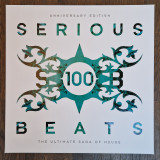
After 31 years, the Serious Beats compilation era comes to an end. The very last edition, Serious Beats 100, arrives as 3 Vinyl Box Sets (including 5 vinyls per box).
Some of the most legendary club tracks of the past decades have made the cut, and are now bundled into a true collector's item for everyone who's heart is beating to the rhythm of house music.
Special 10th Anniversary Edition In Brown Card Artboard Sleeve With Additional Lyric Print Insert
Slowdive singer and songwriter’s third solo album, which was originally released in November 2012. It is a stunning record and one which, upon its release, underlined the claims that Neil was one of the finest and most underrated British songwriters of recent times. It’s also a very special release in the Sonic Cathedral catalogue; the shoegaze label licensed the record from Jack Johnson’s Brushfire imprint for the UK and Europe and it was the start of a relationship that also gave us the Black Hearted Brother album in 2013 and, ultimately, brought about the reformation of Slowdive in 2014. But Palindrome Hunches is a very different beast. Both stately and understated, this moody and mesmerising collection of peculiarly British folk songs was made with the Band of Hope, a Wallingford, Oxfordshire based collective consisting of Ben Smith (violin), Drew Milloy (double bass), Paul Whitty (piano) and Tom Crook (guitar). Together with producer Nick Holton, banjo player Kevin Wells and backing singer Aimee Craddock, they recorded the album to tape over a few weekends in the music room of their local junior school. “At first we were going to record in a studio, but everything seemed too clean,” said Neil at the time. “We just went through the songs and recorded them live without very much rehearsal. We wanted to be spontaneous and simple and to keep the little mistakes that sneaked in.” This goes a long way to explaining the album’s humanity and intimacy, and also why it has had a quiet life of its own over the past decade, gradually growing in stature alongside Neil’s more high-profile activities with Slowdive; copies of the 2012 original and even the 2017 repress currently fetch up to triple figures on Discogs. The stunning opener ‘Digging Shelters’ was used to devastating effect in the posthumously released James Gandolfini movie Enough Said – a fitting home for a song that rubs shoulders here with ruminations about love and loss such as ‘Tied To You’ and ‘Spin The Bottle’ and, on ‘Wittgenstein’s Arm’, an Austrian pianist who had his right arm amputated in World War I and lost three of his brothers to suicide. The wordplay of the title track is almost light-hearted in comparison; “I wanted to write a song that was the same forwards and backwards, but it didn’t quite work out,” explained Neil, adding that he also chose ‘Palindrome Hunches’ for the album’s title because “I like the idea of things being reversible”. A couple years later, by reforming his old band, he proved that. And now, ten years on, it’s the perfect time to rewind to this understated, underrated classic. Side A 1 Digging Shelters 2 Bad Drugs and Minor Chords 3 Wittgenstein’s Arm 4 Spin The Bottle 5 Tied to You Side B 1 Love Is a Beast 2 Palindrome Hunches 3 Full Moon Rising 4 Sandy 5 Hey Daydreamer 6 Loose Change. Praise for Palindrome Hunches on its original release: ““Nope, it ain’t shoegaze as it's been codified and re-codified. But why be disappointed in someone following his muse to a logical conclusion when that path was always the one he walked on?” – Pitchfork An exquisite set of dark folk music” – The Times “Draws from the same understated, reflective well as John Martyn” – MOJO “‘Tied To You’ doesn’t merely evoke Nick Drake but withstands the comparison – evidence of the songs’ quality” – Financial Times “Halstead’s songs breathe the sort of honesty and goodness that’s harder and harder to find in the iTunes age” – The Independent “Given the chance, they could be songs that continue to enchant for many years to come” – The Line Of Best Fit
- A1: Pendulum (Feat Lucy & Rrose)
- A2: Lost Conductor (Feat Lucy & Rrose)
- B1: Wishing Well (Feat Lucy & Rrose)
- B2: Tunnel (Feat Lucy & Rrose)
- B3: Intracluster (Feat Lucy & Rrose)
- C1: Stars (Feat Lucy & Rrose)
- C2: The End Of Words (Feat Lucy & Rrose)
- D1: Filament (Feat Lucy & Rrose)
- D2: Pray (Feat Lucy & Rrose)
Lotus Eater is a duo consisting of Luca Mortellaro (Lucy) and Seth Horvitz (Rrose), techno artists just as comfortable operating in the uncharted area of experimental music who have gained a cult following, both influencing and challenging the direction of contemporary electronic music.
Eschewing the typical instrumentation of techno but still inhabiting its archetypes, Lotus Eater uses synthesised sound and feedback as fundamental sources to generate both textural and percussive elements. A sense of tension and weight emerge from sources that cannot be easily pinpointed. Each release forms a complex narrative from a paradoxically simple and restrained set of sound sources.
Officially formed in 2017, Lotus Eater came to life through several collaborations over a number of years, and finally blossomed with the release of its critically acclaimed debut album "Desatura," which Lotus Eater toured live in 2018 - 2019.
2022 sees the release of the second Lotus Eater album "Plasma" and a new audiovisual live project to accompany it. "Plasma" unfolds with exacting precision by exhibiting a point of focus and expanding on it. It uses a single, throbbing pulse to generate a constellation of sounds and rhythms that form around it like a volcanic eruption in slow motion. Playing with our sense of time and weight, "Plasma" feels simultaneously slow and urgent, spacious and immense. Lotus Eater zooms into the infinite abyss and finds not just light, but fire at the end of the tunnel. Will we be saved, or will we burn?
Before he co-founded the legendary Sunday afternoon event Body & Soul with fellow New York DJs Danny Krivit and Francois Kevorkian in 1996, Joaquin "Joe" Claussell was the driving force behind Instant House, an eclectic production outift who released a series of uplifting deep house records, several of which were spun by David Mancuso at the 90s iteration of his influential Loft parties.
In 1993, Instant House released their deepest single, Lost Horizons, through Jungle Sounds Recordings. The A-side, ‘Lost Horizons (The Mind Travel Saturday Night Sunday Morning Mix)’ is a seventeen-minute and twenty-second sojourn into the vibrant club sounds of early 90s NYC. Driven by a Latin-accented man-machine beat that marches into infinity, it comes backed by two shorter mixes, ‘Lost Horizons’ and ‘Lost Horizons (Percussion Bonus)’. Twenty-nine years later, Isle of Jura presents an official vinyl and digital reissue of this slow-burning deep cut.
The Instant House story begins in the late 80s at Dance Tracks, an East Village record store established by the businessman, DJ, and graphic designer Stan Hatzakis. Patronised by New York trendsetters like Frankie Knuckles and Larry Levan, Dance Tracks was considered one of the world's best underground dance music retailers.
During the winter of 1991, Stan got together with one of his best customers, Tony Confusione, to make music. A wall street guy by day and a keyboardist by night, Tony was also a serious DJ. Not long after their first recording sessions, they invited another Dance Tracks fixture, Joaquin "Joe" Claussell, to join them in Tony’s state-of-the-art home studio in Long Island. He brought a vibrant, percussive edge to the sample-based tracks Stan and Tony were cooking up. Emboldened, the three DJs began recording together as Instant House. That year, they released the Dance Trax EP.
In 1992, after Instant House had dropped two certified classics, 'Over' and 'Awade', for Jungle Sounds Records, Stan exited the group and sold Dance Tracks to Joe and his business partner, Stefan Prescott. Following Stan's departure, Joe and Tony headed into the studio for a special recording session. “I just remember how powerful the connection was while we were making that record,” explains Joe, recalling the creation of ‘Lost Horizons (The Mind Travel Saturday Night Sunday Morning Mix)’. “It was a very spiritual encounter in the studio.”
While laying out the drum patterns, sound effects, and arrangement, Joe explained the vibe to Tony, who played the lush cosmic chords and an effortless keyboard saxophone line over the top. “That was Tony completely feeling himself,” Joe reflects. “He performed majestically.”
After the release of the Lost Horizons 12”, Joe received a phone call from Cisco International Corp. A plane flight later, he was sitting in their label offices in Tokyo, talking to a senior record executive who wanted to introduce Lost Horizons to Japan. “What they were primarily doing at the time was pressing classical records - we’re talking thousand dollar plus classical reissues - and they wanted to license and distribute Lost Horizons,” Joe remembers. Three years later, Joe and Tony released 'Asking Forgiveness', their final 12” as Instant House, before parting ways with full hearts.
In the context of his career as a DJ, remixer, and producer, Joe is known for long songs and compositions. As Lost Horizons illustrates, he’s carried that impulse with him since his foundational days. “When I produce, I don’t believe in the beginning or endpoint of anything,” Joe explains. “I really despise the rules. To me, that’s not true to the art of creation. I just believe there is a flow in creation. When we were making music in the 90s, we were restricted by format, but that record could have gone on forever.”
The 12” is housed in a full sleeve jacket by Bradley Pinkerton based on the original release design.
Felix Laband’s The Soft White Hand is the masterwork of an artist who expresses himself through musical and artistic collage acting together to reinterpret his sources and to express significant elements of his own personal story.
Released by Munich-based Compost Records, the 14-track album is Laband’s first full-length offering since the critically acclaimed Deaf Safari in 2015. It is heralded by the single “Derek and Me”, and is being pressed on vinyl for distribution globally.
In The Soft White Hand Laband works with source materials that will be familiar to those who know his previous four records – Thin Shoes in June (2001), 4/4 Down the Stairs (2002), Dark Days Exit (2005) and especially Deaf Safari which reached deep into the South Africa scene and its political culture to inspire its vocal and music sampling. However, the disengagement he felt from his homeland during his latest album’s creation – an abiding sense of untethered-ness to place and space, exquisitely rendered in tracks like “Death of a Migrant” – is perceptible in Laband’s desire to illuminate instead aspects of his own life.
“For this album, my source material became almost autobiographical as opposed to African statements I’ve worked with previously,” says the artist. “I have sampled a lot from documentaries from the 80s crack epidemic in impoverished African American communities and believe my work speaks unapologetically for the lost and marginalised, for those who are the forgotten casualties of the war on drugs. In the past, I have had my issues with substance abuse, and I know first-hand about the nightmares and fears, what it feels like to be isolated and abandoned.”
Few artists have managed to air these intimate aspects of their life so luminously as Laband does in tracks like “5 Seconds Ago”, “They Call Me Shorty” and in the strange and meditative “Dreams of Loneliness”. “I’ve been building this weird, autobiographical story using other people talking. It’s kind of humorous but it is also sad and beautiful,” says Laband.
Yet, as in all of Laband’s recorded output, the delineations between emotions are never starkly drawn and The Soft White Hand is also shot through with beauty. Nature appears in recordings made in his garden in the intimate early morning hours, whether as in the calls of the Hadada Ibis and other birdsong in “Prelude” or of the vertical-tail-cocking bird in “Derek and Me”. The last is a wonderful track with Derek Gripper, the South African experimental classical guitarist of international renown, whose 2020 song “Fanta and Felix” imagines a meeting between Fanta Sacko and Laband.
Laband’s eloquence in reinterpreting classical composers such as Beethoven in “We Know Major Tom’s a Junkie” is another thrilling aspect of the new record. “I’ve been properly exploring classical music on this album,” explains Laband, “taking melodies from classical compositions and reinterpreting them”. A fresh quality comes to his work through this sonic adventuring: the tender manipulation of the mundaneness of the computer’s AI voice to reimagine and reinvent iconic lyrics and melodies in strange and unexpected configurations.
The Soft White Hand is Laband’s most cohesive body of work to date. Yet it remains, in its sheer artistic scope, impossible to describe fully. Darkness abuts the gossamer light. A song that summons the sunrise and all the hope of a new day could also be about the final dipping down of the sun that portends a troubled night ahead. Interludes are invitations to expand outwards or shift inwards. Mistakes and “weird fuckups” in the sound are cherished as convincing statements against what Laband calls the “grossness” of perfect sound in modern music.
For this world-leading electronic artist, the boundaries are unfixed. He is inspired by the German Dada artist, Hannah Höch, who memorably declared: “I wish to blur the firm boundaries which we self-certain people tend to delineate around all we can achieve.” His music consequently reflects a primal artistic impulse that is also visible in Laband’s considerable visual art output as seen recently in several solo exhibitions such as that held in the No End Gallery in Johannesburg in 2019 and in the works he produced during his 2018 Nirox Foundation Artists Residency. “My music is always about collage, as is my art,’’ he affirms. “Everything I do is collage. It is a medium I find very interesting because you are taking history and distorting it and changing its meaning and turning it upside down and back to front.” In her book Recollections of My Non-Existence, Rebecca Solnit calls collage “literally a border art”; it is “an art of what happens when two things confront each other or spill onto each other”.
With The Soft White Hand, Laband is confirming his singular ability to achieve this in both art and music, melting the divisions between the two creative disciplines until they become one. He is also affirming his belief that an album of music should be more than a collection of unrelated tracks, but should unfold a fully integrated, cohesive story as in the song cycles of the great classical composers. In doing so, he claims his position as one of the most significant artists working today.
Artist Statement – Felix Laband – August 2022
When the Khmer Rouge took their captives for processing, they identified their class enemies by looking at their hands. If they were sunburned, rough and calloused, they were those of a peasant, a proletarian to be spared. But if they were soft and white, then they were those of a city-dweller, an intellectual or bourgeois, an adversary to be liquidated.
In calling this album The Soft White Hand, I was reflecting on the Cambodian genocide and how it resonates in contemporary South Africa. The apartheid era is over, and gone with it is white political domination. Yet economic and social privilege is still held in soft white hands. But those who grasp it know just how tenuous is their hold, how it singles them out, and my music reflects their subconscious fears, the stress and guilt of clinging on to what others envy and desire.
The soft white hand of the title suggests to me a further image, one that relates to all of postcolonial Africa. In my mind’s eye, I see the soft, duplicitous handshake of the smooth representatives of the superpowers making deals and promising gifts that benefit only them, and not their African dupes.
Yet, soaring above the wailing of sirens sampled from the first day of the invasion of Ukraine, my music is also about love gained and passion lost. It is about the tender caress of a soft white hand that conducts you into a place of dreams to be enfolded by nocturnal melodies.
Angis Music invites you to listen to "Selva" the second release from the Padova duo composed of Stefano Cosi and Alberto Lincetto. The three songs featured represent the deep desire to communicate an evolution of sound and to tell a story that goes beyond traditional paradigms and genre labels. The “chiaroscuro”, lights and shadows, that characterize HUMA's music are once again the result of compositional and sound explorations that travel from jazz to 70’s funk, from deep house to electronic, with echoes of Brazil and film soundtracks. Side A opens with the misty and romantic landscape of "Free and Lost”, in which acoustic, electronic and deep bass sounds blend in a dark and spiritual atmosphere. The journey develops further into "An Ordinary Life” which sees the participation of Yeofi Andoh, aka A Race Of Angels, Los Angeles-based vocalist and co-author of the track, and of Amilcar Soto Rodriguez on classical guitar. It slowly emerges from the initial psychedelic sphere, landing on luminous harmonies and funk rhythms to reiterate a contrast that speaks of life cycles and the relationship between man and nature. This path ends with the title track "Selva" in which the synthetic percussive tangle keeps the listener in a meditative state of disorientation guided by the melodic lines of a dusty Fender Rhodes. It is the temporary epilogue of a story that has just begun..
Red Smoke Vinyl[25,17 €]
John Carpenter has been responsible for much of the horror genre’s most striking soundtrack work in the fifteen movies he’s both directed and scored. The themes can instantly flood his fans’ musical memory with imagery of a menacing shape stalking a babysitter, a relentless wall of ghost-filled fog, lightning-fisted kungfu fighters, or a mirror holding the gateway to hell.
The music on Lost Themes is there for Carpenter’s acolytes to visualize their own nightmares.
As is Carpenter’s style, repetition is the key to the thundering power of these tracks, their energy swirling with shredding chords, soaring organs, unnerving pianos and captivating percussion. Horror fans will be reminded of Carpenter’s past works, as well as ancestors like Mike Oldfield’s Tubular Bells and Goblin’s Suspiria.“They’re little moments of score from movies made in our imagina- tions,” Carpenter says. “Now I hope it inspires people to create films that could be scored with this music.”
Sacred Bones is now repressing this incredible debut by the one and only master of horror in a bunch of new colors in celebration of the label’s 15th year anniversary.
- A1: Strip-Tease
- A2: Wake Me At Five
- A3: Solitude
- A4: At Maxim’s
- A5: Rafa Temporel
- A6: Ariane Audition
- A7: Some Small Chance
- A8: Safari
- A9: Bath Dance
- B1: Serge At Sam’s
- B2: Strip-Tease Instrumental
- B3: At Elephant Blanc
- B4: Poupée La Rose
- B5: Effeuillage
- B6: Serge And Sam
- B7: Crazy-Horse Swing
- B8: Hurry
- B9: Strip-Tease Piano
- B10: Rendez-Vous A La Calavados
Another side of Serge Gainsbourg permeates this 1963 film soundtrack about ‘a stripper lost in the nocturnal world’ of Paris, according to director Jacques Poitrenaud, who cast Nico in the lead role (after her appearance in La Dolce Vita and just prior to the single she cut with Jimmy Page for Andrew Loog Oldham). Created by Gainsbourg with arranger and longstanding collaborator Alain Goraguer, the music is fittingly the cool jazz of dingy nightclubs and seedy bordellos, with Gainsbourg on piano, and there’s the sultry title track, delivered breathlessly by Juliette Greco. Another lost gem for all serious Gainsbourg and Goraguer fans.
Blue Vinyl
The Outer Edge is proud to present the first ever vinyl release of "No Message" by Art P, a still lesser known and lost masterpiece from the P.A.P. archives. Art P (initially Art Programming) was an electronic music duo consisting of Jens-Markus Wegener and Frank Grotelüschen. On "No Message", originally released in 1985, we hear the band's most profound work, a detailed and unique mixture in between of Electro and the synth-laden edge of New Wave.
We initially discovered Art P on the tape compilation "berlincassette 2-85" a couple of years ago. Their contribution, the title track from their second and last album "No Message", blew us right away: punchy drum machines, heavy synths and cool female vocals delivering a serious, yet slightly ironic view on the meaninglessness in pop music having "no message". A couple of months later, when we finally were lucky to get hold of an original full length tape, we couldn't ask for more: powerful apocalyptic Synth Wave on "A Place To Fear", thrilling vocoder Electro Funk on "Polaroid", uptempo New Wave Synth Pop on "Sounds of the City", dreamy and melodic Electro on "Without Jackets", and other well produced tracks. It was an absolute necessity for us to get in touch with Art P and ask for permission to re-release their music on vinyl.
"No Message" was remastered from the absolute best original tape source and sounds incredibly well. The release is limited to 300 copies and will be pressed on blue vinyl. It contains an insert with lyrics and additional art. We think it is save to say, that this should not be missed!
As a side note it should be mentioned that Wegener later became a key figure in the German music market. He was the founder of companies such as Public Propaganda, Europe's largest and most successful promotion agency in the mid '90s, the publishing company AMV, the distributor PP Sales Forces, among others. As a freelance promoter for SPV and the PIAS label he was also responsible for establishing the term Electronic Body Music as a musical genre. Grotelüschen was active as a music journalist (e.g. for Spex magazine) and later became an important and well known journalist for science.
Seabuckthorn is the alias used by Andy Cartwright for his solo works. Cartwright uses finger picking & bowing techniques combined with various open tunings to form a mixture of approaches, often with layered accompaniments. Generally the songs lean towards to the experimental genre, whilst on the edge of the ambient and folk.
Having grown up in Oxfordshire, Cartwright studied sound engineering in Cornwall and then lived in the cities of London, Paris & Bristol working as a broadcast wireman. He now resides in the French Southern Alps making music.
Cartwright has been actively touring internationally for several years performing in festivals and events throughout Europe.
Various songs have been featured in documentaries, film and contemporary dance. His works has been released since 2009 on labels such as Dead Pilot Records, Bookmaker Records, Lost Tribe Sound, Eilean Rec., IIKKI and Fluid Audio. "Of No Such Place" is his 13th solo releases.
Mondo, in conjunction with WaterTower Music, is proud to present the premiere vinyl pressing of Hans Zimmer’s incredible score to WONDER WOMAN 1984.
Featuring incredible artwork by La Boca and housed in a tri-fold jacket with holo-foil elements, with liner notes by writer and director Patty Jenkins, the vinyl pressing is available on 3x 180 Gram Swirl colored vinyl.
Hans Zimmer’s score to WONDER WOMAN 1984 is quite possibly our favorite piece of superhero film scoring since John Williams’ SUPERMAN: THE MOVIE (1978), and Danny Elfman’s BATMAN (1989). We know that sounds hyperbolic, but even before our test pressings arrived, it was one of our most listened to albums on Spotify of the last 6 months. It’s that good. We can’t wait for you to hear how good it sounds on vinyl, out of big speakers.
Composed by Hans Zimmer
Artwork by La Boca
Manufactured in the Czech Republic
orange vinyl
As &on&on, DJ's Noni and Worth Way have been making some serious waves over the past year, being named one of DJ Mag top artists to check out in 2022 and also featured on Disclosure's DJ Kicks compilation.
On their first release on the label, the duo boast their prowess in composing uplifting, melodic dance music which draws on myriad influences to create unique and innovative sounds. Whilst every track on Mentalphysics has fun and festivity at its core, some take their inspiration from disco ('Mid Valley'), whilst others from groovy deep house ('All Day') or breakbeat ('Delta T'). Finally, 'Melted' subtly evokes speed garage in the way the bass dips, giving the track lots of depth and 'Samo' brings things to an anthemic close with reverberating cymbals filling any space with body and movement.
Human Remains follows Creatures of the Deep and Black Sarabande as the final installment of a trilogy of piano based recordings by Robert Haigh for Unseen Worlds. The trilogy marks the end of the late era of solo albums by Haigh before he steps away from music production.
The title, Human Remains, was initially based on a painting of the same name by Haigh that is suggestive of an ancient structure resolute in the wake of overwhelming forces. As a metaphor for our current times, it could be interpreted as human frailty in the face of nature’s unyielding dominion. Conversely, it could represent the persistence of human spirit and resourcefulness in the midst of catastrophe and upheaval.
- 1: Deep Blue Doubt
- 2: Space Man
- 3: Somebody
- 4: Tiny Riot
- 5: All The Way Over
- 6: Ok
- 7: Put A Light On Me
- 8: Whirlwind
- 9: Ten Ton
- 10: More
- 11: Crashing Down
- 12: This Time
- 13: Lost In You
- 14: Sigala X David Guetta X Sam Ryder - Living Without You (Bonustrack)
'Rambler of Aeons' is an album of extremes. Musically, both melody and brutality are pushed beyond the boundaries explored in previous albums. The band spans from Motörhead to Black Sabbath passing through Sepultura, Exploited, Paradise Lost, Cro-Mags and everything that is badass. Dealing with all things human and beyond, BARK runs all the red lights from the mundane to the metaphysics, taking us on a euphorical suicide spree between life and death.
'Night Of The Endless Beyond', the sophomore album by Lord Of The Isles AKA Neil McDonald for the ESP Institute, had almost become a mythical piece of work. The tracks very slowly crept into formation from the lowest depths of 2021, and once the completed album finally made the leap from creation into manufacturing, an entirely new onslaught of follies and delays awaited at the pressing plant. We began to laugh, for not only did Mario Hugo’s otherworldly sleeve artwork visually translate this music so well, but it was an uncanny premonition to the album being lost in space, falling through a black hole, evaporating into the aether like a dream that never really happened. But, at long last, ground control has confirmed contact! It did happen, it will arrive, and it’s not a myth.
Listening to 'Night Of The Endless Beyond' now feels like the return of a strayed friend, one whose distance left us pining for an embrace. Although this Techno relies on unassuming means, there is a remarkably complex and persuasive emotional statement embedded here, insisting we learn to endure the long game and allow ourselves patience to investigate and appreciate the minutiae contained not only within the notes, but their negative space. From its introduction, through its mellow crests and valleys, there is a conveyance of restraint — subtle dynamics that quietly beg for attention, repetition so hypnotic that imaginary melodies are inescapable, transient peaks so deliberately scaled that we mourn the subsequent decay. In accordance with Neil’s ESP debut, 'In Waves', we never feel attacked by instrumentation but shielded from sharp edges, able to step inside the music, breathe the air it occupies and know its true intentions, whether bright or bleak.
Just prior to the album close, a film dialogue excerpt summarizes everything quite honestly by proposing, “The truth of the universe is waiting … the truth of what is … it’s all going to go away … everything … into blackness … the void … and nobody is in charge.”
“…and what do you do with that?”
We stare long into the 'Night Of The Endless Beyond' and answer… “You smile.”
"WARKINGS Warriors beware, the mighty warriors are back with an unexpected ally – none other than the legendary Sorceress Morgana le Fay! The sister of Arthur and mistress of the lost souls has joined the four kings on the fourth chapter of the WARKINGS saga, Morgana, to be unleashed on November 11, 2022 via Napalm Records! Forging their musical steel in the tradition of Powerwolf, Sabaton, HammerFall and Running Wild, the WARKINGS burst onto the battlefields in 2018. They gathered their Warriors around the world and entered the Official German Album Charts 2021 at #13 with Revolution. Gathered in the golden halls of Valhalla, the four ancient kings – a roman Tribune, a wild Viking, a noble Crusader and a martial Spartan – are now back with Morgana, having already escaped from the underworld, fought the Monarchs of the dusk and called for Revolution. Back in the realms of the dead, they were captivated by the eerie and extraordinary chanting voice of “evil” sorceress Morgana La Fey. Obsessed with the idea of telling humanity her own version of her story, the witch inspired the WARKINGS to include Morgana in their circle as they fought their next battles – a covenant made for eternity! In their trademark manner, the WARKINGS – armed with weapons made of pure Heavy Metal – tell their stories in songs forged of pure steel. Morgana's haunting voice rises to tell her story in four acts: The first chapter ""Hellfire"", tells of her love-hate relationship with King Arthur, ""Monsters"" of the dark side in each of us, and ""Heart of Rage"" of her desire to grant forgiveness to all who have hurt her, before revealing in ""Immortal"" how she and Arthur's immortal souls are reborn again and again. In the last two chapters of the battle, Arthur himself speaks out and implores Morgana not to give up, before he himself narrates the Arthurian saga in the crowning finale! Of course, the WARKINGS themselves raise their voices to tell their stories – recounting their battles with Hereward the Wake, the naval battle of Salamis and a man unjustly enslaved. As a special gift, the WARKINGS offer “To The King” – a hymn in honor of the most loyal of the faithful WARKINGS Warriors, who stand side by side with the mighty kings in all battles! Raise your swords and join the next fight in the WARKINGS saga with Morgana!"
*Ltd Coloured Vinyl on Transparent Blue Vinyl* London-based musician and producer Ryan Lee West, aka Rival Consoles, creates driving, experimental electronic music that makes synthesisers sound human. His consistent desire to create a more organic, living sound, sees him forming pieces that capture a sense of songwriting behind the machines.
‘Now Is’ marks a new chapter in an ongoing quest for refinement and evolution. More playful and melodic, the album draws from much experimentation in minimalist songwriting and seamlessly blends synthesisers and acoustic instruments. “There are some pieces that are influenced quite strongly by the isolation and anxiety of these times. There are also pieces which are more optimistic and vibrant, which I think is a consistent attitude of my records, as I want art to express many aspects of life.”
From the elevating arrangements of ‘Beginnings’ and motorik beats of ‘World Turns’, to the isolation of ‘Frontiers’, influenced by the barren landscapes of Iceland, Rival Consoles’ eighth studio album subtly morphs and evolves. “The title of the record ‘Now Is’ interests me because it is the beginning of a statement, but it is incomplete. I like art that is open and suggestive of ideas even if they are inspired by very specific things. With my previous record ‘Overflow’ being very dark, heavy and almost dystopian, I wanted to escape into a different world with this music and ended up creating a record which is a lot more colourful and euphoric.”
For the sonic ‘Vision of Self’, West looked to create the kind of movement and colour a string section in an orchestra would construct, but with synthesisers. “I think there’s a lot of synergy between the two worlds. I wanted to create a hypnotic journey, where the synths and sounds weave in and out of each other, so you get lost in the music and don’t know where one sound starts or another ends.” This “journey” West refers to is symbiotic of the way he has approached music throughout a progressive career – an ongoing project that is never static and always moving forward.
A sense of euphoria is reached with the pulsating title track which bursts into colour like the appearance of the summer sun, while ‘Echoes’ is a vivid exploration of rhythm and sound for summer nights. The track starts with a dense collage of modular synths, fragmented metallic tones, broken sounding drums and a downcast melodic synth line. “This is a piece where the main melody has been in my head for a long time and was just waiting to come out. I kind of think of it as the sonic equivalent to an impressionist painting in that I wanted to explore the sensation of lots of small layers of different colours and textures that are constantly moving around each other.”
Rival Consoles is set to appear at festivals across Europe this summer, with headline shows expected to follow in the autumn.
The East Coast of England is a land living on borrowed time. Time we borrowed from the North Sea, reclaimed a thousand years ago. But now it seems that sea has come to claim it all back. Michael C Coldwell spent three years travelling up and down this rapidly disappearing shoreline, collecting ghost stories, photographing the roads to nowhere, the monumental sound mirrors and pillboxes teetering on the edges of cliffs, making field recordings of the waves and fog signals, and writing mournful electronic music from static caravans. This hauntological project finally culminated in a short essay film entitled Views from Sunk Island - and this new Conflux Coldwell album. More than just a film score, The Phantomatic Coast stretches beyond the original aims of the documentary, to evoke something deeper about our troubled relationship with the sea – the many towns and ships lost beneath the waves, and ancient forgotten lands lying out beyond the windfarms like some Yorkshire Atlantis. Memory and mythology became obvious themes in the work, as did the ruins and remains of the world wars, now slipping beneath shifting sands forever. The Phantomatic Coast will be released via digital platforms and limited edition pressed vinyl in a deluxe gatefold sleeve.
Written and recorded between 1972 and 1982 in Western Oregon, Back to the Woodlands is a previously unreleased, and nearly lost, album made by Ernest Hood during the same era as his near mythical album Neighborhoods . A visionary combination of field recordings, zithers, and synthesizers, Back to the Woodlands offers an unprecedented depth of access to this singular artistic mind. Born into a musical family, Ernest Hood began a promising career as a jazz guitarist during the 1940s, touring internationally with his brother Bill Hood and the saxophonist Charlie Barnet , before contracting polio in his late twenties. The disease left Ernest unable to play the guitar and confined him to a wheelchair for the rest of his life. It also forced him to adapt and innovate around his musical practices in the face of adversity; Hood's value of sound matured with a remarkably democratic and nonhierarchical approach and application. Taking up the zither, a less physically-demanding stringed instrument to the guitar, embarking upon the unprecedented process of incorporating field recordings into his work as early as 1956, and eventually discovering the synthesizer, Hood's music became imbued with optimism and subtle cultural critique. This ethos and technique - refined over the coming decades - would lay the groundwork for a sprawling body of radio work, mail order recordings for homebound listeners, and Neighborhoods , self- issued as a small vinyl edition in 1975. Where Neighborhoods , a nostalgic opus, drawing from a well of collective memory of the 1950s, is defined by traces of human activity, Back to the Woodlands leaves the modern world behind, delving into Hood's love for nature. Only recently discovered in his archives, the album dramatically expands his concept of "musical cinematography," imagistically triggering states of sensory memory from within its zither and synthesizer melodies, intertwined with field recordings made during Hood's extensive travels throughout Oregon. If Neighborhoods is a retreat into the gauzy joys of a romanticized past, Back to the Woodlands is an immersion in the timeless sanctuary of the natural world. A fascinating counterpoint to its predecessor, Back to the Woodlands brings us even closer to Hood's belief in the transportive qualities of sound; that field recordings could serve as a vehicle for the imagination and liberation, particularly for those with similar mobile disabilities as his own. Across the album's twelve compositions, the rippling instrumental harmonics - shifting between abstraction and playful melody - fold so seamlessly into the birdsong, bubbling brooks, and other environmental ambiences, that they often give the impression of having been recording within the landscapes toward which they whisper. Falling somewhere between the immersive calm of healing music and New Age, the creative field recording practices of sound ecologists world building for Folkways, and the jazz infected ambiences during Obscure / Editions EG's highest heights, Back to the Woodlands sculpts an singular proximity of music for its moment; a form of ambient sonic realism that draws the consciousness toward its surroundings as much as within. Working closely with his estate to maintain his original vision, Freedom to Spend has restored and remastered this never before released, lost masterpiece by Ernest Hood from the original tapes. Ernest Hood's Back to the Woodlands will be issued on vinyl, as well as on CD in combination with its contemporary Where the Woods Begin , with new liner notes by Michael Klausman . On behalf of Ernest Hood and Freedom To Spend, a portion of the proceeds from this release will benefit Oregon Wild, an organization dedicated to protecting and restoring Oregon's wildlands, wildlife, and waters as an enduring legacy for future generations.
First Time On Black vinyl. A lot has happened to the Magic Castles since this was released in April 2021 this release took over a year to be manufactured, the band have toured with the Brian Jonestown Massacre & the Warlocks in the USA in 2022 & the the track “Lost Dimension” was used in the HBO series “Succession” so not a bad 2022 for the band. Sun Reign is the band’s fourth release on Anton Newcombe's label ‘A’ Recordings Ltd. Ironically similar to BJM, the Magic Castles have been plagued by lineup changes over the years. In November of 2019, tragedy struck and Edmonds was seriously injured in a car accident that required hospitalization and surgery. Friends started a Go Fund Me that raised over $20k USD for the uninsured musician’s hospital bills, showing an incredible outpouring of love and support for him and his family. Fortunately, Edmonds has made a complete recovery from his injuries and has bounced back remarkably well. In early 2020, Edmonds managed to finish the remaining work on the album “Sun Reign”, including a previously unreleased song, “Surmise'' penned by guitarist Jermiah Doering, and a rare cover of a moody 1966 garage rock song “Ode to the Wind” by Danny and the Counts. Edmonds also began working with a booking agency, planning a return tour to Europe with the band to support the new album. Unfortunately, it was not to be. Due to the global pandemic crisis of Covid-19, the album was delayed until 2021, and the promising tour was cancelled. In May of 2020, Minneapolis police killed George Floyd two blocks from Edmonds’ home, which incited riots across the country. The protests led to the burning of Minneapolis, where a long time music venue and many other buildings were lost. Edmonds’ studio was not destroyed although many nearby buildings were. Edmonds is a known supporter of Black Lives Matter Tracklisting:- 1) Sunburst , 2) Lost Dimension , 3) Ode to the Wind , 4) Asuras , 5) World of Time , 6) Valley of Nysa , 7) Magna Mater , 8) Surmise , 9) Gates of the Sun , 10 ) Relax Your Mind
Her Shadow offers dreamy pop music with moonlight melodies, heavenly hooks and Lynchian twists. The ethereal soundscapes come to life in a dream noir universe oozing with catchy choruses, Morricone motifs and vintage sounds interweave with state of the art production. The birth of Her Shadow was inevitable. Old friends, guitarist-songwriter Tomi Henttunen (Royal Lips) and keyboardist-lyricist (Kuolemanlaakso) had a versatile but very different background in making music but a shared obsession with Twin Peaks and Lana Del Rey. The original idea in 2016 was to combine the best of both worlds, and spice up the mix with film noir and dream-like elements – to make music that they love, but had never done before. They recruited the enigmatic singer Anna Carolina (Royal Lips), drummer extraordinaire Toni Ronkainen (Kuolemanlaakso) and producer-engineer Jaani Peuhu (Swallow the Sun, Lord of the Lost etc.), and recorded a four-song demo. They instantly got signed to Svart Records, and started working on their debut album. After five long years of hard work, it is finally ready to be released upon the world. As they say, good things come to those who wait: The Ghost Love Chronicles will be released on November 11, 2022. The album was produced by musical and visual mastermind Henttunen, mixed by Sampsa Väätäinen (Ismo Alanko, Neøv etc.) and mastered by Jaime Gomez Arellano (Ghost, Paradise Lost, Opeth etc.). The songs range from the mellow Motown mood of Fifth Season to the modern pop banger Kinda Love You, from the Morricone-inspired Vigilante to the nightmarish haunted house thriller What Hides in the Dark and from eerie playfulness of White Lane to ghoulishly beautiful Devil Inside. It remains to see, if The Ghost Love Chronicles will grow into a hit album or a cult classic, but it sure has the potential for both. Slip into something comfortable, open the doors of your perception and enter realm of Her Shadow. HER SHADOW Anna Carolina – lead vocals Tomi Henttunen – guitar, bass, keyboards Markus Laakso – keyboards, backing vocals Toni Ronkainen – drums and percussion Harri Hyvönen – live bass Otto Daavitsainen – live guitar
While frontman Tom Greenhouse’s off-kilter observations and bizarro anecdotes remain front and centre, this time round the band up their game with a more vigorous sound that keeps pace with Greenhouse’s wholly distinctive lyrical style. Greenhouse continues to revel in telling increasingly surreal short stories, rejoicing in the power of the deadpan one-liner and bedecking his songs with far-flung cultural references. But now the band employ a variety of techniques with improved pro- duction, from the impulsively bashed keyboards and jubilantly repetitive guitar stabs that have be- come their trademark, to flirtations with–heaven forbid!–melody, chord progressions and arrangements which elevate their tried-and-tested blueprint into a more exciting and cohesive whole.
Opener Musicians is the perfect embodiment of this conscious development. Here, Greenhouse re- counts a sarcastic tale of half-truths that see him galavanting around town trying to put a band to- gether. Sonically, it begins with a caustic callback to the group’s first EP Crap Cardboard Pet and its über-minimalist aesthetic. But by the end of the song a joyous festival of afrobeat-inspired in- struments including samba whistles, bongos and saxophones are added to the mix as the front- man, ironically, fails in his mission to recruit more players.
With Get Unjaded, the band have somehow conjured something close to pop, without abandoning the repetition and wit that’s relished by their early fans. I Lost My Head also adopts a jangle-pop sheen with a luscious synth melody, as the frontman ditches the spoken-word for a surly croon (his first known attempt at actual singing!) that provides a welcome breather from the onslaught of dense recantations that are the band’s bread-and-butter.
While the lyrics here are still often humorous and political, Greenhouse has also notably expanded his interests on this album to include a new host of topics. The influence of extraterrestrials, for ex- ample, infiltrates the subject matter frequently. On The UFOs, the mysterious protagonist Blinkus Booth’s isolationist lifestyle is apparently interrupted by the spectres of otherworldly visitors, while closer The Neoprene Ravine feels like an extract from a deep space rock opera. Here, jaunty and angular instruments pile-on as we are fed images of an interstellar Spinal Tap, the titular fictional band “The Neoprene Ravine” who are “the alien equivalent of the Velvet Underground” and include an alien Lou Reed yelping “too busy sucking on my little green ding dong!”.
Meanwhile, Hard Rock Potato is propelled by a vortex of keys and synths, a real noise-pop gem comprised of real guitar chords (!) and rock-orientated riffs. Here the stream-of-consciousness lyrics take shots at the sinister financial industry, and include one of the many top-tier one-liners on the album: “It’s not gambling if you’re wearing a tie (even if you’ve got no trousers on)”.
On Sod’s Toastie, The Cool Greenhouse have pushed their distinctive flavour of post-punk to the point of perfection – their incongruous riffs, alchemical instrumental chemistry, and irreverent spo- ken-word vocals are a delight throughout. Sod’s Toastie is hilarious at times, and at others just hilariously good – a not-so-difficult second album.
Yellow and black splatter
While frontman Tom Greenhouse’s off-kilter observations and bizarro anecdotes remain front and centre, this time round the band up their game with a more vigorous sound that keeps pace with Greenhouse’s wholly distinctive lyrical style. Greenhouse continues to revel in telling increasingly surreal short stories, rejoicing in the power of the deadpan one-liner and bedecking his songs with far-flung cultural references. But now the band employ a variety of techniques with improved pro- duction, from the impulsively bashed keyboards and jubilantly repetitive guitar stabs that have be- come their trademark, to flirtations with–heaven forbid!–melody, chord progressions and arrangements which elevate their tried-and-tested blueprint into a more exciting and cohesive whole.
Opener Musicians is the perfect embodiment of this conscious development. Here, Greenhouse re- counts a sarcastic tale of half-truths that see him galavanting around town trying to put a band to- gether. Sonically, it begins with a caustic callback to the group’s first EP Crap Cardboard Pet and its über-minimalist aesthetic. But by the end of the song a joyous festival of afrobeat-inspired in- struments including samba whistles, bongos and saxophones are added to the mix as the front- man, ironically, fails in his mission to recruit more players.
With Get Unjaded, the band have somehow conjured something close to pop, without abandoning the repetition and wit that’s relished by their early fans. I Lost My Head also adopts a jangle-pop sheen with a luscious synth melody, as the frontman ditches the spoken-word for a surly croon (his first known attempt at actual singing!) that provides a welcome breather from the onslaught of dense recantations that are the band’s bread-and-butter.
While the lyrics here are still often humorous and political, Greenhouse has also notably expanded his interests on this album to include a new host of topics. The influence of extraterrestrials, for ex- ample, infiltrates the subject matter frequently. On The UFOs, the mysterious protagonist Blinkus Booth’s isolationist lifestyle is apparently interrupted by the spectres of otherworldly visitors, while closer The Neoprene Ravine feels like an extract from a deep space rock opera. Here, jaunty and angular instruments pile-on as we are fed images of an interstellar Spinal Tap, the titular fictional band “The Neoprene Ravine” who are “the alien equivalent of the Velvet Underground” and include an alien Lou Reed yelping “too busy sucking on my little green ding dong!”.
Meanwhile, Hard Rock Potato is propelled by a vortex of keys and synths, a real noise-pop gem comprised of real guitar chords (!) and rock-orientated riffs. Here the stream-of-consciousness lyrics take shots at the sinister financial industry, and include one of the many top-tier one-liners on the album: “It’s not gambling if you’re wearing a tie (even if you’ve got no trousers on)”.
On Sod’s Toastie, The Cool Greenhouse have pushed their distinctive flavour of post-punk to the point of perfection – their incongruous riffs, alchemical instrumental chemistry, and irreverent spo- ken-word vocals are a delight throughout. Sod’s Toastie is hilarious at times, and at others just hilariously good – a not-so-difficult second album.
Human Remains follows Creatures of the Deep and Black Sarabande as the final installment of a trilogy of piano based recordings by Robert Haigh for Unseen Worlds. The trilogy marks the end of the late era of solo albums by Haigh before he steps away from music production. The title, Human Remains, was initially based on a painting of the same name by Haigh that is suggestive of an ancient structure resolute in the wake of overwhelming forces. As a metaphor for our current times, it could be interpreted as human frailty in the face of nature's unyielding dominion. Conversely, it could represent the persistence of human spirit and resourcefulness in the midst of catastrophe and upheaval. The album opens with 'Beginner's Mind' - a semi-improvised motif develops into an impressionistic refrain. This is followed by "Twilight Flowers" and "Waltz On Treated Wire" - intimate, monochrome piano portraits. Later tracks such as "Lost Albion" and "Signs Of Life" build on skeletal piano motifs with subtle electronic washes, textures and field sounds. The album ends with the elegiac "On Terminus Hill" where a stately piano refrain explores a series of sparse harmonic variations evoking a sense of closure.
- 1: The High Cost Of Low Living
- 2: Lie To Me
- 3: Keep On Chasing
- 4: Anytime And Anywhere
- 5: The Test
- 6: Dear Me
- 7: Monkey Wrench Myself
- 8: King Of Downside
- 9: Lost At Home
- 10: Move
- 11: Bill
- 12: So Much Less
- 13: No One To Judge Me
- 14: Empty Lines
- 15: Anytime And Anywhere (Acoustic)
- 16: Dear Me (Acoustic)
- 17: The High Cost Of Low Living (Acoustic)
- 18: Move (Acoustic)
Nearly 30 years into an already impressive career – which includes 8 studio albums, tours with Descendents, blink-182, Bon Jovi, Linkin Park, Snoop Dogg, Bad Religion, and more, and over 365 shows on the Vans Warped Tour – Less Than Jake has never been a band to rest on its laurels. Today the ska punk veterans have shown the best is yet to come with the release of their first new song in 3 years, “Lie To Me,” and announcement of their new album Silver Linings, out December 11 th via Pure Noise Records. Fans can watch the music video for “Lie To Me” and pre-order the album now at https://smarturl.it/LTJ . “We made a new record! Our first full length with our new drummer, Matt Yonker, and it sounds amazing,” shares vocalist/guitarist Chris Demakes. “More vocal hooks than a tackle box, horns galore and that bombastic and upbeat energy that we’re known for. We didn’t try to reinvent the wheel with this one, it’s still undeniably Less Than Jake. Just a bit punchier and in your face. We can’t wait for our fans to hear it!” On how it feels to still be writing music together after so many years, vocalist/bassist Roger Lima shares: “It's still so freaking exciting!! After decades of working on songs together, we still love it, and with our new drummer Matt Yonker, we feel reignited and refueled. Personally, I feel that this is the first step of a new era for the band. While the music feels undeniably Less Than Jake, the flow of the tracks and the attitude of the horns and lyrics have a freshness to them and I look forward to sharing these songs with our amazing fans.” Less Than Jake has no plans of slowing down any time soon as they prepare for the release of their 9 th studio album, Silver Linings, out December 11 th via Pure Noise Records.
Ron Carter and Richard Galliano decided to risk intercontinental
collaboration for the second time after 1990, when they recorded their
acclaimed album "Panamanhattan" in Paris
Here the French accordion master, whose fingers fly over the keyboard with
acrobatic ease and can make the instrument weep in melancholy or rejoice with
joy. There the American bass wonder, whose deeply tuned strings enhance more
than 2,500 (!) recordings and are among the cornerstones of the complete artistic
works of Miles Davis, Eric Dolphy, Archie Shepp, Herbie Hancock, Aretha Franklin,
Roberta Flack and Antonio Carlos Jobim. Two who have already gained hero
status in their own worlds and can actually only lose when they transgress into
each other's terrain. "Believe me, there is nothing more real than to go on stage
with a gambler," Carter raved about the refreshed liaison with his Gallic buddy.
The two rediscovered the once lost central thread in March 2016 at Jazz Week in
Burghausen as a short intermezzo during a joint appearance with the WDR Big
Band. The provisional climax was then the recording made in Theaterstu?bchen
in Kassel on October 29. Galliano recalled: "Before we got going, I said to him:
"Can you believe it? Twenty- seven years have passed, we are still the same and
I'm still playing the same accordion. To which Ron just responded: "And we have
still same fingers!" With these 20 nimble tools, the two protagonists of the
musical joint venture interact without fear of contact. Neither remains in his
accustomed position. Like two intrepid mountaineers, they balance over a
yawning abyss, perform daring maneuvers and clear the way for each other time
and again. The longer the intimate wanderings of subtle nuances and sensitive,
dancing elegance last, the greater the familiarity seems to be. "Richard really
seizes every rhythmic and harmonic chance," the American marveled about his
French partner. And he replies gallantly: "Ron still looks so young, fresh and
elegant like three decades ago. And he is still enthusiastic, straightforward and
comes straight to the point." An often thoughtlessly used image rarely fits better
than on this very special evening: Ron Carter and Richard Galliano create a
universal musical language, whose vocabulary consists of notes. Risk- free
enjoyment
There's a certain winking resignation to the title of Nick Lowe's At My
Age, as if it were designed to be spoken with a soft, knowing sigh
Now in his late fifties, Lowe is hardly running away from his advancing years --
quite the contrary, the singer/songwriter is comfortable in his skin and his years.
Certainly, he's comfortable in his music, since At My Age marks the fourth time
that he's mined the intimate, well-worn country-rock vibe of The Impossible Bird,
and if at this point it no longer is a revelation, it's hardly lost its appeal, either. Part
of that lies in Lowe's ever-potent charm, and to overlook an album as exquisitely
crafted as At My Age is to be a fool, because nobody does this kind of relaxed
Americana as well as Lowe, who is still writing songs that stand proudly
alongside his previous classics. For instance, there's "I Trained Her to Love Me," a
song as wickedly witty and bitterly self- loathing as "Cruel to Be Kind" or "The
Beast in Me," a tune that's balanced by the wry new-love anthem "Hope for Us All,"
which has its share of gently funny lines but is nevertheless a ringing, sincere
endorsement of love, worthy of the man who wrote "(What's So Funny 'Bout)
Peace, Love and Understanding?" And that's always been one of Lowe's greatest
gifts, that he is possessed with rare humor but also a big heart, which is what
gives his music great resonance. This 15th anniversary edition of At My Age is
pressed on silver vinyl and limited to 2,500 copies worldwide. This marks the first
time this long- out- of- print classic has ever been available on color
vinyl.Packaging; LP jacket; silver vinyl
Sunshine Only Sometimes: Archives Vol. 2, 1972–1975 continues Anthology Recordings’ excavation, and exploration, of southern singer, songwriter, and psychedelic serviceman Robert Lester Folsom’s bountiful archives. Recorded across Georgia in various bedrooms, a barn, and a motel room with a reel-to-reel and a revolving cast of whip smart studio musicians in the first half of a dazed and confused decade, Sunshine Only Sometimes furthers Folsom’s place in the canon of long lost but eventually found independently spirited, high-flying American folk rock. When Anthology’s reissue of Music and Dreams, the sole contemporaneous album released in 1976 by Folsom, surfaced in 2010, little else was known of Folsom’s nearly five-decade deep archive of unreleased demos and fully formed studio recordings.
Written and recorded between 1972 and 1982 in Western Oregon, Back to the Woodlands is a previously unreleased, and nearly lost, album made by Ernest Hood during the same era as his near mythical album Neighborhoods. A visionary combination of field recordings, zithers, and synthesizers, Back to the Woodlands offers an unprecedented depth of access to this singular artistic mind.
Born into a musical family, Ernest Hood began a promising career as a jazz guitarist during the 1940s, touring internationally with his brother Bill Hood and the saxophonist Charlie Barnet, before contracting polio in his late twenties. The disease left Ernest unable to play the guitar and confined him to a wheelchair for the rest of his life. It also forced him to adapt and innovate around his musical practices in the face of adversity; Hood’s value of sound matured with a remarkably democratic and nonhierarchical approach and application.
Taking up the zither, a less physically-demanding stringed instrument to the guitar, embarking upon the unprecedented process of incorporating field recordings into his work as early as 1956, and eventually discovering the synthesizer, Hood’s music became imbued with optimism and subtle cultural critique. This ethos and technique - refined over the coming decades - would lay the groundwork for a sprawling body of radio work, mail order recordings for homebound listeners, and Neighborhoods, self-issued as a small vinyl edition in 1975.
Where Neighborhoods, a nostalgic opus, drawing from a well of collective memory of the 1950s, is defined by traces of human activity, Back to the Woodlands leaves the modern world behind, delving into Hood’s love for nature. Only recently discovered in his archives, the album dramatically expands his concept of “musical cinematography,” imagistically triggering states of sensory memory from within its zither and synthesizer melodies, intertwined with field recordings made during Hood’s extensive travels throughout Oregon. If Neighborhoods is a retreat into the gauzy joys of a romanticized past, Back to the Woodlands is an immersion in the timeless sanctuary of the natural world.
A rich musical journey comprising eleven songs, Madrid channels the chaotic charms of the Spanish capital where Nev has recently relocated.
"I love the way life works here. It's organised chaos. Walking
the neighbourhoods of Lavapiez and La Latina you begin to see how everything is perfectly balanced...how to eat, how to party and then how to relax! It's perfection. When it all gets too much I run away to
the English countryside"
Side A cut 'The Ring' calls to mind Cowboy In Sweden era Hazlewood while that Mustang bass, scratchy guitars and cool 60's drum fills invoke Serge and Vannier for ' Silver Screen' and title track 'Madrid'. Scott 4 is obviously a touchstone and Nev has never been one to hide his reverence for one of the greatest albums of all time. Seven minute wonder 'Under The Skin' channels Walker's
Forget your search for a holy grail, THIS is The Lost Ark Of The Covenant.
Walter Gibbons presents 'The Ten Commandments Are The Law Of The Land'
It will melt your face and make you clap yo' hands!
Mythical disco foundations from Sunshine Sound.
Label Info:
Take a journey to the dawn of DJ culture with Sunshine Sound, the NY imprint that through a series of genre defining Disco Edits became recognised as the 'Birthplace of the Edit'.
These 'Disco Adjustments' would become the hottest tracks in a DJ's crate, spawning countless bootlegs & imitations since they first appeared so many years ago.
As influential as these recordings were, most only appeared as acetate discs individually cut in mono & sold direct to DJs.
Some of these were cut in such small quantities it could be debated as to whether they ever really existed at all.
40 years later and all that remains are remakes & rumours...
...or so it was thought.
Sunshine Sound rises again to bring you a series of classic, legendary & mythical Edits.
Travel back with us to re-discover monumental works that helped shape the sound of dance music as we deepen the textures of history with a series of exclusive Digital & limited Vinyl releases selected from the vault.
Sunshine Sound releases are distributed by Moonshine Sound, bringing you antiquities of historical Disconificance.
Take To The Sky is a sun soaked EP with four dance floor heaters soundtracking the summer; capturing the euphoria and release of collectively gracing sweaty dance floors again. Inspired by nostalgic 90s UK club music/Summer of Love, incorporating broken-beat, garage and street-soul rhythms carried by melodic ear-worm vocals performed and produced by J. Caesar with co-production and mixing by Z Lovecraft (Rhythm Section). This year the East London based producer, singer/songwriter blessed the BBC airwaves with the EP title track, ‘Take To The Sky’ premiered on 1Xtra by Jamz Supernova originally featured on the well-received Scenic Route compilation and has been testing out dubs at his club night, Space Ghettos co-run by Qendresa and Albertina.
The opening track “I Told You” is a balearic love letter of gratitude to his friends, “ all I had was love, love of my friends, love of music and love of living.” his sentiment of meaningful relationships evoked through his sparse vocal arrangements, sprinkled over downtempo street soul drums. Take To The Sky, similarly paying homage to the underground Black dance music of the 90's, is a tale of escapism whilst Give Me To The Night is a celebration of hedonism featuring Jim’s sultry vocals punctuated by broken-beat drums. Lost In Space co-produced by Z Lovecraft is a moody, Garage/D’n’B infused B-side with disorientating breaks capturing the essence of romantic turmoil he found himself in during COVID. In his words “Take To The Sky EP is an ode to freedom”.
Support from Jamz Supernova BBC 1Xtra, CC:Disco Track IDs, Stamp The Wax, NTS; Anu, Zakia,
Puckered with ruggedly pointillist swagger and evoking discrete worlds hidden in plain sight, »Traditional Music of South London« is a riveting masterwork by experimental music’s distinctive and cherished modernist, Dale Cornish. It is a concrète grimoire of recent and ancient folklore that binds Dale’s music, lyrics, and background into a strikingly personal synecdoche of South London.
Since emerging as part of London’s shouty electroclash movement in the mid ‘00s, and assuming the role of deconstructed rave pioneer and poet in 2011, Dale Cornish has been (lo)key to new movements in electronic music’s underbelly for the best part of this century. His 12th LP, proper, »Traditional Music of South London« is Dale’s definitive record; a confident testament to artistic maturity that comes with doing your thing against the grain over decades, and a potent expansion on ideas chiselled during his run of releases with the inspirational (now sadly defunct) label, Entr’acte, who helped foster Dale’s explorations of concrète rave and industrial pop tropes during the ‘10s.
On one level the album reads as a deep topography or psychosexual-geography of London’s lost gay club haunts, with the meat-motoring deep house of ‘Great Storm’ recalling DJ Sprinkles taking Loefah to the darkroom in its concrète carved and flesh trembling 8:08 perfection; or more literally in »Foxhole«, with Dale’s deliciously Croydon-toned accent describing urban gay mythologies with pungent lyrics about rotten fox cadavers synced to drily ricocheting hand claps, while the tight swinge of his “requiem for all the dead gay venues” in the gut-level bass of »Hoist Crash Fort«, and the playful evocation of “internecine conflict within the gays - live!” on »Palace Intrigue« just utterly slap like nothing else.
Yet it’s in the LP’s slower, bloozier and folky vocal bits that Dale’s dare- to-differ character comes into its own. The clandestine skulk of ‘My Geography’ portrays him like a modern Jandek traversing London’s brutalist- meets-semi rural meridian, and at its gooier core flashes of folk-classical brilliance such as the groggy ‘Norman Lewis’ give way to the writhing foley orgy of »Crowd Scene«, while the naked, one-take end of szn paean of »SCY BFR HNH« and slurred, Tricky-esque confessional »Shout Outs« consolidate and temper the conflicting aspects of his persona with a deep burning pathos in the LP’s fading phosphorescence.
In an era of overproduction and imitation-not-innovation, Dale’s strikingly original, sensually brutalist industro-folk-dance-pop critically cocks a snook at conventional, careerist music while embracing its heartical truths. An extremely personal record certain to resonate with those who believe art in music still matters.
- A1: Two Steps From Hell / Thomas Bergersen - Empire Of Angels - 6 : 40
- A2: Two Steps From Hell / Thomas Bergersen - Cannon In D Minor - 3 : 04
- A3: Two Steps From Hell / Nick Phoenix - After The Fall - 2 : 27
- A4: Two Steps From Hell / Thomas Bergersen - Unbreakable - 4 : 12
- A5: Two Steps From Hell / Nick Phoenix - Master Of Shadows - 3 : 05
- B1: Two Steps From Hell & Nick Phoenix - Fire Nation - 5 : 00
- B2: Two Steps From Hell / Thomas Bergersen - Evergreen - 3 : 02
- B3: Two Steps From Hell / Nick Phoenix - Am I Not Human? - 4 : 30
- B4: Two Steps From Hell / Thomas Bergersen - Blackheart - 4 : 26
- B5: Two Steps From Hell / Thomas Bergersen - Star Sky - 5 : 31
- C1: Two Steps From Hell & Thomas Bergersen - Wings For Ukraine - 5 : 05
- C2: Two Steps From Hell / Thomas Bergersen - Strength Of A Thousand Men - 4 : 11
- C3: Two Steps From Hell / Thomas Bergersen - Victory - 5 : 31
- C4: Two Steps From Hell / Nick Phoenix - Wolf King - 4 : 04
- C5: Two Steps From Hell & Thomas Bergersen - Flight Of The Silverbird - 3 : 22
- D1: Two Steps From Hell / Nick Phoenix - Titan Dream - 4 : 03
- D2: Two Steps From Hell / Nick Phoenix - Dragon - 3 : 44
- D3: Two Steps From Hell / Thomas Bergersen - Remember Me - 5 : 38
- D4: Two Steps From Hell / Thomas Bergersen - El Dorado - 4 : 14
- D5: Two Steps From Hell / Nick Phoenix - Fall Of The Fountain World - 4 : 39
- E1: Two Steps From Hell / Thomas Bergersen - Impossible - 9 : 07
- E2: Two Steps From Hell / Thomas Bergersen - Little Star - 4 : 33
- E3: Two Steps From Hell / Thomas Bergersen - New Life - 4 : 38
- F1: Two Steps From Hell / Thomas Bergersen - Never Give Up On Your Dreams - 5 : 12
- F2: Two Steps From Hell / Nick Phoenix - Rise Up - 4 : 50
- F3: Two Steps From Hell & Thomas Bergersen - Protectors Of The Earth - 2 : 45
- F4: Two Steps From Hell / Nick Phoenix - Stormkeeper - 2 : 55
- F5: Two Steps From Hell / Thomas Bergersen - Heart Of Courage - 3 : 07
Auf ihrem Sony Classical Doppel-Album Two Steps From Hell: Live - An Epic Music Experience definieren Two Steps From Hell - aka Thomas Bergersen und Nick Phoenix - die Schöpfer des "epischen Sounds", ihre fantastische Musik mit dem Odessa Opera Orchester, Chor und Rockband neu. Das Album enthält über zwei Stunden Musik und 28 der bekanntesten Titel der Gruppe, die im Rahmen ihrer erfolgreichen Europa-Konzerte im Sommer 2022 neu-arrangiert und aufgenommen wurden. Genre-Hits wie "Heart of Courage", "Victory", "Star Sky", "Protectors of the Earth" oder "Strength Of A Thousand Men" verbinden die in Kalifornien ansässigen Komponisten und Produzenten Thomas Bergersen und Nick Phoenix - die Masterminds hinter Two Steps From Hell - zu episch-akustischen Klangwelten zwischen Klassik, Filmmusik und Rock. Bei ihren Aufnahmen wurden die Multiinstrumentalisten von einer Reihe herausragender Solist*Innen begleitet wie Esther Abrami (Violine), Skye Emanuel (Gitarre), Elaine Correa (Keyboards), Saulius Petreikis (Windwoods) oder Greg Ellis (Drums) und den Sängerinnen Merethe Solvedt, Úyanga Bold und Kamila Nývltová. Two Steps From Hell sind eine der weltweit erfolgreichsten Produzenten für epische Musik und gehören zu den Vorreitern des "epischen Sounds". Seit ihrer Gründung im Jahr 2006 haben Thomas Bergersen und Nick Phoenix diverse Filmtrailer für Blockbuster (Avengers, X-Men, Star Trek, Harry Potter, Indiana Jones), Fernsehserien (Doctor Who, Breaking Bad, The Walking Dead) und Videospiele (Mass Effect, Resident Evil, League of Legends, Kill Zone) vertont. Ihr Song "Heart of Courage" leitete die Spiele der Fußball-EM 2012 und das Finale der Olympischen Spiele 2012 in London ein. Die Musik, die Thomas Bergersen und Nick Phoenix für Film, Fernsehen und Videospiele produzierten, löste euphorische Reaktionen bei den Zuhörern aus und sie begannen ganze Alben aufzunehmen und ihre Musik bei Musikportalen selbst zu veröffentlichen. Two Steps From Hell, ein Internet-Phänomen, war geboren und eine treue internationale Fan-Base sorgte für über fünf Milliarden Streams auf YouTube und anderen Plattformen, vier Platin-Alben, zwei Nummer 1 Alben in den Billboard Classical Charts ("Battlecry" und "Unleashed") und insgesamt 10 Platzierungen in den Top 10 der Billboard Classical Albums Charts.
The Layers collections showcase compilations by 7K! Records, supporting a range of contemporary classical music. Duet Layers pays tribute to the first editions of Piano Layers, String Layers, Ambient Layers and Wind Layers, honoring the layers thematic template, and challenging the artists to work together to find a common ground. The results of this are something new and unexpected.
The first edition to be pressed on vinyl, Duet Layers contains six duets. The result is a collaborative record written and performed by twelve of the most interesting artists from around the world, a sharing of sonic landscapes.
The release opens with a collaboration between the saxophonist Colin Stetson and pianist Hania Rani. Divided equally between an astonishing piano line, synths, a trace of vocals and the stunning melody of the saxophone. The music finds its feet in silence and developing into a new world full of sounds. The second track slowly moves into an artistic-axis held between Stefano Guzzetti’s piano and Neil Leitner’s (Echo Collective) viola – paying tribute to the slow passage of time. Following, the Polish cellist Dobrawa Czocher and British-Berlin violinist & producer Simon Goff, meet with a dark and poignant track.
2LP black vinyl in a gatefold sleeve, polylined inners and download code. 2 x CD in 6 panel digifile sleeve.
When Darren Hayman made his debut in 1997 with the acclaimed indie band Hefner his lyrical remit was the broken hearted. His early songs told the story of the lonesome and lost, and broken dreams of love on the back streets of London. After Hefner, Hayman’s palette grew to include a unique take on place and memory. In the early 2000s he wrote a trilogy of albums around the history of Essex. In 2012 he made an instrumental album describing the tranquillity of Lidos. In 2016 Darren was awarded ‘Hardest Working Musician’ by the Association of Independent Music for his epic project on Thankful Villages, the 55 villages that survived the Great War with no casualties. His most recent record, 12 Astronauts, tells the personal story of the only men to have walked on the Moon. Darren is continually obsessed with the idea of what songs can be, and the stories they can tell. As he explains, “With projects like Thankful Villages, I became interested in what a record could be, using field recordings, interviews and songs to make sound collages. I wanted to return to the stricter art of song writing and try and make the twelve best compositions I could. I wanted to make useful songs, words that could be comfort, not just thoughts that would depress.” // "bold and unique" The Sunday Times // "Its delicately observed song cycle unfolds like a novella or short film, with tracks that might seem slight in isloation gaining resonance in situ." Q // “Bugbears is a rich and warming curio, and there’s something quietly noble about Hayman dragging the thoughts of these long-dead writers back into the light.” Mojo // “uniquely intimate and very satisfying” - BBC // “Hayman has hit a creative purple patch… a treat”. Mojo
Transversales Disques proudly presents Ahmad Jamal Trio, Live in Paris 1971. Never heard before ORTF recordings performed live at studio 104, Maison de la Radio, Paris. This is the first official release with the full permission and cooperation of the National Audiovisual Institute (INA) coming in a Deluxe Edition - Classic Tip-On Jacket. Including exclusive pictures. Mastered from the original master tapes.
« While be-bop musicians practise one-upmanship in terms of speed, Ahmad Jamal develops a crystal-clear touch and praises silence: "I was an angel among devils! The boppers made notes explode. I let them resonate until the end of their lives".
A reputation as an artist on the fringes perhaps explains this lack of fame he suffered at one time. But despite the great whirlwind that is his life, Ahmad Jamal declares that he is searching for peace: "The quest is that of musical and internal peace. I cannot acknowledge that I am at peace, it would be dangerous to show it. A man at peace with himself doesn't say so".
If you cannot say it, you can hear it, especially during his first concert in Paris in a trio. Here we are transported to the upper echelons of the art of the trio: the master of the piano, in studio 104 of Broadcasting House, is surrounded by brilliant accomplices, Jamil Nasser on double bass and Frank Gant on drums... » (Jérôme Badini, France Musique).
Moroccan Jajouka master Bachir Attar meets American experimental musician Elliot Sharp for a live jam of drum machines and traditional Moroccan instruments in 1990.
Bachir Attar's Career spans five decades and represents the transcendental sounds of Jajouka, a small Moroccan village situated between Fes and Tangier, known for its unique mystical sound. Fans include William Burroughs and The Rolling Stones with which Bachir recorded with in 1989. A year later Attar collaborated with the prolific avant-garde jazz musician Elliot Sharp on this very Album.
Both Sharp and Attar have dedicated their careers to exploring the meeting points between east and west and this album is a unique example of two brilliant minds creating a new, ultra trippy sonic experience.
This release is the first collaboration between Fortuna Records and our friends Dikraphone Records out of Morocco, serious unearthers of lost Moroccan music. Look out for more Dikraphone-Fortuna collaborations in the future!
Metal Blade Records is proud to announce the signing of British death metal band, Ingested, to its global roster. The flagbearers of modern UK death metal recently celebrated the band's 15th anniversary, as well as the 10th anniversary of their sophomore effort "The Surreption" with "The Surreption II," a complete re-recording of the album earlier this summer. Ingested was founded in 2006 in Manchester, England and have since toured extensively with Cannibal Corpse, The Black Dahlia Murder, Nile, Carnifex, Revocation, and have been seen on European festival stages including Summer Breeze Open Air. The band earned Billboard chart entries in 2018 with their album "The Level Above Human," including: #35 Independent Albums, #16 Hard Rock Albums, #135 Top 200. The band saw chart action again with their 2020 release "Where Only Gods May Tread" including #4 Current Hard Music Albums, #10 Top new Artist Albums, #139 Billboard Top Albums and #15 on the UK Rock & Metal Albums, and #50 UK Independent Albums chart. With an already extensive release and touring history, Ingested are eagerly anticipating an exciting new era as part of the Metal Blade Records roster.
Mal nachdenklich, mal überschwänglich schreiben PUR mit dem eindringlichen „Persönlich“-Album ihre
beeindruckende Bandgeschichte inklusive zehn Nummer-Eins-Alben fort.
Mit 68 000 Zuschauer:innen wurde im Sep.´22 „40 Jahre PUR–20 Jahre PUR auf Schalke“ nachträglich
gefeiert. Auf diesen Auftritt zuzusteuern, das war fast wie ein Rettungsanker in stürmischer See. So
empfand es jedenfalls Hartmut Engler.Endlich löste sich die pandemiebedingte Schreibblockade des PURFrontmanns, er konnte seine Gedanken und Empfindungen in die Lieder des neuen Albums „Persönlich“
fließen lassen.Mit feinsinnigen Metaphern. Hartmut Englers Liedzeilen wirken nie verkopft, sie sind nah dran
an der Realität und stets glaubwürdig. Als einer der ersten Songs entstand „Voll sein“, zugleich emotional
aufgeladenen und mitreißend. „Mir fehlen die Geschichten“, singt Hartmut Engler. Damit bringt er genau
jene Zeit auf den Punkt, in der er einfach keine Texte schreiben konnte.„Ich bin mit der Gesamtsituation
überhaupt nicht zurechtgekommen“, bilanziert er die Corona-Hochphase. „Sicher muss ich heute keine 150
Konzerte pro Jahr mehr spielen. Aber ich brauche ein Ziel, auf das ich mich freuen kann.“ So wie die Show
auf Schalke - Mit dabei: Voll sein, der erste Song vom neuen Album. Im Refrain tatkräftig unterstützt
vom begeisterten Publikum. Schließlich fangen Sätze wie „Ich will voll sein, wundervoll sein. Voller Freude,
ller Liebe, voll bis oben hin mit Herz“ die Sehnsucht nach reiner Lebenslust perfekt ein
The Layers are a collection of compilations by 7K! Records to support a range of contemporary classical music. Duet Layers pays tribute to the first edition of Piano Layers, String Layers, Ambient Layers and Wind Layers. In this new compilation, each track is made up of two musicians merging their musical expressions together. The result is a collaborative record between twelve of the most interesting artists from around the world, sharing their sonic landscapes. Featuring: Hania Rani, Colin Stetson, Niklas Paschburg, Bryan Senti, Simon Goff, Dobrawa Czocher to name a few.
An empty page is before us.
Inner silence takes over our mind. A silence louder than our anticipation of what's coming.
With each of our cells, we just do one thing: wait.
Then, we hear the whispers of the page turning. The next chapter is about to start.
----
Introducing Gnork's new album: Inner Ride. Influenced by the cosmic and psychedelic sound of the 70's, from Pink Floyd to Herbie Hancock, with a twist of the synths of the Berlin school.
The tracks were made between 2017, and 2022, though it's are not a collection of random jams. Inner ride is a conceptual, full-length musical work with 10 songs. A classic album that was designed to put on to your record player and to get lost in it.
A top value for money opportunity here, as Moiss Music deliver the latest in their sweet and sticky Jam series of various artist 12" line ups, bringing you no less than six bubbling, vivacious disco triumphs from six artists. Khemir's 'Disco Bandit' kicks off proceedings, a production that sounds like it was made by a band of around 45 musicians, a proper cavalcade of strings, brass, brazen disco thump and beautifully bold vocals. Wurzelholz's 'Prince' goes for a bit more economy but with a slinky funk bassline like that - not to mention the occasional exclamation from the purple overlord himself - it's equally devastating in dancefloor terms. Among the other highlights, 'Golden' by I Gemin has the feel of a lost Daft Punk flip tune and Cosmocomics' 'Glamorous Garcon', boasting 70s-style synth bubbles that are as cute as they are retro. Tasty as ever.
Next on Extra Soul Perception, we're very proud to welcome a new artist to the label, Paddy Fred, with three tracks of antipodean psych soul for his 'Spells' 7".
Paddy Fred is a musician based on the south coast of Wellington, New Zealand, where he grew up. He's played guitar since he was a teen, and went on to study music performance, and toured with a number of bands throughout his twenties. When these bands dissolved in 2011, he began beat making and music production of his own, losing himself in the freedom of making music on his terms.
Inspired after hanging with Flying Lotus & the Brainfeeder crew and clubbing at Low End Theory in Los Angeles, Paddy created his first release, 'Laminate', which dropped in 2013; the same year Paddy entered fatherhood.
After emerging from the "survival zone" of the first five years of parenting, Paddy emerged a little lost, separated from the momentum of his musical career. There then followed a period of self-reflection. As he ran up and over the same coastal path repeatedly, he slowly but surely rekindled his passion for music making, and the work began again…
Paddy came to the attention of the Extra Soul Perception crew courtesy of fellow New Zealander, Mara TK (who provided the label's highly acclaimed 2021 album 'Bad Meditation'). When the guys heard the demos, they signed him on sight.
The lead track 'Spells' consists of big sludgy drums, a growling synth bass, ethereal guitars and spacey vocals, mixing the washed-out slow-mo beat construction of Toro Y Moi with the heady psychedelic soul of Tame Impala and Mildlife. On the flipside 'Found You' is a more tranquil affair, with languorous drums befitting DJ's Khruangbin rhythm section, whilst closer 'Kids' (digital only) offers a robust yet airy finish with an uptempo instrumental akin to the sound palette of late 00s Four Tet.
'Spells' is the first taste of Paddy's new material. Inspired by lost love, babies feet, social fatigue and universes held within rock-pools, this is Paddy Fred at his most true to self, and just a small sample of what's to come.
Freedom is both an integral and multi-layered topic for improvised music, describing its mechanics, aesthetics, and values and often an underlying political dimension as well. In the case of free jazz specifically, the word carries additional weight given the music's deep connection to the black liberation movement of the 1960's and 70's.
The passionate and unclassifiable work of Calgary-based improviser Jairus Sharif embraces each of these definitions of freedom and others, albeit strictly on its own personal and idiosyncratic terms. Since early 2020, the 34 year-old autodidact has been generating a steady stream of homespun solo recordings that forge unprecedented connections between hip-hop abstraction, cosmic skronk, outsider jazz, and staunch post-punk DIY ethos.
Leading up to the pandemic, Sharif's immersion in spiritual and exploratory jazz had culminated in him deciding to purchase an alto saxophone. Unbeknownst to him this instrument would be a catalyst for him to discover his own ardently individualistic artistic voice.
Prior to that point, he had always been somewhat of a solitary musical traveler. In 2002, he acquired his first instrument—a pair of Technics 1200s — but struggled to find local collaborators that had equal investment in hip hop culture. Ultimately, Sharif picked up the guitar, turning to the resilient local punk community, that had also nurtured both of his mothers some time earlier.
As Black Lives Matter gained momentum in the wake of George Floyd's murder, Sharif was suddenly flooded with an acute awareness of his own identity. It compelled him to zealously plunge headlong into open-ended spontaneous solo creation. Water & Tools, his strange and stirring debut for Toronto's Telephone Explosion Records (home to full-lengths from the likes of Brodie West's Eucalyptus, Mas Aya, and Joseph Shabason), offers a glimpse into this ongoing hermetic journey.
As Sharif dedicated himself to uncovering his own deeper musical truths, he assembled a home studio in his basement, cobbling together a drum kit from bits his bandmate had left at his house pre-pandemic, chaining effects together and outfitting the entire space with microphones. Somewhere between the chaos of child's treehouse and the tidy import of a shrine, this space (pictured on the album's back cover) consecrated his own imagination. He laid it out to maximize access to any and every tool in his arsenal, providing him a freedom to explore that he had never permitted himself to consummate before.
Within this cozy private universe, his recent purchase—the saxophone—assumed new meaning. It furnished a tangible connection to the black radicalism that mobilized free jazz, but also something far more personal. From a technical standpoint, the instrument was completely unfamiliar to him, yet rather than this being a hindrance to Sharif, his inexperience opened fruitful path forward, unencumbered by preconceptions. Resolving to shirk formal training, convention, and build his own understanding of it from scratch, allowed him to access his most raw, fundamental creative impulses. The Saxophone's inseverable bond with breath compounded this effect, echoing revelatory discoveries he had been making about breathing through yoga, research, and psychotherapy. Of course, the parallels with BLM's harrowing rallying cry—“I can't breathe”—were not lost on him either.
Water & Tools is a dense, contradictory statement with a blustery surface that shelters a soulful heart. It's generous music, exuding profound vulnerability—grappling with the loss of one his mothers, Lisa—all the while brimming with electric wide-eyed wonder. Almost every one of the nine pieces seems to carry some semblance of a groove, while remaining completely untethered from pulse. For Sharif, this collection is an expression of newfound lucidity, however for the listener his sonic concoctions act as powerful psychotropics. At points, there's a timelessness that's conveyed through the music's processional, ritualistic tenor, and yet there's an endless amount of wild, futuristic detail waiting to unspool at any given moment. Similarly, while this recording emerges from Sharif's private pilgrimage and personal emancipation, he also leaves room for collaboration. Woven throughout Sharif's one-man-ensemble textures, one finds Maxmilian Turnbull (of Badge Epoque, U.S. Girls, and Cosmic Range infamy) providing sundry keyboards and treatments, as well as his mixing skills.
Whether conjuring effusive psychedelia or plumbing introspective depths, the music that Jairus Sharif produces is singular, visceral, and wondrously unpredictable. Water & Tools sketches a raw, firsthand account of his nascent explorations within his own unbridled imagination.
A new pressing, limited to 500 copies on red vinyl. Joy Division live at the Leigh Rock Festival in 1979. It has a gatefold sleeve with previously unseen Leigh festival images. This item will only be manufactured for a short period of time so will be very limited. Order now. The Leigh Rock and Music Festival was a 3-day mini-festival co-hosted by Zoo Records and Factory Records, held in Leigh on 25, 26 & 27 August 1979. Factory gave the event the catalogue number Fac 15 and the title 'Zoo Meets Factory Half-way'. The roster included A Certain Ratio, Joy Division, Crawling Chaos, The Teardrop Explodes, OMD, and Echo and the Bunnymen. The event was so titled because the town Leigh is Half-way between Liverpool (the home of Zoo) and Factory. Catalogue number also allocated to a poster for the event which was designed by Peter Saville. Tracklisting : Side One : 1 Disorder/ Stage Announcements 2 Leaders Of Men 3 Colony 4 Insight 5 Digital. Side Two : 6 Dead Souls 7 Shadow Play 8 She’s Lost Control 9 Transmission 10 Interzone 11 Sound Of Music- Intro.
Treviso, Italy-based two piece Kill Your Boyfriend will release their fourth album 'Voodoo' on October 14th via Sister 9 Recordings (Europe), Little Cloud Records (North America) and Shyrec (Itay). A frantic and hypnothising bacchanalia of Psych & Industrial tinged soundwaves, the new album is a collection of reverb laden necromantic charms, summoning the souls and bones of the greats in the Rock & Roll pantheon of the 1950s. The duo delivers such glittery dark enchantment via 7 hoodoo hymns, travelling with a crumbling, ghostly and magically whizzing Rocket 88, in the company of Marie Laveau and madame Lalaurie. It's a relentless whirl of Voodoo-Psych, Industrial-Billy, Electro-GrisGris, which you can dance to. The new LP follows 'Killadelica', where Kill Your Boyfriend had refined their debut signature sound, bridging the gap between the semi-obscure but hauntingly fascinating tradition of Veneto's Post-Punk (Death In Venice, Evabraun, Pyramids, etc.) and contemporary Psych-Nouveau. With 'Voodoo', Matteo Scarpa and Antonio Angeli, explore new genres and expand the sonic borders, without losing their original intent. They replace the synth bass with a bass-guitar, adding more fluidity and weight to a renewed and punchier rhythmic section. Electronic and acoustic percussion are fuller and heavier, and the band's new stomp-machine is a hyper-convulsive version of the saturated Rock & Roll and R&B drumming, from the cheap garage studios of 1950s indie labels. Sida A is the most Rock & Roll of the two, and it is inspired by Michael Ventura's essay "Hear that Long Snake Moan", which brought forward the idea that "the Voodoo rite of possession by the god became the standard of American performance in Rock’n’Roll" where the performers "let themselves be possessed not by any god they could name but by the spirit they felt in the music”. Each song invokes one or a set of the lost souls of the Rock & Roll era, with 'The Day The Music Died' referring to the infamous 3rd of February 1959. Side B descends deeper into the magic swamps of Creole magic, with music taking on a much more liturgical function, conjuring shamanic possessions via extra layers of tribal percussion. The band says of side B: "we see it as a one long ritualistic descent into a psychedelic underworld made of echoing voices, claustrophobic spaces populated by lost souls, enchanters and witchdoctors."
TRACKLIST 1. The King 2. The Man In Black 3. Mr Mojo 4. Buster 5. The Day The Music Died 6. Papa Legba 7. Vodoo
12 track vinyl LP and 18 track CD including bonus single and demo recordings. The Daggermen all went to Rede Secondary School in Medway, Kent. It was a school for those that failed their 11 plus, or who passed it but decided to go there anyway (as Jon pretends). Being in some of the same classes we became friends and found we liked the same music; The Who, The Small Faces, The Kinks, The Beatles and The Jimi Hendrix Experience. We started going to Carnaby Street, wearing Beatle boots and generally being a bit Moddy. Dave’s older brother, James Taylor, played organ in The Prisoners and we’d listen to cassette tapes of them along with other local band, The Milkshakes as we bounced on the trampoline during P.E. After watching both bands play live in local venues such as the M.I.C. club in Chatham we formed The Daggermen, working out who was going to play which instrument as we stood next to the now demolished school sports hall. No one can quite remember who thought of the name, The Daggermen (it was me) or how comes Jon was playing bass on a guitar in the band at the very start and then Terry took over when we started gigging (it was because he had a real bass guitar and a car). But the next thing was that we were supporting The Prisoners both in Medway and places such as the 100 Club in Oxford Street. Then, one sunny day at around the age of 17, I bumped into Billy Childish walking across a field. I formally introduced myself and told him that he should definitely come and see our band that night because we were “fucking brilliant”. He did turn up and bought us a tray of whiskies whilst we were on stage, a sure sign that he had liked it. This led to him and Russ Wilkins, bass player in The Milkshakes alongside Billy, asking us if we wanted to record an E.P. for Russ’s label, Empire Records. This was our first ever recording called Introducing The Daggermen which was made in a brick arch under Rochester bridge that we rented for £2 a week to rehearse in and lovingly referred to as ‘The Hole’. We got ourselves a “manager” (our mate, Vic Templar) and started playing up and down England, drinking as much as possible in the van on the way to each gig, often paralytic by the time we went on stage. Our musical style was a sort of mixture of punk and mod and we played covers such as ‘Heatwave’ (The Who’s version) and ‘Get Ready’ by the Temptations, along with Dave and Terry’s originals. Then came a change of line up when Jon resumed his position as bass player and Terry left for America. We started wearing military jackets thanks to Jimi Hendrix and made our first long player, Dagger In My Mind (I got the title off an episode of Star Trek, although I remembered it wrong and it should have been ‘Dagger Of The Mind’). The album was produced by James Taylor and Allan Crockford of The Prisoners at Woolly Studios on the Isle of Sheppey in 1986. This line-up played together for a couple of years up and down the country (also with a few gigs in France) before we called it a day and sailed off into the future in bands such as The James Taylor Quartet, The Kravin’ “A”s, The Solarflares and Billy Childish and The Buff Medways. As energetic youths we had a lot of fun and I am very proud to have been part of The Daggermen. We hope you enjoy these recordings, now all gathered together for the first time. Sincerely yours, Wolf Howard, Cafe Mozart, Chatham CD TRACKLISTING 1 – It’s You I See 2 – What Do I Do For You 3 – There’s No Escaping 4 – I’ve Been Hurt 5 – I Have Lost Heart 6 – You Were Meant To Be 7 – Every Moment 8 – Dagger In My Mind 9 – That Girl 10 – D’you Think Of Me 11 – I Feel The Regret 12 – I’ve Been Searching 13 – Now It’s You I Need 14 – Ivor 15 – One More Letter 16 – I Wish You Were Mine 17 – Bundle 18 – No Reason LP TRACKLISTING 1 – It’s You I See 2 – What Do I Do For You 3 – There’s No Escaping 4 – I’ve Been Hurt 5 – I Have Lost Heart 6 – You Were Meant To Be 7 – Every Moment 8 – Dagger In My Mind 9 – That Girl 10 – D’you Think Of Me 11 – I Feel The Regret 12 – I’ve Been Searching
Classic Black vinyl, Lyric insert + DL card. The Black Lips return with their 10th studio effort ‘Apocalypse Love’, scorched with their trademark menace, it cryogenically mutates all recognised musical bases; it spins yarns about vintage Soviet synths, Benzedrine stupors, coup de’ tats, stolen valor and certified destruction, all set against a black setting sun. Since the turn of the decade the band have transformed from austere country pioneers, into a set of Lynchian surrealists, hellbent on recalibrating the history of rock ‘n’ roll. Singer and saxophonist Zumi Rosow muses, “It’s a weird dance record, one that reflects the moment that the world’s in right now…” ‘Apocalypse Love’ is an album that emanates from a dive bar jukebox in the back of your mind; with a playlist that bends between tub thumping doom-glam, Plastic Ono singalongs, cocktail-shaken space age pop, Morricone reverberations and lo-fi outsider acoustic-punk, with mariachi horns, theremins, drum machines and harmonies filtering through the infectious melodies. Stand-out number ‘Among The Dunes’ is an amorphous platform-heeled anthem, a signature sax-fuelled stomper filled with trippy swagger. While opener ‘No Rave’ proffers a hypnotic locked groove, with Cole Alexander’s trademark snarl delivered over a sulphurous wall of distorted hedonism, a dystopian anthem for an apocalyptic manifesto. Meanwhile, the twisted exotica of ‘Whips Of Holly’ with its silver screen façade is like the soundtrack to a classic Theda Bara vamp-fest. As the band venture into their third decade, ‘Apocalypse Love’ is proof that The Black Lips show no sign of slowing down… “A wonderful new chapter… The world may be on fire, but at least we have Black Lips.” The Line Of Best Fit // “Simply masters in their field” NME // Track List A1 No Rave A2 Love Has Won A3 Stolen Valor A4 Lost Angel A5 Whips of Holly A6 Apocalypse Love A7 Operation Angela. B1 Crying on A Plane B2 Sharing My Cream B3 Among The Dunes B4 Tongue Tied B5 Antiaris Toxicaria B6 The Concubine
Bootlickers of the Patriarchy was written about Senator Susan Collins
and her infamous press conference after the Kavanaugh/Blasey Ford
hearings
It's about women who succeed from undermining the success of other women or
choose to gain success from exploiting the oppression of other women. This is a
character who has taken many forms throughout history, the kind of woman who
seems perfectly content playing Gamma to the Alpha male. "Bootlicker" is my
direct challenge to the notion of 'women supporting other women,' and the
falsehoods and unrealistic expectations that comes with a statement like that." "I
wrote the song to be played in two different arrangement styles, the first half
being slow and haunting and the second going balls- to- the- wall rage. I was re
exploring a lot industrial/proto industrial music I had listened to as a teenager in
the 90s and used some elements of synth/drum machine sounds to convey all
that anger, panic and darkness." // "Well, why not do a cover of your influences as
a B- side? I was obsessed w/ the Ministry album 'With Sympathy' when writing
tracks for my upcoming album. It is the record Al Jourgenson has stated multiple
times that he's ashamed of most, which is saying a lot considering this man's
autobiography. I teamed up with my friend Heather Elle of Flossing, formerly of
post punk bands Bodega and The Wants for this collaboration. It's my first official
recorded track where I'm playing guitar, so as the saying goes, it's never too late
to pick up a new instrument and get totally lost in it."
Produced by Laurel Halo and released via Norway's respected Smalltown Supersound label, Anja Lauvdal's first solo release, From a Story Now Lost, is a gorgeous musical essay reflecting on time, its perception, and lost histories rediscovered. Finally exploring her own voice after more than a decade of collaborative improvisational playing - starting at her time in jazz conservatory in Trondheim - the album is a jewel of subtle beauty and innovative detail. A freeform musician on piano, synthesizers, and electronics, Lauvdal's discography stretches back to 2013 and includes her participation in a myriad of ensembles and collaborations exploring the limits of sound and music in many forms, including noise, jazz, and more. Following her move to Oslo after graduation, she became deeply embedded in the music community there, touring with Jenny Hval as well as playing on her records. When pandemic hit and isolation was the norm, Lauvdal began working on her own, recording her improvisations in an attempt to capture something new for herself. Connecting to Laurel Halo via Smalltown's founder Joakim Haugland, the acclaimed American artist agreed to work with Lauvdal in shaping her solo record, becoming integral to its creation through all of its stages. Lauvdal credits Halo as a deep listener and gentle "thought-provoker", who contributed ideas as well as helping to shape the finished versions (Halo also worked alongside Rashad Becker on the final mix of the album). Together, they found a method of recording Lauvdal's improvisations, making small loops from those, feeding them back into the synthesizers, and making synthesizers out of the improvisations, which Lauvdal would then re-improvise with. She describes the end result, "like seeing different pieces of time around in the universe." While the record is based on Lauvdal's improvisations, some tracks were inspired Agathe Backer Grondahl, a Norwegian classical pianist and composer from the latter half of the 19th century. Lauvdal notes that Grondahl is not widely known, although her best friend Edvard Grieg is still considered Norway's most famous composer. Yet now, partly through Lauvdal, her story resurfaces and persists. "From a Story Now Lost means the story is still there," Lauvdal explains. "It hasn't gone anywhere even though nobody heard it, or maybe you're hearing it for the first time. And actually it was told a long time ago - maybe you weren't ready to hear that story at the time." This hints at the limitless nature of her music, as well as its new emotional texture. Direct in its vulnerability, immediate in its tenderness, From a Story Now Lost is a sophisticated evocation over restrained artistry spilling over with meaning.
Repressed !
We are proud to present a set of edits of this long-lost classic from the golden age of African music, from a figure who is still beginning to get his props internationally, Eji Oyewole.
Born to a royal lineage in Ibadan, Prince Eji Oyewole has had a career as a flautist, saxophonist and sometime bandleader spanning well over half a century. He trained both in Nigeria and then at Trinity the prestigious music school in London, and his life as an itinerant musician also saw him living for extensive periods in Geneva, Hamburg and in Lyon.
While for many years Fela Kuti (with whom Eji played) and King Sunny Adé commanded international attention to the exclusion of most other Nigerian musicians, as if there was only room for one Nigerian superstar at a time on the world stage, on the domestic scene things were very different. Eji was part of the huge craze for ‘highlife’, a generic term that in fact subsumed many different styles, united in their fusion of traditional west African forms with jazz influences and electric instruments, and in the bands’ working practices as entertainers at the nation’s numerous hotel / nightclubs. As this cracking album, recorded for EMI Nigeria at the tail end of the ‘70s and now remastered, reveals, Eji’s version of highlife was even more distinctive than most, eschewing the usual emphasis on guitars for a brasher, horn- laden sound, seemingly influenced as much by American funk as it was jazz, and of course with the heavy percussive undertow central to most African music.
This gave Eji a chance to shine, and there are some scorching solos as well as tight ensemble playing across the four lengthy (to ears accustomed to the three-minute pop song) songs. Eji also played piano on the session. The material has an element of social commentary (Oil Boom and Unity In Africa) and should help feed the seemingly insatiable appetites of the many who have been turned onto African music by the enterprising efforts of devoted collectors, labels and fellow fans.
Surely one of the few musicians who has played with Fela, Miles Davis and Bob Marley, Eji Oyewole still plays regularly in Lagos, recently had an album of new material out with his current band The Afrobars, and has been a member of Faaji Agba, a super-group that has toured internationally and been dubbed ‘the Nigerian Buena-Vista Social Club’.
Out of the Fog is a masterpiece of divine beauty and charm from the Norwegian composer / performer Daniel Herskedal featuring fellow Norwegian singer-songwriter Emilie Nicolas (4 Times Norwegian Grammy Winner - 2014: Pop soloist of the year and new artist of the year. 2018: Album of the year and pop artist of the year). Crafted with a warmth and awe-inspiring finesse, it’s the blend of Daniel’s unequivocally trademark sound of multi-layered brass, empowering harmonies and soaring melodic lines, with warmth and emotive power of Song and the collaboration with Emilie Nicolas that gives this album its uniquely defining quality. Having emerged in recent years as one of the most prolific and exciting Norwegian composers, Daniel is adeptly capable of straddling Jazz, Classical, soundtracks and now High-Art Pop as well as being a performer who has pushed his instrument beyond its limits. As a consequence it has earned him numerous awards and accolades including a Norwegian Grammy for Best composer and seen him write music for a global Coca Cola ad, the film (The Last Black Man of San Francisco), and the soundtrack for the 9/12 podcast (nominated for Best Score And Music Supervision at Ambie Awards) as well as his own acclaimed albums. Featuring legendary guitarist Eivind Aarset and percussionist Andreas Helge Norbakken, Out of the Fog is an astonishing album from Norwegian Jazz and Pop royalty, with music that is long-lasting and that leaves you wanting more and more. It’s breathtaking and powerfully moving.
From their new millennium rise to MTV superstardom through pop-punk’s modern resurgence that has introduced their iconic, multi-platinum sound to new audiences around the world, SIMPLE PLAN have been an indelible part of pop culture for more than two decades because they’ve never lost sight of what got them there in the first place: their fans.It’s this same sense of mutual respect that’s fully on display on “The Antidote,” the first single from their sixth studio album, HARDER THAN IT LOOKS., their first new music since 2016’s Taking One For The Team, and the most authentically Simple Plan album since 2004’s Still Not Getting Any. Free agents for the first time in their storied career, the band kept their circle tight during the recording process, enlisting longtime songwriting partners like We The Kings’ Travis Clark and producers Brian Howes and Jason Van Poederooyen (who worked on the band’s 2011’s album Get Your Heart On!) and Zakk Cervini (blink-182, Good Charlotte). From the skyscraping choruses of “Congratulations” and “Ruin My Life” (ft. Sum 41’s Deryck Whibley) to the unflinching poignancy of the album-closing “Two,” which instantly ranks alongside “Perfect” and “Untitled (How Could This Happen To Me?)” as one of the band’s best closers ever, HARDER THAN IT LOOKS certainly respects Simple Plan’s storied career – and the same spirit that helped the band sell 10 million albums worldwide – without being overtly reverent. The album-opening “Wake Me Up (When This Nightmare’s Over)” is a cathartic rush of familiarity and freshness – not to mention a bit lyrically prescient, as the COVID-19 pandemic hit shortly after the band wrapped the album. (“We certainly didn’t set out to write a pandemic album,” Bouvier says with a laugh. “It’s funny how some of the songs might seem like that, though.”) There are even spiritual successors to early material, like the glass-half-full skate-punk-leaning “Best Day Of My Life,” quite a 180 for a band who put a song called “The Worst Day Ever” on their genre-defining, Platinum-selling 2002 debut No Pads, No Helmets...Just Balls. But you won’t find an ounce of fat on the 10-song album, no obvious plays to recapture the radio waves they claimed in the early aughts with smash hits like “I’d Do Anything,” “I’m Just A Kid” and “Addicted.”
Recital publish an album of lost Derek Bailey sessions recorded with his friend and collaborator Charlie Morrow. In 1982, Bailey and Morrow organized a series of live concerts and studio sessions around New York. This new LP is a boiled-down rendering of the master tapes that lived dormant in Charlie’s archive, until now.
Throughout the album, Bailey and Morrow are joined by a rotating cast of New Wilderness players including frame drum percussionist Glen Velez, sound poet Steve McCaffery, publisher and artist Carol E. Tuynman, composer Patricia Burgess, and multimedia artist Michael Snow. The results are surprising and marvelous.
The energy of the live concert, which makes up the first half of the record is particularly exciting, with Morrow and McCaffery’s visceral sound poetry and Glen’s frame drum echoing off of Derek’s fret stabs, and Carol, Patricia, and Michael’s horns swirling through the air between. A very raw and intense recording.
The second side of New York 1982, is a session recorded at The Record Plant, and is clearly more ‘produced’ with panning and tape echo processing, plus experiments with water whistles and other devices.
Derek Bailey stands out for personal achievements as a guitarist and for his way of bringing together performance meetings ranging from duos to large ensembles. Working across style and genre, his music and musical unions have inspired the breakdown of boundaries, embracing all flavors of musicians as improvisers. Players focusing on the moment, “without memory.”
LP Edition of 400 copies on 175gram black vinyl, including an 8-page booklet with program notes and artwork.
Derek Bailey - Acoustic Guitars
Charlie Morrow - Trumpet, Ocarina, Voice
Glen Velez - Percussion
Patricia Burgess - Saxophone (1,3,6)
Steve McCaffery - Voice, Saxophone (1,3)
Carol E. Tuynman - Trumpet (1,3,6)
Michael Snow - Trumpet (3)
Freely inspired by the film Metropolis, the album New walls of Babylon offers a singular approach of jazz and electronic music around the universe of Fritz Lang. Acoustic sounds and traditional instruments are mixed with synthetic textures and modular instruments for a rich palette of dynamics and timbres. The two artists use this contrast to develop a contemporary aesthetic, symbolizing the relationship between man and technology, from confrontation to hybridization.
Low Company presents Yuta Matsumura’s Red Ribbon, a sequence of introspective, lavishly melodic dream-songs and amphibian atmospheres recorded in scattered periods over 2018-21. Having played in bands like Low Life, M.O.B. and Orion, and the duo Jay & Yuta (with Jay Cruikshank), Red Ribbon is Matsumura’s first solo outing, and represents a conscious effort to move away from guitar-based songwriting. He composed its nine tracks mostly on piano - layering vocals, bass, keyboards, flute (courtesy of Maeve Parker), violin/cello (Laurence Quinn) and clacking drumbox rhythms into dynamic, dubwise avant-pop structures which are supple and spacious but fizzing with detail and vivid inner life. The laconic 4/4 pulse, heat-warped synth-tones and haunting vaporous melodica of opener ‘Box Garden’ set the tone: its surreal psychedelic patternings barely concealing a deep sting of longing and regret. The cryptic lyrics suggest chance encounters, hidden logic, missed opportunities, fatalism, serendipity. A city submerged: everyone else paused mid-movement, while you’re allowed to swim free and fish-like through the streets, over the rooftops...‘Tangled Orchid’ is a tense night-drive through dry desert heat and into the unknown, running away from your old life, chased down by dust-devils of half-baked schemes and abandoned plans, while ‘Myth Machine’ drops the tempo and something mind-altering, guiding us on a tripped-out dub-disco scuba among alien flora and fauna, a world of impossible shapes and sensations. At which point, the mood of the album decisively shifts, firstly with ‘Sake No Otoh’, sung in Japanese by Haruka Sato: an instant-classic, breathtakingly intimate lover's lament that sounds like it got lost on its way to heaven and is now doomed to orbit the earth forever. The songs that follow continue in this more confessional, imploring mode. As if the travelling's done, the baggage has been cast off, and we’ve arrived at our destination, where the real process of rebirth and repair can begin. The music’s textures become less overtly dubby and electronic, with more of an organic, earthy, chamber-pop/avant-folk feel, at once sad and hopeful-sounding. Three songs in particular bear the influence of Eno’s 70s work (and its mutant bedsit offspring Lifetones, Flaming Tunes, etc): ‘‘E. Potential’, where baroquely chorused vocals - half-agonised, half-beatific - teeter on top of simple oscillating piano loops, and the stately, dawntreading ballads ‘Tabula Rasa’ and ‘No Sleep For Birds’. The bulk of the album was made prior to lockdowns and all of that; its themes of reset, self-examination, the need to f**k it all off and take spiritual stock, are timeless. Though they perhaps have a more bittersweet resonance now the world has returned pretty much to how it was, only worse. Track list: 1. Box Garden 2. Tangled Orchid 3. Myth Machine 4. Red Ribbon 5. Soko No Ato 6. Tabula Rasa 7. E. Potential 8. No Sleep For Birds 9. Zookeeper's Trial
A true love letter to house music, Larson presents his account of the ubiquitous dance music genre diving deep into its origins. Connecting the dots with some of the genre’s most beloved innovators such as Larry Heard, Boo Williams, Ron Trent, Chez Damier or Chris Brann, the Belgian producer pays tribute by adding his own emphases. Setting a bright mood, at times aiming for the dance floor, at others comforting the listener into a casual vibe, Larson is not seeking, but spontaneously drawing attention with his graceful sounds, stripped to the bone and built on an intuitive factor.
Larson hails from Liège, the South Belgian city known for its meat balls and the mighty river La Meuse, and works as a sound editor in movie production. Recognised by those-who-know as one of the most quintessential figures of Liège’s burgeoning underground nightlife scene, the time is now for Larson to step forward. His 2x12” debut release dubbed ‘Interlace Joy Motions’ is one for the house heads, shifting between 121 and 130 BPM and showcasing the diverse sounds the producer has in store.
Opening track Our Inner Sun has smiles written all over. A simple yet effective piano loop, warm strings and a delicately running acid baseline are all Larson needs to set the standard for the beauty that is yet to come. Effortlessly entertaining for close to seven minutes, here is the essence of timeless house music at work.
Pushing up the speed up to 129 BPM, A2 brings the brand new label’s title track, Larson’s take on the many meanings the name may represent. Designed for jubilant dance floor action, Hi Scores is punchy and elegant at the same time.
On the flip side, Slack Breeze is an eleven-minutes-long breezy electro trip paying homage to Detroit music pioneer Juan Atkins and offers two mixes, nicely manufactured as one auditive whole on the vinyl record with a useful visual marker in between. Be aware of the slight tempo drop between the bold Club mix and the more laid back Sensual mix.
In a cultured and charming manner, Lethal Dance opens the second 12”. Driven by a fab bassline and soft as silk string arrangements, here is a slow burner for moments lost track of time. High Jazz Travel on C2 continues this trip to lofty spaces, speeding up the pace but holding on to Larson’s well crafted dream universe, with its mellow aura almost turning into a debonair lullaby for grown-ups.
Adding another layer to the cake is Chris ‘Funk’ Ferreira, the C12 resident DJ and ½ Senga Ferreira. Also active as the mixing engineer of this double 12”, on the D1 the Brussels based producer takes up the role as remixer with his stomping and energy building ‘Magic Force’ version of Hi Scores, contributing the single vocal sample to the EP. Things come to an end with Souvenir d’Enfance, a playful and innocent conga driven house track, cherished as a safe and sound childhood memory, forever in our hearts just as this excellent debut by Larson.
repressed !
Wareika invite us to their „Harmonie Park“, a place created by the love of improvisation. At the park, poles have shifted already! Florian Schirmacher, Jakob Seidensticker and Henrik Raabe, all full-time musicians, tuned their instruments to introduce us to this parallel universe. It.s about the various possible perceptions of one single moment. Loops and sequences, subjected to virtual tempo changes, without leaving the Bpm scale. In the park, everything is always in the flow. Jazz / Techno / Funk / House, all elements that appear / dissapear throughout the composition. Wareika manage to bring all this together effortlessly, without even thinking in those categories. The deeper you get into the park, the more you get absorbed by the dynamics of interlaced, polyrhythmic modulations. Luckily the groove acts like the park ranger, showing you around while
taking care no one gets lost in hypnotic structures waiting on the way. At the end, this pulsating soundcluster leads into the great river named bassline, leaving us quite harmonized..... !! This release comes in a special format !! We made „Harmonie Park“ available in 4 parts on 2x12“ Vinyl
When IANNIS XENAKIS (1922-2001), who had fought against the occupation as part of the communist Resistance, moved to Paris in 1947 it was the start of a highly creative and impressive career. XENAKIS not only studied composition with MESSIAEN and became one of the most innovative composers of the 20thcentury, he also worked as assistant to LE CORBUSIER and realized a.o. the Philips Pavilion for the World Exhibition in Brussels 1958. His compositions often are based on mathematical principles (in 1966 he founded the CEMAMu - Centre d'Etudes de Mathematique et Automatique Musicales), which give his music an unprecedented aesthetic and "shocking otherness" (The Guardian). The most famous works of XENAKIS, who won the Polar Music Prize (considered the unofficial Nobel Prize for music) in 1999, are his compositions for orchestra Metastasis, Pithoprakta and Terretektorh (where the 88 musicians are spread within the audience) and the electroacoustic compositions Persepolis (to be re-released later on as part of the PERIHEL series), Concret PH, Bohor and La Legende d'Eer where XENAKIS integrated his stochastic synthesis sounds for the first time. As legendary as this piece itself is the impenetrable thicket of versions and stories around La Legende d'Eer - it exists in different releases, wrong sample rates, digitized backwards ..., this now is a new version, using the 8-track-version that XENAKIS himself presented at Darmstädter Ferienkurse in august 1978. As the automatic spatialization is lost, this became the only original version of this composition and is presented here (mixed down to stereo by MARTIN WURMNEST who tried to preserve the spatial movements as perceptible as possible - mastered by RASHAD BECKER at D&M) for the very first time. La Legende d'Eer not only became a milestone of electroacoustic music but is also an important reference for noise and industrial musicians up to the present day!
The Discomfort Of Evening is the incredible and original soundtrack by prolific Belgian composer Michiel de Malsche to 2020 International Booker Prize winner The Discomfort of Evening by Marieke Lucas Rijneveld. Visceral and virtuosic, Rijneveld's novel follows Jas, a girl growing up in a devout Christian family that runs a Dutch dairy farm, whose brother dies in an accident after she wishes he would die instead of her rabbit. Lost in grief, her family falls apart as she becomes consumed by increasingly dangerous fantasies.
Michiel de Malsche has captured the atmosphere and spirit of Rijneveld's book perfectly, moving through moments of confrontation and introspection, sinking into spirals of despair, stasis and subtle hope and change. Brooding ambient basslines, driven by droning murmurs, are offset with melismatic electro-acoustic pieces that embody the novel's haunting and dissonant world, whilst also incorporating manipulated field recordings such as animal sounds and a church service, allowing for a full manifestation of Jas’s world in a completely new way.
De Malsche achieves this by rallying an unusual combination of acoustic instruments (16 in total) played by top-of-their-field musicians, creating a truly unique sound world and tonal palette, including an Ondes Martenot, a 7-stringed Chinese instrument called a guqin, a marimba, a string 6-tet, a toy piano and a bass flute.
De Malsche always confronts all emotional levels of his source material head-on, making his soundtrack into much more than just a fever dream. It is a precise description of, and accompaniment to, a devastatingly impactful book.
Michiel De Malsche is a Belgian composer, multi-instrumentalist and sound designer. He studied classical composition at the conservatories of Rotterdam and Ghent. His music has been performed all over the world and he has composed and produced dozens of soundtracks for contemporary dance, theatre, movies and documentaries.
Besides his work as a contemporary classical composer, he is active as a studio musician and producer in the world of electronic music.
Nation’s Sub label Kode presents a new project between Chicago’s visionary Traxx and Athens, Greece June Records label mates Tsampikos Fronas & Trenton Chase as External/Internal…a new wave electrabeat collaboration.
This 1st 12” showcases 2 tracks with different energy and emotions drawing musical influence from the early 80s pre-proto sounds of alternative and progressive chemistry and also offbeat rhythms that creates tension of feelings in character and musical arrangements with vocals sung on both productions from Trenton Chase.
A-Side:
Trespass concludes the storm of
emotion, reaching the end.
The need to find long gone harmony
and existence. Coming to peace with
the inner self while taking a self made
path into the kosmos without pushbacks and interruption. Pure melodic freedom
B-Side:
A Conviction of Fantasy is an eruption
of emotions and confusion while trying
to maintain sanity. Avoiding truth and confessing while keeping balance is impossible. Lost in the abyss where
reality and fantasy is hard to perceive.
Jan Anderzén and his partners celebrate the transcendental power of ecstatic music. Alas Rattoisaa Virtaa is the first Kemialliset Ystävät album in four years. It is the result of chance enhancing online collaboration methods, desire to get lost in the sound archives and the high art of meticulous editing. The album title is from visions of rivers running down from Heart of Darkness to the City of Joyful Noise. If contemporary music is a high speed train passing by then KY's music would be an orgy of light under a railway bridge.
A band member Lars Mattila experiences the music of Alas Rattoisaa Virtaa in spatial terms:
"There are worlds accessed only through our auditory system. I hear a Wunderkammer of freestanding sound objects. Rhythms like sequences of seemingly random stuff laid out on the forest floor: a pair of thrones, a Henry Moore sculpture, a watermelon, two thrones, a Moore sculpture, a melon... I trust the path to go on even if I can't see behind the hill. There's motion, wether it be drunk driving or super human rapid eye movement. The sheer amount of detail makes it impossible to take everything in at once. One's perception and shifting focus reshape the experience on each listen. I remember my visit to Cappella Palatina in Palermo where Normann architecture, Arabic arches and Byzantine dome form a harmonious whole. Various cultural and spiritual influences are recognized as equals. The sense of space also brings to mind the end scene of The Lawnmower Man when the dude is trying to escape the virtual world."
Herbert Bodzin's "Revival II" is the next exciting vinyl highlight on our young label. It features completely unreleased electronic music which was recorded between 1979 and 1982. On the album we can hear the sounds of legendary analogue machines like the ARP 2600, the Korg PS-3300, the Roland System-700 Modular synthesizer, the PPG Waveterm and the PPG Wave 2.2 as well as classic synths like the Roland Jupiter-8, the Polymoog and the Prophet-5. The album additionally features Bernd Hollendiek, as well as Bodzin's two sons, Stephan and Oliver Bodzin. Most of the music they performed was completely synthesizer based while Oliver Bodzin played drums on a few tracks. The songs are a mixture of mostly ambient, deep, psychedelic, yet experimental and futuristic sounds as well as more vibrant recordings that featured the complete band. One of these vibrant tracks is "Lifting Blue" which qualifies as a unique version of space rock. On other tracks like "Voices of the Mind" we hear deep melodies topped with dreamy vocoder voices. "Against the Wall" sounds like it could be taken off of an Italian horror movie soundtrack while the mid-tempo "Orbital" pre-dates the sounds of techno and trance. As a side note, the album may also show early musical influences of Stephan Bodzin, who became world famous in the 1990s as one of the leading techno producers. Without any doubt, "Revival II" should be an exciting lost masterpiece of German electronic (rock) music and a must have for synth music lovers - revived and finally alive!
Cassette[13,40 €]
‘Stumpwork’ is the follow-up to 2021’s ‘New Long Leg’. The
South London-based group’s first studio album, recorded in
just two weeks with producer John Parish at the iconic
Rockfield Studios, became a huge critical and commercial
success reaching #4 in the UK Album Charts and featuring in
Best Of 2021 polls across the board. Buoyed by its success,
Nick Buxton (drums), Tom Dowse (guitar), Lewis Maynard
(bass) and Florence Shaw (vocals) returned to rural Wales in
late 2021, partnering once more with Parish and engineer
Joe Jones. Working from a position of trust in the same
studio and with the same team, imposter syndrome and
anxiety was replaced by a fresh freedom and openness to
explore beyond an already rangy sonic palette, a newfound
confidence in their creative vision. A longer period in the
studio afforded the time to experiment, improvise, play,
sharpen their table tennis skills.
‘Stumpwork’ was inspired by a plethora of events, concepts,
and political debacles, be they represented in the icy mess of
ambient elements reflecting a certain existential despair, or
the surprising warmth in celebrating the lives of loved ones
lost through the previous year. Surrealist lyrics are as ever at
the forefront - but there is a sensitivity now to the themes of
family, money, politics, self-deprecation, and sensuality.
Furious alt-rock anthems combine across the record with
jangle pop and ambient noise, demonstrating the wealth of
influences the band feed off and their deep musicality. With
the pressure of their debut album behind them, Dry Cleaning
have crafted an ambitious and deeply rewarding new work
that marks them out as one of the most intelligent and
exciting acts to come out of the UK.
LP pressed on white vinyl.
White Vinyl LP[29,83 €]
‘Stumpwork’ is the follow-up to 2021’s ‘New Long Leg’. The
South London-based group’s first studio album, recorded in
just two weeks with producer John Parish at the iconic
Rockfield Studios, became a huge critical and commercial
success reaching #4 in the UK Album Charts and featuring in
Best Of 2021 polls across the board. Buoyed by its success,
Nick Buxton (drums), Tom Dowse (guitar), Lewis Maynard
(bass) and Florence Shaw (vocals) returned to rural Wales in
late 2021, partnering once more with Parish and engineer
Joe Jones. Working from a position of trust in the same
studio and with the same team, imposter syndrome and
anxiety was replaced by a fresh freedom and openness to
explore beyond an already rangy sonic palette, a newfound
confidence in their creative vision. A longer period in the
studio afforded the time to experiment, improvise, play,
sharpen their table tennis skills.
‘Stumpwork’ was inspired by a plethora of events, concepts,
and political debacles, be they represented in the icy mess of
ambient elements reflecting a certain existential despair, or
the surprising warmth in celebrating the lives of loved ones
lost through the previous year. Surrealist lyrics are as ever at
the forefront - but there is a sensitivity now to the themes of
family, money, politics, self-deprecation, and sensuality.
Furious alt-rock anthems combine across the record with
jangle pop and ambient noise, demonstrating the wealth of
influences the band feed off and their deep musicality. With
the pressure of their debut album behind them, Dry Cleaning
have crafted an ambitious and deeply rewarding new work
that marks them out as one of the most intelligent and
exciting acts to come out of the UK.
LP pressed on white vinyl.
- A1: It Is Nothing (2022 Remaster)
- A2: In Your Heart (2022 Remaster)
- A3: Lost Feeling (2022 Remaster)
- A4: Deadbeat (2022 Remaster)
- A5: Keep Sipping Away (2022 Remaster)
- B1: Ego Death (2022 Remaster)
- B2: Smile When You Smile (2022 Remaster)
- B3: Everything Always Goes Wrong (2022 Remaster)
- B4: Exploding Head (2022 Remaster)
- B5: I Lived By Life To Stand In The Shadow Of Your Heart (2022 Remaster)
Following their eponymous debut in 2007, Exploding Head is A Place To Bury Strangers’ most notable record, garnering the New York noise rock outfit critical praise and a cult fanbase. Lead by Oliver Ackermann, the band had a simple goal for ‘their first proper studio album’; “to create the craziest, most fucked-up recording ever."
Recorded at their Death By Audio studios in New York and released on Mute Records, the album was critically praised for its explorative sound, taking inspiration from shoegaze icons such as Jesus & Mary Chain and My Bloody Valentine. Pitchfork described the album as “frustrated aggression, lacerating feedback… saturated with slender indie-pop melody."
The album has now been digitally remastered by Oliver Ackermann and is presented in three formats; Deluxe 2LP (Band Website & Tour D2C Exclusive), 2CD Deluxe & 1LP Standard. This 1LP 140g Transparent Red Vinyl is housed in Standard Sleeve and features exclusive sleeve notes by music journalist Tris McCall.
Shinedoe readies her fifth album ‘Freedom Riders’ on her MTM Records imprint with the release of her vinyl-focused ‘Wake Up’ EP, offering a four-track preview into the project while unveiling a selection of diverse electronic productions for home listening through to the dancefloor.
Over two decades, Dutch DJ and producer Chinedum Nwosu, aka Shinedoe, has established her presence as one of house and techno’s most loved talents, while carving a true path to her own vision. Based in Amsterdam and featuring as a key part of the city’s rich and blossoming underground scene, with performances across De Martkantine, Shelter and Thuishaven to international institutions such as Berghain to fabric, her releases on the likes of Rekids, Cocoon, Bpitch Control and her 2021 release ‘The Observer’ on Jeff Mills’ iconic Axis cemented her reputation as one of the scene’s first talents. Having launched her own label MTM Records in 2018, releasing four EPs on the label to date, October signals the arrival of the label’s first album in the form of her ten-track ‘Freedom Riders’ - an expansive and diverse project created in lockdown capturing sonics from across the spectrum - with the LP preceded by Nwosu’s four-track album sampler EP titled ‘Wake Up’.
“Freedom Riders is about living in a world where there is peace, and all our basic needs are fulfilled. Each being having the right to live in peace, be happy and to be. We are all Freedom Riders, some of us get lost and need to get back to the source.” - Shinedoe.
Opening production ‘Wake Up’ is a tension-building journey through metallic textures, warped vocals and eerie interludes, while album title cut ‘Freedom Riders’ fuses hazy atmospherics, rich chords, crisp percussion and sweeping acid lines to offer a late-night ride through smoky territories. On the flip, B1 ‘Peace’ offers an exemplary balance of light and dark with delicate yet vibrant leads guiding murky undertones and sharp percussion throughout, before closing with the hypnotic, off-kilter and mind-altering sonics of ‘Safety First’, traversing soundscapes to showcase and excellently crafted early-morning cut.
Cuts across the album continue this wide-reaching and rich variation, with the likes of ‘Shine’ and ‘Lockdown’ drawing on classic and modern house influences to offer striking additions for the dancefloor, while ‘Floor Action’ and closing track ‘See The Light’ veering into more dubby, paired back territories to offer up a sense of space and tranquillity - with the ten-track project showcasing a carefully crafted album rich in sound design showcasing one of Amsterdam’s finest talents.
DJ FEEDBACK
early support from
Laurent Garnier: Really like PEACE & SAFETY FIRST niiiiiiiiice
Marcel Dettmann: thx
Luke Slater: nice release thanks!
Ame (Innervisions): thanks
Ben Sims: safety first my fave, thx!!
Slam (Soma): Thanx
Chris Liebing (CLR): great vibe
Radio Slave (Rekids): Woah ! "Freedom Riders" is great... and just in time for the weekend ! Thankyou x
Bambounou (50 Weapons / Sound Pellegrino): There's a vibe I like it thanks
Anthony Parasole (The Corner) this is so good
Truncate: Solid cuts!
Giorgia Angiuli’s 13 track album ‘Quantum Love’ on her UNITED label combines and contrasts fast, insistent dance beats with her signature melodic synths and dreamy lyrics; ‘an eclectic work including piano downtempo tracks and techno melodic tracks with ethereal vocals’ (Angiuli).
The multi-talented live artist/DJ/producer/vocalist/lyricist and studio-building tech wizard used lockdown as a creative nexus. Einstein’s ‘Imagination is more important than knowledge’ led her to explore quantum physics, while her first India tour inspired ongoing interest in sound meditation and philosophy, culminating in the LP.
‘Quantum Love’ has many moods and speeds; physics and philosophy, contemplative and full-on fast, sweet vocals, meaningful lyrics or purely instrumental, it’s all there. ‘’Quantum Love’ is my inner soundtrack to my recent transformation, summarized in the following sentences: we are made of energy, everything is vibration. We are each our own placebo, happiness can be a choice, we have all the elements inside us for the right path. Nature can teach us everything.’ (Giorgia Angiuli)
Press:
DJ Mag Feature
Flow Music Interview
DJ Mag Post
Four Four Magazine News Piece
DJ Feedback:
Sasha (Last Night On Earth) - solid!
Guy Mantzur (Kompakt, Bedrock, Lost & Found, Sudbeat) - love them all
Anthony Pappa (Selador) - The Timo Maas Remix is excellent.
AFFKT (Sincopat) - Superb remixes!
Fur Coat (Oddity / Delete) - Nice Armonica and Glowal remixes
Israel Sunshine (Fur Coat / Oddity) - Great job! digging all tracks specially Timo and Glowal
Animal Trainer (Mobilee / Stil Vor Talent) - fab remix by Armonica!
Dee Montero (Knee Deep in Sound, Selador Recordings, Anjunadeep) - Timo Maas mix for me
Siavash (You Plus One) - Glowal mix takes the cake in this ep
Chris Fortier (Thoughtless / Sullivan Room / Balance) - super super
Pisetzky (JUST THIS / Last Night On Earth / Oddity) - amazing giu
Sinca (Anjunadeep) - Great remix ep
James Trystan (Suara / Bedrock) - Feeling this!!! Timo Maas for me
Henri Bergmann (Automatik) - armonica always!
Cesar Romero (Simply City) nice!
juSt b (Bedrock / Configurations of Self) nice release, love the key work and vox.
Nhii (No Human Is Illegal) (Sounds of Khemit / Stil Vor / Kindisch) - Timo Maas remix right up my alley!
- A1: Rock This Mother
- A2: Talk To Me Girl
- A3: You Can Find Me
- A4: Check This Out
- A5: Jesus Going To Clean House
- A6: Hope You Understood
- A7: Is It What You Want
- A8: Love Is Everlasting
- A9: This Is Hip-Hop Art
- A10: Opposite Of Love
- A11: Do You Know What I Mean
- B1: Saving All My Love For You
- B2: Look Out Here I Come
- B3: Girl You Always Talking
- B4: Have A Great Day
- B5: Take My Hand
- B6: I Need Your Love
- B7: Your Town
- B8: Talk Around Town
- B9: Booty Head/Take A Little Walk
- B10: I Love My Mama
- B11: I Never Found Anyone Like You
Vinyl LP[23,49 €]
As the sun sets on a quaint East Nashville house, a young man bares a piece of his soul. Facing the camera, sporting a silky suit jacket/shirt/slacks/fingerless gloves ensemble that announces "singer" before he's even opened his mouth, Lee Tracy Johnson settles onto his stage, the front yard. He sways to the dirge-like drum machine pulse of a synth-soaked slow jam, extends his arms as if gaining his balance, and croons in affecting, fragile earnest, "I need your love… oh baby…"
Dogs in the yard next door begin barking. A mysterious cardboard robot figure, beamed in from galaxies unknown and affixed to a tree, is less vocal. Lee doesn't acknowledge either's presence. He's busy feeling it, arms and hands gesticulating. His voice rises in falsetto over the now-quiet dogs, over the ambient noise from the street that seeps into the handheld camcorder's microphone, over the recording of his own voice played back from a boombox off-camera. After six minutes the single, continuous shot ends. In this intimate creative universe there are no re-takes. There are many more music videos to shoot, and as Lee later puts it, "The first time you do it is actually the best. Because you can never get that again. You expressing yourself from within."
"I Need Your Love" dates from a lost heyday. From some time in the '80s or early '90s, when Lee Tracy (as he was known in performance) and his music partner/producer/manager Isaac Manning committed hours upon hours of their sonic and visual ideas to tape. Embracing drum machines and synthesizers – electronics that made their personal futurism palpable – they recorded exclusively at home, live in a room into a simple cassette deck. Soul, funk, electro and new wave informed their songs, yet Lee and Isaac eschewed the confinement of conventional categories and genres, preferring to let experimentation guide them.
"Anytime somebody put out a new record they had the same instruments or the same sound," explains Isaac. "So I basically wanted to find something that's really gonna stand out away from all of the rest of 'em." Their ethos meant that every idea they came up with was at least worth trying: echoed out half-rapped exhortations over frantic techno-style beats, gospel synth soul, modal electro-funk, oddball pop reinterpretations, emo AOR balladry, nods to Prince and the Fat Boys, or arrangements that might collapse mid-song into a mess of arcade game-ish blips before rallying to reach the finish line. All of it conjoined by consistent tape hiss, and most vitally, Lee's chameleonic voice, which managed to wildly shape shift and still evoke something sincere – whether toggling between falsetto and tenor exalting Jesus's return, or punctuating a melismatic romantic adlib with a succinct, "We all know how it feels to be alone."
"People think we went to a studio," says Isaac derisively. "We never went to no studio. We didn't have the money to go to no studio! We did this stuff at home. I shot videos in my front yard with whatever we could to get things together." Sometimes Isaac would just put on an instrumental record, be it "Planet Rock" or "Don't Cry For Me Argentina" (from Evita), press "record," and let Lee improvise over it, yielding peculiar love songs, would-be patriotic anthems, or Elvis Presley or Marilyn Monroe tributes. Technical limitations and a lack of professional polish never dissuaded them. They believed they were onto something.
"That struggle," Isaac says, "made that sound sound good to me."
In the parlance of modern music criticism Lee and Isaac's dizzying DIY efforts would inevitably be described as "outsider." But "outsider" carries the burden of untold additional layers of meaning if you're Black and from the South, creating on a budget, and trying to get someone, anyone within the country music capital of the world to take your vision seriously. "What category should we put it in?" Isaac asks rhetorically. "I don't know. All I know is feeling. I ain't gonna name it nothing. It's music. If it grabs your soul and touch your heart that's what it basically is supposed to do."
=
Born in 1963, the baby boy of nine siblings, Lee Tracy spent his earliest years living amidst the shotgun houses on Nashville's south side. "We was poor, man!" he says, recalling the outhouse his family used for a bathroom and the blocks of ice they kept in the kitchen to chill perishables. "But I actually don't think I really realized I was in poverty until I got grown and started thinking about it." Lee's mom worked at the Holiday Inn; his dad did whatever he had to do, from selling fruit from a horse drawn cart to bootlegging. "We didn't have much," Lee continues, "but my mother and my father got us the things we needed, the clothes on our back." By the end of the decade with the city's urban renewal programs razing entire neighborhoods to accommodate construction of the Interstate, the family moved to Edgehill Projects. Lee remembers music and art as a constant source of inspiration for he and his brothers and sisters – especially after seeing the Jackson 5 perform on Ed Sullivan. "As a small child I just knew that was what I wanted to do."
His older brother Don began musically mentoring him, introducing Lee to a variety of instruments and sounds. "He would never play one particular type of music, like R&B," says Lee. "I was surrounded by jazz, hard rock and roll, easy listening, gospel, reggae, country music; I mean I was a sponge absorbing all of that." Lee taught himself to play drums by beating on cardboard boxes, gaining a rep around the way for his timekeeping, and his singing voice. Emulating his favorites, Earth Wind & Fire and Cameo, he formed groups with other kids with era-evocative band names like Concept and TNT Connection, and emerged as the leader of disciplined rehearsals. "I made them practice," says Lee. "We practiced and practiced and practiced. Because I wanted that perfection." By high school the most accomplished of these bands would take top prize in a prominent local talent show. It was a big moment for Lee, and he felt ready to take things to the next level. But his band-mates had other ideas.
"I don't know what happened," he says, still miffed at the memory. "It must have blew they mind after we won and people started showing notice, because it's like everybody quit! I was like, where the hell did everybody go?" Lee had always made a point of interrogating prospective musicians about their intentions before joining his groups: were they really serious or just looking for a way to pick up girls? Now he understood even more the importance of finding a collaborator just as committed to the music as he was.
=
Isaac Manning had spent much of his life immersed in music and the arts – singing in the church choir with his family on Nashville's north side, writing, painting, dancing, and working various gigs within the entertainment industry. After serving in the armed forces, in the early '70s he ran The Teenage Place, a music and performance venue that catered to the local youth. But he was forced out of town when word of one of his recreational routines created a stir beyond the safe haven of his bohemian circles.
"I was growing marijuana," Isaac explains. "It wasn't no business, I was smoking it myself… I would put marijuana in scrambled eggs, cornbread and stuff." His weed use originated as a form of self-medication to combat severe tooth pain. But when he began sharing it with some of the other young people he hung out with, some of who just so happened to be the kids of Nashville politicians, the cops came calling. "When I got busted," he remembers, "they were talking about how they were gonna get rid of me because they didn't want me saying nothing about they children because of the politics and stuff. So I got my family, took two raggedy cars, and left Nashville and went to Vegas."
Out in the desert, Isaac happened to meet Chubby Checker of "The Twist" fame while the singer was gigging at The Flamingo. Impressed by Isaac's zeal, Checker invited him to go on the road with him as his tour manager/roadie/valet. The experience gave Isaac a window into a part of the entertainment world he'd never encountered – a glimpse of what a true pop act's audience looked like. "Chubby Checker, none of his shows were played for Black folks," he remembers. "All his gigs were done at high-class white people areas." Returning home after a few years with Chubby, Isaac was properly motivated to make it in Music City. He began writing songs and scouting around Nashville for local talent anywhere he could find it with an expressed goal: "Find someone who can deliver your songs the way you want 'em delivered and make people feel what you want them to feel."
One day while walking through Edgehill Projects Isaac heard someone playing the drums in a way that made him stop and take notice. "The music was so tight, just the drums made me feel like, oh I'm-a find this person," he recalls. "So I circled through the projects until I found who it was.
"That's how I met him – Lee Tracy. When I found him and he started singing and stuff, I said, ohhh, this is somebody different."
=
Theirs was a true complementary partnership: young Lee possessed the raw talent, the older Isaac the belief. "He's really the only one besides my brother and my family that really seen the potential in me," says Lee. "He made me see that I could do it."
Isaac long being a night owl, his house also made for a fertile collaborative environment – a space where there always seemed to be a new piece of his visual art on display: paintings, illustrations, and dolls and figures (including an enigmatic cardboard robot). Lee and Issac would hang out together and talk, listen to music, conjure ideas, and smoke the herb Isaac had resumed growing in his yard. "It got to where I could trust him, he could trust me," Isaac says of their bond. They also worked together for hours on drawings, spreading larges rolls of paper on the walls and sketching faces with abstract patterns and imagery: alien-like beings, tri-horned horse heads, inverted Janus-like characters where one visage blurred into the other.
Soon it became apparent that they didn't need other collaborators; self-sufficiency was the natural way forward. At Isaac's behest Lee, already fed up with dealing with band musicians, began playing around with a poly-sonic Yamaha keyboard at the local music store. "It had everything on it – trumpet, bass, drums, organ," remembers Lee. "And that's when I started recording my own stuff."
The technology afforded Lee the flexibility and independence he craved, setting him on a path other bedroom musicians and producers around the world were simultaneously following through the '80s into the early '90s. Saving up money from day jobs, he eventually supplemented the Yamaha Isaac had gotten him with Roland and Casio drum machines and a Moog. Lee was living in an apartment in Hillside at that point caring for his dad, who'd been partially paralyzed since early in life. In the evenings up in his second floor room, the music put him in a zone where he could tune out everything and lose himself in his ideas.
"Oh I loved it," he recalls. "I would really experiment with the instruments and use a lot of different sound effects. I was looking for something nobody else had. I wanted something totally different. And once I found the sound I was looking for, I would just smoke me a good joint and just let it go, hit the record button." More potent a creative stimulant than even Isaac's weed was the holistic flow and spontaneity of recording. Between sessions at Isaac's place and Lee's apartment, their volume of output quickly ballooned.
"We was always recording," says Lee. "That's why we have so much music. Even when I went to Isaac's and we start creating, I get home, my mind is racing, I gotta start creating, creating, creating. I remember there were times when I took a 90-minute tape from front to back and just filled it up."
"We never practiced," says Isaac. "See, that was just so odd about the whole thing. I could relate to him, and tell him about the songs I had ideas for and everything and stuff. And then he would bring it back or whatever, and we'd get together and put it down." Once the taskmaster hell bent on rehearsing, Lee had flipped a full 180. Perfection was no longer an aspiration, but the enemy of inspiration.
"I seen where practicing and practicing got me," says Lee. "A lot of musicians you get to playing and they gotta stop, they have to analyze the music. But while you analyzing you losing a lot of the greatness of what you creating. Stop analyzing what you play, just play! And it'll all take shape."
=
"I hope you understood the beginning of the record because this was invented from a dream I had today… (You tell me, I'll tell you, we'll figure it out together)" – Lee Tracy and Isaac Manning, "Hope You Understand"
Lee lets loose a maniacal cackle when he acknowledges that the material that he and Isaac recorded was by anyone's estimation pretty out there. It's the same laugh that commences "Hope You Understand" – a chaotic transmission that encapsulates the duality at the heart of their music: a stated desire to reach people and a compulsion to go as leftfield as they saw fit.
"We just did it," says Lee. "We cut the music on and cut loose. I don't sit around and write. I do it by listening, get a feeling, play the music, and the lyrics and stuff just come out of me."
The approach proved adaptable to interpreting other artists' material. While recording a cover of Whitney Houston's pop ballad "Saving All My Love For You," Lee played Whitney's version in his headphones as he laid down his own vocals – partially following the lyrics, partially using them as a departure point. The end result is barely recognizable compared with the original, Lee and Isaac having switched up the time signature and reinvented the melody along the way towards morphing a slick mainstream radio standard into something that sounds solely their own.
"I really used that song to get me started," says Lee. "Then I said, well I need something else, something is missing. Something just came over me. That's when I came up with 'Is It What You Want.'"
The song would become the centerpiece of Lee and Isaac's repertoire. Pushed along by a percolating metronomic Rhythm King style beat somewhere between a military march and a samba, "Is It What You Want" finds Lee pleading the sincerity of his commitment to a potential love interest embellished by vocal tics and hiccups subtlely reminiscent of his childhood hero MJ. Absent chord changes, only synth riffs gliding in and out like apparitions, the song achieves a lingering lo-fi power that leaves you feeling like it's still playing, somewhere, even after the fade out.
"I don't know, it's like a real spiritual song," Lee reflects. "But it's not just spiritual. To me the more I listen to it it's like about everything that you do in your everyday life, period. Is it what you want? Do you want a car or you don't want a car? Do you want Jesus or do you want the Devil? It's basically asking you the question. Can't nobody answer the question but you yourself."
In 1989 Lee won a lawsuit stemming from injuries sustained from a fight he'd gotten into. He took part of the settlement money and with Isaac pressed up "Saving All My Love For You" b/w "Is It What You Want" as a 45 single. Isaac christened the label One Chance Records. "Because that's all we wanted," he says with a laugh, "one chance."
Isaac sent the record out to radio stations and major labels, hoping for it to make enough noise to get picked up nationally. But the response he and Lee were hoping for never materialized. According to Isaac the closest the single got to getting played on the radio is when a disk jock from a local station made a highly unusual announcement on air: "The dude said on the radio, 107.5 – 'We are not gonna play 'Is It What You Want.' We cracked up! Wow, that's deep.
"It was a whole racist thing that was going on," he reflects. "So we just looked over and kept on going. That was it. That was about the way it goes… If you were Black and you were living in Nashville and stuff, that's the way you got treated." Isaac already knew as much from all the times he'd brought he and Lee's tapes (even their cache of country music tunes) over to Music Row to try to drum up interest to no avail.
"Isaac, he really worked his ass off," says Lee. "He probably been to every record place down on Music Row." Nashville's famed recording and music business corridor wasn't but a few blocks from where Lee grew up. Close enough, he remembers, for him to ride his bike along its back alleys and stumble upon the occasional random treasure, like a discarded box of harmonicas. Getting in through the front door, however, still felt a world away.
"I just don't think at the time our music fell into a category for them," he concedes. "It was before its time."
=
Lee stopped making music some time in the latter part of the '90s, around the time his mom passed away and life became increasingly tough to manage. "When my mother died I had a nervous breakdown," he says, "So I shut down for a long time. I was in such a sadness frame of mind. That's why nobody seen me. I had just disappeared off the map." He fell out of touch with Isaac, and in an indication of just how bad things had gotten for him, lost track of all the recordings they'd made together. Music became a distant memory.
Fortunately, Isaac kept the faith. In a self-published collection of his poetry – paeans to some of his favorite entertainment and public figures entitled Friends and Dick Clark – he'd written that he believed "music has a life of its own." But his prescience and presence of mind were truly manifested in the fact that he kept an archive of he and Lee's work. As perfectly imperfect as "Is It What You Want" now sounds in a post-Personal Space world, Lee and Isaac's lone official release was in fact just a taste. The bulk of the Is It What You Want album is culled from the pair's essentially unheard home recordings – complete songs, half-realized experiments, Isaac's blue monologues and pronouncements et al – compiled, mixed and programmed in the loose and impulsive creative spirit of their regular get-togethers from decades ago. The rest of us, it seems, may have finally caught up to them.
On the prospect of at long last reaching a wider audience, Isaac says simply, "I been trying for a long time, it feels good." Ever the survivor, he adds, "The only way I know how to make it to the top is to keep climbing. If one leg break on the ladder, hey, you gotta fix it and keep on going… That's where I be at. I'll kill death to make it out there."
For Lee it all feels akin to a personal resurrection: "It's like I was in a tomb and the tomb was opened and I'm back… Man, it feels so great. I feel like I'm gonna jump out of my skin." Success at this stage of his life, he realizes, probably means something different than what it did back when he was singing and dancing in Isaac's front yard. "What I really mean by 'making it,'" he explains isn't just the music being heard but, "the story being told."
Occasionally Lee will pull up "Is It What You Want" on YouTube on his phone, put on his headphones, and listen. He remembers the first time he heard his recorded voice. How surreal it was, how he thought to himself, "Is that really me?" What would he say to that younger version of himself now?
"I would probably tell myself, hang in there, don't give up. Keep striving for the goal. And everything will work out."
Despite what's printed on the record label, sometimes you do get more than one chance.
Country Girl marked a distinct sonic shift with the band, as the EP was the first group of songs written in their new home in rural Massachusetts. The novel isolation of the Northeast gave Jae and Augustus plenty of time to write and explore new sounds, while reminiscing about their time in the south. The move also put the band within driving distance of New York City which was another important factor in their progression. The band attributes partial influence on Country Girl EP to their frequent shows in Manhattan and Brooklyn. Playing parties like Nothing Changes and Lost Enterprises gave them access to a vibrant new music community. From industrial to noise table techno, the band was enamored by the raw sound and fearless attitude of the artists and crowds alike. The sound of Country Girl is defined by these two worlds that the band existed within - their quiet, modest life in small town Massachusetts and their speedfueled weekends in New York. Country Girl Uncut includes the complete track list of songs from this time period. The album is out on the band’s imprint “Nude Club” on digital, cd, tape, and vinyl formats.
- A1: Sabu Martinez - Hotel Alyssa-Sousse, Tunisia (Danny Krivit Edit)
- B1: Nico Gomez And His Afro Percussion Inc – Lupita (Danny Krivit Edit)
How do you breathe new life into a treasured, classic track? Answer: let Danny Krivit loose on it!
Who better to inaugurate our Mr Bongo Edit Series than one of the bosses of the art of the edit. More than just simple re-touches or loops to make the track easier to mix, Danny works his magic by employing all those years of studying and working with music as a remixer, producer and DJ. He has been honing his craft since the art form began and he seems to have a natural intuition for what works on the dancefloor.
When we asked Danny if he would be interested in reworking some tracks from Mr Bongo's back catalogue we knew the edits would be special, but Danny has outdone himself with these beauties, and arguably they are more than just edits.
By sheer chance, Danny had already worked on a rough personal mix of Sabu Martinez's 'Hotel Alyssa-Sousse, Tunisia’, a track taken from the treasured 'Afro Temple' album originally released in 1973. Danny just needed to freshen and tighten it up to a standard he was happy with, and the result is pure Latin fire.
The Belgian / Dutch orchestra leader Nico Gomez's 'Lupita' from 1971 is an undisputed banger, this underground Latin-crossover favourite has been causing mayhem on dancefloors for years. Here Danny takes it into another sphere adding extra drama and build-ups, adding and overlaying fresh percussion which sounds like it could have been taken from lost outtakes. Even those who may have heard 'Lupita' countless times, are sure to be impressed by the new lease of life that Danny has breathed into it.
2 huge tracks and 2 killer edits from a master of the craft.
- A1: The Dukes - Mystery Girl
- A2: Prime Time Band - Fall In Love In Outer Space
- A3: Kenny Nolan - You're So Beautiful Tonight
- A4: Peter Skellern - Now That I Need You
- B1: Marc Jordan - Generalities
- B2: Severin Browne - Stay
- B3: The Faragher Brothers - Stay The Night
- B4: Alan Price - Groovy Times
- C1: James Felix - Open Up
- C2: Hirth Martinez - Altogether Alone
- C3: Max Leake - Tell Me The Reasons Why
- C4: Stpehen Encinas - Music In Me
- D1: Eric Andersen - Can't Get You Out Of My Life
- D2: Jimmie Spheeris - Beautiful News
- D3: Jeannine Otis & Heikki Sarmanto - Magic Song
- D4: Pleasure - Nothin' To It
Purple Vinyl[25,17 €]
mp3 Download PostCard
After smooth detours into Soul covers, French Neo-Disco, modern Sunset Disco and Brazilian AOR, in 2022 DJ Supermarkt's Too Slow to Disco series makes a joyous return to its original Westcoast AOR/Yacht roots. Celebrating the 10th TSTD compilation. Who would have thought….
The Berlin curator releases a killer 4th edition of the original compilation art form, "Too Slow to Disco", featuring forgotten and overseen gems from the mid 70s to the early 80s from a global world of smooth, brilliant lost and overproduced tracks from Finland via London and L.A. to Trinidad and beyond.
The great 'un-vanisher' of lost lazy classics, DJ Supermarkt once again unearthed some incredible music that labels, publishers (in many cases also those, who actually own the rights to those tracks…) and streaming services have often long overlooked. You're welcome, world!
GREAT LOST ALBUM BY NC LEGEND SAM MOSS IS DISCOVERED, MIXED
FOR DELUXE RELEASE produced by Chris Stamey In Winston-Salem, NC,
guitarist Sam Moss is a legend - A superior, highly versatile musician
whose advocacy for the blues and mastery of the nuances of electric
blues-based soloing somewhat paralleled Mike Bloomfield's in Chicago,
Moss was an inspiring, charismatic mentor to generations of North
Carolina rockers, including Let's Active and The dB's
He was a larger- than- life character whose club appearances astounded local
audiences, yet he never released a record in his lifetime. So, producer Chris
Stamey was thrilled to discover, in 2020, on the end of an old tape, forgotten
masters of Blues Approved, a spectacular Stax- and Muscle Shoalsinfluenced
solo record, made with Mitch Easter in 1977.This "great lost" record reveals that
Moss was also a soulful songwriter and singer. It has now been carefully remixed
and produced for release, with a deluxe booklet featuring detailed liner notes and
bio, session notes by Easter, and lots of vivid color photos. Peter Holsapple (The
dB's) says, "Sam Moss was an inspiration to so many of us; with the release of
Blues Approved, people everywhere will understand why.
Mitch Easter of Let's Active recalls: "Sam wrote interesting songs that almost
always had a blues angle, but he brought in a lot of elements from elsewhere." But
the material then sat on the shelf, unreleased, as Moss opened a vintage guitar
store, selling internationally to rock stars and other celebrities for several
decades.
On July 30, 2021, the City of Winston-Salem honored Moss with a sidewalk star in
the city's Walk of Fame downtown.
On this 7”, we present two lost jazz tracks by the trombonist and Horace Tapscott-collaborator, Lester Robertson. Lester has worked with some of the greats of jazz including Gerald Wilson, Anita O'Day, Lionel Hampton and Roy Porter Sound Machine on the classic 'Jessica' album.
Lester was a member of Horace Tapscott's The Pan-Afrikan Peoples Arkestra and features on the iconic underground jazz albums 'The Call' and 'Live At I.U.C.C.'. The Arkestra was set up in 1961 in Los Angeles and over the years has included wonderful, inspirational musicians such as Adele Sebastian, Kamasi Washington, Dwight Trible, Phil Ranelin, Arthur Blythe, Jesse Sharps and Nate Morgan.
These two recordings have recently been discovered on an archived master tape that little information on it other than Lester's name and the track titles. Sadly, the other players on the tracks aren’t credited on the tape, so a line-up can’t be 100% confirmed. Still, the magic of what they laid down in the session pays testament to their artistry. First up is the lively popping track 'Akirfa' in which Lester gets space to let rip and exercise his talents. On the flip is the euphonious 'Untitled Ballad', a mellifluent lullaby for an end-of-the-day wind-down.
Lost for a while, but thankfully not forgotten, these beautiful recordings finally get their chance to shine.
We are proud to present "I'm Always Right" by Imagination, an unreleased jazz rock LP from 1977. Comprised of five tracks with a playtime of roughly 30 minutes, you will hear one of the finest German late-70s rock-tinged electric jazz albums of the era. The recording is a delightful stand-out with unique compositions, aspiring solo work, and a soulful spirit throughout. Additionally, the album veritably glows with exceptional sound quality, as it has been remastered from original tapes that were cut more than four decades ago at the WDR Funkhaus, Cologne.
Here is the story of how label founder John Raincoatman became aware of these lost tapes:
"I first got in touch with members of Imagination from Düsseldorf (not to be confused with the UK disco band under the same name) in 2017 for licensing the track "Strawberry Wine" from their collectible "Shake It" album from 1980. A couple of months later, when I was speaking with Willi Hövelmann, the guitarist for Imagination, he told me about some recordings the band had made a couple of years before, when they had been invited to to the studio of the WDR, a major German broadcaster. A couple of weeks later, when Hövelmann finally sent me the files that he had requested from the WDR, I could not believe what I heard - not only that the songs were totally different from what I expected, but that they were also very very good! The music wasn't comparable to any other kind of fusion release that I knew of. These five songs were straight forward, tight and soulful electric jazz rock, a combination rarely heard from Germany from that time period."
How come Imagination - at that time a young newcomer band consisting of musicians between 19 and 22 years of age - was able to record at the well-equipped Funkhaus studio of German radio and television? Hövelmann explains: "The WDR got to know us from a newcomer band competition called "Pop am Rhein" (Pop at the Rhine) which was set up to support local bands and was promoted by several bigger newspapers. Imagination was one of the 5 contestants which were picked from 59 bands by a jury of music journalists and our band was invited to play a concert at the Philipshalle in front of about 3500 guests. Although a band called "Accept" won the contest (yes, the heavy metal band that gained international success in the following years!) and Imagination only made 3rd place, we were invited by music host and journalist Wolfgang Neumann to record in a professional studio."
Neumann's broadcasting show at the WDR was called "Rock Studio", and one of his special goals was to help push newcomer bands by giving them airplay. As a side note, Neumann actually compiled a series of three LPs on the Harvest label from 1979-1982, each of them featuring four bands. However, the earlier recordings of Imagination had only been used for broadcasting reasons, they were aired a couple of times but never made it to a vinyl or CD release.
So, on October 10th, 1977, it was time for the band to show up and prove themselves in the studio. The tracks were all recorded in one afternoon, mainly as one takes. In some cases flute, saxophone were overdubbed, as well as the vocals on "Love is Genesis", as Hövelmann remembers.
The first song, "Jazzgang" can probably be seen as Imagination's most characteristic composition out of their early period: heavy bass, saxophone leads and speedy solos by the band members. A genuine, rough, yet funky uptempo jazz rock tune. But it's "I'm Always Right", the second track on the album, that raises the bar as the key track of the release with its 10-minute length. The song starts with a great piano solo by Mario F. Demonte. In fact, "Demonte" was a pseudonym of Ratko Delorko, a classically trained piano virtuoso who is still active today as conductor, composer and performer. At that time, it was simply impossible for him to officially be part in a band like Imagination and hence the alias was invented. Anyway, the speedy intro leads to a very soulful mid-tempo jazz funk groove that offers space and time for the band members to perform a solo. First off is Uwe Ziss with sax and flute combined. The second solo belongs to Willi "Sultan" Hövelmann on electric guitar. For the furious ending the pace is set back to high speed. Delorko serves us with one of the most brilliant uptempo piano solos you may have heard in a while on a jazz record.
The next song stylistically stands out from the rest. "Biting My Time" incorporates a rhythm and blues feel with a 60s soul jazz attitude. The track was composed by Uwe Ziss who leads through the track with aspiring flute solos which feel like an easy summer breeze after the first two rock tinged tunes.
"Himalaya" sees Imagination move away from jazz quite a bit, rather approaching the psychedelic rock genre with a vibe reminiscent of the sound of the early 70s. Again starting with a piano solo by Ratko Delorko the pace is quickly at 150 bpm with the full band laying down an energetic jazz rock sound. Just after a little over one-and-a-half minutes there is a breakdown to a slower tempo with overdubbed mysterious vocals and psyche-y screams which may remind more of the legendary krautrock band Can than what is typically known as "jazz". The mood continues with tense saxophone and guitar solos, just to speed up again towards the end with furious drumming by Andreas Oelschläger.
"Love Is Genesis" concludes the release. It was composed and sung by former bassist Robert Schlickmann. Though most of the band members didn't really like the song at that time it still is a one-of-a-kind soft rock pop ballad which partly reminds of some of the vocal song tracks later to be found on the "Shake It" LP from 1980. The track manifested that Imagination were never really supposed to be solely an instrumental band.
We are now happy to have cleared the exclusive rights for this recording from the WDR and are proud to re-present this amazing collection of songs. It should appeal to fusion, jazz rock and jazz funk aficionados but also to late krautrock collectors. We are also certain that it will also please fans of the "Shake It" album, simply in terms of being such a bright and soulful debut with great music overall.
- A1: Delroy Wilson - Cool Operator
- A2: Leroy Smart - Mr Smart
- A3: Ken Boothe - I'm Not For Sale
- A4: Dillenger - Babylon Yard
- A5: Delroy Wilson - Better Must Coome
- A6: Dillenger - Leggo Violence
- A7: Leroy Smart - Mr Rich Man
- B1: Delroy Wilson - (Mash Up Illiteracy) Mash It Up (Mash Up Illiteracy)
- B2: Ken Boothe - You're No Good
- B3: Leroy Smart - God Helps The Man
- B4: Delroy Wilson - Can I Change Your Mind
- B5: Dillenger - Answer Me Question
- B6: Leroy Smart - Pride & Ambition
- B7: Delroy Wilson - You Must Believe Me
2022 Repress
The legendary gig that Joe Strummer, singer from the Punk Rock band 'The Clash' attended and inspired his writing their classic 'White Man In Hammersmith Palais' took place on the 05th June 1977.
At the Hammersmith Palais venue on Shepherd's Bush Road W6, London during the height of Punk Mania. The full line up for the show were all Jamaican artists Dillinger, Leroy Smart, Delroy Wilson (all the first time from Jamaica) and Ken Boothe.
'Ken Boothe for UK pop reggae' who had already scored some hits with 'Everything I own' and 'Crying Over You' in 1974. Joe Strummer was expecting Roots, Rock, Reggae but the Sound System this evening 'Admiral Ken Sound' was playing 'Four Tops all night' as in soul and northern soul that were staple crowd pleasers at the time to warm up the audience, but in Joe's eyes the music should have reflected more Jamaican roots based music. The song also deals with bigger issues of black and white unity, but some people including the Punk Rockers.
'They're all too busy fighting, for a good place under the lighting'. Joe Strummer himself was looking for fun. 'I'm the Whiteman in the Palais....Just Looking for Fun'
The artwork supplied by Punk Artist MAL-ONE has used the two posters that were made for this gig, the reggae promoters 'Star Promotions' poster, that contained a picture of Ken Boothe and the venue's own poster that used text to announce it's line up for that evenings performance. Alongside these lost relics he has also combined the groups own poster for the 'White Man In Hammersmith Palais' single that incorporated the use of rifle target sights, perhaps enhancing the air of violence contained in the songs message.
MAL-ONE has collaged these together joining the two stories as indeed the song lyrics reflected. People often forget that the songs release was in fact as year after the actual gig, we have tied this release to the 40th anniversary of the song's release. Joe Strummer was one of the few voices from the Punk Era that used his lyrics as a weapon to tell the events that were happening around him and their relevance to those times.
The song itsel a Clash Classic and also a Punk Anthem, released on the 16th June 1978. We have compiled this album with songs by these artists, most of which you would have heard that night. As a post script to this story when the Hammersmith Palais sadly closed its doors for the last time after 82 years' service in 1999, the owners thought it fitting to present Joe Strummer with a sign from the venue's entrance. Mr Strummer's understated reply 'I guess I'll have to send a man with a van round to pick it up'.
Hope you Enjoy the set....
- A1: Strawberry Wine 6 25
- A2: Good Advice 3 09
- A3: California 5 48
- B1: Mornin' Lights 5 10
- B2: Can't Stand Without You 9 59
- C1: Waitin' For Your Call 2 19
- C2: Clouds Flee Before The Wind 4 12
- C3: On The Way Out 4 46
- D1: Can't Stand Without You (Demo Version) 6 33
- D2: Clouds Flee Before The Wind (Demo Version) 4 53
- D3: I Want You To Stay (Demo Version) 7 12
We are proud to present the official 40-year anniversary issue of Imagination's debut album Shake It. Remastered from original tapes, this deluxe edition is a double vinyl LP with gatefold sleeve, featuring a newly available lyric insert.
Shake It covers a diverse spectrum of styles and sounds, all combining to a unique soulful amalgam that ranges from sunshine AOR funk ("Mornin' Lights") and leftfield disco ("Strawberry Wine") to psychy, epic, downtempo, vocoder grooves ("Can't Stand Without You") and more. Originally released in 1980, it fast became one of Germany's most collectible privately-pressed LPs.
Shake It was the creation of young thoroughbreds working hard on becoming professional musicians, trying to take their next big step in the music business. Starting out as a pure jazz-rock combo in the mid '70s (as we hear on the recently released lost studio tapes, I'm Always Right (The WDR Tapes 1977)) Imagination left behind their instrumental roots, incorporating new musical trends and styles.
Uwe Ziss, their saxophonist and flutist, became one of two lead singers in Imagination. He would be joined by the younger Roger Mork, a student of original guitarist Willi Hövelmann, around 1979. Roger's voice would best be heard on the aforementioned "Mornin' Lights", one of the various standout tracks on Shake It. However, there is much more that this album offers.
There are brilliant soulful soft rock ballads like "Clouds Flee Before The Wind" and "Waitin for your Call" or the catchy "California" song that switches from a dreamy Westcoast sound (as the title implies) to danceable rhythm & blues with equal ease. Last but not least, we have unearthed three unissued bonus cuts. On one, the demo take of "Clouds Flee Before The Wind", we hear, for the first time ever, the original refrain of this song, which, for some strange reason, was taken out from the final mix on Shake It.
When all eight original songs were recorded and mastered in June, at the well-equipped West Aix-La-Chapelle studio, the stage was set for Imagination's long-desired career push. They'd initially press about 2500 copies of Shake It selling it mainly, locally, directly to their hometown fanbase in Düsseldorf. Meanwhile, their manager would attempt to arrange a record deal with a music label. Unfortunately, this became more difficult than expected. Negotiations with a smaller publishing company were made by Imagination, and Shake It was repressed on Nash Records in 1981 without their consent, under the false promises of a nationwide promotional tour which would never come to fruition. At the same time, the group would face a UK band under the same name achieving mainstream success, making it difficult (not to say entirely impossible) to perform as "Imagination". Though the band would remain active after Shake It, they'd split shortly after Nash's duplicitous reissue hit store shelves.
Luckily, through time, Shake It itself has remained worthwhile, creatively, for those who stumbled upon it and financially, too, becoming quite the sought after gem in record collecting circles. This deluxe anniversary double vinyl issue makes the LP available once again at a far more reasonable price, featuring the original, illustrious, eye-catching, Roy Lichtenstein-influenced banana art, as well as previously unavailable press pictures and more.
Walter Smith III and Matthew Stevens are two musicians at the forefront
of developments in jazz and improvised music, listing the likes of
Terence Blanchard, Ambrose Akinmusire, Esperanza Spalding and
Christian Scott as collaborators
The pair started working together in 2017, and four years later, they're back for
the third iteration of their highly commended In Common project. Previous guests
include Nate Smith, Linda May Han Oh and Marcus Gilmore; on 'In Common 3',
Kris Davis takes the piano chair vacated by Micah Thomas, and completing the
lineup are two legends of the game - Dave Holland and Terri Lyne
Carrington.What's new, third time around? "It's longer, freer, and yet more
spontaneous," says Smith. The successful In Common formula - inventive 'onepage songs' written with specific musicians in mind - disguises the through-line
that uniquely shapes this record: "The spotlight is on the community of musicians
as a whole," Smith comments. "The general vibe is sculpted by the musicians'
interpretations of what we bring in." Davis' influential presence means the project
leans into the aesthetics of free improvisation for the first time; the resulting
soundworld lends itself to electronic manipulation, another first for the series.
The span of fifteen tracks showcases the duo's knack for reinvention, slipping
into unfamiliar contexts without losing sight of the album's focused essence.
Smith is keen to emphasise the standalone nature of the divergent In Common
recordings. Some aspects carry through though, like their commitment to
remembering lost influences - opener 'Shine' serves as both a thank you and an
acknowledgement to McCoy Tyner, Wallace Roney, Chick Corea, Jimmy Health
and Ellis Marsalis. That introduces the remaining fourteen tracks, that divide
nearly exactly into spontaneously constructed ideas that introduce fully
composed tracks.
- 1: We Will Meet In A Hurricane
- 2: Walk Through Fire (Feat. Amiee Interrupter Of The Interrupters)
- 3: Longer Days In Shorter Years
- 4: Birds Of A Feather (Feat. Ashleigh Ball)
- 5: Beyond Four Walls
- 6: Man From Cascades
- 7: Something Lost + Something Found
- 8: Shine On (Feat. Marcia From The Skints)
- 9: A Torn Jacket With Silver Lining
- 10: Margie, Do Your Best
- 11: Hard Road
- 12: Into The Black…
As this album represents a spiritual return to a foundational past, sonically this record is likewise about going back to our fundamentals and our roots; when Eon and I were two kids with guitars in a bedroom figuring out some songs. Our last album, Mass, featured so many parts. We recorded it in New Orleans at Preservation Hall with a thirteen-piece horn section, percussionists, strings, etc. For the most part, it’s tough to find any guitar on the record. So we decided to simplify and reconnect with what inspired us. We kept the ingredients limited, the palate simple. We went back to our beginnings and rediscovered the joy of just playing on an acoustic, and a bass through a small amp, with a vocal. We spent our days like we used to when we were younger. We hung out and talked about music. If it was sunny we went to the beach. We played some tennis. Then in the afternoon we might play through some ideas. If it sounded good in the front room of the house, we took it to the studio.
In 1973, a fast-talking hustler by the name of Sport played a huge part in the birth of Hip-Hop. Brought to life by Lightnin’ Rod a.k.a Jalal of The Last Poets and backed by music from Kool & The Gang, Buddy Miles, Billy Preston and more, ‘Hustlers' Convention’ is a concept album documenting the rise and fall of Sport, a street gambler who ends up in jail after a shoot-out with the police. His street tales of card games, throwing dice and chasing women influenced the Wu Tang Clan, Ice T, Public Enemy, Jungle Brothers and many more while also playing a key role in establishing rap as an accepted modern musical art form. A documentary about the album and its pivotal role in the evolution of hip hop is currently being made. The film features interviews with Chuck D, Melle Mel, KRS One, Fab 5 Freddy and more. This remastered vinyl edition is pressed on 180-gram vinyl and is packaged in a facsimile gatefold sleeve and also reproduces the illustrated inner booklet from original pressings. “this is a masterpiece of jailhouse blues and cinematic street rap... it deserves its growing reputation as a lost classic.” * * * * Uncut “a cornerstone in the development of what is now a part of global culture” Fab 5 Freddy “a verbal bible” Chuck D (Public Enemy)
HOT REPRESS !!! "Who is t his!?" Whether it's a playlist in a cof fee shop in Brooklyn, a cafe in Par is, or a commercial break on NPR, the answer is likely Menahan Street Band. Their idiosyncratic brand of atmospheric instrumental music has lended its timeless cool to countless events, par ties, et al. Now they're back with yet another two sided head-turner. From the heavy drum fill at the top, to the swirling, psychedelic outro, “Midnight Morning” is a beat-forward track blending trippy synths with lush horns that sonically beckon you to get lost in its euphoric swing. “Steppin Through Shadow” paints a cinematic dreamscape that floats along a surreal plume of hypnotic drum machines, and soft, electric piano. The gentle melody and operatic vocal accompaniment disarm, leaving the listener awash in a sea of aural nirvana.
Limited deluxe edition of 999 copies - 2xLP comes with a gatefold sleeve
and a massive 20-page booklet cram packed with photos, memorabilia,
and in-depth liner-notes of the wild tales from back in the day
Subliminal Sounds proudly presents ALEXANDER LUCAS! The long- lost music
and history of the groundbreaking and legendary Swedish hard rock/proto-metal
band active between 1969 and 1976. This mind-blowing 2 LP set contains their
extraordinarily rare self- financed 1973 single Speed/ Svarta Skogen (The Black
Forest) that was issued on the custom record label Efel, plus tons of killer
previously unreleased recordings. A dream come true! The thoroughly researched
booklet documents the band's long history, including their early incarnations and
different line-ups. The pioneering young group performed an extreme number of
gigs with their amps cranked up to the max at youth halls all over the country, and
it was through performing their skilled, innovative, raw hard rock that ALEXANDER
LUCAS became very popular and influential among the long-haired stoner teens,
eventually graduating to bigger venues. ALEXANDER LUCAS is the latest sizzling
heavy meatball in our tasty series "The Swedish Hard Rock Underground: A
Smorgasbord of Heavy Sounds!"
London has been fanning the flames of hardcore punk relentlessly, producing some of the best music of the genre for a while now. Enter Mastermind, four young guns kicking it up a notch or five. Starting in 2018, and after a well received demo on Cold Comfort, here comes their scorching new release, ‘Bad Reaction’ EP, on Quality Control HQ Records. Prepare to have your mind mastered in the art of the wildest hardcore songwriting, where a 3 minute song can keep you engaged throughout and doesn’t seem out of the norm. Karim Newble, also the resident artist of the band, takes you through the waviest of riffs that remind you of the crazy end of late 80s NYHC, from such legends as Rest in Pieces and Killing Time. Meanwhile vocalist Jon Osborne might be the long lost son of Jeff Perlin growling along to the rhythm section, seemingly out of control with one beat hook after another, pulling everything together. Genre: Alternative / Punk & Hardcore
Domino Records announce the Tenth Anniversary
edition of ‘Melody’s Echo Chamber’, the
eponymously titled debut album from French
musician Melody Prochet.
Recorded and co-produced with Tame Impala’s
Kevin Parker in Perth, Australia, and finished in the
South of France, the album became a cornerstone
of the new wave of psychedelia on its release in
2012.
The reissue will be released alongside ‘Unfold’, the
lost follow-up album from which seven rare and
unreleased tracks will be made available for the
first time.
‘Melody’s Echo Chamber’ is a hypnotic and
sometimes hypnagogic adventure of the senses,
full of summery, shimmery songs that still sound as
dreamy and vivid as they did a decade ago. At the
time Pitchfork called it “... enchanting, psychedelictinged pop with just the right amount of thematic
darkness,” while NME said it was “subtly
disorientating” and noted that Prochet had created
something that was “just as dark as it is light.”
2LP bundle includes ‘Melody’s Echo Chamber’ on
transparent orange coloured vinyl with two-page
insert and bonus anniversary 16-page booklet plus
digital download card.
Also includes ‘Unfold’ on black vinyl with printed
inner sleeve and digital download card.
Obi-strip style bellyband placed over both LPs.
Before 2020, Ocean Alley could have broken. The six-piece had spent two years touring relentlessly off-the-back of their breakthrough record Chiaroscuro, spending months on the road and away from their loved ones, on the brink of burnout. Then the world shut down. And although there was a universal experience of suffering and isolation during ex-tensive lockdowns, Ocean Alley found themselves gifted with a forced break - where time slowed down and they could be with their loved ones, while also finding space to recon-nect with themselves. This luxury of time allowed experimentation in new ways for the band, who since inception had always felt their way through the music with communal jam sessions. It was uncharted territory for the group who for the first time operated as a bedroom band - particularly frontman Baden Donegal who revealed that a number of tracks on their upcoming fourth album Low Altitude Living started as “shitty GarageBand demos” he recorded solo at the beginning of lockdown. When comparing the creative process of their three previous full-lengths - the ARIA-nominated Lonely Diamond (2020), their Gold-certified breakthrough Chiaroscuro (2018) and self-assured debut Lost Tropics (2016) - this in itself was the big-gest difference.y
Kampana put together arguably their hottest 7" so far, with two heavily in demand tracks from Brazilian producer Ruas, who shows his creativity, blending unique samples with live musicians.
"All the Way Down" is a monster jazzy disco-house number, with freshly recorded drums and up-front bassline, taking the groove levels off the chart on a retro soul vocal.
On the flip, "Like You" sees Ruas digging deep to find the unmistakable voice of a true 'royal' legend hyping the crowd in a rare live interlude. Ruas went into the studio with his crew of Brazilian musicians to record a full instrumental to blend with the vocals. The result is a jazz-heavy track that sounds like it could easily have been discovered in the artist's lost archives and will cause a riot on the dancefloor.
B. Bravo (aka Adam Mori) returns to Bastard Jazz with the long-awaited follow-up to his 2017 debut LP, "Paradise," with a fresh full-length offering: "Vizionz." Replete with his signature future funk vibes, infectiously soulful grooves, and talkbox excursions, "Vizionz" sees the multifaceted artist take the classic West Coast into outer space. If B. Bravo's last album sought to get lost in paradise - enjoying the moment here and now - "Vizionz" looks forward, feet placed firmly in an established LA vibe, while the matured eyes of a veteran producer gaze keenly to the future.
"Vizionz" arrives following a slew of diverse singles, which highlight B. Bravo's stunning versatility as a songwriter, producer, and collaborator. Last year's "Lifted (What U Waiting 4)" came first, at the end of May, 2020, pairing g-funk talk-box verses and synth lines with rich vocal harmonies and a dance-floor-ready beat. Frequent collaborator Reva DeVito (Miami Horror, Kaytranada) makes a standout vocal appearance on "Fly Bye," the second single. Here, Adam surrounds Reva's vocals with ambient pads, a Dilla-inspired beat, and an irresistible bassline, while Reva's dreamily sings about getting away from it all. The final single, "Believe," sees Chuck Inglish (of the famed duo The Cool Kids) rhyme in his distinctive baritone over a bass-heavy instrumental meant to rattle some car stereos.
The singles offer a view into the rest of the album: Solo B. Bravo joints include "Moon Bounce," a talk-box boogie jam begging for late-night drives with the top down; the largely-instrumental synth improvisation, "Midnight Rider;" the upbeat "Penelope," which showcases Adam's vocal and harmonic prowess; a bumping g-funk interlude, with "Flip Out;" as well as the laid back album opener, "Da Essence."
Further vocal assists come by way of Sally Green on the flirty "10/10," and Rojai on the slow jam ""No Regrets" . Both singers have worked on B. Bravo projects in the past, with Rojai additionally joining forces with Adam to form the duo Kool Customer, whose self-titled debut album was released on Bastard Jazz in 2018. Two more hip-hop-leaning tracks are aided by Def Sound ("Back Times Two") and Nico Fasho ("Ms. Stardust"); leaning heavy into outerspace G-Funk Hip-Hop vibes.
Taken as a whole, "Vizionz" is a much needed boost of serotonin: Uncompromisingly positive, sometimes nostalgic, sometimes aspirational, but always funky. The range of styles is a testament to Adam's indelible production chops, songwriting skill, and ability to collaborate. While it has been a long 5 years since "Paradise," "Vizionz" proves more than worth the wait.
Born and raised in California, with roots in Japan, B. Bravo's signature style of Cosmic Funk and late night synth grooves have made him a favorite among DJ's, dancers, and music lovers worldwide. A tasteful producer, sought after remixer, party rocking DJ, master of the talkbox, band leader, and alumnus of the Red Bull Music Academy, Mr. Bravo is an accomplished performer both at home and abroad.
Heavily inspired by the synthesizer-enhanced R&B grooves of the late '70s and early '80s, B. Bravo debuted in 2009 with the seven-track "Analog Starship" EP. A deeper impression was made the following year with a shorter extended play, "Computa Love," the title track of which was supported by BBC DJ Benji B months prior to release. Additional strides were made with a batch of singles and EPs that followed throughout the next few years, as Bravo toured and performed at numerous festivals around the world.
His relationship with the Brooklyn tastemaker label, Bastard Jazz Recordings, began in 2016 with the 7" single "I'm For Real / Stay The Night' (which notably featured a Mr. Carmack remix of the latter). Bravo's debut solo LP quickly followed with 2017's critically acclaimed "Paradise" - which shone a light on vocalists and frequent collaborators Reva DeVito, Trailer Limon, Kissey, and Lauren Faith - with a remix album appearing six months later.
Additional solo releases have found a home on Gilles Peterson's Brownswood Recordings and Frite Nite, while production credits have appeared on releases from the legendary Blue Note Records, HW&W, All City, Friends of Friends, and Tokyo Dawn. B. Bravo has worked on projects with the likes of Salva, Mr. Carmack, Teeko, DJ Lean Rock, Reva DeVito, Lauren Faith, and Kate Stewart.
Having toured throughout the US, Latin America, Europe and Asia, he's shared the stage with performers like Erykah Badu, Flying Lotus, DāM-FunK, Hudson Mohawke, at a world-spanning range of festivals such as Detroit Electronic Music Fest, HARD LA, Northern Nights, Laneway Singapore, Sonar in Barcelona, Snowglobe, SXSW, Basscoast, Do-Over, Low End Theory, Boiler Room, and Soulection.
B. Bravo's "Vizionz" LP is out on Brooklyn's Bastard Jazz Recordings Spring, 2022.
Novelists FR sind zurück! Aber „Déjà Vu“ setzt sie die Messlatte höher als je zuvor. Mit einem Vibe der an Bring Me The Horizon erinnert, kreieren viele Songs einen Pop-zentrierten Ansatz zeitgemäßer Rockmusik mit Akzenten des modernen Metalcore. Das Resultat sind große Riffs und eingängige Refrains, die in „Smoke Signals“ und „Made By Design“ perfekt vermischt sind.
Auf „Déjà Vu“ gibt es fünf atmosphärische Interludes, die als angenehme Zwischenspiele inmitten der explosiven Songs, wie „Terrorist“, „Do You Really Wanna Know“ und „Lost Cause“ zu finden sind. Diese Zwischenspiele reichen von elektronischen Soundscapes („Mae“) über liebevoll gespielte klassische Gitarre („Erre“) hin zu beflügelndem Post Rock („Colas“).
Novelists FR halten 2022 noch immer ihren groovigen und druckvollen Metalcore Sound („Heretic“). Die Band zeigt immer noch ihre Gitarrenskills, die in kurzen Solopassagen durchblitzen und sich mitsamt der Synthesizer-lastigen Klangwelten perfekt in Szene setzen. Darüber hinaus sind es die elektronischen Elemente, die die Produktion des Albums unglaublich reich klingen lassen.
Viele Dinge haben sich geändert, aber es ist auch aufgrund von Tisches eingängigen Vocals, das Novelists FR ihr Level auf „Déjà Vu“ erneut angehoben haben und am Ende mit einer gewissen Leichtigkeit ihr stärkstes, überzeugendstes, sowie authentischstes Material überhaupt abliefern.
Kids Return is first and foremost a great story of friendship since childhood between Adrien Rozé and Clément Savoye . It is between their small Parisian studio and a house suspended between the mountains of the Pyrenees that their pieces are born, then orchestrated by a string quartet in the countryside. From this trip was born a dreamlike and sensory music, a call to dream. Music that takes root out of time.
Forever Melodies is Kids Return's first album, it follows their first four singles, released between 2021 and today (Melody, Our Love, Orange Mountains, Forever). This album is ten skilfully refined pop tracks (“Some bands tell you 'We made 35 songs to keep 8', we made 10 songs to keep 10”) imbued with nostalgia, with an astonishing sincerity (breakups, stories of friendships, love, physical anguish, the transition to adulthood), a boundless love for dressing melodies. This album was orchestrated as a wonderful intimate journey, in space and time: the film of their lives.
- A1: Lost Women
- A2: Over, Under, Sideways, Down
- A3: The Nazz Are Blue
- A4: I Can’t Make Your Way
- A5: Rack My Mind
- A6: Farewell
- B1: Hot House Of Omagararshid
- B2: Jeff’s Boogie
- B3: He’s Always There
- B4: Turn Into Earth
- B5: What Do You Want
- B6: Ever Since The World Began
First released in the summer of 1966, ‘Yardbirds’ (or ‘Roger The Engineer’ as it became known’) showcases the
Yardbirds at the peak of their powers. Featuring the classic line-up of Jeff Beck, Keith Relf, Jim McCarty, Chris Dreja,
and Paul Samwell-Smith, the group explored explosive new sonic territories, pushing their blues-rock sound into the
realms of the avant-garde, psychedelia and Indian music.
• This new edition has been expertly cut from the original stereo tapes using precision half-speed mastering by
Cicely Balston at AIR Mastering.
• Half-speed mastering is a vinyl cutting technique that improves groove accuracy and transient information creating
an incredibly detailed stereo image with a natural high frequency response.
• Pressed on 180g heavyweight vinyl, featuring an obi strip and housed in a poly-lined inner sleeve. Also includes a
4-page booklet with extensive liner notes by David French based on interviews with Jimmy Page, Paul SamwellSmith, Jim McCarty and Simon Napier-Bell.
Here at last is the reissue of the most sought-after track by French New Beat band French Theory. Originally released in 2008, this tribute to Boccacio (the revered temple of New Beat and EBM, located in Belgium) struck at the heart of the movement’s soul. It quickly gained cult status for its gloomy atmosphere, heavy industrial beats and catchy melodies that propelled the classic New Beat sound into the 21st century.
Out of print since then, it’s back in a limited edition, with the added energy of a powerful remaster by cult techno and acid master Thomas P. Heckmann (Trope, Drax, etc.), plus a brand new diversion exclusive to this vinyl on the flip. Get ready to wave the white glove again, and get lost in the music!
French theory is the New Beat alias of Guillaume U. Chifflot, one of the few French techno veterans in the New Beat & Techno-house genre, who started releasing tracks in the early 90s on his own multimedia label n9. Relaunched in the mid-2000s, the label releases techno and electronica, while pioneering an upgrade of New Beat in the wake of the Techno Body Music movement.
- A1: Lightning To The Nations
- A2: The Prince
- A3: Sucking My Love
- B1: Am I Evil?
- B2: Sweet And Innocent
- B3: It’s Electric
- B4: Helpless
- C1: Lightning To The Nations (Lost Original Mix)
- C2: The Prince (Lost Original Mix)
- C3: Sucking My Love (Lost Original Mix)
- D1: Am I Evil? (Lost Original Mix)
- D2: Sweet And Innocent (Lost Original Mix)
- E1: Shoot Out The Lights
- E2: Streets Of Gold
- E3: Play It Loud
- E4: Waited Too Long
- F1: Diamond Lights
- F2: We Won’t Be Back
- F3: I Don’t Got
Standard Edition 1LP[28,15 €]
Diamond Head are of seminal importance to heavy metal music, and their debut album Lightning To The Nations is a key influence on the genre. Silver Lining Music is therefore proud to present Lightning To The Nations (The White Album) Remastered 2021, the ultimate version of this ultimate album, featuring not only the original album from ¼ inch master tapes discovered in founder Brian Tatler’s archives, but also alternative mixes of classic cuts “Lightning To The Nations”, “The Prince”, “Sucking My Love” , “Am I Evil?” and “Sweet And Innocent” never publicly released (or heard) before. There is also brand-new cover artwork based on an idea Brian Tatler had to show a character referred to as ‘The Lightning God’.
The original tapes were first quite literally baked (a process which allows degraded tape to be returned to playable quality), then restored and digitized before Diamond Head frontman Rasmus ‘Ras’ Bom Andersen remastered the tracks, ending up with a pristine edition of the original recordings. The alternative mixes, pure treasure for all fans of both Diamond Head and the New Wave of British Heavy Metal, are supplemented by a set of bonus tracks originally recorded in 1980s, and rounding-out this ultimate edition are a set of deep and detailed notes on both the era and each song by Brian Tatler.
Lightning To The Nations (The White Album) Remastered 2021, will be released as a double CD, a deluxe 180 gms gatefold triple-vinyl edition containing the original album remastered, the lost mixes and the bonus tracks. There will also be a single vinyl edition of just the remastered album, also on 180 gms.
“We wrote instinctively,” says Brian Tatler in his notes, “we had an undeniably unique sound. Four young lads, each with an element that, when combined, produced an alloy that was our own heavy metal sound.” Lighting To The Nations (The White Album) remains an indispensable alloy for any set of self-respecting
- A1: Lightning To The Nations
- A2: The Prince
- A3: Sucking My Love
- B1: Am I Evil?
- B2: Sweet And Innocent
- B3: It's Electric
- B4: Helpless
- C1: Lightning To The Nations (Lost Original Mix)
- C2: The Prince (Lost Original Mix)
- C3: Sucking My Love (Lost Original Mix)
- D1: Am I Evil? (Lost Original Mix)
- D2: Sweet And Innocent (Lost Original Mix)
- E1: Shoot Out The Lights
- E2: Streets Of Gold
- E3: Play It Loud
- E4: Waited Too Long
- F1: Diamond Lights
- F2: We Won't Be Back
- F3: I Don't Got
Als Diamond Head Lightning To The Nations vor mehr
als 40 Jahren herausbrachten, haben nur wenige die
Wichtigkeit voraussagen können, die sich hinsichtlich der
neuen Heavy Metal Welle und ihrem Sound ergab.
Vollgepackt mit Riffs wurde Lightning To The Nations zu
einem der wichtigsten Katalysatoren für die Bewegung,
die sich New Wave Of British Heavy Metal (NWOBHM)
nannte.
Lightning To The Nations (The White Album)
Remastered 2021 ist die ultimative Version dieses
ultimativen Albums. Gefeatured wird das Original Album
von den ¼ Inch Master Tapes bei dem Lars Ulrich Brian
Tatler geholfen hat, sie 1990 wieder zu entdecken. Es
sind ebenso alternative Mixe der Klassiker "Lightning To
The Nations?, "The Prince?, "Sucking My Love?, "Am I
Evil?? und "Sweet And Innocent? auf dem Album, die
vorher noch nicht veröffentlicht wurden oder die man
hören konnte. Es kommt mit einem brandneuen Cover
Artwork, die Brain Tatlers Idee aufgreift, den ?The
Lightning God' zu zeigen.
Lightning To The Nations (The White Album)
[Remastered 2021] kommt als Doppel CD, als Deluxe
180g Gatefold 3LP Edition mit dem remasterten Original
Album, den verlorenen Mixen und Bonus Tracks. Es gibt
auch eine einfache 180g Vinyl Edition nur vom
remasterten Album
‘Complex and dangerously catchy, lyrically sophisticated and provocative, noisy and somehow serene… Yankee Hotel Foxtrot… is simply a masterpiece.’ – Pitchfork, 10/10, April 2002
‘The looped chaos and plangent melodies... effectively heralded the birth of a new band, as Jeff Tweedy overhauled his compositional modus operandi. So tender was the emotional core of songs like ‘Jesus, Etc.’ that the record became wrapped up in America’s post-9/11 cultural discourse... Yankee Hotel Foxtrot embedded Wilco’s great American songwriter status.’
– Mojo
‘It's as if the Flying Burrito Brothers suddenly decided to cover Pavement songs. There is a gentle, rootsy beauty here that Wilco has buried in a box of vulnerability and covered with a handful of dirt.’ – New York Times
‘Born out of turmoil, Wilco’s fourth album was a stone-cold classic.’ – Uncut
Nonesuch releases seven special editions of Wilco’s landmark 2002 album Yankee Hotel Foxtrot. The now-classic record has been remastered and will be available as part of each set. The Super Deluxe version comprises eleven vinyl LPs and one CD – including demos, drafts, and instrumentals, charting the making of Yankee Hotel Foxtrot – plus a live 2002 concert recording and a September 2001 radio performance and interview. That box set includes eighty-two previously unreleased music tracks as well as a new book featuring an interview with singer/songwriter/guitarist Jeff Tweedy, drummer Glenn Kotche, and Jim O’Rourke, who mixed the acclaimed 2002 album; an in-depth essay by journalist/author Bob Mehr; and previously unseen photos of the band making the album in their Chicago studio, The Loft. For the Yankee Hotel Foxtrot recording, Wilco was Jeff Tweedy, John Stirratt, Leroy Bach, Glenn Kotche, and Jay Bennett with Craig Christiansen, Ken Coomer, Jessy Greene, Fred Lonberg-Holm, and Jim O’Rourke.
A live version of ‘Reservations’ from a legendary concert contained on Snoozin’ at The Pageant – Live 7/23/02 at The Pageant, St. Louis, MO – a recording that is part of the Super Deluxe LP and CD sets as well as the Deluxe LP and digital sets – is now available. A limited-edition vinyl 7” with versions of ‘I’m the Man Who Loves You’ and ‘War on War’, from the Super Deluxe box set, is available now from wilcostore.
Wilco marked the anniversary of Yankee Hotel Foxtrot – which was released commercially on April 23, 2002, after a circuitous and storied gestation, including a period of streaming for free on the band’s website – with a performance of the album’s ‘Poor Places’ on April 18’s Late Show with Stephen Colbert, which may be seen here. The band is currently performing Yankee Hotel Foxtrot in its entirety (plus a mix of concert favourites and rarities) in two limited runs at New York City’s United Palace and Chicago’s Auditorium Theatre. The Chicago show on April 23 will be available as a live stream here.
Yankee Hotel Foxtrot was widely acclaimed as one of 2002’s best albums, appearing in year-end lists of Mojo, NME, Q, Rolling Stone, and Uncut, among many others. Yankee Hotel Foxtrot also was featured in multiple decade-end lists, with Rolling Stone naming it #3 Album of the 2000s, as well as many Greatest Albums of All Time lists, including in the NME.
Among Yankee’s inspirations was a recording Tweedy bought at Tower Records in the late 1990s, The Conet Project: Recordings of Shortwave Numbers Stations. As Bob Mehr points out in his new album note, the record got “deep under Tweedy’s skin.” Tweedy said in his 2017 memoir, Let’s Go (So We Can Get Back), “It was as fascinating to me as anything being made by actual musicians using actual instruments… I wanted to know why it was so hypnotic to me. Why could I listen to hours of this stuff, even though I had no clue what any of them were saying. That question became the foundation for Yankee Hotel Foxtrot… the way people communicated or ultimately failed to communicate.” The album takes its title from a haunting recording of a woman repeating those words that is included in The Conet Project; that recording is sampled in the penultimate song on Yankee Hotel Foxtrot, ‘Poor Places’.
“Conceptually, Tweedy had decided to focus on a big idea for the next album: the state of America. His lyrics – often distilled from scribbled pages of free verse or poetry – became a form of inquiry,” Mehr continues. Tweedy said, in 2004, “I wanted to write about the stuff right in front of my eyes, microscopically looking at America and asking questions about each little thing… How can there be all these good things and things that I love about America, alongside all of these things that I’m ashamed of? And that was an internal question, too; I think I felt that way about myself.”
Mehr says, “Exploring those questions, while weaving in strands of Eastern philosophy and bits of autobiography – Yankee lyrics would be loaded with the pained imagery of someone suffering from migraines and mental health issues – Tweedy would conjure a deep examination of both country and self.”
Describing the uncanny, strangely prescient feeling of the album, which Wilco began offering as a free stream on its website in 2001, Mehr notes: “In the wake of 9/11, Yankee Hotel Foxtrot would be burdened with unintended meaning. The disc had originally been scheduled for a September 11 release. Its cover – a Sam Jones-shot image of Chicago’s twin Marina Towers angled in looming fashion – bore an eerie resemblance to the felled World Trade Center towers. And the songs – with titles like ‘Ashes of American Flags’ and ‘War on War,’ and lyrics about how ‘tall buildings shake, sad voices escape’ – took on a terrible new resonance.”
Yankee Hotel Foxtrot was the first Wilco release on Nonesuch Records following the band’s infamous split with Reprise (both labels are part of Warner Music Group). It was also the first release featuring the line-up of drummer Glenn Kotche and multi-instrumentalist Leroy Bach joining founding members Jeff Tweedy and John Stirratt. The 2002 Sam Jones film I Am Trying to Break Your Heart documented the fraught recording and mixing process, personnel changes, and label issues.
The relationship with Nonesuch would last nearly a decade and include three more studio albums – the Grammy Award-winning A ghost is born, Sky Blue Sky, and Wilco (the album) – along with a live album and a live DVD, plus reissues of earlier records, before Wilco began its own label, dBpm. The band’s current lineup of Jeff Tweedy, John Stirratt, Glenn Kotche, Mikael Jorgensen, Patrick Sansone, and Nels Cline has been together for nearly twenty years.
DISC 5: HERE COMES EVERYBODY – BUILDING YANKEE HOTEL FOXTROT (PART 2)
Side I: (TRAIN)
1. Radio Cure (Here Comes Everybody Version) *
2. War on War (Here Comes Everybody Version) *
3. Venus Stopped the Train (Here Comes Everybody Version) * #
4. I'm the Man Who Loves You (Here Comes Everybody Version) *
5. The Good Part (Here Comes Everybody Version) * #
Side J: (KETTLE)
1. Pot Kettle Black (Here Comes Everybody Version) *
2. Ashes of American Flags (Here Comes Everybody Version) *
3. Poor Places (Here Comes Everybody Version) *
4. Shakin' Sugar (Here Comes Everybody Version) *
5. Reservations (Here Comes Everybody Version) *
DISC 6: HERE COMES EVERYBODY – BUILDING YANKEE HOTEL FOXTROT (PART 2) / THE UNIFIED THEORY OF EVERYTHING – BUILDING YANKEE HOTEL FOXTROT (PART 3)
Side K: (ESCAPE)
1. Cars Can't Escape (Here Comes Everybody Version) * #
2. A Magazine Called Sunset (The Unified Theory of Everything Version) ** #
3. Remember to Remember (Hummingbird) The Unified Theory of Everything Version ** #
4. I Am Trying to Break Your Heart (The Unified Theory of Everything Version) ** #
Side L: (WAR)
1. Kamera (The Unified Theory of Everything Version) ** #
2. Radio Cure (The Unified Theory of Everything Version) ** #
3. War on War (The Unified Theory of Everything Version) ** #
4. Jesus, Etc. (The Unified Theory of Everything Version) ** #
DISC 7: THE UNIFIED THEORY OF EVERYTHING – BUILDING YANKEE HOTEL FOXTROT (PART 3) / LONELY IN THE DEEP END – DEMOS, DRAFTS, ETC.
Side M: (DRUMMER)
1. Ashes of American Flags (Stravinsky Mix) ** #
2. Heavy Metal Drummer (The Unified Theory of Everything Version) ** #
3. I'm The Man Who Loves You (The Unified Theory of Everything Version) **
4. Pot Kettle Black (The Unified Theory of Everything Version) ** #
5. Poor Places (The Unified Theory of Everything Version) ** #
Side N: (RESERVATIONS)
1. Reservations (The Unified Theory of Everything Version) ** #
2. Love Will (Let You Down) [Lonely in the Deep End Version] *
3. Lost Poem Demo (Lonely in the Deep End Version) *
4. I’m The Only One Who Lets Her Down (Lonely in the Deep End Version) *
5. Has Anybody Seen My Pencil? (Lonely in the Deep End Version) *
DISC 8: LONELY IN THE DEEP END – DEMOS, DRAFTS, ETC.
Side O: (MAGAZINE)
1. The Good Part (Lonely in the Deep End Version) *
2. A Magazine Called Sunset (Lonely in the Deep End Version) *
3. A Magazine Called Sunset (Backing Track) [Lonely in the Deep End Version] *
4. Anniversary (Nothing Up My Sleeve) (Lonely in the Deep End Version) *
5. Kamera (Lonely in the Deep End Version) *
Side P: (DOOBY)
1. I'm The Man Who Loves You (Lonely in the Deep End Version) *
2. I Am Trying To Break Your Heart (Lonely in the Deep End Version) *
3. Jesus, Etc. (Lonely in the Deep End Version) *
4. Reservations (Backing Track) [Lonely in the Deep End Version] *
5. Let Me Come Home (Synth) [Lonely in the Deep End Version] *
6. Ooby Dooby (Lonely in the Deep End Version) *
DISC 9: SNOOZIN’ AT THE PAGEANT – 7/23/02 THE PAGEANT, ST. LOUIS, MO
Side Q: (SNOOZIN)
1. I Am Trying to Break Your Heart (Live at The Pageant, St. Louis, MO 7/23/02) **
2. I’m the Man Who Loves You (Live at The Pageant, St. Louis, MO 7/23/02) **
3. War on War (Live at The Pageant, St. Louis, MO 7/23/02) **
4. Kamera (Live at The Pageant, St. Louis, MO 7/23/02) **
Side R: (PAGEANT)
1. Radio Cure (Live at The Pageant, St. Louis, MO 7/23/02) **
2. A Shot in the Arm (Live at The Pageant, St. Louis, MO 7/23/02) **
3. She’s a Jar (Live at The Pageant, St. Louis, MO 7/23/02) **
DISC 10: SNOOZIN’ AT THE PAGEANT – 7/23/02 THE PAGEANT, ST. LOUIS, MO
Side S: (RUSTY)
1. I’m Always in Love (Live at The Pageant, St. Louis, MO 7/23/02) **
2. Sunken Treasure (Live at The Pageant, St. Louis, MO 7/23/02) **
3. Jesus, Etc. (Live at The Pageant, St. Louis, MO 7/23/02) **
4. Heavy Metal Drummer (Live at The Pageant, St. Louis, MO 7/23/02) **
Side T: (SWING)
1. Pot Kettle Black (Live at The Pageant, St. Louis, MO 7/23/02) **
2. Ashes of American Flags (Live at The Pageant, St. Louis, MO 7/23/02) **
3. Not for the Season (Laminated Cat) [Live at The Pageant, St. Louis, MO 7/23/02] **
DISC 11: SNOOZIN’ AT THE PAGEANT – 7/23/02 THE PAGEANT, ST. LOUIS, MO
Side U: (OUTTASITE)
1. Reservations (Live at The Pageant, St. Louis, MO 7/23/02) **
2. California Stars (Live at The Pageant, St. Louis, MO 7/23/02) **
3. Red-Eyed and Blue (Live at The Pageant, St. Louis, MO 7/23/02) **
4. I Got You (At the End of The Century) [Live at The Pageant, St. Louis, MO 7/23/02] **
Side V: (WHEEL)
1. Misunderstood (Live at The Pageant, St. Louis, MO 7/23/02) **
2. Far, Far Away (Live at The Pageant, St. Louis, MO 7/23/02) **
3. Outtasite (Outta Mind) [Live at The Pageant, St. Louis, MO 7/23/02] **
4. I’m a Wheel (Live at The Pageant, St. Louis, MO 7/23/02) **
BONUS CD: 9/18/01 SOUND OPINIONS WXRT-CHICAGO, IL WITH GREG KOT & JIM DEROGATIS
1. Interview, Pt. 1 **
2. War on War (Live in Studio) **
3. Interview, Pt. 2 **
4. Interview, Pt. 3 **
5. I'm the Man Who Loves You (Live in Studio) **
6. Interview, Pt. 4 **
7. Should've Been in Love (Live in Studio) **
8. Interview, Pt. 5 **
9. She's a Jar (Live in Studio) **
10. Interview, Pt. 6 **
11. Ashes of American Flags (Live in Studio) **
[l] E1. Anniversary (Nothing Up My Sleeve) [American Aquarium Version] *
[v] G2. Not for the Season (Laminated Cat) [American Aquarium Version] *
[y] H2. Not for the Season (Laminated Cat) [Here Comes Everybody Version] * #
[xe] K3. Remember to Remember (Hummingbird) [The Unified Theory of Everything Version] ** #
[xq] N2. Love Will (Let You Down) [Lonely in the Deep End Version] *
- E1: Anniversary (Nothing Up My Sleeve)
- G2: Not For The Season (Laminated Cat)
- H2: Not For The Season (Laminated Cat)
- K3: Remember To Remember (Hummingbird)
- N2: Love Will (Let You Down)
- A1: I Am Trying To Break Your Heart (2022 Remaster)
- A2: Kamera (2022 Remaster)
- A3: Radio Cure (2022 Remaster)
- B1: War On War (2022 Remaster)
- B2: Jesus, Etc. (2022 Remaster)
- B3: Ashes Of American Flags (2022 Remaster)
- C1: Heavy Metal Drummer (2022 Remaster) #
- C2: I'm The Man Who Loves You (2022 Remaster) #
- C3: Pot Kettle Black (2022 Remaster) #
- D1: Poor Places (2022 Remaster) #
- D2: Reservations (2022 Remaster) #
- E2: Venus Stopped The Train (American Aquarium Version) *
- E3: Poor Places (American Aquarium Version 1)
- E4: I Am Trying To Break Your Heart (American Aquarium Version) *
- F1: American Aquarium *
- F2: Cars Can't Escape (American Aquarium Version) *
- F3: Kamera (American Aquarium Version) *
- F4: War On War (American Aquarium Version) *
- F5: I'm The Man Who Loves You (American Aquarium Version) *
- G1: Ashes Of American Flags (American Aquarium Version) *
- G3: Shakin' Sugar (American Aquarium Version) * #
- G4: Let Me Come Home (American Aquarium Version) *
- H4: I Am Trying To Break Your Heart (Here Comes Everybody Version) *
- H5: Kamera (Here Comes Everybody Version) *
- K1: Cars Can't Escape (Here Comes Everybody Version) * #
- K2: A Magazine Called Sunset (The Unified Theory Of Everything Version) ** #
- K4: I Am Trying To Break Your Heart (The Unified Theory Of Everything Version)
- L1: Kamera (The Unified Theory Of Everything Version) ** #
- L2: Radio Cure (The Unified Theory Of Everything Version) ** #
- L3: War On War (The Unified Theory Of Everything Version) ** #
- L4: Jesus, Etc. (The Unified Theory Of Everything Version) ** #
- M1: Ashes Of American Flags (Stravinsky Mix) ** #
- M2: Heavy Metal Drummer (The Unified Theory Of Everything Version) ** #
- M3: I'm The Man Who Loves You (The Unified Theory Of Everything Version) **
- M4: Pot Kettle Black (The Unified Theory Of Everything Version) ** #
- M5: Poor Places (The Unified Theory Of Everything Version) ** #
- N1: Reservations (The Unified Theory Of Everything Version) ** #
- N3: Lost Poem Demo (Lonely In The Deep End Version) *
- N4: I’m The Only One Who Lets Her Down (Lonely In The Deep End Version) *
- N5: Has Anybody Seen My Pencil? (Lonely In The Deep End Version) *
- G5: Poor Places (American Aquarium Version 2) *
- H3: Remember To Remember (Hummingbird) (Here Comes Everybody Version)
‘Complex and dangerously catchy, lyrically sophisticated and provocative, noisy and somehow serene… Yankee Hotel Foxtrot… is simply a masterpiece.’ – Pitchfork, 10/10, April 2002
‘The looped chaos and plangent melodies... effectively heralded the birth of a new band, as Jeff Tweedy overhauled his compositional modus operandi. So tender was the emotional core of songs like ‘Jesus, Etc.’ that the record became wrapped up in America’s post-9/11 cultural discourse... Yankee Hotel Foxtrot embedded Wilco’s great American songwriter status.’
– Mojo
‘It's as if the Flying Burrito Brothers suddenly decided to cover Pavement songs. There is a gentle, rootsy beauty here that Wilco has buried in a box of vulnerability and covered with a handful of dirt.’ – New York Times
‘Born out of turmoil, Wilco’s fourth album was a stone-cold classic.’ – Uncut
Nonesuch releases seven special editions of Wilco’s landmark 2002 album Yankee Hotel Foxtrot. The now-classic record has been remastered and will be available as part of each set. The Super Deluxe version comprises eleven vinyl LPs and one CD – including demos, drafts, and instrumentals, charting the making of Yankee Hotel Foxtrot – plus a live 2002 concert recording and a September 2001 radio performance and interview. That box set includes eighty-two previously unreleased music tracks as well as a new book featuring an interview with singer/songwriter/guitarist Jeff Tweedy, drummer Glenn Kotche, and Jim O’Rourke, who mixed the acclaimed 2002 album; an in-depth essay by journalist/author Bob Mehr; and previously unseen photos of the band making the album in their Chicago studio, The Loft. For the Yankee Hotel Foxtrot recording, Wilco was Jeff Tweedy, John Stirratt, Leroy Bach, Glenn Kotche, and Jay Bennett with Craig Christiansen, Ken Coomer, Jessy Greene, Fred Lonberg-Holm, and Jim O’Rourke.
A live version of ‘Reservations’ from a legendary concert contained on Snoozin’ at The Pageant – Live 7/23/02 at The Pageant, St. Louis, MO – a recording that is part of the Super Deluxe LP and CD sets as well as the Deluxe LP and digital sets – is now available. A limited-edition vinyl 7” with versions of ‘I’m the Man Who Loves You’ and ‘War on War’, from the Super Deluxe box set, is available now from wilcostore.
Wilco marked the anniversary of Yankee Hotel Foxtrot – which was released commercially on April 23, 2002, after a circuitous and storied gestation, including a period of streaming for free on the band’s website – with a performance of the album’s ‘Poor Places’ on April 18’s Late Show with Stephen Colbert, which may be seen here. The band is currently performing Yankee Hotel Foxtrot in its entirety (plus a mix of concert favourites and rarities) in two limited runs at New York City’s United Palace and Chicago’s Auditorium Theatre. The Chicago show on April 23 will be available as a live stream here.
Yankee Hotel Foxtrot was widely acclaimed as one of 2002’s best albums, appearing in year-end lists of Mojo, NME, Q, Rolling Stone, and Uncut, among many others. Yankee Hotel Foxtrot also was featured in multiple decade-end lists, with Rolling Stone naming it #3 Album of the 2000s, as well as many Greatest Albums of All Time lists, including in the NME.
Among Yankee’s inspirations was a recording Tweedy bought at Tower Records in the late 1990s, The Conet Project: Recordings of Shortwave Numbers Stations. As Bob Mehr points out in his new album note, the record got “deep under Tweedy’s skin.” Tweedy said in his 2017 memoir, Let’s Go (So We Can Get Back), “It was as fascinating to me as anything being made by actual musicians using actual instruments… I wanted to know why it was so hypnotic to me. Why could I listen to hours of this stuff, even though I had no clue what any of them were saying. That question became the foundation for Yankee Hotel Foxtrot… the way people communicated or ultimately failed to communicate.” The album takes its title from a haunting recording of a woman repeating those words that is included in The Conet Project; that recording is sampled in the penultimate song on Yankee Hotel Foxtrot, ‘Poor Places’.
“Conceptually, Tweedy had decided to focus on a big idea for the next album: the state of America. His lyrics – often distilled from scribbled pages of free verse or poetry – became a form of inquiry,” Mehr continues. Tweedy said, in 2004, “I wanted to write about the stuff right in front of my eyes, microscopically looking at America and asking questions about each little thing… How can there be all these good things and things that I love about America, alongside all of these things that I’m ashamed of? And that was an internal question, too; I think I felt that way about myself.”
Mehr says, “Exploring those questions, while weaving in strands of Eastern philosophy and bits of autobiography – Yankee lyrics would be loaded with the pained imagery of someone suffering from migraines and mental health issues – Tweedy would conjure a deep examination of both country and self.”
Describing the uncanny, strangely prescient feeling of the album, which Wilco began offering as a free stream on its website in 2001, Mehr notes: “In the wake of 9/11, Yankee Hotel Foxtrot would be burdened with unintended meaning. The disc had originally been scheduled for a September 11 release. Its cover – a Sam Jones-shot image of Chicago’s twin Marina Towers angled in looming fashion – bore an eerie resemblance to the felled World Trade Center towers. And the songs – with titles like ‘Ashes of American Flags’ and ‘War on War,’ and lyrics about how ‘tall buildings shake, sad voices escape’ – took on a terrible new resonance.”
Yankee Hotel Foxtrot was the first Wilco release on Nonesuch Records following the band’s infamous split with Reprise (both labels are part of Warner Music Group). It was also the first release featuring the line-up of drummer Glenn Kotche and multi-instrumentalist Leroy Bach joining founding members Jeff Tweedy and John Stirratt. The 2002 Sam Jones film I Am Trying to Break Your Heart documented the fraught recording and mixing process, personnel changes, and label issues.
The relationship with Nonesuch would last nearly a decade and include three more studio albums – the Grammy Award-winning A ghost is born, Sky Blue Sky, and Wilco (the album) – along with a live album and a live DVD, plus reissues of earlier records, before Wilco began its own label, dBpm. The band’s current lineup of Jeff Tweedy, John Stirratt, Glenn Kotche, Mikael Jorgensen, Patrick Sansone, and Nels Cline has been together for nearly twenty years.
DISC 5: HERE COMES EVERYBODY – BUILDING YANKEE HOTEL FOXTROT (PART 2)
Side I: (TRAIN)
1. Radio Cure (Here Comes Everybody Version) *
2. War on War (Here Comes Everybody Version) *
3. Venus Stopped the Train (Here Comes Everybody Version) * #
4. I'm the Man Who Loves You (Here Comes Everybody Version) *
5. The Good Part (Here Comes Everybody Version) * #
Side J: (KETTLE)
1. Pot Kettle Black (Here Comes Everybody Version) *
2. Ashes of American Flags (Here Comes Everybody Version) *
3. Poor Places (Here Comes Everybody Version) *
4. Shakin' Sugar (Here Comes Everybody Version) *
5. Reservations (Here Comes Everybody Version) *
DISC 6: HERE COMES EVERYBODY – BUILDING YANKEE HOTEL FOXTROT (PART 2) / THE UNIFIED THEORY OF EVERYTHING – BUILDING YANKEE HOTEL FOXTROT (PART 3)
Side K: (ESCAPE)
1. Cars Can't Escape (Here Comes Everybody Version) * #
2. A Magazine Called Sunset (The Unified Theory of Everything Version) ** #
3. Remember to Remember (Hummingbird) The Unified Theory of Everything Version ** #
4. I Am Trying to Break Your Heart (The Unified Theory of Everything Version) ** #
Side L: (WAR)
1. Kamera (The Unified Theory of Everything Version) ** #
2. Radio Cure (The Unified Theory of Everything Version) ** #
3. War on War (The Unified Theory of Everything Version) ** #
4. Jesus, Etc. (The Unified Theory of Everything Version) ** #
DISC 7: THE UNIFIED THEORY OF EVERYTHING – BUILDING YANKEE HOTEL FOXTROT (PART 3) / LONELY IN THE DEEP END – DEMOS, DRAFTS, ETC.
Side M: (DRUMMER)
1. Ashes of American Flags (Stravinsky Mix) ** #
2. Heavy Metal Drummer (The Unified Theory of Everything Version) ** #
3. I'm The Man Who Loves You (The Unified Theory of Everything Version) **
4. Pot Kettle Black (The Unified Theory of Everything Version) ** #
5. Poor Places (The Unified Theory of Everything Version) ** #
Side N: (RESERVATIONS)
1. Reservations (The Unified Theory of Everything Version) ** #
2. Love Will (Let You Down) Lonely in the Deep End Version *
3. Lost Poem Demo (Lonely in the Deep End Version) *
4. I’m The Only One Who Lets Her Down (Lonely in the Deep End Version) *
5. Has Anybody Seen My Pencil? (Lonely in the Deep End Version) *
[l] E1. Anniversary (Nothing Up My Sleeve) [American Aquarium Version] *
[v] G2. Not for the Season (Laminated Cat) [American Aquarium Version] *
[y] H2. Not for the Season (Laminated Cat) [Here Comes Everybody Version] * #
[xe] K3. Remember to Remember (Hummingbird) [The Unified Theory of Everything Version] ** #
[xq] N2. Love Will (Let You Down) [Lonely in the Deep End Version] *
Back In Stock
Charlotte Leclerc talks loud and fast, she’s at full speed, at a heat of 10,000 degrees and gives off a very pleasant warmth - if you stay at the right distance. She’s like the sun: if you get too close, you’ll burn up straight away. Speaking of which, Charlotte has distanced herself, and not on purpose either. When coming home at night, instead of getting into the role of laboring musician, she chose instead to make music a bit like you’d smoke one last cigarette before bed. The story of this album began when I asked her if she made music by herself. I knew she played regularly with other people in bands, but nothing about any potential solo musical activity. She replied, “When I get home late at night, before going to bed, I like to switch on my old Vermona drum machine and my synths. I record stuff that isn’t songs, that I forget all about and don’t listen to again because it must be garbage.” It didn’t take more than that for me to really want to listen to it. After several months of enquiring, she accepted to send me all these “bits of music” as she calls them. I loved them straight away. Very loose and free tracks, a music made for no one in particular. No format, no structures, just creation sprinkled over daily life. Moments like these are often forgotten, lost in your head, which is overcrowded with day-to-day stuff. But in this case, she managed to save them, preserving them in time thanks to the record button. Style-wise, I’m not sure what Charlotte Leclerc’s “bits of music” are. Avant-exotica? Ambient-funk? Maybe. However, if you’re wondering if there’s any emotion in there, I’d answer as she would, “Yeah, loaaaads.”
- A1: Superman Lost
- A2: Only For You (Feat Rachel K Collier)
- A3: Easy (Feat Porter Robinson)
- B1: Called Id
- B2: Little Damage
- B3: Pyramid Scheme (Feta Chuck D)
- C1: The Sky (Feat Linnea Schossow)
- C2: Like It Used To Be
- C3: Time On Your Side (Feat Janai)
- C4: Moderate Stimulation
- D1: Lucid Dreams
- D2: Ez
- D3: Hurricane (Feat Eyes That Lie)
- D4: Fall Into Dreams (Feat Pete Josef)
While so many follow the status quo, Mat Zo has always danced to the beat of his own drum. From his days topping both the drum & bass and trance charts simultaneously (releasing on Hospital Records as MRSA), to his current status as a big room innovator, collaborating with Public Enemy's Chuck D and dropping genre-blurring 70-track contributions to BBC Radio 1's Essential Mix, the precocious talent is destined to play by his own rules.
Supported by DJs as diverse as Skrillex, Madeon, Pete Tong, Above & Beyond, Steve Aoki and A-Trak, the LA-living producer's much anticipated debut LP 'Damage Control' is a bold, brilliantly diverse statement of intent from one of the scene's most unique talents. In a world of EDM sound a likes, this is electronic dance music with integrity and ambition. The release of the album will coincide with an extensive upcoming world headline tour, which sees Zo playing renowned dance music hubs such as Ministry of Sound in London, Light in Las Vegas, Create/Avalon in Los Angeles, Miami's LIV nightclub, Toronto's Guvernment and New York City's famed Pacha. (See full list of dates below).
The product of nearly three years dedicated work, 'Damage Control' represents a star of the future coming of age. Including his Beatport No.1 smash 'Easy' (feat. Porter Robinson) and recent hook-up with hip-hop legend Chuck D (Public Enemy) on 'Pyramid Scheme', Zo's 14-track LP also features the sun-soaked melodies of his innovative future single 'Lucid Dreams' - another track that perfectly embodies his uniquely quirky take on big room sounds.
What really sets the album apart from the pack are its diversions away from the dancefloor. 'Damage Control' takes in everything from electro-charged French house ('Only For You' feat. Rachel K. Collier), classy trance vibes ('The Sky' feat. Linnea Schossow) and big room progressive, through to wonky, trap-styled beats ('Caller ID' and 'Little Damage'), UK garage updates ('EZ') and hip-hop ('Moderate Stimulation').
Retaining a cohesive thread throughout thanks to Zo's unmistakable sense of fun and infectious grasp of melody, 'Damage Control' is tipped as one of the most forward-thinking debut artist albums of 2013.
Master’s second album recorded by Scott Burns at Morrissound Studios! Classic 1990’s Death Metal! One of the problems with looking back on a musical genre from a perspective years or decades removed from the core of the movement itself is that subsequent developments tend to obscure both a genres origins and threads within a tradition that died out without offspring. As a result, interesting and deserving albums often get lost in the shuffle as reviewers reflect on those albums most “influential” upon later achievements. Death metal pioneers Master are among those who have been shortchanged as a result of that phenomenon, and their 1990 masterpiece “On the Seventh Day, God Created... Master” remains a fascinating exploration both of the genre’s roots and of spaces it might have occupied had different paths been taken. There are a couple of things that leap out immediately to even the casual listener. The first is the seeming primitivism of the music, with songs consisting of relatively brief, bludgeoning pieces driven by relentless rhythms, cyclic riffs and simple melodic hooks. The second is the realization that someone is playing some seriously insane, brilliantly constructed leads. In this case, that someone is Paul Masvidal, far exceeding anything he ever achieved with Cynic. Beneath the surface simplicity, lies a creative spirit that at once recalls the primal birth of death metal (which Master was both present for and very much a driving force behind) and points the way to what the genre might have become. Very apparent are the genre’s hardcore roots, Master here eschewing the Slayer-derived technical architecture that came to dominate most “modern” death metal in favor of structures that would not have been out of place on Discharge’s landmark “Hear Nothing See Nothing Say Nothing” release (there are even a few appearances of the infamous D-beat). Within the unrelenting storm of brutal repetition, the music’s core meaning is encoded, a sheer primal rage dripping from thunderous cycles of power chords and the open throated roar (again the hardcore influence) of vocalist and chief songwriter Paul Speckman.
Diamond Head are of seminal importance to heavy metal music, and their debut album Lightning To The Nations is a key influence on the genre. Silver Lining Music is therefore proud to present Lightning To The Nations (The White Album) Remastered 2021, the ultimate version of this ultimate album, featuring not only the original album from ¼ inch master tapes discovered in founder Brian Tatler’s archives, but also alternative mixes of classic cuts “Lightning To The Nations”, “The Prince”, “Sucking My Love” , “Am I Evil?” and “Sweet And Innocent” never publicly released (or heard) before. There is also brand-new cover artwork based on an idea Brian Tatler had to show a character referred to as ‘The Lightning God’.
The original tapes were first quite literally baked (a process which allows degraded tape to be returned to playable quality), then restored and digitized before Diamond Head frontman Rasmus ‘Ras’ Bom Andersen remastered the tracks, ending up with a pristine edition of the original recordings. The alternative mixes, pure treasure for all fans of both Diamond Head and the New Wave of British Heavy Metal, are supplemented by a set of bonus tracks originally recorded in 1980s, and rounding-out this ultimate edition are a set of deep and detailed notes on both the era and each song by Brian Tatler.
Lightning To The Nations (The White Album) [Remastered 2021], will be released as a double CD, a deluxe 180 gms gatefold triple-vinyl edition containing the original album remastered, the lost mixes and the bonus tracks. There will also be a single vinyl edition of just the remastered album, also on 180 gms.
“We wrote instinctively,” says Brian Tatler in his notes, “we had an undeniably unique sound. Four young lads, each with an element that, when combined, produced an alloy that was our own heavy metal sound.” Lighting To The Nations (The White Album) remains an indispensable alloy for any set of self-respecting
Debut solo album from Julia Kugel (The Coathangers). Limited edition first LP pressing on heartbeat pink color vinyl, includes DL (1500 copies). If you can’t trust yourself, who can you trust? This is the crucial question at the core of Julia, Julia, the moniker for Julia Kugel, founding member of garage punk icons The Coathangers and the dream pop duo Soft Palms. On her first solo full-length album Derealization, Kugel shifts her focus from collaboration and band dynamics towards a singular artistic vision and private self-discovery. Steeped in the beguiling pop elements of her past work, Derealization is a meditative deep dive into the mind of a person struggling to understand a crumbling internal and external world. The album traverses a landscape of ethereal folk, atmospheric deconstructed pop, and dubbed-out country ballads, all centered around straight forward and direct lyrics. This juxtaposition of nebulousness and lucidity gives the album a sense of clarity emerging from the haze, an apt refection of Kugel's personal growth and journey toward self-acceptance. Derealization is based on weaving the unreal, unsaid, and unknown into an undulating sonic fabric. Vocal layering and abstract instrumentation convey a blurred desperation to connect to an emotional and psychological focal point. Moody, dark, and sumptuous, the record is a flow chart of Julia Kugel coming into herself as an artist and songwriter. The album finds Julia playing almost all the instruments and taking her first stab at engineering at COMA, her and her husband's home recording studio in Long Beach, CA. “You know how touring musicians often speak of whether home is real or tour is real? Well, it can lead you to lose grasp on ‘reality,’ especially when touring is taken away and you are left to wonder if anything was ever real, including yourself. Like you we're just playing a character,” Kugel says of her headspace leading up to the creation of Derealization. “Honestly, I kinda lost it, and through making this record I made peace with it and reconciled myself as a real person. I forgave myself and in turn forgave those around me. The song ‘Forgive Me’ is the apology I wanted to say and to hear. I wrote every song from that place and gained the confidence I was pretending to possess.” This raw and personal approach to the lyrics is present throughout Derealization. On the opening track "I Want You," Kugel creates a woozy sense of space with reverb-soaked drums and spaghetti western guitars while she lists off her desires for a mysterious “you.” Is she actually listing off her desires for herself? For the people around her? As she repeats "do you feel it?" in the song’s chorus, it feels as if she’s conjuring a magical thread by which we are all connected, showing us how our desires are all the same. On "Fever In My Heart" the listener is treated to a lush, acoustic techno track detailing the exhilarating madness of an emotional breakdown. Simple truths percolate to the surface on "Words Don't Mean Much,” as if clearing away the murk of platitudes and empty gestures. The journey continues on the detached and conflicted "Do It Or Don't,” an alluring walk through the winding road of lonely choices. The name for the project Julia, Julia is a look in the mirror, a reflection of what is hidden and unanswered, of what is real and what is transient. The experience of living life not as you planned it but as it unfolded, and the mysterious, magical pain that creates meaning.
Tracklisting 1. I Want You 2. Forgive Me 3. Impromptu 4. Fever In My Heart 5. Words Don’t Mean Much 6. Do It Or Don't 7. No Hard Feelings 8. Big Talkin' 9. Paper Cutout 10. Where Did You Go 11. Corner Town
Lee Baggett began a new chapter of his eclectic and varied songwriting career with the 2021 release of Just A Minute, and he’s continuing his experimental streak with his latest full length, Anyway. The seasoned musician is changing his stripes again with this 10-song collection by leaning into a more rollicking sound at times, as evidenced by the brisker feeling “Fruit Dog,” the album’s lead single, and the bustling and twangy penultimate track, “Highway Roll.” By embracing more country-tinged sonic elements like banjo, organ-sounding keys, and harmonica, Baggett is able to weave through winding narratives that poignantly parse through the challenging nature of change and evolution. On “Highway Roll,” he confronts how landscapes and settings he once knew are now unrecognizable, and takes that motif a step further on “Earlier Than The World” by achingly and vividly describing “concrete and rubble” amongst a sea of delicate, yet biting guitar riffs. Escape seems to be a viable option for Baggett with “Sink In My Dreams” and “Dust In The Wind” serving as the album’s soothing remedies, inviting the listener to sit back and get lost in Baggett’s mesmerizing guitar playing. His nimble guitar work is a prominent fixture on Anyway, acting as a crux at several key points. It resonates forcefully and feels emotionally charged. Just take the meandering bridge on “Earlier Than The World” as a prime example of how Baggett can aptly convey feeling through riffs.
Delving deeper into Anyway finds some familiar sounds, with songs like “Oh Well” and “Anyway” evoking the seaside melancholy of Baggett’s prior works. But there’s decidedly more intimacy hidden in the crevices of his words and hooks. Throughout, Baggett uses his refined storytelling skills to share his relatable fears and coping mechanisms, his river-like path to unexpectedly finding love, and his musings on an ever-changing world, amongst other experiences. His conversational disposition, folk-styled lyricism, and emotive sonic backdrops make for an immersive listening experience. - Tom Gallo
Here’s artist Max Kuhn on hearing the new Ralph White recordings for the first time: “I was driving a familiar round trip across the high desert when I first put it on. It immediately spoke to me. In the lyrics there's a familiar geography for me, a familiar emotional landscape for all of us. And maybe it was driving an almost 40 year old truck on sun baked & cracked asphalt in July, but it's like you can hear his songs coming apart- the cadence, the rhymes stumbling & defying expectations, consistency but they just keep moving. You have no choice but to go with it. Probably a good lesson for how to live in this era we're in, cracking up but keeping it all running somehow, trying to make something pretty with the time.” Recorded in Austin, Texas in March of 2020, just days before the city and the rest of the world shut down, Ralph White spent two days with producer, Jerry David DeCicca (Will Beeley, Ed Askew) and recording engineer, Don Cento, capturing a raw and wild set of performances. Ralph, having recently converted his van into a mobile living and touring quarters equipped with a wood-burning stove, left Austin, the city where he was born 70 years ago, and retreated to an Arizona commune where he began building a new house in the desert hills to escape the virus and insanity of daily living. Ralph takes us on a journey through his myriad of travels: from Dock Boggs to Syd Barrett to William Faulkner to Stella Chiweshe to Blind Uncle Gaspard…scratching banjo, rasping train whistle hollers, rolling kalimba, rousing accordion, taut shimmers of guitar, caustic fiddle and lyrics - that could have been hidden amongst the dusty inner groove of a lost Harry Smith 78 - weaving in and out of streams of consciousness, time and place. In addition to his solo work, White has recorded or performed with a diverse group of folk and avant-garde musicians: Thurston Moore of Sonic Youth, Jandek, Jack Rose, Eugene Chadbourne, Michelle Shocked, Sir Richard Bishop, and Michael Hurley. “This is what Ralph White really sounds like. It’s what time passing really sounds like. It’s what a look really feels like. This record is someone touching you all over!” --Bill Callahan “Striking, electrifying acoustic music from an underappreciated legend of the American Southwest. Here, tight song structures meet open, unadorned instrumentation: guitar, banjo, kalimba, accordion, fiddle, and White's elastic voice, unspooling pitches and syllables. White draws listeners in on his terms. Lyrics wind and twist and pull back: "Motel 6, Motel 6, Altoona, Altoona; missing you, missing you so, great big hole in my--..." Brave, beautiful, a high point in White's long career. And this is just Volume 1!” - Eli Winter. "What Ralph White puts on albums and onstage is so mind-boggling and vast, it forces those of us in the description business down a treacherous path." --Darcie Stevens, Austin Chronicle. “White was a member of well-loved punk bluegrass outfit Bad Livers, but his solo work is possessed of a much more lonesome spark, exaggerating the implied drone at the heart of the music of Dock Boggs and The Stanley Brothers…White plays wooden six-string banjo, violin, button accordion and kalimba and his voice has a high, eerie quality to it…extremely psychedelic.” --David Keenan, The Wire Tracklisting: 1. Gun Barrel Polka 2. Misinformation Shuffle 3. El Golfo 4. Something About Dreaming 5. Rye Straw 6. The Stovepipe Blues 7. No Stranger 8. Morning Sickness 9. Lord Franklin
Los Cotopla Boyz: Millennial Cumbia For The End Of The World. The newest psychedelic space ranger Cumbia band from Bogotá's infamous DIY scene have been sent to earth to save the party! Los Cotopla Boyz make the walls sweat, they set fire to your feet on the dance floor. It all started in Bogotá, which you might say is the tropicanibal venue par excellence, a place that has brought life to acts like Frente Cumbiero, Los Meridian Brothers, Romperayo, Chúpame el dedo, Dub de Gaita, Los Pirañas, Onda trópica and León Pardo, among other eccentricities that have taken the world and stand out not only for their virtuosity but also the connection that lives between that salvaging of traditional folklore and lysergic futurism that expands hypnotically around the world. From this musical hotbed that emerged in the second decade of the new millennium, there is now a new generation to continue the tropicanibal scene, with groups such as La Sonora Mazurén, La Tromba Bacalao, Los Yoryis, El Conjunto Media Luna and, of course, Los Cotopla Boyz, a five-piece that formed in Bogotá in 2018 but inhabit a post-pandemic dystopian multiverse where their mission is to save the party. So their live performances have that illusion of frantic Power Rangers singing about their adventures, as if these were epic chants, except instead of heroic feats they sing with humor about their everyday lives, like the drama “N’sync” about that chat where they leave you on read, or “Me Malviajé con las Ganlletas” about the hallucinogenic experimentation of ingesting cannabis and flipping out. These experiences also lead to songs like the clumsy love lost of “Dama tu Wasap,” the cathartic “Tren de Cotopla” and the ode to excess that is “Raspafiestas,” that moment in your life when the night seems eternal and you only want to go from one party to the next until the world ends. These songs, together with “Plankton (Abanico Sanyo)” and “El Peruanito” are part of Mamarron, Vol. 1, a compilation of seven millennial cannon shots inspired by Los Mirlos, Los Hechizeros Band, Anan, Wendy Sulca, La Sonora Cordobesa, Bad Bunny, Yandel and Los Corraleros de Majagual, tracks laid down on their debut record that saw the light in 2020 in the middle of the pandemic and will be re-released in 2022 by AYA records (ZZK Records imprint.) As well as being pressed on vinyl the album will include the bonus track “El Peruanito” remixed by Colombian producer Santiago Navas and taken from Mamarrón, Vol. 2, their album of remixes by figures such as Frente Cumbiero, Cerrero, Prendida, Sonido Confirmación, DJ Rata Piano and Felipe Orjuela, local producers and musicians with a global scope and vision who expand the raspafiesta universe to the limits of the world. Los Cotopla Boyz are a sweaty, schizophrenic cumbia experience that has been witnessed by emerging Bogotá clubs like Matik-Matik, Boogaloop, El Chamán, Tejo Turmequé, Videoclub and the festival Hermoso Ruido, providing nights of wild abandon to the beat of an outrageous big cumbia sound, a ritual of release giving those present a maximum catharsis that has no compare, not even the most animalistic moves of any metaller shaking his powerful mane. Los Cotopla make the walls sweat, they set fire to your feet on the dancefloor, drawing amorphous moves from their fans on exquisite nights. Tracks SIDE A: 1. Plankton (Abanico Sanyo) 2. El Peruanito 3. Dame tu Wasap 4. N’sync SIDE B: 1. Tren de Cotopla 2. Me Malviaje con Ganlletas 3. Raspafiestas 4. El Peruanito (Santiago Navas Remix)
Zapatilla, better known as Louis Hackett, is a founding member of Brownswood 's Owiny Sigoma Band and key collaborator on Eska's Mercury nominated debut album, but has a neat side hustle making house music with one foot in the gentle melodies of Balearic beat and another in the irresistible energy of Afrobeat. It's a recipe that he continues over onto this fine four tracker, which opens with the smoothly grooving but lively 'Like Dat' before 'Zimzimmer' builds up around a gently frenetic Afro guitar riff. On the flip, 'Disco Facial' is slower and more retro, with a synth line that could be from a lost John Carpenter soundtrack. 'Self Isolated' completes the package in its most esoteric fashion, another synth work rooted in the past, this time perhaps echoing the approachable experimentalism of Jean Jacques Perry.
- A1: Rock This Mother
- A2: Talk To Me Girl
- A3: You Can Find Me
- A4: Check This Out
- A5: Jesus Going To Clean House
- A6: Hope You Understood
- A7: Is It What You Want
- A8: Love Is Everlasting
- A9: This Is Hip-Hop Art
- A10: Opposite Of Love
- A11: Do You Know What I Mean
- B1: Saving All My Love For You
- B2: Look Out Here I Come
- B3: Girl You Always Talking
- B4: Have A Great Day
- B5: Take My Hand
- B6: I Need Your Love
- B7: Your Town
- B8: Talk Around Town
- B9: Booty Head/Take A Little Walk
- B10: I Love My Mama
- B11: I Never Found Anyone Like You
Cassette[11,72 €]
As the sun sets on a quaint East Nashville house, a young man bares a piece of his soul. Facing the camera, sporting a silky suit jacket/shirt/slacks/fingerless gloves ensemble that announces "singer" before he's even opened his mouth, Lee Tracy Johnson settles onto his stage, the front yard. He sways to the dirge-like drum machine pulse of a synth-soaked slow jam, extends his arms as if gaining his balance, and croons in affecting, fragile earnest, "I need your love… oh baby…"
Dogs in the yard next door begin barking. A mysterious cardboard robot figure, beamed in from galaxies unknown and affixed to a tree, is less vocal. Lee doesn't acknowledge either's presence. He's busy feeling it, arms and hands gesticulating. His voice rises in falsetto over the now-quiet dogs, over the ambient noise from the street that seeps into the handheld camcorder's microphone, over the recording of his own voice played back from a boombox off-camera. After six minutes the single, continuous shot ends. In this intimate creative universe there are no re-takes. There are many more music videos to shoot, and as Lee later puts it, "The first time you do it is actually the best. Because you can never get that again. You expressing yourself from within."
"I Need Your Love" dates from a lost heyday. From some time in the '80s or early '90s, when Lee Tracy (as he was known in performance) and his music partner/producer/manager Isaac Manning committed hours upon hours of their sonic and visual ideas to tape. Embracing drum machines and synthesizers – electronics that made their personal futurism palpable – they recorded exclusively at home, live in a room into a simple cassette deck. Soul, funk, electro and new wave informed their songs, yet Lee and Isaac eschewed the confinement of conventional categories and genres, preferring to let experimentation guide them.
"Anytime somebody put out a new record they had the same instruments or the same sound," explains Isaac. "So I basically wanted to find something that's really gonna stand out away from all of the rest of 'em." Their ethos meant that every idea they came up with was at least worth trying: echoed out half-rapped exhortations over frantic techno-style beats, gospel synth soul, modal electro-funk, oddball pop reinterpretations, emo AOR balladry, nods to Prince and the Fat Boys, or arrangements that might collapse mid-song into a mess of arcade game-ish blips before rallying to reach the finish line. All of it conjoined by consistent tape hiss, and most vitally, Lee's chameleonic voice, which managed to wildly shape shift and still evoke something sincere – whether toggling between falsetto and tenor exalting Jesus's return, or punctuating a melismatic romantic adlib with a succinct, "We all know how it feels to be alone."
"People think we went to a studio," says Isaac derisively. "We never went to no studio. We didn't have the money to go to no studio! We did this stuff at home. I shot videos in my front yard with whatever we could to get things together." Sometimes Isaac would just put on an instrumental record, be it "Planet Rock" or "Don't Cry For Me Argentina" (from Evita), press "record," and let Lee improvise over it, yielding peculiar love songs, would-be patriotic anthems, or Elvis Presley or Marilyn Monroe tributes. Technical limitations and a lack of professional polish never dissuaded them. They believed they were onto something.
"That struggle," Isaac says, "made that sound sound good to me."
In the parlance of modern music criticism Lee and Isaac's dizzying DIY efforts would inevitably be described as "outsider." But "outsider" carries the burden of untold additional layers of meaning if you're Black and from the South, creating on a budget, and trying to get someone, anyone within the country music capital of the world to take your vision seriously. "What category should we put it in?" Isaac asks rhetorically. "I don't know. All I know is feeling. I ain't gonna name it nothing. It's music. If it grabs your soul and touch your heart that's what it basically is supposed to do."
=
Born in 1963, the baby boy of nine siblings, Lee Tracy spent his earliest years living amidst the shotgun houses on Nashville's south side. "We was poor, man!" he says, recalling the outhouse his family used for a bathroom and the blocks of ice they kept in the kitchen to chill perishables. "But I actually don't think I really realized I was in poverty until I got grown and started thinking about it." Lee's mom worked at the Holiday Inn; his dad did whatever he had to do, from selling fruit from a horse drawn cart to bootlegging. "We didn't have much," Lee continues, "but my mother and my father got us the things we needed, the clothes on our back." By the end of the decade with the city's urban renewal programs razing entire neighborhoods to accommodate construction of the Interstate, the family moved to Edgehill Projects. Lee remembers music and art as a constant source of inspiration for he and his brothers and sisters – especially after seeing the Jackson 5 perform on Ed Sullivan. "As a small child I just knew that was what I wanted to do."
His older brother Don began musically mentoring him, introducing Lee to a variety of instruments and sounds. "He would never play one particular type of music, like R&B," says Lee. "I was surrounded by jazz, hard rock and roll, easy listening, gospel, reggae, country music; I mean I was a sponge absorbing all of that." Lee taught himself to play drums by beating on cardboard boxes, gaining a rep around the way for his timekeeping, and his singing voice. Emulating his favorites, Earth Wind & Fire and Cameo, he formed groups with other kids with era-evocative band names like Concept and TNT Connection, and emerged as the leader of disciplined rehearsals. "I made them practice," says Lee. "We practiced and practiced and practiced. Because I wanted that perfection." By high school the most accomplished of these bands would take top prize in a prominent local talent show. It was a big moment for Lee, and he felt ready to take things to the next level. But his band-mates had other ideas.
"I don't know what happened," he says, still miffed at the memory. "It must have blew they mind after we won and people started showing notice, because it's like everybody quit! I was like, where the hell did everybody go?" Lee had always made a point of interrogating prospective musicians about their intentions before joining his groups: were they really serious or just looking for a way to pick up girls? Now he understood even more the importance of finding a collaborator just as committed to the music as he was.
=
Isaac Manning had spent much of his life immersed in music and the arts – singing in the church choir with his family on Nashville's north side, writing, painting, dancing, and working various gigs within the entertainment industry. After serving in the armed forces, in the early '70s he ran The Teenage Place, a music and performance venue that catered to the local youth. But he was forced out of town when word of one of his recreational routines created a stir beyond the safe haven of his bohemian circles.
"I was growing marijuana," Isaac explains. "It wasn't no business, I was smoking it myself… I would put marijuana in scrambled eggs, cornbread and stuff." His weed use originated as a form of self-medication to combat severe tooth pain. But when he began sharing it with some of the other young people he hung out with, some of who just so happened to be the kids of Nashville politicians, the cops came calling. "When I got busted," he remembers, "they were talking about how they were gonna get rid of me because they didn't want me saying nothing about they children because of the politics and stuff. So I got my family, took two raggedy cars, and left Nashville and went to Vegas."
Out in the desert, Isaac happened to meet Chubby Checker of "The Twist" fame while the singer was gigging at The Flamingo. Impressed by Isaac's zeal, Checker invited him to go on the road with him as his tour manager/roadie/valet. The experience gave Isaac a window into a part of the entertainment world he'd never encountered – a glimpse of what a true pop act's audience looked like. "Chubby Checker, none of his shows were played for Black folks," he remembers. "All his gigs were done at high-class white people areas." Returning home after a few years with Chubby, Isaac was properly motivated to make it in Music City. He began writing songs and scouting around Nashville for local talent anywhere he could find it with an expressed goal: "Find someone who can deliver your songs the way you want 'em delivered and make people feel what you want them to feel."
One day while walking through Edgehill Projects Isaac heard someone playing the drums in a way that made him stop and take notice. "The music was so tight, just the drums made me feel like, oh I'm-a find this person," he recalls. "So I circled through the projects until I found who it was.
"That's how I met him – Lee Tracy. When I found him and he started singing and stuff, I said, ohhh, this is somebody different."
=
Theirs was a true complementary partnership: young Lee possessed the raw talent, the older Isaac the belief. "He's really the only one besides my brother and my family that really seen the potential in me," says Lee. "He made me see that I could do it."
Isaac long being a night owl, his house also made for a fertile collaborative environment – a space where there always seemed to be a new piece of his visual art on display: paintings, illustrations, and dolls and figures (including an enigmatic cardboard robot). Lee and Issac would hang out together and talk, listen to music, conjure ideas, and smoke the herb Isaac had resumed growing in his yard. "It got to where I could trust him, he could trust me," Isaac says of their bond. They also worked together for hours on drawings, spreading larges rolls of paper on the walls and sketching faces with abstract patterns and imagery: alien-like beings, tri-horned horse heads, inverted Janus-like characters where one visage blurred into the other.
Soon it became apparent that they didn't need other collaborators; self-sufficiency was the natural way forward. At Isaac's behest Lee, already fed up with dealing with band musicians, began playing around with a poly-sonic Yamaha keyboard at the local music store. "It had everything on it – trumpet, bass, drums, organ," remembers Lee. "And that's when I started recording my own stuff."
The technology afforded Lee the flexibility and independence he craved, setting him on a path other bedroom musicians and producers around the world were simultaneously following through the '80s into the early '90s. Saving up money from day jobs, he eventually supplemented the Yamaha Isaac had gotten him with Roland and Casio drum machines and a Moog. Lee was living in an apartment in Hillside at that point caring for his dad, who'd been partially paralyzed since early in life. In the evenings up in his second floor room, the music put him in a zone where he could tune out everything and lose himself in his ideas.
"Oh I loved it," he recalls. "I would really experiment with the instruments and use a lot of different sound effects. I was looking for something nobody else had. I wanted something totally different. And once I found the sound I was looking for, I would just smoke me a good joint and just let it go, hit the record button." More potent a creative stimulant than even Isaac's weed was the holistic flow and spontaneity of recording. Between sessions at Isaac's place and Lee's apartment, their volume of output quickly ballooned.
"We was always recording," says Lee. "That's why we have so much music. Even when I went to Isaac's and we start creating, I get home, my mind is racing, I gotta start creating, creating, creating. I remember there were times when I took a 90-minute tape from front to back and just filled it up."
"We never practiced," says Isaac. "See, that was just so odd about the whole thing. I could relate to him, and tell him about the songs I had ideas for and everything and stuff. And then he would bring it back or whatever, and we'd get together and put it down." Once the taskmaster hell bent on rehearsing, Lee had flipped a full 180. Perfection was no longer an aspiration, but the enemy of inspiration.
"I seen where practicing and practicing got me," says Lee. "A lot of musicians you get to playing and they gotta stop, they have to analyze the music. But while you analyzing you losing a lot of the greatness of what you creating. Stop analyzing what you play, just play! And it'll all take shape."
=
"I hope you understood the beginning of the record because this was invented from a dream I had today… (You tell me, I'll tell you, we'll figure it out together)" – Lee Tracy and Isaac Manning, "Hope You Understand"
Lee lets loose a maniacal cackle when he acknowledges that the material that he and Isaac recorded was by anyone's estimation pretty out there. It's the same laugh that commences "Hope You Understand" – a chaotic transmission that encapsulates the duality at the heart of their music: a stated desire to reach people and a compulsion to go as leftfield as they saw fit.
"We just did it," says Lee. "We cut the music on and cut loose. I don't sit around and write. I do it by listening, get a feeling, play the music, and the lyrics and stuff just come out of me."
The approach proved adaptable to interpreting other artists' material. While recording a cover of Whitney Houston's pop ballad "Saving All My Love For You," Lee played Whitney's version in his headphones as he laid down his own vocals – partially following the lyrics, partially using them as a departure point. The end result is barely recognizable compared with the original, Lee and Isaac having switched up the time signature and reinvented the melody along the way towards morphing a slick mainstream radio standard into something that sounds solely their own.
"I really used that song to get me started," says Lee. "Then I said, well I need something else, something is missing. Something just came over me. That's when I came up with 'Is It What You Want.'"
The song would become the centerpiece of Lee and Isaac's repertoire. Pushed along by a percolating metronomic Rhythm King style beat somewhere between a military march and a samba, "Is It What You Want" finds Lee pleading the sincerity of his commitment to a potential love interest embellished by vocal tics and hiccups subtlely reminiscent of his childhood hero MJ. Absent chord changes, only synth riffs gliding in and out like apparitions, the song achieves a lingering lo-fi power that leaves you feeling like it's still playing, somewhere, even after the fade out.
"I don't know, it's like a real spiritual song," Lee reflects. "But it's not just spiritual. To me the more I listen to it it's like about everything that you do in your everyday life, period. Is it what you want? Do you want a car or you don't want a car? Do you want Jesus or do you want the Devil? It's basically asking you the question. Can't nobody answer the question but you yourself."
In 1989 Lee won a lawsuit stemming from injuries sustained from a fight he'd gotten into. He took part of the settlement money and with Isaac pressed up "Saving All My Love For You" b/w "Is It What You Want" as a 45 single. Isaac christened the label One Chance Records. "Because that's all we wanted," he says with a laugh, "one chance."
Isaac sent the record out to radio stations and major labels, hoping for it to make enough noise to get picked up nationally. But the response he and Lee were hoping for never materialized. According to Isaac the closest the single got to getting played on the radio is when a disk jock from a local station made a highly unusual announcement on air: "The dude said on the radio, 107.5 – 'We are not gonna play 'Is It What You Want.' We cracked up! Wow, that's deep.
"It was a whole racist thing that was going on," he reflects. "So we just looked over and kept on going. That was it. That was about the way it goes… If you were Black and you were living in Nashville and stuff, that's the way you got treated." Isaac already knew as much from all the times he'd brought he and Lee's tapes (even their cache of country music tunes) over to Music Row to try to drum up interest to no avail.
"Isaac, he really worked his ass off," says Lee. "He probably been to every record place down on Music Row." Nashville's famed recording and music business corridor wasn't but a few blocks from where Lee grew up. Close enough, he remembers, for him to ride his bike along its back alleys and stumble upon the occasional random treasure, like a discarded box of harmonicas. Getting in through the front door, however, still felt a world away.
"I just don't think at the time our music fell into a category for them," he concedes. "It was before its time."
=
Lee stopped making music some time in the latter part of the '90s, around the time his mom passed away and life became increasingly tough to manage. "When my mother died I had a nervous breakdown," he says, "So I shut down for a long time. I was in such a sadness frame of mind. That's why nobody seen me. I had just disappeared off the map." He fell out of touch with Isaac, and in an indication of just how bad things had gotten for him, lost track of all the recordings they'd made together. Music became a distant memory.
Fortunately, Isaac kept the faith. In a self-published collection of his poetry – paeans to some of his favorite entertainment and public figures entitled Friends and Dick Clark – he'd written that he believed "music has a life of its own." But his prescience and presence of mind were truly manifested in the fact that he kept an archive of he and Lee's work. As perfectly imperfect as "Is It What You Want" now sounds in a post-Personal Space world, Lee and Isaac's lone official release was in fact just a taste. The bulk of the Is It What You Want album is culled from the pair's essentially unheard home recordings – complete songs, half-realized experiments, Isaac's blue monologues and pronouncements et al – compiled, mixed and programmed in the loose and impulsive creative spirit of their regular get-togethers from decades ago. The rest of us, it seems, may have finally caught up to them.
On the prospect of at long last reaching a wider audience, Isaac says simply, "I been trying for a long time, it feels good." Ever the survivor, he adds, "The only way I know how to make it to the top is to keep climbing. If one leg break on the ladder, hey, you gotta fix it and keep on going… That's where I be at. I'll kill death to make it out there."
For Lee it all feels akin to a personal resurrection: "It's like I was in a tomb and the tomb was opened and I'm back… Man, it feels so great. I feel like I'm gonna jump out of my skin." Success at this stage of his life, he realizes, probably means something different than what it did back when he was singing and dancing in Isaac's front yard. "What I really mean by 'making it,'" he explains isn't just the music being heard but, "the story being told."
Occasionally Lee will pull up "Is It What You Want" on YouTube on his phone, put on his headphones, and listen. He remembers the first time he heard his recorded voice. How surreal it was, how he thought to himself, "Is that really me?" What would he say to that younger version of himself now?
"I would probably tell myself, hang in there, don't give up. Keep striving for the goal. And everything will work out."
Despite what's printed on the record label, sometimes you do get more than one chance.
Combining powerful and heartfelt vocals with thundering guitar riffs, Essex-based Blues Rock band When Rivers Meet offers originality with both talent and winning personalities. Grace Bond leads with her incredible vocals, as well as bringing ranched-up mandolin and violin instrumentals. Her husband Aaron Bond commands attention with his imaginative guitar and cigar box playing and complements with compelling vocal harmonies… a winning formula. Since bursting on to the UK music scene with their debut The Uprising EP in April 2019 followed by their second EP Innocence of Youth in May 2020, husband and wife Grace and Aaron Bond have released two critically acclaimed studio albums We Fly Free (2020), followed by their sophomore album Saving Grace (2021). When Rivers Meet were the first band to win four awards at the UK Blues Awards 2021 and another three awards in 2022, including “Blues Band of the Year” on both occasions. Last year WRM were voted Best New Band at Planet Rock’s The Rocks Awards 2021, and in 2022 won the “Blues Power Award” and “Album of the Year” (Saving Grace), beating Iron Maiden who came second place. In 2021, the husband-and-wife duo show their chemistry on stage, performing 17 dates along with powerhouse bass and drums on their first UK Headline Tour to mostly sold-out crowds, receiving rave reviews for their captivating stage presence and blistering performances. Tour dates: 14-Oct / Cardiff Clwb Ifor Bach - 16-Oct / Gloucester Guildhall - 21-Oct / Huddersfield The Parish - 23-Oct / York The Crescent - 27-Oct / Southend-on-Sea Chinnerys - 29-Oct / Liverpool Arts Club - 30-Oct / Milton Keynes The Stables The E.P
Track listing:
(The Uprising EP): Freeman; Like What You See; Tomorrow; Kill For Your Love
(Innocence Of Youth EP): Innocence Of Youth; A Dead Man Doesn’t Lie; My Babe Says That He Loves Me; Fire; Want Your Love We Fly Free: Track listing: Did I Break The Law; Bound For Nowhere; Walking On The Wire; I'd Have Fallen; Battleground; Kissing The Sky; Breaker of Chains; I Will Fight; Bury My Body; Take Me To The River; Friend of Mine; We Fly Free Saving Grace: Track listing: I Can't Fight This Feeling; Never Coming Home; He'll Drive You Crazy; Don't Tell Me Goodbye; Do You Remember My Name; Have No Doubt About It; Eye of The Hurricane
(Friend of Mine pt.2); Testify; Shoot The Breeze; Lost & Found; Talking in My Sleep; Make A Grown Man Cry Flying Free Tour Live: Track listing: Did I Break The Law; Walking On The Wire; My Babe Says That He Loves Me; Battleground; Don't Tell Me Goodbye; Free Man; Lost & Found; Innocence of Youth; Bury My Body; Tomorrow; Kissing The Sky; Want Your Love; Testify
Egyptian artist Hassan Abou Alam debuts on Nehza Records. On Ice, the producer and DJ delivers a 4-track collection of unusual textures that glide through multiple soundscapes, including techno, breaks, bass and unclassifiable noise.
The opener "Shmoolaire" starts with a skittery drum pattern before descending into a squelchy bassline while squeaky vocal clips snake through the track. It's weird, wonky and the perfect dancefloor curveball. Dominated by massive drums, the title track blends a sultry vocal with bleepy percussion, conjuring a sticky atmosphere. Things get spooky on "Hollow In C#" as Hassan pairs a voice saturated in reverb with chugging drums and eerie pads. Freaky but fierce. The closing track "Lost In A Jar Of Thyme" ends on a distinct note. A warbling bassline slithers throughout the track as siren-like sound FX and hyperactive drums evoke tension. A true artist aligned with the vibe of Nehza Records.
Hassan Abou Alam has spent the last decade exploring several sound palettes and genres, from breaks to techno to bass. Today, his curiosity is unwavering. Hassan produces music with a hybrid setup of analog and digital instruments, conveying organised but compelling chaos that's won him legions of fans worldwide.
In the music business, there are certain sidemen — players who back the stars — who play with such prowess that they gain fame of their own. By all rights, Herman Hitson should be one of those people. Over the years, he played with Jimi Hendrix, James Brown, Joe Tex, Bobby Womack, Wilson Pickett, Garnet Mimms, Major Lance, Jackie Wilson, the Drifters, the Shirelles, Hank Ballard & the Midnighters and many others. “I played behind Jackie Wilson and Sam Cooke on the same doggone show,” he said, recalling one night at the Royal Peacock. Along the way, he picked up every style of music that was popular in the early years of his career. Arguably, the original seeds of psychedelic rock were planted after Hitson and Hendrix became running buddies in the early 1960s. Both were playing the Chitlin’ Circuit, tours that would load somewhere between ten and two dozen African American musicians on a bus and tour the South, playing Black nightclubs. The two spent weeks together, Herman says. As the 1970s rolled in, Herman wound up playing funk guitar, recording some tracks with the Ohio Players and releasing some of his own funk singles, including the powerful “Ain’t No Other Way,” a number firmly in the James Brown vein which he reprised on ‘Let The Gods Sing.’ In the mid-1960s, he moved to New York City, where he once again hooked up with Hendrix. Early in 1966, Herman began work on his own psychedelic rock album under the title “Free Spirit.” Hermon sang and played lead guitar, and Hendrix played bass on a few tracks that went unreleased by ATCO at the time. Those recordings wound up being the source of a controversy in the 1980s that brought Hermon’s name into the limelight in a different way. The title song of the album, “Free Spirit,” was released on two albums of music allegedly recorded by Hendrix and then “lost” to history. “That’s my song,” Herman says today. "He Hendrix didn’t never play no lead on nothing of mine. And he didn’t sing on nothing of mine. In fact, back then he thought he couldn’t sing. We had to keep pushing him". Jimi would say, ‘I can’t sing.’ I’d say, ‘Man, you don’t have to be Wilson Pickett. All you got to do is sing like you sing.” Recorded and co-produced by Bruce Watson at his Delta Sounds Studio in Memphis, Hitson’s backed on the new album by guitarist and co-producer Will Sexton and some of Memphis’ best musicians.
Glenn Fallows and Mark Treffel released their first album, ‘The Globeflower Master Vol. 1’, on Mr Bongo in September 2021. With its lush, warm and timeless productions paying homage to classic 60s and 70s soundtrack composers, it was very well received and struck a chord with the scene’s connoisseurs. Louder Than War emphatically stated, "It’s impossible not to like The Globeflower Masters Vol. 1.”, with Gigwise echoing that praise “slickly compelling retro vibes”.
The Globeflower Master Vol. 2 is the slightly edgier and more grown-up sequel to Mark and Glenn's 2021 debut album. For this excursion, the Brighton-based duo wanted to lean a little further into their European film soundtrack influences, with particular inspiration mined from the works of Stefano Torossi, David Shire, and Roger Webb. This expansion of their sound builds upon the rich tapestry of cinematic funk à la David Axelrod, Serge Gainsbourg and Morricone that fashioned Vol. 1. Here the arrangements, melodies, and harmonies have been refined; only what is needed is left. Pulled into its vortex for the ride. This record doesn’t pull any punches.
The recordings are drenched in visual imagery; they stimulate the senses and invite the imagination to roam. Ethereal, hazy memories of lost summers are triggered; the beauty of listening to music when driving along a deserted road in the Italian countryside lined with cypress trees heading towards the sun, and beyond. As the musical journey progresses, we even take a voyage to another planet. Whether these memories are real or constructed recollections of scenes from film and television, the tracks evoke a feeling of nostalgia and comfort. Like all the best music, 'The Globeflower Masters Vol. 2' takes us out of ourselves even if it's only temporarily.
To consolidate the shape of the sound, drummers Timmy Rickard and Ollie Boorman (who also featured on Vol. 1) and John Maiden (Tricky collaborator) sprinkled their magic and forged their stamps onto the recordings. Collaborating with other talented musicians contributed to the picture Mark and Glenn wanted to paint. The ‘Globeflower Master Vol. 2’ is a fitting tribute to the music they love and care deeply about and a glorious addition to their musical world.
Garden Gaia is a part of Pantha du Prince’s ongoing exploration into the theme of ‘humans as nature’, a theme previously explored on his records Elements of Light (recorded with The Bell Laboratory) and 2020’s Conference of Trees.
Pantha du Prince on Garden Gaia: “There are scientists who say that we humans are ocean that’s been folded together. My music is about raising consciousness, about describing the reality of life and the lost paradise through the means of music. It’s about entering a free space and developing a maximum degree of openness and sensitivity to our bodies – to our mental states and the atmosphere that surrounds us. It’s about mindfulness and a high level of awareness towards what’s happening around and within us. I’ve poured all of these experiences into Garden Gaia as music. And that’s to be taken in the literal sense of ‘pouring,’ since we belong to a flowing process on this planet. A tree also flows into the air, just as it’s connected to other trees beneath the ground through currents of communication. Our lungs flow into our bodies. And as embryos, we were flowing beings. The question is: to what extent can we adult humans continue to flow?”
Uruguayan music that sheds light on a new path, guarded by candombe & hip hop. An hypnotic, contemporary and ancestral record. To listen from beggining to end, in a trance. Include contributions of Hugo Fattoruso y Ruben Rada. Txt: Martín Buscaglia . DESCRIPTION Sankofa is the debut album by Avr (Alvaro Silva), a work that takes form through the research and fusion of Candombe and other Afro rhythms from Río de la Plata region with Hip Hop and Black American Music. Avr, the great-grandson of Juan Julio Arrascaeta (one of the first afrodescendant poets to be published in Latin America) writes throughout the album, using several "africanisms" and lost words that date back from colonial and slavery times, giving the lyrics a connection with his great-grandfather's work, introducing himself as a skilfull MC who travels through past, present and future while using several Candombe rhythms in his flow. Highlighting several personalities from the Afrouruguayan culture and from across the American continent, it also presents itself as a valuable work for those interested in researching cultural figures of Black America, especially, Uruguayan. Under the production of Felipe Fuentes, an album knitted with tons of messages, some direct, some to be discovered, came to life. Sankofa means "to look back, to go forward" which is exactly from the beggining what this musical journey is, from a very heavy and dense, ancestral, drum presence, to complex harmonic compositions and arrangments, a work that counts with important contributions of some of the main afrouruguayan artists. A musical "Guiso" (South American stew) Sankofa is the vision of the world of a young black male, his way of feeling and interpreting the past, present and future; and how to transform it in order to generate something new.
Deluxe audiophile 2LP pressing of 'Bucharest 1994', the first joint
performance of Romanian-German jazz pianist Eugen Cicero and
Romanian bassist Decebal Badila, a congenial duo that worked together
successfully until Cicero's early death in 1997
Eugen Cicero - critics reverently called him the man with the "golden hands". For
over 30 years, his name stood for pianistic virtuosity, phenomenal sense of
rhythm and imaginative ingenuity. He masterfully connected works from the
Baroque, Classical and Romantic periods with sophisticated harmonic sequences
from jazz and an infectious rhythm - no one who had attempted such symbioses
before him achieved a similarly inspired and technically accomplished result.
With 'Bucharest 1994', In+Out Records now presents a very special live event by
this man who has created something unique in his mediation between classical
music and jazz standards. This is the first concert with exceptional bassist
Decebal Badila, which laid under lock and key for 28 years. Already at a young
age, Badila adored the music of his older compatriot and was already very
familiar with Cicero's repertoire before their first meeting, which can impressively
be heard on the recordings.
'Bucharest 1994' contains both entertaining, technically demanding and
documentarily indispensable material from the early work of a rising virtuoso
musician and the late work of an exceptional artist whom the jazz world lost far
too early.
Jackie Cohen decided the only way forward was to succumb to crisis, to
relax into it instead of fighting, to find beauty even in the flame an
approach that fuels her sublime new album, Pratfall
Because of the record's pandemic origins, Cohen was only aided in studio by two
collaborators: her husband, Foxygen's Jonathan Rado, and engineer Rias Reed.
"We were a tight pod," she laughs. The three musicians holed up at Sonora
Recorders in Los Angeles, tapping into the studio's vaulted ceilings and haunted
feeling to amplify Cohen's widescreen songwriting. "Elliott Smith recorded some
stuff there, and it always seemed like there was a ghost banging around in there,
turning lights on and off," she says, before adding a cheery followup: "Shakira
recorded there too, can't forget another 5'2" icon." On Pratfall, Cohen renders both
extremes of that range of experience in warm, inviting indie pop. "I didn't want to
write a dirge inspired by the darkest moments of my life, I wanted a cathartic
moment, to experience the emotion and build from it," Cohen says. "This record is
a climax where everything becomes explosive and you can just close your eyes,
give in, and dance it off."
LP Tracks: Two Days / Coup De Grace / The Valley / Pratfall / Ghost Story /
Moonstruck / Dire Love / Lost Without Fear / Some Days / Extra Credit / Scraps
Of Love
“I had to write myself back into existence,” says Jessie Baylin. “I’d been feeling lost, empty, unsure if I’d ever make music again, and I think this album came along to remind me of who I really am, of who I could still become.” Indeed, Jersey Girl is more than just another record for Baylin; it’s a radical act of self-actualization, a moving work of reflection and rebirth from an artist who’s spent the better part of her adult life running from her roots. Written and recorded with GRAMMY-winning producers Daniel Tashian and Ian Fitchuk (Kacey Musgraves, Birdy), the collection marks Baylin’s first release since the passing of her longtime collaborator Richard Swift, whose influence looms large here even in his absence, and it signals the start of a profound new chapter, one marked by love and empathy for the face staring back in the mirror. The songs are lush and dreamy here, drawing on a hazy palette of warm guitars and vintage keyboard tones, and Baylin’s performances are nothing short of mesmerizing, her tender voice front-and-center in the mix as she grapples with guilt and shame, pain and healing, purpose and identity. Baylin’s the first to tell you this wasn’t an easy record to make—in fact, it wasn’t a record she intended to make at all—but sometimes the biggest breakthroughs come from the most unexpected places. “I had to be tricked into writing these songs,” Baylin confesses, “but it was a good kind of trick. I didn’t realize what was happening until I was already in the midst of it, and that turned out to be exactly what I needed.”
Revenge Techniques presents the vinyl reissue of TAFKAMP's magnum opus 'INDRUKKEN'. Originally released on cassette tape back in 2018, the album features some of the artist's deeper and dreamy productions to date, an exciting trip through the musical impressions of the artist mostly known as techno/rave producer 'Stranger'. TAFKAMP showcases a selection of music ranging from slow melancholic breakbeat to euphoric uptempo electro and everything in between.
US talent Serge Devant makes a welcome return to Crosstown Rebels in July with the three-track Hush Hush EP. Damian Lazarus’ flagship label is familiar territory for the NYC talent, where he’s made several acclaimed appearances since 2015.
Flashback feat. Forrest gets the show underway, as soft kicks live beside pulsing synth tones and Forrest’s echoing vocals throughout. There’s a soothing feel to the piece, making it well-built for both sunrise and sunset moments, whilst still retaining enough oomph to make it perfect dancefloor material. Hot Circuit comes next, taking the form of an out-and-out club-cut packed full of low-slung, Ibiza-ready groove, whilst Hush Hush continues in a similarly punchy vein to round off the EP on a techy note.
Serge Devant has an esteemed reputation in today’s dance music industry, from playing at DC-10 to his music turning the heads of Jamie Jones and Damian Lazarus, his talent speaks for itself. Emerald City, Knee Deep In Sound and Circus Recordings are just a few of the labels he’s released on, whilst performances for international brands such as Day Zero, Music On, Get Lost and Paradise prove his standing as a globally-revered DJ and producer.
Gazelle Twin, Lali Puna, This Mortal Coil, Slow Walkers, Atlas Sound, Bowery Electric, Broadcast Press Release: Snakeskin is an album of visionary electronic dream pop, shapeshifting above ambient and industrial undercurrents. It is moody, unsettling, luminous – the culmination of a decade of collaboration and friendship between Lebanese producer/musician/ engineer Fadi Tabbal and singer-songwriter Julia Sabra from Beirut-based indie trio Postcards. The duo began working on Snakeskin in the aftermath of the August 2020 Beirut port explosion, which killed at least 218 people, injured 7,000, and left over 300,000 people homeless. Indeed, Julia's home was destroyed by the explosion and her partner and bandmate Pascal badly injured. The first song that they wrote together afterwards was 'Roots', which closes out the album and was composed for the Ruptured-curated series The Drone Sessions in the fall of 2020. Snakeskin utilizes tape loops, synthesizers, vocals, and drum machines, combining Julia’s pop-inspired melodies and choral roots (an echo from her religious upbringing) with Fadi’s affinity for minimalism and musique concrète. The album seamlessly incorporates the melancholy electro-pop of 'All The Birds', the quiet menace of 'In Our Garden' (long-lost treasures, ancient lies / another buried paradise), and the beat-driven 'Signs'. The title track sums up their frame of mind, beginning as a lullaby and evolving into a glittering tapestry of distortion and feedback. As the artists write, Snakeskin is a product of "the disappearance of life as we know it, and with it the decay of nature and living creatures. There is no rebirth, no renewal. It’s about what it means to feel at home in such a place." Some tracks were also inspired by events happening in the surrounding region, such as the invasion of Armenia by Azerbaijan and the Palestinian uprising of May 2021 in Sheikh Jarrah - both events shedding light on relationships to home and land across the wider region. That such compelling art can emerge from unceasing tragedy may be the ultimate testament to human resilience and the pursuit of freedom and justice. "The moon speaks in tongues we can't discern / A plastic dove hangs from a cypress branch / Haven't you heard? / Nothing grows here anymore / The air is burnt / Nothing grows..." Highlights: – This is the second volume in the Corrosion Series, a collaborative effort by Beacon Sound and Ruptured, and the sixth collaboration between the two labels. – Fadi used samples of Julia's voice on his fifth solo album Subject to Potential Errors and Distortions (2020, Beacon Sound/Ruptured) – The Tunefork Studios team, led by Fadi, administered the Beirut Musician's Fund after the port explosion, as covered by Pitchfork, NME, and the Financial Times. – Julia's band Postcards released their third full-length album After The Fire, Before The End on Berlin label T3 Records in 2021 and are currently touring Europe. Credits: All music composed, performed and produced by Julia Sabra and Fadi Tabbal between November 2020 and December 2022. Lyrics by Julia Sabra. Drum samples by Pascal Semerdjian. Recorded by Fadi Tabbal, mixed by Sary Moussa and Fadi Tabbal at Tunefork Studios, Beirut. Cover photo by Lujain Jo. Design by Josette 'ZOoz' Khalil. Mastered by Rashad Becker. Bios: Julia Sabra is a Lebanese musician, songwriter and composer. She co-founded acclaimed Lebanese dream-pop outfit Postcards in 2013 and is the band’s multi-instrumentalist, lead singer and lyricist. Postcards have released two EPs (2013, 2015) and three albums (2018, 2020, 2021) and have been regularly touring Europe and the Middle East since 2015. She has been the manager of Tunefork Studios since 2017. Lebanese musician, producer, and sound engineer Fadi Tabbal’s work consist of minimalist pieces ranging from ambient and electronic to drone and contemporary classical. He has released six solo albums and has collaborated with various musicians, artists and filmmakers through the years. Often referred to as “the hardest-working person in Lebanon’s alternative music scene”, Tabbal established Tunefork Studios, a collective of producers, engineers and musicians, which has helped shape Beirut's contemporary music scene since 2006.
(incl. Franco Cinelli & Dorian Paic remixes)
The first record from keepitgoing. is finally here, a panorama from Switzerland all the way to Chile in our world with no borders. An EP from Camilo Gil & ONE+1 with 2 originals backed up by two contrasting interpretations from Dorian Paic and Franco Cinelli, is how we kick off our labels musical journey in our vinyl only series.
The opening original track "Can Soleietes" offers a minimal, dubby twist with sweeping chords and atmospheric pad work with hints of skippy percussion layered throughout. On the second original "Opera House" this is where things begin to turn around a darker, acidic corner consisting of rolling acid baselines and spooky pad-work. It features various chords and stabs working in the background, while the prominent acid bass moves around creating some dark, trippy vibes on the listener.
Franco Cinelli reworks "Can Soleietes" perfectly with a minimalist approach to the track, offering a more mellow and groovy interpretation of the original. One that will get you lost in the cosmos with an immediate listen. The second remix from Dorian Paic is a more stripped back affair than it's original. It is another minimalist one that represents his sound truly, as a classy remixer for the EP alongside fellow family member Franco.
Join us as we begin our journey from every corner of the world, all connected without any borders between us. Like this, anyone can express themselves freely, and really create the way they want to without any judgement or limitations. We are a forever growing family who share the goal of loving and living music together.
ElectronicaA Mountain Of One are set to return to the musical landscape with their brand new track “Custard’s Last Stand”, released 6th August through their new label AMORE via Above Board distribution. It is the first new piece of music the band have released in over a decade.
”Custard’s Last Stand” shows the band, made up of musical soulmates Mo Morris and Zeben Jameson, have lost nothing in the past decade. Recorded over Skype during the coronavirus pandemic, with Mo now in Bali and Zeben in west London, it is a shimmering, modern classic, experimental but accessible, melodic and adventurous. As ever, it is utterly unique, made in a musical universe all of their own.
“Custard’s Last Stand” EP is out 27th August, and will come with an incredible Dub Versions from dub pioneer Dennis Bovell MBE, as well as another new track “Stars, Planets, Dust, Me”. He has also provided a rare vocal performance.
The forthcoming album will be released this autumn. The whole project has been mastered then remixed for a forthcoming album by the legendary Ricardo Villalobos.
When A Mountain Of One AMO1first started performing, they quickly became one of the most-acclaimed bands out there, with the likes of i-D, Sunday Times Culture, Pitchfork, NME and more raving about them and their inspired and original approach, led by Mo and Zeben’s almost telepathic understanding.
Sold-out shows and awesome reviews followed with “Collected Works” and “Institute of Joy”, two phenomenal records that have stood the test of time, criss-crossing Balearic, folk, jazz, dance, rock and psychedelia.
A Mountain Of One have collaborated to create a coming together of music and virtual reality. With NYX VX, the band have developed a virtual world, one that will help provide inspired opportunities for artists looking to identify, connect and engage with audiences on multiple levels. This is the first stage of a new world that people will be building out and inhabiting, as venue for performances, home for musical and visual archives, space for play and exploration. Welcome to 'Stars, Planets, Dust, Me'.
Watch the teaser, soundtracked by new single “Custard’s Last Stand” HERE
The band also supplied the music for the stunning short film from acclaimed director Daniel Lindegren, filmed in London over lockdown. Check that out HERE
- A1: Jackie Wilson - Shake A Leg
- A2: The Total Eclipse - St Albans Strut
- A3: The Eliminators - Give It Up
- A4: Willie Henderson - Break Your Back
- A5: Sugarpie Di Santo - Do The Whoopie
- A6: Gene Chandler - There Was A Time
- B1: Step By Step - Cash Money
- B2: Exit 9 - Miss Funky Fox
- B3: The Lost Generation - This Is The Lost Generation (Instrumental)
- B4: Young-Holt Unlimited - Just Ain't No Love
- B5: Floyd Smith - Soul Strut
- B6: Erma Franklin - Light My Fire
The legendary record label Brunswick Records is home to a
plethora of amazing recordings from classic soul to rhythm &
blues. In this collection we trawl through the vaults to present you
with twelve of the finest funk inspired tracks which are sure to get
you perspiring on the dance-floor.
Classics come in the way of Gene Chandler’s scintillating cover
of James Brown’s There Was A Time, Erma Franklin’s Light My
Fire from her timeless album Soul Sister and Exit 9 with Miss
Funky Fox - a remarkable addition to the Brunswick catalogue
given these musicians were only between the ages 16-20.
Dig a little deeper and we have supreme album cuts from Jackie
Wilson, The Eliminators, The Young-Holt Unlimited, The Lost
Generation, Total Eclipse and Willie Henderson. All of which will
get your reaching for your original album copy.
Pressed on 140g black vinyl with a printed inner sleeve and
artwork reflecting the original Brunswick releases. This is an
essential addition to anyone’s record collection.
A legendary indie audio artist blurring his lifelong attachments, from spontaneous composition (in the late 70's with John Zorn) to experimental rock (with Bongwater and other bands in the 80's) alongside his recent inquiries into the intricacies of ambient-folk songcraft (with his most recent solo LP, "And The Wind Blew It All Away"), Kramer continues to explore the possibilities of shaping naturally occuring aural landscapes into intoxicatingly affecting music. Sound and language - not just melody and ambient textures - has been his raw material for decades. He nowjuggles them more deftly than ever on his newest ambient opus. In the ten compositions that comprise this new LP, mournful at times yet mysteriouslylife-affirming and generous in their scope, Kramer sees films where there arenone, and composes his accompanying ambient soundtracks in a state of interrupted grace. Words, text, complete screenplays, character arcs, shooting scripts and storyboards swirl through his head as he puts his imagery to sound, and the results evoke a world in which moths, drawn to the bright flickering lightsof Cinema and the low humming lights of Dreams, in Kramer's own words, "...might never die". The LP's nature reveals an interior dialogue between musician and choice. Each piece represents Kramer's encounter with the blank canvas of silence that greets him as a composer. Embracing sounds as objects and instruments of Truth, the end result of his process is as much about what is absent and what has been removed or edited away than what is left in its wake as artifacts of emotion. These pieces are the Spring frost of lost imaginings, vanitas to broken connections, visions nearly unrecordable by the human eye. Kramer envisions a music that functions to stoptime, as an event that always plays in the present and never needs a past to give it a reference point. It is music that communicates in the most intimate way possible, as intricately and as deeply as the way it blossoms and shifts and evades categorizationwhen exposed to thin air. Drawn toward the light of a multitude of influences, we hear echoes of the feverishly frozen dreams of composers Morton Feldman, Terry Riley, Brian Eno and Arvo Part, melting alongside the surreal cinemas of David Lynch and The Brothers Quay, all parts converging to evoke a time and place that does not exist outside of the mind's eye of the listener. These ten works are fluid adventures in fathomless landscapes, emotions distilled and offered as a paintless painting without a physical home. Each individual composition is an offering to a future memory, a chalice to be filled with the listener's own reactions to them. As a whole, the ten pieces form an image of ten circling planets in an expanding galaxy that colors itself anew with each subsequent listen. Movement, grace, and Peace.
- A1: The Dukes - Mystery Girl
- A2: Prime Time Band - Fall In Love In Outer Space
- A3: Kenny Nolan - You're So Beautiful Tonight
- A4: Peter Skellern - Now That I Need You
- B1: Marc Jordan - Generalities
- B2: Severin Browne - Stay
- B3: The Faragher Brothers - Stay The Night
- B4: Alan Price - Groovy Times
- C1: James Felix - Open Up
- C2: Hirth Martinez - Altogether Alone
- C3: Max Leake - Tell Me The Reasons Why
- C4: Stpehen Encinas - Music In Me
- D1: Eric Andersen - Can't Get You Out Of My Life
- D2: Jimmie Spheeris - Beautiful News
- D3: Jeannine Otis & Heikki Sarmanto - Magic Song
- D4: Pleasure - Nothin' To It
Black Vinyl[25,17 €]
LP ltd colored vinyl, 140 gram, gatefold, mp3 Download PostCard
After smooth detours into Soul covers, French Neo-Disco, modern Sunset Disco and Brazilian AOR, in 2022 DJ Supermarkt's Too Slow to Disco series makes a joyous return to its original Westcoast AOR/Yacht roots. Celebrating the 10th TSTD compilation. Who would have thought….
The Berlin curator releases a killer 4th edition of the original compilation art form, "Too Slow to Disco", featuring forgotten and overseen gems from the mid 70s to the early 80s from a global world of smooth, brilliant lost and overproduced tracks from Finland via London and L.A. to Trinidad and beyond.
The great 'un-vanisher' of lost lazy classics, DJ Supermarkt once again unearthed some incredible music that labels, publishers (in many cases also those, who actually own the rights to those tracks…) and streaming services have often long overlooked. You're welcome, world!
In the spring of 2020, Willem Ardui and Jean-Valéry Atohoun of blackwave. found themselves in a difficult creative and personal period and in need of a change of scenery to recharge. They find their peace in the cosmopolitan melting pot of Los Angeles, the City of Angels, and for Ardui and Atohoun also a city of dreams. A dreamworld in which they rediscover themselves as artists and as individuals.
The spark from which blackwave. had emerged in 2016 caught fire again during their 20-day trip to the American West Coast. With renewed passion, inspiration and vision, the duo writes and works on new music, as if in a daze, day and night, with no limits to the creative process. With about thirty demos in their pocket, Ardui and Atohoun fly back to Belgium. Three days later, the first covid-lockdown hits them cold and the regained enthusiasm slowly ebbs away. Another period of uncertainty began, and at one point it was even doubted whether the group would continue to exist...
But the towel is not thrown in the ring. blackwave. starts polishing the American demos and distills 11 tracks from them. These now make up 'no sleep in LA', their second full-length album and follow-up to 2019's successful 'ARE WE STILL DREAMING?' 'no sleep in LA' is about the highs and lows of the past years, the insights they have gained, the difficulties and the beautiful moments. Everything about the record feels a lot more mature as a result. Existential themes are explored more and more deeply. Doubt and uncertainty, depression, grief and loss, dreams and ambitions, nostalgia, love and desire, no stone is left unturned.
The album also exudes maturity on a musical level: it is more compact in length than its predecessor, but the instrumentation is more in-depth. Strings, horns, backing vocals and other session musicians enrich the genre-transcending sound of blackwave. Everything is arranged to perfection without being delineated. The common thread is the thoughtful and lively lyrics of the two frontmen, and the layered production of Willem Ardui. To this end, Ardui received help on a number of tracks from the likes of Paul Meany (Twenty One Pilots), MiSCHiEF BOY (Cantrell), Spencer Petersen (Sego), Tobie Speleman (incidentally mixer of the entire record), and even his younger brother Remco Ardui.
Celebrated guest features include Lute (signed to Dreamville, J.Cole's label), Abhi The Nomad (artist from Austin, Texas who met the duo in LA) and Caleborate (a good friend and old friend to blackwave. fans). Kirby, who has already collaborated with the likes of Beyoncé and Kanye West, co-wrote the song "I Miss" on the album.
Originally released on Dream Theater’s YtseJam Records in 2005, this one-of-a-kind performance sees Dream Theater again paying tribute to some of their historic musical icons. “The Number of the Beast” is Dream Theater’s rendition of the classic album from legendary British heavy metallers, Iron Maiden. This unique 2002 performance in front of a French audience at La Mutualite in Paris, France is the only available recording of this one-off historic event, forever preserved in the YtseJam collection and now available for the first time ever on vinyl and streaming services. A much-revered performance from Dream Theater’s catalog, “The Number of the Beast”, performed in its entirety, is a can’t-miss live release in the growing Lost Not Forgotten Archives series.
Robbie Williams hat die Veröffentlichung seines kommenden Albums "XXV" angekündet, das am 9. September 2022 erscheinen wird. Das Album feiert 25 Jahre Robbie Williams als Solokünstler und enthält unzählige Nummer-1-Singles und Fan-Favoriten. Die Titel wurden von Jules Buckley, Guy Chambers und Steve Sidwell neu orchestriert und mit dem renommierten Metropole Orkest in den Niederlanden neu aufgenommen. In seiner bisherigen Musikkarriere hat Robbie insgesamt 17 Alben in den Charts platziert, sowohl als Solokünstler als auch mit Take That. Damit gehört er zu den drei Künstlern mit den meisten Nummer-1-Alben aller Zeiten im Katalog.Robbie Williams a annoncé la sortie de son prochain album «XXV» pour le 9 septembre 2022. Cet opus célèbre les 25 ans de Robbie Williams en tant qu'artiste solo et contient d'innombrables tubes dont le légendaire «Angels» qui a catapulté Robbie vers une renommée internationale et qui reste son single le plus vendu à ce jour. Les titres ont été réorchestrés par Jules Buckley, Guy Chambers et Steve Sidwell et réenregistrés aux Pays-Bas avec le célèbre Metropole Orkest. Au cours de sa carrière musicale, Robbie a classé au total 17 albums dans les hit-parades en tant qu'artiste solo ou encore avec Take That. Il fait ainsi partie des trois artistes dont le catalogue compte le plus d'albums numéro 1 de tous les temps.
The 40th Anniversary Edition of Fairytales is the final of many incarnations of singer Radka Toneff and pianist Steve Dobrogosz’s jewel of a duo album. In the course of the 40 years that have passed since its release – on LP in 1982, CD in 1986 – Fairytales has sold well over 100 000 units, making it the top-selling Norwegian jazz record ever, and was also voted Norway’s best album of all time in a poll of Norwegian musicians in 2011. For four decades the sometimes delicate and sometimes robust melodic intimacy between the singer and the pianist, and the fragile strength with which they imparted their lyrics and music, has cast a spell on listeners from all music scenes. Constantly new generations are enthralled by the 41 auditorily minimalist but eloquently narrative minutes, and this final version, with improved sound quality, brings us closer to the magic of the Toneff/Dobrogosz duo than ever before. Fairytales had a solemn epilogue when Radka died under tragic circumstances a few weeks after the album was released and had begun to go from strength to strength. In retrospect, though, it is not the memory of the loss of an incomparable singer, but rather the content of what Radka accomplished together with her American duo partner that keeps Fairytales alive. “It’s not just the sound itself, but it’s also about how Radka sings, about the sensitivity in her voice,” Steve Dobrogosz has said. The pianist describes Radka as a superb, forthright and genuine interpreter who was “at her best” with Fairytales, and he rejects any implication that she sounds especially lonely or depressed, or that the album can be construed as part of any autobiographical timetable. The sum of singer Radka Toneff was, naturally, more than the parts she was able to display on Fairytales. But when practically all subsequent singers in Norway, from Sidsel Endresen up to the young talents of today, get a warmth in their voices and eyes when they talk about Radka as an artistic ideal and a source of inspiration, it is not least because they heard Fairytales at some point, and were sold. The fact that the album has also been the impetus for an interest in Radka that has produced posthumous records, books, radio documentaries and countless articles only confirms the strong position the album still occupies in the Norwegian music scene, a position that this 40th Anniversary Edition will further reinforce. Terje Mosnes, January 2022 01 The Moon Is A Harsh Mistres (Jimmy Webb) 02 Come Down In Time (Elton John/Bennie Taupin) 03 Lost In The Stars (Kurt Weill/Maxwell Anderson) 04 Mystery Man (Steve Dobrogosz/Fran Landesman) 05 My Funny Valentine (Richard Rodgers/Lorenz Hart) 06 Nature Boy (Eden Ahbez) 07 Long Daddy Green (Blossom Dearie/Dave Frishberg) 08 Wasted (Radka Toneff/Fran Landesman) 09 Before Love Went Out Of Style (Dudley Moore/Fran Landesman) 10 I Read My Sentence (Steve Dobrogosz/Emily Dickinson)
XXV, the thirteenth studio album from Robbie Williams, consists of all the classic hits newly orchestrated by Jules Buckley, Guy Chambers and Steve Sidwell, and re-recorded with the acclaimed Metropole Orkest. Also, included on XXV is “Lost” a new original composition & single.
Very limited vinyl pressing, 500 copies in a full colour single outer sleeve and full colour printed lyric inner sleeve, housing a 2-colour blue and yellow cosmic swirl vinyl. Full download included as well. Blacklab are back. The self-proclaimed ‘Doom witch duo from Osaka’ are set to drop their 3rd album ‘In A Bizarre Dream’ this summer. Their debut ‘Under the Strawberry Moon 2.0’ saw them taking Sabbath inspired doom, mashing it with a Japanese sensibility and a fuzzed-up groove. It certainly caused a stir, but only hinted at their potential. Album two ‘Abyss’ added to the mix. A Stooges like squalor to the riffs, dollops of lo-fi hardcore punk and loose riffing, pointing the way towards a signature sound. So what of the ‘difficult’ third album? Not so difficult at all it seems. ‘In A Bizarre Dream’ ups the ante considerably, to let rip and define what Blacklab are about. The combined talents of Jun Morino on production and Wayne Adams (Big Lad, Green Lung, Pet Brick, John, Cold In Berlin) on the mix have conspired to produce a towering beast of a record. A real step forward for the ‘Doom Witch Duo’. The drums have a humungous ‘Fugazi’ like welly, and the guitars are a boiling maelstrom of fuzz dense riffola and warped psychedelics, with added synth. Yuko’s throat shredding snarls are as mean as a pissed off Satan, and melodious, often within the same song. This is doom meets hardcore punk, hooky melodies, and killer riffs, all cranked up to the max. Japan has always had a special take on ‘noise’ and ‘heavy’ and with ‘In A Bizarre Dream’ Blacklab add their own spin to that tradition. Gone is the lo-fi approach, here is Blacklab in full effect. ‘Cold Rain’ and ‘Abyss Woods’ (debuted at their storming set at London’s Desert Fest and appearing here in its full version) are two nuggets of epic fuzz heavy doom with added screamo and a neat and canny grasp of melody at its core. Very much a Blacklab trademark. ‘Dark Clouds’ is D-beat fuelled hardcore, fierce and ferocious, with Chia’s rolling thunder drumming underpinning the distorted guitar. It’s pretty exhilarating stuff that shifts the mood perfectly. ‘Evil I’ is just that, a riff as evil as it gets, morphing into a chugging punk wig out. Then followed by ‘Evil II’ a breather, almost mellow, melancholy, with layers of dark overdrive threatening to explode beneath a sweet yet menacing vocal. Then, the mid-point of the album drops a real surprise. Yuko has said before that the band’s name is a combination of her two favourite bands, Black Sabbath and Stereolab. Odd bedfellows to be sure, but if you want to know what that combination might sound like ... here it is. ‘Crows, Sparrows and Cats’ actually features Laetitia Sadier of Stereolab, no less, providing the lead vocal, adding a layer of cool over Blacklab’s Hawkwind meets krautrock sludge. It’s a stoner groove with pop at its heart ...Sludge Pop even, a surprising gem amongst the maelstrom of sound around it. The skewed, sludgecore of ‘Lost’ with its push-pull riffs and rolling thunder drumming, signals that it’s back to business as usual. And after the brief atmospheric instrumental interlude that gives the album its title, comes ‘Monochrome Rainbow’ a huge beast of a track so simple, yet so seductive, from its filtered bass intro to its massive ebb and flow groove and stomping ending. The vocals are all mystery and melody, and the music is kind of a Groundhogs meets Goatsnake ten-ton fuzz-fest, with a singalong, wave your arms in the air chorus. The new Japanese Doom-blues, and what could be the album’s defining moment. ‘In A Bizarre Dream’ closes with ‘Collapse’ verging on noise rock, complete with throat shredding vocals and a crushing wall of guitars, that switch from a stoner groove to full on punk assault, teetering on mayhem before finally ending with the sound of Yuko switching off her fuzz pedal. Perfect. Blacklab have negotiated that ‘difficult’ third album with aplomb and have created a sound that, despite their many influences, is all their own.
Note price increase and cat number change from last time around. In 1968, Don Cherry had already established himself as one of the leading voices of the avant-garde. Having pioneered free jazz as a member of Ornette Coleman's classic quartet, and with a high profile collaboration with John Coltrane under his belt, the globetrotting jazz trumpeter settled in Sweden with his partner Moki and her daughter Neneh. There, he assembled a group of Swedish musicians and led a series of weekly workshops at the ABF, or Workers' Educational Association, from February to April of 1968, with lessons on extended forms of improvisation including breathing, drones, Turkish rhythms, overtones, silence, natural voices, and Indian scales. That summer, saxophonist and recording engineer Göran Freese who later recorded Don's classic Organic Music Society and Eternal Now LPs invited Don, members of his two working bands, and a Turkish drummer to his summer house in Kummelnäs, just outside of Stockholm, for a series of rehearsals and jam sessions that put the prior months' workshops into practice. Long relegated to the status of a mysterious footnote in Don's sessionography, tapes from this session, as well as one professionally mixed tape intended for release, were recently found in the vaults of the Swedish Jazz Archive, and the lost Summer House Sessions are finally available over fifty years after they were recorded. On July 20, the musicians gathered at Freese's summer house included Bernt Rosengren (tenor saxophone, flutes, clarinet), Tommy Koverhult (tenor saxophone, flutes), Leif Wennerström (drums), and Torbjörn Hultcrantz (bass) from Don's Swedish group; Jacques Thollot (drums) and Kent Carter (bass) from his newly formed international band New York Total Music Company; Bülent Ates (hand drum, drums), who was visiting from Turkey; and Don (pocket trumpet, flutes, percussion) himself. Lacking a common language, the players used music as their common means of communication. In this way, these frenetic and freewheeling sessions anticipate Don's turn to more explicitly pan-ethnic expression, preceding his epochal Eternal Rhythm dates by four months. The octet, comprising musicians from America, France, Sweden, and Turkey, was a perfect vehicle for Don's budding pursuit of "collage music," a concept inspired in part by the shortwave radio on which Don listened to sounds from around the world. Using the collage metaphor, Don eliminated solos and the introduction of tunes, transforming a wealth of melodies, sounds, and rhythms into poetic suites of different moods and changing forms. The Summer House Sessions ensemble joyously layers manifold cultural idioms, traversing the airy peaks and serene valleys of Cherry's earthly vision. In the Swedish Jazz Archive quite a few other recordings from the same day were to be found. Some of the highlights are heard as bonus material on the CD edition of this album. The octet is augmented by producer and saxophone player Gunnar Lindqvist, who led the Swedish free jazz orchestra G.L. Unit on the album Orangutang, and drummer Sune Spångberg, who recorded with Albert Ayler in 1962. The bonus CD also includes a track without Cherry featuring Jacques Thollot joined by five Swedes including Lindqvist, Tommy Koverhult, Sune Spångberg, and others. With liner notes by Magnus Nygren and album art featuring a cover painting by Moki Cherry: Untitled, ca. 1967-68. Track list: 1. Summer House Sessions 2. Summer House Sessions.
(Cargo Collective Title) RIYL: Silver Mt Zion, Rachel’s, Grails & Do Make Say Think. 180g LP, custom window-cut letterpress jacket with artworked 300gsm inner + DL. Esmerine presents Everything Was Forever Until It Was No More, its first album in five years, following a celebrated run of Juno Award winning and nominated records throughout the preceding decade. Founded by ex-Godspeed You! Black Emperor percussionist Bruce Cawdron and cellist Rebecca Foon (Saltland, Silver Mt Zion, Set Fire To Flames), the acclaimed instrumental music ensemble and has long embroidered emotive chamber works using threads of post-classical, post-rock, Minimalism, neo-Baroque, jazz, pop and a wide array of folk traditions. Esmerine conjures a distinctive and immediately identifiable sound that consistently defies the trappings of “fusion”, forging emotive cinematic soundtracks under the overriding sonic sensibilities of postpunk grit, Wall-of-Sound, drone and dark ambient. Recorded by longtime co-producer Jace Lasek (The Besnard Lakes), the new album manifestly carries on in this fine tradition. Everything Was Forever Until It Was No More completes Esmerine’s “Anthropocene” triptych: a series of album-length meditations that began in 2015. The album title itself has minor meme status in eco-artistic circles, appropriated from its original context Alex Yurchak’s 2005 book about the collapse of Soviet Russia by several exhibitions and works interrogating artistic production in the age of environmental crisis. (Foon is also well-known for her climate activism as co-founder of Pathway To Paris.) The album grapples with existential tensions between atmosphere and airlessness, seclusion and claustrophobia, forbearance and satiation, scarcity and abundance; it is one of Esmerine’s most restrained and wistful works. Instrumental densities ebb and flow, melding into each other with gauzy timbral warmth, sometimes tracing fleeting tendrils outwards, but always rotating around the saturnine gravitational force of a darkly glowing sonic center. Everything Was Forever Until It Was No More is like a somber forest lit by a closely-orbiting opalescent planet; it could be the alternate score to Von Trier’s Melancholia or Cormac McCarthy’s The Road.Esmerine planted these compositional seeds before pandemic rooted everyone in place, under the auspices of a grant from the Canada Council for the Arts and a 2019 residency at Le Château de Monthelon in France. Lasek then began documenting the band between lockdowns in various stripped-down configurations with spartan remote equipment at the rural Québec homesteads of Cawdron and Foon, culminating in final sessions at Foon’s converted barn in summer/fall 2021, notably with extensive use of the barn’s resonant acoustic piano. Brian Sanderson appears on his fourth Esmerine album since joining in 2012, continuing to expand the ensemble’s ethnomusicological sensibility and melodic sound palette with guitars, ngoni, ekonting, hulusi, and brass horns of all sorts. Everything Was Forever… also signals the full integration of bassist Philippe Charbonneau, who joined Esmerine as a touring member pre-pandemic and plays throughout the new album, along with sound design contributions via synth, tape echo and other processing. Everything Was Forever Until It Was No More features the pandemic collage artwork of Maciek Sczcerbowksi, in a second Esmerine album art collaboration following their Juno award for Album Package of the Year for Lost Voices in 2015.
- 1: World Peace
- 2: Your Child
- 3: For Fats
This previously unreleased album by the Horace Tapscott Quintet was unearthed from master tapes in the Flying Dutchman archives. Recorded in 1969 and was intended to be a follow-up album to the classic 'The Giant Is Awakened' which was released that year.
The iconic pianist and composer Horace Tapscott was one of the most unique and important figures in LA’s jazz world. This lost recording was produced by one of the pivotal figures in jazz, Bob Thiele, a leading behind-the-scenes star who worked with many of the greats in jazz, such as Quincy Jones, Duke Ellington, John Coltrane, Della Reese, Shirley Scott, Gil Scott-Heron, the list goes on. His name can be seen gracing, arguably the best, Impulse! releases and those released on his own Flying Dutchman imprint set up in 1969.
Joining Horace for this three-track, deep, heavy, avant-garde session is the same stellar cast featured on 'The Giant Is Awakened'; Arthur Blythe on Alto Sax, Everett Brown Jr on Drums, with David Bryant and Walter Savage Jr. on Bass. Kicking things off we have 'World Peace’, which starts with an almost baroque-esque melody, leading to an eruption in sound, it then ends in the same manner it began. The beautiful 'Your Child' is the jewel in the crown, skirting modal, deep jazz and introducing elements of free jazz. 'For Fats' with its bow bass and piano intro takes you on a journey, dropping into, at times dark, stormy melodies and developing a driving energy as the composition progresses.
After recording this album, Horace was said to be wary of the music industry, so he retreated and distanced himself from this world, recording only for the independent labels UGMAA, Interplay Records, and Nimbus West Records. He set up The Pan-Afrikan People’s Arkestra and reintroduced the pan-African-roots sound back into the heart of jazz. He also developed and promoted the art form through performances and recordings.
Thankfully, this session from these wonderful musical pioneers was preserved and finally has its time to shine.
Featuring brand-new artwork by the illustrious artist/designer/musician Raimund Wong (Total Refreshment / Floating World Pictures)
REPRESS
Acid bass, slow funk and cosmic energy make for a mind expanding trip in the Liquid Canoe.
Load up on edibles, make it a macro-dose and let the music lead the way.
Whether you’re hard at work on a Hamburg allotment, basking in the heat of a Balinese beach or enjoying the cool waters of the Salish Sea, remember that the same sky stretches over all of us.
And if you forget your finger for a minute and soak in the heavenly beauty instead, you might just catch the cosmic vibrations of Liquid Canoe, the latest members of the Growing Bin family.
A loose ensemble, Liquid Canoe is the brainchild of Wolfgang Matthes, a lost Angelino who’s swapped the rush and push of a mega city for the space of the Pacific Northwest - and listening to this eight track offering, you’ll realise that space is the place. Armed with an array of vintage synths and programmed rhythms, Wolfgang sketched out a slew of inter dimensional transmissions, inspired by the commune electronics and space rock of 70s Germany and inhabited by the spirit of the boogie. Inviting friends to drop by and lend their own instrumental skill, Wolfgang quickly turned Liquid Canoe into a true collaboration. Finalised in a converted stable on Galiano Island, the LP is a perfect marriage of the electronic and organic, shimmering arps and spheric synth bass intertwined with American primitive guitar, nuanced hand percussion and glassy chimes. As this mind expanding collection stretches out towards infinity, you’ll hear Floyd-ian funk, cosmic dub, tangerine daydreams and micro-dosed ambience, all imbued with the memories of New York lofts, Bay Area warehouses, skyscraping pines or the world wide web of fungi. Liquid Canoe taking you on an oarsome trip.
Josh Hughes (Cub\cub) returns for his second album of a long hot summer, Radiant Crush. Following the glimmering enchantments of his previous outing, Nothing New Under The Sun, this latest chapter brings things to a dizzying climax. While Josh's palette champions the lo-fi, it's his ability to unveil rich melody, seemingly spilling through ever shifting sliding doors, that leads the listener on a merry dance of intangible delights. As Radiant Crush continues to build, we increasingly discern hazy voices coming through the divide: Through a Narrow Window resonates like a lost gem from This Mortal Coil; until Drift finally breaks through with Louisa Osborn's blissful vocal performance, pulling everything into focus to stand as the album's glorious centre piece. While Radiant Crush is very capable of speaking for itself, when pressed Josh describes his work as "music for an incurably ambiguous world", and we can see how nothing is quite what it seems when he goes on to describe this latest album in similarly evasive terms: "Radiant crush is a series of nebulous concepts designed to make the listener think about the way in which we as human beings can idealise a past that never existed. The album focuses on the fragility of the human brain and the power emotions have over recollection through tracks that leave you with a feeling of longing, for something you can’t quite put your finger on. I think more than any other work I’ve made, this album feels the most human. Vocals feature quite prominently throughout the record, most of them are distorted, veiled or fragmented in keeping with the theme of a loss of connection and meaning. Drift is the only track on the album with intelligible vocals, this was intentional as it honestly and tenderly deals with the theme of living in an incurably ambiguous world." Radiant Crush will be released on 2nd September, via digital platforms and limited edition pressed vinyl. Genre: Electronic / Ambient
- 1: All Or Nothing At All
- 2: Peel Me A Grape
- 3: I Don't Know Enough About You
- 4: I Miss You So
- 5: They Can't Take That Away From Me
- 6: Lost Mind
- 7: I Don't Stand A Ghost Of A Chance With You
- 8: You're Getting To Be A Habit With Me
- 9: Gentle Rain
- 10: How Deep Is The Ocean (How High Is The Sky)
- 11: My Love Is
- 12: Garden In The Rain
- 13: That Old Feeling
Grammy nominated, Love Scenes features Diana's mastery of the romantic ballad in an intimate piano trio setting with Russell Malone on guitar and Christian McBride on bass.
"When my producer, Tommy LiPuma, and I were deciding on the songs for my newest album, it never occurred to me that the songs we ultimately chose would be all about love. I selected songs that I personally liked, and that had a special meaning for me. However, as is often the case during the creative process, a connection among the songs just seemed to organically appear. The songs are indeed about romance. But to me there is a broader and more personal attachment to each of the songs than the standard definition of romantic love might imply. I think that these songs represent the strength of love, including the love of family and friends. But rather than describing my own thoughts about each song, it is my hope that all of you who listen to the music and read the lyrics will discover and imagine your own personal "love scenes" among the mountains, oceans, rain and gardens of these songs." - Diana Krall


![Camilo Gil & [ONE+1] - Panorama EP](https://www.deejay.de/images/l/2/3/996323.jpg)