Celebrating 50 years of dancing, Amnesia represents the heart and soul of electronic music in Ibiza. Telling a story that spans five decades, the 50th anniversary vinyl/CD compilation is a window into a legendary venue that has helped establish some of the world's biggest tracks.
From the iconic piano riff of Eric Prydz' 'Pjanoo' to the laid-back groove of 'Benediction' by Hot Natured. A club that spans eras and genres - the disco of Chic's 'Good Times', the synth-pop of New Order's 'Blue Monday', or the gritty electro of Alter Ego's 'Rocker'.
The soundtracks of 50 summers are represented across 50 tracks spanning 10 vinyl/5 CDs. A hand-picked selection that reflects the incredible breadth of Amnesia's cultural influence, featuring music from Calvin Harris, Donna Summer, Paul van Dyk, Candi Staton, Fred Again.., Robert Miles, Laurent Garnier, Binary Finary, and many more.
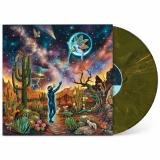
The release follows a run of major live moments, including supporting Frankie and The Witch Fingers at The Garage, standout festival appearances at Wild Paths and Down Stokes, and three packed-out sets at Left of the Dial, including highlight performances at De Doelen and V11 in Rotterdam. Sharing stages with Wine Lips and The Bug Club, Dreamwave have quickly become one of the most exciting and fast-rising live acts in the UK psych scene. Two EPs, one essential 12"-Drifter on one side, Moon Dogs on the flip.
This compilation containing both super limited and sold out EPs "Naehe & Flackern" and "Es laesst nicht los, mich jedoch laengst" on one 12" Vinyl. The band Nidare presents their EP "Naehe und Flackern", a collection of three powerful songs that thematically deal with the feeling of hate. The singer's lyrics paint a vivid picture of hate in different facets: the hate towards society, the hate the singer faces in his life and the hate the singer himself carries outward. "Naehe und Flackern" is an EP that takes listeners on an emotional journey while also being a profound emotional exploration. Nidare manages to channel the darkness in her lyrics and music. The EP is an expression of pain, anger and despair, but also a call for self-reflection and understanding of the complex nature of human emotions. "Es laesst nicht los, ich jedoch laengst" is a visceral, unapologetic journey through the emotional landscape of a fractured world. Built around themes of political disillusionment, mental health struggles, and the crushing weight of existential dread, this EP serves as both a cry for help and a reflection of the suffocating atmosphere of modern life.
YARN welcomes René Audiard for its tenth release with "Makes Me Feel", a four-track EP from one of underground electronic music’s most singular voices.
Across years of dub techno, minimal and leftfield electronic experimentation, René has developed an approach to stripped-down music that feels anything but limited. Where minimalism can often become an exercise in taking things away, his work finds possibility in what remains. "Makes Me Feel" is a particularly fitting example: immersive, at times strange, but always full of feeling.
‘Lovin’ opens the EP in familiar Audiard territory: murky low-end, locomotive groove, reduced rhythmic compositions and an understated framework swimming in a pool of detail. 'Possession' lets in more light. Vocal echoes, persistent rhythms and occasional string phrases give it a cinematic quality, while a groove that seems to circle endlessly takes on an almost shamanistic pull. The EP’s 11-minute behemoth, 'Flesh', fills most of the release’s B-side while making a convincing case for patience and sophistication. There are echoes of minimal’s golden age here, but Audiard never mistakes repetition for standing still. Tiny rhythmic fragments sit alongside expansive orchestral gestures, with samples working at every scale of the arrangement. Warmth and cinematic drama run through the track, but it's the playful programming underneath that keeps it moving. 'Night' closes the record on a different note, recalling Audiard’s work with Ali Çakır in Düve. Percussive samples, accordion and Middle Eastern guitar phrases bring a more acoustic character to his reduced 808-infused broken beats, making for a playful, occasionally melancholic ending with a distinctly microtonal feel.
What makes René Audiard’s music so rewarding is how readily you recognize his hand in it. There is a particular grain to the sounds, a way of placing details within a groove, and a willingness to follow an idea wherever it leads. Across “Makes Me Feel”, those instincts give four quite different tracks a shared identity. Even when working within familiar forms, Audiard makes them sound entirely his own. It’s the holy grail of music production: a personal sound signature. And a thoughtful addition to YARN’s growing repertoire of reduced, sophisticated dancefloor music.
ATA00BS will be released in a Number Stamped Edition, with Full Cover Art made by Pepe and will be Sealed / Shrinkwrapped.
'Keep it simple' 103636;"Reissue- Tracklist A1. Unknown A2. Pain Is Full B1. Damaged Memory B2. Damaged Memory ( Iori Remix ) Shortinfo: Roberto Bosco has selected Kiny's music to better prepare his first 12, consisting of four tracks, named 'Damaged Memory'.The track Unknown (A1) leads off the dance of the release on Last Drop Records imprint. It's a proper exploration in an unknown sonic territory to most of the people, and also a difficult element to make out for those who are novice to the visonary component in the musical poetic of Kiny. The track starts with rounds of recurring sirens, almost deafening, framed by dark and ghostly noises. Something not easily identifiable, ambiguous and unknown, as the title itself says, is perceptible in its sound. All this helps to shape a bad presage that fades away into the mystery. On the same side we find Pain Is Full (A2) that, according to the producer, was born in a moment of pain which can be overcome only by fighting. In fact, the track is characterized by a more combative and insistent tone, made up by the sound of snare and tom entering since the start and determining an atmosphere of contrast able to shake the listener until the end. Shouts of encouragement suggest an initiation rite in which there is struggle for survival. The titletrack, Damaged Memory (B1) has more quiet register with less ghostly vocals, perceived at times, unlike the previous tracks. The sounds have a vanished effect, such as when you create a halo on a white sheet with the dust of a pencil just sharpened. You will hear a sort of democracy among the sounds held together by the voice, a metaphor of a damaged memory, as the title itself recite, that always makes the same process till the end: it commences by recalling but then forgets. Last, is the version of the producer Iori, Damaged Memory (B2), on the same side.
XKatedral ist stolz darauf, ein neues Album in voller Länge von Label-Mitbegründerin Maria W. Horn zu präsentieren. ,Melting Pillars of Snow" ist eine Sammlung neuer Kompositionen der renommierten schwedischen Komponistin, geschrieben für Kontrabassblockflöte, Sho, Percussion, E-Gitarre, Gesang und Elektronik, gespielt von Horn zusammen mit einem Kammerensemble bestehend aus Anna Petrini, Mattias Hallsten, Magdalena Meitzner und Mats Erlandsson. Das Album enthält außerdem eine Erzählung von Horn sowie einen Gastauftritt von Michael Gira auf der ersten Single ,Scythe of Saturn". Für ,Melting Pillars of Snow" ließ sich Maria von W. G. Sebalds Roman ,Die Ringe des Saturn" inspirieren, einer poetischen Reflexion, die einem namenlosen Erzähler folgt, der an der Küste von Suffolk in England umherwandert. Während sich die Landschaft allmählich verändert, thematisiert der Text auf vielfältige Weise den Lauf der Zeit und die Distanz zwischen Vergangenheit, Gegenwart und Zukunft und spiegelt dabei sowohl weitreichende zeitliche Maßstäbe wie die Zyklen der Jahreszeiten und die tiefe historische Zeit als auch mikroskopisch kleine Momente und Fragmente wider. Mit den Kompositionen auf dieser Veröffentlichung beschwört Maria ein ähnliches Gefühl der Stille herauf - eine Umgebung, in der die Bewegung der Zeit selbst beleuchtet und beobachtet werden kann. Das Instrumentarium auf diesem Album ist Horns bislang ambitioniertestes: Sie ergänzt ihre gewohnte Palette aus maßgeschneiderter algorithmischer Synthese und elektronischer Bearbeitung um eine komplexe Auswahl an Perkussionsinstrumenten, Blasinstrumente, die an beiden Enden des musikalischen Spektrums spielen, sowie E-Gitarre, um so einen spiralförmigen, spektralen Klangteppich durch den gesamten Frequenzbereich zu weben. Die Perkussionistin Magdalena Meizner spielt spezielle Techniken auf dem Obertondreieck, dem Dubachi, den Pauken und dem Tam-Tam sowie auf gestimmten Weingläsern und gestrichenen Crotales. Die von Anna Petrini gespielte tieftönige Kontrabassblockflöte und das von Mattias Hallsten gespielte hochfrequente Sho fügen kontrastierende Akkordarrangements hinzu, die in strengen metrischen Strukturen eingebettet sind. Das Ensemble wird durch Mats Erlandsson vervollständigt, der auf E- und Akustikgitarren spielt und dabei von sanften Arpeggio-Figuren zu düsteren Drones und Feedback-Heulern wechselt.
Carl Cox drags Renegade Soundwave’s “The Phantom” back onto the dancefloor with a fierce, high-pressure rewire built for peak-time systems. Running at 130BPM, the mix combines pounding techno kicks, snapping breakbeats and metallic percussion with dark, rolling bass and flashes of rave-era synth energy. Chopped vocal chants and distorted samples cut through the rhythm, steadily increasing the tension before the track erupts into a relentless, warehouse-sized groove. Raw, physical and deliberately uncompromising, it preserves the original’s rebellious industrial spirit while giving it the weight, momentum and modern production power of a full-blooded Carl Cox club weapon.
Mr C breaks into Renegade Soundwave’s “Probably a Robbery” and escapes with a hypnotic, acid-soaked rewire designed for the darker reaches of the dancefloor. Opening with clipped percussion and shadowy vocal fragments, the track gradually locks into a muscular groove as a snarling 303 line twists, bubbles and mutates across the mix. Layers of machine-funk rhythm, metallic drums and psychedelic electronics steadily intensify, creating a raw tension that rarely lets up. Spacious enough to draw DJs deep into the journey but relentlessly physical when it hits full force, this is classic British electronic mischief rebuilt as a tripped-out, late-night acid workout.
Originally released via the Leipzig-based underground label Minor in 2017 the two tracks on this super limited 7" vinyl release see the Japanese producer providing a glimpse into the deeper, more intriciate and surely more intimate side of his work throughout his now 25 years spanning career. Both tracks on this release are based on fragile, fluttering, sparse yet playful rhythmatic signatures evoking memories of late 90s / early 2000s Electronica x IDM releases and backed by most beautiful, icy and glistening atmospheres reminiscent of autumnal morning dew or calm iridescent glacial reflections caused by a rising sun in absolutely unscathed wilderness.
Never officially distributed before and only known and recognized by a few well informed selectors out there this is the first time ever this unrecognized gem is available to a wider audience, albeit in highly limited quantities.
Limited pressing of 100 single copies on white marbled vinyl.
Following last year's ''Magic Overlooked'' EP, DJ AGITATED returns to the Dolly TS series. ''Horses of Volcanoes and the Moon'' sounds as big as its title. Frantic vocal loops, deep dub stabs, fast paced strings and funky basslines, sky is the limit! DJ AGITATED delivers beautiful techno for the soul yet again.
byt’ continues its eclectic journey with the third release in its catalogue. This chapter sees the return of Telva, shifting into a new frequency with a story born between 11.11 and a full Taurus moon back in 2024 in Berlin. The composition recorded in a single take, is articulated through a dreamy, electronic, minimal house, and vocal infusion. Left as romantic and unrestrained as the artist’s reverie, it is preserved in its raw form to protect its intimacy.
“Every record I make is a guide towards a better understanding of all that I can be. 11:11 is a fragment of a special spark I experienced, which peeled back another layer of myself enriched by the lessons along the way, until finally holding it in my hands today. What started as an epiphany on Heideglühen’s dance-floor unfolded into a kiss of destiny, a fleeting delirious love affair, and a quest of passion that hugged my memory, compelling me to revisit my early days. An endeavor of surrender, no matter how unknown, unconventional or uncertain it all may feel. To finally have the courage to let it be messy, raw and true, so that I stand naked once again, while daring to honor the absence of order as part of the magic and mystery of life.” - Telva
Quiet, from the Latin quies, evokes a state of being still. In its verb form, quiet means to clear so that something can gradually come into focus. Kind Stranger by Amedeo Cappelletti is where quiet materializes in a more transient, even foreign, way. Each track takes a step back from noise, borne out of a slow return to music, a different pace, and a familiar place left behind for years.
Kind Stranger, released on Aurora Edition on July 24th, is about the strangeness of a return. Cappelletti's melodic scores work their way between faint noise and disquiet, and sonically muse upon the familiar. That is, when given enough time and distance, the familiar can become unrecognizable, demanding stillness to resituate oneself within it.
The album began taking shape when Cappelletti performed at Aurora Edition at Silent Green, just after he had returned to music following a three-year hiatus. In one month, he wrote forty-five minutes of new material from scratch. Then Cappelletti left Berlin after eight years and returned to the Tuscan countryside where he had grown up, back into slowness.
The album develops as an atmosphere in the truest sense. Resampled voices, found sound, and years of sound design practice converge as compositions form by overlapping texture with spatial depth. Kind Stranger cultivates a quietude that envelops the listener.
Vocal recordings made with Matthew Walsh and Sarah McInerney, collaborators Cappelletti met by chance in a Berlin ice cream shop, appear throughout the album like a current, shaped during a residency at MONOM, Berlin's spatial sound institute. Thematically, the record moves through digital addiction, fragmented attention, and the grief of work done in the darkness.
Kind Stranger is an offering to whoever finds themselves here within the quiet, in this particular quality of sound between return and lingering.
Every coastline develops its own rhythm. The Adriatic is no exception.
For decades, Italy’s eastern coast has been shaped by funk, Cosmic Disco, Balearic sounds, Italo Disco, House, Latin rhythms, Brazilian music and countless other influences. Rather than blending into a single style, these musical worlds have lived side by side, constantly inspiring new generations of DJs, musicians and dancers. For more than fifteen years, Soul Fingers and Funk Rimini have explored that landscape from different perspectives. Founded by Claudio Cavallaro in 2013, Soul Fingers grew into a vinyl-driven community where groove matters more than genre. Its philosophy has always been simple: if the groove is right, genres stop mattering. Brothers Ricky and Francesco Cardelli developed Funk Rimini into a project rooted in funk, disco, live performance and electronic production. Anima Adriatica is where these two journeys meet.
The project didn’t begin with the ambition of making an album. It began behind the turntables. As DJs, Claudio Cavallaro and Ricky Cardelli found themselves constantly searching for records capable of connecting distant musical worlds inside their sets; from Afrobeat into disco, from hip hop into Latin, from Brazilian grooves into boogie, from cosmic electronics into deep funk. Sometimes those records existed. More often, they didn’t. So they stopped searching and started writing them. Not records designed to belong to one genre, but records designed to travel between genres. That space between musical worlds became Anima Adriatica.
The music grew through spontaneous jam sessions with Ricky and Francesco Cardelli, drummer Enrico Mao Bocchini and, gradually, a wider circle of musicians, singers and longtime friends, making Anima Adriatica less a traditional band than the beginning of an open collective. Recorded at SynthPosio Studio, founded by Ricky and Francesco Cardelli inside Rimini’s iconic skyscraper, the project also carries a symbolic connection to the building itself, where many Italo Disco classics (including records by Betty Miranda, The Creatures and many others) were recorded decades earlier.
Betty Miranda returns not as a nostalgic guest, but as a bridge between generations. On the title track she performs a spoken-word text written by Claudio Cavallaro, reflecting on the invisible thread connecting the Adriatic dancefloor across time. From Baia degli Angeli to Cocoricò, from the legendary clubs of Riccione to today’s independent communities gathered around projects such as Soul Fingers and Funk Rimini, the places have changed, but the dancefloor continues to tell the same story. Much like Pier Vittorio Tondelli’s Rimini captured the Adriatic through literature, Anima Adriatica imagines its soundtrack.
Brazilian musician Daniel Plentz (Selton) expands that vision on Açúcar and Alegria, bringing another coastline into the story. Across its four tracks, the EP moves naturally between analogue funk, boogie, Brazilian music, underground disco, cosmic textures and the wider Black musical tradition, with All Down The Line paying tribute to the Paradise Garage era.
Released by Bordello A Parigi, the project found its natural home through a shared love of adventurous dance music, records and club culture. More than the title of an EP, Anima Adriatica marks the beginning of an open collective; a meeting point where musicians, DJs, producers and friends continue building bridges between genres, generations and communities.
Because Anima Adriatica doesn’t live inside a genre. It lives between genres. If soul music has always reflected the places where it was born, Anima Adriatica is simply our own Adriatic Soul.
Best known for his frankly insane 32-year Subculture residency at Glasgow's legendary Sub Club, Domenic Cappello also played a foundational role in 20/20 Vision's early days as part of Urb n Ri alongside founder Ralph Lawson and Carl Finlow. Space City revives that out-of-print cult classic with a fresh remastering of 'Dream of a Groove' and 'Aquans Realm'. Next to those, the team have unearthed two lost DAT cuts in 'Marvin' - a loosey-goosey and beautifully deft melodic dreamer - and 'Nice n Slow,' a more angular slow-motion workout. Classic US deep house tropes and jazzy invention characterise what a super tasteful EP is.
You know the pattern: someone calls their album "Balearic," and you immediately expect chill-out terraces, pan-flute samples, and the umpteenth return of the Café del Mar sunset. Devi G. refuses this reflex almost maliciously. The title is a trick—an invitation to disappointment for those hoping for postcard exoticism. What is actually being negotiated here is erosion, but that of the body itself: the abrasion one inflicts upon oneself in the excess of the night, when partying turns into wear and tear, and a rush becomes a graze that only becomes visible in the morning. No backdrop, then, but a wound one has voluntarily acquired.
Instead of the usual Ibiza xylophones, Devi G. digs into the rift between idyll and wear. The result reads like a séance—less José Padilla, more as if Kevin Martin had re-recorded a Manuel Göttsching record on a dying four-track deck. The target area lies somewhere between the waterlogged ambient sketches of Huerco S. and the faded dub-afterglow of Actress, but Devi G. remains consistently on his own, grainier frequency.
Balearic Abrasions (title track) opens without haste, demanding almost without impatience: no motif, no rhythmic handhold, just a slowly tilting balance between warm texture and rough surface. The grain never feels forced—it is not a lo-fi costume, but an integral part of the statics themselves. Where other ambient producers strive for perfection, Devi G. consciously seeks the breaking point. Rhythm remains a tool, never an ambition. Those expecting quick resolution will be disappointed; those willing to listen will receive a depth effect that is rarely this vivid.
Exit Through Thee Gift Shop tips into harder territory: dub-techno reduction meets industrial edge, carried by a stoic kick drum that knows no mercy. Metallic textures slice through the sub-bass, while repetitive chords hypnotize like a defective loop. Central to this is a rare Terence McKenna recording, which functions less as spoken-word ornamentation and more as a disruptive spirit between memory and media archaeology. The title—Banksy reference included—turns this into a biting punchline: radical electronic abstraction positioned against the hyper-commercialized art world.
Morning Depth pushes the claustrophobia further, somewhere between post-industrial and deep-sea dub. The track refuses any peak-time logic, preferring to disintegrate into itself, subcutaneously, methodically. At the end, a casual, almost banal vocal sample (“i defiantly prefer chocolate”) breaks into the cool machinery—a small, profane fissure that makes the coldness of the rest of the piece all the more apparent.
Desiré Algorithmic is the album's most calculated moment: a stoic, repetitive bassline as a foundation, topped with fragile melody fragments that flash like glitches in faulty code. The title reads like a promise from nightlife—a figure that suggests much and delivers nothing, because behind the façade there is simply nothing, only simulation. The track carries exactly this principle: promise without substance, desire without body, just rendering. Only in the final third does a melancholic saxophone break into the sterile structure—organic, imperfect, and for that very reason more credible than everything before it. It is the moment in which the real briefly flashes through the surface of the dummy before it closes again.
All-inclusive Residue concludes the album as sedimentation rather than dramaturgy: dub-techno remnants, industrial patina, salty ambient surfaces that settle rather than compose. The refusal of consumption as a sonic principle—brittle, stubborn, with a gravity that lingers long after.
Verdict: Balearic Abrasions is not easy listening with a sea view, but an exercise in patience and friction. The restraint with which Devi G. avoids climaxes will frustrate some—for everyone else, that is exactly where the record's strength lies. No sunset. Rather, what remains on the rocks afterward.
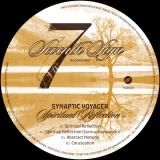
Sheffield-based electronic duo Synaptic Voyager arrive on Seventh Sign Recordings in a fresh phase of the label's ongoing legacy with an EP that blends classic Detroit-rooted machine soul with a crisp, modern production touch. With a catalogue already spanning respected imprints including Cyphon and Frame of Mind, their sound here leans into rich atmospherics, deep synths and tightly crafted rhythms. The release is complemented by a remix from label owner Graham Wilson, who reshapes the original into a groovy late night cut while keeping its melody intact. A strong addition to the Synaptic Voyager story and the Seventh Sign catalogue, this EP offers a truly timeless electronic sound.
We are in-between again: FELT founder Fergus Jones surfaces on his own label for the first time with this dreamy, dubby pair of introspective tracks featuring the hazy, elegiac vocals of Thomas Bush, back on FELT after 2023's split cassette with Princess Diana of Wales. The results of a three-day studio bender in Copenhagen, Bush's entrancing vocals gesture towards the unchangeable past and unknowable future, creating a vital, pumping circulatory system of sound, further supported by the saxophone of Italian-Danish artist Francesca Buratelli and the (vinyl debut) of New York's Yumi with a notable interjection on "Untitled (Mix 1)”.
Written, produced and mixed by Fergus Jones & Thomas Bush
Saxophone on Untitled (Mix 1) by Francesca Burattelli
Additional vocals on Untitled (Mix 1) by Yumiko Mannarelli
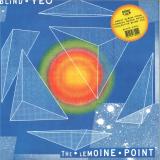
Based in Cornwall, Blind Yeo emerged from the isolation of lockdown. Built as an open collective, the project brings together musicians, visual artists and performers, developing a practice rooted in improvisation, live energy and shared creation. The Lemoine Point, their debut album, was recorded on a disused airfield near St Agnes. The title refers to a hidden geometric centre where lines converge, a metaphor that runs through the record as past, present and future meet within a single moment. Much of the album was captured live by a core ensemble including Sam Pert, Phil Self, Henry Greenham, Philippa Blum, Jake Sheridan, Will Greenham and Anouska Helm. These recordings are balanced by more intimate sessions, shaping a sound that moves between reworked folk traditions, electronic textures and raw, organic energy. Across the album, fragments of stories and emotions intertwine, exploring themes of love, duality and disorientation in time. Rooted in the Cornish landscape yet open in form, The Lemoine Point unfolds as a space where place, people and memory converge into a fluid and immersive whole.
The A-side delivers two sublime cuts drenched in that unmistakable Italo-Balearic magic. Warm chords, sun-kissed melodies and effortless grooves transport you straight back to the golden days of mid-'90s Italian house music. Eyes closed, you're cruising along the Riviera with the top down, lost in pure bliss.
Flip it over and the mood shifts firmly toward the dancefloor.
The B-side explores deeper territory, moving through a range of shades while keeping things locked into a tough, clubfocused framework. There's a distinct New York stomp running through these tracks—driving, hypnotic and full of attitude— yet they never lose the emotional depth and musicality that have become a Westcoast Goddess trademark.
Just when you think the journey is complete, the EP saves its ace for last. Closing things out is a hypnotic funk groove built around silky Rhodes, a tight rhythm section and an iconic bassline—a fitting finale that leaves a lasting impression. A seriously strong package from start to finish, and another essential chapter in the ever-expanding world of D3 Elements.
DJ DIE SOON is the apocalyptic alter-ego Daisuke Imamura, whose performances of masked malice have been a fixture in the Berlin underground for the past decade. His latest record My Brothel The Wind takes inspiration from Sun Ra at his most grotesque, conjuring a distorted phantasmagoria with an eclectic crew of compatriots like Rully Shabara, Sara Persico, and longtime collaborator Kiki Hitomi. Film director Hiroo Tanaka’s visual contributions in the album art, poster, and music video complete the album’s narrative, telling a story not of villainy but of phantom caprice in a dying world.
My Brothel The Wind shows DJ DIE SOON as an alchemist of distortion, transmuting the club-forward beats of his 2020 debut Kappa Slap and the seething horrorscapes of DIEMAJIN, his 2022 collaboration with Tokyo vocalist MA. Imamura’s obsession with noise stems from his upbringing in Tokyo, where he grew up hearing the deafening roar of trains every day. “The buildings were really tall, so the sounds reflected so much and it was so loud that you couldn’t even have a conversation on the phone. Hearing this noise every minute when living in this flat, it became a normal thing,” he says. While most would content themselves with avoiding loudness, DJ DIE SOON seeks to unpack its visceral potential.
DJ DIE SOON’s subterranean productions form a monstrous gestalt with the eclectic contributions of his network of co-conspirators. “Unfinished” and “Directions” are pulsating chimeras that highlight animalistic vocalizations from Hitomi and Shabara; Italian MC Franco Franco’s verses snake underneath the noisy onslaught. The tectonic textures of “Dandelion Crackers” are courtesy of multi-instrumentalist Laure Boer’s handmade stone synth. Sara Persico’s mangled vocables hang as fleshy reminders of human fragility on “SAQ4IME”; in the Hiroo Tanaka-directed music video, the track’s sonic uncanniness is made cinematic, with an ambient dread that references Hiroshi Teshigahara’s 1964 psychological thriller Woman in the Dunes.
While Sun Ra’s intergalactic Moog reached for the stars, DJ DIE SOON plunges into the depths of hell. “Everybody, Shake Your Body, We Chill At Party” feels like the sonic equivalent of a wax museum burning to the ground, rigid smiles melting into the fire. Rather than a vision of the future, My Brothel The Wind is a laugh-cry of despair in the face of a Hadean present. DJ DIE SOON confronts the world with a new hand-made mask, reborn in the ashes.
Italian sound artist Giulio Aldinucci returns with his 5th album on Karlrecords: "Materia" is unsurprisingly a truly masterfully composed and sound-designed ambient masterpiece that adds perfectly to a series of critically acclaimed albums like “Disappearing In A Mirror” (2018) or “Shards Of Distant Times” – some of which made it onto several year’s best lists.
Giulio Aldinucci is an Italian composer and sound artist from Siena, Italy. His work focuses on ambient and experimental music, blending field recordings, electronic processing, and acoustic elements. Active since the early 2000s, he has released several solo albums on international labels including Karlrecords, Home Normal, and 99chants. His compositions often explore themes of memory, perception, and the relationship between sound and place.
Aldinucci's music is characterized by immersive, multilayered textures and meticulous attention to sonic detail. He constructs expansive soundscapes by integrating processed environmental recordings, choral elements, instrumental timbres, and subtle harmonic shifts. His style draws from both the aesthetics of contemporary ambient and the techniques of electroacoustic music, resulting in works that are at once atmospheric and conceptually grounded. The interplay between organic and synthetic sound sources is central to his approach, blurring the boundaries between the natural world and the constructed sonic environment.
His works have been presented at international festivals. He has also created art installations and multidisciplinary performances. In addition to his solo output, Aldinucci has collaborated with a wide range of musicians and artists, developing projects that intersect sound art, composition, and performance.
Aldinucci about "Materia": "Materia focuses on the idea of sound as a matter, which can be shaped into complex forms by removing excess material from the sound mass.The album originates from the dichotomy between accumulation and subtraction, creating compositions out of frequency-dense audio material in order to unearth what is “hidden” inside the raw sound mass. Unlike sculpture, in music time can be matter too by shattering sounds into milliseconds andrecompose them with a different fragments order, going beyond the traditional notions of rhythm and duration.“
Jazzbois Around The World - a project built around mutual musical respect, encompassing MCs from all around the globe - Some who we've had the pleasure of meeting personally, some who we connect with online. Much love to all of you for being a part of this.
Absolutely born out of an admiration of live hiphop and beats culture - a musical collage of international collaboration. So proud of all our culprits:
now available on 500pcs limited edition 12" vinyl
Artwork/Illustration: Roland Herczkó
Print master: Lobotworks
All tracks produced by the jazzbois
Track 6 co-produced by Franky Bones
Track 3 co-produced by FAKT
Track 1 co-produced by MrSlipz
Track 10 co-produced by BluntOne
All tracks mixed & mastered by Czirják Tamás / jazzbois
Jazzbois are
Bencze Molnár - keys, sampling, editing
Viktor Sági - bass, guitars, sampling, editing
Tamás Czirják - drums, editing, drum sampling
SELN Recordings is proud to present Sillons, the debut release from French musician Pierre François.
Straight from Nantes with love and sadness; Sillons is the soundtrack to being shut inside and sheltered from all the dread beyond your bedroom door. What may at first appear as a collection of abstract loops unravels into something much greater throughout its entirety.
Underneath a thick atmosphere of tape hiss and crackle, minimal synth explorations emerge and float away while the occasional guitar-esq riff ebbs in and out of the foreground like waves at the shore. Percussive refrains come through with perfect timing, their occasional rudimentary timbre all in the spirit of ‘do it yourself magique’.
Picture the following: it’s been decades and you’ve forgotten how to communicate with the world outside, all you have left are message-songs which leave behind a story of what it was like to be separated from everything you’d ever known during an existential sabbatical. This is very near to the audio experience that Sillons gives and thus makes it so real. On this merit alone François deserves his flowers.
Even the shortest of songs manage to conjure up visceral imagery. For example ‘Abouile’, with an impressive runtime of 51 seconds, dives straight into the eeriest corners of a Cold-War era ‘Numbers Broadcast’ being sent out from malfunctioning military personnel venturing off into the depths of their consciousness.
All in all there is something distinctly ambitious and positive within Francois’ work. It takes you to a place where little else matters except the mood and feeling the music provides, a hopeful and emotive landscape.
A document of chill-out room dreamscapes transmitted from San Francisco circa 1993-1994.
Rooted in live improvisation and arriving at the sweet spot where nascent dance music collided with dub tradition, Selene Songs marked an early highpoint for Sunshine and Moonbeam Jones' enduring partnership as Dubtribe Sound System. This collection of dreamy, harmonious grooves and ambient excursions were recorded between November 1993 and January 1994, captured live in the chill-out room at the duo's legendary Come-Unity parties held at their home on Bryant Street in San Francisco.
Selene Songs was originally released on Chicago-based label Organico in 1995 as a CD and abridged 12" EP. Now it receives a full reissue that spreads the blissed-out majesty of the full seven-track album across a double vinyl pressing and CD digipak edition. Across all formats, Kristen Anderson's original artwork has been faithfully reproduced.
“… All the elements of classic ambient dub with the Tribe’s own sense of love wonderment. One from the heart." - Muzik Mag - 1995
“ We have faith that the universally accessible warmth oozing from these tracks will eventually entice a larger audience." - Billboard - 1995
Number 1 on the Eastern Bloc shop chart - Muzik Mag - 1995
A document of chill-out room dreamscapes transmitted from San Francisco circa 1993-1994.
Rooted in live improvisation and arriving at the sweet spot where nascent dance music collided with dub tradition, Selene Songs marked an early highpoint for Sunshine and Moonbeam Jones' enduring partnership as Dubtribe Sound System. This collection of dreamy, harmonious grooves and ambient excursions were recorded between November 1993 and January 1994, captured live in the chill-out room at the duo's legendary Come-Unity parties held at their home on Bryant Street in San Francisco.
Selene Songs was originally released on Chicago-based label Organico in 1995 as a CD and abridged 12" EP. Now it receives a full reissue that spreads the blissed-out majesty of the full seven-track album across a double vinyl pressing and CD digipak edition. Across all formats, Kristen Anderson's original artwork has been faithfully reproduced.
“… All the elements of classic ambient dub with the Tribe’s own sense of love wonderment. One from the heart." - Muzik Mag - 1995
“ We have faith that the universally accessible warmth oozing from these tracks will eventually entice a larger audience." - Billboard - 1995
Number 1 on the Eastern Bloc shop chart - Muzik Mag - 1995
Turn back the clock to an unforgettable era, with 32 huge hits from 1980–1984 brought together across 2LPs.
LP1 launches with Wham!’s feel-good ‘Wake Me Up Before You Go-Go’, before Duran Duran’s ‘Is There Something I Should Know?’ and Eurythmics’ ‘Sweet Dreams (Are Made of This)’ capture the contemporary sound of the new decade. The Human League’s ‘Don’t You Want Me’, Soft Cell’s ‘Tainted Love’ and Heaven 17’s ‘Temptation’ continue an outstanding run of synth-pop classics, with Blondie and Frankie Goes To Hollywood completing Side One. Culture Club open Side Two with ‘Do You Really Want To Hurt Me’, followed by colourful 80s favourites from Adam & The Ants, Altered Images and Kajagoogoo. Haircut 100’s ‘Love Plus One’ and ABC’s ‘The Look Of Love’ lead into Dollar and Bucks Fizz, rounding out a side packed with pure pop nostalgia.
LP2 starts in suitably anthemic style with Spandau Ballet’s ‘Gold’, alongside Elton John’s uplifting ‘I’m Still Standing’ and Billy Joel’s ‘It’s Still Rock and Roll to Me’. The Cars’ ‘Drive’ and Bonnie Tyler’s epic ‘Total Eclipse of the Heart’ bring some of the decade’s biggest power-pop moments, while Laura Branigan’s ‘Self Control’ and Matthew Wilder’s ‘Break My Stride’ pave the way for Dexys Midnight Runners’ ‘Come On Eileen’. Side Two brings another burst of ’80s energy with Ray Parker Jr.’s ‘Ghostbusters’, Chaka Khan’s ‘I Feel for You’ and Billy Ocean’s ‘Caribbean Queen’. Diana Ross’ ‘Upside Down’ is followed by favourites from The Police, Pretenders and The Jam, before Roxy Music’s ‘Jealous Guy’ provides an elegant finale to this celebration of 1980–1984.
From the depths of Rotterdam's machine soul, Gerd returns with Plasmic Echo - a four-track transmission drifting between submerged dub atmospheres, decayed textures and hypnotic late-night pressure. Released on Frame Of Mind, the EP moves through dense fog, frozen delays and low-end currents with precision and restraint. Deep, spacious and subtly psychedelic, Plasmic Echo balances stripped-down rhythm tracks with immersive atmospheres and pulsing analog textures. Built for dark rooms, long blends and those moments where time starts to dissolve into the groove.
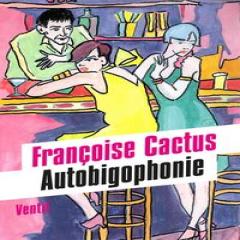
Mit Autobigophonie schuf Françoise Cactus, die unvergessene Sängerin von Stereo Total, einen der charmantesten Klassiker der deutsch-französischen Popliteratur. In diesem autobiografisch inspirierten Roman erzählt sie mit lakonischem Humor, Melancholie und feiner Ironie vom Aufwachsen in der französischen Provinz, von Jugend, Rebellion und dem Aufbruch ins Berlin der Hausbesetzer- und Punkära. Zwischen Schloss, Mädchenpensionat, Revolutionsgeist und Underground-Musikszene entsteht das Porträt einer jungen Frau, die sich gegen Konventionen und Erwartungen behauptet. Fast 30 Jahre nach der Erstveröffentlichung erscheint dieses literarische Juwel nun in einer überarbeiteten Neuausgabe. Ein kluger, witziger und zeitloser Roman über Selbstfindung, Popkultur und die Sehnsucht nach einem anderen Leben.
Hanne Lippard and Renato Grieco's Today's Special is a suite of language works synthesising melody and diction that integrates the literary and the audible in a repertoire of songs that bask in the melody of voice and the punctuations of structured composition. Working with methods of reduction rather than opulence in both tonal composition and rhetoric, each piece pegs the poetic to the musical with compositional schematics and methods. It is important to state that there is little to none improvisation here, instead, the duo set up matrices, rules and structural links that facilitated meaningful locus of exchange between their two practices. Lippard's texts are a collection of new and previously completed works. In these, as is typical for her work, she enjoys the easy pleasure of wordplay, iterative language, and decontextualised anecdote, as in opener Portrait of a Betrayal, a piece about the loss of a phone and the way it haunted the owner who dropped it, based on a lived experience. Grieco's instrumentation works with Lippard's language art as a form of acoustic typography. "I studied graphic design and I think about how you can express typography through voice," she says. "Renato's use of the viola da gamba becomes like an underline, or a font's brushstrokes, in ways that feel typographical." In this, the classically-trained composer Grieco often finds and echoes the pitch movements of Lippard's voice, intonation mirrored and revealed, linguistic meaning doubled and shadowed by plucked, strummed or bowed strings. His main instrument is the viola da gamba, the instrument considered closest to the human voice for its tonal range and ability to mimic inflections and timbre, and here he brings it even closer to the voice, building systems by which it moves with and around Lippard. He also plays piano and Wurlitzer, and joins her in speaking on Receiver and in conversation for final track The Black Rose. "Hanne's voice is an artist's voice, embodied as the artwork itself," he says. "But where my approach is from the perspective of a composer, hers is around rhetoric and language. We worked towards each other in this sense, Hanne finding a space to welcome my voice, and me designing an acoustic space to enhance her vocal persona." In some tracks the structural connections are obvious - the matched tumbling delivery and stepped pitches of voice and piano in Aficionado sounding like two tipsy friends descending a staircase. In others, like the triptych of tracks Three Rungs Ladder, structured with rules derived from nursery rhymes, or cumulative song (akin to the 12 Days of Christmas). For the Colour 1 and Colour 2 pieces, the duo worked from palettes of colours connected to clusters of harmonies, which underlined the power of the word and its articulation. The absurd Labradorable personifies a people pleaser, A Story About Being Blue is an imagined playful monologue from the Deep Blue supercomputer - requesting in sing-song stop motion to be called Debbie, and Larry - as Grieco echoes in factual reportage. Hurtbeat unpacks and recomposes a tweeted non-apology by a Russian art collector about owning a piece of racist art, Grieco shadowing Lippard's generating a third `drop-shadow' performer from the resonances between the duo, typographic re-articulation of the source material. The Receiver includes lines from Robert Ashley's Improvement (Don Leaves Linda), Ashley existing as a spiritual parent of sorts to the practices contained on Today's Special, and here interpolated as if he is being quoted and written through within the audible world of the piece in a palimpsest of borrowed sentences. Closing track The Black Rose contains its own self-aware comedy, a lightly distorted conversation sourced from a Reddit thread about whether black roses exist, recorded as if it were an internet radio or a low budget podcast, the casual exchange stilted in the delivery of platitudes as scripted speech. Today's Special was developed in person over the course of a series of small residencies - at Deutsche Akademie Rom Villa Massimo, Rome; Fondazione Morra, Napoli; Callie's, Berlin. In these limited periods that rarely stretched beyond a week, Lippard and Grieco developed strategies for the works, keeping tightly locked to musical concepts. This, for Grieco, is about maintaining a solid, meaningful connection within the compositions, and committing to everything having a purpose for existing within the work. Each element pulls its weight; has something to say, literally and metaphorically speaking. In the same way that Lippard's work leaves nowhere for her to hide, he wants the music to exist with its own naked purpose: "It's is about exposing nudity via reduced materials," says Grieco. "This is a form of courage we want to embrace. Once we take off everything, it needs to be extremely precise to maintain a connection with the audience. We have a lot of tools to hide behind now, to protect ourselves and our identities as artists, performers, and in life more generally. It's something I don't want to do. I want extreme reduction: no hiding."
“Cue Blue”, the latest and fifth studio recording from Australian down under, gritty jazzfunk grooves ensemble Kerbside Collection sees a return to a more classic, stripped back, meat-and-potatoes, home-cooked, quartet formation sound of guitar, bass, drums and brass.
A sound formed on previous, recent recordings (incl. Golden Rules compilation tune “Fleet Streak” etc), seemingly harking back to the approach of the group’s first recordings (2013’s “Mind The Curb”, “Night in Tunisia” etc), whilst embodying inspirations from more ‘true school’, classic, bluesy New Orleans funk and soul groove flavours à la early Meters, Boogaloo Joe Jones, Melvin Sparks, Billy Butler etc. But it’s not all completely ‘retro’ and ‘looking back’, the album definitely taps into some of the current exponents and leaders of the contemporary deep funk sound – The Greyboy Allstars, Eddie Roberts, The New Mastersounds, The Mighty Mocambos, Breakestra and fellow Aussie funksters Cookin’ on 3 Burners, Lance Ferguson and The Bamboos etc.
The lead single and first tune “Shivers” gives us a clear, picture and definitive opening statement to the record with all the characteristics you’ve come to expect from the Kerbside gritty jazzfunk sound: silky guitar line phrasing, rubbery bass-lines, tight crusty drum breaks, and sweet brass arrangements. Then it’s straight into a frenetic, jangly, mod-funk workout complete with Northern Soul & Motown inflections in the surging B sections. “City Park Avenue” conjures up classic New Orleans funk flavours with its strutting brass, slinky guitar and swinging tambourine groove. There’s classic, b-boy funk territory covered in “Coffee Grinder” (a breakdance move) with its razor-sharp drum break groove and chunky riff complete with sizzling trombone solo. Before the pace of the record changes up with the finger-clicken’, hand-clappin’ boogaloo, reminiscent of early 60s Harlem x Puerto Rican Bronx sounds (à la Willie Bobo, Mongo Santamaria, Ray Barretto) loaded with a scintillating baritone sax solo from long standing part of the collection ‘Papa Joe’ Roberts.
“Sittin’ On The Porch” cools the temperature down even more, delving into slight Southern Louisiana Delta blues territory, while suggesting some of the hot and muggy atmosphere and imagery of their home town location in suburban Brisbane Australia, complete with kooky Casio percussion representing familiar yard sounds such as sprinklers (spinning lawn watering devices) and ‘mozzies’ (mosquitos), passing cars indicated by trombone, and guitarist TC Tyler, channelling some bluesy John Lee Hooker, R.L. Burnside guitar flavours - you can almost feel the humidity on your skin.
Then it’s time for a stroll down memory lane, with their version of a People Under The Stairs hip hop classic “San Francisco Knights”, bringing the tune full circle back into band mode, also with another tasty guitar solo. The album then enters its final stages with a mesmerising, soulful, jazz ballad “Shimmer”, complete with Elliott Parker’s sultry upright double bass, and trombone taking the melody for a gentle stroll down the street. The album finally closes and arrives at its title “Cue Blue”, a classic blue-eyed soul number (penned by bassist Parker), emitting the scent of true school, vintage R&B and soul (à la Donny Hathaway, Marvin Gaye).
An album of funky arrangements and refined compositions, mostly penned by recent new-ish member, guitarist Tyler (for fans of Tower of Power & John Scofield guitar playing) taking the ensemble through their paces with all the usual characteristics of the Kerbside sound, on top a groove that will take you round-the-block-and-back :P Gritty jazzfunk and rustic soul grooves with definite bluesy overtones, some classic 60s, 70s flourishes and down-home funk flavours.
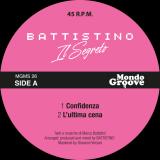
BATTISTINO, the artistic alias of Marco Battistini, is an Italian musician, songwriter, producer and DJ. His project is rooted in the meeting point between Italo Disco, French Electro, late-’70s Disco Music and Italian pop culture, reinterpreted through a contemporary vision that avoids nostalgia in favor of a distinctive sonic identity. His main influences include the aesthetic vision of Daft Punk, the musical freedom of Daniele Baldelli’s Cosmic Sound, the international disco movement of the late 1970s, and the golden era of Italian Italo Disco, with a special admiration for Righeira. His productions combine driving synth grooves, pulsating basslines and immediate melodies. Gritty electronic drums, saturated synthesizers and subtle harmonic distortion deliberately break away from the polished sound traditionally associated with classic Italo Disco. The result is a more physical and textured sonic palette that preserves the melodic elegance at the heart of the project. BATTISTINO’s visual identity follows the same philosophy. Elegant, reserved and almost bureaucratic, he prefers to remain behind the scenes rather than at the center of attention. More than a performer, he acts as the curator of a sonic archive, where every track represents a fragment of a larger story.
“Il Segreto” is the opening chapter of a conceptual trilogy inspired by an affair that was never revealed, set on the Italian Riviera in the early 1980s. Rather than telling the story itself, the project explores what remains: silence, forgotten details, invisible traces and memories suspended in time. Music, visual design and imagery all become chapters of the same narrative. Every release is a new file, every track a recovered document, every production another fragment of a story that will never be fully disclosed. BATTISTINO doesn’t tell stories. He preserves them. And, from time to time, he allows part of them to surface.
Mit ihren ersten beiden Alben verwandelten Dream Unending die vertraute Architektur des Death Doom in einen eigenen Ort. Eine Sprache, in der tiefste Schwere mit Progressive Rock, Ambient-Musik, jazzinspirierter Improvisation und unverblümter emotionaler Offenheit koexistieren konnte.
Auf dem neuen Album 'Certain Uncertainties' bleibt dieser Ausdruck intakt, doch der Blick hat sich verändert. Wo frühere Werke oft nach oben und außen zu greifen schienen, kehrt dieses auf die Erde zurück: schlanker im Aufbau, rauere Kanten und von einer ausgeprägt nächtlichen Atmosphäre geprägt. Man könnte es vielleicht 'Adult Contemporary Doom' nennen; Musik von erheblichem Gewicht, die dennoch gelernt hat, wie viel gesagt werden kann, indem man bestimmte Dinge ungesagt lässt.
Aufgenommen mit weniger Schichten und einem bewusst unmittelbaren instrumentalen Ansatz, gibt 'Certain Uncertainties' den einzelnen Darbietungen Raum zum Atmen. Derrick Vellas Gitarren bewegen sich mit ungewohnter Freiheit durch Blues-, Jazz- und Progressive-Vokabular und tragen zuweilen den offen geführten Charakter amerikanischer Roots-Musik in Gefilde, die man im Doom selten antrifft. Justin DeTores Schlagzeug ist durchgehend präsent, verleiht dem Album eine physischere Dynamik und hilft den Kompositionen, ihre Ziele mit größerer Sparsamkeit zu erreichen. Dennoch hat die Prägnanz die Vorliebe von Dream Unending für Entladung nicht geschmälert: Insbesondere das Eröffnungs- und das Schlussstück steuern auf enorme Druckpunkte zu, während die Zwischenräume Vellas Spiel zum Wandern, Reagieren und gelegentlichen Unvollkommenheiten einladen. Jeder Song funktioniert als eigene Vignette – teils Wüsten-Träumerei, teils After-Hours-Noir – durchzogen von Spuren westlicher Landschaften, dämmrigen Räumen und leeren Straßen.
Diese erdgebundene Qualität passt zu einem Album, das sich im Kern mit Instabilität und Wiederaufbau beschäftigt. Entstanden in einer Phase, in der Vella sein eigenes Vertrauen ins Risikoeingehen neu aufbaute, trägt 'Certain Uncertainties' Zweifel in sich, ohne der Verzweiflung zu verfallen. Die versehrte Balladenhaftigkeit von 'I Carry Your Burden' (mit Gastgesang von Brendan Radigan), die improvisatorische Offenheit des Titeltracks und die hässlicheren Ausbrüche des Death Doom gehören alle zum selben emotionalen Terrain: Schönheit und Unbehagen dürfen denselben Rahmen einnehmen. Wenn das frühere Werk von Dream Unending eine andere Welt jenseits der Grenzen schwerer Musik imaginierte, findet 'Certain Uncertainties' etwas ebenso Seltsames in der Welt unter unseren Füßen. Ein Album voller trockener Luft, langer Schatten, ungelöster Fragen und dem sturen Impuls, sich weiter durch sie hindurchzubewegen.
DJ Rasoul has a knack for crafting stripped-back grooves that pack a serious emotional punch. Samples are often key to it - as well as the way they are deployed - and 'Flight' is a perfect example. The drums are raw with a subtle stumble that keeps you locked, while the vocals are smeared in painterly fashion through the mix. The Paka Project remix is a little brighter while Andrew Macari sinks into vast kicks for a deeper trip. The Natural Rhythm remix is more sleek and sunny with extra vocal fragments and a warmer edge.
The seminal psych-rock classic The Evil One by Roky Erickson And The Aliens is reissued by Fire Records in a deluxe 15-track edition, restoring the original front cover from San Francisco’s 415 Records release for the first time since 1981. Presented across two LPs cut at 45 rpm for maximum sonic depth and clarity, the release brings together the complete recordings from the legendary 1978 and 1979 sessions. The package includes a collector’s booklet with liner notes by acclaimed Austin music journalist Joe Nick Patoski, who attended a recording session for The Evil One in 1979. Alongside rare photographs and archival images from the collection of Roky’s then manager, Craig Luckin.
Following his release from Rusk State Hospital in 1974, Erickson formed The Aliens and channelled his experiences and fascination with horror and science fiction into a singular new sound. Moving beyond the psychedelic garage blues of the 13th Floor Elevators, the band created harder, more ferocious rock built around jagged guitars, strange melodies and a propulsive rhythm section.
Produced by Creedence Clearwater Revival bassist Stu Cook, The Evil One includes some of Erickson’s most celebrated recordings, including ‘Two Headed Dog’, ‘I Walked With A Zombie’ and ‘It’s A Cold Night For Alligators’. Erickson’s unmistakable voice and surreal lyrics, populated by zombies, demons, vampires and atomic monsters, gave the album a character unlike anything else in rock. Both the LP and CD editions feature rare photographs and images from the archive of Erickson’s then manager and the sessions’ executive producer, Craig Luckin.
The Evil One has since become a landmark of cult rock, with its songs covered by generations of artists and its influence extending across punk, alternative and psychedelic music. As Craig Luckin recalls, “Roky considers The Evil One to be his favourite album that he ever recorded. He really loves that album.”
Austin music journalist Joe Nick Patoski, who attended one of the album’s 1979 sessions, contributes a new essay to the LP and CD packaging, exploring Erickson’s extraordinary career, enduring influence and place in Texas rock history.
More than a standalone reissue, this deluxe edition of The Evil One opens an exciting new series honouring Roky Erickson’s extraordinary body of work, with Gremlins Have Pictures and Don’t Slander Me to follow in 2027.
The seminal psych-rock classic The Evil One by Roky Erickson And The Aliens is reissued by Fire Records in a deluxe 15-track edition, restoring the original front cover from San Francisco’s 415 Records release for the first time since 1981. Presented across two LPs cut at 45 rpm for maximum sonic depth and clarity, the release brings together the complete recordings from the legendary 1978 and 1979 sessions. The package includes a collector’s booklet with liner notes by acclaimed Austin music journalist Joe Nick Patoski, who attended a recording session for The Evil One in 1979. Alongside rare photographs and archival images from the collection of Roky’s then manager, Craig Luckin.
Following his release from Rusk State Hospital in 1974, Erickson formed The Aliens and channelled his experiences and fascination with horror and science fiction into a singular new sound. Moving beyond the psychedelic garage blues of the 13th Floor Elevators, the band created harder, more ferocious rock built around jagged guitars, strange melodies and a propulsive rhythm section.
Produced by Creedence Clearwater Revival bassist Stu Cook, The Evil One includes some of Erickson’s most celebrated recordings, including ‘Two Headed Dog’, ‘I Walked With A Zombie’ and ‘It’s A Cold Night For Alligators’. Erickson’s unmistakable voice and surreal lyrics, populated by zombies, demons, vampires and atomic monsters, gave the album a character unlike anything else in rock. Both the LP and CD editions feature rare photographs and images from the archive of Erickson’s then manager and the sessions’ executive producer, Craig Luckin.
The Evil One has since become a landmark of cult rock, with its songs covered by generations of artists and its influence extending across punk, alternative and psychedelic music. As Craig Luckin recalls, “Roky considers The Evil One to be his favourite album that he ever recorded. He really loves that album.”
Austin music journalist Joe Nick Patoski, who attended one of the album’s 1979 sessions, contributes a new essay to the LP and CD packaging, exploring Erickson’s extraordinary career, enduring influence and place in Texas rock history.
More than a standalone reissue, this deluxe edition of The Evil One opens an exciting new series honouring Roky Erickson’s extraordinary body of work, with Gremlins Have Pictures and Don’t Slander Me to follow in 2027.
Legendary Children (All of Them Queer)" is a celebrated 1994 dance-pop track by former Frankie Goes to Hollywood frontman Holly Johnson. The song acts as an upbeat LGBTQ+ historical roll-call, honoring historical queer icons from Andy Warhol to Leonardo da Vinci, and was notably performed at London's Gay Pride in 1994. The song is based on the iconic Paris Is Burning and features the brilliant vocals of Helen Terry (Culture Club/2wo Third3).
Released on the album Soulstream, the song is famous for its spoken-word verses and euphoric chorus celebrating legendary figures like Oscar Wilde, Jean Cocteau, and Joe Orton. The overarching message is captured in its defiant lyric: "The answer is clear, they're all of them queer."
Now 2026 sees brand new versions by Luv Foundation (UK). George from the Sharp Boys, a dear friend of Holly's and Mark Loverush, mentioned to Holly that Luv Foundation (UK) should do the rework. Mark Loverush and Julian Napolitano wanted to capture as much of the original essence as possible, keeping that 90s flavor while giving the remix a big, classic feel reflective of how it would sound today.
This is a limited edition of 700 pink vinyl, including 2 of the original versions alongside 2 remixes by Luv Foundation (UK). It comes in brand new artwork by Philip Marshall.
There's a tendency in metal to mistake aggression for honesty, volume for depth. To confuse the performance of darkness with its actual weight. Hidden Fires Burn Hottest, the new album from San Francisco-based post-black metal band Bosse-de-Nage, sidesteps this entirely. It’s the group’s most fully realized work yet, precisely because it refuses to be pinned down.
Bosse-de-Nage have been working with The Flenser for over fifteen years. They were one of the first bands the label ever partnered with and have the longest active relationship in the label's history. But unlike most bands who build momentum through constant touring and visibility, Bosse-de-Nage has largely existed apart from the music world's usual machinery. They've evolved on their own terms, in relative isolation, allowing the work to develop without outside pressure or influence. What began rooted in black metal anonymity has mutated into something that actively defies categorization. The aggression is still there, but it's no longer the point. Hidden Fires Burn Hottest finds the band treating emotions like physical objects, feelings with spatial properties. “No Such Place"" describes a space that can't exist but does anyway, somewhere between thought and location. ""Immortality Project"" examines infinite possibility not as promise but as problem, endless options collapsing under their own weight. These songs don't use metaphor to describe emotion. They make emotion into something you could theoretically touch.
Tracked by Jack Shirley (Deafheaven, Oathbreaker) at Atomic Garden East and mixed and mastered by Richard Chowenhill of Agriculture, Hidden Fires Burn Hottest was years in development, with some tracks beginning in 2018.
The long writing process offered time that most records don't get. Time to live with ideas, revise endlessly, to let structures settle. For the first time, lyricist Bryan Manning wrote everything in advance, creating a surplus to pull from rather than working under deadline pressure. The difference shows.
Coming off Further Still, an album built on constraint and economy, Bosse-de-Nage sought the opposite: sprawl, strangeness, fewer rules. Space for ideas to develop without rushing them. Dynamics that move through quiet as much as noise. Presence earned through atmosphere instead of volume. The record even includes ""Mementos,"" which might be considered the first love song the band has ever written.
Nothing here coheres into a theme. These are pieces pulled from low moments and private feelings made public through sound. The band has never been interested in positivity, in music that resolves cleanly or offers comfort. But bleakness doesn't mean humorlessness. There's something darkly funny running through much of it, even when it shouldn't be.
Hidden Fires Burn Hottest doesn't explain itself. It just insists: what you feel is as real as what you can see."
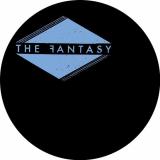
Shadowy Detroit duo The Fantasy continue to offer up "secret mixes fixes" - high-grade, sonically spectacular re-rubs inspired by the original reel-to-reel re-edit era and the now iconic DJs behind the movement (Ron Hardy, Danny Krivit and Larry Levan included). The Motor City twosome kick off volume 5 in their ongoing series with 'Working Girl', a throbbing, San Francisco style electro disco workout peppered with spacey synth riffs, before turning a Bay Area drum machine workout into a breathless peak-time percussion-fest. Over on the reverse, 'On Fire Warp' is another percussion-laden revision of what sounds like a post-punk era industrial funk gem, while 'Lovefingers' is a break-driven translation of an ancient psychedelic rock workout.
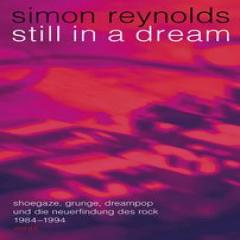
Simon Reynolds erzählt von der letzten großen Blütezeit der analogen Musikkultur und schließt damit direkt an sein Standardwerk zum Post-Punk, 'Rip It Up and Start Again', an. In einer Zeit, in der Musik noch greifbar war - als Schallplatte, als Zeitschrift, als Objekt -, war jeder neue Tonträger ein Ereignis, jede Ausgabe eines Magazins ein Ritual. Zwischen den späten Achtzigern und den frühen Neunzigern entfaltete sich ausgehend von diesen Objekten und Ereignissen eine musikalische Revolution, in der die Underground-Szene die Gitarrenmusik neu erfand und langsam in den Mainstream einsickerte, während sich politisch statt Utopien und Zukunftsentwürfen der Konservatismus festgesetzt hatte.
Reynolds erzählt von der Explosion des Noisepop, von Shoegaze, Slackern und Grunge - von My Bloody Valentine und Sonic Youth, die mit atemberaubenden Sounds eine zweite Psychedelic-Welle entfachten, den Cocteau Twins und Slowdive, die in Traumwelten entführten. Außerdem treten auf: Dinosaur Jr., Björk, Pixies, PJ Harvey, Nirvana, Felt, R. E.M., Hüsker Dü, Talulah Gosh, Big Black, Butthole Surfers, Spacemen 3, Spiritualized, Galaxie 500, Mercury Rev, Pavement, Stereolab, Stone Roses, Pussy Galore und viele mehr.
'Still in a Dream' ist der sehr persönliche Blick eines Journalisten, der damals als Autor diverser Musikmagazine dabei war, diese musikalischen Entwicklungen zu begleiten und ihnen Namen zu geben. Simon Reynolds beschwört die Magie der analogen Welt, bevor das Internet, Streaming und soziale Medien die Spielregeln der Musik für immer verändert haben. Ein Buch für alle, die sich fragen, was verloren ging - und was vielleicht nie ganz verschwunden ist.
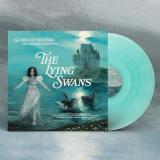
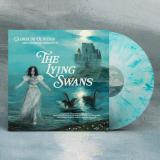
Das neue Album "The Lying Swans" der deutsch-brasilianischen Musikerin und bildenden Künstlerin Gloria de Oliveira entfaltet sich wie ein Werk des Magischen Realismus - bevölkert von Vögeln, Heiligen, Sirenen, blutigen Gesichtern, Geisterschiffen und gespenstischen Erscheinungen - und lädt die Hörer*innen in ihr bislang unmittelbarstes und komplexestes Werk ein. De Oliveiras drittes Album aber eigentliches Debut wirkt wie ein Werk der Gothic-Literatur, angestoßen durch das Bild einer Frau, die aus einem Spukhaus flieht; dieses zentrale Motiv prägte auch die visuelle Welt des Albums. Produziert von Randall Dunn (Anna von Hausswolff, Sunn O))), Marissa Nadler) und aufgenommen zwischen Island, New York und Berlin, ist das Ergebnis eine traumhafte Welt, in der Zauber und Gefahr nebeneinander existieren. Nach der EP-Compilation "Fascination" (2020, Reptile Music) sowie "Oceans of Time" (2022, Sacred Bones) - ihrer Zusammenarbeit mit David Lynchs langjährigem Sounddesigner Dean Hurley - führt "The Lying Swans" de Oliveira in neues Terrain. Sowohl thematisch als auch klanglich scheinen diese neun Songs aus den nebligen Gefilden von Hall und ätherischem Fuzz-Sound herauszutreten und eine erdige, greifbarere und damit verletzlichere Seite zu offenbaren. Dennoch bleibt ihre seraphische, sehnsuchtsvolle Stimme der Mittelpunkt, flankiert von einer beeindruckenden Riege an Musikern: Schlagzeuger Matt Chamberlain (David Bowie, Tori Amos, Pearl Jam), Gitarrist Lennard Zander, Cellistin Gyda Valtysdóttir (múm), Harfenistin Marilu Donovan (LEYA, Eartheater, Julie Byrne) und Keyboarder Ulfur Hansson wirken mit, während Ambient-Ikone Tor Lundvall eine seltene Spoken-Word-Darbietung beisteuert. Lina Andonovskas Querflöte spielt eine tragende Rolle und verleiht den Songs einen ebenso luftigen wie beunruhigenden Klang - inspiriert sowohl von de Oliveiras brasilianischen Wurzeln als auch von den Giallo-Soundtracks der 1970er und 1980er Jahre, jenen atmosphärischen italienischen Horror-Krimis, die stilisierte, drastische Gewalt und Voyeurismus mit prachtvoller Schönheit verbinden. Inspiriert von Lyrik, Literatur, Film und bildender Kunst ebenso wie von Musik, haben de Oliveira und Dunn ein Album geschaffen, das sich mühelos zwischen dem Spektralen und dem Pastoralen bewegt - ein Werk, in dem Anklänge an Fantasy- und Giallo-Soundtracks, alte Folk-Traditionen sowie die rhythmische Zartheit von Bossa Nova, MPB und Tropicália verschmelzen. Auch die Texte verweben Mythologie mit Anspielungen auf Miltons Paradise Lost*sowie die Lyrik von John Keats, Emily Brontë und Anne Sexton. Ein durchweg erhabenes Werk. Als CD (Digisleeve) mit Booklet oder auf LP (in klassisch Schwarz, Coke-Bottle-Green oder weiß-blau marmoriert) mit bedruckter Innenhülle & inside-out Sleeve.
Das neue Album "The Lying Swans" der deutsch-brasilianischen Musikerin und bildenden Künstlerin Gloria de Oliveira entfaltet sich wie ein Werk des Magischen Realismus - bevölkert von Vögeln, Heiligen, Sirenen, blutigen Gesichtern, Geisterschiffen und gespenstischen Erscheinungen - und lädt die Hörer*innen in ihr bislang unmittelbarstes und komplexestes Werk ein. De Oliveiras drittes Album aber eigentliches Debut wirkt wie ein Werk der Gothic-Literatur, angestoßen durch das Bild einer Frau, die aus einem Spukhaus flieht; dieses zentrale Motiv prägte auch die visuelle Welt des Albums. Produziert von Randall Dunn (Anna von Hausswolff, Sunn O))), Marissa Nadler) und aufgenommen zwischen Island, New York und Berlin, ist das Ergebnis eine traumhafte Welt, in der Zauber und Gefahr nebeneinander existieren. Nach der EP-Compilation "Fascination" (2020, Reptile Music) sowie "Oceans of Time" (2022, Sacred Bones) - ihrer Zusammenarbeit mit David Lynchs langjährigem Sounddesigner Dean Hurley - führt "The Lying Swans" de Oliveira in neues Terrain. Sowohl thematisch als auch klanglich scheinen diese neun Songs aus den nebligen Gefilden von Hall und ätherischem Fuzz-Sound herauszutreten und eine erdige, greifbarere und damit verletzlichere Seite zu offenbaren. Dennoch bleibt ihre seraphische, sehnsuchtsvolle Stimme der Mittelpunkt, flankiert von einer beeindruckenden Riege an Musikern: Schlagzeuger Matt Chamberlain (David Bowie, Tori Amos, Pearl Jam), Gitarrist Lennard Zander, Cellistin Gyda Valtysdóttir (múm), Harfenistin Marilu Donovan (LEYA, Eartheater, Julie Byrne) und Keyboarder Ulfur Hansson wirken mit, während Ambient-Ikone Tor Lundvall eine seltene Spoken-Word-Darbietung beisteuert. Lina Andonovskas Querflöte spielt eine tragende Rolle und verleiht den Songs einen ebenso luftigen wie beunruhigenden Klang - inspiriert sowohl von de Oliveiras brasilianischen Wurzeln als auch von den Giallo-Soundtracks der 1970er und 1980er Jahre, jenen atmosphärischen italienischen Horror-Krimis, die stilisierte, drastische Gewalt und Voyeurismus mit prachtvoller Schönheit verbinden. Inspiriert von Lyrik, Literatur, Film und bildender Kunst ebenso wie von Musik, haben de Oliveira und Dunn ein Album geschaffen, das sich mühelos zwischen dem Spektralen und dem Pastoralen bewegt - ein Werk, in dem Anklänge an Fantasy- und Giallo-Soundtracks, alte Folk-Traditionen sowie die rhythmische Zartheit von Bossa Nova, MPB und Tropicália verschmelzen. Auch die Texte verweben Mythologie mit Anspielungen auf Miltons Paradise Lost*sowie die Lyrik von John Keats, Emily Brontë und Anne Sexton. Ein durchweg erhabenes Werk. Als CD (Digisleeve) mit Booklet oder auf LP (in klassisch Schwarz, Coke-Bottle-Green oder weiß-blau marmoriert) mit bedruckter Innenhülle & inside-out Sleeve.
Das neue Album "The Lying Swans" der deutsch-brasilianischen Musikerin und bildenden Künstlerin Gloria de Oliveira entfaltet sich wie ein Werk des Magischen Realismus - bevölkert von Vögeln, Heiligen, Sirenen, blutigen Gesichtern, Geisterschiffen und gespenstischen Erscheinungen - und lädt die Hörer*innen in ihr bislang unmittelbarstes und komplexestes Werk ein. De Oliveiras drittes Album aber eigentliches Debut wirkt wie ein Werk der Gothic-Literatur, angestoßen durch das Bild einer Frau, die aus einem Spukhaus flieht; dieses zentrale Motiv prägte auch die visuelle Welt des Albums. Produziert von Randall Dunn (Anna von Hausswolff, Sunn O))), Marissa Nadler) und aufgenommen zwischen Island, New York und Berlin, ist das Ergebnis eine traumhafte Welt, in der Zauber und Gefahr nebeneinander existieren. Nach der EP-Compilation "Fascination" (2020, Reptile Music) sowie "Oceans of Time" (2022, Sacred Bones) - ihrer Zusammenarbeit mit David Lynchs langjährigem Sounddesigner Dean Hurley - führt "The Lying Swans" de Oliveira in neues Terrain. Sowohl thematisch als auch klanglich scheinen diese neun Songs aus den nebligen Gefilden von Hall und ätherischem Fuzz-Sound herauszutreten und eine erdige, greifbarere und damit verletzlichere Seite zu offenbaren. Dennoch bleibt ihre seraphische, sehnsuchtsvolle Stimme der Mittelpunkt, flankiert von einer beeindruckenden Riege an Musikern: Schlagzeuger Matt Chamberlain (David Bowie, Tori Amos, Pearl Jam), Gitarrist Lennard Zander, Cellistin Gyda Valtysdóttir (múm), Harfenistin Marilu Donovan (LEYA, Eartheater, Julie Byrne) und Keyboarder Ulfur Hansson wirken mit, während Ambient-Ikone Tor Lundvall eine seltene Spoken-Word-Darbietung beisteuert. Lina Andonovskas Querflöte spielt eine tragende Rolle und verleiht den Songs einen ebenso luftigen wie beunruhigenden Klang - inspiriert sowohl von de Oliveiras brasilianischen Wurzeln als auch von den Giallo-Soundtracks der 1970er und 1980er Jahre, jenen atmosphärischen italienischen Horror-Krimis, die stilisierte, drastische Gewalt und Voyeurismus mit prachtvoller Schönheit verbinden. Inspiriert von Lyrik, Literatur, Film und bildender Kunst ebenso wie von Musik, haben de Oliveira und Dunn ein Album geschaffen, das sich mühelos zwischen dem Spektralen und dem Pastoralen bewegt - ein Werk, in dem Anklänge an Fantasy- und Giallo-Soundtracks, alte Folk-Traditionen sowie die rhythmische Zartheit von Bossa Nova, MPB und Tropicália verschmelzen. Auch die Texte verweben Mythologie mit Anspielungen auf Miltons Paradise Lost*sowie die Lyrik von John Keats, Emily Brontë und Anne Sexton. Ein durchweg erhabenes Werk. Als CD (Digisleeve) mit Booklet oder auf LP (in klassisch Schwarz, Coke-Bottle-Green oder weiß-blau marmoriert) mit bedruckter Innenhülle & inside-out Sleeve.
Aaron Dilloway kehrt mit ,No Skill Comedy Mind Reading" zu Dais Records zurück - seinem ersten echten Album in voller Länge seit 2017, einer Sammlung von typisch verstörendem, absurdem Material. Geprägt von seinen typischen Verzerrungen und Verformungen - von Feedback umhüllte Fundstücke, Feldaufnahmen und Gesangsimprovisationen - versammelt ,No Skill" fast ein Jahrzehnt ausgewählter Soloarbeiten und wirkt dennoch ganz und gar zeitgemäß: ein sprunghaftes Produkt der Unbeständigkeit, zugleich hart und humorvoll. Nur wenige zeitgenössische Experimental-Künstler des letzten Vierteljahrhunderts sind so produktiv und verehrt wie Dilloway, ein Pionier der amerikanischen Noise-Szene im Mittleren Westen, ehemaliges Mitglied von Wolf Eyes und Gründer des in Oberlin ansässigen Labels und Plattenladens Hanson Records. Doch trotz seines immensen Gesamtwerks hat er nur zwei richtige Solo-LPs veröffentlicht, neben einer regelmäßigeren Produktion von Kassettenveröffentlichungen und Kollaborationsprojekten. Mit ,No Skill" vollendet er nun eine vieldeutige Albumtrilogie, die mit seinem wegweisenden Werk ,Modern Jester" aus dem Jahr 2012 begann. ,Ich habe fast das Gefühl, dass sie irgendwie Teil eines Ganzen sind. Alle drei Alben versuchen, in den schlimmstmöglichen Situationen Humor zu finden. Je nachdem, wer zuhört und wie die jeweilige Einstellung ist, könnten sie als lustig oder einfach nur als grauenhafte, schreckliche Alben empfunden werden." Halb im Ernst fährt Dilloway fort: ,Für mich ist dieses hier das Ergebnis von, na ja, verkorksten Sachen: psychische Erkrankungen, Medikamente, Scheidung, komischer Scheiß. Das Eintauchen in seltsame Dinge fasziniert mich immer auf die eine oder andere Weise." Neben den bereits erwähnten Einflüssen aus der menschlichen Erfahrung greift ,No Skill" auf verschiedene technische und ästhetische Kuriositäten zurück: das methodische Sounddesign von Alvin Lucier, Andy Milligans Low-Budget-Kult-Horrorfilm ,The Weirdo" aus dem Jahr 1989 und die pop-exzentrische Art des Filmkomponisten Hugo Montenegro. Dilloway stieß bei einer Lagerraumversteigerung auf dessen skurrile Habseligkeiten, darunter Notizen zu den frühen elektronischen Experimenten des Komponisten. Einige der beunruhigendsten Momente des Albums, wie das Lachen, das ,Bring Me The Head Of The Unknown Comic" heimsucht - klanglich eine Anspielung auf die Avantgarde-Größen Nurse with Wound und thematisch auf den Komiker aus den 1970er Jahren mit der Papiertüte über dem Kopf -, lassen sich auf den Einfluss dieses wahrhaft ungewöhnlichen Fundes zurückführen. ,No Skill" knüpft zudem an Dilloways jüngste künstlerische Ausflüge an: seine Umsetzung von John Cages 88-Band-Loop ,Rozart Mix"; die Originalmusik für ,The Absence of Milk In The Mouths of the Lost"; Gemeinschaftsalben mit Lucrecia Dalt (Lucy & Aaron) sowie Kim Gordon & Bill Nace (Body/Dilloway/Head). Während er an diesen und anderen Projekten arbeitete, legte er in Gedanken einen Ordner für sein nächstes Dais-Album an und sammelte Aufnahmen, die zu einer ziemlich vagen Vision passten. ,Dieses Album hat mich irgendwie völlig in Beschlag genommen, seit ich ,The Gag File` 2017 fertiggestellt habe. Zuerst dachte ich, es würde eher ein Pop-Album werden, aber dann hat mir das Lucrecia-Projekt diese Idee irgendwie aus dem Kopf getrieben. Es begann, eher wie meine Live-Sets zu fließen." Er entschied sich für eine Abfolge, die den Hörer ein wenig im Ungewissen lässt - ob erschrocken, amüsiert oder verwirrt; der Effekt soll absichtlich den Eindruck erwecken, dass etwas kaputt ist. Das Album beginnt mit schrillen Kreischen, bevor es in Drone-Passagen eintaucht, die durch zwei aneinander geriebene nepalesische Sarangi-Bögen entstehen, begleitet vom ersten Auftauchen seiner ogerartigen stimmlichen Präsenz. Anschließend werden mehrere Minuten von weißem Rauschen verschluckt (,Forced Auctioneer"). Dilloway verweist auf The Weirdos seltsamen Einsatz ausgedehnter Übergänge mit schwarzem Raum und seine lebenslange Liebe zum Bandrauschen. Er bekam Kassetten von älteren Kindern und hörte diese Geräusche als Teil der Songs, nur um später zu erfahren, dass es sich um klangliche Artefakte handelte, die von Generationen des Kopierens auf Kassette übrig geblieben waren. ,Ich stehe total auf die Idee, all diese Schichten aufzubauen und sie in etwas anderes zu verwandeln. Wenn ich zum Beispiel live spiele, kann es rauer zugehen als bei meiner aufgenommenen Musik, und dafür wollte ich genau dieses Gefühl einfangen - dass diese Ausbrüche laut sind, aber ein bisschen gedämpfter. Dieser totale Rauschklang, fast so, als wärst du unter Wasser." Dilloway sammelt Tonpoesie-Platten, und obwohl er seine eigene Arbeit nicht gerne in dieses Genre einordnet, spricht die Absurdität dieses Handwerks - die Verwendung von phonetischen Lauten und nonverbalen Geräuschen als Ersatz für traditionelle semantische Bedeutung - durch sein Werk. Auf ,Possession Audition Tape" liest er verschiedene Passagen aus einem Buch vor, das von einer französischen religiösen Gruppe aus dem 18. Jahrhundert handelt, die zu öffentlichen Unruhen neigte, und schneidet diese digital auseinander, wodurch er im Mix seine eigenen, echoartigen Stotterausbrüche erzeugt. ,No Skill Comedy Mind Reading" endet mit einem Stück aus Synthesizer und Orgel-Rhythmusmaschine, das auf Musik basiert, die er für den Film ,Supporting Actor" von Pieter Schoolwerth und Phil Vanderhyden komponiert hat - in dem ein Avatar von Dilloway in ein Portal gezogen wird. Dort trifft er in einem fantastischen Club auf posthumane Wesen. Die Szene, die sich irgendwie auf Audio übertragen lässt, versetzt das Set in einen passend verwirrenden Traumzustand. Ein Star der Noise-Musik, ein moderner Hofnarr, der aus dem Unbekannten berichtet.
Für ihre zweite LP ,Iconoclast HaHa" greift das Vierer-Ensemble Aluminum aus San Francisco den Shoegaze, Big Beat und Alt-Pop ihres Debüts ,Fully Beat" (Felte, 2024) auf und heizt die Stimmung richtig ein. Im Gegensatz zu früheren, selbst aufgenommenen Alben besteht das Album aus einer Reihe mitreißender Studioaufnahmen der gesamten Band , die alle während einer inspirierten Woche mit Toningenieur Jack Shirley im Atomic Garden Studio in Oakland aufgenommen, abgemischt und gemastert wurden. Die Leadsänger und Songwriter Marc Leyda und Ryann Gonsalves schaffen weiterhin die Balance zwischen poppiger Eingängigkeit und experimenteller Unbekümmertheit, während sie diese Songs mit Spontaneität, Unmittelbarkeit und Post-Punk-Hartnäckigkeit erfüllen. ,Wir wollten, dass dieses Album gitarrenlastiger wird", bemerkt Leyda, ,deshalb haben wir über Marshall-Stacks aufgenommen, um ihm ein schwereres Feeling zu verleihen und einen schnelleren, punkigeren Sound zu erzielen, der bei Live-Auftritten gewaltig und mitreißend wirkt." Thematisch nennt Gonsalves als große Inspiration ,die Frustration, in einem gesellschaftlichen System zu leben, das dich zum Scheitern verurteilt, in dem du immer ,nicht genug` oder ,zu viel` bist, und all die Wut, Erschöpfung und den Druck, dich anzupassen." Im Rückblick auf das Zusammenspiel von Stimmung, Botschaft und Strudel auf ,Iconoclast HaHa" erläutert Leyda anhand seiner ultimativen künstlerischen Frage: ,Wenn es sich so anfühlt, als würde die Welt in Richtung Untergang kippen, machst du einfach weiter und versuchst, etwas Kraftvolles und Sinnvolles zu schaffen - denn was bleibt dir sonst übrig?"
Match Box continue an unstoppable run of form. Following their 2026 12” on Neptune Discs and relentless support from Job Jobse, they link with Amsterdam’s Mixolydian for a summer-closing split that marks their debut on the label. The record brings Mixolydian’s slick tech-house sensibility together with Match Box’s vibrant prog palette.
Played by Peach and Gabrielle
Kwarteng during their b2b at Junction 2, the A1 pairs catchy vocal cuts with a relentless, festival-ready groove — while Bliss Inc. joins the ozone on remix duties on A2 with a heads-down, tunnelling dose of wormhole prog.
The B-side is built for movement. ‘Go’ locks shuffling hats, alien bleeps and whispered fragments into a restless club groove. The B2 is pure vortex prog: warm trance pads, a hypnotic inward pull and a huge, ecstatic breakbeat that arrives out of nowhere at the breakdown.
Four club tracks spanning vibrant prog and heads-down pressure. Limited edition 12” and digital.
WHIMM formed around the shadowy heart of the Toronto post-punk underground over a decade ago. The partnership between Mounir Al Shami and Andrew Matthews has emitted sporadic musical shards over time, while slowly evolving into something so much bigger than its beginnings. Ideas seep out of every corner of No Promotion, showcasing a burning desire to explore and challenge while delivering very direct sonic offerings. The result is an album that feels as if you took the entire Coil discography and smashed it into pieces, assembling these precious songs from the fragments. Or as if Vangelis beckoned Section 25 to the studio in hopes of recording the score to a seedy film. The resulting LP is in a state of flux – equal parts motion and decay.
Patrick Flegel, of Cindy Lee, welcomed Al Shami and Matthews into REALISTIK Studios in Montreal to engineer half of the tracks for the album, including lending guitar to the opening track "Five in Decline." That influence is evident early on, as the first three songs are taken from those sessions. "Five in Decline" throbs and barks before racing through the hallways closing in around it. "Another Labour" slows to a spidery waltz as anxious melodies call out to one another. "Returnal" pulses, floats through the night sky and haunts you forever. "Rye" carves a percussive pathway toward similar travellers like Terry Riley and Jon Hassell, before the lament of "A Death Remembered" forms the perfect midpoint for the record. A slow build countered by twitching drums and blanketed by organs recorded at Metropolitan United Church in Toronto, it feels like emotion right on the edge of resolve.
"Rhymes of December" screeches through on a solitary train under the towering cityscape as the flickering lights blur past, its doors opening to the candlelit altar of "After the Last Sky" (those beautiful organs again) with an operatic swirl. "K'20" throws you into a claustrophobic and chaotic cab ride (Who is talking? Are those sirens?) until you finally find the quiet of the early morning, waiting at the window for the sun to join you once again as the first notes of "No Promotion" are delicately plucked. The final song from the Flegel sessions, it is over eight minutes of contemplative beauty. A restless heart that is ready to rest. Closing with a final apparition in the key of The Caretaker, "After the Last Sky (Reprise)" is a return to melody when words lose all meaning.
Al Shami and Matthews weave their lyrics throughout, words describing a search for lucidity, and of reactions and reflections. Al Shami – speaking from the Palestinian diaspora – ruminates on displacement, both personal and collective. His journey from having "been without a land and I can still see clearly" in "Rhymes of December" to a more defiant "we will be back again, no matter how it ends or where we've been" in "Returnal" takes a very insular turn on No Promotion. That sense of alienation pulls at the very center of a relationship when land and circumstances separate: "And after our last breath, all that's left in me is our flesh and fears, your last words would swim for years, you'll never find a home in me." Hearts on the outskirts that know the direction.
As Eerie Enterprise, upsammy and Piezo have funnelled their singular styles into a classic-feeling but ultra-modern album of elegant, angular electronica. With a strong melodic sensibility and a highly developed palette of playful sound design in their toolkit, the unexpected pairing grew spontaneous jams into a considered collaboration, and Places Remember Events is the end result.
Individually, Thessa Torsing and Luca Mucci have carved out strong identities within contemporary electronic music. As upsammy, Torsing has applied a delicate precision to ambient and uptempo approaches alike, building up a striking catalogue of releases including her 2020 LP for Dekmantel, Zoom. Meanwhile, Mucci has taken a wayward path through contemporary bass music and techno that matches edgy sound design with playful unpredictability. As Eerie Enterprise, both artists tap into their respective creative instincts while arriving at a unique sound with a nurturing quality they were both missing from modern dance music.
Having appreciated each other's work for some years, in July 2024 Torsing and Mucci seized an opportunity to carve out two days in the studio. There was no expectation of an end product, but the sketches conceived during those open-ended, hardware-oriented sessions felt worthy of a deeper exploration developed and finalised over the following year-and-a-half.
Places Remember Events has an unapologetically nostalgic streak, calling to mind the warm glow of melodically-charged, golden-era electronica. The twitchy rhythmic make-up of tracks like 'Decay + Collapse' and 'Folding Origin' speak to the duo's shared affinity for ravey energy, but even within faster frameworks they lean into half-time space to maintain a light-footed agility that allows the relatively busy arrangements to feel grounded and patient rather than frantic.
There's an appreciation for mystery in the emotional make-up of many of the tracks, not least in the slithering textural exploration and spatial tension of 'Capsule', but elsewhere fragile melancholia guides the melody direction of 'Superradiance' and 'Things Fall Upwards'. The final impression is crisp and modern while delivering an accessible experience that seeks to soothe rather than shock when so much contemporary club music tips towards uneasy intensity.
Finding malleable approaches to their chosen sonics and applying them to intentional song structures, Eerie Enterprise collectively land on a sound that promises a lasting reward for the repeat voyager — satisfying headphone gear in the grand tradition of introspective electronic music, but also with a physical immediacy that will manifest in the live set upsammy and Piezo have put together to perform later in the year.
London duo Kassian trade darkness for daylight on Gradients, their third EP for !K7 Records
The EP arrives as a bridge between last year's debut album and a new live show and sophomore LP, due in 2027
As Kassian, Warren Cummings and Joe Danvers continue to sit apart from any one scene. Their fruitful relationship with !K7 has spanned eclectic and global club cuts, including the spatial breaks and bass of 2024's best-selling Supercontinent EP. 2025's debut album, Channels, emerged from lockdown so leaned slow, downtempo and introspective, but this new EP points toward a clubbier, more physical direction that will carry through into album two.
Crucially, the record was written and played live on an array of studio gear rather than assembled piece by piece in the box. It's a way of building towards their first fully live show in 2027 - a hands-on, jam-first approach that leads to "happy accidents" and the unpredictable textures that hardware throws up and no amount of in-the-box planning can replicate.
Gradients is built for the floor without playing to trends and marks some of the duo's most melodic work to date. Rather than sitting purely in heads-down territory, the EP folds in hooks and vocal fragments that lift you out of the smoke and the shadows of the club. The low ends are still rooted in techno with potent drums and bass, but deft vocal hooks and subtle melodies bring a brightness that deliberately steers away from the darker, meaner aesthetic dominating much of dance music right now.
Vocal touches throughout nod to what's going on in the wider underground without tethering to tried and tested tropes. Opener 'Blush' rides warm, soft yet bold melodic riffs, looping in arcs over a hunched, speedy tech house groove. 'Ritmo' is a muscular bouncer with spring-loaded bass, 'Inner Dance' has lurching drums and a cavernous rhythm with vocals that make a playful nod to sound system culture. Last but not least, 'Sweat' is the brightest and most bubbly cut on the EP, with a tight techno low end infused with a velvety whispered vocal.
The Gradients EP is a bright, hardware-built prelude to Kassian's next chapter and a typically well-crafted four-tracker that pairs physical weight with classy emotional release.
Craig Alexander drops back with the Soul Revival repress — a raw, deep house cut built for heads who know. Originally released on Transparent Records, now back on wax through Phonogramme.
Limited-run energy, timeless groove, straight-up dancefloor business.
Feedbacks:
Dave Huismans (ex_libris, In Transit) : Nice to get Soul Revival digitally, thanks!
Ben UFO (Hessle Audio / Rinse FM) : absolute classic
Laurent Garnier : SOUL REVIVAL is super cool track Will play
Mike Shannon (Cynosure) : Nice to have this one back! thx
Prosumer : this a journey into sound
Red Eye (Crash Planet Rec, R.E.A.D., Red/Shift, Lavish Habits, Multipass) : ahh i have this original vinyl. Glad to have a digi!!!
Dorian Paic (Raum Musik) : good re release too. Soul Revival is the one for me, in the past and now as well. ;) Thx for the promo !!
Hunee (Rush Hour) : lovely reissue
DJ Bone (FURTHER) : Lovin Feelin works for me, thanks
Chloe Caillet (Smile Records) : love these!
Franck Roger (Real Tone Records) : soul revivais is dope as always !!!
Terence :Terry: (La Vie En Ros / Freak N Chic) : what a good remember we use to played it a lot " Soul Revival" super track to surprise everyone Terence :Terry:
Tripmastaz (Plant 74) : tight cutz
Jorkes (Freeride Millenium) : soul revival is cute
Girls Of The Internet (Classic) : Classic!
Geir Aspenes (G-Ha (Sunkissed)) : Thanks
Terry Francis (Fabric) : nice
Sven Weisemann (Mojuba Records) : absolute classic!!!
Pacific Coliseum (Dublab, Teen Daze, Noire & Blanche) : DEEP!!! These are gorgeous, thank you so much for sending!
Pat Hyland (Northside Loft Society) : A welcome release from Craig. Three pure dancefloor heaters with Soul Revival topping!
Fred P : Dope...
Doc Martin (Sublevel) : Good Grooves!!!!
Mark Farina : good stuff. thanks!
Samuel Deep (SlapFunk Records) : yes
DJ Steaw (Rutilance / Steaward) : Nice ep thanks :-)
Lea Lisa (Phonica Records / Folklor Club) : Soul revival for me !
Brothers' Vibe (Luv4Wax) : Bangers!
Anthony Collins (Frank & Tony / Scissor & Thread) : great record
Carlos Valdes (Is Burning) : Loved it since the first time I've heard it! Happy to have the digital file!
It’s that time of year again! Are your copies of “Now! That’s What I Ca l Christmas” and “A Motown Christmas” finaly feeling worn out? Strut has the ideal antidote this year, as we dive into the world of festive records made by African artists spanning the late 1960s to the 1980s with our new Krismasi: Christmas Sounds From Africa compilation.
Taking in music from across the continent from Nigeria and Ghana to South Africa and Zimbabwe, Krismasi draws from a wide range of sounds from fun novelty records and spur-of-the-moment jams to spiritual and gospel favourites. Featured artists include Ghanian great Kwadwo Donkoh with a meditative highlife praise song from his much-loved Christmas Africana album. Elsewhere, pop star turned pastor, Jerry Boifraind, has some fun with a song celebrating seeing friends at Christmas and Nigerian pop favourite Martha Ulaeto features with the lilting lead track from her own Christmas Africana release. We pick out some choice Central and East African sounds with Kakai Kilonzo’s bri liant Kilimambogo Brothers Band and Congolese legend Baba Gaston’s Orchestra Baba National capturing the joy of the festive season. We stop off in Zim for a rare Dorothy Masuka acoustic piece and one of the country’s great musicians post-independence, Paul “Dr. Love” Matavire with ‘Christmas Yaswedera’ (‘Christmas Is Near’). Township jazz star Reggie Msomi appears with a joyous township instrumental and, fina ly, we couldn’t release a Christmas co lection without some carols. Here we include here a great version of ‘Mary’s Boy Child’ by UK-based Nigerian highlife musician Flash Dominci and a hi-octane funky medley of favourite festive hymns by Ghana’s Oscar Suley.
The compilation is the first in-depth co lection of rare African Christmas recordings, uncovering a rich and often overlooked chapter of the continent's musical history. Krismasi is available on Red & White Inkplosion Vinyl LP and CD. Vinyl restoration is by Colin Young at See Why Audio, mastering is by Frank Merritt at The Carvery, and the album features striking new artwork by Liam Large.
Blending shimmering disco grooves, warm analog synths and soulful vocals, Luna Soul bring together the elegance of the 70s and 80s with contemporary disco pop. Formed by German singer Lisa Michèle Lietz and Spanish guitarist Jordi Arnau Rubio, the band creates music that feels equally at home on the dancefloor and during a quiet drive home after midnight.
Following the release of their debut album „First Move“ (2025), Luna Soul have established themselves as an internationally touring live act, performing more than 50 concerts each year across Germany, Spain, France, the Netherlands and Denmark. Airplay and features on radio stations including Deutschlandradio Kultur, Radio Eins, NDR and Bayern 2 introduced the band to a growing European audience.
With their new album „Second Nature“ Luna Soul expand both sonically and emotionally. Written between tours and shaped by constant movement, the record explores themes of change, longing, resilience and the search for genuine connection. Ten new songs unfold like scenes from a midnight movie. Synthesizers, guitars and soulful melodies accompany stories of long journeys, quiet conversations, fading memories and the hope found in new beginnings. The album’s first singles, “Only Human” and “Down The Line” capture the two emotional poles of the record. „Only Human“ embraces vulnerability and acceptance with an uplifting warmth, while „Down The Line“ moves through nocturnal cityscapes, combining cinematic intimacy with the pulse of the dancefloor. Together they introduce an album that feels equally suited to solitary late-night drives and crowded dancefloors.
Live, Luna Soul perform as an multi-national four- to six-piece band, seamlessly moving between disco, sophisticated indie pop, yacht rock and atmospheric slow-burners. Their performances combine musical precision with emotional immediacy, inviting audiences into the same cinematic world that defines „Second Nature“.
„Second Nature“ defines Luna Soul‘s most mature artistic statement to date, a record less concerned with nostalgia than with preserving fleeting moments before they disappear.
Wildweeds Volume II is the followup to Wildweeds (2021), Loren Connors’ first art book, and continues a series of limited artist’s books from Recital devoted to his work outside of music. Following Night of Rain, the book returns to the fragile flower forms of the original Wildweeds, but in a more expansive and varied collection of paintings, drawings, and haiku. Across 108 pages of full-color, hardbound printing, thin stems wander through enormous fields of white, blooming in eruptions of radiant yellow, blue, green, red, and violet. Some pages are nearly empty. Others retain stains, folds, shadows, and the physical disturbances of the original works. The result is a rare survey of Connors’ art, gathering years of paintings and drawings that have largely existed in isolation into one continuous sequence.
The haiku appear throughout the white space as small interruptions, sometimes nearly swallowed by the page. “wandering / into the sky / April mist.” They do not caption the paintings so much as drift alongside them, creating another kind of line, pause, and disappearance. The effect is deeply consonant with Connors’ music: the brief guitar poems of Airs, the shadowed miniatures of Lullaby, and the many other recordings and editions that have established his singular language across decades. A note from Connors’ guitar can hover on the edge of audibility, its beauty emerging through restraint and duration; the paintings possess the same fragility. A line bends, a flower appears. Colors pool and then recede into the surrounding white.
For this volume, Connors mailed hundreds of paintings and drawings as they were being made, arriving in folders with little concern for preservation or presentation. New drawings arrived often, another envelope every few weeks for a year. From this accumulation, the book was photographed, edited, sequenced, and arranged into its present form. In the preface, Yuko Otomo places Connnors’ work within the tradition of Haiga, the Japanese practice of bringing haiku and visual art together. She writes of Mujo, or impermanence, and Ku, or emptiness: the open, shifting space in which things appear and disappear. A flower blooms, a leaf falls, a line fades into the page. Francis T. Patnaude, Jr. describes Connors’ artistic impulse as an attempt to “give form to the formless.” Wildweeds Volume II is an opportunity to spend time inside his quietly accumulated body of visual work: a monograph giving sustained form to years of paintings and drawings. Portrait photograph by Suzanne Langille; art photography and design by Sean McCann.
That is Die Angst's approach to Quinoa Cuts' 9th release.
The duo, composed of Sicilian brothers Francesco and Giuseppe Di Stefano, infused a sublime combination of energies into these 4 club cuts. Growly lowends, dynamic grooves and an undeniable touch of nostalgia make this versatile record a good all-rounder for our adventures during the small hours.
Peak time? Check. Steady rollers? Check. Moments of introspection? Sign me up.
Emmy Award-winning composer Bear McCreary returns to the Outlander universe for another score, this time for the spin-off Blood of my Blood. This next chapter in the time travellers saga premiered in August 2025 and serves as a prequel to the critically acclaimed Outlander series.
Set in 18th century Scotland and England during the World War I, the series focuses on the lives and courtship of the parents of Jamie Fraser and Claire Beauchamp. McCreary masterfully brings the tale alive by blending classical music with folk and traditional Celtic.
The soundtrack of Outlander: Blood of my Blood is available as a limited edition on transparent vinyl and includes an insert.
Synth driven perpetual punk rock, darkened by atmospheric touches in its production and songwriting, yet uplifted by its intention to distill that darkness into light. Pop music from France on either side of the punk explosion has never shy’d away from electronic elements and on Nuits Blanche’s Helás LP there is plenty to remind us of that legacy. The sounds we are given rub against neither pop or dance, but instead absorbs the impact of quite tough sounding street punk. Four on the floor drums, like Disco’s ghost stamped across the face by the weight of the electric guitar run with songs not out of place if “A Country Fit For Heroes” got shoved inside the sleeve of “Wanna Buy A Bridge” and the two became one. Helás has the heft and the violence of boots treading across concrete en masse but within that is the lightness and the style of a dark smokey room filled with people wearing dark glasses and considering the inevitability of the pointlessness of existence…off the dance floor anyway. (Jonah Falco)
Five years in the making, ‘Lotus Rising’ is an alternative body of work presented by Subb-an, exploring his South Asian heritage, live instrumentation and a more introspective side of his production. Across a career rooted primarily in house and techno, the album finds him looking beyond the immediate demands of the dancefloor, opening up a more expansive and self-healing approach to his music.
The album brings together electronic production with live and organic elements, featuring contributions from London-based Indian classical sitar player Akash Parekar, vocalist and sound artist Kate Fleur Young, vocalist Anushree Datar, bassist Luke Weaver and Maribou State drummer Jonny Cade. The lotus represents growth and transformation, providing a fitting framework for a record shaped by a period of transition and reconnection. ‘Lotus Rising’ is released via Phonica Records Special Editions on 30th October 2026.
What happens when bassweight electronic beats meet the abstract world of one of the most uncompromising MCs on this planet?
Get ready for a special listening experience as Abu Ama and Sensational take you deep into a world of heavy bass, fractured rhythms, strange frequencies and completely unpredictable flows.
Abu Ama is known for his unique production style, combining Dub, Ambient and Industrial soundscapes with Middle Eastern sound structures. His productions create vast, atmospheric spaces where bass pressure and subtle details constantly collide. Over the years, he has developed his signature sound through releases on forward-thinking labels such as Bokeh Versions and Accidental Meetings. With Ringing In Your Ear, Abu Ama presents some of his most adventurous and forward-thinking productions to date.
On the microphone, we are proud to present a true underground legend straight outta NYC: Sensational.
Born Colin Julius Bobb in Guyana and raised in Brooklyn, Sensational became one of the most distinctive and unpredictable voices to emerge from New York’s experimental hip-hop underground. Originally performing under the name Torture, he was already connected to the Jungle Brothers in the early 1990s before developing the completely unique style that would become synonymous with Sensational.
In 1997, he released his debut album Loaded With Power on the influential Word Sound label. Built from dusty beats, unusual samples and lo-fi textures, the record established Sensational as an artist who seemed to operate completely outside the established rules of Hip Hop.
Over the following decades, he continued to explore the space between underground rap, experimental electronics, noise and abstract music. His long list of collaborators included artists such as Spectre, Kouhei Matsunaga, Kid 606, Cardopusher, Handsome Boy Modeling School and many others. His work with Kouhei Matsunaga was even remixed by Autechre.
Sensational was never interested in fitting into a particular scene. His rhymes were surreal, his flows unpredictable and his approach completely his own. For more than three decades, he remained a true outsider — a cult figure whose music connected underground Hip Hop with some of the strangest and most adventurous corners of experimental music.
After Abu Ama and Sensational’s heavy 2023 single International Rokkaz left us wanting more, the two decided to take things much further. What started as a single collaboration evolved into a full length soundclash.
We were already incredibly hyped about this collaboration from the moment we heard it. But while we were preparing for the release of the single MOZZ, the terrible news reached us: Sensational had passed away.
The news hit hard. It is still difficult to believe that we will never hear a new Sensational verse again.
What makes Ringing In Your Ear even more special is that it captures Sensational doing what he did best — completely free, completely unpredictable and completely himself.
We dedicate this record to Colin Julius Bobb aka Sensational, in loving memory of an extraordinary artist, MC and true underground original.
Mehr als zwanzig Jahre nachdem Nouvelle Vague mit ihrem inzwischen kultigen Debütalbum den Post-Punk neu erfunden haben, schlagen sie mit A Date with Depeche Mode ein mutiges neues Kapitel auf – einer abendfüllenden Neuinterpretation eines der einflussreichsten und beliebtesten Songkataloge der modernen Musik.
Nur wenige Bands haben die Popkultur so geprägt wie Depeche Mode. Nur wenige Künstler beherrschen die Kunst der musikalischen Neuinterpretation so meisterhaft wie Nouvelle Vague. Diese beiden Welten zusammenzubringen wirkt zugleich völlig unerwartet und doch unvermeidlich.
Aufgenommen zwischen Rio de Janeiro und Paris, verwandelt das Album dreizehn Depeche-Mode-Klassiker in intime, filmische und tief emotionale Songs. Was einst von Maschinen und elektronischen Klängen geprägt war, wird hier warm, organisch und zeitlos – und legt das Songwriting offen, das den Kern dieser ikonischen Kompositionen bildet.
Gesungen von einer außergewöhnlichen internationalen Besetzung von Gastvokalistinnen und -vokalisten – darunter Skye Edwards (Morcheeba), Beth Hirsch, Flavia Coelho, Mélanie Pain, Phoebe Killdeer, Fredrika Stahl und weitere – bietet jeder Titel eine einzigartige Begegnung zwischen einer Stimme und einem Song und bleibt dabei dem charakteristischen Stil von Nouvelle Vague treu
New York-based Japanese jazz and electronic music polymath Takuya Nakamura presents his debut album Shape The Future - almost 35 years into his storied musical journey.
An expansive double album, the album’s first LP documents a spellbinding live performance by Nakamura recorded at fabric. A hybrid set combining DJing, live electronics, vocals, and trumpet, the set also features studio versions of special collaborations with Shigeto, Currency Audio and Tim Reaper. The second LP complements the first by assembling studio recordings of select album tracks. Altogether the two volumes make for a definitive display of Nakamura’s exceptional musicianship across jazz, DnB, jungle, broken beat, deep techno and more.
Across his career, Nakamura has played Brazilian music, merengue, salsa and straight-ahead jazz. He’s opened for Sun Ra Arkestra, performed with David Byrne, Laurie Anderson, Lee “Scratch” Perry, Wu-Tang Clan, and Arto Lindsay, appeared on sessions with Terry Riley, ASAP Rocky, Goldie, and TV On The Radio, and remixed the likes of Quincy Jones, Sun Ra, Billie Holiday, and The Streets. He’s also played under director and playwright Robert Wilson.
Although the musical past and present of the Tokyo-born, New York-based DJ and trumpet player is undoubtedly eclectic, Nakamura is abidingly steeped in the sounds of jazz and jungle. This’ll be obvious to casual observers who may have seen any viral videos of him. But there’s more to this. The depth of Nakamura’s engagement with these kinds of music, the way they’ve made him into the person he is, the decades-long path they’ve taken him on; to now arrive at the summit of a solo album is all truly remarkable. Shape The Future resonates with every chapter in this story.
In high school, Nakamura’s friends started listening to jazz and jazz fusion, which piqued his interest, especially when they started going to clubs to see it live, where they managed to see US legends like Sonny Rollins play. Eventually he began to play jazz every day and his musical skill emerged early. He soon became obsessed with getting closer to the source of this music, which led to his studies at the New England Conservatory of Music in Boston with George Russell, an influential figure who had taught Miles Davis and John Coltrane. Nakamura drank it in: not only the technical aspects but the sense of a direct connection to “a music culture where Russell and his friends changed harmony forever. I wanted to know how that was possible!”.
This was a radical experience in itself, but then another revolution happened for Nakamura. He was playing in a venue called The Western Front, near Boston and discovered that the elderly owner had his own soundsystem and was playing what was then - in 1992 - only just becoming known as jungle. This was as freeing a musical revelation as his proximity to the giants of jazz was, and in that instant the two things fused. He understood that using technology to fill a dancehall with sound and a jazz musician’s reflexes are all working to the same ends: “You’re always making decisions,” he says, “but it doesn’t have to be really difficult. It’s the truth of the frequencies, and how they’re affecting people’s minds.”
From that moment on, his life path was set. Moving to New York City, he sought out jungle and its offshoot sounds wherever he could find them, gigging and collaborating relentlessly, and gradually developing his own live and hybrid live/DJ shows. Through regular appearances at New York fixtures Zebulon and CBGBs, and continual shows elsewhere in the city, Nakamura developed his live performance and DJing and it was in these environments that he gradually weaved together his twin loves without compromising either, building an international reputation in the process.
It’s only fitting then that his first album, almost 35 years after he first found his musical direction, should be a live one: a window into this never-ending process. Even here, he had to be persuaded that he should make a record. A member of the fabric team got turned on to his music after their daughter saw him play. Of course, as a jungle lover, Nakamura knew fabric – which has a special place in the history of jungle and drum’n’bass – and “had wanted to play there since I was very young.” You can hear the club in the record: this isn’t just a live show, in keeping with his jungle roots, it’s Nakamura duetting with the soundsystem, and you can feel how the emotions in the room would have ebbed and flowed.
This dynamic translates to a transfixing record. Setting the tone with lushly textured ambient and reverberant jazz, Nakamura segues into cinematic breakbeat and stellar fusion, infusing it all with intoxicating low end and hypnotic rhythms. The LP’s midway point locks into mesmeric percussion heightened by resonant echoes of piano and trumpet. There’s an endless pull to this music. Nakamura adjusts the levels for maximum impact throughout, and the overall effect begins to evoke some harmonious hybrid between a jazz ensemble, a classic Metalheadz 12” and a Theo Parrish DJ set. His electric form continues through surreal jazz, intricate electronics and rolling sub-bass velocity, right up to the subtly devastating final cover of Peter Gabriel and Kate Bush’s ‘Don’t Give Up’, with Nakamura’s fragile vocal sitting in the heart of a huge sound.
From Tokyo jazz nights to formative studies and encounters in Boston to his artistic development in New York, Nakamura reaches another milestone with his monumental debut album. It’s a release that happened just the way a Takuya Nakamura record should. In the same way his instincts led him to musical revelations, taking his own sweet time has led him to make one of the most extraordinary debut albums imaginable, all executed in his own singular style. In Nakamura’s world, the universe finds a way.
Trondheim's progressive flagship Arabs in Aspic delivers yet another long-awaited release on the renowned label Karisma Records, marking their strong partnership with the brand-new studio album "Sorgens kapittel". This will be a highly special and emotional release for the band. The album is being released on what would have been the 50th birthday of the band's longtime organist and vocalist, Stig Arve Kvam-Jorgensen, who passed away suddenly in 2025. The album title "Sorgens kapittel" sets a deep and personal frame around the band's newest work, serving both as a processing of the loss and a tribute to his musical legacy.
Continuing his compelling exploration of dubwise pressure at 170, the relentlessly prolific Brendon Moeller returns to Samurai Music with six stunning demonstrations of purposeful minimalism and spatial intrigue. Arriving in tandem with a second EP of introspective meditations on Samurai sub label SAIBAI, Codebreaker finds Moeller's peerless run of shadowy broken dub techno yielding startling new forms as the upstate New York artist continues to mine a rich seam of inspiration.
There's a pronounced economy of sound exacted on Codebreaker that binds the tracks together aesthetically, taken to the furthest reaches of subtlety on 'Dorian Grey Frequencies' as filigree slithers of percussion skitter across a brooding surface of sub bass with little in the way of distraction. This approach allows the microscopic detail of Moeller's engineering to shine through, as every inflection and murmur crackles with lithe movement to give each track its captivating energy.
Fractured beatdowns creep into earshot on 'Static Possession', edging towards Gescom-informed B-boy structures head-spinning in cryo-stasis surrounded by the hum of machines from a distant future and punctuated with occasional bullet points of delay soaked acid. Even when the bass starts to snarl and the hi-hats start ticking faster on 'Interzone Pulse', they're managed with brutal precision and a narrative flow of anti-build-ups that maintains a nail-biting tension throughout.
The decision to lean into a stripped-back sound on Codebreaker shows the faith Moeller places in his particular interpretation of bassweight 170, as his jaw-dropping sound design speaks volumes with the most modest of lexicons in a dialect never heard before.
Pure loveliness. Proper music-making,
DIY Classical, but nothing slapdash or posey. Intimate and tentative, seamed with risk, occasional mis-steps, dodgy tuning, minor technical fuck-ups; but driven by gripping, stilled dedication and deep musical understanding.
Double bass, electric guitar, flute, melodica, singing; recorded at home in NYC, on dodgy gear, with snug, woody, shhshh-ing, analogue-style ambience.
The trio hovers between cheerful relish - who’s that giggling at the back - and hushed, humble reverence, basking in the processes of musical communion and learning. They play like they are gingerly passing on a precious, fragile gift; but without prissy conceit.
Luminous selections from the last six hundred years - John of Dunstable meets Friedrich Nietzsche - are lovingly arranged by the group, with a bent for stripped-to-the-bone, emotionally restrained sublimity, steady as she blows.
Very warmly recommended. Soul food.
The follow up to their critically hailed album "Dystopi Delete" from 2025! Named one of the best albums in Norway that year by a majority of cultural press, focusing on the band's contemporary hybrid of traditional folk and alternative rock with hard-hitting and satirically strong political Norwegian lyrics. The band consists of five of the most active and relevant musicians from the Norwegian traditional folk, alternative rock and jazz scene from bands such as Moskus, Broen, Sudan Dudan, Kjorstad Brothers, Andreas Røysum Ensemble, Moon Relay, Delish and many more.
Musique Pour La Danse presents a raw, euphoric, and totally essential document of British rave history. LIVE IN MANCHESTER captures like nothing else the pure energy and essence of an era.
Featuring the unstoppable duo Mark Franklin and Nigel Champion, and vocalist Saffron, this legendary 1992 live set delivers iconic tracks like "Anthem", "Adrenaline", and "Malfunction" in their most ecstatic form and many exclusive tracks.
Often copied and sampled, never surpassed, because it simply can't be. If you're only owning one rave record, this is the one.
Includes liner notes by Matt Anniss, re-designed in Büro Destruct with an historical collectible flyers poster 12"x36", with the help of Phatmedia.
Newly mastered and cut at Transition Studios for maximum impact. Simply the best thing for your warehouse soundsystem.
Finnish-American guitarist Raoul Björkenheim and Norwegian drummer Paal Nilssen-Love join forces on their new album PING, released by We Jazz Records on 30th October on LP, CD and digital formats. Recorded in Helsinki, the album finds the seasoned duo firing on all cylinders and delivering a remarkable set of contemporary free music.
PING brings together nine excursions beyond “guitar + drums” and way beyond “free jazz”. That being said, those are still good touching points for the music that is wild, imaginative, raw, yet also at times delicate and introspective. Friends and collaborators for decades in groups such as the lauded Scorch Trio, Raoul and Paal have the history and the trust to create memorable and original improvised music that stuns and moves the curious listener.
Raoul Björkenheim (b. 1956) is a Finnish-American guitarist and composer who has been creating original music for the past four decades living in New York City and Helsinki, where he is presently based. Describing his on-going work as investigative guitarism, he is best known for an expressionistic and lyrical guitar style. Björkenheim’s eclectic discography numbers 50+ albums, ranging from ambient soundscapes to visceral free jazz, from duo to big band. His large-scale works for symphony orchestra have yet to be recorded, and he has also composed scores for over ten films and dance productions. Björkenheim has collaborated musically with Bill Laswell, Toshinori Kondo, William Parker, Mats Gustafsson, Hamid Drake, Ingebrigt Håker Flaten, Gerald Cleaver, Henry Kaiser, Lukas Ligeti, Morgan Ågren, Paul Schütze, Edward Vesala and Juhani Aaltonen, for the labels ECM, Rune Grammofon, Cuneiform, Tum Records and Long Song records. Björkenheim has been awarded various prizes including the Emma prize for best jazz recording of the year, and been nominated three times for the Nordic Music Award.
Paal Nilssen-Love (b. 1974) is a Norwegian drummer, composer, bandleader, and producer known for his central role in Scandinavian free jazz and improvised music. Since the mid- 1990s, he has appeared on more than 280 albums, including 70 released through his label, PNL Records. He has performed with influential groups including Atomic, The Thing, Peter Brötzmann’s Chicago Tentet, Scorch Trio, and Frode Gjerstad Trio, and collaborates regularly with artists such as, Ken Vandermark, Akira Sakata, Otomo Yoshihide, David Murray, Arto Lindsay and more. Paal Nilssen-Love’s fascination with traditional and experimental music has taken him around the world. Since his first visit to Ethiopia in 2009, he has built strong connections with musicians and artists in Addis Ababa, leading to collaborations, performances, teaching, and artist exchanges with Norway. Since his first trip to Brazil in 2013, he has returned regularly, developing collaborations with artists and musicians across the country. His musical explorations have also brought him to Tsugaru and Aomori in northern Japan, where he has developed an interest in the region’s traditional music. Nilssen-Love is also an active organizer and educator. He started both Oslo’s all-Ears festival, the Blow Out festival and FRAM Kunstfest, and has led workshops internationally and in Norway.
Zweite Auflage 2026 -Ein PUNK-ROCK-MEISTERWERK neu aufgelegt - mit, aus aktuellem Anlass, aktualisiertem 2026 Cover-Artwork, Vinylfarbe Starlight Yellow! Das erste Studioalbum von NOFX auf Fat! Die Band behandelte ernste Themen (Punk-Kultur und Politik) mit ihrem typischen Witz und Sarkasmus und zielte auf George W. Bush. Nun ist ein neuer Clown am Start! Damals (2003) schaffte es das Album sowohl in Großbritannien als auch in den USA in die Top 50 und war auch auf dem europäischen Festland erfolgreich, wo es in der Schweiz und in Deutschland die Top 30 erreichte, in Österreich die Top 50 und in Frankreich die Top 100. "Musically, NOFX fuses its political cynicism with criticism of punk rock itself and suggests that the best thing for all the kids and the bands might be to close ranks and start their own little hardcore community. 'Irrationality of Rationality' and 'Franco Un-American'_two of the album's most melodic, catchy songs_are also two of War on Errorism's most biting commentaries. The first personalizes the trickle-down effect of corporate decision-making over a lockstep hardcore rhythm; the second gets all-new wavy as Fat Mike reasons out his own world view, and somehow rhymes "apathy" with "Noam Chomsky.'" - NOFX hat sich zwar aufgelöst, aber das Vermächtnis lebt weiter. Die Band ist derzeit Gegenstand ihrer ersten umfassenden Ausstellung im Punk Rock Museum in Las Vegas. Die Dokumentation "40 Years of Fuckin Upmakes" feiert beim SXSW 2026 Premiere und ist ab April umfassend zu sehen (Score & Original Soundtrack mit neuer Musik von NOFX folgen in Kürze). Der zweite Teil der A-Z-Raritäten-Trilogie "I to Q" soll Ende 2026 erscheinen. Und behaltet Fat Mike im Auge, denn Gerüchten zufolge hat er eine eigene Meinung zur aktuellen Weltlage. Warning: owning this record might piss off (more than ever) your army recruiter, grizzled grampa, or those wacky flag-wavin' nationalist buddies of yours.
"Baby put that cheecky dress on_get your feet on the ground, shake your hips to the sound! We're dancing to the music!"_of THE MODBIRDS! Ladies & Gentleman, die Tanzfläche ist freigegeben! Spotlights an, Boxen auf Anschlag aufgedreht bis die rotierende Discokugel in 1000 Scherben zersplittert - hier kommt "Shards", der erste Longplayer der Modbirds. Einen berauschenderen Cocktail mit allerfeinsten musikalischen Zutaten wirst Du an keiner Theke finden! Der abwechslungsreiche Mix aus Ska, Soul, Reggae, Rocksteady, einer kleinen Prise Punk bis hin zu Swing und klassischen Big Band Elementen macht süchtig und vereint alles was Birdies, Rudeboys und sonstige Nachtschwärmer lieben werden. Nach ihrer Mini-LP "Spin it to win it" hat die 7-köpfige Big Band mit u.a. ehemaligen Mitglieder von The Porters und Los Placebos im Music Area Studio bei ihrem ehemaligen Bandkollegen Beagle 12 neue Songs aufgenommen und all ihre musikalischen Einflüsse und Vorlieben darin einfließen lassen. Ob Jamaica-Roots, Ausflüge in verschiedenen Waves of Ska-Äras, den typischen UK-2 Tone Sound nach Art von Madness bis Buster Shuffle oder eine einfach nur Spaß machende Reminiszenz an all die deutschen Ska-Bands von El Bosso bis Frau Doktor (mit dem einzig deutschsprachigen Song "Jogger"): Mit jeder Note und Takt merkt man diesem Album an: Die Modbirds leben und lieben diese Subkultur seit Jahrzehnten und kreieren daraus ihren eigenen Sound! Die 180g Vinyl-Edition kommt im Gatefold in klassisch schwarz oder silber mit mehrfarbigem Splatter. Limitiert auf insgesamt nur 300 Exemplare!
"Baby put that cheecky dress on_get your feet on the ground, shake your hips to the sound! We're dancing to the music!"_of THE MODBIRDS! Ladies & Gentleman, die Tanzfläche ist freigegeben! Spotlights an, Boxen auf Anschlag aufgedreht bis die rotierende Discokugel in 1000 Scherben zersplittert - hier kommt "Shards", der erste Longplayer der Modbirds. Einen berauschenderen Cocktail mit allerfeinsten musikalischen Zutaten wirst Du an keiner Theke finden! Der abwechslungsreiche Mix aus Ska, Soul, Reggae, Rocksteady, einer kleinen Prise Punk bis hin zu Swing und klassischen Big Band Elementen macht süchtig und vereint alles was Birdies, Rudeboys und sonstige Nachtschwärmer lieben werden. Nach ihrer Mini-LP "Spin it to win it" hat die 7-köpfige Big Band mit u.a. ehemaligen Mitglieder von The Porters und Los Placebos im Music Area Studio bei ihrem ehemaligen Bandkollegen Beagle 12 neue Songs aufgenommen und all ihre musikalischen Einflüsse und Vorlieben darin einfließen lassen. Ob Jamaica-Roots, Ausflüge in verschiedenen Waves of Ska-Äras, den typischen UK-2 Tone Sound nach Art von Madness bis Buster Shuffle oder eine einfach nur Spaß machende Reminiszenz an all die deutschen Ska-Bands von El Bosso bis Frau Doktor (mit dem einzig deutschsprachigen Song "Jogger"): Mit jeder Note und Takt merkt man diesem Album an: Die Modbirds leben und lieben diese Subkultur seit Jahrzehnten und kreieren daraus ihren eigenen Sound! Die 180g Vinyl-Edition kommt im Gatefold in klassisch schwarz oder silber mit mehrfarbigem Splatter. Limitiert auf insgesamt nur 300 Exemplare!
Timeless – yet always fresh: Regardless of the whims of the pop business, Planet Yello has been making its rounds for almost fifty years, repeatedly whisking us away to a world where past and future greet each other and James Bond joins forces with the Man in the Moon, Dionysus and Philip K. Dick.
"To the future, through the past"—with their fifteenth studio album, "Time Lab," Dieter Meier and Boris Blank put this maxim into practice more vividly than ever. Blank meticulously crafts his imaginary soundtracks from fresh samples and found objects from his own archive, which has accumulated a vast collection of sonic fragments, riffs, and motifs over nearly fifty years of creative work. Meier immerses himself in these parallel soundscapes, discovering within them his romantic tales of robbers, mysterious night creatures, and Dadaist wordplay. Essentially, every Yello track is both ancient and brand new at the same time. This principle is perfectly illustrated by the first single, "Around the Sun." It's based on a dormant Meier recording that was cut at the last minute from the selection for "Claro Que Si" (1981). Blank gave Meier's sonorous voice a fresh sonic makeover – the result is an elegant and flexible, thoroughly Yello-esque combination of past and present, romantic wanderlust and driving percussion. "Break Out" also plays with stylistic elements that can be traced back to Yello's earliest days: a dangerously prowling bass riff, fiery percussion, and storyteller Meier in hypnotic top form.
Time begins where it ends, or vice versa. Or, as Boris Blank says: "Yello's music doesn't really know time."
"Surface Noise Isn’t A Crime" continues NOREPRESS’ exploration of texture, pressure, and imperfect sound as core elements of underground electronic music. Across four tracks, the release moves through Deep Tech House, Dub Techno, Electro, and Breakbeat without settling into fixed genre boundaries, balancing functionality with experimentation throughout.
A1. Tvardovsky feat. Andrey Zverev – Flute Meditation opens the record with a dense, slowly unfolding trip built on dub space, electro tension, and hypnotic Tech House movement. Organic flute phrases drift through layered percussion, evolving bass pressure, and spacious analog textures, creating a strange collision of futurism and nostalgia. The track resists obvious peak-time formulas, choosing gradual transformation over immediate impact and rewarding deeper immersion with every transition.
A2. Osman Öz – Regrets moves into softer territory without losing rhythmic weight. Warm breakbeat structures, airy melodic fragments, and fluid low-end movement give the track a calm but persistent momentum. Osman Öz keeps the arrangement restrained and precise, allowing groove and atmosphere to carry the emotional core of the composition naturally.
On the B-side, Kirill Matveev appears under his Natural Piece Of Aloe alias with two contrasting interpretations of the project’s dub-informed language.
B1. Salto Mortale is playful, unstable, and constantly mutating. Rhythms stretch and reorganize themselves around shifting tonal fragments, while the arrangement moves with the loose unpredictability of an improvisation session. Despite its complexity, the track never loses control, maintaining a strong forward pull through every unexpected turn.
Closing the record, B2. Columbo Beat, Kirill Matveev - Sundub pushes deeper into darker territory. Acid sequences slice through heavy dub atmospheres while rugged drums and saturated low-end pressure drive the track forward with raw physical energy. Distortion, space, and movement interact continuously, turning the track into a hypnotic late-night tool designed for more adventurous dancefloors.
"Surface Noise Isn’t A Crime" captures NOREPRESS at its most confident: raw textures, deep space, broken edges, and timeless club influences reconstructed into a modern dub-driven framework.
Mutual Rytm's Versus sub-label returns with a dark, absorbing new EP from contemporary techno innovators Kameliia and BLANKA. Kameliia and BLANKA both previously appeared on Federation of Rytm IV and now step forward with their long-awaited debut EPs. It is another standout for Mutual Rytm's Versus series, which has already made an impact with two previous EPs from Regent and Chontane and Klint and Hemka. This third release subtly evolves the sound into more hypnotic and atmospheric worlds that bring fresh perspectives to the series. Bulgarian-born, Norway-based Kameliia’s music is rooted in cinematic, melancholic and hypnotic sounds. She translates deep emotions into immersive sonic landscapes inspired by nature, particularly the moon, the sky and their atmospheric qualities. Along with Berlin-based Spaniard BLANKA, she has released on labels such as SK_Eleven, while BLANKA also co-founded Room Trax and draws heavily on the human voice, which she considers one of the most personal and intimate instruments. She uses it to create an emotional, direct connection with the dance floor, with a clean, minimal, timeless style rich in emotion. Kameliia opens up with the weighty kicks and eerie atmospheres of 'Bird In A Cage' before 'Red Sky' layers taut kicks and icy synths into a hypnotic forward charge full of depth and darkness, then 'Lightness' has an unsettling and paranoid lead hanging in the air next to vocal fragments and haunting pads. BLANKA’s offering begins with tightly wound kicks and bass on the dubby 'Say It With Me'; 'Self Pleasure' is an immersive and rubbery rhythm with cosmic synth work, and 'Rabbit Habits' brings funky synth lines that radiate a sense of subtle light and hope amidst the darkness of the groove. Two digital bonus cuts from each artist follow: Kameliia's unsettling, dystopian soundscape 'No Longer A Desire' and the backlit suspense of 'Vivere', and BLANKA's gritty, loopy 'Dream VST' and the deep-space odyssey that is 'Gone For Good'.
Blame The Mono makes a powerful debut on RAW with their latest EP, Pace Refinery. Capturing the Franco-British duo at a defining moment, this project sharpens their hybrid European identity into a focused and forward-looking statement. They remain a shining beacon of inventiveness, balancing driving club energy with refined textural detail. Spotify, Apple, etc: bfan.link/pace-refinery Mastering : Charles Accarissi released April 9, 2026
A warm Mediterranean summer night. The day’s heat lingers on the walls as the sea breeze carries fragments of conversation into the dark. Time slows, hearts open, and a melody drifts by familiar, yet impossible to place. Minutes later, you’re humming it. This is Tonight In Tunisia... If you know, you know..
With these remixes for Re:Imagine, the now well-established pairing of Chez Damier and Ben Vedren continues to blur the lines between deep house tradition and contemporary expression.
Built around warm rhythms, sun-drenched melodies, and irresistible vocal hooks, Tonight In Tunisia balances sophistication with immediacy. Rooted in jazzy sensibilities, it offers a version for every mood: open-air dancefloors, late-night terraces, and those summer moments that seem to linger long after the music stops.
Effortlessly uplifting and deceptively simple, it’s the kind of record that slips into your mind on first listen and refuses to leave.
Pablo Sánchez´s new solo album “Archipiélago” is out now. The new long player, a follow-up to his “Nocturnal” album as Basic Need will be released on Sisternoise Records and is a 42 minute voyage sailing through uncharted waters.
Every archipelago is a constellation of islands, distinct yet bound by invisible tides. Archipiélago, the latest work from Pablo Sánchez, follows this same geography of sound and memory. Its islands are not of sand and rock, but of places which inspired the artist throughout his life; Buenos Aires, Caracas, Puerto Rico, New York, Madrid, Berlin, and Barcelona. Each city has left a trace, a shoreline carved into Sánchez’s musical journey and left a distinctive musical mark.
The ten songs gathered here are like sovereign entities, each with its own character, its own rhythm, its own language. Together they form a single territory, a map drawn by musical experience, longing, and imagination. They are ports of call, but also fragments of a larger voyage, where tradition and experimentation, nostalgia and discovery, coexist to create a common territory. Along the way guest magicians Animal Feelings and Salomeya add their vocal sparks to the voyage.
Archipiélago is not a destination but a map of crossings, a territory of sound where the journey itself becomes home.
Longtime Sonic Groove staple REALMZ (Rob D'Atri) makes his long-awaited return to the label with his first release since 2018. Delivering a sharp, clinical transmission of heavy electronic sound design, this record pairs intricate programming with fractured rhythms and dense, driving atmospheres. Echoing the minimalist, metallic energy of classic warehouse techno, it cuts straight to the floor with precision mechanical grooves. Pure, uncompromising underground techno
Berlin-based trio Roomer weave noise, melody, and memory into expansive guitar-driven songs. Formed by long-time friends and collaborators Ronja Schößler, Ludwig Wandinger, and Luka Aron, the band brings together distinct voices from across Europe's avant-garde, folk, and electronic scenes, folding these lineages into a sound that moves between shoegaze density, diaristic songwriting, and sonic exploration. Their music often holds opposites in suspension: clarity and blur, structure and drift, intimacy and collapse.
Their debut album Leaving It All to Chance (2025,) introduced this language in full, pairing emotionally direct songs with shifting textures and dense layers of distortion. With Staircase Made of Rope, their second album on Squama, Roomer widen the frame further. Built largely from improvisations and first takes, the record embraces instability as method, moving between density and silence while allowing melodies to surface and dissolve in unexpected ways.
Building on the promise of nearly 10 years testing limits within club music, Batu presents his debut album Opal. Experimentation is a well-established facet of Omar McCutcheon's identity within the leftfield techno zeitgeist, but more than ever on Opal he seizes the opportunity to incorporate ideas beyond dancefloor impetus into his animated, forward-leaning sound.
Through the course of 11 tracks, rhythmic forms are mutated and manipulated, sonic matter bends across the frequency range and narrative structures coalesce and dissolve according to Batu's own internal logic. Unpredictability lies at the heart of all this music, bound together by a consistent modernist glint. It's a sound intrinsically connected to the superlative string of club 12"s, EPs and collaborations Batu has spun behind him thus far, even as it moves into unfamiliar terrain, guided by abstract inspiration from coastal landscapes and the mineral matter all life on Earth is built on.
Debut album from Batu on his own Timedance imprint following releases for Livity Sound, Hessle Audio or XL Recordings.
UK & Worldwide press campaign led by Dawn Creative. International press cover TBA and strong media (RA, Mixmag, DJ Mag, XLR8R) and radio coverage around the release (Jamz Supernova, KEXP, Dublab, Rinse France)
Extensive touring schedule for 2022 includes US, Mexico, UK, Europe, and features headline slots in multiple high profile festivals (Sonar, Dekmantel, Outlook, Dimensions, Waterworks and more)
Houston’s premier street griot is stepping into his most profound chapter yet with his highly anticipated upcoming album, O.Y.N. Throughout a decorated career that spans over 1.2 billion global streams and a fiercely loyal fanbase, Maxo Kream—born Emekwane Ogugua Biosah, Jr.—has established himself as one of rap’s most authentic, uncompromising storytellers. From the raw trenches of Alief to the critically acclaimed triumphs of Punken, Brandon Banks, Weight of the World, and his triumphant 2024 independent pivot Personification, Maxo has long been celebrated by Pitchfork, NPR, and Complex for his cinematic, hyper-detailed world-building. Now, O.Y.N. finds the Houston icon turning his gaze inward, pairing his signature Texas grit with an expansive, global perspective that redefines his artistic boundaries.
If his previous work was about Maxo taking full creative control as an independent force, O.Y.N. is about him uncovering who he is at his core. Following the passing of his father, Maxo found himself searching deeper for his family origins, leading to a pivotal moment of artistic and personal rebirth. For the first time in his life, Maxo traveled to Lagos, Nigeria, anchoring his new music in a profound celebration of his Nigerian heritage. The emotional centerpiece of this journey is the JPEGMAFIA-produced single “Time Out,” an introspective track that moves away from the frantic energy of his past releases to offer a stripped-back look at love, loss, and legacy. Featuring a heavy, resonant drum presence on the outro, the song’s accompanying music video was filmed on location in Lagos, capturing Maxo navigating his ancestral roots in real-time.
While O.Y.N. reaches new emotional depths, it doesn't sacrifice the hard-hitting, volatile street persona that made Maxo a star. The album expertly balances soul-baring vulnerability with cutting-edge hip-hop experimentation, showcasing elite chemistry with some of the genre's most forward-thinking visionaries. Look no further than “Fake Jeezy,” a collaborative explosion featuring Denzel Curry and masterminded by JPEGMAFIA. The track is a masterclass in industrial chaos, combining sharp lyricism and early-2000s trap imagery with cold, surreal visual aesthetics. This duality highlights Maxo's unique positioning in the culture as a trusted street general who can effortlessly trade bars with rap's avant-garde elite.
From his early days flipping Kendrick Lamar's “Rigamortis” to sharing marquee tracks with the likes of A$AP Rocky, Travis Scott, and Tyler, The Creator on hits like “Big Persona,” “Cracc Era,” and “Cracc At 15,” Maxo Kream has always been a rapper's rapper. O.Y.N. represents the ultimate synthesis of this incredible journey. It is an album born from the soil of Alief but elevated by the spirit of Lagos—a raw, beautiful, and heavy-hitting testament to an artist who has survived his past, honored his losses, and fully embraced his destiny.
Mysticisms’ explores the previously unknown Dub House, Digidub and electronic Street Soul of Manchester émigré Andrew Fitzgerald aka Atone on a 6 track EP, shape shifting from dark basements to summer fields, the music is wide-screen dreams, mixing psychedelic temperaments with ecstatic memories.
Dub Dats is a compendium of a life around or making music, beats, dubs; menageries of sound that encompass a love of reggae mixed with the influences of youth. Growing up in Thatcher’s then declining Manchester housing estates, Fitzgerald found escape first as a young roadie, just aged 15, sorting ‘cigarettes and alcohol’ for visiting bands. Rubbing shoulders with the likes of The Buzzcocks, Ian Dury and The Slits, was a great way to learn the ropes, while avoiding becoming another juvenile delinquent.
A love of Bowie, Kraftwerk, Motown, film scores and the emerging electronic and industrial bands like Throbbing Gristle led to a first studio, featuring the unique and faithful DR-55 Dr. Rhythm, soon followed by Sequential Circuits Pro One, Juno 60, Roland 303 (x 2), Roland 808 and Space Echo.
Working on music solidly, a release finally appearing on Robs Records, before losing all the equipment in a robbery. Manchester was shifting, gangs and “Gunchester” meant it was time to move on and when ‘an out’ appeared, Fitzgerald was landing in Sydney and settling into a new life.
Hooking up with Ali Omar, who he’d met while doing a stint in Brixton, London; the two worked solidly on music, gigging continuously, hanging with the likes Severed Heads and living a good life of that post acid-house party era. The loss of Ali to cancer, still young, hit hard and period “quite liked the madness” ensued. Rehab and starting again, Atone has been gaining some interest.
With 2 EPs of early works recently released on Tonal Oceans, Dub Dats looks deeper, with the dubbed house grooves of title cut, Dats and, the intriguingly named, Somewhere In France With Eric Random. Complimented by the electronic dub of Keep On, the soulful, slow breaks torch song, I Be There, the sample heavy Sound Of Soul and closing, trippy Unlike You, this is a multi-genre producer of considerable capability and talents.
Finally getting his due, Dub Dats perfectly fits the Dubplate Series, broadening its soundscape, while also standing out as its own, sonic release.
Jonah Ellis came to the Drifters as a guitarist but was soon singing with the group and acting as their musical director.
This multitalented musician/ songwriter hailed from DC where he was born on 25 August 1947 and grew up to graduate from Springarn, Senior High in Washington.
He went on to study further at Morris Town Junior College in Morris Town, Tennessee.
Then he received a BA degree in Music from Knoxville College in Knoxville, Tennessee, and a Master of Arts in Music from Michigan State University in East Lansing, Michigan.
His first move into recording came with his group Jonah and the Whales and ‘Savannah Sun’ which sold well locally by didn’t chart nationally.
Jonah’s second single ‘I Get Hot/ Popcorn Cellar’ on Viking Records in 1970 had similar results but he was writing great songs and creating a lot of interest. In addition to penning Yarbrough and Peoples big hit ‘Don’t Stop The Music’ in 1980 which hit platinum.
Jonah was writer/ producer at Total Experience Records where he found time to cut a single under his own name ‘Christmas Won’t Be Christmas Without My Baby’ and also wrote hits for the Gap Band the biggest hit being ‘Desire’. Jonah only stayed a Drifter for about a year between 1986-87.
A short time later he joined the Temptations as their lead guitarist but didn’t stop writing songs for other artists (sometimes in his pen name Lonnie Simmons) like Alicia Keys ‘Gangsta Lovin’, Puff Daddy ‘Soul Food’, Evelyn ‘Champagne’ King ‘Shame’, Billy Paul ‘Fire In Her Love’and so many more including Aretha and sister Carolyn Franklin, Esther Phillips, Rose Royce and Burt Bacharach.
Jonah continued to write and perform internationally until his untimely death from a stroke on 22 February 2010.
Tiger Stripes unveils part one of ‘A Tiger Never Loses Its Stripes’ on Rekids. The series will culminate in the Swedish artist’s sophomore album later this year.
Sweden’s Tiger Stripes, aka Mikael Nordgren, drops the first part of the ‘A Tiger Never Loses Its Stripes’ EP series on Rekids. The EP previews his upcoming sophomore album, his first in two decades, due out later this year, and follows three recent releases and a remix for Dino Lenny on Matt Edwards’ Rekids label.
Tiger Stripes kicks off the ‘A Tiger Never Loses Its Stripes’ EP with ‘Slow’, a snappy groove driven by weighty bass and vocals that are as playful as they are drenched in soul. ‘Twelve’ picks up the pace with irresistible low-end and funky, jazz-inflected key riffs, before ‘Stay Hypnotic’ takes things somewhere more dream-like, pairing shimmering synth sequences with glitched-out percussion and fragmented vocal snippets on the flip. ‘Shape The Future’ closes the first instalment with a squelchy bassline, slightly off-key strings and gorgeous dubbed-out chord progressions, bringing a classy, club-ready finish to this preview of Tiger Stripes’ next album.
Founder of the Strange Idols label, Tiger Stripes has spent over two decades forging his own path with standout releases on Hot Creations, Kaoz Theory, Kwench Records, and more. After stepping back to focus on his indie-rock project Little Lies, he made a full return in 2024 and quickly recaptured the form that’s made him an international favourite, returning three times to Rekids since.
Formed in Montreal, eight-piece funk band Cane and Abel melded Caribbean elements with soul, blues and psych, frontman Frenchie Thompson holding plenty of bite and the full horn section including former Dragonaires trumpeter Norris Ridguard. After early singles on GRT, the group signed to Epic and relocated to the US but made their biggest splash in France, where they cut two LPs in 1972; this self-titled rarity has Thompson’s ‘Girl You Move Me,’ percussionist Blinky Bostic’s ‘Who’s Gonna Take The Weight,’ and likeable takes of Wilson Picket’s ‘Don’t Knock My Love,’ ‘Green Grass’ and ‘Toe Hold.’ A lost funk classic!
HIKARIGASASHIKOMU translates as ‘Light Shines In’, a Japanese phrase conveying a sense of hope in a difficult place. Opening new creative possibilities for Foodman, this astonishing album is an introspective yet hyperactive body of work, representing the clarity and light found after a period of self-exploration. While this is a deeply personal record, it also captures the now-universal sound of a brain stretched between 500 open tabs, multitasking into oblivion in a world in which attention deficit is a global media environment, not merely a privatized psychological malaise. Focusing more on the use of voice, the album incorporates Foodman’s own looped vocals, singing elements of Japanese children’s songs and playground rhymes, and his everyday thoughts. Despite its charm and innocence, this soundworld leaps around manically, fractures and dissolves. Foodman’s voice repeats, disassembles, speeds up and down and is bounced around deliriously, as sound elements call and respond around him. Structurally and vocally, influences are drawn from footwork, ghetto house, and baile funk, all of which are maximally abstracted into bursts of spiralling psychedelic effects.
Adam Ten and Yamagucci team up on Rekids with ‘Keep Workin’’. Label head Radio Slave steps up with a remix.
Frequent collaborators Adam Ten & Yamagucci drop 'Keep Workin’' on Rekids, with a remix from label boss Radio Slave. The single is an irresistible club tool with immeasurable bass weight. Bold, rubbery drums and grinding low-end combine in bouncy fashion while a vocal fragment loops up top to create perfect dance floor tension. Brighter chords eventually rise through the mix, providing emotional release that will get hands in the air and take things to the next level.
On the remix, Radio Slave strips the original ‘Keep Workin’’ back to dusty, shuffling drums with jazzy flourishes. The track has a live, lived-in feel, complete with vulnerable piano keys that haunt the spaces above its weighty groove and transfix any crowd with eerie beauty.
Adam Ten is a long-time House innovator, Maccabi House co-founder and Upon You Records and Higher Ground artist, with over twenty Top 10 Beatport releases and millions of streams to his name. He blends the grit of Techno with escapist melodies in versatile, curious sets and productions that have earned him bookings worldwide. Yamagucci has made an equal impact on the world stage through his field recordings and organic percussion, adding a unique twist to his tracks on labels like Disco Halal, as well as Diynamic and Crosstown Rebels, labels that Adam Ten and Yamagucci have also collaborated on together.
Pariter continues its acclaimed archive series with another essential London tech house reissue from the Strange Weather Studios catalogue. Produced by two of the scene's key figures, Timmy S and Justin Bailey, this release captures a defining moment in the evolution of the UK sound.
Originally released on Wiggle in 2001, the EP arrived during the golden era of Nathan Coles and Terry Francis's legendary Fabric residency, when Strange Weather was helping shape the future of London's underground tech house. More than twenty years on, these tracks have lost none of their impact.
Meticulously remastered from the original DAT masters, the EP features three deep, tripped-out, acid-tinged tech house cuts, now presented on heavyweight 180g vinyl for the first time. Gold.
Deas joins the CROWD family with 'Silent Tension', a refined EP that channels the Polish producer's signature blend of hypnotic groove and hardware driven production. Known for his precise studio craftsmanship and deeply intuitive approach to groovy techno, Deas has steadily built a reputation as one of the standout figures of the contemporary Polish scene. Through years of releases and international touring, he has developed a sound that feels both timeless and unmistakably personal, as proven on the label's 12th record. Opening track 'I Won't Cry' immediately sets the tone with classy vocal sampling from Loleatta Holloway, warm chord progressions and rolling swung percussion anchored by Deas' characteristically rich bass. Following up, 'Waterfall' introduces bleepy modular sequences and chopped vocal fragments, with a sweeping drone synth cutting through the mix above the track's rolling bass. On the flip side, 'Silent Tension' continues deeper into minimal territory, combining crisp clap fills, subtle vocal chops and delayed chord repetitions into a slow burning groove. The vinyl's closing cut 'Where Do They Go' brings dense low end weight and fast dubby chord stabs, accompanied by sharply placed vocal cuts, creating a track that balances restraint and impact. The digital addition 'Here Again' is a classic Deas production, characterised by repetitive synth stabs that gradually transform the cut into a hypnotic hook, while stripped back percussion and a powerful kick give the track a commanding presence. Throughout CROWD012, Deas remains firmly focused on groove and subtlety, while retaining a strong impact. The tracks unfold patiently, with a focus on tension, repetition and gradual escalation, maintaining the hypnotic functionality that has become both Deas' trademark and a defining characteristic of the sound of the label founded by FJAAK and Ellie Acula. The 'Silent Tension' EP stands as a sophisticated and deeply effective club record that further cements Deas as one of the most distinctive voices in contemporary techno.
San Francisco’s 21 st century take on disco has long tended towards the cosmic and
psychedelic, a reflection of the Bay Area’s long association with trippy, mind-altering music.
Over the years, Leng Records has periodically dived into these fertile waters, delivering
inspired slabs of cosmic-minded and dub-flecked excellence from 40 Thieves and, more
recently, Marshall Watson and Cole Odin.
It’s to Watson, a long-serving producer and sound designer whose work has previously
appeared on labels including Sprechen, Shades of Sound, Seven Villas, Italians Do It Better, Highpoint Lowlife and NuNorthern Soul, that Leng has turned this time around. It marks his first solo appearance on the imprint and lands two years on from his inspired Odin collaboration, Voyager. ‘Little Monster’ is Watson at his most potent, club-focused best. Built around rock-solid
disco drums and a deliciously dubby, low-slung bassline, the track slowly builds via waves of intergalactic electronics, spaced-out and echoing vocal samples, audible nods to cosmic rock and bursts of starry synth melodies. Thickening and increasing in effects-laden intoxication as it progresses, ‘Little Monster’ not only lives up to its name but also cements Watson’s growing reputation as one of 21st century cosmic disco’s most distinctive talents.
Fittingly, the accompanying remix comes from Leng regulars and fellow San Francisco
residents 40 Thieves. Delivering a genuinely epic, near nine-minute excursion, the veteran
collective drag Watson’s inspired original mix further towards Daniele Baldelli style dub
disco-meets-Afro-cosmic territory. Expect bolder, funkier bass, echoing synth motifs, eyes-
closed electric guitar solos, echoing synth snippets and wild, sustained organ chords. It’s
cosmic disco in dub… and the perfect accompaniment to Watson’s future cosmic disco
classic.
Do Da Doo' Returns with New Life on Definitive Recordings
SPECIAL VINYL ONLY RELEASE
Definitive Recordings revisits one of its most iconic releases with a fresh reissue of Robotman feat. Marshall Jefferson - 'Do Da Doo', originally released in 1992. A cornerstone of the label's early catalogue, the track returns with newly re-recorded vocals by house legend Marshall Jefferson, bringing renewed energy to a timeless classic.
Robotman, a moniker of Richie Hawtin (aka Plastikman), represents an essential chapter in the evolution of house and techno. As one of the most influential figures in electronic music, Hawtin helped shape the sound of acid and minimal techno while co-founding the legendary Plus 8 label alongside John Acquaviva. His forward-thinking productions and groundbreaking DJ sets have defined generations of dance music culture.
On this release, the original Plastikman Acid House Mix stands as a true highlight. Spanning 12 minutes, it delivers a deep and hypnotic acid journey driven by classic TR-909 drums and a signature TB-303 bassline. The instantly recognizable vocal 'Got the Do Da Doo' sits prominently within the groove, creating a powerful and timeless club moment that defined an era.
On the flipside, Detroit's DJ Minx brings a fresh perspective with a groove-heavy house interpretation. Known as the 'First Lady of Wax' and a key figure in Detroit's scene, Minx reshapes the vocal into a rhythmic element, layering it into a shuffling and classic house framework. Her version adds warmth and swing while staying rooted in the track's original spirit.
With this reissue, Definitive Recordings celebrates a landmark release that continues to resonate across generations, combining legendary artists, timeless production, and the enduring energy of house music.
Needlewreckordz drops a heavyweight 7" for hip-hop and funk lovers with a great collision of source materials, making for sharp edits with undeniable groove. Opener 'Doin It (In The Park)' features a classic refrain from a Detroit jazz great, but layered over a funky groove that never quits. On the flip, 'Madness' slows the tempo with a more deep cut and rolling groove that brings slick r&b vocals that tug at the heart while bumping kicks and hip-hop fragments further flesh out the fun. Plenty of familiar touches dropped into irresistible grooves make this a gem for party-starting sessions.
Ezra Feinberg's third album Soft Power sees the composer-guitarist enlist an impressive array of fellow musicians including Mary Lattimore, David Moore (Bing & Ruth), Jefre Cantu-Ledesma, Robbie Lee and share the life affirming lead single 'Future Sand'.
Defined by its abundance of melodies, repeating figures and ecstatic improvisations, Soft Power exudes an enlightened and transformative spirit to empower the listener. Feinberg, a practising psychoanalyst and former founding member of the San Francisco psychedelic collective Citay (Dead Oceans / Important Records) resides in the artistic enclave of upstate New York's Hudson River valley. Initial recordings emerged in the late summer of 2020, before added synthesis with collaborator John Thayer (Arp, Sunwatchers) during early 2021. Soft Power follows previous albums 'Recumbent Speech' (2020) and 'Pentimento and Others' (2018).
Feinberg artfully transcends the listener to an enriched place, his compositions distinguished by the deep humanity that lies at their core, plugging the listener into a state of wide eyed being, open and alive. Soft Power then is Ezra's own mantra but also one of power giving - a colourful catharsis translated into music.
Feinberg's music always speaks to the listener, but Soft Power, in whispering, speaks loudest.
"Much like everyday life, I wanted to convey these very plain, simple, tranquil, nearly quotidian aspects, but each piece contains this arc in which that form expands, is broken out of, so what starts out like a painting of flowers in a seaside motel turns into a riot of color and sound, or you feel slipped into a dream that feels like it could go on forever"
Brooklyn-based producer and lathe-cut specialist P-Sol returns to his own imprint (as he does on an impressively frequent basis, frankly) with another irresistible double-sided 7". Both tunes continue to carve out his own soulful, sample-driven corner of hip-hop and r&b, starting with 'A Little Personal' with its elegant strings and classic boom-bap era drums topped with a silky smooth and loved-up vocal. The B-side, 'Pete's Soul' is a fitting tribute and nod to make great from this world and bumps gently but with a catchy vocal edge. Another heady crate-digger's delight from a man whose purple patch continues.
Following a hugely successful debut, the LA collective Boogie Down Edits return with a second volume that turns its attention to one of hip-hop's most untouchable catalogues - A Tribe Called Quest. The approach remains as tasteful as ever: the defining vocal fragments and musical DNA of the originals stay fully intact, while the grooves and rhythms get subtly reworked for DJ-friendly, peak-time impact. 'Award Tour' opens proceedings with that unmistakable vocal hook gliding over a chunky, rolling house beat built for packed floors, while '4Momz' takes things deeper and more atmospheric, warm bass pressure and dreamy textures giving it a genuine late-night feel. Golden-era hip-hop attitude meets contemporary house production. Mad respect.
Legofunk Records presents “Bongo Dancing”, a VA bringing together the vibrant sounds of Kings of Groove, Matalo, Frank Virgilio, and P.C.J. A dynamic journey through infectious grooves, funky rhythms, and irresistible percussion, where four different musical perspectives come together with one common goal: to make you move. “Bongo Dancing” is all about energy, groove, and dancefloor vibes — turn it up and let the rhythm take over.
Berlin-based producer and live act Volkan Akin lands on Secret Society with a brace of finely tuned minimal house sounds for the small hours. 'Famosus' is stripped back but not lacking in clout: the drums and bass are tightly coiled while the hits pop out of the mix as a soft acid line wiggles endlessly in the middle of the mix. Franco Cinelli remixes with a bolder sense of swing and trippy vocals that are like voices in your head. '2SHY4' is the other original and is dry, dusty tech house with jazzy chords softening the edges and bringing some warmth, then Thomas Melchior remixes with his masterful touch and distils everything into deft, hypnotic grooves.
Zwei neue Songs von Thee Headcoats in einem passend an die Smiths angelehnten Cover! Die A-Seite ist aus ihrer kommenden LP "Children Of The Sect" und die B-Seite exklusiv auf dieser Veröffentlichung. Wir haben mit Billy Childish über die Single gesprochen_ Frage: "Hat dir irgendetwas an den Smiths gefallen?" Antwort: "Ja. Les Dawsons Version von ,Girlfriend in a Coma" (ich glaube, das ist der richtige Titel). Eigentlich habe ich sie gehasst, aber sie hatten ein paar ganz ordentliche Songtitel. Ihr Gitarrist kam mal auf mich zu und sprach mich an, als wir mit Modest Mouse in der Albert Hall mit unserer 100-Watt-PA spielten - er war sehr nett." Frage: "Auf dem Cover ist ein Bild von Dave Davies zu sehen. Was gefällt dir an den Kinks am besten? Hast du Ray oder Dave jemals getroffen?" Antwort: "Ich bin in den 1960er Jahren mit den Kinks aufgewachsen, zusammen mit den Stones, den Beatles, Bob Dylan und Jimi Hendrix. Als ich 1977 gefragt wurde, ob ich bei den Pop Rivets singen wolle, schlug ich vor, dass wir ,Hippy Hippy Shake", ,Wild Thing" und ,You Really Got Me" spielen sollten - Was mir an den Kinks am besten gefällt? Ich mag die R&B-Kinks? Daves Gitarrenspiel, und wir alle stehen total auf den tollen Schlagzeuger und Bassisten, und natürlich schreibt Ray gute Songs - also: Was gibt's da nicht zu lieben? Abgesehen von einer ganzen Menge. Ich habe noch nie einen echten Kink persönlich getroffen, aber wir kannten ein Mädchen, das sie im Rochester Odeon spielen sah. Sie und ihre Freunde baten Dave um ein Autogramm, und er jagte sie schreiend den Star Hill hinauf, wobei sein kleiner Stolz und seine Freude heraushingen."
Rekombinant is the solo project of Rome based composer and sound artist Alfonso Montagnese. Blending electroacoustic composition, analogue electronics, magnetic tape and sound design, his work explores the physical qualities of sound, embracing imperfection, transformation and degradation as expressive compositional tools.
Borrowing its title from the physical principle of parity symmetry, the album is less interested in scientific theory than in the possibility that an identity may endure even after profound change. Sound is treated as matter, it is stretched, reflected, saturated, compressed and displaced, yet never entirely separated from its origin.
Magnetic tape is the medium through which this question unfolds. Magnetic tape does not preserve sound faithfully, it reshapes the sound. It compresses, saturates, colours and gradually erodes it, producing not a copy but another state of the same material. Every recording becomes both document and transformation.
Most of the instruments used throughout the album were selected from more recent generations of electronic equipment compared to previous works. Their character is not defined by nostalgia, but by their functional and sonic qualities: instruments chosen for how they behave under pressure.
The album consists of fourteen compositions, each one approaching sound as a material in continuous state of alteration and was conceived within what feels like a new Middle Ages, one that is still unfolding. An era marked by increasing fragmentation, uncertainty and the erosion of shared cultural references. The music does not illustrate this condition; it absorbs and inhabits it.
Throughout these fourteen pieces, sound continuously changes its appearance without abandoning its identity. What remains after every inversion, every saturation and every layer of magnetic degradation is not certainty, but persistence.
Parity Symmetry is Conserved is ultimately an exploration of that persistence: the fragile possibility that memory, identity and human experience may continue to exist, even after passing through irreversible transformation.
Official reissue of the massive Sourmash – Pilgrimage to Paradise, originally released on Prolekult in 1993.
This essential reissue brings together both original versions, alongside heavyweight remixes from Hardfloor and Timo Maas.
Both original versions command serious money on Discogs, here’s your chance to grab the whole package for a fraction of the price — and beat the sharks!
*Originally pressed in 2021 - this is a brand new master and cut.**
In partnership with Analogue Foundation, Oshu Records is proud to present the exclusive vinyl repress of "Laroyê" in a thick cardboard tip-on gatefold jacket on 2x 180g vinyl.
Acclaimed Hungarian, Berlin-based producer, composer and pianist Àbáse (AKA Szabolcs Bognár) returns, sharing a special, 5 anniversary remaster of his breakthrough project 'Laroyê'. Releasing on Friday 1 May via Bridge The Gap & Oshu Records, this sensitive exploration of Afro-Brazilian culture originally began as an audio diary, documenting Szabolcs’ travels and collaborations in Brazil through a collection of voice memos, fragmented beats, sketches and field recordings. As his journey progressed, and his collaborations and research deepened, the music project started to take on its own life:
"Laroyê evolved through weeks and months of research and collaborations into the album that it is now. That means that all the sessions were done in different apartments, small studios, often with borrowed equipment, which all adds to the character, but makes the creation of a coherent sound a challenge. Benjamin Tierney, Erik Breuer and Analogue Foundation did an incredible job with the mixes and with this new remaster. I truly believe that we are able to hear the tracks in a new light, with even more depth and clarity."
Coming from the West African Yoruban language, Àbáse stands for "collaboration" – a key element of the music perfectly encapsulated on 'Laroyê'. Recorded in Rio de Janeiro and Salvador, Àbáse spent five months working with diverse artists, from young talents to veterans of the Brazilian scene including Letieres Leite, Luciane Dom, Dofono d'Omolu, Afrojazz and more. The album explores the rich heritage of afro-brasilian culture through samba, MPB and Candomblé, mixing these with broken beat, hip hop and afrobeat, creating a contemporary homage to the classic Brazilian sound. Szabolcs shares:
"Despite already leading and managing musical projects that are close to my hearth, I always felt that one day I would like to start a solo project, where I could take full responsibility for the artistic direction and the music would reflect a truly personal vision. In 2017, I decided to take five months to fulfil a childhood dream and travel to Brazil to expand my creative horizon and expose myself to new influences."
An album standout is the bass-heavy, afro-brazilian ‘Agangatolú, which Àbáse describes as "best exemplifying the story and concept of Laroye as a collaborative effort - a research project exploring the rich heritage of Afro Brazilian culture through my own lens." The track features singers and percussion players Jadson Xabla and Gabriel Santana - two artists based out of one of the oldest terreiros (houses of worship) in Bahia, whilst drummer Jorge Dubman is an integral part of one of the most famous afrobeat bands from Salvador IFA. The contributions of one of Szabolcsoldest collaborators - Hungarian flautist Fanni Zahar - also made the track a full-circle moment.
On a quest for cosmic grooves of unity, Àbáses music pulls from an eclectic blend of global reference points, including modal jazz, Hungarian folk, West African, Brazilian, hiphop and underground electronic music. His work has drawn widespread critical acclaim from the likes of MOJO, Songlines, Soulection and The Guardian, and been supported by key tastemakers including Gilles Peterson, Jamz Supernova and BAMBII. As a keyboard player, Szabolcs has also collaborated with the likes of Wayne Snow, Dele Sosimi, Patti Smith, Emmanuel Wilkins, Gulty Simpson and Zeitgeist Freedom Energy Exchange.
'Laroyê' (2026 Remaster) will release on Friday 1st May via Bridge The Gap & Oshu Records.
For those with an ear to the Afro-Latin scene in New York City, Doug Gomez is one of the main men. His infusion of those sounds into a deep house framework is sublime, always, and not least on this fourth instalment in his series for his Merecumbe Recordings label. 'Dis a Way of Life' is a collab with fellow heady house hero Trinidadian Deep, and is a spine-tingling affair with spiritual pads that stir your soul as rasta vocals add to the dubbed-out feels. 'Dance Activator' is more about movement, with supple drums swaying beneath jazzy synth expressions that ring out into an infinite sky. On the flip is the warm deep house bubbler 'Sonic Uprising' and a remix by Trinidadian Deep that turns up the colour and soul. Pure class.
Limen brings together two artists whose musical paths converge around a shared sensitivity to listening, resonance, and the evocative power of sound.
Recorded at Ritmo e Blu Studio during a five-day residency between spring and summer 2025, the album emerged from a series of spontaneous encounters free from predetermined structures. The pieces preserve their original form, retaining the immediacy and temporal flow of the dialogues as they first unfolded.
Subsequent interventions were conceived not as revisions, but as an exploration of the open spaces already present within the recordings—deepening what remained unspoken and extending resonances without altering the music's natural evolution.
The title, derived from the Latin word for “threshold,” reflects the nature of the project itself: a place of passage between improvisation and composition, silence and vibration, memory and imagination. Limen inhabits a suspended territory where listening becomes an experience of openness, presence, and transformation.
---
Lino Capra Vaccina
Lino Capra Vaccina is one of the most distinctive voices in Italian experimental music. A percussionist, composer, and pioneer of minimalist and meditative sound practices, he first emerged in the early 1970s as a founding member of the influential group Aktuala, whose visionary fusion of ancient traditions, improvisation, and contemporary research anticipated what would later become known as world music.
Over a career spanning more than five decades, Vaccina has cultivated a unique artistic language centred on vibration, resonance, and the transformative power of sound. His landmark 1978 album Antico Adagio remains a touchstone of European minimalism, while his collaborations have included figures such as Franco Battiato, Juri Camisasca, Markus Stockhausen, Keith Tippett, Paolo Tofani, and many others.
Whether working with percussion, piano, electronics, or voice, Vaccina's music seeks a state of suspension and contemplation. His compositions unfold as immersive sonic environments whereancient echoes and contemporary sensibilities meet, inviting listeners into an experience that is at once intimate, spiritual, and timeless.
---
Luca Formentini
Luca Formentini is an Italian composer, sound artist, and improviser whose work unfolds at the intersection of experimentation, atmosphere, and deep listening. Active since the late 1990s, he has developed a highly personal language in which guitar, voice, field recordings, and electroacoustic processes become tools for exploring memory, perception, and the expressive potential of sound itself.
His music resists easy categorization, moving freely between ambient, contemporary composition, improvisation, and sound art. Throughout his career he has released numerous solo works and collaborated with a wide range of internationally acclaimed musicians, including Holger Czukay, Robert Rich, Markus Stockhausen, Steve Jansen, Theo Travis and Steve Lawson.His recordings have appeared on labels across Europe, Asia, Australia, and the United States.
Rooted in a practice of attentive listening and sonic exploration, Formentini creates evocative musical landscapes that invite reflection rather than certainty, opening spaces where silence, texture, and resonance become as meaningful as melody itself.
Twenty-five years after its original release, Markus Guentner's debut album In Moll returns in a special anniversary reissue on Black Knoll Editions, reaffirming its place as one of the defining ambient recordings of the early 21st century.
Released in 2001 during the formative years of Kompakt's influential Pop Ambient series, In Moll emerged from a period of rapid transformation in electronic music. New technologies, expanding digital networks, and shifting creative possibilities allowed artists to imagine entirely new sonic worlds. Amid this fertile landscape, Guentner's music stood apart. Combining delicate melodic fragments, slow-moving harmonies, and a remarkable sense of spatial depth, In Moll introduced a distinct artistic voice whose impact can still be felt a quarter-century later.
The album arrived shortly after Guentner's contributions to the inaugural Pop Ambient compilation, including the now-beloved "Regensburg 1," named after his Bavarian hometown. Those early recordings immediately captured the attention of Kompakt founders Michael Mayer and Wolfgang Voigt. Recalling his first encounter with the music, Mayer describes listening to a demo CDR with Voigt while wandering through Cologne late into the night, replaying the tracks for hours. "We knew that we had found something outrageously beautiful and we wanted the whole world to listen."
Across its running time, In Moll unfolds like a series of dreamlike landscapes, inviting the listener into a world that feels both familiar and strangely other. Bells, hisses, distant textures, and slow-moving bass tones drift through vast expanses of atmosphere while luminous synthesizer washes seem to blur the horizon in a fine digital mist. The album's transportive qualities are matched by a remarkable sense of compositional discipline. Every gesture feels deliberate, every texture carefully placed. Balancing warmth and melancholy with restraint, Guentner created a body of work that rewards both close listening and complete surrender.
Reflecting on the album twenty-five years later, Wolfgang Voigt describes Guentner as "one of the first, but also one of the most important ambient artists" associated with Kompakt, calling his music "an integral, timeless part of the long history of pop ambient." Music critic and former Pitchfork Editor-in-Chief Mark Richardson, who reviewed In Moll upon its original release, similarly noted that the album "marked the arrival of an important new voice," and today regards it as "one of the finest ambient releases of the decade."
The album's influence continues to extend far beyond its original audience. For many listeners, In Moll served as an entry point into a new understanding of what ambient music could be. Black Knoll boss Rafael Anton Irisarri first encountered the album shortly after its release in 2001. "It immediately opened a door to a world of music I didn't know existed," he recalls. "At a time when I was still discovering my own creative voice, Markus showed me entirely new possibilities for what electronic music could communicate." Simply put, "The Sight Below would not have existed without In Moll paving the way."
Far from a historical curiosity, In Moll continues to feel strikingly contemporary. What once sounded futuristic now feels timeless, its patient pacing, attention to detail, and sense of wonder remaining entirely intact. The album's enduring power lies not only in its influence, but in the curiosity it continues to inspire, inviting listeners to step inside its world and lose themselves within it.
To mark its twenty-fifth anniversary, Black Knoll Editions presents the most complete edition of In Moll to date. Newly remastered in full analog by Rafael Anton Irisarri, this expanded release pairs the original album with a newly reworked interpretation by Markus Guentner himself, revisiting the material through the lens of twenty-five years of artistic development. The anniversary edition also features a new visual presentation designed by Guentner, offering a visual counterpart to the album's continued evolution. Together, these recordings and visuals celebrate both the enduring legacy of In Moll and its ability to reveal new dimensions twenty-five years later.
This 25th Anniversary Edition on Black Knoll Editions celebrates a recording whose quiet impact has only grown with time, preserving a work that remains as evocative, singular, and essential today as it was in 2001.
Twenty-five years after its original release, Markus Guentner's debut album In Moll returns in a special anniversary reissue on Black Knoll Editions, reaffirming its place as one of the defining ambient recordings of the early 21st century.
Released in 2001 during the formative years of Kompakt's influential Pop Ambient series, In Moll emerged from a period of rapid transformation in electronic music. New technologies, expanding digital networks, and shifting creative possibilities allowed artists to imagine entirely new sonic worlds. Amid this fertile landscape, Guentner's music stood apart. Combining delicate melodic fragments, slow-moving harmonies, and a remarkable sense of spatial depth, In Moll introduced a distinct artistic voice whose impact can still be felt a quarter-century later.
The album arrived shortly after Guentner's contributions to the inaugural Pop Ambient compilation, including the now-beloved "Regensburg 1," named after his Bavarian hometown. Those early recordings immediately captured the attention of Kompakt founders Michael Mayer and Wolfgang Voigt. Recalling his first encounter with the music, Mayer describes listening to a demo CDR with Voigt while wandering through Cologne late into the night, replaying the tracks for hours. "We knew that we had found something outrageously beautiful and we wanted the whole world to listen."
Across its running time, In Moll unfolds like a series of dreamlike landscapes, inviting the listener into a world that feels both familiar and strangely other. Bells, hisses, distant textures, and slow-moving bass tones drift through vast expanses of atmosphere while luminous synthesizer washes seem to blur the horizon in a fine digital mist. The album's transportive qualities are matched by a remarkable sense of compositional discipline. Every gesture feels deliberate, every texture carefully placed. Balancing warmth and melancholy with restraint, Guentner created a body of work that rewards both close listening and complete surrender.
Reflecting on the album twenty-five years later, Wolfgang Voigt describes Guentner as "one of the first, but also one of the most important ambient artists" associated with Kompakt, calling his music "an integral, timeless part of the long history of pop ambient." Music critic and former Pitchfork Editor-in-Chief Mark Richardson, who reviewed In Moll upon its original release, similarly noted that the album "marked the arrival of an important new voice," and today regards it as "one of the finest ambient releases of the decade."
The album's influence continues to extend far beyond its original audience. For many listeners, In Moll served as an entry point into a new understanding of what ambient music could be. Black Knoll boss Rafael Anton Irisarri first encountered the album shortly after its release in 2001. "It immediately opened a door to a world of music I didn't know existed," he recalls. "At a time when I was still discovering my own creative voice, Markus showed me entirely new possibilities for what electronic music could communicate." Simply put, "The Sight Below would not have existed without In Moll paving the way."
Far from a historical curiosity, In Moll continues to feel strikingly contemporary. What once sounded futuristic now feels timeless, its patient pacing, attention to detail, and sense of wonder remaining entirely intact. The album's enduring power lies not only in its influence, but in the curiosity it continues to inspire, inviting listeners to step inside its world and lose themselves within it.
To mark its twenty-fifth anniversary, Black Knoll Editions presents the most complete edition of In Moll to date. Newly remastered in full analog by Rafael Anton Irisarri, this expanded release pairs the original album with a newly reworked interpretation by Markus Guentner himself, revisiting the material through the lens of twenty-five years of artistic development. The anniversary edition also features a new visual presentation designed by Guentner, offering a visual counterpart to the album's continued evolution. Together, these recordings and visuals celebrate both the enduring legacy of In Moll and its ability to reveal new dimensions twenty-five years later.
This 25th Anniversary Edition on Black Knoll Editions celebrates a recording whose quiet impact has only grown with time, preserving a work that remains as evocative, singular, and essential today as it was in 2001.
A landmark of 1970s Turkish psychedelic funk, Zafer Dilek’s Oyun Havaları returns to vinyl 50 years after its original 1976 release on the legendary Yonca Müzik label.
One of the defining figures of the 1970s Turkish studio scene, Zafer Dilek transformed Anatolian melodies through his distinctive microtonal electric guitar and groove-driven arrangements. Across twelve instrumental reinterpretations of regional Turkish melodies, psychedelic guitar, bağlama, heavy bass and tightly locked percussion meet in a sound deeply connected to the golden age of Yeşilçam cinema and embedded in Turkish collective memory.
The album’s influence reaches directly into today’s global Anatolian psychedelic movement: Altın Gün later reinterpreted two tracks from the record, while Khruangbin championed the cult dance-floor cut “Yekte.”
Long sought after by collectors in its scarce original pressing, Oyun Havaları is finally available again as an official archival reissue, restored from the original master tapes, mastered and lacquer cut by Frank Merritt at The Carvery, London, and pressed on 180g black vinyl at Record Industry, the Netherlands.
,Manifold of Partially Actualized Realities" ist das neue Album bei Kou Records von Randall Dunn - Produzent, Komponist und einer der markantesten Gestalter von Low-End- und räumlichen Klängen in der zeitgenössischen Musik, bekannt für seine Arbeit mit Sunn O))), Oneohtrix Point Never, David Torn und unzähligen anderen aus den Bereichen Heavy-, Experimental- und Avantgarde-Musik. Das Album ist eine Meditation über zerbrochene Realitäten, Zeit und Sterblichkeit - ein Spiegel, der sich auf sich selbst zurückfaltet und darüber, wie zukünftige Ereignisse die Vergangenheit beeinflussen. Sein tragender Geist ist Philip K. Dicks ,Pink Light Experience" von 1974, in der der Autor berichtete, eine Übertragung von einer gewaltigen, außerirdischen Intelligenz empfangen zu haben: informationsreich, uralt und überwältigend. Dunn nähert sich dem sowohl als Konzept als auch als kompositorische Logik - Musik, die in Schichten auftaucht, zusammenbricht, sich neu formiert und sich einer Auflösung verweigert.? In vier Stücken setzt Dunn ein ganzes Arsenal an Vintage-Synthesizern ein - Korg MonoPoly, Korg MS-20, PPG Wave, CS-80, Juno-60, Waldorf Strings, Fizmo - neben einer außergewöhnlichen Ensemblebesetzung. Spoken-Word-Beiträge von Jim Jarmusch (basierend auf PKDs Prosa) und Laima Leyton (basierend auf Robert Graves' ,Time") verankern zwei der vier Stücke in Sprache, ohne sie zu erklären. Das Album bewegt sich von orchestraler Kammermusik über elektroakustische Abstraktion hin zu einem abschließenden Stück - ,Ayn" -, das sich zu ekstatischem Jazz entfaltet, mit Cyro Baptista, Briggan Krauss, Henry Fraser, Charmaine Lee und Robert Aiki Aubrey Lowe. Wahre elektroakustische Komposition im vollsten Sinne: spektral, körperlich und weit offen. Produziert und gemischt von Randall Dunn bei Circular Ruin, April 2026. Aufgenommen und gemastert von Ben Greenberg. Dolby-Atmos-Mischungen von Ben Greenberg. Lackschnitt von Paul Gold bei Salt Mastering. Cover- und Rückseitengestaltung von Steve Rude.
Limited repress of mu tate's sought after LP on soft lilac vinyl!
Utter (in collaboration with 3XL) presents mu tate's second album 'they're with you always', featuring Joshua Inyang (Space Afrika), Nikolay Kozlov, Desirèe Monique, Igor Dyachenko and Mathilde.
Housed in a high-gloss sleeve artworked by Lucas Dupuy and Art Crime. Mastered by Ike Zwanikken then transferred and cut by Anne Taegert at D&M.
,Noah's Ark" ist das zweite Album von CocoRosie, dem Schwestern-Duo Bianca und Sierra Casady. Nach ihrem Debüt ,La Maison de Mon Rêve" entstand das Album während zahlreicher Reisen und Aufnahmen an unterschiedlichsten Orten, von Frankreich über Brooklyn bis Paris. Die Songs verbinden experimentellen Folk, verspielte Klangcollagen und intime Geschichten mit Beiträgen von Freunden und Gästen wie Antony Hegarty sowie dem französischen MC Spleen. Ursprünglich 2005 veröffentlicht, fängt ,Noah's Ark" das Gefühl eines rastlosen, nomadischen Lebens ein und verbindet fantasievolle, emotionale Momente mit der unverwechselbaren Klangwelt von CocoRosie.
,Every Martyr Is A Universe" ist das Constellation-Debüt des palästinensisch-kanadischen Gitarristen, Komponisten und Community-Organisators Bilal Nasser. Das Album entstand während der studentischen Protestbewegungen gegen den Krieg in Gaza und setzt sich mit der Frage auseinander, welche Bedeutung Kunst in Zeiten von Gewalt, Verlust und politischer Krise haben kann. Daraus entwickelt Nasser eine musikalische Reflexion über Trauer, Solidarität, Erinnerung und Widerstand. Bekannt für seine Verbindung von klassischer Gitarre, Folk-Traditionen und zeitgenössischen Einflüssen erweitert Nasser auf diesem Album seinen bisherigen Solosound erstmals um ein größeres Ensemble. Gemeinsam mit neun Musikerinnen und Musikern aus seinem kreativen Umfeld in Windsor, Ontario, schuf er vielschichtige Arrangements für Streicher, Bläser, Elektronik und Gitarren, die dem Album eine orchestrale und zugleich intime Atmosphäre verleihen. Das Ergebnis ist ein tiefgründiges, emotionales und ambitioniertes Werk, das klassische Komposition, Folk, Post-Rock und experimentelle Klänge miteinander verbindet. ,Every Martyr Is A Universe" ist zugleich persönliches Statement und kollektiver Ausdruck von Erinnerung, Hoffnung und Widerstandskraft.
“I am not sure which of us it is that's writing this page” - Jorge Luis Borges. There are places where a river runs through the story even when you cannot see it. Austin Cash grew up in the Arkansas Delta, and Nathan Smerage in the Chicago suburbs, their paths crossing years later in Fayetteville, Arkansas, where both became members of the Ozark Free Music Society, a loose congregation of musicians who made free and experimental music in non-traditional venues across the city. ‘River Season’ began as an impulsive text sent to Smerage in the summer of 2024, Cash suggesting they should make an album of guitar duets. Calling his bluff, Smerage returned a folder of recordings within a week. Cash had a handful of pieces of his own, originally written for an unreleased film about an Ozarks ceramicist. The songs began traveling back and forth between them by email, however, after opening for the Magic Tuber String Band and playing the compositions live for the first time together, realised the decision to record them live was the only true option. For four days, in the basement apartment where Cash lived, they recorded River Season live. The result is a meticulously composed collection of steel-string guitar music: part folk record, part road map.
Fahey and Ackerman are somewhere in the distance, alongside Bert Jansch, Nick Drake, Marisa Anderson, Nathan Salsburg, Loren Connors, and others. But River Season belongs to neither Arkansas nor Chicago entirely. Cash grew up in Arkansas before moving to Chicago, whereas Smerage grew up in Illinois before moving to Arkansas. River Season catches the two musicians at an intersection in their paths; it belongs to the stretches of road and rivers between them, real and imagined. "This new collaboration between Austin and Nathan is intimate and tonally diverse. Many of the tracks see Austin playing acoustic and Nathan on electric. The statements are succinct (all but two clock in under four minutes) and idiosyncratic. "Bell Harp" and "Painting Friend" are two stand out examples for me in which the textures of the electric/acoustic pairing play off each other in a way that I can't say I have encountered before." -Evan Morgan (Magic Tuber Stringband)
In alten Zeiten, wenn sich Nebel um ein Schiff legte, war der einzige Weg nach vorne, langsamer zu werden und zuzuhören. Vögel, brechende Wellen, Schiffsklokken, Gongs und Hörner wurden zur neuen Sprache der Navigation, neben Tiefensondierungen, die den Meeresboden mit einer Bleileine abtasteten und seine verborgenen Formen enthüllten. Die Technik hat diese Methoden zwar weitgehend überflüssig gemacht, aber es hat immer noch etwas Faszinierendes, wenn man das Sehen gegen Hören und Fühlen eintauscht. Dieser Wandel steht im Mittelpunkt von AEAEA dem neuen Duo aus Patrick Higgins & Nicolas Jaar und ihrem Debütalbum Mist", einem Album, das fragt: Wie findest du dich zurecht, wenn die Welt um dich herum verschwimmt? Die Anfänge des Duos reichen zurück bis zum Le Guess Who?-Festival 2019, bei dem Higgins als Künstlerkurator fungierte. Benannt nach dem nebligen, mythischen Land der Eichen- und Buchenwälder, wurden die Insel und die sie umgebenden Geschichten zu einer Inspirationsquelle für beide Musiker, die schon lange eine Mischung aus altertümlicher Harmonie und elektronischem Experimentieren bevorzugen. Das Album entsteht aus der Erforschung einer neuen gemeinsamen Sprache durch das Duo, bei der Higgins' Gitarre und Percussion live durch Jaars Echtzeit- Effektketten geleitet werden, wodurch Sampling, Dubbing und Verarbeitung zu eigenständigen Musikinstrumenten werden. Aufgenommen über drei Jahre hinweg in Berlin und in Higgins' Studio im Bundesstaat New York, verwebt Mist" die neblige, intuitive Logik von Bearbeitungsketten und Improvisation in den Kern der Komposition. Die Platte entwickelt eine Reihe melodischer Themen, die aus Higgins' Gitarre hervorgehen und sich in ein Meer aus Elektronik, Percussion und schließlich einem volleren Ensemble aus Keyboards, Orgeln, Schlagzeug und den Cello-Improvisationen der Komponistin Judith Hamann brechen. Die Klanglandschaften von Mist" sind traurig und langsam, mit Tönen, die oft von einem blaugrauen Dunst umhüllt sind. Manchmal nehmen wir Strahlen fernen Lichts wahr, die die Unschärfe durchdringen, doch meist hören wir Echos ferner Ufer, deren Rhythmen es uns vielleicht endlich ermöglichen, ohne zu sehen zu sehen.
With “Rides Again Again And Again” US born and London resident singer, songwriter, producer, arranger und multi-instrumentalist extraordinaire Shawn Lee releases the third part in a series of very personal albums.
“Returning to my ‘Rides Again’ project feels like a home coming of sorts-familiar yet completely different from how I remembered it,” Shawn Lee says. “This time out it felt really fresh and freewheeling. Discovering things which were already there but somehow had remained hidden just out of sight. The genius of JJ Cale provided a lot of inspiration for this album. I had to pay tribute with the song ‘JJ’ in his honour. I also wrote a song for my dad called ‘Helluva Way’ who sadly passed while I was finishing the album. Multiple US tours last year with Young Gun Silver Fox informed lyrics on several tunes particularly ‘Hot Food’ and ‘Plastic Forks and Paper Plates’. The latter features a motley cast of characters on the ‘hell yeahs and the outro sing -a-long. My wife Kiren, Andy ‘Young Gun’ Platts, his wife Jodie and daughter Frankie plus all the live members of YGSF band, Ederlezi, as well as Smith & Liddle and our tour manager Claire Darling all contributed to the cause on ‘Plastic Forks’. Songs about Evel Knievel, my dog Carla, Tacos and Abilene Kansas round out the album as-well as a few instrumentals to boot. Three albums into the ‘Rides Again’ trilogy and I feel like I’m just getting started. So saddle up partners and join me on this musical ride!”
Taylor Ashton kehrt mit Charades" zurück, seinem dritten Solo-Album, das am 6. November 2026 bei Birthday Cake Records erscheint. Produziert und mitgeschrieben von Benjamin Lazar Davis (Cuddle Magic, Okkervil River, Maya Hawke), abgemischt von Jacob Blumberg und gemastert von Philip Shaw Bova, bettet das Album Ashtons warmen Bariton und sein einfallsreiches Clawhammer-Banjo in kantigen experimentellen Pop und klassische Harmonien ein: atmosphärische Kurzgeschichten über Treue, Freundschaft, Schicksal und Selbsttäuschung. Die Gästeliste liest sich wie ein Gipfeltreffen der Brooklyn-Folk-Szene: Maya Hawke, Theo Katzman (Vulfpeck), Aoife O'Donovan und Ashtons Frau Rachael Price (Lake Street Dive) singen alle auf dem Album mit. "Ich habe Taylor Ashtons Stimme als sehr ehrlich erlebt wie Balsam, ganz ohne Künstlichkeit", sagt Leslie Feist.
A legendary figure of the Belgian electronic scene and one of the iconic DJs of the famous Lagoa, DJ HS returns to Ghoststyle with Booty Shake EP, a four-track release showcasing the sound that has made him a favourite among clubbers for decades.
Featuring Booty Shake, Spectrum, Shut Up and Acid Twist, the EP delivers four driving cuts packed with infectious grooves, pounding rhythms and unmistakable acid flavours. Staying true to DJ HS's signature style, each track is built for maximum dancefloor impact while preserving the raw spirit of authentic underground electronic music.
Whether you're looking for energetic peak-time weapons or timeless club grooves, Booty Shake EP is a solid addition to any DJ bag and vinyl collection.
Français
DJ HS présente "Booty Shake EP" sur Ghoststyle
Figure emblématique de la scène électronique belge et DJ incontournable du mythique Lagoa, DJ HS signe son retour sur Ghoststyle avec Booty Shake EP, un EP de quatre titres qui reflète parfaitement le son qui fait vibrer les clubs depuis des décennies.
Composé de Booty Shake, Spectrum, Shut Up et Acid Twist, cet EP rassemble quatre productions percutantes mêlant grooves entraînants, rythmiques puissantes et touches acid irrésistibles. Fidèle à l'univers musical de DJ HS, chaque morceau est pensé pour offrir un impact maximal sur le dancefloor tout en conservant l'esprit brut de la musique électronique underground.
Que ce soit pour les DJs à la recherche d'armes redoutables pour le peak time ou les amateurs de vinyles électroniques authentiques, Booty Shake EP trouvera naturellement sa place dans toute collection.
Rubbermaidxxx is a recent music performance project by the Irish artist Anna McCarthy, rather than simply the title of one autonomous artwork. Rubbermaidxxx is a character or unstable identity, an emancipatory underdog with a heart for daredevilry. The project sits naturally within McCarthy’s larger practice, which moves between drawing, assemblage, happenings and collective actions.
Clad in a black balaclava and fetish climbing wear, she abseils from buildings before entering the stage. For the first performance in New York City, she was invited by Kyp Malone of TV on the Radio to perform at his club Francis Kite Club in Alphabet City, NYC and since has continued to make a name for herself hanging off façades, singing, dancing and mopping the floor together with her performance collaborators Miss Philip a.k.a. Philip Errico and Michael Tapper at Pianos NYC, Kottbusser Tor and Genezarethkirche Berlin or the Villa Stuck Museum in Munich.
The album was produced in Munich and New York in 2025 in collaboration with her brother Nick McCarthy (Franz Ferdinand) and Anton Kaun (Rumpeln). What started as a quick improv turned into a high-energy 4-hour session of the siblings playing manic ball with beats, bass, guitars and vocals resulting in what laid the basis to this album. In the weeks following, Anna McCarthy, who is known for her cut-up production style, reminiscent of albums such as White Noise or Flying Lotus, continued to develop the vocals, performance and music by mixing in an amalgam of field recordings with her narrative spoken word, including sounds of protests, dollar stores or ice-cream trucks, as well as collaborating with the noise artist Rumpeln for the last two tracks of the album.
McCarthy is also known as the lyricist and singer of What Are People For? (debut 2022 on Alien Transistor) with its dystopic dance music candy-cane shows and equally humorously critical tongue-in-cheek bangers such as Bring back the Dirt, Drones or Partytime. Anna McCarthy's spoken word, social urgency and enthusiasm to experiment across mediums is comparable to other contemporaries such as Moor Mother, Miho Hatori, Gonjasufi, Tricky, or Cibo Matto.
The name itself is telling. Rubbermaidxxx evokes elasticity, artificiality, domestic labour and the commercial world of cleaning and garbage. It suggests a body capable of stretching, absorbing filth and cleaning up after society – only to revolt against the role it has been assigned.
Rubbermaidxxx is a master of deception, juggling fact and fiction as a reflection of our times – a diamond thief, a protester, or even responsible for the Louvre heist? This album invites the listener and viewer in, playfully dismantling hierarchies and power structures as she goes through a hopeful amalgam of dance, protest & love songs.
MARGOT is a violinist, composer and producer defined by a deeply emotional orchestral language shaped by classical training and a highly personal approach to string writing. She has collaborated with artists including Beyoncé, Lady Gaga and St. Vincent. Trained from the age of four in North Florida, she moved to New York at nineteen, where her musical world expanded through collaborations and exposure to new scenes, alongside the discovery of artists such as Radiohead, Sigur Rós and Björk via their string arrangements. In 2020, she met pianist and composer Juan Villacrez in Colombia, leading to the creation of the instrumental album The Apartment on Third Street (over 13 million streams) and a long-term creative collaboration.
Her new album The Villain presents a major new artistic statement: a cinematic, immersive instrumental work unfolding across ten movements, shaped by profound personal loss and recorded live in Colombia with a minimum of takes and no overproduction. The physical edition of the record is designed by NYC-based artist Bráulio Amado (known for his work with André 3000, Harry Styles, Frank Ocean and Róisín Murphy), reinforcing the album’s position as a complete visual and sonic object. MARGOT’s writing, violin playing and emotional depth resonate throughout, particularly through arrangements in which she layers her own performances, creating a sound world that is at once intimate, restless and constantly evolving.
DJ Support: Vladimir Ivkovic, Calm, LefTo, Dawn Again, Dream Chimney, Alexis Le-Tan, Afterlife, Sofa Elsewhere, Kreggo, Froid Dub, Johan Blende, Sean Johnston, Fabio De Luca, Dr. Rob, Leo Mas, Mark Broadbent, Patch, Stefano Tucci, DJ Nova
Three years after dropping Rapido Super studio on Hell Yeah, Caramel 3000 has slowed things down even further for his new eight-track LP, Super Tempra. This playful work gets stranger but even more inviting than ever with his signature OB-6 synth and the Eurorack modular, oodles of springy reverb, delayed balafon and scattered spoken-words. Caramel 3000 splits his time between the muddy waters of the Barene, south of the Venice Lagoon, and the dim light of a studio in Anderlecht. When not cruising in his sun-bleached wooden boat, he cherishes in the little light that reaches him at his shelter in Anderlecht. Renata and Piero, the couple on the artwork, once passed through that studio. This irregular sonic fusion of this EP came out of that visit. It's a fantastical collage that dissolves the boundaries between devotion and daydream with syrupy choir voices and fragments of Nancy Fraser lectures drifting in and out like the plot of a half- remembered hallucination. Quotes from legendary Italian singer Ornella Vanoni, children’s percussion and mystic melodies are looped and modulated into slow-burning psych - outs.
After the ancient sci-fi dub of the opener, 'Corsa Nudi' pairs the occult with the primitive, 'Arena Deriva' melts to watery droplets and glacial waves, and 'Acqua Tofana' is polyrhythmic tribalism from another dimension. 'Lente Virtus' marries melodic innocence to trippy humid density and 'Soft-shell Crab' is a woozy kaleidoscope with the happy accidents left in. 'Cacciatore di Frodo' is a haunting apparition from the deep and 'Vittoria Foresta' suspends you between the earthly and the otherworldly. Super Tempra is half the speed but twice the depth and full of wonder.
Do not adjust your tuning! Cowper emerges disc in hand from the liminal static, exposing us all to his peculiar brand of outsider club chaos. Boldly, slowly, Goa-ing into the fray, these three tracks chew your ear off in the sonic language of acid, trance and progressive house, churning and gurning their way deep into the darkness. In the time since the first dispatch of edit excellence, Cowper’s Between Stations has firmly established itself as an essential underground outpost, adding tape releases by Tolouse Low Trax, Zato and Miles J Paralysis to a growing catalogue of genre-fluid mayhem, consistently captured by his essential Noods Radio shows. Introducing itself with a gut punching kick and gurgling prog throb, the first track here is simultaneously upbeat and downcast, a glorious gloom-core ode to narcotic indulgence.
Extra-terrestrial pads and choral synth hark back to childhood days of Perfect Dark before a trance lead interrupts all remaining neural connections. When that snare lands in the second half we’re in fully fledged techno-pagan mode, red-faced and rushing right till the end. Assuming that even xenomorphs dance sometimes, this end of the world apocalypso is absolutely their jam. Track 2 tunnels further into the planetary core, 16bit woodblocks and bells sitting atop synthetic swells and hoover-ish vamps, before a hooning bassline drops like a sledgehammer on your unsuspecting ear drums. An unexpected, but very welcome left turn into mid track breakbeat provides a moment of airy reprise before we lock back into the cavern-shaking groove until the run out abates. For the encore, Cowper didgeri-doesus with the oscillating bass and molasses-apache break of a techno-tribal, prog-frog delicacy. Complete with the type of mantra vocal usually found on pound-bin trance or superspenny Dream House rarities, and a little acid-gwamph resonance abuse Josh Wink would be proud of, this chug-athon sounds a bit like Psychic TV tuning into Psy-trance, which is a very good thing indeed. Dark, dense and musky stuff that will drive a proper dance floor wild.
Australian psychedelic rock band Druid Fluids return with Pareidolia, an ambitious second album exploring perception, superstition and the human instinct to find meaning in patterns, whether real or imagined.
Written and recorded in Adelaide at songwriter and producer Jamie Andrew’s home studio, Pareidolia unfolds across ten expansive and immersive tracks that push the possibilities of psychedelic music. Released by Australia's Third Eye Stimuli Records, the album arrives as a 2LP vinyl exclusive that includes a D-Side with bonus tracks taken from the recording sessions.
Psych-rock and melodic pop collide with krautrock rhythms, cinematic dreamscapes, classically inspired arrangements and experimental production. No two songs inhabit quite the same world, and the album never lingers in one room for long.
Influenced by the inventive songwriting of The Beatles, The Beach Boys and Frank Zappa, the atmospheric sophistication of AIR and contemporary psychedelia from Tame Impala, King Gizzard and Melody’s Echo Chamber, Druid Fluids balance vintage warmth with a distinctly modern sense of possibility.
Pareidolia is hypnotic, intimate and surreal. Melodies twist and reform, rhythms circle back upon themselves and subtle motifs appear like half-recognised symbols. Its labyrinthine passages and dream-logic imagery invite listeners into an immersive space where clarity and confusion remain in constant negotiation.
Pareidolia follows the band’s acclaimed 2023 debut, Then, Now, Again & Again, whose first vinyl pressing sold out worldwide. Since then, Druid Fluids have toured Europe and shared stages with The Brian Jonestown Massacre, Wolfmother, Psychedelic Porn Crumpets, The Murlocs and Amyl and the Sniffers.
Immersive, melodic and wonderfully unpredictable, Pareidolia is a psychedelic masterpiece that rewards repeat listening, revealing new details and hidden connections with every spin.