“For Men Only” was released in America in June 1980. Jackson was shown on the front and back cover being fawned over by three attractive black male models. Musically and lyrically it was a concept album, like her previous LPs “Caught Up” (1974), Still Caught Up” (1975) and “Get It Out’cha System” (1978). The main theme was the battle of the sexes in and out of the bedroom with some tracks, especially on side one – ‘This Is Where I Came in’, ‘This Is It’, ‘If That Don’t Turn You On’ and ‘I Wish That I Could Hurt That Way Again’ – segueing into the next through Jackson’s spoken word segments. The album sounded like it could form the basis of stage play and was laced with wit and humour with Jackson, at one point, taking aim at out of work men “watching soap operas all day” and neglecting their chores around the house and in the bedroom. Every song was a gem, with Jackson in the finest vocal form of her career.
This album has not been available on vinyl for decades and Ace Records are delighted to rewax it, not only for Millie Jackson fans but a new generation, who are discovering that class never goes out of fashion.
One of the most influential dub albums ever made. The remixing techniques used – radically new for 1973 – helped transform the role of the producer and the engineer to that of creative artists in their own right.
First released in Jamaica in December 1972, Upsetters 14 Dub Black Board Jungle is widely regarded as one of the first full-length dub albums and a true landmark in reggae history. Produced by the visionary Jamaican innovator Lee “Scratch” Perry, it marks the decisive moment when dub evolved from incidental B-sides into a fully realized long-playing art form. At a time when Jamaican sound system culture was flourishing, producers were beginning to strip down popular reggae tracks into instrumental “versions,” emphasizing the bass and drums for sound system deejays to toast over while adding echo and reverb effects to make things more interesting and dynamic. While King Tubby, who was in charge of mixing the tracks, was pioneering the technical foundations of dub, Perry expanded the approach by adding the hypnotic and psychedelic sound effects that made this record so rich in ideas, rendering the album more conceptually bold.
The album reworked previously released rhythm tracks by the Upsetters, which were recorded between 1970 and 1972, shortly before Perry opened his own studio – the legendary Black Ark Studio in Kingston. Their tight, groove-driven playing provided a solid backbone for these radical studio manipulations. Using the mixing desk as an instrument, tracks were deconstructed in real time – dropping vocals in and out, isolating drumbeats, pushing bass lines to the front of the mix, and sending fragments of sound spiraling into space through the heavy use of a spring reverb and tape delay effect units. Silence became as important as sound, and the interplay of rhythm and echo created a hypnotic, immersive listening experience.
Upsetters 14 Dub Black Board Jungle established dub as a genre defined by creative studio intervention. It demonstrated that the remix itself could be the main attraction, influencing generations of reggae producers and resonating far beyond into the techniques and aesthetics of post-punk, electronic music, hip-hop, and ambient sound design. By transforming the studio into a creative laboratory and elevating the “version” to an art form, this foundational album reshaped not only Jamaican music, but the whole of modern music production culture.
Emerging from the University of the West Indies (UWI) in Jamaica during the late 1970s, Main Attraction was a group of talented singers whose music captured the social and political energy of their time. With a sound that blended reggae and soulful ballads, their songs were both a reflection and a response to the challenges of the era.
The group originally featured Sonia Copeland, a gifted writer, arranger, and back-up singer, alongside Sharon Jones, whose velvet voice led many of their reggae tracks. They were joined by Allison Smith, Marjorie Smith, and Shahiba Ali, forming the group’s first lineup. As time passed, Michelle Thompson and Lileth O’Connor joined, further enriching the group’s dynamic harmony.
Main Attraction’s musical journey began with their debut recording, a cover of Once Upon a Time, produced by David Haughton under the management of Clayton Downie. Later, with Owen Palmer as their manager and producer, the group expanded their horizons, performing in cabaret gigs with the band Mind Benders and embarking on an overseas tour that showcased their talent in New York City. While Sharon Jones led reggae tracks like Jam Up, Allison Peart and Shahiba Ali brought their soulful touch to R&B songs, creating a rich, versatile repertoire that captivated audiences.
Jam Up was the group’s first original recording, composed and arranged by Sonia Copeland. Performed as part of the Reggae Song Competition during Carnival in 1978, the song is a rallying cry for unity and progress. With powerful lyrics and a Shaka rhythm, Jam Up calls on Jamaicans to come together, strive for economic growth, and uplift the nation collectively.
Sonia’s vision was clear: that Jamaicans from all walks of life would find inspiration in the song’s message, motivating them to improve their standard of living and contribute to the country’s growth and prosperity. Decades later, the lyrics remain just as relevant — a timeless call to action for social and economic strength.
Hold this record in your hands, let the music play, and feel the enduring power of reggae music to transform, uplift, and connect.
When Leng Records founders Paul ‘Mudd’ Murphy and Simon Purnell marked the imprint’s 10th birthday, they did so via a celebratory compilation that mixed classic catalogue cuts, remixes and exclusives. Five years on, and with the label’s 15th birthday upon us, they’ve decided to look to the future via a compilation made up entirely of fresh productions from Leng’s roster of current and new artists. Presented on limited-edition gatefold double vinyl with a bonus 10” single, the collection offers an updated showcase of Leng’s much-loved trademark sound, a distinctive fusion of mid-tempo sleazy-disco, Balearica and chugging house interspersed with elements of electronic psychedelia and synth-powered space disco. Fittingly for a compilation that wholeheartedly looks to the future, you’ll find first contributions from a handful of label newcomers.
Fast-rising duo Flying Mojito Bros give their spin on ‘Smoke Signals’ by label debutants Joe HarveyWhyte and Bobby Lee, turning in a heady and inspired revision that sits somewhere between dusk-ready cosmic disco and flash-fried desert blues. There’s also an appearance from Swedish producer Bo Wosticz with the dreamy and ultra-deep nu-jazz of ‘Bs As’. Naturally, you’ll also find plenty of heat from those who have already proved their mettle through prior releases on Leng. Danish duo Liminal, who made their debut earlier this year with the much-played ‘Keep Coming Back To Me’, open proceedings with the tactile, slow-disco flex of ‘Tzatziki Bay’ where sweet synth melodies and a heady electric piano riff ride a warming groove.
Roberto Intrallazzi and Dario Piana from Italy’s original Afro-cosmic movement return with ‘Plutos’, a typically deep dubbed-out cosmic chugger. Then there’s Rose Robinson AKA Tigerbalm, whose ‘Mexicana’ featuring singer Joi N’Juno is presented across the package in two different forms. Pete Herbert, who contributed to some of the earliest Leng releases, drops a driving dub disco take on the main compilation, while Robinson’s original mix – a more organic, percussive and horn-heavy affair blessed with plenty of hallucinatory intent – opens the bonus 10”.
There’s a welcome return to Leng for the brilliant Payfone, whose ‘Dime Algo’ is a typically classy, analogue-rich affair in which attractive Rhodes riffs, atmospheric female vocals and pitched-down house pianos rise above shuffling drum machine beats and a slow-motion bassline. Long-serving label contributor Lex (Athens) delivers the loose-limbed nu-disco breeze of ‘Stolen Dance’, while the imprint’s San Francisco connection – the ever-brilliant 40 Thieves collective – drop the dubbed-out Bay Area brilliance of ‘Such A Great Trip’.
Then there are the contributions of the label’s most storied artist, Andrew Meecham AKA Emperor Machine with ‘Eumig’, a deliciously slow, synth-rich chugger full of colourful chords, bubbly electronic melodies and jaunty electronic bass. Then, to round off the bonus 10” single, Meecham joins forces with Paul Murphy (as Mudd) on ‘Road To Nikko’, an extended, Japanese musical culture-influenced slab of pitched-down alien-funk packed to the rafters with squelchy synth sounds, effects-laden percussion, chiming melodies and rubbery bass guitar.
When Chuck D proclaimed "Bass, how low can you go?" on Public Enemy's anthemic 'Bring the Noise,' maybe he was pre-empting or inciting the 10,000 fathoms-deep, spine-bending basslines and sub-quake tremors of 'Implosion.'
Implosion is a crushing split album, appropriately released on The Bug's own PRESSURE label. Mapping out a new form of spectral dub, the sound is deliberately immersive, introverted, and yes, definitely implosive. In pursuit of heavy lids, blurred vision, and merciless bass bin punishment, it’s one part meditation, two parts low-end theory, and essentially a confession of devoted sound system addiction.
As expected from a tag team featuring British soundlab explorer and 'London Zoo' composer Kevin Martin, aka The Bug, and Michael Fiedler, aka Jah Schulz—a long-time graduate of Germany's new school of sound system reggae culture—the duo approaches their target differently yet share the goal of keeping their sound "raw" (Fiedler) and "brutally minimal" (Martin). This proves that opposites can attract, even if their tools are different and their methods sometimes diverge.
From such a disparate combo, hailing from different geographical and aesthetic backgrounds, contrasts are certainly on display, even within each artist's own contributions. From the melancholia and transcendence of 'Alien Virus (West Indian Centre, Leeds),' to the duality of ascension and descension on 'Hope,' or the Sunn 0))) in dub, visceral drone of 'Dread (The End, London),' to the tripped-out repetitions of 'Midnight,' which reinvents Chain Reaction for post-millennials, the result is both sacred and narcotic. Each track illuminates the emotional impact and atmospheric pressure being explored across this deceptively sparse album—a mastery of tone and texture.
This collection might be as reduced, minimal, and deep as The Bug has ever gone, perhaps echoing the solemnity of his recent Kevin Richard Martin Black release and invoking the futurist steppas self-pioneered on his previous Pressure album. Alternatively, Fiedler‘s Ghost Dubs project ventures into his most heavyweight direction yet, which is no mean feat considering his previous, the critically acclaimed album Damaged, was a monstrously massive triumph of analogue weight and enviable sound design.
Implosion is ice-cool, a stark contrast to the warmth and sociability of traditional Jamaican roots and the current trends in digi-dub. Instead, the mood is soaked in tension and intense dread, finding an unexpected melting point where classic dub's stark rhythm attack, isolationist ambience's eerie drift, dub techno's floatation strategies, and even the relentless riffs of doom metal collide. As the bass-obsessed pair drop what is arguably the heaviest ambient dub album to emerge from any electronic sector—a moody counterpoint to The Orb's fluffy clouds, etc, Martin has cited The Roots Radics, Black Jade, and On U Sound's Pounding System as heavily influencing his approach to the album, while Fiedler has expressed his admiration for Adrian Sherwood's productions and Rhythm & Sound's enchanting soundscape. Yet, the super heavyweight pulsations, emotive resonances, and bone-rattling vibrations detonated here effortlessly go far beyond these influences.
Shadowy and elusive, there’s a mysteriousness at this record's core. A haunting moodiness oscillating between nostalgia and future shock. Despite the deadly fixation with SLOW and HEAVY, the album maintains a totally hypnotic swing throughout. Implosion and its lead single 'Imploded Versions' are testaments to being enveloped in bass, seduced by bass, submerged in bass, and utterly crushed by bass, as The Bug and Ghost Dubs seek to craft a new form of dub for zonal headz and Babylon seekers.
Mastered by Stefan Betke (a.k.a. POLE) at Scape Mastering studio, this record is heavy as f-ck without resorting to continuous distortion. It’s low-end worship taken to an absolute extreme, yet remains highly listenable and definitely danceable, albeit at the slowest of paces. Sacred and narcotic, this is low-end worship amplified to the max. Dive in if you dare.
On the third Ziemia release, Private Press invites their long-time friend Piotr Baranowski, known as Mutual Attraction. Piotr is a veteran of the local Warsaw scene, recently channeling his talent through a combination of jazz and house music. The musical inspirations and absolute joy of studio time shared by Piotr, Jan and Adam (Private Press) form a solid foundation for this compilation.
The first side of the record is dedicated to a signature corroded dub sound, infused with an emphasis on rolling bass and heavily delayed stabs. While A1 is an old-school-leaning take on fast, straightforward techno, A2 is a minimalistic definition of a tool track, executed with metallic chords and a frosty atmosphere.
The situation changes dramatically on the other side, bringing warmer and more uplifting vibes, yet it still maintains the energy as all the artists focus on a moodier, more laid-back sound. Mutual Attraction brings his skills, laying down the smoothest melodies and chords, while Private Press dubs out the sounds to their limits. This collaboration offers a beautiful contrast between the functional roots of club music and more storytelling melodies cut from a late evening jam. It’s all held together by classic house grooves, bridging the familiar sounds of Chicago and Berlin in these two collaborative tracks.
Everything is perfectly finalised by on-point mastering by Wouter Brandenburg and the atmospheric artwork on the label. This record offers a great, cohesive atmosphere from top to bottom.
Should we look back and bring something of the past back into the forefront of our mind?
We think yes!!!
Because Kellerkind's “Disco on the Dancefloor” remains to this day a huge milestone in Sirion Records discography and the original track is still 10 years later an absolute earworm.
Dedication, constant focus on music, care and respect for others, are attributes that continue to apply to Kellerkind and have moved us to a remake of this infamous title.
As the title of the main track says, “Disco on the Dancefloor” with its groovy basses, poignant disco stabs is ideal for the dancefloor and still perfectly suited to inspire the masses.
But Kellerkind doesn’t rest on the guaranteed success of the past, he immediately delivers a thriving remake that perfectly reflects his current musical taste. Percussive, hypnotic and an all-around successful job to dress the track in a new garb.
Fittingly, there are two remixes by 8 Bit labelhead Gorge and Bernese producer Youen, among others.
A housy framework paired with percussion, discoid bass line and the hypnotic synth surface in the usual Gorge manner, not only gets the legs bobbing and the head nodding, but animates to conquer the dance floor.
Youen's techhousy remix puts the focus more on kick and clap and therefore comes as a true stomper. Peppered with the discreetly used samples, this makes for a wonderfully danceable mix for peak time.
10 Years of “Disco on the Dancefloor” is therefore more current than ever and an absolute must in the record bag, either on vinyl or digitally.
As always at U JAZZ ME Records we have limited edition (100 numbered copies) of 180g black vinyl with insert.
Astrocyrk (Astrocircus) is the next chapter in a story that began in 2123, when Captain Harrison Focus, after an emergency landing, finds himself on the mysterious planet Carmin. Following the events described in the previous album, the main character – Triceradiplodocus – leaves the planet's surface, following Ropuch’s instructions. However, the light on the horizon turns out to be the beginning of a new nightmare, and the dinosaur is trapped in the Astrocyrk. Under Klown’s guidance, he begins exploring this dark place. Only the finale reveals the true history of the Astrocyrk and
surprisingly intertwines Triceradiplodocus's fate with events from years past and the character of Captain Harrison Focus.
Musically, the album develops Twoosty Mayonez's distinctive style – one that focuses on improvisation and cinematic storytelling. Each composition represents a new chapter in the story, creating a cohesive musical journey through the world of Astrocyrk. Subsequent tracks lead the listener through the ship's dark attractions.
The new album is a natural continuation of the story from planet Carmin, while also opening a completely new chapter in the Twoosty Mayonnaise universe – one that is bigger, darker, and even more unpredictable.
The album features guest appearances by Szymon Białorucki (oud), Marek Konarski (sax), and Bartłomiej “Eskaubei” Skubisz (rap). The recordings were made at the Twoosty Room studio in Warsaw by the band's drummer.
There is with Tour-Maubourg an eternal desire to translate the feeling of love into music. Sometimes cheerful, sometimes melancholy, always exhilarating, the producer, native of Brussels and expatriate in Paris, has continued for 3 years to attract the praise of his peers and the support of a growing audience. The man who was described by Trax Magazine upon the release of his 1st EP as ‘‘one of the most promising producers of the French house scene’’ has revealed himself in this hyperactive new scene to become one of its best standards.
After several EPs released in France on Pont Neuf, FHUO (ie. Folamour’s label), as well as Happiness Therapy or in England and Germany on FINA and Salin, Tour-Maubourg unveils his first album, Paradis Artificiels. The Parisian producer refers to Charles Baudelaire’s poem, to which he links his melancholy music, who wrote:
‘‘common sense tells us that the things of the earth exist very little, and that the true reality is only in the dreams’’.
If the producer’s first EPs were mainly focused on club music, Paradis Artificiels oscillates between the atmospheres that made the success of these previous releases and those of a studio album. Composed of both house songs and downtempo sound researches, always flirting with the jazz sounds that have made the fame of the producer, this first album invites us on a journey in the lineage of St Germain, Massive Attack or Nicolas Jaar.
out of Stock
Last delivered 23 days ago available to reorder, subject to availability
OUTTA SIGHT, in association with Sony Music Entertainment UK Ltd., present two Modern Soul Monsters back-to-back.
JEFF PERRY (aka Jeffree) was born into rare soul royalty, the nephew of Robert Bateman, a pioneer of the Detroit sound, and brother of Greg Perry with whom he would co-write and produce for Holland/Dozier/Holland scoring hits for the Honey Cone, Chairman of the Board, Freda Payne and Jeff’s own group 100 Proof Aged In Soul.
“”Love Don’t Come No Stronger…” has transcended its Modern Soul status to become a mainstay of the 21st Century Northern Soul Weekender scene, an essential 45 for any discerning DJ wanting a guaranteed floor-filler.
MANDRILL were formed in New York in the late Sixties by the Wilson brothers, originally from Panama. They were joined over the years by a succession of accomplished musicians who honed their unique Latin-tinged sound that attracted, first Polydor, then United Artists and Arista, who signed them in 1977. “Too Late” was released in ’78 and helped define the “crossover” sound of the Northern Soul scene. It remains an anthemic and sought after 45 guaranteed to pack the floor.
Some tracks don’t age, they just wait for the right dancefloor to hit again.
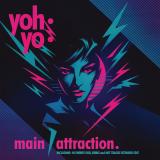
Originally released in 1985, Main Attraction by Toronto-based duo Yoh-Yo is one of those high-energy sleepers that quietly tore through clubs while never fully crossing into the mainstream canon. Produced by maestro Allan Coelho (Tapps, Click) and driven by the instantly recognizable vocal of Carlos Borges, it’s a pure shot of mid-80s Hi-NRG euphoria. Tight, glossy, and unapologetically emotional.
Fast forward to now, and Vintage Pleasure Boutique digs deep into the archives of Boulevard Records to deliver the ultimate collector’s package, bringing together all six officially released versions from the original 1985–86 pressings across Europe, Canada and Mexico. But this isn’t just a reissue, it’s a full-spectrum reconstruction of a club weapon.
From the Original Version, still hitting with that raw, uplifting drive, to the Sandy St. Alban Version, adding a slightly different vocal flavor for the heads who know, each cut reveals another angle of this underground anthem. The Instrumental and Hi-NRG Dub Version strip things down into pure mixing tools: extended grooves, pulsating basslines and synth hooks that lock dancers into a trance. The Remix pushes things further into peak-time territory, while the real gem for DJs lands on the B-side: the long-sought Hot Tracks Extended Edit by Gregg Denewith — originally exclusive to the US market and finally resurfacing in proper, playable quality. A true secret weapon for selectors who like their sets with a touch of authentic 80s heat.
This release is a love letter to Hi-NRG, to analog excess, and to the global club network that kept these records alive long before algorithms caught up. For fans of neon-lit nostalgia, sweaty dancefloors and that unmistakable Italo-adjacent pulse. Main Attraction is exactly what the name promises. Pure energy. No compromise.
out of Stock
Last delivered 69 days ago available to reorder, subject to availability
Writings on the topic that go off in all directions, mind-numbing lectures given by academics, and testimonies, most of them heavily doctored, from those who “lived through that era”: so many people today fantasize about the early days of punk in our country… This blessed moment when no one had yet thought of flaunting a ridiculous green mohawk, taking Sid Vicious as a hero, or – even worse – making the so-called alternative scene both festive and boorish. There was no such thing in 1976 or 1977, when it wasn’t easy to get hold of the first 45s by the Pistols or the Clash. Few people were aware of what was happening on the fringes of the fringes at the time. Malcolm McLaren was virtually unknown, and having short hair made you seem strange. Who knew then that rock music, which had taken a very bad turn since the early 1970s, would once again become an essential element of liberation? That, thanks to short and fast songs, it would once again rediscover that primitive, social side that was so hated by older generations? Who knew that, besides a few loners who read the music press (it was even better if they read it in English) and frequented the right record stores? Many of these formed bands, because it was impossible to do otherwise. We quickly went from listening to the Velvet Underground to trying to play the Stooges’ intros. It’s a somewhat collective story, even though there weren’t many people to start it.
The Guilty Razors were among those who took part in this initial upheaval in Paris. They were far from being the worst. They had something special and even released a single that was well above the national average. They also had enough songs to fill an album, the one you’re holding. In everyone’s opinion, they were definitely not among the punk impostors that followed in their wake. They were, at least, genuine and credible.
Guilty Razors, Parisian punk band (1975-1978). To understand something about their somewhat linear but very energetic sound, we might need to talk about the context in which it was born and, more broadly, recall the boredom (a theme that would become capital in punk songs) coupled with the desire to blow everything off, which were the basis for the formation of bands playing a rejuvenated rock music ; about the passion for a few records by the Kinks or the early Who, by the Stooges, by the Velvet mostly, which set you apart from the crowd.
And of course, we should remember this new wave, which was promoted by a few articles in the specialized press and some cutting-edge record stores, coming from New York or London, whose small but powerful influence could be felt in Paris and in a handful of isolated places in the provinces, lulled to sleep by so many appalling things, from Tangerine Dream to President Giscard d’Estaing...
In 1975-76, French music was, as almost always, in a sorry state ; it was still dominated by Johnny Hallyday and Sylvie Vartan. Local rock music was also rather bleak, apart from Bijou and Little Bob who tried to revive this small scene with poorly sound-engineered gigs played to almost no one.
In the working class suburbs at the time, it was mainly hard rock music played to 11 that helped people forget about their gruelling shifts at the factory. Here and there, on the outskirts of major cities, you still could find a few rockers with sideburns wearing black armbands since the death of Gene Vincent, but it wasn’t a proper mass movement, just a source of real danger to anyone they came across who wasn't like them. In August 1976, a festival unlike any other took place in Mont-de-Marsan – the First European Punk Festival as the poster said – with almost as many people on stage as in the audience. Yet, on that day, a quasi historical event happened, when, under the blazing afternoon sun, a band of unknowns called The Damned made an unprecedented noise in the arena, reminiscent of the chaotic Stooges in their early adolescence. They were the first genuine punk band to perform in our country: from then on, anything was possible, almost anything seemed permissible.
It makes sense that the four+1 members of Guilty Razors, who initially amplified acoustic guitars with crappy tape recorder microphones, would adopt punk music (pronounced paink in French) naturally and instinctively, since it combines liberating noise with speed of execution and – crucially – a very healthy sense of rebellion (the protesters of May 1968 proclaimed, and it was even a slogan, that they weren’t against old people, but against what had made them grow old. In the mid-1970s, it seemed normal and obvious that old people should now ALSO be targeted!!!).
At the time, the desire to fight back, and break down authority and apathy, was either red or black, often taking the form of leafleting, tumultuous general assemblies in the schoolyard, and massive or shabby demonstrations, most of the time overflowing with an exciting vitality that sometimes turned into fights with the riot police. Indeed, soon after the end of the Vietnam War and following Pinochet’s coup in Chile, all over France, Trotskyist and anarcho-libertarian fervour was firmly entrenched among parts of the educated youth population, who were equally rebellious and troublemakers whenever they had the chance. It should also be noted that when the single "Anarchy in the UK" was first heard, even though not many of us had access to it, both the title and its explosive sound immediately resonated with some of those troublemakers crying out for ANARCHY!!! Meanwhile, the left-wing majority still equated punks with reckless young neo-Nazis. Of course, the widely circulated photos in the mainstream press of Siouxsie Sioux with her swastikas didn’t necessarily help to win over the theorists of the Great Revolution. It took Joe Strummer to introduce The Clash as an anti-racist, anti-fascist and anti-ignorance band for the rejection of old-school revolutionaries to fade a little.
The Lycée Jean-Baptiste Say at Porte d’Auteuil, despite being located in the very posh and very exclusive 16th arrondissement of Paris, didn’t escape these "committed" upheavals, which doubled as the perfect outlet for the less timid members of this generation.
“Back then, politics were fun,” says Tristam Nada, who studied there and went on to become Guilty Razors’ frontman. “Jean-Baptiste was the leftist high-school in the neighbourhood. When the far right guys from the GUD came down there, the Communist League guys from elsewhere helped us fight them off.”
Anything that could challenge authority was fair game and of course, strikes for just about any reason would lead to increasingly frequent truancy (with a definitive farewell to education that would soon follow). Tristam Nada spent his 10th and 11th unfinished grades with José Perez, who had come from Spain, where his father, a janitor, had been sentenced to death by Franco. “José steered my tastes towards solid acts such as The Who. Like most teenagers, I had previously absorbed just about everything that came my way, from Yes to Led Zeppelin to Genesis. I was exploring… And then one day, he told me that he and his brother Carlos wanted to start a rock band.” The Perez brothers already played guitar. “Of course, they were Spanish!”, jokes their singer. “Then, somewhat reluctantly, José took up the bass and we were soon joined by Jano – who called himself Jano Homicid – who took up the rhythm guitar.” Several drummers would later join this core of not easily intimidated young guys who didn’t let adversity get the better of them.
The first rehearsals of the newly named Guilty Razors took place in the bedroom of a Perez aunt. There, the three rookies tried to cover a few standards, songs that often were an integral part of their lives. During a first, short gig, in front of a bewildered audience of tough old-school rockers, they launched into a clunky version of the Velvet Underground's “Heroin”. Challenge or recklessness? A bit of both, probably… And then, step by step, their limited repertoire expanded as they decided to write their own songs, sung in a not always very accurate or academic English, but who cared about proper grammar or the right vocabulary, since what truly mattered was to make the words sound as good as possible while playing very, very fast music? And spitting out those words in a language that left no doubt as to what it conveyed mattered as well.
Trying their hand a the kind of rock music disliked by most of the neighbourhood, making noise, being fiercely provocative: they still belonged to a tiny clique who, at this very moment, had chosen to impose this difference. And there were very few places in France or elsewhere, where one could witness the first stirrings of something that wasn’t a trend yet, let alone a movement.
In the provinces, in late 1976 or early 1977, there couldn’t be more than thirty record stores that were a bit more discerning than average, where you could hear this new kind of short-haired rock music called “punk”. The old clientele, who previously had no problem coming in to buy the latest McCartney or Aerosmith LP, now felt a little less comfortable there…
In Paris, these enlightened places were quite rare and often located nex to what would become the Forum des Halles, a big shopping mall. Between three aging sex workers, a couple of second-hand clothes shops, sellers of hippie paraphernalia and small fashion designers, the good word was loudly spread in two pioneering places – propagators of what was still only a new underground movement. Historically, the first one was the Open Market, a kind of poorly, but tastefully stocked cave. Speakers blasted out the sound of sixties garage bands from the Nuggets compilation (a crucial reference for José Perez) or the badly dressed English kids of Eddie and the Hot Rods. This black-painted den was opened a few years earlier by Marc Zermati, a character who wasn’t always in a sunny disposition, but always quite radical in his (good) choices and his opinions. He founded the independent label Skydog and was one of the promoters of the Mont-de-Marsan punk festivals. Not far from there was Harry Cover, another store more in tune with the new New York scene, which was amply covered in the house fanzine, Rock News (even though it was in it that the photos of the Sex Pistols were first published in France).
It was a favorite hang-out of the Perez brothers and Tristam Nada, as the latter explained. “It’s at Harry Cover’s that we first heard the Pistols and Clash’s 45s, and after that, we decided to start writing our first songs. If they could do it, so could we!”
The sonic shocks that were “Anarchy in the UK”, “White Riot” or the Buzzcocks’s EP, “Spiral Scratch” – which Guilty Razors' sound is reminiscent of – were soon to be amplified by an unparalleled visual shock. In April 1977, right after the release of their first LP, The Clash performed at the Palais des Glaces in Paris, during a punk night organised by Marc Zermati. For many who were there, it was the gig of a lifetime…
Of course, Guilty Razors and Tristam were in the audience: “That concert was fabulous… We Parisian punks were almost all dressed in black and white, with white shirts, skinny leather ties, bikers jackets or light jackets, etc. The Clash, on the other hand, wore colourful clothes. Well, the next day, at the Gibus, you’d spot everyone who had been at this concert, but they weren’t wearing anything black, they were all wearing colours.”
It makes sense to mention the Gibus club, as Guilty Razors often played there (sometimes in front of a hostile audience). It was also the only place in Paris that regularly scheduled new Parisian or Anglo-Saxon acts, such as Generation X, Siouxsie and the Banshees, the Slits, and Johnny Thunders who would become a kind of messed-up mascot for the venue. A little later, in 1978, the Rose Bonbon – formerly the Nashville – also attracted nightly owls in search of electric thrills… In 1977, the iconic but not necessarily excellent Asphalt Jungle often played at the Gibus, sometimes sharing the bill with Metal Urbain, the only band whose aura would later transcend the French borders (“I saw them as the French Sex Pistols,” said Geoff Travis, head of their British label Rough Trade). Already established in this small scene, Metal Urbain helped the young and restless Guilty Razors who had just arrived. Guitarist for Metal Urbain Hermann Schwartz remembers it: “They were younger than us, we were a bit like their mentors even if it’s too strong a word… At least they were credible. We thought they were good, and they had good songs which reminded of the Buzzcocks that I liked a lot. But at some point, they started hanging out with the Hells Angels. That’s when we stopped following them.”
The break-up was mutual, since, Guilty Razors, for their part, were shocked when they saw a fringe element of the audience at Metal Urbain concerts who repeatedly shouted “Sieg Heil” and gave Nazi salutes. These provocations, even still minor (the bulk of the skinhead crowd would later make their presence felt during concerts), weren’t really to the liking of the Perez brothers, whose anti-fascist convictions were firmly rooted. Some things are non-negotiable.
A few months earlier (in July 1978), Guilty Razors had nevertheless opened very successfully for Metal Urbain at the Bus Palladium, a more traditonally old-school rock night-club. But, as was sometimes the case back then, the night turned into a mass brawl when suburban rockers came to “beat up punks”.
Back then, Parisian nights weren’t always sweet and serene.
So, after opening as best as they could for The Jam (their sound having been ruined by the PA system), our local heroes were – once again – met outside by a horde of greasers out to get them. “Thankfully,” says Tristam, “we were with our roadies, motorless bikers who acted as a protective barrier. We were chased in the neighbouring streets and the whole thing ended in front of a bar, with the owner coming out with a rifle…”
Although Tristam and the Perez brothers narrowly escaped various, potentially bloody, incidents, they weren’t completely innocent of wrongdoing either. They still find amusing their mugging of two strangers in the street for example (“We were broke and we simply wanted to buy tickets for the Heartbreakers concert that night,” says Tristam). It so happened that their victims were two key figures in the rock business at the time: radio presenter Alain Manneval and music publisher Philippe Constantin. They filed a complaint and sought monetary compensation, but somehow the band’s manager, the skilful but very controversial Alexis, managed to get the complaint withdrawn and Guilty Razors ended up signing with Constantin with a substantial advance.
They also signed with Polydor and the label released in 1978 their only three-track 45, featuring “I Don't Wanna be A Rich”, “Hurts and Noises” and “Provocate” (songs that exuded perpetual rebellion and an unquenchable desire for “class” confrontation). It was a very good record, but due to a lack of promotion (radio stations didn’t play French artists singing in English), it didn’t sell very well. Only 800 copies were allegedly sold and the rest of the stock was pulped… Initially, the three tracks were to be included on a LP that never came to be, since they were dropped by Polydor (“Let’s say we sometimes caused a ruckus in their offices!” laughs Tristam.) In order to perfect the long-awaited LP, the band recorded demos of other tracks. There was a cover of Pink Floyd's “Lucifer Sam” from the Syd Barrett era – proof of an enduring love for the sixties’ greats –, “Wake Up” a hangover tale and “Bad Heart” about the Baader-Meinhof gang, whose actions had a profound impact on the era and on a generation seeking extreme dissent... On the album you’re now discovering, you can also hear five previously unreleased tracks recorded a bit later during an extended and freezing stay in Madrid, in a makeshift studio with the invaluable help of a drummer also acting as sound engineer. He was both an enthusiastic old hippie and a proper whizz at sound engineering. Here too, certain influences from the fifties and sixties (Link Wray, the Troggs) are more than obvious in the band’s music.
Shortly after a final stormy and rather barbaric (on the audience’s side) “Punk night” at the Olympia in June 1978, Tristam left the band ; his bandmates continued without him for a short while.
But like most pioneering punk bands of the era, Guilty Razors eventually split up for good after three years (besides once in Spain, they’d only played in Paris). The reason for ceasing business activities were more or less the same for everyone: there were no venues outside one’s small circuit to play this kind of rock music, which was still frightening, unknown, or of little interest to most people. The chances of recording an LP were virtually null, since major labels were only signing unoriginal but reassuring sub-Téléphone clones, and the smaller ones were only interested in progressive rock or French chanson for youth clubs. And what about self-production? No one in our small safety-pinned world had thought about it yet. There wasn’t enough money to embark on that sort of venture anyway.
So yes, the early days of punk in France were truly No Future!
out of Stock
Last delivered 6 months ago available to reorder, subject to availability
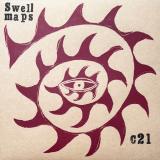
One of the first punk bands to set up an "indie" label, they were also pioneers of "alternative" music, mixing punk with experimental sounds. Swell Maps released four singles and two albums in a brief but eventful career, in partnership with Rough Trade, topping UK indie charts and influencing acts including Sonic Youth, Nirvana, Stereolab, and Blur. The original line-up split in 1980, but still their studio albums, A Trip to Marineville and Jane From Occupied Europe, attract new generations of enthusiasts. In 2021, Jowe organised performances
with ten musicians to play a diverse selection of Maps material over two consecutive nights at London's Cafe Oto, and did it again at the Rough Trade launch for Jowe's book on Swell Maps in 2022. Concerts followed across the UK and Europe, with more planned. This ongoing project has resulted in a new studio album, C21, released through Tiny Global Productions. The material was composed at various times between 1979 and the present, including older songs never recorded professionally, a remake of Soundtracks' astonishing Jelly Babies and plenty of surprises. C21 offers memorable melodies, wild riffs with super hooks, yet never veers from their adventurous spirit, radical ideas and eccentric musical shapes. The current collective of musicians features: Jowe Head, David Callahan of Wolfhounds / Moonshake / solo fame, Jeff Bloom out from Television Personalities, Alternative TV's Lee McFadden, Lucie Rejchrtova (Crazy World Of Arthur Brown), Chloe Herington from chamber rock faves Chrome Hoof, and Luke Haines, who led Auteurs and Black Box Recorder and plays with REM's Peter Buck. SWELL MAPS will be performing throughout 2026 across the UK and Europe and are proud to present this stellar document, which maintains the group's devotion to D-I-Y ideals and impulses. The vinyl album covers were hand-screened and stamped by a feminist cooperative in Valencia, Spain and are offered in three randomly picked variants. The Guardian is going to run a 1400-word piece on the release.
The London based singer and keyboard player Dominic Appleton, known since the early eighties for his musical activity in the post punk/dream pop band Breathless, and perhaps even more for his vocal contributions to the legendary This Mortal Coil project on 4AD, joins forces with the Milanese producer and sound artist Matteo Uggeri, active from 1993 behind several projects spanning from industrial to post-rock and ambient soundscapes, known for collaborating with artists such as Maurizio Bianchi, Nocturnal Emissions, Controlled Bleeding, De Fabriek, OvO, Giuseppe Ielasi, Lau Nau, Giulio Aldinucci and many more.
Starlight Assembly’s first album, “Starlight and Still Air”, was released in 2021 by the American label Beacon Sound. In Italy the album received amazing reviews in all four of the main music monthlies. It was album of the month in Blow Up and Rockerilla ran a four page interview. Several articles and reviews were made, including a special issue on Foxy Digitalis by Brad Rose.
A remix project was launched afterwards, including old and new friends and fans of the two S.A. members: among the others, Robin Rimbaud/Scanner, Auscultation, Gabriel Saloman (Yellow Swans), Patricia Wolf, Insides, Julia Sabra with Fadi Tabbal, Sawako and Pan American.
The new album, “There Will Be Fireworks”, continues the duo’s complex cross-genres approach to music by melding Uggeri’s intricate musical textures with Appleton’s sweet and melancholic melodies, in this case even supported by the haunting guitars of Gary Mundy (in Breathless as well but also in Ramleh and Broken Flag’s label manager). The tracks on this album are more songlike, the journey more cohesive, with the artists playing more to one another’s strengths. The mastering will be done by Martin Bowes/Attrition, making it even more powerful and clean for its publication on Silentes (ex-Amplexus), historic italian label well known for releases by Rod Modell, Gigi Masin, Dirk Serries, Eraldo Bernocchi, Merzbow, Fabio Orsi and the latest releases by AUBE and much more.
1) WAIT FOR THE WORLD
2) TIME
3) THIS DESERT
4) ALL THE LOVE THE STANDS BESIDE US
5) MOTH TO THE FLAME
6) FRICTION
7) SYMPHONY IN MELANCHOLY
8) THE NOT DEAD
9) RELIEF
+
10) THERE WILL BE FIREWORKS (ghost track)
out of Stock
Last delivered 6 months ago available to reorder, subject to availability
Originally released in 1988 on the compilation Acid Tracks Vol. 3 via Needle Records, "The Other Side" has long been recognised as a potent example of early Chicago acid house. Now, more than three decades later, the track receives its first official 12" release - and, crucially, its first release with the original artists correctly credited. While historically attributed to Maurice Joshua, "The Other Side" was in fact produced by Da Posse (Hula Mahone), with vocals by Martell. This forthcoming release marks the first time that the original production has been properly acknowledged and presented in its intended standalone 12" format, restoring authorship to the artists responsible for the record's creation. The release is issued by Island Life Records, a Bali-based label with a growing reputation for carefully curated projects that bridge foundational dance music history and contemporary club culture. By formally reintroducing "The Other Side" with accurate credits, Island Life Records contributes an important corrective to the historical record of Chicago house and acid house music. Musically, "The Other Side" remains a striking artefact of its era: minimal, hypnotic, and emotionally charged, balancing raw machine-driven groove with an atmospheric vocal presence. It exemplifies the experimental, DJ-led ethos of late-1980s Chicago, where tracks were built for function, feeling, and longevity on the dancefloor rather than commercial visibility. The release is accompanied by a set of new remixes that respectfully extend the track's legacy into the present day. Remix duties come from Island Life Records founder Garry Todd under his Clouds Of Kouros alias, Johnny Aux (one half of Paranoid London), and Age Of Hyperion, with the digital including a remix from Garry Todd, each offering a distinct contemporary interpretation while retaining the spirit and tension of the original recording. This release stands not only as a long-overdue physical edition, but as a historically significant moment: the first time the original production has been released on 12", and the first time the correct creative contributors have been formally recognised.
out of Stock
Last delivered 80 days ago available to reorder, subject to availability
Intricate structures with an intertwining of spontaneity and randomness, meeting the diverse genre influences of the band members from mediaeval music to shoegaze to noise. That is Unravel, the new album, and first in six years, from Czech band Manon Meurt.
"Unravel reflects the different stages of dissociation, a person's thoughts, observations - whether of the environment or of oneself - and admiration for the beauty and cruelty that nature mirrors," multi-instrumentalist and lyricist Kateřina Elznicová says of the album.
Produced by Eddie Stevens (Freakpower, Zero 7, Moloko, Roisin Murphy) the album was pieced together from recorded fragments, meticulously pieced together. The title Unravel refers to the development of the band, unravelling what they are to find the full potential of their music as well as uncovering the layered nature of the songs and emotions.
"Eddie Stevens’ approach to recording was a big surprise. We understood that there was no one right version of the songs. Each of our themes carries a certain energy that can manifest and blossom in many ways. Compared to previous records, the vision of each member was much more evident, while we learned not to cling to our individual ideas of a signifying break or a nu-metal bounce at the end of an ambient song. The main thing was a common concept," adds keyboardist David Tichý on creating the seven songs on the record.
Abum producer Eddie Stevens describes the collaboration, “Each album is an adventure. You do some preparation, check the route over and over, prepare for any eventuality that your packing space and imagination will allow, plan some places to stop and rest en route, places to eat, sleep, then consider the challenges - the ice wall, the summit, even just finding your way in foreign land. But despite all that planning, you can never really say for sure what’s going to happen, what unexpected path you might take, what strangers might invite you in for a cup of tea and to what ends. So it was making Unravel with Manon Meurt and engineer and studio owner Lukas Martinek at Svárov studios and of course back home in the relative safety of my studio. Musicians who quickly became friends showed me more than I showed them, people with ideas, with creativity seeping from their pores. Music making the right way: no blinkers, no walls, no preconceptions, no barriers, no rules. What a pleasure, and what a magical, technicoloured,
kaleidoscopic album we’ve made together, “
The combination of industrial material with plant motifs in the work Untitled_1 by Ukrainian artist Liza Libenko, which adorns the cover of Unravel, strongly attracted the band. After all, floral motifs have always been close to Manon Meurt's music. Libenko, a student of the Academy of Fine Arts and a finalist of the prestigious Austrian Strabag Artaward International Prize, has recently been working on overcoming the narrative boundaries of the canvas, the paintings "attack"the viewer. Sunflowers are a powerful symbol of life and the sun; in Libenko's paintings they are black and burnt, serving as an allegory for contemporary conditions. The work was photographed by photographer and artist Marcel Rozhoň, and the final processing of the Unravel album was done by graphic artist Zuzana Malá.
At 19, Helviofox adds his signature to the batida template that by now seems to have been in existence since forever. Such is the strength of this primordial fountain, a source of rejuvenation. Also within the literal family: Helvio cites brothers Dadifox and Erycox as main influences.
Curiosity for the sound made him go into production by the time he was 13. A couple of years later (2020) he became co-founder of TLS with E8Prod, Alberfox, DiionyG and other mates. His talent fully developed since then, opening a slight detour that became a new path parallel to the main road.
Lively basslines anchor the beat directly lifted from tradition and clearly channeled to the dancefloor. Strong, well rounded grooves, a spot-on sense of timing and tempo, elegant atmospheres, all part of Helvio's notion of arrangement and his perception of dance music boundaries, stretching them just enough to present a challenge but not as far as to disconnect head and feet and risk losing the floor.
This liminal space between experimentation and popularity is both dangerous and attractive. There is no one formula. Precisely why it still retains plenty of fuel for current and future generations to contribute personal visions.
Lisboa, 2025
out of Stock
Last delivered 7 months ago available to reorder, subject to availability
A pandemic album of songs of heartbreak, virality, and dead rats, which Wood called "goodbye cruel world: the musical." The revealing chamber pop/folk album "In Case I Make it" (ICIMI), which Will Wood playfully dubbed "Goodbye Cruel World: The Musical," turned out to be a surprisingly strong followup to his chaotic and sardonic previous release, "The Normal Album." While divisive among some fans due to its gentler sounds and more traditional vocal stylings than most of his last work, ICIMI attracted new, older audiences and showed a more personal side that provided a new context to his discography. Widely considered to be some of his most powerfully emotional work, both the harshly introspective and humorous songwriting, as well as its unique delivery, are still distinctly Will Wood in their experimental nature and uncompromising unwillingness to conform to the expectations of both die-hard fans and audiences at large. In 2021, the underground singer-songwriter was suddenly the subject of unexpected online attention, which, in tandem with mental health struggles, inspired him to put out a "musical suicide note," intended to express parts of his artistic and personal identity that had gone largely unseen by a fanbase he felt misunderstood. Leading the album with intentionally algorithm-unfriendly singles and putting an eight-minute love ballad as the second track on the LP, Wood aggressively redefined himself as being more than just a handful of wacky, unwitting viral pops. Ironically, the surprise viral success of the deep cut "The Main Character," a relentless satire of online culture, drew attention to the album and its second biggest hit, the angst-ridden yet danceable "Against the Kitchen Floor." However, the immense orchestration and vulnerable writing have kept audiences coming back. Songs like "Euthanasia" and "Tomcat Disposables" have developed reputations as tearjerkers, and songs like "Cicada Days" and "White Noise" have become fan anthems in the years since.
Followed by the first release last year Chinese label Motivation, curated by B.ai, comes back with its second V.A. featuring Ilkay Yeler, J6, SMEV and NAE. The vinyl attributes in progressive house, electro house and electro.
Opening track “Destiny” ‘s morphing main motif gets kept in check by a steady pulse of snappy bass. Enigmatical vocal samples add to the ambiguous atmosphere, so the sets of twinkling mallets J6 sleekly includes, bring a touch of subtle lightness.
A-2 Ilkay Yeler’s sound is fueled by endless nights of groove, and on “Frontliner” this translates to a hypnotic trip into the deep end. Underneath its dreamlike current of silky chords a steady bass riff propels everything forward, allowing a restless arp to zone in and out.
Flipping to the side B, Sev’s Miami-inspired 808 patterns have “Clearing The Fog” come out of the gates swinging. Bright flutes and big basslines provide this slab of machine funk with a tapestry of melody, and fluorescent synth solos top it off.
Nay ends affairs on a melancholic note with “Silent River”. The leads sound like they ran through an eighties wave pedal chain, and as pondering chords and choirs work their way in, a Juno 6 bass adds extra depth. Still firmly directed at the club, the track escapes easy classification - and suitably closes a diverse yet coherent EP.
out of Stock
Last delivered 13 days ago available to reorder, subject to availability
Alanis Morissette Delivers the Equivalent of a Spiritual Awakening on Supposed Former Infatuation Junkie:
Introspective Themes and Compassionate Emotions on Eastern-Tinged Album Have Grown More Relevant
1998 Smash Plays with Enhanced Detail, Rich Textures, and Sharp Focus on Mobile Fidelity’s 180g 33RPM 2LP Set:
First-Ever Audiophile Edition Strictly Limited to 3,000 Numbered Copies
1/2" / 30 IPS analogue master to DSD 256 to analogue console to lathe
Alanis Morissette refuses to adhere to convention on Supposed Former Infatuation Junkie. While most artists follow-up their breakthrough with an album that closely parallels the approaches that helped make them famous, the maverick singer-songwriter stayed true to herself and drew inspiration from travel to India before she began the recording sessions. As much as the preceding Jagged Little Pill put her on the global radar, Supposed Former Infatuation Junkie confirmed her role as a vital generational voice — and proved her blockbuster success was no fluke. Having set a mark for most sales of an LP in its debut week by a female artist, the 1998 smash remains a pop-rock staple.
Sourced from the original master tapes, strictly limited to 3,000 numbered copies, housed in a Stoughton jacket, and pressed at Fidelity Record Pressing, Mobile Fidelity’s 180g 33RPM 2LP set of Supposed Former Infatuation Junkie presents the triple-platinum LP in audiophile sound for the first time. Benefitting from defined grooves that befit the album’s nearly 72-minute length, this pressing plays with enhanced detail, refined clarity, sharper focus, and broader dynamics than prior versions.
Those traits are key given Morissette’s use of more textured and atmospheric soundscapes, not to mention her evolution into a more nuanced and controlled singer. Similarly, the scale and reach of David Campbell’s string arrangements come across as orchestrations should. Ditto the synth-based architecture shaped by producer and principal Morissette collaborator Glen Ballard. All in all, Mobile Fidelity’s collectible edition simply delivers more information via transparent means.
Notable for its balance, sophistication, and richness, Supposed Former Infatuation Junkie at heart finds Morissette pausing, taking a breath, and learning how to navigate life in a healthy manner after enduring one of the most exhausting and rocket-to-fame stretches any musician ever experienced. It’s the sonic equivalent of a spiritual awakening, a call to betterment, a brave assessment of the self and humanity as a whole. As such, the tunes on her second international (and fourth Canadian) release teem with gratitude, compassion, love, empathy — emotions that lend themselves to the largely mellow, contoured scope and Eastern-tinged melodies of the songs themselves.
“How ‘bout how good it feels to finally forgive you,” Morissette sings on the lead single “Thank U.” “How ‘bout grieving it all one at a time.” Those sentiments, and the vocalist’s embrace of concepts such as divinity and acceptance, not only provide a foundation on which Supposed Former Infatuation Junkie rests. They also reflect the personal maturation she gained from her embrace of Buddhist culture in India and a mindset bent toward notions of reconciliation, peace, and sensuality that were nearly absent in popular music in the late ‘90s.
Those themes continue on “That I Would Be Good,” a confident reflection that takes stock of one’s mental, physical, and emotional state in the face of both changing and unpleasant circumstances — and concludes with Morissette performing a flute solo, further exposing the raw intimacy of the introspective tune. She channels relatable simplicity and joy on “So Pure,” with her invocations of “dance” and “freestyle” speaking to the freedom of expression that courses throughout Supposed Former Infatuation Junkie. And perhaps no song finds Morissette showcasing her refreshed attitude toward life and opening up more than the relationship-themed “Unsent,” whose unconventional structures and lack of a chorus only add to its directness.
Akin to many albums that were ahead of their time, and despite the critical and commercial accolades afforded it upon release, Supposed Former Infatuation Junkie attracted new appreciation and perspective as it got older. Issued during an era where its ideas of serenity, absolution, tranquility, and contentment seemed largely alien, the record — akin to the ways its predecessor foreshadowed a movement — now functions as a visionary beacon that foretells of way to maintain sanity, dignity, and goodness amid a contemporary landscape filled with constant distractions, polarizing views, and incessant calls to purchase, promote, and produce without questioning the what-for purpose.
Supposed Former Infatuation Junkie dares to ask the questions and, at its best, supplies meaningful answers and alternatives that lead to longed-for enlightenment, healing, and laughter. For these reasons alone, it’s a record that never goes out of style.
Support from: Dino Lenny, Sabo, 1979, Alex Neri, Cioz, Just Her, Lonya, Hyenah, Nhar, Don Diablo, Luke Garcia, Underspreche, Francesco Chiocci, Adriatique
Undiscovered Recordings is a London- and Naples-based independent record label founded in 1994. Showcasing new and exciting production talent, Undiscovered was founded by a crack team of music industry experts, the two Angelos, Doug and Mario, in the midst of the dance music movement of the 1990s.
The Angelos met while working at UMM and Flying Records. Founding Undiscovered allowed them to move
away from the traditional dance music of the time and to highlight lesser-known artists and styles. Angelo
Tardio, in-house A&R, capitalised on his trail-blazing career as a DJ, as the founder of iconic label U.M.M., and his production career as Kwanzaa Posse, where he collaborated with huge talents such as Mano Negra, Manu Chao, King Chango, MC Solaar and Les Negresses Vertes, to name just a few. Doug Osborne, British DJ & Producer and co-founder. Angelo Bernardo brought his years of experience in the music industry to take over the business side of the company, and Mario Nicoletti came on board as a true living musical encyclopaedia and expert. Alberto Faggiana joined in 1998 to contribute his industry know-how to curate the legal and administrative aspects. And so the Undiscovered team was complete.
Undiscovered has since moved with the times, from classic dance genres into Balearic chill-out, all the while
maintaining its goals to showcase emerging producers and artists. After a long hiatus, and following a number of forced changes in the company, Undiscovered are back in full force. Kwanzaa Posse achieved success back in the 90's with such hits as "Wicked Funk", "African Vibrations" and "Musika!", all of which attracted collaborations with remixes by Massive Attack, Jam & Spoon, and Ralph Falcon & Oscar Gaetan - aka Murk Boys. Now the production unit responsible for such seminal tracks is back with a magical new track called 'Mali Chant'.
out of Stock
Last delivered 80 days ago available to reorder, subject to availability
Mit einer großartigen Auswahl an Tracks hält Ace Records die Singlebox 'High Time' als New Release im Label-Jubiläumsjahr bereit. Nochmal Grund genug, diese legendäre Garage-Band mit diversen fulminanten Garage-Rock-Krachern auf 7inch aus dem Rock'n'Roll-Nirvana zu holen und gebührend zu feiern.
Die Box präsentiert die heißesten Singles der Band aus ihrer Glanzzeit von 1964 bis 1966, zeitlose Klassiker wie 'Psycho', 'Cinderella', 'Boss Hoss' und natürlich das Debüt der Tacoma-Legenden, 'The Witch'. Dazu kommen einige Klassiker die ursprünglich nie auf einer Single erschienen, wie 'Strychnine' und 'Have Love Will Travel'. Darüber hinaus erscheinen erstmals Tracks aus der Etiquette- und der Jerden-Ära zusammen. Letztere sind vertreten durch die beliebten Nummern 'Head On Backwards', 'Like No Other Man', 'High Time' und - erstmals auf Vinyl - die seltene Audio-Recording-Version von 'Maintaining My Cool'. 'High Time', zusammengestellt und kommentiert von Alec Palao, ist ein attraktives Paket mit einem ausführlichen Booklet voller seltener Bilder aus der Linse des unnachahmlichen Nordwest-Fotografen Jini Dellaccio. Lang leben die Sonics!
"Chasing the funky symphonies that filled my head and my dreams..."
December 25th, 2023 - an Instagram post. Stimulator Jones shared half a dozen FIRE tracks from his beat tape archive. We were immediately drawn to the rough hewn boom bap.
"I'd release that", Rob commented.
Hours of material was shared and the result is this: Cool Green Trees (1999-2005). A collection of beats and loops Stimulator Jones created between the ages of 14-20 at home in his basement, bedroom and computer room in Roanoke, Virginia.
You will not believe the profound soulful genius contained within these naive schoolboy melodies.
December 25th, 1998 - 25 years ago to the day and his much-coveted Yamaha SU10 sampler was finally bestowed upon young Stimmy AKA Sam Lunsford: "I immediately hooked up a CD Walkman to the input jack and looped the beginning two bars of Grover Washington Jr.'s "Mercy Mercy Me". I don't know what exactly was so thrilling about hearing two measures of music repeating over and over but it was so infectious and hypnotizing and enthralling to me. I'll never forget that ecstatic rush of making my first loop - an uncontrollable, gleeful smile plastered all over my face." When you hear the pocket breakbeat symphonies featured here on Cool Green Trees, you'll feel the same sense of frisson.
In the wake of his Stones Throw breakthrough - Exotic Worlds & Master Treasures - Stimulator Jones was pegged by many as a 90s throwback artist. However, he literally IS a 90s artist. He's been recording music most of his life and he's now 40. He created the bulk of Cool Green Trees as a teenager. Everything before 2004 was recorded when Sam was still in school. He was in 8th grade when he made the 1999 tracks - he didn't even have his learner's permit. This album is a snapshot of a young man in a simpler time. Things were still mysterious back then and he was flying blind, relying on his ears and having to figure things out for himself: "I had no road map for becoming a beatmaker. I have been collecting music since I was a kid, I am a lifelong digger and seeker of cool and interesting sounds. I was there in the golden age of Hip Hop, and while I may have been a suburban white kid in Roanoke, Virginia, I was tuned in and I bought so many classic albums when they came out. I was attracted to Hip Hop because of the musical and poetic quality. I was hypnotized by the rhythms, partially because I was a drummer. I didn't brag about collecting my breakbeat records or making beats - it was something I did in isolation. It wasn't something I generally wanted to bring attention to and it didn't really score me any cool points. I certainly wasn't flexing on social media about it."
Hell, he can do that now!
Opener "Pharoah Jones" was inspired by Yesterday's New Quintet and Madlib's ability to capture that classic 70s sound whilst playing all the instruments. Sam created this one stoned afternoon by laying down a 2 bar loop and a shaker loop on his Yamaha SU700 sampler. He hung a microphone from the ceiling and played his Yamaha Stage Custom drum kit over the top before adding ender Rhodes and playing his dad's Selmer tenor sax through an Electro Harmonix Memory Man echo pedal. Yes! Up next, "Ghost Gospel" utilises a dope loop from a gospel record and adds some soul-funk drums overtop, whilst working that filter knob. Says Sam: "The loop reminded me of something Ghostface would rap over. The sample was in 3/4 waltz time but I flipped it for a 4/4 groove, a technique I picked up from RZA. "Ill Feeling" uses sped-up pieces from a dusty old funk record and putting them over a classic NOLA drum loop; gain chopping up a slow, bluesy 3/4 time signature and bending it to a 4/4 groove. Classy shit. "Capital Punishment" features drums tapped in live, inspired by MF Doom's Special Herbs series. "Do Not Adjust" consists loops found on a compilation of 70s French music at Happy's Flea Market, a classic Roanoke digging spot.
The sublime, evocative title track, "Cool Green Trees" was created when Sam was still living at home. He dumped samples off his SU10 into the family desktop and arranged them in a demo version of Pro Tools: "This track was sort of my ode to the DJ Shadow style of sample based production. Super spacey, slow, and moody. The heavily filtered drums were inspired by Alec Empire's 'Low on Ice' album. I later added some scratches and sounds from a Spider Man storybook record." "Chill Scratch" snags the final bit of a bossanova record and pairs it with a drum loop before adding experimental scratching run through an Electro Harmonix Memory Man echo pedal. "Poisonous Fumes" was made using a sampler, mixer and a turntable; a kind of mixtape beat collage with added scratches and sounds from various records. Using dialogue from superhero records was a nod to Madlib. "Welcome Aboard The Starship" is dark, downtempo trip-hop with a spooky bent. Sam paired a slow, hard drum loop with a guitar sample grabbed off a psychedelic rock record. To finish, he added various backwards sounds and weird atmospheric effects and a little scratching. Swoon.
Side B opens with "Keep On Runnin", made on a borrowed Roland SP202 sampler. Having always loved the sound of the Lo-Fi filter on those machines, reminiscent of the Emu SP1200, Sam always imagined Del or another of the Hieroglyphics crew rapping over this beat. You can certainly hear why. "Sounds Impossible" sees Sam experimenting with layering multiple kick samples at different volumes to create patterns similar to those heard by Showbiz and Lord Finesse during their God-level 1995 period. "Painted Faces" was made by chopping up a REDACTED record which he had gotten from Happy's Flea Market and paired it with a REDACTED drum loop. By the time Sam recorded "The Knew Style", he had acquired a shitty old 1960s portable turntable off eBay. It didn't function properly when he bought it but his brother opened it up, cleaned it out and got it working: "I remember he told me that there was a bunch of sand inside of it when he opened it up, as if its previous owner had taken it to the beach. I would take that turntable on my Happy's Flea Market digs so I could preview records...that's how I found this loop."
"Chicken Wing Blues Sauce" loops up a classic blues joint and pairs it with some REDACTED drums. A bit of filtering and arranging et voilà! "Kool Breeze", from 1999, is one of Sam's oldest surviving beats, as is "Sexx Bullets". The Roots sampled the same record, leaving Sam frustrated yet vindicated. "Soul Child" was an early SU10 creation, looping a dusty old Soul Children 45 and pairing it with 70s rock drum loops to great effect. "Take Off Runnin" was another loop found digging with a portable turntable. Paired with some boom bap drums it makes for a hypnotic head-nod groove. "Centurian" was intended to be a little beat interlude a la Pete Rock. The sample is from a sun-dappled soft-psych record and it's paired with a Robin Trower drum loop that just happens to fit perfectly. Sometimes you slap things together kind of haphazardly and magic happens. "Bozack" was the first beat Sam made using Pro Tools, his first foray into using chopped sounds instead of loops, an exciting new world. "Church" is beat interlude using a Phil Upchurch loop with the "Long Red" drums - a favourite break of Dilla et al. Sam was really on a tear in late 2004, probably because he was unemployed and phoneless and able to just make beats all day. He made "Splash One" on a borrowed Yamaha SU700 and again was experimenting with tapping the drums in live with his fingers, instead of using a loop or sequenced pattern. Channeling 9th Wonder, Sam used a water splash sound effect from a Batman record as a percussive element, hence the title (also a 13th Floor Elevators reference). The main loop is a backwards portion of one of his favourite Roy Ayers songs.
"Hank" is another fun little beat interlude thing, created on a borrowed Roland SP202 sampler with the fantastic Lo-Fi effect that resembled the Emu SP1200 at a fraction of the price. "73 goatee", from 99, is another of his oldest surviving beats, created in his bedroom with his Yamaha SU10 and his brother's Vestax MR-300 4-track recorder: "This one will always feel special. I can remember having a feeling all the way back then on the night that I created it that this was a solid beat with a catchy loop. There was something in the Fender Rhodes melody that resonated with me emotionally, and I had never heard a producer sample that portion before. I felt like I had found my own unique sound, my own unique loop. It came from an Ahmad Jamal '73. I actually even recorded myself rapping and scratching over this beat way back then, I still have that version in all its imperfect sloppy glory."
Sam explains just how much these tracks mean to him: "They all have immense historical and sentimental value and I'm proud of them. These beats come from an innocent, simple time when I was just figuring out how to craft these sounds. They're something very personal to me. They are the initial part of a journey that I really was taking *alone*. There was no YouTube. I couldn't Google shit. I didn't even know any other beatmakers, producers or DJs in my town that could teach me anything. It was always just me, alone, in a room with some equipment - chasing the funky symphonies that filled my head and my dreams. What I was doing wasn't cool. Most of my peers thought I was a weirdo and couldn't care less. Creating these sounds was an anti-social endeavour. In a sense, I felt like it was me against the world, and all I had to instruct and assist me were the recordings produced by my heroes - RZA, DJ Premier, Erick Sermon, Beatminerz, Showbiz, Diamond D, Beatnuts, Prince Paul, The Bomb Squad, Pete Rock, Q-Tip, E-Swift, Mista Lawnge, DJ Shadow, Cut Chemist, Peanut Butter Wolf, El-P and so many more...I dedicate this collection to them, and to my older brother Joe who has always been a musical and technical guiding light for me.
This was a time before every kid was a self-described producer and beatmaker, before everyone had a DAW, before Kanye and "chipmunk soul", before Red Bull beat battles, before there was any social media beyond chat rooms and AOL Instant Messenger, before Soundcloud, before SP-404 mania, before lo-fi beats to study to, before Splice, before targeted ads for MIDI chord packs, etc. In 99 when I told people that I had a sampler and made beats I was mostly met with bewildered confusion and indifference. Kids and adults alike would wonder why I got this weird machine for Christmas instead of something worthwhile like a Playstation or a mountain bike or even a guitar for that matter because at least that could be used to make "real music". Back then, sampling was still not widely respected as an art form - it was seen as lazy, talentless and unoriginal at best and outright criminal theft at worst. I had gotten respect for playing drums and guitar and things of that nature but this was a step in the wrong direction in the eyes of many."
The cover photo is a picture of Sam standing on his back porch in the latter part of 1998, just before he got his first sampler. He was 13 years old, in 8th grade. His dad took the picture with his 35mm film camera: "I actually wanted to be pointing my dad's .22 pistol at the camera lens but he wouldn't let me. He gave me an old walking cane to use instead. The Tommy Hilfiger puffer jacket came from the lost and found at William Fleming High School where my mom worked as a secretary. I was thrilled when she brought it home because we never spent money on expensive name brand clothing like that - we were for the most part strictly a sale rack, bargain bin, thrift store, yard sale, flea market kind of family when it came to clothes. My watch is some cheap off-brand fake gold department store watch." Mastering for this vinyl edition was overseen by Be With regular Simon Francis and it was cut by the esteemed Cicely Balston at Abbey Road Studios to be pressed in the Netherlands by Record Industry.
out of Stock
Last delivered 15 months ago available to reorder, subject to availability
Bob Moog’s invention of the analog Moog synthesizer ignited an explosion of creativity across the music spectrum. On the classical side, there was Isao Tomita and Wendy Carlos; on the more avant-garde side, such artists as Mort Garson and Craig Leon used the new technology to explore the limits of sound production while rockers like Keith Emerson incorporated the technology into their music. And, of course, there was also a silly pop side to the synth mania, or “moogsploitation” as some wags put it; albums by The Moog Machine, The Happy Moog, and other similarly-entitled acts provide good examples of that. But the one man straddling all these camps was Gershon Kingsley. Kingsley studied with John Cage before making a pair of groundbreaking albums with fellow electronic music pioneer Jean-Jacques Perry (their “Baroque Hoedown” was the theme for the Main Street Electrical Parade attractions in Walt Disney theme parks). Kingsley then embarked on a solo career and scored an instant hit with this album, 1968’s Music to Moog By, and its signature track, “Pop Corn.” “Popcorn” (one word) became an international smash for Hot Butter four years later, but Music to Moog By also caught consumer ears with its blend of originals, classical, and especially versions of Beatles tunes (though you will have to excuse the egregious misspelling of “Paperback Writer” as “Paperback Rider”)! Ever in pursuit of pop music’s most eccentric manifestations, we at Real Gone are proud to reissue Music to Moog By for the first time in the U.S., complete with the 8-page “The Book of Moog” that was inside some original copies. Strawberry with black swirl pressing limited to 900 copies!
In the winter of 2022, Holy Wave had a week off after a short tour that ended with a show in Los Angeles. The band found particular glee in playing those shows at that time, as they weren't sure they'd ever be doing that again just a few months prior_this batch of songs results from hanging out with some very good friends at Studio 22. "The band have fashioned themselves into mainstays in the world of gauzy psychedelia, infusing dream pop soundscapes with colorful instrumentation, lush melodies, and weighty pathos." - Under the Radar Magazine"_narcotic neo-psych with synthed-out bedroom-pop undertones." - Shindig Magazine"_lush-yet-tempered instrumentation that's undeniably pleasant, if not downright attractive." - Flood Magazine"The sound of Austin's Holy Wave has been getting progressively dreamier with each successive release, their music lush and immaculately arranged." - Post-Trash"Wonderful aural tones, meandering genteelly." - Narc Magazine
If every significant artist has an underrated gem in its catalog, then Mirage is that album for Fleetwood Mac. An obvious return to relative simplicity after the dramatic tension of Rumours and experimental ambitions of Tusk, the 1982 album finds the band re-grouping after a brief hiatus and again climbing to the top of the charts. Extremely well-crafted, well-produced, and well-performed, the double-platinum effort distills the group’s hallmark strengths into a filler-free set that never runs short of addictive pop hooks or daft accents.
Sourced from the original analog master tapes, pressed at Fidelity Record Pressing in California, and housed in a Stoughton jacket, Mobile Fidelity’s numbered-edition 180g 45RPM 2LP set presents Mirage in reference sound for the first time. The efforts co-producers/engineers Ken Caillat and Richard Dashut went to capture the splintered albeit formidable band can be heard with stunning accuracy, range, depth, and detail.
Though Rumours understandably gets a permanent spot in the audiophile hall of fame, the smooth, clear, and dynamic sonics on Mirage confirm that the record that stood as Fleetwood Mac’s last effort for five years deserves a place in the same vaunted arena. The presence and imaging of Mick Fleetwood’s percussion alone on this reissue might have you wondering how this slice of soft-rock bliss has gone under-noticed for decades. Other prized aural aspects — separation, definition, impact, tonal balance — are also here in spades.
Like much surrounding Fleetwood Mac in the 1980s, arriving at Mirage was not easy. Caillat searched for studios located outside of Los Angeles on a mission to change up the vibe of the band’s prior recording sessions. Everyone settled on Le Chateau in France, where relations between some members remained icy — and cooperation with the producers strained. Battles with exhaustion, bitterness, and addiction further informed the proceedings at the 18th century complex in the French countryside, where even communal meals were allegedly eaten in silence.
Inevitably, the feelings that co-producer Lindsey Buckingham, Stevie Nicks, Christine McVie, and company harbored — as well as the situations in which they found themselves — drifted into the songwriting. In its rapid ascent to rock-star royalty status, Fleetwood Mac drifted apart, embarked on solo pursuits, and found it was lonely at the top. Emptiness, the illusion of dreams, the longing for love, the want to escape to bygone times of innocence and happiness: Such themes inform a majority of the narratives. Even if the lyrics regularly take a back seat to easygoing arrangements that allow Mirage to come on like a refreshing breeze on a sunny summer afternoon.
Home to three Top 25 singles in the U.S. and having occupied the pole position of the Top 200 album charts for five weeks, Mirage rightfully resonated with the mainstream and attracted listeners on both sides of the pond. And how, via a smart blend of sugary melodies, warm harmonies, interlaced notes, nimble rhythms, taut structures, and passionate vocals. Not to mention the presence of what arguably remains Nicks’ signature song, the biographical “Gypsy,” a meditation on the loss of her close friend Robin Anderson that teems with majesty, mystery, and mysticism — and which gets an assist from Buckingham’s shaded tack piano and richly strummed guitar chords.
Its ranking as an all-time classic aside, that No. 12 hit has plenty of company when it comes to brilliant pop turns on Mirage. On the subject of Nicks, the raspy singer gets a little bit country on “That’s Alright.” Its clip-clopping pace and two-stepping progression complement subtle vocal swells that emerge during the final verse of a tune that is ostensibly about leaving but still conveys forgiveness and grace. And what would a Fleetwood Mac record be without Nicks drawing on the tools of the supernatural — cards, dreams, wolves, and the like — on the twirling “Straight Back.”
Despite the potency of Nicks’ primary contributions, Mirage seemingly unfolds as a tight competition between Buckingham and McVie — and one that ultimately ends in a draw. Buckingham’s salvos include the contagious “Can’t Go Back,” a yearning to time-travel back to the past that’s complete with hall-of-mirrors backing vocals; “Oh Diane,” out-of- left-field ear candy sweetened with hiccupped vocals and salt-and-pepper-shaken grooves; the chiming “Eyes of the World”; and “Empire State,” a delightfully fluttering track whose high-range vocals, lap harp notes, and ringing xylophones hint at the galaxies of sound that would erupt on Tango in the Night.
Then there’s McVie. As elegant, understated, and coolheaded as she’s ever been on record, she pours her heart out on cuts that revolve around her inevitable split with Beach Boy Dennis Wilson. In the process, she punctuates Mirage with a characteristic not always associated with catchy pop music: emotional weight, and the sense of dreaded acceptance in the face of dreams deferred.
“I wish you were here/Holding me tight,” McVie sings over a delicate melody on the album-closing piano ballad “Wish You Were Here.” Though they hoped otherwise, for the members Fleetwood Mac, distance and separation were always close at hand. Believing otherwise, inviting nostalgia, and pretending everything was fine only amounts to a mirage.
WRWTFWW Records is very excited to announce the first ever release of the highly-sought after original soundtrack from 1987 cult horror movie Dolls by multi-instrumentalist, composer, producer, music man extraordinaire Fuzzbee Morse. The limited-edition LP is a miracle of lostthen-found VHS era film scores and is housed in a heavyweight 350gsm sleeve with a bloody cutout sticker and exclusive composer notes.
Directed by Stuart Gordon (Re-Animator, From Beyond, Robot Jox...) and released by Charles Band’s infamous Empire Pictures (which later morphed into Full Moon Productions), Dolls is 80s campy VHS horror in all its glory, a fan-favorite with all the attributes needed for a frightening popcorn night, including one hell of a soundtrack with a very welcomed heavy dose of menacing synths, thunderous orchestrations, and quirky interludes.
The haunting score comes from master Fuzzbee Morse who composed it in Richard Band’s garage with a Yamaha QX-1 sequencer, an arsenal of vintage synthesizers, and a wide array of instruments. The result is a must-have (and never released before!) soundtrack that blends horror tropes with influences ranging from Igor Stravinsky’s The Rite of Spring to Bernard Herrmann, Frank Zappa, Beethoven, Charles Ives and Eleanor Rigby!
Dolls follows the WRWTFWW release of Fuzzbee Morse’s Ghoulies II (1988) as well as 3 other soundtracks from the Empire Pictures vaults: Richard Band’s Ghoulies (1985), TerrorVision (1986), and Troll (1986). All still available – complete the collection now!
Points of interests
- For fans of soundtracks, horror, cult, synth, ambient, classical, 80s, VHS, Charles Band, Full Moon Productions, Stuart Gordon, John Carpenter, b-movies, sci-fi, Gremlins, toys, evil toys, Toys R Us, the good old days, toys you can play with at 33rpm, Christmas presents.
- First ever release for the soundtrack of cult horror movie Dolls (1987), with cut out sticker and composer notes.
Following his recent EP, The Circle of Life, on Pushmaster Discs, Milan's rising techno star Maike Depas returns with a brand-new release on his renowned The Innovation Studio Records. Titled “Sexy Devil Horse”, it is a powerful 10-track collection, featuring many iconic international artists from the Hard Techno space such as Etruria Beat’s headmaster Luca Agnelli, Dutch-based sensation OGUZ and the “Demon of hard techno” also known as Michael Katana, as well as Southern Italian talents CHRS and Gianni Di Bernardo.
This release marks a pivotal moment in Maike Depas’ journey to become one of the highest rated talents in the Hard Techno scene. It will also be followed by a key paradigm shift his label’s business model in 2025. For this occasion, Maike has lined up an amazing group of artists to celebrate those who have shared his musical vision along the way.
The title is meant to be provocative and captivating, just like its content: catchy and fresh enough to attract ravers and clubbers from around the world. Its artwork was created by the master Luden Works. It features a plastic female figure with an undefined appearance, yet with sensual curves and a powerful surge of energy, like a wave enclosed in a sphere, representing Maike’s and The Innovation Studio Records’ logos.
From the galloping rhythm of “Sexy Devil Horse” and “Hear The Sound” to the groovy and elegant “Ce Soir” there is an immediate feel about the artist’s singular touch and eclecticism. Same goes for the tangible contrasts which make a key element of this release, where the minimalistic mood of “StarKiller” and its maximalist counterpart “Dark Serenade” carry the listener through a full-spectrum emotional rollercoaster.
Hard Techno and Psy Trance vibes go hand in hand with ‘90s Trance and Rave echoes, creating a blend of recognisable and innovative samples that can resonate with many different types of audience and like-minded artists. This aspect is fundamental in the direction Maike and his team have decided to take.
It all comes from afar: starting with a classical musical background – playing the piano at Conservatory level for many years, including Berlin’s own Funkhaus. This theoretical and practical knowledge, mixed with a long-time passion for electronic music, made it easier for Maike to shape and cultivate his authentic sound since a very young age.
As part of its evolution, The Innovation Studio Records will officially open its doors to new talent and renowned artists starting in 2025. The team’s vision is to create an international reference point for quality and innovation, shaping a brand-new artistic movement based on combining the modern vision of our generation with our cultural heritage from the past, thanks to the team that we put together, both in terms of approach and technique.
It'll be a structure built from the ground up, combining the best of analogue technology in a modern workflow with the highest level of music hardware, audio monitoring and studio design. In their view, there are two types of productions: those that stay ‘inside the box’ and those that get into your heart.
The desire to unite instead of dividing, to join forces instead of competing, is the key to Maike’s success and a real drive to turn the studio lights on every single day. Despite playing a lot with dystopic, cyberpunk-like atmospheres throughout his artistic journey, music doesn’t feel like a means to escape reality for Maike. In fact, it’s quite the opposite.
The definition Maike uses the most to describe what The Innovation Studio Records wants to become is “a mysterious display cabinet”: a place where an artists will never know what emotion will arise or what direction will be taken next. Although hard work, professionalism and common inspiration will ultimately still be its main fuel, a true sense of community and empathy will be crucial to shape the future Maike and his team have in mind for it.
In a very romantic way, the idea is to re-create the same atmosphere from the Italian Renaissance masters’ workshops. Places where different artists - with opposite backgrounds and styles - could all mingle and inspire each other, in order to foster the creation of something unique. A collective effort for a greater good.
About MAIKE DEPAS
Young hard techno DJ-producer Maike Depas (born Michelangelo De Pasquale) has seen the future of music and it’s called metaverse: “In the future it will blow up,” he predicts. “And it’s going to revolutionize the way we experience music.” Bowled over by Skrillex and Martin Garrix by the age of eight, and DJing at smaller Milan clubs by the time he was eleven, Depas went on to study composition and piano at the prestigious
Milan Conservatory before learning ‘life- changing” lessons from the best in the business at Catalyst’s 4-week Advanced Sound Design course in Berlin’s Funkhaus . His production gets inspired by huge 90s trance synths as much as pounding hard techno from artists such as Kobosil, In Verruf and Amelie Lens.
2024 marked the launch of MAIKE DEPAS 2.0, a tectonic audio-visual shift that entails a wide array of content from DJ sets livestreamed from Berlin’s Teufelsberg and other dystopic locations around Europe to cyberpunk-inspired outfits designed by Demobaza, a cyberpunk-inspired casual couture brand best known for their sustainable Dune X Demobaza collection. Over the course of a developing metamorphosis from a flesh-and-bone individual to a mysterious CGI character, Depas is another step closer to revolutionize the dance music scene through the metaverse.
out of Stock
Last delivered 17 months ago available to reorder, subject to availability
Ute co-head Oprofessionell crafts expansive soundscapes for the adventurous listener, weaving together analog ever-evolving textures, with bouncing basslines and cathartic breaks. Expect wooded psychedelia combined with introspective trips and euphoric highs from the Ute mainstay.
out of Stock
Last delivered 48 days ago available to reorder, subject to availability
Bobbi Lu is the moniker of Lucy Ryan, born and raised in Oxfordshire in the UK, now living in Bruges after following love a few years ago. As a DIY bedroom producer, she’s released a handful of singles and is now ready with a debut album – ‘Arrow, Four’ – that will be out on 25 October. Drawing inspiration from acts like Radiohead, FKA Twigs, Jockstrap and Saya Grey, Bobbi Lu intertwines piano melodies with deep crunchy bass, electronica and samples, coming together in a dystopian and mysterious sound. As Ryan started gigging, she quickly attracted attention and went from supporting acts like The Haunted Youth and Sylvie Kreusch to playing her own headline shows and amazing festivals like The Great Escape (UK).
‘Arrow, Four’ is a collection of ten songs, written over the course of a few years, the process of each one completely different. “I guess the individual tracks have their own story, but in my head each story is just a symptom of a bigger theme, mostly inspired by the book Future Shock by Alvin Toffler. In it he talks about people’s ability to adapt having essentially a limit, and with growth accelerating could we be overloaded and experience a 'future shock'. And maybe that’s already happening, most notably in the form of mental health struggles.” “It made me think of how progression creates new challenges, an arrow going one way is pulled back by another in the opposite direction. I feel like it’s a topic more relevant than ever, especially with AI most recently. I think I use this topic to fuel my lyrics mainly as a way of forgiving myself and others, in those moments where we struggle and make mistakes, that we're all just doing our best in trying to keep up with a rapidly changing environment.” This is also reflected in the artwork by Maarten Derous. “It ties everything together. He came to me after listening to it and said something that came out for him was fragility, which at the time I completely did not think of. But he nailed it. It’s like, yes do it, be fragile and take it easy, it’s a pretty good answer to stuff being pulled in all directions.”
For as much as Sammy Rae & The Friends may be a band, this collective of dreamers and artists considers themselves a family first. That all-for-one and one-for-all camaraderie ignites their unforgettable and can’t-miss live shows, which serve as a catharsis for both the musicians and their fervent audience. Fronted by singer/songwriter Sammy Rae and honed through years of touring, the group is capable of flourishing in any spotlight thanks to its signature blend of palpable chemistry, deft virtuosity, and vocal fireworks.
Their sound, which has attracted new fans by the thousands in the past few years, is a unique mélange of Sammy’s influences: classic rock, folk and funk and sprinkled with soul and jazz. Rae has been building toward this moment since moving to NYC from Connecticut in her early 20s. Finding herself without a built-in peer group, she simply built it herself: the literal and proverbial Friends. When she started playing shows, she made sure the audience was part of the family too. Everything that’s happened since, from the EPs The Good Life (2018) and Let’s Throw a Party (2021) to sold-out shows in major markets and secondary markets alike across North America and the UK & Europe, to high-profile festival sets around the world, including Bonnaroo’s main stage, Sound on Sound and more, has been based on friends telling friends. As they prepare for the release of their long-awaited debut full-length album in 2024, Something for Everybody, Sammy Rae & The Friends have come to represent more than just a band: they are a full-on movement being adopted with a refreshingly diverse clientele.
Crystal clear vinyl, limited to 200 copies. HEBI KATANA's 3rd full album, known as "Tokyo Samurai Doom"! The classic doom riff and mellow and dark melody reminiscent of THE OBSESSED and TROUBLE have become a hot topic mainly overseas. Both works have been released on CD/LP/cassette by domestic and international labels. Their dark yet melodious doom sound attracted attention, especially among doom/stoner enthusiasts around the world. This work, which is the third album, maintains the classic doom/hard rock sound that has been created up to now, but it also has a strong jam feeling honed through expeditions including overseas tours, and the band ensemble is truly impressive. It is a work of art. Coupled with member changes, the content gives a sense of significant growth and progress. In addition, the songs created through collaboration with seasoned live acts have a more vivid finish. Through songwriting that involves everyone's participation, each band's colors and characters are strongly reflected, and it can be said that the band is exploring a unique sound based on the doom/stoner sound. "Hallelujah Anyway" is a straightforward attack with a classic heavy riff and mellow chorus, "Depressed Blues" is a combination of a mid-tempo heavy riff and dark vocals In the second half, "Darkest Priest" develops into a more doomy shuffle boogie, and "Lost" drifts from a dark arpeggio-driven melody to a heavy and sinking development, and the songs included are rich and fulfilling. The yellowtail is something to behold. The rapid advance of "Tokyo Samurai Doom" begins now!
Released only eight months after his exhilarating debut, Bruce Springsteen's The Wild, the Innocent & the E Street Shuffle contains rousing dispatches from the boardwalk, the street, the beach, and the bedroom. It explodes with energy, dares to dream, teases with humour, crackles with tragedy, clings to hope, and overflows with discovery, youthfulness, and personality. It features an unforgettable cast of characters — corner boys, teenage hustlers, doomed lovers, jazz men, junk men, factory girls, fortune tellers, alley cats, pimps, escorts, and more — illuminated by vivid colour, breathtaking detail, and poetic action.
Musically, the heartfelt 1973 record is inhabited by sympathetic vignettes and cinematic arrangements steeped in rock 'n' roll, soul, jazz, and R&B. It finds the New Jersey native looking beyond the parameters of his preceding record and seeking to move on from environments he knows well (and chronicles here) by rushing headlong toward unknown territories, adventures, and people. Underpinned by the singer-guitarist's ambitious poetic enterprise and will to succeed, The Wild, the Innocent & the E Street Shuffle is the album on which Springsteen becomes the Boss.
Mastered on Mobile Fidelity's renowned mastering system, pressed at RTI on MoFi SuperVinyl, and strictly limited to 7,500 numbered copies, Mobile Fidelity's UltraDisc One-Step 180g 33RPM LP set is the definitive-sounding version of Springsteen's sophomore record. Benefitting from SuperVinyl’s nearly non-existent noise floor, superb groove definition, and dead-quiet surfaces, The Wild, the Innocent & the E Street Shuffle plays with a clarity, energy, presence, and openness that complement the expressiveness, dynamics, and scope of the seven restless songs that comprise a work Rolling Stone ranked the 345th Greatest Album of All Time.
Beyond the audiophile sonics that practically place you behind the console at 914 Sound Studios — listen to the separation between the instruments, natural decay of the notes, interplay within the widescreen soundstaging, and nothing-to-lose youthfulness of Springsteen’s voice — this reissue takes seriously this record’s influential merit by presenting it in packaging that underlines its status. Tucked in a beautiful slipcase, the LP is housed in a special foil-stamped jacket with faithful-to-the-original graphics. This reissue is made for listeners who prize sound quality and who want to engage themselves in everything involved with the invigorating set that busted Springsteen loose from the club circuit and landed him on the radio
Determined to liberate anyone within earshot and unafraid to come on strong, The Wild, the Innocent & the E Street Shuffle serves as the debut of the E Street Band — not only heard but seen for the first time by most of the public courtesy of the back-cover photograph. This is where saxophonist Clarence Clemons, organist-accordionist Danny Federici, and pianist David Sancious step out of the shadows — and drummer Vini Lopez and bassist Garry Tallent again stoke a fiery rhythmic engine that helps drive the untamed, reimagined big-band swing of “Kitty’s Back,” breathless R&B thrust of “Rosalita (Come Out Tonight),” and carefree dance steps of the funky “The E Street Shuffle.”
Of course, the main attraction remains a then-24-year-old visionary on the precipice of becoming a sensation and turning a then-bloated rock scene on its head. Recorded over three months while Springsteen and company were busy touring his debut LP, The Wild, the Innocent & the E Street Shuffle reflects the high-octane approach the vocalist embraced onstage and drifts away from the label-dictated acoustic-based frameworks of his debut. The set also witnesses Springsteen deepening his observational skills, with narratives such as the romantically tinged “4th of July, Asbury Park (Sandy)” and redemptive epic “Incident on 57th Street” mirroring changes taking place in the singer’s own life, small towns, and America at large.
A thrilling collision of memories, reflections, and composites — Sandy, Rosalita, and the latter’s parents are all based on actual people Springsteen knew, as is the community depicted in the opening track — the aptly titled The Wild, the Innocent & the E Street Shuffle resonates decades on due to its truths, authenticity, and spirit. Those characteristics — as well as the fact that many of its lengthy songs come on as the equivalent of sweaty, feverish soul revue that won’t stop until you’ve been exhausted — also explain how this now-iconic album triumphed over the reservations of industry “experts” that both demanded Springsteen re-record it and instructed deejays not to play it.
Yet there’d be no stopping a record that saw the past, present, and future, a band whose will would not be denied, and a phenomenon who was born to run. A never-ending invitation to act real cool and stay up all night, The Wild, the Innocent & the E Street Shuffle always feels alright.
Ineinander verwobene Hammondorgel-Riffs, schwere E-Gitarren und melodische Basslinien machen Nucleus zu einem besonderen Erlebnis - die ungewöhnlichen Taktarten machen es zu einer akustischen Lobotomie! Gepresst auf weißem Vinyl! Die Ursprünge von Nucleus liegen in der Torontoer Combo The Lords Of London aus den späten 60er Jahren. Sie waren eine beliebte Live-Attraktion und traten bei der Canadian National Exhibition neben The Guess Who und Kensington Market sowie US-Bands wie Moby Grape auf. Obwohl sie kleinere kanadische Hits hatten, gelang ihnen der Durchbruch in den USA nicht, und im September 1968 entwickelten sie sich zu einer anderen Art von Band. Sie änderten ihren Namen in Nucleus und nahmen in tagelangen Proben einen jazzigeren, improvisierteren Ansatz auf, um ihre einzige LP mit ausschließlich eigenen Songs aufzunehmen. Ihr Sound reicht vom verrückten "Jenny Wakes Up" bis zum intensiven "Communication". Das Album wurde im April 1969 veröffentlicht (die Veröffentlichung wurde kurzzeitig durch eine "technische Komplikation" verzögert, wie Billboard es nannte) und erregte beträchtliches Kultinteresse, wobei die Single-Version von "Communication" im Untergrund viel gespielt wurde.
REISSUE OF THEE HEADCOATS' FINAL ALBUM IN THEIR ORIGINAL INCARNATION! Originally released by Friends Of The Buff Medway Fanciers Association Records in 2000! The final studio release by Thee Headcoats (until last year's Irregularis: The Great Hiatus) gets a long-awaited vinyl reissue! Includes eleven Billy Childish originals plus a cover of Bo Diddley's 'Great Grandfather'! Recorded at May Road & Red Studios. Engineered by Graham Semark. "Thee Headcoats, who put out their first album in 1989, have recorded raw, primordial romps that seem inspired by American Delta blues musicians like Sonny Boy Williamson or the Southern swamp rock of Hasil Adkins, while maintaining a decidedly English sound. They've recorded under a slew of monikers, and issued an amazing discography of full-lengths, EPs, 7"s, and what-have-you for virtually every cool indie label since they formed (including US-based labels like Sub Pop, Get Hip, Sympathy for the Record Industry, and K, among others). Whether he's covering songs with a Bo Diddley beat, garage rock chug, or playing one of his angry young man/dysfunctional family rantings ('The Day I Beat My Father Up', for example), Billy Childish has built up a solid and somewhat rabid fanbase by releasing songs that you wouldn't normally think would attract a huge audience to begin with. However, I Am the Object of Your Desire has the distinction of being the last album by this band, as their prolific leader Billy Childish moved on to a new band; they're called the Buff Medways, which is apparently an ancient and now extinct breed of chicken which had feathered legs. It's also the name of the UK imprint this record was released on. This collection kicks right off with the album-titled track reveling in pure Headcoats fashion: that warm, fuzzy vibrato guitar with Childish's fuzzy, electronically distorted voice (an effect repeated throughout the album); Johnny Johnson's soft, flowing bassline; and Bruce Brand's primeval drums. The group keeps this sort of mid-tempo riffage going for the next couple of tracks. Johnson plays a mean harp on 'Hurt Me (Slight Return)', but things don't really take off until 'In a Dead Man's Suit' and the swaggering, Texas blues 'Chatham Town Welcomes Desperate Men'. The band's punk roots show up in songs like 'An Image of You' and 'Your Crying Means Nothing to Me' while 'Come into My Mind' has a definite Kinks influence. All in all, an excellent album from this soon to be sadly missed band." - Review from 2000 by Bryan Thomas (All Music Guide)
This album was originally only released for the Japanese market and is now
available worldwide for the first time.
In the early 1990s, Makoto Kimata repeatedly asked Eugen to record the lullaby
"Berceuse" by the French composer Benjamin Godard (1849-1895) for his
grandson. This is how the 'Lullabies' project started. Since it was not possible to
record in Japan, Eugen Cicero rented the radio studio of the former SWF in Mainz,
Germany.
Here, he recorded twelve lullabies within three days together with Ringo Hirth on
drums and Decebal Badila on bass. It was to become the last studio recording of
his career. However, the 'Lullabies' were only produced for the Japanese market.
Eugen Cicero enjoyed cult status in Japan. The Japanese love jazz and classical
music equally, and do not tend to differentiate, as is the case in Europe, especially
in Germany.
When one speaks of lullabies, jazz enthusiasts immediately think of "Lullaby Of
Birdland" by George Shearing. The classically educated music lover, however, will
have the songs of Brahms, Mozart and Schubert in mind. Well, you may find both
genres combined on this album.
While many people do find their nightly rest with sleeping pills, head phones or
iPhone in hand these days, this music gives you an attractive alternative.
Pink Vinyl. The title of the most recent Atmosphere album, May 2023's So Many Other Realities Exist Simultaneously, evokes the multiversal storytelling that's recently vaulted into the mainstream consciousness. With their latest effort, the irrepressible Talk Talk EP, the Minneapolis legends dart across threads of space-time to grab hold of the one where Slug and Ant became titans of the electro-rap that was foundational to their youths. By evoking acts like Kraftwerk and Egyptian Lover, Atmosphere makes visions of the future from four decades ago seem new once again, the relentless forward churn of technological optimism reimagined as an endless loop with irresistible drums. The genesis of the Talk Talk EP was the session for a song of the same name that appeared on So Many Other Realities Exist Simultaneously. A collaboration with Lifter Puller alum Bat Flower, the song "Talk Talk" exists alongside electro classics in an uncanny valley that's been warped into a sweaty nightclub, at once vaguely alien and deeply human. Enamored with the song's outcome, Slug and Ant returned for a longer exploration of the sound, to mesmeric results. The pulsing "Rotary Telephone," where the TV antennas seem tuned to a world just slightly askew from ours, thrives on the tension between Slug's careening vocals and the song's taught structure_form matched perfectly with content. And on "Hear Hear," the struggle to make human connections is revealed as a beautiful one. For all its well-documented roots in disco and R&B, rap's connection to the electronic music of the 1970s and `80s is a core part of its DNA. The Talk Talk EP is one of the clearest articulations of this truth to emerge in many years, a testament to the communal power of programmed sound. For proof, look no further than "Traveling Forever," the haunting missive that closes out the record. Images flash: of police knees on necks, of prying cameraphones, another empty hotel room indistinguishable from the last. "I never got to learn how to dance for you," Slug raps, pointedly. "I don't know whether or not that's an attribute." A chill runs down your spine but the skull at its top keeps nodding.
Bob Dylan was at several crossroads in the mid-1970s. Artistically, he was largely written off as being past his prime. Emotionally, he was suffering through a painful divorce from his then-wife Sara Lowndes. Creatively, he appeared at a stalemate, his previous decade's unprecedented run of transformational brilliance finished. Then came Blood on the Tracks.
A start-to-finish cycle that documents a lover's pursuit of, entanglement with, and loss of a woman, the bracingly intimate 1975 effort remains one of the most encompassing break-up albums ever made and ranks as the most personal statement of the Bard's career. To hear it is to experience the agony, frustration, trauma, highs, lows, confusion, sadness, and, ultimately, requisite redemption associated with intimate relationships gone astray. Dylan maintains it's a work of fiction, but it's evident close-vested autobiographical premise is what helps make it universal: It's the icon singing through tears, going out of his mind, battling hallowing emptiness, firing shots across the bow, and accepting culpability. It is, in short, a consummate expression of love's darker sides and the consequences of what happens when dreams unravel.
As part of its Bob Dylan catalogue restoration series, Mobile Fidelity is thoroughly humbled to have the privilege of mastering the iconic LP from the original master tapes and pressing it on dead-quiet LP at RTI. The end result is the very finest, most transparent analogue edition of Blood on the Tracks ever produced – and the first-ever proper analog reissue. Fantastically presenting both the solo acoustic and band-supported songs with the utmost clarity, dynamics, presence, immediacy, spaciousness, imaging, and balance, this version shines a high-powered light on the fluid vocal phrasing, timbral shifts, functional rhythms, and inward-looking strumming that contribute to every song here serving as a wound-exposing confessional.
For all the melancholic pain, unresolved questions, shattered memories, wasted times, unrequited dialogues, and weary regret within, Blood on the Tracks remains as daring as it is reflective. Rather than follow for a monotone caustic vibe, Dylan's songs burrow into the subconscious for the manners in which they are even-keeled, mellow, and occasionally, even peaceful. Dignity, honour, poignancy, and fairness – all traits uncommon in any situation in which partners dissolve histories, change hearts, and attribute blame – instil the record with equilibrium on par with the consistency of the flowing melodies.
Throughout, tunes come on and proceed as if they could continue forever, Dylan spinning poetic verses and conversations amidst finely tied knots of acoustic notes, chords, and fills, the deceivingly simple architecture conjuring the intertwined refractions of a bezeled jewel, various angles, colours, and textures conjoining into a gorgeously inseparable whole. Backed by Tony Brown's flexible albeit subtle bass, Buddy Cage's country-streaked pedal-steel guitar, and Paul Griffin's soul-baring organ – an instrument used to shadow, tuck-point, and illuminate here as effectively as any time in rock history – Dylan pours soulful emotion, open his veins, and bleeds.
Ranked 16 on Rolling Stone's list of the 500 Greatest Albums of All Time, and replete with existential thought, piercing directness, raw singing, and majestic arrangements,
Given the sonic and artistic merit of this album, we anticipate huge demand.
If your brain has a shortlist of bands that instantly evoke New Wave, Suburban Lawns deserve a slot right next to the likes of Devo, Talking Heads and the B-52’s. After putting out two singles on their own Suburban Industrial imprint, the Lawns signed to I.R.S. Records and released their debut LP in 1981. While the band gained cult status thanks in part to a Jonathan Demme-produced music video which aired on Saturday Night Live, their self-titled album would sadly be the five-piece’s only full-length statement. Suburban Lawns’ asymmetrical aesthetic is personified by co-vocalist Su Tissue, whose mesmerizing stage persona was at once childlike and terrifying. Her unique style embodies the awkward/arty female singer of the Reagan era, while the group’s male vocals—courtesy of Frankie Ennui, Vex Billingsgate and John McBurney—maintain the satirical themes of Southern California’s postwar mirage of limitless sprawl. Suburban Lawns’ catchiness can be attributed to their drum-tight performance and taut songwriting. Listen to the vocal trade-offs on “Anything,” which could have easily come out on any purely Punk label from LA at the time, while Tissue’s deadpan delivery on “Janitor” glides into the best art-warble this side of Lene Lovich, broaching the possibility of nuclear annihilation with a murmured “Boom, Boom, Boom, Boom.” From a West Coast scene dominated by 7-inch singles and EPs, the Suburban Lawns’ lone LP remains in a class with precious few. It’s not surprising that they found acceptance in the Hollywood punk scene, despite their Long Beach roots, and would influence other bands such as Minutemen. This is not a disc that will get parked in your collection hoping to get pulled once in a while; this is a record you will play.
Gacha Bakradze releases his third album on Lapsus entitled "Pancakes", and while the name may appear conventional at first glance, it actually contains esoteric philosophical concepts.
The Georgian producer perceives the making of pancakes -a transformative and healing parental activity that he loves to partake in with his son- as a metaphor for alteration, metamorphosis and change. A reflection that also accentuates the importance of balance during each process of preparing a simple recipe, which in turn highlights key human attributes such as patience, attention to detail and willingness to adapt to shifting circumstances.
On a sonic level, Gacha’s new album embodies precisely that: the contextual reworking of his music, while maintaining the essence of his previous work. "Pancakes" provides the typically melancholic yet vibrant genetics already recognisable in his music, but also embraces new genres, including his unique and personal take on hyper-pop and trance. It is an album of contrasting elements, where bucolic interludes make way for heavier tracks that are more suited to a club environment, an aural universe that hybridises IDM, electro, bass music and cutting edge techno, and once again demonstrates that trying to pigeonhole Gacha Bakradze's sound is a somewhat fruitless task.
out of Stock
Last delivered 2 years ago available to reorder, subject to availability
Taavi Suisalu is an Estonian media artist particularly interested into complex and adventurous sounds, field recordings and harsh audio emergencies, organized under the form of symphony or as a result of performative interactions.
In 2014 Suisalu received the Young Estonian Artist Prize as curator of Project of In-existent Villages, an articulate exhibition full of installations and site-specific sound performances. The use of peripheral spaces and the crossovers, sometimes extremely creative, of human interactions, data, sounds and technologies, are recurring in the works of Suisalu, whose subjective perspective unconventionally investigates different social and cultural phenomena. He is always attracted by the different forms of technologies. It can be an old seismograph he reconstructs to record the underground vibrations of a volcano, or, it can be some 3D models he uses to analyze a grain of soil coming from the ancient Pompei. The results of the researches would lead to the installations. The whole set of data is often the premise of a narration, a datafiction, as in the case of the signals recorded from some abandoned satellites, who are later presented with a speed set by the position of other satellites gravitating above the gallery hosting the event.
“Noisephony of Lawn Mowers" was originally composed in 2013, but it was unreleased until now, when Staalplaat, a fundamental label for its unusual experimental connections and for the sound events performed in unconventional spaces, decided to publish it. It's a score for lawnmowers, whose making is given to a conductor and executed by a group of artists. Suisalu reminds us that historically, lawn has been a symbol of power and wealth as it required substantial upkeep and unused land. Today, it still indicates wealth, but is mainly maintained by the owners themselves. This puts us in a schizophrenic situation where we strive to be privileged by taking the role of the servants.
“Silver Meets Ted” is the other track included in the selection. It's a recording of over ten minutes, whose trend cryptically moves on and with some unsettling minimal tolls, always more metallic. Some deaf beats follow, and then we have a splash of water and some slightly hinted neighs, chirps, different spills of liquid, more intense and measured, clackings and vibrations, some hardly identifiable frequencies and again a series of punctuated metal bells. The work by Taavi Suisalu stands out as a calibrated combination of mathematical coherence and elements of surprise, automatized and causal processes, some small oblique utopias, that work well together by improving highly subjective resources and create some slightly unsettling final results.
out of Stock
Last delivered 3 years ago available to reorder, subject to availability
When you see Dr. Packer’s name on the tin you know you are in for a treat! He takes BB&Q Band’s classic “Main Attraction” and turns it with his magic into a Nu-Disco boogie-down floor fest.
Produced by Kae Willams II and with vocals by the great Curtis Hairston, the Dr. from ‘down-under’ manages to encapsulate the 80’s funk soul feel from BB& Q Band’s seminal original to carry those heady days of dancing till the sun’s up into 2023 and beyond.
out of Stock
Last delivered 76 days ago available to reorder, subject to availability
Faitiche presents the album Exq I by Berlin underground techno legends Muellie Messiah & Punk not Punk, mainly known under their 100Records moniker. Weighing in at 36 minutes, the track was recorded in 2010, effortlessly intermingling dub, drone and collage, a blend achieved thanks to the duo’s jazz-inspired approach to improvisation.
_
100records is one of the last undiscovered treasures of the Berlin underground of the 1990s and 2000s. Like Elektro Music Department, 100records is unthinkable without techno and the club scene, but with a few exceptions the duo’s tracks are not aimed at the dancefloor. With a claim to universality and a broader frame of reference, 100records developed a more extensive understanding of sound that rests on three pillars: the understated analogue drums of the Roland TR-808, a blurred, dubby sound, and improvisation.
On first hearing, Exq I has little in common with the groovy, detailed, variation-rich sound usually associated with 100records. Recorded at the end of a highly productive decade, it is an echo speaking of exhaustion in which dub, drone and collage converge to form something whose jazz sensibility makes it readily identifiable as the work of 100records.
100records was founded in 1994 by Muellie Messiah (Dirk Budde) and Ekki 808 (Ekkehard Rau), who were joined in 1999 by Punk not Punk (Martin Osti). Around 2002, Ekki departed, leaving Budde and Osti to continue as a duo. Since then, their relationship has shaped 100records: Budde is the driven lone genius doggedly pursuing sounds, Osti the pragmatist who turns ideas into music.
As well as making music, Budde is also a musicologist. In 1997 he published his PhD thesis entitled Take Three Chords... Punk Rock and the Development to American Hardcore. As well as being his specialization, punk is also part of his identity: in the 1980s he sang and played keyboards in various punk bands in Kassel, the best known being Haunted Henschel.
After the fall of the Wall, attracted by the freedom of the newly reunited Berlin, Budde packed his bags and drove to the formerly divided city, having already become acquainted with techno at Kassel’s influential Stammheim club.
V.I.V.E.K announces his second release on the self-named VIVEK label. Known for his cult label, SYSTEM MUSIC, this label focuses more on eclectic 140 bpm outside the realm of the dance floor.
The 4 track EP explores broken beat, ambience, melody and rhythm at 140, something that has been missing over the last few years within the genre. Colours is not only the EP title, but a reflection of the diversity of the tracks. Musicality sits at the heart of this with a nod to easy listening.
“The main focus of this release was to take me out of my musical comfort zone. I wanted to work with other musicians as well as push myself to inhabit new creative ideas.” - V.I.V.E.K
Whether it’s as an artist, label owner, a deep-drawing world-touring selector or system-building soundman behind some of London’s most important dances, V.I.V.E.K has an inherent drive to push things forward and contribute to the craft of music with serious attention to detail. A life-long frequency student dedicated to soundsystem culture, he has total respect for the heritage, value and rich variety of true music, an ability to totally arrest your full attention and imagination with his music... And has done so since he emerged in the early 2000s.
Musically pressed and blessed on key imprints such as his own System Music, Deep Medi, Tectonic and iconic reggae imprint Greensleeves, V.I.V.E.K’s creations are a crucial brew of bass styles encompassing everything from heavyweight bass hypnosis to flighty, steppy garage hybrids via sweet dub soul and all-out low-end pressure. His self-built custom soundsystem, SYSTEM, meanwhile, is a unique force of nature in UK bass music culture; the most prominent modern system to be established this decade, it’s a whole new chapter in the UK’s longstanding and illustrious history of barrier-breaking soundsystem communities. As such, it attracts committed fans from around the globe and selectors from across the system spectrum.
His label System Music has the same treasured, trusted status; not only as a source of legit never-to-be-repressed artefacts that prize the real value of music, but also as a key platform for encouraging forward-thinking, powerful system music from across the OG – freshmen continuum. Karma to Kromestar, Sleeper to SP:MC, LAS to Egoless: System Music’s celebration of bass music’s sonic scope and nurturing of talent and craft ensures its consistent buy-on-sight ranking.
Most importantly it’s as a selector that V.I.V.E.K’s position is the most vital. The selective tailor of rich, immersive and eclectic sessions, few DJs dig as deep, join the dots or draw for dubs quite like this West London operator. Accentuating his influence as a producer, engineer, dubsmith, label curator and system builder; his creative excursions as a DJ, both on the dancefloor and the airwaves as a broadcaster on the likes of Rinse FM, galvanise his status as one of the most respected, influential and singular artists who is driven by nothing but craftsmanship, unity and the sense of culture that UK bass music needs to thrive and inspire.
out of Stock
Last delivered 3 years ago available to reorder, subject to availability
Repressed! Illmatic, the 1994 studio debut of Nasir "Nas" Jones, was more than just a critical success for the Queensbridge-based rapper. At a time when East Coast hip-hop was increasingly being taken less seriously than their West Coast counterparts, Illmatic's raw jazz and soul-based production, dire atmosphere and lyrics, coupled with Nas' uncompromising flow was integral in restoring interest in the East Coast as a hotbed of hip-hop artistry. Along with key releases from Wu-Tang Clan and Notorious B.I.G.,it shifted attention away from the funky, dayglo synth-based G-funk coming out of California and back to the grimy streets of New York. After such an unprecedented debut record, expectations were understandably high for Nas' follow-up. What came next threw critics and fans for a loop, but was no less influential than Illmatic, and would become the most commercially successful album in the entirety of Nas' discography. The 1996 sophomore follow-up was titled It Was Written, and in contrast to the urban bleakness of his debut, had Nas dipping his toes into the world of mafioso rap. Amidst production from heavy hitters like Trackmasters, Dr. Dre, L.E.S., Havoc of Mobb Deep, and Illmatic-collaborator DJ Premier, among others, Nas weaves evocative narratives of gang warfare, downtrodden neighborhoods, drug deals gone awry, and gangsta triumph, against a backdrop of samples from Sam Cooke, Etta James, the Isley Brothers, and even Chuck Mangione. It Was Written was not hard up for top-tier guests either, featuring major guest turns from Lauryn Hill and Joel "JoJo" Hailey of K-Ci & JoJo. It also introduced the world to The Firm, the brief Nas-led supergroup featuring rappers AZ, Foxy Brown, and Cormega. It even managed to cause some minor controversy in the hip-hop community for its collaboration with West Coast producer Dr. Dre, at a time when the East Coast/West Coast rap feud was reaching a fever pitch, briefly attracting the ire of one Tupac Shakur. Not only was It Was Written received warmly by critics, but became a major commercial success, reaching the top of the Billboard 200 charts, reaching platinum sales status four times, and alongside albums like Raekwon's Only Built 4 Cuban Linx, helped usher in the era of mafioso rap in the mainstream. It rendered chart hits out of singles like the Eurhythmics-mimicking "Street Dreams", and the Grammy-nominated "If I Ruled The World (Imagine That)", and proved to be a major influence on artists like Kendrick Lamar, Lupe Fiasco, and many more.
out of Stock
Last delivered 3 years ago available to reorder, subject to availability
'Razen is the collective consciousness of core members Brecht Ameel and Kim Delcour, who since 2010 have realized themselves through virtuoistic and highly expressive improvisations with lesser-heard instruments. Experimenting with repetition of tones through controlled breathing and phrasing, Razen arrive at a synesthetic playground of auditory textures and colorful imagery.
The ensemble is carefully orchestrated for every occasion with the intent and desire to escape to environments unbeknownst to them, taking shelter in the fleeting ego-dissolving moments that arise, whether divine or disturbing. While the formula of instrumentation and like-minded peers may appear mundane on paper, it’s Brecht and Kim’s outlook and imagination beyond musical references that’s the immeasurable catalyst to their peculiar pursuits. Conversations about paintings, books, or films ultimately manifest themselves into live performances or album recordings - with the philosophy of embracing playfulness and exploration through the lens of a child’s eye.
Only six collaborators have been invited to their inner circle to date. This is mainly attributed to the rarity of finding spiritual counterparts that are seeking freedom outside the confines of written musical scores. Trading notes and rhythms for strokes and color, the band embodies emotive and meditative drones that demand a deep listening state. Joined by Will Guthrie and Paul Garriau, Razen venture into their vision of Arcadia through Regression, proudly presented by Marionette. On this album, Brecht Ameel turns to his trusty prepared harmonium and celesta, while Kim Delcour controls air and breath on various wind and reed instruments. Featuring Will Guthrie on tuned and melodic percussion (timpani, glockenspiel, marimba, vibraphone), the recordings have a distinct flow and fluid movement when compared to some of Razen’s previous works where rhythm is taking a backseat. Hurdy-gurdy specialist, Paul Garriau, plays accompanying melodies and drones on Moon, Aether and Nebula.
The album's earthly elements deal with survival, timelessness, and simplicity; such as the life affirming rewards of finding refuge and the wonders of observing the interstellar. The unearthly elements pitch this narrative into the realm of mythology and superstition, in the hopes of trying to understand our primeval universe and thrive in the unknown. Regression also addresses Razen’s fascination with inhospitable places and how to adapt to the sorrows that come with this sort of brutalism. The resulting destination is a mind and time bending zone - one that can be reached by riding sound waves that transcend the past, future, and present.'
out of Stock
Last delivered 3 years ago available to reorder, subject to availability
Within the panorama and filmic landscapes that open up from the music, stories and fragments of stories are told, about people, the spaces they occupy, their closeness and the distance that lies between them. Written and recorded over 3 years in London, Switzerland and in an ancient barn not far from their Midland’s roots, founding members Simon and Justin Jones who form the core of ‘And Also The Trees’ with maverick drummer Paul Hill are joined for the first time by Grant Gordon on bass guitar and Colin Ozanne on clarinet. Their inclusion brings a twist to this band’s subtle yet intriguing evolution. ‘And Also The Trees’ have been performing live and creatively developing since they formed in rural Worcestershire at the beginning of the post punk era in 1980. Other than a period in their early years when they attracted attention from John Peel, the British music press and The Cure with whom they worked and supported on tours, they have operated mainly under the radar of the media and music industry as a whole, drawing inspiration from the dark underbelly of the British countryside and touring each of their 14 albums across Europe and as far afield as the USA and Japan. It follows their 2016 release ‘Born Into The Waves’ an album that many considered to be their most accomplished. A rare accolade for a band of such longevity. AATT will be playing shows Summer and Autumn 2022 with a tour in Spring 2023. Tracklisting: 1. In A Bed In Yugoslavia 2. Beyond Action And Reaction 3. The Seven Skies 4. The Girl Who Walks The City 5. The Book Burners 6. Across The Divide 7. Another Town Another Face 8. Last Of The Larkspurs 9. The Bone Carver 10. Sun Of Kashiva
High Octane is a timeless, driving EP from the 313. While 'Detroit Electronics' is on the single tip, it's 'Interplay' that will appease the 4am dance crowd. 'Electroit' is a classic left-field B Side, but for some collectors, the gliding sounds of 'Electricity' will serve as the main attraction. Overall, Philthtrax dishes up another well-rounded EP, a welcomed addition to a small vinyl catalog that includes classics like Detroit's Filthiest 'Please Play Again,' and 'Counterfeit Culture.'
out of Stock
Last delivered 10 months ago available to reorder, subject to availability
This split album featured the Italian composer Gigi Masin on side-a with delicate piano movements rippling above undulating electronics. Its second track 'Clouds,' has become an ambient standard with Bjork, Nujabes and cloud-rap duo Main Attrakionz all sampling its rich and euphoric tones.
Side-b belonged to Charles Hayward and the twenty three minute sound portrait 'Thames Water Authority'. A founding member of post-punk and avant groups This Heat and Camberwell Now, Hayward's natural inclination towards percussive instrumentation is highlighted by shape-shifting cymbal recordings that trace the expansive systems that meander beneath Greater London.
P-VINE is thrilled to reissue Les Nouvelles Musiques de Chambre Volume 2 on limited edition vinyl with an iconic Japanese obi strip attached.
out of Stock
Last delivered 3 years ago available to reorder, subject to availability
Last Temptation with their 2nd album "Fuel For My Soul". Founded by guitarist Peter Scheithauer (Killing Machine, Belladonna, Temple of Brutality) and singer Butcho Vukovic (Watcha, Showtime), with bassist Julien Rimaire (Los Dissidentes Del Sucio Motel) and drummer Vince Brisach (Mitch Ryder), the band has a whole new rhythm section that supports them. Fuel for my Soul has a completely different production style than the band's debut album. The band had over 40 demos before finally narrowing them down to 11 hard-hitting tracks, all the rhythm tracks, bass, drums, and guitars were recorded live, and the songs are far more versatile than the previous release. While Last Temptation still maintain their Ozzy/Black Sabbath influences, they add a grungy twist, along with big choruses that add an 80s vibe. A big step forward for Last Temptation.
Oli Stewart is Casbah 73. American-born, Madrid-based DJ, producer, vinyl collector and selector extraordinaire with several decades of experience under his belt.
Classic soul, funk and disco at its finest, with releases on mainstay outlets such as Glitterbox and Lovemonk, we're extremely proud to have him in the Boogie Angst record bins.
Casbah 73's Boogie Angst debut is a two-sided live band funk workout reminiscent of early 70's acts and labels such as 24 Carat Black, Black Heat and Strata East, but also connects to the current sounds of Black Jazz Chronicles, Sault and Nu Genea.
Let's Invade the Amazon is a highly grooved piece of live musical wizardry, with vocal performances to match. Beautifully extended and ongoing, the steady backbone interplay with funky electric pianos, with the occasional synth riff popping up for a breath of fresh air. And in the words of Casbah himself: "Quite possibly - no, definitely, the only soul-disco track ever to be inspired by Michael Mann's book "The New Climate War", The Clash, Sun Ra... and Dr Seuss".
On the B-side we find Pale Splash of Blue; some top shelf live Moog-, Rhodes- and Hammond featuring jazz funk. Punchy organs stab away alongside Casbah 73's signature electric piano sprinkles, bouncing around his unique rhythmic groove. All resulting in a driving pace and attractive up-tempo moment; more than worthy of that evening beach club get-together.
Casbah 73's sound is a clear amalgamation of his broad range of influences, and the two songs on this release are a definite showcase of his love for funk, soul and disco.
With some excellent remixes on their way, keep an eye out for the upcoming limited edition vinyl release.
'Casbah 73 – Let's Invade the Amazon' is out on all digital portals on May 20, 2022, via Boogie Angst
out of Stock
Last delivered 3 years ago available to reorder, subject to availability
What happens when you let go of something you've always been passionate about? Will it come back? And if so, in what ways and with what impact?
These questions laid the foundation for Toby Whyle's debut album 'Call It A Night'.
It is a journey to find out what feels right to him-this means escaping old patterns and allowing himself to try new things. Musically, he exposes himself unreservedly to the gravitational forces of electronic music and guitar pop by orbiting these points of attraction without ever really getting caught by either of them. Each song moves along its own trajectory, fueled by Toby's thoughts and experiences.
His first single, 'No One Moves', hitting number 1 on the FM4 charts in early 2021, marked the beginning of a new adventure-a journey upon which Toby embarks entirely on his own for the first time. After his first EP, 'A Mood Of Its Own', and the release of further singles, the debut album 'Call It A Night' will be out on May 20th, 2022, on Matches Music.
PRESSTEXT
Writing songs has always been quite natural and ever-present in Toby Whyle's life. And he's written plenty of them over the last decade. However, what's new is the realisation that songwriting is one of his few means to slow down the bright and fast-paced world surrounding us. Driven by the urge to create and develop something new, he started to write again. And suddenly, this feeling of being able to pause time came out more intense and immediate than ever.
In this way, the singer, songwriter, and guitarist manages to stand back from the constant rush, carving out space to move freely at his own pace. " Each song is an empty room, and I can decide for myself how I'm going to furnish it. It might get rather chaotic with stuff piled up to the ceiling, then again there's almost nothing in it", he describes his approach to songwriting. For him, creating melodies, crafting music and lyrics is not just a means of reflecting on situations he finds himself in but also a tool of handling them. Toby's music strives to affect and inspire people in all the different phases in life, as his songs are also a result of the diverse situations he's gone through.
Aesthetics and craftsmanship play a crucial role in Toby Whyle's creative process, from crafting songs, recording and producing them, and building and maintaining a particular visual language. He aims to create high-quality and exceptional music that enthuses and delights people, which sparks energy and conveys a certain feeling.
out of Stock
Last delivered 4 years ago available to reorder, subject to availability
"Don’t be afraid, old son, it’s only me,
though not as I’ve appeared before,
on the battlements of your signature,
or margin of a book you can’t throw out"
~ Michael Donaghy
Whytwo is a young, enigmatic artist from Scotland, UK. A talented multi-instrumentalist and performer with an extraordinarily broad range.
First coming to Blu Mar Ten's attention after entering their 2017 remix competition, Whytwo created a wildly different take on their track 'Titans', bending it into a skittering, menacing groove while somehow maintaining a playful edge.
Fast-forward a little and we've now arrived at Whytwo's debut LP, 'Ghost', an exhilarating and elasticated take on Drum & Bass that exists in the hinterland between elation, melancholy and longing.
Mirroring Whytwo's music, the album's title, 'Ghost', is richly layered word, meaning, in different places and at different times; a memory of something or someone; to disappear without communication; to move quietly and quickly; to secretly do work for another; and, of course, a being caught between worlds.
From the old English, 'Gast', meaning 'breath' or 'spirit', the word eventually transformed into 'Ghost' coming to describe "a slight suggestion, mere shadow or semblance". All of these definitions relate, in some way, to the album now before us.
In conversations with Whytwo, he describes how his Jazz musician Grandfather was the person responsible for first giving him music-making software, and whose clarinet features on some of the album tracks. At the same time that 'Ghost' was being created, Whytwo was looking after a young child and some of the drums on 'Ghost' are recordings of the child hitting things. Whytwo describes the feeling of existing between these two extreme states, young & old, naive & experienced, primitive & advanced, and taking the role of a medium 'caught between worlds' whose task was to stitch together this generational fabric.
The result is nothing less than spectacular. Despite having its roots in Drum & Bass, the rules and conventions of the style are ruthlessly disobeyed resulting in glittering cascades of melody, harmony and rhythm that somehow burst with both sadness and joy, hope & loss, memory and anticipation. The music swoops and dips, briefly casting shadows before blasting them away with sunlight, evoking memories both personal and collective. This is 'Lost Soul Music' that manages to speak to all of us.
Despite being deceptively listenable, Whytwo insists this is not relaxing background music. Listeners should fully engage with the music beyond its attractive surface and absorb it at the same deep human level where it was created. 'Ghost's production levels are astoundingly high but focussing on those would be a mistake. They only serve to carry the spiritual content of the music across to the audience and unlock the valves of feeling. The beauty here is not the machine, but the ghost in the machine.
out of Stock
Last delivered 3 years ago available to reorder, subject to availability
From the very beginning in 2011 the concept was simple and crystal clear.
Mad Mats & Tooli's new label Local Talk had two main focus points.
First, the actual music was to be inspired around those magical 4/4 house rhythms...and beyond.
Second, the logo! The idea was that a simple and direct visual point together with a strong dance MUSIC message would make the label stand out among other labels in their northern neck of the woods.
In Scandinavia, the main theme is electronic 4/4 rhythms (techno, tech-house etc) and with Local Talk being more inspired by black dance music this has made them the black sheep in the hometown of Stockholm.
To set the musical direction straight from the very start they released Bassfort's 'Moon Shadow' which got instant attraction from both house heads and the more open-minded clubbing community.
With its warm, melodic chords, infectious piano theme and big strings it's always been the label's fave jam from their now +150(ish) releases.
When they decided to choose a track that would define the label for their 10-year anniversary, the choice was simple.
Mats & Tooli thought long and hard about who they wanted to interpret 'Moon Shadow' and after months of discussing options they decided that the only one they could trust to give the track a quality boost was NYC legend Joe Claussell.
Back in the late 90's, Mats used to book Joe for his legendary Raw Fusion parties in Stockholm so the connection and mutual respect were already in place. The result is a +11 minute long musical house journey that builds and builds until those characteristic piano chords make an entrance and transform the dynamics into a rainbow of sounds. Epic is not a word big enough to explain this grand musical production !
But the goodness does not end there, we're only halfway in on this anniversary release. The blood brothers Javi & Luis aka Kyodai (and 2/3 of Bassfort) made their own mix on the B side track from the original release, Moonlight.
As schooled jazz musicians they diverted from the electronic soundscape and went for a live jazz-funk production.
The final product is a warm and musical version with live drums, bass, piano, strings and even vocals from the brothers themselves.
The track almost comes across as something 4 Hero would put out back in the day.
All we can say, enjoy the dance!
out of Stock
Last delivered 2 years ago available to reorder, subject to availability
Demon Music is proud to bring together a selection of popular and exciting classic Northern Soul Anthems on a new 2LP thirty-three track collection. These are the original recordings by some familiar names and one or two that may have passed you by.
As the Sixties came to a close and the initial success of labels like Atlantic and Motown began to wane, there remained a dedicated fanbase of Soul devotees who would rather be out on the floor than wearing flowers in their hair. They continued to seek out new and previously overlooked releases, many on small labels that had never enjoyed chart success, making surprise hits of a few in the process.
Northern Soul could easily have passed into music history as a fad, something on the fringes of mainstream popular music; instead its popularity has remained and even grown. It is no longer the preserve of venues in the north of England (who had always attracted coachloads of devotees from across the nation), with Soul clubs opening in Europe, Asia, Australia and even - in perhaps the ultimate example of "coals to Newcastle" – America
Every few years Northern Soul enjoys a resurgence in popularity and welcomes a new generation of younger fans, keepers of the faith. This collection is for those with a passing interest and fans both old and
new - music fashions may change but the quality, the infectious excitement and the urge to get up and dance has endured in these fantastic records.
If you’re looking for a raw, sugary blast of distorted pop, look no further than
‘Weird Nightmare’. The debut album from METZ guitarist and vocalist Alex
Edkins contains all of his main band’s bite with an unexpected, yet totally
satisfying, sweetness. Imagine The Amps covering Big Star, or the gloriously
hissy miniature epics of classic-era Guided by Voices combined with the
bombast of ‘Copper Blue’- era Sugar - just tons of red-line distortion cut with the
type of tunecraft that thrills the moment it hits your ears.
These ten songs showcase a new side of Edkins’ already-established
songwriting, but even though the bulk of ‘Weird Nightmare’ was recorded during
the COVID-19 pandemic, some of its tunes date back to 2013 in demo form.
“Hooks and melody have always been a big part of my writing, but they really
became the main focus this time” he explains. “It was about doing what felt
natural.”
To be clear: Weird Nightmare is not a ‘pandemic album’, but an album - some of
which had been gestating for quite a while - that just so happened to be recorded
during the pandemic. “I had always planned on finishing these songs, but being
unable to tour with METZ, and forced to lock down, really gave me a push.” After
days spent homeschooling his son, Edkins would drive to the METZ rehearsal
room and tinker deep into the night on these songs’ deceptively simple structures
and rich, static-laden textures. “It was a godsend for me,” he states about the
creative process. “The hours would disappear and I would get lost in the music
and record. It was a beautiful escape.”
‘Weird Nightmare’ is, in its own way, a study in extremes: Edkins’ melodic
instincts and penchant for dissonance are both turned up to the max throughout,
the latter reflecting not only the barn-burning tendencies of METZ, but Alex’s own
sonic predilections. “It doesn’t sound right to my ears until it’s pushed over the
edge.” He also cites other artists who are masterful at mixing the sublime and the
punishing - Kim Deal and Scout Niblett among them - as influences on his own
songwriting. “My favorite songs are the simple ones,” he explains. “I’ve never
been attracted to virtuosity or technicality. Certain songs have the power to lift
your spirits like nothing else can. I wanted to create that type of song.”
A few guests pitch in on Weird Nightmare: Canadian alt-pop genius Chad
VanGaalen adds his unmistakable touch to the ever-escalating ‘Oh No’, while
Alicia Bognanno of Bully lends her distinctive pipes to the thrashing ‘Wrecked’, a
collaboration that effectively saved the song. “I almost didn’t put it on the album
because I thought it was missing something,” Edkins explains. “I sent it to Alicia
and she lifted it way up.”
And taking risks and reaching out of Edkins’ comfort zone was the name of the
game when it came to making ‘Weird Nightmare’. “I found myself doing new
things I didn’t have the guts to do before, recording everything by myself and
trusting all of my musical instincts,” he states. “I think when music manifests
quickly, a certain amount of honesty automatically comes along with it. When it is
a purely instinctual creation, there is no opportunity to obscure the truth.”
Loser Edition LP pressed on Coke Bottle Green transparent vinyl.
If you’re looking for a raw, sugary blast of distorted pop, look no further than
‘Weird Nightmare’. The debut album from METZ guitarist and vocalist Alex
Edkins contains all of his main band’s bite with an unexpected, yet totally
satisfying, sweetness. Imagine The Amps covering Big Star, or the gloriously
hissy miniature epics of classic-era Guided by Voices combined with the
bombast of ‘Copper Blue’- era Sugar - just tons of red-line distortion cut with the
type of tunecraft that thrills the moment it hits your ears.
These ten songs showcase a new side of Edkins’ already-established
songwriting, but even though the bulk of ‘Weird Nightmare’ was recorded during
the COVID-19 pandemic, some of its tunes date back to 2013 in demo form.
“Hooks and melody have always been a big part of my writing, but they really
became the main focus this time” he explains. “It was about doing what felt
natural.”
To be clear: Weird Nightmare is not a ‘pandemic album’, but an album - some of
which had been gestating for quite a while - that just so happened to be recorded
during the pandemic. “I had always planned on finishing these songs, but being
unable to tour with METZ, and forced to lock down, really gave me a push.” After
days spent homeschooling his son, Edkins would drive to the METZ rehearsal
room and tinker deep into the night on these songs’ deceptively simple structures
and rich, static-laden textures. “It was a godsend for me,” he states about the
creative process. “The hours would disappear and I would get lost in the music
and record. It was a beautiful escape.”
‘Weird Nightmare’ is, in its own way, a study in extremes: Edkins’ melodic
instincts and penchant for dissonance are both turned up to the max throughout,
the latter reflecting not only the barn-burning tendencies of METZ, but Alex’s own
sonic predilections. “It doesn’t sound right to my ears until it’s pushed over the
edge.” He also cites other artists who are masterful at mixing the sublime and the
punishing - Kim Deal and Scout Niblett among them - as influences on his own
songwriting. “My favorite songs are the simple ones,” he explains. “I’ve never
been attracted to virtuosity or technicality. Certain songs have the power to lift
your spirits like nothing else can. I wanted to create that type of song.”
A few guests pitch in on Weird Nightmare: Canadian alt-pop genius Chad
VanGaalen adds his unmistakable touch to the ever-escalating ‘Oh No’, while
Alicia Bognanno of Bully lends her distinctive pipes to the thrashing ‘Wrecked’, a
collaboration that effectively saved the song. “I almost didn’t put it on the album
because I thought it was missing something,” Edkins explains. “I sent it to Alicia
and she lifted it way up.”
And taking risks and reaching out of Edkins’ comfort zone was the name of the
game when it came to making ‘Weird Nightmare’. “I found myself doing new
things I didn’t have the guts to do before, recording everything by myself and
trusting all of my musical instincts,” he states. “I think when music manifests
quickly, a certain amount of honesty automatically comes along with it. When it is
a purely instinctual creation, there is no opportunity to obscure the truth.”
Loser Edition LP pressed on Coke Bottle Green transparent vinyl.
"Absence of the loved one is a theme running through both films, but during the creative process we never discuss with the Havels the themes, symptoms or attributes of the characters. We do not specify any meanings. Our collaboration is intuitive, based on interconnectedness. We neither explain things to each other nor analyse. From the outset we have a common goal: to quieten the viewers’ perception, to attune them to certain vibrations by visual, musical and acoustic repetitions, thus enabling them to focus on every tiny detail, every subtle aesthetic quality, so that by the end of the film they have a sense of reconciliation. In fact it is a state similar to meditation or prayer. The aim is being shown Mercy. Each time, the linking of the filmed images with Irena and Vojtech’s music has uncovered a new quality that we have named: a commentary on eternity. Characters cease to be determined by their senses, psychological motivations, or the times they live in. They find liberation in the stream of eternal time." /Václav Kadrnka
"We would like to thank all our friends, sound engineers and musicians. The main thanks go to director Václav Kadrnka, his family and all his collaborators for the precious opportunity to assist them in creating both films. We have worked on our music for the film Saving One Who Was Dead for three years. We met with Václav, discussed the screenplay while it was being born and many other things. We have gradually prepared several working versions that included compositions for piano, Indonesian gamelan, gongs, Tibetan bowls, bells and mini-bells. Yet, step by step, we made it simpler and simpler and eventually only kept violas da gamba, organ and chanting. Everything else was redundant. We made most of the recordings of the compositions for viola da gamba in a church in Prague. The composition for organ was recorded in Milan where we performed a concert shortly before the pandemic arrived in December 2019. We tried to record it in various churches in Bohemia but it was not until the church in Milan that we found the best sounding organ.
As for Little Crusader, we recorded the music for the film after it was completed. We had several versions and used the piano version for this album. Together with Václav, we searched for instruments that would work the best for this Medieval story. Eventually, we opted for harmonium with simple chanting which accompanies the character little boy Jenik. Violas da gamba intertwine, move close and then apart from each other the same way as paths of little boy Jenik and his father who is searching for him. Simple chanting and Tibetan bowl accompany scenes with little boy Jenik’s mother who awaits them at home. Trombone and saxophone are like metal swords and the knights’ armor. Violoncello and viola da gamba walk in the rhythm of horse’s hooves, in the rhythm of heartbeat of both the horse and his rider – a father searching for his lost son."
/ Irena and Vojtěch Havlovi
With ‘Love on My Mind’ - the six-song mini-album, mixed by Claudius
Mittendorfer (Tennis, Parquet Courts, Johnny Marr) - Bambara condense all the energy and darkness that have made them so compelling and rearrange it into something defiantly new.
Opening track, ‘Slither in the Rain’, all hissing high-hat and spectral
synthlines, is a true statement of intent. It’s minimal and atmospheric,
foregrounding Bateh’s raw vocals as he introduces one of ‘Love on My Mind’s main characters years after the events of the album are over, a lonely man who throws bottles at airplanes and dances a two-step in the pattern of a figure-8. While Bateh has always been adept at character sketches, tracks like ‘Slither’ introduce a newfound vulnerability that runs true through the entire album and cause the songs to hit on a more human level.
Similarly, ‘Point And Shoot’ - in which each stanza describes the louche, lawless scenes of “rooftop girls / standing shoulder-to-shoulder, naked figures with their hips / cocked,” busted up jaws, and couches full of burnholes captured by the snapshots of ‘Love on My Mind’s female lead - displays an autobiographical intimacy that is not as apparent in Bambara’s previous releases. This tenderness is echoed on ‘Birds’, a rare love song (from which the EP’s title is derived), and album closer ‘Little Wars’, a gripping finale of loneliness and isolation.
But while these songs may display a softer side of Bambara, it’s important to note that they haven’t lost the thrill of what attracted so many people to them in the first place. ‘Mythic Love’ (featuring vocals from Bria Salmena), with its driving bassline and ricocheting guitar lines, brings to mind past rave-ups like ‘Serafina’ and ‘Sunbleached Skulls’ but obliterates them in the process, while ‘Feelin’ Like A Funeral’ - a dangerously oscillating tale of a city knifing - is probably the most thrillingly anthemic song the band have ever recorded.
Taken together, ‘Love on My Mind’ amounts to another massive step forward for Bambara - the boldest thing they’ve ever done - and the sound of yet another breakthrough.
“Engrossing, dark and irresistible… an adventurous group, who just keep getting better all the time.” - CLASH
“Never anything less than captivating.” - Upset
“What Athens, Georgia bunch Bambara do, they do very well… the trio’s commitment to the dark side is never in question.” - DIY
“Bambara are ice cold and sharp as a knife’s edge.” - Loud & Quiet
“Brooklyn based doom-mongers delight… the trio go further than most in their quest to rattle.” - Q (4/5)
For fans of Daughters, Protomartyr, IDLES, King Krule, Ice Age.
These recordings, made in 2001 in the weeks before September 11, constitute a unique historical document. They are spoken-word adaptations of scenes taken from Destroy All Monsters, the first book by acclaimed writer and 'pop culture alchemist' Ken Hollings. A multistranded postmodern epic, Destroy All Monsters offers a radical retelling of Desert Storm, America's military operation targeting Iraq, using imagery derived from MTV videos, CNN news reports, Japanese kaiju movies and anime, Hong Kong action flicks and tales of alien abduction. The book's entire narrative nervously unfolds in an unstable of world of terror monsters, wrecked cities and dangerously tall buildings: where an event like 9/11 is inevitable. The book was officially launched on September 13, but distribution in the United States was delayed when ports on the Eastern Seaboard were closed to shipping post 9/11, leaving copies of the book stranded in the Atlantic. 'Published the very week of the "attacks on America",' Toby Litt wrote at the time, 'Destroy All Monsters is genuinely, spookily prescient…as a progress report on Planet Earth, it seems to have timeslipped onto the front pages.' Lydia Lunch praised it as 'a hallucinogenic spiral into future nightmare', while The Scotsman called it 'mind bending reading.'
In the summer of 2001, Ken Hollings was approached by sound designer and electronic music composer Simon James, who wanted to create an audio adaptation of scenes from the novel to share with subscribers to a spoken word channel launched by totallyradio. The idea was to record Ken reading his own words and then embed them in a soundscape that evoked the fragmented complexity of the original text. Ken concentrated on a small handful of threads from the overall narrative, while Simon directed and engineered the final recording. This resulted in the two sequences of words, sounds and electronic tonalities contained on this audiocassette: an unsettling portrait of people about to be overtaken by events.
In October 2001, having just got married in London, Ken and Rachel Hollings went to New York for their honeymoon, just as they had originally planned. They spent an unforgettable week in a city struggling to recover from the seismic changes that had just taken place while a sudden wave of anthrax attacks on government and media offices filled the news cycles. Rachel took a photograph of Ken at Ground Zero, where crowds of onlookers continued to gather, and the air still smelled of burning.
Ken Hollings is a writer and broadcaster whose main concern is the relationship between culture and technology. He has written and presented numerous critically acclaimed features for BBC Radio 3, BBC Radio 4 and Resonance 104.4 FM His other books include Welcome to Mars, The Bright Labyrinth, The Space Oracle and Inferno all available from Strange Attractor/MIT Press. His latest book, Purgatory, is due from Strange Attractor in Spring 2022.
Simon James is a producer, musician and sound designer based in Brighton, UK, whose work combines electronic sources with field recording techniques and sound treatments, using sound to transport the listener to fantastical audio worlds. Simon's latest release, Electro Smog, collects electromagnetic field recordings from Shenzhen's electronic markets, recorded while he was in China at the invitation of Musicity and The British Council.
The Destroy All Monsters audio adaptations marked the first occasion Ken and Simon worked together – subsequently they collaborated on the 12-part series Welcome to Mars for Resonance 104.4 FM and Connecting, an audio portrait of the original 'phone phreaks', for BBC Radio 3. In 2021 they teamed up again to make Fast Forward, a six-part documentary series for Kasperksy Lab.
out of Stock
Last delivered 4 years ago available to reorder, subject to availability
Who still sleeping on the kid?! Two of the hardest working veterans in the game, legendary MC Jim Jones has teamed up with cult favorite producer Harry Fraud for the new project, The Fraud Department. Pairing Jones’ iconic delivery with Fraud’s knack for cloud-like production, The Fraud Department elevates the duo’s best attributes and showcases how their chemistry is undeniable. The album features appearances from Belly, Dave East, Trav, French Montana, Curren$y, Jay Worthy, Conway the Machine, Marc Scibilia, Big Body Bes, Maino, and Kenny Sway.
out of Stock
Last delivered 4 years ago available to reorder, subject to availability
Digitmovies is proud to release on LP the OST by Ennio Morricone: "Noi lazzaroni" (aka "We Rascals”). Ennio Morricone has composed a very "rural" score with the sounds, that represent the life of the protagonist. Although integrated within modern society, the soul of this man is always directed to his past, to his land, to the teachings of his father which he could never leave behind. This adherence to the homeland is expressed through deliberately wild and almost enraged vocal performances of Edda Dell'Orso. Ennio Morricone has composed music which reflects the bucolic atmosphere of this tale through a series of archaically flavoured themes played by instruments like recorder and mandolin. Among the recurrent themes there are a mysterious motif, dramatic music for dissonant strings and a lounge theme with the typical Morricone sound. The main theme is reprised for recorder and guitar and there is Baroque music for the puppet theater played by woodwinds and percussions. Our LP contains two bonus tracks, unreleased alternate takes of the original album versions which will surely be quite attractive for fans and scholars of the music of Ennio Morricone.
Nice Swan Records announce the release of
compilation LP ‘Nice Swan Introduces Vol.1’.
Introducing a wave of new and exciting talent
including the likes of Jelly Cleaver, Courting,
Sprints, Hallan, Malady, Mandrake Handshake and
Anorak Patch.
The upcoming compilation solidifies Nice Swan’s
growing status as one of the UK’s most reputable
indie labels, with further signings and releases set
to be announced in the coming weeks.
Launched in 2016 by North West duo Pete
Heywoode and Alex Edwards, Nice Swan’s initial
aim to become a platform for discovering and
nurturing new talent soon attracted widespread
recognition, with the subsequent success of
signees such as Sports Team, Pip Blom, FUR and
Hotel Lux building momentum at an impressive
rate.
Instilled with a passion to push emerging artists on
a monthly basis, ‘Vol.1’ marks the next stage of the
cult indie label’s development. With several acts
already becoming mainstays on the BBC Radio 1 /
6 Music airwaves and gaining extensive
tastemaker approval, the compilation could not be
arriving at a better time.
"The definition of a hidden gem" - John Peel / "The world seems finally to be catching up to Leslie Winer, whose startling intelligence and singular vision shine through her copious recording life." - Max Richter / "She might just be the coolest woman on the planet!" - Boy George "When I Hit You - You'll Feel It" is a 16-track anthology that celebrates the extraordinary work of musician, poet, and author, Leslie Winer. The collection spans Winer's three-decade-long musical career: from her groundbreaking solo work in the early '90s to her latest inspired projects. Featuring musical contributions from Jon Hassell, Helen Terry, Jah Wobble, Renegade Soundwave's Karl Bonnie, and others, the collection also spotlights Winer's diverse collaborations, unearths previously-unreleased recordings and was newly remastered by the GRAMMYr-nominated engineer John Baldwin. The album includes a new interview with Winer, captured by the compilation's co-producer, acclaimed author and critic Wyndham Wallace. Rounding out the package is an insightful essay by the award-winning writer and scholar Louis Chude-Sokei and an original cover collage by the renowned British photographer and artist, Linder, featuring photography by Mondino, and design by designer Christopher Shannon. Musician, poet, iconoclast, model, artist, enigma. Leslie Winer is many things. She grew up in Boston with a voracious appetite for music and the written word and embraced the city's lively jazz and folk scene in the '70s. Moving to New York for art school, she formed an unlikely friendship with writer and artist William S. Burroughs and lived on-and-off with Jean-Michel Basquiat. In London, where Winer began her musical ventures in earnest, she was a regular at Leigh Bowery's underground club Taboo, where she met many of her collaborators, including filmmaker John Maybury, Kevin Mooney (of Adam and the Ants), and Boy George. Winer's striking looks also attracted fashion designers and photographers. Throughout the early '80s, she was an in-demand model-appearing in campaigns for Valentino, Christian Dior, and Yohji Yamamoto, and serving as a muse for a young Jean-Paul Gaultier, who later dubbed Winer "the first androgynous model." She posed for Helmut Newton, Irving Penn, and Pierre et Gilles, and graced the covers of The Face, French and Italian editions of Vogue, and Mademoiselle. But music was Winer's true passion and, at the turn of the '90s, she would unknowingly help invent the massively popular genre known today as trip-hop. On her debut, Witch, Winer masterfully blended the uninhibited sampling of early hip-hop with dancehall basslines and programmed beats, while weaving mesmerizing - and coolly-detached - spoken-word vocals into her ambient tracks. It was unorthodox in the most delicious ways. While Witch was finished in 1990, it wouldn't be released for three years, due to the whims of Winer's label. By the time the album saw the light of day (released under the pseudonym "c"), trip-hop was gaining mainstream traction via acts like Portishead, Massive Attack, and Madonna. Although Winer eventually gained wider acknowledgment (prompting the NME to give her the dubious distinction of "The Grandmother of Trip-Hop"), Witch initially went sorely unnoticed. Winer continued to record, undeterred by the elusive nature of mainstream success in the modern music business. Her network of inspired collaborators continued to grow and expand, yet her influence remained largely a secret except to those in the know, such as Grace Jones and Sinead O'Connor, who would cover her songs. In the modern era, one is hard-pressed to find an artist who continues to push the creative envelope as much as Winer does. And yet, three decades after her revolutionary debut, her work remains just as startling and fresh.
If your brain has a shortlist of bands that instantly evoke New Wave, Suburban Lawns deserve a slot right next to the likes of Devo, Talking Heads and the B-52's. After putting out two singles on their own Suburban Industrial imprint, the Lawns signed to I.R.S. Records and released their debut LP in 1981. While the band gained cult status thanks in part to a Jonathan Demme-produced music video which aired on Saturday Night Live, their self-titled album would sadly be the five-piece's only full-length statement.
Suburban Lawns' asymmetrical aesthetic is personified by co-vocalist Su Tissue, whose mesmerizing stage persona was at once childlike and terrifying. Her unique style embodies the awkward/arty female singer of the Reagan era, while the group's male vocals – courtesy of Frankie Ennui, Vex Billingsgate and John McBurney – maintain the satirical themes of Southern California's postwar mirage of limitless sprawl.
Suburban Lawns' catchiness can be attributed to their drum-tight performance and taut songwriting. Listen to the vocal trade-offs on "Anything," which could have easily come out on any purely Punk label from LA at the time, while Tissue's deadpan delivery on "Janitor" glides into the best art-warble this side of Lene Lovich, broaching the possibility of nuclear annihilation with a murmured "Boom, Boom, Boom, Boom."
From a West Coast scene dominated by 7-inch singles and EPs, the Suburban Lawns' lone LP remains in a class with precious few. It's not surprising that they found acceptance in the Hollywood punk scene, despite their Long Beach roots, and would influence other bands such as Minutemen. This is not a disc that will get parked in your collection hoping to get pulled once in a while; this is a record you will play.
Heist welcomes rising star of the French House scene Marina Trench to the roster with a stunning release full of classic house cues across 4 warm & deeply grooving house cuts.
With only a handful of releases on DJ Deep’s Deeply Rooted (2019) and Wolf Music (2020), the young Parisian producer is only just getting started. And as far as starts go: This release on Heist will definitely open some eyes & ears across the house scene.
With her elegant and soulful sound both firmly rooted in classic deep house as it is contemporary, Marina showcases a mature sound that’s rarely seen with emerging producers. With a smart choice of samples, beautiful original vocals and smooth pads,
Marina layers her tracks effortlessly into warm compositions that work just as well in your living room as in any sweaty club.
The aptly titled opening track “Sunrise” is a smooth affair with pads oozing in and out and a faintly recognizable and definitely catchy choice of samples. An open electronic bass gives the track a serious tone, but it’s the melancholic chords that make you doze off reminiscing the days of endless festivals in the sun.
“Carry on” is built around classic house stabs with cleverly layered arpeggios and textures giving the track it’s depth. The main attraction here is the trumpet solo by German wunderkind Christian Altehülshorst. As far as chance meetings go, this is a nice one. Christian (who we met through our mutual friend Lorenz Rhode) was our impromptu trumpet player during a show at La Machine back in 2019, where Marina played alongside us. They got talking and before we knew it, we had this track in our inbox. It’s jazzy deephouse at its finest.
On the B-side, we’ve got “Over there”, where Marina layers here own vocals on an infectious house groove and the closing track “Wake up” featuring the emotive vocals of French Algerian artist Sabrina Bellaouel. The latter track evolves around a LFO’d pad and a minimalist groove, giving the vocals all the space to shine in a track that could easily be the one in your set that sets the room on fire.
As far as label debuts go, we could not have hoped for a better one. We’re sure we’ll get to see a lot more of Marina in the near future and hope she serves as a shining example for other emerging producers.
Enjoy the music,
Maarten & Lars
out of Stock
Last delivered 4 years ago available to reorder, subject to availability
For a good number of Spanish musicians, attracting attention from somewhere outside of Madrid was a mission impossible for several decades. While the Movida Madrileña, commonly referred to as the “Madrid scene” in English, stirred things up and made front page news on the basis of new wave music, musicians that were on the fringe or directly beyond it had few platforms from which to be heard.
Although Javier Segura has been recording music in his studio almost continuously since the 70's, his relevance and recognition as a musician has been limited to underground music circles. The fact
that he worked outside of the country's spotlight of power kept his name relatively unknown for years, something which even the arrival of the internet could not illuminate. Only the appreciation of a few collectors and disc jockeys kept the light on.
Passat Continu delivers here the first ever compilation by the spanish musician Javier Segura (born 1955), who worked as an isolated cell from his home studio in San Cristóbal de La Laguna, in the Canary Islands. Working for decades from the underground, Segura build up some brilliant ideas producing dozens of richly textured songs, stretching borders on ambient, experimental rock, dreamy folk or concrete music. Using guitars, rhythm boxes, trumpets synths or simply pedals, Segura managed his own career and produced while published a handful of albums by himself: El ser y el tiempo (1976), No mires atrás (1983), Nostalgia de lo humano (1986), Lamento bereber (1989), El ángel caído vol I, la lluvia azul (2004), Levántate (2005) and El orden y el caos (2006).
He also teamed up with Juan Belda on only impro project Arte Moderno (1981-1982), using the Roland TR-808 rhythm box as a main actor for the first time in the post-Franco’s Spain era.
'El sol desde oriente' uses three of that songs and add six more previously unreleased productions from 1980 to 1990, probably his most active period of time. Available on vinyl and digital through
Bandcamp. Digital version includes two extra tracks. Vinyl comes with insert with unseen photos and liner notes by Javier Segura and Passat Continu’s curator David G. Balasch.
All music written by Javier Segura except Jardín marroquí, written by Javier Segura and Juan Belda
under the name of Arte Moderno.
out of Stock
Last delivered 5 years ago available to reorder, subject to availability
Distorted classical choral recordings, synths, processed guitar… The exquisitely complex human-machine interface experiments conducted by Stefano Pilia are kept in a delicate balance by John Duncan‘s lyrics and the soulful quality of his vocals, for an album of electroacoustic songs that are a unique blend for both artists. Seeds and memories from the past are re-actualized in the present through a machine electroacoustic compositional process creating a dark, gloomy and terrifying image of the future. Duncan’s lyrics offer a counterpointing liberation to the machine processes in action here, poetically revealing the dark and intimate struggle between the human soul and its rapport with the machine.
These recordings are a point of departure for Matilde Piazzi‘s inspired liner notes and photos, that take this release to another level entirely, becoming a metaphor for contemporary efforts to reach the limits of knowledge and discovery, their heroic nature and their inevitable failure.
Both artists worked on their respective sections in isolation, Pilia in an industrial area of central Bologna, Duncan in the wilderness several kilometers south of the urban sprawl. Together, their recordings developed an almost magnetic attraction that seemed to meld effortlessly.
The experience of listening quickly takes on a cinematic quality, exquisitely moving from an oceanic uplifting (Try Again) to the depths of apocalyptic, unsettling vocals (Fare Forward), constantly maintaining a lush, richly complex tapestry. The linear understanding of time is suddenly gone, dominated by a crushing machine-defined present, with Duncan’s lyrics and vocals becoming a shamanic portal to a possible future.
‘Try Again’ is released on digital/LP and was written, recorded and mixed by Stefano Pilia and John Duncan. Mastered by Ivan Pjevcevic. LP edition comes with insert, lyrics obi and text/photography by Matilde Piazzi.
New York-based Arlene Farber, who later had a bit part in The French Connection, was renamed Arlene Tiger by future husband, Jerry Gross, for the lurid Female Animal, one of the exploitation films he
directed and distributed in the late 60s and early 70s (here under the alias Juan Carlo Grinella). With a debauched plot about the raunchy misfortunes that befell an attractive peasant girl (with Gross appearing as a pimp), the film benefitted from a lush soundtrack by the Clay Pitts Orchestra, written and conducted by the enigmatic Pitts himself (the alias of US composer Derek Ware).
This easy listening LP is a true stunner of the genre, a must-have for all fans of lounge music, as well as original exploitation soundtracks.
With a name as bold as Junglepussy and an artistry
to match, Shayna McHayle is New York’s premier rap
rule-breaker. Honest, funny and freaky, her rhymes
span from the explicitly audacious to the tenderly
relatable. Her unfailingly confident flow accentuates
her roots in Brooklyn (her parents are from Trinidad
and Jamaica) and her bars land with cool impact. In
the universe that is Junglepussy, relationships are
complicated, vegetables are magic and an
excellently delivered flex on an ex is one punchline
away.
‘Jp4’ is Junglepussy’s stellar next phase. With
contributions from vocalist Ian Isiah, rapper Gangsta
Boo and producers Dave Sitek and Nick Hook, ‘Jp4’
is Junglepussy ascended. After almost a decade of
experimenting, Junglepussy feels she’s finally living
up to her name. The numerology of four, in its
foundational symbolism, is an apt frame for ‘Jp4’.
Over an eight-year career, Junglepussy’s music has
led her to lecture at Yale and Columbia, create her
own Junglepussy Juice, star in 2018 feature film
‘Support The Girls’ and embark on sold-out domestic
and international tours. For Junglepussy, ‘Jp4’ is a
culminating moment - one that holds the essence of
closure while hinting at an exciting and expansive
future.
First-ever physical release for Junglepussy.
Remixes / features / collaborations include Kelela,
Vic Mensa, Gabriel Garzón-Montano, Rico Love and
many more.
With a name as bold as Junglepussy and an artistry to match, Shayna McHayle is New York's premier rap rule-breaker. Honest, funny, and freaky, her rhymes span from the explicitly audacious to the tenderly relatable. Her unfailingly confident flow accentuates her roots in Brooklyn (her parents are from Trinidad and Jamaica), and her bars land with cool impact. In the universe that is Junglepussy, relationships are complicated, vegetables are magic, and an excellently delivered flex on an ex is one punchline away. Jp4 is Junglepussy's stellar next phase. With contributions from vocalist Ian Isiah, rapper Gangsta Boo, and producers Dave Sitek and Nick Hook, Jp4 is Junglepussy ascended. After almost a decade of experimenting, Junglepussy feels she's finally living up to her name. The numerology of four, in its foundational symbolism, is an apt frame for Jp4. Over an eight year career, Junglepussy's music has led her to lecture at Yale and Columbia, create her own Junglepussy Juice, star in 2018 feature film Support The Girls, and embark on sold-out domestic and international tours. For Junglepussy, Jp4 is a culminating moment_one that holds the essence of closure while hinting at an exciting and expansive future.
'Music For Us' is Italo-Disco in its pure state! If the two original versions on this 12inch reissue's main side by House of Music are "untouchables" as the "purists" rightly claim, the rebuilt version by Danilo Braca on the flip must also be considered a masterpiece! The original vocal is hot, Helene has a very sexy voice, while the instrumental has a strong groove, thanks to the excellent synthesizers and bass. It seems that Junei's 1987 'Let's Ride' was inspired by this milestone published five years earlier by Stefano Zito.
The sequences of this song, which has become legendary, now sound good, precise and without the distortion of the previous reissues.
By turning the vinyl you'll find a later work by Stefano Galante, the same composer and arranger who, along with Claudio Casalini, at the end of the 80s created a song renamed 'Music For All Of Us'. 13 sumptuous minutes completely rebuilt by Danilo Braca. The Italian DJ based in the Big Apple is a true magician in radically transforming a song without losing its original charm. His version, renewed with a more modern and universal taste, will certainly please everyone. Very captivating, it will attract many new young Italo-Disco fans.
out of Stock
Last delivered 5 years ago available to reorder, subject to availability
Favorite Recordings presents an exclusive reissue of the first private press eponymous LP by Sacbé, a Mexican Jazz Fusion masterpiece from 1977. Unique and beautifully recorded, with a breezy feel brought by the synthesizers, Sacbé could be likened to what Azymuth was doing at the same time in Brazil. Available as a vinyl-only limited pressing Deluxe Tip-On LP, coming with its original printed innersleeve, remastered by The Carvery.
Sacbé was composed of Eugenio (keyboards), Enrique (electric bass) & Fernando Toussaint (drums), three brothers hailing from the huge Mexico city, and their friend and sax player Alejandro Campos. Growing up in a family of musicians, they quickly became familiar with jazz music. However they were mostly self-taught, most of them choosing at first to work and study outside the music industry, but somehow, Eugenio had the opportunity to start studies at the Berklee Music University. Before leaving, he deeply wanted to play jazz with his brothers. That’s how Sacbé was created on a hot day of October 1976.
The band then built step by step a challenging repertoire including Chick Corea, Herbie Hancock, Weather Report, Milton Nascimento, Focus, Passport, and many more… Gradually, Eugenio started to compose more tracks, and through a cooperative work of arrangement, Sacbé ended up playing only their own compositions. That was not an easy choice for the band, resulting in a lot fewer opportunities to play in bars and clubs at night, while they were cumulating small jobs during the daytime. But their dedication, tightness, and integrity started to attract a wider audience thanks to their sessions at the Musicafé and helped Sacbé to assert its imprint within Mexico’s creative artistic circles. A group of artists with similar attitudes was created and they began working almost as a team, holding live shows, exhibitions, and dance performances, all with a very unique and creative proposal. It’s at this period that the band met Luis Gil, a young designer and recording engineer, who had access to one of the best studios of the city called LAGAB. Recording at nights and weekends for free, the Toussaint brothers had, therefore, the chance to really put their band quite literally under the microscope.
With tenacity, they explored all the possibilities of interpretations, structures and improvisations, collaborating with great musicians and finding themselves in the position of being their own producers, despite being only around 20 years old! This album is the result of this perfectionism ethics, shared by everyone involved. “Sacbé” means white road in the Mayan culture, it was the name for the roads connecting the main ceremonial centres with the jungle, made of roughly three feet of coral limestone. They were sacred roads used by high priests and warriors, which echoed the musical path of the three brothers. Putting the pieces together, they managed to create their own label and pressed 1000 copies of their reunited recordings in 1977. The artwork was painted by Enrique, inspired by the work of Le Douanier Rousseau and the Mayan jungle. Hopefully, the LP met some success in Mexico and California, opening many radio and TV doors for them. It was the starting point for a whole career of recordings, with a total of seven albums including various guests.
out of Stock
Last delivered 2 years ago available to reorder, subject to availability
“Easy rider, come and take me higher”. When the world seemingly crumbles around, music can provide an escape few other mediums can. For their debut self-titled LP, Velour effortlessly levitate you above the madness below, each track taking a new turn, cruising over hazy flecked skylines, bustling walkways and bleary eyed bedlam. A trajectory that takes in all of jazz’s vibrancies, blending elements of neo soul, broken beat and hip hop coupled with a much-needed sense of hope across nine deep, soul-searching tracks released via WOLF Music Recordings.
A style and sound taking influence from genres and moods, environments and experiences, Essen-based Velour stretch their legs for this, their first full length album. From the off, they nestle you under their wing with the rustling sax washes of opener ‘CLP’ before diving into an epic slo-mo burner, swooping down into the chaos as singer, Eva Czaya, wistfully narrates the scenes beneath.
Unafraid to shift pace within songs, the likes of ‘Pose’, sauntering from soulful summer groove into woozy late night affair, and ‘Tom's Garage’, that progresses from roadside recounting to grungy basement blowout, finished with a sample of jazz-tinged dusty beats, show that accomplished and adept heads rest on the shoulders of these relative newcomers.
WOLF Music mainstay Mr Fries continues to head up production for Velour, his trademark touch capturing the intimacy of Velour’s sound presenting it in a way that’s considered yet raw - nothing feeling rushed, nor cluttered. A separation and space that gives each element the room it deserves to breathe, with short interludes and skits providing the perfect bridge between tracks, guiding you through smokey jazz bars and twilight whisperings.
Moving through the album, Czaya at points wanders in a serene spoken dialogue, at others letting her voice loose, but always with an ethereal demeanour that comes off with natural ease. One of many highlights, ‘Anthony Davis’ shows off this celestial prowess whilst perfectly embodying Velour’s dream-like escapism. A pent up release of creativity, as moody bass tones mix with deft keys, rolling snares sit behind swirling saxophones.
The journey ends with ‘Luminate’, a transcendent closer laced with space-echoed vocals that reverberate around over-driven Rhodes and feverish drums. Cymbals crash, as modulated synths rise, building and building before easing you off into the night and on your way to a parallel universe.
As a body of work, ‘Velour’ is a shining example of the freedom, energy and enthusiasm of the new school of jazz that’s been captivating minds the world over. An instant on repeat staple - let go, feel the flow, it’s what we need in a time like this.
out of Stock
Last delivered 3 years ago available to reorder, subject to availability
For this EP, Jófríður Ákadóttir has re-recorded some of the finest songs from her bands and solo-projects (JFDR, Samaris, Pascal Pinon) with new string arrangements. These versions have a simple, inherent beauty that is juxtaposed with their seething, stark intensity.
To replace the original arrangements with strings was originally planned as a one-off event: When preparing a Pascal Pinon performance in Portugal, Jófríður asked NYC-based composer Ian Davis to help her re-arrange four tracks. After the show Jófríður realized that the material deserved to be captured.
The featured songs were chosen from the repertoire of JFDR (her solo project) and Pascal Pinon (the duo she forms with her sister Ásthildur). There were no objective selection criteria: - I chose the songs that called for strings, songs that I was interested in continuing their story', Jófríður says. - Making this EP was meant to cast new light onto old bodies, to explore what is song and what is arrangement'. Indeed, the arrangements establish a fresh perspective on the selected songs (except for - My Work' - as the track will appear on a forthcoming JFDR album). Being freed from genre, these versions also expose JFDR's voice and its dynamics— the absence of beats gives her vocal performance new possibilities.
The EP was recorded live in a studio in Reykjavík, where Jófríður was joined by producer Albert Finnbogason, her sister Ásthildur (additional vocals and piano) and a string quintet. Ian Davis also made it to the recording sessions and brought two new transcriptions: - I wanted to have moments of clear simplicity juxtaposed with more dense, experimental passages. Sometimes the strings are just holding root notes and simple chords and other times they open up into more contrapuntal and textural moments', Ian explains. As a result, you'll find both moments of modest beauty as well as intensely seething passages. Even if Jófríður's voice clearly is the main attraction here, this EP - as she emphazises herself - is a collective work of those involved: - Trusting your collaborators is the truest gift'.
Here We Are Releasing The Second Album Of Cologne Born Producer Thyladomid Who Is Familiar To Many Through His Work On Hamburg Label Diynamic Which Has Lead Him To Perform Around The World, Together With Artists Such As: Adriatique, Solomun, Kollektiv Turmstraße, Hosh, David August, Stimming, And Many More. More Then 30 Minutes Playing Time, 6 Tracks And Artwork By Florian Kramer Offer A Lot To Discover. Thyladomid Is Famous For His Forward Thinking Deep Melodic Dance Music Which Earned Him Respect And Support From Many People Of The Scene And Evolved Also In Cooperations With Adriatique And The Singer Mahfoud. You Can Find Two Tracks Featuring Mahfoud On The Album. With His First Album "interstellar Destiny" In 2015 Thyladomid Has Already Changed Towards More Introspective Music And You Will Hear He Has Taken That A Step Further Here. In Comparison To His First Album, "places" Refers To Different Places Which Inspired Him To Write The Album And Offers A Higher Level Of Complexity In The Making Of Music Which Has Helped Thyladomid To Enhance The Moody Quality In A Dazzling Way Sometimes Even Spine Tingling When You Let Yourself Go To Explore The Abundance Of The Trax. As He Said In His Own Words: - the Albums Intention Was That Of An Organic Produced Album With Different Moods. Instruments Such As Piano And And Violin As Well As Field Recording Bring Alive A Special Quality. The Bouncing Of Stones On A Frozen Pond Recorded With Multiple Microphones Suggest For Example An Authentic Spacious Quality. The Self Recorded Percussion, Sometimes Quite Exotic Were Included In All Of The Tracks. The Combination Of Synthetic Sounds With Traditionally Instruments Was One Of The Big Challenges For Me. The Piano And Prophet 6 Und The Moog Sub37 Were The Main Instruments Used For The Album'. Thyladomid Started Working On The Album 2 1/2 Years Ago. His Classical Training On The Piano Helped To Quickly Come Up With A Musical Theme Which Is Based On Different Tonalities Which Were Then Linked To Each Other And Which Actually Helped To Structure The Whole Release. The Good Weather In Summer Was A Good Inspiration And Finally Led To The Idea To Dedicate Tracks To A Certain Place, A Place Which Means A Lot For Him. From That Idea The Title Of The Whole Album Derived: "places ". "a Little Church In Amsterdam" As He Says "is Such A Track Encouraged By The City Of Amsterdam I Love And Respects So Much And Actually Have Spend So Much Time In. It Is A Track I Played Outside In My Garden To Friends And Which Works Perfectly For Me.' "a Little Church In Amsterdam" Is A Track Where Melodies Bloom And Flourish. It Feels Like Zooming In On Nature Grasping A Time Lapse Symphony. "blossoming Limburg Ft Mahfoud" Was Born In The Capital Of Limburg Which Is Located In The South Of The Netherlands And Reflects The Summer Of 2017 And Was Recorded In A Warehouse. It Reflects The Intimacy And Synergetic Level Between Mahfoud And Thyladomid. The Fantastic Deep Vocal Track Is Spiced Up With Lots Of Acoustic Details Which All Happen In The Background But Effectively Surface To Pull The Listener Into His World. "night Owl" Is A Lyrical Dreamy Piano Piece With A Melancholic Note And An Ear For Details. Acoustic Finesse Presented On An Episodic Scale. We Guess The Track Was Influenced By The Works Of Four Tet Or Pantha Du Prince. "kollwitzplatz" Is A Small Park In Berlin's Prenzlauer Berg Which Was Thyladomid's Home For 2 Years . - the Cafes And Restaurants Laced By The Alleys Of The Kollwitz District Resemble A Piece Of Home For Me And Represents The Time Of My Stay In Berlin'. Musically "kollwitzplatz" Is Full Of Life. You Can Hear Children Talking While The Piano Attracts Sounds Like Moths Are Attracted To Light. The Track Offers This Richness Of Percussive Elements And Sound Sources Creating A Stunning Complexity Which Does Not Limiting Itself But Rather Creates This Free Flow Of Acoustic Signals. You Instantly Will Feel: There Is A Lot To Discover At "kollwitzplatz". "underwater Rhapsody", The Title Says It All: It Has That Episodic, Free-flowing Structure, Featuring A Range Of Highly Contrasted Moods, Color And Tonality. What It Actually Means To The Listener Is That Grande Chords Meet Dissonances Of Sound That Fly In Like Drones Cross The Big Time Melodies That Gain A Centrifugal Force At Times... And All This Leaves You Dizzy And Creates Another Big Listening Experience As The Whole Album Is Directed To Entertain You In A Smart And Distinguished Way.
Following their much-acclaimed surprise debut album VERMONT from 2014, Motor City Drum Ensemble's Danilo Plessow and Innervisions' Marcus Worgull reunite for more synth daydreaming on the suitably titled II'. The new outing continues where the first full-length left off, strolling further down the luminous and undulating path that the duo turned into, influenced in equal measures by kosmische, krautrock, minimal wave and synth soundtracks.
This latest batch of instrumental cuts opens with the strictly balearic vibe of NORDERNEY, a softly swinging, light-footed recording with a keen sense for structure. Featuring a guest performance from Robbert Van Der Bildt (aka Kaap) on guitar, it's a telling starting point for the album that - similar to Vermont's self-titled debut - successfully navigates between economic, careful studio arrangements and playful, incidental exploration further pushing into jam session territory. Van Der Bildt's guitar returns on the plucky, curious UFER, where Vermont showcase a renewed sense for jazz-like improvisation - same as on the cuts DSCHUNA, CHANANG and WENIK, which also include contributions from Dermot O'Mahony and Tadhg Murphy on strings.
Still, Vermont's synth contraptions remain the album's main attraction, with the extensive array of gear encompassing an entire panopticon of analog bling - from Arp Oddysey and Moog Prodigy to Fender Rhodes, Juno and Prophet, list-studying gear heads will find lots to drool upon. Consequently, tracks like CHEMTRAILS, UNRUH or GEBIRGE err on the machine side of things, expertly interweaving arpeggiated sequences for maximum atmospheric effect. Foreboding, slightly menacing synth motives as on SKORBUT or CHEMTRAILS are perfectly balanced with the casual ambient of HALLO VON DER ANDEREN SEITE and the nostalgic warmth of DEMUT - while the gentle push of the masterful KI-BOU even carries a whiff of classic deep house, linking the Vermont project to Plessow and Worgull's main careers as dance floor movers and shakers.
Continually intriguing, immersive and texturally rich, each one of Vermont's new pieces betray the experience, precision and determination of the producers involved - while opening up Worgull and Plessow'a vocabulary for patient experimentation and subtle discoveries. A musical treat for synth aficionados - and everyone else, if you ask us.
Jack Dice is a new project from John Twells and Walkmaster Flex, now releasing their debut EP for Modern Love.
John Twells, amongst very many other things, runs the Type label and has been producing music of various different disciplines and varieties over the last 15 years. Although he's never released anything on Modern Love before, he's a long time friend and associate of the label.
Walker is the manager of Main Attrakionz and has been DJing with them for the last couple of years as the official 'Green Ova DJ'.
'Jack DIce' is fuelled by an interest in bass, Twells being a car audio nerd and Walker having an obsession with 90s southern rap music. These are their first tracks produced together, who know what might follow...