In 2020 Sunnyboys will celebrate 40 years since their inception (though a mere 12 years of actual existence) via a new release SUNNYBOYS 40 that brings together the first ever re-release of the band’s much loved 1980 eponymous debut 7” - featuring the original version of the classic Alone With You - alongside four new recordings culled from the archives of chief songwriter Jeremy Oxley.
Recorded over two days in October 1980 and released via independent Sydney label Phantom Records on December 31st the same year, the four songs featured on the EP were essentially the first songs Jeremy Oxley had presented to the band on his arrival in Sydney from Kingscliff just a few months earlier. Alongside Alone With You they included Love to Rule, What You Need & The Seeker.
The debut ‘yellow’ ep was an instant underground smash selling out its initial pressing of 1000 copies in just 2.5 weeks. A further pressing of 1000 would follow but then all further attempts of a repress were quashed when the ep master mysteriously disappeared after band signed to Mushroom Records in February 1981. The tapes having never been recovered these masters have been taken from the cleanest vinyl available and appear here for the first time ever outside the 7” ep format and that limited run of 2000.
Fast forward 40 years (as you do) and Sunnyboys are enjoying a renaissance rarely seen for any band from any era. In truth their popularity now eclipses what it did in 1980-1984 with each successive tour selling more tickets and faster than the tour previous. Why not then give the people new music?
Part 2 of Sunnyboys 40 was recorded between touring commitments in 2018 at Airlock Studios, Brisbane. Overdubs were added over the following twelve months at locations in Sydney & Brisbane and the mixing completed in the summer of 2019 by current in-demand producer Konstantine Kerstin. The idea being to tackle some material Jeremy had written for other projects post-1984 and to complete some unfinished business from back in the band’s original lifespan.
Can’t You Stop is a reworking of a song Jeremy recorded as The Fisherman in 1986. The short-lived trio were Jeremy’s immediate post-Sunnyboys band and the original version was released on the Waterfront label the same year. In this guise Can’t You Stop features an all new arrangement plus those trademark Sunnyboys harmonies.
Lovers (On Another Planet’s Hell) meantime, is a reworking of a track from the Sunnyboys third album Get Some Fun. The original version featuring a 4/4 beat often referred to as the “AC/DC beat” which never sat well with the band. The opportunity to readdress that all these years later proving irresistible. The added keyboards of Alister Spence and brass playing of Eamon Dilworth and young Nico Oxley (Peter’s son) also adding a new dimension to the original.
Strange Cohesion was actually written post-Get Some Fun in 1984 and was performed by the band regularly during their final tour. It would feature on the band’s swansong release, 1984’s Real Live but was never recorded in the studio. 40 gives the track its recorded debut and gives some small hint as to what Sunnyboys album no.4 may have sounded like.
Originally released as a solo recording back in 1991 under the banner Jeremy ‘Ponytail’ Oxley Way After Five shares perhaps the strongest relationship to the ‘40’ concept. Jeremy’s voice at times just a croak - a by-product of the life he has lead for much of last 40 years - adding further poignancy to the songs lyric; and it’s another Oxley classic.
And what better way to celebrate both the new release and the milestone anniversary than by doing what Sunnyboys do best - play live! And so Sunnyboys hit the east coast this February including first time ever shows in Torquay and for Sydney’s Twilights @ Taronga. Special guests Painters & Dockers will join Sunnyboys for the shows in Victoria while garage rockers Rocket Science will join the birthday boys in Sydney.
“We really didn’t think we would ever play again as a band. But wow, we have and we sure are having a bloody great time doing it.” - Peter Oxley

Suche:mate u
The Fabulous Counts were originally a teenage instrumental group of five musicians, Mose Davis (Organ and Piano), Demetrius ‘Demo’ Gates (Alto Saxophone and vocals), Jim White (Tenor Sax), Andrew T. Gibson (Drums) and Raoul Keith Mangrum (Percussion and Flute) who were later joined by the older, more experience Leroy Emanuel (Guitar and vocals). Emmanuel was invited into the group as it’s band leader by the groups manager Fred McClure, a former Detroit boxing champion who also happened to be the manager of another popular Detroit group the singing Metro’s of the hit recording “Sweetest One” fame and their subsequent respected RCA album of the same name. The Fabulous Counts would often perform at shows as the Metro’s backing band.
The Fabulous Counts first big break came after knocking several Detroit Record labels doors. They were eventually invited in by Ollie McLaughlin’s Moira studio to record, under the tutelage of Popcorn Wylie the one take hit “Jan, Jan (Moira-103). A further two Moira 45’s followed of which “Get Down People/Lunar Funk “(Moira-108) also scored high on the R&B charts. Through a deal arranged by McLaughlin The Counts released their respected “Jan, Jan” album on the Atlantic distributed Cotillion label in 1969. Moving on to Armen Boladian’s Westbound label, during 1970 the group simply changed their name to The Counts and charted with their 1971 “What’s Up Front” Westbound album, also releasing a solitary 45 “Thinking Single/Why Not Start All Over Again”. In 1972 while still part of the Westbound set up The Counts recorded two major label 45’s under the pseudonyms of Bad Smoke “Crawl Ya’ll Part 1&2” (Chess-2124) and Lunar Funk “Mr Penguin Part 1&2” (Bell 45-172), the latter being thier biggest hit. A subsequent move to Atlanta, GA saw The Counts sign with Michael Thevis’s Aware records where they recorded a further two successful albums “Love Sign” (1973) and “Funk Pump” (1975), plus a string of 45’s. In 1976 although officially never breaking up The Counts members went their separate ways to explore different life opportunity’s.
During 1978 and while still in Atlanta Leroy Emanuel borrowed money from his family and reuniting with his fellow Counts, Mose, Demo, and Jimmy Jackson Jr, they, accompanied by a local strings section recorded a session of material that spawned two songs “What’s It All About” and “Motorcity”. Which Leroy later made a deal with Terry Mendelson to release on a 45 on his TM label. The Counts had previously known Mendelson through his brother Bernie at Westbound. The TM 45 made very little noise with many of the copies having mispressed labels. Although later reissued and mistakenly credited as two previously unissued Westbound recordings on several latter Cd compilations it came to light that quite a few avid European soul collectors actually owned copies of this high quality, very elusive and desirable 45! With demand still seemingly high it seems a good time for Soul Junction to reissue it. The A-side, “What’s It All About” features its composer Leroy Emanuel on lead vocals with the other Counts adding to the backing chorus. The flipside of this 45 from the same session is the previously unreleased Mose Davis penned “Watch The Clock” which is more in keeping with the Counts traditional funk groove, enjoy.
Coyote drop their 7th album The Mystery Light.A double 12 LP. Copacetic is a mellow disco shuffler. Don’t Run It Extra Ordinary is a percussive soft acid groove lamenting the material world. Woosh is Coyotes personal understated reflective tribute to Pete Woosh. Simpsons Sky has touches of Krautrocker about it. Fridays Child hits peak Balearic retro poolside euro chug. Mint Tea is the post breakfast view over the shimmering ocean. Bougainvillea is a moment of calm. Cami de Sa Veleta is an homage to a fav Ibiza road trip for lunch and music. The Outsider is an uplifting reminder to all that you don’t have to play the game and to always remember the Guv
- A1: Love Is The Same
- A2: I Want You Dear
- A3: Paula Marie
- A4: A Woman Was Made To Be Loved
- A5: Reincarnation Of Love
- B1: Love Is The Same (Alternate Instrumental)
- B2: Paula Marie (Alternate Instrumental)
- B3: Move Your Body (Alternate Instrumental)
- B4: Funkin' Coast To Coast
- B5: Love Is The Same (Alternate Take)
Our second LP this month is an unreleased magical modern soul LP from the band Coast To Coast, the full story below by band leader Mark Beiner...
I met Ben iverson in 1976 when I was 17 years old. I was a junior at Newtown High School in Elmhurst, Queens. At that time, I took a part time job as a Produce Clerk at Walbaum's Supermarket on Northern Boulevard in Jackson Heights, Queens, where I met Ben Iverson who was the "Frozen Food Manager." In between the music, this job was steady income, and he and his Wife, Diane, started a family and raised two Daughters, Tonia and Cytherea, whom I am still in contact with today.
Back then, I remember going to work early just to talk to him about his musical background and his time spent in the 50's and 60's with the Ohio Doo Wop Group, "The Hornets", or better known as, "Ben Iverson and The Hornets." However, Ben was somewhat quiet and at a loss for words when I questioned him with regard to "Ben Iverson and the Nue Dey Express", as well as his short career as Manager and Songwriter for Brooklyn's own, "Crown Heights Affair" in the early 70's.
Between the 50's and 60's, "Ben Iverson and The Hornets" shared billing at music events with recording artists such as, The Drifter's, Bill Haley and The Comets, Pat Boone, Etta James, Mary Wells, Nancy Wilson, Jackie Wilson, Sam Cooke, Aretha Franklin, Lloyd Price and Al Green. Many of these names got their start in the 50's, which Ben met at music concert events hosted by Radio Disc Jockey, Alan Freed. Alan was truly the first Concert Promoter for Doo Wop, Rhythm & Blues, and early Rock & Roll.
In 1978 after Ben and I discussed getting together and composing music, I started writing poetry and expressing in writing my break up with my college girl friend, Paula Vasta. Paula's middle name was Marie, so in kidding around, I would call her "Paula Marie." Ben thought my lyrics were "powerful" and wanted to put them in music. Thus our first recorded 45 rpm record called "Paula Marie", backed with "I Want You Dear." This launched our musical partnership and within a year, the Coast to Coast Band was formed. Ben and I went on to writing two albums worth of material, which in turn gave us a lot of time and presence on stage at our live gigs.
The regular Coast to Coast Band members consisted of Ben Iverson on Lead Vocals, Rhythm Guitarist and Co-Executive Producer, Joe Crowley, who is known today as "New York Congressman Joe Crowley." Carl (Woody Wood) Morton on Bass Guitar, Jimmy Johnson on Keyboards. Woody and Jimmy used to hang and play rap in its early days with "Run DMC" in St. Albans, Queens. Lead Guitarist, Lou Jimenez, currently owns his own recording studio, Music Labs in Elmont, Long Island. On Drums, Eddie Byam, on Alto Sax, Jay Cohen, who in the 70's used to record for "Gary U.S. Bonds." Gary Pevols on Trumpet. On Bone, Scott Burrows, Trumpet player, Steve Becker, whom we lost to Testicular Cancer at the age of 25, along side Neil Levine, Stan Stockley, Tom Russo and additional members that came and went that we used for live gigs and studio recordings.
In addition, special recognition goes out to our Producer, Recording Engineer and Multi-sound Recording Studio, Owner, Dave Weiner and staff. Dave and I launched Multi-Sound Records under the Multi-Sound label in 1980.
Last, of course myself, Mark Beiner, where I served as Executive Producer, Songwriter, Business/Marketing Manager, and background vocals.
Unfortunately, Ben Iverson passed away on March 21, 2008, and cannot be here to share this with us, but his music and voice still lives on!
In the afterglow of her acclaimed 2020 album Silver Ladders, Los Angeles-based harpist Mary Lattimore returns with a culminating counterpart release, Collected Pieces: 2015- 2020. The limited-edition LP features new and previously unreleased material, Bandcamp-only singles, and other obscurities alongside standouts from her 2017 tape Collected Pieces. Beyond the vinyl compendium, an expanded tracklist on the cassette/digital version brings more of Lattimore's archives together for the first time. Lattimore has described the process of arranging these releases as akin to "opening a box filled with memories," and here that box continues to populate, accessible for both the artist and fans. Evocative material separated by years, framed as a portrait of an instrumental storyteller who rarely pauses, recording and often sharing music as soon as it strikes her. Seemingly in constant forward motion for the last five years since her Ghostly debut, Lattimore glances back for a breath, inviting new chances to live in these fleeting moments and emotions; all the beauty, sorrow, sunshine, and darkness housed within. Opening the cassette version is "Mary, You Were Wrong," which mirrors an author's bout with a broken heart. "It's about how you have to keep on going even if you make some mistakes," she says. The bittersweet refrain cycles throughout, a little brighter every time, slowly, like the way time tends to heal. Unreleased track "Sleeping Deer" came together during Lattimore's artist residency on a cattle ranch in Wyoming. She remembers, "a small deer whose mother I think had been run over by a car would hang out in the yard. I called him Lollipop and would leave vegetable scraps out." Lollipop returned daily to eat, rest, and wait for more. The music this vision inspired is patient and droning, with light plucks giving way to deeper, vibrating tones, permeating with a sense of anticipation. Next is a newer single, "We Wave From Our Boats," which she improvised after walking her neighborhood during the early days of lockdown in 2020, and shared on her Bandcamp. "I would just wave at neighbors I didn't know in a gesture of solidarity and it reminded me of how you're compelled to wave at people on the other boat when you're on a boat yourself, or on a bridge or something. The pull to wave feels very innate and natural." The heart of the track is a somber loop, over top which Lattimore's synth notes ruminate, each a gentle shimmer of optimism in the most anxious and absurd of days. Also recorded in 2020, "What The Living Do" is inspired by Marie Howe's poem of the same name, which reflects on loss through an appreciation for the mundane messiness of being human. The echoed, slow-marching track has a distant feel to it, as if the listener is outside of it, watching life play out as a film. "Princess Nicotine (1909)" scores actual footage, a dream sequence Lattimore imagined for J. Stuart Blackton's surreal silent film Princess Nicotine; or, the Smoke Fairy. She adopted the same approach for "Polly of the Circus," explaining it was the name of one of the old silent films discovered in permafrost in the Yukon featured in the documentary Dawson City: Frozen Time, "the only copy that survived and it kind of warped in the aging process." A trove of pieces are collected here, most recorded in the moment, just Lattimore and her Lyon and Healy Concert Grand Harp, contact mics, and pedals. Like her most affecting work, these songs showcase Lattimore's gifts as an observer, able to shape her craft around emotional frequencies and scenes. Her power as a musician is rooted in how she sees the world: in vivid detail, profoundly empathic, with deep gratitude for nature and nuance.
- A1: Ritm
- A2: Apollo 06
- A3: Buhar
- A4: Krauthane (Part 2)
- A5: Buyuleyici (Part 1)
- A6: T
- A7: Uf De
- A8: Buyuleyici (Part 5)
- A9: Epik
- A10: Makara
- A11: Milyoner (Feat Dj No Frost)
- A12: Mega
- A13: Cizbiz
- A14: Yoo
- B1: Interlude
- B2: Malikane
- B3: Damar Operasyonu
- B4: Toplardamar Operasyonu
- B5: Kilcaldamar Operasyonu
- B6: Basparmak
- B7: Planet Ses (Part 1)
- B8: Planet Ses (Part 2)
- B9: Telan (Grup Ses Remix)
- B10: Mono
Limited edition of 500. Vinyl edition includes tracks not available on digital and streaming formats
Grup Ses, Istanbul based veteran beatmaker returns to Souk after 2 years with first fully instrumental album since 2011's sought after 'Beats and Pieces from Turkish Psychedelia'.
Grup Ses project dates back to 2007 which at the time focused on v/vm style edits and breakcore infused mash ups. Starting from 2008 Grup Ses started to build a version of Stones Throw & Brainfeeder influenced beatmaking mixed with a touch of humour. A blend including all kinds of local recorded material like records, tapes, radio broadcasts etc., which became the building blocks of signature Grup Ses sound.
'Beats from the vaults' is a showcase of beatmaking aesthetics Grup Ses visited between 2008 and 2021. Including various cuts available only on soundcloud plus unheard material compiled just for this album.
Vivian Jones' debut album, released in 1983 and backed by Undivided Roots. Heavy slow sparse rhythms (in a Roots Radics style) and floating keyboards. Superb roots by this inspired UK singer, including the well-known tunes Flash It And Gwan and Third World Man.
Born in Jamaica but raised in the UK, Vivian Jones is an important voice in the UK Roots scene. Started in the 70’s as deejay on local sound systems but also as a member of several UK Roots bands. Disillusioned with the music industry he returned to Jamaica in 1982 and recorded some material there. He returned to London, began recording again in his spare time and released his debut album Bank Robbery on Ruff Cut. He went on to work with Jah Shaka, Bobby Digital, Junior Reid and many others. In the 90’s he started his own ‘Imperial House’ label. Nowadays a welcome guest on every reggae festival in Europe, Vivian still plays live shows and even with more than 130 single releases under his belt, he keeps on recording new and uplifting tunes.
Vivian on the creation of the album: At that time I never had a band to work with or anything so I spoke to Crucial Tony Phillips and he said I must come in. I went down to Ruff Cutt and they had some rhythms down there that they didn't know what to do with and I think they were even going to wipe some of them off the tape. They played me a few of them and I said, "What? You gwaan wipe off this?? A me tek this!" so they say "Alright, come voice it..." and the tune was Flash It And Gwaan. When I heard that rhythm I said, "Bwoy you mad???" and they said, "we cyaan get nobody to sing 'pon this riddim" so I said, "gimme the riddim". And, in fact, before I sang it, when I heard the rhythm I went to a sound party. I went there and they gave me the mic and I started singing Flash It And Gwaan right there and then. Then I went to the studio and sang it for Ruff Cutt.
After Flash It And Gwaan I sang about three more tunes that night and then they decided to make an album so they started giving me different rhythms and I kept voicing them until we had an album. That was the album Bank Robbery, because at the time the bank robbery was a real thing that happened on my birthday, 1st April, when they robbed some gold bullion or something like that. Whole heap of millions. And because it was on my birthday, I remembered that and then one day they gave me a rhythm and so I sang Bank Robbery on it for the album title track.
Heavy South African cut, unearthed by Dene from LCT, All about the massive title track ''Got My Magic Working''... Phat bassline, machinegun claps dipped in acid!
The origins of Amajika is a tale of two worlds colliding at the perfect moment and begin in KwaMushu Township outside Durban. Here would be where a young Tu Nokwe would set up a school to help teach other aspiring youngsters like herself in music, dance and acting. This would become known as the Amajika Youth and Children’s Art Project and would be run from the Nokwe home, a common hangout for artists at the time. Some boast 2000+ pupils going through this program while others claim it wasn’t more than a backyard dance group, but for the lucky group of kids that were members in the mid 80s it would be their chance at stardom.
It was during these years that a young aspiring playwright and musician Mbongeni Ngema had come across Tu and her group of gifted youngsters at the Nokwe family home. Although he was touring extensively at the time with the plays Woza Albert and Asinamali, the latter which eventually ended up on broadway, he would spend any time off from the tour with Tu and her dance troop. After being inspired by the American group New Edition, Mbongeni envisioned Amajika as the South African answer and decided to bankroll a studio session.
The session would take place in a private studio in Durban.The release of the first single would follow very shortly. The lead track, Tomati-So is a fun swinging groove over some basic programmed drums. The song is dedicated to Tu Nokwe sings of her unique style and kind heart. On his next tour Mbongeni would take the remaining masters with him to the US and had the track remixed. Although it never materialized in a release States side he did return with the remixed tape and release it in South Africa the following year. Much like Tomato So the song was an ode and would be dedicated to the man who was making all their dreams come true. Got My Magic Working sings of going overseas and being a star on Broadway and TV and the man who is making it all happen. All these true predictions are sung on top of a groovy acid bass by a clearly matured troop of artists.
During these years of working with Amajika, Mbongeni became very impressed with the exceeding talent of one of the members and decided to cast her in his upcoming musical Sarafina. The other children also wanted to be a part of the Broadway show but not everyone would get a role. This would be the end of Amajika as the next years would be dedicated to creating success on the musical stage. The growing kids that formed Amajika became young adults and pursued their own careers after the fact. Tu Nokwe would leave the country to return years later as the wife of Shaka Zulu on the big screen. To this day she is still very active both on stage and screen while Mbongeni is still writing and adding to the South African Musical Theatre catalog.
Fast forward 30 years from the original release to a smokey club where ESA hears Got My Magic Working played by Rush Hours Store’s own Bonnefooi. Instantly he inquires about the track from his homeland and feels it a perfect addition the repertoire of the Afro Synth band he is quietly cooking up. The band’s instrumental take ended up as the B side on a mysterious and limited white label released by Rush Hour in early 2020 but quickly sold out.
Here you have compiled the two title tracks from original Amajika singles along with the instrumental version by ESA’s Afro Synth Band for The complete Amajika experience, past to present.
It’s been said that writing about music is like dancing about
architecture but what about singing about movies? Sufjan
Stevens and Angelo De Augustine have paired up for a
collaborative project that does just that. ‘A Beginner’s Mind’ is
their debut album and contains 14 songs (loosely) based on
(mostly) popular films. The source material is highbrow, lowbrow and everything in
between. The music is folksy, sweet, sincere and harmonically
effervescent - Simon & Garfunkel with New Age flourishes. This
album runs the gamut and has fun with it, even while its
songwriters remain fully rooted in the melancholy folk idioms
they are known for. Daniel Anum Jasper, a pioneer of Ghanian movie poster
painting, was commissioned to paint a series of new works for
‘A Beginner’s Mind’. His paintings are a graphic simulacrum for
the same sense of wonder, wordplay and intrigue that shape ‘A
Beginner’s Mind’. By transforming old films into vital new songs,
Stevens and De Augustine ask us to consider ourselves from a
previously unconsidered vantage point - a new way of seeing
and hearing - an exercise that’s as necessary and relevant now
as it’s ever been. “In the dizzying chime of his careful fingerpicking and highpitched howls, De Augustine captures love’s bright blaze.” - Pitchfork
“What we find here, on what is arguably the pinnacle of his
output to date, is De Augustine achieving the beautiful balance
between introspection and grandeur; straddling the place where
pain and hope intersect.” - Line of Best Fit
Echo & The Bunnymen formed in Liverpool back in 1978, with Ian McCulloch on vocals, Will Sergeant on guitar, bassist Les Pattinson with Pete De Freitas on drums. Their first release came in the form of the single The Pictures On My Wall, with the B-side Read It In Books. Both tracks would appear on their debut album Crocodiles, released in 1980. Released amid the growing wave of post-punk, Crocodiles cemented the band amongst the best around, with the NME at the time describing it as “probably the best album this year by a British band” and featuring amongst many greatest ever debut album lists.
The lead single from the album, Rescue, was produced by Ian Broudie who would later produce more Echo & The Bunnymen material, as well as later forming The Lightning Seeds in 1989. The single would enter the UK charts, with the album breaking into the top 20 and going on to be certified Gold. The original cover was shot by Brian Griffin near Rickmansworth, Hertfordshire. The atmospheric, moody aura of the sleeve sets the tone for quintessential post-punk.
- 1: I Will Be Your Only One (Monika Werkstatt Version) Monika Werkstatt 03:42
- 1: 2 Paradise (Monika Werkstatt Version) Monika Werkstatt 04:55
- 1: 3 Radiator (Monika Werkstatt Version) Monika Werkstatt 03:26
- 1: 4 Komm Darling Lass Uns Tanzen Gehen (Monika Werkstatt Version) Monika Werkstatt 03:32
- 1: 5 You You (Monika Werkstatt Version) Monika Werkstatt 03:28
- 1: 6 Schreiender Tag (Monika Werkstatt Version) Monika Werkstatt 03:50
- 1: 7 Geld (Monika Werkstatt Version) Monika Werkstatt 03:27
- 1: 8 Mother (Monika Werkstatt Version) Monika Werkstatt 03:35
- 1: 9 White Sky White Sea (Monika Werkstatt Version) Monika Werkstatt 03:46
- 1: 0 Herzschlag (Monika Werkstatt Version) Monika Werkstatt 03:53
- 1: Zukunft (Monika Werkstatt Version) Monika Werkstatt 02:42
- 1: 2 Nite Time (Monika Werkstatt Version) Monika Werkstatt 04:02
- 2: 1 Zukunft (Sender Freies Berlin) Mania D. 0:18
- 2: Radiator (Zossener Straße Cute Version) Mania D. 56
- 2: 3 I Will Be Your Only One („Malaria!“ Ep) Malaria! 03:09
- 2: 4 Nite Time („A Touch Bcl“ Album Version) Matador 04:46
- 2: 5 Herzschlag (7Inch Single, Monogam) Mania D. 0:56
- 2: 6 Paradise (Demo Version) Matador 03:04
- 2: 7 White Sky White Sea (Edit, „Weisses Wasser“ Ep) Malaria! 04:5
- 2: 8 Zukunft (Live In Düsseldorf) Mania D. 0:56
- 2: 9 Komm Darling Lass Uns Tanzen Gehen (Live In Düsseldorf) Mania D. 01:54
- 2: 10 Mädels Sind Toll (Live Berlin) Malaria! 04:35
- 2: 11 You You (Live In Washington D.c., 9:30 Club, 1983) Malaria! 05:37
- 2: 1 Schreiender Tag Matador 04:13
- 2: 13 Mother (Demo Version) Matador 03:00
M_SESSIONS - THE PROCESS
"M_Sessions" is offering a contemporary version of Mania D., Malaria and Matador’s music for the 40th anniversary plus the rare originals. Bringing the past into the now and into the future.
Monika Werkstatt seemed the perfect choice for new interpretations. Founded in 2015, comprising female electronic musicians and producers from the entourage of Monika Enterprise and Moabit Musik. The loose collective played dozens of improvised concerts around Europe and released a studio album and live recordings in everchanging artist constellations.
The M_Sessions involved Pilocka Krach, Beate Bartel, Midori Hirano, Mommo G, Lucrecia Dalt, Antye Greie-Ripatti, Natalie Beridze, Annika Henderson and myself. Here the form of interpretation is focussing on keeping the freedom of their improvised work and adapting it to the collective appropriation of songs. I cannot imagine a better reinterpretation of the material with its real life ups and downs and with its enthusiasm.
The original core team of Beate Bartel, Bettina Köster, Manon P. Duursma and myself selected "Rare Originals" from the repertoire of the 3 bands where we saw special relevance and beauty - these tracks are on LP2. We rediscovered live tracks, living room recordings and demo versions from our times long gone. (G.Gut)
M_DOKUMENTE // THE BOOK - THE RECORDS - THE EXHIBITION
The project M_Dokumente focuses on the All Female bands Mania D., Malaria! and Matador in the West Berlin music and art scene of the late 1970s and 1980s. We celebrate this 40 years retrospetive with a big festival weekend from 21.-24.10.2021 at Silent Green from a explicitly female perspective.
The three bands around their members Beate Bartel, Bettina Köster and Gudrun Gut played concerts in different formations from 1979 on, released records and toured around the world. The self-determined appearance of the musicians was new, raised some eyebrows and was reflected both in the music and the lyrics, but also in their unique style and the genre-crossing approach of "more art in the music, more music in the art". To this day, the bands are considered visionary, they shaped a new image of women in pop culture and are pioneers and role models for the still important and necessary emancipatory movement in the music industry. Far beyond the borders of Berlin.
3Ms
The three, reunited: Malaria, Matador and Mania D, unter einem Dach, but gutted, replaced with electronic hearts, new beats, new beasts, the time has changed, yet the politics, the problems, the heartache remains the same. 2021 sees the anniversary of the 3 M’s and therewith the production of an album of songs, covering a selection of the bands’ finest output, this time assembled by a new set of feminist misfits; producers, fangirls, instrumentalists, under the strict guidance of original members Gudrun Gut and Beate Bartel. M-Sessions features: AGF, Lucrecia Dalt, Sonae, Midori Hirano, Islaja, Natalie Beridze, Pilocka Krach, Annika Henderson (Anika), Lupe, Gudrun Gut and Beate Bartel. Beginning in West Berlin, in 1979, with the inception of Mania D, spawning Malaria! and later Matador; in a time when music was essential to movement, to escape, to space, to the scene and to the rebellion of the people; three bands stood for trial and error, trial and terror, anti- conformity, and anti-consumerism, for girl power and sticking it to the man, and for just doing whatever the hell they wanted. The three, their existence slightly staggered, with different members, different grudges, different heartbreaks, different instrumental expressions, were joined by a string of barbed wire, piecing pigeon hearts, within the playground that was the desolate ex-capital, now again capital, Berlin; a place where artists and freaks could run free amongst the wrinklies and army dodgers; no microscopes, no rules, no property developers. (ANNIKA HENDERSON)
Roy Woods' Exis EP, originally released in 2015. This 6-track EP features the smash singles “Drama” featuring Drake, and “Get You Good”
Exis (stylized as EXIS) is the debut EP by Canadian recording artist Roy Woods. It was originally released on July 31, 2015, by OVO Sound and Warner Bros. Records. The EP's sole guest appearance comes from Canadian rapper and label-mate Drake. The official cover of Exis contains a picture of a white sketched tree with a blue background (representing "night time") and also the yellow moon. The back cover reveals the track list on one side of the moon
Grey Marbled Vinyl
VARIÁT is the new experimental metal one-man band of Ukrainian artist Dmytro Fedorenko. Through dissonant noise poetry, corrosive synthesis, and subtle seeds of interiority and folk song, VARIÁT creates a sound world of austere urban psychedelia, invoking themes of primitivism and mysticism within the volatile currents of a contemporary digital era.
Conceived in 2020 as a provocative creative outlet, VARIÁT is founded on ideas of transgression, reinvention, and liberation, the consequence of observing prescribed artistic boundaries and pursuing new depths of aesthetic freedom. The project began as an exploration of new recording techniques: metallic materials used as percussion and channelled through blown amps, toms played with a hammer, drilled cymbals, raw, dimensional textures produced from found objects.
For the project’s debut album ‘I Can See Everything From Here’ a library of recordings rooted in musique concrète initiated countless sessions of seismic, discordant guitar noise and overloaded detonations of low end. Synthesizers calibrated and treated to sound like traditional instrumentation, rhythms of deluge and disarray. Compositions constructed with an intent to preserve their original modality; the chaotic spark of their inception.
The artwork created for ‘I Can See Everything From Here’ is an aquarelle (watercolour) painting, an ink-based projection which mirrors the sound of the album with dense, fragmentary shades of black and extensive tendrils of detail. A microcosmic depiction of the graphic power that defines ‘I Can See Everything From Here’.
In 1971, Bulbous Creation poured what little personal surplus they had into a full day of recording at Cavern Studios, tracking enough material for a full length album. The band wouldn’t stay together long enough to save up for a custom pressing on Rock. Singer/guitarist Paul Parkinson was deeply individualistic, and left to perform his songs as he thought they should be, as a solo act. He preferred coffee shops to concert halls, and would stick to his craft another 20 years before hanging it up. Drummer Horstmann followed suit. Jim “Bugs” Wine and guitarist Alan Lewis soldiered on, shortening their name to the more sensible Creation and adding vocalist Wayne Austin, dynamic drummer Tommy Ward, and guitarist Roger Sewell. The Bulbous Creation LP was nearly doomed to oblivion, but for the efforts of Rich Haupt, who issued an unauthorized eight song LP in 1995 on his Rockadelic imprint. Lewis died in 1998 of esophageal cancer. When Paul Parkinson died of leukemia in 2001, a lone copy turned up amongst his possessions, with piece of mind that someone, somewhere, was listening.”
Am 22.Oktober erscheint ein komplett neues Album von Pulp-Frontmann Jarvis Cocker: „Chansons d’Ennui
Tip-Top“. Wes Anderson bat Jarvis Cocker, eine neue Version von ”Aline” für seinen neuen Film ”The
French Dispatch” aufzunehmen. Der französische Pop-Hit aus dem Jahr 1965, ”Aline”, wurde ursprünglich
von Christophe gesungen. Der Song taucht in einer entscheidenden Szene in ”The French Dispatch” auf:
Die Figur Tip Top erscheint auf einem Plakat in dem Café, in dem sich die revolutionäre Jugend von Paris
versammelt, während der Song in der Jukebox läuft. Anderson und Cocker beschlossen, gemeinsam ein
ganzes Album mit französischem Material aus der gleichen Zeit zu machen, ausgewählt wurden ChansonKlassiker von Françoise Hardy, Serge Gainsburg, Jacques Dutronc und vielen anderen.
- A1: I Will Be Your Only One (Monika Werkstatt Version)
- A2: Paradise (Monika Werkstatt Version)
- A3: Radiator (Monika Werkstatt Version)
- A4: Komm Darling Lass Uns Tanzen Gehen (Monika Werkstatt Ve
- A5: You You (Monika Werkstatt Version)
- A6: Schreiender Tag (Monika Werkstatt Version)
- A7: Geld (Monika Werkstatt Version)
- A8: Mother (Monika Werkstatt Version)
- A9: White Sky White Sea (Monika Werkstatt Version)
- A10: Herzschlag (Monika Werkstatt Version)
- A11: Zukunft (Monika Werkstatt Version)
- A12: Nite Time (Monika Werkstatt Version)
- B1: Zukunft (Sender Freies Berlin)
- B2: Radiator (Zossener Straße Cute Version)
- B3: I Will Be Your Only One ("Malaria!" Ep)
- B4: Nite Time ("A Touch Bcl" Album Version)
- B5: Herzschlag (7Inch Single, Monogam)
- B6: Paradise (Demo Version)
- B7: White Sky White Sea (Edit, "Weisses Wasser" Ep)
- B8: Zukunft (Live In Düsseldorf)
- B9: Komm Darling Lass Uns Tanzen Gehen (Live In Düsseldorf)
- B10: Mädels Sind Toll (Live Berlin)
- B11: You You (Live In Washington D.c., 9:30 Club, 1983)
- B12: Schreiender Tag
- B13: Mother (Demo Version)
"M_Sessions" is offering a contemporary version of Mania D., Malaria and Matador's music for the 40th anniversary plus the rare originals. Bringing the past into the now and into the future. Monika Werkstatt seemed the perfect choice for new interpretations. Founded in 2015, comprising female electronic musicians and producers from the entourage of Monika Enterprise and Moabit Musik. The loose collective played dozens of improvised concerts around Europe and released a studio album and live recordings in everchanging artist constellations. The M_Sessions involved Pilocka Krach, Beate Bartel, Midori Hirano, Mommo G, Lucrecia Dalt, Antye Greie-Ripatti, Natalie Beridze, Annika Henderson and myself. Here the form of interpretation is focussing on keeping the freedom of their improvised work and adapting it to the collective appropriation of songs. I cannot imagine a better reinterpretation of the material with its real life ups and downs and with its enthusiasm. The original core team of Beate Bartel, Bettina Köster, Manon P. Duursma and myself selected "Rare Originals" from the repertoire of the 3 bands where we saw special relevance and beauty - these tracks are on LP2. We rediscovered live tracks, living room recordings and demo versions from our times long gone. (G.Gut)
COLOURED vinyl[45,42 €]
Over nearly 20 years, Howlin Rain may have become the quintessential independent American rock ’n roll band: a steam-spitting Hydra of cranked guitars, kicking asphalt dust through a kaleidoscoping travelogue of desert motels and dives, volleying forth transmissions of sci-fi poetry from the blacktop veins of this cracked and aching country.
Now, in America 2021, capping these strangest and sorest of times, the band returns with The Dharma Wheel, a six-track, 52-minute dive into a joyous fantasy realm of exaggerated present.
“I wanted The Dharma Wheel to be a portal from our everyday world, the one from which you stand on hard ground and hold the album in your hands and peer into the artwork, and into another universe,” says songwriter, guitarist and vocalist, Ethan Miller. “You enter into that universe with your eyes and ears and mind and take a ride through free-form meditation on these ideas — from big, fundamental concepts about our existence right down to the grease that rolls down the arm of a pulp novel killer as he eats a gas station hot dog in an old Dodge in an alleyway.”
Lyrically, Miller has completed his evolution into a mushroom-plucking Whitman of the West, singing outlandish tales in a topographic blend of Humbead’s Revised Map of the World and an inverted U.S. where downtrodden bodhisattvas roam the back streets and moonless country roads.
“Down in Florida swamps, run by nature’s law, standing in the water, Eden gone. Two men loading rifles, beasts making time, they shot a boy from an orange tree and watched the colored birds take flight, watch the colors as they soar and dive.” — ‘Under the Wheels.’
The band, Jeff McElroy (bass, backing vocals), Justin Smith (drums/percussion, backing vocals) and Dan Cervantes (guitar, backing vocals), again sounds hardwired into Miller’s vision, building tracks that swagger and sway in response to his verse. Lending a hand this time around is the legendary Scarlet Rivera (Bob Dylan’s Rolling Thunder Revue) on violin, and the endlessly inventive Adam MacDougall (Chris Robinson Brotherhood, Circles Around the Sun) on keys.
Songs were shaped via the blast furnace of endless gigs, then recorded often mere hours after the band slipped the stage.
“The captured sonic fact about this record is that it’s the sound of a band that rehearsed this material a lot and put a ton of work into its construction and was on the road a lot and recorded on days off in the tour schedule,” Miller says. “In some cases we were on stage on Saturday night playing these songs at quarter-to-2 in the morning and by Noon the next day we were sipping coffee in the studio playing them for the machine.”
Rivera’s violin is the first sound heard as the album dawns on the instrumental “Prelude.” Soon, the band joins, twirling the theme into a psychedelicized awakening. “Don’t Let the Tears” brings the boogie, with MacDougall’s madcap synth work and wah-wah guitars showering 70’s glitter upon a parquet dance floor of the mind. “Under the Wheels” and “Rotoscope” center the album with taut, compositional epics populated by murdering drifters and fuzz pedal explosions. The blue hour comedown of “Annabelle” meditates upon the weariness of lost love, with Rivera again amping the heartache via her violin strings.
“In the evening the trains go by, and shake the dust from dirty walls, sometimes I feel like a spider in an old mason jar, who threatens only convex light from down the hall. I’ve been lost to the world since the photos of the black hole, landed on my desktop screaming, perhaps the all and nothing all-in-one is just too much to take, for particles and matter that never found their way.” — ‘Annabelle’
The record closes with the 16-minute title track, a multi-movement suite which cycles from Crazy Horse-meets-Traffic jams through colossal, mass-moving funk stomp, eventually cresting and washing into a sing-along gospel lament.
The Dharma Wheel is an album of great depth, and one steeped in good vibes: a rich, glistening world of the ultra-vivid. As illustrated in Arik Roper’s cover art, the grand dharmachakra has been set in motion, churning off the California coast.
“We were trying to build a world big enough that the imagination won’t go soft on you after just a few listens and where our love for this music, and music in general — along with a good dose of audacity — create a magic carpet ride through the world of The Dharma Wheel,” Miller continues. “In pursuing that I think we also managed to make a record that has a lot of joy in it: the joy of playing music, the joy of experiencing music, the joy of storytelling and poetry, the kind of singular joy and extended ecstatic moment that only a real ‘band’ can express in just that way.”
And it’s this joy, this exuberance and dedication to the lines of cosmic expression — all centered in the exalted art of the everyday — that constructs the heart of the record. At its core, The Dharma Wheel is the triumph of a working band, a transmission from a never-paused before arriving for our strange, bruised, spectacular now.”
Black vinyl[39,37 €]
Over nearly 20 years, Howlin Rain may have become the quintessential independent American rock ’n roll band: a steam-spitting Hydra of cranked guitars, kicking asphalt dust through a kaleidoscoping travelogue of desert motels and dives, volleying forth transmissions of sci-fi poetry from the blacktop veins of this cracked and aching country.
Now, in America 2021, capping these strangest and sorest of times, the band returns with The Dharma Wheel, a six-track, 52-minute dive into a joyous fantasy realm of exaggerated present.
“I wanted The Dharma Wheel to be a portal from our everyday world, the one from which you stand on hard ground and hold the album in your hands and peer into the artwork, and into another universe,” says songwriter, guitarist and vocalist, Ethan Miller. “You enter into that universe with your eyes and ears and mind and take a ride through free-form meditation on these ideas — from big, fundamental concepts about our existence right down to the grease that rolls down the arm of a pulp novel killer as he eats a gas station hot dog in an old Dodge in an alleyway.”
Lyrically, Miller has completed his evolution into a mushroom-plucking Whitman of the West, singing outlandish tales in a topographic blend of Humbead’s Revised Map of the World and an inverted U.S. where downtrodden bodhisattvas roam the back streets and moonless country roads.
“Down in Florida swamps, run by nature’s law, standing in the water, Eden gone. Two men loading rifles, beasts making time, they shot a boy from an orange tree and watched the colored birds take flight, watch the colors as they soar and dive.” — ‘Under the Wheels.’
The band, Jeff McElroy (bass, backing vocals), Justin Smith (drums/percussion, backing vocals) and Dan Cervantes (guitar, backing vocals), again sounds hardwired into Miller’s vision, building tracks that swagger and sway in response to his verse. Lending a hand this time around is the legendary Scarlet Rivera (Bob Dylan’s Rolling Thunder Revue) on violin, and the endlessly inventive Adam MacDougall (Chris Robinson Brotherhood, Circles Around the Sun) on keys.
Songs were shaped via the blast furnace of endless gigs, then recorded often mere hours after the band slipped the stage.
“The captured sonic fact about this record is that it’s the sound of a band that rehearsed this material a lot and put a ton of work into its construction and was on the road a lot and recorded on days off in the tour schedule,” Miller says. “In some cases we were on stage on Saturday night playing these songs at quarter-to-2 in the morning and by Noon the next day we were sipping coffee in the studio playing them for the machine.”
Rivera’s violin is the first sound heard as the album dawns on the instrumental “Prelude.” Soon, the band joins, twirling the theme into a psychedelicized awakening. “Don’t Let the Tears” brings the boogie, with MacDougall’s madcap synth work and wah-wah guitars showering 70’s glitter upon a parquet dance floor of the mind. “Under the Wheels” and “Rotoscope” center the album with taut, compositional epics populated by murdering drifters and fuzz pedal explosions. The blue hour comedown of “Annabelle” meditates upon the weariness of lost love, with Rivera again amping the heartache via her violin strings.
“In the evening the trains go by, and shake the dust from dirty walls, sometimes I feel like a spider in an old mason jar, who threatens only convex light from down the hall. I’ve been lost to the world since the photos of the black hole, landed on my desktop screaming, perhaps the all and nothing all-in-one is just too much to take, for particles and matter that never found their way.” — ‘Annabelle’
The record closes with the 16-minute title track, a multi-movement suite which cycles from Crazy Horse-meets-Traffic jams through colossal, mass-moving funk stomp, eventually cresting and washing into a sing-along gospel lament.
The Dharma Wheel is an album of great depth, and one steeped in good vibes: a rich, glistening world of the ultra-vivid. As illustrated in Arik Roper’s cover art, the grand dharmachakra has been set in motion, churning off the California coast.
“We were trying to build a world big enough that the imagination won’t go soft on you after just a few listens and where our love for this music, and music in general — along with a good dose of audacity — create a magic carpet ride through the world of The Dharma Wheel,” Miller continues. “In pursuing that I think we also managed to make a record that has a lot of joy in it: the joy of playing music, the joy of experiencing music, the joy of storytelling and poetry, the kind of singular joy and extended ecstatic moment that only a real ‘band’ can express in just that way.”
And it’s this joy, this exuberance and dedication to the lines of cosmic expression — all centered in the exalted art of the everyday — that constructs the heart of the record. At its core, The Dharma Wheel is the triumph of a working band, a transmission from a never-paused before arriving for our strange, bruised, spectacular now.”
repress!
Matt Jones' spark for dance music was ignited in the late 1990s, as a youngster hearing tracks by Fatboy Slim, Basement Jaxx & the Chemical Brothers. A developing interest in electronic music
led him to catch the DJ bug at 16. He soon found his niche within House music, spending every last penny on imported records by House producers such as DJ Sneak, Daft Punk, Erick Morrillo, Todd
Terry & anyone with the right beats. Soon he discovered his preferred style of house music. It all came together after witnessing an
absolutely slamming party courtesy of Chicago House Music legend Derrick Carter. Tough bass lines, Jackin' beats and infectious elodies were all the ingredients necessary. Being somewhat of a gear junkie, he later acquired a sampler in an attempt to push his DJ sets further.
Discovering it was possible to create new music with the sampler, lead him swiftly down the rabbit hole of music production.
Matt Jones' has since gone on to DJ up & down the country & produce a range of material under the House Music umbrella. Music ranging from deep warm up grooves, to Jackin' dance floor cuts,
catering for....
Emboss Star is the new album by Kochi-born, Kyoto-based artist Kazumichi Komatsu, the first to be released under his own name following a prolific run of material as Madegg.
Informed by a range of earlier work including EPs, installation works, video works, as well as live appearances at fashion shows, parties & raves, the material collected on 'Emboss Star' has been prepared and refined over the past four years, its final collation described as like arranging the pieces on a chess board; every piece strategically placed.
In its entirety Emboss Star is intended to emphasize the fundamental aspects of sound, and its relation to the material processes of playback; the grain of a rough recording, the jump and skip of a needle, the backwards gargle of a rewind. Individual parts shift suddenly, mirroring the abrupt transitions of everyday life. In this Komatsu attempts to reconfigure our response to sound, and the associations it often evokes; to reconsider the exchange of information and image, to alter perceptions.
Inviting a state of subconscious reverie – a mood often linked with ambient music but rarely matched as it is here – Komatsu adds an element of resistance to Emboss Star, as if depicting the tranquility of a dream, as well as its inevitable disturbance.
With creativity now compressed into a form of contemporary communication often ruled by vanity, redundant hashtags and tiresome jargon, Komatsu navigates the noise, recognizing technological ennui yet finding beauty, folklore & imaginative possibility.
Emboss Star is a collection of folk songs for lost connections. A vivid form of refuge.
3 vinyl only bonus track included. Mastered by Sean McCann.
The artwork for Emboss Star depicts an object created by Kazumichi Komatsu using 3D printing.
l 12: Umi Ga Kikoeru (Extremely Raw Version) [feat. Dove & Le Makeup]
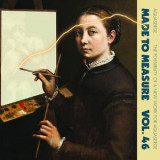
Die französische Avant-Rock-Band Aquaserge ließ schon immer Genregrenzen verschwimmen. Für die Ausgabe 46 der "Made To Measure"-Reihe widmet sie sich auf The Possibility Of A New Work For Aquaserge der zeitgenössischen klassischen Musik ab Mitte des 20. Jahrhunderts: Giacinto Scelsi (1905-1988), György Ligeti (1923-2006), Edgard Varèse (1883-1965) und Morton Feldman (1926-1987). Inspiriert von den unterschiedlichen Ansätzen der vier Komponisten in puncto Dynamik, Klangtextur und Länge der Stücke oder genauer gesagt, Scelsis Forschung über Klangfarbe und Schwingungen, Ligetis Cluster, Varèses melodischer Kubismus und Feldmans graphische Notation, ging die Band das Album intuitiv wie auch methodisch in einem auf neun Musiker*innen erweiterten Line-Up an. Das Album enthält zum einen drei langsame, ausgedehnt-weitläufige Stücke, in denen die Klangfarben der Instrumente miteinander zu einer klanglichen Materie verschmelzen. Diese Materie ist gleichzeitig immobil und mobil, wie in einigen Ligeti- oder Scelsi-Werken. Dagegen enthalten die Hommagen der Band an Varèse und Feldman Momente des Ausbruchs und wilder Improvisation. Diese von Aquaserge geschriebenen Kompositionen, werden mit raren Stücken von Edgard Varèse, eines davon auf Basis eines Gedichts von Verlaine. sowie von Morton Feldman mit einem Rilke-Text komplettiert, und zeigen das Gespür der Band für Melodien.
- A1: Waterlogged
- A2: Guv'nor
- A3: Banished
- A4: Bite The Thong Feat. Damon Albarn
- B1: Rhymin Slang
- B2: Dawg Friendly
- B3: Borin Convo
- B4: Snatch That Dough
- C1: Gmo Feat. Beth Gibbons
- C2: Bout The Shoes Feat. Boston Fielder
- C3: Winter Blues
- D1: Still Kaps Feat. Khujo Goodie
- D2: Retarded Fren
- D3: Viberian Sun Part Ii
- D4: Wash Your Hands
On paper, a full collaborative album from Doom and space age production from Jneiro Jarel
can't fail. In practice it's even better. Doom is in the form of his life here. JJ produced all the
tracks, Doom provided the bulk of the vocals and compiled the cut and paste skits. Doom
recorded the album while 'banished' from the States and back living in london. He references
British culture throughout the album, name dropping British institutions, and possibly being
the first emcee to reference My Big Fat Gypsy Wedding. Jneiro recording the beats in the dirty
south, got into a UK state mind, and turned in heavy hip hop production that leans towards
grime, dubstep and British techno. The album will appeal to fans of classic Doom material.
JJ's tough, far out hip hop production will appeal to fans of Dilla, Flying Lotus and el-p. It also
features guest appearances from Beth Gibbons, Damon Albarn and Khujo (goodie mob).
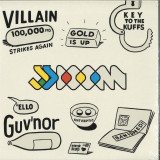
Album artwork is by graffiti artist Steve Powers aka Espo.
It’s been said that writing about music is like dancing about
architecture but what about singing about movies? Sufjan
Stevens and Angelo De Augustine have paired up for a
collaborative project that does just that. ‘A Beginner’s Mind’ is
their debut album and contains 14 songs (loosely) based on
(mostly) popular films. The source material is highbrow, lowbrow and everything in
between. The music is folksy, sweet, sincere and harmonically
effervescent - Simon & Garfunkel with New Age flourishes. This
album runs the gamut and has fun with it, even while its
songwriters remain fully rooted in the melancholy folk idioms
they are known for. Daniel Anum Jasper, a pioneer of Ghanian movie poster
painting, was commissioned to paint a series of new works for
‘A Beginner’s Mind’. His paintings are a graphic simulacrum for
the same sense of wonder, wordplay and intrigue that shape ‘A
Beginner’s Mind’. By transforming old films into vital new songs,
Stevens and De Augustine ask us to consider ourselves from a
previously unconsidered vantage point - a new way of seeing
and hearing - an exercise that’s as necessary and relevant now
as it’s ever been. “In the dizzying chime of his careful fingerpicking and highpitched howls, De Augustine captures love’s bright blaze.” - Pitchfork
“What we find here, on what is arguably the pinnacle of his
output to date, is De Augustine achieving the beautiful balance
between introspection and grandeur; straddling the place where
pain and hope intersect.” - Line of Best Fit
Ever since the release of their acclaimed debut EP P'eau (2018) these Mechelen-based musicians have been honing their craft in songwriting and production, building a new home studio to record future material while also expanding from a three-piece to a five-piece ensemble. By adding singer/percussionist Stefan De Graef (Psychonaut) and guitarist/singer Sander Rom (L'Itch) to their ranks, HIPPOTRAKTOR have become a more versatile outfit able to employ a broader palette of sounds, taking the band's earlier instrumental prog metal sound to new heights. Taking notes from the best moments in contemporary progressive and post metal, HIPPOTRAKTOR capture the awe-inspiring power of nature_from the delicacy of the first falling leaf to the massive cosmic energy of the sun. By combining the big, catchy riffs and the rhythmical prowess of Gojira with the relentless but equally groove-loaded complexity of Meshuggah, Meridian delivers an overwhelming experience of sound, presenting the listener with sentiments that are recognisable, but with an intensity that seems larger-than-life. "Meridian finds its origin in everyday moods, taken out of context and morphed into a stylised version that re- flects the dreamer in me," explains main songwriter and guitarist Chiaran Verheyden. "It tells the story of someone who's lost in a world too massive to comprehend, and seeks answers in places where none can be found. Meridian was written as an attempt to distillate what I felt but couldn't put into words." As the main vocalist in the group, finding these words was the job of Stefan De Graef, who carried over his fascination for philosophy and religion from his other band Psychonaut. "Meridian tells the story of a solitary wanderer on the Earth in the absence of other beings," explains Stefan. "Without anyone to share knowledge and history with, the protagonist is forced to create his own truths and stories about the nature of life, consciousness and the universe. The protagonist begins to personify and deify his surroundings, assigning sentience to the trees, the mountains, the wind, the waters etc. for they are his only companions in this desolate world." Essentially, Meridian is an exploration of the evolutionary theory of naturism, which was put forth by German scholar Max Mu"ller in the 19th century, and which argues that religion finds its origin in the deification of the forces of nature by early human beings. By juxtaposing this sociological theory with seven tracks that unfailingly conjure images of the earth, sea and sky, HIPPOTRAKTOR have created an analogy that enlarges the imaginative quality of their music to (literally) epic proportions. Combining the best of prog, groove and post-metal, Meridian comprises an incredible ride for fans of soaring hooks, technical riffing and earth-shattering breakdowns. Limited bluegreen-grey single colour vinyl edition, gatefold! FOR FANS OF Meshuggah, Periphery, Cloudkicker, Intronaut, Animals As Leaders, Gojira, Skyharbor, Psychonaut
Unter der Regie des Produzenten Chris Cohen und mit Gast-Beiträgen unter anderem von Buck Meek und Tenci, weben die organischen und doch akribischen Folk-Klanglandschaften und tief empfundenen Texte auf dem Debütalbum von Le Ren aus Montreal einen reichen musikalischen Wandteppich. Mit der Veröffentlichung ihrer Secretly Canadian EP "Morning & Melancholia" im Jahr 2020 hat sich Le Ren den Vergleich mit der Musikalität und den kargen, eloquenten Texten von John Prine und Neil Young verdient. Auf "Leftovers" zeigt sie uns die lebendige Tiefe ihres klanglichen und thematischen Spektrums und schreibt mit einer kühnen Klarheit, die sie zwischen klassischen Ikonen wie Joni Mitchell, Vashti Bunyan und Karen Dalton sowie einer neuen Klasse von Folk-Ausnahmekönnern wie Adrianne Lenker, Jessica Pratt und Laura Marling beheimatet. "Leftovers" präsentiert zu gleichen Teilen Melancholie, tiefe Liebe und Heiterkeit, um die Trauernden aufzumuntern, während es ein Patchwork aus persönlichen Liedern über verschiedene Beziehungen zusammennäht: die, die wir mit Müttern, Liebhabern und Freunden teilen. Auf "Leftovers" destilliert Le Ren jahrelanges Material zu zehn straff ausgeführten Tracks, die durch das schwelgerische Zupfen ihrer Gitarre und das kristallklare Timbre ihrer Stimme vereint werden. Im April 2021 traf sie sich mit Chris Cohen in einem gemieteten Haus in Portland, Oregon, wo sie warten mussten, bis ein Nachbarsjunge aufhörte, draußen Lärm zu machen, bevor sie aufnehmen konnten. Die musikalischen Gastbeiträge wurden anschließend hinzugefügt: Kori Miyanishi, Cedric Noel, Saltwater Hank (Jeremy Pahl), Eliza Niemi, Kaïa Kater, Aaron Goldstein, Buck Meek und Tenci (Jess Showman) nahmen ihre Parts separat in ganz Nordamerika auf.
For all overthinkers and introverts. On their debut album "Smalltalk & DMCs", the Berlin indie-pop trio Varley finds strength in vulnerability. The result: an album like a good friend.
The indie-pop trio Varley is Dublin-born Claire-Ann and German band mates Joschka Bender and Matthias Heising. Initially influenced by Bon Iver, and citing the likes of Fleetwood Mac, The Cardigans and Phoebe Bridgers as other notable touchstones, what lies at the core of Varley’s affective, heart-on-sleeve music is its willingness to be vulnerable. Their music is an honest and raw outlet, and the cathartic nature of their songwriting is one to be championed.
Will Varley is pleased to announce new album “The Hole Around My Head”, his first new material since 2018. With it comes the single ‘Pushing Against Us’.
The album will be the first to be released on Yellow Cake, a brand new record label and artist protection entity set up by record producer Cameron McVey (internationally renowned for his work with Massive Attack, Portishead, Sugababes, and his wife Neneh Cherry). McVey produced Varley’s last album, 2018’s The Spirit Of Minnie, and the two stayed in touch. “When I started writing this new album I gave Cam a call and he told me he was starting a label, so things went from there,” Varley explains.
The singer songwriter self-produced the new album over the Winter lockdown in his makeshift studio on the Kent coast, playing most of the instruments himself. Having never produced an album before, he had McVey on hand via video call to offer encouragement and advice from his family spread deep in the Swedish forest.
No one combines death and black metal quite like Poland’s Hate . With unflinching viciousness and a sense of atmosphere unique to the band, on Rugia, their twelfth full-length, they push the boundaries of their craft even further. Writing for Rugia commenced shortly after Auric Gates of Veles was released. However, Hate soon began to tour extensively in support of their then new opus, and the production of new music was put on the back burner. But come 2020 and the COVID pandemic, the band’s touring plans with Belphegor and Suffocation were abruptly cut short. With this unexpected infusion of free time, the band decided to buckle down and finish writing the material they were working on. .” The album title is taken from the archaic name of a German island on the Baltic Sea now called Rügen. In ancient times, Rügen or Rugia, was a site of holy pilgrimage to the pagan Slavic people. It was the very heart of the western Slavic faith, housing the fabled stronghold of Arkona. The album is at its core a tribute to Rugia and its tribes and the culture they created. The band elected to once again track the album in the Hertz Recording Studio in Poland, and it was recorded, mixed and mastered by the Wiesłaski Brothers (Behemoth, Decapitated).
Branches Of Sun by Wyndham Wallace Like every musician, Markus Sieber is used to going the extra mile to make the music he hears in his head and feels in his heart. There aren’t many, however, who would – or indeed, could – get to work in the mornings by strolling across a frozen lake before settling in a small cabin high up in the mountains located close to the Old Spanish Trail in Colorado where he had set up a home studio. For most of an entire month, though, he’d begin his day by pressing “Record’, and end it by pressing ‘Stop’. The world outside barely existed. Sieber’s no stranger to solitude and frugal living. Born near Leipzig, East Germany, 15 years before the Wall fell, his parents moved to a remote village outside Dresden when he was six, spending his free time in the summer fishing or swimming in the nearby Zschopau and Mulde rivers and, in the winter, ice skating, sledging and skiing. It’s no surprise, then, that with a background like this, and in locations such as those in which he now works and lives, Aukai’s work is imbued with a sense of peace. Even if the album took another half-year to complete, this was done in an unhurried fashion: after a month, he returned to the cabin to “shape, carve and edit” the material, inviting others to contribute along the way..
- 1: Can't Turn Me Around
- 2: It's A Shame
- 3: Tell It All To Jesus
- 4: Somewhere To Lay My Head
- 5: Glory Glory
- 6: Tell It
- 7: Use Me Lord
- 8: Ask God In Faith
- 9: Victory
- 10: We Will Work
- 11: He's Coming Again
- 12: Trying To Make It
- 13: Shake Me
- 14: Stand Up
- 15: I Want To Be Ready
- 16: Have You Tried Jesus
- 17: No Ways Tired
- 18: Amazing Grace
Eleven groups in eight days. A marathon recording session in a makeshift storefront studio in a 100-year-old building in the tiny Eastern North Carolina town of Fountain. Once the idea for the project was in place, Alice Vines of the Glorifying Vines Sisters started calling local musicians. It didn’t take her long to line up almost a dozen groups to come lift their voices and represent the region’s unique Sacred Soul traditions. When the groups on this record gathered to record in February of 2020, they couldn’t have known that the world was on the heels of a global pandemic, or that the year would bring great turmoil and social upheavals. But in the reality created by gospel songs even the greatest of trials are not surprising, nor can they be ultimately devastating. Every time singers stepped up to the mic during these sessions, they created a sonic world where no amount of bad news can undermine the truth of The Good News. Even when “you can’t really see a solution to what you’re dealing with at the moment,” says Kiamber Daniels of Faith and Harmony, singing gospel music will remind you, “hey, I’m still here; I got what it takes to make it through this. It will give you a sense of peace.” Produced by Bruce Watson (Fat Possum/Big Legal Mess/Bible & Tire), this collection of sacred soul recordings of Eastern North Carolinian gospel groups is a one of a kind exploration. With a rich heritage of family gospel music, the artists in this area have been honing their craft over generations and have their own way of making the material original and unique. This is Sacred Soul of North Carolina.
Unter der Regie des Produzenten Chris Cohen und mit Gast-Beiträgen unter anderem von Buck Meek und Tenci, weben die organischen und doch akribischen Folk-Klanglandschaften und tief empfundenen Texte auf dem Debütalbum von Le Ren aus Montreal einen reichen musikalischen Wandteppich. Mit der Veröffentlichung ihrer Secretly Canadian EP "Morning & Melancholia" im Jahr 2020 hat sich Le Ren den Vergleich mit der Musikalität und den kargen, eloquenten Texten von John Prine und Neil Young verdient. Auf "Leftovers" zeigt sie uns die lebendige Tiefe ihres klanglichen und thematischen Spektrums und schreibt mit einer kühnen Klarheit, die sie zwischen klassischen Ikonen wie Joni Mitchell, Vashti Bunyan und Karen Dalton sowie einer neuen Klasse von Folk-Ausnahmekönnern wie Adrianne Lenker, Jessica Pratt und Laura Marling beheimatet. "Leftovers" präsentiert zu gleichen Teilen Melancholie, tiefe Liebe und Heiterkeit, um die Trauernden aufzumuntern, während es ein Patchwork aus persönlichen Liedern über verschiedene Beziehungen zusammennäht: die, die wir mit Müttern, Liebhabern und Freunden teilen. Auf "Leftovers" destilliert Le Ren jahrelanges Material zu zehn straff ausgeführten Tracks, die durch das schwelgerische Zupfen ihrer Gitarre und das kristallklare Timbre ihrer Stimme vereint werden. Im April 2021 traf sie sich mit Chris Cohen in einem gemieteten Haus in Portland, Oregon, wo sie warten mussten, bis ein Nachbarsjunge aufhörte, draußen Lärm zu machen, bevor sie aufnehmen konnten. Die musikalischen Gastbeiträge wurden anschließend hinzugefügt: Kori Miyanishi, Cedric Noel, Saltwater Hank (Jeremy Pahl), Eliza Niemi, Kaïa Kater, Aaron Goldstein, Buck Meek und Tenci (Jess Showman) nahmen ihre Parts separat in ganz Nordamerika auf.
Making her stage debut in April 2019 and selling out her first
headline show at London’s prestigious Southbank Centre less
than a year later, A.A. Williams hit the ground running. Similarly,
the acclaim for her performances and her music has been
unanimous from the start. After one self-titled EP and a
collaboration with Japanese post-rockers MONO, the Londonbased singer songwriter signed to Bella Union and released her
stunning debut album, ‘Forever Blue’, in July 2020.
That Southbank show would prove to be the last time she would
take to the stage for a long while as the world struggled to cope
with unforeseen and extreme challenges. Never a musician to sit
still, the classically trained multi-instrumentalist focused her
creativity on arranging - firstly, by stripping back to the most
delicate bones on her ‘Songs from Isolation’ covers record and
now with a complete reimagining of her own material as the four
songs from her debut EP become ‘arco’.
Not many musicians have the ability - or indeed bravery - to
rework a collection of their own full band ‘rock’ songs into a stringand-voice arrangement. A.A. Williams, however, is not like many
musicians and the minimalism of Arvo Pärt and Gorecki has long
since sat beside Vaughan Williams' folk-inspired classical work as
important influences on her music. Indeed, the intention with the
EP was for Williams to challenge herself by not retaining guitars
and drums, meaning ‘arco’ had to be truly reimagined with a full
string ensemble.
As Williams describes it: “The main focus of the arrangements is
trying to maintain the authenticity of the original songs that, whilst
embodying some of the more familiar elements of the full-band
settings, draws focus on the voice.”
Conducting the ensemble of string musicians in the studio, A.A.
Williams has evolved her own compositions with new
instrumentation and arrangements, encapsulating the singular
vision of a unique artist.
12” pressed on 140g ‘Galaxy White Purple’ vinyl with signed
12”x12” print and digital download code.
Moondust For My Diamond’ is the second album by
Hayden Thorpe, released on Domino Recordings.
In contrast to ‘Diviner’, a critically acclaimed album
steeped in solitude and fragility, ‘Moondust For My
Diamond’ moves into a more natural visual and sonic
palette. Hayden is interested in, he says, “the meeting
point between science and religion, the grand struggle for
reality that shapes so much of our time.” Thorpe has made
an album that is galvanizing, reassuring, elegant and
seductive: it oozes Big Cosmic Energy.
The pastoral evolution of last year’s ‘Aerial Songs’ EP
hinted at an expanding palette that reflected Thorpe’s
return to The Lake District, the natural environment he
grew up surrounded by. These additional influences seep
into ‘Moondust For My Diamond’, along with Hayden’s
involvement with Wavepaths, a pioneering project
integrating music into psychedelic therapy, plus ‘hybrid’
gigs and breath workshops with pioneering breath
practitioner Richie Bostock. It’s those surrenders,
experiments and collaborations that make this such an
enticing, sensory, soul-expanding album
- A1: Unique 3 & The Mad Musician - Only The Beginning
- A2: Original Clique - Come To Papa
- B1: Demonik - Labyrinthe
- B2: Nexus 21 - Self Hypnosis (Mr Whippy Remix)
- C1: Cabaret Voltaire - Easy Life (Jive Turkey Mix)
- C2: Alfanso - Dub Feels Nice (Version 4)
- C3: Ital Rockers - Dreams
- D1: Man Machine - Animal (Dj Martin & Dj Holmes Primordial Jungle Mix)
- D2: Nightmares On Wax - 21St Kong
- D3: Tuff Little Unit - Join The Future (Original Instrumental Mix)
Yellow Vinyl
The first release on Optimo Music founder JD Twitch’s new compilation-focused label Cease & Desist will be a collection of pioneering turn-of-the-90s British “Bleep & Bass” techno tracks curated by author and music journalist Matt Anniss.
Join The Future: UK Bleep & Bass 1988-91 is a partner product to Anniss’s critically acclaimed book on the foundations of British dance music’s ongoing love affair with sub-bass, Join The Future: Bleep Techno and the Birth of British Bass Music. The book, which was published by Velocity Press in December and features a foreword by JD Twitch, documents in vivid detail the previously untold story of the Yorkshire-pioneered style and the impact it had on the development of UK dance music.
The compilation is the first to focus on Bleep & Bass since the sound’s heyday in the late 1980s and early ’90s. It features a mix of historic cuts, period classics, overlooked gems and unreleased material. It was mastered for release by Warp Records co-founder and Forgemasters member Rob Gordon, a producer, remixer and studio engineer who arguably did more than anyone else to define the sub-heavy sound of the style.
Gordon also contributed a previously unheard version of Alfanso’s “Dub Feels Nice”, a near mythical track he produced in 1991 that has never received a proper commercial release. The cut has been a secret weapon for a handful of Sheffield DJs for almost 30 years, most notably Gordon’s fellow Forgemasters member Winston Hazel. Fittingly, the compilation also includes the original unreleased instrumental version of Tuff Little Unit’s Steel City classic “Join The Future”.
Many of the other tracks on the compilation are rare, hard to find or have not been issued on vinyl or digital since their initial release. It opens with Unique 3 and the Mad Musician’s “Only The Beginning” – the 1988 A-side of the first ever Bleep record – and also includes tracks and remixes from fellow scene pioneers Ital Rockers (an early alias of dub hero Iration Steppas), Nightmares on Wax, Cabaret Voltaire and DJ Martin and DJ Homes, the previously unheralded Chapeltown duo behind the influential Leeds-based studio and record label BASSIC.
Elsewhere on the compilation you’ll find Birmingham producer Demonik’s sought-after debut single “Layrinthe”, a hard-to-find cut from Bedford-based men of mystery Original Clique, two classic cuts from the vaults of influential Midlands label Network Records and a glassy-eyed slab of Bleep/deep house fusion from 100 Hz.
Join The Future: UK Bleep & Bass 1988-91 will be released on double vinyl and digital download. The 10-track vinyl version features an insert with extensive liner notes by Matt Anniss. It also comes with a code to download the 12-track digital download version. The compilation will be released by Cease & Desist on March 25th 2020.
"Kazakh artist Galya Bisengalieva’s debut album was released by One Little Independent in September 2020 and is a concept record about the shrinking of the Aral Sea, which has been called one of the “20th century’s more jaw-dropping ecological catastrophes, a consequence of the Soviet-era policy of diverting the two tributary rivers to irrigate cotton plants across Central Asia” (NY Times)
Now, roughly a year later, Galya is releasing Aralkum Aralas. In Kazakh aralas means mixed/reworked. Galya has thoughtfully curated a remix album of artists to respond to her work having previously commissioned new work for her label NOMAD Music Productions. Those musicians are; Coby Sey, Jing, Moor Mother, Jlin, CHAINES and Nazira. Galya approached artists whose practise she judged would resonate with her source material and bring new light to the narrative. She was interested in getting responses from artists from diverse backgrounds for their insight into her voice."
Horace Tapscott's Pan-Afrikan Peoples Arkestra (P.A.P.A.) was one of the most transformative, forward-thinking and straight-up heavy big bands to have played jazz in the 1960s and 1970s. If P.A.P.A. doesn't have the interstellar rep of that other famous Arkestra, and if the name Tapscott doesn't ring bells like Monk or Tyner, there's a reason why: in an industry dominated by record labels, a band that doesn't record doesn't count. And the Pan-Afrikan Peoples Arkestra didn't record for nearly twenty years. But recording success was never their concern -- they weren't about that. First formed as the Underground Musicians Association in the early 1960s, Tapscott always wanted his group to be a community project.
From their base in Watts, UGMA got down at the grassroots. The group was renamed the Pan-Afrikan Peoples Arkestra in 1971, and soon after they established a monthly residency at the Immanuel United Church of Christ which ran for over a decade, while still playing all over LA and beyond. But they never released a note of music. It was the intervention of fan Tom Albach that finally got them on wax. Determined that their work should be documented, Albach founded Nimbus Records specifically to release the music of Tapscott, the Arkestra, and the individuals that comprised it. The first recording sessions in early 1978 yielded enough material for two albums, and the first release was Flight 17. The album commences with the magnificent title track. It is effectively in three parts. It begins with unaccompanied pianos. Then the ensemble embark on a dense, circular and mechanical movement, a platform for horns and pianos to swoop and dive. We return to Earth with a beautiful solitary flute. The second track, the piano-centric, ‘Breeze’ is different to ‘Flight 17’ in intensity and also brevity but it is quietly as daring as the title track. It concludes with a moving lush wash from the full Arkestra, which sound almost like strings only more substantial. These first two tracks take full advantage of the texture of the unusual mix of the various instruments. Next though, it’s a significant change with ‘Horacio’, which is an exuberant Latin infused jingle. It’s unlike anything else on the album. I like to think it was named after the conductor’s Cuban alter-ego! ‘Clarisse’ gracefully switches between slow blues and bop and is bookended with a grand vaguely East Asian theme. The busy bass line introduces ‘Maui’. As with the previous track, it moves between a number of contrasting melody lines and rhythms but there’s still space for a tuneful sax solo.
This is a must-have album. I think the first two tracks on their own make this release essential. Kevin Ward/UK Vibe/Boomkat
Rising Dublin post-punks - SCATTERED ASHES - follow the runaway success of previous single: “Love Is Not An Option”, with news of a new EP: ‘Parallel
Lines’.
Released on their own Fatal Vision label, the three track EP sees the Irish quartet stepping out of the shadows with a clutch of new material, plus a maverick reimagination of “Love Is Not An Option” by Soft Boy Record's Wastefellow. Available digitally on all services and with huge support from BBC Radio 6, KEXP and RTE 2fm the EP will now be available as a special limited blood-red 12”
vinyl.
- A1: Bill Case – I'm Your Hero
- A2 32: Nd. Turnoff – Used To Be A Tiger
- A3: Boots – You Better Run
- A4: Leather Head – Gimme Your Money Please
- A5: Big T. – Tea For Two
- A6: Phil Canning – Sell Out
- A7: Things Fall Apart – Bye Bye My Rose
- B1: Redhead – We Ran And We Ran
- B2: Giggles – Just Another Saturday Night
- B3: Westland Steamboat – Born Under A Bad Sign
- B4: Brother Susan – Flash
- B5: Scruff – Get Out Of My Way
- B6: Π R ² – Jerk Rhythm
- B7: The Knuckle Dusters – The Yob
If you went down the wrong alleyway, took a shortcut through the park or crossed the wrong open space after dark in the UK in the 1970s, you stood a fair chance of being accosted by someone with a big mouth, low morals and some gurning mates to impress, usually reeking of fags and cheap booze and always ready to put the boot in. And, before you could say, “sickening violence”, a short but chaotic scuffle would ensue and a winner eventually emerge, battle scarred and bruised. The boot boy was the worst kind of hooligan. There wasn’t anything you could do or say to appease him. You had the same chance as a fly caught up in a spider’s web. Zero. Your best bet was to run. His intent was always to give you, and vicariously the rest of the world, a good kicking. Thugs, long-haired louts, short-haired louts; the anti-hippy. Birds, booze, bovver and football on their criminal minds. So fasten your braces for a white knuckle-duster ride. 14 bovver rock bruisers for all of you peace-loving losers. Somebody’s going to get their head kicked in tonight... Put the boot in.
Nantais by adoption, the Australian Will Guthrie is a discreet star of the international scene of free, experimental and improvised music; over the past fteen years, he has developed an open and personal approach to drums and percussion, skillfully blurring the lines between his brilliant jazz upbringing, his passion for traditional musics, and his inexhaustible interest in experimental and noise creation, with a pronounced taste for a physical and raw approach to sound. With thousands of performances and some fty albums to his credit, the Australian regularly dispenses his vibratory art solo or alongside the best of improvisation; From Oren Ambarchi to Roscoe Mitchell via Jérôme Noetinger, Anthony Pateras, David Maranha, Ava Mendoza, Jean-Luc Guionnet, Keith Rowe or even Mark Fell. In recent months Guthrie has performed with Tunisian singer Ghassen Chiba, toured as part of “All Around”, a performance with Danish dancer choreographer Mette Ingvarsten and founded the Ensemble Nist-Nah, a gamelan orchestra, in the company of eight other percussionists, out of which Black Truf e published an album, with a second on the way. He also found the time to put in shape a second volume of “People Pleaser”, a discographic act between an autographical assessment, the parenthesis and the musical UFO. A singular exercise in Guthrie's discography, “People Pleaser”, a series initiated in 2017, sees the Australian partially put down his drumsticks and wear a producer cap for a result offering a resolutely singular perspective of / on his work with a very personal dimension. On the rst volume, with a cover signed Stephen O'Malley sets the tone by diverting the chamaré Warhol infulenced visual of the album “Unit Structures” by Cecil Taylor. The portrait of the free jazz pianist has been replaced by passport photos of Guthrie. The result is a diversion into a fairly “Pop” aesthetic whose musical content works in a fairly similar way. Four years later, the cover art's undertones are slightly darker and Guthrie hasn't aged a bit on his new passport photo. The twelve tracks of this second “People Pleaser” combine and arrange eld recordings, heady loops, twists, musical quotes stuck on bedside records, recorded moments captured during travels, ghosty voices from low- lands, a police interview tape and imagined exotic sounds ... Guthrie could walk us for hours on his hard drive like looking at a photo album but he chose to build pieces based on this very personal sound material, much like a mixtape, with special care given to how sounds articulate, overlap and collide. He thus invites his heroes and his friends to join him in skilfully chiseled and nely edited imaginary jams. The rst to take pleasure in this “People Pleaser” is undoubtedly its author as some of his nds are enjoyably playful; we are there embarked in an addictive sound patchwork at high speed where a Balinese Squarepusher is propelled via a defective cathode ray tube in a temple where the happy marriage of the saxophone and the gong is celebrated before this too short respite is interrupted by a sustained hip hop rhythm. The multiplicity and variety of sources give the whole a very pop format and the way in which Guthrie combines sounds, textures, rhythms and vocal elements quickly takes on a narrative dimension and poses this exercise between hip hop and a very personal plunderphonic, evoking as much J Dilla or RZA as the irreverent inventiveness of People Like Us or Wobbly. Will Guthrie has never been in as good company as on a solo album, he also lists on the cover the list of friends, heroes, members of his family and countries who inspired him and to whom he pays homage / collage on this new disc; An aesthetic exercise apart in his discography, both in nitely personal and self-centered and resolutely turned towards what animates him, the aptly named “People Pleaser” reveals the music DNA of the Australian and can be listened to on repeat.
Truly, the luscious, soulful new album from Manchester singer-songwriter Caoilfhionn Rose (pronounced Keelin) moves through a tapestry of curious musical inflections; nods towards folk, jazz, ambient, electronica and even a subtle influence of psychedelia, it never stands still to take a breath, despite its ethereal and delicate core. Out April 9th on Gondwana Records (Mammal Hands, Portico Quartet, Matthew Halsall, Hania Rani), in Truly, the young singer-songwriter has accomplished a body of work that is both sonically and lyrically wise beyond her years.
Co-produced by Kier Stewart of The Durutti Column following Rose's collaborative endeavours with them on their album Chronicle LX:XL, the musician's song writing draws from a diverse palette of influences, including Building Instrument, Rachel Sermanni, Alabaster dePlume and Broadcast. Rose also professes to a love for beautiful, stripped back, piano based music, such as Dustin O'Halloran and label mate Hania Rani.
Truly came to exist due to a deep-routed need to create – even though its conception was interrupted as Caoilfhionn Rose recovered in hospital from an illness, she found strength within writing music. "In Spring 2019 I took part in a gig swap with my good friend and fellow musician Kristian Harting who is from Denmark. We played several gigs in the UK but unfortunately the Denmark part of the tour was cut short as I was taken ill. I was hospitalised for several weeks and have taken the last year out to recover" says Rose. "I gradually returned to finishing my second album" she continues. "Coming back to creating after being unwell was challenging but also therapeutic. This record marks a difficult time of my life and writing it helped get me through that. I am really grateful to have music as an outlet." It may be this tremendously challenging period that has abetted its characterising qualities.
Rose's beautifully restrained vocal is all at once soothing yet mesmerising. She demands and holds attention through her evident talent yet hypnotises the listener into a trance with her experimental tendencies. "After being unwell, getting back to recording helped me recover my voice after not singing for so long. Finishing bits of songs, writing lyrics and recording vocals helped me get back on my feet and get better."
Lead single from the album – 'Flourish' – is an intoxicating song that meditates on being present in the moment, allowing peace to come to you. "The song 'Flourish' is about looking forwards with hope and possibility, 'let it flow away, let it turn around and flourish'. It's about finding peace and feeling wonder again" says Rose about the track. "'Flourish' hints at the ideas of what could be, how things can unfold if you let go 'and just be here'."
A message of hope is instilled throughout the record, echoed again in 'Fireflies', a song inspired by a campsite in France, which became filled with fireflies at night. "To me 'Fireflies' has a nostalgic and comforting feel. It's about feeling hopeful about the future 'though there may be dark clouds the sun will always come'. There are references to older lyrics I have written. The line 'free from all the chaos' is a nod to a song I collaborated on with The Durutti Column. The song is about acknowledging the past and moving on as 'time is always healing'."
A recurring theme of reflection and being grounded in the present, acknowledging the past and looking forwards with courage is one that envelopes 'Truly', and is something that is echoed in its beautiful swelling flourishes and its tranquillity – resonating with atmosphere, the album all at once sounds so large and yet so subdued. "The line on Every Waking Minute; 'we forget what lies behind the eyes' is about remembering that everyone has their own things going on and challenges to face but we should 'feel every waking minute', become aware of what's unfolding around us outside of our own stories. It's a self-reflective song really, reminding myself that 'life can take you bysurprise', there are going to be ups and downs along the way"
Elsewhere on the album, Rose explores the connection between nature and life on single To Me. "I love going on long walks and the healing power of nature is a recurring theme in a lot of my lyrics. I have a very optimistic outlook and I find solace in the small things like being outdoors."
Caoilfhionn's debut Awaken, co-produced with label mate Matthew Halsall, saw the singer, songwriter and producer tie together remnants of Manchester's musical past with its evolving present. Prior to this, the artist collaborated with one of her biggest musical influences, Vini Reilly of The Durutti Column. The musician worked with the Manchester band on four songs on their album Chronicle LX:XL. "I've learnt a lot from collaborating with musicians like Vini Reilly, Matthew Halsall and my bandmates" says Rose. "This is reflected in my current style and approach to making music. I no longer just write as a therapeutic or reflective process; I can write more abstractly and outwardly."
Kier Stewart of The Durutti Column co-produced her latest offering, Truly, following his band's collaborations with Rose. "I befriended Kier after we worked together. Collaborating with The Durutti Column was my first experience of recording music with other people in a studio." Together, the pair have created something expansive yet fragile – and altogether unique. "He's brought so much to this project" she says. "I feel Keir has brought out the best in the songs, adding really intricate and subtle details and effects. It was inspiring getting to work with Keir and I've learnt a lot from his approach of just experimenting and seeing what works."
Subaerialis the latest and most sophisticated transmission from the long musical partnership of cellistLucy Railtonand keyboardistKit Downes, a collaborative history that stretches back thirteen years. From the beginning, the pair bridged musical worlds, with the former emerging from classical and contemporary music and the latter steeped in jazz tradition. This phenomenal new album captures the musicians erasing lines between approaches and traditions. While improvisation has always been a part of their alliance,Subaerialmarks thefirst time that the duo have used recorded improvisations as the core material for a release. The cello and organ, beautifully recorded byAlex Bonneyat Skáholt Cathedral, blend in richly striated harmonies, with phrases and cadences that stretch back centuries while sounding unerringly contemporary.
The pairfirst crossed paths whilst studying in London and spent the following decade collaborating in various groups whilst cutting their own distinct paths. By the time they rendezvoused in Iceland in the fall of 2017 to createSubaerial,Railton had moved to Berlin, where her embrace of electronics was leading her in new directions, exploring microtonality, psychoacoustics, and synthesis, an evolution captured on shape-shifting albums released by experimental imprints likeEditions Mego, PAN,andTakuroku. Her debut solo albumParadise 94released onModern Lovefeatures Downes on organ. Around the same time, Downes had been signed toECMand was directing much of his focus on the organ—his original instrument—on the two recordings he's made for the hallowed imprint, including the 2019 albumDreamlife of Debris, which features the cellist.
After humble lo-fi beginnings in the Australian Art-Pop Underground, Donny Benet has expanded his cult-like following across the Globe with a resonant Array of danceable Repertoire dealing with Love- and Affection. New album "Mr Experience" marks a new chapter, informed by a wealth of musical- and personal development.
For Mr Experience, Donny envisioned a Soundtrack to a Dinner-Party- Set in the late 1980's. While his earlier Recordings drew Inspiration from DIY Pop Conspirators such as Ariel Pink & John Maus, Donny channelled the Stylings of Bryan Ferry & Hiroshi Yoshimura as the Impetus for new Material, evident on the Intimacy found on ‘Girl Of My Dreams’ and it's lush production- with a soothing whistle-along Chorus for good Measure!
Sincerity has been a key component of Donny Benet’s output since the beginning. His songs deal with genuine Emotion served on a kitsch Platter. An alter-ego manifested in the beginning of the 2010's, Donny has blurred the Lines of Artifice to create a back- Catalogue that can embrace- and challenge, often simultaneously, - the notion of Irony in Art.
"Mr Experience" moves further away from ironic Notions as Donny explores lyrical- and musical themes which embody Observations of Maturation in his audience, his tightknit musical Community- and himself. While ‘mature’ is a term that often rings hollow as an album descriptor, the term couldn’t be more apt for Mr Experience.
Previous album The Don was created with the luxury of time. The phenomenal Response to that Album across Europe- and the United States - fuelled by accompanying Music Videos clocking in Views in the Millions- meant that there were scant Windows of Opportunity to write- and record a follow-up.
With a legacy in Sydney’s music community, working with Sarah Blasko, and tightknik collaborators Jack Ladder & Kirin J Callinan, Donny Benet is accustomed to collaboration on the Stage- and in the Studio, mostnotably on the 2014 full-length release Weekend At Donny’s.
“There is such immense talent evident in every aspect of the Donny Bene experience - the vision of the character, the steadfast adherence his narrative and the musicality of Benet himself all combine to makesomething truly genius.” - Double J, Australin.
“Donny Benet makes feminine music for everybody” - Vice, Netherlands.
“The Don does not sound like amusical copying machine”. - 3voor12 National, Netherlands.
“The set was punctuated with virtuosic solos and exquisite harmonies, and added another layer of genius to the show.
We almost couldn’t handle it... Donny for president!" - Indie Berlin.
“Everyone loves Donny Benet” - Feature in Gonzai, France.
“Phenomenal Australian Showman... Offers Top-Class Dance Music with Virtuose-Bass Guitar- and Keyboard Parts & incredible Sound-Colour feel.” - Podujatie.sk, Slovakia.
Donny has toured Europe five times since the start of 2018 and has played in the UK, Austria, Germany, Slovakia, France, Netherlands, Spain, Portugal, Belgium, Denmark, Switzerland, Czech Republic, Greece and Sweden. The Don will revisit Europe twice in 2020, once for his own headline shows in May then back again in August for festivals!
* Kamana is a multiformat release inspired by and channeling the cultu- re and traditions of the Aeta, an indigenous group from the Zambales region in the Philippines. One of the oldest inhabitants of the region the Aetas are also some of the most fascinating and ancient nomadic and hunter gathering cultures. The release goes from the realms of the
real to the imaginary, from transcription to syncretism, from concrete to abstract. An (un)real Sonic Exorcism filled with
*Ancestral Frequencies, Haunted Ghosts and other animistic spirits roaming the Pinatubo forests.
The release features a series of materials released in different formats from the Field recording digital only release, an LP and CD release to a special 7inch vinyl featuring an Interview with a bat hunter.
* Kamana is a long due homage to the Aeta community that hosted me a few years back, fascinated by the endurance of these people and their connection to their land, devastated by the eruption of the Pinatubo volcano in 1991, they continued to go back to their ancestral lands surviving on basic agriculture and hunting bats and wild pigs. Living with them for weeks, I managed to capture some essential field recordings and sounds that form and com- pose the basis for this release, from the more reprocessed and interpreted LP release to the pure field recording documentation of the digital release. It is meant to be accessible to all and provide a window to the livelihoods of these unique communities. For this reason, this release serves as both an archival document and a syncretic one, trying to channel memories and feelings of living in these jungles whilst listening to their stories as well as witnessing their lifestyles.”
Carlos Casas, 2021
The Cool Feedback Quartet’s music is quite similar to a philharmonic orchestra manipulating new material:
feedback, or in other words, the unexpected beauty of sound when it is let loose. Becoming its master so as to make the
best use of it, like a new instrument, the guitar pick up plays again on request. Harmonizing sounds like a string section
gone wild would, like light piercing through ether, tearing up the background and taking us for good to unknown territory.
The bandleader, Grégoire Garrigues, who first got the idea of the concept and got the ball to roll, is a well-known and
respected French guitarist.
Spaniard Cuartero debuts on LOCUS as he drops his slick four-track ‘Wasp’ EP this September.
A mainstay within Spain’s house music scene over the past decade, Malaga’s Cuartero remains one of the most consistent and well-supported names on the circuit. With releases via the likes of Hot Creations, Desolat and Saved, his recent material has seen a deeper and more minimal emphasis placed on his work, dropping material via Eastenderz, Constant Black and Djebali, plus his own Cuartero Concept imprint. Up next, September welcomes the addition of a new label to his catalogue as he makes his first appearance on LOCUS, delivering a quartet of crisp cuts in the form of his ‘Wasp’ EP.
The lively ‘Eucalyptus’ opens proceedings as swirling pads and rugged kicks bounce atop of nimble basslines, while ‘Assault’ employs rubbery, elastic bass alongside bright vocal interjections and sharp drum licks. On the flip, ‘Bagonda’ welcomes a deeper, warping journey through skipping hats, rich chords, and glitched vocals, before closing the show via the off-kilter and scattered yet impactful sonics of title cut ‘Wasp’.
Releasing in September 2021, PNFG & LNFG are proud to bring you the
remastered “I’ve Seen Everything” from Scotland’s legendary band -
Trashcan Sinatras.
The album will be released in a number of vinyl formats, a deluxe CD (with 6
bonus B side tracks) will also be available.
On its release, Tim Harrison of the Ealing Leader described I’ve Seen Everything
as a “melodic, velvety concoction” with “a lot of subject matter” and “strong
echoes of The Housemartins”.
He concluded: “I’ve Seen Everything is an economic, restrained and sensitive
collection well worth listening to.”
The Irish Independent wrote: “Their debut was a fine beginning, but on its
successor they’ve hardened their approach and broadened the scope of their
songwriting. Whereas before they tended to sit back and admire their pretty
chord structures, they’re now audibly relishing the opportunity to get stuck in
to the material.
Brent Ainsworth of the Santa Cruz Sentinel felt the album was “abundant [with]
luscious, flowing pop”, with the “softer songs” being best.
David Mark of the Asbury Park Press commented: “Following up Cake would
be difficult, but I’ve Seen Everything is an equally interesting effort from a very
good group.
While Cake was a bouncy album, I’ve Seen Everything is a notch more somber.
The work, always interesting musically and lyrically, is something of a cross between The Beatles’ Rubber Soul and XTC’s Skylarking.
Repress!
Portico Quartet / Hania Rani brings the singular Polish pianist and composer, Hania Rani, and East-London based widescreen minimalists, Portico Quartet, together for a unique collaboration.
Label mates, they met when Hania Rani performed at the Gondwana 10 event at the Roundhouse in October 2018, an event that Portico Quartet headlined and which marked Rani's UK debut ahead of the release of her breakthrough album, Esja.
The idea was simple, each artist would select and then rework one of each other's tunes. The result is a beautiful collaborative work that feel less like a pair of straight forward remixes and more like a new recording that brings the two acts distinctive sound worlds to a new place.
The first track is Hania Rani - Nest (Portico Quartet remix), which finds Portico Quartet reworking a track from Rani's most recent album Home. Portico Quartet saxophonist and keyboardist Jack Wyllie says:
'We've been fans of Hania since her first album album Esja, so it was a pleasure to get to work with her. Our remix took fragments of her voice and piano, and from that we extrapolated and composed an almost entirely new piece of music. The result was (hopefully) that her sound world became another instrument in the band…'
On the flip is Portico Quartet – With, Besides, Against (Hania Rani remix), which Rani recrafts with the addition of piano and her own unique vocals.
"Imagine being asked to make a remix for one of your favourite bands? I felt excitement and… mild panic. The idea for this one little rework took me a couple of months! I chose the track With, Beside, Against, which is a beautiful peaceful and broad piece of music with an energetic movement in the middle part. I tried to add a vocal line to it, reminding me of one of Portico's tracks called "Steepless" from their album released back in 2011. The result turned out to be satisfying. I felt it worked really nicely, matching the music in a natural way"
David Wrench and Evangeline Ling - aka audiobooks - threw
absolutely everything at their 2018 debut album, ‘Now! (in a
minute)’, a hectic, head-spinning blast of freewheeling freak-pop
genius. On its follow-up, ‘Astro Tough’, via Heavenly
Recordings, they’ve somehow found a way to ramp things up
even further, concentrating their chaotic energy and inherent
weirdness into a record that’s bigger, deeper and more powerful
han even its predecessor.
“The first album was a photograph of the beginnings of the
project, recorded without any overall plan,” Wrench explains.
“‘Astro Tough’ is more scripted, but a script that still allowed for
ots of improvised scenes. There was more intention behind the
songs, and a lot more refining. We weren’t precious about
everything being spontaneous and a first take, like on the first
record, even though some of it ended up being that. We made a
ot more material for this record, but chose the tracks that best
worked together as an album.”
Multi-instrumentalist and super-producer Wrench is as
comfortable unleashing monolithic psychedelic wig-outs and
heavy dub-driven monsters as he is crafting irresistible synthpop bangers. Writer, vocalist and visual artist Ling is as
chameleonic as she is charismatic, able to jump from
detachment to rawness to aggression to tenderness to hilarity to
oe-curling awkwardness, sometimes within the same song.
Though the record is a product of increased refinement, the pair
were physically together only in bursts, cramming sessions
around their respectively hectic calendars. “We had much less
time together than on the first record, but every time I did see
David that thirst and the ability to come up with something was
there. I think this record is better than the first record, and I
think we’re dying to make more. We’re going to try and better it
again,” says Ling.
Eco-mix colour vinyl. Black vinyl format (HVNLP183) will be
made available once coloured vinyl is sold out.
- “Bertha”
- “Me And My Uncle”
- “Mr. Charlie”
- “Loser”
- “Beat It On Down The Line”
- “Sugaree”
- “Jack Straw”
- “Next Time You See Me”
- “Tennessee Jed”
- “El Paso”
- “Big Railroad Blues”
- “Casey Jones”
- “Good Lovin’”
- “Brokedown Palace”
- “Playing In The Band”
- “Run Rudolph Run”
- “Deal”
- “Sugar Magnolia”
- “Comes A Time”
- “Truckin’”
- “Drums”
- “The Other One”
- “Sitting On Top Of The World”
- “The Other One, Pt. 2”
- “Not Fade Away, Pt. 1”
- “Goin’ Down Road Feeling Bad”
- “Not Fade Away, Pt. 2”
- “One More Saturday Night”
From the first show the Grateful Dead played in St. Louis in 1968 – when “St. Stephen” made its debut – local fans knew the Gateway City’s rich musical heritage had a unique way of coaxing the best out of the band. One of the shortest-lived iterations of the Grateful Dead was the band that existed December 1971 through March 1972. Jerry, Bob, Phil, Bill, Pigpen, and Keith formed a formidable version of the Dead that only played a few shows together before Donna Jean joined as vocalist, and before Pigpen would depart the stage for good in June 1972. What this sextet lacked in quantity of shows it made up for with creativeness, power, and inspiration.
When Pigpen re-joined the Dead on December 1, 1971, after a few months off during which Keith had joined as piano player, the band was now an unstoppably powerful live juggernaut it hadn't been since the height of the Primal Dead era in late 1968-1969. Widely considered one of the best shows from the Pigpen-Keith era of the Grateful Dead, December 10, 1971 in St. Louis has it all: Pigpen singing lead on four songs including an 18 minute version of Good Lovin' and a very rare performance of Run Rudolph Run; a deep dive into the Dead's psychedelic recent past with a monster version of The Other One; plus plenty of the new material from earlier in 1971 like Bertha, Loser, Sugaree, and Playing In The Band. They also hit upon much of the music that would appear the following year on Europe '72, such as Jack Straw, Tennessee Jed, Mr. Charlie, and One More Saturday Night. And no Dead show of this vintage would be complete without the "hits": Truckin', Sugar Magnolia, and Casey Jones all make appearances. This is truly one of the deepest, most dynamic, exciting, and accessible live shows in the entire Grateful Dead canon.
The sixth installment in Relapse's exhaustive reissue campaign of DEATH's immensely influential catalog is Leprosy, the band's titanic second album. Originally released in 1988, ‘Leprosy’ was a pioneering album, building upon the thrash sounds of Metallica and Slayer but adding a previously unheard level of raw extremity. These songs are the roots of an entire genre: death metal. While this was only the second record DEATH released, it immediately cemented them as heavy metal icons. Meticulous care has been put into this reissue. The entire album, as well as the bonus material has been painstakingly remastered by Alan Douches (Mastodon, Nile, etc). Includes Digital Download
- A1: Virtually Happy
- A2: The Ride #1
- A3: No Big Thing
- A4: My Own Sake
- A5: Til I Get
- A6: Waiting Room
- B1: I Can't Be Trusted
- B2: Card Table
- B3: No Hope Bar
- B4: Believe Me #1
- B5: Come The Day
- B6: In You
- C1: Believe Me #2
- C2: Stain
- C3: Won't Go Out
- C4: Too Late Now
- C5: Sand
- C6: Lonesome Town
- D1: Your Love Is Mine
- D2: Laughing To Keep From Crying
- D3: Listen
- D4: Rain Down Rain
- D5: You Shine
- D6: Box Elder
Nachpressung der beliebten Compilation! Auf "Singles Round Up" kommen die ersten zwölf 7"-Singles, A&B-Seiten von Holly Golightly zusammen. Mit dabei ist das bluesige ,No Big Thing" mit seinem Barklavier und der Mundharmonika, das schmutzige gitarrenlastige ,Til I Get", die mit dem Jazzbesen bearbeiteten Drums und der Kontrabass von ,Come The Day", das eindrückliche ,Stain" und die brillante Coverversion ,Box Elder" von Pavement. Holly Golightly (ihr echter Name!) begann ihre musikalische Karriere 1991 bei Thee Headcoatees, einer Splittergruppe von Billy Childishs Thee Headcoats. Nach vier Jahren als Headcoatee trennte sie sich von der Band, um 1995 ihr Solodebüt ,The Good Things" zu veröffentlichen. Während bei den Headcoatees ein 60's Girl Group Sound auf dreiakkordigen Garagerock traf und viele Songs sowieso aus der Feder von Billy Childish stammten, vermischten sich auf Hollys Soloplatten Blues aus der Zeit vor dem Rock'n'Roll mit Folkrock und einer entspannteren Rock'n'Roll Gangart. Neben Coverversionen von Künstlern wie Willie Dixon, Ike Turner oder Lee Hazelwood schreibt Holly den Großteil ihres Materials selbst. Holly Golightly ist ohne Frage die interessanteste und vielseitigste Künstlerin aus der Schule von Billy Childish und ist mit Sicherheit eine der besten Songwriterinnen der Post-Grunge Ära, die mit jedem Album besser und besser wird. Seit ihrem Debüt 1995 war sie stetig aktiv, hat eine ganze Stange von Alben und eine noch größere Stange Singles für die verschiedensten Labels veröffentlicht und in den USA, Australien und Europa getourt.
- 1: Tides
- 2: I Know, I Know, I Know
- 3: More Kicks (Long Day’s Journey Into Night… Life)
- 4: Absolutely Anything
- 5: Gangsters Are Running This World
- 6: We're All Just Trying To Get By
- 7: Gangsters Are Running This World (Purple Version)
- 8: Isolation
- 9: The Clapping Song
- 10: Outsider
- 11: Foreign Sand (English Mix)
- 12: Journey's End
Outsider is Taylor’s first album of new material since 2013’s Fun On Earth A highly personal project, Outsider’s instrumentation is almost entirely performed by Taylor, with his largely restrained vocals matching the album’s contemplative ambience. But Taylor does cut loose along the way with a foray into some hard-riffing blues-rock as well as an adrenalin charged BIG surprise retread of a classic 1965 novelty song, which is exactly the fun on earth we need in these challenging times.
f 6 We're All Just Trying To Get By [feat. KT Tunstall]
A remix album of Tolerance by Osaka-based electronic musician Junya Tokuda released from remodel, a label established by Yuzuru Agi and Studio Warp.
In addition to performing live and releasing works, Junya Tokuda runs the web label Linesound and organizes the electronic music event "Line".
His previous releases include "map not seen EP" (Linesound, 2011), "A Day In The Alley" (shrine.jp, 2016), "Unleash EP" (LongLongLabel, 2018), and "No Man's Land" (shrine.jp, 2020). jp, 2020).
remodel also released solo album, "Anemic Cinema", in April 2021, prior to this work, and his track was included in a two-disc compilation, "a sign 2", released in May 2020.
This album "VANITY RE-MAKE/RE-MODEL Vol.1" is a remix album using material from the Tokyo-based project Tolerance by Junko Tange from Vanity Records.
The production was done in parallel with "Anemic Cinema" (late August 2020 to mid-December 2020), and the basic musicality, especially the brilliant treatment of sound by dub-like spatial effects, is common to both works.
However, in this album, the material of Tolerance is sometimes vague and fragmented like a torn tape swimming on the surface of the water, and at other times like a tape reel rolling down from the ocean-like sound image created by the skillful blending of pads and moving noises through the manipulation of dub effects.
The tactile sensation of poking and stroking the ears (like ASMR), which was also felt in "Anemic Cinema," is more vividly revealed by the carefully considered incorporation of a foreign object.
In addition, the instrumental aspect of Toleranece's musicianship, especially the effective use of the electric piano sound, is also impressive. Interestingly, in other tracks, the bassline exerts a strong pull and draws out the phrasing aspect of Junya Tokuda's musicianship as if in response to the electric piano.
Junya Tokuda's music, which even creates an organic feel with its deft handling of generated sounds and samples, reveals its caliber and hidden patterns through the inclusion of Tolerance voices, noises, and instruments that seem hard, rough, and axially distorted. It is an exhilarating and magical work.
- A1: Freedom Ft. Jack Tyson-Charles
- A2: One For The Trouble
- A3: Recipe For Love Ft. Jack Tyson-Charles
- A4: Coco
- A5: Brown Sugar Ft. Herbal T
- A6: The Gypsy Ft. Jack Tyson-Charles
- B1: The Contender
- B2: Missing Me Ft. Jack Tyson-Charles
- B3: No Guts No Glory
- B4: Making It Right Ft. Juliette Ashby
- B5: On The Road Ft. Jack Tyson-Charles
- B6: Here We Go Again Ft. Wax,Herbal T,Eom
A Wide ranging, eclectic and progressive musical outlook has always been the Lack of Afro approach. His latest material follows suit as he harnesses disparate musical styles ranging from funk, soul and hip-hop to create a contemporary yet vintage musical escapade of superb songs.
On his 4th studio album for Freestyle Records, the influences, sounds and musical textures are more eclectic than ever. Below, Adam talks us through some of the his favourite moments on 'Music For Adverts'.
First out of the box is the steaming funk killer Freedom: This time around I knew I didn't want an intro or a skit to start the album - I needed a strong, heavy opener - I had the melody for the chorus floating around in my head. It was then just a case of working with Jack Tyson - Charles on the rest of it and getting the vibe that the song required.
Long time Lack Of Afro collaborator Herbal T features on Brown Sugar: I had an idea of doing a disco track with an emcee on it, which you don't really hear often. This is actually the first time I've sung on a Lack of Afro track, adding my backing vocal warblings on the choruses! Special shout to George Cooper for the howlin' Hammond solo at the end too.
Of the gritty instrumental No Guts, No Glory Adam explains: I wanted to include 3 instrumentals as I always have a soft spot for them & it's what people know me for. The 'choir' was recorded by layering up my own voice in different octaves, nothing is auto-tuned, its all real. The studio allows me to do stuff like that but I could never sing live - I'll leave that to the proper vocalists.
'Proper vocalist' Jack Tyson - Charles again features on The Gypsy, which as Adam explains uses the classic song format to great effect: One of my favourite LOA tunes to date, Its in keeping with the album mission statement of wanting to write 'proper songs' instead of just grooves.
Dark Star Safari is a musical entity comprised of Jan Bang, Erik Honoré, Eivind Aarset, Samuel Rohrer and John Derek Bishop. Their second fulllength offering Walk Through Lightly is the first to feature all five musicians together in the studio from the outset, making for a more organic refinement upon their already established methodology: gradually sculpting distinct songs out of collective improvisations, or using the raw material from initial recordings as the basis for more carefully articulated compositions. The final mix is one that invites few stylistic comparisons to other musical peers, and in fact few comparisons to existing genres. Though this second offering from the project is frosted over with a Scandinavian sense of spatiality and
melancholy, it’s best listened to without considering any origin points, geographic or otherwise: from the opening moments of “Walk Through Lightly,” listeners will feel as if teleported directly into the middle of an enigmatic film-in-progress.
The album opener immediately and successfully sets the table for what is to follow. The electronic and acoustic instrumentation is pensive, but not passive, with restrained scrapes and stridulations in the background combining with backwards-looped passages and perlescent or granulated sound effects to better emphasize the carefully arranged latticework of guitar, percussion, strings, and bass. In some places, such as on “Father’s Day” and “Measured Response,” the silences or breaths between passages are pronounced enough to be an instrument in their own right (and an elegant confirmation of the fact that silence is also a conveyor of information). This nuanced production, which wisely opts for intimacy instead of relying on overdone "instant atmosphere generators" like lengthy reverb, provides just enough tension to contrast with the sense of elevation provided by Bang’s vocal contributions: smoky, evanescent, and impressionistic recitations offering not snapshots of specific events, but rather complete emotional environments for the listener to hover through and explore.
Within these environments, the lyrical imagery focuses upon coming to grips with sudden transformations on both micro and macro levels (the opening “this was a perfect place / till we lost our way” from “Patria” or the foreboding “Poems that explore / Their silence / Crush their violence / Now their time ends” from “Measured Response.”) It focuses as well upon coming to thresholds or crossings, be they physical crossroads or internal states of mind, or both (see especially the striking turns of phrase from “Murmuration.”) With such things in mind, it’s only natural that there would be consideration of dreaming as well, and indeed four different titles on the LP make different reference to a dream or dream state, seemingly valuing dreams as part of the continuum of consciousness rather than something totally cut off from waking experience.
Given the sense of foreboding, anticipation, and even unease that these kinds of subjects often bring with them, the spare and un-hurried music is all the more intriguing, especially when the eponymous finale arrives and the percolating sound bed seems to hint at a coming resolution, but then leaves the listener with more questions than answers. By competently fusing a mature, economical approach to sincerely romantic lyrical themes, Walk Through Lightly is a rare accomplishment.
During the production of two singles (This being the first) unfortunately William Stuckey passed away, below are some words from my partner in the project Brian Sears regarding our work with him pm his LP.
Brian Sears - I'm not one that likes to write but I wanted to say a few things about William Stuckey. William Stuckey passed away last in August 2021 at age 73, and is an artist that I've been working with since last summer. He was a key fixture in the Little Rock music scene and most notably was one of the driving forces behind the legendary True Soul label. Lee Anthony, the owner of True Soul Records, once told me that William Stuckey was the most talented musician he had ever worked with, and if you know anything about that label or Lee Anthony, that's quite a compliment.
When I reached out to William last summer about re-releasing his material, he ignored my calls and messages. Fortunately, I was able to reach his son, Erreyon who was kind enough to listen to me. I've worked a lot of terrible sales gigs in my past and "getting to the point" is sometimes a hard thing to achieve, especially when you're trying to talk about the music business and music that's 50 years old. But the point was simple, his music matters and deserved to be preserved. This resonated with William and Erreyon and they gave Euan Fryer and myself a chance.There was a memorable handoff of the master tapes in a parking lot and from that point forward I knew William Stuckey trusted me. Trust is something he had to do a lot in his life due to the fact that he was visually impaired and I'm thankful he trusted us. As I wrote before, there was a long process of transferring the tapes, but it was successful, and the album has never sounded so good. William had incredible hearing and was able to pick out details most might not detect. He was gifted and that shined through his own playing and voice through copious recordings. Speaking with him after he finally heard the newly remastered album, the way he had intended for it to sound, is something I'll never forget. Moments like that are really the reason why I feel so compelled to work with older musicians that didn't get a fair shake the first time.
Meeting William Stuckey face to face earlier this summer was one of the highlights of my year. We laughed and hung out at his place where he had lived for the past 50 years. I told him his music was internationally known and the re-release was well received. He was humble and felt like a long lost friend that I hadn't seen in a long time. I'll never forget that. I told him I wanted to take some photos, and I'm so glad I did.We had a good time and it was a beautiful summer night and as I left his place his neighbours noticed me walking to my car and wanted to chat, so we talked briefly and it ultimately lead to one of them getting into their car and cranking "The First Time" on the stereo system in their driveway. I wasn't sure if Stuckey could hear it from his house, but part of me knew he probably could and hearing his song echo in the background as I drove off and thinking about Stuckey and the time we shared and his music being appreciated by so many, even in that moment, is a wonderful memory. I'd like to think he was smiling.His music and legacy will live on forever.
Rest in peace to a great one.
- 1: Novocaine/Astronaut Mile Thunder
- 2: Novocaine
- 3: The Needle And The Damage Done
- 4: The Little Drummer Boy
- 5: Astronaut
- 6: Treasure Chest
- 7: Furnace
- 1: Bear Catching Fish . Bear Catching Fish
- 2: Rockford Files
- 3: Treasure Chest
- 4: Cabin Fever
- 5: 1/4 Mile Thunder
- 6: Bullfight
- 7: Mountain High
- 8: Winter Time
- 1: Angel Wings . Holes To Fight In
- 2: Windsheildn
- 3: Nailgun
- 4: Fanbelt
- 5: Anchor
- 6: Herbie Hancock
- 7: Expressionists
- 8: Jumper Cables
- 9: Stitches
- 10: A Quinn Martin Production
- 11: Angel Dust
- 12: Lies Like Knives
- 13: Olé
- 1: Split With Iceburn & Everything Left . Trailhead At Lake 22
- 2: Hiking The Circumference Of The Mountaintop Lake
- 3: The Shining Path
- 4: Insulate
- 5: Thigh With A Desolate Thorn
- 6: Breakdown
- 7: The Heater Sweats Nails
- 8: Husk
VERY LIMITED COPIES OF THIS PREVIOUSLY RSD U.S. ONLY RELEASE
Engine Kid, the post hardcore collective featuring Greg Anderson (Southern Lord label owner, also in Sunn O))), Goatsnake & Thorr's Hammer) announce a special Record Store Day 6 x LP box set release Everything Left Inside, featuring the Novocaine/Astronaut 12 inch, Bear Catching Fish 2xLP, Angel Wings 2xLP and Split w/ Iceburn / Everything Left Inside 12 inch.
Almost 30 years since the inception of Engine Kid and the trio find themselves comprehending the enormity of their creation, honouring and celebrating the mountains they formed and the canyons they created.
Engine Kid was born in Seattle, WA 1991. The band's original lineup consisted of guitarist/vocalist Greg Anderson (Southern Lord, Sunn O))), Thorr's Hammer, Goatsnake), drummer Chris Vandebrooke & bassist Art Behrman. The three had all been in hardcore/punk bands around town and all had a burning desire to create a sound that was unlike anything they had done in the past. After just a few months of existence they quickly recorded and self-released the Novocaine 7”. Circa 92’ a close friend and bassist Brian Kraft (Krafty) replaced Behrman, and at that moment the entire aesthetic and execution of sound became heavier, darker and extremely dynamic. The power trio was picked up by local label C/Z records and set out upon recording the new music they were quickly creating. In 1993 the band had two releases on C/Z; their first offering was the Astronaut five song EP recorded by John Goodmanson. The songs were primitive and exemplified the bands worship of Slint and their loud/quiet song dynamic In the summer of 93’ the band drove all the way to Chicago to record with their hero Steve Albini in the basement of his house. They emerged with the eight song album they called: Bear Catching Fish. Albini intuitively captured the band exactly as they were at that moment: raw, vulnerable and mammoth.
Shortly after the albums’ release Jade Devitt replaced Vandebrooke on drums. This transition was extremely crucial in the “second phase” of the group. Devitt was an absolute beast and his power helped launch the band miles beyond where they had ever been before. The sound of “The Kid” started to transform into a sound much more of their own. The three dudes were hellbent on pushing the bounds of sonic exploration to its absolute fullest. Suddenly there was an abundance of depth within the sounds they were creating. Eclectic influences of punk/hardcore (Black Flag, Die Kreuzen), Metal (Entombed, Carcass) and even jazz (Mahavishnu Orchestra, Miles Davis electric era) were in a full collision course with the already dynamically heavy foundation of the band. The levee had broken and the resulting flood of sound completely saturated everything in its path.
Engine Kid toured relentlessly. They were constantly on the road playing every nook and cranny they possibly could. Any moment not spent on the road was instead spent focused on making their new material as potent as possible. Early in 94' the band decided to pay homage to their mutual love of jazz/fusion and recorded three instrumental pieces that would become a split album with like minded powerhouse Iceburn. The Engine Kid/Iceburn album showcased each group's love of jazz loosely framed by the intense enthusiasm of underground music. The album was released by Revelation records in 1994.
During the summer of 94’ the band reconvened with producer John Goodmanson at Bad Animals & AVAST! studios to record the new material that was literally bleeding out of the reinvigorated trio. These recorded songs were much more progressive, heavier, harder and more focused than past works. They even tackled John Coltranes’ “OLE” adding saxophone and trumpet from their brothers in Silkworm. In March of 1995, Revelation Records released these recordings as the Angel Wings album. Unfortunately "the Kid" flew too close to the sun and broke up very shortly after the album's release.
Everything Left Inside 6xLP box set (RSD release) includes:
LORD 288.1 Engine Kid-“Novocaine/Astronaut” 12”
LORD 289 Engine Kid-Bear Catching Fish 2xLP
LORD 290 Engine Kid-Angel Wings 2xLP
LORD 288.2 Engine Kid-Split w/ Iceburn /Everything Left Inside 12”
16-page color photo/liner note booklet.
10 tracks of beautiful Hip Hop music produced by Vienna Producer Mez & French producer 20Syl.
"We made this album after running into each other on tour in Brazil then again in France. We kept talking about needing to do a project together then eventually met up on my homies farm in Southern Oregon in the U.S. and made this record. Being in the same space and recording in the age of sending verses back and forth seemed a bit crazy in a sense but we really wanted to catch a real vibe of 2 mc’s in sync and where a real moment and connection was captured. We spent 7 days eating bomb food, living, laughing, writing, recording, and just vibing.
We asked for beats from a bunch of folks but ended up feeling the overall vibes of Mez, a Vienna based producer who I previously worked with on my solo material and whose beats just hit us and Rita as the perfect instrumentation to the album we wanted to create. The incredibly talented homie 20Syl (Hocus Pocus, C2C, AllttA) who I also had worked with before and who Rita collaborated with on his group's (C2C) album came in with 2 joints to round it out. We also got some amazing features from our folks Destani Wolf, Wes Restless, and the ever dope Georgia Anne Muldrow."
LP Vinyl include two exclusive remixes by Moar & Mossy P
“Impressions / I Am Thousands” is the new release from Berlin-based electronic producer and multi-instrumentalist sUb_modU, aka the brainchild of Italian Romeo Sandri. Both songs form part of the jazz musician’s debut album ‘Descent To The Centre’, a record that is an autobiographical and existentialist account of oneself, blending the electric/psychedelic spectrum of jazz with house, avant-garde and ambient leanings.
Following on from “Pidgin Synths EP”, a releases that entangled a homage to afrobeat pioneer Fela Kuti with synth-heavy original material, sUb_modU has amassed an impressive list of tastemaker support through his unique reinterpations, from the likes of Gilles Peterson (BBC 6Music), Ross Allen (NTS) and Virgil Abloh (Off White). Alongside the release of his debut album is a special edition, double A side single, 7” featuring an exclusive 45 Centre Edit of the iconic “Expensive Shit” paired with a sUb_modu original “RAM Generation”.
"This is another one that went down a storm” – Ross Allen (NTS), Best of 2020
“"Quite a lot of people have been asking me about that Fela Kuti cover…”
– Gilles Peterson (BBC 6Music)
“A killer electronic-filled reinterpretation” – Twistedsoul
With further support from Virgil Abloh (Off White), TRENCH & DJ Mag
Black Truffle is pleased to announce the latest offering from underground legend Richard Youngs. Hyperactive since the late 1980s, Youngs is widely celebrated for his remarkably extensive and varied body of recordings. His works range freely over a vast terrain, wandering from tender acoustic balladry to raging psychedelic noise and orchestral D-beat, always imbued with his distinctive, often mournful, melodic sensibility and irrepressible sense of joyous experimentation.
Comprised of two side-long pieces, CXXI carried on the experiments with chance operations used to generate material on many of Youngs’ recent releases. On ‘Tokyo Photograph’, a slowly changing, randomly generated sequence of 121 minor chords played by sine waves and accented with a brushed snare hit on every change provides the harmonic foundation for Youngs’ fragile yet impassioned vocal performance, shards of field recordings and electronics and Sophie Cooper’s long, tape-echoed trombone notes. While the melancholic drift of the chords calls up prime Robert Wyatt sides like Old Rottenhat or Dondestan, only the most vestigial sense of song remains here, as Youngs arranges his minimal ingredients over a spacious fifteen-minute expanse that often drops to nothing more than the rich hum of sine waves.
‘The Unlearning’ carries on directly from the first side, presenting another, more harmonically varied, sequence of randomly generated chords played by sine waves, distressed with tape echo flourishes and sparsely sprinkled with electronic touches. Like some of Youngs’ most single-minded instrumental works in recent years, such as his recordings of foot-played guitar or his shakuhachi pieces, ‘The Unlearning’ is deeply meditative but entirely remote from ambient or minimalist cliches.
Named after the number of chord changes on the opening piece and (Chicago-style) the number of records Youngs has released, CXXI arrives in a striking monochrome sleeve featuring play-along chord charts for both pieces. Both rigorously conceptual and endearingly off-the-cuff, CXXI is classic Richard Youngs.
Along with James Brown and Parliament-Funkadelic, Sly & the Family Stone virtually invented 1970’s funk. Their fusion of R&B rhythms, infectious melodies, and psychedelia created a new pop/soul/rock hybrid. The impact of Sly’s music has proven widespread and long-lasting. For instance, Motown producer Norman Whitfield patterned the label’s forays into harder- driving, socially relevant material (such as The Temptations’ “Runaway Child” and “Ball of Confusion”) based on their sound.
The pioneering Stone had a major influence in the 1980’s on artists such as Prince and Rick James. Legions of artists from the 1990’s forward - including Public Enemy, Fatboy Slim, Arrested Devellopment, Beck and many others - mined Stone’s back catalog for samples.
For those not familiar with Sly this 2LP set is a great introduction and an invitation to dig deeper into Sly & The Family Stone’s catalogue. This 20 track compilation covers all the hits & fan favourites from the 1968-1974 period.
The Best Of Sly and The Family Stone is now available as a limited edition of 2000 numbered copies on transparent pink vinyl.
UK multi-instrumentalist and story-teller Mara Simpson's new album In This Place will be released on September 24th, 2021. A heady blend of alt-folk, analogue synth and classical composition, In This Place is a tale of quiet rebellion, and taking back control. Fittingly, the new album marks the start of another new journey for Mara. In This Place will be the first record to be released on Downfield Records, a non-profit imprint set up by Simpson, placing artists at it’s centre. “I want to try and promote transparency and equality, assist other artists to get public funding and to ‘pay’ forward the time and resources I’ve benefited from,” she says. The label’s mission is to see musicians paid fairly and release records through a creative and joyous process.
Whilst the struggles of 2020 will go down in history, for Mara it was 2019 that was the tough one. A year spent consumed by worry, whilst in and out of hospital with her one year old daughter, had left Mara feeling like she was playing a constant game of catch up with a world that wouldn’t slow down. With songs ready to be recorded for her new album, she headed into the studio. “I stepped into the studio not needing my hand held, just my voice heard” explains Mara, who quickly came to the realisation that she was working in a toxic environment. Enough was enough
It was whilst waiting for a train that she had the sudden realisation that the album she was recording would never see the light of day. Struck by an overwhelming feeling of failure, Mara began to ruminate on the time and money she had wasted but then something clicked. “Perhaps it’s something about train stations, the coming and the goings, that allows a stagnating frame of mind the grace and space to clear” she says. “The funny thing is, upon realising failure, the despair I’d been feeling was now replaced with something else...Relief”.
Feeling re-energised, Mara called her dream producer Ellie Mason, of Voka Gentle, and together the pair began working on a new record. “I’ve been more hands-on with this album than I’ve ever been, taking a much more active role in production. Throughout the whole process Ellie has heard my voice, and been open to any possibility” explains Mara. “We’ve stumbled across golden moments, recording four part harmonies in Brighton’s oldest church, using every drum there is in Brighton Electric, layering New Zealand bird song with tape delayed piano, all thanks to her nurture, playfulness and kindness” she continues.
Album opener ‘Serena’, named after the apartment building in Brighton where Mara’s daughter was born, is based on the experience of becoming a mother and the responsibility of making important healthcare decisions. “How will I know how to love you” she sings over undulating synths and sparse piano chords. Title-track ‘In This Place’ is about the confrontation between mother and new-born child. The ‘sizing-up’ of one another as they embark on a new journey together. “When I left home to travel around the world and was so worried about breaking my Mum’s heart,” says Mara. “I just remember her saying that your children are never yours to keep. This is a song about the rawest of loves, and the fact that however much we love someone, they are never ours, and the beauty in that.”
In addition to the experience of motherhood, the songs on In This Place take inspiration from a wide range of places, including Mara’s ‘second home’ New Zealand. ‘Christchurch’, written in response to the Christchurch Mosque shootings in 2019, layers New Zealand birdsong on top of swirling piano and moving choral vocals. ‘Fault Lines’ was inspired by The Waitangi treaty. Signed in 1840 in New Zealand by the British Crown and Maori chiefs. The British understood that the Maori were signing over land that the British could now govern and effectively ‘own’, however to the Maori people it is impossible to own land, in the same way that you can’t ‘own’ air. “We live and die, the land remains and we are just it’s keepers for the very short time we are here. This song is about us not owning this earth - how can we? We are only the guardians of it while we are here” says Mara.
Backed by a band of accomplished musicians (Jools Owen (Bears Den) on drums, James Smith (Anaïs Mitchell) on banjo, Alexandra Hamilton-Ayres on clarinet and strings by Poppy Ackroyd) on In This Place, Mara sounds the most confident she’s ever sounded. With her new material, Mara Simpson hopes to promote a gentle, yet radical shift toward kindness and it’s this warmth that can be both heard and felt across her new record.
A Walking Contradiction expands its label family with Aa Sudd and Kombe. Having released solely exclusive Varuna material before, the Basel based imprint now welcomes two close friends for the first installment of their Demi Monde series. Three murky slow techno jams in typical Varuna fashion where fascinating eerie atmospheres work their way up through vigorous half paced grooves.
- 1: I'm Not Getting Excited - Live
- 2: Great No One - Live
- 3: Whatever - Live
- 4: Mars, The God Of War - Live
- 5: Future Me Hates Me - Live
- 6: Introduction
- 7: Jump Rope Gazers - Live
- 8: Uptown Girl - Live
- 9: Bird Talk
- 10: Happy Unhappy - Live
- 11: Out Of Sight - Live
- 12: Thank You
- 13: Don't Go Away - Live
- 14: Little Death - Live
- 15: Dying To Believe - Live
- 16: River Run - Live
The anticipation is there in Elizabeth Stokes’ solo guitar riff under the opening lines of “I’m Not Getting Excited”: a frenetic, driving force daring a packed Auckland Town Hall to do exactly the opposite of what the track title suggests.
As the opener of The Beths’ Auckland, New Zealand, 2020 expands to include the full band, the crowd screeches and bellows. It’s a collective exhalation, in one of the few countries where live music is still possible.
The album title, and film of the same name, deliberately include the date and location, lead guitarist Jonathan Pearce says. “That’s the sensational part of what we actually did.” In a mid-pandemic world, playing to a heaving, enraptured home crowd feels miraculous.
In March 2020, everything seemed on track for another huge year for The Beths. Home after an 18-month northern hemisphere tour, they had just finished recording sophomore album Jump Rope Gazers and were primed for more extensive touring. But within days, New Zealand’s lockdown split the band between three separate houses. All touring was cancelled.
“It was existentially bad,” Stokes says. As well as worrying about economic survival, they lost something crucial to the band’s identity: live performance. “It's a huge part of how we see ourselves... What does it mean, if we can't play live?”
The band found an outlet through live-streaming, returning to the do-it-yourself mentality of their early days to connect with a global audience. The album and film have their genesis in that urge to share the now-rare experience of a live show, as widely as possible.
The fuzzy-round-the-edges live-streams pointed the way aesthetically. Native birds, wonkily crafted by the band from tissue paper and wire, festoon the venue’s cavernous ceiling while house plants soften and disguise the imposing pipes of an organ. The presence of the film crew isn’t disguised: much of the camerawork is handheld; full of fast zooms and pans.
With much of the material still fresh, the band was less focused on re-invention than playing “a good, fast rock show”, Pearce says. The tempo is up on crowd favourites “Whatever” and “Future Me Hates Me” (released as a live single on its third anniversary) as both band and audience feed off the mutual energy in the room.
Certain songs have taken on special resonance post-Covid. Pearce has found “Out Of Sight”, a tender rumination on long-distance relationships, hits particularly hard with live audiences.
Album closer “River Run” visibly brings Stokes to tears as a mix of achievement and relief kicks in. “You can finally relax at that point … You play the last note, breathe out a sigh and look up - and you’re in a giant room full of people happy and smiling.”
South African born, London based producer Kai van Dongen follows up two killer releases on 1Ø PILLS MATE and Ei8ht Records with a massive four tracker on CYBERDOME spanning lo-fi electro, gabber-influenced techno and Detroit acid.
‘Command’ gets started with the typical Cyber-aesthetic; a bruising, otherworldly electro cut that sounds like it was sampled from an intergalactic star-ship battle on a galaxy not so distant. Spooky, raw and uncompromising - classic horror synth lines creating a haunting atmosphere before its pulsating rhythm brings the listener back down to earth. ‘Losing Power’ again makes use of Kai’s knack for crafting emotionally captivating synth patterns, but this time under a lo-fi identity with hefty influence from the synthwave golden era; neon shapes and patterns blooming in the night as we continue our journey into darkness.
What sounds like an angry swarm of bees approaches on ‘Body Moving’ - a track title fit for purpose. Face-melting, brain-spinning techno creates a dark, psychedelic environment where sweat drips from the ceiling and faces react with a blend of euphoria and disgust, before we head to the Motor City on ‘Breathe’ - a cut of acid techno-electro that borrows from the icons of the past for a typically punchy and raw experience.
- A1: Ben Frost - Spatialized Deconstructions Of Material From The 2016 'The Centre Cannot Hold' Recording Sessions
- B1: Cao - The Burial Theme Trans-Matter Port And Objects
- C1: Frank Bretschneider - Approximate Accuracy
- D1: Herman Kolgen Retina
- E1: Lara Sakissian Thresholds
- F1: Peter Van Hoesen Adaptive Enquiry No 1
- G1: René Löwe The P!Eace
- H1: Suzanne Ciani Under The Electric Sea
Limited edition vinyl set featuring eight live installations from the ISM Hexadome, recorded in binaural sound at MASS MoCA (Museum of Contemporary Art, Massachusetts) in December 2019. Listening to the recordings on headphones recreates the detailed sense of spatialisation and movement of the ISM Hexadome's immersive 52-channel sound system that these works were exclusively composed for. The album also includes artwork prints of 10 still images excerpted from the installations created by visual artists in collaboration with the sound artist. The prints by Holly Herndon & Mathew Dryhurst and Tarik Barri are bonus visual material, as it was not possible to use the tracks for the record.
Moments, Guy Mantzur's brand new label returns with its second release, presenting over fifteen minutes of revolutionary material by Tamir Regev. The two parts of this conceptually coherent release create an exciting and exceptional soundscape. Tamir uses his high-tech studio skills to form an elegant contemporary production with a fluid arrangement. However, this brilliant, forward-thinking artist doesn't just focus on the latest tricks in the book. His tonal elements address the thousand-year-old traditions of the Middle-Eastern culture. The music that tastefully connects the past and present. Nevertheless, Tamir's artistic expression isn't just an impractical experiment but powerful dancefloor tools. It's an electronic dance sound that can turn any party into a spectacle.
Kamana is a multiformat release inspired by and channeling the culture and traditions of the Aeta, an indigenous group from the Zambales region in the Philippines. One of the oldest inhabitants of the region the Aetas are also some of the most fascinating and ancient nomadic and hunter gathering cultures. The release goes from the realms of the
real to the imaginary, from transcription to syncretism, from concrete to abstract. An (un)real Sonic Exorcism filled with Ancestral Frequencies, Haunted Ghosts and other animistic spirits roaming the Pinatubo forests.
The release features a series of materials released in different formats from the Field recording digital only release, an LP and CD release to a special 7inch vinyl featuring an Interview with a bat hunter.
“Kamana is a long due homage to the Aeta community that hosted me a few years back, fascinated by the endurance of these people and their connection to their land, devastated by the eruption of the Pinatubo volcano in 1991, they continued to go back to their ancestral lands surviving on basic agriculture and hunting bats and wild pigs. Living with them for weeks, I managed to capture some essential field recordings and sounds that form and com- pose the basis for this release, from the more reprocessed and interpreted LP release to the pure field recording documentation of the digital release. It is meant to be accessible to all and provide a window to the livelihoods of these unique communities. For this reason, this release serves as both an archival document and a syncretic one, trying to channel memories and feelings of living in these jungles whilst listening to their stories as well as witnessing their lifestyles.”
Carlos Casas, 2021
Power punks, Hot Milk, have announced their second EP, ‘I JUST WANNA KNOW WHAT HAPPENS WHEN I’M DEAD” via Music For Nations.
It follows the success of the band’s first EP, 2019’s ‘Are You Feeling Alive?’, a fizzy collection of gutsy emo-pop which established them as one of the most exciting new bands in the UK. Their 2019 was a whirlwind year that saw them tour with Foo Fighters, Deaf Havana and You Me At Six, as well as playing some of the UK’s biggest festival stages.
The band were formed in 2018 by vocalist and guitarist duo, Han Mee and Jim Shaw, two friends who met working behind the scenes in the Manchester music scene. Yet they yearned to be in a band themselves. “We got to the point where we were why not? What else have you got to lose?” says Jim. “We thought, we can go for this or we can get to 60 and know we didn’t do right by ourselves.”
Debut EP, ‘Are You Feeling Alive?’, which was penned during a drunken songwriting session, was an effervescent refusal to settle for second best in life. “We’ve both realised that life you don’t get another face,” Han continues. “You get one face and then you’re done, and you will never exist ever again.”
That sense of not letting life slip through your fingers is at the core of Hot Milk’s punk-indebted ethos. And having taken a leap of faith to grasp their platform, the band, completed by bassist Tom Paton and drummer Harry Deller, aren’t about to let it go to waste. “Art is about your interpretation of your own experience,” adds Jim. “The first EP was written five years ago. We’ve grown up and realised who we are and what the world is like right now.”
‘I JUST WANNA KNOW WHAT HAPPENS WHEN I’M DEAD’, which was produced by Jim Shaw, is another vivacious call to arms, rammed with sharp hooks and huge, catchy choruses, to encourage everyone, everywhere, to follow their dreams. But elsewhere, the lyrics are more personal, with the band bottling the anxieties and frustrations of their everyday lives. ‘Woozy’ openly tackles depression, ‘Good Life’ takes on societal corruption and the distribution of wealth, while elsewhere the band address the pursuit of happiness in a modern world.
“These songs are honest,” says Han. “I have nothing to hide. Everyone’s on antidepressants these days. It’s the world we live in, it makes people sad. Capitalism. Is it broken? 100 per cent. I’m angry that the fact that we’re sold a world that actually doesn’t make your inner peace happy. Humans need love and community and a lot of the time, there is no love and the community has dissolved.”
“The anger resides in us at the unfairness of the world,” adds Jim. “Online communities are all about flexing and battling your peers to look or sound a certain way that is better than everyone else. It’s constant and it’s dangerous. You’re teaching kids that to be content, you have to be best. It’s a question again. Are you really living?”
“We’re angry, both politically and existentially in terms of the system we now live in. But also, we’re angry at the fact that we’re sad quite a lot,” continues Han. “But we’re trying to not just sit there and take it. We’re trying to fix it, by building a family through this band.”
Walk into any Hot Milk show and you will feel that sense of community. Through their honest lyrics and inclusive approach, the band say their aim is to create an “aggressively space safe” where fans are empowered to be themselves, “authentically and unapologetically”, as well as opening up a dialogue for people to talk. That will become clear later this year when the band get their chance to air the new material. This summer, they will return to Reading and Leeds Festivals, this time to play the main stage, as well as embarking on a headline UK tour in September. And believe, when the times comes to finally get back into those sweaty pits, these new songs will provide the perfect, life-affirming soundtrack.
“Life is fragile,” says Jim. “You can’t take things with you, but you can make the best memories. That’s the most important thing in life. Your currency is your memory.” “What you can take with you is something that absolutely makes the blood pump round your veins and gives you goosebumps,” agrees Han. “That’s what this band is to us. It’s our passion. That’s what this EP is about.”
Spirits Having Fun records are ones made from and for shows and spaces—arrangements rooted in a deeply collaborative process, that come to life through intuitive and locked-in live improvisation. Following their 2019 debut Auto-Portrait, Two finds the New York and Chicago based four-piece continuing to challenge ideas of what a rock band can be, pulling apart their musical experiences and reimagining them as kinetic compositions, equally studied but palpably organic.
Two is constructed around gut feelings and strong grooves, elastic rhythms and playful pacing. Its twelve songs expand, contract, and make sharp turns between melodies under singer-guitarist Katie McShane’s meditative lyrics. “Broken Cloud,” which was also released last year on a compilation in support of Chicago Community Jail Support, offers a glimpse into her reflections on the natural world: "A city grew out of the ground / to a mountain it's only a blur."
True to its name, the internal logic of the band is also just a lot of fun, built on trust and deep-rooted musical relationships. Before there was Spirits Having Fun, McShane, bassist Jesse Heasly, guitarist-vocalist Andrew Clinkman, and drummer Phil Sudderberg had performed together in various arrangements over the years. McShane, Heasly and Clinkman met in a specific corner of the Boston underground in 2013, a time when a scene had coalesced around students from local music conservatories frequently collaborating with punk bands and noise artists, exchanging ideas and warping musical worldviews. Heasly and Clinkman played together in Cowboy Band, making mutant, free jazz-inspired takes on old country tunes. When Clinkman moved to Chicago, Heasly and McShane played in experimental groups like EKP and Listening Woman; in Chicago, Clinkman met Sudderberg playing in projects like jazz scene fixture Ken Vandermark’s high-powered band Marker.
Spirits first came together as an attempt at a long-distance collaboration among friends in 2016, driven by the simple feeling of missing each other; they’d meet up for marathon weekends here and there to practice, playing small loops through dive bars and art spaces around the Midwest—just enough for McShane and Heasly to afford plane tickets back home. Being split between Chicago and New York forced the project into a deliberate pace. “We tried to take it slow and let it be what it was,” said McShane. That sense of patience unexpectedly prepared them for March of 2020, when their planned tours and the release of Two were indefinitely delayed.
Two was mostly recorded in the summer of 2019 with the help of omnipresent Chicago engineer Dave Vettraino and DPCD’s Alec Watson, whose contributions on organ, synths, and piano are laced throughout the record. The album reflects a synthesis of solitary and communal songwriting processes—each song drawing on fragments written by individuals, which McShane threaded together and shaped through her distinct compositional lens, making the songs whole before returning to them to the band to mature collectively. When composing, McShane writes first on the keyboard before adapting parts for guitars played by herself and Clinkman. Their dueling approaches to guitar are complementary: McShane, being a newer guitarist, brings a freshness to the project (“I'm just discovering the whole time,” she says) while Clinkman has been playing since childhood.
“There's a lot more collaboration on this record,” says Clinkman, “in terms of all of us letting stuff bloom a little bit more.” The record’s first single, “Hold The Phone” is a good example of this process—it started with a playful intro riff from Clinkman, a melody and bridge added by McShane, a wobbly outro groove added by Heasly, which Sudderberg brought to life. Another single, the dynamic “See a Sky,” written primarily by Heasly, underscores the rhythm section chemistry at play across the record, the song ebbing and flowing around Heasly and Sudderberg’s eclectic percussive palettes.
“Entropy Transfer Partners” is the only song on the record with lyrics by Clinkman, and the album’s most politically direct—a call for solidarity in the face of systemic failures, an acknowledgment of the shared material devastation caused by our country’s ongoing healthcare and housing crises: “These are not things we're experiencing individually. We struggle through them collectively. And we could actually declare, all of us, that it doesn't have to be this way, and fight and organize to ameliorate some of those conditions.” (“We won't work to create the shit you monetize, to run our lives,” they sing.)
From front to back, Two is an absorbing listen simply for its impressive range. But as the members explain themselves, the complexity of the record is about more than its intricate riffs, or how often they count out an odd time signature, but how they reject the notion of boxing the songs in, letting the melodies take on lives of their own. “Making music that feels alive is important to us,” says Clinkman. “Music feels most powerful to me when it deepens our sensation of feeling alive and connected to other humans. It’s so easy to feel worn down and isolated; that your life’s value is fixed to your productivity at your job, or the things that you have or don’t have. Making music that feels joyful and fun seems like one effective antidote to that feeling.”
'The Works and Days: The Black Sections' is a sound collage album that emerged out of the production material of the film, The Works and Days (of Tayoko Shiojiri in the Shiotani Basin). The film — winner of the Encounters Golden Bear for Best Film at the 2020 Berlinale — is the second feature of C.W. Winter & Anders Edström. It is an eight-hour fiction shot for a total of twenty-seven weeks, over a period of fourteen months, in a village population forty-seven in the mountains of Kyoto Prefecture, Japan. It is a geographic description of the work and non-work of a farmer. A portrait, over five seasons, of a family, of a terrain, of a sound space, and of a duration. The film was named one of the Ten Best Films of the Year by critics at: Artforum, Cargo, Cinema Scope, Desistfilm, Filo, La Internacional Cinéfila, Mubi, Nobody, Senses of Cinema, and Sight & Sound.
The film is accompanied by this LP, TheWorks and Days: The Black Sections, by C.W. Winter, and the photo book, Shiotani, by Anders Edström. The album features musical excerpts from Tim Berne & Bill Frisell, Tony Conrad, Graham Lambkin, Mary Jane Leach, Alvin Lucier, Phill Niblock, Folke Rabe, Éliane Radigue, and Akio Suzuki. Producing, editing, and recordings by C.W. Winter. Mastered by Stephan Mathieu.
Winter & Edström’s first feature, The Anchorage, won a Golden Leopard at Locarno Film Festival and won the Douglas E. Edwards Independent/Experimental Film/Video Award from the Los Angeles Film Critics Association. It was named one of the Ten Best Films of the Year by critics at Cinema Scope, Film Comment, Senses of Cinema, Variety, and Indie Wire and was named Best First Film of the Year by The New York Times. Their first film, a documentary short called One Plus One 2 was made in collaboration with the late British guitarist, Derek Bailey. Their film/video work has shown at such venues as the Institute of Contemporary Art (Boston), Centre national de la photographie (Paris), Kunstmuseum Wolfsburg, Fotomuseum Winterthur, NRW-Forum (Düsseldorf), the Harvard Film Archive, Anthology Film Archives, the Wexner Center for the Arts (Columbus), Centre de cultura contemporània de Barcelona, the Tokyo Metropolitan Museum of Photography, and the National Museum of Modern Art (Kyoto).
C.W. Winter was born in California. In 2020, he completed his DPhil in Art Practice & Theory at The Ruskin School of Art at the University of Oxford. He received his MFA from California Institute of the Arts where he studied closely under Thom Andersen, James Benning, and Allan Sekula. His writing has appeared in Cinema Scope, Moving Image Source, Purple, and Too Much. He lives in the United Kingdom where he is currently a Visiting Professor at the Royal College of Art and a Lecturer at the University of Oxford.
Side A excerpts:
“Thursday, May 5, 1977 & Friday, May 6, 1977: Part 4” Performed by Tony Conrad. Used by arrangement with The Tony Conrad Estate
“Sethwork” Performed by Phill Niblock. Used by arrangement with Phill Niblock
“What?? (Second Version)” Performed by Folke Rabe. Used by arrangement with the Folke Rabe Estate
“Pipe Dreams” Performed by Mary Jane Leach. Used by arrangement with Mary Jane Leach
“What?? (Second Version)” Performed by Folke Rabe. Used by arrangement with the Folke Rabe Estate
“2011” Performed by Tim Berne & Bill Frisell. Written by Tim Berne. Published by Party Time Music BMI. Recording courtesy of Minor Music Records/Screwgun Records
Side B excerpts:
“Ceremoniolose” Recorded by Graham Lambkin. Used by arrangement with Graham Lambkin
“Kugiuchi” Performed by Akio Suzuki. Recorded live for TheWorks and Days Used by arrangement with Akio Suzuki
“Music on a Long Thin Wire (Side A)” Performed by Alvin Lucier. Used by arrangement with Alvin Lucier
“A Third Trombone” Performed by Phill Niblock. Used by arrangement with Phill Niblock
“Triptych: Part 1” Performed by Éliane Radigue. Used by arrangement with Éliane Radigue
Two worlds collide to offer a brand new project. The lo-fi rock from Emilie Zoé and Nicolas Pittet blends perfectly with the sounds of the machines and samples of the leader of The Young Gods, Franz Treichler. The sound triangulates and takes the shape of an /A\. Zoé is an artist who converts the ghosts of everyday life into electric fulgurations on the extreme fringes of pop and rock; Pittet is her drummer, but above all he’s an all-round musician, as comfortable backing Lee ‘Scratch’ Perry’s primal dub as he is
fiddling with electronics (e.g. his project Kera); and of course, Treichler is the well-known leader of The Young Gods, and band that’s been setting the bar since 1986 when it comes to transforming rock by infiltrating its genome into machines.
This diversity of backgrounds, tastes and experiences might at first sight have appeared as a reason to stay apart from each other, but instead it’s proved to be a vector of mutual attraction. What /A\ offers contains no foreign matter: Treichler, Pittet and Zoé’s aesthetics are intertwined through subterranean links that strike by their clarity, like the pieces of a puzzle that is both unexpected and surprising.
It’s through this profound entanglement that the pieces, one after the other, succeed in materialising hitherto unseen faces. They create something new: Hotel Stellar delivers an otherworldly blues, a slow snake that oscillates between the abyss and redemption; We Travel the Light, with its guitars measured in megatons, invents the notion of a steamroller possessed by insane joy; Count to Ten is a wash of restrained melancholy infused with almost Birkin-like touches, which, as the minutes go by, bristles with scratches and sandy echoes, like synthetic dub; The Leaves is yet another strange beast which could be considered as the evolution of a trip hop theme that would have been left to mature for a few decades in the noblest of drums. “It’s red, it’s hot” says Zoé when asked to analyse the record. “You can feel like there’re waves coming at you, but you never really know when.”
‘K Bay’, out on Domino Recordings, is the first new solo
material from Matthew E. White in six years.
Matthew E. White describes the album as a “love affair
with music.” It’s a record thrillingly engaged with an
eclectic range of contemporary and 20th Century popular
music. The daring production mines and foregrounds longsimmering but previously veiled influences from the realms
of hip-hop, electronic pop and dancehall but all filtered
through White’s self-described outsider perspective.
‘K Bay’ is an homage to Kensington Bay, his home studio
where he records his personal projects and is his
sanctuary of creativity (White’s second studio,
Spacebomb, is where he works on collaborative projects
and has recorded and produced records by Foxygen,
Natalie Prass and Flo Morrissey).
More than love, romance, or self-reliance, this is the
animating ideal of ‘K Bay’ - that we can forever strive for
something better, no matter how flawed or blessed we
have already been. A decade ago, Matthew E. White made
a classic beauty no one expected; on ‘K Bay’, he has
made a masterpiece by harnessing what he’s learned from
that community and life itself in entirely unexpected,
electrifying, and reaffirming ways.
The edition that marks the start of the brand-new Comets Coming could not be more suitable: it is that Rodrigo Brandão, like his grandfather Herman Poole Blount, dust of stars that the world knows as Sun Ra, may have his feet on the Earth, but he has definitely a sidereal head.
Brandão arrived recently to Portugal, but already left a strong mark in the most adventurous Lisbon scene, having performed several concerts in which his language has been wrapped in the exploratory sounds of musicians such as Rodrigo Amado, João Valinho, and Hernâni Faustino. The agitator, poet and spoken word artist, brought a vast experience that over the years saw him collaborate with artists as distinct as the members of Metá Metá or Prince Paul (that one!) on BROOKZILL!.
This work, however, came in his luggage, across the ocean, on the rediscovery trip that brought him from Brazil to Lisbon. OUTROS ESPAÇO was recorded in São Paulo in late 2019 with a luxury crew: Tulipa Ruiz and Juçara Marçal added to the microphone, Thiago França played flute and alto & tenor saxophones, Guilherme Granado dealt with the synthesizers and effects, Marcos Gerez measured the overall pulse with his electric bass, Thomas Rohrer played soprano and 'rabeca' (fiddle), and Paulo Santos dealt with the percussion. In addition to the base band, OUTROS ESPAÇO also features some members of Sun Ra Arkestra's current incarnation. Respectively: Danny Thompson (RIP) on baritone and bongo, Elson Nascimento on 'surdo' (tom drum), Knoel Scott on tenor and soprano, with the giant Marshall Allen in a prominent role leading the collective towards the unknown, while playing the alto sax and synthesizer.
In OUTROS ESPAÇO, Brandão reaches for words from different origins, from contrasting times and cultures, all with magnetic resonance imaging: what is not from his furrow comes to him from Candomblé (“Quando Os Orixás Desfilam Sobre A Cracolândia”), from his readings of Sun Ra (“Eu Sou 1 Instrumento” is an adaptation of the poem I Am An Instrument), or from the school's playgrounds (“Jamais Nos Esqueceremos”). And in these words there are teeth and nails ingrained in injustice (“Quantos Coltrane...?, “Todo o Dia Tem +”) and kaleidoscopic delusions that result from the speed of light (“Sol da Meia Noite”).
The crew that travels through these OUTROS ESPAÇO (PT for "Other Spaces") has freedom as the main fuel, jazz as a measure of their reach, and all swings in the world as maps, so they can lose themselves at the end of the cosmos. There is urgency and reflection, craziness and precision, surprise and well-known ancestral raw material, that makes us vibrate inwardly with the same trembling as the comets that are coming.
The visionary and veteran Scotty Hard was responsible for making everything sound like the music of the spheres, dealing with the mixing from his INGUASONIC SOUND studio in Brooklyn, NY.
And lastly, in January, Rob Mazurek, another frequent ally of Brandão, another notorious space traveler, offered a poem that frames this project. Among other things, he writes:
Make this place sing
Make this place thunder
Make this place shake
It couldn't be in any other way.
Faitiche releases an album version of the radio piece Vom Rohen und Gekochten (The Raw and The Cooked) originally composed and produced by Jan Jelinek for the state broadcaster SWR2. The album The Raw and The Cooked brings together five sound collages that deal with the consistency of material and its mutability.
Solid, raw, boiling, powdery, liquid, broken and folded - categories which describe the nature of material. They can also be read in a chronological sequence: solid becomes broken becomes liquid becomes powdery... Material tells of its essence as it drifts through its states, always in correspondence with external energies. The Raw and The Cooked observes the artists Thomas & Renée Rapedius as they design their paper and metal objects and the artist Peter Granser as he ritually prepares Japanese tea, it shatters glass, bends metal and burns wood. The resulting audio documents capture processes of material transformation as sound.
The Raw and The Cooked was created with the help of ITO Raum Stuttgart and Thomas & Renée Rapedius. Originally produced for radio broadcast on Südwestrundfunk in 2020 it contains a variation of the collage Zwischen/Raum that was made with funding from Musikfonds. Many thanks to Eckhart Holzboog and Beatrice Theil, as well as Frank Halbig/SWR.
Swarm Intelligence’s new album is a remarkable homage to decay and bleakness. He has spent the last year gathering recordings of abandoned power stations and factories, corroded metal and found objects. The source material was rearranged, processed and woven into intense, distorted landscapes and sharp, metallic drums. With “Rust”, Swarm Intelligence has taken the cold hard elements of metal and forged them into a warmer, more organic sound, resulting in a strikingly stark, dissonant and immersive journey. Originally released October 6, 2015 All tracks recorded and produced by Simon Hayes Cover art by Victor Mark Photography by Michelle Hughes Mastered by Angelos Liaros at 4Be
LONE - ABRAXAS EP IS A THREE TRACK EXCURSION INTO ETHEREAL ACID
Lone reveals the first physical release on his new imprint, Ancient Astronauts, which has been set up to release new material whilst working on his next studio album.
The three track EP, Abraxas, sees the producer carry out his first experiments with 303 acid packaged up in a breakbeat club tool focused sound – an idea which was sparked from hearing friends playing ‘90s drum and bass at slower speeds than usual.
The result is a rip-roaring trio of tracks, with the heavy bass rumbles and searing squelch of Abraxas undoubtedly cementing the title track as the chosen club destroyer. Young Star Cluster follows up with a marriage of the rolling funky drummer break with bursts of 303 acid and Lone’s trademark empyrean breakdowns before How Can You Tell takes us deeper still, with choral pads opening the door to another chapter in the multifaceted producer’s sound.
Daptone Records is honored to announce the release of Innov Gnawa's full-length, Lila. Formed in NYC, this grammy-nominated group of Moroccan expats has been making waves locally and abroad with their hypnotic live shows. The group is led by Ma'alem Hassan Ben Jaffar, a master musician and spiritual elder of the ensemble who plays a three-stringed african bass known as a guembri. Ben Jaffar is accompanied by a brotherhood of musicians – (Amino Belyamani, Ahmed Jeriouda, Samir Langus and Nawfal Atiq) – all playing the qraqeb, metal castanets that represent the shackles and chains of slaves and also singing chorus responses. Gnawa music is a spiritual tradition rooted in Moroccoʼs ancient history. Often referred to as “Sufi Blues”, Gnawaʼs African influence originated from West African slaves brought to Morocco centuries ago. Not unlike blues music in the American South, Gnawa music is revered throughout Morocco as treasured indigenous soul music.
After seeing a performance at a mutual friend's party, producer and local Gnawa enthusiast, Bosco Mann, invited Innov Gnawa to come record some tracks at The Daptone House of Soul. The invitation was accepted and over a five-hour session, the group tracked an entire albumsʼ worth of material - all in one take. The session tracked that evening is what we humbly offer up to you, the beloved Daptone Family. Lila, literally meaning "night" is a traditional ceremony in which the Ma'alem and his qraqeb ensemble dedicate an evening of healing through music. This all-night rhythm fest is a spiritual ritual which cleanses the body, mind, and spirit. We invite you to immerse yourself in Lila. Experience Freedom, Liberation and the power of healing through music. The spirit of Gnawa is people. Experience the freedom, liberation, and power of healing through music. You are not alive if this music doesn't move you.
- A1: Power Of Mind (Feat Raw Poetic)
- A2: Reporting
- A3: Enchanted Spirits (Feat Insight)
- A4: Upload Optimism
- A5: God Speed (Feat Blu)
- B1: Four Better Or Worse (Part 1 - Feat Nitty Scott)
- B2: Four Better Or Worse (Part 2 - Feat Blu)
- B3: Four Better Or Worse (Part 3 - Feat Raw Poetic)
- B4: Four Better Or Worse (Part 4)
Black vinyl[25,76 €]
The music that would become Conversation Peace began with a trip to KPM’s London HQ in late January of 2020. I had just finished wrapping up post production on my album Ocean Bridges with Archie Shepp and Raw Poetic. I actually received the invitation during the summer of 2019 during studio sessions for Ocean Bridges and scheduling for the top of 2020 made the most sense. So I packed up a few records and a few drum machines then embarked on my first trip to England. We had a quick meeting about expectations, then it was time to see the archive. As a record collector, I’m very familiar with the legacy of the KPM brand. I had been lucky enough to find a few over the past decade during my digging trips up and down the east coast, but looking at the complete vinyl catalogue was a great privilege. I anxiously began combing through records from morning to night looking for the right sounds. The whole experience was surreal.
Listening to the entire catalogue was a history lesson and the amount of great composers and compositions in the recordings was endless. I’d be lying if I said it wasn’t somewhat overwhelming. As a producer looking for textures, inspiration and grooves, the abundance of those things made it extremely difficult to narrow down what I wanted to use. From drums to sound fx to orchestras to small rhythm sections to ambient noises, I heard a wide variety of things and they were all so well produced and recorded. Every instrument you can think of was there! I spent a little over a week capturing sounds knowing that my work was cut out for me when I returned to my home in DC. Once I got home, I got to work. I captured so much, that it took me about a month just to organize all those ideas. Little did I know the world would drastically change in the next month following my return. My flight to and from London would indefinitely be my last time traveling for a while. I worked diligently with the material and took my time making sure I had strong ideas. The history of KPM and the opportunity to collaborate with the prestigious lineage made the stakes very high for me and I knew I needed to deliver a quality product. It’s an honor to be the first artist to release a KPM Crate Diggers title. - Earl Davis (Damu the Fudgemunk)
‘Concordance’ is Susan Howe’s and David Grubbs’s fifth album in the
fifteen years of their unexpected and richly satisfying collaboration. Here
they’ve pared down their materials to voice and piano, aspiring to the
hushed intensity of their live performances. What had previously resulted
from Grubbs’s recomposition of recorded materials now arrives as
unadorned duo performance.
“Howe is a poet who has spent her career reminding us that our
experiences of meaning and sound are synchronous.” - Tess Taylor, The
New York Times
‘Concordance’ is Susan Howe’s and David Grubbs’s fifth album in the
unexpected and richly satisfying collaboration that began with ‘Thiefth’
and includes ‘Souls of the Labadie Tract’, ‘Frolic Architecture’ and
‘WOODSLIPPERCOUNTERCLATTER’. Where these works feature the
fragmentation and multiplication of Howe’s recorded voice - in a style
akin to her celebrated text collages - with ‘Concordance’ they’ve pared
down their materials to voice and piano, aspiring to the hushed intensity
of their live performances. After fifteen years of working together, the
subtleties of inflection and interaction that previously resulted from
Howe’s nuanced delivery and Grubbs’s composition using recorded
materials now arrives as unadorned duo performance.
One of America's greatest living artists, Bollingen Prize-winning poet
Susan Howe’s text for ‘Concordance’ originates in a collage poem of the
same name published by Grenfell Press, which then became the title
work in her most recent book, published to acclaim by New Directions in
2020. She has continued to rework the text for this performed version,
incorporating material from her 2015 book of essays, ‘The Quarry’. Her
source material is scissored from print concordances of the poetry of
Milton, Herbert, Arnold, Browning, Dickinson and Coleridge, as well as
old field guides to birds, rocks, trees, moths and mushrooms; Howe’s
fiery commitment to placing these echoes of the past in dialogue with the
present speaks to her position as one of America’s essential artists.
David Grubbs is Professor Of Music at Brooklyn College and The
Graduate Center, CUNY. He is the author of ‘The Voice in the
Headphones’, ‘Now that the audience is assembled’ and ‘Records Ruin
the Landscape: John Cage, the Sixties, and Sound Recording’ (all
published by Duke University Press) and, with Anthony McCall,
Simultaneous Soloists (Pioneer Works Press). Grubbs has played in
Gastr del Sol, The Red Krayola and Squirrel Bait and performed with
Tony Conrad, Pauline Oliveros and Will Oldham, among many others.
Givin' It Back is the ninth album released by The Isley
Brothers on their T-Neck imprint in 1971. After years of having white Rock acts covering their most famed material, particularly, 'Shout' and 'Twist And Shout', the Isleys decided to do the same to music made famous by white artists such as Stephen Stills, Eric Burdon and Neil Young.
Among the songs they covered were 'Spill The Wine',
'Love The One You're With', the social commentary medley of 'Ohio' and 'Machine Gun' (from Jimi Hendrix), 'Fire And Rain' by James Taylor and Bob Dylan's 'Lay
The Isleys' perseverance paid off when their covers of 'Love
The One You're With', 'Lay Lady Lay' and 'Spill The Wine' became charted hits. Bill Withers plays guitar on the Isleys
- A1: The Dark Side Of The Moon
- A2: Space 1999 Main Titles
- A3: People Are Dying Up Here
- A4: Massive Nuclear Explosion
- A5: Human Decision Required
- A6: The Entity
- A7: We´re At War
- A8: A Plague Of Fear
- B1: Ultima Thule
- B2: The Ultra Probe
- B3: The Daria
- B4: Asteroid
- B5: Force Shield
- B6: The Survival Ship
- B7: Home
- C1: Welcome To Piri
- C2: Balor´s World
- C3: The Prodigal Husband
- C4: Too Good To Be True
- C5: Anti Matter World
- C6: Paradise Lost
- C7: Gwent
- D1: Up There Again
- D2: Regina´s World
- D5: Arkadia
- D6: Space 1999 End Titles
- D3: Santa Maria
- D4: Captives Of Triton
The latest release in the series exploring the musical worlds of Gerry Anderson is the most extensive yet. Space: 1999 ran for two series from 1976 to 1977 and depicted the occupants of Moonbase Alpha and their struggle for survival when, after the explosion of a nuclear waste dump, the Moon is hurtled into space.
The series was the most expensive produced for British television at that time and the most musically diverse of all the shows made by Anderson for ITC. Gerry Anderson’s long-time musical partner in all the previous adventures was Barry Gray and Space: 1999 proved to be the last of their collaborations.
Uncut Magazine referred to Series 1 music as “Pink Floyd without the mythology”. The first recording session for Space: 1999 took place on December 11th 1973 with a 52-piece orchestra performing the opening and closing title music. For the series’ incidental music between 32 and 38 instruments were utilised at any one session, all conducted by Barry Gray. The selections from Year 1 show Gray’s skills in creating a memorable opening theme as well as dramatically evocative cues highlighting the plight of the Alphans as they became known. The Year 1 album also showcases a selection of library cues which featured throughout the series.
Barry Gray was a classically trained composer and a versatile musician and was amongst the first composers to use electronic instruments in music for television. Best known for creating the music for most of the Gerry & Sylvia Anderson television series in the 1960's and 70's (Fireball XL5, Thunderbirds, UFO, Space:1999), Barry Gray’s complete musical opus is still not commercially available in its entirety. Fanderson, dedicated to the productions of Gerry Anderson, has gained access to all Barry Gray's original studio tapes and have undertaken a major re-issue project. Together with Fanderson, Silva Screen Records is championing Barry Gray’s incredible musical opus and is releasing the material in a series of physical and digital albums and vinyl records.
How does a musical production in the world of entertainment evolve and materialize? What happens behind the scenes of designing a musical idea?
It's amazing how music plays a vital role in the lives of people who believe in it. In a historical moment like this and with the music scene losing its identity, Supercinema records welcomes ITNA an artist collective to its world, consisting of Ezio aka SWRD, Edoardo and Luca. The three started in 2016 and after three years of working on this project, they returned aiming to implement a collective of ideas coming from three different generations with different sounds while trying to adapt to the contexts of a world that has radically changed. The idea was to create a musical journey by combining multiple genres in order to unite diversity and create a balance that brings the people of music under a single social flag.
The goal of the project lays the foundations of a path that encompasses all those contents, interactions, and expectations of emerging artists who relate to the external world, tormented and deconstructed, which through musical, cinematographic, and exhibition productions, to then move on to tormented artistic scenographic dynamics of the fashion world. The artistic collaborations will be aimed at the production of sound samples, beats, audio packages, and unreleased songs that will be part of the ITNA collective.
The band aims to implement a collective of ideas, embrace the general culture, interactions and above all to be able to experience ephemeral emotions in our days.
- 1: Entering The Faustian Soul
- 2: Chant Of The Eastern Lands
- 3: The Touch Of Nya
- 4: Forgotten Cult Of Aldaron
- 5: Wolves Guard My Coffin
- 6: From The Pagan Vastlands
- 7: Hidden In A Fog
- 8: Hell Dwells In Ice
- 9: Ancient
- 1: Hidden In A Fog - Live At Black Metal Inferno Fest 996
- 2: Cursed Angel Of Doom
- 3: Wolves Guard My Coffin - Live At Black Metal Inferno Fest 1996
- 4: Dark Triumph
- 5: Hidden In A Fog - Live At Riviera Remont, Warsaw 1996
- 6: Bless Thee For Granting Me Pain By Helevorn
- 7: Hell Dwells In Ice By Helevorn (Unreleased)
- 8: From The Pagan Vastlands - Live In Maastricht, Pagan Triumph Tour 1996
- 9: Hidden In A Fog - Live In Maastricht, Pagan Triumph Tour 16
- 10: Hidden In A Fog - Live At Merry Christless Warsaw 2017
- 11: From The Pagan Vastlands - Live At Black Metal Inferno Fest 1996
Clear Beige Brown Marbled Vinyl[27,61 €]
The second release in the Slavonic Trilogy reissue series. Sventevith (Storming Near the Baltic) is the debut studio album by Polish extreme metal band Behemoth; originally released in April 1995. The 2021 reissue is beautifully packaged and is available on the following formats: Digital, 2 CD media book, and a gatefold 2 LP. Physical formats include bonus audio material and booklets containing exclusive archival content.
- 1: Entering The Faustian Soul
- 2: Chant Of The Eastern Lands
- 3: The Touch Of Nya
- 4: Forgotten Cult Of Aldaron
- 5: Wolves Guard My Coffin
- 6: From The Pagan Vastlands
- 7: Hidden In A Fog
- 8: Hell Dwells In Ice
- 9: Ancient
- 1: Hidden In A Fog - Live At Black Metal Inferno Fest 996
- 2: Cursed Angel Of Doom
- 3: Wolves Guard My Coffin - Live At Black Metal Inferno Fest 1996
- 4: Dark Triumph
- 5: Hidden In A Fog - Live At Riviera Remont, Warsaw 1996
- 6: Bless Thee For Granting Me Pain By Helevorn
- 7: Hell Dwells In Ice By Helevorn (Unreleased)
- 8: From The Pagan Vastlands - Live In Maastricht, Pagan Triumph Tour 1996
- 9: Hidden In A Fog - Live In Maastricht, Pagan Triumph Tour 16
- 10: Hidden In A Fog - Live At Merry Christless Warsaw 2017
- 11: From The Pagan Vastlands - Live At Black Metal Inferno Fest 1996
Black vinyl[27,61 €]
The second release in the Slavonic Trilogy reissue series. Sventevith (Storming Near the Baltic) is the debut studio album by Polish extreme metal band Behemoth; originally released in April 1995. The 2021 reissue is beautifully packaged and is available on the following formats: Digital, 2 CD media book, and a gatefold 2 LP. Physical formats include bonus audio material and booklets containing exclusive archival content.
In the Company of Serpents traffic in sonic catharsis. Their music inhabits the strange fringes between sludge metal and sprawling spaghetti western scores, constantly striving for visceral power and raw intensity, contrasted with eerie, spare instrumental passages. Founded in Denver, Colorado in 2011 the band quickly managed to establish a name for themselves. Several releases followed in the years to come and In the Company of Serpents managed to impress the masses on stage as well. Late 2019/early 2020 the band started to work on their album ‘Lux’. It turned out to be one of the most impressive Doom/Sludge Metal albums ever recorded. The band self-released the album in limited edition during 2020 but soon afterwards Petrichor noticed their supreme musical qualities and decided to offer the band a chance to release the album worldwide. A deal was made, hands were shaken and you now all have to face the impending doom before you. The music of In the Company of Serpents is so intense it mimics the gravitational pull of a black hole.
- A1: Power Of Mind (Feat Raw Poetic)
- A2: Reporting
- A3: Enchanted Spirits (Feat Insight)
- A4: Upload Optimism
- A5: God Speed (Feat Blu)
- B1: Four Better Or Worse (Part 1 - Feat Nitty Scott)
- B2: Four Better Or Worse (Part 2 - Feat Blu)
- B3: Four Better Or Worse (Part 3 - Feat Raw Poetic)
- B4: Four Better Or Worse (Part 4)
Blue vinyl[25,76 €]
The music that would become Conversation Peace began with a trip to KPM’s London HQ in late January of 2020. I had just finished wrapping up post production on my album Ocean Bridges with Archie Shepp and Raw Poetic. I actually received the invitation during the summer of 2019 during studio sessions for Ocean Bridges and scheduling for the top of 2020 made the most sense. So I packed up a few records and a few drum machines then embarked on my first trip to England. We had a quick meeting about expectations, then it was time to see the archive. As a record collector, I’m very familiar with the legacy of the KPM brand. I had been lucky enough to find a few over the past decade during my digging trips up and down the east coast, but looking at the complete vinyl catalogue was a great privilege. I anxiously began combing through records from morning to night looking for the right sounds. The whole experience was surreal.
Listening to the entire catalogue was a history lesson and the amount of great composers and compositions in the recordings was endless. I’d be lying if I said it wasn’t somewhat overwhelming. As a producer looking for textures, inspiration and grooves, the abundance of those things made it extremely difficult to narrow down what I wanted to use. From drums to sound fx to orchestras to small rhythm sections to ambient noises, I heard a wide variety of things and they were all so well produced and recorded. Every instrument you can think of was there! I spent a little over a week capturing sounds knowing that my work was cut out for me when I returned to my home in DC. Once I got home, I got to work. I captured so much, that it took me about a month just to organize all those ideas. Little did I know the world would drastically change in the next month following my return. My flight to and from London would indefinitely be my last time traveling for a while. I worked diligently with the material and took my time making sure I had strong ideas. The history of KPM and the opportunity to collaborate with the prestigious lineage made the stakes very high for me and I knew I needed to deliver a quality product. It’s an honor to be the first artist to release a KPM Crate Diggers title. - Earl Davis (Damu the Fudgemunk)
Porcupine is Echo & The Bunnymen’s most profound and personal album from their early period. Weathering band turmoil, rejections from their record company and spans of songwriting drought, the group emerged with a passionate and compelling set of songs described by vocalist Ian McCulloch as “coming to terms with the opposites in me.” Following their fourth Peel session in early 1982, the band chose Ian Broudie, leader of The Lightning Seeds and co-producer of Echo’s 1980 album Crocodiles, to produce Porcupine. While the album includes both “The Back of Love” and “The Cutter” (two of their most upbeat and successful singles), most of the material was fairly introverted and autobiographical.
Unfortunately suffering negative reviews upon release (including a misguided hate-piece in the NME), Porcupine has since become a gold standard for both the band and British underground rock from the ’80s. It’s also simultaneously their most retro album and their most forward-looking. The production is full of guitar effects that must have set the mind of Kevin Shields onto the path to My Bloody Valentine’s own masterpiece, Loveless.
In addition to the “The Cutter” and “The Back of Love”, Porcupine includes songs such as “My White Devil,” “Heads Will Roll,” and “Porcupine” that transcend and enlighten to this day. It’s an essential album from one of the most influential bands of the post-punk movement.
“This is another new one off the greatest album ever made. It’s called ‘My Kingdom.’” Rock and roll arrogance has never hemmed so close to the truth as this Ian McCulloch introduction to “My Kingdom” during the 1983 A Crystal Day concert special. Not only were Echo & the Bunnymen aware of the instant classic status of their latest LP, but the grand, majestic and fluid nature of Ocean Rain made it clear that the band had indeed set out to make “the greatest album ever made.” Ironically, despite all of their work and focus, this masterpiece sounds like it was simply handed down from the gods. Following the more rock-oriented material on their first albums, the songs on Ocean Rain were a departure. The aim was to make something “conceptual with lush orchestration, but with a twist.” With their success using strings on tracks like “The Back of Love” and “Never Stop” providing confidence, the band employed a 35-piece orchestra for Ocean Rain. Guitarist Will Sergeant would later describe the finished recording as “windswept; dark and stormy.” The Scott Walker / Love inspired string arrangements, unusual instrumentation, inventive recording techniques and McCulloch’s abstract and bewildering mysticism all added to the unique and timeless quality of the album. A statement of purpose by one of the elite bands from the ’80s underground, Ocean Rain includes several of the Echo & the Bunnymen’s most adored recordings and some of the best songs from the era. “The Killing Moon,” “Silver,” “Seven Seas,” “Crystal Days” and the aforementioned “My Kingdom” continue to mesmerize a new generation of post-punk romantics, and the band’s influence can be heard in the grandiose spectacle of groups such as Arcade Fire and British Sea Power.
Few artists in the music profession are as unclassifiable as
Nina Simone. During her long career she tackled material from
a variety of styles, garnering an audience that included soul
devotees, folk followers, R&B lovers and even jazz buffs.
Embarking on this project, she joined a host of seriously
talented individuals: the likes of Ella Fitzgerald, Sarah
Vaughan, Billy Eckstine and Frank Sinatra, who had recorded,
and would continue to record, items from the Ellington
songbook for many years to come
Mannequin Records is elated to present for the first time on vinyl the reissue of Giovanotti Mondani Meccanici’s first video soundtrack, originally released in 1984 as an audiotape in less than one hundred copies. Giovanotti Mondani Meccanici (literally Mundane Mechanical Youth) or GMM was one of the most unclassifiable audiovisual experiences to emerge from Italy in the 1980s. Maurizio Dami a.k.a. Alexander Robotnick, a pivotal member of GMM, was responsible for the group’s music output.
Founded in 1984 by Antonio Glessi and Andrea Zingoni in Florence, GMM was an art collective whose production represents the quintessential expression of postmodern transmedia hybridity. GMM pioneered the genre of computer comics, created video installations, developed “multiple identity” performances, and was involved in fashion, media, and music productions, and later on produced cyberdelic environments, artificial reality projects, and proto-memes.
Alexander Robotnick’s first contribution to GMM was this soundtrack for the group’s eponymous first video, the animated version of a computer comics they coincidentally published on legendary Frigidaire magazine. Restored by Dami and reissued here for the first time by Mannequin Records, the composition was also split into two “suites” and released as an audiotape distributed by Materiali Sonori, also responsible for other releases by both Robotnick and GMM.
Determining in this work is Dami’s adoption of the alphaSyntauri, also known as the first affordable digital synth (priced less than $2000 when it was released in 1980), which was playable through its own software, “alphaPlus,” on the Apple II computer. The same computer was used by Glessi to “draw” the 3-bit strips scripted by Zingoni recounting the joyrides of the Giovanotti Mondani Meccanici, three merciless cyborgs in black suit and sunglasses dividing their time between nightclubs, rapes and murders.
As Robotnick, Dami developed an innovative formula of Italo disco that was attractive to the dance floor yet at the same time highlighted the expressive properties of the instruments he used, notably Roland drum machines and Korg synthesizers. For the soundtrack of GMM’s videos and installations, he left aside the danceable synth rhythmics in favor of ambient sounds that produced rarefied atmospheres, psychological tensions, and enhanced states of consciousness.
Dami’s scores for GMM’s artworks could be associated with Italian avant-garde music of the 1970s and 1980s, ranging from composers who adopted electronics flirting with pop and songwriting to minimalist musicians exploring seriality and drones, including Franco Battiato, Roberto Cacciapaglia, Francesco Messina, and Riccardo Sinigaglia. Analogies could also be traced with the playful and humanizing approach to personal computers that characterizes the music output of Marcello Giombini and Doris Norton.
The futuristic escapism of minimal synth and ambient music’s psychological nature is infiltrated by drifting harmonics typical of new age, as if in search of a spiritual dimension of technology. Characteristic of the postmodern ethos of GMM Suite, in line with the humanizing approach to technology that is at the base of GMM’s computer comics, is the melancholic take at speculative dystopias in which human beings would find themselves increasingly trapped into identity crises: a true cyborg’s melodrama.
The core tenets of Morgan Wright's music have long tested club music's context; the rituals and customs that define it, and how each of those genres change once removed from their traditional settings.
It's a space Morgan Wright feels at home in; one where he's constantly asking questions of the structure club music resides within, and what it means to create a new space for familiar sounds. And over the course of his debut album, Class Tourist, Morgan has found new ways to elevate those same questions - whether by way of intention, or a pandemic-induced coping mechanism.
In Class Tourist, Morgan again borrows from familiar strains of the subgenres which have come to form his musical identity. This time, he fuses sounds of post-punk, IDM and breakbeat, hopeful they converge to form a bastardised rendition of the latter, with "Australiana" at its core.
It's a sound that was made possible by a change to his songwriting approach, after pivoting from a loop-based production style - one which he has applied to a slew of other projects, for the better part of five years - to one which lends itself to a more standardised, contemporary format.
Moving through the record, Morgan toys with musical tropes of contrast with a calculated refinement unheard throughout his previous work. The coalescence of melodic optimism and bleak, mournful soundscapes feature on Class Tourist again, as you would expect. But this time, contemporary structure - with the exception of a few songs - along with the features of label-mate, Purient, and frequent collaborator, ENDL355, breathe new life, and even a new genre, into Morgan's work.
Released on CD and digital on the 21st May 2021, this eagerly anticipated LP from I Grade Records immediately soared to the number one position in the iTunes reggae charts. The LP is now being released on 12" vinyl and cassette tape courtesy of Before Zero Records.
Polarities is the 13th and final full album of new material from Vaughn Benjamin and I Grade Records, the culmination of a 20 year working relationship that began with 2001's Nemozian Rasta album, which was Midnite's 4th album released to date at that time.
Polarities was produced jointly by the Zion I Kings production team, with Tippy I of I Grade at the production helm, alongside Vaughn Benjamin himself.
The album also includes two notable guest features: Tiken Jah Fakoly of Ivory Coast on "Everything Bless" and Chronixx of Jamaica on "Black Carbon", which were both released in 2020 as the first singles off of Polarities.
"Ry Cooder" - Ry Cooder (voc, g, mand, b); Van Dyke Parks (p); Bobby Bruce (v); Chris Ethridge Roy Estrada, Max Bennett (b); John Barbata, Richie Hayward (dr); Milt Holland (dr, perc); Gloria Jones (backing voc)
By the time he was aged 22, Ry Cooder was already a veteran of the music business and in great demand as a studio musician and sideman. Shortly after signing a contract with Warner Music in 1969, he released his first album under his own name, placing his confidence in the musical talent he had developed since being a child and on the rare value of his favourite instrument, the steel guitar.
The present LP that carries his name is a fascinating blend of blues, folk, rock ’n’ roll and pop – a unique mixture, which combines superb songs, virtuosic playing and somewhat bizarre yet imaginative arrangements. For material, Cooder, the son of folklorist parents, dug out ten gems coming from over six decades, right back to the 1920s – by legends such as Woody Guthrie, Blind Blake, Sleepy John Estes and Leadbelly, as well as a more up-to-date Randy Newman composition. As magnificent as his choice might be, it is the exuberant charm of his own instrumental composition "Available Space" that almost steals the show here. Expansive and unbiased, Cooder plays an ironic game made up of wordless irregular phrases, which promise the listener something new and ultimately circle in an infinite loop.
Cooder’s need to prove himself, moderated by his veneration for the past, helps to create a completely original work that will prove rewarding for the adventurous listener.
This Speakers Corner LP was remastered using pure analogue components only, from the master tapes through to the cutting head. More information under pure-analogue
All royalties and mechanical rights have been paid.
Recording: 1970 at various studios by Bob Kovacs, Doug Botnick, Rudy Hill and Jim Lowe
Production: Lenny Waronker and Van Dyke Parks
Repress
Nina Kraviz launches her (pronounced 'trip') label with a double-EP compilation entitled 'The Deviant Octopus', featuring a pair of brand new productions from Kraviz alongside material from Terrence Dixon, emerging talent Parrish Smith & Bjarki, and veteran producers Exos & Steve Stoll.
The idea for has been gestating for some time with Nina Kraviz, an avid crate-digger and frequenter of numerous second-hand record stores, who has long wanted to begin a label of her own which would build on some of the principles of her beloved 90s techno labels in terms of attitude and aesthetics, whilst looking for forward-thinking modern productions that reflect her core tastes for idiosyncratic electronic music.
The art and title of 'The Deviant Octopus' comes from a single-sentence scenario dreamt up by Kraviz: 'Without a moment's notice an Octopus appeared and devoured everyone in sight'. Supplied with this scenario, artist Tombo rendered his own unique visualization for the artwork that adorns the release sleeve. It's Kraviz's own nod to the labels that inspire her and grab her attention while digging through second hand records, the best of which were imbued with the unique personality of the people behind them. This extends to the sound Kraviz intends for : dusky, divergent and trippy music to stimulate brains, dreams and fantasies.
In this respect 'The Deviant Octopus' is a perfect introduction: Kraviz herself is represented on the tracklist by two new tracks that take up the mantle of last year's Mr Jones EP by returning to the vocal-flecked hypnotic techno that marked out that release. Complimenting those are two new cuts from a true master of hallucinatory off-kilter techno, Terrence Dixon in his Population One guise.
Joining them will be a pair of names from the techno pantheon who have been huge influences on Kraviz: with a career that's taken in releases on Synewave, Trax, Novamute and Richie Hawtin's early-90s Probe Records, Steve Stoll has been mining his own variant on techno and acid minimalism for over twenty years, heading up the Proper NYC label and releasing under various pseudonyms, such as Cobalt, of which Kraviz has been a long-term fan. His counterintuitively titled 'Pop Song' sits alongside a 13-minute 90s techno excursion from Reykjavik's Exos - the only previously-released cut (originally appearing on Thule Records sub-label Plast Trax in 1998) - together illustrating that will also live up to its name in the geographical sense: showcasing great music from historically vibrant electronic music scenes outside of the usual Detroit-Berlin axis.
With Kraviz looking to build a small repertory of talent around , this first release also makes room for two newer names: Bjarki is an Icelandic talent to keep a firm eye on, who drew Kraviz's attention in a chance meeting after a gig at Copenhagen's Culturebox club, after which he passed her a collection of mind-bendingly odd demos; while Parrish Smith is a talented Netherlands-based producer whose short yet impactful sketch '1.0 / 8.0 Afrika Genocide' brings the second 12' to a bewitching close.
Michael Mayer’s latest EP, Brainwave Technology, comes at you purposeful, stealthy and sly. It’s a glorious left turn for the redoubtable producer, one that sees his typically lean and lithe productions buffed to a metallic, futurist sheen. There’s a gleam in the eyes of tracks like “Brainwave Technology” and “Alpha” that speaks of serious fun, of the intersection of the pleasure zone and the frontal lobe.
“Brainwave Technology” itself is informed by Mayer’s deep dive into the thorny terrain of artificial intelligence, transhumanism and posthumanism. Inspired by reading German philosopher Richard David Precht, Mayer found himself heading down the “proverbial rabbit hole,” as he describes it, “watching hours of YouTube material by self-proclaimed prophets of these ‘inevitable’ changes to come.” Never one to be taken in by the egotist’s dance, Mayer’s cynicism about the whole endeavour is tempered, a little, by the deeper questions that these figures gesture towards: “Is it really an evolutionary step that man and machine become one? Or is it rather a marketing plot by Silicon Valley billionaires?”
On “Brainwave Technology”, Mayer plays the charlatans at their own game, turning their logic against them by exposing the fruitiness of their ‘visions’. “I chose irony as my sword with which I chopped off some quotes from some of those batshit crazy prophets and self-promoters,” he explains of the drooling psychobabble he drops in the track’s lacuna. There’s a sense of humour here – how could you not laugh at these hungover egotists? – but there’s levity too, a sense that Mayer’s using sound to expose the contradictions and double-speak at the heart of these half-formed ideas. It’s a Burroughsian tactic, to slice into the heart of the voice to see what hidden truths surface.
It was Burroughs, too, who once said that “when you cut into the past, the future leaks out”; Brainwave Technology cuts into the logic of the futurologist to leak out the messiness of modern reality. On “Alpha” and “Gamma”, Mayer seems to conjure up the stark, ominous music that’d soundtrack a science fiction reinterpretation – or preinterpretation – of our modern malaise, all funereal wreaths of electronic noise and clatterboxing beats. As the EP resolves with “Device For The Young At Heart”, Mayer’s questions are piling up: “Do we want to become immortal and live on as a download? Do we really give up on Earth and put all our effort into colonising Mars?” There are no answers, of course, but plenty of imaginings-to-be. Brainwave Technology soundtracks both dystopian and utopian possibilities of what could come next.
- 1: Nobody Knows Chicago Like I Do *
- 2: Mannish Boy •
- 3: Long Distance Call ‡
- 4: Rollin' And Tumblin' ‡
- 5: Country Jail ‡
- 6: Got My Mojo Working *
- 7: I'm Your Hoochie Coochie Man *
- 8: I'm Ready •
- 9: Still A Fool *
- 10: Trouble No More *
- 11: Rosalie ‡
- 12: Rock Me Baby ‡
- 13: Same Thing •
- 14: Howlin' Wolf *
- 15: Can't Get No Grindin' (What's The Matter With The Meal) *
- 16: Electric Man •
The magnificent and incomparable Muddy Waters performed 3 legendary concerts at the Montreux Jazz Festival throughout the 1970s. Each of these historic concerts were recorded. Muddy Waters name is synonymous with the authenticity, excellence and individuality of the festival and this collection is a celebration of his unique talent.
The Montreux Years collection will bring together for the first time, some of the finest moments from Muddy Waters’ celebrated performances alongside rare material, unheard since the original recording.
Expertly curated by the Montreux Jazz Festival and BMG, restored and remastered in superlative HD audio; The Montreux Years is released on superior audiophile heavy weight vinyl, MQA quality CD and in HD digital.
Montreux Media Ventures (MMV) in partnership with BMG are working together to produce and release a premium series of albums and activities, curated from the unique Montreux Jazz festival archive; one of the finest music collections in the world.
As part of this exciting new joint venture MMV and BMG have commenced work to establish a new series of deluxe artist collections under the new official Montreux Jazz records imprint. These initial collections; The Montreux Years will bring together the most iconic performances from the most significant artists to perform in the festival’s impressive five decade history.
The collaboration is an unprecedented curation project. The most extensive exploration of the official archive in the festival’s history. Expertly curated by the MJF and BMG teams and overseen by Claude Nobs’ partner and president of the Claude Nobs foundation, Thierry Amsallem, who will act as executive producer across the series.
The Montreux Years series is a celebration of Claude’s love of the artists and passion for the festival and are a fitting tribute to his legacy.
The BMG and Montreux Jazz music festival design teams will work in partnership to produce new and authentic creative, faithful to the festival’s reputation for iconic artwork.
‘Headsoup’ is a new compilation that deepens the legend of mysterious Swedish psych collective Goat even further. Collecting rarities from across band’s celebrated career, including standalone singles, B-sides, digital edits and two enormous brand new tracks, it’s a globetrotting acid trip of a record that’s even bigger in its scope than their acclaimed studio LPs.From the incendiary heavy psych of their earliest work, like debut B-side ‘The Sun And Moon’, to the serene ‘Requiem’-era alternate take ‘Union Of Mind And Soul’, to the simmering menace of their latest material, it’s a record as multifaceted as Goat themselves, packed with detours in every conceivable direction.Taking in jazz-flute solos, pounding Afrobeat rhythms, ferocious desert blues, drifting Ethio-jazz, this is, as the name of Goat’s first album made clear, ‘World Music’ in its most complete form, a sound unrestrained by genre boundaries. Yet the band are anything but lazy appropriators. They approach their forebears with upmost reverence, articulating a celebratory cultural cross-pollination.And what about these two new tracks? ‘Fill My Mouth’ is a scuzzy psychedelic funk knockout, the sleaziest thing the band have ever recorded. ‘Queen Of The Underground’, meanwhile, is truly herculean, a swaggering psychedelic powerhouse of the very highest order.Sometimes dark and heavy, at others joyous and beautiful, like Goat themselves ‘Headsoup’ is mysterious, and constantly shapeshifting, difficult to properly pin down but constantly enthralling. Almost a decade since they first emerged from the depths of Scandinavia, there is still no other band on earth that sounds quite like them.
in winter 2016, taumel and the ensemble adapter met for several improvisational sessions to develop an evening of music in which the contrasts and boundaries between composition and improvisation, freedom and determination, chaos and structure were to blur or collide. the sessions focused on the development of a specific, sound-gestural musical language. in a way, each musician developed kind of a character on his instrument and its own specific soundgesture. we recorded these sessions and used them as a basis for "in pieces". "in pieces" consists of the remixes of these sessions, as well as additional studio material produced by taumel. "in pieces" can be understood as a sureal sound poem, an abstract sound story that wanders through the most different states - from greatest happiness to frenzy and madness. in the 2 mutating sound fields, the associative story revolves around the theme of linguistic inalienability and thus also around the theme of 'chaos and order'. this ambiguity, the attempt at beauty and its overturning into destruction and failure. attempts at writing, attempts at speaking, stammering, stuttering, screaming, constriction, drifting away, humming... in the mutation of states, heterogeneous sound events meet or are mixed to a new kind of soundmash between song, voices, melody, harmony, instruments, noise, beats, riffs, words, electronics and alienation. the action of the instrumentalists (the instrument playing) is on the same level as any other sound producing action or vocal expression as well as any electronic sound production and is always meant gesturally, performatively, as action, as acoustic dance. "volume one" is the first part of a musical context planned as a two-part work (in pieces - volume two). in two sound parts (side a, side b) "in pieces - volume one" is not a song cycle like our other series, e.g. TRAUM, but rather a musical 2-act, later altogether 4-act. here the overall form of the musical series is not divided into albums and songs, but into albums and their a+b sides, like act 1, 2, 3 and 4. perhaps, therefore, "in pieces" can also be heard as an acoustic theater, or as a radio play without words, or as a soundtrack without a film, or as a film without a picture, or simply as an order of changing sound events . "off the record" in "off the record" taumel meets other musicians and develops albums in collaboration. here different forms of musical interaction can be tried out. in this case of "in pieces" the collaboration with the ensemble adapter consisted in these sessions, which form the basic framework and skeleton for the whole album.
- 1: Xenon
- 2: Krypton
- 3: The King Of Drowning
- 4: Peckham Rye
- 5: Burnt Oak
- 6: Argon
- 7: Saturn Dragon And Child
- 8: Mercury Burns And Eats Itself
- 9: The Shape Of Our Container
- 10: Megabear
- 11: The Weapons Of Artemis
- 12: For Transmutation
- 13: Lead
- 14: Hale’s Comet
- 15: Venus
- 16: Peck
- 17: The Party Eating Its Own Tail
- 18: Excavation
- 19: Ursa Major
- 20: Distillate
- 21: Wandle
- 22: Static And Splendour
- 23: Pulled Apart
- 24: Oganesson
- 25: Lapis Lazuli
- 26: Applewhite Iron Sulphide
- 27: Nettles
- 28: God Of Rain
- 29: Silver Iodide
- 30: Crystal Palaces
- 31: Sun Rising Over The City
- 32: Royal Art
- 33: Moon Rising
- 34: Heaven’s Gate 35. Radon
- 36: Jupiter
- 37: Putrefaction
- 38: Ancient Ash
- 39: Weaving Clothes
- 40: Opus
- 41: Tin
- 42: Reclaimed From The Water
- 43: Iron Oxide
- 44: Helium
- 45: Neon
- 46: Iron Sulphide
- 47: Iron Gated
- 48: Sulphur And Mercury
- 49: Split Egg In The Mirror
- 50: Cod Liver Oil And Orange Juice
- 51: Hydrogen
- 52: Aion And Ficus
Having taken a break from music for a few years, South London’s ME REX began life in 2018 in the home of songwriter Myles McCabe experimenting with shouty, electronic bedroom pop. Armed with a slew of “surging gargantuan hooks” and themes of friendship, forgiveness, joy and dinosaurs, McCabe was quickly joined by longtime friends Kathryn Woods (guitar/vocals), Phoebe Cross (drums/vocals) and Rich Mandell (bass/keys/vocals). Now, graduated from producing songs at home to recording at Resident Studios in North London with Mandell behind the mixing desk: ME REX spent the latter half of 2020 bashing down the doors to the indie world with double EP ‘Triceratops/Stegosuarus’. Finding their penchant for constructing delicate threads of vocal layering to convey feelings of calm while building on luscious swathes of reverberated guitar and keys on single ‘Rites’, the band are not afraid to explore different musical concepts: shaping material that strays from traditional album and single structures that results in a sound that could easily find a home on the big screen as they do behind closed doors. Described as “making for both a potent and cathartic listen all round” by DIY magazine — as well as seeing praise from Stereogum, BBC 6Music, Radio X, Amazing Radio, For The Rabbits and Circuit Sweet — ME REX are back with a new and ambitious project ‘Megabear’, an album made up of 52 tracks that has no beginning or end but exists as a cyclical body of work.
Norway’s inventive Rock mavericks LEPROUS return with their seventh studio album, “Aphelion”. Although unmistakably the work of the same band that made “Pitfalls” in 2019, “Aphelion” immediately stands out as a radical statement: Veering from some of the most intense material of their career to some of the most delicate music in the LEPROUS career, “Aphelion” is an album of beautifully crafted and meticulously arranged mini-masterworks. Recorded at three different studios (Ghost Ward / Sweden, Ocean Sound Recordings / Norway and and Cederberg Studios / Norway), mixed by Adam Noble (Placebo, Biffy Clyro, Nothing But Thieves) and mastered by Robin Schmidt (The 1975, Placebo, The Gaslight Anthem, etc.), “Aphelion” is available from InsideOutMusic as limited Mediabook CD with two bonus tracks, as Standard Jewelcase CD and as Gatefold 2LP on 180gr. vinyl with two bonus tracks and the entire album on CD as bonus.
Mondo is proud to continue its on-going celebration of the DC film universe, with an all-new limited edition pressing of one of the most iconic film soundtracks of all time: John Williams' legendary score for SUPERMAN: THE MOVIE.
The marketing for SUPERMAN: THE MOVIE cleverly described itself as a film that would make you "believe a man could fly," but no one involved in the film could be prepared for how that newfound belief would change the world forever. Now, nearly 43 years later, the superhero film industry shows no signs of slowing, but very few have achieved the visual and sonic miracle that the late Richard Donner and the inimitable John Williams were able to do with their epic origin story.
Featuring all new artwork by DKNG, Produced by, and featuring extensive liner notes by Michael Matessino, and pressed on 2x 180 gram black vinyl.
incl Downloadcode
Nach seinem gefeierten Langspieler - The Predicting Machine
(KOMPAKT 267 CD 102) und einer Reihe von Pop-geprägten 12" -
Singles - - We Can Pretend (KOMPAKT 286) und - Somewhere
(KOMPAKT 264) - kehrt LAs Synth-Mastermind JOHN TEJADA mit dem neuen Album SIGNS UNDER TEST ins Rampenlicht zurück: 11 träumerische Tracks enthüllen die Ergebnisse der neuesten Tiefensoundbohrungen des Studiomagiers - Material, welches ohneweiteres zum Besten gezählt werden kann, was der Mann bisher veröffentlicht hat.Bereits zum Startschuss präsentiert sich SIGNS UNDER TEST als völligneues Programm, noch tiefer in JOHN TEJADAs kurzgeschlossene Synthie-Maschinerie hinabsteigend und das ohnehin bereits beeindruckende Ausmaß seiner Musikalität einmal mehr zum Bersten bringend.
For his first release with Artificial Dance, Black Merlin aka George Thompson takes a departure from the hard-wearing techno and intricate field recording work that he has come to be known for. Scape One is a fifteen-minute psychedelic diversion recorded in one continuous live session. While the track’s sonic characteristics may echo dance music from the turn of the millennium, its pulsating rhythm is more suggestive of the slowly evolving landscapes seen outside of a train window as opposed to raves from the late ‘90s.
Appearing on the B-side is Gordon Pohl’s remix of Scape One. Like its source material, this track is long and subtle in the way it develops over time, but Pohl dissects the most salient elements of the original to construct a new rhythmic urgency. The high frequency accent that guides the remix does so at a speed that recalls the rotations of Brion Gysin’s stroboscopic Dream Machine, which taps into your brain’s alpha waves, aiding drug-free hallucinations.
Pohl and Thompson are frequent collaborators and release music together as Karamika. While Scape One is not a collaboration in the strict sense, there is plenty of crossover in the working methodology of the two musicians, especially when it comes to constructing uncomplicated arrangements.
The repetitive nature of their respective tracks locks the listener into a contradictory sensation of travelling whilst staying seemingly motionless. This sensation is not altogether uncommon, but in this instance it’s not quotidian either. The result is a record that unravels slowly, leaving space for the listener to home in on all the available information and, in the process, discover elements that can be just as unnerving as they are satisfying.
Fractal City, the latest Cubenx album is a collection of terrestrial jams and arachnean ambient ballads that are particularly apt for urban listening. If its predecessors cracked the musical codes in force and shone by the versatility of their references, this new opus offers its listener an intense and symbolic sound environment.
The raw material of Fractal City was first conceived as a series of sound patches, designed to run in parallel with Canadian digital artist Maotik's installation. Broadcasted in real-time by generative patches reacting to various external and non-human data, those musical excerpts have been rendered in hundreds of nuances and extended over infinite durations. This unusual approach confers to the recording of the finished album's outstanding immersive strength.
Recorded live on a single track over a short period of a few weeks, the nine compositions of Fractal City capture the obsessions of its author for postmodern urban landscapes, and the revelation of new perspectives on the city of Paris.
The opening piece `Ssarg´ seems to hide the figure of the Mexican ambient producer Jorge Reyes. Cubenx built a cocoon of energetic layers, a new home of the mystical kind harmoniously integrated in a flourishing rainforest ecosystem.
`Transect ´refers to the urban development model of the same name, which is based on a division of the city into autonomous "fractal" zones. It also echoes the concept of "metro polarities" which considers the city as a mosaic of social groups. "By cycling in the evening with a friend, we could get away from the city centre to the suburbs of Paris. The contrasts are striking. You move from chic districts to bedroom communities, from industrial zones to improvised caravan camps. But there is a kind of energy in this heterogeneity that pushes you to always pedal further."
A few miles away, it would look like Art and urbanism have tried to level the cultural and social discrepancies of the outskirts of Paris. "Architectural sites like the Arcades of Bofill are splendid. There are completely extravagant projects, which seem to emerge from nowhere."
These buildings with ambitious aesthetics off the beaten tourist track, deteriorate over time and often remain far from the expectations of the local population. A feeling of nostalgic beauty is particularly perceptible on the slowest and most introspective ballads of the album as 'Urban Decay', 'Hagel' or 'Axe Majeur'. The producer leaves nonetheless no room for melancholic emptiness. "Every time, I have the impression that urban culture is taking its rights back and that young people appropriate the places in one way or another."
Just like `Transect', ` Quantified' and `Fractal City' present themselves as mirrors of a daily urban life in constant motion. All three are empowered by an overheated factory, which dispatches hypnotic beats and burst of analogue compressors with a clinical precision and direct them straight away to the reptilian areas of their listener's brains.
The sequencing leaves however space and time to take breath and makes way for aerial sonic excursions of spiritual and enlightened nature. On `Human Dilemma', Cubenx shows some concerns to opening the Pandora's box of transhumanist theories. While a long cosmic wave gives the listener a feeling of perfect fullness, a dizzying guitar distortion cast doubts on long term outlooks. `Smash Other' on the other way alternates gentle dissonances over an ocean of white noise and concludes the album on ethereal note.
With ´Fractal City", Cubenx eludes his irreconcilable love for shoegaze pop song and techno to concentrate exclusively on the production of mutant experimental materials. The result is an uncanny musical object, rich in image and sensation. Cubenx give us a guiding framework, enthralling enough to engage the listener to a tour of town. But he leaves it to the sole listeners to design their own projection of the city.
- A1: Midwayer (Lp1 Solipsism)
- A2: Etude
- A3: For Steven
- A4: Zoetrope
- A5: Saturday Morning
- B1: Day Dream
- B2: Sleeping Lotus
- B3: Wanderlust
- B4: The Light She Brings
- B5: Reflection #2
- B6: Autumn
- C1: Ab Ovo (Lp2 Prehension 1)
- C2: Kawakaari
- C3: The Gift
- D1: Impermanence
- D2: A Heartfelt Silence
- D3: Sonderling
- D4: Le Souvenir Des Temps Gracieux
- E1: Pippa's Theme (Lp3 Prehension 2)
- E2: The Man Who Carried The Wind
- E3: Seelenkind
- E4: 432
- F1: Hanging D
- F2: A Heartfelt Silence 2
- F3: An Amalgamation Waltz 1839
- F4: Every Ending Is A New Beginning
- G1: Unus Mundus (Lp4 Henosis 1)
- G2: Into The Dark Blue
- G3: Whales
- G4: Sirius
- G5: Shepherd
- H1: Orvonton
- H2: Sol & Luna
- H3: Klangfall
- I1: Philemon (Lp5 Henosis 2)
- I2: Moumenon
- I3: Saudade Da Gaia
- J1: Apophis (With Maarten Vos)
- J2: Aeon
- J3: Implikigo
- J4: Venus
- K1: Anima (Lp6 Henosis 3)
- K2: Adrift In Aether
- K3: The One As Two (With Maarten Vos)
- K4: Henosis
- L1: Anamnesis
- L2: Nebula (With Maarten Vos)
- L3: Morpheus' Dream
- M1: An Amalgamation Waltz 1839 (Vocal Version - Lp7 Miscellaneous)
- M2: Klangfall (Piano Version)
- M3: Solitude
- M4: Orvonton (Piano Version)
- N1: September
- N2: Shepherd (Piano Version)
- N3: Ala
- N4: Sol & Luna (Piano Version)
Featuring Joep’s first three releases + bonus material, as a special Super Deluxe Vinyl Box Set of 7 LPs.
This is the first official re-release on vinyl under licensed courtesy of BMG Rights Management,UK, remastered from an original master copy out of the vaults of BMG, originally released in 1972 on Bronze Records.
Co-founder of Colosseum in 1968 with Jon Hiseman, he knew from his Jazz Club years as drummer for Georgie Fame, Dick ran through this group's hectic recording and touring schedule for over 3 years until November 1971, when it disbanded.
In his late 30s at that time, on top of his musical shape, he moved on to start recording on his first solo project, with material left over from Colosseum days (written by D. H.-S., Clem Clempson and Jon Hisemann) and new material jointly composed with well-known lyricist Pete Brown. He recruited the help of Colosseum mates, Hiseman, keyboardist Dave Greenslade and vocalist/bass player Mark Clarke, plus the brilliant ex-Elton John group Caleb Quaye (Hookfoot) on guitars and Rob Tait (ARC, Battered Ornaments) on drums; old pal G. Bond is featured providing remarkable moog work on 'Pirate's Dream', funky organ on 'Moses In The Bullrushourses' and sharing piano duties with Gordon Beck (G.B. Trio, Nucleus) on 'What The Morning Was After'; Paul Williams (Juicy Lucy) gets the lion share of vocal duties, and Chris Farlowe and Chris Spedding (Nucleus, Battered Ornaments) have respectively a sole vocal and a guitar spot on 'Pirate's Dream'.
The album track by track:
Side one starts with 'Future Song', the track that really rises above the other tracks here. The guitar, vocals (by Mark Carke) and sax are great on this one. Killer sax 2 minutes during an excellent instrumental interlude. H.-S. sounds slightly eastern-influenced on his outstanding sax lines. Such an uplifting track with it's repetitive riff and hard, driving sound! Next is 'Crabs', starting off in a mellow way with Greenslade's piano and reserved vocals as the sax joins in followed by guitar and drums as it builds. Irresistable! Great vocals by Paul Williams. One could easily imagine both tracks on a Colosseum album. 'Moses In The Bullrushourses' is uptempo, owing just as much to jazz, blues and hard rock. Great groove! Lots of organ here to send shivers down your spine and perfect guitar playing. 'What The Morning Was After' opens with some sax excursions as the drums help out. Acoustic guitar by Quaye and powerful vocals by Paul Williams take over as the piano joins in. Our second favourite tune on here after the opener. A folky song really until it picks up half-way through.
Side 2 opens with the 11 minutes 'Pirate's Dream', with Farlowe on vocals and Spedding's initial rock blues riff, but soon evolving to a complex multi parted composition in the best spirit of Valentyne Suite, driven by Hiseman multi faceted drumming. D. H.-S. twin saxes soar on a calmer mid section with Spedding doubling the licks and the bass grumbling relentlessly behind; it slowly gains speed with moog, sax and vocalizations duelling and answering each others with dazzling, demanding and inspired phrasings on top a thundering rhythm section; after the lyrics resume it evolves into a majestic, grandiose finale. A bluesy clean guitar lick opens 'Same Old Thing', a swinging, calm heavily modulated twisted blues, with a punchy rhythm section, a soulful Williams on vocal, Quaye delivering an inspired sparkling solo and D. H.-S.'s sensitive fat sax enhanced with some double tracking on the solo part. A great ending to a great album.
Album comes with the reproduction of original gatefold cover sleeve, additional cover-sized insert with band story, lyrics and photos. A highlight! Highly recommended!
- A1: Sketch For Dawn (1)
- A2: Portrait For Frazier
- A3: Jaqueline
- A4: Messidor
- A5: Sketch For Dawn (2)
- B1: Never Known
- B2: The Act Committed
- B3: Detail For Paul
- B4: The Missing Boy
- B5: The Sweet Cheat Gone
- C1: Danny
- C2: Enigma
- C3: Experiment In Fifth
- C4: Portrait For Paul
- C5: Favourite Painting
- D1: For Mimi
- D2: For Belgian Friends
- D3: Self-Portrait
- D4: Zinnia
- E1: Sketch For Summer (Live)
- F1: Requiem For A Father (Version)(Live)
After recording debut album The Return of the Durutti Column with producer Martin Hannett in 1979, virtuoso guitarist Vini Reilly purchased a TEAC four-track recorder from Bill Nelson and began producing his own material. These evocative demos were perfected by Reilly at Graveyard Studio with co-producer Stuart Pickering, with additional drums and percussion from Bruce Mitchell. Originally released by Factory Records in November 1981, LC is a key album in a body of work described by David Stubbs of Uncut magazine as ‘unique in rock, with Reilly’s scampering, watercolour guitar style building a tentative bridge between post-punk and the chamber sketches of Debussy and Ravel.’
On this expanded Factory Benelux the original ten tracks are supplemented by no less than 9 bonus cuts, including rare Sordide Sentimental single Danny/Enigma, and the three tracks Reilly contributed to A Factory Quartet in 1980 - his last recordings with Hannett, which feature Donald Johnson of A Certain Ratio on drums.
The remastered double disc set is housed in a gatefold sleeve printed on matt reverse board, with liner notes and archive images. The package also includes an exclusive 7-inch single featuring live versions of Sketch for Summer and Requiem for a Father, recorded at Leeds Polytechnic in October 1980. These are the earliest surviving professional live recordings of Durutti Column in concert.
South London genre-blending story tellers Alabama 3 are set to further add to their rich musical heritage with a new single ‘Whacked’, available April 30th via Submarine Cat Records, with an album to follow later in August.
‘Whacked’ is the first taste of fresh Alabama 3 material since the tragic passing of their beloved and unconventional frontman and songwriter Jake Black, aka The Very Reverend D. Wayne Love, in May of 2019. Jake had Addison’s disease and passed away several days after falling ill during a show at the Highest Point Festival in Lancashire at only 59 years old.
Then, with the Covid-19 pandemic and lockdown upon the world, the band got creative and submerged themselves in their music, teaming up with producer Cam Blackwood (George Ezra, Jack Savoretti, Tom Walker, Frank Carter and the Rattlesnakes…) to focus
B2 Recordings founder Bengoa returns to the label this July with his ‘Sun Dub’ EP, comprised of three originals from the Greek producer and DJ.
The past year has been Bengoa unveil an array of material on his B2 Recordings imprint, ranging through a variety of style under the umbrella of House, from deep and intricate sounds by Peter Grummich, twitchy acid from fellow Greek artist Zak, Disco tinged material from Lex and of course dubbed out sounds from Bengoa himself.
Here, the head honcho returns again with a fresh three-tracker, opening with title-track ‘Sun Dub’, a high octane house workout fuelled by swinging drums, choppy bass stabs, airy dub chords and a classic Hammond organ hook line. ‘Negligence’ then opens the b-side, stripping things back to cavernous low-end pulsations and swirling stabs atop a robust drum machine jam. ‘Physique’ then wraps up the release on a deeper tip, bringing shimmering bell tones, a stab-led bass sequences and murky vocal chants into the forefront, while skippy drum hits and modulating hats carry the subtly nuanced, hypnotic groove.
We are super excited to introduce our label Altered States with this four track EP by one of the label-heads Green Ink, a showcase of his versatile production with dancefloor focus.
After his first vinyl release on Andrew Thompson’s and Auntie Flo’s HIGHLIFE Imprint, and collaborating with Nicola Cruz, bedroom producer Green Ink gained confidence in his creations. Dedicating most of his free time to music, the idea of an own label developed. Together with his good friends dj n/a and visual artist Han$ Wor$t the concept of “Altered States” materialised, and finally comes to life with this release.
The Debut Album From The Helicopter Of The Holy Ghost - Mark Morriss
( The Bluetones ) Billy Reeves ( theaudience ) Crayola Lectern ( Lost
Horizons / Departure Lounge ) Mark Peters ( Engineers ) Co-produced by
Richard Archer of Hard-Fi Feat. Simon Raymonde ( The Cocteau Twins ) &
Thomas Anderson ( Gazpacho )
In 2001 Billy Reeves, fresh from introducing the world to Sophie Ellis-Bextor
(via their band theaudience) was smashed to bits by joyriders whilst in his Morris Minor - resulting in a two-week coma and a year in and out of hospital. In
2017 his brother gave him two mini-discs that had been saved from the wreckage, including demos of songs he had forgotten - due to crash-related amnesia.
Mark Morriss of chart-topping Hounslow janglers The Bluetones agreed to sing
them, so with the assistance of Richard Archer (Hard-Fi), along with Crayola
Lectern (Zofff / Departure Lounge), and Mark Peters (Engineers), these songs
would form the debut long player from The Helicopter of The Holy Ghost.
The original concept for the material was probably while Billy was signed to
Sony, which pointed toward a more commercial sound, however Crayola Lectern’s involvement on piano help send the recordings into a more ‘Canterbury’
direction, taking influence from Caravan, Robert Wyatt & the like.
Featuring a groovy guest line-up including Simon Raymonde of Cocteau Twins,
Dale Davis from Amy Winehouse’s band, Andy Lewis from Paul Weller’s group,
Smiley from Joe Strummer’s Mescalaros and Thomas Anderson of fellow Kscope
signees Gazpacho, the wide-ranging influence herein is evident throughout a
very sweet, gentle, calming album of originality and versatility.
The Vinyl LP edition of this album will be especially printed in an eco-friendly
manner, with no shrinkwrap being used, the record itself pressed on 100% recycled records and the board made up of FSC certified climate-friendly recycled
material. The whole package itself will be Climate neutral, having all its carbon
offset with ClimatePartner.
Latin-infused Hip-Hop project by The Breed and Richard Holzmann feat. FLKS, Cy Leo, Kid Taro, Phlocalyst and Franz. Cover photo by the legendary Estevan Oriol (Netflix / LA Originals)
It all started in 2020 when producer The Breed and guitarist Richard Holzmann decided to start their own project called PAPI CHURRO. The two german musicians came up with a unique combination of latin-folk and HipHop Sounds. Almost like a Lo-Fi Beat version of guys like João Gilberto or Carlos Jobim. But also the typical Mexican sounds of Druglord Movies like „Narcos“ are part of their soundcollage. In very short time PAPI CHURRO gained a fanbase and millions of streams on the net. Since all the instruments are played live the songs are not your average Samplebeat but come with some more complex arrangements. But still producer The Breed clearly references those „Chops and Breaks Roots“ on the songs.
Now it’s time for their first full-length LP. El Clásico features all of their recently released tunes but also comes with a bunch of new material. It features a lot of talented guest musicians. Blue-note artists Phlocalyst on some trumpet parts, Harmonica world champion Cy Leo from Hongkong. Lo-Fi producer Kid Taro and Bassplayer and producer FLKS appear throughout the record.
Multinational industrial black metal rising force Decoherence join Sentient Ruin again to bring you "System I", a 12" vinyl, digital and cassette tape full-length album/compilation of all the band's recent digital only singles and EPs, remastered to their final and ultimate form along with a glorious and previously unreleased cover rendition of Killing Joke's classic cut "The Wait". While these tracks were previously already digitally (self)released, don't be fooled or misled to think you're hearing any "b-sides" or otherwise "left over" material, rather, consider "System I" not only the righteous third official full-length album from the band, but also by far Decoherence's most visionary, cohesive, and imposing songs to date. Awe-inducing and ghastly in its enveloping immensity, the tracks on "System I" see the enigmatic multinational black metal band morph into their most defiant and commanding form yet, as they construct an impenetrable mechanized swarm of liquefying industrial hallucinations and swirling dissonance that eradicates the listener from their corporeal and terrestrial self to cast them at the edge of a light-devouring void. Stylistically "System I" sees Decoherence's sound still thrive and evolve within the familiar synthetic black metal deconstructionist framework of progenitors like Blut Aus Nord and Darkspace, but as the Killing Joke cover included unmistakably hints at, these tracks also reveal a marked shift for the band toward a more unintelligible, unpredictable, and ominous immateriality, as elements incorporated from post-punk and experimental industrial assume stronger delineations adding ulterior dimensions and identities to the band's already alien and otherworldly sound.
Maurice De Jong AKA Mories (Gnaw Their Tongues, Cloak of Altering, De Magia Veterum, Dodenbezweerder etc.), and Rene Aquarius (Cryptae, Dead Neanderthals, Imperial Cult, Plague Organ etc.) join forces in Coffin Lurker, a hideous experiment begotten unto a perverse delusion of ushering doom metal beyond extremes of heaviness and horror it has never before seen or fathomed. Overwhelming and abominable in its every aspect, on their hideous debut LP "Foul and Defiled" the dutch terror-doom duo set out on a mission of terrifying extremism to take doom metal to its most harrowing consequences, crossing every threshold of extreme known, to materialize a humongous slow moving nightmare of paralyzing and horrific doom metal horror that will flatten the listener and devour them inside a nauseating void. Emanating with a monstrous and oppressive aura of total death and decay, "Foul and Defiled" is a gargantuan sepulchral abomination of subterranean megaton doom rising from an underworld of ageless and unnameable death and suffering that sonically aims to re-evoke the hideous and death-obsessed immensity of other undreground extreme/experimental doom abominations like Moss and Grave Upheaval, while taking the heinous formula, if possible, even beyond its own already incomprehensible and remote confines of sanity.
DESTRUCTION liefern unaufhaltsamen Thrash Metal nach Hause auf Live Attack!
Seit ihrer Debüt-EP Sentence Of Death (1984) hat das deutsche Vierergespann DESTRUCTION mit ihrem
unglaublich ehrlichen und kompromisslosen Thrash Metal für Aufsehen und Nackenschmerzen gesorgt.
Jetzt, 37 Jahre nach ihrer unaufhaltsamen Karriere, bringen DESTRUCTION die geballte Power von harten
Drums, peitschenden Riffs und giftigen Vocals auf der neuen 2CD+DVD (BluRay) Live Attack (VÖ 13.
August via Napalm Records) zu dir nach Hause! Als die Musikwelt sich gezwungen sah, Veranstaltungsorte
zu schließen und Tourneen auf unbestimmte Zeit abzusagen, sprangen DESTRUCTION ein und lieferten
ihren treuen Fans zu Hause per Live-Stream ihre überragende Thrash Metal-Power - jetzt erhältlich auf
High-Definition BluRay! Werde Zeuge, wie DESTRUCTION durch ihr 22 Songs umfassendes Live-Set
peitschen, darunter geschätzte Klassiker wie ”Mad Butcher”, ”Thrash Till Death”, ”Born To Perish” und
viele mehr! Gefilmt und aufgenommen im legendären Z7 in Pratteln (Schweiz), haben DESTRUCTION
keine Kosten und Mühen gescheut, um Dir ein Live-Erlebnis zu bieten, das Dich zum Headbangen bringt, als
stündest Du in der ersten Reihe bei der Show und ließest Dir Deine Trommelfelle von rumpelnden DoubleBass-Grooves durchbohren! Die BluRay-DVD ist gefüllt mit exklusiven Pre- und Aftershow-Einblicken und
Behind the Scenes-Material von DESTRUCTIONs Live-Show - ein Muss für Fans des echten Thrash Metal!
Jerry wrote and/or co-wrote 21 songs that Ricky recorded from 1961 to 1985, certainly the longest time of any composer from Ricky’s musical associations. Born in 1938, Jerry will turn 83 years old on November 19th, 2021 and is still active musically. He continues to compose and issue records that are enjoyed by his many fans.
Little doubt that Jerry’s biggest hit was “Travelin’ Man” that Ricky first recorded during the March, 1961 sessions at United Recording Association studio located on Sunset Blvd in Hollywood, CA. It was Ricky’s second number 1 hit on the Billboard Charts, with the flip-side being “Hello Mary Lou” penned by the great Gene Pitney.
It’s an important statistic to note that Ricky carried 11 double-side hits into Billboard’s Top 40. Certainly was not easy to have material strong enough to carry 22 songs into these chart achievements which was extremely impressive musically, then and now. The only other single rock n’ roll performer to eclipse that level of success, was Elvis Presley. And they were good friends.
One of the reasons for Ricky’s longevity in music was made possible by his abilities to reinvent himself during phases of time through many genres of music. He was an artist, a song-writer, a poet, and a real inspiration creatively, to countless musicians that stood on his shoulders and benefitted from Ricky’s musical experiences.
Jerry’s contribution was certainly a factor in that success that Ricky accomplished. Only five tracks composed by Jerry that Ricky recorded were never officially released from his session catalog. This includes what is believed to be released as the follow-up song to “Travelin’ Man” – a song called “Window on the World” recorded during the November, 1961 sessions at Master Recorders on Fairfax Ave in Hollywood, CA. A beautiful and stunning song that would have stood the test of time.
The songs chosen for this LP vinyl record provide a great example of Jerry’s contribution to Ricky’s success. The bonus track (Desire, by The Trophies) has Ricky singing back-up which was well-mixed into the background harmony
‘Part I’ is the debut LP from Indigo, the moniker and ongoing project of Melbourne-based composer and arranger, Nick Roder.
The first release in what will be an ongoing three-part series, Part I features nine tracks for bass guitar and tenor saxophone. Part II, an exploration of a slightly larger, more sonically diverse musical world will feature string quartet and voice. Finally, Part III will collaborate with choreographer Siobhan McKenna, who alongside Nick will develop a percussive movement work that seamlessly intertwines with the musical work.
“My aim is to create music that is sonically and musically atypical whilst still belonging to an accessible contemporary scene. Each project, album or ‘part’ will set out to explore a single ensemble or group of instruments. In the case of Part I, that ensemble is hollow body bass guitar and tenor saxophone. “ - Indigo (Nick Roder)
The Indigo project itself was inspired by Saxophone & Bass Guitar by Sam Gendel and Sam Wilkes, which prompted Nick to write an album of music for the same type of ensemble. Having only just purchased a bass guitar for a different project, the instrument was still very new to him.
“I was curious to see what I would write with my self-imposed rule of not being able to overdub material, and further, how my limitations as a relatively green bass guitarist would influence the writing of the material. A strong focus on harmonic movement and melodic material was where I eventually found my happy place.”
The result is a phenomenal debut. Burrowing into the space between it’s sparse instrumentation and dulcet tones, Part I is the realisation of a minimalist and concise vision of what a symbiotic relationship between two instruments can yield.
About Indigo
Indigo is the moniker and ongoing project of Melbourne-based composer and arranger, Nick Roder. The Indigo project was conceptualised in 2020 and focuses on deep sonic exploration of little-heard ensembles in a contemporary space.
Since 2018, Nick has been composing soundtracks for video games including The Invisible Hand, Roadwarden, N1NE: Splintered Mind, This Dead Winter and Miska. Nick has also played in art-rock ensemble, Tulalah, exploring sonic textures, combining contemporary jazz/rock with chamber sounds. The modular ensemble released The Flood (Equinox Recordings, 2015) and The Question (Independent, 2017).
Oneknowing is the debut artist album by acclaimed composer and producer Lena Raine, most recently known for her multiple award-winning soundtrack for the video game Celeste. Based in Seattle, Raine has been composing soundtracks for games and media for 12 years, her breakout momentcoming with her work on the classic PC game Guild Wars 2. Her most celebrated work, however, has come in the form of 2018’s Celeste soundtrack. A game based around themes of anxiety, self-examination and more, Celeste is considered by many to be the key indie game of 2018, and has won multiple awards for both game and soundtrack – something which Raine painstakingly developed in tandem with the game’s design since its first steps. A flagship year for Raine was capped off in December, where she performed live with soundtrack legend Hans Zimmer at The Game Awards, the video game industry’s flagship annual award show (Celeste was nominated for fourawards, and won two). Although she’s released several nonsoundtrack releases, both under her real name and her Kuraine alias, Raine considers Oneknowing her debut artist album - a 10 track set that ranges from distorted paranoia to ambient pop, brought together by the shimmering melodies that make her soundtracks so memorable. An album that draws from “personal experiences, important places, dreams and the lack of dreams”, Oneknowing’s tracks are also threaded together by Raine’s own vocals, sung in a language unique to the album and manipulated by the software Vocaloid. In Raine’s words, “I have nostalgia for my voice as it sounded when I was younger. I can't de-age my voice, but I was able to use software and tweak its settings to a point that it has a similar quality to my voice from backthen”. At times (‘Tsukuyomi’, ‘Light Rail’) her vocals lean towards traditional pop structures, while on tracks such as ‘Wake Up’, they’re repeated, chant-like, to create a hypnotic effect. As well as vocals and software, Raine plays rhodes piano, zither and various hardware synthesizers on Oneknowing, while Michaela Nachtigall contributes violin and viola to various tracks. A succinct but expansive record full of detail, Oneknowing represents Raine’s most personal and realised original material yet, while showing a different side to one of the most unique and accomplished composers of the modern era.
With over 2.5 million album sales and over 2 billion streams under his belt, Kid Ink returns to his indie roots with this first independent release in nearly 10 years. Following the success of his previous independent album Up & Away, as well as two highly acclaimed releases for RCA, Ink returns with his fourth full-length release, Alive. The record’s lead single "Night & Day" is already a staple of radio and across social media platforms. The Los Angeles-based Kid Ink has brought his distinct style to the musical landscape since 2010, combining a contemporary aesthetic with an indie flair, and the spirit of the underground. Across multiple studio releases and innumerable mixtures he effortlessly dances the line between club bangers and more insular, emotive material. This deft penchant for smooth rhymes and seamless flow can be found across Kid Ink's many Billboard-charting singles, including top 20 hits "Show Me" with Chris Brown, and a noteworthy guest turn on Fifth Harmony's "Worth It". He has previously collaborated with the likes of Meek Mill, YG, DJ Mustard, Tyga, Wale, Fetty Wap, Lil Wayne, Usher, and Ty Dolla $ign, among many more.
LP on white vinyl! What if a song was not a culmination but a singe, an imprint, or a crater left in the wake of creative process? On her new record "Jade", Pan Daijing composes at a different scale than that we've come to know. Since the release of her groundbreaking LP "Lack" in 2017, Daijing has expanded her operatic vision into a series of major commissioned exhibition-performances at institutions including the Tate Modern, Martin Gropius Bau, and the Haus der Kulturen der Welt. Developed for full casts of opera singers and dancers, and reaching for an all-encompassing durational experience of intensity for both performer and audience, the development of these works was for Daijing as emotionally disarming as it was thrilling. In order to continue accessing her own limits, Daijing had to develop a place of sanctuary within her own practice. Its nine tracks written and recorded over the last three years, "Jade" is the sound of solitary release and refuge, of creative self-sustenance. Written without the imperatives of direct address to performers or audience, "Jade" speaks inward, while inviting a kind of rhetorical listening. The artist draws on materials familiar from her previous work: namely, ascetic electronic textures that rumble and pierce, and voice bent in irreverent directions. In place of catharsis, however, her arrangements here linger in tension, extending curiosity towards the delicate void that nourishes extremes. They toy with the minor capacities of song: repetition, chant, observations that conclude without resolving. "Jade" comes from a vulnerable place, tender as in an undressed wound caught in the midst of healing over. Vocals, mostly Daijing's own, arrive as wordless sequences of notes soaring alongside a drone, or plain laughter, or in a few places spoken word. What is said or sung provides fragments of experience and reflection. In the process of piecing together these fragments, the listener is confronted with the tender parts of her own. "Solitude is like an immense lake you're swimming through," says Daijing of these songs. "Sometimes you dip your head in and sometimes you lift it above. On album centerpiece "Let," she speaks to us over the sound of rippling water, returning between anxious scenes to a refrain: "I take my bath in the ocean." We are not just consuming Daijing's story; we are being invited to join her in the water. The album is mixed and mastered by Rashad Becker, featuring artwork by Pan Daijing, cinematography by Dzhovani Gospodinov & design by NMR.
- A1: Business Trip
- A2: Ice
- A3: Dog Treat
- A4: Jongles Ambiance
- A5: Trader Jazz 1
- A6: Jongle Woodencastle
- A7: Lava
- A8: Wasteland Waterlands
- A9: Water Gost
- A10: Abandoned Watertanks
- B1: There Is No Way Out
- B2: Reprogrammed Prototypes
- B3: Last Breath
- B4: Lifeforms
- B5: Helper Unit
- B6: The Big City
- B7: Rocker
- B8: Trader Jazz 2
- B9: Sono
- B10: Friendly Primates
Welcome valued share-holder, great to have you on board! This musical soundtrack by Running Out Of Time is a digital epic consisting of federally approved 99,9% original material carbon-dated to the last previous 12-24 lunar cycles. For 50 minutes, sit back and let our R.O.O.T. executive branch provide an experience like no other - neuro-programmed especially for your individual cerebral make-up. Choose from a selection of premium Terraform Realities, ranging from cyborgs battling human rebels through synthetic jungles and swamplands, to alien organisms escaping through intricate water tank systems. As you can see in diagram 2.1 in our presentation, each territory is mapped out in complete dimensional fidelity. For example, the water tank causeways also lead to a long-forgotten underwater world full of hidden creatures. Embrace your inner subaquatic explorer, as you search for artefacts and alien embryos that could be exploited for the corporation. Just remember - our trademark Quantum Parallel Reality Experience is guaranteed to feel as authentic as the real thing!* As a top tier investor, you will also have early bird access to our Platinum Realities selection - including our award-winning Apocalypse Cityscapes. With fully-rendered city centers that once bustled with 21st century traders, these abandoned heritage sites are now home to the lost souls of a free market economy that collapsed eons ago under its own weight. But beware! Some of the spirits will help you, and some will lead you into deadly traps - so choose wisely. Your investment portfolio depends on it! We are excited to have you join the team and look forward to sharing many more experiences together. *Tax Free corp accepts no liability for cognitive dissociation or neural dysfunction as a result of any Quantum Parallel Reality Experience.
One happy thing to be grateful for during otherwise trying times is finally getting to hear and enjoy new work by a man whose music is familiar to millions even if his name is less so. Indeed, Gil Scott-Heron continues to cast such a wide shadow that even many of his biggest fans often seem to forget that there's another name next to his on the bulk of his albums, the name of a man teamed up with Gil as a teenager and proceeded to ride out the decade as his writing partner, keyboardist, arranger, and bandleader for their Midnight Band. That man's name is Brian Jackson. His considerable backlog of unheard material reveals a stillenergetic and still-vital icon of the music wing of the Black Liberation movement. Prepare to hear from a musician whose work has contributed to the enhancement of all our lives in some form or another with the latest installment of the Ali Shaheed Muhammad and Adrian Younge's Jazz Is Dead series.
Once in a while an artist will come along that carves out a sonic aesthetic so distinctive it takes just a few bars of a record to know it’s one of theirs. Miguel Migs is undoubtedly one of these artists, with the Californian producer’s catalogue of deeply soulful house demonstrating his adept knowledge of atmospheric, dimensional and creative soundscapes. Now he delivers new album ‘Shaping Visions’ on Soulfuric Deep, his first LP since ‘Dim Division’ on Soul Heaven Records/Defected in 2014. Produced during the height of lockdown, the intimate connection between the listener and the 13 tracks on the album reflects a laid back and deeply emotive side of Migs’ repertoire. From the mellow groove of opening track ‘Midnight Memories’, to the seductive soulfulness of ‘Mood Lights’, and the laid back, driving feel of ‘Chasing Time’, this collection of mid-tempo gems showcases Migs’ distinctive style at its very best. With an emphasis on quality, song-driven material, featuring a host of talented collaborators including house favourite Lisa Shaw, guitarist and vocalist for Prince Andy Allo and Rebel Soul founder Martin Luther, ‘Shaping Visions’ thoughtfully intimate intentions are what make it a truly special listening experience.
- A1: Love Me Do (With Ringo Starr - Single Version)
- A2: How Do You Do It
- A3: Please Please Me (Without Harmonica)
- A4: Love Me Do (With Andy White)
- A5: Ps I Love You (Single Version)
- A6: Ask Me Why
- A7: Please Please Me
- A8: I Saw Her Standing There
- A9: Lend Me Your Comb
- B1: That'll Be The Day (With John Lowe & Colin Hanton, Liverpool, 1958)
- B2: In Spite Of All The Danger (With John Lowe & Colin Hanton, Liverpool, 1958)
- B3: Cayenne (With Stuart Sutcliffe, Liverpool 1960)
- B4: Ain't She Sweet
- B5: The One After 909 (Liverpool, 1962)
- B6: I Saw Her Standing There (Liverpool, 1962)
- B7: Catswalk (Liverpool, 1962)
- B8: Besame Mucho (With Pete Best)
- B9: Love Me Do (With Pete Best)
18 tracks of rare early Beatles material, including In Spite Of All The Danger' (the only song ever co-written by Paul McCartney & George Harrison) recorded in Liverpool in 1958 when the Beatles (along with John Lowe on piano & Colin Hanton on drums) were still known as the Quarrymen, a 1960 home recording of McCartney's Cayenne' (with Stuart Sutcliffe), Ain't She Sweet' recorded in Hamburg in 1961, Besame Mucho' featuring Pete Best on drums, The One After 909', and I Saw Her Standing There' recorded live at the Cavern Club in 1962, and much, much more!!
Contemporary hard driven Jazz Funk from the north of England. Bee To The Flower, initially released under the influence of Newcastle’s finest Warr
Thompson in a much slower and kind of stepped down version has been rearranged and recorded again by the band expressly for Tesla Groove Internation
at the Loft Studios. We have been on this project for a long while and the biggest thing we blame covid for is the goddamn delay it forced into t
development of artistic projects, of which the physical final release is only the latest of the steps. Driving (and very creative) basslines, a beautiful and almo
psychedelic Fender Rhodes intercalate with a vibrafone played with such a mastery I could only remind of thegreat Pharoah Sanders at the time of h
performances with Lonnie Liston Smith and Nathaniel Betties, one of the greatest afro percussionists of all times. All of this on such a hitting drumming I ju
can’t wait to fire it out of a proper soundsystem. Created in 2011 by north-east based Dave Wilde and Chris Jelly, the original jazz/funk fusion sounds of th
seven piece Newcastle based band have carved a niche as some of the finest exponents of the genre in the UK. The band has given exciting dance induci
live performances up and down the country, at Band on the Wall, Hoochie Coochie and many more, supporting the likes of Craig Charles, Roy Ayers an
Lonnie Liston Smith along the way. New material has been in the making for quite a while, but after the enforced lockdown, King Bee are ready to release th
latest recordings at long last. Worth waiting for.
Absolute Body Control was formed by Dirk Ivens in 1980 influenced by the sound produced by the likes of Suicide, D.A.F. and the UK electronic scene. Eric Van Wonterghem joined the project next year just after the release of the debut 7" "Is There An Exit?". They released together just some cassettes during its brief initial run, but this was enough to gain a following in and outside Belgium. A compilation of tracks entitled "Eat This" was eventually done in 1993 and a first edition of the collection "Lost / Found" was issued on CD in 2005.
Dirk and Eric took the project back on stage in 2006 and decided to re-activate it. They first re-recorded some of their classic songs for the album "WindReWind" and then continued releasing new material and touring all Europe and beyond.
"Lost / Found" is the definitive collection of this minimal-synth-wave act and is now available for the first time on vinyl record with a total of 52 songs including 8 previously unreleased.
Limited edition of 1,000 copies with 4 records on individual sleeves, insert and numbered certificate.
Let’s Stick Together by Bryan Ferry was his third solo release, his first following the disbanding of Roxy Music earlier in the year of 1976. Unlike Ferry’s two previous solo recordings, Let’s Stick Together was not a dedicated album project, instead being made up of material released as singles, B-sides and an EP. Five of the tracks on the album were re-recordings of Bryan Ferry songs previously recorded with Roxy Music. “Re-Make/Re-Model”, “2HB”, “Chance Meeting” and “Sea Breezes” were from the band’s eponymously titled debut album (1972), while “Casanova” was taken from Country Life (1974). In most cases the re-recordings were smoother and more oriented to jazz and R&B than the original Roxy Music versions. The other six tracks on the album were covers. The sax-driven “Let’s Stick Together” was written and originally recorded by Wilbert Harrison. Other up-tempo numbers were The Everly Brothers’ “The Price of Love” and Jimmy Reed’s “Shame, Shame, Shame” (which includes a counter-vocal by the backing singers which quotes Marvin Gaye’s “Can I Get A Witness”). The remaining covers, which included The Beatles’ “It’s Only Love”, were performed in a mellow cabaret style. Lovingly Re-Mastered from the original tapes by Frank Arkwright at Abbey Road Studios. London. Featuring artwork that has been faithfully restored to reflect its original first press “Let’s Stick Together” is presented on 180g heavy weight vinyl and is one of those classic albums that would not look out of place in any record collection.
- A1: A Planet
- A2: Going In
- A3: Engineers
- A4: Life
- A5: Weyland
- A6: Discovery
- B1: Not Human
- B2: Too Close
- B3: Try Harder
- B4: David
- B5: Hammerpede
- B6: We Were Right
- C1: Earth
- C2: Infected
- C3: Hyper Sleep
- C4: Small Beginnings
- C5: Hello Mommy
- C6: Friend From The Past (Contains “Theme From Alien”)
- C7: Dazed
- D1: Space Jockey
- D2: Collision 3
- D3: Debris
- D4: Planting The Seed
- D5: Invitation
- D6: Birth
Café Society opened the 69th annual Cannes Film Festival to rave reviews. Woody Allen became the first and only director to have three opening night films selected for the Cannes Film Festival.
It’s New York in the 1930s. As he has more and more trouble putting up with his bickering parents, his gangster brother and the family jewelry store, Bobby Dorfman feels like he needs a change of scenery. He decides to go and try his luck in Hollywood where his high-powered agent uncle Phil hires him as an errand boy.
In Hollywood he soon falls in love, but unfortunately the girl has a boyfriend. Bobby settles for friendship - up until the day the girl knocks at his door, telling him her boyfriend just broke up with her. All of a sudden Bobby’s life takes a new turn, and a very romantic one at that. The soundtrack features a great collection of the music from the 1930’s. The music is featured prominently in the movie and has been chosen by Woody Allen himself and features newly recorded jazz standards by Grammy Award winners Vince Giordano & The Nighthawks and classic recordings from Ben Selvin, Benny Goodman and Count Basie.
Woody Allen says about the soundtrack: “The soundtrack consists of music from the 1930s since that’s when the picture takes place. Most of the material is Rodgers and Hart who is very dominant in those year and Lorenz Heart have that bitter sweet romantic quality that defines the spirit of the movie itself.”
This is a limited edition of 500 individually numbered copies on blue coloured vinyl. A 4-page booklet with pictures from the film and credits is included.
Long awaited re-issue of The Necks 2011 masterpiece. Always different, here the Necks resolutely layer polyrhythmic material to form seething blocks of sound - in two long pieces, one more stripped back to the live trio, the other featuring multiple strata of swirling Hammonds, noise-guitar and electronics. Their 16th release still resonates on its own.
Singer, guitarist, flautist (and practitioner of the double tin whistle), John is
also a member of celebrated traditional group Skipper’s Alley and is joined
here by bandmate Ultan O’Brien (also of Slow Moving Clouds).
Also contributing to the record are singer Consuelo Breschi of the duo Varo,
sean n s singer Saileog N Ceannabh in, Phil Christie (O Emperor / The Bonk) on
keyboards, and drummer & composer Ross Chaney who created many of the
Tascam tape-loop drones that bind the album together.
The record was produced, engineered and mixed by Brendan Jenkinson (Villagers / Cloud Castle Lake) who also joins in on a host of instruments for the record. It was recorded and mixed at Oxford Lane and Sonic Studios, Dublin. The
material John Francis Flynn has chosen to record includes songs learned from
recordings of Shirley Collins, Frank Harte and settled Traveller Paddy Quilligan,
two songs written by activist and folk revivalist Ewan MacColl, and a West Indies halyard shanty published by “Last Working Shantyman” Stan Hugill, alongside in-studio improvisations and tunes picked up by John along the way
8 years after DJ Sotofett’s last visit to our label(FPST1) we received some tracks perfectly timed AND perfectly primed for that elusive number 75 release. This time teaming up with Rex Ronny, we’re stoked to have him back and even more stoked about the music engraved in these grooves. DJ Sotofett and Rex Ronny embodies a solid 7 track EP for Full Pupp with a strong Sci-Fi pallet of Cosmic-Italo racers. “Epidermis” is not another conjectural Nu-Disco record but a strong Disco-Dub infused travel in rhythm and melody. The entirety of the EP is bound together by four Galactic synth tracks and three driving Disco cuts, all with an individual approach. It’s a solid nod to the excellence producers of Italian Disco and UK left-of-center dance music has taught us since the late 70’s. Rex Ronny (aka Ronny Nyheim from PsyPal fame) was challenged by DJ Sotofett to play all synth parts live in the studio, for Sotofett to mix the material in his new studio set up for ultimate Cosmic, Dance & Dub sonics. To perfect the rhythm suction, congas by Stiletti-Ana (from Jesse) was added in the mix, and LNS contributed with a harmony-bridge for maximum pathos. Full Pupp HQ May 2021
If Shelter swam through the serene side of the Library experience on GBR016, CV Vision blasts off in the opposite direction, riding an explosion of funk breaks and frazzled synths into the event horizon on his retro-futurist opus ‘Insolita’.
As contemporary life accelerates way past peak-weird, CV Vision leans into uncertainty and leaves Earth in the rear-view. Strung out on Simulacron-3, World On A Wire and Omaggio Ad Einstein, the Berlin-based musician imagines his own Brave New World, an alternate eXistenZ in a secret simulation.
Using the space age obsession of the Italian libraries as a launch pad, Dennis Schulze slathers a sonic storyboard with ferocious percussion, psychedelic fuzz and the pastoral electronics of Germany’s Kosmische movement. But this is less Can, more uncanny - and Schulze perfectly renders the cognitive estrangement of a simulated reality through his adventurous production. The monolithic live drums, recorded in a Neukölln garage on a battered Soviet kit are smeared with tape hiss, compressed to death and fired through LFOs, re-materialising on record in impossible scale. Time slips out of joint under the wow and flutter of the reel to reel, drum computers add digital interference to organic rhythms and the unfaltering slew of the 303 lends the hallucinatory thrill of the club sound system to an already psychedelic affair.
As Schulze’s imagination runs free, we’re taken through epic space battles and narrow escapes, moments of reflection and affection and a final resolution, all expressed through a dexterous control of movement and mood. For every explosion of break-fuelled adrenaline, there’s a cruise into cryo-chamber music and holodeck exotica. For each neck-snapping blast of acid funk, there’s a zero gravity lullaby waiting just around the corner.
So put isolation on ice and surrender to the strange, this is a trip you don’t want to end.
After releasing some unreleased material by Christopher last year (go buy this now if you dont have it), we now also present you with a reissue of a rare little boogiefunk 45 recorded at Music America Studio, Rochester, New York circa 1987. Recorded, Produced and Performed by Christopher Jay, wonky and charming is the order of the day, I rate this 45 a lot. For this 45 we decided to gift you a picture sleeve of the very cool OG artwork.
The first release in what will be an ongoing three-part series, Part I features nine tracks for bass guitar and tenor saxophone. Part II, an exploration of a slightly larger, more sonically diverse musical world will feature string quartet and voice. Finally, Part III will collaborate with choreographer Siobhan McKenna, who alongside Nick will develop a percussive movement work that seamlessly intertwines with the musical work.
“My aim is to create music that is sonically and musically atypical whilst still belonging to an accessible contemporary scene. Each project, album or ‘part’ will set out to explore a single ensemble or group of instruments. In the case of Part I, that ensemble is hollow body bass guitar and tenor saxophone. “ - Indigo (Nick Roder)
The Indigo project itself was inspired by Saxophone & Bass Guitar by Sam Gendel and Sam Wilkes, which prompted Nick to write an album of music for the same type of ensemble. Having only just purchased a bass guitar for a different project, the instrument was still very new to him.
“I was curious to see what I would write with my self-imposed rule of not being able to overdub material, and further, how my limitations as a relatively green bass guitarist would influence the writing of the material. A strong focus on harmonic movement and melodic material was where I eventually found my happy place.”
The result is a phenomenal debut. Burrowing into the space between it’s sparse instrumentation and dulcet tones, Part I is the realisation of a minimalist and concise vision of what a symbiotic relationship between two instruments can yield.
About Indigo
Indigo is the moniker and ongoing project of Melbourne-based composer and arranger, Nick Roder. The Indigo project was conceptualised in 2020 and focuses on deep sonic exploration of little-heard ensembles in a contemporary space.
Since 2018, Nick has been composing soundtracks for video games including The Invisible Hand, Roadwarden, N1NE: Splintered Mind, This Dead Winter and Miska. Nick has also played in art-rock ensemble, Tulalah, exploring sonic textures, combining contemporary jazz/rock with chamber sounds. The modular ensemble released The Flood (Equinox Recordings, 2015) and The Question (Independent, 2017).
- A1: Peach Of Immortality
- A2: Umbrella Spinner
- A3: Dialogue Between A Grandmaster Of The Knights Hospitaller & A Genoese Sea-Captain
- A4: Vulning
- A5: Lathe Of Heaven
- A6: Sirin
- A5: Nowhere Much Narrower
- A6: Charioteers
- A7: Milk Street
- B1: Magic Mountain
- B2: Ophir
- B3: Paradigm & Places
- B4: Threadneedle
- B5: Ferae
- B6: Forest Of Materials
Black Truffle is pleased to present Sylva Sylvarum, an epic new work from Ora Clementi, the collaborative project of crys cole and James Rushford. Primarily conceived and recorded over several months together in Melbourne, Sylva Sylvarum is a stunning step forward from the mumbled, creaking sound world of the duo’s debut, Cover You Will Softer Me (Penultimate Press, 2014). From the opening ‘Peach of Immortality’, which takes an unpredictable journey from layers of chiming bells, vocal harmonies and lush synth pads to a desolate landscape of half-animal, half-digital wooshes and cries, it is immediately clear that cole and Rushford are working here with an entirely unique sound palette. Throughout the record’s four sides, we hear a large array of carefully detailed synthesizer sounds (many of them recorded at the remarkable Melbourne Electronic Sound Studio), sparse drum machine hits, wind instruments and field recordings of animals, often with a twistedly late 80s/early 90s flavour that at various points calls up New Age references, Robert Ashley’s later operas or the thinned-out textures of early digital GRM.
Threaded through this distinctive array of sounds are the two musicians’ voices, sometimes singing, sometimes speaking through varying degrees of manipulation. A guiding thread through the pair’s collaboration, beginning with their initial experiments with lip-readings, the presence of these two voices – cole’s crisp and sibilant, Rushford’s rich and low – reinforces the sense that the music is immersed in itself, less performed by two people than occurring between them. On Sylva Sylvarum, these voices first come to the forefront on the third piece, ‘Dialogue Between a Grandmaster of the Knights Hospitaller and a Genoese Sea Captain’, where in unison they intone fragments of a description of an imaginary space taken from a 17th century utopian text. The two voices resurface periodically thereafter, most stunningly in the unexpected turn into cushiony dream pop on ‘Magic Mountain’. At other points, the subtle manipulation of pitch and intonation in the close-miked vocal performances filters the recitations through a fog of abstraction that climaxes with the almost incomprehensible alternating syllables of the side-long closer ‘Forest of Materials’. Like the album’s title, these textual elements are drawn from various literary descriptions of utopias, a theme that also informed the pair’s musical approach. Far from anything dryly illustrative, utopia figures into Sylva Sylvarum as an invitation to inhabit otherworldly spaces that, like the empirical details that proliferate in these literary utopias, are grounded in mundane reality but shot through with the eldritch. Admirably framed by the abstracted digital topographies of Sabrina Ratté’s artwork, the uncanny sweep of the album’s fifteen pieces is expansive enough to take in stretches of crackling austerity, warped microtonal keyboard etudes and moments of stunning beauty, the latter most strikingly when cole and Rushford are joined by Callum G’Froerer on trumpet and Joe O’Connor on trombone for a series of dream-like moments moving from growling overtones to poignant lyricism.
Presented in a deluxe gatefold sleeve with stunning artwork by Sabrina Ratté and pressed on mint green vinyl. Mixed and mastered by Joe Talia at Good Mixture, Berlin.
We’re happy to present our limited Record Store Day 2021 12" release. The exclusive Split-EP by Mano le Tough & DJ Koze breathes new life into the Pampa Records discography. While on the A side Mano le Tough delivers a trippy modern house cut, Koze makes things raw and dirty on the flip with some vocal assistance from his release mate Mano.
Die weltbekannte Band aus Island ist mit ihrem elften Studioalbum, dem hoch emotionalen "Mobile Home", zurückgekehrt und veröffentlicht damit ihr erstes Album seit 2018. Das Kollektiv beweist einmal mehr die Meisterhaftigkeit, seine künstlerischen Grenzen zu erweitern, indem sie eines ihrer ambitioniertesten und kraftvollsten Alben seit Jahrzehnten veröffentlichen. Für ihr neuestes Album holten sich GusGus die VÖK-Sängerin Margrét Rán zur Hilfe, um ihren Stil zu erweitern und den Sound des Kollektivs so frisch wie immer zu halten. Das 9-Track-Album bietet eine Mischung aus elektronischem Rock, Ambient, Darkwave, Downtempo und Synthpop. GusGus besser denn je!
World-renowned group GusGus have returned with their 11th studio album, the highly emotive Mobile Home, marking their first album release since 2018. The collective once again prove their commitment to pushing their artistic boundaries as they release one of their most ambitious and powerful albums in decades. For their latest record, GusGus call on VÖK’s lead singer Margrét Rán to help expand their style, keeping the collective’s sound as fresh as ever. The 9-track album features a concoction of electronic rock, ambient, darkwave, downtempo, and synthpop.
After announcing a new album in October 2020, GusGus wowed fans with their first single “Higher,” offering a first taste of how VÖK’s impactful vocals mesh seamlessly with GusGus’ intelligent and powerful electronic production. “Higher” was soon followed up with the darker, downtempo “Stay The Ride” and the bright and energetic synth work on “Our World.” The three captivating singles each received equally remarkable music videos courtesy of founding members Arni & Kinski, the directing team known for working with the likes of Sigur Rós, Kiasmos, Ólafur Arnalds, Of Monsters and Men, and more.
Every track on Mobile Home doubles as a window into a futuristic dystopian world that has been overtaken by machines. A nod to the rise of technology and ever-growing uncertainty surrounding automation, the album explores themes of solitude, rebellion, science fiction, hedonism, pleasure, and anger. Swirling within this world is a disconnected, aching soul who is on the verge of slipping into complete dementia. Forgotten purpose and goals but continues to be driven by the hedonistic default program of material consciousness; sensually self-indulgent and engaged in the pursuit of pleasure alone. In Mobile Home, GusGus challenge themselves like never before, resulting in a wonderfully chaotic reflection of the ongoing war between soul and machine.
With Mobile Home, GusGus show the quality and sonic diversity of the singles pervades throughout the full LP, while preserving the melodramatic themes that tie its 9 tracks together. “Simple Tuesday” showcases the group’s aptitude for blending contemporary electronic production with pop sensibilities while keeping an optimistic tonality at the forefront. Meanwhile, “Love Is Alone” and “Original Heartbreak” offer a slower, more pensive take on synthpop, and evoke feelings of solitude and deep melancholia. “Silence” and “The Rink” boast some of GusGus’s more experimental production, each alternating between radio-ready vocal verses with inventive and exciting synth elements. GusGus closes Mobile Home with “Flush,” an instrumental score that leaves the listener riding high as they finish the LP.
Hailing from Brownsville, Brooklyn Taphari got his start in the underground queer clubscenes of Bushwick. His live performances are explosive dance parties and an aggressivecall to action. Truly charismatic on stage, music is Taphari's most efficient means ofcommunication. He writes of his struggles as a young loner from the hood seeking asylum inlaughter, queer expression, hip-hop, and the internet. On 'Blind obedience' we find Taphari on a journey of self-actualization, transcending suffering through the power of self-love and authentic musical expression. this hard-hitting,confident debut centers the skilled rapper's syllable hopscotchover mutating beats. staying in a lane he's forged himself, therap alien's rage is explosive out the gate. on lead single "Table42" featuring seasoned rapper pink siifu, taphari sings of lostlove and the end of the world over drum 'N Bass beats. "Backsoon" featuring label mate Benét is a generous breath from thiskinetic collection of bangers.
Café Society opened the 69th annual Cannes Film Festival to rave reviews. Woody Allen became the first and only director to have three opening night films selected for the Cannes Film Festival.
It’s New York in the 1930s. As he has more and more trouble putting up with his bickering parents, his gangster brother and the family jewelry store, Bobby Dorfman feels like he needs a change of scenery. He decides to go and try his luck in Hollywood where his high-powered agent uncle Phil hires him as an errand boy.
In Hollywood he soon falls in love, but unfortunately the girl has a boyfriend. Bobby settles for friendship - up until the day the girl knocks at his door, telling him her boyfriend just broke up with her. All of a sudden Bobby’s life takes a new turn, and a very romantic one at that. The soundtrack features a great collection of the music from the 1930’s. The music is featured prominently in the movie and has been chosen by Woody Allen himself and features newly recorded jazz standards by Grammy Award winners Vince Giordano & The Nighthawks and classic recordings from Ben Selvin, Benny Goodman and Count Basie.
Woody Allen says about the soundtrack: “The soundtrack consists of music from the 1930s since that’s when the picture takes place. Most of the material is Rodgers and Hart who is very dominant in those year and Lorenz Heart have that bitter sweet romantic quality that defines the spirit of the movie itself.”
This is a limited edition of 500 individually numbered copies on blue coloured vinyl. A 4-page booklet with pictures from the film and credits is included.
In January 2019, at the invitation of fiddler Hans Kjorstad, Alasdair
Roberts travelled from his home in Glasgow, Scotland to Oslo,
Norway, where the two men convened with five additional
Scandinavian musicians at Riksscenen, Oslo’s centre for
Norwegian traditional arts and music. Thus newly-formed, the
group worked on arrangements of songs - self-written and
traditional - from Alasdair’s back catalogue, in preparation for
performances at Riksscenen as well as at ALICE in Copenhagen,
Denmark and the bucolic western Danish island of Fanø. The
group was named Völvur (The Seeresses), a reference to the
ancient Icelandic apocalyptic text Völuspa (The Prophecy of the
Seeress).
In January 2020, Völvur visited England and Scotland, to perform
with Alasdair Roberts at Cecil Sharp House, London and at
Platform, Glasgow, the latter as part of Celtic Connections festival.
The group had new material - freshly written songs by Alasdair
and several traditional Norwegian songs sung by Marthe Lea - and
over a couple days at Sam and Rachel’s Studio in Hackney, laid
down the music which now flows forth as ‘The Old Fabled River’.
The musicians who make up Völvur - Marthe Lea, saxophone,
clarinet and voice, Fredrik Rasten, guitars and voice, Andreas
Hoem Røysum, clarinet, Egil Kalman, bass and electronics, Jan
Martin Gismervik, drums, percussion and the aforementioned
initiator of the project, Hans Kjorstad on fiddle - are a busy and
artistically inquisitive group, involved in a diverse range of projects
with a wide variety of musical interests, from folk and jazz to free
music, modular synthesis, microtonality and beyond. They make
an ideal pairing for such voyages in the alchemical world as
Alasdair pursues in his own music.
On ‘The Old Fabled River’, Alasdair Roberts og Völvur meld their
worlds: fiddle and vocal styles formed in the Norwegian valleys
blending now with exploratory clarinet, saxophone and metallic
bowed guitar drones, now fashioned into baroque folk
arrangements. In one case, instrumental accompaniment is laid
aside, as three voices locate a questing fullness harmonizing
together.
- Generation Genocide
- Let It Slide
- Good Enough
- Something So Clear
- Thorn
- Into The Drink
- Broken Hands
- Who You Drivin’ Now?
- Move Out
- Shoot The Moon
- Fuzzgun ‘91
- Pokin’ Around
- Don’t Fade Iv
- Check-Out Time
- March To Fuzz
- Ounce Of Deception
- Paperback Life (Alternate Version)
- Fuzzbuster
- Bushpusher Man
- Flowers For Industry
- Thorn (1St Attempt)
- Overblown
- March From Fuzz
- You’re Gone
- Something So Clear (24-Track Demo)
- Bushpusher Man (24-Track Demo)
- Pokin’ Around (24-Track Demo)
- Check-Out Time (24-Track Demo)
- Generation Genocide (24-Track Demo)
The classic 1991 album remastered and expanded with rare and previously
unreleased tracks. Extensive liner notes by band biographer Keith Cameron.
A landmark of the grunge era.
By going back to basics with ‘Every Good Boy Deserves Fudge’, Mudhoney
flipped conventional wisdom. Not for the first time - or the last - they would be
vindicated. A month after release in July 1991, the album entered the UK
album chart at Number 34 (five weeks later, Nirvana’s ‘Nevermind’ entered
at 36) and went on to sell 75,000 copies worldwide. A more meaningful
measure of success, however, lay in its revitalisation of the band, casting a
touchstone for the future. The record is a major chapter in Mudhoney’s
ongoing story, the moral of which has to be: when in doubt, fudge it.
The album began at Music Source Studio, a large space equipped with a 24-
track mixing board - downright futuristic, compared to the 8-track setup that
birthed the band’s catalytic 1988 debut, ‘Touch Me I’m Sick’. The Music
Source session quickly turned into a false start when the results, in guitarist
Steve Turner’s words, “sounded a little too fancy, too clean.” Lesson learned,
the band went primitive and got to work at Conrad Uno’s 8-track setup at Egg
Studio. Named after the cartons pasted on the walls in an optimistic attempt
at sound-proofing, Egg boasted a 1960s vintage 8-track Spectra Sonics
recording console, originally built for Stax in Memphis.
So it was that, in the spring of 1991, Mudhoney made ‘Every Good Boy
Deserves Fudge’. The resulting album is a whirlwind of the band’s influences
at the time: the fierce ‘60s garage rock of their Pacific Northwest
predecessors The Sonics and The Lollipop Shoppe, the gnashing posthardcore of Drunks With Guns, the heavy guitar moods of Neil Young, the
lysergic workouts of Spacemen 3 and Hawkwind, the gloomy existentialism
of Zounds and the satirical ferocity of ‘80s hardcore punk. The quartet’s
special alchemy meant these fond homages never slid into pastiche.
Ultimately, ‘Every Good Boy Deserves Fudge’ epitomised the best of
Mudhoney: here was a band reconnecting with its purest instincts and, in the
process, reinventing itself.
This 30th Anniversary edition, remastered by Bob Weston at Chicago
Mastering Service, stands as testimony to the creative surge that drove them
in this period. The album sessions yielded a clutch of material that would
subsequently appear on B-sides, compilations, and split-singles. This edition
includes all those tracks and a slew of previously unreleased songs,
including the entire five-track Music Source session.
oracle and audioMER. are honoured to announce the release of a new LP; Reading the City with music by oracle, Laszlo Umbreit & Mira Sanders.
In 2019 oracle invited artist Mira Sanders to interact with their practice through her writing. Due to the corona crisis, their shared working time couldn’t happen in the planned way:
“The writing project was originally planned as an exchange while travelling together one week on the Buratinas boat, navigating on the canals and rivers starting from Brussels. Due to the sanitary conditions with the Covid19, the trip together could not be realised or at least was complicated.
Instead of seeing the situation as an obstacle, I saw it as an opportunity to travel with them from afar. Me, living outside the city and them, inside. My question was ‘how, through their voices echoing with the urban spaces, will I imagine the city’s everyday life?’. Because one of the things that oracle’s practice does is to offer ways to perceive and encounter the city and its inhabitants.
For the texts I was inspired by the recordings oracle sent me every day during one week. Besides that, the book Invisible Cities written by Italo Calvino gave me a way of structuring my imagination.” – Mira Sanders
Following this artistic exchange and during a collaboration with sound artist Laszlo Umbreit, the idea of the record Reading the City was born. The existing recordings and the written sci-fi episodes by Mira Sanders functioned as a source of inspiration for the electronic sound composition Places, infiltrated by the original voices and city soundscapes. The recordings of the texts From Afar reflect oracle’s playful and spontaneous way of interacting with their given environment. From Afar is an invitation for the reader to immerse in the city while being in movement. Each track on this side has its own identity or colour, often in relation to what Mira’s text evoked, but this also happened in an empirical way, by trial and error.
Places is a composition in movement, following the idea of interaction with imaginary cities but regularly coming back to a presence of the workshop’s raw documentary sound. While being a carefully edited piece, it tries to keep a certain sense of immediacy and improvisation through semi-random dropping of heterogeneous sound materials in the timeline. Accidents are welcome. The arc drawn by the journey through different “places” is an interpretation of what can happen inside (and outside) when experiencing the oracle practice: being around them, imagining what was felt at different moments in the street, from a distance, preparing the itinerary in the city beforehand, talking about what oracle could be as a record and if it can exist outside the moment it happens.
CRESCENT was formed in 1998 by Ismaeel Attallah and Amr Mokhtar in Cairo, Egypt. It started as a Black Metal band influenced by the Swedish Black Metal scene. In 2014, the band released their full-length debut ‘Pyramid Slaves’, focusing on Ancient Egyptian history/mythology, which marked the band’s complete transformation towards Black/Death Metal infused with Egyptian elements. In the following years, CRESCENT was booked to major Metal festivals such as Wacken Open Air, Inferno Metal Festival, Fall of Summer festival among others . 2017 CRESCENT ’s much anticipated second full-length ‘The Order of Amenti’,a tribute to the Ancient Egyptian gods, showed more emphasis on the blackened death Metal epic soundscapes and thematic atmospheres while maintaining its primordial Egyptian Death Metal essence. CRESCENT’s new album 'Carving the Fires of Akhet' was mixed/mastered by Victor ‘Santura’ Bullok (Triptykon, Dark Fortress) at Woodshed studio. The artwork was done by Khaos Diktator (Thron) , which is a Baroque-style recreation of one of the most influential and ancient Egyptian relics. The album title acts as the thread that holds all tracks together. The Fires of Akhet represents the great divine will that was carved into humanity's history and future. A value that brought nations to their apex and brought others to their knees, and the cycle goes on. Lyrically, the album touches upon a primeval epic story that is full of struggle and blood. It also reflects drunkenness with divine power, and pure evil in its religious and historic form (and beyond). Finally, the album lays a dark path of philosophical and material decay. The themes will not only be represented by the sound, but also by artworks that relays the sub-themes. It manifests CRESCENT's growing identity and beyond any of its previous works, starting a new era for the band.
- A1: Richard Hawley - Funny Cow
- A2: Ollie Trevers - Twist It Shake It
- A3: Richard Hawley & Corinne Bailey Rae - I Still Want You
- A4: Richard Hawley - Laundrette Accordian
- A5: Richard Hawley - Funny Cow (Instrumental)
- A6: Ollie Trevers - From Then Til Now
- A7: Richard Hawley - Leaving Mike's House
- B1: Richard Hawley - Walking Round The Bookshop
- B2: Richard Hawley - A Little Bit More
- B3: Ollie Trevers - Bad But Good
- B4: Ollie Trevers - Nightmare In Paradise
- B5: Richard Hawley - End Hospital Sequence
- B6: Richard Hawley - End Sequence
- B7: Richard Hawley - Funny Cow (Reprise & End Credits)
'Funny Cow charts the rise to stardom of a female comedienne through the 1970's and 1980's. It is set against the backdrop of
working men's clubs and the stand-up comedy circuit of the North of England. From her troubled childhood to her turbulent adult
relationships, the Funny Cow uses the raw material of her life experiences to bring her unique style of comedy to the stage. A
stand-up comedienne in an all-male world, Funny Cow delivers tragedy and comedy in equal measure. The film stars Maxine Peake,
Paddy Considine, Tony Pitts, Alun Armstrong and Stephen Graham, is directed by Adrian Shergold and produced by Kevin Proctor
and Mark Vennis. Richard Hawley, Corinne Bailey Rae and Ollie Trevers all appear in the film. Richard wrote the title track 'Funny
Cow', 'A Little Bit More' and, with Mark Sheridan, the duet with Corinne Bailey Rae 'I Still Want You'. He also wrote the
instrumentals 'Laundrette Accordian', 'Leaving Mike's House'. 'Walking Round The Bookshop', and 'End Hospital Sequence' and 'End
Sequence', which all feature in the film. Ollie wrote the songs 'Twist It Shake It', 'From Then Til Now', 'Bad But Good' and
'Nightmare In Paradise' and again, all feature in the film.
Berlin’s Philipp Priebe delivers the ‘Ectoplasmatic Friends’ EP via his Stólar imprint early December.
Since the launch of Philipp Priebe’s Stólar in March 2020, the label has set the tone for its sonic palette which leans towards emotive deep house, dubbed out techno and hypnotic electronica. So far the labels has stood as a platform for Priebe’s own material while welcoming remixes from the likes of Just Another Beat artists Kim Brown and
Osaka, Japan’s Metome. Here the story continues with a fresh EP pencilled for 12’’ release in December, again showcasing more of Priebe’s work with accompanying remixes courtesy of Tilman and Lifestyles.
The original mix of ‘Dial 7 For Ghost’ is up first, featuring a robust drum groove, swirling resonant licks and chanting voices before the latter stages ease in a warm, atmospheric chord sequences to carry out the composition. Fine regular Tilman follows next with his take on ‘Dial 7 For Ghosts’, taking things down a typically soul laden house direction from the German artist as he merges the original’s airy atmosphere and bumpy drums with vocal stabs and a classic house bass line.
Lifestyles interpretation of ‘Dial 7 For Ghosts’ follows on the b-side, employing amen breaks, tripped-out warbling effects on the original pad line and a dynamic feel. The second original, ‘An Image Slowly Fades’, then wraps up the EP with cinematic, melancholic synth textures, low-pitched ghostly vocals and low slung drums.
Whie Vinyl
TIP!!!
Berlin’s Pure Hate drops its first release for 2021 from Toronto’s MDD. The Consume + Impose EP consists of 3 original tracks with remixes from Swarm Intelligence & Mickey Nox.
MDD is a live performance and studio project created by Measure Divide and Dolgener.
Having released on HANDS, South London Analogue Material, Inner Surface Music and Drøne, MDD’s tough industrial infused rhythms oscillate frequencies ranging from the realm of techno to punk. On the performance front, each set is an improvisation of heavy drum grooves, edgy basslines and distorted elements.
No Pure Hate release would be complete without remixes and this time they welcome Swarm Intelligence & Mickey Nox to the label. A regular artist on 47, Swarm intelligence takes on lead track Apex Switch with his distorted broken beat style while S.L.A.M. & Perc Trax artist Mickey Nox hammers Hate Pusher squarely to the floor.
Repress!
When the award-winning producer, and an internationally beloved DJ, Guy Mantzur, started a new concept, he promised to open his new label with his work. It was worth it to wait! Guy intended to create a series of events under the same name as the label releasing the music by the artists performing at those events. Moments! After Amsterdam, Tel Aviv, and Ibiza parties, Guy started a platform with the releases going hand in hand with the concept. Mantzur wanted a repertoire with artists respecting and expanding the musical identity of Moments. The first release on the label represents its manifesto!
Guy manages to keep the elementary basis of his signature sound but makes a quantum leap into the future. The audio quality of his two-track release delivers a technical precision of scientific research. However, Mantzur achieves to make over 15 minutes of hypnotic journey exceptionally thrilling. Both tracks fuse percussive and tribal influence, spiced by the Middle-Eastern melodic flavors. The material is more than just a powerful dancefloor launcher stimulant but an intelligent and highly efficient doorway to emotional inner space.
Moments! Every one of them matters, but only the first one makes history!
Rolling through with a fresh release for Concrete Castle Dubs comes Dutch producer Kid Sundance. An esteemed beat maker and producer who’s been known for his Hip Hop & Breaks over many years behind the mixing desk, always applying that original analogue style of production to his material. After leaving the Drum & Bass scene in 1999 he always kept a weak spot for the tracks that changed his life, he never sold his collection and last year he took them from the top shelf to the ground, rediscovered the love, linked with Disorda @ Concrete Castle Dubs and decided to get back on and release a record for the label...
Muse celebrate the twentieth anniversary of ‘Origin Of Symmetry’ by releasing ‘Origin Of Symmetry: XX Anniversary RemiXX’ on Warner Records. The new edition features remixed and remastered audio plus re-imagined artwork and will be released on digital formats on June 18th before two vinyl packages follow on July 9th.
As the album’s anniversary approached, Muse asked the Grammy-winning producer Rich Costey, who has produced or mixed material on almost every subsequent record, to revisit the original recordings. Whereas most remix albums aim to radically rework the material, or to switch to an entirely different genre, the band and Costey wanted to provide a renewed clarity with a more open, dynamic and less crushed sound. This highlights parts and ideas previously buried or muted on the original mixes, like a harpsichord on ‘Micro Cuts’ and Abbey Road recorded strings on ‘Citizen Erased’, ‘Megalomania’ and ’Space Dementia’.
And that’s precisely what has been achieved. From the visceral opening riff of ‘New Born’ to the cinematic melancholy of the closing ‘Megalomania’ via the staggering scope of fan favourite ‘Citizen Erased’, the remix unveils every facet of the album’s intricate production alongside a new-found warmth. It further benefits from mastering courtesy of Alex Wharton at Abbey Road Studios.
Matt Bellamy said:
"In revisiting the album what we found was the original mixes on the singles, like ‘Plug In Baby’ and ‘Bliss’, were pretty good so they were the hardest ones to improve. It was the deeper album tracks like ‘Micro Cuts’ where we were able to make massive breakthroughs."
The ‘XX Anniversary RemiXX’ also adds ‘Futurism’ to the tracklist. Originally a bonus track on the album’s Japanese edition and subsequently tagged to the end of the album on streaming services, ‘Futurism’ now adds a burst of energy to bridge the gap between ‘Feeling Good’ and ‘Megalomania’. This reflects its placing on the 2019 box set ‘Origin of Muse’.
‘Origin of Symmetry: XX Anniversary RemiXX’ is completed with a modernised reimagination of the album’s cover art courtesy of Sujin Kim. The visual artist has created a hyper-realistic 3D rendering of William Eager’s original cover image.
‘Origin of Symmetry: XX Anniversary RemiXX’ is now available to pre-order, with ‘Citizen Erased’ provided as an instant download. A limited edition exclusive 140 gram coloured double-vinyl set is available from the band’s official store. A striking package and a must-have item for collectors, it features LP1 on translucent sun yellow vinyl and LP2 on translucent orange vinyl. It will also be released on double black vinyl and digital formats. Both versions of the vinyl feature an unorthodox detail: the sides are marked M, U, S and E rather than the standard format
Exclusive vocal c/w instrumental mixes of Betty Lou Landreth’s ‘I Can’t Stop’ on this lead-single for the forthcoming Backatcha re-release of Betty Lou Landreth's in-demand 1979 album, "Betty Lou” (cat# BK037 – to be announced). Expanded to a double album, it features the original studio recordings along with bonus material and alternative takes. The late Betty Lou Landreth had already paid her singing dues long before she walked into Studio A at Detroit’s Superdisc, touring with the USO and performing with R&B and Jazz players on the live circuit.
‘I Can’t Stop’ producers Joel Palmer and Charlie Gabriel recruited some of Motor City’s top fellow musicians for the session, including Gabriel’s longtime friend and housemate, trumpeter Marcus Belgrave, arranger Travis Biggs, drummer J.C. Heard, Motown Funk Brothers’ pianist Joe Hunter and trumpeters Herbie Wilson and John Wilson, keys player Emmanuel Riggins, bassist Hubie Crawford, the Body sisters and many more.
"We just got together to cook up a gumbo. Detroit, New Orleans, funk, jazz, torch, country and some great, great musicians to bring the flavours together."
Joel Palmer, 2021.
Reissue for John Joseph’s own all-star group 2017 debut album
At its purest, there is little that can match the visceral thrill and empowering spirit of hardcore. As front-man of New York City hardcore kings Cro-Mags, this is something John Joseph knows very well, and with Up In Arms, he and his Bloodclot compatriots deliver a furious collection that hits hard on every level. "In this band we're doing what each of us have always done: give it our all," he states plainly. "We work hard, and we have a lot to say. Look around the planet - people are fed up with the corrupt ruling class. They destroy the planet and kill millions for profit, and the formula for our response is simple: Anger + applied knowledge = results. Don't just bitch. Change it."
The results reflect the roots and passions of the individual members. Danzig/Murphy's Law guitarist Todd Youth was the first piece of the puzzle. "We've always talked about doing this record together, Todd had songs written and I had notebooks full of lyrics. In late September 2015, I went out to LA to do a triathlon and injured my calf muscle, so I couldn't race, and Todd said he could get some studio time. So, we went in and cut the demo. While there are things we may perceive as a negative in our lives, in fact the universe has a bigger plan, and that experience ultimately resulted in the record." Having been friends with Queens Of The Stone Age and Danzig powerhouse drummer Joey Castillo for three decades, the two musicians had long admired each other's work, and their collaboration has been a long time coming. Following Castillo's suggestion of bringing in Nick Oliveri (Queens Of The Stone Age/The Dwarves) to handle bass duties, the lineup was complete. The songs that comprise Up In Arms manifested after the quartet plugged in and let the music speak for them. "We didn't decide to try to play anything, these are the songs that happened when we started jamming, and I love this band because there are no egos involved. Our goal is to make the best music possible, period. I love it when those guys contribute with melodies, etc., and I've even helped with some of the arrangements. Because we all think alike, our lyrics deal with the issues of the day, and that makes for better songs."
Every track on Up In Arms lives up to the rallying cry of the album's title - the bursts of high energy hardcore act as the perfect accompaniment to Joseph setting his sights on injustice and the seemingly endless flaws of the contemporary world. The breakneck thrashing of "Slow Kill Genocide" is an anthem for everyone sickened by those responsible for "killing the planet and all its inhabitants through industry and war. They're fucking maniacs and must be stopped." The suitably titled "Manic" attacks with bared fangs, Joseph making it clear that you can only push someone so far before they will react with violence - a call to arms for the disenfranchised who want tomorrow's world to be better than today's. Tracked at NRG in Los Angeles, the raw, old-school production that leaps out from the speaker comes courtesy of producer Zeuss (Hatebreed, Revocation), and the record was mixed by Kyle McAulay at NRG. From the moment the opening title track explodes to life, it's clear that everyone involved is having a blast and playing from the heart, and that this is no frills / no bullshit music at its most passionate - every song evoking mental images of utter chaos in a heaving mosh pit.
For anyone approaching the album for the first time, Joseph has only this to say: "Turn the volume way the fuck up!" And with plans to tour everywhere, Bloodclot will be getting in a lot of faces in 2017 and beyond. "We are already writing material and the next album is in the works. But, for now, all we want is to hit the stage to support 'Up in Arms', and every single night leave every ounce of ourselves up there."
Repress
The multi-faceted producer and DJ, and one of electronic music's most respected, Calibre releases his brand new record 'Planet Hearth' on November 29th. An album featuring exclusively new material, and dedicated to a very close friend who passed away last year, this is by far the most personal and poignant record he has ever made.
First coined in 2015, the album has taken four years to complete and in his own words 'part of a slow metamorphosis that I have wanted to do for a long time'. Escaping to Valentia on the West Coast of Ireland, he sought solace away from the grind of modern living to write music and draw inspiration from his surroundings. It was during this time that he experienced great personal loss, which can be felt throughout the record, forming an emotional narrative that will make even the hardest of hearts shed a tear upon listening.
The title track 'Planet Hearth' was made in Belfast a few weeks before losing his close friend, and in his own words: "I remember this one feeling very automatic and emotionally engaging, the timing for me has great meaning". Whilst the track 'Five Minute Flame' was written in five minutes one morning in Valentia with the sun streaming in and the coffee being made, showing just how he can draw inspirations at any moment of the day, "I love the immediacy of writing music very much" he states. Largely ambient, there is a nod to his drum and bass roots with 'Walking in Circles', a track that can, and has been played in one of his dnb set. Whilst the album has been playing throughout the year in different club settings, opening the night with the sound that he so loves, the record wasn't made for the club as such, 'originally the idea was to put music together that didn't need to be played in a club, that it could be whatever I wanted.'
This is an honest and pure record that steps away from Calibre's drum and bass persona that he's so synonymous with. A somewhat melancholic and atmospheric piece of work, it still has that signature Calibre sound, attesting to incredible diversity of the man. A true master of his craft, his ability to constantly create and consistently deliver with such honest expression is staggering. A chameleonic creator in the purest form - as a painter, fine artist, multi-instrumentalist, writer and producer - he has a career stretching over two decades with over fifteen albums of varying genres.
To coincide with the release of the album on November 29th, it's perhaps fitting that he makes his return to XOYO - the London venue he resided in for 10 weeks from July through to September - as he plays on the Dekmantel Soundsystem residency, who he passed the baton onto for the Autumn Winter season.
This is Calibre in his rawest, purest and exposed form, delivering a body of work that he cares about the most.
When Rey Sapienz was eight years old, the Democratic Republic of Congo was plunged into the Second Congo War. The conflict last five years and was the bloodiest since World War II, leaving an indelible mark on East Africa and creating mass displacement and loss of life. But Sapienz endured, cutting his teeth as a young rapper at twelve, first performing to celebrate Congo's independence day. When he finished school, he headed to nearby Kampala to hone his craft and collaborate with local producers. But civil war broke out back home and he was forced to extend his stay in Uganda. Since then, Sapienz has established himself as a force to be reckoned with, co-founding the Hakuna Kulala label, teaching his Ableton Live skills to Kampala's young producers and releasing two acclaimed EPs. For his debut album, Sapienz embarks on an ambitious project that travels beyond the avant beatscapes of his early material. Alongside traditional percussionist, vocalist and dancer Papalas Palata and rapper Fresh Doggis, he has formed The Congo Techno Ensemble, utilizing their skills and experience to offer a statement that speaks to the past, present and future of the DRC. On "Eza Makambo", the trio channel rich musical traditions and historic tension, evolving electronic and traditional forms into boundless sci-fi mutations. The track breaks open the stories all three artists accumulated in the DRC, augmenting radioactive techno-dancehall beats with radical, open-hearted words and rhymes. "Eza Makambo" is a heady cocktail of stylistic futurism and harsh reality that could be compared with Zizou Bikaye's seminal "Noir et Blanc or Danis Mpunga & Paul K.'s genre-breaking electronic experiments. But marked by the DRC's recent scars, it's a critical work that stands painfully alone.
Pleasure is a Sydney based music project that utilizes distorted synths, irregular drum beats and fluid song structures to create energetic and hypnotic pieces that straddle the line of bright and abrasive.The trio is comprised of Adam Connelly (synthesizers + vocals) Jonathan Boulet (bass guitar + fx pedals) and Hugh Deacon (drums). When playing live and on record, their music is improvised and unrehearsed with no laptops or backing tracks. “One of us will introduce an idea and the rest will follow.”
Their debut LP Saint Albans, was conceived and recorded in a small farm house in the town of Saint Albans, New South Wales, over 3 days from the 12th to the 14th of October 2019. The building has since burned down in the 2019 Australian Bushfires. “We came away from this session with close to 20 hours of material that we edited down into consumable pieces.” This is the case for all tracks except BRAIN WASTE 191013 which was left intact and unedited.
They launched the Australian release of the album by playing a 6 hour endurance set in a warehouse in Sydney’s Inner West. “Our sonic influences seem very obvious but we haven't been called out yet. Mainly Boards of Canada, Black Moth Super Rainbow, Aphex Twin, Fuck Buttons, Blanck Mass and Lightning Bolt.”
When Rey Sapienz was eight years old, the Democratic Republic of Congo was plunged into the Second Congo War. The conflict last five years and was the bloodiest since World War II, leaving an indelible mark on East Africa and creating mass displacement and loss of life. But Sapienz endured, cutting his teeth as a young rapper at twelve, first performing to celebrate Congo's independence day. When he finished school, he headed to nearby Kampala to hone his craft and collaborate with local producers. But civil war broke out back home and he was forced to extend his stay in Uganda. Since then, Sapienz has established himself as a force to be reckoned with, co-founding the Hakuna Kulala label, teaching his Ableton Live skills to Kampala's young producers and releasing two acclaimed EPs. For his debut album, Sapienz embarks on an ambitious project that travels beyond the avant beatscapes of his early material. Alongside traditional percussionist, vocalist and dancer Papalas Palata and rapper Fresh Doggis, he has formed The Congo Techno Ensemble, utilizing their skills and experience to offer a statement that speaks to the past, present and future of the DRC. On "Eza Makambo", the trio channel rich musical traditions and historic tension, evolving electronic and traditional forms into boundless sci-fi mutations. The track breaks open the stories all three artists accumulated in the DRC, augmenting radioactive techno-dancehall beats with radical, open-hearted words and rhymes. "Eza Makambo" is a heady cocktail of stylistic futurism and harsh reality that could be compared with Zizou Bikaye's seminal "Noir et Blanc or Danis Mpunga & Paul K.'s genre-breaking electronic experiments. But marked by the DRC's recent scars, it's a critical work that stands painfully alone.
A little over a year ago, Nathan Williams found himself back in San Diego, writing what would eventually become Hideaway, his seventh album as Wavves, in a little shed behind his parents’ house. It was also the place where he made some of his earliest albums, before he became known for his uncanny ability to write songs that sneered at the world while evoking pathos, sympathy, and a deep understanding of how sometimes we’re our own worst enemies, and that can be okay. Williams’ return to his childhood home was not just a symbolic attempt at jumpstarting creativity. It came as a result of a series of major life changes. A decade ago, Williams released King of the Beach on the maverick indie label Fat Possum. The album was a cocky collection of pop punk gems that catapulted him into the public consciousness, eventually prompting a jump from Fat Possum into the major label system, where he released two albums before becoming disillusioned by the lack of creative agency available to him. In 2017, Williams self-released You’re Welcome on his label, Ghost Ramp. Now, Williams has returned to Fat Possum with a barbed collection of anxious anthems that grapple with the looming sense of doom and despair that comes with getting older in an increasingly chaotic world. “He’ll always skew toward the Bart Simpson character,” says Matthew Johnson, founder of Fat Possum. “But that does not mean that he doesn’t have some commentary, and once in awhile, it’s totally spot on.” Across its brief but impactful nine tracks, Hideaway is about what happens when you get old enough to take stock of the world around you and realize that no one is going to save you but yourself, and even that might be a tall order. The album features Williams’ most universal and urgent songs yet. “Honeycomb” lopes along sunnily, as Williams sings affecting lines like “I feel like I’m dying, it’s cool, it’s great, just pretend I’m okay.” His directness is shocking, and proof that Williams is the kind of songwriter who can capture pain and uncertainty with resonant brutal force. “It’s real peaks and valleys with me,” Williams says. “I can be super optimistic and I can feel really good, and then I can hit a skid and it’s like an earthquake hits my life, and everything just falls apart. Some of it is my own doing, of course.” It’s this self awareness that permeates each of Hideaway’s songs, marking them each as mature reckonings with who he is. After realizing the material he’d been working on in the hideaway was starting to take shape, Williams, along with bandmates Stephen Pope and Alex Gates workshopped the songs in a series of now-abandoned studio sessions, before linking up with musician and producer Dave Sitek of TV on the Radio to help fully realize their new songs.