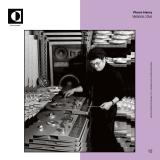
On the occasion of the centenary of composer Pierre Henry,
Transversales Disques is very glad to announce the release of these lost tapes "Variance" & "Duo" by the electroacoustic music pioneer.
"Pierre Henry was born in 1927 in Paris. He began studying music as early as the age of 7. In 1944, guided by Olivier Messiaen, he envisioned and began composing the music of the future.
His meeting with Pierre Schaeffer was pivotal to his creative path, leading the two of them to found the G.R.M. (Groupe de Recherches Musicales).
"Inventing new compositional techniques that would, in time, become widely used on a large scale, he continually gave this music a far-reaching power no one had anticipated at the outset.
He also forged a sound entirely his own — as instantly recognizable as that of the most famous jazz musicians."
The fifteenth release of Barro comes with an exclusive: behind the Transylvanian mask of Orlok 101 lies Nöle himself, the boss of the label.
Remember that he used this vampiric AKA to kick off Barro—his The End Of The Beginning being the first release, published in late 2018. That same year, his techno-industrial sound—packed with references from the famous work of Bram Stoker and nightmare atmospheres—helped launch another label: Soil, the Valencia-based imprint, with a project that included a suitably fitting remix of The Horrorist. The following year, he released an EP with five original tracks, titled Runaway, while also “spreading blood” on Antikhrist Visions Vol I alongside his Industrias Mekanikas comrades.
His dark influence has been felt across Barro’s catalogue, whether through his own tracks or remixes—sinking his teeth into artists like The Hacker (under his real name, Amato) or Nebula Circuit. In 2025, Orlok made his debut on Aspecto Humano with a powerful EP, equally gritty and dark. In Barro, we’ve recently had Nöle—the most techno side of Imanol Pagola—with the EPs Electro Bloody Music and Demencial Chico Aceleradom, two great showcases of his ability to keep us dancing nonstop, following the popular Mendekua, released by Xtraperlo.
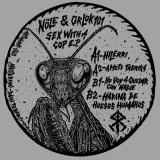
For Barro 15, the two sides of the producer and DJ come together on this EP, titled Sex With a Cop—four tracks released on vinyl and digitally, plus an alternate version of the final composition as a bonus track.
Nöle's knowledge of the dancefloor and Orlok 101's ability to create atmospheres that will give you goosebumps come together on this EP to create an explosive mix.
Sex With a Cop starts with Hilerri, a techno EBM track where Orlok provides repetitive, screeching sounds and a ghostly melody, while Nöle adds incisive synths and a catchy, addictive vocal sample that warns you of the danger of the material you’re listening to. Orlok then takes over with his industrial and metallic sonorities on the next track, Amets Fabrika, although Nöle’s influence still comes through with his powerful bass and addictive synth lines. A stifled scream and a production packed with a thousand details create an unsettling atmosphere that will surprise you on the dancefloor.
The flip side begins with No Voy A Quedar Con Nadie, a track closer to Nöle’s technooid world. Even with its unsettling opening, it doesn’t take long to turn into a danceable bomb, with that dark touch typical of the Navarro producer.
Surprisingly, he saves the best for last: Harina de Huesos Humanos is one of the most interesting tracks created by Imanol Pagoda, and we can hear it in two versions, one as a bonus track. Thanks to complex production full of details and sounds that come and go, a punchy, hard as granite kick drum, and a carefully crafted industrial atmosphere, it all ends up being the perfect union between the two sonic worlds. A spectacular finale for the label’s fifteenth release.
December 2012 I showed up totally exhausted in Vancouver BC after touring stupidly and relentlessly for however many straight months and got a job at a call centre raising money for the Red Cross. It was a scent free office but one time this woman cooked a piece of fish in the microwave for 10 minutes on low and hot boxed the whole office - we got sent home early no pay. There was the other woman I named the Call Centre Coltrane because her pitch and routine usually involved improvised flights of fancy that went off in both directions at once somehow landing back down with a credit card number and a donation. I used to sleep under the desk. I was there a few months and at the time I reconnected with John Brennan who I had played with briefly in Montreal at the Mutek Festival. In Montreal John was running an experimental music night at a burrito shop downtown called Garbage Night. While in Vancouver I began connecting with the music scene there and would go hang out with the Shearing Pinx lads who I think lived with Sydney the bass player at the time. I knew Nic and Jer from an AIDS Wolf Tour and was so stoked to get to know them both better. I really fell in love with that era of Vancouver's music scene.
Fast Forward to today. 2024
Actually it was the dying days of 2023 but you get it and John asks if I'll sit in with Earth Ball and I keep thinking about Earth Balance, the vegan butter everyone eats here. I brought my aching bones and my ipads on the beautiful ferry named the Queen of Oak Bay and out to Nanaimo BC, home of the nanaimo bar (a dessert treat - special to this region - that seems to be more popularly found under the weird glass sneeze guards in office building deli's out east in Ontario.... anyhoops ). No one in Nanaimo wants to talk to me about the famous treat. I asked a couple of people. Silence. Nanaimo is like London, Ontario but more fried and by the sea. The town is filled with blown out old sea dawgs with tin coffee pots and loose leaf tobacco, then there's the usual streetfolk you find in this part of the Canadian Pacific Northwest and a bunch of bohemians who I guess have left Vancouver behind - that fine city having become uninhabitable for those not making over 100k a year. And then up the way are all the retirees.
Yup Nanaimo is a strange one. They mined the shit out of this region and Nanaimo is surely haunted by those buried in mining shafts or maimed by the heavy machinery or blown up by accident in the explosives store house. And when Earth Ball fire up the amps in Izzy and Jer's basement you can hear the voices of the ghosts hum through electrical lines and out the speakers, Kellen's hued feedback, Izy's sturdy basslines, Jer's paperbag guitar tone and rumble pack zaps, Liam's (aka the Kid) sheets of sound and Brennen's multidirectional drums.
You wouldn't guess Earth Ball was auto-composing and from what my rat brain can tell - the lyrics are improvised too...Improvising lyrics and singing them is the hardest thing to do in all of music.. Izzy and Jer are pros. And their attitudes are pro too.
The live show is scorched and without naming names they've been known to make headliners nervous. Lucky ones will get to see them live as they tour this beast of a record entitled ‘It’s Yours’ (out May 17th on Upset The Rhythm) and I hope I'm one of them.
But now you, fan of fun but totally fucked up music, have the opportunity to Ball with them thanks to Upset The Rhythm. Enjoy
-Alex Moskos, Montreal QC, Feb 2024
33rpm Lacquer-cuts: Kevin Gray
200g Double Ultimate Record®
Limited Edition: 4000 copies
Box and Tip-on Gatefold printed in Italy
Pressed by Simon Garcia, Marciac, France
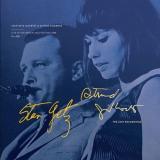
When the concert started that 4 November 1966 at the famous Berliner Jazztage, four musicians took the stage. Close-knit to the point of telepathy, they were about to give one of their last concerts. The mythical partnership of Stan Getz on saxophone and Gary Burton on the vibraphone was coming to an end, but were they even aware that this was one of their last acts? Accompanying them was an exceptional rhythm section with Chuck Israels on bass and the great Roy Haynes on drums.
With the first notes of “On Green Dolphin Street” the audience was won over by the rapport of empathy within the quartet. The programme was beautifully compiled to alternate flamboyant standards conducive to the most exuberant solos (“The Blues Walk”), heady ballads where Getz demonstrated his splendid sound and lyrical singing (“The Shadow of Your Smile” and “Once Upon a Summertime”), and compositions by Gary Burton where the vibraphonist displayed his subtle harmonic universe (“The Singing Song” and “Edelweiss”).
Suddenly, a high-spirited version of “O Grande Amor”, the standard by Antônio Carlos Jobim and Vinícius de Moraes, sounded out to prefigure the distinctly bossa nova vibe of the second part of the concert: Astrud Gilberto was to take the stage. With the opening bars of “Samba de Uma Nota Só” the flavours of Brazil were palpable. Gilberto’s voice, fragile yet mischievous against the background of the iridescent vibraphone and wrapped within the airy countermelody of the saxophone, recreated all the freshness and innocence of the legendary recording of 1964. As if they were performing together for the first time, Gilberto and Getz played a subtle game of seduction to create music that was sensual, light and melancholic.
The colourful sequence of bossa nova standards – “Você e Eu” by Gilberto Gil, “Corcovado” and “The Girl from Ipanema” by Jobim – intermingled with numbers that were jazzier in both form and spirit – “Jive Hoot” by Bob Brookmeyer, “The Shadow of Your Smile” and “It Might as Well Be Spring” – was simply irresistible.
With the final notes of “Jive Hoot”, Stan Getz smiled and bid farewell to the audience with a simple “Auf Wiedersehen”. The recording of this dream-like performance lay untouched for nearly sixty years, until we unearthed the original tapes in the archives of Berlin Radio. This album is the very first edition of a memorable live concert, entirely restored using Phoenix Mastering®.
2027 marks two decades since musician and producer Paul ‘Mudd’ Murphy struck out on his own and launched Claremont 56, a label initially dedicated to “music by Mudd and friends” and named after the house he grew up in. To celebrate its 20th anniversary, Murphy has assembled the label’s first ever decades-spanning vinyl retrospective: a six-LP re-mastered collection bringing together key cuts, cult classics, personal favourites, hard-to-find gems and inspired remixes from across the catalogue.
Unlike the label’s previous 10th anniversary box set, which focused on unreleased material and never-before-heard remixes, 20 Years of Claremont 56 traces the musical story of the imprint to date. Across six records, it showcases the distinctive Claremont 56 sound in all its many forms: acoustic, electric and electronic instrumentation, Balearic sunshine, krautrock grooves, folk-inflected psychedelia, slow-burning chuggers and deeply considered dancefloor music.
The set comes housed in a custom box featuring cover art by long-term label illustrator Mark Warrington. Inside are six slabs of vinyl across three gatefold sleeves, accompanied by liner notes from music journalist and author Matt Anniss, Murphy himself, and many of the artists whose music features in the collection.
The journey begins with a selection of formative late-noughties releases, including Mudd & Pollard’s chugging, picturesque ‘Villa Stavros’, the folksy beauty of Smith & Mudd’s ‘Shulme’ and Murphy’s exotic reworking of Ahmed Fakroun’s ‘Drago’. From there, the collection moves freely through deep cuts, overlooked gems, album highlights and some of the most inspired remixes in the label’s catalogue.
Among those remixes is Murphy’s own über-Balearic rework of Zee Erf’s cover of ‘Southern Freeez’, a mix dedicated to his partner Emma; an extraordinary 22-minute, Manuel Göttsching-meets-ambient-dub revision of Smith & Mudd’s ‘Vegetable Square’ by friends-of-the-family Idjut Boys; Larry Heard’s typically deep and immersive house treatment of Jack Cutter’s ‘Serpent Strut’; and Quiet Village’s ambient-house ‘deep space dub’ of Mudd’s ‘Spielplatz’. Also included are lesser-celebrated but no less rewarding reworks by Recloose, Jex Opolis, Felix Dickinson and Deep88.
The collection represents every corner of Claremont 56’s self-contained musical universe, from the Murphy-assembled in-house collectives Hillside, Paqua and Bison - whose members famously included the late Holger Czukay and his life partner Ursula, to long-serving label artists such as Almunia and Hear & Now, as well as later additions and artists who took some of their first steps on the label through its much-loved Claremont Editions compilations.
That means the deeply cosmic krautrock of Bambi Davidson, the folk-meets-Americana of Torn Sail and the samba-electrofunk of Jpye sit alongside baggy Balearic sing-alongs such as Bel’s ‘Ready To Die’ and Sillyboy’s Ghost Relatives’ ‘In a Small Place’, recent high-profile guest releases such as Chaz Jankel’s ‘Rhumba Jam’, and string-laden ambient pieces such as Four Hands’ wonderful ‘Hizou’.
Packed with classic cuts, formative gems and overlooked treats, 20 Years of Claremont 56 is not only a fabulous label retrospective, but also an essential collection of timeless music from a label whose output has remained distinctive and unique for two decades.
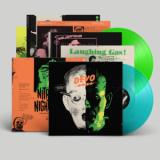
Futurismo are proud to present DEVO’s NITROUS NIGHTMARE, Halloween Live ‘75. Never before released, or heard in it’s entirety, this legendary live performance is presented here in it’s full chaotic glory on limited edition 2xLP and 2xCD. The live release all hardcore Devo fans have been waiting for, Nitrous Nightmare demonstrates a band harnessing their artistic greatness in the purest of forms. This mythic performance captures Devo perfecting some of their most iconic concepts in the raw. Expertly restored, this live recording makes for a thrilling experience, it also captures Devo as a lightening rod for hostility. On Halloween 1975, Devo took the stage at the WHK Auditorium in Cleveland, in a supporting capacity for jazz legend Sun Ra, to perform for a raucous crowd dressed in the finest of Halloween cliché. Already riding high on Nitrous Oxide and booze supplied by the sponsoring radio station, this unaware horde was expecting to see a slick cover band churning out renditions of Bad Company hits, only to be subjected to an act of subversive performance art that would send the growingly aggravated crowd into eventual meltdown. Physical threats ensued, but Devo played on. Acting as a live companion release to Futurismo’s much lauded Art Devo, the tracklist featured here showcases the origins of de-evolution theory in a live setting. These songs would become some of their most famous material, with this recording believed to be the very first time ‘Jocko Homo’ was performed in front of a live audience; the full 12 minute version documented here is sure to please fans, even if it displeased the urban hippies and horror masked onlookers that evening. Whilst Devo may have felt they were trapped inside a negative energy vortex during that era, it is clear in retrospect that the band was using this energy to carve out the genesis of a sonic and visual art that has truly stood the test of time. The music performed that evening would mutate culture for decades to come, long after the denizens of the auditorium packed away their cheap vampire costumes and returned to their day jobs. Spanning 2xLP’s of unreleased live material, most of which has never been heard before, this wondrous performance draws purely from that integral early history. Mixed and mastered directly from recordings kept in the bands personal vaults, this live collection showcases why Devo was, and still is, one of the most important bands in American history. De-evolution is real. The art of DEVO is real. Here is the evidence. This 2xLP is housed in a gloss laminated wide spined sleeve. It has a tracklist that has been sourced directly from the archives, and contains colour inner sleeves and a fold-out containing archival imagery and liner notes by Gerald V Casale.
*Originally pressed in 2021 - this is a brand new master and cut.**
In partnership with Analogue Foundation, Oshu Records is proud to present the exclusive vinyl repress of "Laroyê" in a thick cardboard tip-on gatefold jacket on 2x 180g vinyl.
Acclaimed Hungarian, Berlin-based producer, composer and pianist Àbáse (AKA Szabolcs Bognár) returns, sharing a special, 5 anniversary remaster of his breakthrough project 'Laroyê'. Releasing on Friday 1 May via Bridge The Gap & Oshu Records, this sensitive exploration of Afro-Brazilian culture originally began as an audio diary, documenting Szabolcs’ travels and collaborations in Brazil through a collection of voice memos, fragmented beats, sketches and field recordings. As his journey progressed, and his collaborations and research deepened, the music project started to take on its own life:
"Laroyê evolved through weeks and months of research and collaborations into the album that it is now. That means that all the sessions were done in different apartments, small studios, often with borrowed equipment, which all adds to the character, but makes the creation of a coherent sound a challenge. Benjamin Tierney, Erik Breuer and Analogue Foundation did an incredible job with the mixes and with this new remaster. I truly believe that we are able to hear the tracks in a new light, with even more depth and clarity."
Coming from the West African Yoruban language, Àbáse stands for "collaboration" – a key element of the music perfectly encapsulated on 'Laroyê'. Recorded in Rio de Janeiro and Salvador, Àbáse spent five months working with diverse artists, from young talents to veterans of the Brazilian scene including Letieres Leite, Luciane Dom, Dofono d'Omolu, Afrojazz and more. The album explores the rich heritage of afro-brasilian culture through samba, MPB and Candomblé, mixing these with broken beat, hip hop and afrobeat, creating a contemporary homage to the classic Brazilian sound. Szabolcs shares:
"Despite already leading and managing musical projects that are close to my hearth, I always felt that one day I would like to start a solo project, where I could take full responsibility for the artistic direction and the music would reflect a truly personal vision. In 2017, I decided to take five months to fulfil a childhood dream and travel to Brazil to expand my creative horizon and expose myself to new influences."
An album standout is the bass-heavy, afro-brazilian ‘Agangatolú, which Àbáse describes as "best exemplifying the story and concept of Laroye as a collaborative effort - a research project exploring the rich heritage of Afro Brazilian culture through my own lens." The track features singers and percussion players Jadson Xabla and Gabriel Santana - two artists based out of one of the oldest terreiros (houses of worship) in Bahia, whilst drummer Jorge Dubman is an integral part of one of the most famous afrobeat bands from Salvador IFA. The contributions of one of Szabolcsoldest collaborators - Hungarian flautist Fanni Zahar - also made the track a full-circle moment.
On a quest for cosmic grooves of unity, Àbáses music pulls from an eclectic blend of global reference points, including modal jazz, Hungarian folk, West African, Brazilian, hiphop and underground electronic music. His work has drawn widespread critical acclaim from the likes of MOJO, Songlines, Soulection and The Guardian, and been supported by key tastemakers including Gilles Peterson, Jamz Supernova and BAMBII. As a keyboard player, Szabolcs has also collaborated with the likes of Wayne Snow, Dele Sosimi, Patti Smith, Emmanuel Wilkins, Gulty Simpson and Zeitgeist Freedom Energy Exchange.
'Laroyê' (2026 Remaster) will release on Friday 1st May via Bridge The Gap & Oshu Records.
The Godfather of Hardcore, Marc Acardipane, needs no introduction. His outstanding releases over the past 30 years speak for themselves. He has been instrumental in helping to create electronic music history, with countless well-known productions which have been unsurpassed by any other artist of this calibre. His timeless masterpieces have been and always will be heard at hardcore raves spanning the circumference of the Planet. With "9 Is A Classic", "Slaves To The Rave", "Pitch-Hiker", "Stereo Murder" and "We Have Arrived", just to name a few, he clearly proves who's the boss. "The Most Famous Unknown" is a well compiled collection of Marc's music, which showcases a mere portion of what he has composed and produced since the early nineties! The vinyl and digital selection of "The Most Famous Unknown" features remixes by Body Sushi a.k.a. VTSS & Randomer, Dasha Rush, Gabber Eleganza feat. Delirio, Jasss, Kilbourne, Minimum Syndicat, Nina Kraviz, Perc, Solid Blake, Stranger, Umwelt and VTSS, which all deliver excellent interpretations of tracks they have chosen to revamp. All original tracks have been re-mastered to the highest possible standard of quality.
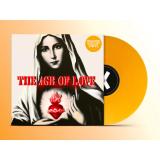
(Orange transparent vinyl, limited edition) Age Of Love's 3 most famous remixes on 1 record: the legendary 1992 Jam & Spoon 'Watch Out For Stella' Mix, Charlotte de Witte & Enrico Sangiuliano's 2021 Remix & Solomun's 2017 remix.
Age Of Love wrote and released their most iconic track in 1990. It went on to become a stone-cold dance classic that inspired a whole trance movement that has endured throughout the years.Now its 3 most famous remixes are available on 1 record: the legendary 1992 Jam & Spoon 'Watch Out For Stella' Mix, Charlotte de Witte & Enrico Sangiuliano's 2021 Remix & Solomun's 2017 remix.
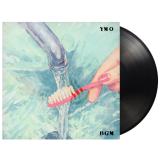
On their fourth album BGM, originally released in 1981, YMO continued where they left off with X∞ Multiplies, by venturing further into synthesizers, drum computers and experimentation with rhythm, sequences and speeds.
This album is more focused on atmosphere and mood. Some even say this album is a turning point for YMO and the international pop music scene. They successfully merged lyrics, sound bites and their signature electrically programmed music on BGM. “1000 Knives” and “Cue” are the most famous; ‘The Hand Clap’ on “1000 Knives” is probably one of the most used samples in the ‘80s, early ‘90s.
BGM is available on black vinyl and includes a 4-page booklet.
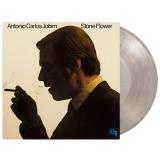
Antonio Carlos Jobim was definitely one of the most important artists in the bossa nova movement of the 1960s. The pianist and guitarist wrote the iconic "Desafinado" and, probably the most famous song in the genre, "The Girl from Ipanema". His elegant style of playing the music became the blueprint for the genre and inspired many.
Stone Flower is the album where you hear Antonio Carlos Jobim evolve in response to the new trends of the 1970s. His gentle and signature melodies are still there, but there are new elements; you here for example an electric Fender Rhodes. These changes only add to the timeless sound of Stone Flower.
The album has an impressive line-up of artists that were at their creative peak such as Ron Carter, Airto Moreira, and Eumir Deodato. Producer Creed Taylor and engineer Rudy Van Gelder give it the warm, high-quality sound that's typical of many CTI releases.
Stone Flower is available as a limited edition of 2000 individually numbered copies on transparent/black marble vinyl.
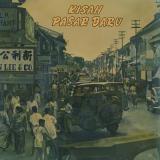
Kisah Pasar Baru: The Modern Sound of 1950s Indonesia
When Indonesia gained its independence from the Dutch colonial government in 1945, politicians and soldiers weren’t the only ones playing a major role in building the sense of national identity.
Also working on the nationalist front were merchants and traders of phonograph records, who prior to the country’s independence served as local agents for foreign labels like Odeon and Beka. In Batavia, one of these traders were Tio Tek Hong, distributor of the international label Odeon and the other figure was Soejoso Soekarso, who also served in the Indonesian Military as an Air Force Marshall.
Irama Records, the music label he founded in 1951, was first attempt to “nationalize” the means of production of “indigenous music” from both foreign labels and intermediaries like Tio.
Soejoso stood at the intersection of music, business, and nationalism. He was the vanguard in the process of popularizing of a new breed of “national” music, especially the type he showcased in the compilation Kisah Pasar Baru: The Modern Sound of 1950s Indonesia, released in 1958.
Yet, the idea of an indigenous music championed by Soejoso was in fact the amalgamation of a myriad of cosmopolitan strands. As an air force officer, Soejoso spent some of his time playing in the Hawaiian band Lieve Souvenier in Semarang before relocating to Jakarta and started jamming with the band Elshinta Hawaiian Senior.
In addition to Hawaiian music, Soejoso was a versatile musician who also had the chops for jazz, a musical genre wildly popular in the 1940s and early 1950s Indonesia. And it was jazz that he first recorded for his Irama Records label.
One night in 1951, he squeezed pianist Nick Mamahit, bassist Max van Dalm, drummer Dirk van der Capellen, and guitarist Dick Abel into a 2×3-meter studio on Jl. H. Agus Salim, Central Jakarta, to record the first local jazz album of the post-independence era.
Kisah Pasar Baru is a compilation of hybrid music that Soejoso and his coterie of musicians championed in the early 1950s, a mix of Hawaiian, Keroncong and Jazz and it became a hit soon after being release.
One of the best compositions on this album, “Pajung Fantasi,” composed by the legendary composer Ismail Marzuki, is essentially built from Bing Slamet’s baritone—Indonesia’s equivalent of Bing Crosby--and the distinctive Hawaiian-styled steel guitar. The most famous song on the album, “Sabda Alam,” also written by Ismail Marzuki, follows the same pattern, its steel-guitar works now backing Theresa Zen’s hauntingly ethereal vocals.
Kisah Pasar Baru was never designed to be a long-playing record, and its presence on the market was to capitalize on a new trend in the recording industry. The album is a greatest-hits compilation, with songs in this album previously circulating individually on 78-rpm discs—a format that was gradually abandoned following the invention of the 7-inch single and the 12-inch long-play vinyl.
This is the first time this monumental record is being reissued for the international market outside of Indonesia.
Disco Collected celebrates the dance music which originally developed from R&B, soul, and funk from the late 60s and 70s and turned into a mighty subculture in discotheques, with Studio 54, Manhattan, New York as one of the most famous and extravagant discos all over the world. Disco used a steady four to the floor beat, string sections, horns which created a perfect setting for DJs who mixed their special 12 inches to an eager dance crowd.
Movies like Saturday Night Fever and Thank God It’s Friday contributed to disco’s mainstream popularity. Compiled on Disco Collected are some of the best, well-known and great disco hits by Rose Royce, Chic, Kool & The Gang, The Trammps, Thelma Houston, KC & The Sunshine Band and 16 more guaranteed floor fillers.
The 2LP Disco Collected is available as a limited edition on disco ball silver vinyl and includes an insert.
SHORT INFOS
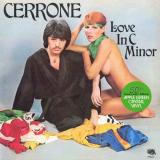
Because Music celebrates the 50th Anniversary of Cerrone's debut album "Love In C Minor (Cerrone I)" .
A record which is one of the mots important of its time. It brought French Disco to the World and established Cerrone as the French King of Disco.
- Pressed in exclusive 2026 Apple Green Crystal Clear vinyl
- Original 1976 artwork - Digitally remastered from original tapes.
BIOG
Cerrone I
Love in C Minor (1976)
The story behind Cerrone's first album could be summarised in the libertarian atmosphere and the creative energy of the 70s, inherited from the 60s revolutions, spiritual, aesthetic or sexual. Looking back now, this record is one of the most important of its time. It helped creating the sound of an era and brought French disco to the world. It is also, and this is fundamental to understand its success, the result of a man's vision: Marc Cerrone, a free spirit inhabited by music, who ended up with a major work of art. With this album, Cerrone accumulated the main elements that make a record timeless, even bigger than its creator: the pure originality, the madness of a vision without compromise, a sense of the market and a great dose of luck too. To some extent, this is the perfect record to start a career, even though Cerrone's one already existed in an implicit way. He actually began in a rather popular band, Kongas, signed by Barclay. Between 1972 and 1974, the band was famous and made it abroad, particularly in Japan, where people loved its sound. Despite this success, probably fed up with the music and not ready to follow the orders of a label that wanted the band to sound more pop, Cerrone disbanded Kongas. He had the sound of his instrument in mind and mostly its central element: the bass drum. The idea of this first solo album came to him after a detour via selling records. Wishing to forget about the studios, he took the head of a small chain of stores, selling records imported from the States. That's when he discovered a daring new sound coming from New York: disco music. This energy inspired him to record again. He then remembered the crazy reaction of the audience when, during the Kongas' concerts, he used to hit his bass drum hard. Cerrone felt like going back into the studio but to make something different. He decided to record a sixteen minutes long track, driven by its beat, that would fit on its own on one side of a LP (during these vinyl days, musicians used to think in terms of sides…), with girls' voices simulating sex. This concept of musical and physical orgasm was recorded at Trident Studios in London (where pop stars used to record at the time… ) with Don Ray, of Kongas, man in the shadows and brilliant arranger who'd follow Cerrone during his whole career. Obviously, like always in pop music (it happened to the Beatles), record companies started by turning this weird track down, convinced that radios would never play sixteen minutes of beats and moaning. Cerrone, a born fighter, decided to trust his instinct (a mix of ego and business sense) and chose to believe that if the radios wouldn't play the track, people would dance to it in the clubs. He released the record himself, with a sexy cover a bit provocative where he wore a black bathrobe, a young short-haired girl leaning on him. Being played here and there, thanks to Cerrone's own network, the record started to work a bit in France. But luckily, things really happened in the States. Due to a mistake, a box of "Love In C Minor" albums were sent to the States via Cerrone's record shop instead of some unsold American LPs. Once in New York, the box was opened and the record with its intriguing cover was instantly loved and passed through the hands of radio and club DJs. All of a sudden, and unknown to its creator, the track that was turned down by every French label, became a hit on the New York disco scene. Casablanca, the US disco label, released a cover recorded by an ad hoc band because nobody knew Cerrone of how to find him. Once he discovered what was happening in the States, Cerrone flew to New York. He realised he had a hit, one of the biggest then, that opened the doors to every record company and especially Atlantic. He was welcome by Ahmet Ertegun, one of the main visionaries of the American music who, among other artists, signed Aretha Franklin and John Coltrane. It's believed that Ertegun understood that the French young musician, like some Atlantic artists, was about to define the sound of his time and that his work would live long after its birth date. "Love In C Minor" was the first step, adamant and successful.
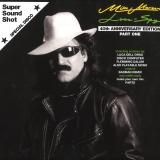
This year marks the 40th anniversary of one of the true cult classics of the Italo Disco universe: Mike Mareen’s “Love Spy.” Released in 1986, the track sounded strikingly different from much of the dance music around it: futuristic, dramatic, playful and instantly recognisable. It quickly found its way into DJ cases across Europe and became one of the records that would define Mike Mareen’s electronic sound.
But the story actually began under a different name. An early incarnation of the song was called “Batman,” with lyrics inspired by the adventures of the famous comic-book hero and the villains surrounding him. A small number of promotional copies circulated before copyright concerns meant that the concept had to be abandoned. The title and lyrics were rewritten and “Love Spy” was born. The early “Batman” version has since become one of the most fascinating curiosities in Mike Mareen’s catalogue.
Four decades later, we felt an anniversary like this deserved something special.
LOVE SPY 40th Anniversary will therefore arrive in two parts, bringing together some of our favourite producers from today’s Italo, synth and electronic scene.
Part One features brand-new remixes by Luca Dell’Orso, Flemming Dalum, Also Playable Mono and Disco Computer. And enthusiasm was never going to be a problem here. “Love Spy” is not simply an ’80s classic, it remains a genuine DJ favourite, loved by old-school collectors and a new generation of Italo-wave selectors alike.
Alongside four killer new interpretations, we are bringing back the original Badman Mix, plus the highly sought-after “MAKE YOUR OWN MIX” material – rare set of individual elements created for DJs to deconstruct, combine and rebuild “Love Spy” themselves. These samples have become particularly desirable among collectors and make the perfect addition to the first chapter of our anniversary edition.
Four new remixes. Two pieces of history. Forty years of LOVE SPY.
And we are only halfway there.
LOVE SPY 40th Anniversary Part Two, featuring another line-up of major names from our scene arrives in November.
Deep in the sea lives one of Earth's most ancient creatures: the Nautilus. Hunted for its beautiful shell and now, through our global evolution, endangered, like so many other beings. Perhaps most astonishingly, no one has ever observed a baby Nautilus in the wild. The title track of this debut EP takes you on a dark journey, searching through the deep ocean for this elusive animal.
On the other side, I don't believe in Fermi’s Golden Rule, is a sonic interpretation of a statement made during a quantum field theory lecture, questioning the experimental mathematics often used to derive the famous rule. But actually, trying to express the confusion about quantum physics in general.
The dub-infused EP is mainly inspired by the pioneering magic of Detroit’s electronic music scientists and the experiments of European electro wizards.
A pure goa-trance-classics compilation; back on vinyl with Astral Projection, MFG, Xenomorph, Shakta, Oforia,... !
This compilation opens with a track of Roy Sasson, who was famous in the 90s as part of Shidapu. Here he opens with a deep & groovy psychedelic dancefloor monster. The second track has a darker atmosphere, is super powerful but also melodic and spiralling! Xenomorph hasn't released any music for a long time, but he clearly kept his magical touch! That darker touch is carried on by Battle of the Future Buddhas, who went towards pure acid 303 territories in his haunting track! Shakta brings back some sunshine with his funky uplifting "Expedition To Earth"! Now after this first part of the CD come two of the most famous Goa-trance names ever: Astral Projection & MFG! They both do what they do best: creating wonderful melodic soundscapes! Sensitive, emotional & harmonious trancy music for people that want to feel a sunny dancefloor through music! Then RA mixed his known euphoric type of melodies & chords with a more modern sound! The result? Music that will do the trick on every dancefloor around the world. The ender is a more floating, warm track of Oforia, who showcases his more mellow style :)
We hope to create the same heartwarming feeling in your heart, as the one we had when we heard goa-trance for the first time! Enjoy and make sure to land again after reaching the sky!
Introspection is a 1972 cult-favorite solo guitar album by Brazilian composer and guitarist Luiz Bonfà. Unlike his more famous bossa nova recordings, this album presents Bonfá in a deeply personal, almost meditative setting. Recorded primarily as a set of intimate solo guitar pieces, Introspection showcases Bonfà’s signature combination of classical technique, Brazilian rhythm and emotive melodic phrasing. Initially overlooked, Introspection later gained recognition as one of Bonfà’s most admired and distinctive works outside the mainstream bossa nova canon. This reissue is the first ever on vinyl after 1972.
How enduring is the signature song from Harry Chapin’s Verities & Balderdash? So timeless that it became the subject of a 2025 documentary in which artists from multiple generations weigh in on its impact on their lives and craft. “Cat’s in the Cradle” doubtlessly remains the main event on the singer-songwriter’s 1974 album. The legendary opening track also serves as a guidepost for the bold personal and social material that follows — as well as the gorgeous folk-rock arrangements that underpin the New York native’s most commercially successful work.
Sourced from the original master tapes, pressed at Fidelity Record Pressing, housed in a Stoughton jacket complete with a four-page insert, and strictly limited to 3,000 numbered copies, Mobile Fidelity’s 180g 33RPM LP of Verities & Balderdash presents Chapin’s fourth full-length in audiophile quality for the first time on vinyl. Captured during a golden era for sonics and production, the Top 5 effort features remarkable tonal balance, instrumental separation, and organic naturalism. Those valued aspects come into supreme focus on this reissue, which plays with dead-quiet surfaces and a low noise floor.
The newfound clarity, openness, and imaging underscore the lasting appeal of Chapin’s tender deliveries, soulful timbre, and careful phrasing. Every word comes across with incredible realism, while his underrated guitar playing occupies its own distinctive space. Also notable: The extension of the tasteful string accents; airiness of the backing vocals; depth and shape of the spare bass lines; and width and depth of the soundstaging. When on “Six String Orchestra” Chapin calls out names of instruments, they appear like magic, the band performing feet from you. Chapin has never sounded so lifelike on record.
Certified double platinum, Verities & Balderdash resonated with the times and public. “Cat’s in the Cradle” reached No. 1 on the chart on its way to being inducted into the Grammy Hall of Fame. The romantic ballad “I Wanna Learn a Love Song” flirted with the Top 40 and wrapped listeners in the equivalent of a cozy blanket. The record’s other single, the mini-epic “What Made America Famous?,” helped establish Chapin as one of the country’s most incisive and insightful commentators.
Verities & Balderdash teems with situational devices and topical matters. Chapin observes everything from the polarization of the nation to changes in moral standards and cultural priorities. He investigates pressing themes without ever turning preachy or elevating himself above the matters at hand. On “Halfway to Heaven,” whose coda races to the finish and ranks as the most urgent moment on the record, Chapin inhabits the mind of his frustrated protagonist akin to an eagle-eyed novelist.
Conveying emotions that range from melancholic to carefree, Chapin is as much of a singer as a storyteller. He assumes the voice of multiple characters within a single narrative. During the quirky “30,000 Pounds of Bananas,” a tale based on a delivery-truck accident in 1965, Chapin alters his delivery, pronunciation, and diction to become an old man reflecting on the mishap and mess. The tempo, too, adjusts to match the speed of the vehicle Chapin describes.
Adorned with timely laugh tracks to reinforce the bittersweet humor, the stripped-down “Six String Orchestra” takes everything up another notch, with Chapin intentionally missing guitar notes or playing a broken passage to illustrate the failures of the hopeful protagonist who doesn’t have what’s required to make it as an artist.
Chapin, of course, did not have any such problem. The lynchpin of a career cut short by a tragic traffic incident, Verities & Balderdash is Exhibit A of the savvy craft, feeling, and perspective he lent to American music.
Devo Marries Gritty Guitars with Expansive Keyboard Canvasses on Duty Now for the Future:
Transitional Album Furthers the Band’s Satirical Stance, Includes Cover of “Secret Agent Man”
Hear the 1979 Record in Audiophile-Grade Sound and at 45RPM for the First Time:
Mobile Fidelity’s Numbered-Edition 180g 45RPM 2LP Set
Benefits from Enhanced Definition and Presence
1/4” / 15 IPS Dolby A analogue master to DSD 256 to analogue console to lathe
“Pop music needs a big enema.” Devo created Duty Now for the Future with that mission statement, relayed to the press by co-founding bassist/vocalist Gerald Casale, in mind. Though unfairly pegged by some as an example of the common sophomore slump, the record spurred the group’s interest in electronic instrumentation, extended its penchant for biting social satire, and contained another transformative cover song in the form of “Secret Agent Man.” Above all, the 1979 work proved the Ohio pranksters were anything but a joke even if they would have to wait one more year until for their mainstream breakthrough.
Sourced from the original master tapes, mastered by engineer Krieg Wunderlich, pressed at Fidelity Record Pressing in California, and housed in a Stoughton gatefold jacket, Mobile Fidelity's numbered-edition 180g 45RPM 2LP set presents Duty Now for the Future in audiophile-grade sound. Benefitting from the extra groove space on this first-ever 45RPM version, it plays with enhanced definition, deep-black backgrounds, and ultra-quiet surfaces.
Though certain band members later expressed regret with some of his decisions, the merits of Ken Scott’s production emerge like never before. A lurking edginess serves as a signpost in Devo’s progression before it fully embraced keyboards as a primary tool. Guitars possess punch and grit and, along with the crisp arrangements, are sharpened with an ear toward accuracy and vibrancy. It all helps give Duty Now for the Future a direct immediacy that answers the complaints of listeners who felt the affair too processed or sterilized.
Notably, a majority of the material here stems from the same grab bag of songs Devo banked before Warner Bros. signed it to a deal. The album marks a capstone to Phase One of a career that for all intents and purposes began in 1973. And just like many of the group’s performances of that era, Duty Now for the Future remains just as famous for the critical disdain it inspired as the music itself. A vicious review in Rolling Stone — the very publication that a few decades later would trumpet the band as one of the most important of its age — ended with the writer offering to send readers shards of the LP he planned on smashing to bits.
Perhaps he just needed to experience this new-wave effort with the restored sound that makes everything now feel so explosive and urgent. Whatever the case, the songs hold up and, amid a contemporary period which gives increasing license to artificial intelligence and behemoth conglomerates, seem more apt than ever before.
Consider “Blockhead,” which skewers the predictable appearances and numb-to-the-world actions of a rule follower. Or the similarly themed “Clockout,” an uptempo ditty whose thumbing-its-nose bravado and sardonic lyrics send up corporate culture with an irresistible smirk. As for the wiry, hard-hitting urgency of “Wiggly World” and Mark Mothersbaugh’s loud declaration that “They say the fittest shall survive/Yet the unfit may live”: Evidence these art-school rabble-rousers still had some punk fury to flush out of their system. And the sincere allure of the charged power pop and wishful circumstances of “The Day My Baby Gave Me a Surprize” cannot be denied.
To point to an interesting bit of history that makes Duty Now for the Future all the more intriguing, particularly for the most committed Spuds, more than half its tracks were selected for Greatest Misses — a 1990 anthology that celebrates lesser-known cuts and functions as a rejoinder to a hits compilation from the same year. (The only track from the 1979 album to make the “hits” disc: “Smart Patrol/Mr. DNA.”)
Indeed, tunes like the riff-driven albeit controversial “Pink Pussycat,” atmospherically twitching “S.I.B. (Swelling Itching Brain),” and ceremonial instrumental “Devo Corporate Anthem” may lack the catchy appeal and all-together coherence of what follows on the group’s third and most commercially successful effort, Freedom of Choice. Yet in order to get there, to de-evolve if you will, the band needed the smorgasbord that is Duty Now for the Future.
Carly Simon’s No. 1 smash “You’re So Vain” lingers as one of the most clever and famous songs ever recorded. The subject of mass speculation ever since its release, soon after which it occupied the top spot on multiple Billboard charts for weeks, the anthem kept a captive public guessing at the identity of its smug subject for decades. The question surrounding the protagonist’s identity remained perhaps the only mystery on the otherwise sexually open and autobiographically daring No Secrets, Simon’s commercial breakthrough and ‘70s singer-songwriter staple.
Sourced from the original master tapes, pressed at Fidelity Record Pressing in California, strictly limited to 3,000 numbered copies, and housed in a Stoughton gatefold jacket, Mobile Fidelity’s 180g 45RPM 2LP set affords the platinum-certified 1972 effort the finest sonic treatment it’s received on vinyl. Helmed by Richard Perry and recorded at London’s Trident Studios — where Beatles, David Bowie, and Elton John captured landmark LPs — No Secrets touts exceptional production qualities highlighted by this restorative reissue.
Audiophiles and record collectors, take note: This is the first time No Secrets has been available on 45RPM. The wider grooves and dead-quiet surfaces pay instant dividends. Simple, elegant, and disarming, songs seemingly float amid wide, deep soundstages. Simon’s voice takes on a confident, assertive tenor that emerges with accurate imaging, balanced tonality, and palpable presence. String arrangements and backing vocals come through with similar realism.
Enhanced by an all-star cast — Simon’s then-husband James Taylor, Paul and Linda McCartney, Mick Jagger, Lowell George, Klaus Voorman, Bobby Keys, Jim Keltner, Nicky Hopkins, and Bonnie Bramlett are among the renowned musicians who lend a hand — No Secrets advances Simon’s themes of personal introspectiveness, no-holds-barred reflectiveness, and feminist-inspired boldness. She makes every moment of No Secrets worth savoring. Simon invests her all in the songs, handling beautiful ballads, sassy folk-rock numbers, and bluesy fare with calm, composure, and candor.
While acknowledging her own regrets (“You’re So Vain”) and loss (“The Carter Family”), Simon champions the highs (“The Right Thing to Do”) and pains (“His Friends Are More Than Fond of Robin”) of love in a sincere manner indicative of her maturity as both an artist and singer. The New York native distinguishes “When You Close Your Eyes” with deep-rooted spirituality, recalls childhood joys via charming sentimentality on “It Was So Easy,” and and takes ownership of her persona on a cover of Taylor’s “Night Owl.”
“We have no secrets
/We tell each other everything,” Simon sings at the record’s midpoint, encapsulating both the themes and bravura of an effort that was nominated for four Grammy Awards and saw her write or co-write every song but one. Combined with Perry’s savvy instrumental arrangements, her self-assured performances and forthright lyrics grant No Secrets an edginess and relevance immune to the ravages of time.
The Mighty Diamonds are one of the most famous vocal groups to come out of the Jamaican Reggae scene.
Their perfect harmonies ride over the wholesome and Garveyite influenced lyrics to such great effect that they will always evoke memories of that time and place, but also like all great music never seems to date.
The Mighty Diamonds consist of Donald ‘Tappy’ Shaw (lead vocals) Fitzroy ‘Bunny’ Simpson and Lloyd ‘Judge’ Ferguson providing those fantastic harmonies.
They began their recording career working with producers Stranger Cole and Rupie Edwards but found their breakthrough success with producer Joseph ‘Joe Joe’ Hookim at the legendary Channel One Studios recording ‘Hey Girl’ and covering two foreign tunes namely ‘Country Living’ (The Stylistics) and ‘Stoned Out of Mind’ (The Chi-lites) which suited their vocal styles perfectly.
The vocal group also cut tracks with other famous producers of the time Joe Gibbs ,Gussie Clarke and Mr.Tappa Zukie of which we focus this release on.On listening, these tunes work perfectly with harmonies weaving together and lifting the songs to another level.
The group also leave some room for a history lesson in the shape of ‘Morgan the Pirate’ and the thought provoking ‘Do You Want to Spend Your Time Wasting Time’.
Well waste no more and enjoy this set by one of Jamaica’s finest vocal groups….
The latest edition of 'Downtownsounds Classics' arrives from Dublin disco messers Fatty Fatty, just in time for the summer sunshine !
Fully licensed and cut loud on 12 inch vinyl the way God (aka Walter Gibbons) intended, it sees in-house producers Pablo and Shoey take on two choice cuts from the legendary Salsoul label.
Salsoul was the very first label to release a commercially available 12 inch remix - the aforementioned Gibbons and his 9 minute extension of Double Exposure's '10 Per Cent'. They would go on to issue a raft of underground disco classics with mixes by the legendary likes of Larry Levan, Tom Moulton and Shep Pettibone. Having robbed the famous 'Baker-Harris-Young' rhythm section from Philadelphia Records, they defined the disco sound in the second half of the 1970's and kept roaring well into the next decade.
The new mixes pay explicit tribute to two hugely formative influences on the Fatty fellas - The A extends the mysterious and wondrously wonky Big Bear edit of Bunny Sigler's 'By The Way You Dance'. Back in the day, these cosmic under-the-counter 12s helped show the Fatties how to disco real right, and they've stood the test of time wonderfully. This one has been at the front of Pablo's bag for longer than he cares to remember, and now the rest of the world can enjoy it, with some extra Pablo and Shoey disco magic thrown in for good measure...
Speaking of cosmic, the flip sees the lads turn in a stripped-back, ever-building mix of First Choice 'Hold Your Horses'. Having first heard this played by the Cosmic King himself, Danielle Baldelli, they found themselves let down by the commercially available mix. Through the disco haze, and with some subtle stemming, several outer-space whooshes and a string/vocal climax to die for, they've tried to recreate the way they heard Baldelli play it...
With the classic Salsoul artwork also present and correct, this is a love letter to perhaps the most important label in dance music history, with music that still sounds amazing five decades on... Don't sleep!
The original album + 6 bonus tracks - limited edition pressing on 180g vinyl
The most talented bossa nova group of the '60s, Tamba Trio perfected a breezy,
swinging version of bossa nova vocal jazz that proved incredibly influential in Brazil
and throughout the world.
Comprising pianist Luiz Eca, bassist Bebeto, and drummer Helcio Milito, the trio not
only played a wide range of instruments but also contributed incredibly close vocal
harmonies. Presented here is their debut album, 'O Barquinho' (Little Boat), which was
a huge hit in Brazil and throughout South and Central America.
One of their later recordings, a rendition Jorge Ben's ' Mas, que nada!' ( But That Is
Nothing!) and included here as a bonus, became their best-known hit, and used most
famously by Nike in a 1998 World Cup television commercial.
Release #50 celebrates the digging, care & musical curiosity that’s made the GSC series essential for DJs, collectors & break seekers alike.
For years GSC has built a catalog that earns immediate “cop-on-sight” status. Thoughtful edits. Deep respect for the OG recordings. Breaks that knock w/out feeling heavy-handed. The kind of taste that reminds you these are real heads behind the decks.
Side A pulls from Jerry Butler’s “I’m Your Mechanical Man,” released in ’74 on the Sweet Sixteen LP. The track contains a raw drum break hip-hop producers recognized instantly. Most famously it powers Method Man’s “Bring The Pain,” 1 of the defining solo joints from the Wu-Tang Clan era. The break later resurfaced in Missy Elliott & Method Man’s 2002 version & Snoop Dogg’s “I Miss That Bitch.”
On the flip, GSC draws the source into pure DJ tooling: a sample break edit, a full drum break edit & the “Mechanical Wu” mix — built for selectors who know the power of letting a break breathe.
Then they deliver a beautiful surprise. Instead of leaving empty wax, GSC slides in Les McCann’s “Vallarta,” from the 1977 album Music Lets Me Be. Jazz-funk heads know it instantly — the hypnotic groove behind Biggie’s “Ten Crack Commandments.”
This is why Galaxy Sound Co. matters. They’re not just pressing edits — they’re curating moments. Unearthing grooves DJs need back in rotation. Some originals now cost serious money on Discogs. Others simply faded from memory. GSC dusts them off & hands them back to the community.
Released independently and on her 30th birthday, "Water Baby" is Giorgia-May's stunning debut album. Spanning over 8 tracks & recorded live at The Famous Goldwatch Studios in Berlin, Giorgia collaborates with some of Berlin's finest musicians to enhance her craft at putting emotions into songs. Each track highlights something different in her ability to channel pain, desire, lust and heartbreak, all whilst (most of the time) making you want to dance & smile.
Stemming originally from Brighton (UK), Giorgia-May has been pursuing a musical career through the means of travel. Now based in Berlin, she combines sensual lyrics, mesmerising tones and exciting arrangements which draw upon her personal experiences of love, loss and coming into womanhood. Blending soulful melodies with jazzy chords and hints of RnB, she takes influence from writers such as Olivia Dean & Amy Winehouse.
Extensive independent European tour in August & September 2026 through the following cities: Berlin, Paris, Bilbao, Porto, Lisbon, Valencia, Barcelona, Marseille, Cannes, Milan, Lake Como, Zurich, Luxembourg, Brussles, Cologne, Amsterdam and more ...
For his sixth solo album, Ezéchiel Pailhès returns with a new collection of songs infused by a sunny wandering spirit.
Within each of the twelve songs on SOL is a thread of melancholic happiness that has permeated much of Pailhès’ music and songwriting. He addresses love, the passing of time, hope, lost illusions, fleeting moments of grace, the temptation of forgetting, a need to escape, and desire. All this is
insulated by understated orchestrations that blend acoustic and electronic instrumentation with deft confidence.
The Portuguese and Brazilian concept of saudade—a form of melancholic longing and nostalgia— pervades, thanks in part to Pailhès decision to record the album in Rio de Janiero and to reinterpret some of the finest works of Música Popular Brasileira (MPB). In particular, he revisits a handful of
lesser known classics from the mid-century samba and bossa nova era—originally written or performed by talents including Vinícius de Moraes, João Gilberto, Tom Zé, Dorival Caymmi, João Donato, Os Tincoãs, and Ataulfo Alves.
The shift from Brazilian Portuguese to French and the decision to adapt rather than perform a straightforward cover versions, allows Pailhès to invent a form of prosody and euphony (the musicality and harmonious combination of words) that feels vibrant and unlike anything else in today’s French
chanson landscape.
“Some lyrics are simple translations from Portuguese, in what I’d call an expanded version. For others, I started from a single word or a single phrase and embroidered an entirely new text that carried me elsewhere,” explains Pailhès. “I allowed myself great interpretive freedom, while preserving the humanist dimension of the original songs. I’ve always been deeply moved by the way Brazilians transfigure reality through heightened emotion. I love this visceral and spontaneous country, which always seems to live through emotion. And above all, I love its music both popular and unifying,
bringing together all social classes. In that sense, it’s very political music, but even more so utopian, made by the people and for the people.”
On this new album, however, the French artist was keen to avoid cliché. Each song is therefore built around a carefully balanced interplay between Pailhès’ piano and synthesizers, alongside restrained arrangements of percussion, brass, bass, and cavaquinho (a small four-string plucked guitar). These parts were recorded in Rio de Janeiro with two musicians who regularly perform alongside the legendary Caetano Veloso—Kainã Do Jêje and Alberto Continentino—joined by Thomas Harres, Antônio Neves, Eduardo Neves, and Gabriel Loddo.
Since the 1960s, France and Brazil have shared a long-standing cultural and musical relationship. Some Brazilian artists, most famously Gilberto Gil, took refuge in France during the dictatorship years (1964–1985). But above all, French chanson quickly fell in love with the richness and ingenuity of
bossa nova and samba, translating and reinventing them in the language of Molière. Throughout the 1960s and 1970s, albums and hits by Henri Salvador, Georges Moustaki, Pierre Barouh, Pierre Vassiliu, and Claude Nougaro all drew from the MPB repertoire.
Fifty years later, with SOL, Ezéchiel Pailhès reinvents this rich Franco-Brazilian musical legacy, bringing to it a personality and modernity that stand confidently alongside those of his forbears.
The Godfather of Hardcore, Marc Acardipane, needs no introduction. His outstanding releases over the past 30 years speak for themselves. He has been instrumental in helping to create electronic music history, with countless well-known productions which have been unsurpassed by any other artist of this calibre. His timeless masterpieces have been and always will be heard at hardcore raves spanning the circumference of the Planet. With "9 Is A Classic", "Slaves To The Rave", "Pitch-Hiker", "Stereo Murder" and "We Have Arrived", just to name a few, he clearly proves who's the boss. "The Most Famous Unknown" is a well compiled collection of Marc's music, which showcases a mere portion of what he has composed and produced since the early nineties! The vinyl and digital selection of "The Most Famous Unknown" features remixes by Body Sushi a.k.a. VTSS & Randomer, Dasha Rush, Gabber Eleganza feat. Delirio, Jasss, Kilbourne, Minimum Syndicat, Nina Kraviz, Perc, Solid Blake, Stranger, Umwelt and VTSS, which all deliver excellent interpretations of tracks they have chosen to revamp. All original tracks have been re-mastered to the highest possible standard of quality.
The original mix of one of the biggest ever rave-classics is on this 12”-record. And that’s not all, Mr Sam made a massive remix of one of the most groundbreaking EDM-tunes of all times.
Belgian/French DJ-producer Mr Sam turned this amazing classic in a massive peaktime trance-gem for the future. Using the iconic parts of the 1991 original and adding the well-know futuretrance sound that made him famous.
Anané’s colourful life in music has seen her do everything from singing at the famous pre-game show at Super Bowl XLI as part of the group Elements of Life, DJ at hotspots like Hi Ibiza, Pacha NYC and Ushuaïa to name a few, while also curating her own monthly residency Nulu Movement, now ten years strong at Le Bain NYC, release unique blends of Afro, house, and pop on labels like Vega Records, and head up her own imprints, Nulu Music and Nulu Electronic. The Cape Verdean-born DJ, producer, vocalist, and songwriter has had countless club hits and has released acclaimed albums like ‘Ananésworld’ and ‘Chapters Of Becoming’, often with a lush, live, and orchestrated style that is truly unique.
With this release, Anané steps forward with her first solo production to date. Here she serves up the sumptuous ‘It Looks Like Love’, a poised, elegant house sound with her own smoking, soulful vocals and classy strings bringing colour to an Afro groove packed with infectious bounce. Neat guitar riffs and silky synths all enrich this most sophisticated sound. The first mix sees Anané link up with veteran Italian Christian Mantini, who has hosted Sunset Ritual parties with Anané and Louie Vega since 2013. Their dub is rooted in warm, rubbery drums that are even deeper and more immersive than the original.
Manda Moor & Sirus Hood are a red-hot contemporary pair who run the Mood label and are defining the contemporary underground. Their remix is more driving, but it retains the soulful vibe with breezy pads and jazzy motifs drifting in and out above the swaggering groove.
Rotterdam-based Chicagoan Jamie 3:26 is a master at blending disco, soul, and house into timeless sounds, and here he delivers a loopy rework that pairs deep drive and sun-kissed vibes with funky, Chic-style bass guitar motifs.
(die-cut sleeve, 45 RPM) Jef Neve, Belgium’s most-famous jazzpianist, media-personality Kobe Ilsen and topproducer Serge Ramaekers are VALKYRIE.
At the end of Spring 2026 a full album of VALKYRIE will be released and the band will start touring. As a tastemaker of what they are up to, they release a unique version of THE FIRST REBIRTH, originally released by Jones & Stephenson in 1993 on Bonzai Records.
To celebrate the birth of this new supergroup, a release in a very special packaging is due for March 2026.
Besides the original mix, there’s also a ravemix by harddance/hardstyle-hero MI37 and an unplugged version where the original melodies are stripped to the bone.
Since 2020, 12 Inch Lovers have been releasing new samplers every year, eagerly anticipated by collectors. These samplers have now become a staple and are easily added to vinyl collections across Europe. They offer timeless classics and rare tracks that are often hard to find elsewhere.
With Samplers 11 & 12, they surprise again with a mix of modern classics and tracks that have never been released on vinyl or are difficult to find. By adding unique and exclusive tracks, the 12 Inch Lovers samplers remain innovative and high-quality. They are a must-have for DJs, collectors, and fans of contemporary classics!
SAMPLER 11
A1) Paul Kalkbrenner - No Goodbye (2019)
Berlin techno producer Paul Kalkbrenner became world-famous with his 2008 hit Sky & Sand. Since then, he has released one record after another and performed all over the world in the biggest venues and at the most renowned festivals. No Goodbye is one of his more recent hits, released in the summer of 2019.
The track was created using an a cappella he received on a demo tape while on tour. He was immediately inspired by the vocal and built his own sound and production around it. Interestingly, Kalkbrenner rarely uses vocals, but for No Goodbye he collaborated with Australian singer Chiara Hunter, giving the track a unique and instantly recognisable character. The result is a stylish, dance-floor-friendly track with a rolling house groove that quickly became a modern classic on dance floors worldwide.
A2) Water World - Give Me Love (2000)
This trance classic by Water World appeared in 2000 on the French label Adequat Records and is the perfect tune for a sunny summer evening. Warm melodies and pulsing beats instantly create that beach feeling, as if you were dancing with your feet in the sand. The record recalls Beachball by Nalin & Kane, sharing the same dreamy, sun-drenched vibe.
Behind Water World were producers Laurent David and Frédéric De Backer-names well known to many trance fans. In the nineties De Backer was active with projects such as Global Trance Mission (Dream Mission) and Y-Traxx, the trio that released the 1997 classic Mystery Land.
Give Me Love clearly bears their combined signature: euphoric, warm and melodic, with a timeless build that perfectly balances emotion and energy. The track was released on vinyl as part of Trance E.P. Vol. 01 and remains a fixture in retro-trance sets to this day.
B1) Panoramic - Colors (1996)
Colors by Panoramic is a Belgian trance classic released in 1996 on the legendary label XTC Records, a sub-label of Bonzai Records. Panoramic was a collaboration between Belgian techno icon Marco Bailey and Mauro Mirisola. The duo, also known under playful aliases such as The Coke Man & Sniff, released an EP featuring two powerful trance tracks.
We chose Colors, a tune with pure Belgian trance DNA: driving rhythm, dreamy synths and a catchy female vocal. The combination of Bailey's production expertise and Mirisola's creative touch resulted in a timeless track that still appears in many classic playlists.
B2) Natasha Bedingfield - Pocketful Of Sunshine (StoneBridge Club Remix) (2008)
British singer-songwriter Natasha Bedingfield released the album Pocketful of Sunshine in 2008, featuring the title track as a single. The original pop version became a major hit in North America, reaching the Top 5 in the US. Swedish DJ and producer StoneBridge (Sten Hallström) reworked the song into a groovy house version, released in the summer of 2008.
StoneBridge gave the upbeat pop tune a club-ready beat and an infectious piano riff that made it shine on dance floors worldwide. It was not his first time transforming pop into house gold-he had already achieved global fame with his remix of Robin S - Show Me Love (1992), one of the greatest house anthems of all time. He also remixed Sia - The Girl You Lost to Cocaine in 2008, another club favourite.
The StoneBridge Club Remix of Pocketful of Sunshine appeared on a special remix EP in July 2008 and was played endlessly in clubs-by us too, in the venues where we performed. The result is a timeless, sun-soaked house classic thatmakes sitting still impossible.
C1) Y-Traxx - Mystery Land (Fred Baker vs Mr Sam's Magical Mystery Dub Mix) (original release 1995)
Y-Traxx was a nineties trance project by DJs Laurent David and Fred Baker. This trance classic first appeared in 1995 as a B-side but gained real attention when it featured on a Paul Oakenfold mix album. Thanks to that success it received an official re-release in 1998 on the respected French label FFRR (Full Frequency Range Recordings).
In 2003 an excellent remix by Mr. Sam & Fred Baker followed on the Nebula label. That version is highly sought after on vinyl by trance collectors, and we are proud to feature it on our new sampler.
C2) Weiss - Feel My Needs (2018)
Feel My Needs by British producer Weiss (alias Richard Dinsdale) is the tune with that unmistakable old-school piano and catchy vocal that instantly pulls you onto the dance floor. Released in May 2018on the UK label Toolroom Records, the track is pure feel-good house with a modern touch. From the very first piano riff, hands go up in the air.
Toolroom even called it a "future anthem" for the summer of 2018, and indeed Feel My Needs became a huge floor-filler. The record charted high on global dance lists and gained massive popularity at festivals and clubs that year. With its warm piano chords, tight beat and soulful vocal, this is a modern house classic that will stay in the collective club memory for a long time.
D1) The Killers - Mr. Brightside (Jacques Lu Cont's Thin White Duke Mix) (2005)
American band The Killers formed in 2001 and scored a massive hit a few years later with Mr Brightside. Taken from their debut album Hot Fuss (2004), it became their biggest and best-known track-a true rock-pop anthem.
In 2005 the song was given an electronic twist when renowned producer and remixer Jacques Lu Cont (the alias of Stuart Price) created an eight-minute dance version titled Mr Brightside (Jacques Lu Cont's Thin White Duke Mix). This remix replaced the raw rock energy with a more progressive and electronic vibe, driven by a steady beat and long build-up.
The track found a second life in club culture and quickly became a dance-floor favourite. For vinyl collectors it was an instant must-have, and to this day it stands as the perfect party closer. The Killers themselves loved it so much that they often used the remix live as an outro, followed by the original version. A remix that perfectly bridged rock and club culture-and has since become a genuine classic.
D2) Sia - Drink To Get Drunk (Different Gear Remix) (2001)
The legendary ice-cube sleeve says it all: Drink to Get Drunk was a huge club hit in the early 2000s. Released in 2001 on the UK label INCredible, a sub-label of Sony Music, it was a collaboration between British DJ duo DifferentGear (Gino Scaletti & Quinn Whalley) and singer Sia.
The producers took Sia's original song Drink to Get Drunk from her album Healing Is Difficult and gave it a complete transformation, keeping her distinctive vocal and placing it over a hypnotic progressive-house groove.
The combination of Sia's unmistakable voice and the deep, driving production hit hard: the track became hugely popular in Belgian clubs and turned into an anthem of its time. In Belgium it even reached number one in the dance chart in early 2001, and it also performed strongly in the UK and the Netherlands.
To this day it remains a nostalgic crowd-pleaser that perfectly captures the atmosphere of the early 2000s.
DJ Support: David Morales, Dimitri From Paris, Tedd Patterson, Dj Spen, Terry Hunter, Hector Romero, Dr Packer, Da Lukas, Sebb Junior, Jo Paciello, Shabi and many others.
The friendship between Sarah Jane Morris and Mario Biondi is the basis of this collaboration, born from the desire to pay homage to Roberta Flack. The idea, proposed by Sarah Jane, to reinterpret "Back Together Again" was born a few months before the death of the famous American singer. The original song, published in 1980 on the album "Roberta Flack Featuring Donny Hathaway", included the posthumous participation of Donny Hathaway, who died in 1979. Mario Biondi enthusiastically welcomed the proposal, and considering that the original song had a strong dance component, entrusted the production to Micky More & Andy Tee, one of the most important Soulful Disco House production teams on the contemporary world scene. The duo of DJs and producers from Ancona Italy have been at the top of the charts of digital dance stores for years. The package includes a fantastic DUB version of Jazz-N-Groove, Courtesy Of Brian Tappert & Marc Pomery, The legendary American Dance producers Duo. A MUST HAVE.
nagoyaka na kaze / 和やかな風 (quiet wind): a collection of forward-thinking electronic experiments sourced from central Japan - co-curated by Nagoya artist abentis for Facta & K-LONE’s Wisdom Teeth imprint.
The project profiles a close-knit community of music makers operating in and around the Japanese city of Nagoya: one of the country’s most populous and industrial cities, but one all too often overlooked in terms of its cultural significance.
Curated in close collaboration with local scene organiser Yuya Abe - aka abentis - the record seeks to capture the creative energy of a community of artists making hard-to-define, future-facing electronic music away from the clamour of the bigger cities. “In Nagoya, there’s a strong culture of supporting artists. Even if you pursue music in your own way, as long as it’s good, you’re encouraged to keep doing what you want”, explains abentis. “Within that environment, my generation has been able to freely bring in elements we like from all kinds of genres, combine them in our own way, and express ourselves individually. If you go to Tokyo or Osaka, that kind of freedom isn’t something you can take for granted.” Spiritually, Nagoya fits the mould of cultural hotbeds like Bristol, Detroit or Melbourne, showing that some of the most innovative creative communities form away from the glare of the capital cities. Like Detroit, Nagoya is principally known for being a major auto manufacturing hub, famous for being the home of Toyota Motors - but behind the scenes, it is quietly harbouring one of Japan’s most vibrant and forward-thinking electronic music scenes. “In a good way, Nagoya is a bit removed from the cutting edge, so you find people making all kinds of music”, explains Karnage. “If you’re making music, you feel like part of the crew, and people of different ages mix together without much hierarchy.” The city’s music scene is characterised by a freedom to mix genres and an open-door approach to creatives of all disciplines. The artists featured come from a diverse set of backgrounds, ranging from hip-hop to noise music, but have found a common collective identity in their omnivorous approach to genre. As such, the record moves fluidly between shimmering ambient and new age (Am Shhara, DHYAN, daiki hayakawa), psychedelic minimal house (Methodd, abentis), abstract, low-slung downtempo (baptisma, Nasty Soupman) and spaceage steppas (Karnage). “I’d say the way ambient, new age and that kind of sound design are blending nicely with dance music feels somewhat new”, says baptisma, the crew’s eldest member and de-facto scene leader. Responsible for bringing artists like Basic Channel, Mala and Jan Jelinek to the city, baptisma has been crucial in establishing underground electronic music in Nagoya since the 90s, and now helps cultivate the next generation of local talent. “Artists and DJs are seamlessly mixing ambient and new age with techno, house and bass music. I think that’s a really interesting development.” nagoyaka na kaze has its roots in a one-off event held in October 2024 as part of the 10 Years of Wisdom Teeth Japan tour. Curated by abentis in collaboration with Facta & K-LONE, the showcase featured live sets from eight artists based in and around Nagoya at one of the city’s key dance music hubs, Club JB’s. Each of the artists features again here, on record, presenting an original commission produced especially for the project. The record’s art direction was led by Yudai Osawa - in-house designer for Kankyō Records, the much-loved Tokyo record shop run by H. Takahashi - and features original photos by Hayato Watanabe.
ANiML comprises accomplished and storied electronic artists. Their Stratasonic label has become a respected home for their freeform musical explorations, with no genre restrictions. They often call on friends and influential pioneers to collaborate on releases, and the originals they produce are defined by improvisation, creative songwriting, and intentional collisions of different moods and grooves.
'Unioness' is a tender but crisp late-night sound. Soft, jazzy melodies drift over orchestral swells with drum breaks cascading below. Abstracted vocals and serene strings further enrich this sophisticated sound, which draws on soundtracks and instrumental soul groups.
Stoned Autopilot is an alias of long-time studio magician Martin Buttrich, who is also part of Better Lost Than Stupid and has a fulsome catalogue on many of the scene's most recognisable labels. His dub rides smooth waves with aching vocals melting into the mix, and the melodies looped, smudged, and smeared in hypnotic fashion.
The second rework comes from DJ Sneak, the hugely prolific and consistent Chicago house innovator whose famously raw, tracky sound keeps him in a class of one. His fantastic Big Bawse Re-Rub brings a rolling four-four groove, a delicate sprinkling of percussion, and a loopy rhythm that locks you in and zones you out as curious melodies unfurl up top.
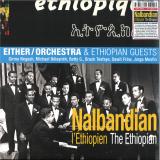
The Éthiopiques series returns! Essential archive recordings from an extremely fruitful period in Ethiopian music.
Before “Swinging Addis” took over the world, there was Moussié Nerses Nalbandian — the Armenian-born composer who shaped modern Ethiopian music. Mentor, arranger, and pioneer, he laid the foundations of Ethio-jazz.
This Éthiopiques volume revives his forgotten legacy, recorded live by Either/ Orchestra First issue ever with new exclusive photos and in depth liner 8-page insert.
“Ethiopian jazzmen are the best musicians that we have seen so far in Africa.
They really are promising handlers of jazz instruments.”
Wilbur De Paris
(1959, after a concert in Addis Ababa)
አዲስ፡ዘመን። *Addis zèmèn* **A new era.**
The time is the mid-1950s and early 1960s, just before "Swinging Addis" bloomed – or rather boomed – onto the scene. Brass instruments are still dominant, but the advent of the electric guitar, and the very first electronic organs, are just around the corner. Rock’n'Roll, R’n’B, Soul and the Twist have not yet barged their way in. Addis Ababa is steeped in the big band atmosphere of the post-war era, with Glenn Miller's *In the* *Mood* as its world-wide theme song, neck and neck with the Latin craze that was in vogue at the same period. Life has become enjoyable once again, with the return of peace after the terrible Italian Fascist invasion of Ethiopia (1935-1941). The redeployment of modern music is part and parcel of the postwar reconstruction. *Addis zèmèn* – a new era – is the watchword of the postwar period, just as it was all across war-torn Europe.
The generation who were the young parents of baby boomers** were the first to enjoy this musical renaissance, before the baby boomers themselves took over and forever super-charged the soundtrack of the final days of imperial reign. Music is Ethiopia's most popular art form, and very often serves as the best barometer for the upsurge of energy that is critical for reconstruction. Whether it be jazz in Saint-Germain-des-Prés or the *zazous* who revolutionised both jazz and French *chanson* after the *Libération*, be it Madrid's post-Franco Movida, or Dada, the Surrealists and *les années folles* that followed World War I, the periods just after mourning and hardship always give rise to brighter and more tuneful tomorrows. Addis Ababa, as the country's capital, and the epicentre of change, was no exception to this vital rule.
**Two generations of Nalbandian musicians**
Nersès Nalbandian belonged to a family of Armenian exiles, who had moved to Ethiopia in the mid-1920s. The uncle Kevork arrived along with the fabled "*Arba Lidjotch*", the** "*40 Kids*", young Armenian orphans and musicians that the Ras Tafari had recruited when he visited Jerusalem in 1924, intending to turn their brass band into the official imperial band. If Kevork Nalbandian was the one who first opened the way of modernism, pushing innovation so far as to invent musical theatre, it was his nephew Nersès who would go on to become, from the 1940s and until his death in 1977, a pivotal figure of modern Ethiopian music and of the heights it. Going all the way back to the 1950s. Nothing less. And it is Nersès who is largely to thank for the brassy colours that so greatly contributed to the international renown of Ethiopian groove. While the younger generations today venture timidly into the genealogy of their country's modern music, often losing their way amidst a distinctly xenophobic historiographical complacency, many survivors of the imperial period are still around to bear witness and pay tribute to the essential role that "Moussié Nersès" played in the rise of Abyssinia's musical modernity.
Given the year of his birth (15 March 1915), no one knows for sure if Nersès Nalbandian was born in Aintab, today Gaziantep (Turkiye/former Ottoman Empire) or on the other side of the border in Alep, Syria... What is certain is that his family, like the entire Armenian community, was amongst the victims of the genocide perpetrated by the Turks. Alep, the place of safety – today in ruins.
Before Nersès then, there was uncle Kevork (1887-1963). For a quarter of a century, he was a whirlwind of activity in music teaching and theatrical innovation. *Guèbrè Mariam le Gondaré* (የጎንደሬ ገብረ ማርያም አጥቶ ማግኘት, 1926 EC=1934) is his most famous creation. This play included "ten Ethiopian songs" — a totally innovative approach. According to his autobiographical notes, preserved by the Nalbandian family, Kevork indicates that he composed some 50 such pieces over the course of his career. This shows just how much he understood, very early on, the critical importance of song as Ethiopia's crowning artistic form. Indeed, for Ethiopian listeners, the most important thing is the lyrics, with all their multifarious mischief, far more than a strong melody, sophisticated arrangements or even an exceptional voice. (This is also why Ethiopians by and large, and beginning with the artists and producers themselves, believed for a long time — and wrongly — that their music could not possibly be exported, and could never win over audiences abroad, who did not speak the country's languages).
Last but not least, one of Kevork's major contributions remains composing Ethiopia's first national anthem – with lyrics by Yoftahé Negussié.
Nersès Nalbandian moved to Ethiopia at the end of the 1930s, at the behest of his ground-breaking uncle. Proficient in many instruments (pretty much everything but the drums), conductor, choir director, composer, arranger, adapter, creator, piano tuner, purveyor of rented pianos,... he was above all an energetic and influential teacher. From 1946 onwards, thanks to Kevork's connexion, Nersès was appointed musical director of the Addis Ababa Municipality Band. In just a few years, Nersès transformed it into the first truly modern ensemble, thanks to the quality of his teaching, his choice of repertoire, and the sophistication of his arrangements. It was this group that would go on to become the orchestra of the Haile Selassie Theatre shortly after its inauguration in 1955, which was a major celebration of the Emperor's jubilee, marking the 25th anniversary of his on-again-off-again reign.
At some point or other in his long career, Nersès Nalbandian had a hand in the creation of just about every institutional band (Municipality Band, Police Orchestra, Imperial Bodyguard Band, Army Band, Yared Music School…), but it was with the Haile Selassie Theatre – today the National Theatre – that his abilities were most on display, up until his death in 1977. To this must be added the development of choral singing in Ethiopia, hitherto unknown, and a sort of secret garden dedicated to the memory of Armenian sacred music, and brought together in two thick, unpublished volumes. Shortly before his death (November 13, 1977), he was appointed to lead the impressive Ethiopian delegation at Festac in Lagos, Nigeria (January-February 1977).
His status as a stateless foreigner regularly excluded him from the most senior positions, in spite of the respect he commanded (and commands to this day) from the musicians of his era. Naturally gifted and largely self-taught, Nerses was tirelessly curious about new musical developments, drawing inspiration from the very first imported records, and especially from listening intensely to the musical programmes broadcast over short-wave radio – BBC *First*. A prolific composer and arranger, he was constantly mindful of formalising and integrating Ethiopian parameters (specific “musical modes”, pentatonic scale, and the dominance of ternary rhythms) into his “modernisation” of the musical culture, rather than trying to over-westernise it. It even seems very probable that *Moussié* Nerses made a decisive contribution to the development of tighter music-teaching methods, in order to revitalise musical education during this period of prodigious cultural ferment. Flying in the face of all the historiographical and musicological evidence, it is taken as sacrosanct dogma that the four musical modes or chords officially recognised today, the *qǝñǝt* or *qiñit* (ቅኝት), are every bit as millennial as Ethiopia itself. It would appear however that some streamlining of these chords actually took place in around 1960. It was only from this time onward that music teaching was structured around these four fundamental musical modes and chords: *Ambassel*, *Bati*, *Tezeta* and *Antchi Hoyé*. A historical and musical “details” that is, apparently, difficult to swallow, especially if that should honour a *foreigner*. Modern Ethiopian music has Nersès to thank for many of its standards and, to this day, it is not unusual for the National Radio to broadcast thunderous oldies that bear unmistakable traces of his outrageously groovy touch.
Arguably one of the most memorable house music moments, born out of the black LGBT scene in Chicago at the legendary Warehouse and known as one of Frankie Knuckles earliest productions; ‘Your Love’ is a stone cold classic. A record that is up there with the greats, instantly recognisable and a song that only get better with time.
Written by Jamie Principle and originally released in 1986, ‘Your Love’ has become a seminal recording over the past 34 years. Originally an underground club anthem, famously borrowed on the crossover hit ‘You’ve Got The Love’ (The Source feat. Candi Staton), and most recently re-produced by as part of the Director’s Cut project which aimed to update a number of classic cuts for the modern dancefloor, this is a record that endures the test of time. Working alongside The Frankie Knuckles Foundation and Eric Kupper, SoSure Music now releases two new remixes for 2020 from Darrius Syrossian and Alan Dixon.
First up, House music aficionado and legendary Sankey’s resident Darius Syrossian offers his unique blend of beats to the remix package. With releases on the likes of Get Physical, Viva Music and Hot Creations, Darius’ production is heavily influenced by some of the greats – think of the finest spinners from Detroit, New York and Chicago – and is well placed to approach this huge task. Darius introduces a rolling house beat and some old skool breakbeats into his mix, keeping the energy high throughout; bringing a feeling of a euphoria and hitting the peak time moment.
Charting a rapid rise through the ranks in a relatively short time Alan Dixon is already building a name for himself in House and Nu Disco scene and has recently released on labels including Glitterbox, Permanent Vacation, Running Back and True Romance. Alan’s remix aims directly at the centre of the disco dancefloor. A strong beat dominates a unique energy through the mix along with a slightly nostalgic vibe. With a beautiful floaty interlude and a raw emotion this remix updates a classic with respect while also giving a fresh new twist.
Two years after he first appeared on Balmat with 1977, Mike Paradinas returns with 1979. The sense of continuity between the two records is clear, and not just from their titles. Both capture the Planet Mu head venturing into the wilderness, seeking something—half-formed memories, thoughts caught in midair—in some of the most abstract, searching music he has released.
Just like 1977, 1979 surveys a synth-heavy array of ethereal soundscapes, ominous crevasses, and strange, psychedelic fugues. Like its predecessor, the new album’s atmospheric cast sets it apart from much of the work Paradinas has released as μ-Ziq on Planet Mu. It’s not strictly an ambient record, but it’s close, as close as this famously mutable artist ever comes to inhabiting a particular genre.
Paradinas’ inspiration for the record began on visits to the Spanish cities of Ávila and Majadahona, where his family hails from. That might account for the sense that there are spirits flitting through this music, presences you can intuit if not quite grasp. But 1979 is also a record to meet on your own terms, and to find your own meanings in.
It’s a stunning record, every track a world unto itself: the mysterious contours of “Majadahonda at Dawn”; the playful melodic fillips of “Clari”; the airy melancholy of “Galletas”; the full-scale breakbeat abandon (yes, you read that right) of “Houzz 14,” the rarest of dancefloor detours for Balmat. There are echoes of classic braindance and isolationist ambient and golden-age IDM; there are easter eggs and recurring themes and hidden symmetries. Every time we listen, we discover something new. Despite what the title might suggest, it’s less a trip back in time than a portal to another universe, a destination for(to?) which only Mike Paradinas knows the exact coordinates. – Philip Sherburne, Balmat
On “Cold Sweat,” James Brown famously called to “give the drummer some.” In 1974, Philadelphia vibraphonist Khan Jamal called to Give the Vibes Some, with superb results. Pianist and composer Jef Gilson’s PALM label gave Jamal the platform he needed to deliver a thorough exploration of contemporary vibraphone. After launching PALM in 1973, Gilson quickly demonstrated that he would only produce records not found anywhere else. Give the Vibes Some, PALM number 10, was another confirmation of this guiding principle.
Raised and based in Philadelphia, Khan Jamal took up the vibes in 1968, after two years in the army during which he was stationed in France and Germany. Decisively drawn to the instrument by the work of the Modern Jazz Quartet’s Milt Jackson, Jamal studied under Philadelphia vibraphone legend Bill Lewis and soon made his debuts in the local underground.
Early in 1972, Jamal made his first recording, with the Sounds of Liberation. The band attempted an original fusion of conga-heavy grooves with avant-garde jazz soloing. Saxophonist Byard Lancaster, an important figure in Jamal’s development, contributed much of the solo work. Later in 1972, Jamal made his leader debut with Drum Dance to the Motherland, a reverb-drenched, never-to-be-replicated experiment with live sound processing. Both albums appeared on the tiny musician-run Dogtown label.
“We couldn’t get no play from nowhere. No gigs or recording sessions or anything. So I took off for Paris,” Jamal recalled in a Cadence interview with Ken Weiss. “Within a few weeks, I had a few articles and I did a record date. It didn’t make me feel good about America.” That was in 1974, while Byard Lancaster was recording the music gathered on Souffle Continu’s recent The Complete PALM Recordings, 1973-1974.
Jamal’s record date delivered Give the Vibes Some. At its core, it was an exploratory solo vibraphone album, even if two tracks added (through technological resourcefulness?) a très célèbre French drummer very much into Elvin Jones appearing under pseudonym for contractual reasons. Another track, for which Jamal switched to the vibes’s wooden ancestor, the marimba, added young Texan trumpeter Clint Jackson III. The most notable article published on Jamal during this stay in France was a Jazz Magazine interview. Jamal’s last word there were “The Creator has a master plan/drum dance to the motherland.” “Give the vibes some” could be added to this programmatic statement.
DJ Support: DJ Spen, Tony Humphries, Danny Krivit, Simon Dunmore, Seamus Haji, Grant Nelson, Brian Tappert, Opolopo, Cj Mckintosh, Tedd Patterson and more...
Long-serving British house producer and hits maker Michael Gray brings his famously soulful sound to "On My Way Out" By Jamiroquai’s Derrick McKenzie Feat. Angela Johnson and it very much taps into a timeless vibe and old school disco feel. The grooves are nice and loose, the moog riff is smooth and fresh and the vocals are solar to the heavens next to mid tempo beats. High class Remix and lavish quality of the most uplifting music.
Updated remixes of two big Balearic classics on Best Record! "Describing Linda Di Franco is no easy task: a reserved, sometimes elusive artist with a career that is difficult to define. From an early age she was interested in various artistic fields. Working as a DJ in clubs, then on the radio, she took the opportunity to record her first musical demo, Stage, obtaining international recognition which quickly took her to England and to the States, where she recorded her first compositions, My Boss and T.V. Scene. The songs are of great value and achieve unexpected success, also included in The Rise Of The Heart, a milestone in the nascent revolution of club culture, a Balearic classic supported by DJs in love with the indefinable sound of Ibiza. But Linda is extraordinarily ahead of her time and despite the enormous fame has gained with her songs she is already oriented towards a career as a music video director. For this reason the Turin singer-songwriter turns out to be one of the least fruitful artists of her time, while her CV in Hollywood is impressive in various roles which she holds, in addition to that of actress and director, that of impeccable sound technique. Intelligent artist, full of good and positive feelings and certainly also ambitious, but extremely scrupulous by subjecting sounds in cinema to careful review. Yes! The "sound" is an investigative tool for her, a way of understanding art. Linda Di Franco is - willy-nilly - still the undisputed queen of the Balearic sound today. So, she decided to produce Redux, a limited edition album published by Best Record, in which her most intrepid and famous songs are re-proposed in the jazz versions edited by her friends from Turin and Los Angeles. Then she had to give in to the boundless passion of Danilo Braca, the Italian DJ based in New York, who deserves credit for the successful combination of refined and ethereal songs with the disco genre. TV. Scene - Epic Remix, TV. Scene - Costa del Sol Mix and My Boss - Remix are Danilo's pearls, created with the help of excellent international musicians who with more defined and current sounds have added their art to that of Linda."
"Waxwork Records is proud to announce the next entry into their collection of FRIDAY THE 13th soundtrack releases on vinyl, FRIDAY THE 13th PART 3. Waxwork and composer Harry Manfredini re-visited the original analog tapes in an effort to faithfully master the complete soundtrack for vinyl. FRIDAY THE 13TH PART 3 includes every musical cue featured in the film and encompasses two 180 gram LP's clocking in at nearly one hour of chilling audio which serve as a dark musical backdrop to one of the most beloved franchises for horror fans. Originally released in 1982 and in 3-D, FRIDAY THE 13TH PART 3 is the first film to feature the legendary slasher, Jason Voorhees, wearing his signature hockey mask. This image of a machete wielding, hockey masked killer became the trademark for the franchise, as well as an iconic image in American cinema and horror films in general. To keep in tune with the original 3-D theatrical release of the film, Waxwork created a deluxe quality 3-D lenticular mounted album cover for the heavyweight old-style tip-on gatefold jacket which houses two LP's featuring the complete score.
Waxwork Records incorporated the lost, deleted final scene of the film into the inner gatefold illustration. This deleted scene from the film depicted an unmasked Jason Voorhees violently beheading the “final girl"". Deemed too graphic by the film studio, the scene was cut from the movie altogether. Here's your chance to see it up close and personal through the artistic vision of Gary Pullin.
And yes, this soundtrack release includes the now famous “Disco Theme"" from FRIDAY THE 13TH PART 3's opening credits!
One of the most popular French TV extracts of all time is the black and white image of a young and extremely nervous-looking Françoise Hardy being given a firm dressing-down by Mireille Hartush (the famous music teacher who ran La Petite Conservatoire de la Chanson in the 1960s). Presented here is her debut studio album Françoise Hardy (issued as The Yeh-Yeh Girl from Paris! in the USA). It was released in France in December 1962 by Disques Vogue with the catalogue number LD 600-30. Originally issued with no title, except for her name on the cover, the album has therefore colloquially become known by the title of its most successful song, Tous les garçons et les filles, and later reissues added this title. This sensational album compiles the twelve original French versions from her first three EPs released by Vogue during 1962. Hardy would also record versions of songs from the album in Italian (1962, four tracks released on singles have been added here as a bonus), English (1964) and German (1965). The iconic LP combines rockabilly, folk, jazz and blues, and has been noted for its simplicity, featuring a minimalist jazz percussion, bass, and both acoustic and electric guitar. 180 GRAM - GATEFOLD COVER - LIMITED EDITION
Second album by influential British hard rock band Black Sabbath, originally released in 1970, containing some of the band’s most famous tracks such as War Pigs, Iron Man and the title track.
Mr. Face, a four-song EP that's a terrific showcase for Segall's artfully ragged style. He plays everything on these recordings with the exception of one drum part on one song. - NPR Fresh Air / Segall appears decidedly more at ease, or even at peace, on the four tracks, but while they build upon acoustic foundations, the tracks quickly take different shapes filled with sublime guitar (and piccolo!) solos that are utterly transfixing."- Exclaim / The real testament to Segall's growing maturity as an artist, however, comes with closing track 'The Picture', one of the most subtle and moving songs in his entire catalog. Segall's guitar sounds like it's scoring a dazed carnival ride as he lays out a tale of learning to say goodbye. - Consequence of Sound
LTD SPLIT COLOUR TRANSLUCENT RED/BLUE VINYL W/ 3-D GLASSES** Back in 2015, Ty Segall released Mr. Face EP, the fantastic gatefold 2x7" was not only packed with four killer jams but was also quite possibly the world's first playable pair of 3D glasses. Now Famous Class Records is thrilled to release a 10th anniversary 12” vinyl edition. All copies are pressed on split color translucent red and blue-colored vinyl and come with special Mr. Face 3-D glasses to activate the supercharged 3D artwork.
comes in deluxe black Priplak jacket with postcard
The Techno Wave" was the first single released in 1990 by this famous project created by Jens Lissat and Ramon Zenker (Hardfloor). One of the most well-known tracks of the so called Frankfurt Tekkno scene that invaded Germany during the early 90s. This re-issue includes the original Castle Mix", the b-side The Bass is on Fire' and a new killer remix prepared by Ancient Methods who described The Techno Wave" as "one of the influential tracks that brought me alongside Zoth Ommog and R&S into techno".
The Godfather of Hardcore, Marc Acardipane, needs no introduction. His outstanding releases over the past 30 years speak for themselves. He has been instrumental in helping to create electronic music history, with countless well-known productions which have been unsurpassed by any other artist of this calibre. His timeless masterpieces have been and always will be heard at hardcore raves spanning the circumference of the Planet. With "9 Is A Classic", "Slaves To The Rave", "Pitch-Hiker", "Stereo Murder" and "We Have Arrived", just to name a few, he clearly proves who's the boss. "The Most Famous Unknown" is a well compiled collection of Marc's music, which showcases a mere portion of what he has composed and produced since the early nineties! The vinyl and digital selection of "The Most Famous Unknown" features remixes by Body Sushi a.k.a. VTSS & Randomer, Dasha Rush, Gabber Eleganza feat. Delirio, Jasss, Kilbourne, Minimum Syndicat, Nina Kraviz, Perc, Solid Blake, Stranger, Umwelt and VTSS, which all deliver excellent interpretations of tracks they have chosen to revamp. All original tracks have been re-mastered to the highest possible standard of quality.
The Godfather of Hardcore, Marc Acardipane, needs no introduction. His outstanding releases over the past 30 years speak for themselves. He has been instrumental in helping to electronic music history, with countless well-known productions which have been unsurpassed by any other artist of this calibre.
His timeless masterpieces have been and always will be heard at hardcore raves spanning the circumference of the Planet. With 9 Is A Classic, Slaves To The Rave, Pitch-Hiker, Stereo Murder and We Have Arrived, just to name a few, he clearly proves who's the boss. "The Most Famous Unknown" is a well compiled collection of Marc's music, which showcases a mere portion of what he has composed and produced since the early nineties!
The vinyl and digital selection of "The Most Famous Unknown" features remixes by Body Sushi a.k.a. VTSS & Randomer, Dasha Rush, Gabber Eleganza feat. Delirio, Jasss, Kilbourne, Minimum Syndicat, Nina Kraviz, Perc, Solid Blake, Stranger, Umwelt and VTSS, which all deliver excellent interpretations of tracks they have chosen to revamp.
All original tracks have been re-mastered to the highest possible standard of quality.
Isle of Jura teams up with French digger Switch Groove on the next compilation titled ‘Archipelago – Cosmic Fusion Gems from France (1978-1988)’.
Switch Groove explains the concept “When I seriously began to search for and collect records, I was mostly interested in sounds from african-american, afro-latin and UK contemporary scenes. Sounds from distant territories, faraway from my native Massif Central, a highland region in the middle of France. The grass is always greener, I guess however, as I was digging in fleamarkets in the early sunday morning light, as well as spending regular sessions in second hands record shops, I began to discover hidden treasures, underground gems and side-projects of an unknown French musical repertoire.
French music is often reduced to its most famous musical forms, characters and signatures : French songwriting and voices, 60s yéyé, prog rock concept albums and soundtrack explorations, 80’s indie rock scene or more recently electronic French touch. All these sounds have a common feature : a geographical link, forged on mainland French territory, following the contour of the so-called Hexagone, the border that shapes the grounds for an homogeneous cultural expression. But beyond this showcase lie more complex, hybrid and global French productions. From French Caribbean Antilles to Parisian suburbs - especially during the ‘Sono Mondiale’ era -, in French areas outside urban cultural centers, musicians have created fusion and cosmic musical expressions. As the mid-seventies meant a greater freedom to make and record music, a wider use of electronic instruments like synthesizers and drum machines helped to deliver some magical projects you could only find lost in the middle of cheap records during a sunny record digging session. I selected these tracks, in an attempt to shape an ARCHIPELAGO that highlights significative contributions of African diasporas and ultramarine territories into French musical borders. It is the map of a land I have gradually drawn, thanks to deep listening of amazing cosmic and fusion tunes. I hope you enjoy the journey.”
Multi platinum-selling musician and multi-instrumentalist Jamie Cullum today announces The Pianoman At Christmas - The Complete Edition. Due for release on 19th November via Island Records. The deluxe album completes last year’s critically acclaimed hit album The Pianoman At Christmas Part 1, with its Second Part - featuring 11 covers of classic Christmas songs, as well as two original songs, including lead single ‘Christmas Don’t Let Me Down’, out now.
Drawing from the past and inspired by the present, The Pianoman At Christmas - The Complete Edition sees Jamie team up with London jazz innovators Kansas Smitty’s, as well as composer and producer The Vernon Spring and acclaimed LA-based jazz singer Lady Blackbird to complete a piece of work that is imbued with seasonal sophistication. Alongside his two original tracks, Jamie breathes new life into classics such as ‘Winter Wonderland’, ‘Silent Night’ and ‘Frosty The Snowman’, ranging from ‘Amazing Grace’ to ‘Man With The Bag’ and ‘Sleigh Ride’. The Complete Edition will be released on double CD and double black vinyl formats, alongside a limited run of 180G Heavyweight coloured vinyl in red and gold.
Speaking on the release, Jamie said -
“I had a huge amount of fun creating part two of TPAC. Recorded live, all in the room together - it’s the party after the big show, with friends, drinks and some of the finest musicians on planet earth.”
Released almost a year to the day before The Complete Edition is due out, The Pianoman At Christmas featured 11 original songs played by 57 of Britain’s best musicians, recorded in Abbey Road’s famous Studio 2 and produced by Greg Wells whose The Greatest Showman soundtrack spent 28 weeks at number 1. The album sold over 37,000 copies, spending 6 weeks in the album chart and peaking at number 11. In December Jamie broke the Guinness World Record for the largest music lesson ever, when he held a virtual piano lesson for 2,282 people, teaching them the carol ‘In The Bleak Midwinter’ with special guests Robbie Williams, Sigrid and Dodie.
With 10 million album sales and over 890 million streams to date, Jamie is a celebrated musician the world over with loyal fans in every corner of the globe. With a career spanning over 20 years, his legendary live shows have seen him perform and work alongside artists as diverse as Herbie Hancock, Pharrell Williams, Kendrick Lamar and IDLES - Jamie writing on the latter’s album Ultra Mono. The success of Jamie’s major label breakthrough, Twentysomething in 2003 and its follow up Catching Tales saw him nominated for a BRIT, Grammy and numerous other awards around the world. In 2020 he won an Ivor Novello Award for his track ‘Age of Anxiety’, taken from his acclaimed 9th studio album Taller. In addition to his enduringly successful recording career, Jamie has also established himself as a multi-award winning music broadcaster; his BBC Radio 2 show celebrated its 11th year on air this year.
With her debut album Black Acid Soul earning critical praise, Lady Blackbird is a revelatory new talent with music that transcends the jazz scene through which the LA-based artist is rooted. Reflecting influences as varied as Billie Holiday, Gladys Knight, Tina Turner and Chaka Khan, with critics drawing comparisons to Adele, Amy and Celeste, Lady Blackbird’s distinct and beguiling voice is not one to be missed.
UK band Kansas Smitty’s have developed a musical voice wholly unique from what’s happening around them. They are led by band leader and producer Giacomo Smith who's cinematic compositions feature on their releases, most recently 2021's acclaimed Things Happened Here for Berlin based label !K7. In 2015 they launched their own east London venue and bar, of the same name, which became one of the conception points for the current UK jazz boom.
Londoner Sam Beste aka The Vernon Spring is a polymath in music who has production, writing and performance credits as eclectic as Amy Winehouse, Matthew Herbert, Kano, Joy Crookes, Beth Orton, Blood Orange, Gabriels and MF DOOM. Since 2019 he has been making waves with solo project The Vernon Spring, which foregrounds his rare capacity to hold sophistication and simplicity in the same hands through highly intimate muted-piano compositions and improvisations.
Dark Entries has raided the bathhouse to bring us Deep Entries: Gay Electronic Excursions 1979-1985, 10 tracks of obscure queer synth bliss. One of Dark Entries' most important missions has been illuminating neglected facets of gay musical history, with crucial archival works by legends like Patrick Cowley, Sylvester, and Man Parrish. On Deep Entries, the label spans 6 years of gay electronics - from sultry to angsty to camp, these songs are overflowing with snappy 808 snares and sinewy analog synth leads. The '80s were a difficult period for many in the gay community as they grappled with the horrors of the HIV/AIDS crisis. The 10 tracks on Deep Entries, varied in genre and vibe, are united in their portraiture of 1980s gay life, and the hope for love or fleeting romance. Previously unreleased cruising soundtracks come courtesy of Patrick Cowley’s “Love Me Hot” featuring vocalist Paul Parker and Boytronic’s “Tonight (Alternate Mix)” set on Hamburg’s famous “Mile of Sin.” Brisbane-based Megamen deliver the proto-electroclash number “Designed for Living,” which prefigures Madonna’s Marlene Dietrich rap in “Vogue.” Trans vocalist Paula "Ula" Villagrá declares, “Everyone is gay!” on Muzak’s “Happy Song,” a skittering tecnopop anthem. Dereck Higgins' “This Was Something” rings like a lost Joy Division cut draped in bizarre effects, and Polar Praxis’ “(I Want) To Be Different” is a seething ode to alterity. Nightmoves’ “Nightdrive,” is best known as the brooding instrumental B-side to their epochal “Transdance.” Transistor Jet’s “Master Of The Universe (BW's f-w)”, Maxx Mann’s “Just Like a Razor” and Bachelor’s Anonymous’ “A Stranger’s Bed” are mood music for the pleasures of BDSM and one-night stands. The record comes housed in a retro bathhouse fantasy sleeve designed by Gwenaël Rattke and includes a double-sided poster with photographs and lyrics. Deep Entries arrives on December 1st in honor of World AIDS day, and proceeds will go to the San Francisco AIDS Foundation.
Limited Edition! The "LaBush - Temple of House" Volume 2 Vinyl Box Set for the 30th Anniversary of the Legendary Club!
Barely six months after the phenomenal success of the first box set, La Bush - Temple of House makes history once again, celebrating its 30th anniversary with the release of Volume 2 in a limited edition 10x12" vinyl box set. A true must-have for collectors and electronic music enthusiasts!
This exclusive box set features no less than 35 tracks, an incredible number for a vinyl collection, offering unparalleled pressing quality that guarantees an exceptional listening experience, perfectly suited for any turntable. Each track has been meticulously remastered, preserving the essence of the original versions while enhancing every sonic detail.
The deluxe packaging of this box set is a work of art in itself, designed to captivate the most discerning vinyl lovers. Moreover, with tracksfrom legendary artists like Paul Kalkbrenner, Paul van Dyk, David Guetta, Tomcraft, Oliver Lieb, Matthew Herbert, and La Bush resident Mr. Sam, this box set is an essential treasure.
For those who already own the first box set, this new volume is the perfect opportunity to complete your collection in the best possible way, adding a new centerpiece to your La Bush ensemble.
Don't miss this unique opportunity to add a masterpiece to your vinyl collection. Order now before it's too late!
The Viceroys were a Jamaican reggae vocal group formed in the late 1960s. Their lineup consisted of Wesley Tinglin, Neville Ingram, and Daniel Bernard plus Musicians: Bass: Robert 'Robbie' Shakespeare, Drums: Carlton 'Carlie' Barrett & Noel Donlan, Keyboards: Ansel 'Pinkie' Collins, Lead Guitar: Radcliffe 'Dougie' Bryan & Bertram "Ranchie" McLean' Rhythm Guitar: Radcliffe "Dougie" Bryan & Eric 'Bingy Bunny' Lamont, Percussion: Noel 'Zoot'/ 'Scully' Simms, Recorded at: Channel One. Produced by: Phil Pratt.
They gained popularity with their harmonious vocal style and catchy melodies. One of their most famous songs is "Heart Made of Stone," which became a hit in Jamaica and internationally. They recorded songs that reflected the social and political issues of the time. Their music continues to be celebrated among reggae enthusiasts for its soulful harmonies and uplifting messages.
“Wild Boy …” is a reissue of the well-known 2016 release curated by Brian Chidester, renowned researcher and biographer of Eden Ahbez. Especially for this album, Brian wrote an interesting text about Abi’s life, which definitely became the decoration of the release.
With the new 2020 re-release, we went a little further and kept what is commonly referred to as studio cuts. It’s a few more minutes in the studio with ahbez himself, full of emotion and life. In addition, to the delight of fans, the edition includes an additional composition Nature Boy (Mantovani Orchestra).
Especially, it is worth noting the outstanding mastering prepared from practically decomposed tapes by the Grammy-nominated Jessica Thompson, which guarantees the deepest and warmth possible sound. Jessica a huge ahbez fan and we’re highly appreciated for what she has done to save his music for the future.
Eden Ahbez is definitely at the origin of psychedelic music and this release can be taken as further proof. Over the past twenty years, the iconic figure of the world’s first hippie Eden ahbez has become famous primarily for his 1948 song “Nature Boy”, praising universal love, and his amazingly solo album from the 1960s called “Eden’s Island” – one from the first concept albums in the history of music and probably the first psychedelic music album. “Wild Boy: The Lost Songs Of Eden Ahbez” deepens understanding of the origins of the psychedelic movement in the 1950s.
The disc contains a musical selection of works by Eden ahbez himself, written by him in the period after Nature Boy. The inclusion of songs such as “Palm Springs” – Ray Anthony Orchestra and “Hey Jacques” by Erta Kitt gives the listener the chance to discover for the first time the little-known recordings of world-famous artists composed by Eden ahbez. Through “Wild Boy” and “Surfer John” you can hear the author’s handling of absurd rock and exotic experimentation, as well as sweet psychedelic pop like Monterey (with Paul Horn on flute). Overall, Wild Boy: The Lost Songs Of Eden Ahbez offers an overview of the lost works of 1949-1971 with seven unpublished recordings and eight rare singles.
If in 2020 you are missing the hallucinogenic content in Eden Ahbez, it amazingly makes up for that deficiency with simple chords, expansive arrangements, and lyrics about travel, relaxation, free love, and spirituality. Thus creating the standard of psychedelic music. Eden Ahbez’s songs weren’t only fantasy and his personal philosophy was the real thing that he lived.
reviews:
“This carefully and extensively researched compilation culls covers by top notch mainstream artists juxtaposed with unreleased Eden recordings. What might sound like a mixed bag is actually more like a chronological, musical non-fiction novel about Eden Ahbez. While Eden was writing hundreds of songs and performing live and making recordings in various styles, his songs were also being picked up by popular artists like Nat King Cole and Eartha Kitt who recorded with a more polished mainstream style. There are also some early rock n roll style recordings here. Eden’s professionally recordings often end up as Novelty Pop records such as “Child of Nature” and “The Clam Man” but if you read between the lines and listen to the lyrics it is pretty eye-opening that he is singing about Eastern-religion-style and pre-hippie philosophies about being at one with the planet Earth.
All of this is explained in the lengthy liner notes inside the lp along with a few choice photos that establish Eden as a founding father of Southern California mystic/psychedelic music.” – Tiki_News
“Eden Ahbez’s life philosophy was summed up in the lyrics of his most famous song, “Nature Boy,” a 1948 hit for Nat King Cole: the song describes a “strange enchanted boy” who wanders the world in search of truth. “The greatest thing you’ll ever learn,” he concludes, “is to love and be loved in return.” Ahbez was a pre-cursor of California’s beatniks and hippies, and an exalted icon of ex-otica via his rare 1960 album Eden’s Island. Beyond “Nature Boy” and Eden’s Island, though, there were nu-merous lesser-known Ahbez record-ings. Ahbez biographer Brian Chidester has been doing an exemplary job of archiving and documenting that catalog of work. The Exotic World of Eden Ahbez (reviewed in UT#38) appeared a few years ago, gathering together 14 Ahbez-related rarities” – Ugly Things
Formed in Edinburgh in 1992, The Kaisers set out to bring the excitement and joi de vivre of the early ‘60s beat era back to the Scottish music scene. Armed with junk shop guitars and tiny amplifiers, they quickly gained a reputation as one of the country’s most exciting live bands, belting out forgotten rock ‘n’ roll gems and their own period-perfect compositions with unsurpassed rawness. As their fame spread, they were soon firing their beat salvos at audiences from America to Japan. The broadcasting authorities took notice and radio sessions for John Peel, Mark Radcliffe and many others followed, both at home and abroad. The Kaisers released seven albums plus many singles and EPs – all on vinyl and always in mono. One EP was recorded during a particularly wild night at New York’s famous CBGB. Although their records featured plenty of the good-humoured sonic violence that their fans craved, heartfelt yet visceral ballads were never off the musical menu. After a 13 year hibernation, The Kaisers returned to the stage via the festivals circuit and continue to appear at festivals across Europe. The resurgence of interest in the band has led to the writing and recording of a brand-new album ‘More From The Kaisers’, due for release on the 28th of June, 2024.
Once upon a time on planet -M-E-L-M-A-K- two teenagers visiting
their grand parents at their village compound were blissfully sleeping
late in the morning when a LOUD BANG!!! made them jump off their
beds. The bewilderment quickly grew into confusion of how was this
possible and then into respect. It appeared to be a soviet era polish
made vacuum tube TV set thrown out the window of the 2nd floor of
the house. Grandfather was doing the spring cleaning of the house,
obviously, the Balkan way – almost meeting the criteria to qualify for
Valhalla! The old cathode ray tube usually being under pressure as a
technology were famous to make a loud violent and deeply sounding
burst when broken that it reminded us a heavy drum machine and the
almost perfect and most brutal and deep and powerful bass drum we
have ever heard. So, us… being techno freaks by that time and
fascinated by the idea of techno music inspired and recreating the
heavy industry and machinery in an auricular way – we took a field
recorder, found another old TV set of the make and…. threw it out the
window… while recording all the sounds coming out of the impact ?
Later dissected and re-looped and re-worked through sampling here’s
a record that’s been years overdue in the making.
WRWTFWW Records is very honored to announce the official reissue of Grauzone's essential 1981 maxi single with timeless classic "Eisbär", proto-techno beast "FILM 2", and romantic synth ballad "Ich Lieb Sie", just in time for the 40th anniversary of the Swiss band's formation. The three-track vinyl is sourced from the original reels, cut at 45rpm, and comes with its iconic artwork on a 350gsm sleeve.
Ich möchte ein Eisbär sein...Written by Martin Eicher after a nightmare in which he saw talking polar bears on the walls, and with music by the Grauzone crew consisting of Martin and his brother Stephan Eicher, Marco Repetto, Christian "GT" Trüssel, and Claudine Chirac (on saxophone), "Eisbär" is the most recognizable title from the band, a sublime mix of ingredients reflecting the transitional era it comes from - the raw energy of punk music still palpable, combined with the audacity of early electronics, the warm groove of a disco gem, beautifully fragile lyrics, and one of the best basslines ever. It became a mega hit, totally unplanned, but how could you resist such a track
"FILM 2" is the ultimate b-side monster, a menacing all-instrumental pre-techno masterpiece, slowly building to a magnetizing frenzy. An instant underground favorite, it was famously heard played at both speeds depending on the scenes and DJs you were frequenting, 45rpm as it was first intended, and 33rpm for the cosmic experience (search Daniele Baldelli's Cosmic C75 1982 mixtape online for a great example of this).
The maxi single ends with "Ich Lieb Sie", a synth-pop meets doo-wop ballad, a true love song oozing with innocence. Simple, stylish, and just right.
At the crossroads of post-punk, new wave, pop, and electronic experimentation, the Eisbär maxi offers three songs that are technically different but hold the same spirit, the perfect embodiment of Grauzone's music - wild, unpredictable, and youthful, yet sophisticated, catchy, and ingenious. The magic recipe for the good stuff.
Stephan Eicher went on to be, arguably, the most successful Swiss musician ever, with an international career extending from pop chanson to experimental escapades and collaborations with Moondog, artists Sophie Calle and John Armleder, and author Martin Suter among many other luminaries. Marco Repetto flourished as a techno and ambient producer, releasing multiple projects including releases on Aphex Twin's Rephlex label.
Grauzone and WRWTFWW will continue to collaborate on the band's 40th anniversary reissue campaign, with numerous projects planned for the year, including a vast selection of music, visuals, and literature never available before.
A veteran of the great Malian orchestra, the Super Biton de Ségou, Mama Sissoko is an accomplished musician. His music traverses Mandingo, Bambara, Sarakolé, Songhai, Bobo, Peul, Malinke and Bozo traditions, all while flirting with jazz. On stage, Mama Sissoko is a purist who engages with the audience bringing his energy, urgent vocals and truly inspired guitar solos throughout the concert. ‘Live' brings together recordings from a concert given in Paris at La Villette in 1998 and takes us back to a high point in Mama Sissoko's career.
In ‘Live’, we find tracks from Mama Sissoko's second solo album 'Soleil de Minuit', which was released in 1999 by Buda Music. As on the album, the different guitars overlap without compromising the unity of the music, rendering an earthy atmosphere despite being very complex. The recording of this concert was superb. We can hear every note, every nuance, every instrument and voice in the many-layered compositions.
As on the album ‘Soleil de Minuit’, this live recording opens the session with ‘Diarabi’, followed by ‘Safiatou’. Both are up-tempo love songs in which Mama Sissoko's powerful voice sings with all of the passion that such love songs deserve over a clean rhythm driven by the percussion of several guitars. The heavy bassline of ‘Safiatou’ adds to the urgency of the song. After these two beautiful renditions, the energy continues with the guitar-driven ’Fisiriwale’ and then a surprisingly original version of Super Biton’s famous song, ‘Iri’. We are then treated to a lively version of his ‘Soleil de Minuit’, called out by the artist as a ‘salsa Africana’ with a shout out given to Cuban salsa mid-way through when he calls the song ‘El Sol de Medianoche’ in perfect Spanish.
Throughout this concert, Mama Sissoko’s deep and melodic voice seems to emanate effortlessly from his body and soul. Multiple guitars back up his signature solos adding depth to the music that harkens back to the traditional music of Mali. Perfect examples of this are given in the songs ‘Douga’, ‘Manssane’ and ‘Hommage a K’. The last song, before a rousing second version of ‘Soleil de Minuit’, is ‘Boma Ma’, a truly modern rendition of a traditional Malian hunters’ song with multiple guitars, shakers, lively djembe and an outstanding vocal duet with Toussaint Sainé, Mama Sissoko’s long time musical collaborator.
Accompanied by incredible musicians, including Toussaint Sainé, his partner in the Super Biton orchestra, "Live" plays in the timeless way of Malian music. What's more, it gives us the gift of its most direct and powerful dimension, that of live music, as if 20 years hadn't passed.
Italian musician, composer, producer and DJ Sergio Sturari aka Serge Funk is one of the most successful disco-house/funky-house artists of recent years, with his productions often sat atop the Traxsource and Beatport charts. This latest release on Groove Culture’s 7 inch sub-label showcases two of his most accomplished creations.
Serge's most famous track, ‘You and I’ takes the A side. An infectious guitar groove provides the hook for this uplifting vocal-led disco house anthem that has already racked up more than 1 million plays on Spotify.
Flip it over to find ‘Yeah Yeah’ – an unmistakable funk jam with a punchy house beat to keep the bodies moving. Flavourful horns dance around slap bass, spiritual organs and juicy guitar riffs tied together with those energetic funk vocals.
Early DJ Support:
Mousse T, The Shapeshifters, Jamie 3:26, Seamus Haji, and Cevin Fisher.
Stix Records, a sub-label of Favorite Recordings, presents the 2nd release from its new Mellow Reggae Series project. Launched earlier this year by Mato & Ethel Lindsey with a stunning cover of the famous “What You Won’t Do For Love” by Bobby Caldwell, the series continues with the same duo, now taking over “Baby Come Back”, the underground AOR/Blue-Eyed-Soul classic from Player.
This time again and likewise could be told about Bobby’s most famous song, “Baby Come Back” can be considered as a “One-Hit Wonder”, reaching #1 on the US Billboard Hot 100 in 1977, while very few people might be able to name who performed it. Like he always does, Mato delivers an outstanding version, delighting us with his matchless skills for dub production. Already perfectly matching on Bobby Caldwell’s rendition, Ethel Lindsey ensure again the perfect vocals over Mato’s production. Currently preparing her 1st album to be released on Favorite Recordings, Ethel has a long music and singing experience, unless an almost blank discography. From her very young age, she’s developed a deep passion for AOR and Blue-Eyed-Soul style.
Starting his reggae production career in 2006, Thomas Blanchot (aka Mato) has released music through various projects on EDR Records, Big Singles or Makasound... In the meantime, he developed a real trademark: taking over classic French, Hip-Hop, OST, Classical or Pop songs, into roots reggae-dub new versions. His 15 years collaboration with Stix Records and label honcho Pascal Rioux gave life to many masterpieces and the story seems far from the end…
Holeg Spies’ 7th album BRAVE NEW WORLD is a new step towards his creation of an immersive sound world intermixing his various music influences. The album features collaborations with YOUTH (Killing Joke, The Orb, producer of Pink Floyd and The Verve), well known Dub producer GAUDI, renown Australian percussionist RIP VAN HIPPY, psychedelic dub artist KUBA and French Goa-trance pioneer THIERRY GOTTI (Spectral/Blue Room).
This unshackled album escapes all classification, getting lost in the confines of Electronic, Progressive Rock, Dub, Ambient, Symphonic and Psychedelic music.
French trail-blazer electronic artist, Holeg’s 30-year music exploration has taken him from the early days of techno productions to composing music for films.
Touring Europe and Japan, where he was regularly invited to perform thanks to JUNO REACTOR, Holeg crossed paths with his first filmmaker, the notorious TAKASHI MIIKE, for whom he made an audiovisual remix of one of his most famous films, ICHI THE KILLER in 2001.
His film music duo SAVAGE & SPIES created the soundtrack for the cult classic THE HUMAN CENTIPEDE, BLACKSITE, a $15M thriller by the producers of SICARIO & JOHN WICK and ABRUPTIO starring Oscar-winner JORDAN PEELE. Released on Liquid Sound Design in 2021, his latest opus AXIS MUNDI RELOAD was based on personal immersive journeys in the steppes of Mongolia and among the Hopi tribe in Arizona and features collaborations with YOUTH as well as JAIA and DF TRAM.
For the 30th anniversary of the release of the first single by Frankie HI NRG MC 'Fight Da Faida' Irma Records together with the artist have decided to pack an unreleased collector's version of the song.
The new look is in 7-inch format (45 rpm) in a limited edition on white vinyl with a gatefold format cover containing, in addition to a photo of the artist of the time and one of today, the original lyrics of the song and a text by the well-known journalist and radio and television host Luca De Gennaro who was the first to notice the artist.
The song Fight Da Faida has been seminal for the evolution of Italian Hip Hop.
At the time, few such songs had come out and they were all known mostly on the alternative circuits. Fight Da Faida, despite its harsh and explicit text against the mafias, was the first to have real radio programming on national networks.
It was also obviously the launching pad of the artist who later released his first album 'Verba Manent' which also contains this single.
The new format contains the original version, the instrumental version and the 'famous' Sicilian nursery rhyme 'Tri Tri Tri Trinacria Breakdown' which over the years has been repeatedly sampled abroad for club music songs.
Freestyle Records presents Albert "Alchemist" Thompson's Promise Land, an EP featuring vocals from reggae & dancehall greats Frankie Paul, Joseph Cotton, Prince Malachi & Anthony John, representing a musical collection that has gradually evolved, matured & marinated over the course of the past 32 years - now finally seeing it's first ever release.
Albert Thompson (brother to the great Peter Chemist) was chief engineer at the storied I&I Sound Recording Studio after it moved it's base from Los Angeles to Jamaica in 1989, working with a wide range of heavyweight artists such as Dennis Brown, Bunny Wailer, Mighty Diamonds, Gregory Isaacs & many many more. During some studio downtime in early 1991, Albert laid down the rhythm track (itself a take on Aswad's Love Fire riddim, made most famous by Dennis Brown's iconic Promised land vocal track) with musical assistance from Tony Thomas.
16 years and a move to London later, Albert had founded his Alchemist Recording Studio on Brixton's Acre Lane in a space above the legendary Supertone Records - recording dubplates with talented local artists and touring Jamaican artists alike. Digging out the Promise Land tape, he proceeded to cut these 4 vocals on the version during the course of 2007. Another 16 years gone, and after hearing the tracks following a chance encounter with Albert in South East London, we felt they were finally ready to see release!
Twin Cosmos is not only the name of the musical output of fraternal twins Morihito & Yasuhito Ito, but more philosophically, an album that encapsulates, “the universe of twins”.
The pair were born 1953 in Yokkaichi, Mie Prefecture. A port city 50 kilometres west of Nagoya, famous for its chemical plants. Despite their surroundings, they grew up in an environment that fostered learning and self-expression. From an early age, they began to carve out their own paths.
Morihito was fascinated with scientific endeavours, space travel and spirituality. His father, an electrician by trade - motivated him to build his own musical equipment. This led him to attend an acoustic engineering school in Tokyo from 1972-1974, after which, Morihito returned to Yokkaichi where he worked in the instrument and audio section of a department store. This helped him keep up to date with the latest equipment, while allowing him to simultaneously work on his own musical endeavours.
Morihito’s side of the ‘Double Action’ LP is a cohesive piece, which effortlessly drifts from one song to the next through samples of flowing water and rockets launching into space ,that were recorded while visiting his brother in the States. His music is carried by flowing vocal harmonies, guitar strums, and floating synths to create an eternal dreamlike ambiance.
In contrast, Yasuhito gravitated towards philosophy and the arts and in 1976 followed his Englsih teachers’ advice and moved to the ‘foreign world’ of the United States. It’s here that he further explored his interests in Christianity, sadomasochism and poetry. He was exposed to artists like John Cage and Sun Ra, as well as a variety of ‘Do It Yourself’ recording techniques that enabled him to record remotely.
Using samples, poetry, and an original approach to traditional folk & rock songs, he recorded his side of the LP. The outcome being provocative, dark and confronting realisations, which solely used English lyrics to represent his experiences in the ‘Western world’. In 1980, Yasuhito was wooed back to Japan by his brother and the prospect of a combined record release.
The self-released album ‘Double Action’, was completed at Victor studios in Japan. Without a distribution network, the release was sold mostly to family and friends and fell into obscurity. Despite not reaching commercial success, the pair have continued to make music over the past four decades, crediting it as their driving force in life. This 2022 release includes an insert with archival images & liner notes in both English & Japanese.
Recent times have seen After Caposile become one of the most sought after locations on the underground circuit, and this reflects in their acclaimed record label - Caposile Music. This Spring they have prepared a stellar release of firm favourites from the club. “The Sound Of Garden” release will come in two parts, both on 12” and will include a heavy hitting lineup such as Romanian duo Super Moon (Arapu & Priku), family members and residents Maggio, Francesco Maddalena, and Yaar Kü, Silat Beksi, Mihai Pol, Giuliano Lomonte and Sublee. A perfect blend of club affiliates, coming together to provide the soundtrack from that famous garden.
Volume One kicks off with the dynamite combination of Arapu & Priku under their Super Moon moniker. Hypnotic movements set a serious tone for the journey ahead, mysterious elements simmering throughout “I Can Help”. Dreamy meets dance floor in Maggio’s aptly named “Just Landed” floating synths calmly lift you, but you remain grounded by the killer elasticated groove. After delivering the previous EP on the label Yaar Kü returns with a stripped back encounter, his unique touch shining bright. Silat Beksi provides a certain sunshine jam with his track “Jaho”, you immediately feel the warmer times are coming, after parties in the sun.
Landing just a few weeks after is the equally special Volume Two, packed full of ammo for the tastemakers. Mihai Pol inaugurates proceedings with “Sugar Rush”, the 7 minute quest boasts shimmering synths and a sweet bass line to match. Francesco Maddalena ups the ante with his garage influenced “Breath Of Air”, an energy boost for the peak times of the party. Giuliano Lomonte’s “More Time” rumbles from the get go, begging to be played on a high quality system to allow each of the intricate details to speak for themselves. Last but not least is Sublee, his “Day Six” track is a chugging body of work, blurring the lines between house and minimal with a raw edge.
With a huge European tour on the table, and a release of this stature After Caposile are flying high at the moment with an indispensable team behind the project. Expanding on their party paradise location, but simultaneously propelling innovative underground sounds under the Caposile Music offshoot. Both Volume One and Two will land this May, right on cue for the summer time madness.
Harold McNair was a Jamaican born saxophonist and flautist who settle in London in 1960. He played regularly at Ronnie Scott's club and with contemporary UK Jazz musicians like John Cameron and was a member of Donovan's band in the mid to late 60s. His most famous recording 'The Hipster' comes from his second UK album and was issued on RCA as a 45 in 1968, which is now very in demand and sells for approx £300.
The track has become one of the most iconic 60s British Jazz dance tracks and was featured on Gilles Peterson Impressed Vol 2 compilation.
It's influence can be heard on recent UK Jazz recordings by Chip Wickham and others .
We are delighted to release this great track on 45 for the first time since its original issue 55 years ago, it still sounds remarkable ‘Hip’. It has been remastered from the original tapes with a look a like 4 prong centre image label. The single is likely to be met with significant demand.
Vincentiulian is the kind of name that needs no introduction. He is one of the best-known DJs and producers from the famous Romanian scene, and his evolution throughout the years tells its own story. He has played alongside the biggest names in the industry, shared the decks with household DJs like Priku, Rhadoo, or Cezar, and played the most important festivals out there.
His Subbass EP on Vivus Records cements his aura even more as a wonderful producer.
The opening track, Works, kicks things off wonderfully and subtly. It’s certainly a perfect track for the warm-up moments in the club, but its intricate background noises add a lovely layer of complexity as the track goes on.
Then we head off in a different direction: At Chalet is a much stronger track with an imposing bassline that dominates the sound and perfectly complements the mysterious vocals.
The titular track, Subbass, has a natural futuristic vibe and feels like a
ready-made club banger. The spacey atmosphere is something that only adds charm to it. The Tobias Laun Remix is a more chill but equally powerful way to end this mesmerizing EP, with Tobias showing his prowess at adjusting the pace just at the right rhythm for the dancefloor. The strong bass complements superbly with the sublime background noises to make this the perfect last chapter.
Recent times have seen After Caposile become one of the most sought after locations on the underground circuit, and this reflects in their acclaimed record label - Caposile Music. This Spring they have prepared a stellar release of firm favourites from the club. “The Sound
of Garden” release will come in two parts, both on 12” and will include a heavy hitting lineup such as Romanian duo Super Moon (Arapu & Priku), family members and residents Maggio, Francesco Maddalena, and Yaar Kü, Silat Beksi, Mihai Pol, Giuliano Lomonte and Sublee. A perfect blend of club affiliates, coming together to provide the soundtrack from that famous garden.
Volume One kicks off with the dynamite combination of Arapu & Priku under their Super Moon moniker. Hypnotic movements set a serious tone for the journey ahead, mysterious elements simmering throughout “I Can Help”. Dreamy meets dance floor in Maggio’s aptly named “Just Landed” floating synths calmly lift you, but you remain grounded by the killer elasticated groove. After delivering the previous EP on the label Yaar Kü returns with a stripped back encounter, his unique touch shining bright. Silat Beksi provides a certain sunshine jam with his track “Jaho”, you immediately feel the warmer times are coming, after parties in the sun.
Landing just a few weeks after is the equally special Volume Two, packed full of ammo for the tastemakers. Mihai Pol inaugurates proceedings with “Sugar Rush”, the 7 minute quest boasts shimmering synths and a sweet bass line to match. Francesco Maddalena ups the ante with his garage influenced “Breath Of Air”, an energy boost for the peak times of the party. Giuliano Lomonte’s “More Time” rumbles from the get go, begging to be played on a high quality system to allow each of the intricate details to speak for themselves. Last but not least is Sublee, his “Day Six” track is a chugging body of work, blurring the lines between house and minimal with a raw edge.
With a huge European tour on the table, and a release of this stature After Caposile are flying high at the moment with an indispensable team behind the project. Expanding on their party paradise location, but simultaneously propelling innovative underground sounds under the Caposile Music offshoot. Both Volume One and Two will land this May, right on cue for the summer time madness.
In 1975, under the oppressive air of military dictatorship in Brazil, brothers Lelo and Zé Eduardo Nazario invited bassist Zeca Assumpção to join their musical experiments in a basement under Sao Paulo’s Teodoro Sampaio Street. As teenagers, the trio had already been playing together in Hermeto Pascoal’s Grupo, alongside guitarist Toninho Horta and saxophonist Nivaldo Ornelas, and it was while working together under Hermeto’s direction that the Paulista rhythm section (as they were then known) began to realise their own potential.
With many nightclubs and venues closed in the mid-70s and government censors dictating the output of radio, TV and art galleries, many Brazilian artists fled during the years of dictatorship. But underground, Grupo Um were fusing avant garde ideals with contemporary jazz and Afro Brazilian rhythm; making phenomenally free and expressive music - in stark contrast to the sterile, conservative conditions being imposed above ground.
Just like Hermeto Pascoal’s Viajando Com O Som from the following year, Starting Point was recorded over two days at Vice-Versa Studios, by revered engineer Renato Viola. The studio was one of the best in Sao Paulo and musicians communicated with engineers through cameras and a monitor, allowing the group complete immersion in the process. They also made use of the studio’s hemispherical tiled room, which served as an acoustic reverberation chamber.
The album begins with Zé Eduardo Nazario’s thunderous drum solo on “Porão da Teodoro”, before clearing the clouds with the lone Berimbau which opens “Onze Por Oito”. Built around a hypnotic electric bass line, heady Fender Rhodes improvisations, and more rip-roaring drums, it’s a rapturous, electrifying freak-jam in 11/8.
Like some invertebrate deep-sea curiosity, the free-form “Organica” is made up of Lelo Nazario’s playfully eerie prepared piano, with Zé Eduardo’s percussion flurries darting around Assumpçao’s double bass. The equally non-conformist, percussion-only piece “Jardim Candida” features many of Zé Eduardo’s home-made instruments, including a long saw blade played with vibraphone sticks and violin bow. While working with Hermeto, Zé Eduardo famously built his own all-in-one percussion set-up known as the “Barraca de Percussão” (Percussion Tent) - the first of its kind in Brazil, which he would also use on Hermeto Pascoal’s Viajando Com O Som and throughout his career.
“Suite Orquidea Negra'' (Black Orchid Suite) was written by Lelo Nazario as the score for an imaginary movie - the story of a rare, black orchid which produced a substance meant to cure all diseases, but which had mysteriously disappeared from the laboratory… “As a screenplay it’s not very good” reflects Lelo in jest, “but the music ended up being very interesting, the way its parts are chained to one another carries a little of the mystery I imagined for the movie.”
The album closes with the triumphant “Cortejo dos Reis Negros” (Procession of Black Kings) - a groovy variation on the Maracatu rhythm, with a two-note bassline underpinning piano improvisations, exultant wordless vocals, cuicas, slide-whistles and a very special guest appearance from Zé’s dog Bolinha.
Starting Point was to mark the inception of one of Brazil’s most daring instrumental groups. Their debut now sits in the lofty echelon of otherworldly 70s Brazilian music, alongside the likes of Marcos Resende & Index’s self-titled debut, Cesar Mariano & Cia’s Sao Paulo Brasil, Azymuth’s debut and indeed Hermeto Pascoal’s Viajando Com O Som. But just like all of those titles, which were either shelved or largely ignored at the time, Grupo Um - so radically ahead of their time - struggled to find a label to release their debut album. So Lelo kept the tapes safe in his archives, which is where they sat for almost half a century. Finally, almost fifty years later, this mesmerising piece of history is here, and it was only the beginning...
Grupo Um’s Starting Point will be released by Far Out Recordings, on vinyl LP, with an insert featuring unseen photos and liner notes by the Nazario brothers, as well as a CD on 17th February 2023.
Originally recorded by D-Train, some might say this is one of the most important post disco records from the 1980’s, which appeared on the legendary Prelude records originally. What makes this version particularly special, is the fact it features another important artist from the post disco era Colonel Abrams, who is most famous for his cult classics ‘Trapped’ and ‘I’m Not Gonna Lie’ which both topped the charts in the mid 80’s. Aussie disco lord Dr Packer, who is currently on tour across Europe teams up with newcomer Sonic Soul Orchestra, who flip this into a fresh disco house cut that includes all new instrumentation whilst respecting the smooth vocal stylings of the Colonel. Plus remixes from Ross Couch, & Ricky Morrison (M&S).
Early DJ Support:
Jamie Jones, Mark Knight, Michael Gray, Roger Sanchez.
A vibrant and powerful performer, Danny Toeman seamlessly blends the classic vibes of Funk and Soul's golden age with his own inimitable London edge that modernises his work, giving it a fresh 'neo-vintage' flavour. His gravel tones combined with an altitude-defying falsetto set him apart, creating a sound oozing with character and emotion. With his backing band 'The Love Explosion', Danny Toeman stages an electrifying show filled to the brim with feel-good funky soul, designed to make everyone get on up! Born in London, Danny was well acquainted with the Soul, Funk, and Rhythm and Blues of artists such as James Brown, Aretha Franklin, and Ray Charles from an early age, before graduating onto the hard hitting Souther Soul of artists like Wilson Pickett and Bobby Womack, and the refined uptown Philly Soul of artists like the O'Jays and the Spinners. A guitarist since the age of seven, and a singer before that, he grabbed any opportunity to perform his songs on stage for an audience. Danny Toeman truly set out to on his musical career after graduating University (where he won the regions official Battle of the Bands contest). Soon after, he was in demand as a supporting act for a number of great Soul artists, including Charles Bradley of Daptone, Michael Kiwanuka, Queen of Rare Groove Betty Wright, and 4-time Grammy winner Robert Cray. Around the same time, Danny's music reached a worldwide audience when a song of his was discovered on Soundcloud by scouts, and placed on the in-store playlists of Abercrombie & Fitch. Since then, his music has appeared in film and television shows around the world, most notably Saturday Night Live (NBC). Danny continued to perform nonstop around the UK, occasionally travelling to continental Europe for appearances. From 2019-2021, he hosted and promoted a series of headline shows at the famous Pizza Express Jazz Club, which garnered sold out crowds every night. The pinnacle of the support slots came in 2019, when Danny was chosen as the primary support act for Kool and the Gang at their o2 Arena show in London, in front of 10,000 spectators.
In Mid-2020, as the world was shutting down, Danny was approached by LRK Records to release his track 'She's Got Something About Her' on vinyl.
Within 3 months of release, the disc completely sold out due to demand, taking the European Soul Scene by storm. It garnered multiple radio plays, including from BBC 6 Music's Craig Charles, and veteran BBC DJ Robert Elms pronounced it 'his new favourite song'.
In 2022, Danny received his first spin on BBC Radio 2 for the single, 'Shake the Blues Outta Your Shoes', and was chosen out of thousands of competitors by industry professionals to act as the opening act for the legendary Diana Ross at one of her rare UK performances!
As the world starts to open up, Danny looks forward to releasing more new music, and taking his show across Europe and around the World.
Melancholia is a made-up medical condition manifested in an incessant moment of reflection. The newest album is a soundtrack to different stages of it and the accompanying feelings. The extremes of those got illustrated by Wojtek Łebski who designed the graphic identity of the album.
"I wrote this music during the last 3 years which for me and to many others were the most bizarre time on the planet we live. Lots of dilemmas, problems, ups and downs, self-doubt and permanent anxiety I transformed into different frequencies of sound. From the very first song, you can hear my fascination with the bass and half-step music scene. Thanks to Mr Envee who mixed the album, it sounds exactly how I imagined - deep and worm. Welcome to the journey." - says the author.
Teielte is a very important person to U Know Me Records - his debut album was the first one in the history of the label. To honour the album properly, the "Melancholizm" was labelled with the number UKM 100 and it will be released exactly 12 years after the famous debut of Taielte's album "Homeworkz".
The album will be released in two versions - classic black LP and limited colour LP. What's special about the limited edition is that every copy is different and is numbered by hand (100 copies). Also, both versions have different covers designed by Wojtek Łebski
Three years after Reno Wurzbacher’s entry into the series, Cook Strummer now offers up his own Berlin Gets Physical, a collection of all-new and exclusive tracks.
Berlin-based, Belgium-born Strummer has been a Get Physical associate for several years. He has dropped various singles including the standout 'Rising' which also featured on the Words Don't Come Easy series, and always crafts the perfect mix of rhythm and melody with plenty of hints of his homeland's famous cold wave sound. He often uses his own voice, drum machines, synths and guitars in his music, and since his debut album in 2018 on LOK Recordings, he has had high profile support from the likes of Laurent Garnier, Adam Port and Ame. This summer, he dropped 'Atmosphere' on Obsolet Records which proved another successful outing and now Berlin Gets Physical finds him digging deep into the famous city's freshest and most essential house sounds across 15 well-sequenced tracks.
His own new offering 'For Berlin' kicks off with a dark and edgy vibe, gothic vocals and tense drums. Glitchy hits and blurting synths add to the prickly atmosphere and immediately lock you in while Los Cabra & Manuel Sahagun's 'Italian Groove' then takes off on waves of serrated dark disco synths and Freudenthal feat. Nowhere People continue that macho disco vibe with the rugged chug and cosmic rays of 'Cipher.'
The twinkling 'Bad Karma' by Marvin Jam & Le Mythe then allows you to catch your breath with a slower, more spacious dub disco sound and the twanging bass riffs and exotic effects of Daniel Jaeger & Valenti's 'Quarantine Cowboys' rebuilds the atmosphere with some innovative house blues. The mid-section brings brain-frying synth work on 'Out Of The Blue', bubbling dub house and disco courtesy of dramasquad's sprawling 'ziggy' and percussive deep house looseness from 'Abayomi.'
After KEENE's rubbery and rolling Afro sounds comes more cosmic house richness from Dan Buri and Max Joni & MUKKIMIAU, the driving tech of Red Pig Flower & Lulla and heady sounds of Mike Book. There is a raw house heaviness to FreedomB's 'State of Shock' and things shut down with Electronic Elephant's tightly coiled minimal drum funk on 'Ask Yourself'.
This on point collection is an authentic snapshot of the contemporary underground sound of the Berlin.
Junki Inoue presents the second release on his recently founded label SAISEI from prolific Japanese producer Takuya Sugimoto under his COLOGNe alias. Deep Talk EP features 6 tracks originally released on Japanese CD only label Viola in 1999 and is a snapshot of the elevated warped-techno meets IDM productions Sugimoto is so respected for.
Famous for releasing under many synonyms including COLOGNe, Web and Sammansa it was his EVA EP - the first release on FatCat Records in 1996 that stands out in his recording history. The tracks were in fact licenced from Syzygy Records in Japan, which was one of the main Japanese labels including Viola that homed his work during the 90s era he was most productive in. More recently German label Acido released The Sound There, a mini album of previously unreleased Web material recorded between 1994 and 1995 which was released last year in 2020.
Deep Talk EP presents 6 tracks of intelligent and elevated techno, which show the balanced and intricate approach Sugimoto applies to his output. It has all the warmth and positive essence of the 90s era of electronic music - combining deep and beautiful sounds with headsy and intricate constructions. This is the first time this music has been made available on the vinyl format.
SAISEI is a Japanese word which translates to ‘reproduction’ and ‘to play’ (as in playing records). Japanese culture is widely known for its traditional nature just as much as it is for being forward into the future and this label’s concept does justice to exactly that. Having started digging for records as early as 16 years old, Inoue delved into productions from 1990s Japan to uncover these native gems. SAISEI’s core concept is to recapture and reintroduce unique
pieces of Japanese electronic music onto vinyl, to an audience it never reached before as most of this music was only released in Japan
Siedah Garrett's seminal 1985 classic 'Do You Want It Right Now' receives 3 new incredible remixes from Dr Packer, BluePrint and Jolyon Petch.
Dr Packer delivers a truly funk-worthy re-work injecting a barrage of the smoothest soul-laced sonics for an early 90s house meets nu disco cut.
Jolyon Petch ramps up the funk with infectious guitar licks and groove-laden bass for his 'Elektrik Disko Mix’.
Burgeoning British producer and Stress Records artist BluePrint drops a rolling progressive house / melodic techno hedonistic dancefloor cut, re-working the classic with absolute finesse with sleek piano work floating euphorically around the iconic lyrics.
Most famous for her song writing credits on Michael Jackson's 'Man in The Mirror', as well as a duet on Jackson's 'I Just Can't Stop Loving You' and 'Don't Look Any Further' with Dennis Edwards, it's no surprise that Siedah Garrett's long career has cemented her as one the most iconic names from the 80's. 'Do You Want It Right Now' which featured in the 1985 movie 'Fast Forward' has been sampled over the years by the likes of Armand Van Helden and covered by Degrees of Motion and this iconic anthem is still considered as one of the game changers during the pivot into the 'Freestyle' movement during the 80's.
DJ Support across the mixes from Danny Howard, Mark Knight, Breakbot, Rudimental, Claptone, Jamie Jones, Sam Divine, Oliver Heldens, Riva Starr, Alaia & Gallo, Judge Jules, Mousse T, Joachim Garraud, Kevin McKay, Russell / Freemasons, Paco Osuna, Oliver Dollar.
Named "best kept secret of Canadian funk" by the Quebecois newspaper La Presse, The Brooks are a band of accomplished musicians, well-known in the soul/funk scene across the Atlantic. Expert instrumentalists led by Alexandre Lapointe create a dazzling combo with frontman Alan Prater— an incredibly energetic showman who has worked alongside some of the biggest names in the music industry. This passionate and experienced band fan the sacred fire every time they perform! Thanks to a solid realization, their musical message comes across beautifully. The Brooks go beyond mere interpretation and style exercises: they are a powerful groove machine and a driving force in their sector. 50 years of African American music are condensed in the band's aesthetic. In their live shows and in their records, you can hear James Brown's meticulousness, D'Angelo's delightfulness, Fela Kuti's radiance, Herbie Hancock's intergenerational openness, and J. Dilla's innovative spirit. These heroes of music didn't let rules and trends dictate their messages, and neither do The Brooks. Just like these history makers, they built their reputation with sweat and rigor, outside of conventional channels. The Brooks are incredibly hard workers united in a project where pleasure and complete artistic freedom are the only key words. After 8 years of existence, with an EP and two albums, they have already won many awards and nominations (GAMIQ, Independent Music Awards, ADISQ...) and built a solid reputation in the Quebec indie world.
Who are The Brooks? First, there's the icon, Alan Prater! This Florida-born musician can boast that he shared the stage with the Jacksons! Thanks to his many trips and experiences, he became a key member of Montreal jazz. He is the band's biggest asset: if The Brooks were a sports team, Alan Prater would be captain. Then, at the drums: Maxime Bellavance, one half of the Beat Market duo, whose "dancy and retro futurist" groove can be heard in several major and underground projects in Canada. Philippe Look aces guitar and vocals. His experience as a session musician working with famous bands for 20 years allowed him to take part in different projects: rock, downtempo, trip hop, electro… As one of the founding members of The Brooks, he also wrote many of the band's songs. Keyboardist Daniel Thouin is an integral part of the Montreal jazz scene. He is both an accomplished acoustic piano player and synthesizer player, well versed in writing as well as in improvising, in organic sounds as well as in the latest technologies. Thouin possesses a double vision, which allows him to both exalt and lead productions. Composer Sébastien Grenier wows us with his saxophone. Thanks to his theoretical knowledge and his 20 years of experience, acquired through continuous training all around the world, he is a true guiding force. French trumpetist Hichem Khalfa begun learning the instrument at 7 years old. He attended a musical conservatory before going to the Haute École de Musique and finally pursuing his studies at McGill University. He won prizes at Rimouski International Jazz Festival and received the François Marcaurelle prize at Montreal Off Festival. His successful jazz projects allowed him to work with famous musicians like Blitz the Ambassador, Nomadic Massive, Rhonda Ross and Kalmunity. Philippe Beaudin can be considered an apostle of Afro-Latin percussions, which he teaches and practices with great passion. Thanks to his participation in several projects, you can discover his talent both on stage and onscreen. The Brooks' philosophy is based on art in its rawest form, on perfectionism in musical practice. The choices they make and the directions they take are motivated mostly by instinctive feelings. This is how The Brooks recently crossed the path of Underdog Records during a trip in France. It was love at first sight for the two groups who share a passion for soul. Their chemistry allows them to be completely free in their creative process and natural as ever in their conception-creation-communication approach.
After the creation of his own label and four EPs (Intuitive, Blend, Exil, Singles), here is Thylacine with a first album called Transsiberian, named after a recent trip to the other side of the world.
In the spring of 2015, William left for Russia with a video crew. The goal: to get carried away by the famous Trans-Siberian, which connects Moscow to Vladivostok, and stop at the option of fixed and impromptu meetings with local personalities. Time is divided between intense encounters and long train journeys where William locks himself in his cabin to compose. At the option of these stops which, over the days, nourish William's inspiration, he has the right to a concert offered as a welcome by the old ladies of the native village of the graffiti artist Artemiy, polyphonies in Irkutsk, a bell ringer of bells, a traditional musical trio in Kazan, surfers in Vladivostok. A shaman welcomes him in his yurt on the shores of Lake Baikal, with his two little daughters, Aikhai and Mandukhaï. All can be found on Transsiberian, a concept album that places the taste for travel and his curiosity about others at the heart of his contemplative songs. Evolving in the world of contemporary art, for which he composes regularly, William sees an album as a work where performance counts but also emotion and, above all, manner of doing things. "The process of creation matters as much as the end," he says.
A collection of vinyl and limited digital releases, curated by Millsart, an alias of Jeff Mills, of his most eclectic and transcendent compositions that derive from his Every Dog Has Its Day project as well as new unreleased works. Vernacular creations that fall off from the "other side" of the Electronic Music tree, this project is designed for the experienced Techno music listeners, and its goal is to reflect upon the pure artistry of the craft of storytelling. A realization between music and life. Whereas "dancing" is the goal of Dance Music, the goal of this music is about "reflecting on the complexity and simplification of life".Soundtracks for people in their evolutionary process.
This release 'Drifter' is about 'Hype'.
Hype
An animal that prowls on the vulnerable - it excites those who might be looking the other way or with their eyes and minds wide shut.
What is life without hype?
As a transitional tool, hype can be most effective especially when impulse reactions are at play. Something of a psychological currency, there is a lot to gain by giving people what they want - the rush that comes with taking part in a process of making something bigger, more successful and more preferred. Even if there is nothing there.
What's wrong with getting exciting about something?
There are only a few rare masterclass cases that have lasted a lifetime.
As Andy Warhol proclaimed that "everyone will be World famous for 15 minutes" rings darkly true in an era when each one of us can be the talent scout, artist, critic, audience.......and then a revisionist, hoping to bring hype back again by reminding people how great the first round felt.
We are all free to use our attention and time anyway we please. This is the freedom we have, right?
In most cases, we wake up and at some point, the question of justification becomes a debate between those who found unconditional solace and those who re-discovered the subject of substance and "kicked the tires".
Should I care if others like or dislike something?
For some, the hype of something never ends. It hardens and becomes part of a foundation like a cement podium. Something to be stood on to speak over all dissenting voices.
The Suicide Handbook is Ryan Adams’ most elusive and mythic recordings. The album is a raw and intimate collection of songs that captures the songwriter at his most unguarded. Recorded at the beginning of his solo career and long circulating only through bootlegs, the album has earned a legendary status among die-hard fans and fans of the americana genre alike for its stark stripped-back beauty.
Acoustic arrangements and hushed, late-night vocals, these songs feel like private confessions set to tape. Adams leans into themes of heartbreak, isolation, and emotional vulnerability, delivering recordings that are as fragile as they are compelling. There’s an immediacy here that sets The Suicide Handbook apart from his studio releases. These are the original recordings in their rawest and un-touched form.
Released officially for the first time, experience the record as a cohesive piece, bringing warmth and depth to its lo-fi origins. The analogue format enhances every subtle nuance, from the quiet creak of strings to the tremble in Adams’ voice.
For longtime fans and collectors alike, The Suicide Handbook stands as a haunting, deeply personal snapshot of an artist laying everything bare—an essential addition to the Ryan Adams collection.
In the spring of 1971, somewhere between Brussels, Paris and a collective pop fever dream, Le Monde Fabuleux Des Yamasuki landed on vinyl. It sounded like nothing else then and it still does not today. More than half a century later, Sdban Records proudly presents a reissue of this singular cult album, available from April 3, 2026 on vinyl.
The album was produced by Jean Kluger and written both by Jean and Daniel Vangarde (aka Bangalter, later the father of Thomas Bangalter of Daft Punk), who were alreadywell ahead of their time, long before electronic music rewrote the rules of pop culture.
Released under the name Yamasuki, also referred to as The Yamasuki Singers, or The Yamasuki's, the project was never intended as a conventional band. It was a studio-born fantasy, a concept album disguised as a pop record. What began as a standalone single quickly expanded into a full-blown pan-cultural pop opera that ignored genres and common sense with joyful abandon.
Musically, the album sits at a delirious crossroads. Psychedelic pop collides with funk rhythms, samba and bubblegum melodies, full of chants and choruses in a phonetic pseudo-Japanese, written with the help of a dictionary. Kluger and Vangarde famously recruited a children's choir to perform the vocals, and for added spectacle, they brought in a Japanese judo grandmaster, whose ritualistic shouts and battle cries erupt throughout the record.
Several singles were released. One of them, Yamasuki, with accompanying dance move, appeared in the United Kingdom and France on John Peel's Dandelion label, a fitting home for a record that thrived on the margins of pop culture. Its B-side, Aieaoa, proved even more potent. In 1975, the song was reborn as A.I.E. (A Mwana) by Black Blood, an African group recording in Belgium, this time sung in Swahili. That melody would travel even further. Aie a Mwana became the debut single of English pop group Bananarama, and in 2010 it resurfaced once more as Helele, an official song of the FIFA World Cup, recorded by South African singer Velile Mchunu with Danish percussion duo Safri Duo. That version became the most widely known incarnation of the song. With Jean Kluger directly involved, it was less a cover than a continuation of the original idea.
The album's afterlife did not stop there. Over the years, Yamasuki has been quietly sampled, covered, and featured across media far beyond the realm of novelty pop. Kono Samourai was sampled in The Healer by Erykah Badu (2007), produced by Madlib, while Yama Yama has found its way into recent pop culture as well: appearing in the television series Fargo, on Angus Stone's project Dope Lemon, and on the 2008 Late Night Tales compilation curated by Arctic Monkeys drummer Matt Helders. Proof, if any were needed, that this strange little record carries a deeper musical DNA than its playful exterior might suggest.
This new reissue of Le Monde Fabuleux Des Yamasuki proves the renewed interest and respect for this cult album, faithful to the original spirit while finally giving it back the physical presence it deserves. In an era obsessed with genres and algorithmic neatness, Yamasuki still laughs, dances and karate-kicks its way past definitions. It reminds us that pop music can be playful without being disposable, strange without being cynical and joyfulwithout explanation. The world of Yamasuki was always fabulous, we are just lucky it found its way back to us!
out of Stock
Last delivered 4 months ago available to reorder, subject to availability
For more than two decades, AJJ has been writing albums that attempt to make sense of an increasingly confusing world. And the Arizona band has repeatedly succeeded, somehow managing to find the small traces of hope and beauty buried in the wreckage of a decaying planet. But on their ninth album, Dirty Old Power, they are coming to terms with the fact that they may no longer have the words to express it all. In fact, the proper words of communication may not even exist anymore.
Dirty Old Power takes stock of this surreal moment in American history where the post-World War II power structures of capitalism have given rise to full-on techno-fascism, and where humanity is being displaced by data centers, VR headsets, doomscrolling, and artificial versions of our loved ones.
To capture the disparate array of unique styles that make up Dirty Old Power, AJJ returned to Animal Rites studio in Los Angeles to record with their pal, Grammy-winning producer John Congleton, who also produced 2014’s Christmas Island and 2016’s The Bible 2. And for the cover artwork, the band turned to Winston Smith, the legendary visual artist known most famously for his iconic designs and logo for Dead Kennedys.
Once upoun a time Fat Mike came up with the idea of calling up 101 of the best old and new punk rock band around, have them each record a 30-second long song, then put all the tracks out on one record to make the best punk compilation ever. And guess what, the dream came true. The 101 most famous punk rock bands around doing each a 30 seconds long song Back in print for the first time in ten years! Pressed to Lime Vinyl Features super rare songs (recorded exclusively for this compilation) by Green Day, The Offspring, Blink- 182, Pennywise, Rancid, Less Than Jake, The Vandals, Bad Religion, and more
Singer-songwriter Willis Alan Ramsey was 20 years old when he became the third signing to Leon Russell and Denny Cordell's Shelter Records – after Russell himself and the legendary J.J. Cale. The result was Ramsey's 1972 eponymous debut, a masterpiece of laid-back Texas country-rock, blues-inflected folk and outlaw ballads.
As a child, Ramsey was an obsessive radio listener – from Elvis and the Beatles to Delta blues, country and even classical music. By middle school, he had formed his first garage band and started writing songs. After a brief stint at the University of Texas, he took to the burgeoning coffeehouse circuit where he toured alongside folks like Townes Van Zandt, Jerry Jeff Walker and Keith Sykes. It was during these shows that Ramsey developed much of the material for his LP, a diverse yet coherent mix that revealed his varied influences.
Recorded in Memphis, Nashville and at Russell's home studio in the Hollywood Hills, the album features some of the era's greatest session musicians: Eddie Hinton on guitar, Red Rhodes on pedal steel and the rhythm section of Leland Sklar and Jim Keltner. A true songwriter's songwriter album, its tunes have been covered by Waylon Jennings ("Satin Sheets"), Jimmy Buffett ("The Ballad of Spider John") and, most famously, Captain & Tennille ("Muskrat Love"), but no cover can beat the originals from the wise-beyond-his-years Ramsey.
Though Willis Alan Ramsey has continued to perform regularly and write new songs, a second album is yet to be released. For years, whenever someone asked about it, Ramsey was known to answer "What's wrong with the first one?" The answer is, of course, absolutely nothing. In fact, it's perfect.
This first-time vinyl reissue reproduces the original lyric sheet. Includes new interview with Ramsey and liner notes by author Richie Unterberger.
A stylish selection of city pop, funk and modern soul from Japanese label Nippon Columbia, selected by DJ Notoya and featuring cult classics and rarities by Hiroshi Sato, Hatsumi Shibata, Hitomi 'Penny' Tohyama & many more.
Annotated by Notoya with journalist Nick Luscombe and artwork by Optigram.
Newly remastered audio.
The selection on ‘Tokyo Glow’ starts with 'Kimugare' a relaxed mid-tempo track by Kumi Nakamura, actually a famous actress who only recorded one album in 1980 for Columbia.
The set continues and flows effortlessly with the sunshine grooves of Miyuki Maki, Hatsumi Shibata and cult keyboard player Hiroshi Sato before the pace starts going faster and funkier with New Generation Company, Kengo Kurozumi - with his superb boogie, 'Juggler'
- and one of the queens of the genre, Hitomi 'Penny' Tohyama with 'Tuxedo Connection'.
Another fine example on the set is the mid-tempo groove of "I Wander All Alone Part III" by New Generation Company, an aggregate group of some of the best Japanese session musicians led by arranger Katz Hoshi and including Hiroyuki Namba (key), Kazuo Shiina (gtr) and Yutaka Uehara (ds) who all played with Tatsuro Yamashita among many others.
There are many other excellent examples in 'Tokyo Glow', showcasing the diversity and specificity of Japanese City Pop during the late 70s and 80s.
Nippon Columbia opened their much-guarded vaults to curator DJ Natoya. Tracks were remastered in Tokyo and the result, ‘Tokyo Glow’, is a unique insight into a most creative period in Japanese music.
out of Stock
Last delivered 2 years ago available to reorder, subject to availability
Mr Bongo reissue Bobby Williams’ coveted deep funk rarity Funky Super Fly from 1974. Rich in raw, gritty, from-the-heart grooves, the influence of James Brown is strong, yet the tracks are distinctly Bobby. Oozing style and substance, the album is full of fiery horn sections, strutting guitars and infectious basslines tracked by plenty of prime breakbeats. Front to back stacked with highlights, cuts from the album have been famously sampled by DJ Shadow, Coldcut, and more.
For years Funky Super Fly has been a funk aficionado favourite. It’s a sensational set of recordings from vocalist and bandleader Bobby Williams, with plenty of cherished raw-funk heaters in the mix. ‘Funky Superfly’, ‘Soul Brother Party’, and ‘Let’s Jam’, are three standouts that have all the ingredients to ignite even the most subdued of dancefloors. The unprocessed natural energy in these songs speaks to your very soul – Bobby grooving over his captivating funk-fuelled band with dynamism and class. Both ‘Funky Superfly’ and ‘Soul Brother Party’ appear on the album as one continuous track, whereas on the 7” versions they were cut into parts 1 & 2.
Alongside the uptempo dancers on the album, Bobby goes deep on the soul ballad ‘Morning Of Love’, which simmers with intensity and heartache. The album's closing instrumental track, ‘Fair Trade,’ has a wah-wah guitar-driven Blaxploitation film soundtrack sensibility, and is a slept-on gem off the album nestled amongst the big hitters.
The use of Bobby’s music has been sampled decades later, immortalising him for a new audience of record collectors and sample hunters. The pulsating title track ‘Funky Superfly’ was used as a sample source for DJ Shadow’s ‘The Number Song’ off his iconic Endtroducing..... album in 1996. In addition, ‘Soul Brother Party’ was used a year later on Coldcut’s fantastic ‘More Beats & Pieces’ album. This turned a whole new audience onto the magnetism of Bobby Williams' music and added to the frenzy of hungry DJs in the ‘90s looking to unearth obscure funk 45s.
Funky Super Fly is for those who like their funk and soul at its purest. It’s no-nonsense, electrifying and one of the jewels of ‘70s funk, perfect for fans of James Brown and Charles Bradley.
out of Stock
Last delivered 12 days ago available to reorder, subject to availability
Dich lieb ich, Erde! trauerst du doch mit mir! Und unsre Trauer wandelt wie Kinderschmerz In Schlummer sich und wie die Winde Flattern und flüstern im Saitenspiele
The third stanza of Friedrich Hölderlin’s poem ‘Dem sonnengott’ evokes a narrator who is tortured by Spleen until slumber makes his childlike gloom disappear with music. Although today’s readers might judge these nineteenth century musings of the Imagination as mere stylistic platitudes, they also still speak beyond the grave as universal truths. A mere two hundred years later similar anxieties and hopes are still channeled through various art forms, with changing success and reverberation. Brannten Schnüre are one of those neo-romantic music experimentalists who add to a long tradition of celebrating folk tale and exoticism. Their meticulously crafted loops, hesitant melodies and heavily nostalgic lyricism could easily be translated to what the late philosopher and music critic Mark Fisher called ‘hauntology’, a postmodern longing for a lost future. To describe the beauty of ‘Geträumt hab’ ich vom Martinszug’, however, the term seems somewhat dissatisfying. Romanticism is a hard nut to crack in the Anthropocene, and Brannten Schnüre’s realms of the cerebral are too deeply ingrained in a German tradition of story telling to define them within popular paradigm.
‘Geträumt hab’ ich vom Martinszug’ was recorded in 2014 in Würzburg and functions as the autumn part of the band’s seasonal cycle quadrilogy (the other segments being ‘Aprilnacht’ (SicSic), ‘Sommer im Pfirsichhain’ (Aguirre) and ‘Durch unser zugedecktes Tal’ (Youdonthavetocallitmusic)). It deals with the Saint Martin’s parade, a mostly European tradition to celebrate the medieval spirit of Saint Martin of Tours, friend of children and patron of the poor. Around 11 November children come out on the streets with lanterns and sing ancient songs in exchange for sweets. It’s a period of snugness and expectation, of yearning and dreaming, and therefore a consummate subject for the duo to scrutinize.
To the adult’s ear the dream of the Saint Martin’s parade isn’t all that consolatory. The dark and slow loops of Christian Schoppik rather sound like motifs for a welcome paralysis. Sometimes as a gentle backdrop for vocals by Katie Rich and Schoppik himself, the repetitive structures serve as tricksters that trade innocence for the uncanny. The dream becomes a fever dream which quickly absorbs the listener into a vacuum, an eternal post-panic attack semi-relief. Maybe that’s the amazing paradox of Brannten Schnüre. The space they occupy is never comforting – as if being locked up inside a Carl Grossberg painting – but it’s also a subliminal aural zone you do not want to leave. It’s music as being, as a stream, devoid of climax or catharsis. And because it is flux and being, and exists to be taken, it speaks in art’s purest form. ‘In place of a hermeneutics we need an erotics of art’ Susan Sontag famously concluded her essay ‘Against Interpretation’ with. Well, look no further …
out of Stock
Last delivered 19 days ago available to reorder, subject to availability
The third album from Max McNown, Leave On A Light, reveals a rare artist whose breakout success has brought him even closer to his truest instincts. Amid an explosive ascent that solidified his status as one of his generation’s most compelling singer/songwriters, the Oregon native came to a deeper conviction in music’s power to honor what matters most, such as the people and values who anchor his life. Born from a year of extraordinary momentum—including completing his sold-out, continent-hopping headline tour—Leave On A Light ultimately finds McNown more grounded than ever in his artistic vision, arriving as the fullest expression yet of his singular songwriting voice.
For her new and most radical album »Electroacoustic Works for Halldorophone«, Martina Bertoni used the electronic instrument at EMS Stockholm to create four pieces that are massive in scale and incredibly intimate, sonically restrained and emotionally overwhelming—almost ambient and always demanding your full attention.
Martina Bertoni returns to Karlrecords with »Electroacoustic Works for Halldorophone,« her most radical album yet. The foundation for the four electroacoustic pieces was laid during a residency at Stockholm’s legendary Elektronmusikstudion (EMS) that the Berlin-based cellist and composer used to explore the curious instrument, originally designed by Halldór Úlfarsson in 2008, as an algorithmic system in order to examine tunings and the mathematical relationships between Aiming to analyse and understand their interaction beyond the composer’s control, Bertoni sought to engage more deeply with the concepts of time, tuning, and, most importantly, control. Accordingly, her four »Electroacoustic Works for Halldorophone« seem both massive in scale and incredibly intimate, sonically restrained and emotionally overwhelming— almost ambient and always demanding your full attention.
While the halldorophone—famously used by Hildur Guðnadóttir for her »Joker« score—roughly resembles a cello and can be played like one, it is an electronic instrument. The vibration of its strings is being picked up, amplified, and then routed through a speaker. This creates a feedback loop that becomes increasingly complex depending on how much gain is added to individual strings. Úlfarsson gave Bertoni a carte blanche for how to handle the instrument, but she stresses that she relied on »minimal interventions—some string strumming and plucking« that set the interactions of different sounds and frequencies into motion. »I decided to not approach it like a cellist would,« she explains. »Instead I used it as a kind of generative organ by turning it into a feedback machine, with tuned feedback triggering more feedback depending on the tuning, which was based on tetraphonic scales that I could apply on the four main strings as well as the sympathetic group of strings.«
Bertoni recorded the material in the EMS studio, later composing and arranging the four complex pieces in her home in Berlin, after which they were mixed and mastered by Ciaran O’Shea. While this can be considered a compositional abstraction process, traces of her concrete work as a performer are firmly ingrained in the music. »The halldorophone doesn’t have a line output, just a double set of speakers, which is why I recorded all sounds with two microphones in the EMS studio,« she explains. »That’s why there’s plenty of breathing sounds here and there—label owner Thomas Herbst and I jokingly refer to the album as my ›chamber music record‹.« And indeed, there is a striking sense of intimacy to these four pieces throughout which individual sounds, harmonic frequencies, and even subtle rhythmic figures seem to move both on their own accord but also according to a underlying vision that steers their interplay.
Indeed, »Electroacoustic Works for Halldorophone« is an album built on and marked by contrasts. The soothing polylogue of single sounds in the higher register on opener »Omen in G« is counterpointed by massive bass drones, while the second piece, »Nominal in D,« plays a cunning game of repetition and difference by combining thick textures with all kinds of rhythmic elements. »Fades in C«—the longest of the four pieces, clocking in at 17 minutes—unlocks the emotional potentials of the sonic qualities of the halldorophone, sounding at once serene and anthemic, and »Organon in D« closes the album by underscoring how Bertoni’s unconventional approach allows her to seamlessly transform simple, quiet tones into complex, towering walls of sound.
"Fuera del cielo" (1975) is an art rock/space jazz masterpiece infused with prog scents from one of the true legends of Argentinian rock. The sounds of floating acoustic pianos, organ and harpsichord, basslines and even bandoneon combine with Litto's own voice and create a unique blend of deep and delicate beauty. 'La Balsa' was the first Argentine massive rock hit. In 1967 Los Gatos became the most famous local rock band with this song. At the front, as composer and singer, was Litto Nebbia. Although this milestone has remained eternally linked to Nebbia's name, almost eclipsing the rest of his work, it is really his solo career that unveils the artist's overwhelming talent and his determination to create music freely, regardless of commercial considerations. It is an album to be filed next to the highly acclaimed "Bazar de los milagros" and "Cosas que no quieren morir", released the following year, creating an outstanding body of work that represents Nebbia's talent at its best. Nebbia's genius transcends beyond the Southern Hemisphere. The international scene of DJs and vinyl collectors shows signs of its taste for Litto Nebbia recordings, now highly sought after in their original editions, probably as part of a rediscovery of little-explored global sounds, within a journey through music always hungry for exciting new sounds. First time vinyl reissue, remastered sound.
They live! If this summer’s endless bout of heatwaves seems an odd setting for a new Altar Of Eden record, maybe we should consider that the fast-accelerating destruction of life on Earth is an appropriate setting for more deathrock. The eagle-eyed among you might recognise guitarist Ben Redman from recent lineups of symphonic noiseniks …And You Will Know Us By The Trail Of Dead, while vocalist Albert Efraim has been making a thrillingly unholy racket with Texan hardcore faves like the Creamers and Nosferatu - and they both played together in gothed-out sensations Altar Duata before that band’s untimely demise. Altar Of Eden have thus far produced two mighty LPs of smartly chilling post-punk for Drunken Sailor - 2020’s wondrous The Grotto Screams and 2022’s superb follow-up Chimeras - but now they return with a sequel to their debut: The Grotto Screams II.
In keeping with their previous offerings, it’s superb. Redman’s guitar is brittle and minimal, but lurches into eardrum-lacerating strafes of deafening, brutal noise without warning, while Jake Cloud brings driving, pulsating basslines to the fore, dripping with the influence of Killing Joke’s Youth as they hold it all together somehow. Efraim intones his lyrics solemnly over the top, drenched in reverb and tucked deep into the mix; as much a texture as a means of delivering hooks. He’s cited the poetry of Jean-Pierre Duprey and Rene Daumal as influences in the past, and tracks like The Erasure and Light And Shade certainly contain their own suffocating sense of surrealism and obfuscated reality. It all builds to the epic finale of closing track The Moon, which handles their signature tricks in moodily grandiose fashion - a bleakly compelling version of post-punk that sears and soars even as it chills the heart. Arguably Duprey’s most famous line goes, “I shouldn't have got stuck in this galaxy,” and as humanity brings about its own destruction, it’s worth suggesting that this applies to us all. But at least Altar Of Eden bring a hell of a soundtrack while we all burn.
From the swamping lands of Finland death/grind trio Galvanizer emerges with their debut album “Sanguine Vigil” after having paid all their dues with several tapes and a 7″ep like we were used back in the 90s.
Galvanizer have quickly become one of the most promising underground acts around, their old school approach perfectly combines with their youthful energy and their sound will perfectly please both fans of old school Finnish death metal and modern deathgrind sounds.
The artwork is painted by mighty TG Rantanen, a finnish institution famous for his works with Demilich, Demigod, Adramelech, Depravity and many more.
A long-overdue return to one of the most singular moments in Nurse With Wound's sprawling discography. Originally issued in 1994, Rock 'n' Roll Station marked a turning point - the album where Steven Stapleton's decades-long engagement with collage, musique concrète, and the outer limits of post-industrial sound first met the hypnotic, rhythm-driven studio sensibility of Colin Potter. What began as a request to rework some of the more percussive sections of 1992's Thunder Perfect Mind mutated, under Potter's hand, into something else entirely: an hour of swivelling grooves, warped exotica, and looping psychedelia, channelling the ghosts of Pérez Prado, Graham Bond, Joe Meek, and Jacques Berrocal into the most rhythm-conscious work the group had ever made. Three decades on, it remains one of the most beloved entries in the NWW catalogue. Issued by United Dirter as a limited LP, this new VIP edition reframes the album through four extended remixes and reworkings, each running close to or beyond ten minutes - a deep re-engagement with the source material by the extended Nurse With Wound family. Joining the usual suspects of Colin Potter, Matt Waldron, Andrew Liles, and Diarmuid MacDiarmada is an unexpected and historically significant presence: Jean-Jacques Birgé, the French composer, filmmaker, and co-founder of Un Drame Musical Instantané, whose GRRR imprint (founded 1975) famously appeared on the original Nurse With Wound List nearly half a century ago. A quiet circle, closing. The LP arrives as forerunner to a more ambitious project still to come: The Iron Lung Gives Way To The Surgical Stocking, a 5CD set due later in 2026, of which these reworks offer a first glimpse. Housed in striking new full-colour artwork by Babs Santini - Stapleton's longstanding visual alter ego. 500 ww copies in black & orange vinyl. Genre/Style: Electronic / Dark Ambient / Experimental / Drone
¡Hola amigos! ¡Dieciséis guarniciones de chile picante, peyote loco y tequila helado! ¡Hermoso!
If there's one thing I'm good at it's finding records. It doesn't matter where in the world I am, I find records, the best records, the rarest records. And always in Mint condition. I have a knack for it. One place I like to hunt for records is South of the Border, in Mexico. You can find great records there, way out in those pequeños pueblos del desierto. Another great thing you can find is cactus.
Mexico is famous for cactus. You got your Ariocarpus, your Turbinicarpus, your Mammillaria. You got cactus of all kinds, big and small. Little ones like Eplithelantha, psychedelic ones like the peyote Lophophora, and rare ones like Aztekium. But my favourite is Mammillaria humboldtii. Now this one is very hard to find. The villagers over in Hidalgo know where it is, and they go high up in the mountains to look for it.
Now these guys, they take their time. But when they come down from those mountains, they bring back the most beautiful specimens. I really mean it, they're beautiful. They're like clumps of fluffy white golf balls, and they have these cute little pink flowers. Beautiful I tell ya. I pay precio alto for a good specimen of Mammillaria humboldtii.
Cheap Trick - At Budokan: The Complete Concert is the the full version of the famous best-selling live album by the American rock band Cheap Trick. The louder, roaring versions of classics like "I Want You to Want Me" and "Surrender" connected to a wide audience in the late 1970s.
The recording became the band's best-selling album and captures the performance exactly as it was experienced on stage. Their raw-powered riffage and three-chord songs, combined with the posterboy looks of singer Robin Zander and the outrageous guitars played by Rick Nielsen made an impression all over the world. After this recording in Japan, and releasing an abridged 1-LP version of At Budokan, Cheap Trick became instant rock stars.
In 1998, the full Budokan show was finally released on CD, followed by a double vinyl release on Music On Vinyl in 2016. Both Cheap Trick fans and rock lovers in general will need this document of the band's most celebrated concert.
Cheap Trick At Budokan: The Complete Concert is available now as a limited edition of 3000 individually numbered copies on yellow vinyl and in packaged a gatefold sleeve.
Seminal sounds from the golden age of Ghanaian music. Highlife, rock, and soul collide and merge with tradition and culture. New styles meet old styles. A new generation renews old musical customs. New fashions meet old fashions, creating new fusions. Features rare tracks from Hedzoleh Soundz, Ogyatanaa Show Band, Honny & the Bees and early Ebo Taylor (Asaasa Sa). These tracks were originally available on vanishingly rare 70s pressings, then a highly collectible 5LP box set released in 2009. This special vinyl edition is produced in conjunction with the James Barnor archive, featuring a previously unpublished 1976 photo from the archive of Ghana’s most famous photographer. Comes with Obi-strip.
out of Stock
Last delivered 68 days ago available to reorder, subject to availability
Fij makes a vibrant return with his new single "Don't Bring Me Sunshine," a bittersweet, high-speed ode to independence and renewal. Described by Fij as an "anti-love song," "Don't Bring Me Sunshine" flips the script on romance. Its sardonic, bah-humbug lyrics are set against a rush of euphoric energy - inspired by the simple thrill of driving fast with the windows down, music blaring, and summer stretching endlessly ahead. As Fij puts it: "Who needs love when you've got a full tank of petrol... and the whole of Summer lying ahead on the heat-hazed open road?" The track is the latest preview of his long- awaited debut solo album, due this September via Tip Top Records. It signals a clear shift in tone and tempo. After years marked by introspection - shaped by personal upheaval, frontline work during the pandemic, and his role as a funeral celebrant - Fij has hit reset.
Re- embracing the electric guitar, raising the BPMs, and rediscovering joy, his new material blends the fuzzed edges of dream-pop with elements of pop and electronica, all delivered with his signature wit and melodic finesse. Fij first emerged in the early 90s with Adorable, whose debut album Against Perfection (Creation Records) became a cult favourite, earning multiple NME accolades and topping the Indie charts. The band's legacy continues to resonate, with artists citing their influence and figures like Noel Gallagher famously calling their label's decision to drop them a major mistake. Following Adorable, Fij explored new sonic territory with Polak and later collaborated with Terry Bickers of The House of Love, producing critically acclaimed releases that reaffirmed his reputation as one of Britain's most distinctive voices. His baritone - often compared to Lee Hazlewood, Lou Reed, and Richard Hawley - remains as rich and compelling as ever, now carrying a renewed urgency.
High Roller Records, reissue 2022, black vinyl, ltd 250, lyric sheet, poster, mastered for vinyl by Patrick W. Engel/ Temple of Disharmony
“Urm the Mad” was Protector’s sophomore album, recorded in the summer of 1989 at the Phönix Studio in Bochum, where the four-piece from Wolfsburg had already recorded their killer full-length debut “Golem”. Urm the Mad” was to become the last album before the split in 2003 that features Martin Missy; he should be replaced by Olly Wiebel in December 1989. Protector did not change too much about their style – genre-defining early thrash/death – but one of the most notable things about “Urm the Mad” was the sound: The album is famous for its heavy, noisy, dirty sound, for its raw production that makes the music all the more evil and menacing, with guitars in the front and Martin’s unmistakeable vocals lying on the riffs like poisonous mould. “Urm the Mad” is thrash metal walking the path of death. Protector’s special blend of thrash and death metal has always set them apart from their compatriots and even inspired German metal tabloid Rock Hard to declare Protector to be “Germany’s hardest band” – and this in 1989, the year both Kreator’s “Extreme Aggression” and Sodom’s “Agent Orange” were released! Protector, too, play fast and energetic thrash, but the overall feel of the album is that of creeping, lurking evil – crawling along on frequently slowed down, heavy riffs and Martin Missy’s sick death-like growls which seem to come straight from the charnel house. “Urm the Mad” does not sport that “positive” aggression usually found in 80’s thrash; on the contrary, the album is grim, dark and desperate, but nonetheless brutal and extreme. Back in the days, Protector’s contribution to the then-proliferating Teutonic thrash was mainly recognized within the underground scene, and the metal press played its own part in keeping Protector a bit below the radar: “We got pretty much the same response as we got for ‘Golem’: Good, positive feedback from our fans and ‘ok’-reviews from the bigger metal magazines.” Time to make up for that.
UK sound system style DUB release on 10” vinyl from Vibronics and Nia Songbird.
Straight into 2026 with a new slab of heavyweight DUB in a sound system style. Two new tracks, one side featuring uplifting vocals from Nia Songbird, the other side is classic Vibronics style undiluted instrumental dub. This one one for all lovers of Iration Steppas, OBF, Channel One and all the Bass-heavy sound systems out there.
This release is pressed on 10” vinyl and presented in a full-colour printed SCOOPS label sleeve, making it a collector’s item as much as a sound system weapon.
Vibronics is one of the most established names in UK Dub/Reggae music achieving millions of views on YouTube, millions of Spotify streams and many tens of thousands of vinyl record sales. Collaborators include Michael prophet, Macka B, Iration Steppas, Soom T, Aba-Shanti and more.
Profess Natti is the London born MC, famous for the biggest Vibronics track ‘R.A.S.T.A.F.A.R.I.’.
Almost 400 multi-track tape reels, totalling 150 hours of music, were recorded during the Waterboys' famous Fisherman's Blues sessions of 1986-88. Among these were 80 tapes with no song titles, just rough notes like "jam" or "unknown." In 2024 band leader Mike Scott went through most of these, listening to them for the first time since they were recorded, and discovering in the process dozens of tracks the band had forgotten about; lost recordings, some improvised on the spot, others painstakingly worked on, that in many cases equal the quality of those on the original classic 1988 album.
Scott has compiled these into a triple CD and vinyl collection titled THE LOST FISHERMAN'S BLUES RECORDINGS. This fascinating release will gain much attention and will come with a book containing 15,000 words of Scott's own sleeve notes plus lyrics and unseen photos.
For 30 years, one of the most iconic Italian dance tracks
in the world, and an anthem of the biggest sporting events
globally. The most famous stadium chant of recent
decades.
out of Stock
Last delivered 8 days ago available to reorder, subject to availability
As Soul Capsule, Baby Ford and Thomas Melchior made some of minimal techno's most accomplished records. It has been many years since they stopped turning out new material - sadly - but their archive tracks are still in hot demand and undeniably relevant. While 1999's 'Lady Science' might be their most famous offering, this EP from 2001 on Aspect Music is no less vital and it will currently cost you well over L250 on second-hand markets. It is Ford's Trelik label who reissues it here in all its glory: the entirety of the a-side is taken up with 'Law Of Grace,' a delightfully deep and breezy minimal dub house roller with pensive chords draped over the frictionless drums. 'Meltdown' has a more experimental feel with brushed metal drums beneath a wordless vocal musing. The cult 'Lady Science' (Tek Mix) is also inched with the whole package being remastered by D&M to make this one utterly essential.
out of Stock
Last delivered 64 days ago available to reorder, subject to availability
Rose Tattoo is the debut self-titled album by Australian hard rock band Rose Tattoo and was released in 1978. It was produced by the famous Vanda & Young team who are most known for their work with AC/DC.
After exstensive touring, "Rock n' Roll Outlaw" started to chart in Europe, peaking at No. 2 in France, No. 5 in Germany and No. 60 in UK.
The song "Nice Boys" was covered by Guns N' Roses in 1986 on their Live ?!*@ Like a Suicide EP and it was later re-released on their 1988 EP G N' R Lies. Axl Rose and Izzy Stradlin have both claimed that Rose Tattoo changed their lives and confirmed to them that their own future was in rock 'n' roll. "Nice Boys" was also covered by punk band Nashville Pussy.
Rose Tattoo is available as a limited numbered edition of 1500 copies on black/white swirl vinyl.
The third studio album from Bradford’s New Model Army, The Ghost of Cain is a definitive landmark of 80s alternative rock and post-punk. Produced by the legendary Glyn Johns, the record traded the band's earlier raw punk edge for a more expansive, brooding sound. It is most famous for the blistering anthem "51st State," a scathing critique of American influence on British culture. Reissued on Black Vinyl
Originally released in 2012. A long-in-the-making soundtrack to acclaimed filmmaker Grant Gee's documentary about German writer WG Sebald. »Patience (After Sebald)« is a multi-layered film essay on landscape, art, history, life and loss - an exploration of the work and influence of German writer WG Sebald (1944-2001), told via a long walk through coastal East Anglia tracking his most famous book »The Rings Of Saturn«. Much like The Caretaker's oeuvre, Sebald's works are particularly focused on themes of memory, both personal and collective, making Kirby the ideal candidate for this score.
Grant tasked him with soundtracking responsibilities, but rather than thrift shop shellac, the source material for »Patience« was sourced from Franz Schubert's 1827 piece 'Winterreise' and subjected to his perplexing processes, smudging and rubbing isolated fragments into a dust-caked haze of plangent keys, strangely resolved loops and de-pitched vocals which recede from view as eerily as they appear. Mastered by Lupo at D&M, the album is adorned with another specially commissioned painting by Ivan Seal.
out of Stock
Last delivered 3 months ago available to reorder, subject to availability
Futurismo are proud to present DEVO’s NITROUS NIGHTMARE, Halloween Live ‘75. Never before released, or heard in it’s entirety, this legendary live performance is presented here in it’s full chaotic glory on limited edition 2xLP and 2xCD. The live release all hardcore Devo fans have been waiting for, Nitrous Nightmare demonstrates a band harnessing their artistic greatness in the purest of forms. This mythic performance captures Devo perfecting some of their most iconic concepts in the raw. Expertly restored, this live recording makes for a thrilling experience, it also captures Devo as a lightening rod for hostility. On Halloween 1975, Devo took the stage at the WHK Auditorium in Cleveland, in a supporting capacity for jazz legend Sun Ra, to perform for a raucous crowd dressed in the finest of Halloween cliché. Already riding high on Nitrous Oxide and booze supplied by the sponsoring radio station, this unaware horde was expecting to see a slick cover band churning out renditions of Bad Company hits, only to be subjected to an act of subversive performance art that would send the growingly aggravated crowd into eventual meltdown. Physical threats ensued, but Devo played on. Acting as a live companion release to Futurismo’s much lauded Art Devo, the tracklist featured here showcases the origins of de-evolution theory in a live setting. These songs would become some of their most famous material, with this recording believed to be the very first time ‘Jocko Homo’ was performed in front of a live audience; the full 12 minute version documented here is sure to please fans, even if it displeased the urban hippies and horror masked onlookers that evening. Whilst Devo may have felt they were trapped inside a negative energy vortex during that era, it is clear in retrospect that the band was using this energy to carve out the genesis of a sonic and visual art that has truly stood the test of time. The music performed that evening would mutate culture for decades to come, long after the denizens of the auditorium packed away their cheap vampire costumes and returned to their day jobs. Spanning 2xLP’s of unreleased live material, most of which has never been heard before, this wondrous performance draws purely from that integral early history. Mixed and mastered directly from recordings kept in the bands personal vaults, this live collection showcases why Devo was, and still is, one of the most important bands in American history. De-evolution is real. The art of DEVO is real. Here is the evidence. This 2xLP is housed in a gloss laminated wide spined sleeve. It has a tracklist that has been sourced directly from the archives, and contains colour inner sleeves and a fold-out containing archival imagery and liner notes by Gerald V Casale.
Lifeforce is the 1985 sci-fi horror cult film directed by Tobe Hooper, responsible for the 1974 horror classic The Texas Chain Saw Massacre. Based on Colin Wilson's 1976 novel The Space Vampires, the film is about the remnants of a race of intergalactic vampires who are brought to London, where they soon begin to infect its population.
Legendary composer Henry Mancini has soundtracked this apocalyptic descent into chaos. He is widely regarded as one of the greatest composers in film history exemplified by his impressive trophy wall: he won four Oscars, a Golden Globe, and twenty Grammy Awards, plus a posthumous Grammy Lifetime Achievement Award. He is most famous for "Moon River" performed by Audrey Hepburn in Breakfast at Tiffany's and of course The Pink Panther.
James Horner was first asked to compose the score, but Mancini was brought in instead and crafted a piece of music both bombastic and ambient (and sometimes even atonal), employing the London Symphony Orchestra. Sit back and feel the fear...
The soundtrack of Lifeforce is available as a limited edition of 500 individually numbered copies on purple marble vinyl, and includes a 4-page booklet containing an alternate cover, film stills, and a fold-out movie poster replica.
Mr. K’s latest is a sureshot double-sider with two much-loved classics given the exclusive treatment from the edit master.
The Shades Of Love, a powerhouse female vocal trio led by the sensational Meli’sa Morgan, dropped an absolute boogie bombshell in 1982 on their first collaboration with superproducer Patrick Adams. ‘Body To Body’ has an easy midtempo swing that’s perfect for a dancefloor (or roller rink!) with a chunky bass line and crisp claps pushing things along, giving Morgan’s sultry vocals the perfect springboard. Previously only available as a 7-inch on obscure Dutch and Brazilian pressings… but that was a remix version, this custom edit by Mr. K is from the version Larry Levan made famous at the Paradise Garage, a welcome addition to any dance 45s crate.
Taking things back to the early days of disco music, Crown Heights Affair provide a shimmering slice of uplifting magic on ‘Dreaming a Dream’. Originally an instrumental break of a vocal song, this wordless take became a hit in its own right when it was released as a single in 1975. That famed version, however, sadly ends far too early. The magnificent waves of sparkling keys, rushing
out of Stock
Last delivered 29 days ago available to reorder, subject to availability
Following the underground cult success of Mystical Funk, Gerardo Frisina returns to the 7” format with a new double-sider aimed at dancefloors, collectors, and selectors with a taste for cinematic funk. A record that feels as though it emerged from a lost Afro-funk session, where cosmic funk and Afro-Latin grooves are filtered through a distinctly modern electronic sensibility.
On the A-side, “Duala”, inspired by the African city of Douala, pays tribute to Afro-funk in its most visionary era, evoking the unmistakable sound made famous by the great Manu Dibango. The track opens into a dense and hypnotic electronic funk journey: pulsating basslines, fluid guitars, psychedelic synthesizers, and a rhythmic tension that recalls the golden age of Afro-funk. A nocturnal voyage through rare groove and cinematic atmospheres, with the groove constantly remaining at the heart of the composition.
On the B-side, “Lindeza” is a tribute to the beauty and richness of Brazilian musical culture. A track that shifts perspective while keeping the temperature high: elegant, percussion-driven electronics with a Latin spirit, flowing at around 110 BPM. Warm and magnetic, the piece carries all the hallmarks of Gerardo Frisina’s sound, where futuristic jazz, tropical funk, batucada, and club culture meet in a refined production designed equally for deep listening and the dancefloor.
out of Stock
Last delivered 4 months ago available to reorder, subject to availability
Roland Kirk was an extremely talented multi-instrumentalist, who lost his sight at a very early age, and played unconventional jazz, which was not entirely free but in which melodic and very beautiful phases alternated with moments of complete dissonance and conjured up his urban background, especially reflecting his view of the world as a handicapped man. Kirk was not only famous for his unique sound achieved through his playing several instruments simultaneously and his innovative approach to music but also for his dynamic live performances.
In November 1967 Kirk left EmArcy for Atlantic Records, leading his quartet through a highly introspective, somewhat melancholy programme, which was based in the blues and groove traditions of the mid-60s. Kirk himself played flutes, the stritch, manzello and tenor saxophones, the whistle, clarinet and more – precisely those instruments that had created his unique sound, particularly when some of these instruments were played simultaneously by him. Jazz critics who had previously criticised Kirk’s sound now praised him once they had heard the restrained and elegantly layered "Black And Crazy Blues", the breathtakingly executed Creole "Love Call", the razor-sharp soul in "The Inflated Tear" and the gyrating lyricism of the winds in "Fly By Night" – and quite rightly so.
Roland Kirk convinced his listenership anyway and sold over 10,000 copies of the present LP in the very first year of its release. This is Roland Kirk in his most competent and visionary form; his reading of jazz harmony and capricious sonances is virtually incomparable.
Soul Jazz Records’ long out of print classic ‘Studio One Funk’ collection is being re-released in three new one-off limited-edition coloured pressing 18th anniversary format editions!
Firstly, a heavyweight special limited edition one-pressing only red 2xLP vinyl + download. Secondly, there is also a new special limited-edition one-off pressing edition red-pressed CD enclosed in jewel case and slipcase. And thirdly there is a very limited unique new one-off pressing red-cased cassette format (200 copies only)! 18 years on from its original release Studio One Funk remains one of our Studio One releases most in-demand titles and like all our earlier special coloured editions is sure to sell out fast!
Studio One Funk is made up of rare and unreleased Reggae Funk from the vaults of Studio One. Ever since the birth of Funk in America, the sound has been an ever-present ingredient in the melting pot of Studio One’s musical output.
The music on this release is a combination of originals, US covers and versions of existing Studio One cuts. Jackie Mittoo shows his appreciation for Booker T and The MGs, the studio group at Memphis’ famous Stax Records with ‘Hang Em High’, itself a cover of a film soundtrack by Dominic Frontiere. Incredibly this version has never before been released. Booker T’s super-funky ‘Melting Pot’ is also covered by the little-known Underground Vegetables.
Other versions include Isaac Hayes’ classic Blaxploitation soundtrack ‘Shaft’ again by Cedric Im Brooks track - another unreleased gem, straight from the tape master. Motown gets a look in with Alton’s stripped-down version of the Spinners classic ‘It’s A Shame’, written by Stevie Wonder and Syreeta.
James Brown is apparent in spirit with the JBs-inspired groove on the super rare cut “Now” by Lee Arab. Lloyd Williams similarly does a fine Kingston-style version of the hardest-working man in showbusiness on ‘Reggae Feet’.
Version-wise, we have ‘Idleberg’, Cedric Im Brooks tough instrumental cut on Horace Andy’s seminal ‘Skylarking’. The little-known Prince Moonie gives us a rare DJ cut of another Horace Andy classic, ‘See A Man’s Face’.
Pablove Black’s cut of Sidewalk Doctor (A/K/A Poco Tempo) is one of a handful of Studio One releases featuring Augustus Pablo’s trademark instrument, the melodica, played by Black himself.
Add to these original cuts from Studio One’s heavyweight session players including Leroy Sibbles, Jackie Mittoo, Leroy Sibbles, Eric Frater, Leroy ‘Horsemouth’ Wallace, Richard Ace, Vin Gordon and more and you have one of the finest selections of reggae and funk you will ever hear.
"This collection goes deep into the Brentford Road vaults and unearths a rake of previously unreleased gems alongside hard to find classics. Heavy and inspirational, totally unique and essentially timeless." Straight No Chaser
"An absolute treasure trove for the collector as well as being great for the ears and feet. Jackie Mittoo's 'Hang Em High' is worth the price of the album on its own." Echoes
"A superb collection that shows how much many Jamaican musicians were influenced by the heavy funk belting out of American studios from the early seventies onwards.” Touch
"The most satisfying listening experience so far in the Studio One series." The Wire
"Rare and unreleased grooves from Jamaica's house of excellence." Mojo
out of Stock
Last delivered 3 years ago available to reorder, subject to availability
A defining transmission in the history of Skylax Records. Originally released across different moments of the Skylax catalogue, these recordings are now assembled as the final chapter of the Skylax House Explosion series — a project exploring the architecture, memory and survival mechanisms embedded within house music culture. The record opens with Move D’s “Outer Rim 64”, originally released in 2018 as part of the Skylax House Explosion narrative. Suspended between motion and distance, the track establishes the conceptual perimeter of this final chapter — a space where rhythm no longer functions only as propulsion, but as orientation. Here the listener stands at the outer edge of the dancefloor’s architecture, where structure persists even as its original social conditions begin to disappear. The sequence continues with Hardrock Striker’s “Motorik Life (DJ Sprinkles Dub)”, originally released in 2011. Rather than operating as a conventional remix, the Dub reinforces the motorik continuum of the original composition, transforming repetition into endurance. DJ Sprinkles preserves the infrastructural skeleton of the dancefloor — its capacity to sustain bodies through duration alone, without narrative resolution or emotional release. The record culminates with “Motorik Life (DJ Sprinkles Mountain Of Despair Remix)”, one of the most politically explicit works ever associated with Skylax Records. Through the relentless repetition of the phrase “mountain of despair,” Terre Thaemlitz dismantles the traditional function of dance music, transforming remix culture into structural critique. Referencing Martin Luther King Jr.’s famous metaphor, the remix removes the promise of redemption and leaves only the architecture of struggle. The dancefloor is no longer presented as escape, but as a temporary condition of survival. Together these recordings reveal house music’s true function: not to resolve despair, but to create temporary conditions in which bodies can continue to exist despite it.
AFTER THE DANCEFLOOR
you cannot preserve a dancefloor
by archiving its sound
because the dancefloor was never sound
it was bodies
finding temporary protection
inside systems designed to erase them
house music was never a genre
it was a survival strategy
when the lights disappeared
the structures remained
and so did we
“I Believe I’ll Dust My Broom” is one of Robert Johnson’s most iconic recordings, later made even more famous by Elmore James’ legendary interpretation,
which helped establish the signature “broom style” in blues music. The track brilliantly translates boogie-woogie piano bass patterns into a single-guitar
performance, showcasing Johnson’s extraordinary technique.
“Dead Shrimp Blues” is often interpreted as a metaphor for sexual impotence, with Johnson’s emotionally resonant vocal delivery adding a sense of haunting
emptiness to the track.
**RED VINYL**Bookending “This Is My Blood “ are two cinematic hypnotist slide lute pieces that evoke contemporary deserted landscapes. They were improvised and made for “ Maquina”, a film shot in the Colorado desert during a psychedelic trip by film maker Joaquim Pujol. The works on here, like the ecstatic second piece invite a return to long form listening. They explore contemporary darkness and contemplate personal loss. There is solely one vocal piece, “ Remission”. A worldwide concert tour of this material is slated for 2026/2027. Since studying the lute in New York with Patrick O'Brien in the 1990s, Van Wissem has gone on to create works equally as rooted in classical Renaissance and Baroque forms of lute music, as contemporary sounds spanning drones, electronics and field recordings. Throw in some of his formative influences from the no wave and industrial scenes, alongside a dedicated approach to minimalism and this has resulted in Van Wissem producing distinct and singular work whose sound is often a marriage of opposites; meditative and intense, forward thinking but with a sense of the arcane. The Quietus has called him "probably the most famous lutenist in the world”. Jozef Van Wissem is an avant-garde composer and lutenist who plays a unique all-black baroque lute. His timeless music is often described as hypnotic, minimal, and hauntingly atmospheric, merging beauty with a dark, meditative edge. His lyrics have a mythical Christian appeal, incorporating themes of love, faith, and the afterlife, often with a repetitive, mantra-like quality. Bridging classical traditions with modern sounds like drones, electronics, field recordings and voice. He collaborates with filmmaker and musician Jim Jarmusch, including the award-winning soundtrack for Only Lovers Left Alive, for which Van Wissem won the Cannes Soundtrack Award in 2013. He also scored the Sims Medieval Video game ( 2011), Uncle Howard ( 2016) Land (2018), Irma Vep (2022), Queens (2023) and Un Prince (2024). He did a world tour in duo with Jarmusch in 2025 and their 5th record “ The Day The Angels Cried” was released. Van Wissem tours extensively, performing in diverse venues from rock festivals to churches, and has worked with artists like Tilda Swinton and Zola Jesus. In 2019 he was commissioned by Cinematheque Francaise to score the silent horror film Nosferatu (1922). He released the soundtrack in 2022 on his own Incunabulum label. The New York Times wrote: Beginning with a solo played on the lute, his performance will incorporate electric guitar and distorted recordings of extinct birds, graduating from subtlety to gothic horror. “My soundtrack goes from silence to noise over the course of 90 minutes,” he said, culminating in “dense, slow death metal.” In 2024 Van Wissem did a sold out nationwide American tour with the film. A worldwide tour is slated for 2026/2027
Swedish alt-pop icon Lykke Li, whose career spans the haunting intimacy of Youth Novels to the widescreen ambition of So Sad So Sexy, returns with her most uncompromising statement yet. Signed to Crush Management and already confirmed for Coachella 2026 and a run of South American festivals, her forthcoming album The Afterparty strips things back to raw truth and artist dogma. Built on a shoestring budget but led by high-fashion meets candid, meme-ready visuals, the world of The Afterparty channels early Tumblr and i-D magazine energy—real, raw, and distinctly Lykke Li.
Swedish alt-pop icon Lykke Li, whose career spans the haunting intimacy of Youth Novels to the widescreen ambition of So Sad So Sexy, returns with her most uncompromising statement yet. Signed to Crush Management and already confirmed for Coachella 2026 and a run of South American festivals, her forthcoming album The Afterparty strips things back to raw truth and artist dogma. Built on a shoestring budget but led by high-fashion meets candid, meme-ready visuals, the world of The Afterparty channels early Tumblr and i-D magazine energy—real, raw, and distinctly Lykke Li.
Tudo is an album by world renowned Grammy-nominated singer/songwriter Bebel Gilberto, originally released in 2014.
Gilberto, daughter of bossa nova immortal João Gilberto, is one of the most internationally famous and beloved of Brazilian musicians. Tudo, which means "everything" in English, showcases Bebel's ethereal vocals and wistful, dreamy song writing in each of the 12 tracks.
Bebel reunites with Mario Caldato Jr., who produced her first landmark album Tanto Tempo.
With Bebel singing in French, English, and Portuguese, Tudo is a shimmering, sweet summery collection that includes original songs along with songs by João Gilberto, Antonio Carlos Jobim and Neil Young, as well as soulful duet with Seu Jorge.
The gorgeous melodies are shaped by touches of electronica and Bebel's intimate vocals hint at a fantastical Rio de Janeiro, a style that has earned her a devoted fanbase worldwide.
Tudo is available on black vinyl and includes a 4-page booklet with pictures and lyrics.
The Godfather of Hardcore, Marc Acardipane, needs no introduction. His outstanding releases over the past 30 years speak for themselves. He has been instrumental in helping to create electronic music history, with countless well-known productions which have been unsurpassed by any other artist of this calibre. His timeless masterpieces have been and always will be heard at hardcore raves spanning the circumference of the Planet. With "9 Is A Classic", "Slaves To The Rave", "Pitch-Hiker", "Stereo Murder" and "We Have Arrived", just to name a few, he clearly proves who's the boss. "The Most Famous Unknown" is a well compiled collection of Marc's music, which showcases a mere portion of what he has composed and produced since the early nineties! The vinyl and digital selection of "The Most Famous Unknown" features remixes by Body Sushi a.k.a. VTSS & Randomer, Dasha Rush, Gabber Eleganza feat. Delirio, Jasss, Kilbourne, Minimum Syndicat, Nina Kraviz, Perc, Solid Blake, Stranger, Umwelt and VTSS, which all deliver excellent interpretations of tracks they have chosen to revamp. All original tracks have been re-mastered to the highest possible standard of quality.
out of Stock
Last delivered 4 months ago available to reorder, subject to availability
A tribute to Bob the Landlord from Rotterdam. Bob the Landlord became known in Rotterdam after appearing in a documentary about the harbor cafe Willems Kantine. He was a loud and direct landlord who rented small rooms to people around the area. Bob was famous for his strong Rotterdam attitude and the way he spoke to people without filtering his words. One of the most famous moments was when Cowboy Jos asked him for five euros. Bob angrily replied, "Five euros? On your face!" This line later became a well-known quote in Rotterdam. Even though he could be rough and strict, Bob became a memorable character and a small cult figure in the city. 4 tracks on one very special release. A1 by Doctr - Our Minds Belong Together. The long awaited super nu italo hit already played by David Vunk at many festivals and clubs where everyboday is waiting for! A2 by Theo Scuera - Your Virus. Club banger and Dancefloor filler with crazy sexy bassline and pumping rhythm section. Half electro half techno. Endmix legendary by Endrik schroeder. A1 David Vunk and Ben la Desh - Unrealized prophet. Long time friends Ben la Desh and David Vunk team up again with another super deep techno house track, layered analog sequencial prophet 5 synths sound, Erica Perkons drums and fx. All of this comes together in an exciting tech break with space-like sounds. Be prepared for this secret wapon. B2 Patricio Diaz - Come To My Hell A Parisian space house techno track with energetic beats and 90ies vibes. Pure energy. Get your 10000 steps on this one. Hint: Most likely people will already buy this just for the cover. So be quick for this release and don't miss this.
out of Stock
Last delivered 5 months ago available to reorder, subject to availability
While brothers Simon and Robin Lee have kept themselves busy, both with EPs as Faze Action and numerous offshoot and solo projects, it's been almost 12 years since we last heard a fresh, full-length excursion from the long-serving duo - at least under their most famous moniker. Predictably, Distant Dreams was worth the wait, with the Lee siblings continuing their richly organic approach - think live bass, guitars, strings, keys, flute and percussion alongside synth sounds and drum machine beats. Musically, it draws on their now well-known influences - warming disco, jazz-funk and Balearica with nods to other musical cultures - and delivers eight impeccable tracks that undoubtedly sit amongst their classiest work to date. It's good to have them back.
out of Stock
Last delivered 4 months ago available to reorder, subject to availability
The Godfather of Hardcore, Marc Acardipane, needs no introduction. His outstanding releases over the past 30 years speak for themselves. He has been instrumental in helping to create electronic music history, with countless well-known productions which have been unsurpassed by any other artist of this calibre. His timeless masterpieces have been and always will be heard at hardcore raves spanning the circumference of the Planet. With "9 Is A Classic", "Slaves To The Rave", "Pitch-Hiker", "Stereo Murder" and "We Have Arrived", just to name a few, he clearly proves who's the boss. "The Most Famous Unknown" is a well compiled collection of Marc's music, which showcases a mere portion of what he has composed and produced since the early nineties! The vinyl and digital selection of "The Most Famous Unknown" features remixes by Body Sushi a.k.a. VTSS & Randomer, Dasha Rush, Gabber Eleganza feat. Delirio, Jasss, Kilbourne, Minimum Syndicat, Nina Kraviz, Perc, Solid Blake, Stranger, Umwelt and VTSS, which all deliver excellent interpretations of tracks they have chosen to revamp. All original tracks have been re-mastered to the highest possible standard of quality.
out of Stock
Last delivered 4 months ago available to reorder, subject to availability