During an unprecedented yet poignant global situation, Bobhowla’s debut album EVERYTHING’S WRONG, BUT
IT’S ALRIGHT serves to soundtrack our daily challenges we all face since the start of the pandemic.
Recorded and produced by Rod Jones at Post Electric Studio, this 11-track strong collection of songs bring
together a wider scope of influences than usually found in any particular group’s output. Years of solo acoustic
performances around the north west have honed an acoustic base into more gritted tones, alongside folk,
electronica and dream-pop influences.
The single Million $ Man is as direct as a song can be, with crunchy guitars harking back to simpler times of loud
choruses and powerful anthems. Their debut album is the culmination of recording sessions with Rod Jones
(Idlewild) at Post Electric Studio. Working together to form 11 tracks, an accumulation of songwriting ideas
spanning years. Million § Man is the album’s example of taking a staple live favourite and letting the studio process
completely re-map the track’s direction. The once folky-skiffle ditty is now a hard-hitting, anthemic call to arms,
complete with a crafty hook and chorus to match.
Behind the music, hides deeper meaning. In what singer Howard Doupé believes to be first - a track dealing with
the emotional complexities of a life, delicately touched with health-laden ‘survivor’s guilt.’ Like so many songs
before, Million $ Man is an upbeat indie-pop tune that masks a sobering and very rarely explored subject matter.
It’s an honest and frank perception that attempts to deal with issues that will resonate with a particular section of
our community. In a daringly brave move, Doupé expresses a personal narrative with the track, firmly cementing
the album’s themes in real life matters.
Buscar:mu el
Magnum are an English rock band formed in Birmingham in 1972. The Eleventh Hour is their fourth studio album. It was produced by the band themselves, after their record label Jet Records denied the band a big name producer due to the delay to their first and third albums. The record is available as a limited edition of 1000 individually numbered copies on purple coloured vinyl. It includes two bonus tracks: “The Word (Alternative Orchestral Version)” and “True Fine Live (Outtake)”. The packages comes with an insert.
It has been almost 30 years since Mantris shared music with the world. Together with his good friend Christoph Waelkens, the producer was the driving force behind pioneering house outfits The Black Sun and Brown Hardware Inc. Their creative connection led to three consecutive releases in 1992 on cult label Elektron, a short-term sublabel of USA Import Records. A productive music career was forecasted, but Mantris vanished into thin air and no more music was ever heard of him.
Until early 2020, when Brussels based Kong DJ got his hands on a mysterious playlist. Sent from Bombay in India, little information was annexed apart from a reference to the above mentioned records Mantris produced - favorites in Kong’s record bag for many years. Blown away by what he heard, the DJ decided to launch a new record label and invited good friends Hill Men to join forces. Borrowing the original playlist’s title ‘Souvenirs From Imaginary Cities’ as label name, their first release is what you hold in front of you.
mantris, real name Dirk Eggermont, prefers to stay under the radar. In his small apartment in Bombay he hasn’t stopped making music ever since he left Belgium twenty years ago. He composes instinctively, far away from hypes and contemporary scenes, creating intriguing and timeless jams. Utterly cinematic, his story-telling is rich and phantasy provoking. Each of the 10 tracks pencils a singular atmosphere, yet the 40 minutes entirety comes as a coherent whole full of surprising sounds and meandering dreams. Close your eyes for a unique musical vision here offered as a 12” album, reminiscing of the finests UK leftfield experiments, Detroit future sounds of jazz and sophisticated house not house.
Comes with download code. Limited 300. " "Où cela commence-t-il ?_x000B_Where does cultural appropriation end and procreational fusion begin?_x000B_The answer to that depends on the perceiver. For some, applying the structures of electronic music to folkloristic samples may seem de-contextualizing. Yet when considering the similarity between dancefloor compositions and the minimalism of Steve Reich and Terry Riley, the gap to traditional music begins to fade away. They remain distinct mostly by aesthetic characteristics of sound. Nicolas Sheikholeslami's premiere solo record as Çaykh is named after the French conjunction "Où" - meaning "where" - as this was the linking element during production. We witness an attempt to re-contextualize music that travelled from analog tapes - recorded in different localities along the Indian Ocean - to a hard-drive via 192kb youtube rips. The sample-based compositions were digitally arranged before regaining their warm sonic qualities in a vintage mixing studio This EP assembles three metamorphic 4th-world disco pulsations. Expect some heavily trancy and polyrhythmic analogue-fi jams. Nicolas Sheikholeslami aka Çaykh is a Hamburg-born and Berlin-based DJ and producer. He is active as drummer & percussionist for the projects Spiritczualic Enhancement Center and Circuit Diagram. Çaykh's three earlier sound-collage cassette releases have already earned him a certain fame in the 4th-world and outsider-disco realms. His collection of pre-war Somali music called "Au revoir, Mogadishu" paved the way for the Grammy-nominated "Sweet as Broken Dates" compilation, which he co-curated.
Feines Tier is kicking off in 2021 with a top notch EP by St. Petersburg based brothers Radial Gaze. Andrey is an electronic musician, producer and mixing engineer, resident of the club "Skotny Dvor". Stas is a sound designer, theatre director and author of music for theatrical performances. So non-trivial synthesis, new media and club vibes meet classic arts and Russian percussion! The Apollonius EP contains three original tracks plus remixes by the likes of Roe Deers and SHMLSS making this record just a perfect club music ride. Vinyl diggers are appreciating the beautiful artwork of the limited and hand numbered edition on black plastic
What is a shlundee is probably the first thing you’ll ask yourself when you hear this.
In short, it’s a mixture of every music genre that you could imagine, brought to you by Indy Erens. The one-man project Shlundee finds the balance between house, hip-hop & electro. "Himawari" explains that Asia always had a big influence on Shlundee, it's a classic samurai anime. Influenced by club music and the Baltimore / Jersey culture, Shlundee made this EP during lockdown. He had this idea of making something really vibey and different than what people usually expect of him. 'Wait, What?' perfectly represents how Shlundee can expand his boundaries and trying out other stuff. Shlundee is massively influenced by Anz, Lefto, Young Marco, Park Hye Jin, Jamz Supernova & Acemo...
Doc at the Radar Station is the eleventh album by American blues rock band Captain Beefheart and the Magic Band. Released in 1980, this album resulted in a resurgence of Beefheart’s (also known as Don Van Vliet) popularity. The album, which was self-produced by Beefheart, was critically acclaimed as well. It would be Beefheart’s second-to-last album before his retirement from music. The album is now available on black vinyl.
Chicago-area native Josh Johnson’s vital presence in the vanguard of new jazz music is evident by his features on countless critically-acclaimed
projects like Jeff Parker’s Suite for Max Brown and Makaya McCraven’s Universal Beings.
When he moved to L.A. eight years ago, he thought his stay would be temporary. The saxophonist and keyboardist would spend enough time there to learn from his heroes Herbie Hancock and Wayne Shorter, but not a complete geographic pivot. But eight years later, Johnson is still in L.A., where he recorded his debut album Freedom Exercise with three ‘musically omnivorous’ friends (the very quality that inspired him to stay on the West Coast).
The songs on Freedom Exercise reflect this idea of genreless exploration ‘ a fluid combination of jazz, post-rock and electronic music. Ultimately, Johnson’s compositions are concise yet expansive, like an intimate gathering in a sprawling city.
‘I envisioned the record as a journey through human expression over the course of one day,’ says Chicago composer and ONO member Jordan Reyes.
When planning the album, Reyes wanted to consider the trajectory of American music, drawing a throughline from the oral traditions enmeshed in blues, country, folk to contemporary underground music, splicing together acoustic instrumentation with an experimental, electronic sensibility. The album begins with human-constructed wind on opening song ‘The Pre-Dawn Light.’.
From there, Reyes adds acoustic guitar, electric guitar, lap-steel guitar, trombone, keyboards, and an electronic drum to the compositional mix.’I wanted to push myself compositionally,’ he says. ‘My first album Close was all eurorack synthesizer, a lot of which was automated by control voltage, but Sand Like Stardust has no modular synthesizers, seeking to channel the warmth, immediacy, and vulnerability of hand-played instruments and voice.’
In the summer of 1978, an ambitious twelve-day experimental jazz project was undertaken at the ancient amphitheatre, Tasso della Quercia, on the slopes of Rome’s Gianicolo hill.
The idea was to assemble the leading players from Italy’s avante-garde jazz scene, revolving around members of Grande Elenco Musicisti (or GEM), such as saxophonists Tommaso Vittorini, Eugenio Colombo and Maurizio Giammarco, trumpeter Alberto Corvini and trombonist/composer Danilo Terenzi, together with visiting American players such as saxophonists Steve Lacy, Steve Potts and Evan Parker, trombonist Roswell Rudd, pianist Frederick Rzewski and drummer Noel McGhee, among others.
Different group configurations were enacted each day and the final gala concert formed the basis of this super rare and highly playful double album, which captures the delightfully messy proceedings. In keeping with the openness of the Roman jazz scene of the day, the project sought to push the boundaries, aiming to break big-band traditions whilst still emphasizing the collective nature of the experience.
Enrico Rava’s opening “Tromblues” emphasizes the disparate approaches of these trans-Atlantic teams and Terenzi’s “Dialogando” uses dual trombones to heighten musical discord; in mutated big-band mode, Giammarco’s thrillingly complex “Vortex Waltz” and Vittorini’s “La Legge E Uguale Per Tutti” both speak to the limitless
potential that the project was aiming for.
Presenting the long sought after, groundbreaking and classic 1990 UK long-player finally remastered and reissued for 2018. London's Warriors Dance label was a unique operation and a pioneering London label during the late 80's acid house phenomena. Home to an assortment of DJs, MCs and soundmen, they went on to make their own original and indelible mark on the rave scene from the infamous 'Addis Ababa' studio on Harrow Road on the North-West side of the city.
A former reggae and soul studio that was instrumental to the output of influential artists like Soul II Soul and more, a steady diet of reggae, bass, hip-hop, house and techno kept their edgy, and die hard UK sound and style right at the cutting edge of the dance music underground across the globe with the top DJs and producers of the day celebrating the label.
The studio, helmed by label owner Tony 'Addis', acted as an incubator for artists whose names would go down in the history books - No Smoke, Bang The Party, The Addis Posse, Melancholy Man, Hollywood Beyond, The Housemaids and more all featured heavily on the label and contributed to its legendary output. The attitude and approach to the music was utterly and unapologetically a London thing, with heavy African and Caribbean influences also drawing on the sounds emanating from Chicago, Detroit and further afield.
Years later, and with the advent of the internet, Discogs, Youtube and any other digital platform you'd care to mention, Warriors Dance continues to be discovered and rediscovered again by curious diggers and music heads with a thirst for heavyweight tracks to play in their DJ sets. This saw the WD mythology rise again, making their records much sought after by fans from all over the world.
When 'International Smoke Signal' landed in 1990 there was nothing else quite like it in the musical landscape, the perfect sonic example of the Warriors Dance ethos and style incorporating all of the influences and grooves that made the label's output so unique, a sound heavily inspired by the preceding period in London and the UK where hip-hop, soul, reggae, rare groove and acid house were played side by side in the warehouses and empty spaces of former industrial areas. Throughout the late 1980's these often drab and dangerous places were transformed by local DJ crews like Soul II Soul and Shake 'N' Fingerpop with more to offer those looking for an open-minded party scene new places to explore, in turn switching people on to broader styles of music.
It's all in here, the heavy breakbeat driven B-boy house flavour of the album version of the classic 'Koro Koro', the Manu Dibango featuring tribal acid groove of 'International Smoke Signal' to the percussive and ultra-deep stylings of 'Oh Yes (Freedom)' the LP encapsulate a time and place yet continue to capture the imagination today.
Timeless music. There's no doubt the No Smoke project is a direct influence on the deeper, tribal house sounds around today and pioneered the afro house sound alongside 'Yeke Yeke', 'Motherland' etc as the acid house phenomenon swept the world. 'Koro Koro' is the omnipresent anthem which was broken at London clubs like Confusion by Bang The Party's Kid Batchelor and RIP which went on to blow up in New York, and was then signed by Profile Records. Hugely sampled and still played to this day.
'International Smoke Signal' fuses the otherworldly science of dub and reggae with Bronx breakbeats, synth laden ambient house excursions and the heartbeat of mother Africa with the technoid thrum of the motor city effortlessly, all while maintaining its London roots and swagger. A true dance music masterpiece. This is the first time the LP has been remastered and reissued, spread across 2 heavy slabs of high quality vinyl for maximum sonic impact. Made in conjunction with the Warriors Dance family and Tony Addis.
Special thanks to Nicky Trax & Tony Addis. - Remastered by Optimum Mastering, Bristol UK. Proudly distributed by Above Board distribution. 2018.
Ethno-alternative lo-fi absurdism from the mind of London based multi-instrumentalist & Primordial Soup member, Samuel Huxley. Expect everything from Hindu ceremonial music to dark lounge, post-punk & avant-garde, to Kabuki theatre score & world electronica, any number of which can be found within a single track.
The Romance of Baba Loco is the union of wisdom & madness, eastern mysticism & western folly, absurdism to catch you with yer pantaloons down… Bang bang smash to perennial illumination. Cling clang for funk monkeys. The bejewelled vistas beyond, nihilism be gone… The donkey was not ill-tempered after many blows, on the ass, from the stick. He smiled like a gentleman, and kept on clip cloppin’ towards the promised land…
The Romance of Baba Loco is the latest iteration of a recording project by Samuel Huxley that originally made ambient soundscapes for psychotropics (Paradise Dose). In 2017 Samuel was curating infamous venue and scene of a multitude of glories & horrors, The Five Bells in New Cross, SE London. One of his first acts to play was Primordial Soup, at that time a 3 piece absurdist art rock band. They quickly became friends & began performing semi-improv shows as a 5 piece, and later went on to form Primordial Soup Collective who’s main focus was esoteric experimental theatre & film, and rare multidisciplinary exhibitions.
This changing focus of Soup away from sound provoked Samuel to channel his musical compulsions in to his solo project which had by then ventured far away from ambient soundscapes to shrieking Indian and Moroccan oboes over African & Indian tribal rhythms, with the desire to create the raw lo-fi atmospheres of street music. Gradually guitar styles of South East Asia & Latin America were introduced, leading to backing track solo performances & outrageous live improv freakouts with Craig Deporto (ex-Flamingods) & Luke Bell (Ex-Wild Birds of Britain).
Finally two days before the glorious pandemic lock down, Samuel signed to Faith & Industry, which birthed new moniker “The Romance of Baba Loco” and 3 months worth of ceaseless creation. From the Hindu Ceremonial music of the Shehnai & Nadaswaram to post-punk, absurdism & experimental art, The Romance of Baba Loco finally united two seemingly dissonant sides of his personality in a manner he had not previously achieved. The old material was cast off, and these peculiar fruits of imprisonment, can be found on his first release, “Cling Clang For Funk Monkeys”.
The band that became Nightshift formed in 2019 in the ecosystem of Glasgow's current indie scene. The city's fertile & creative group of musicians have been committed to pushing the boundaries of and blurring the lines between DIY, punk, experimentalism and indie pop for decades now; a home to bands like Shopping, Vital Idles, Current Affairs, Still House Plants, and Happy Meals as well as forebears like Orange Juice, Teenage Fanclub and Yummy Fur. Nightshift slot right in with all mentioned, featuring members from current indie stalwarts Spinning Coin, 2 Ply and Robert Sotelo. Initially formed by guitarist David Campbell and bassist Andrew Doig as a "No Wave/No New York/ early Sonic Youth/This Heat-esque" group, the addition of Eothen Stern (keyboards/vocals) and Chris White (drums) instantaneously transformed their approach (guitarist/vocalist/clarinetist Georgia Harris joined as the band was writing "Zöe"). The band self-released a full-length tape on CUSP Recordings in early 2020, laying the foundation of their sound; hypnotic, melodic, understated indie post-punk with hooks that stick around long after you've heard them. "Zöe" is the band's newest effort, and first for Trouble In Mind. Unlike the band's previous album, the songs on "Zöe" weren't conceived live in the band's practice space, but rather pieced together and recorded remotely during quarantine lockdown, with each member composing or improvising their parts in homes/home studios, layering ideas over loops someone made and passing it on. The isolation actually allowed for an openness and creativity to flow and many of the songs took on radically different forms from when they were originally envisioned. Vocalist & primary lyricist Eothen Stern says "The process of writing these songs separately during lockdown was a kind of exquisite corpse - I liked this gesticulation of reaching out to one another and responding. Building up the next layer and passing it on." Stern says "poetic restraints" to writing & Eno's Oblique Strategies concepts were on their mind when composing the words to the songs on "Zöe" and lists the influence of author Rosi Bradiotti's book "The Posthuman". "Zöe" means "live drive", derived from the word conatus. Bradiotti defines conatus as "an effort or striving, endeavour, impulse, inclination, tendency, undertaking, serving is an innate inclination of a thing to continue to exist and enhance itself." and Stern views it as "...a kind of feminist re-claiming of communal public, anti- privatisation, looking to strive for social and environmental justice. Zöe kind of became a character of striving for me when writing.". "Zöe" kicks off with "Piece Together", a hypnotic song anchored by the band's chanted vocals and serpentine guitar licks. "Spraypaint the Bridge" showcases Harris' clarinet in an unexpected & delightful melodic shift during the song's anti-chorus. Elsewhere tunes like the swooning "Infinity Winner" and "Outta Space"s minimalist, slinky rhythm swirl in a late-night vibe, while "Make Kin" ruminates on "Looking to kinship as a way of engaging with entangled environmental and reproductive issues... how a band is a bond" and lurches forward with kinetic guitar strangling and staccato rhythmic percussion from White and Doig. "Power Cut" is the album's centerpiece, kicking off side two and lures the listener into its world over it's 7-minute runtime. Lulling them into involuntary movement with its waves of melodic harmonies, synth drones and metronomic pulse, until they all come crashing down in the song's dissonant midsection. The band acknowledges the whiffs of nostalgia prevalent in "Zöe"s songs (the title track in particular), and the nature of writing and recording the album is soaked in the self-work, reflection and reevaluations involved not only personally but creatively in each member's lives. Consequently, the album becomes a collection of sketches of hope, growth, awareness of the power of the world and the power of self, kith, kinship, friendship, resistance, and possibility.
Tape / Cassette
"Like water drops, gently hovering, slowly bursting one by one, reassembling themselves simultaneously." An imagery that shaped this shining debut album "klondike" by hanisii - a mysteriously operating artist who has been flying under the radar for half a decade now yet scattering some highly unique re-interpretations via Soundcloud.
After a no-contact-no-contract-deal with Rico Puestel about remixing and editing his music back in 2016 and 2017 (working out both stunningly and skillfully), it took three years until this album at hand emerged out of the blue. Adapted to the circumstances, Rico Puestel constructed a way of presenting this specialty item appropriately on his large-scale project "Time In The Special Practice Of Relativity": A "slight bit" beyond the usual, showcasing the entire album on a limited cassette tape together with an exclusive SD card, carrying its digital audio version + bonus material.
As one might cynically state that God created music, the devil the ones writing about it, it feels right to keep it short and simple about the album itself here: Setting the scene itself with an intro and outro of genuine beauty (letting even an old broadcasting signal sound like those multifarious water drops of elegancy), everything in between profoundly passes through the depths of electronic onomatopoeia in nine diverse yet coherent and organic shapes, melting the groovy energy of House music with a pervasive serenity and clearness of Techno aesthetics.
While "klondike" allows itself to only raise the singular claim of wanting to get listened to, the scent of a future classic might be floating around the ether...
As has often been noted, psychedelic music can involve causal links between getting out of it and getting into it. Conversely, expansion of consciousness can be found by heading deep into the roots that a band explores, and journeying to the centre of their inspiration. Thus, a curious paradox is attained, whereby the traditional elements of an outfit’s sound are superseded by them blasting their core vibrations into unchartered territory. Such is the case with the new opus from third-eye visionaries Hills, a dizzying journey that traverses through the band’s origins and beyond to new dimensions.The Gothenburg-based Hills are entering their ninth year of existence, in which they’ve released two full-length albums, the second of which, ‘Master Sleeps’ saw a vinyl outing on Rocket last year. Part of a rich scene in their homestead also including friends and Rocket Recordings label mates Goat, they form the new chapter in a tradition of Swedish psychedelia that found its origins in late-’60s and early ‘70s freakouts and mind-melts by the likes of Baby Grandmothers and Älgarnas Trädgård - not to mention the unholy trinity of Pärson Sound, International Harvester and Träd Gräs och Stenar - before being developed by the likes of The Spacious Mind and Dungen in the last two decades. These inspirations make their mark on ‘Frid’ by journeying inward, via mantric repetition and hip-shaking pulsations as on the ten-minute monolith, ‘ Och Solen Sänkte Sig Röd’, yet they can also lurch into the unknown via the fuzz/wah odysseys of the aptly monikered ‘National Drone’ and the ceremonial exhortations of the closing ‘Death Will Find A Way.’As they also showed recently at a rare and spellbinding appearance at Liverpool International Festival Of Psychedelia, Hills have landed on a rich and intoxicating sound that sidesteps the cliches and humdrum stylistic foibles that often plague modern-day psych, in the process breathing new life into an approach that can sometimes seem in danger of appearing redundant through lack of imagination. ‘Frid’, their most out-of-mind and out-of-sight effort to date, crystallises everything that makes these Scandinavian satyrs stand out from the global herd; adventurous experimentation and fearless hallucinatory intensity, rendered with brass-knuckle fortitude. The end result is 38 minutes that translate into a feast for seasoned crate-diggers and fresh-faced converts alike. There is, indeed, gold in these here Hills.
Vangarde's 11 songs represent the culmination of not only what this year has wrought, but also the talents of Lif and Bangas, an emcee-producer duo built for this. And you can hear that for yourself as soon as the second track, "Shelter in Place," blasts its way into your speakers. From the driving production to Lif and Blacastan's bars, the single embodies the raw, visceral feel of the entire LP. It carries through to the previously leaked "Basquiat," the stirring and gripping posse cut "8 Minutes 46 Seconds," and the highly personal "Now is Only Now," in which Lif explains how he wrote most of his lyrics secluded from his wife and young son due to the pandemic.
What makes Vangarde so impactful, however, is that it doesn't beat you over the head with the same sound or approach. Lif and his guests may tackle subjects related to oppression and corruption throughout the record, but it's done through nuance. The same goes for Bangas' stellar production, which maintains the momentum of his vocal counterparts. It's no surprise then that the two speak so highly of each other, with Bangas referring to Lif as a "storyteller and a reporter," and Lif noting that he was saving the name "Vangarde" for a project with an "elite producer."
'Endlessly strange and formlessly mesmerising' - The Quietus. 'on the feet of a wind' is a wild assemblage of carbonated synthetic music from Powell and a sister record to 'flash across the intervals' and 'multiply the sides' - two albums already released in 2020. Recalling Xenakis, Parmegiani and Hecker but with the smile/smirk of vintage Powell, the record is released via a folder, a new music and film platform created by Powell, Michael Amstad and Marte Eknæs that bundles up music, film, image, text and other forms of madness into folders that are shared/expanded online.The release is accompanied by a 'Hi-sensitive' film directed by Amstad and Eknæs entitled 'flares, currents'. The film contains a recombined live version of 'rise, world unfold', the musical series that concludes this album. a folder is a collection of disorienting works of experimental film, ambiguous texts, and other assorted media set to the most brazenly strange and formlessly mesmerising musical structures of Powell's career. It's also a work of artistic assemblage, without fixed notions of time. Tarkovsky once described his filmmaking as "sculpting in time," and a folder exists in a similar kind of "zone;" it is a project continuously added to, subtracted from, abstracted, and injected into the glut of cyberspace like a slow moving pathogen that refuses to be defined or categorised. Shunning titles in favour of oblique category markers, films like a34 present a mosaic of images of biological forms and sublime landscapes set to super-synthetic, carbonated compositions. All of this signals an artist liberated from the confines of the narrow branding signifiers an electronic musician can find themselves in. While it is aware of its place in cyberspace, this project also connects to something primordial and awesome. "Xenakis talked about creating universes with sound," says Powell, "and we are all free to create our own worlds in life, art - whatever. This is what happened to me in a way: I have been in this world for three years or something, and I don't really want to leave. The folder is a refuge.'
LP Ltd edition PINK Vinyl (300 copies) + BONUS Fire Records Compilation CD. A Powys trio whose free-spirited invention and exuberant intensity flows through experimental pop: hypnotic, exhilarating and defiantly unique. The Welsh band Islet return with the release of their long-awaited new album, and now available on Ltd edition Pink Vinyl. Eyelet was recorded at home tucked away in the hills of rural Mid Wales. It took form the months following the birth of band members Emma and Mark Daman Thomas' second child and the death of fellow band member Alex Williams' mother. Alex came to live with Emma and Mark, and the band enlisted Rob Jones (Pictish Trail, Charles Watson) to produce. 'Caterpillar' described by Emma as "a song for my unborn child". It's followed by syncopated lullaby 'Good Grief' with its haunting keyboard hook and icy percussion thawed by Emma's yearning vocals about the quiet strength of generations of women. With nods towards Arthur Russell and Jenny Hval, 'Geese' is a mini symphony of driven electronica inspired by Welsh cultural theorist Raymond Williams' novel People Of The Black Mountains. Young Fathers inflected rhythm can be heard on 'Radel 10' that accompanies the multi-tracked variations of Emma and defiant lyrics that were inspired in part by The Good Immigrant - the landmark anthology of essays on race and immigration by BAME writers. "One of the best albums to come out of the UK in years" Louder Than War // "Unhinged, euphoric, wonderful." Pitchfork // "They create an ideology that fuels creativity" The Quietus // "They invigorate life on the margins with this whirlwind of psychedelic pop" The Guardian // "Full of reflective, explorative psych wonderment" ???? The Line Of Best Fit // Short listed for Welsh Music Prize 2020 // ????? The Vinyl District // ????? Buzz // ????? God Is In The TV // ???? AllMusic // Track
Influenced by a life split between Lima, London, and Twentynine Palms, Peru-born M. Caye Castagnetto’s Leap Second is an intriguingly personal and hard to classify debut album. The album is a thick collage of samples Caye recorded with different artists and musicians, including Beatrice Dillon and the late Aileen Bryant, that spans five years in the making. There is something in Leap Second that tracks the speed of bodies, how they approach and retreat. The ten tracks are speedy and languid, thick ruffles, and dirges. In parts it feels like one’s stumbled upon a forgotten incredible ’70s folk record but that feeling gets broken quickly by clever sleights of hand. Caye’s balladry is angular, time is elastic. Each song is a fresh cape. How dandies really mean it, so masc- that it’s fay, how the only moment is this one and it’s just passed, etcetera.“While it doesn’t really sound like anything else, there are moments that feel like a Latin-flavored Nico, that’s edging its way towards some of the outings of the Sun City Girls. In my opinion it checks all the boxes, by checking none of them.” —Bjorn Copeland, Black Dice “A truly interesting conglomeration of loose inspirations and conjurings. A hard to decipher sound all together which makes it worth every moment...a sprinkling of Catherine Ribeiro, Dr. John, Terje Rypdal and Nico. Far-out sun-soaked odysseys and moon-dappled woodland night creepers...” —John Dwyer
0.9999...//READ THAT SEQUENCE LIKE A MANTRA After their successful collaboration on “<3”, AtomTM and X1N are back, this time presenting the 4 track EP “0.9”. It contains both the opening and closing tracks of “<3” as well as their corresponding mutations. While “0.9 (Almost a Unit)” was remixed by Esplendor Geométrico, “Almost a Unit (0.9)” got reworked by Peter van Hoesen. “Both renditions contribute amplified iterations of inherent attributes of <3” as X1N eloquently states. On a side note it may be mentioned that in mathematics, the expression “0.999..” is considered being identical to 1. Meditating over that very fact may tell you a lot about our current reality. #HardCodePop //////////////////////////////////////////////////////////////////// PROXIMITY IS DESTINY DREAMS AS SEARCH ENGINES X
- 1: Let's Do That Again Space Cadet
- 2: Tyler Moonlight
- 3: In The Mouth Of Sadness
- 4: Kodak Break
- 5: Thus Spoke My Father, The Coward
- 6: Drug Dealer, Drug Dealer
- 7: Sway Me, Sway Me Into The Arms Of The Lord
- 8: Dis Dumbass Ghost
- 9: Brian's #1
- 10: Für Arvo (In 2025)
- 11: Death Of A Hip Hop Dancer
- 12: Black Addicts
- 13: Hatred For Muzak Pt 2
- 14: (...)
African-born, Baltimore-based experimental hip-hop producer Infinity Knives joins PhantomLimb for the release of his unique debut album Dear, Sudan, a vibrant and polymathic labyrinth of moods and colours.
Infinity Knives - aka producer and musician Tariq Ravelomanana - moved from Tanzania (via Kenya, South Africa and Madagascar) to Baltimore with his family as a teenager, soaking up the raw,vociferous hip hop culture around him, devouring Western classical music, and embedding himself with the city’s verdant music scene. This unique combination of life experiences and contrasting strands of musical education empowered and enabled him to create his Infinity Knives guise, allowing us a window into his singular energy with Dear, Sudan.
Tariq writes “Music has always been my medium. Since I was a child living in Tanzania, music has been my babysitter. The one central idea I kept dwelling on was that all humans experience sorrow, but despite the fact that it's universal, we still experience it as if we were alone.”
Appropriately, Infinity Knives casts a wide and thrilling net. Dear, Sudan runs like a masterful showreel of deftly balanced disparate elements, a late night channel-hopping between multiple, vital, powerful musics. Tariq himself offers “experimental, drone, hip hop, leftfield minimalism, neo-classical and Baltimore” as his key styles. “I wanted Dear, Sudan to be a record of the things that I enjoy, the things that keep me coming back to this life and I wanted it to be in the language I understand the most. I hope that this album can be a companion to those in need.”
This is the first ever archival collection of material from the Italian Minimalist Tiziano Popoli, featuring fourteen previously unreleased recordings for installations, theater, and radio broadcasts spanning from 1983 to 1989. Featuring extensive use of the Yamaha DX7 synthesizer, TR909 drum machine, and early sampling techniques, these recordings trace the organic, hybridized elements of Italian experimental music as it convened in the hands of Tiziano Popoli and his friends, uniting elements of pop music, minimalism, and manipulations of found sound. Popoli's first album, Scorie, recorded with Marco Dalpane, is a highly sought after LP, and was finally repressed in 2018 by Italian label Soave. "Burn the Night / Bruciare la Notte: Original Recordings, 1983-1989" is a joint release between RVNG Intl. and Freedom To Spend, and was compiled from hours of material unearthed by Tiziano Popoli from his archives, and then meticulously remastered from original sources by Rashad Becker. The 2xLP and CD include printed inner sleeves and booklets with extensive liner notes written by Bradford Bailey, archival photographs, and ephemeral enrichment. RIYL: Philip Glass, Franco Battiato, Lino Capra Vaccina, Oren Ambarchi, RAMZi, Roberto Musci, Faust, CAN, Art of Noise, Durutti Column, Roberto Cacciapaglia.
In the 2000’s Chee Shimizu helmed an untouchable Tokyo DJ collective called Discossession alongside Dr Nishimura (House music buyer for Cisco Records at the time). Balancing out this unit were a young Scotsman-abroad named Jonny Nash (who’d later form Sombrero Galaxy ESP001 and Gaussian Curve as well as the Melody As Truth imprint), and the late guitar virtuoso and tattoo artist Zecky. Formidable DJs and multi-talents on the Tokyo scene, Discossession released two EPs on Kenji Takimi’s Crue-L imprint and various mixes individually on lovefingers, all holding well-deserved eternal cult status. Chee’s Denshi Meisou 2006 and Follow My Dream 2007 for Lovefingers as well as his legendary “listening sessions” at HiFi lounge SHeLTeR in the Tokyo suburb of Hachioji, laid foundation for what would become known to his followers as “Organic Music” or “Obscure Sound”, the former extending as the name of his record shop and the latter as the title of his 2013 book.
Obscure Sound chronicled his tastes in detail and has since become a sort of diggers bible for peers and younger generations. At the ESP Institute’s inception in 2009, Shimizu contributed two tracks to Lovefingers’ Concentration Vol 1 compilation as apéritifs to a later release. “Later” eventually became “forever” and the mythical piano track (appearing only as a demo on Golden Age and Dekmantel 061) is still, to this day, not ready for formal release. Skip a dozen years, musical interests and major life changes, and Chee has now unveiled something quite special in accordance with his Obscure Sound—rather than making new out of old rope, he presents a collaboration with Tokyo guitarist miku-mari a.k.a. Takahiro Matsumura. The artists frequently collaborate at the experimental audio/visual event, Sacrifice, held irregularly at Tokyo’s ForestLimit, and in 2018 when Chee was invited to DJ at Japan’s only Ambient festival Camp Off-Tone, he and miku-mari endeavored to expand these works into a 2-hour improvised performance. Chee collaged various percussion samples and personal field recordings utilizing four CDJs, supplementing with live windchimes and Andean chajchas, while miku-mari coupled a guitar-controlled synthesizer, Sound Tube software (developed by Japanese Ambient composer Hiroshi Yoshimura) and more live elements such as Tibetan bells and pyramid crystals. Rehearsals for this performance were held prior to the festival at ForestLimit, recorded as multi-tracks and edited into these two cerebral Reconstructions.
Billy Nomates, the fierce, funny, outspoken force of nature who hails from Melton Mowbray and now flits between Bournemouth and Bristol, has arrived to rattle cages.
The songs on her debut album all come from a place of defiance. Rebellion against Brexit. Against soul-sapping, dead-end jobs and zero-hours contracts. Against gender inequality, sexual harassment and festivals with obligatory female acts hidden in the small print. Billy’s songs lampoon the same bleak reality satirised by her beloved Scarfolk website and explored so abrasively in the fringe theatre
she finds solace in.
Musically, there are snatches of Nick Cave’s rumbling sprechgesang; the “off-the-wall-ness of musicians like Captain Beefheart”; Sleaford Mods’ febrile post-punk; the groovesome lofi art-rock of Sonic Youth and the brassy Americana of Emmylou Harris. What dominates, though, is a feeling of release. Of letting it all out.
The track ‘Supermarket Sweep’ features guest vocals by Jason Williamson of Sleaford Mods.
LP is pressed on yellow vinyl, housed in a heavyweight spined sleeve with gold foil text print. Includes printed insert with handwritten lyrics and digital download card.
33 1/3 years after its first release Piranha Records reissues the groundbreaking Stella Chiweshe international debut Ambuya! on quality 180g vinyl, remastered from analog tapes, together with a bonus John Peel session from 1988. Stella Chiweshe stands as one of the most enduring and successful women activists in African music. She started playing the Mbira and performing in her motherland Zimbabwe despite all kinds of racial and male dominant mentalities of that time, setting a spectacular example of how music can cross all kinds of borders, a message that is perfectly aligned with our core values as a record label. With her album Ambuya? the Mbira finally went electric and combined the spiritual with the popular in a creative exchange with British world indie legend 3 Mustaphas 3. Thrilled to have, and still be, teamed up with such a pioneering artist, we feel like time spins like an album: our mbira-meetstapha kick-off of 1987 still lives and rotates with Piranha Records in 2021. Ambuya? Ambuya!
Alan Fitzpatrick returns to Radio Slave’s Rekids with the ‘Immortal Daydream’ in January.
Following 2020’s ‘Step Away’ on Rekids, as well as multiple releases on heavy-duty labels such as Drumcode, Hotflush, and of course his own We Are The Brave, Alan Fitzpatrick returns in full techno mode for his second appearance on the imprint in 2021 with an EP of crushing, hypnotic, and uncompromising techno.
Classic 909 kits and spacey reverberations take front and centre across the record, neatly displayed on lead track ‘Everlasting’, which kicks off proceedings by rumbling through a series of sizzling effects and dubbed-out chords. ‘Titan Silence’ follows with reserved synths built delicately around thunderous and attention- grabbing drums; a track built for dark cavernous rooms.
On the flip, ‘Droid Disco’ sees the Southampton powerhouse look to the twilight hours, as off-kilter synths wriggle and evolve throughout, leading into the closing track ‘The Underdog’, which sees Fitzpatrick delve further into the night, combining crunchy drums with soft, elegant synthesis to close off a memorable 12” on a quintessential label.
Produced by Oscillian, Richard X and Sunglasses Kid, 'Sleepwalking' creates the illusion of timelessness over eleven tracks as it rejuvenates an 80’s synthwave musical aesthetic while simultaneously presenting a modern pop vibe. NINA’s lyrical depth paired with instrumentals that are both dynamic and delicate create a quality sonic experience.
Analogue Productions (Atlantic 75 Series)
Celebrating the 75th Anniversary of Atlantic Records!
6x platinum-selling album includes "New Sensation," "Never Tear Us Apart," "Devil Inside," and the No. 1 hit "Need You Tonight"
180-gram 45 RPM double LP release
Mastered by Ryan K. Smith from an EQ'd tape copy
Pressed at Quality Record Pressings
Tip-on old style gatefold double pocket jacket by Stoughton Printing
Kick, the sixth and best-selling 1987 studio album by Australian band INXS, has the unmistakable sound personified by its four U.S. Top 10 singles, "New Sensation," "Never Tear Us Apart," "Devil Inside" and "Need You Tonight," — which reached the top of the U.S. Billboard singles charts.
Between 1980 and 1984, INXS released four studio albums and had toured their native country Australia extensively. With Kick, producer Chris Thomas fused the funk and soul of their previous album The Swing with the mainstream rock of Listen Like Thieves. In an interview with MusicRadar, Andrew Farriss stated, "The melding of funk and rock was always in our heads. We were very excited about the idea of overlaying two types of songs and genres together."
Kick showcased a diverse range of musical styles, blending rock, pop, funk, and dance elements. This versatility appealed to a wide audience, making the album accessible to fans of different genres. It's four catchy singles became radio staples and were accompanied by stylish music videos, helping propel INXS to international stardom.
Incorporating elements such as electronic percussion and synthesizers gave Kick a modern sound, helping it stand out, together with Michael Hutchence's charismatic and sultry vocals that created a strong emotional connection.
All the hallmarks of a top-notch Analogue Productions reissue are here for you to savour: Mastered directly from an EQ'd tape copy by Ryan K. Smith at Sterling Sound and cut at 45 RPM. Pressed on 180-gram vinyl at Quality Record Pressings, and housed in a tip-on old style gatefold double pocket jacket by Stoughton Printing.
Galcid - Hope and Fear is the long awaited sophomore album of Japanese techno-artist galcid. Although completed in 2019, the release date of the album was delayed by COVID-19. This was due to both practical and artistic reasons—the titles and identity of each composition reflect various ways in which galcid reflected upon the pandemic.
Music is by galcid
Produced by Hisashi Saito
In the 4 years that have passed since galcid’s debut album hertz (2016), galcid worked on various EPs and albums as SAITO. Juxtaposed to the black and white minimalism of hertz, the palate of Hope and Fear is decidedly more colourful, laden with emotional undertones. The depth of the sound created by galcid’s exclusive reliance on analogue machines invites the listener to follow their own journey along the resulting soundscape
- A1: In Your Rosary 1
- A2: In Your Rosary 2
- B1: You Cannot See Me From Where I Look At Myself 1
- B2: You Cannot See Me From Where I Look At Myself 2
- B3: You Cannot See Me From Where I Look At Myself 3
- B4: You Cannot See Me From Where I Look At Myself 4
- C1: Horses The Color Of Rust 1
- C2: Horses The Color Of Rust 2
- C3: Horses The Color Of Rust 3
- D1: Horses The Color Of Rust 4
- D2: Kept In The Night By The Light Of The Moon
NOTON signs Italian-born, Bern-based sound-artist and producer Saele Valese.
In ‘IVIC’, his debut LP, Saele Valese, distills hauntological noise, droning tonal experiments and minimalist rhythms into a series of electro-acoustic-wave ventures written over five years in Berlin, Saas-Fee and Thun.
Drawing influences from the psychoacoustic properties of the live album format, IVIC’s 11 tracks were mixed and recorded live on DAT cassettes and through DAW experimentation, without the possibility to revise the final recordings. Valese adopted this approach to conceptually propose reconciliations between the irreversibility of the
past, and acceptance of its residuals in the present. The track titles themselves follow this pathos, citing the works of the American photographer Francesca Woodman and the poet Sylvia Plath. The inclusion of passages incorporating live sonics and throes of industrialismnso,ton.info contributes to the images of gravity, intimacy and spatiality that the music presented here invokes.
In keeping with this imagery, the music possesses a dilated, shuffling rhythmic base, much like the firm traversal of a tanker against a storm of jangling components, and still moments of gloomy sonics
alternating with more ravenous upheavals of power electronics.
If the track divisions do not pass by unheeded, they are consistently assembled to sonically accompaign the emotional charges and momentum of an imaginary cinematic experience; the beats caves in
for instants of relief, only to recoil in a cognated tempo but rearranged structurally. In another gesture of cogitated stride, the portentous waves of the record progressively rage into a turmoil in its third quarter during 'Horse The Color Of Rust'. The album reaches its closure fluctuating through microtonal oscillations to slowly eclipse into silence.
´In Your Rosary ì and Yì ou Cannot See Me From Where I Look At Myself ì were previously released on vinyl via Saele Valese’s own imprint, JSMË.
The track ‘You Cannot See Me From Where I Look At Myself’ 4 - is dedicated to the memory of Marco Bacher.
Artwork designed by Carsten Nicolai. Mastering by Matt Colton (Metropolis Studios, London).
Self-styled ‘house husband, record producer’, DMX Krew, continues his effortless stretch of releases that date back to the early 90s, with a new album for Hypercolour.
His deft melodies and mechanical, electro-tinged beats have made for some classic albums in his repertoire, from his incredible run of albums for Rephlex Records, up to 2020’s ’Ghost Bubbles’ long player for Terrestrial Funk. And so ‘Loose Gears’ marks DMX Krew’s fourth album for British stalwarts, Hypercolour, and fans will not be disappointed.
Armed with an arsenal of hardware, and a head full of futuristic visions, ‘Loose Gears’ collects eleven tracks of the customary quality we have come to expect from DMX Krew.
From the funk laden ‘Solar Transit’ to bleepy chugger ‘Dejected Ambient Twerp’, the vibrant synths and spongy rhythms of ‘Torpedo Tube’ to the beatless wiggle of ‘Xpansion 2’, there’s much in store to be savoured on ‘Loose Gears’, as DMX Krew serves up another fine selection of electronic goodies.
Whtie Vinyl
Freund der Familie invite Christopher Rau, Pole, Roger Gerressen and Van Bonn to remixes cuts from their 2018 ‘Panorama’ EP this February.
Leipzig, Germany’s Freund der Familie, the producer and label name, has long been respected in the world of raw, underground house and techno. The past decade has seen the founders Klaus Rakete & Mirko Hunger unveil a number of releases under the alias,
exploring a wide range of styles influenced by dub, leftfield electronica and much more.
Here the label revisits the ‘Panorama’ EP from a few years back, welcoming remixes from some esteemed artists in the industry.
Christopher Rau returns on remix duties following his take on Symbian for FDF005 and also FDFALFA01, this time round Rau delivers a hazy take on ‘PRS’ driven by raw analogue drums, woozy synths and winding subs. Dub master and Scape mastering head
honcho Pole steps up next with his take on ‘CRM’, delivering a typically intricate twist employing expansive swells, snappy percussion and swirling low end tones.
Irenic boss Roger Gerressen delivers his take on ‘PRS’ next, taking a more groove-driven feel with stripped-back drums, ethereal pad textures and crisp bass stabs before Van Bonn wraps up the package, reworking ‘CRM’ with a heavily swung drum groove,
menacing synth flutters and a dynamic, ever-evolving feel.
In 2019, the power-acoustic musician Francisco Meirino presented A New Instability a commission for the venerable Ina-GRM in paris. Of course, this institution is the pre-eminent center for the research and study of electro-acoustic music dating back to founding of Groupe de Recherches Musicales in 1958 by Pierre Schaeffer. To this day, Ina-GRM continues to be at the vangarde of the electro-acoustic composition, and it is quite an accomplishment and very appropriate for Meirino to receive such a commission.
This recording for A New Instability condenses the 32-channel original piece down to a still very active stereo version. here, Meirino continues to amplify and refine his compositions that walk a fine tightrope between raw expressivity of brutalist noise and conceptual rigor of more academic pursuits. Such a work ranks him in with the likes of Zbigniew Karkowski, Dave Phillips, Puce Mary, and Illusion Of Safety.
Field recordings from a kendo dojo in his hometown of Lausanne, Switzerland cast a pugilistic, combative arch to these recordings which snap, burst, explode, and erupt with utterances of men and women engaged in hand-to-hand combat. Searing frequencies build, swarm, and amass out of these episodes rise to psychologically tense crescendo that rupture at their heights, quickly turning attention towards a violence that originates from within. It is as if the objective observations of those martial arts recordings are sublimated within a subjective experience of psychic unease, disquiet, and imbalance.
A New Instability is another magnificent chapter in the ongoing body of work for this accomplished composer of electro-acoustic noise.
The five members of Sun June spent their early years spread out across the United States, from the boonies of the Hudson Valley to the sprawling outskirts of LA. Having spent their college years within the gloomy, cold winters of the North East, Laura Colwell and Stephen Salisbury found themselves in the vibrant melting-pot of inspiration that is Austin, Texas. Meeting each other while working on Terrence Malick's 'Song to Song', the pair were immediately taken by the city's bustling small clubs and honky-tonk scene, and the fact that there was always an instrument within reach, always someone to play alongside. Coming alive in this newly discovered landscape, Colwell and Salisbury formed Sun June alongside Michael Bain on lead guitar, Sarah Schultz on drums, and Justin Harris on bass and recorded their debut album live to tape, releasing it via the city's esteemed Keeled Scales label in 2018. The band coined the term 'regret pop' to describe the music they made on the 'Years' LP. Though somewhat tongue in cheek, it made perfect sense ~ the gentle sway of their country leaning pop songs seeped in melancholy, as if each subtle turn of phrase was always grasping for something just out of reach. Sun June returns with Somewhere, a brand new album, out February 2021. It's a record that feels distinctly more present than its predecessor. In the time since, Colwell and Salisbury have become a couple, and it's had a profound effect on their work; if Years was about how loss evolves, Somewhere is about how love evolves. "We explore a lot of the same themes across it," Colwell says, "but I think there's a lot more love here." Somewhere is Sun June at their most decadent, a richly diverse album which sees them exploring bright new corners with full hearts and wide eyes. Embracing a more pop-oriented sound the album consists of eleven beautiful new songs and is deliberately more collaborative and fully arranged: Laura played guitar for the first time; band members swapped instruments, and producer Danny Reisch helped flesh out layers of synth and percussion that provides a sweeping undercurrent to the whole thing. Throughout Somewhere you can hear Sun June blossom into a living-and-breathing five-piece, the album formed from an exploratory track building process which results in a more formidable version of the band we once knew. 'Real Thing' is most indicative of this, a fully collaborative effort which encompasses all of the nuances that come to define the album. "Are you the real thing?" Laura Colwell questions in the song's repeated refrain. "Honey I'm the real thing," she answers back. They've called this one their 'prom' record; a sincere, alive-in-the-moment snapshot of the heady rush of love. "The prom idea started as a mood for us to arrange and shape the music to, which we hadn't done before," the band explains. " Prom isn't all rosy and perfect. The songs show you the crying in the bathroom,, the fear of dancing, the joy of a kiss - all the highs and all the lows." It's in both those highs and lows where Somewhere comes alive. Laura Colwell's voice is mesmerising throughout, and while the record is a document of falling in love, there's still room for her to wilt and linger, the vibrancy of the production creating beautiful contrasts for her voice to pull us through. Opening track 'Bad With Time' sets this tone from the outset, both dark and mysterious, sad and sultry as it fascinatingly unrolls. "I didn't mean what I said," Colwell sings. "But I wanted you to think I did." Somewhere showcases a gentle but eminently pronounced maturation of Sun June's sound, a second record full of quiet revelation, eleven songs that bristle with love and longing. It finds a band at the height of their collective potency, a marked stride forward from the band that created that debut record, but also one that once again is able to transport the listener into a fascinating new landscape, one that lies somewhere between the town and the city, between the head and the heart; neither here nor there, but certainly somewhere.
'IDMEMO' would not pretend to be a representative compendium of 90’s-00’s Intelligent Dance Music. It was not Vladimir Ivkovic & Ivan Smagghe’s point when they decided on the project. It is a very personal snapshot of a moment in time, when both of them were working in record shops, when they were listening to indie and electronic music. One can not stress enough the importance of this crossing of roads, pop kids getting through to the dancefloor via Aphex Twin and nerdy house heads dissolving their four to the floor into the futuristic world of Warp compilations.
The compilation unfolds in the loosest, the best way to make some kind of sense. There are some classics (Black Dog’s lysergic 'Psyl-Cosin'), there are some rarities (that Zugzwang track), some tested late night floor melters (Reload remixing Slowdive) and some personal outlandish choices that strangely take their place (Spiritualized’s 'Anyway That You want Me-remix 3').
All in all, This is an anti-archive, a choice of tracks primarily lead by emotion, more pads than glitches,”intelligent” music depraved by that last half-pill at 6am rather than high-brow destructurations, Ivkovic & Smagghe hitting, as ever, at their own margins.
'IDMEMO' is a collaborative project between Above Board Projects, Offen Music and Les Disques De La Mort. Selected and sequenced by Vladimir Ivkovic and Ivan Smagghe. Art and design by Atelier Superplus. Mastering courtesy of Keith Tenniswood @ Curved. Manufacture and worldwide distribution by Above Board, 2020.
“You’re trouble” is an avant-garde electronic pop album about questioning and locating a sense of self in a disorienting, breaking environment of dissolving certainity which grows increasingly chaotic, about dysmorphic dissatisfaction, becoming disillusioned and alienated. It seeks to juxtapose beauty, serenity and vigour with instability, ugliness, chaos and crisis, expressing itself fluidly without genre or otherwise boundaries. A kind of sinister, anxious but still forward-pushing and at times positive and hot-blooded empowering energy can be felt that wants to urge the listener not to give up but to try and take courage and take control of the troubles and fears in their life. The tone is sometimes reflective, sometimes confronting. The album navigates fairly abstract musical territory, cathartic abrasiveness, heavy and unrelenting sounds of post-club music and noise fused with stretches of pop music, never settling down or resting for long, constantly breaking up and re-assembling itself. Between chaos and form, it’s finding relief in imperfection and the in-between. As such the music is ambivalent and is equal parts some kind of crisis club music as well as introspective reflection.
Downloads
- A1: Yes We Can Can – Allen Toussaint
- A2: World I Never Made – Dr. John
- A3: Back Water Blues – Irma Thomas
- A4: Gather By The River – Davell Crawford
- A5: Cryin' In The Streets – Buckwheat Zydeco
- B1: Canal Street Blues – Dr. Michael White
- B2: Brother John Is Gone / Herc-Jolly-John – Wild Magnolias
- B3: When The Saints Go Marching In – Eddie Bo
- B4: My Feet Can't Fail Me Now – Dirty Dozen Brass Band
- B5: Tou' Les Jours C'est Pas La Meme (Every Day Is Not The Same) – Carol Fran
- C1: L'ouragon (The Hurricane) – Beausoleil
- C2: Do You Know What It Means To Miss New Orleans –Preservation Hall Jazz Band
- C3: Prayer For New Orleans – Charlie Miller
- C4: What A Wonderful World (Feat. Donald Harrison) – The Wardell Quezergue Orchestra
- C5: Tipitina And Me – Allen Toussaint
- C6: Louisiana 1927 (With Members Of The New York Philharmonic) – Randy Newman And The Louisiana Philharmonic Orchestra
- D1: Do You Know What It Means – Davell Crawford *
- D2: Let's Work Together – Buckwheat Zydeco & Ry Cooder *
- D3: Crescent City Serenade – Dr. Michael White *
- D4: Walking By The River – Dr. John *
- D5: Do You Know What It Means (Feat. Donald Harrison) – The Wardell Quezergue Orchestra *
Nonesuch releases a remastered, special edition of the 2005 record Our New Orleans for the first time on vinyl. The two-LP set, also available digitally, includes five previously unreleased tracks: ‘Do You Know What It Means’, by Davell Crawford; ‘Let's Work Together’, by Buckwheat Zydeco and Ry Cooder; ‘Crescent City Serenade’, by Dr. Michael White; ‘Walking By the River’, by Dr. John; and ‘Do You Know What It Means’, by The Wardell Quezergue Orchestra featuring Donald Harrison.
The $1.5 million raised from the 2005 release went toward providing housing in partnership with low-income musicians and others through the New Orleans Habitat Musicians’ Village, a concept that was developed by New Orleans Area Habitat for Humanity, working with Branford Marsalis and Harry Connick, Jr. Habitat–built homes in the village now provide musicians and others of modest means the opportunity to buy decent, affordable housing. The centerpiece of the village is the Ellis Marsalis Center for Music, dedicated to celebrating the music and musicians of New Orleans and to the education and development of homeowners and others who live nearby.
For Our New Orleans, many of the Crescent City’s best-known musicians recorded songs that are integral to their lives and that express their feelings about the city and the trauma of Katrina. The album was made swiftly and simply, over the course of a month, in one-day sessions across the country. Nick Spitzer, host of public radio’s New Orleans–based American Routes, contributed liner notes to the record, as did Pulitzer Prize–winning author Richard Ford, also a Crescent City resident. Other producers who made enormous contributions include Mark Bingham, Ry Cooder, Joel and Adam Dorn, Steve Epstein, Joe Henry, Doug Petty, Matt Sakakeeny, and Hal Willner.
Nonesuch’s parent company – Warner Records, part of the Warner Music Group – donated all production costs for Our New Orleans as part of the Group’s larger efforts on behalf of hurricane victims on the Gulf Coast. Many others involved in creating the album also generously donated their time and services.
Nonesuch President David Bither recalls, “What was most remarkable to me was the immediate response of the musicians. Many were in New Orleans when Katrina struck. Many lost everything they owned including even the musical instruments that are their livelihood. Yet they responded within days to the question of whether they might participate in this project. The emotion and the power of Our New Orleans come both from their anguish and from their incredible generosity.”
And the label’s Chairman Emeritus Bob Hurwitz said, “When we pick up a CD booklet, we usually skip over the page that says, ‘Special thanks to…’, but in the case of Our New Orleans, it is, after the listing of the musician’s names, the most important part of this package. Everyone wanted to help – studios that insisted on contributing free time, caterers, photographers and videographers, instrument rentals, producers, engineers – every step down the line, people gave, not only their profits, but absorbed all of their costs. It was an incredible outpouring of generosity.”
“Our New Orleans is a testament to the power of music to heal and provide a sense of community,” said Marguerite Oestreicher, Executive Director of New Orleans Area Habitat for Humanity. “Musicians helped the city heal after Hurricane Katrina, and Musicians’ Village helped them come home. We’re grateful to Nonesuch and everyone who worked on this album. This year has brought new challenges to everyone, but especially to our culture-bearers. This re-release could not be more timely.”
Fleet Foxes' Robin Pecknold shares, "SHORE feels like a relief, like you'd feel when your feet finally hit sand after getting caught in a riptide. It's a celebration of life in the face of death, honoring our lost musical heroes, from David Berman to John Prine to Judee Sill to Bill Withers, embracing the joy and solace they brought to our lives and honoring their memory. SHORE is an object levitating between the magnetic fields of the past and the future." SHORE was released digitally in its entirety on the fall equinox (22/9) alongside an album length Super-16mm landscape film captured and edited in Washington State by the filmmaker Kersti Jan Werdal. The album was recorded in upstate New York at Aaron Dessner's Long Pond Studio, in Paris at Studios St. Germain, in Los Angeles at the legendary Vox, in Long Island City at Diamond Mine, and New York City's Electric Lady. Fleet Foxes' self-titled debut made a profound impact on the international musical landscape, earning them Uncut's first ever Music Award Prize and a spot in Rolling Stone's 100 Best Albums of the 2000's. The follow-up album Helplessness Blues was met with the same critical praise as its predecessor (MOJO âÿ_ âÿ_ âÿ_ âÿ_ âÿ_, Pitchfork's Best New Music) and earned them a GRAMMY nomination. Both Fleet Foxes and Helplessness Blues are certified Gold in the US. The band's third studio album Crack-Up, released in 2017, had the highest European chart entry at #5. Fleet Foxes has sold over 1 million records in Europe
"Over the years, I have had the absolute pleasure of meeting countless wonderful people in every corner of this beautiful planet, and a lot of times these music enthusiasts have expressed a very similar-sounding story. That our presence – whether it be via a studio recording or our ferocious show – is capable of transporting them to a better place and washing away all earthly worries. Doesn't this sound amazing – especially during these challenging times?"
This gentle voice belongs to the vocalist-guitarist Jonne Järvelä, who happens to be the creative force behind the unique Finnish ensemble KORPIKLAANI. Having experienced multiple triumphant years within the inner circle of folk-influenced heavy metal, Jonne now acknowledges his position as one of the most recognisable artists ever coming from the land of a hundred thousand lakes.
KORPIKLAANI – preceded by Jonne's own project SHAMAANI DUO (1993-1997) and the band SHAMAN (1997-2003) – was founded somewhere deep in the primeval northern forests in 2003. Ten celebrated studio albums, numerous world tours and hundreds of millions of digital streams alongside multiple other releases, have established KORPIKLAANI’s status as one of the leaders of innovative heavy music. For their diehard legion of fans, they are known as Folk Metal Superstars.
"I have always been fascinated by ancient Lappish/Samish culture and the infectious melodies of aged folk songs. However, that's only one side of the coin as I have loved rip-roaring metal since I was a frantic kid looking for some rebellious sounds. My butt was kicked by the likes of MOTÖRHEAD, IRON MAIDEN and JUDAS PRIEST", says Jonne.
"Since the early 2000s, KORPIKLAANI has combined these elements as we have tirelessly attempted to pump new life into the ancient tales of joy and heartbreak, and added the enormous energy of current heavy metal into that folk metal melting pot.We have always been on a mission to create something new and unprecedented."
Here and now, KORPIKLAANI’s fearless journey continues on – and this time, the journey is powered by rather serious subject matter. Their eleventh full-length studio record "Jylhä" (which has no direct translation but can be described as majestic, or wild and rugged in a beautiful way) brings all the well-known and essential ingredients to the table: heavy-duty guitar riffing, rhythmic folk melodies and more.
What about the tales of the wilderness then? The fascinating and miscellaneous tales have always been a crucial part of KORPIKLAANI’s journey within the realms of unspoiled Finnish nature, ancient Scandinavian myths, shamanistic voyages and beyond. "Did I already mention that "Jylhä" offers some new angles?", the singer/guitarist laughs. "Well, lyrically, there are definitely some previously unknown passages – such as fables connected to the infamous Lake Bodom murders in Southern Finland in early 1960s."
KORPIKLAANI’s long-time lyricist Tuomas Keskimäki – the renowned Finnish poet and author, comments: "When I am coming up with narratives, interesting wordplays and other ideas for KORPIKLAANI, I often feel like I am diving into some absorbing fantasy world. I would describe this state of mind as some kind of a deep trance", says Keskimäki.
"As a whole textual piece, "Jylhä" is rather widespread. For example, there are stories about the fragility of life, revealed by using nature metaphors. ‘Miero’ is one of these tales: after all, it's a fact that the lifetime of a human being is just one blink of an eye compared to the eternal aeons of the cosmos."
"On the darker side, there are several murder songs - I wasn't really planning these rather untraditional lyrics, they just happened... One of these is ‘Kiuru’, and that story is inspired by a famous Finnish double homicide case, which took place in the small village of Tulilahti in 1959. In these lyrics, the character called Kiuru – Skylark in English – acts as eyewitness and a prophet, but at the same time, this creature also functions as an allegory of many things... All in all, I am really happy with the lyrics and all these new themes!"
When asked about his current sentiment regarding the new KORPIKLAANI opus "Jylhä", the commander of the forest clan sighs and smiles. "Using "Jylhä" as our solid steppingstone, we are able to reach completely new heights. For me, it's crystal clear that KORPIKLANI has never been better."
It is a fitting album for our dark times, summed up well by the song ‘Huolettomat’ (The Careless). It talks about living in the present moment, alongside a story of joy and celebration. Today is today, tomorrow is uncertain.
Much has changed in the musical life of renowned composer and director John Carpenter since 2016's Lost Themes II. Following the release of that album, he went on his first-ever concert tour, performing material from the Lost Themes albums, as well as music from his classic film scores. He re-recorded many of those classic movie themes for 2017's Anthology album, working alongside son Cody Carpenter and godson Daniel Davies. The following year, he was asked to executive produce and compose the music for the new Halloween movie directed by David Gordon Green, which promptly became the highest-grossing installment in the series. Now, he returns with his first album of non-soundtrack music in nearly five years, Lost Themes III: Alive After Death. Underpinning Carpenter's renaissance as a musician has been his collaboration with Cody Carpenter and Daniel Davies. They've composed and performed as a trio throughout this entire run, on studio albums, on soundtracks, and onstage. Here, the trio reaches a new level of creative mind meld. Richly rendered worlds are built in the interplay between Davies's guitar and the dueling synthesizers played by the Carpenters. "We begin with a theme, a bass line, a pad, something that sounds good and will lead us to the next layer," John says of the trio's process. "We then just keep adding on from there. We understand each other's strengths and weaknesses, how to communicate without words, and the process is easier now than it was in the beginning. We've matured." Whereas the original Lost Themes album came as a pleasant surprise after years of relative silence from Carpenter, the third installment sees him in the midst of a resurgent moment as a cultural force. The 2018 Halloween score gave his music its biggest audience in decades, and the world he releases his new album into is one that has, at long last, given him the credit he deserves as a founding father of modern electronic music.
You could think of the collection of tracks here as a library record of sorts, and each track inhabits its own universe. Tropical fits various moods and situations, and it could soundtrack any number of activities at home or on a dancefloor - whether real, imaginary, or hallucinated. Strangely enough, it sounds like it could have been constructed from obscure Italian library breaks, when instead every instrument has been played and panned, several times over, across magnetic tape.
The genesis of many of these tracks began when CV Vision moved to Berlin in 2014. His flat had a small chamber where he could fit a drum set, so he treated the walls with foam, and in true DIY style, dived headfirst into recording these tracks. It was the natural next step on an audio adventure that first began when CV Vision picked up the guitar in his teens, and a couple years later started recording with friends in his home town of Bayreuth. Fast forward ten years and here is his debut - a culmination of practising chops and learning instruments, mastering recording techniques and fine-tuning the CV Vision sound.
It’s a sound that condenses elements of acid rock, psych soul, library funk and new wave oddities into a movie soundtrack for your mind. It’s a journey from ‘60s west coast LSD-drenched excursions to ‘80s synth and post-punk mutations. Tropical is a plunge into another time, another music you can simply swim around in and explore.
Side A opens up with Tropical Tune In, which rides in on a clave and a warm wind, blowing a distinctly herbal aroma and recalling exotica dons like Les Baxter and Martin Denny. Following on with the aural equivalent of a sea breeze through your mind, Spaziergang am Meer blows away the cobwebs and conjures some nice library moments like Stringtronics or F eelings . Next, Ba_c_k(Lava) bounces out of a cold wave post-punk melting pot and crashes through the speakers like a blazed Zebedee, with some sweet eastern synths for added flavour, before the rolling bass licks of Der Böse Schamane take us into another dimension, landing somewhere between a psych rock freak out and a Black Ark dub session. Mr Maze channels the arpeggiators of synth outsiders like Mort Garson and Bruce Haack, creating a glorious interlock of robotic electronics and freakbeat vocals. The side comes to a close with the guitars of Der Strand (außer Rand und Band) letting loose like syrupy springs, and setting a languid mood like the bedroom scene in Bedazzled (1967 version). Side B kicks off with Parallel Universum, which comes through like a woozy krautrock workout, all ducking synths with big chord shifts to create an epic deranged beehive of a soundtrack. Im Land der Ameisen evokes the spirit if not the sound of White Rabbit, when logic and proportion have fallen sloppy dead, before waking up and wandering through the side alleys of Marrakech with the West Coast Pop Art Ensemble and the Electric Prunes, as Ritual (No. 4) blares out the speakers of passing tuk tuks. Ein Wasserfall plumbs the deep synth depths, like Raymond Scott in scuba gear, modular rack strapped to his back delivering oxygen as he swims between connector cables and seaweed forests through a watery underworld. Banana King sounds like a lost soundtrack to Donkey Kong or Mario Cart, if the cart radio was tuned into a synth
documentary hosted by James Pants, while Das Kloster am Berg takes the baton from Brenda Ray and her Naffi cohorts, all dubbed-out niceness and post punk swagger. The LP closes out with Tropical Drop Out, a dreamscape rather than a wake up call, coaxing you deeper into the trek across the desert of your mind.
And that’s Tropical in its essence: capsules from another time, snapshots of another sound, messages from another mind - all in the service of inducing the visions in your head.
written by Max Cole
- A1: Noriko Miyamoto - Arrows & Eyes
- A2: Mishio Ogawa - Hikari No Ito Kin No Ito
- A3: Yoshio Ojima - Days Man
- B1: Mkwaju Ensemble - Tira-Rin
- B2: Rna-Organism - Weimar 22
- B3: Naoki Asai - Yakan Hikou
- B4: Takami Hasegawa - Koneko To Watashi
- C1: Mammy - Mizu No Naka No Himitsu
- C2: Dip In The Pool - Hasu No Enishi
- C3: Wha Ha Ha - Akatere
- D1: D-Day - Sweet Sultan
- D2: Perfect Mother - Dark Disco-Da Da Da Da Run
- D3: Neo Museum - Area
- D4: Sonoko - Wedding With God (A Nijinski) (A Nijinski)
Somewhere Between: Mutant Pop, Electronic Minimalism & Shadow Sounds of Japan 1980–1988 hovers vibe–wise between two distinct poles within Light In The Attic’s acclaimed Japan Archival Series—Kankyō Ongaku: Japanese Ambient, Environmental & New Age Music 1980–1990 and Pacific Breeze: Japanese City Pop, AOR & Boogie 1976–1986. All three albums showcase recordings produced during Japan’s soaring bubble economy of the 1980s, an era in which aesthetic visions and consumerism merged. Music echoed the nation’s prosperity and with financial abundance came the luxury to dream.
Sonically, Somewhere Between mines the midpoint between Kankyō Ongaku’s sparkling atmospherics and Pacific Breeze’s metropolitan boogie. The compilation encompasses ambient pop, underground electronics, liminal minimalism and shadow sounds—all descriptors emphasizing the hazy nature of the nebula. Out–of–focus rhythms wear ethereal accoutrements, ballads are shrouded in static, and angular drums snake skyward on transcendent tones. From the Avant–minimalism of Mkwaju Ensemble and Yoshio Ojima, to the leftfield techno-pop of Mishio Ogawa and Noriko Miyamoto (featuring members of YMO), and highlights from the groundbreaking Osaka underground label Vanity Records, these are blurry constellations defying collective categorization.
These tracks also exist in a space of transition when the major label grip on the Japanese recording market began to give way to the escalation of independents. Thanks to the idyllic economic climate and innovations in domestically–manufactured music gear, creators on the edges were empowered to focus on satisfying their artistic visions in the open headspace of home studios. While labels like Warner Music and Nippon Columbia explored new sounds through traditional channels, it was possible for Vanity, Balcony and other indie labels, not to mention self–released artists like Ojima and Naoki Asai, to publish their work via affordable media such as cassettes, 7" vinyl, and flexi–discs.
Expertly curated by Yosuke Kitazawa and Mark “Frosty” McNeill (dublab), Somewhere Between is a collection of music, much of it released for the first time outside Japan, that is bound more by energetic vibration than shared history, genre or scene. They are the sounds of transition and searching—a celebration of the freedom found in floating.
Note: The track “Days Man” by Yoshio Ojima is only available on the LP and Cassette versions.
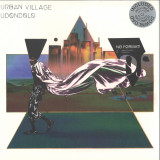
Signed to Parisian label N F rmat! (home to Oumou Sangar , Blick Bassy & M lissa Laveaux), Soweto-based 4 piece band Urban Village present their debut album, ‘Udondolo’.
Marrying the day-to-day experiences of black South Africans with ebullient elements from traditional Zulu music, Urban Village is the alias of four experimental musicians all born & raised in the township of Soweto at the tail end of apartheid.
Urban Village release music under a name which specifically references the blend of cultures, music & rites which were assimilated into the now 1 million strong population of Soweto, when black South Africans from multiple provinces were brought to the area during the establishment of apartheid, under strict segregation from Johannesburg’s white suburbs.
Born for the most part in the last years of apartheid, whilst growing up the band plunged happily into house and dance music that turned the page of a heavy past. Guitarist Lerato came across older Zulu musicians and their style of maskandi playing. Lerato has since mixed styles from homelands and rural areas, sharpened in club jam sessions (where he went on to meet Tubatsi and form Urban Village) during which spoken word, hip-hop and jazz rub shoulders freely.
‘Udondolo’ - partially recorded at legendary Downtown Studios in the heart of Johannesburg and at Figure of 8 studios in the leafy suburbs of Randburg, - is a journey through all the colours of Soweto. This is where it draws its consistency, strength & identity. That of Soweto itself - a dormitory town designed to
monitor those who were sent there, it has become a laboratory of music where the hopes of an entire people resonate, even today.
Perhaps best known as the upside-down, guitar-wielding frontman of psych-legends The Entrance Band, and solo albums released under the ENTRANCE moniker, notably 2004's country blues epic Wandering Stranger (Fat Possum) , 2006's self-released cult classic, Prayer of Death ( which led to the formation of The Entrance Band) , and most recently 2017's Book of Changes (Thrill Jockey), Blakeslee has typically used his own name to release his most experimental and confounding records. Postcards From The Edge is no exception. Nearly two decades into a lifer's voyage of shapeshifting through shadowy realms of the American underground, Guy Blakeslee, poses these and other conundrums on his dramatic new album, Postcards From The Edge (Entrance Records). Recorded in New Orleans at the house studio of Preservation Hall Jazz Band, with former Sonic Ranch engineer and producer, Enrique Tena Padilla (Oh Sees, Wand), and featuring appearances from singers Lael Neale, Hale May, Rachel Fannan, and drummer Derek James of The Entrance Band, Postcards From The Edge is electrified by the spirit of sonic experimentation, and the fervent desire to chart a map into unknown territory. Across the record's seven tracks, Blakeslee's questing lyrics teem with stormy emotion, his plaintive voice finding succour in richly-textured melodies that soar over lushly-produced soundscapes, always on the verge of collapse. A wandering soul who has spent the better part of his musical life on the road, Blakeslee, a Baltimore native and LA transplant currently residing in the wilds of Virginia, has supported the likes of Spiritualized, Beach House, Cat Power, Mazzy Star, Interpol, and Father John Misty to name a few. "Seven tracks of questioning, tremulous, occasionally beautiful gospel-psych" - Uncut Magazine
Devi Mambouka’s evolution is rooted in her past informing her
present and future.
Born to a Gabonese ambassador and a Singaporean mother makes her a child of the world, and one who learned to tap into her inner magic to overcome trauma, abuse, and addiction. Play at Night, her debut album under the moniker Masma Dream World, is the resume of such learnings and experiences.
Abruptly moving from Africa to the Bronx at 12 years old yielded intense challenges, but singing was a refuge and music was an escape. Influenced by the likes of Amel Larrieux, Toni Braxton, and Zap Mama, Play At Night challenges your preconceived relationship with darkness, guiding you to step into it.
The album encompasses elements of butoh (a Japanese spirit-led performance art), the theta frequency, and the need to hold sacred space. This space is a prime opportunity to awaken one’s power source from within.
Close is the debut album from American Dreams Records founder & ONO member Jordan Reyes.
The album is comprised of six songs composed on modular synthesizer working in a rhythmic ambient, electronic realm - songs like ‘Quicksand’ are glacial and melodic while others like ‘Lost Machine’ skew to the kinetic.
On this album, Reyes mused on idea of sobriety, endurance, and being in a state of trance - wading deep in the patch cords of the eurorack synthesizer allowed him to reach a state of non-attachment, similar to running or biking a long distance. This kind of tunnel vision allowed him to perceive himself fading from the day-to-day and exist wholly inside the machine, becoming a more cybernetic organism.
EMS Hallucinations was crafted as two magnetic side-long compositions
that gurgle, hiss, bounce, and invite - the first consists of Buchla 200
recordings, and the second the Buchla in conjunction
with the Serge Modular.
Following Naucke’s tracking, he painstakingly arranged stems in his home studio across seven months. Within the side-long tracks are shorter songs that
transform into each other. For album teasers, Naucke edited two sections from
side one into singles - kinetic electronic nuggets that suggest trance, house, and
other forms of floor-ready music, while showcasing cascading synth lines and
rich analog tones.
Brainbox is a Dutch rock group that was initially active from
1968 until 1972, and then reformed in 2009. Brainbox is best described as a progressive blues rock band infused with jazz elements. Their eponymous debut album, released in
1969, is also the only Brainbox record that features founding guitarist Jan Akkerman, who left the band in late 1969 to join Focus. Nevertheless, Brainbox is considered a legendary Dutch band of international allure. Brainbox is now available as a limited edition of only 500 individually numbered copies on purple vinyl.
Conjuring up lush minimal soundscapes intertwined with noise elements and hard as nails riff rock, reminiscent of some kind of weird mixture between a Mondriaan and Pollock painting, H A S T is mind-blowing, ear-blowing and heart-blowing, exploring extreme dynamics, pure simplicity and everything in between.
H A S T, founded by alto saxophone player Rob Banken, is an instrumental band rooted in jazz, heavy rock and improvisation. Their signature sound can best be described as not shying away from exploratory intellect while still maintaining passages of stunning simplicity, rock riffs and free improvisation.
Ubi Sunt (Where are... they?), is part of the Latin question "Ubi sunt qui ante nos fuerunt?". (Where are those who were before us?'). This kind of questioning evolved into a stylistic figure in medieval poetry, which was mainly used in the then popular elegies (a reference to 'Elegy', the debut album of H A S T).
Originally an expression of a sense of nostalgia, it became more and more a reflection on transience and mortality. The music on 'Ubi Sunt' was written and recorded in the middle of a the coronacrisis. Ubi Sunt: "Que sont mes amis devenus. Que j'avais de si pres tenus. Et tant ames? ..." (Rutebeuf).
Recorded, produced & mixed by Koen Gisen (Nordmann, De Beren Gieren, Flying Horseman, Dans Dans, SCHNTZL, ...) at Studio La Patrie, Ghent, BE.
Mastered by Karel De Backer.
The Luka State are Cheshire Cats, Conrad Ellis (voice, guitar), Sam Bell (bass, voice), Jake Barnabas (drums) and Lewis Pusey (guitars). Their hometown is famous for salt mining, and not much else. Yet being halfway between Liverpool and Manchester – hence, every kid in the town wanting to be a footballer or pop star the minute they can kick a ball or play a guitar. The Luka State chose music.
The band racked up 68 shows around the UK in the twelve months leading up to the lockdown, and despite not having the chance to play their latest releases live, they have amassed over 6 million Spotify streams. This is no mean feat for an independent band, so it’s no wonder that Shelter/BMG jumped at the chance to sign them.
[i] 9. [Insert Girls Name Here]
- A1: Idrissa Soumaoro Et L´eclipse De L´ija - Nissodia
- A2: Rail Band - Mouodilo
- A3: Ambassadeurs Du Motel De Bamako - M’bouram-Mousso
- B1: Super Tentemba Jazz - Mangan
- B2: Sory Bamba - Yayoroba
- B3: Super Djata Band - Worodara
- C1: Zani Diabate Et Le Super Djata Band - Fadingna Kouma
- C2: Salif Keita, Ambassadeurs International - Mandjou
- C3: Alou Fane & Daouda Sangare - Komagni Bela
- D1: Super Djata Band De Bamako - Mali Ni Woula
- D2: Idrissa Soumaoro Et L´eclipse De L´ija - Fama Allah
Malian music is arguably deeper, more sophisticated and lyrical than any other form of African music. Those of us deeply entranced by Malian culture, and, in particular, the immense hypnotic beauty of Malian music, have put together a selection of songs from across the country.
Compiled by Vik Sohonie & Dave 'Mr Bongo’ Buttle, the story of this release began in 2015 when Dave happened upon the Soul Bonanza blog. A treasure chest of rare finds from around the world! One mix in particular stood out and totally enthralled Dave - le monde à change: a tribute to mali 1970 - 1991. He already knew of Malian legends such as the Rail Band, Salif Keita, & Les Ambassadeurs du Motel de Bamako, but this mix was something else! Deep & culled from the collections of some of the heaviest African music collectors in the world; legends like Vik Sohonie, Hidehito Morimoto, Philippe Noel, Gregoire Villanova, and Rickard Masip. Dave immediately contacted Vik and a journey of discovery tracking down the rights-holders began. He also turned to the font of Malian music knowledge; Florent Mazzoleni. Florent has written the definitive book about Malian music – 'Musiques modernes et traditionnelles du Mali’. He proposed some incredible tracks to include and provided the back bone of the sleeve notes and photos that are used in the album. No Malian album would be complete without a striking front cover photo, and ours is sourced from the late great Malian photographer Malick Sidibé.
On this album you will find well-known artists sitting next to rarer discoveries. The Rail Band, who are one of the best known of all the big bands in Mali, gave us the stars Mory Kanté and Salif Keita. Les Amabassedeurs du Motel de Bamako were another big act that had Idrissa Soumaoro, Kanté Manfila, and for a while Salif Keita in their ranks. Sometimes Salif would play in both bands in one night, quite a feat considering the bands were fierce rivals. As an albino Salif has had to face considerable prejudice from society, focusing on his musical career to help overcome this.
A major discovery on the album has been Idrissa Soumaoro et L'Eclipse de L’Ija. L'Eclipse de l'Institut des Jeunes Aveugles was a Blind teenagers institute and their record was produced by the German association that took care of blind Malian teenagers in Bamako. It was never properly released commercially and was the first recordings by the legends of Malian music Idrissa Soumaoro, Amadou Bagayoko and Mariam Doumbia. Amadou & Mariam later got married and became household stars, including making an album with Manu Chao.
This album is a concerted global effort to showcase the most vital cornerstone of Malian culture in an attempt to preserve its reputation in the face of its current, grim reality. We hope our highlights of Mali's rich history of musical innovation will serve as a starting point for reclaiming an image tainted by unnecessary conflict. May peace and music return to Mali soon.
On their Night Dreamer debut, Sarathy Korwar and his allstar “UPAJ Collective” gain brand new ground in their mission to rebalance spiritual jazz with authentic Indian classical music. “UPAJ” means “to improvise” inHindi, and recording direct-to-disc at Artone Studios with almost no preconceived directions, they truly capture the “spirit of spontaneous improvisation”, as Sarathy puts it, like never before.
Sarathy Korwar 2020
"Recording in one take, direct-to-disc is a unique scenario to be in. I feel very blessed to be presented this opportunity. I decided very early on that in order to make the best use of this scenario, the music had to be completely improvised and spontaneous. That is the only true way to record within the limitations of one take. No regrets, no mistakes, no fear and no judgement. These were the ideals. In a way, this was about creating a utopian vision of a world I would like to live in. A microcosm of the ideals that I would like to live by, in the recording studio. The vision of going into the studio with this in mind, was more important than the resulting music we created. Process over product.
Before the session we did some collective breathing exercises that I have learnt from my mother (who is a pranayama practitioner/teacher) and Wim Hof. I believe this helps centre the focus of the group and balances the mind, making it most receptive to new sounds and inspiration.
The song So said Said is a tribute to Edward Said. Intimate Enemy, a tip of the hat to the book of the same name by Ashis Nandy (Intimate Enemy: Loss and recovery of self under colonialism). A cover of Flight IC408 by State Of Bengal is on Side B, as I am a massive fan of the band. Elephant Hangover is the imagery that the tune conjures for me personally on listening to it. A beautiful remix by the brilliant Osunlade of So said Said is on side D.
Thank you to the gifted musicians - Al, Tamar, Achuthan and Giuliano for trusting and letting go. I am lucky to spend time with you."
- A1: Vassilis Vassiliadis - Tsiftetelli 1969
- A2: Stelios Kazantzidis & Litsa Diamandi - Den Sou Eleipe Tipota (You Had It All) (You Had It All)
- A3: Stratos Dionisiou - Allaxe Koritsi Mou Myalo (Change Your Mind Girl!) (Change Your Mind Girl!)
- A4: Vassilis Vassiliadis/Dimitris Xanthakis & Litsa Diamandi - Nkount Bai (Goodbye) (Goodbye)
- A5: Michalis Menidiatis - Ena Tefariki
- B1: Panagiotis Michalopoulos - Anastenazo Kaigontai (I Sigh Everything Is Burning) (I Sigh Everything Is Burning)
- B2: Podromos Tsaousakis & Litsa Diamandi - Ti Thes Kai Pas Stis Magises (Why Do You Visit The Witches) (Why Do You Visit The Witches)
- B3: Katy Grey - Dos Mou Tin Kardia Mou Piso (Give Me Back My Heart) (Give Me Back My Heart)
- B4: Vangelis Perpiniadis & Ria Norma - Naxera Pios Pire Ti Chara Mou (I Wish I Knew Who Stole My Happiness) (I Wish I Knew Who Stole My Happiness)
- B5: Ria Norma & Vangelis Perpiniadis - Konta Mou Irthes Pali (You Have Returned To Me) (You Have Returned To Me)
- C1: Stratos Dionisiou - Tsiftetelli Pechnidiariko (Flirting Belly Dance) (Flirting Belly Dance)
- C2: Vangelis Perpiniadis - Ego Den Eimai San Tous Beatles (I'm Not Like The Beatles) (I'm Not Like The Beatles)
- C3: Vassilis Vassiliadis - Solo Tsiftetelli '72
- C4: Manos Papadakis/Babis Tsetinis & Litsa Diamandi - Mavros Kapnos (Black Smoke) (Black Smoke)
- C5: Charoula Lambraki & Vassilis Tsitsanis - Andra Mou Paraponiari (Man, You Grumble Too Much) (Man, You Grumble Too Much)
- D1: Panos Gavalas & Sofia Kollitiri - Tha Fygo Kai Tha Me Zitas (I Will Leave, & You Will Search For Me) (I Will Leave, & You Will Search For Me)
- D2: Sofia Kollitiri - Ego Pono Ki Esy Gelas (I Suffer While You're Having A Good Time) (I Suffer While You're Having A Good Time)
- D3: Charoula Lambraki & Theodoros Sinaidis - Kai Na Fygis Tha Gyrisis (You Will Come Back) (You Will Come Back)
- D4: Giota Lydia - Nacha Ekato Kardies (I Wish I Had Hundred Hearts) (I Wish I Had Hundred Hearts)
- D5: Stelios Kazantzidis & Litsa Diamandi - Efige Efige (She Left She Left) (She Left She Left)
Monster grooves, driven by a perfect symbiosis of fiery oriental rhythms and the deep, relaxed heartbeat of the bass line, with virtuosic, intoxicating solos on bouzoukis, Farfisa organs, clarinets and violins. This is the sound of laika, Greek-oriental pop music from the 60s and early 70s that sets every dance floor on fire!
These 20 carefully selected songs serve as an introduction to this mind-blowing music for the non-aficionado, as it is the first album of its kind to be released outside of Greece or the Greek migrant communities. The extended and illustrated liner notes take you back to the heyday of Greek pop music and put this cultural movement into an historical perspective.
South London-based band Soothsayers are set to release their ninth studio album 'We Are Many'. Held together by heavy basslines, solid grooves, and socially and politically charged lyrics; the album takes the listener into different sonic spaces with elements of dub, Afrobeat, improvisational jazz and electronica.
The initial steps in recording 'We Are Many' came in January 2019 when the band's founders - saxophonist Idris Rahman and trumpeter Robin Hopcraft - set out on a journey to Brazil. With executive production in the Sao Paulo studio by renowned music journalist and author David Katz, they hooked up with bass player and producer Victor Rice who they'd met sharing the bill at Freedom Sounds festival in Cologne, Germany a year earlier. Victor organised a session in Studio Traquitana, home of acclaimed Brazilian band Bixiga 70, and invited a selection of local musicians. Percussionist and singer Ligia Kamara contributed lyrics and melodies written in the studio, and drummer Bruno Buarque, guitarist Joao Erbetta and bassist Victor provided some solid, personality-driven input. Fresh and vital, what came out was a fascinating blend of Soothsayers' dub and Afrobeat mixed with distinctly Brazilian inflections.
After arriving back in the UK, Idris and Robin set about creating the remainder of the album in a different, yet complimentary way, and called on the services of Wu-Lu and Kwake at their The Room studio in South London. Things started to take shape very quickly, Wu-Lu and Kwake combining Soothsayers' music with electronic elements, while also referencing elements of the current UK jazz scene.
When lockdown hit in March 2020, there was still a lot of work to do in order to complete a full album and Robin and Idris set about working on tracks with their musicians remotely. Having time to consider the album as a whole, they found strong connections between the music recorded in Brazil and the tracks recorded in London and they set about fusing and combining these elements further into a satisfying whole.
UK based Sengalese singer Modou Toure was enlisted to guest on one track while percussionists Satin Singh and Maurizio Ravalico were engaged to help affirm a sound-world where Brazilian flavours, such as the low-end Surdo drum, were combined with sounds more readily associated with reggae and Afrobeat.
Soothsayers' three part vocal harmony is a defining factor in this album. With strong references to the vocal styles of reggae legends such as The Gladiators, Mighty Diamonds, Heptones, and Abyssinnians; it has benefited from the long-standing friendship between Robin, Idris and Julia Biel. Lyrics, melodies and harmonies were presented, discussed, explored and recorded at Idris' and Julia's home studio in Streatham in a relaxed and positive way, with concepts from social and political commentary turned into powerful songs.
Themes cover political observations of Trump and beyond alongside Brazil's president Bolsanaro (Rat Race), speaking out against increasing levels of violence from the Brazilian government towards its native and indigenous people (Love And Unity) and keeping hopeful despite the impending horrors of a no-deal Brexit (We Won't Lose Hope).
Elsewhere they discuss striving to create space for meditation and reflection against the background noise of 24/7 news and social media (Move In Silence), the daily grind (No Sacrifice) and workers' rights (Slave), while highlighting those that fall through the cracks in society and end up without a permanent address, what led to this and how close we all are from this happening (One Step Away).
'We Are Many' represents a positive and uplifting statement in the face of challenging times - the overriding force, power and positivity of the music to continue forward, pushing the boundaries of musical concepts into the future.
"Whilst heavy questions of life and death and the future of our species surround us all, music is a guide that can help us perceive the challenges in a different way - a guide that can help us towards a deep inner peace. If we listen, music can help light the way. We hope you will listen, and we hope you will experience the joy, meditative power and beauty in the connection of different musical cultures that was experienced in the creation of this album."
Velvet Season & the Hearts of Gold is the musical adventures of Gerry Rooney & Joel Martin. They have a rich musical history with Gerry Black Cock Records & Joel Quiet Village.
Aldo Tamborrelli – ‘Voices’ (VSHOG Special Version)
VSHOG present their official special version of this highly desirable hidden treasure of hypnotic electronic sleaze excavated from the cult soundtrack to a 1983 Italian ‘Apocalypse Now’ cash-in, and transform it into an 8 minute erogenous bump n’ grind trip to the twilight zone torture garden, cruising leather boys & fetish girls looking for Love in all the wrong places !
‘Voices’ is a narcotic synthesised masterpiece of body music to completely immerse your dark desires on the dancefloor. A dark risqué world of crisp chugging drum machines, mesmerising warm bass pulses, and the erotic wails of seductive screams in the night !
Stefano Torossi – ‘Having Fun’ (VSHOG Special Version)
The VSHOG version of 'Having Fun', from Stefano Torossi's 1974 album 'Feelings' (a holy grail of Italian library music) is an uplifting lush orchestral string laden funky breakbeat feel-good track to raise your vibrations!
Opening with a chunky stripped down drum & bass intro, the strings entice you further in & then the Disco Funk Psyche guitar riff really lifts the track to the sweet spot & you are completely hooked! A beautiful piece of music for all occasions - Balearic Sunsets/Sunrise, Disco dancing, B-Boys and Hip-Hop heads, Jazz Dancers & library music connoisseurs!
Another fantastic offering from the VSHOG Special Version series of releases.
- A1: Transhuman
- A2: Hamburg - Dusseldorf
- A3: Zukunftmusik (Radiophonique) (Radiophonique)
- A4: Specimen
- B1: Clone
- B2: To The Limit
- B3: Zufallswelt
- B4: Plant In Fever
- C1: Shifted Reality
- C2: Kreiselkompass
- C3: Data Landscape
- C4: Transhumanist
- D1: Sexersizer
- D2: Maschinenraum
- D3: Let Yourself Go
- D4: Let Yourself Go (Beatsole Remix)
There are few genres in which German artists play such a central pioneering role as they do in electronic music, be it techno, electropop, trance or rave. At the frontline for many years were Kraftwerk and U96, two absolute trailblazers of this musical direction. While Kraftwerk wrote international music history mainly in the 1970s with cult albums such as Autobahn (1974), Radio-Aktivität (1975), Trans Europa Express (1977) and Die Mensch-Maschine (1978), U96 had a profound influence on the global pop music, rave and techno scene of the 1990s with hits such as ‘Das Boot’, ‘Love Sees No Colour’, ‘Night In Motion’ and ‘Heaven’. Transhuman, scheduled for release on UNLTD Recordings on 30th October 2020, will feature a spectacular collaboration between U96 (Ingo Hauss
& Hayo Lewerentz) and Wolfgang Flür, Kraftwerk’s drummer in the years between 1972 and 1987 and therefore involved in the most seminal albums by the group from Düsseldorf.
This remarkable cooperation was first announced and implemented by two joint numbers on U96’s 2018 offering Reboot. Transhuman sees U96 and Wolfgang Flür develop their creative exchange across a full album, creating fascinating sonic worlds. The title song ‘Transhuman’ and an updated version of ‘Zukunftsmusik (Radiophonique)’ will be released as lead singles, including, as we’ve come to expect from U96, experimental video clips. That New York record label Radikal Records immediately secured the rights to the album for the US and Canada points to major interest in this project, not only on these shores but also across the Atlantic.
“Transhuman is a stylistic mélange of our different histories,” describe Wolfgang Flür and U96 masterminds Hauss and Lewerentz an offering that is spectacular in many respects, featuring, along with typical U96 tracks such as ‘Clone’ and ‘Specimen’, numbers such as ‘Transhuman’, ‘Planet In Fever’ and ‘Sexersizer’ that are inspired by Flür’s past. Notably, the content has been reduced to the sheer basics, in other words: sparingly used associative statements with deep, but at times also playful and mysterious messages that the listener feels rather than consciously registers. The lyrics are about the transformation of people through technology and our massive interference in life on our planet. Hauss: “Pieces like ‘Zukunftsmusik’ and ‘Transhuman’ don’t tell a story in the classic sense, they articulate emotions and associations in very few words, bringing to mind recordings such as Radio-Aktivität, Autobahn and Die Mensch-Maschine. In addition Transhuman, features a number of melodies created on the basis of computer algorithms, in other words fractal music which takes us even further back in history, to Klaus Schulze, Stockhausen, the electronics laboratories of the fifties and sixties and the musique concrete compositional technique.”
Hailing from Buenos Aires, like a massive tentacular burst of lightning, electrifying everything and everybody along their way, SUSPENSIVOS INFLAMABLES since 2001, have been blasting stages and dancefloors across south america with unprecedented sonic and ultra sonic power. Flowing unobstructed between lavish dubs and feverish psych punk rock, this 8 member ensamble performs live submerged on a visual psychedelic orgy of self designed animations and video footage projected onto themselves. This new EP was composed, performed and recorded from their houses in the middle of Quarantine and Social Isolation.
Krijn Moons aka Alchi emerges as a new voice in instrumental electronic music with his debut 'Full of It' released with Mylja.
Inspired by artists such as Nicolás Jaar, Boards of Canada, Sigur Rós and James Holden, Alchi produces and performs music that is rooted in experiment rather than a single genre, flowing between and weaving through alternative dance, instrumental electronic postrock and neoclassical influences. Playing with imperfections and disarray, Alchi’s work honours emotional ambiguity, cultivating a sound that can be equally euphoric as it can be melancholic, a feeling that words cannot - and do not have to - articulate.
This is also the approach to composition and production for ‘Full of It’, Alchi explains. “More than the sum of its parts, the sound of a song creates a space that it starts to exist in, an intangible context shaped by the details that come from zoomed-in sound design and
production or even working with old or broken instruments. At a certain point, in this space that feels somewhat unknown and familiar at the same time, everything comes to life.”
Within this ambiguity, Alchi finds a place to liberate himself from instrumental boundaries, creating landscapes that value coincidence, playful sound choices and a little bit of chaos.
'Full of It' portrays an uncommon kind of music that, in its abstraction, layers and linear structures, will balance both the familiar and the surreal.
Herman Saiz debuts on Aprapta Music with his latest creation, Time To Choose LP - 12 Original Tracks spread across 2x12inch.
The NZ based producer's latest project, born out of the volatility of 2020, merges various styles of electronic music, to offer a thought-provoking album, challenging the heavy main stream programming of this generation.
Each tracks aim to dissolve the illusionary forces holding us to meaningless narratives and diluted culture.
From downtempo, hip hop, minimal, house and experimental electronica, the album is an invitation to choose your own preferred timelines, switching off auto pilot, and harnessing the power of being present in the now.
Through interweaving deep truths with electronic pulses, this is a clear offering to choose sovereignty and an awakened future.
After the heaviest of years, it should be time to take a little weight off with the playful sounds of The Person. Mapping its own Bermuda Triangle between dub-pop, sugary synthwave and Balearic boogie, ‘Tide Life’ transports Compass Point to Soggy Bottom, providing maximum fun, sun and bitmap escapism.
The eagle-eared may recognise The Person from the aspirational Italo-rockers Steaming Jeans, whose chalet-ready romp on Bordello A Parigi scored a Winter Olympic gold back in early 2020. Now left to her own devices, Minna Wight swaps the slopes for a jet ski and takes a Wave Race from Summer Bay to Monkey Island across 11 cuts of vintage oddball pop.
Whether she’s borrowing Brenda’s Beach Balls for the dubby daydream of ‘Snail Cafe’ and ‘The Place’, serving lost library cues to SNES club scenes on ‘Barry R Reef’ and ‘Elastic Shoes’ or spinning high school slow jams into synth soul ballads like ‘Nice Feeling’, Minna disguises serious musicianship behind a naive aesthetic. Disarmed by charm, we’re powerless to resist her tidal pull.
Patrick Ryder
VINYL[19,87 €]
Nahawa Doumbia's new album Kanawa concisely captures this current moment in Malian history. The singer, whose storied career spans more than four decades, reflects on the immigration crisis from the Malian perspective in the title of her new album Kanawa. Across eight songs recorded in Bamako with a band including traditional and modern instruments, Doumbia merges her early work that relied on a spare expression of her trademark didadi rhythm with the bombastic range of contemporary Malian pop. The beautifully complex musical accompaniment that results is courtesy of the large ensemble she pulled together with producer and arranger (and day one collaborator) N'gou Bagayoko. The band features two highly expressive Malian string instruments, the ngoni and the slightly smaller kamalé ngoni, as well as a variety of percussion, drum programming, karignan (a metal scraper) and acoustic and electric guitars. Doumbia's daughter, a celebrated singer with her own group and busy concert schedule, Doussou Bagayoko sings on "Adjorobena," a song about patience, tolerance and living in peace. Doumbia weaves together a roadmap of her psyche when it comes to the good and bad life has to offer. She talks about marriage and women leaving home to join another through the metaphor of a tree in the garden; she includes gunshot samples in the song "Foliwilen" to honor the bravery of hunters, soldiers and other courageous people; she uses a bird in "Djougoh" to talk about lazy people; and, in "Ndiagneko" she advises people to ignore critics, just do you. Mali has gone through an intense period of regional strife and terrorist incidents over the last ten years and Doumbia roots the album in tragic local concerns with deep global implications. "The meaning of Kanawa is so simple. We see our children trying to cross the ocean all the time. I said that many of our children die in the ocean and some of them die while crossing the Sahara. But I ask them why do they leave their country? They said that they leave because of the family situation or problems like poverty and unemployment. I ask them to stay and work in their country. I call on the UN and African leaders so that we can coordinate our efforts to find a solution, to create jobs for them so that young people stop leaving. That's why I chose it as the title of my album so that everybody can learn from it and also so that there is a reduction in the number of people emigrating. So that some will hear the message and stay home and grow the land. Leaving is not the only solution. My message is to help the youth find jobs."
Ralph Heidel is one of the young musicians that represent the spirit of Berlin’s new musical ecleticism better than others. He is part of the avantgarde circles that mix modern jazz and contemporary classical music with elements of new electronica and experimental ambient music. This is the vibe of Germany's next generation.
Heidel creates a sonic universe that is unique. He takes the listener into a deep, atmospheric travel that stimulates emotions and feelings on a different level. Heidel brings together two worlds: what he learned at Musikhochschule München, Germany’s leading academy for classical music where he studied saxophon and composition and the moods happening in Germany's new electronic circles.
On „Relief“ Heidel created six songs. Except one, all of them are instrumental music. Partly composed and often improvised these sounds take the listener into Heidel's specific sonic universe. Raw beat structures, emotive horn lines, strong harmonical tensions and dramatic build ups. Heidel’s signature sound.
In fact Heidel is a multiple influenced artist with a strong personality that absorbs whats around him, connects it with his own wide artistic knowledge and fullfills it into magical musical moments.
Relief is the next step in what could become a longtime artistic career.
After a (very composed) debut album for string quartet and rhythm section for Kryptox (Moments of Resonance 2019), it was important for Heidel, to process current feelings of daily life.
Not just his cultural learnings, but also emotions connected to the hard COVID times and a lot of personal experiences.
Relief are six abstract, distorted patterns. Long deep transitions that lead into euphoric parts of sonic greatness. Heidel's sense for sound design and the soft tone of his saxophone phrases, add a personal note that is somehow alone in the current music scenario. Sampling his saxophone (reeds, keys etc.) to create very organic beats is one of the many techniques to create that special „Heidel“ sound. Also his calm and wide harmonies over disquiet, rough drums are part of his unique ambivalent, disrupted moods.
Most of this EP has been played by Heidel alone. For a few parts he was joined by musicians from the local scene. In fact besides his albums on Kryptox Ralph Heidel is very connected in Berlin’s current cultural playground: He creates music for underground performance art happenings in Neukölln as well as for new German theater (Volksbühne, Berliner Ensemble). Also German rapper Tarek from K.I.Z heard about Heidels string debut album, so they collaborated for an album, where Heidel reworked his record for stringquartet, piano, drums and bass.
‘Giants of All Sizes’ was recorded at Hamburg’s Clouds Hill Studio, The Dairy in Brixton, 604 Studios in Vancouver and Blueprint Studios in Salford with additional recording taking place at various band member’s home studios spread across Manchester. As with their previous four studio albums, ‘Giants’ was produced and mixed by Craig Potter. Guests across the album include Jesca Hoop, The Plumedores and South London newcomer Chilli Chilton.
Given such bleak, if ultimately redeemed, subject matter, it is also, perversely, the most relaxed record which elbow have made in some time. On ‘Giants of All Sizes’, each band member extended their usual process of working on demos alone and followed their vision to its conclusion rather than, as Craig Potter puts it, ‘taking the edges off things to find compromise’. In tandem with this, they returned to playing live in the studio, encouraged to experiment with the banks of analogue equipment at Clouds Hill in Northern Germany, giving songs a looser, more live feel. The result is the most starkly dynamic record from the band in recent times, “Sonically unabashed”, as Guy would have it. Whilst album closer ‘Weightless’ has the gossamer melodies and communal harmonies for which the band have latterly been known, this album echoes earlier elbow work at times whilst also breaking new ground.
‘White Noise White Heat’ is motorik, metal machine soul driven by a vocal that is rage incarnate, ‘Doldrums’ mixes John Carpenter with The Plastic Ono Band to brilliantly disturbing effect and ‘On Deronda Road’ hitches stark bass beats and glitches to an ad-hoc choir. ‘Empires’ delivers dark resignation via an insidious melody and ‘Seven Veils’ continues the subversion by inverting the perception of elbow as a band for lovers into a band for haters, a double-barrelled fuck-you song par excellence. ‘The Delayed 3:15’ marries mariarchi guitars to jazz dynamics, Morricone via Buddy Rich, and ‘My Trouble’ is a clockwork, analogue shuffle housing a delicate melody that builds over the course of the song into a fragile monolith to the power of love.
Lead track, ‘Dexter & Sinister’, released on 10” ahead of the album, encapsulates the whole. A seven-minute musical journey that blends deep bass grooves, sudden keyboard stabs, dislocated piano and guitar runs and soul stylings then abruptly shifts gear, parts the storm clouds and takes wing, flying towards the heat of the sun. It is the soundtrack for these ‘hope free, faith free, charity free days’, a denial of the divine and a reconciliation, two songs in one song, two emotions for one emotion, human, fragile and brilliant like the album which it opens.
Cocteau Twins were a Scottish rock band active from 1979 to 1997. The original members were singer Elizabeth Fraser, guitarist Robin Guthrie, and bassist Will Heggie, who was replaced by multi-instrumentalist Simon Raymonde in 1983. The group has earned much critical praise for its innovative, ethereal sound and the distinctive soprano vocals of Fraser.
Four-Calendar Café is the seventh album by Scottish band Cocteau Twins. It was originally released on 18 October 1993 on Fontana. The album distinguished itself from the rest of the Twins' catalogue in two major areas: The sound was much more pop-oriented and less ambient than previous works, and Liz Fraser's lyrics were much more intelligible than usual.
Milk & Kisses is the eighth and final studio album by Cocteau Twins, issued by Fontana Records in March 1996. It proved to be their last
The song ''Rilkean Heart'' was a homage to Jeff Buckley, who was a lifelong lover of the work of poet Rainer Maria Rilke.
- A1: The 1975
- A2: Love Me
- A3: Ugh!
- A4: A Change Of Heart
- A5: She's American
- B1: If I Believe You
- B2: Please Be Naked
- B3: Lostmyhead
- B4: The Ballad Of Me & My Brain
- C1: Somebody Else
- C2: Loving Someone
- C3: I Like It When You Sleep, For You Are So Beautiful Yet So Unaware Of It
- C4: The Sound
- D1: This Must Be My Dream
- D2: Paris
- D3: Nana
- D4: She Lays Down
The 1975 will release their highly-anticipated second album 'I like it when you sleep, for you are so beautiful yet so unaware of it' The follow-up to the quartet's million-selling self-titled debut. It is a bold and brilliant record made up of infectious pop hooks and sprawling electro sonics, an ambitious stride forward for one of the UK's most exciting young bands. The album will be released on standard CD and double, heavyweight LP in gatefold sleeve. Both contain 28pg, full colour booklets and the LP comes with a download card. The CD is packaged in a standard jewel case. 4* Q album review and Q cover confirmed. The ban will emabark on a SOLD OUT UK tour in March.There will be outdoor advertisng and the band will be performing on Saturday Night Live and also in the Radio1 Live Lounge
Hyperspace will be Beck’s 14th album, following 2017’s Colors, which won Best Alternative Music Album and Best Engineered Album, Non-Classical at the 61st GRAMMY Awards earlier this year. Hyperspace’s new dimensions in sound are the result of Beck’s most collaborative efforts to date. Seven of the album's 11 tracks—including single “Uneventful Days” and “Saw Lightning” (as featured in the Beats by Dr. Dre Powerbeats Pro campaign and also included with pre-orders)—feature co-writing and co-production from Pharrell Williams. Elsewhere in Hyperspace, “See Through” is co-written/co-produced by frequent Beck collaborator Greg Kurstin, “Star” is co-written/co-produced by Paul Epworth, “Stratosphere” features back-up from Chris Martin, the album’s title track features guest vocals from Terrell Hines, and “Die Waiting” is co-written/co-produced by Cole M.G.N. with backing vocals from Sky Ferreira. Longtime Beck bandmates Jason Falkner, Smokey Hormel and Roger Manning Jr. feature on much of the album as well.
only 1 copy exists of this heavy melodic progressive concept lp valued in excess of £10,000. fresh from the incredible success of Rick Wakemans early concept lps (he drummed with Wakemans band) Barney and his ex band mates Warhorse made this sensational lost heavy prog lp as a promo acetate to get an official release, Barney wrote all the songs and sings. Musically complex it begins with a spoken intro and tells the tale of Koneg Son Of Odin, as he quests to find meaning and death in battle. Keyboards and guitar interweave, with further spoken interludes, and culminating in an epic prog workout featuring fluid soloing electric leads as Koneg dies on the battlefield and is taken by Valkyries to Valhalla. The original gold hand made cover is reproduced as a gatefold with sleevnotes by the actual Rick Wakeman. Barney James, an ex British Army Commando, and ex Gracious, Legend, and Warhorse, and actor in The Sweeney and Derek Jarmans Jubilee, is also now in Valhalla, and his lost lp is here Issued for the first time with the full permission of his two daughters.
monstrously rare private pressing from 1973 originally on the deroy imprint, motiffe play twisted king crimson esque progressive rock with dark jazz elements, 99 were pressed with just a handful having hand drawn covers, record deals were offered but musical differences split the band, with the mighty Flux emerging jn the aftermath, before ace guitarist Grimaldi joined Argent to help craft their masterpiece 'Circus'. valued at £2000, this is the first fully authorised legal edition with all members consent and full history written by the band in the inner gatefold. The Gryphon image is also drawn by the band for the cover.
The recording debut of Elia y Elizabeth (or Elisabeth, as it appears originally credited in the first edition of this single) took place in Spain in 1971 with Juan Carlos Calderón, one of the most prestigious producers and arrangers in the country.
These first versions of "Fue Una Lágrima" and "Cae la Lluvia" appear full of rich and intrincated orchestral arrangements, a very different approach to both songs from the tropical feel that producer Jimmy Salcedo added when they were later re-recorded for Codiscos in his native Colombia. The duo would record there a handful of songs between 1972 and 1973 (compiled in our past release "La Onda de Elia y Elizabeth" VAMPI 160), mixing soft-pop with a touch of tropical-pastoral funk, singer-songwriter sweetened by the subtle perfume of Caribbean music and psychedelia, which remain among us as part of the most wonderful pop legacy of all time.
These early versions of two of the most celebrated songs by Elia y Elizabeth are reissued here for the first time, with remastered sound and housed in a picture sleeve with the original artwork.
South London-based band Soothsayers are set to release their ninth studio album 'We Are Many'. Held together by heavy basslines, solid grooves, and socially and politically charged lyrics; the album takes the listener into different sonic spaces with elements of dub, Afrobeat, improvisational jazz and electronica.
The initial steps in recording 'We Are Many' came in January 2019 when the band's founders - saxophonist Idris Rahman and trumpeter Robin Hopcraft - set out on a journey to Brazil. With executive production in the Sao Paulo studio by renowned music journalist and author David Katz, they hooked up with bass player and producer Victor Rice who they'd met sharing the bill at Freedom Sounds festival in Cologne, Germany a year earlier. Victor organised a session in Studio Traquitana, home of acclaimed Brazilian band Bixiga 70, and invited a selection of local musicians. Percussionist and singer Ligia Kamara contributed lyrics and melodies written in the studio, and drummer Bruno Buarque, guitarist Joao Erbetta and bassist Victor provided some solid, personality-driven input. Fresh and vital, what came out was a fascinating blend of Soothsayers' dub and Afrobeat mixed with distinctly Brazilian inflections.
After arriving back in the UK, Idris and Robin set about creating the remainder of the album in a different, yet complimentary way, and called on the services of Wu-Lu and Kwake at their The Room studio in South London. Things started to take shape very quickly, Wu-Lu and Kwake combining Soothsayers' music with electronic elements, while also referencing elements of the current UK jazz scene.
When lockdown hit in March 2020, there was still a lot of work to do in order to complete a full album and Robin and Idris set about working on tracks with their musicians remotely. Having time to consider the album as a whole, they found strong connections between the music recorded in Brazil and the tracks recorded in London and they set about fusing and combining these elements further into a satisfying whole.
UK based Sengalese singer Modou Toure was enlisted to guest on one track while percussionists Satin Singh and Maurizio Ravalico were engaged to help affirm a sound-world where Brazilian flavours, such as the low-end Surdo drum, were combined with sounds more readily associated with reggae and Afrobeat.
Soothsayers' three part vocal harmony is a defining factor in this album. With strong references to the vocal styles of reggae legends such as The Gladiators, Mighty Diamonds, Heptones, and Abyssinnians; it has benefited from the long-standing friendship between Robin, Idris and Julia Biel. Lyrics, melodies and harmonies were presented, discussed, explored and recorded at Idris' and Julia's home studio in Streatham in a relaxed and positive way, with concepts from social and political commentary turned into powerful songs.
Themes cover political observations of Trump and beyond alongside Brazil's president Bolsanaro (Rat Race), speaking out against increasing levels of violence from the Brazilian government towards its native and indigenous people (Love And Unity) and keeping hopeful despite the impending horrors of a no-deal Brexit (We Won't Lose Hope).
Elsewhere they discuss striving to create space for meditation and reflection against the background noise of 24/7 news and social media (Move In Silence), the daily grind (No Sacrifice) and workers' rights (Slave), while highlighting those that fall through the cracks in society and end up without a permanent address, what led to this and how close we all are from this happening (One Step Away).
'We Are Many' represents a positive and uplifting statement in the face of challenging times - the overriding force, power and positivity of the music to continue forward, pushing the boundaries of musical concepts into the future.
"Whilst heavy questions of life and death and the future of our species surround us all, music is a guide that can help us perceive the challenges in a different way - a guide that can help us towards a deep inner peace. If we listen, music can help light the way. We hope you will listen, and we hope you will experience the joy, meditative power and beauty in the connection of different musical cultures that was experienced in the creation of this album."
- Idris Rahman and Robin Hopcraft
Sonor Music Editions presents the first commercial release on vinyl (shortly followed by a CD edition) of Ennio Morricone's soundtrack to the film "I DUE EVASI DI SING SING" from 1964, directed by the legendary Lucio Fulci and starring the famed Italian comedy characters Franco Franchi and Ciccio Ingrassia. A bit away from what would have been his 92° birthday, the label presents a pseudo unreleased gem by the greatest all-time composer at the beginning of his career. This stunning recovery was possible thanks to the work of the producer Lorenzo Fabrizi (head of Sonor Music Editions) and the collaboration of Claudio Fuiano and Daniel Winkler, two significant connoisseurs in the field and maestro Morricone's discography. The album was originally released on an impossible-to-find promo-only library release in the late '60s with different titles, due to that the score remained concealed until now. With the recoup of the original MONO tapes Sonor was able to work with the original soundtrack sequence adding two bonus tracks from the original sessions. The music enhances the stories of two sloppy thiefs (Franchi and Ingrassia) in the styles of orchestral Jazz and Bossa Nova, with more sweet and cheerful themes built around the bewitching character of Gloria Paul.
- 1: Prologue: Rain
- 2: A Trail Of Wind And Fire
- 3: Second Born Child
- 4: Tokyo Music Experience
- 5: The Rise And Fall Of The Plague
- 6: Another Year
- 7: Fragments
- 8: The Disappearance Of Dr. Duplicate
- 9: Excerpt Taken From Chapter 3
- 10: Where Is My Dream?
- 11: Part One: The Long Drought
- 12: Part Two: Crossing The Desert
- 13: Epilogue: Big Poisonous Shadows
BLACK vinyl with deluxe origami fold out sleeve & obi strip & DL Card. CD Wallet. The third album from Dutch punk-laced noiseniks adds new maturity and a conceptual feel that pulls the extremes of their sound together. A psyche-fuelled journey into the id punctuated with rhythmic kabuki modal mood swings, thunderstorms, digital beeps, traffic noise, and just plain old beautiful cacophonous reverb-drenched sound when needed. The 'third chapter' refers to the last five years that the Dutch band have spent creating their "difficult" third album. Each song spins a yarn; there are plagues, dreams, wind and fire, 'mythical' characters, and the search for the secret government warehouse. Lead single, Tokyo Music Experience, resonates with a conveyor belt-propelled modal guitar, reflecting the halcyon days of Japanese super-productivity; a mesmerising mantra, infected with news bulletin on-the-hour bleeps underlining its time-sensitive nature; a pristine super-commercial anthem to drive loyalty and reinforce solidarity with the party! Having been described as creating "underground noise with a bracing, warped pop appeal" (Mojo), their new album is a coming-of-age post-classic with a unique worldview - inspired by Van Dyke Parks (Song Cycle) Scott Walker (3 & 4), Moondog (Elpmas), White Noise (An Electric Storm) and Beach Boys (Smile). If their previous effort (Tape Hiss) was their very own sketch of a sketch for an incomplete concept album, a noisy reaction to their previous life, then 'Excerpts From Chapter 3..', with all its interlaced intricacies, is the realisation of their transition from punk-spiked-pop to psyche-pop protagonists. Evolving, testing, infectious...
THESE BOOTS ARE MADE FOR WALKING 1970
Issued on 7" vinyl for the first time, this is a licensed release of the song extracted from the "Skinhead Moonstomp" LP on Trojan Records in 1970, 50 years ago.
This is a cracking Boss Reggae cover of Nancy Sinatra's mega hit and a huge early Reggae anthem.
Incredibly this very much in demand song has never been released on 7" vinyl up to now!
THAT IS NICE 1971 - That is Nice has only been available on the "Skinhead Moonstomp" Special Edition CD.
This is a Symarip original and it is the complete opposite of "These Boots Are Made For Walking".
Here the gritty voice of Roy Ellis serves admirably the sad, pensive melody and simple lyrics of this melancholic love ballad. Simply beautiful.
A very rare gem and a perfect finish to this outstanding double sider single.
Der Hamburger Musiker und DJ RVDS schließt sich mit dem meditativen, ohrenschmeichelnden Klangkunstwerk "Moods and Dances 2021", einem musikalischen Geschenk aus einer Zeit, in der die Zukunft Vergangenheit sein wird, dem Label Bureau B an. Inspiriert von der sphärischen Exotik und den fantasievollen Elektroniksounds der Library Music, beschwört Richard von der Schulenburg Palmen, Pyramiden, Promenaden und Portale herauf, die vom Zentrum eines Holodecks aus beobachtet werden. Die Stücke nehmen uns mit auf eine Reise durch den wilden Geräte-Dschungel in Richards Privatstudio und lassen sich als Hommage an die Klang-Schattierungen in seiner Sammlung verstehen. Ob mit geschmolzener 303 auf dem Gipfel des Mount Acid, ob improvisierter Jazz auf den Fendertasten oder live mit Bühnen-Pathos, Richards Musik ist in jedem Fall eine eindringliche, allumfassende Erfahrung. Gut möglich jedoch, dass diese Erfahrung noch nie unmittelbarer war als auf seinem neuesten Werk.
'Leone' is the first meeting of electric guitarists Loren Connors and Oren Ambarchi. It's somewhat surprising it's taken this long as these two are connected by ongoing collaborators, like Jim O'Rourke and Keiji Haino. Connors, for more than 40 years, developed an iconic sound tethered to radical permutations of the blues. Ambarchi's own multi-decade transfiguration of the guitar inhabits a rarefied realm of abstracted tones and dissonance pitched between improvisation and composition. This album, like its title, is a sum of parts: solo performances by Connors and Ambarchi bookend a duo. On 'Lorn,' Connors unravels an aggressive ternary form, with an opening section wrapped in distortion and extreme phasing that contrasts against ghostly, distant single notes. Ambarchi's 'Nor,' supplants a guitar performance with melodic, shifting organ-like tones that are swallowed into a fluttering, glitchy squall. On 'Ronnel,' the duo, each audio landscape created by the two slowly rotates and overlaps the other, as if each is drawing the others' portrait on opposite sides of a translucent sheet. Recorded November 2017 by Bob Bellerue at the Issue Project Room. Mixed and mastered by Joe Talia and cut by Carl Saff. Cover illustration by Marissa Huber. Edition of 500; includes download.
‘Instant Opaque Evening’ is an epic offering from The Underflow, the new trio of Mats Gustafsson, David Grubbs and Rob Mazurek. It makes vast strides on the heels of their self-titled 2019 debut (Corbett vs. Dempsey/Underflow Records) with nearly 90 minutes of intensely focused live performances from January 2020 shows in France, Belgium, Italy and Poland. That tour was a revelation for all three members, experienced as they are, with this still-new group’s freedom to walk onstage each night determined to surprise one another, moving from long instrumental improvisations into and out of songs and covering a terrific amount of ground at each of these concerts.
‘Instant Opaque Evening’ conveys this broad sweep, from the full-tilt electronics of ‘Self-Portrait As Interference Pattern’ and the climax of the seventeen-minute ‘Instant Opaque Evening’ to the inspired, alternate universe chamber music of ‘Planks’ and ‘A Thin Eternity’ and the group’s spontaneous arrangements of three previously recorded songs by Grubbs, ‘Gethsemani Night’, ‘An Optimist Declines’ and ‘Cooler Side Of The Pillow’.
The short version of the long tale of intersecting paths bringing together these three musicians begins in Chicago in the 1990s, with all three active participants in numerous convergences among jazz, free improvisation, experimental rock and more. Both Gustafsson and Mazurek appear as guests on Gastr del Sol albums (‘Upgrade & Afterlife’ and ‘Camoufleur’ respectively; that’s Rob’s cornet taking ‘The Seasons Reverse’ to new heights) and shortly thereafter Grubbs and Gustafsson recorded two duo albums, including the deep minimalism of ‘Apertura’, a talismanic favourite of both musicians.
David Grubbs has played in Gastr del Sol, the Red Krayola and Squirrel Bait and performed with Tony Conrad, Susan Howe, Pauline Oliveros, Will Oldham and many others. He’s the author of the books The Voice in the Headphones, Now that the audience is assembled and Records Ruin the Landscape.
Saxophone player, improviser and composer Mats Gustafsson is known as a solo artist and for international tours and projects with, among many others, Sonic Youth, Merzbow, Jim O’Rourke, Barry Guy, Otomo Yoshihide, Yoshimi, Peter Brötzmann, Neneh Cherry, Christian Marclay, Albert Oehlen, Ken Vandermark and the working groups FIRE!, THE END, LUFT, ANGUISH and Gush, as well as collaborations with contemporary dance, theatre, art, poetry and projects with noise.
Rob Mazurek is a multidisciplinary artist with a focus on electro-acoustic composition, improvisation, performance, painting, sculpture, video, film and installation, who spent much of his creative life in Chicago and then Brazil. He currently lives and works in Marfa, Texas. He leads/co-leads many ensembles of various sizes and shapes including his flagship large ensemble Exploding Star Orchestra, Chicago Underground and São Paulo Underground. He has
collaborated with Bill Dixon, Pharoah Sanders, Roscoe Mitchell, Jeff Parker, Nicole Mitchell, Chad Taylor, Jim O’Rourke, Naná Vasconcelos and many others.
Grey Vinyl
Serum is a series where we invite talented electronic music producers for a temporary creative collaboration. For the fourth edition we are glad to share three timeless pieces of deep dubbed out techno by Mohlao (aka Multicast Dynamics, VC-118A). The record is then completed by an atmospheric tribal interpretation by Dorisburg.
By uniting these newfound friends of ours, we welcome the new solar cycle and wish everyone a healthy and prosperous venture toward summer.
In 1968 Status Quo’s first hit record “Pictures of Matchstick Men” was released and the debut album soon followed. The single reached #7 in the UK, and remains the band’s only major hit single in the US, where it reached #12. Picturesque Matchstickable Messages from the Status Quo features several covers, including “Green Tambourine” by The Lemon Pipers and “Spicks and Specks” by The Bee Gees.
South London members Alan Lancaster (bass) and Francis Rossi (guitar) were the original members and founders of Status Quo. Formerly known as The Spectres and later renamed to Traffic or Traffic Jam they settled for Status Quo as their band name in 1967. The following years they were joined by John Coghlan (drums), Roy Lynes (keyboard) and Rick Parfitt (guitar).
Cobalt Chapel release ‘Orange Synthetic’, the follow-up to their much lauded self-titled debut album and its companion piece ‘Variants’. ‘Orange Synthetic’ is an exploration of the epic county they call home, Yorkshire. Written during this tumultuous turn of the decade, it is inspired by the humanity, anecdotes and folklore of the region, and the surrounding landscape.
The album delves into stories which exist at the edge of history and myth: the drowning of a village under Lake Semerwater, the mystery of the lost geodesic domes of RAF Fylingdales, the fate of John Hotham of Hull, beheaded for treason during the English Civil War, a psychedelic folk song about an infamous Cragg Vale farmer killed in a fight over a flock of sheep, the cry of Skylarks over Erringden Moor.
The album’s name stems from a line in the title track, telling the story of the fateful Yorkshire Folk, Blues & Jazz Festival in Krumlin, fifty years ago. Hit by a violent storm, it resulted in the devastation of the site, near-deaths from exposure and the promoter being found wandering the moors, days later.
Cobalt Chapel’s atmospheric style remains distinctively their own, through Cecilia Fage’s crisp English vocals and choral arrangements, and Jarrod Gosling’s use of organs such as the Vox Continental, Philicorda, and the USSR-era Elektronika Organ. These are the foundations of their rich, experimental yet melodic sound, and this album sees them expand on it with the addition of mandolin, guitars, and drawing on Cecilia’s classical background, with clarinets and recorders.
Residing at the base of Mount Yōtei on Japan’s geologically wondrous island Hokkaido - with it’s volcanoes, hot springs and national park - Masaki “mfp” Konagi is no stranger to natural beauty. Having resided in L.A. and Melbourne in the past, mfp (or mindfullpeace) settled in this natural haven as the place to set down some roots and create.
Having begun his musical journey over a decade ago, including an appearance on Gilles Peterson’s “Brownswood Electr*c 2”, we are proud to announce his debut full length album “Natural Law”.
Drawing on long time collaborators and friends from his travels, mfp has pulled on his foundation in hip-hop and pushed its boundaries to breaking point, embodying the true ethos of the genre as an ever expandable principle.
Featuring Melbourne stalwarts Simon Mavin (Hiatus Kaiyote) and ALIEN (Piette Aillion) plus Sydney’s Natalie Slade (Eglo), funk maestro sauce81 and hip-hop hero Stan Smith, mfp’s productions ebb and flow, building and releasing pressure, exploring discord and harmony through electronic polyrhythms and diverse explorations in slaps, swirls, lopes and kicks.
Masaki has also opened the very first organic food store in the area - Pyram Organics & Plants - embodying his, (and our) ethos in food and music as a way to bring ecological awareness to reconnect with nature and our planet for sustainable living.
"Odeyalo" is a Russian word that means "blanket". This blanket is made from many rags. It's hard to tell where one ends and the other begins, but the main thing is that you can cover yourself with this blanket.
Foresteppe is the musical project by Egor Klochikhin, artist and history teacher from Russia. Foresteppe's music is a constant experiment with the sounds of tape cassettes, acoustic instruments, field recordings and electronics. Detailed sound collages by foresteppe explore the space of history and memory, as well as the themes of nostalgia and trauma.
"Odeyalo" has been played live with ten cassette tape players and several dozens of cassette tape loops in June – September, 2019 in Vyksa, St.Petersburg, Moscow, Brussels, Tomsk oblast, Novosibirsk and Berdsk.
An 11 track Netflix soundtrack released on Milan Records. Hans Zimmer has scored more than 200 projects across all mediums and has been honored with an Academy Award®, two Golden Globes®, three Grammys®, an American Music Award and a Tony® Award. Zimmer’s work highlights over the past few years include 'Widows','12 Years A Slave', 'Blade Runner 2049' and 'Dunkirk'. Netflix rotation. Specialist promo/marketing activity. This is the vinyl format (CD was released December 4th 2020).
“The Vale” is in immersive electronic album of dark soundtrack work. It’s the first of several Everyday Dust releases scheduled for Castles in Space in 2021.
Everyday Dust is RJ McConnell. Based in Scotland, RJ ditched piano lessons when he realised I had no interest in being an instrumentalist. Instead he wanted to create his own musical works from the ground up. He goes on, “I was much happier working my way through music theory books on my own and applying my learning to my own music. We had a little home studio when I was a child. My Dad was also a musician and was involved in local amateur theatre where he prepared and operated all the sound cues on reel to reel tape. So from an early age I was messing around with tape machines, making tape loops and recording music. For years I tried to make the most interesting tones I could from a Yamaha home keyboard by passing it through my Dad’s guitar pedals, or recording to tape and playing it back at different speeds etc. My first proper synth was the Roland SH101.” He went on to study music and sound for theatre and worked for many years as a theatre composer before branching into larger events and eventually film and documentary work.
The Vale story starts in 2018. RJ again, “I was brought in as composer for an independent horror short that was being filmed in Istanbul. The film was a vampire movie, very atmospheric and beautifully shot. I was aware of being a Scottish composer on a Turkish film and therefore didn’t want to attempt in any way to make anything that sounded traditionally Turkish. I wanted to represent the idea of these ancient beings who had existed in one of the oldest cities in the world for centuries. I wondered how I could imply this “ancient” world with the instruments I had to hand. I recorded various old metal whistles, which were slowed right down to become eerie arcane horn blasts that sounded like they had come from another time. I also recorded lots of melodica, which was again slowed down to sound like wheezing old harmonium drones. I spent another day recording inside an old piano, plucking individual strings and also hammering them percussively with wooden beaters. Using synthesizers and effects as the “glue” to bring these sounds together I started to work on the cues for the film. I had scored most of the film by the time I heard it was being cancelled. The concept and story had been taken over by a streaming site who wanted to make it into a series - with a drastically different tone and style.
“Later that same year I had worked on a project that incorporated the folklore of a celtic water sprite who kept the waterfalls and streams running smoothly so they could turn the mills of the local village. In return the villagers would bring the water sprite bannocks (Scottish flatbreads) each day. I started to daydream about a darker, Lovecraftian twist on this story. Some Ancient One dwelling in the forests and controlling the water - the very life essence of the village - in return for offerings of the soul. The concept was filed away in the back of my mind for some months.
“The following year I was on a flight to visit my friend in Bodrum. He had been the producer and editor on the original disbanded Vampire film, and I found myself thinking about the project again. I wondered if the sound cue files were still on my laptop, which they were. It had been a year since I’d even heard them. Hearing the eldritch folk-tinged sounds of the whistles and plucked strings my mind instantly returned to the idea of the Lovecraftian folk horror story. I started jotting down notes and musical ideas and by the time I landed in Bodrum I already had the album title - The Vale. Having the album concept and prototype ideas to work with was a huge head start in making the album. Although all of the original cues were so dramatically developed and transformed that they really just served as the initial clay on the wheel.
“I used a Doepfer A100 modular synth to create the animalistic yelps, conches and horns that were improvised over the original cues as a response to the arcane “folk” world of the acoustic instruments. This half-acoustic half-modular landscape was the sonic scene-setter I needed to move onto the composition and musical journey of the album. I composed and developed most of the musical parts on an Oberheim Matrix 6 synthesizer. However all the percussion, rhythmic sequences and ornamental synth sounds were created from improvised modular sessions multitrack recorded. A lot of editing later, the soundtrack to the movie in my mind was finally there.
St Leonard’s premier manipulator of drones, loops and echoes delivers his most buzzed out, kosmische and beat driven work to date in a deluxe white vinyl album release for Castles in Space.
Here, Kieran explains the genesis and production of his masterwork:
“Eternal Return was unusual for me in that I actually set out to make an album, rather than find myself with a set of tunes that evolved into a project.
The “Eternal Return” is a concept I have been inspired by before. However it clicked with me in a more profound way recently. Far from seeing the prospect of living life over, unknowingly, on an endless loop as depressing, I suddenly felt amazing comfort in the theory. The Stoic emperor Marcus Aurelius said, “Waste no more time arguing about what a good man should be. Be one.” Far from being trapped in the loop I am elated to feel that it's simply about living the best life you can. One that you wouldn't fear having to live again.
To place the album in context against this newly realised perception, I think of the Side One as the battle to get to that realisation and enlightenment and Side Two represents the acceptance and the decision on how to proceed. The turning point is from thinking about the things I love most and what I would want to experience over and over again. I hope it is an uplifting listening experience. As it happens, the album originally had a darker ending. I think I actually learned a bit about my point of view during the process. There are drums, which wouldn’t often feature in my music (there are in fact more drums on this LP than in my combined output over the last 8 years) and the pieces are noticeably shorter, more focussed and concise than my usual longer form work.
Musically this album is probably the least clearly influenced by anything I regularly listened to. The main outcome was wanting to challenge myself and to add whatever the pieces needed and go with that. I think I was also probably pushed on by the wealth of amazing music being made by my peers across Bandcamp and social media. 2020 was an incredible year in this particular sphere of electronic music. The album was made as I started to transition from a semi-modular to a modular synth set up. I think that this was a key driving force, since a lot of the time I didn’t know exactly what I was doing. It is nice to be surprised by what you’re creating.
Finally, whilst this is in no way a “lockdown album”, the period of time in which much of it was recorded definitely had a bearing on how it sounds. For one thing I spent a lot more time around my studio space when working from home. In keeping with the album's theme, the lockdown also helped consolidate my feelings on what is important in life and what isn’t. One piece was in fact sketched out as a first draft while I sat on mute during a Zoom meeting.
- 1: Fender Iv - Everybody Up
- 2: The Sonics - Marlene
- 3: James Mask - Hootchie Coochie Gal
- 4: John Worthan - The Cats Were Jumpin
- 5: Vince Maloy - Hubba Hubba Ding Ding
- 6: Don Wade - Gone, Gone, Gone
- 7: Billy Wayne - I Love My Baby
- 8: Wally Willette And His Globe Rockers - Pink Elephantssi
- 1: Darrell Rhodes And The Falcons - Four O'clock Baby
- 2: Arlie Miller And The Bullets - Lou Ann
- 3: Cruisers - Betty Ann
- 4: Joe D. Johnson - Rattlesnake Daddy
- 5: Bobby Mcdowell - Lonely
- 6: Jerry Arnold And The Rhythm Captains - Can't Do Without
- 7: Gene Terry - The Woman I Love
- 8: Glen Glenn - Blue Jeans And A Boys' Shirtside C
- 1: Red Moore - Crawdad Song
- 2: Maylon Humphries And His Tri-Seniors - Worried 'Bout Yo
- 3: Van Brothers - Servant Of Love
- 4: Sonny Fisher - Sneaky Pete
- 5: Benny Cliff Trio - Shake Um Up Rock
- 6: Gene Norman - Snaggle Tooth Ann
- 7: Tommy Nelson - Hobo Bop
- 8: Lloyd Mccollough - Gonna Love My Babyside D
- 1: Don Ellis And Royal Dukes - Blue Fire
- 2: Sonny Wallace - Black Cadillac
- 3: Floyd Mack - I Like To Go
- 4: Rod Morris - Alabama Jailhouse
- 5: Carl Trantham And The Rhythm Allstars - Where There's A
- 6: Jim Oertling - Back Forty
- 7: Hodges Brothers - I'm Gonna Rock Some Too
- 8: Lonesome Drifter - Eager Boy
Nach Crazy Rhythms Of Mata Hari, Shake Your Bones, dem Cool Cat Club und Born To Hula! Folgt nun der 5. Teil der DJ-Set Serie auf Stag-O-Lee. Wie auch bei den Vorgängern handelt es sich hier um einen auf 80 Minuten eingedampftes DJ-Set von einem verdienten Recken der Zunft - Keb Darge. Gaz Mayall folgt direkt mit Volume 6. Linernotes: Rockabilly didn't cross my world until the early nineteen eighties at a Dirtbox weekender in Bournemouth, until then I was a pure northern soul boy. I didn't really get stuck into collecting the stuff until a decade later, but when I did what a wonderful world of tunes opened up to me, and I went wild on it. I was very lucky to be doing a record stall in Camden market at the time just across from Boz Boorer and Neil Scott's stall. They along with other serious collectors Dave Vickers, Barney Koumis, Cosmic Keith, Jim Fox, Dave Crozier, and many others taught me all I needed to know. I only ever made one great rockabilly discovery which none of them knew, "Little Bit Lonesome" by Charles Ross, but I was happy enough buying all their recommendations as they were all new and exciting for me. I have done several rockabilly comps before, but sadly the Philippines typhoon in 2013 destroyed my village and forced me to sell the bulk of my collection. Here are some of my favourites that I never got round to putting out before that happened. Two of the aforementioned collectors are no longer with us. I therefore dedicate this comp to Dave Vickers and Cosmic Keith who both had a huge influence on my life and my musical taste.
OPAQUE GARAY VINYL
SUMAC (Aaron Turner on guitar and vocals, Nick Yacyshyn on drums, and Brian Cook on bass) invests in the recursive exercises of chaos and control, which manifest on the band's second album What One Becomes. The trio's debut The Deal (2015) revealed a new side of Turner's combustible songwriting and guitar work, further expanding on his efforts in Isis and Old Man Gloom. On the new album (recorded by the prolific engineer Kurt Ballou of Converge, who has also recorded High on Fire and Torche), the trio has elevated the songs' complexities with a greater entanglement of velocity, density, form, and function. The results are a testament to the tour-honed collective intuition and technical skills of drummer Yacyshyn (Baptists), bassist Cook (Russian Circles, These Arms Are Snakes, Botch) and Turner. The music of What One Becomes requires that each player be attuned to the dynamics and the tension within the multilateral structures.
An exploratory record that dances across time and genre, guided by fidgety miniatures and jazz inflected collage. Throughout, the band pool together their instrumental chops, moving from fluid and serpentine R&B to meditative, minimalistic piano, evoking a contrast of virtuosity and self-surrender.
While constructed from the inspiration of soul, funk and film music, BÉE mediate those influences having first digested them through the productions of Madlib & the RZA.
A sticker on the sleeve tells us Self Help “combines jazz-funk and mysticism,” a signpost to where its musical and spiritual concerns align. The jazz-funk component translates to arresting hooks in sideways song forms: echoes of Gainsbourg spooled through Azymuth-style Brazilian jazz and punctuated by the whip and snap of Steely Dan. “The Sound Where My Head Was,” the instrumental centrepiece, exemplifies present-wave jazz but also ancient sounds, giving off the mothballed air of a Hiroshi Yoshimura record in a library-music archive.
Self Help’s mysticism emerges in broad and specific ways, denoting not only a search beyond cliché and intellect but also an inquiry into the beat, the spirit, the one will. This isn’t new territory for them: Turnbull—the artist formerly known as Slim Twig, who writes and performs with U.S. Girls and various other Toronto concerns—named the group’s Nature, Man & Woman EP after the Alan Watts book. Building these songs from his drafts over three weekends at Toronto’s Palace Sound studio, the ensemble was free to tap out of the city and into some other place, taking up residence in a collective mind maze. The album produces, in equal measure, familiar surprises and the surprisingly familiar. Intoxicated jazz riffs swerve left at phantom intersections. Rhythms cut loose and tie you in knots. But wired in to each song is a sense of gentle accumulation, making every featherlight flourish weigh a ton. U.S. Girls’ Meg Remy brings serenity to “Sing a Silent Gospel,” and wears its antic melodies lightly. The soul shimmer of “Unity (It’s Up to You)” lets the players pool their R&B chops into something fluid and serpentine while, on guest vocals, the musical performance artist James Baley issues urgent declaratives: “Water must pool, as a rule, before tasted/Or else the water is wasted.” The words throughout the record complement the ensemble music while riffing on the precarious nature of unity itself. Then, closer “Extinct Commune” finds Turnbull deserted at the piano, playing phrases of meditative minimalism taking after the composer Joanna Brouk.
For all the record’s reach, it is these contrasting quiet moments that bring Self Help’s communal spirit into focus. A note on personnel: Badge Époque Ensemble now has a seventh member in Karen Ng, the saxophonist and sometime collaborator of Do Make Say Think, Feist, and others. In BÉE, Ng joins Chris Bezant and Giosuè Rosati, her bandmates in the Andy Shauf live band, as well as U.S. Girls co-conspirators Turnbull and Ed Squires, and other Torontonian cross-pollinators listed below. Guest vocalists across Self Help include Meg Remy, who sings with Dorothea Paas on the opener, James Baley, and Toronto singer-songwriter Jennifer Castle on the remarkable “Just Space for Light.” Words by: Jazz Monroe
Roly Porter returns to Subtext with 'Kistvaen'. The LP takes its name from a type of granite tomb found pre-dominantly in Dartmoor, an area in southwestern England. Scattered across the moorlands, the kistvaens were often found covered in a mound of earth and stone. They housed dead bodies, allowing them to lie facing the sun.
With 'Kistvaen', Porter speculates on the burial site as a mirror, or a gate in time. Excavating stories and images of ancient burial rituals, the record teases out similarities in emotional and social rituals between the Neolithic period and today. While a myriad of social, cultural and technological factors drastically differentiate our contemporary period and the end of the Stone Age, certain affinities may still be found in experiences of death across eras.
Venturing across histories, Porter soundtracks a moorland burial unanchored in time. Raw, unprocessed vocals are folded into field recordings made in the area, wordlessly relaying tableaus of burial rituals in Neolithic Dartmoor. 'Kistvaen' features three singular vocalists—Mary-Anne Roberts, from medieval Welsh music duo Bragod; Ellen Southern, of Bristol's Dead Space Chamber Music group; and Phil Owen, a singer and researcher in vocal traditions.
- A1: Fatinitza-Marsch
- A2: Schallwellen, Walzer, Op 148
- A3: Niko-Polka, Op 228
- A4: Ohne Sorgen, Polka Schnell, Op 271
- B1: Grubenlichter-Walzer
- B2: In Saus Und Braus
- B3: Dichter Und Bauer Ouvertüre
- C1: Bad'ner Mad'ln, Walzer, Op 257
- C2: Margherita-Polka, Op 244
- C3: Venetianer-Galopp, Op 74
- D1: Frühlingsstimmen, Walzer, Op 410
- D2: Im Krapfenwald'l, Polka Française, Op 336
- D3: Neue Melodien-Quadrille, Op 254
- E1: Kaiserwalzer, Op 437
- E2: Stürmisch In Lieb' Und Tanz, Polka Schnell, Op 393
- E3: Furioso-Polka, Op 260
- F1: Neujahrsgruß / New Year's Address / Allocution Du Nouvel An
- F2: An Der Schönen Blauen Donau, Walzer, Op 314
- F3: Radetzky-Marsch, Op 228
Es ist das größte klassische Musikereignis der Welt, wird in mehr als 90 Länder übertragen und in Deutschland von mehr als 4 Millionen Menschen im Fernsehen und im Rundfunk verfolgt.Die Wiener Philharmoniker, für dieses Repertoire unstrittig das beste Orchester der Welt, präsentieren zum Jahreswechsel wieder ein heiteres und zugleich besinnliches Programm mit Walzern, Tänzen und Polkas aus dem reichen Repertoire der Johann Strauss-Dynastie und deren Zeitgenossen. Das Orchester möchte mit diesem Konzert allen Menschen einen Gruß im Geiste von Hoffnung, Freundschaft und Frieden übermitteln.Im Herzen von Wien, in einem der klangbesten und schönsten Klassik-Säle der Welt interpretiert, werden die Wiener Philharmoniker das Klassik-Jahr eröffnen, dieses Mal unter der Leitung des berühmten und exzellenten italienischen Dirigenten Riccardo Muti, dessen enge musikalische Zusammenarbeit mit dem Orchester bereits Jahrzehnte umspannt. Muti hat im Verlaufe seiner außerordentlichen Karriere die prominentesten Orchester der Welt, wie die Berliner Philharmoniker, das Symphonieorchester des Bayerischen Rundfunks, die New Yorker Philharmoniker und das Orchestre National de France dirigiert, hat aber zu den Wiener Philharmonikern ein besonders inniges Verhältnis. Er wird das interessante Programm des Neujahrskonzertes 2021 sicherlich mit italienischer "Grandezza" bereichern. Neben unsterblichen Hits wie dem "Frühlingsstimmen-Walzer" von Johann Strauss, dem "Kaiserwalzer", "An der schönen blauen Donau" und dem "Radetzky-Marsch", gibt es 2021 auch wieder zahlreiche Premieren beim Neujahrskonzert von entdeckenswerten Walzern und Polkas u.a. von Franz von Suppé, Carl Zeller, Carl Millöcker, Karl Komzák, Josef Strauss und Johann Strauss Vater.Ein eleganter, beschwingter Gute-Laune-Auftakt 2021 mit Klassik der Extraklasse!
"On The Other Side" ist das lang erwartete Debütalbum des Londoner Künstlers Josh Edwards aka Blanco White. Mit drei bislang veröffentlichten EPs - "The Wind Rose" (2016), "Colder Heavens" (2016) und "Nocturne" (2018) - konnte Blanco White derart beachtliche Erfolge verzeichnen, die ihm monatelange Tourneen durch die ganze Welt ermöglichten. Josh studierte Gitarre in Cádiz (Spanien) und das andine Zupfinstrument Charango in Sucre (Bolivien), so verwundert es nicht, dass er Elemente der andalusischen und lateinamerikanischen Musik mit traditionellem Folk seiner Heimat verbindet. Das Album wurde hauptsächlich in London aufgenommen und von Josh selbst produziert. Für den Mix zeichnet sich Jake Jackson (Air Studios) verantwortlich.
Skylax Armagnac's darling who released his first EP just a year ago, which had an international resonance with rave reviews from Resident Advisor, Bicep, Chaos in the CBD, Peach or even soul clap. Rightly some saw it as a resurgence, a modernized version of 90s New York house, silky and elegant in the Bobby Konders, Mr Fingers way. For this new EP, with fantastic remixes of the brilliant Simoncino, our French prodigy is inspired by the beginnings of trance on the title song (and title of the ep by the way) "The world as we know it (masterclass mix)", UK dub and rave influences, as on some Nu Groove releases (notably the first joey beltram) - the lead vocal sample comes from a speech in which Noam Chomsky describes the United States as a violent country and hard. According to the author "If this piece says something, I believe it is that the music and the party should not serve to forget the problems of the world, but rather to find the strength, the resources, the inspiration to solve them." On "Oh La Musique" Armagnac used the sound of his neighbors as a voice sample ! Indeed, during this incredibly complicated period that we are living in, confinement due to the devastating effects of covid 19, one of his neighbors played music really loudly and for 20 minutes ignored the other neighbors who were screaming "oh oh, the music" through the window. "Turning this moment of irritation into a sample to the glory of the music strikes me as pretty funny." Still according to the author. On B1, it’s a house masterclass lesson by the phenomenal & ultra prolific Simoncino, but do i need to remind you how much italians are masters in their way of paying homage to all the best house music that has ever been created & produced ? Good taste is often on their side ! The red zone club is a tense and incredibly effective mix that can be enjoyed either on a house or techno dancefloor, it is clearly a banger. B2 saw the italian master offers us a beautiful ambient mix. And to conclude "On My Own" is according to Armagnac "a title that speaks of the trust that one can place in one's fellow human beings and of emancipation." A superb EP that adds to the long list of must-haves from Skylax Records.
Gold Black Marble version....
Co-founder and label custodian Zanias makes her debut on Fleisch with a journey through climate catastrophe. Composed in Berlin and mixed in Queensland with the smell of bushfire smoke in the air, she addresses the primary anxiety of our time with four tracks designed to draw the body into movement and the mind into action. Body music elements are wrought with mournful melodies and studded with samples recorded from the fast-disappearing natural world, while her voice guides the way through the darkness.
Orange Vinyl
LUKE VIBERT's first WAGON CHRIST release in nearly a decade released on PEOPLE OF RHYTHM RECORDS on yellow colored double vinyl and CD. Cover art by illustrator CELYN BRAZIER (who has illustrated previous WAGON CHRIST releases on NINJA TUNE and ASTRALWERKS). LUKE VIBERT has been key in pioneering and developing the “trip-hop” or “downtempo” genre of electronic music over his long, storied career. Creating, sampling and using various instrumental hip hop and funk riffs, found electronic sounds, rare breakbeats, outlandish spoken word samples, and carefully mined sound bites, along with LUKE’s signature sample pack of sounds. All mixed up and bound together with those thick WAGON CHRIST grooves.
Ever since his early teenager days Kareem El Morr has been working on tracks in the studio. Techno was and has always been the basis. Dirty, raw and in a positive way escalating are his sets, which he has been playing since the mid of the noughties. Not being limited when playing in the clubs or producing in the studio makes him undisputedly one of the most versatile artists in Munich. How multi-faceted he is, is now being shown on his latest RFR release.
“Supersonic” throws the gate open wide to electroid sceneries. Not a few will be reminded of I-F’s “Playstation” by the first sounds of the decently wobbeling bassline. Sick bassline variations, breaky drum parts and a pinch of Neo-Goa – any questions? „Quake“ portrays Morr’s infinite and unconditional love to Techno. Reminiscences of Detroit’s High Tech Jazz are floating relentlessly through widely varied rooms, which we absolutely adore since the Basic Channel era.
On the flip Morr expands his driving functionality by a melodic component. “Blaze” kicks in with a lot of delay, distorted bells and Highspeed drums. This ain’t no dance, this is a ceremony! „Trance with Benefits“ marks the ending of the “Supersonic EP”. Pictures of wafts of mist, whose intensity is being ruptured by the first rays of sunlight penetrating the club on an early Sunday morning. Happy people lying in each other’s arms, unified by the principle that Techno would be nothing without Trance.
CASSETTE[8,78 €]
Nahawa Doumbia's new album Kanawa concisely captures this current moment in Malian history. The singer, whose storied career spans more than four decades, reflects on the immigration crisis from the Malian perspective in the title of her new album Kanawa. Across eight songs recorded in Bamako with a band including traditional and modern instruments, Doumbia merges her early work that relied on a spare expression of her trademark didadi rhythm with the bombastic range of contemporary Malian pop. The beautifully complex musical accompaniment that results is courtesy of the large ensemble she pulled together with producer and arranger (and day one collaborator) N'gou Bagayoko. The band features two highly expressive Malian string instruments, the ngoni and the slightly smaller kamalé ngoni, as well as a variety of percussion, drum programming, karignan (a metal scraper) and acoustic and electric guitars. Doumbia's daughter, a celebrated singer with her own group and busy concert schedule, Doussou Bagayoko sings on "Adjorobena," a song about patience, tolerance and living in peace. Doumbia weaves together a roadmap of her psyche when it comes to the good and bad life has to offer. She talks about marriage and women leaving home to join another through the metaphor of a tree in the garden; she includes gunshot samples in the song "Foliwilen" to honor the bravery of hunters, soldiers and other courageous people; she uses a bird in "Djougoh" to talk about lazy people; and, in "Ndiagneko" she advises people to ignore critics, just do you. Mali has gone through an intense period of regional strife and terrorist incidents over the last ten years and Doumbia roots the album in tragic local concerns with deep global implications. "The meaning of Kanawa is so simple. We see our children trying to cross the ocean all the time. I said that many of our children die in the ocean and some of them die while crossing the Sahara. But I ask them why do they leave their country? They said that they leave because of the family situation or problems like poverty and unemployment. I ask them to stay and work in their country. I call on the UN and African leaders so that we can coordinate our efforts to find a solution, to create jobs for them so that young people stop leaving. That's why I chose it as the title of my album so that everybody can learn from it and also so that there is a reduction in the number of people emigrating. So that some will hear the message and stay home and grow the land. Leaving is not the only solution. My message is to help the youth find jobs."
Ein einzigartiger Künstler an einem legendären Ort: Tripping with Nils Frahm dokumentiert seine transzendentalen Liveshows in der geschichtsträchtigen Kulisse des Funkhaus Berlin. Gleich vier Shows im Funkhaus Berlin gaben den Auftakt zu Nils Frahms ambitionierter All Melody Tournee Anfang 2018, die sein gleichnamiges und allseits gepriesenes Studioalbum in den nächsten zwei Jahren auf die Bühnen dieser Welt brachte. In den folgenden über 180 ausverkauften Shows war der Ausnahmekünstler unter anderem im Sydney Opera House, in der Disney Hall in Los Angeles, im Barbican in London, in der Elbphilharmonie sowie auf zahlreichen großen Festivalbühnen zu Gast. Dennoch blieben Frahm die Konzerte im ehrwürdigen und für seine großartige Akustik gerühmten Saal 1 im Funkhaus Berlin in,mm besonderer Erinnerung.
Als Frahm ein knappes Jahr später zu vier weiteren Konzerten im Funkhaus einlud, waren die Tickets binnen Stunden vergriffen. Frahms langjähriger Freund und Filmemacher Benoit Toulemonde, der unter bereits für die Film-Konzertserie La Blogothèque mit zahlreichen weltbekannten Künstler-innen und Bands zusammenarbeitete, hielt die Abende an diesem geschichtsträchtigen Ort mit einem siebenköpfigen Kamera-Team fest.
Tripping with Nils Frahm ist ein Dokument Frahms vielfach gepriesener Fähigkeiten als Komponist und passionierter Live- Musiker sowie der besonderen Stimmung und Atmosphäre seiner legendären Funkhaus-Shows. Ein außergewöhnlicher musikalischer Trip — exklusiv und intim, roh und direkt.
"It was about time to document my concerts in picture and sound, trying to freeze a moment of this period where my team and I were nomads, using any method of travel to play yet another show the next day. Maybe tonight is the night where everything works out perfectly and things fall into place? Normally things go wrong with concerts, but by combining our favorite moments of four performances, we were able to achieve what I was trying to do in
these two years of touring: getting it right! When you hear the applause on the end of the film you should know that I was smiling happily, being a tad proud and feeling blessed to share these moments with you.
Much love, Nils"
Dark Entries is pleased to announce a deluxe reissue of Sexual Harrassment’s 1983 opus I Need A Freak. Lynn Tolliver, DJ/Program Director at Cleveland’s WZAK, adopted the pseudonym David Payton in order to keep his musical endeavors separate from his public persona. Sexual Harrassment (misspelled deliberately) was formed as a concept band, with members selected based on appearance and choreographic skill rather than musical ability. Tolliver’s explicit lyrics focused on the central themes of desire and sexual relations. Working at a studio in Akron, he recorded an album of quirky-yet-lurid electro funk, which was released on Heat Records. Tolliver remarks, “I learned as a youngster, sex sells! The things that are rated the worst – violence, horror and sex – are the things people want to see or hear about.” I Need a Freak was a surprise hit, selling over 100,000 copies.
I Need A Freak is presented here for the first time on double LP, pressed at 45 rpm for maximum DJ-friendliness. While the album’s naughtier moments seem quaint by contemporary standards, the fusion of lo-fi funk and disaffected vocals still stuns today. On the eternal electro-raunch anthem “I Need a Freak”, minimalism serves to highlight the lasciviousness of the deadpan lyrics, which were inspired by Lourdes Figueroa, Tolliver’s girlfriend at the time. Tolliver’s whimsy shines on tracks like “If I Gave You a Party” and “K.I.S.S.I.N.G.”, which contrast nursery rhyme structures with decidedly R-rated lyrics. “Exercise Your Ass Off” lampoons the home exercise craze, but with a more-than-suggestive sexual bent. Also included are two bonus cuts, “We Want Prince” and “These Are The Things That I Like”, previously released as singles in 1984 and 1986, respectively. “We Want Prince” is both a homage to the Purple one and a gentle satire of obsessive fandom.
I Need A Freak has been remastered by George Horn at Fantasy Studios. The album comes in a gatefold sleeve featuring the original artwork. Included are lyrics, photos, and liner notes by Lynn Tolliver and drummer Dale Jackson. Tolliver’s sly provacateurship is best captured by the quote: “It’s funny – without sex, mankind is dead, yet we hide the very thing we need.”
Transversales Disques is very glad to announce the release of the never released before piece Un Monde Lacéré by electroacoustic music pioneer Pierre Henry. This piece is a special tribute to Jacques Villeglé and his work. It is the world opening performance of this
opus, recorded in studio Son/Ré. Pierre Henry was born in 1927 In Paris. He started studying music as early as the age of seven. In 1944, guided by Olivier Messiaen, he imagined and started composing music for the future. His meeting with Pierre Schaeffer was crucial for his creation. Inventing new technical composition processes which in time have become widely used on a large scale, he has constantly given this music a far reaching power no one expected at the start. He
has also invented his own sound, as easily distinguishable as the sound of the most famous jazz musician.
- A1: Celima
- A2: Du Vent Dans Les Voiles
- A3: La Vie À Bord
- A4: Marche Dans La Montagne
- A5: Enterrement De Said Ali
- A6: Générique
- A7: La Mer, La Nuit
- A8: Pêcheur De Perles
- A9: Les Plus Belles Perles Du Monde
- A10: Thème De L’adieu (Final)
- A11: Générique (Version 2)
- B1: Mafia Au Moyen-Orient
- B2: Hadji
- B3: La Pêche
- B4: Amina
- B5: L’esclave Gabré
- B6: Les Pirates
- B7: L’enlèvement
- B8: L’évasion
- B9: Désert
- B10: Amina (Version 2)
Transversales Disques presents for the first time on LP, François de Roubaix’s full score for the French TV series Les Secrets de la Mer Rouge, an adaptation of the epic travel, through the Middle East, of the famous writer and explorer Henri de Monfreid. This album is a collection of the original (1967) themes and those recorded later in 1975 when the TV series was continued.
In the 1967 soundtrack, de Roubaix uses various flutes, marine conches, and for underwater views, unexpected instruments such as a celesta or a crystal xylophone. By 1975, electronic technology had dramatically developed and this evolution is clearly apparent when one listens to the recordings of the two seasons. For the later 1975 series, de Roubaix composed a new music score, mixing old and new sounds, a great combination of EMS VCS3 synthesizer subtly mixed with acoustic instruments.
For François de Roubaix, there was never a border between fiction, life and music, and writing music for Les secrets de la Mer Rouge was an extension of his love of the open sea.
At the disco there is a mentasm... You will find me there..."
So begins Cornwallis' "At The Disco", a robot-voiced spoken word oddity released on Power Vacuum in 2015.
Power Vacuum is all about the mentasm: the mental orgasm, the moment when psychoactive electronics remould your grey matter into discombobulating new shapes, and when silliness, surreality, and playful aggression flip the sensible order of things upside down.
Take a much-loved UK soul gem, Loose Ends classic from ‘85 ‘Hangin’ On A String’ and hand it to the godfather of house, Frankie Knuckles to work his unquestionable magic and there was no doubt the result would be a slice of house music heaven. South Street Records unlock the vaults once again, reissuing this melding of transatlantic minds presenting a triple threat that sees both Frankie’s 1992 Club Mix and the elusive Classic Club Reprise sit alongside the Loose Ends Original 12 Inch Mix, on either side of a 12 inch.
Taking the best of London’s soul and coupling it with the heart of Chicago, the master Frankie Knuckles purrs this one out across the highways with a slung-back house interpretation of ‘Hangin’ On A String’. A bumping beat, punchy bass line and effortless percussive touches give the perfect platform for Loose End’s vocal dynamics to provide a power, emotion and sincerity often lacking in modern dance music.
Flip it over to find the Classic Club Reprise - straight up sunset business with Frankie side-lining the vocals to let the instrumentation sing with added trademark flourishes in true spiritual style. Finally, the Original 12 Inch Mix gets a well-deserved inclusion which, back in 1985 was a true game changer bridging a multiplicity of scenes in the UK with its use of drum machines and synthesizers whilst maintaining that pure soul vibe. A track that topped the US Billboard R&B chart, making Loose Ends the first ever British band to do so, it’s a UK soul classic drenched in drum machine hits, soaring synths and crunchy guitar licks that’s infused with an ‘80s electro style and a quintessentially London flavour.
Album composed, recorded and mixed by Elko Blijweert. Mastered & cut by Frédéric Altstadt. Original cover artwork painted by Joe Brockerhoff. Album pressed on 180g vinyl, in an edition of 500 copies.
Here we add a new classic chapter to tradition. A tradition known as the many exotic sounds of Maestro Elko B. The multi instrumentalist member of bands like ‘The Horse Head Bed’, ‘The Groovecats Deluxe’, ‘Dino And The Chicks’ and many more has once again composed a new solo album for Ekster. This fine and tasty selection of musical pieces vibrate colourful echoes ranging from blossoming fountains over casino-esque gambling. Space-cowboys play hide and seek with childlike innocence in an adult world. Many of the songs on “Realm of Rides & Romance”
have found its origin in Blijweert’s work as a composer of soundtracks for theatre, dance performance and artistic installations. Cinematic reflections providing EXO “Paradise Moods” by this multitrack one man band.
Recorded from 2017 to 2020, Elko has expressed finding inspiration in chance, the Sphinx, the casino, the Decap organ, colonialism, bats and frogs.
Ecstatic Meditations’, the follow up to 2016’s acclaimed debut solo outing ‘Interludes’, features six beautifully crafted new tracks leading with an edit of the 20 minute album opener and lead track ‘Journey In Ecstasy’. An adventurous deep listening experience, the new collection was recorded, mixed and mastered by Furse at his electronic studio on the Margate coast.
A sonic tapestry of sound that takes inspiration from the likes of Alice Coltrane, Laraaji, Eno and Steve Reich together with a new found appreciation for Japanese environmental music composers such as Akira Ito and Yasauki Shizimu. The result is an intense yet playfully refreshing take on ambient and electronic music.
In a time where everyone from Whitney Houston to Frank Zappa have been re-created in hologram form, where Grimes recently suggested in an interview that “we were at the end of human art”; there could scarcely be a better time for genre-shifting Leeds-based six-piece Team Picture to bring forth the thrillingly expansive synth-pop opus of their debut album The Menace of Mechanical Music.
Inspired by an early 20th century essay under the same name by American marching band leader John Philip Sousa, Team Picture take a look at the automation of creativity on this, their first record with a fully settled line up. Themes centre around the value of creative identity in an automated age, the increasingly disposable nature of art and where that leaves its creators. At twelve songs split into a three-part suite; The Menace of Mechanical Music is emphatically maximalist.
Tracks like the breathy, twinkling Flowerpots, Electric Beds and Handsome Machines’ Icarus-like striving for the sun are an antidote to a music world awash with digital production manipulation and songs written to algorithm. In debating the loosening of the human grip on creativity, Team Picture have poured every last drop of emotion into the recording process.
The group’s now trademark three-way vocal delivery and blurring of textures takes on new structure and purpose. They’ve always had a self-awareness to themselves, too. Initially grouped in with the guitar psych crowd, thanks to their fledgling repeato-rock, they were quick to disassociate themselves from that on 2018's mini-album Recital. With The Menace of Mechanical Music, they expand their sound further still, pirouetting from the likes of Sleeptype Auction – which glimmers like a late 80’s 4AD artefact – through various FX-laden dreamscapes, to the squelchy post-punk of closer Quit Reading. Yet the group were as much influenced by the work of the Early Netherlandish painter Hieronymus Bosch, and his triptych The Garden of Earthly Delights, as they were music touchstones ranging from Kate Bush, Cass McCombs and The Cure.
It’s Sousa words that resonate most deeply within the record however: “The fears of Sousa echo the fears of today's musician,” says Lewis of the late band leader’s 1907 text. “The re-appropriation of funds and support that the artist needs to survive, the gradual erosion of musicianship and self-improvement, that art will become disposable, and that our cultural identity will disappear.”
Recorded with producer Matt Peel (W.H Lung, Eagulls), half the group were unemployed during the session and a daily routine would see them undertake universal credit meetings and job interviews in the morning, before heading to the studio to work into the night. “It was an anxious process but an enjoyable one” says the band’s guitarist Josh Lewis. Indeed, beyond the increasingly golden gated idea of ‘making it’ as an artist, this new album is simply about surviving as one.
Sousa’s vision of a society that had deferred to automation, where babies were rocked to sleep by wheels and pulleys, and people no longer played piano with their own hands. Well over 100 years later and on the precipice of a technological shift never seen before, The Menace of Mechanical Music is the most human response that Team Picture could have given.
James Yorkston and The Second Hand Orchestra release ‘The Wide, Wide River’. The album came to be after the blossoming of a long-term friendship between James Yorkston and Karl-Jonas Winqvist, the Swedish music producer, leader and conductor of The Second Hand Orchestra.
That communal feeling is apparent across the entire album. Recorded and mixed in Sweden over the course of three days, with a selection of musicians Winqvist had brought together, including Peter Morén (Peter, Bjorn & John), Cecilia Österholm (one of Sweden’s best-known nyckelharpa players), Emma Nordenstam (piano & cello) and Ulrika Gyllenberg (violin).
The studio approach with The Second Hand Orchestra was entirely improvised around Yorkston’s songs and the only song they heard in advance was ‘Ella Mary Leather’; Yorkston didn’t want to direct anyone too much but instead allowed for a welcoming, instinctive, free-spirited and joyful atmosphere.
‘The Wide, Wide River’ is a soothing, warm and sublime listen whilst also highlighting Yorkston’s skills for songwriting, collaboration and as a musical conductor. The record takes in past loves, advancing age and friends now gone, whilst also containing some of the most sanguine songs Yorkston has ever made.
Fabrizio Lapiana continues to offer up deep musical escape from these troubling times with another expertly crafted techno EP, Cantamen, on his own Attic Music label. It features four of his own original cuts and builds on the success of his latest release, Collective Chaos, back in March.
For more than a decade, this Italian artist has been at the forefront of a techno scene that deals in deep and rolling drums, well sculpted synths and cavernous grooves that are rich in ambient detail. His Attic Music label has been at the centre of that thanks to careful A&R and always innovative releases, while he has also released on cult imprints such as M_Rec Ltd, ARTS, Figure Jams and Out-Er and many other collaborations.
Sleek opener 'Demons' is a mind melting and widescreen deep techno groove. Groaning synths creep across the face of the track as all manner of earthy and organic motifs drift by, as if you're racing through an underground network of caves. It's music for the mind as well as the body, and the hugely atmospheric 'Cantamen' is just the same - fizzing synth details and alien life forms fill the airwave with tension as the smooth and supple kick drums pound away down below.
The hypnotic masterclass continues on 'Kura' with rattling snares and harder hitting drums making you move your body before coarse claps and a majestic arpeggiated synth hook repeats up top and takes you to another level of rapture. Last of all is the fantastic 'Back Home', which has a skeletal electro groove run through with late night sci-fi pads. Its vast sense of cosmic infinity leaves you feeling floating adrift amongst the stars.
These are four evocative and cinematic techno tracks that take you into another dimension.
“Instead of landscape sketches I wanted to go into more personal areas of my reality,” says Jim Ghedi of his third album In The Furrows Of Common Place. “To hold up certain aspects of society that were laying bare in front of me.”
Whilst Ghedi’s previous idiosyncratic take on folk has often been instrumental, exploring the natural world and his relationship to it through his music as seen on 2018's A Hymn For Ancient Land. His new album In The Furrow Of Common Place is a deeper plunge inside himself to offer up more of his voice to accompany his profoundly unique and moving compositions. “There were things I was seeing around me and being affected by in my daily life,” he says. “Socially and politically I saw defiance but also hopelessness. I wanted to be honest with the frustration and turmoil I was experiencing.”
The decision to include more of Ghedi’s vocals was a conscious one and driven by a need to say something. However, this isn’t a brash raging political polemic. As is now customary with Ghedi’s work, it is rich in nuance, history, poetry and allegory. Musically, the album is equally locked into this ongoing sense of evolution. Ghedi’s intricate yet deft guitar playing still twists and flows its way through the core, weaving in and out of gliding double bass, sweeping violin, gentle percussion and vocals that shift from tender solos to overlapping harmonies.
As with much of Ghedi’s work, there’s a rich connection between the past and the current. Musically, he continues to sit in a singular position of sounding distinctly contemporary yet also with a touch of traditional flair. This expands itself into the lyrical terrain here too. “I've been exploring contemporary issues and in that process discovering sources that correlate with similar issues in the past,” he says. “Which proves that these issues throughout history - environmental destruction, working class poverty etc - are ongoing.”
For all the socio-political and historical backdrop to the record it is not one that feels overwhelmed by it. Much like Ghedi’s work when it was largely instrumental - and some of it still is here - it flows and unfurls thoughtfully, with space still being utilised masterfully, creating room to pause and reflect. It’s another inimitable record from an artist that truly sounds like nobody else right now.
“The earth shall rise again...”
AMOR/LEMUR finds the Glasgow quartet AMOR in partnership with Norwegian improvising ensemble LEMUR to hopeful and ecstatic effect. Conceived before the onset of Covid 19 but finished during spring lockdown, their eponymous EP is the most loose, alive and elevated recording in AMOR’s catalog. AMOR/LEMUR takes the template of throbbing avant disco expanded upon on previous recordings for Night School and lifts it into new
territories, with new tonalities and unexpected turns on the journey. More than anything, the expanded, near- cinematic expression of human connectivity feels like a lightning new energy to grasp in the dark.
Following a revelatory concert in Glasgow in January 2020 wherein the two sets of musicians met and performed together for the first time, a recording session was arranged the following day, resulting in the most elevated permutation of AMOR’s art to date. Each track was built upon a rhythmic bedrock of percussion and drums performed by Paul Thomson and samples/synthesizer by Luke Fowler. Thomson used bamboo Javanese gamelan (most notably on For You) and scrap metal, as well as traditional percussion and drums while Fowler incorporated processed ambient field recordings recorded in enclosed acoustic spaces around Glasgow. Singer/pianist Richard Youngs contributes some of the most bright and mindful work of his career. Acoustic bass player Michael Francis Duch, whose lush playing as ever provides the elastic spine to each song, scored the string parts for LEMUR on piano at home in Norway. The addition of swelling strings and drones fills out the AMOR sound significantly, lending a sonorous tone to 8 minute, epic closer For You or an ascending melodic introduction to Stars Burst that feels like a new morning dawning on a world saved from certain death. With the circumstances of lockdown forcing the musicians to work differently, a thread of optimism and utopia grounded in the moment weaves through these tracks. Unravel reveals a spine tingling vocal from Youngs. It’s a song about the simultaneously grounding and ecstatic effect of love, feeling connected to others. It’s a simple message, “I’m finding myself in your smile, always unravels me” speaks of ego death, the dissipation of the material into a nirvana of pure energy, the power of surrender. This isn’t a quasi-religious message, this is the power of each other, a love song to connection in a temporary age of isolation. Stars Burst is a play on the inner and outer cosmos, with narrator Youngs exploring wonder to a pounding galloping rhythm and snake-charming synth. It’s an open dance, with the group locked in together for the wild ride. Fear is the centerpiece of the record, starting with drones and scraped overtones before swirling synth notes filter upwards to meet reverberating minor chords. Over 8 minutes of tight but loose playing, Youngs is the shaman instructing us to use Fear as a celebration of the moment, embrace it and jump into the unknown. The only way to overcome your fear is to feel it, use it as an energy. The use of the studio as an instrument throughout side 2 is particularly important, with the dubbing and mixing prowess of engineer Paul Savage (who mixed unattended due to lockdown restrictions) and tape manipulations performed by Jason Lescallet coming into play. For You closes out with a largely instrumental, evolving composition that uses many of the abstract and novel aspects of this permutation to aid the trance. It’s massive, an unfurling creature with unexpected tonalities and serious heft.
The Master Scratch Band was first break-dance / hip-hop / electro funk band in Yugoslavia in 1984. The band members were Zoran Vracevic, Zoran Jevtic and Milutin Stoisiljevic, previously known as Data and Sizike. Jugoton, the biggest label in Yugoslavia, published Data 7'' and MSB's 'Degout' 12'' with limited edition cassette containing two bonus tracks. Impossible to find on the collectors market, Fox & His Friends team in collaboration with Jugoton / Croatia Records is releasing a full, complete version of the rare "The Breakwar" tape, with tracks "Tonight" and "Pocket" never pressed on vinyl. All tracks are sourced from original studio tapes. With the kind help of Zoran Vracevic on credit list and liner notes, this is now the ultimate Master Scratch Band album, released originally in a year 1984 when break-dance was in the peak of its popularity in Yugoslavia. While Data was synthpop, Sizike mellow synth-disco recorded in private studio, this release is pure breaks and hip-hop electro, done old-school way in one of the best studios in Yugoslavia, Enco Lesic's 'Druga maca' in Belgrade. MSB used impressive electronic gear and were helped by huge list of famous musicians and guests: Duca Markovic from hit-show 'Hit meseca' (Yugoslavian Top Of The Pops); Japanac on bass, Max Vincent of Max & Intro on synths, Dudu Vudu from Du-Du-A, Goranka Matic as photographer and many more. MSB sampling technique and choices are unique: from obscure industrial records to freestyle; from found-sounds to cut-up breaks and even real prank-calls. This is document of time that still sounds fresh and needs to find it's new, young audience of hip-hop history researchers, break-dancers, b-boys, b-girls and DJ's. When you know that it's produced in 1984 Yugoslavia, far away, but actually, so close to its USA & EU brothers and sisters, it's even more mind-boggling. Thanks to Fox & His Friends and Jugoton CR collaboration, this gem is waiting for your freezes, footwork and electric boogie moves. ----- Equipment used: Commodore 64 Computer, Roland MC-4B Microcomposer, Prophet Pro-One, RSF Cobol II Expander, Korg Mono-Poly Synthesizer, PPG Wave 2.3 Synthesizer, PPG Waveterm Computer, Boss DE-200 Digital Delay, Drumtraks Digital Drum Machine, Roland TR-808 Rhythm Composer, Electro Harmonix Vocoder, Linn Drum MKII, Juno 60, SH-101, SVC-350, VP-330 Vocoders, Polysix & MS10, Simmons drum module.
NEP was a loose multimedia collective formed in 1982 Zagreb, ex-Yugoslavia. The founder Dejan Krsic collaborated with various artists in a quest of re-thinking the stale concepts of art history, position of the author and the barriers between pop and elitist high culture. Heavily influenced by Walter Benjamin and Andy Warhol in theory and Brian Eno and Kraftwerk in music, Krsic created NEP as an umbrella term (meaning Nova Evropa or New Europe) of diverse rule-breaking activities, covering graphic design, music, photography, video, news-media and theoretical work. Musically NEP focused on experiments in ambient and tape-music, self-released and hard to find compilation tapes like "The Cassette Played Poptones" (1988). Deeply immersed in pop-culture, politics and art theory Krsic's search for perfect pop music with cutting critical edge peaked in 1989, the year 'Decadance' track was conceived in studio. Fox & His Friends published the single in 2017 with Snuffo Remix on B-side. It received rave reviews in music press like MixMag and DJ Mag and it is still played on dance-floors around the world. But the story around the NEP is musically (as well as artistically) much wider: for the first time Fox & His Friends team compiles best cuts from unreleased and rare NEP tapes, covering the period from 1985 to 1989 on POP NOT POP abum. Dejan Krsic is now famous graphic designer and art historian in Croatia. Other collaborators include Laibach and Borghesia photographer Jane Stravs, artist and TV director Gordana Brzovic, Jovan Culibrk, now Bishop at The Serbian Orthodox Church and Anja Rupel, singer of cult Yugoslavian synth-pop group Videosex as well as the other members of Videosex, Iztok Turk and Janez Krizaj who produced some of the tracks. Other collaborators were talented producers Robert Logozar and Davor Daga Devcic, singers Linda Cooper, Natalija, Alexx Kovacs... The list of collaborations is long. Some of the memorable moments on POP NOT POP album are early demo version of Decadance 'How Do I Dance To This Music?' with blue movies samples and drum machine experiments like early Cabaret Voltaire, then Krsic's reinterpretation of legendary Kraftwerk's Trans Europe Express anthem as 'Transcendance', or 'Radical Chic', where Dejan himself and Anja Rupel from Videosex make lovely couple of dandy-esque fashionistas, singing chart-friendly radio synthpop tune that contrasts the A-side (The 'NOT POP' side) - full of experiments, dark wave and industrial nods to Test Department and Cabs. B-side is 'THE POP' side that will surprise most of the NEP followers from their early experimental cassette days. Sunny, danceable, joyfull pop that reveals the many faces of NEP. As Kraftwerk today is more of a concept than a band, NEP does the same by re-writing its products (musical, graphical, theoretical, activist) and constantly puts them in permanent state of change or re-mix. In the future, only NEP logo will be enough to consider something an art piece, and NEP will be everybody who wants to, as their Art Manifest claims. Until that day comes, 'POP NOT POP' is a document of how the vivid and creative were art-scenes in socialist Yugoslavia. Some of the graphic work, cut-ups from theory and Manifesto are also included on this LP, designed by Dejan Krsic aka NEP himself. This release is made from the original master tapes and published for the first time on vinyl.
- The Last Exit
- Crying
- White Sands
- Till We Meet Again
- A Kiss Before Dying
- Bad Town
- Mystery Road
- Static
- It's Voodoo
- Shifting Dunes
- Old Arcade
THE LAST EXIT is the fifth studio album from Still Corners. With the shimmering desert noir sound the band has become known for, THE LAST EXIT takes you on a hypnotic journey, one filled with dilapidated towns, mysterious shapes on the horizon, and long trips that blur the line between what's there and not there. Greg says, "We found something out there in the desert - something in the vast landscapes that went on forever." THE LAST EXIT consists of eleven beautifully crafted songs with organic instrumentation, clean-toned guitar, spacious drums and the smoky croon of Tessa Murray. Album highlights include "The Last Exit", "White Sands" and "Shifting Dunes" all of which evoke the vast space of the desert and rolling unconcerned skies.
LTD. CRYSTAL CLEAR VINYL
THE LAST EXIT is the fifth studio album from Still Corners. With the shimmering desert noir sound the band has become known for, THE LAST EXIT takes you on a hypnotic journey, one filled with dilapidated towns, mysterious shapes on the horizon, and long trips that blur the line between what's there and not there. Greg says, "We found something out there in the desert - something in the vast landscapes that went on forever." THE LAST EXIT consists of eleven beautifully crafted songs with organic instrumentation, clean-toned guitar, spacious drums and the smoky croon of Tessa Murray. Album highlights include "The Last Exit", "White Sands" and "Shifting Dunes" all of which evoke the vast space of the desert and rolling unconcerned skies.
Limited edition cloudy clear vinyl. Combining processed recordings of wind and water with analog synthesizers and chamber orchestra, Elori Kramer's The Blue of Distance is an audio dissertation on the role technology plays in our relationships to geography and nature, unspooling into an examination of memory and longing across seven sections that layer filmic minimalism over churning electronic soundbeds. Half of the suite was written in the Adirondack mountains during summer amid lakes, rivers, and moss-laden forest floors, while the other half was conceived on a frozen Lake Superior island in deep winter, creating a subtextual dialogue between the two extreme settings. Kramer, who was born in 1990 and grew up alongside the internet, uses her music to explore nature in the actual and the virtual world, through direct experience and facsimile alike, focussing and blurring the line between the two. "Looking back at my videos of that summer-- which is where the processed audio came from-- I tried to remember what it had felt like to be there," she recalls, "thinking about questions of reality versus imagination; physical versus digital; and the ways in which memory shifts through our minds and technology." The title The Blue of Distance was derived from Rebecca Solnit's book A Field Guide to Getting Lost, referring to the phenomenon of faraway mountains appearing blue due to light particles getting lost over distance. "If we were to go up to the mountains that appear blue from far away, we would see that they weren't actually that color." she says. "This beauty is made possible because of their distance," much in the same way that the splendor of a lush season is only fully realized in the throes of a bleak one, and the joy of an event can only be felt when it has long since been consigned to remembrance. R.I.Y.L Kaitlyn Aurelia Smith, Philip Glass, Steve Reich, Josiah Steinbrick, Emily Sprague
Linus Hillborg’s solo debut Magelungsverket lures listeners through despaired soundscapes of justly tuned electroacoustic orchestral arrangements seeped in rich harmonic synthesis.
Magelungsverket is a rendering of materials from Hillborg’s own computer game hacking project, Orphan Works, where an obsolete game engine was modified to create an interactive installation in which participants drive through the purple midnight streets of a decrepit and abandoned Stockholm. The game's generative soundtrack interacts with the player’s haphazard navigation of a ceaseless digital void of factories, housing projects, run down bars, ditches and lakes. Displaced, uncanny narratives and depictions of both real and semi-fictional locations in Stockholm that could have existed - but do not - procures distinct sequences of sound constructed with the Buchla 200 system, programmed synthesis, bowed cymbals, metal clarinet and tape machines.
The rendered pieces on Magelungsverket have been adapted from Orphan Works’ interactive and generative material into separate, fixed compositions, bound by duration, each one named after a location in this fictional, virtual Stockholm. For instance, Vårbergsobservatoriet (The Vårberg Observatory), draws its name from an artificial mountain that exists in the outskirts of Stockholm, amidst the sprawl of residential areas far beyond the sparkling city center. It was built from garbage scraps left behind after the underground metro system was constructed in the 1970s. In this fictional version, a public observatory was wishfully imagined to have been built on top of it. However fictitious Hillborg has imagined these locations, it is a bittersweet reflection and fragmented mental image of a Stockholm that never existed. Magelungsverket will be released on the 4th of December in a limited run of 200 black vinyls and across digital platforms.
Linus Hillborg (b. 1989, Stockholm) is a composer, musician and sound artist based in Stockholm, operating in numerous fields, ranging from experimental musics and audio-visual installations to post-punk and noise formations.
Four albums in, the convenient and generalized catchphrase for Here Lies Man’s erudite sound — if Black Sabbath played Afrobeat — might seem a little played out. But Ritual Divination is perhaps the best rendering of the idea so far. Particularly on the Sabbath side of the equation: The guitars are heavier and more blues based than before, but the ancient rhythmic formula of the clave remains a constant.
“Musically it’s an opening up more to traditional rock elements,” says vocalist/guitarist/ cofounder Marcos Garcia, who also plays guitar in Antibalas. “It’s always been our intention to explore. And, as we travelled deeper into this musical landscape, new features revealed themselves.”
The L.A. based band comprised of Antibalas members have toured relentlessly following their breakout 2017 self-titled debut. Their second album, You Will Know Nothing and an EP, Animal Noises, both followed in 2018. Third album No Ground To Walk Upon emerged in August 2019. All of them were crafted by Garcia and cofounder/drummer Geoff Mann (former Antibalas drummer and son of jazz musician Herbie Mann) in their L.A. studio between tours. Ritual Divination is their first album recorded as the full 4-piece band, including bassist JP Maramba and keyboardist Doug Organ.
Ritual Divination continues with an ongoing concept of HLM playing the soundtrack to an imaginary movie, with each song being a scene. “It’s an inward psychedelic journey, the album is the trip,” Garcia says. “The intention and purpose of the music is to create a sonic ritual to lift the veil of inner space and divine the true nature of reality.”
Likewise, musically and sonically, the album is self-reflexive. “On this album the feel changes within a song,” Garcia says. “Whereas before each song was meant to induce a trancelike state, now more of the songs have their own arc built in.” Similarly, the guitar sounds themselves herein eschew the fuzz pedals of previous recordings, going for the directness of pure amp overdrive and distortion using an interconnected rig of 4 amplifiers. And, here, the well-versed live band is able to record as a unit, giving it much more of a live and dynamic feel.
Rough Trade named the band’s self-titled debut in their prestigious Top 10 Albums of 2017. BBC 6 & Classic Rock Magazine deemed it among the year’s best, as well as countless other press outlets singing its praises. Each subsequent album furthered the band’s reputation for genre-smashing rhythmic experimentation, topping many year-end lists as well as earning features from countless metal and indie rock outlets, plus cover stories in weekly papers.
“We’re very conscious of how the rhythms service the riffs,” Garcia explains. “Tony Iommi’s (Black Sabbath) innovation was to make the riff the organizing principle of a song. We are taking that same approach but employing a different organizing principle: For Iommi it was the blues, for us it comes directly from Africa.”
Ritual Divination will be available on LP, CD and download on January 22nd, 2021 via RidingEasy Records.
Four albums in, the convenient and generalized catchphrase for Here Lies Man’s erudite sound — if Black Sabbath played Afrobeat — might seem a little played out. But Ritual Divination is perhaps the best rendering of the idea so far. Particularly on the Sabbath side of the equation: The guitars are heavier and more blues based than before, but the ancient rhythmic formula of the clave remains a constant.
“Musically it’s an opening up more to traditional rock elements,” says vocalist/guitarist/ cofounder Marcos Garcia, who also plays guitar in Antibalas. “It’s always been our intention to explore. And, as we travelled deeper into this musical landscape, new features revealed themselves.”
The L.A. based band comprised of Antibalas members have toured relentlessly following their breakout 2017 self-titled debut. Their second album, You Will Know Nothing and an EP, Animal Noises, both followed in 2018. Third album No Ground To Walk Upon emerged in August 2019. All of them were crafted by Garcia and cofounder/drummer Geoff Mann (former Antibalas drummer and son of jazz musician Herbie Mann) in their L.A. studio between tours. Ritual Divination is their first album recorded as the full 4-piece band, including bassist JP Maramba and keyboardist Doug Organ.
Ritual Divination continues with an ongoing concept of HLM playing the soundtrack to an imaginary movie, with each song being a scene. “It’s an inward psychedelic journey, the album is the trip,” Garcia says. “The intention and purpose of the music is to create a sonic ritual to lift the veil of inner space and divine the true nature of reality.”
Likewise, musically and sonically, the album is self-reflexive. “On this album the feel changes within a song,” Garcia says. “Whereas before each song was meant to induce a trancelike state, now more of the songs have their own arc built in.” Similarly, the guitar sounds themselves herein eschew the fuzz pedals of previous recordings, going for the directness of pure amp overdrive and distortion using an interconnected rig of 4 amplifiers. And, here, the well-versed live band is able to record as a unit, giving it much more of a live and dynamic feel.
Rough Trade named the band’s self-titled debut in their prestigious Top 10 Albums of 2017. BBC 6 & Classic Rock Magazine deemed it among the year’s best, as well as countless other press outlets singing its praises. Each subsequent album furthered the band’s reputation for genre-smashing rhythmic experimentation, topping many year-end lists as well as earning features from countless metal and indie rock outlets, plus cover stories in weekly papers.
“We’re very conscious of how the rhythms service the riffs,” Garcia explains. “Tony Iommi’s (Black Sabbath) innovation was to make the riff the organizing principle of a song. We are taking that same approach but employing a different organizing principle: For Iommi it was the blues, for us it comes directly from Africa.”
Ritual Divination will be available on LP, CD and download on January 22nd, 2021 via RidingEasy Records.
Following the 2020 release of RoundAgain, Nonesuch reissues on vinyl Joshua Redman's first album with his own band — pianist Brad Mehldau, bassist Christian McBride, and drummer Brian Blade — originally released in 1994. MoodSwing was Redman’s third recording as a band leader and his first featuring all-original compositions. The young saxophonist sought to change what he believed to be the public perception of jazz — a largely academic and overly intellectualized form of music devoid of the emotional themes that drive many other genres. As he explains in the original liner notes, jazz was seen as, “an elite art form, reserved for a sophisticated intelligentsia who rendezvous in secret.” With MoodSwing, Redman makes the case that jazz can be an accessible musical medium that could evoke basic and visceral emotional reactions.
From the playfully coy ‘Chill’ to the urgent energy of ‘Rejoice’, Redman offers up a communicative and inspired record ofemotional diversity. Joining him in this task was a young band of his peers, all of whom have since become established and esteemed figures in jazz. MoodSwing was one of the first exposures the jazz community had to young pianist Brad Mehldau, then beginning his career in Redman’s quartet. Mehldau anchors these compositions behind Redman’s lyrical playing, occasionally stepping out front to show his talents in ‘The Oneness of Two (In Three)’ and ‘Past in the Present’. The band’s rhythm section has since been recognized as one of jazz’s best, with Christian McBride on bass, and then little-known Brian Blade on the drums.
As the follow-up to his breakout Wish, MoodSwing was universally praised by critics and enjoyed commercial success, selling over 300,000 units worldwide. Entertainment Weekly wrote, ‘saxist Redman finds ingenious ways of creating a modeof acoustic jazz that is both entertaining and enlightening.’ This record continues to provide a cornerstone for Redman’s currentcareer; many of these compositions are still featured in the saxophonist’s live sets today.
Redman’s previously announced European summer 2020 tour dates with Mehldau, McBride and Blade have been rescheduled for 2021, including London’s Barbican, now on July 11.
THERION have always been a band that have challenged themselves to explore new paths, while remaining true to their musical core values. For their 17th studio album, mastermind Christofer Johnsson and his collaborator Thomas Vikström have created something that has been previously unthinkable to the guitarist and the singer. "We have done the only thing that was left of all the different angles to explore", explains Christofer. "We have decided to give the people what they kept asking for. 'Leviathan' is the first album that we have deliberately packed with THERION hit songs."
True to the Swede's words, the album opens with the catchy and swift tune 'The Leaf Of The Oak Of Far' featuring female and male antiphonal singing as well as a choir that seems to have evolved straight out of THERION's breakthrough full-length "Theli" (1996). This is immediately followed by the obvious highlight 'Tuonela', in which Christofer cleverly underscores this hit-track's Finnish vibe by employing NIGHTWISH’s "metal voice" Marko Hietala. Next up in this parade of future fan-favourites is the title track 'Leviathan' that offers classic THERION material with operatic female vocals and a massive choir.
Christofer Johnsson's passion for classic voices, choirs, and orchestral elements as well as his penchant for epic melodies in combination with rock and metal shines clearly through the following sing-along ballad 'Die Wellen Der Zeit', which indicates another nod to German romantic composer Richard Wagner. "Ever since 'Theli', Wagner has been and will always be at the core of THERION", emphasises Christofer. "When we started to combine metal and opera, it was something new and original. Today, symphonic metal has long been a firmly established genre."
When THERION came into being in 1988 by changing name from the already existing band BLITZKRIEG, which was founded a year earlier, Christofer had rather taken inspiration from SLAYER's "Reign In Blood" among other classic metal albums. At the beginning, the Swedes were firmly rooted in death metal, a genre which they helped to define, as witnessed by their debut album "Of Darkness...." (1991). Yet even back then, there were hints of "something else" lurking beneath the rough surface.
The use of female vocals is another core ingredient of THERION today, which developed gradually. CELTIC FROST had basically introduced the female element to extreme metal on "To Mega Therion" in 1985. THERION began with both a female and male vocalist emulating a church like choir already in their sophomore full-length 'Beyond Sanctorum' (1992). With Symphony "Masses: Ho Drakon Ho Megas" (1993) and "Lepaca Kliffoth" (1995), Christofer continued to developed his trademark sound by gradually drifting towards cleaner vocals and more keyboards. With "Theli", the Swedes had firmly established a reputation of pushing the boundaries of metal in the 90s – among such acts as their compatriots TIAMAT, THE GATHERING, and MOONSPELL that were often referred to as "gothic metal" at the time.
THERION continued to break new ground leaving inspiration for others to follow in their wake: On "A'arab Zaraq - Lucid Dreaming" (1997), Christofer further explored the use of Near Eastern music in metal which he had already begun in 1992, while "Secret Of The Runes" (2001) dared to have Swedish lyrics in some songs. While critics were left confused and fans challenged, THERION were often ahead of their times and vindicated in hindsight. Even the band's 25th anniversary excursion "Les Fleurs Du Mal" has by now overcome the initial shock the album caused and is only beaten in terms of streaming by the classic "Vovin" (1998).
When Christofer faced the question of where to go next after the dramatic "Beloved Antichrist" (2018) had finally fulfilled his musical mission, his answer is "Leviathan" named after a giant sea monster from Judeo-Christian myth that has roots in Babylonic lore: THERION have created a giant hit album – and for the first time in the history of the Swedes, their fans are not asked to explore something new, but simply to lean back and enjoy the best from their band!
Tim Gick's already-warped patchwork editing of the entire Crazy Doberman output thus far turns increasingly glitched out across the splattered quiltwork of a nine track LP on Aguirre. Any coherent sense of time departs early on the A-side; kicked off with the familiar sound of the Dobes' synth throb and Love-cry woodwinds on top of completely fried electric guitar squiggling, all suspended in spiritual foam; then battered to bits on the greasy flat top of the record's b-side.
Ringing modular synth sirens evoke alarmingly huge Southern watersnakes swimming on top of Oconee river. Total trip zone across two sides: brownouts in the sequence of events, dubby fadeouts, and bright jump cuts in space. Teases of cartoon barrlehouse tickling on the keys of a farmhouse piano and tape melt psychedelia. The recording session in Athens, Georgia was a total "CHUGFEST" recalls Frank Hurricane, the Appalachian juggalo folkie king, who joined the session with the Lafayette, Indiana crew. The presence of Hurricane's own "Life is Spiritual" mirth bulworks the record with a muddy, barefoot hippy hopefullness, steadying the log flume through the notcturnal psychic murk toward the holy morning dew. (J. Russ)
Terry Gross is an engrossing trio composed of guitarist Phil Manley (Trans Am), bassist Donny Newenhouse, and drummer Phil Becker. The trio are also connected as owners and engineers at Bay Area recording spot El Studio, where they began improvising together as a way to test the boundaries and gear of the studio. Their loose, organic chemistry burgeoned into a deep camaraderie and a sound both expansive and exacting. The three experienced musicians crafted their first fulllength album through the pure joy of playing together with no expectations. With the tapes rolling on their rehearsals, the band captures the exuberance of live performance and elevates those recordings through a deft use of the studio as their collective instrument. On their debut LP Soft Opening, Terry Gross channels their cosmic powers and considerable chops into a gleefully mesmerizing odyssey fit for an arena. Soft Opening took shape over the course of 2016-2019, with Terry Gross writing and refining their songs. "Space Voyage Mission" and "Worm Gear" parallel one another as sinuous jams that pulse with adamantine fervor. Each mountainous epic churns spellbinding repetition and simplicity into dizzying gallops that take hairpin turns into sinewy riffing and elysian vocal melodies. Phil Manley's guitar takes on a constellation of tones across "Space Voyage Mission" with drifting delays soaring over the Newenhouse and Becker's driving rhythm section which all succumb to frothing overdrives that spin the song into entirely new pastures. The hypnotic throb of "Worm Gear" grows all the more enchanting as Newenhouse and Becker add subtle shifts to the single-chord barrage. "Specificity (Or What Have You)" contrasts these two in its more traditionally pop-oriented structure while retaining its predecessors wide-eyed energy and delves further into the album's lightheartedyet-earnest take on sci-fi tropes from space and time travel to the singularity. As Terry Gross, Phil Manley, Donny Newenhouse, and Phil Becker are sonic scientists traversing the borderlands of rock. Soft Opening captures the simple joy of a no-holds-barred trio in stunning detail, transporting the listener into the splendor and freedom of rock.
Stain (1993) is the third album by Living Colour, released after previous albums Vivid MOVLP596 and Time’s Up MOVLP553. The album features a much heavier and aggressive Living Colour, containing elements of thrash metal and industrial music. Produced by Ron “Bad Brains” St. Germain, Living Colour’s Stain showcases the band’s darker side even more, as samples were now added to the sonic mix. Living Colour’s pessimistic viewpoint can be found in tracks such as “Go Away,” “Ignorance Is Bliss,” and “Never Satisfied,” while “Postman” pulls no punches in its depiction of a deranged killer. The explosive “Ausländer” is one of the album’s best tracks, as is the melodic rocker “Leave It Alone” and the superb ballad “Nothingness”. Stain is available as a limited edition on translucent red vinyl. Only 1000, individually numbered copies are available. The package includes an insert with pictures and credits.
Océane Colom ist eine Selfmade-Künstlerin, wie sie bisher eher nicht im Buche steht. Als Suzane macht die junge Singer-Songwriterin aus dem französischen Avignon seit 2017 Musik und seit letztem Jahr mit Songs wie "SLT" oder "Il est où le SAV?" zunehmend im internationalen Rahmen auf sich aufmerksam. Meistens mit einem Minikeyboard komponiert, handeln ihre Songs von Gender-Pluralismus, sexualisierter Gewalt, aber auch von der ökologischen Krise oder der Allgegenwart sozialer Netzwerke. Musikalisch geht es ähnlich facettenreich zu: Den Charme französischer Chansons verbindet sie spielerisch mit ansteckenden Dance-Beats und Electro-Synths, zu denen sie in ihren ebenso kecken wie kreativen Videos im blau-weißen Outfit tanzt, inspiriert von Bruce-Lee-Filmen, Elvis Presley und den Farben von Louis XIV.
Tape / Cassette
Spite Cathedral is an S+M regular but the music found on his releases speaks for an artist that is constantly challenging his own creative boundaries. With equal ease Spite Cathedral delves in micro sounds, multilayered noisescapes or more conventional yet daring musical form and structure. ‘The Human Touchʼ is not an exception of this creative modus operandi and certainly takes things further. Dan Mortazaviʼs teams up with his long term partner Karsten Svendsen on his latest album as Spite Cathedral which is a 13-track sonic shapeshifter that will take you all the way from the clinical minimalist sub-tech realms of opener ‘Wake Up Darling Iʼm Spitting Bloodʼ to the industrial- influenced and raw vocal-driven ‘In Godʼs Cornerʼ, the microscopic sound bits and muted angst of “Without a Soundʼ, to the freeform drifting ambiance of ‘Spellcasterʼ. While these pieces might be a guideline of sorts between them there definitely lies more. While it is indeed impressive that Spite Cathedral can speak to us through a plethora of electronic sub-genres itʼs more fascinating how all his different ways are not only not clashing but are always somehow working together in a hypnotizing unison.
The latest signing to Parisian label No Format! (home to Oumou Sangaré, Blick Bassy and Mélissa Laveaux), Soweto-based 4 piece band Urban Village will release their debut album "Udondolo". Marrying the day-to-day experiences of black South Africans with ebullient elements from traditional Zulu music, Urban Village is the alias of four experimental musicians all born & raised in the township of Soweto at the tail end of apartheid; Urban Village release music under a name which specifically references the blend of cultures, music & rites which were assimilated into the now 1 million strong population of Soweto, when black South Africans from multiple provinces were brought to the area during the establishment of apartheid, under strict segregation from Johannesburg's white suburbs. Born for the most part in the last years of apartheid, whilst growing up the band plunged happily into house and dance music that turned the page of a heavy past. Guitarist Lerato came across older Zulu musicians and their style of maskandi playing. Lerato has since mixed styles from homelands and rural areas, sharpened in club jam sessions (where he went on to meet Tubatsi and form Urban Village) during which spoken word, hip-hop and jazz rub shoulders freely. "Udondolo" - partially recorded at legendary Downtown Studios in the heart of Johannesburg and at Figure of 8 studios in the leafy suburbs of Randburg - is a journey through all the colours of Soweto. This is where it draws its consistency, strength & identity. That of Soweto itself - a dormitory town designed to monitor those who were sent there, it has become a laboratory of music where the hopes of an entire people resonate, even today.
If you can feel a chill in the air it must mean there's more arcane sorcery being cooked up in the Blind Allies labs. This Latvian label are surely providing some of the strongest strains of pitch-black underground electro from lesser known operators in the machine funk catacombs. On this new various artists 12", White Mane Horse and Deputy Bender fire off sleek and sinister rhythms while UHU has a little tongue in cheek fun behind the veil of icy whispered vocals and nervy bleeps on "No Body Knows Electro". Theory Of Noise sound taut and robotic, Olloy keeps things plush but noirish, Rnbws fires off a high-definition sound and Theory Of Noise returns for the simply brilliant "Mission".
Recorded and produced sometime, somewhere between the back streets of Hackney, Margate and Sydney, this release brings together 4 deep and diverse tracks from UK producer Mike Misiu (previously seen on Razor n Tape and Pleasure Unit among others). It also marks the maiden musical voyage of his new label Heads High.
Opening track 'Darkness Falls' floats a dramatic filtered string section over a driving dub-disco-house beat, spacey synth plucks and euphoric swells.
Track 2 'Cascade' builds on a tumbling synth bass and moody chord stabs with jazzy rhodes, strings and filtered vocals to create an infectious shuffling deep House groove.
On the B side 'For Your Love' is a bubbling psychedelic cauldron of hypnotic synths, piano lines and soulful vocal echoes which come together as a driving electro-discoid-funk jam.
Closing out the E.P. is 'Bala' is an uplifting percussive number with a vibe that transports you to an Afro-cosmic dancefloor beyond the stars.
The first release for Broad Channel is from label head Derek Russo, whose early immersion in house music and long-held love for techno come through in this four-track EP. Primordial Stance, as it’s named, offers techno with a twist; these tracks are leftfield in their approach and yet firmly rooted in a soulful, classic sound. The EP is both cohesive and fully dynamic, presenting a range of styles from rugged, acidic techno to entrancing ambient.
With this EP it’s difficult to pick a standout; each track is distinctive and able to hold its own, offering multitudes to the release as a whole. A through-line is felt in Russo’s original production style, marked by twists and departures that feel original, creating perpetual elements of surprise. Whether introducing new rhythmic structures mid-groove, incorporating raw percussion, or peppering a track with an organic element (i.e. bird sounds) as in the house-infused gem “Ocean Hill Groove”, Russo knows how to keep listeners engaged. “Primordial Stance”, the title track, is a prime example of this interesting layering: metallic percussion and a submerged bassline give way to claps and a hypnotic vocal sample, before ushering in a Recondite-style acid line. “Mosquito Paranoia” is a gritty dance floor requiem, in which crazed synth arpeggiation induces the kind of madness one expects from only the best warehouse parties. A similar kind of synth work is adopted for the send off track, “Long Afternoon of Earth” — a beatless arrangement that rounds out the release and encourages deep listening. These tracks expand and unfurl as they progress, until both ear and body are utterly hooked. Absolutely one for the collection.
NEW REPRESS IN HARD CARDBOARD SLEEVE + OBI + INSERT WITH LINER NOTES
+ RESEALABLE OUTER SLEEVE.
Christopher were an underground acid rock trio featuring future Josefus drummer Doug Tull. They evolved from United Gas, a psychedelic band from Houston who rubbed shoulders with legends like The 13th Floor Elevators and Moving Sidewalks . After relocating to Los Angeles - where they changed his name to Christopher - they played at numerous biker parties and recorded their sole album in 1970 for the Metromedia label. It’s an amazing example of West Coast psychedelia / acid-rock featuring strong fuzz-wah guitar, great compositions and superb musicianship. It was housed in a terrific cover depicting the band at the same hippie crash-pad where some scenes from the “The Trip” movie were filmed.
One of the holy grails of American psychedelic-rock and the rarest album originally released by the collectable Metromedia label.
Remastered sound, original artwork, insert with liner notes.
Note: This is the only legitimate, fully-authorized vinyl reissue of Christopher in the current market. Beware of inferior, low-quality bootlegs.
- A1: Django Reinhardt Minor Swing 3 14
- A2: The Andrews Sisters Bei Mir Bist Du Schön (Means You're Grand) 3 10
- A3: Fred Astaire Cheek To Cheek 3 21
- A4: Marlene Dietrich Ich Bin Von Kopf Bis Fuss Auf Liebe Eingestellt 3 03
- A5: Ella Fitzgerald A-Tisket, A-Tasket 2 31
- A6: Comedian Harmonists Veronica, Der Lenz Ist Da 2 39
- A7: Duke Ellington Mood Indigo 2 59
- A8: Hans Carste & Sein Orchester* Guter Mond 3 19
- B1: Eddie Cantor If You Knew Susie 2 52
- B2: Hazy Osterwald Sextett Musik Ist Trumpf 1 59
- B3: Al Bowlly The Very Thought Of You 3 31
- B4: Claire Waldoff Es Gibt Nur Ein Berlin 3 03
- B5: Ella Fitzgerald Sing Me A Swing Song (And Let Me Dance) 2 36
- B6: Comedian Harmonists Mein Kleiner Grüner Kaktus 2 17
- B7: Fred Astaire & Ginger Rogers Puttin' On The Ritz 4 38
- B8: Louis Armstrong Louis Blues 2 39
Sabaturin is Charles-Émile Beullac (Galerie Stratique, Canada) and Simon Crab (Bourbonese Qualk, United Kingdom). In the spirit of old school tape exchanges that resulted in musical collaborations developed over long periods of time but informed by the infinitely easier processes of the digital age, "Kenemglev" was assembled without the musicians ever meeting.
The title "Kenemglev" means "consensus" in Breton, something which quite naturally had to be achieved between both musicians. The other consensus was a sort of virtual middle ground symbolized by the Breton language, particular to a geographical area (Brittany) that both agreed would stand for a neutral meeting point between their respective native languages and, consequently, cultures. All titles are Breton words and the name Sabaturin ("standing on one feet", "to be off-balance") expresses mainly Charles' excitement: "Simon's bold approach has been some kind of a shock therapy for my music".
The sleeve was designed by Simon Crab, using a Chladni pattern simulation based on specific pitches. Looking like stained glass, it sort of reflects the way the music is presented: although including 9 titles, the album's tracklist flows uninterrupted on each side of the vinyl, semi-mixed, blended.
Detailed electronic ambience, glitches, loops and tiny details are augmented by a sort of signature rhythmic grid we recognize from "My Government Is My Soul"-era Bourbonese Qualk. It never settles into a formula and so the music remains loose, as much Mille Plateaux as classic 80s industrial shortwave-sampling or dub, rolled into one same entity, touching base with the gorgeous glitch dub "Morgouskus". This concludes a gentle and discreet album that doesn't require the validation of being associated with any of the current keywords in the electronic music scene.
Tibor Szemző returns with a new album, based on the music for his film about historic figure Alexander Csoma.
Tibor Szemző is a Hungarian composer, performer, media artist. Recently his album Snapshots From The Island (1987) gained renewed interest. Over the years Tibor Szemzo continued composing classical / electronic works. His pieces often include spoken texts, film and other media. He creates installations and composes music for his own and others’ films.
Csoma, his new album, is based on the music for this film about Alexander Csoma. Alexander set up to research the origin of the Hungarians 200 years ago. During his student years, before he enrolled in college, he and two fellow students vowed to go to Central Asia to discover the origins of their nation. In the first thirty-five years of his life, he spent his humble pilgrimage in Asia traveling and studying with Buddhist priests in Tibet in isolation, and devoted the remaining eleven years of his life to publishing some of the material he had collected in India.
Now on the 200th anniversary, Szemző’s Cinematic Opera wishes to pay tribute to Alexandar Csoma. Over the course of two vinyl sides classical and acoustic instruments are mixed with angelic voices, spoken word in German, Hungarian & English. Sounding like vintage Tibor Szemzo compositions, vividly performed by the Gordian Knot Company and the Voces Aequales Ensemble.
white vinyls
5 years after his last studio album, Wax Tailor is back with "The Shadow Of Their Suns" a darkly elegant "sound feature" accompanied by a new and prestigious cast.
Behind this allegorical title hides a long period of brainstorm. The luxury of time in a world where everything goes fast. Time to observe the light from the shadow, the "whirlwind of life", its excesses, its drifts and its symbolic violence. Time to think and translate into music as a privileged witness of our society.
Among the guests of this new album, the rock legend Mark Lanegan & his unique voice, Del the Funky Homosapien (Gorillaz, Hieroglyphics), D Smoke (Winner Netflix Rythm + Flow, the new west coast scene sensation), the late Gil Scott Heron, Rosemary Standley (Moriarty), Mr LIF (Thievery Corporation, Def Jux), Yugen Blakrok (noticed alongside Kendrick Lamar & Vince Staples on the Black Panther album), Adeline (Brooklyn’s Best Kept secret soul singer), Boog Brown (Detroit femcee).
Early summer 2019, João Lobo started recording his compositions at les Ateliers Claus in Brussels, with guitarist Norberto Lobo, bassist Soet Kempeneer and recording engineer Christophe Albertijn. The recording sessions were planned over the course of one week, however the job was mostly done in just a few takes. With the addition of some overdubs, the whole process was finalised in a spontaneous wave. It is too simplistic to define Joao Lobo’s compositions with one term, and the association of the album “Simorgh” with this ingenious partnership’s new creations, is inevitable.
While the mix of genres and styles may be easy to distinguish, the focus centres on the result of the mixing: a highly grooving and an occasionally paused and introspective music that seems out of time and out of space. It is difficult to grasp or define a specific period in time or a geographic origin in this fusion of references, as what you listen to is a bold creation of original and surprising elements. Drummers – such as João Lobo – employ a multi-layered concept in their music, weaving the different tracks into a linear wash of sound. He plays the song with the drum set while the other members fly in and out of the compositions, always gathering around their phoenix in order to attain enlightenment.
What João Lobo and many of his contemporaries are up to, can be explained through simple terms as a future exploration of the emotionally expressive possibilities of sound. It breaks away from the conventional order providing space for the discovery of a new order. Simultaneously it allows a more profound and broader expression of what the current reality of music is and represents. It was instantly clear for me that we had to share his music with our audience and create this medium for happiness.
This release is the trio’s debut record, which is the impetus for their personal development in the realisation that features João as a mentor in the creation process. The featured compositions highlight the musicians’ unique physical aspect to control their instruments and their hidden techniques that underlying these tracks. The result is an ongoing aural interplay. It was love at first sound.
This album is a co-release between Les Albums Claus and Shhpuma.
After two full-length albums, freshly released and shortly out on S+M, Evitceles & Spite Cathedral meet their equally twisted but often polar approaches to electronic music for a 12” split release. Five tracks are inhabiting the Evitceles side of the record and while two of them we already heard on his latest cassette they seem to be living a completely new life when put in the context of this shared release. ‘Endless Reachʼ deceivingly sets a more dreamy tone which is instantly shattered by the tracks to follow. Itʼs not until the second half of ‘Restless Headʼ that the skies are clear again and weʼre once again ready to fall in the warm embrace of “Нелюбов”, the most heart-breaking track in the ever-growing discography of Bulgarian producer Etien Slavchev as Evitceles. While a bigger chunk of Spite Cathedralʼs tracklist can be found on forthcoming new full-length ‘The Human Touch” (Sores022) his side on this record is not less tense and emotionally charged. Usually indulging his musical searches in lengthier releases, here Dan Mortazavi teams up with his long term partner Karsten Svendsen on several tracks to offer us a more dense and saturated version of his recent work as Spite Cathedral. The first half of the material is more rhythm and beat oriented, then the producers carefully refocuses on melody until it all disintegrates into amorphic ambiances and microsound debris.
Red Marbled Vinyl
WEBUILDMACHINES presents “Machines of Deliverance”, a limited edition various artist LP celebrating 50 releases of evolutionary, multi-layered, experimental electronic music and contemporary techno. Offering an expansive stylistic palette from around the world, the artists presented embrace the ethos of the label’s past, present, and future with eight tracks of cinematic, industrial-themed, techno. Suited for the dance floor and repeated listening, with meticulously crafted sound design and precision programming throughout, this release is a unique and inspired addition to the WEBUILDMACHINES catalog. A Side: Headless Horseman (Berlin, DE) – Shift in Time Tunnel (Minneapolis, US) – Everything is Changing Opus Daemonii (Chicago, US) – Quantum Rift Axkan (Los Angeles, US) – Empty B Side: SKD (Riga, LV) – Hellbound in Paradise Sramaana (Lyon, FR) – Sicmundus C-KAY (Tokyo, JP) – Time to Crumble Soseol (Seoul, KR) – Volnost (DIGI ONLY) Faceless (Shanghai, CN) – Four Over Three Linbo (Shanghai, CN) – Falsity Became Our Sport Mastered by Gio at Artefacts Mastering / Berlin Artwork by R. Miller
- A1: Samba Negra - Eberebijara
- A2: King Somalie - Monkey 'S Dance
- A3: El Grupo Folclórico - Tamba
- A4: Los Viajeros Siderales - El Campanero
- A5: Rio Latino - Ayu
- B1: Aníbal Velásquez - La Mazamorra Del Diablo
- B2: La Francachela - Mosquita Muerta
- B3: El Grupo Folclórico - Juipiti
- B4: King Somalie - Le Mongui
- C1: El Grupo Folclórico - El Tornillito
- C2: Samba Negra - Long Life Africa
- C3: La Banda Africana - Te Clavo La... Mano
- C4: Myrian Makenwa - El Platano
- D1: El Grupo Folclórico - Tucutru
- D2: Grupo Bola Roja - Caracol
- D3: El Grupo D'abelard - Otro Perro Con Ese Hueso
- D4: Conjunto Barbacoa - Wabali
La Locura de Machuca is the story of one man’s bizarre odyssey into Colombia’s coastal music underground, and the wild, hypnotic sounds he helped bring up to the surface.
One night in 1975, a successful tax lawyer named Rafael Machuca had his mind blown in Barranquilla’s ‘Plaza de los Musicos’. Overnight he went from a high ranking position in the Columbian revenue authority to visionary production guru of the newly formed record label that bore his name, Discos Machuca, and for the next six years he devoted his life to releasing some of the strangest, most experimental Afro Psychedelia Cumbias ever produced. La Locura de Machuca is the story of one man’s bizarre odyssey into Colombia’s coastal music underground, and the wild, hypnotic sounds he helped bring up to the surface.
The Colombian music industry was thriving in the mid-seventies, but while homegrown bolero and vallenato tunes were doing well on the charts, it was imported African records that were setting crowds on fire at the picos – the sound-systems that fuelled neighbourhood parties – and wherever those records were played there were always a handful of groups who were inspired to plug traditional Cumbia directly into the electric currents coming from across the Atlantic.
It was these obscure bands, who fused Colombian and African rhythms with the swirling organs and psychedelic guitars of underground rock, that fired Machuca’s imagination. While the label made its money releasing popular hits by legends such as Alejandro Durán and Aníbal Velásquez, that money was poured back into a unique run of experimental releases by fringe artists such as La Banda Africana, King Somalie, Conjunto Barbacoa, and Abelardo Carbono, one of the godfathers of Champeta Criolla.
When Machuca couldn’t find groups to realise his particular vision, he simply created them himself. Drawing on a fearsome roster of musicians associated with the label, he assembled bands that lasted only as long as it took to record an album ,and unleashed the results – complete with arrestingly unusual album covers – under a series of different names such as Samba Negra or El Grupo Folclórico. This unorthodox approach led his longtime recording engineer, Eduardo Dávila, to describes Machuca’s productions as the “B-Movies of Colombian music.”
The story of Doctor Machuca and his eccentric exploits tells of one of Colombia’s most atypical and peculiar record companies; a defining pillar of Afro-Caribbean psychedelia. His productions have come to represent the roots of Champeta and set the pedigree standards for Afro and Costeño avant-garde. The seventeen tracks on La Locura de Machuca, harvested from the darkest, strangest corners of the Discos Machuca catalogue, sound like little else recorded before or since.
6/12[15,92 €]
Fifth part of Machine Funk project. Machine Funk is a twelve vinyl records project created by Cygnus and Alek Stark, the mind behind Fundamental Records, 808 Box, Electric Eclectics and now Electro Records. Machine Funk is based on the classic cyber-punk comic book created by Barry Windsor Smith. Essential electro music full of vocoders and analog machinery, produced by Cygnus!
Picture Vinyl
Sixth part of Machine Funk project. Machine Funk is a twelve vinyl records project created by Cygnus and Alek Stark, the mind behind Fundamental Records, 808 Box, Electric Eclectics and now Electro Records. Machine Funk is based on the classic cyber-punk comic book created by Barry Windsor Smith. Essential electro music full of vocoders and analog machinery, produced by Cygnus!
Following the stellar trip through Woo’s Arcturian Corridor , Quindi Records continues to explore intimate, inviting sounds with an experimental bent by facilitating the return of overlooked Italian duo Cabaret du Ciel.
Initially formed in 1986, Cabaret du Ciel’s debut album Skies In The Mirror was a low-key and extremely rare cassette release of spellbinding electro-acoustic ambient music created by Gian Luigi Morosin and Andrea Desiderà. A reissue on Hybride Sentimento in 2018 brought renewed attention to the startling music contained within this unique project.
The Breath Of Infinity is an album comprised of new works recorded over the past year, either as new pieces or reworked from old ideas with the assistance of Giorgio Ricci. Morosin and Desiderà’s natural instincts as multi-instrumentalists shine through across the record as they did on Skies in the Mirror , although these tracks were in fact composed as raw live takes using electronic workstations (with a little additional fretless bass provided by a close friend Giampaolo Diacci on “Different Suns” and “Climatic Variations”).
There is a crisp, digital timbre to the worlds Cabaret du Ciel shape out on The Breath Of Infinity – utopian pastureswith an air of optimism similarly expressed in the first waves of ambient electronica. Folk traditions exert a guiding influence on the sparkling, ethereal melodies and full-frequency harmonisation, but this is music enamoured with timeless plateaus rather than hackneyed interpretations of the past, present or future.
It’s also an album of variety. “Different Suns” tumbles with a pastoral, elemental earthiness thanks to the interwoven rhythmic murmuring of percussion and live bass, while “Lakota” pivots in sharply rendered bio-mechanical formations.
There’s a widescreen bombast to “Theatre Azure” which calls to mind mid-90s US electronica, while “Meredith” reclines in a blissful bath of plush 80s FM synthesis. “Sunset Parade March” has a distinct sense of propulsion thanks to its overdriven, broken techno rhythm and “Highlands” skips with an infectious energy despite not using any formal
kind of percussion, but even in these more kinetic moments a preference for mellow musicality maintains the dreamlike mood.
Consider The Breath of Infinity like an archipelago, where each track functions as its own distinct island of ideas while being intrinsically interconnected to the others. In a similar fashion to acts such as Ultramarine (who appeared as remixers on Quindi 001), Cabaret du Ciel emphasise the musicality in their electronic music, shaping out an
evocative, imaginative environment to idly glide through or attentively explore.
ACCEPT ARE BACK! The German kingpins of heavy metal will release their new, eagerly-awaited studio album via Nu- clear Blast on January 15th 2021. The ingenious title of the masterpiece is “Too Mean To Die”.
Speaking of heavy metal kingpins, when ACCEPT first launched at the end of the 70s, the metal genre didn’t even exist - at first the band could only be labelled with the (quality) seal “crazy loud and crazy wild”. Today we know that this was (and is) metal par excellence. And we also know that ACCEPT opened the door to thrash metal, inspiring giants such as Metallica. Guitarist Kirk Hammett recently stated in the German magazine “Gitarre & Bass”: “Wolf Hoffmann has a huge influence on me.“
ACCEPT, who once had their origins in the city of Solingen, a city of sound, have been a worldwide music phenomenon for more than 40 years. They still impress with razor-sharp guitar licks and a steel-hard sound. The band created all-time metal classics like “Balls To The Wall”, “Metal Heart” and many more.
Countless world tours and headline slots at the biggest, cutting-edge festivals cemented the band’s reputation as one of the best, hottest and loudest live acts ever. In addition, the band has sold millions of records, has achieved gold status in the USA, top 10 chart positions worldwide and a number 1 album (Germany, Finland) for “Blind Rage” (2014).
Now with “Too Mean To Die” their 16th studio album is in the starting blocks - it is the fifth album that US vocalist and front man Mark Tornillo has put his incomparable vocal stamp on.Recorded in the world music capital of Nashville (USA), ACCEPT’s music was once again produced by British master producer Andy Sneap, who is responsible for the mix. Sneap, who works for Judas Priest and Megadeth among others, has also been responsible for all ACCEPT productions since 2010.
Special circumstances often lead to very special albums. This is certainly true for “Too Mean To Die”, which of course alludes to the Corona period, although in a different way than one might assume. Hoffmann says: “Its to be expected that many musicians will address the Corona situation in their songs. There will certainly be slogans for cohesion, through which positive vibes should be spread, which is also good. But we have decided to not let ourselves be influenced by it. The fans will get a hard, direct and uncompromising metal album, but of course accompanied with a wink: We are too mean to die! Weeds do not go away! ACCEPT do not let themselves get down!”
Wolf isn’t wrong - the title track is a classic Accept cracker: dynamic and unwavering, turned up to eleven!
Zombie Apocalypse’, also relentless and hard, strikes the same note in the band’s signature style.
The first single - which will be released on October 2nd 2020 together with a remarkable video - is different. Titled ‘The Undertaker’, its a terrific midtempo number with great vocals and a built-in character that chugs along – certain to deliver some mermorable live moments! According to Wolf Hoffmann its one of the most catchy, pleasing pieces of the album.
New to the band, and thus to be heard for the first time on an ACCEPT album, is Philip Shouse (Gene Simmons Band, among others). The US guitarist fights hot duels with Hoffmann, while Uwe Lulis makes the guitar trio perfect and pro- vides the right rhythm. “Phil was part of our orchestra project and was also completely convincing live. We recognised his great talent immediately and simply didn’t let him go,” explains Hoffmann.
Just how varied the ACCEPT guitar trio performs on the new album is proven by one of the secret highlights: ‘The Best Is Yet To Come’ – a beguiling ballad in which Mark Tornillo is at his best. The metal world knows that Mark can scream like no other, but here it shows once again that the frontman can also sing magnificently. “Mark sang this, for us rather unusual song stunningly well. The fantastic thing about Mark is that he not only masters the typical metal screams, but can also sing melodically and beautifully. He proves this impressively in this song”, chief guitarist Hoffmann raves.
In addition, ACCEPT have strengthened their team even further with newcomers Martin Motnik (bass) and Philip Shouse (guitar), thus forming an unbeatable team together with “Drum God” Christopher Williams and “Rhythm Mas- ter” Uwe Lulis.
There’s no doubt that with “Too Mean To Die” Accept are once again playing at the top of the Champions League of the genre. Wolf Hoffmann & Co. present the (music) world eleven masterpieces at the beginning of 2021 - eleven songs for eternity!
It seems that every major jazz artist has a one-off sort of record in their discography, be it with strings, voices, spoken word or - as in this case - a foray into the funkier side of jazz. Charlie Rouse (going here as Charles Rouse) gets his chance on Two Is One, a funky soul jazz excursion on Strata-East, the artist-run label where creativity and pushing boundaries was at the forefront. Playing mostly with a group of session musicians, Rouse put together an album that may stray a bit from his hard bop roots, but is nonetheless an enjoyable and at times inventive record. The style of music played here - sophisticated soul jazz with some post bop and spiritual jazz thrown in for good measure - is very much a product of it's time. 1974 saw a whole slew of artists stretching the boundaries of what jazz music could be, combining elements from the past two decades into electric jazz adventures. The piano-less group that Rouse put together is a funky one, with lots of rhythmic playing behind either the searching solos of Rouse on the tenor or some inventive electric guitar work from either George Davis or Paul Metzke who appear together on all but a couple of tracks. Cal Scott gets plenty of time to shine throughout on what sounds like an electrified cello, an unusual instrument for modern jazz to be sure, but one that manages to fit in just fine here.
The first side of the album is all slow burning soul jazz, highlighted by the opening track "Bitchin'" where Rouse shows off that he is more than capable of setting down soulful lines over a funky backbeat. The second side is where the group gets a whole lot more inventive, particularly on the title track where they mix some post bop madness with the soul jazz sound. "Two Is One" features different tempos throughout: in the "first section" the bass plays in 9/8 time, the drums in 6/8 time and the cello and tenor are in 3/4 time. For the "second section" the rhythm section switches to 7/8 time while cello and tenor move to 4/4 time. Stanley Clarke is on bass here and his deep and twisty electric bass line is placed prominently up front.
"Two Is One" is certainly the highlight of the album from a pure jazz standpoint, and it lives up to it's title, which according to Gene Lewis' liner notes is taken from a Thelonious Monk phrase meaning two people so in tune with one another that they become one. The album finishes off with "In His Presence Searching," a spiritually informed jazz number that is reminiscent of the work being done during this period by the likes of Pharoah Sanders and Gary Bartz, (while not being quite as out there as their best work). The tune is all rhythmic glory, with Rouse and Scott playing introspective and penetrating solos throughout. It's a nice album closer, and a good reminder that while Two Is One may be best known for it's funkier excursions, Rouse had a few tricks up his sleeve and the album, when taken as a whole, is a complete statement from a legendary jazz musician.
"I first heard Lady In Satin in a mega-shopping mall somewhere in San Francisco. I was about 20 years old and didn't know much about Billie's records or her life or how her voice changed over the years. Anyway, the sound was coming from the other side of the mall and I remember mistaking her voice for a beautiful perfectly distorted electric guitar - some other-world thing floating there on this strange mournful ocean of strings and I was hooked for life. Ten years later in 2006 I recorded an electric guitar instrumental version of "I'm A Fool To Want You" for my album Post-War. In 2018 I performed a concert in LA. of all the songs from Lady In Satin as a quintet and began preparing guitar arrangements for the recordings compiled on this record - Think of Spring. The title comes from a poem written in 1924 by Jane Brown-Thompson that eventually became "I Get Along Without You Very Well" in 1938 - the first song here. The conceit of Think of Spring is to filter the songs and strings from Lady In Satin through a single acoustic guitar using various alternate tunings and a minimal amount of textures and studio manipulation. most of the songs were recorded on an analog Tascam four track. Think of Spring is inspired by Billie Holiday, Ray Ellis, J.J. Johnson, John Fahey and Robert Johnson. Proceeds from this record will benefit Inner-City Arts & Donors Choose via PLUS1 for Black Lives Fund." - M. Ward
Pascal Comelade and Richard Pinhas met in Paris in 1974, when Pinhas was beginning to go on stage with his group Heldon. With Heldon and, afterwards, solo, Pinhas became the pioneer and accelerator of electronic music in France, and a fundamental reference throughout the world. Comelade's electronic period was much shorter, from 1974 to 1981. From 1983 on, he developed his policy of instrumental, strictly acoustic music. In 1975, Pinhas recorded the introduction to Comelade's Fluence album. In 1996, Comelade recorded 'Back to schizo' with Pinhas. In 1999, Comelade and Pinhas recorded their first duo album, a CD for the Les disques du soleil et de l'acier label: Oblique Sessions II. In 2012, they released a second CD album for the G3G label in Barcelona, Flip Side of Sophism. In 2018, Comelade again invited Pinhas on his album Le cut-up populaire. During the last few years, they have had several concerts as a duo in Paris (Cité de la musique, La Maroquinerie) and Barcelona (Sónar Festival). They met again in 2020 for this LP album, Le plan de Paris. It contains six titles that were either previously unreleased or completely revisited, developed, remixed.
After the tremendous success of the first two boxsets of Nuyorican goodies, Rocafort Records heads to Peru for our next instalment of Salsa & Boogaloo treats!
We have compiled six of the finest songs from Alfredito Linares' first two albums, both recorded for Manuel Guerrero's label 'MAG'. 'El Pito Y Otros Exitos' was released in 1968, followed by 'Yo Traigo Boogaloo' in 1969. Both albums are highly sought after and prized by collectors, DJs and music lovers. Not only do they showcase Linares' talents as a pianist, composer, and arranger, but they perfectly capture the infectious rhythms of the era 'con tremendo swing'.
Including liner notes by DJ Timber.
Die Wiener Künstlerin Conny Frischauf verbindet in ihren Stücken Elemente aus Kraut, Leftfield Electronica und Synth Pop zu einer Musik, die Traditionen zwar spielerisch aufnimmt, diese jedoch gänzlich neu verhandelt und in einen gegenwärtigen, frischen Klang überführt. Nach Veröffentlichung der beiden EPs "Effekt & Emotion" (International Major Label, 2018) und "Affekt & Tradition" (Kame House, 2019) legt sie mit "Die Drift" nun ihr Debütalbum vor. Darauf gelingt es Frischauf experimentelle Soundstrukturen in den Mikrokosmos eines Pop-Songs zu einzubetten und daraus ein Album zu formen, das die klangliche Tiefe einer freien Musik besitzt und dennoch durch einen unwiderstehlichen Pop-Appeal auch auf einer sehr unmittelbaren Ebene funktioniert.
Nuno Canavarro's Plux Quba hails from three decades in the past, yet the simple profi le of it's abstract/ambient/cutup collage makes it a record that sits quite comfortably in our IDM-informed future. In 1988, Plux Quba was a primal dark horse in the world of pants-forward electronic music - an obscurity issued with little explanation from the laid-back west coast of Europe: Portugal, of all places! - though the casual listener could hardly know that from an examination of the LP jacket. The vanguard of electronics in late-80s Europe was being pushed by organizations like Nurse With Wound, The Hafler Trio, HNAS - and yet, when Christoph Heemann came across this recording, it struck his ears and the ears of fellow listeners like nothing before. Plux Quba was handed around between the principles of the early 90s A-Musik scene: Jan St. Werner, C-Schulz, Frank Dommert, Georg Odijk, plus interested fellow travelers like Jim O'Rourke, to the intense curiosity of all. To ears that were already saturated with all things kraut, the dark corners of prog and the frontline of experimental and improvised music, it proved elusive. Not simply in how it sounded and how that sound was achieved, but in where it was coming from - like later Robert Ashley at times; certain stretches of melody recalled some of Eno's ambient pieces - but mostly, it was a completely alien soundscape!
As Midnight Sister, multi-disciplinary LA artists Juliana Giraffe and Ari Balouzian make motion pictures. Yes, sometimes with moving images _ but most often only with the music they create together. Balouzian's serpentine, string compositions are movie scenes that allow Giraffe, a brilliant character actor, to cloak herself in a new roles and voices. A bit of Jon Brion's score work; some old Hollywood strings; a solid dose of glam and outsider disco from 70s independent cinema. Any perceived artifice is always matched by an indelible human fingerprint, something perfectly off. Giraffe and Balouzian's respective work in fashion, visual art, video and film scoring _ along with the gang of virtuosos with which they surround themselves _ all wonderfully coalesce as Midnight Sister. And if 2017's `Saturn Over Sunset' was their collection of short films about outcast life in The San Fernando Valley, then their new album `Paining the Roses' is the inventive, meta motion picture that cements them as auteurs. `Painting the Roses' is in many ways a fairy tale -- not so much the sweet-and-happyending kind as something richer, packed with imagination and rooted in the complex human messiness beneath a story's artifice. Frontwoman Giraffe describes it as "this tightrope of being real yet synthetic, organic yet staged, light yet dark, logical yet irrational, beautiful yet dilapidated. Joyful nonsense." Here, disguises like masks and paint are not meant to hide but to liberate, to "set a part of us free", and Midnight Sister often embody this themselves, appearing highly stylized, curious, warm and inviting but a little askew. `Painting the Roses' is a story told through the looking glass, one where we examine ourselves in a funhouse mirror but find clarity in its twists. Giraffe traveled to visit family in Argentina during the making of the album and reconnected greatly with that part of her family history, art and culture. Balouzian created the core album opener "Doctor Says" during a session in the desert outside of LA. The guitar, which reminded Giraffe of South America, has a slow, sweltering surf-tango to it, like Dick Dale doing Carlos Gardel. And even though the song was inspired by Giraffe's reconnection with Argentina, the song is about the fading of some close friendships during the making of the album. "Man, you have changed," Giraffe sings, unclear if tis directed to a friend or to herself. Later on the album, "Wednesday Baby" _ named after Giraffe's rescue dog _ is patient, subtly baroque pop. It follows Giraffe through one of those gloomy days spent in tunnelvision doldrums from which only a sunbathing turtle or your canine companion can pull you out. By the time collaborator Max Whipple's saw comes beaming down from heaven in the song's 3rd part, we're hypnotized by the song's charming ennui. The song lands someplace both familiar and aloof, a little slice of timelessness taken straight from The Cake of Perfect Songcraft.
"When Candy Opera first appeared on the kaleidoscopic early 1980s Liverpool music scene, by rights they should have changed the world" ~ Louder Than War
"Very welcome news as a highly underrated band who is now back with a force. While their previous output is stellar, this new single is even more commanding of attention. This is absolutely stunning, the band reaching higher than ever before" ~ Big Takeover Magazine
Sometimes it takes a while to realise what you’ve got. So it goes with pop craftsmen Candy Opera, who emerged during Liverpool’s 1980s golden age and whose new LP 'The Patron Saint of Heartache' is their first collection of new material in nearly three decades.
Ahead of that, they present 'These Days Are Ours', a rally cry of hope for the current times and the first single from this long-play, which is due for release in mid-November via European / UK label A Turntable Friend Records. The video was created / produced by James
Davies and Paul Malone.
Mixed by Grammy award-winning producer Guy Massey and featuring back vocals by Paul Simpson of The Wild Swans, the track was recorded at Elevator Studios in Liverpool.
With all the hallmarks of an enduring pop anthem, this impeccably produced, adrenalin-fuelled song captures the essence of Candy Opera’s infectious energy and celebrates life with a genuine wonder-lust, whilst delivering the excitement of their live performances.
Following the overdue release of two archival sets - '45 Revolutions Per
Minute' and 'Rarities' (released in 2018 by Firestation Records., quickly selling out of their first runs) - their new album 'The Patron Saint of Heartache' picks up where the band left off, with 14 fresh songs ready for discovery of a sound as timeless as any Candy Opera output.
Candy Opera were formed in Liverpool in 1982 and went through various incarnations before calling it a day in 1992. By 1985, the band had played alongside the likes of The Pogues, The Go-Betweens and The Redskins, as well as appearing on Granada TV.
The band's current line-up is drawn from all eras of the band’s existence and features Brian Chin Smithers (guitar, vocals), Alan Currie (drums), Frank Mahon (bass), Paul Malone (vocals, guitar), Ken Moss (guitar) and Gary O'Donnell (keyboards, vocals, percussion).
This new LP also features a swathe of friends and contemporaries, including Paul Simpson (The Wild Swans) and Phil Jones (Afraid of Mice). The result is an exquisite piece of pop craftsmanship that brings their songs into the light. This is a labour of love born of experience, but retaining the sense of wonder that brought the band together in the first place.
LTD. CLEAR VINYL
Repressed in quantity for the first time in years. Includes the hit single "Strange Harvest". Tempers, comprised of Jasmine Golestaneh and Eddie Cooper, have carved out their own niche within dark indie, electronica and synth-pop circles. Their sound is about exploring tonal and emotional tension as much as it is about actual tracks or singular moments. Adrenalizing yet hypnotic landscapes layer mechanical and sensual impulses, as crystalline vocals weave fever dreams of yearning and alienation. Informed by both Golestaneh's involvement in musical performance and visual art and Cooper's electronic production resume, as well as their time in the States and abroad, they operate as a multi-disciplined entity in the spirit and ethos of Factory Records. Tempers describe their creative process as a telepathic kinship they've developed since they started making music together: "We have these sort of unspoken criteria when we're writing music. We never really need to explain what that is but we both know when it's missing or when we've hit it." After a string of critically acclaimed singles beginning in 2013 with "Eyes Wide Wider" b/w "Hell Hotline," the duo released their debut LP "Services" (2015) on cult imprint Aufnahme + Wiedergabe resulting in the underground club hit "Strange Harvest", extensive international touring and sold-out shows. The album's vinyl edition soon became a sought after collectors item. Their 2017 EP "Fundamental Fantasy" was released as a result of the Vinyl Factory's Volcano Extravaganza artist residency on the Aeolian island of Stromboli. Following their unique creative compass, in 2018 they indirectly moved from the dance floor to galleries, releasing "Junkspace" a conceptual collaboration with famed architect Rem Koolhaas. The record is available in the world's most select cultural hotspots, from The New Museum in New York to Walther Konig museum stores throughout Europe, a testament to Tempers' love for experimental output and unorthodox presentation. In 2019 Tempers signed with Dais Records, promptly releasing "Private Life" and the lead single "Capital Pains," a meticulous evolution of the dark pop that marked the duo's earlier output.
Shame follow up their wildly acclaimed debut with a James Ford-produced peek into the riddled mind of the band's frontman, Charlie Steen. There are moments on Drunk Tank Pink where you almost have to reach for the sleeve to check this is the same band who made 2018's Songs Of Praise. Such is the jump Shame have made from the riotous post-punk of their debut to the sprawling adventurism and twitching anxieties laid out here. The South Londoner's blood and guts spirit, that wink and grin of devious charm, is still present, it's just that it's grown into something bigger, something deeper, more ambitious and unflinchingly honest. The genius of Drunk Tank Pink is how these lyrical themes dovetail with the music. Opener Alphabet dissects the premise of performance over a siren call of nervous, jerking guitars, its chorus thrown out like a beer bottle across a mosh pit. Songs spin off and lurch into unexpected directions throughout here, be it March Day's escalating aural panic attack or the shapeshifting darkness of Snow Day. There's a Berlin era Bowie beauty to the lovelorn Human For A Minute while closer Station Wagon weaves from a downbeat mooch into a souring, soullifting climax in which Steen elevates himself beyond the clouds and into the heavens. Or at least that's what it sounds like. From the womb to the clouds (sort of), Shame are currently very much in the pink.
Germany Exclusive on Smoke Marble Vinyl, only 1000 copies available. Shame follow up their wildly acclaimed debut with a James Ford-produced peek into the riddled mind of the band's frontman, Charlie Steen. There are moments on Drunk Tank Pink where you almost have to reach for the sleeve to check this is the same band who made 2018's Songs Of Praise. Such is the jump Shame have made from the riotous post-punk of their debut to the sprawling adventurism and twitching anxieties laid out here. The South Londoner's blood and guts spirit, that wink and grin of devious charm, is still present, it's just that it's grown into something bigger, something deeper, more ambitious and unflinchingly honest. The genius of Drunk Tank Pink is how these lyrical themes dovetail with the music. Opener Alphabet dissects the premise of performance over a siren call of nervous, jerking guitars, its chorus thrown out like a beer bottle across a mosh pit. Songs spin off and lurch into unexpected directions throughout here, be it March Day's escalating aural panic attack or the shapeshifting darkness of Snow Day. There's a Berlin era Bowie beauty to the lovelorn Human For A Minute while closer Station Wagon weaves from a downbeat mooch into a souring, soullifting climax in which Steen elevates himself beyond the clouds and into the heavens. Or at least that's what it sounds like. From the womb to the clouds (sort of), Shame are currently very much in the pink.
Musa Ancestral Streams remains a relative oddity in the pantheon of jazz's black consciousness movement -- a solo piano set of stunning reach and scope, its adherence to intimacy contrasts sharply with the bold, multi-dimensional sensibilities that signify the vast majority of post-Coltrane excursions into spiritual expression, yet the sheer soulfulness and abandon of Stanley Cowell's performance nevertheless vaults the record into the same physical and metaphysical planes. Cowell's energy and touch are remarkable, as if guided by divine power, and for all the music's structural spaciousness and rhythmic freedom, not a note feels out of place, let alone excessive. Most intriguing is "Travelin' Man," an overdubbed "duet" featuring Cowell on both acoustic and electric piano that underscores his uncommon affinity for space and presence.
arbitrary presents the 2020 remaster & vinyl reissue of PM016 by Danish musician Mads Emil Nielsen, re-mastered and cut by Kassian Troyer, with cover artwork by visual artist Dane Patterson.
Originally released as limited edition C30 tape on Plant Migration Records in 2014, the four pieces on Nielsen’s first solo release are based on short orchestral and percussive samples manipulated by various synthesizer modules and effects processors. Variations are created by emphasizing different frequencies, harmonics, sections of short loops and the various surprises that result from the idiosyncrasies of each machine.
This vinyl reissue is part of the Black Box series of releases with music & audio originally made for theatre pieces, performances, installations, radio soundtracks, compilations and remix collaborations. The series showcases a more melodic side of Mads Emil Nielsen’s work, who, during recent years, has been focused on more abstract electronic/acoustic material – such as his collaboration with Andrea Neumann and Framework series (graphic scores & recordings).
Written & produced by Mads Emil Nielsen, Copenhagen, 2013. Originally released as limited edition C30 tape on Plant Migration Records (US), 2014.