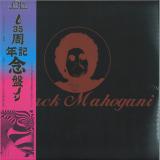
Korean artist and musician Jin Won Lee (이진원), otherwise known as Gazaebal, began his career in New York. Working as a sound engineer, alongside such illustrious artists as the Wu-Tang Clan and Janet Jackson, led him to develop a keen ear for dexterous audio design, melodic flair and catchy rhythm. But his true interest lay in uncovering the unique textures and synthetic qualities of electronic music. From the late 1990s to the early 2000s, Gazaebal focused on developing himself as a producer, synergising a uniquely potent take on club music, releasing three albums and appearing on numerous collaborations.
An established figure in the realm of contemporary art, Jin Won Lee is well-known for his hybrid, highly technological practice. In 2008, together with Jang Jaeho, he formed The Tacit Group, a collective for computer-coded art. Presenting works that manipulate audio and visuals in real-time through programming, the group has performed at the FAMS Choice selection, Lincoln Center in New York, at the Seoul branch of the Museum of Contemporary Art and the Sejong Center for the Performing Arts, among many others. As a solo practitioner, he initiated in 2023, a project that examines sound as abstracted vibration. brings together Jin Won Lee’s decades long investigations into sonic experimentation and the physicality of noise.
Outside the avant-garde, Gazaebal has enjoyed mainstream success, collaborating with Big Hit Productions founder and BTS songwriter Mr. "Hitman" Bang on remixes and arrangements for K-POP albums. They also formed the two-man group Banana Girl, with Gazaebal focusing on composition while Bang handled vocals, achieving a big hit with their 2000s track ‘Butt.’
Another crucial figure in Gazaebal’s life is his wife Nine who operates as his agent and business partner. Initially released in 1999 on Nine’s independent imprint dmstrax, the titular track ‘Talk’ first appeared on techno@kr, a compilation CD of Korean electronica. Together, they co-founded G Records, which was partly absorbed into Bighit Entertainment in 2005. Appearing as the inaugural record on Bighit, the original version of 'And So On' – featuring Bang’s vocal production – was not available for re-release due to licensing difficulties. But thankfully the multitrack was well preserved. Utilising these components, Nawon Ha (AKA Korean-but-Amsterdam-based artist Naone) re-imagines the song for Betonska Records.
A combination of un- and self-released material, Talk is an album that firmly belongs to the millennium while sounding utterly outside of space and time. A cosmic trance trip that draws on rock’s steely drive, wiggy acid basslines and warbling dub, the record is presented as a mix-friendly mini-album, with the 6 tracks ideally tailored to DJ-level quality and loudness. As much suited to the psychedelic rave scene of yesteryear as they are to present-day dancefloors, Gazaebal’s productions are defined by his idiosyncrasies. Melding the sheen of tight production and pop sensibilities with a flagrant DIY spirit, his music assuages the high-commercialism of the 2000s, resulting in a style that’s as definitely punchy as it is precise
Search:music works
“Owelle”: frenchified word derived from the English expression “Oh well”. Repurposed by Valérie Siron as her pseudonym to reflect her work ethos: serious, but without making a fuss.
Surfacing from Geneva’s club culture with a graphic design background, Owelle’s drive to synergise the audio and the visual power her expression of creative identity. Her compositions are imagined and built without boundaries, albeit replete with nods to previous genres ranging from early 2000s breakbeat, braindance and broken beat techno.
Intrigued by sensory immersion, Owelle further laces her art with interactive tools including programming, sound spatialisation and installation. Diving into a spatiotemporal journey, subtly incorporating their uses into her musical works. By blending her passion for diligent sound designing, field recordings and psychedelic vocals is how Owelle presents her approach to experimental music. Owelle’s creativity offers an intrinsic connection of her tailored rhythms and melodies to birth an original hybrid of sound and visual art.
The music within this record questions the importance of sound in relation to the individual’s environment. To blur the border between noise and aesthetically pleasing. To ride the waves between discomfort and delight and to find the potentially hidden role of situational awareness and relating it to musical endeavours derived from the emotions within.
What you do is a fundamental question. But it's how you do something that ultimately determines the effect." — Julian Sartorius
With 'RLLRLRLLRRLRLRLRLLRLRLR', Swiss drummer and sound artist Julian Sartorius presents his third album in three years. Together with 'Ensemble This | Ensemble That' Sartorius has created a mesmerizing 39-minute percussion album that conclusively expands his artistic output. For the first time, an ensemble plays an idea conceived by Sartorius, while he assumes the role of an interactive conductor, manipulating the sounds made.
Sartorius is known for his fluid and versatile solo performances in which he continually modulates the sound of his instruments, adding objects and progressively unfolding his sound world. The idea of expanding this practice was already gestating when the 'Ensemble This | Ensemble That' invited him for a collaboration. Together with the drummers and percussionists Brian Archinal, Victor Barceló, Miguel Angel Garcia Martin and Bastian Pfefferli the concept was further explored, elaborated upon in detail, and finally realized.
'RLLRLRLLRRLRLRLRLLRLRLR' is both title and score for the ensemble's four percussionists. The pattern, consisting of 23 individual beats, is played continuously by the ensemble while Sartorius gradually makes alterations to the instruments played. The result is a piece that has a sustained rhythmic flow yet is perpetually changing. Sartorius' interventions and the precise musicality of the ensemble allows the listener to discover an expansive array of moods and intensities.
The album is structurally recursive but develops an almost mystical magnetism through an odyssey of diverse musical landscapes. Sartorius explains: "It amazes me deeply how much the sentiment can change based on a musical mood - this sense of curiosity is made audible with this album." The album recording itself is designed as an endless loop: at the end of the recording, the ensemble's sound has returned to its starting point, thereby completing an endless, self-contained cycle, with no beginning or end. In this way, Sartorius also echoes his 2021 album 'Locked Grooves'.
Julian Sartorius' precise and multi-layered rhythmical patterns are keen excursions into the hidden tones of found objects and prepared instruments, bridging the gap between organic timbres and the vocabulary of (experimental) electronic music. He has released numerous solo albums, creates audiovisual art works, collaborates with musicians, writers, and artists, and performs live in intimate venues and on festival stages.
Ensemble This | Ensemble That (ET|ET) have established themselves not only as interpreters of contemporary music, but also as collaborators to a wide range of artists including projects like Zimoun, Myriam Bleu, Strotter Inst., Lê Quan Ninh, Marko Ciciliani, Jürg Frey, and Michael Maierhof, amongst others.
Native Soul Recordings has been around a long old time in dance music terms and now it looks back over some of its finest works with this first in a new series of Best Of comps.
Music writer Harold Heath is first up with 'Slipstream,' an effortless smooth late-night house cut with introspective chords and silky pads bringing real depth.
The Candy Dealers get more lithe and elastic with the spraying bass and jumbled percussive house of 'Train Of Thought' and last of all, Asad Rizvi remixes Jevne's 'Moderize' with a funky little bassline and chord vamps that keep you on edge. A tasteful package of timeless house grooves.
On March 26, 2015, a surprising announcement sent shockwaves through the Belgian music scene. Noe?mie Wolfs declared her departure from Hooverphonic, the band she had fronted as the lead singer for over five years. She described it as the end of an incredible chapter in her life and expressed her desire to forge her own musical path, which she did by releasing her critically acclaimed debut album "Hunt You" a year later.
In February 2020, the long-anticipated second solo album by Noe?mie arrived, titled "Lonely Boy's Paradise," brimming with melancholic hues. Taking her time to craft and record this album, Noe?mie delivered a collection of songs that resonated even more deeply with her. At the production helm was Yello Staelens (also known as Yong Yello). With "Lonely Boy's Paradise," her confidence grew, allowing her to embrace risk and unconventional ideas. However, the international lockdown soon threw a spanner in the works, as the society shut down a day after her celebrated sold-out release show at the Ancienne Belgique. Rather than sit by, she therefore retreated to her home studio to work on new music.
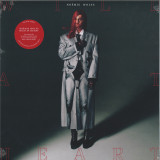
Making music from the heart has always been in the DNA of Belgian singer Noémie Wolfs and yet this time it is a tad different as she's gearing up to release her third album, "Wild At Heart," in November. This time around, she joined forces again with her partner in crime, Simon Casier (of Balthazar and Zimmerman), to write and produce the album in their home studio. Despite being in the business for years, the upcoming project also immediately presented a challenge for her because this time she was involved both as a writer, but more importantly as a producer, giving the album an even more personal touch. Everything was done from an emotion or a vision, you notice and hear the love for enchanting arrangements immediately.
The ten tracks on "Wild At Heart" promise a distinct sound, enriched with meticulous attention to detail. The melodies are interwoven with dreamy, melancholic strings and an array of synths, revealing a new facet of Noémie's musical evolution. The new sound of Noémie evolved from a hip-hop-oriented use of samples on her second album "Lonely Boys Paradise" to a more electronic approach, where danceable beats with analog synths join forces with big orchestrated strings to capture the different facets of a love story.
"Strings are actually very hopeful or often form a warm blanket for many people, but can also be very frightening, oppressive, dark, and sad. It might even be my favourite instrument, which is why I definitely wanted to use them on this album. Sometimes you can even hear 42 violins at the same time, with which we wanted to capture the grandeur of Hollywood," she says about including strings.
The upcoming album is not a sonic continuation of her previous albums, but a deliberate exploration of what has always inspired her. "Wild At Heart" tells the story of two lovers who cannot live with each other, but also cannot live without each other. The dramaturgy of the album also reflects itself musically, which is immediately evident with the first single "Lonely Heart". In almost eight minutes, you feel the matchless passion in her music and her voice remains the narrative thread that makes you forget time and space around you for a moment. Noémie Wolfs' new music is therefore the perfect way to take a break from the daily grind and digs deep into all forms of romance.
"Wild At Heart" is Noémie Wolfs' reintroduction and her most personal project so far. For dreamers, lovers, and travelers.
'Picture of Dub' is Deep & Heavy instrumental dub music inspired by the late 80's/early 90's UK digital sound laid down by Jah Shaka & other producers such as Manasseh, Dread & Fred, Ironworks, Disciples, Alpha & Omega, Jah Works & many others too many to mention...
The Dub Oracle is based in the Netherlands, he composed, played, programmed, arranged, mixed & produced all the music himself......further details still remain mystical..
For the third release of FanFar’on, we are travelling into another dimension, more on a Romanian & deep techno vibe from the works of Ciril & Cavale.
Both emerging for the electronic scene of Brusells and close to the Zodiak Crew, Ciril & Cavale brought their vibe with two tracks called « Dracula » & « Marchand de Sable » Definitely spiritual & atmospherics, the music is esthetic & mysterious, the Belgium producers are travelling to some ambient landscapes and experimental textures. To finish the ep ,we will have a completely destructured and almost jazzy remix from the famous Romanian producer : Dragutesku! As we say three is the « magic number » ,welcome to Ciril & Cavale for the third edition of FanFar’on,and let the FanFare begin!
- A1: Peek A Boo
- A2: Casper The Friendly Ghost
- A3: Some Things Last A Long Time
- A4: Walking The Cow
- A5: I'm Nervous
- A6: Man Obsessed
- A7: Don't Let The Sun Go Down On Your Grievances
- B1: Never Before Never Again
- B2: The Sun Shines Down On Me
- B3: Chord Organ Blues
- B4: Living Life
- B5: Speeding Motorcycle
- B6: True Love Will Find You In The End
- B7: Never Relaxed
- C1: Sorry Entertainer
- C2: Ain't No Woman Gonna Make A George Jones Outta Me
- C3: Lennon Song
- C4: Devil Town
- C5: Laurie
- C6: Story Of An Artist
- D1: Funeral Home
- D2: Go
- D3: My Yoke Is Heavy
- D4: Wild West Virginia
- D5: The Great Tune
- D6: I Live My Broken Dreams
"Welcome To My World" is a collection of some of Daniel's most-beloved songs and is now available on vinyl for the very first time. These are the songs that built the legend...a must-have for the legion of devoted Daniel Johnston Fans as well as the perfect introduction for new listeners.
Welcome To My World serves as an introduction to Daniel Johnston, housing a number of his most acclaimed works. Johnston's music captivated fellow artists and fans with its childlike elements and lo-fi elements. The singer-songwriter and artist earned a cult following in the early '80s, sharing homemade cassette tapes of his music, and his prominence was established after Kurt Cobain was publicly seen wearing a shirt with Johnston's illustration.
Modern highlife luminary Rex Omar has been a force within
the Ghanaian music scene for over 30 years. Now Soundway
presents five of his premier cuts remastered for a new self-titled
EP.
Over his career Rex Omar has evolved the genre, pushing
boundaries and dazzling listeners. A definitive piece of his
repertoire comes via his Dangerous album: while it was selfproduced and recorded in London circa 1997, upon CD
release it saw success mainly within his homeland of Ghana.
An irresistible blend of street-soul-come-highlife, with elements
of bouncing 90s RnB/hip-hop, it was developed with help
from Ibibio Sound Machine’s Kari Bannerman and prolific
Jamaican producer Bill Campbell. From this album rising
London producer and DJ Aroop Roy revisits the four-to-the-floor
excursion ‘Dada’, repurposing for today’s dancefloor with the
addition of fizzing synth chords and stabs.
While Omar regularly raps on his earlier works, on ‘Kele
Ngele’ (taken from his 2004 album Ajala) we hear a yearning
melodic vocal over a more laid back RnB beat. This rounds out
the new Rex Omar EP for the discerning listener to experience
the full breadth of his inventive output.
Titled “Vernacular", the debut album by Blake Reyes is set to release on Axis Records on Friday, October 27, 2023, in vinyl and digital formats. The album is personally overseen by Jeff Mills, and is part of the "Axis Jazz" collection.
This confirms the eclecticism and versatility of both Axis and Blake Reyes, through harmony and rhythm, cultural influences, and the right touch of fusion: characteristics that have always defined jazz.
The album was recorded in three different cities (Bologna, Milan, and Rome), with Jeff Mills present during all recording and mixing sessions. Particularly in Milan, work was done at the Officine Meccaniche studios, where Duke Ellington, Quincy Jones, and many others have recorded.
?Vernacular" is an album that draws from jazz, Detroit techno and funk. It evokes operatic work due to its aspiration to create strong emotional intensity. The album features a blend of acoustic instruments such as acoustic bass, acoustic and electronic guitars, and the Steinway & Sons Grand Piano - the same Duke Ellington played in 1963 when he recorded ?The Symphonic Ellington" album - alongside electronic instruments including drum machines and Roland synths.
?I titled the album ?Vernacular' because I focused solely on production and sound quality, drawing inspiration from vernacular art, as a self-taught and artisanal approach in the noblest sense of the term", Blake Reyes explains. ?The musical references can primarily be found in Jeff Mills and his Millsart project, and more broadly in the works of composers like Bruno Nicolai, Piero Umiliani, Piero Piccioni, Brian Bennett, John Cameron, and even Raymond Scott. For the lyrics of the track ?At Night,' the visual reference that inspired the lyrics can be traced back to certain paintings by Henri Rousseau, particularly ?The Dream,' ?The Snake Charmer,' and ?Sleeping Gypsy.' All of this was done in post-production, working alongside Jeff Mills: a wonderful experience, a continuous flow and exchange of ideas."
Producer, DJ, and sound designer Blake Reyes (born Luca Vertulli) divides his time between Milan and Ibiza. His productions consistently focus on the sounds and emotions derived from tapes, samplers, drum machines, and analog synthesizers. His mixes are broadcasted on stations such as Ibiza Global Radio, Ibiza Sonica, Radio Raheem, and Olà Radio. His DJ sets are distinguished by their elegance and quality, always bringing the dancefloor to the right temperature. He boasts releases on Trax Records and Rebirth Records, and in 2019, he founded Triton Records, his own record label.
Musicians: Dario Lutrino: piano, Stefano Brandoni: guitar, Niccolò "Bolla" Bonavita: bass, Anna Bassy: singer, Blake Reyes: drum machines and synthesizers.
Music composed, produced and directed by Blake Reyes. Lyrics written by Blake Reyes. Studio Engineer: Taketo Gohara, Mastering Engineer: Giovanni Versari, Producer: Jeff Mills.
Studios: Officine Meccaniche, Milan / Fonoprint, Bologna / Forum Studios, Rome
We are ecstatic to share this double VA LP to celebrate Telomere 010!
This is an extra stacked release with eight artists, as always blending and bending the spectrum of electronic music.
This releases has been in the works for the last 3 years, and has morphed into an epic 8 tracker for all hours of the day and night.
Nuclear decay occurs when the nucleus of an atom is unstable and spontaneously emits energy in the form of radiation. The result is that the nucleus changes into the nucleus of one or more other elements. These daughter nuclei have a lower mass and are more stable (lower in energy) than the parent nucleus.
“Ábris Gryllus is a cross-disciplinary media artist and musician based in Budapest. He is well-known for several projects, collaborations and performative works with choreographers, sculptors, dancers and other musicians. As a tireless artist always open to new possibilities, Gryllus has worked on dance pieces, educational workshops and installations; he is one-half of the beat-oriented group FOR., and not least of all, he produces immersive electronic music under his own name. His solo materials include the frantic vocal-based ‘Canon’ (The Death of Rave) and two releases on Farbwechsel (‘Post_’, ‘A.D.’) that feature a rather focused, slowly forming approach to composition.
Polish septet EABS apply an innovatve approach to jazz, distlling it
through the prism of hip-hop, blending it with elements of soul, funk and electronic music. ‘Slavic Spirits’ was 2 years in the making and contains 100% original material. They are joined by 22a head-honcho Tenderlonious who lends his exceptonal soprano saxophone and flute playing to all seven tracks.
Afer their very well-received 2017 debut album ‘Repettons (Leters to Krzysztof Komeda)’, focusing on the lesser-known works of the legendary Polish composer, the Wroclaw-based EABS decided to further expand this lead and released two more vinyl records, ‘Live At Jazz Club Hipnoza (Katowice)’ and ‘Kraksa / Svantetc’, the later recorded directly on tape and released via 22a, which crowned the “Kom eda triptych”. The astounding recepton of these releases built up loyal following outside of their natve Poland and whet listeners’ appette for completely new recordings.
For this LP the musicians turned to Slavic mythology and Polish demonology, while pondering upon the contemporary spiritual conditon of Poles. The enigmatc “Slavic melancholy” remains the main inspiraton, as the band tried to extract it from their own DNA. ‘Slavic Spirits’ is an endeavour to get in touch with the world of a long and brutally lost culture which, due to lack of sources, will never be thoroughly explored.
Personnel: Marek Pedziwiatr (piano, synths & vocal), Vojto Monteur (guitar), Pawel Stachowiak (bass), Jakub Kurek (trumpet), Olaf Wegier (tenor saxophone), Marcin Rak (drums), Spisek Jednego (samples, sound fx & percussion), special guest: Tenderlonious (soprano saxophone & flute)
It’s clear, when looking at Jlin’s body of work, and her recent activities, that she's the definition of what a creative composer looks and sounds like in 2023. She’s able to work across borders in many different environments and situations. Her work, and sound, is fluid and not locked into genre. The only apt tag for her now is ‘composer.’ Let’s be clear - she’s not EDM, IDM, electronic, footwork or post-footwork. She’s simply Jlin.
In thinking about this new release we have to draw attention to her collaboration with Chicago’s Third Coast Percussion - ‘Perspective’ - since it’s also the title of this six-track mini-album. And of course, we’d be remit if we didn’t point out that Third Coast Percussion’s acoustic version of ‘Perspective’ saw Jlin shortlisted as a finalist for The 2023 Pulitzer Prize in Music! Jlin notes how “Working with T.C.P. was a rewarding experience. I love their constant driving ambition. When I would go to their studio we would experiment as much as we could, and that to me is the beauty of composing.” Note that the CD version of ‘Perspective’ adds the four tracks from her ‘Embryo’ EP, apt since ‘Embryo’ itself was the 7th Perspective piece.
To shift perspective slightly, Jlin notes that collaborating with dance companies, especially those of Wayne McGregor and Kyle Abraham “has seen a significant evolution in my work.” She adds, “Working with Kyle and AIM, I felt the need to incorporate more organic percussion and drums. The raw, visceral nature of Kyle's choreography demanded a more tactile, grounded sound. I believe that music and dance are deeply interconnected, and the rhythm and physicality of organic percussion needs to mirror the dancers' movements whether it is conceptually or abstract.”
The organic aspect of her composition ‘Dissonance,’ a key cut on her new mini-album sounds like it might have been written for Kyle and AIM but, like the entire release, it was in fact written for Third Coast Percussion. With the organic drums in the track being a part of what Jlin calls her “from scratch” foundation. For many ‘Dissonance’ will be a first glimpse at Jlin’s mastery of organic sounds. It’s a stunning work that showcases her distinct approach to organic percussion. Further audible evidence can also be heard all over her new mini-album. She continues to evolve her sound and her approaches to composition on a steady and constant basis.
Jlin’s new mini-album “Perspective” works as a catch-up for those wanting new music from her, and wanting to hear how her sound is evolving. Tune in. There’s much more ahead.
- A1: Here Lies Love Feat. Florence Welch (Florence & The Machine)
- A2: Every Drop Of Rain Feat. Candie Payne & St. Vincent
- A3: You'll Be Taken Care Of Feat. Tori Amos
- A4: The Rose Of Tacloban Eat. Martha Wainwright
- A5: A Perfect Hand Feat. Steve Earle
- B1: Eleven Days Feat Cyndi Lauper
- B2: When She Passed By Feat. Allison Moorer
- B3: Walk Like A Woman Feat. Charmaine Clamor
- B4: Don't You Agree? Feat. Róisín Murphy
- B5: Pretty Face Feat. Camille
- B6: Ladies In Blue Feat. Theresa Andersson
- C1: Dancing Together Feat Sharon Jones
- C2: How Are You? Feat. Nellie Mckay
- C3: Men Will Do Anything Feat. Alice Russell
- C4: The Whole Man Feat. Kate Pierson
- C5: Never So Big Feat. Sia
- C6: Please Don't Feat. Santi White
- D1: American Troglodyte
- D2: Solano Avenue Feat. Nicole Atkins
- D3: Order 1081 Feat. Natalie Merchant
- D4: Seven Years Feat. Shara Worden (My Brightest Diamond)
- D5: Why Don't You Love Me? Feat. Tori Amos & Cyndi Lauper
David Byrne & Fatboy Slim’s acclaimed 2010 album Here Lies Love receives its first-ever vinyl release to coincide with a new production opening on Broadway this summer. Here Lies Love is a double-disc song cycle – improbably poignant, decidedly surreal, surprisingly thought provoking – about the rise and fall of the Philippines' notorious Imelda Marcos. It was conceived by David Byrne; composed by Byrne and DJ/recording artist Fatboy Slim, AKA Norman Cook; and performed by a dream cast drawn from the worlds of indie rock, alt country, R&B and pop. Byrne's taste in collaborators is as imaginative as it is impeccable, including Cyndi Lauper (who recounts, to lighthearted disco beats, Imelda's courtship with Ferdinand Marcos), Steve Earle (as the power-hungry Ferdinand), Dap-Kings vocalist Sharon Jones (recalling Imelda's introduction into New York society) and Natalie Merchant (as spurned Imelda confidante Estrella, anticipating the onset of martial law). Along with vocals turns from such stars as Tori Amos and the B-52's Kate Pierson, Byrne works with rising indie rockers St. Vincent and My Brightest Diamond; New York chanteuses Nellie McKay and Martha Wainwright; and dance-music divas Róisín Murphy and Santigold. Byrne himself appears as the voice of imperialistic America on ‘American Troglodyte’, a send-up that wouldn't have seemed out of places in Talking Heads' True Stories.
Byrne originally envisioned this as a musical theatre piece, to be mounted in disco and nightclub settings, reflecting the globe-trotting Marcos' taste for such velvet-roped spots as Studio 54 and Regine's. In 2006, he performed work-in-progress versions to enthusiastic audiences at New York City's Carnegie Hall and the Adelaide Festival in Australia. While plans for a US theatrical production continued to evolve, he delivered this unique recording. The award-winning theatrical production eventually premiered at The Public Theater in New York in 2013, travelled to London’s National Theater for a sold-out run (2014–15), and was remounted at the Seattle Repertory Theater (2017).
Here Lies Love has an effervescent disco feel, redolent of Fatboy Slim's own dance-floor anthems, with warm undercurrents of the Latin rhythms that have percolated through Byrne's recent solo work. The sunny arrangements act in counterpoint to the reality of the Marcos' increasingly repressive regime, reflecting the imagined inner life of the glamour-obsessed Imelda. Explains Byrne, "For me, the darker side of the excesses are, for the most part, a matter of record. A lot of the audience is going to come with that knowledge already. What's more of a challenge is to get inside the head of the person who was behind all of that, and understand what made them tick." Byrne offers no judgment and avoids the obvious – there is no mention of Imelda's infamous shoe collection.
Many of Byrne's lyrics are, astonishingly enough, constructed from actual Imelda quotes, including the project's title, the words that Imelda, now returned to the Philippines from US-assisted exile in Hawaii, would like to have inscribed on her gravestone. In addition to his new liner note, Byrne illustrates the story with archival photos. In a detailed preface, he reveals what drew him to this subject and the bumpy route he took to launch the project and, ultimately, record this album. The booklet is indeed a page-turner, just as Here Lies Love is a wonderfully old-school album that rewards start-to-finish listening. Once again, Byrne – beloved as musician, thinker and bicyclist-about-town – reveals the breadth and singularity of his vision.
The new production of Here Lies Love will premiere at the Broadway Theatre in New York City. Performances begin June 17, ahead of an official opening night on July 20. Tony Award winner Alex Timbers (direction) and Olivier Award nominee Annie-B Parson (choreography) reunite with Byrne (concept, music, and lyrics) and Fatboy Slim (music) to bring Here Lies Love to Broadway, continuing a ten-plus year collaboration on the project. Tom Gandey and J Pardo contribute additional music. Here Lies Love is produced on Broadway by Hal Luftig, Patrick Catullo, Diana DiMenna for Plate Spinner Productions, Clint Ramos, and Jose Antonio Vargas. The staging at the Broadway Theatre will transform the venue’s traditional proscenium floor space into a dance club environment, where audiences will stand and move with the actors. A wide variety of standing and seating options will be available throughout the theatre’s reconstructed space. The producers of Here Lies Love said, “As a team of binational American producers – Filipinos among us – we are thrilled to bring Here Lies Love to Broadway! We welcome everyone to experience this singularly exuberant piece of theatre. The history of the Philippines is inseparable from the history of the United States, and as both evolve, we cannot think of a more appropriate time to stage this show. See you on the dance floor!”
David Byrne’s recent works include the launch of Reasons to be Cheerful, an online magazine focused on solutions-oriented stories about problems being solved all over the world (2019); Joan of Arc: Into the Fire, a theatrical exploration of the historical heroine that premiered at the Public Theater in New York (2017); The Institute Presents: NEUROSOCIETY, a series of interactive environments created in conjunction with PACE Arts + Technology that question human perception and bias (2016); Contemporary Color, an event inspired by the American folk tradition of color guard and performed at Brooklyn’s Barclays Center and Toronto’s Air Canada Centre (2015); Here Lies Love; Love This Giant, a studio album and worldwide tour created with St. Vincent (2012); and How Music Works, a book about the history, experience, and social aspects of music (2012).
Byrne curated Southbank Centre’s annual Meltdown festival in London in 2015. A co-founder of the group Talking Heads (1976–88), he has released eight studio albums as a solo artist and worked on multiple other projects, including collaborations with Brian Eno, Twyla Tharp, Robert Wilson, and Jonathan Demme, among others. He also founded the highly respected record label Luaka Bop. Recognition of Byrne’s various works include Obies, Drama Desk, Lortel, and Evening Standard awards for Here Lies Love; an Oscar, Grammy, and Golden Globe for the soundtrack to Bernardo Bertolucci’s The Last Emperor; and induction into the Rock and Roll Hall of Fame with Talking Heads. Byrne’s work as a visual artist has been published and exhibited since his college days, including photography, filmmaking, and writing. He lives in New York City. In addition to 2019’s cast album for American Utopia on Broadway, Nonesuch has released eight other David Byrne records since 2003, including 2018’s American Utopia studio album and two versions of his musical Here Lies Love.
q C6. Please Don't feat. Santi White Santigold
La MegaCobla: an experienced traditional Catalan cobla wind quartet, born after an improvisation workshop with ZA! two years ago. Pep Moliner, Jordi Casas, Xavi Molina and Xavi Torrent are four of the most reputable and innovative cobla musicians, experts in hacking tradition and using their folk instruments in any modern musical genre.
Tarta Relena, young a capella trans-folk duet that have shook up theire scene. With their use of polyphony and voice FX, Helena Ros and Marta Torrella are digging in the deepest Mediterranean folk repertoire and placing it in the XXIst century with aesthetic renewal.
ZA!: Papadupau & Spazzfrica Ehd are European benchmarks of the underground Do-It-Yourself music community. Their uniquely intense shows, as well as their collective/collaborative work (wokshops, benefit shows, Do-it-Together cooperation) have allowed them to tour the whole world, from Tokyo to Maputo, from Tasmania to Sao Paulo, from New York to Saint Petersburg. Under the premise that avant-garde art is not incompatible with collective horizontal creation, ZA! mix cult, underground and popular music without asking permission.
These three elements come together with the purpose of portraying their own vision of Mediterranean music, filtered by distortion (so current in cognitive, social and identity terms) and psychedelia (so inevitable in an increasingly accelerated and saturated reality). A retro-futuristic journey from folk to free exploring the shores of the Mediterranean, claiming its power as a living core, never as a deadly border.
The TransMegaCobla fuses traditional Mediterranean culture -from bulería to kopanitsa, from gnaoua to sardana- with contemporary culture to create a fictional but deeply human and festive universe. Resurrecting the Phoenician language, the octet seeks common roots to fuse and remake them with contemporary molds such as rock, punk, free jazz and conducted improvisation. A timeless orchestra ready to invent, with real elements, a science-fiction Mediterranean in a parallel reality.
Special vinyl-edition of the legendary cassette, privately produced and
released by Maurizio Bianchi in November 1980.
he undisputed father of nuclearsurgic sound-degeneration and apocalyptic avantgarde produced one of his most radical and uncompromising works entitled COMPUTERS S.P.A., consisting of dense electronic segments, furious pulsations and harsh waveforms, formed by the KORG MS 20-synthesizer plus machinistic recordings from tape.
Maurizio Bianchi describes his early works as TECHNOISE SOUND coming from; strictly personal feeling, frustration and contradiction.
COMPUTERS S.P.A. is completely idiosyncratic piece of music, conceived with dramatic insistence, emotion; irrationality, hysterical scission, schizophrenic energy and madness.
The two improvisations inspired by computerized music can be defined as FINAL INDUSTRIAL MUSIC (term used by M.B.), the last sensation before the end.
After the "concretistic" beginnings and the synthesis between integral
concretism and artificial synthetism, in the autumn After the "concretistic" beginnings and the synthesis between integral concretism and artificial synthetism, in the autumn of 1980 I arrived at the synthetic court of the purest and most uncompromising electronics and thus the "COMPUTERS S. P. A." project was born, consisting of two improvisations on the Korg MS synthesizer-20, free of ancestral prejudice and freely inspired by computerized music that in the second half of the 70s was gaining ground in the academic schools of experimentation. After more than 40 years, these "technical rehearsals" could seem a playful and carefree exercise, while inste@d they cover a dramatic denunciation of the sounds generated without the basic help of emotion and spontaneity, essential elements of the most genuine and constructive avantgarde music.
Special mention about collage art design method in collaboration with Maurizio Bianchi, Siegmar Fricke and myself. A combination with traditional tecnique of collage, 'xeroxed copy' scan and digital treatment in 'Off-set' quality print. Taken original ideas from early 80's 'mailing trade' music on cassette format.
- A1: 특급열차 (속에서) (Express Train (In The))
- A2: 아무에게도 말할 수 없소 (Can’t Tell Anyone)
- A3: 풋내기들의 합창 (A Chorus Of Fledglings)
- A4: 가을에 오시나요 (Will You Come In Autumn?)
- A5: 거인의 숲 (Giant’s Forest)
- A6: 그리움 (Longing)
- A7: 유리 인형 (Glass Doll)
- B1: 우리 강산 (Our Country)
- B2: 여운 (Afterglow)
- B3: 카멜레온 (Chameleon)
- B4: 어디로 갈까 (Where Shall I Go?)
- B5: 내일 또 내일 (Tomorrow And Tomorrow Again)
- B6: 바람 부는 강 언덕 (The Windy Hill By The River)
Original release date: April 15, 1979
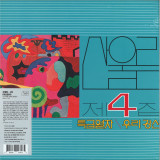
Sanullim's 4th album consists of background music and insert songs for TV and radio dramas and plays, including Korean Film director Im Kwon-taek's movie "Tomorrow And Tomorrow Again". It is a noteworthy collection of works that has not faded with the unique scent of Sanullim, and contains several songs that still shine with charming emotions and whimsical or vague sensibilities.
Express Train (Inside), a mountain sound-style hard rock with dynamic rhythm, fuzz guitar, and Kim Chang-hoon's wild shouting, Kim Chang-wan's soft vocal and brilliant keyboard sound, Can't Tell Anyone, Love It includes the elegant performance songs Glass Doll and The Windy Hill By The River, and the beautiful song Afterglow that achieves the climax of romance and lyricism.
Eternally Frozen consists of a series of canon based compositions for brass ensemble, percussion and synthesizer by Andrea Belfi. The canon is an ancient compositional technique in which an initial melody is imitated at a specified time interval by one or more parts, creating illusionary never-ending musical journeys.
The work is inspired by the evocative image of the Deprong Mori, a mythological bat with the alleged ability to fly through solid matter by bending atoms by its natural skill of audio echolocation. The myth suggests that one of these bats had been “eternally frozen” in a wall of solid lead in 1952 by the researcher of the Rockefeller University, Donald R. Griffith. This story is exhibited in a display at the Museum of Jurassic Technology in Los Angeles, an institution renowned for both speculative, fantastical reinforcement of mythology and playful and beguiling distortions of mysterious could-be truths.
Both the canon and the “frozen” Deprong Mori are man-made illusory simulations of eternity. Their attempt is to create mirages, where the insinuation of facts is more meaningful than the reality.
After many years of sonic explorations with percussion, drums, and electronics, Belfi is here projecting himself as a composer through the direction of an astonishing brass ensemble in the realization of these canonic works. There are evident echoes of the works of Arthur Russell, Miles Davis, Moondog, William Basinski, and the Italian soundtrack tradition of Ennio Morricone and Egisto Macchi.
Groundbreaking release from the early 80's produced with rather primitive synthesizers with as result "A Dog in the Night" a track with a thick sound, unusual for its time. Credited as "the sound of the future" in those days and sounding reevant today. The piece produced by Stefano Zito and arranged by Stefano Galante is after 40 years among the favorites of collectors and followers of Italo-Disco, being noted among the songs to be re-edited by Danilo Braca, the New York based Italian Dj known for his creativity! He manages to create wonderful reconstructions, often considered "works of art". Such as the version he remixed and revisited, with the strings played and recorded by Layer Bows, but above all with the additional lyrics written and performed by the superlative SuperJaimie (aka Charlotte Balibar); with her voice she gives a completely different air to this Italo-Disco jewel, now worthy of being brought to the attention of the new generations. Such a gem, made available again on high quality vinyl!
This debut album is the work of London based producer, sound artist and composer, Paul Cousins. Paul works with meticulously maintained reel to reel tape machines to transform and alter his electronic compositions. His prepared tape loops form the basis of ‘Vanishing Artefacts’ 12 intricate compositions. The original ideas processed through 1/4” tape become a hazy facsimile of their former state as tape is manipulated and effected to mould something new.
“There is great freedom in limitations. The sonic limitations of tape, at least in the lo-fi way I use it, are also a factor. Being able to physically touch and manipulate the sound is a very important and visceral part of this. Opposed to a lot of ambient music I have written, I want this music to be tactile, and very tangible. Yes, it can float away, but I also want to show the string tied to the balloon. For this reason many of the tracks contain the sound of the room, and the wonderful noises these machines make."
Repress!
Showcasing his renowned nu-disco stylings and the evolution of his musical outputs from club delights to international hits, today Purple Disco Machine, the moniker of German disco house producer Tino Piontek, shares his stellar new single ‘Hypnotized’, marking the next era for the critically acclaimed project.
With an artist name that pays homage to 80’s funk hero Prince and the uplifting dance beat of Gloria Estefan’s ‘Miami Sound Machine’, Purple Disco Machine was destined to bring together the elements of synth pop, funk, Italo Disco. With over 250 million streams across his works to date, and a recent run of A list remixes for Dua Lipa, Mark Ronson, Robert Surace, Foals and Sir Elton John, Purple Disco Machine impresses once again, creating a modern and sophisticated take on the decade that has inspired him so greatly. Further announcing his sophomore LP for release in the next year, 2020 will see Purple Disco Machine deliver his most outstanding work to date.
Enlisting the help of indie British newcomers Sophie and the Giants on the single, Purple Disco Machine, adds their alluring vocals to the instantly engaging melody, and funk fuelled bassline, that has become synonymous with so many of his dance-fuelled hits.
Italy-born, Ibiza-based producer and DJ, Tuccillo, joins the roster of Kerri Chandler’s Kaoz Theory with ‘The Waves’ EP, made up of five original compositions.
Based on the balearic island of Ibiza, Giuseppe Tuccillo, better known simply by his last name is a producer synonymous with a groove driven sound which blurs the lines between House, Deep House, Disco and Micro House with unparalleled finesse. Over the years his music has graced the likes of Nu Groove, Kwench, 20:20 Vision, Defected and Holic Trax, run by Tomoki Tamura with whom he collaborates on the Doublet project.
Here though, Tuccillo’s latest works come via the much-loved Kerri Chandler helmed, Kaoz Theory. Title-track ‘The Waves’ leads the way and winds through bright stab sequences, crisp drums and processed vocal textures. ‘Breaking Leds’ follows next and divers deep with diva vocals, classic house chords, pulsating subs and skippy drums before ‘Apple Eyes’ shifts the focus over to reduced percussion, dubbed out stabs and a snaking bass line.
Opening the flip side is ‘Good Vibration’, as the name would suggest a feel good journey through a bouncy bass line, intricately programmed organic drums and hypnotic vocal chants before ‘Around Five’ then concludes the EP, piecing together gritty bass flutters, a bumpy drum workout, subtly unfurling atmospherics and psychedelic, swirling guitars.
We are happy to announce that Ruf Dug, the Mancunian record producer, radio host, and self-professed video game freak is the latest artist to climb aboard the Pinchy train.
Well known for his kaleidoscopic approach both in the DJ booth and in the studio, Ruf Dug has touched on genres as diverse as street soul, vaporwave, and acid house over the years. He has released material on labels such as Rhythm Section, Klasse Wrecks, and his own Moodymann approved Ruf Kutz.
For his Pinchy & friends’ debut (there's a 6-song EP in the works as well) the NTS radio host distils some of these aforementioned influences and presents a two-track 12" that explores dub techno, Chicago acid, and atmospheric balearica.
Built around a solid, techy thud, "Thru The Night!" rides seismic bass waves and reverb-laden stabs to more tropical climes, thanks to gusts of echoed flutes and a catchy, 8-bit vocal hook.
On the flip, "I Love You" takes a minor-key synth riff and sends it off to music school for some late-night nasty dance floor bliss.
The third vinyl release from CUE Music invites Jiggy (IT) to deliver three fresh tracks in the form of “Delinquentes EP” alongside Reboot on remix duties. The record delivers a solid dose of tech house and minimal techno, definitely adding even more magic to the imprint’s discography, which includes titles signed by artists like Butane & Riko Forinson, Elchinsoul, Sascha Dive, Aney F., Dubphone, Christian Burkhardt, Sascha Sonido, Bee Lincoln, Danilo Schneider, Nektar Agu, Triad, CL-ljud and, of course, label head Sven Jaeger, among many others.
Jiggy (IT) started mixing in 2008, exploring various genres and slowly creating his own style. For 8 years he lived in Ibiza, going from playing at small clubs and underground villas parties to memorable performances at Space, Privilege, Sankeys and Bora Bora while hosting weekly shows at Ibiza Global Radio. Throughout time, he released some of his works with labels like Innocent Music, Psicodelica, Variety Music, Ole Rec, Eisenwaren, Moan, Play Groove Recordings, Basswalk, Pild, Quanticman, Natural Rhythm, Konzept:Musique and his own Be Water Recordings which is more than just a label, it’s also a deeply spiritual lifestyle for him.
“In the Flesh” is the brainchild of Egyptian-born, New York-based conceptual artist Nader Sadek. Known for his impressively twisted sculptures, masks, and installations used for example by bands such as MAYHEM and SUNN O))), Sadek is now venturing into the realm of recorded music- including songwriting credits on this album! The band NADER SADEK emerges out of a collaboration between Sadek and some of extreme music’s most talented artists with its core made up out of songwriter/vocalist Steve Tucker (ex-MORBID ANGEL), CRYPTOPSY drummer Flo Mounier and Norwegian composer/guitarist Rune Eriksen (AVA INFERI, ex-MAYHEM). A host of guest-appearances lends additional weight to the musical impact of “In the Flesh” by leading artists such as Attila Csihar (MAYHEM), Travis Ryan (CATTLE DECAPITATION), Tony Norman (MONSTROSITY), Descructhor (MORBID ANGEL), and Nick McMaster (KRALLICE). “In the Flesh” is firmly based on a technically masterfully executed unique style of Death Metal with a pitch black twist that creates a multi-cultural symphonic abyss where melody and corrosion meet. As a work conceptual art “In the Flesh” is best explained like this: NADER SADEK invite you on a journey to the depths of the earth, where substances of a repulsive nature dwell. Beneath the earth’s crust, over millions of years creatures have disintegrated and decayed until taking on ghastly new life as petroleum. Like a return of the undead, petroleum and its derivates have wrought cross-cultural conflict, environmental pollution, and economic distress. With a visual and aural assault, Sadek’s new work “In The Flesh” re-interprets petroleum’s sinister insinuation into our everyday lives. Nine songs and a series of original drawings video works explore several aspects of the commodified resource we find ourselves fatally dependent on. “In the Flesh” exploits the sonic links between death metal and gasoline-dependent heavy machinery such as automobile and airplane engines. These links shaped the process of musical composition itself: The album opener, “Petrophilia”, kicks in with a sound evoking an engine starting up. Another song, “Of This Flesh (novus deus)”, follows the sonic structure of a car shifting gears. While continuing to link musical composition to mechanical transformations, other songs depart from engine-based references. The outro to the album, “Nigredo in Necromance” which is already accompanied by a video, dwells on an individual’s recognition that he must die in order to reunite with his deceased lover. The song riffs on the life-in-death of an oil-drenched society, as the lovers’ reunite in their decomposition and rebirth as petroleum. This theme also drives the track “Mechanic Idolatry”, which channels the uncanny thrust of Sadek’s recent artistic output, as live human beings provide the fuel for machines transforming themselves into flesh.
Dam-based don Retromigration steps into the big leagues letting loose his debut album on WOLF Music. An LP that has long been in the works and for good reason too. Fourteen expertly executed tracks that range from hazy beats and jazz-tinged broken rhythms to club-ready groovers, deep excursions, soulful footwork and even some jungle energy. A flavour for every occasion and damn it tastes good.
With an envious run of releases on the likes of Handy, Healthy Scratch, wewillalwaysbealovesong and WOLF in a relatively short space – Retormigration is hot property and it’s clear to see why. A distinctive style and energy permeate his tracks with a breadth of influences on offer, from hip hop, to jazz, soul to funk. You just know a long player from this player is going to cover all bases.
His debut LP, Straight Foxin’, is a carefully curated and crafted journey showcasing the creative explosions firing off in Retromigration’s brain. Joining the dots between genres, taking elements from here, ideas from there – twisting and turning yet never out of place. Take the opening three tracks, all tied together by a deep fondness for jazz but served up in different styles, ‘Kunta’ with that hazy beatsy blend, ‘Formant’ leaning into the realms of broken beat and DnB and ‘Be Someone’ cruising with the off-kilter house.
Elsewhere there’s prime examples of Retromigration’s signature sample-laden house with deeper cuts like ‘Mada’ and ‘Bouncer’, sitting side by side with more soulful explorations such as ‘New Cribs’ and ‘ITWT’.
Not one to be pigeonholed, another course of Retromigration’s expansive taste gets served up with four high energy hits. The bouncing footwork flavours of ‘Kush Love’ ft. Passion Deez and ethereal excursion ‘What If’ lead into a captivating nod to the heydays of jungle and DnB on ‘Mild Fever’ and ‘Bad Knees’ respectively.
Straight Foxin’, mad flexin’ – Retromigration has laid down the law with this LP, a debut album done right.
- A1: Begrüßung Und Buntspecht
- A2: Afraid Of Seeing Stars? (Heimische Gefilde Edit)
- A3: Uhu
- A4: Adler (Heimische Gefilde Edit)
- A5: Rote Waldameise
- A6: Klangteppichverleger Wolle (Heimische Gefilde Edit)
- B1: Goldammer
- B2: Die Alpenstrandläufer Von Spiekeroog
- B3: Feldgrille
- B4: Björn Borkenkäfer (Heimische Gefilde Edit)
- B5: Eistaucher
- B6: Der Hecht Im Karpfenteich (Heimische Gefilde Edit)
- C1: Gelbbauchunke
- C2: Die Rotbauchunken Vom Tegernsee (Heimische Gefilde Edit)
- C3: Nachtigall
- C4: Gasthof "Zum Satten Bass" (Heimische Gefilde Edit)
- C5: Rauhhautfledermaus Und Großer Abendsegler
- C6: Der Buchdrucker (Heimische Gefilde Edit)
- D1: Waldkauz
- D2: Harzer Roller (Heimische Gefilde Edit)
- D3: Ein Stelldichein Des Westerwälder Vogelchores
2026 Repress
Originally released in 2007 on CD and now re-released on double vinyl. "Heimische Gefilde" was the second full-length release on Traum at that time from Westerwald based DJ, producer and park ranger, Dominik Eulberg. Dominik has since then expended his activities enormously now appearing as a book author with best selling books in the German official bestseller list. He ist he ambassador of the most popular Conservation Union in Germany NABU, he has created a bird quartet and a hand made insect hotel and appears on national German TV regularly next playing in clubs world wide and producing stunning music. "Heimische Gefilde" includes spoken words by the man himself and the release won the price of the German critic awards for music. It is the only compilation that comprises a selection of Dominik Eulberg’s best early works and it is for the first time available on vinyl now.
As Dominik Eulberg says in his own words: „After more than 16 years, "Heimische Gefilde" is finally released on vinyl. At that time it was still a daring experiment to combine music with lustful science communication. Quickly one was thrown into the pot of the "weird eco-techno sound owl". Today, we are increasingly finding that we cannot stop the impending ecocide in a cognitive way. For more than 60 years we have known about the concrete threats to humanity from global warming and species extinction; yet nothing changes. Many alarmist efforts fail miserably, red lists grow longer and longer each year, and global temperatures continue to rise unchecked. It is becoming clearer and clearer that we have to reach out to our fellow human beings in a positive emotional way in order to make a difference, because we only protect what we love. Then sentimental minorities become majorities that change something. Art and culture are low-threshold vectors to make things majority-friendly. They are a fertile and valuable breeding ground to sensitize people outside the eco-bubble and to let their environment become a co-environment again. Today my transdisipilnary work is inseparable. I write books, develop games, lecture, make film, and am a visiting scholar at museums. "Heimische Gefilde" was a valuable cornerstone for my creative work, a very intrinsic work to go my very own way.“
We would also like quote here the description of Forced Exposure done at the time when the album was originally recorded and released to keep the authentic feel: „The influence of nature (bird twitters, owl hoots, flowing water, crunching leaves) and other domestic sounds has made his music easy to identify with. „Heimische Gefilde" means "native habitat," and this release takes the concept of his debut a step further and at the same time is a retrospective of his major hits. Tracks like "Die Rotbauchunken vom Tegernsee" and "Björn Borkenkäfer" are included here in unreleased edits that are even stronger than the originals, and as a bonus, previously vinyl-only
Omni AM presents the long-awaited reissue of “Can We Get / Keep Doing That.” This timeless record sent dance music in a new direction. Euphoria Record’s vaults are open and finally, for the first time since 1997, this seminal tech-house classic is available to everyone for the very first time in over 25 years. This 1997 indie record was Euphoria Records second release – and their first international record. Whether you agree with it or not, many people consider this one of the pioneering records of American Tech-House. Both sides and several mysterious alternate versions have graced the decks of DJs like Evil Eddie Richards, Terry Francis, Derrick Carter, Tyler Stadius, and Magda. The list goes on.
We were lucky. Curve Pusher lovingly remastered the original four tracks from the 1997 studio masters. Then, he went a step further, and remastered some previously unreleased versions – including a live version in Chicago that encapsulates what Omni AM was back then: ambient house. There’s a bit of Chicago, a bit of London, a bit of New York, and a bit of Tokyo in every second of these classic, genre-defining tracks.
A1.
“Can We Get” happily sits with the finest works of Ron Trent, Chez Damier, and Mood II Swing – and goes further, as Omni AM has never feared genre definitions. It opens with classic deep house chords, floating synth pads, and sparse vocals. The bassline is deep and warm. Marky Star and Adam Collins expertly work the percussive effects but always keep the theme simple and clear. Everyone knows this is a classic house track because it hypnotizes you.
A2.
“Keep Doing That” continues the theme with another classic late-night killer. However, this one is totally different – almost industrial, yet clearly housey and ambient. It drives deep into a tough groove that just builds and builds. The dub-influenced bass line gives way to a more angular synth riff that both offsets and adds to the track's forward thinking sound design. It’s dark and dirty, yet terribly sexxxy at the same time. It was and always will be mesmerizing. Once again, musical magic by Marky Star and Adam Collins.
B-Sides
The flip side features two remixes of “Keep Doing That” by UK tech-house legend Mark Ambrose. His bubbly, psychedelic take on the track pumps up the percussive Chi-town groove while going in a distinctly London afterhours direction. Trippy, for sure. Fun for all, for sure. These remixes are guaranteed to make your afterhours weird.
Far Out Recordings proudly presents the self-titled debut album by Rio de Janeiro born multi-instrumentalist, composer and arranger Tunico. Honing Brazilian roots rhythms like maracatu, xanadu, and samba, to combine with a global contemporary jazz outlook, the newcomer adds a modern classic to the ever rich vein of Brazilian instrumental music.
Consider it a natural evolution from the legacies of greats like Quarteto Novo, Hermeto Pascoal, Banda Black Rio, Tamba Trio, and Dom Um Romão, Tunico’s debut brings together an eye catching ensemble of talents from the Rio jazz community, with whom he performs on a weekly basis at celebrated live sessions and jam’s at venues like Macuna and Comuna Lapa, which often go on all night.
Released in 2022, the album’s rip-roaring lead single “Galope” features the effervescent vocals of Katerina Assef, as well as consummate solos from all over the band, as Sounds & Colours put it “…it exudes distinction and promise”. “Sambola” calls on the signature swagger of Far Out favourite Antonio Neves, indulging us in irresistible swinging samba-funk, undeniably reminiscent of the aforementioned Banda Black Rio in their late 70s heyday.
Born and raised in an artistic Rio household, Antonio Secchin aka Tunico’s father was the painter Guilherme Secchin, whose original work is lovingly repurposed to create the album’s cover. Antonio learned his trade on guitar from a young age, which remains his primary method for composition, but at the age of eighteen he started to gravitate towards the saxophone, and in particular the soprano sax, from which he now leads bands despite being entirely self taught. He would develop his skills busking on curbsides and metro stations before becoming a mainstay player in venues and clubs around the city.
When the pandemic struck, Antonio retreated to his family home in the Rio countryside. With time and space to breathe and reflect in a natural environment, he set to work at fleshing out the compositions he’d written throughout his musical life into full bodied works. His affinity with his rural surroundings is reflected in the luscious, blossoming feel of this groovy, mystical and poignant instrumental debut album.
Tunico will be released on vinyl, CD and digital platf
Since the release of the highly acclaimed album Mamari (2021), the Muito Kaballa project has continued to develop.
The new album Little Child (2022) starts with a cracker called Inside Outside. The song addresses the hypocrisy and double standards of the European Union when it comes to refugee policy. The group works together with the renowned German/Nigerian musician Ade Bantu and the Angolan guitarist Juresse Amie Tieti Ndombasi and picks up their listeners where they were parked with Mamari. Fat grooves with clearly recognizable Afrobeat influences.
However, the musical journey leads step by step away from the usual sounds of the band. Already the second track Dansez! Dansez! shows that. The sound leads to Angola, Congo and a bit of Mali. The band stacks so many rhythms on top of each other that the word poly appears in a whole new light. It becomes clear that the nine deal intensively with the music that is the source of their inspiration. The gifted guitarist Juresse Amie Tieti Ndombasi puts the icing on the cake with his sound.
Let's continue with No = No. Here at last it becomes clear: Muito Kaballa has escaped from his drawer and is now in free flight, somewhere between jazz, fusion, afrobeat and whatever. But who cares? The sound is convincing, the feet shake to the beat and cannot be calmed down even with great effort and the message "Don't protect your daughter, educate your son" can't be said often enough.
The next song, Memories, reveals completely different sides of the band. While the sound is suddenly much more relaxed and, let's call it jazzy, the lyrics also become much more intimate and poetic. "Keep in mind, it makes you blind, starring in the sun". We don't find out what memories Niklas Mündemann, composer of the song, has in mind here but that shouldn't bother us. We just put on our sunglasses and let ourselves be carried away by the almost epic track, which with its ten minutes of playing time leaves nothing to be desired in terms of diversity. Sophisticated listeners will wonder if Niklas Mündemann listened to a bit of Kamasi Washington while composing. Maybe even a lot? Be that as it may - a special treat in the piece: the trombonist Saskia-Marleen Dahms, who makes a guest appearance on this song, rounds off the sound of the brass section again.
Last but not least, we come to the namesake of the album: the song Little Child builds on the mood of the previous track and rounds off the musical odyssey with a good portion of goosebumps. But the song doesn't just leave its mark on the surface, no, it also gets under your skin. While the melody has considerable catchy tune potential, it is above all the lyrics and the message that grab you here. Niklas Mündemann wrote the song during a phase of mental depression. Above all, psychotherapy helped him to think more positively again and to comfort his own inner child. We've all heard about that child in us. But when was the last time we hugged it? The song Little Child is the perfect accompaniment for this, because when you hear it, you immediately feel hugged, pressed and safe. Another highlight are the incredibly beautiful solos, played by Benjamin Schneider on guitar and Saskia-Marleen Dahms on trombone.
That's the end of the album and, to be perfectly honest, you don't feel left out in the rain, but you do feel left out in a (warm) shower. Time flies when you hear Muito Kaballa's new album and in the end you want more. 4 remixes for the dancefloor are delivered by French producer Kuna Maze, Polish/Angolan duo Lua Preta, French producer La Dame and Brazilian producer Badsista, tipping the remix balance into more female input.
Frankfurt's celebrated producer, Philip Lauer returns to Especial, this time teaming up with Berlin based vocalist Dena for a special collaboration, covering Julie Stapleton's soulful House classic with a modern interpretation across a number of versions (vinyl and digital).
After the success of the Hotel Lauer EP on Especial way back in 2016, Lauer has continued his ascendency with albums for Permanent Vacation and Running Back, as well as releasing a string of sure-fire, dancefloor friendly EPs for the likes of Cin Cin, Futureboogie and Skatebard's Digitalo Enterprises.
Born and raised in Bulgaria, before making the move the music mecca of Berlin, Denitza Todorova has a carved a path with her electronic, dance pop stylings across releases for the likes of K7 and Kitsune Music. First appearing on Make It Stay from Lauer's last album, it jumped out as the perfect partnership to bring the raw, soulful and uplifting sounds of the cult V4 Visions label up to date. Founded by Alex Palmer, the label was part of the UK's early 90s club sound, releasing street soul, deep house and more, in Where's Your Love Gone, Palmer and 18-year-old writer/vocalist Julie Stapleton hit on the perfect marriage of Lovers Rock and Street Soul yearning with the haunting sounds of US House. Presented as a new take on the classic, but with utmost respect, the EP starts with the Club Mix, a Larry Heard bassline joins a marimba melody, lifting Dena's vocals of youth's lost love and pain. This is followed by the Demo Mix, a warm, beautiful string laden original take that Lauer and the label felt had to be included.
DJ Slyngshot is welcomed to provide a deep, tech remix. A name to watch via his releases on his YAPPIN label and recent EP for Workshop, his remix is an analogue twist of hypnotic, raw dub techno percussion and counter breaks builds as string and piano join. The EP ends in the Synthapella, as bongos, cowbell and whistle are added to create a drifting Balearic version for late summer nights and dawn that highlight Dena's vocals in a 'sunrise' light.
On April 7th electronic luminary Nathan Fake presents the new longplayer ‘Crystal Vision’ on his own Cambria Instruments imprint, which features collaborations with Clark and Wizard Apprentice.
This is music for music’s sake – recorded without angles, agendas and themes – so Fake was free to simply continue honing his craft and express himself non-literally. Aptly titled, there’s a clarity of execution and ambition, and a peak effectiveness to the record that just sounds right.
Continuing to set a personal bar higher and topping his own best, the mark of master craftsperson is everywhere, but that doesn’t mean it’s polished; There’s plenty of rawness evident, with spiky sonics keeping ears on high alert – full of endorphin-flooded rave energy.
Following a short, scene-setting ‘Arrival’ – a simple major chord arpeggio played on a Jupiter 6 which sounds like curtains opening at dawn, things begin apace with ‘The Grass’, which hurtles like a precision-tuned bullet train through Arctic tundra. The undulating effect of compression is emphasised by the classic techno trope where 2 rhythms jar yet interlock, creating an exquisitely disorientating strobe-like flutter. On the track’s guest, Fake comments, “I fell in love with Wizard Apprentice's ‘I Am Invisible’ and felt our musical styles were similar. Their vocals are smooth and clear and sharp at the same time. They’re like a calm within the storm.”
Inspired by Italo disco but sounding wholly alien and futuristic, ‘Vimana’’s fizzing buzzsaw arpeggiated bassline, popping snares and bright whirling melody are equally an electro trance melange, with an effervescent major chord Arp that kicks in midway.
Reminiscent of what used to be called ‘funky techno’ but with sparklier sounds, ‘Boss Core’ blinds like sunshine bouncing off ice. Using his trusty Boss DR550 drum machine, and inspired by Autechre's ‘Vose In’, the track peaks by reaching that melancholic/euphoric axis for which he is loved.
With chugging slow breakbeats not a million miles from Board Of Canada or trip hop, ‘Crystal Vision’ rolls along, with the melody opening up, revealing more hidden notes as it progresses, building into a fractal, kaleidoscopic mosaic.
An emotional outpouring with serotonin surging through the circuitry, classic breakbeats and layers of lazers, ‘Bibled’ has all the hallmarks of a classic. This is a bonafide festival-set closing, hugging-your-mates, moment – or, with its guitar solo, “a power ballad” – as Nathan calls it.
A minimalistic moment of calm midway through the album, ‘CMD’’s gently comforting dreamscape is conjured with FM stacked and detuned sine waves which are left to breathe, whilst the chunky Chicagoan house jack of ‘Hawk’ brings to mind classic Relief records, but even more detuned and wibbly, and laden with synths.
As the title suggests, ‘Amen 96’ is in Fake’s own words, “me having a go at jungle. I grew up listening to it, and I remember as a teenager it sounded like the most intense and otherworldly music ever. It still does. This track is an experiment to see how my melodic style works against amen breaks”. Closer to the braindance end of the spectrum than ‘proper’ jungle (and all the more interesting for it), Fake channels the spirit of Squarepusher but makes it his own, brimming with melodious twinkle.
A collaboration with Nathan’s close friend and genuine musical hero Clark. ‘Outsider’ finds this dream team alchemising pure gold that’s bigger than the sum of their parts. Skittering, intense, far-reaching end epic, the pair close proceedings on a grandly dramatic note. In 2020 Nathan released the album ‘Blizzards’, which was described by The Quietus as “his best work”, and “his best LP yet” yet by Resident Advisor. The equally well received ‘Blizzards Remixes’ EP which featured Afrodeutsche and Irene Dresel followed in 2021, as did a nationwide UK tour.
An in-demand remixer, Fake has added his magic to tracks by Radiohead, Clark, Perc, Jon Hopkins, GoGo Penguin, Dominik Eulberg, Christian Löffler and Damian Lazarus, working for labels including Ninja Tune, Domino, Warp, Blue Note and Kompakt.
One of the greatest soul voices working in the US today, Billy Valentine's latest release, first plotted out in the summer of 2020, sees the artist responding to the chaos of a global pandemic and the seismic impact of George Floyd's murder via legendary works from Curtis Mayfield, Gil Scot Heron and Pharaoh Sanders. In collaboration with acclaimed producer and songwriter, Bob Thiele Jr. (son of Flying Dutchman founder, Bob Thiele), Valentine's rich, velvety vocals breathe new life into these already-powerful tracks, bringing them into the contemporary political context with renewed urgency. Released on Acid Jazz in partnership with renowned US label Flying Dutchman, Valentine's latest output marks the first new music from the label since the '70s - a momentous return for a keystone tastemaker of the American jazz world.
Running Back welcomes Firas Waez and his studio character 9th House for a flock of heartfelt and intuitive house tracks. Centered around uplifting chords and joyous melodies, upbeat drums and shuffling hi-hats, it feels like being in a circle dance, watching flowers turning into fruits or caterpillars into butterflies.
Made with the tools of today, but with a burdening love for the ancient magic and positivity of this music. The results being highly contagious. Whether its any of the 9th House’s solo works like Reuben or the collaboration with Matrefakt, it’s impossible to hold still. But as no one can live off love alone, there is also an odd one out. The eponym Midas swaps vintage techniques and the love potion of its counterparts for sharp and exact peak-time magic that makes endorphins rush and cheeks blush. Whichever you finally pick of the five tracks, any of them are an amulet against bad times. A Midas’ touch indeed! Happy house painting artwork courtesy of Luciano Calderon via ruttkoswki;68.
Very few electronic music artists can boast of spanning a wide musical spectrum as the UK producer Calum Lee aka Paleman / Fresnel Lens.Always emphasizing the percussive side (advantage of being a jazz drummer), and always with an innovative spirit, the releases of this authenticsound designer oscillate between the most abstract / experimental electronica and minimalist club focused techno, from atmospheric andintrospective works to the sickest dubstep / bass music.
As at 30D we declare ourselves absolute fans of Calum's music, we had a clear obligation to ask him to join our catalogue, specifically for the EyesHave It sub-label (we had especial interest in his interpretation of broken, dark and industrial techno). His answer was direct and unmistakable:"I've sent you a lot of pieces that fit with your label vision and the imagery that we love.. I've been studying existentialism a lot recently, so thesetunes are a reflection of my headspace at the moment!".
A true declaration of intent!And here it is, five perfect examples of obsessive tribal madness, overexciting synthetic broken beats and a lot of rawness. A pure musical gem.
- A1: Golden Skies (Feat Lydia Waits)
- A2: It's Never Late In Neon Signs (Feat Lydia Waits)
- A3: Fake Fur (Feat Helle Larsen)
- A4: Hold That Thought (Feat Helle Larsen)
- A5: Sandcastles (Feat Helle Larsen)
- B1: Today's Tales Of Tomorrow
- B2: This Kitty Got Claws (Feat Helle Larsen)
- B3: Rhythm Cast A Spell On Me (Feat Lydia Waits)
- B4: Not Supposed To Be Me (Feat Lydia Waits)
- B5: Let's Stay Right Here (Feat Helle Larsen)
Beatservice Records are beyond thrilled to announce the arrival of Kohib's hotly anticipated studio album 'Today's Tales Of Tomorrow'.
DJ, producer and club organiser Øivind 'Kohib' Sjøvoll has been in truly dazzling form of late, serving a series of mesmerising singles that served as a tantalising taster to his latest album – the third he's crafted for Beatservice. Actively producing immaculately crafted sounds for over two decades, sonic alchemist Kohib continues his deft aptitude for sculpting genre-defying compositions, with 'Today's Tales Of Tomorrow' playing host to some of his most compelling material to date. From pitch black introspection to rousing dancefloor abandon, the album is every bit as far-reaching as we've come to expect from this singularly talented artist.
The collection bursts into life via the club-focused thrust of 'Golden Skies', featuring the seductive vocals of enigmatic songstress, Lydia Waits, whose stirring performance shines like a beacon as it soars over Kohib's slick four/four groove. Crisp drums drive the hypnotic rhythm over a subaquatic bass line, as icy pads and pitched synth percussion combine to stunning effect, effortlessly building to Waits' rousing chorus section. Subtly shifting the mood, we arrive in the heads-down throb of 'It's Never Late In Neon Signs', where glistening arpeggios and snarling bass caress Lydia Waits' honeyed vocal, the pristine instrumentation undulating over a mesmerising, radio-friendly arrangement.
'Fake Fur' arrives with deliciously brooding intent, with (Kohib's High Heeled Giants bandmate) Helle Larsen's bewitching vocal gliding over immersive instrumentation and otherworldly textures. Evocative harmonics combine with ethereal synth leads and dramatic aural waves, the hypnotic percussion gently driving the groove deep into the half-light of a crisp autumnal haze. Next, 'Hold That Thought' mischievously switches the rhythm, as thick sub bass and searing synth motifs power over broken drums while Helle Larsen's affecting vocal rises from delicate verse into dramatic chorus bursts.
'Sandcastles' once again sees Helle Larsen grace the stage, lacing waves of cinematic pads glide and live bass as scattered percussion forms an alluring rhythm. Sparse and precise, the evolving music ebbs and flows as the tides, gorgeously caressing Larsen's emotion-rich vocal as she weaves her seductive lyrical metaphors. The album's title track 'Today's Tales Of Tomorrow' sees sinister lead synths exploding over deviant bass as the pulsating rhythm drives the cut through distant vocals, the low-slung groove proving magnetic as the nocturnal melody works its magic.
The tempo rises rapidly, with the pounding bass arpeggio of 'This Kitty Got Claws' purposefully marching through cascading synth textures, euphoric chords, and self-assured lead vocals. Expertly displaying his expansive production finesse, the rhythm once again switches as we sashay into the utterly bewitching 'Rhythm Cast A Spell On Me', with Lydia Waits' indelible vocal providing a profoundly atmospheric moment. A sublimely constructed bed of neatly woven keys, xylophone strikes and haunting bass clarinet elegantly embrace the ethereal lead vocal.
The mystical melodies of 'Not Supposed To Be' echo over a misty woodland landscape, with Lydia Waits' unfeigned vocal flowing over jagged synth textures and gently broken rhythms, before Helle Larsen returns with the sensual swansong 'Let's Stay Right Here'. Sumptuous keys shimmer over a steady tempo, with warm bass and sugary melodies supporting the intoxicating lead vocal for a gorgeously heartfelt finale.
Vividly illustrating Kohib's unthinkably vast sonic repertoire, 'Today's Tales Of Tomorrow' looks set to further enhance the Norwegian producer's already glowing reputation, with each exquisitely-formed track combining to create a collection that's at once powerfully memorable and profoundly coherent.
- A1: Psalm 34 4
- A2: Metatron, Archangel Of Kether
- A3: Raziel, Archangel Of Chokmah
- A4: Tzadkiel, Archangel Of Chesed
- A5: Tzaphkiel, Archangel Of Binah
- A6: Kamael, Archangel Of Geburah
- A7: Gabriel, Archangel Of Yesod
- A8: Michael, Archangel Of Hod
- B1: Raphael, Archangel Of Tiphareth
- B2: Haniel, Archangel Of Netzach
- B3: The Sun
- B4: Sandalphon, Archangel Of Malkuth
- B5: Anu/Enlil/Enki (The Way Of Anu) (The Way Of Anu)
John Bence can be described as a Savant in the world of Avant-Garde classical composition, and puts his mastery on full display in his newest release with Thrill Jockey. Archangels is a deep dive into the world and soundscape that Bence carefully crafts to offer a glimpse of the divine. Raised in Bristol"s burgeoning underground electronic music scene and a graduate of the Royal Birmingham Conservatoire, John Bence manages to employ compositional complexity to manifest potent emotions. Bence"s acclaimed early works focused on the human experience, charting the composer"s own experiences with addiction and alcoholism in both stark minimalism and caustic noise eruptions. Having written Archangels two years into his recovery, Bence deftly threads together gauzy electronic atmospheres, brooding orchestral passages, and minimalist piano meditations Throughout his work, he manages to finely sew together Gregorian chant, orchestral arrangements, rippling synthesizers, and field recordings to reveal new surprises at every turn. Archangels is a compelling addition to contemporary composition by an artist unbound by classical traditions.
After the recent Experiments re-issue with 90's off-style unclassifiable tracks composed by the legendary Dub producer - The Disciples - Androo (NS Kroo) sets out to re-create and freely adapt this material. The fact that Sound Metaphors chose Androo to re-construct these works in to new material is not random. Androo has been producing Dub since he was a teenager but he quickly turned to all kinds of musical experiences, mixing styles and influences. Once past the intimidation of working with material from one of his favorite and revered producers, Androo tried to pay homage to the free spirit that this Disciples album contains. Between reference and irreverence, the album is woven with a playful, DIY, and also serious weave. As you listen, a sometimes very harmonious and controlled landscape takes shape, then suddenly steep slopes and raw ridges appear. Almost like an art of sound drawing. A line in permanent oscillation between supposedly antagonistic registers. Danceable pieces cut for dancefloor brush against strange, problematic, and voluntarily irrecoverable elements. Consensual pop chords rub shoulders with sizzling blurred contours and sounds that are sometimes too loud. 4/4 rhythms get jackhammered out of the tempo with opulent delay effects. The “Dubmix” is here, constantly at work. It is, above all, an art of the hands, fingers handling the console which from then on becomes an instrument in its own right - for Androo Dub is experimental music.
Featuring music from a lost tape of devotional keyboard jams, field recordings of migrating birds, mysterious bells, meditative noise and crooked new beat/EBM, made god-knows-when and subsequently discovered in a Thessaloniki charity shop years later. It now somehow finds its way to vinyl, newly mastered by Rashad Becker, and sounding like a lost Hype Williams x Muslimgauze madness.
Originally discovered in a musty charity shop by Live Adult Entertainment, and issued in minuscule numbers on CD in ’21, Christian Love Forum’s raverential debut ‘Naked Light’ documents the fraternal post-church jams of siblings, Scott, Kiro and N•X, plus their mate Steve, who would regularly channel the light and pain of Sunday mass sermons into their ecclesiastic crud.
As previously heard on their blink ’n miss ‘Unconditional Love’ tape, the trio express their higher purpose thru ribboning microtonal keyboard jams that sound like Gurdjieff with a Casio and a knackered drum machine after too much sacramental wine. They hit the strangest, most affective seam of religious cinematic epic soundtracks, gnarled noise and clandestine Belgian new beat that seriously pushes our buttons, sounding quite unlike anything in the contemporary sphere, but eerily also echoing sentiments explored on record by James Leyland Kirby or Bryn Jones.
Now reshuffled and clad in custom artwork, ‘Naked Light’ is unveiled to believers and skeptics as a definitive article of faith. The lord works in mysterious ways within, manifest in stages of sun-bleached post-church field recordings, whirligig melodies, blown-out bouzouki and choral tape howls and a Béla Tarr soundtrack-like campanology on the A-side, before letting their passions flow in ‘Wicked City (Parts I-IV)’; a spellbinding side-long collage of slurred synths, neo-noir hardbeat rhythms and speaking-in-tongues vox recalling V/Vm’s new beat apocrypha as much as bits from Hype Williams’ hypnagogic ‘One Nation’, thee dustiest gooches of Dirk Desaever’s archive, or even aspects of Rat Heart at his cruddiest.
‘Naked Light’ rarely fails to induce uncontrolled eye movement in susceptible skulls, destined to become an occult hit with lapsed churchgoers, new beat fiends and anyone missing the enigma and ineffable flavour of ‘00s underground noise tapes in this auspicious year of AD2023.
Modern Power electronics...TIP!!
Philipp Matalla lives and works in the triangle of Halle, Leipzig and Berlin, in Germany. He has previously released music on labels such as Optimo Music, KANN and Kashual Plastik. His new album on Meakusma delves into some of the themes that have so far defined his work, this time increasing the tension between moments of musical harshness and flickers of introspection, ease and downright beauty. Matalla aims not for perfection, instead deploying the listener's sense of imagination. His work toys with the notion of abstraction in electronic music, often going as far cutting short melodic and other ideas, making for a confrontational stance unafraid of leaving his material in a state of difficult to define rawness, based on versatile ingredients equally rooted in rural and urban territory. Stakes is a gorgeous and gorgeously far out album, integrating elements of psychedelic rock and dub, blending in melodic ideas that are at times abstracted, at times soothing. It is pastoral music for the digital age, where raw bursts of noise and energy dislocate and set the record straight. There is even a croonerish feel to some of its tracks, croonerish from a distorted future that is. Stakes is an experience in eclecticism and musical logic. It dissolves structures and ideas and turns musically recognisable elements on their head.
Rico Herrera is back on Roots Underground after his previous works for Marco Celeri’s label, Uno Ep (2018) and Excursions Vol.1 (2021), with four brand new tracks forming this release "Under Your Spell EP”,
full of collaborations, with a result that surely will not disappoint all the soulful and jazzy house music’ lovers.
The record opens with the catchy Slow Down (A1), rhythmic broken beat, pressing stab, perfectly matched with cosmic synth leads by Filippo Guerrieri and the beautiful voice of Scottish’ Jane Hamilton, whom we already had the opportunity to appreciate on 'Excursions Vol.1'.
Side A continues with Train Home (A2), a powerful jazz-dance track in house music sauce, features, in addition to our Rico and the aforementioned Guerrieri, here on bass & synths, also Paolo Peewee Durante, on organ and additional synths
Side B opens with the title track Under Your Spell (B1) exquisite classic soulful house music featuring the collaboration of Amsterdam-based keyboardist Soul Supreme on piano as well as Hamilton's incredible vocal line.
While With Love (B2) closes this precious EP with the most Detroit Deep House feel, produced entirely by Rico Herrera, here with the persuasive voice of Wallace.
Roots Underground continues its series of top-quality releases able to satisfy the most demanding taste in house music with classic, deep, jazzy & soulful approach and this "Under Your Spell EP" by Rico Herrera is just the latest example.
COLLECTION OF SIGH'S EARLY DEMOS, EP & RARITIES ON VINYL -
INCLUDES AN INTERVIEW & LINER NOTES COURTESY OF MAINMAN
MIRAI KAWASHIMA ON THE FORMATIVE YEARS OF THE JAPANESE
LEGENDS.
Cult Japanese black metal legends Sigh formed in 1989/90, featuring
mainman Mirai Kawashima, Satoshi Fujinami & Kazuki Ozeki
Following initial demos, Shinichi Ishikawa was brought into the band. It was following this shift that the band set about recording the masterpiece debut 'Scorn Defeat' for Euronymous' Deathlike Silence Productions, going on to become one of the country's greatest & most revered metal exports. With a journey through the strange & the psychedelic, incorporating a whole eclectic mix of genre styles & experimentation throughout their career, Sigh has remained a
vital creative force in the avantgarde field. However, at its core, Sigh has always remained true to its roots of old school metal.
'Eastern Darkness' contains a collection of Sigh's early rare works showing their swift musical evolution as well as the strong utilisation of keyboards in their compositional process throughout. The collection includes the band's legendary demo tapes, 'Desolation' & 'Tragedies', plus their 'Requiem For Fools' EP, along with the 'Far East Gate In Inferno' version of 'The Zombie Terror'. 'Eastern Darkness' is presented on the vinyl format & includes an interview with Mirai Kawashima about the early years of the band, along with his recollections of the origins of each title contained within the release, three decades on from Sigh's formation.
The highly anticipated new release of Guy Mantzur's label Moments contains an exceptional collaboration of the two legends Audio Junkies and Sahar Z. The Israeli dreamteam managesonce again to sail into uncharted soundscapes, displayingtheir skillsetwhile giving usa glimpse into their musical world. The works connect the dots between styles, fusing indie dance, breaks, psychedelic, and progressive elements into an integrated conceptual work of art. 'Variants' indicates what is to come in this musical endeavor, combining skillfully executed warm melodic stretches blended carefully with a driving beat. 'Come2gether' carries an uplifting melody providing a soul-stirringnostalgic moment, perfect for any dancefloor.
This vinyl version of the release brings the warmth of an audiophile-worthy audio quality and delivers an additional track. Come2gether (Delta Mix) is an exclusive version, bringing an edgier take on the exquisitely put-together material. Dig in!
Berlin based sound artist Sa Pa delivers AI-33, titled ‘Atmospheric Fragments’. Originally intended as a soundtrack to accompany ten short experimental films as part of a physical exhibition in 2020 curated by Manon Bernard, Atmospheric Fragments was alternatively premiered online as a digital showroom - with its music performed and recorded both live and independently in 2021.
Atmospheric Fragments was conceived as a collaborative audio-visual project, positing the viewer inside a sonic boom of introspective parenthesis and offering a place for internal dialogues under the circumstances of a largely unknown and rapidly changing modern world.
Sa Pa’s work presents a fresh sonic reinterpretation of urban landscapes, skylines and modern environments, procuring from its source material a whole new kaleidoscopic world of its own. The record consists of two mixes - ‘Studio’ and ‘Live’ - which demonstrate a deep explorational study of our everyday surroundings, plunging the listener into a realm of heightened sense experience and microscopic detail. Where the ‘Studio’ mix embodies the precision and management of the studio workspace and is more ambient in nature, such intricacies are exchanged for a larger, livelier sound stage and alternative sonic material in the ‘Live’ mix.
A nebulous ocean of shifting spaces and effervescent textures, Sa Pa augments and modulates field recordings into a fluid and ever-evolving narrative. Seen through a viewfinder of deep and immersive observation, new transients, momentary artefacts and poetry in motion begin to reveal itself. In a world caught in momentary stasis, Atmospheric Fragments is a forensic inquiry into our perceptive environment, with its augmented lens placing us on the cusp of the ungraspable.
In October 1974, the first number of “L'Indépendant du Jazz”, a small self-produced magazine DIY -before punk supposedly invented the concept- was launched by Jef Gilson, Gérard Terronès, Jean-Jacques Pussiau and a few other specialists of a different kind of jazz in France, it looked at the already long career of Jef Gilson and in detail at the album with saxophonist Philippe Maté:
“The ‘Workshop’ is, with Philippe Maté (alto-sax), an undeniable success. Maté is genuinely ‘the’ most inventive French saxophonist since Michel Portal burst onto the jazz scene (who has also worked with Jef Gilson on both “Enfin” and “Gaveau”).”
Even though the author of the article is a mysterious I.H. Dubiniou, and it is difficult to know if it is a real person or a pseudonym used by one of the merry bunch, it is also tempting to hear it as what Jef Gilson really thought about his new discovery. Even more so as the two men would work together over a long period, as Maté became one of the key figures of Gilson’s Europamerica orchestra up until the 1980s.
Philippe Maté had started to make a name for himself with the Acting Trio when they released an album on the BYG label in 1969, and he was also one of the regular sidemen for the Saravah studios (he can notably be heard on albums by Higelin, Fontaine or his cult duo album with Daniel Vallancien).
The album was recorded on 4 February 1972, at the Foyer de Montorgueuil, where Gilson had set up his studio, with more or less the same team found on “La Marche Dans Le Désert” by Sahib Shihab + Gilson Unit (recorded ten days later). This was drummer Jean-Claude Pourtier and pianist Pierre Moret (regular Gilson accomplices since “Le Massacre Du Printemps”), alongside Maurice Bouhana and Bruno Di Gioa on various percussions and/or wind instruments. On bass is Didier Levallet, of the now mythical Perception, (Jean-François Catoire would replace him with Shihab) and Philippe Maté who took top billing, rather than the American saxophonist afterwards. The two albums are however quite different. This “Workshop” is more abrasive, more free. Made up of two long improvisations each of over 22mn, “L'Œil” on side A and “Vision” on side B (Gilson specialists would recognise the nod to one of his albums from the 60s), the album plunges you into the depths, attempting to drown you in electronic waves, dragging you back to the surface by the collar, giving you a good shakedown, before showing you the light, leaving you breathless on the shore after 46mn of the most intense music French has to offer. “An undeniable success”, they said. (by Jérôme "Kalcha" Simonneau)
• Gil Scott-Heron’s “Pieces Of A Man” is one of the most important albums in the history of black American music. Although it didn’t set the charts alight, it stands as a masterpiece alongside contemporary works such as Marvin Gaye’s “What’s Going On”, Curtis Mayfield’s debut LP, Funkadelic's “Maggot Brain” and Isaac Hayes’ “Shaft”. All were brilliant in their way, but lyrically Scott-Heron was on a different level from almost every other writer.
• It was a landmark album with its bold, poetic lyrical content allied to progressive and melodic music, and it saw producer Bob Thiele help Gil and his musical partner Brian Jackson paint the picture they needed to get their message across. Thiele put Gil and Brian together with Ron Carter, Hubert Laws and Bernard Purdie, giving them the musical heft they wanted.
• For many years the focus was on ‘The Revolution Will Not Be Televised’, which was included in the Grammy Hall Of Fame in 2014, but this focus sometimes overshadowed the heights which Gil reached throughout the album. Today ‘Home Is Where The Hatred Is’ and ‘Lady Day And John Coltrane’ are also considered standards, whilst the album’s title track is a prescient and heart-breaking warning about the way in which big business dehumanises its workers.
• The album reached its landmark 50th year in 2021 and we decided that we would create this special edition to celebrate its incredible sound. The original master tape was taken to Frank Merritt at The Carvery in London, who cut it as a double disc 2 x 45 RPM record, in an all-analogue chain. The original record - especially side two - was long, and serving it up this way allowed the music a greater level of fidelity.
• The release is packaged in the original album’s gatefold sleeve.
Originally released in 1994 on Calypso Records / Irma Records in a triple vinyl promo white label version, Don Carlos's album Aqua is the
second album by the Varese-based DJ producer, already then known for his first two singles Alone and Mediterraneo, then both included in
his first album entitled Mediterraneo and released only in Compact Disc format in 1992 for the American market printed and distributed by
IRMA U.S.A., the American subsidiary of IRMA Records Italy.
The same fate will also have the Compact Disc format of the Aqua album, again printed only on the American market.
But the triple vinyl, printed in a limited edition of 500 copies in a white generic envelope, was never reissued and has become a rare record
over the years.
After almost thirty years, after countless requests for reissues, especially in the last few years in which the name and music of Don Carlos
has made a comeback, Irma Records has decided to reissue the vinyl in exactly the same original triple version.
DJ Don Carlos (born Carlo Troja) with his productions in the 90s has become one of the cult producers for DJs around the world.
His track Alone released in 1991 for Calypso was and still is one of the classics of House Music, played by all the major American and British
DJs.
At the time of its publication it was considered an underground song and therefore did not sell very much, but over the years its myth has grown
thanks to its subsequent productions as for example his second single, the EP entitled Mediterraneo, title which it will then inspired his first CD
album printed in the USA with the same title.
Several other singles followed, another album, always printed only in the USA, entitled Aqua, from which a triple promo vinyl was extracted which
today is one of the artist's most requested rarities.
In Italy his third album was released in 2002 entitled The Music In My Mind where Kim Mazelle, Michelle Weeks, Taka Boom and Kevin Bryant
were present as vocal guests. In 2009 a collection of the first two albums released in the USA titled Mediterraneo-Club Favourite Collection '90-
98 and in 2010 his fourth album entitled The Cool Deep which reproduced the sounds closest to his first productions.
Also active as a remixer for Italian and international labels, one of his most important works is the remix of Byron Stingily of the song You Make
Me Feel of which he made a worldwide hit. As a producer he also used other pseudonyms such as Montego Bay, Aquanuts, Sotterranea and
Love 2 Love Orchestra. He has played and plays in different countries such as London, New York, Miami and at various festivals, such as the
Robot and the Stickermule Festival in an evening with Apparat, Derrick May, DJ Koze, Lil 'Louis, Young Marco and Ellen Allien, LTJ Xperience
Perfect follow up to our precedent 2LP (Electronic Works & Voices 1961-1979), this release highlights Leo Kupper's earliest compositions with his GAME machine - Générateur Automatique de Musique Electronique (Automatic Generator of Electronic Music) constructed during the 1960's. Purely electronic sounds into new structures, Leo Kupper shows through his 4 tracks a real spirit of renewal. Released in our Early Electronic series.
Tracklisting 2LP SIDE A 1 Aerosons (1982) / 15'00 SIDE B 2 Litanea (1987) / 18'07 SIDE C 3 Inflexions vocales (1982) / 21'35 SIDE D 4 Le rêveur au sourire passager (1977) / 24'08
Since his Beat Diary debut (a 12xLP box set comprising 365 beats recorded daily over the course of a year), Julian Sartorius has immersed himself in unique and ambitious projects - trekking the path not travelled to arrive at rhythmic life forms through found objects and prepared instruments. Equally as mighty are his two other escapades, the most recent being Locked Grooves - 112 beats cut as endless loops on vinyl spanning 56 dense 1.8 second compositions per side. Preceding that is his auditory hike into the mountains (Hidden Tracks: Basel - Genève), wading through and playing the landscapes around him like a lithophone.
While Julian’s previous releases focus on innovative and conceptual approaches to realizing an album, his new venture on Marionette (titled Mux) is a culmination of all his efforts thus far to mimic a synthesizer and drum machine. This seemingly impossible feat challenges Julian to experiment and develop a musical language that bridges the gap between organic timbres and electronic music. When listening to Mux, one might simply forget that the seemingly electronic sounds are only constructed organically via hand movements. The common thread in all his works thus far is that the drums are treated as resonant bodies - free to flow and form rhythm and harmony in spacetime.
This is Julian’s second outing for the label, the first being (the long out of print) Sulla Pelle with Valentina Magaletti in 2019. Other collaborations include prolific artists such as Matthew Herbert, Sylvie Courvoisier, Gyda Valtysdottir, Dimlite, Shahzad Ismaily and Dan Carey (Speedy Wunderground).
Shine Grooves: "This story began in 2008, at that time I dreamed of launching my own music label and was searching for something unique. I was looking for music in different sources and came across the Frunk29's tracks, this is how I met Marat Shainsky, his release was the first on the Biotronic Records (the label I owned in the mid-00s). Later Marat introduced me to his friend - Sergey Lazarev, aka Lazzich and we immediately put together the next release for the label. It was wonderful and hypnotizing music I had never heard before. After some time we prepared the material for the first Biotronic Vinyl, which was authored by Lazzich, but the release did not happen, due to certain circumstances. And now, 15 years later, the idea comes true, we release the Lazzich mini-album on the Hanagasumi 04. Although Sergey is no longer with us, but his music will live forever. Thanks to everyone who took a part in the search for materials, archives, projects, sketches. Special thanks to Shipulina Yana for providing information and cooperation, Marat Shainsky for the advice and tracks searching, Matvey Andreenko for giving me the large media archive of Lazzich's works, Denis Rooter for designing the cover, Semen Pupyshev for mixing the found Sergey's Reason-projects".
KR3 Records, is proud to welcome – Shuya – to its roster. The Japanese producer whose influences come mostly from the Noise Scene, began his sonic journey as a singer and guitarist with the experimental avant-garde group called Qujaku. With his s/h/u/y/a solo project he keeps a noise-industrial attitude to his electronic music productions. The beginning of his collaboration with KR3 was therefore inevitable. The artist and the label share a mutual approach to sound, with the processing of raw materials into scratchy, deep and mental beats playing a key part in their interpretation of Techno. The Sleeper EP – is the first vinyl release under this pseudonym. The cover art is curated by the designer Pablo I Prada, who says about his works: “I try to capture human evil in my paintings”. With his music, Shuya does exactly the same. His productions are a disturbing mixture of noise-techno that perfectly evokes the infernal spirit of human existence that also appears in the artwork. The Sleeper, is a cerebral, red-painted sonic assault. The intro and outro are composed by recordings of his voice and guitar riffs that show us how deep is his connection to his artistic origins. Written & Produced by Shuya Onuki Artwork by Pablo I Prada
The next release in CUE Music's catalogue sees Butane teaming up once more with Riko Forinson for "Brainstorm" EP alongside Nima Gorji on remix duties. The record definitely adds extra magic to the label's discography, lining up to the previous releases from Elchinsoul, Sascha Dive, Sascha Sonido, Danilo Schneider, Dubphone, Heerd and label head Sven Jaeger, among many many others.
A firm believer that the long hours of studio work keep a musician grounded, Butane boasts an impressive discography, released by some of the most highly regarded labels in the business, such as Crosstown Rebels, Sci+Tec, Hottrax, Fuse Records, Lauter and Get Physical. As a label owner, he's the founder of three influential underground dance music imprints of his own, Alphahouse, Little Helpers and Extrasketch.
Riko Forinson is an Italian artist passionate about the sound of drums and piano which he studied intensively from an early age. After a while of exploring the acoustic dimensions of music, he immersed himself in the world of digital electronica, performing as a DJ at various events and releasing with labels like Orpheus Recordings, Lucidflow, Dushe Label and Bar 25 Music. Nowadays he's an author, composer and producer who loves to play with various techniques while integrating jazz, reggae or classical aspects into his compositions or sets.
In charge of the reinterpretation of the title track, Ibiza-based Nima Gorji is well-known on the international scene, with a career that spans more than three decades. In 1999 he founded Welt Recordings followed by NG Trax and Need For Sound, relentlessly following his passion for electronic music by releasing numerous personal works as well as promoting other artists. His rich discography includes materials published through labels like Sci+Tec, Deeperfect, Fuse London, Bondage Music, Out Of Orbit, Love Letters From Oslo, Indigo Raw, Out Of Orbit, Cocoon, Murmur, Natural Rhythm, Bla Bla Records, ÉTÉ,
- A1: Cha´kwaina (Marcel Dettmann Remix)
- A2: Beauty Begins With Us (Μ-Ziq Remix)
- B1: Clouds Over Clifden (Dauwd Remix)
- B2: Sun (Placid Angles Bonus Track)
- C1: Our Love Is The Place (Baltra Remix)
- C2: Natsukashii (Plaid Remix)
- D1: Deep Blue (Cassy Remix)
- D2: Touch The Earth (Feel The Rain) (Jakojako Remix)
- D3: When The Sun Shines Through (John Beltran Remix)
One year after its original release, the Placid Angles album Touch The Earth is being remixed by an impressive array of artists from the extended Figure family. With John Beltran being a distinct voice within the electronic music scene for over thirty years now, Figure is thrilled to reveal a whole LP’s worth of reinterpretations, including two works by the original artist himself.
Opening up is Marcel Dettmann, who seamlessly has integrated the lush soundscapes of the original album into a beat-driven but equally serene journey. Picking up on the LP’s underlying dark garage tropes, Planet Mu headmaster M-ziq infuses his rework with even more rolling drums and ethereal vocal chops. The also inherent IDM roots of Touch The Earth have been kept close by Warp-veterans Plaid who deliver a shuffling flurry full of horns, synths and syncopated rhythms. More straightforward interpretations include Dauwd’s dazzling piece of feathery, fast, atmospheric techno; a gorgeous melodic house remix by Baltra and Cassy who turns in a rigid UK stomper.
Amidst all the reworks, John Beltran himself makes two appearances across the record. As Placid Angles he adds another heads-down percussive/ambient swirl, which represents exactly what the producer has been hailed for since more than three decades now. His own remix finishes the record on an epic note, with an organic drum track that celebrates life and the necessity for communal gathering in order to dance.
Beltran’s own additions to this LP are like the essential glue that makes it all bind together, forging the old and the new into something equally exciting as already intimately familar.
A family affair since the early days, WOLF Music have been shining a light on the scenes and sounds the duo are ingrained in. Staying true to form and rolling deep for WOLFEP065, the spotlight turns to a selection of familiar faces and new recruits for a four track VA EP that’s strictly for the groovers.
WOLF OG, man like Medlar kicks it off in signature style with 'Bandit', a heads-down, techno-tinged trip. Machine music with the soul of south London. Next, professor of the dark arts, Manuel Darquart, conjures up the aptly named 'Euphoria' a deep, ‘90s leaning house excursion, synth wizardry and all, that works just as well as a sunset cruiser, as it does an end of the night closer.
On the flip, two long time listeners, first time callers, with a double dose of debuts on the label. Jon Sable takes the B1 with 'Infinite Care', offering up that trademark strong and Sable, In Dust We Trust flavour. Deep, emotive, intricate house with a nod to the worlds of Bruk and Chicago house melded together with that NZ feel.
Closing it out, debut number two comes in the form of rising star moon who lays down a beatsy, broken earworm ‘Handmade’ featuring some dreamy bars from Tamu.
Full crew, through and through – this one hits different!
Clear Vinyl
Tacit Group is an audio-visual group founded in 2008 with a vision of creating new art for the 21st century. Based in Seoul but working globally, the group comprises composer Jaeho Chang and electronic musician Gazaebal(Lee Jinwon).
With audio-visual art as its core content, Tacit Group has expanded in a contemporary and experimental way in multimedia performances, interactive installations, and music installations. Representative works such as ‘Hun-Min-Jeong-Ak,’ ‘Game Over,’ ‘Morse ㅋung ㅋung,’ combine a systematic worldview weaved through intuitive materials and technology inspired by normal everyday activities such as games and text chatting. In particular, works that utilize the beauty and communica- tion power of characters are among their most striking.
“It’s like wind chimes,” says Tacit Group’s Jeaho Chang. “The creator makes the pipes, but the wind makes the music.” He’s talking about the algorithmic music that Tacit Group creates. Jaeho and Gazaebal create audio/visual systems using code that the pair work within to unleash their utterly compelling AV performances, each show, each track, as unique as a snowflake. The pair met at Korea National University of Arts in 2006. Jaeho Chang was a media installation artist and composer who’d studied classical composition in Korea and electronic music at Den Haag’s Conservatoire. Gazaebal, who’d moved to the US as a teen, had worked at the renowned Quad group studios as a sound engineer, recording acts including Rage Against The Machine, Wu Tang and Janet Jackson. Returning to Korea, he had found success as a K-Pop producer, (founding the act Banana Girl, and writing their No.1 Korean hit ‘Shake Your Ass’) and DJing under the moniker Gazaebal, before deciding to go ‘back to school’ to learn to create more challenging music.
The quiet and reserved Jae and the more outgoing Gazaebal bonded over a shared vision, forming Tacit Group in 2008. And until recently, everything they have done has been through the medium of their globally acclaimed live shows, playing all over the world from Lincoln Center in NY, the Museum of Contemporary Art in Chicago, MMCA (National Museum of Modern and Contemporary Art) and Nam June Paik Art Center in Korea, Aarhus Festival in Denmark, Stereolux in France and NYU Abu Dhabi.
Each show an utterly unique and compelling event, a synthesis of music and visual art that has echoes of the concept of synesthesia: “we love the idea that the audience can ‘see’ the music.” says Gazaebal, “the way that you can hear a painting like Edvard Munch’s ‘The Scream’.” The frameworks and systems are created in advance using code such as C++ and max/M- SP(sometimes combined with analog and modular synthesizers), often growing out a of a simple idea (one of their first composi- tions, ‘Game Over’ explored the idea of a Tetris gameplay as a musical score) while on stage the pair react to the audience, creating new inputs and variables that can lead the performance in ways that are unexpected and even self sustaining - some of their installations could in theory continue to evolve and run on into infinity.
For Tacit Group, the process is as important as the outcome, and every bit as fascinating for the audience, who’ve been known to react like the crowd at a rock band gig to tracks / installations like ‘Hun-Min-Jeong-Ak’ which sees abstract geometric shapes based on the Korean alphabet evolve (through the process of live text interchanges between the pair) to become almost an immersive call and response.With that in mind, the duo have long been reluctant to commit to the idea of releasing via a ‘fixed medium’ it was actually the release of an acclaimed (and beautifully designed) book Tacit.print0_Anthology that convinced them to share their work more widely through an album.
- A1: Child Revolution (Feat Mr Mike)
- A2: Across The Universe (Feat Lolly)
- A3: Voice In Harmony (Feat Csilla - Jtv Remix 2022)
- A4: Children
- B1: Doctor House (Moreno Pezzolato Club Remix)
- B2: Paradise (Cassimm Remix)
- B3: Paradise (Federico Scavo Remix)
- B4: Put Your Hands Up Everybody (With Mr Mike - 2022 Remix)
- C1: Where Is The Man (Feat Eartha Kit - Angelo Ferreri Deep Vocal Remix)
- C2: House Disco Funky Beat (Feat Saturnino)
- C3: Paradise (Jtv Remix 2022)
- C4: Hyper Topaz
- D1: Boom Bigga (Feat Scott Foster & Silvano Delgado)
- D2: Harlem (Angelo Ferreri Remix)
- D3: Across The Universe (Feat Lolly - Reboq Remix Edi)
- D4: Yoga House
“God Is A DJ” is the new full-length by Joe T Vannelli, an album the DJ and producer has been working on for years, 13 to be exact, since his latest LP came out. The album features sixteen unreleased tracks and features huge names from all over the musical scene, both italian and international. God Is A DJ is already a cult musical project, that the house music lovers all around the world have been waiting for for years.
The two LPs take the listener through a musical journey mixing different sounds and styles: the first four tracks on Side A lean towards a melodic house sound, the very same genre that JTV took to the top of the game with his “Live On Tour” series of streaming – 62 streamed gigs from different places in Italy, from April 2020 throughout the pandemic. Fifteen million views with a valuable representation of the italian territory.
Amongst the tracks on Side A, the 2022 remix of “Voice In Harmony”, one of JTV's biggest hits, and the long-awaited new version of “Children”, by Robert Miles, which was taken to the top of the charts by the same Joe T Vannelli in 1996.
Side B features collaborative works with some italian producers fresh off the top of international house charts: Moreno Pezzolato for “Doctor House” and “Paradise” remixed by Federico Scavo e Cassimm, licensed worldwide by Happy Music and Kontor Records.
Side C opens with the Angelo Ferreri remix of “Where Is My Man”, #1 on Traxsource, then moves on to two big featured artists: the first one is Saturnino. His bass is perfect, on this 70s funky style piece which echoes the biggest and boldest productions of music history. The second one is the remix of “Paradise” by Mario Biondi, made by JTV
himself who gives the track a soul/funky mood and an international sound inspired by Alicia Myers, who already worked as a muse for “Thank You” by Busta Rhymes. A song like “Sacrifice” by The Weeknd works along the same lines.
Side D, instead, is pure, distilled Vannelli-sound: house music for house music lovers, led by the afro-house beat by Silvano del Gado for “Booma Beat” and followed by the “Harlem” remix by Angelo Ferreri, and “Across The Universe” reinvented by the young producer from Veneto Reboq. The album closes with “Shavasana”, a meditative yoga number inspiring total relaxation.
Repress
Rising Dutch talent Deniro (aka Reynier Hooft van Huijsduijnen) returns to with a
double EP of original works. The Tape Records member previously appeared on the label as part of the concept albums.
'Mendoza' is an 8-track quest into the spheres of polarity and tension. Anxious distortions jitter in controlled spaces, angular melodies disfigure warm tones and frenetic cross rhythms flutter through minimalist forms. Contrasting messages are weaved together with precision to facilitate a dialogue where dancefloor function and cerebral stimulation interact.
Deniro navigates his way round vintage gear with a meticulous accuracy, held together by an intuitive ear for timbre, an ingrained passion for Detroit soul, and a firm understanding of sonic balance.
"Deniro is able to transmit emotion in his music like no other. His soft spoken live cuts are sparse and trippy and you can always feel that it's Reynier behind them' - Nina Kraviz
"This very first release on "Oonops Drops" has its very own story behind it. I planned to found my own label for more than half a year when my wife Lisa worked on her songs and when the idea came to me how this would sound if Japanese Jazz trio Nautilus would arrange some of them. I have known Toshi for six years now, met him personally here in Hanover and he's such a magnificent musician, so the idea became reality and they started working on the first two tracks until a total amount of nine songs was created. I'm so proud to share this very personal project with you (which was finally produced and mastery simultaneous to the foundation of my label by accident) and I hope you like it as much as we do.
For the first single release of the album I directly had the uplifting track "Everytime" in my mind and a remix which should transport the good vibes in a different direction. Pat Van Dyke, a longtime known producer and multi-instrumentalist from New Jersey took his hands on it and created a horns-loaden feel good version of it including a little guest appearance by Brooklyn based lyricist John Robinson.
You can get this release on LP, 7", CD or digital or get the reduced bundle of the LP including the 7".
Yours truly, Oonops."
About Lisa:
Starting with music from an early age, Lisa Decker wrote and pre-recorded some of these nine songs at least 25 years ago when she was a teenager. In the last years the songs got several times reviewed, reworked and complemented with new works by her besides being a full time (music) education teacher. You could describe the final results as a Pop album with many influences from Jazz, Hip Hop, Funk to Reggae surrounded by a Japanese sound spirit. The original demo tapes from back in the days are still alive.
"Nilotic is the byproduct of God’s grace in my life. What you will hear is the journey of a confident, frustrated and sad Elsy trying to claim back, fix and uproot the evil of this world. However, what you won’t see is the spiritual journey I took with my Father, where I learnt, through obedience and true faith, that alone I am a mere mortal, but with him I can do ALL things.
This EP was never the point. God, in his full grace, chose to bless me with a product I can use to showcase his works in my life." - Elsy Wameyo, Adelaide, Australia
White Vinyl
Greyscale's most personal release and perhaps the most important for label owner grad_u aka Aleksandr Martinkevič. Earlier this year, Alex was diagnosed with cancer. Certainly a horrible thing to hear and there has definitely been some low moments in certain stages of the journey. At just 36 years old, many of us are shocked that such a young person can develop cancer. After some research he found out that younger and younger people are randomly getting cancer studies show. An alarming trend to learn about. However, there has also been a lot of other learning and different new levels of appreciation for the simple things in life as a new higher level of inspiration in making music has manifested. And this new release encapsulates that. Alex has also felt a duty to make things better for others. Focusing on what can be improved as he wants to highlight research, treatment and the overall communication of this disease to more people in the electronic music scene. Part of the proceeds from this new album will be donated to the National Cancer Institute in his homeland of Lithuania.
Alex wants everyone to know that catching these signs early and getting regular checkups are your best chance at beating cancer. Thankfully Alex did this also and his treatments have gone well. Alex plans still stay steadfast with his label and his life. Simplifying things with the love from his family and friends, focusing on his hobbies
along with making sure he makes his health his #1 personal priority.
The name for this full length release is titled 'T2NO'. grad_u's most introspective work yet features 8 emotional tracks overall. The honesty expressed in this album is blunt and to the point. These tracks take you on an audio journey thru grad_u as he expresses his feelings thru the entire process in each stage.
Beginning with two wonderful ambient tracks named 'Genetic Mutation' & 'Carcinogen'. In the opener, Chords rain over you as a beautiful ambient melody peeks out underneath it followed by a more stark and hazy field of interference. From the gentle opener to the more tension filled follower, the personal journey of grad_u is
developing before your ears. The b-side of 'Neoplasm' is a bit more somber but also has a ray of light in it.
Introspective as it can get, this is a true journey through an uncertain future. 'MRI scan' needs no explanation....
The second half of the album begins the understanding of what grad_u was going thru. 'Malignant Transformation' gives off that feeling of the human body working thru the science. Fight or flight becomes the theme for this track. 'Adenocarcinoma' almost gives off the sound of cells rebuilding themselves. Sci-fi meets real life in this epic battle. 'Resection' continues this scientific sounding reflection on the body healing with sounds of movement and time. As if the body is working itself out. Lastly and triumphantly comes the closing
track 'Waking up to a New Life'....
The emotional journey of this album isn't for the faint of heart. It leaves nothing to the imagination. It works thru all the emotions that can come with such and life changing event like having cancer. We want to thank grad_u for sharing his story with us. This story can happen to anyone...
"I would like to take this opportunity to express my great gratitude to doctors A. Dulskas, G. Jurevičienė, V. Sidorov and all staff in Abdominal Surgery and Oncology Department at NCI. Thank you for your expert care and for saving my life.
Also, big big thank you my family and closest friends for all their love and support during this difficult period of time and always being there for me."
Special thanks to Lithuanian Council for Culture, associations AGATA and LATGA for support of this special project.
Part of proceeds from the album will be donated to National Cancer Institute, Lithuania
We are both very pleased to introduce Johannes Brecht to the Siamese family! A highly talented, trained and decorated musician is a fair description of Johannes and we’re proud to call him a friend and sometimes even a mentor.
This record has been in the works for a long time and since all of us wanted to have this EP out on vinyl too it took some time to get everything in place. As expected the three originals show a wide array of Johannes Brecht's world of electronic music. It's about creating something with love and passion rather than staying on safe ground
- A1: Strie - Proun
- A2: Strie - Man & The Cosmos Around
- A3: Strie - Untitled 1956
- A4: Strie - The Steamer Odin
- A5: Strie - Chance & Order
- B1: Strie - Foxes
- B2: Strie - Aeroplane Flying
- B3: Strie - Vogel Wolke
- B4: Strie - Enigma Of The Day
- C1: Scanner - Reconsider Chance
- C2: Scanner - Nuorp
- C3: Scanner - The Earthbound Fox
- C4: Scanner - Odin Ready
- D1: Scanner - Enigma Typher
- D2: Scanner - Untilt
- D3: Scanner - Woman & The Cosmos
Polish composer Olga Wojciechowska and veteran electronic producer Robin Rimbaud aka Scanner, combine on A Strangely Isolated Place to revisit a beloved Strie album - Olga's more electronic and experimental alias. With previous releases on Serein and Time Released Sound as Strie, Olga Wojciechowska's 'Struktura' was released in 2015 to a limited audience due to its physical-only format.
As Olga's work becomes increasingly more coveted, through her more recent releases on A Strangely Isolated Place (Unseen Traces & Infinite Distances), and with Struktura praised as one of her finest albums to date, the discussion to breathe new life into the album resulted in a unique pairing with Scanner, an electronic music producer and multimedia artist responsible for some of the most defining works of the genre since the early 1990s.
Blurring the line between harmony and dissonance, Struktura's original recordings paint an eerie, haunting and beautiful picture, conceptualized around abstract art, with intricacies and mystery abound. Here, Strie's original recordings remain untouched, albeit lovingly remastered by Rafael Anton Irisarri, and it is left to Scanner to provide further interpretations of Olga's original recordings. Scanner productions can typically traverse a myriad of styles, but here, Robin took a primarily live-hardware approach to the remixes, allowing the rawness of his recordings to add story and depth. Recorded in one take, with no overdubs, the reinterpretations strip the melodies and textures to their original essence, bringing an entirely analog element to Olga's intrinsically detailed originals. Featuring artwork by Rep Ringel and mastered by Rafael Anton Irisarri, Struktura Revisited will be available on Gatefold 2LP in a black/grey half-and-half vinyl, with 6x6" soft-touch heavy art card.
Revered Danish producer and live performer KÖLSCH follows his 2013 hit album "1977" (KOMPAKT 276 CD 107) with the new full-length "1983", again chaining up heroic techno tracks for a grandiose sonic journey to the vibrant heart of today's dance floor. PRIORITY RELEASE
Coupling contemporary production pizzaz with nostalgia-tinged soundscapes and sweeping melodies, this opus acts as both a skilfully composed portfolio of personal memories and a sublime collection of crowd-charming cuts - a modern classic in the making, coming from a master of his craft.
1983 features collaborations with Gregor Schwellenbach, Waa Industry and WhoMadeWho's Tomas Høffding.
Hot on the heels of SPEICHER 84 (KOMPAKT EXTRA 84), featuring club crackers DERDIEDAS and TWO BIRDS, the latest full-length offering from KÖLSCH is very much a travel album: "When I was a kid in 1983, we used to drive through Europe every summer on the way to the south of France", he explains. "A lot of my early music memories stem from these long travels, as we would listen to all my father's favorite records on the cassette deck. After getting a walkman, I would make up my own soundtrack for travelling, with early electro and hip hop creeping into my life. My father of course did not like it, and it never grace the official cassette deck of the car, obviously"
These trips became a primary source of inspiration to a hungry young mind forced to sit on the backseat of a car for several days: "they were also journeys through the seasons. In Denmark, it would be spring time, so I could nearly see us driving through spring into the summer. The scenery would change, and so would the mood in the car." Informed by the symbolic quality of these slightly gauzy childhood memories, KÖLSCH's unique melange of emotional and functional elements works exceptionally well for the full-length format - a seamless transition of musing introspection and explosve expression, where catharsis never seems far away in dance-ready techno vignettes like MOONFACE, UNTERWEGS or PACER.
From beatless opener and title track 1983 to the filigreed piano banger DIE ANDEREN or the bleep-infused synth-fest E45, each cut operates as its own little time capsule, storing bits and pieces of recollection and then magically transforming them into epic, beat-driven soundscapes. Confronted with other producers' input (and other memories), these traits find themselves extended in the most interesting ways - TALBOT, THE ROAD and CASSIOPEIA (also featured on KOMPAKT EXTRA 79) make excellent use of GREGOR SCHWELLENBACH's emotive orchestral flourishes, while BLOODLINE's lyrics come to life thanks to the distinct timbre of TOMAS HØFFDING of WHOMADEWHO fame. A new powerful take on an earlier collaboration, PAPAGENO 30 YEARS LATER not only rejoins WAA INDUSTRY on vocal duty, but also ends the album on a wonderfully elegiac, yet hopeful note - basically turning water into wine, as we've come to expect from KÖLSCH.
Irish producer and DJ Mano Le Tough announces his new record, At The Moment, out August 20th on DJ Koze’s Pampa Records, and presents the first single, “No Road Without A Turn.” After more than a decade of releases and touring, Mano has spent the past year at home in Zurich, rearing his young family and focusing on the positives of 14 months without performing, amid the uncertainty of the pandemic. In the face of horror, Mano channelled inspiration. With At The Moment, the follow-up to 2015’s Trails, those struggles have produced a record which balances the ambivalence of the current moment, with wistful streaks of unguarded optimism.
At The Moment shows Mano’s modes of expression evolving too. The synths and rhythms common to earlier works are now complemented with less familiar sounds and influences. Jangling guitars and sun-bleached chords envelop his own tender, plaintive vocals in a dappled wash of summery pop. Another track grounds overlapping melodies and sci-fi soundtrack pads with hip hop beats, creating a hypnotic slice of slinky retro-futurism. Where there is reflection, there is also a sense of being unafraid.
“I’ve always liked that Mallarmé quote, ‘poetry is the language of crisis,’” says Mano. “It’s hard to make good music about everything being amazing. Everything is going great – who wants to listen to that? Anything I’ve done - anything which I thought had any kind of artistic merit, has been through struggles I’ve had in my life”.
First vinyl issue from this french label, artisan of the Eurotrance revival. Compilation of contemporary producers' works, deeply rooted in the 00's.
Played by Ellen Allien, Nina Kraviz, in among others.
Thanks to a perfect balance between a good dose of madness and genius, Union Trance Mission has become the playground of some of the rising talents of the european rave scene in a few years.
Launched in 2018 by DJ Reiz & Tonni 3000 with the desire to take the techno scene off-balance, UTM quickly laid the foundations of an hybrid style where oldschool vibes perfectly combine with contemporary sounds. A colorful and formidable cocktail of efficiency, where techno blithely rubs shoulders with nostalgic trance synthesizers.
After a couple of years of digital releases (singles, EP and compilations), UTM decides to take another step by releasing its first 2x12", gathering the residents DJ Reiz, Tonni 3000, Red Scan and Walfroy on one hand, and the guest artists Pawlowski, Jaëss, Tranceman2000 and Alpha Tracks on another hand, in a wish of being eclectic and exploring Trance music in all its forms.
Mr. K takes on two different disco moods in the latest in his long-running series of edits on 45.
Danny Krivit’s edit of Tony Orlando’s “Don’t Let Go” was released in Japan in 2012 and immediately became a sought-after, impossible to find rarity. Orlando’s version of “Don’t Let Go” was released at the height of the disco era, but the song itself was already a well-worn pop standard, having been covered by numerous artists before the pop singer tried his hand at it, switching things up with a percolating disco groove. “I never expected to rave about a Tony Orlando record,” wrote Vince Aletti in his Record World column in June of 1978, “but this one’s really terrific… My pick for a summer refresher.” The Jimmy Simpson mix on the original 12-inch follows the vocals with a long instrumental section that teases the various elements provided by the Muscle Shoals band (guitar, vibes, strings, and above all a sinuous synth) back in over the relentless bass and drums. Danny’s edit, which he’s trimmed down for its debut on 7-inch, works with this instrumental break and more than lives up to Aletti’s description as an addictive warm weather jam.
From the moody instrumental sound of “Don’t Let Go” we move to the bright uptempo vocal track "I Fall In Love Everyday." In spite of the relative obscurity of this fabulous but lesser-known cut, it comes with a sparkling pedigree. “I Fall In Love Everyday” was written by Jay Graydon (whose credits also include “Turn Your Love Around” for George Benson and “Breakin’ Away” for Al Jarreau), produced by Motown ace Mickey Stevenson (who wrote “Dancing In the Street”) and arranged by David Foster, who was just making the transition from session keyboardist to the superstar songwriter/arranger he’d become. The backing track was first used for singer/TV personality Jaye P. Morgan’s version of the song a year earlier, but you certainly can’t blame the team for reusing the music when the band included studio heavyweights like Harvey Mason, Lee Ritenour, Ray Parker Jr., and Kenny Loggins. Danny’s creative edit fashions a clean, DJ-friendly instrumental intro where none existed on the original, and gives new life to a track that’s sure to bring some sunshine to dancefloors.
As always, these unique selections from Mr. K’s personal stash are cut on a loud, club-ready 7-inch pressing.
- A1: Fink - Covering Your Tracks
- A2: Alfa Mist - Mulago
- A3: Charlotte Day Wilson - Mountains
- A4: Moreton - Count A Heart (Feat Jordan Rakei)
- B1: Puma Blue - Untitled 2
- B2: Connan Mockasin - Momo's
- B3: C Duncan - He Came From The Sun
- B4: Oso Leone - Virtual U
- B5: Joe Armon-Jones - Idiom (Feat Oscar Jerome)
- C1: Snowpoet - Eviternity
- C2: Maro - Forever & Always
- C3: Homay Schmitz - Speak Up
- C4: Bill Laurance - Singularity
- D1: Jordan Rakei - Lover, You Should've Come Over (Exclusive Jeff Buckley Cover Version)
- D2: Cubicolor - Counterpart
- D3: Jordan Rakei - Imagination (Exclusive Original Piece)
- D4: Alejandro Gonzalez Inarritu - Imagination (Exclusive Spoken Word Piece)
Clear Repress[26,68 €]
“I wanted to try and showcase as many people as I knew on this mix. My idea of Late Night Tales was to distil a series of relaxing moments; the whole conceptual sonic of relax- ation. So, I was trying to think of all the collaborators and friends that I knew, who’d recorded stuff with this horizontal vibe. Plus, I was also trying to help my friends' stuff get into the world. I know the story of Khruangbin blowing up after appearing on the series (in fact, I think that's how I discovered them). So, the main idea was to create a certain atmosphere, but also to help some of my favourite collaborators and bud- dies to give their songs a little push out into the world. Hope you like it” Jordan Rakei
Due for release on 9th April, Late Night Tales celebrate their 20th anniversary with the release of multi-instru- mentalist, vocalist and producer Jordan Rakei’s majestic compilation. The 28-year-old modern soul icon effortlessly stamps his own jazz and hip-hop driven sound all over this gorgeous array of handpicked tracks. A beautifully layered blend that is mirrored in the music he’s made, itcomes as no surprise that such a supremely gifted songwriter should deliver a mix that is all about the song.
Rakei, born in New Zealand, but raised in Australia, moved to the UK in 2015; he released his debut album, Cloak, with Oz label Soul Has No Tempo, but his two subsequentLPs, Wallflower and Origin, came out on Ninja Tune, the former#2 in Album Of The Year for Gilles Peterson’s Worldwide poll, while Origin was nominated for Best Album at the AIM Awards. Jordan had this to say on his upcoming mix:
As Jordan says,there’s so much more to the song selection on Late Night Tales’latest outing than a random collection of artists. Many have some sort of personal connection, so just as Bonobo provided a platform for the breakout of Khruangbin on a previous LNT, this may have the same ef- fect for Rakei’s friends. After a soothing opener from Fink, good friend and big influence Alfa Mist (part of the Are We Live collective) delivers ‘Mulago.’ “I want to champion their sound and show the world how good he is, and I thought it’d be fitting to start the mix with family,” says Jordan.
Next up is Charlotte Day Wilson with ‘Mountains,’ followed by ‘Count A Heart’ from Moreton, an exclusive collab- oration with Jordan, who grew up on the same street in Brisbane, Australia. “She was the first artist I ever collabo- rated with, and one of the first artists to be involved in mycareer,” he explains. Elsewhere we hear Scottish producer and multi-instrumentalist C Duncan’s haunting ‘He Came from the Sun,’ Barcelona collective Oso Leone deliver a dreamy ‘Virtual U’ and Bill Lauren’s ‘Singularity,’ which evokes a striking sense of time and place.
Snowpoet’s ethereal ‘Evitenity’ is a “long mediative nar- rative over a beautiful soundscape,” which at times seems chaotic, nicely juxtaposed with undeniable beauty, and Maro’s kooky songwriting shines on ‘Always And Forever.’ Long-time buddy Armon-Jones contributes ‘Idiom,’ and Jordan’s exclusive cover version is a two-for-one, Radio- head’s ‘Codex’ merging with ‘Lover, You Should’ve Come Home’ by Jeff Buckley and another exclusive,original com- position by Jordan, ‘Imagination.’ The latter works as a piece with the spoken (Spanish) word voiced by movie director Alejandro González Iñárritu (Babel, Birdman, and The Reve- nant,) who is a big fan of Jordan’s. “He messaged me when I went to L.A and asked to come to my show. I was in such shock and we hung out after. I thought it would be nice to get him to do this in his native tongue, because I don’t think that’s been done yet on the series.” It certainly is a familyaffair. Not theblood is thicker than water kind, but certainly musical kindred spirits.
Repress!
This is the debut release on Noir Music from Brazilian K.A.L.I.L.
We have been working quite some time to perfect this first release from him on the label and give it the edge needed to stand out. After tons of road-testing and going back and forth with production ideas I am now happy to have 2 perfect tracks ready from K.A.L.I.L. that really showcase his super solid techno sound and production flair. Involved (co-produced with Any Mello) is a quite simple trip with Any's spoken word in center of industrial elements wobling it and out. This track works really well in the clubs because of its on point minimalism, the high intensity stacatto synths and the catchy vocal line from Any. It's not easy to do big tracks without big basslines - but that's what K.A.L.I.L. and Any Mello truely achieved with this one. Revolved is a track I signed already last year and since then K.A.L.I.L. has been perfecting everything about the track from small details to bigger arrangement improvements. This track has that big bassline that sits right in your face. It also has the right build for those peaktime
moments in the clubs. I have been playing 'Revolved' a lot over the past months and people go crazy for those big bass drops.
We are honored to have another great producer join the Noir Music family and proud to have another belter of a release ready for you.
When the first Placid Angels album dropped in 1997, John Beltran was already an established force within dance music’s then-emerging scene. He had a knack for both the melodic side as well as intricately designed rhythmic programming. A signature style that went for his early records in the 1990s as much as it does for this new installment of the Placid Angles series. The blissful synths, Aphex Twin-era IDM and loose percussive patterns take you right back to where it all began when genres didn’t mean anything and Beltran was just starting out to experiment with any sound that would elevate your consciousness. The Michigan-born artist since has spanned a career of nearly four decades, remaining relevant all the while, by playing the music he found himself most drawn to express. By working with artists like Detroit veteran Carl Craig, labels such as R&S or more recently his LPs for Delsin or his joint work with Four Tet. Whether it be his more Techno-leaning or New Wave-inspired works, his takes on Ambient, or the more Latin-influenced productions - he has always stayed active and re-invented himself while painting his records with a clearly own palette that is full of beautiful melodies and a timeless sound-design. The album Touch The Earth itself comes as diverse as the artist’s own legacy, ranging from skittish, colorful UKG to proper pulsing sub-basslines as it progresses deeper into intelligent drum programming and further into the melodic ventures of what’s at the core of Beltran’s work.
Leo was born in 1972 and at the age of 15 discovered his passion for electronic music creating his first loops thanks to his Commodore Vic 20 and 64, spreading his own sound in the city when it was impossible to find in Rome any trace of electronic beats.
Soon after he became a true collector of analogue synthesizers with a serious approach in the study of modular synthesis which led him to develop unique skills as we have recognition of them from his early works for ACV records: Attack Random, Riders Of the Future, Noise Generation, Muta, Cannibald and Aeon are still a milestones for nowadays electronic music aficionados.
1989 marked the birth of The Sound of Rome, when Leo met Lory D in a small garage bringing life to a universal and alternative music movement who diffused Techno Music in Rome and all over Italy, pushing these two wizards behind the decks playing along the like of Dave Clarke, Joey Beltram, Robert Armani and UR among others.
In 1995 Leo decided to cut his relationship with ACV records and moved to Rephlex, Aphex Twin’s record label, starting touring with the Rephlex group after the Void album. Ten years later Leo recorded his first single for a new project: Cannibald Records. Back to Life main target is to focus on house and techno classics reissue, and the mission continue with the official reissue of 1991 Leo's Noise Generation, a true special record that snaps an unforgettable highlight in the rave scene. BTL004 will be available with a special insert, black version and very limited white press to delight every serious vinyl collector.
Leo was born in 1972 and at the age of 15 discovered his passion for electronic music creating his first loops thanks to his Commodore Vic 20 and 64, spreading his own sound in the city when it was impossible to find in Rome any trace of electronic beats.
Soon after he became a true collector of analogue synthesizers with a serious approach in the study of modular synthesis which led him to develop unique skills as we have recognition of them from his early works for ACV records: Attack Random, Riders Of the Future, Noise Generation, Muta, Cannibald and Aeon are still a milestones for nowadays electronic music aficionados.
1989 marked the birth of The Sound of Rome, when Leo met Lory D in a small garage bringing life to a universal and alternative music movement who diffused Techno Music in Rome and all over Italy, pushing these two wizards behind the decks playing along the like of Dave Clarke, Joey Beltram, Robert Armani and UR among others.
In 1995 Leo decided to cut his relationship with ACV records and moved to Rephlex, Aphex Twin’s record label, starting touring with the Rephlex group after the Void album.
Ten years later Leo recorded his first single for a new project: Cannibald Records. Back to Life main target is to focus on house and techno classics reissue, and the mission continue with the official reissue of 1991 Leo's Noise Generation, a true special record that snaps an unforgettable highlight in the rave scene. BTL004 will be available with a special insert, black version and very limited white press to delight every serious vinyl collector.
Bringing a combination of two conceptual artists Ultrastretch 11 moves away from dance music to present this comtemporary off kilter.
On the A side, Montreal based producer Ohm Hourani, known for minimalistic jazz influenced works on his own imprint ANOMA and beyond, with compositions showcasing infusions of organic sounds combined with modular synthestisers, drum machines and vocalists such as his collaboration with award winning Jazz singer and Vocalist Diminique Fils Aime.
On this release he presents a 14 minute stripped down, intrinsically and subtly arranged combination of elements Initiale by a minimalistic kick drum joined by a synth driven, quirky / hypnotic mind drilling element paired with the finest straight hihats delicately placed on the background as the Constant. The subtle movement of the track is introduced by percussive drumming, vocals and piano keys forming the most beautiful atmospheric melody. The last element of surprise brings shuffling hihats bringing amazing swing to the overall elegantly slick piece.
The B side brings the highly sought-after drummer Samuel Rohrer. Ranging from ECM sideman to member of KAVE, a quartet alongside techno pioneer Max Loderbauer, Stian Westerhus and Tobias Freund as well as collaborative works with Ricardo Villalobos and Laurie Anderson, he is known for his unique sound aesthetics on advanced musical cross-pollination, developments of improvisation in acoustic jazz and wider horizons of live electronics.
Rohrer also brings a hypnotic reinterpretation but in a very different manner / mood than the A side. Initiated by strings combined with Rohrer’s tight drumming patterns at the forefront and bass line underneath as the constant, combination by which forms a tense yet peaceful core pattern to this track. To compliment this, synths create movement by adding cosmic and quirky sounds forming an atmospheric soundscape with the whispering vocal “shake it” on top. Overall, the paradoxical relationship between tight (rhythm) and lose (soundscape) is presented in perfect harmony with each other.
RX-101 has quietly been making waves in the IDM/electronic music underground for the past few years, through a series of archival releases — material recorded in the late-90s, but previously unreleased until Suction Records began compiling and releasing these records in 2016. What’s truly mind-boggling about RX-101’s output is the sheer quantity of stunning, top-drawer material that Dutch producer Erik Jong recorded over the period of just 3 years, 1997-1999. Many have suggested that the whole thing is a publicity stunt — some insisting that this is all new material masquerading as vintage, while others have proposed that the material may in fact be a secret alias for Aphex Twin to release gems from his own legendary ’90s audio archive. RX-101 has absolutely nailed the sound, and quality, of early-90s AFX/Rephlex, that much is true. “Serenity,” this latest full-length RX-101 release, is no exception.
Just as RX-101’s last album, 2019’s Dopamine, concentrated on one hallmark of Aphex Twin’s sound — the smooth melodic techno of his Selected Ambient Works 1985-1992 LP — so too does Serenity reference another classic early-Aphex era, but this time it’s a completely different beast. Don't let the title fool you - Suction Records' latest dive into RX-101's 1997-1999 tape archives is not all lush, serene melodies. On Serenity, scorched, crunchy jackhammer beats combine with emotional, plaintive pads, delivering a classic set of vintage-Rephlex-style bliss, à la AFX, Caustic Window, and Cylob. It was Cylob who coined the term Industrial Folk Songs for his classic 1995 LP, and that release is clearly a blueprint for RX-101’s latest collection.
Standout cut Hearts Utd., featuring a stunning music video by Aidan Fantinatto and I Dream Of Wires’ director Robert Fantinatto, not only nails the magic of AFX’s trademark, irresistible jackhammer-beats-meets-plaintive-melody device, it arguably rivals the master at his own sound. As a whole, what could be a harsh and monotonous collection is lifted by RX-101’s subtle diversity and skill, particularly in his ability to create eerie, evocative moods, with gorgeous melodies that speak volumes of emotion.
Record label that fuses different artistic cultures, minimal music, house and avant-garde electronic with works of art of the Ibizan painter Isa Quintana.
A very effective collection of new works by Staffan who has previously released on great labels such as
Field, Stockholm Limited, Chronicle and many others. In this special extended release titled "Every choice never made"
it shows a great variety of Sci-Fi influenced, rhythmic and dramatic cuts that will sound great in any club or warehouse.
Many of the early reviews by djs around the globe say that the release is some of Staffans best work we hope you enjoy this as well.
Nadanna is extremely proud and excited to present TOBIAS BERNSTRUP's new album 'Technophobic'.
Bernstrup who works both as a visual artist and musician has been touring worldwide since the late 1990s and positioned himself as one of the leading re-inventors of Italo Disco with his unique mix of Italo, Synthpop and Gothic noir. He has created his own unmistakable stage persona wearing androgynous outfits in shiny latex and heavy make-up. Tobias has collaborated with seminal artists such as Trans-X, Apoptygma Berzerk, Martial Canterel, Xeno & Oaklander, Lebanon Hanover, and She Past Away.
'Technophobic' contains 10 smashing tracks including the recent single 'Utopia', and 'Metropolis of Tomorrow' featuring French dark synth wave artist HANTE. Combining influences from classic synthpop, minimal wave, dark wave in a retro futuristic manner TOBIAS BERNSTRUP has created an album reminiscent of the 80s but in a contemporary context of sound landscape.
with his third album 'vin ploile' the bucharest, romania based producer, musician and dj petre in-spirescu captured a whole new audience in 2015 and reached out with minimal leftfield ambient sounds to music loving folks, that are not part of the world-wide dance music universe.
well known as one of the key figures of the romanian electronic dance music scene since his first ep 'tips' on luciano's label cadenza, inspirescu stepped away from club sounds that made him famous due to releases on labels like vinyl club, lick my deck or amphia.
also his two solo albums 'intr-o seara organica...' and 'gradina onirica', both released on (a:rpia:r), the record label he initiated with his buddies rhadoo and raresh in 2007, do not have much in common with the sound of 'vin ploile' - a mesmerizing deeply musical album that he only tuned in with some elements of piano, string and wind instruments as well as analogue electronics.
at the end of 2015 his nine slow swinging arrangements where celebrated in many polls and now, just a bit more than one year after the release of 'vin ploile' petre inspirescu delivers 'vîntul prin salcii' - another longplayer enlarged with seven, up to epic twelve minutes long arrangements, that continue where 'vin ploile' ceased.
they all listen to the name 'miroslav' and only differ numerically in their title. you can call them ambi-ent. you can call them minimal music in the sense of classic compositions by steve reich or terry riley. they groove - sometimes more, sometimes less. and they spread the sounds of flutes or saxophones, delicate piano figures, organic jazz drumming, arpeggiated analogue synth-lines, mesmerizing strings, choral singing, alienated looped vocals and spaced out new aged spheres.
what unites them all is the way, the melodies dance upon and in each single tune. their beautiful tex-tures ensnare and they are continuously engaged with experimentation. a mystical album full of evolu-tionary music to which each listener is able to paint his very own emotional picture. moody, dark and at the same time light-flooded shape-shifting compositions - made for those who love to surrender them-selves to a gentle dance between experimentation and attractiveness.
the cover artwork for petre inspirescu's album was made again by the illustrator and photographer julian vassallo, who's artistic works fascinate with a touching spirit of distance, that captures the truth in each single motif. just like petre inspirescu's music, only that his art grooves with notes that tell somehow: there is no truth. there is only perception.
Eagles & Butterflies works like on the assembly line and at the end the best of the best comes out. Art Imitating Life Vol. 2 has arrived with 4 new experiments, a full colour bohemian montage of sound. Futuristic tribalistic house music we like a lot, again delivered on limited edition coloured vinyl.
An obscure tape release discovery by Red Light Radio founder and close friend of the label, Orpheu de Jong, led to Music From Memory's latest release.This two track 12' highlights the work of electronic music pioneer Joel Graham, a San Francisco based artist who self released two cassettes in 1984/85.
Originally recorded and performed live on pre-MIDI analogue equipment in 1982 as an outline for a live performance, these visionary tracks provoke much of the same sensibilities found in both contemporary dance music as well as in works of more established vanguard artists of the time. Slowly unravelling and deeply hypnotic, Joel Graham's music seems to manifest a doorway to a profound new world and can be seen as a forerunner of what was to come in electronic music.
Cellaa Music are very happy to welcome our great friend Marc Faenger and Label Head Sven Jaeger back to the fold. This one - obviously called B2B Volume 1 features two artists, two universes, two different ways to approach the music theory to form a B2B Cellaa relationship.
Young, skilled and supremely talented, Marc Faenger, is an artist set for great things on the international scene. Marc´s - Nip' contains an infectious groove an elegant labyrinth of percussive dub textures and sinusoidal tones and fast shuffling hats. Deep, fresh and seductively satisfying, this tune was designed for the discerning dancefloor.
Sven Jaeger returns to Cellaa Music with his second release for his label. - Get The Fuck' is a track that immediately commands attention with it's rolling, rich bassline surrounded by punchy, organic drums that delivers a soothing atmosphere. The track is really powerful and works really well on all dance-floors. People love it!'
The first of the remixes comes from the in form, Reelow. His releases have been huge hits, ruling the DJ charts. Here he strips the oringinal of Marc Faenger to it's essential parts. The super dry kickdrum and percussion in combination with the deep subs together create Reelow´s own techno vision.
Next we have Dan Noel providing a soulful tech house surrogate to the original of Mr. Jaeger. His remix has a deeper twist with glittering sounds and a concrete percussive arrangement to convey a fantastic Remix.
“Dance Music That Hurts” — the motto of Work of Intent.
Hurts, because it goes straight to your heart.
There’s no better way to put it.
His productions are rooted in the UK underground,
dripping with both techno and pop sensibilities.
This is “big room” like you’ve never experienced it before—
music you can’t ignore, driven by storytelling and raw emotion.
He’s found a home on labels such as Monkeytown, Turbo, and REKIDS, and continues his relationship with Laurent Garnier’s COD3 QR .
Founder of the clandestine edit factory *Emotional Weaponry*,
he continues to receive support from industry heavyweights.
Former manager of *DAYTIMERS*, the UK-based collective championing
South Asian sounds, stories, and voices,
and a highly sought-after mix engineer for some of the UK’s most exciting prospects.
We’re beyond happy to welcome Roshan Chauhan aka Works Of Intent to the family.
Feels like the beginning of a long, dramatic love story.
Credits:
Written and produced by *Works of Intent*
Distributed by *One Eye Witness*
Faitiche welcomes a new artist: Christina Kubisch belongs to the first generation of sound artists. Her practice ranges from performances, concerts, to works with video and visual art, but she is best known for her sound installations and electro-acoustic compositions.
TUNING brings together three pieces by Christina Kubisch from different periods of her oeuvre. What they have in common is the way they transform sound phenomena originally considered “non-music” into compositions.
Jan Jelinek: Gaming in Silence (2024) is the most recent work on this compilation. It’s a collage of electromagnetic waves, voice, and abstract sound textures. How did this combination come about?
Christina Kubisch: Gaming was commissioned as a fixed-media composition for the Sound Dome at ZKM Karlsruhe. Since Resonances: The Electromagnetic Bodies Project (2005), I’ve been making recordings in the old and new server rooms at the ZKM and in their permanent collection of historical computer games. Computer games like Asteroids (Atari, 1979) and Poly-Play (VEB Polytechnik, 1986) have specially generated analogue electromagnetic waves that interest me in particular on account of their density, rhythms and textures. I originally studied painting and to me the work of composition often feels like painting an abstract picture. I alter my source material as little as possible, layering and overlapping until a distinctive sound space emerges. In recent pieces, I sometimes combine magnetic waves with field recordings or live instruments. In Gaming it’s my recording of a Chinese song about silence.
JJ: Two persons walking through a street in Madrid (2004) is a recording from your Electrical Walks series. Here we should give a brief explanation of one of your best known works: participants in an Electrical Walk move through public spaces wearing prepared headphones that allow them to receive electromagnetic waves from their surroundings – for example from security gates, ATMs or neon signs. They discover a situation that normally is inaudible to the human ear and they can actively shape it by choreographing their movements. I really admire this piece, not least because there’s no clear dividing line between participants and artist. What exactly do we hear in Two persons walking through a street in Madrid (2004)?
CK: With this early work, I wanted to understand what is heard by people participating in an Electrical Walk in the same place but moving in different ways. The Spanish composer Miguel Alvarez-Fernàndez and I set off from opposite ends of a major shopping street in Madrid, met briefly in the middle, and then continued to the end. We both recorded our walks and I then layered them over one another. You might call it a work of electromagnetic conceptualism.
JJ: Diapason (2009 version) is an installation that plays a composition based on sounds from fifteen tuning forks. This setting is audible in the recording: there’s no dramatic arc, no beginning or end – instead, it recalls a piece of aleatoric music focussing on the decay phase. How did you come to make this work and could you tell us something about your compositional method?
CK: Diapason is part of a series of three pieces that deal with “non-instruments” or instruments that no longer exist: electrical mine bells used to send signals to the workers underground; a historical glass harmonica originally used for medicinal purposes; and tuning forks that were used by doctors to test people’s hearing. All of these methods are no longer in use. The sound of the tuning forks, audible only if held close to the ear, was recorded at the electronic studio at Berlin’s Technical University in such a way that even their decay remained audible. The frequencies range between 64 and 2048 Hertz and they can be adjusted at micro-intervals using small movable weights. The sequence and the duration of the pauses are dictated by chance and were not defined in advance. The 2009 version was created for an installation in the historic Holy Cross Church (Korskirken) in Bergen. Visitors could enter and leave the space at any time, deciding for themselves where and for how long they wished to listen to the sounds played back over an array of small loudspeakers placed on the floor of the apse.
Credits:
Gaming in Silence: commission of the ZKM/Hertzlab, Karlsruhe 2023
elektronic sound processing: Tom Thiel
sound engineering and mixing: Eckehard Güther
Diapason: produced at Elektronisches Studio of TU Berlin
rearrangement: Eckehard Güther
Christina Kubisch, published by Edition Christina Kubisch / Random Musick Publishing
image front: Transitionen 2021 by C. Kubisch, sonagrams of electronic waves (courtesy: Galerie Mazzoli Berlin)
image back: Diapason Tuning Fork, property of Folkmar Hein, Photo: Archiv Christina Kubisch
design by Tim Tetzner
mastered by Giuseppe Ielasi
Thanks to Miguel Álvarez-Fernández, Folkmar Hein, Dominik Kautz and Mario Mazzoli
Box Set[110,71 €]
Metaphon is pleased to present this première edition, which brings together a near-complete collection of the acousmatic works of Liliane Donskoy, recorded in the 1970s and 1980s.
Liliane Donskoy (*1933) is a French, classically trained pianist, music teacher, and composer of both instrumental and acousmatic music. She began her musical training at an early age, undertaking private piano studies with Yves Nat at the age of thirteen, shortly after the Second World War. During the 1960s and 1970s, she pursued advanced studies with prominent figures of twentieth-century music, including Darius Milhaud, Olivier Messiaen, Pierre Schaeffer, and Guy Reibel, and participated in courses led by Karlheinz Stockhausen, Luciano Berio, György Ligeti, and Iannis Xenakis.
Despite this extensive and diverse training, Donskoy encountered limited institutional and professional opportunities to fully realize her artistic vision. A decisive turning point occurred in 1977, when she gained access to the facilities of the Institute of Psychoacoustics and Electronic Music (IPEM) in Ghent. There, she realized and completed the majority of her acousmatic compositions.
Donskoy’s oeuvre is characterized by a high degree of structural complexity, precision, and expressive intensity. Her work reflects a pronounced and distinctive artistic temperament, manifested through a rigorous exploration of sound material and form. Notwithstanding its artistic significance, her music has remained largely unknown, as her compositions were neither widely circulated nor formally released, leading to their relative obscurity until the present publication.
slipcase edition[63,24 €]
Metaphon is pleased to present this première edition, which brings together a near-complete collection of the acousmatic works of Liliane Donskoy, recorded in the 1970s and 1980s.
Liliane Donskoy (*1933) is a French, classically trained pianist, music teacher, and composer of both instrumental and acousmatic music. She began her musical training at an early age, undertaking private piano studies with Yves Nat at the age of thirteen, shortly after the Second World War. During the 1960s and 1970s, she pursued advanced studies with prominent figures of twentieth-century music, including Darius Milhaud, Olivier Messiaen, Pierre Schaeffer, and Guy Reibel, and participated in courses led by Karlheinz Stockhausen, Luciano Berio, György Ligeti, and Iannis Xenakis.
Despite this extensive and diverse training, Donskoy encountered limited institutional and professional opportunities to fully realize her artistic vision. A decisive turning point occurred in 1977, when she gained access to the facilities of the Institute of Psychoacoustics and Electronic Music (IPEM) in Ghent. There, she realized and completed the majority of her acousmatic compositions.
Donskoy’s oeuvre is characterized by a high degree of structural complexity, precision, and expressive intensity. Her work reflects a pronounced and distinctive artistic temperament, manifested through a rigorous exploration of sound material and form. Notwithstanding its artistic significance, her music has remained largely unknown, as her compositions were neither widely circulated nor formally released, leading to their relative obscurity until the present publication.
“Black Jacket” is a love letter between two bands separated by continents but united by mutual admiration. Contriva, of Berlin, and Chessie of Washington, DC, first came together in 2001 when sharing a stage, sparking a deep connection over their respective takes on textural, emotive, and mostly instrumental music that merges post-rock, ambient, and experimental elements into unique visions. Fast forward two decades and many trips to their respective studios and we now have “Black Jacket”, a double LP of musical alchemy that builds upon the expressionistic, idiosyncratic sounds of these two groups. A new classic that proves far greater than the sum of its parts.
Begun in the mid 1990's, Washington DC's Chessie is Stephen Gardner (also of noisy shoegaze pioneers, Lorelei) and Ben Bailes, whose various LP's for Slumberland's Dropbeat imprint and Plug Research pair abstract electronics and melancholy post-rock in search of the sounds and feelings of railways and train travel.
Berlin's Contriva, (Monika Enterprises, Lok Musik, and Morr Music) features Masha Qrella (known for her solo works for Morr Music), Max Punktezahl (also of Munich indie legends the Notwist and Berlin's Jersey and Saroos), Hannes Lehmann and Rike Schuberty. For over a decade beginning in the mid-1990's, Contriva crafted compelling instrumentals, grafting experimental textures onto beautiful and complex indie songs.
Together, the six of them have created “Black Jacket.”
José González has delivered a new album, Against the Dying of the Light, a companion and further meditation on the themes of his critically acclaimed album, Local Valley. Where Local Valley turned inward toward place, language, and personal reflection, this new record widens its gaze, becoming an urgent call to preserve the light of humanity with all its flaws, at a moment when, technology increasingly shapes how we think, feel, and relate to one another.
While José has always embraced technological advancement, he questions the assumption that every new possibility must be pursued to its maximum potential, especially when progress comes at the expense of human flourishing, attention, and empathy.
Keeping in the tradition of folk music as protest, José’s new single — sharing its title with the forthcoming album — urges listeners to resist systems that dehumanize and divide: “Disconnect from every algorithm, every perverse incentive that drags you down. Let’s rebel against the replicators, against the dying of the light. Kill the codes that feed the hate, keep the codes that make you thrive, celebrate the **king fact that we’re alive.”
Across the album, González works within a deliberately minimal framework, pushing his familiar palette to new heights through subtle variation, restraint, and detail. Each song unfolds with its own distinct character, proving how much emotional and musical range can be achieved within self - imposed limitations. Written in English, Swedish, and Spanish, the record reflects his Swedish - Argentine roots and frames its humanist message as a global one rather than a purely personal or political statement.
José González is one of the most quietly influential artists of our generation. The Swedish - Argentine artist has built a singular musical world from hypnotic, minimal guitar work and his unmistakably gentle voice — a sound that has become deeply personal to millions of listeners worldwide. With billions of streams across platforms and hundreds of thousands of physical records sold, González’s songs often act as emotional landmarks. Ask almost anyone, and they can name at least one of his tracks tied to a defining moment in their lives.
- A1: The O&Apos;Jays - I Love Music (Dave Lee&Apos;S Sweet Music Mix)
- A2: Patti Labelle - Music Is My Way Of Life (Dave Lee&Apos;S Funk In The Music Mix)
- B1: Earth, Wind &Amp; Fire - Can&Apos;T Let Go (Dave Lee&Apos;S Elevated Mix)
- B2: Cheryl Lynn - You Saved My Day (Dave Lee&Apos;S Tell The World Mix)
- C1: Gladys Knight &Amp; The Pips - Bourgie&Apos;, Bourgie&Apos; (Dave Lee&Apos;S Super Bourgeosie Mix)
- C2: Pockets - Come Go With Me (Dave Lee&Apos;S Found A Place Mix)
- D1: Phyllis Hyman - You Know How To Love Me (Dave Lee&Apos;S Extended Disco Mix)
- D2: Jean Carn - Time Waits For No One (Dave Lee&Apos;S Extended Disco Mix)
Remixed With Love has set the benchmark for disco reworks for over a decade, with Dave Lee universally recognised as the most trusted name in the field when it comes to respectfully updating dancefloor classics from the original multi-tracks.
With original vinyl editions long deleted and constant demand from DJs and collectors, this brand-new one-off, vinyl-only release has been made possible via a fresh licensing deal with Sony Music, allowing eight of the most requested mixes from the catalogue to be pressed together for the first time.
This is not a repress; it is a bespoke, limited selection, and once the pressing has sold through, it cannot be repeated.
- A1: Let It Hurt – 2:24
- A2: Dub, It Hurt – 0:54
- A3: My Moon – 3:05
- A4: Hang On Feat. Benji. – 3:32
- A5: Call Me Back Feat. Sadboi And Kabusa Oriental Choir – 2:56
- A6: Let Go – 3:02
- A7: Interlude 1 – 0:28
- B1: I Am What I Am What I Am – 2:39
- B2: I Dream, I Rush – 2:21
- B3: Interlude 2 – 0:53
- B4: Room333 Feat. Zacari – 3:01
- B5: Sodom And Gomorrah Feat. 36Birds – 3:34
* Edition of 500 colored vinyl (transparent purple)
* Artwork developed in collaboration with Paris-based visual artist Caroline Ventura
* Including download code
i got a song, it’s gonna make us millions is the highly anticipated new album by Sirens Of Lesbos, led by sisters Jasmina and Nabyla Serag. The dynamic release is a vibrant showcase of the group's expansive musical range, blending R’n’B/Soul, Afrobeats, electronic music, and lo-fi indie pop into a rich, genre-defying experience. With its eclectic sound and captivating melodies, the album solidifies Sirens Of Lesbos as a standout force in modern music.
Featuring on the album are the singles “Room 333” feat. Kendrick-Lamar-collaborator Zacari, a futuristic R’n’B song with progressive club beats; the epic “Call Me Back” (feat. Drake-co-signed rapper SadBoi and the Kabusa Oriental Choir); and dub-infused reggae song “Let It Hurt”, plus new song “My Moon”, which draws inspiration from artists like Bruce Hornsby, Justin Vernon, and Jai Paul. Sirens Of Lesbos have earned widespread acclaim from outlets like CLASH, COLORS, Dork, Tsugi and Earmilk, with BBC 1Xtra’s CassKidd calling the collective “magical.”
As Black women living in the diaspora, Jasmina and Nabyla navigate the intersection of their parents’ collectivist North-East African culture and the Western emphasis on individuality. Questions of identity have always been central to their journey. While society often demands clear-cut definitions, the sisters have come to embrace their multifaceted identities: “We have always been many things.”
Both artists are deeply rooted in the technical and philosophical dimensions of sound. Jasmina recently completed her Sound Arts degree, and Nabyla is now finishing hers. Their academic pursuits have included creating abstract sound installations in exhibition spaces. However, their focus for the foreseeable future is on elevating the Sirens Of Lesbos project, writing and producing standout indie pop tracks, performing live, and delivering unforgettable experiences for their audiences.
—
The vinyl version of i got a song, it’s gonna make us millions is published by Präsens Editionen, a Switzerland-based publishing house and music label. Founded in 2011 in the process of launching zweikommasieben Magazin, Präsens Editionen has since released music on vinyl, cassette, CD, and digital formats—alongside magazines, books, and other printed matter. Recent audio releases include works by Martina Lussi, spalarnia, Magda Drozd, Anom Vitruv, Belia Winnewisser, and Red On, among others.
2025 Reissue.
Münchenbuchsee, a suburb of Bern, Switzerland. Stephan Eicher is the youngest of three children. His father, a radio and TV repairman, is also a jazz violinist and a sound tinkerer in his spare time. In the family home's converted fallout shelter turned studio, Mr. Eicher experiments with homemade sequencers, tortures handcrafted drum machines, and abuses reel-to-reel tape recorders—all under the fascinated gaze of young Stephan.
The boy quickly develops a musical curiosity, exploring sound through various experiments and wanderings. Alongside his younger brother Martin, Stephan crafts audio plays on a homemade multi-track recorder (essentially several cassette decks hooked together!), which they write, record, add sound effects to, and perform for family and friends. Just a couple of nice kids, really...
Then comes 1972, and Lou Reed's Transformer album changes everything for the Eicher kids. For 13-year-old Stephan, it's a revelation—especially "Vicious", the opening track, which he plays on repeat for months. He convinces his father to buy him an electric guitar. Not stopping there, his father also builds him a tube amp using an old radio.
Then comes adolescence. A rough one. Stephan leaves home at 16 and moves to Zurich. With obvious artistic talent, he persuades his art teacher to help him get into F+F, a radical, alternative art school—despite his young age. Accepted, he starts learning video techniques, determined to become a filmmaker.
At F+F, Stephan organizes Dada-style happenings and concerts with a group of friends known as the Noise Boys. Among them: one of his teachers on bass, Veit Stauffer on drums (who would later found ReR/Recommended Records), his girlfriend Sacha on vocals, and Stephan on guitar. In one of their early performances, they release a remote-controlled mouse covered in dull razor blades into the audience to create panic and chaos. Keeping with this aggressive, confrontational spirit, they once played a concert while wearing headphones blasting Tristan and Isolde, trying to perform their own songs simultaneously—to maximize the cacophony. The goal was always the same: clear the room.
Their “songs,” if you can call them that, followed suit. Take "Hungeriges Afrika", for instance—performed entirely with power drills and some drum feedback.
To make ends meet, Stephan returns to Bern on weekends to work as a waiter at the Spex Club, the city’s main punk venue. On September 16, 1980, during a show by proto-electro group Starter, the police raid the club and arrest everyone. Stephan, who manages to avoid arrest, seizes the opportunity to “borrow” Starter’s gear left behind. He suddenly finds himself in possession of a Roland Promars synth, a Korg MS20, and a gorgeous CR78 drum machine, which he runs through a Big Muff distortion pedal to get that perfect gritty sound.
He then sets out to reinterpret some Noise Boys tracks, reworking them during impromptu sessions recorded on a dictaphone (yes, a dictaphone—now the lo-fi sound makes more sense, doesn’t it?). He ironically titles the resulting cassette "Stephan Eicher spielt Noise Boys" ("Stephan Eicher plays Noise Boys"). This gem features seven tracks, which are the ones reissued here.
Back in Zurich, he visits his friends Andrew Moore and Robert Vogel, who have a DIY cassette duplication setup. They make 25 copies of Stephan Eicher spielt Noise Boys for Stephan and his friends. Robert encourages him to visit Urs Steiger of Off Course Records and play him the tape.
Without much hope, Stephan shows up at Urs’s office. But Urs is instantly hooked and suggests releasing a 7” single. Due to space constraints, they reluctantly drop two of the seven tracks ("Hungeriges Afrika" and "One Second"). As for the musical score featured on the cover—it was randomly chosen and remains a mystery to this day. Calling all music theory nerds!
The 7-inch is pressed in 750 copies and released in the first week of December 1980—a date Stephan remembers well, as it’s the same week John Lennon was killed. Smartly, Urs sends a promo copy to François Murner, Switzerland’s answer to John Peel, who hosts a show on alternative station Sounds. Murner falls in love with the record and starts giving it airtime. To Stephan’s surprise, sales follow—and people actually seem interested in his music.
Even this modest underground success scares Stephan a bit. He stops making music for a year and moves to Bologna, where he works as a programmer at Radio Città, a feminist radio station.
Meanwhile, Stephan’s younger brother Martin, who’s also involved in the punk scene, joins the band Glueams as a singer and guitarist. Glueams, named after the fanzine run by two of its members (drummer Marco Repetto and bassist GT), eventually rebrands as Grauzone. Stephan is invited to their shows to project hacked Super 8 visuals live on stage.
Urs Steiger, now working on a compilation titled Swiss Wave – The Album, asks Grauzone to contribute alongside bands like Liliput, Jack and the Rippers, The Sick, and Ladyshave (Fall 1980).
For the album, Martin tasks Stephan with producing their recording sessions. Under Stephan's artistic direction, two tracks emerge: "Raum" and "Eisbär". During "Eisbär", Martin plays a minimalist bass line borrowed from post-punk band The Feelies (just an open string). Drummer Marco Repetto struggles to keep time. Later that evening, unhappy with the takes, Stephan builds a four-bar drum loop from a ¼-inch tape and uses it instead of the flawed original. He then adds bleepy synths and wind sounds to complete the track’s icy vibe before handing it over to Urs.
The Swiss Wave – The Album compilation is released quietly at first, but things snowball thanks to "Eisbär", which eventually becomes a smash hit—selling over 600,000 singles.
Meanwhile, Stephan plays in a rockabilly band called SMUV (named after Switzerland’s social security agency) and begins producing artists, including the debut album of Starter (1981), which includes a more pop-oriented version of "Minijupe".
By early 1982, Stephan starts spending time with the post-punk girl band Liliput (formerly Kleenex). They’re older than him, and he happily drives them around in his Renault Major, acting as their roadie.
By 1983, Grauzone—signed to the major label EMI, which turned out to be a misstep—is falling apart. Stephan begins to pivot toward a more mainstream pop sound with his debut solo album Les Chansons Bleues.
But that... is already another story.
- A1: Eat Me!
- A2: Non Sugar Life
- A3: Welcome Vip
- A4: Sugar Life
- A5: Capone Gang Bege's Theme
- A6: Luffy's Feelings, Come Back Sanji!
- A7: Charlotte Pudding - Hidden Face
- A8: Sanji Moist Cigarette
- A9: Sanji's True Feelings
- B1: Germa 66 Transform!! Ver 1
- B2: Germa 66 Transform!! Ver 2
- B3: Badend Musical Ver 1
- B4: Badend Musical Ver 2
- B5: Soul Pocus “Song Of The Queen”
- B6: Katakuri's Theme
- B7: We Are! Reconciliation Ver
Whole Cake Island: Sweets and Dangers in an Unforgiving World! As Luffy and his crew face an Emperor, Big Mom, for the first time, they must join forces to save Sanji in the extravagant kingdom of Totto Land.
Composer: Kohei Tanaka
Kohei Tanaka has been a lyricist, composer and arranger for a multitude of animated works and video games, including Sakura Wars, Assassination Classroom and the One Piece saga, since its inception.
Royal Liverpool Philharmonic Orchestra, Dane Lam
The Backyard of the Village: Orchestral works by Xiaogang Ye LP
- A1: The Backyard Of The Village, Op. 89
- A2: The Memories Of Mount Jing Gang, Op. 97
- B1: My Faraway Nanjing, Op. 49
- B2: The Loquat In Five Colors, Overture For Orchestra, Op. 108
This Signum Classics release presents four orchestral works by Xiaogang Ye, one of the most prominent figures in contemporary Chinese music, performed by the RLPO under conductor Dane Lam.
Recorded in February 2024 at Liverpool Philharmonic Hall, the album brings together music inspired by Chinese history and personal memory.
- Sounds Of The Beach
- Le Leader Negatif
- Beats For Katie S. Rap Song
- Selection From First Techno Mix
- Love Theme
- Rubber Band Improvisation
- My Days Are Not Over For Me
- Experimental Jazz Piano B Latin (Improvisation)
- A Mixture Of Musical Styles
- The Five Louises (Experimental Opera)
- Dreams Of Being Viola
- Acid Rain
- Distribution
- Instrumental Extension Of Marching To War (Act 1)
- War Of The Martian Ghosts
- Dance In Homage To The Stars Shining At Night
- Foggy, Cloudy And A Little Windy
- Second Movement Of "Jazz Sonata
- Underscore Music Before Dissolution Of Being (Act 2) Instrumental
- Dissolution Of Being - Orchestral Version
- Recapitulation
- Butterfly Study In F# Minor
- Final Descent
- An Unusual Welcoming Parade
- Council Of Elders
- March To War
- War Of The Martian Ghosts
- The Aftermath
- Restoration
- Flourishing Cities Of Undead
- Recapitulation
- Dissonance Of Being
"Collected Works and War of the Martian Ghosts" ist die ultimative Sammlung von Aufnahmen der lebenden Chicagoer DIY-Legende Dr. Charles Joseph Smith. Es ist auch die erste Archivveröffentlichung von Sooper Records aus Chicago. Die Musik hier ist zum ersten Mal überhaupt für alle zugänglich. Diese 90-minütige Sammlung umfasst 30 Jahre von Charles' selbstveröffentlichter Musik, darunter Konzertklavier, elektroakustische Experimente, elektronische Beats, freie Improvisation und zwei Instrumentalversionen seiner sich weiterentwickelnden Science-Fiction-Oper "War of the Martian Ghosts" (eine elektronische Version von 2023 und eine Klavierversion von 2018). Diese Doppel-Vinyl-/Dreifach-CD-Sammleredition enthält ein umfangreiches Booklet mit 9000 Wörtern über das Leben und Werk des Künstlers sowie Gedichten, Interviews, Zitaten und 30 Archivfotos. Dies ist ein Stück Musikgeschichte Chicagos. Die bemerkenswerte Geschichte von Dr. Charles Joseph Smith beginnt mit der musikalischen Begabung eines stummen Kindes und der zielstrebigen Art und Weise, wie er dieses Talent förderte, um es zu seiner Lebensaufgabe und Daseinsberechtigung zu machen. Charles erzählt von dieser künstlerischen Reise in seiner Autobiografie ,The 88 Keys that Opened Doors", einem selbst veröffentlichten Buch, das ein Leben beschreibt, in dem Musik der wichtigste Schlüssel war (und immer noch ist), um die großen Herausforderungen durch Autismus-Spektrum-Störungen (ASD) zu meistern. Seine Karriere als Musiker startet in der Kirche, führt ihn in die internationale Konzertszene und endet schließlich in Chicagos experimenteller Underground-Szene, wo sie seltsame Früchte trägt. Auf diesem Weg hat Charles Joseph Smiths kompositorische Stimme populäre Musik von Pop bis Jazz, den Gospel der Kirche, den Kanon des klassischen Konservatoriums, moderne Tanzmusik und den regelbrechenden Experimentalismus der DIY-Subkultur seiner Stadt, in der er seit über 30 Jahren eine tragende Rolle spielt, aufgenommen und verarbeitet. Seit Mitte der 1990er Jahre tritt Charles auf, tanzt und verkauft seine selbst veröffentlichten Musik- und Schriftwerke persönlich, oft bei lokalen Shows, die er regelmäßig besucht. In Chicago ist er als lebendes Symbol für die Kraft der Musik und den beliebten Gemeinschaftsgeist im Herzen der DIY-Szene bekannt. Dies ist die definitive Sammlung seiner Originalaufnahmen - auch wenn es unmöglich wäre, die ganze Bandbreite der Musik, Poesie und Prosa des produktiven Dr. Charles Joseph Smith zu erfassen.
A GOOD FUN record, the new album from Lipphead – aka the collaborative NYC duo consisting of the producer Tony Simon (Blockhead) and Eliot Lipp – will be the group’s 3rd official full- length, having released the first two records via Detroit’s Young Heavy Soul label.
Lipphead’s music occupies the sweet spot between Blockhead’s groovy, sample-based hip- hop and Eliot Lipp’s upbeat electronic funk. The duo have performed live at select festivals throughout North America and are booked to tour this album, 17 dates in the US starting right after release, April 3rd. European/UK festivals are confirmed in the summer and are waiting to be announced.
The internationally renowned NYC producer Tony Simon—aka Blockhead—has released 15 albums over the past 15 years, including four acclaimed records for Ninja Tune and numerous production jobs including notable works with Aesop Rock. He is regarded as one of the modern masters of instrumental hip-hop and has more recently been releasing music on other platforms like Future Archive Recordings and Backwoodz Studios.
Eliot Lipp is an electronic musician based in Brooklyn, New York. His work was picked up by Scott Herren of Prefuse 73 (Warp Records) after Herren heard him working the club circuit. In 2004, Lipp released his first studio album, S/T, with Eastern Developments Music, a label owned by Warp Records. Lipp has also released music with Pretty Lights Music and his own label Old Tacoma Records.
“Our process for this album was very much "Take this, and add to it" . We both made beats and sent them to the other to add things to. Eliot would generally start the arrangement process and then I'd come in and give my two cents. Gotta say, these Lipphead albums generally come together seamlessly . We definitely have a simple flow and method as to how we create things together, even though the "together" part comes at the end.” - Blockhead
“This is definitely the goofiest record so far. I imagine Lipphead did a little too much doomscrolling between ‘From The Back’ and this one, based on all the meme samples sprinkled throughout.
One difference this time around was that we made way more music than what ended up coming out. It was tough to figure out how to fit it all on one LP, we’ll definitely have some leftovers to drop later on.” - Eliot Lipp
- 1: Bayou Sexual
- 2: The Long Way
- 3: Wet My Whistle
- 4: Enter The Ricola Man
- 5: Lightwork
- 6: Guano Be Startin’ Smethin’
- 7: Inbred & Butter
- 8: Candyman
- 9: Felix Navidaddy
- 10: Oh Face Killa
- 11: Mugsy Bogues
- 12: Castlegar
- 13: Virginity
blue vinyl[27,69 €]
A GOOD FUN record, the new album from Lipphead – aka the collaborative NYC duo consisting of the producer Tony Simon (Blockhead) and Eliot Lipp – will be the group’s 3rd official full- length, having released the first two records via Detroit’s Young Heavy Soul label.
Lipphead’s music occupies the sweet spot between Blockhead’s groovy, sample-based hip- hop and Eliot Lipp’s upbeat electronic funk. The duo have performed live at select festivals throughout North America and are booked to tour this album, 17 dates in the US starting right after release, April 3rd. European/UK festivals are confirmed in the summer and are waiting to be announced.
The internationally renowned NYC producer Tony Simon—aka Blockhead—has released 15 albums over the past 15 years, including four acclaimed records for Ninja Tune and numerous production jobs including notable works with Aesop Rock. He is regarded as one of the modern masters of instrumental hip-hop and has more recently been releasing music on other platforms like Future Archive Recordings and Backwoodz Studios.
Eliot Lipp is an electronic musician based in Brooklyn, New York. His work was picked up by Scott Herren of Prefuse 73 (Warp Records) after Herren heard him working the club circuit. In 2004, Lipp released his first studio album, S/T, with Eastern Developments Music, a label owned by Warp Records. Lipp has also released music with Pretty Lights Music and his own label Old Tacoma Records.
“Our process for this album was very much "Take this, and add to it" . We both made beats and sent them to the other to add things to. Eliot would generally start the arrangement process and then I'd come in and give my two cents. Gotta say, these Lipphead albums generally come together seamlessly . We definitely have a simple flow and method as to how we create things together, even though the "together" part comes at the end.” - Blockhead
“This is definitely the goofiest record so far. I imagine Lipphead did a little too much doomscrolling between ‘From The Back’ and this one, based on all the meme samples sprinkled throughout.
One difference this time around was that we made way more music than what ended up coming out. It was tough to figure out how to fit it all on one LP, we’ll definitely have some leftovers to drop later on.” - Eliot Lipp
The next chapter in Axis Expressionist Series. A collection of vinyl and limited digital releases, curated by Millsart, an alias of Jeff Mills, of his most eclectic and transcendent compositions that derive from his Every Dog Has Its Day project as well as new unreleased works.
Vernacular creations that fall off from the "other side" of the Electronic Music tree, this project is designed for the experienced Techno music listeners, and its goal is to reflect upon the pure artistry of the craft of storytelling. A realization between music and life. Whereas "dancing" is the goal of Dance Music, the goal of this music is about "reflecting on the complexity and simplification of life". Soundtracks for people in their evolutionary process.
NEIL ARDLEY – KALEIDOSCOPE OF RAINBOWS The Definitive 2LP Reissue of a Landmark in British Jazz Fusion
Analogue October Records proudly presents the long-awaited reissue of Kaleidoscope of Rainbows, Neil Ardley’s 1976 masterpiece, originally released on Gull Records. Produced by Neil Ardley and recorded at London’s famed Morgan Studios, the sessions were engineered and mixed by Martin Levan, capturing one of the most ambitious and beloved works in British jazz. Following the acclaimed reissues of Courtney Pine’s Journey to the Urge Within (AOR-001-ST) and Neil Ardley’s Harmony of the Spheres (AOR-002-ST)—both praised by the audiophile press including The Tracking Angle—this third release confirms Analogue October as one of today’s most meticulous and exciting reissue labels.
A Suite of Sound and Colour
Commissioned for the 1975 Camden Jazz Festival, Kaleidoscope of Rainbows is structured as a seven-part suite, each movement reflecting a colour of the spectrum. Ardley’s composition weaves together jazz improvisation, progressive rock energy, and orchestral elegance in one of the most imaginative British jazz recordings of the era. Featuring Ian Carr, Barbara Thompson, Tony Coe, Trevor Tomkins, and Geoff Castle, the album is a who’s who of the UK’s vibrant 1970s jazz scene.
Cut at Abbey Road, Pressed at Record Industry
For this definitive edition, Analogue October worked directly from the original Gull master tapes. Mastering was entrusted to Miles Showell at Abbey Road Studios, using his renowned half-speed process to extract every detail and dynamic from Ardley’s score. To give the music the headroom it deserves, the reissue has been expanded to a deluxe 2LP set, pressed on the highest-quality vinyl at Record Industry in Haarlem, Netherlands. The result is a presentation that finally does justice to the scope and brilliance of Ardley’s vision.
Deluxe Package – Restored from the Source
The artwork has been meticulously restored from the original film elements, ensuring a sleeve of unmatched vibrancy and fidelity. Inside, a 12-page booklet printed on heavyweight card features an in-depth essay on Neil Ardley and the making of Kaleidoscope of Rainbows, written by Jazzwise magazine editor Mike Flynn, alongside rare photographs from the period.
Curated and Produced by Craig Crane
As with every Analogue October release, Kaleidoscope of Rainbows has been curated and produced by label founder Craig Crane with a collector’s eye for detail and a deep respect for the music’s legacy. This reissue is not only the definitive vinyl edition of one of the great British jazz fusion albums—it also continues the label’s mission to restore and celebrate the most vital recordings of the era.
Neil Ardley’s Kaleidoscope of Rainbows—vivid, expansive, and timeless—returns as the essential edition for audiophiles and jazz lovers alike.
Retail-ready product description (short form):
Produced by Neil Ardley and recorded in 1976 at London’s Morgan Studios, engineered and mixed by Martin Levan, Kaleidoscope of Rainbows is a cornerstone of British jazz fusion. This definitive 2LP reissue, mastered at Abbey Road by Miles Showell from the original Gull master tapes and pressed at Record Industry (NL), finally gives the music the dynamic headroom it deserves. The deluxe edition includes restored artwork and a 12-page booklet featuring an in-depth essay by Jazzwise editor Mike Flynn.
- Glassworks: I. Opening Piece (Upright Piano Version)
- The Poet Acts (Music From The Motion Picture "The Hours")
- Truman Sleeps (Music From The Motion Picture "The Truman Show")
- Trilogy" Sonata: Ii. Knee Play 4 (From" Einstein On The Beach")
- Trilogy" Sonata: I. Dance (From "Akhnaten", Scene 3)
- Mad Rush The Hours (Music From The Motion Picture "The Hours")
Célia Oneto Bensaid reveals the full palette of the master of minimalism: original works, opera and film transcriptions, hypnotic flashes and introspective tenderness.
This album paints a sensitive and vibrant portrait of a composer in constant metamorphosis, for whom repetition becomes breath, emotion and light.
These resonances together form the true ‘Echoes’ of Philip Glass
[b] The Poet Acts (Music from the motion picture "The Hours") [Arr. for Piano Solo by Michael Riesman and Nico Muhly]
[d] "Trilogy" Sonata: II. Knee Play 4 (From" Einstein on the Beach") [Arr. for Piano Solo by Paul Barnes]
[e] "Trilogy" Sonata: I. Dance (From "Akhnaten", Scene 3) [Arr. for Piano Solo by Paul Barnes]
[f] Mad Rush The Hours (Music from the motion picture "The Hours") [Arr. for Piano Solo by Michael Riesman and Nico Muhly
DJ Support: Luke Una, Leftfield, Ewan McVicar, Optimo, Damian Lazarus, Jimpster, Hifi Sean, Lovefingers, Heidi Lawden, Justin Robertson, Damian Harris, Sean Johnston (ALFOS)
Electronic music icon Jon Dasilva continues to push forward into the future with “Sun Brings Joy”, alongside Swedish production compadre Skyskrapa and vocalist extraordinaire Donald Waugh.
Coming in a few different flavours, the Bass ID mix has already piqued interest on the socials... is it house? Is it techno? Is it bass music? Who knows, but Luke Una has already called it “the tune of the year”…
The package is completed with a remix from in demand genre bending dj/producer Spatial Awareness.
A mercurial producer, he has had a string of cutting-edge productions to his name spanning over two decades, on labels including Ellum Audio, Rush Hour, Soma, Mute, Deconstruction, Better Days, Eskimo, and many more. His early productions were considered seminal works, combining breaks, African influences, Acid and Bleep culture.
He is in the process of finishing a number of electronic projects for labels such as Balkan Vinyl, Mighty Force, I Love Acid and Hottwerk.
- 1: Aries
- 2: B E Elzebub S Tales R E Vise D
- 3: The Forge: Rebellowed
- 4: Analog Ue: Sc A L E D
- 5: Resurrection Of Yarak
- 1: K.k. Maximus
- 2: Yarak: R Eforged
- 3: Elster W E Rda N O Cturno
- 4: Sun Lick Revisited
- 5: Bovist
- 6: Fux
Here comes the first appearance on vinyl of Elf Bagatellen, a 1990 FMP classic from the legendary Schlippenbach Trio where the group achieved fever-dream beauty through self-imposed temporal limitations. The trio deliberately shaped the music, opting for more concise pieces rather than concert-length performances that had become standard practice. Those durational limitations clearly inspired them, bringing a jewel-like, compositional flow to many of the works, although even when the trio seems to be playing a tune in a piece like "Analogue: Scaled" the performance moves so rapidly into the next event any such notion is banished. And yet some of Schlippenbach's older themes resurface in abstracted ways, whether it's Pakistani Pomade's "Sun-Luck Night-Rain" appearing as quicksilver line in "Sun-Luck: Revisited" or Globe Unity's "The Forge" sneaking into "The Forge: Rebellowed." The concision of shorter pieces, including several solo works, arrive as a kind of fever dream in the usual context of free jazz. Schlippenbach Trio soon snapped back into its working methodology on its follow up album, Physics, in 1993, which further elevates the singularity of Elf Bagatellen. The album captured a different side of the trio and helped inform the modern classical tilt in European improvised music. Cien Fuegos is delighted to reissue this undeniable classic, making it available on vinyl for the first time ever, freshly remastered by Martin Siewert. Evan Parker - soprano & tenor saxophone - Alexander von Schlippenbach - piano - Paul Lovens - selected drums and cymbals This album was released as a cd on FMP 1990, remastering for vinyl by Martin Siewert 2025
'At the beginning of the 1960s, at the Berklee College of Music, Byard Lancaster met some feisty friends: Sonny Sharrock, Dave Burrell and Ted Daniel. It is easy to see why he rapidly became involved in free jazz. Once he was settled in New York, he appeared on Sunny Murray Quintet, recorded under the leadership of the drum crazy colleague of Albert Ayler.
'In 1968, the saxophonist and flutist recorded his first album under his own name: It’s Not Up To Us. The following year he came to Paris in the wake of… Sunny Murray. He would come back to France in 1971 (again with Murray) and in 1973 (without Murray for a change). This is when he met Jef Gilson, the pianist and producer who encouraged him to record under his own name again. On Palm Records (Gilson’s label), he would release four albums: Us, Mother Africa, Exactement and Funny Funky Rib Crib.
'Us, the first of the four records was recorded on November 24th, 1973 with Sylvin Marc on electric bass (a Fender… Lancaster?) and the evergreen Steve McCall on drums.
'On the album, the trio works from the John Coltrane model; free jazz shook up by the timely contributions of the bassist, followed by a mesmerizing atmospheric music. Then, Lancaster delivers a sinuous solo path, which is a reminder of his unique tone. On the album’s companion single, the trio launches into great black music of a different genre which would lead the clairvoyant François Tusques to claim that Byard Lancaster is an “authentic representative of soul/free jazz”, to sum up this is Great Black Music!'
- 1: Give Me A Reason
- 2: Billie Was A Vampire
- 3: Black Box
- 4: I'm Addicted
- 5: Ist Die Liebe Tot?
- 6: Un Amor Eterno
- 7: The Language Of Love
- 8: Living Scandal
- 9: Βιτριόλι - Vitrioli
- 10: Φούξια Χαμαιλέων - Fuchsia Chameleon
- 11: Η Μοναξιά Είναι Της Μόδας - Loneliness Is In Fashion
- 12: Υστερία - Hysteria
Black / White Splatter Vinyl[25,17 €]
As Selofan's fifth studio album, Vitrioli, from 2018, is a testament to the tragedy of life. The Greek duo, Joanna Pavlidou and Dimitris Pavlidis, who recorded the album in the Fabrika Records home studio, continue on in their poetic, but heartbreaking, music set to a dance beat. Between languages (Greek, English, German, and Spanish), Selofan feels on the brink of mania with Vitroli. However, the madness is controlled, the songs are restrained hysterics that culminate into the alchemic perfection of the band's specific moody sound.
From synthpop to synthpunk elements, the twelve-track LP leads listeners through dark corridors and into haunted, empty beds. There is a resignation to a doomed destiny with Vitroli—a trait that connects all Selofan releases—as a bitter pain and loneliness that cannot, or will not, subside.
The album begins with "Give Me a Reason" whose lyrics feel universal in this day and age: Give me a reason, to get out of bed / I could just watch the ceiling instead. Its heartbreak is profound as bells and voice pads echo under Joanna's voice. The adjacent music video for the song was directed by Dimitris Chaz Lee, and the band describes the video as "depicting the fragile nature, conflicts, emotional demands, and vulnerability of each person in a relationship."
"Billie Was a Vampire" is a story about an undead creature who works at a nightclub followed by the urgency of "Black Box." Brass sounds moan against the fast beat and suggest a frenzied need to escape.
"I'm Addicted" became the second single for the LP. I am addicted, you are mine, Joanna demands of the lover. The music video, also directed by Dimitris Chaz Lee, depicts a clean, white photoshoot primed for the most beautiful creatures of the Athenian wave scene. Alex Macharias, from the legendary Greek band In Trance 95, acts as the photographer for the session, as the models pose and flail under the bright bulbs. The director states: "Addiction is a mental state, something inside all of us. It altered our perception and created a parallel world of avant-garde beings and flashy lights making us part of this everlasting bond."
As Selofan's fifth studio album, Vitrioli, from 2018, is a testament to the tragedy of life. The Greek duo, Joanna Pavlidou and Dimitris Pavlidis, who recorded the album in the Fabrika Records home studio, continue on in their poetic, but heartbreaking, music set to a dance beat. Between languages (Greek, English, German, and Spanish), Selofan feels on the brink of mania with Vitroli. However, the madness is controlled, the songs are restrained hysterics that culminate into the alchemic perfection of the band's specific moody sound.
From synthpop to synthpunk elements, the twelve-track LP leads listeners through dark corridors and into haunted, empty beds. There is a resignation to a doomed destiny with Vitroli—a trait that connects all Selofan releases—as a bitter pain and loneliness that cannot, or will not, subside.
The album begins with "Give Me a Reason" whose lyrics feel universal in this day and age: Give me a reason, to get out of bed / I could just watch the ceiling instead. Its heartbreak is profound as bells and voice pads echo under Joanna's voice. The adjacent music video for the song was directed by Dimitris Chaz Lee, and the band describes the video as "depicting the fragile nature, conflicts, emotional demands, and vulnerability of each person in a relationship."
"Billie Was a Vampire" is a story about an undead creature who works at a nightclub followed by the urgency of "Black Box." Brass sounds moan against the fast beat and suggest a frenzied need to escape.
"I'm Addicted" became the second single for the LP. I am addicted, you are mine, Joanna demands of the lover. The music video, also directed by Dimitris Chaz Lee, depicts a clean, white photoshoot primed for the most beautiful creatures of the Athenian wave scene. Alex Macharias, from the legendary Greek band In Trance 95, acts as the photographer for the session, as the models pose and flail under the bright bulbs. The director states: "Addiction is a mental state, something inside all of us. It altered our perception and created a parallel world of avant-garde beings and flashy lights making us part of this everlasting bond."
- A1: Tiger, Tiger
- A2: Nude In Solitude
- A3: Songs Hurt Me
- A4: The Ship Song
- B1: Moans
- B2: The Passionate One
- B3: Shanghai My Heart
- B4: In The Meadow
You probably have at least one friend who is completely obsessed with Marnie Weber. Her dark, punk-infused humour and fearless embrace of eccentric feminine power archetypes combine with gut-punch viscerality and a strange beauty that is anything but pretty.” Village Voice “This neo-gothic fairytale wavers between happiness and sadness, amusement and tragedy, attraction and repulsion.” The White Review “Weber reaches a new scale for her work…The sentimentality and romance at its root fearlessly sets it apart.” BOMB “Wild multimedia works that often dwell on the ghostly and the monstrous. Think: Fairy tales gone seriously awry.” LA Times Acclaimed LA multidisciplinary artist and musician Marnie Weber collects highlights from a long and storied career on Returning Home: The Music of Marnie Weber, a collection of neo-goth art-pop that steers between kankyō ongaku pop songs, noise-rock, and haunted fairytale darkness. The career of Marnie Weber (b. 1959) began with gigs paid in beer at an LA trucker bar in 1977. Her band, Party Boys, formed when Weber was then 19 and had just left home. By the early 80’s, the band began regularly performing at LA’s fabled Al’s Bar, sharing the stage with generational talents that passed over its beer-drenched floors. L7, Beck, Arto Lindsay, Ry Cooder, The Fall, Fear, Hole, Hüsker Dü, Social Distortion, Nirvana, The Residents, Sonic Youth, Urge Overkill, Jesus Lizard, the Misfits, among plenty more, played to audiences that included Bret Easton Ellis, Steve Buscemi, Tommy Lee, Bill Murray, Al Pacino, Sean Penn, and Chloe Sevigny.
- A1: You Got The Love - The Retrosettes Sister Band
- A2: Onward - Mark Kozelek
- A3: Third And Seneca - Sun Kil Moon
- A4: Des Pas Sur La Neige - Préludes (Book 1) - Claude Debussy
- B1: Cavatina "Figlia, Ti Scuoti" From Virginia (Act I) - Saverio Mercadante
- B2: À Ma Manière - Maria Letizia Gorga
- B3: Reality - The Retrosettes Sister Band
- B4: Can't Rely On You - Paloma Faith
- C1: Ceiling Gazing - Mark Kozelek
- C2: Dirty Hair - David Byrne
- C3: Berceuse - Igor Stravinsky
- D1: Just (After Song Of Songs) - David Lang / Trio Medieval
- D2: Simple Song #3 - David Lang / Sumi Jo (Soprano) And Viktoria Mullova (Violin Solo)
- D3: Mick's Dream - David Lang
- D4: Wood Symphony - David Lang
Youth (original Italian title La Giovinezza) is a 2015 comedy-drama film written and directed by Paolo Sorrentino, starring Michael Caine and Harvey Keitel. Set in a luxurious Swiss Alps hotel, the story follows two lifelong friends: Fred Ballinger, a retired composer who has turned his back on performance, and Mick Boyle, an aging film director determined to finish what he hopes will be his final screenplay. While navigating the quirks of hotel life and revisiting the milestones of their own pasts, the film explores themes of nostalgia, personal legacy, affection, and mortality.
The soundtrack of Youth is a blend of original score by David Lang, and a selection of other carefully chosen pieces, ranging from classical works to contemporary songs. The centerpiece, “Simple Song #3,” performed by soprano Sumi Jo, captures the film’s themes of beauty, loss, and reflection. Alongside Lang’s compositions, the music features “Can’t Rely on You” by Paloma Faith, the classical piece Debussy’s “Préludes: Des pas sur la neige”, and “Third and Seneca” by Sun Kil Moon, amongst others, creating a rich, genre-spanning soundtrack that blends contemporary, classical, and indie influences.
The soundtrack of Youth is available as a limited edition on transparent vinyl and includes a 4-page booklet with liner notes.
- 1: Wichita Lineman
- 2: I'm Getting Old
- 3: Ordinary World
- 4: Two Whole Summers, Half A Life
- 5: Catch
- 6: Between The Bars
- 7: Alone And Forsaken
- 8: You've Been Flirting Again
- 9: Frozen
- 10: Gloomy Sunday
On her new album, Two Whole Summers, Half A Life, Lisa Bassenge is once again accompanied by her trusted fellow musicians, pianist Jacob Karlzon and bassist Andreas Lang, with whom she has already realised numerous projects. Typical of Bassenge, the repertoire comprises a seemingly wild yet harmoniously connected mix of pop, singer-songwriter and jazz elements. The spectrum ranges from Elliott Smith to Duran Duran, from Billie Holiday to Björk. ‘It's always about the expressiveness of the songs – that's the common thread for us,’ emphasises the Berlin-based artist. The album features a track by Hank Williams as well as Madonna's ‘Frozen’ and “Catch” by The Cure. Two original compositions are also part of the recording: the title track ‘Two Whole Summers, Half a Life,’ a tribute to the power of friendship and youth, and the neo-folk ballad ‘I'm Getting Old.’ Both works impressively underline Lisa Bassenge's own artistic signature. For over two decades, Lisa Bassenge has stood for stylistic openness and a characteristic voice that lends new nuances to every song. Despite all the diversity, jazz remains the tonal basis. The Scandinavian-style relaxed sound of Karlzon and Lang lends the interpretations a soft, atmospheric depth.
- A1: A Perfect Storm
- A2: Etyd
- A3: Against The Dying Of The Light
- A4: For Every Dusk
- A5: Sheet
- A6: Pajarito
- A7: Losing Game (Sick)
- B8: Ay Querida
- B9: U / Rawls Slöja
- B10: Gymnasten
- B11: Just A Rock
- B12: You & We
- B13: Joy (Can’t Help But Sing)
White Vinyl[28,99 €]
José González has delivered a new album, Against the Dying of the Light, a companion and further meditation on the themes of his critically acclaimed album, Local Valley. Where Local Valley turned inward toward place, language, and personal reflection, this new record widens its gaze, becoming an urgent call to preserve the light of humanity with all its flaws, at a moment when, technology increasingly shapes how we think, feel, and relate to one another.
While José has always embraced technological advancement, he questions the assumption that every new possibility must be pursued to its maximum potential, especially when progress comes at the expense of human flourishing, attention, and empathy.
Keeping in the tradition of folk music as protest, José’s new single — sharing its title with the forthcoming album — urges listeners to resist systems that dehumanize and divide: “Disconnect from every algorithm, every perverse incentive that drags you down. Let’s rebel against the replicators, against the dying of the light. Kill the codes that feed the hate, keep the codes that make you thrive, celebrate the **king fact that we’re alive.”
Across the album, González works within a deliberately minimal framework, pushing his familiar palette to new heights through subtle variation, restraint, and detail. Each song unfolds with its own distinct character, proving how much emotional and musical range can be achieved within self - imposed limitations. Written in English, Swedish, and Spanish, the record reflects his Swedish - Argentine roots and frames its humanist message as a global one rather than a purely personal or political statement.
José González is one of the most quietly influential artists of our generation. The Swedish - Argentine artist has built a singular musical world from hypnotic, minimal guitar work and his unmistakably gentle voice — a sound that has become deeply personal to millions of listeners worldwide. With billions of streams across platforms and hundreds of thousands of physical records sold, González’s songs often act as emotional landmarks. Ask almost anyone, and they can name at least one of his tracks tied to a defining moment in their lives.
Igor Tamerlan is a stranger in his own land. Born in 1954 the Hague and spent most formative years in Paris, Igor suddenly had the urge to relocate to Bali in 1986. “I want to settle in Indonesia and marry a local girl,” he told his sister shortly before flying out.
His next journey would be as audacious as his time in the Fifth Republic. Born from a prominent Indonesian expatriate family in Paris with ties to Indonesia’s first prime minister Sutan Sjahrir, Igor earned a degree in architecture at Ecole nationale supe´rieure d’architecture de Paris-La Villette.
He could have been a brilliant architect or a political scientist (he was accepted to Sciences Po), but his passion for music distracted him from his academic works. He was after all named after Russian composer Igor Stravinsky.
During his brief stint at Sciences Po, Igor spent most of times hanging out at recording studios and rub shoulders with the likes of singer-songwriter Jean-Jacques Goldman and Michel Polnaref. He had a brief encounter with The Rolling Stones at the Cha^teau de Thoiry studio in the early 1970s.
But Igor’s musical education and his occidental eyes appeared to be ill-suited for Indonesia. His first record, titled Langkah Pertama (First Step) on the mainstream label Musica was met with a shrug and was a commercial dud. An experimental record blending the influence of Spanish motifs, Francophile production and a whiff of hip hop and ska was seen by critics as being too alien. His sarcasm-laden lyrics and his biting critique of excessive materialism among the upper tier of Indonesia’s nouveau riche in the album was met with confusion from the audience. He was just too far ahead of his time.
He left the label Musica – or may had been dropped – soon after Langkah Pertama and decided to go independent. He then relocated to Bali and set up a state-of-the-art recording studio in Sanur, across the street from Southeast Asia’s first boutique hotel where luminaries like Mick Jagger, David Bowie, Sting, Yoko Ono and Ringo Starr stayed for their holiday.
From the studio, Igor recording everything from the sounds waterfalls, geckos, minibuses to motorized rickshaw and mix them with hip hop, jazz, electronica, dub and Balinese gamelan. A visionary, Igor was the first musician to use MIDI, which started to be available globally in the early 1980s.
On paper, songs like “Bali Vanilli” should not work, a mish mash of disparate elements mentioned above, sung in three languages, Balinese, English and Bahasa Indonesia while tackling the subject of overtourism. The song was also the first to introduce rap to an unsuspecting audience. But for some strange reason “Bali Vanilli” became a sensation and overnight Igor became household name. And in 1987, long before overtourism was an issue, Igor broached the subject to a national audience in Indonesia on the possible destruction of nature and culture from tourism.
Ever an iconoclast, Igor decided to step out of the limelight following the success of “Bali Vanilli” and in early 1990s he relocated to Indonesia’s cultural capital, Yogyakarta. Here, he worked on some more experimental music while juggling as music video director. He passed away in 2018 at the age of 64.
The 10 songs in this compilation, Bali Vanilli: Experimental Pop from Paradise Island (1987-1991), are some of Igor’s best works, music that would have gone into obscurity had it not been for the diligent work of film director Alfred Pasifico Ginting, who managed to track down some of the master tapes while researching on a documentary on the musician.
These recordings have never before been released outside of Indonesia. Igor would have been proud with this reissue project.
COLORED VINYL[29,20 €]
The compositions of Colleen, aka multi-instrumentalist CeIücile Schott, are as richly varied as they are precise. Each of Colleen"s albums are shaped by her predetermined distinct instrumentation and parameters, including works composed entirely of music boxes, pocket synthesizers, and antiquated stringed instruments. The connective essence of Schott"s music is in her ability to create pieces within this transcendent specificity that are both expansive and imbued with profound emotions. Libres antes del final is an album that reaches for the hope and desire to be truly freed from unnecessary suffering and harmful thoughts before reaching the end of one"s life cycle. Schott composed and performed Libres on the Moog Matriarch, centering the record on a pulse-driven, bubbling energy with constant momentum. She then reamped the music in one of her favorite spaces in Barcelona, Casa Montjuic, accentuating the album"s sense of movement. The reamping process adds a literal physicality to the album, as carefully chosen and placed microphones (including the famous Neumann KU100 binaural head) capture both the venue"s PA sound itself and the venue"s acoustics. Colleen"s music translates snapshots of Schott"s life into singular pieces, often instrumentally transmuting a dense web of sensations into wondrous sonic terrain. Schott"s deft manipulation of the Moog Matriarch makes each subtle adjustment feel monumental.
Black Vinyl[26,68 €]
The compositions of Colleen, aka multi-instrumentalist CeIücile Schott, are as richly varied as they are precise. Each of Colleen"s albums are shaped by her predetermined distinct instrumentation and parameters, including works composed entirely of music boxes, pocket synthesizers, and antiquated stringed instruments. The connective essence of Schott"s music is in her ability to create pieces within this transcendent specificity that are both expansive and imbued with profound emotions. Libres antes del final is an album that reaches for the hope and desire to be truly freed from unnecessary suffering and harmful thoughts before reaching the end of one"s life cycle. Schott composed and performed Libres on the Moog Matriarch, centering the record on a pulse-driven, bubbling energy with constant momentum. She then reamped the music in one of her favorite spaces in Barcelona, Casa Montjuic, accentuating the album"s sense of movement. The reamping process adds a literal physicality to the album, as carefully chosen and placed microphones (including the famous Neumann KU100 binaural head) capture both the venue"s PA sound itself and the venue"s acoustics. Colleen"s music translates snapshots of Schott"s life into singular pieces, often instrumentally transmuting a dense web of sensations into wondrous sonic terrain. Schott"s deft manipulation of the Moog Matriarch makes each subtle adjustment feel monumental.
- A1: Yu Huang Da Di, The Jade Emperor
- A2: Tieshan Gongzu, The Princess Iron Fan
- A3: Ao Kuang, The Dragon King Of The East Sea
- B1: Nūwa, The Goddess Of Works
- B2: Roxue, The Silver Fox
- B3: Erlang Shen, The Three Eyed Warrior
- B4: Guan Yin, The Goddess Of Mercy
- C1: Subhūti, The Old Master
- C2: Niu Mo Wang, The Bull Demon King
- D1: Sun Wukong, The Monkey King
- D2: Just Dreams
Sun Wukong (The Monkey King) is a monkey born from a heavenly stone who acquires supernatural powers. After rebelling against heaven and being imprisoned under a mountain for 500 years, he later accompanies the monk Xuanzang on a journey to India. Thus, according to legend, Buddhism is brought to ancient China. This much beloved story, is as much a part of Asian culture as The Iliad and The Odyssey or The Wizard of Oz are to the West.
The 2014 action-fantasy film Monkey King - Havoc In Heaven's Place was directed by Soi Cheang, Starring Donnie Yen as the titular protagonist Sun Wukong. A Hong Kong-Chinese co-production, Yen also serves as the film's action director. The film co-stars Donald Chow, Aaron Kwok, Joe Chen and Peter Ho. The music was composed by Christopher Young.
Funfact; the drums on this soundtrack was done by none other than Dave Lombardo (ex- Slayer)
In China, The Monkey King was highly succesful and became only the third Chinese film to earn more than a billion yuan at the Chinese box office.
The soundtrack of Monkey King - Havoc In Heaven's Place is available for the first time on vinyl as a limited and numbered 2LP of 500 copies on gold vinyl, and includes an insert.
»Low Tide, Hi Grypus!« is the new live-iteration of JC Leisure as JC Leisure Group. Documenting an encounter and a communication between human improvisers and atlantic grey seals. The record presents responsive improvisation as a form of cross-species collaboration.
The project began on Porthdinllaen, Wales, where Leisure recorded seal vocalisations from a local colony at low tide. Back in their Liverpool studio, Leisure developed a performance system that translates human musical gestures – pitch, timbre, rhythm, density, presence - into triggers for these seal expressions. The resulting system is dual-active, as in it simultaneously acts and is acted upon in the horizontal instance. It creates a new-music non-linear threshold that cannot be replicated.
»Low Tide, Hi Grypus!« was recorded live at 1210 Berlin and captures one instance of this concept. Local improvisers were invited to encounter the performance system. Recorded in one take, pedal-steel, woodwinds, strings, piano, organ, and electronics gradually learn to listen and respond to the marine voices. This interspecific group moves from intimate duets (that's human, seal) into full ensemble works (humans, seals) over the course of one night.
Rather than treating field recordings as static material, the extensive seal archive functions as an active collaborator: shaping form, pacing, and interaction in real-time. Now that’s marine biology meets human communication!
JC Leisure has previously released work on Sun Ark, Warm Winters Ltd, Not Not Fun and collaboratively with Dialect as Raft of Trash. He has composed a radio play commissioned and broadcast by BBC Radio.
FUMU christens the promising new label Return To Zero (RTZ) with »Funeral Rites on Planet Saturn«, the surrendering sophomore album from Nigerian artist, self-described »negro-producer«, hedonist, and iconoclast LINTD. With production collaboration from Porter Brook and features from Samrai (Swing Ting), Porter Brook, Sam Scott Francis (GOMID), Rizmi, and Imani Jendai.
LINTD’s work emerges as a call and response between the tender, dynamic sounds of Black music across history and the surreal reality of contemporary, vulnerable Black life – a haunting dialogue. These themes are catalysed in the Black Impossible LP Trilogy, reclaiming Black utopia through sound technologies via »Smooch Soundsystem Live at The White Hotel« for Second Born (Kop-Z, Porter Brook), and »DOGTOOTH. And Other Such Tales of the Macabre« on The White Hotel’s HEAD II outlet.
While earlier works engaged with the mania, joy, and paranoia of this impossible experience, »Funeral Rites on Planet Saturn« arrives at a soulful conclusion, allowing grief to tell a truer story. In the vein of Sun Ra, Alice Coltrane, and Octavia Butler, LINTD introduces the speculative planet Saturn as a site where impossible Black being across the world can come and rest: a site for liberation and emancipation.
»This one is an act of care towards myself, and hopefully others like me. I have proven everything I want to prove this year; this one is my elixir from all the lonely grief, a place of rest.«
Crackazat returns to Freerange for his latest EP entitled Shine, and sees the artist in his finest form to date! An absolute anthem in the making the title track appears here in Club Mix and Mana’s Dub form, plus an amazing flip of Crouching Tiger from Baltimore legend Karizma Shine is a soulful, jazz-inflicted epic which will have any dance floor worth it’s salt fully locked in. Crackazat’s own vocals bring hints of Jamiroquai whilst his production calls golden era MAW and Blaze to mind. Add an incredible arrangement, live horns, bass and drums to this already heady concoction and you get an idea of why we’re so excited about this release. These kind of club tracks are few and far between these days! Next up we have one of Crackazat’s own Mana’s Dubs of Shine.
A chance for Ben to strip things back, loop things up and dub things out. Keeping the funk intact, we’re treated to a feelgood party-starting house track which has a classic sound that can’t fail to warm the cockles! Flip over for a proper curve-ball from everyone’s favourite Baltimore house hero Karizma who turns Crouching Tiger into the kind of twisted, rolling, jazzy and leftfield workout we love him for. A driving force of the city’s underground, he always comes with the raw energy and fearless creativity. A staple of the dance floor and a leader beyond it, Karizma represents the past, present, and future of Baltimore House and once again proves why he’s such a don.
Drop this one and run for cover whilst the dancers throw crazy shapes! Closing out the EP we have Crackazat’s Mana’s Dub take on previous single Watchu Say. Looping up the killer piano hook and his live bass line, Ben manages to craft the kind of warm, uplifting slice of house music which simply works. And for those who love a big drop, this one should fit the bill with a trademark Mana’s Dub seratonin-boosting build that hits all the right buttons.
Turma da Bênção – A Semba Gathering Across Generations
Conjunto Angola 70 & Paulo Flores
The Turma da Bênção project brings together Conjunto Angola 70, a collective dedicated to recreating and preserving the golden-era sound of Angolan music from the 1970s, and Paulo Flores, one of the most important ambassadors of semba worldwide and one of the creators of kizomba. Throughout his career, Flores has built bridges between tradition and modernity, helping shape the global understanding of contemporary Angolan music.
Recorded in Lisbon in 2018 in an intimate “roda de semba” setting, informal jam sessions rooted in collective rhythm and storytelling, Turma da Bênção gathers legendary musicians such as Botto Trindade (guitar), Joãozinho Morgado (congas) and Teddy N’Singui (guitar); mid-generation artists including Galiano Neto (percussion), Paulo Flores (vocals and artistic direction) and Pirika Duia (viola); and younger creators such as Mayo Bass (bass), Jéssica Pina (trumpet) and Armando Gobliss (keys).
The result is a powerful dialogue between eras. Classic Angolan repertoire meets new compositions, all deeply rooted in semba — the rhythmic and poetic foundation from which kizomba later emerged.
The album revisits emblematic songs such as Runfo da Liberdade, Memórias de Gui and Lamento de Duia, while introducing new works including Morgadinho, Catuta 45, Boas Festas Conterrâ and Réveillon, the latter awarded Semba of the Year at the Angola Music Awards in 2020.
Before this LP, Keep On Pushin Records released the singles Turma da Bênção presents: Joãozinho Morgado and Turma da Bênção presents: Botto Trindade, building anticipation for what now becomes the label’s first full-length vinyl release.
Issued on vinyl in the year Angola celebrates 50 years of Independence, Turma da Bênção stands as a symbolic statement, honoring the elders, empowering the present generation, and ensuring that the pulse of semba continues to resonate across borders.
Turma da Bênção is more than an album. It is a rare intergenerational encounter and a living celebration of Angola’s musical heritage.
Delphine Dora, the prolific French composer and multi-instrumentalist, graces Marionette with a suite of keyboard instrumentals that evoke futurism and the transcendental. Based in France and actively releasing music since the 00’s, Delphine’s remarkable solo and collaborative projects loosely connect the dots scattered across modern classical, folk, ambient, and poetic writing - always seeking new ambitions in terms of her sound.
Leaving behind the chaos of city life for the quiet solitude of a small village in the French countryside, Delphine finds herself fully immersed in the present moment and committed to her multi-disciplinary creative practices, savoring the experiences of deep listening in nature and her environment. Drawing from an academic background in Outsider Art and Art Brut, Dora yearns to express intimate inner dialogues, revealing the beauty of vulnerability through transportive musical passages to the mystical and sublime.
L’inéluctable pulsation du temps was composed in 2018, at a time when Delphine’s life was becoming increasingly busy, marked by relentless touring and concerts unfolding in rapid succession across different places. Written in parallel with L’Inattingible, her most ambitious album, it stands as its instrumental counterpart. The recordings reflect a period of exploration and assimilation of the Nord Electro, an instrument that opened up vast sonic possibilities, particularly for the development of rich polyphonies inspired by repetitive music. The track titles draw inspiration from an essay by Hartmut Rosa on the notions of acceleration and alienation - a reflection that resonates strongly with the pre-covid era right before the quarantine. The album reveals Delphine’s most colorful and rhythmic side, an aural mille-feuille, in total contrast with her previous melancholic vocal works.
On L’inéluctable pulsation du temps, Dora sustains atmospheric drone miniatures that form the foundation for flowing, cyclical arpeggios, spiraling into a liminal dream space where the repetitive phrasing of melodies rewards introspective listening. The compositions move through (dis)enchanted landscapes, taking unexpected turns into more haunted terrain, their contours further blurred by Dora’s intuitive articulation and sense of refinement. By mirroring both the acceleration of time and the experience of alienation, Delphine conjures up timeless sonic meditations, rendering the inevitable pulsation of time as something at once mesmerizing and unsettling.
- 1: Love Is Not Enough
- 2: Force Meets Presence
- 3: Gilded Cage
- 4: Bad Faith
- 5: Make Me Forget You
- 6: Distract And Divide
- 7: We Were Never The Same
- 8: To Feel Something
- 9: Beyond Repair
- 10: Amon Amok
Golden God Vinyl[32,35 €]
For more than three decades, Converge have delivered musical and emotional catharsis, putting purpose before perception and intent before interpretation. Whether it’s their 2001 landmark recording Jane Doe or their 2021 Bloodmoon: I collaboration with Chelsea Wolfe, they have created some of the most compelling music, lyrics, and visual art of the 21st century. During that time, fewer bands have had a greater impact on the underground imagination. It seems unlikely that anyone who has been making music for this long would create one of their best works for their eleventh album, in their 35th year as a band. And yet: Love is Not Enough might be the apotheosis of Converge’s decades-long journey through the punk, hardcore and metal microcosm. What vocalist/lyricist Jacob Bannon, guitarist/producer Kurt Ballou, bassist/vocalist Nate Newton and drummer Ben Koller have created is a strident artistic statement on the turmoil of living that hones their collective strengths to a razor’s edge. There isn’t an ounce of fat. Every song moves with a power and purpose that eclipses their human origins, that speaks to the anger, pain, and frustration of the modern age.
- 1: That’s The Way
- 2: Children Of The World
- 3: The Pressure
- 4: Glide
- 5: Lay It Back
- 6: Hello Sunshine
- 7: Through The Pain
- 8: Shows Us The Way
Oxblood coloured vinyl[29,20 €]
MF Robots return with a euphoric blend of Afro-soul-funk, delivering a release brimming with optimism, tight vocals, and the inescapable grooves that have become their signature. This album is a celebration of life, love, and musical joy, radiating positivity from start to finish.
Co-founder Jan Kincaid describes the track Glide as “a celebration of the unfolding of a love story.” From its romantic, reflective instrumental introduction to the soulfully upbeat opening bars, the listener is immediately swept into a journey.
True to MF Robots’ style, the track is joyful and celebratory, yet it pushes further—exploring the path love takes over time, and how, when it works, we can glide through life’s challenges with the right person by our side.
The album’s vibe is exuberant and full of energy, paying homage to soulful greats while adding a modern twist. There’s a subtle nod to legends like Earth, Wind & Fire, but what truly shines through is the sense of fun—the feeling that MF Robots are having an absolute ball singing, playing, and creating music that moves both body and soul.
MF Robots return with a euphoric blend of Afro-soul-funk, delivering a release brimming with optimism, tight vocals, and the inescapable grooves that have become their signature. This album is a celebration of life, love, and musical joy, radiating positivity from start to finish.
Co-founder Jan Kincaid describes the track Glide as “a celebration of the unfolding of a love story.” From its romantic, reflective instrumental introduction to the soulfully upbeat opening bars, the listener is immediately swept into a journey.
True to MF Robots’ style, the track is joyful and celebratory, yet it pushes further—exploring the path love takes over time, and how, when it works, we can glide through life’s challenges with the right person by our side.
The album’s vibe is exuberant and full of energy, paying homage to soulful greats while adding a modern twist. There’s a subtle nod to legends like Earth, Wind & Fire, but what truly shines through is the sense of fun—the feeling that MF Robots are having an absolute ball singing, playing, and creating music that moves both body and soul.
- A1: _Etude No. 1 (Edit) - 04:36
- A2: _Etude No. 2 (Edit) - 03:37
- A3: _Etude No. 3 (Edit) - 02:28
- A4: _Etude No. 5 (Edit) - 05:08
- A5: _Etude No. 6 (Edit) - 03:27
- B1: _Etude No. 8 (Edit) - 03:45
- B2: _Etude No. 10 (Edit) - 03:27
- B3: _Etude No. 16 (Edit) - 03:41
- B4: _Etude No. 17 (Edit) - 05:23
- B5: _Etude No. 18 (Edit) - 03:19
With Figures of Glass (Piano Etudes – Edits), Vanessa Wagner offers a new listening perspective on Philip Glass’s Piano Études, shaping a curated selection of edited versions drawn from her acclaimed recording of the complete cycle. These edits do not alter the substance of the works; rather, they refine their temporal focus, revealing their emotional force with renewed clarity.
Conceived in parallel with Figures of Glass, a hybrid project developed with visual arts collective Scale, the release extends a dialogue between piano and light, sound and space. Between piano and light, Vanessa Wagner interprets Glass’s Études at the heart of a scenographic installation, exploring the visual imagination embedded in the composer’s music. Minimal structures become spatial gestures; repetition opens onto perception, colour, and resonance. Taken together, these edits form a coherent arc through Glass’s language: from tension and propulsion to suspension and introspection, from rhythmic urgency to contemplative stillness. Wagner’s approach is marked by precision, restraint, and a deep attention to resonance, allowing each piece to unfold with an assumed expressive sobriety.
Figures of Glass also exists as a live creation, presented for the first time in Paris at the Théâtre du Châtelet on April 7, 2026. In both recorded and staged forms, the project invites contemporary listening contexts — from focused headphone listening to immersive visual environments — while reaffirming the Piano Études as a major landmark of 21st-century repertoire. Bridging modern classical piano, minimalist writing, and spatial listening formats, Figures of Glass (Piano Etudes – Edits) speaks equally to traditional classical audiences and new listeners discovering Philip Glass through curated, editorial-driven experiences.
ZHERAV unleashes hypnotic Middle Eastern grooves on NAJA / BAZAAR 45 for Batov’s highly collectable 45 series.
New Zealand-based producer ZHERAV announces his debut release, NAJA / BAZAAR, a double single and 45 on Batov’s Middle Eastern Grooves series. The record fuses psychedelic rock, hypnotic rhythms, and electronic production influences, creating a sound that moves between swung grooves and cinematic, reverb-soaked textures.
ZHERAV draws from his background in house and techno, layering live guitar, bass, and synths over programmed drums. “I had a production template for house music on Ableton” he explains, “and I thought about how to switch to this Middle Eastern sound using the same format”. Most of ZHERAV’s tracks developed through improvisation - starting with programmed drums, then experimenting around scales on instruments until something works. ZHERAV has already received support from independent radio in Australia and New Zealand, and encouragement from international artists like Ko Shin Moon.
Both tracks explore Middle Eastern scales, bringing a distinct flavour to the grooves, while maintaining ZHERAV’s signature hypnotic layered sound. ZHERAV had something in mind related to snakes and their charmers when creating the A-side, NAJA (“Indian Cobra”). An ominous bassline loops repeatedly over snapping drums and percussion, whilst ZHERAV improvises guitar riffs and effects over the top.
- A1: What's Wrong?
- A2: Overkill
- A3: The Anatomy Of A School Shooting
- B1: Glenwood Projects (Feat. Uncle Howie, Necro & Goretex)
- B2: Peace Sells
- B3: Unstoppable
- B4: Death Smiles At Murder (Feat. Mr Hyde)
- C1: Chasing The Dragon (Feat Necro)
- C2: Alien Workshop
- C3: Canarsie Artie's Brigade (Feat. Necro, Q-Unique & Goretex)
- C4: Porno Director (Feat. Goretex & Sabac Red)
- D1: American History X
- D2: Uncle Zowie
- D3: Legend Has It
- D4: The Final Scene
- D5: Chasing The Dragon (Moshpit Mix) (Feat. Necro)
CASSETTE[22,65 €]
Twenty years ago, ILL BILL released “What’s Wrong With Bill?”, a raw, unfiltered snapshot of where his mind was at during a dark, creative and transformative time. Chaos and clarity in musical form, a record built from trauma, truth and the New York streets that raised him. He never imagined it would become what it did: a cult classic with a revered mystique that continues to be quoted and debated 20 years later. This album captured ILL BILL at his most urgent, most aggressive and most alert to the madness around him.
For the first time in two decades, “What’s Wrong With Bill?” is being reissued on 2LP vinyl, a complete capsule including an alternate variant cover, 20th anniversary commemorative OBI strip, and, for the first time ever, a cassette edition, alongside a remastered limited edition CD. This is more than nostalgia, it’s encapsulated arcana, proudly representative of an era when Hip Hop was dangerous, fearless and alive. This one is for the true believers who never forgot.
- Side A. Gypsy Song
- Side B. Never Land
After traveling through Mexico, Miami, the Bahamas, and New Orleans, Nishioka recorded his fourth album South American Journey in Los Angeles,
released in 1979. From this album, two of his most celebrated tracks—“GYPSY SONG”, a fan favorite with numerous cover versions, and “NEVER LAND”,
featuring the distinctive sound of steel pans and a Japanese reggae vibe are now being pressed on 7-inch vinyl for the first time in a limited edition!
The recording features members of the So What Review band, including Junshi Yamagishi (guitar) and Osamu Ishida (guitar), along with renowned steel pan
player Robert Greenidge, known for collaborations with Van Dyke Parks and Taj Mahal.
(FLATT THE LAIDBACK)
Kyozo Nishioka Profile
(Born May 7, 1948 – Died April 3, 1999)
Singer songwriter from the Shima Peninsula in Mie Prefecture, affectionately nicknamed “Zo-san”.
After enrolling at Kinki University and moving to Osaka, Nishioka became a regular at the folk cafe Dylan in Namba, opened in August 1969 by Masaji Otsuka
and Yoko Ishimura. Dylan was a gathering spot for folk music enthusiasts from all over Japan.
Nishioka formed the folk group The Dylan with Masaji Otsuka and You Nagai, performing at folk camps and the Nakatsugawa Folk Jamboree. In 1971, Nishioka
left the group, and Otsuka and Nagai continued as The Dylan II. Nishioka wrote and composed the song “Puka Puka” under the pen name Zokyozo, which became
one of his signature works. The song was first released in July 1971 as the B-side of The Dylan II’s single “Otoko rashii tte Wakarukai” on URC Records.
Nishioka began his solo career, releasing his debut album “Dylan nite” in July 1972, produced by Kinji Yoshino on Bellwood Records, which included his own
version of “Puka Puka”. In September 1973, he appeared at the farewell concert of Happy End titled CITY – LAST TIME AROUND at Bunkyo Public Hall in Tokyo.
His 1974 album “Machiyuki Murayuki” was produced by Haruomi Hosono, and his 1975 album “Rokka My Baby” featured support from Shigeru Suzuki’s band
HUCKLE BACK. Nishioka recorded three albums under Hosono’s production, deepening their friendship.
Together with his wife and lyricist KURO, Nishioka wrote songs for artists such as Eikichi Yazawa. The couple traveled the world, recording overseas albums such
as “Nanbei Ryoko” (1977), “Yoh-Sollo” (1979), and “New York to Jamaica” (1981), incorporating reggae, calypso, and other global sounds. In the 1980s, he released
works under the duo name KYOZO & BUN with Yoshifumi Okajima, and in the 1990s returned to solo projects with albums like “START” (1993) and “Farewell
Song” (1997).
After KURO’s passing in 1997, Nishioka continued his musical activities until his own death in 1999 at the age of 50. His music transcended the boundaries of folk,
blending jazz and tropical elements to create a unique world view, leaving an indelible mark on Japanese music history.
- Ntr1
- Ntr2
- Drg5
- Drn9
- Drg10
- SL12:
- Drg14
- Drg15
- Prn2#16
- Otr
- Prn2_9Ofm15Tb
- Prn2_9Ofm15Ta
- Prn2_M15T
- Prn2_M15T_Selforg_Tapecut
NYZ (David Burraston) presents this collection of generative music pieces carefully extracted from a PreenFM2 gifted to him by Aphex Twin. PRN2_M15t is being released at the same time as an LP titled Stria from Dr. John Chowning who invented the original FM synthesis algorithms which were sold to Yamaha and used in the creation of the DX series of keyboards. An interview with Chowning, conducted by David Burraston, will be published at the same time.
David Burraston is an award winning artist/scientist working in the areas of technology and electronic music, operating Noyzelab as an independent art/science music studio since 1981. Numerous research publications include a 2006 PhD thesis Generative Music & Cellular Automata, which developed and applied fundamental new concepts from generative music practice to a key problem in complex systems theory.
His experimental arts practice encompasses field recording, landscape-scale sound art, chaos/complexity, practice-based research, sound synthesis and electronic music. He performs, lectures, conducts workshops and creates art installations in Regional NSW and around the world. David also designs and builds sound synthesizers based on his theories of chaos/complexity science. He was recently interviewed by Bandcamp Daily and The Wire Magazine.
David has worked with many diverse collaborators such as Aphex Twin, Chris Watson, Doug Quin, Russell Haswell, Robin Fox, Oren Ambarchi, Sarah Last, Cat Hope, Garry Bradbury, William Barton, Alan Lamb, MIT Media Lab and the Australian Broadcasting Corporation. In 2014 he independently published the legendary "SYROBONKERS!", the most technical and in-depth interview ever given by Aphex Twin.
- A1: Standard Daytime / Columbia Orchestra
- A2: In My Feeling / Mieko Hirota
- A3: Beaver / Ryojiro Furusawa
- A4: Skyfire / Eri Ohno
- B1: Mu No Yūsha-Tachi / Kentaro Haneda, Ken & Lamu Orchestra
- B2: Sassō To Iku / Columbia Orchestra
- B3: Suspense Touch 1 / Takeshi Inomata & Sound Limited
- B4: Cool Storm / Katsuhisa Hattori
- B5: Umi (Kushiro Made) / Mickey Yoshino Group
- C1: Moon Stone / Mikio Masuda
- C2: Yajū Shisubeshi / Arakawa Band
- C3: Monster / Takeshi Inomata & Sound Limited
- C4: Breeze / Jiro Inagaki & Soul Media
- C5: Quincy Harker No Theme / Seiji Yokoyama, Transylvania Baroque Ensemble
- D1: Sōei / Naomi Chiaki
- D2: Lonesome Cat / Jimmy Hopps = Kazumi Watanabe
- D3: Koto (Shi) / Kiyoshi Yamaya
- D4: Rinne / Mickey Yoshino Group
This new volume in the “City Music Tokyo” series, curated by Kunimond Takiguchi (Ryusenkei), focuses on Jazz Funk. From among crossover, Japanese jazz,
and soundtrack works released by Nippon Columbia, Takiguchi has carefully selected urban and sophisticated tracks that resonate with his musical sensibility.
Each piece carries a faint scent of the Showa era, evoking words like “night,” “drive,” “dandyism,” “car chase,” “city,” “hard-boiled,” and “man and woman.”
Selected, supervised, and annotated by Kunimond Takiguchi (Ryusenkei).
- 1: You Wanna Dance Or What?
- 2: Interlude - It Won't Always Be Like This
- 3: It Always Was
- 4: This Is The Place
- 5: Interlude - What You Need To Hear
- 6: Could Be Forever
- 7: Mum Does The Washing
- 8: Don't Let It Get You Down
- 9: My Love
- 10: Interlude - How I Found Forgiveness
- 11: Brother
- 12: Whatever Comes
- 13: Choose Yourself
- 14: Everything Everywhere All At Once
- 15: Everything Everywhere All At Once - Reprise
- 16: Turn It Around
- 17: What Is Redemption
Lately, it feels like the world is one endless bad news cycle. Joshua Idehen isn’t here to pretend otherwise – but on the spoken word artist’s new album, I Know You’re Hurting, Everyone Is Hurting, Everyone Is Trying, You Have Got To Try, he provides a phenomenal sonic, poetic space. Made with his creative partner, musician Ludvig Parment, the album (out 6 March 2026) is an urgent but transcendent collection that holds you through it all, filled with grief, euphoria and hope.
I Know You’re Hurting… comes after the virality of Idehen’s track Mum Does The Washing, a wry and whipsmart poem examining how the world works (which started life as a Twitter thread), set to Parment’s spacious beats. The song has seen the pair propelled beyond Idehen’s wildest dreams this past year.
Across the album, that means uplifting choirs, cozy samples and exuberant, sometimes house-tinged beats. “I am personally drawn to music that transports you to a place, or scene or mindset,” says Parment. This is topped with ruminative musings on morality and human connection; about the longer loves in life – like friendships, family – that sustain us. These come from Idehen and Parment, along with a host of friends and collaborators, including writers Leone Ross and Charlotte Manning, and vocalist Amanda Bergman, to help expand on the topics of the record without sounding preachy. Similarly, there are musical guests including saxophonist Pete Fraser and Shabaka Hutchings on flute, each helping to imbue the album with a rich warmth.
Impatience is thrilled to present Leaving Memory, the latest album-length work by Piper Spray and Lena Tsibizova. Leaving Memory is a searing distillation of the duo’s ouevre - it’s eleven prismatic electronic seances combining for a mind warping wormhole with it’s own internal (il)llogic, where pop, ambient, and industrial music convene beneath a rugged HD of digital processing and brain fog. Equally rosy with nostalgia as it is ominously forward looking, Leaving Memory defies easy categorization and makes for an astounding, confounding listen.
By turns violently abrasive and disarmingly touching, Piper and Lena deploy sounds that fracture and disintegrate, burn up and explode, synthetic supernovas that give the record an unmistakable, inimitable texture. Song structures often abide by their own blueprint - heading in one direction before making an abrupt dive elsewhere. Bursts of vibrant colour lurk below layers of grayscale noise. Unidentifiable voices deliver secret messages from the murk. When rhythm’s emerge they ground the tracks to some unknown terrain and invigorate.
Lame Line veers towards the sweeter end of their spectrum, a hazy plaintive repetition increasingly lashed with friction, before Exit erupts with clanging rhythm and shards of distortion. Diagnosis is an almost sweet alt-pop song, Lena’s vocals yearning beneath a dubby shuffle, while Keeper Of The Void’s possessed incantations open up to a ripping, fried climax. Beryl Grey releases the pressure gauge, a gently lilting drift arpeggiating as the sun sets, and Lost Cars sweats through claustrophobic drones and bird song before the clouds part on a serene scene. Leaving Memory closes with Shin, offering a genuinely sweet resolution and a gentle landing back down to earth of either footsteps or fireworks, swelling synthesized horns and woodwinds, a kiss on the cheek for making it out the other side.
On Leaving Memory, Piper Spray & Lena Tsibizova share their uniquely discordant take on freaky music for unsettled minds, an intensely energized set that offers a deeply evocative, unimaginable otherworld for adventurous ears.
Piper Spray and Lena Tsibizova have been producing music together since 2020. Leaving Memory is the first to be presented in the LP format. Piper has previously released music via Orange Milk, Hausu Mountain and Gost Zvuk, as well as his own Singapore Sling Tapes label. Lena works predominantly as a photographer, and together Piper and Lena have released music via radio.syg.ma and Kartaskvazhin. Both make music as part of Air Krew, who have released music on the Echotourist and Motion Ward labels. They’re both currently based nowhere.
Leaving Memory was written, produced and mixed by Piper Spray and Lena Tsibizova, and mastered by Sergey Podluzhniy. Cover photo by Lena Tsibizova, design and layout by Justin Sloane.
Pioen is the second album by Elisabeth Klinck & Nils Vermeulen, released on blickwinkel. It was recorded in a small chapel of a monastery in the city center of Ghent. A chapel by nature is a place of contemplation and meditation, which automatically had influence on the music. Movements slow down, attention is sharpened and the overwhelming silence of the space becomes part of the music. Sound and silence are meticulously woven into each other. Even when the music grows at times dense and heavy, there is an ever-present sense of closeness and intimacy. This is reinforced by the use of the voice, which naturally appears throughout the album, not as a separate layer but as an extension of the instruments.
The pieces – this time more curated than on their previous album Pair, Paire – arose from hours-long improvisations where sound became space and space became sound. Bringing together violin, double bass and voice, Pioen unfolds as a serene and honest journey, inviting the listener into a state of contemplation.
Elisabeth Klinck is a contemporary violinist, composer and performer based in Brussels, known or her timeless, deep-listening sound worlds. Her album Picture a Frame (2023) and Chronotopia - selected by The Quietus as one of the best albums of 2025 - were released on the Swiss label Hallow Ground. A big part of her work revolves around tactility, fragility, and a very physical approaches to sound.
Nils Vermeulen is a Belgian double bass player active in all varieties of adventurous music. He has played with Paul Lytton, Martin Küchen, Seppe Gebruers, William Parker, John Dikeman, Luis Vicente, among others. He works across many scenes, from free improv to jazz to contemporary classical music, and in many distinct constellations, such as his own groups Kabas and Jukwaa, a Norwegian free jazz trio with Tollef Østvang and Heidi Kvelvane, a string duo with Elisabeth Klinck, and as the double bassplayer of Nemo ensemble. In 2023, he released his debut solo album on Aspen Edities.
“From Birmingham and centred around the extraordinary songwriting talent of James and Patrick Roberts – initially as The Sea Urchins and since 1993 as Delta – they’ve only just got round to releasing their debut album, Slippin’ Out. It is a work of some beauty”. 9/10 NME ALBUM OF THE MONTH, 2000
“It’s classicist for sure, shot through with the influence of The Beatles, Byrds and Buffalo Springfield. In James’ downright beautiful closing ballad ‘I Want You’ one can also discern the school of ambitious English balladry that peaked in about 1968: The Casuals, Love Affair, Barry Ryan. The impression of accomplished old-schoolery is only furthered by the dizzying string arrangements penned by Louis Clark Jnr, son and namesake of the one-time orchestral chief of Electric Light Orchestra” – Mojo lead review, 2000
Having ended the 90s with the spirited ‘Laughing Mostly’ compilation of singles and demos (Guardian Album Of The Week) Delta finally released their debut studio album of twelve songs in the summer of 2000 on the Dishy Recordings label. Accepting that this might be their sole studio album the band threw everything at these recordings allowing it to exist in its own sphere, unbothered by their contemporary generation and disregarding the idea of even releasing a single.
Recorded at DEP International there was a notable difference to the scruffier, looser charm of their 1990s recordings, a tighter focus developed by having the experienced Lenny Franchi mixing the LP with them. Lenny had been working with a number of Island artists including My Bloody Valentine and Tricky so knew his way around a desk. There was also the question of budget (a few months passed between recording and mixing whilst funds were raised) so every day counted. Ultimately though you can hear the joy in the recordings, even amongst the melancholy and angst. As James recently recalled in an interview in Shindig! Magazine: “It was such a big deal for us. It’s one of my fondest memories doing that record. Everyone was happy. If there’s anything that I’d stand by, I think it would be that”
Louis Clark Jr joined the band towards the end of the ‘90s and brought a classically-trained element to the recordings particularly with his string arrangements. For ‘Cuckoo’, ‘I Want You’ and the prophetic ‘We Come Back’ Louis brought in eight players from the Birmingham Conservatoire; the baroque style is partly why the record often receives comparisons to Love’s ‘Forever Changes’.
On release ‘Slippin’ Out’ was a big favourite with writers at the NME, Mojo and The Guardian again and before long the band were signed to Mercury/Universal for their second studio album ‘Hard Light’, a far more expensive and expansive love affair. It was a temporary palatial home where things quietly fell apart again, but that’s another chapter.
“If long-term memory is nothing more than selective editing and only pop’s most weighty visceral works are built to last then it’s quite possible that in 50 years the Britpop era will be best recollected for the two bands it ostracised. Earlier this year we met Shack and thought their story of mercurial brilliance indicated the biggest music biz oversight of the 90s. We were wrong because we hadn’t met Delta yet. This is richer and more engrossing than anything by Shack”
- The Silver Key
- The Crosshair
- Rooftop
- The Child In You
- Return Of The Reapers
- The Trickster
- I Lit A Light
- The Rifleman's Wedding
- As I Dive
- Beginning Of The End
- Shared Fate
With `The devil's door' And Also The Trees, one true original Post-Punk/New Wave band, presents a quiet storm of an album. At times filmic, poetic and intense with an undercurrent of dark psychedelia. It completes a trilogy of works `The Bone Carver', `Mother-of-pearl Moon' and now `The devil's door' created by the current line-up. Here there are signature `And also the trees' poetic lyrics, orchestral guitar and soundtrack influenced songs inspired by newsreel, oil paintings and folklore. But with this work we have the addition of some surprising instruments that skew the album towards a world where John Barry meets Bela Bartok. And also the trees (AATT) formed during the original post-punk era in rural Worcestershire, an environment that has provided a constant inspiration to a group whose music has often explored the dark underbelly as well as the beauty of the British countryside. They are renowned for their captivating live performances, a unique style of mandolin-like electric guitar, evocative lyrics and dark jazz rhythms - not to mention a creative independence fiercely preserved for over four decades. Back then AATT immediately caught the attention of Robert Smith of The Cure, who invited them to tour with his group on several occasions. Smith was also involved with their early recordings alongside his bandmate Lol Tolhurst, who produced their first records. This longterm friendship and mutual respect was further solidified when AATT were invited to perform at the Robert Smith curated 2018 Meltdown festival in London. This July AATT appear as The Cure's special guests at the Nimes festival. Founded by singer Simon Jones and his guitarist brother Justin, AATT have maintained a continuous presence on the post-punk, and alternative rock scenes worldwide, with a solid fanbase e.g. in Germany.
- Illuminance
- Ame, Hikari
- In Colours
- Warped In Red
- Rainwalk
- Blue Horizon
- Aurora
- Before The Silence
- Oto, Kioku
- Was It A Dream
The artistry of Midori Hirano lives in the resonance between sonic and visual worlds. Over her distinguished career the Berlin-based, Kyoto-born composer, pianist, and synthesist has crafted a distinctive voice straddling the spheres of classical music and harmonies with abstraction and invention. In addition to works under her own name, Hirano has released dynamic experiments under her MimiCof moniker as well as composed for film, television, art exhibitions and architectural expos. Hirano has also been a prolific collaborator, working with CoH, Brueder Selke, Nils Mosh, Teodor Wolgers, Ben Lukas Boysen & Paul Emmerich, SPECIMENS, Mami Sakurai, Atsuko Hatano, and more, contributing to dozens of releases. Hirano is acclaimed for crafting emotive works that stimulate all the senses with impressionism, or painting with sound. OTONOMA is the culmination of her work synthesizing these elements and highlights her acumen as a practiced and intuitive artist. The album infuses Hirano"s more classical sense of harmony on the piano with the endless textural possibilities of synthesizers.
In 1978, Muddy Waters released one of his most essential works towards the end of his career.
Titled I'm Ready, the album was produced by Johnny Winter and followed Hard Again, their first collaboration.
It was immediately hailed as a blues classic.
The collaboration between Winters and Waters resulted in three albums, which blues fans describe as a unique combination
that showcased Muddy Waters' rawness and years of experience to perfection. The impressive roster of featured artists included
“Pine Top” Perkins on piano and Walter Horton on the harmonica, making it a dream late-career collaboration.
I’m Ready won the Grammy Award for Best Ethnic or Traditional Folk Recording.
I’m Ready is available as a limited edition of 1500 individually numbered copies on pink coloured vinyl.
- Start
- Out Of Sight
- The Fountain
- These Are Things
- Manchester Cat
- Longsword
- Harum Scarum
- Bit 42
- One More Hand
- I Think I Found It
- Fireworks
- Morning Light
- Motorbike
- Close
The last time Noir embarked on a similar creative exorcism was for 2012's Jimmy's Show LP which selected choice cuts from 18 E.P. 's released via straight to fan subscription over as many months. The resulting album is one of his most lauded and beloved by fans, with the vinyl now selling for silly money on Discogs.
Programmes for Cools is Jimmy's Show's spiritual successor, idiosyncratic, other worldly and brimming with timeless melodies. Noir's influences seep through the track list, wrapped with a haunting, dreamlike delivery.
First single 'Out Of Sight' is a Fleetwood Mac meets Selected Ambient Works era Richard D James, four to the floor banger. Already a fan favourite, it propels Side A forward with a somewhat misplaced optimism, much like Neil Young's 'Walk On' starting On the Beach.
Side B is more esoteric, exemplified by 'Fireworks’which includes lyrics and vocals from Marie Claude Dequoy,produced with the wooze of golden era Boards of Canada. Elsewhere, influences as disparate as Stevie Wonder, on the wonky clav funk of 'The Fountain', and Ian Brown 'I think I found it' illustrate Noir's disregard for musical straightjackets (the latter may have the most unapologetic baggy, hypnotic groove since the Mondays' 'Halleluiah').
As the album swells to its conclusion, via the epic Led Zeppelin meets the Warhol clique 'Morning Light’and the heart tugging finale of 'Motorbike’(the first song released from the most recent run of E.P.'s), there is a sense of completion and finality...
‘This is the last Jim Noir album. There are no more Jim Noir albums after this one. This time I'm serious. It's been the hardest I've ever worked on anything. I think I have created my own Be Here Now...Sorry.’
Joking and hyperbole aside, the album has more of an Abbey Road feel, and needs to be experienced in one sitting. If the infamous Davyhulme prankster is to be believed and this is his final outing, then you could wish for a more fitting album. - NM
At the start of this summer, following a three-year hiatus for Daphni (punctuated only by his first ever collaborative Daphni track ‘Unidos’ alongside Sofia Kourtesis), he dropped ‘Sad Piano House’. The track represented something of a continuation in the Daphni catalogue, its roots growing from Cherry’s ‘Cloudy’ and its subsequent Kelbin remix, something in that song’s makeup having a profound effect when played on dancefloors by Snaith and countless others. ‘Sad Piano House’ deployed more intangibly irresistible bendy piano to equally satisfying effect and continues to achieve similarly rhapsodic dancefloor saturation.
Though a sizeable gap for Daphni releases, between Cherry and Butterfly however of course sits Honey, the latest Caribou album and one that saw the more instantaneous and dancefloor leaning traits of Daphni peaking through the cracks more than ever before. This blurring of the lines leads to an intriguing collaboration in Butterfly’s lead single ‘Waiting So Long (feat. Caribou)’. An unlikely duo - in that both artists are the same man, Dan Snaith - ‘Waiting So Long’ is not so much an identity crisis, ego trip, or the result of a chemical spill in the Snaith laboratory. It’s simply a track that Snaith felt for the first time belongs to both aliases, and might appeal to fans of both. He has never sung on a Daphni track before, and did not set out with the intention to do so this time, and yet this strange billing was born.
Daphni music has always been Snaith’s way of hitting directly to the core of the dancefloors he spends so much of his time playing to, and those dancefloors have been steadily expanding as his name grows, with the music following suit. This album however also draws from further back with a definite kinship to the very first Daphni album, the invigorating bag of ideas that was Jiaolong.
Butterfly is a showcase of the wonderful variety and surprising twists and turns that made that album such an exciting new prospect and that still to this day make Snaith such an intriguing DJ. There are more heavy hitters here, tracks that fill those dancefloors better than anyone, like ‘Clap Your Hands’ which picks up the energy of ‘Sad Piano House’ and flips it, exposing the gritty and intoxicating underbelly of Snaith’s hitmaking side, while retaining the playful urgency that runs through all of his work of late. Meanwhile ‘Hang’’s comic-strip horns are unpinned by gleeful force, unrelenting and thrillingly unshakeable. Elsewhere though comes a clutch of other tunes that might creep out somewhere more off the beaten path, a path Snaith has never stopped seeking in amongst his larger billings. ‘Lucky’ is squirmy and elusively intoxicating, ‘Invention’ skitters down meandering, inviting corridors, ‘Talk To Me’ grumbles and broods in the murk, and ‘Miles Smiles’ could roll on endlessly, so confident in its groove. There are no obvious peaks in these tracks or unifying moments, in fact many of them really have no business being on the dancefloor at all, and yet in the right setting, they could be the most fun to be had all night.
One such club is a good microcosm for the ethos of Butterfly as a whole. “Around the time I was finishing up this album I played a long set in a club called Open Ground in Wuppertal, Germany.” Snaith recalls, “It’s kind of, in one sense, the platonic ideal of the kind of club I’d want to play in. Every single decision has been taken, at great expense, with the aim of making the perfect sounding medium sized club room. But on top of it being the perfect acoustic environment it also is run by an amazing collection of people in a way that gives it a sense of community that dance music at its best provides. It is an absolute pleasure to play in that room to a crowd of people who come from all over. Playing in there you feel like you can play anything, and I played works in progress of pretty much every track on this album in my set there. Don’t get me wrong, I love playing a short set at a festival or in a more raw warehouse kind of club where you bang it out and only really functional music works but on record I guess the point of these Daphni records is to keep in mind a more expansive idea of dance music where the parameters are broad and the church is broad. I think that actually, putting really functional stuff next to weirder tracks (both on an album and in a dj set) might be the thing that’s still most interesting to me.”
This is the feeling that’s most palpable on Butterfly, and in every single time you see Snaith DJ. Right from the inception of the Daphni alias - and even before that – the thrill of trying stuff out, pushing at the boundaries has always been there and on Butterfly is present in all its twists and turns. It leaps all over the place and yet it hangs together, never feeling like a grab bag of dancefloor utilities but rather a distillation of all the strings to Snaith’s bow, exhilaratingly human and unified by one singular concept – simple and joyful exploration.
At the start of this summer, following a three-year hiatus for Daphni (punctuated only by his first ever collaborative Daphni track ‘Unidos’ alongside Sofia Kourtesis), he dropped ‘Sad Piano House’. The track represented something of a continuation in the Daphni catalogue, its roots growing from Cherry’s ‘Cloudy’ and its subsequent Kelbin remix, something in that song’s makeup having a profound effect when played on dancefloors by Snaith and countless others. ‘Sad Piano House’ deployed more intangibly irresistible bendy piano to equally satisfying effect and continues to achieve similarly rhapsodic dancefloor saturation.
Though a sizeable gap for Daphni releases, between Cherry and Butterfly however of course sits Honey, the latest Caribou album and one that saw the more instantaneous and dancefloor leaning traits of Daphni peaking through the cracks more than ever before. This blurring of the lines leads to an intriguing collaboration in Butterfly’s lead single ‘Waiting So Long (feat. Caribou)’. An unlikely duo - in that both artists are the same man, Dan Snaith - ‘Waiting So Long’ is not so much an identity crisis, ego trip, or the result of a chemical spill in the Snaith laboratory. It’s simply a track that Snaith felt for the first time belongs to both aliases, and might appeal to fans of both. He has never sung on a Daphni track before, and did not set out with the intention to do so this time, and yet this strange billing was born.
Daphni music has always been Snaith’s way of hitting directly to the core of the dancefloors he spends so much of his time playing to, and those dancefloors have been steadily expanding as his name grows, with the music following suit. This album however also draws from further back with a definite kinship to the very first Daphni album, the invigorating bag of ideas that was Jiaolong.
Butterfly is a showcase of the wonderful variety and surprising twists and turns that made that album such an exciting new prospect and that still to this day make Snaith such an intriguing DJ. There are more heavy hitters here, tracks that fill those dancefloors better than anyone, like ‘Clap Your Hands’ which picks up the energy of ‘Sad Piano House’ and flips it, exposing the gritty and intoxicating underbelly of Snaith’s hitmaking side, while retaining the playful urgency that runs through all of his work of late. Meanwhile ‘Hang’’s comic-strip horns are unpinned by gleeful force, unrelenting and thrillingly unshakeable. Elsewhere though comes a clutch of other tunes that might creep out somewhere more off the beaten path, a path Snaith has never stopped seeking in amongst his larger billings. ‘Lucky’ is squirmy and elusively intoxicating, ‘Invention’ skitters down meandering, inviting corridors, ‘Talk To Me’ grumbles and broods in the murk, and ‘Miles Smiles’ could roll on endlessly, so confident in its groove. There are no obvious peaks in these tracks or unifying moments, in fact many of them really have no business being on the dancefloor at all, and yet in the right setting, they could be the most fun to be had all night.
One such club is a good microcosm for the ethos of Butterfly as a whole. “Around the time I was finishing up this album I played a long set in a club called Open Ground in Wuppertal, Germany.” Snaith recalls, “It’s kind of, in one sense, the platonic ideal of the kind of club I’d want to play in. Every single decision has been taken, at great expense, with the aim of making the perfect sounding medium sized club room. But on top of it being the perfect acoustic environment it also is run by an amazing collection of people in a way that gives it a sense of community that dance music at its best provides. It is an absolute pleasure to play in that room to a crowd of people who come from all over. Playing in there you feel like you can play anything, and I played works in progress of pretty much every track on this album in my set there. Don’t get me wrong, I love playing a short set at a festival or in a more raw warehouse kind of club where you bang it out and only really functional music works but on record I guess the point of these Daphni records is to keep in mind a more expansive idea of dance music where the parameters are broad and the church is broad. I think that actually, putting really functional stuff next to weirder tracks (both on an album and in a dj set) might be the thing that’s still most interesting to me.”
This is the feeling that’s most palpable on Butterfly, and in every single time you see Snaith DJ. Right from the inception of the Daphni alias - and even before that – the thrill of trying stuff out, pushing at the boundaries has always been there and on Butterfly is present in all its twists and turns. It leaps all over the place and yet it hangs together, never feeling like a grab bag of dancefloor utilities but rather a distillation of all the strings to Snaith’s bow, exhilaratingly human and unified by one singular concept – simple and joyful exploration.
- A1: Des Plumes Dans La Tête (Variation 1) 1:15
- A2: Situation Initiale 1:20
- A3: Pour Les Oiseaux 1:16
- A4: Feu 0:24
- A5: Le Brasier De Tristesse 3:36
- A6: Ferme Les Yeux 1:08
- A7: Des Plumes Dans La Tête (Variation 2) 1:15
- A8: Les Débutants 1 1:50
- A9: Pour Les Oiseaux (Variation 1) 1:17
- B1: Anthracite 1:28
- B2: Nocturne Urbain 2 0:59
- B3: Pour Les Oiseaux (Variation 2) 0:39
- B4: Sinon Le Vent Qui Passe 0:41
- B5: Noir 1:19
- B6: Ferme Les Yeux (Variation) 0:42
- B7: Les Débutants 2 1:16
- B8: Pour Les Oiseaux (Variation 3) 0:36
- B9: Blanche Comme L'infini 1:58
- B10: Situation Finale 2:02
- B11: Des Plumes Dans La Tête 1:20
- Un Autre Décembre Lp
- C1: Minéral 3:28
- C2: Sous Tes Yeux Probablement 1:16
- C3: Granulation 1 1:38
- C4: Neuf Cents Lunes 3:56
- C5: Alors La Lumière Vacille 1:07
- C6: Granulation 2 0:56
- D1: Il Fait Nuit Noire À Berlin 2:12
- D2: La Lettre Qu'il N'envoya Jamais 2:00
- D3: Granulation 3 1:35
- D4: Un Autre Décembre 2:24
- D5: Granulation 4 1:26
- D6: Du Rève Dans Les Yeux 1:30
- Nocturne Impalpable Lp
- E1: Blanc 2:23
- E2: Cet Enfer Miraculeux 2:59
- E3: Radiophonie N°1 2:54
- E4: Doucement, Le Grain De Sa Peau 3:41
- E5: 0:36
- E6: Ocre 2:47
- E7: 0:35
- E8: Radiophonie N°2 3:15
- E9: Adieu Miséricorde 1:14
- E10: 0:31
- E11: Léger 2:25
- E12: 0:40
- F1: Le Monde Intérieur 4:01
- F2: Arachnéenne Encore 1:29
- F3: 0:27
- F4: Je Me Suis Bâti Sur Une Colonne Absente 4:04
- F5: 0:33
- F6: Radiophonie N°3 2:07
- F7: Nocturne Urbain 4:56
Minority Records is releasing a unique boxset Politique du silence with three early albums from Sylvain Chauveau, French composer of minimalist neoclassical music.
“When I made my first albums as a composer, I was obsessed with minimalism, and this quote from the film director Robert Bresson summed up my state of mind. I set myself three principles: 1) Use silence as a starting point, 2) Only add sound when it's absolutely essential, 3) Don't imitate the Anglo-Saxon musicians I admired, but draw on the musical culture of my country, France which lead me to listen intensively to Satie, Debussy and Ravel.” Chauveau explains the background to his work.
The collection Politique du silence contains the recordings of Des plumes dans la tête (2004), Un autre Décembre (2003) and Nocturne impalpable (2001) on coloured 180 gram vinyls. The cover features artwork by French photographer Valéry Lorenzo.
“When I discovered the simple and powerful black and white pictures by Valéry Lorenzo, in the 90s, I immediately fell in love with them. We became good friends and since then I ask him to let me use one of his photos for most of my album covers, or to make my portrait for press shots. It has become a real collaboration, music and images, for more than 25 years. It was then logical to ask him again for the cover of this boxset, like a gentle reflection on my piano and strings era. It's a true honour for me to see my early music recollected, repackaged, remastered after all this time. Which gives me hope that this music, in which I've put all my soul and heart during the years 2001 to 2003, is maybe not forgotten yet.” Chauveau himself adds of his collaboration with Valéry Lorenzo.
Nocturne impalpable and Un autre Décembre were re-issued by Minority Records in 2014 and 2015 and both titles completely sold out. This year’s release also includes the album Des plumes dans la tête in its world premiere on vinyl.
Nocturne Impalpable is a world of minimalism, abstraction, and contemporary rendition of classical music with variations for the piano, clarinet, strings, and accordion which are often compared to the compositions of composers Harold Budd and Claude Debussy. Here, Chauveau partially reveals his versatility as a composer by connecting electronic elements, noises, and ambient planes with monumental strings and piano preludes. The
album of piano variations Un autre Décembre is interspersed with field recordings and electronic noises. The inspiration for the recording of the album and for its name was the song Jaurès by the Belgian singer and composer Jacques Brel. This song tells the story of the grandparents’ generation who toiled in the mines. “Comfort and health won’t protect our generation from sadness and discontent. We also live through winter times, even if these are slightly warmer due to the current climate.” An album of 20 short instrumental sketches with several delicate intermezzos for the piano, string quartet, and the clarinet, Des plumes dans la tête, was composed for the eponymous film by director Thomas de Thier.
Sylvain Chauveau was born in 1971 in the French town of Bayonne and currently lives in Barcelona. His extensive discography of mainly meditative neo-classical recordings for the music labels FatCat, Sub Rosa, Sonic Pieces, and Flau is enriched by several collaborations and his participation in the Ensemble 0, Arca, and On projects. Chauveau has also composed many film soundtracks as well as music for the theatre. He has presented his works in Prague several times, most recently in the spring of 2024 at the Spectaculare festival. His compositions get tens of millions of streams on streaming services, and he’s been called the French king of minimalism.
- A1: I'm 9 Today (2019 Remaster)
- A2: Smell Memory (2019 Remaster)
- B1: There Is A Number Of Small Things (2019 Remaster)
- B2: Random Summer (2019 Remaster)
- B3: Asleep On A Train (2019 Remaster)
- C1: Awake On A Train (2019 Remaster)
- C2: The Ballað Of The Broken Birdie Records (2019 Remaster)
- C3: The Ballað Of The Broken String (2019 Remaster)
- D1: Sunday Night Just Keeps On Rolling (2019 Remaster)
- D2: Slow Bicycle (2019 Remaster)
- E1: The Ballað Of The Broken Birdie Records (Ruxpin Remix Ii)
- E2: Smell Memory (Bix Remix)
- E3: There Is A Number Of Small Things & The Ballað Of The Broken Birdie Records (Μ-Ziq Straight Mix)
- E4: The Ballað Of The Broken Birdie Records (Biogen Mix)
- F1: Smell Memory Kronos Quartet
- F2: Random Summer Hauschka
- F3: The Ballað Of The Broken String Sóley
In 1999, on December 23 to be precise, the electronic music landscape changed forever. On that day, the now legendary Icelandic band múm released their debut album “Yesterday Was Dramatic – Today Is OK”. The thing is though, back in the day, hardly anybody realized. It was Christmas after all, people were busy with potentially more important things and didn’t pay attention to some kids selling records on Reykjavík’s high street. Little did those shoppers know.
Thankfully, those 10 tracks weren’t overlooked for long. On the contrary: the album went on to become one of the most influential building blocks of what back then was called electronica and today is considered an art form playing a crucial and important role in shaping and defining the rich electronic music culture of the 21st century. Now, 20 years after the record dropped onto planet Earth, Morr Music is re-issuing the remastered album with its original artwork, adding newly commissioned re-works: A note-for-note representation of “Smell Memory“ by Kronos Quartet (with additional drums by múm’s Samuli Kosminen), a gentle reinterpretation of “Random Summer” by acclaimed pianist and composer Hauschka and an otherworldly new version of “Ballad Of The Broken String” recorded by label mate Sóley. Additionally, four remixes produced in the early 2000s are made available for the first time ever on vinyl here.
In 1999, electronic music was in full bloom. The dance floors were thriving worldwide.Yet the concept of using electronic sounds in acoustic-based productions (or vice versa) was still in its infancy. Many producers were trying, most of them failed. The results felt often forced, fabricated, unimaginative, random and forgettable. New ideas require new mindsets after all. With “Yesterday Was Dramatic – Today Is OK”, múm established a new approach in music production. Instead of setting a fixed agenda and working with a distinct hierarchy for their sonic palette, Gyða Valtýsdóttir, Kristín Anna Valtýsdóttir, Gunnar Örn Tynes and Örvar Smárason let each instrument and sound source be true to itself, creating an ever-evolving universe of sonic bliss. Listening to the album in 2019 still makes every music lover’s heart jump. Combining Drill-and-Bass-inspired beat-chopping, future-informed DSP-programming, ethereal vocal work, indie rock’s boominess, folk music’s soulful brittleness and a lofty feeling for melody and arrangement, the album is a rare example of musical transcendence and remains impossible to categorize.
Many of the ideas formulated and recorded for the album quickly became an integral part of the canonical self-conception musicians around the world were and still are aspiring to. How these ideas really came about, though, is not known – the dynamics, the struggles, the qualms, the sudden realization of having achieved something which might actually stick. Maybe that is a good thing. Örvar Smárason remembers that most of the album “was recorded in a tiny, sweaty room in the summer of 1999 with carpenters banging nails around us, but sometimes we put on headphones so we couldn’t hear them.” It is a good thing they did. As is often the case with classics, all one can do is listen closely and let the magic sink in – again and again.
To decay is also to transform. Rusting metal is the visible traces of passing time, as the oxidation process accumulates dampness in our atmosphere and imprints it as unpredictable patterns onto hard iron and steel. Working in construction for a year now, Kensho Nakamura sees rust all the time, clambering up ageing chunks of material. Normally discarded as waste, Nakamura began discerning beauty in the phenomenon, organically spiralling around and consuming some of the very hardest of manufacturing stuffs into unique new forms.
‘Electric Rust’ continues the conceptual electronic composition mode of Nakamura’s previous works with a series of fractured musical dioramas. These scurrying notes, sparse hums, and quivering bleeps explore the topics of rust and the accumulation of time. The music ticks like a clock, drips like a tap, and manifests unknowable inorganic shapes. Recognisable musical snippets of bells, pianos, or murmured voices are buried inside counterintuitive synthetic rhythms and tension.
On ‘wet air’ piano notes tinkle and pipes gargle, digital detritus tap dances and arpeggios stumble. On ‘unique faces’, idle marimbas and malfunctioning animalistic squeaks flounder. This is music from the promethean space between being forgotten and being conceived. ‘Electric Rust’ is a topography of a world of rust, where corroding structures evolve into new — and beautiful — patterns of life.
'Flowers', the new EP from Elizabeth Davis, finds itself at the cross-section of many factors. In part, it’s the result of Davis’ obsession with a seminal folk song. But it also coincides with her rediscovery of the voice and language as an instrument. It was recorded during an autumn residency at Sternhagen Gut, the cultural refuge run by Gudrun Gut and Thomas Fehlmann, located deep in the Uckermark countryside halfway between Berlin and the Baltic coast.
The six tracks on 'Flowers' all take Pete Seeger’s ‘60s protest-folk song 'Where Have All The Flowers Gone' as their starting point. However, they veer off in different directions, from vocal loops and deconstructed lyrics, to instrumental drones and glitchy, manipulated rhythm tracks. Like many musicians, Davis has learnt composition by a process of disassembly, analyzing musical works piece by piece, and 'Flowers' began as one such forensic exercise. “But sometimes,” says Davis, “a source is so loaded up on meaning that the studies and experiments can become worthwhile and meaningful works in their own right.” 'Flowers' began to take on a life of its own, raising renewed questions about age-old themes such as war, authorship, translation and historical structures.
Davis is no stranger to cover versions. From studying violin to playing in free jazz and punk bands, interpreting other artists’ works has long been a key part of her musical approach. And since her radio show 'Deep Puddle' recently drew to a close after seven years, her experiments with narration and sound collage have found their way into her musical work once again. For 'Flowers', she cut up the source material (with a nod to Gysin and Burroughs), and reassembled the lyrics, the musical notes, and recordings by different performers, to create uncanny new forms.
But perhaps the biggest influence on 'Flowers' was conversations about music, art and pop subcultures with Gut. These dialogues helped Davis find a balance between far-out sound design experiments and catchy melodies, combining a certain avant-garde element and modern day songcraft. And it’s this sense of conversation, this revisiting of topics and renewal of ideas, that will keep us coming back to 'Flowers' long into the future.
"Chuck Roth’s music wanders. The New York-based guitarist’s inquisitive style builds from rippling patterns that center the physicality of his instrument, roaming wherever they take him. watergh0st songs, his Palilalia debut, collects songs from the past half-decade, presenting an intimate snapshot of his music that draws from an eclectic background in classical guitar, electronic music, and improvisation." "The mark of watergh0st songs is its exploratory nature. Roth began his musical journey as a classical guitarist studying the canon works for the instrument, but he was never interested in playing fast or flashy. Instead, he wanted to roam down musical paths and see where they led him. He eventually became more interested in electronic music, where he found inspiration in subtractive properties and patterning. The music of watergh0st songs translates that electronic music to the guitar: many of the songs began as synth tones and later branched out through the physicality of his instrument." "When writing music, Roth wants melodies to feel comfortable in the body, focused less on setting a structure and more on letting music unfold how it happens in any given moment. His songs are fluid and his melodies are clear, plucked with careful attention but never too deterministically. His is the music of a traveler, floating around the strings of the guitar. It is about embracing the banal, or the everyday moments that shape a life." "Though Roth’s music often feels quite direct, there is a dreaminess that lives inside of it. His lyrics don’t feel too hot or cold, instead they have a wistfulness and melancholy of what it feels like to live through every passing day. His exploratory style bolsters these lyrics, giving the music its sense of ennui, as does his focus on texture. Each track takes on a different structure: 'Bunny Hop' unfolds like a squirrel jumping from branch to branch of a tree, while 'Private Boy' has a slower approach, growing from delayed harmonics that almost sound like bowed strings. His textures range from metallic and bristling to soft and feathery, evolving with gentleness. It is about ending up somewhere different than where it started, and watching the notes that fall in-between." The embrace of the routine colors Roth’s music. In it, there is a sense of presence, of admiring the smallest details and moments. Roth loves to take walks and look around, observing the beauty of his surroundings. Similarly, watergh0st songs feels like moving through the world at the pace of a comfortable trot and soaking in every sound as it emerges. It is a quiet evolution—but one that stays."—Vanessa Ague
ince its opening in spring 2021, JUBG, a still young Cologne gallery for contemporary art, has specialized in the broad field of artists and collaborations working along artistic interfaces, especially those between visual art and experimental and/or electronic music. For example, JUBG has already hosted exhibitions by Markus Oehlen, Kim Gordon, Wolfgang Voigt, Matthias and Aksel "Superpitcher" Schaufler, Sven-Åke Johansson, and Emil Schult. Albert Oehlen, who is a kind of mentor and supporter of the gallery, was also a guest at Albertusstraße this summer, where he presented the exhibition D-I-E ORPHEUSMASCHINE together with Michael Wertmüller, Thomas Stammer and the poet Rainald Goetz.
It is only logical that the gallery now expands its sphere of activity to include its own label, on which music appears that comes from similar contexts as the artists listed above already suggest.
As catalog number 1, JUBG is now releasing the official soundtrack to "The Painter" from 2021. The film, German title "Der Maler", is a mixture of feature film and documentary and a collaboration between German director Oliver Hirschbiegel, best known for his Oscar-nominated film "Downfall", and Albert Oehlen, with whom Hirschbiegel has a long friendship, as they both once studied together at the Hochschule der Bildenden Künste in Hamburg.
The docu-fiction shows Oehlen struggling with a painting and pondering the meaning of his work. Oehlen is played by German actor and musician Ben Becker, accompanied by the off-screen voice of Charlotte Rampling. In the film, Becker makes a painting that Oehlen himself creates step by step behind the camera, while the actor improvises the process in front of the camera.
The wonderful music for this film comes from no less than two outstanding personalities whose individual biographies and musical signatures could hardly be better suited to this project. On the A-side it is Gudrun Gut, icon not only of the German electronic music scene since at least the 90's, singer, composer, DJ, label owner (Monika Enterprise) and of course founding member of the legendary 80's New Wave band Malaria. On the B-side it’s the world famous and award winning US avant-garde trumpeter and improvisational musician Nathan "Nate" Wooley, who has played with Fred Frith and John Zorn among others.
Gudrun Gut's tracks bear such beautiful titles as "Bewegung", "Küste" or "Weinen" and she once again pulls out all the stops of her great skills and decades of experience as a producer of the most diverse electronic music genres. These are unusual and much more experimental musical paintings that she creates here than on her recent solo works. Edgy, angular, raw and unpolished, yet always elegant and clever, she subverts the male artist madness depicted extensively in the film in her own unique way.
Nathan Wooley answers with the instrument he has been familiar with since childhood, the trumpet, with which he is able to create a ravishingly virtuosic noise. His pieces are more like sketches, often only 90 seconds or a few minutes long, but in all their abstractness underpin the narrative of the film almost perfectly.
A limited edition of 20 copies in total, painted and signed by Ben Becker, can be purchased directly through JUBG.
JUBG, eine noch junge Kölner Galerie für zeitgenössische Kunst, hat sich seit ihrer Eröffnung im Frühjahr 2021 auf das weite Feld von Künstler:innen und Kollaborationen spezialisiert, die entlang künstlerischer Schnittstellen tätig sind, insbesondere an denen zwischen bildender Kunst und experimenteller und/oder elektronischer Musik. So hat JUBG bereits Ausstellungen von Markus Oehlen, Kim Gordon, Wolfgang Voigt, Matthias und Aksel "Superpitcher" Schaufler, Sven-Åke Johansson und Emil Schult gezeigt. Auch Albert Oehlen, der eine Art Mentor und stiller Unterstützer der Galerie ist, war im Sommer dieses Jahres zu Gast in der Albertusstraße, wo er zusammen mit Michael Wertmüller, Thomas Stammer und dem Dichter Rainald Goetz die Ausstellung D•I•E ORPHEUSMASCHINE präsentierte.
Es ist nur logisch und folgerichtig, dass die Galerie ihren Wirkungskreis nun um ein eigenes Label erweitert, auf dem Musik erscheint, die aus ähnlichen Zusammenhängen und Sphären stammt, wie es die oben aufgezählten Künstler:innen bereits vermuten lassen.
Als Katalog-Nummer 1 veröffentlicht JUBG nun den offiziellen Soundtrack zu "The Painter" aus dem Jahr 2021. Der Film, deutscher Titel “Der Maler”, ist eine Mischung aus Spiel- und Dokumentarfilm und eine Zusammenarbeit zwischen dem deutschen Regisseur Oliver Hirschbiegel, vor allem bekannt für seinen Oscar-nominierten Film "Der Untergang", und Albert Oehlen, mit dem Hirschbiegel eine lange Freundschaft verbindet, studierten sie doch beide zusammen einst an der Hochschule der Bildenden Künste in Hamburg.
Die Doku-Fiktion zeigt Oehlen, wie er mit einem Gemälde kämpft und über die Bedeutung seines Werks nachdenkt. Oehlen wird vom deutschen Schauspieler und Musiker Ben Becker gespielt und von der Stimme von Charlotte Rampling aus dem Off begleitet. Im Film erstellt Becker ein Gemälde, das Oehlen selbst hinter der Kamera Schritt für Schritt anfertigt, während der Schauspieler den Prozess wiederum vor der Kamera improvisiert.
Die wunderbare Musik zu diesem Film kommt von gleich zwei herausragenden Persönlichkeiten, die mit ihren individuellen Biographien und musikalischen Handschriften kaum besser zu diesem Projekt passen könnten. Auf der A-Seite ist dies Gudrun Gut, Ikone nicht nur der deutschen elektronischen Musikszene seit mindestens den 90er Jahren, Sängerin, Komponistin, DJ, Label-Betreiberin (Monika Enterprise) und natürlich Gründungsmitglied der legendären 80er Jahre New Wave-Band Malaria, auf der B-Seite der weltberühmte und Preisgekrönte US-amerikanische Avantgarde-Trompeter und Improvisationsmusiker Nathan “Nate” Wooley, der u.a. mit Fred Frith und John Zorn zusammengespielt hat.
Gudrun Gut’s Tracks tragen so schöne Titeln wie “Bewegung”, “Küste” oder “Weinen” und sie zieht hier einmal alle Register ihres großen Könnens und ihrer jahrzehntelangen Erfahrung als Produzentin der verschiedensten elektronischen Musikspielarten. Es sind ungewöhnliche und sehr viel experimentellere musikalische Gemälde, die sie hier entwirft als auf ihren jüngsten Solo-Werken. Kantig, eckig, roh und ungeschliffen und dabei immer elegant und schlau, unterläuft sie den im Film ausgiebig dargestellten männlichen Künstlerwahnsinn auf ihre ganz eigene Art und Weise.
Nathan Wooley antwortet mit dem ihm seit Kindesbeinen vertrauten Instrument, der Trompete, mit der er in der Lage ist, einen hinreißend virtuosen Lärm zu erzeugen. Seine Stücke sind eher Skizzen, oft nur 90 Sekunden oder ein paar wenige Minuten lang, die in all ihrer Abstraktheit das Narrativ des Films nahezu perfekt untermalen.
Eine auf insgesamt 20 Exemplare limitierte Edition, bemalt und signiert von Ben Becker, ist direkt über die JUBG zu erwerben.
In time for Doctor Who Day on 23rd November 2025, the complete full-cast soundtrack of this classic ‘lost’ BBC TV adventure is presented for the first time on 3LP vinyl by Demon Records, with linking narration by Wendy Padbury.
With a striking cover illustration, the three ‘Bernalium Blue’ coloured 12” discs are housed in inner sleeves with vintage TV guide-style listings for each episode.
Written by David Whitaker from a story by Kit Pedler, and directed by Tristan de Vere Cole, only two episodes are known to exist on film. Thankfully all six survive as sound recordings, complete with incidental music and the BBC Radiophonic Workshop’s familiar Doctor Who theme music.
- Elegia
- Voce In Xy
- Canti Delle Sfere
- Frammenti Di Sonno
- Movimenti E Silenzi Per Spazi Bianchi
- Antico Adagio
- Ondulazione Melodica
- Motus
- Frammenti Di Suono
- Vocis
- E Echi Armonici Part 1
- F Echi Armonici Part 2
For the first time, all the 1978 recording sessions of Lino Capra Vaccina's legendary Antico Adagio - including Frammenti da Antico Adagio and Echi Armonici da Antico Adagio - collected in one definitive deluxe edition. Minimalism, and so much more. Sheets of resonance, stunning harmonic interplay, intricate rhythms rising as one. Sidelong works of pulsing, hypnotic, ritualistic drone built from vibraphones, marimbas, gongs, bells, and cymbals, threaded by the sustained vocal tones of Juri Camisasca and Dana Matus. A trance-inducing, meditative, cosmic world of sonic interplay - the world beyond, joined with that which lays within.
Before an aberrant idea of progress ludicrously sped up our daily lives, even in hectic Milan it was possible to "play slowly" - with no pressure, simply following the path your art was showing you. This music moves between modal fascinations, ritual evocations, and states of hypnotic trance, evoking the acoustic environment of Tibetan and Zen Buddhist ceremonies and the temporal structures of Noh theatre, from which Vaccina took the name of his original label, Nō. Now, fittingly, this complete collection appears on Ubi Kū, the label of the Italian Buddhist Union.
Lino Vaccina (1953) first gained note as a member of Aktuala, creating a hybrid of rock, avant-garde, and ancient musics while incorporating sonic traditions from across the globe. After leaving in 1974, he studied at Milano's Civica Scuola di Musica, collaborating with Franco Battiato and Juri Camisasca, and forming Telaio Magnetico in 1975. In 1978 he self-released Antico Adagio in a tiny edition and wouldn't be heard from again until 1992. From 1979 to 1985 he was percussionist with the Orchestra of Teatro alla Scala under maestros such as Abbado and Ozawa. His career has been marked by an incredibly high bar of quality and a tragically slim recorded output - a rigorous and sensual language fusing Oriental, Mediterranean, and African influences with ritual elements and a cosmic sense of time.
As Massimo Torrigiani writes: "Lino Vaccina's music captivates through its internal coherence and its ability to generate states of suspension and deep listening - through undulations, small melodic fragments, dialogues between acoustic instruments and resonances that seem to evoke a phantom orchestra. An example of personal exploration, discipline and openness that speaks across time to anyone willing to be drawn into its sound."
Frammenti da Antico Adagio and Echi Armonici da Antico Adagio contain material from the original sessions, restored and issued by Die Schachtel in 2014 and 2017. The new masters, prepared by Giuseppe Ielasi, are based on those restorations and the original material. The package includes previously unpublished photographs from the May 1978 sessions and liner notes by Mauro Radice in Italian, English, and French. Cover art by Dana Matus. Printed by Legno, Milano & Mother Tongue, Verona.
Personnel: Lino Capra Vaccina (vibraphone, marimba, tablas, wooden drums, darbuka, cymbals, gong, metal sheets, bells, bass drum, tom, snare drum, piano, voice), Dana Matus (voice, percussion, cetra), Juri Camisasca (voice), Mario Garuti (violin), Roberto Mazza (oboe). Original production by Massimo Villa & Lino Vaccina with Piero Cannizzaro. Recorded May 1978 at Circle Studios, Milano.
The heights of the Italian avant-garde, at their very best.
- A1: Eden
- A2: Sun
- A3: Hawaii Oslo
- A4: Pour Trois
- A5: Biesy
- B1: Luka
- B2: Glass
- B3: Today It Came
- B4: Esja
- B5: Now, Run
Hania Rani is a pianist, composer and musician who splits her life between Warsaw, where she makes her home, and Berlin where she studied and often works. She has written for strings, piano, voice and electronics and has collaborated with the likes of Christian Löffler, Dobrawa Czocher and Hior Chronik, and released an album with her Polish group teskno last year. She has performed at some of the most prestigious venues in Europe - from the National Philharmony in Warsaw, to Funkhaus in Berlin, to The Roundhouse in London (where she made her debut at the Gondwana 10thanniversary festival last October) and at festivals such as Open'er, Scope Festival and Eurosonic. Her compositions for solo piano were born out of a fascination with the piano as an instrument, and her desire to interpret its sound and harmonic possibilities in their entirety and in her own way.
LP comes with heavy weight reverse board sleeve including a double sided printed insert plus digital download code.
Esja is her debut solo album and for Rani it is her first, real, personal statement as an artist. "No hiding behind the "collaborations" or "projects" anymore. For the very first time, finally - just me, as I am".
Recorded at Rani's apartment in Warsaw (the piano room has a beautiful reverb and the space has become part art studio and part sound laboratory for Rani) and at her friend Bergur Þórisson'sstudio in Reykjavik, Esja is a series of beautiful melodic vignettes. Sensual, sensitive, rhythmic, atmospheric, free but harmonious, beguiling and hypnotic, collectively they project a sense of unlimited space and time.
Expect support from accross the media spectrum from Mojo to Uncut and Gilles Peterson and Mary Ann Hobbs on 6 Music to Radio 3 and beyond. Full servicing to the Gondwana Records datebase.
Swiss artist Lukas Traxel releases his powerful debut album One-Eyed Daruma on We Jazz Records, March 10. The trio features Traxel on double bass, Otis Sandsjö on sax and Moritz Baumgärtner on drums. Compact, deep, and organic to the bone, Traxel & co's sound echoes the innovations of rhythmically driven avantgarde jazz while keeping things moving at all times. There's both drive and freedom to this sound.
ONe-Eyed Daruma features eight new compositions by Traxel, who crafted the outline for the album while dealing with the loss of his father. The group came together after an open invitation from the Zurich jazz club Moods to present a new group. The trio of Traxel, Sandsjö and Baumgärtner creates a full, symphonic, and powerful body of sound despite the instrumentation without a harmony instrument. The trio functions as a collective where the boundaries between composition, melody, and accompaniment are in flux, while keeping the common goal of creating new music together in sight at all times. Traxel reports that after playing bass in various groups with guitar and/or piano, he wanted to create a counterpoint of sorts with his new group and specifically go about it with a more sparse setup. As One-Eyed Drama proves, the idea behind the trio dynamic is a strong one and the unit makes use of their extra space in creating evocative, moody, swinging creative jazz with a distinguishable fingerprint of its own.
Lukas Traxel says:
"The process of composing this music while dealing with the loss of a loved one resulted in a writer's block at first. The notes would just not flow out of my pen until I noticed a mysterious-looking figure in the right upper corner of my piano. It was a daruma, an eyeless figure that in the Japanese tradition brings luck and prosperity. According to the myth, the first eye must be drawn onto the figure while expressing a wish. The second eye can be added only if the wish comes true. My daruma is meant to stay one-eyed as my wish, strongly connected and intertwined with my now gone father, is not meant to be fulfilled. The feeling of unfulfillment and imperfection of life serves as a common thread throughout this album, right down to its title. In a similar fashion, a composition remains incomplete until it is interpreted by musicians, and given form as music. That being said, for me playing together with this trio symbolises the upside: the sense of fulfillment in music and life.
Our musical influences include the American composer and singer Caroline Shaw, Swiss pianist Colin Vallon's trio, and composer/singer-songwriter Gabriel Kahane. In addition, I have listened a lot to the trio albums of Jimmy Guiffre and Sonny Rollins. Besides that, my musical heroes like Charlie Haden, John Coltrane, and Keith Jarrett always flow into the music. Another very important influence in the music is the work of American visual artist Agnes Martin, in whose works the imperfection of a multiplicity of repetitions results in a lively big whole in the end. (See "Wild Flower")
Live, the trio takes a lot of freedom in interpreting this music, yet we have a deeper, almost pop-like attitude towards the live performance as an experience. For me it's always important to build a strong narrative with the band while on stage."
One-Eyed Daruma by Lukas Traxel is released on 10 March 2023 by We Jazz Records on LP/CD/digitally. The LP edition is shelved in an inside-out sleeve and pressed on white vinyl. The CD is housed in a cardboard digisleeve with UV lacquer finish.
- A1: Hymn For Konori 12:08
- A2: Shatterin’ Man Falling 8:28
- B1: Mandrake Memorial 10:14
- B2: Stoned Age 12:52
- C1: Tickling That Great Pudarkus In The Sky 16:24
- C2: Psychedelic Underground 4:38
- D1: Bagpipe Gestation 10:31
- D2: Scissors, Radio, Bongo And Bell 10:56
Active for 40 years, Nurse with wound is one of the projects of Steven Stapleton, materialized in a very wide range of hysterical noise over sound collages and cut ups, abstract music, soothing drones and surreal sound paintings, and more rhythmical and mechanical pieces, always inspired by Dadaism and Futurism, Krautrock, jazz improvisation, surrealism, never losing his main goal, that is having fun and enjoying himself.He has had many collaborators, a recurrent one in the 80s and 90’s being Current 93’s David Tibet, another noticeable one still at work with him is Andrew Liles.The main line of this unpredictable sound builder is hectic and uncompromised, his point of view is that everything is possible and applies it to himself. As a youngster he wanted to be an artist so decided he was one . He is not a musician, and says he has no interest in becoming one. Surprisingly, (or not!), the love of his life is building sculptures out of recycled and reclaimed materials, building things with anything, even junk. And sounds, we are a witness to it.With these very strange juxtapositions of styles and manners, female rap music and 50s and 60s lounge music having a special top priority in Steven’s tastes, and a creativity that has no bounds no taboos, with a taste of novelty every time, Nurse with wound will no doubt continue to surprise people listening to his works, and himself, as he wants to keep it fresh every time, mostly for him.
- A1: Light Flight
- A2: Once I Had A Sweetheart
- A3: Springtime Promises
- A4: Lyke-Wake Dirge
- A5: Train Song
- B1: Hunting Song
- B2: Sally Go Round The Roses
- B3: The Cuckoo
- B4: House Carpenter
Basket of Light is the most progressive and complex release by the British folk-rock group Pentangle. Traditional English folk songs are reinterpreted with a mix of jazz, pop and rock influences. Everything their previous works promised is fulfilled here. The album opener 'Light Flight' has become their signature song. If there is a prog folk masterpiece then it is Basket Of Light. Pentangle proved they could release a progressive, ground-breaking work without keyboards, much studio trickery or even electric instruments.
The original Pentangle was active in the late 1960s and early 1970s. The original line-up includes Bert Jansch (vocals & guitar) and John Renbourn (vocals & guitar).
Big Sigh brings together the best of Marika's previous works as an indie musician and adds a new layer of epic sounds and full-bodied production. Big Sigh is the "hardest record" Marika has ever made. As the title suggests, it is a relief of sorts - of sadness, of stress and lust, but mostly relief. Co-produced with Sam Petts Davies (Frank Ocean, Radiohead, Red Hot Chilli Peppers) & Charlie Andrew (Alt J, Wolf Alice, London Grammar). Lyrically there's always romance a longside grief, with elements of vulnerability and feeling trapped. "This album took a long time I got to the end of it I was quiet. I wanted to be away from it and let it sit in its own space. Now the dust has settled and I've got to re-enter the world of big sigh, and I'm excited." Stepping into a new world, moving forward, chipping away. Breath in, breath out. Big sigh."
- A1: Dlp 1 1 (Section I) 21 15
- B1: Dlp 1 1 (Section Ii) 21 00
- C1: Dlp 1 1 (Section Iii) 21 20
- D1: Dlp 2 1 10 50
- E1: Dlp 2 2 (Section I) 16 21
- F1: Dlp 2 2 (Section Ii) 16 20
- G1: Dlp 3 (Section I) 21 00
- H1: Dlp 3 (Section Ii) 20 53
- I1: Dlp 4 20 12
- J1: Dlp 5 (Section I) 17 20
- K1: Dlp 5 (Section Ii) 17 20
- L1: Dlp 5 (Section Iii) 17 39
- M1: Dlp 6 (Section I) 20 20
- N1: Dlp 6 (Section Ii) 20 12
- O1: Dlp 1 2 21 41
- P1: Dlp 1 3 12 00
Since the turn of this century, perhaps no other modern composition has had a more resonant healing effect than The Disintegration Loops. Composer William Basinski’s deteriorating analog tape loops evolved from melodic symphonies to melancholic silence over a span of time that uncannily turned passing minutes into pensive lifetimes. In her foreword for the new box set reissue of The Disintegration Loops, the pioneering multimedia storyteller Laurie Anderson describes the impact of this transformation in poetic detail: “These dissolving sounds, this emptying space, has gained my complete confidence. They are taking me somewhere. I am willingly following these sounds, becoming more and more transparent.”
The Disintegration Loops – Arcadia Archive Edition is an expansive new box set that includes the entire 5-hour suite of iconic work. Newly remastered from the original recordings by Josh Bonati, the hefty package includes eight vinyl records (or four CDs for the less analog-inclined) in sturdy full-color jackets featuring the restored original artwork, and a new 1000-word foreword by Laurie Anderson – all housed in a striking heavyweight, case-wrapped box. It is the ideal encapsulation of one of the 21st century’s most truly transcendent works. As Anderson concludes in her foreword, “this music has created another world, a world to be carried away in.”
- Kopanitsa (Traditional)
- Ravel Reloaded (Willeitner)
- String Quartet No. 4, Ii, Percussive Dimensions (Bartók)
- String Quartet No. 4, Iii (Bartók)
- Lydian Rose (Willeitner)
- String Quartet No. 4, Iv, Percussive Dimensions (Bartók)
- Raindance (Willeitner)
- Convalescence (Mirarab)
- String Quartet No. 4, V (Bartók)
- Skymning (Lyssarides)
Founded in 2012, Vision String Quartet quickly became one of the most innovative ensembles in contemporary chamber music. What sets them apart is their fearless flexibility: combining classical stringquartet mastery with fearless, genre-defying creativity. They perform from memory, showcasing extraordinary musical communication and freedom on stage. They write and perform their own music, blending influences from folk, rock, jazz, minimalism and improvisation.
Based in Berlin - part of a vibrant creative scene, constantly experimenting - Vision String Quartet are expanding the definition of chamber music by making it accessible, relevant and visually engaging for a new generation.
‘In the Fields’ is the young quartet’s bold return - their ACT debut and first recording in five years. It’s a single, choreographed journey that fuses the spirit of folk, the pulse of dance and the depth of classical tradition into one seamless arc.
Inspired by Béla Bartók’s Fourth String Quartet and its dramatic fivemovement form, the album reimagines the string quartet as a living, breathing band, one that thrives on improvisation, rhythm and fearless experimentation. Movements from Bartók are interwoven with music by Ravel and Dvořák, original works by the quartet’s own Florian Willeitner and their guest collaborators, and arrangements of traditional folk tunes.
Joined by pianist Joel Lyssarides, guitarist Mahan Mirarab and drummer Bernhard Schimpelsberger, the ensemble expands the sonic possibilities of the string quartet, exploring new tonal Worlds where classical mastery meets jazz, folk and global influences.
‘In the Fields’ is an album that bridges past and future - timeless yet full of fresh energy - and a declaration that the string quartet still has endless horizons. The quartet invite listeners to press play, lean in and be carried across fields of sound, memory, invention and tradition.
On his debut album “Scattered Memories”, the composer, musician and true master on the Iranian spike fiddle kamancheh SABA ALIZADEH blends his instrumental virtuosity with spherical electronics, samples of Persian music instruments and field recordings from his hometown Tehran.
Born in Tehran in 1983 as son of the world renowned Tar and Setar virtuoso HOSSEIN ALIZADEH, SABA ALIZADEH studied the Iranian spike fiddle with SAEED FARAJPOURY and KEYHAN KALHOR plus photography and later experimental sound art with MARK TRAYLE at the California Institute of the Arts, Los Angeles. His musical activities that lead him all around the globe for performances (a.o. at Carnegie Hall) branch into 2 different areas: on the one side ALIZADEH is a highly reputated virtuoso on his traditional instrument, on the other he likes to approach music from a more experimental / technological aspect in his electronic / electro-acoustic pieces. This not being enough, he founded Noise Works in 2014, a platform and label for organizing experimental concerts and for the transfer of knowledge of music technologies among young Iranian musicians which makes him a central figure at the forefront of the current, very vivid Persian music scene that gained a lot of attention through artists like SIAVASH AMINI, PORYA HATAMI and of course SOTE who included a track by ALIZADEH on the compilation “Girih: Iranian Sound Artists” that he had curated.
In 2018, ALIZADEH self-released his debut “Scattered Memories” on CD in Iran which now, in a reworked version, sees its deserved world-wide release as LP and DL. Over the course of 10 tracks ALIZADEH melts his 2 musical worlds into 1: tradition meets modernism, eastern sounds meet western production, folklore meets contemporary electronics. An album that will appeal to an open-minded “world music” audience as well as fans of current streams like ambient or drone in its most subtle forms.
Nacho Marco drops Colors in Dub Vol.1—deep house soaked in warm analog dub. From the hypnotic “Midnight Blue” and its Satoshi Tomiie remix to the raw pulse of “Bumblebee Yellow” and “Electric Green,” this wax rides late-night frequencies straight from Valencia to Paris.
DJ Feedbacks :
Francois Kevorkian (Wave) : Love the Satoshi mix
Eddie Fowlkes (Detroit Wax, Rekids, Classic Music Company) : thanks
Travis Kirschbaum (Warehouse Preservation Society) : Loving this. Especially Midnight Blue!
Sascha Dive : Midnight Blue for me!!
Brothers' Vibe (Luv4Wax) : Super ep, great works!!
Radio Slave (Rekids) : Another superb ep from Phonogramme and Satoshi's mix is great.
Giles Smith : "midnight blue" is nice
Alexkid (Rawax / FUSE / NG Trax) : Totally my vibe. <3
Aleqs Notal : Yes !!
Italojohnson (Italojohnson) : Track 1 for me!
Ben Sims : Now downloading... will check asap!
Okain (Talman / Infuse / Pleasure Zone) : Electric Green is dope!
Satoshi Tomiie (Abstract Architecture) : Receiving great feedback from the dance floor!
Steffi (Dolly) : lovely release!!
Laurent Garnier : Cool tracks
DJ Bone (FURTHER) : Electric Green and Satoshi Tomiie remix work for me.
Harri (Sub Club) : lovely stuff, will play and support
Rob Pearson (Evasive Records / Sine 102.6fm) : lovely - right up my street, cheers ;-)
Felix Dickinson (Futureboogie, Rush Hour, Cynic) : Solid E.P. current fave Electric Green
Jorkes (Freeride Millenium) : lovely, thanks so much. xo
Kassian (Phonica White / Heist Recordings) : wicked
Jaye Ward (Dalston Super Store / Netil Radio) : massive quality as ever!! super deep and pulsing gear, electric green is ace! thx
Tim Sweeney (Beats In Space) : Sounds great
Chloe Caillet (Smile Records) : love this!
Stevie Cox (Sub Club) : really lush, thank you !
Raresh (ar:pi:ar) : thanks
Ame (Innervisions) : thanks
Geir Aspenes (G-Ha (Sunkissed)) : Thank u
Saoirse (Body Movements) : Super nice dubby vibes
Amotik : Very nice :)
Kai Alce (Real Soon) : Satoshi remix is hot!
Domenic Cappello (Subclub) : nice dubby house
Cee ElAssaad (ENSOULED) : Just the way I like it! dubby and groovy.
Mike Shannon (Cynosure) : Excellent work here from Valencia's finest!
- 1: Der Brauch
- 2: Der Faden
- 3: Das Seil
- 4: Brauch Reprise
- 5: Der Doppelgänger
- 6: Die Lüge
- 7: Die Brücke
- 8: Das Nachsehen
- 9: Die Heimkehr
Gold Vinyl[33,57 €]
Since their formation, The Hirsch Effekt have carved out a unique niche in the German-speaking music scene. Yet, despite—or perhaps because of—their elusiveness, the band has captivated a devoted audience. Musically, The Hirsch Effekt have always embraced limitless possibilities. Acoustic, introspective moments—where bassist Ilja John Lappin brings out his cello or guitarist Nils Wittrock returns to his classical roots—sit naturally alongside massive progressive metal onslaughts. The band is equally at home on intimate club stages as they are at international festivals, evidenced by repeated appearances at Euroblast and numerous events across the UK. Recently, they toured Germany alongside scene giants like Leprous, Tesseract and traversed Europe with Caligula’s Horse. Yet between these extremes, The Hirsch Effekt continually create songs that flirt with radio accessibility—almost—because the band steadfastly resists any form of standardization. With their seventh album, Der Brauch, they continue this course uncompromisingly. While earlier works, despite their diversity, were still labeled “metal albums,” this new record explores paths first hinted at on the multilayered second album, Holon : Anamnesis—the same album that fans of VISIONS magazine voted the only German-language entry among the 20 best albums of all time. Der Brauch can be seen as a return to that pivotal point—and simultaneously as a bold step forward. Drummer Moritz Schmidt doesn’t entirely forgot blast beats, but the record demands a new heading. In the end, though, there is only one truth: it unmistakably sounds like The Hirsch Effekt.
It’s been over 20 years since Kenny Dixon Jr., better known as Moodymann, released Black Mahogani—an album rich in atmosphere and emotion, offering a quintessential journey through deep house, soul, and jazz. Timeless yet modern, it’s an immersive and emotionally resonant experience that reflects the singular character of Detroit’s deep musical heritage.
Originally released in 2004, Black Mahogani is arguably one of Moodymann’s most revered and sought-after works. It completes the puzzle laid out by his rare and elusive KDJ 12” releases from the mid to late '90s. With the help of Detroit legends like the late Amp Fiddler, Roberta Sweed, and Norma Jean Bell, Dixon infused his analog soundscapes and samples with a new organic warmth—expanding the deep house genre while simultaneously paying homage to 1970s soul and cinematic soundtracks.
Dixon’s masterful control of tension—knowing exactly when to hold back and when to let go—makes Black Mahogani an enduring masterpiece. It's not just a landmark in electronic music, but a definitive statement in 21st-century Black American music.
Swiss sound artist Zimoun returns two long-form works sculpted entirely from the Wind Dynamic Organ (Prototype III) in Bern. Built by Daniel Glaus and his team at the Bern Academy of the Arts, this one-of-a-kind instrument transforms air into something palpable and tactile - wind pressure, airflow and tone are all fluid while shaping sound that shimmers between breath and vibration. Zimoun spent years recording and experimenting with it, coaxing warm, resonant tones, and what results is immersive and uncanny. His vast reverberations and slow-moving harmonics seem to breathe and explore a new frontier in acoustic minimalism.
On »Empty Room,« David Granström works with slow transformations, cyclical and isometric patterns as well as just intonation as a way to create harmonic stability, allowing his long-form pieces to develop their own unique temporal and spatial qualities. A prolific figure in Stockholm’s experimental drone scene and a collaborator of Hallow Ground label mates Maria W Horn and Mats Erlandsson, the Swedish composer navigates through moments of quietude and crushing volume on these five tracks. Sonically and atmospherically, the pieces on »Empty Room« simultaneously call to mind Fennesz’s most meditative work or the physical experience of seeing Sunn O))) live, blending guitar recordings and synthesised sounds with forceful effects similar to those of Mario Díaz de Leon’s Oneirogen project while still being as moving and delicate as Alessandro Cortini’s solo work. The album is marked by melodies and harmonies that are the product of a peculiar working process that turned the composer into an intent listener collaborating with, rather than simply using technology.
Having been invited by the self-organising artist group The Non Existent Center for a residency to Ställbergs Gruva, a defunct iron ore mine in Sweden’s Bergslagen region, Granström took his guitar as a starting point for his compositional work that heavily relies on real-time sound synthesis. »I seldomly use the instrument as a sound source in the final compositions and rather transcribe and orchestrate the harmonic structures using sound synthesis,« he explains. »On this album however, I chose to include the actual recordings of the guitar in order to extend the spectra between non-referential synthetic sounds and embodied referential sounds.« Working with precise tunings in order to blend the timbre of the synthesis with the harmonic structures of the composition, he created composite sound objects in which the harmonic elements blend into each other.
Through the re-amplification of synthetic musical materials from the inside of the abandoned mine, his original compositions were enriched with site-specific sound qualities before he further refined them in a singular working process. Granström works with algorithmic and generative processes, using the SuperCollider programming environment and thus blurring the lines between generative and creative forms of composition. »One of the things that I like about this way of working is that it creates a distance between myself as a composer and myself as a listener of the music that is produced entirely by the system,« he says. Granström’s technologically aided eschewing of the conventions of composing doesn’t make the end result any less personal, however. By listening again and again to the newly generated output, Granström simply took on a different role in the process of finalising the music, with the technology and the sounds becoming his co-authors.
By creating systems that generate music, he gains a new perspective on (musical) time, says Granström. »There doesn't have to be a fixed length to the music at all,« he explains. »And by writing music with this in mind, my focus tends to shift towards writing cyclical structures that gradually change and transform over time.« Simple parts, in other words, that emerge as the five complex wholes that form »Empty Room,« a record that itself seems to take on different forms with every new listen.
"Eau" is the lovely new album from aus, the solo project of Tokyo-born composer and producer Yasuhiko Fukuzono, who has gained attention, in Japan and overseas, for his thoughtfully paced and sensitively skillful music as well as his intriguing sound design for exhibitions and experimental cinema. Having worked primarily with keyboards and electronic sound up to this point, "Eau" is a slight yet fascinating shift for aus; the album, while still primarily an electronic work, revolves around the sonic world of a stringed acoustic sound source, the koto, that most characteristically Japanese of musical instruments. The very accomplished Eden Okuno provides the delicate-yet-rich koto sounds on offer here; Fukuzono, in the liner notes, acknowledges the importance of Okuno's artistry to the project.
The compositions on the album are designed to balance the sound of the koto, with its subtly variable attack and flickering resonance, with the timbre of other instruments. The delicate decay and metrical flexibility of the koto is enveloped by sustained synthesizer sounds and contrapuntally constructed piano melodies, creating a flowing ambience with absorbing undercurrents, a languid and liquid quality that reveals the suitability of the title.
Avid fans of contemporary Japanese music might hear the influence of pioneering works such as the the 1979 Hiroshi Yoshimura composition "Clouds for Alma", realized by koto player Tadao Sawai, and the 1993 album "Koto Vortex I: Works by Hiroshi Yoshimura" which featured performances of Yoshimura's works by the Japanese koto quartet Koto Vortex. These works attempted to remove the koto from its traditional context and place it within the context of ambient and techno. "Eau" is available on CD/LP/cassette/digital, with E/J liner notes by aus. "Eau" is the first collaborative release by EM Records and FLAU, the label run by Yasuhiko Fukuzono (aus).