Black Vinyl LP with double-sided insert with historical information. Released in collaboration with the Alan Lomax Archive. First pressing 2011, second pressing 2021
These are the first recordings made of Fred McDowell—before the folk festivals and blues clubs, before “Mississippi” was inserted in front of his name, before the Rolling Stones covered his “You Got To Move.” They’re the sound of the music McDowell played on his porch, at picnics, and juke joints; with his friends and family; occasionally for money but always for pleasure. Remastered from 24-bit digital transfers of Alan Lomax’s original tapes, and annotated by Arhoolie Records’ Adam Machado and the Alan Lomax Archive’s Nathan Salsburg, they are an illustration of the mind-blowing revelation that was Fred McDowell.
On the first day of fall, 1959, in Como, Mississippi, a farmer named Fred McDowell emerged from the woods and ambled over to his neighbor Lonnie Young’s front porch with a guitar in hand. Alan Lomax and Shirley Collins were there recording the Young brothers’ fife and drum ensemble, as well as the raggy old country dance music of their neighbors, the Pratcher brothers, and they had no idea what to expect from this slight man in overalls. They certainly didn’t expect that Fred would soon become internationally known as one of the most original, talented, and affecting country bluesmen ever recorded.
Along with James Brown and Parliament-Funkadelic, Sly & the Family Stone virtually invented 1970’s funk. Their fusion of R&B rhythms, infectious melodies, and psychedelia created a new pop/soul/rock hybrid. The impact of Sly’s music has proven widespread and long-lasting. For instance, Motown producer Norman Whitfield patterned the label’s forays into harder- driving, socially relevant material (such as The Temptations’ “Runaway Child” and “Ball of Confusion”) based on their sound.
The pioneering Stone had a major influence in the 1980’s on artists such as Prince and Rick James. Legions of artists from the 1990’s forward - including Public Enemy, Fatboy Slim, Arrested Devellopment, Beck and many others - mined Stone’s back catalog for samples.
For those not familiar with Sly this 2LP set is a great introduction and an invitation to dig deeper into Sly & The Family Stone’s catalogue. This 20 track compilation covers all the hits & fan favourites from the 1968-1974 period.
The Best Of Sly and The Family Stone is now available as a limited edition of 2000 numbered copies on transparent pink vinyl.
VERY LIMITED COPIES OF THIS PREVIOUSLY RSD U.S. ONLY RELEASE
Engine Kid, the post hardcore collective featuring Greg Anderson (Southern Lord label owner, also in Sunn O))), Goatsnake & Thorr's Hammer) announce a special Record Store Day 6 x LP box set release Everything Left Inside, featuring the Novocaine/Astronaut 12 inch, Bear Catching Fish 2xLP, Angel Wings 2xLP and Split w/ Iceburn / Everything Left Inside 12 inch.
Almost 30 years since the inception of Engine Kid and the trio find themselves comprehending the enormity of their creation, honouring and celebrating the mountains they formed and the canyons they created.
Engine Kid was born in Seattle, WA 1991. The band's original lineup consisted of guitarist/vocalist Greg Anderson (Southern Lord, Sunn O))), Thorr's Hammer, Goatsnake), drummer Chris Vandebrooke & bassist Art Behrman. The three had all been in hardcore/punk bands around town and all had a burning desire to create a sound that was unlike anything they had done in the past. After just a few months of existence they quickly recorded and self-released the Novocaine 7”. Circa 92’ a close friend and bassist Brian Kraft (Krafty) replaced Behrman, and at that moment the entire aesthetic and execution of sound became heavier, darker and extremely dynamic. The power trio was picked up by local label C/Z records and set out upon recording the new music they were quickly creating. In 1993 the band had two releases on C/Z; their first offering was the Astronaut five song EP recorded by John Goodmanson. The songs were primitive and exemplified the bands worship of Slint and their loud/quiet song dynamic In the summer of 93’ the band drove all the way to Chicago to record with their hero Steve Albini in the basement of his house. They emerged with the eight song album they called: Bear Catching Fish. Albini intuitively captured the band exactly as they were at that moment: raw, vulnerable and mammoth.
Shortly after the albums’ release Jade Devitt replaced Vandebrooke on drums. This transition was extremely crucial in the “second phase” of the group. Devitt was an absolute beast and his power helped launch the band miles beyond where they had ever been before. The sound of “The Kid” started to transform into a sound much more of their own. The three dudes were hellbent on pushing the bounds of sonic exploration to its absolute fullest. Suddenly there was an abundance of depth within the sounds they were creating. Eclectic influences of punk/hardcore (Black Flag, Die Kreuzen), Metal (Entombed, Carcass) and even jazz (Mahavishnu Orchestra, Miles Davis electric era) were in a full collision course with the already dynamically heavy foundation of the band. The levee had broken and the resulting flood of sound completely saturated everything in its path.
Engine Kid toured relentlessly. They were constantly on the road playing every nook and cranny they possibly could. Any moment not spent on the road was instead spent focused on making their new material as potent as possible. Early in 94' the band decided to pay homage to their mutual love of jazz/fusion and recorded three instrumental pieces that would become a split album with like minded powerhouse Iceburn. The Engine Kid/Iceburn album showcased each group's love of jazz loosely framed by the intense enthusiasm of underground music. The album was released by Revelation records in 1994.
During the summer of 94’ the band reconvened with producer John Goodmanson at Bad Animals & AVAST! studios to record the new material that was literally bleeding out of the reinvigorated trio. These recorded songs were much more progressive, heavier, harder and more focused than past works. They even tackled John Coltranes’ “OLE” adding saxophone and trumpet from their brothers in Silkworm. In March of 1995, Revelation Records released these recordings as the Angel Wings album. Unfortunately "the Kid" flew too close to the sun and broke up very shortly after the album's release.
Everything Left Inside 6xLP box set (RSD release) includes:
LORD 288.1 Engine Kid-“Novocaine/Astronaut” 12”
LORD 289 Engine Kid-Bear Catching Fish 2xLP
LORD 290 Engine Kid-Angel Wings 2xLP
LORD 288.2 Engine Kid-Split w/ Iceburn /Everything Left Inside 12”
16-page color photo/liner note booklet.
Caleb Landry Jones is a continual creator. The Texan-born star found fame as an actor - you’ll recognise him from key roles in X-Men: First Class, Three Billboards Outside Ebbing, Missouri, amongst others - but music is perhaps his first love, and his source of greatest comfort. A chance encounter with famed auteur Jim Jarmusch brought him into the orbit of Sacred Bones, and the stalwart independent released Caleb’s 2020 debut album The Mother Stone. Psychedelic in a defiantly non-retro way, this indulgent, freewheeling trip won critical acclaim, but masked a secret - he’d already finished another album.
Filming alongside Tom Hanks in dystopian themed Finch, Caleb found himself writing during those long evenings after the shoot in locations across New Mexico, idling away his hours by focusing on creativity. “I need it,” he says, “I’ve tried working without it. On one acting job, I intentionally didn’t bring a guitar to try and do it without music... but that didn’t last long. I need to create
something - it could be a drawing, it could be a song - because otherwise I feel like I’m wasting time. Which is something I do plenty of on my own!”
With his creative faculties burning, Caleb knew he had to get straight back into the studio when filming stopped. Linking with the same cast who formed The Mother Stone, he resumed his partnership with producer Nic Jodoin, based out of the elegant Valentine Recording Studio in Los Angeles. A studio steeped in history - everyone from Bing Crosby to Frank Zappa worked there - he interrupted mixing sessions for his own debut album in order to focus on something different.
Gadzooks Vol. 1 is unlike anything you’ve heard before - comparisons range from Skip Spence’s fractured masterpiece Oar through to skewed troubadour Robyn Hitchcock, via John Lennon’s black moods on The White Album and Frank Zappa’s caustic surrealism. Recording to tape, Caleb would hack away at each take, re-assembling the songs like Escher diagrams. “It’s like when you’re swimming in the pool,” he smiles, “and you’re doing a bit of butterfly, and then that gets old after a while. So then you start doing breaststroke, and then that gets old after a while. I think it’s just a reaction from the place where we were before.”
Part of a flood-tide of creativity - as its title suggests, a second half to this album is already on the horizon - Gadzooks Vol. 1 is thrilling, shocking, and wonderfully entertaining. Each song starts and finishes in entirely unique places, often totally divorced from each other. “I’m trying to write something very simple,” he says, “And it gets really abstract because I don’t know any other way.”
- Follow up to the critically acclaimed debut The Mother Stone
- Actor in Finch, Get Out, Twin Peaks, Three Billboards Outside Ebbing, Missouri
- Positive press for The Mother Stone ran in Pitchfork, Billboard, Entertainment Weekly, FLOOD, Newsweek, The AV Club, Document Journal, The New Yorker, The FADER, NPR and others
Caleb Landry Jones is a continual creator. The Texan-born star found fame as an actor - you’ll recognise him from key roles in X-Men: First Class, Three Billboards Outside Ebbing, Missouri, amongst others - but music is perhaps his first love, and his source of greatest comfort. A chance encounter with famed auteur Jim Jarmusch brought him into the orbit of Sacred Bones, and the stalwart independent released Caleb’s 2020 debut album The Mother Stone. Psychedelic in a defiantly non-retro way, this indulgent, freewheeling trip won critical acclaim, but masked a secret - he’d already finished another album.
Filming alongside Tom Hanks in dystopian themed Finch, Caleb found himself writing during those long evenings after the shoot in locations across New Mexico, idling away his hours by focusing on creativity. “I need it,” he says, “I’ve tried working without it. On one acting job, I intentionally didn’t bring a guitar to try and do it without music... but that didn’t last long. I need to create
something - it could be a drawing, it could be a song - because otherwise I feel like I’m wasting time. Which is something I do plenty of on my own!”
With his creative faculties burning, Caleb knew he had to get straight back into the studio when filming stopped. Linking with the same cast who formed The Mother Stone, he resumed his partnership with producer Nic Jodoin, based out of the elegant Valentine Recording Studio in Los Angeles. A studio steeped in history - everyone from Bing Crosby to Frank Zappa worked there - he interrupted mixing sessions for his own debut album in order to focus on something different.
Gadzooks Vol. 1 is unlike anything you’ve heard before - comparisons range from Skip Spence’s fractured masterpiece Oar through to skewed troubadour Robyn Hitchcock, via John Lennon’s black moods on The White Album and Frank Zappa’s caustic surrealism. Recording to tape, Caleb would hack away at each take, re-assembling the songs like Escher diagrams. “It’s like when you’re swimming in the pool,” he smiles, “and you’re doing a bit of butterfly, and then that gets old after a while. So then you start doing breaststroke, and then that gets old after a while. I think it’s just a reaction from the place where we were before.”
Part of a flood-tide of creativity - as its title suggests, a second half to this album is already on the horizon - Gadzooks Vol. 1 is thrilling, shocking, and wonderfully entertaining. Each song starts and finishes in entirely unique places, often totally divorced from each other. “I’m trying to write something very simple,” he says, “And it gets really abstract because I don’t know any other way.”
- Follow up to the critically acclaimed debut The Mother Stone
- Actor in Finch, Get Out, Twin Peaks, Three Billboards Outside Ebbing, Missouri
- Positive press for The Mother Stone ran in Pitchfork, Billboard, Entertainment Weekly, FLOOD, Newsweek, The AV Club, Document Journal, The New Yorker, The FADER, NPR and others
Cult jazz soundtrack to supernatural Soho
strangler epic ‘Der Wurger Vom Tower’ by Swiss
electronic pioneer Bruno Spoerri that has been
locked away since 1966.
Translated as ‘The Strangler In The Tower’, this
lesser-known thriller possibly stretched the
imaginations of cinematic crime buffs beyond the
genre’s parameters before disappearing into
obscurity.
Liberated from Bruno Spoerri’s meticulous master
tape vault this, his first-ever feature-length
soundtrack commission, can finally take its place
alongside other recently resuscitated oblique jazz
scores by the likes of Basil Kirchin, Krzysztof
Komeda (Cul-De-Sac), Roger Webb and Jonny
Scott.
The real sacred jewel in Bruno Spoerri’s crown as
the leader and pioneer of Switzerland’s electronic
underground (not to mention sample source
amongst rap royalty) and a mysterious monarchial
figure in European jazz and music technology
Beggars Arkive announce the LP reissue of Gary Numan’s
fifth album, ‘Warriors’, on orange vinyl. Originally released
in 1983 and co-produced with Bill Nelson, the album
continues Numan’s ambient-funk experimentations.
“I still like a lot of the ‘Warriors’ stuff and Bill Nelson did a
lot of very inventive things on it which, because of our
differences, I failed to appreciate at the time. I think the
Mad Max image convinced a lot of people, the press
especially, that it was a sci-fi album. Much of it though was
actually quite autobiographical. Even songs like ‘The
Iceman Comes’ and ‘This Prison Moon’ were more to do
with what I was going through than anything sci-fi. Lyrically
I was already becoming overly focused on the career
struggle. ‘Warriors’ was written, in the main, in a hotel
room in Jersey. My girlfriend had just left me, I’d been
evicted from the house I was living in and I felt pretty much
alone in more ways than one. Despite its surface gloss of
futurism it was really very inward looking. To me the image
was meant to represent someone fighting for survival as
much as anything” - Gary Numan
The achievements over his four-decade career (and
counting) are remarkable for someone who never made
any concessions to mainstream success. Seven Top 10
singles, including ‘Are ‘Friends’ Electric?’ and the debut
solo hit ‘Cars’; seven Top 10 albums, three of which
topped the charts; and huge critical acclaim, most notably
with the Inspiration Award at the prestigious Ivor Novellos.
In a career that spans over forty years, the music evolves
and the themes change. But fans remain fascinated by
Numan for the v
A Civil Rights activist who marched alongside Jesse Jackson, preacher for Earth Wind & Fire, Stax recording artist, “Family Feud” contestant, Stephen Curry soundtracker, high school drop out, and Kanye samplee, Pastor T. L. Barrett stuffed a dozen lives into one. His signature 1971 spiritual soul jam “Like A Ship” has transcended its humble South Side Chicago beginnings, rediscovered by Leon Bridges and Beck and described by Radioheadʼs Colin Greenwood as “The most euphoric celebratory music that makes you want to jump around the house and explode with joy.” This box is the definitive statement on Barrettʼs two decades of recordings, 49 tracks spread across five LPs, including Like A Ship, Do Not Pass Me By Volume 1 & 2, I Found The Answer, plus a bonus album of singles and sermons, a 10,000 word blow-by-blow, and illustrated discography.
“So much has happened since last year.” After the release of his 2020 debut album Armlock, School of X was hurtled into a new life. Having spent most of the past ten years touring and working on music non-stop, SXSW was cancelled just as he was about to make his first trip to the states under his own name and this life was suddenly put on hold for Rasmus Littauer, the man behind the School of X moniker.
While School of X’s self-produced indie-pop has always been revealing and reflective, “these sudden changes thrust me deep into my emotions.” Littauer took off to his childhood home in the countryside to write, capturing these swelling emotions and reflecting on his childhood. And then there was the news of a little one on the way, bringing his thoughts to his soon-to-be son. “I was facing a lot of
things from my life that I want to do differently for him.” Did he want him to grow up in the city or the countryside? What did he want to teach him about politics? Sexuality?
The result is School of X’s sophomore album, to be released in ‘21 via Tambourhinoceros. “It’s about trying to find the meaning in things. Juggling with the different parts of life that make it a full life. Asking why do I do what I do?” Following his ‘20 debut album Armlock, his ‘19 EP Destiny and his ‘17 EP Faded. Dream, School of X’s new album will be a more varied display of styles and emotions. “It makes it easier to create if there are no boundaries,” says Littauer.
Digitmovies proudly presents on LP another musical jewel by Ennio Morricone from the TV movie broadcasted by Italian Rai Television in 1978 "Il prigioniero" (aka "The Prisoner”). Ennio Morricone has composed an extremely serious score which reflects the whole sentimental and dramatic side of the historic atmosphere, in which the protagonist is immersed. The author varies the main theme with different orchestrations: the romantic, but nostalgic "L'estate è finita" for flute, harpsichord and orchestra, reprised with harpsichord chromatism and with harpsichord and orchestra. The second motif "I due prigionieri" is introduced by the solo flutes in an almost experimental context, later accompanied by cellos and basses and then reprised as a background to psychological suspense with brass, piano and vibes and with fascinating variations. This painful atmosphere is broken up by "source music" which re-creates the sound of that era, like the Sicilian folk song for voice and guitar "Si l'ammuri" and the romantic old- fashioned romantic tune for male voice, piano and guitar "Dove sei amore".
[a] a1 L'estate È Finita [Versione Singolo Lato A]
[b] a2 I Due Prigionieri [Versione Singolo Lato B]
[d] a4 I Due Prigionieri [Versione 2]
[e] a5 L'estate È Finita [Versione 2]
[g] b1 L'estate È Finita [Versione 3]
[h] b2 I Due Prigionieri [Versione 3]
[i] b3 Dove Sei Amore [Versione Vocal]
[j] b4 I Due Prigionieri [Versione 5]
[k] b5 L'estate È Finita [Versione 5]
Blind, Chicago soul singer Willie Williams was first discovered performing in clubs in and around the Windy City. He was signed to ABC records by their A&R Director for the Midwest Johnny Pate a former Jazz bassist, independent producer, arranger and songwriter in his own right. Pate was a friend and colleague of fellow musician, songwriter and founding member of one of ABC’s prolific vocal groups The Trends, Tom Dorsey. Pate and Dorsey would contribute heavily as writers and producer throughout Willie’s recording career, beginning with his first ABC 45 release in 1966 “Have You Ever Been Played For A Fool/With All My Soul”. The release’s b-side became a popular radio play at the time with Willie becoming known as Willie “Soul” Williams for a while. Two further ABC releases were to follow “It Doesn’t Pay/Just Because” (1967) and “I’m Through With You/Strung Out” (1968).
Willie’s next 45 release although recorded in Chicago under Johnny Pate’s supervision found it’s way to another major label, RCA, although credited as a GWP Production (Gerrard W. Purcell). The 45 in question being the excellent Tom Dorsey penned songs “Just To Be Loved By You/Name It” released during 1969.
Two Willie Williams 45 releases did appear on the Gamma label but I’m unsure if one or both of these are by the same Willie Williams in question.
Throughout his recording career Willie continued to work the clubs with his own band which was led by his bass guitarist and confidant Bradley (Brad) Bobo a man who featured as a session musician on many recording sessions including the creation of The Notation’s album of the same name for Curtis Mayfield’s Curtom subsidiary label Gemigo.
On the 22nd of December 1970 a recording session was held in RCA’s Studio B, on North Wacker Drive, Chicago with sound engineer Russ Vestuto. The session was financed by Tom Dorsey who amongst other song writing gratuities had been paid handsomely for the 3 songs “Love Machine”, “My Baby’s Love” and “How Are You Fixed For Love” which he had wrote and contributed to the blue-eyed hit group, The O’Kaysion’s “Girl Watcher” ABC album. The result of this session yielded four Willie Williams tracks. Brad Bobo played bass guitar on the session, the composer of the four songs Tom Dorsey supplied the arrangements and Tom’s wife Carolyn (also a former group members of The Trends) joined both he and Brad on backing vocals.
The four songs were then offered to Eddie Thomas who chose two of them to release on a 45 single. The two songs being “Must Mean Love” which was later renamed “The Baa Baa Song “and “Psyched Out” which Eddie then released on his own Lakeside label, thus leaving the two other songs to remain unissued in the can.
Willie has now sadly passed away but in his later life once the opportunity’s for performing artists began to dwindle he chose a different path in his life, gaining a Doctors degree, he went on to become a College Lecturer. Tom Dorsey too turned his back on the music industry apart from his publishing company to concentrate on his family life as well as founding a very successful business involving one of his other great life passions, photography. Luckily for us he never lost the master tape of Willie’s sessions and after several years of tentative enquiries he graciously relented to my request to put them out. So now before you we have the two excellent previously unissued Willie Williams songs that Eddie Thomas passed on, the delightfully soulful “Give It All I Got” backed with the funky, social conscience themed “Do You Understand”, lost early 1970’s Chicago Soul at its finest.
Exceptional recordings by this New age maestro. Only recently re-discovered by his friend JD emmanuel & the band Sun Araw. Originally released on cassette in 1983 and now for the first time vailable on 180g Vinyl. For fans of Joanna Brouk, JD Emmanuel and Pauline-Anna Strom.
Randall McClellan was a founding member of the electronic music studio at the Eastman School of Music in 1967 where he later received a Ph.D. in Composition, Theory and Musicology. A growing interest in North Indian music and vocal technique prompted him to develop his personal compositional practice into an active platform for inducing altered states of mind. He constructed his concerts to be spaces for harmonization of mind and body through a musical practice informed by his esoteric studies of ancient mystery schools and sacred geometry, believing these to be primarily teachings on intentional resonance.
These performances were given between 1977 and 1983 in semi-darkened spaces that allowed listeners to relax on carpeting while being enveloped by sound. Each improvisation lasts from twenty-five to forty-five minutes. An entire performance is up to three hours and is designed to provide an environment of meditative sound. They gained in popularity and were soon attended by larger audiences. His final live performance took place at New York City's Alternative Museum in October, 1983.
The “Music of Rana” Enviromental Series uses synthesizers, drone box, tamboura, voice and tape delay to create an environment of continuously evolving multi-layered melody. Described as subtle, graceful and of other worlds. The name RANA, meaning “Sunbreath”, has its origin in ancient philosophical concepts that recognized vibration as the fundamental creative force and central principle of the many esoteric mystery schools of the ancient world. It is now evident that the use of music for its ability to alter mind states and for its effectiveness as a therapeutic aid was music’s original purpose and an important concept of these mystery schools. In the broadest sense, the practice of music for its healing ability may well stand as our oldest continuous musical tradition.
This album is the first volume in the series, previously issued as a cassette in 1983, and part of the cassette box set published by Sun Ark in 2013. This music is based on principles outlined in Randall’s book, The Healing Forces of Music: History, Theory and Practice. These compositions are selected for their meditational and healing abilities. EQ settings of treble and bass levels determine the music's effect upon you. Please explore until the most comfortable settings are found.
FACT MAG: "These deeply meditative pieces are an expert take on how subtleties and concentrated listening go hand-in-hand. There is inherent beauty here, but it’s the deeper aspects that make the biggest impact."
out of Stock
Last delivered 4 years ago available to reorder, subject to availability
Exceptional recordings by this New age maestro. Only recently re-discovered by his friend JD emmanuel & the band Sun Araw. Originally released on cassette in 1983 and now for the first time vailable on 180g Vinyl. For fans of Joanna Brouk, JD Emmanuel and Pauline-Anna Strom.
Randall McClellan was a founding member of the electronic music studio at the Eastman School of Music in 1967 where he later received a Ph.D. in Composition, Theory and Musicology. A growing interest in North Indian music and vocal technique prompted him to develop his personal compositional practice into an active platform for inducing altered states of mind. He constructed his concerts to be spaces for harmonization of mind and body through a musical practice informed by his esoteric studies of ancient mystery schools and sacred geometry, believing these to be primarily teachings on intentional resonance.
These performances were given between 1977 and 1983 in semi-darkened spaces that allowed listeners to relax on carpeting while being enveloped by sound. Each improvisation lasts from twenty-five to forty-five minutes. An entire performance is up to three hours and is designed to provide an environment of meditative sound. They gained in popularity and were soon attended by larger audiences. His final live performance took place at New York City's Alternative Museum in October, 1983.
The “Music of Rana” Enviromental Series uses synthesizers, drone box, tamboura, voice and tape delay to create an environment of continuously evolving multi-layered melody. Described as subtle, graceful and of other worlds. The name RANA, meaning “Sunbreath”, has its origin in ancient philosophical concepts that recognized vibration as the fundamental creative force and central principle of the many esoteric mystery schools of the ancient world. It is now evident that the use of music for its ability to alter mind states and for its effectiveness as a therapeutic aid was music’s original purpose and an important concept of these mystery schools. In the broadest sense, the practice of music for its healing ability may well stand as our oldest continuous musical tradition.
This album is the first volume in the series, previously issued as a cassette in 1983, and part of the cassette box set published by Sun Ark in 2013. This music is based on principles outlined in Randall’s book, The Healing Forces of Music: History, Theory and Practice. These compositions are selected for their meditational and healing abilities. EQ settings of treble and bass levels determine the music's effect upon you. Please explore until the most comfortable settings are found.
FACT MAG: "These deeply meditative pieces are an expert take on how subtleties and concentrated listening go hand-in-hand. There is inherent beauty here, but it’s the deeper aspects that make the biggest impact."
out of Stock
Last delivered 4 years ago available to reorder, subject to availability
Pauline Oliveros and Guy Klucevsek's "Sounding / Way" was originally released on cassette in 1986 and has been out of print ever since. This LP was cut by John Golden and pressed at RTI in order to achieve a quiet, dynamic pressing.
The Sounding / Way concept was simple. Each artist would write a piece for two accordions and then they would perform them together. Thus, side A contains Guy Klucevsek's Tremolo No. 6 performed by Guy Klucevsek and Pauline Oliveros. Side B contains Pauline's composition The Tuning Meditation, also performed by both Pauline and Guy.
This is the second release in an on-going effort between Important Records and the Pauline Oliveros Trust to maintain and promote the music, philosophy and legacy of Pauline Oliveros.
Guy Klucevsek is one of the world’s most versatile and highly-respected accordionists. He has performed and/or recorded with Laurie Anderson, Bang On a Can, Brave Combo, Anthony Braxton, Anthony Coleman, Dave Douglas, Bill Frisell, Rahim al Haj, Robin Holcomb, Kepa Junkera, the Kronos Quartet, Natalie Merchant, Present Music, Relâche, Zeitgeist, and John Zorn.
Pauline Oliveros, composer, performer and humanitarian is an important pioneer in American Music. Acclaimed internationally, for four decades she has explored sound - forging new ground for herself and others.
Through improvisation, electronic music, ritual, teaching and meditation she has created a body of work with such breadth of vision that it profoundly effects those who experience it, and eludes many who try to write about it. Oliveros has been honored with awards, grants and concerts internationally. Whether performing at the John F. Kennedy Center in Washington D.C., in an underground cavern, or in the studios of West German Radio, Oliveros' commitment to interaction with the moment is unchanged. She can make the sound of a sweeping siren into another instrument of the ensemble.
"On some level, music, sound consciousness and religion are all one, and she would seem to be very close to that level." John Rockwell
"Through Pauline Oliveros and Deep Listening, I now know what harmony is. It's about the pleasure of making music." John Cage
out of Stock
Last delivered 4 years ago available to reorder, subject to availability
A work that literally immerses the listener into an acoustical substance. The sound becomes almost like matter, like jelly. Soon, you're swimming in sound, getting lost inside it.
With the Sonic Waters project initiated in 1978, my aim was to situate field of electronic music within a liberating and futuristic experience, outside the concert halls and in sync with the development of new instruments - in particular the Synclavier digital synthesizer, the first model of which I acquired in 1977. As concert space, the Pacific Ocean seemed to me to be the ideal experimental medium for both acoustic and cultural reasons. I then developed the aesthetic and technical elements that would contribute to the conception of Underwater Music. Numerous performances would follow spanning four decades, in natural sites or in large public pools such as those of Sydney, Paris or Venice during the 2006 Biennale.
Michel Redolfi (1951), French composer and sound artist, is the founder of Underwater Music. The natural elements captured and highlighted by experimental technology are a constant in Redolfi's catalogue: many compositions explore the earth environments such as in 'Pacific Tubular Waves', 'Jungles', 'Desert Tracks' (re-released on Sub Rosa records) and especially with 'Sonic Waters', a work that literally immerses the listener into an acoustical substance. During the mid-seventies Redolfi carried out his electro-acoustic research in the United States, with major electronic music centers including the California Institute of the Arts and chiefly the University of California in San Diego. As invited resident of their studios, Michel Redolfi launched the underwater music concerts, with the series 'Sonic Waters' performed in the Pacific Ocean. Michel Redolfi's underwater creations have since been regularly programmed by major international festivals, with multi-media installations held in ecological marine reserves or in historical city pools. Among them, the Sydney Festival, Paris 'Nuit Blanche', Ars Electronica in Linz, the 2006 Venice Biennale (nominated Golden Lion) and lately the 2018 Ars Musica festival in Brussels. This record presents different variations of Sonic Waters from 1980 to 1987, alternating studio mixes with their re-recordings in the depths of the Pacific. Michel Redolfi CD's and LP's are currently published by Sub Rosa, INA-GRM and Radio France.
out of Stock
Last delivered 5 years ago available to reorder, subject to availability
Born in Brixton, a child of the Windrush Generation, Letts’ slippery and unorthodox career is somewhat hard to define, without taking a few detours around London, New York and Jamaica. He began his working life managing the dauntingly hip Acme Attractions on Chelsea’s Kings Road, where he made a mark with his attitude, dress and, especially, the pounding dub reggae that vibrated the shop’s walls. His first gig as a DJ at the short-lived Roxy in Neal Street, became mythical for turning a generation of punks on to reggae. They in turn hipped him to their DIY ethos resulting in his reinvention as a filmmaker. This led to a shed-load of music videos (Linton Kwesi Johnson, The Clash, Bob Marley) not
to mention documentaries on the likes of Gil Scott-Heron, George Clinton and Sun Ra.
In the ’80s, he was part of Mick Jones’ new venture, Big Audio Dynamite and his innovative use of samples were a core part of their sound. Listeners of his weekly 6 Music radio show are taken on a musical safari that moves seamlessly between time, space and genre. It’s not called Culture Clash Radio for nothing. So this latest bulletin from Letts HQ is merely one angle of a multifaceted personality, his take on the JA tradition of the cover version.
The history of Caribbean music owes a debt to R&B as many of the early island releases were cover versions of US 45s. Ska’s breakthrough commercially, Millie Small’s ‘My Boy Lollipop’, was originally recorded by Barbie Gaye in ’50s New York. Cover versions became quite a thing in Jamaica and Don, following in that tradition, has dug deep with a selection of interesting dubbed out covers including thirteen exclusives.
“A disciple of sound system, raised on reggae n’ bass culture my go to sound was dub. Besides being spacious and sonically adventurous at the same time, its most appealing aspect was the space it left to put yourself ‘in the mix’ underpinned by Jamaica’s gift to the world - bass. But that’s only half the story as the duality of my existence meant I was also checking what the Caucasian crew were up to not to mention the explosion of black music coming in from the States. That’s why this version excursion crosses time space and genre, from The Beach Boys to The Beatles, Nina Simone to Marvin Gaye, The Bee Gees to Kool & The Gang, The Clash to Joy Division and beyond. You’d think it impossible to draw a line between ‘em but not in my world. Fortunately, the ‘cover version’ has played an integral part in the evolution of Jamaican music and dub covers were just a natural extension.”
There’s a diverse mix of classic and new, with legendary figures like John Holt, The Tamlins and Cornell Campbell, mixed in with British veterans Mad Professor and the irrepressible Dennis Bovell, while (relatively) young striplings Kiko Bun, Emily Capell and Prince Fatty deliver the goods, with laidback Texan groovers Khruangbin also offering an exclusive bass heavy-delight.
The song choices are diverse, from French dubsters’ OBF’s renditions of ‘Sixteen Tons’, the miners’ paean popularised by Tennessee Ernie Ford in the 1950s, to Ash Walker’s refix of Omar’s ‘There’s Nothing Like This’ and ‘All I Do Is Think About You’, immortalised by the ill-fated Tammi Terrell and preserved here by Quantic (the latter two both exclusives). Being a Rebel Dread compilation, there’s a cover (by Wrongtom Meets The Rockers) of The Clash’s ‘Lost In The Supermarket’ while Don’s exclusive, naturally, is a rendition of Big Audio Dynamite’s debut hit, ‘E = MC2’.
“Truth be told I’ve wanted to work with the Late Night Tales crew from the get go. We’re talking nearly two decades such was the allure of their musical aesthetic typified by curators like Nightmares on Wax, The Flaming Lips, MGMT, Trentemoller, Khruangbin and countless others. Now being as old as rock n’ roll (born in ‘56) and having nearly 20 years of Culture Clash Radio under my belt I figured I was tooled up to musically juggle with the best of ‘em. But I wanted to carve out a space that was distinctly my own - something that reflected my musical journey and the culture clash that’s made me the man I am today.”
out of Stock
Last delivered 4 years ago available to reorder, subject to availability
Early support by: Laurent Garnier, AME, Marco Bailey, Jennifer Cardini, Terrence Fixmer, Kyle Geiger, Marcel Dettmann, Apparat, Richie Hawtin, Vril, Charlotte De Witte, Sasha, Benjamin Demage any many more..
Fresh off of a remix for Grimes’ “My Name is Dark”, producer Julien Bracht has been powering through CV19 studio seclusion on full-power, with a distinct vision for brighter days ahead. Bracht’s new album, “Now Forever One,” an emblem of dark analog synthwave, is set to drop June 11. Bracht’s first solo album under his own namesake is cut with surgical precision for the shoegazing astral sound travellers who long to break out of their pandemic quarantines, and reconvene for techno-induced ascension. The album’s first single, “Melancholia,” and it’s accompanying video, is already breaking hearts and charts. An exquisite sonic hybrid of communal revelry and profound introspection, “Now Forever One,” focuses Bracht’s multilayered craftsmanship on resolving this era’s angst with sensory exploration and optimism.
As a lifelong drummer, Bracht’s insatiable musical energy lead him to bang out his first 3 EPs within one year of first being signed in 2011-12. In 2015 he founded the band Lea Porcelain with Markus Nikolaus in London. Their hypnotic post-rock debut release in 2017, “Hymns to the Night,” gained instant acclaim from UK tastemakers Lauren Laverne, Steve Lamacq and Zane Lowe, to name a few. The lads broke back onto the international stage with dates on several major festivals around Europe, including the Leeds/Reading Festival, Great Escape Brighton and Latitude. Rich output combined with the inclusion of live drums in his solo live sets quickly gained Bracht recognition and slots on the global tour circuit.
“Now Forever One” forges Julien Bracht’s transition from techno djing, while continuing the explorations of texture and timbre over functional song structures from Lea Porcelain, to a more open-ended search for the aural sublime — the substrate on which music, life and light glide to create momentary nodes of meaning in an increasingly meaningless sociopolitical atmosphere. These are crucial themes to Bracht’s process and approach. “The intention in my music is to strengthen people’s awareness and minds… I want us all to gather in spirit and stick together.”
The album exemplifies Bracht’s hunt for elemental juxtaposition with the warm Prophet 6’s sawtooth howls and bright pads against chillingly indifferent pulsing basslines and percussion. Clocking in at just under 65 minutes, “Now Forever One’s” tracks are sequenced to take the listener through the full emotional arch of a 15-hour rave, with an emphasis on those moments of collective epiphany where heaving techno floors become the perfect microcosm for an idealistic and interconnected future. Interspersed with improvisational one-takes, the album submerges the listener in polyrhythmic meditations, of which “Streets” and “Nocturne” are standout examples, and soars on the vaulted synth melodies of future dance floor favourites “Melancholia” and “Dreams of Euphoria.” Sascha Ring of Apparat & Moderat puts it perfectly: “I played “Melancholia” the night I got it at Mutek Festival in Mexico City, and instantly knew it’ll shine on a big floor at the right time. It’s just the right balance of majestic melodic deepness.” The sounds are both triumphant and exploratory.
Greater than the sum of its parts, Bracht’s latest release hints at the artist’s emerging potential for nailing our moment’s zeitgeist; learning to live smaller while constantly seeking higher heights. Inhabiting the fertile ground between solitary rumination and dance-floor convenance, the launch of “Now Forever One’s” lunar expedition into the techno oblivion of pandemic lockdown is oddly fitting.
out of Stock
Last delivered 4 years ago available to reorder, subject to availability
After years unavailable, this reissue presents this 1976 album in its full glory, with remastered sound and original artwork, including the rare promo poster.
Pressed on 180g vinyl. Once resettled in Lima, Peru, in 1974 after spending some time playing in a jazz quintet in Berlin, sax player Nilo Espinosa would put together the Nil's Jazz Ensemble, a top-notch array of local talent consisting of Pancho Sáenz (trumpet), Miguel 'Chino' Figueroa (keyboards), Oscar Stagnaro (bass), Andrés Silva (drums and percussion), Jorge Montero, Richie Zellon and Ramón Stagnaro (guitars). They recorded one single album that remains not only as one of the truly grails for collectors of Latin-American jazz but also as an outstanding piece of music on its own. The opening song "Reflexiones" is a mind-blowing jazz-funk number right up there with the very best of the genre, written by Black Sugar's former member Miguel 'Chino' Figueroa, featuring a fantastic work on trumpet and rhodes. The album also includes a cover of the rare groove classic "Hard Work" that could have easily sneaked into the funkiest side of the Prestige catalogue. Following the success of this album, Espinosa would expand his band to a big band format and tour local theatres and clubs in Lima, where jazz music was a popular genre at the time. Our reissue presents this 1976 album in its full glory, pressed on 180g vinyl with remastered sound and original artwork, including the rare promo poster.
out of Stock
Last delivered 4 years ago available to reorder, subject to availability
HIGHLIGHTS: Two head-nodding psych anthems from Peru mixing surf guitars with fuzz effects, fierce Latin percussion_ making them sound as if Hendrix and Santana would have joined a cumbia combo! Another exciting dig into the hidden musical treasures of late '60s Peru. DESCRIPTION: Los Sideral's were a Peruvian band founded in 1967. Their first recordings are heavily influenced by the surf intrumentals and tropical sounds, mastering the cumbia guitar like few others. At the edge of the new decade, psychedelic and funk ingredients were also incorporated. 'Dongoh' is the result of this musical journey, as if Hendrix and Santana would have joined a cumbia combo, mixing surf guitars with fuzz effects, fierce Latin percussion_ 'Vírgenes del Sol' is a surf-guitar driven dancefloor anthem that became their most popular song. Both recordings see now their reissue on a 7" vinyl for the first time. Another exciting dig into the hidden musical treasures of late '60s Peru.
MAJOR REISSUE OF MAKOTO KUBOTA'S SUNSET GANG ALBUMS RECORDED IN THE 70S WITH HARUOMI HOSONO FOR THE SHOWBOAT LABEL AND FEATURING HIS BLEND OF JAPANESE FOLK, BLUES AND R&B WITH HAWAIIAN, OKINAWAN AND NEW ORLEANS INFLUENCES. THE ALBUMS ARE RELEASED IN COLLABORATION WITH MAKOTO KUBOTA AND COME WITH ORIGINAL ARTWORK, REMASTERED BY MAKOTO KUBOTA HIMSELF.
"Sunset Gang" recorded in 1973 for Showboat, was co-produced by Kinji Yoshino (Haruomi Hosono, Akiko Yano, Sachiko Kanenobu) and featuring Hosono, Minako Yoshida and Taeko Ohnuki. The album was released as Kubota had just recorded his classic first solo album, 'Machibouke'. It marks the start of the group's unique sound mixing Japanese music with R&B, Blues and New Orleans influences, a sound that would have a lasting impression on the Japanese music scene. This is the first time the album is released outside of Japan, remastered by Makoto Kubota himself and featuring original artwork with OBI and 4 page insert.
The scottish musician, born in 1953 in Port Glasgow, is one of the most eclectic artist of the so-called minimal wave scene. Alongside german singer Claudia Brücken (vocalist of the hit-makers Propaganda) he formed Act a short-lived synthpop group signed to ZTT Records in the late eighties. Licensed by Cherry Red in 1982, the double album ‘Contradictions’ is the third effort in Leer high and rising career. After the seminal debut on Industrial Records with Robert Rental – The Bridge (1979) – Leer ventured on a solo career with the brave synth wave of ‘Letter From America’ and his personal masterpiece ‘Contradictions’. The latter is such an enigmatic piece of work, with alien melodies as in the case of the ‘Soul Gypsy’ infectious white funk. The whole album was recorded in his living room at home onto 4-track using borrowed equipment ( Korg synth, Ult-sound drum computer & guitars ) from his friend Morgan Fisher. Featuring Leer’s haunting, uncertain vocal – recorded quietly, so as not to wake his girlfriend in their bedsit! – crooning over a minimal bass pulse and discreet whines and washes of primitive Wasp synthesiser, it retains its peculiar lo-fi magic four decades on.
UMAN is the project of French musicians and sibling duo Danielle and Didier Jean. "Chaleur Humaine" is their debut album, resurfacing for the first time on vinyl and remastered CD since its original release in 1992. UMAN experienced varying degrees of recognition with Chaleur Humaine at the time of its release, specifically around tracks plucked for various New Age / Chillout compilations, but ultimately the album defies genre in its exploration of voice and sampling / synthesizer technology and places it alongside the futurist works of Ryuichi Sakamoto, Nuno Canvarro, and even Enya. UMAN resembles human' in many Romance languages but signals a spirit from a deeper earth force that the duo channel throughout Chaleur Humaine, manifesting in a mantra found throughout the album reimagined in various languages across different tracks: "It's this force, almost animal, warm, like a kiss, fresh like the morning dew, that we call human warmth.ü" Chaleur Humaine has become a leftfield classic since its initial release, and long sought after on vinyl (the album was only available on CD until now). RIYL: Nuno Canavarro's Plux Quba, Piero Milesi and Daniel Bacalov's La Camera Astratta, Cocteau Twins and Enya
Far Out Recordings presents the peerless and criminally undervalued Quartin catalogue, beginning with the reissue of Jose Mauro’s forgotten masterpiece Obnoxius. Over the course of the 60s, Roberto Quartin released more than 20 albums in Brazil on his label Forma, by artists including the likes of Eumir Deodato and Quateto Em Cy. Selling the rights of Forma to Polygram in 1969, Quartin struck out for pastures new at the dawn of the 1970s with the launch of his self-titled label. Significant works and high-water marks for Brazilian music overall followed in that decade’s first year, with Victor Assis Brasil Plays Antonio Carlos Jobim and the aforementioned Obnoxius. These singular gems in Brazilian music, difficult to categorise yet compellingly haunting, have for too long gone unheard.
Today, very little is known about Jose Mauro and as a result those searching for some kind of insight on the man behind the music must attempt to glean what they can from the music itself. One rumour claims he died in a car accident shortly before the album’s release, a fact that could have lent his brief musical career a touch of mythology were it not for how scant the details concerning any other aspects of his life are. The political turmoil from which the album emerged is significant also; recorded during an era of oppressive state censorship, the album, like all the Quartin catalogue, is the result of steadfast defiance in the face of a crushing military dictatorship. While many musicians of the era fled the country, preferring their prospects in the affluent, liberated USA, rebellious, young musicians like Mauro chose to stay and reflect their anger at the authorities through thinly veiled protest songs such as the stirring ‘Apocalipse’. Herein lies the basis for a more dramatic theory; that Mauro was in fact abducted by the military! Whatever the truth, the mystery remains unsolved, and all that remains is his bewitching music, all of which is composed by Mauro and Ana Maria Bahiana. Production on the record was cancelled after Mauro’s death and it was never sold commercially until its rerelease decades later. What appeal does Mauro’s music hold to today’s listeners, forty-something years removed from its conception? Simply put, there is very little else that sounds much like it all. Take the title track of ‘Obnoxius’. A wholly singular piece of music, blending string-drenched melancholia with orchestral pomp, sunny psychedelic strumming with propulsive percussion, topped off with Mauro’s yearning vocals. The result is indicative of Mauro’s unique blend of sounds from Latin Jazz and samba to psychedelic folk and baroque orchestration.
Today, Obnoxius retains its strange, otherworldly appeal – A firm favourite amongst a small circle of deep diggers including Madlib, Gilles Peterson, Floating Points. Jose Mauro’s mournful and melancholic vocals create a dark, brooding atmosphere that stands in contrast to the usual joyfulness and high-spirited rhythm of the more prominent Brazilian music of the era. Despite this air of foreboding, Mauro’s confident baritones, chord patterns and sumptuous arrangements have the ability to induce in the listener an almost trance-like state of ecstasy. Mauro’s long hidden masterpiece, a complex and uniquely stunning work is being offered the chance to be heard by the wider audience it has always deserved. A second Jose Mauro release, A Viagem Des Horas, compiling more incredible tracks unreleased in Mauro’s lifetime, will follow, alongside other unreleased jewels from the Quartin catalogue, from the likes of Piri and Victor Assis Brasil…
With their latest release, "Matasuna Records" brings together two songs from 1966 that were originally released on "J-V/Atlantic Records" & "ATCO Records". Now officially reissued for the first time on 7inch vinyl. Aside from the same release year, the two songs - a Northern Soul joint by "Cliff Nobles" and a Mod Jazz tune by "Russell Evans & The Nite Hawks" - seem to have little in common. However, both are delicacies for any dance floor and combine an irrepressible energy. The two songs thus fit perfectly together on this hot & fiery 45!
"My Love Is Getting Stronger" by "Cliff Nobles" on the A-side is not only a super rare soul gem whose original single cost at least $700 dollars. The song can also be considered one of the best (Northern) soul tunes. A grooving bass, infectious drums & bongos meet great orchestrated horns driven by Nobles' raw yet sweet voice. A smokin' soul cut for any dance floor.
The instrumental "The Bold" by "Russell Evans & The Nite Hawks" on the B-side brings out the same irrepressible energy. The deep bassline, drumbreaks and funky guitar riffs introduce this terrific song. A deep organ joins in perfect interplay and enchants the listener. A great groover that shouldn't leave any record box!
"Cliff Nobles", born in 1944 in "Groove Hill" (Alabama) got into singing in his high school choir in "Mobile" (Alabama). He also became the lead singer of a popular local group called "The Delroys". After school, he moved to Philadelphia to work on his career. He recorded 3 songs for "Atlantic Records", which went unnoticed. He later formed the band "Cliff Nobles & Co" in "Norristown" with "Benny Williams" (bass), "Bobby Tucker" (lead guitar) and "Tommy Soul" (drums).
Through demo tapes, Nobles came to the attention of producer "Jesse James", who began to write songs for the band and helped them get a contract with "Phil L.A. Of Soul" Records. The first release bombed, but the second single, "Love Is All Right/The Horse", brought success. Ironically, the instrumental B-side "The Horse," which Nobles didn't even perform on, became a huge hit. It reached #2 on the charts, sold over 1 million copies and was awarded a gold record by the R.I.A.A..
However, subsequent releases failed to match his success, and he retired from the music business in the early 1970s. Nobles died in October 2008 at the age of 67 in "Norristown", Pennsylvania.
out of Stock
Last delivered 5 years ago available to reorder, subject to availability
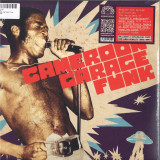
We are extremely proud to announce our 32nd compilation from the Analog Africa regular serie, "Cameroon Garage Funk", highlighting Yaounde's 1970's underground music scene. The quest to assemble the puzzle-pieces of what seemed to be a long lost underground scene took us to Camroon, Benin and further on to Togo and it was in the cities of Cotonou, Lome? and Sotouboua that we managed to lay our hands on most of the songs presented in this compilation. Since there were no local labels, no producers, and almost nothing in way of infrastructure in Cameroon at that time, the artists had to be everything: musician, producer, executive producer, arranger, financier, promoter and sometimes even distributor. The sixteen tracks on Cameroon Garage Funk pulse with raw inspiration and sweat DYI mood uniting the featured diverse musicians around their willingness to do everything themselves in order to take a chance in the music scene.
out of Stock
Last delivered 4 years ago available to reorder, subject to availability
30 years since their creation, the unreleased Frankie Knuckles remixes of Electribe 101’s deep cut ‘Heading for The Night’ are finally unvaulted, available on 12“ vinyl
UK based electronic group Electribe 101 and their one album, Electribal Memories hold a legendary place in the annals of house and dance music. The band met after vocalist and writer Billie Ray Martin had placed an ad in Melody Maker in 1988: “Soul rebel seeks musicians – genius only”. Billie headed to meet the four responding musicians (Brian Nordhoff, Joe Stevens, Les Fleming, and Roberto Cimarosti) at their studio in Birmingham.
“I took three songs with me, one of which was the lyrics and melodies to (Electribe 101’s first single) ‘Talking with Myself’, as well as a copy of Julian Jonah’s ‘Jealousy and Lies’,” says Billie. “I told the guys: “I’ve heard the future, and this is what I want to do.” I had heard Julian’s track at the WAG Club and I still remember the moment I stopped my shimmying and just stood there, staring, then turning on my heels and going straight to the DJ to ask what this record was. The guys had already experimented with some more dance orientated tracks and were instantly sold on the idea.”
Originally self-released on white label and championed by pirate radio, ‘Talking with Myself’ caught the imagination of the UK club scene and saw the band sign to Phonogram Records. With the re-issue and its follow up, ‘Tell Me When the Fever Ended’, becoming bona fide pop chart hits, with daytime radio play, Top Of The Pops appearances, and magazine covers from Melody Maker to MixMag, i-D, the label were keen to galvanise the band’s success and for them to deliver an album quickly.
“Because we weren’t yet used to writing together, we tried different approaches,” explains Billie.” I brought along a few songs I’d already written with others. Other songs we wrote from scratch. ‘Heading for The Night’ is one of those songs. The guys had developed the music and I wrote and sang the melody and lyrics straight onto the track, without making any arrangement changes.”
The band had also found ardent fans in the US, with chart-topping success on the US club charts and mixes from some of the most in-demand remixers of the day, including Chicago House doyennes Frankie Knuckles and Larry Heard.
“Frankie had already done such an incredible job with ‘Talking with Myself’ and he was smitten with ‘Heading for The Night’”, recals Billie. “He enjoyed mixing it so much that he did six mixes, each one brilliant and soulful in its own way. His effortless and perfect vocal production while creating a more danceable version makes this another Knuckles masterpiece.”
While 'Heading for The Night' had been considered for single release, these legendary remixes never saw the light of day. Finally, Frankie’s work on this song finds its rightful place in both his and Electribe 101’s legacy.
This EP of remixes precedes the release of Electribe 101’s fabled second, never before released album Electronic Soul, later this year.
out of Stock
Last delivered 6 months ago available to reorder, subject to availability
'Island Impressions' depicts the moments and visions of Australian house producer Sonny Ism's year living on an Island in Stockholms Archipelago during the Covid 19 Pandemic. Littered with Kitchy melancholic vocal house tracks to alternative ambient electronica, Island Impressions is a journey of movement and documented moodswings in the underground house music genre.
out of Stock
Last delivered 4 years ago available to reorder, subject to availability
Mondo and Madison Gate are proud to present the premiere vinyl release of Leo Birenberg and Zach Robinson's incredible score to the Netflix streaming phenomenon COBRA KAI. This 3-disc vinyl set features music from the first 3 seasons of the hit series, curated by the composers into themed collections.
This exclusive retail version comes pressed on red, white, and blue marble discs. Also featuring all new artwork from the incredible Matt Ryan Tobin and liner notes from composers Leo Birenberg, Zach Robinson, star Ralph Macchio, and showrunners Josh Heald, Jon Hurwitz, and Hayden Schlossberg.
Music from the first 3 seasons of the series curated into three collections of music:
Disc 1: COBRA KAI - a curated mix of music scoring the most badass dojo in the Vallely
Disc 2: MIYAGI-DO - curated selections from the music scoring Laruso Family, and its ties to the Miyagi legacy.
Disc 3: FINAL FIGHTS - the music from all three of the explosive season finale episodes.
All of the music has been hand selected, and in many cases expanded from their original form for the most definitive Cobra Kai listening experience available.
'The Works and Days: The Black Sections' is a sound collage album that emerged out of the production material of the film, The Works and Days (of Tayoko Shiojiri in the Shiotani Basin). The film — winner of the Encounters Golden Bear for Best Film at the 2020 Berlinale — is the second feature of C.W. Winter & Anders Edström. It is an eight-hour fiction shot for a total of twenty-seven weeks, over a period of fourteen months, in a village population forty-seven in the mountains of Kyoto Prefecture, Japan. It is a geographic description of the work and non-work of a farmer. A portrait, over five seasons, of a family, of a terrain, of a sound space, and of a duration. The film was named one of the Ten Best Films of the Year by critics at: Artforum, Cargo, Cinema Scope, Desistfilm, Filo, La Internacional Cinéfila, Mubi, Nobody, Senses of Cinema, and Sight & Sound.
The film is accompanied by this LP, TheWorks and Days: The Black Sections, by C.W. Winter, and the photo book, Shiotani, by Anders Edström. The album features musical excerpts from Tim Berne & Bill Frisell, Tony Conrad, Graham Lambkin, Mary Jane Leach, Alvin Lucier, Phill Niblock, Folke Rabe, Éliane Radigue, and Akio Suzuki. Producing, editing, and recordings by C.W. Winter. Mastered by Stephan Mathieu.
Winter & Edström’s first feature, The Anchorage, won a Golden Leopard at Locarno Film Festival and won the Douglas E. Edwards Independent/Experimental Film/Video Award from the Los Angeles Film Critics Association. It was named one of the Ten Best Films of the Year by critics at Cinema Scope, Film Comment, Senses of Cinema, Variety, and Indie Wire and was named Best First Film of the Year by The New York Times. Their first film, a documentary short called One Plus One 2 was made in collaboration with the late British guitarist, Derek Bailey. Their film/video work has shown at such venues as the Institute of Contemporary Art (Boston), Centre national de la photographie (Paris), Kunstmuseum Wolfsburg, Fotomuseum Winterthur, NRW-Forum (Düsseldorf), the Harvard Film Archive, Anthology Film Archives, the Wexner Center for the Arts (Columbus), Centre de cultura contemporània de Barcelona, the Tokyo Metropolitan Museum of Photography, and the National Museum of Modern Art (Kyoto).
C.W. Winter was born in California. In 2020, he completed his DPhil in Art Practice & Theory at The Ruskin School of Art at the University of Oxford. He received his MFA from California Institute of the Arts where he studied closely under Thom Andersen, James Benning, and Allan Sekula. His writing has appeared in Cinema Scope, Moving Image Source, Purple, and Too Much. He lives in the United Kingdom where he is currently a Visiting Professor at the Royal College of Art and a Lecturer at the University of Oxford.
Side A excerpts:
“Thursday, May 5, 1977 & Friday, May 6, 1977: Part 4” Performed by Tony Conrad. Used by arrangement with The Tony Conrad Estate
“Sethwork” Performed by Phill Niblock. Used by arrangement with Phill Niblock
“What?? (Second Version)” Performed by Folke Rabe. Used by arrangement with the Folke Rabe Estate
“Pipe Dreams” Performed by Mary Jane Leach. Used by arrangement with Mary Jane Leach
“What?? (Second Version)” Performed by Folke Rabe. Used by arrangement with the Folke Rabe Estate
“2011” Performed by Tim Berne & Bill Frisell. Written by Tim Berne. Published by Party Time Music BMI. Recording courtesy of Minor Music Records/Screwgun Records
Side B excerpts:
“Ceremoniolose” Recorded by Graham Lambkin. Used by arrangement with Graham Lambkin
“Kugiuchi” Performed by Akio Suzuki. Recorded live for TheWorks and Days Used by arrangement with Akio Suzuki
“Music on a Long Thin Wire (Side A)” Performed by Alvin Lucier. Used by arrangement with Alvin Lucier
“A Third Trombone” Performed by Phill Niblock. Used by arrangement with Phill Niblock
“Triptych: Part 1” Performed by Éliane Radigue. Used by arrangement with Éliane Radigue
The Alice Comedies are a series of Animated/live-action shorts created by Walt Disney in the 1920s, in which a live action little girl named Alice (originally played by Virginia Davis) and an animated cat named Julius have adventures in an animated landscape.
The Magic Clock is a whirlwind mishmash of motifs that 1 draws on an unusually wide range of sources: Hoffman’s The Nutcracker and medieval romances working cheek by jowl with Arabian Nights, Ovid, Midsummer Night’s Dream, Peter Pan, Mallarme’s “Afternoon of a Faun,” and Novalis’ blue flower.
Paul Dessau was a German composer and conductor. He composed operas, scenic plays, incidental music, ballets, symphonies and other works for orchestra, and pieces for solo instruments as well as vocal music.
The music is conducted and produced by Hans E. Zimmer, who conducted an extensive repertoire including Die Zauberflöte, Le Nozze di Figaro, Euryanthe, Jenufa, Ariadne auf Naxos, Salome, Der Rosenkavalier, Der Friedenstag, Die Meister-singer von Nürnberg, Lohengrin.
Power punks, Hot Milk, have announced their second EP, ‘I JUST WANNA KNOW WHAT HAPPENS WHEN I’M DEAD” via Music For Nations.
It follows the success of the band’s first EP, 2019’s ‘Are You Feeling Alive?’, a fizzy collection of gutsy emo-pop which established them as one of the most exciting new bands in the UK. Their 2019 was a whirlwind year that saw them tour with Foo Fighters, Deaf Havana and You Me At Six, as well as playing some of the UK’s biggest festival stages.
The band were formed in 2018 by vocalist and guitarist duo, Han Mee and Jim Shaw, two friends who met working behind the scenes in the Manchester music scene. Yet they yearned to be in a band themselves. “We got to the point where we were why not? What else have you got to lose?” says Jim. “We thought, we can go for this or we can get to 60 and know we didn’t do right by ourselves.”
Debut EP, ‘Are You Feeling Alive?’, which was penned during a drunken songwriting session, was an effervescent refusal to settle for second best in life. “We’ve both realised that life you don’t get another face,” Han continues. “You get one face and then you’re done, and you will never exist ever again.”
That sense of not letting life slip through your fingers is at the core of Hot Milk’s punk-indebted ethos. And having taken a leap of faith to grasp their platform, the band, completed by bassist Tom Paton and drummer Harry Deller, aren’t about to let it go to waste. “Art is about your interpretation of your own experience,” adds Jim. “The first EP was written five years ago. We’ve grown up and realised who we are and what the world is like right now.”
‘I JUST WANNA KNOW WHAT HAPPENS WHEN I’M DEAD’, which was produced by Jim Shaw, is another vivacious call to arms, rammed with sharp hooks and huge, catchy choruses, to encourage everyone, everywhere, to follow their dreams. But elsewhere, the lyrics are more personal, with the band bottling the anxieties and frustrations of their everyday lives. ‘Woozy’ openly tackles depression, ‘Good Life’ takes on societal corruption and the distribution of wealth, while elsewhere the band address the pursuit of happiness in a modern world.
“These songs are honest,” says Han. “I have nothing to hide. Everyone’s on antidepressants these days. It’s the world we live in, it makes people sad. Capitalism. Is it broken? 100 per cent. I’m angry that the fact that we’re sold a world that actually doesn’t make your inner peace happy. Humans need love and community and a lot of the time, there is no love and the community has dissolved.”
“The anger resides in us at the unfairness of the world,” adds Jim. “Online communities are all about flexing and battling your peers to look or sound a certain way that is better than everyone else. It’s constant and it’s dangerous. You’re teaching kids that to be content, you have to be best. It’s a question again. Are you really living?”
“We’re angry, both politically and existentially in terms of the system we now live in. But also, we’re angry at the fact that we’re sad quite a lot,” continues Han. “But we’re trying to not just sit there and take it. We’re trying to fix it, by building a family through this band.”
Walk into any Hot Milk show and you will feel that sense of community. Through their honest lyrics and inclusive approach, the band say their aim is to create an “aggressively space safe” where fans are empowered to be themselves, “authentically and unapologetically”, as well as opening up a dialogue for people to talk. That will become clear later this year when the band get their chance to air the new material. This summer, they will return to Reading and Leeds Festivals, this time to play the main stage, as well as embarking on a headline UK tour in September. And believe, when the times comes to finally get back into those sweaty pits, these new songs will provide the perfect, life-affirming soundtrack.
“Life is fragile,” says Jim. “You can’t take things with you, but you can make the best memories. That’s the most important thing in life. Your currency is your memory.” “What you can take with you is something that absolutely makes the blood pump round your veins and gives you goosebumps,” agrees Han. “That’s what this band is to us. It’s our passion. That’s what this EP is about.”
Originally from Philadelphia, invited to New York by Miles Davis, playing at Antibes in 1960 with Charles Mingus and Eric Dolphy, here is trumpeter Ted Curson in 1971... in Paris. With him, a legendary trio: Georges Arvanitas (piano), Jacky Samson (double bass) and Charles Saudrais (drums). A new transatlantic alliance in the service of jazz of all kinds: classic, modal, fusion and even free... Pop Wine is – between Coltrane and Miles with a nod to roots in the club the Caveau de la Huchette – an explosive cocktail but which leaves no stains!
In 1960, trumpeter Ted Curson played with Charles Mingus and Eric Dolphy on stage at the Antibes jazz festival. Eleven years later he was in Paris to record one of the gems of his discography, with a hard-hitting French trio: Georges Arvanitas (piano), Jacky Samson (double bass) and Charles Saudrais (drums).
Arvanitas was also someone who had travelled widely. Originally from Marseille, he had accompanied visiting American musicians in Paris before moving to the States. It was when he came back that the charismatic trio was created with Samson and Saudrais and who recorded, in 1970 on Futura, the unforgettable In Concert and then, the following year, Pop Wine with Ted Curson.
Pop Wine: don’t be fooled into thinking you are going to hear jazz musicians trying to play pop after uncorking too many bottles. For, although the album occasionally tends toward fusion, it is first and foremost a wonderful jazz recording; and a recording with enough fizz to make your head spin!
There are five tracks in total: Quartier Latin reminds us a little of Olé Coltrane (Curson, like the saxophonist, is originally from Philadelphia), Flip Top where the trumpet and piano play out a chase scene through the streets of Paris, Pop Wine where funk and cool jazz meet on the barricades of black and white, L.S.D. Takes A Holiday which breaks out in a style close to free jazz, and finally Lonely One, with the impression that ends this unclassifiable album. Unclassifiable, unless we decide to elevate Pop Wine to the rank of a great vintage.
A deep dive into the one of most collectable jazz catalogues in the world, a selection of some of the rarest and most sought-after recordings from the 60s and 70s, a time when British jazz began to find its own identity. Drawn from the iconic labels of Decca, Deram, Argo, EMI Columbia/Lansdowne Series, Fontana, Mercury, & Philips. If one were asked to pick an album that represented the best of British jazz in the 1960s, Le Déjeuner Sur l’Herbe by the New Jazz Orchestra would be a serious contender. Recorded in September 1968, it draws together many of the key streams that had developed in British jazz in the preceding years, and also presages much of what was to come. Notwithstanding the line-up, which includes some of the very best British jazz musicians directed by an inventive and ingenious leader in Neil Ardley, the session features pieces written by the most distinctive jazz composers active in Britain at that time alongside idiosyncratic interpretations of works by John Coltrane and Miles Davis. And it’s all captured beautifully by engineer Howard Barrow and producer Tony Reeves and it features a stella cast of some of the greatest musicians, not just from that era or genre but beyond; Jack Bruce, who would become one of the founding members of Cream, Barbara Thompson, Ian Carr, Michael Gibbs, Dave Gelly, Dick Heckstall-Smith and Jon Hiseman, who went on to form one of the greatest jazz/progressive/rock bands – Colosseum.
MIEKO SHIMIZU is a London based Japanese singer, songwriter, composer
and producer. She first erupted onto the scene as Apache 61, fusing layers
of cross-woven breaks and battling shards of sub-bass within stateless
melodies drawn from the fringes of the avant-garde.
Mieko has produced scores for contemporary dance company Phoenix Dance
Theatre as well as the Ballet ‘The Red Balloon’ at the Royal Opera House’s
Linbury Theatre. She was made an ‘Emerging Artist in Residence’ at London’s
Southbank Centre where she collaborated with the London Philharmonic Orchestra on her own compositions.
ROAD OF SHELLS was originally released back in 1990 and now being released
for the very first time on vinyl. Recored at Wold Studios in London, the record
features an array of talented musicians from Claude Deppa on trumpet and
guitar from Dominique Brethes. ‘Blue Dancer’ and ‘In The Garden’ features
Mieko’s brother Yasuaki Shimizu on saxophone.
20 years on from Road Of Shells original release date the record has now has
be released for the very first time on Vinyl in Japan and available in the UK
and worldwide.
Mieko has worked with David Cunningham from The Flying Lizards, Robert
Lippok of To Rococo Rot and re-mixed the likes of Coldcut. Haruomi Hosono
of the cult electro-pop act ‘Yellow Magic Orchestra’, signed Mieko to his label
‘Daisy World’.
Mieko has performed at Sonar, alongside Kraftwerk and supported Massive
Attack at their Melt Down Festival.
Revered Danish producer and live performer KÖLSCH follows his 2013 hit album "1977" (KOMPAKT 276 CD 107) with the new full-length "1983", again chaining up heroic techno tracks for a grandiose sonic journey to the vibrant heart of today's dance floor. PRIORITY RELEASE
Coupling contemporary production pizzaz with nostalgia-tinged soundscapes and sweeping melodies, this opus acts as both a skilfully composed portfolio of personal memories and a sublime collection of crowd-charming cuts - a modern classic in the making, coming from a master of his craft.
1983 features collaborations with Gregor Schwellenbach, Waa Industry and WhoMadeWho's Tomas Høffding.
Hot on the heels of SPEICHER 84 (KOMPAKT EXTRA 84), featuring club crackers DERDIEDAS and TWO BIRDS, the latest full-length offering from KÖLSCH is very much a travel album: "When I was a kid in 1983, we used to drive through Europe every summer on the way to the south of France", he explains. "A lot of my early music memories stem from these long travels, as we would listen to all my father's favorite records on the cassette deck. After getting a walkman, I would make up my own soundtrack for travelling, with early electro and hip hop creeping into my life. My father of course did not like it, and it never grace the official cassette deck of the car, obviously"
These trips became a primary source of inspiration to a hungry young mind forced to sit on the backseat of a car for several days: "they were also journeys through the seasons. In Denmark, it would be spring time, so I could nearly see us driving through spring into the summer. The scenery would change, and so would the mood in the car." Informed by the symbolic quality of these slightly gauzy childhood memories, KÖLSCH's unique melange of emotional and functional elements works exceptionally well for the full-length format - a seamless transition of musing introspection and explosve expression, where catharsis never seems far away in dance-ready techno vignettes like MOONFACE, UNTERWEGS or PACER.
From beatless opener and title track 1983 to the filigreed piano banger DIE ANDEREN or the bleep-infused synth-fest E45, each cut operates as its own little time capsule, storing bits and pieces of recollection and then magically transforming them into epic, beat-driven soundscapes. Confronted with other producers' input (and other memories), these traits find themselves extended in the most interesting ways - TALBOT, THE ROAD and CASSIOPEIA (also featured on KOMPAKT EXTRA 79) make excellent use of GREGOR SCHWELLENBACH's emotive orchestral flourishes, while BLOODLINE's lyrics come to life thanks to the distinct timbre of TOMAS HØFFDING of WHOMADEWHO fame. A new powerful take on an earlier collaboration, PAPAGENO 30 YEARS LATER not only rejoins WAA INDUSTRY on vocal duty, but also ends the album on a wonderfully elegiac, yet hopeful note - basically turning water into wine, as we've come to expect from KÖLSCH.
out of Stock
Last delivered 51 days ago available to reorder, subject to availability
Two worlds collide to offer a brand new project. The lo-fi rock from Emilie Zoé and Nicolas Pittet blends perfectly with the sounds of the machines and samples of the leader of The Young Gods, Franz Treichler. The sound triangulates and takes the shape of an /A\. Zoé is an artist who converts the ghosts of everyday life into electric fulgurations on the extreme fringes of pop and rock; Pittet is her drummer, but above all he’s an all-round musician, as comfortable backing Lee ‘Scratch’ Perry’s primal dub as he is
fiddling with electronics (e.g. his project Kera); and of course, Treichler is the well-known leader of The Young Gods, and band that’s been setting the bar since 1986 when it comes to transforming rock by infiltrating its genome into machines.
This diversity of backgrounds, tastes and experiences might at first sight have appeared as a reason to stay apart from each other, but instead it’s proved to be a vector of mutual attraction. What /A\ offers contains no foreign matter: Treichler, Pittet and Zoé’s aesthetics are intertwined through subterranean links that strike by their clarity, like the pieces of a puzzle that is both unexpected and surprising.
It’s through this profound entanglement that the pieces, one after the other, succeed in materialising hitherto unseen faces. They create something new: Hotel Stellar delivers an otherworldly blues, a slow snake that oscillates between the abyss and redemption; We Travel the Light, with its guitars measured in megatons, invents the notion of a steamroller possessed by insane joy; Count to Ten is a wash of restrained melancholy infused with almost Birkin-like touches, which, as the minutes go by, bristles with scratches and sandy echoes, like synthetic dub; The Leaves is yet another strange beast which could be considered as the evolution of a trip hop theme that would have been left to mature for a few decades in the noblest of drums. “It’s red, it’s hot” says Zoé when asked to analyse the record. “You can feel like there’re waves coming at you, but you never really know when.”
Cut is an album by Dutch hard rock band Golden Earring, released in 1982. It is one of their most popular releases to date, as it contains the international hit “Twilight Zone”, written by guitarist/vocalist George Kooymans. “Twilight Zone” reached No. 1 in both the Netherlands and Billboard’s Hot Mainstream Rock Tracks, while also reaching the top 10 on the Billboard Hot 100.
Licensed in 1975 by Gemelli, Rendez Vous is possibly a holy grail in Nicolai’s long-running career as a composer. The orchestra director and musical editor is been active for at least 30 years and his majestic opus an overwhelming data for any avantgarde freak or moviegoer obsessed. While studying piano and composition at the Santa Cecilia Conservatory in Rome, he befriended Ennio Morricone and formed a long working relationship, with Nicolai eventually conducting for and co-scoring films with Morricone. Nicolai also scored a number of giallo exploitation films and wrote many scores for director Jesús Franco. His work was featured in the Quentin Tarantino films Kill Bill: Volume 2 and Once Upon a Time in Hollywood.
Tension! Pretty much what this whole record is all about. An imaginary soundtrack that turned out to be an in-demand obscure library, Rendez Vous shows up the many skills of the composer and his alumni. Possibly Morricone is playing muted trumpet in several episodes – Diffidenza and Subdolamente – absorbing thrilling experiences similar to the Maestro soundtracks for Dario Argento early movies (not a case that Nicolai was the conductor for several adventures in movie sound theatre such as ‘L’Uccello Dalle Piume Di Cristallo’, ‘ Il Gatto A Nove Code’ or ‘4 Mosche Di Velluto Grigio’).
Rendez Vous is now to be ranked among the most adventurous Nicolai soundtracks, a unique combination of classic contemporary arrangements and superb jazz noir sketches
The UK’s love affair with American soul music blossomed in the
mid 1960s, with the launch of the Tamla-Motown record label in
Britain. But by the end of the decade this passion took on a
distinctly homegrown twist with a new movement that grew out
of the North of England and Midlands’ underground soul and
R&B scene. It was here at dancehalls and clubs such as
Manchester’s Twisted Wheel and the Wigan Casino that
devotees danced the night away to uptempo, joyous US soul
records that always came with a heavy beat. Pretty soon the
movement had a name: Northern Soul. This collection is the
next best thing and it is all on vinyl, exactly how the movement’s
fans originally heard them
Laura Nyro's third Columbia effort is easily the equal of her previous two. The overwhelming strength of her song writing and distinctive arrangements fuel Christmas and the Beads of Sweat. Her unmistakable style of delivery maintains the continual examination of herself as a performer. The results are uniformly interesting and provocative as she continues to draw upon her love of jazz, folk, and R&B. Conceptually, this album is as potent as her previous effort, New York Tendaberry, but in a much different way. Rather than hanging together thematically, Christmas and the Beads of Sweat features two inclusive and distinctive sides of music -- with different musicians and producers for each. The first five tracks feature Nyro backed by the Swampers from Muscle Shoals, AL, and include the talents of Roger Hawkins (drums), Eddie Hinton (guitar), Dave Hood (bass), Barry Becket (vibraphone), and Jack Jennings (percussion), with Arif Mardin producing. While this pairing might seem initially incongruous, the quintet had been concurrently working with the likes of Dusty Springfield and Cher and had gained a rightful reputation as a consummate backup band. The final four pieces are steeped in noir more atypical of her previous efforts. The all-star cast of New York City session heavyweights are led by Felix Cavaliere (producer) and features fellow Rascals member Dino Danelli (drums), Ralph McDonald (percussion), Chuck Rainey (bass), Cornell Dupree (guitar), Duane Allman (guitar), and Alice Coltrane (stringed harp), among others. As with all of Nyro's recordings, at the heart of this effort are her ageless compositions and arrangements. A motif connecting such disparate tunes as the upbeat "When I Was a Freeport and You Were the Main Drag" to the hauntingly beautiful "Christmas in My Soul" and "Beads of Sweat" is the aching hollowness that came with the disillusionment that Vietnam, Kent State, and racial relations brought upon America in 1970. As she had done with "Save the Country" some four years earlier, Nyro's cathartic expressionism is captured at its most fervent on this album.