Tape Crackers: An Oral History Of Jungle Pirate Radio. Rollo Jackson is a London-based filmmaker who grew up immersed in the city's dance music culture of the mid-90's. His films, whether for the likes of Hot Chip, Man Like Me, or Warp Records bare the traits of someone whose formative years were spent clad in the brash hues of a Versace print shirt and the bright white of a fresh pair of Reeboks. Whatever his subject, the spirit of too many late nights spent doing homework to the crackling sounds of pirate radio, or of weekends spent in booming, sweaty warehouses on the outskirts of London is always threaded throughout. Rollo presents a documentary DVD entitled Tape Crackers, an oral history of Jungle music and an affectionate, touching, and, at times, incredibly funny, tale of bedroom obsessiveness. Told through Michael Finch's tape collection which he recorded while growing up in Islington, North London, it's also an untold (or more accurately unheard) history of UK underground music of the last 10 years - Jungle, Garage and Grime are all knitted into the story through the MCs and DJs who manned the decks and mics. Movers of the underground today such as Riko Dan and B Live are on some of the tapes played in the film. The D90s might be dusty but this music still sounds ultra-crisp. Warning, may contain: late days of Dream FM, middle days of Kool FM/MC Ruff and DJ Uproar on Dream FM/MC Fize and DJ Swiftly/Riko Dan on Pressure FM/Evil B on Rude FM/DJ Target and Maxwell D on Rinse FM/DJ Brockie, MC Five-O and MC Moose on Kool FM in 1993/DJ SL with Strings, Koji and Flinty Badman (Ragga Twins) + Demon Rockers.
The Spaces Between were formed out of creative studio sessions in the summer of 2020 and comprises of bona fide house legend Terry Farley, electronic music producer Wade Teo and renowned author and co-owner of Club Chi’ll Records, Ian ‘Snowy’ Snowball. The idea for ‘Ghosts’ came from Terry’s idea to reference the Jazz greats who have gone to glory leaving behind their astonishing musical legacies. Within days of emailing a comprehensive list of jazz artists to Chicago House luminary and The It/ Jungle Wonz member, Harry Dennis, an answer with Harry’s sparse, haunting vocals was received. These were laid down over a bed of live instruments and electronic sounds and the combined talents of The Spaces Between created the compelling jacking jazz vibe of ‘Ghosts’.
Snowy ran the track past Jo Wallace at F*CLR Records – it was love at first listen. Jo suggested the track should be part of an EP with remixes from the newly reformed Black Science Orchestra. It was agreed and provided an ideal opportunity for Ashley to work with Terry once again, reinforcing the Junior Boy’s Own heritage.
The first incarnation of Black Science Orchestra began life in 1992 when Ashley Beedle joined forces with Rob Mello and their debut release, ‘Where were you’ exploded onto the global dance scene via the iconic UK house label JBO. Broken in the US by the Godfather of House, Frankie Knuckles, ‘Where were you’ entered into the hallowed halls of immortal dance music. Black Science Orchestra has become one of the most respected deep house acts of the 1990s, with the revered album ‘Walter's Room’ and the legendary genre crossing 'New Jersey Deep' track that is considered one of the top dance tracks of all time and rarely leaves discerning DJs' record boxes. Fast forward 29 years and original BSO founding fathers, Ashley and Rob decided that both they and the world needed the sound of Black Science Orchestra again and decided to reform, inviting long time musical and studio accomplice Darren Morris to join the collective now in its 6th incarnation!
When presented with the original version of ‘Ghosts’, Rob, Ashley and Darren loved it and all heard various ways it could be reworked in a true Black Science Orchestra way. Donning their pandemic production hats and remotely getting their feet back under the studio desk again, they worked together to create distinctly different remixes ranging from the deep, spacy electronic to the tough and psychedelic sleazy funk. With original BSO productions included on this EP, 'Ghosts' has helped square off the circle and the Black Science Orchestra conductors are back and mean dance floor business!
out of Stock
Last delivered 8 months ago available to reorder, subject to availability
Marking his first full-length album in six years, Five-Time GRAMMY Award nominee and diamond-selling performer, actor, entrepreneur, and philanthropist Robin Thicke makes a return in 2021 with the long awaited new album, "On Earth, and in Heaven." Setting the stage for the record, the scorching single "That's What Love Can Do," ignited this new flame and hit #1 on the Urban A.C. charts. The second single, "Forever Mine," garnered high praise from Vibe, and has already amassed over 2 million Spotify streams and counting. Presenting the same bold, bright, and boisterous R&B that turned him into a household name, he ascends to new heights on his eighth full-length album.
out of Stock
Last delivered 5 years ago available to reorder, subject to availability
Continuing our ambitious People Like Us vinyl reissue program with Welcome Aboard – a strangely relevant 10-year-old album (originally released in May 2011) when People Like Us aka Vicki Bennett became stranded in the US after the Icelandic Eyjafjallajökull volcano eruption closed much of northern Europe’s airspace.
Volcanically marooned in Baltimore and NYC, Bennett utilized some of her “free” time to work on the album and even gained audio contributions from fellow experimental musicians Jason Willett (of Half Japanese) and M.C. Schmidt (of Matmos) via her extended stay
Bennett derived thematic material of displacement, travel, and a longing for elsewhere from the natural disaster that caused her own predicament. Now strangely echoed by the Covid-19 outbreak and the various grounding of planes and stay at home policies worldwide.
While the general mashup culture often centres on the instant gratification of seamlessly juxtaposing hooks, People Like Us tracks transform the source material into collages that are equal parts dissonance and pleasure, making artful commentaries on our culture and Bennett’s own existential amusement within such a wondrous world. No one could have predicted how relevant this album would have been 10 years later.
Volcanoes or Viruses, Welcome Abroad is what happens when you’re stranded due to a freak natural occurrence trapping people all over the world and causing mass plane cancellations.
out of Stock
Last delivered 5 years ago available to reorder, subject to availability
This album was originally composed in October 2017, performed and recorded live in Kasteliotissa Medieval Hall, Nicosia, on the 19th of November 2017 as an accompanying soundtrack to Fritz Lang's two hour-long edit of the film Metropolis (1927). Commissioned by the the curators of the 'German expressionism in Cinema exhibition' to compose and perform a live soundtrack, Panagiotis and Yiannis employed a hardware heavy arsenal to produce one of their longest pieces. modular synthesizers, guitars, drum samplers and drum machines are all protagonists. The performance lasted for two hours and was recorded in its entirety. It was later edited down to preserve all sound design qualities and a somewhat live feel. The title is an homage to the main actress of the film.
Panagiotis Mina and Yiannis Eliades, longstanding members of 'do it together' collective Honest Electronics and producers of their own material as Panayotis and Isel respectively, often collaborate on projects such as Brigitte. Panagiotis Mina is a producer, musician and visual artist. He lives and works in Cyprus from Pyrgatory studios, his out in the country home diy studio project. Yiannis Eliades produces and performs music using a blend of analog and digital synthesizers, drum machines and twisted recordings, on his own or as part of duos (MYHN, Carnal Throes).
out of Stock
Last delivered 5 years ago available to reorder, subject to availability
Andrés Vargas Pinedo is a prominent composer of Amazonian popular music from Peru. He is blind and has excelled as a player of the quena and the violin. He was born in the city of Yurimaguas but he developed as an artist in Lima, for thirty years he has worked as a traveling musician on a street in the San Isidro district of Lima. Throughout his career, he has formed and joined various popular music groups. This compilation presents fifteen songs of his authorship, belonging to his first two groups: Conjunto típico Corazón de la Selva and Los Pihuichos de la selva, active between 1965 and 1974, and which helped define the sound of Amazonian popular music.
These years saw the emergence of an Amazonian popular music movement led by Vargas Pinedo as well as groups such as Los Solteritos, Flor del Oriente or Selva Alegre. These artists based their music on the rhythms of the Amazonian folklore (pandilla, sitaracuy, movido, cajada, chimayche) and were nourished by influences from the coast and the highlands of Peru, as well as by the tropical rhythms of Brazil, Colombia and Ecuador, achieving a musical synthesis that is an invitation to collective celebration and endless dance. A sound that is defined by a constant and hypnotic rhythmic base of kick and snare drums, upon which the quena and violin develop imaginative melodic lines. Sometimes there is a singing voice, sometimes the voices playfully appear as sounds that identify Amazonian popular speech or that emulate jungle animals.
The fifteen tracks gathered in 'El fabuloso sonido de Andrés Vargas Pinedo: Una colección de música popular amazónica' (1966-1974) / 'The fabulous sound of Andrés Vargas Pinedo: A collection of Amazonian popular music' (1966-1974) are a good introduction to the work of an essential creator of Peruvian music, whose sound expresses the spirit of the Amazonian people and summarizes the transition from tradition to the popular in the context of the emergence of a record industry of Amazonian music. Andrés Vargas constitutes a fundamental basis for the music of the Amazon, as his work synthesizes diverse influences, having that original root as its main motive.
This compilation is presented in vinyl format and includes a brochure with extensive information and photos. The audio has been remastered directly from the original tapes. Edition of 300 copies. Art by Jordy García (Blumoo Posters).
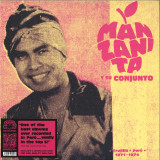
Following the 70s Peruvian cumbia compilation by Ranil last year, Analog Africa returns to Latin America to highlight the work of one of Perú’s undisputed masters of the electric guitar: Manzanita. This 13th release in the Limited Dance Edition Series includes 14 mostly instrumental compositions of electrifying Peruvian cumbia and guaracha. Manzanita's unique guitar lines rest on confident foundations that shifts gears effortlessly. Limited Edition LP in Gatefold Cover pressed on 180g high quality virgin vinyl
"I was in Lima, hanging out with collector-extraordinaire Victor Zela, who had spent the previous few years pouring his passion for Peruvian Cumbia into the blog „la cumbia de mis viejos“, a trove of incredible music. But after the birth of his first child, his priorities shifted and he decided to part with some of his rarest LPs. I was one of the lucky few given an early chance to examine his treasures, and when I picked up the album Manzaneando com Manzanita, Victor said: “Take it! its one of the best LPs ever recorded in Perú … easily in the top five”. That was all the encouragement I needed … two years later many of the songs from that masterpiece have made it onto Manzanita y su Conjunto, a compilation of electrifying Cumbia sides from Manzanita’s golden era.
Berardo Hernández – better known as Manzanita – first surfaced during the psychedelic Cumbia craze. At the head of the scene were the magnificent Los Destellos, whose leader, Enrique Delgado, was such a six-string wizard that other guitarists found it impossible to escape his shadow. But when Manzanita arrived, his electric criollo style sent shockwaves through Lima’s music scene and posed a serious threat to Delgado’s dominance as king of the Peruvian guitar.
Manzanita had come to Lima from the coastal city of Trujillo, five hundred miles up the coast – a place where Spanish, African and indigenous populations had been living and making music together for centuries – and came of age at a time when the first wave of psychedelic rock from the US and UK was starting to sweep the airwaves. But the sounds of Cream and Hendrix disappeared from the radio just as quickly in 1968 when Juan Velasco seized control of the country in a military coup. The new regime, which favoured local traditions over cultural ‘imports’ from the north, was a blessing in disguise for the Peruvian music scene.
Record labels flourished as new bands, raised on a hybrid diet of electric guitars and Cuban rhythms, rushed in to fill the vacuum created by the lack of imported rock. A new genre, known as Peruvian cumbia, was born and Manzanita quickly became one of its most original voices.
Starting in 1969, Manzanita y su Conjunto released a steady stream of singles that used Cuban guaracha rhythms as the foundation for dazzling electric guitar lines. After countless 45s and several years on the touring circuit, the band signed to Virrey, an important Peruvian label, and recorded two LPs acknowledged as masterpieces among aficionados of tropical music. Most of the songs on Analog Africa’s new compilation Manzanita y su Conjunto are drawn from those legendary sessions of 1973 and 74.
Although he scored a few more hits in the later 70s, his dissatisfaction with the music industry caused him to withdraw from the scene for several years; and when he finally retired for good, the golden age of Peruvian cumbia was a distant memory. But when Manzanita was at the top of his game he had few equals. Victor Zela was right: this is some of the best music ever recorded in Perú."
out of Stock
Last delivered 5 years ago available to reorder, subject to availability
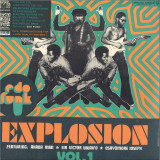
Analog Africa Presents Edo Funk Explosion Vol. 1, available on
2xLP/Gatefold LP with 20-page booklet / CD with 36-page booklet. It was
in Benin City, in the heart of Nigeria, that a new hybrid of intoxicating
highlife music known as Edo Funk was born.
It first emerged in the late 1970s when a group of musicians began to experiment with different ways of integrating elements from their native Edo culture
and fusing them with new sound effects coming from West Africa s night-clubs.
Unlike the rather polished 1980 s Nigerian disco productions coming out of the
international metropolis of Lagos Edo Funk was raw and reduced to its bare
minimum.
Someone was needed to channel this energy into a distinctive sound and Sir
Victor Uwaifo appeared like a mad professor with his Joromi studio. Uwaifo
took the skeletal structure of Edo music and relentless began fusing them with
synthesizers, electric guitars and 80 s effect racks which resulted in some of the
most outstanding Edo recordings ever made. An explosive spiced up brew with
an odd psychedelic note known as Edo Funk.
That’s the sound you’ll be discovering in the first volume of the Edo Funk Explosion series which focusses on the genre’s greatest originators; Osayomore
Joseph, Akaba Man, and Sir Victor Uwaifo: Osayomore Joseph was one of the
first musicians to bring the sound of the flute into the horn-dominated world
of highlife, and his skills as a performer made him a fixture on the Lagos scene.
When he returned to settle in Benin City in the mid 1970s - at the invitation of
the royal family - he devoted himself to the modernisation and electrification
of Edo music, using funk and Afro-beat as the building blocks for songs that
weren’t afraid to call out government corruption or confront the dark legacy of
Nigeria’s colonial past.
Akaba Man was the philosopher king of Edo funk. Less overtly political than Osayomore Joseph and less psychedelic than Victor Uwaifo, he found the perfect
medium for his message in the trance-like grooves of Edo funk. With pulsating
rhythms awash in cosmic synth-fields and lyrics that express a deep personal
vision, he found great success at the dawn of the 1980s as one of Benin City’s
most persuasive ambassadors of funky highlife.
Victor Uwaifo was already a star in Nigeria when he built the legendary Joromi
studios in his hometown of Benin City in 1978. Using his unique guitar style as
the mediating force between West-African highlife and the traditional rhythms
and melodies of Edo music, he had scored several hits in the early seventies,
but once he had his own sixteen-track facility he was able to pursue his obsession with the synesthetic possibilities of pure sound, adding squelchy synths,
swirling organs and studio effects to hypnotic basslines and raw grooves. Between his own records and his production for other musicians, he quickly established himself as the godfather of Edo funk.
What unites these diverse musicians is their ability to strip funk down to its
primal essence and use it as the foundation for their own excursions inward to
the heart of Edo culture and outward to the furthest limits of sonic alchemy.
The twelve tracks on Edo Funk Explosion Volume 1 pulse with raw inspiration,
mixing highlife horns, driving rhythms, day-glo keyboards and tripped-out guitars into a funk experience unlike any other.
out of Stock
Last delivered 5 years ago available to reorder, subject to availability
Milan Records release - much anticipated new film from Leos Carax set to open the 74th Cannes Film Festival on July 6th 2021 (general release in France on the same date). Based on an original story and music by Ron and Russell Mael, Annette began life as an (unreleased) album but was transformed into a musical after they met Carax. Having successfully maintained a five decade long career as one of the world’s most innovative and creative bands, it comes as no surprise that their collaboration with the visionary French director has resulted in a unique piece of film-making. Music is composed and performed by Sparks and also features vocal performances from the stars of the film: Adam Driver (Henry), Marion Cotillard (Ann) and Simon Helberg (The Conductor). Produced by Sparks and Marius de Vries (musical director of 'La La Land' and 'Moulin Rouge'). Formats include a 15 track CD presented in a digi sleeve with a 12 page booklet featuring the lyrics and stills from the film and a standard black 180gm vinyl LP with gatefold sleeve and poster. Specialist promo/marketing activity across all media outlets.
Dauw welcome Spanish based artist Jason Kolàr to the label with his new work Loops & Pieces (2017-2020). It’s a prelude to his new full-length album coming in October 2021 through Dauw.
Three years after Stroom TV released his debut album Modified Perspectives, Kolàr now offers a documentation of sounds he has been working on in the period 2017-2020. According to Kolàr, this tape is full of vaporous drafts transforming into solid forms with the help of time and distance. Compared to his previous work, the music on Loops & Pieces is much more stripped down and minimal, yet the dreamy character remains.
Greetings to the new generation of ‘Hip-Hop’ and ‘Shake Your Butt’ music. The man behind ‘Timeless Funk’ ain’t exactly no ‘Spring Funky Chicken’, yet he is still the ‘Funkiest Soul’ to rock this here nation.
Rufus Thomas is the Soul King and Grand Daddy of Funk; as his generation knew him then, as we know him today.
In the beginning, the ‘Power of the Most High’ said: ‘Let it be funky’. Then there was Rufus.
Rufus Thomas was born in 1917 in a small town outside of Memphis, Tennessee. At the age of ten he became a tap dancer. In the 1930s, Rufus worked professionally at the infamous Palace Theatre, Memphis, TN, as M.C., performing comedy and dance routines.
During the early 1940s, Rufus began his singing career. He also continued his M.C. acts at various notable nightclubs and theatres, for amateur nights. He was then considered to be a triple threat: dancer, comedian and singer! The notables he crossed hands with in those days were B.B. King, Bobby Bland and Johnny Ace. In the 1950s Rufus became one of the ‘Hip-pest’ DJs in Memphis TN W.I.D.A. radio station and is affiliated with the company to this day. He was quoted as saying ‘I’m young and loose and full of juice’. At those times he recorded ‘Bear-Cat’ for Sun Records, their first R&B hit for the label.
All-right ‘Kiddies,’ now I take you into the light of Rufus in the 1960s. When most of us were on our way to our happy existence, Rufus was already 30 years in the entertainment circuit. He was affiliated with STAX Records. With daughter Carla Thomas, he gave STAX their first hit, the duet, ‘Cause I Love You.’ Rufus’ world famous hits continued under this label, pouring songs out such as ‘Memphis Train,’ ‘Can Your Monkey Do The Dog,’…
The foregoing is merely a scratch on the surface of a remarkable man, who has dedicated most of his life to the entertainment business. It’s kept short and sweet so you know what you are dealing with.
Rufus was quoted as saying, ‘I ain’t a star, I don’t want to be a star. Stars have a habit of falling. I’m like the moon. Clouds may come and cover it occasionally, but it’s always there, and always shining. It’s just sometimes you don’t see it for a while but it’ll be back.’
If it wasn’t for Rufus, Soul Music would be missing one of its loudest sons. If he didn’t exist, somebody
Continued over…
would have to get up and invent him. And Funk? The man practically invented the stuff with James Brown.
Now at the age of 75 ‘The Oldest Teenager Alive’ check him out on this recording of ‘Timeless Funk’. We’ll agree and leave you with this note: Rufus is the ‘Moon’ that brought us what was ‘Funky’ then to what is ‘Funky’ now. So let us get ‘Buck Wild’ on the Funky side of things
In Switzerland, the Ellis Mano Band are not unlike the Wrecking Crew or
the Funk Brothers.
They are top-flight studio musicians and elites in the Swiss music scene. Although they spent years making music with other artists, the band members
never got much time to make music of their own until now.
“We chose the album title “Ambedo” because it reflects the state of the process of recording an album,” says guitarist Edis Mano. “Ambedo” refers to the
tendency both to reflect and to absorb. Musicians like us do it all the time,
especially when we compose new songs and create a new album.”
The first single “Keep It Simple” refers to the one subject on the planet that
certainly is not simple at all... love.”
Dauw welcomes Taylor Deupree to the label with his new record 'Mur'. With this release Dauw also introduces Jelle Martens, a Belgian graphic designer and painter, for the artwork of this release.
Deupree describes the album title “as if there’s always something about my music that’s like a murmur”, resulting in a murmuring effect when pronouncing the names of each track. Mur is a personal journey through the challenging year that 2020 has been. The fifth and last track on the album, Mar, contributes as a catharsis to this turbulent period in Deupree’s personal life, which is defined by the interaction between the loud sounds and the soft keys of the piano. As if the storm has died down and the waters have found their peace.
Taylor Deupree is an American musician and mastering engineer based just outside of New York. As a former member of the American electronic band Prototype 909, Deupree has had numerous collaborations with artists such as Ryuichi Sakamoto, Stephen Vitiello, Alva Noto and Marcus Fischer. Curating 12k, a New-York based music label, is another aspect of Deupree’s career and brought together over one hundred releases since its beginnings in 1997. Having some similar artists in our catalog (Federico Durand, Will Samson and Steinbüchel for example), it’s safe to say that Deupree’s new release through Dauw will be in good company.
out of Stock
Last delivered 4 years ago available to reorder, subject to availability
Discos Transgénero re-issue the Marnie Weber classic first solo LP, “Songs Hurt Me” originally from 1989. This seminal record was an important part of the Los Angeles post-punk performative art rock scene. Brooding synthesizers, heavy bass, strange melodies, and poetic lyrics lead you through an industrial journey. These songs were born from Weber’s earliest performance art characters: a deer, an old woman, a manic courtesan, and a butterfly. Songs Hurt Me was originally co-produced by Phillip Drucker AKA Jackson Del Ray of Savage Republic and 17 Pygmies fame.
Marnie is a pioneer in art rock from the 80’s in Los Angeles. She emerged early in the music scene as the bass player in the Party Boys, a formative and important Los Angeles post-punk downtown art scene band. During this period, the Party Boys performed shows with The Minute Men, Savage Republic, The Red Hot Chili Peppers, Fourwaycross, The Blue Daisies, Perry Farrell’s first band Psi Com, Camper Van Beethoven, and many more. Bruce Licher of Independent Project Records, whom Marnie met in art school, released the first Party Boys record. After performing with the Party Boys, Marnie went on to become a noted solo performative art musician in her own right. She has released five solo records and numerous group album releases.
As a visual artist Marnie created the cover of Sonic Youth’s A Thousand Leaves album – interesting to note Marnie is the hamster girl on the cover. She also designed posters for Sonic Youth and did a co-release of her second album with Thurston Moore on his label Ecstatic Peace. Expanding from her musical roots, Marnie exhibits artwork, films, sculptures, collages, sound installations, and costumes internationally in museums and galleries. She has had two extensive survey exhibitions of her artwork – most recently at the Museum of Contemporary Art in Geneva.
Songs Hurt Me was remastered by Mark Wheaton at Catasonic Studios Los Angeles using the original tapes for an unprecedented restoration of this historic album. Discos Transgénero has thoughtfully designed and pressed the reissued LPs in Germany. This unique edition of Songs Hurt Me is a limited release of 400 copies distributed worldwide.
out of Stock
Last delivered 5 years ago available to reorder, subject to availability
I first discovered khroniky – Ukranian folk songs – in the Highlands of Scotland. I was watching a screening of Bajka, a mesmerising documentary made by the filmmaker Lucia Nimcová and sound artist Sholto Dobie. I knew nothing about these ballads beforehand, but I was fascinated by these odd, beautiful songs, especially the easy way in which they mixed misery and levity, where gentle melodies blend with tales of dark violence. The folk songs describe hardship, murder, torture, death in gulags, heavy drinking, outsmarting men, love affairs. But they’re often very funny too – many of the songs make fun of marriage, and there’s an amazing subcategory of khroniky songs called potka (vagina) songs.
The khroniky have never been properly documented because they were considered too crude, or contained lyrics that were problematic, politically. When Ukrainian folk songs have been archived in the past, it’s normally a sanitised, more polite version of the ones that Lucia remembers from her childhood. Lucia grew up on the other side of the Ukrainian border in Slovakia. She is part of the Rusyn (Ruthenian) minority ethnic group found in the borderlands of Slovakia, Hungary, Romania, Ukraine and Poland. Rusyn is a centuries-old Slavic language, looked down upon as a poor, uneducated dialect by the neighbouring Ukraine and Slovakia. It was forbidden to talk about Rusyn culture at Nimcova’s primary school, but the khroniky stayed in her memories.
“I remember weddings when I was young,” says Lucia, who now lives in Addis Abeba, Ethiopia. “At the end of the night, when everyone was drunk and the young couple would go around their guests, people would sing in Rusyn. There was singing and dancing, and songs about being in prison or falling in love. I picked up the lyrics and sometimes my mum would make my sister and I sing them for people we met on the train. I was about five or six but the lyrics still come back when I sing to my kids.”
Determined that these rich, nuanced, unique songs shouldn’t be forgotten, she decided to record them. Over two years, Lucia, joined by experimental musician Sholto Dobie, visited Rusyn villages high in the Carpathian mountains to rediscover the songs and make the documentary. It was at the beginning of war breaking out in Ukraine in 2014.
“The Rusyn community is a very closed one,” explains Lucia. “Sometimes we’d have to wait several days to hear someone sing; we had to earn their trust before they shared something very personal to them. We’d stay up ‘til 5am at a wedding, then go straight to a morning baptism, or collect haystacks with the villagers, hoping they’d sing while they were working.”
DILO is named after an important independent Ukrainian daily newspaper that was shut down when the Red Army entered Lviv in 1939. The four long tracks on DILO blur field recordings with song; an unpolished, privileged glimpse into a private world. We hear dogs barking and insects buzzing in the summer heat, then a blast of hurdy gurdy or violin will drift in, or a plaintive song soars softly over the rural background noise, with casually harrowing lyrics about a cuckoo, “lifeless in a world of misery”, as translated in the album’s booklet.
For both Lucia and Sholto, it was important not to tamper too much with what they heard. “When you think about ethnography,” Lucia explains, “you have to have a lot of time, love and respect to document it with sensitivity.”
“The songs all have their own atmosphere and intimacy from the spaces they were recorded in and it was important to maintain these particularities and move with them,” adds Sholto, who now lives in Vilnius, Lithuania. “They guide and sometimes interrupt a journey between interiors – domestic spaces; in kitchens, by the fire – and exteriors; marketplaces, cow sheds. We used contact microphones to record metal bridges and fences, and we spent one afternoon recording a wool processing machine, the details of the rattling and tuning wheels are the ground layer for the third track.”
Lucia took rough notes and diary entries during the recording process, which are now shared in the booklet alongside a selection of lyrics, loosely translated, but revealing the depth and astonishing beauty that sometimes lies in the language of these folk songs.
The feel of the album is intimate, flipping between laughter, where a woman sings about selling her pussy to buy a cow in one track, then shifts to a raw, painful truth; an adult son asks his mother why his dad won’t be back for dinner, as he’s gone to war.
Since Lucia and Sholto began working together in 2014, they have shared the audio recordings on radio and film and shown photos in gallery spaces, making sure these special, smutty, poignant songs don’t get lost. This new record and booklet joins that same continuum, another glorious fruit from the same rare tree.
Where have you gone, Charles Tolliver? There was such promise in the concept of Music Inc., and in Strata East, but evidently the music world's attention was elsewhere and this tremendous live set was probably heard by only a few hundred sets of ears. On the back of the record sleeve, Tolliver undersigned his mission statement: "Music Inc. was created out of the desire to assemble men able to see the necessity for survival of a heritage and an Art in the hopes that the sacrifices and high level of communication between them will eventually reach every soul." And he isn't kidding. You won't find a much higher level of communication than he, Cecil McBee, Stanley Cowell, and Jimmy Hopps engaged in on May 1, 1970 at Slugs' in New York City. This was much more than an attempt to merely 'preserve acoustic jazz' as in the stilted Marsalis vein. This was an attempt to preserve a measure of authenticity while maintaining the notion of forward-thinking, present-tense improvised music. They deserved a greater response than the lukewarm, sparse applause they received that night, and continue to deserve a far more cognizant audience for their efforts.
Tolliver ('Drought"), McBee ("Felicite"), and Cowell ("Orientale") each contribute a track to the set; though very much distinct, each is equally strong. "Drought" is the kind of dark-hued, well-honed burner which Tolliver routinely produced in his fertile years. "Felicite" is a more contemplative affair, a deeply felt and empathically performed piece; the unit here is in particularly sublime form, merging considerable skill with a staggering depth of emotion. "Orientale" falls somewhere in between the pace of the two, with Cowell's Eastern scales establishing an austere, industrious tone throughout its seventeen-and-a-half-minute length.
Through its duration, the music on Live at Slugs' is often riveting and incessantly compelling. Hopps is a lesser-known entity to me, but the other three players featured here are some of the all-time underrated presences in the jazz pantheon, and they play nothing short of masterfully. Always a presence on his recordings, Tolliver demonstrates tremendous range, flair, and command as a trumpeter and leader. Had he not come along at a time when pure jazz was falling out of favour, I have to believe his name (along with Woody Shaw's) would be every bit as prolific as Freddie Hubbard's or Lee Morgan's; the same holds for the always brilliant and expressive McBee on bass.
I feel saddened that Music Inc. fell so far short of "eventually reaching every soul" - yet fortunate that it eventually reached mine.
A fantastic little record – and very much the kind of set that the Strata East label was created to represent! The music here would hardly have found a home on the bigger jazz labels of the period – not because it's too avant-garde or non-commercial, but just because it's so deeply personal and powerful – the boldest vision on record of trombonist John Gordon, who composed a mind blowing suite of tracks for the first side of the album, as well as some equally great tunes for the second half! Gordon leads the group on trombone – with solos that are soaring and soulful, alongside work by the great James Spaulding on alto and flute, Waymond Reed on trumpet, John Miller on piano and keyboards, Lyle Atkinson on bass, and Frank Derrick on drums! If you know some of the other players here from their own work of the time, you know you're in for a treat – as the music has this fantastic sound of strong individual voices coming together, instruments lifted high on a mission of music – with results that are as fantastic all these many years as they were in the 70s.
Limited coloured marbled vinyl edition of this album
Remember 1961 - This compilation , compiled with love, is a musical chronicle with a lot of nostalgia and
pathos. The international super hits of 1961 not only trigger memories and emotions, but also reflect the
unique spirit of the times of this calendar year.
In addition to the chart positions of the individual songs, the record also reviews the great events of the
year 1961 and this makes it an exceptional gift for all those who celebrating their 60th birthday in 2021, but
also a fascinating contemporary document and addition to any collection.
Re-mastering by: Cicely Baston at Alchemy/Air Mastering, Lyndhurst Hall, London
A two-LP set on Theresa, Rejoice features Pharoah Sanders in excellent form in 1981. Sanders sounds much more mellow than he had a decade earlier, often improvising in a style similar to late-'50s John Coltrane, particularly on "When Lights Are Low," "Moments Notice," and "Central Park West." The personnel changes on many of the selections and includes such top players as pianists Joe Bonner and John Hicks, bassist Art Davis, drummers Elvin Jones and Billy Higgins, vibraphonist Bobby Hutcherson, trombonist Steve Turre, trumpeter Danny Moore, a harpist, and (on "Origin" and "Central Park West") five vocalists. The music always holds one's interest, making this one of Sanders' better later recordings. Scott Yanow/AMG
COLTRANE'S classic "Moments Notice" is a complete gas! Sanders like Coltrane, pulls and holds attention with his entrances. Bobby Hutcherson's and Hicks solo's are heated and models of vivid imagination. The three put forth some of the very best solo...'s in the entire album.
Then there's the arresting new talent introduced here -GEORGE V JOHNSON JR., whose marvelous lyrics and vocal work are truly auspicious! He sings with James Moody on occassion and is happily remindful of the insistent giftness of the late EDDIE JEFFERSON. Johnson's three stanzers close with "Relax dig the sounds of Coltrane's Music. Coltrane fills your heart with love and harmony. Trane played with magic. Listen to the melodies and you will see momently. When you here the message of his song!". There's no doubt in my mind that henceforth George V Johnson should and will be sought for his own gift to the music. He sang the song for Sanders at the Village Vanguard, and Sanders "felt that George ought to be heard".Thank you, Pharoah Sanders for Sharing.... by Herb Wong
'The inventive record producer and vocalist Lee 'Scratch' Perry was involved in every musical shift of note in his native Jamaica, from the rhythm and blues that pre-dated the arrival of ska in the early 1960s through the slower and more spacious rocksteady style that appeared middecade and, of course, the frenetic sound of reggae, which he helped to birth as an independent producer during the late 1960s. Operating as 'The Upsetter' from his base in a downtown Kingston record shop, Perry found his greatest success with instrumental music during this phase, the organ and saxophone re-castings of standard vocal issues proving exceptionally popular overseas.
'Scratch The Upsetter Again surfaced early in 1970 as a largely instrumental set, but with dreamy reverb a hefty feature and keyboards veering away from standard organ motifs. Dave Barker, who was soon to hit the pop charts as part of Dave & Ansel Collins, tackles The Shirelles' 'Will You Still Love Me' in soul reggae mode, only for Perry to shift things towards the emerging dub spectrum with 'Take One.'
'As Perry inched ever closer to the dub experimentation he would turn into an art form at his own Black Ark studio later in the decade, Scratch The Upsetter Again shows him moving away from the standard approaches of his competitors in his quest to test the very limits of recorded sound. And reggae was all the richer for it.'
—David Katz (excerpt from the liner notes)
Omar Khorshid (9-Oct-1945 – 29-May-1981) is an Egyptian musician, composer, accompanist, and actor.
Born in Cairo, Omar Khorshid was a well-known guitarist who accompanied many Arabic singers, including Farid Al Atrach, Oum Koulsoum, Mohammed Abdel Wahab, and Abdel Halim Hafez.
From 1973 to 1977, Khorshid moved to Lebanon and began recording albums under his own name, working with sound engineer Nabil Moumtaz at Polysound Studios in Beirut.
Khorshid's musicality in orchestra performances, original songs, and film scores was considered revolutionary at the time in the Middle East. His extensive theoretical knowledge, fusion of Western sounds with Eastern sounds, and incorporation of different, more modern instruments (e.g. the electric guitar, electric keyboard, and synthesizer) in Arabic music was previously unheard of.
Khorshid's unique style sparked inspiration from many aspiring musicians not only in the Middle East, but in Europe and the Americas as well. His mixing of "modern" instruments with older Arabic tunes spawned a new, more modern sound of Arabic music that many use for belly-dancing today.
The legendary soundman and record producer, Lloyd Coxsone, began his career in the 1960’s soon after arriving from Jamaica. He was one of the first soundmen to play at West End clubs where a generation of British pop stars like the Beatles and the Rolling Stones first heard music from Jamaica. Sir Coxsone sound then dominated the seventies, when Bob Marley & Dennis Brown were among his greatest allies, as heard on unforgettable dub-plates from that era.
He formed the Tribesman Label and issued King of the Dub Rock before recording the likes of Fredlocks, Willy Stepper & Jimmy Lindsay. King of the Dub Rock 1 & 2 are recognized as reggae classics. They not only feature Lloydie’s own productions but also riddims by Jamaican producer Gussie Clarke and heavyweight dubs by mix master Scientist. On King of the Dub Rock 3, Lloydie teams up with Jahsolid Rock Music, who’s albums with Brinsley Forde, Apple Gabriel and Earl 16 were regularly heard on Sir Coxsone playlists. This album features exclusive dub mixes and vocal tracks from these artists plus brand new tunes by Mutabaruka, Chezidek, Micah Shemaiah, Var & Ras Teo.
King of the Dub Rock 3 is an essential companion for all Coxsone fans wanting to complete the trilogy. It delivers such a high standard of musical quality that it promises to be a modern day classic!
678 records are proud to present an historical concert recording of the legendary ethnic kraut-jazz formation Pork Pie. It is difficult to define the music of Pork Pie. It ranges from rhythmic Jazz-rock and meditative Indian sounds to Brazilian songs, and from acoustic improvisations to electric “space” sounds. Paris, December 1973: Pork Pie was founded by piano player Jasper van 't Hof (then 27 years old) and guitarist Philip Catherine (then 31 years old). They had met up with Charlie Mariano, who was 51 years old then, and whom they knew from his playing with Charles Mingus in the fifties and sixties. He had left America, lived in India for some years and founded his new home in Europe. Jasper and Philip were nervous to ask him if he would like to start a band with them but he immediately accepted the invitation. After some concerts in Holland, Germany and France the group recorded their debut album Transitory in May 1974 in the studio of the legendary engineer Conny Plank for MPS-BASF. It became an immediate success and Pork Pie were subsequently booked for many European jazz festivals. Their legendary concert on the first of November 1974 in the Berliner Philharmonie during the Berliner Jazztage was a milestone in the bands existence. The concert hall was packed to the rafters with 2500 over enthusiastic people who were totally overwhelmed by the amazing live sound of Pork Pie in which each of the five individual musicians took his own part, but never once lost the unique togetherness.
In the past 44 years Jasper van 't Hof always retained fond memories about this special concert. Fortunately, in his personal archive (which was for a while stored under a tarpaulin in his garden!) a master tape was discovered & had survived intact. P-Dog & Zembie (a.k.a. Sander Huibers & Frank Jochemsen) dug it up, played it on a tape machine, were totally blown away by the music and initiated this limited vinyl only release. It comes in a hand silkscreened cover designed by Piet Schreuders.
Hereby a classic japanese acid folk tale, also credited by the wizard master Julian Cope in his ‘Japrocksampler’ top 50 list. Tokedashita Garasu Bako, or Melting Glass Box, was a studio-only project of Nishiokai Takashi (Itsutsu No Akai Fusen), “Singing Philosopher” Tetsuo Saito and Takasuke Kida (of influential psychedelic freaks Jacks). Guest musicians included Kazuhiko Kato (Folk Crusaders, Sadistic Mika Band), Kazuo Takeda (Blues Creation) and mastermind Haruomi Hosono (Apryl Fool, Happy End, YMO).
Their sole release licensed in 1970 on URC (Japanese independent record label specializing in folk, co-founded in February 1969 by Hayakawa Yoshio, guitarist for the psychedelic band Jacks) became soon after a cult record leading the way for the eastern psychedelic renaissance. An authentic lysergic trip filled with mind-blowing electric guitar leads and many studio tricks thrown in! Get lost, now or never !
Cosmic traveller Herman ‘Sonny’ Blount became Sun Ra after an alien abduction, proclaiming that he came from Saturn and using music to point to human failure on earth, offering space as ethereal alternative. Supersonic Jazz was released in 1957 on Ra’s Saturn label and regularly reissued, even making it onto Impulse in 1974, its blend of bop, avant-garde and galactic well ahead of its time. More melodic and cohesive than many subsequent titles, ‘Advice To Medics’ is a troubling Ra piano diversion, and ‘Super Blonde’ a big-band stomp; ‘Soft Talk,’ by trombonist Julian Priester, is one of the vehicles for John Gilmore’s tenor sax and ‘Kingdom Of Not’ has uncommon swing. A must for all Sun Ra scholars!
Puerto Rican-born Jose Feliciano had already been a major star in
Latin America for several years with his Spanish-language
recordings when he spectacularly broke into the US mainstream in
1968 with an acoustic reworking of Light My Fire. A million seller
that reached No. 3 on the Billboard Hot 100 chart, the Doors cover
introduced Feliciano to an entire new audience in the States and
around the world. Also a UK Top 10 hit, it showcased not only his
virtuoso guitar playing and extraordinary voice but also his gift for
reimagining other artists’ songs. This compilation firmly puts the
spotlight on Feliciano the interpreter, although there is also room to
showcase his own great songwriting
Psychedelic Percussion definitely sticks to his title. With the help from Paul Beaver of Beaver & Krause (famous keyboard wizard and sound engineer for the likes of Stevie Wonder), vibe master Emil Richards (check is two fantastic album on Impulse! with The Microtonal Blues Band featuring Joe Porcaro, father of the famed Toto brothers) and Gary Coleman (percussionist in the famous Wrecking Crew), Blaine goes wild in the studio with drums, gong, xylophone, organ, bongos, congas and timpani. Unusual textures and tones lead the way to 12 instrumental exotic numbers similar in a way to Raymond Scott most visionary experiments. This is pure madness, a record full of breaks and still unsurpassed in many ways. Blaine was an American drummer and session musician, estimated to be among the most recorded studio drummers in the history of the music industry, claiming over 35,000 sessions and 6,000 singles. His drumming is featured on 150 US top 10 hits, 40 of which went to number one, as well as many film and television soundtracks. He became one of the regular players in Phil Spector's de facto house band, which Blaine nicknamed "the Wrecking Crew". Some of the records Blaine played on include the Ronettes' single "Be My Baby" (1963), which contained a drum beat that became widely imitated, as well as works by popular artists such as Frank Sinatra, Elvis Presley, the Beach Boys, Simon & Garfunkel, the Carpenters, Neil Diamond and the Byrds.
With his ongoing commitment to like-minded archivist label Finders Keepers Records, industrial music pioneer Steven Stapleton further entrusts us to lift the veil and expose “the right tracks” from his uber-legendary and oft misinterpreted psych/prog/punk peculiarity shopping list known as The Nurse With Wound List.
Following the critically lauded first instalment and it’s exclusively French tracklisting both parties now combine their vinyl-vulturous penchants to bring you the next ‘Strain Crack & Break’ edition which consists of twelve lesser-known German records that played a hugely important part in the initial foundations of the list which began to unfold when Stapleton was just thirteen years old.
From the perspective of a schoolboy Amon Düül (ONE) victim, at the start of a journey that commenced before phrases like kosmische and the xeno-ignant Krautrock tag had become mag hack currency, this compendium is devoid of the tropes that united what many would accurately argue to be the greatest progressive pop bands in Europe
(namely CAN, Neu! and Kraftwerk) and rather shatters the ingredients across a ground zero landscape for both inquisitive fans and socially rehabbing musos to begin to assemble a unique self-styled identity. If Krautrock was the music that journalist told us lurked behind schlager (German pop) in the 1970s, then this record includes the music that skulked behind Krautrock and perhaps refused to polish its backhanded name belt.
Including lesser-known artists like the late Wolfgang Dauner, whose career proceeded and outlived the kosmische movement while consistently informing and outsmarting them whenever they got stuck in their metronomic ruts, or how about Fritz Müller, the man who
was to Kraftwerk what Stuart Sutcliffe was to The Beatles but had more in common with Yoko and quite rightly couldn’t give a stuff about the Fab Four’s Hamburg roots.
Elsewhere we have a plethora of German bands made for German audiences as they try and shed secondhand flower power Americanisms and feel the benefits of much harder drugs and the realisations of difficult second album budgets while Kommune 1
newsflashes wipe smiles from everybody’s faces and replace them with opioid chic or acid-sarcastic grins. Bonzo Cockettes show us their Big Muffs and drummers ask for extra mics while Conny Plank goes for parliamentary office and gives babies good firm handshakes for the camera.
‘Strain Crack & Break: Volume Two’ is the sound of Steve Stapleton’s sponge-like mind and the dividends of anyone who was brave enough to even peek inside those brick-thick gatefold covers never mind drop the needle.
Over forty years since Nurse With Wound’s first album was released, Finders Keepers Records and Steve Stapleton take connoisseurs of our kind of music back to the disused elevator shaft towards ground zero. Arriving at the same checkout from different departments, Finders Keepers and Nurse With Wound continue to sing from the same hymnal with this ongoing collaborative attempt to officially, authentically and legally compile the best tracks from Steve’s list, where many overzealous erds have faltered (or simply, got the wrong end of the stick).
After ‘Strain Crack & Break: Volume One’ merely scratched the surface of this DIY dossier of elongated punk-prog peculiarities, this second lavish metallic gatefold double vinyl compendium drives a much deeper groove which, in accordance with Steve’s wishes, focusses exclusively on individual tracks of German origin - the country whose music forged the prototype of the NWW inventory in the form of his secondary school vinyl wantlist in the early 1970s, comprised of disassembled free jazz, unshowered stoner psych, hypnotic prog, deranged monk funk and fuzzed out Deutschmark bin bonzo beats.
out of Stock
Last delivered 2 years ago available to reorder, subject to availability
Nina Simone: The Montreux Years is released as part of a brand new Montreux Jazz Festival and BMG collection series “The Montreux Years”. The collections will uncover legendary performances by the world’s most iconic artists alongside rare and never-before-released recordings from the festival’s rich 55-year history, remastered in superlative audio. Each collection will be accompanied by exclusive liner notes and previously unseen photography.
Nina Simone’s story from the late sixties to the nineties can be told through her legendary performances in Montreux. Taking to the Montreux stage for the first time on 16 June 1968 for the festival’s second edition, Simone built a lasting relationship with Montreux Jazz Festival and its Creator and Founder Claude Nobs, which uniqueness, trust and electricity can be clearly felt on the recordings. Simone’s multi-faceted and radical story is laid bare on ‘Nina Simone: The Montreux Years’. From Nina’s glorious and emotional 1968 performance to her fiery and unpredictable concert in 1976, one of the festival’s most remarkable performances ever witnessed, the collection includes recordings from all of her five legendary Montreux concerts – 1968, 1976, 1981, 1987 and 1990.
Featuring rare and previously unreleased material from Claude Nobs’ private collection, Nina Simone devotees worldwide will be thrilled by the inclusion of the powerful I Wish I Knew How It Would Feel To Be Free, poignant and fearless Four Women and Simone’s hauntingly beautiful performance of Ne Me Quitte Pas. A spine-tingling version of Janis Ian’s searing and potent Stars, which Simone covered for the very first time during her 1976 Montreux performance, sits alongside her bold and electrifying re-imagine of Bob Marley’s ballad No Women No Cry in 1990. The collection closes with the encore of Nina Simone’s final Montreux Jazz Festival concert and one of Simone’s most-loved and best-known recordings, the exuberant My Baby Just Cares For Me, showcasing the deep and multidimensional facets of Simone’s life and music.
out of Stock
Last delivered 4 years ago available to reorder, subject to availability
Kryptox records was born to show what's happening in the new scene in germany. And David Nesselhauf is the next upcoming artist. Kryptox will release his 6 track EP.?Nesselhauf is a multi-talented artists: bass player, composer, bandleader and man of very original ideas. He was already featured on the Kryptox' Kraut Jazz Futurism compilation vol 1 (2019) and now delivers his first solo EP for the label.
This EP is a follow up in a longer musical evolution that the Hamburg born talent has been making over the past years. A journey that's basically a style he is building that he calls afro-kraut. Before joining Kryptox he already released 2 albums under the Afrokraut title on his own (Bandcamp) before meeting Mathias Modica (head of Kryptox) and they decided to work together.
So on the "Rituals EP“ Nesselhauf salutes his personal pantheon of musical gods once again, leading the listener through his musical Jungle encompassing Krautrock, Downbeat, Drone, Electronica, Afrobeat, Lo-Fi, Shoegaze, Funk and Ambient textures in the blink of an eye.?The 6 new tracks share a common feel, but are colorful individuals at the same time. Some more organic, others with electronic elements.
About Nesselhaufs workflow: Four of these composition are based on quick, playful, raw jams recorded live within hours by a group of Nesselhauf's inner circle musicians. Great grooves played by a heavy rhythm section that he uses also for his live gigs. Just on a few songs Nesselhauf exchanged the human musicians with a legendary Vermona Drum Synthesizer as the main rhythm ingredient.
Guests: One more track was recorded with Julian Gutjahr, Drummer for The Drawbars. Some tracks feature guest appearances by Dennis Rux (he also mixed the EP) and Graeme Currie on guitar. Soulamadou made his way to one of the tracks just by incidentally leaving a very groovy voice message on David ´s phone ("Zeit").
The material was later bewitched into deep, organic swirls: Trippy, psychedelic somnambulistical. The rather mystical, nocturnal reworking process of the recording added even more dimension and depth, leaving the 6 Tracks ready for home listen, but also for an open minded dancefloor and an otherworldly listening experience at the same time.
The next generations of jazz are just waking up. And Davd Nesselhauf and his bunch are one of these new interesting phenomena. Working in the underground since few years, now hopefully there will be more spotlight on these great new innovators.
out of Stock
Last delivered 5 years ago available to reorder, subject to availability
From their genesis as members of the Venus club in-house band in the early 70s, Hailu Mergia and the Walias Band were at the forefront of the musical revolution during an era where modern instruments and foreign styles superseded the traditional fare to become the staple sound of Ethiopia. No one would argue that the Walias were the trailblazing powerhouse of modern Ethiopian music. They were the first band to form independently without affiliation to a theatre house, a club or a hotel; unprecedented and risky as they had to raise all funding for expenses by themselves including buying equipment. They were the first to release full instrumental albums, considered to be commercially unviable at the time. They opened their own recording studio, with band members Melake Gebre and Mahmoud Aman doubling as technical buffs during sessions. They were also the first independent band to tour abroad. In short, they were the pioneers every band tried to emulate; some more successfully than others.
Odds are, any Ethiopian over the age of 35 who had access to TV or radio by the early 90s, will instantly recognize the sound of Walias. What is not a given is, how many would actually identify the band itself. Barely a day went by without hearing the Walias either in the background on radio or as an accompaniment to various programs on TV.
This Tezeta album, the band’s second recording, released in 1975, is one of those that have been impossible to find for nearly three decades. Sourced by Awesome Tapes From Africa and expertly remastered by Jessica Thompson, its unique and funky renditions of standards and popular songs of the day are so quintessentially Walias, flavorful and evocative. Hailu's melodic organ, unashamedly front and center in every track, makes even the complex pieces accessible.
Profoundly engaging; it's an immersive trip down memory lane for those of us getting reacquainted with it, while also an enthralling and gratifying experience for fresh ears.
Virtually unknown recording outside Ethiopia.
Documents Mergia & Walias legendary early period.
Follow-up to reissue of hugely popular seminal Ethiopian instrumentals LP Tche Belew (ATFA012)
Cassette-only, released in 1975 on the band’s in-house label to fund their record store.
Beautifully-rendered instrumentals of classic Ethiopian standards.
out of Stock
Last delivered 4 years ago available to reorder, subject to availability
Everaldo Marcial aka Évé, born in 1951 and raised in Sao Paulo, fled the Brasilian dictatorship in 1974 to settle in France. Canto Aberto, originally released on the Free Lance label in 1979, is his one and only sought-after recording, made before he moved to the US in the early 80s and decided to quit music.
Recorded with Parisian musicians, noteworthy fellow expatriate Manduka on one song and the AfricanAmerican saxophonist Bruce Tobe Grant as musical director, the music of Évé will please fans of Egberto Gismonti, Nana Vasconselos, Milton Nascimento, Edu Lobo...
This first vinyl reissue is remastered from the original master tapes by Frank Merritt at The Carvery.
out of Stock
Last delivered 5 years ago available to reorder, subject to availability
Limited edition gold vinyl edition.
Hamburg's funk adventurers at the top of their game with special guests Ice-T, Charlie Funk, Peter Thomas, Gizelle Smith, Lee Fields, JSwiss & the Mocambo Kidz.
Original press release note (2019):
Carrying blistering funk lines in their fingers and worldly influences in their hearts, the unique and distinctive Mocambo sound is not one to be confused with retro bands trying to recapture an era. Eschewing traditional recording methods, this DIY crew are committed to driving forwards, and 2066 sees them at the height of their powers, broadcasting a call for unity.
After reaching new audiences worldwide and earning critical praise for their two long players on Brooklyn's Big Crown Records in their tropical guise as Bacao Rhythm & Steel Band, the band have reassembled and refocused in their original form, the workhorses behind dozens of 45s on the Mocambo label and beyond. Crossing generations, this album introduces some of the world's youngest funk talent to step up and rub shoulders with soul and rap legends, soul sisters, an elder statesman composer/arranger and a brand new emerging artist out of New York.
As with all Mocambo releases, the two sides of the record have been meticulously sequenced by the
band. Side A welcomes us aboard with joyous instrumental stomper Preaching To The Choir, and a call to build bridges from Mocambo chanteuse and percussionist Nichola Richards, duetting with emerging rap talent, New York MC JSwiss. B-girls and b-boys are called to the dancefloor as Superstrada and Concrete Stardust commence, all buzzing synth lines and relentless drums. New Jersey legend and Big Crown associate Mr Lee Fields is guest of honour for Where Do We Go From Here before a horn workout brings us to a close with Macumba. It's time for a breather.
The B side kicks off with the grand return of the Golden Girl of Funk, Gizelle Smith, a sister who's been busy taking on the world. Composer and presenter Peter Thomas narrates a Return To Space to mark the centenary of the debut of his score to sci-fi show Space Patrol, which first broadcast in 1966. We're back down to Earth and the mean streets for the furious drums and car chase workout of Golden Shadow. Today slows down the pace for a reflective ballad with Nichola front and centre - and here's the next generation: the Mocambo Kidz sing along to their parents' instrumentation for Here We Go, a new kids' block party anthem... with no sleep 'til bedtime. The album closer makes it clear that the Mocambos are nowhere near powering down as Ice T and Charlie F unk bring their A-game for an old school attack which, since you're up bouncing anyway, gives you no excuse not to flip the LP and drop the needle right back on to Side A. Onwards!
A summation of their journey so far and a celebration in anticipation of what's to come, the album is set
to take its place in a legacy of open minded, organically recorded music, showering listeners with the crew's maze of tantalising sounds pulled from funk, afro, hip hop with cinematic composition and storytelling.
out of Stock
Last delivered 4 years ago available to reorder, subject to availability
DYNAMITE CUTS and its series of amazing 45s have unleashed another Gem for RSD. This Rare groove club classic has now been shrunk down to a stunning 7”, for the first time. The LP was first released in 1981 along with a single.- which is now a mega-rare collector’s items; selling for £200 plus.
Steve Parks’ big song on this LP is the epitome of Rare groove music in the 90s. almost every club and radio would play this every night – it would be banging out of The Mud Club, Astoria, The Wag and all the other hot, sweaty, but very brilliant, clubs of the 80’s and 90’s. This is definitely on the ultimate soundtrack to that funky era.
This one-off LP and it iconic cover by Steve Parks has been reissued before but never as a 7” and never with a full colour sleeve, Dynamite Cuts’ mini version does both, delivering op-point artwork and finely tuned mastering. Steve Parks is a very private man; this iconic cover only happened because his friend Rico, who coerce him into wearing the shirt as Steve didn’t like it at all. The only way to do it was to take him to Leon’s BBQ by the beach and buy them both a bucket of tips and corn bread.
Don’t miss out!!! - Must have vinyl release – record store day release!
out of Stock
Last delivered 5 years ago available to reorder, subject to availability
In Post-Heretic Dracula X Chronicles II the Dracula figure functions as a part fictive and part autobiographical metaphor. Dracula mirrors certain systematic (therefore also internal) conditionings and attributes in its whole ambivalent fluctuations. This character represents the complex relationships of a loving/living person in a neo-liberal capitalist system while oscillating between melancholia & rage, facing the preservation or loss of his love and standing in an alienated position towards the ruling order. The eleven featured compositions and their respective song names (both of them are riddled with references) playfully touch on conflicts between love, life and system-critique, without being too upfront about the subject-matter.
Nicola Kazimir (*28.05.1990 in Zürich, Schweiz)
A DJ, producer, musician, artist, space-owner, record label owner and party organizer, Nicola Kazimir works freely across platforms and communities. For Kazimir, these numerous positions are not static, and they can actfluidly and reciprocally as a whole, or as separate entities. His artistic and acoustic productions are mostly based on topics that include the institutionalization of techno, copyright, dividualism and the human perception of repetitive rhythm patterns mixed with aesthetic codes of b-movie horror movies or occultism. He is one of the founders and still part of the labels Les Points/ Gentrified Underground / Infoline and the offspace Mikro Zürich. Other projects include a supporting role in the organization of Zentralwäscherei Zürich and being part of the Clubbüro-team at Rote Fabrik.
out of Stock
Last delivered 5 years ago available to reorder, subject to availability
Another top notch Funky Spiritual Jazz release from Paul Murphy's Jazz Room Records. Featuring Strata-East stalwart Shamek Farrah on Saxes and an all star cast including Trumpet Legend Malachi Thompson.
The music is a Funky Spiritual Afro-Latin Soul mix with the Miriam Makeba influenced Cape Township Party title track and the Jazz Soul grooves of "Waiting For Marvin" both highlights..
Get down to the Worldwide Sound with the Latin Jazz grooves of "The White Lady" featuring Sonelius Smith on Piano and "Along Came Ron Rahsaan" with Vivian Chandler singing a wordless Spiritual Jazz Headspace Lullaby.
Totally obscure and his recordings fetching exhorbitant prices (a re-issue Japanese CD is 3 figures) Shamek Farrah ranks with the great unrecorded. Two releases on Strata East in the '70s, a couple for RA, a release in '95. The reissue of this 1978 recording for RA by Jazz Room Records reintroduces a roomful of rarely heard musicians, along with a young Malachi Thompson soon to become an Internationally renowned Jazz Heavyweight.
out of Stock
Last delivered 5 years ago available to reorder, subject to availability
Tekanan is the full-length debut of Melbourne-based Indonesian-Australian drummer and sound artist, Rama Parwata. A thorough exploration of rhythmic capabilities and percussive improvisation under ever-shifting timbral and stylistic environments, Tekanan is Parwata’s examination and documentation of his vast musical influences in electro-acoustic improvisation, Indonesian gamelan music, free jazz, electronic music, R&B, and noise music, whilst still maintaining an entirely unique non-idiomatic musical voice. Tekanan sees Parwata experimenting with not only the drum kit, but additionally implementing no-input mixing boards, musique-concréte sampling techniques, junk percussion, electric guitar, and computer music production to create a relentlessly metamorphosing soundscape that abruptly, yet seamlessly oscillates between ethereal ambiances to turbulent barrages of rhythm and noise through five unique movements.
Aptly named after the Indonesian word for pressure and stress, Tekanan was composed by Parwata with the intent of it being a listening experience which would pressure the listener to have no clear indication of the direction of the music and where it will ultimately settle, leading the listener on a sinuous, yet intriguing aural journey. This title additionally applies to the pressure of the challenging nature of the music, in a performative sense, which pushed Parwata to his physical and mental limits to perform and compose.
“As cliche or banal this might sound, I tried to make a record that was purposely made to be hard to put into a box. I didn’t want to make a “drumming” record or a noise record or anything of the type, but a record that just contained "good” music (or what I constitute as being good). Many aspects of my musical life were injected into this release: gamelan music (the first music I was exposed to), noise, hip-hop, free-improvisation, Xenakis, jazz, electronic music. Ultimately this record is a homage to those musical influences.” - Rama Parwata -
An active figure in Australia’s experimental music and art scenes, Parwata has worked with the likes of Marco Fusinato, Robin Fox, and Robbie Avenaim, and choreographers Stephanie Lake, Juliet Burnett, and Melanie Lane. He is also a member of seminal long-running Melbourne Doom Metal band, Whitehorse.
As of 2019, Parwata has been a co-curator and committee member of Melbourne’s legendary concert series, Make It Up Club, which has been presenting weekly avant-garde improvised performances since 1998.
It might be easy to assume that the distinctly focused compositional voice unveiled on Rose Bolton's The Lost Clock is the product of its creator's rigorous, almost hermetic dedication to her own particular aesthetic universe. A quick survey of Bolton's artistic career, however, reveals that her carefully sculpted approach to abstract electronica has been forged through a longstanding engagement with a wide range of intertwining creative activities.
This album—coming out on Important Records' cassette imprint, Cassauna—demonstrates both the Toronto-based composer's unique mastery of colour and her gift for breathing a tactile, organic quality into synthetic landscapes. Bolton's distinctive sensibility is akin to that of a painter—every hue has been carefully mixed so as to imbue its accompanying gesture with its own life and personality. This tangible dimensionality her electronic work assumes, however, can be traced back to the work Bolton has been doing since the 1990's. She has produced a large and varied catalogue of work that includes pieces for solo performers, chamber ensembles, orchestra, electronics, voice, and to accompany installations and films. A number of her works reside in several of these zones simultaneously, such as Song of Extinction, an ambitious collaboration between herself, filmmaker Marc de Guerre, poet Don McKay, and multiple live ensembles, that was mounted in an abandoned power station for Toronto's Luminato Festival.
This quasi-instrumental vitality isn't the only feature of The Lost Clock that reflects Bolton's diverse artistic practice. It can also be heard within the structural realm. Each of the collection's four tracks trace a patient unfolding and favour a certain roundness of timbre, even as finer details begin to fidget along the perimeter of the music. As with her writing for the concert hall, Bolton doesn't shy away from the evocative here, yet she doesn't pursue this poignancy through conventional, direct or quasi-narrative means. Her compositions lead the listener gradually through their impressionistic sonic scenery, but neither the path they take nor their ultimate destination are at all predictable. The ostensible gentleness each piece exudes dissolves as dissonances slowly insinuate themselves, obscure textures writhe just out of earshot, percussive lattice work materializes, or as the overall blend begins to exert a heavier weight. Her lucid-dream vision of form functions in tandem with her acute micro-level attentiveness to engender a vivid and elusive soundworld that resists classification.
Over more than two decades Rose Bolton has been garnering acclaim and enthusiasm from audiences and major collaborators alike. Last year, her brooding string quartet The Coming Of Sobs was nominated for Classical Composition of the Year at the JUNO Awards, following earlier accolades such as SOCAN Awards for Young Composers, and the Canadian Music Centre's Norman Burgess Fund. Her music has been commissioned by the likes of the CBC, stalwart experimental music festival the Sound Symposium, as well as key interpreters and ensembles such as percussionist David Schotzko, accordionist Joseph Petric the Esprit Orchestra, Continuum, Arraymusic, the Kitchener-Waterloo Symphony, and guitar quartet Instruments of Happiness (led by Tim Brady). Together with Marc de Guerre, she produced an 8-speaker sound and video installation for Toronto's Nuit Blanche Festival. She's also been featured by the likes of revered pianist Eve Egoyan, The Vancouver Symphony, L'ensemble contemporain de Montréal, The Music Gallery, and AKOUSMA, while appearing in concert alongside the likes of Jerusalem in My Heart (Constellation Records), Tanya Tagaq, and Francis Dhomont. Bolton is also a respected film composer, notably contributing music to the highly regarded documentary Anthropocene: The Human Epoch (co-directed by Jennifer Baichwal, Nicholas de Pencier and Edward Burtynsky).
As a performer, she variously employs electronics, violin, and viola. Parallel to her engagement with exploratory approaches, she's invested in the fiddle traditions of the British Isles, and various Canadian regions. She teaches this repertoire at the Royal Conservatory of Music. Bolton has also performed with Rhys Chatham, Owen Pallett, opened for Charlemagne Palestine, and appears on recordings by the likes of Chatham and Aidan Baker. In 1999 she joined the Canadian Electronic Ensemble, whose fifty-years together make them the world's longest-running live-electronic music group. In February 2020, the CEE held a residency and provided guest lectures at Carnegie Mellon University's music department. Bolton has also led workshops at the Banff Centre, also founded the SOCAN/ Moog Audio-sponsored program EQ: Women in Electronic Music, which worked to foster community and mentorship among (trans/cis) women and non-binary individuals.
On 22nd June, 1971, Joni Mitchell released Blue, concluding her prolific four album run for Reprise Records with an album considered by many to be one of the greatest of all time. Its stirring, confessional songs have been celebrated by music lovers and critics alike for decades while inspiring a wide variety of artists as diverse as Prince and Taylor Swift. Even today, its stature as a masterpiece continues to grow. Just last year, the album was named #3 on Rolling Stone’s list of the “500 Greatest Albums of All Time.”
To celebrate the album’s 50th anniversary, Rhino is releasing THE REPRISE ALBUMS (1968-1971), the next installment of the Joni Mitchell Archives series, featuring newly remastered versions of Blue (1971) and the three albums that came before it: Song To A Seagull (1968), Clouds (1969), and Ladies Of The Canyon (1970). In the case of Song To A Seagull, the original mix has been recently updated by Mitchell and mixer Matt Lee. “The original mix was atrocious,” says Mitchell. “It sounded like it was recorded under a jello bowl, so I fixed it!”
THE REPRISE ALBUMS (1968-1971) will be available on 25th June in a 4-LP 180-gram vinyl boxset (Limited Edition Of 10,000).
The cover art for THE REPRISE ALBUMS (1968-1971) features a previously unseen self-portrait Mitchell sketched during the time period. The collection also includes an essay by Grammy winning singer-songwriter Brandi Carlile, another artist who’s been influenced greatly by Mitchell. She writes: “In my opinion Blue is the greatest album ever made. Blue didn’t make me a better songwriter. Blue made me a better woman… No matter what we are dealing with in these times we can rejoice and know that of all the ages we could have lived through, we lived in the time of Joni Mitchell.”
Asclepius comprises two long-form tracks, “Healing The Ouroboros” and ‘Dahlia Rides the Firebird’, the latter is based on an old traditional Greek tune. With some members majoring in classics/philosophy, music/composition and studying ethnomusicology - classic mythology has always been a key reference point for the themes of their music. That the new record is named after the god of healing and medicine and arriving at this moment in time is coincidence, as the band comments, “It felt like we needed healing even before this pandemic hit.”
The line-up on Asclepius represents the core of Iceburn through the early formative years. Iceburn, later the Iceburn Collective, initially existed from 1990 to 2001. Later reuniting in 2007 with this current lineup again at the core. The band's initial output slowly evolved from hardcore and metal to free improvisation and noise, The 10 year arc saw the band following their own path and becoming more and more obscure as they got deeper into unknown musical worlds. By 2000 the cycle seemed complete and Iceburn did their final tour in Europe 2001. In 2007 this early core crew reunited to play a local anniversary show focused on the earliest material. Every few years since they would get together for another 'reunion' until that word became more of a joke, it was clear the band was back, getting together every week, and working on new material.
ICEBURN LINE UP:
Joseph 'Chubba' Smith - drums, founding member of Iceburn from 1990-'93 then 2007-present
James Holder - guitar, was also a founding member from '90-'95 and '07 to present
Cache Tolman - bass, '91-97 off and on, and '07 to present
Gentry Densley - guitar and vocals, 1990 to present
Asclepius was recorded and engineered by Andy Patterson (SubRosa, INVDRS, Insect Ark, and The Otolith) a collaborator also for Gentry's other band's Eagle Twin and Ascend.