This holiday season, global hip-hop icon Ice Cube makes a powerful return with Man Up — a brand-new album from a cultural trailblazer whose influence spans music, film, and activism. With over 10 million albums sold and six Platinum plaques, Cube’s legacy is undisputed, from his revolutionary work with N.W.A. to timeless solo anthems like “It Was a Good Day.” Now, sharper and more unapologetic than ever, he’s back to deliver a project that fuses his raw lyrical power with a message rooted in resilience and authenticity.
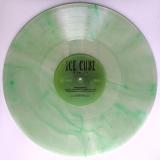
To mark the release, Man Up will be available exclusively as an ultra-limited vinyl drop this holiday season. Each record features a one-of-a-kind hand-crafted cover — a unique blend of artisanal design and proprietary technology (created without A.I.) — alongside city- and country-specific sleeves that pay homage to Cube’s global impact in places like LA, Tokyo, London, and France. The campaign will be amplified through a global social media rollout, city-focused influencer activations, and Ice Cube’s upcoming North American tour. Major press coverage and podcast appearances will further elevate the conversation, making Man Up not just an album, but a collector’s piece and cultural moment fans won’t want to miss.
The Éthiopiques series returns! Essential archive recordings from an extremely fruitful period in Ethiopian music.
Before “Swinging Addis” took over the world, there was Moussié Nerses Nalbandian — the Armenian-born composer who shaped modern Ethiopian music. Mentor, arranger, and pioneer, he laid the foundations of Ethio-jazz.
This Éthiopiques volume revives his forgotten legacy, recorded live by Either/ Orchestra First issue ever with new exclusive photos and in depth liner 8-page insert.
“Ethiopian jazzmen are the best musicians that we have seen so far in Africa.
They really are promising handlers of jazz instruments.”
Wilbur De Paris
(1959, after a concert in Addis Ababa)
አዲስ፡ዘመን። *Addis zèmèn* **A new era.**
The time is the mid-1950s and early 1960s, just before "Swinging Addis" bloomed – or rather boomed – onto the scene. Brass instruments are still dominant, but the advent of the electric guitar, and the very first electronic organs, are just around the corner. Rock’n'Roll, R’n’B, Soul and the Twist have not yet barged their way in. Addis Ababa is steeped in the big band atmosphere of the post-war era, with Glenn Miller's *In the* *Mood* as its world-wide theme song, neck and neck with the Latin craze that was in vogue at the same period. Life has become enjoyable once again, with the return of peace after the terrible Italian Fascist invasion of Ethiopia (1935-1941). The redeployment of modern music is part and parcel of the postwar reconstruction. *Addis zèmèn* – a new era – is the watchword of the postwar period, just as it was all across war-torn Europe.
The generation who were the young parents of baby boomers** were the first to enjoy this musical renaissance, before the baby boomers themselves took over and forever super-charged the soundtrack of the final days of imperial reign. Music is Ethiopia's most popular art form, and very often serves as the best barometer for the upsurge of energy that is critical for reconstruction. Whether it be jazz in Saint-Germain-des-Prés or the *zazous* who revolutionised both jazz and French *chanson* after the *Libération*, be it Madrid's post-Franco Movida, or Dada, the Surrealists and *les années folles* that followed World War I, the periods just after mourning and hardship always give rise to brighter and more tuneful tomorrows. Addis Ababa, as the country's capital, and the epicentre of change, was no exception to this vital rule.
**Two generations of Nalbandian musicians**
Nersès Nalbandian belonged to a family of Armenian exiles, who had moved to Ethiopia in the mid-1920s. The uncle Kevork arrived along with the fabled "*Arba Lidjotch*", the** "*40 Kids*", young Armenian orphans and musicians that the Ras Tafari had recruited when he visited Jerusalem in 1924, intending to turn their brass band into the official imperial band. If Kevork Nalbandian was the one who first opened the way of modernism, pushing innovation so far as to invent musical theatre, it was his nephew Nersès who would go on to become, from the 1940s and until his death in 1977, a pivotal figure of modern Ethiopian music and of the heights it. Going all the way back to the 1950s. Nothing less. And it is Nersès who is largely to thank for the brassy colours that so greatly contributed to the international renown of Ethiopian groove. While the younger generations today venture timidly into the genealogy of their country's modern music, often losing their way amidst a distinctly xenophobic historiographical complacency, many survivors of the imperial period are still around to bear witness and pay tribute to the essential role that "Moussié Nersès" played in the rise of Abyssinia's musical modernity.
Given the year of his birth (15 March 1915), no one knows for sure if Nersès Nalbandian was born in Aintab, today Gaziantep (Turkiye/former Ottoman Empire) or on the other side of the border in Alep, Syria... What is certain is that his family, like the entire Armenian community, was amongst the victims of the genocide perpetrated by the Turks. Alep, the place of safety – today in ruins.
Before Nersès then, there was uncle Kevork (1887-1963). For a quarter of a century, he was a whirlwind of activity in music teaching and theatrical innovation. *Guèbrè Mariam le Gondaré* (የጎንደሬ ገብረ ማርያም አጥቶ ማግኘት, 1926 EC=1934) is his most famous creation. This play included "ten Ethiopian songs" — a totally innovative approach. According to his autobiographical notes, preserved by the Nalbandian family, Kevork indicates that he composed some 50 such pieces over the course of his career. This shows just how much he understood, very early on, the critical importance of song as Ethiopia's crowning artistic form. Indeed, for Ethiopian listeners, the most important thing is the lyrics, with all their multifarious mischief, far more than a strong melody, sophisticated arrangements or even an exceptional voice. (This is also why Ethiopians by and large, and beginning with the artists and producers themselves, believed for a long time — and wrongly — that their music could not possibly be exported, and could never win over audiences abroad, who did not speak the country's languages).
Last but not least, one of Kevork's major contributions remains composing Ethiopia's first national anthem – with lyrics by Yoftahé Negussié.
Nersès Nalbandian moved to Ethiopia at the end of the 1930s, at the behest of his ground-breaking uncle. Proficient in many instruments (pretty much everything but the drums), conductor, choir director, composer, arranger, adapter, creator, piano tuner, purveyor of rented pianos,... he was above all an energetic and influential teacher. From 1946 onwards, thanks to Kevork's connexion, Nersès was appointed musical director of the Addis Ababa Municipality Band. In just a few years, Nersès transformed it into the first truly modern ensemble, thanks to the quality of his teaching, his choice of repertoire, and the sophistication of his arrangements. It was this group that would go on to become the orchestra of the Haile Selassie Theatre shortly after its inauguration in 1955, which was a major celebration of the Emperor's jubilee, marking the 25th anniversary of his on-again-off-again reign.
At some point or other in his long career, Nersès Nalbandian had a hand in the creation of just about every institutional band (Municipality Band, Police Orchestra, Imperial Bodyguard Band, Army Band, Yared Music School…), but it was with the Haile Selassie Theatre – today the National Theatre – that his abilities were most on display, up until his death in 1977. To this must be added the development of choral singing in Ethiopia, hitherto unknown, and a sort of secret garden dedicated to the memory of Armenian sacred music, and brought together in two thick, unpublished volumes. Shortly before his death (November 13, 1977), he was appointed to lead the impressive Ethiopian delegation at Festac in Lagos, Nigeria (January-February 1977).
His status as a stateless foreigner regularly excluded him from the most senior positions, in spite of the respect he commanded (and commands to this day) from the musicians of his era. Naturally gifted and largely self-taught, Nerses was tirelessly curious about new musical developments, drawing inspiration from the very first imported records, and especially from listening intensely to the musical programmes broadcast over short-wave radio – BBC *First*. A prolific composer and arranger, he was constantly mindful of formalising and integrating Ethiopian parameters (specific “musical modes”, pentatonic scale, and the dominance of ternary rhythms) into his “modernisation” of the musical culture, rather than trying to over-westernise it. It even seems very probable that *Moussié* Nerses made a decisive contribution to the development of tighter music-teaching methods, in order to revitalise musical education during this period of prodigious cultural ferment. Flying in the face of all the historiographical and musicological evidence, it is taken as sacrosanct dogma that the four musical modes or chords officially recognised today, the *qǝñǝt* or *qiñit* (ቅኝት), are every bit as millennial as Ethiopia itself. It would appear however that some streamlining of these chords actually took place in around 1960. It was only from this time onward that music teaching was structured around these four fundamental musical modes and chords: *Ambassel*, *Bati*, *Tezeta* and *Antchi Hoyé*. A historical and musical “details” that is, apparently, difficult to swallow, especially if that should honour a *foreigner*. Modern Ethiopian music has Nersès to thank for many of its standards and, to this day, it is not unusual for the National Radio to broadcast thunderous oldies that bear unmistakable traces of his outrageously groovy touch.
Blue Lake reveals his most ambitious album yet, which finds its visionary creator Jason Dungan harnessing the collective alchemy of his band, with ten spirited tracks that resonate with a powerful directness, evoking an ecological connection to the wider world.
The solo project (Blue Lake), now on its fifth album, found its name and inspiration via Don Cherry's 1974 live album, sparking a creative epiphany in Dungan, who set off on a path into his own untapped sonic world, guided by what he cited as the emotional potential found within non-lyrical composition. With a newly inspired ethos aimed toward creating direct and simple instrumental music imbued with a deep sense of feeling, Jason began combining an array of musical elements that gave rise to his highly revered album 'Sun Arcs' (2023), with its "ornate, zither-led lattices" (Pitchfork, Best New Music). Conceived in the blissful isolation of a Swedish cabin set in the woods, this was music that soundtracked spring in full bloom. Then, in contrast to the solitary approach of 'Sun Arcs', the highly lauded mini-album 'Weft' (2025) began to set the tone for a more band-oriented approach to delivering the Blue Lake sound. Jason had by this time experienced a special collective energy with his band during a swathe of live performances, which he then sought to harness and distill on 'The Animal', leading him to take the project into a traditional recording studio (The Village) and its limitless potential along with his gifted cohorts.
'The Animal' at its core vividly celebrates human collaboration and is deeply rooted in a sense of community and non-hierarchical connectivity. The group's creative alchemy transcends outwards and beyond the musicians performing together, to summon an inclusive, existential and ecological connection to the wider world and its inhabited spaces. The album contemplates the idea of the human as an animal as Dungan explains: "I'm quite fascinated in thinking about humans more as part of the animal environment and not as something that's so separated into a "human" realm, or sitting on top of a hierarchical pyramid. So the Animal is also me, or us - that we are just living, existing, in the same way as a piece of moss or a sparrow or a cow.
'The Animal' is a form of musical metamorphosis, still acoustic, yet more amplified, elevating it to new dimensions. The Blue Lake project takes on a new lease of life to encompass collaboration with Jason Dungan bound in a universal connectivity, resulting in his most ambitious album to date. A harmonious rejoicing that cements his reputation as a transformative presence in contemporary music.
“I've always dreamed of making an album where I could bring together artists I deeply admire, curating voices, energies, and sensibilities that have inspired me,” says Brussels-born producer and multidisciplinary artist ShunGu of his new record, Faith in the Unknown. “It took time, and it grew into something very human, rooted in trust, patience, and creative risk. These songs are conversations, not just between me and the artists, but between worlds, eras, and ways of feeling.”
That spirit of dialogue and discovery is what defines Faith in the Unknown. Emerging from years of steady, meticulous work in the underground, the album is both a bold statement of identity and an invitation into Shungu’s world. Across 14 tracks, each a self-contained vignette, ShunGu guides the listener through shifting moods and perspectives- moments of intimacy, defiance, reflection and release, coalescing into a much larger story.
His distinct touch threads through the surefire cast of collaborators - Pink Siifu, Liv.e, Fly Anakin, Chester Watson, Fatima, Maxo, Navy Blue, Dreamcastmoe, Ruqqiyah, Zekeultra and Goya Gumbani — each track unfolding as a new dimension in the same universe.
ShunGu has long been a boundary-pusher, known for weaving jazz-inflected samples, skilfully constructed textures, and MPC-driven grooves into production that feels timeless yet untethered. With Faith in the Unknown he pushes further still: a project as much about collective energy as it is about personal vision. It’s a leap into uncertainty, carried by trust in the process and the people involved.
From the lo-fi beat tapes that first won him a cult following, to collaborations that span the globe, Shungu has forged a body of work rooted in exploration and community. Faith in the Unknown crystallises those qualities into his most ambitious statement yet; a record that doesn’t just blur boundaries between genres, but asks what happens when vulnerability and experimentation are treated as shared ground.
The result is a record that trades in subtlety. Each artistic contribution adds its own shade to the larger mosaic, pulling the listener deeper into an expanding narrative. If Faith in the Unknown has a message, it’s that art can thrive in uncertainty - that in the spaces where trust, risk, and vulnerability intersect, something entirely new can emerge.
“I've always dreamed of making an album where I could bring together artists I deeply admire, curating voices, energies, and sensibilities that have inspired me,” says Brussels-born producer and multidisciplinary artist ShunGu of his new record, Faith in the Unknown. “It took time, and it grew into something very human, rooted in trust, patience, and creative risk. These songs are conversations, not just between me and the artists, but between worlds, eras, and ways of feeling.”
That spirit of dialogue and discovery is what defines Faith in the Unknown. Emerging from years of steady, meticulous work in the underground, the album is both a bold statement of identity and an invitation into Shungu’s world. Across 14 tracks, each a self-contained vignette, ShunGu guides the listener through shifting moods and perspectives- moments of intimacy, defiance, reflection and release, coalescing into a much larger story.
His distinct touch threads through the surefire cast of collaborators - Pink Siifu, Liv.e, Fly Anakin, Chester Watson, Fatima, Maxo, Navy Blue, Dreamcastmoe, Ruqqiyah, Zekeultra and Goya Gumbani — each track unfolding as a new dimension in the same universe.
ShunGu has long been a boundary-pusher, known for weaving jazz-inflected samples, skilfully constructed textures, and MPC-driven grooves into production that feels timeless yet untethered. With Faith in the Unknown he pushes further still: a project as much about collective energy as it is about personal vision. It’s a leap into uncertainty, carried by trust in the process and the people involved.
From the lo-fi beat tapes that first won him a cult following, to collaborations that span the globe, Shungu has forged a body of work rooted in exploration and community. Faith in the Unknown crystallises those qualities into his most ambitious statement yet; a record that doesn’t just blur boundaries between genres, but asks what happens when vulnerability and experimentation are treated as shared ground.
The result is a record that trades in subtlety. Each artistic contribution adds its own shade to the larger mosaic, pulling the listener deeper into an expanding narrative. If Faith in the Unknown has a message, it’s that art can thrive in uncertainty - that in the spaces where trust, risk, and vulnerability intersect, something entirely new can emerge.
This holiday season, global hip-hop icon Ice Cube makes a powerful return with Man Up — a brand-new album from a cultural trailblazer whose influence spans music, film, and activism. With over 10 million albums sold and six Platinum plaques, Cube’s legacy is undisputed, from his revolutionary work with N.W.A. to timeless solo anthems like “It Was a Good Day.” Now, sharper and more unapologetic than ever, he’s back to deliver a project that fuses his raw lyrical power with a message rooted in resilience and authenticity.
To mark the release, Man Up will be available exclusively as an ultra-limited vinyl drop this holiday season. Each record features a one-of-a-kind hand-crafted cover — a unique blend of artisanal design and proprietary technology (created without A.I.) — alongside city- and country-specific sleeves that pay homage to Cube’s global impact in places like LA, Tokyo, London, and France. The campaign will be amplified through a global social media rollout, city-focused influencer activations, and Ice Cube’s upcoming North American tour. Major press coverage and podcast appearances will further elevate the conversation, making Man Up not just an album, but a collector’s piece and cultural moment fans won’t want to miss.
The legacy of wipE′out′′ has transcended time and cemented itself as a true transgenerational phenomenon. Launched in 1995, it didn’t just revolutionise the gaming industry, it created a bridge between the gaming ecosystem and the raver community. Its futuristic aesthetics and forward-thinking sound left a mark not only on mainstream audiences but also on the most demanding corners of the underground.
Decades later, the game’s impact is still alive. The release in 2023 of The Zero Gravity Soundtrack on Lapsus Records proved once again that wipE′out′′’s accompanying audio will go down in history as much more than just an anti-gravity racing game soundtrack.
This is why we decided to go deeper into the slipstream and build the second volume you’re now holding in your hands. Drawn from the original archives of Tim Wright, aka CoLD SToRAGE, this new collection surfaces unreleased cuts, pieces that couldn’t fit on the first edition, and a suite of self-authored ambient reworks that translate pure velocity into wide-screen atmospherics engineered for the long straights, the drone of airbrakes, the blue hour between checkpoints. It also reconnects the circuit, gathering selections and variants tied to later chapters of the saga — wipE′out′′ HD and wipE′out′′ Pure — plus alternative mixes that, until now, only existed in the Sega Saturn dimension of the franchise.
Finally, the material takes a leap into the future in the hands of four remixers especially chosen for this release: Tim Reaper, SHERELLE, Mantra, and NikNak, who collectively forge links between CoLD SToRAGE’s pioneering musical vision, the sound world of the game, and the contemporary breakbeats and drum & bass vanguard.
Expect the DNA you remember — accelerated breaks, trance-vector synths, jungle influences, sub-bass rumbling neatly beneath the craft’s hull, and at times even echoes of classic hardstyle — now revealed with new angles and air. The previously unheard material carries the same aerodynamic design sense that made these tracks feel faster than the track map itself, while the ambient versions open the field of view with melodies hovering at the lip of overdrive. Without a doubt, here you’ll find a strong sense of nostalgia. But this isn’t just nostalgia; it’s also proof that this sound world continues to evolve when you ease off the throttle.
For the faithful — crate-digging ravers, speed-run obsessives, and design nerds — this is an essential expansion pack: compiling rarities, restoring context, and reframing the emotional core of wipE′out′′ for late nights and early mornings alike. Bridging memory and momentum, club and console, rush and afterglow. Strap in.
Detailed tracklist, with annotations by Tim Wright aka CoLD SToRAGE
· Scratch Pad 1: “This track was composed using incomplete tracks that were developed around the time of the first wipE′out′′. It’s so long because it was used for a marathon-length Psygnosis promotional video.”
· Messij Received: “Messij was a firm favourite with wipE′out′′ fans, so it made sense that there’d be more where that came from — this was one of those re-workings.”
· God’s Gift: “I was always very fond of Erasure’s track Love to Hate You with the canned crowd FX sounds. God’s Gift was a tongue-in-cheek reference to how some musicians think they are just that. This was way before I even played live as CoLD SToRAGE.”
· Tentative: “I wasn’t sure about introducing some wacky beats and distorted sounds into one of the tracks, because it was kinda heading away from the other tracks, hence Tentative — but it turned out OK.”
· Canada 2048: “When wipE′out′′ 2048 was launched I decided to re-make Canada as a kind of tribute, but in a slightly new-tech, laid-back way, using Propellerhead Reason and all software synths.”
· Wiped Out: “Based on a few riffs from a MIDI file unused at the time of the original wipE′out′′ game compositions, this featured on my debut album MELT.”
· Body in Motion (Body Plus Mix): “A more trippy interpretation of Body in Motion that featured on non PlayStation versions of the game e.g. Sega Saturn.”
· Onyx (“Dark Side of the Moon”): “Onyx was my sole contribution to wipE′out′′ Pure on the Sony PSP handheld gaming console. This version was something I developed in a darker style, that eventually erupts into a crescendo.”
· Messij Received (WSTWGBE Mix): “Like I say, Messij was a hit with most wipE′out′′ fans, so when I was asked to compose more music for non-PlayStation versions, I adapted this tune into a parallel-universe version for PC and Sega Saturn. By the way, WSTWGBE refers to Who Said This Was Going To Be Easy?”
· Canada (Drunken Ausländer Mix): “In early 2018 I released a fresh album called Ch'illout′′, a re-working of many of my wipE′out′′ tracks in an ambient, Sunday-morning vibe style — it was a few years’ work, here and there.”
· Tentative (Woffenfum Mix): “Another chilled re-working of one of my wipE′out′′ tracks, the mix named with a nod to a good friend of mine, Carl Woffenden — someone who I've worked with for many years in the games industry.”
· Messij (Bobbing Boat Mix): “A nice cheesy computer blip-blop start belies its deep and upbeat chilled-out melodic finale.”
· Body in Motion (Timeless Techno Mix): “Another classic track given the chilled-out vibe mix, as featured originally on my Ch'illout′′ album. This one’s a really trippy, deep-space take on the original.”
· DOH-T (AM / FM Mix): “The idea with this chilled-out mix was to imagine all the melodic parts of this varied track being broadcast on terrestrial radio, so each theme drifts in and out through the radio static.”
· ’95 Future Echoes: “Originally developed as a companion album for wipE′out′′ HD, this track actually has its roots in a tiny loop of a song that never progressed to anything special back in the mid-’90s when I was composing for the original game.”
· Turbine: “Also from my wipE′out′′ HD album, it leans heavily into the upbeat, uplifting tunes from the original game, but also steals a bit of vibe and energy from The Prodigy, with those distorted flute sounds.”
· Pencil Neck: “This excerpt from my wipE′out′′ HD album features lots of sounds centre-stage and forward from Propellerhead Reason’s Subtractor virtual synth. I learned to love this more than my JD-800!”
· Messij 2005 (New Science Mix): “Yet another take on the track that still raises a smile, this time through a mix of samples from the original and Propellerhead Reason — the ‘new science’ when compared to an Amiga 1200 running Bars and Pipes.”
‘Açid Blüüs Räägs Vol.2’ is the latest evolution of the sound of last year’s Volume 1. The debut album was described by Joe Banks for Shindig! Magazine as; “Shivering slabs of drone blues transcendentalism…a burning junkyard of sheet metal blues… Hot stuff.” Volume 2 builds on the skronk blues guitar, sax and electronic drones of it’s predecessor, to explore cosmic free jazz, concrete exotica and dub, channelling influences of Moondog, Terry Riley, 75 Dollar Bill and Wolf Eyes. Playing like the imagined film soundtracks to a dystopian, re-wilded, post eco crash world in the style of Tarkovsky's ‘Stalker’ and ’Solaris’, Jodorowsky's surreal desert western ‘El Topo’, or the early novels of JG Ballard. This new collection sees the addition of minimal analogue drum machine loops as well as live instrumental contributions from the new players of the ever evolving Invocation band, plus some superstar guest contributors.
Featuring five brand new tracks, including the forthcoming single; ‘Cosmic Fanfare’, has already picked up BBC 6 Music support from Gideon Coe. The new album was mixed by Alex McGowan (aka Captain Future) of Space Eko Studios and features Invocation band regulars Rick Jensen of Apocalypse Jazz Unit, Skronk and Oneirologist on sax and bass clarinet, Will Emms aka Tiki Eerie on melodica, horns and claviola, plus special guest appearances from Duke Garwood on clarinet and Mikey 'Moondog' Chestnut of Snapped Ankles on bass synth. “….Acid fried kosmiche blues meets drone raag transcendentalism”. Jonny Halifax is a primitivist free blues outsider, sonic shaman of the acid fuzzed lap steel guitar, demented blower of the howling harmonica of doom. His new band project now combines avant swamp blues heaviosity with kosmic free jazz experimentalism in a fluid collective of godless raag brut improvisations - sonic visions of an hallucinatory apocalyptic near future. Inspired by Henry Flynt’s avant bluegrass experiments fusing country blues with eastern acoustic musical stylings, Spacemen 3’s contemporary sitar music, and the monolithic drone doom immersion of Sunn 0))), THE JONNY HALIFAX INVOCATION build hypnotic instrumental soundscapes using lap steel and homemade slide guitars, harmonica and alto sax. Underpinned by layers of acoustic and electronic drone instruments and fed through an arsenal of pedalboard electronics that would make Kevin Shields weep, the blues are transmogrified, unhinged, reduced and re-imagined as intoxicating, trance-inducing, feedback-drenched noise paintings. THE JONNY HALIFAX INVOCATION follows Jonny’s junkshop skronk blues one man band Honkeyfinger, and the Julian Cope endorsed gospel fuzz psychedelia of Jonny Halifax & The Howling Truth, whilst not forgetting his ambient drone metal side project; Deathenteredinerror. His musical CV also includes studio contributions to tracks by Andrew Weatherall’s Two Lone Swordsmen, UK metal behemoths Orange Goblin, Heck and Melting Hand.
Influences and inspirations come from far and wide. Sometimes they can be household names or pioneers. Other times, they can be lesser-known outfits; less known, but no less influential. Futuro belong to the latter category for Italo Moderni.
Javier and Raúl are two Spanish synthesizer sorcerers who are steeped in the traditions of italo disco and the analogue sounds of the 1980s. While Italo Moderni was still in its infancy, Futuro were a shining light with a young upstart by the name of Adrian Marth even making videos for their tracks. From these beginnings, a mutual respect and friendship developed. Now, the circle is complete with the six tracks making their way onto Accidenti; an EP that marks Futuro’s debut on Italo Moderni.
The collection showcases the breadth of Futuro’s sound. With all instrumentation played through classic analogue machines, the six works journey through neon-streaked city nights, deep uncharted jungle and sun-kissed beaches. Drawing on the music of Rimini, silver screen soundtracks and arcade innocence, this is an EP that remembers and reimagines the 1980s. Intent is immediately set, with the tense and textured “L’assalto” delivering movie score synth stabs alongside crisp percussion. “Matador” is pure elegance, panpipe playfulness countered by glacial refrains and shimmering key shifts. “Iguazu” transports the listener to the wildlife and wilderness of the Amazon; cascading chords glisten as the canopy sings. Futuro takes to the skies with the sonorous swoops of “Il sogno dell’aviatore” before the lovelorn landing of “Fantasma d’amore”, a sumptuous synthesizer serenade of unrequited romance. To close, we’re firmly on the ground for “Sotto le stelle.” Under these sparkling stars, glimmering notes glow with warmth in a finale fitting for such an EP.
And, it is fitting to finally have Futuro on Italo Moderni. A group that has inspired and will continue to do so well into the future. An accidental discovery, mutual respect and a partnership rooted in a love of synthesizers has brought Accidenti into being.
On “Cold Sweat,” James Brown famously called to “give the drummer some.” In 1974, Philadelphia vibraphonist Khan Jamal called to Give the Vibes Some, with superb results. Pianist and composer Jef Gilson’s PALM label gave Jamal the platform he needed to deliver a thorough exploration of contemporary vibraphone. After launching PALM in 1973, Gilson quickly demonstrated that he would only produce records not found anywhere else. Give the Vibes Some, PALM number 10, was another confirmation of this guiding principle.
Raised and based in Philadelphia, Khan Jamal took up the vibes in 1968, after two years in the army during which he was stationed in France and Germany. Decisively drawn to the instrument by the work of the Modern Jazz Quartet’s Milt Jackson, Jamal studied under Philadelphia vibraphone legend Bill Lewis and soon made his debuts in the local underground.
Early in 1972, Jamal made his first recording, with the Sounds of Liberation. The band attempted an original fusion of conga-heavy grooves with avant-garde jazz soloing. Saxophonist Byard Lancaster, an important figure in Jamal’s development, contributed much of the solo work. Later in 1972, Jamal made his leader debut with Drum Dance to the Motherland, a reverb-drenched, never-to-be-replicated experiment with live sound processing. Both albums appeared on the tiny musician-run Dogtown label.
“We couldn’t get no play from nowhere. No gigs or recording sessions or anything. So I took off for Paris,” Jamal recalled in a Cadence interview with Ken Weiss. “Within a few weeks, I had a few articles and I did a record date. It didn’t make me feel good about America.” That was in 1974, while Byard Lancaster was recording the music gathered on Souffle Continu’s recent The Complete PALM Recordings, 1973-1974.
Jamal’s record date delivered Give the Vibes Some. At its core, it was an exploratory solo vibraphone album, even if two tracks added (through technological resourcefulness?) a très célèbre French drummer very much into Elvin Jones appearing under pseudonym for contractual reasons. Another track, for which Jamal switched to the vibes’s wooden ancestor, the marimba, added young Texan trumpeter Clint Jackson III. The most notable article published on Jamal during this stay in France was a Jazz Magazine interview. Jamal’s last word there were “The Creator has a master plan/drum dance to the motherland.” “Give the vibes some” could be added to this programmatic statement.
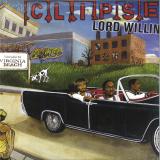
The first act signed to The Neptunes' newly formed Star Trak label was a Virginia based duo known as the Clipse. The first single “Grindin’” impacted the streets with its bare boned but infectious drum beat in the same way that “Sucker MC’s” did almost 20 years earlier. These brothers - Pusha T and Malice combined with The Neptunes groundbreaking production sent a clear message to the rap world – “we are not the same” (as rapped by Malice on his opening verse on “Cot’ Dam”). Clipse brings an authentic Virginia sound into the game and created a movement, with not only their darkly layered raps but The Neptunes as well. Pharrell Williams and Chad Hugo were able to combine their cyberpunk production with just the right group to create a street masterpiece. Following in the footsteps of such rap criminologists as Kool G Rap, Nas, Jay-Z, and Mobb Deep, the Clipse offer the Virginia hustler's viewpoint with clever, hard-hitting lyrics that is sprinkled throughout the entire album. With so many standout tracks on Lord Willin’ the album starts pulling no punches. On Track 1 simply (or maybe not) titled “Intro” you get a very personal and deep testament of crack and the drug game, a theme that is throughout this album…HEAVY. Songs like “Virginia” or “I’m Not You” (featuring Jadakiss, Styles P and Roscoe P Coldchain), have lyrics that play as a musical notes alongside The Neptunes tailored beats. “Young Boy”, “Comedy Central”… all fit perfectly alongside “When the Last Time” and “Cot Dam” as each song plays its part as chapters to the Lord Wilin’ masterpiece. “Gangsta Lean” (another one of the albums standout tracks) features a slightly lighter feel while paired with Pharrell's trademark falsetto hook. The truth of it is, it’s hard to just pick one track, or point out which is the albums star. Each song on Lord Willin’ is essential to making it the classic that it is. The Neptunes (who were busy turning out every other Pop hit on the radio) crafted an album that was deemed an instant classic, and cemented Clipse as Rap’s newest superstars.
Sedan is an obscure Soul group from Cincinnati, Ohio that was formed in the 80's.They released only one record, and little info is known about them.Craig E. Robinson was a one of the members (he later went on to form Dayton and became a producer) The record celebrates it's 40 year anniversary and features the singles “Snake Dancin’ & “You Ain’t Got Nothin’ To Do”. This hidden gem is widely seen among disco boogie electro funk fans as a rough diamond. Sedan is now available as a limited numbered edition of 500 copies on red coloured vinyl.
Ambroos De Schepper and Pepijn Gyssels became roommates when PiP moved to Brussels in 2021. Both paid close attention to each other’s musical approach and interests. One year later, Ambroos moved out. When he swung by to pick up some boxes, they decided to record something for the fun of it. Between May '23 and November '24 they continued experimenting with textures and improvisations. This collaboration has become the deepening of a friendship and a way to maintain it at the same time.
PiP: “We would have coffee or the occasional beer and everything we recorded came very organically. Ambroos would just bring his saxophone, a clarinet, some FX pedals or a weird flute. Whatever he felt like on that particular day. A few hours later he would usually be on his way again, leaving me with the recordings. I could treat them as I pleased.”
Ambroos: “I liked the idea of working with someone focussing on the physical side of music. Not so much on chords and tonality, but on texture and atmosphere. This gave me a framework with less concrete references, using words like “dark” or “busy”. I could improvise freely and we would try and catch a particular moment."
“l’Esprit de l’Escalier” is meant to be a musical meditation, opening up a continuous and detailed sound palette, aimed for the right mental state to listen with. Ambroos came up with the melody in COVID times and later in PiP’s studio, they recorded it on clarinet.
“Sans Loup” is the first jam the duo did together, after Ambroos and Lou moved out of the apartment they shared. Lou Wéry eventually found her way back to the album, as she can be heard playing the wing piano in this track.
PiP: “We recorded in the apartment we used to rent together. Since the title track and the entire album are named after Lou being absent in this dynamic, it seemed only natural to invite her in a later stage.”
“Spring Whistle” was an attempt to embed Ambroos’ musicality in dreamy textures and “Bring Back Bones” was built around an endlessly evolving krakeb recording that PiP took home from on a trip to Morocco. Both tracks are not aimed to end or evolve drastically, they just make the clock tick slower.
To conclude this release, “Velours de Tendre” is built out of a deconstructed groove and a field recording of the “Ronde van Vlaanderen”, a small reference to the countryside where PiP grew up. The reverberating chords you hear are the echoes Tijn Driessen squeezed out of an old harmonium, in a staircase of De Grote Post in Ostend.
PiP: “During a residency in De Grote Post we recorded in a staircase with a spaced pair of omni microphones. And you can take ‘spaced’ quite serious; one was positioned 5 stories higher and the other 3 stories lower.”
Sans Loup is the first vinyl to release on PiP’s label. They look alike, but none will be identical. The cover is screen printed in various combinations + a risograph insert. A highly personalized object.
credits
Released on Zitstill Records
Recorded in Brussels, Horebeke, Morocco and elsewhere, between September 2021 - November 2024
Music, mixing and production by Pepijn Gyssels
Saxophone, flute and clarinet by Ambroos De Schepper
Grand piano on “Sans Loup” by Lou Wéry
Harmonium on “Velours de Tendre” by Tijn Driessen
Mastering and lacquer cut by Anne Taegert at Dubplates & Mastering
Pressing by Objects Manufacturing
Layout and graphic design by Liselotte Van Daele & Otis Verhoeve
Photography by Willem Mevis
Special thanks to: Stijn Cools, Victor De Greef, De Grote Post
The sixth Subetasch release comes from long-time friends and collaborators TakaTuka and vaZdaZ.
Side A opens with Stamina, a hard-hitting tekno track by TakaTuka, the result of his first deep dive into the DFAM synth he’d just gotten his hands on. Track two, Olga by vaZdaZ, hits just as hard - driven by the screams of a free smartphone synth, it sounds like it’s been tearing up proper parties for the past decade.
On Side B, TakaTuka and vaZdaZ join forces on both tracks, diving into their shared love for breaks, ambient and IDM. The first, Teenage Carcrash, is driven by the tiny drum sampler “PO-12,” which also inspired its (hopefully not too controversial) title. But don´t worry, your Car´s Hifi-System isn´t broken, it´s just gritty distortion and a pulsating bass, sweetened with a catchy tune.
The final track, Unknown Food Can, originated in a circuit-bending session with a trashy old electric piano. Starting out calm and melodic, it slowly unfolds - this food can was found in Kamyshovo, who knows what's hiding inside?
South London’s Jerkcurb – aka Jacob Read – is back with news that his sophomore album ‘Night Fishing On A Calm Lake’ is to be released at the end of November following 2019’s ‘Air Con Eden’.
After that album’s successful release Read had planned to expand Jerkcurb into a full band setup when his father, a painter like himself and a creative inspiration, passed away. Instead of the envisioned plan of taking his project bigger Read returned to the family home and re-examined the material for the new album and instead the album became one of reflection, grief and redemption. It’s not much of a stretch to see clear musical inspirations for the record too – Prefab Sprout, Talk Talk and The Blue Nile, records where the moments of silence are stretched out.
Read produced and engineered the album himself, mostly at home with Lara Laeverenz and Gray Rimmer providing cocals. The album is mixed by Dilip Harris (King Krule, Mount Kimbie).
The enchanting cover artwork was painted at Read’s father’s studio in Camberwell, painted in oil with its dreamlike blur of blue and black . It hints at the early film noir and magical realist influences for the album.
Synaptic Cliffs is barely able to contain the excitement for the release of the 4-track EP "Maximalism" where pdqb collaborates with DJ Sotofett in the most effective way. pdqb's sleek and melancholic electro originals carry a sexy 1980s reminiscing vibe, not too unknown from classic US electro disco-styled pop music. They meet warehouse remixes from DJ Sotofett, known for his top-notch electro productions on Clone and Tresor, as well as funky breakbeat, afro-dub and all-things-house on his own labels Wania and Sex Tags Mania. The remix of pdqb's electrocognition-beauty 'Giallactrus' has heavier, almost p-funk styled electro beats, live scratching complementing the block party approach while retaining the vibe of the original. Elysiaamore, pdqb's sonic love letter to Tangerine Dream, gets a bit of melodic menace treatment by DJ Sotofett, turning it into an intensified breakbeat juxtaposition with Junglized B-Boy elements... again without taking away the energy from the original. The vinyl version was cut by DJ Sotofett with optimal club sonics at Manmade Mastering, Berlin.
The Rude Boy moniker has its roots firmly set in the downtown districts of Kingston, Jamaica.
Alongside the regular Ska/Rocksteady sounds coming out of the sound systems, there was an undercurrent theme to some songs that spoke of the struggles of the youth, of their confrontation, arrests and run ins with the establishment.
Some of these songs praised the Rude Boys for their stance and style while other songs were more in contempt with the Rude Boy's attitiudes, comings ,goings and violent behaviour.
For this release we have put together a set of tunes that the Jamaican Rude Boys would have been listening to at the sound systems on the lawns and street corners.
Not only the more obvious Rude Boy tunes like 'Gunmen Coming to Town' , 'Dreader than Dread', 'Moon Hop' but also some of the tunes that made the sound systems rock well into the night.
Hope you enjoy the set,,,,,
Welcome to the first release on Acid Lamour
A sub label for Lamour Records started in 2018 with a focus on techno and acid dedicated DJs. Releases are limited to 303 vinyls, no re-press.
Anders Ilar and John H are no newcomers to the electronic music scene.
Born in 1973, Anders Ilar began his explorations of electronic music in the mid 80s. Growing up in the small town of Ludvika in Sweden, Ilar spent all of his spare time playing with synthesizers, drum machines, keyboards and sequencers, learning the ins and outs of analogue and digital sound and music creation. Inspired by the early industrial and EBM wave he formed several bands with friends, started playing live shows
at smaller local parties, and released several demo tapes in very limited quantities. In the 90's he gradually shifted his creative influences towards ambient techno and acid and also started to DJ. He started using computer software to produce his music around 1999 and his first vinyl EP was released in 2001 on the german label Plong!, soon to be followed by
many more releases on labels such as Shitkatapult, Audio.nl and Echocord.
Developing his own flavor of deep minimal dub techno and ambient he gained critical acclaim with his album Nightwidth (2006) for Narita Records in the USA. Followed by highly appraised album Sworn on the german label Level Records in 2008. Ilar has also made remixes for celebrated artists such as Apparat, Mikkel Metal and Ripperton and has
appeared on numerous compilations and DJ-mixes. He's performed live on stage through-out most European countries and Japan, as well as doing a small tour with Notch Festival in China in 2008.
Up to 2018 Anders Ilar has produced 13 albums and 25 vinyl EP's and performed in over 15 countries.
Born in 1984 and based in Gothenburg. John H has been DJing, as well as producing tracks, since the late 90s, with Anders as his mentor and teacher, giving John early musical influences spanning across a wide range of genres, from Swedish techno to IDM, Cologne acid craziness and
the sound of Chicago house tracks. The musical output of his DJ-sets usually varies between techno, house, acid, electro and everything in between, depending on the time and location. John has performed on several locations all around Sweden, but also done appreciated gigs in other European countries at clubs like Tresor and Culture Box, and his music has been featured in sets by DJs such as Sven Väth, Adam Beyer,
Joris Voorn, Dense & Pika, Cari Lekebusch, Alan Fitzpatrick, Karotte,
Gregor Tresher, The Hacker and many more.
Coming For Your Tongue EP is Anders and John's 4th collab release, after
acclaimed releases on Flight Recorder and New York Haunted, recorded
during a jam session at John's studio in Bergsjön outside of Gothenburg,
Sweden, using a small setup of analogue synths and drum machines such as
the Roland TR-606, TR-808, a Devil Fish modified TB-303, Minimoog Voyager
and the Arturia Microbrute. After recording Anders spiced things up by
cutting and puzzling loops as well as adding extra effects and drums.
Limited edition of 303, no repress. Vinyl exklusive for 3 months
Vibe Ride is the sixth release of Adam Rudolph's Hu Vibrational project and marks his 60th release as a leader or co-leader. Comes with insert and download code.
“With every record, the goal is to explore new creative territory,” explains Rudolph. Vibe Ride continues a deeper exploration of a trance-like groove and a conceptual framework known as Sonic Mandala. This album marks the most complete realization of that idea, partly due to the group's experience touring beforehand. That time on the road helped to refine ideas and strengthen musical chemistry. The recording process unfolded organically—likely due to the long-standing collaboration within ensembles like Go: Organic Orchestra and Moving Pictures, where the musicians have developed a deep familiarity with the shared musical language.
Sonic Mandala refers to a musical approach distinct from traditional linear structures of theme and development. Found in cultures across the globe, it may represent one of the oldest forms of musical expression—predating written history by tens of thousands of years. Today, it is most vividly preserved in the music of the Ituri Forest peoples (Aka, Baka, Ba Benzele, Mbuti), whose sound traditions revolve in cyclical, orbit-like patterns. Vibe Ride seeks to bring that ancient sense of circularity into a contemporary—and perhaps even futuristic—context.
The ensemble of Vibe Ride—Alexis Marcelo, Jerome Harris, Harris Eisenstadt, Neel Murgai, Tim Kieper, and Tripp Dudley—brings exceptional creativity and skill to the project. While grounded in the sonic languages of today, their performance channels an ancient vibrational lineage, connecting with ancestral sound makers who were attuned to the rhythms of the sun, moon, stars, and seasons. Human beings have always been deeply responsive to natural cycles.
Like a mandala, where the circle reveals itself as a spiral—always returning, but never to the exact same point—the Sonic Mandala musical experience spirals through motion. Refined signal patterns emerge through overtone-rich instrumentation. The groove becomes a threshold, shifting the listener from passive observation into active, even transcendent, participation. With open ears and an open mind, the sound spirals inward—toward a primal center—and outward into the cosmos. When this elevated state is shared among participants, it creates what mystics describe as resonance.
Vibe Ride thrives on the distinctive sonic voices of its players, interwoven with care and nuance into the compositions. Hu Vibrational merges elements of world music, electronica, and improvised jazz into something both funky and spiritual, intense and soothing.
Using signature techniques of organic orchestration, layered arrangement, and electronic processing, the compositions are sculpted from percussion, electronics, and ethereal textures. Rhythmic foundations drawn from diverse traditions serve not as endpoints, but as building blocks. As the saying goes, “Orchestration is the key.” In shaping the sound, the aim was to discover fresh ways of balancing structure and sonic color. As Don Cherry once said: “The swing is in the sound.”
The audiophile LP was carefully recorded, mixed, and mastered by James Dellatacoma—longtime engineer for both Bill Laswell and Rudolph—at Laswell’s Orange Studio.
“This crew artfully blends together to create a seamless tapestry of rhythm… the end results are mesmerizing. Hu Vibrational is all about communing with the groove spirits and creating worlds where earthy rhythms and other-worldly sounds are one.”
— Dan Bilawsky, All Music Guide
“You can be sure that when Adam Rudolph and an ensemble of breathtaking drummers get together mystical and wonderful things will happen.”
— Raul da Gama,
“A stunning effort, enjoyable and grows with repeated listening.”
— Stefan Wood, Freejazzcollective
‘Before the Odysee, there was the Iliad; a tale of the golden age of heroes and warriors.'
The idea behind the Iliads series was to return to the sound of the golden age of Jungle/Drum & Bass, and more specifically the original ‘heroes’ of the Odysee label.
This fourth and final instalment concludes the series; bringing all the different styles of the original Odysee sound together in a grand finale. From deep atmospheric beauty to sinister dystopian breakbeat fury; Iliads IV has it all.
Oubliette immediately creates a feeling of unease and paranoia. The rapid injection of different breakbeats gives the track an unsettled feel; with nervy piano jangles and moaning samples adding to this atmosphere. The track drops with punching subs and razor-sharp curling breaks from amidst the desolation of the atmosphere of the intro. The call and response style is used to cut from break to break maintaining the unease of the intro. The drums & bass break down into a
dystopian landscape of sound, before dropping once more to take the track towards its conclusion.
A Point In Time with its obvious reference to a compilation series on a certain well-loved atmospheric Jungle label is all about conjuring nostalgia. There are notable references to bygone days; the infamous bulb bass and bleeps of the Warehouse days of glory, and the tearing mentasms that enter in the approach to the breakdown. The breaks are crisp and complex, the sub-lines deep and dark; a track truly built for a dark sweaty basement club where the bass bins
are pushed to their limits!
Love & Desire is a sultry deep atmospheric roller full of subtle references to the early UK Garage sound of the mid 90’s or even Deep dub Tech-House. The elegant curls of the Apache break that takes centre stage in this track are complimented by sweeping pads and a set of deep synth stabs that form the rhythmic backbone. The subs drop deep amidst a palette of avant-garde electronica, as the spoken word vocals call out “my love....my desire.”
We really hope you’ve enjoyed the Iliads series as much as we have; they represent a very special sound that is close to the very heart of what we at Odysee are about. As much as they focus the lens on the past, we truly believe they have had a profound effect on our future....in as much as they have brought us back to the raw essence of our sound.
Andy & Tilla
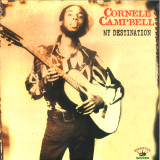
The mighty Falsetto voice of Mr Cornell Campbell is another we believe, unsung hero of the Jamaican music scene. Who in our opinion should have broke through to a wider audience, than his cult status currently provides. We have unearthed straight from the master tapes an album that was due for release around the mid 70’s. A few of these cuts, found their way out on limited 7”s, that were mainly for the domestic Jamaican market. But as a complete body of work, never found a release until now. We hope like us, once you have played the tracks, you will feel that this set of cuts, stands up amongst Cornell’s finest work. Cornell Campbell (born 1948, Jamaica), made his first recordings in the early 1960’s for Coxone Dodd at Studio 1. Tracks like ‘Under the Old Oak Tree’, ‘My Treasure’ and later as a duo with Roy Patton ‘Salvation’ and ‘Sweetest Girl’, were local hits on the Jamaican Sound Systems. A short spell with the Uniques was followed by his roll as lead vocalist with the Eternals, under the monicker of Don Cornell. Their finest moment being the classic ‘Stars / Queen of the Minstrels’ cuts which still stand up today as some of Jamaica’s finest.
The 1970’s saw Mr Campbell move on to work with producer Bunny ‘Striker’ Lee, for whom he cut most
of his big tunes. He and fellow singer Johnny Clarke, would become Bunny’s 70’s equivalent to his 1960’s stable of singers like Slim Smith, Pat Kelly and Ernest Wilson. They would provide the voice to his many hits of the day. Bunny not being called ‘Striker’ for nothing. Cornell also had a series of hits around his theme as the ‘Gorgon’. The mighty figure unbeatable at the dances in the Greenwich Town district of Kingston. ‘The Gorgon’, ‘The Conquering Gorgon’. ‘Natty Dread in a Greenwich Farm’. These were all firm favourites at the dances in Jamaica. He also worked with other notable producers around this time. Winston ‘Niney’ Holness “I Heart is Clean’, Tappa Zukie ‘Follow Instruction’
and culminating in a massive hit ‘Boxing’ in 1979 for producer Joe Gibbs. But it was his time with Bunny Lee that set the levels for his record output. This unreleased album is from this period in time, when Cornell Campbell never sounded sweeter......
A surefire Salsoul classic and comfortably one of the label's finest moments, the self-titled LP from The Strangers was originally released in that golden year of 1983 and is one of the greatest albums of the post-disco era. It’s one of Be With's favourite ever LPs and it's a complete honour to be giving it our reissue treatment.
Still strangely overlooked but not for much longer, The Strangers contains flawless tracks with truly top tier production and includes the eternal Paradise Garage favourite "Step Into My Dream."
Are they Strangers to us? Well, no, they shouldn't be. The Strangers were a US electronic-funk studio concept group comprising Edward "Tree" Moore, Howard King and Hubert Eaves III, all key members of Mtume and Gary Bartz NTU Troop and, in the case of Eaves, one half of D-Train.
Now I KNOW you're gonna dig this!
We kick off with the dope electro-funk of "Wanna Take Your Body" which features Gary Bartz on sax (!) and becomes more sensational and irresistible the longer it plays. The wonky super-bomb "Let Me Take You Home" has a punk-funk, post-Prince feel, driving and delicate all at the same time while "Show Me How You Like It" is pure FUNK, the groove just pure fire.
Side B is perfection. It kicks off with the NTS favourite "Love Rescue", a track so slick it positively SLAPS out the gate and, while it bangs throughout, the vocals and melodies elevate this to the status of EMOTIONAL POP.
Next up, "Step Out Of My Dream" swaggers forth, the undisputed masterpiece that was huge with the London DJs and UK Soul fraternity; it's not hard to see why. It's a gliding, smooth, soulful piece of once-in-a-lifetime magic.
DJ Support: Antal, I Cube, Noel Watson, Colleen Cosmo Murphy, Sean Johnston, San Soda, Takaya Nagase, Tina Edwards, Pete Herbert, Kenneth Bager, Severino, Aaron Paar, Felix Joy, Harri Harrigan, Laroye, Telford, Darker Than Wax, Rocky (X Press 2), Shane Johnson, Dan Tyler, Felix Dickinson and many more
Having previously released selected retrospectives focused on the musical output of Ryo Kawasaki and Joan Bibiloni, NuNorthern Soul has now turned its attention to the vast back catalogue of Jasper Van’t Hof’s pioneering electro-acoustic, Afro-fusion collective, Pili Pili.
The band was established in 1984 by Van’t Hof, a Dutch pianist who began his career in Europe’s jazz scene of the late 1960s, as a way of combining his love of jazz-fusion and the music of North-West Africa. Van’t Hof already had a reputation for combining roles in traditional jazz combos with more experimental and abstract projects. These included a spell in violinist Jean-Luc Ponty’s first band, years spent masterminding jazz-rock outfit Jasper Van’t Hof’s Porkpie, the recording of an all- electronic album (1982’s Visitors), and a celebrated collaborative live album with the great Archie Shepp, Mama Rose.
Pili Pili, though, was another step forward for Van’t Hof. Working with percussionists and vocalists from Benin and Mali (including the now legendary Angelique Kidou) and a string of adventurous jazz soloists (saxophonist Tony Lakoto and trumpeter Annie Whitehead included), Van’t Hof’s collective frequently combined live and programmed percussion, electronic and acoustic instrumentation, and the talented improvisor’s own memorable melodies and impactful solos.
NuNorthern Soul’s retrospective focuses on the most productive and celebrated period of Pili Pili’s near three-decade history, showcasing tracks originally recorded and released on studio albums released between 1984 and 2002. The six tracks on show offer an essential glimpse into the musical gold to be found across the Pili Pili catalogue.
In keeping with NuNorthern Soul’s previous retrospectives, the vinyl version of Selected Works 1984-95 comes with extended liner notes telling the remarkable story of this most unusual of cross-cultural collaborations. These feature extensive quotes, reflections and memories from Jasper Van’t Hof and were written by music historian Matt Anniss.
Natasha Pirard returns with her most personal project yet, dedicated to her mother and late grandmother, whose care shaped her life. Fernande, Cecile is a photobook of songs, weaving voice, field recordings, synthesizer, and violin into an ode to her matrilineal line. Pirard lost her grandmother at seven, yet Fernande’s warmth stayed with her as a touchstone. Her mother, Cecile, has been a constant presence, guiding her through difficult years.
Alzheimer’s—her grandmother’s illness—and the fragility of memory permeate the work. A conversation with her mother sparked the album: over coffee, Cecile placed a hand on her heart and said, “If I ever develop this disease, don’t forget I’m still here (inside).” That moment became central to the compositions, which translate Pirard’s gratitude and love into music as tender as possible.
The music moves in fragments—notes, chords, loops—evoking gardens, sunlight, and childhood afternoons. Rhythms shift like life itself, carrying echoes of loss and the persistence of memory. Ambient textures brush against her voice and instruments, sometimes punctuated by her grandmother’s favorite bird.
The album unfolds in two parts: Fernande, capturing her grandmother’s warmth and fading recollections, and Cecile, honoring her mother’s care and resilience. Track titles trace memories while the music drifts through longing and gratitude, articulating what words cannot.
The album was written and recorded by Natasha Pirard, produced and mixed by David & Stephen Dewaele of Soulwax/2manydjs at DEEWEE.
Some records are answers to questions no one asked out loud. With Where is Acid Eric, Cornelius Doctor & Tushen Raï deliver a psychedelic missive from a parallel timeline — a time-traveling tribute to Goa’s golden age, filtered through their unmistakable signature.
Returning to their home base, Hard Fist, the duo steps into new territory with this release, and yet, it feels like they’ve been heading here all along. This isn’t a retro-fetishist trip, nor a copy-paste homage. It’s a reimagination of a sound, a space, and most of all, a spirit.
The EP is rooted in the mythic nights of late-80s and early-90s Disco Valley, where British acid house collided with Indian hedonism, where freedom wasn’t a pose but a necessity, and where dancefloors became temporary utopias. But in the hands of Cornelius Doctor & Tushen Raï, this past gets warped, stretched and reanimated with 2025’s tools and sensitivities.
Across three extended tracks, the duo summons a sound that’s dense yet breathable, tribal yet precise, nostalgic yet futuristic.
They weave Goa’s swirling trance lines with broken rhythms, analog squelches, and post-industrial textures. The acid lines are sharp, but never cliché — more mantra than gimmick. Voices float in and out like half-remembered chants. Basslines slide, hypnotize, and then vanish in a cloud of smoke. It’s not a flashback. It’s a vision.
The title, Where is Acid Eric, feels like a lost broadcast — part question, part invocation. Eric is a symbol. IS Eric a ghost ? The true legend of a forgotten raver on a dusty Anjuna morning. What matters is the search. The longing. The dance.
Hard Fist, true to its form, continues to blur the lines between ritual and rave, tradition and invention. And with this record, Cornelius Doctor & Tushen Raï don’t just revive a genre — they reconnect with an ideal: dance music as exploration, as transcendence, as resistance.
One foot in the dust, one foot in the cosmos. The answer isn’t important. The trip is.
SOPHIE’s ‘OOH’ and ‘GET HIGHER’ are now available as a double A-side 12" vinyl. This release follows the single-series packaging format used for the other singles from PRODUCT: one track and slide image per side, black vinyl in a black inner sleeve, screen-printed with a white SOPHIE logo housed in a clear archive bag.
Earlier in 2025, Numbers marked 10 years since SOPHIE’s game-changing singles collection PRODUCT, with a special edition featuring 11 songs across Deluxe Vinyl and Compact Disc.
SOPHIE classics ‘BIPP’, ‘LEMONADE’ and ‘VYZEE’ were joined by two immaculate PRODUCT-era songs ‘OOH’ and ‘GET HIGHER’ recorded and produced at the time, each with colourful single artwork completing the set.
‘OOH’ is one of SOPHIE's earliest productions that has been through several revisions since 2011. It was one of three original tracks that Numbers had signed when SOPHIE uploaded the song alongside 'BIPP' and 'ELLE' to her Soundcloud, and while it had been through several iterations and speed changes, this finalised version was completed by SOPHIE in 2019.
SOPHIE once described ‘OOH’ as “hi tech club dance pop”. Musically speaking, the earworm hook is carved out by her signature portamento-infused synths and candy-coated lyrics, a firm cult classic approved by AG Cook and Charli XCX. Initially titled 'MAKE RESPECT', the track was first performed live by SOPHIE in 2011 to a handful of lucky people at a beach afterparty surrounding Sonar Festival, Barcelona and later that year at Manhattan's New Museum. The vocal was recorded as the first track in the same one-day recording session as SOPHIE's debut single 'NOTHING MORE TO SAY', released on the Huntley & Palmers label, where Sophie's songwriting was performed by the London vocalist Jaide Green.
The genesis of the ‘OOH’ and ‘NOTHING MORE TO SAY’ recording session is lore-worthy in its own right: after watching Jaide Green perform live with Olly Murs during the sixth series of The X Factor in 2009, SOPHIE reached out and invited Jaide to record in her home bedroom studio.
‘GET HIGHER’ was born during joyous sessions in 2013, when SOPHIE’s beat was introduced to the vocalists Cassie Davis and Sean Mullins. The track feels like a visionary precursor to ‘Vroom Vroom’, and doesn't sound out of place next to the sub-clang intensity of SOPHIE’s ‘HARD’ and ‘MSMSMSM’. Striking a playful balance between blissed-out hyperpop and club-ready Atlanta trap, it showcases SOPHIE’s signature, laser sharp sound design. Originally released as a bonus track on the Japanese CD edition of PRODUCT, ‘GET HIGHER’ has remained a hidden gem.
Berlin-based Amy Dabbs makes a long-awaited return to Shall Not Fade with Green Room EP - four uptempo club heaters spanning UKG, high-energy house, and breaks.
The EP’s title pays homage to Renate’s Green Room, the floor within the renowned Berlin club where Dabbs has held her residency since early 2023. Each track was both written for and road-tested at her monthly Dabbs Traxx events in this space, where she’s cultivated a tight-knit community of UKG lovers in the heart of Berlin.
“When I started writing this EP, my goal was to create music that would fit perfectly into my nights in the Green Room, bringing in the London sounds I grew up on, across all the genres I usually play at Renate. This EP is a tribute to everything Renate has given me: opportunity, community, and a platform for my authentic UK sound.”
Opening track Take Me High launches straight into peak-time territory, with old-school-inspired rave stabs, staccato vocal flicks, and deep, subby basslines. Over You turns the heat up even further - a track built from choppy vocals and UKG basslines before melting into a warm chord progression; a perfect example of Dabbs’ ability to fuse high-energy rhythms with spine-tingling emotion.
On the flip side, Style & Pattern, featuring the signature tones of London’s Alfie Fraser, is a pure UKG cut - underpinned by lush pads and arpeggiators, topped with Alfie’s unmistakable live vocals to create an uplifting dancefloor heater dripping with London swagger. Closing the EP, The Way delivers a tear-jerking breakbeat finale, layering syncopated percussion, emotive vocals, and an old-school piano breakdown; it’s a sublime end-of-the-night moment and a fitting closing track for an EP which honours one of Berlin’s most beloved clubs.
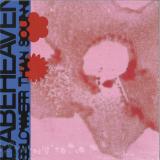
London duo Babeheaven — vocalist Nancy Andersen and producer/multi- instrumentalist Jamie Travis — return after four years with their highly anticipated 5-track EP ‘Slower Than Sound’, released via Scenic Route on October 24.
Following their singles ‘Beloved’ and the 6 Music-premiered track ‘Picture This’, ‘Slower Than Sound’ marks a deeply personal and intimate turn for Babeheaven. Written and recorded largely in Nancy’s home studio, the EP embraces minimal instrumentation, acoustic textures, and spacious arrangements, capturing the emotional vulnerability and euphoria the duo describe as “Post Rave” — the music you listen to on the ride home from a
party.
“It feels like a rebirth in a lot of ways,” says Nancy. “Writing at home gave me space to experiment, make mistakes, and rebuild confidence. Once I brought the songs to Jamie, we shaped them together into what you hear now.”
The EP explores love, reflection, and personal growth. Beloved conjures a comforting, almost mythic presence, while Lost For Words reflects the struggle to connect with the world and oneself. Picture This offers snapshots of a relationship, looking back while imagining its future. The cover Tiny Demons by Todd Rundgren blends seamlessly with the EP’s introspective mood, and Loud Thoughts, featuring Samba Jean-Baptiste, captures heartbreak, burnout, and creative pressure. “I hope people can find their own meaning in these songs,” Nancy says. “I’m writing for myself, but music is for each listener to interpret.”
Since debuting with Friday Sky in 2016, Babeheaven have steadily built a loyal following through their acclaimed albums Home For Now and Sink Into Me, amassing over 65 million Spotify streams and earning support from BBC Radio 1, 6 Music, and KCRW. Their live shows have sold out Village Underground,
Bush Hall, and Jazz Cafe, and they’ve shared stages with Cigarettes After Sex, Loyle Carner, and Nilüfer Yanya. Visually, Babeheaven’s world has been shaped alongside creatives including Margot Bowman, Frank Lebon, Tegen Williams, Sacha Beeley, and Joyce Ng, cementing their reputation as one of the UK’s most distinctive acts.
After facing cancelled tours, industry pressures, and a period of creative doubt, Slower Than Sound represents a return to the core of their artistry: intimate, honest, and self-produced. Jamie reflects: “Not putting out music for so long was hard, so we hope this is the start of a more prolific period for us, reconnecting with the London music community and beyond.”
Brat pack crossover stars Charlie XCX loved Altern 8 rave generation anthem FREQUENCY so much they not only sampled it for the remix of their smash 365 but started their live shows with the remix.
The resulting renewed interest in FREQUENCY has led to four 2025 remixes of the gem which was originally released as a 10,001 numbered limited edition in 1991. That sold out instantly and is now acclaimed as one of the Rave scene’s most enduring classics.
Altern 8’s Mark Archer links up with long time collaborator Shadow Child for the A1 M.A.S.C Extended Remix which delves into the tougher strata of House. A2 comes from Tenerife’s DJ Jonay who delivers a stunning old skool influenced breakbeat mix. A3 is the Aires remix. This was done especially for Altern 8’s appearance at Glastonbury and various other summer festivals where IT WENT OFF! A4 Kin’s Back To 91 Remix is full on drum & bass.
Label artwork is a “tribute” to Charlie XCC graphics - the samplers got sampled and repaid the compliment. Limited edition vinyl.
The album delivers masterful arrangements, inventive rhythms, rich harmonies, and a perfect balance of flute and saxophone interplay. Funk, Jazz, Gospel, Afro, and traditional elements all merge seamlessly into something unique and timeless.
Joshua Sithole (1947–1999) was a self-taught multi-instrumentalist and vocalist from South Africa who first started busking with the Kwela kids in 1959 and then went solo in 1978. He became popular in the 80’s, performing widely in Durban and Cape Town.
Originally released in 1975, this overlooked masterpiece is now reissued for the first time by Voom Voom Records — the first 500 copies include a poster of Vladimir Tretchikoff's painting, "The Pennywhistlers" which captures the beauty of Joshua's playing.
“Joshua Sithole, Errol Dyers, and Jonathan Butler come from some of the most influential and esteemed musical families in South Africa. You cannot write about Jazz in Cape Town and not mention some of these families and their contributions to the art form.” — Fanie Jason (Music Photographer - Cape Town)
"South African spiritual funk gem. slick guitar, banks of horns" - Chris Albertyn (Matsuli Records)
"Dynamic South African funk. An album that will make you want to dance from start to finish" - Franck Descollonges (Heavenly Sweetness)
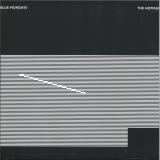
Skylax Records is proud to unveil the reshaped and definitive edition of Blue Mondays’ "The Homage" EP – a record that bridges the golden age of Italo Disco, the raw proto-house energy of Frankie Knuckles & Ron Hardy, and the resurgence of true underground dance music. This release has been meticulously refined to give it the space it deserves: a future classic, driven by iconic reworks and a visual identity worthy of its legacy. A1. The Homage (Vedichecista Mix) delivers a hypnotic journey into Italo Disco euphoria, A2. The Homage (Instrumental) strips it down to pure musical essence, and A3. Countach (Driving Mix) propels us into the unstoppable energy of classic Italo Disco, showcasing Blue Mondays’ unmatched ability to capture the era’s true spirit. On the B-side, B1. The Homage (Floorfillers Remix) injects a raw acid energy designed for peak-time floors, while B2. The Homage (Jolene Remix) delivers a filtered French house gem straight out of 1998, crafted by one of our leading torchbearers of the "real music" renaissance. Wrapped in a stunning sleeve designed by H5, evoking the iconic aesthetics of Joy Division, New Order & Peter Saville, "The Homage" EP captures the essence of an era when the dancefloor was sacred, the music was raw, and the underground thrived. We took our time to reshape this release because it deserved nothing less. Now it’s ready – sharpened, elevated, and destined to become a definitive Skylax classic. This is not just another EP. This is Blue Mondays. Skylax. The resurrection of the underground.
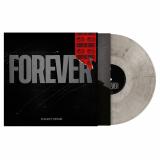
Als Pionier der elektronischen Musik, vereint The Bloody Beetroots seit 2005 Elemente aus Electro, Punkrock und Dance zu einem unverwechselbaren, genre-übergreifenden Sound. Hinter dem Projekt steht der italienische Musiker und Produzent Sir Bob Cornelius Rifo, der mit Tracks wie „Warp 1.9“ (feat. Steve Aoki) und Alben wie Romborama, Hide und The Great Electronic Swindle internationale Bekanntheit erlangte. Jetzt kehrt „The Baddest Man in Electronic Music“ mit seiner neuen EP “FOREVER PART ONE” zurück. „Dieses Projekt ist mein Leben“, sagt Rifo. Und das spürt man in jedem einzelnen Beat. Keine Grenzen, keine Kompromisse. Stattdessen persönliche Geschichten, Gedanken und Momente, die The Bloody Beetroots über Jahre hinweg geprägt und geformt haben. „Dieses Release ist sowohl ein Danke als auch ein Statement. Denn in einer Welt, die Anpassung belohnt, glaube ich immer noch daran, dass wahre Rebellion darin besteht, sich selbst treu zu bleiben.“ - Sir Bob Cornelius Rifo Das ist The Bloody Beetroots. FOREVER.
FOREVER PART ONE erscheint als Digipak CD und auf limitiertem Grey Marble Vinyl.ist eine Auseinandersetzung mit dem eigenen Werden: damit, was passiert, wenn man sich der verzerrten Version seiner selbst stellen muss - der Version, die durch Schmerz entstanden ist.
“I like him very much. He’s very special. He’s singing with a voice I never heard before” - Townes Van Zandt
“A conscious, soulful brother” - Horace Andy
“He’s a brother to me - one of the best singer/songwriters I’ve ever met” - Adrian Sherwood
“Unearthed mine of gems from inner Wales - a songbook of ideas - that's Jeb!” - Gilles Peterson
Jeb Loy Nichols is a bonafide Country (Got) Soul legend. The Music Maker presents 21 incredibly deep, grooving and soulful songs from the cream of Jeb's catalogue; from its earliest days to his latest unreleased gems via countless rare and unbelievably good lost-classics. This 2LP set is presented in a gatefold sleeve complete with freshly commissioned artwork courtesy of Jeb himself.
In collecting these uncut, under-heard gems, we hope to do justice to Jeb's jaw-dropping artistic brilliance. A man who, in working with Adrian Sherwood, Dennis Bovell, Dan Penn, Larry Jon Wilson and countless other legendary characters, has crafted some of the most deeply affecting folk, country, soul, funk, blues, dub, reggae, gospel, rap and electronic music, ever heard.
The first music Jeb really felt a connection with was southern soul: "I used to listen to the radio at night and fell in love with Bobby Womack and Al Green, The Staple Singers and Joe Simon – that whole Nashville/Memphis/Muscle Shoals thing.” But Jeb was so much more than a soul boy, Indeed, he "went to bluegrass festivals with my dad and come home and listened to jazz records with my mother.” And, when he was fifteen, he heard his first punk record: "God Save The Queen" by The Sex Pistols. “That and The Ramones completely changed me.” In 1979 he got a scholarship to go to art school in New York: “A great time. Punk was over but hip-hop was starting and I got into that in an obsessive way.”
His first recording, in 1980, was an unreleased rap song called "I’m A Country Boy". If that isn't an insight enough into Jeb's kaleidoscopic path through music, in 1981 he visited friends in London and found himself living in a squat with Adrian Sherwood, Ari Up (from the Slits), and Neneh Cherry. “Adrian put me to work immediately, moving boxes of records all across London. It was Adrian that was and is my biggest influence – in his complete disregard for genre purity.” So, presumably you're getting the picture? A veritable musical magpie with a voracious appetite and unimpeachable taste.
"Mine has always been a meandering career. I've done what I've done, and made the music I've made, due to chance meetings. I'm not particularly ambitious; it's more important to me that I work with friends and like-minded people. I've been a big fan of Be With for years. Everything they release is essential. When they asked about rereleasing "Countrymusicdisco45" I was both pleased and flattered. We began talking about how we'd do it; two years and twenty-one tracks later, here we are. I've always thought of the music I make as Country Music. Music conceived in the country, written in the country, recorded in the country. I left London and moved back to the country so I could live among the trees, the grasses, the animals, those things that don't go to war and get greedy. This compilation is the story of that life. Hand made, lo-fi, ramshackle, stripped down, real deal music. Heartworn and funky. Music made in the kitchen, not in the studio. As the great Skip Mcdonald said, Perfect ain't perfect. It's great to see all these tracks gathered together. It feels like a family reunion. Some older members of the tribe, some newer arrivals."
Opener "countrymusicdisco45" is a song Jeb wrote about how his crew lives, tucked up blissfully in the hills: "House parties full of country folk dancing to disco, reggae, soul, country, hip-hop. All night. I recorded it at home under the influence of Stevie Wonder." It's one of the funkiest records you'll ever hear. "Sometimes Shooting Stars" was recorded in Nashville and mixed by the legendary Dennis Bovell. It's deep, dubby, majestic. A thing of fragile, melodic beauty. The party ramps back up again with the undeniable groove of "Short Cut Home" before the profoundly moving "Disappointment" arrives. One of many songs he's recorded with good buddy Benedic Lamdin (aka Nostalgia 77): "We were going for a Leon Thomas meets Richard Brautigan meets Alice Coltrane kind of thing". We think they nailed it. "Days Are Mighty", like a lot of the tracks on this collection, "started life as a demo, an attempt to get something down while it was fresh. No frills, nothing fancy, just feel." And what feels!
The irrepressibly funky "Don't Dance With Me Tonight" is a deeply moving, slow-mo organ-drenched head-nod-funky country-ballad. Next up, the breezy "You Got It Wrong" was recorded in Wales with some of Jeb's good friends and neighbours, The Westwood All Stars, featuring Clovis Phillips and Will Barnes. Skanking fiddle-flecked gem "Ring The Bells" was the first thing Jeb recorded when he moved to Wales. A combination of all his loves; country, reggae, soul. It's followed by "Let's Make It Up", a truly sumptuous string-drenched emotional groover. "When Did You Stop Loving Me" is another Nashville track, written and recorded during a time Jeb was spending a lot of time with the Muscle Shoals crew, Donnie Fritts, Spooner Oldham, George Soule and Dan Penn: "It shows, I'm sure, their influence." Oh, you bet it does!
The swaggering country-funk of "Just Beginning" should grace many groove-focused DJs' sets whilst "Wintering Of The Year", again made with Clovis, is pastoral, campfire soul. The glacial, gorgeous "Let It Rain" is from an unreleased record Jeb made with the great British jazz bass player Andy Hamill and "We Tell Each Other Who We Are" is freaky country-soul made by a man with a love for strutting, wonky hip-hop stylings. Rounding out the side, "Trip To You" is pure, uncut amphetamine-propelled drum-machine soul.
The spare, beautiful "Dirt" is from an EP Jeb made with Julian Moore in his house in South London: "All first takes, straight to tape." Swoon! "Heaven Right Here" was a very minor league hit in America: "It was produced by the brilliant and much missed Wayne Nunes. It was started in the countryside of Missouri, finished in the countryside of Wales, and recorded in the countryside of Sussex." Double swoon! "If Later Ever Comes" is electronica meets J.J. Cale business whilst "Remember The Season" is truly wonderful and breezy guitar soul. "A Little Love" was made with Wayne Nunes as well, after a night of listening to Studio One and Northern Soul. Bouncy dub closer "Weary Traveller" was written by Bill Monroe, the hero of Jeb's youth: "Monroe's music was heavily influenced by black southern churches; I've tried to keep some of that feral feel." This was the final recording by Jeb's 1990s Country-Dub band, Fellow Travellers.
The name of this compilation comes from a time when Jeb lived in Peckham, south London and he used to DJ and sometimes perform at a local bar: "The owner of the bar, a Jamaican named Count Percy, once asked me what I called my music. I told him I wasn't sure, I guess just pop music. He thought about it for a minute and then said, 'no, more like mom and pop music'. Rather than call me a country singer or a folk singer he always referred to me as The Music Maker."
With the long overdue deluxe overview of his beloved music, we hope to finally shine a light on the unheralded genius of Jeb Loy Nichols. RIYL Larry Jon Wilson, Townes Van Zandt, Bobby Charles, country got soul artists, dub, deep soul, disco, dancing, heartbreak. This deluxe collection, spellbinding from beginning to end, should hopefully go some way to ensuring Jeb reaches an ever bigger, ever more appreciative crowd of followers. Mastering for this special double vinyl edition was overseen by Be With regular Simon Francis and it was cut by the esteemed Cicely Balston at Abbey Road Studios to be pressed in the Netherlands by Record Industry. The artwork has been lovingly put together by The Music Maker, himself, Jeb Loy Nichols. "Be With is the perfect home for this mongrel music. I am forever in their debt." The pleasure is all ours, Jeb.
Making this album was an absolute joy. We used Rothko’s artwork as a major influence. His use of colour fields, blending, mood and scale really helped us build an album of tracks that could stand on their own and also work together as a coherent whole across all the tones we had been working with. It was also a chance to fall back in love with our 909, 808 and 707.
While working on music for several other projects, the “Rothko” project got renamed Loud Ambient because it did not really sit right with the My Brutal Life series. We often talked about what people make of The Black Dog and whether they think we only make ambient music. We do not. Over the last year or so, one of us would be working on something and someone else would say, “That is a Loud Ambient track.” The name stuck. We liked the funny side of it.
With Loud Ambient, everything just fell into place creatively. Surprisingly for us, the tracklisting never changed, just small tweaks here and there. That rarely happens. It marks a first for us as a band. All the stars aligned and the confidence in this album is the strongest we have ever had.
Loud Ambient was made to dance to, something we have not done in a while. We welcome the return to the dancefloor with both hands. Will you join us?
The time has come for hip-hop’s favourite superheroes to unleash their highly anticipated album. The industry’s most recognisable voice, Chali 2na, and turntable wizard Krafty Kuts have been not-so-secretly preparing this project since 2017 through over 150 live shows and countless studio sessions. The time has finally come to grab your capes, don a pair of tights and load up the turntable ready for the show to begin. This is ‘Adventures Of A Reluctant Super Hero’ – prepare for the Purple Assassin and the Scratchman as they come and save your city, the scene and hip-hop as we know it.
Featuring a who’s-who of collabs and guest appearances from hip-hop royalty, this 14-track record takes you to just about every corner of the genre, leaving no stone unturned. With Lyrics Born and Gift Of Gab joining on ‘Guard The Fort’ to deliver a serious statement of intent to open the LP, the rest of the record is an adventure through funk, breaks, rolling basslines, buckets of groove and everything in-between. Throw in a generous portion of expertly delivered bars and vocals from genre sidekicks like Harry Shotta, Skye (Morcheeba), Omar, Dynamite MC and more, and you’re left with a hip-hop record that not even the comic books could have conceived.
LP version comes with an exclusive 8-page comic-book by official Star Wars illustrator JAKe + full album download.
Reintroducing Soar - the alias of Christian Aebi, serial DIY taper and one-man orchestra from Langenthal, a fog-shrouded town in the Swiss provinces. Krautophobia, ambient lo-fi agriculture, analogue soul balm and slowspeed psych gelati-blitz cardboard pop only gesture towards the sound world he coaxed from his broken Tascam four-track recorder, in attics, churches, junkyards and at the kitchen table.
The spark for Soar was likely time and space, somewhere in the autumn of 1994. Armed with a cable salad of Sixties guitar/bass, fairground drums, mould-speckled organs and toy instruments, Aebi coaxed five albums, an unverified run of 25 cassettes, and a handful of gigs. Mostly issued through Zurich label Corazoo, the records arrived in hand-pasted sleeves, rough-cut reproductions of his teddy bear-fixated artwork that carried the same imperfect immediacy as the music. With Rudi Steiner, performances in galleries, clubs and halls bent into live sound-image happenings - part installation, part film, part flea-market-instrument theatre - invariably leaving the house engineers bewildered.
At the time of his untimely death in 2021, Aebi remained a village secret, his music passed quietly between friends and local ears. Now, Swiss graphic designer and Ghost Riders compiler Ivan Liechti has pieced together a portrait from the afterglow, gathering tangled audio formats, paintings, illustrations, photographs and notebooks with his family, former label and peers. What emerges is a first glimpse of Soar's intimate cosmos - brushing against Füxa, Spectrum, Dump, Stereolab and King Crimson, but orbiting a dimension entirely his own.
This is the story of how a tiny label from New Jersey changed the course of music history not once but twice.
Cheri Records was established in 1974 in New Jersey and run by one Boo Frazier. Cheri's output was limited, producing a catalogue of just eleven releases between the years 1974 and 1982. On the face of it, this appears to be insubstantial output. However, if you dig a little deeper, the quality released on Cheri Records reveals an exceptional legacy of groundbreaking music.
A dark horse in the world of record labels, a true unsung legend that would go on to alter the course of musical history and intersect with a remarkable array of talented artists, bands and DJs. From Rare Pleasure; Sandy Barber; Julius Brockington; Boo Frazier; Patrick Adams; Tom Moulton; Larry Levan and MF Doom: Cheri Records has directly impacted their artistry in significant ways. Cheri's influence even extends into the present, with DJ icons like David Morales, Dave Lee, Danny Krivit, and Colin Curtis continuing to champion its contributions.
This compilation brings together the most compelling tracks from the Cheri Records catalogue, shedding light on the label's extraordinary story and underscoring the idea that music, no matter how unassuming its origins, can transcend boundaries and reshape, influence and inform music to come for future generations.
This collection also represents the start of a new series here on Miles Away, a series that will delve into the labels and studios that were responsible for leaving a lasting imprint on the musical world. We've named this seriesEchoes From,and this compilation will be the first of many.
The vinyl package comes in a gatefold sleeve with in-depth liner notes and features interviews with Colin Curtis and David Morales. Also available on CD and digitally.
Advanced Art was formed in Tampere, Finland, in 1985 by Jana, Pete, and Vince. Too young to be part of the first wave of Finnish groups inspired by German synth pioneers and New Romantics, they instead forged their own path and soon became pioneers themselves. For the next ten years, Advanced Art defined and dominated Finland’s small but growing electronic underground. They inspired a new generation of Finns to experiment with synthesizers, built an international cult following, and were deeply involved in the local scene—running clubs, organizing events, and performing at some of the very first warehouse parties in the country.
Although the line-up shifted over time, the group’s creative drive consistently came from the partnership between Jana, who supplied the voice and words, and Vince, who shaped the music with his machines. Together they defined the band’s distinctive blend of sharp electronics and lyrical vision.
After several cassette demos and two 7-inch singles, Advanced Art signed to Poko Rekords in 1991. The EPs Scar and Time raised their profile both at home and abroad, especially thanks to valuable exposure on MTV Europe’s 120 Minutes. Known for their perfectionism, they finally released their debut album Product in January 1993. On Product the line-up was Jana (lyrics, vocals), Vince (music, production), and Factor (percussion, studio work). Having moved through phases of synth pop, EBM, and industrial, the album showcased Vince’s vision of a unified sound and style more clearly than ever before.
Force followed in 1994, conceived as a multi-part concept album (Update / Live / Retro). Recorded with live percussionist PW joining Jana and Vince, it expanded on the groundwork of Product with new beats, ideas, and a sharper, more defined identity.
By 1995, exactly ten years after their founding, Jana and Vince decided to bring Advanced Art to a close on the band’s birthday, 13 October. Their run had been precise: one decade of creative output, ending with a legacy that laid foundations for Finland’s electronic scene.
Now, conveniently coinciding with the band’s 40th anniversary, Advanced Art present Forced Product. This double-LP set, fully remastered, features Product in its entirety, alongside the Update and Retro sections of Force, plus additional EP tracks and remixes recorded between 1991 and 1994 at “Audible Art” – less a studio than a concept, existing wherever machines and people met.
Limited to 450 copies, Forced Product comes in a gatefold sleeve with poster and sticker, offering a definitive document of Finland’s pioneering electronic cult heroes — a band that helped invent their country’s scene and left a lasting influence far beyond it.
Discotchari is delighted to release a first-of-its-kind various artists compilation: Tehrangeles Vice (Iranian
Diaspora Pop 1983–1993), fully licensed from Taraneh Enterprises. The album is a groundbreaking exposé of
the vibrant subcultural hub of Tehrangeles (portmanteau of Tehran + Los Angeles), and the action–packed, true
story of the Iranian diaspora music industry. Featuring 12 tracks remastered by award–winning Osiris Studio,
lyrics and translations to all featured songs, original cassette covers, a 20+ page album note booklet by Dr.
Farzaneh Hemmasi and more! Sprawling from Westwood to Glendale across the San Fernando Valley, the
Tehrangeles scene was cultivated by the same producers and artists who industrialized the “golden age” of
entertainment in pre–revolution Iran and fled from the 1979 Islamic Revolution along with millions of Iranian
citizens. Through music and visual media, Iranian producers and artists working out of Tehrangeles have
engaged in what the Iranian government calls a “cultural attack” against the Islamic Republic for over 40 years.
The album title Tehrangeles Vice underscores the illicit nature and daring circumstances from which
Tehrangeles pop music was born and compares its legacy within Persian media to one of the most significant
crime–drama TV shows of all time. In the same manner that Miami Vice and its aesthetics had a dynamic
impact on sonic, visual and cultural trends in the United States and around the world, Tehrangeles media was a
shock to the systems of Islamic Republic ideology and Iranian expatriate communities. Listening to these songs
in hindsight, the contribution of Tehrangeles can be better understood as a triumphant effort to preserve Iranian
identity by realizing it in conjunction with prevailing music genres of the ‘80s and ‘90s, and to rebel against the
oppressive regime of the Islamic Republic of Iran through the most seductive of means: dance music.
DJ Support: Axel Boman, Coyote, Rune Lindbaek, Dr Rob (Ban Ban Ton Ton), Lefto, Johan Blende, Feel Fly, Marco Gallerani and many more
Secret Soul Society, aka South Wales's Cal Gibson, continues his red-hot streak of form with four original jams for Hell Yeah that effortlessly weave decades of influences into intimate, unusual sounds that go from Balearic daydreams to after-hours soul burners.
Gibson was one-half of Nottingham's deep house and downtempo outfit Neon Heights back in the 2000s, a collective that label head Marco has long admired. He has landed here before with the superb Keep The Mystique in 2023, a 15-track collection of brand new curveball cuts built from lovingly sourced samples. Since then, he has continued to collide jazz, funk, Afro, beats, dub, soul and reggae on Paper Wave and Magic Wand.
'To Be Happy' opens with gentle, sun-soaked grooves, swirling keys and dreamy pads that evoke a hazy Mediterranean sunset. Nostalgic soul samples tug at the heart while the track’s laid-back vibe is perfect for golden-hour moments. 'Orange Surprise' is a magical slice of downtempo bliss with hints of romantic vocals. It's built on soft broken rhythms and drifts between ambient soul and laid-back electronica, perfect for introspective moments or late-night winding down.
'Keep On Trying' flips the script with more texture. The synths are crystalline, the pads are sugary, and the meandering bassline unfolds in wonky fashion while soft male vocals bring a steamy edge. Last but not least, 'What You Do To Me' is funky and slow motion disco with 80s synths and reverb that drowns you in good vibes.
This EP is Secret Soul Society at his most expressive and emotive.
Founded in early 1995, Grow! quickly established itself as a key player in the underground house music scene. The label was created by Christian Mahringer (aka Jeremiah) along with Michael Peter (Duke) and Martin Retschitzegger (Tin). Together, they released a steady stream of 12" records, often under various pseudonyms, focusing entirely on the music rather than individual profiles.
While Grow! remained their main creative outlet, the founders were also active beyond the label: Mahringer released music on Chez Damier’s Balance Alliance and the renowned Chicago label Guidance, while Peter and Retschitzegger collaborated on records for Daniel Bell’s 7th City and Robert Hood’s influential M-Plant label, and also launched their own imprint, Central.
This new compilation presents a first carefully curated selection of the most notable tracks from the label’s catalog, alongside previously unreleased versions. All tracks were edited and remastered from the original tape recordings. It offers a deep dive into the raw, analog-driven sound that defined Grow!’s identity.
With its consistent focus on quality, anonymity, and artistic integrity, Grow! Records has left a lasting impression far beyond Austria’s borders. This release is both a celebration and a rediscovery of one of the country’s most respected underground imprints.
Transversales is very glad to announce the release of « Unreleased & Rareties » spanning 1972-2002, revelatory collection of short and secret music by electronic music pioneer, Jean SCHWARZ. He served as an engineer at the CNRS in the Ethnomusicology Department of the Musée de l'Homme in Paris, and was a member of the Groupe de Recherches Musicales (G.R.M) from 1969 to 1999.
This compilation allows us to discover some of unreleased rarities from Jean Schwarz’s personal archives and unpublished recordings which were composed for the dance, screen or the performing arts.
Remastered high-resolution audio transferred directly from the original master tapes.
Exclusive liner notes. Deluxe LP with printed innersleeves & OBI
The year is 1988. The Second Summer of Love is in full swing and A Guy Called Gerald was dominating the charts with “Voodoo Ray”, one of the first true house anthems and by far Gerald’s biggest hit. Later that year he dropped another 12” of the same pedigree together with producer team T-Coy featuring the legendary Haçienda resident DJ Mike Pickering: Dream 17. _x000d__x000a_A bit lesser-known than AGCG’s smash record, this EP is the perfect blend of the Madchester rave ethos and the early jackin’ sounds coming out of Chicago at the time.
Soulful vocals and playful drums coupled with one of the most recognisable 303 basslines ever programmed will transport you to those blissful dancefloors where nothing but the here and now seemed to matter. But, make no mistake: this record is as much about celebrating the past as it is about looking to the future, and will remain relevant for many years to come. _x000d__x000a_Annette – Dream 17 is now available as a limited edition of 500 copies on purple coloured vinyl.
“The Mire Chronicles,” the latest album by Spammerheads, was born from the difficult experience of the floods that hit Valencia on October 29, 2024. During this time, the duo lost part of their studio and actively participated in the cleanup efforts in their city.
This was an experience filled with a mix of emotions—shock, helplessness, fury, resistance, solidarity, and resilience, among others—that shaped what may be their best work to date. Written as a chronicle, the album explores the personal and collective states of people affected by tragedies or catastrophes. The Valencian duo
(through a carefully produced edition released by Banshees Records) offers six tracks (plus two digital bonus tracks) to remind us that despite the difficulties we may face, we must always fight to get ahead, get back on our feet, and not be swept away by the current.
This album is dedicated to the people and communities who face extreme situations and never give up.
Bruce Springsteen's statewide ode Nebraska '82 is given ample extra space with a new expanded edition, as his 1982 acoustic masterwork is cast in renewed light by its use the forthcoming biopic Deliver Me From Nowhere, which documents the conception of the original album. Now with an extra 17 solo outtakes, including demos of 'Born In the USA' , 'Pink Cadillac', and 'Downbound Train', as well as the fabled Electric Nebraska sessions with the E Street Band, the new dubs illuminate the breadth of Springsteen's vision for a reconciled America, where Springsteen found much inspiration in the folk, literature and short stories of the heartland, particularly in those of Flannery O'Connor, childhood and young-adult memories. Notably, it was deemed by PopMatters to beo one of the first every DIY records made by a major artist, and soon sparked a DIY revolution by folk musicians the globe over.
Cybernetic disco maestro Patrick Cowley graces Dark Entries once again with Hard Ware, an LP of far-out funk and synthpop celebrating what would have been Cowley’s 75th birthday. Best known for his chart-topping disco anthems, Cowley left us with an incredible body of work before his tragic death in 1982 due to AIDS-related illness. Since 2009, Dark Entries has been working with Cowley’s friends and family to uncover the singular artist’s lesser-known sides, including his soundtracks for gay pornographic films, which the label chronicled on compilation albums School Daze, Muscle Up, and Afternooners. Hard Ware presents the closing chapter in a trilogy of unreleased Cowley dancefloor bangers that began with 2022’s heavy-hitting Male Box and was continued with the soul and garage-inflected From Behind in 2024. The most expansive release in said trilogy, Hard Ware delivers ten tracks of pure, uncut Cowley: sultry, psychedelic, sarcastic, and just a bit sleazy. Cowley devotees will delight in “Tech-No,” a sparse instrumental demo version of his epically dystopian “Tech-No-Logical World.” You could soundtrack your next aerobics session with cheeky numbers like “Pajama Party Massacre” or “Shake It Up,” both of which feature Cowley himself on vocals. The frenetic “Big Ass in Motion” is built around samples from Rudy Ray Moore and The Madam’s infamous “Sensuous Black Woman,” an X-rated comedy record that would later feature in classic booty house records. Mid-tempo cosmic groovers are well-represented with jams like “Hellfire” and “Megablue,” which perfectly capture Cowley’s bathhouse-in-outerspace sensibilities. No collection of Cowley’s work would be complete without an interstellar floor-filler, and we’ve got quite a few here, like “Jungle Jump,” which pits whirling beats with dub-laced swirls of synth, or “Spellbinding Lover,” a Donna Summer-indebted melancholic boogie masterpiece that features Sylvester backup singer Jeanie Tracy. Hard Ware closes with the chilling synth-hymn ”Ice Age,” in which Loverde vocalist Peggy Gibbons sings of a coming frosty apocalypse. The story told in “Ice Age” mirrors the coming AIDS crisis and feels like a haunting premonition from Cowley. The record comes in a sleeve with a hand-airbrushed circuitboard-inspired design by Gwenaël Rattke, and includes lyrics as well as liner notes by Andrew Ryce and Peggy Gibbons. Hard Ware is another crucial document of a tremendous talent taken too soon.
Bringing together the elder statesman of the Zulu guitar Madala Kunene and internationally acclaimed Sibusile Xaba, kwaNTU pulls two generations of South African guitar mastery into a single point of focus. Under-represented on recordings outside of South Africa, Madala Kunene (b. 1951), the ‘King of the Zulu Guitar’, is revered as the greatest living master of the Zulu guitar tradition. Sibusile Xaba, whose collaboration with Mushroom Hour Half Hour reaches back to his first recording in 2017 (Open Letter To Adoniah/Unlearning), has garnered international acclaim for his unique voice and virtuoso guitar stylings, which bring together multiple South African guitar lineages in an original, spiritualised fusion. Collaborating with Mushroom Hour and New Soil for kwaNTU, the two players come together to weave a filigree sonic fabric which reaches down to the heartwood of Zulu guitar music but moves resolutely outward, building on the past to create a deeply rooted statement about present conditions and future travels. kwaNTU – which can be roughly translated ‘the place of the life-spirit’ – is also conclave of teacher and student, as Xaba has been taught by Kunene for the last decade. Meditative, rich and sonically sui generis, kwaNTU finds these two musicians linking up within the inimitable space of sound and spirit that they share through Kunene’s teaching.
The great masters of South African music have not all had equal exposure. For many years the generation of musicians who were exiled during apartheid took centre stage, as the regime made it very difficult for those at home to be heard. More recently, a new cohort of important voices, especially in jazz, has broken through to international consciousness. But for the generation of musicians in between – those who shone like beacons in the most difficult final years of apartheid and immediately afterward – international recognition has been slow in coming.
Madala Kunene, ‘the King of the Zulu Guitar’, is among this number. A revered figure for current generations of South African musicians, Kunene began his recording career in 1990, at the bitter end of apartheid, with a now classic self-titled LP for David Marks’ storied Third Ear imprint. Born in 1951 in Cato Manor, near Durban, he had determined to be a musician from early childhood, and by the time he first entered a recording studio he had already had a long career as a popular performer. His virtuoso absorption and transformation of the venerable Zulu maskanda guitar tradition and his richly spiritualised approach to music immediately marked him out as someone special, and in the years that followed, Kunene cemented his position as one of South Africa’s musical elders. He is without doubt the grand master of the Zulu guitar tradition, but his sound and sensibility ranges far beyond it into varied sonic terrain, and he has collaborated with a wide range of musicians both at home and abroad. Now in his mid-seventies, he remains a shining light for those that are making music in contemporary South Africa.
‘He is really an amazing person,’ says the guitarist Sibusile Xaba, who has been mentored by Kunene for over a decade, and now invites a collaboration with him on kwaNTU. ‘As a mentor, he's really powerful in showing us the way. For us to have this opportunity to make music together and have a project together is really a blessing to me.’
Xaba himself grew up in Newcastle, KwaZulu-Natal, where his mother had been in a band and his father sang in a church choir, and from early childhood Xaba played homemade tin guitars. He only later realised that music was his calling. ‘I just loved music. I was fortunate. My parents loved music. And when it was time for me to leave home and go to study outside Newcastle, I knew that music was what I wanted to do. There was no second option. It was just music.’ Moving to Pretoria to study music formally, Xaba committed himself to his craft, developing a unique style that draws on both US jazz masters such as Wes Montgomery and Jim Hall, and the rich and varied heritage of the South African guitar, from inspirational jazz players such as Allen Kwela and Enoch Mthalane, to the music of the Malombo groups and Dr. Philip Tabane (Xaba has previously collaborated with Dr. Tabane’s late son, Thabang), and the Zulu guitar tradition embodied by Kunene.
‘I was really in love with the jazz guitar, I really admired it, and I was digging a lot in that direction,’ says Xaba, recalling his first encounter with Kunene’s music, over a decade ago. ‘And then one day on my timeline, Kunene popped up, and I was like – “What's this sound?” I was so connected to it. It really touched me deep. I started checking out his records, and then I found out he's from the same region as I am, which is Zululand.’ After Kunene played a show at the Afrikan Freedom Station in Johannesburg, Xaba make contact with him, and visited him at home in Durban. They struck up a friendship, and Xaba became the elder’s student, as Kunene began to pass on his knowledge and his inimitable way of playing.
kwaNTU is a tribute to this relationship and the deep learning that has defined it. The album was recorded in Zululand in the town of Utrecht, at a cultural centre called Kwantu Village, which gives its name to the album. ‘It's such a broad word,’ Xaba says, ‘but the elders teach us that Ntu is basically an energy, almost chi, an energy, a force that all living beings have within them. It's a living energy, so kwaNTU is like, almost the place of this energy.’ The two men sequestered themselves for five days of jamming, improvising and planning, and then the session was recorded in one take over a single night, with Gontse Makhene joining on percussion and backing vocals and Fakazile on vocals. Other voices and overdubs were later added in the studio in Johannesburg.
The result is a rich and meditative recording that finds two generations in a deeply engaged dialogue. Teaching and passing on his knowledge, the elder Kunene has brought Xaba into a space of sound and knowledge that they now share; Xaba’s own practice of deep communion with nature and his dedication to his musical craft make him the perfect interlocutor for Kunene. The result is an album that foregrounds the two musicians engaged at the highest levels of responsive listening, sympathetic unity, and collaborative concentration. Bringing an elder statesman of South African music to an international listening audience for the first time in decades by pairing him with one of South Africa’s most important new voices, kwaNTU is a meeting of generations and a powerful demonstration of musical lineage and continuity.
‘Before music, there is sound,’ Xaba observes, speaking of Kunene’s unique approach to music. ‘And sound is like a common compartment…it's not restricted to particular people or particular geographic places, you know what I mean? It's sound. Everybody can hear it. So when he constructs that sound into music, I think everybody resonates with the energy behind his construction of sound into song. Here at home, we really love him for preserving our history through the guitar, through his stories as well the music, the songs that he writes. We really, really admire him.’
For their first album as Gilla Band (formerly Girl Band), the
foursome have redrawn their own paradigm. ‘Most Normal’ is like
little you’ve heard before, a kaleidoscopic spectrum of noise put in
service of broken pop songs, FX-strafed Avant-punk rollercoaster
rides and passages of futurist dancefloor nihilism.
Lockdown robbed Gilla Band of any opportunity to try the new
material out live, but the pandemic also incinerated any idea of a
deadline for the new album. They were free to tinker at leisure, to
rewrite and restructure and reinvent tracks they’d cut, to, as
drummer Adam Faulkner puts it, “pull things apart and be like,
‘Let’s try this. We could try out every wild idea.’”
The group also fell under the spell of modern hip-hop, “where
there’s really heavy-handed production and they’re messing with
the track the whole time,” says Fox. “That felt like a fun route to go
down, it was a definite influence.”
‘Most Normal’ opens with an absolute industrial-noise banger that
sounds like a manic house party throbbing through the walls of the
next room as a downed jetliner brings death from above. What
follows is unpredictable, leading the listener through a sonic house
of mirrors, where the unexpected awaits around every corner.
The common thread holding ‘Most Normal’’s ambitious Avant-pop
shapes together is frontman Dara Kiely. Throughout, he’s an antic,
antagonistic presence, barking wild, hilarious, unsettling spiels,
babbling about smearing fish with lubricant or dressing up in binliners or having to wear hand-me-down bootcut jeans (“It was a
big, shameful thing, growing up, not being able to afford the look I
wanted and having to wear all my brother’s old clothes,” says
Kiely).
‘Most Normal’, then, is a triumph, the bold work of a group who’ve
taken the time to evolve their ideas, to deconstruct and reconstruct
their music and rebuild it into something new, something
challenging and infinitely rewarding. It’s a headphone masterpiece.
It’s a majestic exploration of the infinite possibilities of noise. It’s a
bold riposte to your parochial beliefs on whatever a pop song can
or should be. It’s the best work these musicians have put to
(mangled) tape.
Comes with DL card & 2P insert / wrapped in shrink + a sticker
At long last, Takao is back with his long-awaited second album, seven years in the making. His 2018 "Stealth" was (and still is) a much-loved set, mixing elements of ambient and environmental music; with this new release Takao breaks free of the gravitational pull of these earlier influences and strides confidently forward. "The End of the Brim" jettisons some of the more abstract elements of his previous work, embracing a “universal listenability” and a more concrete intensity, with a focus on supple rhythms and strengthened senses of melodic development and harmonic sophistication. This musical growth can be linked with Takao’s admiration of composers Ken Muramatsu and Toshifumi Hinata, who are generally associated with commercial “production music” and easy listening. Another contributing factor is his private study with veteran keyboardist Ichiko Hashimoto of Colored Music. The ten tracks here include three vocal tracks, with three different singers (Yumea Horiike, Cristel Bere, Atsuo Fujimoto of Colored Music) and seven keyboard-led pieces. The vocal pieces are integral parts of the album’s flow, rather than typical “songs” driven by the name and personality of the singer. All of these factors, plus the veteran presence of engineer Hiroshi Haraguchi, known for his work with Haruomi Hosono, who mixed half of the album's tracks, along with the use of excellent old-school synths, aligned with Takao’s forward-looking vision, have combined to give us an album with a unique sense of timelessness. A spotlight illuminating future paths for pop music, available on CD/Vinyl LP/Digital, with English/Japanese lyrics, and liner notes by Yuji Shibasaki.
This exciting new collaboration between Cara Tolmie and Rian Treanor is a highly kinetic and playful endeavour. Body-centric vocal explorations merge with intricate rhythmic systems forming a deliciously disorientating, hypersurreal space of semantic modulations, concrete poetry, cut-up beats and mimicked samples. Their sound is singular and tactile: dissociative dance music that reassembles contorting vocal lines and knotting biomechanics in an explorative network of unstable forms. It's a blur of bodily fragility and ecstatic disruption, where swells of meaning rise and fall through clouds of synthetic buzz, fleeting breath, and stream-of-consciousness imagery.The duo first performed together when Counterflows Festival paired them for a new commission at the historic Arches venue in 2023. Glasgow-born, Stockholm-based vocalist and performance artist Cara Tolmie brought her hypnotic vocal technique, Internal Singing _ an intimate practice using breath, movement, and touch that explores the subtle binds between voice and body in an unsettling, engrossing sonic space. Treanor's richly innovative work provided a compounding counterpart: radical, rave-infused structures that bent and contorted around Tolmie's incantation.Growing out of a series of charged, improvisational performances, Body Lapse was recorded between Stockholm and Rotherham in 2024. Echoes of their live energy run throughout _ a voice shaking through the body, responding to touch and physical modulation, translating performance into something tactile and immediate. Body Lapse marks their debut release together, it conjures a sound of unsettling beauty and frictional intensity _ a playful, physical mesh of computer music, voice, and speculative storytelling. In this gnawing, dreamlike space, breath and body become sites of both connection and disruption, sparking thrilling encounters with the unexpected, the playful, and the decisively weird
Interception, the second long player from Jensen Interceptor following 2018's Mother, is something of a state-of-the-nation that finds Melas consolidating several eras of his career, past and present, to form a distinct new sound that is the most experimental work he has produced to date.
In 2024, a freak accident at an event he was playing left him with multiple broken bones in his foot. The forced downtime became an opportunity for introspection, allowing him to revisit earlier projects and explore new musical territories. Blending his signature electro with genres such as IDM, footwork, and baile funk, Melas used this recovery period to fuse old influences with fresh global sounds. "Since I started making music I've always made music geared towards use in my DJ sets but there's always been an urge to explore the deeper side of electronic music.
That time off after the accident gave me the space to dive into genres and really experiment.
" The accident came at a time when he had already spent time, like so many others though the COVID-19 pandemic, assessing his next move. A full tour schedule had left him feeling constrained by the limitations of working in a single genre. As such, Interception is the end point of this reassessment and the start point of what Melas sees as the next stage of his musical evolution.
"I really wanted to challenge and, I guess, prove myself in other spheres, to take my music to a new place. I've never wanted to be too repetitive and found that expectations, imagined or real, were forcing me to get stuck on a specific sound both in my productions and DJ sets." This renewal is reflected in the title of the album, which eagle-eyed fans will note is the same as the first EP that was released under the Jensen Interceptor moniker, and the emotional and personal nature of the LP is likewise mirrored in the abstract impressionism of the artwork created by fellow Australian, Brodie Kaman, the artist behind the visual look of Lady Gaga's recent Mayhem LP as well as works for FKA Twigs, Nine Inch Nails, and more.
The design-resembling oil drifting across a microscope slide-uses a mix of vivid pastels and moody darks to express the album's emotional depth: a collection of distinct elements coalescing into something richer and more evocative.
Great Vacation! are just that: a momentary escape from a crazy world. Sunshine permeates every note, with good times abound when the band throws down. Both “Yellow Gold Diamond Fire” and “You Make It Look Easy” were recorded old school style with the whole band live in the studio to capture that special magic.
Artist Bio:
Great Vacation! was formed by Riley Geare in 2023. The lineup has rotated a bit but always includes Riley and guitarist Topher Mohr. Currently the group includes drummer Sheldon Reed (who appears on Yellow Gold Diamond Fire). Dedicated to an old school aesthetic, the band performs together live in the studio and has only ever done 2 takes of a song. Every track is recorded to tape for maximum stank. We thrive in the Southern California climate- lots of sunshine, classic cars, palm trees and love vibrations pervade the vibe.
Belgian iconic label USA IMPORT gets relaunch. First release: REISSUE by HARDCORE producer Liza N’ Eliaz.
Nicknamed “The Queen of Terror”, Liza N’ Eliaz was a well respected DJ, producer and label owner born in Ostend in 1958 and sadly passed away in Antwerp in 2001.
Growing up in a family of musicians, she studied classical music and learned to play the piano four hands with her grandfather, a conductor at the local municipal orchestra. Later she discovered the synthesizer and cassette recorder and joined new wave and industrial bands in the recording studio and on tour. During a concert in France in 1985 she met Yvette Neliaz, who became her companion, muse and partner and whose surname inspired her pseudonym. Liza was added as a reference to the byname given to transsexuals in Flanders.
In Amsterdam the couple became enthralled with the burgeoning acid house, new beat and techno scene centered around the club Roxy. Soon Liza N’ Eliaz started to make a name for herself, among others in the Parisian underground scene and as a regular guest at French Radio FG. As a DJ she mastered an incredible technique simultaneously mixing on three or four turntables. As a music producer she had an impeccable ear for sound, pushing up the pace to staggering heights and as a result taking part in changing the rules of electronic dance music in a new and booming global scene in the mid nineties: hardcore and speedcore.
Liza N’ Eliaz was a prolific producer working solo and with artists such as DJ Dano, Laurent Hô and The Prophet, releasing on labels such as Atom, Mokum and Bonzai. In 1997 she founded her own label in collaboration with USA Import Records dubbed Provision Records.
USA Import Records is proud to present the reissue of Initial Gain, the EP previously released on its sublabel Atom Records in 1992, the second in the Molecules of Music series. Adding two new interpretations by Toulouse Low Trax to three original tracks, a nothing else but logical connection is set between Liza N’ Eliaz’ early work and today’s genre bending electronic music scene.
For the record: Liza N’ Eliaz didn’t like her nickname “the queen of terror”. She didn’t intend on terrorizing anyone, commented Yvette Neliaz after her unfortunate passing away.
Despite immense challenges, SOYUZ have delivered a career-defining album in KROK.
“Krok” means “step” in Belarusian - and for Alex Chumak and his band this word comes with a lot of meaning. It’s the title and theme that ran throughout СОЮЗ (SOYUZ)'s fourth album, reflecting the journeys the band has navigated in recent years, having moved to Warsaw due to political unrest in their homeland of Belarus and the outbreak of war in Ukraine. Embracing the uncertainty became both the inspiration and main lyrical theme for Alex Chumak, SOYUZ’ composer and arranger, who also decided to go a step further and change the language in which he writes songs from Russian, which is used as lingua franca in many post-Soviet countries, to his native Belarusian. The result is nine songs about dreams and outer space, ordinary miracles, things very close and very distant at the same time.
In early 2022, Chumak and original members, Mikita Arlou and Anton Nemahai, joined tens of thousands of Belarusians seeking safety abroad. Resettling in Warsaw, the band released Force of the Wind in October 2022, garnering widespread acclaim, a string of major European gigs, and led to Polish musicians Albert Karch and Igor Wiśniewski joining the band.
Deeper and more melancholic than previous works, KROK is quintessentially SOYUZ, laced with hope, dreams and a celebration of life. Given the difficulties with finding rehearsal and recording spaces in Warsaw and the departure of the drummer Anton Nemahai from the band, Chumak explored alternative options. He reached out to friend and fellow musical collaborator, Sessa, about the possibility of recording the new album in his recently finished studio in São Paulo, with Sessa and Biel Basile coming onboard as recording engineers.
At the tail end of 2024, Chumak and SOYUZ’ new drummer, Albert Karch, made the trip to São Paulo to record the first sessions for KROK. Laid down directly to tape, these sessions featured prominent Brazilian musicians Sessa, Biel Basile, and Marcelo Cabral, with a guest vocal feature by Tim Bernardes recorded at a later date. The final touches were then added back in Europe. Lush string and woodwind arrangements written by Chumak and Karch were recorded at the Polish Radio studio in Warsaw, and Rhodes parts were added by Chumak at Sven Wunder’s studio in Stockholm.
Though primarily recorded in Brazil, KROK is not a Brazilian or MPB album. It blends the band’s Eastern European roots with jazz, folk and global influences. The genre of the music is hardly identifiable: there are folk ballads and jazz-driven pop compositions covered in lush and often dissonant string and woodwind arrangements where each note is placed with care and meaning behind it.
The title track was the first song Chumak wrote in Belarusian as an adult, making for a fitting opener and one of the band’s finest tracks. Darker than most of SOYUZ’ songs, the tensions lift and lighten as the track progresses. The cinematic library jazz of 'Voo Livre', with ghostly vocals sung by Ciça Góes and Ina, feels like a modern twist on the Italian library composer Alessandro Alessandroni through its sublime choir and woodwind orchestration. Elsewhere, the heartfelt 'Lingua Do Mundo', composed, written, and sung by Chumak and the incredible Tim Bernardes, features one of the standout string arrangements from Chumak and Karch. 'Cichi Karahod' is an instant SOYUZ classic, almost Pat Metheny-esque as it opens, with the acoustic guitar and bass riff transitioning into jazzy AOR / pop-folk territory. The record closes with 'Smak žyćcia', a gentle, dreamy spoken-word poetry piece in Japanese by singer-songwriter Manami Kakudo.
Steve Moore reprises his beloved Lovelock guise by presenting his unique riff on the library breaks genre. Business And Pleasure contains grimy groove and sleazy, funk-laden lounge music.
This vinyl release is hyper-limited, with just 500 pressed for the world.
The LP is ushered in by the spacey synth-funk of the sleazy, woozy title track. This is that serious slo-mo cosmic-balearic head-nod shit. Laidback bass, heavy funk with dreamy synth and electric guitars. An outstanding opener. Up next, the dynamic, swaggering "Last Call" is a sophisticated, elegant stroll - sweeping, mellow strings, a smooth bassline and gorgeous percussion with urgent keys and swelling synths.
"Slinky Strut" is another spaced-out, sleazy funk groove with jazz rock by way of a heavy, heavy guitar riff, mellotron and bass breakdowns which build to brass crescendos. Gigantic. "First Class" closes out the side, and, like classic Hawkshaw / Bennett noir, it's got that mysterious and murky stretched out sleuth / detective soul with a great bassline and percussive elements, with swelling strings, ace synths and smooth Rhodes piano melodies entering the mix halfway through. Dramatic guitars and groovy percussion add extra intrigue. It's 7 minutes of funk!
Side B opens with the stretched-out psychedelic funk and jazz groove of "Stank 49". It takes its sweet time to unfurl, creating enormous - almost sensual - anticipation for the ensuing beauty but, as it does, we're left beguiled and straight-up hypnotised. Heaven-sent synth flourishes and a laidback bassline over smooth drums cement its simple, vivacious grace. "Dangerous Man" is that creeping crime funk we all love; heavy bass and fuzzy guitar riffs, mellow strings and sumptuous piano/synths. It's irresistible, it's ominous and it's pretty gargantuan. It's basically like an El-P hip-hop instrumental. We need to get some rappers over this stuff, stat!
"Stinkbug" is a dazzling and funky groove-fuelled jazz-rock workout with fizzing synth riffs joined by full percussion and drum breaks, building with strings to a strong swagger. Vigour! To close out this remarkable set, the breezy "Win Or Lose" is laidback soul-inflected funk, utilising urgent, skipping drums and galloping basslines. Just stunning.
This collection was written and recorded in Spring and Summer of ’24. Everything was tracked at Steve's home studio in Albany, NY except the drums and percussion, which were recorded by Jeff Gretz at his space in NYC. The whole collection is basically a rhythm section feature, so Steve's Rickenbacker 4003 and Fender Jazz Bass play very prominently. The bass guitar serves as lead instrument in a lot of these tracks. Also, lots of Rhodes and stringers (Solina, Logan etc) and guitar (Strat and Les Paul). He even dusted off my sax for this one, which he doesn’t do as often as he’d like!
This type of groove-oriented library music has been a steady part of Steve's diet since the late 90’s. In heavy rotation while writing this collection were the following classics: “Time Signals” by Klaus Weiss, “Tilsley Orchestral No. 10” by Reg Tilsley, and “Heavy Truckin’” by Simon Haseley. “Voyage” by Brian Bennett was also a big one.
Lovelock started as a dedicated Italo-disco project, but over the years Steve expanded it to include anything directly informed by the commercial/pop side of the music of his childhood (70s/80s). Writing and recording this album was, like a lot of Steve's music these days, basically a test to see whether or not he could do it.
The song titles, like the music, are meant to be evocative yet vague. But there is a bit of a travel theme. Steve imagined this record being the soundtrack to a sleazy salesman’s business trip. The kind of guy who, when asked if he’s traveling for business or pleasure, responds “both.” Beyond the traveling salesman comparison, the title directly relates to the creation of this album. This was something he wanted to do just for his own enjoyment. Yet, like our sleazy salesman, he still found a way to get paid.
The album’s cover was designed by Chris Stevenson, with no little direction from Steve. He knew that he wanted to go with something photography-based for this cover so, in true DIY/cheapskate spirit, Steve started by looking through his own photos. He found the cover image on his phone, taken through an almost empty bottle of beer, and it clicked. The whole album has a very boozy vibe (especially with titles like “Last Call”) so this shot seemed appropriate. We, hic, agree.
Mastering for this vinyl edition was overseen by Be With regular Simon Francis, and it was cut by the esteemed Cicely Balston at Abbey Road Studios to be pressed in the Netherlands by Record Industry.
Unearthed from the Crammed Discs vaults after nearly four decades (Originally recorded in 1987), a hidden gem finally sees the light. Maurice Poto Doudongo’s The Lost Album arrives on vinyl for the first time—limited to 500 copies, with printed inner sleeve featuring release notes and photographs.
Back in the hazy margins of late-’80s Brussels, where boundary-blurring sounds were seeping through the cracks of pop music, a young autodidact named Maurice Poto Doudongo was crafting music that didn’t quite belong to any scene. Born in Kinshasa and growing up in Belgium, Maurice was a sonic nomad—raised on Franco, Miriam Makeba, and Tabu Ley Rochereau, transfixed by James Brown and Prince, and shaped by the fertile collision between African music and experimental electronics occurring all around him.
Leaving school at 16 to concentrate on music full-time, he began recording on borrowed 4-tracks, using cardboard boxes for percussion, and absorbing whatever sounds the airwaves served him: “Music has no frontier,” he says. “You take what you like. Prince, Fela, Papa Wemba—there is no contradiction. It’s all part of the sound.”
The result? A record that’s equal parts analog drum machine funk, homegrown Afro-pop futurism, and new wave R&B-informed synth poetry. Marc Hollander, founder of Crammed Discs, met Maurice through his friend and associate, musician/producer Vincent Kenis and quickly recognized the spark. The two began working in earnest, preparing tracks intended for a full-length release that, for reasons lost to time and memory, never materialized—until now.
Marc remembers: “The album was never completely finished. “Bolingo” was the only track that came out on a Crammed compilation at that time… and the rest sat on the shelf for decades until we started opening the Crammed vaults.”
Maurice recalls the session as being, “like an unstoppable current”. Listening now, the Lost Album feels both of its time and well beyond it. While tracks like “Momo” sound not a million miles away from the slinky and sophisticated Balearic pop ambience of Wally Badarou’s Echoes album, "Passport Train" shakes itself loose of any genre boundaries, veering into free-form Afro-electronica and tough electronic rhythm. Others pulse with a sweet and soulful groove that suggests dance floors dreamed of but never reached.
In decades hence, Maurice never left music, and the music never left him. Now working mainly as an arranger, he describes his job as being like that of a musical psychologist: “Someone comes to me with their sound, and before anything I have to understand their mind and heart,” he explains. That same intuitive fluency can be heard across this entire album—music that listens before it speaks, that absorbs before it asserts.
This reissue is more than a remastering. It’s a second breath. Sourced from cassette roughs and 24-track demos, carefully restored with Maurice’s blessing, and released as a complete album on vinyl for the very first time, The Lost Album isn’t lost anymore.
It just took nearly 40 years to find its way to you. - Editions de Lux
Music From Memory are thrilled to announce the forthcoming release of ‘Pastoral Blend,’ a new album from the duo of N Kramer and Magnus Bang Olsen (The Zenmenn).
Recorded in Berlin between August 2023 and March 2024, ‘Pastoral Blend’ combines Kramer's improvisational process and mastery of contemporary production techniques with Bang Olsen’s emotive pedal steel guitar playing. The creative process was anchored in capturing various phrases and patterns from the instrument, which were then reshaped, reversed, and layered intricately. This meticulous approach allowed a foundational track to emerge, upon which further arrangements and developments were sculpted. This process, which builds on Kramer's earlier work as Habitat (with J. Foerster, released on Leaving Records), gives the music a gentle asynchronous flow that feels uniquely live and organic.
Merging the warmth and intimacy of instrumental Americana with the glitchy, textural processing reminiscent of early 2000s Max/MSP and influential artists such as Fennesz and Alva Noto, ‘Pastoral Blend’ is a textured drift between analog warmth and digital fragmentation, a delicate equilibrium that duo navigate with remarkable finesse and an air of effortless charm. With titles like ‘Harvest', ‘Agrarian Dawn’, ‘Grasslands’, and ‘Weathered’, Kramer and Bang Olsen evoke a musical vocabulary steeped in themes of landscape, memory, and tradition; a vocabulary that gently alludes to the more familiar and traditional musical structures lying beneath the rich layers of sound. Herein lies the essence of the 'Pastoral Blend’.
Dave Huismans (ex_libris, A Made Up Sound) presents In Transit, a self-titled LP of arresting downtempo vignettes, with origins dating back to over a decade ago.
Renowned for some of this century’s most notorious rhythmic advances, the work of Dave Huismans (fka A Made Up Sound and 2562) continues to provide a blueprint for new generations of innovation-obsessives. After a long hiatus from releasing original material, he returned in 2025 with two beloved EP’s as ex_libris. Now he returns to FELT as In Transit, following up on his remix of Civilistjävel! from 2023.
Borrowing its name from the closing dialogue of a novel by Dutch author Hella S. Haasse, In Transit was written in just two weeks in the summer of 2013 on a Korg ESX sampler. Since then, he has patiently refined its constituent parts.
Over the course of 38 minutes across six tracks, In Transit maps out an absorbing vista. The music shimmers with a celestial quality, underpinned by rhythmic stamina and creeping intensity. Tangential to Huismans’ previous work, the beats here are decentred and further scattered, acting as buoys to the constantly evolving and intricate narratives of layered textures.
In Transit marks a fascinating new addition to Huismans’ sprawling catalogue, a truly remarkable racket to be crafted with such humble means, finding a suitable context within FELT’s continued venture into parallel sounds.
In the heart of a post-apocalyptic city, Spacelunch was making his way through the ruins, wearing a heavy armour of metal plates and flickering circuitry. Cat settled on his shoulder, listening intently to every sound. This time, they weren't just looking for an artefact — their target was the Singularity Echo, a mysterious device created right before the catastrophe. Legend had it that the scientists of the past, sensing the impending collapse, had put all their accumulated experience and knowledge together to create it. It was said that one day “Echo” would awaken and allow descendants to touch the wisdom of the ancients, learn the secrets of forgotten technologies and, perhaps, avoid the fatal mistakes of the past.
— We’ve been wandering around for how long? — muttered Cat, looking around warily. — And nothing.
— Sitting up there complaining, aren’t you? — Spacelunch grinned, deftly bypassing the debris and intertwined roots that poked out from under the asphalt.
Suddenly, a glow flashed before them, gradually taking the form of a palm-sized transparent crystal. It floated in the air, surrounded by silver lining that wove into intricate patterns, like a network of ancient runes. The symbols on its facets, flickering, cast soft reflections on the debris around them. As the professor slowly reached out his hand, the crystal shone brighter, and the low whisper of distant voices cut through the silence. Their minds were enveloped by the echoes of past events, filling their minds with images of the vanished world.
The friends froze for a moment, overwhelmed by shock and a sense of profound change.
— Well, — said Cat, not hiding his surprise. — It seems we've gotten a little smarter.
— A little? Now we have what has been lost for an era.
— So, we have a new adventure ahead of us. Where do we start?
The ghost town, once seemingly lifeless, now seemed to come to life: every collapsed building and every corner sparked with traces and clues as if the world itself was holding its breath, waiting for a sign.
By the time of their second album, 1989’s ‘Unfinished Business’, EPMD were firmly cemented in the rap stratosphere. With one certified classic album under their belts, they proved they were no one-hit wonders, with the sequel possibly even better. A concise 12 tracker once again produced by the artists themselves, it saw them adhering to the ‘if it ain’t broke, don’t fix it’ maxim, while going somewhat ‘bigger’.
In other words, guests started to appear – not just on the records, but in the videos – and marketing budgets were higher. None of which watered down their sound. In fact, this is the ultimate EPMD record: a beat that’s simple but perfect, and two top-of-their-game MC’s going back and forth. But the appearance of NWA in the video for ‘The Big Payback’ hints at their reputation at the time – and at the cordial relations between coasts before the deadly beef that was to come.
‘Payback’ takes both its title and core sample from James Brown’s ‘The Payback’ from 1973, and then weaves two more JB elements with it, including the addictive stabs from ‘Baby, Here I Come’. It’s a golden track from the golden age.
The B-side is another gem from the same album, and only released before on 7” in a very rare, limited pressing. ‘So Wat Cha Sayin’ was the album’s lead single, and shows EPMD’s wide sampling palette. There’s bits of BT Express, a whole lot of Funkadelic and, brilliantly, some drums lifted from Soul II Soul’s gem from just the year before, ‘Fairplay’. Lyrically, it’s just all about threats to sucker’s MC’s – what else do you want from EPMD?
The begena is a large ten-stringed lyre which is part of the traditional Amharic heritage of Ethiopia. The Amharas, who have long formed the politically and culturally dominant people of Ethiopia, mainly inhabit the central and northern part of the country. In the majority, they follow the monophysite Orthodox Tewahido Church established in the early fourth century AD.
Music plays a very important part in the life of the church. Most of the liturgy is sung and, contrary to secular music, it is accompanied by percussion instruments only. The begena occupies a special place because it is the one melodic instrument exclusively dedicated to the spiritual repertory. Because of its mythical origin, it is highly respected. Tradition holds that the begena was given to king David by God, and brought to Ethiopia by Menelik I, together with the Ark of the Covenant. It has always been the instrument of kings and nobles. Played by pious men and women of letters, it never became widespread. But it never disappeared either, not even under the Derg regime (1974-1991) which had banned the instrument.
Among Amhara string instruments, the begena is the most carefully crafted, especially with regard to the ornately sculpted crossbar. Its ten gut strings are cleaned and twisted several times. The characteristic buzzing timbre equalled by no other Amhara instrument is due to the enzirotch, that is, small bits of leather placed between each string and the bridge. This plays an important part in the sound production by creating a brief contact between the string and the upper rim of the bridge, thus modifying the vibrating properties of the string. In this manner, the spectrum of the sound is considerably enhanced (up to over 10 kHz).
The begena is a very powerful instrument, it keeps the devil thirty steps away, and its presence in the home wards off malicious spirits. Priests and preachers recommend its presence, especially during Lent (Fassika Tsom) when the Orthodox Amharas ponder their sins and repent. Because of its spiritual import, the begena generates intense emotion. According to some musicians, playing the begena brings them into direct contact with God or the Virgin Mary. The religious role of the begena is underscored by the shape of the instrument, each part symbolises an important element of the faith. The crossbar for instance, which reaches across the entire width of the instrument, represents God who is above all things. The belly which "gives birth" to the sound represents the Virgin Mary, and the ten strings recall the Ten Commandments.
Recorded by Stéphanie Weisser in Addis Ababa, Ethiopia, March 2002-December 2005.
During this summer’s European tour with Junior Dell & The D-Lites, we were honoured to share the stage at This Is Ska Festival in Germany with none other than The Pioneers.
After the show, fate had me driving Jackie and George back to the hotel. On the way, we got to reminiscing about our last collaboration — Jump Up!, released on Original Gravity Records in December 2023. Mid-conversation, Jackie casually said: “Hey Neil, I’m in England all of July, we could record something.”
I dropped the guys off, said goodnight, but as soon as my head hit the pillow, an idea sparked: wouldn’t it be cool to have them record Jackie Edwards’ northern soul classic I Feel So Bad — but reimagined in an early reggae style?
So in July, we set up a session at Farm Factory Studios in Welwyn Garden City. George and Jackie came down, and it was nothing short of magical to hear these legends harmonising together once again in the booth. The result captures that late-60s moment when soul and reggae collided on dancefloors, raw and full of energy.
To add another dimension, we also created a version as if it had traveled from Kingston to London. The “Boss” version imagines the raw Jamaican master — while the A-side reflects how Trojan Records might have “sweetened it up” with horns and strings for the UK pop market.
Two sides, one timeless tune — a tribute to both the grit and the gloss of reggae’s golden era.
A bit of backstory behind this release, I first met Hilton (Jack Horner) at an event in 2012 that took place in a venue called Crucifix Lane (also known as Jack's, now defunct due to expansion of London Bridge station). He's good friends with Krome & Time who were performing that night and I remember chatting with him about jungle (I was still a very eager young lad that was in his first year of raving and very keen to talk about jungle/hardcore/d&b to anyone that would be willing to endure it!) and he mentioned that he used to make jungle in the 90s. I asked who he was and when he told me he was Jack Horner, I went mental because I was a big fan of the 2nd release on Spectrum Records (The Hoover & I Got This Feeling) and to actually meet the person behind those tunes was a really special situation for me to be in.
Unfortunately, I was too shy to get any contact details for him and I never saw him again or knew anyone that had a way of getting in touch with him. That was until very recently, when he had started attending Distant Planet events in London & I got the chance to meet him again, only to be shocked by him telling me that he had been following me & my music and was a fan of me & my label! This time, I made sure that I was able to get contact details for him, I was not going to make the same mistake as last time!
Last December, he messaged me asking if I would be up for doing a remix of The Hoover & I was quite unsure about doing it because of how much I really enjoy the original and feel like it does pretty much everything it needs to do with the sounds used. But, I thought it would be worth a try so I gave it a go and Hilton really liked the outcome (which was a huge relief ????), even though I was a bit too scared to change too much of it haha.
He then asked if I would be interested in releasing it on Future Retro London, which I'd never considered doing because I thought he would have had his own plans for it but I was willing to try & see if we could make a release out of this. I messaged Dwarde & Kid Lib to ask if they'd be up for doing remixes of the same tune (at the time, we only had access to the samples from The Hoover) and they both were and they did great work taking the original track in different directions, each in their own way.
Around the time of making The Hoover, Hilton made another tune with similar samples called After The Pain, which was never released, but he still had the tune. The problem is that he only had it in the form of a cassette recording, which wasn't very good quality and probably would not be easily cleaned up for release. So, I decided to remake the tune from scratch, using the samples I had from The Hoover, as well as sourcing & recreating other sounds used. I was able to remake the whole tune arrangement & then Kid Lib mixed it down to make it sound more sonically similar to how it would have sounded when it was originally made back in 94/95.
Anyway, story time over, big thanks to Hilton for his co-operation & assistance on making this release happen, to Dwarde & Kid Lib for their remix work & a special shout going out to Hughesee for going through Hilton's collection of floppy disks to find & record the samples for The Hoover.
What makes チトチック/クラクラ (CHITOTIHC/KULA-kura) so fascinating is that, in some weird way, it’s a meeting of minds and musical language of disparate artists at the forefront of a new kind of groove. There might be no “L” in the Japanese language but that doesn’t stop it from trying to find a working substitute. Similarly, Chito enlisted members from his Asiabeat and East Pulse, others from Mu-Project, K2, and Adi, and brought in Haruomi Hosono to play mercurial bass. In the great expanse of experimental Japanese-made pop music all of them might have gone in “out-there” in separate directions but on this record it was Chito who pointed their focus all on the same track.
“Bayou (バイヨー)” presents this floating idea of dance music with beats and rhythms that hover among the ethereal. Other like “Scribble Dance (らくがき)” use Harry’s acid bass lines to dig cavernous grooves that only come up for air via adrenaline-fueled jumps by Haruo Kubota’s quite Adrian Belew-esque guitar lines. Perhaps, Discipline-era King Crimson is an apt comparison to what Chito and his crew pull off here.
Where Discipline signaled a way to reconcile the most out-there polymeter music of prog with the more satisfying parts of post-punk and the new electronic wave, so to do I think チトチック/クラクラ (CHITOTIHC/KULA-kura) has that bit of heart/spirit in mind. This is the out-there of Japanese experimental music satisfying the best parts of the, then, new electronic wave. It takes a certain degree of proficiency and sheer chutzpah to go from “11” to the wonderfully impressionistic, ambient minimalism of a track like “Sanghyang (サンヤン)”.
It’s the joy of not knowing what each new track will hold and just letting yourself follow the hard-working hands of such learned musicians that brings the most out of Chito’s vision. It’s this very liquid music that keeps you on your toes on tracks like “Astral Lamp (無影灯)”. Tracks like “Jagg-chagg (ジャグチャグ)” and “Filament (フィラメント)” present a fourth world music bifurcated in exponential parts by the glitch of newer, modern, electronic modalities, intersected by expressions by differing voices. Every track you switch to presents a new way to get lost in the many phases and places Chito wants you to travel to.
In the end, as always, it’s not the destination but the journey through it that plants this album in your memory. – Diego Olivas
“In stark contrast to the stress-makingly staccato assault of your average 'ardcore rave, Telepathic Fish was a wombeldelic sound-and-light bath"
Simon Reynolds (Energy Flash: A Journey Through Rave Music And Dance Culture)
The first-ever illustrated compendium recounting the seminal underground South London ambient party that surfaced at the axis through which the likes of Ninja Tune, Warp and Rising High flowed. Telepathic Fish shared fertile waters with Megatripolis and The Big Chill, moving the early 90s London back room chill-out space into the kaleidoscopic spotlight.
Documenting the sights and sounds of South London’s seminal Telepathic Fish ambient parties. Hosted by Chantal Passamonte (aka Mira Calix - RIP), David Vallade, Mario Aguera and Kevin Foakes (aka DJ Food) - collectively named Openmind. With the help of Mixmaster Morris (The Irresistible Force) and Matt Black (Coldcut), they put on some of the earliest chill out events in London.
Rooted deep in the heart of the electronic underground they started DJing and decorating house parties or squats with mind-blowing installations and wholly idiosyncratic design, hosting the likes of Aphex Twin, Andrea Parker and Tony Morley (The Leaf Label). Within a year they were playing VIP after shows for the likes of Orbital and illegal New Year’s gatherings at the disused Roundhouse whilst guesting on Coldcut’s Solid Steel radio show on London’s KISS FM.
Whilst collaborations with legendary club nights such as Megatripolis saw them share bills with Autechre, Higher Intelligence Agency, Scanner and Global Communication, they also created their own ambient fanzine - Mindfood – to document the scene evolving around them. A 20-page history of their parties is included in the release, richly illustrated with personal photos, artwork and memorabilia from their adventures between 1992-95. The gatefold sleeve also features their Telepathic Fish logo, mirroring an original T-shirt design they sold in Ambient Soho, a record shop three of the four worked in at different times.
The selections featured here are all personal favourites that were played at the Telepathic Fish parties during the 90s. Picked and arranged by Mario, David and Kevin who combed their collections for key pieces they associate with the time and Chantal’s music tastes. Over a hundred tracks were selected, totalling nearly 11 hours of playing time, before being whittled down to the essentials by the trio, forming a snapshot of their world back in the day.
KEY POINTS:
* Features long deleted and hard to find tracks by Caustic Window (Richard D. James aka Aphex Twin), Tranquility Bass, Spacetime Continuum and Global Communication (Mark Pritchard and Tom Middleton).
• Pressed on DJ friendly double black vinyl
• Includes A 20-page history of their parties is included in the release, richly illustrated with unseen personal photos, artwork and memorabilia from the Telepathic Fish crew’s adventures between 1992-95, as well as detailed liner notes courtesy of founding members Mario Ageura and Kevin Foakes.
• Cover includes horizontal obi sticker with quote from Simon Reynolds' book Energy Flash: A Journey Through Rave Music And Dance Culture, describing the Telepathic Fish parties' place in the dance music landscape.
• Lacquer cut by Beau Thomas at Ten Eight Seven Mastering
Eden Burns releasing his debut Album titled „Eden Burns & The Makebelievers“. The dance musics prophet, notorious for his ingenious string of club tracks (if you don’t follow —> check the „Big Beat Manifesto“), is gifting the world with yet another, cult creating musical
adventure. Ecstatic beats, melodies that cast a spell on you, if there ever was something to truly, blindly believe in: it’s the power of music? Be Free, set foot into the garden of Eden. All apples are to be bitten, the snakes venom is mildly hallucinogenic. Get your eyes opened for everything that is true enough and beyond. Bless.
Following up a string of releases on labels such as Mana, Sun Ark, Orange Milk Records and Abyss, Other People are honoured to present the new album Fobia by Argentinian musician and sound artist aylu, real name Ailin Grad. Inspired in part of Grad's many collaborative projects over the last few years, Fobia sees her collecting and rearranging the music and sounds fostered within these to create an intimate, spiritually charged album that turns personal struggle into collective resistance and resilience. What initially started as a way for Grad to process her own experiences with agora- and claustrophobia, and an attempt to navigate feelings of shame and a perceived demand to keep these feelings bottled up and hidden from the world, she began to realise how mental health struggles are not isolated incidents but part of broader systems of collective suffering and injustice. “It took a long time for me to discover that my issues were part of a system that produces these kinds of symptoms and that it takes a lot of courage to find a way around them. I have the feeling that more and more people suffer from these kind of things in some way or another, and what was at first taught as something you should be silent about and keep private, I discovered that the more you talk about it and share it with people you trust, the more you realise that it’s part of something much bigger.” This tension and constant pull between fear and joy, light and dark, is present throughout the album. From the strained breathing featured in opening track Yodo echoing the suffocating feeling from claustrophobia interspersed with the lighter textures of Obelisco Elysium and Prospero offering up a sense of relief, to the almost cacophonous, immersive soundscapes of El Sol Mal, mirroring the complex, often contradictory emotions when navigating mental health challenges. Fobia invites listeners to move through pain with honesty, finding strength in shared experiences.
Break 4 Love, the timeless 1988 deep house anthem from Vaughan Mason’s Raze, featuring Keith Thompson’s soulful vocals was not only #1 US Dance Club hit and UK Top 30 single but an evergreen classic that remains a club culture staple 37 years on since its initial release. Its warm TR-909 groove, hypnotic bassline, and intimate lyrics continue to resonate across generations.
Alongside the original mix, this brand-new release from Armada Music & Champion serves up three essential remixes on one 12” vinyl. IIija Rudman kicks things off, preserving the sensual beating heart of Raze's iconic original while sliding effortlessly into the dancefloor rotations of today. Veteran of the scene Michael Gray puts his signature touch on ‘Break 4 Love’ adding extra percussive elements and sensuous sound effects. Through this Gray stays true to the original whilst providing a fresh take on the ’88 classic. Finally, Ridney & Inner Spirit’s take, slotting into those perfect sunset DJ sets on Ibiza with rolling beats and unfolding soundscapes. All bases covered on this buy or cry vinyl!
C.A.R. (Choosing Acronyms Randomly) is the musical project of Chloé Raunet, a Canadian-born, London-based artist known for her icy synths, warm vocals, and left-field pop sensibility. Drawing from post-punk, electro, and experimental songwriting, she creates music that’s both emotionally charged and sonically adventurous.
Following a five-year hiatus, C.A.R. returns with Shyana, the first single from her long-awaited fourth album, Dance at Oscar’s. Produced by Nathan Ridley, the release marks a creative rebirth: a new label, a new live formation with Joni Green, and a sound pulsing with revitalised energy. After a pandemic-induced break to focus on filmmaking — and a period of burnout and disillusionment — Raunet was ready to walk away from music altogether. But a pair of carried-over festival dates and an impromptu onstage reunion with longtime friend Joni Green unexpectedly reignited the spark. What was meant to be a farewell became the start of something new.
Shyana is a shimmering slice of machine-funk — a warped and groovy tribute to Paul Anka, filtered through C.A.R.’s surreal pop lens. A meditation on teen hysteria, pop manufacture, and the strange alchemy of early fame, the track pulses with wonky elegance and strutting confidence. One of the most playful cuts from Dance at Oscar’s, it showcases Nathan Ridley’s tight, swaggering production while capturing the album’s embrace of movement, humour, and the weirdness of cultural nostalgia.
On the B-side, Cecilia Road offers a more reflective counterpoint — a nostalgic, synth-drenched ballad built around a call-and-response vocal, throbbing melodies, and emotional tension. Intimate yet expansive, it hints at vulnerability without losing the pulse.
Artwork by Chloé Raunet, Craig Richards and Oliver Hupfau.
One of the most popular French TV extracts of all time is the black and white image of a young and extremely nervous-looking Françoise Hardy being given a firm dressing-down by Mireille Hartush (the famous music teacher who ran La Petite Conservatoire de la Chanson in the 1960s). Presented here is her debut studio album Françoise Hardy (issued as The Yeh-Yeh Girl from Paris! in the USA). It was released in France in December 1962 by Disques Vogue with the catalogue number LD 600-30. Originally issued with no title, except for her name on the cover, the album has therefore colloquially become known by the title of its most successful song, Tous les garçons et les filles, and later reissues added this title. This sensational album compiles the twelve original French versions from her first three EPs released by Vogue during 1962. Hardy would also record versions of songs from the album in Italian (1962, four tracks released on singles have been added here as a bonus), English (1964) and German (1965). The iconic LP combines rockabilly, folk, jazz and blues, and has been noted for its simplicity, featuring a minimalist jazz percussion, bass, and both acoustic and electric guitar. 180 GRAM - GATEFOLD COVER - LIMITED EDITION
Peek of Normal is the new label from disco veteran Stevie Kotey, whose productions have graced the Bear Funk, Ambassador's Reception, Strut, Electric Minds and many more labels in the past. Pretty much its first move was to ink a deal with Dutch master Mark du Mosch, who'd been friends with Kotey since the latter moved to Rotterdam in 2005 and discovered his neighbour had similar tastes in disco. This new label's inaugural release, Sterling Melody, is quite the labour of love, and with eight tracks spread across a double vinyl pack collection lean more towards the coldwave, electro and synthpop of the early 80s rather than 70s disco. There are echoes of some pretty classic sounds here, from the Vince Clarke-esque throb of '77777st' and 'A5G Neowise' - not unlike the soundtrack work of mid period Tangerine Dream - to the slower motioning Italo-tinged shininess of 'Soluzio'. Our favourite is the title track itself, perky and full of sparkle, like the incidental music for a lost series about a mullet-clad, white linen suited detective who doesn't play by the rules, only much, much better. Definitely worth a Peek.
The begena is a large ten-stringed lyre which is part of the traditional Amharic heritage of Ethiopia. The Amharas, who have long formed the politically and culturally dominant people of Ethiopia, mainly inhabit the central and northern part of the country. In the majority, they follow the monophysite Orthodox Tewahido Church established in the early fourth century AD.
Music plays a very important part in the life of the church. Most of the liturgy is sung and, contrary to secular music, it is accompanied by percussion instruments only. The begena occupies a special place because it is the one melodic instrument exclusively dedicated to the spiritual repertory. Because of its mythical origin, it is highly respected. Tradition holds that the begena was given to king David by God, and brought to Ethiopia by Menelik I, together with the Ark of the Covenant. It has always been the instrument of kings and nobles. Played by pious men and women of letters, it never became widespread. But it never disappeared either, not even under the Derg regime (1974-1991) which had banned the instrument.
Among Amhara string instruments, the begena is the most carefully crafted, especially with regard to the ornately sculpted crossbar. Its ten gut strings are cleaned and twisted several times. The characteristic buzzing timbre equalled by no other Amhara instrument is due to the enzirotch, that is, small bits of leather placed between each string and the bridge. This plays an important part in the sound production by creating a brief contact between the string and the upper rim of the bridge, thus modifying the vibrating properties of the string. In this manner, the spectrum of the sound is considerably enhanced (up to over 10 kHz).
The begena is a very powerful instrument, it keeps the devil thirty steps away, and its presence in the home wards off malicious spirits. Priests and preachers recommend its presence, especially during Lent (Fassika Tsom) when the Orthodox Amharas ponder their sins and repent. Because of its spiritual import, the begena generates intense emotion. According to some musicians, playing the begena brings them into direct contact with God or the Virgin Mary. The religious role of the begena is underscored by the shape of the instrument, each part symbolises an important element of the faith. The crossbar for instance, which reaches across the entire width of the instrument, represents God who is above all things. The belly which "gives birth" to the sound represents the Virgin Mary, and the ten strings recall the Ten Commandments.
Recorded by Stéphanie Weisser in Addis Ababa, Ethiopia, March 2002-December 2005.
"Pretty Close", Ethel Lindsey's debut LP, marks the beginning of a new musical journey, showcasing the talent and heartfelt nostalgia of this gifted singer-songwriter. Deeply rooted in the sound and spirit of the 1970s, her work draws from the golden age of Soul, Funk, Disco, and AOR, blending these genres with elegance and authenticity. Her songwriting and vocal delivery are so true to the era that one could easily imagine this album emerging straight from a California studio in 1976.
Entirely composed, written, and performed by Ethel Lindsey, Pretty Close is a deeply personal and cohesive body of work. From lush harmonies to groove-driven arrangements, the album captures the warmth and depth of vintage recordings while offering a fresh and intimate take on these timeless sounds.
Once again, Favorite Recordings brings its signature dedication to the project, ensuring every step of the process—from production to final mix—remains faithful to the sonic and aesthetic codes of the era. The album was produced using a maximum of vintage analog equipment, staying true to the texture and character of original 70s productions.
This is not merely a nostalgic tribute—it’s a sincere continuation of a musical tradition. With a deep respect for the past and a forward-thinking spirit, Ethel Lindsey breathes new life into classic genres, reaffirming their relevance in today’s musical landscape.
As Ethel herself puts it:
"The songs on this album offer but a fleeting glimpse into the whimsical, melodic reveries that may have danced through the mind of a young girl growing up in the northeastern suburbs of Paris, France during the early to mid-1980s. They are, perhaps, the earliest echoes of a fraternal musical upbringing—an inheritance both consciously absorbed and unconsciously imprinted—shaped by shared moments, half-remembered sounds, and the mysterious alchemy of childhood imagination. This collection is, in essence, a first distillation of that early inner world: playful, imperfect, sincere."
For their first album as Gilla Band (formerly Girl Band), the
foursome have redrawn their own paradigm. ‘Most Normal’ is like
little you’ve heard before, a kaleidoscopic spectrum of noise put in
service of broken pop songs, FX-strafed Avant-punk rollercoaster
rides and passages of futurist dancefloor nihilism.
Lockdown robbed Gilla Band of any opportunity to try the new
material out live, but the pandemic also incinerated any idea of a
deadline for the new album. They were free to tinker at leisure, to
rewrite and restructure and reinvent tracks they’d cut, to, as
drummer Adam Faulkner puts it, “pull things apart and be like,
‘Let’s try this. We could try out every wild idea.’”
The group also fell under the spell of modern hip-hop, “where
there’s really heavy-handed production and they’re messing with
the track the whole time,” says Fox. “That felt like a fun route to go
down, it was a definite influence.”
‘Most Normal’ opens with an absolute industrial-noise banger that
sounds like a manic house party throbbing through the walls of the
next room as a downed jetliner brings death from above. What
follows is unpredictable, leading the listener through a sonic house
of mirrors, where the unexpected awaits around every corner.
The common thread holding ‘Most Normal’’s ambitious Avant-pop
shapes together is frontman Dara Kiely. Throughout, he’s an antic,
antagonistic presence, barking wild, hilarious, unsettling spiels,
babbling about smearing fish with lubricant or dressing up in binliners or having to wear hand-me-down bootcut jeans (“It was a
big, shameful thing, growing up, not being able to afford the look I
wanted and having to wear all my brother’s old clothes,” says
Kiely).
‘Most Normal’, then, is a triumph, the bold work of a group who’ve
taken the time to evolve their ideas, to deconstruct and reconstruct
their music and rebuild it into something new, something
challenging and infinitely rewarding. It’s a headphone masterpiece.
It’s a majestic exploration of the infinite possibilities of noise. It’s a
bold riposte to your parochial beliefs on whatever a pop song can
or should be. It’s the best work these musicians have put to
(mangled) tape.
A cafe in Paris, a cocktail lounge in Palm Springs, a beachside bar in Rio De Janeiro, a lokanta in Istanbul. Jill Barber’s French repertoire is played around the world and has earned her a following that transcends language barriers. Her music has become the soundtrack to an experience. It is a surprising achievement for an anglophone artist who only began her affair with the French language in her late twenties, following a moment during the Montreal Jazz Festival, where she sang a few notes of French to an enraptured crowd. Inspired by their reaction, Jill enrolled herself in an immersive French school in the South of France, eventually emerging with her own recordings of the songs and poets that inspired her most: Piaf, Gainsbourg, Aznavour. The album "Chansons" was released in 2013 and has since become Jill's most globally successful record to date, having been streamed over 120 million times - with more than 35 million listens in the past year alone. A full decade later, Jill has reunited with Grammy Award-nominated producer Drew Jurecka and the musicians that accompanied her on "Chansons" to produce "ENCORE!", its long-awaited sequel. "ENCORE!" is a delightfully arranged and lushly orchestrated album, featuring all new interpretations of classic songs by Edith Piaf, Charles Trenet, Blossom Dearie, Django Reinhardt, Robert Charlebois, Josephine Baker, and Barbara. “For me, singing in French is an embodied, sensual experience… it’s a new language in which to explore and express myself artistically- and be vulnerable.” The French have a saying for a particularly pleasurable sensation that is so unique, it’s difficult to put into words- when Jill Barber sings in French, there is a pleasing quality, a “Je ne sais quoi” that is hard to describe, but easy to enjoy. And now she’s done it again - ENCORE!
The Danish/Norwegian duo of Ida Urd and Ingri Høyland believe that music is an extension of one’s immediate sensory environment. Duvet, their collaborative full-length debut, explores the way that creating sounds together is intertwined with various quotidian actions: establishing surroundings, rearranging furniture, moving towards the light, collecting flowers or other objects for aesthetic and sensuous impulses. Through a quiet and attentive process, music becomes a way of nurturing space: a soft architecture for play, writing, care, or simply rest.
Sonically, Duvet feels like an extension of Høyland’s last album, 2023’s Ode to Stone, which also featured Urd along with ambient musician Sofie Birch and visual artist Lea Guldditte Hestelund. But where that album, created in response to an open call for work themed around Denmark’s national parks, suggested rolling landscapes and endless horizons, Duvet turns inward, countering chill winds with glowing warmth. Its eight tracks seek a balance between abstraction and melody, intention and happenstance.
“We had a truly inspiring and rewarding process working with Birk Gjerlufsen Nielsen from Vanessa Amara, who co-produced and mixed the album with us,” Ingri adds. “He approached the material with great care and sensitivity, while also bringing his own distinct presence and creativity into the sound.”
Høyland and Urd both studied at the Rhythmic Music Conservatory in Copenhagen, which has turned out many acclaimed artists over the past few years, including Erica de Casier, Astrid Sonne, and Smerz. Over many years, the two composers have developed a collaborative method based on connection and trust. A practice, they write, “where composing, or rather suggesting, sounds and melodies for one another is a way of carefully talking, mending emotions and obstacles. Saying yes to one another. The compositional space becomes a nest for entangling whatever emotions, thoughts, or barriers one of the composers brings to the given day or moment.”
Quiet and contemplative, Duvet is simple on the surface but rich in timbral, textural, and emotional complexity. Høyland and Urd sourced their sounds from an array of instruments and techniques—electronic devices, modules, pedals, and also electroacoustic treatments of various wind instruments.
Mixing primarily through analog tape units added further mystery and depth, weaving together wordless voices and unknown sounds—breathing, rustling, perhaps the coppery gleam of Urd’s electric bass—into a dynamic matrix. Like a nest, pull one twig and the whole thing unravels.
In the winter of 2023, Ingri Høyland and Ida Urd retreated to a summer house along the coast to create the album. Picture the scene: an abiding quiet all around. Gardens carpeted by snow; beach grass silvery against the silvery sky; a tendril of smoke rising from the chimney. Not another soul in earshot. This sanctuary was the perfect setting to yield this meditation on shelter, trust, and communication. The two composers hope the album can be a similar space for others—a temporary space of residence, it can represent a summerhouse, a cabin in the woods, your favorite bench or wherever you need to go. “The album also works really well when picking out apples in the supermarket” Urd laughs.
Since the 1940s, Library Music has lurked in the shadows, peripherally touching our lives through TV and film. Among the stalwarts of the industry was UK's Studio G, with cues heard on Doctor Who, and sampled by the likes of The Chemical Brothers, and Tyler, the Creator. Jazz Dispensary's Dream a Dream with Studio G: Cratedigger's Archive (1970–2009) culls some of their most sought-after cuts, with liner note commentary from Saint Etienne’s Bob Stanley, and illustrations by Ivan Minsloff.
In 2025, Roger 23 makes his return to Night Defined Recordings. Following his 2022 album “Bounds of a Moral Principle and Established Standard Behavior”, the unmistakable Saarländer revisits his teenage memories of the Saarbrücken-Leicester connection through a collaboration with his UK kindred spirit, Tom Dicicco. In just two months, the duo has created a collection of ten tracks rich in sonic depth, embodying their dedication to and belief in the power of exploration.
In a world where it’s easy to point fingers or resist change, Tom Dicicco and Roger 23 choose a different path. They see creativity not just as self-expression but as a way to inspire future generations. Their mission is to challenge norms, trust the process, and create with purpose.
This album is more than just a musical project — it’s a statement that true innovation arises from freedom and risk-taking. The journey has taught them more than music production — it has reinforced the importance of conviction and trusting their vision. Their work serves as a reminder that leadership is about breaking new ground and inspiring others to do the same.
KinAhau returns to Crosstown Rebels with expansive new single ‘Under the Flowerpot’, featuring Luke Cusato. Backed by a cosmic, synth-driven remix from Perel, the release lands on the label. After debuting on the label with his remix of Airrica’s ‘Hi Speed Lover’ last year, surging wonderkid KinAhau steps forward with his first full solo release for Crosstown Rebels. ‘Under the Flowerpot’ captures a moment of raw honesty and transition for the young Mexican artist, revealing a more expansive, song-led direction in collaboration with UK vocalist Luke Cusato.
The single was born during a turbulent period, written in the wake of a panic attack shortly after relocating to Rome. That sense of fragility and release runs through the record, pairing Cusato’s stirring topline with KinAhau’s widescreen production to create a cut that blurs the lines between club energy and confessional songwriting. For the remix, Damian Lazarus welcomes Perel to Crosstown Rebels. A unique voice within the electronic landscape, crafting her own lane with a genre-blurring approach, her remix is chugging, synth-led, and infused with a signature retro-futurist touch, channeling cosmic energy and slow-burning tension for dancefloors that like things deep and driving.Now 22, KinAhau’s journey has already taken him from handing Solid Grooves founder Michael Bibi a USB disguised as a trash collector to playing at DC10, Fabric, Space Miami and Mayan Warrior. His breakthrough collaboration ‘Different Side’ with Bibi and Audio Bullys carried his name onto global stages, while his 2024 mixtape comprised of old demos, drafts and edits revealed a more confessional, unfiltered edge to his sound. Yet ‘Under the Flowerpot’ feels like a deeper statement, one rooted not in hype but in self-exploration.
File under house, breakbeat, techno and warehouse rave music. The Mental Groove Classic series returns with a treasure trove of rare and hard to find tracks plucked from the personal collection of label founder Olivier Ducret, a pivotal figure in Switzerland's acid house and rave-era party scene.
The compilation is inspired by a moment in time when musical boundaries were being redrawn in a wave of carefree optimism and the freedom that fueled new rave scenes across Europe and beyond.
The Mental Groove Classics series returns with a treasure trove of rare and hard-to-find tracks plucked from the personal collection of label founder Olivier Ducret, a pivotal figure in Switzerland's acid house and rave-era party scene.
On Volumes Two and Three of the series released last year, Olivier Ducret (founder of Mental Groove and Musique Pour La Danse, half of WRWTFWW) takes us back to the turn of the '90s. It was a time when he was promoting parties in fields, squats, forests, warehouses and former factoriesin and around Geneva, all while working behind the counter of a record shop called Mental Groove. While others in Switzerland's emerging dance music scene gravitated towards trance and garage, Olivier and his crew opted for a sound focused on bass, breaks, and techno. This unique approach was inspired by their regular trips to clubs, raves, and record shops in the UK. Drawing directly from his own record box and a memory bank full of euphoric dancefloor moments, this fourth installment sees Olivier reaching for more cuts of near-mythical rarity, genuinely overlooked gems, and undeniably brilliant classics - each selection has left a long-lasting impression on the local raving landscape. It's an autobiographical audio document, a historical archive, and a personal musical statement all rolled into one. The compilation is inspired by a moment in time when musical boundaries were being redrawn, if not exploded, in a wave of carefree optimism and thefreedom that fueled new rave scenes across Europe and far beyond.
Original artwork by Mark Wigan, co-owner of Soho's Brain Club and an artist of early British club culture.
WVLT is the newest sonic addition from WNDFRM (Portland-based, Tim Westcott), an album of eight distinct explorations exploring the many facets of experimental IDM.
Tim Westcott’s practice is rooted in an acute, nearly forensic attention to sound. Subtle tones, sculpted drones, and lean percussive gestures, always pursued with a patient ear and obsession with sound design.
With previous releases on Prologue, Home Normal, and Dragon’s Eye Recordings, and several live performances at Mutek, a new album from Tim is a rare yet welcome occurrence. The conceptual approach for WVLT began in 2021, mixing synths with drum machines and granular processing. Lightly arced structures slip between gates of rhythm, shifting pulses, translucent washes, and disquieting residue. There’s a precision to the hesitation and an insistence in the space between notes, a deft balance of raw improvisation and sculpted quietude.
An exercise in immediacy and response, each track builds and unspools, like form in fleeting motion, driven by the moment’s tonal contrasts, micro‑rhythmic interplay, and slight gestures that alter entire planes of listening. It’s minimal without sparsity, intense without density.
The black and white hoverbike flew out of the fog at breakneck speed and raced through the neon-lit urban jungle of the Havan metropolis. It manoeuvred steadily between the skyscrapers, trying to throw off the tail of the corporal's convoy, which was getting closer by the moment, preventing it from sneaking away with the seemingly easy-to-get Zero-G prototype. This weapon could create an anti-gravity field with a single shot and disable even the largest battle cruiser. That's why an elite squad of cyber-soldiers equipped with modified implants and gadgets was sent in pursuit not to allow them to ease off for a second.
With a sharp steering wheel jerk, Spacelunch turned off the main street and into a narrow alley. "Your turn!" – He shouted insistently over the engine's roar. Cat rose from the back seat, took aim, and deftly fired his blaster. In a pall of sparks and smoke, the pursuer's hoverbike spun out of control and crashed into the building. Gritting their teeth, the friends raced through the winding maze of obstacles and tight turns. All senses were heightened with excitement. They could see a gap ahead and a way out into the slums.
Suddenly, a heavily armed police drone blocked the road, aiming its red gun lights at them. Spacelunch decisively grabbed Cat and jumped into the so-fortunately spotted sewer manhole, barely managing to dodge the gunfire barrage. After landing in a pitch-dark narrow tunnel, they moved on, with every step feeling the growing tension in the air and realizing that they could be found out at any moment. The darkness seemed endless. The only consolation was that they had the prototype in their hands, and now all they had to do was get to the spaceship and get off this freaking planet.
26th May 1980. We were kids, or we were not even born yet. This day changed the thinking and the future of an entire nation. That day one man carried the weight of history and all the hope of a whole country, to infinity and back.
Bertalan Farkas was the first Hungarian to make a successful landing aboard SOYUZ-36 as part of the Interkosmos program led by the Soviet Union. Together with his partner Valery Kubasov, on 26th May 1980 he launched into outer space from the Baikonur Cosmodrome. With this space travel Hungary became the seventh nation to enter outer space.
In addition to his professional knowledge and merits, an entire country celebrated him for his humanity and loyalty to his people. The national hero of the 80's inspired generations. As children we wanted to be astronauts, and as adults we look up to the stars and the endless sky with the same childlike enthusiasm.
When it first appeared in 1986, the 'Desert Equations: Azax Attra' album
was greeted with enthusiasm, awe and disbelief: nobody had done
anything quite like that before, and this dizzying, inspired blend of
Persian tradition, New York avantgarde and electronic music remains
incomparable, powerful and mesmerising to this day
A haunting and futuristic album, it combines the sublime voice of Iranian vocalist
Sussan Deyhim and the electronic wizardry of US composer Richard Horowitz.
'Desert Equations' wonderfully blends the duo's multiple sources, including their
experiences at the epicentre of New York's early 1980s avantgarde music and
theatre scene, Sussan Deyhim's knowledge of traditional Persian music and its
reverberation in modern Iranian arts, and Richard Horowitz's background in jazz,
electronics and Moroccan folk music. This 2021 remastered reissue includes
three previously- unreleased bonus tracks, one included on the LP and two only
available on the CD and digitally, and a rich booklet with photographs and notes
recounting the duo's fascinating life stories.
Sussan Deyhim went on to work with the likes of Peter Gabriel, Jah Wobble,
Bobby McFerrin, Adrian Sherwood, Ornette Coleman, and renowned visual artist
Shirin Neshat. Richard Horowitz has collaborated with David Byrne, was the
original artistic director of the Gnaoua Festival in Essaouira, and has written and
recorded film soundtracks for the likes of Oliver Stone. In April 2021, Deyhim and
Horowitz were invited to perform at the first Nobel Prize Summit.
Paradise Lost’s sixth studio album (1997), which charted well across Europe, marked something of a change of direction for the West Yorkshire group: a transition from gothic metal to a more electronic approach, epitomised by the lead single ‘Say Just Words’, which remains a fan favourite and one of their biggest streaming tracks. This re-tooled aesthetic proved slightly controversial at the time but by the time of its acclaimed 20th anniversary reissue (mirrored here), for which it was remastered by Jaime Gomez Arellano, the general consensus was that the riffs, lyrics, and compositions on One Second are all vintage Paradise Lost. As noted by Decibel magazine, “There is a natural flow on display throughout the 12 songs that is akin to watching a favourite actor take on a somewhat different role than he or she is known for— and killing the performance.”
Call Sender is the collaborative brainchild that unites the talents of Paul Elliott, a versatile multi-instrumentalist, composer, producer, and recording engineer from Suffolk/UK and Michael Reed, a multi-talented instrumentalist, recording engineer, and drummer residing in the Bay Area/USA. Despite working together for the past four years, the pair are yet to meet in person!
After connecting on social media over their love of drum breaks and vintage reverbs Elliott and Reed fostered their creative partnership by bouncing recordings back and forth via email and this virtual collaboration resulted in their first album, the jazz-funk inspired “Lost To The Storm” (Tru Thoughts, 2023). With four singles from the album gaining radio play and becoming a favourite for tastemakers and DJs, the pair began work on the follow up “Golden Langur”. With this new record, the aim was to retain their signature Call Sender sound, a heady mix of B-movie soundtracks, classic library music and psychedelic funk and soul, but also introduce elements of lo-fi soul as well as collaborating with some of their talented friends as featured artists.
These features include fantastic instrumental contributions from the incomparable funkmaster Shawn Lee (Ping Pong Orchestra/Young Gun Silver Fox) on “Brainforests” and the legendary JJ Whitefield (Poets Of Rhythm/Whitefield Brothers) who kicks ass in two tempos on “Two Tails”. Not to mention the silky-smooth vocals from the Bay Area’s Andre Cruz, vocal duet from Lucid Paradise that is reminiscent of Gil Scott Heron and Paul Elliott’s seven year old son Buddy drops a vocal on the future B-boy classic “Rainbow”. Together Call Sender has an old-school vintage foundation with a modern perspective. Influenced by iconic acts such as Klaus Weiss, Miles Davis and Nino Nardini and with a hip and funky sonic aesthetic, Call Sender’s music is nostalgic without being pastiche, has a sense of travelling at its core, having been recorded in different parts of the globe, while never hesitating on the direction of the music.
There’s not many musical journeys that connect Sligo and Ibiza via Berlin, but this is the unique sonic path that Tiarnan McMorrow has been on in recent years. The Berlin-based Irish producer, also known as Spray, is now releasing new music under the Spriitzz alias. “Spray for the club, Spriitzz for the sunset,” he explains of the two monikers.
And Spriitzz’s debut track, ‘Where R U’, radiates the feeling of sunset from every second of its glistening run time. While it’s unquestionably a piece of uplifting, euphoric and hypnotic trance, it also has that beautifully, hazy, dreamy and woozy feeling that most perfectly captures the feeling of a night ending and a new day beginning. “When I wrote it I was in Ibiza,” he explains. “And I wanted to make something that sounded like it could have been on an Ibiza sunrise compilation CD. One of those one-off tracks by an artist you can’t find any other music by. It’s a bit of an ode to an old Ibiza that I romanticize that doesn’t really exist any more but I’m still always chasing when I visit.”
Odessey One is probably one of the hottest, most appreciated and sought-after bands when it comes to caribbean funky Disco and Boogie music from Trinidad and Tobago.
These super talented musicians recorded a few incredibly good grooves in the Caribbean Sound Studio in the early 80s, which were long considered lost or very hard to find.
It was a bunch of friends around the composer, guitarist and singer Arnold Shuffler, like Nicholas Rostant, Carla Fauche and Colleen Grant, who came together in Port of Spain for a few jam sessions as a studioband.
Only a handful of vinyl copies were pressed from the tapes at KH studios pressing plant, which did not have much airplay at the time.
Sound Essence is more than happy about a renewed collaboration with mastermind Arnold Shuffler and to present this soulful island, disco, boogie synth funk to the music-lovers
community worldwide!
Ahead of the release of Hollie Cook’s fifth studio album, Shy Girl, the anthemic, feel-good title track and rootsy chugging ‘Frontline’ take either side of a 7” single.
Woven with tight grooves, beautiful vocals and catchy melodies, Hollie’s forthcoming album hears her more confident and open to vulnerability than ever before. The title track of the album ‘Shy Girl’ is a buoyant and elastic slice of lovers rock. It was written in a moment of spontaneous intuition, and bubbles with a charisma and positivity that Cook radiates. “I’m not a natural show-off,” Cook explains. “The Shy Girl theme is me. It’s just about being my most vulnerable self and being as true to the music that love as possible.” Doused in Hollie’s signature “tropical pop” sound, ‘Shy Girl’ is grounded in a vibrant bassline and classic off-beat reggae guitar struts. Hollie’s dreamy vocals radiate warmth and tenderness in equal measure, adding to the song’s soft-hued embrace.
The deep roots flavour of ‘Frontline’ takes the B side. Complete with raking electric guitar lines, a dubby bassline and weighty horn section, it’s a powerful cut that’s both ethereal and empowering. Wearing her heart on her sleeve with this beautifully melancholic piece of songwriting, Hollie opens up through her lyrics with an emotional depth and striking honesty.
Day 1. The planet is dead. An anomaly is detected — the time flow is slightly distorted.
Day 2. Landed in the central crater. The clocks of our suits show different times from the clocks on the ship. The gap is increasing.
Day 4. Logs contain records of events that never happened. A report of tomorrow’s evacuation appeared in the system. No one wrote it.
Day 5. We found footprints leading from the landing site to the crater, identical to ours. The ship log was discovered nearby. Final entry: “Do not enter the crater.”
Log transmission terminated. The crew did not reestablish contact.
A compilation of rare and unique pop songs sung in Okinawa's unique musical scale with rock and soul grooves. It is based on “Ryukyu Rare Groove” released in 2003 and its sequel “Ryukyu Rare Groove 2” in 2006. This is a renewed version of those two albums, with more carefully selected and new songs included.
The Yara Families, the symbol of this series, as well as songs by Shokichi Kina, the originator of Okinawan folk rock, Mitsuko Sawamura, who made a breakthrough from Okinawa into American musical films, and Teiko Saito (Teiko Taira), a jazz singer who released her debut album in 2022 at the age of 86 and became a topic of conversation, The album contains 14 precious tropical groove songs. A renewed version of “Ryukyu Rare Groove” is now available in analog format!
The compilation “Ryukyu Rare Groove” became a hot topic as many people became addicted to its unique groove, which was created by applying Western arrangements to Okinawan scales and traditional Okinawan music. Ryukyu Rare Groove Revisited” is now available in analog format.
It features 14 precious tropical grooves, including not only the iconic Yara Families from this series, but also songs by Shokichi Kina, the originator of island song rock, and Teiko Saito (Teiko Taira), a jazz singer who released her debut album in 2022 at the age of 86 and became a hot topic.
Ryukyu Rare Groove Crossover,” a selection of jazz arrangements of Okinawan melodies and folk songs, was also released simultaneously, featuring MURO selection
‘Diggers Dozen’ and Kiyoshi Yamaya's Okinawan folk song Jazz Funk, which was featured on the ‘Ryukyu’ 7-inch from Tropic Night Records. and other instrumentals,
including Latin big band jazz by Naoteru Misuna and the Tokyo Cuban Boys.
The second release on Ben Kaczor and Lb Honne's new imprint "St. Odes" features Ben Oyefeso from Hamburg with a deep, glitchy 2x12" vinyl-only LP!
Ben Kaczor: “After a gig at the Golden Pudel in Hamburg last year, I stopped by Remoto Records the next day. The music playing in the shop struck me immediately — delicate, unusual, and soothing all at once. As I kept listening, I even noticed my headache fading away. Behind the counter was Ben Oyefeso, quietly playing his unreleased tracks. Since that moment, the rest is history.”
St. Odes emerges from the depths of Switzerland, born out of the friendship and shared sonic vision of Lb Honne and Ben Kaczor. Driven by a precise yet fearless approach to creative expression, the label embraces what they call “elegant punk” — a refusal to follow convention. While its roots lie in ambient, house, and techno, the focus remains singular: not on meaning, but on feeling.
The first release "Various Minds 001" sold out very quickly.
The second release features Ben Oyefeso from Hamburg with a deep, glitchy 2x12" vinyl-only LP!
Ben Kaczor: “After a gig at the Golden Pudel in Hamburg last year, I stopped by Remoto Records the next day. The music playing in the shop struck me immediately — delicate, unusual, and soothing all at once. As I kept listening, I even noticed my headache fading away. Behind the counter was Ben Oyefeso, quietly playing his unreleased tracks. Since that moment, the rest is history.”
It began with a cassette tape entitled 'Pleased To Meet You' gifted to us at Sessa's Fasching, Stockholm show by Yann Dardenne, the multi-tasking tour manager/sound engineer/producer/merch stall worker and co-owner of Seloki Records. On first listen, the selection of underground Brazilian artists from the Seloki's roster was superb, however, one song stopped us in our tracks. The hauntingly captivating ' GOSTO MEIO DOCE' by Nina Maia and Francisca Barreto, gave us a taste of Nina's ethereal, addictive voice and we knew we needed to hear more. Born in Minas Gerais but now based in Sao Paulo, the 22-year-old has already packed a lot into a relatively short space of time. The singer, songwriter, instrumentalist, and producer, has already collaborated on the soundtracks for six Brazilian feature films, including a track with the vocalists Maria Gadu, Iza, and Liniker. But things enter a new exciting era with this, her remarkable debut album entitled 'INTEIRA', which translates to English as 'whole'.
As much inspired by Billie Eilish and Rosalia, as Milton Nascimento and Toninho Horta and not sounding like other records coming out of Brazil, 'INTEIRA' is unique. Though rich in its Brazilian heritage, inspired by samba cancao, MPB, and the Clube da Esquina movement, it also channels influence from bands such as Portishead and Massive Attack, mixed with jazz, contemporary leftfield and electronic pop artists. Musically, it is not easily pigeonholed, with beautiful, well-crafted songs, sophisticated arrangements, eloquent vocals and intimate lyrics. Each track reflects different moments and stories from Nina's youth but with dialogues, feelings, and questions that span generations and resonate with all. This ambitious debut album is Nina's vision and sound, expressing herself without constraints and making music with her friends. Featuring a lineup of Thalin (drums), Valentim Frateschi (bass), Francisca Barreto (cello and vocals), Thales Hashiguti (viola and violin), Yann Dardenne (acoustic guitar and co-producer) and Nina on piano, Rhodes, guitar and production. The album led to a nomination in Paulista Association of Art Critics (APCA) award's 'Breakthrough Artist' category, who also listed 'INTEIRA' as one of the 50 best albums of 2024.
It also received support from Bandcamp Weekly and Jamz Supernova on BBC 6 Music. Released digitally by Seloki Records in Brazil in 2024, Mr Bongo in partnership with Seloki Records now present this new, deluxe worldwide edition that includes four additional songs. These comprise the brand-new exquisite 'MANHA', as well as an original twist on Vinicius de Moraes' classic 'Serenata Do Adeus'. Elsewhere you'll find a live recording showcasing Nina's remarkable energy on stage courtesy of 'DE DENTRO' and 'GOSTO MEIO DOCE' with the amazing musician/vocalist Francisca Barreto, where our whole story began. Here at Mr Bongo, we are honoured to release music by such a remarkable new talent - one whose musical trajectory is most certainly about to soar.
The prophecy had been whispered for ages among the circuits and fiber optics: a being would emerge, not from flesh and blood, but from the very essence of sound.
They called it pdqb, and for its disciples, it was nothing less than a deity. Its sermons weren't just songs; they were divine pronouncements, revelations broadcast directly into the souls of its followers.
When pdqb "speaks," the world vibrates. Intricate sonic tapestries, woven from raw electricity and pure emotion. Hands, if they could be called hands, that dance across controls that seem to manipulate the very fabric of reality.
Synaptic Cliffs and the Missechusatts Institute of Elecronicity proudly present the latest peer-reviewed sermons of pdqb as well as the associated validation studies from the Dopplereffekt-Institut für Retroaktive Zukunftsforschung, located in section 334 of the Mariana Trench. The contributions to the data carrier presented here are characterized by the following features:
More than once Jay Richford and Gary Stevan’s Feelings has been described as the greatest library record ever released. Of course Be With can’t be seen to be playing favourites, but we have to admit, it’s pretty good. Insanely rare and immensely sought-after, it’s a tough funk, street jazz masterpiece coveted for many years by collectors of all musical genres.
Since its original release on Italian label Carosello in 1974, Feelings has appeared on several labels with different sleeves and even under a different artist. Indeed cult library label Conroy put it out in one of their iconic red sleeves in 1976 and yes, Feelings has indeed had more than one modern re-issue since these “original” releases. But a record this special deserves to be kept in press and we think it deserves the Be With treatment.
No, Jay Richford and Gary Stevan aren’t two of the most Italian sounding names. As the story goes these were the pseudonyms adopted by Stefano Torossi and Giancarlo Gazzani who wrote the album but couldn’t use their real names on the original release for legal reasons. But Stefano Torossi himself later both clarified and confused the tale further by explaining that Feelings was the work of four people not just Gazzani and himself. Fellow composers and musicians Sandro Brugnolini and Puccio Roelens also worked on the album and as Torossi himself explained “we all worked together”, with all four gents “dividing the royalties in equal parts… that’s the story.” Right, so, with that all sorted out let’s get back to talking about the music. And what music it is.
Long hailed as a holy grail of library music, Feelings is the epitome of the sort of cinematic orchestral jazzy funk that is “that 70s library music sound”. Infectiously funky, deliciously melodic and with impeccible, elegant production, this record is the showcase for a stunning set of compositions and arrangements and with performances that are nothing short of virtuoso.
The record’s first side lifts off with “Flying High”, soaring brilliant and shimmering. Funk licks, menacing strings and swaggering horns combine for an ice-cold intro groove that Isaac Hayes would surely have envied, before the steady-paced drums deliver the slo-mo TKO. The string-drenched cop-funk of “Going Home” raises the tempo. All funky quick-fire bass lines and killer electric guitar soloing. A real thriller.
“Walking In The Dark” positively drips in blaxploitation-funk drama strings and horn struts, all laced with delicate drums, velvet piano and more filthy wah-wah. “Fighting For Life” is another funk-fuelled workout built around an effortlessly relentless drum track that refuses to give up until even the stiffest-necked head is nodding.
The loping, open drum break that guides the much-loved “Feeling Tense” through its early stages would be good enough on its own. The heavy bass gloss, swirling strings and ominous horns that follow take things to the next level.
The second side opens with another favourite “Running Fast”, and the track does precisely that. This is one fine rollicking chase theme underpinned by frenetic (yet funky) Fender Rhodes and skipping bass and drums. Those sweeping strings are a gorgeous extra. It’s a deliciously feel-good groove that sets the heart racing.
“Loving Tenderly” envelops us in warm, velvety night-time vibes with easy listening horns and slinky strings dialing up the seduction. Definitely one for the lithe lovers out there. The pace picks up on the electrifying “Fearing Much” where strings dart around deep bass, buzzing guitars and another funky drum break. The lush, melancholic “Being Friendly” is another easy beauty, all warm Rhodes and strings. Majestic stuff that puts an aural arm around you. The climactic “Having Fun” rides a pulsating, bass-heavy drum break with snatches of a funky guitar refrain, some luxurious keys, sweeping strings and triumphant horns. Sensational.
Sex Tapes From Mars sister imprint, Hot Plates turns to junglist misbehaving, with chopped and screwed, pitched down and twitchin’ vocals, merging with ragga choruses. It’s hardwired to the dance but swerving every expectation - soulful chants spiral out like smoke in UV, tangled in a fever dream of gun finger pressure and rewound fragments.
The flip is driven by a deep, bellowing bassline, paired with ominous yet soaring strings. Each part contradicts the next, but somehow it holds, glued together with that early jungle lawlessness. Still sounds raw, still sounds vital - as grittily dangerous now as it was in ‘93.
The original release came as a limited white label 32 years ago, now grailed and silly bob on ‘cogs, lovingly remastered and cut loud, restoring the bite while adding clarity and bottom-end heft that rattles ribs.
With the planet in free fall and the dance scattered, the sentiment hits harder: “All we need now is love and unity”.
Proper summer system tackle. Not a repress - a resurrection.
The Money Records 2” multi-track tape of ‘Sugar Love’ and ‘You Bet I Would’ revealed an unknown title ‘We’ve Reached A Dead End’. This turned out to be a beautiful Richard Cason-penned ballad which featured a lush, dramatic arrangement by Los Angeles musician Ray Jackson, complete with male backing vocals.
Cason co-produced the three songs with producer Hadley Murrell who licensed the recordings to Ruth Dolphin at Money. ‘Sugar Love’ only appeared on the flip of the second pressing of ‘You Bet I Would’, the instrumental was used initially. ‘Sugar Love’ is in itself in-demand as a dance track. Money 606 did not sell enough to warrant a further release and the track lay unmixed in the vault until now.
Interestingly the tape was dated May 1973, just prior to the two releases, and was described on the box as a rework of a tape from July 1971 - the music certainly wasn’t rushed.
Dubstep, not Dubstep? Originally released in 2002, The Red EP was a bold fusion of Techno and Garage from the mind of Artwork. Drawing from his "Grain" techno project and the UKG sound he championed for years, this release laid the groundwork for what the world would soon call Dubstep — or did it? Broken beat/Bruk dons Bugz In The Attic were hammering Red in their sets, including this title on their “Fabriclive” mix CD in 2003 which shone further light on the EP, helping it soar in demand once again. “The Red EP” has never been repressed until now, with second hand copies exchanging hands for highs of £100 and lows of £40. Big Apple Records boss John Kennedy is blessing us with this repress which is a must have, even if you have the original, because now after Artwork found an unreleased gem on a DAT, we have added the find “RELIC”. It’s soooo punchy! You'll be hearing this all over the place all over again this summer. Limited edition Solid Red vinyl copies. DO NOT MISS OUT! BUY or CRY!
It was the 90s. Paris had the blues, French rap was beginning its slow rise, and a new musical genre was emerging: Acid Jazz. Imported from England by DJ Gilles Peterson, this groovy style blended 70s funk with a certain idea of jazz tailored for the dancefloor. Its heroes were Galliano, Brand New Heavies, Incognito, and the James Taylor Quartet. Jamiroquai topped the charts, MC Solaar recorded with Urban Species, and suddenly, France was swept up in the swing whirlwind. Starting in 1993, Parisian clubs embraced this union of jazz and groove, and in 1994, a compilation was released: Paris Groove Up. Around ten groups delivered the French version of this British style: Mellowman, Mad In Paris, Vercoquin, Ready Made... and Dis Bonjour À La Dame. The band wasn’t new—their roots went back to the late 80s, when bassist Marc Israël brought together a brass section and some seasoned musicians. But the real beginning of DBALD came in 1992 with the arrival of singer Sital. "Christophe Denis joined on guitar and songwriting. In 1993, we opened for Jamiroquai and Maceo Parker, and that’s when the major labels interested in the acid jazz market started noticing us," recalls Marc. Their track Chris’tal, the centerpiece of the compilation, was released as a single, and Dis Bonjour À La Dame's album began production in late 1994 in London, at Roundhouse Studio. “We must’ve been among the last sessions there—it was demolished shortly after. It was a very 70s studio, with old gear, a Fender Rhodes, everything was vintage! We recorded for a month, all playing together live, then added the brass and finally Sital’s vocals. We were lucky to have two exceptional backing singers, Sarah Brown and Mark Anthoni, who worked with Incognito and Urban Species.” The self-titled album came out in early 1995, and it had all the ingredients of a hidden funky gem from the 90s: Hey Mama with its ironclad groove, the irresistible instrumental Sheherazade Groove opening the record, Soul Body with its R\&B sensuality... The hip-hop touch came courtesy of Lee Rick’s, the MC from Mellowman, who laid down rhymes on Hall Blues. The brass section was on fire, the bass went wild, and Sital added a sensual spark to the whole thing. In short, a solid album produced by Fred Versailles (producer of NTM’s first album) and mixed by Paul Borg (Urban Species, UFO, -M-, Mory Kanté), a testament to a time when big funky bands made Paris groove—with Dis Bonjour À La Dame leading the charge. Nearly thirty years later, it’s time to (re)discover DBALD.
With his new album 'Cruise Control', Satin Jackets presents a perfect musical soundtrack for relaxed moments that take us away from the stresses of everyday life. The title of the album is meaningful: 'Cruise Control' stands for the feeling of switching on the autopilot, leaning back and enjoying the journey to the fullest - an atmosphere that the album unfolds.
The album is a collection of singles that have been released over the last few years and are all interwoven at their core. Because no matter where you listen to the songs, they work, images arise in your head and your feet rarely stay still. Satin Jackets remains true to himself with his album sound, as he repeatedly receives feedback from listeners who appreciate the positive mood in his songs and which always puts them in a good mood.
The songs are first created in the producer's head and then develop together with the features, who add their own touch. For Satin Jackets, 'the most important thing is this immediate feeling that it fits musically and atmospherically'. This can also come out of nowhere, as was the case with David Bay and Small Black, who got in touch with the producer and it was an instant fit.
'There are always those magical moments when a song comes out of nowhere. Once I had an idea for a chord sequence that I couldn't get out of my head, but somehow that certain something was still missing. I then spontaneously asked a bassist friend of mine if he would like to play something to it - ten minutes later we had a hook that carried the whole piece. It's these unexpected, spontaneous inspirations that make the process so exciting.'
'Cruise Control' is more than just another album from Satin Jackets. It is an invitation to enjoy the moment and surrender to the music - a soundtrack that creates a good mood and takes us on a relaxing journey. So just switch on the autopilot again, put on your headphones and let yourself go.
Ready for take off?
Satin Jackets präsentiert mit seinem neuen Album "Cruise Control" einen perfekten musikalischen Begleiter für entspannte Momente, die uns vom Alltagsstress befreien. Der Titel des Albums ist vielsagend: "Cruise Control" steht für das Gefühl, den Autopiloten einzuschalten, sich zurückzulehnen und die Reise in vollen Zügen zu genießen - eine Atmosphäre, die das Album entfaltet.
Das Album ist eine Sammlung der Singles, die über die letzten Jahre erschienen und im Kern alle miteinander verwoben sind. Denn egal, wo man die Songs hört, sie funktionieren, es entstehen Bilder im Kopf und die Füße bleiben selten still. Mit dem Albumsound bleibt Satin Jackets sich treu, denn immer wieder bekommt er die Rückmeldung von Hörer:innen, die die positive Stimmung in seinen Songs schätzen und die immer wieder für gute Laune sorgt.
So entstehen die Songs zuerst im Kopf des Produzenten und entwickeln sich im Anschluss gemeinsam mit den Features, die ihre eigene Note mit einbringen. Für Satin Jackets ist es "das Wichtigste dieses unmittelbare Gefühl, dass es musikalisch und atmosphärisch passt". Das kann auch aus dem Nichts kommen, so wie bei David Bay und Small Black, die sich bei dem Produzenten meldeten und es sofort passte.
"Es gibt immer wieder diese magischen Momente, in denen ein Song quasi aus dem Nichts entsteht. Einmal hatte ich eine Idee für eine Akkordfolge, die mir nicht aus dem Kopf ging, aber irgendwie fehlte noch das gewisse Etwas. Ich habe dann spontan einen befreundeten Bassisten gefragt, ob er etwas dazu spielen möchte - zehn Minuten später hatten wir einen Hook, der das ganze Stück getragen hat. Es sind diese unerwarteten, spontanen Eingebungen, die den Prozess so spannend machen."
"Cruise Control" ist mehr als nur ein weiteres Album von Satin Jackets. Es ist eine Einladung, den Moment zu genießen und sich der Musik hinzugeben - ein Soundtrack, der für gute Stimmung sorgt und uns auf eine entspannte Reise mitnimmt. Von daher einfach mal wieder den Autopiloten einschalten, , Kopfhörer aufsetzen und fallen lassen.
Ottagono Italian Dojo presents the second release on the Ottagono Retro outlet imprint label through South America. This special occasion marks the opening of a second Ottagono headquarters in Argentina, introducing an exclusive project that blends the essence of the Italian music family. If you’re familiar with Latin American music genres like Rock, Post Punk, Industrial, Minimal Synth, New Wave, Synth Pop, and the broader electronic music scene of the last 40 years, you’ve surely heard of iconic bands such as Virus, Soda Stereo, and Sumo. Among these bands, having in common their birth in Argentina, Alfredo Peria is another influential music pioneer and key figure in the entire Latin American underground movement. In the mid-80s, he founded the techno duo Mimilocos. Because of this, over the years, Alfredo has been renamed the “Juan Atkins de Latino America”. Later in the 90s, he joined major labels like Polygram and BGM, living between Spain and the United States. He founded another project called Limbo with Julio Moura, a member of Virus and brother of Federico Moura. In the late ’90s, he released his first solo album with Fonovisa. After spending years travelling the world, Alfredo returned to Argentina and, alongside Cecilia Olariaga, founded his own production company, Pulpería Discos. The music world once again showcases the strong connection between Argentina and Italy, evident in the heritage of artists and figures like Maestro Alfredo Peria and la familia Ottagono, including the new Latin America manager, Federico Luchetti.
A.1: Sentidos is a new wave Latin American classic! After over 30 years, it finally received its first vinyl release. Originally written in the early ’90s by Alfredo and Julio Moura, then members of Limbo, a band formed after Virus disbanded following the passing of Federico Moura, Julio’s brother, Virus frontman. This updated version, enhanced with synthesizers and additional production by tech wizard Franco Colombo , transforms the original lyrics into a retro-futuristic club anthem with 80s vibes, It captures the essence of early Depeche Mode, Nitzer Ebb, and the Chicago Warehouse scene, while also being a great fit for fans of Juan Atkins and Yellow Magic Orchestra as well.
A.2: Yo soy su Cuba – 3.0 Adicta mix is the latest version inspired by the original demo from the 80s. This mix showcases Electro Tech Synth Pop music created by Alfredo, Rudie Martínez, Joaquín Franco, Juan Pablo Bidegain, Germán Moreno, and Pablo Torterolo, collectively known as Adicta.
A.3: Castillitos de arena – original ’87 demo, it’s a classic in Argentina underground music movement, among fans and people lost in club culture, even though it never got an official release in any format. This was frequently performed during the early years of Mimilocos live shows, but it was never officially released. A few years later in Spain, a Latin pop tropical house version was released, presenting a fresh and entirely different take from the original’s obscure essence marked by minimal synth, EBM, and deep, atmospheric sounds, which thanks to Ottagono family will see the light.
B.1: Gesell – From Villa Gesell to Ibiza, from Alfredo with love to another renowned
“Argentino” known as DJ Alfredo. This is an Ottagono tribute to one of the Isla masters and the Balearic sound. Gesell feels like a fresh 90s UK track by Farley & Heller or DJ Harvey, immersed in the emotive Alfredo Peria landscape—something you could easily hear at Café del Mar during sunset, played by another maestro we all miss, José Padilla.
B.2: Yo soy su Cuba – Now available on vinyl for the very first time, featuring the original demo. There’s not much to add—just sit back and enjoy this pure 80s treasure in all its glory.
B.3: Over the past months, Claudio and Federico have listened to many unreleased
demos and tapes from Alfredo’s extensive musical career. Among them, “7 Days” stood out for its simple beauty and potential as a hit for underground enthusiasts. This track seamlessly combines post-punk, new wave, and tropical Balearic vibes. From ’95 to ’25, it has remained fresh and innovative, once again proving that the Ottagono crew understands the essence of timeless music.
As The Matrix ushered in the new millennium, voices of apocalypse and optimism alike wrestled for the narrative high ground over what the future held in store. Ever more inclined toward skepticism than hope, we have since grown prone to withdrawing in exhaustion when confronted by such gargantuan expectations — “lost in the Matrix,” if you will.
Less’s new album opens by building a bridge back to his previous album “Stranger” (released on the “Freude am Tanzen” label and conceived as an imaginary Blade Runner soundtrack). In the intro, breathy references from vocalist Alice immediately set the tone for the journey ahead: Electro, High Energy, Acid, Chicago, Italo Disco.
A full-fledged club album quickly unfolds—one that invites the listener to dance and switch off, while at the same time, if you allow it, provoking reflection through its lyrics. Now a Berlin-based artist with Thuringian roots, Less draws on deacades of DJ experience and channels it deftly into ten tracks. Less (real name Stefan Leßner) isn’t afraid to go “old school.” Classic touches like vocoder effects are as integral here as Alice’s irresistibly
cool spoken-word vocals—delivered in English (“I Care”, “Mirror, Mirror”) and German (“Alles was du willst”). This retro spirit even extends to his remix of the French-language Underground Cottage track “Canada (2003 Less Remix)” which surfaced in DJ Hell’s setlists last year—bringing things full circle.
“Living in the Matrix” on Lebensfreude Records is not merely a nostalgic reference to times past, but also counters exhaustion with a sense of trust in the future. It is, in essence, a call — an appeal — not to lose oneself in any kind of ‘Matrix.’ Accordingly, the album will be released both digitally and analog. The latter will come as a 180g double vinyl with a high-quality, thematically appropriate gatefold cover.
When billy woods released Today, I Wrote Nothing ten years ago, it was an unexpected departure from a rapper who was just starting to make waves in the indie rap scene. After spending the earlier part of his career in the wilderness, woods had managed to crawl out of obscurity with the minor success of 2012’s History Will Absolve Me. Dour Candy, 2013’s collaboration with underground legend Blockhead drew accolades, which only increased with Armand Hammer’s debut Race Music.
Then, woods dropped out of sight for two years before returning with Today, I Wrote Nothing, a record that deviated significantly from what had come before. Where Dour Candy had been concise and focused, TIWN was a sprawling 24 tracks. Where History Will Absolve Me was anchored by hard-hitting beats, anthemic songs, and a couple high powered features, TIWN was comprised of short vignettes, quietly eclectic production, and the only guests were his Backwoodz label-mates. Only one video was released; the claustrophobic “Flatlands”, shot on a shoestring budget in a Brooklyn housing project. Reviewers didn’t know quite what to make of the record, and in many cases, neither did fans.
As is often the case for woods’ albums, many perspectives shifted as the years passed. Listeners came to see the sad, quiet beauty of Today, I Wrote Nothing; a road trip album that doubles as a meditation on life’s journeys and death’s hiding places. The album’s power is in it’s intimacy, it’s insistence on holding your hand through the darkness. Now, TIWN is considered one of the more unique and vital records in woods catalogue. The dynamic woods created with TIWN vis-a-vis History Will Absolve Me and Dour Candy is one that would come to define his ouerve; constant experimentation, a refusal to be pigeonholed, and an unwavering search for the emotional heart of his subject. For us at Backwoodz, being able to repress this album on it’s ten year anniversary is especially sweet, because we remember how long it took us to sell that original run of 500. To everyone who copped one of those and helped us keep the lights on, this is for you too, we couldn’t have gotten here otherwise.
Demon Music group in conjunction with the Hughes family are proud to present the first official compilation of music
from the movies of legendary filmmaker John Hughes, covering the classic eighties period 1983 – 1989.
For anyone growing up in the 1980s, the films of John Hughes are some of the most iconic of the decade and have
created a lasting cultural impact still felt and referenced across TV, film and music. As well as the characters and
stories created in these iconic movies, what made John Hughes’ movies different from the rest was the symbiotic
relationship between scene and music. Whether Cameron Frye staring at the painting in Ferris Bueller’s Day Off set to
The Dream Academy’s “Please, Please, Please Let Me Get What I Want (Instrumental)”, Duckie and Andie from Pretty
In Pink at prom set to Orchestral Manoeuvres In The Dark’s “If You Leave”, or even Neal and Del’s classic “Those aren’t
pillows” scene from Planes, Trains and Automobiles set to Emmylou Harris’ “Back In Baby’s Arms”.
“Music was a huge part of filmmaking for him, it was a thing he seemed to like the most.” Matthew Broderick
Curated by John Hughes’ music supervisor Tarquin Gotch, this 6LP vinyl boxset includes 73 tracks from the movies
National Lampoon’s Vacation, Sixteen Candles, The Breakfast Club, Weird Science, Pretty In Pink, Ferris Bueller’s Day
Off, Some Kind Of Wonderful, Planes, Trains And Automobiles, She’s Having A Baby, The Great Outdoors and Uncle
Buck.
“Back when we were working on these movie soundtracks, the best way to send music around the world was the
cassette, by Fedex. We sent John cassettes of newly released music, of demos, of just finished mixes (and in return he
would send VHS videos of the scenes that needed music).” Tarquin Gotch
The films of John Hughes spawned many classic tracks, some licensed for the films, some commission specifically, and
many going on to become huge international hits from acts such as Simple Minds, Kate Bush, Furniture, Yello, and
The Psychedelic Furs.
“It serves as a reminder not just to the musicians he championed in the 1980s, but to how intensely his search for
music expanded beyond this era. Until his final days, he was still collecting outrageous amounts of music from around
the world, galaxies removed from the New Romantic and new wave sounds that, to many, still define him.” James
Hughes
Also includes an extensive 24-page booklet including memories from Matthew Broderick, James Hughes, Tarquin
Gotch, Ron Payne, plus track-by-track sleeve notes.
“John said he only made movies so he could choose what music to put in them, so as his success at the Box Office
grew, and thus his power with the studios, the number of tracks in his films, by up and coming UK bands, steadily
grew.” Tarquin Gotch
Billy Idol - "Catch My Fall" (From The 1987 Movie 'Some Kind Of Wonderful')
The Association - "Cherish" (From The 1986 Movie 'Pretty In Pink')
Penguin Cafe Orchestra - "Music For A Found Harmonium" (From The 1988 Movie 'She's Having A Baby')
Zapp - "Radio People" (From The 1986 Movie 'Ferris Bueller's Day Off')
Blue Room - "Cry Like This" (From The 1987 Movie 'Some Kind Of Wonderful')
Ray Charles - "Mess Around" (From The 1987 Movie 'Planes, Trains & Automobiles')
Joe Turner - "Lipstick, Powder & Paint" (From The 1989 Movie 'Uncle Buck')
Darlene Love - " (Today I Met) The Boy I'm Gonna Marry" (From The 1984 Movie 'Sixteen Candles')
Marvin Gaye - "How Sweet It Is (To Be Loved By You)" (From The 1988 Movie 'She's Having A Baby')
Perry Como/Mitchell Ayres & His Orchestra/The Ray Charles Singers - "Juke Box Baby" (From The 1989 Movie 'Uncle Buck')
The Chordettes - "Mr Sandman" (From The 1989 Movie 'Uncle Buck')
Ray Anthony & His Orchestra - "The Peter Gunn Theme" (From The 1984 Movie 'Sixteen Candles')
Lindsey Buckingham - "Holiday Road" (From The 1983 Movie 'National Lampoon's Vacation')
Emmylou Harris - "Back In Baby's Arms" (From The 1987 Movie 'Planes, Trains & Automobiles')
Hugh Harris - "Rhythm Of Life" (From The 1989 Movie 'Uncle Buck')
Spandau Ballet - "True" (From The 1984 Movie 'Sixteen Candles')
Propaganda - "Abuse" (From The 1987 Movie 'Some Kind Of Wonderful')
The Dream Academy - "The Edge Of Forever" (From The 1986 Movie 'Ferris Bueller's Day Off')
Yello - "Lost Again" (From The 1987 Movie 'Planes, Trains & Automobiles')
Bryan Ferry - "Crazy Love" (From The 1988 Movie 'She's Having A Baby')
The Rave-Ups - "Positively Lost Me" (From The 1986 Movie 'Pretty In Pink')
Los Lobos - "Don't Worry Baby" (From The 1985 Movie 'Weird Science')
Steve Earle - "Continental Trailways Blues" (From The 1987 Movie 'Planes, Trains & Automobiles')
The Revillos - "Rev Up" (From The 1984 Movie 'Sixteen Candles')
Boston - "More Than A Feeling" (From The 1988 Movie 'She's Having A Baby')
Balaam & The Angel - "I'll Show You Something Special" (From The 1987 Movie 'Planes, Trains & Automobiles')
The Rave-Ups - "Rave Up/Shut Up" (From The 1986 Movie 'Pretty In Pink')
Pop Will Eat Itself - "Beaver Patrol" (From The 1988 Movie 'The Great Outdoors')
The Vapors - "Turning Japanese" (From The 1984 Movie 'Sixteen Candles')
Silicon Teens - "Red River Rock" (From The 1987 Movie 'Planes, Trains & Automobiles')
out
Miss Aranivah was previously released (in 2021) on the Ska Fever vol.1 EP (OGR806). It’s had a slight re-mix / re-master and it’s proved very popular in the live set that I’ve been playing with Junior Dell at Ska and Reggae festivals in Europe.
Likewise, the B-Side has gone down very well live and we re-recorded it with Junior Dell on vocals (he did not appear on the original version which appeared on Reggae Dynamite vol.1 back in 2020).
Lucy Duncombe and Feronia Wennborg compose a modern symphony for virtual choir on 'Joy, Oh I Missed You', muddling sound poetry with Nuno Canavarro and ‘Systemische'-style machine-damaged surrealism. Like a mashup of Lee Gamble's 'Models', Akira Rabelais' 'Spellewauerynsherde' and Robert Ashley's timeless 'Automatic Writing’ screwed to perfection.
Duncombe and Wennborg have been chewing over ‘Joy, Oh I Missed You’ for four long years, working their process until they were "queasily intimate" with their arsenal of artificial voice tools. Tracing the history of the technology, from voice synthesisers and chatbots to AI voice analysis tools, the duo experiment relentlessly to develop a digital-age response to IRL extended vocal technique - think François Dufrêne, Yoko Ono or Phew. Less interested in replicating human sounds exactly, they instead test how various tools might cough up their own idiosyncratic tics as they stretch and stutter through attempts to mimic their "fleshware" counterparts.
Duncombe's got prior form here, most recently re-synthesising her voice on the brilliantly oily 'Sunset, She Exclaims' 45 for Modern Love, following a stunner for 12th Isle in 2021. Wennborg brings along experience from her tenure as one half of microsound duo soft tissue, whose 2022 LP 'hi leaves' (Students of Decay) was a haptic treasure. These approaches mesh remarkably well on their first collaborative full-length, with Duncombe's eerie bio-electronic incantations providing the ideal foil for Wennborg's carbonated hardware processes. It's not completely clear where the human voice ends and the zeroes and ones begin on 'Your Lips, Covering Your Teeth', as rolling cyborg syllables tumble over OS-startup womps and surprisingly svelte outcroppings of glassy, synthetic glitches. The music is surprisingly mannered, a sonic reflection of the cover, where a mouth is pixellated until only colour swatches remain. Duncombe and Wennborg trace the gradual erosion of their voices, leaning into the chaos as their various tools veer off into unique patterns of failure.
What sounds like a far-off, ghosted folk rendition (we're reminded of the Icelandic laments that Rabelais chewed up on 'Spellewauerynsherde') is offset by gnarled, bitcrushed machine faults and pneumatic lip smacks on the brilliant 'Residue', and on 'Brushed My Hair', the duo massage the voice until it sounds like a flute. Assembling stutters and barks and sighs into a celestial chorus alongside time-stretched moans, they create a levitational atmosphere on 'Smell It', freezing the energy from bizarre pitch steps to configure a zonked vocal ensemble.
'Joy, Oh I Missed You’ is an album that, like its source material, constantly morphs, testing the boundaries of its concept repeatedly without bubbling over into conceptual goo. In fact, it's remarkably euphonious, even at its most theoretically abrasive; Duncombe and Wennborg wring out uniquely angelic formations through a process of trial and error that packs a surprising, hefty emotional punch.
»Reise der Schatten« (»Journey of Shadows«) is the soundtrack to the eponymous debut feature-length animation film by Swiss artist Yves Netzhammer. Composed by Anthony Pateras and released as a stand- alone album through Hallow Ground, the 29 pieces are based on »weird folk melodies ornamented with electro-acoustics to give the film a more fantastical, fairy-tale feeling,« as the composer puts it. His extensive international recording sessions with a slew of guest musicians results in a record imbued with a sense of mystical surrealism, otherworldly and haunting.
»Reise der Schatten« tells the abstracted story of a genderless being coming to terms with its identity and place in a world full of conflicts and systems of control. »The film was made with old animation software that only works on Mac OS 9. So already, we are in a very hermetic, unique space,« says Pateras. Having tried (and failed) to compose something »typically experimental,« he went for long walks in the Australian bushlands and came home with something else: the idea to create a soundtrack that would create »a kind of distance, or perceptual shift, but also a narrative drive and emotional context which is not always clear.«
While recording the album, the tētēma co-founder did not use digitally generated sound, instead workingwith live instrumentation whose sound palette was enriched by the use of feedback, tape delay, analogue synthesizers, and samples from vinyl records. Wanting to work primarily with acoustic instruments suchas the clarinet made Pateras embark on a complicated journey of his own. The initial recording sessions took place in Basel on metallophones that were designed by Domenico Melchiorre’s Lunason company and laid the foundation for everything that came after.
Pateras recorded with musicians such as guitarist Alexander Garsden, viola player Erkki Veltheim, clarinetist Aviva Endean, multi-instrumentalist Justin Marshall and Lizzy Welsh on the viola d’amore among other instruments. He recorded percussion and recorders with Rohan Rebeiro and Natasha Anderson in his hometown of Castlemaine, double bass with Benjamin Ward in Sydney, bass and flutes with Jon Heilbron and Rebecca Lane in Berlin, and electronics in Zürich with Netzhammer. »Reise der Schatten« was thus a literal journey, made with a »big, international electro-acoustic ensemble.«
As a stand-alone album, »Reise der Schatten« opens up a space of its own. Its stylistic diversity makes it atmospherically and emotionally multi-faceted. As its composer notes, »music for screen can be very virtuosic, sophisticated, and variegated!« His own work is a testament to that claim.
FIRST-EVER VINYL RELEASE OF CULT 1980 CASSETTE-ONLY ALBUM BY EGYPTIAN SINGER NAGAT EL SAGHIRA, CURATED AND ANNOTATED BY DISCO ARABESQUO. INCLUDES PRODUCTION BY EGYPTIAN FUNK LEGEND HANY SHENOUDA
Following the highly-acclaimed "Sharayet El Disco" compilation, Wewantsounds is delighted to team up with Disco Arabesquo for the reissue of Nagat El Seghira's cult 1980 album "Eyoun El Alb"
Originally released only on cassette on the Egyptian label Soutelphan, the album has since become a sought-after classic on the Arabic groove scene and this is the first time it is released on vinyl. Consisting of four tracks, the album features two tracks produced by Hany Shenouda whose group Al Massrieen is a reference on the Arabic disco funk scene.
Remastered for vinyl by Colorsound Studio in Paris, the album features the original cassette artwork plus a two page colour insert featuring liner notes by Disco Arabesquo.
When it comes to Arabic Divas, Oum Kalthoum, Fairuz and Warda usually take the lead in the poll list. But in her native Egypt, singer Nagat Al Saghira comes very close to this triumvirate. Born in Cairo in 1938, Nagat began singing when she was still a child gaining her stage name "El-Saghira" ("the young one") at this occasion as she started giving concerts at the age of seven, pushed by her father, the famed calligrapher Muhamad Hosny (Nagat's half-sister is the renowned actress Soad Hosny).
Nagat quickly rose to fame in the late forties and became an essential part of classic period of Arabic music, interpreting songs by such titans as Mohamed Abdel Wahab, Baligh Hamdy and Kamal Al Taweel. She also sang the works of Syrian poet Nizar Qabbani whom she introduced to a mainstream audience. Nagat started singing shorter songs but then upgraded to longer ones, often performing/recording them live as it was the trend in the 60s and 70s.
One such song is "Eyoun El Alb" ("Eyes of the Heart") which makes up the whole of Side 1 of the original cassette. Written by Mohamed El Mougy and Abd al-Rahman al-Abdouni, Eyoun El Alb is a love song made up of several distinct sections enhancing Nagat's hypnotic singing, accompanied by a percussion-heavy, traditional Egyptian orchestra.
Side 2 is the "diggers" groovier side featuring two floaters,"Bahlam Ma'ak" ("I Dream with You") and "Ana Basha El Bahr" ("I Adore The Sea") produced by cult Egyptian musician and producer Hany Shenouda, whose albums with his group Al Massrieen are highly sought after on the Arabic funk and Disco scene. One Al Massrieen track features on the "Sharayet el Disco" set compiled by Disco Arabesquo who notes that "Hany Shenouda had made waves with his new musical style that weaved in western funk and disco sounds into Egyptian music"
Both tracks feature an infectious slow-burning groove and incorporate funk influences with fat bass and lines of synth and clavinet that adds a funky tone to Nagat's soft singing. The third track "Fakra" ("Do You Remember") brings the best of both world with a syncopated rhythm and arrangements that are slightly more traditional than the Shenouda-produced tracks.
Originally released in Egypt on Cassette in 1980 on the venerable Soutlephan label, the album is now making its vinyl debut on Wewantsounds annotated by Disco Arabesquo and remastered for vinyl by Colorsound Studio in Paris for the joy of Arabic funk and Global beats worldwide.
The writer Max Sebald often pondered over the nature of human memory, specifically, how our thoughts and desires - and their results - overlap and mutate over time. In A Place in the Country, he writes of the significance of what see as “similarities, overlaps and coincidences”. Are they the “delusions” of the self and senses, or manifestations of “an order underlying the chaos of human relationships, ... which lies beyond our comprehension”?
Song of the Night Mists, the new album by post-classical composer Stefan Wesołowski, often feels it draws on Sebald’s premise.
On a simpler plane, the one where the market dictates the neatly ordered information we consume, Song of the Night Mists can be described thus: recorded in the main by Stefan Wesołowski in Gdańsk, both in his studio and in Saint Nicholas' Basilica, the album incorporates acoustic instruments - piano, violin, double bass - and classic synthesizers such as the Roland Jupiter-8, the Soviet Polivoks. A Roland Space Echo RE-150 tape delay was also pressed into service as an instrument. We also hear the basillica’s organ and field recordings from the Tatra Mountains. Other musicians were Maja Miro, who played the flute parts on ‘Glacial Troughs’ and brother Piotr Wesołowski, who played the organ on ‘Wilhelm Tombeau’. Sound engineer was Marcin Nenko, who was also on hand to record the basilica organ parts. The album was mixed in New York by Al Carlson (Oneohtrix Point Never, Jessica Pratt, Zola Jesus, Lady Gaga, and Liturgy) and Rafael Anton Irisarri handled the mastering.
Ostensibly, Song of the Night Mists is the last in a trilogy, following on from albums Liebestod (2013) and Rite of the End (2017). All three deal with existential matters such as love, death, decay and “an ultimate end”; apocalyptic and Promethean in spirit, and betraying very human conceits. The Sebaldian nature of the new record starts to make itself felt when Wesołowski talks of how he used sampling. One element is unexpected, that of sampling himself: “I go back to dozens of my own unused sketches and recordings, treating them as raw material to cut, slow down, reverse, and transform in every possible way.” Memory as sound, to be reemployed by the listener through their own imaginings.
Another set of samples made by Wesołowski plays another role. These are field recordings, originally created for an audio illustration of the formation of the Tatra Mountains, and used in a film by sound designer Michał Fojcik. Wesołowski: “You can hear cracking ice, streams, footsteps in the snow and the wind, and a real avalanche, recorded from the inside.” The “Tatra connection” on the album is also found in samples referencing composer Karol Szymanowski. The album’s title alludes to a poem about the mountains by Polish poet, Kazimierz Przerwa-Tetmajer.
Wesołowski’s Tatra recordings are “about a world without humans - about the fact that the world existed, was beautiful, and had meaning long before people arrived, and for the vast majority of its history, it was a place without us.” Wesołowski, using one iteration of the natural world, plays out in sound Sebald’s idea of another order, underlying the chaos of human relationships lying beyond human comprehension.
These feelings play themselves out on the five album tracks. Sonorous and rich, they illustrate tectonic shifts we have no control over. Wesołowski hints that the overall sound is a “meditation on the metaphysics of the non-human set against the spirituality that human presence has brought into it.” In that light, the opening number, ‘Core’, with its slow build, and crackling and straining sound effects, create an effect of the earth groaning into life in a creation myth. Once the piano part raps out a simple melody and modulated tonguing trumpet samples add to the overall atmosphere, the listener can certainly find a cue in the “spiritual”, or “human” side of the story. Human versus nature: from the strains and harmonic muscle stretches of the second number, ‘Glacial Troughs’, through to the powerful and filmic ‘Stalagmite’ and heart-on-sleeve romance expressed in closer, ‘Wilhelm Tombeau’, we listeners are cast as Friedrich’s wanderer, looking out over a landscape that will appear only if we engage with it.
Formations of melody appear incrementally, almost appearing by chance - like hidden footings in the rock shelves to give us something to grasp onto. Rhythms are used sparsely: the prolonged percussive taps on ‘Glacial Troughs’ are an anomaly and maybe there to give pace to the album to come; essentially to keep the listener strapped in. Elsewhere, percussion is used as an aid to mood, the two thudding, timpani-style passages on ‘Peak’ there to offset the short, beautiful, kosmische passage that splits them.
Elements of the borderline religious spirit that drove German electronic music in the late 1960s and 1970s also find a place on Song of the Night Mists. The swells and recessions of the organ find their emotional climax on ‘Wilhelm Tombeau’, a track which summons up echoes of the “mountain magic” vistas created by Popol Vuh or Tangerine Dream, especially with the slightly atonal wobble of the Mellotron that counters it.
This is a dramatic album, but it does feel a strangely short, or curtailed listen on ending, evoking the feeling one gets when waking from a dream, and, for all its incipient grandeur, a track like ‘Stalagmite’, for instance, ends on a minor note. Wesołowski admits that Song of the Night Mists is born of the all too human process of temptation, doubt and recalibration - Sebaldian overlaps and coincidences forming something that must live another life, away from its creator. In Wesołowski’s words, the album is “a newborn foal must stand up and walk right after birth.” Now it is yours to ponder.
Ode To Native Tongues” attempts to capture the feeling of coming of age between the years of 1989 -1993 (and beyond) while listening and witnessing the legendary Native Tongues crew releasing timeless classic albums and singles. Told through the experience of seeing the early episodes of “Yo! MTV Raps”, a friend sharing De La Soul’s first album, sharing that album with my cousin who in exchange shared Queen Latifah’s music or finding out about “Bonita Applebum” by Tribe at my high school’s homecoming dance. Evoking nostalgia as well as tell a story of how this music served as the soundtrack woven into the fabric of my youth, my coming of age, was the aim.
Everything’s For Sale” was inspired partly by a story of an elderly couple who went brokhaving to pay for their medicine.“Everything’s For Sale” speaks to how the value of money permeates all facets of this modern life, and as such it seemed only natural for it to reach into my creative world. This time however I wanted to make a song that cross examined how this super ficiality has affected music culture, let alone how it has rendered some in our society invisible -- a clear sign of a society void of compassion. The Platurn beat with a moving guitar riff pushed this song further, providing me the cover of a funky beat to dive into a topic that might not normally move an audience. Part cheat code for slipping in a conscious message to the audience without raising the alarm of the listener who may not be expecting anything more than entertainment.
Mr. Face, a four-song EP that's a terrific showcase for Segall's artfully ragged style. He plays everything on these recordings with the exception of one drum part on one song. - NPR Fresh Air / Segall appears decidedly more at ease, or even at peace, on the four tracks, but while they build upon acoustic foundations, the tracks quickly take different shapes filled with sublime guitar (and piccolo!) solos that are utterly transfixing."- Exclaim / The real testament to Segall's growing maturity as an artist, however, comes with closing track 'The Picture', one of the most subtle and moving songs in his entire catalog. Segall's guitar sounds like it's scoring a dazed carnival ride as he lays out a tale of learning to say goodbye. - Consequence of Sound
LTD SPLIT COLOUR TRANSLUCENT RED/BLUE VINYL W/ 3-D GLASSES** Back in 2015, Ty Segall released Mr. Face EP, the fantastic gatefold 2x7" was not only packed with four killer jams but was also quite possibly the world's first playable pair of 3D glasses. Now Famous Class Records is thrilled to release a 10th anniversary 12” vinyl edition. All copies are pressed on split color translucent red and blue-colored vinyl and come with special Mr. Face 3-D glasses to activate the supercharged 3D artwork.
Brooklyn duo Fundido team up with Philadelphia's Universal Cave to press their first physical release titled ‘Paradise Tempo’, a love letter to dance floor music that sits in the cross section of the tougher sounds of the city and the softer sounds of the balearic and the backwoods.The A side kicks off with a flawless downtempo mix from California based Dirty Dave and Alex Pasternak, who find a rare cover of the Cathy Denis classic and refurbish it to perfection. Next up is ‘Emotional Jungle’, a jazzy midtempo weapon led by a massive saxophone hook and edited to optimum club efficiency by NY based Nick Stropko. LA via Serbia’s Masha Mar unearths extremely rare gem ‘Take Me to Mecca’ and reworks it into a dreamy midtempo journey that carries both a children’s choir vocal and a middle eastern synth melody effortlessly across a foggy dance floor. And closing out the A-side is the wonderful ‘Charlie’s Vision’ from Universal Cave, a spooky AOR tinged cosmic trip that is only available on this vinyl pressing.The B Side leads with balearic beach party stomper ‘Amor’ from Fundido themselves; complete with Spanish vocals, lofty piano jamming and a contagious growling bassline. Next up is ‘Sex-O’ from Seoul man Tucan Discos, who reworks a tribal classic into a hypnotic and seductive club mix; followed by ‘Freak Estilo’ from Spain’s Ritmal Astral boss Orion Agassi who offers a bumping freestyle breaks mix with an addictive r&b vocal hook. Last but not least, the ‘Be Careful Operator’ edit from Miles Felix aka Sisserou closes down the function with a block party jam swimming with jazz, swing and soul.When asked what visual imagery they had in mind for Paradise Tempo, the prompt given to artwork maestro Ray Fernandez was ‘salt of the earth utopia’ and ‘working man’s paradise’ … and Ray delivered exactly that. Enjoy Paradise Tempo !
Belgian dance label LA MUSIQUE DU BEAU MONDE turns 20, spawning a massive amount of hits spanning two decades. Ranging from commercial hits by DJ Antoine, Laurent Wery, Remady, Jay Santos, to more credible tracks by Phonkers, Merdan Taplak, Les Mecs, and others.
This is the first record in a series of five, and the first one kicks off with a bang. The importance of Pedro Cazanova’s classic Selfish Love in the house scene cannot be underestimated. It grew iconic in the remix by Gregor Salto, as featured on this 12”.
Rock Your Body by Phonkers was one of the most played tracks on Benelux radio stations during the summer of 2011. The track gained massive popularity not only in Belgium and Holland but also in Australia, New Zealand, Poland, and beyond.
Daniel Bovie is undoubtedly one of the best Belgian dance producers of the past four decades. His 2014 masterpiece Way Too Long is included on this record.
In 2014, Ralpheus had a big international club hit with the catchy clubhouse tune Do What? Gospel chants built around a big clubhouse beat, still a floorfiller today!
Veteran Japanese electronic music producer, AKIO NAGASE, a leading player in the Kansai underground music scene since the late 1990s teams up with Yukino Inamine, a gifted and young female singer from Okinawa who magically mixes traditional Ryukyu (Okinawa) folk songs with her sanshin (Okinawan Shamisen) playing into the modern age, to create this wonderful collaborative album, Yugafu ai KAJI. This album is set to be released on GLOCAL RECORDS, a record store/ record label run by Genta Minowa, an ex-staff at the record store, Disc Shop Zero in Shimokitazawa, Tokyo and who still continues to introduce a great selection of dubby, club music from his HQ in Harajuku.
AKIO NAGASE regularly organised parties at his own venue, as well as ran a record store of the same name while actively being part of the Kansai scene at legendary clubs such as Tsuru no Ma, Sound Channel, etc., the best of what was offered in the Kansai underground dance scene in the 2000s.
As an artist, he released his own productions out of labels such as Sound Channel and RUDIMENTS run by Minowa. His album, Make Dub was released in 2003 out of the label, Sound Channel featured an innovative, techno meets dancehall track, Dance Hall King which connected techno, acid house with reggae and dub. This album is an undiscovered gem whose sound still emulates freshness and originality today (my wish is for it to be reissued on vinyl!) After a brief hiatus of releasing music, he released the EP, Delusion out of Chillmountain Records, a label run by his friend, Ground in 2018 and at his own leisurely pace, he has been slowly but surely releasing material that oozes originality, expressed through a robust acid sound and a variety of elements such as afro and Ryukyu folk music that is then incorporated into the medium of dub. Recently, he has also started to gain international attention by releasing original material and remixes out of labels such as the UK label, Emotional Especial, etc.
For this album, NAGASE teams up with Yukino Inamine who brings her own distinctive singing and sanshin playing magic into this collaboration and they fuse electronic music sounds with Ryukyu folk songs to create this wonderfully imaginative album that has no precedence or equal. Apart from the song, Ishikawa Koiuta, all other songs are covers of Ryukyu folk standards that were handpicked by NAGASE from the repertoire of songs that Inamine regularly performs live. They met up when NAGASE was commissioned to remix one of her original compositions, Miyagi Kaigan that was released in 2023 and that evolved into a collaboration with a concept that mixed Inamine singing Ryukyu folk standards with a backing tracks produced by NAGASE. Whenever she went to the the Kansai area, she would work on the basic track material created by NAGASE at the dub master of Osaka, Soulfire’s studio, HAV who would then additionally edit her takes to create the finishing tracks.
This album, Yugafu ai KAJI opens with Shirahamabushi, a track that slowly builds with an interesting mix of slow acid techno and sanshin and then moves onto the easy-going electro dub of Tinsagu nu hana (it is actually a cover of the track of the same title that first appeared in the label sampler, Comuni ó n Especial that was released on Emotional Especial. NAGASE initially wanted to feature Inamine on vocals for this track but due to scheduling issues, it did not happen but with good fortune, the new version of this track is now included in this album). A side closes with the optimistic Balearic sounds of Tsuki nu Kaisha that converges immaculately with slow-mo steppers. It is also worth noting that the person who introduced NAGASE to Inamine was the Okinawa dub master, HARIKUYAMAKU. They met at a concert held by both him & Yukino Inamine hosted by BUN BUN THE MC at the venue, RAGGA CHANNEL. From this encounter, this album came into fruition and they also asked HARIKUYAMAKU to produce an earthy, traditional rootsy, dub version of Tsuki nu Kaisha that is included as the 3rd track on the B Side.
Ashimizubushi, the track that magically blends old school Chicago house ala TRAX with Ryukyu folk music starts off the B side and it carries on to an uplifting track with a Skaouse (ska + house) feel, Hounen Ondo. Inserted after HARIKUYAMAKU’s dub of Tsuki nu Kaisha, this album closes out with the song, ‘Ishikawa Koi Uta’, the only song written by Inamine who said that she wrote it after falling in love with chill-out music. It is an ambient dub track with a collage like flavour, reminiscent of early The Orb (remixed by Mad Professor) and the latter half of the track finishes off with a message presented by Masao Itokazu (her uncle) who received tutelage from the prior owner of her sanshin that Inamine plays, Moritomo Inamine (her grandfather).
Incidentally, the album title, YUGAFU ai Kaji is derived from an auspicious word from Okinawa, Yugafu which means fruitful year, happiness, prosperity and ai (indigo) is a word that Yukino found inspiration few years ago (she wears a Okinawan indigo clothing called kinonuno in the front cover of this album).
The unique indigo colouring produced by nature overlaps with the unique charm of the human personality, and she wanted to present that current along with the music so the name was integrated to ‘indigo wind’, and the two were connected to form the album title, ‘YUGAFU ai Kaji’.
The photo of the front cover was taken by a young, Uchinaanunishie—- (meaning a boy from Okinawa) 17 year old photographer named Ratio and the designer of this album is Anmonaito who is a childhood friend of Inamine who also did the artwork for her album, Miyagi Kaigan. And the mastering and cutting of this album was done by Rei Taguchi.
The cosmology existing in Yukino Inamine’s singing is fully amplified by AKIO NAGASE’s spacey, abundant with many ideas, dance machine beat~ambient music and all of these elements are organically linked by the adhesive effect of dub.
STRANGER STILL was Julian Cator (guitar), Paul Cator (piano, organ, synthesizer), Tim Warnes (bass), Frank Warnes (vocals, drums) and Ian Johnson (vocals, drums) from King’s Lynn, Norfolk, UK. The two sets of Cator and Warnes siblings had been playing together in bands since 1974, with Ian joining in 1979, and with their musical style evolving from glam influenced rock to punk/new wave (punk came late to Norfolk) and finally post-punk, influenced by Ultravox!, Magazine, Joy Division, Bauhaus and Killing Joke. Their first gig together was in September 1979 with John Peel being in the audience. The Solitude/Survivor single was recorded in July 1981, released in November and sold well locally. John Peel played Solitude, between singles by Winston and Screen 3. When Julian left in autumn 1981 the others continued, later changing their name to Nothing Sacred. Ex-members have since played in a number of other bands, most notably Paul and Tim in Shine!, and Julian and Paul in Ivy.
Solitude opens in a perfect analogue way with a ‚primitive’ rhythm machine pattern and a dark synth sound fading in. We shall be glad for the band’s move towards electronics while knowing „given the negative reaction we got from some of the local bands when we got the synth a Moog Satellite“, quoting Julian. When the real drums, guitar, bass and vocals also come in, you’re in for one of the most perfect post-punk songs, yet playful but ultimately bleak. “And then I can feel nothing more. Alone again, with no sensation.“ Survivor is more uptempo and bass-driven, reminiscent of early Death In June (who came later though). Lyrics like “4 minute warning warning – the sound of today. Our new dream world – Enola Gay.“ set the mood there.
The band composed a dozen of songs, demos to get gigs, which were unfortunately never recorded properly in a studio. So these are demos or rehearsal tracks, never released to the public and presented here for the first time ever as an additional 15 tracks download-only (due to the poor sound quality). You’ll find fantastic tracks like Brave New Berlin or Cardiac Arrest, which is reminiscent of Death In June’s In The Nighttime, and then, there is a demo of Solitude too!
Spiritual Rhythms by Mix’Elle, the fourth release on Portuguese label angel, is particularly special for a couple of reasons: it’s the artist’s first record (a true triumph at that) plus she is a resident at the night series that originated the label itself. It’s truly an all-connected type of affair. This EP taps, in a personal and intentional way, into the very foundations of jungle and drum n bass, taking us on a soulful ride permeated by Mix’Elle’s influences while incorporating her artistic vision, one that was shaped through hours behind the decks in underground drum n bass parties for well over a decade.
The record opens with title track ‘Spiritual Rhythms’, a 174 bpm mantra-like roller clocking in at 6 minutes with the textured pads and the realness you could expect from a Rufige Kru classic. A fat sub underpins it, urgent spoken words remind us what we’re here for: ‘it comes from the drum. and the drum is something spiritual’ as congas play briskly into the groove.
Things slow down significantly for the second track, ‘Angel nights drop tha bass’ - a signature floaty pad and a drum break maintain a steady continuum. A hopeful chord progression is offset by the sharpness of the drums, the bass gluing it all together with the help of an archetypal stretched vocal. Everything is in its right place - a genre veteran is very clearly at work.
‘Touring’ features a mischievous low end, as if a jazzy double bass were played by a dub experimentalist. The funkiness is infectious, with off-tempo string stabs and a mutating filtered breakbeat that feels alive - a vocal pad chants throughout, adding a layer of wide-eyed enchantment.
Percussion never falls short in this record, and the closing track begins with nothing but a shaker, toms and congas - evolving to an elegant, dreamlike yet crisp piece, led by a prominent bassline, its washes and wobbles re-arranging our chakras. Spiritual Rhythms indeed.
angel is a label run out of Lisbon by Violet. A sister label to naive, angel tries to portray the party series of the same name - a bass-led, smoke-drenched celebration where the main room is dedicated to dnb and the second explores adjacent stylistic fringes like dubstep, trip hop, dub or jazz.
Originally released following his acclaimed sophomore album, HYBRIDISM finds Ecuadorian producer Nicola Cruz at the height of his exploratory powers. Now reissued on limited editon green vinyl, this expansive EP re-emerges with renewed relevance—blending North African rhythms, ethereal Persian motifs, and vocal fragments that evoke both ancient traditions and imagined worlds. A contemporary take on global exotica, HYBRIDISM is a vital entry in Cruz’s ever-evolving sonic journey.
'Aima’, named after the refrain sung by Igbo girls from Nigeria, creates the illusion that you’ve dusted off a lost LP. The aesthetic details recall expertly produced French exotica from the 70s, an overall feeling of warmth and character rarely pulled off with such panache.
‘Naeku,' in Cruz’s words, is "a sorrowful song in minor tonalities, but with a warrior energy, strength and forward vision: a soul departs, but a new one arrives in the name of Naeku, a maasai child. Not all grief needs to be a suffering; a feeling which I can relate to the place I come from with a Quechua word: Llaquilla - triste, pero feliz (sad, but happy). As always, the 303 adds that heart touching feeling.” If there’s a template for Multi Culti’s ethos, Cruz has synthesized the formula: Masai lamentation filtered through Quechua wisdom with a touch of 303 for the soul.
'Drom Tradisie' is a nostalgic vignette that captures the fantasy of a scenic horizon on a lost beach, a portrait done with the FM domain of synths that somehow associates with tropical imagery.
'Third Eye Dub’ takes things deeper, exploring the fractal realm of concentration, a point where the Oud (played by Nasiri) acts on the pineal gland. This inward journey through the cavernous depths of the subconscious sails on a smooth modular groove that transports the listener across this psychic expanse, a filigree of Persian harmonies (in Shur, to be exact) tracing outlines in the dark.
Finally, 'Kawe’s Dream’ ventures even further into the imaginary spaces of the mind. It is an aural reconstruction of the Tibetan Bardo Thodol, or ‘Book of the Dead’, a sacred text that guides the spirit through the passage out of the body. In Nicola’s words "To paint that depth, I had these Tibetan chants in mind, that I ended up crafting with Ableton's vocoder over a piece of Ayan’s vocals (sung in a made-up language). A few notes, and it gave the gravity I was looking for in the song.” Stuff that only a producer as capable as Cruz could pull off.
Hybridism’s five tracks are sonically diverse, yet all possess an ephemeral quality, a pastoral, transitory feeling that travels through the music - we listen to the sounds pass us by, we might even catch a hook or two, but the feeling is of sand running through our hands, deep, elusive, beautiful.