Melbourne / Naarm strongholdButter Sessionsclock 15 years in the game with a trilogy of 12"s, sustaining their uncompromising streak of peak-form electronics. The family-style V/A binds friends, collaborators, former studio neighbours and DJ booth allies, capturing a label that exists as community as much as catalogue.
Disc Three entrantRBIserves up a tweaked-out psy-not-psy cut with a built-in spin-back upending the room, beforeUnsolicited Joints- siblingsCousinandBen Fester- slide in with a deep dub techno shuffler. Tokyo mainstayHarukaseals the side withEventide, a serotonin-tipped house curveball made in collaboration with Rotterdam'sCharlton Bakeliet, one of the last internationals to grace the Mercat X booth.
The B-side blooms withOK EG's zoned, psychoactive techno, handing over toHybrid Manto diffuse the tension with their morphing dubwise excursion.Yuzo Iwatacontinues his uncategorisable strain, self-described as EPM (Electronic Psychedelic Music), marked by Japanese ingenuity and free of genre boundaries. Finally,Sleep Dround out the set with a rogue link-up withPosseshot, a raw and adrenalised raver laced with a vocal that snarls closer to The Prodigy than hip-hop.
Whether taken alone or folded into the three-disc triptych, each instalment stands as a bag-ready constant, charged with Butter Sessions' curatorial finesse.
Search:ok tokyo
- 1
- A1: Dore / Yosuke Yamashita Trio
- A2: Mokurin - Gugan / Yosuke Yamashita Trio
- B1: Kuukane No Hisho / Itaru Oki Trio
- B2: Mizutono Taiwa / Itaru Oki Trio
- C1: Kareha / Yuji Ohno Trio
- C2: Sasageru Wa Ainomi / Kimiko Kasai To Yuji Ohno Trio
- C3: Get Out Of Town / Kimiko Kasai To Yuji Ohno Trio
- C4: Kenny’s Mood / Yuji Ohno Trio
- D1: Black Shadow Woman / Itaru Oki Trio,Yuji Ohno Trio,Kimiko Kasai
- D2: Theme Of Unknown People / Itaru Oki Trio,Yuji Ohno Trio,Kimiko Kasai
Yosuke Yamashita, Itaru Oki, Yuji Ohno, and Kimiko Kasai. An astonishing jazz workshop with a never-before-seen encounter. Japanese jazz was so sharp and original.
Yosuke Yamashita Trio, Itaru Oki Trio, Yuji Ohno Trio, and Kimiko Kasai. Three trios and one vocalist, Trio by Trio Plus One. This is a live recording of a jazz workshop held in 1970, and the original was released as part of Victor's "Japanese Jazz" series. Just looking at the lineup of musicians gives off an extraordinary atmosphere, making this a special work.
Yamashita was a leading figure in the scene as the darling of the times. Oki came to Tokyo from Osaka in the mid-1960s and attracted attention. Ohno was a man of supple musicality who played everything from modern jazz to new jazz. And Kasai is just about to blossom. Needless to say, each performance is powerful and fascinating, but this album also features a performance by a unique seven-person group consisting of the Oki Trio, Ohno Trio, and Kasai. This is a two-disc set of super-class that reminds us once again just how original Japanese jazz was.
Text by Yusuke Ogawa (UNIVERSOUNDS / DEEP JAZZ REALITY
- A1: Kifu Mitsuhashi, Kiyoshi Yamaya - Asadoya Yunta
- A2: Toshiko Yonekawa, Kiyoshi Yamaya - Tanchame
- A3: Kiyoshi Yamaya - Ryukyu Miyabi 2
- A4: Kiyoshi Yamaya - Ryukyu Miyabi 3
- A5: A3 Kiyoshi Yamaya - Ryukyu Miyabi 4
- A6: Kiyoashi Yamaya - Nishinjo-Bushi/Asadoya Yunta/Tanchame
- B1: Tadaaki Misago & Tokyo Cuban Boys - Tanchame-Bushi
- B2: Tadaaki Misago & Tokyo Cuban Boys - Hatoma-Bushi
- B3: Minoru Muraoka - Asadoya Yunta
- B4: Kiyoshi Yamaya - Ryukyu No Sora
- B5: Kiyoshi Yamaya - Ryukyu No Matsuri 1
- B6: Kifu Mitsuhashi, Kiyoshi Yamaya - Tanchame
A compilation of rare and unique pop songs sung in Okinawa's unique musical scale with rock and soul grooves. It is based on “Ryukyu Rare Groove” released in 2003 and its sequel “Ryukyu Rare Groove 2” in 2006. This is a renewed version of those two albums, with more carefully selected and new songs included.
The Yara Families, the symbol of this series, as well as songs by Shokichi Kina, the originator of Okinawan folk rock, Mitsuko Sawamura, who made a breakthrough from Okinawa into American musical films, and Teiko Saito (Teiko Taira), a jazz singer who released her debut album in 2022 at the age of 86 and became a topic of conversation, The album contains 14 precious tropical groove songs. A renewed version of “Ryukyu Rare Groove” is now available in analog format!
The compilation “Ryukyu Rare Groove” became a hot topic as many people became addicted to its unique groove, which was created by applying Western arrangements to Okinawan scales and traditional Okinawan music. Ryukyu Rare Groove Revisited” is now available in analog format.
It features 14 precious tropical grooves, including not only the iconic Yara Families from this series, but also songs by Shokichi Kina, the originator of island song rock, and Teiko Saito (Teiko Taira), a jazz singer who released her debut album in 2022 at the age of 86 and became a hot topic.
Ryukyu Rare Groove Crossover,” a selection of jazz arrangements of Okinawan melodies and folk songs, was also released simultaneously, featuring MURO selection
‘Diggers Dozen’ and Kiyoshi Yamaya's Okinawan folk song Jazz Funk, which was featured on the ‘Ryukyu’ 7-inch from Tropic Night Records. and other instrumentals,
including Latin big band jazz by Naoteru Misuna and the Tokyo Cuban Boys.
- A1: Kifu Mitsuhashi - Asadoya Yunta
- A2: Toshiko Yonekawa - Tanchame
- A3: Kiyoshi Yamaya - Ryukyu Miyabi 2
- A4: Kiyoshi Yamaya - Ryukyu Miyabi 3
- A5: Kiyoshi Yamaya - Ryukyu Miyabi 4
- A6: Kiyoshi Yamaya - Nishinjo-Bushi/Asadoya Yunta/Tanchame
- B1: Tadaaki Misago And Tokyo Cuban Boys - Tanchame-Bushi
- B2: Tadaaki Misago And Tokyo Cuban Boys - Hatoma-Bushi
- B3: Minoru Murayama - Asadoya Yunta
- B4: Kiyoshi Yamaya - Ryukyu No Sora
- B5: Kiyoshi Yamaya - Ryukyu No Matsuri 1
- B6: Kifu Mitsuhashi – Tanchame
A compilation of tracks that rearrange Okinawan folk songs into Jazz Funk, crossover, and large ensemble jazz, featuring works by Kiyoshi Yamaya, who was also highlighted in "Diggers Dozen" (BBE) by the Japanese DJ MURO, known as the "King of Diggin," and "Wamono Groove: Shakuhachi & Koto Jazz Funk 1976" (180g). This collection debuts as the latest installment in the "Ryukyu Rare Groove" series, which was originally released in Japan in 2003 to great acclaim.
Veteran Japanese electronic music producer, AKIO NAGASE, a leading player in the Kansai underground music scene since the late 1990s teams up with Yukino Inamine, a gifted and young female singer from Okinawa who magically mixes traditional Ryukyu (Okinawa) folk songs with her sanshin (Okinawan Shamisen) playing into the modern age, to create this wonderful collaborative album, Yugafu ai KAJI. This album is set to be released on GLOCAL RECORDS, a record store/ record label run by Genta Minowa, an ex-staff at the record store, Disc Shop Zero in Shimokitazawa, Tokyo and who still continues to introduce a great selection of dubby, club music from his HQ in Harajuku.
AKIO NAGASE regularly organised parties at his own venue, as well as ran a record store of the same name while actively being part of the Kansai scene at legendary clubs such as Tsuru no Ma, Sound Channel, etc., the best of what was offered in the Kansai underground dance scene in the 2000s.
As an artist, he released his own productions out of labels such as Sound Channel and RUDIMENTS run by Minowa. His album, Make Dub was released in 2003 out of the label, Sound Channel featured an innovative, techno meets dancehall track, Dance Hall King which connected techno, acid house with reggae and dub. This album is an undiscovered gem whose sound still emulates freshness and originality today (my wish is for it to be reissued on vinyl!) After a brief hiatus of releasing music, he released the EP, Delusion out of Chillmountain Records, a label run by his friend, Ground in 2018 and at his own leisurely pace, he has been slowly but surely releasing material that oozes originality, expressed through a robust acid sound and a variety of elements such as afro and Ryukyu folk music that is then incorporated into the medium of dub. Recently, he has also started to gain international attention by releasing original material and remixes out of labels such as the UK label, Emotional Especial, etc.
For this album, NAGASE teams up with Yukino Inamine who brings her own distinctive singing and sanshin playing magic into this collaboration and they fuse electronic music sounds with Ryukyu folk songs to create this wonderfully imaginative album that has no precedence or equal. Apart from the song, Ishikawa Koiuta, all other songs are covers of Ryukyu folk standards that were handpicked by NAGASE from the repertoire of songs that Inamine regularly performs live. They met up when NAGASE was commissioned to remix one of her original compositions, Miyagi Kaigan that was released in 2023 and that evolved into a collaboration with a concept that mixed Inamine singing Ryukyu folk standards with a backing tracks produced by NAGASE. Whenever she went to the the Kansai area, she would work on the basic track material created by NAGASE at the dub master of Osaka, Soulfire’s studio, HAV who would then additionally edit her takes to create the finishing tracks.
This album, Yugafu ai KAJI opens with Shirahamabushi, a track that slowly builds with an interesting mix of slow acid techno and sanshin and then moves onto the easy-going electro dub of Tinsagu nu hana (it is actually a cover of the track of the same title that first appeared in the label sampler, Comuni ó n Especial that was released on Emotional Especial. NAGASE initially wanted to feature Inamine on vocals for this track but due to scheduling issues, it did not happen but with good fortune, the new version of this track is now included in this album). A side closes with the optimistic Balearic sounds of Tsuki nu Kaisha that converges immaculately with slow-mo steppers. It is also worth noting that the person who introduced NAGASE to Inamine was the Okinawa dub master, HARIKUYAMAKU. They met at a concert held by both him & Yukino Inamine hosted by BUN BUN THE MC at the venue, RAGGA CHANNEL. From this encounter, this album came into fruition and they also asked HARIKUYAMAKU to produce an earthy, traditional rootsy, dub version of Tsuki nu Kaisha that is included as the 3rd track on the B Side.
Ashimizubushi, the track that magically blends old school Chicago house ala TRAX with Ryukyu folk music starts off the B side and it carries on to an uplifting track with a Skaouse (ska + house) feel, Hounen Ondo. Inserted after HARIKUYAMAKU’s dub of Tsuki nu Kaisha, this album closes out with the song, ‘Ishikawa Koi Uta’, the only song written by Inamine who said that she wrote it after falling in love with chill-out music. It is an ambient dub track with a collage like flavour, reminiscent of early The Orb (remixed by Mad Professor) and the latter half of the track finishes off with a message presented by Masao Itokazu (her uncle) who received tutelage from the prior owner of her sanshin that Inamine plays, Moritomo Inamine (her grandfather).
Incidentally, the album title, YUGAFU ai Kaji is derived from an auspicious word from Okinawa, Yugafu which means fruitful year, happiness, prosperity and ai (indigo) is a word that Yukino found inspiration few years ago (she wears a Okinawan indigo clothing called kinonuno in the front cover of this album).
The unique indigo colouring produced by nature overlaps with the unique charm of the human personality, and she wanted to present that current along with the music so the name was integrated to ‘indigo wind’, and the two were connected to form the album title, ‘YUGAFU ai Kaji’.
The photo of the front cover was taken by a young, Uchinaanunishie—- (meaning a boy from Okinawa) 17 year old photographer named Ratio and the designer of this album is Anmonaito who is a childhood friend of Inamine who also did the artwork for her album, Miyagi Kaigan. And the mastering and cutting of this album was done by Rei Taguchi.
The cosmology existing in Yukino Inamine’s singing is fully amplified by AKIO NAGASE’s spacey, abundant with many ideas, dance machine beat~ambient music and all of these elements are organically linked by the adhesive effect of dub.
- A1: Genji Sawai - Hikobae
- A2: Today's Latin Project - Danza Lucumi
- A3: Shigeru Suzuki - On The Coast
- B1: Air Suspension Club Band - In The Hot City
- B2: Yasunori Soryo&Jim Rocks - So Long America
- B3: Jugando - Twisty
- C1: Kingkong Paradise - Samarkand
- C2: Katsutoshi Morizono With Bird's Eye View - Imagery
- C3: Om - Windmill
- D1: Parachute - Mystery Of Asian Port
- D2: Yuji Toriyama - Bay/Sky Provincetown 1977
- D3: Keiichi Oku - Heat Wave
- D4: Safari - Day Dream At The Bob's Beach
2025 Repress
Midnight In Tokyo 2, the second installment to the compilation series that rounds up hidden gems by Japanese artists that's perfect for listening at night in Tokyo, is here. This time the collection brings together some tasty electric jazz fusion from the '80s , compiled by Dubby, the man behind the online record store Ondas.
The compilation begins with "Hikobae," a dark and slow cosmic jazz by saxophonist Genji Sawai, followed by "Danza Lucumi," an odd Caribbean-style jam by Today's Latin Project, a band fronted by Tadaaki Misago of Tokyo Cuban Boys, with arrangements by Yasuaki Shimizu. "On The Coast" is a soulful and mellow vocal track arranged by Ryuichi Sakamoto, from guitarist Shigeru Suzuki's album White Heat, and fusion boogie cut "In The Hot City" is by Mr. Theodore, which was a one-off project by a mysterious artist.
The melancholic soul jazz number "So Long America" is the title track from the album Yasunori Soryo released in '82, following a stint in America with the band Brown Rice. "Twisty" is a tropical reggae tune from the album Samba Kathy, an underrated classic by Jugando which was released on Trash, a sublabel of one of Japan's finest jazz labels, Trio. "Samarkand" is an electric Latin jazz jam that sounds like something Miles Davis and Santana could have played on, performed by a Latin funk band from Fussa. "Imagery" is a primal African fusion track by Katsutoshi Morizono, a member of the prog rock band Yoninbayashi.
"Windmill" is the most acoustic sounding tune on this compilation, a breezy Brazilian affair with a Hermeto Pascoal feel. "Mystery Of Asian Port" is by the band Parachute, which consisted of Japa-nese fusion giants like Akira Inoue, Tatsuo Hayashi and Masaki Matsubara. The cosmic jazz record sounds like something Daniele Baldelli would play in his sets. "Bay Sky Provincetown 1977" is a classic Japanese fusion tune by guitarist Yuji Toriyama.
The set also features the mellow but danceable "Heatwave" by keyboardist Keiichi Oku, featuring a female vocalist (which some have identified as Rie Ida), and last but not least, closing out the 13 track compilation is "Day Dream At The Bob's Beach," a wonderful urban fusion with a beautiful vibraphone melody, from the Japanese fusion classic album that was a one-off project by studio musicians
"Dreams are painful experiences; they are not real, but they are true," says Metoronori, whose very own ‘Evenings’ will finally see the day of light on vinyl thanks to Spanish reissue label Glossy Mistakes.
The label’s first release of 2022, by Japanese musician Metoronori, whose electronic sounds have previously appeared on Orange Milk Records and Virgin Babylon Records, will mark the start of a busy year for Glossy Mistakes. After appearing for the second year in a row on the prestigious ‘Best reissues of the year’ list for The Vinyl Factory, the label continues its own discovery path with what is meant to be one of its most cherished releases to date.
‘Evenings’ is a unique and nocturnal collection of songs. The 13-track record came from an unstable few years for the artist, during which she found solace in the night-time atmosphere of the various Tokyo wards that became her home. A voiced ode to dreams.
With her musical alias as a fun play on words meaning 'metro rider', ‘Evenings’ is a seamless and insular night-time journey from Metoronori, real name Hikari Okuyama. The journey though isn't charting train tunnels and rail tracks, but various dreamscapes, as underpinned by electronics and hints of free jazz.
While musical influences are too broad to pin down for such a singular sound, ‘Evenings’ comes with visual inspiration from esteemed directors such as Michelangelo Antonioni, Kiyoshi Kurosawa and Fritz Lang. Surrealism and noir bleed through the sounds, making for the visual texture of an out-of-context movie scene, much like part of a dream.
Dream pop sounds merge with ambient pads, soft vocals and oniric instrumentals throughout the whole piece, on a rollercoaster of emotions and feelings. An album to enjoy from start to finish, paying attention to detail as every sound on the records sums up to the overall meaning of the concept.
The fourth single from Okinawa Delays (singer Satoko Ishimine and Okinawa-based producer Mizuki) is I Can't Sleep, a collaboration with Tokyo-based Balearic evangelist Max Essa.
This is a Balearic disco tune with a bassline reminiscent of the 80's electro-disco of Klein and M.B.O. and Gino Soccio, and a Japanese monologue that sounds like a daydream.
The Japanese monologue, penned by producer Mizuki himself, was inspired by his stay in Ibiza, and is an insomniac, daydream-like monologue of a girl after she returns from a party. (There is an English translation on the back of the vinyl sleeve.)
As always, her voice is great, but it's also interesting that the content is far from her innocent image.
The single features an original mix for the midnight dance floor as well as a dub version by Balearic master Leo Mas and a remix by Pete Herbert, perfect for the beach club or poolside.
- A1: Tokyo...singin' In The City
- A2: Warera Hoshi No Ko
- A3: Sail On Fire
- A4: Straight From Your Heart
- A5: Jumping Take Off
- B1: Santiago Bay Rendez-Vous
- B2: Funk'n'roll Train
- B3: Cry Baby Cry
- B4: Noon
- B5: Can I Sing...for You
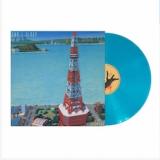
"CAN I SING?" (originally released October 5, 1983): 180g clear blue vinyl Remastered and cut by Alex Wharton (Abbey Road Studios, London)
Takanaka’s 10th original studio album, showcasing his signature “singing guitar.”
With guest appearances by Takao Kisugi (vocals), Yuji Toriyama (rhythm guitar), Yoshihiro Naruse (Casiopea; bass), and Daiji Okai (Yonin Bayashi; drums).
Blending techno-based sequencing with Takanaka’s warm, expressive guitar sound, the album radiates energy and melodic joy.
- A1: Chiemi Eri - Aizu Bandaisan
- A2: Pinky & Killers - Soran Bushi
- A3: Tokyo Children's Choir - Kokiriko
- A4: Michiya Mihashi & Tokyo Cuban Boys - Sado Okesa
- A5: Dark Ducks - Konpira Funefune
- A6: Ebonee Webb - Cowboy's Elegy
- A7: Akira Ishikawa & Count Buffalo - Tanchame
- B1: Satoru Oda & His Group - Yagi Bushi
- B2: Pinky & Killers - Otemoyan
- B3: Miki Nakasone - Kunjan Sabakui
- B4: Leon Pops - Mamurogawa Ondo
- B5: The Peanuts - Ohara Bushi
- B6: Tokyo Academy Mixed Choir - Kiyari Kuzushi
- B7: King Orchestra - Dojou Sukui (Yasugi Bushi)
- For all fans of the Wamono series!
- All tracks selected by DJ Yoshizawa Dynamite. Includes the first ever vinyl release of The Peanuts' "Ohara Bushi" track, originally released only on tape in 1970.
- Fully licensed King Records masters.
- Mastering and lacquer cut by Jukka Sarapaa at Timmion Cutting Lab, Helsinki, Finland.
- 180g heavy vinyl pressing, reverse board jacket.
- Artwork by Nicolas Kerembellec (Nker).
---
Active as a professional DJ in Japan since the late eighties, DJ Yoshizawa Dynamite is also a renowned remixer, compiler and producer. An avid record collector and an expert of Wamono music, Yoshizawa has published in 2015 the now-classic Wamono A to Z records guide book, which instantly sold-out. The book unveiled a myriad of beautiful and rare records from a highly prolific, but still then unknown, Japanese groove scene. He has also selected a large part of the music in our highly acclaimed Wamono compilations.
For this brand new chapter in the series, Yoshizawa explores King Records' legendary catalog and unearths exceptional, rare and unknown musical gems. King Records has been releasing music since 1931 and is one of the most prestigious labels in Japan. Traditional Japanese music, known as "Minyo", are ancient songs once sung by fishermen, coal miners and sumo wrestlers. They are reimagined here with vibrant afro latin, rock, rare groove and funky arrangements in this killer selection of music released on King between 1963 and 1979. Also worth mentioning is the track Ohara Bushi by The Peanuts, which was released only on tape in 1970 and is now available for the first time ever on vinyl format.
Put the needle on the record, turn up the volume and dig right now into the Wamono sound - the cream of the Japanese funk, soul, rare groove and disco music developed throughout the years since the end of the fifties in Japan!
---
180GWALP08 - Manufactured and distributed by 180g.
- A1: The Call
- A2: Marty's Dream
- A3: Endo's Game
- A4: The Apple
- A5: Pure Joy
- A6: Holocaust Honey
- B1: The Humbling
- B2: Motherstone
- B3: The Scape
- B4: Tub Falls
- B5: Fucking Mensch
- B6: Rockwell Ink
- C1: Hoff's
- C2: Seward Park
- C3: The Necklace
- C4: Vampire's Castle
- C5: Back To Hoff's
- C6: Shootout
- D1: I Love You, Tokyo
- D2: The Real Game
- D3: Endo's Game (Reprise)
- D4: Force Of Life
- D5: End Credits (I Still Love You, Tokyo)
Daniel Lopatins (Oneohtrix Point Never) Soundtrack für Marty Supreme, gepresst auf schwarzem und transparentem Vinyl. Kommt mit japanischem Obi-Band und doppelseitigem "Koto Endo / Marty Supreme Offizieller Ball"-Poster. Der Film Marty Supreme ist eine Abenteuerkomödie von Josh Safdie aus dem Jahr 2025 und ist lose vom Leben Marty Reismans inspiriert, die in den 1950er-Jahren spielende Geschichte ist jedoch fiktiv. Die Hauptrolle des titelgebenden Tischtennisspielers übernahm Timothée Chalamet. Gwyneth Paltrow, Odessa A'zion, Kevin O'Leary, Tyler Okonma, Abel Ferrara und Fran Drescher ergänzten das Schauspielensemble. Marty Supreme ist der erste Film von Josh Safdie nach Beendigung der kreativen Zusammenarbeit mit seinem Bruder Benny. Das Werk wurde Anfang Oktober 2025 im Rahmen des New York Film Festivals uraufgeführt. Der US-Kinostart war an Weihnachten 2025. Ende Februar 2026 soll der Film in die deutschen Kinos kommen. Die Filmmusik von Daniel Lopatin wurde im Jahr 2025 für einen Hollywood Music In Media Award (HMMA) nominiert. Im Rahmen der Critics' Choice Movie Awards 2026 wurde Marty Supreme in die Shortlists für die Kategorien Casting & Ensemble", Szenenbild", Kamera", Kostüme", Filmschnitt" und Filmmusik" aufgenommen. Im Dezember 2025 gelangte der Film auf die Oscar-Shortlists für das beste Casting, die beste Kamera, das beste Makeup & Hairstyling und die beste Filmmusik. (Quelle: Wikipedia)
- Side A. Gypsy Song
- Side B. Never Land
After traveling through Mexico, Miami, the Bahamas, and New Orleans, Nishioka recorded his fourth album South American Journey in Los Angeles,
released in 1979. From this album, two of his most celebrated tracks—“GYPSY SONG”, a fan favorite with numerous cover versions, and “NEVER LAND”,
featuring the distinctive sound of steel pans and a Japanese reggae vibe are now being pressed on 7-inch vinyl for the first time in a limited edition!
The recording features members of the So What Review band, including Junshi Yamagishi (guitar) and Osamu Ishida (guitar), along with renowned steel pan
player Robert Greenidge, known for collaborations with Van Dyke Parks and Taj Mahal.
(FLATT THE LAIDBACK)
Kyozo Nishioka Profile
(Born May 7, 1948 – Died April 3, 1999)
Singer songwriter from the Shima Peninsula in Mie Prefecture, affectionately nicknamed “Zo-san”.
After enrolling at Kinki University and moving to Osaka, Nishioka became a regular at the folk cafe Dylan in Namba, opened in August 1969 by Masaji Otsuka
and Yoko Ishimura. Dylan was a gathering spot for folk music enthusiasts from all over Japan.
Nishioka formed the folk group The Dylan with Masaji Otsuka and You Nagai, performing at folk camps and the Nakatsugawa Folk Jamboree. In 1971, Nishioka
left the group, and Otsuka and Nagai continued as The Dylan II. Nishioka wrote and composed the song “Puka Puka” under the pen name Zokyozo, which became
one of his signature works. The song was first released in July 1971 as the B-side of The Dylan II’s single “Otoko rashii tte Wakarukai” on URC Records.
Nishioka began his solo career, releasing his debut album “Dylan nite” in July 1972, produced by Kinji Yoshino on Bellwood Records, which included his own
version of “Puka Puka”. In September 1973, he appeared at the farewell concert of Happy End titled CITY – LAST TIME AROUND at Bunkyo Public Hall in Tokyo.
His 1974 album “Machiyuki Murayuki” was produced by Haruomi Hosono, and his 1975 album “Rokka My Baby” featured support from Shigeru Suzuki’s band
HUCKLE BACK. Nishioka recorded three albums under Hosono’s production, deepening their friendship.
Together with his wife and lyricist KURO, Nishioka wrote songs for artists such as Eikichi Yazawa. The couple traveled the world, recording overseas albums such
as “Nanbei Ryoko” (1977), “Yoh-Sollo” (1979), and “New York to Jamaica” (1981), incorporating reggae, calypso, and other global sounds. In the 1980s, he released
works under the duo name KYOZO & BUN with Yoshifumi Okajima, and in the 1990s returned to solo projects with albums like “START” (1993) and “Farewell
Song” (1997).
After KURO’s passing in 1997, Nishioka continued his musical activities until his own death in 1999 at the age of 50. His music transcended the boundaries of folk,
blending jazz and tropical elements to create a unique world view, leaving an indelible mark on Japanese music history.
- A1: Ohayo! Voice Cast:minami Takayama, Yoko Kawanami, Miki Narahashi
- A2: Renaissance Jounetsu Vocalist:wataru Kuniyasu
- A3: Idainaru Ajio<Bgm>
- A4: Okazu Yunta Vocalist:minami Takayama, Yoko Kawanami, Miki Narahashi
- A5: Konishi No Kokuhaku Voice Cast:hirotaka Suzuoki
- A6: Hisshyoku Ryourinin Vocalist:hirotaka Suzuoki Chorus Singers:minami Takayama, Yoko Kawanami, Miki Narahashi
- A7: Hinode Syokudo<Bgm>
- A8: Syokuseikatsu Vocalist:tomohiro Nishimura
- B1: Eye Catch Voice Cast:minami Takayama, Yoko Kawanami, Miki Narahashi
- B2: Onabe Wo Mitetene Vocalist:mari Yokote
- 3: Aji Syobu<Bgm>
- B4: Ajiou Ryourikai Kaika Vocalist:yuzuru Fujimoto & Ajio Ryouri Kanto Shibu
- 5: Shimonaka No Kokuhaku
- B6: Surume No Iji Vocalist:tomohiro Nishimura
- B7: Yokokuhen Voice Cast:kenyu Horiuchi Narrator:minami Takayama
- B8: Kokoro No Photograph Vocalist:wataru Kuniyasu
The analog LP reissue of the original soundtrack album from the anime Mr. Ajikko, which aired in 1987. The original LP catalog number is K28G-7379, and the original
CD catalog number is K32X-7125, released on June 21, 1988 (the tracklist differs from the CD released in 2004, which included eight newly added tracks).
The original manga, created by Daisuke Terasawa, was serialized in Weekly Shonen Magazine from autumn 1986 to the end of 1989, and was adapted into an anime
series that aired on TV Tokyo from October 1987 to September 1989.
This is the only soundtrack album for the anime series. It features the opening theme “Renaissance Jounetsu” and the ending theme “Kokoro no Photograph”, both
composed and sung by singer songwriter Wataru Kuniyasu, who is also known for composing Akina Nakamori’s “Gypsy Queen”. Lyrics were written by Ikki Matsumoto,
and arrangements were done by Tatsumi Yano.
The album includes image songs, eyecatch music, and preview tracks, with contributions from renowned comedy song artists Masayuki Yamamoto (Side A tracks 4 and 6)
and Tatsuo Kamon (Side B tracks 1 and 7). The album was structured, scripted, and directed by the anime’s director Yasuhiro Imagawa, making it a variety style album.
The main background music (BGM) was composed and arranged by Daito Fujita (Side A tracks 1, 3, 5, 7; Side B tracks 3, 5). The original manga author Daisuke
Terasawa also contributed lyrics for two songs (Side B tracks 3 and 5). Voice actor Tomohiro Nishimura participated both as a singer (Side A track 8; Side B track 7)
and as an arranger (Side B track 7).
Voice actors Minami Takayama, Yoko Kawanami, Miki Narahashi, Hirotaka Suzuoki, and Kenyu Horiuchi also participated in min dramas and chorus segments.
This album, which comically and dramatically portrays cooking battles, is a “Bravo!” anime soundtrack that closes out the Showa era in style. After 37 years, it is finally
being reissued as an analog LP a long-awaited release for anime connoisseurs!
- 1: The Song Of Yamato-Minzoku
- 2: Free Fight
- 3: The Thrilling Corner
- 4: Ellen David
- 5: Yellow Monk
- 6: La Pasionaria
- 7: Nbagi
- 8: Monster's Teardrops
- 9: Another Country
BBE Music’s acclaimed J Jazz Masterclass returns with its 20th release, a super rare private press from one of the more laudable female jazz figures of Japan, saxophonist and composer Sachi Hayasaka, together with her band, Stir Up! Released in 1988 on the private label Mobys, Free Fight was Hayasaka’s debut album and announced the arrival of an essential and primal force onto the Japanese jazz scene. Part free jazz, part post-bop, and part heavy groove, Free Fight is one of the most varied yet engaging albums BBE Music has reissued in the J Jazz Masterclass Series, showcasing Hayasaka’s inventive and muscular playing as well as her highly original and surprising compositional powers. Given the album’s eclectic yet cohesive sound, it’s no surprise that it originally found a home at Mobys, the label established by esteemed jazz critic and promoter Teruto Soejima. Mobys only issued a handful of albums from some of the leading free and open players including J Jazz Masterclass alumnus, pianist Aki Takase, as well as free jazz guitar icon Masayuki Takayanagi, and free jazz figureheads Itaru Oki and the great Masahiko Satoh. Born in Tokyo in 1960, Hayasaka took lessons from saxophonist and recording artist Toki Hidefumi and fully immersed herself in the jazz life, working part-time at various jazz kissas including Peter-Cat, a kissa managed by novelist Haruki Murakami. She has performed regularly across Japan at venues like the famous Pit Inn and formed a strong alliance with the classic Tokyo jazz kissa Paper Moon, which continues to this day. Heavily influenced by players such as Roland Kirk, David Murray and Ornette Coleman, Hayasaka has played with free jazz legend Yosuke Yamashita and performed around the world (as well as up Mount Fuji!). In the late 1980s she moved to New York for several years and worked with notable musicians including drummer Pheeroan akLaff and pianist Cliff Korman. She has recorded a number of albums to her name for Japanese jazz labels such as Three Blind Mice and Kitty as well as leading European imprints such as Enja.
"Eau" is the lovely new album from aus, the solo project of Tokyo-born composer and producer Yasuhiko Fukuzono, who has gained attention, in Japan and overseas, for his thoughtfully paced and sensitively skillful music as well as his intriguing sound design for exhibitions and experimental cinema. Having worked primarily with keyboards and electronic sound up to this point, "Eau" is a slight yet fascinating shift for aus; the album, while still primarily an electronic work, revolves around the sonic world of a stringed acoustic sound source, the koto, that most characteristically Japanese of musical instruments. The very accomplished Eden Okuno provides the delicate-yet-rich koto sounds on offer here; Fukuzono, in the liner notes, acknowledges the importance of Okuno's artistry to the project.
The compositions on the album are designed to balance the sound of the koto, with its subtly variable attack and flickering resonance, with the timbre of other instruments. The delicate decay and metrical flexibility of the koto is enveloped by sustained synthesizer sounds and contrapuntally constructed piano melodies, creating a flowing ambience with absorbing undercurrents, a languid and liquid quality that reveals the suitability of the title.
Avid fans of contemporary Japanese music might hear the influence of pioneering works such as the the 1979 Hiroshi Yoshimura composition "Clouds for Alma", realized by koto player Tadao Sawai, and the 1993 album "Koto Vortex I: Works by Hiroshi Yoshimura" which featured performances of Yoshimura's works by the Japanese koto quartet Koto Vortex. These works attempted to remove the koto from its traditional context and place it within the context of ambient and techno. "Eau" is available on CD/LP/cassette/digital, with E/J liner notes by aus. "Eau" is the first collaborative release by EM Records and FLAU, the label run by Yasuhiko Fukuzono (aus).
A rhythmic minimal ambient piece played with organic electronic sounds. Elements of electronic, psychedelic, and ethnic music are interwoven. The vinyl debut of Japanese composer / electronic musician NAT000. Mastered by ISAO KUMANO of Phonon, a Japanese audio equipment manufacturer. NAT000 : After performing live as a one-man drone under the name sonic mainly at 20000v in Koenji Tokyo and DOM in Nishi-Shinjuku (now EARTHDOM in Shin-Okubo), he became a band member of the hardcore bands BUTTHEAD SUNGLASS and ABRAHAM CROSS, which gained popularity in the underground scene in Tokyo in the 2000s.The Band has been performing in parks, abandoned buildings, and campgrounds. Since turning solo again, he has been producing electronic music and performing live using analog synths, samplers, drum machines, software, and effectors, and has privately released a CD of self-produced recordings. This album is a compilation of past works from those CDs and newly produced works for the album.
- A1: Hit Hunter
- A2: Fantasy
- A3: Strike!
- A4: Blue Night
- B1: Moonwalk
- B2: Tokyo Searchlight
- B3: Let's Meet At Daikoku Pier
- B4: Hit Number - Evisbeats And Punch Rmx
Celebrating its 10th anniversary in 2025, Emi Okamoto's debut mini-album "Strike!" is being released on vinyl LP with a newly remastered "10th Anniversary
Edition"!
Singer-songwriter Emi Okamoto is a multifaceted artist, active not only as the lead vocalist of the band Friends, but also in dramas, writing songs, and supporting
and guesting at RIP SLYME's live shows. Her fourth album, "Ten City," commemorating the band Friends' 10th anniversary, will be released in September 2025
and is generating rave reviews. Also celebrating its 10th anniversary in 2025, her debut solo album will be released on vinyl LP with a newly remastered"
10th Anniversary Edition"! Written and composed by herself, this album showcases her unique style, spanning everything from cheesy electro-pop to
Idol-esque tracks, '90s R&B, exotic pop, and emotional rock ballads. Also included as a bonus track is the remix "Hit Number - Evisbeats and Punch Rmx"
by Evisbeats and Michel☆Punch. The single-LP release of "Strike!" sold out immediately, skyrocketing in price even on the used market and making it
difficult to find, so this vinyl release is a welcome surprise! Guest appearances include Kouki Okamoto (Gt./Okamoto's) and Keisuke Okamoto (Dr./Kuroneko
Chelsea).
E-style single jacket / Japan pressing / 33 RPM / Lyrics included
- Intro
- Warschauer Pakt
- Der Osten
- Kamito Se Kai
- Spionage
- Belsen Ein Kz
- 1: Oktober
- Der Preis Der Freiheit
- Die Türken Von Morgen
- Bürgerkrieg
- Deutsches Leichentuch
- Freiheitskämpfer
- Die Macht Des Feuers
- Freut Euch
- Roter Terror
- Kaufhof
JAPAN EDITION VINYL[22,06 €]
45 Jahre nach ihrer Gründung erfüllt sich für OHL - Deutschlands provokanteste und mittlerweile dienstälteste Punkband (ohne Unterbrechung) - ein lang gehegter Traum: Die Band wurde für 8 Konzerte ins Land der aufgehenden Sonne eingeladen. Ihr allererstes Album nannte die Band seinerzeit "Heimatfront" und schrieb damit deutsche Punkgeschichte. Was lag also näher als die Tour "Der Japanfeldzug" zu nennen in bester OHL-Tradition? Von dem schweisstreibenden Auftritt in Tokyo wurde dabei ein Live-Recording mitgeschnitten, welcher jetzt exklusiv auf Vinyl als Collector's Edition erscheint. 16 Songs, rauh, kompromißlos und authentisch, so wie man es von OHL und ihrem Sänger Deutsche W. gewohnt ist. Die Japan-Edition ist auf 200 copies limitiert in weissem Vinyl / rotem Label und persönlichem Tourtagebuch und Foto-Collage im Beileger erhältlich. Für Freunde des klassisch schwarzen Vinyls außerdem 100 Exemplare, die schnell vergriffen sein dürften!
Wolfgang Muthspiel und sein Trio mit Scott Colley am Bass und Brian Blade am Schlagzeug („Zusammen haben sie etwas von der Empathie des Bill Evans Trios“ – Downbeat) starten mit einer feinfühligen
Interpretation von Keith Jarretts „Lisbon Stomp“ swingend in ihr drittes Aufnahmeprojekt, die vielleicht
abenteuerlichste Trio-Aufnahme der Gruppe. Auf dem gesamten Album richten der österreichische Gitarrist
und seine amerikanischen Mitstreiter das Augenmerk jedoch auf Muthspiels fesselnde Eigenkompositionen,
die lyrische Balladen („Pradela“, „Traversia“), subtile Folk-Einflüsse („Strumming“, „Flight“) sowie leicht
angeschrägten Kammerjazz („Weill You Wait“) und twangy Rock ’n’ Roll („Roll“) umfassen. Wie gewohnt
wechselt Muthspiel fließend zwischen akustischer und elektrischer Gitarre und präsentiert seinen sanften
Anschlag und seine fließenden Linien in einem Programm, das die gesamte Bandbreite des idiomatischen
Spektrums zu umfassen scheint, das er in den letzten Jahrzehnten entfaltet hat. Mit einer raffnierten
Interpretation von Paul Motians „Abacus“ als Finale des Albums schließt Muthspiel eine große Lücke in
der Geschichte des Jazz und von ECM. Das Album ist nach der japanischen Hauptstadt benannt, wo es
im Oktober 2024 aufgenommen wurde. Tokyo wurde im Februar 2025 in München abgemischt, und von
Manfred Eicher produziert.
In 2024, Kyoto Jazz Massive released their third album as a digital-only project, 30 years after their debut. It now receives the honor of a special vinyl edition, featuring brand-new exclusive mixes by Young Pulse—elevating these already great tracks to even greater heights, for both your ears and your feet.
This marks the first and exclusive collaboration between KJM and Echoes Of A New Dawn Orchestra (aka Jéroboam), the unique Parisian band that has been performing live with KJM across Europe for the past three years. On this occasion, KJM recorded four new tracks with EOANDO, including three original songs ("Power", "Love Wars", and "Impulsive Procession") and a new rendition of “Stand Up”, a previously released composition. To complete the album, you'll also find a stunning cover of KJM’s iconic track "Substream" by EOANDO, as well as their signature piece, “EOANDO's Theme”.
"Power" and "Stand Up" were recorded with Vanessa Freeman, while "Love Wars" features Bembe Segue. This London-based duo has been singing live with KJM since 2004.
"Power" is a crossover anthem, blending jazz-funk and French disco with a gospel touch. Vanessa Freeman’s uplifting lyrics call for collective awareness and energize audiences. "Love Wars" is a live-band interpretation of broken beat with a boogie spirit, enhanced by Bembe Segue’s sharp and spiritual vocals. “EOANDO’s Theme” was specially composed by Echoes Of A New Dawn Orchestra for KJM, capturing the Okino Brothers' love for boogie-funk jams with Brazilian and Balearic influences reminiscent of Azymuth.
“Impulsive Procession” fuses Afro, funk, jazz, fusion, soul, rock, house, and techno—drawing inspiration from several of KJM’s most respected musical heroes. A brand-new version of “Stand Up”, originally released in 2008, was re-recorded live in the studio with EOANDO and fresh vocals by Vanessa Freeman.
The album closes with a reimagined version of “Substream”, one of KJM’s most beloved tracks, covered by EOANDO for the official Tokyo Crossover/Jazz Festival 2023 compilation. This new version was recorded as an organic disco interpretation at Danilo Plessow’s studio in Paris.
A long-lost Japanese acid folk gem, Niningashi’s 1974 private press debut Heavy Way shimmers with originality, deft song writing and a dream-like groove.
Although he was training as a pharmacist, Kazuhisa Okubo was much more interested in prescribing musical medicine.
A coming-of-age album, Heavy Way captured a turning point in Okubo’s life, and Japanese society more widely as a nostalgia for the pastoral calm of the traditional life, met the cosmopolitan thrill of coffee, sex and cigarettes in the big city.
Intoxicated by Tokyo, driven by a passion for music and surrounded by a thriving acid folk scene, the young student filtered his experiences through a psychedelic cocktail of soulful influences from the US and Japan.
Niningashi was his first band, and Heavy Way was their only album. It was honest and raw, deep and strangely funky, in an off-beat kind of way. Across nine tracks, Okubo and the 6-piece band put their own spin on the new folk sound of Japan, combining witty lyrics with electric guitar-driven solos and crisp, understated grooves.
Melancholy and profound, opening track ‘Ameagari’ feels like a synthesis of Harvest-era Neil Young and Haruomi Hosono’s Happy End. Then there’s the whimsical washboard country sound of ‘Semai Boku No Heyade’; the moody, low-lit charm of ‘Restaurant’; and ‘Hitoribotchi’, a sensitive portrayal of childhood, steeped in memories of rainfall that will resonate with fans of Woo and Mac Demarco.
While Okubo would go on to taste success with psychedelic folk bands Neko and Kaze, the latter of which scored three #1 albums, little is known about his mysterious debut with Niningashi.
Self-released by Okubo in 1974, and featuring album artwork by his brother, it has slowly generated a cult following online, intrigued by its soft and enchanting sound. So few records were ultimately pressed that those remaining have fetched up to £1,500 online.
Featured on Time Capsule’s era-spanning collection Nippon Acid Folk, Niningashi’s Heavy Way is a deep-cut grail of a vibrant time in Japan’s musical history, where even the pharmacists were making jams.
"For Japanese people, min'yo is both the closest, and most distant, folk music" explains band-leader Katsumi Tanaka. "We may not feel it in our daily, urban lives, yet the melodies, the style of singing and the rhythm of the taiko drums are engrained in our DNA".
Initially indifferent to min'yo, a tragic event in recent Japanese history set Tanaka on his current path: "Following the Tohoku earthquake of 2011, I reflected on my life, work and identity. A fan of world music, I began searching for Japanese roots music I could identify with. Discovering mid-late 20th century acts like Hibari Misora, Chiemi Eri and the Tokyo Cuban Boys, I was captivated by their eccentric arrangements and how they mixed min'yo with latin and jazz music."
Lead singer Freddie Tsukamoto fell for min'yo after hearing a song from his hometown on a TV competition whilst in a restaurant. It was a revelation – until then he had been an aspiring jazz singer yet was uncomfortable singing in English. The restaurateur told him a min'yo teacher was his neighbour and the two connected. Tanaka and Freddie formed Minyo Crusaders in 2011 in Fussa, a city where the US military Yokota Air Base is located, in western Tokyo.
Recruiting other local musicians versed in afro and latin rhythms, they began hosting jam sessions at the Banana House, a building that was previously part of the military base and that used to house US soldiers. The band started recording their music, and their debut album "Echoes Of Japan" was released in 2017. It received huge acclaim in Japan and abroad, and was also released by British label Mais Um in 2019. Several European tours followed, as well as some US and South America gigs.
In this second opus, the Minyo Crusaders take us on a trip to Japanese folk songs fused with latin rhythms. Their unique arrangements breathe new life to classics like Kiso Bushi, Sado Okesa or Soran Bushi, among many other min'yo songs from all over Japan that were originally performed by Japanese fishermen, coal miners and sumo wrestlers hundreds of years ago. The magical groove created here proves once again that the Minyo Crusaders are one of the most dynamic representatives of the current Japanese world music scene. Yoi Yoi, Enjoy!
- Through The Heat Waves
- Eight Miles High Alone 07:46
- In Motion
- Inhale
- Crystalline 06:38
- Exhale
- One More Rush
- Silence Is Gliding 05:56
- Cloud Surfing
Marconi Union, one of the most influential names in contemporary ambient and electronic music, announce their twelfth studio album, The Fear of Never Landing, set for release 6th June via Just Music. The news is paired with the release of first single Eight Miles High Alone, out 20th March on all major streaming platforms.
Known for their ability to craft cinematic, immersive soundscapes that blur the lines between ambient, electronic, and experimental music, the Manchester-based duo once again push the boundaries of sonic exploration. The Fear of Never Landing takes us on a dynamic journey that’s atmospheric, diaphanous and never short of mesmerising. While the new record is certainly infused with a sense of hope, there’s more than a soupçon of anxiety too, as the title suggests.
A 55-minute odyssey presented as one seamless piece divided into nine movements, they transcribe the nexus of modern living into a mostly wordless odyssey. The album encapsulates Marconi Union’s ability to translate the complexities of the human experience into sound, all while maintaining a stunning sense of cohesion.
While the music feels effortless, the creative process was anything but. During the two years it took to complete the album, members Jamie Crossley and Duncan Meadows faced creative struggles that even led them to briefly question the band’s future. A pivotal moment came when they performed a live soundtrack to the 1975 skateboarding film Downhill Motion, rekindling their connection to atmospheric composition. By testing new material live and returning to their roots, Marconi Union redefined their creative process, leading to some of their most emotionally impactful work to date.
“We’ve always made atmospheric music but we had started to lose that aspect. Other than some rough ideas, we had no sense of what we were doing anymore, a kind of musical wilderness. Eventually a couple of things fell into place, and it was like, ‘Ah, okay.”
With a foundation to build upon, they went back to basics and decided to take their time going forwards. “We tried out a few new tracks live which gave us the opportunity to see what worked and what didn’t. We've never given ourselves that luxury before.”
The first track to be shared, Eight Miles High Alone, is a mesmerizing sequencer-driven track that builds an immersive, atmospheric soundscape. Its hypnotic pulses and intricate layers evoke a sense of solitude and weightlessness, perfectly capturing the album’s blend of tension and introspection. “Eight Miles High Alone was the first piece that we managed to complete and helped to inform our approach to the rest of the album.”
Formed in Manchester in 2003, their debut album, Under Wires and Searchlights (2003), introduced their signature sound, but it was their 2011 release of Weightless that brought international acclaim. Developed in collaboration with a sound therapist, Weightless was scientifically recognised as “the world’s most relaxing song”, praised for its ability to reduce anxiety and heart rates. With over 900 million streams and widespread coverage across media, the track remains a cultural phenomenon.
Over the years, Marconi Union has continued to evolve, producing critically acclaimed albums such as Signals (2021), Ghost Stations (2016), and Tokyo+ (2017). Their work has been hailed for its emotional resonance and sonic depth, with The Quietus noting their ability to find “beauty in the bleakest places” and The Sunday Times describing them as “amongst today’s most talented musicians.”
Beyond their studio albums, Marconi Union has collaborated with visual artists, provided soundtracks for installations, and remixed notable acts like Max Richter and Vök. Their invitation by Brian Eno to perform at Norway’s Punkt Festival further cemented their reputation as innovators in the ambient music sphere.
With The Fear of Never Landing, Marconi Union once again showcases their unmatched ability to create immersive soundscapes that resonate deeply. The album reaffirms their position as masters of atmosphere and emotional storytelling, making it an essential addition to their storied catalog.
Recorded in Kobe, Kyoto, Tokyo, September 2015 Photos by Jim O'Rourke. Layout by Shunichiro Okada Despite decades of activity and having crossed paths in various collaborations Editions Mego is honoured to release the first ever duo recording from two of the most highly regarded citizens of planet experimental electronic. Individually, Jim O'Rourke and Christian Fennesz have been responsible for numerous legendary works which merge the traditional avant-garde with contemporary sensibilities. On It's Hard For Me To Say I'm Sorry these giants of experimental electronic practice come together for an immensely powerful sonic experience. The signature of both O'Rourke and Fennesz cohabit this new release with O'Rourke's gurgling harmonies swimming amongst the shimmering frequencies and strummed melodies produced by Fennesz. Two side long tracks situate themselves as a warm electronic adventure. Simultaneously radical and comforting these works shift from gentle sonorities to fully distorted explosions all of which reside within a template of tension between musical and non-music matter. Timeless in execution and presentation It's Hard For Me To Say I'm Sorry is a deeply rewarding sonic experience from two of the most romantic gentlemen active in experimental music today.
- A1: Yousui Inoue - Umi He Kinasai 5 29
- A2: Keiko Nosaka / George Murasaki - Oritatamu Umi 5 17
- A3: Higurashi - Natsuno Kowareru Koro 3 56
- B1: Blue - Mangrove 6 45
- B2: Rehabilual - Yaponesia Sakura 5 07
- B3: Sachiko Kanenobu - Asano Hitoshizuku 4 36
- C1: E S.island - Yumefurin 3 47
- C2: Akiko Kanazawa - Esashi Oiwake(Maeuta) (Virtual Reality Mix) 5 53
- C3: Voice From Asia - Sweet Ong Choh 4 43
- D1: Nami Hotatsu - Asa Hikari Ame Yume 1 53
- D2: Nav Katza - Heaven Electric 5 26
- D3: Naomi Akimoto - Tennessee Waltz 3 01
compiled by tsunaki kadowaki
artwork by yoshirotten
mastering by kuniyuki takahashi
Tsunaki Kadowaki, a staff member at Kyoto’s record store Meditations, the supervisor of "New Age Music Disc Guide", and the founder of Sad Disco, curates the fourth installment of "Midnight in Tokyo" themed around Ambient Kayō.
The Midnight in Tokyo series by Studio Mule focuses on Japanese music, serving as a soundtrack for Tokyo nights—whether for home listening, club play, or as a driving BGM, transcending location and space. After a six-year hiatus, the fourth volume takes "Ambient Kayō" as its new perspective, compiling genre-defying tracks released between 1977 and 1999 to explore the intersection of Japanese ambient and pop music.
For this long-awaited fourth installment, selections were made regardless of record label status (major or independent), era, format (vinyl or CD), original release price, or prior reissues. Instead, the focus was on music that deeply moves the listener, is open-minded and evocative, brims with inspiration and spiritual insight, and embodies the "utagokoro" (singing heart) of Japanese artists.
Opening the compilation is "Umi e Kinasai" by Yōsui Inoue, a legendary Japanese singer-songwriter whose works have recently gained renewed interest as hidden gems of Walearic and ambient pop
Composed and arranged by Katsu Hoshi—who is also known for his arrangements on Inoue’s masterpiece Ice World—the track features renowned players such as Masayoshi Takanaka, Hiroki Inui, and Shigeru Inoue. The song embodies a yearning for Balearic horizons, tinged with youthful vibrancy and sentimentality.
Next, "Oritatamu Umi", compiled from Keiko Nosaka, a 20-string koto player, and George Murasaki, a pioneer of Okinawan rock, is an instrumental track from their album "Niraikanai Requiem 1945". As the title suggests, it carries themes of requiem and remembrance, conveying poetic lyricism even without words. Blending Ryukyuan/Okinawan harmonies and indigenous elements, it unfolds as an intimate and nostalgic piece of progressive rock.
Also featured is "Natsu no Kowareru Koro" by Higurashi, a folk-rock band led by Seiichi Takeda, formerly a guitarist of The Remainders of The Clover, the predecessor of RC Succession. Like the opening track "Umi e Kinasai", this song was also produced by Katsu Hoshi. It stands as a folk/new music piece that takes a step into an "otherworldly" realm, recommended for fans of Twin Cosmos and Masumi Hara.
From the enigmatic Blue, the only work left by the mysterious composer S.R. Kinoshita, comes "Mangrove", a hidden treasure of Japan's ambient/new age scene from the CD era. With an oriental and enigmatic atmosphere, the track evokes a mystical world of deep, uncharted jungles, unfolding as an otherworldly New Age Kayō.
"Yaponesia Sakura", selected from Rehabilual’s sole album New Child, is a masterpiece of Japanese new age music. Produced by Swami Dhyan Akamo, a disciple of Indian meditation teacher Osho and a renowned balafon player, the track features Michio Ogawa (Chakra) and Atsuo Fujimoto (Colored Music). Their collective artistry creates an exquisite spiritual ambient pop sound.
"Asa no Hitoshizuku", the opening folk song from Sachiko Kanenobu’s album Sachiko, is also included. Known for her legendary folk album Misora, produced by Haruomi Hosono, Kanenobu’s fourth album after resuming her career was inspired by her experiences living in San Francisco and revolves around the theme of "love." This track carries the same intimate poetic world as Misora, imbued with a pure, crystalline innocence.
From the synth-pop band E.S. Island, known for the Haruomi Hosono-produced *Teku Teku Mami", comes "Yume Fūrin ", selected from their long-lost new age classic Nanpū from Hachijo. Created while the band’s core duo was living in Hachijō Island, the album aimed to sonically capture "the high and happy vibrations of everyday island life." This track offers a dynamic, tribal-infused New Age Kayō experience.
Dubbed "the world's first Min’yō House Mix" "Esashi Oiwake (Maeuta) " comes from Kanazawa Akiko HOUSE MIX Ⅰ, a collaboration between Japanese house music pioneer Soichi Terada and Akiko Kanazawa, a renowned min’yō singer. Through the prism of club music, Hokkaido's Esashi Oiwake, one of Japan’s most iconic folk songs, is transformed into a futuristic ambient pop piece with intricate sound design.
The compilation also includes "Sweet Ong Choh", a track from Voice From Asia, a group active between 1989 and 1992 featuring vocal artist Shizuru Ohtaka. Taken from their imaginative minimal work Voice From Asia, released under Aoyama Spiral’s music label Newsic, the song presents a tranquil, tribal-minimal soundscape enriched by ethnic instruments.
Hailed by Haruomi Hosono as having “a shaman residing in her voice,” singer-songwriter Nami Hōdatsu also appears in the selection. Known for her collaborations with Henry Kawahara, her debut album featured "Asa-Hikari-Ame-Yume", a track that now stands as a precursor to modern vocaloid/synthesized vocal music—a hidden gem of post-choir aesthetics that deserves rediscovery.
Likewise, "Tennessee Waltz", from Naomi Akimoto’s album One Night Stand, supported by members of Mariah, serves as another early prototype of vocaloid/synthesized vocal music. The track weaves fragmented vocal samples, pastoral yet sweetly minimal synth sounds, and mechanical beats into a strikingly unconventional piece in the history of Japanese music.
Closing the compilation is "Heaven Electric", a track from Nav Katze’s album Gentle & Elegance, which featured remixes by Autechre, Seefeel, and Sun Electric. Merging elements of IDM, ambient techno, and chillout, the song embodies an optimism reminiscent of space music while seamlessly blending a mystical Japanese aesthetic—an ambient pop masterpiece.
---
The album presents 12 exquisite pop tracks infused with an ambient feeling, resonating deeply with the evolving landscape of the mid-2020s—a time of post-hyperpop and Y2K revival.
Tsunaki Kadowaki (Compiler)
Born in 1993 in Yonago, Tottori, Tsunaki Kadowaki is a staff member and buyer at Kyoto’s Meditations record store. He is the editor of New Age Music Disc Guide (DU BOOKS) and a contributor to Music Magazine, Record Collectors' Magazine, ele-king, and more. Kadowaki has written liner notes for multiple Japanese releases (Brian Eno, Masahiro Sugaya etc.) and runs the Sad Disco music label under Disk Union. He also curates Spotify’s official New Age Music playlist and performed as a DJ at YCAM’s Audio Base Camp #3 in 2024.
Wewantsounds is glad to continue its Akiko Yano reissue series with the release of the singer's third studio album 'To Ki Me Ki', recorded in New York and released in 1978 in Japan. It follows her cult "Iroha Ni Konpeitou" LP and keeps the similar blend of Japanese pop and New York funk found in the latter. "To Ki Me Ki" features such musicians as Rick Marotta, Will Lee and David Spinozza and also programmer Hideki Matsutake who would soon join the YMO with Akiko for their international 1979/1980 tour before she recorded her next studio album "Tadaima" that year, featuring the YMO musicians. "To Ki Me Ki" is reissued outside of Japan for the first time, remastered in Tokyo by revered engineer Mitsuo Koike and featuring original artwork by Tsutomu Murakami with 4 page colour insert and new liner notes by Paul Bowler....
- 1: Fuji-Yuki - Blood Moon 05:38
- 2: Kiki Hitomi - Gain And Lose 04:04
- 3: Mikado Koko - Fukagawa Bushi 05:42
- 4: Miki Yui - Radicalv 0:28
- 5: Kakushin Nishihara - Palace Of Deep Water 06:40
- 6: Kuunatic - Dewbow 05:35
- 7: Keiko Higuchi - Okesa Bushi 09:41
Seitō 青鞜 gathers Japanese female artists from various electronic and experimental music fields. Like the « Tokyo Flashback » series issued by P.S.F. in the early 1990s, this collection recorded between 2017 and 2019 exposes the richness of the contemporary Japanese underground music scene. The title refers to a cult feminist magazine printed in Japan in the 1910s. All tracks issued for the first time.
Mixtacy, a new independent label based in Tokyo, was launched in 2024 by DJs, for DJs, and of DJs. Their passion lies in updating the classic house style with modern underground artists. The first EP features four exclusive tracks by mysterious Japanese underground artists, available only on vinyl. All tracks are mastered by the Romanian talent, Dragutesku. A1 Addictive Desire by YAMADAtheGIANT, whose debut 12inch vinyl sold out 200 copies in just two months in Japan. This raw acid deep house track made by hardware synths, sequencers, and sampled vocals from the cult NY house track The Playground/Desire (1992). A2; Nightfall Yearnings by P.S. Morris, a 20 years experienced master of MPC from rural Japan. This classic-style deep house tune boasts a phat groove focused for the dance floor. B1; Forest is by Bitowa, originally from the Japanese hip-hop underground, now coming into the techno field from Okinawa, southwest Japan. This modern tech house track features acapellas sampled from garage classics and disco, resulting in a unique texture. B2; Lost Sweet Cherry is made from cut-ups of Japanese porno analog tapes by the owner of strange vinyl shop Tonotopica in Asahikawa, northeast Japan. This dub sets a psychedelic atmosphere as the night starts.
- A1: Nobuo Yagi - Mi Mi Africa
- A2: Nobuyuki Shimizu - Silver Spot
- A3: Piper - Samba Night
- B1: Haruko Kuwana - Akogareno Sundown
- B2: Aru Takamura - Koi Wa Saikou
- B3: Hitomi Tohyama - Love Is The Competition
- B4: Homma Express -What The Magic Is To Try
- C1: Colored Music - Colored Music
- C2: Shohjo-Tai & Red Bus St Project - Electric City
- C3: Yumi Murata - Krishna
- D1: Eri Ohno - Live Hard, ,Live Free
- D2: Minnie - Rocket 88
- D3: Shoody - Tokyo Melody
2024 Repress
at mule musiq, we've focused on shining light on the many aspects of what electronic music can be, putting out house, techno and ambient releases on our main label, while releasing alternative-leaning dance music through our endless flight imprint. but with the launch of our new label, studio mule, we are stepping away from electronic club music for a bit. the label will not be tied to a specific genre, as we will instead focus on releasing any kind of music that we feel is a little bit different and interesting, but somehow make sense in this day and age. for our first batch of releases, we will be focusing on japanese music.
to be honest, i have been watching the recent rise of global interest in japanese music with a skeptical eye, not sure of how to feel about all these labels overseas licensing great albums that were birthed in our country. but then, i was told by somebody i greatly respect that i should do something similar with mule, and put our own spin on it, which sounded like a good idea to me. after a period of procrastination, i finally got around to doing it. we are starting things off with a compilation of japanese disco, boogie and soul music that we selected from a modern dance music perspective — the kind of songs that we feel would intrigue music fans across the world.
at first, i started seeking authentic-sounding disco that sound like it could have been recorded in the states, but after struggling to get licensing rights for many of those tracks, i started to wonder if that was really the direction we should be going in. when we start new labels or projects, we often come up with the title or artwork first, before deciding on the actual music. we came up with the title midnight in tokyo first, which dictated that we needed to find music that would be a perfect soundtrack to listen to at night in tokyo. we ended up compiling a selection of tracks that you could both listen to at home, and play in clubs at certain time slots. the compilation also ended up sounding a lot more pop than we initially imagined...
during the selection process, we did not care whether the tracks have been reissued already or not, and how rare the original copies of the records were. our sole purpose was to gather a handful of songs from across labels, major or otherwise, that we felt could be listened to for many years to come — even after this whole japanese music trend dies down. although we put together this release mainly for listeners outside of japan, the compilation can also be a chance for japanese music lovers to rediscover the greatness of domestic music, as we did during the process.
the compilation starts off with the afro disco classic 'mi mi africa' by harmonica player nobuo yagi, which was also included in the compilation mastercuts.
'silver top' is a jazzy fusion disco taken from composer, arranger and multi-instrumentalist nobuyuki shimizu's first album, which he released when he was 19. the track features singer epo, whom he worked with many times over the years as an arranger.
'samba night' is by vocalist keisuke yamamoto and his band piper, from their masterpiece second album summer breeze. a delightful city pop number that should appeal to tatsuro yamashita fans.
'akogareno sundown' is a japanese soul classic, sang by singer haruko kuwana (the sister of well-known musi-cian masahiro kuwana). recorded in hawaii and produced by mackey feary band, known for the soulful classic 'a million stars.'
'koiwa saiko (i'm in love)' is a mellow and groovy track by singer aru takamura, the great-grandchild of sculptor kouun takamura, whose son kotaro takamura is a famed poet and sculptor. can be thought of as japan's answer to cheryl lynn's 'got to be real.'
'what the magic is to try' is a cult electropop track by honma express, a project helmed by producer kanji honma. hailed as japan's trevor horn, he is also known as the producer of legendary techno pop band tpo.
'colored music' is a song by colored music, a duo of pianist ichiko hashimoto and her partner atsuo fujimoto, who have gone on tour with ymo. taken from colored music's sole album, the japanese rare groove treasure is a mesh of new wave, synth pop and jazz influences.
the dubby electronic new wave disco 'electric city' is a b side of pop idol group shohjo-tai's debut 12' single, but the girls aren't actually singing on it, making the instrumental one of japan's greatest '80s dance tracks.
'love is the competition' is a breezy disco jam by okinawa-born bilingual artist hitomi tohyama. featured on her album next door, the song's melody seems like an interpolation of the whispers' 'it's a love thing.'
taken from mariah project's diva yumi murata's first album, 'krishna' is a funky and soulful rockin' disco cut.reminiscent of chaka khan's 'i know you, i live you,' 'live hard, live free' is a song by jazz vocalist eri ohno who is known for her work with dj krush and singing on the soundtrack to anime rupin the third.
'rocket 88' is a melancholic disco number by singer minnie. though the track was released through sapporo's independent label paradise records, the superb production quality suggests otherwise.
closing out the 13-track compilation is japanese disco staple 'tokyo melody,' sang by half african and half swedish american singer shoody and backed by tetsuji hayashi's disco band the eastern gang.
GǼG, the production unit of Tokyo's leading club sound Monkey Timers and Okayama-based maverick producer Keita Sano, is proud to present this heavyweight, alternative, and leftfield release on the "Sound of Vast."
Over a powerful and mysterious bassline, the hypnotic A1 'Jack' builds up with sharp synth stabs, dark pads, and ACID voices taken from Ron Hardy's open reel soundtrack series Jackmaster Hater.
AA1 is followed by the obscure percussion track 'Yamato.' It is a reinterpretation of the drumming of legendary drummer Curt Cress from the German jazz-rock scene of the 80s in the context of dance music.
AA2, 'Central' takes the funky bassline of The S.O.S. Band's 1982 album 'High Hopes' and infuses it with roaring feedback, cutting guitars, and spacy synth sounds, giving it a fresh, modern twist and elevating it to the realm of cosmic disco.
Monkey Timers' love for the classics of disco, krautrock, and Chicago house, the intensity and immersion of current club music created by their real-life experience in the field, and Keita Sano's unique free-form outlandish sound techniques coexist on this 12" EP.
東京のクラブサウンドをレペゼンしてきたMonkey Timersと岡山の奇才プロデューサーKeita SanoによるプロダクションユニットGǼGが〈Sound of Vast〉より満を持して放つ超重量級オルタナティブ・レフトフィールド・ストンパー!
パワフルで不穏なベースライン上にRon Hardyのオープンリール音源シリーズJackmaster Haterから割愛した”Acid! Acid! Acid!” ヴォイスリフレインを刻み、鋭利なシンセスタブとダークなパッドでビルドアップしたヒプノティックなナンバーA1. Jackを皮切りに、80年代ドイツジャズロックシーンの伝説的ドラマーCurt Cressのドラミングをダンスミュージックの文脈で再解釈したオブスキュアなパーカッション・トラックAA1. Yamato、そしてThe S.O.S. Bandの82年作”High Hopes”のファンキーなベースラインに轟音フィードバックやカッティングギター、スペーシーなシンセサウンドで現代的なコズミックディスコへと昇華したAA2. Central。
ディスコ、クラウトロック、シカゴハウスといった古典への愛情と現場で積み重ねてきたリアルな経験が生み出す現行のクラブミュージックとしての強度と没入感、そしてKeita Sanoのフリーフォームで奇天烈なサウンドテクニックが同居した渾身の3曲を12“EPに収録。
Jason Kolàr (Stroom) returns to Dauw on this collaboration with Japanese musician Fumitake Tamura (Leaving Records). 'Ōki-sa' documents the duo's encounters during Kolàr's Japan tour in September 2023.
Fumitake Tamura and Jason Kolàr met in Tokyo during Kolàr’s Japanese tour in September 2023. Sharing a mutual admiration for their previous works, they decided to meet at Soundbar Patrol in Sangenjaya for a series of improvisational sessions.
The album contains a chronological sequence of ideas recorded on those summer afternoons, seamlessly connected by raw textures, lo-fi synths, and abstract beat-filled sound collages.
The title Ōki-sa was Kolàr's idea, a phonetic form of the Japanese word for 'size.' Fumitake found the Japanese phonetics of macrons and hyphens, which are not usually used in Japan, so visually interesting that they were adopted for the title.
Language communication is always subject to misreading and misunderstanding, even between speakers who share a mother tongue. Communication using sounds, which have no clear meaning, is even more prone to misreading and misunderstanding than language. Acknowledging this, they engaged in an intuitive process, with no prior discussion about references or guidelines, freely exchanging ideas and allowing the music to evolve organically.
This record aims to capture a three-day intersection of language and musical miscommunication, while also reflecting personal bonding and human connection.
On their third full-length album, 'The Signal', the Compact Disk Dummies keep a few interesting balls in the air. They play with the opinions and expectations of the outside world, while also confronting their own desires and doubts. This is aptly depicted on the cover with a table, a bell, two brothers and an impatient crowd: who is waiting for whom? The album is as diverse as its cover is surprising. In a mix of styles and influences ranging from retro house to funk, Lennert and Janus Coorevits demonstrate their versatility. Following their scintillating performances at Rock Werchter and Pukkelpop, and the success of the radio hits 'There's No Sex Without You' and 'fomo', 'The Signal' marks the start of a new era for the Dummies.
Lennert notes, "Pfff, I would think about everything indefinitely. And I'm not the only one, I notice. Stuck in a kind of limbo, a state of uncertainty, surrounded by signals, but still feeling a certain fear of following the signal."
On 'The Signal', 'fomo' dissects human desire, reaching for the unattainable. 'Where We Go (Calypso)' is like the shipwreck no one wants. And in the title track, the female lead character finds herself in a toxic relationship, the signs of which are obvious, at least to the outside world. While the content of 'The Signal' revolves around doubt, contemplation and acting or not acting, the musical interpretation is in direct opposition to that. The Compact Disk Dummies do not doubt; they hold their heads up and their chests out. With certainty, they mix everything that excites them musically into the blender, without grinding the identity of the Dummies themselves; actually enriching it instead. The retro house of 'Solàr' (a song about Louis the Fourteenth? Why not) flows into the rampant funk of 'Ballet Dancer' before expanding into 'Underwater'. In every track, you sense the long road the Coorevits brothers have travelled since their breakthrough - and their then angular electro-punk. This third album is Lennert and Janus' most sophisticated work in the expanding universe of the Compact Disk Dummies.
In addition to being a mix of styles, 'The Signal' is also a mix of collaborations. There is the French touch of mixer Michael Declerck and mastering engineer Alex Gopher. There is the Dutch input of Wieger Hoogendorp (Goldband) and Jens Van Der Meij (Froukje). Beautiful string sections are provided by Wietse Meys and Reinhard Vanbergen, bass licks by Boris Van Overschee and backing vocals by Isolde Lasoen and Judith Okon, among others. Producer Jasper Maekelberg always kept an eye on things. And again, for the third album in a row, after 'Mess With Us' (2013) and 'Neon Fever Dream' (2020), artist Athos Burez also provided the artwork for 'The Signal'.
But however international the music sounds, however great the contributions from other top artists, 'The Signal' remains largely the work of the Dummies, with Lennert as vocalist, lyricist and multi-instrumentalist, and Janus as engineer, producer and all-around tech wizard. The album was not made in New York, Tokyo or Berlin, but in Desselgem. Studio 87, the Coorevits family's garage converted into a studio, remains Ali Baba's cave for the Compact Disk Dummies. In their studio crammed with synths, percussion and guitars, Lennert and Janus could not ignore the signal: time to smash it!
Cardinal Fuzz and Feeding Tube Records are proud to present to you the 2nd LP from TOMOYUKI TRIO (Tomoyuki Aoki, Mike Vest & Dave Sneddon) following their debut LP ‘Mars’ on the esteemed Riot Season Record Label. Tomoyuki Aoki is the founding member and lead guitarist of the legendary Tokyo Psych Monsters UP-TIGHT. Of all the Japanese psych-rock groups that emerged in the late nineties and early noughties, Up-Tight are the most reverent, the most directly plugged into the source, from their name (Velvet Underground) with knowing referential song titles like “Sweet Sister” to their extended heavy, dark black clad acid fried one chord psych melters -- we're talking bands like Fushitsusha, White Heaven, Kousokuya, Shizuka, and the grandaddies of 'em all, the deservedly-legendary, Les Rallizes Denudes. Shitsuren If anything has got an even heavier, dronier edge than what we heard on the last one. Super fuzzed guitars, sad ballads, grinding distorto epics and numbed, narcotic rhythms. This is one to play at maximum volume so that you can soak up its molten magik as over 2 sides of Shitsuren’s grueling guitar hypnotics you uncover the darker side of the ensembles personality to find them digging deep to drag the audience with them into the shadows of stoner psyche. If you can picture Okhami No Jikan, Asahito Nanjo. Musica Transonic & Toho Sara then you’re close to the outrageous levels of psychedelic excess captured here, a riotous concoction of ferociously brooding, locked down heavy bearing intensity of fierce/brutal speaker battering in the red levels.
Original released in 1979
Passion and perspective permeate the sound of this legendary record! Ryusei Tomoyose, a famous tenor saxophonist from Okinawa, pours his whole life into this, the only leader's work.
Ryusei Tomoyose is a tenor saxophonist from Okinawa. At the end of the 1960s, he studied under Sadao Watanabe in Tokyo, and after returning home, he devoted himself to nurturing young musicians and became a leader in the Okinawa jazz world. This work, recorded in 1979, is Tomoyose's first and only leader work. The title "Dana" is an exclamation in the Okinawan dialect that has the meanings of "ah" and "finally." Tomoyose was 43 years old at the time of recording, and had already had a career spanning more than 20 years. He is captivated by the vivid and lustrous tenor saxophone in songs such as the vibrant "Movement," the dignified exoticism of "Kirisame," and the motif of the sandy beaches of Yoron Island in "Merabi Samba." It is a valuable record of Okinawan jazz and a masterpiece that shows the depth of Japanese jazz.
- A1: Main Title
- A2: The Giant Tail
- A3: Facing Fear
- A4: A Close Call
- A5: Godzilla Appears In Nemuro
- A6: In The Ocean Depths
- A7: A Sleeep Of 60 Million Years
- A8: The Object From Outer Space / Unusual Phenomenon
- A9: The Self Defence Force Mobilizes
- A10: Godzilla’s Theme 2000
- A11: End Title – The Feared God Godzilla
- B1: The Object From Outer Space Flight
- B2: Eerie Silence
- B3: Eerie Silence Ii
- B4: Ominous Premonition
- B5: The Wonder Of G Revealed
- B6: The Flight Of The Giant Ufo
- B7: The Earth Invasion
- B8: Before The Explosion
- B9: Millennium
- B10: Thinking Of Dad
- B11: Millennial Kingdom
- C1: Miraculous Survival
- C2: Organizer – Godzilla’s Theme
- C5: Extraterrestrial Life/The Metamorphosis
- C6: Astonishing Resurrection
- C7: Millennial Kingdom
- C8: G’s Decision
- C9: The Space Monster Ironic Fate
- C10: End Title – The Feared God Godzilla
- C11: End Title – The Feared God Godzilla Ii
- C3: Extraterrestrial Life /The Birth
- C4: Rising Tension
He's back - again! Years after the end of the Heisei era, the big G came back to film in 1999 with the first of a new era: GODZILLA 2000: MILLENNIUM. Directed by Takao Okawara (GODZILLA VS. DESTOROYAH), a new look Godzilla is still harassing Tokyo, with the Godzilla Prediction Network out there trying to figure out where he'll show up next. To make matters worse, the government's Crisis Control Intelligence care more about firing missiles, but everything changes when they discover a mysterious meteor has a UFO inside. All of this results in Orga, a kaiju made from Godzilla's DNA, and of course it's up to the Big G to kick its ass back to space. Scoring GODZILLA 2000 was Takayuki Hattori, who had previously composed 1994's GODZILLA VS. SPACEGODZILLA. Hattori's music is very much about mood; the composer brings a sense of lyricism to proceedings, but of course, he also knows how to get us excited for Godzilla's appearances. Hattori does that with a spectacular new theme for the Big G that perfectly captures the creature's grandeur and immense power. There's also a fantastic piece for the UFO that has a wonderfully primevil beat, and of course, Akira Ifukube's classic theme for Godzilla returns in a big way. A perfect start to the Millennium era! (Charlie Brigden)
Artwork by Matt Ryan Tobin
2X 140gram Eco-Vinyl
A counterculture movement united by an expansive, experimental and deeply soulful sensibility, Japan’s rebel protest music challenged the status quo and changed the country’s music industry in the process.
The birth of Japan’s nascent acid folk scene was rooted in the messy and invigorating political climate of the late 1960s. It is a story of Dadaists, communists, pharmacists and cult leaders, led by a young generation of upstart students, artists and dreamers hellbent on turning their world upside down.
Born on the campuses of Tokyo, Kyoto and Osaka, and centred around newly formed independent label and left-wing stronghold URC, this uniquely Japanese form of folk expression provided an outlet for musicians who were tired of aping Western sounds and instead found ways to sing in Japanese and integrate traditional forms in new ways.
At the forefront of this movement was Yellow Magic Orchestra’s Haroumi Hosono, a polymath innovator whose band Happy End released the first Japanese language rock album, and whose influence would go on to be felt across Japanese music for decades. Alongside, and informed by the Kansai scene’s Takashi Nishioka and Happy End collaborator Ken Narita, they experimented with cadences and accents of the Japanese language to open the door for others to experiment with their own forms of psychedelic folk too.
Some, like Nishioka, were more inspired by Dadaism than drugs, while others, like Kazuhisa Okubo, would ultimately find work as a chemist, having founded two further folk groups that flirted with varying levels of success. Obstinately uncommercial, relentlessly creative, the music featured on Time Capsule’s Nippon Acid Folk represents a broad church of influences.
Perhaps the wildest addition to this congregation however was Hiroki Tamaki, a classically-trained violinist and committed iconoclast, whose synth-prog odysseys hinted at his obsession with the divine. Subsumed by the teachings of Bhagwan Shree Rajneesh, he penned an album in praise of the infamous religious leader of which two superbly mind-bending tracks are featured on this compilation.
Charting the decade from 1970 to 1980 as the dreams of political and spiritual liberation seeded in the ‘60s turned to dust, Nippon Acid Folk surveys a little explored corner of Japanese music history, but one which ultimately laid the foundations for an independent music industry, launching the careers of Hosono and others in the process.
Nippon Acid Folk 1970-1980 is pressed on 12” vinyl and represents the start of Time Capsule’s deep dive into Japan’s rich history of folk and psychedelic soul music.
nehan is a Japanese free improvisation & avant-garde rock quintet formed in August 2022. Their performances are initiated by a 9hz brain wave emitted from a testee who has been brought into a deep meditative state via either hypnosis or acupuncture - a very relaxed but very alert state. nehan doesn"t begin until the testee has gotten into the state of "nothingness." It is only then that the improvisation can begin. The role of improvisation has been key to all the musical projects of Masaki Batoh. In 2010, as Batoh was winding down the activity of his long-standing "heavy chamber folk" group, Ghost, he became involved in the design of a machine to generate sonic data based on brain waves. An acupuncturist as well as a musician by trade, his interest was spurred by the rhythms of the body and the brain, and a desire to access the "pulses" of brain waves to initiate improvisations. Following the release of Brain Pulse Music, Batoh toured Japan, the US and Europe, making demonstrations of his process using a local volunteer and guest performers, when available. Today, nehan arrive at their performance space prepared with a Brain Pulse testee, bringing a wide array of instruments including gongs, timpani, tabla and other drums and percussion, Crumhorn, bagpipes, mellotron, oscillators and additional sound effects. Their performance is a transformative electro-acoustic display that passes through the prism of music styles, from east to west, from traditional folk and classical to rock, jazz, and avant electronic. While nehan"s performance presentation invokes a sense of ritual, they understand their process as being far removed from any type of spiritual endeavor - it has nothing to do with eastern thinking or any kind of religious ceremony - this is an action of improvisation, occurring in reality between the five musicians on stage, in response to the brain waves of an individual. For the personnel of nehan, Masaki Batoh asked players with whom he had good previous experiences in improvisation: Futoshi Okano (Ghost, Acid Mothers Temple, The Silence), Haruo Kondo (Espvall & Batoh) and Junzo Tateiwa (Ghost), along with female Brain Pulse testee Gozen on oscillators. The performance here, recorded live in August of 2022 at GOK SOUND in Tokyo, demonstrates their communal dedication to the improvisation. The players act as listeners and musicians simultaneously, inspired to make extended pieces of music out of the "nothingness" of brain waves. The possibilities of nehans"s chosen approach are almost infinite; an evening with nehan is only the beginning of their journey.
Trailblazing instrumental synth pop experiments created to soundtrack Japan’s booming 1980s cartoon and comic industries. The brightly futuristic instrumentals on this collection reflect the mindset of composers and musicians who believed in a technological future where everything was possible.
In the late 1980s Japan experienced a brief but heady period where societal changes combined with new-found wealth to open up a world of possibilities. A huge influx of cash - artificially created by slashed interest rates after an agreement with the US to weaken the dollar relative to the yen - resulted in the inflation of real estate and stock market at a rapid pace. While the economic bubble it created was unprecedented and impossible to sustain, for a while money was in plentiful supply.
The musical genre City Pop reflected the aspirations of the country’s booming leisure class. Video games flourished with Nintendo's 1983 launch of their Family Computer (or FamiCom). Studio Ghibli was founded 1985 to later became one of the most famous and respected animation studios in the world, and Anime and Manga were established as major forms of entertainment for all generations of the Japanese public.
Music was no mere footnote to the anime and manga boom: the two forms of media often went hand in hand, and not simply through the presence of background melodies. With generous budgets available, even two-dimensional static manga comics could be released with an accompanying soundtrack of original music known as an ‘Image Album’.
Composer and arranger Kazuhiko Izu was one such beneficiary of this open budget approach. Written to accompany artist Katsuhiro Otomo’s manga comic Domu, the composer and arranger took advantage of the world-leading (and wallet-busting) Japanese synthesiser technology available at King Records’ fully equipped studio. Featured on this compilation, A3: Act 2 Scene 26 reflected the story’s sci fi themes with a blazingly futuristic yet warmly funky slice of synth pop that presents a joyful celebration of synthesisers and their seemingly endless possibilities.
Kan Ogasawara was another composer who made early mastery of the litany of synthesisers, drum machines and sequencers that had become available. Two tracks written to accompany the 1985 period manga Yume No Ishibumi are featured here; Honowo’s experimental electronic textures add spice to a jaunty electro pop melody that recalls the Rah band’s 1983 hit Messages From Stars; the jazz-tinged Utage rounds out Ogasawara’s shimmering synth textures with beautifully crafted backing from legendary musicians Yuji Toriyama (guitar), Pecker (percussion) and Jun Fukamachi (piano).
Before becoming one of the pioneers of Japanese Kankyo Ongaku (Ambient Music), Takashi Kokubo worked on the proto techno track Kiki (Jungle At Night). It was put together for the 1984 anime film Shonen Keniya (Kenya Boy) using some of the most expensive music technologies available at the time. This Africa-Inspired dance track offers a contemporary parallel to the early techno music that young Detroit based producers were then creating using cheap Japanese Roland drum machines and synthesisers.
This is the first compilation of Japanese anime and manga soundtracks curated by Kay Suzuki and Rintaro Sekizuka from Vinyl Delivery Service (a Tokyo based online record shop which also operates in East London's renowned wine and hifi shop Idle Moments). With a cover by artist Kazuki Takakura and two pages of liner notes, this vinyl only compilation of music never before released outside of Japan, captures a vital aural snapshot of an era whose forward-thinking sounds went hand in hand with cutting edge technology.
Faitiche releases the album Improvisations And Edits, Tokyo 26.09.2001 on vinyl for the first time. For the original 2002 CD on Soup-Disk and Sub Rosa (Audiosphere), Jan Jelinek and the Japanese trio Computer Soup (Satoru Hori – trumpet, Osamu Okubo - toys & electronics, Kei Ikeda - toys & electronics) presented eight tracks all recorded one afternoon in the trio’s living room in Tokyo. They are excerpts from a joint group improvisation that subsequently underwent rudimentary editing, on which Jelinek and Computer Soup worked separately.
Jelinek met the three musicians at his first concert in Japan in 2001, at Tokyo’s Yellow club, where Computer Soup performed as the support act. Delighted by their free improvisation on pocket-sized electronic toys, trumpet and oscillators, he arranged to meet Hori, Okubo and Ikeda a few days later for a session at their apartment. The resulting three-hour recording, made on their living room floor, formed the basis for Improvisations and Edits. A few days later, Jelinek returned to Berlin. Over the following months, they separately chose passages from the recording that were then edited and assembled into an album.
Formed in Tokyo in 1996 as a quintet (including Shusaku Hariya and Daisuke Oishi), Computer Soup began by performing with acoustic instruments on the streets of Shibuya. Ikeda und Okubo soon switched instruments, and from then on the group’s minimalistic but densely woven sound was defined by electronic toys, oscillators and Satoru Hori’s trumpet. Their first album was released in 1997 on the Japanese label Soup Disk. Eight further releases followed.
From the reviews of Improvisations and Edits, Tokyo 26.09.2001 in 2003:
"The mind-blowing first track Straight Life is perhaps the best example of what the album has to offer. Jelinek's trademark smears and washes occupy the midrange, like ghosted images of Joe Zawinul's electric piano floating quietly in the wind. DSP jazz modes are set against a walking bassline (possibly computer generated) and a gently tooted trumpet complete with Harmon mute, a dead ringer for Miles Davis' Prestige-era ballads. The effect is something like a three-dimensional film, with different realities on each layer; images of what jazz was manage to interact with a real-time demonstration of all it could be."
pitchfork, 2003
"Improvisations and Edits is a warm and mellow Ambient release with beautiful glitch fragments, static noise bursts and real trumpet intersections. However, there are times where it is the exact opposite, mainly effect-laden, overdriven and bouncy with a lack of melodies and focus, so be aware of these specific tracks."
ambientexotica, 2003
"Often deliciously dreamy and hazy, Improvisations and Edits is like listening to an exceptional instrumental jazz performance while half-conscious or under some sort of chemical influence. Computerised blips and bleeps, loops and treatments and murky sonic skips curl up around desolate horn notes and scattered instrumental noises that culminate in elegant music."
exclaim.ca, 2003
Wewantsounds Is Pursuing Its Ambitious Akiko Yano Reissue Program With The Release Of "japanese Girl", Her Landmark Debut Album From 1976. Backed By Little Feat With Lowell George And By The Cream Of Japanese Musicians (including Haruomi Hosono), Japanese Girl Is One Of The Most Important Japanese Albums Of The 70s, Mixing Pop, Rock, Japanese Folk Together With Little Feat's Superb Classic Sound. This Is The Very First Time The Album Is Released Internationally. The Deluxe Lp Edition Includes Remastered Sound, Tip-on Lp Sleeve, Download Card Plus The Original 4-page Insert With Lyrics And Full Line-up!
When Akiko Suzuki Left Her Home Town Of Aomori For Tokyo In The Early 70s Aged Just 15 To Become A Professional Musician, She Quickly Started Making Waves On The Local Music Scene Performing At The Jazz Club Rob Roy. In 1973 She Released A 7" With The Group Zariba And Caught The Attention Of A&r Man Koki Miura. She Then Recorded One Song, "oinaru Shiino-ki" With Haruomi Hosono On Bass And Drummer Tatsuo Hayashi (who Features On Many Hosono Albums And Also Hiroshi Sato's 1979 Album Orient) With A Full Album In Mind.
After A Marriage With Musician/producer Makoto Yano And The Birth Of Her Son (named Fuuta), Yano And Her Team Resumed The Recording Of The Album And Decided To Pitch Little Feat For A Collaboration As She Loved The Group. Against All Odds They Said Yes And Yano Left Tokyo For Los Angeles In March 1976 To Record A Full Side With Them. The Legend Has It They Found It So Difficult To Keep Up With Yano's Compositions They Returned Some Of Their Fee. The Session Was Nevertheless Stunning And Lowell George Even Compared Yano To Stevie Wonder. The Little Feat Blend Of New Orleans Groove Matched Yano's Melodies Perfectly, As Witnessed On "funamachi-uta Part 2." Originally A Traditional Song From The Nebuta Festival In Her Hometown Of Aomori (part I On Side 2 Gives A Good Idea Of What The Original Form Sounds Like), The Little Feat Version Is A Formidable Slow-funk Workout Not Dissimilar To Their Classic, "spanish Moon", Serving Yano's Beautiful Vocals And Sense Of Groove To Perfection. The Whole Side Is A Match Made In Heaven, Showcasing The Classic Little Feat Line Up At Their Funkiest With Yano's Unique Japanese Twist.
The Japanese Side On The Album Gives A Great Snapshot Of The Tokyo Music Scene Of The 70s With Many Musicians Gravitating Around Haruomi Hosono (and Present On His 1973 Classic Album 'hosono House' Including Sound Engineer Kinji Yoshino) And Also Several Musicians From Japanese Band, The Moonriders.
Recorded At The Legendary Onkyo Haus Studio In Tokyo, The Sessions Mix Singer-songwriter Sensitivity And Pop With Traditional Japanese Sounds And Instruments Like The Shinobue Transverse Flute, The Koto String Instrument Or The Tsuzumi Hand Drum As Played On "hekoriputaa" By The Legendary Percussionist Kisaku Katada Who Was Appointed Living National Treasure By The Japanese State In 1999; Together They Create A Beautiful East-meets-west Mix Masterfully Driven By Yano's Creativity And Unique Talent.
A Breathtaking Debut Album That Made Akiko Yano One Of The Most Important Artists To Emerge From The 70s, Japanese Girl Has Since Become A Milestone In Japanese Music With A Recent Documentary On Nhk Tv Telling The Whole Story Behind This Classic. Wewantsounds Is Now Proud To Present This Essential Album To The Rest Of The World.
The 1st album released in August 2021 attracted attention in the overseas scene, and labels from various countries such as Italy, Argentina, US and Poland. More release realized. Only half a year after that, they completed the remarkable 2nd album. Based on the royal road doom sound and the music with the blues feeling derived from 70's, the band ensemble with more euphoric feeling gets a lot of attention. A full lineup of songs such as "Devastator", which freely grooves from a side-beating beat to double bass, and "Agua De Vida", which enhances smoke and trip feeling under the direction of Mr. Okazaki. In the mellow "Underneath the Sky" and "Running In my Vein", the taste that has withered moderately is impressive. With the help of an effectively crafted album composition, it can be argued that they have reached the next level in this work. Don't miss the further leap of "Tokyo samurai doom" !!
- A1: Rashoumon (Feat The Blue Jeans)
- A2: Sado Okesa (Feat The Bunnys)
- A3: Tsugaru Goze (Feat The Blue Jeans)
- A4: Tsugaru Jongara Bushi (Feat The Blue Jeans)
- A5: Abashiri Bangaichi (Feat The Blue Jeans)
- B1: Dannoura (Feat The Blue Jeans)
- B2: Tsugaru Hanagasa (Feat The Blue Jeans)
- B3: Taiyou Ni Sakebou (Feat The Blue Jeans & Rui Takahashi)
- B4: Komoro Oiwake (Feat The Bunnys)
- B5: Amefuru Machikado (Feat The Blue Jeans)
Japan's guitar hero Takeshi Terauchi reworks traditional songs and lets everything go wild with his magnificent and frenzied guitar sound. Enter the electrifying world of Eleki!
Gatefold 180g heavy vinyl LP, reverse board print. Comes with extensive liner notes by Japanese pop culture writer Julien Seveon (Cinexploitation)
All tracks licensed by King Record Co., Ltd., Tokyo, Japan.
Mastering and lacquer cut by Jukka Sarapää at Timmion Cutting Lab, Helsinki, Finland.
Artwork by Nker
The aftermath of World War II gave rise to a global phenomenon that saw new generations of young people rise up determined to forge new paths from their elders – culturally, politically, and musically. Japan was no exception and the recent past made the local youth angrier, hungrier and even more determined to fully experience something different from their parents. The country caught on to the early rock & roll craze almost in tandem as it was happening in the States. Teenager Chiemi Eri singing "Rock Around The Clock" and Kazuya Kosaka with "Heartbreak Hotel" were among the first to make what would soon be called Rokabiri accessible to a large audience. Teacher and parent associations showed concern regarding this new music when teenagers started missing school to attend afternoon shows – one of which most notably being the Nichigeki Western Carnival where all the top names of Rokabiri played to sold out audiences. But by the end of the 1950s, the youth of Japan had moved on to something else entirely: Eleki.
The 50s and 60s were a time of rapid change that saw trends come and go. Japan, like all other industrial countries, saw its youth move from one musical sensation to the next. And in the early 60s, there was one band in particular that created a distinct new flavor: The Ventures. Leaving behind vocals and focusing strictly on the impact of the sound of the electric guitar, The Ventures drove kids crazy all over the world. Other bands followed, most notably The Shadows, but in Japan, no other instrumental rock band managed to leave such an impact. The sound of The Ventures helped boost guitar sales in Japan and soon hundreds of cover bands were popping up all over the country. The Eleki Bumu (electric boom) was now in full effect with Takeshi Terauchi emerging as its first and greatest guitar hero.
Terauchi was born January 1939 in the prefecture of Tochigi, north of Tokyo. His mother taught music and played the shamisen – a traditional Japanese stringed instrument – while his father ran, among other things, an electronics shop. Their respective professions were to be decisive in the path that Terauchi would later take. Serendipitously, at the age of five, Takeshi was given his first instrument – a guitar. His destiny sealed, he quickly began experimenting with different tools from his father's shop to give his instrument a stronger sound. The technological approach came from his father, the technique from his mother. Terauchi's signature playing style owes a lot to his mother's instrument of choice, as he attacks the notes on his guitar as one plucks the strings of a shamisen.
This exceptional compilation you are holding in your hands explores some of the best works by Takeshi Terauchi, recorded between 1966 and 1974, where the guitar hero looks inwards to Japan for inspiration. A meeting between traditional folk songs and the unique way Terauchi and his band play: the content is explosive, inspired, and highly addictive! The 60s and 70s were undoubtedly Terauchi's finest hours, and in the late 60s, one Japanese critic said that Terauchi was not only the best guitarist in Japan, but also in the world. You can now find out why.
- A1: Toryanse
- A2: Ghostwire: Tokyo
- A3: Encounter
- A4: The Pact
- A5: The Buried Life
- A6: Yaseotoko I
- A7: Trails Of Connection
- A8: Kagome Kagome
- A9: Living Things From Ancient Times
- A10: Misfortune
- A11: A Stop In The Void
- A12: Wire In
- A13: Sacrifice
- A14: Koomote
- A15: Daidarabotchi
- A16: Amefuri
- A17: Curse
- A18: Hebinari Shrine
- A19: Okina
- A20: Yaseotoko Ii
- A21: 17 Doors
- A22: Eve
- A23: Life Of The Higan Flowers
- A24: Abyss
- A25: Until We Meet Again
- A26: Shabondama
4LP Deluxe Box Set[91,56 €]
- A1: Mirror (Feat Josue Thomas)
- A2: Lava (Feat Ua)
- A3: The Battle Part 1 (Feat. Emilie Chick)
- A4: Sumimasen Suite Part 1(Feat. Emily Capell & Rebel Dread)
- A5: We Need Power Part 1 (Feat. Josh Milan)
- B1: I'm Thinking, I'm Spacing(Feat Afrika Bambaataa)
- B2: Outer Space (Feat Dj Krush)
- B3: Galactic Beats Part 1
- B4: Hear, There (Feat Kan Takagi & Reck)
- B5: New Beginning
Japanese street music icon, Yasushi Ide released new album featuring Don Letts, Josh Milan, Jeff Mills, DJ Krush and more.
"This is a sound track for rude, underground adults! Amazing mixture of reggae, dub, funk, jazz, rock, afro, house. Masterpiece that goes beyond genres of music created by great producer, Yasushi Ide who has relentless motivation and global network of talents." - Shuya Okino (Kyoto Jazz Massive / Kyoto Jazz Sextet)
"Great album! It is amazing to finish such a big project involved many collaborators at this high quality only in a year and 4 months. The magic of Cosmic Suite is there are variety of styles, and it makes you feel deep and spiritual at one point, but at the same time you can feel relaxed. Also, I have to say that the sound quality is great. It sounds very clear and it can only be done with top level recording and mixing professionals." - Ken Ishii
Yasushi Ide is the Japanese street icon. In the 90's he was called "the Guru of Shibuya-kei" which was the movement of Shibuya style of eclectic pop by the artists such as Cornelius, Pizzcato Five, or Original Love who is once again recognized in City Pop revival of recent years. (Yasushi Ide was a manager of Original Love, and also Kenji Ozawa)
Through his works, he has been creating the global network of musicians such as Josh Milan of the Blaze, house music icon, Don Letts, the pioneer of connecting punk rock with reggae, and Jeff Mills, Detroit techno legend, and released a great amount of hi-quality music on his label, Grand Gallery.
The Cosmic Suite project started in 2020, during the pandemic. It started as a project to reconstruct the parts of music Jeff Mills created for Chieko Kinbara, a violinist which Mills produced. However, it turned out to be 36min of spaced themed original track = Cosmic Suite.
(There are few phrases of Jeff Mills music left in the final version) This masterpiece created a buzz in the music scene in Japan and overseas, and became Yasushi Ide's new beginning.
In June, 2022, Ide released "Cosmic Suite 2". Originally, Cosmic Suite was an instrumental. "Cosmic Suite" is the reconstruction of "Cosmic Suite 2" with the element of vocals. In this project, Don Letts, Josh Milan, DJ Krush are featured as guest musicians. Moreover, drums of Tony Allen, the legendary Afrobeat drummer, and Style Scott, a drummer known for his works in early days of ON-U label, and Gota Yashiki, a Japanese drummer known for his works with Soul II Soul are featured in this album. Also, Japanese brightest talents such as Kan Takagi of Major Force, Kaoru Inoue aka Chari Chari, Tomoyuki Tanaka aka Fantastic Plastic Machine and Calm are featured as artists and engineers. This is the true dream team of the Japanese underground music scene.
The artwork is done by Josue Thomas, the founder of popular fashion brand, Gallery Dept. He is also featured as poetry reading artist in track 1 of "Cosmic Suite 2." Ide and him collaborates in various projects under the concept of "Universal Music Connection."
Yasushi Ide's also well received as a dub artist. (beside his wide range of musical styles)
His dub cover of Bill Withers' "Ain't No Sunshine (Space Dub Mix)" is selected for "Late Night Tales mixed by Don Letts" in 2021.
Highlight of "Cosmic 2" is the unique dub sound in tracks such as "Lava" feat. UA, the Japanese singer often described as "Japanese Bjork", and "Sumimasen Suite" feat. Rebel Dread (= Don Letts).
Tokyo is the melting pot of street music from all around the World such as Dub, Jazz, House, Hip Hop, Afrobeat, Punk rock, Techno,,, You can see the influence of all spectrums of rebel music in this album. This unique avant-garde music can only be created by Yasushi Ide, who has been heavily involved in this truly unique music scene for a long time.
- 01: Bazazz No. 1 - Kayoko Ishuu
- 02: Saike Na Machi - Reiko Mari
- 03: Furi Furi 5 - Linda Yamamoto
- 04: Daniel Mon Amour - Mari Henmi
- 05: Koi Gurui - Chiyo Okumura
- 06: Namida No Go Go - Emy Jackson & Blue Comets
- 07: Mini Mini Girl - Katsuko Kanai
- 08: Boy & Girl - Akiko Wada
- 09: Watashi Ga Kemeko Yo - Kemeko Matsudaira
- 10: Namida No Mori No Monogatari - Akiko Nakamura
- 11: Tokyo No Hito - The Peanuts
- 12: Warui Kuse - Kazumi Yasui
Bastard Jazz is happy to give a first look at mainstay Japanese producers Aru-2 & Kzyboost's full length album "Hot Pants" (August 13) with a special 7" showcasing a couple of favorites from the album. On the A side is "Shooby Dooby", a slice of future funk with a bubbling analog synth bassline and Aru-2's signature talkbox vocals, while on the B-Side "Boost Step" takes things a little more downtempo into instrumental hip-hop territory, still rife with funk vibes, and synth solos.
Aru-2 and Kzyboost are both Tokyo-based producers, known for their work in the Japanese underground hip hop scene. Aru-2 got his start producing for prominent J-hip hop artists like ISSUGI, SENNINSHO, Tamaki Roy, and KID FRESINO. His first EP, "Arµ-2," arrived in 2013, and was featured in OkayPlayer, while the collaborative album "TANHÂ," with Lee (asano+ryuhei) came out in 2014 and was critically acclaimed by Pitchfork. Kzyboost specialises in the talk-box and is one of the best known talk-box artists in Japan. He's released two studio albums, "Callin' U" (2019), and "Keep Smoovin'" (2020, fusing West Coast hip hop, and 90s R&B and soul. The two artists bonded over their shared love of music through sessions at Aru-2's home studio, resulting in the upcoming collaboration.
"Shooby Dooby / Boost Step" is due out on Brooklyn's Bastard Jazz Recordings in July, ahead of the duo's debut LP "Hot Pants" in August.
More than 40 years after its original release, this limited and numbered facsimile edition of Keith Jarrett’s legendary 10-LP box set “Sun Bear
Concerts” is recreated from original analog sources.
Sun Bear Concerts - documenting five complete solo performances by Keith Jarrett in Japan - counts as a milestone achievement in the history of jazz recording. As Down Beat wrote, on the occasion of the original release, Jarrett’s improvisations are “the inventions of a giant, overpoweringly intimate in the way they can draw a listener in and hold him captive. Jarrett has once more stepped into the cave of his creative consciousness and brought to light music of startling power, majesty and warmth.”
Rich in incident and detail, the music in this beautifully produced, illustrated and presented ten-LP set, first issued in 1978 revealed Jarrett as a player of limitless creativity, unique in his ability to find new forms in the moment, night after night. “These marathons showed Jarrett to be one of the greatest improvisers in jazz,” Ian Carr wrote in his biography of the pianist, “with an apparently inexhaustible flow of rhythmic and melodic ideas, one of the most brilliant pianistic techniques of all, and the ability to project complex and profound feeling.” The present edition is a facsimile of the original LP set, described by the late Haus der Kunst curator Okwui Enwezor as “part of ECM’s declaration of independence from standard packaging of jazz records. Setting itself apart in this way, ECM treated its recordings as works of art by musicians of the highest artistic and conceptual order.”
A work of art by any standards, Sun Bear Concerts brings together solo concerts in November 1976 in Kyoto, Osaka, Nagoya, Tokyo and Sapporo, in recordings made by Japanese engineer Okihiro Sugano and producer Manfred Eicher, who travelled through Japan with Keith Jarrett. The set’s book-form packaging, with design by Barbara Wojirsch, includes photographs by Klaus Knaup, Tadayuki Naitoh and Akira Aimi.
- A1: Kosei Fukuda - ?? - Enso (4 18)
- A2: Uchi - Zro (6 42)
- A3: Ypy - Circulation (6 44)
- B1: Recent Arts - My Default Emotion (5 43)
- B2: Renick Bell - Organize And Unite (4 09)
- B3: Ma + Kosei Fukuda - ????(????)- Enso No Ma (Furutsuki) (1 30)
- B4: Yvesdemey - The Chosen Home (6 11)
- C1: Tobias - He Turned Into Him (5 52)
- C2: Katsunori Sawa - The Stonewall (5 21)
- C3: Yuji Kondo - Zenith (6 09)
- D1: Rabih Beaini - Circle (8 03)
- D2: Ena - 42 1 (4 36)
- D3: Lemna - Moments In Eternal Recurrence (5 00)
Japanese sound artist and producer Kosei Fukuda’s presents a collaborated vision of the first edition of ENSo¯, a two-day audio-visual event collated around the REITEN label. The ENSo¯ Festival invites its artists and audiences alike to appreciate the merging of the improvisational, with the contemplation of rhythmic cycles, based around the conception of enso¯ – ?? – meaning a hand-drawn circle created by one uninterrupted stroke. Now, with an elongated stretch of time in front of us before the next edition of the festival, the compilation stands to provide a sustained glimpse into the world imagined by Fukuda. Blending spontaneity and gravity alike, the record features an array of idiosyncratic artists set to play ENSo¯, all purveyors of their own shaped sound-worlds.
For the A-side, we have Fukada’s own contribution ‘?? – ENSo¯’; a slice of ambient techno dotted somewhere within a faraway galaxy. Venezuelan noise artist UCHI crafts a fourth-world hymn with tribal percussion on the expansive ‘ZRO’, and Osaka based experimentalist YPY aka Korshiro Hino shapes an elusive polyrhythmic ambience on ‘Circulation’. The B-side presents a colossal improvisational track ‘My Default Emotion’ from Berlin based duo Recent Arts. Formed of Chilean artist Valentina Berthelon and German musician Tobias Freund, the duo are masters in audio-visual experimental performances that both surprise and challenge an audience. Renowned artist, programmer and teacher Renick Bell is noted as a pioneer for live coded performance, conducting mutated rhythms that cut across the landscape of electronic sound. His addition to the compilation is a luminescent IDM piece, titled ‘Organize and Unite’. A polished ambient club track from Fukada and MA titled ‘????(????)’ provides a state of organized tranquility, whilst the track ‘The Chosen Home’ from Belgium artist YvesDeMay, whose move from breakbeat to experimental producer has produced gratifying results for all, is a welcome slice of pensive dub- techno.
The C-side brings us a textured and haunting techno track ‘He Turned Into Him’ with revered German artist Tobias, veteran mainstay with an expert hand in shimmering sound design; Kyoto based 10 Label heads Katsunori Sawa and Yuji Kondo brings sample-heavy rushes of sound, the former with ‘The Stonewall’ and the latter with ‘Zenith’, both multi-faceted in their reference points. The D-Side presents the grainy and expansive ‘Circle’ from Lebanese producer Rabih Beaini, who expertly combines club tropes and avant-gardism in his DJing and music. Hypnotic skeletal beats circulate on the pulsating ‘42.1’ by Tokyo artist ENA. Japanese composer Lemna, the alias of Maiko Okimoto rounds it off with a dreamy noise ambience on ‘Moments In Eternal Recurrence’. Released on vinyl July 24th, the compilation stands as a traversable artefact of the festival, rich in spontaneous beauty.
SC016 sees the re-issue of four tracks taken from a little known cassette only release ‘Diet Of Germs’ by British artist and friend Adam Oko. Originally released in 2015 on the now defunct Astro:Dynamics label the four tracks were recorded in Adam’s bedroom studio overlooking Clissold Park in Stoke Newington, London.
Now based in Tokyo but having spent most of his life living between London & Canterbury, as well as producing music and running a regular radio show on NTS radio, Adam also makes mixed media artwork and designs installations & interiors.
All instruments on ‘Diet Of Germs’ were performed by Adam himself except the solo on Suketo which was played by Raven Bush - Kate Bush’s nephew & was actually recorded in Kate’s old studio in South London.
Yokohama-based producer Foodman - aka 食品まつり or Shokuhin Matsuri - continues his expansive sonic voyage with his new EP Dokutsu, out on 6th March 2020. It follows his 2019 release ODOODO, which was issued on Diplo’s Mad Decent label. Dokutsu is the first release on Highball, a brand new label exporting forward-thinking music from Japan.
Foodman emerged from Japan’s nascent footwork scene, using the genre as a springboard for an escapist exploration into a dazzling array of sounds. He’s since earned the respect of influential fans including Diplo, Benny Blanco, Cashmere Cat and HOMESHAKE, while Pitchfork, Noisey, FACT and Tiny Mix Tapes have included his releases in various ‘best of the year’ lists since 2016.
Opening track Kazunoko sets the tone for what will follow. Its woozy rhythm is evocative of the off-kilter playfulness that’s become a hallmark of Foodman’s uncategorizable artistry. It’s also a sign of his inventiveness that he constantly adds fresh layers to the track without losing sight of its light-hearted, spacious feel.
Another of Foodman’s unorthodox traits is his ability to meld the frenetic with the soothing. Hirake Tobira is a case in point. Its production is hypnotic, while its central motif - endless twists and variations on a vocal sample - is sufficiently insistent to demand attention. Kachikachi reverses the trick with a thrilling rush, stuttering otherwise unobtrusive sounds.
Elsewhere the EP plays on sonics which have echoes of the familiar while remaining alien: the boss fight soundtrack of Oshiro, the clattering percussion that dominates Imo Hori, and the ambient psychedelia of Konomi.
Based in Yokohama, an hour south of Tokyo, Foodman’s multifaceted skills also encompass DJing and painting. His press image, shown above, is a self-portrait. From the stripped-back sketches of his 2012 set Shokuhin (released on Giant Claw’s Orange Milk label) to the richer textures of ODOODO, Foodman has subverted everything from Okinawan folk to J-Pop to D&B/classical fusion into his own otherworldly inventions.
Canyons are places of mystery and beauty. The interesting thing is, while they are one of the great wonders in the history of planet earth and attract scientists of all kinds of disciplines, they have also been a popular retreat for artists and musicians. You will have heard of Topanga Canyon, Rickie Lee Jones and Chicago recorded here. Laurel Canyon is even more well known, a mythical place where Crosby, Stills & Nash developed their unique vocal sound while hanging around Mama Cass' place. Or was it in Joni Mitchell's house on Lookout Mountain? Ok, you get the picture. There is something unexplainable, almost magical going on in canyons.
Maybe that's why Andy Platts and Shawn Lee were thinking of "Canyons" when they wrote and recorded their third album as Young Gun Silver Fox. With "West End Coast" and "AM Waves" these two very talented musicians, singers, songwriters, arrangers and producers already explored all things Westcoast, AOR, Softrock and Boogie. But - especially if you are a into the golden age of this sound running from circa 1976 to 1984 - you will be aware that there is no return once you started digging these unconditional musical delights with their timeless compositions, untouchable musicianship and refined arrangements. The great albums from that era appeared when punk broke and the musical establishment was shaken to the ground. Today they sound more up to date than ever. Who would have thought back then?
On "Canyons" Young Gun Silver Fox turned it up to eleven. They are nothing but "Kids" cruising in the fast lane, totally over the top searching for the "Dream Woman", touching down in Tokyo caught in a "Long Distance Love Affair", imagining the theme for a lost 70s TV series starring "Danny Jamaica", being on the winning side in a "Private Paradise", getting deep and soulful in "Things We Left Unsaid" and wondering how to spread "All This Love". Their bass lines, sound layers, brass arrangements and harmony vocals are immaculate. Everything fits perfectly. Just like this. "Who Needs Words" when everything is crystal clear? Exactly!
"Canyons", after all, are magical places of rare beauty. (Mr. Mellow - Porcaroc Club/Mr. Mellow's Sunday Scene/Soho Radio).
DJ Oonops presents Volume 2 of his extensive compilation covering genres from Dub, Jazz, Funk, Soul to Beats and Hip Hop featuring pretty well known artists as well as zooming newcomers. He spent more than one year to select artists from around the globe who reflect the sounds of his "Oonops Drops" broadcast on Brooklyn Radio (NYC).
Be that jazzy beats or virtuoso live jazz drums, keys and guitars from Japan by Kazumi Kaneda, RF and 45 a.k.a. Swing-O, a first-time- on-vinyl dub remix by Great Britain's Coldcut or a brass cover version of Rihanna's "Stay" by Sly5thAve out of the US. Most of the tracks are exclusives or first time available on vinyl for this compilation, like the song "Measly Peace" by Magic In Trees out of Nashville, German beatmaker Twit One with an ill Jazz instrumental or London based rapper and singer Amy Tru featuring Nubya Garcia.
Also you gonna hear a unique and rump-shaking cover version of Blackstreet's "No Diggity" by T Bird & The Breaks, John Turell's powervoice over some heavy beats by Soopasoul, Kinny with a catchy tune, Igor Zhukovsky from The Soul Surfers & MRR Drumetrics with an exclusive, pumping psychedelic drum track and Schemes from Montreal who take all the credits at the moment from the web by Vice, Okayplayer, Music Is My Sanctuary and many more. For the artwork Oonops collaborated once again with San Francisco based artist Lindsey Kustusch who mirrored the atmosphere of New York City on point with her oil painted artwork.
Be sure to get your hands on this limited peace of work before it's gone like Volume 1. About Oonops: beside his vinyl only show on Brooklyn Radio he is spinning banging club sets to relaxed mixtures for vernissages, museums or theaters. And furthermore he works as a product designer and he's listed in the top 50 of Germany's best table tennis players and focuses all his skills in an event which will bring all this together.
Taken from band's second full album "Reggaelation Rock" - Black Dragon River is the exotic instumental fusion by Japanese 9piece Afro/Caribbean band Reggaelation IndependAnce and legendary Tonkori, invented by Ainu people from Hokkaido, performer Oki.
"Departing from Tokyo, going to the World via Jamaica"
- A1: Yoko Hatanaka - More Sexy
- A2: Masumi Hara - Kimi No Yume
- A3: Yuki Nakayamate - Silhouette Call
- B1: Mari Kaneko - Get To Paradise
- A4: Atsuo Fujimoto - Theme Of High School Student
- B2: Tomoko Aran - Hannya
- B3: Masako Miyazaki - Fantasy
- C1: Junko Sakurada - Watashi No Koukoku
- C2: Kangaroo - Sunshine Bright On Me
- C3: Maiko Okamoto - Stranger's Night
- C4: The Fad - Singing Lady
- D1: The Eastern Gang - Magic Eyes
- D2: Rinda Yamamoto - Crazy Baby
- D3: Tomoko Aran - I'm In Love
2024 Repress
midnight in tokyo is a compilation series that aims to be the perfect companion to nights in tokyo, collecting tracks by japanese artists that sound best at night. while vol.2 focused more on '80s jazz fusion, the latest installment, vol.3, picks up where vol.1 left off, bringing together forgotten soul, disco, and new wave gems. the compilation opens with japanese rare groove classic 'more sexy,' a provocative song by 'the queen of sexy songs,' yoko hatanaka. 'kimi no yume,' from the album yume no yonbai by the wandering poet masumi hara, is one of the best balearic acid folk song to come out of japan. 'silhouette call' is an electric bossa nova track—in the vein of antena—taken from a rare album called octopussy by yuki nakayamate, a singer songwriter who also worked as a backing vocalist for motoharu sano. 'theme of high school student' is a dubby cut featured on the soundtrack to the japanese '80s film kougen ni ressha ga hashitta, written by atsuo fujimoto of colored music—one of the key artists in the recent wave of global interest in japanese music. 'get to paradise' is a stone cold funk jam by mari kaneko, who was known as the janis joplin of shimokitazawa in her heyday, and is now known as the mother of the drummer and the bassist of popular rock band rize. following that is one of japan's greatest new wave disco track, 'hannya,' taken from tomoko aran's popular third album fuyu-kukan—produced by masatoshi nishimura who was part of the friends of earth project with haruomi hosono. masako miyazaki—whose rendition of seawind's 'he loves you' is a fan favorite—puts her own spin on the earth, wind & fire classic, 'fantasy,' singing in her accent-heavy english which gives the song an undeniable character. 'watashi no koukoku' is a certified disco boogie classic by popular singer junko sakurada. the brazilian-esque jazz fusion, 'sunshine bright on me' is by a fusion group called kangaroo, who were often billed as 'the japanese shakatak.' 'stranger's night' is a synth-pop number by pop idol maiko okamoto, which bears a suspicious resemblance to rah band's 'the shadow of your love.' electro-pop disco 'singing lady'—off the sole album released by the one-off project the fad—sounds like something giorgio moroder could've cooked up. 'magic eyes' is a disco anthem recorded by songwriter tetsuji hayashi's disco project, the eastern gang. following that is japanese soul gem 'crazy baby,' found on a rare 7 inch entitled minato no soul by rinda yamamoto—also composed and arranged by tetsuji hayashi. and last but not least, closing out this collection of 14 japanese rare groove goodies is 'i'm in love', a bittersweet mellow dance number by tomoko aran.
Faitiche releases the album Improvisations And Edits, Tokyo 26.09.2001 on vinyl for the first time. For the original 2002 CD on Soup-Disk and Sub Rosa (Audiosphere), Jan Jelinek and the Japanese trio Computer Soup (Satoru Hori - trumpet, Osamu Okubo - toys & electronics, Kei Ikeda - toys & electronics) presented eight tracks all recorded one afternoon in the trio's living room in Tokyo. They are excerpts from a joint group improvisation that subsequently underwent rudimentary editing, on which Jelinek and Computer Soup worked separately.
Jelinek met the three musicians at his first concert in Japan in 2001, at Tokyo's Yellow club, where Computer Soup performed as the support act. Delighted by their free improvisation on pocket-sized electronic toys, trumpet and oscillators, he arranged to meet Hori, Okubo and Ikeda a few days later for a session at their apartment. The resulting three-hour recording, made on their living room floor, formed the basis for Improvisations and Edits. A few days later, Jelinek returned to Berlin. Over the following months, they separately chose passages from the recording that were then edited and assembled into an album.
Formed in Tokyo in 1996 as a quintet (including Shusaku Hariya and Daisuke Oishi), Computer Soup began by performing with acoustic instruments on the streets of Shibuya. Ikeda und Okubo soon switched instruments, and from then on the group's minimalistic but densely woven sound was defined by electronic toys, oscillators and Satoru Hori's trumpet. Their first album was released in 1997 on the Japanese label Soup Disk. Eight further releases followed.
From the reviews of Improvisations and Edits, Tokyo 26.09.2001 in 2003:
"The mind-blowing first track Straight Life is perhaps the best example of what the album has to offer. Jelinek's trademark smears and washes occupy the midrange, like ghosted images of Joe Zawinul's electric piano floating quietly in the wind. DSP jazz modes are set against a walking bassline (possibly computer generated) and a gently tooted trumpet complete with Harmon mute, a dead ringer for Miles Davis' Prestige-era ballads. The effect is something like a three-dimensional film, with different realities on each layer, images of what jazz was manage to interact with a real-time demonstration of all it could be."
pitchfork, 2003
"Improvisations and Edits is a warm and mellow Ambient release with beautiful glitch fragments, static noise bursts and real trumpet intersections. However, there are times where it is the exact opposite, mainly effect-laden, overdriven and bouncy with a lack of melodies and focus, so be aware of these specific tracks."
ambientexotica, 2003
"Often deliciously dreamy and hazy, Improvisations and Edits is like listening to an exceptional instrumental jazz performance while half-conscious or under some sort of chemical influence. Computerised blips and bleeps, loops and treatments and murky sonic skips curl up around desolate horn notes and scattered instrumental noises that culminate in elegant music."
exclaim.ca, 2003
The second release on Oktave Records is produced by Tokyo's Iori. The multi-talented Japanese producer and DJ has had his music released on some of the best labels in the business, including Prologue, Field Records, and Semantica. Iori's inimitable and distinctive sound has put his productions on turntables and headsets all over the world, while the man himself continues to extend his touring radius, hitting clubs and venues all over Europe and into the Americas. Oktave Records is proud to present his 'Circulate' EP.
The A side gives us 'Satellite,' a relentless floor-focused track, bursting with Iori's signature, looping sound he draws us into a hypnotic void and allows the listener to get completely lost in the polyrhythms so deftly layered on top of each other. 'Satellite' will mesmerize your dance floor.
The B side opens with 'Vortex,' which gives us more of that special Iori hypnosis, but this time we're carried along by a broken beat. Complex, understated and rhythmic, 'Vortex' is another stunner. The EP closes with 'Inversion,' an ambient track, which is an area of strength for Iori. He has long been producing compelling, cinematic soundscapes with his unique sound signature, and 'Inversion' continues in this tradition.
Iori has created a knock-out EP with 'Circulate,' and sets the bar quite high for the label.
in the past ten years lots of little and big stories happened in the music culture. house literally disappeared almost from the scene in order to come back as strong as never before.
minimal morphed back into techno while leaving the question mark why the term minimal ever got invented. some originators like frankie knuckles or romanthony passed away, while others like larry heard just stopped to perform.
in-between countless new artists appeared, twisted dance music with new perspectives on the old, and released their fresh ideas on even more countless labels out there in the void called music market.
one of the rare platforms that stayed solid as a rock in all these years is mule musiq, the tokyo based label that spreads miscellaneous sound vibes that long from jazz to disco, house, and unobtrusive ambient since 2004.
with a versatile artist roster consisting of producers such as henrik schwarz, lawrence, dj sprinkles, dj jus-ed, kuniyuki, eddie c, roedelius, or new kids on the blog like barnt or lord of the isles the japan based record company developed a status of her own for being one of the most free spirited organisations in contemporary music.
'if the music is good, any kind of music is welcome. i don't like labels which release one style music.'
mule musiq's mastermind toshiya kawasaki once said in a rare interview. now he celebrates a ten years of freedom jubilee with the sixth instalment of his famed 'i'm starting to feel ok' compilation serial. a real massive international anniversary celebration that is ventilating all what happened in the past ten years in order to form something that travels right into the future. and that is where mule musiq tries to be since a decade to tell some unheard musical stories that stay for good even when the future is long past.
- 1