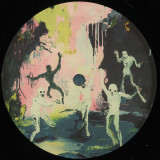
Professor Roth's debut EP, self-released on his newly formed label Maestro, is music that feels half remembered. Familiar enough to settle into, strange enough to keep shifting beneath your feet, it lives in that sweet spot where groove and abstraction lean into one another. Dusty textures, hazy melodies and understated rhythms never demand attention, yet quietly refuse to let go. Every track feels like another realm of the same dream: warm, weightless and just slightly out of focus.
‘Daydreaming’ is an inviting first step into the haze, opening the door without ever fully revealing what's on the other side. Gentle movement carries drifting melodies that seem to appear and disappear with every listen. An ethereal vocal breakdown creates the feeling of being quietly carried away from its hypnotic groove before pulling you back under its spell. Patient and understated, ‘The Way It Is’ lets the groove do the talking while subtle details gradually come into focus. Dubby percussive chaos is softened by warm, lifelike pads, encouraging your body to move while your mind wanders elsewhere.
As the name suggests, ‘Swells’ arrives in waves. Layers fold over one another, building and dissolving without urgency. There's a beautiful tension between motion and stillness, leaving the track suspended somewhere between the dancefloor and a reverie. ‘Shades’ is a fitting close that blurs the edges even further. Soft, hypnotic and quietly psychedelic, it feels less like an ending and more like waking up slowly. Content to linger in that in-between a little longer, glitchy samples drift through swirling soundscapes, keeping the dancefloor gently spun until the very end.
Relieves debuts with its very first release, “Layers 1,” a timeless journey into house music with old-school and minimalist undertones on vinyl-only format. This foundational first chapter comes to life under the direction of producers Ronan Portela and Ariel Rodz, the label owners, who join forces with Franco Cinelli and Jorge Savoretti to solidify the sonic identity of this compilation.
On the A1, "Unison" by Ariel Rodz showcases his signature sound engineered for the dance floor, featuring wrapping basslines, percussive rhythms, musical textures, and a hypnotic groove inspired by the West Coast wave.
Followed on the A2, Franco Cinelli takes the reins with his remix of "Unison," delivering a track of his minimalist footprint with perfectly defined elements and that organic, characteristic sound that defines him.
Opening the other side on the B1, Jorge Savoretti delivers "Speziale Spaziale," a piece that radiates his signature aesthetic by flawlessly blending dancefloor flow and purist sounds with soulful melodies inspired by classic house.
Finally, the closure of this compilation arrives on the B2 with Ronan Portela's remix of Jorge's track, showcasing his rawest house music persona where he fuses percussive rhythms, synths, and a baseline that drives great dynamism and character into the end of the record.
Peach Discs celebrates peak western-hemisphere summer with the perfectly-timed-and-titled "Soft Serve Summer" EP from I. JORDAN. We were delighted when they sent us these tunes, which represent a brighter, housier and more personal side to their sound than many have seen before. Inspired by their recent tour of Australia, the EP (named after the title track that got the ball rolling on the other side of the planet) bottles a loose, sun-kissed feeling across all five tracks that's keen to be unleashed at festivals, beaches and dancefloors worldwide.
Opener "Your Love" boots things off in style, sitting somewhere between Power House and French Touch as layers of oscillating synths, percolating drums and vocal chops take turns in the spotlight – but when all's said and done it's the bassline that gets the flowers, duh.
Things turn a little more introspective on "Little Tinker", as the titular bells sprinkled throughout summon up something…else? Whatever you think that is, the muscular bassline once again keeps us grounded, as washes of dreamy synths lap at the shore and everything is in its right place, before the urgent organ stabs and diva moans of "Soft Serve Summer" pull us straight back to the middle of the floor.
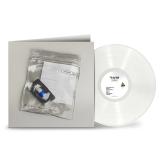
Skinned' ( released digitally in 2020) - the debut album from Danish composer, producer and singer ML Buch.
Comes with lyrics printed the inner sleeve.
After releasing her debut EP Fleshy in 2017 - Skinned that takes her expansive guitar work and catchy melodies to another territory.
With her unique experimental pop and vocals that seem to slide into your ears as fluorescent liquid, ML Buch portrays the reality of intimacy in a digital era. Working primarily with synthetic midi sounds, the general love of songwriting and guitar music is ever present.
As if in search for something real, ML Buch takes the listener on the other side of the skin. Led by tender love songs like I’m A Girl You Can Hold IRL and Can’t Get Over You With You we journey through her throat and into her intestines, discovering a fascinating realm of shiny mucus and bile in flesh and yellowish colors. Panoramic images were captured by a small pill camera travelling through the body of ML Buch and act as extensions of the architecture of the music. This literal way of internalizing modern technology is symbolic of Skinned where eclectic instrumental compositions share the space with strong hooks and ML Buch’s spherical voice.
credits
All songs composed, arranged and produced by ML Buch
All lyrics by ML Buch
‘Touching Screens’, ‘O’ and ‘I Feel Like Giving You Things’ co-written by Oliver Nehammer
Bass on Can You Hear My Heart Leave, Touching Screens and Mw by Johan Polder
Drums on Touching Screens and Mw by Kristof Gasior
Viola on Stone Bridge by Astrid Sonne
Midi drums and keys on Touching Screens by Oliver Nehammer
Mix by ML Buch, Oliver Nehammer & Jacob Brøndlund
Mastered by ET Mastering
Cover photo by David Stjernholm
Artwork by Aske Zidore and ML Buch
Justin Berkovi presents Passion - Remixes. Vol. 1 His classic track "Beat The System" comes around with a fulminant remix by KINK
On the other side we have "I Can Feel The Sound" incl. a huge remix by Dennis Caressa. Full energy package.
Micro Driver III is here back again, from a large period of such as an hybernation status. As previous targets: the combination and compilation from several electronic music producers are shown in this series to enhance and spread the sonic spectrum of the label.
So we are also proud of this release for a particular reason: A nice moment of having on board two of the greatest veteran electronic music activists from Madrid City, Roberto Gemelin with his aka Groof and Luis Rozalén with his HD Substance moniker gives to this 12" an exclusive meeting to show the most electro side of both producers after their long careers producing and creating full of different electronic music alias and stuff.
In the other hand, sharing the vinyl we are pretty excited by the music of Spectrum Data Forces the Electro alias of the well established techno producer C-System, with his high-energy, powerfull and tigh Electro. And the last but no least track of Emulador with a minimal and futuristic Düsseldorf/Detroit vibes to accomplish this compilation.
This four spanish artists are definately full of talent with four different styles and visions of Electro. Micro Driver is a series compilation from several artists of the Electro community.
Fresh from fine outings on Legofunk Records and Scruniversal Records, Frank Virgilio pops up on historycal Hollywood Records with a quartet of warm and seductive workouts. He kicks things off via the sun down beauty and latin mood of "Is This The Spirit Of The Party ?", before joining the dots between beatdown, disco 80' and dancefloor on the bubbly and hypnotic "That's The Groove!" The other side is dedicated to a double version of a classic killer dancefloor of 80' " DJ's Talk" by the american singer Vivien Reed . Frank Virgilio and L.D.F. aka Lello Di Franco give 2 different ways to read the track . A slightly bolder than the original (but no less deep) mixture of drifting melodies, head-nodding house beats, groovy bass, select vocal snippets and enveloping chords.
Last year Ace Records were delighted to reissue The Brides of Funkenstein’s debut LP from 1978, “Funk Or Walk”. Featuring their hit single ‘Disco To Go’, this album put the Brides on the map and sold strongly.
Before sessions commenced for a second album, Lynn Mabry left the group before sessions commenced for a second album, leaving Dawn Silva alone at the altar. George Clinton added P-Funk backing singers Jeanette McGruder and Sheila Horne to the mix, creating a three-pronged vocal attack.
Sessions featured the cream of the P-Funk players including keyboard wizard Bernie Worrell, bassist Bootsy Collins and guitarist Garry Shider. The resulting album, released in 1979, was even better that their debut.
The title track ran for over 15 minutes on side one, showcasing the vocal and musical prowess of all concerned. Other tracks included ’Party Up In Here’, ‘Smoke Signals’, ‘Mother May I?’ and the gorgeous ballad ‘Didn’t Mean To Fall In Love’.
Although it did not spawn a hit single, “Never Buy Texas From A Cowboy” sold as strongly as “Funk Or Walk” and over time has been hailed as a classic P-Funk album.
With liner notes from Ace’s Ian Shirley, we are delighted to release it on orange vinyl and CD. You don’t need your mother’s permission to buy it either.
Mr Bongo are thrilled to have one of the leading lights in contemporary soul joining the label. Melbourne-based vocalist, musician, and songwriter Ella Thompson is an artist whose name is being championed by some of the best in the business. She’s been building a reputation as one to watch, with two standout releases on Hopestreet Recordings, Domino EP in 2023 and Ripple On The Wing LP in 2024, alongside a heavy touring schedule and a stacked list of support slots and collaborations.
For this new 7” single, Ella collaborates with a selection of artists at the forefront of Naarm/Melbourne’s soulful DIY community. Featuring members of Surprise Chef and Karate Boogaloo, Liam McGorry from Temporary Blessings (College Of Knowledge) joins Ella as co-writer and co-producer, with go-to Melbourne engineer Henry Jenkins also producing and recording the track.
Bridging the worlds of classic and contemporary soul, Ella’s songwriting is drenched in emotion and personal experience. With a timeless feel that is hard to tie to any particular period, she has crafted a sound that instantly hits deep. It’s warm, tasteful and distinctly Ella. That talent has also seen her tour with Mark Ronson, and support other contemporary greats like Jalen Ngonda, Lee Fields, and Thee Sacred Souls.
‘Promise To Keep’ is the first taste of Ella’s new material on this 7” single. An irrepressible upbeat groover that echoes mid-to-late-sixties vocal groups. That influence though never overpowers Ella’s own unique creative voice or distinct sense of self. She draws from it, but the colour is all her own. The song tells a story of being carried by the current that keeps us moving, giving us courage. A commitment to oneself that speaks to action shaped by vision, and the pull of following what feels correct even when the distance is far.
The flip side finds Ella in a different mood. ‘Change Of Heart’ is a heavy sweet-soul ballad. Rich in drama, Ella’s falsetto vocals build to a stunning climax in the final section, with triumphant horns that signal the release of letting go. The lyrics reflect on temporality and impermanence, and the way moments can be missed or arrive with synchronicity. It’s that bittersweet paradox of triumph and sadness, where everything contains its opposite: absence and presence, innocence and experience. The song is underpinned by a brooding production quality and atmospheric, beat-heavy flavour that Surprise Chef and cinematic soul fans will relish.
Mixed by Wayne Gordon (Daptone, Womack Sisters), ‘Promise to Keep’ and ‘Change of Heart’ are a glimpse of things to come from Ella. Keep an eye open for more new music incoming from this phenomenal artist at the top of her game.
SUPREME STRIKER returns with its second release following the breakthrough success of Quasar — Ritmo Love, widely supported on dancefloors and notably played by James Zabiela, igniting crowds and confirming the label’s direction: uncompromising underground music built on culture, not trends.
The new chapter comes from Italian producer John De La Noise, delivering a powerful and deeply authentic EP entirely co-produced by Michele Lamacchia, the mind behind Rhythm Of Paradise (ROP), Love Island, 34th Floor Experience, Nu-Cleo, Qubrique, Soulvibe Inc. and many other essential projects tied to the extended SKYLAX universe. A true architect of sound, Lamacchia brings his unmistakable analog finesse and musical intelligence into every detail of this record. From the opening track, A1 — Just With U (Special Skylax Edit) sets the tone with a refined filtered house approach — balancing French touch heritage with modern underground precision. Warmth, control, and elegance without excess. A2 — Tributo Al Maestro operates as a direct transmission — a respectful and elevated nod to the legacy of Soichi Terada and Larry Levan, where rhythm becomes language and space becomes emotion. A3 — 1986 (Special Skylax Edit) pushes deeper into the source code — merging old school Italo disco, proto-Chicago house and early European electronics. With strong melodic identity and raw analog textures, the track echoes the spirit of Klein & MBO while feeling immediate and alive.
On the B side, the journey expands with Piacere D’Estate, a fluid and luminous house track built for open air systems and extended sets, followed by Città Di Frontiera, where darker tones and hypnotic structures meet urban tension. Vecchio Ritmo Italiano closes the record as a statement — rhythm as memory, rhythm as identity, reprojected forward. Across the entire EP, the production carries the aura of early ‘90s Italian and New York house — not as a reference, but as a living system. Every element is intentional. Every frequency serves a purpose. SUPREME STRIKER continues to define its path: records made for the dancefloor, for DJs, for those who understand that music is not content, but structure.
180g 2027 Repress They Say: “Descriptive scores for scenes of visual impact”.
We say: Arguably the single greatest album in KPM history. An ensemble piece of staggeringly heavy works from none other than Brian Bennett, John Scott, Steve Gray, Jim Lawless and Johnny Pearson.
For our immense pleasure, Visual Impact includes the insanely ace “Nuplex” by Brian Bennett, a nagging, sweeping, punchy funk piece that exists in a world of its own. If you don’t know, get to know - the record’s worth getting for this track alone. The same goes for the beautifully paced, string-drenched, horn-fed LP opener “Canaveral Scape”, courtesy of John Scott. Truly sublime. Other highlights on the A-side include Bennett’s easy, bass-heavy jazz groover “Sequence Of Events” and the spare, building, undercover funk of Steve Gray’s aptly-named “Low Profile”.
The B-side is straight-up fantastic. The percussive, vibey exotica of Jim Lawless’s “Keeping Pace” is followed by five tracks of slick, weighty funk breaks from Johnny Pearson. Check the pure groove of “Jaguar” with its head-nod drum break intro, the creeping piano-strings combo and… er… giant neck-snapping breaks of “Giant’s Causeway”, the speaker-smashing progressive bass groove of “Fugitive”, the tense "Rock Climb" and the sheer heft of "Heavy Load". Library largeness. If that isn’t enough, John Scott’s incessant “Flight Of The Phoenix” ends the session, brilliantly pilfered by M.O.P. for their much-loved “We Run New York”.
Originally released in 1976 but wonderfully timeless, Visual Impact is a rare example of a library record that’s genuinely great listen from start to finish. Just too good…
As with all of our KPM re-issues, the audio for Visual Impact comes from the original analogue tapes and has been remastered for vinyl by Be With regular Simon Francis. We’ve taken the same care with the sleeves, handing the reproduction duties over to Richard Robinson, the current custodian of KPM’s brand identity.
And don’t worry! Those KPM stickers aren’t stuck directly on the sleeves!
LP,180, 2018 REISSUE - REMASTERED FROM ORIGINAL TAPES, CAREFULLY REPRODUCED ORIGINAL ART
The two sides of 1973's Big Business / Wind of Change are mainly the work of thegreat Keith Mansfeld but there's a killer cameo each from Alan Hawkshaw and David Snell to help deliver a thematic suite, diverse in mood, applicable to dramatic and environmental situations'. A Be With favourite and truly one for the heads.
The Big Business of side A is all the work of Keith Mansfeld. It's heavy on the suspense and features the vital Hot Property', an insistent groove so good that Madlib sampled it to lace the ace Long Awaited' by Lootpack with Dilated Peoples.
Sleeping Giant 1' is a more feshed out version of the equally-dazzling Fatal Error', evoking the orchestral magic of David Axelrod. Indeed, it conjures images of Diamond D falling over himself in the early-to-mid 90s to loop its intoxicatingly
eerie soundscape. Complete with guitar flls that recall Paris, Texas-era Ry Cooder, you need this record for this piece alone.
The horn-and-fute-led "Tycoon" is a head-nodder and "Power Complex" has some fantastic percussion. Other highlights include the breezy glide of Whistle Stop Tour' and its sister groove Clean Air.'
Over on Side B is the more expansive Wind Of Change, which includes the David Snell and the Alan Hawkshaw contributions. But these ain't no fller. Snell's shufing International Flight' sounds like a smooth Dorothy Ashby track tossed from the heavens. Hawkshaw's Road And Rail' is about as luxurious and strung-
out as the great man gets and it might just be the highlight of this whole set.
Not to be outdone, if Mansfeld's Balance Of Power' doesn't make you feel like king of the world then you must be playing it wrong. Oh, and did we mention World In Action'!
As with all ten re-issues, the audio for Big Business / Wind of Change comes from the original analogue tapes and has been remastered for vinyl by Be With regularSimon Francis. We've taken the same care with the sleeves, handing the reproduction duties over to Richard Robinson, the current custodian of KPM's
brand identity.
With Panorama, Frank Maston pays homage to the classic era of library records and Italian soundtracks of the 70s. A blissed-out, grooving collection of filmic cues, it continues the unique brilliance of Tulips and Darkland. Elegant and easy, subtle and stylish, breezy and beautiful; this is his Maston-piece. Commissioned by legendary label KPM, Panorama cements Maston as a master of modern classics and the most mesmeric of contemporary composers.
In early 2020, Be With suggested to Frank that he should make a KPM record. He wasn't aware that they were still putting out new library records - but he was super keen: "It was completely surreal and it still hasn't fully sank in that I have a record in that catalog, sitting alongside those incredible albums that were so influential to me."
Frank was visiting family in his hometown of LA in March 2020 when the world ground to a halt so the KPM project arrived at a fortuitous moment. Having fantasised about committing to a record with no distractions, with a proper budget, access to his gear and space to work in - to really dig in and try to write and arrange the best work he could possibly make - it was a real "be careful what you wish for" moment. But, as Frank explained, "it completely saved my year and sanity to have something to focus on and get excited about. It was my lifeline." He spent seven months on it, working almost every day.
Maston had already been making library-influenced music so when KPM outlined the criteria for the tracks it was exactly what he had been doing all along. He thought the best approach would be to make a follow-up to Tulips that had a parallel life as a KPM record. Enjoying complete creative freedom, “gave me the drive to power through and dig in deep. I'm not sure if I could have kept myself on such a rigorous recording schedule under my own steam, and I think the momentum I had writing and recording it is part of the strength of this record."
Maston’s sleek retro-groove instrumentals emulate the classic KPM “Greensleeve” reel-to-reel recordings that provided mood-setting music for mid-century cinema, television, and radio programs. Apparently in close conversation with the John Cameron-Keith Mansfield KPM pastoral masterclass Voices In Harmony, Maston's Panorama could be heard as that record's funky follow-up. Yes, it's *that good*. Another reference point from the hallowed library would be Francis Coppieter's wonderful Piano Viberations.
Opener "First Class" is a blissed-out groove, featuring the soothing vocals of Molly Lewis and a glistening harp over drums, a two-note bass motif (from Eli Ghersinu of L'Eclair) and an assemblage of guitars, synths, French horn and glowing vibraphone. Acid Lounge, anyone? The irresistibly funky "Easy Money" is a gorgeous cut led by more of Molly's vocals, pastoral flute and Rhodes, underpinned by drums and percussion, grooving bass, chilled guitars and synth strings. Kicking the tempo up, the percussive "Storm" is a vibin' filmic-fusion jam where psychedelic guitars (courtesy of Pedrum of Allah Las/Paint) organ, jazzy flute, Rhodes and vibes all compete for a place in the sun, over drums and walking bassline.
The heavenly "You Shouldn't Have" is a delicate, melancholic wonder; a dreamy instrumental where the melody is shared by a whistle, harpsichord and celeste, over a cyclical piano chord sequence and bass, synths, guitars, organ and distant French horn. The tempo rises again with the passionate, sticky "Fling", a summery, nostalgic groove with skipping drums and percussion, warm bass and electric guitar, yearning flute and synth strings. The brilliantly titled "Fool Moon" has that Voices In Harmony sound down pat. A romantic slow-mo dreamscape of Rhodes and harpsichord, piano, light drums and softly strummed acoustic guitar.
Side B opens with "Medusa", a hopeful, mellowed-out track with shuffling drums, feel-good flute, muted horns, glowing Rhodes and synth strings. The soft and gentle "Morning Paper" is an elegant way to start the day; a beatless blend of flute, guitar, percussion, ambient synths and vibes. The upbeat head-nod jam "Scenic" has that widescreen car-chase feel, uptempo drums and percussion, grooving bass, piano, synths and ambient electric guitar. "Adieu" is a smooth summer vibe, relaxing with brushed drums, Rhodes, flutes and horns. Molly Lewis's gorgeous vocals steal the show, alongside vibes, jamming organ and synth strings.
"Hydra" is another laid-back 70s-sounding retro cinema cue with light drums and percussion, walking bass, spacey synths, clavinet, glowing vibraphone, vintage organ and electric guitar. Closer "Jet Lag" is a laconic bow out; bass-driven drum machine soul, featuring hand percussion, Rhodes, vibes, synths and organ.
Multi-instrumentalist Frank played a bit of everything across Panorama. Yet, humble as ever, he believes the time, energy, and enthusiasm of all of the musicians invited to the sessions helped him realise his vision: "There were two Italian flautists who really understood what I was going for. Two french horn players, cor anglais, a vibraphonist and a flügel horn player. I've never involved this many people in my projects before, and yet the result is the most "me" record I've ever made."
Musically, a strong Italian theme runs through the record. Frank is fascinated by ancient Rome and both his parents are Italian (Maston was originally Mastrantonio before anglicisation). So, it felt natural to fully embrace these strands and tie everything together with the striking artwork. The Romans were influenced by Greek culture, emulating their art and architecture, which, in turn, influenced Renaissance era artists. Frank acknowledged this tradition when reflecting on his place in the lineage of library and soundtrack composers. He then asked his friend Mattea Perrotta, a painter and sculptor, for some sketches. What he received was exactly what he had in mind: "Especially the theater mask, which really captures the range of moods on the album". Frank arranged them as per the cover and it soon felt right: "I wanted to make a cover that was reminiscent of the classic KPM albums without making it too pastiche - so it has its own identity and looks at home alongside other library records, while still fitting in nicely in the KPM catalogue." The last step was for us to introduce Frank to Be With-KPM’s Rich Robinson, who helped put together the back and centre labels and align it all within the KPM standard.
Panorama is a perfect title for the album. With no opportunity to travel for tours or recording projects, Frank arranged postcards from his collection on his desk with beautiful views of the mediterranean coast, the Roman Colosseum and Cinque Terre. These also served as visual prompts: "That was part of the sonic concept - imagining myself driving down the mediterranean coast with this music on, with the top down." Additionally, the range of moods and vibes - "I tried to make each song very different from the previous one in terms of tempo and arrangement and feeling" - speaks to the idea of a Panorama of music and sounds and emotions. The last track was originally called Panorama, but KPM already had that title in their catalogue so it was changed to "Jet Lag", which, as Frank notes, "is perhaps even more fitting, since the trip is over".
In the beginning of the 1970’s, Guinea-Bissau was a country broken up into many ethnic groups and at the heart of a war for independence. By reviving traditional musical genres as Gumbé and singing in guinean Kriol, José Carlos Schwarz & Cobiana Djazz established an immediate affective bond with their audiences. Through its music and politically engaged spirit of the lyrics, the band played a significant role in shaping the social and political consciousness of the masses. As well as influencing local bands like Super Mama Djombo and giving back a deep sense of cultural identity to bissau-guineans.
The explosive birth of Cobiana Djazz brought about other kinds of detonation. Schwarz became involved in urban guerilla activities which resulted in several bombings in the centre of Bissau, leading to his imprisonment and torture. He remained in lockup for a total period of about 2 years, between 1972 and 1974.
The process of decolonisation, in the wake of the Portuguese revolution of 25 April 1974, led to the recognition, during the same year, of the sovereign nation of Guinea-Bissau.
Schwarz, a key figure in the fight for independence, played an important part in the transition to the democratic regime, profiting from his popularity as an artist. Soon, his criticism (underscoring opportunism and irresponsibility in high places) became a thorn in the side of the political elite. Uneasy with the disquieting effects of his work, government officials effectively separated the author from the masses by assigning him to the embassy in Havana.
José Carlos Schwarz met a tragic and untimely death at the age of 27, when his plane crashed on arrival at Cuba's José Martí International Airport, on May 271th 1977.
Hailed by african giants like Orchestra Baobab, Letta Mbulu or Miriam Makeba (with whom he recorded his first and only solo album), “Zé Carlos” and his poetry won a lasting position in the annals of Guinea-Bissau. However, this collection of songs remains relatively unknown outside the country and its diasporas.
We are proud to offer, in close collaboration with the Schwarz family, this first official reissue on vinyl. Remastered and pressed on heavyweight vinyl.
Five Special were a five-man harmony vocal group all from Detroit, formed during 1975. Founding members Mike Pattillo of ‘The Explosions’ and Steve Harris of the group ‘Trouble’ both unhappy with their then situations decided to unite to form their own group. They were soon to be joined by Zeke Stanley of “Deep Velvet”. As a threesome, the sound they created was fantastic but they all agreed a five-man group with five potential lead singers was the way forward.
It was around this time that Mike Pattillo’s lifelong neighbour Ron Banks (of The Dramatics’) introduced the guys to Charles “Chuck” Underwood. Chuck had been involved in the music business from the early 60’s as a show promotor, one of many acts he promoted was The Dramatics. Chuck had known the group from their earliest days and later became their road manager. After a failed attempt to buy the Dramatics contracts from Groovesville Music, Chuck pressed ahead with his plans to form T.E.A.I Record Corporation (T.E.A.I being an abbreviation for “Tellin’ Everybody About It”) with Ron Banks joining the label in an executive role only. This young and aspiring record company sprung into production during 1974 with initial releases on a local artist’s Renee Williams “Special To Me/Are You My Brother”, followed by ‘The Gaslight’ “Just Because Of You/It’s Just Like Magic” in 1975.
Now under the auspice of Chuck, Mike, Steve and Zeke were introduced to Greg Finley formerly of the ‘Innovations’. Now four, the quest for a fifth member continued. After months of disappointing auditions, Ron Banks decide it was time for his younger brother Bryan to embark on a professional career after initially resisting due to him being a 16-year-old school boy. After many daily rehearsals in each other’s respective basements until Bryan’s graduation the full and dynamic sound of these five young men was finally honed. Still nameless, it was Steve Harris that came up with the group’s name ‘Five Special’ stating that these five young men were “very special and unique entertainers, with each member being a complete show in himself” with Bryan on lead they sometimes sounded like “The Dramatics” with Mike they sometimes sounded like “The Temptations” high comparisons indeed.
Five Special’s first recording for T.E.A.I was the 1976 joyously uplifting dancer “The More I Get To Know You” a Jimmy Roach and Marcella Henderson composition featuring Bryan on lead, released as a part I and part II deemed to be a more disc-jockey friendly practice at the time. The record was popular with radio stations throughout the Detroit metropolis and Chuck went on to precure a deal with Polygram which resulted in a release on their nationally distributed Mercury label. A second Five Special release followed in 1977, the Jimmy Roach penned mellifluous “(Let’s Stop Making) Small Talk” backed with the Ron Banks/Paul Clark penned psychedelic soul styled “Oh, Oh (Look What We’ve Done)” with Greg Finley and Zeke Stanley exchanging tenor and baritone parts throughout.
Through our ongoing working relationship with T.E.A.I we have gained access to some previously unissued material on Five Special. From the tapes we have taken “The More I Get To Know You” in its 5:50 minutes entirety backed with the previously unissued mid-tempo delight “You Got To Be The One That I Love” with interchanging leads from Bryan and Steve. The second b-side track is the psychedelic soul “Oh, Oh (Look What We’ve Done)” with interchanging leads between Greg and Zeke. Three songs, three different styles all of the highest quality, with more to come from Five Special, so watch this space!
Welcome to THE VAULT for 1985. A collection that digs deeper into the year’s musical landscape – uncovering singles that may not have always reached the highest chart positions but remain essential to the rich and diverse pop story of 1985. Some were overshadowed at the time, some were highlights from albums that had already sold huge amounts, some found greater success internationally – but all deserve their place in this continued celebration of 80s pop.
45 tracks across 3-LPs – pressed in gorgeous green vinyl – NOW Yearbook – The Vault: 1985.
LP1 opens with a trio of tracks from huge-selling albums:- Bruce Springsteen’s ‘My Hometown’, the sixth single in the UK from ‘Born in the U.S.A’ - one of the best-selling albums of the decade, followed by Bryan Ferry with the stunning ‘Windswept’ from ‘Boys And Girls’ and Sting’s ‘Love Is The Seventh Wave’, taken from his solo debut ‘The Dream Of The Blue Turtles’. Next up, Go West with a U.S single release ‘Eye To Eye’, Scritti Politti with ‘Perfect Way’ – their biggest hit in America, and ABC with ‘Be Near Me’. The first side closes with two established bands; Heaven 17 and Orchestral Manoeuvres In The Dark… Flip the LP over for Adam Ant with ‘Vive Le Rock’, Midge Ure, Blancmange and the second collaboration between Philip Oakey & Giorgio Moroder with ‘Good-Bye Bad Times’. The Style Council’s ‘Welcome To Milton Keynes’ leads to LP1’s closer’s from Simply Red and Fine Young Cannibals who followed their debut ‘Johnny Come Home’ with ‘Blue’.
LP2 opens with Cocteau Twins and the dream-pop atmospherics of ‘Aikea-Guinea’, ahead of The Jesus And Mary Chain with ‘Just Like Honey’, and The Dream Academy with ‘The Love Parade’.
Brilliant with their cover of James Brown’s ‘It’s A Man’s Man’s Man’s World’ and jazz-influenced pop from Matt Bianco are up next ahead of the sublime ‘Castles In The Air’ from The Colourfield and Elvis Costello & The Attractions, who released the 1979 track ‘Green Shirt’ to promote their ‘Best Of’ collection … and the side closes with The Clash’s ‘This Is England’ which would become their last originally released hit…whilst on the other side…celebrate the dancefloor, with a vibrant mix of Hi-NRG, soul, electro and club-influenced pop:- Opening with Sheryl Lee Ralph’s ‘In The Evening’ and Barbara Pennington’s equally superb ‘On A Crowded Street’, the hi-energy continues with Miquel Brown and Hazell Dean ahead of a US hit from Laura Branigan (‘Spanish Eddie’) and Divine’s cover of ‘Twistin’ The Night Away’. LP2 finishes with a massive U.S. dancefloor smash for Eddie Murphy with ‘Party All The Time’.
The final LP kicks off with a bunch of singles that achieved bigger hit status in the US than here and opens with Billy Joel’s ‘You’re Only Human (Second Wind)’, a track written exclusively for his ‘Greatest Hits – Volume I & II’ compilation, ahead of pop-rock from John Mellencamp plus an anthemic smash from Bon Jovi. Pat Benatar’s ‘Invincible’ features ahead of The Power Station’s third US Top 40 hit…whilst back in the UK Chris Rea enjoyed his biggest chart hit to date with ‘Stainsby Girls’ and the side is completed by Marillion with ‘Heart Of Lothian’ the third hit from their huge ‘Misplaced Childhood’ album… Flip to the final side for the stellar vocals on ‘Act Of War’, the huge collaboration between Elton John & Millie Jackson ahead of dancefloor smash ‘New Attitude’ from Patti Labelle and ‘Show Some Respect’ a U.S. single from Tina Turner. Sophisticated pop-R&B from Michael McDonald and Daryl Hall & John Oates come ahead of the collection’s closers- and two outstanding vocal performances: Chaka Khan’s ‘Through The Fire’ and the U.S. breakthrough hit from Whitney Houston with ‘You Give Good Love’ – signalling the arrival of one of the decade’s brightest new stars.
NOW Yearbook – The Vault: 1985 – A deeper dive into an unforgettable year in pop.
Mit "Consume" erweitern The Joy Hotel ihr musikalisches Universum.
Die für den SAY Award nominierte Glasgower Band The Joy Hotel veröffentlicht ihr zweites Album "Consume" (SO Recordings). Mit dem Nachfolger ihres von der Kritik gefeierten Debüts "Ceremony", das auf der Shortlist für den "Scottish Album of the Year Award 2025" stand, führt die Band ihren weitläufigen, cineastischen Sound in ungewöhnliche und dringliche Gefilde. Das Album setzt sich mit der endlosen Flut an Informationen, Ablenkungen und digitalem Konsum auseinander, die das moderne Leben prägen. Dabei werden Themen wie Liebeskummer, Nostalgie, Panikattacken, Ambitionen und das Ringen um Hoffnung in einer zunehmend gleichgültigen Welt behandelt. Musikalisch bewegen sich The Joy Hotel im Spannungsfeld zwischen Psychedelic Rock, Folk, Indie und cineastischem Alternative. Vielschichtige Harmonien, Call-and-Response-Gesang sowie eine stetig wachsende Palette an Gitarren, Keyboards und Rhythmus-Sektionen erzeugen einen Sound, der sich zugleich intim und gewaltig anfühlt.
The Dead Mauriacs is the project of French artist Olivier Prieur, "Paravents et miroirs, une cérémonie" is a live soundtrack.
The Dead Mauriacs describe their music as "Exotica Concrete" - their music is composed of field recordings made on a daily basis, as well as a diverse collection of sounds, including piano, Indian harmonium, violin, ukulele, didgeridoo, pieces of wood, glass, paper, and metal plates. The album is a spectacular 40-minute sound collage, assembled by sampling Exotica music represented by musicians and arrangers such as Les Baxter and Arthur Lyman, who were active in the 1950s.
"Exotica is a musical genre or sub-genre that emerged in the 1950s in the United States with musicians and arrangers like Les Baxter or Arthur Lyman. It is an extraordinary music because it is false: bird calls imitate bird songs, you can hear the sound of the waves, it is a Western fantasy, particularly North American, of a world and an imagery that never existed. It is a music associated with mass tourism, mass entertainment, consumerism. Arthur Lyman recorded about 30 records in 10 years in Waikiki. With his band, they played and recorded under a geodesic aluminum dome. The dome belonged to the owner of the hotel he played for every night. They did this at night to avoid noise. It's music that is both profoundly naive and totally flawed. In this, it is seductive and intellectually interesting. It is music that could easily be criticized today, but it is an imaginary in itself, like the Italian film music of the 1960s and 1970s." (Excerpt from the calax's interview)
The Dead Mauriacs are not only involved in music, but also in a wide range of other creative endeavors, including video and painting. He also repsonsible for the artwork of this LP. The inside of the product is also accompanied by an 8-page interview with Mauriacs and compiled his amazing artworks.
The Dead Mauriacs
Paravents et miroirs : une cérémonie / Screens and mirrors: a ceremony
Side A
Courte dérive, une ouverture / Short drift, an opening
Le retour des insectes électriques / The return of the electric insects Les oiseaux étranges / The strange birds Tension, terreur factice / Tension, false terror
Dénouement malais / Malaysian ending
Rituels et vanités 1 / Rituals and vanities 1
Rituels et vanités 2 / Rituals and vanities 2
Italiens dʼHambourg / Italians in Hamburg
Side B
Secrets pour piano / Secrets for piano
La suite Monory, Padoue-Le Caire-Nassau / The Monory Suite, Padua-Cairo-Nassau Hommes à découper / Men to cut out Lassitude moite / Clammy weariness
Le soleil artificiel du pont croisière / The artificial sun on the cruise deck
Pirogues et palmiers, vus de la scène / Pirogues and palm trees, seen from the stage La traversée / The crossing Rideau / Rideau
Fields recordings : Semproniano and Siena, Italy, Figueira, Portugal, Charentes, France. An electrical wire with a frequency shifter gave birth to the insects. Real and fake piano. Everything made with a computer and a midi keyboard.
Music premiered at Hörbar, Hamburg, 28th of December 2017. Music (and video) Olivier Prieur.
Thanks to Thorsten Soltau and all people at Hörbar.
Hello to Felix Kubin & Marie-Pierre Bonniol, Julia & Jan Warnke. Kisses to Hélène.
“Nimm die rosa Brille … sag was Du siehst … alles viel besser”
44 years after its original release, one of the most idiosyncratic DIY minimal electronics / synth / new wave records of the early ’80s returns: the legendary 7” by German group DEUTSCHE SCHÄFERHUNDE (engl. German shepherds)—now remastered and reissued for the first time as a one-sided 12” on Anna Logue Records. Recorded in the winter of 1981/82 between rehearsal space, provincial disco and bar nights, and a humble four-track setup, these tracks capture the raw spirit of a generation that simply started creating—no formal training, but plenty of attitude. Minimalist, uncompromising, and inspired by krautrock, punk, new wave, electronic music and dub, the songs move between raw electronics, percussive noise, new wave experimentation, and sharp social commentary. „Rosa Brille“ (rose coloured glasses) in particular feels as urgent today as it did back then—a track that has lost none of its relevance, „Gasmasken“ tells of gas masks dancing in the woods to the sound of sirens, and a timeless Holger Czukay/Jah Wobble inspired „Mein Herz“ (my heart).
Originally pressed in a small run of just 500 copies and later becoming a sought-after collector’s item now worth 200€, the record now returns in a carefully crafted edition featuring a laser-printed reverse side and additional materials such as original lyric sheets and articles, postcard and poster. DEUTSCHE SCHÄFERHUNDE thrived on paradox—a provocative name paired with a clear stance, and lyrics that still resonate today. Shaped by Cold War tension, political unease, and youthful rebellion, their sound refused to fit into any neat category. Only few other bands, such as Der Musikant, Im Namen des Volkes, Thorax Wach, Klinisch Sauber oder Stephan Eicher spielt Noise Boys come to mind.
This release is more than a reissue—it’s a document of its time that still hits with full force.
12″ features: limited to 400 copies, hand-numbered, one-sided 180g black vinyl, laser-etched B-side, outer sleeve printed on reverse side of the board, printed inner sleeve with original lyrics sheets and original articles, DIN A3 poster, double-sided postcard
We feel like Frank & Tony and Smallville have been on the same musical wave-length since forever. Our musical paths have crossed back and forth over the years and we have always shared a lot of the same values- steadily putting out quality music, that stands the test of time - growing consistently - never stop following our very own way - always not-following trends forever..
Frank & Tony is the collaborative guise of Scissor & Thread co-founders Francis Harris and Anthony Collins aka Grant. Both have long been staples of the underground with material under their own names and numerous other guises shaping the musical landscape of House Techno and beyond since the turn of the millennium. Both lived together in New York and as Frank & Tony the pair have delivered multiple albums and many EP’s on their own label, Tokyo’s Mule Musiq and Pacific Rhythm- now they are warmly welcomed onto the Smallville Records roster with their latest collection of works.
‘Ways Of Mine’ leads on the A-Side and showcases the pairs signature deep hypnotic house style via soft billowing pads cascading metallic chimes psychedelic spoken word and dreamy dubbed out keys floating atop a robust bouncy rhythm
section.To open the flip-side title-track ‘After All’ lays down a subtly blooming chord sequence shuffled drums and bumpy bass stabs at its core all subtly nuanced while the latter half introduces more dynamic rhythmic elements and intertwined melodic touches. ‘Dimension’ then concludes the release diving deeper with saturated ethereal pads and bubbling resonant arpeggio lines alongside heavily swung crisp drums jazzy keys and delayed vocal chants.
After All comes with a full cover artwork by Stefan Marx.
All tracks written & produced by Francis Harris & Anthony Collins
Mastering and Vinyl cut by Helmut Erler at Lathesville
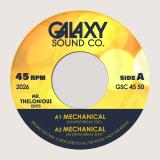
Release #50 celebrates the digging, care & musical curiosity that’s made the GSC series essential for DJs, collectors & break seekers alike.
For years GSC has built a catalog that earns immediate “cop-on-sight” status. Thoughtful edits. Deep respect for the OG recordings. Breaks that knock w/out feeling heavy-handed. The kind of taste that reminds you these are real heads behind the decks.
Side A pulls from Jerry Butler’s “I’m Your Mechanical Man,” released in ’74 on the Sweet Sixteen LP. The track contains a raw drum break hip-hop producers recognized instantly. Most famously it powers Method Man’s “Bring The Pain,” 1 of the defining solo joints from the Wu-Tang Clan era. The break later resurfaced in Missy Elliott & Method Man’s 2002 version & Snoop Dogg’s “I Miss That Bitch.”
On the flip, GSC draws the source into pure DJ tooling: a sample break edit, a full drum break edit & the “Mechanical Wu” mix — built for selectors who know the power of letting a break breathe.
Then they deliver a beautiful surprise. Instead of leaving empty wax, GSC slides in Les McCann’s “Vallarta,” from the 1977 album Music Lets Me Be. Jazz-funk heads know it instantly — the hypnotic groove behind Biggie’s “Ten Crack Commandments.”
This is why Galaxy Sound Co. matters. They’re not just pressing edits — they’re curating moments. Unearthing grooves DJs need back in rotation. Some originals now cost serious money on Discogs. Others simply faded from memory. GSC dusts them off & hands them back to the community.
Obscure disco gem from 1985. Singer Penny Mtya, like many others, journeyed from small-town South Africa to the bright lights of Johannesburg in search of fame. There her path collided with Muntu Semenya, the son of long-exiled stars Caiphus Semenya and Letta Mbulu, who had recently arrived from the US and was making his mark in SA as a producer and keyboardist. There demo secured a deal with the local office of WEA Records and they soon entered RPM Studios with co-producer Thokoza Memela to record three tracks.
‘Cassanova (Stop That Game)’ is a seven-minute Afrofunk workout reminiscent of Kiki Gyan or Sylvester, showcasing Penny’s sultry vocals and Semenya’s stabbing synths. On the flip side, ‘I Feel It’ is a chugging instrumental climaxing in a fuzzed-out solo from session guitarist Jethro Butow. Defying expectations again, the album closes with a Motown-worthy slow jam, ‘Memories’, a duet with Yandy Mgolombane featuring Mike Faure on sax.
Titled Penny’s Groove, the three-track EP received little promotion on its release and quickly disappeared into obscurity, with the label perhaps unsure of how to market the polished ‘international’ sound and diverse components. The tracks were never performed live and everyone involved in the studio project soon parted ways. Semenya and Mgolombane laid low while Penny returned disenchanted to her home in the Eastern Cape, where she remained active in music but never realised her dream of solo stardom.
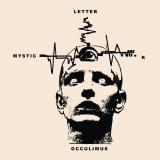
Mystic Letter K presents Occulimus. Behind this alias stands Cari Lekebusch, one of Europe’s most respected and prolific techno figures, with an undeniable legacy and historic releases on labels such as Missile, Hybrid, and Planet Rhythm, among many others.
With Mystic Letter K, Lekebusch steps into a parallel, more mature and conceptual universe—one where he fully explores a mental, tribal, deeply hypnotic and highly danceable strain of electro. His sound is built on constantly shifting patterns: elements that repeat, reconfigure, and sequence themselves in multiple ways, creating a continuous sense of motion that drives the listener into states of trance and altered perception. Occulimus captures this essence with surgical precision: an unmatched groove, raw yet refined, designed for the dancefloor but equally suited for full immersion. Each side of this double vinyl acts as a powerful and versatile tool, allowing any DJ to build, sustain, and transform energy with a single record in the bag.
A direct, functional, and absorbing work that reaffirms Lekebusch’s forward-thinking vision and his unique ability to sculpt sound in motion.
Roughly three and a half years since pushing the boundaries of 160BPM and stepping beyond the realm of footwork with the Reidai EP, Oyubi returns with an even deeper sound, dropping due yesterday.
This EP consists of four tracks that showcase a darker, more introspective side of the producer, stepping away from the ghetto and booty flavors found in his other releases. However, anchored by his signature sequence patterns, the sound design—striking a perfect balance between playful and profoundly dope—only serves to amplify the groove.
The ultimate embodiment of this evolution is the B1 track, "Taiko 2." While it inherits its name from "Taiko 160" on the Reidai EP, its form is entirely transformed. Relentless, high-speed drums and stripped-back minimal components take over the mind and body like a dark incantation. Packing a hypnotic power that far surpasses its predecessor, it's destined to be a killer weapon in any DJ set. It’s also worth noting that this track draws heavy inspiration from Kode9 & DJ Fulltono’s "TKO."
Naturally, the other three tracks are just as formidable. Infused with elements of dub, A1 "Erekiteru" centers around a pulsing bassline heartbeat, keeping the groove steady alongside crisp, dry claps. Meanwhile, A2 "Da Groove" and B2 "Wop Wop" heavily incorporate Baile Funk and Dembow influences. "Da Groove" is quintessential Oyubi: as the extended intro breaks and the four-to-the-floor kick drops in lockstep with the bass, it guarantees instant unity on the dancefloor. Finally, B2 "Wop Wop" relies on intentional distortion and subtle spatial processing to build its foundation, revealing a dark side akin to "Taiko 2"—complete with an exceptionally punchy snare.
Fully loaded with Oyubi's uncompromising dark-side approach, due yesterday is set to be a 160BPM masterpiece.
"Over the past three decades, Philipp Lauer has produced an incredible body of work, deploying a myriad of aliases, both as a solo artist and as a part of collaborative projects. From his hardware-steeped Frankfurt studio Pyramide 2, he has built this catalogue through original material and remix commissions, taking on the full spectrum of electronic music while retaining an unmistakable signature. He combines a hands-on approach to rhythm and composition with a DIY MO and a love of big hooks. The level of expertise at hand seems to facilitate a playfulness that subtly permeates all layers of his work. He's a pop melody natural who just so happens to love fiddling with synthesizers, drum machines, and effects an equal amount. All of these qualities are exemplified on "Embalmed In Martino": Lauer's four-track ode to the Belgian Martino sauce, a spicy tomato-based condiment, and arguably the essential ingredient to top off the namesake raw meat sandwich. On "Embalmed", which makes use of instrumentation that would fit right in on an early eighties Manchester cut, and "Martino", where a sturdy, electroclash flavored arp bass provides the stamina, a slew of big and small riffs easily work their way in, thirsting for our ears. On the other side, "Transactional" combines Miami basslines and similarly electro-fundamental twinkling synth work with a flanger-laced 4/4 beat, while "Don't You Know" features soaring synthwave patterns and the only vocal samples on the EP. Both sport rich arrangements as well, right down to the cowbell overdubs. Lauer's often lauded for his "summery sound". In this light ALT026 lands right on time - yet we might disagree here, as it's suited for all seasons, and all terrains, both the shiny festival grounds and the dim-lit club floors."
After years of shaping dancefloors worldwide and carefully curating the sonic and visual identity of Up The Stuss, Dutch favourite Chris Stussy presents his most expansive and personal statement to date with his debut album, ‘Lost, Found & Forgotten...’. Landing on 3rd April, the album unfolds across three interconnected chapters - ‘Lost’, ‘Found’, and ‘Forgotten’ - each revealing a different side of his creative world across 19 tracks while remaining tethered to a singular wider vision.
At its core, ‘Lost, Found & Forgotten...’ is an exploration of creative freedom. Visually and conceptually guided by the image of a kite, the album reflects movement, perspective, and balance. Floating freely yet always anchored, the kite mirrors Chris’s approach to music: unrestricted in emotion and imagination, but grounded in groove, craftsmanship, and intention. It’s a symbol that naturally extends the Up The Stuss identity; pointing skyward, embracing openness, and encouraging curiosity.
“This album has been a long time in the making, and I’m excited to finally share it with you. The process behind it - exchanging ideas with other artists and creating music outside of my comfort zone - has been an incredible experience. It gave me a true sense of freedom, allowing me to not think about boundaries or expectations. I’ve never been more proud of a project than this one. It’s deeply personal, and it represents my sound as a whole. I hope you listen with an open mind and find something in it that resonates with you.” - Chris Stussy.
The ‘Lost’ chapter opens the album by giving new life to music once left behind. These are tracks written across different moments in Chris’s journey, ideas that never quite found a home until now. Rather than relics of the past, they emerge re-discovered, refined, and fully realised. ‘
Found’ represents inspiration in motion. Sparked by collaboration, digging, and shared creative exchange, this chapter captures the moment when ideas connect, and colour floods the sky.
The album closes with ‘Forgotten’ - a nod to the deeper cuts, the B-sides, and the moments that reward patience. This chapter is for the heads and diggers; tracks that may not demand immediate attention but reveal their value over time.
Over a decade has passed since this was released, and it has truly aged like fine wine. This release features 2 timeless cuts from the mind and soul of intrusion, mixed and recorded near the heart of Detroit. This was beautifully remastered by dub innovator and pioneer, Stefan Betke POLE @ scape mastering in Berlin, DE. The recordings were pulled from the session masters conducted by Bazza @ Alchemy Mastering in London to ensure a perfectly balanced mix and preserving the soul and spirit of the original tape master. The first incarnation of "A Gentle Embrace" came in the form of three extended reshapes from cv313 & variant and now we're proud to offer the original work on beautiful crystal/silver mixed clear 150 gram wax! :)
On side A the most pristine of dub techno is on offer here, this is Detroit techno stripped down to its most minimal core. A gorgeous subtle ambient soundscape exploring the deepest end of dub and house with gentle surges of organic elements, field recordings and modular movements simply out of this world. The "Reduction" mix on side B captures those chilling glacial soundscapes, trademark basslines and mesmerizing gaseous atmospheres subtly layer into the mix. Otherworldly to say the very least, this is music to swim in, breathe in and to pray to - for the spirit and the soul. Essential!
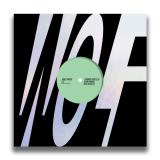
Back for round two on WOLF Music, Toronto Hustle & Sean Roman present their ‘Social Narcotics’ EP. The deep house dons from Canada don’t disappoint with a hard-hitting slammer, and a suite of remixes courtesy of some of the scene’s most-respected producers.
The A-side starts with none-other than Byron The Aquarius on the remix. You see that name on a record and you know it’s going to be a hot 12”. Just look at some of the labels he’s released on; Sound Signature, Wild Oats, Eglo, Axis; that’s the only stamp of approval you need. His remix of ‘Social Narcotics’ is deeper than deep. Moody, musical and packed with detail. Proper house for those that know the good stuff.
Then POW! - you're hit with a legend of the game. Calling Nick Holder a legend isn’t hype, it’s just fact. Active since the early ‘90s and head of DNH Records, with releases on labels like NRK and Poker Flat Recordings, his influence runs deep. Any serious head will have some of his jams in their collection (‘Summer Daze’!!!). Teaming up with Tyrone Solomon under their ‘Trackheadz’ guise, the Canadian duo have delivered a trademark peak-time remix. Driving and groovy, this is tackle for proper dancefloors.
For the flip we have Toronto Hustle & Sean Roman's original track and a rather tasty dub version. ‘Social Narcotics’, blends sharp social commentary with a late-night, low-slung thumper of a soundtrack. With its warm, rolling and hypnotic feel, it has echoes of a prime 90s deep house cut, yet still sounds fresh and very much of the now. The dub mix turns the lights down even lower, stripping it back and letting the groove bubble away with a more heads-down sound.
This EP is a strong follow-up that keeps things deep, soulful, and club-ready. Exactly what you want from Toronto Hustle & Sean Roman, and another solid addition to the WOLF Music catalogue.
Following their 2023 LP Presents, Nathan Nelson's American Cream Band bring the Twin City heat back to Quindi with an album rooted in duality. From the yin and yang party-starting A side and meditative B side to the dual-attack boy-girl vocals, the nature of opposites and equals steer the expansive, artful strain of rock n' roll that spill out of this wholly unique Minnesotan export. For the ever intriguing Quindi, it's a strident step into Spring after the frosty introspection of Roudi Vagou & Läuten der Seele's Taghelle Nacht. While the world burns and injustice prevails, Twin is a celebration of unity and radical expression-all the more urgent against the backdrop of authoritarian overreach and righteous protest that has whipped through Minneapolis in recent times.
Twin continues Nelson's drive at the helm of American Cream Band to draw in a colourful cast of players to feed into his orgiastic sound, meshing the trance-induction of krautrock with the irrepressible funk of the post-punk-new-wave explosion. But principal among the cast of characters and forming a central tenet to the identity of this album is Liz Buhmann, lead vocalist and a formidable, playful foil to Nelson's own Midwestern twang. Around the electric spark between Buhmann and Nelson, a heavy duty ensemble wrangle guitar, bass, sax, a cornucopia of synths and a battery of percussion into all manner of sonic forms.
The double-sided concept manifests throughout Twin. On 'Call Me' Buhmann sings in French to contrast Nelson's English, while the strident strut of the NYC disco groove is offset by an inherent dreaminess that turns the track into a more cosmic kind of dancefloor workout. 'Ethical Vampire' is a spiky cut with a garage rock patina that spirals into a psychedelic, synth-soaked get-down. 'Don't Burn The House Down' is a loose and limber roller that captures Can at their funkiest along with the hypnotic vibe of other such esteemed long format jammers, but American Cream Band boils that energy into a hook-laden art pop sensibility before a gentle, drawn out landing.
Even the more pensive moments on Twin find space for friction. For all its tender, smoky temperament, 'Leda and the Swan' lets the electric piano and guitar fray at the edges and bleed into the red while Mat Heinrich's tumbling drums lurch with pent-up intensity on the one. 'No Funeral Necessary' skirts around the mellow pools of new age but prefers to let liberally doused Tape Echo tweak out Alex Meffert's honeyed sax inflections and Buhmann and Nelson's disparate sermons.
Nelson describes Twin as "an oppositorum coincidentia" - a reference to the mystical Latin concept of the coincidence of opposites that suggests contradictory ideas 'fall together' in a higher reality. Beyond the sound of the album, this idea also manifests in the cover photography by Sho Nikado and the swans on the LP labels by Autumn Garrington. As freewheeling and wide-open as American Cream Band feels, nothing appears by accident. The end result feels like a nourishing whole - rich with substance and nuance, deep enough to be explored and absorbed yet also so brazen and immediate you can't help but feel its surface charms from the first thrusts of 'The Hive Is Pissed' to the last ripples of 'We're Not So Sinister'.
Holden returns to SK_eleven with “Origin,” the final chapter in the SK_X series. With this EP, Holden continues to invert techno’s norms in ways few others can. He places melody directly at the forefront, giving us four tracks that work just as well for the peak time dancefloor as they do for repeat listening at home.
Opener “Crux” tunnels on a singular, winding motif that eventually unfolds into a bloom of texture and agile melody. “Hemisphere” brings a futuristic, otherworldly approach to classic dub techno techniques, blending a funk-driven bassline with dusty, alien chords. On the B-side of the record, “Sustained Light” tells a story of hope and redemption with its patient, atmospheric hook, only to be consumed by the underlying rhythm. “Origin” closes out the record: a forceful, shimmering testament to the power of melody and emotion in techno and Holden’s vision for the modern dancefloor.
Now into its sixth year, NuNorthern Soul’s Summer Selections series has become a popular annual fixture. Like its predecessors, 2026’s edition showcases a variety of Balearic dancefloor workouts, sensual soundscapes and tracks tailor-made for poolside sun-down sets.
As usual, Summer Selections Six is a vinyl-first affair, offering wax enthusiasts a chance to cop killer cuts set to feature on a swathe of forthcoming NuNorthern soul releases – including some that would otherwise be unavailable on physical formats.
To begin, is It Balearic? label regulars and Rotation Sound System crew members Wrekin’ Havoc turn their attention to NuNorthern Soul favourite B.J Smith’s 2014 cover of Outkast’s ‘Prototype’. Their take, which will be featured on a forthcoming collection of reworks of Smith’s NNS material, places the long-serving producer’s beautiful, beguiling vocals atop lo-fi 80s electro beats, moody pads, squelchy synth sounds and far-sighted electronics.
Up next is label newcomer Sasha Foam, a fast-rising Lisbon-based DJ/producer whose Memoria EP is set to land digitally soon. ‘Curios’, his contribution to Summer Selections Six, is a propulsive and ear-catching affair, with joyful synth melodies, rushing piano riffs and cheerful TB-202 style acid tweaks rising above a crunchy, drum-machine driven mid-tempo groove.
Rounding off side A is ‘Call To Wind’, a rootsy, warming and sun-baked slab of Balearic dub gorgeousness from Strictly Dub Records founder Saimon AKA Roots Artefact. The track, which marks his first new material since last year’s NuNorthern Soul debut Different Perspective, is one of the many highlights set to be featured on the Estonian’s forthcoming Rocking Boat EP.
Turn to the flipside and you’ll find three more inspired, immersive treats. Dan Dub Lounge, Muzka and Simon Sheldon being their Visions of Light project back to NuNorthern Soul with the borderline genius ‘ReBorn Slippy’, an exotic, intoxicating and sitar-laden slow-motion instrumental cover of the Underworld favourite taken from their soon-come collection of ‘mild pitch’ takes of dance and electronic classics.
To complete another stellar Summer Selections 12-inch label founder Phil Cooper platforms two recent additions to the roster. First is Potteries-based producer Andrew Wright AKA Lonely Deckchair. Wright offers up ‘Adaflo’ from his forthcoming debut album. Atmospheric and magical, ‘Adaflo’ is a simmering, slowly unfurling fusion of poignant pianos, minimalist beats, shuffling bass and tumble-down chords.
Then there’s Aussie artist Perth Lewis, whose first two self-released albums (Moments In Time and Distance Between) were recently reissued by NuNorthern Soul. The Sydney-based producer is set to release a new EP, Cherry Moon, soon, and ‘Monolith’ is taken from that collection. Deep, dubby and beguiling, it sees Lewis pepper a head-nodding, effects-laden beat with spacey sonics, cascading piano motifs and some seriously sparkling synths.
Hitting back with another 2-tracker, Jay Tripwire delivers two more timeless pieces.
“Incantation” homes in on tribal drums and innate patterns, teeming with abstract chants, noise and other such oddities. Building tension through cleverly structured beats and carefully crafted sounds, spellbinding stuff as ever from Mr. Tripwire.
Over to the other side, “HEAR ME OK” embraces the light as it paints prettier pictures with hypnotic arpeggios, techy drum patterns and intricate plucks that evolve and meander before giving way to some wiry lines that usher in a darker side. A tale in two parts that culminate for an intense ride.
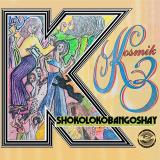
Shokolokobangoshay was a collaboration between three members of Pogo Ltd. The three of us felt we were crazier than the other members of Pogo Ltd. and decided to work together on the Kosmik 3 album. Robo was worked in the graphics department of NTA Benin. He was an amazing artist, a crazy guy, he was extremely creative, he invented a musical notation language that only he understood. He was amazing, he took me to his place in Asaba and showed me his compositions, he must have had over 500 songs.
Emman Osagie was my floor manager when I was a producer at NTA (Nigerian Television Authority) Benin. We were all on the same wavelength. He was a member of Severe 7, and heavily involved in the Bini music scene working with Ehi Duncan and others. we really enjoyed making Shokolobangoshay, it’s a river of influences, a bit of this, a bit of that, but it is really our thing. The musical ideas we were playing with at the time.
Emmanuel Ogosi. 3rd March 2026.
This record is why I went into reissuing records with Odion. The feeling to sharing records that went under the radar when they were initially released, with a greater audience. Shokolokobangoshay is uniquely Nigerian in a very personal way, it makes references to the societal and political ills that plague us in Africa. It’s title, Shokolokobangoshay, references a play song, kids in Lagos and western Nigerian sing when they play in the streets. Most Nigerians can relate. The music references afro beat, country music, reggae without falling firmly on any side. This is one for the ages. Amazing production, I personally love this record for the free spirit, creativity and excellent song selection. We had to licence it, we just had to. Limited repress only 500 copies.
It is also excellently produced. Big up to all involved, from the Vinyl Rip (James Law, Fidgit Studio, South Africa), to the master production by DJ Simbad (Cape Town, SA) and the cover restoration by Angelo Mitchell (SA). I am so happy to be doing it with the boys in the motherland. Peace and appreciation to all. Special dedication to Mother Tongue for creating a great pressing. Please file under Afro.
Blessings,
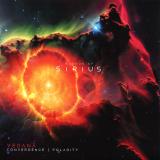
Sounds of Sirius Music presents SOSNZ012 – Vedanā – Convergence / Polarity
All forces move in pairs. Light and shadow. Push and pull. Signal and silence.
Frequencies bend toward each other, magnetic fields collapsing into a single point of awareness. Tension becomes motion. Duality becomes flow.
New Zealand-based artist Vedanā leads the A-side with two original cuts, channeling a deep, hypnotic energy that moves between restraint and release. Each track reveals a different side of the same spectrum, balancing introspection with forward momentum.
On the B-side, label founder Herman Saiz delivers a reinterpretation rooted in his signature groove, bridging Chilean and New Zealand influences with a refined, driving touch. Romanian producer RQZ adds his own perspective, reshaping the original into a textured and immersive journey.
Convergence / Polarity captures the space where opposites meet — not as contradictions, but as essential counterparts in constant motion.
Extremely Limited Black Screen-Printed Jacket / Glow in the Dark Ink / Red Insert Printed Sleeve 7Inch Black Vinyl
Hidden Revealed is one of Joaquin Joe Claussell Aliases which features a more Experimental Cosmic Jazz Side of Joaquin garnering just as many music supporters as his other aliases.
Sold out on our Bandcamp in only a few days; we are now offering copies of this highly sought-after record to our distribution partners. This is an Extremely Limited Specially Packaged 7" Black Screen-Printed Jacket using Glow in the Dark Ink. The record itself is housed in a special Red Insert Sleeve which is also printed. Musically Speaking this concept showcases the cosmic Jazz side of Joaquin Joe Claussell. All human musicians, no computers. Joaquin has been featuring these compositions in his DJ sets for quite some time now garnering inspiring crowd response.
How do losers dance? According to Helmut, almost weightlessly, with soft feet, warm gestures, sometimes alone, sometimes together. Content Creatures, Helmut's fourth album, evokes the pop archetype of the "beautiful loser", who had almost disappeared from view in so-called late capitalism. In a present in which even suffering is often similarly instrumentalised and tailored to clicks like a competitive sport, this album sets a counterpoint: those who listen to it suddenly want to be enchanting losers again, useless and joyfully messing up, losing something beloved, having their hearts broken, giving up a dream, sinking into beauty.
You don't sink alone. Comforting harmonies envelop you, the voices of friends appear, accompany you for a while and then disappear again. Warm grooves, floating synths and delicate guitar lines characterise an indie sound that remains open and breathes.
Self-produced for the first time in his home studio in Neukölln, 'Content Creatures' sounds thoughtful and light at the same time. The album will be released digitally and on vinyl on 10 April 2026 on Berlin-based label St.Vladimir. There are four songs on one side and four songs on the other. The cover is adorned with an exceptionally pretty guinea pig. Helmut shows the special in the seemingly ordinary: a child's pet, the most ordinary of all, is his cover star and headstrong protagonist.
Wie tanzen Verlierer? Wenn man nach Helmut geht, dann fast schwerelos, mit weichen Füßen, warmen Gesten, manchmal allein, manchmal gemeinsam. Content Creatures, Helmuts viertes Album, evoziert den Pop-Archetypus des "beautiful loser", der im sogenannten Spätkapitalismus fast aus dem Blick geraten war. In einer Gegenwart, in der sogar das Leid oft ähnlich durchinstrumentalisiert und auf Klicks getrimmt ist wie ein Leistungssport, setzt dieses Album einen Kontrapunkt: Wer es hört, möchte auf einmal gern wieder ein bezaubernder Verlierer sein, nutzlos und freudvoll abkacken, etwas Geliebtes verlieren, das Herz gebrochen bekommen, einen Traum aufgeben, in Schönheit versinken.
Man versinkt nicht allein. Tröstende Harmonien legen sich um einen, die Stimmen von Freundinnen tauchen auf, begleiten einen ein Stück weit und verschwinden wieder. Warme Grooves, schwebende Synths und feine Gitarrenlinien prägen einen Indie-Sound, der offen bleibt, atmet. Erstmals in seinem Neuköllner Homestudio selbst produziert, klingt "Content Creatures" bedacht und leicht zugleich.
Das Album erscheint digital und auf Vinyl am 10.04.2026 auf dem Berliner Label St.Vladimir. Es hat vier Songs auf der einen und vier Songs auf der anderen Seite. Das Cover ziert ein außergewöhnlich hübsches Meerschweinchen. Helmut zeigt das Besondere im scheinbar Gewöhnlichen: Ein Kinderhaustier, das normalste von allen, ist bei ihm Coverstar und eigensinnige Protagonistin.
Mark Reeve starts 2026 in prime form with ‘Body Drops’, a quick-fire follow-up to his recent A-Sides contribution ‘My Mind’.The veteran artist has an inimitable touch in the studio going back over 15 years and can always be relied upon to deliver high-impact techno creations. Tracks such as ‘Run Back’, ‘Distance’ and his collaboration with Adam Beyer ‘Nine of You’ make thrilling reference points.‘Body Drops’ found its way onto Drumcode via Bart Skils. “Bart and I have a very good musical understanding and we really respect eachother. So, when he said I think this would fit to Drumcode, I was like ok let me send it. Adam came back to me with a massive yes, and it went from there.”He continues: “I can see that a new peak-time sound is evolving. Very modern and groovy sounding, which is exactly what I like. I guess all the other tracks on Drumcode that have come out recently got me very inspired.”The track is a gem. Driven by an otherworldly stomping riff, it immediately strikes you with its unique sonic character. Huge without being banging, watch this fit a variety of high-impact moments.‘Feed My Fire’ is a rolling big-bodied track that sees elements of prog,techno, psy and silky chords combine for a chugging dancefloor cut.“This is a personal favourite of mine simply because it’s so groovy andfits more intimate sessions. But I also tested it in front of bigger crowds and it really does the job.
Last year, following the special vinyl 45 release of Samba De Flora - the Romero Bros from Argentina presented a full LP of Latin and Brazilian club flavours to be exclusively distributed worldwide on vinyl by Echo Chamber Recordings.
It received brilliant feedback from a wide range of DJs across the planet and the full version of Samba De Flora was licensed to Acid Jazz Records for their legendary Totally Wired Compilation LP - so it was a natural idea for a couple of those people to be involved in this next release on a vinyl 45 - with the two tracks that gained the biggest feedback
Side A - “Cravo E Canela” with the Romero’s great take on the classic Brazilian anthem from Milton Nascimento originally on their LP from last year which gained a lot of airplay at the time. This 45 release this has been given an extra special remix / update from the legendary Chris Bangs. He adds more bass bounce to the ounce and a funky shuffle to make it even more club friendly
Side B - “Gabriel” - their Latinized version of Roy Davis Jr’s 90s club smash. LA based DJ Greg Belson was such a fan after he got the LP, that he immediately made an exclusive edit to put on a 45 dubplate - to pack on his 2025 UK Tour - dropping it to devastating effect in place like Glastonbury and club dates across the country. So it was a natural choice to include this version on the flip of the 45 - under his Preacher monicker to align with his other releases on the sister label - Echo Edits
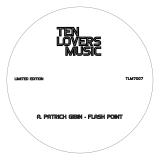
Another special release to celebrate 30 years of Ten Lovers Music.
A limited edition 7″ featuring Patrick Gibin – Flash Point from TLM7001 and Javonntte – Wind Of Seven Seas from TLM7003.
Flash Point features Kaidi Tatham on keys and was mixed by Gary Superfly.
Wind Of Seven Seas on the other side sees Javonntte on a Detroit Jazz Fusion excursion to Tuxedo Avenue.
If you missed either of these last time don’t miss them again!
XKatedral Anthology Series II (An Anthology Of Slowly Evolving Timbral Music), featuring exclusive music from Kali Malone, Jessica Ekomane, Mats Erlandsson, Theodor Kentros, Wilma Hultén, and Maria W Horn.
"XKatedral Anthology II is the second instalment in a series of archival releases dedicated to presenting music by composers affiliated with XKatedral working within the realm of slowly evolving harmonic and timbral music. This double-vinyl set contains an array of pieces dating from 2018 - 2020. This collection of pieces focuses on the use of synthetic sound and algorithmic composition languages as tools for precise work within the realm of spectral exploration. In addition to this, the electronic instrumentation in many of the pieces is augmented by acoustic instruments.
The first piece on side A is Kali Malone’s Music for Low Quartet. This piece is an adaptation of the composition “Rose Wreath Crown” originally released on The Sacrificial Code in 2019. In this iteration, the music is scored for two double basses played by Vilhelm Bromander and Zach Rowden, and sine tone electronics performed by Malone herself. The recording of this piece was made at EMS in 2019.
Closing side A is Jessica Ekomane’s ‘First Light’. This computer music piece focuses exclusively on digital sound, layering razor sharp synthetic textures into an otherworldly dynamic weave. The music heard here is a reworked version of a piece originally commissioned by Semibreve in 2020.
Side B contains the work ‘Hands Melt In The Sun’ by Mats Erlandsson. This composition is built from electronically processed tuned zithers and synthetically generated tones arranged in a series of chordal inversions over a sustained fundamental tone. This music, written as a love-letter to the localized drone tradition of Stockholm in the years 2008-2012, was composed and recorded in seven days while in residence at Ställbergs Gruva in Bergslagen, in the summer of 2018.
Opening the second half of the collection is Rough Draft v.7 by Theodor Kentros. Kentros’ compositional practice usually combines acoustic and electronic source material and in this piece he molds the sound of the Buchla 200 and a collection of recorded wind instruments into a molten mass of sound. In its original form, this music was presented as a multichannel immersive work and even in the current stereo configuration it retains some of that enveloping sense of depth.
The second piece on side B, Inertia, is by Wilma Hultén, who makes her debut on record here. An exclusively synthetic piece, Inertia utilizes internal digital feedback in a sealed synthetic system to manifest a harmonic field that swells and abates throughout the length of the piece, interspersed by small gestural elements.
Closing Anthology II is Maria W Horn's work ‘Dies Irae’ for female vocal quartet, pitched glass and synthesis. ‘Dies Irae’ uses a modified form of traditional tonal harmonic language to invoke an uncanny and restless middle ground between the classical western polyphonic vocal tradition and contemporary electronic music. The version heard here is a live recording from Eric Ericssonhallen in Stockholm on May 30th 2020. Performing the piece here are the vocalists Katarina Henryson, Lisa Holmgren, Vilma Ogenblad and Paula Wegmann, as well as Maria herself on glass and electronics."
Death Is Not The End collaborate with Uzbek label Maqom Soul to deliver an LP counterpart to last year's mixtape of the same title, compiling specially picked & fully licensed individual belters from the ex-soviet studios of Central Asian republics between 1978 and 1989 - incl. Uzbek, Tajik, Kurdish & Uyghur artists pulling traditional folk motifs together with pop & rock and psych elements.
"These recordings do not form a smooth or coherent history. They feel more like a sequence of discoveries made at different moments and in different circumstances. Songs and instrumental pieces that once lived inside specific contexts radio broadcasts, philharmonic programs, touring routes now sit side by side, revealing hidden connections as well as clear fractures between them.
Nasiba Abdullaeva appears here as a voice from the end of an era. Trained within a conservatory system, she worked inside the format of the Soviet pop song while filling it with melodic logic that did not come from Moscow or Leningrad. Her voice is soft and sustained, shaped by Eastern melisma, and it never functions as decoration. Even in tightly structured songs there is a sense of resistance, an effort to preserve a musical language rooted in Uzbek tradition rather than fully adapted to an all Union standard.
The ensemble Sintez, later renamed Navo, represents a different path. Beginning as a student rock group, the band was gradually absorbed into the official VIA system with all its limitations and compromises. Yet it was precisely within those boundaries that Sintez and Navo developed a recognizable sound. Electric guitars and jazz rock harmonies do not overpower the folk material but remain in tension with it. Their recordings feel like negotiations between what the musicians wanted to play and what they were allowed to perform.
The Tajik ensemble Gulshan reflects an institutional approach carried to a high professional level. Formed under television and radio structures, the group treated folk material almost as a written score. Carefully constructed arrangements, close attention to orchestration, and restrained use of pop techniques define their sound. There is less spontaneity here, but a strong sense of discipline and structure, where national melody becomes part of a carefully controlled sonic framework.
Koma Wetan occupies a very different space. Formed in the 1970s, this Kurdish rock group approached poetry and folklore as tools of cultural assertion. Their psychedelic rock never feels like a stylistic borrowing. Instead it functions as a contemporary vessel for language and themes that might otherwise have remained unheard. Even today these recordings sound fragile and stubborn at the same time.
The Uyghur ensemble Yashlik, closely connected to a musical drama theatre, operated somewhere between stage performance and popular music. Their songs are built on folk melodies but shaped for wide audiences. What emerges is a constant attempt to preserve the recognizability of Uyghur musical identity without freezing it in a folkloric frame. Yashlik's music exists in a state of balance between representation and development.
Digging Central Asia does not attempt to establish hierarchies or offer a single wayof listening. Names and dates matter less than the sound itself. Tape noise, abrupt transitions, and unexpected timbres remain part of the material rather than flaws to be corrected. This music existed at the crossroads of multiple routes geographic, cultural, and ideological. Heard today in a new context, it no longer feels peripheral. Instead it stands as a reminder that the history of popular music is far more fragmented, layered, and polyphonic than it is usually allowed to be."
RAPRAVE is an exciting collective born out of New York City, specialising in creating music teetering on the cusp of hip-hop and dance music. Consistently great releases like 'Heaven Plus', which is the ninth on the label, perfectly showcase how successful they are at executing this vision. The two tracker, headed by Dallas export Stonie Blue, is a fine display in a mixture of Chicago House, deep house and hip-hop, akin to a Galcher Lustwerk, or from the other side of the pond, Isaac Carter. On 'HEAVEN', smooth, sexy chords and choppy percussion prop up Blue's lyrics: "I found heaven, Heaven in the club". Then, as if in an attempt to make a club ready two-tracker even more club ready, Blue recruits London-based producer tom huna to inject some 2-step flavour into the B-side with 'FWM (S+H MIX)'. On this track, glitchy drum workouts and slick electric piano stabs meld with sensual vocals to create an intimate, late night banger.
Ayô Dele — which means "joy comes to me" in Yoruba — is neither a slogan nor a promised miracle. It is a breath of fresh air. That of an album born in the interstices, where the word find their way between shadow and light, between the disorder of the worldand the impulse to be .
At the heart of the project, Julien Gervaix and Damien Tesson, multi-instrumentalist beatmakers, share a groove language that is both dense and airy, where every detail breathes and finds its place.
With background in Afrobeat, Dub, Funk, Soul, Roots Reggae, and Electronic Music, they treat the studio to be their playground. Their music is a hybrid groove that speaks to the body: round or bouncing basslines, brass oscillating between melodic warmth and funk energy, textured guitars, arpeggios, enveloping Rhodes, clavinet that slides, presses, and embraces. Everything comes together with precision and flexibility, in an inventive and warm composition. The meeting of their experiences and sensibilities gives rise to open, generous music, made for dancing and vibration.
With Ayô Dele , Ireke is embarking on a new chapter: the duo is refining its style,allowing the voices to breathe. The groove remains the driving force but opens up to intimacy. This intimacy is carried by two unique female voices: Nayel Hoxo, a Beninese-Nigerian singer/rapper, and Agnès Hélène, who has already made a name for herself on Tropikadelic with "Petit a Petit". They don't sing side-by-side; they coexist, respond to each other, and sometimes intersect. But each follows her own path: Nayel, with the power of her words in Yoruba, offers songs of elevation, healing, and resistance — a light born in the cracks Agnès explores these cracks themselves: what wavers within us, what reinvents itself in bonds, glances, and gestures.
For one track, Olivya (Dowdelin) joins this dialogue in Martinican Creole. Her sunny soul sketches the contours of gentle resistance and celebrates rediscovered light.
Ayô Dele embodies a quiet yet radical determination: to smooth nothing over, to let plurality, contradictory emotions, and mixed heritage live. An album that moves forward through vibrations, that speaks of emancipation without slogans, love without clichés, anger without uproar.
Two women, two inner worlds: a sensitive complicity, a shared breath. Music that seeks not effect, but echo, weaving a living soundscape between reinvented traditions and contemporary textures. An alchemy faithful to the spirit of Underdog Records, where music unites and brings people together. Ayô Dele : "joy comes to me." A lucid joy, crossed by shadows, patiently regained. Music that welcomes, releases, gives, and in doing so, makes us feel good.
In a saturated world, Ayô Dele chooses nuance: transmission without emphasis, joy without naivety. An album that vibrates more than it demonstrates, that connects more than it imposes, and which, in its quiet clarity, resonates with a deep desire to be fully alive.
Once I Was Young and The Airplane Album find the producer taking yet another sonic right turn. "These records were made in the same year with a very similar creative process. I moved almost completely away from sampling, experimented more than ever with ambient and techno elements and used the album format as a way to tell a story about moments in my life." Once I Was Young is a storytelling work that journeys through analogue synth-pop, modulated techno and raw, dusty drums with otherworldly melodies. Moments of beauty come through escapist, naturalistic ambient tracks and fusions of Kraftwerkian sequencing with more classical piano, while stark, clubready grooves keep things moving. Airplane contrasts similar shades of light and dark, synthetic and organic, rough and smooth. Glitchy, imperfect analogue sounds, knackered drum machine grooves and eerie synth phrasing evoke a post-human world with icy atmospheres. Elsewhere, warmth comes from bittersweet melodies and loose, funky drums that ooze retro-future charm.
Once I Was Young and The Airplane Album show a diff erent side to Escobar, one that embraces introspection and experimentation while exploring a whole other world of meaningful machine soul
Xerrox Vol. 1 is the third studio album by German electronic artist Alva Noto. It was released in 2007 as part of the ongoing Xerrox pentalogy, based on the concept of digital replication of source material.
Using the process of copying as a basis, the Xerrox series deals with the manipulation of data through endless reproduction. Due to the inherent fallacy of making copies from other copies, everyday sounds become so altered that they are hardly associated with their source material. As a result, entirely new sounds are created: copies of originals become originals themselves.
Together with Christoph Brünggel, Nicolai designed a "sample transformer" that takes audio fragments and manipulates them beyond recognition. In this process of taking something familiar and defamiliarizing it, samples from obvious sources-advertising jingles, airport tones, telephone hold music, and film soundtracks-were used and altered, resulting in sounds totally unlike their original source. The result is a series of haunting, intricately realised pieces that recontextualise Nicolai's "glitches and bass" sound into extended, cinematic, organic, and almost orchestral works.
Xerrox Vol. 1 was followed by Xerrox Vol. 2 (2009), Xerrox Vol. 3 (2015), Xerrox Vol. 4 (2020), Xerrox Vol. 5 (2024). This remastered version will be reissued on NOTON in 2026
---------------------------------------------------------
Medium: 1 // Side: A // Track: 1
Artist: Alva Noto
Title: 10-22-38 Astoria
Playtime: 00:00:19
Explicit Lyrics: No
ISRC: DE1N62500001
(P):
---------------------------------------------------------
Medium: 1 // Side: A // Track: 2
Artist: Alva Noto
Title: Haloid Xerrox Copy 4
Playtime: 00:03:53
Explicit Lyrics: No
ISRC: DE1N62500002
(P):
---------------------------------------------------------
Medium: 1 // Side: A // Track: 3
Artist: Alva Noto
Title: 03-10-06 Astoria
Playtime: 00:00:38
Explicit Lyrics: No
ISRC: DE1N62500003
(P): 2007 2007
Country: Germany
Heavy, reminiscent of a release from the nineties, Younger Than Me pulls us through interdimensional soundscapes on his debut to the label — a wormhole morphing from ultra-emotive breakbeat and hallucinatory progressions into full-blown, boisterous acid techno at its very best. A producer with an endless catalogue of releases, notably on incredible labels including Jennifer Cardini’s Dischi Autunno, now steps up on Neptune Discs with his Vaco Loco EP. The Berlin-based, Italy-born producer is joined by Byron Yeates and label regular Biodive on the B-side, each taking turns remixing A3, Aargh!!!, pulling it in different direction — one leaning into trippy trance atmospheres, the other exploring a more immersive progressive terrain.
Future Tones is back... this time with Fdez, label co founder. Four dancefloor killer tracks, and starts with Dr Blowfin, Dark and driving techno house tool. Rolling sub-heavy bassline, tight percussive groove and raw analog synth stabs.
The A2 is for Techcontrol, Stripped and hypnotic. Minimal drum programming layered with evolving analog textures and shadowy vocal fragments.
The other side starts with Sarcofago, Heavy low-end pressure with a punchy groove. Italo-tinged atmospheres and dusty analog sequences create a moody peak-time cut with steady progression.
And B2 is for Zigurat, Killer closer. Deep pulsating bass, restrained percussion and haunting vocal elements floating over warm analog pads. Perfect for late-night transitions and controlled energy shifts.
On a planet far beyond our solar system lies a volcanic tropical island, a glowing mirage where alien tides crash against molten shores and the sky pulses in time with the rhythm below. E.T.H (Italy) inaugurates the first-ever
Basement Beats vinyl release with Neon Inferno. The A-side opens deep and progressive, dense with atmosphere and tension, before pivoting into the playful, radiant Cumbia Poderosa, where the artist’s roots surface through Italian vocals. As the land shifts, lava carving new paths through jungle terrain, Utrecht-based Tifra reshapes thetitle track into a hypnotic, tribal ritual meditation built for the late hours.
Closing the portal is Osaka’s Paperkraft, whose vibrant remix injects uplifting energy and subtle Asian influences, bringing the journey to a euphoric, otherworldly conclusion.
Silicon Scally and Fleck E.S.C. need no introduction at this stage. Both artists are veterans not just of Sheffield's Central Processing Unit label but of modern electro as a whole, with the pair having decades of skin in the game at this point. Their new release, a four-track EP entitledSlipwhere Silicon Scally handles the first half and Fleck E.S.C. the second, carries itself with the adventurous confidence of a record made by masters of their craft.
Slipopener 'Phased Array' is exactly the kind of top quality machine-funk tackle you'd expect from this meeting of minds. The beat programming is deliciously tactile from the off, hissing and clanking like machinery in an old Detroit factory. The feel of 'Phased Array' is altered, though, when the chords come in, a series of alternating floating sounds which give the track an altogether eerier feel. When all of this is coupled with the otherworldly synth blurts that periodically force their way to the front of the track, the overall effect is a piece of real depth assembled by an expert practitioner.
'Phased Array' is followed up by 'Stax', another brilliantly propulsive number. Here we find the drum beat - one which is a little reminiscent of that Kraftwerk tune about the numbers, no less - once more offset by some decidedly more shadowy synth work, all while arpeggiated keyboard licks work against an intricate web of basslines, chords and unidentifiable flying synth tones.
Fleck E.S.C. opens theSlipB-side with 'Good Ride', a number where the nudge-wink title is borne out by a track built around looped snippets of sighing vocals. That said, with a bassline that sounds like a blurting old landline telephone, a ghoulish synth lead and all manner of motion-sick breakdowns, the 'ride' in question could just as well be aWipeout-style whizz through hyperspace as anything more suggestive. 'Good Ride' also sets itself apart from the other joints here by showing off a swaying halftime breakdown.
'Intox Remedy',Slip's closer, wraps the EP in a manner which continues some of the trends of the record's earlier tracks - richly tuneful chords, precision-engineered broken beat drum programming and a wide palette of delightfully unusual synth tones are all present and correct. However, there is also something about the chords here which pares back the eeriness of previous joints for a bit more of a wide-eyed, stargazing feel, and as such 'Intox Remedy' sees the record out by placing the listener firmly back in the cosmos.
Tough enough for the dancefloor and intricate enough for home listening, theSlipEP is a fabulous collaboration from two of the most respected voices in the electro game.
AE Productions in association with Sure Shot Recordings and In Effect Recordings are pleased to announce a 10 Year Anniversary Edition of the critically acclaimed Phill Most Chill and Paul Nice album as the Fabreeze Brothers.
The hugely successful first edition which was pressed on colour vinyl and supplied in double fold out sleeve sold out in only 2 weeks from release date and then the 2nd pressing black vinyl edition sold out a little while later but has for years been out of print but is increasingly requested by shops, via email, social media, AE Productions website back in stock requests, etc…
As it has been 10 years since original release back in 2015 at the time of proceeding with manufacturing, it was the perfect opportunity to do a 3rd pressing to mark the anniversary but we had to pull out all the stops for a 3rd run of this incredible album and also make it subtly different again in packaging design from the 1st and 2nd pressings so that each has it’s own particular feel and quality.
With help from the original designer and all-round vinyl artwork supremo Mr Krum we have found some nice adjustments for the gatefold sleeve where the detail from the insert sheet found in the original issues is incorporated into the inside panels of the sleeve. We have also tweaked the hype sticker to mark the 10th Anniversary Edition and updated the vinyl labels so as to work better with the new Splatter vinyl which follows the original red and yellow vinyl but each splattered with the opposite colour.
For something a little extra we have compiled a Limited Expanded Edition Double Cassette Box Set that includes the original album and also a ‘Bonus Tape’ which features all of the remixes, alternate versions, Original Versions of album cuts and bonus tracks found on B-sides of the array of singles and we included for good measure 2 tracks that only appeared on the promotional only LP sampler that ended up being different on the final release. This is limited to cassette just for the non-vinyl heads as all of these tracks already appear on vinyl. The outer box is A5 card in black with gold foil Fabreeze Brothers logo and comes with discography booklet.
‘The Bonus Tape’ from the box set is also available as a standalone cassette release with alternate j-card art work so that it has it’s own flavour and so that anyone that purchased one of the original run of cassettes that sold out before we could even ship any copies, did not need to purchase the main album again unnecessarily and to make it noticeable from the Expanded Edition Box Set version.
This version also has an alternate shell design in keeping with the clear shell with dark liner that was commonplace back in the 90’s and the cassette geeks may note the red text on the spine as was also a common design back then – giving this a pseudonym of ‘the 90’s tape’ during the design process.
We couldn’t stop there so we also have an extremely low quantity Limited Edition Mini Disc version which is the main album plus 8 of the bonus tracks from The Bonus Tape – only missing the 2 least significant alternate versions but clocking in at just a few seconds under 80 minutes – the absolute maximum for the format! Mini Disc???!!! You’re probably asking – yes!
While looking into the cassette duplication options we realised that the duplicator also offers Mini Disc production so we thought that it may be worth doing a very small run just because not only are professionally manufactured Mini Disc’s rare in Hip Hop, they are rare within the entire music industry as they never really took off as a medium to purchase music but ended up as the choice for home recorded Walkman and car use. Indeed, AE boss Mr Fantastic still has his main machine, portable and old discs. Amazingly also, the sleeve artwork transferred brilliantly to the Mini Disc template. They are manufactured using high quality Sony discs using ATRAC 4.5 codec.
All releases are supplied with unique free download codes on cards that are included inside the packaging but also with the Expanded Edition cassette and Mini Disc having 2 cards – 1 for the main album and a 2nd card for ‘The Bonus Tape’. The free downloads are supplied direct from Phill Most Chill’s Bandcamp page keeping it independent.
That time of the year has arrived! The next Various Artists is the prefect blend between old and new generations, including 2 new addition to the label and 2 familiar faces.
Opening the EP is MikeroBenics with “Julika (Original Mix)”. This track was officially released in 1994 on Harthouse and through the years on other labels in different versions. The version we are publishing has never seen the light before today. A deep melancholy trance journey characterised by driving acid lines and club-oriented rhythms. Followed by the return of Noboot with “Drive Control”. Made in 2022, this track bring us back to the sound of his first release. An immersive electro-acid track with a 303 melody that moves with punchy rhythms, letting our bodies move and our brains fly.
On the B side, Periferico is back with a new production made in 2021. “2804 A DEF12MIX” is an engaging journey into Livio progressive house world. Closing the VA, we welcome our dear friend CRL with “Breathe”. Composed in 2024 while trying new techniques and samples, characterised by its ethereal pads and a slow unfolding vortex of acid bassline, brings the minds into a deeper conscious state.
The next chapter in Axis Expressionist Series. A collection of vinyl and limited digital releases, curated by Millsart, an alias of Jeff Mills, of his most eclectic and transcendent compositions that derive from his Every Dog Has Its Day project as well as new unreleased works.
Vernacular creations that fall off from the "other side" of the Electronic Music tree, this project is designed for the experienced Techno music listeners, and its goal is to reflect upon the pure artistry of the craft of storytelling. A realization between music and life. Whereas "dancing" is the goal of Dance Music, the goal of this music is about "reflecting on the complexity and simplification of life". Soundtracks for people in their evolutionary process.
Every night, he returned to the same corner. One side brought the fuel, the other side wants precision. Parano is pushing the imagination to a scream, without mercy and white knuckles. We stand in the silence between the tracks, sharing a single smile.
Analog Fingerprints Vol. 0 is a compilation bringing together the early 2000s works of Marco Passarani under his Analog Fingerprints alias, collecting key tracks originally released on Rome’s Plasmek and Pigna labels.
For Numbers, the story starts long before the label itself. In their formative years, digging in Glasgow’s Rubadub, Passarani’s records felt like dispatches from a future city. Releases on his own Nature Records and on labels such as Generator and Interr-Ference Communications were mind blowing: rooted in Detroit techno, Chicago house and electro, yet pushing somewhere new. Much like fellow travellers Autechre, who would remix him in 2001, Passarani’s music balanced machine funk with restless experimentation.
Information was scarce, and you would hear these records first on the dancefloor or at listening stations in shops like Rubadub. Print fanzines like Ear and early web outposts such as Forcefield offered only fragments. But there was a palpable axis forming between Detroit techno and a new European wave of record labels including Skam, Rephlex, Clone, Viewlexx and Nature itself. It was the sound that defined Saturday nights at Rubadub’s ‘69’ parties in Paisley, just outside of Glasgow.
Passarani’s records, in particular, were instrumental in bringing together the future Numbers co-founders. Richard had already booked him pre-Numbers; meanwhile Calum (Spencer) and Jack (Jackmaster), then 16/17 year olds working alternate Saturdays in Rubadub, were so enamoured with the Roman sound that they travelled to Rome for the Bitz Festival in 2003 to seek out Passarani and Lory D at their source.
The first Analog Fingerprints release landed as a 12” on Plasmek in 2001, following the fractured, IDM-leaning 6 Katun material. For Passarani, the project marked a recalibration. A DJ first and foremost, he had moved into production via early computer setups, from a Commodore Amiga through primitive PC audio, Cubase and Logic, later experimenting with Ableton. The IDM scene had offered a playground for trial and error, but there was always a tension between abstraction and the dancefloor. Analog Fingerprints became the bridge: still intelligent, but with more dance than distance. After years of broken beats and complex arrangements, he wanted directness without surrendering identity.
Working closely with Francesco de Bellis and Mario Pierro in the Pigneto district, the trio formed Pigna as a vehicle for reclaiming a more accessible dance sound, deliberately steering away from the minimal wave beginning to dominate Europe. Sessions were fast, instinctive, often stretching late into the night with friends dropping by. It was a studio as social space, production as collective energy.
“In that constant search for balance, Analog Fingerprints was my way of expressing something closer to the classic dance floor. The track 'Tribute' - a tribute to my favourite early Detroit techno track of all time, 'First Bass' by Separate Minds - came after I realised I had almost lost my connection with the dance floor. The simplest step was to take inspiration from early Chicago and Detroit and twist it in our Roman ‘Pigna’ way. My goal was to create more accessible dancefloor tracks by mixing my unconscious Italo roots with my teenage love for that early US sound, ensuring the result was as far as possible from the minimal sound that was starting to dominate everywhere.” - Marco Passarani
Technically, the Analog Fingerprints tracks span a transitional era: Roland TR-909, SH-101 and Alpha Juno hardware met early software experiments. A Novation Drumstation rack stood in for the unattainable TR-808, syncing with TB-303 and TR-606. Yet the true secret weapon was Jeskola Buzz, a tracker-style modular environment that allowed step-by-step parameter control and strange melodic constructions, later exported into the audio sequencer. Even the lead on ‘Tribute’ came from an early PPG Wave-style plugin. It was hybrid thinking at a moment when digital tools still felt unstable but full of possibility for technologists like Passarani.
Behind the music sat Finalfrontier, a loose Roman collective orbiting Nature and Plasmek. Distribution and production were intertwined; importing obscure records into Italy built connections with like-minded outsiders across Europe and the US. Expensive phone bills and fax machines forged an “electronix network” that linked Rome to Clone, Viewlexx, Skam, Rephlex, Rubadub and Detroit’s Underground Resistance. There was a shared sense of survival and resistance, of operating against commercial systems.
Passarani recalls “The first time I found a sheet of paper inside an Underground Resistance 12” with info about upcoming releases... and a huge picture of Spock on the back. Imagine that: you love the music, you love Star Trek, and there’s someone on the other side of the ocean sharing those same values and sounds. It was the perfect match. We even gave our original company the suffix ‘Finalfrontier’: that says it all.”
Feedback in that era arrived physically: distributor faxes, conversations with visiting DJs, the experience of playing abroad and meeting kids who had connected with the records. Glasgow became a key node in a scattered outlier network. Passarani personally brought the first two Nature releases to Fat Cat in London, playing them in-store. Shortly after, a fax arrived from Rubadub in Glasgow requesting copies.
“I still remember that phone buzz and the fax paper slowly sliding out, with someone I didn’t know saying they wanted 75 copies of Nature 001. Or like the time we got a fax from the Rephlex crew just saying, “Hello Nature Records, Keep up the good work.” That was how we knew the message was getting through. It was a fantastic feeling; just one piece of thermal fax paper as an analog notification - the mood for the entire week would change.” - Passarani
The connection to Glasgow has since stretched across generations. As Passarani reflects, links often fracture as scenes renew themselves, but in Glasgow something different happened. New and old mixed seamlessly. There was a visible trust in what came before, and a willingness to carry it forward rather than discard it. Observed from Rome, it was deeply encouraging.
Analog Fingerprints Vol. 0 captures that moment of exchange: Rome to Glasgow, Detroit to Europe, experiment to dancefloor. It documents an artist recalibrating his sound and a network of scenes discovering one another in real time, connected by vinyl, faxes and shared intent.
140g vinyl, remastered, double LP with the original LP along with a second record of 14 rare tracks
Sweet And Nice is the vital debut album from Jamaica’s undisputed first lady of song Marica Griffiths. It’s reggae at its most soulful. Slinking through a tight ten tracks of R&B and pop-sourced material, it became an instant best seller. 45 years after its initial release the LP is available again on vinyl, now as a double LP, with an extra record collecting 14 rare tracks.
Sweet And Nice has appeared over the years with a revised running order and under different titles. But the original’s opening sequence of loping soul is legendary, even beyond reggae circles. These songs are now returned to how they were presented on that first Jamaican release, and under their intended album title. Be With doesn’t mess with magic.
Marcia’s version of “Here I Am (Come and Take Me)” has long been lusted after, played by genre-hopping selectors to snapping necks for decades now. It’s followed by the sophisticated, rollicking wah-wah funk of “Everything I Own” and the slice of smooth lovers soul par excellence that is “Green Grasshopper” and her ace, lilting Neil Diamond cover “Play Me”.
The thundering, humid funk of “Children At Play” “sounds uncannily like a precursor of Massive Attack”, as FACT Mag astutely noted when they put Sweet And Nice at number 16 in their list of the 100 best albums of the 1970s. Otherworldly, moody and essential.
Side two keeps the fire burning. “Sweet, Bitter Love” should leave you swooning, and is also one of the album’s alternate titles. Curtis Mayfield’s already-eternal “Gypsy Man” is up next, recast as proto-lovers rock.
“There’s No Me Without You” is elevated to canonical status by the majestic, forlorn horns of the Federal Soul Givers and Marcia’s heartbreaking delivery. And if this doesn’t get you then surely the next track will: arguably the definitive version of Ewan MacColl’s “The First Time Ever I Saw Your Face”. Yes, seriously.
“I Just Don’t Want To Be Lonely” re-takes its rightful place at the end of the LP’s second side… but we couldn’t leave it at that. So we added an entire second record of rare material recorded around the same time as Sweet And Nice, much of it unavailable since it was originally released. Some of these songs have only ever been found on now unattainable 7" singles and no, rarity doesn’t always correspond with quality, but in this case we’re talking about some seriously jaw-dropping music.
Amongst 14 extra tracks you’ll find the exquisite late-60s singles “Melody Life” and “Mark My Word” which, along with the sumptuous reading of “Band Of Gold”, are now £100 records, if you can find them! Just sayin’. There‘s also a fantastic version of “The First Cut Is the Deepest” and an alternate take of “Play Me” with producer Lloyd Charmers adding his own vocals.
Everything’s been remastered of course, including the original LP, so Sweet And Nice now sounds even sweeter, and even nicer.
Black Truffle is thrilled to announce Dalbergia Retusa, an extensive double LP selection of the solo guitar music of Hans Reichel, compiled by Oren Ambarchi. Last heard on Black Truffle as one quarter of the joyously anarchic Bergisch-Brandenburgisches Quartett, Hans Reichel (1949-2011) is one of the great figures of experimental guitar music. Though perhaps lesser known than peers like Derek Bailey, Fred Frith and Keith Rowe, Reichel’s rethinking of the instrument was in some ways the most radical of all. Early on, he dispensed with existing guitars to build a series of his own that explored the use of additional strings and fretboards, moveable pickups, extra bridges, special capos, and other innovations documented in the extensive booklet accompanying this release.
Reichel was a long-term resident of Wuppertal, the small Western Germany city that became an unlikely centre of European free jazz in the late 1960s, also home to Peter Brötzmann and Peter Kowald. His solo debut Wichlinghauser Blues was an early entry into the FMP discography and began a relationship with the label that stretched into the 1990s; all the solo performances heard here were first released on FMP. As Reichel says in the charming archival interview with Markus Müller included here, he was ‘always a cuckoo’s egg at FMP’, a label that began as an outlet for roaring European free jazz. What strikes the listener right from the opening selection on Dalbergia Retusa—‘Return of the Knödler show’, from 1987’s The Dawn of Dachsman—is the extraordinary beauty of Reichel’s music, at once alien in the shimmering sonorities and unconventional pitch relationships made possible by his invented instruments, and deeply lyrical, even romantic in its harmonic content. Growing up in West Germany in the 1960s, Reichel’s formative influences were mainly British and American rock bands, a background that shines through in many of the pieces included here: ‘An old friend passes by’ is haunted by the ghost of Hendrix’s rhythm guitar, and the wild closer ‘Heimkehr der Holzböcke’, taken from a rare 1975 7” and the only piece to use overdubbing, layers errant hammer-on and slide tones over a Canned Heat boogie chug.
Reichel was an important source for the development of Oren Ambarchi’s own extended approach to the electric guitar. Appropriately enough, his selection opens with the very first piece by Reichel he ever heard, on a flexidisc included with a 1989 issue of Guitar Player magazine. Though Reichel collaborated with others extensively in many settings and also performed on violin and his other major contribution to instrument invention, the daxophone, his music for solo guitar remains at the core of his oeuvre. Focusing exclusively on solo pieces recorded between 1973 and 1988, the 23 pieces on Dalbergia Retusa showcase the range and consistency of Reichel’s work, allowing the listener to see how his performances developed hand-in-hand with his instrumental inventions. On a piece from his very first LP, played on an 11-string instrument (partly strung with piano strings and using a schnapps glass a slide), we hear his intensive exploration of fret-hammering to create zither-like, chiming tone, which Reichel would hone further in later years with a double fretboard guitar specifically designed to be hammered rather than fretted and picked. On a piece from 1979’s Death of the Rare Bird Ymir, Reichel uses two steel-string acoustic guitars at once, with beautiful results: ‘some even say too beautiful’, he jokes in the interview included here. Many of the pieces from the 1980s make use of varieties of the ‘pick behind the bridge guitar’, instruments of uncanny harmonic richness primarily designed to be played on the ‘wrong’ side of the bridge. At times the unexpected behaviour of attacks, resonance, and decay can almost seem electronic, conjuring up the technology-assisted work of Henry Kaiser or even Fennesz, but realised solely through Reichel’s unorthodox techniques on his invented instruments. Extensively illustrated with photos and Reichel’s own plans and drawings of his instruments, Dalbergia Retusa is an essential introduction to the unique world of Hans Reichel. Rarely has music been at once so strange and so beautiful.
Hailing from Barcelona they are an eclectic, discerning form of contemporary industrial music, deploying compulsive minimal synth and primal polyrhythms, as well as uniquely reconstrued elements of post-punk & EBM. An artistic identity that embraces influence yet eschews compromise, changing flavors, but not essence, from release to release. Their music has been shared or praised by Iggy Pop, Cosey Fanni Tutti (Throbbing Gristle, Chris & Cosey), Geoff Barrow (Portishead, Beak), among many others.
This LP shows Dame Area most melodic side, bringing back experimentation to the genres of minimal synth, synthpop or EBM: subverting them from the inside, finding new ways to innovate, giving us unexpected twists along the ride. FFO: Chris and Cosey, DAF, Giorgio Moroder, Essaie Pas, Kraftwerk, Liasons Dangerouses.
Back on Celestial Echo Records with CER010, a record that’s been a fixture in the right record bags for a long time.
Africano – “Open Your Hearts” is a serious modern soul tune for the Chicago DJs. Super funky, big on feeling, and powered by explosive instrumentation that just keeps driving. — strong, emotional, and made for proper dancefloors.
It’s been spun for years by DJs like Mark Grusane, Theo Parrish, and others in that Chicago scene — and it works every time. Part 1 on the A-side is the one you know, while Part 2 on the flip stretches things out and lets the groove roll on.
As always, Celestial Echo is about soul records that have earned their place. Remastered with care and pressed properly, Africano is one we’re proud to finally put back out there.
New 12” from WEorUS Records, catalog number WU009, is titled "First Dip" by Wetsuit. The record is written and produced by Vincent Lemieux and Ohm Hourani, two acclaimed figures known for their contributions to forward-thinking electronic music. This fresh EP features three tracks: “It’s OK” on one side, with “Believe it” and “Papapi Papapa” on the other, promising a genre-blurring journey ideal for discerning selectors. Jazz infusion and eclectic electronic production is the best way to identify this masterpiece.
Mastering is handled by Cristobal Urbina, ensuring high-fidelity audio.
Miles Borghese’s Direct Styles, up next on Jupiter’s Depth, explores a meditative dub techno palette that sits somewhere between dub, tech-house, and minimalist club music. Following a run of standout releases on 9FINITY and Squid Recordings, among others, we’re thrilled to welcome that alien modern club sound to the label.
The floor-focused Direct Styles opens with the title track, driven by a hyperactive bassline and layered with delay-drenched synth chords, galloping through time with restless momentum. On A2, a more tempestuous techno side of Miles Borghese reveals itself on “Dark Plan,” charging the release with a mind-bending looped groove, pulling everything on earth into a hypnotic, blitzed state.
“Climber” — a storm of immaculately constructed, phase-shifting textures that drags us deep into the B-side; a real dub-techno delight made for outer space. Closing the EP, Miles joins forces with Pipo Renault on the lush “Parapluie”: warm and groove-focused, a captivating, house-leaning masterclass built to keep you moving.
A Bandcamp-only digital bonus, Substance, awaits those willing to dig a little deeper.
Dutch DJ/producer Boss Priester has built a name as a producer who operates with a ‘let the music speak’ ethos. Now based in The Hague, he has spent years crafting a distinctive sound that blends elements from minimal, house, and techno, releasing across respected labels including Ba Dum Tish, X-Kalay, Dungeon Meat, and his own BPDUBS imprint. His 2023 ‘Hotel Dijon’ EP on LOCUS marked a notable moment in his journey, having long drawn support from label boss Enzo Siragusa, establishing a connection that now comes full circle with an impressive debut outing on FUSE. Building on the backing of other notable figures such as Fumiya Tanaka and Samuel Deep, reinforcing his meticulous attention to rhythm, texture, and groove, his ‘Respect Yourself’ EP extends his sound further as he delivers four tracks that are impactful, precise, and built to command the dancefloor.
Title track ‘Respect Yourself’ leads the EP with its synth-led, hypnotic groove, as intricate percussion and low-end weight immediately establish a commanding presence shaped for the floor. ‘BP On The Master’ follows with a deep, rolling energy, blending minimal textures and squelchy bass licks with understated melodic flourishes. On the B-side, ‘Future Is Electric’ channels a forward-thinking spirit, layering bright textures over weighty, skippy UKG-influenced driving rhythms, before ‘Flava’ closes things with a hazy yet heavy kinetic groove that perfectly encapsulates Boss’s growing sound.
The music of Foreign Material carries an invisible veil: at first glance this is great, potent and highly functional contemporary Techno. But for those willing to see, behind the veil there's more than meets the eye. An old, wise Baba-DJ once claimed that we are merely "redefining the ancient tribal ritual for the 21st century". Titles like "Kantae Niskae" and "Drums Of Kaltjär" alludes to that specific, long forgotten past that we all still carry deep within. The blissful and etheric A-side, contrasted by the caveman mania of "Kaltjär", represent the dualistic nature of our scene, our sound and our aim as a label, and encapsulates everything we love with Foreign Material's unique approach to Dance Music.
On remix duty we have none other than Stockholm based "Deep" pioneer Evigt Mörker. Expertly withdrawn, edited and added, he's created a groovy, yet atmospheric, DJ-tool for the ages. Expect to notice it in a wide array of DJ-sets in the near future.
For its fourth chapter, Dinghy presents Aron’s latest dancefloor-focused explorations, joined by none other than Dan Andrei on remix duty, delivering a deep, psychedelic twist on the B-side.
Early support comes from Rhadoo, Priku, Mountain People, and more.
This vinyl-only release is limited to 300 copies, pressed on 180g wax.
Mastered by Mike Grinser at Manmade Mastering, Berlin.
Clusters of Noise LPR-V006, kicks off 2026 for Loopaina Records with a powerful vinyl release crafted by two standout names in the international techno scene: Oliver Rosemann and Carmelo Ponente. Photo taken in Mundukalogue between both artists, each delivering their own raw, focused vision of contemporary techno.
The A-side features one original track from each artist, clearly defining their individual styles.
On the B-side, they switch roles to offer remixes of each other's work-expanding the sonic palette of the release while maintaining a cohesive and impactful sound.
Clusters of Noise is a bold statement for the new year at Loopaina Records: quality sound, committed artists, and a strong devotion to the vinyl format while embracing digital as well. A solid, high-impact release that perfectly captures the spirit of the label.
All music written and produced by Oliver Rosemann & Carmelo Ponente
Label welcomes Tunisian-based artist Ahmet Mecnun to the label for the first time with open arms and with sincere hope it is not the last due to high level admiration for his artistic output. Ahmet has crafted M.E.S.S.A with dark flavour oozing throughout the EP that has unified the audio trips together in a complete story. The remix duties of the A-side track have been taken by none other than Uruguayan mastermind Marcos Coya who has provided his take on this matter and has done it flawlessly so. The synergy between the two artists from different backgrounds and cultures but same ideology of music has resulted in M.E.S.S.A to take the shape it has now. The dark times are coming so it is best to go into the loop state of mind to avoid or to welcome psycho override depends on the mood and current feeling one might be going through.
“The group has no niche, it doesn’t fit in anywhere,” explains Necessaries drummer Jesse Chamberlain in a 1980 Melody Maker interview. “We just state the facts about life in America, like The Clash did about England, but we’re not so heavy about it.” The Necessaries rose from the ashes of Harry Toledo & The Rockets, a little-known New York art-rock band playing gigs at Max’s Kansas City during glam’s metamorphosis into punk. —From the liner notes by Michael IQ Jones The Necessaries came together in 1978 and in the too-brief lifespan of the band counted among their members, Ed Tomney (Rage To Live, Luka Bloom), Jesse Chamberlain (Red Crayola), Ernie Brooks (Modern Lovers), Arthur Russell (The Flying Hearts), Randy Gun (Love Of Life Orchestra). First championed by John Cale on the strength of Tomney’s songs, Cale produced their first single for Spy Records (under the I.R.S. umbrella) which was released in 1979. With the forward momentum brought about by the single, the band set about tracking demos intended for Warner Bros., but The Necessaries ultimately would sign to Seymour Stein’s Sire Records. These rough demo basic tracks lacked overdubs, mixes and any finishing touches that would have made them viable for commercial release, but due to tour commitments, the band had to put the sessions on hold to hit the road. While on tour, the band was shocked to discover that Sire had issued the unfinished tracks as their debut album Big Sky (issued in 1981). The band had Big Sky withdrawn and replaced with Event Horizon (issued in 1982) which included half the original tracks from Big Sky and continued to record throughout 1982 aiming for a follow-up. It was not to be and their final studio sessions remained unissued until now. Completely Necessary (Anthology 1978–1982) is the first authorized collection of recordings by The Necessaries and includes 37 tracks, 28 of which are previously unissued. Completely Necessary represents the most accurate musical history of the band laid out across three albums. Disc one is the band-approved first album Event Horizon, followed by Pilots Facing North, a disc collecting studio recordings spanning 1978–1981 and disc three finally sees the release of their final sessions, Songs From The Blue Colony. Album notes by Michael IQ Jones trace the history of the band for this compilation produced by The Necessaries’ Ed Tomney and Cheryl Pawelski (Omnivore Recordings). The audio has been restored and mastered by Michael Graves at Osiris Studio, and both the 3-LP and 2-CD sets feature previously unseen photos across the package. Finally, an essential missing piece of the late ’70s/early ’80s New York scene that was just slightly ahead of the college alt-rock soon to come, is finally available to rediscover—this time it’s authorized and absolutely necessary. BUY! HERE’S WHY! • The first authorized and comprehensive anthology by The Necessaries. • Mid-’70s/early ’80s New York rock/punk/art scene band included members: Ed Tomney, Ernier Brooks, Arthur Russell, Jesse Chamberlain, and Randy Gun. • 37 tracks, 28 previously unissued. • Liner notes by Michael IQ Jones, plus unseen photos.
A heavyweight library record delivered straight from the Gods; truly, we are all blessed: Dubmaster Dennis Bovell presents cLOUD mUsIc. A miraculous set of loose limbed, slinky funk-forward dub on the A-Side with totally blunted, spaced out trippiness on the grooving versions gracing the flipside.
A pioneer of dub and progenitor of lovers rock, genius producer-arranger Dennis 'Blackbeard' Bovell's prolific and eclectic career encompasses a huge range of music: from dub poetry to lovers rock, afro-beat to post-punk, disco to pop and beyond.
His production work encompasses such diverse figures as Ryuichi Sakamoto, The Slits, Fela Kuti, Linton Kwesi Johnson, The Pop Group, Janet Kay, Saada Bonaire, Orange Juice, Golden Teacher, I Roy, Maximum Joy, Steel Pulse and more.
cLOUD mUsIc features 8 new, deep, never-heard heaters, initially created for upstart UK library label FOLD. Dennis had written some music under the influence of Cloud-watching and presented it to FOLD with a view to them presenting it as Library Music to be utilised by anyone interested in having music for incidentals, films, TV and advertising etc.
cLOUD mUsIc represents Dennis expressing himself freely and inviting others to join and express themselves. As Dennis explains: "Library music is what makes the difference between creating for specific reasons and creating for your own individual enjoyment. cLOUD mUsIc was created whenever I felt the urge to create music that I wanted to, with no pressure. It was recorded at various times and in various studios around the world with various musicians’ assistance. Much sonic indulgence with many different recording devices."
Another DINTE tape curated by cult WFMU show and blogger Bodega Pop; Gary Sullivan's long-running project rooted in a passion for digging for music in bodegas and cell-phone stores across NYC's boroughs. This edition focuses in on late 1990s and early 00s hip-hop & rnb from across Southeastern Asia.
"While on a work trip to Chicago in the mid-2000s, I was craving a bowl of pho. A bit of sleuthing led me to hop on the red line "L" up to Argyle Street, ground zero of Chicago's Little Saigon. In the 1960s, Chicago restaurateur Jimmy Wong invested in property on Argyle Street with a vision to build the city's new Chinatown, a kind of mall with pagodas, trees, and reflecting pools. In 1971, the Hip Sing Association, a labor/criminal organization, established itself in the area, and along with Wong, they bought up 80% of the buildings on a three-block stretch of the street. Wong reportedly broke both hips in an accident, leaving his dream to wither; in 1979, Charlie Soo of the Asian American Small Business Association brought it back to life.
Soo expanded the area into a vibrant mix of Chinese, Vietnamese, and other Southeast Asian businesses, pushing for renovations, including an Argyle station facelift and the Taste of Argyle festival. At the time I exited the station and crossed the street to get a better look at a shop with a poster for A Vertical Ray of the Sun in the window, the area was home to some 37,000 Vietnamese residents.
Opening the door, I was gobsmacked by a cavernous Southeast Asian media store, bigger than any I'd been to in Dallas, Montreal, New York, or Seattle. I spent some time at the bins, pulling out collections by some of my then-favorite singers — Giao Linh, Khánh Ly, Phương Dung — before approaching the register to ask the young woman behind the counter if the they carried any Vietnamese rap. It was a longshot, I knew, but if such a thing existed on physical media and anyone carried it, it would be this place.
'Have you heard Vietnamese rap?' she replied, her tone of voice and facial expression betraying a comically exaggerated level of distaste. I admitted my ignorance but assured her that I had long cultivated a high threshold for cheesy pop music of all kinds and genuinely tended to like hip hop from around the world.
She rolled her eyes and pointed to an area I had missed. I walked toward a far corner of the store and knelt over a small box on the floor sparsely populated with CDs, VCDs, and cassettes. I pulled out half a dozen Vietnamese hip hop compilations and a strange-looking CD with a cavalcade of odd typefaces in a queasy multitude of colors: THAILAND RAP HIT, it boasted, with 泰國 "燒香" 勁歌金曲 below it. The information on the back provided an address in Kuala Lumpur and the titles in Thai and English translation. The first track included three simplified Chinese characters after the English-language version of the title, "The Chinese Association": 自己人.
WTF was going on here? Walking back to the register, I waved the CD, asking "What's up with this one?" She gave me a look. I placed it on the counter so she could bask in the cover's full glory. She shrugged. "I'm guessing it's Thai rap?" She looked disappointed in me when I said I'd take it.
It turned out to be a Malaysian pressing of half-Chinese Thai hip hop artist Joey Boy's third album, Fun Fun Fun from 1996, and it completely changed my sense what the genre could sound like. The rapper's self-assured, effortless, silly-but-cool rapid-fire delivery weaved in and out of the most bizarre, antic beats I'd ever heard. The six Vietnamese hip hop CDs were a mixed bag, mostly "serious" sounding mimicry of US rapping over predictable production, but the highs were very high. When I got home and listened to it all, I made a point to find as much hip hop from this part of the world as I could.
The tracks collected here provide a limited but potent reflection of the two-decade ascendency
and ultimate world-takeover of hip hop, as it displaced rock and its endless variants for millions of listeners. This not a fair and balanced overview of regional production: I've only included tracks from Cambodia, Indonesia, Myanmar, Philippines, Thailand, and Vietnam. Nor is this a biggest or most important artists collection; instead, I've tried to recapture the pure visceral thrill of that first time I heard Joey Boy, choosing bangers that sound like nothing else, from nowhere else."
For years & years & years, I have been trying to get some solo music from Champa B on Future Retro London! This release has gone through so many different forms & iterations to try and accommodate getting him onto a release in some form & it's now finally here as a collaborative release with me.
I'm a huge huge fan of Champa B's tunes, especially his 93 darkside hardcore style that he previously done on releases for Modified Magic, Parallax Recordings & Green Bay Wax. I wanted so desperately to have him do some more music in that vein, but he was busy making other styles of music under his Grief alias as well as being busy with his day job to not really have the time for it.
But eventually, he was able to make some time for getting back into this style & we were able to do 2 collaborations and a solo tune each to get this done. Big thanks to him for his involvement in this release, hopefully not the last you'll see of his darker side!
"Next up in Mr Bongo's Groove Merchant Records reissue series, we present the only solo album saxophonist Ramon Morris recorded as a bandleader. Having cut his teeth playing with the iconic band Art Blakey & The Jazz Messengers and working with other jazz greats, including Reuben Wilson, Shirley Scott, Rashied Ali Quintet, and Woody Shaw, 1973 saw Ramon take the step into solo territory. The resulting album Sweet Sister Funk became a certified classic and a landmark showcase of the cherished ‘70s jazz-funk sound, later sampled by the likes of DJ Premier, The Alchemist and DJ Shadow.
Originally released on Sonny Lester's iconic Groove Merchant record label and produced by Lester himself, Sweet Sister Funk is a jazz-funk masterclass. It features a slick line-up including Cecil Bridgewater on trumpet, Mickey Roker on drums, and Albert Dailey on electric piano. Rich and beautiful, the seven songs ebb and flow in energy, fusing jazz funk and soul jazz with style and swagger. There are bags of groove with Ramon and Cecil trading off on sax and trumpet in an effortless conversation throughout the LP, supplemented by brilliant solos from the rest of the players.
A gold mine of sampling material, the album includes a sublime cover version of The Stylistics' much-loved 'People Make The World Go Round', which was sampled by DJ Shadow on Blackalicious's 'Swan Lake' in 1994. Elsewhere, the percussion and bass intro of the opening track 'First Come, First Serve' is a sampler's delight - a deep, heavy groove with a fine saxophone workout by Ramon. Head to 'Don't Ask Me' and you’ll find the swinging horn intro that formed the basis of 'You Came Up' by Big Pun featuring Noreaga from 1998, whilst 'Wijinia' has echoes of ‘70s indie jazz by labels such as Strata East & Black Jazz.
Here at Mr Bongo, we are proud to be delving into the vaults of Groove Merchant Records once again, reissuing this iconic LP from Ramon Morris."
A concentrated dose of club energy weaving together house, electro, obscure disco, and groove. This is the new vinyl adventure from Raibano Records and Mondo Groove, two Romagna-based labels that have long championed an uncompromising and authentic vision of the Italian electronic scene.
The 12” brings together six unreleased tracks, three per side, crafted by Raibano’s founders Alberto Melloni and Gianmaria Gamberini. On one side, hypnotic rhythms and pulses for the darkest corners of the dancefloor; on the other, Balearic echoes and textures designed to take you far beyond it.
To submit or to surrender? Robert Johnson resident Oskar Offermann doesn’t have the answers, and that’s kind of the point. Things change: one moment you’re touring the globe as a recognizable face of one of the greatest clubs in the world, the next you’ve started a new life as a teacher. How do you handle that shift? On this record, Offermann doesn’t offer solutions so much as trace his own way through it, reflecting the whole process in his music and creative work.
Whatever the story, whatever the case, Oskar Offermann can still produce some of the most emotive, bleepy, strange dance music out there and this 12 inch is the proof. Sonically and conceptually it leans into that precise, melancholic German school: at points drawing from 80s wave and experimental music, then flirting with trancey motifs and closing in divinely crafted breakbeat. In just four tracks it packs in a surprising amount of functional range, exactly what you’d expect from one of RJ’s longest-standing residents. The A- and B-sides mirror each other: they open at full intensity, tempos pushed well past the 130 BPM mark, easy to imagine ripping through a peak-time floor – and still both sides land on something far more personal and reflective.
Even inside a framework of high-intensity club tunes, Oskar’s character shines through loud and proud. Think the slightly disjarring yet melodically captivating winds in the middle of the B1 trance induced number “Accepting”, or the masterfully paced build of opener “Planet Interface”. The same goes for A2 “Televise Improvise” and B2 “Sei mal nur lieb”: on paper they should feel like breathers next to the two behemoths, but they don’t. Offermann crams so much substance and personality into them that they become quietly dangerous. There’s that magical mix of squelchy acid, rough low end and naturalistic melodies on B2, and the relentless emotional drive of A2 “Televise Improvise”. Oskar is really, really good at making dance music irresistible.
Character, skill and honesty in one record, meant for the attentive listener and the brave DJ. A rare combination nowadays, get it fast!
The Éthiopiques series returns! Essential archive recordings from an extremely fruitful period in Ethiopian music.
Before “Swinging Addis” took over the world, there was Moussié Nerses Nalbandian — the Armenian-born composer who shaped modern Ethiopian music. Mentor, arranger, and pioneer, he laid the foundations of Ethio-jazz.
This Éthiopiques volume revives his forgotten legacy, recorded live by Either/ Orchestra First issue ever with new exclusive photos and in depth liner 8-page insert.
“Ethiopian jazzmen are the best musicians that we have seen so far in Africa.
They really are promising handlers of jazz instruments.”
Wilbur De Paris
(1959, after a concert in Addis Ababa)
አዲስ፡ዘመን። *Addis zèmèn* **A new era.**
The time is the mid-1950s and early 1960s, just before "Swinging Addis" bloomed – or rather boomed – onto the scene. Brass instruments are still dominant, but the advent of the electric guitar, and the very first electronic organs, are just around the corner. Rock’n'Roll, R’n’B, Soul and the Twist have not yet barged their way in. Addis Ababa is steeped in the big band atmosphere of the post-war era, with Glenn Miller's *In the* *Mood* as its world-wide theme song, neck and neck with the Latin craze that was in vogue at the same period. Life has become enjoyable once again, with the return of peace after the terrible Italian Fascist invasion of Ethiopia (1935-1941). The redeployment of modern music is part and parcel of the postwar reconstruction. *Addis zèmèn* – a new era – is the watchword of the postwar period, just as it was all across war-torn Europe.
The generation who were the young parents of baby boomers** were the first to enjoy this musical renaissance, before the baby boomers themselves took over and forever super-charged the soundtrack of the final days of imperial reign. Music is Ethiopia's most popular art form, and very often serves as the best barometer for the upsurge of energy that is critical for reconstruction. Whether it be jazz in Saint-Germain-des-Prés or the *zazous* who revolutionised both jazz and French *chanson* after the *Libération*, be it Madrid's post-Franco Movida, or Dada, the Surrealists and *les années folles* that followed World War I, the periods just after mourning and hardship always give rise to brighter and more tuneful tomorrows. Addis Ababa, as the country's capital, and the epicentre of change, was no exception to this vital rule.
**Two generations of Nalbandian musicians**
Nersès Nalbandian belonged to a family of Armenian exiles, who had moved to Ethiopia in the mid-1920s. The uncle Kevork arrived along with the fabled "*Arba Lidjotch*", the** "*40 Kids*", young Armenian orphans and musicians that the Ras Tafari had recruited when he visited Jerusalem in 1924, intending to turn their brass band into the official imperial band. If Kevork Nalbandian was the one who first opened the way of modernism, pushing innovation so far as to invent musical theatre, it was his nephew Nersès who would go on to become, from the 1940s and until his death in 1977, a pivotal figure of modern Ethiopian music and of the heights it. Going all the way back to the 1950s. Nothing less. And it is Nersès who is largely to thank for the brassy colours that so greatly contributed to the international renown of Ethiopian groove. While the younger generations today venture timidly into the genealogy of their country's modern music, often losing their way amidst a distinctly xenophobic historiographical complacency, many survivors of the imperial period are still around to bear witness and pay tribute to the essential role that "Moussié Nersès" played in the rise of Abyssinia's musical modernity.
Given the year of his birth (15 March 1915), no one knows for sure if Nersès Nalbandian was born in Aintab, today Gaziantep (Turkiye/former Ottoman Empire) or on the other side of the border in Alep, Syria... What is certain is that his family, like the entire Armenian community, was amongst the victims of the genocide perpetrated by the Turks. Alep, the place of safety – today in ruins.
Before Nersès then, there was uncle Kevork (1887-1963). For a quarter of a century, he was a whirlwind of activity in music teaching and theatrical innovation. *Guèbrè Mariam le Gondaré* (የጎንደሬ ገብረ ማርያም አጥቶ ማግኘት, 1926 EC=1934) is his most famous creation. This play included "ten Ethiopian songs" — a totally innovative approach. According to his autobiographical notes, preserved by the Nalbandian family, Kevork indicates that he composed some 50 such pieces over the course of his career. This shows just how much he understood, very early on, the critical importance of song as Ethiopia's crowning artistic form. Indeed, for Ethiopian listeners, the most important thing is the lyrics, with all their multifarious mischief, far more than a strong melody, sophisticated arrangements or even an exceptional voice. (This is also why Ethiopians by and large, and beginning with the artists and producers themselves, believed for a long time — and wrongly — that their music could not possibly be exported, and could never win over audiences abroad, who did not speak the country's languages).
Last but not least, one of Kevork's major contributions remains composing Ethiopia's first national anthem – with lyrics by Yoftahé Negussié.
Nersès Nalbandian moved to Ethiopia at the end of the 1930s, at the behest of his ground-breaking uncle. Proficient in many instruments (pretty much everything but the drums), conductor, choir director, composer, arranger, adapter, creator, piano tuner, purveyor of rented pianos,... he was above all an energetic and influential teacher. From 1946 onwards, thanks to Kevork's connexion, Nersès was appointed musical director of the Addis Ababa Municipality Band. In just a few years, Nersès transformed it into the first truly modern ensemble, thanks to the quality of his teaching, his choice of repertoire, and the sophistication of his arrangements. It was this group that would go on to become the orchestra of the Haile Selassie Theatre shortly after its inauguration in 1955, which was a major celebration of the Emperor's jubilee, marking the 25th anniversary of his on-again-off-again reign.
At some point or other in his long career, Nersès Nalbandian had a hand in the creation of just about every institutional band (Municipality Band, Police Orchestra, Imperial Bodyguard Band, Army Band, Yared Music School…), but it was with the Haile Selassie Theatre – today the National Theatre – that his abilities were most on display, up until his death in 1977. To this must be added the development of choral singing in Ethiopia, hitherto unknown, and a sort of secret garden dedicated to the memory of Armenian sacred music, and brought together in two thick, unpublished volumes. Shortly before his death (November 13, 1977), he was appointed to lead the impressive Ethiopian delegation at Festac in Lagos, Nigeria (January-February 1977).
His status as a stateless foreigner regularly excluded him from the most senior positions, in spite of the respect he commanded (and commands to this day) from the musicians of his era. Naturally gifted and largely self-taught, Nerses was tirelessly curious about new musical developments, drawing inspiration from the very first imported records, and especially from listening intensely to the musical programmes broadcast over short-wave radio – BBC *First*. A prolific composer and arranger, he was constantly mindful of formalising and integrating Ethiopian parameters (specific “musical modes”, pentatonic scale, and the dominance of ternary rhythms) into his “modernisation” of the musical culture, rather than trying to over-westernise it. It even seems very probable that *Moussié* Nerses made a decisive contribution to the development of tighter music-teaching methods, in order to revitalise musical education during this period of prodigious cultural ferment. Flying in the face of all the historiographical and musicological evidence, it is taken as sacrosanct dogma that the four musical modes or chords officially recognised today, the *qǝñǝt* or *qiñit* (ቅኝት), are every bit as millennial as Ethiopia itself. It would appear however that some streamlining of these chords actually took place in around 1960. It was only from this time onward that music teaching was structured around these four fundamental musical modes and chords: *Ambassel*, *Bati*, *Tezeta* and *Antchi Hoyé*. A historical and musical “details” that is, apparently, difficult to swallow, especially if that should honour a *foreigner*. Modern Ethiopian music has Nersès to thank for many of its standards and, to this day, it is not unusual for the National Radio to broadcast thunderous oldies that bear unmistakable traces of his outrageously groovy touch.
(LP, purple cristallo vinyl, continuous mix) Legendary Belgian artist Push returns with a truly special project: an 18-track mini album, presented both on CD digipack and a special vinyl edition in a limited color, where every track connects into a seamless journey.
Each vinyl side plays as one continuous mix and so does the CD, a flowing soundtrack that guides you through deep, cinematic ambient electronica worlds.
Evolving strings, delicate rhythms, and immersive atmospheric layers blend into each other without interruption, creating a unified listening experience that feels more like a film score than a traditional album.
This is Push as you’ve never heard him before — pure emotion, timeless movement, and a full ambient chill out trip for the mind.
The legacy of wipE′out′′ has transcended time and cemented itself as a true transgenerational phenomenon. Launched in 1995, it didn’t just revolutionise the gaming industry, it created a bridge between the gaming ecosystem and the raver community. Its futuristic aesthetics and forward-thinking sound left a mark not only on mainstream audiences but also on the most demanding corners of the underground.
Decades later, the game’s impact is still alive. The release in 2023 of The Zero Gravity Soundtrack on Lapsus Records proved once again that wipE′out′′’s accompanying audio will go down in history as much more than just an anti-gravity racing game soundtrack.
This is why we decided to go deeper into the slipstream and build the second volume you’re now holding in your hands. Drawn from the original archives of Tim Wright, aka CoLD SToRAGE, this new collection surfaces unreleased cuts, pieces that couldn’t fit on the first edition, and a suite of self-authored ambient reworks that translate pure velocity into wide-screen atmospherics engineered for the long straights, the drone of airbrakes, the blue hour between checkpoints. It also reconnects the circuit, gathering selections and variants tied to later chapters of the saga — wipE′out′′ HD and wipE′out′′ Pure — plus alternative mixes that, until now, only existed in the Sega Saturn dimension of the franchise.
Finally, the material takes a leap into the future in the hands of four remixers especially chosen for this release: Tim Reaper, SHERELLE, Mantra, and NikNak, who collectively forge links between CoLD SToRAGE’s pioneering musical vision, the sound world of the game, and the contemporary breakbeats and drum & bass vanguard.
Expect the DNA you remember — accelerated breaks, trance-vector synths, jungle influences, sub-bass rumbling neatly beneath the craft’s hull, and at times even echoes of classic hardstyle — now revealed with new angles and air. The previously unheard material carries the same aerodynamic design sense that made these tracks feel faster than the track map itself, while the ambient versions open the field of view with melodies hovering at the lip of overdrive. Without a doubt, here you’ll find a strong sense of nostalgia. But this isn’t just nostalgia; it’s also proof that this sound world continues to evolve when you ease off the throttle.
For the faithful — crate-digging ravers, speed-run obsessives, and design nerds — this is an essential expansion pack: compiling rarities, restoring context, and reframing the emotional core of wipE′out′′ for late nights and early mornings alike. Bridging memory and momentum, club and console, rush and afterglow. Strap in.
Detailed tracklist, with annotations by Tim Wright aka CoLD SToRAGE
· Scratch Pad 1: “This track was composed using incomplete tracks that were developed around the time of the first wipE′out′′. It’s so long because it was used for a marathon-length Psygnosis promotional video.”
· Messij Received: “Messij was a firm favourite with wipE′out′′ fans, so it made sense that there’d be more where that came from — this was one of those re-workings.”
· God’s Gift: “I was always very fond of Erasure’s track Love to Hate You with the canned crowd FX sounds. God’s Gift was a tongue-in-cheek reference to how some musicians think they are just that. This was way before I even played live as CoLD SToRAGE.”
· Tentative: “I wasn’t sure about introducing some wacky beats and distorted sounds into one of the tracks, because it was kinda heading away from the other tracks, hence Tentative — but it turned out OK.”
· Canada 2048: “When wipE′out′′ 2048 was launched I decided to re-make Canada as a kind of tribute, but in a slightly new-tech, laid-back way, using Propellerhead Reason and all software synths.”
· Wiped Out: “Based on a few riffs from a MIDI file unused at the time of the original wipE′out′′ game compositions, this featured on my debut album MELT.”
· Body in Motion (Body Plus Mix): “A more trippy interpretation of Body in Motion that featured on non PlayStation versions of the game e.g. Sega Saturn.”
· Onyx (“Dark Side of the Moon”): “Onyx was my sole contribution to wipE′out′′ Pure on the Sony PSP handheld gaming console. This version was something I developed in a darker style, that eventually erupts into a crescendo.”
· Messij Received (WSTWGBE Mix): “Like I say, Messij was a hit with most wipE′out′′ fans, so when I was asked to compose more music for non-PlayStation versions, I adapted this tune into a parallel-universe version for PC and Sega Saturn. By the way, WSTWGBE refers to Who Said This Was Going To Be Easy?”
· Canada (Drunken Ausländer Mix): “In early 2018 I released a fresh album called Ch'illout′′, a re-working of many of my wipE′out′′ tracks in an ambient, Sunday-morning vibe style — it was a few years’ work, here and there.”
· Tentative (Woffenfum Mix): “Another chilled re-working of one of my wipE′out′′ tracks, the mix named with a nod to a good friend of mine, Carl Woffenden — someone who I've worked with for many years in the games industry.”
· Messij (Bobbing Boat Mix): “A nice cheesy computer blip-blop start belies its deep and upbeat chilled-out melodic finale.”
· Body in Motion (Timeless Techno Mix): “Another classic track given the chilled-out vibe mix, as featured originally on my Ch'illout′′ album. This one’s a really trippy, deep-space take on the original.”
· DOH-T (AM / FM Mix): “The idea with this chilled-out mix was to imagine all the melodic parts of this varied track being broadcast on terrestrial radio, so each theme drifts in and out through the radio static.”
· ’95 Future Echoes: “Originally developed as a companion album for wipE′out′′ HD, this track actually has its roots in a tiny loop of a song that never progressed to anything special back in the mid-’90s when I was composing for the original game.”
· Turbine: “Also from my wipE′out′′ HD album, it leans heavily into the upbeat, uplifting tunes from the original game, but also steals a bit of vibe and energy from The Prodigy, with those distorted flute sounds.”
· Pencil Neck: “This excerpt from my wipE′out′′ HD album features lots of sounds centre-stage and forward from Propellerhead Reason’s Subtractor virtual synth. I learned to love this more than my JD-800!”
· Messij 2005 (New Science Mix): “Yet another take on the track that still raises a smile, this time through a mix of samples from the original and Propellerhead Reason — the ‘new science’ when compared to an Amiga 1200 running Bars and Pipes.”
dungeon acid review 25-09-03 by Joakim Cosmo A acid house style EP by swedish acid techno pioneer on swedens oldest underground label? Making a acid house EP in 2025 that makes a difference is a challenging task but this one just nails it. Here you see a softer and more musical side of Dungeon Acid in the shape of 5 dark yet hopeful Acid House tracks. Despite the classic form and ingredients it somehow avoids feeling retro but I guess this is what happens when you let a true grand master do it combined with a selector and label boss beyond the ordinary. It's like a paralell universe version of what Acid House could have become, and its a beautiful vision. A1-101-303 starts off with a dreamy, moody dubby and slightly romantic track that is just utterly beautiful in all its simplicity. The elegance and easy touch strikes me instantly. Nails the essence of the genre. One more like this and im buying it. The way A2-Unlock rewind builds up gives me goosebumps. So hypnotic and dark and experimental and the way it progresses to the ravey chord-break. The sounds and effects and details feel so alive and on the fly. In the record store this is where id already go "ok, im having this one" B1-Lonely Acid boy is yet another simple yet super atmospheric track. The contrasts between the rough robotic parts and the jazzy live solos ontop just gets to me. The roughness in the mix, that second beat with the hi-hats and extra bass, the fact that its so loud and sudden, is just great. And then we get to B2-Shnukki and all of a sudden, a romantic melodious electro track with a asian touch and acid bassline, that somehow goes well together with the other tracks. This one isnt my favourite or what I would buy the record for, but it would probably be the one I discover years later. Typical Borft Records to think that far ahead. The EP ends with B3-Chiliflex BB come on and this one starts with more late 80's ravey chords but the further you get into the track the more disharmonic, tweaky and punky it becomes. Things dont really fit together yet they do. To sum it up, these tracks are raw, funky, gutsy, streety, visionary, full of contrast and a bit challenging, just like acid house should be, but often isnt. I think Dungeon Acid and Borft Records nails it here. I'd buy doubles of this.
Ambroos De Schepper and Pepijn Gyssels became roommates when PiP moved to Brussels in 2021. Both paid close attention to each other’s musical approach and interests. One year later, Ambroos moved out. When he swung by to pick up some boxes, they decided to record something for the fun of it. Between May '23 and November '24 they continued experimenting with textures and improvisations. This collaboration has become the deepening of a friendship and a way to maintain it at the same time.
PiP: “We would have coffee or the occasional beer and everything we recorded came very organically. Ambroos would just bring his saxophone, a clarinet, some FX pedals or a weird flute. Whatever he felt like on that particular day. A few hours later he would usually be on his way again, leaving me with the recordings. I could treat them as I pleased.”
Ambroos: “I liked the idea of working with someone focussing on the physical side of music. Not so much on chords and tonality, but on texture and atmosphere. This gave me a framework with less concrete references, using words like “dark” or “busy”. I could improvise freely and we would try and catch a particular moment."
“l’Esprit de l’Escalier” is meant to be a musical meditation, opening up a continuous and detailed sound palette, aimed for the right mental state to listen with. Ambroos came up with the melody in COVID times and later in PiP’s studio, they recorded it on clarinet.
“Sans Loup” is the first jam the duo did together, after Ambroos and Lou moved out of the apartment they shared. Lou Wéry eventually found her way back to the album, as she can be heard playing the wing piano in this track.
PiP: “We recorded in the apartment we used to rent together. Since the title track and the entire album are named after Lou being absent in this dynamic, it seemed only natural to invite her in a later stage.”
“Spring Whistle” was an attempt to embed Ambroos’ musicality in dreamy textures and “Bring Back Bones” was built around an endlessly evolving krakeb recording that PiP took home from on a trip to Morocco. Both tracks are not aimed to end or evolve drastically, they just make the clock tick slower.
To conclude this release, “Velours de Tendre” is built out of a deconstructed groove and a field recording of the “Ronde van Vlaanderen”, a small reference to the countryside where PiP grew up. The reverberating chords you hear are the echoes Tijn Driessen squeezed out of an old harmonium, in a staircase of De Grote Post in Ostend.
PiP: “During a residency in De Grote Post we recorded in a staircase with a spaced pair of omni microphones. And you can take ‘spaced’ quite serious; one was positioned 5 stories higher and the other 3 stories lower.”
Sans Loup is the first vinyl to release on PiP’s label. They look alike, but none will be identical. The cover is screen printed in various combinations + a risograph insert. A highly personalized object.
credits
Released on Zitstill Records
Recorded in Brussels, Horebeke, Morocco and elsewhere, between September 2021 - November 2024
Music, mixing and production by Pepijn Gyssels
Saxophone, flute and clarinet by Ambroos De Schepper
Grand piano on “Sans Loup” by Lou Wéry
Harmonium on “Velours de Tendre” by Tijn Driessen
Mastering and lacquer cut by Anne Taegert at Dubplates & Mastering
Pressing by Objects Manufacturing
Layout and graphic design by Liselotte Van Daele & Otis Verhoeve
Photography by Willem Mevis
Special thanks to: Stijn Cools, Victor De Greef, De Grote Post
In the wake of their widely-acclaimed album Union, JUNO-nominated duo ÈBONY rematerialize on the dancefloor with the otherworldly Shades of Meridian EP, projecting a waking futurist dream haunted by echoes of Detroit techno, Chicago house, South African melodies, and the rich mythology of Ancient Toronto.
Opener "Break My Skin explores a hidden pocket of after-hours techno space-time with an ethereal vocal by James Baley, leading into the tense, disembodied jack of "Forever." Next, "Dull Side First" rides a spectral break through a sepulchral warehouse trip, "RIFT" invokes peak-time witchcraft, and closer "My Daylight" entrances even the most self-possessed sound-and-lighting guys to spam the smoke machine until reality itself is occluded.
And to those who say that working with JUNO-nominated artists proves that Turbo is just a cog in the CanCon cabal, we would like to familiarize you with the facts: Canadian Tire refused to carry our 2023 Bryan Adams remix LP and we have rejected five separate demos from Justin Trudeau's tech-house alias "Arabian Nights." It's called integrity - try looking it up sometime.
A trans-generational meeting of raw frequencies and spiritual drive, BTB007 bridges the roots of freetekno. On the A-side, 69db a true pioneer of the underground, delivers two live-crafted pieces that channel decades of improvisation and sound system energy. One track, reflects on the ongoing genocide in Palestine; the other turns its gaze toward the performative side of modern culture. Flipping the record, Gen Unit, the collaborative project of Kaisei Kitada and Scam Artist, respond with two dense compositions forged in the spirit of old-school freetekno: raw, hypnotic, and relentlessly physical. Together, they form a dialogue across generations and geographies, between chaos and control, analog heat and digital clarity, perfectly embodying the spirit of Beyond the Bridge.
SOPHIE’s ‘OOH’ and ‘GET HIGHER’ are now available as a double A-side 12" vinyl. This release follows the single-series packaging format used for the other singles from PRODUCT: one track and slide image per side, black vinyl in a black inner sleeve, screen-printed with a white SOPHIE logo housed in a clear archive bag.
Earlier in 2025, Numbers marked 10 years since SOPHIE’s game-changing singles collection PRODUCT, with a special edition featuring 11 songs across Deluxe Vinyl and Compact Disc.
SOPHIE classics ‘BIPP’, ‘LEMONADE’ and ‘VYZEE’ were joined by two immaculate PRODUCT-era songs ‘OOH’ and ‘GET HIGHER’ recorded and produced at the time, each with colourful single artwork completing the set.
‘OOH’ is one of SOPHIE's earliest productions that has been through several revisions since 2011. It was one of three original tracks that Numbers had signed when SOPHIE uploaded the song alongside 'BIPP' and 'ELLE' to her Soundcloud, and while it had been through several iterations and speed changes, this finalised version was completed by SOPHIE in 2019.
SOPHIE once described ‘OOH’ as “hi tech club dance pop”. Musically speaking, the earworm hook is carved out by her signature portamento-infused synths and candy-coated lyrics, a firm cult classic approved by AG Cook and Charli XCX. Initially titled 'MAKE RESPECT', the track was first performed live by SOPHIE in 2011 to a handful of lucky people at a beach afterparty surrounding Sonar Festival, Barcelona and later that year at Manhattan's New Museum. The vocal was recorded as the first track in the same one-day recording session as SOPHIE's debut single 'NOTHING MORE TO SAY', released on the Huntley & Palmers label, where Sophie's songwriting was performed by the London vocalist Jaide Green.
The genesis of the ‘OOH’ and ‘NOTHING MORE TO SAY’ recording session is lore-worthy in its own right: after watching Jaide Green perform live with Olly Murs during the sixth series of The X Factor in 2009, SOPHIE reached out and invited Jaide to record in her home bedroom studio.
‘GET HIGHER’ was born during joyous sessions in 2013, when SOPHIE’s beat was introduced to the vocalists Cassie Davis and Sean Mullins. The track feels like a visionary precursor to ‘Vroom Vroom’, and doesn't sound out of place next to the sub-clang intensity of SOPHIE’s ‘HARD’ and ‘MSMSMSM’. Striking a playful balance between blissed-out hyperpop and club-ready Atlanta trap, it showcases SOPHIE’s signature, laser sharp sound design. Originally released as a bonus track on the Japanese CD edition of PRODUCT, ‘GET HIGHER’ has remained a hidden gem.
“I like him very much. He’s very special. He’s singing with a voice I never heard before” - Townes Van Zandt
“A conscious, soulful brother” - Horace Andy
“He’s a brother to me - one of the best singer/songwriters I’ve ever met” - Adrian Sherwood
“Unearthed mine of gems from inner Wales - a songbook of ideas - that's Jeb!” - Gilles Peterson
Jeb Loy Nichols is a bonafide Country (Got) Soul legend. The Music Maker presents 21 incredibly deep, grooving and soulful songs from the cream of Jeb's catalogue; from its earliest days to his latest unreleased gems via countless rare and unbelievably good lost-classics. This 2LP set is presented in a gatefold sleeve complete with freshly commissioned artwork courtesy of Jeb himself.
In collecting these uncut, under-heard gems, we hope to do justice to Jeb's jaw-dropping artistic brilliance. A man who, in working with Adrian Sherwood, Dennis Bovell, Dan Penn, Larry Jon Wilson and countless other legendary characters, has crafted some of the most deeply affecting folk, country, soul, funk, blues, dub, reggae, gospel, rap and electronic music, ever heard.
The first music Jeb really felt a connection with was southern soul: "I used to listen to the radio at night and fell in love with Bobby Womack and Al Green, The Staple Singers and Joe Simon – that whole Nashville/Memphis/Muscle Shoals thing.” But Jeb was so much more than a soul boy, Indeed, he "went to bluegrass festivals with my dad and come home and listened to jazz records with my mother.” And, when he was fifteen, he heard his first punk record: "God Save The Queen" by The Sex Pistols. “That and The Ramones completely changed me.” In 1979 he got a scholarship to go to art school in New York: “A great time. Punk was over but hip-hop was starting and I got into that in an obsessive way.”
His first recording, in 1980, was an unreleased rap song called "I’m A Country Boy". If that isn't an insight enough into Jeb's kaleidoscopic path through music, in 1981 he visited friends in London and found himself living in a squat with Adrian Sherwood, Ari Up (from the Slits), and Neneh Cherry. “Adrian put me to work immediately, moving boxes of records all across London. It was Adrian that was and is my biggest influence – in his complete disregard for genre purity.” So, presumably you're getting the picture? A veritable musical magpie with a voracious appetite and unimpeachable taste.
"Mine has always been a meandering career. I've done what I've done, and made the music I've made, due to chance meetings. I'm not particularly ambitious; it's more important to me that I work with friends and like-minded people. I've been a big fan of Be With for years. Everything they release is essential. When they asked about rereleasing "Countrymusicdisco45" I was both pleased and flattered. We began talking about how we'd do it; two years and twenty-one tracks later, here we are. I've always thought of the music I make as Country Music. Music conceived in the country, written in the country, recorded in the country. I left London and moved back to the country so I could live among the trees, the grasses, the animals, those things that don't go to war and get greedy. This compilation is the story of that life. Hand made, lo-fi, ramshackle, stripped down, real deal music. Heartworn and funky. Music made in the kitchen, not in the studio. As the great Skip Mcdonald said, Perfect ain't perfect. It's great to see all these tracks gathered together. It feels like a family reunion. Some older members of the tribe, some newer arrivals."
Opener "countrymusicdisco45" is a song Jeb wrote about how his crew lives, tucked up blissfully in the hills: "House parties full of country folk dancing to disco, reggae, soul, country, hip-hop. All night. I recorded it at home under the influence of Stevie Wonder." It's one of the funkiest records you'll ever hear. "Sometimes Shooting Stars" was recorded in Nashville and mixed by the legendary Dennis Bovell. It's deep, dubby, majestic. A thing of fragile, melodic beauty. The party ramps back up again with the undeniable groove of "Short Cut Home" before the profoundly moving "Disappointment" arrives. One of many songs he's recorded with good buddy Benedic Lamdin (aka Nostalgia 77): "We were going for a Leon Thomas meets Richard Brautigan meets Alice Coltrane kind of thing". We think they nailed it. "Days Are Mighty", like a lot of the tracks on this collection, "started life as a demo, an attempt to get something down while it was fresh. No frills, nothing fancy, just feel." And what feels!
The irrepressibly funky "Don't Dance With Me Tonight" is a deeply moving, slow-mo organ-drenched head-nod-funky country-ballad. Next up, the breezy "You Got It Wrong" was recorded in Wales with some of Jeb's good friends and neighbours, The Westwood All Stars, featuring Clovis Phillips and Will Barnes. Skanking fiddle-flecked gem "Ring The Bells" was the first thing Jeb recorded when he moved to Wales. A combination of all his loves; country, reggae, soul. It's followed by "Let's Make It Up", a truly sumptuous string-drenched emotional groover. "When Did You Stop Loving Me" is another Nashville track, written and recorded during a time Jeb was spending a lot of time with the Muscle Shoals crew, Donnie Fritts, Spooner Oldham, George Soule and Dan Penn: "It shows, I'm sure, their influence." Oh, you bet it does!
The swaggering country-funk of "Just Beginning" should grace many groove-focused DJs' sets whilst "Wintering Of The Year", again made with Clovis, is pastoral, campfire soul. The glacial, gorgeous "Let It Rain" is from an unreleased record Jeb made with the great British jazz bass player Andy Hamill and "We Tell Each Other Who We Are" is freaky country-soul made by a man with a love for strutting, wonky hip-hop stylings. Rounding out the side, "Trip To You" is pure, uncut amphetamine-propelled drum-machine soul.
The spare, beautiful "Dirt" is from an EP Jeb made with Julian Moore in his house in South London: "All first takes, straight to tape." Swoon! "Heaven Right Here" was a very minor league hit in America: "It was produced by the brilliant and much missed Wayne Nunes. It was started in the countryside of Missouri, finished in the countryside of Wales, and recorded in the countryside of Sussex." Double swoon! "If Later Ever Comes" is electronica meets J.J. Cale business whilst "Remember The Season" is truly wonderful and breezy guitar soul. "A Little Love" was made with Wayne Nunes as well, after a night of listening to Studio One and Northern Soul. Bouncy dub closer "Weary Traveller" was written by Bill Monroe, the hero of Jeb's youth: "Monroe's music was heavily influenced by black southern churches; I've tried to keep some of that feral feel." This was the final recording by Jeb's 1990s Country-Dub band, Fellow Travellers.
The name of this compilation comes from a time when Jeb lived in Peckham, south London and he used to DJ and sometimes perform at a local bar: "The owner of the bar, a Jamaican named Count Percy, once asked me what I called my music. I told him I wasn't sure, I guess just pop music. He thought about it for a minute and then said, 'no, more like mom and pop music'. Rather than call me a country singer or a folk singer he always referred to me as The Music Maker."
With the long overdue deluxe overview of his beloved music, we hope to finally shine a light on the unheralded genius of Jeb Loy Nichols. RIYL Larry Jon Wilson, Townes Van Zandt, Bobby Charles, country got soul artists, dub, deep soul, disco, dancing, heartbreak. This deluxe collection, spellbinding from beginning to end, should hopefully go some way to ensuring Jeb reaches an ever bigger, ever more appreciative crowd of followers. Mastering for this special double vinyl edition was overseen by Be With regular Simon Francis and it was cut by the esteemed Cicely Balston at Abbey Road Studios to be pressed in the Netherlands by Record Industry. The artwork has been lovingly put together by The Music Maker, himself, Jeb Loy Nichols. "Be With is the perfect home for this mongrel music. I am forever in their debt." The pleasure is all ours, Jeb.
Making this album was an absolute joy. We used Rothko’s artwork as a major influence. His use of colour fields, blending, mood and scale really helped us build an album of tracks that could stand on their own and also work together as a coherent whole across all the tones we had been working with. It was also a chance to fall back in love with our 909, 808 and 707.
While working on music for several other projects, the “Rothko” project got renamed Loud Ambient because it did not really sit right with the My Brutal Life series. We often talked about what people make of The Black Dog and whether they think we only make ambient music. We do not. Over the last year or so, one of us would be working on something and someone else would say, “That is a Loud Ambient track.” The name stuck. We liked the funny side of it.
With Loud Ambient, everything just fell into place creatively. Surprisingly for us, the tracklisting never changed, just small tweaks here and there. That rarely happens. It marks a first for us as a band. All the stars aligned and the confidence in this album is the strongest we have ever had.
Loud Ambient was made to dance to, something we have not done in a while. We welcome the return to the dancefloor with both hands. Will you join us?
Daniele Baldelli
Considered one of the first DJs in Italy, Daniele Baldelli began his career in 1969 mixing vinyl at the Tana Club in Cattolica (his hometown),
predating the birth of the modern DJ by several years. In the following years, he solidified his talent and technique at histor such as the Tabù Club, Baia degli Angeli, and Cosmic. From 1979 to 1984, Baldelli created his unique and eclectic style, blendi ic clubs ng seemingly distant sounds and musical styles, complementing them with tempo adjustments (bpm) and deliberately extreme equalization,
creating a truly distinctive sound, known as "Afro Disco." Soundscapes and tribal percussion blend with early electronic music experiments, and Baldelli's sets become truly mystical experiences, where, for the first time, the temples are replaced by the dance floor.
The documentary film "A Cosmic Life" has just been released, starring Daniele Baldelli alongside other illustrious guests from the nightclub scene, recounting the history and formation of this movement from the 1970s to the present.
Gaudi
A producer/musician among the most highly regarded on the international dub/electronic scene, over the past 30 years Gaudi, from his
London studio, has contributed significantly to expanding the boundaries of musical genres with high-profile releases and innovative
music production techniques. Recently nominated for a Grammy Award with 'Mass Manipulation', the album he produced for the reggae
band Steel Pulse, and also nominated for a World Music Award with his album 'Dub Qawwali' with Pakistani singer Nusrat Fateh Ali
Khan, Gaudi has collected a series of number 1s on the international charts: Billboard - with the album 'Heavy Rain' by Lee "Scratch"
Perry, 'Vessel of Love' by singer Hollie Cook and with 'Mass Manipulation' by Steel Pulse -, UK Chart n.1 with the album 'Prism' by the
band The Orb (with whom he has collaborated as a producer and keyboardist since 2008), with 'Blue Monday' - by Gaudi himself with
the band Dub Pistols -, UK Dance Chart n.1 with 'Jus Come rmx' produced with DJ Angelino for Cool Jack. He also reached no. 41 the UK charts with the album ‘Midnight Rocker’ by reggae singer Horace Andy (known to the general public for his hits with Massive in
Attack), no. 13 with the album ‘Dubwise 2’ by the band Dreadzone and no. 5 in the Italian charts with the song ‘Lasciala Andare’, written
by him for Irene Grandi. With 19 solo albums and 350 remixes and productions under his belt, Gaudi, with his artistic versatility, has
worked with Groove Armada, UB40, Simple Minds, Brian Ferry, Devo, Big Audio Dynamite, Damian Marley, Seun Kuti, Mad Professor,
Trentemøller, Grandmaster Flash ft KRS-One, Lamb, Don Letts, The Beat, Deep Forest, African Head Charge (in which Gaudi is a keyboardist and dubmaster), Elisa, Scientist, Dub FX, Roedelius, Caparezza, Caravan Palace, EMF, Sizzla, Jovanotti, Sly & Robbie, Piero Pelù, Youth of Killing Joke, and Maxi Priest, to name just a few. Capleton,
Daniele Baldelli & Gaudi
DJ Daniele Baldelli and producer Gaudi first met three years ago at the Jazz Cafe in London. Mutual respect and an innate need to
create new stylistic fusions were the catalysts for Baldelli and Gaudi, leading to a series of subsequent meetings that inevitably culminated in the need to create music together. The project began at Gaudi's Metatron Studio in London using analog equipment and later
moved to Baldelli's studio in Cattolica, where the two organically defined their sound, also inspired by Baldelli's precious record collection. The duo consolidated a powerful compositional symbiosis, and the project, born from a simple initial groove, later transformed
into an entire EP consisting of four original tracks and a highly innovative sound, featuring fusions of psychedelic-funk, tribal-dub,
electronic-disco, and, of course, "Afro-Cosmic"! Daniele Baldelli and Gaudi began their sonic collaboration without setting any stylistic
direction and with the intention of not creating pre-established goals to achieve; it is a project of pure artistic freedom guided by their
compositional instinct and their experience. Constantly active with their evenings and live concerts, Baldelli and Gaudi have performed
individually in many of the best international clubs and festivals.
Dutch record label, shop and club platform One Eye Witness presents a lively new entry in their V/A series with WITNESS08. Honing in on more fresh talent from across the globe, Amsterdam’s wandering eye gathers producers Sinqmin, Salomee, Kate08 and elusive duo The Evil B-Side Twins (DJ Tool & Yazzus) for another trip into tech house — and beyond!
Kate08’s “Sticky Toffee” is suitably viscous, burbling and oozing its way across shifting sections. The London artist delicately balances percussion atop warbling bass tones and synth lines that pop in and out. Salomee gets moody on “Night Behaviour”; lurking in the shadows, the track’s acid squelch and interlocking melodies point to the psychedelic, with a purring bassline that keeps things grounded.
The Evil B-Side Twins lay in wait on the flip, springing into action with the tightly-wound “Spindrift”. Propelled by a spiky break and cascading delays, its 303 lines sound like rubber, bouncing between the other synths deployed by the duo. All manner of FX trickery is woven into the production: the Twins layer up and load the track with intricate details. Supplying an unexpected respite from the club action, final cut “Aesthetics For Destination” marks the debut foray into hip-hop for OEW. Produced by Seoul-based Sinqmin and featuring the sultry vocals of 문선 (MOONSUN), the track’s sparse beat and ghostly samples make for a mellow, head-nodding end to another hit from the label.
The latest release in the Party Tricks reissue series bridges rediscovery with new horizons.
Sebastian Barrymore plays a role in each project, appearing alongside friends throughout the record with unreleased gems and long-lost favorites.
On the A-side, Spilt Coffee (Barrymore & Steven D Wakeling) present two Electro/Tech-House explorations. One cut (A1) previously appeared on vinyl (SPC 001), while the other (A2) resurfaces after disappearing from their website and the realm years ago.
The B-side reveals two unreleased works from the past, which showcase different shades of Barrymore’s collaborations.
M3 Project - Editors (Barrymore & Dan Braine) blends deep house with strong synthpop influences, echoing the peak era of those sounds that once defined dancefloors.
Closing the journey on a life-affirming moment of calm, Droppenkiken - Take Life (Barrymore) delivers a heartfelt downtempo finale.
Interception, the second long player from Jensen Interceptor following 2018's Mother, is something of a state-of-the-nation that finds Melas consolidating several eras of his career, past and present, to form a distinct new sound that is the most experimental work he has produced to date.
In 2024, a freak accident at an event he was playing left him with multiple broken bones in his foot. The forced downtime became an opportunity for introspection, allowing him to revisit earlier projects and explore new musical territories. Blending his signature electro with genres such as IDM, footwork, and baile funk, Melas used this recovery period to fuse old influences with fresh global sounds. "Since I started making music I've always made music geared towards use in my DJ sets but there's always been an urge to explore the deeper side of electronic music.
That time off after the accident gave me the space to dive into genres and really experiment.
" The accident came at a time when he had already spent time, like so many others though the COVID-19 pandemic, assessing his next move. A full tour schedule had left him feeling constrained by the limitations of working in a single genre. As such, Interception is the end point of this reassessment and the start point of what Melas sees as the next stage of his musical evolution.
"I really wanted to challenge and, I guess, prove myself in other spheres, to take my music to a new place. I've never wanted to be too repetitive and found that expectations, imagined or real, were forcing me to get stuck on a specific sound both in my productions and DJ sets." This renewal is reflected in the title of the album, which eagle-eyed fans will note is the same as the first EP that was released under the Jensen Interceptor moniker, and the emotional and personal nature of the LP is likewise mirrored in the abstract impressionism of the artwork created by fellow Australian, Brodie Kaman, the artist behind the visual look of Lady Gaga's recent Mayhem LP as well as works for FKA Twigs, Nine Inch Nails, and more.
The design-resembling oil drifting across a microscope slide-uses a mix of vivid pastels and moody darks to express the album's emotional depth: a collection of distinct elements coalescing into something richer and more evocative.
Utter presents Marshall Jefferson's previously unreleased meditation opus 'Yellow Meditation For The Dance Generation' alongside two remixes from French production maestro Joakim.
Marshall Jefferson: Chicago House music pioneer, creator of the anthemic ‘Move My Body’, an original collaborator of Adonis, Ce Ce Rogers and Roy Davis Jr., production mastermind of countless dancefloor classics such as Phuture’s ‘Acid Tracks’, Sterling Void’s ’It’s All Right’, Hercules’ ‘7 Ways’… and the soothing voice behind a 36 minute healing meditation guide. Yes, really.
But let’s rewind, slightly.
In 2017, Marshall was approached and encouraged by Ian ‘Snowy’ Snowball to write his autobiography and the pair set about putting Marshall’s account of the history of House music together. The book, ‘Marshall Jefferson: Diary of a DJ’ was published in 2019.
Following the book’s release, Ian and Marshall's collaboration continued and during the pandemic an outlandish idea arose to create a piece of music combining Ian's interest in meditation (he runs Club Chi specialising in Shibashi Qigong - a form of Tai Chi Qigong - which is a gentle form of movement therapy/exercise) and Marshall's willingness to experiment musically to see what might be possible.
The result is ‘Yellow Meditation For The Dance Generation’, where Marshall vocalises Ian’s lyrics in his instantly recognisable voice. The keen-eared out there may also recognise aspects of the music itself as a stripped back, lengthened and far mellower version of Marshall’s 1985 obscurity ‘Vibe’:
“I would take tapes to the Music Box and Ron Hardy would play my music. ‘Vibe’ was one of those tracks. I recorded ‘Vibe’ in 1985, but it became one of my tracks that I just forgot about until some guy on Facebook sent me a recording of it that was taken from a club. The only person who I ever gave a recording of ‘Vibe’ to was Ron Hardy. The other people I know who had copies of the track were Gene Hunt and Emanuel Pippin (DJ Spookie).
"The original version of ‘Vibe’ was made using a Roland 707, Roland JX-8P keyboard and a Roland 727 drum machine. I was still working at the Post Office at the time, and this was pre-‘Move Your Body (The House Music Anthem)’. ‘Vibe’ has the building blocks for ‘Move Your Body’ because it was using the instruments on the track that I discovered what I could do with the bass sound, to make a track like ‘Move Your Body’.”
Still, Ian’s initial intention for ‘Yellow Meditation’ was function and it was designed to be a ‘Sequential Relaxation Exercise’ focusing on the Solar Plexus. Bearing this in mind, Marshall took a bare-bones and hypnotic approach to this particular re-recording of ‘Vibe’ so that the voice takes centre stage and listeners (hopefully) find themselves on a meditative journey. In fact, this long-form track was always intended as a private tool purely for meditation at Club Chi rather than released to the public - after all, Marshall had also created and released a more drum heavy, ’traditional’ club-focused 'Vibe Three' instrumental version for that very purpose - but a chance airing of the full 36 minute version changed its path.
Much like those 1985 ‘Vibe’ cassettes, Marshall had sent the track to a few close contacts, one of whom was Kieran at Phonica Records who aired it over the shop’s basement soundsystem. Its unorthodox nature caught the ear of colleague Alex (of Utter) and the seeds of a physical release were planted.
Eventually, with the full-version carefully whittled down to a vinyl friendly length of 24 minutes, full track parts in hand and a b-side to fill, Alex sought out one of his favourite producers to take up the remix reigns: Joakim. The Tigersushi co-founder and Crowdspacer boss has a long history of boundary-pushing remixes that straddle both dancefloor functionality and experimentation. This time the original material resulted in Joakim coming up with a number of ideas and he finally delivered two versions - one club focused (‘Vertical’), the other more introspective and meditative (‘Horizontal’), both of which appear on the final 12”.
The limited edition 12” also includes a download code giving buyers access to all of the vinyl tracks plus an 18 minute extended version of Joakim’s ‘Horizontal’ remix, its instrumental counterpart (for those who can live without Marshall's voice) and full 12 minute acapella (for those who can't!)
Alex
a A1. Yellow Meditation For The Dance Generation (Edit) 24:00
b B1. Yellow Meditation For The Dance Generation (Joakim's Vertical Remix) 9:09
9:05
DJ Support: CamelPhat, Blond:ish, Eli & Fur, David Penn, Arielle Free, Bibi Seck Sam Divine
Armada Music and King Street Sounds team up again to celebrate the 20th anniversary of “Most Precious Love” by Blaze presents UDAUFL feat. Barbara Tucker. This release is a timeless classic captivating anyone who encounters it.
This 20th anniversary special includes the Bonafide classic remix by Dennis Ferrer, Michael Gray’s take and two brand new remixes for 2025 all presented in a beautifully designed record sleeve featuring the star herself on the cover.
Kicking things off on the A side is the “DF’s Future 3000 Mix” that has been championed time and time again by DJ’s from across the world. Next up is Michael Gray, a DJ and producer who needs little to no introduction his version breathes new life into the original by taking it down a couple notches and giving it more of a mellow feel. The first of the two brand new remixes is Nico de Andrea, an Afro-house maestro who sports his signature sound once again by bringing his rhythms and melancholic pop melodies presenting the classic in a whole new way. Rounding off is Sam Divine the first lady of Defected who has held residencies at clubs such as Pacha, Amnesia, Sankeys, Ushuaïa, Eden, among others. She sinks her teeth into this remix by building up the vocal into a drop which is sure to keep the dancefloor going for the late nights that need that boost of energy.
Whether this is the first time you’re hearing this anthem or the one hundredth, here’s your chance to own a slice of house music history.
El AMBIE—TÓN is back. The reference #002 is an exercise of Memory (Memoria), it is a place where the water blooms on the earth and the wind in the mountains. It is jungle and city. Mountain and noise. Imbalance and harmony. It is a lake in the sky, a forest between seas. A still cloud in la cordillera, a name that floats. This collaboration between Colombian Drone Mafia and Gibrana Cervantes is the beginning and end of a fragile geography, like the magic and mafia of our platanal.
But who is behind this new combo and bridge between South and Central America? CDM is the new alias of Nyksan, a Bogota-born techno-affiliated deejay and sound artist who is also one of the co-founders of TraTraTrax. From the other side, Mexican composer and violinist Gibrana Cervantes is one of the most outstanding string voices in the daring electronic music landscape in recent times. The duo's cabalistic work creates intricate and dark ambient, all woven around gut-moving sonorities. Colombian Drone Mafia dissolves the boundaries between synthesis and field recordings, crafting experimental yet primitive textures that infect listeners through the layered melodic spaces that Gibrana masters.
We cordially invite you to listen to this journey of immersive drones through vegetation and concrete jungle, music that is at times contemplative and at other times violent. Music framed between deep listening and deep boredom. A glimpse of the sound of the end.
Perhaps you've chanced upon a Number Station, unwittingly as you scour the shortwave bands, and heard a cold, disconnected voice repeating simple commands endlessly into the ether. Or maybe you've scanned past a series of bleeps and pips, or pockets of noise, thinking nothing of them, as you seek a favoured music station. These are messages, to those who know how to receive them, and are able decode them in their various forms and configurations.
Shropshire Number Stations - Recordings of Covert Shortwave Radio Stations charts the covert shortwave radio stations broadcasting silently through the air around us, to aspirant agents in the fields of Shropshire, UK and the counties which surround it. These two continuous sides include recordings of 19 such lay-stations, captured by Eric Loveland Heath at various points over the last few years. The true nature of these amateur networks may never be known, nor might their cyphers ever be revealed. These are recordings of their activities, made conceivably for the sake of posterity alone, offering a glimpse into clandestine worlds otherwise obscured from view.
By the time of their second album, 1989’s ‘Unfinished Business’, EPMD were firmly cemented in the rap stratosphere. With one certified classic album under their belts, they proved they were no one-hit wonders, with the sequel possibly even better. A concise 12 tracker once again produced by the artists themselves, it saw them adhering to the ‘if it ain’t broke, don’t fix it’ maxim, while going somewhat ‘bigger’.
In other words, guests started to appear – not just on the records, but in the videos – and marketing budgets were higher. None of which watered down their sound. In fact, this is the ultimate EPMD record: a beat that’s simple but perfect, and two top-of-their-game MC’s going back and forth. But the appearance of NWA in the video for ‘The Big Payback’ hints at their reputation at the time – and at the cordial relations between coasts before the deadly beef that was to come.
‘Payback’ takes both its title and core sample from James Brown’s ‘The Payback’ from 1973, and then weaves two more JB elements with it, including the addictive stabs from ‘Baby, Here I Come’. It’s a golden track from the golden age.
The B-side is another gem from the same album, and only released before on 7” in a very rare, limited pressing. ‘So Wat Cha Sayin’ was the album’s lead single, and shows EPMD’s wide sampling palette. There’s bits of BT Express, a whole lot of Funkadelic and, brilliantly, some drums lifted from Soul II Soul’s gem from just the year before, ‘Fairplay’. Lyrically, it’s just all about threats to sucker’s MC’s – what else do you want from EPMD?
During this summer’s European tour with Junior Dell & The D-Lites, we were honoured to share the stage at This Is Ska Festival in Germany with none other than The Pioneers.
After the show, fate had me driving Jackie and George back to the hotel. On the way, we got to reminiscing about our last collaboration — Jump Up!, released on Original Gravity Records in December 2023. Mid-conversation, Jackie casually said: “Hey Neil, I’m in England all of July, we could record something.”
I dropped the guys off, said goodnight, but as soon as my head hit the pillow, an idea sparked: wouldn’t it be cool to have them record Jackie Edwards’ northern soul classic I Feel So Bad — but reimagined in an early reggae style?
So in July, we set up a session at Farm Factory Studios in Welwyn Garden City. George and Jackie came down, and it was nothing short of magical to hear these legends harmonising together once again in the booth. The result captures that late-60s moment when soul and reggae collided on dancefloors, raw and full of energy.
To add another dimension, we also created a version as if it had traveled from Kingston to London. The “Boss” version imagines the raw Jamaican master — while the A-side reflects how Trojan Records might have “sweetened it up” with horns and strings for the UK pop market.
Two sides, one timeless tune — a tribute to both the grit and the gloss of reggae’s golden era.
Fetter’s Body of Noise erupts at the threshold between ravey hypnosis and avant-pop experiment, slithering through the hinterlands of unconscious desire. Nine shape-shifting tracks conjure haunted landscapes where beauty refuses clarity and dancefloor logic warps underfoot. Vocals swoon, drift, and demand—stacking into fragments that multiply and weave through saturated pulses and shimmering, snarling synths.
Opening track "Like a Rose" traces a dreamer’s transition into the unstable physics of a perplexing but familiar dream world, where they gradually become lucid. “Beast” follows up humming with shadowed urgency, threading a path through self-sabotage and metamorphosis. “Spathiphyllums” drifts a while in a lush lostness, aching for something new before fracturing into wild, cathartic collapse. Side B’s “Do I Exist? (D.I.E)” and “The Longing” spiral into existential wonder, searching for a human origin story—both personal and collective—against a backdrop of uncertainty, while “Headache” thrusts forward as an absurd and insistent manifesto to stay the course and harness one’s own power within the madness.
Body of Noise is crafted not only for sweating bodies in motion, but for distorting time and opening psychic portals, where surrender becomes strategy and uncertainty transforms into ecstatic navigation. Rooted in all-hardware improvised production and shaped by Fetter’s years of boundary-blurring visual and performance art, their debut LP feels alive and in flux. Reminiscent of a spectral pop chorus trapped in a loop of broken machinery, or a lost broadcast from a dancefloor in a parallel realm, Body of Noise is a journey into chaos, transformation, and a bold refusal to be contained.
About Fetter:
Fetter makes clubby self-destructing noise pop to dance and weep to. Oscillating between ethereal and pounding, their all-hardware, largely improvised live sets take listeners through a foggy wilderness of saturated rhythms and menacing synth lines, a golden voice guiding the way through. Fetter is the stage moniker of multimedia artist Jess Tucker. Their performances take place in clubs as well as galleries, often incorporating video, installation, and interactive performance art elements to create other-worldly surrounds of mesmerizingly unhinged bodies and faces.
An exclusive collaboration lands on Drumcode, with Bart Skils linking up with rising German artist A.D.H.S for the divine ‘Can’t Hear You’. Fresh off the excellent ‘Torn Clouds’ single with Weska on Drumcode, Bart Skils is on-point as ever with his production output. The Dutchman has enjoyed a strong summer highlighted by Awakenings and a sunrise set at the iconic Fusion Festival. Meanwhile A.D.H.S is no stranger to Drumcode, having shared slick contributions to past A-Sides compilations including ‘Razor’ and ‘2Step’. He’s otherwise dropped strong releases on Exhale, Spannung and Electric Ballroom. “Can’t Hear You” was born during a Sri Lanka holiday after A.D.H.S injured his back and spent time sketching ideas on his phone. “I started playing around with samples on my phone and found this beautiful vocal and just started sketching some ideas. No pressure, just emotions,” A.D.H.S explains. “Back at the little jungle studio I had set up, I kept working on it – really taking the time to find the right chords to match what I was feeling at that moment. It’s a bit of an unusual track, and I had no intention of ever releasing it. It was just for this moment,” he shares. A.D.H.S begun testing an early version at open airs and festival, later uploading a teaser clip onto Instagram. When Skils heard the track’s unique vocal line, he was hooked. “It was a no-brainer for me to decide to work on the track with Bart, I’d been a big fan of his for years. He brought in his ideas, worked on the mix and arrangement, and together we shaped it into a version that we both absolutely love.
It’s one of those rare tracks that just capture a moment.” Indeed ‘Can’t Hear You’ is an emotional behemoth; one of those rare tracks that sounds genuinely unique and is simultaneously a banger and tear-jerker in one. “When I first heard the clip Michael (A.D.H.S.) shared of ‘Can’t Hear You,’ I was hooked by the infectious vocal. We decided to craft a full collab blending both our signature sounds, and the result is a rolling party weapon that’s become my go-to closing track,” shares Bart Skills.
For its sixth release, Rio de Janeiro’s Onda Boa label sees founder Joutro Mundo, step up once again - this time reviving and re-vibing Netinho’s independent 1980s bop, “Du Du Du Domingo”.
Netinho first made his mark in the 1960s as the drummer for Brazilian beat icons Os Incríveis, then again in the 1970s with the heavier, lysergic sounds of Casa das Máquinas. By the 1980s, he had turned toward a new vision, inspired by the spiritual group Amor e Caridade. Released on his own imprint, Manancial do Amor, 1982’s Apartamento 97 – Projeto Amor & Caridade Vol. 2 brought together heavyweights Zé Rodrix, Faísca, and Manito to expand on this funky, pop-rock chapter first introduced with 1980’s Amor & Caridade Vol. 1.
According to Netinho, a year passed in search of inspiration for the follow-up LP before he began receiving notes and poems through his medium, dictated to her by his “protector.” Following that divine intervention, the album’s songs were completed in just two days—including the standout track, “Du Du Du Domingo,” an ode to the beauty of a Sunday afternoon after the toils of the workweek.
Side A presents the original track, lovingly remastered, in all its stripped-down, idiosyncratic glory. A bubbling synth bass paired with a nimble electric bass line set the stage for the plunky synth melody that defines this anomalous yet infectious gem—before giving way to a samba break and a wafting crowd noise that instantly transports you to a sunny Sunday by the sea.
On the B-side, Joutro Mundo injects a new vitality into the track with crisp hi-hats, a thumping kick, and other subtle studio magic. The samba break is brought forward, while the electric bass line—previously bubbling beneath the surface—rises to center stage around the three-minute mark. True to form, Joutro Mundo avoids the obvious, drawing on his deep crates and production sorcery to conjure up yet another gem for the balearic heads and other lovers of left-field dancefloor deviance.
Sourires is back on Saint Wax. This time with a mix of fresh sounds and disco references on one side. On the other, he delights us with the soul samples and old school beats that set him apart. To be leaving is a must-have album if you want to be transported in an instant from a dimly lit aperitif
to a sparkling dance floor.
Men in Love is a collaborative concept album by Irvine Welsh and The Sci-Fi Soul Orchestra, exploring the complexities of love, relationships, and the human condition. The album blends classic Motown and disco influences with contemporary electronic dance production, creating a unique and powerful sound that is both nostalgic and fresh.
From soaring anthems to intimate ballads, Men in Love takes the listener on a journey through the highs and lows of romance, celebrating the power of connection, vulnerability, and the enduring search for love in a chaotic world.
The album will be released concurrently with Welsh's new novel, also titled Men in Love. The book is a sequel to Welsh's seminal work, Trainspotting, and continues the story of Renton, Sick Boy, Spud, Begbie, and other beloved characters. The album serves as a sonic companion to the novel, with its themes, lyrics, and musical atmosphere reflecting the experience and inner turmoil of its characters. The album also introduces The Sci-Fi Soul Orchestra, a unique musical entity with their own unique music releases in the pipeline
RedNilo is an Italian-Moroccan duo composed of Reda Zine and Danilo Mineo, two musicians based in Bologna linked by a deep passion
for world music, particularly African music. Their ongoing and tireless musical exploration has led them to collaborate for over a decade
on numerous artistic and recording projects. Their new album, eponymously titled RedNilo, features six tracks characterized by a sound
reminiscent of Gnawa, Hassani, Tuareg, and experimental rock. The psychedelic, raspy riffs of the electric guitar, the repetitive rhythms
of the percussion, and the rhythmic-melodic lines of the guembri represent and evoke their journey. The resulting sound material is the
culmination of their journey and their encounters with masters, artists, griots, artisans, and instrument makers in the Draa Valley in
southeastern Morocco, bringing together the two musicians' urban and experimental backgrounds and souls. The album's artwork was
designed by Moroccan artist Aali Wica, initiator and mentor of their spiritual and artistic journey to the southern African continent,
across the long black snake.
Réda Zine, a musician and documentary filmmaker born in 1977 in Casablanca, launched his musical career in the 1990s, contributing
to L'Boulevard, Africa's largest independent festival. Raised in the Casablanca medina, he was introduced to Gnawa music by various
Maallems. After studying at the Paris 3 Sorbonne University, he founded Café Mira, a project that has performed at several international
events.
From 2011 to 2014, Zine was artistic director for Creative Commons (Middle East and North Africa), where he won the #CC10 Korea
award in 2012 with the project "It will be Wonderful," which brought together musicians from over 12 countries. He has also been
involved in exhibitions on music and censorship, participating in events in major cities such as Paris, Buenos Aires, and Seoul. In Italy,
he continued his musical research with the Hardonik project and was part of the Afrobeat group Voodoo Sound Club, recording the
album Mamy Wata. Zine collaborates with artists such as Seun Kuti and has initiated educational activities related to Gnawa music,
contributing to initiatives such as the African Symphony Laboratory for improvisers. He is the co-founder of Fawda, a Gnawa-based
project, and is part of the Gnawa Rumi collective, which explores the music of the Moroccan diaspora in Italy. He directed the documentary "The Long Road to the Hall of Fame" about Public Enemy, which won an award at the Pan African Film Festival in 2015.
Danilo Mineo graduated as a national educator from the AMMnationalscholl music academy in Milan, with a thesis entitled "Afro-Cuban
Music and the Rhythm Section." Over the years, he has attended workshops and masterclasses with international artists and masters
of percussion and drums, including Horacio El Negro Hernandez, Airto Moreira, Trilok Gurtu, Luis Agudo, Arto Tuncboyaciyan, Dudu
Tucci, Dom Famularo, Karl Potter, Rodney Barreto, and Eno Zangoun, exploring the rhythmic language of various musical genres and
styles.
In addition to publishing several educational manuals for percussionists, music critics consider him a versatile percussionist, active in
various musical productions and recordings: Mop Mop, Fawda, Guglielmo Pagnozzi "Voodoo Sound Club," Fabrizio Puglisi "Guantanamo," Panaemiliana, The Mixtapers, and many others, with whom he has performed at numerous national and international music festivals (in Europe and Africa). As a percussionist and side man he has recorded numerous albums and collaborated with Italian and
international artists including: Giancarlo Schiaffini, Gianluca Petrella, Roy Paci, Roberto Freak Antoni, Famoudou Konate, Melaku Belay, Baba Sissoko, Kalifa Kone, Jamal Ouassini, Deda, Dj Lugi, Bioshi.
We Release JAZZ is honored to announce the release Shoals, a magnificent full-length album from Earth and Bones, the duo consisting of Liran Donin and Idris Rahman of acclaimed jazz outfit Ill Considered. Their majestic offering is available in an ultra limited edition 180g vinyl LP housed in a heavyweight sleeve with an original artwork by Dutch artist Vincent de Boer.
Carried by Liran Donin on double bass and shakers, and Idris Rahman on bass clarinet, tenor sax, shell, and Tibetan singing bowl, the 5-track album is a deeply entrancing meditative-shamanistic-ambient-jazz journey. The members of Earth and Bones poured their heart and beliefs into the project:
"From shamanic cultures and forgotten traditions, we delved deeper searching our ancient healers, exploring who they heal, what they heal, and how they do it. We wanted to focus on the poisonous human attributes that affect our animal kingdom, as well as how we can heal ourselves by balancing darkness and light. We express our forever gratitude to our community, tribe and animal kingdom.
Despite how governments and multinational corporations try to isolate us from one another, we can't make it alone without our shoal. To truly have a shoal, we need to accept each other for what we are."
Their friend, Vincent de Boer, delivers the visual side of Shoals:
"The living world and all its particular (eco)systems s increasingly a source of inspiration for my art process. When Idris and Liran showed me the new recording and the thoughts behind it, it immediately fell onto good grounds. A school of fish is eminently a metaphor for collective improvisation, something we are all engaged in on an artistic level. The group decisions go beyond causality, the energies provide a simultaneous awareness for choices of direction. The space between the entities thus form a new entity. Non-matter becomes matter and vice versa: an area where music and visual art meet.
I drew a school of fish and tried to make it look like a fixed entity, so that multiple lives become one collective. As a bird and perhaps as a rock or cave: outside becomes inside becomes outside: so that all domains of the living world are linked: the swimming, the crawling, the flying and the playing. The spiritual connection with the music of Idris and Liran is grand, the places it takes me are at once very distant and extremely close. From otherworldly to within the body: the opposites as well as the harmonies are of shamanistic proportions."
Points of interests
For fans of ambient-jazz, meditative music, shamanistic rituals, improvisational process, deep vibes, Ill Considered, Vincent de Boer, heartful connections, healers and healing, the body, the otherworld, life within and outside.
.Super limited edition vinyl of Earth and Bones' debut !
The fifth installment of Greyscale’s Exposure series is nothing short of essential. Pressed on stunning clear 180g vinyl, Refractive Index is a masterclass in dub techno and dub house - deep, textured, and endlessly playable. Built for selectors and sound purists alike, this release embodies the timeless beauty of the genre and the label’s unwavering commitment to vinyl culture. A future classic.
Bristol-based producer Zobol lands on Brooklyn imprint Melodize with Killing Culture – a bold, four-track statement that fuses electro, breaks, and electronica into something raw, physical, and emotionally charged. Known as one half of the label Distorted Sensory Perception – a platform showcasing honest, forward-thinking electronic music – and as curator of the UK underground event series d3pth_p3rc3pti0n, Zobol brings a fiercely independent, hands-on ethos to his productions.
Built entirely on hardware – including the Korg MS20, Roland JX-3P, Prophet Rev2, Acidlab Drumatix, Behringer TD-3, Elektron Octatrack, Soundcraft Signature MTK12 console, and finished in Ableton Live – the EP captures a live-wire energy that feels both urgent and immersive.
The EP opens with “Uprising”, a track that sets a hopeful tone with flickers of brightness woven through its punchy rhythms – like the first sparks of something much bigger. Extrawelt reshapes the track with warm bass and swirling atmospheres, lending a more introspective, drifting character. Known for their decade-spanning contribution to electronic music – from their iconic debut on Border Community to defining live performances worldwide – the German duo once again deliver with a remix steeped in depth and analog soul.
The B-side turns heavier. “Weapon of Mass Distraction” unfolds from a looping synth fragment, slowly ramping into a tense, bass-driven groove that hits like controlled bursts of energy – Relentless, exacting & distractingly armoured with acidity. Closing track “Oppression” dives deeper into emotional terrain: the weight of distorted low-end channels the presence of authoritarian force, while fragile melodic elements flicker like voices struggling to be heard – eventually weakening, fading, and falling into silence.
“As shattered cultures bleed beneath a technocratic sky, the silenced cries of Palestine, Sudan, Yemen and other forgotten lands echo a world where humanity’s dawn is cruelly denied; a stark testament to faltering global systems, demanding urgent change before the irreversible erosion of our shared future.”
The writer Max Sebald often pondered over the nature of human memory, specifically, how our thoughts and desires - and their results - overlap and mutate over time. In A Place in the Country, he writes of the significance of what see as “similarities, overlaps and coincidences”. Are they the “delusions” of the self and senses, or manifestations of “an order underlying the chaos of human relationships, ... which lies beyond our comprehension”?
Song of the Night Mists, the new album by post-classical composer Stefan Wesołowski, often feels it draws on Sebald’s premise.
On a simpler plane, the one where the market dictates the neatly ordered information we consume, Song of the Night Mists can be described thus: recorded in the main by Stefan Wesołowski in Gdańsk, both in his studio and in Saint Nicholas' Basilica, the album incorporates acoustic instruments - piano, violin, double bass - and classic synthesizers such as the Roland Jupiter-8, the Soviet Polivoks. A Roland Space Echo RE-150 tape delay was also pressed into service as an instrument. We also hear the basillica’s organ and field recordings from the Tatra Mountains. Other musicians were Maja Miro, who played the flute parts on ‘Glacial Troughs’ and brother Piotr Wesołowski, who played the organ on ‘Wilhelm Tombeau’. Sound engineer was Marcin Nenko, who was also on hand to record the basilica organ parts. The album was mixed in New York by Al Carlson (Oneohtrix Point Never, Jessica Pratt, Zola Jesus, Lady Gaga, and Liturgy) and Rafael Anton Irisarri handled the mastering.
Ostensibly, Song of the Night Mists is the last in a trilogy, following on from albums Liebestod (2013) and Rite of the End (2017). All three deal with existential matters such as love, death, decay and “an ultimate end”; apocalyptic and Promethean in spirit, and betraying very human conceits. The Sebaldian nature of the new record starts to make itself felt when Wesołowski talks of how he used sampling. One element is unexpected, that of sampling himself: “I go back to dozens of my own unused sketches and recordings, treating them as raw material to cut, slow down, reverse, and transform in every possible way.” Memory as sound, to be reemployed by the listener through their own imaginings.
Another set of samples made by Wesołowski plays another role. These are field recordings, originally created for an audio illustration of the formation of the Tatra Mountains, and used in a film by sound designer Michał Fojcik. Wesołowski: “You can hear cracking ice, streams, footsteps in the snow and the wind, and a real avalanche, recorded from the inside.” The “Tatra connection” on the album is also found in samples referencing composer Karol Szymanowski. The album’s title alludes to a poem about the mountains by Polish poet, Kazimierz Przerwa-Tetmajer.
Wesołowski’s Tatra recordings are “about a world without humans - about the fact that the world existed, was beautiful, and had meaning long before people arrived, and for the vast majority of its history, it was a place without us.” Wesołowski, using one iteration of the natural world, plays out in sound Sebald’s idea of another order, underlying the chaos of human relationships lying beyond human comprehension.
These feelings play themselves out on the five album tracks. Sonorous and rich, they illustrate tectonic shifts we have no control over. Wesołowski hints that the overall sound is a “meditation on the metaphysics of the non-human set against the spirituality that human presence has brought into it.” In that light, the opening number, ‘Core’, with its slow build, and crackling and straining sound effects, create an effect of the earth groaning into life in a creation myth. Once the piano part raps out a simple melody and modulated tonguing trumpet samples add to the overall atmosphere, the listener can certainly find a cue in the “spiritual”, or “human” side of the story. Human versus nature: from the strains and harmonic muscle stretches of the second number, ‘Glacial Troughs’, through to the powerful and filmic ‘Stalagmite’ and heart-on-sleeve romance expressed in closer, ‘Wilhelm Tombeau’, we listeners are cast as Friedrich’s wanderer, looking out over a landscape that will appear only if we engage with it.
Formations of melody appear incrementally, almost appearing by chance - like hidden footings in the rock shelves to give us something to grasp onto. Rhythms are used sparsely: the prolonged percussive taps on ‘Glacial Troughs’ are an anomaly and maybe there to give pace to the album to come; essentially to keep the listener strapped in. Elsewhere, percussion is used as an aid to mood, the two thudding, timpani-style passages on ‘Peak’ there to offset the short, beautiful, kosmische passage that splits them.
Elements of the borderline religious spirit that drove German electronic music in the late 1960s and 1970s also find a place on Song of the Night Mists. The swells and recessions of the organ find their emotional climax on ‘Wilhelm Tombeau’, a track which summons up echoes of the “mountain magic” vistas created by Popol Vuh or Tangerine Dream, especially with the slightly atonal wobble of the Mellotron that counters it.
This is a dramatic album, but it does feel a strangely short, or curtailed listen on ending, evoking the feeling one gets when waking from a dream, and, for all its incipient grandeur, a track like ‘Stalagmite’, for instance, ends on a minor note. Wesołowski admits that Song of the Night Mists is born of the all too human process of temptation, doubt and recalibration - Sebaldian overlaps and coincidences forming something that must live another life, away from its creator. In Wesołowski’s words, the album is “a newborn foal must stand up and walk right after birth.” Now it is yours to ponder.
Rocker’s Revenge was a studio musical project, assembled by producer Arthur Baker in 1982. The band comprised of Baker himself plus Donnie Calvin, Dwight Hawkes, Tina B and Adrienne Dupree Johnson. They are most remembered by their 1982 post-disco hit "Walking on Sunshine", which peaked at number 1 on the US Dance Chart and number 4 in the UK.
On the A side of this release, the track is reset for 2025 with a remix by post punk indie rockers Yard Act, where they have include their own guitar, synths & vocals to give their unique stamp to it. – It’s become a track they have been performing live. On the other side is an unreleased 9 minute remix by New York’s legendary Sound Factory co-founder Junior Vasquez back from 1988, to make it proto acid house bassline & driving percussion journey.
Boston-born Arthur Baker launched his music career as a Disco DJ, but soon made his way into music-making, producing classic Disco for legends Northend and TJM. Arthur is one of the most visible and widely imitated early Hip-Hop/House producers; masterminding breakthrough experimentation with tape edits, sampling and synthetic beats on such records as Afrika Bambaataa's 'Planet Rock', New Order's 'Confusion', Freeez's ‘IOU’, and his own break Dance classic ‘Breaker's Revenge'. Baker would go on to become an award-wining DJ, music and film producer, working for and with the likes Dylan, Hall & Oates, Al Green, Springsteen, The Rolling Stones, Fleetwood Mac, Diana Ross, &many more; on film music for 80s/90s classics such as Beat Street, Ferris Bueller’s Day Off, and Life Less Ordinary. Turning his hand to film documentary’s, Baker has produced Finding The Funk and 808 the Movie. Baker has also directed a documentary on Rocker’s Revenge ‘On A Mission’ along with completing their debut album.
Future Romance presents the 3rd edition of their vinyl release series called „Collector“, featuring the labels most wanted and most sucessful tracks. This collector's release is a sonic journey through the realms of melodic house & techno, featuring four captivating tracks by different distinct artists. Each composition has already garnered widespread acclaim and massive DJ support from across the globe. "Collector" is a testament to Future Romance's commitment to delivering unparalleled musical experiences on the beloved vinyl medium. Part III gives us wonderful tracks by Solee, Stereo Underground, James Harcourt and Gai Barone.
Veteran Japanese electronic music producer, AKIO NAGASE, a leading player in the Kansai underground music scene since the late 1990s teams up with Yukino Inamine, a gifted and young female singer from Okinawa who magically mixes traditional Ryukyu (Okinawa) folk songs with her sanshin (Okinawan Shamisen) playing into the modern age, to create this wonderful collaborative album, Yugafu ai KAJI. This album is set to be released on GLOCAL RECORDS, a record store/ record label run by Genta Minowa, an ex-staff at the record store, Disc Shop Zero in Shimokitazawa, Tokyo and who still continues to introduce a great selection of dubby, club music from his HQ in Harajuku.
AKIO NAGASE regularly organised parties at his own venue, as well as ran a record store of the same name while actively being part of the Kansai scene at legendary clubs such as Tsuru no Ma, Sound Channel, etc., the best of what was offered in the Kansai underground dance scene in the 2000s.
As an artist, he released his own productions out of labels such as Sound Channel and RUDIMENTS run by Minowa. His album, Make Dub was released in 2003 out of the label, Sound Channel featured an innovative, techno meets dancehall track, Dance Hall King which connected techno, acid house with reggae and dub. This album is an undiscovered gem whose sound still emulates freshness and originality today (my wish is for it to be reissued on vinyl!) After a brief hiatus of releasing music, he released the EP, Delusion out of Chillmountain Records, a label run by his friend, Ground in 2018 and at his own leisurely pace, he has been slowly but surely releasing material that oozes originality, expressed through a robust acid sound and a variety of elements such as afro and Ryukyu folk music that is then incorporated into the medium of dub. Recently, he has also started to gain international attention by releasing original material and remixes out of labels such as the UK label, Emotional Especial, etc.
For this album, NAGASE teams up with Yukino Inamine who brings her own distinctive singing and sanshin playing magic into this collaboration and they fuse electronic music sounds with Ryukyu folk songs to create this wonderfully imaginative album that has no precedence or equal. Apart from the song, Ishikawa Koiuta, all other songs are covers of Ryukyu folk standards that were handpicked by NAGASE from the repertoire of songs that Inamine regularly performs live. They met up when NAGASE was commissioned to remix one of her original compositions, Miyagi Kaigan that was released in 2023 and that evolved into a collaboration with a concept that mixed Inamine singing Ryukyu folk standards with a backing tracks produced by NAGASE. Whenever she went to the the Kansai area, she would work on the basic track material created by NAGASE at the dub master of Osaka, Soulfire’s studio, HAV who would then additionally edit her takes to create the finishing tracks.
This album, Yugafu ai KAJI opens with Shirahamabushi, a track that slowly builds with an interesting mix of slow acid techno and sanshin and then moves onto the easy-going electro dub of Tinsagu nu hana (it is actually a cover of the track of the same title that first appeared in the label sampler, Comuni ó n Especial that was released on Emotional Especial. NAGASE initially wanted to feature Inamine on vocals for this track but due to scheduling issues, it did not happen but with good fortune, the new version of this track is now included in this album). A side closes with the optimistic Balearic sounds of Tsuki nu Kaisha that converges immaculately with slow-mo steppers. It is also worth noting that the person who introduced NAGASE to Inamine was the Okinawa dub master, HARIKUYAMAKU. They met at a concert held by both him & Yukino Inamine hosted by BUN BUN THE MC at the venue, RAGGA CHANNEL. From this encounter, this album came into fruition and they also asked HARIKUYAMAKU to produce an earthy, traditional rootsy, dub version of Tsuki nu Kaisha that is included as the 3rd track on the B Side.
Ashimizubushi, the track that magically blends old school Chicago house ala TRAX with Ryukyu folk music starts off the B side and it carries on to an uplifting track with a Skaouse (ska + house) feel, Hounen Ondo. Inserted after HARIKUYAMAKU’s dub of Tsuki nu Kaisha, this album closes out with the song, ‘Ishikawa Koi Uta’, the only song written by Inamine who said that she wrote it after falling in love with chill-out music. It is an ambient dub track with a collage like flavour, reminiscent of early The Orb (remixed by Mad Professor) and the latter half of the track finishes off with a message presented by Masao Itokazu (her uncle) who received tutelage from the prior owner of her sanshin that Inamine plays, Moritomo Inamine (her grandfather).
Incidentally, the album title, YUGAFU ai Kaji is derived from an auspicious word from Okinawa, Yugafu which means fruitful year, happiness, prosperity and ai (indigo) is a word that Yukino found inspiration few years ago (she wears a Okinawan indigo clothing called kinonuno in the front cover of this album).
The unique indigo colouring produced by nature overlaps with the unique charm of the human personality, and she wanted to present that current along with the music so the name was integrated to ‘indigo wind’, and the two were connected to form the album title, ‘YUGAFU ai Kaji’.
The photo of the front cover was taken by a young, Uchinaanunishie—- (meaning a boy from Okinawa) 17 year old photographer named Ratio and the designer of this album is Anmonaito who is a childhood friend of Inamine who also did the artwork for her album, Miyagi Kaigan. And the mastering and cutting of this album was done by Rei Taguchi.
The cosmology existing in Yukino Inamine’s singing is fully amplified by AKIO NAGASE’s spacey, abundant with many ideas, dance machine beat~ambient music and all of these elements are organically linked by the adhesive effect of dub.
Shiver Records returns with another club-ready whitelabel by Frankfurt based Porco Rosso.
4 track EP with an oldschool vibe, analog feelings and jacking moments all patched together in a serious but not serious manner. Add playful samples, softer keys and casual glitchy whistles - a gliding tool with a powerful spank for the record bag.
Vinyl only handstamped 180g whitelabel with clear outer sleeve.
Logo stamp on one side & graphic stamp on the other side.
Italy’s Tuccillo is back on Kaoz Theory this July with his ‘First Summer’ EP, once again showcasing his widely lovely interpretation of stripped-down, groove-led house. Making his start in the 90’s and still as relevant as ever, Tuccillo, has become highly sought after both for his records and as a DJ, his name is synonymous with gritty, groovy and dance floor focused jams which have found a home on many reputed imprints such as Visionquest, 20/20 Vision, Free-range, his own House Of Tucci and of course Kerri Chandler’s Kaoz Theory where he returns here. Tuccillo also operates as one half of the Doublet duo alongside Holic Trax boss Tomoki Tamura amongst many other sonic side ventures. Opening is title-track ‘First Summer’, perfectly setting the tone with Tuccillo’s distinctive style which utilises, fluttering stab sequences, bouncy bass tones, choppy vocal cuts and a bulbous bass groove atop a raw, reduced rhythm. ‘One More’ follows next and leans heavily into dub house realms with gritty, echoing dub chords, ethereal pad textures and murky bass swells delicately ebbing and flowing around a saturated swinging drum groove. ‘People For The People’ follows next and lays down organic percussion with filtered funklicks, a snaking bass line and jazzy keys before ‘Gotta Be Free’ concludes the release, heading back to a more stripped-back aesthetic courtesy of twitchy acid-tinged bass hits, fluttering synth melodies, crisp drums and an amalgamation of processed vocal chants throughout.
Cosmological returns with the second chapter, 4 tracks for the dancefloor different from each other, with raw drums and acid electro synths that lup and evolve into exuberant but at the same time mysterious melodies, with kicks and bass lines that go from progressive techno to house with a side dish of sharp vocals.
Rene Wise returns to Dustin Zahn's Enemy Records with a massive follow up to 2022's label debut, Jungle House. On "Deprivation," the Moving Pressure artist delivers 4 undeniable, heads-down Techno grooves in his signature style.
Minimalism is the theme on the A-side. Anxiety and Insomnia are both stripped down and tripped out. Both hold steady in arrangement, allowing for the smallest details to shine through. Each track is topped off with Rene's otherworldly synth washes and FX splashes atop of steady unwavering grooves.
A slight departure from his usual grooves, the B-side drifts off into uncharted territory while keeping in line with the moodiness of the A side. Sakar focuses on a pulsating tension-building synth line in constantflux. Meanwhile, staccato basslines and percussive splashes merge to form the record's funkiest moment on Cutting Thick.
Fashion Flesh tears the fabric of space and time. This is his first offering for the ESP Institute. With side A’s 'Atoms Revolt', ESP cordially introduces Fashion Flesh, AKA John Talaga, to the deepest corners of your mind. Using largely homemade electronics, circuit-bent gadgets, and tape manipulation, John manages to tap into the innate character of these otherwise introverted machines, eavesdropping and documenting their buried inner dialogue. His command of distortion is multi-tiered. On a micro level, he induces happy accidents and shepherds stray elements. Zooming out a bit, we begin to understand the sonic meat grinder that equalizes his bag of disparate ingredients. And from a macro vantage point, we fully recognize the greater tool that sculpts all of the above into form. Side B’s 'New Freedom' conjures a specific dystopian image—the byproduct of an artist involuntarily conditioned by the commute between up-river Bay County, Michigan and the Detroit metropolitan area. Like cutting away at flesh and muscle, breaking through the bone to suck the marrow, John depicts both the contrast and parallels between two post-industrial urban landscapes, the banal trek across The Thumb between them, and the gradual disintegration of agriculture as one nears the Techno city. Voice fragments begin to stutter in syncopation like radio frequencies interfering with our psyche, Geiger counters wail and moan, untamed oscillations mimic caged primates rioting at the zoo, and a steady-firing piston of drums struggles to break through a dense harmonic soot. The depth of personality John extracts through his manipulation process is remarkable— a point-of-view that foreshadows humanity’s looming technological singularity while hinting that it may have always been here, hiding in plain sight, waiting to be given a voice. These two songs will trip your circuit breakers.
Belgian label Music Man Records presents Boccaccio Life 1987-1993, a new compilation offering a fresh perspective on the legacy of the iconic Belgian club Boccaccio - often associated with the short-lived New Beat movement. The 40-track compilation highlights the raw and futuristic early house and techno sounds that were heard in the pioneering club.
Located in rural Destelbergen (Belgium), just a stone's throw from Ghent, Boccaccio has secured its place among legendary venues like Paradise Garage in New York and The Haçienda in Manchester. Its bold fusion of emerging electronic genres such as New Beat, Acid, House, and Techno was way ahead of its time, drawing music lovers and clubbers from across Belgium and beyond. Sundays at Boccaccio were unlike anywhere else-offering sounds you couldn't hear anywhere else.
Boccaccio Life 1987-1993 is carefully curated by resident DJ Olivier Pieters and club regular Stefaan Vandenberghe, standing as the ultimate testament to a club that was more than just a venue. For those who experienced it, it was a community - a way of life. Hence the club's full name: Boccaccio Life.
This compilation stands as a testament to an innovative time in electronic music, capturing the raw, futuristic sounds of early house and techno. It sheds light on another side of Boccaccio, one that goes far beyond the short-lived New Beat scene. A carefully curated selection of 40 tracks, resonating with those who were there by offering familiar classics, while also reaching a new generation-those who never experienced it firsthand.
With tracks from Blake Baxter, Virgo, Frankie Knuckles, Tyree, and A GuyCalled Gerald, the unmistakable influence of black American pioneers is clear-the originators of the first analog house and techno sounds. On the other hand, UK sound innovators such as The Orb and LFO bring both sharp textures and rough breakbeats to the table.
Club staple tracks include dreamy excursions from Roger Sanchez under his Egotrip moniker, the relentless basement house of Circus Bells by Robert Armani on Dance Mania, an uplifting take on a hip-house cut from The D.O.C. (Portrait of A Masterpiece in the CJ Ed-Did-It Mix), a timeless remix of UK Formation's Age of Chance from 1994, and an alternate take on The Tape by Boccaccio club regular and Belgian producer Frank De Wulf, taken from his B-Sides project.
While not always the obvious hits, these tracks have gracefully withstood the test of time, and were exclusive to Sundays at Boccaccio. Now, they are finally available to experience together in one collection,offering a timeless snapshot of a unique era.
Belgian label Music Man Records presents Boccaccio Life 1987-1993, a new compilation offering a fresh perspective on the legacy of the iconic Belgian club Boccaccio - often associated with the short-lived New Beat movement. The 40-track compilation highlights the raw and futuristic early house and techno sounds that were heard in the pioneering club.
Located in rural Destelbergen (Belgium), just a stone's throw from Ghent, Boccaccio has secured its place among legendary venues like Paradise Garage in New York and The Haçienda in Manchester. Its bold fusion of emerging electronic genres such as New Beat, Acid, House, and Techno was way ahead of its time, drawing music lovers and clubbers from across Belgium and beyond. Sundays at Boccaccio were unlike anywhere else-offering sounds you couldn't hear anywhere else.
Boccaccio Life 1987-1993 is carefully curated by resident DJ Olivier Pieters and club regular Stefaan Vandenberghe, standing as the ultimate testament to a club that was more than just a venue. For those who experienced it, it was a community - a way of life. Hence the club's full name: Boccaccio Life.
This compilation stands as a testament to an innovative time in electronic music, capturing the raw, futuristic sounds of early house and techno. It sheds light on another side of Boccaccio, one that goes far beyond the short-lived New Beat scene. A carefully curated selection of 40 tracks, resonating with those who were there by offering familiar classics, while also reaching a new generation-those who never experienced it firsthand.
With tracks from Blake Baxter, Virgo, Frankie Knuckles, Tyree, and A GuyCalled Gerald, the unmistakable influence of black American pioneers is clear-the originators of the first analog house and techno sounds. On the other hand, UK sound innovators such as The Orb and LFO bring both sharp textures and rough breakbeats to the table.
Club staple tracks include dreamy excursions from Roger Sanchez under his Egotrip moniker, the relentless basement house of Circus Bells by Robert Armani on Dance Mania, an uplifting take on a hip-house cut from The D.O.C. (Portrait of A Masterpiece in the CJ Ed-Did-It Mix), a timeless remix of UK Formation's Age of Chance from 1994, and an alternate take on The Tape by Boccaccio club regular and Belgian producer Frank De Wulf, taken from his B-Sides project.
While not always the obvious hits, these tracks have gracefully withstood the test of time, and were exclusive to Sundays at Boccaccio. Now, they are finally available to experience together in one collection,offering a timeless snapshot of a unique era.
Belgian label Music Man Records presents Boccaccio Life 1987-1993, a new compilation offering a fresh perspective on the legacy of the iconic Belgian club Boccaccio - often associated with the short-lived New Beat movement. The 40-track compilation highlights the raw and futuristic early house and techno sounds that were heard in the pioneering club.
Located in rural Destelbergen (Belgium), just a stone's throw from Ghent, Boccaccio has secured its place among legendary venues like Paradise Garage in New York and The Haçienda in Manchester. Its bold fusion of emerging electronic genres such as New Beat, Acid, House, and Techno was way ahead of its time, drawing music lovers and clubbers from across Belgium and beyond. Sundays at Boccaccio were unlike anywhere else-offering sounds you couldn't hear anywhere else.
Boccaccio Life 1987-1993 is carefully curated by resident DJ Olivier Pieters and club regular Stefaan Vandenberghe, standing as the ultimate testament to a club that was more than just a venue. For those who experienced it, it was a community - a way of life. Hence the club's full name: Boccaccio Life.
This compilation stands as a testament to an innovative time in electronic music, capturing the raw, futuristic sounds of early house and techno. It sheds light on another side of Boccaccio, one that goes far beyond the short-lived New Beat scene. A carefully curated selection of 40 tracks, resonating with those who were there by offering familiar classics, while also reaching a new generation-those who never experienced it firsthand.
With tracks from Blake Baxter, Virgo, Frankie Knuckles, Tyree, and A GuyCalled Gerald, the unmistakable influence of black American pioneers is clear-the originators of the first analog house and techno sounds. On the other hand, UK sound innovators such as The Orb and LFO bring both sharp textures and rough breakbeats to the table.
Club staple tracks include dreamy excursions from Roger Sanchez under his Egotrip moniker, the relentless basement house of Circus Bells by Robert Armani on Dance Mania, an uplifting take on a hip-house cut from The D.O.C. (Portrait of A Masterpiece in the CJ Ed-Did-It Mix), a timeless remix of UK Formation's Age of Chance from 1994, and an alternate take on The Tape by Boccaccio club regular and Belgian producer Frank De Wulf, taken from his B-Sides project.
While not always the obvious hits, these tracks have gracefully withstood the test of time, and were exclusive to Sundays at Boccaccio. Now, they are finally available to experience together in one collection,offering a timeless snapshot of a unique era.
The album "THE ENTITY" is an esoteric-horror concept composed of 12 tracks (plus one bonus track) dedicated to The
Entity, the central figure of the DEATH SS project. Its literary inspirations range from Aleister Crowley—who sought to
free mankind by awakening its artistic genius—to characters by Hogg and Stevenson, who delve into the dark side of
human nature. It features figures such as Jack the Ripper, Walter Sickert, Cimiteria, and others, all deeply connected to
the band’s mythology. Produced by Tom Dalgety, renowned for his work with Ghost, The Cult, Rammstein, and more.
Double trouble from the depths with this audacious edit package taking in two ultimate, belt from the bottom of your heart classics. Reworked, reloved and revamped to provide maximum dancefloor elation. Two big, bold edit beasts to help you break on through to the other side.
Capodopere continues to etch its mark with a masterful eight release, this time from the enigmatic Vid, delivering two distinct sonic journeys tailored for devoted genre explorers.
Side A opens with Transpose, a captivating odyssey defined by a groovy dub bassline that anchors the track in a hypnotic rhythm. Layers of intricate percussion ripple through the soundscape, each element carefully placed to lead the listener into a state of fluid motion. Vid’s signature touch unfolds subtly yet confidently, with warm, immersive textures that evoke a sense of endless exploration. Perfect for the rominimal connoisseur, Transpose is both a dancefloor weapon and a cerebral voyage.
Flipping to Side B, Stereochord takes a darker turn. The track begins with sequenced elements that unravel like clockwork, building a foreboding atmosphere. A deep, groovy bassline carries the weight, providing a sturdy backbone as flashes of industrial textures and otherworldly echoes weave in and out. With its relentless energy and shadowy mystique, Stereochord invites listeners into a realm of nocturnal intensity, rounding out a release that balances light and dark, groove and grit.
The Comfort’s sixth release comes from the Italian producer Cesare Muraca, aptly titled Calabrian Flow.
Spanning four tracks, the record maintains a fundamental structure and attitude towards the dancefloor: dynamic, immersive, and universally compelling. But as always, the devil is in the details. From the A-side to the B-side, these tracks traverse moods and emotional nuance with elegance, unfolding like a well-told story.
The title track, Calabrian Flow, is a hypnotic interplay of bleeps and enchanting melodies, walking the fine line between dramatic ambiguity and raw force. Cosmic Odyssey, on the other hand, carries a sense of urgency, shrouded in shadowy gloom yet punctuated by flickers of light—a delicate interplay of tension and fleeting luminescence.
On the B-side, the record embraces pure release. The cathartic and expressive energy of Dynamic Dance offers both freedom and propulsion, while Working balances maximalism on a blade’s edge. Cesare utilizes choral chants that reverse and morph, synthesizers that pulse like distant signals, vortex-like low-ends, and an extremely tight rhythm. The result stuns and pulls—lingering long after the kick fades out.
Darcoform proudly presents DARCWAX002, a carefully curated four-track vinyl that encapsulates the essence of storytelling within the minimal house and breakbeat realms. Featuring four distinct artists, this release offers a sonic journey through layered textures, deep grooves, and masterful production.
Side A
Vid – Soundscapes
A pioneer of the minimal house genre, Vid delivers a profoundly immersive experience with Soundscapes. The track unfolds like a narrative, weaving intricate rhythms with atmospheric depth, taking the listener on a contemplative yet dynamic journey.
Cim Pian – Visions of Neverland
Cim Pian introduces us to a dreamlike world with Visions of Neverland. The track blends subtle melodic elements with a tight, groovy framework, evoking a sense of wonder and nostalgia that feels both grounded and otherworldly.
Side B
Mtps – Book Of Truth
Mtps crafts a delicate balance of groove and introspection in Book Of Truth. With its textured layers and driving rhythm, the track resonates as a personal yet universal story, making it a standout in any minimal selector's collection.
Durosai – Str8 Chillin
Closing the release is Durosai with Str8 Chillin, a minimal breakbeat track infused with electro influences. Its sharp percussion, intricate breaks, and playful basslines create a laid-back yet punchy vibe, perfect for injecting energy into any set.
DARCWAX002 is a testament to Darcoform’s commitment to showcasing unique voices in the underground music scene. Stay tuned for its release—this is a record not to be missed.
Graphician: Cimpian Mark from FaceToShape Studio
Mastering Engineer: Robin Virag from RV Audio
Find Your Own Records recently launched with a sold out first release; Ceri's 'Life Holstee E.P.' which included a timeless Fred P Reshape. Fusing the sounds of Berlin, Detroit, Chicago and London, the release was supported by everyone from Midland, Move D, Ben UFO and Fumiya Tanaka, to Steve O'Sullivan.
The second release, the 'I Need You To Make Me Sweat' E.P. also draws inspiration from the classic sounds of Chicago and Detroit, and features none other than a remix from bona fide Dance Music Legend, Mr. G.
The title track 'Need You' is a Juno bassline driven, classic sounding 'proper' deep house track, raising in energy as it peaks, with vocal snippets and modulated analogue drums building throughout.
Mr. G has taken Ceri's title track, 'Need You', and twisted it into a harder, faster 'Jaded Dub', capturing a dark and driving energy, tantalising and adding to the drum grooves with his trademark swinging rides and industrial synths, adding his infamous MPC swing to the vocal snippets, and building the tension throughout, as the one and only G can.
The B side 'Sweat', draws inspiration from 80's and 90's house with a modern dark twist, mixing variating funky drum machine rhythms, classic house vocal samples and pulsing sub-bass to.
The first release was quickly repressed, but there will be no repress on 002, so grab it now before it sells out...
Early support comes from K-HAND, Ryan Elliot, Paranoid London and many more.
Archeo Recordings is a record label. Old, lost, obscure and forgotten gems and a boundless focus on the new Balearic scene for a wider audience of collectors, DJs and music lovers. All releases are limited edition. This release is a Limited Edition EP (250 on black vinyl). New life and an expanded treatment of Quiroga's epic Electronic/Future Jazz/House Snaporaz (Really Swing 2020), from none other than L.U.C.A. (AR029). Archeo delights us with this luscious and limited release featuring Quiroga's sleek jazz-house UFO "Snaporaz". This edition includes an exclusive extended version, a brand-new cut from the Neapolitan groover, and a completely cosmic overhaul from the mighty L.U.C.A. Operating at the nexus of future jazz, beatific electronics and deft house, Quiroga (Walter Del Vecchio to his nearest and dearest) has carved his own irresistible niche over the past two decades, gracing countless labels with nuanced body movers and forging his impressive Really Swing imprint, the original home to this melodic masterpiece. Tucked away on Del Vecchio's 2020 EP "Chords and Desire", the sunny and sultry Snaporaz fell foul of our communal pandemic preoccupation, missing out on the widespread acclaim, appreciation and ass-shaking it so richly deserves. Archeo steps in as patron, giving this Rhodes-led jazz-house heater the full 12" treatment it was born for. On the A1, Quiroga's extends the ecstasy of "Snaporaz", stretching its original elements into a loosely grooving, dopamine-deep delight. Sunkissed keys and tender pads ride the rhythm of a bubbling bassline while the sophisticated percussion snaps, crackles and pops in the background - the perfect environment for the P&P leadline to flourish. If that wasn't enough to have you slipping straight into your party pumps, Walter makes the most of the extra runtime with a HOT hand drum freakout down the final stretch, adding the most enticing icing to an already heady cake. A comparative cooldown follows in A2 offering "Escorpião", a fusion-tinged flirtation for aperitivo everywhere. Cutting back on the kick to save space for the swing, Quiroga leads us through a sublime sequence of hooks, riffs and solos, without ever overwhelming the ears but keeping the groove alive. It's a dizzying delight from start to finish and features one of the finest keytar and cowbell interplays you're likely to hear. The B-side belongs to the frankly legendary Francesco de Bellis, a house, disco, Italo and electro hero, appearing here under his deliciously downbeat alias L.U.C.A. Imbuing Quiroga's original with the atmospheric stylings of his Edizioni Mondo oeuvre, the Roman producer delivers a radical rework, slowing the tempo by 20 bpm and translating those jazzy tones into a drifting new age dancer for the cosmic crowd. Zero gravity rhythms meet mystical melodies uptown as the house hippies get down. Lest we overlook the batshit brilliance of the drum programming, L.U.C.A. caps it off with a bonus beats version sure to delight DJs and dancers alike in its otherworldly oddness.
SEVEN's latest release stands as a proper example of how house and techno complement each other. "Saveur de Monbi" exemplifies SEVEN's commitment to blending classic and modern sounds, delivering an EP that is both timeless and fresh. Available exclusively on Beatport from April 18th, 2025 and on all major platforms and in stores on May 2nd, 2025.
A1 - CRYME x Ben Reymann - WTTD The perfect opening track doesn't exist... "WTTD" stands for "Welcome to the Dancefloor" and sets the tone of this EP. Starting with heavy kicks, syncopated low toms, and hot vocals that ease you into the night, it tells a story about how we can feel and let loose while being on the dancefloor together.
A2 - CRYME x Ben Reymann - Acid Array "Acid Array" is driven by a low-resonant 303 bassline and is supported by ever-evolving atmospheric pads that stretch across the entire track. Simple and sharp hats, along with a powerful clap that cuts through the mix like butter, make up a perfect groove.
B1 - CRYME x Ben Reymann - Midnight Journey "Midnight Journey" is a drum-focused minimalistic track. The reverb-soaked, dreamy pads contrast with the rather rough drums, creating a nostalgic feel that is both sad and happy at the same time.
B2 - CRYME x Ben Reymann - Midnight Journey (Volpe Remix) On the B-side, we are happy to have Argentinian artist Volpe on board with his interpretation of "Midnight Journey." He flipped the track, giving it more drive by adding extra drums and changes in the rhythm structure while keeping the reverb-soaked, dreamy pads from the original. His classic, moody filter sweeps fit perfectly on top.
B3 - CRYME x Ben Reymann - Chordance "Chordance" stands out due to a rather clean mixdown. The playful rhythms of the toms combined with soulful chords as the main element and a big pulsating low end round the EP off with class.
Hard Times continues its legacy of championing house music’s finest with another landmark release that brings things full circle. This time, the label welcomes none other than Leeds legend Paul Woolford - one of the most prolific and versatile electronic artists of today - to reimagine one of house music’s most cherished anthems, Karen Pollard’s ‘Reach Out To Me.’
Originally released in 1996, ‘Reach Out To Me’ quickly became a club classic and an archetypal vocal house anthem. Now, Woolford - known for his ability to straddle both underground credibility and mainstream success with ease - boldly takes on the challenge of remixing the iconic track, delivering not one but two impressive reworks that showcase both sides of his production persona.
“‘Reach Out To Me’ has always been one of my favourite US garage records, so when the opportunity to rework it came up one hazy summer evening last year, I knew it had to be done,” says Woolford. “Both mixes have been road-tested and have caused havoc in all sorts of situations, from warehouse raves to basement afters to peak-time sessions and beyond.”
The first remix sees Woolford take the track deep and epic, building to a soaring, anthemic breakdown that pays homage to the song’s timeless energy. Meanwhile, his breakbeat-driven Special Request version adds a UKG twist, built for peak-time destruction in the hands of all selectors.
A true labour of love, these remixes breathe new life into the beloved classic while staying true to its soulful roots. Hard Times fans, house heads, and bass-driven ravers alike can now experience Woolford’s masterful reimagining of ‘Reach Out To Me.’
180 G. BLACK VINYL WITH LINER NOTES IN CREOLE, FRENCH, ENGLISH
Originally released in 1979, "Spiritual Sound" lives up to its name, a soaring, triumphant album, six tracks of spirit magic from Guadeloupe.
Telluric, intense, terribly alive, the gwoka drums of Guadeloupe carry the identity of a painful and fervent island. Marked forever by the crime of slavery, Guadeloupe's créolité cherishes the ka drums and their natural environment: the low-pitched boula drum with male goatskin, the high-pitched soloist makè drum with female goatskin, the chacha, ti bwa, triangle, calabash and other percussion instruments that surround them, and the voices - the fiery, proud, timbred, urgent voices of the gwoka.
This album is also a legend for its voices: in his then dazzling youth, singer Lukuber Séjor was one of the first gwoka artists to largely feminize the chorus of répondè, who converse with his text delivered in a straight and powerful voice.
And everything here sets new standards. In 1979, Mizik Filamonik - Spiritual Sound proclaimed a spiritual patriotism of ferocious intensity. The album by Lukuber Séjor - whose spelling alone is a battle - sets out to give Guadeloupe the intangible weapons of self-respect and self-knowledge, through a singular practice of traditional music.
The genesis of gwoka music is less straightforward than one might imagine... The drums performed the servile task of accompanying the work of slaves in the fields and during the “corvées” imposed by the administration, before being freely practiced by the common people after the abolition of 1848. At the heart of the conviviality of the Guadeloupeans furthest from the cities - geographically and socially - the gwoka drums come out for carnival, funeral wakes and neighborhood celebrations, but also during strikes, fits of anger and armed vigils of the riots and revolts that have punctuated the island's history. For generations, governors of the colony and then the prefects of the overseas department of Guadeloupe have been viewing the gwoka as a potential for turbulence and a threat to public order.
But as the Beatlesmania, “chanson engagée” and rock revolutions unfolded in Europe, young people turned to the drums of mizik a vié nèg (“bad negro music”, in Creole), which Guadeloupeans had learned to despise by following the “assimilation” process advocated by the school system and most of the political class. At the end of the sixties, in a Guadeloupe mourning the deadly repression of the May 1967 social movement, they played traditional music, refusing to wrap it up in tourist prettiness and madras folk costumes. Instinctively, they played a rough and contemporary gwoka, led by the incendiary Guy Konkèt. This was the era of decisive 45 rpm records such as Robert Loyson's Kann a la richès, which brought to light the fieriest words of union rallies.
At his home in Sainte-Anne, Lukuber Séjor played with flautist Olivier Vamur and his brother Claude Vamur, who cobbled together a drum kit from tin crockery and became, a few years later, the most influential drummer in Kassav'.
These were the years of the Bumidom program, when young Guadeloupeans were encouraged to emigrate to mainland France. At the age of twenty, Lukuber Séjor embarked on the liner Irpinia, disembarking at Le Havre and taking the train to the Gare Saint-Lazare - the route taken by thousands of young West Indians who went on to study or looked for work, all the while trying to maintain a link with their homeland. In this case, it's at the Antony university residence, where Lukuber played the drum and participated in a thousand gwoka updates and aggiornamentos, while exile reinforced the need for a spiritual link with the native land.
In 1978, Guy Konkèt played at the Salle Wagram, a historic event for West Indian music. After serving as répondè - i.e. backing vocalist - on one of his home-recorded albums, Lukuber joined his live band. Little by little, he became one of the key artists on a circuit parallel to French show business. At a student party in Caen, he met a young woman from Martinique who, at the time, was more motivated by her ambitions as a visual artist than by her vocation as a musician. Her name was Jocelyne Béroard and, a few years before she plunged into the Kassav' adventure and became the greatest West Indian singer of her generation, she designed the cover of Lukuber Séjor's LP.
This ambition was obvious and imposed its will. A more or less regular band was formed, with Roger Raspail, Rudy Mompière and Éric Danquin on ka drums, Claude Vamur on ti bwa, Olivier Vamur and Françoise Lancréot on flutes and Annick Noël on keyboards. Lukuber Séjor is set on wanting to extend the gwoka palette to other instruments, as the jazz-rock revolution opens a thousand new doors. Annick Noël will play a wide range of timbres and textures on electric piano and synthesizer. Another novelty: the répondè are two men and two women, Roger Raspail, Olivier Vamur, Françoise Lancréot and Maryann Mathéus ...
Mizik Filamonik - Spiritual Sound is a self-production in which the singer and leader sank all his savings, allowing him no more than a single day in the studio. The first side is more of a musical manifesto, with the first two tracks, Éritage and Penn é plézi, being instrumentals. The third, Son, forcefully celebrates the need for Guadeloupeans to connect with the gwoka. In fact, Jocelyne Béroard's cover shows a tambouyé in the shadow of a cloudy sky, against which a radiant sun is rising and whose light will soon flood the entire landscape. The silhouette and face of this man strongly evoke the immense Vélo, master of the ka, rejected at the time on the fringes of society.
The second side of the LP is surprising. Formally, three tracks are explicitly linked like the three parts of a triptych. Primyé voyaj evokes the appalling tribulation of Africans deported as slaves to Guadeloupe; dézyèm voyaj speaks of the Bumidom program and the economic, political and social forces driving young Guadeloupeans towards the mirage of prosperity in France; twazyèm voyaj closes the cycle with the emigrants' return from Europe after years away from their island...
This gwoka, obsessed with the need to save Guadeloupe spiritually, appeals far beyond the politicized audience. Mizik Filamonik - Spiritual Sound instantly became a classic, although Lukuber Séjor never really made a career for himself as a musician.
After all, the album was released in 1980, with no promotional resources in France or Guadeloupe - and therefore no concerts. The thirty-two-year-old author, composer and performer made his own third trip back to Guadeloupe. He set up a small woodworking business, which he lost in Hurricane Hugo in 1989. His other activity, teaching in a medical-educational institute, became the core of his professional life. He continued to be an active campaigner - a campaigner for the Creole language, a campaigner for the reawakening of identity, a campaigner for special education, a campaigner for a thousand causes that he ignited with his generous and perceptive enthusiasm, such as the defense of breadfruit fries...
The echoes of his 1979 album have not died down. Of course, the use of Penn é plézi as the theme tune for Radio Guadeloupe's funeral notices from 1980 to 1992 kept him in the collective memory, but he continues to sing and compose sporadically, as with his all-female
vocal group Vwapoulouéka... Still convinced that music is a means of liberating the spirit, he continues the journey of a young man eager to deploy the power of Creole music and language.
Aimer Perdre is a movie by the Guit Brothers and tells the story of Armande Pigeon; the queen of shenanigans. In Brussels, she struggles to make ends meet because she can’t stop gambling on everything, always ending up on the wrong side of luck. When she teams up with Ronnie one night, everything changes – they win it all. And when you hit a winning streak, you have to know when to stop.
For Aimer Perdre, Brooklyn NY native Simon Hanes travelled to Brussels in order to work directly with the directors, synchronizing the editing of the film with the composition of the soundtrack so that both processes would influence each other. Hanes and the Guits spent 3 months working alongside each other almost every day, passing ideas back and forth and allowing the soundtrack to grow organically. The music is an honest representation of Hanes’ experiences over those months, which he spent couch surfing across Brussels, sharing meals and ideas with new friends in broken refrains of French and English – falling asleep at the Cinémathèque, and occasionally breaking into abandoned buildings…but thats a story for another time.
Throughout all this, Simon hired musicians he met in bars, members of the Brussels experimental/artistic community, singers from a choir that was rehearsing in the squat where the Guits built their editing room…All the while sculpting the soundtrack out of these seemingly dissolute elements and constantly blurring the line between the compositional process and his day to day life.
Finally the process culminated in hiring the FAMES string orchestra for ONE SINGLE HOUR (all they could afford) to achieve the full orchestral sound the film’s climax so clearly needed.
The end result, like the film itself, is a reflection of life – a hodgepodge of sounds, colors and ideas that come together to create a beautiful, unique tapestry, sometimes harmonious, other times less so.
Comes with a limited edition flexidisc with a bonus track.
Poni Hoax, a French band born in the early 2000s under the impulse of Laurent Bardainne, immediately emerged as the union of converging forces: on one side, the precision of a composer and instrumentalist breaking away from jazz conservatory traditions; on the other, the magnetic presence of Nicolas Ker, a terminal new wave crooner with a sepulchral voice. Surrounded by Arnaud Roulin on keyboards, Vincent Taeger on drums, and Nicolas Villebrun on guitar, they made an instant mark with Budapest—dark and haunting—followed by the unstoppable She’s on the Radio, crafting a unique identity that blended the venomous elegance of Roxy Music, the tension of New Order, and the fervor of Larry Levan. With Images of Sigrid, Poni Hoax achieved the miracle of an instant classic before continuing their journey with A State of War and Tropical Suite, sonic odysseys haunted by memory and distant horizons. On stage, it was either an apocalypse or a revelation—a Formula 1 driven by a gang of Gremlins, a blazing energy leaving only burning embers in its wake. The adventure came to a tragic end with the passing of Nicolas Ker in 2021, as the notes of Laurent Bardainne’s saxophone rose into the gray skies of Père-Lachaise, the final echo of a dazzling odyssey.In 2025, Poni Hoax celebrates its 20th anniversary with the release of Greatest Hits: Everything is Real.
We have a proud introduced 4th vinyl-only release from our original series, featuring Romanian artists Funky Trip with two original cuts and Barac on remix duties. Titled “Alpha EP”, the record delivers a solid dose of inspiring minimal rhythms mastered by Mike Grinser at Manmade Mastering Berlin.
Funky Trip stands out from the Romanian new wave of electronic music producers, exploring an endless universe of distinct sounds and emotions reflected on his releases with Rawax, Nazca, Stamp Records, Artreform and others. On this EP, he invites acclaimed local artist Barac of Moment Records to join in and leave his fingerprint on the title track, laying out a soothing rhythm influenced by psychedelic elements.
Side A opens with the title track, “Alpha”, an immersive minimalistic composition powered by dreamy background atmospheres, swinging drumming patterns, a solid wobbling bassline and mysterious vocals that seamlessly intertwine with tension-building chords and breathing moments. Following, “Dreams” gets a bit more groovy, focusing on the percussion, the punching keyboard stabs and the phased effects that run throughout the track, all while having a subtle touch of melancholy radiating from the piano and complementary layers.
On the flipside, we find Barac‘s reinterpretation of A1 dropping a twisted progressive sound that constantly evolves as wave upon wave of spiralling synths and chugging drums mix in a massive dancefloor tool perfect for peak-time moments at any party.
Artwork by Jose Alvarez
Early support by Gescu, Sepp, Nu Zau, Mihai Pol, Sublee, Charlie, Lumieux, Tania Vulcano, Costin RP, Iuly.B, Crihan, Primãrie, Zenk and more..
Side A’s “Intergalactic Love Song” by the Diddys & featuring Paige Douglas is a vocal version of the Charles Earland's instrumental classic (who also produced the track) & is a disco-tinge jazz-funk groover that you will want in your bag. It glides across the dancefllor with a breezy ease & pulls you in.
B. side
On the flip, we have“Searching The Circle” by Barbara & Ernie from the classic psyche-folk soul album “Prelude To …” (Ctollion - SD 9044), produced by Joel Thorn. It’s a wonderfully weird little record that has a sound that's unlike anything else I can think of.
This trippy early-70s folk-jazz-soul nugget featured here from guitarist Ernie Calabria & singer/keyboardist Barbara Massey (back-up for Cat Stevens, amongst others). Arrangements are by the pair, but Deodato also had a hand in the record too along w/ Grady Tate on drums, Ralph McDonald on percussion, & Sam Brown on guitar.
It holds a righteous groove undercurrent that recalls Richard Evans or Charles Stepney. Massey’s vocals have a flanged-out quality that's clearly overdubbed, creating a double-voiced sound that's almost a bit like Brasil 66! Completely
After a long wait, we are happy to anounce the first release of our record label side project : Suave Sounds.
This first release is a V.A tailored for the club, made by some of the « Friends of the pavillon » .
A1 is a electro house groover with a gritty bass and a vocal love duo between a woman and a robot, made by none other by our man Welwert Aka Man/ipulate.
A2 is a cosmic discoide house journey manufactured by Merov, our new electronician. A wonderful combination of emotions and a « sacrée balle » capable of bringing arms in the air & love to the floor.
B1 is Pierre Marty’s special blend of tech-house, funk & shimmering synths, perfect to energize a crowd after a break or calm things down during peak time, a little toy you keep in the pocket just in case.
B2 is a sexy tech house roller by Gab Jr featuring Lourène. A introspective club track with a massive bass line built for the middle of the night, asking the audience an important question.
At the start of the 60s, a new wave of gospel-influenced jazz started to emerge, with hits such as Art Blakey & The Jazz Messengers' "Moanin'" and Cannonball Adderley's "Work Song" epitomizing this evolution in the genre. The terms "soul jazz" and "funky jazz" were coined as a way to describe this new sound that was making an impact in the US and also on the other sides of the Atlantic and Pacific oceans.
In 1964, Ray Charles made his first visit to Japan. Then, in 1968, Martha & The Vandellas and Stevie Wonder set foot in the country, followed by Sam & Dave in 1969, Ike & Tina Turner in 1970, and B.B. King in 1971. The TV show "Soul Train" also began airing in Japan in the early 1970s. A watershed moment happened in 1973 when Sammy Davis Jr. was cast in a TV commercial for Suntory whisky — and the influence of the US Black entertainment world had really landed, with soul, jazz, and funk artists becoming household names.
Nippon Columbia played a pivotal role during this turning point. The company had contracts with Buddah Records and Blue Thumb Records, releasing notable works by artists such as Gladys Knight & The Pips, Curtis Mayfield, The Crusaders, and The Pointer Sisters. At the same time, the label was also releasing several Japanese soul, jazz, and funk projects under the lead of music director Jiro Inagaki. Inagaki, a saxophonist who began his professional career in the early 1950s, honed his skills at U.S. military camps, where he shared his love of music with the Black servicemen. In the 1960s, he played with drummer Hideo Shiraki's band, which was widely considered to be Japan's representative group of the funky jazz movement. Later, Inagaki went on to pursue more cutting-edge sounds with his Soul Media project, including being a pioneering figure in the "jazz rock" genre. By working closely with Inagaki and his various musical projects, Nippon Columbia really placed the company at the center of an exciting and important period in Japanese music.
In 1965, Nippon Columbia opened a recording studio in Tokyo's Akasaka neighborhood. Akasaka was also home to the first ever discotheque in Japan, the legendary MUGEN, which ran from 1968 to 1987 and where many acts performed, including Con Funk Shun, the Bar-Kays, Ike & Tina Turner, B.B. King, Sam & Dave, Three Degrees, and Edwin Starr, as well as many local Japanese singers and musicians. This melting pot of creativity in the area led to the recording of many singles and albums by Japanese artists that were infused with the sounds of soul and funk. Most of these recordings were not available outside of Japan and remain rare and unknown musical gems. The selection you are holding in your hands is an explosive collection of 10 essential tracks released by the legendary Nippon Columbia label between 1969 and 1977, capturing the raw, unapparelled energy that was flowing through the air of the Akasaka streets at this electrifying time. Enjoy!
---
180GWALP07 - Manufactured and distributed by 180g.
360 mcn white-white light cardboard paper / one side only hand plasticization / 2 separated parts prints / hand gluing / PVC outers / original artwork / gatefold sleeve / Bandcamp limited edition 30x60 cm insert with extended liner notes by Tony Higgins and Interview with Babs Robert and Sébastien Gorlé with exclusive pictures and self-portrait by Babs Robert himself printed on GF Smith "Takeo Tant Select" Canvas Paper tip-on left jacket panel / Exclusive never released Memorabilia from Babs Robert's vault.
Personnel:
Babs Robert - alt sax, tenor-sax, electric tenor-sax, Bin Recorder, Acme siren, Chinese-bell, sleigh-bells, maracas, tambourine,hand-rattle,claves)
John Van Rymenant - baritone-sax, fluegelhorn, Bala, tambourine, sleight-bells, cowbell, triangle, claves
Johnny Peret - vibes, bongo's, cowbell, maracas, castanets, rattle-snakes, tambourine, drums, woodclock, trinagle
Johnny Brouwers - piano, prepared-piano, triangle, cowbell, sleigh-bells, maracas, caves,hand-rattle, guiro, woodblock, tambourine
Paul Dubois - bass, triangle, cowbell, claves, rattlesnakes, hand-rattle, woodblock, tambourine
Michel Gobbe - bass,Chinese-bell, claves
Robert Pernet - drum, tambourine, seven-notes M'Bichi, guiro, alarm-siren, home-made metal xylophone, African telephone-drum, triangle, sleigh-bells, Siku
Notes:
Despite its modest role on the world stage, Belgium has produced a number of internationally renowned musicians and composers. There is the iconic gypsy jazz guitar maestro Django Reinhardt, whose position remains unassailable, and guitarist/harmonica player Toots Thielemans, who became an internationally renowned artist performing and recording with Bill Evans, Oscar Peterson, Ella Fitzgerald, Peggy Lee, Shirley Horn and Quincy Jones. The other key Belgian figure is composer/arranger Francy Boland, co-leader with US bebop drumming legend Kenny Clarke of Europe's leading big band of the 60s, the Clarke-Boland Big Band.
The Love Planet performed in the main clubs of Brussels, such as Blue Note, Pol's Jazz Place, and Smog as well as in major musical events throughout Belgium including to big festivals in 1969 - the Avant-Garde Festival in Ghent and the First International Jazz Event in Liege – where the Love Planet shared the bill with Miles Davis - and the Bilzen Jazz Festival in 1970. The contrast between the musical architecture of the themes and sonic freedom in the improvised playing perfectly illustrated the polymorphism – an order within disorder – which the Love Planet aimed for.
The initial original quartet line-up was Babs Robert (sax), Paul Dubois (bass), Johnny Brouwers (piano), and Johnny Peret / Robert Pernet (dru- ms). On the album session, the quartet was augmented with the addition of John Van Rjimenant (saxes) and Michel Gobbe (bass). As well as their main instruments, the band members also played an array of unusual instruments, principally percussion. This is the first official re-release
of the 'Babs Robert and the Love Planet'. Original copies of the album fetch many hundreds of Euros on the collecting circuit and it remains a curious and fascinating window into a moment in time that still resona- tes some fifty years later. Come with us to the Love Planet. (Tony Higgins)
On the third Ziemia release, Private Press invites their long-time friend Piotr Baranowski, known as Mutual Attraction. Piotr is a veteran of the local Warsaw scene, recently channeling his talent through a combination of jazz and house music. The musical inspirations and absolute joy of studio time shared by Piotr, Jan and Adam (Private Press) form a solid foundation for this compilation.
The first side of the record is dedicated to a signature corroded dub sound, infused with an emphasis on rolling bass and heavily delayed stabs. While A1 is an old-school-leaning take on fast, straightforward techno, A2 is a minimalistic definition of a tool track, executed with metallic chords and a frosty atmosphere.
The situation changes dramatically on the other side, bringing warmer and more uplifting vibes, yet it still maintains the energy as all the artists focus on a moodier, more laid-back sound. Mutual Attraction brings his skills, laying down the smoothest melodies and chords, while Private Press dubs out the sounds to their limits. This collaboration offers a beautiful contrast between the functional roots of club music and more storytelling melodies cut from a late evening jam. It’s all held together by classic house grooves, bridging the familiar sounds of Chicago and Berlin in these two collaborative tracks.
Everything is perfectly finalised by on-point mastering by Wouter Brandenburg and the atmospheric artwork on the label. This record offers a great, cohesive atmosphere from top to bottom.
Emerging from the depths of the Minneapolis underground scene, The Worm is one of the best underground techno duos in the US, composed of midwest stalwarts Naughty Wood and Heckadecimal. Naughty Wood brings decades of experience, including collaborations on Traxx’s esteemed Chicago imprint Nation. The machine wizard known as Hecka- decimal boasts a deep catalog with releases spanning Always Human Tapes and Great Circles. In early 2016, the mysteri- ous tape-duplicator Ryan Wurst received some demos, which soon became The Worm, a very rare and limited cassette on Always Human Tapes. In April of that year, The Worm flew to Denver to perform live at a basement rave co-hosted by Deep Club and Always Human Tapes, at which Traxx also delivered a DJ set. The Worm’s sound was minted in Ryan Scannura’s brain.
Fast forward 8 years, and Ryan S. saw it time for two absolutely mental tracks from the AHT cassette to finally be pressed to wax, together with two other cuts. The A-side kicks off with “12 Days Of Squirm,” a deep, pulsating acid earworm that builds in intensity. “LISA” could almost be an outtake from a lost Nation session. The tune melds haunting melodies with a demented beat, sure to scare off most casual diggers. Deep Club presents two new-old tracks on side B. “808 Verb Talk” is a slimy, wiggly mix in the vein of 12 Days. Finally, “Pytch1” brings the energy down in an extended, slow-burning closer. Eight years and two Ryans later, this collection is finally ready for turntables in living rooms and foggy basements around the world. Only for the most devoted midwest techno warriors!
"Light Decline is mostly built from manipulated samples. The lyrics are inspired by and addressed to those who have pissed me off. Bass is the only played instrument.
The songs sound sad, even though ‘sad’ has no real existence - it’s just a sensation produced by atoms ricocheting off each other mechanistically in an otherwise empty void. However this record has a natural tendency towards sad, and it’s worth recognising the significance of that. "
2025 Repress
Echospace Detroit’s cv313 aka Stephen Hitchell joins forces with Federsen for the second instalment on the latter’s newly minted Alt Dub label with the ‘Skyspace’ EP. Over the past decade and a half San Francisco based artist Federsen has been making his mark on the dub infused techno and house sound, delivering his vintage tape delay and analogue gear driven sound via the likes of Mixcult, Greyscale, Lempuyang and Ohm Series among others. In May this year Federsen inaugurated his own Alt Dub label with a split EP from himself and Hidden Sequence, and here the story continues following the split format with more original material from himself and cv313, accompanied by both artists remixing each other to run alongside their originals across the 12’’. cv313’s original mix of ‘Skycrossing’ opens the release and in typical Hitchellfashion treats us to eight and a half minutes of deep soundscapes, spiralling dub echoes, muted drums and a subtly unfurling feel throughout. Federsen’s ‘Dub’ remix of ‘Skycrossing’ then follows, offering a more refined and reduced feel with subby pulsations and crisp drums intertwined with dubby fragments of the original tracks. On the flip-side Federsen’s original ‘Skyway’ leads, employing a sturdy rhythm section with nuanced dub echoes and rumbling low-end swells. To conclude the release cv313 offers up his ‘Dub’ interpretation of ‘Skyway’, stamping his mark on things with phasing atmospherics, intricate oscillations and fluttering percussion
Heavyweight Black Vinyl / Original glued prints on Thick Cardboard 700 gram / 2 Separated parts hand-glued / Glossy lamination / PVC outer sleeve / Insert with 10 pages Booklet 30 x 30 cm printed on Gmund Colro Felt Red Purplea d 90 Gram Favini papers with detailed interview between Tony Higgins and Mustafa's family (his sisters and children are all musicians), as well as an insight into the recording of the album with Gregory Bufford, the drummer for the session, lyrics and exclusive pictures.
Colored Vinyl Details:
Heavyweight "A side - B side solid purple + transparent blue" vinyl / Original glued prints on Thick Cardboard 700 gram / 2 Separated parts hand-glued / Glossy lamination / PVC outer sleeve / Insert with 10 pages Booklet 30 x 30 cm printed on Gmund Colro Felt Red Purplea d 90 Gram Favini papers with detailed interview between Tony Higgins and Mustafa's family (his sisters and children are all musicians), as well as an insight into the recording of the album with Gregory Bufford, the drummer for the session, lyrics and exclusive pictures.
Peronnel:
Mustafa Abdul Rahman - Tenor Saxophone, Percussion, Producer
Ahmed Abdullah - Trumpet
Malachi Thompson - Drums
Gregory Bufford - Bass
Richard Radu Williams - Piano
Rafik Abdur Rahim
Tony Smith - Guitar
Larry Banks - Synthesizer
Khalil Abdullah - Congas
Babafumi Akunyon - Percussions
Odell Grier Backing Vocals – Fred Harley, Hilda "Asia" Richbow , Linda Hall
Notes:
In the course of our deep research, we sometimes discover a hidden thread that unites musicians, songwriters, artists, and poets linked by music. Mustafa's 'Polygamy' is no exception. Apart from the music - the main reason we decided to work on this first ever re-press, a jewel at the crossroads between jazz funk, spiritual jazz and proto rap - are the many other things that make Mustafa an intriguing and fascinating character. For starters, he was a childhood friend of the Ayler brothers with whom he played in different formations. He also played with other beloved figures such as Noah Howard and Charles Tyler, on a still unreleased album recorded for Amiri Baraka's Jihad label, and worked with The Legendary Master Brotherhood and Steve Reid. This and much more will be revealed in a detailed interview between Tony Higgins and Mustafa's family (his sisters and children are all musicians), as well as an insight into the recording of the album with Gregory Bufford, the drummer for the session.
The Brazilian-Serbian duo Duc In Altum returns to Rhizome following their 2020 digital mini-album As Above So Below. Our fifth vinyl EP on the label, Midnight Sun, finds Duc In Altum experimenting with dance floor acid rhythms and breakbeat-house grooves. The relentless remixes come from two other music friends, the Romanian icons Priku and Sepp.
“Midnight Sun” demonstrates the duo's acidy reflexes. Clever chords both center and accent the melody. The 303 line expands into the seething bass beneath as the track progresses into a deep dance floor burner.
Priku remixes “Midnight Sun” with his signature groovy, breezy style. Light chords drift above transformed 303, now a monster tech house bassline. The sun beckons.
The second side begins with “Yanomamis” and a journey through the inner worlds of Duc In Altum. The track begins with winding pads, effects, and an initial silvery breakbeat. The center of the track shifts perspectives to unveil a dreamy house groove before the breakbeat returns to call us back.
A remix of “Yanomamis”by Sepp closes out the record as the dance floor psychic yet again crafts the perfect rolling groove. It's a fitting Sunwaves-savvy party track and only gets better each time that glorious groove breaks the tension.
After Dull Boy Johnny's previous release, a double EP with a tropical A-side and an erotic B-side, this time the three gentlemen are out on the dance floor. After all, the neighbours decided as much.
Unlike the recordings of their previous work that took place abroad, this time they stayed in a steamy attic room in Belgium, where guitarist and producer Jan built a studio. Unable to record at night because of neighbours who did not (yet) appreciate Dull Boy Johnny's music, they dove into Antwerp's nightlife.
The group's previous work took you on a cinematic journey where every musical nuance takes you to a specific setting. Be it an erotic seventies scene, a beach party in the Bahamas, or a blood-curdling chase in the Wild West, Dull Boy Johnny covers it all. Nard Houdmeyers, Rik De Bal and Jan found each other in a shared interest in film genres such as blaxploitation, neo-noir and spaghetti westerns. And therefore also the artists inherent to these genres such as Isaac Hayes, Curtis Mayfield and Ennio Morricone. Dull Boy Johnny's conceptual approach to music can be traced back to this passion for cinema.
For the new EP, however, they traded that cosy movie-watching for turbulent nightlife (the angry neighbours, you know). Besides, it was about time to get their inspiration in the flesh. Dull Boy Johnny immersed himself in the pulses, flashes and swell of downtown Antwerp. Thunder chasing crept under their skin and then into their guitars. In grandfatherly fashion, they then turned to composing, first with just bass, guitar and vocals. In that small lineup and with the sounds of the night still reverberating in their minds, the first pieces of the puzzle were laid out. After that, the sound was opened up and a solid rhythm boost was added. This defined the catchy, up-tempo nature of the upcoming EP that centres on themes of dancing, flirting and partying. Expect rousing riffs, catchy hooks and swinging rhythms. Details were meticulously laid out and bricked into the songs with delicate grouting. The fine polishing of the songs was done with patient finesse and a constant attitude to serve the song. With songs like Suspicion, She Can Groove and Dynamite, it is immediately clear that the gentlemen got their mustard from the club: action, party and spunk! All without losing their typical sensuality.
Despite the different working methods for the third EP, there are a lot of recurring elements that define Johnny's fresh sound. The essence? Catchy high vocals contrasted with a sensual baritone voice, carried by a groovy bass and rhythm section. Around it, the details that give the songs the right atmosphere swirl.
Dull Boy Johnny's music prefers to function as a soundtrack to your own imagination. As you listen, you are invited to wander through the various landscapes of their musical world, regularly giving a nod to the more lustful side of your brain. The songs have already been praised for their compelling melodies and irresistible energy.
With this release, Dull Boy Johnny proves their ability to create timeless music that both touches the soul and moves the body. So surrender to Dull Boy Johnny's punchy grooves and dance the night away. Long live the neighbours!
Poor Man’s Friend Records is proud to present a brand new 7” featuring the legendary Cornell Campbell. This 45 delivers a powerful message from The Gorgon, a prolific artist whose recording career spans over 60 years. First recording for the venerable Coxone Dodd at Studio one, Mr Campbell has built a cult following with his trademark Falsetto voice. Equally adept at writing beautiful love songs as he is deep spiritual roots cuts, It's fair to say many of his works have become Iconic milestones in the evolution of the genre. In the year 2025 Cornell Campbell warns us of the pitfalls of living our life in an egotistical way, “ Just try sweeping up your backyard, before you find fault with people's yard.” A searing condemnation of those that judge others based on their wealth, this mid seventies style roots production was cut by the Poor Man’s Friend Rhythm section at their studio in Bristol. The B side dub was masterfully orchestrated by label stalwart Yakka, whilst the horns were played by Cornerstone Horn section.
This one is super limited, only 300 copies have been printed.
10, 9, 8, 7, 6… the countdown to blastoff has started! Paris-based band Setenta is preparing for their upcoming 20th anniversary by releasing their sixth album, Apollo Solar Drive. The record is poised to be their best yet and is the culmination of an odyssey of artistic discovery. Setenta has been constantly striving for illumination through the years, yet also exploring the dark side of the human condition along the way. As the band describes it, this record is an Afro-Latin retro-futurist tribute to the sun. If their previous album, Materia Negra, launched the Setenta space shuttle crew into the void of “dark” matter and black holes, they now change course and valiantly approach the sun at full warp speed, taking us from darkness into the light. Miraculously, Setenta manage to bring some of the rhythmic and harmonic material they’ve explored on Earth with them, yet boldly dare to go where no one has gone before, challenging themselves to take their music, and their audience, to uncharted dimensions and new realms of existence.
In keeping with the themes of Materia Negra, FIP (Radio France) selection in 2020, Setenta’s sixth mission to explore “the great beyond” of “inner space” is aptly titled Apollo Solar Drive, emphasizing the band’s turning to the life-giving light of the sun for inspiration while playfully echoing the title of Eddie Palmieri’s Latin funk and social commentary masterpiece, Harlem River Drive. The overall vibe is warm and positive, propelled by the dual energy thrusters of funky, fierce beats and deceptively complex arrangements, yet going down smooth in the best sense of the word, like your favorite tropical cocktail or classic jazz dance fusion record of the 1970s. Of course this delicious treat is served with a special Setenta flavor all its own.
This time around, Apollo Solar Drive celebrates the trajectory of the band’s unique interstellar journey by deploying a resolutely jazzy, “funkadelic” angle to their beloved Afro-Latin music. Setenta’s band members tell their truths as a collective, with an emphasis on instrumental sections, focusing on the interweaving of multiple keyboards and guitars, while condensing the vocals to group choruses, as opposed to the solo voices of the past. The overall approach is more futuristic in its conception and realization, from the arrangements to the sonic engineering, although the rhythmic base still remains rooted in Afro-Cuban traditions as well as those of other Caribbean nations.
Pablo E. Yglesias (DJ Bongohead) of Peace & Rhythm (USA)
Nomada Records welcomes proudly one of the greatests and finest south america producers; Based in SAO PAULO (BRAZIL); Pedro Zopelar has built a distinguished reputation as a producer in the electronic worldwide scene under his alterego “ZOPELAR” and parallel projects such as “MY GIRLFRIEND” “SPHYNX” and “L’HOMME STATUE”. He has released and edited music on big labels such as APRON, TARTALET RECORDS, SOUL CLAP RECORDS, MOTHER TONGHE, ROYAL OAK, SELVA DISCOS, AXE TRAXX, TECHNO HOUSE CONNOISSEURS and many others.
“HORIZONTE EP” is a five track release where We can enjoy is unique synth funk and deep disco boogie soulful house sound. The A-SIDE starts with “HORIZONTE” an uplifting house track with a flowing chord progression, lush pads and addictive bleep melodies. “LET IT LIVE” is a heavyweight deep House track which is ready to smash dancefloors with its meaningful saxophone solo. On the flip ZOPELAR opens with “PURE HEART” a melancholic and deep synth jazzy house track which is perfect for closing or starting a set at 6 AM. The B-Side Closes with “VENUS” and “SERENA FEAT. PR.A.DO” two surreal balearic summer house tracks where We can experience the musical richness and warmth from zopelar’s compositions
Flipping rhythms from Guadeloupe, Cuba, Senegal and Puerto Rico, Time Capsule founder Kay Suzuki releases an acid-soaked collection of remixes that transcends time and space.
From the blacked-out basement of Plastic People to the psychedelic dancefloor of Beauty and the Beat, Kay Suzuki’s musical world has been shaped by some of London’s most iconic sound systems. High quality audio, he says, can open portals to new universes. Rhythm is time made plastic and beauty is the space between the beats.
Spanning over fifteen years of music from the prolific DJ, producer, Time Capsule label boss and one time Brilliant Corners sushi chef, this collection of remixes is the logical conclusion of Kay Suzuki’s musical thinking. Drawn to unique percussive or syncopated rhythms, he describes remixes as conversations between the original artist’s sense of time and his own. Weaving broken beat, house and dub influences into rhythms from across the Black Atlantic, these four tracks find each other kinship on the dance floor.
The A-side begins with a dubbed-out rework of the Gwoka celebration rhythm ‘A Ka Titine’ by Guadeloupe’s Gaoulé Mizik that was originally released by Beauty and the Beat in 2022. Layering electronic flares, dub sirens and space echo reverb across the shuffling toumblak beat, Suzuki leans into the track’s creole heritage, turning the track into a sought-after dancefloor jam, played by everyone from Colleen Cosmo Murphy and John Gomez to Yu-Su and Bradley Zero.
Skipping to Puerto Rico, Broki’s ‘Es Que Lo Es’ emerged from a collaboration between Bugz in the Attic’s Afronaut and Seiji and local musicians. Here Suzuki reworks the Afro-Latin percussion into a subtle bruk, conjuring a third space between London and San Juan that remains both of and outside the era in which it was made.
Blackbush Orchestra’s ‘Sortez, Les Filles!’ opens the B-side, taking apart the original and kneading the Senegalese percussion into a chugging Balearic house track, buoyant and full of life. Also first released by Beauty and the Beat, the track features new synth and structural elements that bring out the innate dancefloor potential beneath the surface of the original.
The final track on the collection heads back to the Caribbean and the island of Cuba, where Sunlightsquare a.k.a. Claudio Passavanti worked with vocalist Rene Alvarez and expert in Afro-Cuban percussion, Giovanni Imparato, on ‘Oyelo’. Here, Suzuki strips out the kick completely, leaving an implied rhythm which he calls an “imaginary four-to-the-floor” - a groove that is felt rather than heard, leaving the listener floating in another universe entirely.
After a stream of constant quality, locked in records returns once again this time with uk based Jack keo who finally unleashes ‘Bigger’ ep. After videos circulating of raresh and Ricardo hammering most of the ep in one of there legendary b2b sets at fabrics birthday and other big names spinning it throughout the summer of 24’ it’s been highly anticipated by those in the know.
The record starts with the stunningly crafted ‘bigger’ with a lovely mix of subtle electronics and warm pads. A2 ‘ode to e’ is a breaks piece of dreamy tones and vocal patterns. On the heavy and darker b side the naughty bass of ‘quartet’ heads b1. Built for an attack on the floor with its vocoder driven rhythm. For the b2, One of raresh’s weapons of 2024 ‘bra sett’ its ever changing and switching layers is an energy boost to any dance floor!
Two And Half Records returns with the third Release!
We are thrilled to announce the release of our new V.A., Each artist brings their own unique style, resulting in six tracks that are distinctly different from each other.
French producer Akyki, opens the DANCE with a wicked funky beat and catchy sounds. His music is a real injection of good vibe.
Cene & Esqueena, this Italian duo continues to make us dance with energetic Synths, captured during a live jamming. Every note is a pure groove feeling.
The young french talent HRM concludes the DANCE side with edgy electro sounds and seductive vocals, perfect to spice up the dancefloor.
Alex Vincent, German producer opens the LISTEN side with a mix of gentle electro sounds and IDM influences, sweetened by warmly snuggly melodies. A deep journey of sound to be shared intensely.
Jonny3snareS live performer from the UK, invites us to “escape” into a parallel dimension with his magical music, Synths and Drums run hand in hand harmonizing perfectly.
Foreign Sequence, from France, concludes with an IDM track with full and powerful sounds enlivened by delicate acid melodies. It is the perfect ending that encapsulates all the emotions of this EP in one track.
Matthew Dear's Black City Can't Be Found On Any Map. It's A Composite, An Imaginary Metropolis Peopled By Desperate Cases, Lovelorn Souls, And Amoral Motives. Like Most Literary Gothams, Black City Is A Place To Love And Hate, As Seedy As A Nightclub's Back Room And As Seductive As The Promise Of Power. Matthew Dear, The Musician, May Live In New York City, But The Matthew Dear Of Black City Inhabits A Sound-world Unlike Any Other: A Monument To The Shadowy Side Of Urban Life That Bumps And Creaks, Shudders And Wakes Up Screaming In The Middle Of The Night. Black City Is Matthew Dear's Third Album On Ghostly International, And It's His Darkest And Most Engrossing Work To Date.
From The rst Notes Of Album Opener "honey", It's Clear That The Love-obsessed Matthew Dear Of 2007's Asa Breed Has Given Way To A More Existentially Paranoid Entity, As Creeping Tempos Dominate, Cavernous Atmospherics Envelop The Listener, And Strange Distortions Crackle On The Horizon. In Black City, Nothing Is At It Seems: Leadoff Single "little People (black City)" Is A Nine-and-a-half Minute Disco odyssey, subverting its gleaming electronic lead with eerily giddy backing vocals and cryptic, ominous lyrics ("a frozen wasted heart / has died", "love me like a clown"); "You Put a Smell on Me" is a sordid sex romp set to hysterically chattering percussion and a serrated synth line that will set your teeth on edge; "More Surgery" at rst recalls the barely-there Krautrock of Harmonia in its burbling minimalism, until Dear's chanted chorus of "Alter genetics / to make my body glow / I need more surgery / there's so much more to know" sends the track hurtling into a dystopian future.
And yet, for all the foreboding moods on Black City, it's the album's sweeter moments that illustrate Matthew Dear's growing maturity as a songwriter. "Slowdance" is a futuristic lullaby in which Dear articulates a lover's helplessness ("I can't be the one to tell you everything's wrong") over breathy, Arthur Russell-esque cello swishes; the album-closing "Gem" is an achingly simple, reverb-drenched piano ballad that ends with a long, slow fade. Even in Matthew Dear's Black City, there is hope.
Elektorni, based in Oulu, Northern Finland, lands with their second release, this time with three original cuts from the singular Finnish legend Mesak (Klakson, Orson) and a mesmerising remix from Århus-based Picture (Help Recordings, Kalahari Oyster Cult), who you might know from many different aliases as well.
The a-side opens with Mutella, a slapping electro track dripping with gothic emotion and powered by a growling bassline. Next up is Ei Damagea, a smooth slice of electrohypnotism calling to you from an otherworldly dimension inhabited by floaty rhythms and quirky synth stabs. Flip the record, and Mesak flexes his versatility with the 155bpm piece Musantropia, cruising top down and top speed somewhere between IDM, d&b and electro. Fresh! The journey ends with Picture’s remix taking Musantropia deep into an eight-minute techno meditation reminiscent of Basic Channel material, but with an Århusian take on the sound.
A bass heavy record with intricate detail, this is a release as ready for the club as it is for your home hi-fi system.
We are very happy to present our first vinyl release named The Sinergy between light and darkness.
We believe that when 2 forces as powerful as light and darkness merge, they create an omnipotent unit, giving birth to amazing creations, works of art like this release.
For this release, 4 tracks have been carefully selected that create a balance and synergy between light and darkness.
On side A we have Alquimic, curator of this project, with his track Reloaded, and Artesano Titer, a great Uruguayan artist who made us vibrate in the first edition of Cosmic Dance with his live set around the mountains of the Sacred Valley, and where he played for the first time this gem called Shake it.
Vibrant synthetic sequences, enveloping rhythms and bass lines and cozy melodies are manifested on this side.
On the other hand, on the B side we have Samuel Jabba, a great Colombian artist with countless incredible releases and a unique style with his track Schizoid, and Nicolás Longo, a great emerging Uruguayan artist who we had the pleasure of meeting and experiencing his music in the city of Cusco, with his track Secuencias en Capital.
On this side, dark and enveloping melodies, retro-futuristic atmospheres, vibrant rhythms and a lot of mystery are evident.
Despite their early success, The Valentinos’ story was, like many other groups, a ‘what might have been’ story. But there could not have been a more hardworking group. Every night, Friendly Womack Sr. taught his boys all the gospel songs he knew before he kicked them out of the house because they wanted to switch to secular singing.
“Bobby, you’re singing too church!” shouted Sam Cooke across the recording desk at the United Recording Studios in L.A. to Bobby and his brothers…
Still torn here between gospel and secular singing, Friendly “June” Womack told me about both these two lost tracks from the group: “Between you and I, we were looking hard to get another ‘Looking For A Love’. We were desperate for that, as that was such a big seller for us”.
Ultimately these sides failed to be released, yet they were both great tracks. Wouldn’t it be great though if, this time around, Soul4Real Records were able to hang out the ‘sold out’ banner that all the Womack brothers really deserved?
ROD MODELL (Deepchord): MUSIC FOR BUS STATIONS BS (Part 2/2)
MUSIC FOR BUS STATIONS is an astonishing work that pours into the soul of those allowing themselves to be transported in a dimension where sound turns into background noise. Sound becomes part of us, of our movements, our thoughts, our looks and our silences. There is no reason for resistance. Let's be silent. The noise around us is quite good.
"Generative sonic backdrop for bus stations. Designed to enhance space and portray a mod of progressiveness, grandeur, and ethereal calm. A slowly shifting static backdrop designed to enhance modern architecture, rather than compete with it. Sounding as if the structure itself was resonanting. Hovering sound-fields that utilizes sonic phenomena proven to induce states of calm. Can be presented as a multichannel, polyrhythmic installation with different components of the composition emanating form different areas within the structure, and elements constantly shifting in relationship to other elements, creating an organic sonic-tapestry that never repeats the same way. In essence, the soundscape becoming a living organism with unpredictable behavior. Inspired by avant-garde bus station designs such as Domitianus Arquitectura's station in Rio Maior, Portugal; Bluck & Morgen's Busbahnhof Poppenbuttel in Hamburg, Germany; and Metaraum Architect's bus station in Pzorzheim, Germany."
Rod Modell, January 2024
We’re teaming up with ELUCID and Fat Possum for a limited edition of 300 copies of a Rush Hour black ice coloured edition.
E L U C I D, one half of the illustrious duo Armand Hammer, is here with the full-length follow-up to 'I Told Bessie'. Further experiments in the sonic, expanding on the 'live' side of music paired with the embracing of chaos. Something you haven't heard, or not so for a very long time. E L U C I D is here to reveal the bleakness of reality.
''There is never time in the future in which we will work out our salvation. The challenge is in the moment; the time is always now.''
James Baldwin
A raw, crackling urgency runs through rapper-producer ELUCID’s new album REVELATOR like an underground power line. There is no space here for sepia-toned reminiscences or indulgent self-mythologizing. Intellectual rabbit holes have been filled in with concrete and rebar ; there is nowhere to hide and no off ramp from the audio Autobahn that ELUCID has fashioned—a renegade Robert Moses with gold fronts, bulldozing the homes of the powerful and the complicit. REVELATOR brims with the energy of now, with a refusal to look away. Carpe diem in a murder one mask.
Born in Jamaica, Queens, ELUCID has been on the cutting edge of New York’s underground scene since the mid-2000s. From the beginning, he has defied both convention and expectation. He ran with Okayplayer darlings Tanya Morgan, but his own music eschewed their throwback charm for glitchy noise experiments and bass-swamped culture jamming. His 2016 debut studio project Save Yourself (re-released in a deluxe edition last year) announced him in earnest. But in recent years, his Armand Hammer releases with partner-in-crime billy woods have received significant attention and acclaim. Serving as a followup to his last solo album—2022’s comparatively balmy I Told Bessie—ELUCID hoped to “re-distinguish” himself with REVELATOR, setting himself apart amidst the increasing attention around the music he and his friends are making together.
For ELUCID, this meant setting bold new challenges for himself. One of these was diving further into live instrumentation than ever before—”getting my Quincy Jones on,” as he puts it. The testing ground for this approach was Armand Hammer’s most recent project, 2023’s We Buy Diabetic Test Strips’ Möbius strip soundscapes, warmed with instrumental flourishes and skin-shedding beat progressions. With REVELATOR, though, ELUCID strove to create an atmosphere of chaos, embracing experimental electronics and atonal sample bursts. He worked on much of the album with co-producer Jon Nellen, who comes from a background in avant-garde and Indian classical music. “I wanted to get as freaky as I could at this moment. I wanted people to hear things, maybe for the first time, or in a way they haven’t for a long while,” the rapper explains.
ELUCID arrived at the studio with a collection of noise sources: non-referential samples, glitches and noises. Together he, Nellen, and others created forms out of them and, as ELUCID recalls, “just started playing drums with it.” Their fried, distorted sound was directly inspired by Miles Davis at his most uncompromising—specifically, the tone-clustering funk track “Rated X” from his 1974 double LP Get Up With It. At times, the pairing of rap with avant-fusion sounds also brings Emergency! from The Tony Williams Lifetime to mind, perhaps in an alternate timeline where the late drummer was listening to Ice Cube’s AmeriKKKa’s Most Wanted.
“The World is Dog,” REVELATOR’s lead single, functions as the album’s aesthetic thesis statement. Like the Davis track, the textures are punishing, the tonality is in free-fall, and the driving breakbeat of a groove cuts in and out unceremoniously. Avant-jazz bassist Luke Stewart, who appears throughout the record, holds the whole thing together just long enough for ELUCID to tightwalk over the beat. This tension is exactly where REVELATOR sets itself apart; in a time of drumless loops, and safe soul samples, this is a high-wire act with no safety net. Similarly, the song announces the themes of the album within just a few phrases, evoking the way societies accept and adjust to new levels of debasement and brutality while suffocating under the weight of history: “Can’t clock the kill, all a mystery/Forced past will eating everyone eventually/The world is dog.”
Many of the songs on REVELATOR grapple obliquely with dissolution and disenfranchisement in America and across the world—the grim realities of our domestic sociopolitical climate and our involvement in foreign conflicts. “Much of my artistic and political sensibility comes from the Black arts movement here in New York,” ELUCID explains. “Recognizing the interconnected global struggles against oppression, artists and thinkers created works and actions in solidarity with freedom movements in South Africa and Palestine.” ELUCID cites intellectuals like Amiri Baraka, Kwame Nkrumah, Audre Lorde, Sonia Sanchez, and Nikki Giovanni among his heroes. (One track on the album is specifically inspired by Lorde’s work, “SKP,” citing the scholar’s paper “Uses of the Erotic: The Erotic As Power.”) Songs like REVELATOR’s insistent closer “ZIGZAGZIG,” find ELUCID applying up-to-the-minute messaging, making explicit reference to the conflict in Gaza: “Feed a war machine…from river to sea, in lieu of peace.”
Despite ELUCID’s preference for cacophonous system overload here, the rapper also provides moments of respite. Recorded at The Alchemist’s Los Angeles studio, the laid-back, wheezing “INSTANT TRANSFER” is a collaboration with billy woods, which crystallizes their shared sense of creative determination. “With much momentum behind us and even more on the horizon, I knew a purpose, and that every step was ordered to that purpose,” ELUCID said of the experience. Meanwhile, the jittery “HUSHPUPPIES” is a playful anomaly on the track list, providing a snapshot of ELUCID watching his grandparents in the kitchen while preparing for Friday night fish fry dinners.
“Love still rules over on this side,” ELUCID says. ”I’m raising a family. We are making meaning and finding joy in the midst of all the fucked up-ness of everything around us because the alternative is cowardice and slow death. We remain rooted. We celebrate our people and our wins. Struggle is necessary.”
“IKEBANA” is one of ELUCID’s strongest statements of purpose on the record, blending the record’s heaviest themes with its most hopeful sentiments. supported by a shoutalong refrain and an urgent prog-funk groove. Breaking away from images of dissolution and crumbling societal systems that populate REVELATOR, ELUCID notes that the only way to navigate life’s bleakest landscapes is to cling to love and believe in those around you—to look forward toward something better that may or may not be possible. For the rapper, one of the album’s most trenchant lines comes during a centerpiece of a beat drop: “Being alive/I must look up.”
“The lyric ‘being alive I must look up’ is important especially in the context of this album. Much of the album imagery is harsh and reflects the actual doom some of us experience. But still I/we exist,” ELUCID explains.
Every artist is, in one way or another, the product of their time, bound by life’s leaden gravity to operate within the space of that which is already known. But there are some who are able to shake free of these ties, to shape the culture as it unfolds, to make the present their own.
Revelation, as a concept, points to the scales falling from people’s eyes—something that has been hiding in plain sight becoming clear. “The revelator relates to things that have been talked about, things that have been forecasted,” ELUCID adds. “And now they’re really here, and everyone sees it. And there’s no escaping.” REVELATOR plays out with the unmitigated power of those storms, laying waste to any genre conventions in pursuit of a certain physicality. Here, ELUCID develops a wholly distinctive musical language to explore our fractured modernity.
REVELATOR's packaging was designed by longtime Armand Hammer / Backwoodz art director, Alexander Richter.
The Label CROWD is back with a new release that's not to miss. CROWD004 is here and it's packed with four explosive tracks from rising techno star 'Luc'. If you're looking for the next big sound, this EP delivers in every way. Luc's unique style is on full display, blending raw energy with cutting-edge rhytms that are sure to lift up the dancefloor. From the intense opener "I Don't Get Down Like That" to the commanding "Do As You're Told," each track hits harder than the other. On the flip side, "The Cold" takes you deep into a dark, mesmerizing atmosphere coming with an OG vocal feature, while "Freak" keeps the energy sky-high, making this 12" heavyweight vinyl an absolute must-have. Dropping on August 30th, CROWD004 is set to make waves in the techno world. Whether you're spinning it at a club or vibing out at home, this EP is the real deal. Don't miss out--pre-order your vinyl now and catch "Do As You're Told" streaming on all platforms. And for those who want to experience it live, join us on August 31st at Denver's Club Vinyl, where FJAAK and Luc will be lighting up the night to celebrate the release!
Have you ever been to Miyazaki? It’s a prefecture on Japan’s southern island of Kyushu, facing the Pacific. Palm trees. Humid subtropical climate. This is the home of Maple Fyshh, a musical artist whose late-80s/early-90s recordings have been collected and reissued here. Liberated by the advent of 4-track cassette home recording technology, inspired by a love of 60s pop oddball production mavens like Phil Spector and Joe Meek, as well as American hot rod and surf music, these Maple Fyssh songs glow with an outsider’s love of the transformative power of newly-available sound technology, allowing him to pull his inspirations across decades and oceans to his 1990s Miyazaki home studio. The tracks here are a d.i.y. dream-pop wonderland, compiling songs from his first LP “Mariko” and second LP “Dokitto Station!!”, both self-produced, both released in 1995. The A-side of this release features tracks from the concept album “Mariko”, a masterpiece of daydream pop introspection, recorded in 1994-95, inspired by a poem submitted to a manga magazine. The B-side features tracks from “Dokitto Station!!”, slightly earlier recordings that draw inspiration from a range of 60s pop including girl groups, surf music and acid folk. All the music here demonstrates Maple Fyshh’s deep understanding and appreciation 60s pop moves, and also his mastery of the limited technology at his disposal.
Remastered in 2024, the sound of Miyazaki has been reborn for a new audience. Available on Vinyl LP and download, with a DL card, English/Japanese lyrics and entertaining and informative English/Japanese liner notes by the artist.
The first in a new compilation series, "How We Walk on the Moon," was selected and supervised by the project "VINYL GOES AROUND," which operates under the concept of "redefining record culture" in the era of subscription services.
The album is themed on "quiet nights." It is not too close to healing/easy listening, but has a beautiful tension and a pure, mellow mood, and the fantastic soundscape that makes you want to listen to it under the moonlight blends into the environment.
The selection of beautiful pieces is a woven ensemble of various genres, including not only ambient and jazz, but also soul, library, and alternative, and will serve as an introduction to the pop side of ambient music, which many people find intimidating. It is a must-listen for all music fans.
In addition, the LP comes with a completely new type of obi called "ORIGAMI" supervised by "VINYL GOES AROUND". It is a special design that further deepens the worldview of the album.
The tracks included are "Harmonica and...", a 7-inch only track by Sven Wonder, an up-and-coming artist who was nominated for the Jazz category of the 2024 Swedish Grammy Awards; "Clouds" by Gigi Masin, which has been cited by Namedaruma, Nujabes, and Bjork; and "Morning Sunrise", a popular song by Weldon Irvin that has been sampled in countless songs since the 2000s. The lineup is set apart from conventional healing/ambient compilations, and will be useful for DJs as well.
This is a record that will make spending an evening with you feel incredibly luxurious, as if your mind is being freed to go on a free-spirited journey.
*****
It is an honor to be included in this compilation alongside so many other talented artists who have been an important part of my musical journey and hold a special place in my heart. - SVEN WUNDER
The second instalment of Brownswood Recordings’ Remix Editions series features two dancefloor hitters; one from new kids on the block IZCO & Reek0 and the other from sub-bass heavyweight Coki. Each producer turns in a remix of a track from oreglo’s debut EP, Not Real People, which dropped in July 2024. Like the first instalment, these 12”s are super limited to only 500 units. No reissues, no represses. Once they’re gone they’re gone.
Side 1 features IZCO & Reek0’s twist on ‘levels’. Known for their concoction of UK bass, garage, broken beat, reggae and more, they transform the languorous instrumental into an upbeat, balmy tune with Reek0’s trademark playful cadence and lyricism that paints a picture of summertime in London.
The flipside is a thunderous reworking of EP favourite ‘opedge’ that fuses the band’s multi-genre melting pot of influences with club-ready dub sonics, courtesy of South London dubstep legend Coki.