Tkać means ’to weave’ in Polish. On this album, Swedish–Polish composer and musician Marta Forsberg delivers two compositions that capture her unique ability to transmit visions of light into glimmering sonic landscapes. To weave: crossing threads of dreams and light under and over each other.
LED AND LOVE SOUNDS is a live recording of a piece based on frozen and processed violin sounds. Weave and Dream was composed on an OP-1 synthesizer, and Forsberg’s use of LED light strips played a crucial role in the composition process.
This is tactile drone music, enriched by Nikos Veliotis' mixing work (MMMΔ) and the mastering by Mell Dettmer (collaborator of Eyvind Kang, SunnO))), Earth, Tim Hecker).
"The composer and sound artist now lives in Berlin, but is closely associated with the so-called Stockholm Drone Society around artists such as Kali Malone, Mats Erlandsson and Ellen Arkbro.
Having recently presented a composition for an installation with LED lights with her album New Love Music, now combines older material from very similar contexts: »LED AND LOVE SOUNDS« was performed in an art gallery and consists of processed violin sounds that Forsberg layers into haunting drones in front of the clearly audible soundscape of the room. »Weave and Dream« has been written for synthesiser and was part of an installation style that combined LED lights and fabrics with music.
More insistent in style and more intense in sound, the effect of »Weave and Dream« is similar to that of the first piece: Forsberg’s music enters into a dialogue with space and time that unfolds its full power even without the originally associated visual and physical experiences – very slowly and carefully, of course." (field notes)
The album features a notable line-up of musician such as: Sami Yaffa (New York Dolls/Joan Jett), Dave Richmond (Serge Gainsbourg/Elton John), Christophe Deschamps (Jean-Michel Jarre), Kath Guifford (Stereolab), Will Crewdson (Adam & The Ants/The Selecters), Danny Ray (Bo Diddley/Brian Setzer)...Mastered at the legendary Abbey Road Studios and cut to vinyl across a 180g LP in a gatefold sleeve with booklet. L'homme de l'ombre immerses you from start to finish in a sonic and lyrical journey that rewards your mind and emotions. Here you will find the glamorous rock attitude of Marc O's musicianship colliding brilliantly with the wise and witty writing of french philosopher Bruno Pons Levy. The result is not so much a double identity, but an intangible and powerful third element, much like the mathematical equation described in the song The triangle squared (Le triangle au carré). This song is emblematic of Marc O's persona: a musician of style and vision, crossing cultures and decades to collaborate with a remarkable team and create this, his most personal album. Press quotes: Ten well realised, vintage aesthetic fantasies ****" MOJO "Singular debut set that lurches from glam-punk to Air-meets-Gainsbourg purr, infectiously Pulp-ish electro-rock and gauche, Bowie-esque panther strut. Formidable! 8/10" UNCUT "Never less than fascinating, this is an important and hugely enjoyable work ****" RECORD COLLECTOR "Propelled by his core rhythm section and lyricist collaborator, they address some weighty subjects with passion ****" SHINDIG! "Blends aggressive and powerful textures and melancholic soundscapes to break down language barriers and deliver a powerful, evocative and stunning album" LOUDER THAN WAR "The music is as strong as Pons Levy's lyrics, mingling melodic rock with chanson in the grand tradition ****" RNR
Following up on their debut release of Herron’s ‘Lowflow’ EP, New York’s Club Night Club are back. For their second release as a label they have teamed up with mysterious Parisian producer Design Default to present a formidable club-centric four tracker. The ‘P.H.A.N.E.S’ EP represents the producer’s first official foray into club productions and does not disappoint. Consisting of three jagged peak time club joints plus a remix on the flip, the record is characterized by its playful balance of synthetic, futurist sound design alongside fierce percussive rhythms. The fusion results in a frenetic and at times punishing batch of club steamers. Across the three original tracks, the listener is delicately maneuvered through segments of pure textural chaos, masterfully teased out by the music’s creator. To round things off label co-founder Significant Other pulls out a sleazy remix for the B2. An 8pm, breakbeat riddled chugger which closes out the record in true CNC style
out of Stock
Last delivered 5 years ago available to reorder, subject to availability
Musique Pour La Danse is proud to present SPACED OUT!, a compilation curated by Belgian artist and producer DJ Athome (Front de Cadeaux) which focuses on psychedelic dub, space rock, and early electronica created in the UK's festival scene between 1986 and 1996, the result of a life long passion and 30 years of following artists from the festival scene.
It was a loosely organized British musical movement born in the early 80s and focused on free festivals in Stonehenge and other countercultural sites across the country. It represented a continuation of the psychedelic spirit of the 60s, with altered states of consciousness, dub production techniques, non-Western influences as well as instruments featuring heavily, along with a desire to side-step mainstream venues, labels, and attitudes.
Musically, it took on many forms, from mind-expanding space rock to third eye-opening electronica to shattering psychedelic dub. Visually, the zines, cassettes, LPs, and CDs created by this scene also displayed heavy influences from 60's psychedelia, updated for the late 80s and early 90s.
In the 90s, the zines and cassettes reached the eyes and ears of DJ Athome, then a young DJ living in Liège. After meeting a group of like-minded individuals organizing local gigs which was single-handedly responsible for putting Liège on the map for many British bands, he dived headfirst into the sights and the sounds of this festival scene, gathering as many albums as possible and joining local collectives involved in the organization of events.
This compilation is in equal amounts an introduction for newcomers and a confirmation for those who already know that this was without a doubt one of the trippiest and most compelling psychedelic musical movements of the last decades, notable for its hybridity, its sincerity, and above all its wonderfully life-changing effects for listeners and performers alike.
The compilation is presented in 2LP format, along with a limited edition Riso printed scene which features a foreword by acclaimed philosopher Timothy Morton, along with liner notes by David Borsu, one of the key players of Liège's musical collectives in the 90s and illustrations by designer Andrew Beltran.
out of Stock
Last delivered 22 months ago available to reorder, subject to availability
Manche kehren immer wieder in die Vergangenheit zurück um die Erinnerungen und Empfindungen von damals mit dem Hier und Jetzt zu vergleichen, während andere einfach nur stur nach vorne blicken - Lucy Dacus gehörte lange zur ersten Gruppe. Ihr drittes Album "Home Video" basiert auf Erinnerungen ihrer Coming-Of-Age-Jahre in Richmond, Virginia. Viele der Songs beginnen wie Memoiren und alle haben die Passion, den Humor und die Ehrlichkeit von erfrischend autobiographischen Texten. Während einer langen Zeit auf Tour hatte sich Lucy gefreut, endlich wieder Zeit in ihrer Heimatstadt verbringen zu können, nur um dort festzustellen, dass Menschen sie wie ein Zerrbild ihrer selbst betrachteten. So brach sie im August 2019 nach einem Monat der Stille kurzerhand auf, um in den Trace Horse Studios in Nashville mit ihren Freunden und Bandkollegen Jacob Blizard, Collin Pastore und Jake Finch an neuem Material zu arbeiten. Ihre boygenius Kolleginnen Phoebe Bridgers und Julien Baker stießen hinzu um ihre Stimmen den Refrains von "Please Stay" und "Going Going Gone" zu leihen. Dass "Home Video" in einer verwirrenden Zeit wie dieser erscheint, wirkt wie vorbestimmt. Nach mehr als einem Jahr zuhause und in einer Lebensphase in der Videocalls die nahezu einzige Form von Zwischenmenschlichkeit waren, ist Retroromantik für viele zum Anker und Fluchtpunkt gleichermaßen geworden. "Home Video" ist ein Beispiel dafür, wie man Verletzlichkeit in Stärke verwandelt. Ihre Stimme und Songs liefern dabei das Fundament für einen hoffnungsfrohen Blick in die Zukunft, der die teils düstere Vergangenheit im Rückspiegel verblassen lässt.
out of Stock
Last delivered 5 years ago available to reorder, subject to availability
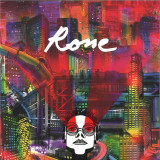
Rone is a stalwart of the French electronic scene and returns with his fourth album, 'Mirapolis', a synesthetic journey with features from Bryce Dessner (The National), Baxter Dury, John Stanier (Battles) and Saul Williams. The artwork was created by the critically acclaimed director Michel Gondry.
Stepping into Rone's music is like sleepwalking through a vividly colourful dream, eventually stumbling across a strange, scintillating Megapolis of saturated light and colours: 'Mirapolis'. Its twelve tracks / districts, each with their own specific planning, pulsate as though animated by their musical mastermind.
The project was an opportunity to get reacquainted with long- time stage and studio partners John Stanier, Gaspar Claus and the Vacarme band and Bryce Dessner (guitarist for The National,) while bringing in new collaborators (and thus, new interpretation of Rone's dreams). We find American slam-poet Saul Williams, who happened to be in Paris for a moment and contributes a searing anti-Trump screed, Baxter Dury, who brings an irresistible East London touch to 'Switches', a kind of fan fic that reimagines the Beatles' Sergeant Pepper lounging pensive in a club chair, Israeli electronic music muse Noga Erez, who inspired 'Waves' which, despite being recorded remotely, betrays a euphoric partnership, and finally, Kazu Makino, Blonde Redhead's bewitching singer and multi- instrumentalist, who contributes to the album's closer, the gauzy 'Down For The Cause'.
Rone remains a producer of grand instrumental pieces, which cannot be easily categorized in the architectural canon of our electronic music galaxy. Hypnotic, cinematic opening track 'I Philip' is an offshoot from the score for the first French virtual reality fiction, built around Philip K Dick - the perfect gate into a city that then opens up myriad temporal perspectives.
out of Stock
Last delivered 5 years ago available to reorder, subject to availability
Marking his first full-length album in six years, Five-Time GRAMMY Award nominee and diamond-selling performer, actor, entrepreneur, and philanthropist Robin Thicke makes a return in 2021 with the long awaited new album, "On Earth, and in Heaven." Setting the stage for the record, the scorching single "That's What Love Can Do," ignited this new flame and hit #1 on the Urban A.C. charts. The second single, "Forever Mine," garnered high praise from Vibe, and has already amassed over 2 million Spotify streams and counting. Presenting the same bold, bright, and boisterous R&B that turned him into a household name, he ascends to new heights on his eighth full-length album.
out of Stock
Last delivered 5 years ago available to reorder, subject to availability
70s/80s influenced ambient mixed up with a healthy dose of UFO's, abduction, occultism, paranoia, astral flow, new age and long lost Atlantis. 2020 was the year when Albert Kuningas debut vinyl on Escape From Synthesis was released and now the second part of this ambient/
dark ambient masterpiece is available! Finally it's time to get physical vinyl copies of legendary Bandcamp-only release "Music for UFO document programs 2" with a never before heard bonus track called 'Sateenkaarisilta 2'! Don't sleep on this one as it's limited release of 200pcs only.
out of Stock
Last delivered 5 years ago available to reorder, subject to availability
Fantas is the epic opening track on Caterina Barbieri’s acclaimed 2019 release Ecstatic Computation. The original Fantas laid out a magical path of patterns leading the listener on a journey into the sound itself. Fantas Variations maps out eight new potentials sprung from this initial path as constructed by a diverse mix of artists lending to a wide spectrum of new works extrapolated from the original work. For this project Barbieri invited friends and long time collaborators from a variety of musical backgrounds to create a more sustainable and inclusive landscape in terms of stylistic, geographical, gender and generational balance. The results are a diverse array of approaches and instrumentation which blur the boundaries between the acoustic and electronic.
Fantas Variations embraces a platform for mutual exchange and support between like-minded artists, where active and collective re-imagination is prioritised over the traditional model of remixes, which is often strategic, functional and more passive.
Longtime friend and collaborator Kali Malone rearranged Fantas to a slowed-down, austere and eerie version for two Organs. Evelyn Saylor created a piece for a vocal ensemble consisting of her, Lyra Pramuk, Stine Janvin and Annie Garlid, joining forces to express the choral, psychedelic and vitalistic nature of the piece. Barbieri’s former guitar professor at the Conservatory in Bologna, Walter Zanetti, composes Fantas for electric guitar, by translating every single gesture of the original electronic piece into a personal, nuanced and detailed interpretation. Bendik Giske’s reinterpretation for Saxophone and Voice captures the atmospheric essence of Fantas and its psychic meteorology. Longtime collaborator and along with Barbieri the other half of the outfit Punctum, Carlo Maria, resynthesizes Fantas for TR808 and MC202, bringing a more club-oriented dimension of the piece to life whilst unveiling the sonic continuum between rhythm and pitch through a sensitive timbral approach. Jay Mitta’s Singeli reinterpretation of Fantas transpires with pitched-up percussion and turbo-fast polyrhythmic patterns unleashing the frenetic, shifting, transformative matter within the piece to a higher plain of euphoric dance. Baseck’s variation is a rave fantasia, where the prismatic trance of the original is channeled into fierce, uncompromising hardcore, whilst Kara-Lis Coverdale’s take is a phantasmagoria for piano that gently, yet inexorably, captures the relentlessness chimerical qualities of the original, unveiling its spectral backbone.
Evelyn Saylor (feat. Lyra Pramuk, Annie Garlid & Stine Janvin) - Fantas Variation for Voices (7’38’’)
Composed by Evelyn Saylor. Performed by Evelyn Saylor, Lyra Pramuk, Stine Janvin and Annie Garlid. Recording, mix and additional production by Bridget Ferrill at Real Surreal Studio, Berlin 2021.
Bendik Giske - Fantas for Saxophone and Voice (7'31'')
Adapted and performed by Bendik Giske. Recorded, mixed, and produced by Bendik Giske in Funkhaus, Berlin 2020.
Kali Malone - Fantas for two Organs (10'21'')
Arranged for The Utopa Baroque Organ, The Sauer Organ and tuned sine waves. Recorded by Benny Nilsen at Orgelpark, Amsterdam 2020.
Walter Zanetti - Fantas for Electric Guitar (7'27'')
Recorded by Walter Zanetti, Bologna 2020.
Jay Mitta - Singeli Fantas (12'03'')
Recorded by Jay Mitta in Sisso Studios, Dar Es Salaam 2020.
Baseck - Fantas Hardcore (4'44'')
Mixed by Anthony Baldino, Los Angeles 2020.
Carlo Maria - Fantas resynthesized for 808 and 202 (4'29'')
Recorded by Carlo Maria, Milano 2020.
Kara-Lis Coverdale - Fantas Morbida (3'04'')
Performed, recorded and mixed at The Shop in Valens, Ontario by Kara-Lis Coverdale, January 2021. Engineering assistance from Robert Coverdale and Adam Feingold.
out of Stock
Last delivered 11 months ago available to reorder, subject to availability
Dublin's Splitradix delivers an EP of intense and melancholic acid / braindance with plenty of ''light in darkness'' to quote Yellow Magic Orchestra. Opener Laplace Formal is a moody, hyper melodic piece for a dreamy dance floor. The oddly titled second track, The Dry Canal, is the centerpiece of the EP. Dry, deep and stomping acid taking you through a tunnel of sound - the two dark droney melody lines slowly but surely turn the piece into something truly epic and unforgettable... Opening the flipside, Empty Sea 1000 is a slow, lazy acid cut from another dimension, very nice! Lucan 303 Distribution Service is heavy on the kick. Basic at first, it later turns into a wonderfully melodic Rephlex-like cut. Last one, Laplace Formal (Navs' No Jacket Required Remix) is a laidback and more euphoric version of the EP's opening track.
out of Stock
Last delivered 3 years ago available to reorder, subject to availability
Eamon Harkin, 1/2 of Mister Saturday Night Records and Nowadays in NYC, brings us a balmy 4 track EP, simultaneously full of longing, bliss, and hope. Adeptly oscillating between techno and house, these ear-worm, tastefully catchy tracks will find themselves perfectly at home both on reopened, outdoor summer dance floors as well as on bedroom stereo systems. If you do find yourself on a reopened dance floor, you may end up shedding a joyful tear to one of these.
Limited edition of 300 copies on black vinyl. Mastered by Dietrich Schoenemann. Design by Nick Owen. Photography by Frank Harkin.
out of Stock
Last delivered 4 years ago available to reorder, subject to availability
Lee Foss and Franky Wah join forces in the ‘Name of Love’ for this hypnotic house track on Club Sweat complete with a bumping Torren Foot Remix. Lee and Franky escape their own sonic boundaries to conjure up a pertinent soundtrack for everyone feeling the need to escape their physical confines after this past year and reconnect with loved ones. Filled with a lush piano melody, crisp drums and blissful vocals of SPNCR the track slowly brings in lush deep-tech undertones to create a euphoric soundscape.
On teaming up with Lee Foss, Franky Wah said, "I’m buzzing about this record because if it wasn’t for Danny Howard and Radio 1 this collaboration would never have even happened. I’d say Lee and I are in different lanes sonically but this track is a perfect example as to why artists should experiment and forget about the boundaries and rules that they set themselves. It’s a record that everyone needs to hear given the year we’ve all had and another one that I hope will resonate with all of us."
out of Stock
Last delivered 8 months ago available to reorder, subject to availability
A must for all Thin Lizzy fans out there, "Selected BBC Peel Sessions" digs into the vast vault of the band's Peel Sessions to present the best of the best, and you know that's a lot when talking about Phil Lynott and his bandmates, known for being one of the best live bands (in and out of the studio) ever. 10 mind blowing tracks of pure Lizzy bliss ranging from 1973 to 1977, with amazing sound and beautiful art, what are you waiting for?
Discos Transgénero re-issue the Marnie Weber classic first solo LP, “Songs Hurt Me” originally from 1989. This seminal record was an important part of the Los Angeles post-punk performative art rock scene. Brooding synthesizers, heavy bass, strange melodies, and poetic lyrics lead you through an industrial journey. These songs were born from Weber’s earliest performance art characters: a deer, an old woman, a manic courtesan, and a butterfly. Songs Hurt Me was originally co-produced by Phillip Drucker AKA Jackson Del Ray of Savage Republic and 17 Pygmies fame.
Marnie is a pioneer in art rock from the 80’s in Los Angeles. She emerged early in the music scene as the bass player in the Party Boys, a formative and important Los Angeles post-punk downtown art scene band. During this period, the Party Boys performed shows with The Minute Men, Savage Republic, The Red Hot Chili Peppers, Fourwaycross, The Blue Daisies, Perry Farrell’s first band Psi Com, Camper Van Beethoven, and many more. Bruce Licher of Independent Project Records, whom Marnie met in art school, released the first Party Boys record. After performing with the Party Boys, Marnie went on to become a noted solo performative art musician in her own right. She has released five solo records and numerous group album releases.
As a visual artist Marnie created the cover of Sonic Youth’s A Thousand Leaves album – interesting to note Marnie is the hamster girl on the cover. She also designed posters for Sonic Youth and did a co-release of her second album with Thurston Moore on his label Ecstatic Peace. Expanding from her musical roots, Marnie exhibits artwork, films, sculptures, collages, sound installations, and costumes internationally in museums and galleries. She has had two extensive survey exhibitions of her artwork – most recently at the Museum of Contemporary Art in Geneva.
Songs Hurt Me was remastered by Mark Wheaton at Catasonic Studios Los Angeles using the original tapes for an unprecedented restoration of this historic album. Discos Transgénero has thoughtfully designed and pressed the reissued LPs in Germany. This unique edition of Songs Hurt Me is a limited release of 400 copies distributed worldwide.
out of Stock
Last delivered 5 years ago available to reorder, subject to availability
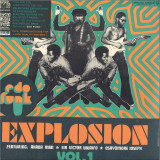
Analog Africa Presents Edo Funk Explosion Vol. 1, available on
2xLP/Gatefold LP with 20-page booklet / CD with 36-page booklet. It was
in Benin City, in the heart of Nigeria, that a new hybrid of intoxicating
highlife music known as Edo Funk was born.
It first emerged in the late 1970s when a group of musicians began to experiment with different ways of integrating elements from their native Edo culture
and fusing them with new sound effects coming from West Africa s night-clubs.
Unlike the rather polished 1980 s Nigerian disco productions coming out of the
international metropolis of Lagos Edo Funk was raw and reduced to its bare
minimum.
Someone was needed to channel this energy into a distinctive sound and Sir
Victor Uwaifo appeared like a mad professor with his Joromi studio. Uwaifo
took the skeletal structure of Edo music and relentless began fusing them with
synthesizers, electric guitars and 80 s effect racks which resulted in some of the
most outstanding Edo recordings ever made. An explosive spiced up brew with
an odd psychedelic note known as Edo Funk.
That’s the sound you’ll be discovering in the first volume of the Edo Funk Explosion series which focusses on the genre’s greatest originators; Osayomore
Joseph, Akaba Man, and Sir Victor Uwaifo: Osayomore Joseph was one of the
first musicians to bring the sound of the flute into the horn-dominated world
of highlife, and his skills as a performer made him a fixture on the Lagos scene.
When he returned to settle in Benin City in the mid 1970s - at the invitation of
the royal family - he devoted himself to the modernisation and electrification
of Edo music, using funk and Afro-beat as the building blocks for songs that
weren’t afraid to call out government corruption or confront the dark legacy of
Nigeria’s colonial past.
Akaba Man was the philosopher king of Edo funk. Less overtly political than Osayomore Joseph and less psychedelic than Victor Uwaifo, he found the perfect
medium for his message in the trance-like grooves of Edo funk. With pulsating
rhythms awash in cosmic synth-fields and lyrics that express a deep personal
vision, he found great success at the dawn of the 1980s as one of Benin City’s
most persuasive ambassadors of funky highlife.
Victor Uwaifo was already a star in Nigeria when he built the legendary Joromi
studios in his hometown of Benin City in 1978. Using his unique guitar style as
the mediating force between West-African highlife and the traditional rhythms
and melodies of Edo music, he had scored several hits in the early seventies,
but once he had his own sixteen-track facility he was able to pursue his obsession with the synesthetic possibilities of pure sound, adding squelchy synths,
swirling organs and studio effects to hypnotic basslines and raw grooves. Between his own records and his production for other musicians, he quickly established himself as the godfather of Edo funk.
What unites these diverse musicians is their ability to strip funk down to its
primal essence and use it as the foundation for their own excursions inward to
the heart of Edo culture and outward to the furthest limits of sonic alchemy.
The twelve tracks on Edo Funk Explosion Volume 1 pulse with raw inspiration,
mixing highlife horns, driving rhythms, day-glo keyboards and tripped-out guitars into a funk experience unlike any other.
out of Stock
Last delivered 5 years ago available to reorder, subject to availability
Andrés Vargas Pinedo is a prominent composer of Amazonian popular music from Peru. He is blind and has excelled as a player of the quena and the violin. He was born in the city of Yurimaguas but he developed as an artist in Lima, for thirty years he has worked as a traveling musician on a street in the San Isidro district of Lima. Throughout his career, he has formed and joined various popular music groups. This compilation presents fifteen songs of his authorship, belonging to his first two groups: Conjunto típico Corazón de la Selva and Los Pihuichos de la selva, active between 1965 and 1974, and which helped define the sound of Amazonian popular music.
These years saw the emergence of an Amazonian popular music movement led by Vargas Pinedo as well as groups such as Los Solteritos, Flor del Oriente or Selva Alegre. These artists based their music on the rhythms of the Amazonian folklore (pandilla, sitaracuy, movido, cajada, chimayche) and were nourished by influences from the coast and the highlands of Peru, as well as by the tropical rhythms of Brazil, Colombia and Ecuador, achieving a musical synthesis that is an invitation to collective celebration and endless dance. A sound that is defined by a constant and hypnotic rhythmic base of kick and snare drums, upon which the quena and violin develop imaginative melodic lines. Sometimes there is a singing voice, sometimes the voices playfully appear as sounds that identify Amazonian popular speech or that emulate jungle animals.
The fifteen tracks gathered in 'El fabuloso sonido de Andrés Vargas Pinedo: Una colección de música popular amazónica' (1966-1974) / 'The fabulous sound of Andrés Vargas Pinedo: A collection of Amazonian popular music' (1966-1974) are a good introduction to the work of an essential creator of Peruvian music, whose sound expresses the spirit of the Amazonian people and summarizes the transition from tradition to the popular in the context of the emergence of a record industry of Amazonian music. Andrés Vargas constitutes a fundamental basis for the music of the Amazon, as his work synthesizes diverse influences, having that original root as its main motive.
This compilation is presented in vinyl format and includes a brochure with extensive information and photos. The audio has been remastered directly from the original tapes. Edition of 300 copies. Art by Jordy García (Blumoo Posters).
In view of the immense Black Lives Matter mobilisation in reaction to the murder of George Floyd and the comparatively meagre societal reaction to the attack in Hanau, the question arises: How come our society does not show the same empathy and solidarity towards its own fellow citizens with Kurdish, Turkish, Bulgarian, Bosnian, Afghan migrant backgrounds or members of the Roma and Sinti?
How limited is our postcolonial discourse if we are unable to address the racist exploitation of those who repair our cars, deliver our parcels or harvest our asparagus?
It’s all a sham. Shake it off like a biometric photograph. Shake off that false consciousness. The Black Diaspora is a transatlantic lie invented by music curators and journalists. Embrace this nuanced return to structures and superstructures, to articulations and historical constellations as analytical tools.
Allow me to dampen your expectations. This is not the sound of decolonisation. This is no compilation of BLM protest songs. This is no celebration of Black emancipatory struggles. You will not be able to play this at your hip post-pandemic house party. This will not go down well with your woke friends. This is music for the square in the room. For that reluctant BAME/Person of Color repelled by your fetishisation of the African-American experience.
This is music for gated communities. This is Fehler Kuti singing of class relations, not of identities and positionalities. This is Fehler Kuti resisting.
Listen to these songs of infrastructure and appraisal of the welfare state. Join me in mourning the broken promises of prosperity for all. Send that “Ausländer“ of your mind to heaven. Colonialism fucked you up. Platform Capitalism is keeping you in chains. Are we to unionise all human and non-human workers at Amazon? Will modernity always have that "forever nigger“? What about those dispossessed field hands harvesting your asparagus?
All is lost. The system is rigged. Because all histories, gestures and identities have been absorbed into this late capitalist apparatus we call diversity. It can integrate anything and anyone. It made me. It is the price of the ticket. And it is unable to challenge its own premise of an atomised society. As if you and I had so little in common.
They will try and help you. They will build a museum for your history and a scholarship program for your future. I warn you. Don‘t let them give you a name. Resist appellation. Don’t get that German passport. Don‘t eat asparagus.
Fehler Kuti, Spring 2021
All songs by Julian Warner. Produced by Markus Acher and Tobias Siegert.
recorded and mixed by Tobias Siegert at Minga Records, july – december 2020 mastered by Moritz Illner at Duophonic
Cover art and photography by Andreas Neumeister. Layout by Sascha Schwegeler.
Fehler Kuti “Professional People” is part of the same multiverse as “The History of the Federal Republic of Germany as told by Fehler Kuti und die Polizei”. A production by Julian Warner. In cooperation with Münchner Kammerspiele. Funded by the Department of Arts and Culture of the City of Munich. Released by Alien Transistor.
out of Stock
Last delivered 5 years ago available to reorder, subject to availability
• With more than 60 MILLION STREAMS across his catalogue listened to by fans all around the world, ‘…TO BE CONTINUED’
is the best ‘greatest hits’ album that you’ve never heard!
• This 12-track Limited Edition Vinyl LP collection, with a brand new floorfiller, features his most popular tracks and fans’
favourites, and this is his first Physical release album to celebrate, LE FLEX has signed 500 prints for this Limited Edition.
• Although LE FLEX clearly states that “I just make Pop music”, his 6 EPs and 6 Studio albums are nothing short of serious and
brilliantly creative blends of nudisco, poolside vibes and slow-jams but retaining the essence of his familiar ‘80s
synthpop/dance-based infusions. The accompanying videos are purely tongue-in-cheek, with more than a smattering of
self-deprecation, as you will see on his dedicated YouTube channel.
• Judging by the comments from long-established fans and music lovers from South America to Australia, via the UK, through
Europe and the Far East, discovering LE FLEX for the first time, they are quick to state that his vocal inflections share more
than a passing resemblance to George Michael, an icon about whom LE FLEX modestly says, “I’m not fit to shine his shoes”.
• LE FLEX is a renowned Producer with his popularity rising, having worked with Jaki Graham, Lemar and Ben Macklin and
was commissioned to produce new Donna Summer remixes in 2020.
• Released on heavyweight 180g Clear Vinyl, if you fancy summery escapism, there aren’t many better ways than doing so
than with LE FLEX
KAMA Kollektiv ist eine multinationale Gruppe um die junge finnische Sängerin und Trompeterin Kirsi-Marja "Kiki" Harju. Das Wort KAMA ist finnisch für "Dinge" oder "Zeug", und es beschreibt, worum es in der Musik der Band geht: die kleinen Dinge des Lebens, die oft so leicht übersehen werden. Kiki erzählt Geschichten - einige auf Finnisch, einige auf Englisch - über Liebe und Verwandlung, Wälder und Tiere, kleine alltägliche Freuden und eine mystische, romantische Sicht auf die Natur. Die Musik ist eine hypnotisierende Mischung aus Jazz, nordischem Folk und Indie-Pop. Sie nimmt die Zuhörer mit auf eine Reise in märchenhafte Länder und intensive Gefühle. Die Band ist in Amsterdam beheimatet, aber Kikis Songs sind voller Erinnerungen an die wunderschönen Landschaften, dunklen Wälder und den eisigen Frost ihrer Heimat Finnland. Der Titel des ersten Albums des KAMA Kollektiv ist KOTI, ein finnisches Wort für "Zuhause".
Born Bad continue their mind-expanding and totally essential series of library music ‘Space Oddities’ compilations with this set focusing on French musician and composer Sauveur Mallia.
In the ever-expanding universe of 70s and 80s French library music, Mallia holds a special place; his career, multifaceted work and the uniqueness of his talent have made him an exemplary figure in the unsung world of library musicians.
In those years a few of them, often for economical reasons, would set off on a
space conquest, taking along just a few synthesisers.
Their ambition well surpassed the modesty of their means; it was in turn the
condition to their experimentations with sound which were to create a new
sonic space: that of a nation tumbling into modernity. From French soil to the
farthest reaches of the cosmos, there were just a few steps to take. It’s with the
label Tele Music, boarding the spaceship Arpadys, along with the Voyage crew,
that Sauveur Mallia took the big leap.
Coming from Oslo, Norway, Bizarrekult is bridging the two identities of it mastermind - philosophical depth
of frozen Siberian steppe and the majestic beauty of Norwegian soil on this debut album. Bizarrekult was
formed back in 2006 as a response to the chaos of the surroundings and already with
a first demo got attention through 2000 copy split CD release. However, following the second studio demo
and then a two track rehearsal demo in Bergen, the project was laid on ice. “Vi Overlevde” (we survived)
speaks to the heart of every post-Black Metal fan that is looking for something different. The tracks
are filled with great riffing and beautiful melodies, tightly connected to the lyrical themes of frustration,
despair, sorrow, forgiveness and finally - hope.
Before their debut album "Stürmer", originally out in 1982 and reissued by a-Musik, there were two 7" by Freiwillige Selbstkontrolle. Both the eponymous 4-track EP (1980) by Justin Hoffmann, Thomas Meinecke, Michaela Melián and Thomas Meinecke and the 7-track EP "Teilnehmende Beobachtung" from 1981 were released on Alfred Hilsberg's legendary Zickzack Platten.
With "Moderne Welt" and the literally endless "Deutschland, Deutschland", the rare "Freiwillige Selbstkontrolle" single contains two of the most brilliant tracks ever recorded in the Federal Republic of Germany. "Teilnehmende Beobachtung" was produced by Wirtschaftswunder's Tom Dokoupil and established F.S.K.'s status as one of the most singular (and back in those days controversial) phenomena in the history of (west-)german postpunk/pop/underground history.
The LP reissue of these two 7"s comes with printed innversleeve and a 8 pp. booklet with extensive linernotes (in german) by Tim Klütz.
I first discovered khroniky – Ukranian folk songs – in the Highlands of Scotland. I was watching a screening of Bajka, a mesmerising documentary made by the filmmaker Lucia Nimcová and sound artist Sholto Dobie. I knew nothing about these ballads beforehand, but I was fascinated by these odd, beautiful songs, especially the easy way in which they mixed misery and levity, where gentle melodies blend with tales of dark violence. The folk songs describe hardship, murder, torture, death in gulags, heavy drinking, outsmarting men, love affairs. But they’re often very funny too – many of the songs make fun of marriage, and there’s an amazing subcategory of khroniky songs called potka (vagina) songs.
The khroniky have never been properly documented because they were considered too crude, or contained lyrics that were problematic, politically. When Ukrainian folk songs have been archived in the past, it’s normally a sanitised, more polite version of the ones that Lucia remembers from her childhood. Lucia grew up on the other side of the Ukrainian border in Slovakia. She is part of the Rusyn (Ruthenian) minority ethnic group found in the borderlands of Slovakia, Hungary, Romania, Ukraine and Poland. Rusyn is a centuries-old Slavic language, looked down upon as a poor, uneducated dialect by the neighbouring Ukraine and Slovakia. It was forbidden to talk about Rusyn culture at Nimcova’s primary school, but the khroniky stayed in her memories.
“I remember weddings when I was young,” says Lucia, who now lives in Addis Abeba, Ethiopia. “At the end of the night, when everyone was drunk and the young couple would go around their guests, people would sing in Rusyn. There was singing and dancing, and songs about being in prison or falling in love. I picked up the lyrics and sometimes my mum would make my sister and I sing them for people we met on the train. I was about five or six but the lyrics still come back when I sing to my kids.”
Determined that these rich, nuanced, unique songs shouldn’t be forgotten, she decided to record them. Over two years, Lucia, joined by experimental musician Sholto Dobie, visited Rusyn villages high in the Carpathian mountains to rediscover the songs and make the documentary. It was at the beginning of war breaking out in Ukraine in 2014.
“The Rusyn community is a very closed one,” explains Lucia. “Sometimes we’d have to wait several days to hear someone sing; we had to earn their trust before they shared something very personal to them. We’d stay up ‘til 5am at a wedding, then go straight to a morning baptism, or collect haystacks with the villagers, hoping they’d sing while they were working.”
DILO is named after an important independent Ukrainian daily newspaper that was shut down when the Red Army entered Lviv in 1939. The four long tracks on DILO blur field recordings with song; an unpolished, privileged glimpse into a private world. We hear dogs barking and insects buzzing in the summer heat, then a blast of hurdy gurdy or violin will drift in, or a plaintive song soars softly over the rural background noise, with casually harrowing lyrics about a cuckoo, “lifeless in a world of misery”, as translated in the album’s booklet.
For both Lucia and Sholto, it was important not to tamper too much with what they heard. “When you think about ethnography,” Lucia explains, “you have to have a lot of time, love and respect to document it with sensitivity.”
“The songs all have their own atmosphere and intimacy from the spaces they were recorded in and it was important to maintain these particularities and move with them,” adds Sholto, who now lives in Vilnius, Lithuania. “They guide and sometimes interrupt a journey between interiors – domestic spaces; in kitchens, by the fire – and exteriors; marketplaces, cow sheds. We used contact microphones to record metal bridges and fences, and we spent one afternoon recording a wool processing machine, the details of the rattling and tuning wheels are the ground layer for the third track.”
Lucia took rough notes and diary entries during the recording process, which are now shared in the booklet alongside a selection of lyrics, loosely translated, but revealing the depth and astonishing beauty that sometimes lies in the language of these folk songs.
The feel of the album is intimate, flipping between laughter, where a woman sings about selling her pussy to buy a cow in one track, then shifts to a raw, painful truth; an adult son asks his mother why his dad won’t be back for dinner, as he’s gone to war.
Since Lucia and Sholto began working together in 2014, they have shared the audio recordings on radio and film and shown photos in gallery spaces, making sure these special, smutty, poignant songs don’t get lost. This new record and booklet joins that same continuum, another glorious fruit from the same rare tree.
Re-mastering by: Cicely Baston at Alchemy/Air Mastering, Lyndhurst Hall, London
A two-LP set on Theresa, Rejoice features Pharoah Sanders in excellent form in 1981. Sanders sounds much more mellow than he had a decade earlier, often improvising in a style similar to late-'50s John Coltrane, particularly on "When Lights Are Low," "Moments Notice," and "Central Park West." The personnel changes on many of the selections and includes such top players as pianists Joe Bonner and John Hicks, bassist Art Davis, drummers Elvin Jones and Billy Higgins, vibraphonist Bobby Hutcherson, trombonist Steve Turre, trumpeter Danny Moore, a harpist, and (on "Origin" and "Central Park West") five vocalists. The music always holds one's interest, making this one of Sanders' better later recordings. Scott Yanow/AMG
COLTRANE'S classic "Moments Notice" is a complete gas! Sanders like Coltrane, pulls and holds attention with his entrances. Bobby Hutcherson's and Hicks solo's are heated and models of vivid imagination. The three put forth some of the very best solo...'s in the entire album.
Then there's the arresting new talent introduced here -GEORGE V JOHNSON JR., whose marvelous lyrics and vocal work are truly auspicious! He sings with James Moody on occassion and is happily remindful of the insistent giftness of the late EDDIE JEFFERSON. Johnson's three stanzers close with "Relax dig the sounds of Coltrane's Music. Coltrane fills your heart with love and harmony. Trane played with magic. Listen to the melodies and you will see momently. When you here the message of his song!". There's no doubt in my mind that henceforth George V Johnson should and will be sought for his own gift to the music. He sang the song for Sanders at the Village Vanguard, and Sanders "felt that George ought to be heard".Thank you, Pharoah Sanders for Sharing.... by Herb Wong
'The inventive record producer and vocalist Lee 'Scratch' Perry was involved in every musical shift of note in his native Jamaica, from the rhythm and blues that pre-dated the arrival of ska in the early 1960s through the slower and more spacious rocksteady style that appeared middecade and, of course, the frenetic sound of reggae, which he helped to birth as an independent producer during the late 1960s. Operating as 'The Upsetter' from his base in a downtown Kingston record shop, Perry found his greatest success with instrumental music during this phase, the organ and saxophone re-castings of standard vocal issues proving exceptionally popular overseas.
'Scratch The Upsetter Again surfaced early in 1970 as a largely instrumental set, but with dreamy reverb a hefty feature and keyboards veering away from standard organ motifs. Dave Barker, who was soon to hit the pop charts as part of Dave & Ansel Collins, tackles The Shirelles' 'Will You Still Love Me' in soul reggae mode, only for Perry to shift things towards the emerging dub spectrum with 'Take One.'
'As Perry inched ever closer to the dub experimentation he would turn into an art form at his own Black Ark studio later in the decade, Scratch The Upsetter Again shows him moving away from the standard approaches of his competitors in his quest to test the very limits of recorded sound. And reggae was all the richer for it.'
—David Katz (excerpt from the liner notes)
Award winning saxophonist and composer Binker Goldingreturns to Byrd Out with a new trio comprising giants of theexperimental scene Steve Noble and John Edwards for analbum of unparalleled instant creativity: 'Moon Day'. The albumplays with the post truth zeitgeist, using the first major moonconspiracy of 1835 as a launch pad, throwing a sly wink at BuzzAldrin as the trio impart on their own musical odyssey. Thesheer variety of pace, tone and texture across the record isbreathtaking, from Golding's soft, almost weightless opening on'One Giant Step' through to the skittish re-entry of 'Reflection' asthe musicians ricochet off one another, the album bursts withideas and energy, yet remains coherent and singular in itspurpose. Recorded during a gap between the variouslockdowns of 2020, you can sense the release from themusicians as they combine after enforced isolation with atelepathic sense of where to push each other: Noble interjectingboth chaos and order from the drums; Edwards the rocket fuelpropelling the unit on; and Golding soaring and cutting throughon sax. You will not find a better showcase of these musicians'phenomenal abilities. This is free jazz at its most compelling andmost engaging. 'Moon Day' is undoubtedly a future jazz classic.
out of Stock
Last delivered 5 years ago available to reorder, subject to availability
Re-mastering by: Ray Staff at Air Mastering, Lyndhurst Hall, London
Morgan was one of the most active artists in the Los Angeles underground jazz scene, and a member of the late great Horace Tapscott‘s artist collective Union of God’s Musicians and Artists Ascension (UGMAA). He performed alongside Tapscott, and other Nimbus recording artists like Jesse Sharps, who he introduced to Tapscott. He also performed with Arthur Blythe, Gary Bartz, Azar Lawrence, as well as soul icons Willie Hutch (notably on the Foxy Brown soundtrack) and Rufus & Chaka Khan. Most recently he contributed to Carlos Niño’s 2016 album Flutes, Echoes, It’s All Happening!, and was a part of Niño and vocalist Dwight Trible’s soul-jazz group Build An Ark (which also featured Tribe’s Phil Ranelin).
Journey Into Nigritia was Morgan’s debut as a leader, and the first of three recordings he released for Nimbus West. The album has a strong post-Coltrane spiritual feel, with some modal-based melodies, and some fiery solos from saxophonist Dadisi Komolafe. The record also features a solid rhythm section featuring bassist Jeff Littleton and drummer Fritz Wise.
Review by T J Gorton
At the dawn of the Reagan years, LA jazz pianist Nate Morgan recorded his first album for Nimbus West. Journey Into Nigritia portrays an artist marked by the icons of his day, and striving for reinvention. Although he came from a solid jazz background, coming up through the Pan Afrikan People's Arkestra, Morgan found more exciting work with pop bands in the seventies, including glory years with Rufus w/Chaka Khan. On Journey into Nigritia, Morgan re-embraces jazz. Included in the band are Jeff Littleton on bass, Fritz Wise on drums, and Dadisi Komolafe on alto sax.
The collection opens with the Trane-ish Mrafu. Komolafe blasts off in short order, and while the modal chording recalls Tyner, Morgan shows flashes of the nimble loquacious gift that define him. While Alice Coltrane incense perfumes "Morning Prayer, Morgan's devotional sincerity and personnel expression triumph.
Suitably complex with yearning minors, Mother features the trio performing a memorable composition. Littleton's deep-note sustain contrasts Wise's shimmering cymbals, while Morgan tells heart-wrenching truth. With a somewhat solemn theme, He Left Us a Song regularly bursts through into straight-ahead fast break sprints up and down the court. The unexpected "Study in C.T. offers an homage to Cecil Taylor and Morgan's musical roots with free improvisations on a dense and spiky theme. The exhilarating result has Morgan exploring his own way, with a winking slinging of jagged bass chords halfway through.
While a quarter century's experience has nurtured Morgan's prodigious gifts beyond this ambitious debut, Journey Into Nigritia offers enjoyable insights into his artistic evolution, while adding another precious title to the discography of one of the most woefully under-recorded greats of our time.
7" on photoluminescent vinyl. In 1981 Walter Verdin recorded the demos for two songs of Lennon's Plastic Ono Band before he formed the group Pas De Deux, the Belgian entry for the Eurovision Song Contest 1983.The artwork of this 7" is inspired by the artwork of the original record sleeves.
out of Stock
Last delivered 5 years ago available to reorder, subject to availability
678 records are proud to present an historical concert recording of the legendary ethnic kraut-jazz formation Pork Pie. It is difficult to define the music of Pork Pie. It ranges from rhythmic Jazz-rock and meditative Indian sounds to Brazilian songs, and from acoustic improvisations to electric “space” sounds. Paris, December 1973: Pork Pie was founded by piano player Jasper van 't Hof (then 27 years old) and guitarist Philip Catherine (then 31 years old). They had met up with Charlie Mariano, who was 51 years old then, and whom they knew from his playing with Charles Mingus in the fifties and sixties. He had left America, lived in India for some years and founded his new home in Europe. Jasper and Philip were nervous to ask him if he would like to start a band with them but he immediately accepted the invitation. After some concerts in Holland, Germany and France the group recorded their debut album Transitory in May 1974 in the studio of the legendary engineer Conny Plank for MPS-BASF. It became an immediate success and Pork Pie were subsequently booked for many European jazz festivals. Their legendary concert on the first of November 1974 in the Berliner Philharmonie during the Berliner Jazztage was a milestone in the bands existence. The concert hall was packed to the rafters with 2500 over enthusiastic people who were totally overwhelmed by the amazing live sound of Pork Pie in which each of the five individual musicians took his own part, but never once lost the unique togetherness.
In the past 44 years Jasper van 't Hof always retained fond memories about this special concert. Fortunately, in his personal archive (which was for a while stored under a tarpaulin in his garden!) a master tape was discovered & had survived intact. P-Dog & Zembie (a.k.a. Sander Huibers & Frank Jochemsen) dug it up, played it on a tape machine, were totally blown away by the music and initiated this limited vinyl only release. It comes in a hand silkscreened cover designed by Piet Schreuders.
Hereby a classic japanese acid folk tale, also credited by the wizard master Julian Cope in his ‘Japrocksampler’ top 50 list. Tokedashita Garasu Bako, or Melting Glass Box, was a studio-only project of Nishiokai Takashi (Itsutsu No Akai Fusen), “Singing Philosopher” Tetsuo Saito and Takasuke Kida (of influential psychedelic freaks Jacks). Guest musicians included Kazuhiko Kato (Folk Crusaders, Sadistic Mika Band), Kazuo Takeda (Blues Creation) and mastermind Haruomi Hosono (Apryl Fool, Happy End, YMO).
Their sole release licensed in 1970 on URC (Japanese independent record label specializing in folk, co-founded in February 1969 by Hayakawa Yoshio, guitarist for the psychedelic band Jacks) became soon after a cult record leading the way for the eastern psychedelic renaissance. An authentic lysergic trip filled with mind-blowing electric guitar leads and many studio tricks thrown in! Get lost, now or never !
Psychedelic Percussion definitely sticks to his title. With the help from Paul Beaver of Beaver & Krause (famous keyboard wizard and sound engineer for the likes of Stevie Wonder), vibe master Emil Richards (check is two fantastic album on Impulse! with The Microtonal Blues Band featuring Joe Porcaro, father of the famed Toto brothers) and Gary Coleman (percussionist in the famous Wrecking Crew), Blaine goes wild in the studio with drums, gong, xylophone, organ, bongos, congas and timpani. Unusual textures and tones lead the way to 12 instrumental exotic numbers similar in a way to Raymond Scott most visionary experiments. This is pure madness, a record full of breaks and still unsurpassed in many ways. Blaine was an American drummer and session musician, estimated to be among the most recorded studio drummers in the history of the music industry, claiming over 35,000 sessions and 6,000 singles. His drumming is featured on 150 US top 10 hits, 40 of which went to number one, as well as many film and television soundtracks. He became one of the regular players in Phil Spector's de facto house band, which Blaine nicknamed "the Wrecking Crew". Some of the records Blaine played on include the Ronettes' single "Be My Baby" (1963), which contained a drum beat that became widely imitated, as well as works by popular artists such as Frank Sinatra, Elvis Presley, the Beach Boys, Simon & Garfunkel, the Carpenters, Neil Diamond and the Byrds.
Robert Schwarz’s background lies in both architecture and computer music. Across a handful of labels, he’s presented field recordings and experimental works, and he’s participated in exhibitions with some of Europe’s most prominent institutions for adventurous art practices. He is also the co-founder and curator of the Viennese festival ”PARKEN; Or, Live in the Park”, which aims to mediate experimental forms of music in public spaces and co-author of the works ”Los Bar”, ”Strookoffer” and ”Lax Bar”, a series of artist run spaces in Los Angeles, Brussels and Vienna.
Recently he presented a row of debut releases with new side projects like She Was A Visitor, Privat and Ausgsburger Messer.
out of Stock
Last delivered 3 years ago available to reorder, subject to availability
Kryptox records was born to show what's happening in the new scene in germany. And David Nesselhauf is the next upcoming artist. Kryptox will release his 6 track EP.?Nesselhauf is a multi-talented artists: bass player, composer, bandleader and man of very original ideas. He was already featured on the Kryptox' Kraut Jazz Futurism compilation vol 1 (2019) and now delivers his first solo EP for the label.
This EP is a follow up in a longer musical evolution that the Hamburg born talent has been making over the past years. A journey that's basically a style he is building that he calls afro-kraut. Before joining Kryptox he already released 2 albums under the Afrokraut title on his own (Bandcamp) before meeting Mathias Modica (head of Kryptox) and they decided to work together.
So on the "Rituals EP“ Nesselhauf salutes his personal pantheon of musical gods once again, leading the listener through his musical Jungle encompassing Krautrock, Downbeat, Drone, Electronica, Afrobeat, Lo-Fi, Shoegaze, Funk and Ambient textures in the blink of an eye.?The 6 new tracks share a common feel, but are colorful individuals at the same time. Some more organic, others with electronic elements.
About Nesselhaufs workflow: Four of these composition are based on quick, playful, raw jams recorded live within hours by a group of Nesselhauf's inner circle musicians. Great grooves played by a heavy rhythm section that he uses also for his live gigs. Just on a few songs Nesselhauf exchanged the human musicians with a legendary Vermona Drum Synthesizer as the main rhythm ingredient.
Guests: One more track was recorded with Julian Gutjahr, Drummer for The Drawbars. Some tracks feature guest appearances by Dennis Rux (he also mixed the EP) and Graeme Currie on guitar. Soulamadou made his way to one of the tracks just by incidentally leaving a very groovy voice message on David ´s phone ("Zeit").
The material was later bewitched into deep, organic swirls: Trippy, psychedelic somnambulistical. The rather mystical, nocturnal reworking process of the recording added even more dimension and depth, leaving the 6 Tracks ready for home listen, but also for an open minded dancefloor and an otherworldly listening experience at the same time.
The next generations of jazz are just waking up. And Davd Nesselhauf and his bunch are one of these new interesting phenomena. Working in the underground since few years, now hopefully there will be more spotlight on these great new innovators.
out of Stock
Last delivered 5 years ago available to reorder, subject to availability
With his ongoing commitment to like-minded archivist label Finders Keepers Records, industrial music pioneer Steven Stapleton further entrusts us to lift the veil and expose “the right tracks” from his uber-legendary and oft misinterpreted psych/prog/punk peculiarity shopping list known as The Nurse With Wound List.
Following the critically lauded first instalment and it’s exclusively French tracklisting both parties now combine their vinyl-vulturous penchants to bring you the next ‘Strain Crack & Break’ edition which consists of twelve lesser-known German records that played a hugely important part in the initial foundations of the list which began to unfold when Stapleton was just thirteen years old.
From the perspective of a schoolboy Amon Düül (ONE) victim, at the start of a journey that commenced before phrases like kosmische and the xeno-ignant Krautrock tag had become mag hack currency, this compendium is devoid of the tropes that united what many would accurately argue to be the greatest progressive pop bands in Europe
(namely CAN, Neu! and Kraftwerk) and rather shatters the ingredients across a ground zero landscape for both inquisitive fans and socially rehabbing musos to begin to assemble a unique self-styled identity. If Krautrock was the music that journalist told us lurked behind schlager (German pop) in the 1970s, then this record includes the music that skulked behind Krautrock and perhaps refused to polish its backhanded name belt.
Including lesser-known artists like the late Wolfgang Dauner, whose career proceeded and outlived the kosmische movement while consistently informing and outsmarting them whenever they got stuck in their metronomic ruts, or how about Fritz Müller, the man who
was to Kraftwerk what Stuart Sutcliffe was to The Beatles but had more in common with Yoko and quite rightly couldn’t give a stuff about the Fab Four’s Hamburg roots.
Elsewhere we have a plethora of German bands made for German audiences as they try and shed secondhand flower power Americanisms and feel the benefits of much harder drugs and the realisations of difficult second album budgets while Kommune 1
newsflashes wipe smiles from everybody’s faces and replace them with opioid chic or acid-sarcastic grins. Bonzo Cockettes show us their Big Muffs and drummers ask for extra mics while Conny Plank goes for parliamentary office and gives babies good firm handshakes for the camera.
‘Strain Crack & Break: Volume Two’ is the sound of Steve Stapleton’s sponge-like mind and the dividends of anyone who was brave enough to even peek inside those brick-thick gatefold covers never mind drop the needle.
Over forty years since Nurse With Wound’s first album was released, Finders Keepers Records and Steve Stapleton take connoisseurs of our kind of music back to the disused elevator shaft towards ground zero. Arriving at the same checkout from different departments, Finders Keepers and Nurse With Wound continue to sing from the same hymnal with this ongoing collaborative attempt to officially, authentically and legally compile the best tracks from Steve’s list, where many overzealous erds have faltered (or simply, got the wrong end of the stick).
After ‘Strain Crack & Break: Volume One’ merely scratched the surface of this DIY dossier of elongated punk-prog peculiarities, this second lavish metallic gatefold double vinyl compendium drives a much deeper groove which, in accordance with Steve’s wishes, focusses exclusively on individual tracks of German origin - the country whose music forged the prototype of the NWW inventory in the form of his secondary school vinyl wantlist in the early 1970s, comprised of disassembled free jazz, unshowered stoner psych, hypnotic prog, deranged monk funk and fuzzed out Deutschmark bin bonzo beats.
out of Stock
Last delivered 2 years ago available to reorder, subject to availability
Nina Simone: The Montreux Years is released as part of a brand new Montreux Jazz Festival and BMG collection series “The Montreux Years”. The collections will uncover legendary performances by the world’s most iconic artists alongside rare and never-before-released recordings from the festival’s rich 55-year history, remastered in superlative audio. Each collection will be accompanied by exclusive liner notes and previously unseen photography.
Nina Simone’s story from the late sixties to the nineties can be told through her legendary performances in Montreux. Taking to the Montreux stage for the first time on 16 June 1968 for the festival’s second edition, Simone built a lasting relationship with Montreux Jazz Festival and its Creator and Founder Claude Nobs, which uniqueness, trust and electricity can be clearly felt on the recordings. Simone’s multi-faceted and radical story is laid bare on ‘Nina Simone: The Montreux Years’. From Nina’s glorious and emotional 1968 performance to her fiery and unpredictable concert in 1976, one of the festival’s most remarkable performances ever witnessed, the collection includes recordings from all of her five legendary Montreux concerts – 1968, 1976, 1981, 1987 and 1990.
Featuring rare and previously unreleased material from Claude Nobs’ private collection, Nina Simone devotees worldwide will be thrilled by the inclusion of the powerful I Wish I Knew How It Would Feel To Be Free, poignant and fearless Four Women and Simone’s hauntingly beautiful performance of Ne Me Quitte Pas. A spine-tingling version of Janis Ian’s searing and potent Stars, which Simone covered for the very first time during her 1976 Montreux performance, sits alongside her bold and electrifying re-imagine of Bob Marley’s ballad No Women No Cry in 1990. The collection closes with the encore of Nina Simone’s final Montreux Jazz Festival concert and one of Simone’s most-loved and best-known recordings, the exuberant My Baby Just Cares For Me, showcasing the deep and multidimensional facets of Simone’s life and music.
out of Stock
Last delivered 4 years ago available to reorder, subject to availability
Phobophobes new album Modern Medicine follows the band’s critically acclaimed debut album Miniature World, released 2018 via Ra Ra Rok Records, which received the accolade of being 6Music’s ‘Album of the Day’ following heavy support from Lauren Laverne, Steve Lamacq and Iggy Pop. Press coverage was a who’s who of tastemakers clambering to define their undefinable sound ….”dark and dreamy” (DIY), “gothic” (Clash), “unique warped pop” (Best Fit); and live the band were invited to tour with Killing Joke including a date at London’s Roundhouse, and a headline slot at the Rise Stage at Green Man Festival.
All songs on Modern Medicine were written and arranged by Phobophobes** except ‘Hallow Body Boy’ which was written and arranged by Phobophobes and Jessica Winter. The album was produced by Phobophobes and recorded at El mirador Studios, Andalusia, Spain during the summer of 2018, mixed by Dave Emery at ‘Assault and Battery,’ and mastered by Nick Watson at Fluid Mastering.
**Phobophobes current line-up consists of original members Jamie Bardolph Taylor (guitar, vocals), Jack Hussey (guitar) and Chris Olivares Chandler (keyboard, vocals), alongside new members Daisy Smith (bass) & Lisa Martin (drums). Due to recent line-up changes the latter two musicians do not feature on Modern Medicine, instead credits include Nathan Ridley (drums/backing vocals) and Elliott Nash (lap steel/baritone guitar/keyboards/percussion), with additional appearances from Christo Mccracken (guitar/effects), Gamaliel Traynor (cello/violin) and Jessica Winter (keyboards on ‘Holly Body Boy’).
Kojaque follows his critically acclaimed cult concept record, ‘Deli Daydreams’, with an
expansive, urgent debut album. In this landmark debut, Kojaque mines both his
emotional interior as an artist, and the external forces of a love triangle barrelling
towards chaos. ‘Town’s Dead’ is a mind-bending, explosive and expansive trip,
documenting a tumultuous love triangle that unfolds across New Year’s Eve in a
place where gentrification poses as much a threat as the violence of street dealers.
Sonically, the record smashes any previous expectations, stretching an aural palate
that leaps from rage to solace, from clattering musical combustions to tender
ruminations. The tremendous scope and scale of ‘Town’s Dead’ demonstrates an
artist utterly untethered to assumptions about what a particular voice or genre should
be, and instead explores radical musical territory. Dark corners of parks, bedrooms,
clubs, streets and psyches are excavated and pouring over the rubble is an artist
who refuses to conform, unafraid of the vulnerabilities that are exposed when the
voice rings true, because there’s just no point in being anything else.
Kojaque is part of a new wave of Irish artists flooding the world with blistering and
sophisticated literature, film and music - ideas and work that emerged from a social
revolution stonewalled by late-stage capitalism. Welcome to that state of mind, where
the path less travelled is the only one worth taking.
On the announcement of his debut album Kojaque has said: “‘Town’s Dead’ comes
from the potential that I see in Dublin and in the people I’m surrounded by day in and
day out. There’s nothing but talent and ambition among young people, I’m constantly
reminded of that through the art and music that I see being made but I think so often
the city grinds you down, it takes your hope and your ambition. I know that it can
change because so many of my friends express the exact same wants, desires and
frustrations with living in Ireland. If so many of us are on the same page then I know
that things can change, there just needs to be some sort of catalyst to kick start that
change and for me that’s always been art and music. Time and time again, amazing
art continues to be made in spite of the struggles and setbacks that are presented
when living here. The title track and the album is a fight against what can sometimes
feel inevitable, it’s a rejection of what people tell you is your destiny as a young
person in the city, Town’s NOT dead it’s just Dormant.”
CD housed in digisleeve containing 12-page lyric and photo booklet.
Black double vinyl housed in 5mm wide spine single sleeve with 12-page lyric and
photo booklet.
“Hints of Odd Future and its offspring... Kojaque is not your average rapper” - i-D
“Dublin’s hip-hop community are making waves right now... an intimate introduction
to the world this bold artist inhabits” - Clash
“Social realist rhymes set to silky hip-hop” - NME
“Likeable and funny” - Trench
“The Dublin MC forcing us to face real life; both the gory and the glory” - Wonderland
“Ireland’s freshest hip-hop hope, Kojaque, serves ‘soft hip hop’ with a side order of
poetry and performance art” - Notion