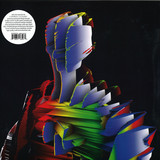
Private Selection's first full length LP comes in blistering form from Santiago Leyba. Recorded in L.A. and his hometown of Albuquerque, New Mexico, the songs on 'Western Vices' are a reaction to some of the bleaker circumstances that exist in these places. Not unlike Santiago's past work, this music reflects the paranoid and altered states that some people live in as a result of their surroundings. It lies in contrast to escapism and revels in dreadful realities to bring to life a highly rhythmic, woozy and disenchanted collection of tracks. The 12 songs are named after characters, landmarks and phrases associated with L.A. and Albuquerque, acting as reference points for the dialogue of sounds that hold them together.
Santiago Leyba has been producing music as a solo artist and in collaborative affairs since 2010. Raised in New Mexico, he currently lives and works in New York City. Leyba has recorded and performed most recently as Santiago (Unknown Precept, Private Selection Records), Western Versions (Pastel Voids), and U.S. Hard (Pastel Voids, Blankstairs).
From the artist --
"Western Vices is meant to be listened to at high volumes."
out of Stock
Last delivered 7 years ago available to reorder, subject to availability
Rian Treanor will release his anticipated debut album 'ATAXIA' on Planet Mu this March. The striking full-length follows singles for The Death Of Rave and Warp's Arcola imprint as well as live sets at Boilerroom x Genelec, Nyege Nyege festival, tours in India and various high profile EU shows.
The title 'ATAXIA' means 'the loss of full control of bodily movements' and relates to Rian's music which is 'intended to make people's bodies move in unpredictable ways.' He adds 'the angles in the letters, the phonetics seem to mirror the geometry and idiosyncratic patterns in the music.' Rian explains that components of the tracks were made by generating a series of irregular events and re-structuring them, or by destabilising a pattern that is constant.
When asked how the album compares with his previous releases, he says 'My earlier EPs share a similar interest in angular and asymmetrical rhythms that are designed for club sound systems,' adding 'they were more improvised, focusing on sequencing and pattern modulation, using standard drum sounds and synthesiser patches. ATAXIA is more focused and stricter, it's more co-ordinated in terms of the track selection and the rhythmic structures. I spent more time refining the synthesis and sound design, pushing it further than the previous releases.' He expresses an interest in exploring opposites in his music: 'fluidity and syncopation,' 'systematic and unpredictability,' 'reduction and extremity,' 'irregular symmetry,' 'easy listening and brutal'.
There's clear a conceptual backdrop, but the music itself is not overthought. There's an immediate joy to much of the album - check out ATAXIA_D3 with its wonderful cut-ups and modulations of the phrase 'people don't understand people.'
The roots of Rian's playful sound are directly linked to his love of the music he grew up with. Coming from Sheffield, you can hear elements of industrial, synth-pop, bleep, extreme computer music and speed garage at play. From Cabaret Voltaire to Warp and beyond; the sound of his city has been, and is, an integral part of his musical development and is still a direct influence.
Last year, he noted in an interview that "I'm not a computer programmer, I'm not an articulate person in that kind of way. I'm a visual artist." Now he elaborates 'I meant more that I'm a visual thinker.' Drawing and visual art have been a fundamental part of his life 'since I was a child. I got really into graffiti as a teenager and around the same time I got into mixing and these both developed together.' You can sense the mind of a visual artist at work in his music which is also reflected in the artwork he created for this project.
As well as his visual art, installations and multichannel sound works he is involved in numerous collaborations such as with composer Nakul Krishnamurthy exploring the common ground between Indian classical music and electronic music and his work with improv saxophonist Karl D'Silva, plus his time studying with Lupo at Dubplates and Mastering in Berlin (who taught him the 'importance of reduction') have all helped shape and push his sound into other unique and adventurous zones. Treanor is developing on different levels and in different forms all at the same time, re-imagining the intersection of club culture, experimental art and computer music, presenting an insightful and compelling musical world of fractured and interlocking components.
This was Charles Tolliver's first album as a leader. The setting is unique only because his second Freedom-Black Lion album 'The Ringer' and all of his subsequent albums on Strata-East featured his quartet Music Inc. with pianist Stanley Cowell. Here he is surrounded in quartet and quintet formats with a truly stellar cast of the leading players on the New York jazz scene.
Charles plays the role of leader, composer and trumpeter. But it is surely that last role that deserves the most attention. The trumpet is a brass instrument that leans toward a hard sound and staccato phrasing. Yet Tolliver is the quintessence of fluidity. While it may be undeniable that he has learned from his musical heritage and past trumpet masters, a trumpeter of such flow, tone, control, lyricism and creativity is, by definition, a major musician.
Charles Tolliver first came to the professional jazz scene in the mid-sixties, when he first met Jackie McLean. Under McLean's leadership, he played on a number of Blue Note record sessions, some of which have yet to be released. He contributed original tunes to many of those sessions.
Within a couple of years, Tolliver was a well known figure in New York circles, playing and/or recording with Booker Ervin, Archie Shepp, Andrew Hill, Roy Ayers, Art Blakey, Sonny Rollins, Willie Bobo, Gerald Wilson, McCoy Tyner, Hank Mobley, and many others. His compositions were getting recorded by many artists. He gained his greatest recognition during a two year stint with the Max Roach quintet that also included Gary Bartz and Stanley Cowell.
There is also a previously unreleased bonus track of the song, "Repetition", recorded by Charles for this LP which will be included on this new release of the album. This song was originally made famous by Charlie Parker's LP With Strings.
This album is certainly an important and lasting document in light of the musicians involved and in light of its unique context for Charles Tolliver. But basically, it is just a great album to listen to. Michael Cuscuna
Three 1982 disco classics from boogie trio Plush formed under the guidance of Angela Winbush, René Moore and Bobby Watson get the official, remastered reissue treatment from the original tapes.
Opening up the EP, an Angela & Rene original 'Free & Easy' is taken on by the Plush troupe, with the legendary Tee Scott providing a trademark extended mix. It kicks off with cosmic synths that dissipate into heavy funk, electric bass riffs, whilst scorching top lines and choice guitar licks trade off over the top. Scott's magic is clear to see in the composition of this extended mix. A man who clearly knew how to work a dancefloor, his use of breakdowns especially, extending the anticipation and power the track commands on its dancers. From the bass breaks that weave in modulated synths, to those that utilise the glorious sustained piano chords, cutting to just vocals and percussion before everything is added back in for ultimate dancefloor elation.
First up on the B side, 'We Got The Love', a more soulful, slowed down tip where staccato guitar plucks and chunky slap bass marries with warm Rhodes chords, and lush vocal harmonies blend with the power of Siedah Garrett commanding the lead vocals. A passion ingrained in their voices that cannot be taught, hanging in the air, as they hang onto their phrases.
Lastly, 'Livin For Your Love' a boogie-based serenade written by Herman Chainey and Tony L. Phillips, intertwines Phillips' deep dulcet tones with Plush's backing. Add in a dose of pure '80s bass synth, twanging funk flashes and juicy bass guitar ripples and you've got a recipe sure to woo any wandering hearts out there.
out of Stock
Last delivered 17 months ago available to reorder, subject to availability
A mythical and misplaced masterpiece of lost soft rock and acidic folk funk by a one-hit wonderer lost in the wilderness for four decades. From the producer of Margo Guryan, writer behind Wool, Gerry Mulligan collaborator, Tarantino soundtracker and Wendy & Bonnie confidant, Paint A Lady now emerges from folkloric obscurity, to bring a wash of soft psychedelic colour to your vinyl collection and quench the repeat requests of a thirsty new found audience waiting for the rain.
Within certain record collecting circles, especially those who gather under the umbrella that covers fragile niches like 'acid folk' and 'soft rock', it's difficult to imagine a time when the legendary Susan Christie album didn't exist. When Finders Keepers Records first shared the unheard 60's songs like Paint A Lady, For The Love Of A Soldier and Echoes In Your Mind with a wide-eyed audience thirsty for organic soul and festival friendly acoustic funk, Susan's new found fan base instantly felt like they had known these songs all of their lives, and with a single needle drop we saw the birth of what could rightfully be described as an 'instant classic'. Which is why it's hard to believe that the music on this lost 60s acetate was only pressed 12 years ago. As our lucky seventh release in an international discography that now surpasses the 100 mark (and one of a small clutch of English language recordings on the label) Paint A Lady has slowly become one of our most requested re-releases, and with this 2018 edition it is technically accurate to say that this pressing is the first-ever reissue of this elusive and essential LP.
The oft over used term mythical applies to this album on many levels. Perhaps it's the woozy nostalgia found within the pop craft of Paint A Lady that has led to false rumours that original 1960's copies used to exist on the collectors market, or the bizarre claim that songs like the head-nodding title track, and the acid-drenched sound effects on Yesterday Where's My Mind were just a product of a contemporary studio band trying to create a fake folk funk red herring. As a result Susan Christie and her producer and husband of 40 years, John Hill have happily taken the repeat phrase 'unbelievable' as a compliment to their songwriting skills and foresight. In all fairness, with a decade to ponder, the original 1969 song titles alone do seem custom-built for the nostalgia market... No One Can Hear You Cry might lament the unrequited yearning for a record deal which never quite followed Susan's won one-hit wonder novelty hit I Love Onions; similarly When Love Comes might allude to the subsequent 35 year wait for the right label to eventually come along. Echoes In Your Mind and the aforementioned Yesterday... could easily allude to the haunting melodies that sat in the can on John Hill's studio shelf while his projects for Margo Guryan, Wool and Pacific Gas & Electric sat proudly in record racks before benefitting successful French cover versions or making their way on to Quentin Tarantino soundtracks. The track Paint A lady itself, complete with it's future-proofed sample-worthy rhythm section, seems like the perfect title for a mock rock pseudo psych contender - at which point you eventually step back and see the bigger picture. These guys were simply one drop too far ahead of their time; a family force of experimental pop perfection that late 60's America simply wasn't ready for. It is just over 12 years since champion record rustler Keith D'Arcy (who you'll meet on the inside sleeve) stumbled upon one of the original acetates that led to the final release of Paint A Lady, and it's almost a longer 50 years since Susan and John added their final touches to these recordings which tragically went into hibernation for over four decades.
Whether this album has been on your wish-list for what seems like a lifetime, or you are taking a plunge into this deep puddle for the first time, when the needle drops on the first track you'll find that Susan Christie, John Hill and Finders Keepers have been saving up for a very rainy day.
Martina Lussi's second album fuses together disparate sound sources with a disorienting
quality that reflects the modern climate of dispersion and distraction. The Lucerne, Switzerland- based sound artist released her debut album 'Selected Ambient' on Hallow Ground in 2017, and now comes to Latency with a bold new set of themes and processes.
The range of tools at her disposal spans field recordings, processed instrumentation, synthesised elements and snatches of human expression. The guitar is a recurring figure, subjected to a variety of treatments from heavy, sustained distortion to clean, pealing notes. Elsewhere the sound of sports crowds and choral singing merge, and patient beds of drones and noise melt into the sounds of industry and mechanics. The track titles manifest as a compositional game of deception complete with innuendos, empty phrases and claims - flirtations with perfume names and ironic assertions.
From the volatile geopolitical climate to the changing nature of music consumption in the face of streaming and digital access, 'Diffusion is a Force' is a reflection on fractured times where familiar modes and models change their meaning with the ever-quickening pace of communication.
Masterworks Music Rolls Into Town Once Again, This Time With France's Very Own Chevals Firmly In The Saddle. Four Peak Time Disco Edits Of Tried And Tested Dancefloor Anthems, Ready And Raring To Be Unleashed.
First Out Of The Blocks, 'my Feet Keep Changin', Drenched In Uplifting, Gospel Leaning Vocals That Will Have Hands Reaching For The Heavens. Couple That With Dazzling Piano Melodies, A Pulsating Bass And Staccato Strings, Alongside A Spiritual Breakdown That Will Bring About Full-on, Holy Disco Enlightenment. Next Up, A Filtered Disco House Gem In The Form Of 'this Time Is Dedicated To Love'. Shimmering Vocals, Synth Trills And Guitars That Radiate Warmth Combine With Fresh Percussive Samples And Lush Female Harmonies.
Take To The B Side And You're Hit With 'never Will I Leave You Baby'. Sun-kissed, Beachside, Wind In The Hair Vibes - Bringing Back Memories Of Those Warmer Months, Where Everything Just Seemed That Little Bit More Blissful. '80s Synths, Fuzzy Hats, Filtered Phrases And Sweet Chord Progressions In Abundance. Closing Out The Ep Chevals Goes Heavy On The Modulated, Wobbly Synthwork And Rich Bass Tones On 'love Somebody' Before Those Deep, Soulful Keys Take Centre Stage.
Disco Edits Done Properly!
out of Stock
Last delivered 18 months ago available to reorder, subject to availability
Skin Town's unexpected return with their new album 'Country' finds the duo upping the already high bar set on their striking dark pop gem debut 'The Room' with a dauntless artistic statement that trades clever posturing for vulnerability. Yielding their prowess with more restraint, Skin Town's 'Country' hits harder and cuts deeper - doubling down on their narcotic cocktail of strong R&B hooks, spacious bewitching productions, and marked sense of melody that puts vocalist Grace Hall and multi-instrumentalist Nick Turco in a class of their own.
Many saw that potential on their debut with support from Dazed, Interview, The FADER, KCRW, as well as artists like Tinashe shouting out Skin Town. Lamenting on the duo's unmistakable chemistry, Pitchfork says, "Turco's synthscapes are huge and scene-stealing, while Hall's husky voice strikes a glorious medium between Abel Tesfaye and Sade." Their latest is even more potent, a particular strain of sad dance music that feels timeless and raw.
'Country' refines Skin Town's minimal framework of tethering hip-hop/R&B rhythms to Hall's smoky, precise phrasing exploring richer atmospheres and darker concerns. Written and recorded over 3 years, the album touches upon depression, loss, hedonism, poverty, rebellion, sex work, empowerment, and love's contradictions. The album's completion was sidetracked many times with Hall suffering a string of life-threatening mysterious immune system ailments, as a result there is a lot of pain and joy in this record, made with literal blood and tears.
The opener "Bad" signals at this departure from their upbeat predecessor stripping away the beats, relying on the interplay between Turco's ringing chords, the enveloping synthwork and Hall's melancholic, rhythmic intonations. "Mute" brings back the drums, couched in a slinking hip-hop beat and a creeping synth lead. Throughout the record, Turco's productions glean from an eclectic, disparate mix: melodic Amiga tracker music, Metro Boomin', New Age, The-Dream while Hall seems ever more comfortable exploring syncopation and half-rap/half-sung excursions. This is inventive, uncanny pop music where Enya, Offset, Zola Jesus, and Future inhabit the same space.
Skin Town's unerwartete Rückkehr mit ihrem neuen Album "Country' hebt die sowieso schon recht hohe Messlatte ihres markanten Dark-Pop-Juwelen-Debüts "The Room' noch ein wenig höher. Skin Town's - Country" schlägt härter zu und schneidet tiefer - und verdoppelt ihren narkotischen Cocktail aus starken R&B-Hooks, einer großzügigen, betörenden Produktion und einem ausgeprägten Sinn für Melodie. Das ist erfinderische, unheimliche Popmusik, bei der Enya, Offset, Zola Jesus und Future im selben Raum leben.
Viele sahen dieses Potenzial bei ihrem Debüt und so gab es reichlich support von Dazed, Interview, The FADER, KCRW sowie Künstlern wie Tinashe. Pitchfork hob die unverwechselbare Chemie des Duos vor und sagte: "Turcos Synth-Landschaften sind riesig und szenenraubend, während Halls heisere Stimme eine Klasse für sich ist, angesiedelt zwischen Abel Tesfaye und Sade.'
Country' verfeinert den minimalen Rahmen von Skin Town, Hip-Hop/R&B-Rhythmen mit Hall's rauchigen, präzisen Vocals, die weitere Atmosphären und dunklere Anliegen erforschen. Das Album behandelt verschiedenste Felder von Depressionen, Verlust, Hedonismus, Armut, Rebellion, Sexarbeit, Empowerment bis zu den Widersprüchen der Liebe. Die Fertigstellung des Albums wurde mehrmals aufgeschoben, wobei Hall eine Reihe von lebensbedrohlichen, mysteriösen Immunsystem-Krankheiten erlitt, was dazu führte, dass viel Schmerz und Freude auf dieser Platte zu finden sind, die sprichwörtlich mit Blut und Tränen gemacht wurde.
Portland, Oregon resident Mary Sutton's solo debut materialized in the wake of a performance she gave at a clothing-optional soaking-pool sauna: 'I had never composed for synth before but wanted to make something people sitting motionless and naked in hot bubbly water would want to hear.'
It was while in this headspace that she reconnected with Satie's entrancing cyclical motifs, particularly the way 'he subtly spins melodic fragments, and pivots harmonies and phrases so the repetitions feel new and surprising yet soothingly familiar, as if casting a spell.'
The nine intuitive instrumentals comprising The Deep End accomplish exactly that, threading complementary shades of soft-hued hypnosis, dazed modal introspection, icy amusement park reverie, and lunar lullaby into a prismatic suite of contemplative melody and synthetic communion.
Sutton's songs are active rather than ambient yet their structure is more suggestive than scripted, full of lulls, asymmetries, and daydreams. Each track was written specifically to be played live on an analog synthesizer, with no overdubs or post-production wizardry. The sound of Saloli is one of warm-blooded wiring, turned on and tapped into, emotive and electric, storied machines speaking through all too human hands.
Sarah Davachi presents her masterpiece, Gave In Rest. Her most fully studio-recorded album ever, she collaborates with Montreal heavyweights to create an album that uses both modern minimalism and early church music as departure points.
Sarah Davachi has quickly risen in prominence since her first release five years ago, and Gave In Rest represents her highest artistic achievement. By infusing her compositional style within a predilection for medieval and Renaissance music, Davachi unearths a new realm of musical reverence, creating works both contemplative and beatific, eerie yet essentially human. Gave In Rest is a modern reading of early music, reforming sacred and secular sentiments to fit her purview and provide an exciting new way to hear the sounds that exist around us.
Between January and September of 2017, Sarah Davachi lived in flux; storing her belongings in Vancouver, she spent the summer in Europe, occasionally performing in churches and lapidariums and seeking respite from her transitional state while surrounded by such storied history. This latest album echoes that emotional state of solitude and ephemerality, reaching towards familiar musical landscapes but from oblique perspectives.
'I named each track after a particular time of day as a way of expressing my experiencing different moments of quietude, how morning and night are both independent and interconnected entities in this regard,' she says. Her titles evoke canonical phrases referring to morning or evening prayers, as well as Latin and German phrasings for metaphors about the time of day. 'From my perspective, there is a lot of loneliness on this record, and I think it is as much about beginnings as endings,' she continues. 'In a way, it's about the prospect of the unknown as it manifests alongside a very inward form of grieving—really the essence of what constitutes a period of transition.
Davachi has mined a bottomless landscape where listeners can witness music's participation in their solitudes. Gave In Rest lends a voice to her personal exploration with a firm, intuitive stance.
New collaborative album from two of the world's most revered sound artists. 'At its best, William Basinski's music inspires the sort of rapturous testimony usually reserved for peak experiences, cult leaders and the dead.' Pitchfork // 'Awe-inspiring: strange, elemental, and profound.' AllMusic // For over half a decade, William Basinski and Lawrence English have been in regular contact with one another. During that time their paths have crossed repeatedly in various cities; Zagreb, Los Angeles, Hobart and more, in a variety situations. It was from these chance encounters - and the strange familiar of lives lived in transit - that their first collaboration, Selva Oscura, was seeded. The phrase Selva Oscura draws its root from Dante's Inferno. Literally translated as 'twilight forest,' it metaphorically speaks to both those who find themselves on the unfamiliar path and more explicitly the nature of losing one's way in place and time. Each of the extended pieces on this record maps an acoustic topography that draws on the concept of drifting into the strange familiar. The works each dwell in an ever shifting, yet fundamentally constant state of unfolding. As one sound fades away, another is revealed in its place, creating a sense of an eternal reveal. Selva Oscura was recorded in Brisbane and Los Angeles simultaneously. The compositions were each created through a process of iteration and rearrangement that inverted the micro and macro characteristics of the raw sonic materials. Dynamics and density were chiselled with restraint and at other times intensely reductionist approaches to create a limitlessly deep, but open sound field - as rich as the suggested place from which its title is drawn.
Matthew Dear is a shapeshifter, oscillating seamlessly between DJ, dance-music producer, and experimental pop auteur. He is a founding artist on both Ghostly International and its danceoor offshoot, Spectral Sound. He writes, produces, and mixes all of his work. He straddles multiple musical worlds and belongs to none, now nearly 20 years into his kaleidoscopic career, with ve albums and two dozen EPs plus millions of miles in the rearview of his biography.
Bunny is the name of Matthew Dear's fth album. His rst since 2012, it bounces into plain sight preceded by two slyly different singles in 2017: the moody, urgent "Modanil Blues' and the buoyant, blithe, Tegan and Sara-featuring 'Bad Ones.' Bunny follows both modes, among others, parading down a rabbit hole of unhinged phrasings, dreams, and interludes. It saunters in the shadows; it stands brightly in the moonlight. Bunny is a dual vision of avant-pop; an artistic reckoning from a 21st-century polymath; persona splintered, paradox paraphrased, a riddle rendered.
World Champion turntablist DJ Woody's innovative 7" Flexi-disc scratch record series 'Flexicuts' gets a vinyl release. 'Flexin Hard' consists of all the scratch samples from Flexicuts 1 and 2, but this time on 12" yellow vinyl. Includes 20 original skip-proof scratch phrases plus 2 longer scratch sentences combining the samples.
In search of the sublime, contemporary electronic musician Steve Hauschildt has designed grids and panoramas of sound across multiple releases through the rise and dissolution of his former band, Emeralds, an American touchstone of 2000s home-recorded psychedelic noise music. Consistent with his solo work is Hauschildt's ability to coil his craft in precise, varied, and distinctly physical forms. Gently spinning arpeggios converse with post-industrial decay. Sonic bers sway like pendulums from static melancholy to motorik bliss. Dissolvi, the artist's rst full-length with Ghostly International, engages sublimation from an ontological perspective: by dissociating the self. Hauschildt steps out from the singular path, for the rst time in a traditional studio, to compose and arrange contributions from friends. As a result, his most collaborative work to date extends a vast, vibrating framework in which to consider the state of being.
The album's title — a reference to cupio dissolvi, the Latin phrase meaning "I wish to be dissolved" — needn't be taken one-dimensionally or as purely solipsistic. It does, however, serve an apt reference. Physiological phenomena are of interest to Hauschildt. These back-of-mind ruminations nd their way out. Songs are cerebral in orientation, but beyond explanation, the music is truly visceral.
Involuntary eye movement inspires the serene, sanguine-nearing-suspicious "Saccade." Hauschildt feathers soft percussion beneath the echoed refrains of Los Angeles musician Julianna Barwick, together shaping a svelte suggestion of the anxieties brought about by modern-day surveillance; if everyone is being watched constantly, there is no individual, no self, only a broadly monitored and clumsily cataloged populous. The work of Chicago poet Carl Sandburg comes to mind: 'I am the people—the mob—the crowd—the mass.' The individual dissolves into the taxonomic crowd.
Minimalist techno impulses provide a stylistic through-line for Dissolvi. Understated synth phrases and drum grooves take hold in selective moments, like synchronistic structures onto which nebulous mists, like the rapturous voice of Gabrielle Herbst aka GABI on "Syncope," cling to and cloud, producing a dazzling rift in consciousness. The 7-minute centerpiece "Alienself" reiterates this creative logic, burbling like an amorphous body of water on a low-gravity planet, on the verge of dissolving, but never fully dematerializing.
The album was constructed in Chicago (where Hauschildt now resides) and partially in New York. "Much of it was recorded in a windowless studio which removed elemental or seasonal references to time in the music," says Hauschildt. "The focus this time was on mixing the album and incorporating a broader set of instrumentation. I describe my compositional approach as being quasi-generative." Embracing new methods and philosophical curiosities, and in turn, expanding the range of his repertoire, Hauschildt proposes a fascinating and profoundly rich experience in listening, being, and deliquescing.
One afternoon in 1975, friend and fellow music traveler, Harold Schroeder, showed up at Poo-Bah Record Shop where Tom Recchion worked selling records and experimental music to people, forcing them to buy albums that he swore would change their lives. Harold asked if Tom wanted to share in a studio space close to the shop. After seeing it Tom immediately said "YES!". They moved in and divided the space in half. On Tom's half he made drawings, paintings, performances, video, sculptures, installations, and music. Harold had his all set up for music with his newly acquired Steiner-Parker synth and guitars and things. At the beginning they played under the name The Two Who Do Duets. Soon the late-night jam sessions that took place in the back of Poo-Bah moved over to the fourth floor of 35 South Raymond. It was pretty beat up and derelict, the way one imagines an artist's studio to look. They could make all the noise they wanted. No one else was on their floor. The music heard on this LP has remained unheard since it was recorded and was created just before and right after the inaugural concert by the Los Angeles Free Music Society (LAFMS) groups Le Forte Four, Doo-Doettes, and Ace & Duce. That concert took place in late January 1976. The sessions on this release feature members of the newly formed and expanded Doo-Doettes, which now included Dennis Duck, Juan Gomez, Harold Schroeder, and Tom Recchion, as well as Ju Suk Reet Meate from Smegma and Ace, of Ace & Duce. 35 S. Raymond eventually became a sort of LAFMS headquarters, with Chip Chapman of Le Forte Four, artist and future Extended Organ vocalist/guitarist Paul McCarthy, and soon to become singer for Nervous Gender, punk/folk artist Phranc, who along with many other artists and musicians, moved into the building. 35 S. Raymond allowed for free expression and explorations of all sorts. Some wild parties ensued, not to mention the luxury of endless hours of experimentation. Parking was free and so was the art and music. Ace found the tapes for side one ("Tom's Studio") in his archive and Ju Suk Reet Meate found the tapes for side two ("50 Of Every American Are Machines") and edited them both for this release. No overdubs or remixing was emplo
Lucrecia Dalt's Anticlines is a volume of bodily and geological substrates within poetic theory and sound. It is a place where skins and minerals dissolve and commingle, where gaseous subterranean leaks inflate lungs, where brain cavities echo interplanetary waves bent from passing through atmospheres.
A former geotechnical engineer from Colombia currently residing in Berlin, Dalt's concern with boundaries and edges shape the lyrics and music of Anticlines, her sixth album. Paying careful attention to pace, breath, and texture, Dalt microtonally shifts the distance between speech and song while using traditional South American rhythms to support her contemporary electronic composition.
Lucrecia arrived at the atmosphere of Anticlines after several months of studying and creating new patches for the Clavia Nord Modular, forming a rhythmic feedback flow with it, a Moogerfooger MuRF, and her voice. The overall effect of cavernous space backdroping Dalt's intimate vocal phrasing rewards contemplation, supported in the physical formats of Anticlines by a lyric booklet documenting Lucrecia's collaboration with Australian artist Henry Andersen.
The album opens with Edge,' bordering on a pathological circlusion of self upon other. The lyrics depart from the Colombian myth of El Boraro, an Amazonian monster who turns its victims insides to pulp before sucking them dry and inflating their bodies like balloons to lifelessly float away. Tar' ponders human dependence on earth at the boundary of the heliopause, where to inhale might be like breathing tar. Dalt's distant and obscured vocals end with, we touched only as atmospheres touch.'
The sonic rise and fall of Analogue Mountains' is inspired by martian traces found in Antarctica embedded by meteorite ALH84001, suggesting that we might well be living in mountains transferred from Mars.' The steadily winding music on Concentric Nothings' descends with the lyrical exercise of dissolution let my touch be indistinct and instinctive.'
Interspersed with the lyrical pieces of Anticlines are instrumental interstitials that demonstrate preceding concepts — as if to say, this is what antiforms sound like, and this is what the universe's indifference sounds like.' Dalt's ongoing experiments with visual artist Regina de Miguel support these ideas, their practice allowing the objects of their attention to slip in and out of being.
Mystic of matter, Lucrecia Dalt has previously performed and worked with Julia Holter and Gudrun Gut, her slippery spoken word and performative nature recalling the work of Laurie Anderson, Robert Ashley, Asmus Tietchens, or Lena Platonos. While touching stones, The Thing by Dylan Trigg, Cascade Experiment by Alice Fulton, and Wretched of the Screen by Hito Steyerl are but a few formative scripts that support Dalt's exploration of the betwixt and between.
In preparing a live set for Anticlines, Dalt plans to stage an uninterrupted configuration, like a kind of alienated lecture, aiming for gestures that create tensions with non-existent objects.' Dalt intends to provide meaning and a place for the listener to meditate or relate to the concerns and ideas' she presents.
- Lucrecia Dalt is a Colombian recording artist, songwriter, and producer.
- After studying civil engineering in Colombia, Dalt worked at a geo-technical company for two years and has since lived in Barcelona and Berlin, where she currently resides.
- She has released five solo albums and has collaborated with musicians Julia Holter, Laurel Halo and Rashad Becker, to name a few.
- Dalt has composed for sound design installations and performance pieces for institutions such as the Santa Monica Art Centre, Reina Sofia Museum and the Maisterravalbuena gallery of Madrid, in collaboration with visual artist Regina de Miguel.
- Anticlines is Dalt's sixth solo record, and her first on RVNG Intl., following the release of 2015's Ou.
- Anticlines explores the boundaries and limitations of human consciousness. The album's poetic lyrics were written collaboratively between Dalt and Henry Andersen during a weekend in Brussels, Belgium.
The 2nd Release On 823, A Creative Project Founded By Ta-ku, Is Featuring The Label Debut Of Portland Wunderkind Quickly, Quickly.
823 Is Also The Numerical Representation Of The Phrase 'thinking Of You'. It Represents The Appreciation For The People/ideas/places That Inspire Us And Push Us Forward. As A Label We Are Proud To Present A Series Of Musical Releases That Showcase The Artists Musical & Visual Endeavors. The Artwork Is Shot By The Artist Themselves & Each Release Has An Accompanying Photo Zine That Acts As A Visual Story That Compliments The Music They Wrote At That Time.
There's A Maturity To The Sound Of Portland, Oregon-based Producer Quickly, Quickly That Makes It Difficult To Believe He's Just 17 Years Old. Using Elements Of Jazz, Hip Hop, And R&b, Quickly, Quickly Weaves A Tapestry Of Wispy Productions That Feel Equally Inspired By The Dusty Drums Of Early '90s Boom Bap As They Do By The Whimsical Electronics Of Head-turning Contemporaries Like Tennyson. Taking Over On Vocals, Bass, Drums, And Piano, He Offers Insight Into A Greater Understanding Of Musicality, There's Time Devoted To Each Audible Layer And It Shows.
Ta-ku:
graham First Caught My Eye With His Film Photography - It Was Only Co-incidental That He Also Made World Class Sounds & Made Me Ever So Jealous With His Musical Talent At Such A Young Age. Graham Is One Of Those Wunderkinds That Have Managed To Create Such A Strong Musical Identity For Himself And Makes It Look So Effortless. Graham Is The Reason Why I Started 823. He Is The Epitome Of Someone Who Embodies That Free Flowing Creative Energy That Needs To Be Showcased To The World!
Music Has Always Been A Part Of Quickly, Quickly's Life, As He Started Playing Piano When He Was Two Years Old. This Love Of Music Shaped His Young Life And Created A Solid Musical Foundation For Future Efforts. In 5th Grade Quickly, Quickly Found Hip-hop, Citing Common Market, J Dilla, Blue Scholars, And The Pharcyde As Early Influences. With His Love Of Hip-hop And Early Musical Background, It Seemed Only Right That Quickly Would Begin To Produce His Own Music.
Having Now Made Beats For Around Six Years, Quickly, Quickly Is Producing At The Top Of His Game. The Production On His Debut Ep over Skies' Is As Easy-going As It Is Complex, And The Fact That There Are No Samples On The Ep Makes It All The More Impressive. Inspired Heavily By The Sky And The Many Forms It Takes, This Ep Blends Genres And Crosses Musical Borders With Ease.
Two Words is the debut release from the duo of Canadian sound artist crys cole and Australian songwriter Francis Plagne. Building on a series of experimental live performances in which the pair toyed with possible common languages for their seemingly unrelated approaches to music, the LP's two sides present a single piece that brings together abstract texture and slow-motion song in a sonic space where genre cedes to the logic of dreams.
The piece begins with a long, nearly static sequence built primarily from rubbed surfaces, using movement in the stereo field and changing mic placements to create a unified but unstable sonic environment that mimics wind, water, and breath, opening an impossible space between nature and artifice. This artificial outdoors ultimately makes room for Plagne's electric organ, which sounds a series of melancholic chords to accompany a wandering Wyatt-esque keyboard line as cole's intimate contact mic textures sizzle and pop in the foreground.
From here the piece makes a surprise detour into song, as the majority of the second side finds Plagne intoning a series of obtuse two word phrases (from a text by Berlin-based poet Marty Hiatt) to an austere organ accompaniment. Working closely with engineer and producer Joe Talia, cole and Plagne extend the studio-as-an-instrument tradition of Teo Macero and This Heat, introducing subtle yet unexpected production shifts that lead the listener from the initial austerity of the organ and voice to an oneiric space of asynchronised vocal doubles, creaking textures, and distant whistling, ultimately arriving at something like an imagined meeting of Organum and Arthur Russell.
Packaged in a suitably mysterious sleeve featuring a lush work by Australian painter Anne Wallace on the front and text by Hiatt on the back, Two Words is both comforting and strange, a disorienting blend of seemingly discrepant elements.
Tokyo based DJ/Producer Tsuyoshi Ogawa presents "Seven Samurai". This vinyl-only label has been founded in 2018 and it is operating in Tokyo, Japan. It pays tribute to the Japanese legendary movie director 'Akira Kurosawa'. This 2nd EP inspired by the movie "The Hidden Forest'. 1st track Himatsuri by Tsuyoshi Ogawa that recorded using the voice sample of Yuki's song from the movie and this song based old Japanese poem book 'Kangin Collection' in 1518, The impressive phrase 'Think it over - How dark this world is - The floating world is no less than a dream - Just go crazy ' will be brought to us as a universal theme to this day. 2nd track Hitomi's Temple by Paris Samurai viDa, He recorded using sound of Japanese Koto, Samurai Sword and Samurai Voice to respect Japanese traditional manner. it's a Japanese satellite like a spiritual space temple, because the track bring you from Paris to Japan to space. This EP is dedicated to Akira Kurosawa as a new spiritual soundtrack for The Hidden Forest.
out of Stock
Last delivered 5 years ago available to reorder, subject to availability
At last, the vinyl reissue of this masterwork, adding two hitherto unreleased gems recorded solo for Charles Fox's Radio 3 programme Jazz in Britain, in the same few months of 1980 as the stunning Aida performances.The phrase 'in the moment' is often bandied about with reference to free improvisation, and indeed there's no better way to describe Derek Bailey's playing. The acoustic guitar is notoriously lacking in natural reverberation — notes barely hang in the air for a couple of seconds before they disappear — which explains the almost non-stop flow of new material in these stellar performances. Bailey knew from one split-second to the next exactly where to find the same pitch on different strings, either as a stopped tone or a ringing harmonic, and there's never a note out of place. 'He who kisses the joy as it flies,' in the words of William Blake, 'Lives in eternity's sunrise' — and this music is forever in the moment, constantly active but never gabby, kissing the joy.One of the special pleasures of the BBC set is the guitarist's own laconic commentary, a deliciously deadpan description of what he's doing while he's doing it — 'I like to think of it... as a kind of music' — and the interaction between words and music is a particular delight. 'You may have noticed a certain lack of variety,' he quips, while unleashing a furiously complex volley. Is it a coincidence that the final seconds recall the famous cycling fifths of the coda to Thelonious Monk's Round Midnight Surely not — for Bailey, like Monk, was a note man par excellence. And they're both still alive and well in eternity's sunrise.
With this new work Maurizio Abate recovers the discourse started with Loneliness, Desire and Revenge (2016) but with a different narrative sensitivity. The symbolic air that you breathe suggests a personal and universal experience in which thoughts and perceptions remain as enveloped in an eternal cosmic wheel. It's a condition that flows sincerely into an emphatic introspection and identification between the stasis of an inner soul and the flowing vitality of stagnant aquatic landscapes. In this direction the music of Abate always condenses multiple ranges of different emotional spectra evoked by profound naturalistic references. The airy openings of the strings, the distant whispers of the harmonica, cascades of phrasings more calm or more torrential can lead into the magnificent climax of the Nostalgia. The string arrangement for violin and cello by Lucia Gasti introduces in a dimension of idyll, in elegiac passages of touching poetry almost of chamber music but at the same time wet by the pastoral and bucolic moods of autumn landscapes, they are paintings imbued with different flavors and colours that recall the light and the candor of the Venetian tonalisms or the moving paintings full of meaning of Tarkoski. In the darkest and saddest moments the open chords are like suspensions of unresolved questions and torments, but the cathartic finale with a free and minimalist piano prelude to possible future glares, almost to perceiving that even where there's stasis the sun can still shine the hope for the new on the clearing of the pond. Remains the feeling with that stylistic "freedom of expression" dear to the visionaries Fahey and Basho, but also a clear interpretation of the expressive possibility of the lead guitar, absolutely lyrical and contemporary for refinement of the crystalline sound, which places this work in parallel with the basic acoustic tests of others great like Jim O'Rourke, Jack Rose or James Blackshaw.
The Land of Look Behind soundtrack returns to vinyl in a remastered and expanded edition that includes a download of three previously unheard and unreleased tracks from the original sessions. Alan Greenberg, who wrote and directed this film documenting the funeral of Bob Marley, provided K. Leimer with location tapes which were used to originate many of the rhythmic patterns for Land of Look Behind. Loops of the monologues and phrases that exhibited more distinctive cadences and pacing, the words, glottal stops, clicks and coughs of witnesses were used as cues for the percussion instruments. In effect, speech became the organizing principle of the musical score. By eliminating the accuracy of click tracks, musicians were prompted to rove through the inconsistent intervals of the voice-derived patterns. Also included is a four-page insert featuring an essay by Paul Dickow.
K. Leimer founded Palace of Lights in 1979. Leimer's early work has recently been reissued by Autumn and RVNG, and his early cassette work is in the critically acclaimed VOD box set American Cassette Culture. Leimer has been actively producing music since the mid 1970s — his current catalog includes seventeen albums plus two collaborative albums with Marc Barreca.
Leimer's work is included in the collection of The British Library.
That Which Is Not Said is an album about learning to accept oneself within, and accept the reality of all that comes from without. It's an eponymous abstract exposition on navigating the realms of intimacy that the living world inevitably unveils and their equally inevitable fallout, the panic of abandonment and the loss of desire, and dragging oneself back up the hill once the lonely valleys lose their allure. Written and recorded over the course of two years in TWINS home studio in Atlanta with various synths, samplers, drum machines, and his very own flesh-and-muscle vocals, That Which Is Not Said is the result of countless studio sessions and experiments that were refined and distilled into the songs presented here, rigorously worked out through live performances and repeated critical overhaul. The material was all conceived more or less the same way: a mood or feeling would be channeled through whatever machines were plugged in at the time and eventually a foundation would be developed upon which a loose structure would be improvised. Experimenting and
throwing around vocals came next, making up phrases and lyrics on the fly until something clicked and a pathway cleared through the fog and mist.
Not Long After Recording Her 10th Album, Ruins, Liz Harris Traveled To Wyoming To Work On Art And Record Music. She Found Herself Drawn Towards The Pairing Of Skeletal Piano Phrasing With Spare, Rich Bursts Of Vocal Harmony.
A Series Of Stark Songs Emerged, Minimal And Vulnerable, Woven With Emotive Silences. Inspired By the Idea That Something Is Missing Or Cold,' The Pieces Float And Fade Like Vignettes, Implying As Much As They Reveal. She Describes Them As small Texts Hanging In Space,' Impressions Of Mortality, Melody, And The Unseen - Fleeting Beauty, Interrupted. Grid Of Points Stands As A Concise And Potently Poetic Addition To The Grouper Catalog.
From Liz Harris: Grid Of Points Is A Set Of Songs For Piano And Voice. I Wrote These Songs Over A Week And A Half, They Stopped Abruptly When I Was Interrupted By A High Fever. Though Brief, It Is Complete. The Intimacy And Abbreviation Of This Music Allude To An Essence That The Songs Lyrics Speak More Directly Of. The Space Left After Matter Has Departed, A Stage After The Characters Have Gone, The Hollow Of Some Central Column, Missing.
Anklepants Introduces His Brand New Album For Detroit Undergroud, A Collection Of Ten Cuts, Made With His Very Own Arsenal Of Digital And Hardware Toys, Most Of Them Self Made And Customised For His Purposes. This Multi Faceted Artist Creates A Blend Of Twisted Ryhthms, Synthetic Melodies And Weird Textures And Noises, Yet Danceable Stuff But With Heavy Focus In Experimentation And Risk.
Pollen Opens The Release With A Weird Arabic Style Riff And Arpeggiated Clean Synths Over A Simple Beat, Until More Melodic Layers Complete The Equation.
Chowsey In Upstyled Onesy Minor Follows With Sampled And Morphed Traditional Instruments, Laying Over Destructed Beats And Rythms.
The Perfect Adult Man Relies On Atmospheric Stabs, Four Four Kick And Analogue Bubble Bassline, Dark, Grey And Melancholic.
'lé Cavé_isnt It Funny To Think Once Apon A Time People Thought The World Was Blue White Flat And Squaré' Is Made Of Twisted Samples, Asymetrical Grooves, Organic Instruments Decimated And Multiple Sound Layers.
808 Frapé Is An Homage To The Classic Drum Machine, Electro Shaped Drum Patterns, Floating Sounds And Crispy Metalic Glitches Dance With Random Sequences And Bleeps In A Robotic Exercise.
Reecard Farche The Torture Of Credo Mutwa And The Theft Of The Necklace Of Mysteries_noel Goes Again To Weird Random Bleepy Fields, Alien Grooves, Heavy Sound Processing And Glitched Details.
Industrial Kingpins Und Drachoen Is Dark, Obscure Number, Clear Rythms, Strings And Resonant Bassline Collide, The Groove Transforms To Broken Beats After The Break Bringing New Life To The Overall Feel.
Sharkblood, Sure The Sharks, Repeats This Phrase In Different Pitches Over A Solid Kick Pattern While More Vocal Layers Are Added Progressively In A Voice Madness.
Golife_refracto Relationé Again Plays With Samples In A Mad Style, Altering Every Parameter, Creating Granular Efects, Destroying The Audio Files Creating An Asymetric Tune.
Attila's Own Photos From The Shoot It's The Epilogue, In A Relaxed Mood, Sound Textures, Various String Samples Melting In Different Pitches And Crunchy Atmospheres.
out of Stock
Last delivered 2 years ago available to reorder, subject to availability
Wave Stu might just be the Platonic ideal of icy, emotionally fraught synth-pop. On his debut release for Origin Peoples, Stockholm-based musician Michel Isorinne puts paragons of this style like Orchestral Manoeuvres In e Dark in his slipstream. Laced with spoken-word passages from films and television shows, Wave Stu weaves a loose tale about the nature of time, physics, and mortality that can be summarized by the key phrase, uttered by a woman scientist somewhere throughout the album, 'magic is in the molecules...'
Isorinne essentially creates introverted minimalist symphonies in which sprightly synth leads peacefully coexist with melancholy, drone-y undercurrents. Throughout the record, Isorinne's melodies bear a fruitful contrast between the morose and the jubilant. He repeatedly places exceptionally delicate and beautiful tunes amid subliminal waves of pensiveness. It truly is a masterly balancing act. e zenith of this approach is Side A's closing track, in which gorgeous countermelodies intertwine like lovers on a tropical beach while a pistoning rhythm pumps up the libido. It's instant paradisiacal bliss.
Side B contains Wave Stu 's most cheerful, uptempo track yet it never bursts into full-on euphoria. Elsewhere, Isorinne reverts back to more somber moods: an eerie, methodical chiller full of quiet wonderment and subdued sparkle reminiscent of Casino Versus Japan, Plone, and others of their gnomic ilk; a low-key anthem in which '70s Vangelis grandiosi meets the workmanlike bass-synth chug of Ulrich Schnauss; an elegiac piece that conjures an intimate majes ; a bass-heavy dirge festooned with forlorn wisps of melodiousness.
The complex, paradoxical happy/sad pendulum at the heart of Isorinne's music lends Wave Stu a tingly resonance that will reward repeat listens. Please welcome an extravagantly rich synth-pop classic.
Here Appear is an invocation, a salutation, and a celebration — of past and perfect lives, forgotten and remembered, exchanged and borrowed. Eve Essex's solo debut is a multi-instrumental fea(s)t combining synthesizer, drum machine, alto saxophone, piccolo, electric organ/harpsichord, harmonica, slide whistle, bells, guitar pedals, and voice— composed, arranged, and performed by Essex herself. What began as an improv set at Berlin's Harlekin bar, developed over the past two years into a complete body of work evoking multiple time periods, genres, characters, and sonic landscapes. The seven tracks that make up Here Appear harness elements of classical, drone, avant-jazz, and distorted pop, coupled with an ambitious vocal delivery that draws on the phrasing and articulations of Essex's own woodwind playing, to create a quasi-narrative me´lange retaining the vulnerability of live performance. On the opening track Grind Away,' otherworldly harmonica strains set the stage for lyrics citing Chinese sci-fi novel The Third Body Problem as source material. Saxophone and piccolo interludes Immediate Communicator' and Colorless Stone' move between medieval-tinged melodic inventions and textural noise, recalling a Pharoah Sanders-influenced fever dream, while the linguistic abstractions of Russian conceptual poet Lev Rubinstein guide the looped, layered, and textured vocals of title track Here Appear.' The album closes with a languid take on Jacqueline Humbert & David Rosenboom's 1978 composition Clear Light' from My New Music, recently reissued by Unseen Worlds. Here Appear owes its minimal production to the conditions of its genesis, evidencing the restrained process of the solo artist, instrumentation is confined to what can be played simultaneously. True to the album's avant-garde roots, each song involves an element of improvisation, often taking the form of prompts or variations on a melody rather than explicit compositions. Even its most structured pieces make use of live-sampled loops, which inject a spirited unpredictability into the songwriting process and subsequent performance. Classically trained in bassoon at New England Conservatory before receiving a BFA in sculpture from RISD, Eve Essex has performed as a solo artist at Artists Space, Commend, Safe Gallery, Signal, Trans Pecos, and U.S. Blues, in New York, Harlekin/Mathew Gallery and StudioAcht in Berlin, and the PUFFERSS Festival in Providence, RI. In addition to her solo practice, Essex regularly performs as one half of Das Audit (with Craig Kalpakjian), as well as in trios Hesper (with James K and Via App) and HEVM (with MV Carbon and Hunter Hunt-Hendrix), and has collaborated extensively with Juan Antonio Olivares as installation/performance-art duo Essex Olivares. Prior to the LP release on Sky Walking (April, 20), Here Appear arrives via New York City-based label Soap Library on March 9, 2018 in both cassette and digital format, mastered by Helmut Erler at Dubplates & Mastering, Berlin and recorded by Al Carlson at Gary's Electric, Brooklyn.
The Grateful Dead forged its legend on the road, traveling countless miles between 1965 and 1995 to perform a world record 2,318 shows for millions of devoted fans. The band's refusal to ever play a song the same way twice has endeared generations of fans, many of whom prefer certain live versions of songs over their studio counterparts, and garnered the popular phrase among Dead Heads: There is nothing like a Grateful Dead concert.'
The live albums the band released during its 30-year career are the primary source for the collection, including tracks like Bertha' from Grateful Dead (Skull & Roses) (1971), Fire On The Mountain' from Dead Set (1981), and The Music Never Stopped' from One From the Vault (1991). A testament to its ongoing popularity, the revered double-album Europe '72 (1972), is represented by no less than five tracks, including Sugar Magnolia,' Jack Straw' and a searing rendition of Morning Dew.'
Other performances on the set were selected from the growing number of live releases that have emerged since the death of founding member Jerry Garcia in 1995. Some of those recordings include Touch Of Grey' from Truckin' Up To Buffalo (2005), a 1990 version of Eyes Of The World' with saxophonist Branford Marsalis featured on Wake Up To Find Out (2014), and Estimated Prophet,' which debuted earlier this year as part of Cornell 5/8/77, a recording of the Grateful Dead's mythic show at Cornell University in 1977, thought by many to be the band's greatest live performance.
Made for die-hard Dead Heads and new fans alike, The Best Of The Grateful Dead Live Vol. 1 1969-1977 will be available as a on 180-gram vinyl as a 2-LP set, covering the first half of the album, on March 23rd. The music will be available through digital and streaming services as well.
Dark Entries present the debut album from Bézier titled 'Parler Musique'. Bézier is Taiwanese-American musician Robert Yang who is also part of the Honey Soundsystem crew. A multi-instrumentalist, Robert grew up in Southern California then planted his roots in San Francisco in 2005. Over the years in SF he has built an impressive analog synth-based studio, which also serves as the creative hub for his riveting live performances.
Parler Musique clocks in at over 52 minutes with 8 tracks are spread across four sides for maximum loudness. The album title is a French transliteration on the phrase Parlor Music' and is evening music for a meeting of minds in a drawing room or a literary salon. To 'talk about music', the actual translation of the title, the album is a hotbed of ideas. Different genres are crisscrossed: punk, synthpop, jungle, new romantic, industrial and new wave. Airy melodies, surging arpeggios and symphonic breakdowns counterpoint cold digital drum sounds to convey beauty within inescapable and impending daily processes. The track titles for 'Parler Musique' zoom in on Romantic preoccupations with mystery, unknowns, depths--where themes combine to form an occult revelatory experience.
All songs have been mixed by Mark Pistel (Meat Beat Manifesto, Consolidated) at Room 5, San Francisco and EQed for vinyl by George Horn at Fantasy Studios. The vinyl comes housed in a jacket featuring a surreal circuit board pattern with pink bubbles flickering on an abstract horizon of water designed by Eloise Leigh. Each copy includes a postcard risograph-printed in fluorescent pink and dark blue with Dadaist text by Justin Aulis Long.
Is the drum the successor of human sacrifice or does it still sound the command to kill' Adorno, Motifs (1951)
As the lead singer of George Darko's legendary Burger-Highlife hit-band, Lee Dodou became the number one voice of 80's Highlife. Born in Kumasi, the epicenter of Ghanaian Highlife, he came to Berlin in the late 70's - by then the uprising epicenter of Burger-Highlife - to work as a back-up-singer for Pat Thomas. After joining and leaving Georg Darko and running his own band "Kantata", he stopped releasing music in the early 90's. Now, Philophon is proud to present new recordings of his soulful genius to the world of 2018.
Basa Basa is a song in the classic "concert party" style, as it was played in the glorious 60's. After a firey horn introduction Lee takes over in that funny and entertaining manner typical for "concert party" music. Buzz Duncker joins Lee's phrases with some gentle clarinet. Highlife at its best!
Sahara Akwantuo is anything but a classic: it's the start of a kind of philophonic Highlife, labeled as Kraut-Life. Ghanaian love of life meets German romantic melancholy. Happy rhythms meet mysterious synth landscapes. Eternal summertime and mangos are meeting a wet winter world and roast apples. Kraut-Life at its best!
Hopeton Brown, better known as Scientist, has been a pioneering figure in the world of dub for nearly 40 years. His early love of electronics proved fruitful when (still a teenager) he was hired at King Tubby's studio in Kingston. Brown quickly ascended the ranks and became heir to Tubby's throne, producing imaginative and technically impressive mixes that solidified his forward-looking nickname.
Introducing Scientist - The Best Dub Album In The World, his 1980 debut LP, lives up to its boastful title. Recorded with Sly & Robbie at Channel One Studio and mixed at King Tubby's, the album features hypnotic basslines, reverb-drenched keyboards, and fluid, start-stop rhythms. Opening track "Steppers," with its well-balanced phrasing and organic contours, shows Scientist's mastery of the studio-as-instrument concept. On "Scientific," the effects-laden guitars are stretched to their outer limit to create magnificent, spaced-out textures and muted tension. Introducing Scientist displays the talents of a man obsessed with every element of production, drawing out the very best of the dub form.
Khalab has arrived OntheCorner with 'Zaire'.
'Zaire' is the beginning of a new narrative for the artist. In this first chapter Khalab creates urgent compositions with layers of sound from the past, present and future. 'Zaire' is underpinned by an intensely pounding heart of other-worldly percussion. The collaged loops frenetically jab in syncopation breaking off when the inherent swing casts its discrete groove to summon the dance. Unrelenting waves of synthlines, basslines and rhythm find harmony amongst the melodic chants and distortion.
Already making Gilles Peterson's 'All Winners' list on BBC 6 Music'Zaire' is a breathtaking nucleus for airwaves, dancefloors and, any digital devices masquerading as abeatbox. The tracks 'Aeh' and 'Night in the Jungle' are the vessel from which the heat of 'Zaire' steams. DJ Khalab has departed and with 'Zaire' Khalab has arrived On the Corner.
The two remixes on this EP offer magnified oppositions to the friction that Khalab seamlessly stiches into his tapestries of sound. The bass frequencies that Medlarbounces across his electro dirge, taking day into night, contrasts with the harmony and light of Will LV's journeying remix that drives through the troposphere.
'Zaire' is a prelude of the forthcoming 'Black Noise 2084' and the freeing of a narrative shackled in chains for centuries. Phrases of historic recordings collaged with future electronics and the analogue depth and artistic voices of the present makes this a ground breaking work of future music. The archive recordings bare a stark reminder of the need to face the barbaric recesses of modern human history. The many voices of Khalab's 'Black Noise 2084' are coming to be heard.
The Single > Side A 'PHRAKHANONG DISORDER' is T.D.O.S. second single featuring Japanese turntablalist DJ TO-RU (Dujada-Goja) is a bass battle on a downtempo hard drum beat, hypnotic and chaotic like Bangkok's streets. Phra Khanong is a neighbourhood of this megapolis where hip hop culture meets local traditions. Side B is 'NAMBA VIBRATIONS' with DJ TO-RU fine cuts on a dirty digital mish-mash of bass and dub beats,. Just in tune to get lost in electric downtown Osaka before heading to the dance floor facing a massive sound system. The Artist > The Dude Of Stratosphear aka T.D.O.S. is Jerome Doudet (Swiss/French artist and bass player based in Bangkok). DJ, vinyl collector, musician, graphic designer and East Asian music connoisseur, The Dude of Stratosphear was groomed in the vibrant alternative scene of the very international city of Geneva Switzerland. Growing up in a musical household (His father was a disco DJ), Growing up in a musical household (His father was a disco DJ), Jerome was exposed to a wide range of music at very early age, and started playing the 4 strings at the age of 10. Bass player in the swiss math-core bands Knut for a decade, he toured intensely all around Europe's biggest venues and festivals. He also joined the very underground american band Half Japanese for a couple of european tour and recorded the album Bone Head in 1997. And on top of the list was opening for the mighty KISS with the canadian band Bionic (CA) at Molson center in Monteal. Also member of various bands such as Imericani (SP/IT/CH), Intercostal (CH), Troll Patrol (CH), Bliscappen Van Maria (CH-IT), Edison (CH), Polar (CH-FR), Prejudice (CH-FR), Buz (CH), Void (CH), Ultra DB (CH), to name a few.
Visible Cloaks' Lex proposes a utopian dream language and its accompanying sound, a limitless, delicate space developed by fluid musical techniques and subconscious voices. The six pieces comprising Lex simulate a more peaceful future, their mysteries telling a new tale in an unknown but imaginable melodic language. Visible Cloaks are the Portland-based musicians Spencer Doran and Ryan Carlile. Utilizing software-based composition rooted in randomization, MIDI-translation and chance operations, the duo has established an improbable humanist mode of music from esoteric processes. Following their self-titled debut album, Visible Cloaks offered Reassemblage, an album simultaneously honoring the post-Yellow Magic Orchestra school of avant musical adventure and diverging from it. Veering from the paths cleared by Japanese and Italian electronic pop and ambient artists of the mid-80s / early-90s, Reassemblage established Visible Cloaks' own camp in a forest of deep sound canopied by trees grown from synthetic seeds.The sound represented on Lex is webbed with sculptural arrangements and interpolated by the sounds of alien speech. These strange and serene utterances were created by Doran feeding a chain of multiple dialects and accents through a language translation software to create an auditory poetry of an evolved place and time.
Lex features both the final version of this process and earlier, simplified experiments with it ( Keys'). The idea - building on 'fourth world' or 'global village' type concepts - was to create a projected language that was a fusion of many,' Doran explains. The result was a very disorienting form of non-language that amplifies the lapses in meaning that occur with the inaccuracy of auto-translation software.'
Permutate Lex, a companion short film to Lex made by Visible Cloaks in collaboration with artist Brenna Murphy (who also created the artwork for Reassemblage and several virtualist videos for the album), is an integral counterpart, both visualizing an aesthetic alive with human form and guiding the sonic experience of the first five pieces: Wheel,' Frame,' Transient,' Keys,' and title track Lex.' World,' the longest piece presented on Lex, is redrawn from a generative composition originally produced for an installation Doran made with Murphy.
The original work incorporates LFOs and randomized MIDI-information, and was intended to variate indefinitely. In this 'fixed' version, World' provides a more conclusive view into the impossible musical environments Visible Cloaks make real. Longer than any track on
Reassemblage, World' expresses the deepening, patient intimations suggested by Lex.
Doran says the Lex attempts to communicate the essence of a world distant enough that it can't be captured or comprehended from the present, appearing only surreal and inscrutable.' The statement reveals a broader musical philosophy fueling this new moment, an awakened voice woven through complex melodic shapes and phrases establishes communication between listeners and the unknown, here presented by Visible Cloaks as sounds coloring the very edge of the envisionable.
For more than 30 years music has been the most important thing in my life - this is a clear and true to the heart statement by Soulsurfer, DJ and drummer for the Hanover-based outfit named SUPERSOUL. And yes, SUPERSOUL are a real band. A band in love with analogue instruments and mastering their craft. A rat pack of five groove fanatics accumulating enough years, wisdom and experience to tell truly authentic stories within their songs - songs which are taking the bands audience on a journey into the 60s and 70s sound of Black America. SUPERSOUL are playing Funk 'n' Soul on a hot, steamy, energetic and passionate tip, performing self-written songs with stories told in the bands mothertongue - German ! With Arne Busch as vocalist and band leader SUPERSOUL is built around a true force. His vision and expression of Soul is phrased like the emphasis of a preacherman's gospel whilst fat and funky grooves are masterly crafted and carefully layered by Margot Gontarski and drummer Lars Heindorf a.k.a. Soulsurfer, glazed with wah-wah-heavy licks played by guitar wizard Toni. Their experienced interplay on the latest SUPERSOUL album is polished with loads of analogue engineering magic at Studio Nord Bremen and perfectly complemented by solos and arrangements of Lutz 'Hammond' Krajenski and seven other guest musicians making and appearance on this longplay piece.
It's not big of a surprise that these musicians, all of them rich in experience due to their contributions to other bands and projects, met in Hanover, Germany's secret capital of Funk. But it is quite a surprise that it took that long for an album to appear on the record store circuit that amalgamates German lyrics and urban Funk in a previously unheard manner like SUPERSOUL does.
And for those who come across this longplay piece whilst being on their next dig we go along the lines of the words by the famous man Miles Davis as - We suggest to you to play this record at the highest possible volume in order to appreciate the sound of SUPERSOUL .
Re-issued again, with new liner notes. A wonderful, rare record wrapped in a mysterious yet playful ambiance. Or maybe it's just the impression that the Japanese language often gives me. ''Suiren'' is an odd jazz-fusion-wave tune that sounds like its boiling, waiting to burst but somehow manages to stay in control. Like the nervous tick of a leg fidgeting under the table of a restaurant on a first date. Yasuaki Shimizu is a Japanese composer, producer and saxophone player born in 1954. He worked with Ryuchi Sakimoto on certain arrangements, with the South Korean artist Nam June Paik on art+sound installation pieces and even DJ Towa Tei (of Deee-Lite fame). ''Suiren'' was released in 1981 and is the opening title on the sought-after ''Kakashi'' album and is my personal favorite on this overall brilliant record. It weaves behind new wave, jazz, fusion, ambient and experimental music.Repetitive and hypnotizing, punctuated by exclamation marks on most first mesures, the muted triangle percussion hits me straight in the heart. About 90 seconds into the song, the saxophone makes its appearance and the song goes from ''this is cute'' to ''oh, this is some serious shit!''. Shimizu's saxophone frees the song from the rest of the elements which are more calculated and repetitive.A joyful, mysterious slow-moving train ride led by the artist's mellow voice that rocks us with this calming but funky lullaby. Every phrase is punctuated by the xylophone there to energize the piece, albeit very subtely.
With the single "Everything You Do, You Do For Yourself" North-Ghanaian Kologo master Guy One opens the door to his first international release #1, which will be available end of January 2018. Guy One promises what his name is saying: he is the number one artist of Frafra music, named after his people: the Frafra."Everything You Do, You Do For Yourself" is his only song having a phrase in English. Here he is following the example of his collegue and friend King Ayisoba, who introduced the use of English into Frafra music a few years ago. The beat is a driving Highlife rhythm. That's the kind of groove we all love Ghana for!On "Estre" we have special guest Florence Adooni, one of the leading voices of Frafra-Gospel. She is interweaving perfectly with the horn arrangements by Max Weissenfeldt, as well the drummer of the song, and gives after her part the lead to Mr. Guy One - yeah, the number one!
(180gr) An incredible album from Lo Borges - one of the best singer/songwriters on the Brazilian scene of the 70s!
An incredible album from Lo Borges - one of the best singer/songwriters on the Brazilian scene of the 70s! Borges first burst into the spotlight for his work on the Club Da Esquina album by Milton Nascimento - and his work as part of Milton's "corner club" really helped shape the style of the more famous singer. Yet Borges is almost an equally great talent on his own - with a soaring, soulful approach that's every bit as great as the best Nascimento material from the period - and recorded in a wonderfully similar spirit! The sound here is completely sublime right from the start - music that moves us, even if we can't understand the language of the lyrics - like some of the best work by Caetano Veloso and Gilberto Gil. There's maybe a bit more guitar than on some of the Milton Nascimento work of the period - but used in a fuzzy way that slides in nicely with some of the jazzy phrasing of the instrumentation - which is delivered with help from key contemporaries who include Beto Guedes, Nelson Angelo, Toninho Horta, and Tenorio Jr. The songwriting is amazing - and titles include "Cancao Postal", "Voce Fica Melhor Assim", "Nao Foi Nada", "Calibre", "Faca Seu Jogo", "Toda Essa Agua", "Pensa Voce", "Como O Machando", and "Aos Baroes".
Ten Years Behind the Scenes - An Anniversary Celebration Keeping anything alive for a decade is worthy of a kudos-but when it comes to club culture and dance music, 10 years is an admirable milestone indeed. For Indigo Raw, it represents another opportunity to bring in the left-field, high-grade dance inducers. And this time, the raison d'etre of the labels tenth anniversary release is a certain infamous duo known as Midnight Operator. Centered around the eponymous creation by Nathan and Mathew Jonson, Behind the Scenes EP is an ode to the kind of off-kilter, moody techno the pair have become infamous for. And on this particular occasion, we're taken for a journey in more than one sense. Equipped with a classic Jonson bass line and a scant little phrase that carries the track all the way through the end, Behind the Scenes is a lesson in transmutation. Sombre beginnings undergo a gradual shift into dancier, sunnier territory-until we are left with the impression that we've tuned into a channel that runs all the way through hills and past Martian wildlife. From dark to light, the brothers lift a veil to reveal a resolutely ecstatic piece of work. One that, in arriving at a very different place from where it sets out, earns all eight minutes of its wandering. In continuation of the jubilee excursion for this anniversary release, reworks of the flagship track have come in from across the globe. From south of the equator, AtomTM delivers an assertive piece that takes the darkest aspects of the Midnight Operator original and, with the help of a relentless stream of stabs and a sped-up beat, brings them into the spotlight. Meanwhile, Nerosky-as in Nerone(indigo Raw label partner) & Fosky-makes their debut with a piece collaborated in the confines of a smoky Catalan studio.