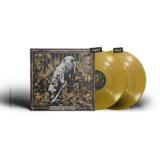
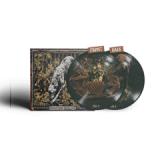
Tony Price returns with NAME?, a new LP on his Maximum Exposure label delivering 10 tracks of red-hot house music realness.
Following two releases in 2025, the brutalist cybernetic jazz reveries of Requiem for the Ontario Science Centre and the ferocious machine funk of Street Theatre, NAME? keeps its crosshairs aimed straight at the dancefloor.
NAME? showcases Tony’s undying affinity for the sound of New York City and New Jersey house: Tony Humphries’ cybernetic gospel dubs, the crude, Todd Terry-style 12-bit hip-hop explosives, the cracking garage swing of early Strictly Rhythm, Mood II Swing and Masters At Work, the psychotic bleep-funk bombast of the Bomb Squad, and the deep, ecstatic machine soul pioneered by the likes of Blaze and the Burrell Brothers.
Produced in his Greektown studio in Toronto using an array of drum machines and samplers, these recordings are pure Tony: rude, crude and elemental. House music stripped down to its core principles and defining primordial textures. No nonsense, no junk, no varnish, no nothing. Just the funk.
Metabolising 20-plus years gorging on the hardcore continuum, Luke J Murray returns to Sneaker Social Club with the first album under his Liquid DnB-Like Ambient Grime 2 alias. As the first self-titled EP in 2024 demonstrated, with this project Murray applies a hauntological supplement to his life-long diet of rave's codes and signals. These 11 tracks could be embraced as dank bangers in their own right, but the ghostly shroud that lingers is no accident. It's an evocative expression of the hinterland places that frame the pursuit of the dance as much as the energy spikes in front of the bass bins — a diaristic reflection on trudging puddle-peppered streets to find little black doors or staggering home, ears ringing, as dawn comes to chase down the street lights.
Haunted House, Garage & Grime walks the line between atmospheric scene building and straight-up beatdowns with a relaxed swagger. 'The Ginnel In SK4' paints a vivid picture of urban malaise with its bleak synth warps and punk-dub splashes, not a drum sequence in earshot. It's flanked by the Caustic Window-meets-Mark One 'The Flats On Belmont Way' on one side, and low-slung electro-creeper 'Hollywood Park' on the other. As the titles hint, this is music tangibly attached to very specific places locked in Murray's memory — unmistakably UK locations that reflect back the half-hollowed out echoes of late night soundtracks, glancing off red brick and pebble dash concrete at odd angles.
There is space on the album for full-chested amen tear-outs like 'Pete's Gone Mad With The Axe' , but for the most part the mood remains downcast and pensive. The sparse approach affords you space to tangibly hear the (not-so-silent) name-checked rain pattering in the background of 'The Crown Under The Viaduct, While Rainfalls Silently Into The River Mersey' , or imagine the crunch of litter and dead leaves underfoot that snakes its way through minimalist stepper 'Bowerfield Lane, After Dark'.
Murray's vision is sharply realised, and his stated inspirations slot logically into his shelves of ordered ideas drawn from disorderly memories. From Mark Leckey's O' Magic Power Of Bleakness to the Ghost Box records alumni, Hatcha's seminal Dubstep Allstars Vol. 1 and Laura Grace Ford's Savage Messiah book, Haunted House, Garage & Grime is the logical product of a deep thinker making tracks with decades of rave in his bones and the sense that it all means something, even if it's not always clear what.
This November, Brownswood Recordings will release Mek Do & Mend, the debut album from self-taught producer, multi-instrumentalist, composer and artist Wonky Logic. Although his name may not yet be familiar to everyone, Wonky Logic (AKA Dwayne Kilvington) has spent the past two decades quietly becoming one of the UK's most respected musical collaborators. His career has moved comfortably between London's jazz, electronic and contemporary music scenes, performing and recording with artists including Nala Sinephro, Yussef Dayes, Nightmares On Wax, Shabaka Hutchings and Emma-Jean Thackray. Alongside his work as a producer and composer, he's been musical director for projects with Eddie Chacon, John Carroll Kirby and I.G Culture's LCSM, scored the feature documentary Zandra With A Zed, contributed music to A24's The Smashing Machine, and continues to lead music workshops with young people, refugees and people experiencing incarceration.
Far more than a collection of compositions, Mek Do & Mend is a deeply personal reflection on the people, places and experiences that have shaped Kilvington throughout his life. It's the story of growing up on a Leeds council estate, where music became both a creative outlet and a way of understanding the world. Making music often meant working with whatever was available: a second-hand keyboard, a makeshift studio desk or ageing equipment that simply had to last a little longer. The title itself came from a conversation with his mother, capturing the resourcefulness that defined his upbringing and continued into the making of the album itself, which was written and produced to a tight deadline around touring, family life and Kilvington's work as a musician and educator.
Built from material spanning more than fifteen years, Mek Do & Mend brings together some of Wonky Logic's earliest compositions alongside brand new pieces written during the making of the record itself. Childhood ideas sit alongside music conceived only months before recording, creating an album that draws together a lifetime of writing rather than documenting a single moment. Running throughout are voice notes from family members, teachers, friends, mentors and collaborators—not simply as interludes, but as a reminder that no creative life is ever self-made. Rather than telling his own story outright, Kilvington invites listeners to discover him through the people who've shaped him: an aunt remembering him playing in church as a child, lifelong friends recalling early experiments making beats together, fellow musicians from different stages of his career and his mother describing him in her own words. Together they reveal the invisible network of relationships, philosophies, communities and experiences behind the music. "The album exists somewhere between being a biography and an autobiography," says Dwayne. "The biography is in the voice notes and how other people see me. The autobiography is in the music."
That same philosophy extends to the musicians who appear on the record. Every contributor has played a meaningful role in Wonky Logic's life beyond the studio. Long-time collaborator Luke Wynter, Steam Down drummer Benji Appiah, partner Vanessa Rani, Jonathan Enser, Joe Bristow, Brother Portrait and Nubiya Imani all feature not simply because of their musicianship, but because they form part of the album's story.
Across its fourteen tracks, Mek Do & Mend moves effortlessly between dynamic jazz arrangements, pulsating broken rhythms, delicate, twinkling piano passages, interstellar synth textures and elegant brass lines. Album opener and first single 'Strange Attractor' begins with a shimmering introduction before unfolding into an exhilarating surge of rhythm and momentum. Named after the mathematical concept of the same name, it serves as the conceptual point of origin for the album. Written when Kilvington was just seventeen, the composition reflects the idea that even the most unpredictable lives are guided by hidden patterns that often only become visible with time. Second single 'A Thousand Hands' features the unmistakable vocal tones of Brother Portrait, whose cerebral lyricism drifts over a low-slung, constantly shifting groove as woozy synth lines ebb and flow overhead. At its heart, the track celebrates the family, friends, mentors and collaborators whose often unseen influence shapes who we become, echoing the album's belief that every achievement is, in some way, a collective one. LP focus track 'BAME (Beyond All Marginalised Expectations)' is a lush, spiralling composition, brimming with both emotion and resolve. Reclaiming an acronym long imposed on racialised communities in the UK, the piece transforms it into a statement of possibility rather than limitation: a defiant rejection of stereotypes and a refusal to let identity be defined by other people's expectations.
The album itself only exists because other people believed in it. Isabel Gracefield made the RAK sessions possible, Rick David brought the record together with his characteristically thoughtful mix, and Gilles Peterson committed to releasing it on Brownswood before hearing any of the music. Away from the stage, Kilvington works with the charity Finding Rhythms, writing and producing original records with people experiencing incarceration, while also leading workshops with Arts Train and Dovetail Orchestra.
Recorded live in a single day in Studio One at RAK, Mek Do & Mend was mixed by Rick David through an analogue Cadac console before being mastered by Stuart Hawkes at Metropolis. The aim wasn't nostalgia or audiophile perfection, but to create a record people could return to throughout their lives, discovering something new with each listen.
As Dwayne puts it: "I don't want this body of work to be reduced to a jazz record. It's more like a novel about life told through music."
Following the critically acclaimed Fantômes… Futurs, praised by FIP, France Inter, Radio Nova, ARTE and International jazz press, double bassist and composer Kham Meslien returns with Vévés électriques, a deeply immersive second album where memory, landscape and improvisation merge into a singular sonic journey. Joined by Laurent Bardainne, Roger Raspail, Naïssam Jalal and David Neerman, Meslien expands the intimate language of his double bass with subtle loops and organic textures, weaving together echoes of Iceland, the Caribbean and imagined territories. Blending spiritual jazz, contemporary classical influences and ambient soundscapes, Vévés électriques is an invitation to drift beyond geography and into a profoundly personal exploration of emotion, identity and freedom.
Set upon an oil-smooth sea, an immense range of directions opens up before Kham Meslien for “Vévés Électriques”, his second album after “Fantômes… Futurs.”
With only his double bass and bow as vessel and sextant, a distant journey nevertheless begins to take shape. Vibrations and the striking of strings against wood quickly trace lines and winding paths across the surface of the water—so many routes to follow before leaving them behind, allowing the outward journey to become an inward voyage as well.
After an improvisation intended to shed light on the course ahead, isolated lands came into view: the shores of Iceland, the lands of the far north, places cut off from the rest of the world by vast expanses of water. Islands battered by a harsh climate that can only be endured by drawing warmth from deep within oneself.
Then the Caribbean arc appeared. The archipelago, a setting for joyful and unsettling experiences, takes Kham back to a childhood from which the passing years have carried him away. Rather than following the conventional channel of the music of these places, the West Indies emerge through memories whose colors are still vivid.
Through the morning mist, Roger Raspail’s percussion locks into the same frequencies of the groove. Double bass and struck skins then become companions on a road that intersects with Laurent Bardainne’s saxophone. Carrying a dreamlike message, David Neerman’s vibraphone also joins the narrative to write a few chapters of its own, while others are enchanted by the flute and voice of Naïssam Jalal, or struck by the metaphorical rhymes of rapper Rocé.
On the surface, through the themes along which the pieces navigate, landscapes slowly reveal themselves and change shape as the shore draws nearer or recedes. Straying from the marked course and allowing oneself to drift, breaking free from pure acoustic sound by adding loops first played live and then sampled, allows Kham to explore the depths. The depths of the ocean, as well as those of his soul. To enter a world of improvisation that reveals itself even as he explores it. Examined up close, feelings become shells to pick up and hold to one’s ear, so that they can be felt intensely until they take material form.
This sea, which had appeared peaceful, became the stage for a succession of stories and images, which then accumulated to give birth to a larger narrative.
Across To Remind Myself I Have Lived, aquatic sounds drift through hazy electronics and lush bedroom textures, before giving way to harsher, more industrial British landscapes. Voices appear and disappear. Loops seem to circle memories rather than rhythms. Guitar fragments become dream sequences. Domestic spaces open onto something colder and more distant.
The new album by London-based Michele Tellarini under the Catholic Block moniker gathers works made across five years, moving between composition, improvisation and a more instinctive form of sound collage. Known for his work with concrete punks Qlowski (Feel It Records/Maple Death) and goth-punks Secrecy (La Vida Es Un Mus), Tellarini approaches this material without the conventions of a traditional song cycle, allowing disparate pieces to find their own connections.
There is something strangely timeless in these works: a quality shared with music that seems to exist slightly outside its own moment, from the intimate, confidential organic realm of Mount Eerie to Bruce Gilbert's more abstract electronic and ambient experiments or the haunting digital world of Holly Herndon. To Remind Myself I Have Lived belongs to that same uncertain space, music that feels both deeply tied to the circumstances of its making and somehow detached from them, music for the lonely that shines with crepuscular clarity.
YES is a genre-blurring blend of punk, electronic and rap from South Africa, released on limited edition White Vinyl
South African alt-rap trio Internet Girl have officially announced their debut album, YES, arriving November 13 via PACK. Records. Alongside the announcement, the group has released their new single “DA BUSINESS” featuring Kenny Mason.
A high-energy party anthem, “DA BUSINESS” opens with distorted guitar before chopped vocals briefly pull things back, only for an abrupt beat drop and howling synth to send the track into overdrive. As another synth melody sweeps in, TK cuts through the chaos with an introspective opening verse before Kenny Mason crashes in with a gritty guest verse. Live drums, distorted guitars, and surging synths continue to build around them, turning their vocals into something closer to rage-filled battle chants than traditional rap verses.
Partially written on tour last year, “DA BUSINESS” is the oldest song on YES and one of the album’s few guitar-led tracks. Kenny connected with the trio over DMs months earlier before joining them on the track, bringing Atlanta and South Africa together for one of the album’s most charged moments. “DA BUSINESS” follows the trio’s recent single “ALL THE SAME,” a swagger-heavy track built around a hypnotic Spanish-language vocal sample and live drums before a heavily distorted bass synth takes over in its final stretch, drawing inspiration from South Africa’s booming taxi rave scene. Together, the two singles offer an early look at the range of YES, moving between the rock, rap, and electronic sounds Internet Girl have made entirely their own.
Written largely during a week-long trip to South Africa’s Karoo region at the beginning of 2026, YES captures Internet Girl at a turning point. What began as an ad-lib TK would throw into his verses gradually became the philosophy behind the record: saying yes to an idea and committing to it completely, even before there’s any proof it will work. Across the album, that once-delusional confidence begins to feel real as the trio reflect on coming of age, growing more comfortable with themselves, and becoming increasingly assured in the music they make.
The new release arrives on the heels of a big year for the South African trio, who have brought their high-energy live show to stages around the world, including Pitchfork Music Festival Paris and Boiler Room Soweto, while co-headlining Kiss Kiss Festival in South Africa alongside Basement Jaxx.
Hailing straight from Quebec City, Canada, GET THE SHOT is a hardcore band formed in 2009. With their strong work ethic, they quickly established themselves as one of the flag bearers of the Quebec hardcore and metal scene.
Their powerful music incorporates elements of thrash, death metal, and hardcore, creating an intense and brutal sound that captivates fans of the genre. Inspired by iconic bands such as Hatebreed, Obituary, and Slayer, GET THE SHOT has developed a unique style of extreme music.
With an impressive discography including albums such as "Perdition" (2012), "No Peace In Hell" (2014), "Infinite Punishment" (2017), and their latest album "Merciless Destruction" (2022), nominated for a JUNO award, GET THE SHOT has built a solid reputation with impactful tracks and explosive live performances.
“CRUCIFIXION DEPICTION”, marks a shift in attitude and resolve for the band. While celebrating the addition of a new vocalist and the comeback of the original guitar player, the latest EP sees the band undergo a transformation into a new persona and exploring a more visceral sound, while sticking to its hardcore roots.
After more than 700 concerts on three continents, including some on the biggest international stages such as Wacken, Hellfest, FEQ and Resurrection Fest, the six members remain committed to the core values of authenticity, integrity, and equality at the heart of the hardcore movement, while addressing with disillusioned realism the flaws of an era defined by blind individualism.
Hailing straight from Quebec City, Canada, GET THE SHOT is a hardcore band formed in 2009. With their strong work ethic, they quickly established themselves as one of the flag bearers of the Quebec hardcore and metal scene.
Their powerful music incorporates elements of thrash, death metal, and hardcore, creating an intense and brutal sound that captivates fans of the genre. Inspired by iconic bands such as Hatebreed, Obituary, and Slayer, GET THE SHOT has developed a unique style of extreme music.
With an impressive discography including albums such as "Perdition" (2012), "No Peace In Hell" (2014), "Infinite Punishment" (2017), and their latest album "Merciless Destruction" (2022), nominated for a JUNO award, GET THE SHOT has built a solid reputation with impactful tracks and explosive live performances.
“CRUCIFIXION DEPICTION”, marks a shift in attitude and resolve for the band. While celebrating the addition of a new vocalist and the comeback of the original guitar player, the latest EP sees the band undergo a transformation into a new persona and exploring a more visceral sound, while sticking to its hardcore roots.
After more than 700 concerts on three continents, including some on the biggest international stages such as Wacken, Hellfest, FEQ and Resurrection Fest, the six members remain committed to the core values of authenticity, integrity, and equality at the heart of the hardcore movement, while addressing with disillusioned realism the flaws of an era defined by blind individualism.
Comfort with ambiguity, dynamic experimentation and melancholy are rife throughout Brody Price’s newest record, Leaf Miner’s Daughter. Classic alt-country at its core, this collection meticulously weaves together Americana into sluggish, heavy grooves; overdriven guitars, hook-laden acoustic dissonance - all bolstered by a songwriter full of heart and intention.
An integral member of the Dallas / Texas scene and national DIY touring community, Price has been quietly building a dedicated community of fans across the US since 2017, entirely independent and reliant on each other to build and shape the tours by word of mouth. Following a cassette recorded collection of country songs, ‘What’s The Point In Trying’ (2017), and the gorgeous and chaotic ‘Win A Trip To Palm Springs’ (2022), Price is tracing a sonic and narrative arc that feels specific, earnest and whimsical - not without its dark corners and deep questions.
The innate ability to find beauty among the rubble is rife throughout his newest, revealing an authentically tender desire to dig deeper to find relief and understanding. He invites us to empathize and sit alongside his turmoil in an effort to make ours more bearable. At home in his musicality and the discomfort of living, Price revels in the act of putting the pieces back together, giving us all permission to do the same.
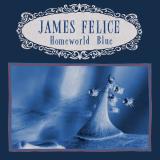
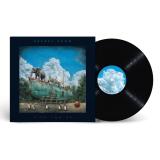
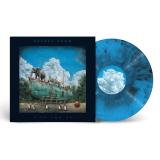
On his sweeping sophomore solo effort, James Felice squares up against cosmic indifference with expansive orchestral production and a depth of writing that makes even visceral Biblical imagery feel effortless. Recorded in Omaha with Nate Walcott (Bright Eyes) at the helm, Homeworld Blue pairs lush horns, intricate strings and pounding piano with Felice's authoritative, plainspoken voice — grand in scope, but never far from the small, everyday moments it's really about. Drawing on twenty years as keyboardist and accordionist of The Felice Brothers, and following his 2025 solo debut The Little Ones, Felice trades the intimacy of home recording for a maximalist, cinematic scope that sits comfortably alongside audacious songwriters like Joanna Newsom, Fiona Apple and Randy Newman — and closes, fittingly, back in the family kitchen.
On his sweeping sophomore solo effort, James Felice squares up against cosmic indifference with expansive orchestral production and a depth of writing that makes even visceral Biblical imagery feel effortless. Recorded in Omaha with Nate Walcott (Bright Eyes) at the helm, Homeworld Blue pairs lush horns, intricate strings and pounding piano with Felice's authoritative, plainspoken voice — grand in scope, but never far from the small, everyday moments it's really about. Drawing on twenty years as keyboardist and accordionist of The Felice Brothers, and following his 2025 solo debut The Little Ones, Felice trades the intimacy of home recording for a maximalist, cinematic scope that sits comfortably alongside audacious songwriters like Joanna Newsom, Fiona Apple and Randy Newman — and closes, fittingly, back in the family kitchen.
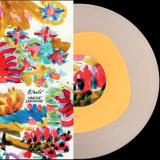
n resurrecting the band Krill—declared dead over 10 years ago—Jonah Furman considered the turritopsis nutricula: the “immortal jellyfish” that reverts to juvenile form instead of dying. “I was always afraid of coming home,” he says. “But home is inescapable.” Now living in the same Chicago suburb he grew up in, Furman ponders the passage of time on Secret Language, a nostalgic and cerebral exploration of family, fatherhood, and fated love.
From 2010 to 2015, Krill recorded three LPs and two EPs, growing into a cult project revered for its complex, rapturous compositions. Anxious, anthemic, mathy, propulsive, they were beloved by Frankie Cosmos, Girlpool, Horse Jumper of Love, and countless others. Personal lives took priority and brought the project to an official close, save for two reunion shows and a 2020 album under the name Knot, but that's retroactively a Krill album, “because it's easier that way.”
The project was revived “on a whim” as Furman puts it: “Theo from Ovlov asked if Krill wanted to open a Chicago show. Then I started writing new stuff.” He recruited Krill’s longtime drummer Ian Becker who, too, had just moved back to town. Both had known guitarist Andrew Clinkman (also of Spirits Having Fun and Moontype) during their collective years in Boston and growing up in Chicagoland, and soon he joined the fold. On Secret Language, the trio tap into their reclaimed city’s famed music community, drawing inspiration from current locals the same way Krill were inspired by their Boston contemporaries like Pile and Speedy Ortiz instead of Pixies or Mission of Burma.
On Secret Language, home can be anything: a place, a person, a feeling. But Krill is “very much” a Chicago band now; a new beginning where it all began.
Neues Livealbum der Indie-Ikone Ed Kuepper, aufgenommen 2023 in Melbourne während seiner erster Tour seit über einem Jahrzehnt, bei der er mit kompletter Band sein Solomaterial in den Mittelpunkt stellte. Ein mitreißender Auftritt mit Musik aus Eds 50-jähriger Karriere in erstklassiger Besetzung (u.a. mit Schlagzeuger Mark Dawson und Bassist Peter Oxley (Sonnyboys). In den 1970ern läutete Kuepper mit The Saints die Punk-Ära ein (noch vor The Clash, The Damned, Sex Pistols), gründetet später die Post-Punk-Formation Laughing Clowns und begann 1985 seine Solokarriere.
Stitched together from organic percussion, field recordings, and textures gathered from across the globe, Vikmatic’s most recent TSoNYC EP, co-produced with label head Danilo Braca, plays like a love letter to New York City, penned in the language of friends and family scattered across its boroughs. Rooted primarily in house, jazz, and Balearic sounds, but pulling just as freely from the sounds of Brazil, Africa, and India, Neighbors moves to the rhythm of a city swept up in the collective pulse of its most lively season.
Playful and minimalistic, “W4 Street” is a jazzy house track that adds a scintillatingly smooth, beachy flair to a nostalgic New York energy for a combination that leaves us unsure of what is improvised and what has been rehearsed to absolute mastery.
The EP’s second track, “Flushing”, represents a dramatic departure from the airiness of the previous one. Haunting and mysterious, with a leaden kick and a capricious synth, there is no question that we are finding ourselves in an entirely different neighborhood.
Early in the track, “Sunset Park” transforms from a deep rumbling into a catchy warm-weather groove with satiny synth layers, textured rhythm, and unhurried guitar and synth solos, evoking a sense of pure ease and beach season contentment.
Sultry and dream-like, “Harlem River Drive” is the ideal send-off for Neighbors, an album firmly situated in the living memory of an iconic urban summer. Warm and bittersweet, with woodwinds comprising the heart of its instrumentation, it’s not hard to picture a sunset in Upper Manhattan.
What does it mean to actually experience another City, one of such historical and cultural'd'asignificance as Detroit, A city that truly expands the capacity of Human love and resilience. Just to be there…?'d'aWhat sound do the birds make?…? What colour are the buses ? …?. What sounds do we hear in the streets'd'a?…? It's like one step beyond just experiencing a place but truly absorbing it as if it becomes a little piece of'd'aus. That's the only way you really get to understand the groove, the little everyday things that make the'd'apeople tick, their daily grievances and small moments of collective joy culminating over lifetimes. That is'd'awhere you get to the essence, the secret sauce and Lord knows this City is oozing with it.'d'aIn July 2025 Ziggy undertook a 6 week residency in the motor city with no concrete plan other than getting to'd'athe roots of a deeply layered and rich musical culture. One that has been a guiding light for many of us..'d'aWhether you are coming from the generation of Motown through the 1st generation of techno to hip hop'd'arevolutionaries, the city has left an undeniable mark on the history of American Music.'d'aAfter meeting at a weeknight vinyl session at a downtown bar, Ziggy and Malik realised they already knew'd'aeach other's work and immediately made plans to hook up in the studio. Malik being a Lifelong Detroiter with'd'aa background as a Gospel keyboardist and Singer turned House dancer, producer and DJ it was no wonder'd'ahe was a perfect addition to the Label Roster. To accommodate the sessions local turntablist and producer'd'aDJ Moppy kindly offered up his home studio and we shared many great records and vegan hot dogs in his'd'aleafy backyard.The music is primarily inspired by the enduring and charismatic folks we encountered in the city, their stories'd'aand personalities live on through the continued Musical Legacy of the city.'d'aSpecial thanks to Mike Banks, Cornelius, Crystal, John '?Jammin'? Collins (R.I.P) Rick Wilhite, Wajeed and all'd'aof the Underground Resistance family who hosted us. DJ Moppy, Meftah, Badriyyah, Raj Mahal all in the'd'abuilding!'d'aGospel and jazzy infused electro-funk and deep-house, a collaboration between one of Detroit'?s'd'aunderground dons Malik Alston and Ziggy Zeitgeist of EXREC. The result of a six week pilgrimage to Detroit'd'ain 2025, Zeitgeist set up shop in DJ Moppy'?s living room and the results are deep, dark and funky'd'a'd'a.
Analoge Eleganz trifft auf urbane Gelassenheit. Jeder Track auf diesem Album fängt die Magie des Moments ein - perfekt für urbane Nächte, fokussiertes Arbeiten oder den stilvollen Ausklang des Tages. Ein musikalischer Zufluchtsort, der sanfte Melancholie mit beruhigender Wärme verbindet und die Vielseitigkeit in ein modernes, elektronisch angehauchtes Gewand kleidet. Jetzt die limitierte Edition sichern und den perfekten Soundtrack für die ruhigen Stunden des Lebens nach Hause holen
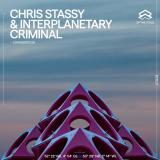
There are collaborations that make sense on paper, and then there are the ones that feel like they were always going to happen. CHRIS STASSY and Interplanetary Criminal now bring their first recorded meeting to Up The Stuss with ‘Dangerous’, a four-track EP that sees two artists with unmistakable identities find common ground somewhere between house, garage, breaks and pure dancefloor energy. With the sounds of this collaboration having quietly made their way into the world long before the full picture was revealed, its arrival feels like the moment the pieces finally fall into place.
Across the EP, the chemistry is immediate. STASSY’s knack for infectious grooves and vivid synth work meets IPC’s breakbeat-driven energy and distinctly UK-rooted sensibility, with neither side disappearing into the other. ‘I Just Can’t Get’ sets things in motion with skippy rhythms, breakbeat drums and those unmistakable STASSY synths, before ‘Movin’’ accelerates the pace with punchy percussion and a more restless, breaks-heavy charge. ‘From The South Coast Mate’ pushes the meeting point further, bringing weighty low-ends and unmistakable UK touches while keeping both artists’ distinct approaches clearly in view. Title track, ‘Dangerous’, brings the journey to its natural conclusion. Bright and dark elements pull against one another as the two approaches lock into a shared rhythm, delivering a track that feels simultaneously euphoric, gritty and slightly unpredictable. It’s the clearest expression yet of what makes the collaboration work: two established sounds remaining entirely themselves while discovering what happens when those worlds meet.
For CHRIS STASSY, ‘Dangerous’ marks the first EP to arrive on Up The Stuss under his new name, following the release of the euphoric ‘U know me’ on CCS, adding to this new chapter with a collaboration of serious weight. For Interplanetary Criminal, it adds another dimension to the Manchester artist’s ever-expanding take on UK garage, which has seen him become one of the defining forces of its current resurgence. It’s the sound of two worlds meeting at exactly the right point - and one that many have been waiting for.
Following up the launch of his own Dustbin Digs label, Manchester local Rossiter piles four of his own atop the stack of goodtunes97 wax.
Side A lifts off into the clouds with Feels So Good. The rhythmic shuffle, hint of UKG, and a determined bassline get to the gate as spacey chords are cleared for takeoff. Go Straight carries the trajectory, pressurizing the cabin in breezy dubbed transit. Keys vaporize on the periphery as Rossiter mitigates turbulence with careful cadence, maneuvering high-altitude with grace.
With two stops still to go, the B-Side gets off and running upon arrival. Round & Round kicks up dust as the low end stomps out the homestretch, tenaciously hitching a ride to our final destination. P45 is the long awaited return to familiar territory – nostalgic chords carrying beats so blissed they stutter. Interview samples from legendary UK producer/DJ Grooverider give the track a cultural anchor, connecting its contemporary sound to the lineage of UK dance music and the culture that shaped it.
Each side balanced with equal parts heavy and light, Rossiter’s Round & Round EP firms up the fifth release for goodtunes97.
– Forrest Camire
Four years on from the much-loved Shelter EP, Orphic return with the Mambe EP, a long-awaited follow-up that sees the duo push further into their signature world of deep, dubwise techno and hypnotic club music. The record opens with the title track, a slow-burning piece of stripped-back techno that unfolds through submerged chords, rolling percussion and finely detailed sound design. Sitting alongside it are two solo productions from each half
of the Orphic project.
Kieran Jandu’s Back To Mine veers into deep, bass-heavy electro, all cavernous sub pressure, fractured drum programming and smoked-out atmosphere, landing somewhere between the weight of Digital Mystikz and the hypnotic, off-centre psychedelia of a Craig Richards set.
DJ Space Taxi takes a different route with Dream Cycle, an introspective, dreamlike cut where shimmering textures, drifting melodies and restrained rhythm combine to quietly draw
you in.
Flipping the record over, two of the underground’s most distinctive voices reinterpret the title track. Polygonia brings her unmistakable fluid, organic touch, stretching the original into a beautifully detailed, living groove, while Konduku strips things back into a
deeply hypnotic, psychedelic excursion that feels tailor-made for the outer edges of the dancefloor.
A beautifully restrained return from Orphic that more than justifies the four-year wait. Four artists, four distinct perspectives, held together by a shared appreciation for depth, space and subtle movement.
Vancouver r&b lover and multi-instrumentalist Kutcorners turns his attention to two classic cuts on his The Freshest Recordings label. He kicks off with a rework of Control-era favourite 'When I Think Of You ', which he reworks as a lithe and slippery bass-first bounce that is seductive and steamy. On the flip, it's 'Got Til It's Gone' that gets pulled apart and rebuilt as a gentle bumping but decidedly late-night slow jam with silky soft chords and the original vocals slightly smudged and pitched up amid some old-school scratching and hip-hop bars. It's persuasive and tasteful and sure to get r&b heads hot under the collar.
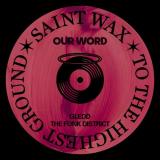
A two-way Italian/Mexican stand-off here, as Saint Wax founder Gledd (real name Eduardo Barbi) and Kaninchenbau label chief The Funk District (Fernando Mendoza) deliver their first joint EP since 2022. The latter steps up first with two solo workouts- the Clavinet-splashed nu-disco-goes-bluesy deep house shuffle of 'The River Bends Back' and the Rhodes rich deep house disco of 'Got To Be Alright' - before the duo combine on two collaborative cuts. 'I Said' is a gospel-powered slab of ever-building disco-house hedonism, while 'Down The Middle' is deeper, more bass-heavy and topped off with classic soul vocal samples. Gledd then takes over, following the infectious piano house bounce of 'I Said' with the colourful, acid-flecked excellence of 'Blessin'.
Celestial Echo Records heads to the Cayman Islands for CER014, produced in association with Whale Rider Records and longtime friend of the label Medlar.
This release shines a light on two incredible sides from the legendary Memory Of Justice Band, one of the Caribbean's best-kept musical secrets. Formed in Grand Cayman during the 1970s, the group blended soul, reggae, funk and island influences into a sound entirely their own, becoming one of the region's most beloved bands in the process.
On the A-side is a gorgeous piece of sweet modern soul — warm, uplifting and packed with the kind of effortless musicianship that makes you wonder how it stayed under the radar for so long. It's exactly the sort of record Celestial Echo was built for: soulful, timeless and impossible not to fall for.
Flip it over and things move firmly onto the dancefloor with a reggae-boogie burner produced by the legendary duo Sly and Robbie. Built around a heavyweight groove, tight rhythm section and infectious hooks, it's the perfect counterpart to the sweetness of the A-side and a reminder of just how interconnected Caribbean music was during this period.
As always, Celestial Echo is here to put proper soul records back into circulation — respectfully cut, properly pressed, and ready to play.
With Sunrise and the Life We Live, John Beltran returns to his ambient techno roots, the sound that garnered him global appeal in the 1990s.
Through ten tracks, the album journeys through lush, aerated textures and beatless expanse. Hypnotic grooves deepen and bloom in a flow of shapes and colors, creating a sound that is both meditative and full of life.
Thirty years after the release of his seminal Ten Days of Blue, Beltran's musicianship, vision and desire to produce remain at a fever pitch. With Sunrise and the Life We Live his gift of extracting emotion from the universe and turning it into
a unique musical experience puts him in a class of his own.
The tracks on the upcoming Boysonic release are a snapshot of a period largely absent from the discussion around Romanian electronic dance music: the first half of the 1990s.
Boysonic’s music was made in the face of considerable adversity, in a Romania still reeling from the aftermath of the 1989 revolution, spiralling inflation of over 200%, and the violence of the early-1990s Mineriads. In the gatefold photos, one of the band’s members can be seen performing live wearing a miner’s safety helmet, a piece of stagewear, but also a charged symbol of the period.
The original music on Madhouse was made in Bra?ov during 1993–1994. Situated away from Bucharest’s political and cultural centre, Bra?ov gave the project its own slightly detached rhythm. Classically trained in piano and active in local radio, Mihai Barb developed Boysonic as a largely one-man act, often joined live by a changing cast of dancers and vocalists. In the absence of a developed club circuit, early performances took place in pre-1989 concert halls, seaside resorts and local entertainment circuits organised around regional radio stations.
Agnostic in genre and unusually fluid in approach, Madhouse moves through downtempo pop burners, KLF-type UK house, boomy breakbeat, new beat and acid-leaning experiments. The material reflects a short-lived moment before the Romanian mainstream/underground divide had fully taken shape, when electronic music lacked infrastructure but not imagination.
Sampling was used generously, with drum loops, vocal fragments and preset banks repurposed through software such as ProTracker and further processed outboard.
The release comes as a 2xLP gatefold.
Remixes are from Benedikt Frey, Boysonic, Cosmin TRG, Flore of Khidja, Romansoff, and Tankwart.
The legendary Charlemagne Palestine returns to Black Truffle with KKKAAARRREEENNNIIINNNAAA, capturing a 2025 performance in London alongside two close collaborators of recent years, multi-instrumentalist Daniel O’Sullivan and guitarist Oren Ambarchi. While perhaps still best known for the ecstatic piano clouds of his ‘strumming music’ performances, Palestine’s life-long search for what he calls the ‘golden sound’ has taken in an enormous variety of methods of sound production. Now stretching back an incredible six decades, his exploration of continuous sound forms has led him to mega-instruments from the carillon bells of the Saint Thomas Episcopal Church to the synthesizer armada of the Moog Sound Lab, with stops along the way at many of Europe’s grandest church organs. Just as important, though, has been Palestine’s practice as a singer, beginning with his childhood experience of sacred Jewish music and growing through his studies of Indian and Javanese musical traditions in the 1970s.
KKKAAARRREEENNNIIINNNAAA reimagines a key work showcasing Palestine’s voice, the haunting ‘magic song’ Karenina for falsetto singing and harmonium, recorded in Paris in March 1997 to honour the spirit of Palestine’s recently departed black labrador. In this trio version, which Palestine describes as the ‘karaoke’ version, O’Sullivan controls three cassette machines playing the original recording, their slow drift out of phase creating complex patterns of delays and ricochets as the recorded voice chants the syllables of Karenina’s name and other trance words. Beginning with a held organ tone that gradually expands to fill out the frequency spectrum, the piece soon grows into a dense psychedelic mass, as Palestine’s electric organs and the echoing pre-recorded voices are joined by Ambarchi’s swirling Leslie guitar tones and O’Sullivan’s viola, synthesizer and additional vocals. Atop it all sits Palestine’s live voice, in an extraordinary performance of keening, shamanic intensity, sometimes delivered in melodic unison with his keyboard playing.
Though clearly a work of Palestine’s design that sits squarely within his oeuvre, Ambarchi and O’Sullivan are far from simple accompanists on KKKAAARRREEENNNIIINNNAAA. As the elements of the teeming, emotionally charged stew writhe and twist, different elements come momentarily to the surface, O’Sullivan’s spaced-out viola taking the lead in moments that recall Kosugi’s Catch Wave, Ambarchi’s gliding chords and signature stuttering tones enriching the details of many of the quieter episodes. Throughout all its transformations, the music is buoyed up by a sacred aura, as Palestine intones his hypnotic prayer for the soul of his departed pet. Arriving emblazoned with a striking labrador painting by O’Sullivan on the cover, KKKAAARRREEENNNIIINNNAAA is an essential slice of modern ritual music.
Atom Trance Force 20 is a special one for fans of 90s hard trance. EDM’s DJ Manga (Made In Hong Kong, Judgement Day, etc.) discovered two previously unreleased tracks, originally recorded in 1995 and 1996, and generously offered us the opportunity to release them on vinyl. Naturally, we accepted and are proud to present: DJ Manga – Motion (Original DAT Recordings 1995–1996) A1 and title track “Motion” (1995) is everything you’d hope for from an unreleased 90s trancer. It’s got the pianos, it’s got the melody that sticks in the back of your mind for days after hearing it, and it’s got the raw bassline and drums that drive in that special way they did back in the day. A2 features label head Micropulse on remix duties. Keeping the core elements of Marc’s original composition intact, the remix seeks to add some modern magic to the vintage charm and sprinkle some Atom energy onto the release. The flip side gives us “The Key” (1996), which occupies the entirety of side B and stretches out across 10 more minutes of 90s magic. It’s difficult to write track descriptions without sounding like AI, but the intro is long, the lead is sizzly, and the resonant bassline fits perfectly to round off this EP — the type of release that doesn’t come around often. The tools Marc used to produce the original 90s tracks included a Roland JD-800, Korg Poly-800, Roland TR-505, and some kind of Akai S-series sampler, all sequenced with an Atari 1040ST. For those interested, the 2026 remix uses a Novation Supernova II, Access Virus TI, Korg Wavestation AD, Waldorf Blofeld, E-MU E4XT Ultra, 208HP of Eurorack, and two Lexicon PCM70s.
Three years on from the release of his critically acclaimed second album as Tambores En Benirras, Graham Newby returns with album number two, a glorious celebration of the mystical, magical and life-affirming musical meditation on stretched-out sunrises and the breathtaking beauty of dawn.
Newby has more reason that most to cherish picturesque and soul-enriching sun-up moments. During the process of making second set Onda Horizontales, the long-serving Cumbrian DJ, crate-digger, beat-maker and producer’s sight deteriorated to such a degree that he was certified ‘registered blind’. As a result, new working methods were found, with Newby delivering widescreen Balearic visions as much from muscle memory and feel as the visual environmental cues that once fired his imagination.
Third album Alba Amba – ‘amber dawn’ in English – finds Newby in dawn-ready mode, serving up music to soundtrack stunning sunrises and those clear early morning moments where anything seems possible. It’s a simple idea, beautifully executed, with the artist once known as Gripper conjuring up a meditative and mesmerising mix of slow-burn aural colours, tactile textures, gradually unfurling chords, and heady melodic motifs.
Newby sets his stall out with the smouldering, pre-dawn bliss of the jaw-dropping title track, where reverb-laden female vocalisations and twinkling electronics usher in a golden dawn, before reaching for shimmering, sun-bright melodies, heart-stirring chords and undulating TB-303 lines on the ambient acid chug of ‘Bucanero Acido’.
Newby’s instinctive grasp of mood and texture comes to the fore on the drifting, soft-focus ambient dub head-nod of ‘No Se Me Pasa’, where strummed acoustic guitars, echoing vocal samples and weighty low-end warmth catch the ear, while his history of dusty downtempo beat-making – originally explored on his early 2000s releases for Grand Central Records – informed the dancehall-meets-trip-hop fusion of ‘Batalla De Etiquettas’.
With its epic, head-turning ambient intro, raw electronic bass, effects-laden hand percussion and slow, restless build, this triumphant closing cut signals the moment the sun has well and truly arrived above the horizon. It’s a genuinely stunning conclusion to a soul-stirring set.
Scott Pilgrim EX, the newest video game from the Scott Pilgrim franchise developed by Tribute Games, is out now with an all new original soundtrack from Anamanaguchi. The sprawling soundtrack, which accompanies a brand-new storyline co-written by series creator Bryan Lee O’Malley, perfectly connects the band's legendary electronic past with their fuzzed out garage rock present while maintaining their unmistakable punchy style. Known for resonant world building across past projects, the depth of emotion and the range of styles displayed on Scott Pilgrim EX are uniquely Anamanaguchi while delivering a host of melodically anthemic and new energetic hooks that are sure to pack a punch for both newcomers and old school fans of the band alike.
Anamanaguchi's collaborative relationship with the Scott Pilgrim universe goes back to the early days of the band. After cutting their teeth programming music with playable Nintendo cartridges and helping to bring a wider audience to a largely internet based 8-bit chiptune scene, the band was brought in to score the fan-favorite soundtrack for Scott Pilgrim vs. the World: The Game. The success of this game soundtrack would help them to launch an early crowdfunding success story with their campaign for their debut album, 2013's Endless Fantasy. From there the band would go on to collaborate with virtual pop star Hatsune Miku (resulting in the perpetually viral, Fortnite featured hit, “Miku”), and later develop the intricately soundscaped compositions displayed across their second album, USA, but throughout it all the connection between the band and the Scott Pilgrim universe would remain a pivotal source of inspiration.
After being brought in to score the animated Netflix series, Scott Pilgrim Takes Off, in 2023, band members Peter Berkman and Luke Silas would credit the live kinetic energy they channeled when writing songs for the in-universe garage band Sex Bob-Omb with helping them get back in touch with the roots of how they learned to play music even before Anamanaguchi's earliest releases. This process would eventually lead to Peter and Luke alongside the remaining two band members — Ary Warnaar and James DeVito — flipping their typically meticulous digital writing process for the more collaborative, straight to tape, distorted angst that can be found on 2025's Anyway, marking another significant evolutionary turn for the band to come out of their relationship with Scott Pilgrim.
Now fresh off the heels of a nationwide tour in support of Anyway, Anamanaguchi have returned to the 8-bit beat em up world of Scott Pilgrim with a relentlessly high energy and genre defying original soundtrack for Scott Pilgrim EX. A return to form that comes with a depth of knowledge and innovative skills that have allowed the band to continue to evolve and grow alongside the characters in the Scott Pilgrim universe and the multi-generational fanbase that continues to follow along with them.
The new soundtrack for the latest installment in the Scott Pilgrim franchise, Scott Pilgrim EX
Gyros Heroes is the latest release from Adlibitum Tum Tunes, showcasing the unmistakable synergy between label curator Kirill Matveev and trusted maestro Nicolas Barnes, a resident artist renowned for his consistently refined and emotive sound.
The EP unfolds as a sophisticated blend of deep- and tech-house aesthetics, designed to uplift, move, and connect. It balances percussive bounce with emotional subtlety, offering a graceful flow that is both club-ready and sonically rich.
A1. Kirill Matveev – Am I Happy With That and A2. Kirill Matveev – Once At Dawn deliver the opening momentum, channeling sleek grooves and playful introspection with polished restraint. These tracks glide effortlessly between warmth and drive—embracing the listener without overwhelming.
On the flip side, B1. Nicolas Barnes & Kirill Matveev – Naar Shada blends the duo’s sonic sensibilities into a mood-driven piece with elegant progression and percussive intricacy. Closing with B2. Nicolas Barnes – Qeezy, the record reaches its emotional high point: a dancefloor-oriented yet soul-touched cut that radiates both sensuality and controlled energy.
Gyros Heroes is a finely tuned experience—bright yet deep, emotive yet precise—crafted for selectors who value atmosphere as much as movement. This is an EP that invites you into its positive orbit, reminding us how expressive and graceful club music can be when shaped by masters of tone and detail.
Adlibitum Tum Tunes is a division of MixCult Records
Pianeti Sintetici ('synthetic planets' in Italian) is a new conceptual project by Davide Perrone (Primal Code) that draws inspiration from the factories of Magrathea, a planet in Douglas Adams' classic space opera The Hitchhiker's Guide to the Galaxy, where artificial planets are manufactured on commission.
'This concept has always fascinated me, and I chose the name to frame a hypothetical future of synthetic worlds, told with sound,' Davide says. 'I like to imagine the howls of creatures inhabiting solar systems outside our own. Rarefied atmospheres, alien sequences, and unfamiliar tonal scales. So, I see Pianeti Sintetici as an open-ended design research project where I can explore these inspirations.'
Esplora I ('explore') is the first record in a trilogy scheduled for release in 2023. It comes wrapped in a custom-cut embossed sleeve adorned with a captivating interpretation by Hypnus' visual artist Gabriella Holmstrom.
Early support from Brando Lupi, Iori, Takaaki Itoh, Unjin, Eric Cloutier, Forest on Stasys, Konduku, and Saphileaum.
Supported by Cio D'Or, Deepbass, Etapp Kyle, Mattias Fridell, Ness, Samuli Kemppi, Svreca, Takaaki Itoh, Unam Zetineb, Exium, Alessio Pili, Antonio de Angelis, Artefakt, Edit/Select, Jonas Kopp, Kwartz, Mod21, Reggy van Oers, Juho Kahilainen, Eric Cloutier, Johanna Knutsson, Tom Bonaty, Arnaud le Texier, Brando Lupi, I/Y, Iori, MTD, Nima Khak, Par Grindvik, SNTS, The Noisemaker, VSK, Attemporal, Casual Violence, Rasmus Hedlund, Sleeparchive, Terence Fixmer, Eastern Renaissance, Victor Martinez and many, many more.
Luigi Tozzi / Deepbass / Claudio Prc - Deep Blue
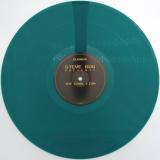
Blue Vinyl 2026 Repress
Steve Bug returns to RAWAX! We are very happy to present you his new release on DUBWAX called "The Dark Lion" It's a superb dubby piece of art with this typical Steve Bug trippiness.
Highly recommended!
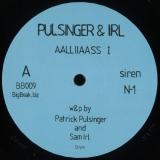
Pulsinger & Irl is the collaboration between Austrian producer and techno pioneer Patrick Pulsinger and Bavarian producer and sound engineer Sam Irl.
After ten years of dub-driven live explorations, Pulsinger & Irl are now focusing on a raw, uptempo, and sample-driven take on techno.
Their new album and live set is stripped to the essentials — two classic samplers, the SP-1200 and MPC2000XL, and a 16-track mixer. By pushing these machines beyond their intended boundaries, they craft a gritty and textural sound.
This is first of two 4-track EPs that will make up the entire album („AALLIIAASS“).
The duo met in 2012 at Pulsinger's Feedback Studio in Vienna, where Sam began as his assistant engineer before becoming a studio partner.
Coming from different musical backgrounds, they found common ground in experimental techno, dub, sampling culture, and analogue gear.
Since their debut album Mud (2016), they've released the EPs Function Creep/Woodpecker (2017), Exu (2018) and Retrieval (2019), along with several remixes — most recently a rework of iO's 1994 classic Claire (2024). Their music has received support from Move D, Gilles Peterson, Mr. Scruff, Lefto, among others.
They've performed at Berghain/Panorama Bar (2016–2018), Sonar Barcelona, ://about blank, Golden Pudel, Blitz, Sziget, Elevate Graz, Lighthouse Croatia, Rote Sonne, Ars Electronica Linz, Zukunft, and more.
Over the past three decades, Patrick Pulsinger has released music on his own label Cheap Records as well as R&S, M Plant, Disko B, Compost, and has produced for DJ Hell, Hercules & Love Affair, Elektro Guzzi, Fennesz and others.
Sam Irl has released music since 2007 on labels such as Freerange, Jazz & Milk, Brownswood, Pulver and Frank Music.
zake and bvdub are towering figures in the world of ambient - and prolific ones at that. The pair now return to zake's hugely influential Past Inside the Present label with the four-track long player Erasure. Each piece goes typically long and builds slowly but surely into an all-consuming soundscape despite the fact each one is crafted simply from textured synth drift. There's distortion brewing under 'Effacing The Ephemeral' that nods to the likes of Stephen O'Malley while 'Eclipsing Your Earth' is a much more luminous and celestial mood that empties your mind of everything. 'Erasing Empires' then builds to an intense crescendo before falling away to sultry strings. A hugely dramatic work.
Celebrating 30 years of ‘Filthy Lucre’ Live, the incendiary 1996 recording that captured the Sex Pistols’ explosive reunion tour of the same name, this landmark live album returns for the first time as a 2LP, set on red vinyl. The album documents Johnny Rotten, Steve Jones, Paul Cook and Glen Matlock reuniting nearly two decades after their original implosion, revisiting the songs that transformed punk and the world we live in today. Recorded at the band’s Finsbury Park performance, the release delivers a raw and uncompromising snapshot of the Sex Pistols at full volume, reaffirming their enduring influence and confrontational spirit.
Drawing heavily from ‘Never Mind The Bollocks, Here’s The Sex Pistols’, the setlist features defining tracks including “Bodies”, “No Feelings”, “New York”, “God Save The Queen” and “Pretty Vacant”. Performed with the same abrasive energy that established the band as one of the most influential acts in British music history. This special edition also includes the Japanese bonus tracks for the first time, making it the definitive version of this iconic live recording for fans and collectors alike.
Double LP, pressed on gold vinyl. As part of Lineage II's 22nd anniversary celebration, NC America and Black Screen Records are proud to announce the first-ever Lineage II collector's edition vinyl album, which elegantly combines a track selection reflecting the game's iconic history and memorable musical identity. This vinyl album is now available for pre-order and will hit the stores in November. Arranged by composers Bill Brown (Tom Clancy's Rainbow Six), Jamie Christopherson (Metal Gear Rising: Revengeance), Inon Zur (Fallout 4), and NCSOUND, the track list is a collection of 40 of the most recognized pieces from the original soundtrack, carefully selected to create a cohesive listening experience rather than a complete collection. Published by NC, the album flows between calm, reflective village themes, atmospheric exploration pieces, and more intense, dramatic compositions tied to combat, progression and large-scale conflict. The track list draws from the original soundtrack's most recognized pieces and centers on two major regions: Giran and Aden. Early on their journey, players venture into the world's southern territory of Giran. As they explore the region's villages, tracks such as "Crossroad at Dawn," "Shepard's Flute" and "Caravans Crossing" help create a calm, grounded atmosphere that reflects the peaceful nature of travel through the area. In contrast, the world's northern territory of Aden reflects the game's grander, more conflict driven spirit. As players continue their journey, the Elven Village track "Unicorn's Rest" marks a turning point, gradually giving way to darker settlements and imposing castles through standout tracks such as "Knighting Ceremony" from the iconic Aden Castle and "Expedition March" from the Town of Oren, where tension, warfare and large scale conflict take center stage. Across both regions, the tracks are more than background music; they shape how players experience each location, from villages and hunting zones to moments of intense combat. This collection brings together the sounds that have defined Lineage II for the past 22 years, offering a reflective musical journey for both longtime players and new listeners alike.
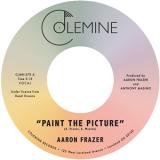
From the first beat drop, "Paint The Picture" feels like a lost sweet soul tune you might find on an East Side Stories compilation. Frazer's trademark falsetto, catchy songwriting, and effortless soul is on full display here. You'll be humming this tune after half a listen. On the B side, "Back Into The World," Mr. Frazer demonstrates that he's more than just a one-trick lowrider pony. Planting his foot firmly into the modern soul sound here, sounding like something Numero Group would have unearthed years back, "Back Into The World" belongs in your next DJ set when you need something slightly uptempo to get folks on the floor.
Chapter 9 in the ever growing Yellow Jackets catalogue is this double A sider that brings two takes on the Acid sound coming straight from Chicago and Detroit.
Legendary K Alexi’s raw and relentless ‘Sex O’Clock Rains’ gets the 2026 remaster treatment while on the flipside Pirahnahead’s epic ‘Mirror Muse’ sounds almost like a deep acid symphony! As usual vinyl only and properly cut for dj use!
Yung Lean - That's It (feat. Future & Metro Boomin)
Travis Scott - RHYNO (prod. by Guy-Manuel de Homem-Christo)
CA7RIEL & Paco Amoroso, PinkPantheress,
Fred again.., & Etienne de Crécy - Sexy Magic
Morgan Wallen - Last Thing You Need
Rauw Alejandro - Macacoa 2000
Keith Richards - Bright Lights, Big City
Andreas Tilliander released »Ljud« in 2001 as the first full-length album under his real name. The year before, the Swedish producer’s »Cliphop« album under his Mokira moniker had established him in the world of adventurous electronic music and the clicks’n’cuts scene. »Ljud« was just as minimalistic, warm, and playful as its predecessor while also notably inspired by house music. It is a timeless record based on happy accidents, playful loops, and lively spontaneity. For its 25th anniversary, Keplar presents a vinyl reissue with adjusted artwork by graphic designer Marc Hohmann and updated mastering by the artist himself.
Tilliander laid the foundation for his two first albums when he got rid of most of his music gear in 1998 after meeting Joel Brindefalk, who was already releasing music on the legendary Börft label. Brindefalk was using a computer as his main instrument and introduced Tilliander to the audio editing suite Sonic Foundry Sound Forge. »What he did with that software is what made me sell most of the hardware except my Nord Modular and a Korg MS-20.« The former synthesizer played an integral role while Tilliander made the tracks for »Ljud,« working primarily in the modular studio environment Jeskola Buzz.
»Ljud« came together in an intuitive process. »It’s still how I work 25 years later: I first make loops, create bits and pieces, and build up my own sound library as a foundation,« Tilliander explains. The Nord Modular and Buzz, which allowed him to swap samples and produce new sounds out of pre-existing ones, provided him with material for loops that formed the basis of the ten tracks. »I would start with a few elements, add more into the mix, then take them out again—arranging the pieces in real time while recording.« The casualness and vivacity of this improvisational approach becomes tangible throughout »Ljud.«
»Ljud« was released on Achim Szepanski’s Mille Plateaux, which had published the seminal »Clicks+Cuts« compilation in 2000. »I was part of that scene and I liked the digital aesthetic of the label,« says Tilliander »Coming from a very analogue setup, working with computer music and this kind of minimalism was very inspiring.« When preparing »Ljud« for the Keplar reissue, he ran the music through an analogue outboard and noticed he was still happy with the way it sounded. »It brought back fond memories. I hope the same is true for people who heard it back then, and that everyone who discovers it now will enjoy it, too!«
** Vinyl-exklusive Tracks
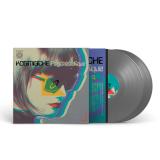
Kosmische Psychédélique (Motorik, Astral and Avant-Garde Musik from Deutschland and Beyond 1970–2025)
Der neue Two-Piers-Sampler "Kosmische Psychédélique" entführt den Hörer auf eine Reise durch die hypnotische Welt der Kosmischen Musik – von den wegweisenden Motorik-Beats, elektronischen Experimenten, psychedelischen Klangwelten und avantgardistische Ambient-Sounds des Deutschlands der frühen 1970er Jahre (La Düsseldorf, NEU!, Harmonia, Cluster, Brainticket, Klaus Schulze, Popol Vuh, Faust, Guru Guru, Tangerine Dream) bis zu zeitgenössischen Künstlern, die deren astrale, ambiente und avantgardistische Möglichkeiten von Wiederholung, Textur und Raum auch heute noch ausloten.
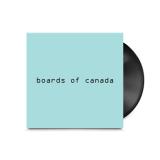
So schlagen Acts wie Boards Of Canada, Turzi, Tortoise, Beak>, Pale Blue Eyes oder The Early Years Brücken zu Post-Rock, Shoegaze und Electronica, und veranschaulichen damit, wie das vor über fünf Jahrzehnten in Deutschland etablierte musikalische Vokabular bei einer neuen Generation psychedelischer und experimenteller Künstler Anklang fand und findet – und bis heute noch nachwirkt.
Wie alle Ausgaben der "Psychédélique"-Serie ist auch diese Ausgabe keine Crave-Digger-Sammlung obskurer, schwer zu findender Raritäten, sondern eine Hommage an die Kosmische Musik, die die Gelegenheit bietet, in ihre eigenwillig-wunderbaren Klänge einzutauchen und ihre Genialität zu genießen.
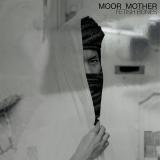
First released September 16, 2016, Fetish Bones was the debut album of Philadelphia based musician, artist, and activist Camae Ayewa, performing as Moor Mother. Recorded in her home studio using a collection of machines, field recordings, and analog noisemakers, the album's 13 tracks fused the visceral anger of punk with the expansive improvisatory spirit of Sun Ra, arriving not as a way to forget but as a demand to remember.
The record was named an Album of the Year by The Wire and Jazz Right Now, and landed on Pitchfork's Best Experimental LPs of 2016, Rolling Stone's Best Avant Albums of 2016, and Thump's 25 Best Experimental Albums of 2016. "Deadbeat Protest" made both Pitchfork's and Noisey's Best Songs of 2016 lists, and Bandcamp named Ayewa its 2016 Artist of the Year while including Fetish Bones among its 100 Best Records of 2016.
Ten years later, Don Giovanni Records celebrates that debut with a 10th anniversary edition, pressed with a foil album cover and featuring the previously unreleased bonus track "Marian Anderson," a collaboration with Wolf Weston and Wooden Elephant. In the years since Fetish Bones, Ayewa has become one of experimental music's most celebrated and prolific voices.
DJ Koze doesn't aim for technical perfection for its own sake, but rather to serve the purpose of giving birth to great music. On his debut 'Rue Burnout EP' from his own Pampa label, he plays with finesse and sophistication, and implicitly understands the importance of subtlety, leading from dreamy and restrained parts to a noisy frenzy at the end. 'Blume der Nacht' starts with a looped piano solo from Arabian dodecaphony, interwoven with bangs of violine bows, piercing high-pitched strings, almost shrieking glissandi, deep angel chants and obsessive sharp rhythms. The 37 year old constantly horny wunderkind producer has made a habit of creatively foiling expectations, and works also under the pseudonyms Adolf Noise, Swahimi and recently Madima Lokkah to redefine the boundaries of electronic music. This daring concept works perfectly in the title track 'Rue Burnout' - it is very rare that you find house music this excitingly light-fooded and precisely transparent. The musician cuts the pigtail off the term 'Kackmusik' for good, and demonstrates how sounds are capable of creating the most delicate musical interplay.
Amen.
DJ Koze, Germany, April 2010.
Limited Edition 2026 Black Vinyl Repress.
Up in Flames is Dan Snaith's second album, originally released under the Manitoba moniker on March 31, 2003 .
Made with the same modest home setup as its predecessor, it nonetheless sounds like a different artist entirely - a kaleidoscopic rush of sun-bright melodies, tumbling percussion, and psychedelic pop that traded the hushed intimacy of Start Breaking My Heart for something warmer, bigger, and more joyfully overstuffed, encompassing 1960s psychedelia, Madchaster swagger and shoegaze swoon.
Snaith was later forced to change his artist name after a well-documented lawsuit, and Up in Flames stands as the final album released under the Manitoba name - a high point to go out on. The record was met with widespread critical acclaim, and has since been recognized by Pitchfork as one of the standout albums of the 2000s. It remains, by most accounts, one of Snaith's finest and most beloved records.
One of the most influential dub albums ever made. The remixing techniques used – radically new for 1973 – helped transform the role of the producer and the engineer to that of creative artists in their own right.
First released in Jamaica in December 1972, Upsetters 14 Dub Black Board Jungle is widely regarded as one of the first full-length dub albums and a true landmark in reggae history. Produced by the visionary Jamaican innovator Lee “Scratch” Perry, it marks the decisive moment when dub evolved from incidental B-sides into a fully realized long-playing art form. At a time when Jamaican sound system culture was flourishing, producers were beginning to strip down popular reggae tracks into instrumental “versions,” emphasizing the bass and drums for sound system deejays to toast over while adding echo and reverb effects to make things more interesting and dynamic. While King Tubby, who was in charge of mixing the tracks, was pioneering the technical foundations of dub, Perry expanded the approach by adding the hypnotic and psychedelic sound effects that made this record so rich in ideas, rendering the album more conceptually bold.
The album reworked previously released rhythm tracks by the Upsetters, which were recorded between 1970 and 1972, shortly before Perry opened his own studio – the legendary Black Ark Studio in Kingston. Their tight, groove-driven playing provided a solid backbone for these radical studio manipulations. Using the mixing desk as an instrument, tracks were deconstructed in real time – dropping vocals in and out, isolating drumbeats, pushing bass lines to the front of the mix, and sending fragments of sound spiraling into space through the heavy use of a spring reverb and tape delay effect units. Silence became as important as sound, and the interplay of rhythm and echo created a hypnotic, immersive listening experience.
Upsetters 14 Dub Black Board Jungle established dub as a genre defined by creative studio intervention. It demonstrated that the remix itself could be the main attraction, influencing generations of reggae producers and resonating far beyond into the techniques and aesthetics of post-punk, electronic music, hip-hop, and ambient sound design. By transforming the studio into a creative laboratory and elevating the “version” to an art form, this foundational album reshaped not only Jamaican music, but the whole of modern music production culture.
This is a bit of a rare release on the ADR label - it even had its own special catalogue number - XYZ instead of the usual ADR (I need to ask the guys why that was actually!) This EP only came out as a 4 track white label in 1993 and was nicknamed the Untitled EP back then, finally having a proper title in 2026. Two of the tracks were written by Les aka The Pharmacist and the other two were collabs with Dave Charlesworth - so you know the quality will be high... but you I expect most of you know this already from owning or listening to the original pressing. A cracking EP of good vibed hardcore.
Grammy- and Academy Award-winning rapper and actor Common is widely regarded as one of the most influential Chicago rappers of all time. He is best known for his sophisticated lyrics and jazz-rap, which introduced the world to hip-hop classics such as "I Used to Love H.E.R.", "The Light" and "GO!".
He started his career with Can I Borrow a Dollar? This album immediately drew attention thanks to its top-notch production and clever, playful lyrics. Common worked with contemporary household producers like No I.D., The Twilite Tone and The Beatnuts to create this album, which put Chicago hip hop on the map.
Can I Borrow a Dollar? is available on black vinyl.
Celebrating 30 years since ‘Buena Vista Social Club’ was released, this classic will be made available on limited edition pearl vinyl and features the remastered audio and bonus tracks released as part of the album’s 25th Anniversary in 2021.
Masterminded by the trio of Cuban bandleader Juan de Marcos González, American producer and guitarist Ry Cooder, and British producer and label owner Nick Gold, 'Buena Vista Social Club’ is both the name given to this extraordinary group of musicians and the album they recorded in just seven days in 1996 in Havana’s 1950s vintage EGREM studios. It was clear from the atmosphere of the recording sessions that something very special was taking place. However, no one could have predicted that Buena Vista Social Club would become a worldwide phenomenon – awarded a Grammy in 1997 and, at over 8 million copies, outselling any other record in the same genre.
The acclaim of the original album elevated the artists (including Ibrahim Ferrer, Rubén González, Eliades Ochoa, Compay Segundo and Omara Portuondo) to superstar status, inspired an award-winning film by Wim Wenders, a Tony Award-Winning Broadway Musical and contributed to popularising Cuba’s rich musical heritage. Produced by Ry Cooder and Executive Produced by Nick Gold for World Circuit, the timeless quality of the music and the sheer verve of the veteran performers have ensured that this album will go down as one of the landmark recordings of the 20th century.
CYBERPHUNK CLAUSURA (2LP) is the closing chapter of the CYBERPHUNK saga, following CYBERPHUNK and CYBERPHUNK EXPANSION.
What began as an exploration through Electro, Breakbeat and Acid now reaches its final form: a convergence of SubBass pressure, fractured rhythms and dystopian energy condensed into a complete double LP experience.
Across 12 tracks, Calagad 13 expands the sonic language of the series — combining high-impact breaks, hypnotic sequences, acid mutations and darker atmospheric structures into a body of work designed to be experienced as a continuous journey.
Pressed as a limited edition of 150 copies, CLAUSURA stands as both a collector’s piece and a defining release within the COSMIC TRIBE catalogue.
While this release concludes the main CYBERPHUNK narrative, the universe will continue evolving through forthcoming reinterpretations and remix transmissions.
Dutch producer Kid Sublime presents his first EP on Makin’ Moves, here he teams up with Philly singer/song writer Lady Alma exploring elements of soul, broken beat and house.
The EP kicks off with The Grind a super smooth soulful house track, that catches your attention straight away with its groovy baseline that remains throughout adding to that Alma’s meaningful lyrics demonstrating the power of the music as she uses it as to get herself through the day.
The positivity continues on ‘Can You Feel It’ another quality piece of soulful house as the action moves to the dance floor as the beat and grove winds you in as once again Alma’s lyrics drop perfectly on the track.
The B side shows Kid switch it up on the broken beat production wiith ‘Ready To Meet You’ a touching song about two individuals excited to meet each other for the first time, a sure shot hit for the ‘bruk’ beat and dance heads alike!
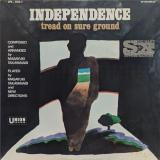
"Independence," an improvisational work recorded in 1969 by the jazz group New Directions, featuring Masayuki Takayanagi on guitar, Motoharu Yoshizawa on bass, and Yoshisaburo Toyozumi on drums, is being set for release in the 11th installment of "Spin This Now!
The recording took place at Teichiku Kaikan Studio on September 18, 1969, over the course of approximately six hours beginning at 6:30 p.m.
Duality Trax reaches its tenth release with a defining moment for the label, as label boss Holly Lester steps forward with her debut EP. A personal milestone as much as a catalogue marker, the record channels sounds that have shaped her sound to date - early tech house, the low-end swing of UK garage and breakbeat, the rolling pulse of mid- 2000s European dancefloors, and the emotional lift of ’90s progressive house - all refracted through a distinctly personal lens. Open Your Mind sets the tone with a sense of lift and release: a wide, expansive bassline carries skippy, garage-tinged percussion, while bright piano stabs cut through guided by playful, restless FX. Big Fill pivots into tougher territory, a driving cut built on a rolling sub that pulls you into the groove - equal parts pressure and introspection, with moments of dreamlike suspension between the weight.
On the flip, Tanit drifts into more atmospheric space —an ode to Ibiza that still carries a distinctly UK undercurrent. A squelching, elastic bassline and cheeky, garage-leaning wubs provide a foundational groove but everything around it drifts: gated synths shimmer, drums sparkle, half-heard vocals dissolve into the mix and the track unfolds with a blissed-out, cruising energy. It feels just as natural in a dark room as it does out on open water, coasting past Formentera. For the remix, Holly turns to one of her favourite producers of the moment, DJ Life, who draws Open Your Mind into deeper waters. The Berlin via Australia producer stretches the groove into something more hypnotic and submerged, a patient 5am burner that lingers in the air,equally at home in basements, afterhours, and those inbetween moments as night slips quietly into day
Berlin-based Dutch-Italian composer and musician Aimée Portioli aka Grand River presents the new album Temporary, returning to the renowned Editions Mego label with her most expansive and focused LP yet.
Rooted in existential ideas of impermanence and flux, Temporary is a deeply emotive work centred on the rich interplay between resonant guitar work and innovative electronics. Written in the wake of profound personal grief and loss, the album sees Portioli infuse her music with a raw, expressive intensity anchored in this experience. Across eight strikingly melodic and affecting soundscapes, Portioli powerfully embodies a dramatic encounter with mortality.
Temporary reprises Portioli’s exceptional streak of material across acclaimed labels including Donato Dozzy and Neel’s Spazio Disponibile, Caterina Barbieri's light-years, Ghostly International, Tresor and Umor Rex. The LP represents the latest tour de force in her distinctive electronic practice. Alongside a raft of lauded releases, Portioli has devised visionary multichannel installations which dissolve the boundary between the art gallery and the performance space.
Her new album signifies a culmination of her work, imbued with the depth of Portioli’s artistry. Shaped by a paradigm shift rising from loss, the record reflects a contemplation of the human condition and the ephemeral nature of existence. Ruminating on the thoughts and experiences that have fed into the record, Portioli reveals a consequential recognition underpinning the record:
"Sometimes, when travelling in places far from home that I know I will most likely never return to, or while accompanying someone I loved towards the end of their life, I become intensely aware of the singularity of the moment, and of how precious and sad this feels at the same time. It carries a particular weight because it will never happen again in quite the same way. Through experiences like these, I have gradually come to understand the temporary nature of all things. They taught me that to live is to experience the present while already feeling the trace of its disappearance, something both painful and blissful." - Aimée Portioli, Grand River
The album is invested with a potent mood and momentum from the outset. Establishing an evocative tone with the subtle, pulsating synthesis, rustling undertow, and oceanic low end of 18 circles to heaven, Portioli gradually ascends through the incandescent modular majesty of Come to stay, and the turbulent, brooding guitar figures of The crossing of the body, the crossing of the mind. The album progresses through the rapturous electronic phasing of The little we last into the coruscating synth grandeur of Let me know when you’re pure, before a thrilling endgame.
Closing with the wavering harp runs, heavy percussive thud, and cataclysmic guitar discordance of Maybe I am dead and this is paradise, and the evanescent atmospherics and beautiful acoustic refrains of Work of ending, Portioli takes the listener through vast landscapes of sound and mercurial emotional states. Intimate and immersive in equal measure, the record traces a compelling sensory journey.
Each part of the album is part of a larger poetic sentence, with track titles forming fragments that together articulate a meditation on transience. From 18 circles to heaven and Come to stay through From the other side and Work of ending, they read like quiet statements about being human, about loving, losing, remembering and eventually fading. The record moves through these states as a continuous passage, depicting a poignant soundworld guided by temporality.
The awareness that our time is limited sharpens the value of what remains. Each encounter, each gesture, each fleeting moment becomes more vivid. Temporary lingers in the space where presence and disappearance coexist, where everything is already passing away and therefore becomes infinitely precious. Things matter because they do not last. Mortality does not diminish life; it intensifies it. In confronting these ideas, Temporary feels irrepressibly alive.
Composed, produced and mixed by Aimée Portioli
Production and mixing assistance by Luca Sammartin
Acoustic piano on Maybe I am dead and this is paradise by Andert Tysma
Mastered by Rashad Becker
Cut by Marta De Pascalis at Schnittstelle, Berlin
Artwork by Nicola Tirabasso
Layout by Riccardo Piovesan
The complete album + 2 bonus tracks - limited edition pressing on 180g purple coloured vinyl, with album cover image by the late American jazz photographer Bob Willoughby (1927 - 2009)
Die vollständigen Aufnahmen aus der ,Crank!"-Ära des wegweisenden texanischen Nicht-Emo-Quartetts Mineral sind nun erhältlich. Auf drei LPs versammelt finden sich Nachdrucke von ,The Power of Failing" aus dem Jahr 1996, dem Abschiedswerk und zweiten Album ,EndSerenading" sowie ,_And What Remains" - einer neuen Sammlung von Singles und Demos. Nina Corcorans ausführliche Begleittexte entwirren die komplizierte Geschichte des zurückhaltenden ,mittleren Bruders" der zweiten Welle, illustriert durch Dutzende von historischen Fotografien, Flyern und Songtexten in grellen Farben. Überzeugen Sie sich selbst.
Die vollständigen Aufnahmen aus der ,Crank!"-Ära des wegweisenden texanischen Nicht-Emo-Quartetts Mineral sind nun erhältlich. Auf drei LPs versammelt finden sich Nachdrucke von ,The Power of Failing" aus dem Jahr 1996, dem Abschiedswerk und zweiten Album ,EndSerenading" sowie ,_And What Remains" - einer neuen Sammlung von Singles und Demos. Nina Corcorans ausführliche Begleittexte entwirren die komplizierte Geschichte des zurückhaltenden ,mittleren Bruders" der zweiten Welle, illustriert durch Dutzende von historischen Fotografien, Flyern und Songtexten in grellen Farben. Überzeugen Sie sich selbst.
Smallville presents a very special album project – 'Tumbling Cycles' by Billus is here to stay! Ethereal deep-dubby house music from Australia, that feels like finding the hidden-treasure you were not even looking for.
„When I am most enjoying making music, I have this sense that I'm just watching cycles of sound happen and match up in front me on their own and I'm not really just doing anything and it's really nice. Most of these tracks stem from a small collection of
iteratively distorted percussive jazz and breaks that I kept coming back to and watching them cycle around each other.“
This is Billus' approach while he is out in the studio zone. As a result, we all get the chance to scuba-dive into his soundscapes like a warm blanket, interwoven rhythms and cosmic textures, that seem to have the ability to heal. The fresh feels was real,
every time the album went by.
Billus is praised for his impeccable mixtapes for a lot of very special occasions of doing not a lot- make sure to check these out. And Billus produces sprawling music- he released on Naarm labels Animalia, Vessel and Pollinate and he makes music to shyaway in the woods, picking up lil mushrooms if you feel like- or leave these untouched for the same effects.
So while listening to the Tumbling Cycles LP, make yourself comfy and try to work out your own personal scenario, in which Billus' music and his leftfield approach would flourish best. These tracks come with approval by the sweetest dancefloors
around the world and we can't wait to release these to the world. The 2x12“ comes with a stunning full-cover artwork from Stefan Marx.
Chris Liebing's collaboration with Daniel Miller, Pascal 'Stubbleman' Gabriel and Terence Fixmer, aka The Alte Stuben Modular Ensemble, 'Entangled Circuits', has been remixed by Hayden Payne, better known as Phase Fatale. Originally released on Chris Liebing's 'Evolver' LP earlier this year, the remix will be released via CLR 20th November 2026. The original track is a collaboration between Liebing and The Alte Stuben Modular Ensemble made up of Mute founder Daniel Miller, Pascal 'Stubbleman' Gabriel and Terence Fixmer. New York-born, Berlin-based Phase Fatale has held residencies at Berghain, Brooklyn's Merge and Tbilisi's KHIDI, and has built a catalogue across Ostgut Ton, Dekmantel, Jealous God and his own BITE imprint, carrying a lineage that runs from New York's cold-wave underground through to the sharper industrial edges of Berlin's club circuit.
Phase Fatale rebuilds 'Entangled Circuits' around a hypnotic bassline, pitching the original's synth stabs up a notch.
Weighted kick drums, relentless repetition, and industrial texture anchor the rework in techno mastery, delivering a peak-time weapon without loosening its grip on the source material.
The original version of 'Entangled Circuits' appears on 'Evolver', Liebing's first solo techno LP, released 27th March 2026 on CLR. 'Entangled Circuits' was composed on a skiing trip to Oberlech, Austria with The Alte Stuben Modular Ensemble, Mute founder Daniel Miller, Pascal 'Stubbleman' Gabriel and Terence Fixmer, blending dark, modular synth textures with driving rhythmic sequencing. Marking a distillation of over three decades at Techno's core, the album pairs introspective depth with immediate, floor-driven impact, bringing together contributions from the likes of Luke Slater, Charlotte de Witte, Speedy J and The Advent, while ultimately remaining rooted in Liebing's singular vision.
WOW! An early ’80s New Wave, Electro, Proto-Electronica, Industrial and Kraut-Pop album that has never been released before is now coming out on Elaste Records and it’s a perfect fit! History is being made.
In the early eighties, Michael Heinkel was one of those quiet electronic musicians hardly anyone knew — at least outside of Munich. While machine rhythms were being perfected in Düsseldorf, dilettantism was elevated into an art form in Hamburg and West Berlin was soundtracking its own feverish coldness, Munich seemed to be a place where, apparently, nothing was happening. Or almost nothing. Because beneath the radar, far removed from the grand narratives of those years, Michael Heinkel was already creating his own electronic cosmos — stripped-down, idiosyncratic and often ahead of its time. Electronic minimalist music, born somewhere between a home studio, nightlife and the longing for a future that could only just be imagined back then. But the recordings disappeared into drawers, onto cassettes and tape reels. For decades, they remained a secret shared only among friends, insiders and a handful of close companions. It was only 45 years later that Andreas Dorau and Ralf Hertwig (Palais Schaumburg) — two defining figures of that early avant-garde — insisted that the recordings finally be made accessible. Not as an exercise in nostalgia, but as the overdue release of a missing piece in the history of German electronic music. This music is not a nostalgic retrospective. It is a delayed signal from a future that had already begun back then. Format: Heavyweight black vinyl incl. printed inner sleeve + download card
Quotes: -"Michael Heinkel's long-lost LP is a treasure trove. I'm constantly amazed at the musical gems from the early '80s that are still waiting to be discovered." - Hans Nieswandt (Whirlpool Productions) - „Some München musical history that somehow got missed at the time finally gets released after 40 years. Great album.“ - Hell (Gigolo) - “Awesome album! Today, we can only imagine just how groundbreaking electronic music at this level was back then. When gems like these are heard for the first time in perfect sound quality, it’s like a trip back in time to the early days of electronic music. Back to the future!!!” - Patrick Pulsinger (Cheap / iO / Sluts’n‘ Strings & 909 / The Private Lightning Six) - “Terrific material!” - Roman Flügel (Acid Jesus / Alter Ego / Sensorama / Warp 69) - “ELASTE has unearthed an 80s electronic gem! A German minimal wave gem-freshly unearthed! Minimal, rare, brilliant - an 80s Krautpop highlight.” - Sankt Otten - „Pure and delicious 80s Electronics from Munich. We love it.“ - Gorilla Aktiv
What's Left is the new album by Tom Henry, releasing November 20th, 2026 on Royal Oakie Records. Where his debut album Songs to Sing and Dance To leaned into big dreams, What's Left is a record about what remains once the dust settles, delivered with the wit and charm of a young rocker in his prime. The familiar influences are still there — Paul McCartney and Big Star loom large (though there's a little more Third/Sister Lovers this time around), but now the songs are lush and polished, with new sounds creeping in around Henry’s trademark power pop hooks. On a handful of tracks you can even hear strains of Syd Barrett influenced acid-folk alongside psychedelic rock that recalls The Brian Jonestown Massacre or The Beatles at their most lysergic.
Produced in collaboration with David Glasebrook (Patti Smith, Peter Case, Sugar Candy Mountain), and engineered by Glasebrook and Stephen Shirk, the album was tracked across two cities at Shirk Studios in Chicago, IL and The Garden Shed in Oakland, CA, where Glasebrook also handled mixing and mastering. The record's cross-continental origins reflect the movements of Tom’s own life over the past half decade, which found him departing his native Chicago for Los Angeles before returning home four years later, and lend the album its distinctive sound of Midwestern grit mixed with California sunshine across all twelve tracks.
Opener "Someone I Need" sets the tone: an old-fashioned, up-beat rocker built for a roadside diner jukebox somewhere out along the backroads of your mind — it's crunchy tape tones and horn arrangement lending warmth to the song as the narrator asks for a dance and beckons the listener along for the ride. By "It's Not Meant to Be," the record turns inward, wrestling with the exhaustion of trying to find love in the modern age — especially for someone who wears their heart on their sleeve and often comes to find their suitor's wardrobe doesn't have room. "Silverlake Song," reminiscent of early Donovan, kicks off with otherworldly sitar — a wry postcard from the west, tracing how the shimmering promise of L.A.'s Silver Lake enchants, bargains with, and ultimately tries to ruin the starry-eyed dreamer — and very nearly succeeds.
In addition to Tom–who sang and played guitar, bass, and keys–the album features musical contributions from co-producer David Glasebrook, Brian Daley, Joe Daley, Finn Swingley, Lewis Patzner, and labelmates Graham Patzner, Charles Lloyd, and Simon Beins. Liner notes come courtesy of Ian F. Svenonius, who — in the guise of one Johnny Sincere of Integrated Star Management Ltd. — recounts his company's failed attempt to sell Tom Henry a gimmick: a space suit, a coal miner's neckerchief, a lounge pianist's dead-eyed shades. Tom turned them all down. As Svenonius tells it, when reminded that every story's been told and every gimmick's been used, that all that's left is to admire the photographs of what's gone before, Tom simply shrugged: rock 'n' roll is an eternal spring, and if this is what's left, that's just fine with him — it's what he likes to do.
Atlantic Records and Rockstar Games announce Grand Theft Auto VI: The Album, the upcoming official soundtrack album from the biggest, most immersive evolution of the groundbreaking Grand Theft Auto series yet; Grand Theft Auto VI.
Launching alongside the hotly anticipated game, Grand Theft Auto VI: The Album features 34 original tracks that capture the electric energy of GTA 6’s world of Vice City and Leonida, with a genre-defying roster of the most exciting and preeminent artists in the world.
With 34 original tracks that capture the electric energy of Grand Theft Auto VI’s world of Vice City and Leonida, Grand Theft Auto VI: The Album features a genre-defying roster of the most exciting artists in the world.
Follow-up to 2025's “i was put on this earth” (“a triumph of gentle reverie and quiet upheaval” - Pitchfork). DJ Python’s music has always occupied the interesting space in between - reggaeton's low pulse, ambient's patience, deep house's forward motion, the abstracted sounds of trip-hop, shoegaze, and pop - and this new EP finds him stretching that even further. A companion to “i was put on this earth”, the new EP shares that project's creative DNA while pulling in its own direction.
DJ Python (aka Brian Piñeyro) steps more fully into the role of singer and songwriter, sharing the mic across a set of collaborators including Ari, Tony Bontana, and Eden, while still carving out room for hypnotic solo songs.
Across five tracks, the project moves fluidly while retaining the captivating melodies, atmospheric textures, and rhythmic innovation that defined Python's earlier recordings - Mas Amable, Angel, and Club Sentimientos Vol 2 - expanding those sounds into something looser, warmer, and harder to categorise.
Balaise was the original title of Vers le Nord’s debut album. In French slang, balaise means something in between badass and flamboyant. The word keeps popping up throughout the record, like a teenager’s graffiti scrawled on a bus shelter after a few drinks. Balaise robots. Balaise ghosts lurking in the shadows. Balaise is the barfly who fantasies about becoming a street vigilante. In many ways, Matthieu Pellerin's new solo project is entirely contained within that word: a gigantic piece one man against the world cobbled together, a monument shaped by hand using layers of synthesizers sounding like cathedral organs cast in concrete.
Stitching this type of freak together took time. Five years, or what sounds like forever in an age obsessed with career trajectories and content strategies. But for Matthieu Pellerin, it was never about career plans or taking the easy road. Or he would have dug up the rotting corpse of Oi Boys, his now-defunct band, whose brief existence and explosive popularity once united sullen skinheads, gothic street punks, and old school punks alike. Or he would have fully embraced the Metz scene, now that the Great International Triple Alliance of the East (Noir Boy George, The Dreams, The Feeling Of Love...) and rising solo acts like Tune Zitoune, Josy Bazar, Fantôme Josepha, and Tony Gerrano have somehow transformed this sprawling open-air heroin camp into an unlikely capital of cool. But Vers le Nord doesn't point East, and it is as a lone rider that Matthieu Pellerin can fully reveal his songwriting scope.
With Le Seul Élément, his first solo project, the Lorraine native had already shown a rare gift for crafting worlds. Picture vast sonic masses stretching like industrial zones, noise-filled fog pierced by pale neon lights and landscapes caught somewhere between the gnarliest dive bar and a doomsday bunker. And slipping through the soul-crushing slowness and fractured blackened atmospheres, one could perceive a throwback to his years plotting in black metal-tinged Loth and Bishop.
Vers le Nord populates those landscapes that once were rough sketches. Damaged characters reign supreme, with a plethora of exquisite mutts brought to life, rather than outcasts committed to the cause. Where Nuits Blanches —his new supergroup featuring members of Rixe, Lion's Law, Headbussa and La Femme— pulls no punches with raw confessions, Pellerin switches gear for tales of robot apocalypses, vagrants and fam-seeking school shooters, delivered with William Sheller-esque rhymes and striking images. Yet even within fiction, he manages to create something deeply intimate, almost defining, showing very little effort: he is a natural. All in all, à l’aise (at ease). Songs resonate deeply with the listener, perhaps because of Pellerin’s odd way or always addressing someone without ever really naming them, a floating, obsessive and inescapable “you” calling us out.
Despite all of the darkness, Vers le Nord stirs deep emotions. There is something of Type O Negative or Anna von Hausswolff in its constant collision of the ludicrous and the epic gothic, its bleak romanticism that never tells a sordid tale. While the vocals remain rooted in a distinctly French punk lineage—think No Class, La Souris Déglinguée and OG Bérurier Noir—the reactor core is hidden somewhere else. Oneohtrix Point Never feels like a closer relative with his ultra-emotional music made of cold synths and disembodied anthems, swallowing and regurgitating forty years of icy, contemplative new wave across ten songs. It comes as no surprise that Lila Ehjä and Aimable, two rising specialists in lowering the temperature below seasonal norms, appear on “Enterrez-moi bordel” (“Bury Me, for fuck's sake”), a grandiose, spectral and magnificently arrogant finale. And in the end, Vers le Nord starts where the original idea was hiding all along: somewhere amid the ruins, definitely balaise and yet somehow, completely à l'aise.
Music From Memory presents ‘Sleep Machines’, a new collaborative album from UK ambient pioneers O Yuki Conjugate and German producer and DJ Philipp Otterbach.
Formed in Nottingham in 1982, O Yuki Conjugate have spent more than four decades developing a singular approach to what they now describe as ‘dirty ambient’. Emerging from the post-punk DIY scene and drawing early inspiration from artists including Cabaret Voltaire, The Durutti Column and Jon Hassell, the group gradually carved out a space between post-industrial electronics, ambient music and Fourth World experimentation. Centred today around founding members Roger Horberry and Andrew Hulme, their work has retained an outsider sensibility throughout its many periods of activity and hibernation.
Philipp Otterbach approaches music from an equally open-ended perspective. As a producer, collector and DJ, his work moves freely between drone, dub, techno, house and electronics. His sets and productions share a fascination with unexpected connections, allowing disparate sounds to drift into one another through intuition rather than fixed genre boundaries.
‘Sleep Machines’ began with a chance meeting at The Gun on Well St. in London. Otterbach asked, “Would you be interested in doing a collaboration?”
“A collaboration? Sorry, we don't do collaborations,” came the reply.
“But wouldn’t it be fun?”
“We don't do fun either.”
Despite themselves, O Yuki Conjugate tentatively sent over an initial track. An avalanche of ideas quickly came back, and what began as an unlikely proposal developed into 18 months of recording, file-swapping, mixing and repeated reworking between the UK and Germany.
Produced by Otterbach, the resulting ten tracks bring together recognisable elements of both sides while gradually dissolving the lines between them. O Yuki Conjugate’s hazy atmospheres, dubwise spaces and tactile rhythms meet Otterbach’s instinct for strange detail, low-slung electronics and shifting forms. Rather than functioning as a collection of separate pieces, the album moves without gaps, unfolding as a single continuous work in which one environment slowly slips into the next.
‘Sleep Machines’ is both O Yuki Conjugate’s first collaborative album and an unlikely meeting point between two generations of musicians whose work has consistently existed at the edges of established forms.
Volume 1 - Growth
Resurrection is a long-term musical work that has accompanied Christine Benz for almost twenty years. The first track was created in 2007 (track id - Born after Code), with another piece added nearly every year thereafter.
Throughout this time, she continued to produce other music while steadily developing her artistic language.
Musically, the album moves between minimal techno, ambient and experimental electronic music. Across different phases of her life, Resurrection gradually grew into an archive of her personal and musical evolution.
The complete work unfolds as a trilogy across Volumes 1-3.
At its core lies her fascination with sound as material. Rather than thinking in terms of conventional melodies, she works with textures, vibrations, and spatial relationships. A small number of elements give rise to complex sonic spaces, where minimal changes can have a profound effect. Mistakes, chance occurrences, and unexpected responses from the systems she uses also become part of the music. Even from chaos, remarkable structures
emerge. Whenever unplanned beauty reveals itself, she preserves it as a small “miracle” in which control and chance intertwine.
The complete work unfolds across three chapters: Growth, Structure and Resonance, exploring repetition, frequency, perception, consciousness and technological development in the relationship between humans and
machines. It moves from origin through the formation of an internal order towards connection and interaction.
Volume 1: Growth, draws upon the Fibonacci sequence and the spiral as symbols of natural development, with the music growing through repetition and minimal change into increasingly complex forms. Throughout the
project, technology appears as a tool, a partner and a mirror of our perception, raising the question of whether consciousness, responsibility and empathy can evolve alongside technological progress.
During the project’s long evolution, Donato Dozzy developed an interest in Christine’s distinctive sound design.
In 2021, this led him to propose his own interpretation of Our Determination for Volume 1, subtly reworking the track through his own musical perspective.
The artwork developed by Christine also went through a creative process of its own. The original photographs were taken in a basement around 2019, with a wet curtain draped over her. In 2026, she decided to transform
this visual world into a moving-image artwork. For the production, a film crew reconstructed the entire setting.
The video shoot demanded a great deal from Christine: after several hours beneath the wet curtain, the cold was no longer merely part of the staging. This elaborate creative process gives the artwork its distinctive character
and makes it an essential part of Resurrection.
The first chapter will be released in November 2026 as a double-vinyl edition housed in a distinctive gatefold sleeve with an inside-out finish, matte varnish, and partial raised spot UV varnish. Two further double-vinyl
releases, Structure and Resonance, will complete the trilogy. All three volumes will be released on Pirat Records.Records.
Naughty Boys, originally released in 1983, was Yellow Magic Orchestra’s seventh and final album to top the Japanese Oricon Pop charts.
A remix album, Naughty Boys Instrumental was released in July 1983. It contained nearly the entire Naughty Boys album as instrumental tracks in an entirely different running order, as well as the b-side to "Kimi Ni Mune Kyun", "Chaos Panic"; and the full instrumental version of "You've Got to Help Yourself", of which the vocal track was included on Service.
Naughty Boys Instrumental featured additional synthesizers imitating the vocal lines, as well as new embellishments and mixes. Several tracks featured sonically updated percussion tracks, while "Ongaku" featured an acoustic piano soloing over the piece.
This release combines both the original and instrumental albums. Naughty Boys & Instrumental is available on black vinyl and includes a 4-page booklet.
Die Band ,The Holy Kiss" aus San Francisco erhebt sich aus dem Grab, um ihre letzte Aufnahme erstmals auf Vinyl zu veröffentlichen. Aufgenommen im Jahr 2009 von Skot Brown (The Phantom Limbs, Altar de Fey) und zuvor auf 50 handgefertigten CD-Rs veröffentlicht, ist ,Gunslinger" ein raues Meisterwerk aus der Blütezeit von The Holy Kiss mit vier Songs, die feurigen Blues mit Blut, Schweiß und einer kräftigen Prise The Birthday Party vermischen. Der Titeltrack der 12", ,Gunslinger", ist ein Cover eines Bo-Diddley-Songs, den die Band so arrangiert hat, dass er ihrem Hang zur melodischen Kakophonie entspricht. Frontmann Matty Rue Morgue singt mit dunkler Sonnenbrille aus tiefster Seele, während ,Schlagzeuger Nick Ott wie ein Riese über einem elfenhaften Schlagzeug thront und die Felle so fieberhaft bearbeitet, dass er eine Selbstentzündung riskiert" (Tatiana Simonian, L.A. Weekly). Das im Jahr 2000 offiziell gegründete, von schwarzem Humor geprägte, altmodische und gut gekleidete Quartett ,erzeugt einen dunklen und auf süße Weise dissonanten Krach, der an Mordballaden erinnert und perfekt dazu geeignet ist, die im Limbus schwebenden Geister der Betrüger, Verrückten, Säufer und anderer gesellschaftlicher Ausgestoßener heraufzubeschwören, über die die Band gerne in ihren schattenhaften, Dickens'schen Liedchen" (Bill Picture, San Francisco Chronicle). Die Veröffentlichung von The Gunslinger enthält außerdem eine Bonus-7"-Single mit Solo-Aufnahmen, die Matty Rue Morgue 2009 gemacht hat - nur wenige Jahre vor seinem viel zu frühen Tod im Jahr 2015. Darauf sind zwei Songs von Matty und ein Song von The Holy Kiss (,Go Head N Count `Em"), die für Solo-Akustikgitarre neu arrangiert wurden. In seiner Version von ,Go Head N Count `Em", gespielt mit Liebe und tiefem Respekt vor der Blues-Tradition, lässt sich Matty gleichermaßen von Lightnin' Hopkins und Lux Interior inspirieren.
To celebrate 30 years since its original release, Boards of Canada’s Hi Scores returns in a new edition on Warp Records.
Originally released on Skam Records in 1996, Hi Scores was Boards of Canada’s first widely available release. The six-track release features some of the duo’s most enduring pieces, including “Turquoise Hexagon Sun” and “Everything You Do Is A Balloon”.
For its 30th anniversary, Hi Scores is being reissued by Warp, marking the first time their whole catalogue has been widely available on vinyl at the same time. Hi Scores has not been available on vinyl since 2014 and is newly packaged in a gatefold 12" sleeve, with four 12"×12" prints.
Anlässlich des 30-jährigen Jubiläums erscheint "Hi Scores" von Boards Of Canada als Neuauflage bei Warp Records. Ursprünglich 1996 bei Skam Records veröffentlicht, war "Hi Scores" der erste breit verfügbare Release des Duos. Die 6-Track-EP enthält einige ihrer zeitlosesten Titel wie "Turquoise Hexagon Sun" und "Everything You Do Is A Balloon". Damit ist der gesamte BOC-Vinylkatalog erstmals gleichzeitig und flächendeckend erhältlich.
The reissue follows the release of Inferno in May 2026, Boards of Canada’s first new album in 13 years.
Tracklist:
A1. Hi Scores
A2. Turquoise Hexagon Sun
A3. Nlogax
B1. June 9th
B2. Seeya Later
B3. Everything You Do Is A Balloon
This autumn sees the release of ‘En de stilstaande tijd voor (elektro-)akoestisch ensemble’ (And Stationary Time for (electro-)acoustic ensemble), the new album by composer and musician Sietse van Erve. With this release, Van Erve marks a definitive turning point in his artistic career: bidding farewell to his long-standing pseudonym Orphax to continue under his own name.
From Rewire to the Studio
The foundations for this album were laid during a memorable live performance at the Rewire Festival 2025 in Den Haag (The Hague). There, Van Erve presented the composition for the first time with an ensemble featuring Anne La Berge (flute), Gareth Davis (bass clarinet), and Dario Calderone (double bass). The leading Dutch newspaper De Volkskrant praised the performance as "incomprehensibly still", drifting on a single, drone-like tone through which the instruments softly float.
Van Erve recalls the intensity of that debut: “I don’t think I’ve ever been as nervous for a performance as I was for Rewire. A packed hall in Amare, during such a major festival”. Following a second successful performance at Festival Musica in Strasbourg, the decision was made to capture the work permanently in the studio.
A New Vision of Nostalgia
The composition originates from Van Erve’s fascination with time and nostalgia, inspired by a 1960s postcard of a Spanish village where time seemed to freeze. While based on a solo piece from 2020, the (electro-)acoustic instrumentation provides a completely new interpretation. The transition from solo electronics to an ensemble brought unique challenges. Van Erve explains: “Certain effects can be triggered with a single knob on a synthesizer, but they result in almost unplayable parts for other instruments. In those situations, I presented the challenge to the group and we searched for a solution together.’’
Identity and Evolution
The album also marks a personal transition for the artist. Regarding the departure from his moniker, he states: “I was looking for the right moment, and now it feels right. With this project, I have finally been able to do what I’ve had in my head for a long time... I feel I have achieved something, and that is why I think it is a good time to initiate the name change."
Realisation through Crowdfunding
Recorded in the spring of 2026 at Studio 150—located in a former church in Amsterdam-Noord known for its exceptional acoustics—the album was captured by Joeri Saal. The production of the deluxe vinyl LP and CD was made possible through a successful crowdfunding campaign via Dutch platform Voordekunst, where supporters contributed to the studio and production costs.
As a longtime member of Hot Chip and LCD Soundsystem, Al Doyle has spent decades working alongside two of the most distinct vocalists in modern pop: Alexis Taylor and James Murphy. If he’s had a song or an idea, there’s always been someone else he’d rather have sing it.
But on November 20, 2026, the British multi-instrumentalist will release Hollywood Saviour, an album that drove him to finally embrace his own voice. “It’s me discovering a way to write and sing stuff that I could live with,” he says of his first-ever solo outing.
Recorded in his East London studio, Relax and Enjoy, Hollywood Saviour has the feeling—the rush and release—of a breakthrough, of an artist letting go. Doyle’s found freedom in simplicity here, leaning into the many pleasures of guitar-bass-drums, indulging wholeheartedly in the weird, spontaneous, raucous, and raw. He sounds free.
That sense of fun and rampant possibility can be felt in every groove, Doyle finding added inspiration in the loose and the louche, from Sexual Harassment’s 1983 electro-funk raunch-o-rama “I Need A Freak” to Throbbing Gristle’s locomotive 1980 paean to jerking off, “Something Came Over Me,” which is lovingly covered here.
At times, this album feels like a delirious response to the darkness of our current moment. On opener “Hard Times in America,” Doyle offers us a psychedelic window into his experiences traveling back and forth to the United States in recent years, feeling fascism’s hold tighten with each visit.
That sense of character comes through in Doyle’s vocal approach, a giddy combination of Iggy Pop, Pete Shelley, and PIL-era John Lydon. On “All I Want for Christmas”—a dark and devastating highlight—he takes on the shape of a drug addict come holiday season, “both dead and alive,” abandoned by his family, stumbling through a garden of drum machine and piano. It’s a pop song, lovely and lovingly rendered. It just wouldn’t be the same without his voice.
22, A Million is a record of dualities. First released in 2016, Bon Iver's third album found Justin Vernon reckoning with pain and love, suffering and redemption, omens and happenstance. Such ambiguity is the core of how Justin composes words: there are always two ways to see something. Inside a fragmented language of symbols and numbers is a sonic distillation of past years of turbulence and how to recover. Across ten songs, 22, A Million shattered expectations of what a Bon Iver record could be. Through different groups of friends—close, passing, new, old—he began to assemble proto-melodies, vague textures and specific moods from hundreds of hours of recorded improvisations. Songs like “22 (OVER S--N),” “33 ‘GOD’,” “715 - CRΣΣKS” and “8 (circle)” traded familiar structures for fractured electronics, pitch-shifted vocals and dense layers of sound. What initially felt like a radical departure has since become one of the most influential and enduring works in Bon Iver’s catalog. 2026 marks the ten-year anniversary of 22, A Million. To celebrate,
Bon Iver and Jagjaguwar will release a deluxe anniversary edition pressed on Frosted Silver vinyl, featuring new alternative artwork with soft-touch finish and spot UV gloss detailing. The package will include the original 28-page lyric booklet, represented here in 3x silver inks, with an additional 12-page full-color inlay booklet documenting the album’s creative process through previously unseen artwork and an essay penned by Eric Timothy Carlson. The Brooklyn-based artist’s visual work has shaped the Bon Iver world since 22, A Million and his visual language has become inseparable from the album itself. A custom 12-panel ‘inverted cross’ CD edition will also be available.
The Forbidden Planet is the new album by Tomorrow Comes The Harvest, featuring Rasheeda Ali. The album explores a wide range of electronic and acoustic improvisational conversations, creating expansive and constantly evolving sound landscapes.
The recording carries forward many of the qualities that have made Tomorrow Comes The Harvest so distinctive from its beginnings. The project originated through the percussive dialogue between Jeff Mills and the late Afrobeat pioneer Tony Allen. When thetwo creative forces first came together several years ago, what emerged was more than a collaboration or musical conversation. They opened a pathway-a way of creating through instinct, exchange, rhythm and freedom. That pathway continues to lead toward new horizons, and The Forbidden Planet is evidence of just how far it can travel.
The album is the result of an intricate creative process spanning nearly two years, connecting a series of recording sessions at notable studios including Criteria Studios in Miami, Soda Sound, and the legendary Studio Ferber in Paris, France.
The Forbidden Planet explores the more cerebral dimensions of the band's vast musical language. An idea is introduced, and almost immediately it begins to transform. Themes are questioned, reshaped and redirected as the musicians respond instinctively to one another.
As Tomorrow Comes The Harvest is known for, the performances were recorded largely through improvisation, often capturing the energy and spontaneity of an almost one-take process. These recordings were later carefully refined and shaped into the compositional structures heard throughout the album.
The creative seeds have been planted in fertile ground, allowing ideas to grow naturally and without restriction. In rhythm and in spirit, each musician contributes an essential voice to the conversation. Within that collective precision lies something even more important: a shared love of musical freedom and the possibility of creating without boundaries.
Prabhu Edouard - tabla and vocals
Jean-Phi Dary - keyboards
Jeff Mills - percussion and electronics
Featuring Rasheeda Ali on flute, with a special guest appearance by Laurent Vernerey on electric bass.
The Forbidden Planet will be released November 20th, 2026 on Axis Records on Double-Vinyl & CD + DVD. The DVD features selected live footage from Tomorrow Comes The Harvest, featuring Jeff Mills, Jean-Phi Dary, Prabhu Edouard and Rasheeda Ali.
Filmed & recorded live at London Jazz Café on September 27th, 2025, the footage captures highlights from the band's unique fusion of electronic music, jazz, percussion and improvisation.
In 2022 bracht Hendrik Lasure met 'Het Wiel' voor het eerst een album onder eigen naam uit. Vier jaar later krijgt die plaat een vervolg met 'De Val': elf eigenzinnige Nederlandstalige songs waarin Lasure een wereld bouwt die ergens tussen het alledaagse en het magisch-realistische zweeft.
Waar 'Het Wiel' nog terugblikte op de kindertijd, draait 'De Val' rond verbinding en het gebrek eraan. Melancholie en sehnsucht lopen als een rode draad door het album, maar Lasure verpakt ze in poëtische taferelen waarin de gewone wereld voortdurend een beetje uit haar voegen raakt. Mensen gooien stenen in de slotgracht van een paleis, de avondzon kleurt de hemel paars en een toevallige ontmoeting kan zomaar een heel nieuw universum openen.
Ook muzikaal kiest Lasure voor de essentie. Voor 'De Val' verruilde hij zijn vertrouwde piano tijdens het schrijven voor een gitaar, een beperking die de songs hun eigen vorm en directheid gaf. Producer Koen Gisen hielp die wereld verder uitbouwen, samen met onder anderen Meskerem Mees, Jolan Decaesteker (Ão, Mooneye), Aya Suzuki en Sep François.
Het resultaat is een spaarzaam gelaagde plaat met veel ruimte voor Lasures karakteristieke manier van zingen: ergens tussen melodie en poëtisch parlando. Referenties als Spinvis, Mount Eerie, Sun Kil Moon en PJ Harvey zijn nooit ver weg, maar 'De Val' heeft bovenal een heel eigen signatuur. Avant-kleinkunst, nu-pop ofiets waarvoor nog geen naam bestaat: Lasure maakt muziek voor wie graag even uit de werkelijkheid verdwijnt.
Legendary London drummer Crispin “The Pump” Taylor releases his long-awaited debut album Licence to Fill on Monks Road Records, celebrating 35 years at the heart of the Soul, Funk, Rare Groove and Acid Jazz scenes.
A founder member of Push and former member of pioneering Acid Jazz outfit Galliano, Taylor has also toured and recorded with Zero 7, The Blow Monkeys, Dexys Midnight Runners, Seal, Paul Weller, The Funk Brothers, Marlena Shaw, Candi Staton, Carleen Anderson, Urban Species and many more.
Licence to Fill brings together original Funk, Soul and Jazz material, featuring acclaimed musicians including Mick Talbot, Angelo Starr, Joe Cang and Matt Deighton.
A heavyweight debut from one of the UK's most respected groove-driven drummers.