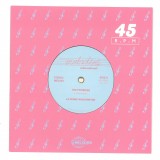
Gondwana Records are delighted to announce the 6th release of our '7" Series', our first ever 7" vinyl collection series. Featuring bespoke artwork from Gondwana Records designer Daniel Halsall, cut at Calyx in Berlin, and manufactured at Optimal. This one is limited to strictly 300 copies and housed in a reverse board printed sleeve with classic 'dinked' centre holes.
The release also comes with a limited edition postcard
Dwight Trible and Matthew Halsall first met by chance at a festival in South Africa. Dwight sat in with Matt's band for an impromtu jam and a friendship was born. The result was Dwight's 2017 recording for Gondwana Records, Inspirations, produced by and featuring Matthew Halsall and members of the Gondwana Orchestra. With the LP long sold -out we've decided to shine a light on the first two tracks from the album. Together they make a glorious, deep, soulful 7" with a timeless message. On Side A we have, Dwight's impassioned take on Bacharach and David's classic What The World Needs Now is Love and on the flip we have a low-slung take on Donny Hathaway and Leroy Hutson's Tryin' Times. Both feel even more relevant now than they did when written. Just 300 copies and no re-press on this one - so don't miss out.
quête:pos
'Chronos' is the debut album of Berlin-based trio AUSKLANG. Presenting a perfect blend of ambient and post-rock music, Chronos traces all the veins of rock, from a grandiose ensemble sound of a cinematic soundtrack to the delicate natures of ambient soundscapes. Each song has its own pulse and signature, giving a new feeling each time.
Good Vids, Vile Times is the second album by Ant Antic. Its central themes are the never-ending flood of information and its effects on us. The Berlin-based singer and producer Tobias Koett wraps serious questions into radiant pop songs. What does constant bombardment of information do to us? What's lost along the way?
On his new album, Ant Antic observes the emotional power of media and information. The helplessness we feel in the face of predominantly bad news and the growing inability to take pleasure in good news. The way an overload of junk information leaves no mental capacity for real social connections. As a child of the first globally connected generation, he witnesses geographical boundaries dissolve and people consider humanity as one. At the same time, everyone seems to struggle to come to terms with a reality overflowing with possibilities. Slowly, we collectively turn into superficial nihilists.
"When I wrote my first album Wealth I looked inward to examine my own emotions, asking myself "How do I really feel?". For Good Vids, Vile Times I was focusing less on the how and more on the question of why. "Why do I feel that way?"", Tobias explains the creative writing process behind his second album as Ant Antic.
"I'm a bag of hot air / Push me up density / Feel like a millionaire / Don't bring me down gravity", he admits on the single Yellow Press. Referencing the album's cover artwork by Austrian photographer Erli Grünzweil, Tobias describes how it feels to advertise his own life to other people - when behind the meticulously crafted presentation, there's sometimes nothing left but emptiness and anxiety.
Good Vids, Vile Times is an album rich in variety, ranging from indie-pop to contemporary R&B. In stark contrast to the somber tone of the lyrics, the songs radiate a cheerful liveliness. Fueled by analog synthesizers and an electric guitar often not discernible as such, the record builds on Ant Antic's signature sound. It's all Tobias on Good Vids, Vile Times - writing songs, recording vocals, guitars and synths, all the way to production and mixing. Essential elements and ideas are put into focus by getting rid of everything else. At the same time, the new album sees singer and producer Tobias openly flirting with pop, exploring new sounds and aesthetics, and maturing musically and lyrically. No song is alike, each one tells an honest and relatable story - all held together by the magic glue that is Tobias' distinctive voice, which might stay with you forever.
Soul Development AKA Deka Selector is a DJ and music producer from Barcelona. He started playing vinyl and performing as a DJ in Ibiza from 2002 at Warhol Club, Diosa Discotheque and Tira Pallá Bar, and also played twice at international festivals like Sziget Festival in Budapest.
Nowadays he is focused in music production, composing his own music with rhythm machines and synthesizers. His first release was in 2016 called "Poker Hat", and "Roots" in 2017. Now, under the label Sounds Of Mass Distraction (SOMD) Soul Development is about to release his first vinyl EP in September 2020, "Treballa Dorm Consumeix".
"Treballa dorm consumeix" is the new artwork of "soul development" who, at this time, edits as an EP on vinyl format as also on the current streaming nets. The title disc mentions and actually criticizes, the consume urban society where the majority population in the world live.
The author, Javier Ortega Cejas, pretends to generate consciousness about our fail system where we walk: every day, we awake and go to our job posts to spend a huge part of our daily time to generate incomes to later on, spend and spend in objects, sometimes, not really needed. If so, eat, we need to eat, sometimes we get satisfaction just purchasing and purchasing objects totally superfluous. Do not lie to ourselves, to buy, generates satisfaction, but maybe, at a high cost: our health, physical and mental.
As Dalai Lama said with his own words, that, resumed would be: "occidental man spends its health to get money, later on, spends its money to get again health, and lives the present thinking so much on the future that finally, lives like it wouldn't never die, and dies as it wouldn't never have lived".
- LP 1: – Bob Mould - Workbook (1989)
- A1: Sunspots
- A2: Wishing Well
- A3: Heartbreak A Stranger
- A4: See A Little Light
- A5: Poison Years
- A6: Sinners And Their Repentances
- B1: Brasilia Crossed With Trenton
- B2: Compositions For The Young And Old
- B3: Lonely Afternoon
- B4: Dreaming, I Am
- B5: Whichever Way The Wind Blows
- LP 2: – Bob Mould - Blacksheets Of Rain (1990)
- C1: Black Sheets Of Rain
- C2: Stand Guard
- C3: It’s Too Late
- C4: One Good Reason
- C5: Stop Your Crying
- D1: Hanging Tree
- D2: The Last Night
- D3: Hear Me Calling
- D4: Out Of Your Life
- D5: Disappointed
- LP 3: – Sugar – Copper Blue (1992)
- E1: The Act We Act
- E2: A Good Idea
- E3: Changes
- E4: Helpless
- E5: Hoover Dam
- F1: The Slim
- F2: If I Can't Change Your Mind
- F3: Fortune Teller
- F4: Slick
- F5: Man On The Moon
- LP 4: – Sugar – Beaster (1993)
- G1: Come Around
- G2: Tilted
- G3: Judas Cradle
- H1: Jc Auto
- H2: Feeling Better
- H3: Walking Away
- LP 5: – Sugar – File Under: Easy Listening (1994)
- I1: Gift
- I2: Company Book
- I3: Your Favorite Thing
- I4: What You Want It To Be
- I5: Gee Angel
- D6: Sacrifice / Let There Be Peace
- J1: Panama City Motel
- J2: Can't Help You Anymore
- J3: Granny Cool
- J4: Believe What You're Saying
- J5: Explode And Make Up
- LP 6: & 7 – Sugar – Besides (1995)
- K1: Needle Hits E
- K2: If I Can't Change Your Mind (Solo Mix)
- K3: Try Again
- K4: Where Diamonds Are Halos (Live At The Cabaret Metro, 22Nd July 1992)
- K5: Armenia City In The Sky (Live At The Cabaret Metro, 22Nd July 1992)
- L1: Clownmaster
- L2: Anyone (Live At The Cabaret Metro, 22Nd July 1992)
- L3: Jc Auto (Live At The Cabaret Metro, 22Nd July 1992)
- L4: Believe What You're Saying (Campfire Mix)
- L5: Mind Is An Island
- M1: Frustration
- M2: Going Home
- M3: In The Eyes Of My Friends
- M4: And You Tell Me
- N1: If I Can't Change Your Mind (Bbc Radio Session)
- N2: Hoover Dam (Bbc Radio Session)
- N3: The Slim (Bbc Radio Session)
- N4: Where Diamonds Are Halos (Bbc Radio Session)
- LP 8: – Distortion Plus:1989 – 1995
- O1: All Those People Know
- O2: No Water In Hell
- O3: Dying From The Inside Out
- P1: Dio
- P2: Hickory Wind
- P3: Can’t Fight It
- P4: Turning Of The Tide
Demon Records presents Distortion: 1989-1995, the first in a series of four expansive vinyl box sets chronicling the solo career of legendary American musician Bob Mould. Bob Mould’s career began in 1979 with the iconic underground punk group Hüsker Dü before forming the beloved alternative rock band Sugar and releasing numerous critically acclaimed solo albums. Volume one in this new series covers 1989 to 1995, beginning with Mould’s first post Hüsker Dü album Workbook and continuing through to Sugar’s final studio album File Under: Easy Listening.
Each album is presented with brand new artwork designed by illustrator Simon Marchner and pressed on 140g clear vinyl with unique splatter effects.
Includes a 28-page companion booklet featuring: liner notes by journalist Keith Cameron; a foreword by writer and actor Fred Armisen; a tribute from Richard Thompson; lyrics and memorabilia.
Mastered by Jeff Lipton and Maria Rice at Peerless Mastering in Boston.
Featuring an array of bonus tracks including Sugar’s 1995 collection of Bsides and non-album tracks Besides, along with Distortion Plus: 1989-1995 a new and exclusive collection of rarities and collaborations (pressed on clear vinyl).
From Mille Plateaux to Leaf, Staubgold and Raster-Noton, ~scape, or on his own label Ripatti, the Finnish artist Sasu Ripatti aka Vladislav Delay has been exploring various iterations of the dub culture vs. electronica, since 1997. His sonic crafts and unique signature sound has been sought after by an eclectic range of bands and artists, ranging from Massive Attack, Hauschka, Black Dice, Autopoieses, Animal Collective or AGF.
Somewhere between the old-school electronica culture, the soundscaping, the experimental paths of Lee Perry and Adrian Sherwood, ghostly clubbing anthems, minimalism, pop, jazz, without being, influenced, Vladislav Delay is building a drifting and coherent sound enigma.
Vladislav Delay met Sly Dunbar and Robbie Shakespeare (the most prolific Jamaican rhythm section and production duo) thanks to a series of jam sessions. Trumpet player Nils-Petter Molvaer had been asked by the Jamaicans to join them and he invited Delay alongside guitar player Eivind Aarset to tag along, which eventually turned into the Nordub project.
The result of these jam sessions turned into an album, mixed and mostly produced by Vladislav Delay, released on the label Okeh. It was also followed by an extensive series of live dates. This one-shot reunion was the beginning of another story: a trio composed by Delay, Dunbar and Shakespeare.
In January 2019, Vladislav Delay went to Kingston and spent some days at The Anchor studios, to record drums and bass with S&R, some voice takes and a series of atmospheric field recordings. Back to Finland, Delay started to experiment with this precious material, mixing and overdubbing, in the comfort and quiet of his studio, based on the island of Hailuoto, Baltic Sea, Northern Finland, giving another feeling to the Jamaican trip.
This became a tribute to the 'dub spirit', but in a very personal way, far beyond any influence or "the obvious". 500-PUSH-UP is two worlds collapsing, merging, also showing some intriguing approach of the Jamaican groove, used as a filigree, like the echo or the ghost of reggae, converging and conversing with a post-industrial and experimental approach. To file beside experiments - for instance - such as Lee Perry's 'Scientist Rids The World Of The Evil Curse Of The Vampires' or the On U-Sound productions.
Following 2019’s release of Azymuth’s Demos (1973-75), two more home-recorded demo tracks by the Brazilian psychedelic jazz-funk masters have surfaced from a tape in drummer Ivan Conti’s private archive. These five-decade old recordings by the young band show the maturity, musicianship and distinctive style that saw Azymuth become one of the most important groups in Brazilian history.
Featuring an instrumental take on Roberto and Erasmo Carlos’ 1969 Jovem Guarda hit “As Curvas da Estrada de Santos”, and spacey psych-folk oddity “Zé e Paraná”, the new 7” release via Far Out Recordings shines yet more light on this critical period for Azymuth.
As is the case with many of Brazil’s pop icons, Roberto and Erasmo Carlos had been backed by Bertrami, Malheiros and Conti either on stage, in the studio, or with compositions (in Bertami’s case) since the late sixties. Conti notes that “As Curvas da Estrada de Santos” was a big hit in Brazil when it came out in ‘69 and had already been covered by Elis Regina a year later.
But where both Elis’ version and the original were grand pop-rock ballads, Azymuth’s take is a moody, melodic jazz excursion, featuring Bertami’s incredible Hammond organ, Fender Rhodes and grand piano juggling, Ivan Mamao Conti’s distinctively tough drums, and unusually, Alex Malheiros plays a double bass instead of an electric one.
As the title suggests, “Zé e Paraná” is guitarist João Américo (Paraná) playing alongside Bertami’s Rhodes comping, synth embellishments and dreamy wordless vocals. While credited as the composer and guitarist on “Linha do Horizonte” a track from Azymuth’s debut album which would become the theme tune for a famous novella, Paraná has to this day, remained relatively unknown.
Both tracks were recorded in Jose Roberto Bertrami’s house in Rio de Janiero at some point between 1973-75. These tracks were not recorded in a professional studio, meaning the sound quality differs from other Azymuth releases. At Far Out we take great pride and extreme care in ensuring our releases and reissues are produced to the best possible sound quality. In this case the original source material had not aged well and was considerably damaged. The sound has been restored to the best possible condition but there is still some noticeable tape hiss and slight distortion on ‘Zé e Paraná’. For this reason, we strongly advise listening to preview clips before buying this release.
Keyboards: José Roberto Bertrami
Guitar: João Américo ‘Paraná’
Produced by Azymuth and José Roberto Bertrami
Recorded at José Roberto Bertrami’s home studio in
Laranjeiras, Rio De Janeiro, Brazil 1973
Issue and project co-ordinator: Joe Davis
Additional tape restoration by Daniel Maunick at the Sugar Shack
Mastered by Frank at Carvery Cuts
An exchange between several voices of African artists (the Congolese Flamme on guitar, the late Cameroonian Hilaire Penda on bass, the Beninese Angélique Kidjo on vocals, and the dj singer producer
from South Africa Mo Laudi on the mike) gathered for the dance and celebration of this World Heritage work. The most popular anthem of classical music revisited in Afro Pop mode for crowds around the world. About this project, the producer Philippe Cohen Solal (ex-Gotan Project) tells: « When Mo Laudi, a Paris-based South African DJ, joined me in the studio, he delivered a great rap full of positive energy and geopolitical rhymes, from Patrice Lumumba to Biko and from Congo to São Paolo. Then Queen Angelique Kidjo, like a divine diva, fervently sang her hymn "Lonlon" in the Mina language, where the Afro literally meets the Bolero. We will not forget the fine team that allowed me to concoct this sacred cocktail: Flamme Kapaya,
outstanding Congolese guitarist, the Parisian DJ-beatmaker Lazy Flow and the late Hilaire Penda, Cameroonian bass player who unfortunately left us since. Benin, South Africa, Congo and Cameroon meet in Paname, the capital of World Sound, but the musical adventure did not stop there. The remixes take us straight to London with Poté, to Berlin with Daniel Haaksman and to Johannesburg with the super-group Batuk formed by the godfather of the African electro Spoek Mathambo, the kwaito maestro Aero Manyelo and the Mozambican singer Manteiga. At a time when travel is prohibited or
not recommended, let us be glad that music does not need certificates or passports and knows no borders ».
West coast composer, artist, and producer Kaitlyn Aurelia Smith has chartered a pioneering career with multiple critically-acclaimed albums since 2015. Following the release of The Kid in 2017, Smith focused her energy in several directions. She founded Touchtheplants, a multidisciplinary creative environment for projects including the first volumes in her instrumental Electronic Series and pocket-sized poetry books on the practice of listening within. She's continued to explore the endless possibilities of electronic instruments as well as the shapes, movements, and expressions found in the physical body's relationship to sound and color. It is this life-guiding interest that forms the foundational frequencies of her most recent full-length, The Mosaic of Transformation, a bright, sensorial glide through unbound wave phenomena and the radiant power discovered within oneself. "I guess in one sentence, this album is my expression of love and appreciation for electricity," says Smith. While writing and recording, she embraced a daily practice of physical movement, passing electricity through her body and into motion, in ways reflecting her audio practice, which sends currents through modular synthesizers and into the air through speakers. Not a dancer by any traditional definition, she taught herself improvisatory movement realizing flexibility, strength, and unexpectedly, a "visual language" stemming from the human body and comprised of vibrational shapes. Understood as cymatics, as Smith says, "as a reference for how frequencies can be visualized," much like a mosaic. Smith describes her first encounters with this mosaic; "the inspiration came to me in a sudden bubble of joy. It was accompanied by a multitude of shapes that were moving seamlessly from one into the other...My movement practice has been a constant transformation piece by piece. I made this album in the same way. Every day I would transform what I did yesterday...into something else. This album has gone through about 12 different versions of itself." As it has arrived, in a completed state, The Mosaic of Transformation is a holistic manifestation of embodied motions. Smith's signature textural curiosity that fans have grown to adore pivots naturally into a proprioceptive study of melody and timbre. Airy organ and voice interweave with burbling Buchla-spawned harmonic bubbles. "The Steady Heart" quivers to life, peppering blasts of wooden organ between winding vocal affirmations. As with a body, moving one portion requires a balance and counterbalance; here, subtle tonal twitchy signals fire in conjunction with coiling arias to create a mesmeric core. When the beat arrives at the midway mark, a swooping and jittery waltz, a sense of stasis in motion, a flow state, is sonically achieved. As soon as it syncs, it disappears back into the swirling ebbs of electric force. Other tracks stray into more ruminative physical realms. "Carrying Gravity" is built around string-like pads that expand and contract like a solar plexus, becoming taught and then loose. If the record could be summarized in a single movement, it is the 10-minute closing suite, a rapturous collage called "Expanding Electricity." Symphonic phrases establish the piece before washes of glittering electric peals and synthesized vibraphone helix into focus. Soon, Smith's voice grounds it all with an intuitive vocal hook, harmonized and augmented by concentric spirals of harp-and-horn-like sounds. Smith's music doesn't capture a specific emotion as much as it captures the joys of possessing a body, and the ability to, with devotion and a steady open heart, maneuver that vessel in space by way of electricity to euphoric degrees.
VENT’s 21st release, a remix EP edition of 120 copies all hand numbered with a risograph printed cover, sees the collaborative works of 2019’s Kına LP by MAYa & Tolga Baklacioglu (VENT017) being reinterpreted through the lens of four prolific remixers. Each has brought their own perspectives and experiences to the table, challenging and redefining the original versions in their own way. Palestinian producer Muqata’a, for instance, has taken the track “Jyoti”, a track dedicated to Jyoti Sing, who was gang raped and murdered in India, reconstructing it so as to emphasize the continuous violence against women, whereas Martial Canterel has universalized the notions of yearning for a homeland in his remix. As a release featuring a broad range of bold and uncompromising remixes in different styles, the themes of nostalgia and yearning helps each remix highlight the qualities of the others. As keys to decrypt each remix more carefully, the artists have provided their brief comments, below:
Silent Servant (legendary dj/producer):
"I tried to give this remix a different approach than what has been my usual. Something based on perceived nostalgia but mixed in a modern way. I wanted it to feel like a lost RMX for the Hacienda from 1984 but hit in a modern club standard.”
Martial Canterel (cult poster boy for 21st century minimal synth):
"In approaching the work of my very dear and old friend, Maya, and her collaborator, Tolga Baklacioglu I wanted to situate differently the atmosphere and longing, to word it entirely otherwise. I wanted to dramatize this yearning for home and homeland, what the Welsh call Hiraeth. I want to place her plaintive strivings for home and tranquility in a festival of upbeat rhythms and releases."
Muqata’a (Palestinian beatmaker):
"It was very interesting remixing this powerful piece, working with the concept and different elements of the track, 'Jyoti', creating a more loop-based structure in an attempt to represent repeated violence against women."
Decimus (uncompromising esoteric artist):
"What I find amazing about the original version of this track is how colossally monolithic it is. It shifts and morphs over its 13 minutes but it never relents in its intensity and density. It feels epic and gigantic. I chose it to remix because I saw it as a challenge to carve something quieter and perhaps more narrative, in form, out of it while trying to stay true to the intensity of the original."
Detroit's ALTON MILLER is an underrated master of deep & soulful music. He offers a double LP of authentically special compositions. "SOULS LIKE MINE" features 11 house cuts with broken beat influenced soul vocal tracks. For fans of 4HERO & KAIDI TATHAM. Full colour poster included. Due in AUG/SEPT.
Put Your Head Above The Parakeets’ is a brand new EP from HAAi, her second for Mute.
The EP features four brand new tracks including the pseudo title track ‘Head Above The Parakeets’, which exudes a woozy summery heat while ‘Rotating in Unison’ embraces positivity, written in
response to this year’s enforced slowdown.
The final two tracks take us back to the club, where HAAi is known for spinning genre-bending and spellbinding DJ sets.
The EP is available on green vinyl and includes a digital download code.
It might come as a surprise, but the „Boot and Heel EP“ might be the first Tiger & Woods product that could be called unashamedly Italo disco. Think Den Harrow and old school CBS radio programming rather than the Italian boogie side of things that used to be the prevalent influence in the Roman’s studio work. Here we go with four tracks that are sharp as knives. Beautifully crafted, perfectly arranged and smitten with the charm of positivity, it’s the perfect soundtrack to the fading summer and next year’s hedonistic club season. Always remember: you gotta change to stay the same.
GROUNDSWELLS’ is the third chapter in Wren’s seasonal lore exploration, and their first through Gizeh Records. These six melancholy-shrouded sonic ruminations swell between intimate performances devoid of adornment, and evolving soundscapes of auditory ruin. Tracing an elemental arch, 'GROUNDSWELLS' captures Wren delving into earthen awakenings.
Launching into a monochromatic dirge, ‘Chromed’ announces the LPs stylistic intentions, forgoing the trappings of traditional harmony with deliberate pendulums of pitch and tone. Swarms of percussion drag the track to its conclusion in a collage of insidious feedback, with oscillations sculpted by the record’s producer, Scott Evans of Kowloon Walled City.
Elsewhere, swift variance is displayed in Wrens’ deft handling of genre and form, refusing to be solely one of either. The record courses between rigid post-punk, broad waves of dreaded sludge, and austere choral reverberations. Pulsating Krautrock themes present in their previous work are revisited, with a focus on embracing archetypal motorik technique, as the LP stretches compositions to their furthest tensions through profuse repetition, straining the cracks between.
Inviting physical, elemental surrounds into ‘Subterranean Messiah’, Wren allow space for the sudden cloudburst of Middle Farm Studios in the introductory passage via location recording, embracing the interplay between source and locality. Combined with the painterly fretwork and ghostly chants of Fvnerals, the collaboration seeks an emotive new path of melodic vulnerability. In contrast, the closing elegy is layered with disharmonious cycles of agonised cello from Jo Quail. As with other conclusions on the LP, the track's commitment to strained repetition is rewarded with sonic climaxes of blackened psychedelia, led by stalagmitic spirals of atonalism.
Throughout the LP, Wren draws from their long-standing apologue, with a partnership of vocalists showcasing a lyrical and vocal interplay thick with a dense lore new to their compositions. 'GROUNDSWELLS' brings Wren to an equinox in their earthly contemplations. Ruminating on the decaying inanition that engenders renewal, this record is a revelry in the cyclical, repetitious infinity of planetary permanence.
- A1: Ave Do Deserto
- A2: L Varrido
- A3: Doctor Albert Hofmann Encontra Em Barcelona Os Irmaos Siameses (2 Cabecas E 1 Cerebro) "Pico & Peco" Com Sus Sombreros A Admirar La Raponesita De Osaka
- B1: She Is Going To "The Hell" & Everybody Knows & Everybody Goes
- B2: Massacre Da Serra Eletrica I
- B3: Massacre De Serra Eletrica Ii
"Lugar Alto's newest project is the idiosyncratic album MUMIA (portuguese for MUMMY). Never released before, it is a work that was originally recorded on cassette and combines elements of post-punk, industrial and ambient music.
Kodiak Bachine and Celso Alves formed the ephemeral and eponymous duo in 1988. The partnership resulted in a single recording derived from improvised sessions using minimal amounts of electronic equipment at Celso's country house, located in the interior of São Paulo.
Bachine was an important figure in the São Paulo underground. His most renowned project was the band Agentss from 1981, which also consisted of Miguel Barella, Eduardo Amarante, Elias Glik and Lyses Pupo (later replaced by Thomas Susemihl). In its brief duration, the band released only two seven inches that were considered seminal artifacts in the Brazilian post-punk scene: “Agentes / Angra” from 1982 and “Professor Digital / Cidade Industrial” from 1983. These two rare records are highly sought after by collectors and DJs from around the world for their inventiveness and originality.
Similar to Agentss, MUMIA brings with it extreme authenticity, managing to extrapolate the barriers of more traditional Brazilian music and interact with unorthodox elements. The lyrics are a mixture of Portuguese and English and it is still possible to identify picturesque fragments of Spanish, French and German. In addition, sonically, the record portrays aesthetics from the eighties and dialogues with themes relating to LSD. Another notable feature is the fixation on Egyptian post-mortem themes, providing a cinematic and lysergic experience of the desert landscapes from the African country.
It is a recording with comic passages which provokes an unpretentious reaction from the listener. However, it still has more ethereal and atmospheric moments, such as the opening song “Ave do Deserto”. In the final two tracks, it is possible to enjoy a darker MUMIA, which with “Massacre da Serra Elétrica I” and “Massacre da Serra Elétrica II”, provide a sound experience capable of accompanying intense scenes from the macabre productions by Tobe Hooper and George Romero.
The striking new artwork was created by the Sometimes Always studio, a partner of Lugar Alto and responsible for diverse graphic collaborations with artists, venues and parties in Brazil. The album, mastered by the prolific Arthur Joly, also has a booklet containing Kodiak’s texts in Portuguese and English, in addition to the lyrics, which serve as a logical exercise for further understanding of the album.
MUMIA was unearthed by the renowned Brazilian DJ Millos Kaiser, who in addition to kindly curating this album, put together the compilation “Onda de Amor: Synthesized Brazilian Hits That Never Were (1984-94)”, released by Soundway Records.
Now, after 32 years in its tomb, the MUMIA has risen and thanks to Lugar Alto it can finally be celebrated and appreciated."
(Record Store Day 2020)
Mannequin Records is proud to celebrate 40th years of Nocturnal Emissions with more reissues setup for 2020.
"Tissue of Lies" is the Nocturnal Emissions first album, released on the band's own Sterile Records label as EMISS001 in 1980. "Tissue Of Lies"
shows you Nocturnal Emissions Industrial roots, from noisy collages to classic power noise, reminding the early Throbbing Gristle and Cabaret Voltaire, Faust ('Tapes' period) or Conrad Schitzler's 'Schwarz'.
The Nocturnal Emissions project, masterminded by Nigel Ayers, has been on the cutting edge of new music since the 1970s. Nigel Ayers has been described as a Guerrilla Sign Ontologist, cutting-up and pasting the contents of the human psyche. With a background in avant-garde art, his work has grown from audio visual installations through underground video works which changed the shape of British television.
In the early eighties Nocturnal Emissions hit London with a barrage of seminal funk; pioneering the use of sound samplers, multi-cultural
collage and electronic noise. They became a shape shifting chameleon lightening the darkness of post-industrial music, combining extremist performance art and video displays with apocalyptic beat music. Nocturnal Emissions have since been credited as a catalyst for a
generation or two of sound workers.
However, at the height of their success, the Emissions decided to shun the crass commercialism that had developed around them, and to develop their work as a secret alchemy. Nigel Ayers has continued to work with a strong underground of cult support, avoiding music industry fashions, and following his own creative path he concentrated on creating a strong sense of a wilderness identity through sound.
Limited edition of 600 copies, on solid white vinyl.
- A1: Samurai Masu Biitsu
- A2: Kimi
- A3: Ahou Jiko
- B1: Iai
- B2: I Cry, Bai Bai
- B3: Sayounara Tsutara
- B4: Nan No Tame Ni Boku To
- C1: Miso Shiru
- C2: Nihon De Homuresu
- C3: Are Igai Imi Ga Nai
- C4: Kimi Wa Tsumannai, Boku O Iranai
- D1: Yari Chuu, Kyouroku Isuu
- D2: Gaijin Sabetsu, Gaikoku Hakuchuumu
- D3: Why Why
- D4: Ahou Bouken
Reissue des zweiten von drei Alben des US-polnischen Braindance-Produzenten Bogdan Raczynksi, die 1999 auf Rephlex erschienen. "Samurai Math Beats" lag irgendwo zwischen dem Drill'n'Bass von Aphex Twin und Squarepusher und sonnengetränkter Electronica von Plone oder Boards Of Canada. Die Kollision aus hyperkinetischen Rhythmen und Spielhallenmelodien wies einer Vielzahl zukünftiger Mutationen den Weg, von den frenetischen BPM des Footwork bis zum dekonstruierten Pop von Mica Levi. Neu geschnitten auf schwarzem Doppelvinyl samt Download-Code und 4c-Poster. Die LP ist der zweite Raczynski-Release auf Disciples nach dem Sampler "Rave 'Till You Cry" (2019) mit unveröffentlichtem Material.
- "Classic braindance" - Hardwax
- "Bogdan was a massive inspiration for some of my tracks on the Drukqs album, the fact he was doing it all on a shit PC tracker… totally amazing. This was before 99.9 percent of people used the computer for everything. His records are so underrated." - Aphex Twin
"I am sitting in a garden, I haven't left the property in weeks, someone is dropping off food once a week. I haven't seen a human being in ages, I feel like a reverse Schroedinger cat - do I exist when nobody sees me? I must be somewhere in France but I don't remember. I have lost my consciousness again. When I wake up I hear a broken record looping somewhere in the mansion. A washed-out opera. Behind the trees I see the dilapidated hermaphrodite sculpture in a field of verdant nettles and fern. I hear gunshots far afield, aeroplanes in the sky, sirens on the main road.
When unconscious I dreamt of sitting on the Concorde observing the scarab blue ocean and iridescent clouds from above, an erstwhile receding memory. Sometimes I hear the organ of the nearby Renaissance Cathedral merging with the Russian Church bells.
I am hallucinating again. Someone's humming in the kitchen? Singing? A Radio? I overhear two young women talking about art galleries in the neighbour's garden. Bees attack, again…..again and again. The hairspray finally intoxicates them. An amphoric japanese voice is whispering in my head saying I will die soon. Someone (something?) bangs on the vases. The fountain's water turns dark red.
Fleur calls and says mum died. The funeral will be televised on tuesday. We opt for the synthetic choir for the service. The call is suddenly interrupted. Mold is slowly taking over the house.
I go back inside."
Une Fille Pétrifiée is the debut album of new Black To Comm related entity Mouchoir Ètanche (after one recent 12" on Richter's own Dekorder label). Combining real and fake acoustic instrumentation, sampling, field recordings and excessive yet inaudible post production this is another sublime and ethereal statement. Influences are ranging from (French) Classical & Opera to the anecdotical compositions of Luc Ferrari, Chinese Opera, Chanson, Sacred Music / Church Music, JG Ballard and Surrealism.
Marc Richter records as Black To Comm for Thrill Jockey, Type and Dekorder and as Jemh Circs for his own Cellule 75 imprint. He also produces soundtracks and acousmatic multichannel installations for institutions such as INA GRM Paris, ZKM Karlsruhe and Kunstverein Hamburg.
- A1: L'aventurier (Feat Helena Noguerra & Louis Ronan Choisy)
- A2: Putain Putain (Feat Camille)
- A3: Marcia Balla (Feat Adrienne Pauly)
- A4: Sandy Sandy (Feat Soko)
- A5: Ou Veux-Tu Qu'je R'garde (Feat Emily Loizeau)
- A6: Two People In A Room (Feat Cocoon)
- A7: Dereglee (Feat Melanie Pain)
- A8: Oublions L'amerique (Feat Nadeah Miranda)
- B1: Voila Les Anges (Feat Coeur De Pirate)
- B2: Week-End A Rome (Feat Vanessa Paradis)
- B3: Mala Vida (Feat Olivia Ruiz)
- B4: Anne Cherchait L'amour (Feat Julien Dore)
- B5: Ophelie (Feat Yelle)
- B6: Amoureux Solitaires (Feat Hugh Coltman)
- B7: So Young But So Cold (Feat Charlie Winston)
- B8: Je Suis Deja Parti (Feat Coralie Clement)
The 80s owed everything to the punk revolution ... and betrayed it time and again.
ln 76-77, the incredible explosion of English-speaking bands focused the energies of a whole generation of Western youth - rebels ready to pick up a guitar and use it like a weapon. Yet more than punk music itself, it was the creative burst it triggered that radically shaped 80s pop and heralded an unending stream of inspired performers.
Although we often speak of the British and American golden age of post-punk from 78 to 84, with artists that included Talking Heads, Joy Division, PIL and Devo, France (together with Switzerland and Belgium) joined the movement too. Today, on a new album, the group Nouvelle Vague have paid tribute to this sumptuous "Frenchy" period clothed in the nihilism of punk, along with bitterness fuelled by the economic crisis and, paradoxically, the bewitching spirit of pop.
lts title, Couleurs sur Paris (Colours on Paris) is based on both a famous postcard collection and Oberkampf's 1981 punk anthem, and reflects the period, which oscillated between elation and despair. Written by artists sometimes known as "the modern young people" and including faux naïf electropop nursery rhymes by Elli & Jacno ("Anne cherchait l'amour", 1979), Lio ("Amoureux solitaires" , 1980)
and Etienne Daho ("Week-end à Rome", 1984), along with Lili Drop ("Sur ma mob", 1979) and Taxi Girl ("Je suis déjà parti", 1986), the songs clearly express the hopes and disappointments of the day.
The sense of melancholy suggested by the disenchanted lyrics of "Déréglée" - performed in 1977 by Marie-France, an icon of Paris nightlife - is even more noticeable on the 1981 hit by The Civils, who cynically sang, "Tonight, they're dying in Chad, but l'm buying my dream Walkman" before taking it to the chorus: "The economic crisis is fantastic, decadence is the right feel".
The punk shockwave con also be felt in the music of bands who radically shaped French culture and song. Like Rouen, with Les Dogs ("Sandy, Sandy", 1982), every provincial town and city in France began to produce bands at the end of the 70s and the start of the 80s. Wunderbach's 1983 punk pamphlet "Oublions l'Amérique" was a foretaste of what is now called alternative punk, a genre that won acclaim in 1988 with Mano Negra's "Mala Vida". Indochine, French pop legends for the last thirty years, also encouraged the trend in the summer of 1983 with "L'aventurier", after a first single brimming with the spirit of rebellion, "Dizzidence Politik".
Rita Mitsouko, the duo that emerged from the underground Parisian punk scene of the late 70s, rocketed to stardom in 1984 with "Marcia Baïla". Equally baroque, TC Matic - the first band fronted by Belgian singer Arno - released an ironic, political underground hit in 1983: "Putain, putain". Other artists fuelled a post-punk movement that explored the romanticism of machines and the darkness of new wave, including the cult, much-neglected duo from Nancy, Kas Product ("So Young but so Cold", 1982) and Switzerland's Stephan Eicher, whose "Two People ln A Room" (1985) followed on from "Eisbaer", a hit in a more underground style written with Grauzone in 1981. However, the genre's most influential practitioners were certainly Noir Désir. From their first single in 1987 ("Où veux-tu qu' je r'garde?"), they won mainstream success with their unique fusion of 80s gloom and power rock. Beyond from the meteoric success of Bordeaux's Gamine ("Voilà les anges", 1988) and the subversive spirit of Jad Wio ("Ophélie", 1989), French post-punk reached its climax with the success of Noir Désir, Rita Mitsouko, Stephan Eicher and Manu Chao, whose albums reigned supreme in the 90s French charts. From the underground scene to gold records: the eternal story of pop.
Kate NV is the project of Russia-born recording artist, songwriter, and producer Kate Shilonosova. Best known in her hometown of Moscow as the lead singer and founder of the post-punk garage band Glintshake, Kate NV is also a performer in the experimental Moscow Scratch Orchestra and releases music under an alternate alias, NV. "Room for the Moon" is Kate NV's third album and second for RVNG Intl. "Room for the Moon" was inspired by memories of 70s/80s Russian and Japanese pop music and movies. The album finds Kate NV singing in Russian, French, and English. She collaborated with musicians Jenya Gorbunov (bass guitar), Vladimir Luchanskiy (saxophone), Quinn Oulton (bass guitar, saxophone), Nami Sato (Japanese Narration), and Marco Passarani (marimba). "Music knows what she wants," says Kate NV. On "Room for the Moon", the lyrical follow up to the buoyant minimalism of 2018's "FOR", NV follows this muse in fluid expression, harmonizing her lunar lullabies with a starry compositional choreography. NV says, "I always let music express herself without pressure, and with or without voice."
A new project by Chicago-based drummer/producer Makaya McCraven. An addendum to his critically-acclaimed 2018 release Universal Beings, which The New York Times said "affirms the drummer and beatsmith's position as a major figure in creative music," Universal Beings E&F Sides presents fourteen new pieces of organic beat music cut from the original sessions, prepared and produced by Makaya as a soundtrack to the Universal Beings documentary film. Directed by Mark Pallman, the Universal Beings documentary follows Makaya to Los Angeles, Chicago, London and New York City for a behind the scenes look into the making of the artists breakthrough album, taking the viewer through the story of Makaya's life, his process and the community of musicians that helped bring this project to life. The Universal Beings documentary and Universal Beings E&F Sides album will be released on all DSPs this July 31st on International Anthem.
In 1978, Roy Roberts produced and wrote a song for soul music legend Eddie Floyd; this melancholy storyliner has languished in the vaults for over forty years. IZIPHO SOUL are thrilled to release on a 45 and continue our Rock House Records/Westwood Music Group licensed collaboration.
Featuring on the A Side, Southern soul legends Barbara Carr and Roy Roberts duet on the supreme mid-pacer ‘It’s Only You’.
250 collectors’ copies pressed for the Real Soul Heads!
Please note ‘Guess It Wasn’t Meant To Be’ has been restored from the original tape to its best possible quality - unrepairable damage is evident in the final parts.
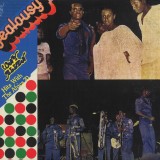
Comet Records presents the Tony Allen & Africa 70 reissue series with the classic late seventies first four solo albums of Tony Allen remastered and restored: Jealousy, Progress, No Accomodation for Lagos & No Discrimination, all coming in an heavy Deluxe Tip-On Jacket.
Recorded with Afrika 70 at the height of their power as Fela Kuti’s band, these are seminal recordings in the pantheon of Afrobeat history. Once again, Comet Records has the opportunity to shine a light on the sheer musicality and originality of the humble drumming giant. Tony Allen’s passing in April 2020 sent a shockwave across the world, as fans and collaborators from Lagos to Brooklyn and everywhere in between mourned the loss of a generous and powerful being, the kind of being we thought would live forever. Thankfully, we have the gift of Tony’s timeless music, starting with these four special solo albums, through which his musical voice guides our dancing feet and full hearts forever.
Produced by Fela Kuti in 1975, Tony Allen’s first solo album with Afrika 70, Jealousy, is like the man himself: light on its feet yet deeply settled, spacious yet bursting with magical talent. On the title track “Jealousy,” Tony is joyously in his element, conducting one of the mightiest bands in the world - he is the head chef, and the band is cooking. The second track, “Hustler,” features one of the most iconic solos in drumming history, a rare glimpse into Tony’s gift of musical phrasing - it is possibly the best example of Tony’s ability to literally
speak through his beloved drumset.
Tony Allen possessed magic within him, which he spent his entire life sharing with us through his drumming hands, tapping feet and generous heart. That magic is ever-present and strong on these formative solo albums - they are must-haves for Afrobeat fans across the globe.
2025 Repress
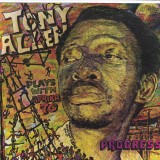
Comet Records presents the Tony Allen & Afrika 70 reissue series with the classic late seventies first four solo albums of Tony Allen remastered and restored: Jealousy, Progress, No Accomodation for Lagos & No Discrimination, all coming in an heavy Deluxe Tip-On Jacket. Recorded with Afrika 70 at the height of their power as Fela Kuti’s band, these are seminal recordings in the pantheon of Afrobeat history. Once again, Comet Records has the opportunity to shine a light on the sheer musicality and originality of the humble drumming giant. Tony Allen’s passing in April 2020 sent a shockwave across the world, as fans and collaborators from Lagos to Brooklyn and everywhere in between mourned the loss of a generous and powerful being, the kind of being we thought would live forever. Thankfully, we have the gift of Tony’s timeless music, starting with these four special solo albums, through which his musical voice guides our dancing feet and full hearts forever. Progress showcases Afrika 70 doing what they do best: digging deep and bringing the force, but always with
remarkable restraint and swagger, propelled by Tony’s steady hands and feet. The title track, “Progress” starts with a bang and never loses steam - a performance so fierce that it stands alongside Fela’s most
powerful anthems. The second track, “Afro Disco Beat” shows Tony Allen at one of his creative peaks. He tells: “What I was saying on Progress was that instead of fighting Fela for money, I was trying to progress and create on my own. Progress is what a hard worker is looking for I had to look it for myself” (Taken from Tony’s autobiography by Michael Veal). Tony Allen possessed magic within him, which he spent his entire life sharing with us through his drumming hands, tapping feet and generous heart. That magic is ever-present and strong on these formative solo albums - they are must-haves for Afrobeat fans across the globe.
Triangulating a slinky signal to a square mile off the Swan River, Glowing Pin bring us ‘Pentagon Palette’, a master blast of frequency adjusted house, swamp stomp and chakra charmers from Australian newcomer Jonus Eric.
Though opening brace ‘The Cult’ and ‘Collect’ made first contact back in 2014, a loose connection between Perth and Hamburg hindered progress before ‘Mirrors’, ‘Emulator’ and ‘Waterfall’ walked across the web in 2019 to round out a dope debut release from this house auteur. Specialising in mind altering sound design and melodic flair, Jonus generates a neon swamp on ‘The Cult’, serving up a psychoactive roller caked in radioactive fuzz and insectile fizz. Thick bass swells and circular marimba make for a hypnotic rhythm, while a shapeshifting vocal and moody keyboard riff drag us back towards terra firma. The paradisiac refrain of ‘Collect’ soon sounds out through the jungle with a euphoric haze,
its sub-tickling bass and acid gurgle riding hyperactive drum programming as the track warps in the humidity. Soaked in serotonin and brisk at 137 BPM, ‘Mirrors’ burns off the mist to offer an airy update on the French Touch template. Though frazzled circuitry and dislocated vox serve this one with a twist, the chiming pianos and bouncy beat are still best enjoyed in a Golf GTI in the summertime. Jonus reaches for the lasers via the restless rhythm and rave sirens of ‘Emulator’, a fresh take on the funky house of the late nineties updated with unexpected breaks, squealing feedback and treated vocals usually found on a Four Set banger.
Next it’s off to the chillout room for ‘Waterfalls’, a fourth-world tone poem describing crystal caves, undiscovered wildlife and a holographic waterfall. Ditching the doof, and letting those colours tesselate, Jonus offers a +2 bump to your mana, before the post punk bassline, growling EBM vocal and off key organs of ‘YR Mind’ combine for a confrontational bonus track, only available in digital format.
Banging acid productions from Mik Izif AKA Acid Wanker !
tunes offering a large view on his possibilities : from Acid Techno just inbetween the Hackney Road and the Hardtrance with the first tune...
Second track is a midrange sniper from UK Hardtechno to French Hardtek... And the last one is a pure BigBeat acid devotion !
FAT !
After the launch of his very own label LTF Records earlier in April, Franky Rizardo is presenting his second release ‘Polaris EP’, four tracks that capture the unique rollercoaster of emotions that the last few months have been:
“Polaris was made the day after the announcement of the lockdown measures in the Netherlands. The gravity of the situation started to settle in and for me it meant that my summer agenda had been cancelled. The feeling of trying to accept this fact and keeping my spirits up evolved into this track. Which is uplifting but hits the feels as well.”
Polaris reflects the melancholy over a lost summer, but channels POSITIVITY and determination to make the best out of the situation.
As one of the Netherlands finest house music exports Franky Rizardo has been making and playing music for most of his life. With the global Corona pandemic, he, as well as the industry as a whole, is looking towards an uncertain future when it comes to performances, clubbing and coming together on the dancefloor. However, Franky is keeping his spirits up and continues to focus on his own output and creativity through his newly founded label LTF Records.
In times of social distancing, he is connecting with his fans through live streams such as De Marktkantine, Verknipt and Straf_Werk, as well as at the first social distancing gigs (with COVID-19 safety rules) such as Thuishaven (Amsterdam) and Kiesgrube (Duisburg).
In tough and uncertain times like these, Polaris EP comes as a message of positivity and inspiration, to light up peoples’ days and remind them that regardless of the situation now, there’s a silver lining.
7"
Limited to 800 copies Grey Marbled Vinyl
Includes postcard and poster
Impossibly rare 1984 UK 7” vinyl single, written by a pre- Bachelor Pad’s Martin Cotter. One of only three releases by the short-lived Glasgow based indie label Bogaten, although redolant of early Orange Juice in the sound of the A-side, also looks forward to Shoegaze, with a reverb-drenched cover of The Velvet Underground’s Waiting For My Man on the B-side
Washington collective, The 3 Pieces, privately-pressed Iwishcan William on their own DL Records in 1982. The 12 has Discogs, for one, confused. Is it soul, rap, jazz, go-go, funk, electro, or educational? By nature of its birthplace and date of birth, it`s all of those.
Synths shimmer in harp-like glissando. The bass grumbles, rumbles, machine-made. The beat pops and locks. The whole thing grooving and exuding positivity. One part the cosmic funk of say Cloud One`s Patty Duke. Another, the balearic chug of Will Powers` Adventures In Success. Like Brother D it looks to “agitate, educate, and organize”, and stirs in the sentiments of Razzy`s I Hate Hate. Imagine if the Last Poets jammed with sister Sarah Webster Fabio. Keys parp like car horns, a real trumpet blows a Don Cherry solo, but the track really revolves around its sweet Sesame Street call-and-response chorus:
“I wish love. I can love. I will love. I am love.”
Swiss gentleman DJ and Phantom Island resident, Lexx, produces a killer remix - smoothing out the OG`s jerky edges, upping its sophistication. Making clear the contributions of Lexx` new bubbling electronics. rescuing a clipped guitar, previously lost deep in the mix, and moving the children’s voices to the fore. Ensuring you’ll remember that
““I am” is the glory of a wish come true.”
Idjut Boy Dan Tyler then ties up the package, well he actually kinda sends it out into space - expanding everything in echo. NYC Peech Boys-esque delay. The result is a mind-blowing, psychedelic, almost ambient, Larry Levan-like, Paradise Garage dub. Where fragments of song fly at you from four corners. Trippily pan from left to right. The horn blasts now paying tribute to King Tubby`s Hi-Fi. François Kevorkian going bang!
All carefully mastered with love from the original master tapes by Sam Berdah at The Wall studios.
The second offering by Julie Carpenter’s textural orchestral entity Less Bells takes its title from a storied strain of decorative objects worn in remembrance of lost loved ones: Mourning Jewelry.
The album shares a similar mood of devotional pageantry, stirring ornamental laments born from a need to “create beauty out of grief.” Utilising an amalgam of strings, synthesisers, and choirs, the pieces ascend and descend in grand, glimmering arcs, ebbing from passages of “baroque complexity” to expanses of haunting emptiness. Certain songs also skew more overtly western than ever before, deeply reverbed plucks of banjo refracted against glowing horizons of sunrise drone: Americana gone ambient.
Furthering the music’s mystic intentionality, the track titles comprise “the major arcana of a tarot deck from an alternate universe,” lorded over by the “Queen Of Crickets,” ruler of “The Gates,” “The Fault,” and “The Fang.” Even so, the record requires no psychic divination to glean its fragile majesty, its muted tumult of mirage and melody. The beauty it possesses is too blatant, and bountiful.
The Drumcode founder is measured when it comes to signing music to his own imprint, biding his time till the stars align. His last individual outing was 2015’s ‘Stone Flower’ EP, which included the thrilling label favorite ‘What You Need’.
A succession of classy collaborations followed, linking with DC’s most vital artists highlighted by ‘Your Mind’ with Bart Skils, proclaimed one of the best tracks of the last decade by Mixmag.
An EP that gives a nod to uncertain times, while remaining resolutely positive, ‘No Defeat No Retreat’ was written during Beyer’s fruitful production sessions during lock down. The opening track, ‘Park People’ sets the pace with an energetic, 80’s nu wave creating the track’s spine. Its hypnotic energy stems from a powerful synth riff and vocal sample culminating in a skillfully balanced track that neatly combines the old with the new.
The title track is a study in contrasts, deftly crafting a muted, nagging vocal hook and infectious bass line into a slice of forward-facing, edgy techno.
With its subtle, undulating layers of melody building in the background, it ushers in an understated sense of euphoria, making it a perfect end-of-set mood-maker.
A thrilling return!
When Upset The Rhythm released Normil Hawaiians’ lost album ‘Return Of The Ranters’ back in 2015, the band members got back in touch with each other after a 30 year break and starting playing music together again. Out of this the group played a launch show for the album and followed that up with more concerts, including an appearance at Supernormal, a residency at the Edinburgh Festival, gigs at Cafe OTO and supporting Richard Dawson in London too. They even recently toured Greece in support of having all three of their renowned exploratory post-punk albums finally back in print.
Throughout this time, Normil Hawaiians revisited their original songs for these live performances. However for a group always so interested in evolving their sound and seeking nuance, it comes as no surprise that they shirked the idea of a faithful retread of old material in favour of reimagining their songs. The group experimented by pushing their songs into new inventive dimensions, still progressive at heart, but now imbued with a cosmic uncanny. A cinematic, even pastoral approach that was always quietly present has come to the fore. The quaint weirdness of folk song, the humanity of communal practice and the group’s ecological mindedness have all found a place in Normil Hawaiians’ current sound world. With this conducive atmosphere brewing, the band’s first new songs in decades started to emerge.
Being far-flung across the UK, the Family Hawaii encamped to Tayinloan, a small village on the west coast of the Kintyre peninsula in Scotland with the intention of recording new music. They set up their own studio in an isolated, windswept house overlooking the sea and started the tape rolling. Noel Blanden from the band explains how the spirit of the location was such an inspiration to the group during this initial recording session: “Our time immersed in the place and the unique energy it generated in us allowed us to write ‘In The Stone’. It goes right back to our first album, this need to document experience before it passes over and eludes us. We were grabbing at the musical ether and letting it shape itself through the band.” From loose, improvised sessions and reflective periods of listening in Tayinloan, Normil Hawaiians captured the moment. ‘In The Stone’ is a motorik thrill of distorted guitars, locked rhythms and morphic resonance. Guy Smith is joined by Zinta Egle on vocals, skilfully sharing lyrics informed by Alan Garner and Nigel Kneale’s ideas around recurring events being linked to place and historical artefact; a kind of residual haunting known as ‘Stone Tape’ theory. In keeping with the context of the song, sounds from several previous live recordings of the track were woven into its present being. Flipside ‘Where is Living?’ is a decidedly more delicate affair of questioning lyrics and eerie traces, droning strings and impressions smudged. This resultant 7” is a tantalising glimpse of Normil Hawaiians now, an echo from the past, an echo from the future.
For anyone who can remember, Arca's &&&&& was a moment. Its 25-minute stretch of coiling, contorted grime and glitch; dub and hip hop dropped with the buzz of an impending co-production credit on Kanye West's Yeezus in 2013. It included cuts of sound and beats that were too weird for that pop project, while becoming a piece of experimental art that what would come to define what is by now broadly known as a `post-club' sound. It's music that is as visceral as it is experimental; made as much for the mind, as it is for the body. Released with no warning seven years ago, &&&&& became a bridge between Alejandra Ghersi's time partying and collaborating with her queer peers, while still living in New York to the next stage of her career releasing on Mute in London. She'd go from making beats for rapper Mykki Blanco and fashion label Hood By Air, posting lurching bass reworkings of pop hits on YouTube, and producing her first fluid mixtapes with DIS Magazine, to finishing off this seminal mixtape on the synths in Daniel Miller's studio. After dropping three impressive EPs the year before, &&&&& marked a transition. Continuations and extrapolations of material from Stretch 1 and Stretch 2 appeared in the mangled RnB sampling of "Century" and Arca's signature vocal layering in the pitched flow of "Waste". Along with the fluttering, muted heartbeat of "Obelisk", and the lumbering piano chords of "Mother", fourteen sonic sketches were elegantly woven together into a single, downloadable whole. As Alejandra's course turned toward moving to Europe from the United States, &&&&& became a remarkable challenge to the form of the mixtape, which was a relatively new trend taking hold of the online-oriented underground at the turn of the 2010s. But where many, if not most mixtapes where treated simply as a showcase of individual tracks presaging a more `official' release to come, &&&&& was a complete piece in its own right. "I wanted to make something that was my best work," Alejandra says about a record that has stood the test of time, "I listen to it very fondly today." This reissue of Arca's 2013 debut mixtape &&&&& features an etching on side B of the vinyl.
- A1: Allegretto For A Lady/Allegretto Per Signora
- A2: Belinda May
- A3: Dream Inside A Dream/In Un Sogno Il Sogno
- A4: Poetry Of A Woman/Poesia Di Una Donna
- A5: Sestriere
- B1: Fashion (N 2)/La Moda (N 2) (N 2)
- B2: Like When It Rains Outside/Come Quando Fuori Piove
- B3: A Bit Of An Acid Irony/Un Po Di Ironia Acida
- B4: Faith/U-Pa-Ni-Sha
- B5: Listen Let's Make Love/Scusi Facciamo L'amore? (The Big One) (The Big One)
- C1: Fashion (N 3 )/La Moda (N 3) (N 3 )
- C2: The Alibi/L'alibi (Shake N 2) (Shake N 2)
- C3: Slalom (Un Cafe Sulla Banchina) (Un Cafe Sulla Banchina)
- C4: The Doll/La Bambola
- C5: To Lydia/A Lidia
- D1: The Alibi/L'alibi (Shake N 3) (Shake N 3)
- D2: Slalom (Una Sera In Albergo) (Una Sera In Albergo)
- D3: Steal To Your Next/Ruba Al Prossimo Tuo (Seq 9) (Seq 9)
- D4: Definitive Turning Point/Svolta Drammatica
- D5: Little Cat Lady/La Donna Gattina (#2) (#2)
Lounge is the third in a series of five double vinyl releases that bring together some of Ennio Morricone’s greatest soundtrack music. Each collection centres on a different movie genre, together they allow the listener to rediscover the unmatched genius of the greatest movie composer of all time. The Maestro. This collection was announced before Ennio Morricone passed away on July 6, 2020. We’ll continue to release the series to honour this great composer.
The term Lounge Music is not one that Ennio Morricone would have heard at the time he was composing these pieces for the movies that they enhanced, but it is one that has been retrospectively applied to a certain type of music, and it is a style that Morricone has contributed a great deal towards.
Lounge is available as a limited edition of 3000 individually numbered copies on solid orange vinyl. The package includes a 4-page insert with liner notes written by Claudio Fuiano. The gatefold sleeve contains a velvet spot varnish on the outside and images of iconic movie posters on the inside.
Hypnoskull is part of the global anti-music conspiracy networkTM (since 1992). Hypnoskull was created in 1992 as a solo project in order to experiment in the area of electronic noise combined with rhythmical structures. In the first years of its existence, Hypnoskull was releasing cassettes and tracks on international labels in the so-called cassette network, a widely spread network of independent and experimental musicians and artists who expressed themselves throughout limited tape releases often including artworks, ideas, texts. In 1998, hypnoskull signed to the German label ant-zen and up to today he is still releasing his albums on this highly influential record label. That is not a coincidence: ant-zen stands for ‘anti-zensur’ (anti-censorship), one of the main starting points of the provocative hypnoskull project. Patrick Stevens does not limit himself to just producing music as such, albums always include a severe message, a thought-provoking underlying concept text, questions. The main philosophy: ‘the dance floors, the clubs, the festivals,… are staged warzones with a different set of rules – a therapeutic zone where hidden anger and even aggression of both the artists as well as the spectators can be released in a proper, human way. Music as a means to open up the deepest anger inside human beings, letting it out in a way which is not harmful to others. A strange symbiosis between the two worlds Patrick Stevens is a part of: the techno and the industrial scene. Techno being a genre promoting a peaceful yet hedonistic way of life, industrial on the other hand being a highly nihilistic, philosophic but pitch black reflection on society. The mix of both musical as well as content wise elements of these genres result in what hypnoskull is all about. Added to this an explosive mixture of post-war and contemporary western subversive philosophy – in a rather impulsive manner – makes the project what it is today, after 30 years of existence.
Minimal Wave is honored to present a reissue of Jyl's self-titled full-length album from 1984, originally released on Klaus Schulze's Inteam label. Born and raised in California, Jyl travelled to Europe in her twenties to dance and met several talented and like-minded collaborators along the way. She ended up in Germany, and worked with Ingo Werner, Angela Werner, and Klaus Schulze, on what would become one of the most important and forward thinking electronic albums of the time. Shortly after its release, the song "Computer Love" became a mini-hit along with the album's opening track "Mechanic Ballerina". The lyrics of "Silicon Valley" and "Computer Generation" are reflective of the times and have become even more relevant now, 36 years later. The production and song arrangement on the album is immaculate. The synthesizers, drum programming and vocal contributions complement Jyl's voice perfectly. The album contains an incredible depth beyond a regular dance album likely due to the spirit of the people behind it - the list of contributors add to its significance and near-mythological mystery.
Senthulà is one of the many aliases of musical jack of all trades José Guerrero, a long standing figure in the already rich underground scene of Valencia. In this solo excursion he explores the vast possibilities of mechanical repetition, the machine funk of dirtbag rhythms and proper boogie DIY synth music, sculpting a syncopated sound that is both modern and atavistic. Coming from a deep knowledge and ability to communicate very diverse sounds, slow jams unfold into dance music for clear eyed lounge lizards for whom sleaze comes not dizzy but focused. Whitened african rhythms beat up no wave disco pleasure points, managing the hard task of being very cool and nonchalant, but also hot and dedicated.
This closed door nightclub music will appeal to fans of the new developments in dance music that put Cabaret Voltaire, impLOG or Orchestre Poly-Rythmo de Cotonou into XXI Century basements. The record comes also with a killer remix by Tolouse Low Trax, probably our favourite producer in modern rhythmic music.
This is the first ever vinyl release of the now defunct Parisian formation None, whom have left very few traces of their recordings apart from a furtive tape appearance; keeping true to their name by favoring the intensity of their live performances to conventional sound fixations. Although only one single recording remained following the band’s dissolution back in 2019, the oddly titled Khneï Khneï Thnacapata Thnacapata is a compelling demonstration in self-restraint as well as one of the very few relics left to cherish of the short lived group. Arranged as a forty minute long movement, the posthumous album swallows us through free improvisation, jazz and post-punk in a composed mayhem that echoes their equally intense live conduct where steadfast drums and far out cassette manipulation meet head-on with troubled saxophone blows, lonesome crippled guitar action and unintelligible vocals in which to lose one’s mind.
Faitiche presents a new album by Frank Bretschneider. abtasten_halten was made as part of the raster.labor installation first presented at CTM Festival in 2019. It is perhaps the most radical work in Bretschneider’s distinctive oeuvre: abtasten_halten is a self-generating composition for synthesizer modules whose sole sound source is the movement of two VU meter needles. The resulting percussive sounds coalesce into rhythmic combinations – all random, without repetition. The album resembles a meditation on infinite rhythmic variation. abtasten_halten is Frank Bretschneider’s first release on Faitiche.
One sound can give birth to thousands of tones through self-fertilization. Pierre Henry, 1982
Frank Bretschneider on abtasten_halten:
abtasten_halten (sample_hold) is a largely self-generating composition for a modular synthesizer system. Self-generating here means that as soon as a current flows, the various modules interact, but within limits set by the composer via the connections between the modules (patches): timing, tempo, timbres, dynamics. These conditions are kept variable to a certain extent or left to chance, so that the composition created is always similar but never the same. On the one hand, the use of random generators opens up possibilities that would not otherwise have been considered. On the other, it offers the fascination of the unfinished and the unique: totally unexpected musical events that you might hear only once.
abtasten_halten combines my preferences for percussive music in general and electronic music in particular. Largely avoiding repetitive structures, the piece is more like a free improvisation, quiet and diffuse, but also extremely dense, in ever-changing contrasts and transformations.
The tone generators are two modified VU meters whose needles, driven by trigger impulses, create a simple one-bar pattern by hitting against a metal spring that is connected to a piezo element (thanks to Gijs Gieskes / Gieskes.NL). The tempo is continuously varied over a period of about ten minutes by several mutually modulating LFOs, ranging from about 0.06 Hz up to the lower audio range of about 18Hz.
The percussive sounds thus obtained are then passed through low-pass filters with moderate resonance and random frequency modulation to additionally colour the sound. Further processing is then executed by an echo module whose tempo and repetitions are again determined by random parameters. Finally the audio signal is occasionally enriched with reverb to add more spaciousness to the sound.
The concept for the installation raster.labor was developed by Olaf Bender, Frank Bretschneider and David Letellier. Many thanks to raster - artistic platform.
On Frank Bretschneider:
Frank Bretschneider works as a musician, composer and video artist in Berlin, making mainly electronic work based on complex rhythmic structures and interlocking textures, whose many-layered sound is inspired by the experimental set-ups of modern physics, often supplemented by perfectly synchronized computer-generated visualizations. In 1986, he founded AG Geige, one of the most influential underground bands in East Germany. In 1996, he co-founded the label raster-noton and has since released many solo albums.
BSP // Bispebjerg is a record label that presents music from Copenhagen based artists and affiliates. BSP is closely related to the Copenhagen Underground Posse, music and party collective that where active on the Copenhagen scene for the past 8 years.
Behind the label are Philip Jun Kamata, has been making music for nearly two decades, where he, among other things released the underground bass sex anthem "you dont know what love is" on Hyperdub. J Kamata is debuting on this V/A two new alter egoes; the 313 high tech funk inspired Jun Anthony, as well as his raw electro moniker Sequential Hill.
The other half of the label, Daniel Savi has been active in the club scene for a good while, primarily releasing on house labels such as Underground Quality and Tartelet Records. For this release he hits you hard with his bass alias Savi DJ.
With BSP we attempt to build a universe with Jungle, Electro, House, Booty Tech and their derivative genres. The first release is a V/A consisting of 3 different artists as well as remix from local hero Kasper Marott (Kulor, Axces).
Release comes in white discobags w. blue sticker on front and double sided foto insert.
Track descriptions
A1. Jun Anthony - 313 Garage. 06.38
Jun Anthony presents his groovy take on a garage track under a heavy 313- high tech funk influence.
A2. Jun Anthony - 313 Garage (Kasper Marott Remix) 05.53
The second cut holds a dubby, deep and groovy remix from Copenhagen rising star Kasper Marott.
B1. Sequential Hill - Jakd Oscillateurs - 05.29
Jun's alter ego Sequential Hill presents a punk approach to electro - Raw, but with a tiny soft spot for lofty strings and emotional pads.
B2. Savi DJ-Djungle (Slow edit) 06.08.
Savi DJ presents savvy bass grooves on this revivalist jungle cut, in a slowed down version for your mixing pleasure.
- A1: 4Hero - Hold It Down (Bugz In The Attic's Co-Operative
- A2: Nsm - Dj Power (Use It)
- A3: Domu Feat Face - Save It
- B1: Jazztronik - Samurai
- B2: Kaidi Tatham - Organic Juggernaut
- B3: Vikter Duplaix - Manhood
- C1: Agent K - Feed The Cat
- C2: Fourth Kind - Take Me To Your Sky
- C3: Taylor Mcferrin - Broken Vibes (Feat Vincent Parker)
- D1: Agent K - Hands
- D2: Nova Fronteira - Baila Conmigo (Atjazz Remix)
- D3: Blakai Feat Bembe Segue - Afrospace
At the end of the 90s, a movement began in West London that birthed a fresh direction in dance music. Though this movement never got mainstream press coverage, never had a crossover chart single, and never really transcended its community roots, there was a unique alchemy at work - a fertile moment of creativity, where a group of friends began to experiment with new cadences, rhythms and distilled influences, crafting a new direction in the attics and bedrooms of their neighbouring postcodes. Their music was a head-on collision between the sounds they had been raised on; the reggae sound system culture of Notting Hill Carnival, the sophistication and sheen of Electro-Funk, Jazz Fusion, Soulful House and Disco, the Afro-Beat sounds of Tony Allen and Fela Kuti, and the raw minimalism of early Hip Hop. Though "Broken Beat" was never a tagline that the producers anticipated, and one that they often publicly resisted, those two words would gradually come to represent the scattered rhythms, rolling basslines and soaring changes that were inherent to this exciting new sound. It's not clear who first coined the term "Broken Beat", but try to imagine how it felt to hear it for the first time; the production was grounded in MPCs and SP1200s, the hand-me-down samplers of the Hip-Hop and Jungle golden eras, and the drums that tumbled out of these machines at the hands of these creators had a jagged, stuttering feel, almost as though the groove was close to collapse.
Brand new release from Turbo Guidance Entertainment! We deliver a compilation with 4 versatile dubs cooked by our wizards ! Pablo Bozzi (half of Imperial Black Unit and half of Infravision) signed "Sangria Sound System N°1", a slow burner italo-disco track. Perfect to close a cosmic set in the afternoon drinking pepper-mint lemonades! Cowbells everywhere and powerful arpeggiator. Watch out the guy, this year is going to his year! In the second position we have a reggae-disco remix from the man Androo; part of NS Kroo and also well known on the label Music From Memory. He totally switched the
original dub techno track of Babe Roots into something sweet and bouncy. Lobster for you ears. You can even ear autotune on the vocal! Awesome! Coming at the third place, here come Komodo from Indonesia! "Funky Buzz" is a perfect blend of tribal and dub rhythms with a repetitive bassline. Big delays and full effects to rock iguanas. Komodo is a rising star of South Asia, look at the sky to see him shining like a Telsa soon ! And last but not least, we serve you a sweet downtempo riddim from Mali-I aka Z Lovecraft (Rhythm Section). He built a hip-hop influenced track with aerial chords. Perfect music if you want to take the mic and try to toast like a real badboy. Only 400 copies for the world. Sleeve visual is gently printed in risography 3 colors at Shift Studio (Tunisia) - DIY each and everytime.
The different seeds that have been planted throughout the life of Croatian Amor come to bloom on 'All In The Same Breath,' affirming an equilibrium that's all its own. Spiralling through the half-light electronics are gentle bumps and breaks that are layered into moments of elevation. A coarse edge remains just an arm's length away, but there is an unmistakable element of celebration throughout the album's 10 tracks. As the syncopated terrains ring out, their perpetual rhythmic motions call a medley of human voices that speak in security. They sing to everyone just as they sing to themselves. In the years since the seminal Croatian Amor album 'Love Means Taking Action' Loke Rahbek has strode a twofold path. There are the delicate, meditative compositions that he has made with Frederik Valentin; setting acoustic instrumentation against affecting digital treatments, each of their collaborative albums are an exercise in the magnificence of subtle restraint. And with the sharpest of turns you'll find Rahbek's parallel universe of rave-shocked rhythms and kinetic helixes that eddy through genre and tempo with few constraints. Collaborations with Varg²™ have yielded the wildest of this, and remain ongoing, yet the traces were already apparent across much of the previous Croatian Amor album 'Isa' with its treated vocalizations and cascading rhythmic mechanics. 'All In The Same Breath,' arrives as a steady handed synthesis of these divergent instincts. Elaborating the distinct techniques and themes that form the wistful essence of the project, the album's quiet composure is a sign that these familiarities have been set adrift to settle into their own private ecosystem.Small vessels travel in a perfect array. Light following shadows, following light. Every movement a signal, every second is camouflage. 'All In The Same Breath' is perhaps more than anything an invitation to be open to wonder.
Purgate is the solo work of Frederic Arbour, one half of Industrial Techno duo Stärker and also works under the name Visions, creating Deep Ambient Atmospherics. As Purgate, Arbour explores purely analog circuitry through dense layers of treated modular systems and sparse, pulsing rhythmic structures. Monolithic, abrasive and atmospheric, he exerts the elemental properties of sound and the textural possibilities of signal processing as an exploration of the inherent forces, and physicality, of sound. His live A/V performance has been created with long time friend and experimental film maker Karl Lemieux (Live film projectionist for God Speed You Black Emperor), keeping a focus on all analog mediums with live projections of abstract layers of decomposed 16mm film experiments. Arbour is also the founder of the Cyclic Law and Aesthetical labels.
12′’ Maxi SP with original exclusive artwork by artist Paul Shipper, for the 40th anniversary of the motion pictures Mystery Men, directed by Kinka Usher, starring Ben Stiller, Hank Hazaria, William H Macy, Paul Reubens and Geoffrey Rush. A true collector’s item for any fan of this cult film, which saw a new generation of comedians led by Ben Stiller take the power over Hollywood, and which way ahead of its time invented the super heroic comedy genre, years before Guardians of the Galaxy or Shazam. This Maxi SP features the original song All Star by Smash Mouth. The song was used for the first time ever for Mystery Men original soundtrack. The song would soon after become a worldwide hit (and later an internet meme) when featuring to the movie Shrek Vital Sales Points: Artist Paul Shipper has become a pillar of the revival of the painted artworks in the movie industry, after decades of photoshop excesses. He has created prestigious posters for Steven Spielberg’s Ready Player One, Marvel’s Avengers Infinity War, Disney’s Star Wars The Rise of Skywalker. Includes a printed inner sleeve. Pressed at only 500 copies
Black Truffle is very proud to present Peaks by Australian cellist Judith Hamann, her debut release of electro-acoustic music. Known mostly for her live performance work with composers including Sarah Hennies, Yvette Janine Jackson, Alvin Lucier, Tashi Wada, and La Monte Young, here she steps away from the cello, moving into an intimate dreamscape woven from recordings gathered over years of itinerant touring.
Peaks is a work in two distinct parts, crossfading between different landscapes and apertures; from rooftop to church, from stasis to flares of momentary romanticism. Peaks considers summits as being both above and below, reframing the idea of apex from a more intimate perspective. Hamann considers how our domestic and personal geographies might form their own apogees, meridians, or nadirs.
Assembled in 2019 while an artist in residence in Krems, Austria, Peaks begins with Hamann’s more familiar cello but soon unravels into resonant electronic interiors; Southern California nightscapes heard through windows, San Francisco bathroom fans, snatches of recordings of friends, hand organs, and engines. signal/centinela draws primarily on recordings from Hamann’s time living in San Diego, and carries with it a certain sense of nostalgia in the sense of homesickness, longing, and displacement of distance and time. Side B is composed from recordings gathered on a different continent, Europe, weaving piano with recordings of sleep, breath, church organ, and the act of climbing. under/over emerges as it recedes, overlapping moments of arrival to create another kind of ‘spire’ in the sense of spir (breath). Peaks, with its omission of any recordings from Hamann’s home of Australia, hints at how the very construction of home itself, might be restless, untethered, changeable, and malleable.
On Peaks, Hamann interrogates tropes of ambient concrète musics, intentionally pivoting formally around material which teeters on the edge of cliche. This exploration asks whether familiar frames of harmony, field recordings and narrative trajectories can excavate new territories, or be ruptured. Peaks untangles a very personal sense of tension between beauty and shame in experimental music: treating lushness and harmony as possessing potentially muscular musical properties that might wrestle with or construct senses of belonging and home.
Wenn einer der größten Popstars der Welt auf ein neues Album zusteuert, genügen schon drei Buchstaben und alle wissen Bescheid: „KP5“ lautete monatelang das inoffizielle Kürzel für Katy Perrys kommenden Longplayer. Das Album heißt „Smile“, klingt nach „Smile“ – und kommt am 28. August. Die erste Single „Daisies“, eine Hymne auf die Unabhängigkeit, zeigte schon sehr gut die Richtung fürs neue Album, denn die Sängerin will in der aktuellen Situation vor allem inspirieren, das sprichwörtliche Licht am Ende des Tunnels aufzeigen, wie sie kommentierte. Die Titelsingle ”Smile” ist ein weiteres durch und durch positives, absolut lebensbejahendes Statement. „Drei Minuten absolut zuversichtliche Energie sind das“,
so ihr Kommentar. Auch die schon 2019 veröffentlichten Singles „Never Really Over“ und „Harleys in Hawaii“ werden auf dem Album vertreten sein, die in der Standard-Edition insgesamt 12 Songs vereint und sehr persönlich klingt, weil Katy ganz offen Probleme und Zweifel anspricht, mit denen sie in den letzten Jahren zu kämpfen hatte. Seit KP im Jahr 2008 mit „I Kissed A Girl“ erstmals die #1 in Deutschland
erobern sollte, hat die US-Sängerin alles abgeräumt. Zuletzt erschien das Album „Witness“, mit dem sie wieder einmal die #1 in den US-Charts eroberte (in Deutschland wurde u.a. die Single „Chained To The Rhythm“ vergoldet).
We're glad to be back with our latest reissue, a couple undercover soul gems from the Midwest originally self-released in 1984: LaVerne Washington's "The Promise" and "I Found What I've Been Searching For".
LaVerne has dedicated her life to the arts in every possible way. As an artist herself but also behind the scenes, helping and supporting her contemporaries fulfil their callings. Charlie Parker, Count Basie, Ella Fitzgerald, Mary Lou Williams - LaVerne grew up in Kansas City listening to the all time jazz greats, and soon discovered she was blessed with a keen sense for playing music by ear, playing the piano to what she would hear on the radio. In her teens whilst the 60s transitioned to the 70s' disco and funk era, LaVerne was there to witness it all, and she would go on to study music at the Charlie Parker Academy where she was inspired to become an entertainer.
At Langston University, LaVerne kept studying music where her career blossomed, founding and touring the US with the gospel group "Emery Shaw and the Voices of Praise", singing in several college bands and with her choir "The Voices Of Bethel". LaVerne would go on to perform notably with her bands "LaVerne Washington and Rococo" and the "LaVerne Washington Quartet", and record several songs in KC including "The Promise" and "I Found What I've Been Searching For" in 1984 before moving to Washington DC.
In DC, LaVerne was offered a position as a Program specialist with the National Endowment For The Arts where she started supporting other artists through her work. Over the next couple decades, LaVerne became an associate producer for the Rhythm and Blues Foundation and the Pioneer Awards Ceremonies held in New York, Philadelphia and Los Angeles, which saw the likes of Prince, Aretha Franklin and Jerry Butler attending among others. She has also managed and was mentored by DeeDee Sharp and consulted with artists including Bonnie Raitt (who acted as a mentor to Laverne as well), Kim Weston, Kathy Sledge (SisterSledge), Smokey Robinson and G.C Cameron (Spinners). During that time, LaVerne has kept singing, on her own and as a backing vocalist for DeeDee Sharp and Freda Payne and has never stopped her lifelong dedication to music and the Arts.
The Promise original 7" was LaVerne's last recording in Kansas City before her move to DC and the beginning of her involvement behind the scenes. Channelling her gospel roots - with impeccable arrangement, a contagious drum machine led rhythm section, soaring vocals and relatable lyrics, "The Promise" is guaranteed to bring back smiles to dancefloors and living rooms alike! "I Found What I've Been Searching For" on the flip is a beautiful soul ballad which really showcases the strength and emotion in LaVerne's voice.
Back again in it's original 7" format, we've had the audio transferred and restored from the original 24 track tape provided by LaVerne, and got the recordings re-mixed for the best possible sound! Floating Points behind the mixing desk for this new iteration of a lost classic, comes with a 14"x14" poster of the original picture
This is the 1973 solo album by Ghanaian percussionist Anthony Kwaku Bah, who was given the nickname „Reebop“ by American
jazz legend Dizzie Gillespie. He passed away early at the age of 39 in Stockholm in 1983, but before made himself a name for his
works with UK 70s rock heroes TRAFFIC and German Krautrockers CAN, amongst others. If you might expect here the prototypical
Afro Beat and Afro Rock you mostly know from British bands, you will be surprised that this is only one part of the deal. Yes, there
are African elements to be found, buried somewhere in this boiling cauldron where polyrhythmic grooves are the base for jazz
improvisations by the brass section, that range from naughty swing and bebop, to freaked out free jazz and enchanting soul jazz
the way it was popular in the late 60s. The arrangements are utterly lush with so much going on here in every aspect that you
would get lost if there was no trace of melody to be discovered, but there they are and they tell you fantastic stories of exotic
places that only exist in your wildest dreams. Kwaku Bah’s rhythm patterns grab you by the horns and pull you into a world of
their own. Hypnotical, irresistible, hot and vivid. The tunes combine jazz, soul, funk and each one is constructed like a self –
contained story. One could imagine these tunes being used as library music for 70s movies from action to romance. All pieces
though are characterized by the constantly pulsating rhythm. To avoid drifting into the field of insubstantial disco dance music,
the performances witnessed here were executed with the highest possible emotional intensity and dedication. Lay back, close
your eyes and float away on a raft of sound upon the wild river of grooves and melodies. Some haunting Exotica jazz passages
with a typical „jungle“ feel get thrown in for the good measure. There are even vocals in an African language hard to identify,
which create and even more mysterious atmosphere. This is just an introduction part of another powerful speed funk groover but
the vocals stay and make this a clear standout track. Saxophone and guitars seem to have a duel here. You will not sit still while
having this tune „Iphonohimine“ coming down on you like a thunderstorm. Blues, Afro Beat, Psychedelic Rock, Funk, it can all be
found in here and the band goes wild into an everlasting improvisation that deprives you of your breath. Can this record get even better? Do not ask, just enjoy what comes next. If you think that some melodies by the giant brass section sound a bit too catchy
just reach out beyond these harmony lines and find yourself in a thicket of grooves, pulsations, bits and pieces of melody with a
dense, sultry atmosphere. Some smaller parts might make you think of cruise ship big bands and white suits, but everybody will
soon drop these and dance in their underwear for the hot blooded power funk base of the tune called „Africa“, which will take
over one’s soul and set it on fire. So clean, so nice and so filthy and dangerous at the same time, this album is a masterpiece of it’s
style. The exciting and very sensual funk rock of „Lovin‘ you baby“ with crazy fuzz guitars and a dark and haunting approach is
another reason to kneel down when you put this record onto your turntable. Great clean lead guitars give it a latin garage rock
edge Carlos Santana would commit serious crimes for. If you love bands like OSIBISA, Eric Burden & WAR, GINGER BAKER
AIRFORCE, SANTANA, Miles Davis, all around 1969 to 1973, this is what you always wanted to listen to. Grab your copy now.
Almost 35 years after its original release, the magical B side
track “In 80 Tagen um die Welt” from Christoph Moritz
receives a well-deserved reissue on 12” and marks the birth of
Tunesday Recordings. The original is a percussive cross-over
funk gem that paints a picture of good vibes on the lines of
your dreams. Aroop Roy’s Rework gives the original a modern
house outfit for worldwide dancing opportunities in the open,
in the clubs or even at home. Many thanks to Christoph Moritz
for making this reissue possible. Thanks to Dora Cuenca for
putting the vibe into the artwork. Stay tuned for more to come!
It is possible that a deeply fickle Bryn Jones, who was never happy with remixes of Muslimgauze music apart from his own, might be with this one.
Extreme, an earlier Muslimgauze label, had a long history of remixing the material Bryn sent to them and this was the main reason for the artist to move to the staalplaat label.
It’s an interesting coincidence that Extreme hired Anders Peterson to remaster Muslimgauze for them. In the process of listening to masters and studying the music, the idea of a remix or ‘rework’ seemed an intuitive next step, reflects Peterson, “The remixes are based on various material from about 6 DAT tapes. I did not choose any specific tracks, rather sections and parts of all the recordings on those tapes. I did not seek to do a remix, it just grew up of that remastering project. I think I could not find any artist in any genre, anywhere, that would be more interesting to rework / remix than Muslimgauze, so I definitely feel very honored having been able to record these remixes.”
Musically, this release falls in line with the more deep spiritual, meditative, abstract side of Muslimgauze, which is often overlooked. The music remains timeless, the production as crisp as ever. Those familiar with the Muslimgauze oeuvre know this music is more than just a series of infectious rhythmic works. Rather a historical document, a musical commentary on the tumultuous times that inspired it; a reflection on the Iran/Iraq war, Operation Desert Storm, the Soviet invasion of and retreat from Afghanistan and the first Intifada. Anders Peterson brings the music of Muslimgauze and successfully found new ways to reveal the artistries from one of the 20th century’s more intriguing artists. Through circumstance, Staalplaat is to ensure that the remix project sees the light of day, now available on the evidently timeless medium of a vinyl record.”
The Danish label/imprint arbitrary announces the release of Framework 3 (arbitrary11) by Mads Emil Nielsen. Framework 3 is the latest instalment in Nielsen’s sequence of graphic scores and recordings. The series includes the Danish composer’s own subjective translations of visual materials and sound pieces accompanied by visual notations.
On this release he collaborates with Katja Gretzinger and Nicola Ratti. Published as a limited edition art print folder, Framework 3 consists of risographed scores and recordings on 10” vinyl and CD – with recordings by Nielsen, along with graphic scores by Gretzinger and contributions by Ratti.
Raised in a family of architects Nielsen has for several years been occupied with the question of “how do you intuitively sonify an image?” along with the complementary processes of translating sounds and music into illustrations and scores. In early 2019, he produced various drawings and sound pieces which formed the starting point for the three tracks on this 10” vinyl EP. The audio is derived from synthesizer recordings and basic electronic sound sources (sine waves, feedback, noise) and percussive loops combined with recordings made in the studios at EMS (Elektronmusikstudion, Stockholm).
The audio material was translated by graphic designer Katja Gretzinger into a series of visual notations made while listening to the music. Gretzinger developed various symbols, forms and structures, such as points, bars, 3D balls, irregular patterns / “swarms” and regular patterns (vertical hatchings). These were combined with found image materials and cut-outs from old prints and layered with large geometric forms, which define the individual character of each of the three parts. The resulting 18-page graphic score is included in the release in the form of risograph printed sheets.
Nielsen then invited musician Nicola Ratti, who is also trained as an architect, to create sonic re-interpretations of the graphic score. Ratti reinterpreted the imagery as a selection of sound elements positioned in a three-dimensional area; which he visualized as the space between the composer / artist, Ratti himself and the loudspeakers. These recordings are included on the CD.
1, 2, 3 written & produced by Mads Emil Nielsen, Copenhagen / Berlin, 2019 / 2020 (reworked and combined with a live recording from Standards, Milan, September 2019). Recording by + thanks to URSSS. CD: 1, 2, 3 written & produced by Nicola Ratti, Milan, 2020.
Scores by Katja Gretzinger. Artwork/design (packaging, discs, text) by Mads Emil Nielsen.
Red Vinyl
In his debut LP on the imprint, Fleisch collective co-founder and resident Halv Drøm crafts esoteric body music inspired by loss, nostalgia and ego-dissolution. With groove, finesse and nothing to prove, he processes his past and future through an arcane haze of post-punk guitars and industrial field recordings.
All tracks mixed & produced by Saxon Jörgensen
Linda “Babe” Majika’s insanely brilliant Don’t Treat Me So Bad is a tight six tracks of blistering electro-flavoured bubblegum and synth-drizzled solar-powered machine-funk. It has become increasingly hard to find, with copies currently moving for over £200. But this is definitely a case of eye-watering price equalling heart-thumping quality.
Once of the Hot Soul Singers, Don’t Treat Me So Bad was Linda’s debut LP as a solo artist. It was produced by Ace Mbuyisa of boogie-funk maestros Freeway and was originally released on Umkhonto Records in South Africa in 1988.
The enormous “Let’s Make A Deal” is probably the best known track here, and it’s definitely the best one if you ask us. Linda’s vocals drip with attitude over warm, breezy synths and an urgent, edgy electro beat to create a timeless club-ready bomb that sounds as fresh as ever. But the rest of the album is far from filler.
Opening track “Kunzima (Tabalaza Mjita)” instantly brings the sunshine vibes, strutting out the gate with that unmistakable South African steppers groove. It’s a deceptively simple song, with multiple instrumental elements arriving and taking leave with admirable restraint.
“It’s Our Home” is a powerful showcase for Linda’s vocals, enhanced by some life-affirming call and response backing vocals throughout. In fact they’re a joyous presence on the whole album. The insistent pipes and swirling, bubbling synths of title track “Don’t Treat Me So Bad” follow. A spacious proto-piano house banger that closes out the first side in phenomenal fashion.
Arriving as track two on the second side, “Unga B’Omthemba Umuntu” has the unenviable task of following the huge “Let’s Make A Deal”. It does the job with class, bringing the tempo down to a mid-paced tropical bounce with lilting harmonies and welcome traces of hi-life guitar. Wonderful stuff. “Playboy” is is another unbeatable head-nod groover rounds out the set wonderfully. That bassline high in the mix is to die for, and the chorus will make any dancefloor smile.
As ever, Simon Francis on mastering duties elevates this release, adding heft and elegance in all the right places with his customary deft touch. The memorable cover art, in which Linda appears straight out of the 1950s with her polka dot skirt and butter-wouldn't-melt pose, has been faithfully restored. But don’t let the innocent styling fool you - Don’t Treat Me So Bad is the work of one badass woman who can hold her own, and then some.
it's been a while since we decided to open and launch this new project, we were just waiting for the right moment, and maybe we waited too long. or maybe not. we were a little stucked by the indecision of when to put it out, how to contextualize, and all the usual "psychological" practices that one faces before starting a new journey. but ever since we received the masters of this wonderful concentrate of different minds, we have been looking forward to smashing it out. and whether it's the real right time or not, it's now finally here! the true meaning behind this capsule is not so definable in words, perhaps because it is an attempt to look back and forth at the same time, without getting lost in a one concrete definition. but when we got to the tracks, first individually, and then together, it came spontaneous to glimpse something new and unconventional as a whole. we are therefore proud to present another of our musical journeys, this time in certainly more experimental and odd territories. the sounds you hear can definitely be taken as the true manifesto of this new chapter. proto? post? everything in between. ENTER >
Fabe makes his highly anticipated debut on FUSE this August as he unveils his four-track vinyl sampler from his sophomore album, ‘Four Point Island’.
A key figure within Mannheim’s blossoming scene and a core member of the city’s well-respected BE9 collective, DJ, producer and label boss Fabe has quickly forged his position as an artist of note within the house and minimal landscape. Featuring as a regular for both Cocoon and FUSE/Infuse across their worldwide events and labels, whilst also launching his own imprint Salty Nuts, the multi-faceted talent has carved out a trademark sound palette combining groove-heavy bassline with elements of classic house, forceful techno, forming a unique, high-energy style which is now instantly recognisable as his own across the scene today. Following on from the release of his
debut album ‘Water Tower’ in 2019, late-summer welcomes the release of his second long-player project as he debuts on FUSE to deliver ‘Four Point Island’ – becoming only the second artist to release an album on the label after founder Enzo Siragusa.
The Man Who: The Man Who sounds as fresh today as it did then. One of the most successful British albums of the last 20 years, it spawned the timeless singles, “Writing to Reach You,” “Driftwood,” “Turn,” and possibly the band’s most iconic song, “Why Does It Always Rain on Me?” Produced by Nigel Godrich (Radiohead, U2, Pavement), The Man Who spent an astonishing 11 weeks at Number One in the UK, going on to sell 3.5 million copies worldwide. Critical recognition quickly followed including Ivor Novello Awards for Best Songwriter and Best Contemporary Song for “Why Does It Always Rain on Me?” and BRIT Awards for Best British Band and Best British Album. Travis would spend the next 18 months on a 237-date world tour. The deluxe box set features 2-LPs, 2-CDs and a 58-page commemorative photobook, and includes 19 B-sides hand selected by the band themselves.
Recumbent Speech, Ezra Feinberg’s second album, opens with a lament. Named for the Robert Frost poem, “Acquainted with the Night” was written during one of the many devastating spectacles of injustice under our current regime. Repeating flutes and synths beam out of a low-end darkness, reflecting a collective sense of loss and alienation. Rising slowly, thickening with guitars and strings, “Acquainted with the Night” lifts off, and so too does the album from there. The second track, “Letter to my Mind,'' features the dynamic interplay of Feinberg's guitar with the loose and playful drumming of Tortoise's John McEntire, both pushing and pulling atop a looping bass figure. "Palms Up" begins with a lockstep pulse recalling early Terry Riley before jumping into an Ashra-like jam with Afrobeat accents. Side B opens with "Ovation," a tryptic with McEntire on drums which sets a wide lens onto a sweeping landscape, with soaring flutes, wordless vocals, and a hypnotic bassline played on a humming fretless that recalls classic ECM jazz-fusion. The piece plunges into an ambient, interior space before reemerging with a guitar solo fried through an old Space Echo effects processor, conjuring lidded Pompeii-era Pink Floyd. The album's title-track finale, "Recumbent Speech," features the magical pedal steel of Chuck Johnson. Unwinding atop a Balearic analog synth pattern, Feinberg stretches textures of Fender Rhodes and acoustic guitar around Johnson’s lyrical steel, with nods to Japanese ambient legend Hiroshi Yoshimura, as well as Cluster & Eno. Recumbent Speech refers to the possibilities, pleasures, fears, and fantasies that occur the moment the noise dies down, when we are recumbent, in repose but still awake, still speaking, and still aware of ourselves as part of the maddening world. Ezra Feinberg is a guitarist, composer, and psychoanalyst living in Jackson Heights, NY. Feinberg was the founding member of the San Francisco psychedelic rock collective Citay, releasing albums on Important Records and Dead Oceans throughout the 2000s. After relocating to NYC, he issued his first solo record, Pentimento and Others, on his imprint Related States and on cassette on Stimulus Progression in 2018. The release, his first since Citay folded in 2012, earned praise from numerous music outlets including Paste Magazine, The Wire, Stereogum, Vice, and Aquarium Drunkard. In recent years, Feinberg has performed and toured near and far with Jefre Cantu-Ledesma, Steve Gunn, Alexander Turnquist, Cruel Diagonals, Daniel Carter, Jonas Reinhardt, Christopher Tignor, Kath Bloom, Robbie Lee, High Aura’d, Glasser, Ava Mendoza, Buck Curran, Real Estate, and many others, and has ongoing studio collaborations with Jefre Cantu-Ledesma and Arp, contributing both guitar and songwriting to the last Arp album Zebra.
Current Worldwide events show how some of us are full of hate.Cruelty, Anger, Violence and Greed control the minds of those seeking fulfilment from external sources. Hoping to feed their longings with possessions and power... and to me, this is THE IDEA OF THE DEVIL!" - Bukez Finezt 2020
2017 release available again soon, first time through us, last copies. After numerous productions with Xatar, Haftbefehl, Plusmacher, Schwesta Ewa and many more, it was time for the solo debut of The Breed last year. The record entitled The Beauty & The Breed brought Westcoast Vibes into the German beat scene and provided the perfect soundtrack for the summer. Now the new album Sexbox follows up on this. The Breed brings the vibe for relaxed BBQ parties and sunny rides in a convertible. The inspiration for this continues to come from G-Funk and also the classic AON sound shines through again and again, but always stays up to date. The instrumentals are even more mature than on the predecessor and Breedy spins his movie logically further without repeating himself. But instead even more R'n'B influence, even more sex. No classic sample-flip-drum-ready loops, but rather songs that are repeatedly produced out of the box, which through the prominent use of talkbox, live instruments and vocal chops become more than just pure instrumentals. The Breed mixes all these ingredients in a well-considered and dosed way for the Sexbox Cocktail.
The powerful and bass-heavy produced beats make heads nod and spread a real feelgood vibe everywhere.
Matching the artwork Sexbox is released as pink coloured vinyl including a A2 poster for your living room and a mp3 download coupon.
- A1: Trapped In The Sun
- A2: Hitek Tek
- A3: Touch The Sky
- A4: Solitaires (Feat Travis Scott)
- A5: Ridin Strikers
- A6: One Of My
- B1: Posted With Demons
- B2: Hard To Choose One
- B3: Trillionaire (Feat Youngboy Never Broke Again)
- B4: Harlem Shake (Feat Young Thug)
- B5: Up The River
- C1: Pray For A Key
- C2: Too Comfortable
- C3: All Bad (Feat Lil Uzi Vert)
- C4: Outer Space Bih
- C5: Accepting My Flaws
- D1: Life Is Good (Feat Drake)
- D2: Last Name (Feat Lil Durk)
- D3: Tycoon
- D4: 100 Shooters (Feat Meek Mill & Doe Boy)
- D5: Life Is Good (Feat Drake, Dababy, Lil Baby - Remix)
Released via the Epic/Firebrandz label, this is the 8th studio album from US hip/hop/singer/songwriter/producer/former Dungeon Family member. A 21 track album on standard CD & double LP (was released digitally earlier this year). Collaborators include Drake, Travis Scott, Young Thug, Da Baby, Lil Baby and more. Specialist radio support. Online/social media activity. Video plays across MTV/Vevo/Vimeo/YouTube. Streaming playlists. Ads, features, interviews and reviews across all press outlets. Poster and database campaigns.
- A1: Save Yourself First
- A2: Not In Love
- A3: Slowdiving (Feat Lossapardo)
- A4: Hundred Fifty Roses
- A5: Your Fruit (Feat Gracy Hopkins)
- A6: Flowers & Honey (Interlude)
- B1: Invisible (Feat Aurelie Saada)
- B2: Pointless (Feat Ichon)
- B3: Polterguest
- B4: Vicious Cycle (Feat Gracy Hopkins)
- B5: Ps (Feat Swing & Ph Trigano)
- B6: The One
- B7: Ten Years
Duñe and Crayon have been working together for a few years now. Crayon, discovered by Kitsuné is a close relative of FKJ and Kartell. Duñe, on the other hand, has evolved with the duo Saje.
It was within the Roche Musique family that they met and naturally started working on a joint-EP in 2016, soberly entitled Duñe x Crayon. Both self-taught producers, Crayon and Duñe, former inhabitants of Parisian suburbs located at opposite positions, yet quickly found each other.
For their first album, they lock themselves in their studio day and night, until they choke. It would take them several years - interspersed with a few solo projects - for the two artists to give birth to Hundred Fifty Roses. An album through which they expose themselves, both in production and in writing but also in interpretation. On rhythms sometimes inspired by Anglo-Saxon sensuality, but with a production that is indie enough to infuse more warmth. A groove with a soft pop feel to which Thomas Clairice, former bass player of HER, also contributes. To accompany Duñe, bright voices were invited on six of the album's thirteen tracks : We hear French singer and rapper Ichon‘s velvet voice (whom Crayon also produces) on "Pointless"; Gracy Hopkins brings his soul on "Your fruit". Ph Trigano - another artist who produces Ichon - participates in "PS" along with Swing.
Lossapardo - with whom Crayon had already recorded on his solo projects - close the album with "Slowdiving". On the English side, we discover Jadu Heart, a duet signed on Anchor Point, Mura Masa's label, giving the replica on "Invisible". More than perfection, Hundred Fifty Roses resolutely seeks emotion. The album is the musical result of an open discussion in an intimate context, halfway between the live experience and the digital exercise.
New album of one of the biggest Reggae/Dub french soundsystem starring MacGyver, Rooty Step & Pupajim (who worked with Alpha Steppa, Biga Ranx, High Tone, Mungo's Hi-Fi ...).
Available as super limited edition including 60x60cm Poster !
Since their inception at start of the 2000s, Stand High Patrol have rocked sound systems to their own riddim, assimilating and re-purposing the codes of the genre in their own unique style. From tiny bars in Brittany to huge festival stages, on independent radio or across national airwaves, the crew have quietly trod their own path, never compromising their core value of independence. Connoisseurs have long recognised Stand High’s credentials both as a dub group and a leading sound system, but they stand out from the crowd because of their ability to deliver the unexpected, whether live or on record. Their ability to draw such a diverse audience is testament to this atypical approach to making music.
In 2020, almost 20 years since their humble beginnings, the collective presents their fifth album, “Our Own Way”. As with their first two albums “Midnight Walkers” and “Matter Of Scale”, now considered as classics in their genre, this new opus asserts itself as the latest representation of the crew’s versatile approach to crafting sound. Their music, a blend of its own known as “Dubadub”, has always borrowed influences from multiple sources, and over the course of their career their roots in dub and reggae have intertwined with hip-hop, jazz, new wave, trip-hop and numerous other genres. The ‘Dubadub Musketeers’ have never ceased experimenting, forever seeking to increase the sonic territory they cover, day after day. Both live and recorded, they’ve made it a point of honour to never offer up the same thing twice. Any resemblance that “Our Own Way” might bear to those first two albums is a consequence of this obvious creative continuity, rather than of going “back to basics”.
In contrast to the last two Stand High Patrol records, the hip-hop inspired “The Shift”, or the Bristol indebted “Summer On Mars”, “Our Own Way” doesn’t have a unifying concept or theme. Rather than being limited to a single aesthetic, the LP pays respect to the entire canon of Jamaican music, all unified under Stand High’s inimitable production values. With the wealth of experience gained during the recording of their last two records, the collective decided to aim for a freer project, letting themselves be guided by their own music and their own instincts. The end result is a musical portrait of what Stand High Patrol is in the present moment.
The tracks that make up the new LP burst out of the studio, each born out of unbridled, impulsive creativity. Previously unheard compositions and specially re-tooled dub plates have been assembled into a tracklist that shifts and moves like a classic Dubadub Musketeer live set. Each step of the process has been refined by years of practice : composition, effects, and the final mix. Throughout “On Our Way”, the brutal dub stepper, though still a favourite for sound system sessions, is noticeable by its absence. Instead, it’s the full weight of the crew’s reggae heritage that’s expressed in the mix. It's not just the depth and weight of each tune that strikes the listener, but also the spaces heard between the notes that grab and hold their attention.. The sense of a trip, whether musical, internal or geographic, is omnipresent throughout the LP, linking each track to those before and after. “Our Own Way” finds Stand High Patrol exploring as usual, yet also narrating their journey as they’ve rarely done before
Sunquake is the first ever vinyl compilation of work by Désaccord Majeur, the alter ego of French artist Jérôme Mauduit who played a crucial role in Europe's post-industrial/ethno-ambient scene. Linking with figureheads Muslimgauze, O Yuki Conjugate and Rapoon (Zoviet France) via cassette compilations and seminal label Staalplaat, his music is played today by the likes of Vladimir Ivkovic, Elena Colombi and Interstellar Funk. Three carefully chosen cuts by the A Colourful Storm crew, properly cut and mastered at 45 rpm and housed in full-colour printed sleeve. with liner notes by Vladimir Ivkovic.
Digging deep into the annals of Gospel now, the name Pastor TL Barrett should be familiar to the eagle eyed crate diggers amongst you. An extremely "colourful" character from Chicago's Southside neighbourhood who found himself on the wrong side of the law for his involvement in some activities of a dubiously illegal nature, more importantly, besides this the pastor was widely known for his community activism and positive sermons preaching love and responsibility. Shady past aside, this fantastic 1976 LP entitled "Do Not Pass Me By" is a real Gospel beauty and features 8 tracks of resplendent hands in the air rejoicement. Having never been reissued before this rare as gem is finally back out in the open, complete with it's incredible untampered with sleeve artwork and design. Barrett's unique voice and message is timeless and instantly recognisable, you can't help but become one of the congregation whilst listening to these wonderfully rousing and positive paeans to the lord almighty. Saying that, even if you find yourself to be a non-believer, the soul, funk and jazz stylings (with the odd flourish of synth!) the good pastor is laying down will be equally as alluring to those of you who dig those particular sounds. "Do Not Pass Me By" was originally released on Miami's TK Disco offshoot Gospel Roots, it's the Pastor's second release on the label and is a beautiful snapshot of how things might have gone down at his "Mount Zion Baptist Church of Universal Awareness". A unique LP with with a somewhat lo-fi charm, the tracks contained run the gamut from slow, downtempo ballads to roof raising, danceable Disco-esque anthems.
This is the first time that "Do Not Pass Me By" has been reissued on vinyl, fully remastered from Gospel Roots/TK's original tapes, represented the way the the LP was issued in 1976 with all original cover and label artworks intact. Now, almost 40 years after it's original release the album has now been made available again for 2016, fully licensed in conjunction and with the full permission of Henry Stone music / TK Disco, Miami, FL.
Albert Ayler’s 1969 album New Grass has been misunderstood from the day of its release. The album fi nds Ayler experimenting with soul music and digging back into his R&B roots (he started his career playing saxophone with Chicago bluesman Little Walter), fusing it with the avant-garde free jazz (the one element of the record which garnered consistent praise) and adding the vocals of Rose Marie McCoy, The Soul Singers and Ayler himself. As if predicting the divisiveness of the record to follow, Ayler speaks directly to the listener and explains that New Grass is nothing like his albums before — that it is of “a different dimension of his life” — in the album opener “Message from Albert.”
New Grass deserves reconsideration, if not for the heavy grooves and surprising arrangements, then for its bravery in challenging norms of the time; by the ‘60s, jazz was well-accepted as a uniquely American art form, while soul as a genre was very much still seen as primitive. Ayler melds them together and creates something novel, adventurous, and completely his own. At the time of its release, despite its divisive reception, New Grass helped break down the unnecessary walls dividing genres and revealed music’s potential freedoms. The album has gone on to infl uence generations of Jazz, R&B, Funk, Hip Hop, Post Punk, No Wave and unshrinking artists like Pharaoh Sanders, Alice Coltrane, Funkadelic, Jungle Brothers, Red Krayola, Sonic
Youth and Mark E. Smith.
Third Man Records can’t recommend this record highly enough. We are confi dent that it won’t take but one listen for you to understand New Grass is an undeniable healing force
Italian Disco remixer extraordinaire Moplen is back at the controls with a super sublime reworking of a wonderful and rare early 80's Leroy Burgess jam from the Salsoul vaults. 'Heartbreaker' is an underground classic, seeing Burgess back in the studio with longtime collaborator Sonny T. Davenport and Kiss FM mastermixer and producer Shep Pettibone on mixing duties. A tight and flawless early 80's production sensibility and the incredible vocal arrangements and lyrical performance of Leroy Burgess make this one a definite essential in any DJ's box. This is the real deal. If you dig that post-Disco electronic sound this one is for you, simply perfect in every way and quite tough to track down these days in its original form with copies reaching high figures on the second hand market. Needless to say, Moplen injects his own personal style into his remix and adds his unique flair creating an essential new version of this classic on the B-side. Always understanding, respectful and fresh, Moplen pumps 'Heartbreaker' in all the best ways, crafting a drum and bass heavy DJ version and new arrangement that you will be hearing for many years to come! Disco bliss.
This remix and reissue is 100% supported by Leroy Burgess, who dug Moplen's new vision of this 1983 classic. Fully licensed, sanctioned and released by Above Board distribution and Salsoul Records, 2020. Accept no imitations!
Post lockdown does not mean we need to fall back into the same patterns like we did before. This EP contains a smooth transition to a new reality. ULTRATERRENO is TAGLIABUE`s (@josephtagliabue) newest EP on the Berlin and Zurich based micro Label Lustpoderosa.
The celestial sounds from the italian producer Tagliabue is a healing process of well tempered analog synthesizers. The cure is in the mix of pre dancefoor and ambient tracks inlcuding a slow trancy chug from well known and apreciated selector @AnatolianWeapons.
Tagliabue is not just inspired by the afro cosmic heritage of Beppe Loda and Daniele Baldelli, but also from post-folk, rock, prog and kraut infuences of 70’s and early 80’s, passing through New Wave and Synth Pop ofGaznevada or The Stupid Set and not to forget italians rave culture of the 90s with Franceso Farfa and MarcoDionigi just to mention a few.
This very intimate EP is a meditative and transcendental journey to another world. Literally
- CD im Digisleeve. Artwork von Martin Kvamme
- Durchsichtiges Vinyl in Standardsleeve mit ausgestanztem Dreieck, ausfaltbarer silberner Pyramide und Downloadcode. Artwork von Martin Kvamme
Jaga Jazzist kehren am 24. April 2020 mit ihrem neuen Album „Pyramid“ zurück, auf dem das legendäre norwegische achtköpfige Kollektiv tief in seine Post-Rock-, Jazz- und Psychedelic-Einflüsse eintaucht. Es ist ihr erstes Album seit „Starfire“ aus dem Jahr 2015, ihr neuntes Album in einer mittlerweile vier Jahrzehnte währenden Karriere, aber es markiert das Debüt der Gruppe auf Brainfeeder, dem in L.A. beheimateten Label von Flying Lotus. Auf „Pyramid“ haben Jaga Jazzist einen kosmischen Sound entwickelt, der zu ihrem neuen Label passt, während es ihre Vorgänger, wie die 80er-Jahre Jazzband Out To Lunch und dem norwegischen Synthesizer-Guru Ståle Storløkken bis hin zu Zeitgenossen wie Tame Impala, Todd Terje und Jon Hopkins zitiert. Jeder der vier langen Beiträge des Albums entwickelt sich über sorgfältig ausgearbeitete Partituren, in denen sich die technisch-farbigen Fäden der Stücke verträumt entfalten.
Die Band, die von Lars Horntveth und seinen Kompositionen angeführt wird, nahm einen sehr direkten Weg zur Entstehung von „Pyramid“. Während sie bei „Starfire“ die Idee einer traditionellen Studioaufnahme auf die Spitze trieben, bei der verschiedene Mitglieder in der Aufnahmekabine ein- und ausgingen, um über zwei Jahre hinweg zu schreiben, aufzunehmen und zu experimentieren, war der Prozess hinter „Pyramid“ fast das genaue Gegenteil: es dauerte nur zwei Wochen, um die Aufnahmen fertigzustellen. Beide Platten wurden zwar vom selben neugierigen, experimentellen Geist angetrieben, aber die Prozesse waren sehr unterschiedlich. Sie zogen sich in ein abgelegenes Waldstudio im benachbarten Schweden zurück und bunkerten sich dort täglich 12 Stunden lang ein.
Following the last Ma.to's EP we joined forces with two artists taking care of music and artwork on the 4th release. The first one delivered by the infamous Italian legend Miki 'aka' Major Hypnotic Key Institute. His resume and collaboration's list are known and long enough to establish him as a pioneer and precursor of electronic and rave music since the 80s. 4 tracks ranging from slower hypnotic rhythms to speed-up marched techno/trance.
And for the occasion on the artwork we collaborated with friend and genius Conxi at Ivvoki Studio, the result speaks beautifully for itself. Proudly presenting this 4 track Ep with included a repress of an old work from Miki on Interactive Test and a Re-Edit of miki and 2Volt of an early work from the Italian synthpop electronic band A.T.R.O.X.
Well balanced music, techno / trance / minimal spreading pure 90s vibes from both sides but sounding so contemporary.
A Must! have.
Bing & Ruth, the ever-evolving project helmed by New York composer David Moore, has announced details of a new album, scheduled for release this summer. Entitled Species, the 7-track, 49-min record will be released via 4AD.
While on a surface level, Species is an exploration of the sonic possibilities of the Farfisa organ, aided only
by a clarinet and double bass (played respectively by
founding members Jeremy Viner and Jeff Ratner), the
title Species is a nod to both humanity and humility –
a devotion to the godly intuition with which we are all
endowed, and the humbleness required of us to
perceive it. It’s also about suspended time and trance;
not just a steady movement from A to B, but as
something that flows, meanders and eddies, like
water.
Species, and the transcendental state it embodies,
was inspired by two recent loves of Moore’s: the
desert and long-distance running. Briefly relocating
from his New York base to Point Dume, between the
Pacific Ocean and the desert, Moore was able to
indulge in both passions, which in turn provided
stimulus for new work. He says, “I’d found myself in
places unfamiliar enough that I could easily lose all
sense of direction, size and, more than anything, all
sense of time. The music I was making became a kind
of reflection of these intentional detachments - and a
place to mirror that feeling of trance that had pushed
them out in the first place.”
Ryan Lee West aka Rival Consoles announces details of his highly anticipated new album Articulation, released on Erased Tapes on 31 July 2020.
‘Articulation’, the lead track and album centrepiece, links the record back to the analogue fluidity and colour of 2016’s Night Melody. The division of varying time signatures, intertwined with a complex structure of notes, creates an expression of a moving structure and conjures a dreamy motorik energy. Ryan Lee West explains, "The title track is about articulation and playfulness with shape and time. Its structure is very machine-like, but I was really interested in how melody and sense of story could develop out of this, and it became an exploration of mathematical structures - patterns and shapes having a conversation. I love that something on paper can appear rigid and calculated, but then take on new meaning based on the context that surrounds it, or how it changes over time."
Articulation (which follows 2018’s Persona) was conceived with a very visual way of thinking, unusual for the London musician and producer. During the writing process Ryan drew structures, shapes and patterns by hand to try and find new ways of thinking about music, giving himself a way to problem-solve away from the computer. The album title references a piece by the avant-garde contemporary composer Györgi Ligeti, though not for its music, but for the non-traditional graphic score that accompanied it.
“I find electronic music is often battling to say something with integrity because technology and production can easily get in the way. I think the goal of a lot of electronic composers is to find a balance between the vision of the idea and the power of possibilities on the computer. With a pen and paper sketch you can compose and rethink ideas without technology getting in the way, so for me it acts as a very helpful tool to refresh the process.” - Ryan Lee West
The idea of using analogue drawings and tools to bolster digital creations can be heard in the structure of the pieces that make up Articulation from the broody techno opener ‘Vibrations on a String’ all the way to the album’s boundless closer ‘Sudden Awareness of Now’. While the anthemic rise and fall of ‘Still Here’ and the beatless ambient meditation ‘Melodica’ evoke a certain nostalgia, ‘Forwardism’ achieves the very opposite by burying its melody within the fast-paced rhythm of its pulsating synths.
Rising out of birdsong heard from his studio window, ‘Sudden Awareness of Now’ has a particular urgency about it and seems to perfectly capture a longing for escape. Built around a simple and repetitive melodic theme, expanding and retracting over the course of its seven-minute odyssey, Lee West explains; “I like the fact that if you say something over and over again in music, then over time it can become something else, something reflective.”
Since the release of Persona, Ryan Lee West has taken his captivating live A/V set to all corners of the world. Last seen live on stage with 17 players of the London Contemporary Orchestra for a sold-out orchestral performance at Southbank Centre’s Queen Elizabeth Hall in January 2020.
Meanwhile Lee West has kept busy. After contributing an exclusive track titled ‘Them Is Us’ to Adult Swim’s coveted Singles series, he recently shared the beautifully textured solo piano piece Winter’s Lament on this year’s Piano Day. He has also been in high demand as a composer, scoring Charlie Brooker’s much talked about Black Mirror episode Striking Vipers, composing original music for Secret Cinema presents Stranger Things as well as renowned choreographer Alexander’s Whitley’s groundbreaking new work Overflow which was set to premiere at London’s Sadler’s Wells Theatre this spring.
Articulation will be available worldwide on 31 July, with live activities to be announced as soon as the situation allows safe event planning
Sublime, unique, sexy and peculiar unreleased scores by electronic and jazz pioneer Ron Geesin, made for the sublime, unique, sexy and peculiar films by maverick director Stephen Dwoskin. There. we’ve said it. And if you have not heard of one or either of these two dudes it doesn’t really matter. Geesin made great music and worked with Pink Floyd. Dwoskin made odd films, most of them are in the BFI permanent collection. They are great and a bit strange.
These superb unreleased soundtracks come from a fascinating, progressive and important period in British film history. They represent an intriguing collaboration between the lively Ron Geesin from Scotland and the American Stephen Dwoskin, who both met in London.
Musically they are minimal, charismatic and quite groundbreaking. Here is the story…
HISTORY:
Steve Dwoskin arrived in London in 1964, aged 25, with several 16mm films in his trunk, shot in the cold-water flats of Greenwich Village. He had been on the fringe of the Factory scene, and some of his films starred Beverly Grant, ‘the queen of the underground’. But they had scarcely been seen, and they didn’t have soundtracks. For almost a year they stayed in the trunk, and stayed silent. Then he met Ron Geesin, somewhere around Portobello Road.
‘Slept last night, completely dressed after working over 12 hours on sound tracks at Ron’s,’ wrote Dwoskin in his diary for 29 July 1965. ‘My films are not anywhere near being anything. I need more energy, more concise and positive ideas and less inhibition. And of course space, money and people.’ Dwoskin, who taught and practised graphic design by day, had recently decided to stay in London beyond the term of the Fulbright scholarship that had brought him there.
Ron, living with Frankie in a basement flat in Elgin Crescent – they would marry the next year, with Dwoskin as best man – was about to leave the Original Downtown Syncopators, the trad jazz band he had joined aged seventeen-and-a-half, and was trying to go solo. On stage he would make vigorous use of piano and banjo; at home Frankie had bought him a new kind of instrument – a tape recorder. ‘Soon I had one tape recorder, two tape recorders, three tape recorders.’
Ron, wrote Dwoskin in his unpublished autobiography, ‘loved to record, and to cut and splice the quarter-inch recording tape to make new sounds. This triggered in me the idea of getting back to my films and finishing them’. Soon he was living in a dank basement in Denbigh Road, a few minutes’ walk from Elgin Crescent. Ron’s soundtracks for Dwoskin’ films, recorded in the Geesins’ flat, encompassed Ron’s very eclectic range of styles – madcap piano and fretted banjo as well as tape manipulation.
Aside from Ron’s soundtracks, some of which belong to films that no longer exist (including Pot Boiler), Frankie would act in one of the films that Dwoskin either lost or never finished during these years. He was disabled, having contracted polio as a child, and Ron and Frankie were both carers and collaborators; Ron had met him when he was struggling into his car.
There was no London equivalent to the underground film scene that Dwoskin had known in New York, and his films remained unseen until such a scene began to come into being, in the autumn of 1966. Some of them made their debut at the Mercury Theatre, near Notting Hill Gate, that September. Dwoskin wrote that Alone, starring Zelda Nelson (from Ron Rice’s Chumlum), and Chinese Checkers, with Beverly Grant and Dwoskin’s friend Joan Adler, went over best.
Soon both Dwoskin and Geesin became involved in the nascent London Film-Makers’ Co-op, which put on screenings in Better Books on Charing Cross Road – ‘if you can call them screenings,’ Ron recalls; ‘I’d call it fifteen blokes in various stages of disarray, peering through the smoke’. One or more of the films had been ‘striped’ with magnetic audiotape; with others ‘we had no means of direct syncing to the picture, so he started the film and I started the tape recorder’.
In the same autumn, Dwoskin moved into a flat almost opposite the Geesins on Elgin Crescent. More collaborations followed, including Naissant, on which Gavin Bryars, whom Geesin had met during a stint on the northern club circuit with novelty act Dr Crock and His Crackpots, played double bass.
Around the end of 1967 Geesin released his first solo LP, A Raise of Eyebrows, and Dwoskin won recognition the Fourth Experimental Film Competition, aka EXPRMNTL 4, an occasional film festival staged at Knokke-le-Zoute in Belgium. By now the films had optical soundtracks.
It was only after this that Dwoskin completed his first ‘British’ films, including Me Myself and I, with Barbara Gladstone, an American dancer who had appeared in Barbara Rubin’s Christmas on Earth, and with whom Dwoskin and Geesin had at one point devised a stage show, never produced. For Moment, a single-shot film, Geesin provided his most experimental score yet. At the time of its debut in 1970, Dwoskin and the Geesins were sharing a house in Ladbroke Grove.
By then, Ron was working with Pink Floyd, and soon afterwards he and Frankie moved out to the country, to be replaced by Bryars both in the house and as Dwoskin’s principal collaborator.
Until now these scores have remained part of the Geesin Archive and have never been issued.
Here comes another uplifting soul banger from Carlton Jumel Smith's acclaimed album "1634 Lexington Ave". Getting the 7" single + instrumental treatment this time is "Remember Me", one of the standout tracks in Carlton's catalogue. He and his accompanying Cold Diamond & Mink band speak all the dialects of vintage soul music fluently and now their focus is in hard-hitting and funky crossover soul of the early 1970's.
"Remember Me" is a group soul dance floor track with an emotional message, carried by a fierce tighten-up guitar, tight horn riffs arranged by Jukka Eskola. The sweet background vocals are delivered by Tuomo "Pratt" Prättälä, who wraps his voice around Carlton's lyrics with ease.
Get your dose of feel-good sounds and drop this on your platter in any type of get together, and watch the positivity levels rise.
This first album proper from Polish composer/violinist Olga Wojciechowska was originally released on CD only by Time Released Sound, and has been out of print for some years. We are very pleased to be bringing you this long overdue vinyl re-press, in an edition of only 200 copies, each of which comes in a beautiful 24pt heavyweight jacket, with translucent 180gm disc.
Maps and Mazes is a stunning collection of 10 pieces that were originally written for various international theater and dance productions, and their overall feel reflects this performative nature. These electronically treated, modern-classical beauties are somewhat dark and moody at times, and with their elegiac violin and haunting horns are both elegant and absorbing, and the ultimately lingering effect is one of series of spine tingling, late night serenades.
Deep and wicked West African Disco ultra rarity (Recorded in Lagos, 1981) by the band of Cameroonian multi-instrumentalist, Francis Mbilong..
Don't sleep on this winner!
Born in 1952 in Yaoundé, Cameroon, Francis Mbilong, would go on to lead an exciting and diverse career all across West-Africa. From a very young age at the behest of a family friend, Francis studied harmonium, clarinet, saxophone, and many other instruments. He would eventually funnel most of his talent into the guitar, on which he would write the majority of his body of work. After releasing several recordings under myriad band names during the 1970s, Francis went on to form his longest-standing outfit, Revelation; a name under which he has released recordings as recently as 2020.
At the time of the release of Love Affairs by Revelation in 1981, Mbilong would spend most of his time gigging in a club called Phoenicia in Lagos, Nigeria. He preferred the ambiance of a luxury night club to the regular clubs in Lagos, and gigging there afforded him the privilege of sitting in on jam sessions when acts like Kool & The Gang, or Bob Marley were in town. Altogether his career was storied and multitudinous, and was made possible by his immense talent as a musician.
Love Affairs contains within its seven tracks, a heady, deep, soulful approach to boogie that is seldom tapped by other recordings of its time. Mbilong's careful and disciplined approach to songwriting sets this album in a tier elevated from the usual four-on-the-floor disco routine. Each song is more engaging than the last, and each pocket respectively deeper. Revelation serves a familiar live-off-the-floor energy with the precision and soulfulness of a group of musicians who are as comfortable with each other as they are talented. The infectious rhythms on this album are the stuff of earworms and dancing is mandatory.
- A1: Garou Densetsu Title (Neogeo)
- A2: Garou Densetsu Title (Mvs)
- A3: Fatal Fury Title (Neogeo)
- A4: Fatal Fury Title (Mvs) Ver.1
- A5: Three Heads Are Better Than One (Player Select)
- A6: Fight! (Battle Start)
- A7: The Hooligan Of Downtown (Duck King's Theme)
- A8: Haremar Faith Capoeira School - Song Of The Fight Believers Will Be Saved (Richard Meyer's Theme)
- A9: The Sea Knows (Michael Max's Theme)
- A10: Four Thousand Years Of Chinese History (Tung Fu Rue's Theme)
- A11: Results Are Everything (Battle Results)
- A12: Suspicious Guy (Interrim Demo)
- A13: The King Cobra Is Coming (Hwa Jai's Theme)
- A14: The Hero Raiden (Raiden's Theme)
- B1: Let's Start (Bonus Game Start)
- B2: Keep Going Until The Ends Of Hell (Bonus Game Main Bgm)
- B3: You Are Great! (Bonus Game Victory)
- B4: Failure Is The Key To Success (Bonus Game Defeat)
- B5: Hit By A Stick If You Walk Along The Bridge (Billy Kane's Theme)
- B6: Kidnapping (Geese's Subordinates Demo)
- B7: Desperate Awakening (Geese Appearance Demo)
- B8: A Kiss For Geese (Geese Howard's Theme)
- B9: Just A Little Smart Fighting Fellow (2P Battle Bgm)
- B12: I Won't Give Up! (Continue)
- B13: Beyond Despair (Game Over)
- B14: Enter Your Name (Battle Records Display)
- B15: Fatal Fury Title (Mvs) Ver. 2
- B16: The Hero Raiden -Rof Arrange Ver
- B10: In The Shadows Of Victory (Victory Demo)
- B11: If You Gaze At Reality (Ending)
SNK, Brave Wave Productions and Limited Run Games are proud to reveal their fifth collaboration, Generation Series 012: Fatal Fury for both CD and vinyl. Known as Garou Densetsu (餓狼伝説) in Japan and originally released for NEOGEO in 1991, Fatal Fury is one of SNK’s earliest, but also most popular 2D fighting games. The soundtrack, composed by TARKUN (Toshikazu Tanaka), features catchy and exciting tunes for each character in the iconic SNK fighters lineup.
This release marks the first time the soundtrack of Fatal Fury will be made available on vinyl. As with all Generation Series and other Brave Wave releases, this release will be remastered specially for vinyl, CD and digital (via a free download code included with the vinyl edition) and restored to the highest possible quality. The rest of the package will include our usual offerings, including high-resolution artwork and liner notes contained in a full-color booklet.
As a special bonus, Side B of the vinyl (the final track on the CD) will contain the track The Hero Raiden -ROF Arrange ver.-, which was originally featured in the 2015 mobile title The Rhythm of Fighters. The bonus track, an arrangement of the original song from Fatal Fury, was composed by TARKUN.
DJ/producer Don Pascal has long been an advocate of fusing London’s sound system aesthetic with more traditional music from around the globe.
Following on from his 2014 release The Cali Experiment, (fusing Latin influences with the sounds of London’s underground club scene) we are happy to announce his forthcoming album The Dakar Experiment.
Featuring musicians from Senegal’s legendary evolving band Xalam, The Dakar Experiment is a sonic exploration fusing Senegalese musicianship and London’s Broken Beat scene.
As the homogenised sound of western pop permeates traditional music the world over, The Dakar Experiment offers an alternate pallet of influence, retaining tradition yet suggesting other possible paths.
The foundations of the album were laid at Henri Guillabert’s studio in Dakar over most of 2016 with Moustapha - Taffa – Cisse, Yahael Camara Onono and of course Henri and Don, then completed in London with an array of musicians, pulling on the city’s vibrant and re-emergent Broken Beat scene.
Featuring vocals by Lyric L, Rich BLK and Niara Scarlett, and remixes by EVM128, Trev and Xtra Brux, The Dakar Experiment is an exercise in finding what connects us in an increasingly divisive world.
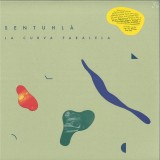
- A1: Whirlpool
- A2: Total Recall
- A3: Under You
- A4: Burning Part Of Me
- A5: Love Is Not A Ghost
- B1: Wildest Dreams
- B2: One Thousand Reasons
- B3: Restless Time
- B4: Mining For Heart
- B5: World As It Is
- B6: Temperature Drop
Demon Records presents four new vinyl reissues from English post-punk group the Sound. Whilst the Sound may never have matched the commercial success of their peers, the group are frequently hailed as one of the greatest bands of the 1980s and have a cult following to
this day. Following on from their critically acclaimed Shock Of Daylight EP, the Sound returned to the studio to record their fourth full length studio album Heads And Hearts. Includes the singles
‘One Thousand Reasons’, ‘Temperature Drop’ and ‘Under You’.
Pressed on 140g clear vinyl for the first time, with replica artwork including a printed inner sleeve.
- A1: No Salvation
- A2: Deep Breath
- A3: Cost Of Living
- A4: Quarter Past Two
- A5: Night Vs. Day
- A6: Physical World
- B1: Statik
- B2: Music Business
- B3: Propaganda
- B4: Words Fail Me
- B5: One More Escape
- B6: Missiles
Demon Records presents four new vinyl reissues from English post-punk group the Sound. Whilst the Sound may never have matched the commercial success of their peers, the group are frequently hailed as one of the greatest bands of the 1980s and have a cult following to
this day. Recorded in 1979 but not released until 1999, Propaganda is a collection of the Sound’s earliest known recordings. Highlights include early versions of ‘Missiles’, ‘Night Versus Day’
and ‘Words Fail Me’ - all of which would later appear on the band’s debut album Jeopardy. Pressed on 140g clear vinyl, housed in a printed inner sleeve with original liner notes by frontman Adrian Borland.
Over a decade after its inception, ground-breaking composer Max Richter announces the release of VOICES – a major new recording project inspired by the Universal Declaration of Human Rights. In a time of dramatic global change, VOICES offers a musical message of hope. Max Richter invited people around the world to be part of the piece, crowd-sourcing readings of the Universal Declaration of Human Rights to be interwoven into the work, which features an ‘upside-down’ orchestra. He received hundreds of submissions in over 70 languages. These readings form the aural landscape that the music flows through: they are the VOICES of the title.Max Richter explains, “I like the idea of a piece of music as a place to think, and it is clear we all have some thinking to do at the moment. We live in a hugely challenging time and, looking around at the world we have made, it’s easy to feel hopeless or angry. But, just as the problems we face are of our own making, so their solutions are within our reach, and the Universal Declaration of Human Rights is something that offers us a way forward. Although it isn’t a perfect document, the declaration does represent an inspiring vision for the possibility of better and kinder world.”
The Kenyan music scene is one of the most diverse and vibrant in Africa. However, ask any Kenyan which pop music style truly represents Kenya as a nation and there is only one possible answer: benga.
Benga is a pop style with its roots in traditional rhythms, instruments, and melodies. Luo musicians from western Kenya brought the style to prominence in the late 60s but other cultural/linguistic groups in other parts of Kenya quickly developed their own localized variants. With its pulsing beat, interlocking guitars, extended solos, and rapid-fire bass, benga music has dominated the Kenyan music scene over most of the post-colonial period.
Kakai Kilonzo is one of only a handful of benga artists to attract a broad following across Kenya. He opened up his music to others outside his Kamba language and background by singing in Swahili, which is widely understood throughout Kenya. At the same time, with catchy melodies and engaging lyrics, Kakai sang about subjects that all Kenyans can relate to: songs on all aspects of love and marriage, on social responsibility, societal ills (like drinking and witchcraft), moral guidelines, national unity, economic development, and more.
The songs on this compilation are taken from across Kakai's recording career, spanning from the mid-1970s to the mid-1980s, shortly before his illness and untimely death in early 1987, aged only 33. No Wahala Sounds are proud to present this selection of hard-to-find 45s from Les Kilimambogo Brothers, which are being released on vinyl here, for the first time outside Kenya.
The vinyl version includes a free CD copy of the album.
Due for release on 31 July 2020. Interest for airplay from Tom Ravenscroft and Gideon Coe from BBC 6 Music, DJ Ritu from Resonance FM/SOAS Radio, Roger Hill from BBC Merseyside and Steve Barker from BBC Lancashire.
If you are passionate about local music scenes as much as we are you might already know about the current brood of great bands going on in Cardiff, Wales.
Chain Of Flowers were the first to hail from the Welsh capital, followed by related side projects such as Night Thoughts, more recently came Private World of which the two boys we’re about to introduce are also live members of.
A new wave/synth act from the same city called Plastic Estate is emerging this year.
The duo composed by Nicholas James and Stanley Fouracres have released a few digital singles in 2019 as they’ve opened for The Murder Capital at Sŵn Festival and played alongside the likes of M!R!M, Josiah Konder and The Love Coffin. This Place is their first physical release and it’s due on 7-inch vinyl and digital on June 19.
On the two songs that compose the single, Plastic Estate clearly draw influence from the best UK new wave and pop artists such as Dave Gahan, Paddy McAloon, Roddy Frame and yet there is a sophisticated casualness and an innate freshness in their songwriting that makes them not sounding dated at all.
Amazing composition skills for such a young band and a perfect balance between electronic dance elements and acoustic instruments allow them to pay homage to the above-mentioned masters and to be a perfectly contemporary group at once.
Although it’s possible to pick out some darker lyrics, the overall feel is up-beat and breezy. It’s a contrast that runs through a lot of their music – like a dichotomy between dark, melancholia and happier, brighter feelings.
Whether it’s a happy pop synth riff mixed with sombre lyrics or vice versa, the young Welsh duo is delivering the best 80’s-inspired modern pop craft.
RIYL: Echo & The Bunnymen, Prefab Sprout, Depeche Mode, Orange Juice, Wild Nothing.
- A1: Shanti Celeste & Saoirse - Solid Maass
- A2: Persian - Morning Sun (Feat Hannah Small)
- A3: Seekers International - Furdamurda
- B1: Ebe - Thinking
- B2: Gideon Jackson - Taj-Mahal
- C1: Perpetual - Awakenings
- C2: Mark Seven - Crank
- C3: Paco Pack - Slap That Bass
- D1: Cari Lekebusch - Output 2
- D2: Pauline Anna Strom - In Flight Suspension
Shanti Celeste is a vibe. She’s got that magic lightness of touch even when things are getting Jacques Cousteau deep or panel beating heavy. This makes her the perfect candidate for the Sound of Love International 3, channelling the spirit of both those after-hours sessions and the more frivolous daytime boat parties. This is serious music for serious music heads but, after all, everyone is still on holiday. It’s linear and cohesive but plays with the emotions -carnivalesque fun, psychedelic flow-states, heads-down rhythm trax, playful skipping garage, and more abstract moments. Deep joy to deep space and back, often in the space of 3 or 4 well-selected records.
There’s a deep musical and personal connection to the festival - as she says of her first time playing at the Beach Bar, “there’s a heavy Bristol crew there and it all feels easy and nice. It was just good
vibes all round”. And she does make it sound easy too, which belies a DJ with some very serious skills and an ear for a killer tune that others might well overlook. And it’s this that makes the 3rd instalment of the Sound of Love International such a joy - a welcome panacea to all of us suffering from the Croatian blues this year.
To which end, we get a cheeky exclusive collaboration between Shanti and her sister-in-arms Saoirse in the shape of ‘Solid Mass’. Persian’s uniquely British paean to the post-rave Sunrise ‘Morning Sun’, cavernous dub runnings outta the Bokeh camp from Seekers International. These are the lift- off tunes, setting the mind-state for the journey ahead.
Things tighten up with cult underground hero Lucas Rodenbush under his E.B.E alias giving us the taught, grooving, dubby tech-house and Gideon Jackson’s ‘Taj Mahal’, crisp, spatial, mystical and criminally slept-on. We go deeper into the night with Perpetual’s Awakenings’, one of those records that is so much more than the sum of its parts. And who knew that Mark Seven was such a dab hand with the dank machine funk? Check 1998’s ‘Crank’ for the skinny. By the time Paco Pack’s rubberised ghetto house reimagining bounces into play it’s GAME OVER.
The final side leaves us with the soft landing - Cari Lekebusch ‘Output 2’ is both pacey and drifting and Pauline Anna Strom’s ‘In-Flight Suspension’ does what it says, whips away the drums and leaves us floating in space. Will we ever touch down?
To overuse a phrase, this compilation arrives in strange times but is a glorious reminder of what brought us all together and will again. The music and dancing under the stars. See you in 2021.
- A1: Berserk In A Hayfield - After Dusk
- A2: The Lord - Controversial
- A3: Silicon Valley - Electro Switch
- A4: Neutron Scientists - Cabaret Futurama
- A5: Lives Of Angels - Artificial Ignorance
- B1: Modern Art - Golden Corridor
- B2: The Lord - Gonna Dream My Life Away
- B3: Echophase - Controlled Experiment
- B4: Disintegrators - Radioactive
- B5: Mystery Plane - Burning Desire
- B6: Modern Art - Dimension 2
Here is the highly anticipated sixth volume of the well received electronic compilation series from the relaunched 1980's color tapes label. As with the other volumes you can find great examples of cold wave, minimal wave and synth electronics and pro to EDM made by obscure British bands in the 1980's such as: Berserk In A Hayfield, Lives of Angels, Silicon Valley, Modern Art, Disintegrators, Echophase, The Lord and Mystery Plane
"Up there with V-O-D selections, the Color Tapes series so far has provided invaluable insight to hidden or much lesser-known currents of the ‘80s cassette subculture which gave birth to myriad artists, styles and industry conventions whose influence can still be felt over 30 years later. " - Boomkat
“Electronic work that’s way different from mainstream pop of the period - often forgedout of the same instrumentation as the hits - but in a stripped down way - with lots of dark and moody corners!” Dusty Groove
“Evil Synths and evil beats” - Norman Records
“Gary Ramon’s re-born Color Tapes imprint is every bit as essential as it’s Minimal Wave and electro-focused predecessors” - Juno
Limited edition of 500 copies comes with poster insert
YELLOW VINYL LP
It's hard to speak about unspeakable things - violence, abuse, addiction and abandonment; especially when these things rupture the innocence of childhood. But one of the merits of Luke Jenner's new solo project is that he not only speaks of these things but he does so in a way that wrests them from the dark, small cubicle of shame, placing them firmly in the light so that we, as listeners and fellow survivors, can start to maybe walk with our head high. In this moment of empty pop music séance, the scope and ends of this project - to try and help people - feels almost revelatory. Revelatory is the right word here in that it carries with it, of course, the sense of religious or spiritual insight. As front man for the legendary post-punk NYC band, The Rapture (a band name that already attests to Jenner's abiding faith and interest in the force of spiritual reckoning), Jenner has never shied away from his belief in God, community, family - all as a means of recovering the fractured x of y. "How Deep is Your Love", "Grace"...
Hello Everybody,
I hope that you will have as much enjoyment from my music here as I had performing it!! I would like at this time to give you a little "History" of myself and as to how I came to love the music that I play! Coming from a "Musical Family"; my father was Tyree Glenn, Musical Director and Trombonist with Louis Armstrong and played with the likes of Cab Calloway and Duke Ellington among others and my brother, Roger Glenn, a very "Talented Musician" in his own right, it was not difficult for me to be "Influenced" and get into "Show Business" as a Musician and Entertainer! My early years in the "Fifties" were spent playing the Saxophone with my "Teenage Band" in New Jersey and later, after 4 years at Marietta College in Ohio, in the "New York City Area" in the "Sixties"! As the song goes: "IF YOU CAN MAKE IT THERE, YOU CAN MAKE IT ANY WHERE" which I did and it was in New York City where I got my "Musical Education" which would become a part of me for the rest of my life! In the "Mid-Sixties", I was offered a "Partnership" in a Night Club in the Algarve Portugal and readily accepted the chance to perform "In My Own Club"! Moving on to Lisbon after a few successful years in the Algarve, I performed in TV and recorded records there in Lisbon! By the way, I played Professional Basketball for "Benfica Lisboa" which was and remains to this day, my "Big Love for Basketball" and was to be a big part of my life! From Lisbon, I eventually went on to live and play in Italy in the early Seventies with Rocky Roberts. Returning to Lisbon in the mid-Seventies, I worked with my buddy from my "New York City Days", the very talented "Singer & Entertainer" Wayne Bartlett, and we formed the "Duo": "Wayne & Tyree" and performed in the Casinos in Portugal! We accepted an offer to perform our show in Germany and as things worked out, I have been living and playing my music here since 1976! I have enjoyed bringing my "R&B" to everyone and showing just a little bit of how it was performing "R&B" in NYC back in the "Sixties"! I hope that you will enjoy this Compilation of my work here in Germany from the past years and I would especially like to thank Tramp Records for making this record possible and being a "True R&B Fan" of Tyree Glenn Jr. and my Music!
Something a little different from Athens of the North, Crisrail (Chris Rael) is an almost-LP of mad out there funky post punk from Silver Spring, Maryland, USA. Rated and played this out for some time but it has remained mostly under the radar due to scarcity. I could compare it to The Cure but it's so much more. 500 ONLY
"Playing instruments didn't come naturally to me, but I loved it so much I kept doing it and got better. When I started composing seriously in my early twenties, I didn't have much confidence in my voice or instrumental abilities, but my imagination was on fire and I was determined to create music that sounded like nothing else. I would find my place in the constellation of sound by carving a niche that was so unique, musical virtuosity wouldn't be a factor. I was inspired by Tom Scott of the Muffins, Maryland's legendary progressive jazz quartet, and owner of Black Pond Studios in Rockville, where Game of Music was recorded. It was my first solo release; I played everything except Tom's horn and flute parts. Lacking confidence to perform, I was very much a studio rat and became facile at overdubbing solo tracks. New music reviewers praised it at the time, but its distribution was limited and it's been out of print for decades. Listening now, it's more musically muscular than it felt to me at the time. It's incredibly gratifying that more people can hear it again, thanks to Athens of the North." - Chris Rael
According to the feudal system which was introduced into England by William of Normandy, the king was an absolute monarch, so he could do whatever he liked.
(from Origins of the Magna Charta).
In a cardboard media background, where cliche is law, where the digital essence of the personal data is more meaningful than the person itself, the Bait e Borghi project arises. The natural environment beyond anthropization, the technic and technologic strained clutch inside the places that inspired the album. The traveller meant as the one that makes the trip his own life, and that inevitably moves so far away from common archetypes that defeats every possible storytelling but the sound evocation. A sound that becomes the last unreal notebook like the matter which dreams and memories are made of. An unlikely but possible distopia where our last Thule remains the passage between body and machine, cyberpunk myth yet beautifully imagined and illustrated during the eighties. Not by chance Bait e Borghi share the same starting point, the same region that assumes twisted features if observed from the mid Adriatic offshore oil platforms point of view. Squalo, Giovanna, Ombrina are the point at issue, monumental media short-circuits, disclosed and hidden truths at the same time
L’Escalier des Aveugles, or The Stairway of the Blind, was commissioned in November 1990 by Spanish National Radio (Radio Nacional de España). Asked for a piece to premiere as part of the European Day of Music, Luc Ferrari returned with a radiophonic concept that organised his anecdotal music into montage form, sequencing short, elusive narratives in a successive way.
The completed composition is formed of thirteen chapters containing a mixture of environmental and synthesised sound, commentary, chatter, and encounters with people and places. Each focuses on a small event within this playbook, and Ferrari notes that each “in addition to being a realistic photograph, will be the subject of a ‘setting to music’: fragments of voice and atmosphere will be sampled and will produce musical matter or a ‘song’.”
The sonic language of Madrid forms the setting to which Ferrari lays out the persistent theme of the piece, that of the composer being guided throughout the city by a young woman. Using a game-like structure (liners for this edition include Ferrari’s “Regles de Jeu”, or “Rules of the Game” which act as a script or score to the piece) the motivation is posed: imagine that one day you are told “I know a place in Madrid that sounds amazing (or bizarre)”, to which you reply “Let’s go to it together.” The recordings toy with the relationships between guide and tourist, translator, director and actress, and masculine and feminine that emerge as Ferrari and the actresses follow this action, documenting the shared experience and connections they make as they visit these places.
Six actresses guide Ferrari (and the listener) through locations simultaneously ordinary and sonically rich: the metro; the El Corte Inglés department store where we hear the gossip from changing rooms set against music emanating from the PA; vagabonds declaiming their political stance in the Conde de Barajas plaza; interactions buying apples in a market; the reverberant and spacious halls of the Prado Museum where one actress gives a moving description of her favourite painting - Goya’s The 3rd of May 1808.
Ferrari replies in French to their comments in Spanish, and there are several self-referential plots, devices, and word games that flirt with the poetics and rhythm of language and sound. A recital of Lorca’s poem "La Casada Infiel" in “Hommage À Lorca” in amongst the location recordings feels striking, and the call and response of “La Nouvelle de L’Escalier”, where one of the actresses descends the staircase of the blind - a long stone stairway in Madrid proposed to Ferrari as an interesting location to visit during the trip by producer José Iges. She replies to Ferrari’s vocal enunciation of the place (and title) in French - L’Escalier des Aveugles - with the place-name in Spanish: La Escalera de los Ciegos.
Using this repeated title and image of the staircase of the blind as a symbolic place, a line is drawn to a situational landscape experienced and diffused through snapshots and allusion rather than holistically overviewed, sound conjuring pictures within the imagination. In the sensorial qualities of Ferrari’s treatment of emotion and language—fortified with electro-acoustic motifs and musical properties—the piece accelerates towards a render that is truthful, beautiful, yet also surreal; somewhere between theatre and reality, a gonzo cinema of the ear.
Two leaders from very different musical worlds, the innovative pianist Bruce Brubaker and scientist-now-electronic-artist Max Cooper collaborate to create this latest expression of music by Philip Glass and tell a story of diversity and vulnerability.
Commissioned by and introduced at the Paris Philharmonie in 2019, Glassforms melds the acoustic concert grand piano with synths and cutting-edge electronic production techniques to create a compelling album and a dynamic live experience.
Rather than just reworking or augmenting via traditional means, Max Cooper and Bruce Brubaker fundamentally rewire Glass’ forms in a manner that’s not possible with human composition tools. Max built a new system for musical expression through coding with software developer Alexander Randon, creating a tool for taking live data from the piano and transforming it into new but intimately related forms which drive his synths on stage.
The result is that each of the pieces by Glass becomes its own electronic “instrument,” an instrument Bruce plays in addition to, and simultaneously with the original piece. As Bruce plays the piano and controls synths with his playing, Max modulates and augments, sometimes adding his own melodies to form hybrid variants.
After seven years, the second release of Max Loderbauer on Non Standard Productions arrives again in his style of post - german - electronic - avant garde. “Donnerwetter” is the perfect blue print of modern reduced electronic adventures. Carefully chosen out of a pool of recordings produced by Max in the last years, slightly edited and arranged into a full length album.
Re-release of the record originally released on 2016-02-05!
Remastered and cut by Rashad Becker at D&M Berlin and presented in an exact replica sleeve of the original 1966 release by Stephen O'Malley.
sales information: Black Truffle is honoured to present the first vinyl reissue of the classic debut album from AMM, AMMMusic. Coinciding with the 50th anniversary of its recording in 1966, this reissue makes one of the cornerstones of the experimental music tradition available again in its original form, replete with Keith Rowe's beautiful pop art cover and the terse aphorisms by the group that served as its original liner notes. A testament to the interaction between the experimental avant-garde and the countercultural underground, the album was originally released on Elektra, recorded by Jac Holzman (the label's founder, responsible for signing The Doors, Love, and The Stooges) and produced by DNA, a group that included Pink Floyd's first manager Peter Jenner. (Pink Floyd paid tribute to AMM's influence on their improvisational sensibility with the track 'Flaming' on their debut album, named after the piece that occupies AMMMusic's first side, 'Later During a Flaming Riviera Sunset').
Formed in 1965 by three players from the emerging British jazz avant-garde - Keith Rowe and Lou Gare had played with the great progressive big band leader Mike Westbrook and Eddie Prévost played in a post-bop group with Gare - AMM quickly evolved from a free jazz group into something decidedly more difficult to categorise. By the time these recordings were made, two more members had joined the group: another Westbrook associate, Lawrence Sheaf, and the radical composer Cornelius Cardew. Then at work on his masterpiece of graphic notation Treatise, Cardew brought with him extensive experience of the post-serialist and Cageian currents in contemporary composition. Using a combination of conventional instruments and unconventional methods of sound production (most famously Keith Rowe's prepared tabletop guitar, but also prepared piano and transistor radio), the group performed improvised pieces often running for over two hours and ranging from extended periods of silence to terrifying cacophonies.
Evan Parker famously described the improvisational logic of AMM's music as 'laminal', in contrast to the 'atomistic' approach more common among the generation of British improvisers (Bailey, Rutherford, Stevens and co.) to which he himself belonged. AMM improvised in layers: layers of sound subtly rising and falling or abruptly starting and stopping without being propelled by the implied pulse of free jazz improvisation. Rather than a pulse, AMM's music began with the sound of the room in which it was played, the Cageian anarchy of silence. By embracing the non-synchronous simultaneity of layered sound, AMM was able to create a musical container into which nearly anything could be incorporated at any moment: on AMMMusic, long tones sit next to abrasive thuds, the howl of uncontrolled feedback accompanies Cardew's purposeful piano chords, radios beam in snatches of orchestral music (and, on the LP's second side, an extended fragment of 'Mockingbird').
AMM's clearest break with jazz-based improvisation concerned the idea of individuality. Where improvised music has tended to foster the development of idiosyncratic stylists who move freely from one group to another, AMM, initially through an engagement with eastern philosophy and mysticism and later though a politicized communitarianism, sought to develop a collective sonic identity in which individual contributions could barely be discerned. In the performances captured on AMMMusic
the use of numerous auxiliary instruments and devices, including radios played by three members of the group, contribute to the sensation that the music is composed as a single monolithic object with multiple facets, rather than as an interaction between five distinct voices.
- Francis Plagne
Black Truffle is pleased to announce a new solo album by Eiko Ishibashi, her first for the label, following on from the duo recording Ichida alongside bassist Darin Gray. Hyakki Yagyō (Night Parade of One Hundred Demons) was produced for the ‘Japan Supernatural’ exhibition at The Art Gallery of New South Wales, Sydney focusing on ghost stories and folklore from the Edo period onwards. As with The Dream My Bones Dream (Drag City, 2018), the album is a response to troubling questions about Japanese history, and the influence of the past upon the present, but finds Ishibashi shifting further away from her earlier piano-led songwriting and showing a deepening interest in electronics and audio collaging.
The two sidelong parts of Hyakki Yagyō feature layered synthesisers, acoustic instrumentation, recited verse and field recordings, at times densely mixed but always with a subtle interplay of changing elements. The influence of European and American forerunners as diverse as Alvin Curran, David Behrman and Strafe Für Rebellion can be traced, yet at the same time Ishibashi evokes the flute and string sounds associated with Japanese storytelling, and draws directly on the subversive literary tradition of Kyoka (‘mad poetry’) with a verse by the 15th-century poet Ikkyū Sōjun repeated throughout the album. Revisiting what has gone before, re-thinking what is possible musically, as a way of articulating what else might be possible in the future.
As Ishibashi’s liner notes make clear, the album reflects an attention to persistent dangers, myths and evasions in Japanese culture – as well as the lurking uncertainties that might threaten positive change. This would seem to be manifested in the emerging melodies soon met by dissonance, erratic collisions and near silence, as well as the eerie manipulation of the double-tracked vocals. Ishibashi’s underlying concerns ring true more widely of course. Hyakki Yagyō is a work of multiplicities, and mystery, a landscape where nothing is as it seems at first, and everything is vulnerable to sudden violent interruptions.
The album was produced with regular collaborators Jim O’Rourke (double bass) and Joe Talia (percussion), and features dancer and choreographer Ryuichi Fujimura performing Ikkyū’s satirical tanka. O’Rourke’s immersive mix creates a three-dimensional effect, with Ishibashi’s various sound sources enmeshing and interacting in captivating ways.
Pressed on coloured vinyl and presented in a deluxe package with an inner sleeve featuring and artist portrait and liner notes from Eiko Ishibashi. Cover and label design by Shuhei Abe.
Back cover design by Lasse Marhaug. Mixed and mastered by Jim O’Rourke.
key selling points:
- Black Truffle is pleased to announce a new solo album by Eiko Ishibashi, her first since her acclaimed 2018 Drag City release The Dream My Bones Dream.
- This album finds Ishibashi shifting further away from her earlier piano-led songwriting and showing a deepening interest in electronics and audio collaging.
- Hyakki Yagyō (Night Parade of One Hundred Demons) was produced for the ‘Japan Supernatural’ exhibition at The Art Gallery of New South Wales, Sydney focusing on ghost stories and folklore from the Edo period onwards and is a response to troubling questions about Japanese history, and the influence of the past upon the present.
- Produced with regular collaborators Jim O’Rourke (double bass) and Joe Talia (percussion), O’Rourke’s immersive mix creates a three-dimensional effect, with Ishibashi’s various sound sources enmeshing and interacting in captivating ways.
- The two sidelong parts of Hyakki Yagyō feature layered synthesisers, acoustic instrumentation, recited verse and field recordings, at times densely mixed but always with a subtle interplay of changing elements, hinting at an influence of European and American forerunners as diverse as Alvin Curran, David Behrman and Strafe Für Rebellion.
- Pressed on coloured vinyl and presented in a deluxe package with an inner sleeve featuring an artist portrait and liner notes from Eiko Ishibashi. Mixed and mastered by Jim O’Rourke.
"AVALPBOX4", Limited Edition- 1.000 Copies' 28-Page Hardback-Book: 10" Vinyl, Hand signed Programme, Tour Poster & DVD.
By the time The Beatles travelled to Blackpool for the first time,
they had toured with the legendary American singer, songwriter, Roy Orbison; recorded several BBC radio shows, including Saturday Club, Easy Beat and Pop Go The Beatles; appeared on many, highly popular television programmes; released their debut album, Please Please Me and issued their first three EMI singles, ‘Love Me Do’, ‘Please Please Me’ and ‘From Me To You’.
Their fourth, ‘She Loves You’ had just been recorded and mixed ready for release. It was an exciting time for the band so, when they reached the popular, seaside resort for the first time, on 7th July 1963, optimism was filling the air. This stunning AVA Editions collectors pack contains a 10" Record feat. two appearances made by the Beatles on the ABC television show, Blackpool Night Out; an impressive 28-page book, crammed full of previously unseen colour images of the group and a high-quality reproduction of an original, 1963 concert programme signed by Skiffle legend, Chas McDevitt, who supported the Beatles on several occasions.
Also included is a full colour A3 poster and an exclusive DVD feat. a new, 30-minute interview with him, alongside his previously unseen, candid, colour footage of the group backstage, and in performance at the ABC Theatre in August 1963.
So too is a unique, fully colorized version of their 17-Mins. appearance before the cameras for Blackpool Night Out in August 1965. For Beatles and music fans alike, this pack serves as a wonderful opportunity to own a unique slice of music history.
*** Side A: Recording 19th of July, 1964
*** Side B: Recording 1st August, 1965
Time for some magic as longtime friends Guti and Djebali present their debut collaborative LP ‘Almost Finished’. The two artists decided to get together in Djebali’s Paris studio when Guti was in the French capital in April. With no real plan besides the chance to have a jam together they ended up locked into a four-day session, producing six tracks. In the months that followed, both men roadtested the music around the world, receiving positive feedback everywhere they played. Feeling they’d created something special, the decision was made to arrange a second session at the end of the summer.They found themselves fully immersed in another intensive recording session, where the idea was to make more music based on the existing tracks to create a cohesive body of work that would form an album. Guti and Djebali composed an intro, an outro, interludes and new tracks that complemented those they’d made earlier in the year. Artwork has been specially commissioned from Mister Piro, a protégé of world-famous Madrid-based artist Okuda. The result is a dancefloor-focused collection of 8 tracks (plus a digital bonus) and stunning artwork, which comprise the ‘Almost’ Finished LP
The second release from Wax Ninja, a Moscow-based record-shop-turned-record-label, is the longed-for gem cut by Artem Xio, the humble leading light of the local underground scene. Can't Stop Now EP is a universal musical weapon, perfect for a DJ bag in which a variety of genres - from hip-hop and jungle to garage house and techno - coexist peacefully. Each side reflects Xio's stages of formation: not only as a collector, DJ and artist, but primarily as a an educated listener with a sensitive ear. The title track Can't Stop Now was written in 2010 to be rethought 10 years after and become a house banger powered by emotionally charged vocals. The dramatic opus that is Crucial Moment pleases with its Detroit-style anguish, while the U Took My Love, an ode to electric organ, gives out some proper Jersey house vibe. Raw and heavy, True School was born out of an unreleased remix for the local rap group, and finally Now U Know takes you back to the beginning of 00s thanks to Cream Soda d'n'b rework. In other words, this "unstoppable" EP is a true delight both for nostalgic old school heads and for those who expect some quality time on the dancefloor.
DJ Feedbacks: (please find all feedbacks in the pdf sheet)
Laurent Garnier: “GREAT EP -- Love the whole thing”
Tensnake: “can't stop now is big thanks”
Robert Owens: ''cool tracks!"
Ka§par: "“For me the house tracks are fun and all, but it's the
Cream Soda jungle mix that's got me into this release,
thanks!”
Anja Schneider: “Great thx .”
Portable: “Wonderful summer vibes post lockdown!”
Black Madonna: “Nice!”
Moodsetter: “Damn Yeaaah !!!
This is classic New York underground sound...
what a vibe !!!
I just L. O. V. E. I. T !!!
About a year ago Leroy Se Meurt delivered a simply hard-hitting and smashing debut EP… which quickly sold out at the ET HQ… the mixed background of this duo from Paris in electronic music and in punk-rock shapes the distinctive sound of Leroy Se Meurt… you can call it synth-punk or elektropunk… or simply post-punk for that matter… Not only their debut EP did have impact… possibly even more did their live shows… their live performance is wild and in your face…
Now there is the follow up to that acclaimed debut EP… this time Leroy Se Meurt takes a little step back from the totally in your face attitude… the sound is a bit darker and aims less on a direct confrontation but works to crawl under your skin… the energy and tension is still there but is building up gradually… and has a bigger impact that way… Don’t miss out on this next step in the campaign of Leroy Se Meurt!
Finally being back on his Exhibition imprint, Rico Puestel - without any detours - delivers some intensively uplifting moods within two melodic exhibits that have been circulating here and there over two years now. After ongoing requests about those tracks, these two ultimately join forces and go public on a hand-painted flip design, making this record a wholesome experience again.
Side A discovers the emotional magnitude, circulating and growing around the beauty of redundancy throughout a deeply immersive flute loop, nestled into a bouncing, analogue, almost archaic drum computer setting. Slowly building up over the course of half the track, Exhibit 3.1 emerges into a sphere of multi-layered synth harmonies and an oldschool bass arpeggio.
On the flipside, things suddenly become clear that Side A has just been the build-up to something even larger and stronger: A mechanical marrow-and-bone drum groove (one might not hear everyday) stomps away to spread the bed for one of Rico's possibly most captivating and flourishing synth melodies, spreading some blurry mysteries and clear sun-drenched bliss at the same time.
A vast scenery, unfurling in front of your ears and eyes, almost like smelling blossoms and fresh air
Lennard Poschmann returns to Oliver Hafenbauer's Die Orakel label with a brand-new EP under his O-Wells alias.
'Ebecs' showcases the Robert Johnson resident's subtle, distinct approach to Detroit-ish,
IDM & ambient-influenced electronic music.
Opening track ‘Ectid’ is a free-floating introduction revealing a glorious acid undercurrent. ‘Bbmore’ demonstrates a different kind of approach with the same wistful ingredients, unravelling a tightly wound drum structure from the inside. On ‘Exolite’, the inverse unfolds, as Wells blends experimental textures and introduces stabs of cathartic and deep bass.
Introducing the other half of the release, ‘Culling Virus’ is Wells' take on simmering, paranoid electro. On the pairing of LL0P 1 and LL0P 2, he provides an intermission with two tense locked grooves before concluding the release with the cascading and dense ‘Shnuck’, a psychedelic transmission of complex layered sound design.
What is Randolph & Mortimer? A folk duo, a pair of accountants, a techno act…a law firm? What started off as an ‘art project’, influenced by 80s Industrial, 90s rave music and inspired by the documentaries of Adam Curtis, has morphed into a full on New Beat / Body Music dance-floor moving machine. Their studio releases have gained support from some of the biggest underground DJ’s in the world like Ancient Methods and gone on to top various genre sales charts on Bandcamp. Whilst the R&M live shows have seen them share bills with Godflesh, Youth Code, PIG and 3Teeth.
In 2019 it was time for R&M to throw a marker down and so came “Manifesto For A Modern World”, the debut album comprised of tracks from the “$ocial £utures”, “Hope Tragedy Myths” and “Citizens” EP’s plus some additional songs. This album is basically a greatest hits of Randolph & Mortimer. A statement of intent. All killer and no filler. The original limited edition CDs and tapes sold out and it had some incredible reviews. A Model Of Control called it “An absolutely outstanding release” and super cool New York DJ Andi Harriman (Synthicide) made it one her of top 10 albums of 2019 on Post-Punk
So here we are in 2020 and the Randolph & Mortimer story has seriously stepped up a gear with this double vinyl version of the album featuring all Manifesto tracks plus the acid styled dance-floor favourite “Apply Yourself” and four brand new tracks (“Crystal Peaks”, “Stateless”, “What Are You?”, “Fantasy Land”) which make up a whole new EP.
Limited edition of 400 copies with folded poster/insert and sticker.
Purple Vinyl
Opening with "Absolut Bond (Sascha Müller My Name Is Acid Mix)" the pairs first collaboration effort weighs in a deep, hypnotic take on spiralling Acid music for strobe-lit underground raves whereas their second conjunctional joint "What I Mean (Great Evening Mix)" brings forth a darker, more pumping and minimalist approach whilst employing a creepy little motif that gets under your skin like the main theme from your favorite horror flic. On the flip we see Sascha Müller going on a double solo tip with "Work My 303", another masterly crafted Acid piece harking back to the finest twisted clubbing moments of the 90s, before the final cut "Generator Man" explores grinding, distorted Broken Techno / Wonky Techno realms, sucking each and every listener into a cold dystopian, post-apocalyptic future within seconds. Get this.
- A1: Frenetics - The Madman Talk
- A2: Vox Rei - Le Ombre Dei Soldati
- A3: The End - Tears In My Eyes
- A4: Les Blusons Noirs - The Scream
- B1: Illogico - Africani Gemiti
- B2: Blaue Reiter - My Inner Tought
- B3: Polaroid - Vita Immaginaria
- B4: Atelier Du Mal - Back To Taiwan
- C1: Sex - A Sickness Called Distress
- C2: Ship Of Fools - Metal Box
- C3: Ideal Standard - Another Loser
- C4: Nadja - Possession
- D1: The Age - Uer
- D2: Dark Ride - Apocalypse
- D3: Mono - From Planets & Satellites
- D4: Tv Dance - Schneller Leben
Searching for new languages beyond the bitter and nihilist dialect of punk, bands like Gaz Nevada, Litfiba, CCCP, Diaframma, Neon, and many others, began spreading their message all along the Italian peninsula during the early eighties and many of the members of these bands are now some of the best musicians/producers in the Italian independent music panorama (Giovanni Lindo Ferretti, Piero Pelù/Litfiba, Bisca, etc.). 16 tracks by 16 Italian underground bands from 1982-1984: bands who faded into oblivion before ever releasing anything of their own on vinyl. It should, however, be stated that if these sixteen bands had been found on an album, EP or single, they certainly would not have lowered the average quality of albums in that genre…not even in terms of sound quality, which has actually been improved upon here (considering that the original tapes had been lying around collecting dust for at least a quarter of a century) by careful restoration.
Italian producer Clap! Clap! returns to Bristol's Black Acre with his third album, ‘Liquid Portraits’. Born and bred in Florence, Cristiano
Crisci’s musical career extends back to the mid-90s where he started out as a rapper, before picking up a saxophone and exploring
both jazz and jazz/punk fusion with Trio Cane, and then returning to his electronic roots with A Smile For Timbuctu project - a
collaborative effort that released four albums and performed across Europe. By 2008, Crisci decided to strike it out on his own as Digi
G’Alessio, channeling the same hip-hop meets electronic music energies as those animating the nascent Los Angeles beat scene for a
string of EPs and albums. Soon Crisci hit upon a new formula when he started combining samples from the African continent with
energetic drum programming. The results led to the birth of Clap! Clap! in 2013, which has since been recognised and supported by the
likes of Paul Simon and Gilles Peterson. The stripped-back, high-energy yet inventive sound caught the attention of Black Acre with
whom Crisci has been working with ever since, including his first and second albums ‘Tayi Bebba’ and ‘A Thousand Skies’. Returning
to Black Acre, Clap! Clap!’s third album once again deploys his inimitable technique in fine style, however with new eyes as this new
project signifies a definite shift in his work having spent the last few years learning the art of mixing which has lead to some
breakthroughs: “In recent years I’ve spent a lot of time studying essential mixing techniques. I then built an acoustic-treated room and
set up my new studio. I started to convert digital into analogue and vice versa with good converters and achieved sounds that I’ve
never heard before from my speakers. This had a huge positive impact on my mixes and result on my music.” Entitled ‘Liquid Portraits’, the album - as the name suggests - is a collection of sonic paintings, an attempt at capturing furtive, subconscious memories through sound. The tracks reference trips Crisci took and people he met – from southern Italy to Hokkaido via the Kif Mountains of Morocco – as well as more abstract ideas of loss, calmness, and childhood. Having been approached by Paul Simon to work on his 2016 album ‘Stranger To Stranger’ after Simon discovered ‘Tayi Bebba’ through his son, Clap! Clap! is no stranger to collaborations and this album features a small cast of talents, such as south Italy percussionist Domenico Candellori (‘Southern Dub’), Belgian artist Martha Da’ro (‘Moving On’) and harpist Kety Fusco (‘Rising Fire’)
Bari's based Dj/Producer, Innocent Soul, brings his Disco, Italo and House influenced sound to French label Happiness Therapy’s eight release. Having previously teamed up with Black Loops on a few acclaimed productions on labels such as Toy Tonics, Rough Limited and Defected’s sub-division Classic Music Company, his biggest impact has possibly been with his DJing. Having found success and notoriety as a resident in Barcelona’s club scene, Innocent Soul, makes a bigger name for himself as a producer with his latest release ‘Poison’.
Opening up is title track ‘Poison’ a throwback to the 80’s dance music with an italo touch, driving percussion and mesmeric synths. This track highlights the diversity of Innocent Soul’s production style. The following track is ‘Don’t Make It’ a heart pounding, trance inducing progressive disco track with a prominent foot stomping kick drum, looping Afro-Caribbean percussion, rolling bassline and spacey synths. Next up on the release is a heater, ‘Feelin’ Love’ is a raw soulful house track with an infectious rhythm that gets your head nodding from the get go, beautiful female vocals with bright and uplifting melodies. If you’re looking for a feel good track this is it! Closing out the EP is ‘Bring Your Mind’ a bumpin loop oriented house track with hypnotic basslines, horns and vocals. The perfect after hours track.
DJ Support and positive Feedback by the likes of
Laurent Garnier, Dixon, Ame, Adriatique, Ian Pooley, Timo Maas, Trikk, Frankey & Sandrino, Sacha, The Drifter, Severino (Horse Meet Disco), Alex Dallas (Zukunft Zürich),
Yør Kultura, Lehar, Denis Horvat, BOG, Echonomist, Fred Everything, Luca Bachetti, Karotte, Roberto Rodriguez…
We're happy to announce the fourth chapter of our sought-after Outbound series which also marks Lossless' second release in 2020. After two extended chapters of Outbound, fully showcasing our labels artist roster, Outbound.4 is a crisp double A-Side affair - featuring two killer Techno workouts courtesy of our French stalwart Anthony George Patrice followed up by two Deep/Dub House delights delivered by Son Dos.
Without a doubt, Berlin based frenchman Anthony George Patrice steadily adjusted and developed his sound to a higher level over the last years. His contribution on Side A - "DBZU (Eine Brücke Zum Übermenschen)" and "Crowned Eagle" exposing new artistic shades and Anthony's ability to take you on a sonic journey and soak you into his rich and driving deeper Techno soundscapes.
Side AA belongs to Son Dos - a creative power plant by two Sweden born men: Barcelona based Marco Gegenheimer and Tapia J. Arriagada living in Malta. The duo already caused a stir with their debut "Children Of Almost" on Outcast Oddity. Marco also released some great music on Studio Barnhus as one half of MLiR!
On our Outbound.4 the guys showcase two amazing cuts originated from fruitful studio jams.
The beautiful "Cala" is hypnotizing us in deep, meditative balearic territories while her powerful brother "Maffio" might have had a little testosterone injection along the way and moves us straight onto the dancefloor. Both tunes are capable to unveil their power outdoors just as much as they will in a sweaty basement!
Son Dos quoting on Anthony George Patrice's tracks:
"These songs sound like a Movie score to us, a soundtrack taking you further and further into an unexplored forest: ...you are on a mission ... chugging drums, haunting strings and rolling percussion guide you... your heartbeat intensifies, with each step that you take...
all of a sudden, the floor underneath you turns into flowing geometrical patterns and you start falling...
a voice tells you "Happiness Is A Miisunderstanding", and the fear you had leaves your mind...you connect yourself with a higher power and realise why you started this mission in the first place"
Anthony George Patrice quoting on Son Dos tracks:
"Lovely balearic yet powerful atmosphere on "Cala"… Head flies and shoes get used. All that you wish for!" ...
"Hands in the air for "Maffio"! Here comes the peaktime booming system. Simple, efficient yet super interesting and deeply rooted dance floor killer. This is ace!
Black Vinyl Edition
The Log and the Leeway follows a 6 year journey of personal exploration and drastic change for Bram Bosteels and his singular Kaboom Karavan universe. What entails is a sound-curiosity of rare format, following a metamorphosis that goes beyond the musical.
Early in the process, Bram was struck by the word/concept of a Leeway : the gradual departure from an intented course due to external influences. Following a boyish fascination for explorers travel journals, logbooks and the far fetched corners of the world, he could not have forseen how fitting of a title he had chosen. Drastically all of a sudden one day, completely unexpectedly, Bram experienced his own father dying in front of him from a rare disease. Shocked and confused by this intense encounter, his perspectives and musical course departed from its original path. But at the same time it was an enlightenment and a necessary influence for him to realise the initial idea and finish this album, started over half a decade before.
The ones familiar with Kaboom Karavan already know that nothing really sounds quite like it. Bram’s musical (and non-musical) universe is of the rare breed that seems to be entirely his own. Self-contained, but never opaque. Quite the opposite actually. Bram never pushes us away, instead, by listening to his music we are given view to a synesthetic wunderkammer of images, places, objects and possibilities. Distant but magnetic, alien but intimately familiar, Kaboom is folk music from another dimension. Listening to The Log and the Leeway is like waking up next to a bonfire in the middle of a swamp wearing somebody else’s clothes: You may not know how you got here, but whatever is happening seems to very directly involve YOU. What will happen?
Note from Erik K Skodvin (Miasmah): All the sounds, fabrics, instrumentation and stories that binds The Log and the Leeway together go far beyond what can be touched up in this simple writeup. As someone who have followed this journey since the beginning, and seen it shift from lighthearted fun to the most crepuscular personal experience, heard the stories behind (almost) every field recording and gone through boundless amounts of clips, visual details, notes, and inspirations – I can only say that it is with great pleasure and certain nostalgia I can present this record in full through Miasmah and close this quite extraordinary chapter. Bram is without doubt the most fascinating person I know. Like I told him in April 2020 during a trying time: “If everything fails, we´ll open a Kaboom Karavan museum” - an idea that might not be as far-fetched as it sounds.
Featuring: Cover painting by John Lurie. 16 page booklet of Musical illustration / collagés by Walter Dhoogh & Erik K Skodvin that more or less connects (or confuses) the dots between the music and stories behind. Mastered by Lupo at Loop-O
Scand resident Steve Allman brings together the fast-paced sounds of Detroit and London electro in his debut EP on EON Records.
A key part of London’s longest running electro night Scand for ten years, the south London producer has played alongside the genre’s most important figures The Advent, Detroit in Effect
and Andrea Parker included - delivering consistently high velocity all vinyl sets. Allman’s approach to the dancefloor comes out in its full majesty here on Brainwave. Driven with analogue bass from the Novation Bass Station 2 that’s central to his studio set up, the EP is an uptempo booty moving selection of tracks. Sonically the EP is an expression of Allman’s ear for fast-paced 90s era Detroit electro and the UK’s rave edged take on the sound calling upon freaky synth work, heavy bass patterns and eerie rave stabs to colour the release. What we hear on Brainwaves across the three original tracks is pacey, buoyant and sub-weighted - a record ready to be played loud when the systems are turned back on. Closest influence and mentor Sync 24 drops a bomb of a remix for the title track Brainwave, weaponising it a step further adding a deadly acid scrawl.
- Alexandra
- Held Down
- Strange Girl
- Only The Strong
- Blow By Blow
- Song For Our Daughter
- Fortune
- The End Of The Affair
- Hope We Meet Again
- For You
Laura Marling’s exquisite seventh album 'Song For Our Daughter' arrives almost without preamble or warning in the midst of uncharted global chaos, and yet instantly and tenderly offers a sense of purpose, clarity and calm. As a balm for the soul, this full-blooded new collection could be posited as Laura’s richest to date, but in truth it’s another incredibly fine record by a British artist who rarely strays from delivering incredibly fine records.
Taking much of the production reins herself, alongside long-time collaborators Ethan Johns and Dom Monks, Laura has layered up lush string arrangements and a broad sense of scale to these songs without losing any of the intimacy or reverence we’ve come to anticipate and almost take for granted from her throughout the past decade.
Friends, it is time for a finish. Here's the seventh and last chapter of the festivities that we put together for our 50th catalogue number. Once again, the mighty graphics wizards Doppeldenk from Leipzig provided us with a delightfull artwork. And once again, you'll get a record that sports a kaleidoscope of sophisticated dance music from Uncanny Valley veterans and newcomers. This time with the emphasis on bright and positive timbres which can be associated with the colour yellow. Cuthead starts things with a bang and his PARTY CHORDS set the tone perfectly (including neck pain after nodding your head to the beat like there's no tomorrow). If chords could be president this would get a lot of votes. Massimiliano Pagliara shifts down a gear with the acoustic road trip SUNSET FUNK, a masterfully arranged track, made up for driving around on your bike, skateboard or whatever vehicle you are using to get from A to B. The slow and sexy IWESU YEWISU from the soul brothers of Duererstuben is a longtime favorite in the Uncanny Valley headquarters. We are super happy that this groover will finally see the light of day. Panthera Krause provides the subtle but euphoric THE NAKED NOW, a House music lesson that's bubbling under the surface. And finally, Uncanny Valley first-timer Daniela Da Luz closes the record with WHEN YOU GO ALL IN AND WAIT, a drum heavy but also embracing excursion into your own neural circuit
With this collection of deeply personal tracks, I wanted to reconnect to my inner emotions and to my love of melody, showing my most introspective and passionate side. Locking myself away in my studio, surrounded by vintage analog machines and acoustic instruments, my desire was to create a late night journey of contemplative experiences in music.
Drifting away from the harder, dancefloor oriented sound, this concept album reveals a thoughtful observation on the state of our world today and on these times of turmoil and uncertainty, ending with a positive message of hope and peacefulness".
Silver Vinyl repress
The debut of Hamburg-based Quadratschulz on Clone Dub Recordings. A mini album with tracks ranging from a poppy version of Rephlex style braindance to melodies reminisching a modern day John Carpenter soundtrack to almost old Viewlexx style electro. A versatile album where Quadratschulz showcases his broad range of influences all very firmly rooted in the 90's rave.
We are extremely happy to introduce you to Møzaika's first full-length record titled "Silver Tide". Its healing music has been a constant companion to us over the past two years. 2020 finally seems to be the right time to share it with the world. It is a wonderful album to be listened to as a whole - a continuous piece of music with many exciting turns showing the artist's close connection to nature as well as a deep knowledge of his musical ancestry.
Repressed in 2023, limited!
Hull/Leeds based five-piece bdrmm release their much anticipated debut Bedroom on July 3, via Sonic Cathedral. The 10-track album was recorded late last year at The Nave studio in Leeds by Alex Greaves (Working Mens Club, Bo Ningen) and mastered in Brooklyn by Heba Kadry (Slowdive, Beach House). It's a hugely accomplished debut and a real step up both sonically and lyrically from their early singles, which were rounded up on last year's If Not, When? EP. Musically, there are nods to The Cure's Disintegration, Deerhunter and DIIV, while the band reference RIDE and Radiohead. There are also echoes of krautrock and post-punk, from The Chameleons to Protomartyr, plus the proto shoegaze of the Pale Saints' The Comforts Of Madness, not least in the cross fading of some tracks, meaning the album is an almost seamless listen. As a result, Bedroom becomes an unexpected and unintentional concept album, running through the different stages of a break-up set against the backdrop of the ups and downs of your early twenties. "The subject matter spans mental health, alcohol abuse, unplanned pregnancy, drugs_ basically every cliché topic that you could think of," reveals frontman Ryan Smith. "But that doesn't mean they ever stop being relevant. It's a fucker growing up, but I'm lucky enough to have been able to project my feelings in the form of this band, surrounded by four of the best people I've ever met." And that band name, in case it needs explaining, is pronounced the same way as the album title. "I never thought I'd get to the stage where I would have to explain it so much," says Ryan. "We have been pronounced as Boredom, Bdum and my old boss thought we were a ska band called Bad Riddim. We're all sarcastic cunts, so Bedroom spelt correctly seemed like the perfect title." He's right. The perfect title for the perfect debut album.
Black Truffle’s documentation of the prolific recent work of legendary American composer Alvin Lucier continues with Works for the Ever Present Orchestra. This is a very special release for the composer, as it presents pieces written for the thirteen-member Ever Present Orchestra, formed in 2016 exclusively to perform Lucier’s works. At the heart of the ensemble are four electric guitars, an instrument Lucier began composing for in 2013 with Criss-Cross (recorded by two core members of the Ever Present Orchestra, Oren Ambarchi and Stephen O’Malley, for whom it was composed, on Black Truffle 033). Through the use of e-bows, the guitars take on a role akin to the slow sweep pure wave oscillators heard in many of Lucier’s works since the early 1980s, but with added harmonic richness. Like much of Lucier’s instrumental music, the pieces recorded here focus on acoustic phenomena, especially beating patterns, produced by the interference between closely tuned pitches. The work presented here is some of the richest and most inviting that Lucier has composed. Though all of the pieces clearly belong to the same continuing exploration of the behaviour of sound in physical space and make use of related compositional devices, each takes on a strikingly different character. Titled Arc, for the full ensemble of four guitars, four saxophones, four violins, piano and bowed glockenspiel inhabits a world of sliding, uneasy tones, punctuated by a single piano note. Where Double Helix, for four guitars, rests on a pillow of warm, low hum, EPO-5, for two guitars, saxophone, violin, and glockenspiel possess a limpid, crystalline quality. Accompanying the four new compositions are two adaptations of existing pieces for radically different instrumentation, demonstrating Lucier’s excitement about the new possibilities suggested by this dedicated ensemble. Works for the Ever Present Orchestra is an essential document of the current state of Lucier’s continuing exploration, as well as offering a seductive entry-point for anyone who might yet be unacquainted with his singular body of work.
Presented in a deluxe gatefold sleeve with cover artwork and liner notes from Alvin Lucier. Includes a download code featuring hi-res vesions of the LP material. The download code also includes the bonus Adaptions for the Ever Present Orchestra featuring two pieces (“Two Circles” and “Braid”) that are not included on the LP version. Mastered by Rashad Becker. Design by Lasse Marhaug.
‘Hypnosis’ was one of Drumcode’s most vital under-the-radar releases of 2019. Its creator, Veerus, returns to the mothership for another top-shelf offering.
The Italian’s career is a brilliant slow burner, releasing EPs sparingly over the course of his 14-year career. There’s a narrative quality to each track too, the artist reveling in a drama-laden call-and-response dynamic. All three cuts from his latest ‘System’ EP are made for big moments.
The title track was created with Amsterdam’s holy rave cauldron the Gashouder in mind, and was completed by Veerus just a few days before ADE last year. Balancing on a knife’s edge between tension and euphoria, the track’s twisted synth lines sent an energy surge through the iconic venue.
‘Year’ is a deadly one-two combo of synapse-searing synths and sharp drums as jagged waves of sound throb with panoramic effect. It was a captivating highlight of Beyer’s set at Amnesia in Milan in February, the final session before the lockdown. ‘Pyramid’ was debuted at Beyer’s Cercle performance last September, sound tracking a blissful post-sunset moment at the Théâtre antique de Lugdunum in Lyon.
While the ongoing global pandemic means our chances to gather and dance beneath deep blue skies are likely to be limited, there’s never been a greater need for warm, positive and life-affirming music. NuNorthern Soul has decided to do its bit by offering up a brand new 'Summer Selections' sampler that’s packed to the rafters with magical musical treats lifted from some of the label’s most potent forthcoming releases.
The EP begins with something rather special from Canadian producer Igor B: a gentle, sunrise-ready soundscape rich in languid hand percussion, bubbly synthesizer lines and glistening guitars. Entitled 'Deep Breath', the track is just one of the many highlights you’ll find on his forthcoming debut album, “Stranded Seaside”.
There’s a similarly tactile and immersive feel to 'Early Morning Ferry' by George Koutalieris, a Greek producer whose debut album 'Stop, Look, Listen' will be released by NuNorthern Soul later in the year. On his contribution to 'Summer Selections Two', Koutalieris wraps lilting, sun-soaked guitar solos and soft-touch electronics around a chunky groove that doffs a cap to the more laidback end of the 1970s West Coast rock spectrum.
Next up, long-time friend of the family Chris Coco delivers a stunning interpretation of 'Dinum', an overlooked neo-classical/ambient fusion track by Faroe Islands-based producer Kristian Blak’s Yggdrasil project. Coco’s simmering, string-drenched re-imagining is featured here as a teaser of NuNorthern Soul’s reissue of the 2014 track in the autumn, which will also feature a mind-blowing 10-minute rework by Mike Salta – an artist who is also featured on 'Summer Selections Two'.
This time round you’ll find Salta collaborating with Mortale on the starry, EP-ending ambient bliss of 'Bells of Burgibba', a deliciously drowsy mixture of twinkling electric piano motifs, chiming lead lines and woozy pads taken from the forthcoming “Celestial Hike EP”. It paddles in similar sonic waters to label boss Phil Cooper’s stretched-out, slo-mo Balearic dub of new signing Faint Waves’ 'Aphrodesia', a teaser of the artist’s “Islands In Time EP” which can be found elsewhere on 'Summer Selections Two'.
No NuNorthern Soul label sampler would be complete without a contribution from BJ Smith, an artist who has been with the imprint from its earliest days. Smith returns to the imprint with another reminder of his uncanny ability to deliver ear-catching cover versions that re-cast classic cuts as loved-up rays of Balearic sunshine. This time round Smith takes us on a huggable shuffle through Prefab Sprout’s 'All the World Loves Lovers', re-imagining it as a future Balearic anthem and a summer 2020 sing-along. It’s not only a sneak peak of what we can expect from 'Dedication to the Greats Volume 3', his first covers collection for nigh on six years, but also a life-affirming highlight of an EP that oozes musical positivity from start to finish.
Multidisciplinary NYC artist Gavilán Rayna Russom launches her own label Voluminous Arts, dedicated to highlight electronic and experimental artists whose work challenges fixed categories of genre and categorization. Her aim is to create a platform for multidisciplinary work and events. The inaugural release being her second solo album as Gavilán Rayna Russom 'Secret Passage', following up last years 'The Envoy, an homage to the East Side Rail Tunnel in Providence, Rhode Island, and the friendships she made there.
In Rayna’s words:
“I grew up in Providence, Rhode Island in the 1970’s and 80’s. The booming jewelry and textile industries of the previous decades had pulled out by that point. The Italian mob ran most details of the day to day operations of the city. As kids coming up in that environment, before the internet, me and the people I hung out with didn’t know anything else and we worked with what we had to entertain ourselves. We found places that had been forgotten by market interests and made them spaces of creative community building. One of the most special of these places was the East Side Rail Tunnel. Running for almost exactly one mile beneath the city’s streets, the tunnel and nearby Crook Point Bridge were unsupervised autonomous zones where I tasted the possibilities of a world without surveilance. The tunnel was particularly important in my creative development because not only was it a marginal zone apart from monetized spaces of creative consumption, but it also had specific experiential properties. It had a bend in it which meant that when you got to the middle of it you were in complete darkness, and I learned quickly that when you spend enough time in complete darkness you start to hallucinate, which I liked. The acoustics were also remarkable; long natural delays and harmonic-reinforcing reverberances. Making any sound in there added layers of acoustic effects which made noises physical and fluid and, combined with the complete darkness, absolutely dissolved boundaries between internal and external experience. I started hanging out there when I was 14 and continued to return there regularly until development, gentrification and policing eventually made it inaccessible. By the mid ‘90s it was sealed off with progressively more impenetrable barriers. Nowadays it looks very different. This music is about some of the significant experiences I had in this beautifully neglected place and the people I had them with.”
Originally released in 1980, now remastered & cut at revelatory Half-Speed at Abbey Road Studios from vinyl specific original tape transfers designed to get the very best possible sound from the format.
Pressed on heavyweight 180g black vinyl, this album features the singles ‘Emotional Rescue’ and ‘She’s So Cold’.
Höga Nord Rekords proudly presents Birds from London. Birds or Katie Wilkinson is relatively new as a producer but has been DJ-ing and playing in bands for the last nine years, marinating herself in interesting underground music. This 7”, Transcendental Phases/Tunnel Vision is her first release on Höga Nord Rekords.
Birds is a declaration of love to electronic music and psychedelia. The vocals in Tunnel Vision bares traces from the psychedelic pioneers of the 60’s – Think Roky Erikson with a Roland 303! Birds’ music is powerful and monotonous and she creates a dirty, warm and monumental soundscape. The production is airy and dynamic
Wilkinson mean that “we must try and find harmony in what we have and try and aim towards something positive, despite the fact that we live in a society that’s been completed fucked via the selfish behaviour of others (and most probably, ourselves at times).” With Brexit and the new wave of racism, spreading over Europe Birds makes music for a generation left with little hope but with the desire for something too long for.
After releasing on Correspondant, Traffico Music and Mortordiscs, the new Cantor EP ‘Convergence’ is published by his own label Underground Pacific. Convergence is an emblematic rendering of Cantor’s attitude in sonic form – a sampling from his consciousness.
Pared down to four arresting tracks, influenced by new wave and post punk, including a remix by the legendary Alexander Robotnick, Convergence presents auditory concepts through which to explore the fundamentals of Cantor’s music: distortions, psychedelia, romanticism and sonic cheerfulness.
The vinyl edition is carefully tended featuring a unique contribution of the Italian artist Fabio Baggio (artbajo).
Siegmar Fricke has made a name for himself in the tape culture since 1981 - with a mixture of Musique-Concrète and Post-Industrial. As a former label owner of "Bestattungsinstitut" he released numerous works that went beyond EBM, Electro, Techno and Ambient. In the heyday of the netlabels he focused mainly on his own productions, which he then made available as free downloads. Since 2002 Siegmar has been active with clinical sound experiments under the pseudonym "Pharmakustik". In 2005 he started his collaboration with Maurizio Bianchi from Milan, who has dedicated himself to "industrial decomposition" since 1979. For his Time Compression EP on Infoline, Siegmar Fricke has unearthed compositions from the period 1992-1994 and curated them anew. A phase in which he listened to the radio day and night and connected his sampler to the stereo to record material around the clock. He listened to many radio shows from England or Holland, which often broadcasted techno, trance and acid. At that time those sounds were new territory for him. He recorded inspiring sequences at first go, edited them and then let them flow into his own productions. The result was "future-pop collages mixed with sequencer-controlled trance and sampled voices", to put it in the words of Siegmar Fricke.
Fresh from their release on John Digweed's Bedrock Records under their more covert Techno guise 'Cypherpunx' the Brighton based duo Flip Fantazia unleash their debut album ‘The Trip’.
Touching on influences from Air to Bonobo, The xx to DJ Shadow, ‘The Trip’ guides you down a road less travelled meandering through Downtempo, Electronica & Trip Hop with a few Jazzy twists & turns.
Essentially Flip Fantazia is a meeting of two minds,
four hands, several synths, quite a few guitars, some very clever computer software with a variety of drum machines. The prolific duo spend most of their time writing, recording, producing, mixing & mastering original music down in an old bank vault in Brighton... well, Hove actually! Their real names… Douglas Horner & Tim Belcher.
Born from a project focussed mainly on music for Sync, writing for Ninja Tune PM, Cavendish Music, Delimusic, BMG PM & Deep East + more this is their first artist album to be commercially released.
Their first brief for Ninja Tune’s Production Music company was to create an authentic 60s sounding Samba song and a Boogaloo / Salsa, both of which appear on the Ninja Tune Latin Excursions album.
Along with a contemporary breaks / glitch remix of the classical masterpiece Flight Of The Bumblebee and a piece of funk with a foodie flavour for two other Ninja Tune production music albums. Another brief came in for some Australian influenced Beach House from delimusic to be used on the BBC Commonwealth Games Gold Coast 2018 coverage, so out came the Didgeridoo and five new tracks were born. Writing to brief is a delight & an adventure for Flip Fantazia covering many genres from authentic Samba to electro disco new-wave post modern cosmic soul funk afro-boogie punk alt+indie dance crossover and everything in between! So it was tough to narrow The Trip down to 10 original tracks which best illustrate the authentic Flip Fantazia sound.
colored vinyl
Never ones to turn down some acid, Schrödinger’s Box welcome a well-seasoned 303 master into its ranks. With more than a decade’s experience of knob jerking body bending bangers, Snuff Crew are true veterans.
The intent of Always Oldschool is laid bare on the needle drop. Throbbing beats are laced with silver-box squawk as vocals circle in the midnight sweat of “Mile High.” Forged in the sound of Chicago, “Mousehole Groove” is a gnarled and nasty banger brimming with attitude. Accentuating that attitude, Hard Ton arrives to bring his unique vocals to the proceedings. Drenched in simmering decay, spiked with rusted snares, “Jack Until” is an ode to the club and the possibilities it brings. Carrying on from that late night romp, we wake up with “Sunday Morning.” Club comedown? Think again. Piano keys cut a sharp and fine mood with lyrics only pushing the happiness even higher. Smouldering with a touch of something sinister, “Friendship” closes the proceedings.
Always Oldschool burns with a full intensity. A 12” of fiery floor funk and enflamed passions, a 12” that comes with Snuff Crew’s guarantee of sore muscles and a flourish of romance.
Repress
First up is a reinvention from Coby Sey - the Lewisham, South London musician who's founded the Curl collective alongside Mica Levi and Brother May and collaborated with Babyfather, Klein and Tirzah, noted as one of the 50 best new artists of 2019 by the guardian. The tone and atmospherics of the original’s combination of synthesiser and woodwind are sliced into ghostly, mesmeric fragments and refitted in layers around loping, propulsive rhythms with something like UKG's steppiness - languid despite being uptempo, bright and almost gleeful despite the inescapable mournfulness of the source material.
Who’s The Technician? of Ireland's Wah Wah Wino label - turns in a remix that wrestles with the original over seven- and-a-half-minutes of relentlessly captivating deep digi-dancehall, less of a remix than a rebirth cycle, with the latent soul-splitting lament of Kolida Babo’s duduk copy-pasted onto a delirious mercurial lead rotating through hedonistic ecstasy and burnout, a snake-eating-its-own-tail of a version cracking open the third eye with a crowbar, plus a post- apocalyptic, ruthlessly space-invading dub that blasts the remix’s scale out to the starkest retreats of the universe in search of...
2x12"
Parisian label Another Moon are pleased to announce the imminent release of the second collaborative album by Scott Monteith aka Deadbeat and Paul St Hilaire aka Tikiman entitled 4 Quarters of Love and Modern Lash. When asked about about the album's motivations and production process, Monteith had the following to say: “I first heard Paul's voice back in 1996 when I stumbled upon the first Burial Mix 10 inch in a local shop, and it would be no exaggeration to say it has echoed in my mind ever since. We began working together in 2008, and it's fair to say the experience of performing and learning from him has left an indelible mark on my artistic process and my outlook on life in general. He is possessed of a truly electrifying spirit. I’ve had a folder on my hard drive called “For Tiki” for 14 years now, for those more often than not late night studio moments when I stumble upon a rhythmic or musical phrase and hear that unmistakable voice bubbling up in my mind. When that folder fills up with enough of those little magic moments I know it's time to call him, though strangely enough, he more often than not ends up calling me around those times. Such is his deep universal awareness.” “I wrote the initial sketches for what would eventually become this new album over the course of last year to a large extent as a way of trying to process what I perceived as a creeping darkness and sickness in both my own life and the world in general that desperately needed exorcising. When I received his initial responses I nearly fell off my chair. It goes without saying that Paul is a lyricist and poet second to none, and anyone familiar with his enormous body of work can attest to that. And yet, there was something in these latest pieces that hammered the proverbial nail clean through the wood. They perfectly captured this sense of rising tension, of a world that was getting almost psychedelically weirder and darker by the day, and both held a mirror up to this and offered some much needed release. Little did we know, nor could we possibly have imagined, that by the time the record actually hit the shelves, things would get exponentially weirder and darker still.” “It is my great hope that at some point in the coming months we will be able to get back on the road and share these new pieces with people in a live setting, as performing with Tiki is truly one of my greatest joys, and I think it’s where the fire in our work together truly burns brightest. In the meantime, it is my great hope that these 4 long form meditations might provide a little solace for people in their isolation, be it quietly, eyes closed lying on the coach, or cranked up, full on raving in their living rooms.”
Michal Jablonski strikes back on Binary Cells. Almost two years have passed since his last appearance and his banging remix of Casual Treatment's - 99 Reasons. This time the Warsaw based producer is back with his unique touch and we gladly present "Higgs", a flawless stomper 12".
A1 "Rain" is the intro track with a cinematic movie thriller approach driving us in a cold an uncertain atmosphere leading to "Higgs", a post-apocalyptic atmosphere gem combining mesmerizing and mechanic cuts clearly designed for dancefloors. The third gem of this side is "Fragile", an obscure story full of dark energies and shrill noises, transporting the audience into an obscure journey.
VSK and Kwartz decided to join their forces, showing their finest cuts on the B-side "Higgs" has been totally reinterpreted by VSK in a UK approach making it a stomping and flammable gem. Kwartz also added his vision to "Fragile", transforming it in a pure dark ritual.
The late engineer and producer Paul C’s fingerprints are all over this single from Ultramagnetic MC’s, perhaps the defining release of their career. While earlier records gave notice of their strange and unique talents, they were loveably messy affairs. This, however, is the real deal, as polished as their early sound would ever be.
‘Give the Drummer Some’ grabs a fistful of different elements – from James Brown, Dee Felice Trio and James Brown – but bends them to its own purpose. This is a song with a momentum of its own and endlessly quotable lyrics. One of which, of course, was sampled by The Prodigy – huge hip-hop fans – for ‘Smack My Bitch Up’ in 1997. The now hugely rare 7” of ‘Give the Drummer Some’ edits this out to make it more radio-friendly, but this reissue reverses that cut, giving you the original lyrics. If anyone knows why Kool Keith also changes the word ‘rappers’ to ‘monkeys’ for that edit, answers on a postcard…
The brilliant B-side harks back to the time when every group had a song dedicated to their DJ. ‘Moe Luv’s Theme’ sees Kool Keith at his most straightforward, singing the praises of the turntable skills of Moe Luv. It would be throwaway were it not for the effortless repurposing of Jackie Robinson’s oft-sampled ‘Pussyfooter’. That – and the presence of one of the world’s great MC’s at the height of his powers – elevates it far above a footnote.
- A1: Come On
- A2: It’s You
- A3: We Ought To Be Together
- A4: To Make You Happy
- B1: Guilty
- B2: Take Me Home
- B3: Make Sure
- B4: Takes A Little Time
- C1: What Can I Do
- C2: The Hatch
- C3: Aggravation
- C4: Takes A Little Time
- C5: Give & Take
- D1: Now That I Have You
- D2: Stay With Me
- D3: She’s Got Me In The Pocket
- D4: Dancin’ To Ma Music
- D5: I'm A Stranger (Part 1)
Just as Al Green’s “Back Up Train” was pulling out of Grand Rapids, Michigan, for a whistle stop tour to the top of the charts, producer Palmer James began eyeing another Furniture City branch line: Tommy McGee. The result was 1976’s Positive-Negative , the creative apex in a career littered with endless bottoms. Gathered for the first time are McGee’s timeless album, singles for Golden Voice, Mercury, TMG, and Tosted, as well as the complete output of his nascent mid-’60s funk combo the T.M.G.’s
The Bees are a textbook case of the chew and spit cycle that was the late 80’s South African music industry. Although their unknown story is likely unique, it is just as likely that it is no different to that of many other young artists who dreamed of getting their music heard at the time.
By 1988, the independent record label was no longer as uncommon as it had been at the beginning of the decade. As the 80s went on, more seasoned A&R reps and Producers that had gained experience and connections from their work under major labels would be trying to cash in on a market they helped create. Without the need of big rooms or expensive recording equipment, the digital advancements allowed many Producers to open or work in smaller studios and promote unknown artists under their own imprints. They would then have their catalogs marketed and distributed by the same major labels they had been working for just years prior. This would open up the possibility of a new era of stars as potential talent no longer had to be pitched to major labels in hopes of them taking a chance on a new signee over their already established artists. With the market growing and a struggle to keep up with the demand for new sounds this agreement would allow the major labels to put new emerging artists or groups on their catalog with little investment and high reward if it happened to be a hit.
ON Records was just one of the independent players at the time. Ronnie Robot had just signed the unlikely trio The Bees in hopes of adding a hit group to his label roster that consisted of solo acts. Despite the debut’s fresh house inspired sound, it failed to catch on was outsold by the bubblegum disco the label was known for. Over the years unsold back stock and promos would build up with the distributor. Luckily this allowed sealed copies from the label’s catalog to survive into the 90s when the distributor’s stock was unloaded and picked up by legendary Johannesburg jazz shop Kohinoor. Here sealed copies of the Bees first attempt sat under appreciated for over 20 years before becoming a hot title after they started circulating online and became club staples. This is how the first album of an unknown group with no success was able to become a collectors item and earn a reissue over 25 years later.
With their first record behind them The Bees were ready move forward and get back into the studio. A suggestion from producers had the trio change camps and go work with the newly formed Creative Sound Recordings, the label that promised “Music for the Future” and ended up being an essential studio in the early years of Kwaito. They would work with producer Chris Ghelakis and guitarist George Vardas, while a young Marvin Moses sat behind the desk. Musically the sophomore album was as good as a follow up as you could get. Building on the first album, Mashonisa delivers catchy melodies backed by heavy drum programming that would score points with any Pantsula. The Black Box inspired “ Never Give Up” was one of two tracks chosen to be pressed as the promo for the album, hoping to trick listeners with their catchy version of the hit( A year later the label would release their first volume of Black Box covers sang by neo soul diva BB, it would be a great seller). The label printed up an unknown amount of these in a last attempt to push the release in Shabeens and on Radio. The cheaper route of flooding the market with promo copies would only pay off 25 years later when unplayed copies started being rediscovered and had survived the years in a quantity that original run of the full album could not. Once again it was clear that with no mainstream appeal, the quality of the music on its own was not enough to garner any success at the time. The album flopped worse than their first and failed to make it past it’s initial run, making it one of the harder titles to get from the CSR catalog.
Mashonisa would be the last attempt from the Bees. They would disappear from the scene as quickly as they appeared. Of the three members it is only known that lead Singer Solomon Phiri continued in music fronting a wave dance group before he mysteriously vanished in 1993, never to be heard from again. Through a combination of luck and circumstance the group, which is unknown in South Africa to even the most plugged in musicians, producers and radio hosts of the time, managed to finally get some of the recognition they deserved 30 years later. Unfortunately this small blip of fame would happen with none of the band members present to give their side of the story, or even aware of how their two albums became popular enough to be printed on different continents in a new millennia. The Bees suffered the same fate as countless other artists of the time, who thanks to emerging independent labels and willing producers were given an opportunity to have a short career, only to be replaced by the meat grinder of the music industry when they failed to produce a hit.
A focal point for the unique punk-funk that was coming together in Bristol as the bridge from the 70s to the 80s arrived, Maximum Joy was formed by Glaxo Babies multi-instrumentalist Tony Wrafter and 18 year old vocalist Janine Rainforth. Soon they drafted in additional Glaxo Babies in the form of drummer Charlie Llewellin and bassist Dan Catsis, along with guitarist John Waddington, fresh from The Pop Group. The group set about making a one-of-a-kind mix of funk, punk, pop, jazz, dub, soul, afrobeat and reggae; creating a brilliant burst of danceable tunes wrapped around elastic basslines and complex percussion, punctuated by melodic horns and stabs of guitar, all of it highlighting Rainforth’s naturally enthusiastic vocal style. They immediately took their place on the rosters of influential labels like Y and 99 with iconic debut single Stretch, as the band had clearly captured something special.
Entering 1982, Kevin Evans had replaced Catsis as Maximum Joy set out to make what would be their only full length LP. Recording at Berry Street and The Lodge with producers Adrian Sherwood (On-U-Sound legend), Dave Hunt (Flying Lizards, Pigbag, This Heat) and Pete Wooliscroft (Kate Bush, Talk Talk, Peter Gabriel, OMD, This Heat) the band would mix practiced grooves with imaginative improvisation. The results were absolutely jaw-dropping.
Station M.X.J.Y. kicks things off with Dancing On My Boomerangand promptly sets forth the blueprint for bands like !!! and The Rapture to capitalize on nearly twenty years later. In fact, those bands can only dream of the mix of driving percussion and spectral shards of guitar that Maximum Joy has clearly already mastered. Do It Todayannounces itself immediately with Rainforth delivering a looping and infectious vocal melody that the others dance around playfully, as handclaps keep the stomping groove intact, leaving a dancehall hit for outer space circling your turntable.
If you ever wondered what it would sound like if ESG and The Slits combined forces, Let It Take You There has the answer for you. Llewellin periodically delivers a cascade of marching band percussion while Waddington’s classic R&B riffs are transformed into a slithering snake trying to keep pace with Evans locked in groove as Rainforth’s singsong vocals are reduced to whispered echoes. They close out side one with the delicious slab of pop that is Searching For A Feeling. Clearly pronouncing the band’s intention to find the positives in a dire time for England, they look to rally those around them to focus on making real change in the face of opposing voices via one of Rainforth’s most delightful deliveries.
Side two sees Wrafter stretching out on Where’s Deke?, showcasing what had already been obvious, as he is the band’s secret weapon, often coloring each tune with his horns, sometimes in several styles just seconds apart. He underlines that feeling with the raucous and bouncy Temple Bomb Twist, before they hit a straight groove in Mouse An’ Me, like a dub infected Train In Vain. Well, if The Clash had ever allowed themselves to properly lose their minds on the dancefloor.
A funky afrobeat flute and guitar battle breaks out (way cooler than it sounds) before Rainforth rallies the troops to not only fill up the disco, but also the surrounding streets in political resistance to Thatcherism via All Wrapped Up. It is entirely genuine and their activism has none of the menace of the others in their scene, but rather a feeling of sharp optimism amongst this danceable masterpiece. It is that optimism that always set Maximum Joy apart, and makes their grooves all the more irresistible today.
Sadly, the upward trajectory of the band was cut short as Rainforth left the group, and soon afterwards seemed to stop making music altogether. The reasoning seemed destined to remain a mystery, until earlier this year when she gave a brave interview to The Guardian where she revealed that an assault by someone in the industry caused her to retreat entirely from music for nearly three decades. Luckily, Janine has embraced music once again, and she refuses to let the magic that was Station M.X.J.Y. be lost as well.
Theresa Stroetges has and always will be a traveler. Under the name Golden Diskó Ship or as a member of bands like Soft Grid or the improv collective Epiphany Now!, the Berlin-based multi-instrumentalist has continuously been moving through the fringes of experimental music, but also extensively explored the possibilities of tried and tested formulas - whether folk, rock, techno or pop. With her fourth solo album, her first for the Karaoke Kalk label, the Golden Diskó Ship is yet again venturing into unknown territory. »Araceae« is inspired by environmental changes and the eerie feelings that arise when faced with natural beauty - when everything seems perfect on the surface but something feels off underneath it all. As a whole, it is notably more focused on electronic grooves that provide the foundation for Stroetges’s poetic long-form storytelling.
Partially conceived during a residency in India, »Araceae« is the first Golden Diskó Ship record to feature two guest musicians. For »Wildly Floral, Slightly Damp,« Stroetges collaborated with percussionist Dripta Samajder who with his Sri Khol contributes complex rhythms to a driving beat that wouldn’t be out of place in the record bags of daring DJs. Sophia Trollmann takes over saxophone duties for »Ortolan,« a riveting coming-together of intricate, IDM-flavoured techno and jazz-inspired improvisation. Both are integral standout tracks on an album that clearly follows a holistic plan. Already the opener »Clouds of Neon Limelight« dips into anthemic synth pop territory, but unfolds into a great saga full of ominous undertones and Stroetges’s trademark: layered vocals that at once evoke feelings of uncanniness and intimacy.
It’s a juxtaposition that runs throughout »Araceae,« thus enforcing the album’s overall themes of sensual experience and alienation. »Game of Biryani« for example lends some of its musical structures from pop music, calling into question traditional songwriting conventions which here reappear as irritating echo effects rather than recycled old tropes. With the lush »Limping over the Prairies« and the adventurous »Glow-in-the-Dark Gloves,« Stroetges further challenges her audience by applying noise and a heavy dose of autotune respectively to disorientating effect.
The couple makes for an impressive finale of an album that scrutinises our ideas of what is natural - whether in music or the world around us. »Araceae« was inspired by the travels of its creator, but also sets out to ascertain what lies beyond everything that eyes or ears can perceive.
The sublime Time Capsule remains Weldon Irvine's most fully realized and influential recording. A supremely talented multi-instrumentalist and composer, Irvine had a musical vision that was unerringly soulful, spiritual, and funky. Assembled as a kind of musical scrapbook documenting the thought patterns and belief systems of the early '70s, it nevertheless boasts a surprising vitality and timelessness thanks to luminous funk grooves that anticipate the latter-day emergence of acid jazz. Irvine also rhymes over several tracks, further cementing his influence on successive generations of hip-hop. A profoundly righteous spirituality winds through all eight of Time Capsule's performances, assaying both the affection ("Soul Sisters") and anger ("Watergate") vying for control of post-Woodstock America. Irvine's searing keyboard and piano playing further capture the moment in question, deftly balancing between beatitude and bitterness. For fans of funk, soul and jazz, it doesn’t get much better than this 1973 classic.
a A1. Time Capsule - Electric Piano, Narrator Recitation – Weldon Irvine
Lascelle 'Lascelles' Gordon - the driving force behind Vibration Black Finger – astonishes us yet again with a magnificent second album. Once more his inspiration is drawn from the obscure spiritual jazz collectives of the 1970s where he employs a vast array of like-minded collaborators to create a listening experience infused with an ever-present undercurrent of personal expression and cultural empowerment that's as enriched with ideas as it is progressive in its form.
Having earned his chops as founding member of the Brand New Heavies, Campag Velocet and Heliocentric World, Lascelle's latest album Can You See What I'm Trying to Say bursts with energy and vivid contrasts, flowing effortlessly between beat-laden grooves, oscillating improvisations, soulful recitations, audio verité and moody atmospherics. The album drops like a post-hip-hop reimagining of foundational genres, with a prayer to the future.
''Can You See What I'm Trying to Say' is a quote from Marion Brown, the great alto saxophonist' explains Gordon. 'The album was put together over the last three years, not in the conventional way of going into the recording studio with musicians, but starting from ideas I had on various formats (cassettes, mini disc, DATs & reel to reel). I also used field recordings. I did a lot of home recording with long time musical friends Ben Cowen & Diana Gutkind, some of them going back 20 years. The voices of my nieces (heard on Law of the Universe) were recorded 25 years ago. 'Only in a Dream' and 'Empty Streets' are the only songs that were recorded live in the studio.'
'I was blown away by the New Life Trio 'Empty Streets' (from 1978) and was fascinated by the vocals' continues Lascelles. 'I always thought it would be great to cover this tune'. Such is the power of this song, it's used to open the album, with vocalist Ebony Rose turning in a thoroughly haunting vocal performance. While not a concept album as such, Lascelles has nonetheless conceived and presented Can You See What I'm Trying to Say to be heard as a complete listening experience, with each track blending into the next, resulting in a seamless expression of music.
Following 'Empty Streets', some instrumental interludes segue into a dimensional drift of beats, space synths, horns and electronics; there's a vocal reprise of 'Acting For Liberation', sung with gusto by Maggie Nichols, and then there's the album's momentous finale, 'Only In A Dream', which takes off as an ominous drone before a delicious bassline from the late Ken Kambayashi transforms it into an intense, soaring epic which finally descends onto another world.
In a career spanning several decades, Lascelle Gordon remains an omnivorous musical force, whether as DJ, collaborator or radio broadcaster. As amply demonstrated on Can You See What I'm Trying to Say, he refuses to rest on his laurels and continues to impress with music that is as rich, vital and contemporary as anything he's done before, covering an incredible amount of musical ground in the process.
From Fresno, California, USA and formed by extremely young members "ALONE IN MY ROOM" album will be for sure in all
“best of post-punk 2020” lists. Their debut album contains up to 10 precious tracks. Opressing but releasing, melancholic and perfect in composition and produced with great talent and sensitivity.
A basic record for any darkwave lover in 2020! All tracks have been specially remastered for LONG CUT Vinyl by Daniel Hallhuber at Young & Cold Studios.
Green Vinyl
The HEX series explores the more clean side of the spectrum with a common denominator called acid influenced elements in all it's possible forms.
BPM, structure, form, styles can and will all be switched up held together by that wobbly origin called acid :)
The HEX series (based on the hexagons as you can see in the design) comes in a clear plastic outer sleeve with a big double-sided printed thick inlay card where the information about the record can be viewed. The records itself are all clear/silver mixed so every record is unique in its own way.
The first release by Prime features 4 different approaches to the genre ranging from trance influenced acid techno to electro and anything in between with the most RAW of the 4 tracks on the B1 which is dark and unwelcoming. The perfect opening record to start with broken beats going into a raw 4/4 frenzy later on.
"WOLF Music" offer up something a little different to their usual tip, enlisting the warm dusty reverberations of four-piece, jazz-not-jazz collective Velour for a 7" of hazy, genre traversing rhythms. Alongside being producer for the Velour project, long-standing member of the WOLF pack Mr. Fries gives his own distinctive house touch to the flip side remix.
Perfectly capturing the new school of jazz, Essen-based Velour crisscross genres drawing on elements from each yet anchoring their roots in the richness of jazz’s deft melodies and percussive touches. Head-nodding down the open road, ‘Pose’ is that undeniably soulful, first swig of summer many tracks strive to be. Morphing into a woozy affair as the sun sets midway through, Velour’s songwriting talent well outstrips their years. Throw WOLF pack member Mr. Fries into the mix, kneading in his signature production style and the freshly baked result straddles the intersection between jazz, broken beat, house and soul.
Fries then takes on remix duties for the flip, maintaining that dusty demeanour yet going for a full frontal Moodymann-esque house interpretation. The smokey jazz bar sax, background hustle and weighty beat make for a summertime heater served straight from
the grill, garnished just right with Mr. Fries own vocals over the top.
This is the original Arcade Fire demo EP recorded in August 2003 in a barn in Maine, featuring an earlier line up of the band (Win Butler, Régine Chassagne, Dane Mills, Brendan Reed and Myles Broscoe). It was produced by Richard Reed Parry, Win and Régine, and was originally only available at live shows. The EP features an early version of fan favourite 'No Cars Go'. Marketing. Online/social media activity. Poster campaign and database mailout.
- A1: Arrival
- A2: Only Thing We Know Feat Younotus & Kelvin Jones
- A3: Facing Feat Ilira
- A4: Comfort Zone Feat Quarterhead
- A5: Different For Us Feat Jordan Powers
- B1: Sticker On My Suitcase
- B2: Littly Hollywood Feat Janieck
- B3: Without You Feat H. Kenneth
- B4: The Sad Cat
- B5: Never Too Late Feat Sam Gray
- B6: What Was I Drinking
- C1: Double In Love Feat Martin Gallup
- C2: H O.l.y. Feat. Rhodes
- C3: Walk Away Feat James Blunt
- C4: Remember Feat Lahos
- D1: Sramanora
- D2: We Were On Fire Feat Will Matta
Gigs vor 60.000 Menschen, 2,5 Millionen verkaufte Singles, vier Mal für die 1LIVE Krone nominiert, drei Mal für den Echo, 2017 den Echo in der Kategorie Dance National gewonnen, dreimal am Stück die Pole-Position der Airplaycharts: Die Karriere des international erfolgreichen DJs Alle Farben hat ihren Zenit noch längst nicht erreicht. Doch wie legt man einen solchen Senkrechtstart hin und schafft es, dass die Flamme immer weiter brennt?
Alle Farben ist ein Künstler, der vielleicht in Farben denkt. Ganz sicher aber nicht in Grenzen. Verschiedene Genres, Live-Musiker, Sänger, Orte: es gibt nichts, dass er sich nicht vorstellen kann. Er hat Shows im Dschungel von Thailand gespielt oder im Flugzeug über den Wolken. Ebenso legendär sind seine 6 Stunden Sessions. Der Name ist ein Versprechen: 8000 Menschen tanzen, während Alle Farben sechs Stunden ohne Unterbrechung auflegt. Unterstützung bekommt er von verschiedenen Künstlern, die er sich stündlich auf die Bühne holt: ob Sänger, klassisch ausgebildete Musiker oder unerwartete Instrumente Alle Farben liebt es, sein Publikum zu überraschen. Alles kann, nichts muss, aber eines wird es sicher nie: langweilig.
Überraschen wird Alle Farben auch mit seinem dritten Studioalbum. Sticker On My Suitcase zeigt einen großen, und inzwischen auch wichtigen Aspekt in seinem Leben: das Reisen. In den letzten Jahren immer on tour hat er gelernt, dass nicht immer das Ziel das Ziel ist. Und Reisen mehr als nur Fortbewegung. Unterwegs zu sein, ist genauso mein Leben, wie irgendwo anzukommen. Das Video seiner neuesten Single Fading drehten Alle Farben und sein Team in einer aufwendigen Produktion in Los Angeles. Wieder ein Sticker mehr auf dem Koffer, wieder eine Reise, die zeigt: Das Ziel ist die Reise selbst auf der Route Richtung Erfolg.
A new sub-label of the longstanding Canadian electro imprint Suction Records, Ice Machine — focusing on old-school wave/post-punk sounds — is thrilled to present a new, deluxe reissue of “Pow Wow”, the debut 1982 solo LP from Cabaret Voltaire’s Stephen Mallinder. Now expanded to a double-LP, and also released on CD/digital, it’s a definitive reissue which now includes Mallinder’s early solo discography in its entirety. This collection of mutant dub/funk/postpunk sounds just as fresh and contemporary in 2020 as it did in 1982 (note Autechre’s inclusion of standout cut “Del Sol” in a mix earlier this year), and highlights Mallinder’s crucial contributions to Cabaret Voltaire.
Some words from Mr.Mallinder on the scene and era from which “Pow Wow” was born: “It was an interesting, and inspiring, time. The primal caterwaul of punk was dying and lots of really significant things were emerging from the fires. Much looser vibes were in the air and there was a much more exploratory feel. Punk had championed a visceral, anti-intellectual approach but in truth the real characters brought so much more to the table, and what began to happen - from people like The Pop Group to Throbbing Gristle, and emerging scenes from No New York to Factory Records - is we began to embrace the art of it all. There was acknowledgement of the importance of books, films, graphic art, and experimentation with all those mediums. We were just as interested in turning over rocks to see what lay beneath, as throwing them. There was a sense of new magik emerging.”
“Pow Wow” was commissioned by the Fetish Records label, and recorded at the Cabs’ Western Works studio, where Mallinder would spend his days recording with Cabaret Voltaire, and continue on alone into night recording his debut solo material. “I slept very little in those days,” he adds, continuing: “It was done on 8 track and very multi-tracked, so lots of recording, then bouncing, and overdubbing, to get the integrated feel of the tracks. I became very adept at pressing record then jumping onto equipment to play it - it was actually a very 'live' record in that sense. I've always seen rhythm at the core of what I do so I loved the layering of counter rhythms. The sequence/arpeggiator parts were all drum machine triggers that were played live. It was about creating a distinct groove so arrangements came from weaving in and out of those linear grooves. It was fun to play everything from drums, guitars, keys, trumpet, percussion, tapes… and record and produce it all. Prince got it from me!”
Surprisingly, Mallinder’s first solo LP would also prove to be his last - that is, until last year’s critically-acclaimed solo return “Um Dada”, on Dais.
This new edition of “Pow Wow” contains 14 songs, and is housed in a recreation of the original, iconic Neville Brody jacket, painstakingly recreated using scans of Brody’s original artwork elements. The 2LP vinyl edition is in a reverse board, thick-spine jacket, and adds a 12”x24” folded poster/insert, featuring unused elements from Brody’s original designs, sketches, and instructions for the LP. The CD edition comes in a reverse board, 6-panel digipack.
2-11 from the Pow-Wow LP on Fetish Records, 1982.
13-14 from the Temperature Drop / Cool Down 12” on Fetish Records, 1981.
12 from the Fetish Records compilation The Last Testament, 1983.
1 edit from the Pow-Wow Plus LP on Fetish Records (Japanese pressing), 1984.
Presenting Shirley Scott’s deeply personal album, ‘One for Me’ - a defiant tribute to the music she always desired to create but was shrouded by the demands of her vibrant career. Thoughtful curation of the band, tracks, and completely self-funded, this project set off on an innovative trajectory supported by Harold Vick on tenor saxophone and Billy Higgins on drums. Originally released on the revolutionary artist-owned label, Strata-East Records, in January 1975, this unique project will be available to enjoy again on Arc Records from 15th May 2020.
The impetus for this record was a real desire for Shirley to express herself more freely and create something for herself, taking back the power she’d seemingly relinquished throughout her career. Maxine Gordon, Scott’s close friend, and executive producer on the original record, expresses thatthey often had intimate discussions about how Scott was being told what to play, what to wear, how to look and how to speak in public for many years. Having had enough of these restrictions, she created this record to please no one but herself.
As Scott expresses on the back of the original LP sleeve:
“All of the music recorded in this album is both personal and very purposeful to me, because it is the first step toward honesty about what and how I want to play. I’ve done a lot of other albums, a lot of different ways for a lot ofdifferent people and now, with the help of the Creator, in whom all things are possible, I have done one for me too.”
Having self-raised funds to make the record, with complete control over the masters, and with her dream band together, Scott recorded at Blue Rock Studio in November 1974. Harold Vick, often referred to as one of the “unsung tenor saxophonists” of his time, was cherry picked to bring Scott’s vision to life. Throughout his career, he released records on Blue Note, RCA as well as performing and recording with a string of legendary artists such as Ray Charles, and Aretha Franklin. Completing the dream trio was highly sought out drummer Billy Higgins, who is the most recorded drummer in the history of Blue Note Records, having played on 45 Blue Note albums. The key to their success was that Higgins tuned his drums to fit with the organ’s bass sound which, of course, Scott played with her feet.
Scott was also known as “Little Miss Half-Steps,” a name given to her by tenor saxophonist George Coleman, (who wrote a composition by that name in her honor) - she regularly played with both George & Harold. Coleman is known to have admired Scott’s half-steps (when you play two adjacent keys on the organ or piano) and their close bond and mutual respect is solidified on this record through a track titled ‘Big George’ - specifically written for Coleman.
“Queen of the Organ”, Shirley Scott was born in Philadelphia in 1934 and lived there most of her life until her early death in March 2002 at the age of 67. Having mastered the piano at an early age, Scott switched from piano to organ at the tender age of 21. Scott had a legendary recording career as a leaderwith 45 albums mainly released on Impulse and Prestige and is often remembered for her work with Eddie “Lockjaw” Davis and Stanley Turrentine.Boasting a thriving career as a musician and composer, Scott progressed to a professor at Cheyney University in her later years. She was a treasured mother and grandmother, and a cherished friend of music scholar, Maxine Gordon, who’s honour it is to collaborate with Arc Records on shining a new bright light on this monumental body of work.
Sludge machine music slapped through the infinite mixing desk by SRS - the combined mind of Sunun and Robin Stewart. At any pointData Fossil'sgiddy industrial riddims could collapse under their own weight. There are Sunun inputs and there are Robin Stewart inputs - but everything is offered up to their machines gladly for an output of nu-human-beat. Voices drift through the mix in hushed Italian and Robin's gruff roboticized drawl, floating dub chords left hanging for cavernous subs and rattled bones, distant harps and arps, a sudden blast of trills. 'Spit Fossil' itself is a clipped noise-pop wonder - the aural equivalent of a lights-on Avon dancefloor with only the weirdest left standing.
Recorded on the rooftop of a housing project called Camelot in 2018, the two Bristol locals debuted the live / unplanned collaboration in an inflatable arena called 'Toldo' in the Brunswick Club ballroom (RIP). Then again at Young Echo at the Cube Microplex - a night where it's said anything is possible (Sunun even dubbed Guest's live human heartbeat there recently….). IfData Fossilis hard to describe - it's just the sound of the musical freedom of a city that will never run dry.
It's a high Bokeh honour to welcome Sunun back after we helped release her 2018 debut,Ooid EP. Her live show continues to be the most inspiring re-use of dub principles we've witnessed (again and again). Time only grows her music outwards causing the Young Echo collective to demand she join them. SinceOoid,she's released a 12" of MPC wonders with close Bristol pals Cold Light.
Recently bearing his dub-side to all that didn't know on Trilogy Tapes'Time Travel EP, Robin Stewart is half of world conquering techno-cult Giant Swan. Also a veteran of Rwdfwd stable of imprints (Fuckpunk and NoCorner) - his music DNA is equal parts shoegaze and steppas. In 2020 he was officially recognised for having the largest collection of Bokeh t shirts.
Uniting cosmic tones and lovely notes, unique sound collages and electronic noises, Muzak pour ascenseurs en panne ("Muzak for Broken Lifts"), Brigitte Barbu's first album, explores a dreamy universe, at the crossroads of electronica and the 70s’ post-tune-in/drop-out, echoing shadows of the peculiar doppelgänger; Pépé Bradock. Ça Plane pour Brigitte Barbu…
Resonant guitar notes, odd sounds, electronic hallucinations, and unexpected warm synth layers all gather together in Brigitte Barbu's first enigmatic album. Recorded and mixed during a reclusive one-week residency in a very special studio, under the benevolent cubic radiation of "Our Lady of the Ark of the Covenant,” using a computer, synthesizers, and various string instruments, giving birth to this resolutely unique album. The guitars were sharply disciplined, propelling strings into strange and hypnotic limbos, somewhere between a weightless journey through time and a fresh science lab experiment.
A perky cosmic album running away from rules and gravity.
"I wanted to compose an ethereal abstract Hip-Hop LP" says Brigitte, "with guitar as a brainwashed instrument, mirroring machines and computers, even if surely far from being unplugged". So much for that… With a real introspective dimension, the record stands out for its pure whimsical mood. The artist had strict rules for composing: “Each track is based on the association between a title chosen for its consonances, an open tuning, a random tempo and frequencies chosen for their supposed effects, real or imagined, on the mind, body & soul.” For example: Taro Patch -> Whale -> 93,75 BPM or Dobro -> Bear-> 118,125 BPM, Air Resistance -> Open Em -> Panther-> 480 BPM etc.
Brigitte surgically framed an electro-acoustic compendium, finding its atmospheric mothership… Brigitte Barbu, referring to a special interlude from a vintage release "Escalope de Dingue” (Fool’s Cutlet), explains that Muzak pour Ascenseurs en Panne is in fact a custom tribute to family, friends, triggered cosmonauts, René Clément and the card game where the winner is the bearded monarch nonchalantly stabbing himself in the head. It’s a lot!
Long-time collaborators, longer-time best friends, lifelong analog appreciators; the German duo Iron Curtis & Johannes Albert join cosmic forces once again for another LP mission 'Moon II', a heartfelt voyage through the sounds, movements, styles and machines that created this music in the first place.
Think late 80s New York, early 90s Sheffield and the perennial sounds of Italo and Detroit, 'Moon II' is a lunar safari that celebrates the deepest foundations of house, techno and electronic soul while resolutely refusing to get nostalgic. Written and recorded during an intense two-and-a-half month session in Berlin last autumn, there's a consistency and tangible narrative running throughout as the pair play inspiration ping-pong over the course of 10 tracks.
A little Drexcyian glacial nod here, a hazy Boards Of Canada wink there. The Other People Place, Kerrier District, Environ Records, the Hacienda, Sub Club, Heaven 17, classic electro… All these ingredients are constantly bubbling in the mix for both Curtis and Albert (as individuals and even more so as a duo) and the end result is an album that works as a proper album should. Peaks, troughs, dreamy departures and all beautiful things in between.
Taking off where their debut collaborative album 'Industrie & Zärtlichkeit' (soon to be retitled 'Moon I') left us three years ago, the opening modem sounds on the intro track 'Canggu Laundry Club' dial us into a special sense of time and space.
It's a space where anything feels possible; Visual-inspired acid lines on 'Tiger Trek', lino-spinning body pops and windmills to the street sounds electro style of 'The Ultimate Seduction', the club-focused, Traxx-style Cutie Schamuthie collaboration 'Hurting', the melancholy plucks and struts of 'Feingold', the provocative, slinky, smoky finale piece 'Nektar'… The list of intergenerational and cross-genre landmarks on this adventurous body of work go and on, each track complementing the last as they fuse to create a bigger collective picture. A picture that's charmed together through the consistent use of key classic studio machines.
They call it Introverted Electronic Body Music, we call it warm, free-spirited and ultimately timeless. Perfect for your sets, your afterhours or your headphones alike; it's time to let Iron Curtis and Johannes Albert take you to the Moon and back… Once again.
After a two year hiatus VARY imprint is back with their third installment called “HiConcentrated Music“ which is a 5 track strong trip through Footwork, Beats, Ambient & R’n’B Bits, produced by Schmeichel in his basement studio underneath the store. Fans of DJ Rashad, RP Boo, post Dilla beat scene to Jordan Rakei should dig this.
Comes with another homemade graphic design by Julian Kramer.
The long awaited third album from much loved vintage synth maestros Billy Bainbridge and Mike Johnston, finally finds its home on Ghost Box Records. This is unironically joyful and melodic electronica; informed by library music, music for children’s TV and a deep passion for the history of music technology.
Plone are very much part of Ghost Box’s DNA. They were a central part of the 90s retro-futuristic scene in Birmingham that included Broadcast and Pram and to which the label has always had strong ties through graphic designer and co-manager, Julian House. They are also cited by the label’s other boss, Jim Jupp, as a major influence on his work as Belbury Poly.
The band was formed as a three-piece in the mid-90s and their debut single, Press a Key, was championed by John Peel. The first album, For Beginner Piano, was released on Warp Records in 1999. Their warm, witty and unfunky music stood out from the crowd, almost in defiance of the moody and masculine post-rave electronica of their contemporaries.
A selection of bootlegged demos from the early 00s was rumoured to be the follow up album, but it never materialised. After that Billy went on to tour with Broadcast and later formed Seeland with another former band member Tim Felton (also of Ghost Box’s Hintermass). Meanwhile Mike formed the ZX Spectrum Orchestra, released solo singles as Mike in Mono and was a member of The Modified Toy Orchestra.
Twenty years on and Plone have reconvened as a duo with a third album, Puzzlewood. It’s compiled from material recorded at various points since the “lost album”, right up to the present day.
Marking their 20th year as a band, Maserati returns with their first new album in five years. Produced by the band and mixed by Grammy-winning producer, John Congleton (Explosions In The Sky, Swans, Angel Olsen), Enter The Mirror is Maserati's most compelling mélange of triumphant guitar hooks, abstract synth-pop, and Wax Trax-inspired noise anthems. The gated drums of Phil Collins and chorus-drenched guitars of INXS were prominent influences on Enter The Mirror, paired to magnificent effect with the increasingly dystopian lyrical themes (which, ironically, were also massive influences on popular music in the 1980s, and feel ever more relevant now). In addition to longtime members Coley Dennis, Matt Cherry, Chris McNeal, and Mike Albanese, Maserati are joined by friends and collaborators, Bill Berry (R.E.M.), Owen Lange, and Alfredo Lapuz Jr. Self-reflection and loss of control as both a positive and negative aspect of modern existence is at the heart of Enter The Mirror. It is Maserati's most efficient and cohesive album, and a monumental accomplishment for a band who have weathered many storms throughout their first two decades - and found the will to not just keep moving, but to move with style and chase.
Sano ha vuelto! Todos lo conocen por su ya famosa serie de Latino Body Music. Esta vez trajo a Siwo de Mozambique en la voz. Juntos presentan 6 éxitos garantizados para mover los pies. Hi nkensa a misava ni matiku ya Colombia na Mozambique. Khanimambo ni lirhandzu hi nkensa: M&V at PP. Phran & DJ Phidias at Vimana Studios, Barcelona. Mixmaster Leo Li at Mockba. Palma. Bailar es una terapia!
THE FISRT AUDIOTRIX ALBUM !!!!
10 Tracks by Ixindamix in multiple styles featuring Sim Simmer on The ones that left, Scallywag on Boom Boom Boom and Wotcha Braincells and Roberta Carrieri on Yodelix.
2 X 180G Vinyl in a beautifully designed full-colour picture sleeve with free download code inside.
What Ixindamix says !
"I’m extremely proud to present my new album “The Underground Tree” the first for over 10 years is out on 23rd May !
The title comes from a line in “Reserve the Right” – “We are family, I’ve got my possee and me, we’re fruit from the underground tree” the last track on the album, a rambling rap covering many subjects from climate change to data collection all written under the influence of a heavy hangover, where I foolishly decided it would be a good idea to get back on the mic. You can read more about that here …..
Also featuring on the album are Sim Simmer, Scallywag and Roberta Carrieri on vocals. From Bass House to Drum & Bass with a twist of Acid, Breakbeat, Ghetto, Garage and Swing, these 10 tracks are to be released on a double vinyl album available at the end of May. You can hear the megamix below.
Family is one of the most important things to us, whether it be blood or our larger sound system families, tribes or crews. They are the people that mean the most to us and make our everyday lives the best they can be. This album is dedicated to them all friends and fans the world over xxxx.
Hier kommt die dritte EP des britischen DJ/Produzenten Alex "Kiwi" Warren (Optimo, 17 Steps, Disco Halal, Cin Cin, Correspondant, NeedWant, Futureboogie) auf seinem neuen Imprint Crossbreed zu der immer populärer werdenden, sex-positiven Patrtyreihe in London.
The third release from Night Dreamer’s essential “Direct-to-Disc” sessions sees an incredible meeting between legendary US saxophonist Gary Bartz and leading UK spiritual jazz ensemble, Maisha, featuring two Bartz classics and three brand new joint songs written by both Bartz & Maisha in close collaboration. Having cut his teeth playing with the likes of Charles Mingus, Max Roach, Art Blakey and finally in 1970, Miles Davis at the peak of his electric period, Gary Bartz became a leading figure of the early-to-mid 70s spiritual jazz movement, releasing a string of ground-breaking albums on legendary NYC jazz label Prestige Records with his NTU Troop, featuring classics such as “Celestial Blues”, “Uhuru Dance” and “I’ve Known Rivers”, before collaborating on Blue Note Records with the Mizell Brothers on the anthemic jazz funk of “Music Is My Sanctuary”. An oeuvre much loved by soul jazzers and hip hop fans alike. Led by drummer Jake Long, Maisha have been central to the UK’s jazz explosion, and have fast become the UK’s most exciting and in-demand young spiritual jazz ensemble, from steller shows at Jazz re:freshed, Total Refreshment Centre & Church of Sound and supporting the Sun Ra Arkestra, to releasing their critically acclaimed debut LP, “There Is A Place” on Gilles Peterson’s Brownswood Recordings in 2018. Theirs is an organic & explosive sound that blends influences from afrobeat and broken beat to Persian music, with a deep love and understanding of jazz, particularly the heritage of spiritual jazz led by titans such as Pharoah Sanders, Alice Coltrane and of course, Gary Bartz. Which makes this collaboration even more special. Bartz was first invited to share a stage with Maisha by Gilles Peterson to headline the inaugural We Out Here festival. Their chemistry was rich and instantaneous, certainly a two-way street, with the young musicians reinvigorating the legend’s performance and wowing the intergenerational festival audience. A European tour followed, including a London Jazz Festival highlight at the Royal Festival Hall, celebrating the 50th anniversary of his album “Another Earth”, originally featuring fellow legends, Pharoah Sanders, Charles Tolliver, Stanley Cowell, and John Coltrane’s own bassist, Reggie Workman. Now the relationship has evolved into a special straight-to-disc recording for Night Dreamer Records, that captures the vitality of their collaboration. Whilst Bartz and Maisha reinvent classic Bartz compositions “Uhuru Sasa” and “Dr Follows Dance”, extending the pieces into long piece improvised grooves, their recording session gave birth to three brand new joint compositions, written the very same day. These include the propulsive “Leta’s Dance” that magically combines the Bartz’ soulful musical lyricism with Maisha’s African-jazz influences, and the organic jazz funk of “Harlem to Haarlem”, featuring a hot solo from guest trumpeter Axel Kaner-Lidstrom of Cykada & Levitation Orchestra fame. Like previous Night Dreamer efforts from afrobeat star Seun Kuti & Egypt 80, and the beautiful
collaboration between Brazilian stars Seu Jorge & Rogê, the album was recorded in Haarlem’s Artone Studio, a stones throw from Amsterdam, in just one-take, straight-to-disc, avoiding postproduction embellishments and retaining the purity of the performance lost in modern recording techniques. This record really is an event, in and of itself, a meeting of talents, minds, generations and zeitgeist moments, captured in a unique and pure manner. The music does not disappoint, as Maisha have been inspired to reach new heights whilst we find Bartz truly reinvigorated, and both artists in tune to the spirit of the other.
Part 1[11,13 €]
Coyu has a great time driving on rough roads. Techno paths where craft, not innovation, is the draw. The music on this 'Post Raw Era II' is relentless and has plenty of muscle.
This 3-tracker EP kicks off with 'Flangerism', tremendously vigorous and highly danceable. The mountainous excursion continues with hardly any time to catch your breath with 'Seeds of Hope', a composition of punchy multi-layered drum work, catchy synth lines and cutting acid.
Last but not least 'Always Wanting More' evoking long, dark tunnels as readily as mid-'90s hardcore vocal sounds.
- A1: Shika 5' 04
- A2: Korin 6' 16
- A3: Ratanka 8' 13
- A4: 4 Gen Ga Nai 5' 07
- A5: Furura 3' 58
- B1: Mochi 3' 10
- B2: Shonen 4' 51
- B3: Tsuchi No Ue 6' 01
- B4: Biton 5' 36
- B5: Heritage 2' 25
- 1: Kyoku Wa Mirai 8' 25
- 2: Trampoline 5' 06
- 3: Toki No Uta 4' 59
- 4: Umiuta ' 50
- 5: New New Penopion 3' 26
- 6: Furo 3' 58
- 7: Yuki Yu 3' 25
- 8: Nana Hongi 4' 52
- 9: Saihate 8' 53
- 1: Iso (Phase) 7' 34
- 2: Music Exists 6' 41
- 3: Monki 5' 06
- 4: Papa 6
- 5: Yoru Wa Nagame ' 13
- A4: Riku No Hate, Mizu No Shiro 7' 03
- B1: Sanma 7' 21
- B2: Nitamono Doushi 3' 23
- B3: Wataridori 7' 28
- B1: Onjuku 4' 13
- 1: Budo No Arika 3' 43
- 2: Choe 4' 1
- 3: Korin (Instrumental) 6' 16
- 4: Jingreel 6' 17
- 5: Kick Out The Ass! 3' 01
- 6: Fururano 1 3' 58
- 7: Guitar 3' 41
- 8: Ten To Ten 7' 03
- 6: Nanja Nronja 4' 08
- 7: Tomas Azarahi 2' 4
- 8: Doble Andreas 3' 25
- 9: Johan No Gohan 3' 20
- 10: Sukkarakaan 5' 33
- A1: Eyes 6' 30
- A2: Ende 3' 22
- A3: Tsuki No Oto 7' 29
Now finally, the great "Music Exists"-series by Tokyo-based duo the Tenniscoats is completed. Apart from the regular 4 volumes, there is a heavy cardboard box, beautifully screenprinted and hand-numbered by senorburns, in 12 different color-combinations. Inside you'll find an extra-LP of bonus-tracks and alternative versions, "Music Exists disc 5", which only comes exclusively with this box. Like on the other LPs, you’ll hear heartbreaking songs, beautifully arranged with acoustic guitar, melodica, psychedelic keyboards and soundexperiments. Also included is a A3-Poster with a drawing by Ueno not used within the previous album-artworks.
Limited one-time pressing of only 500 copies worldwide. There is a small amount of full boxes with all 5 LPs and Poster available, for those, who don‘t have any of the albums so far.
Tenniscoats have devoted followers allover the world, but their releases were always hard to find outside of Japan. Except for their album "Tokinouta", which saw a very limited run on vinyl, and the seminal "Two Sunsets", their collaboration with the Pastels (and a small handfull of 7"s), there were never any vinyl-releases, and also the CDs were hard to get for any-one, who doesn't speak or read japanese.
So, this is the chance to dive deep into the beautiful, unique world of the Tenniscoats and their opus magnum "music exists".
"It may even be their greatest ever music, essential plus" Monorail Music, Glasgow
"Whatever's ailing you, Tokyo's Tenniscoats have got something for that" Boomkat, Manchester
2x12"
since long, chilean/swiss producer and dj luciano is a prominent figure in the global electron-ic club music circle. already from a young age on he was exposed to music profoundly, as his father worked as a jukebox repairman and possessed a large record collection.
when he was twelve, his mother gifted him a guitar, that turned luciano shortly into a mem-ber of a school punk rock band. soon after, his passion for electronic music rose. infected by detroit techno and engaged by close friends like producer dandy jack, he started to play rec-ords in local santiago de chile dance clubs and became involved in the minimal techno scene around friends like ricardo villalobos.
when luciano moved back from chile to switzerland in 2000, he established a residency at weetamix club in geneva, started releasing his own productions on labels like mental groove and joining the cocoon team in ibiza to play at the famous monday night at club amnesia.
since then he is a regular on the balearic island, holding residencies at clubs like dc10 or, with his “vagabundos” serial, at ushuaïa. besides playing around the globe with the likes of carl craig, richie hawtin or loco dice, he is releasing groundbreaking minimal techno and house on his label cadenza since 2003, featuring music by artists like nsi, ricardo villalobos, pikaya, reboot, maayan nidam and himself.
his very own music, so far issued on three albums and countless eps, was always ambiguous. there is his club leaning creativity that can dance slightly into pop spheres while never for-getting the power of precise sliced rhythms and subtle bass sensations.
and then there is a calmer luciano, that displays his love for “music to listen at home, done for a spiritual travel, an inner universe and a moment paralyzed in ether”, as he describes it.
on his first ever mule musiq album release “luci neu house”, luciano now delivers meditative journey music full of repetitive patterns that slowly playing tricks on the listeners subcon-sciousness. “i love music that has a dimension more than music designed for the radio or tv format. mu-sic, that is designed to bring you a higher level of energy and creativity.
so, there is no pretentious things in it ... more just sounds and dimension that will lead your head into the fall of jupiter” he reveals about the one-hour long composition “luci neu house”, whose esoteric deepness reminds on the intensely meditative class of his older pro-ductions like “behind my soul” from 2010.
an epic tune cut on vinyl into four 15-minute long pieces, who shift slowly, almost unper-ceived, whilst absorbing the mind of close observers into a micro-sliced world of moving gen-tleness.
maelstrom magnetism against the gravity of time, that also can be found on the additional mule musiq 257 12inch, which functions as a soothing footnote to luciano’s album.
the almost 13 minutes long trip “flags of himalaya” opens with restful percussions that unhur-riedly start to dance with soft string, piano and horn melodies. on the opposite, the nine-minute long “the evasion of the spiritual soldier” grooves laidback with jazzy rhythms and italo leaning melodies.
a perfect tune for slow dance sensations and endless sunset seaside drives. at a total length of almost 90 minutes, all new mule musiq music composed by luciano distributes a mesmer-izing healing spirit, that grounds organically, even if it is totally rooted in the digital, soft-ware driven world of composing music. “check your buddha” tunes, that somehow sound novel during each new listening circle.
Embarking on a journey from Italy to Anatolia and from Africa to the Americas, Nelson of the East soars over imagined landscapes in his debut, motion picture- inspired album, Kybele. Plug in your headphones, drown out the world, and set
out on a mystic voyage of Earth through the lens of Kybele, the Anatolian goddess of wild nature.
With the world in flux and isolation taking its toll, musical escapism has become a much needed pastime for today’s armchair adventurers. Treating recorded sound as a vehicle of time travel, Milanese artist Nelson of the East (N.O.T.E) takes listeners on a journey through kaleidoscopic soundscapes with his debut album Kybele released on Tartelet Records.
Skillfully weaving the sounds of East and West, the nine-track LP fuses Turkish and cosmic influences with a strong electronic backbone into an otherworldly soundtrack of our time.
“The feeling that passes through the record isn’t straight. It changes, it turns, it is never predictable. Never being able to predict which landscape you arrive at next or where the music is taking you is key to enjoying the sound journey,” says Nelson. “
Named Kybele after the Anatolian goddess of nature, fertility, mountains, and wild animals, the record is a continuous saga that takes from the Berlin-based artist’s own adventurous spirit. Following his previous EP releases Night Frames and Phase Alternating Lines, Nelson explores new territories on Kybele.
The album opener, “Explorer,” is an exhilarating build up to what could be a 80s sci-fi movie, showcasing Nelson’s knack for cinematic moods. “Draw Me,” speaks to the artist’s intention of making a “snare album,” with an irregular, dominating beat untethering it from time or boundaries. “What I realize while I was writing the rhythm part is that the more you keep a beat simple the more difficult it becomes to make it interesting. So I just put down some rules to follow. For example, using swing as smoothly as possible, or using lot of syncopated sequence over the straight 2-4 groove,” says Nicolas.
Another thing Nelson achieves in this album is ambience, or the “motion picture touch” as he calls it. Tracks like the wild and obscure Culto, with its Anatolian nuances and middle eastern-sounding scales are made by layering synths to achieve an orchestral effect.
Other tracks capture the musician’s penchant for African and Brazilian grooves, like the Saudade mix of Burning Palm. On the B side, the Italo-flavored Phase Lines comes through with shimmering synth and electronic drums complete with hazy vocals delivered by DJ Rayne and Nelson himself. Yahuda dives into dark, melancholic electro with a Detroit feel not far from the sounds of the great Drexciya.
The album closes with ZETA, a track that could easily double as an obscure cinematic composition. The nine-track LP is strictly limited to 300 copies, pressed on 180g vinyl with artwork by The Emperor of Antarctica. No repress.
Despite this difficult time for everyone, one thing we all still have and need is music. Therefore after much thought we have decided to continue with the new Cod3 QR, providing a diverse style of electronic music that will hopefully help lift your spirits.
With previous releases including tracks from the likes of Agents of Time, JoeFarr, Nicolas Bougaieff, Madben and raising talent R.O.S.H; plus support from from Djs like Laurent Garnier, who licensed one of the previously released tracks to his Tsugi 'Electro' mix (Francois V ‘Electro’ taken from Cod3QR001) Cod3QR’s profile is steadily growing as a label releasing quality music.
With music being the main focus you'll have to wait another 2 months to find out who is behind this latest release. The curiosity continues.
Head to their Instagram page (ig: cod3qr) for clues to the artist identities of Cod3QR001, 002, 003, 004, 005, 006 & 007!