Electro Swing Master Resh-G is back on vinyl !
DZ never surrender ?
Toolbox never surrender ?
Lets invite a newskool Nash for a gatefold supa collector sleeve.
Some privates jokes a bit everywhere then...
Superb album.
Mastered by FKY the magician (to make it pump !)
Cut by Simon the master.
And finally we'll get a pure jewell... Probably never repressed as it's a gatefold double pack... Not really that easy to make ^^
Enjoy the sound an go for any open air after parties level up !!!
non in magazzino
Ultima consegna 16 mesi fa riordinabile senza garanzia
With precious Konik you'll get an Electro Techno master piece.
Kemi takes the second position here with No Beat, and a special Kick out from nowhere and an electro techno base totally shaking around and opening on an acid industrial feeling after the drop !
On the flip, FTR and Angi makes it with a light minimal lullaby ambiance... With, as usual... a fat kick for sound systems !
Resh G finishes the job with an Electro Techno/Disco banger.
Big !
non in magazzino
Ultima consegna 2 anni fa riordinabile senza garanzia
Bristol innovator Addison Groove has long been reshaping footwork and bass music, but now steps into an entirely new world as Astel. Shards is an album in which he explores ambient frontiers with a sense of space, emotion and hints of nostalgia on Biofield Records, a new label from Darwin designed for deeper listening. There is a weightlessness to the music, with 'Cosmic Affinity' casting you adrift in the deep unknown with smeared pads and gentle flutters of hope way off in the distance. 'Starlight Shards' is all shifting tones and feathery lines, while 'Astral Radiance' has a sandy texture as well as long, sweeping synth arcs. It's an escapist world that provides plenty of prompts for your own endlessly deep reflection.
""Early Morning"" is the result of an intimate, personal experience within Mexican territories. It unfolds as an open-ended narrative, suspended in vast and indefinite environments where sound merges with the landscape.
Trumpet and electric keyboard act as the central forces within the composition, guiding its emotional core. Around them, additional elements are woven in through subtle interventions-reinforcing, dissolving, and reshaping the piece. The result is a form rich in suspense, positioned between electroacoustics and contemporary experimental music, maintaining a strong focus on timbre, spatial perception, and the relationship between acoustic sources and real-time processing. Jacopo Buda (born in 1994) is a trumpeter, composer, and sound artist. In addition to his work as a musician, he is an artistic director for experimental music festivals within the Italian underground scene and has been the co-curator, alongside Demetrio Cecchitelli, of The Cave hosted by Casa Madiba (Rimini) since 2021.
Music From Memory presents ‘Mutualkind’, by Asa Tone, the collaborative project of Melati ESP, Tristan Arp and Kaazi. Written between Indonesia, Mexico City, Berlin and New York, the record unfolds through a process of continual exchange, where distance itself becomes part of the group’s music formation.
At the centre of the album is the idea of a shared language, formed across differences in geography, experience and musical approach. One such process explores Tristan’s electronic hand percussion triggering fragments of Melati’s voice in real time, while a library of spoken words and phonemes are reshaped through chance-based rhythmic processes. Voice becomes percussion, rhythm becomes melody, and the lines between individual contributions begin to dissolve.
Some pieces, including ‘Water Talk’ and ‘Second Language’, were recorded live in a single take, while others were assembled gradually through remote exchange. During the final sessions in Indonesia, Balinese percussionist Putu Septa contributed kendang to two tracks, bringing the instrument into dialogue with modular synthesis, FM textures, electronic drums, MIDI wind instruments and Melati’s shifting vocal forms.
Sounds are slowed, stuttered and reorganised, reflecting a world shaped by illusory borders, vanishing landscapes and glitching ecosystems. Yet the album remains rooted in the act of tending to something shared: a musical field built through listening, improvisation and repeated moments of reunion.
‘Mutualkind’ seeks to blur boundaries without erasing the identities that meet across them, providing a space in which voice and instrument, self and other, separation and togetherness can briefly exist at once.
MFM086 will be released on vinyl and digitally via Music From Memory on October 22nd 2026.
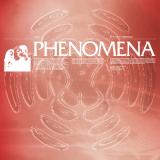
Phenomena begins with two artistic voices that seem to speak different languages. Barcelona-based producer R-010 (Lucas Rojo) approaches composition through rhythm, space and electronic transformation; Madrid-born vocalist and multidisciplinary artist Venerandi through texture, breath and the expressive possibilities of the human voice. By the time the album reaches its final moments, that distinction has quietly disappeared.
Rather than functioning as a meeting point between two individual practices, Phenomena gradually
becomes a third language—one that belongs to neither artist alone. Voice no longer sits above the music
but moves inside it, dissolving into layers of synthesis, percussion and guitar until performance itself
becomes another malleable sound source. Likewise, electronic production never behaves as a fixed
environment; it constantly adapts, absorbs and responds, allowing acoustic gestures and digital
manipulation to reshape one another in real time.
This continuous transformation defines the record more than any particular genre ever could. Echoes of trip hop, bass music, psychedelia and experimental electronics drift across its surface, yet they are never
presented as stylistic markers. Instead, they appear as temporary states within an ecosystem that remains
in constant motion, where dense rhythmic passages collapse into suspended atmospheres and moments
of stillness carry as much weight as those driven by pulse.
The presence of Matteo Caro (guitar and percussion), Pablo Gorostiaga (guitar) and Alessio Rodolico
(percussion) further expands this dialogue. Their contributions are not decorative additions but structural
ones, gradually dissolving the distinction between composition, improvisation and production. Instruments
emerge, mutate and disappear inside the same sonic fabric, making it increasingly difficult to distinguish
what was performed from what was transformed.
With Phenomena, Lapsus Records presents a work that feels less interested in crossing genres than in
questioning the borders between artistic identities themselves. The album never asks the listener to decide
where the human ends and the machine begins. Instead, it quietly suggests that, after enough careful
listening, the question itself may no longer matter.
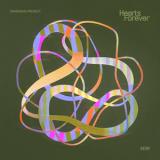
Following the international praise for their 2024 debut album Where Did You Go?, Sandman Project return with Hearts Forever, the first album entirely composed, arranged and produced by guitarist, composer and bandleader Tal Sandman. Rooted in psychedelic groove, Middle Eastern musicality, funk, jazz and desert rock, it is a record driven above all by a wider spiritual belief in music as a force for connection.
If Where Did You Go? introduced Sandman Project as a borderless, brass-heavy outfit with a cinematic sound, Hearts Forever takes that vision somewhere more intimate and self-assured. Written following Tal's move from Jaffa to Leipzig, the album reflects a period of personal and creative transformation. Arriving in Germany without knowing whether she would find the right collaborators, she gradually assembled a new band through recommendations from fellow musicians, discovering a group capable of bringing her musical vision to life. For Tal, the music is not about drawing neat lines between styles or traditions. It is about taking inspiration from wherever it appears and reshaping it into something honest and alive. "If music touches my heart, it inspires me", she says. "So much music already exists, but what we are doing is creating something new out of inspiration. You take the ingredients and make a new thing".
This is the quiet force behind Hearts Forever. Almost entirely instrumental, the album deliberately leaves space for listeners to find their own stories within it. Without lyrics, the music is never confined to one language, nationality or identity.
Following support for Where Did You Go? from All About Jazz, DJ Magazine, Bayern Radio, Greedy For Best, Pipelines Magazine, Ban Ban Ton Ton and Laurent Garnier, Hearts Forever finds Sandman Project entering a new chapter: more confident, broader in vision and more deeply rooted in Tal Sandman's own creative voice. Rich, restless and full of feeling, Hearts Forever is music for uncertain times; a record about holding on to innocence, choosing compassion and believing, however quietly, that connection is still possible.
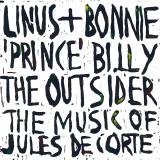
The songs of Jules de Corte are condensed, folky gems with an almost effortless charm. Poised between the intimate and the universal, between lightness and darkness, they touch on religion, love, loss, and the small dramas of everyday life. Yet they resist easy translation. Packed with wordplay, de Corte’s signature alliterations, humor, and local cultural references, the songs inevitably lose something in another language. Still, when a Belgian quartet of improvisers takes them on, joined by American songwriter Bonnie ‘Prince’ Billy, the songs are reborn rather than merely transposed: literal fidelity gives way to interpretation, and what is lost in words is often gained in spirit.
Even without tracing every change, their overall effect is fascinating. Songs are slowed down, often doubled in length, and filled with unexpected musical intrusions. They gain fuller arrangements and are placed in an entirely new context. Replacing de Corte’s piano with guitar can create a radically different vibe, as in “Mariska.” An added solo can heighten the contrast between childlike perspective and the almost matter- of-fact brutality of “Little Anita.” In “The Stranger,” another use of contrast unsettles the everyday harmony, transforming it with a subtle, disorienting twist.
Ultimately, these performances show that interpretation is not successful simply because it is literal. With the groundwork laid by Linus, Bonnie ‘Prince’ Billy further liberated the songs from their original versions. Lyrics and melodies become malleable, shaped by his recognizable cadences, timbre, and personal quirks. Like his collaborators, he allows himself the freedom to bend the material to his own approach. There is no radical break between this performance and his other records. Listeners familiar with the originals may be puzzled at first; for those new to de Corte, it is a wholly different experience.
Does it really matter that the original “Little Jesus, Mighty God” is a 100-second nugget combining playful naivete with biblical fervor? In the hands of these five explorers, the song becomes an intriguing contemplation, with subtle musical shades and a recitation in which every syllable carries a maturity that offers a new perspective. Then there is “The Outsider,” which feels as genuine as any original American folk song. The musicians’ process is more than reinterpretation—it is reimagination, bringing new musical compatibility and emotional depth. Whether that depth was there from the start, waiting to be uncovered, or created in the process is beside the point. What matters is that Linus and Bonnie ‘Prince’ Billy have made the essence of these songs their own, paying homage yet dancing to their own tune.
Linus is the Belgian duo of guitarist and banjo player Ruben Machtelinckx and reedist and synthesiser player Thomas Jillings. Across five previous albums — Onland (2014), Linus + Skarbø / Leroux (2015), Felt Like Old language at the crossroads of folk, jazz, minimalism, chamber music and free improvisation. Their music is adventurous, shaped by a particular sensitivity to texture, timbre and the subtle interaction between musicians.
What began as a duo gradually grew into a flexible musical world, bringing Linus together with musicians such as Nils Økland, Ingar Zach, Niels Van Heertum, Øyvind Skarbø and Frederik Leroux. Yet each new constellation has remained recognisably Linus: music in which carefully considered forms leave space for intuition, interaction and the unexpected.
For their sixth album, Linus takes a new step by moving into the world of song and text. Inspired by a shared love for the late Dutch songwriter Jules De Corte, the album is a reimagining of De Corte’s unique repertoire. More than simply interpreting De Corte’s songs, they absorb and reshape them, bringing them into dialogue with their own musical language. In keeping with this open approach, they are joined by celebrated vocalist Bonnie “Prince” Billy. With albums such as 1999’s I See a Darkness appearing on several greatest album lists, Bonnie “Prince” Billy is a cult figure in the alternative folk scene, and his highly intuitive way of singing seamlessly matches the subtle interplay Linus has developed over more than a decade.
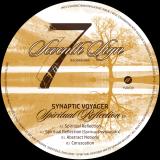
Sheffield-based electronic duo Synaptic Voyager arrive on Seventh Sign Recordings in a fresh phase of the label's ongoing legacy with an EP that blends classic Detroit-rooted machine soul with a crisp, modern production touch. With a catalogue already spanning respected imprints including Cyphon and Frame of Mind, their sound here leans into rich atmospherics, deep synths and tightly crafted rhythms. The release is complemented by a remix from label owner Graham Wilson, who reshapes the original into a groovy late night cut while keeping its melody intact. A strong addition to the Synaptic Voyager story and the Seventh Sign catalogue, this EP offers a truly timeless electronic sound.
Holic Trax presents its 36th release, featuring Tuccillo.
On the A-side, “Eves Sky” returns, a track that was played on the terrace at DC10 Ibiza in the early 2010s. Now reissued on a full 12” cut,
the one-sided pressing allows the low-end bassline to be pushed to its maximum.
On the B-side, “Percussholic” and “Musicly” are included.
The former was previously vinyl-only, while the latter was released digitally.
Both tracks are now brought together on the same format for the first time.
A three-track house EP
Shape of the Unknown’ is kind of a double LP that fully embraces the idea of exploration. It is CHLOÉ’s most expansive and immersive work to date. ‘Shape of the Unknown’ is CHLOÉ’s fourth proper studio album. Its predecessor, ‘Endless Revisions’, was released in 2017. Nine years have passed. Nine years during which CHLOÉ has continued digging for music, DJing at internationally renowned clubs and festivals including Rex Club, Robert Johnson, Panorama Bar, Nuits Sonores, Glastonbury and many more, releasing EPs and remixes, while also allowing herself the time to explore entirely new creative paths.
The challenge is to capture the unknown, make it her own, endlessly reshape its textures, and ultimately preserve its mystery.
The first single ‘Drifter’, released back in June, already offered a striking glimpse of the sonic territories the album would venture into, driven by its hypnotically contoured basslines. The album's two other singles offer different windows into her world. 'Shapeshifter' captures CHLOÉ at her most hypnotic, balancing stripped-back techno and melodic house through deep rolling grooves, expansive bass chords and subtle rhythmic shifts that constantly reshape the listener's perception without ever disrupting the flow. Later, 'Repeating The Obvious' takes a more leftfield route, pairing staggered rhythms with retro-inspired harmonics and an understated indie dance pulse that feels simultaneously familiar and unpredictable.
CHLOÉ has ventured into live performance through new formats, notably alongside percussionist Vassilena Serafimova; immersed herself in film scoring with soundtracks for Paris la Blanche, Arthur Rambo, The Mountain, Blanquita, Guru and Unsubmissives; and developed compelling collaborations, from High Season, her project with Ben Shemie of Canadian band Suuns (which resulted in the album The Call), to her own organic, experimental audiovisual performances under the name Slo/Mo AV.
Throughout Shape of the Unknown, CHLOÉ blurs the boundaries between deep house, hypnotic techno, electronica and cinematic sound design with remarkable fluidity. The album unfolds as a continuous narrative rather than a sequence of tracks, moving effortlessly between beatless ambient passages, rolling analogue grooves and emotionally charged club music. Organic percussion, sweeping bass movements, melancholic harmonies and richly textured synthesisers create a body of work that constantly evolves, where no section feels static and every transition reveals another layer of depth. There is an unmistakable warmth running through the record, with grainy analogue textures and spacious production giving even its most driving moments an intimate, almost tactile quality.
The album’s title is no coincidence. It evokes a form that has yet to be named, something language itself struggles to grasp. CHLOÉ approaches it through an organic creative process. Each piece must first be performed in the studio, almost as if it were being played live. The album will be followed by a series of live performances and DJ sets, including a show at the Olympia on March 18, 2027.
She is joined by a handful of steadfast collaborators. Jazz trumpeter David Enhco appears on two tracks, ‘Undertow’ and ‘Inner Bass’. But above all, there are the voices: Ben Shemie lends his unmistakable presence to the radiant ‘More Than Just a Feeling’. Olivia Merilahti, singer, songwriter and one half of The Dø, appears on the otherworldly ‘TWYR’. Working with Olivia’s already hypnotic voice, CHLOÉ has approached it like a sculptor, enhancing its strangeness and dreamlike quality.
And finally, impossible to miss is the instantly recognizable voice of Kittin. A longtime accomplice, she lends her distinctive phrasing to CHLOÉ’s music here for the very first time. The strongest collaborations are often those that take their time, arriving only when the moment is right. Same kind, same bass, same vibe, same pride.
The result is an enigmatic, nocturnal record, drifting between introspective listening and dancefloor functionality, revealing an artist who remains far more interested in atmosphere, movement and emotional storytelling than conventional club structures. It is an album that invites us to dream more deeply and to dance again, both within ourselves and out in the open.
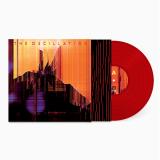
For two decades, The Oscillation has occupied its own space within the psychedelic underground, continually reshaping a sound built as much from texture, repetition and atmosphere as it is from conventional songcraft. On 'Interference', released October 30th 2026 via Fuzz Club, Demian Castellanos pushes that approach further than ever, creating what he describes as "a painting of sound rather than music”. It’s an album where noise and melody constantly collide, dissolve and reform into something strangely beautiful: “I wanted it to be accessible but also quite extreme, a sort of beautiful noise. I did my best to push out the parameters whilst trying not to allow it to disintegrate into something with no meaning or focus.” Chasing an elusive balance between accessibility and abstraction, the result is a record that feels simultaneously immediate and disorientating: dense layers of drones, feedback and motorik rhythms give way to unexpected moments of warmth, colour and even uplifting euphoria. Across its runtime, chaos never overwhelms; instead it becomes another instrument, carefully sculpted into hypnotic, immersive compositions. Much of the album emerged through instinct rather than intention. Fragments originally conceived as intros, outros or abandoned ideas gradually eclipsed the songs they belonged to, with tracks revealing themselves organically through a process Castellanos likens to "playing Chinese whispers with musical instruments." Elsewhere, two long-forgotten compositions – ‘Stasis’ and ‘When You Close Your Eyes’ – finally found their place after lying unfinished for almost twenty years. Recorded and mixed by Castellanos at his home studio in the Czech Republic, ‘Interference’ also benefits from a key collaboration with Lorena Quintanilla of Mexican band Lorelle Meets The Obsolete, who provides a transformative presence. Her haunting vocal on ‘La Alusion’ (which she also wrote the lyrics and melody for) became the breakthrough moment that crystallised the album, turning an instrumental sketch into a dreamlike centrepiece and helping shape the final sequence. She also lends her voice to ‘Isolation Freeway’, adding another layer of mystery to an album that continually blurs the line between structure and dissolution. Perhaps most remarkably, ‘Interference’ was created during a period in which Castellanos had largely stopped listening to music altogether: “My hi-fi broke a couple of years ago so I kind of wanted to see what would happen if I didn’t listen to too much music.” Instead of consciously absorbing outside influences, he trusted instinct, memory and experimentation to guide the process. The result is one of The Oscillation's most adventurous and emotionally resonant records to date: a vivid collision of hypnotic repetition, spectral beauty and controlled sonic disruption that confirms Castellanos remains one of modern psychedelia's most singular voices.
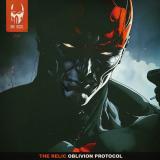
“The alarm had been sounding for so long that nobody remembered what it had been warning about. The protocol had become routine; every signal acknowledged, every command obeyed. Dreams were archived, memories rewritten, emotions reduced to corrupted fragments of data. The city continued to function with mechanical precision, while the last traces of humanity slowly dissolved into the noise.”
With Oblivion Protocol, The Relic continues his ongoing ARK series, once again excavating hidden layers of industrial hardcore’s past while transforming them into something unmistakably his own. Across six meticulously crafted tracks, echoes of classic hardcore attitude, doom-like heaviness and early industrial brutality surface before being reshaped into a bleak, contemporary vision. Nostalgia is never the destination; it provides fragments for reconstruction. The release constantly shifts in weight and momentum. Crushing mid-tempo passages give way to relentless bursts of energy, while distorted textures, commanding vocal samples and melodic fragments create an atmosphere that is as oppressive as it is immersive.
The archaeology continues, but the discoveries become increasingly unsettling: What once promised the future now echoes through abandoned systems, corrupted memories and hostile sonic environments.
Phren, the first collaborative work by Marta Salogni and Stefano Pilia, emerges as a layered and articulated sound-hymn-dialogue between Stefano’s abstract guitar work and Marta’s manipulation of tape machines. Conceived alongside the imagined space created by Sarah Mazzetti for the Opale series, a project by Maple Death Records and Canicola edizioni, the album becomes a form-shifting composition where memory itself is continuously transformed through resonance, repetition and reconfiguration.
Here, sound is not preserved as an object of the past, but treated as a living material: something capable of carrying traces, absorbing new meanings and generating unfamiliar voices.
The album develops from a simple yet constantly shifting principle: a sound is set in motion and then passed through a series of interconnected systems where it is delayed, altered and returned in another form. Stefano Pilia’s guitar travels through a complex chain of modular processes, composed of different stages of preamplification and filtering, before entering a tape echo system that introduces further layers of repetition, resonance and spatial displacement. These signals are then absorbed into Marta Salogni’s Revox tape machines, where additional lines of delay, modulation and environmental transformation reshape the material once again.
The resulting music is not a dialogue between two instruments, but a shared system — a living architecture in which a single signal moves simultaneously through parallel and serial pathways, gathering traces of each passage. Sound becomes a material in constant motion: a gesture becomes an echo, the echo becomes a new gesture, and the distinction between origin and reflection gradually begins to dissolve.
Over the years, Sade's catalogue has become something of a goldmine for unofficial
remixers, editors and white-label specialists, with countless reworks circulating through
DJ culture since the 90s. SDA008 digs into that world once again, pulling together a
fresh selection of hard-to-find house, soul and downtempo reinterpretations with no
credits and no unnecessary fuss.
Across the two records, familiar songs are reshaped into club-ready versions that move
between soulful house, deep grooves and slower late-night territory. 'Like A Tattoo' is
stretched into a warm, elegant soulful house workout, while 'I Will Be Your Friend' gets a
stripped-back edit built for long blends. 'Slave Song' takes on a more direct house feel,
and 'I Never Thought I'd See That Day' is opened out into a spacious extended mix. On
the final side, 'Sweetest Taboo' gets a smooth house treatment before 'King Of Sorrow'
closes proceedings in a laid-back downtempo style.
Another strong addition to the SDA series: anonymous, functional and very much aimed
at Djs.
Memoria returns with MEM064, welcoming Brizman to the label for a four-track journey through stripped-back grooves, deep atmospheres and dub-infused minimalism. The A-side sees Brizman on solo duty with Detroit Awareness and That Chord, two subtle but effective club tracks where rolling rhythms, warm chords and hypnotic details do the work. On the flip, Brizman joins forces with Szafran (Oskar Szafraniec) for Reworking The Dub. Spacious, bass-heavy and deeply hypnotic, the track takes the record into distinctly dubby territory. Cirkel Square closes the EP with his remix of Reworking The Dub, reshaping the original into his own tightly-wound interpretation while retaining its deep, soundsystem-minded character. Four cuts covering the space between minimal house, dub and late-night electronics, understated, functional and made for the floor.
Lower the drawbridge, raise the gates. Texas-based composer Graham Reynolds (A Scanner Darkly, Before Midnight, Hit Man) returns to the world of The Portcullis with a brand-new LP of music. This deluxe edition brings together the original album and The Portcullis Expansion Pack across two LPs, housed in a die-cut slipcase.
Following the original album’s release in May 2026, the Expansion Pack ventures deeper into a medieval world of knights and merchants, almoners and thieves. Percussive medieval textures, fretted guitars, brass fanfares, atmospheric strings and piano reshape dungeon synth into something vividly Reynolds’ own: an imagined soundtrack steeped in folklore, fantasy and adventure.
What began as an investigation into Reynolds’ family lineage, tracing his name back to Launceston Castle, has grown into a world extending beyond the record.
Released via Fire Records as part of the Weird Walk Record Cult, the deluxe edition arrives alongside an expanded dice game and a special Portcullis porter created with Skipton Brewing Company.
“One of the most unique and addictive albums of 2026 so far” - Loud and Quiet
“Of all the RPG-infused dungeon synth, medieval ambient records released this year, Graham Reynolds’ will be the finest.” - Loud And Quiet
“Ominous, stark environment that rumbles with sounds evocative of the natural world, in both its beauty and despair” - The New York Times
“A work of great scope, subtlety, and powerful suggestion. (…) Prepare yourself for an immersive experience, full of color and personality.” - Time Out
Long before streaming services, podcasts, or even the compact disc, there was Tellus—a radically ambitious publication that imagined recorded sound as an exhibition space. Founded in 1983 in downtown New York, Tellus transformed the humble audio cassette into a magazine, commissioning and publishing new works by musicians, composers, visual artists, poets, writers, choreographers, and performers who were reshaping the boundaries of contemporary art. Each issue invited listeners into a world where no wave, industrial music, spoken word, Fluxus performance, electroacoustic composition, downtown pop, conceptual art, and avant-garde experimentation could coexist on equal footing. More than forty years later, Earth Libraries proudly presents TELLUS: The Audio Cassette Magazine Anthology Vol. 1, the first comprehensive anthology devoted to the groundbreaking publication. The story of Tellus begins, fittingly, at the Rum Runner Bar on Canal Street. There, in 1983, visual artist Joseph Nechvatal, curator Claudia Gould, and composer Carol Parkinson conceived an entirely new kind of publication. Portable cassette players were transforming how people experienced music, and the trio saw an opportunity to use the cassette itself as a curatorial medium—one capable of circulating work that traditional record labels, galleries, and magazines simply couldn't accommodate. Early recordings by Sonic Youth and Liquid Liquid sit alongside works by James Tenney, George Brecht, Takehisa Kosugi, Carol Parkinson, Y Pants, Live Skull, Shelley Hirsch, Lenny Pickett, Paul Dresher, Gregory Whitehead, and dozens of other artists whose work helped define one of the most fertile creative communities of the era. For Earth Libraries, restoring Tellus represents a continuation of the label's commitment to preserving overlooked musical histories. Working from the original cassette masters, every recording on TELLUS: The Audio Cassette Magazine Anthology Vol. 1 has been carefully restored and newly mast
Rekombinant is the solo project of Rome based composer and sound artist Alfonso Montagnese. Blending electroacoustic composition, analogue electronics, magnetic tape and sound design, his work explores the physical qualities of sound, embracing imperfection, transformation and degradation as expressive compositional tools.
Borrowing its title from the physical principle of parity symmetry, the album is less interested in scientific theory than in the possibility that an identity may endure even after profound change. Sound is treated as matter, it is stretched, reflected, saturated, compressed and displaced, yet never entirely separated from its origin.
Magnetic tape is the medium through which this question unfolds. Magnetic tape does not preserve sound faithfully, it reshapes the sound. It compresses, saturates, colours and gradually erodes it, producing not a copy but another state of the same material. Every recording becomes both document and transformation.
Most of the instruments used throughout the album were selected from more recent generations of electronic equipment compared to previous works. Their character is not defined by nostalgia, but by their functional and sonic qualities: instruments chosen for how they behave under pressure.
The album consists of fourteen compositions, each one approaching sound as a material in continuous state of alteration and was conceived within what feels like a new Middle Ages, one that is still unfolding. An era marked by increasing fragmentation, uncertainty and the erosion of shared cultural references. The music does not illustrate this condition; it absorbs and inhabits it.
Throughout these fourteen pieces, sound continuously changes its appearance without abandoning its identity. What remains after every inversion, every saturation and every layer of magnetic degradation is not certainty, but persistence.
Parity Symmetry is Conserved is ultimately an exploration of that persistence: the fragile possibility that memory, identity and human experience may continue to exist, even after passing through irreversible transformation.
In the early 90s, led by Nicola Conte, the Fez collective in Bari, Italy, reshaped contemporary jazz through groove, experimentation and a distinctly Mediterranean sensibility. Within this environment the earliest recordings associated with what would become Schema Records first appeared, released at the time through Right Tempo. With a series of three 45rpm releases Schema Records revisits some of its earliest productions, all newly remastered from the original masters. In this third 7”, The infectious pulse of “Sweat” contrasts beautifully with the refined elegance of “Fez Bossa”, together painting a vivid portrait of a scene driven by creativity, musicianship and an unwavering passion for groove. Newly remastered from the original recordings, this 45rpm edition brings these landmark performances back to life for a new generation of listeners while offering longtime collectors a beautifully renewed listening experience.
For ONO006 we welcome born ‘n’ based Palermo producer, DJ, record shop owner and label head Riccardo Schirò to the ever evolving ONO roster. The Sicilian madman plates a killer exxxtended single, Raga Della Sera, complete with a royal remix treatment from downright hero DJ Sotofett.
Riccardo’s Raga Della Sera is a ritualistic summoning of the 303s and 808s of the past, calling on the sounds of old to conjure up a thrilling 11-minute freakout. Signor Schirò combines an acid-inflected proto-trance and a certain Gregorian Giallo flavour to bring forth one truly unique piece of music. Bellissimo!
On the flip, DJ Sotofett reshapes Raga Della Sera with a signature 909 dub, tried and tested at his preferred romping grounds, Globus. The maestro contorts, unravels and reassembles the mystical original into a club demon – ferociously dance-direct and itching to possess heads around the world.
Riccardo has been producing and releasing music on his excellent Gravity Graffiti imprint since 2019, with more than 20 records under his belt he is a hard working and brilliant musician and label curator in our humble opinion. We are proud to be welcoming him to the family and have this brilliant record as a part of the ONO arsenal.
We are beyond excited to unleash this disc upon the world, with both versions coming to a dancefloor near you very, very soon! Let it rip and turn it up!
Klara Lewis’ distinctive talent for disfiguring sound into forms that remain recognisably song-like reaches a new peak here. Her new album Opening is a deceptive recording with veiled melodies and clandestine bangers.
Lewis, creator of worlds, treats music as a mirror that reflects a perspective misaligned with the real image. Her music moves in unusual and often startling ways. Acoustic instruments such as ukulele and piano are subjected to processes of deconstruction and reconstruction, their original forms continually reshaped.
The tracks within Opening offer an array of disorientating tactics; damaged field recordings are suddenly sliced into ominous rhythmical patterns whilst deceptively simple tactics provide foreboding dread. Often alien on entry, the progression of a piece can land in a surprising tenderness, or the other way around. The momentum grows as a physical state but also one which is questioning, desiring, encapsulating a feeling, to explore a further way of expression and ultimately connecting: A new closeness, a new perspective.
Opening is an album in which the protagonist’s manipulation of sonic matter seems to extend beyond the music itself, resulting in a corresponding manipulation of the active listener. Sounds shift, dissolve, and re-emerge in altered forms, creating an experience that feels both intimate and disorienting. Lewis maintains a delicate balance between abstraction and emotional immediacy, drawing the listener into a world where familiar musical gestures are constantly reconfigured in surprising ways.
The works on Opening are refracted through an exploratory and transformative lens, suggesting an artist continuing to redefine the possibilities of musical language as a space where the instantaneous and the eternal come together.
Music by Klara Lewis. Mastered by Stephan Mathieu. Cut by Andreas Kauffelt at Schnittstelle, Berlin. Artwork by Klara Lewis. Design by Klara Lewis & Nik Colk Void. Images from ”En Masse” by Circa, directed by Yaron Lifschitz. Dancer Holly-Rose Boyer.
”Tide” commissioned for compilation album "Dissolving Strawberry" (2020), released by Irrlicht. ”Drip” and ”Feel” originally composed for the film ”Failed Emptiness” (2024) by Mika Taanila.
For its second outing, Sonum invites Matteo Point, whose Acid People EP expands the label's catalogue with four cuts navigating the space between acid house, progressive textures and analogue-driven club music.
The title track, "Acid People," sets the tone with tightly wound 303 sequences, sparse drums and a hypnotic sense of momentum, landing somewhere between functional peak-time tool and late-night trip. "Fresh Morgen" follows with a rolling low end before gradually unfolding into darker, more melodic territory, recalling the subtle tension of late-'90s European underground records.
On the B-side, "Musika Progressiva" revisits progressive house without falling into nostalgia, reshaping familiar motifs through a contemporary lens while maintaining its analogue warmth. Closing cut "Vvvaneggg" shifts towards Detroit-inspired rhythms and understated machine funk, offering a stripped-back groove built for patient selectors.
Across four tracks, Matteo Point delivers a collection that feels both immediate and enduring—club-focused without sacrificing character. With Acid People EP, Sonum continues to carve out its own space, championing records that draw equally from the past and the future of underground dance music.
Returning to Discrepant after 2023's 'Atheitsaregods', Humboldt County, California's most mystical entity continues to reshape its own patented processes of lysergic invocations on 'Squall Lines'.
Conjuring a vast array of sound sources, both organic and electronic, from vocals, violins or flutes to synths and pedals, the duo of Brian Pyle and Merrick McKinlay conveys a carefully sequenced and ritualistic aural tapestry from ancient futures. The synth beam and out of reach field recordings at the beginning of 'Sin Idioma' unfolding a dirge-like procession of drums and bells, flowing into the cave-like ambience of 'Nightshade', populated by echoes of unidentified origin, bleeding seamlessly through a foggy half-light drone into the fractured melodies and creeping voices of the pummelling 'No Chance'.
The B side sequencing from 'Squall Line' to closer 'Totality', drifting from faraway war cries, dissonant strings and crumbling percussion through post- apocalyptic landscapes, hazy pads and murky atmospherics to a final glimmer of processed flutes. A revelation. End time visions for the unquiet spirit.
For over three decades, Berlin-based DJ, producer, and curator Marcel Dettmann has remained a central force in electronic music, continuously pushing the boundaries of the craft. Deeply rooted in early influences ranging from post-punk and industrial to synth-pop, his dynamic DJ sets and expansive discography, including seminal releases on Ostgut Ton and Dekmantel, effortlessly weave together raw techno, Chicago house, electro, and avant-garde soundscapes.
Far beyond club booths and releases on his own imprints, MDR and Bad Manners, Dettmann’s multidisciplinary ethos has led him into artistic territories spanning gallery soundscapes, ballet compositions, and cinematic film scores. This relentless creative curiosity defines a career built at the intersection of dancefloor functionality, collaborative experimentation, and perpetual sonic evolution.
Dettmann introduced My Own Shadow last year, a project where music, visual art, and photography converged in two EPs, Approaching (2025) and Faultline (2026) prior to the release of the full album this coming Autumn. More than just a name, this project lets sound, image, and vision blend organically, reflecting his intuitive process of deconstruction, resonance, and emotional discovery.
Speaking about the project Marcel says “My Own Shadow wasn’t born from a big concept. I simply liked the idea of working under another name and started following it. Different things I was doing - music, photography, visual work - slowly began to connect.
It happened quite naturally. My Own Shadow is me - just seen from another perspective.” Neither an alter ego nor a departure, My Own Shadow: Album is an intimate reflection of the artist; a transient, ever-shifting form that dances with the light and subtly reshapes its contours to reveal new depths.
My Own Shadow: Album is built with textural minimalism through rhythm, tension and release, embarking on a path through the recollections and experience of the dancefloor. This space remains the ultimate proving ground where history, instinct, and transcendence collide, guiding Dettmann through his musical interests.
My Own Shadow - Album is driven by rhythm, texture, space and tension. Across tracks such as ‘Gravitational Scar’ and ‘Resolution Vector’, these elements are constantly reshaped, connecting Dettmann’s past with a sound that remains firmly in motion.
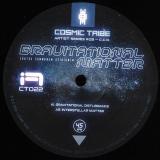
For CT022, Cosmic Tribe presents the third edition of the Artist Series featuring C.C.O. (Contra Communem Opinionem), the project of Swiss artist Florian Büchel.
The original material selected here explores a more direct and linear side of his music, combining atmospheric structures, subtle acid elements and elegant melodic progression.
On Side B, both reinterpretations move the material toward more dancefloor-oriented territory. Raakel Bloody Raakel reshapes Gravitational Disturbance into a recognizable acid-electro interpretation with increased groove and syncopation, while Romphea takes Interstellar Matter into heavier and darker contemporary electro-breaks territory with increased low-end weight and a more direct club approach.
The result creates a clear contrast across both sides: progression and musical development on Side A, followed by two alternative perspectives built around movement and dancefloor energy.
Benjamin Damage has long operated at the intersection of physical intensity and emotional depth, developing a distinct approach to Techno where machine-driven rhythms leave space for melody, atmosphere and movement. On UFO Incision, he pushes that balance across four tracks that move from expansive and melodic to increasingly stripped-back and rhythmically focused territory. Feel 4U opens with a rolling, tightly controlled groove. Dry, repetitive drums provide the drive, contrasted by bright, open pads that give the track a striking sense of space. Carefully placed vocal fragments cut through the arrangement, adding another layer of tension to a track that feels hard and propulsive while carrying a subtle melancholic depth. Solex expands the melodic side of the record. A shifting arpeggio forms its centre, moving against darker melodic tones, elevated pads and a captivating chopped vocal. Constant modulation keeps the track in motion, while a loose hi-hat groove offsets the rigidity of the low-end. Rather than settling into repetition, the arrangement continuously rises, falls and reshapes itself. The title track marks a shift in focus. Darker and more reduced, UFO Incision strips back much of the melodic language of the A- side in favour of rhythm and detail. Dry drums form a tightly locked groove, while bleeps, glitches and finely placed sonic interventions create complexity around a minimal framework. Precise and functional, it finds depth in the smallest movements. Orbitings closes the record with a warped take on acid. Swinging drums and a dry, hypnotic groove meet futuristic acid tones and deep, modulating stabs, creating a track that feels both stripped and constantly in motion. Across UFO Incision, Benjamin Damage moves between two sides of the same language: melody and function, openness and reduction, emotional weight and physical drive. Even at its most direct, detail and modulation keep the music evolving. Four tracks built for the floor without sacrificing depth or character
The next chapter on Skip Audio arrives with S.O.N. at the controls, presenting three original productions that move between hypnotic rhythms, rolling basslines, and immersive atmospheres. On remix duties, Romanian heavyweight Sublee reshapes one of the originals into a deep and elegant dancefloor journey. A carefully curated collection of four trippy, groove-driven tracks made for long nights and discerning selectors.
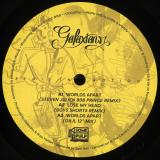
Hot on the heels of their new UK street soul-inspired LP ‘Feel In Motion’, Leeds three-piece Galaxians enlist Steven Julien (Apron Records), Boys Shorts (Phantasy Sound), Cervo (Banana Hill) and Vanity Project (Claptrap Records) for remixes of the album's singles.
Adopting his 808 PRINCE moniker, the London DJ, producer & Apron Records label boss Steven Julien beefs up World Apart with his unique live 808 programming, imbuing it with an urgent machinefunk groove in keeping with his consistently electrifying live performances & DJ sets.
Coming straight from the release of their ambitious debut album ‘What Does It Take To Make These Men Happy?’, Greek duo Boys’ Shorts create a heady club moment with their take on Lose My Head, cutting up Sinead Campbell’s vocal while zeroing in on the original’s undeniable bassline & piano melody.
Best known for his Banana Hill label & Manchester club night, Stockport’s Cervo brings the global rhythms and balearic wistfulness of his previous output to bear on his evolution of Fantasy, while Claptrap Records boss Matt Bruce AKA Vanity Project reimagines the track as a cosmic house chugger that further highlights the exceptional vocal performance Beccy Young recalling Madonna at her most iconic.
The package is completed with Gramrcy & John Loveless’s 12” Mixes of Worlds Apart and Fantasy, expanding and reshaping the album originals into pure dancefloor bliss.
Boulderhead arrives on Haŵs with ‘Sunshine’ — four cuts that blur the line between club functionality and sonic experimentation. Twisting delays, playful FX work and endlessly shifting textures give the record a voice that's unmistakably his, pushing familiar forms into stranger territory without ever losing sight of the dancefloor.
The title track ‘Sunshine’ opens proceedings with a heads-down trip anchored by a cheeky, tongue-in-cheek vocal hook, swung grooves, and hypnotic momentum. Jorg Kuning steps up on remix duties, gently reshaping the original at every turn. His hardware-led approach keeps the groove in constant motion, each subtle shift revealing another layer without ever breaking the spell. Flip the record and ‘Moonshine’ strips things back into classic Boulderhead territory, while ‘Practice’ closes the EP on a deeper note, pairing lush synth work with beautifully detailed percussion for one final slow burn.
Never too serious, always full of character. The kind of record that keeps giving something new back with every listen.
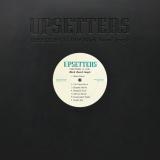
One of the most influential dub albums ever made. The remixing techniques used – radically new for 1973 – helped transform the role of the producer and the engineer to that of creative artists in their own right.
First released in Jamaica in December 1972, Upsetters 14 Dub Black Board Jungle is widely regarded as one of the first full-length dub albums and a true landmark in reggae history. Produced by the visionary Jamaican innovator Lee “Scratch” Perry, it marks the decisive moment when dub evolved from incidental B-sides into a fully realized long-playing art form. At a time when Jamaican sound system culture was flourishing, producers were beginning to strip down popular reggae tracks into instrumental “versions,” emphasizing the bass and drums for sound system deejays to toast over while adding echo and reverb effects to make things more interesting and dynamic. While King Tubby, who was in charge of mixing the tracks, was pioneering the technical foundations of dub, Perry expanded the approach by adding the hypnotic and psychedelic sound effects that made this record so rich in ideas, rendering the album more conceptually bold.
The album reworked previously released rhythm tracks by the Upsetters, which were recorded between 1970 and 1972, shortly before Perry opened his own studio – the legendary Black Ark Studio in Kingston. Their tight, groove-driven playing provided a solid backbone for these radical studio manipulations. Using the mixing desk as an instrument, tracks were deconstructed in real time – dropping vocals in and out, isolating drumbeats, pushing bass lines to the front of the mix, and sending fragments of sound spiraling into space through the heavy use of a spring reverb and tape delay effect units. Silence became as important as sound, and the interplay of rhythm and echo created a hypnotic, immersive listening experience.
Upsetters 14 Dub Black Board Jungle established dub as a genre defined by creative studio intervention. It demonstrated that the remix itself could be the main attraction, influencing generations of reggae producers and resonating far beyond into the techniques and aesthetics of post-punk, electronic music, hip-hop, and ambient sound design. By transforming the studio into a creative laboratory and elevating the “version” to an art form, this foundational album reshaped not only Jamaican music, but the whole of modern music production culture.
Do Da Doo' Returns with New Life on Definitive Recordings
SPECIAL VINYL ONLY RELEASE
Definitive Recordings revisits one of its most iconic releases with a fresh reissue of Robotman feat. Marshall Jefferson - 'Do Da Doo', originally released in 1992. A cornerstone of the label's early catalogue, the track returns with newly re-recorded vocals by house legend Marshall Jefferson, bringing renewed energy to a timeless classic.
Robotman, a moniker of Richie Hawtin (aka Plastikman), represents an essential chapter in the evolution of house and techno. As one of the most influential figures in electronic music, Hawtin helped shape the sound of acid and minimal techno while co-founding the legendary Plus 8 label alongside John Acquaviva. His forward-thinking productions and groundbreaking DJ sets have defined generations of dance music culture.
On this release, the original Plastikman Acid House Mix stands as a true highlight. Spanning 12 minutes, it delivers a deep and hypnotic acid journey driven by classic TR-909 drums and a signature TB-303 bassline. The instantly recognizable vocal 'Got the Do Da Doo' sits prominently within the groove, creating a powerful and timeless club moment that defined an era.
On the flipside, Detroit's DJ Minx brings a fresh perspective with a groove-heavy house interpretation. Known as the 'First Lady of Wax' and a key figure in Detroit's scene, Minx reshapes the vocal into a rhythmic element, layering it into a shuffling and classic house framework. Her version adds warmth and swing while staying rooted in the track's original spirit.
With this reissue, Definitive Recordings celebrates a landmark release that continues to resonate across generations, combining legendary artists, timeless production, and the enduring energy of house music.
Melbourne producer Jordan Brando releases his new Fixation EP today via DJ Tennis’ Life and Death. The four-track project marks Brando’s debut on the label and arrives as he continues to establish himself as one of Australia’s top new club exports.
Fixation is built around raw, bass-driven grooves, moving between the shuffling percussion and hypnotic vocal hook of the title track, the tougher techno edge of “Vibration,” and the classic house influence running through “The Bassline.” “After Dub” eases the pace without losing that foundation, closing the EP on a warm, melodic note.
The release extends a growing connection between Life and Death and the current wave of Australian producers making an impact worldwide. It follows recent projects from Brando’s Not Without Friends collaborators Luke Alessi and William Kiss, who both joined the label at the end of 2025. Together, the three have built momentum around a shared strain of forward-thinking club music and recently reunited in New York City for a Raw Cuts event this summer.
Born and raised in Melbourne, Brando has developed a reputation for the breadth of his productions and DJ sets, with his original music and remixes appearing across dance charts around the world. While his solo work has earned support from international tastemakers such as Pete Tong (via his BBC Radio 1 show), he’s performed with Kiss and Alessi at Heide Museum of Modern Art, Beyond the Valley, London’s Night Tales and Rippon Lea Estate.
After a run of performances spanning Australia, New Zealand and Europe—including Lost Village, Beyond the Valley, Night Tales and Melbourne’s Collingwood Town Hall—Fixation finds Brando entering his next chapter with one of electronic music’s most respected labels, further cementing his place among a generation of Australian artists reshaping the international club landscape.
The Forbidden Planet is the new album by Tomorrow Comes The Harvest, featuring Rasheeda Ali. The album explores a wide range of electronic and acoustic improvisational conversations, creating expansive and constantly evolving sound landscapes.
The recording carries forward many of the qualities that have made Tomorrow Comes The Harvest so distinctive from its beginnings. The project originated through the percussive dialogue between Jeff Mills and the late Afrobeat pioneer Tony Allen. When thetwo creative forces first came together several years ago, what emerged was more than a collaboration or musical conversation. They opened a pathway-a way of creating through instinct, exchange, rhythm and freedom. That pathway continues to lead toward new horizons, and The Forbidden Planet is evidence of just how far it can travel.
The album is the result of an intricate creative process spanning nearly two years, connecting a series of recording sessions at notable studios including Criteria Studios in Miami, Soda Sound, and the legendary Studio Ferber in Paris, France.
The Forbidden Planet explores the more cerebral dimensions of the band's vast musical language. An idea is introduced, and almost immediately it begins to transform. Themes are questioned, reshaped and redirected as the musicians respond instinctively to one another.
As Tomorrow Comes The Harvest is known for, the performances were recorded largely through improvisation, often capturing the energy and spontaneity of an almost one-take process. These recordings were later carefully refined and shaped into the compositional structures heard throughout the album.
The creative seeds have been planted in fertile ground, allowing ideas to grow naturally and without restriction. In rhythm and in spirit, each musician contributes an essential voice to the conversation. Within that collective precision lies something even more important: a shared love of musical freedom and the possibility of creating without boundaries.
Prabhu Edouard - tabla and vocals
Jean-Phi Dary - keyboards
Jeff Mills - percussion and electronics
Featuring Rasheeda Ali on flute, with a special guest appearance by Laurent Vernerey on electric bass.
The Forbidden Planet will be released November 20th, 2026 on Axis Records on Double-Vinyl & CD + DVD. The DVD features selected live footage from Tomorrow Comes The Harvest, featuring Jeff Mills, Jean-Phi Dary, Prabhu Edouard and Rasheeda Ali.
Filmed & recorded live at London Jazz Café on September 27th, 2025, the footage captures highlights from the band's unique fusion of electronic music, jazz, percussion and improvisation.
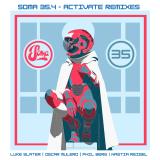
Soma's 35th anniversary remix series continues with SOMA35.4, turning its focus to one of the label's more recent defining tracks - Slam's 'Activate'.
Originally released as part of Slam's catalogue over the last decade, 'Activate' quickly established itself as one of the duo's most recognised and widely played tracks of the period. For SOMA35.4, the track is handed over to four artists who each bring a distinct perspective to its driving, functional foundations.
Luke Slater takes 'Activate' and applies his trademark precision and raw club-focused approach. Oscar Mulero delivers a tougher, more industrial interpretation, pushing the track deeper into his characteristic high-pressure sound. Phil Berg brings a hypnotic, groove-led edge to his version, while Nastia Reigel offers a more contemporary, atmospheric take that reshapes the track through a different sonic lens.
SOMA35.4 continues the ethos behind the 35-year project: bringing together established figures from Soma's history and artists operating within its wider sonic sphere.
Tracks 1, 3 & 4 Mastered By Conor Dalton @ Glowcast Mastering
Track 2 mastered by Carlos Koschitzky
Like a pelican spotting its moment, Dimitri Andreas returns with a collection shaped by patience, precision and instinct.
Pelican marks a new chapter for a respected figure in underground electronic music. While recent years saw Andreas immersed in theatre productions, immersive audio experiences and multidisciplinary artistic projects, his fascination with rhythm, space, tension and emotion never left. It simply found different forms.
On Pelican, those worlds converge.
Across five original productions, Andreas distills the elements that have long defined his sound: hypnotic grooves, organic percussion, tribal influences, rich atmospheres and a deep sense of movement. The title track glides on suspense and anticipation, while Omenica and Mahu explore the groove driven territory that has become synonymous with his name. Cambolisa delivers a powerful melodic payoff, and Ember closes the journey with vintage synth warmth and restless energy.
The release is completed by three outstanding remixes from artists whose influence on contemporary electronic music is undeniable. Deetron reshapes Pelican into a deep and sophisticated techno excursion, Extrawelt transforms it into a cinematic and evolving voyage, while Petar Dundov expands Cambolisa into an emotional and atmospheric journey of his own.
Following a series of acclaimed MOVE Recordings releases supported by DJs including Sven Väth, Timo Maas, Jamie Jones and Fedele, Pelican arrives as a body of work shaped by years of exploration beyond the confines of club culture.
Rather than revisiting the past, Andreas brings those experiences back to the dance floor: music with patience, depth and perspective. Pelican is the sound of an artist returning not to where he started, but with everything he discovered along the way.
Already Supported by Laurent Garnier, Alexi Delano, Âme, Ilario Alicante, Just Her, Adriatique, Karotte, Danny Howells, Drumcomplex, Paco Osuna, Steve Parry, Marco Bailey, Alex Neri, Pole Folder, Amand, Calao, Neon, Gay Barone, ….
Sleep D and Mosam Howieson join forces for an EP that traverses peak-time pressure and deep hypnotic terrain.
Opening with ‘Syphon Filter’, a monstrous techno steam train that sparked the collaboration for the record, starting over five years ago. Industrial klanging to a banging beat. Simple and effective. Chugging along, ‘Inertia’ and ‘Mirror Pool’ offer respite with a psychedelic and emotive strain of techno.
Rounding out the release, Dutch producer Konduku reshapes one Mirror Pool into a stripped-back, fluid remix. Refracting the source material through his distinctive palette.
With Parallel Worlds, RFLX opens a new chapter for Eight of Cups Records, delivering a raw and focused statement built around tension and transformation.
“I wanted to avoid any form of release. With Parallel Worlds, tension becomes the language itself. I was drawn to this constant escalation, something that dissolves linear time and locks me into a different state of perception… where the drop never comes. And that’s exactly the point.”
“By removing resolution, I wanted to keep everything open: a space where perception expands and multiple realities can coexist. Parallel Worlds is not about choosing a direction, but about becoming aware that more than one is always there.”
A four-track immersive EP refusing the conventional payoff, Parallel Worlds unfolds as a continuous escalation, creating a suspended space where perception shifts and different realities begin to overlap.
The release features two original cuts alongside exclusive remixes by JOEY BELTRAM and AT-XYA.
Techno pioneer Joey Beltram strips the title track down to its raw essence, transforming it into a relentless dancefloor weapon driven by physical energy, hypnotic grooves and his unmistakable signature sound.
AT-XYA takes the opposite route, deconstructing and reshaping the original into an ethereal, cinematic journey for those fragile moments when night dissolves into morning and everything suddenly makes sense ;)
Completing the EP is Danxome, a deeper tribal-inspired cut reconnecting with the origin of the concept. In the Fon language, Danxomɛ means “in the belly of Dan”, the cosmic serpent and the origin of the world. Before parallel worlds, there was one.
Parallel Worlds started from a simple thought:
Every day, all versions of you exist. You just don’t see them all. You can stay the same, or you can shift.
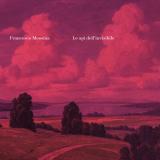
Francesco Messina is perhaps best known for his split album with fellow composer Raul Lovisoni, Prati Bagnati del Monte Analogo, originally released on the seminal Italian label Cramps in 1979. Along with contemporaries Franco Battiato, Juri Camisasca and Giusto Pio, Messina helped reshape the world of modern composition with an organic rawness and haunting beauty.
In November 2023, Messina performed Prati Bagnati live for the first time in Milan, Italy – along with pianist Michele Fedrigotti, who appeared on the original LP. The concert was a tremendous success and led the composer to further reflect upon the music he made over 40 years ago. From his home piano – a hundred-year-old Schimmel with magnificent resonance – new pieces began to emerge out of these meditative sessions.
As Messina says in the liner notes, "The idea of making a new album wasn't the driving force at all; what mattered was trying to reconnect with the 'freedom' I had experienced back then while creating that music. I started over without haste or deadlines, simply trying to find a deeper, inner connection."
W.25TH / Superior Viaduct is honored to present Le api dell'invisibile. From the hazy drone of "For Florian" and the title track to the gentle swells of "Letter for an Absent Friend," the album is a lush amalgam of new age and ambient minimalism that is vividly reminiscent of Messina's earlier work.
The title draws inspiration from a famous reflection by Austrian poet Rainer Maria Rilke: "We are the bees of the invisible. We ceaselessly gather the honey of the visible, to store it in the great golden hive of the Invisible." It is a phrase that has long shaped the way Messina looks at his music – transforming lived experience into sound, making audible what normally eludes the eye.