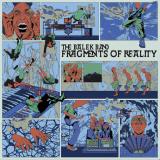
Some grooves don’t rush to the dancefloor — they crawl there, slow and heavy, like smoke wrapping around a bassline. With Fragments of Reality, The Balek Band sculpt an electronic funk that lives between shadow and light — an end-of-the-world fever dream, a Barjavel-style Ravage where chaos turns nihilistic.
No sequencer grid here — just four musicians sharing the same room, shaping air and tension together: drums locked tight with a slap bass, a guitar dripping with echo and heat, and a one-man orchestra behind his machines, weaving acid lines and synth arpeggios while mixing the band live — drenching it in delay, reverb, and saturation, like a dub producer in a Kingston studio, Lee Scratch Perry or King Tubby conjuring ghosts through smoke.
This isn’t fusion — it’s friction. A living ritual where the TB-303 hums, and machines don’t dominate but converse with the human pulse. Each track feels like a night that refuses to end — that humid in-between where trance slips into languor, and the body starts to think for itself.
The record recalls the cosmic jazz of Alain Mion or Eddy Louiss meeting the fiery energy of West African afrobeat musicians freshly arrived in a smoky Belleville basement in the mid-’80s. When The Balek Band summon ghosts, it’s only to reshape them — bending the past into something futuristic, alive, and strangely refreshing. Both disciplined and delirious, Fragments of Reality feels like a promise at dawn: dark funk for the late hours, slow acid for warm blood.
This EP isn’t nostalgic, though it remembers. It’s a transmission from a parallel past — a moment when jazz players met drum machines and decided never to stop playing. Each note sweats, each rhythm breathes. You can almost see the light cutting through the haze, faces half-awake, half-possessed.
The Balek Band aren’t recreating a moment — they’re keeping it alive.
Flesh and cables. Impulse and patience.
A band, not a loop.
A trip, not a format.
Поиск:same player
Все
- 1: Nuvole I
- 2: Nuvole Ii
- 3: Nuvole Iii
- 4: Nuvole Iv
- 5: Nuvole Ix
- 6: Nuvole V
- 7: Nuvole Vi
- 8: Nuvole Vii
- 9: Nuvole Viii
- 10: Nuvole X
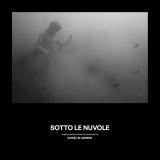
In Gianfranco Rosi’s portrait of Naples, Sotto le Nuvole, the ground shakes periodically. Between Mount Vesuvius and the Tyrrhenian Sea, the fumaroles of the Phlegraean Fields hiss volcanic gas and steam. Below the sleeping volcano, modern day Naples emerges in black and white and fills with voices, with lives. From the traces of history and the concerns of the present, Rosi documents a city immersed in its continuous past, with Daniel Blumberg’s minimal soundscape hovering in a sonic space between liquid and air.
Tasked with creating a soundscape that would suspend space within Rosi’s film, Blumberg called upon the extended technique of saxophonists Seymour Wright and John Butcher to create a gossamer fabric of traces and sounds abstracted from their instruments. Having transitioned from theoretical physics to the saxophone, John Butcher has always deeply considered space in the context of his playing. His concerns are with flow, density and how the saxophone is situated in the living world. Zeroing in on the core sonic properties of the mechanical and acoustic components of the saxophone, Seymour Wright has integrated its every breath, reed vibration, keypad clatter and hissed microtone of his alto into his own, unique improvisational language. In his work with these two seminal players, Blumberg makes his most concentrated soundtrack to date - reinforcing the film's sense of overlapping time and space, and pushing at the limits of experimentation.
Initially recorded in Daniel’s flat in London, Butcher and Wright centre themselves around long, consistent tones, so soft that it seems breath is being gently pulled from the saxophone's bell by an invisible hand. Blumberg himself adds haunting bass harmonica, and recordings of Wright’s launeddas - a traditional and ancient triple pipe polyphonic reed instrument from Sardinia, Italy. Blumberg then travelled to the volcanic region of Baia, next to Pompeii. Once a flourishing classical Roman city loved by Nero, Baia slowly sank under hydrothermal pressure, leaving the city in a kind of geological purgatory. Using specialised geophones and hydrophones, Blumberg took those initial recordings and amplified them underwater, sending them calling out across the ruins of Baia’s mosaics, Nymphaeum statues and villas.
“It was important to me that the music was whispered in the same landscape that Gianfranco has worked for the past three years, so that you can hear the volcanic air gulping, the lapping of the waves, the steam and bubbles popping against John and Seymour’s saxophone breaths – an echo from a suspended time.”
What emerges is deeply melancholic, tender, subtle and right at the edges of audio technology. Submerged in an aquarian mausoleum, the mysterious vibrations of the saxophone and its bell become an echo of an echo, wading from the future into the past. ‘Sotto le Nuvole’ is less a soundtrack than a process of aeration - a sonic puncture in the material of the film which allows its central message to breathe, and a remarkable experiment at the limits of the saxophone’s possibility.
- 1: Diluvio
- 2: Camping
- 3: Bby Glock
- 4: Playerz
- 5: Santa Rosa Feat. Ana Tijoux
- 6: Rïo
- 7: Disiembre Feat. Astrid Canales
- 8: Algas
RÏO is a sonic journey that begins in the waters of the Santa Rosa River (Argentina) and flows into Barcelona, uniting my roots with the pulse of the migrant experience.
This album is not just a collection of songs, but a tribute to the foundational memories of my childhood and an organic path where the past, present, and future flow within the same riverbed. It is an album that speaks of movement, of temperance, and of the need to affirm one’s own identity through change.
Cassette[14,50 €]
Aspen is very proud to introduce ‘Non Sonett’ by the Christian Wallumrød Ensemble. This ensemble is a pioneering Norwegian chamber group whose work on ECM and Hubro has redefined the boundaries between jazz, contemporary composition and folk music.Across seven albums, the ensemble has developed a highly distinctive l anguage built on restraint, timbral nuance and collective interplay, placing it among the most influential European ensembles of the 21st century.
Bringing together some of the finest musicians in Norway, the ensemble draws on a rare collective sensitivity, where each player contributes to a deeply integrated and texturally rich sound world.
With Non Sonett, the Christian Wallumrød Ensemble opens a new chapter that grows directly out of recent years of work in more solitary and cross-disciplinary contexts. In this period, Wallumrød has developed material for solo performance as well as for dance, allowing ideas to take shape in more fluid and exploratory formats. Some of this material now finds its way into the ensemble, where it is met by the possibilities offered by instrumentation, collective playing, and the distinct voices of the musicians. At the same time, older pieces—originating in entirely different settings— re-emerge here in new forms, reshaped by the ensemble context.
A defining aspect of Non Sonett is the way many of the pieces function less as fully determined compositions and more as open frameworks: starting points, suggestions, or “springboards” for music. These structures invite response rather than prescribe outcome, relying on the ensemble’s inherent sensitivity and capacity to realize and transform the material in performance. The result is music that feels both precise and fluid, shaped in equal measure by composition and by the interpretative presence of the players.
Central to this album is a continued deepening of Wallumrød’s long-standing interest in ambiguity and in dissolving boundaries between different musical elements and expressive worlds. By placing contrasting materials and associations side by side—sometimes subtly, sometimes more overtly—the music opens up spaces where meanings remain fluid and interconnected. On Non Sonett, this approach is taken a step further, allowing these juxtapositions to play an even more active role in shaping the music’s character and flow.
This approach connects closely with the ensemble’s broader artistic trajectory. Over time, the Christian Wallumrød Ensemble has developed a language that is immediately recognizable—marked by reduction, clarity and a deep attention to sonic detail. While each release has its own character, the underlying aesthetic remains consistent: a focus on the inner life of sound itself. Rather than foregrounding gesture or virtuosity, the music draws the listener toward the smallest elements, where meaning emerges gradually through texture, spacing and timbre.
The listening experience becomes one of concentration and proximity, where each sound carries weight, and the accumulation of detail forms a larger whole. References may be sensed—to early polyphonic music, Norwegian folk traditions, or more recent experimental practices—but these are absorbed into a singular musical language that resists categorization.
As with the ensemble’s recent work, Non Sonett also continues the integration of electronics as a fundamental part of the sound world. Each musician engages with electronic elements alongside their acoustic instruments, creating a layered and dynamic sonic environment. At times, this leads into extended, exploratory passages reminiscent of analogue musique concrète; at others, electronics operate almost imperceptibly, subtly altering and extending the acoustic textures in real time.
vinyl[21,81 €]
Aspen is very proud to introduce ‘Non Sonett’ by the Christian Wallumrød Ensemble. This ensemble is a pioneering Norwegian chamber group whose work on ECM and Hubro has redefined the boundaries between jazz, contemporary composition and folk music.Across seven albums, the ensemble has developed a highly distinctive l anguage built on restraint, timbral nuance and collective interplay, placing it among the most influential European ensembles of the 21st century.
Bringing together some of the finest musicians in Norway, the ensemble draws on a rare collective sensitivity, where each player contributes to a deeply integrated and texturally rich sound world.
With Non Sonett, the Christian Wallumrød Ensemble opens a new chapter that grows directly out of recent years of work in more solitary and cross-disciplinary contexts. In this period, Wallumrød has developed material for solo performance as well as for dance, allowing ideas to take shape in more fluid and exploratory formats. Some of this material now finds its way into the ensemble, where it is met by the possibilities offered by instrumentation, collective playing, and the distinct voices of the musicians. At the same time, older pieces—originating in entirely different settings— re-emerge here in new forms, reshaped by the ensemble context.
A defining aspect of Non Sonett is the way many of the pieces function less as fully determined compositions and more as open frameworks: starting points, suggestions, or “springboards” for music. These structures invite response rather than prescribe outcome, relying on the ensemble’s inherent sensitivity and capacity to realize and transform the material in performance. The result is music that feels both precise and fluid, shaped in equal measure by composition and by the interpretative presence of the players.
Central to this album is a continued deepening of Wallumrød’s long-standing interest in ambiguity and in dissolving boundaries between different musical elements and expressive worlds. By placing contrasting materials and associations side by side—sometimes subtly, sometimes more overtly—the music opens up spaces where meanings remain fluid and interconnected. On Non Sonett, this approach is taken a step further, allowing these juxtapositions to play an even more active role in shaping the music’s character and flow.
This approach connects closely with the ensemble’s broader artistic trajectory. Over time, the Christian Wallumrød Ensemble has developed a language that is immediately recognizable—marked by reduction, clarity and a deep attention to sonic detail. While each release has its own character, the underlying aesthetic remains consistent: a focus on the inner life of sound itself. Rather than foregrounding gesture or virtuosity, the music draws the listener toward the smallest elements, where meaning emerges gradually through texture, spacing and timbre.
The listening experience becomes one of concentration and proximity, where each sound carries weight, and the accumulation of detail forms a larger whole. References may be sensed—to early polyphonic music, Norwegian folk traditions, or more recent experimental practices—but these are absorbed into a singular musical language that resists categorization.
As with the ensemble’s recent work, Non Sonett also continues the integration of electronics as a fundamental part of the sound world. Each musician engages with electronic elements alongside their acoustic instruments, creating a layered and dynamic sonic environment. At times, this leads into extended, exploratory passages reminiscent of analogue musique concrète; at others, electronics operate almost imperceptibly, subtly altering and extending the acoustic textures in real time.
- Svitlana Nianio Phanton - Fake
- Svitlana Nianio Phanton - Manyspace
- Svitlana Nianio Phanton - Quiet Place
- Svitlana Nianio / Phanton - Політ Світляки
- Няньо, Гинерв & Таран - Nianio, Geenerve & Taran - Шепочуть Cтіни - Whispering Walls
- Няньо, Гинерв & Таран - Nianio, Geenerve & Taran - Pічка Bтома - Tired River
- Solar - Your Secret
- Solar - Three Steps
- Solar - August Samba
- Taran - Death And Bachelor
"I got to know visual artist, musician, and producer Guido Erfen and sound engineer, acoustic artist, and percussionist Michael Springer as part of a group of five by the name of SHM1. The members of the group organised concerts at Rhenania, a disused grain silo, where I performed with The Absurd in 1988 and 1989. The band was also featured on one of Erfen's tape releases. Erfen and Springer met when they were still at the same secondary school and soon became close friends and musical allies. With the other members of SHM they built an independent network for creating and distributing music beyond the mainstream in Cologne. Rent at Rhenania was incredibly low, allowing a recording studio to be established there.
The first traces of the Ukrainian Underground arrived at Erfen's door via a cassette tape with three bands from Kharkiv and Kyiv, the package including a long essay which detailed the rock scene in the two cities by Sergey Myasoyedow. In 1986, Myasoyedow, together with Sasha Panchenko, had founded the “Novaya Scena“ rock club in Kharkiv, presenting bands inspired by punk, the avant-garde, dadaism, and even medieval melodies. If Erfen hadn't been part of the independent mail-art scene, he wouldn't have had the chance to discover this unorthodox music. It was the summer of 1990, shortly before the Soviet Union collapsed and Ukraine became an independent state the following year.
In 1991, singer and keyboard player Soloveyka from Kharkiv arrived in Cologne and gave Erfen half a dozen cassettes with underground bands from Ukraine and a handful with bands from the Soviet Union. Intrigued by the original music of many of the acts, he visited Ukraine twice, made friends there, compiled a tape with his favourite tracks and finally succeeded in convincing Hamburg label boss Alfred Hilsberg to present underground music from Ukraine on the CD “Novaya Scena“ via his label What's So Funny About (the original home of Einstürzende Neubauten).
The album compiled 20 tracks recorded between 1986 and 1992 by 14 bands out of Kharkiv and Kyiv– music beyond the usual Perestroika records, often with jarring dissonances over grooves that fans of Captain Beefheart or The Fall would certainly enjoy.
On the other hand, there are tracks featuring flute and trumpet that seem inspired by folk, classical music, and punk. Ghostly chamber prog miniatures by Cukor Belaya Smert (lit. Sugar White Death) from Kyiv featuring, among others, the classically trained pianist and singer Svitlana Nianio (née Ochrimenko) and guitarist, visual artist, and spokesman Yewgeny "Yenia" Taran. Nianio sang in her native Ukrainian, as did two more of the bands. Today, this seems more relevant than ever, more culturally and historically significant from a Ukrainian point of view than it was even in 1993. Young Ukrainians were amazed at that time that rock music sung in their native tongue could work!
It is in the aftermath of the “Novaya Scena“ album that the music on this LP was created. About a year after the release of the CD in August 1993, Nianio and Taran came to Cologne to work on music for the dance production "Transilvania Smile" by the dance theatre ensemble Pentamonia2.
The seeds for the Traces of Ukrainian Underground in Cologne were sown. Starting in 1994, a series of informal recording sessions took place at Michael Springer’s Phanton Studio and at SHM studio in Rhenania. Together, these sessions formed the basis of the four different incarnations of the Ukraine-Cologne connection heard on STROOMS’s compilation.
After a series of successful outings alongside sidekicks Ofofo and Zongamin, studio wizard MYTRON turns in his debut solo full-length for Multi Culti World Records. With contributions on Invisible Inc, Calypso, Bongo Joe, Kalahari Oyster Cult, LYO, Codek Records and Earthly Measures, Mytron has carved out a name for himself in a carefully-curated left-field quadrant of the indie-dance galaxy. Tuning his oscillators to myriad sounds — from dub and disco to krautrock — the London-based producer perhaps most notably channels the pristine compositional style of Kraftwerk. While most apparent in the use of vocoder, there’s a consistent efficiency of arrangement that recalls the man-machine in effervescent, idealistic fashion. Mytron manages to keep it simple, funky and musical — whimsical tunes that bop along with analog grit, wilderness, and wonk. There’s a warmth and wit that shine through every synth line, an understated confidence that speaks of years spent tangled in wires and waveforms, with an inclusive sonic eclecticism that flattens hierarchies between genres, geographies, and generations. Each influence is invited to the table, treated not as pastiche but invited to dine and dance in a space where kosmische dub disco and Afro rhythms can coexist without borders. The sleeve design echoes this philosophy: video-feedback patterns hinting at our modern screens, both portals and filters — coloured, distorted intermediaries through which we perceive the world. In the trippiest sense, the record is both reflection and refraction — a sonic mirror held up to an interconnected, glitchy reality. Tailored equally for DJ use and home-listening head trip, the album is meticulous, mischievous and merry.
BanBanTonTon review:
On Mytron’s debut long-player for Multi Culti groovy 21st Century leftfield house gear collides with Daniele Baldelli and Beppe Loda’s hugely influential `80s afro / cosmic. The 9 tracks are chunky, chugging and full of funky, funny noises. Old school B-lines mixing with eccentric electronics. Spinning, spiralling sounds.
Sugar is an electro-pop, vocoder confection, cut from the same sonic cloth as cult classics like Codek’s Tam Tam. Created from tough trap drums, splashing effects and a mutant Giorgio Moroder bass arpeggio. The title track, Propellor, pits Kraftwerk-esque hardware harmonised vocals against a bongo loop and a whistling hook. Playground has simian shrieks surround tumbling tom-toms. Highway Maintenance adds kosmische synths to a dance of woodblocks and buzzing bottom end. Keep On Dubbing is an organ-led, clip clopping percussive canter.
Tracks such as Speaker Can Talk, shot through with disco lasers blasts and recalling Curt Cress’ Dschung Tek, also lift the tempo up, but the bulk of the music here is a mid-tempo, techno drum circle. Squelchy sequences gurgling in and out of programmed percussion. On Quasar, spiky acid edges in and slowly takes over.
Key references that come to mind are Baldelli’s own turn-of-the-2000s Cosmic Sound Project productions, and Wolf Müller’s scene shaking sides on Themes For Great Cites, from around a decade later.
- 1: Birdcage
- 2: Conception
- 3: Radon
- 4: Natality - Stage 1
- 5: Raptor
- 6: Fission - Stage 2
- 7: Cradle - Stage 3
- 8: Ascent - Stage 4
- 9: Raptor
- 10: Ceyx - Stage 5
- 11: Ingress
- 12: Arboreality 1.0 // Grace Bid - Stage 6
- 13: Arboreality 2.0 // Aged Crib
- 14: Arboreality _ // Boxing Day
- 15: Dryad ~Dormir Ou Se Réveiller
- 16: Halcyon
- 17: Dreamstate
- 18: Nest
Black vinyl with Starlight Sparkle effect. Barry "Epoch" Topping returns with the long-awaited soundtrack to BIRDCAGE. The widely celebrated game is the debut release of POLYGON BIRD Games. BIRDCAGE is a fast-paced, vertical scrolling shoot 'em up that blends the explosive action of 90s arcade classics, with modern gameplay and storytelling. What is the value of a bullet, when you wield a sword? While players have been praising BIRDCAGE for transferring retro aesthetics into modern times, the incomparable soundtrack is always pointed out for the same reasons. Entering Barry Topping, who gained recognition for the famous Paradise Killer game soundtrack and lately continued to spread those funky city pop vibes with his very own project The Needs. But for BIRDCAGE it was time to stray from his "trademark sound" and explore a different sonic space he had always been passionate for as well.
[e] 5RAPTOR [FLEDGLING]
[i] 9RAPTOR [MOTHER]
2026 Repress
DJ Koze's 2013 album opus Amygdala has continued to bewitch all who encounter it since its release. Tipped as his own personal Sgt. Pepper, the sublime long-player revealed a fully-realised and personal body of work, complete with a classic songwriting at its core, House in its heart, and veins coursing with psychedelic color. La Duquesa' was the album's dreamy single standout, a journey into deep, tropical ecstasy. XTC' begins in the same spirit, and captures the all the blissful allusions of its name, but its initial gentility belies the deep intensity to come. Floating pads glow with celestial ambience as a kick drum is gradually coaxed into solid form, and the introduction of spoken text begins the second act. Many people are experimenting with the drug Ecstasy,' it says, ...is the drug like the lie and meditation the truth Or am I missing something that could really help me". XTC' then transforms: sweetly imploring tones become demanding, gentle gradients between chords turn hard-edged, and sharp hi-hats cut through the haze. Complete with Koze's signature percussive quirks, it drives towards the track's final pay off: an undeniable, all-consuming, irresistible high. Knee On Belly' recalls Koze at his most tongue-in-cheek and overt, it is bright, bold and literally brassy, using cut-up horns of all shapes and sizes to patchwork together his own unique arrangement. With the highs and mid ranges accounted for, Koze adds in a swollen, thrumming bass line to mix to bring this floor-filler to life. Knee on Belly' recalls a raw, filtered and funky approach to groove, with a nod to disco house and the art of artful sampling, as it orbits between its own neon highs and simmering lows.
Vibe Ride is the sixth release of Adam Rudolph's Hu Vibrational project and marks his 60th release as a leader or co-leader. Comes with insert and download code.
“With every record, the goal is to explore new creative territory,” explains Rudolph. Vibe Ride continues a deeper exploration of a trance-like groove and a conceptual framework known as Sonic Mandala. This album marks the most complete realization of that idea, partly due to the group's experience touring beforehand. That time on the road helped to refine ideas and strengthen musical chemistry. The recording process unfolded organically—likely due to the long-standing collaboration within ensembles like Go: Organic Orchestra and Moving Pictures, where the musicians have developed a deep familiarity with the shared musical language.
Sonic Mandala refers to a musical approach distinct from traditional linear structures of theme and development. Found in cultures across the globe, it may represent one of the oldest forms of musical expression—predating written history by tens of thousands of years. Today, it is most vividly preserved in the music of the Ituri Forest peoples (Aka, Baka, Ba Benzele, Mbuti), whose sound traditions revolve in cyclical, orbit-like patterns. Vibe Ride seeks to bring that ancient sense of circularity into a contemporary—and perhaps even futuristic—context.
The ensemble of Vibe Ride—Alexis Marcelo, Jerome Harris, Harris Eisenstadt, Neel Murgai, Tim Kieper, and Tripp Dudley—brings exceptional creativity and skill to the project. While grounded in the sonic languages of today, their performance channels an ancient vibrational lineage, connecting with ancestral sound makers who were attuned to the rhythms of the sun, moon, stars, and seasons. Human beings have always been deeply responsive to natural cycles.
Like a mandala, where the circle reveals itself as a spiral—always returning, but never to the exact same point—the Sonic Mandala musical experience spirals through motion. Refined signal patterns emerge through overtone-rich instrumentation. The groove becomes a threshold, shifting the listener from passive observation into active, even transcendent, participation. With open ears and an open mind, the sound spirals inward—toward a primal center—and outward into the cosmos. When this elevated state is shared among participants, it creates what mystics describe as resonance.
Vibe Ride thrives on the distinctive sonic voices of its players, interwoven with care and nuance into the compositions. Hu Vibrational merges elements of world music, electronica, and improvised jazz into something both funky and spiritual, intense and soothing.
Using signature techniques of organic orchestration, layered arrangement, and electronic processing, the compositions are sculpted from percussion, electronics, and ethereal textures. Rhythmic foundations drawn from diverse traditions serve not as endpoints, but as building blocks. As the saying goes, “Orchestration is the key.” In shaping the sound, the aim was to discover fresh ways of balancing structure and sonic color. As Don Cherry once said: “The swing is in the sound.”
The audiophile LP was carefully recorded, mixed, and mastered by James Dellatacoma—longtime engineer for both Bill Laswell and Rudolph—at Laswell’s Orange Studio.
“This crew artfully blends together to create a seamless tapestry of rhythm… the end results are mesmerizing. Hu Vibrational is all about communing with the groove spirits and creating worlds where earthy rhythms and other-worldly sounds are one.”
— Dan Bilawsky, All Music Guide
“You can be sure that when Adam Rudolph and an ensemble of breathtaking drummers get together mystical and wonderful things will happen.”
— Raul da Gama,
“A stunning effort, enjoyable and grows with repeated listening.”
— Stefan Wood, Freejazzcollective
When people think of Yacht Rock-those smooth, sun-drenched sounds that once drifted from Californian radio stations in the late '70s and early '80s-they rarely imagine it echoing through rehearsal rooms in Hamburg or Linz. Yet even far from the Pacific coastline, the appeal of shimmering chords, laid-back grooves, and polished production found fertile ground.
This compilation gathers rare and overlooked tracks from Germany and Austria. These artists embraced West Coast aesthetics with sincerity and subtle twists, resulting in music that feels both familiar and refreshingly new-smooth sounds for cloudy skies. So drop anchor, pour something cool, and enjoy this unexpected cruise through the lesser-charted waters of Euro Yacht Rock.
Our journey begins in Austria, where Reflection's Because (1981) set the tone with blue-eyed soul and analogue warmth-a sunlit blend of Doobie Brothers polish and local charm. Its creator, Dieter Heyduk, reappears with Austrian Sky, a heartfelt nod to his homeland that fuses mountain calm with oceanic longing.
From the North Sea island of Föhr, Ara Pacis dreamed of California on their 1979 self-release To the Westcoast. Inspired by Steely Dan and Lake, they turned German rock precision into breezy, melodic sophistication. Meanwhile, in Düsseldorf, Mainpoint fused funk and jazz-rock on Frisbee, their 1980 single bursting with rhythmic drive and optimism before the tide of the Neue Deutsche Welle swept such grooves aside.
Bremerhaven's Nuages offered the compilation's only instrumental gem, Strange Weekend (1985)-a gentle blend of jazz-funk and rock and largely lost to time. Its cool restraint captures the European interpretation of Californian ease.
Around the same period, British traveler Gavin James recorded River of Laughter in southern Germany, backed by the blues-rock band Black Cat Bone. His acoustic reflections on water and flow mirrored the soft, meditative pulse at Yacht Rock's core.
Berlin's Top Spin kept things playful with Bikin (1985), a funk-fusion snapshot of urban joy that showcased the city's finest session players. From the Ruhr area, the Jan Pack Band is up next. While not a typical Yacht Rock track, Cable Dance is driven by an effortless, groovy '80s vibe.
Peter Seiler's Goldfinger project reimagined Walkin' in the Sand as a relaxed reggae-tinged track, while Munich's Major Seven closed the voyage with Silverboat, a wistful soft rock ballad gliding between melancholy and light.
Across these hidden harbors of German and Austrian pop, the West Coast dream took on new forms-reflected in rivers, skies, and studio lights half a world away from L.A. Under and Above the Clouds celebrates that spirit: the enduring pull of smooth music, wherever it's made.
Aitcher Clark steps out from his work as one half of LOFN (Veyl, 2021) with a first solo long-player that draws a sharp line between the club and the cinema.
The 6-track LP moves with intent across ambient space, industrial techno frameworks, and restrained neoclassical harmony. It favors patience over peaks, detail over spectacle, and a narrative arc that rewards a
start-to-finish listen.
The campaign begins September 19th with the lead single “Improperly Planned Experience”, an industrialleaning cut driven by a relentless drum pattern and an eerie, immersive atmosphere. Stark and physical, it sets the tone for the album with its focus on tension, texture, and shadow rather than melody. On the same day, Clark will debut a new live and visual show at Lunchmeat Festival in Prague in collaboration with visual artist OXOO, translating the record into an immersive set where sound design and reactive visuals lock to the micro-gestures that run through the album. The performance is built around custom stems, live resampling, and dynamic lighting cues that mirror the music’s push and pull.
Across the LP, Clark threads field-recorded texture with precision drum programming and layered harmonies, avoiding predictable drops in favor of pressure that accumulates over time. The palette is cool and tactile: detuned pads, clipped low-end, and percussive details at the edge of audibility. Moments of clarity, strings, voice-like synths, negative space, arrive as structural markers rather than ornaments.
For Veyl, the album sits comfortably within a catalog that values forward motion and atmosphere, while opening a more composition-driven lane. For listeners who followed LOFN’s 2021 release, this solo debut widens the frame: less collaborative call-and-response, more solitary architecture, with the same focus on tension and timbre. The live show with OXOO extends that idea beyond the record, using visual rhythm and color to render the music’s internal logic in real time.
- A1: Disco Wich Aa
- A2: Nainan Da Pyar De Gaya
- A3: Par Toon Ki Janay
- A4: Pyar Mainu Kar
- A5: Aye Deewane
- B1: Soniya Mukh Tera
- B2: Mainu Apne Pyar Wich
- B3: Chum Chum Dil Nal
- B4: Ve Tu Jaldi Jaldi Aa
- B5: Dohai Ni Dohai
- C1: Disco Wich Aa (Peaking Lights Remix)
- C2: Turbotito & Ragz Featuring Piya Malik - Nainan Da Pyar De Gaya
- C3: Par Toon Ki Janay (Danger Boys Remix)
- D1: Nainan Da Pyar De Gaya (Psychemagik Remix)
- D2: Par Toon Ki Janay (Dexter+Franz Remix)
- D3: Mainu Apne Pyar Wich (Mystic Jungle Remix)
- D4: Disco Wich Aa (Baalti Remix)
Naya Beat is incredibly excited to announce the release of an astonishing lost “holy grail”, Mohinder Kaur Bhamra’s 1982 masterpiece ‘Punjabi Disco’. Unknown and inaccessible to even the deepest of diggers, it is the first British Asian electronic dance album recorded and a true lost relic. A chance find of the original multitrack masters during the Covid lockdown led to ‘Punjabi Disco’ being rediscovered. Lovingly mixed down and remastered from these very studio recordings, the reissue also includes remixes by Peaking Lights, Baalti, Mystic Jungle, Psychemagik, and Danger Boys, as well as a cover by Say She She’s Piya Malik and Turbotito & Ragz and a previously unreleased track. It is available for pre-order and out on x2LP vinyl and all digital platforms on October 31st, 2025.
Released the same year and into equal obscurity as ‘Ten Ragas To A Disco Beat’, Charanjit Singh’s acid house opus, the reissue of ‘Punjabi Disco’ is set to have similar reverberations in the world of dance music. Produced by Mohinder’s eldest son and legendary bhangra pioneer Kuljit Bhamra using a recently acquired Roland SH-1000 synthesizer and a CR-8000 CompuRhythm drum machine played by his then 11-year-old brother, the album was recorded at Roxy Music bass player Rick Kenton’s studio in London. The concept for a Punjabi disco album was subsequently stolen from the Bhamra’s by the very record label that had agreed to distribute the album. Eventually self-released with no label support, ‘Punjabi Disco’ vanished into complete obscurity.
A pivotal figure in British Asian music, West London-based vocalist and first-generation immigrant Mohinder Kaur Bhamra became the first woman to sing at Punjabi weddings and other community events in the UK. Her son, Kuljit, would accompany her, playing tabla at her events from the age of six. Wedding music was traditionally a tame, segregated affair: men and women seated and separated on opposite sides of the room. ‘Punjabi Disco’ was born out of a desire to create an unsegregated dancefloor and inspired by the sounds of disco from the era. A tapestry of electric drum rhythm, warbling bass, and psychedelic siren-like Roland synth melodies provide a vehicle for Mohinder’s powerful voice. Part disco, part funk, part acid house, and infused with Punjabi folk melodies, the sound of ‘Punjabi Disco’ is as mesmerising as it is undefinable.
Featuring an incredible gatefold package and exhaustive liner notes by the Guardian’s Global Music Critic, Ammar Kalia, the x2LP release has been cut to vinyl for the discerning listener and DJ by Grammy-nominated Frank Merritt from The Carvery, London.
This is Naya Beat’s ninth release in a series of reissues, remixes, and compilations dedicated to uncovering electronic and dance music from the subcontinent and South Asian diaspora.
Bringing together the elder statesman of the Zulu guitar Madala Kunene and internationally acclaimed Sibusile Xaba, kwaNTU pulls two generations of South African guitar mastery into a single point of focus. Under-represented on recordings outside of South Africa, Madala Kunene (b. 1951), the ‘King of the Zulu Guitar’, is revered as the greatest living master of the Zulu guitar tradition. Sibusile Xaba, whose collaboration with Mushroom Hour Half Hour reaches back to his first recording in 2017 (Open Letter To Adoniah/Unlearning), has garnered international acclaim for his unique voice and virtuoso guitar stylings, which bring together multiple South African guitar lineages in an original, spiritualised fusion. Collaborating with Mushroom Hour and New Soil for kwaNTU, the two players come together to weave a filigree sonic fabric which reaches down to the heartwood of Zulu guitar music but moves resolutely outward, building on the past to create a deeply rooted statement about present conditions and future travels. kwaNTU – which can be roughly translated ‘the place of the life-spirit’ – is also conclave of teacher and student, as Xaba has been taught by Kunene for the last decade. Meditative, rich and sonically sui generis, kwaNTU finds these two musicians linking up within the inimitable space of sound and spirit that they share through Kunene’s teaching.
The great masters of South African music have not all had equal exposure. For many years the generation of musicians who were exiled during apartheid took centre stage, as the regime made it very difficult for those at home to be heard. More recently, a new cohort of important voices, especially in jazz, has broken through to international consciousness. But for the generation of musicians in between – those who shone like beacons in the most difficult final years of apartheid and immediately afterward – international recognition has been slow in coming.
Madala Kunene, ‘the King of the Zulu Guitar’, is among this number. A revered figure for current generations of South African musicians, Kunene began his recording career in 1990, at the bitter end of apartheid, with a now classic self-titled LP for David Marks’ storied Third Ear imprint. Born in 1951 in Cato Manor, near Durban, he had determined to be a musician from early childhood, and by the time he first entered a recording studio he had already had a long career as a popular performer. His virtuoso absorption and transformation of the venerable Zulu maskanda guitar tradition and his richly spiritualised approach to music immediately marked him out as someone special, and in the years that followed, Kunene cemented his position as one of South Africa’s musical elders. He is without doubt the grand master of the Zulu guitar tradition, but his sound and sensibility ranges far beyond it into varied sonic terrain, and he has collaborated with a wide range of musicians both at home and abroad. Now in his mid-seventies, he remains a shining light for those that are making music in contemporary South Africa.
‘He is really an amazing person,’ says the guitarist Sibusile Xaba, who has been mentored by Kunene for over a decade, and now invites a collaboration with him on kwaNTU. ‘As a mentor, he's really powerful in showing us the way. For us to have this opportunity to make music together and have a project together is really a blessing to me.’
Xaba himself grew up in Newcastle, KwaZulu-Natal, where his mother had been in a band and his father sang in a church choir, and from early childhood Xaba played homemade tin guitars. He only later realised that music was his calling. ‘I just loved music. I was fortunate. My parents loved music. And when it was time for me to leave home and go to study outside Newcastle, I knew that music was what I wanted to do. There was no second option. It was just music.’ Moving to Pretoria to study music formally, Xaba committed himself to his craft, developing a unique style that draws on both US jazz masters such as Wes Montgomery and Jim Hall, and the rich and varied heritage of the South African guitar, from inspirational jazz players such as Allen Kwela and Enoch Mthalane, to the music of the Malombo groups and Dr. Philip Tabane (Xaba has previously collaborated with Dr. Tabane’s late son, Thabang), and the Zulu guitar tradition embodied by Kunene.
‘I was really in love with the jazz guitar, I really admired it, and I was digging a lot in that direction,’ says Xaba, recalling his first encounter with Kunene’s music, over a decade ago. ‘And then one day on my timeline, Kunene popped up, and I was like – “What's this sound?” I was so connected to it. It really touched me deep. I started checking out his records, and then I found out he's from the same region as I am, which is Zululand.’ After Kunene played a show at the Afrikan Freedom Station in Johannesburg, Xaba make contact with him, and visited him at home in Durban. They struck up a friendship, and Xaba became the elder’s student, as Kunene began to pass on his knowledge and his inimitable way of playing.
kwaNTU is a tribute to this relationship and the deep learning that has defined it. The album was recorded in Zululand in the town of Utrecht, at a cultural centre called Kwantu Village, which gives its name to the album. ‘It's such a broad word,’ Xaba says, ‘but the elders teach us that Ntu is basically an energy, almost chi, an energy, a force that all living beings have within them. It's a living energy, so kwaNTU is like, almost the place of this energy.’ The two men sequestered themselves for five days of jamming, improvising and planning, and then the session was recorded in one take over a single night, with Gontse Makhene joining on percussion and backing vocals and Fakazile on vocals. Other voices and overdubs were later added in the studio in Johannesburg.
The result is a rich and meditative recording that finds two generations in a deeply engaged dialogue. Teaching and passing on his knowledge, the elder Kunene has brought Xaba into a space of sound and knowledge that they now share; Xaba’s own practice of deep communion with nature and his dedication to his musical craft make him the perfect interlocutor for Kunene. The result is an album that foregrounds the two musicians engaged at the highest levels of responsive listening, sympathetic unity, and collaborative concentration. Bringing an elder statesman of South African music to an international listening audience for the first time in decades by pairing him with one of South Africa’s most important new voices, kwaNTU is a meeting of generations and a powerful demonstration of musical lineage and continuity.
‘Before music, there is sound,’ Xaba observes, speaking of Kunene’s unique approach to music. ‘And sound is like a common compartment…it's not restricted to particular people or particular geographic places, you know what I mean? It's sound. Everybody can hear it. So when he constructs that sound into music, I think everybody resonates with the energy behind his construction of sound into song. Here at home, we really love him for preserving our history through the guitar, through his stories as well the music, the songs that he writes. We really, really admire him.’
Interception, the second long player from Jensen Interceptor following 2018's Mother, is something of a state-of-the-nation that finds Melas consolidating several eras of his career, past and present, to form a distinct new sound that is the most experimental work he has produced to date.
In 2024, a freak accident at an event he was playing left him with multiple broken bones in his foot. The forced downtime became an opportunity for introspection, allowing him to revisit earlier projects and explore new musical territories. Blending his signature electro with genres such as IDM, footwork, and baile funk, Melas used this recovery period to fuse old influences with fresh global sounds. "Since I started making music I've always made music geared towards use in my DJ sets but there's always been an urge to explore the deeper side of electronic music.
That time off after the accident gave me the space to dive into genres and really experiment.
" The accident came at a time when he had already spent time, like so many others though the COVID-19 pandemic, assessing his next move. A full tour schedule had left him feeling constrained by the limitations of working in a single genre. As such, Interception is the end point of this reassessment and the start point of what Melas sees as the next stage of his musical evolution.
"I really wanted to challenge and, I guess, prove myself in other spheres, to take my music to a new place. I've never wanted to be too repetitive and found that expectations, imagined or real, were forcing me to get stuck on a specific sound both in my productions and DJ sets." This renewal is reflected in the title of the album, which eagle-eyed fans will note is the same as the first EP that was released under the Jensen Interceptor moniker, and the emotional and personal nature of the LP is likewise mirrored in the abstract impressionism of the artwork created by fellow Australian, Brodie Kaman, the artist behind the visual look of Lady Gaga's recent Mayhem LP as well as works for FKA Twigs, Nine Inch Nails, and more.
The design-resembling oil drifting across a microscope slide-uses a mix of vivid pastels and moody darks to express the album's emotional depth: a collection of distinct elements coalescing into something richer and more evocative.
This album is not just a homage — it’s a gentle act of remembrance. A way of tuning in to what Lucier showed us: that listening is an art in itself. A meditation on resonance, memory, and the quiet power of pure sound. Or to quote Alvin Lucier himself: “I guess I’m trying to help people hold shells up to their ears, and listen to the ocean again.”
The influence of Alvin Lucier’s work on acoustic phenomena and the interplay between sound and space is difficult to overstate. His legacy continues to echo through the work of countless composers and sound artists today. Lucier’s music is marked by a sense of childlike wonder and sonic simplicity - shifting our perception from what we hear to how we listen.
At the heart of his compositions lies the sine wave: the purest, most elemental form of sound. Clarinetist Dries Tack pays tribute to this master of minimalism with an album centered around two works Lucier composed as intimate ‘In Memoriams’ for friends. Both pieces explore a single, elegant idea: the interaction between an instrumental tone and a sine wave.
Out of that interaction, ‘beatings’ emerge — a pulsating rhythm that accelerates or decelerates as the waves draw nearer or drift apart. Though built on the same concept, the two works are like mirrored reflections of one another: In Memoriam Jon Higgins, the sine wave glides in a slow glissando while the clarinet holds steady tones. In Memoriam Stuart Marshall, it’s the clarinet that dances around a fixed sine wave.
Dries Tack is a clarinetist specializing in contemporary performance practices. He performs with ensembles such as Nadar Ensemble, Curious Chamber Players, and Ensemble Fractales. As co-artistic director of the GLoW Collective, he explores collaborative practices across artistic disciplines in the broadest sense. In addition to his ensemble work, Dries curates solo projects that offer fresh perspectives on existing repertoire or give rise to entirely new works at the intersection of composition and improvisation.
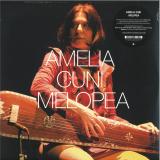
Black Truffle is pleased to announce Melopea, presenting two new pieces highlighting the incredible voice of Amelia Cuni (1958-2024), the great Italian singer, based in Berlin in later life, whose mastery of the classical Indian dhrupad developed in parallel with a commitment to contemporary experimental approaches. After two stunning archival releases documenting traditional dhrupad performances in India in the 1990s (BT079 and BT092), the two side-long pieces here embody the freedom with which Cuni explored new contexts and settings for her singing.
Both make use of a long recording of Cuni singing the pentatonic Raag Bhoop (or Bhopali) made in 2012 by her partner Werner Durand in Berlin. ‘Melopea’ began from Cuni and Durand’s superimposition of this recording with violinist Silvia Tarozzi and cellist Deborah Walker’s performance of Éliane Radigue’s ‘Occam River II’. Inspired by the beauty of this chance encounter (and other experiments with non-synchronous collaboration during the pandemic years), Tarozzi and Walker recorded independently, without hearing Cuni’s voice but ‘having her present in memory’. Tarozzi and Walker’s bowed strings places Cuni’s magisterial performance in a new context, emphasising, as Radigue commented upon hearing the initial layering of her piece with Cuni’s voice, a shared ‘searching toward the partials, overtones, these natural constituents of acoustical sounds in their richness’. Beginning with whispered bowed harmonics, the violin and cello swap the stability of dhrupad’s traditional tanpura drone for a slowly evolving, uneasy web of harmonic interactions recalling some of Harley Gaber’s work, sometimes sitting on dissonances for long periods or allowing changing interference patterns to come to the fore. Primarily focusing on her lower register, Cuni’s performance demonstrates her mastery of microtonal pitch subtleties, elegant sweeping glissandi and meditatively unhurried pacing.
The continuation of the same recording by Cuni forms the foundation of ‘Bhoop-Murchana’, with Anthea Caddy on cello and Werner Durand on soprano saxophone. In contrast to the randomised layering of the first piece, here Durand and Caddy have carefully selected pitches based on the raag Cuni sings, using the ‘Murchana’ form, which uses the constituent notes of the raag as tonics of new raags, retaining the same interval structure. Both players who have developed tones of striking depth and harmonic purity on their instruments, Caddy and Durand’s patient long tones are simultaneously rigorously grounded in the physical properties of sound and possessed of an immaterial, floating quality. Combined with Cuni’s voice and, near the piece’s end, her contributions on hammered and plucked tanpura, the effect borders on miraculous. To surrender to this music is like slipping into an onsen pool, feeling the instantaneous release of every tension. Accompanied by liner notes from Durand, Tarozzi and Walker, Melopea is both a moving tribute to the profound art of Amelia Cuni and, for the uninitiated, a perfect introduction to it.
Veteran Japanese electronic music producer, AKIO NAGASE, a leading player in the Kansai underground music scene since the late 1990s teams up with Yukino Inamine, a gifted and young female singer from Okinawa who magically mixes traditional Ryukyu (Okinawa) folk songs with her sanshin (Okinawan Shamisen) playing into the modern age, to create this wonderful collaborative album, Yugafu ai KAJI. This album is set to be released on GLOCAL RECORDS, a record store/ record label run by Genta Minowa, an ex-staff at the record store, Disc Shop Zero in Shimokitazawa, Tokyo and who still continues to introduce a great selection of dubby, club music from his HQ in Harajuku.
AKIO NAGASE regularly organised parties at his own venue, as well as ran a record store of the same name while actively being part of the Kansai scene at legendary clubs such as Tsuru no Ma, Sound Channel, etc., the best of what was offered in the Kansai underground dance scene in the 2000s.
As an artist, he released his own productions out of labels such as Sound Channel and RUDIMENTS run by Minowa. His album, Make Dub was released in 2003 out of the label, Sound Channel featured an innovative, techno meets dancehall track, Dance Hall King which connected techno, acid house with reggae and dub. This album is an undiscovered gem whose sound still emulates freshness and originality today (my wish is for it to be reissued on vinyl!) After a brief hiatus of releasing music, he released the EP, Delusion out of Chillmountain Records, a label run by his friend, Ground in 2018 and at his own leisurely pace, he has been slowly but surely releasing material that oozes originality, expressed through a robust acid sound and a variety of elements such as afro and Ryukyu folk music that is then incorporated into the medium of dub. Recently, he has also started to gain international attention by releasing original material and remixes out of labels such as the UK label, Emotional Especial, etc.
For this album, NAGASE teams up with Yukino Inamine who brings her own distinctive singing and sanshin playing magic into this collaboration and they fuse electronic music sounds with Ryukyu folk songs to create this wonderfully imaginative album that has no precedence or equal. Apart from the song, Ishikawa Koiuta, all other songs are covers of Ryukyu folk standards that were handpicked by NAGASE from the repertoire of songs that Inamine regularly performs live. They met up when NAGASE was commissioned to remix one of her original compositions, Miyagi Kaigan that was released in 2023 and that evolved into a collaboration with a concept that mixed Inamine singing Ryukyu folk standards with a backing tracks produced by NAGASE. Whenever she went to the the Kansai area, she would work on the basic track material created by NAGASE at the dub master of Osaka, Soulfire’s studio, HAV who would then additionally edit her takes to create the finishing tracks.
This album, Yugafu ai KAJI opens with Shirahamabushi, a track that slowly builds with an interesting mix of slow acid techno and sanshin and then moves onto the easy-going electro dub of Tinsagu nu hana (it is actually a cover of the track of the same title that first appeared in the label sampler, Comuni ó n Especial that was released on Emotional Especial. NAGASE initially wanted to feature Inamine on vocals for this track but due to scheduling issues, it did not happen but with good fortune, the new version of this track is now included in this album). A side closes with the optimistic Balearic sounds of Tsuki nu Kaisha that converges immaculately with slow-mo steppers. It is also worth noting that the person who introduced NAGASE to Inamine was the Okinawa dub master, HARIKUYAMAKU. They met at a concert held by both him & Yukino Inamine hosted by BUN BUN THE MC at the venue, RAGGA CHANNEL. From this encounter, this album came into fruition and they also asked HARIKUYAMAKU to produce an earthy, traditional rootsy, dub version of Tsuki nu Kaisha that is included as the 3rd track on the B Side.
Ashimizubushi, the track that magically blends old school Chicago house ala TRAX with Ryukyu folk music starts off the B side and it carries on to an uplifting track with a Skaouse (ska + house) feel, Hounen Ondo. Inserted after HARIKUYAMAKU’s dub of Tsuki nu Kaisha, this album closes out with the song, ‘Ishikawa Koi Uta’, the only song written by Inamine who said that she wrote it after falling in love with chill-out music. It is an ambient dub track with a collage like flavour, reminiscent of early The Orb (remixed by Mad Professor) and the latter half of the track finishes off with a message presented by Masao Itokazu (her uncle) who received tutelage from the prior owner of her sanshin that Inamine plays, Moritomo Inamine (her grandfather).
Incidentally, the album title, YUGAFU ai Kaji is derived from an auspicious word from Okinawa, Yugafu which means fruitful year, happiness, prosperity and ai (indigo) is a word that Yukino found inspiration few years ago (she wears a Okinawan indigo clothing called kinonuno in the front cover of this album).
The unique indigo colouring produced by nature overlaps with the unique charm of the human personality, and she wanted to present that current along with the music so the name was integrated to ‘indigo wind’, and the two were connected to form the album title, ‘YUGAFU ai Kaji’.
The photo of the front cover was taken by a young, Uchinaanunishie—- (meaning a boy from Okinawa) 17 year old photographer named Ratio and the designer of this album is Anmonaito who is a childhood friend of Inamine who also did the artwork for her album, Miyagi Kaigan. And the mastering and cutting of this album was done by Rei Taguchi.
The cosmology existing in Yukino Inamine’s singing is fully amplified by AKIO NAGASE’s spacey, abundant with many ideas, dance machine beat~ambient music and all of these elements are organically linked by the adhesive effect of dub.
Teasing dread atmospheres and zooming in on microscopic details that bring every beat in every bar to life, Seb Uncles returns to Samurai Music with another deep dive into his exquisitely crafted, cinematic progression of the drum & bass tradition.
Even a cursory glance at the Eusebeia back catalogue tells you Uncles is an artist committed to the storytelling promise of breakbeat culture. His work has been heavily tipped towards albums since he first broke through around 2015, and across more than 10 long-players he's cultivated a strong line in moody, evocative jungle and drum & bass more concerned with world-building and subtle detail rather than aggression and intensity.
Following up on his 2023 LP for Samurai, X, on Undertones Uncles applies his signature meditative tones to a broad expanse. There's a consistent sound palette that leans on the warm snarl of monosynth low end and aqueous pads, delicately edited breaks and crisply sculpted synth percussion, but Uncles moves with dexterity around different tempos and structures within this considered sound world. The overarching notion is one of things lurking beneath the surface - a comfortably open theme to be approached and understood from any number of angles. It certainly chimes with the upfront detail and brooding tension that gives the Eusebeia sound such depth.
There are moments of direct drum pressure, such as fierce opener 'Undertones' with its diced-up breaks and icy chords, the boisterous jungle dread of 'Uncover' and chasmic roller 'Root Out', but on the likes of 'Beneath The Surface' and 'Out In The Open' it's the mellow elements that take precedence over the deft drum science. The motion is persistent and nuanced, but it's achieved without deferring to default dancefloor tropes.
'Emergence' marks a pointed shift towards a delicate strain of techno that maintains the album's sound at a mid-paced pulse, focusing on synth shapes and textures to achieve propulsion with only the lightest of drum parts. Alongside the energetic intrigue of Uncles' sonic choices, the melodic make-up of the track is a compelling showcase for his emotionally ambiguous approach, both rousing and chilling in the same curious chord shapes.
From the half-time prowl of 'Lifting The Veil' to the creeping textures and haunted phrasing of 'Brought To Light', Undertones is another stunning exercise in widescreen jungle. It flows naturally from the rich body of work Uncles has cultivated over the past 10 years while carving out its own unique pocket - a reminder if you needed one of the profound sound bedded into the Eusebeia project.
INDEPENDENT RECORD SHOP AND LABEL KLANG TONE RECORDS RE-ISSUE DEBUT ALBUM BY 8 PIECE INSTRUMENTAL EHTIOPIAN JAZZ/AFRO-BEAT/PROG COLLECTIVE;
TEZETA
“Absolutley gorgeous from start to finish…”
- Deb Grant, BBC 6 Music
“An instant obsession. Impeccable rhythms and hypnotic melodies—Tezeta crafts a spellbinding fusion of Addis and Avon that takes you on a journey."
- Don Leisure
“Gorgeous mood music with more than a nod to Addis. Lovely tapestries and textures”
- Matt Temple, Matsuli Music
'Formed in Bristol back in2014 Tezeta were an experimental 8 piece instrumental group effortlessly combining Ethiopian jazz, Afrobeat, prog and improvisation. The band spawned out of the much loved Bloom Collective - a collective of musicians and friends from an experimental corner of the city’s buzzing music scene.
Led by composer, pianist and bandleader Daniel Inzani (Spindle Ensemble, Cosmo Sheldrake) the band also featured tenor saxophonists Andrew Neil Hayes (Run Logan Run) and Lorenzo Prati (Count Bobo, the Evil Usses, Itchigo Evil), Harriet Riley (Spindle Ensemble, Paraorchestra) on Marimba, vibraphone and percussion, Pete Gibbs (Count Bobo) on bass, Conrad Singh (Alabaster dePlume, the Evil Usses) on electric guitar and finally two(!) drummers Matthew Jones (The Brackish, Slate Trio) and Daniel Truen (Yama Warashi, The Evil Usses, Rozi Plain, Count Bobo).
They initially got together to play music from ‘The Ethiopiques Volumes’, in particular, the work of Mulatu Astatke, hence the name Tezeta (Ethiopian for nostalgia) but quickly evolved into their own style with all original material, incorporating many other influences along the way. Their much loved, debut album 'Seventh Place' was released in Sept 2016.
“We at Klang Tone have been admirers of Daniel Inzani’s work with Spindle Ensemble and I was fortunate to catch Tezeta perform before they disbanded. I bought one of the last available copies of their home released cdr at their gig at local Stroud venue The Prince Albert. It became a firm favourite - a recording I keep playing and never got tired of. It’s such a beguiling mix of styles - always evolving and resolving in different ways to what you might expect - some thrilling ensemble playing rhythmically propelled by two drummers and a percussionist with Daniel’s evocative melodies at the centre. I was convinced this was a recording that deserved a bigger audience and felt it needed to be heard on vinyl so I started a conversation with Daniel about releasing it on Klang Tone as it perfectly encapsulated the raison d'être of the shop and label. We didn’t want this recording to languish online barely listened to - I felt it was in danger of becoming a lost classic. I hope that this vinyl release is a worthy testament to this great band and helps draw attention to the creative genius of composer Daniel Inzani and the talented ensemble of players featured on the recording.” - Sean Roe, Klang Tone Records
Tezeta had a cult following among other musicians and were known for their wild group solo wig outs, virtuoso musicianship and creative use of unusual rhythm, harmony and melody. They toured across the UK at various venues and festivals including Glastonbury, Shambala and Green Man, and subsequently released an EP named ‘Curious Bubble’ in 2020.
In 2023 Tezeta performed a sold out final show at Strange Brew, Bristol as Inzani decided to pursue solo releases, notably his critically acclaimed triple vinyl album ‘Selected Worlds’ released on Hidden Notes Records which landed in the Guardian Top 10 Contemporary Albums of the Year in 20204. The third disc ‘Play’ was a clear continuation and development of the music Inzani had developed with Tezeta and featured many of the same musicians.'
The cover image is from ‘Project Rewind’, a double exposure photography collaboration between Karen Dews and Paul Blakemore.
Graphic design by Adam Hinks.
- A1: Sepehr - Twilight Calls
- A2: Sissy Fuss - No Restraint Instrumental Def
- A3: God Is God - Na Gore More Dub Edit
- A4: Alex Loveless - Voicenote
- A5: Suemori - Kisou
- A6: Mari Herzer - Limbal Ring
- A7: Elena Colombi Feat Juno Roche - Lost In A City
- A8: Loma Doom - Sisterresister
- A9: Decha - Mujeres
- B1: Pose Dia - Lovers Rock
- B2: Low End Activist - Need To Know Blue Room Version
- B3: Decha Wir Sind Da
- B4: Mayurashka - Libra Man
- B5: Nar John Silvestre - Ensel Ham
- B6: E-Bony - Slow Machines
- B7: Riva Ft Tommy Khosla - Resurfacing
- B8: Anenon - Length-Of-Night Improvisation
Following on from the celebrated first instalment, the second part of The Male Body Will Be Next compiles an entourage of daring sonic experiments, composed in response to bell hooks’ landmark book The Will to Change. Prompting artists and musicians to envision cross-gender solidarity, Osàre! Editions founder Elena Colombi presents an enrapturing, narrative album, conceptualised around collective transformation.
Resonating with hooks’ challenge to men to reclaim the sensitivity that patriarchy denies them, the name of the record arises from a photograph by Peter de Potter and Rebecca Salvadori’s film of the same title. In these depictions, naked flesh is exposed, made vulnerable and trembles with emotion as the fragility of masculine bodies are examined through the queer and female oppositional gaze. Transforming this visual language into musical expression, The Male Body Will Be Next swirls with punk vitriol, electrified noise, acid, electro and free-wheeling encounters charged by love, lust and limerence.
Gently plunking chords signal Pose Diva’s reimagining of lover’s rock before Sissy Fuss smashes in with a heavy-weight instrumental version of their erotic anthem ‘No Restraint’.
Made up of Turkish musician Etkin Çekin and Belarussian songstress Galina Ozeran, God is God delivers a gentle lullaby, while Low End Activist flirts with dark and brooding bass, shattering penetrating frequencies into luminous fragments. Riffing off the 2020 documentary about female early electronica pioneers, Loma Doom crafts a slowly oscillating drone zenith, the ultimate climax. In line with the conceptual underpinning, there are plenty of collaborations – Daytripper’s Riva and Sitar player Tommy Khosla, Lebanonese experimentalist N R and Swiss-French producer John Silvestre (AKA Typhon), as well as Colombi herself and trans author/activist Juno Roche. Within these partnerships, new modalities come alive as mediums, practices and perspectives are ignited and pushed in otherworldly, metamorphic directions.
Produced by Grammy Nominated producer Leon Michels (El Michels Affair, Clairo). Big Crown Records is proud to present Derya Yıldırım & Grup Şimşek’s latest album Yarın Yoksa. The show stopping intensity of Derya backed by the psychedelic soul of Grup Şimşek with production by Leon Michels has yielded a stand out record that challenges genre with a broad appeal and a powerful message. They refer to themselves as “outernational” over international as they say it suggests a sound that’s more inclusive or “beyond borders.” Derya, who sings and plays the bağlama, is German born to Turkish parents. Drummer Helen Wells is Berlin-based by way of South Africa while keyboard player Graham Mushnik and guitar/bass player Antonin Voyant are both French. The collective influences they bring to Anatolian music make for a completely unique and fresh sound that both pushes the genre forward and champions its rich heritage. Yarın Yoksa which translates to If There Is No Tomorrow delves into deeply personal pain and collective resistance with a central thread of loss, longing, and hope for change running throughout. The lyrics are poetic and rely heavily on symbolic language, metaphors, and storytelling while the music shifts track to track making each tune stand out on its own but work together perfectly as an album. “Cool Hand”, the first single released on Big Crown in September of 2024, is a beautiful juxtaposition of intensity and light-heartedness over a thoroughly infectious groove. The message is poetic and complicated, repeatedly declaring “I love you, I’m crazy about you” but ultimately finding a sense of peace through accepting a broken heart. “Direne Direne” is a protest song that embodies the struggle and tireless pursuit of justice encouraging people to resist oppression. Derya’s lyrics soar over the psych-soul musical backdrop as her story of personal struggle transforms to a universal call for resilience and strength. The slow and weighty vibe of “Yakamoz” lets onto the meaning of the lyrics even to those who don’t understand Turkish. It is a deeply moving song that captures the profound emotions connected to displacement and loss without knowing if you will ever return. The steady groove of the band, along with the anguished vocals paint a vivid picture of the devastation experienced by the protagonist who ultimately realizes that her roots are within her and anywhere she goes is her home. Nine of the tunes on the album are original compositions but they also take on three Anatollian folk songs with their own inimitable approach. The acapella introduction of “Misket”, a folk song from Ankara/Türkiye, will stop you in your tracks. The tune deals with death and how the living cope and continue a relationship with those who have passed away. Another traditional tune from Sivas that they put their signature sound to is “Hop Bico”, a tune about a playful character named Bico who is a symbol of vitality and spirit. The synth intro grabs your ear from the first note and the earworm chorus encouraging Bico to lead the group in celebration and embrace life through dance has the same effect on everyone who hears it. The band has taken a big step forward that you can hear on this record. Derya’s passion and authenticity is front and centre and the music is too moving to deny. Yarın Yoksa is sure to captivate the hearts and minds of all those who hear it, and just wait till you hear them play it live… Upcoming Tour Dates (+More To Be Added): 18th March The Deaf Institute, Manchester / 19th The Jam Jar, Bristol / 20th Scala, London / 21st Norwich Arts Centre.
Born in 1989 in Bamako, Mali, Nfaly Diakité is a member of the Donsow, Bambara animist hunters. Nfaly Diakité is named after his grandfather, the late Nfaly Diakité, one of Mali’s most respected donso chiefs. His grandfather did not play, but as a leading figure in the donso brotherhood, he was always accompanied by musician Yoro Sidibé. Nfaly grew up alongside Yoro Sidibé, who became his first master of the donso ngoni, a type of eight-stringed antelope skin harp. After leaving school to devote himself to his instrument, Nfaly continued his apprenticeship with Diakaria Diakité and Oumar Sidibé, two donso masters from the Wassolo region.
He quickly made a name for himself in the donso community and was much asked to play at the traditional ceremonies of his brotherhood. He then met percussionist Ibrahim Sarr and joined the BKO Quintet, with whom he recorded an album and toured Europe and the United States. His virtuosity on the donso ngoni soon attracted attention, and he took part in numerous music and dance festivals in Mali and abroad, with the aim of raising awareness of this little-known traditional instrument.
Nfaly Diakité is also a Kônô, meaning that he is responsible for passing on the history and culture of the Bambara people through music and song. He pursues his mission by combining tradition with more contemporary sounds and by collaborating with artists from a wide range of musical backgrounds. For him, music is a means of conveying messages of peace, love and harmony, and his compositions evoke the values of respect, tolerance and open-mindedness.
‘Tribute to Toumani Koné’ is Nfay Diakité’s first solo album, recorded in Bamako in June 2020. On the album, Nfaly is the only singer, providing backing vocals and playing the donso ngoni and keregne. The album is a tribute to the storyteller and poet Toumani Koné, the greatest donso ngoni player since N’gonifo Bourama. Nfaly Diakité is a representative of the new generation of donso ngoni players and he wishes to pay tribute to Toumani Koné, who throughout his long career has been a symbol of courage, daring, loyalty and honesty.
The nine-track of this solo album leaves no room for hesitation. Three instruments (donso ngoni, voice and keregne) manage to carry one into another dimension without ever tiring. The fitting and precise rhythm is a deep but melodious transe. Nfaly’s voice plays between expressive urgency and calm wisdom, and the choruses with his own voice multiply the planes of dimension of the music. The donso n’goni, of which Nfaly is an excellent player, sounds rough and earthy but always clear and sharp. All the strength of a music that does not belong to a single musician but to a long cultural tradition of which he is the spokesman is expressed here. The young Nfaly, thanks to his experience and sensitivity, succeeds on his own in pushing us into this world without feeling the weight of tradition but only the liberation of music that sounds all the more contemporary. This album is to be listened to in its entirety as one tight journey between repeated formulas, highlights and moments of rest within the same relentless rhythm. The densest moment is probably found in the heart of the album, between the tracks Nankama (the predestined one) and Mogote Diabeye (no one can please everyone). Here, the message, which can be deciphered from the translation of the lyrics, seems to transcend language barriers and intepret us directly about our human condition, urging us to move our bodies to the dense rhythm of life.
LP + insert with extended liner notes and download code including extra bonus track 'Movements of The Mind'.For his second album on the Belgian leftfield imprint Cortizona, Devin Brahja Waldman gathered a group of insanely gifted and talented musicians to start a new and highly moving musical chapter titled 'Nebulizer'.
From the first moment the pulsating tone of Devin's synth blends with the whispering voices of Earth, Wind and Choir and the menacing bells Naima Karlsson set in motion this record you just know and feel immediately 'Nebulizer' will be a soul-searching journey, soaking you deep into an unknown and very personal musical world.
Devin Brahja Waldman is a New York saxophonist, drummer, synthesizer player and composer who leads the group BRAHJA. He has performed with Patti Smith, William Parker, Nadah El Shazly, Malcolm Mooney, Thurston Moore, Godspeed! You Black Emperor, Charles Hayward, Luke Stewart and Yoshiko Chuma. Waldman is also a member of NYC's Heroes Are Gang Leaders (led by poet Thomas Sayers Ellis and saxophonist James Brandon Lewis), of Sam Shalabi's Land of Kush, and of the Norwegian hardcore group MoE.
In 2022 BRAHJA released the critically acclaimed album 'Watermelancholia' on the Belgian leftfield imprint Cortizona. For his second album on the same Cortizona label, Devin Brahja Waldman gathered a group of insanely gifted and talented musicians to start a new and highly moving musical chapter titled 'Nebulizer'.
Together with Adam Kinner, Georgia Wartel Collins, Earth, Wind and Choir, Luke Stewart, Kenichi Iwasa, Naima Karlsson, Alexis Mercelo, Janice Lowe, Watson and Damon Hankoff, Devin forms a slow-burning fireball unity.
A devotional séance channelling unknown powers proving music is a healing force of the universe.
Rejoicing the Holy Jazz Spirit.
Ready to nebulize the world and bring light out from the darkness. Head cleaning the world in 4 musical parts: Geological Drum, Nebulizer, Bushido and Movements of The Mind. Nebulizer is an elevating meditation on our estrangement of nature.
Interstellar sonic stardust from a mindblowing collective that will leave you flabbergasted.
Be prepared and hear it to believe it.
For fans of: Art Ensemble of Chicago, Archie Shepp, Pharoah Sanders, John & Alice Coltrane, Kamasi Washington, Shabaka Hutchings, SAULT, Ill Considered, Jamie Branche, Angel Bat Dawid, Mackaya Craven, Matana Roberts, Sun Ra and other good music.
- A1: Fables Of Faubus 8 51
- A2: Remember Rockfeller At ACa 6 24
- B1: Peggy’s Blue Skylight 7 14
- B2: Be&Er Git It In Your Soul 6 05
- C1: Jelly Roll 6 07
- C2: Mingus Portrait (ALio Zanchi) 6 26
- C3: Sue’s Changes 4 56
- D1: For Harry Carney (Sy Johnson) 6 24
- D2: Boogie Stop Shuffle 4 47
- D3: Sound Of Love (ALio Zanchi) 5 17
2LP LIMITED DELUXE EDITION 500 COPIES NUMBERED
Charles Mingus’ music contains multitudes. Multitudes in constant evolution. It is not possible to capture the Proteus-Mingus in a snapshot that fixes his essence forever. We need more work, we need more inspiration. It takes an act of love and courage.
And this is what Attilio Zanchi- a long-time jazz player and educator of musical talents in the most prestigious Italian Conservatories – has done. He fixed on this record an ancient passion for Mingus,
who he followed and almost touched in life, creating - despite the title - much more than a portrait: a real live gallery of “ways of being Mingus”. “If I have to make one last record, now that I’m 70,” he said, “I want it dedicated to Mingus. In such a poor musical age, his music - in which traditional jazz, classical and contemporary, but also
dixieland and 'free', coexist - contains all the twentieth century”.
The gallery of the many possible Minguses, curated and recreated by Zanchi after being brought live on stage, with exceptional formations in which he combines great names of Italian jazz with younger
talents that he met in his path as an educator, grants a visit that leaves amazed for variety and intensity: Mingus is not for the faint of heart.
From the political vibes of “Remember Rockefeller At Attica”, up to the melodic tribute of “Sounds Of Love”, along the lines of the song that Mingus himself dedicated to Duke Ellington, up to the
transcendence of “For Harry Carney” by Sy Johnson, this album offers a constant heartfelt homage and interpretation of the multifaceted genius of Mingus, rigorous, personal and contemporary at the same time.
The act of love and talent of Attilio Zanchi is a door to the sonic, human, political and cultural universe of Charles Mingus. A tribute to the past and a seed for the future that, like his music, is changing all
the time. “Let my children have music! Let them hear live music. Not noise. My children! You do what you want with your own!”
Charles Mingus from the liner notes of “Let My Children Hear Music”
Enrico Sola
TrioRox is a project born from the meeting of three protagonists of the Italian music scene (and not only): pianist Giovanni Guidi, bassist Joe
Rehmer and electronic musician DJ Rocca (Luca Roccatagliati). Three characters who boast an eclectic and consistent curriculum. Guidi, enfant prodige of Jazz piano, has published several albums for the prestigious ECM label, and has collaborated with the best jazz and electronic musicians, from Enrico Rava to Matthew Herbert, from Joe Lovano to Ricardo Villalobos. Joe Rehmer, an American transplanted to Italy, is one of the most sought-after bass players, sharing stages and recording studios together with authorities such as Bob Mintzer, James Moody and Danny Gottlieb.
DJ Rocca is a DJ and musician active since the nineties, and boasts numerous albums, singles and remixes with, and for key protagonists of the alternative dance scene (Andrew Weatherall, Dimitri From Paris and Howie B), as well as a militancy in the jazz scene with several albums together with Franco D’Andrea.
The music that the trio proposes is a mix of electronic, dance, Jazz and pop, with groove impulses in the field of house and techno music, without neglecting mixes between electro, classical and minimalism. A melting pot of styles between Keith Jarrett and Carl Craig.
Album to be released by IRMA Records in October 2024, with guests Luigi Di Nunzio, Gianluca Petrella, Dan Kinzelman and Jacopo Fagioli.
“Moods” is the debut album of Triorox that represents the photograph of the ‘Here and Now’. All the music was born from a studio session that lasted a few days, in which the mood of the three musicians gave the album its sound imprint. What came out of it became incandescent material to elaborate the musical flow of the entire work, which had three different phases.
The first, in which the tracks were born from the recordings, some developed as creations with a common denominator (the three moments of Mood), some as thematic suggestions (Angels, Corea and Next To Canada), and others as a stylistic challenge (the techno of Space Rain, or the drum and bass of Sax & The City).
The second phase, where the compositions were subjected to the test of live concerts, in which it was understood how the tracks could be better arranged, optimizing them and keeping the best ones. The last phase was the choice and insertion of the guests, reasoning according to the type of suggestion that we wanted to give to the specific song. So we gave free rein to Luigi Di Nunzio, who also participated in phase two, playing with us on stage on some occasions. In the same way, Gianluca Petrella chose the piece where he felt most at ease, also contributing to the arrangement.
Dan Kinzelman, a historic collaborator of both Guidi and Rehmer, was included because we wanted his bass clarinet in a specific suggestive situation. Finally, we wanted Jacopo Fagioli (the Tuscan reincarnation of Don Cherry), we wanted him in a specific episode of Mood, for his particular style, impeccable in determining the mood that the piece needed.
The second instalment from London Odense Ensemble digs deeper into the group's vision of what modern psychedelic jazz should sound like. Cut from the same sessions as Jaiyede Sessions vol. 1, released last summer, vol. 2 presents a more nuanced approach to the material. On this set the ensemble focuses on shorter, layered pieces - travelling from deep spiritual jazz grooves to gorgeous free-flowing minimalism to full-on acid jazz. There's echo-drenched flutes being absorbed into layers of analog synth pads and guitars, bossa beats and double bass sequences merging with electronics. It’s an intoxicating mélange of sounds and styles, spanning wide temporal and geographical distances. London Odense Ensemble came together when two of the finest exponents of London's flourishing jazz scene, flautist and saxofonist Tamar Osborn and keyboard specialist Al MacSween, came over to Denmark to explore new sounds with Causa Sui's Jakob Skøtt and Jonas Munk, as well as local bass player Martin Rude. For two days the group laid down grooves and ideas and experimented in the studio, and later the best segments were edited and mixed by Jonas Munk, who took a somewhat liberal approach to the mixing process, often dyeing the material with external effects and synthesizers. Jaiyede Sessions are the kinds of records that defy genre-terms, yet have its own instantly recognizable fingerprint. It carries a unique shared vision between the players of what modern psychedelic jazz sounds like. bios: Tamar Osborn: Saxophonist, composer and multi-wind instrumentalist is the creative force behind modal jazz ensemble Collocutor (On The Corner Records). She is a member of the Dele Sosimi Afrobeat Orchestra, performs and collaborates regularly with Sarathy Korwar, Jessica Lauren, Emanative, Ill Considered and DJ Khalab. Al MacSween: Keyboard player & founding member of Kefaya. Collaborations include American jazz legend Gary Bartz, Syrian qanun master Maya Youseff, London Community Gospel Choir, Palestinian jazz singer Reem Kelani & kora player Kadialy Kouyate. Martin Rude: Multi-string instrumentalist & lead singer in Sun River & Edena Gardens with members of Papir & Causa Sui. Jakob Skøtt: Drummer in Causa Sui with a slew of side projects on El Paraiso, including Chicago Odense Ensemble, as well as being responsible for the label’s visuals. Jonas Munk: Guitarist in Causa Sui & studio wizard on most releases on El Paraiso. Also works with a wide palette of electronic music.
Anaconga”, the fourth Dome album by Bluey and Citrus Sun, is an homage to jazz and soul greats from back in the day, and is the band’s first to be released as a gatefold 2LP.
The album opens with the gorgeous Maynard Ferguson tune “Mister Mellow” from the Seventies, with backing vocals from Tony Momrelle and Deborah Bond. Bluey and Richard Bull share the production . “Down For The Third Time”, the album’s lead single, is a deliciously funky remake of a classic Bobby Caldwell groove from 1978, with Natalie Duncan on vocals and Dominic Glover and Charlie Allen tearing it up on trumpet and guitar respectively.
“Mystic Brew” was originally written and recorded in the Seventies by funk, soul and jazz keyboard legend Ronnie Foster and Bluey includes it “to say thank you for his massive contribution to the music we love and are inspired by”. Erykah Badu’s “Honey”, also with vocals by Natalie Duncan, features beautiful trumpet and flugelhorn from Kevin Robinson.
The stand-out new songs on the album are “Santiago”, which features the young Indonesian harmonica player Rega Dauna, who starred on the band’s “Hard Boiled” instrumental hit from their last album “Expansions & Visions”, and “In Search of the Blue Note”, with Dominic Glover on flugelhorn and Graham Harvey on keyboards, which Bluey says is “inspired by New York City’s jazz history and nightlife”.
Bluey sums up the mood of the album: “I hope that the rhythms wrap themselves around your consciousness and the music slithers into your soul, whilst you bask in the light of the Citrus Sun! Unconstricted love, Bluey”.
Citrus Sun is the mainly instrumental-oriented side project which runs alongside Incognito and features many of the same musicians. The band released their first Dome album “People Of Tomorrow” in 2014.
The package, posted from Inglewood in California, dropped through my letter box…
I was looking forward to seeing this, the VHS of the then relatively ‘unknown’ but now legendary live show at the Saenger Theatre in New Orleans by Maze featuring Frankie Beverly. But when I fed it into my VHS player, I was disappointed. I could not quite figure out why. The band were tight, each musician sounded great, the product of being on the road, year after year, club after club in the States, sometimes playing five shows a night, all propped up by one of the best soulful voices we had ever heard, the maestro Frankie Beverly.
It took a second play of the VHS to realise what was missing. It was ‘too comfortable’ an atmosphere. A few wealthy customers sat around coffee tables quaffing champagne. It seemed to me that this audience, somehow, did not fit the band.
Paul Fenn at Asgard promotions received the contract from the band to appear live in London and Manchester. I became more and more convinced that his UK fans were going to be a lot more responsive than those from New Orleans.
We put the word out with just a couple of exclusive ‘shout outs’ by Robbie Vincent on his Radio London Soul programme. Those two plugs were enough to sell out all four shows at London’s premier music venue, the Hammersmith Odeon. The ticket office was rammed and the queue six deep, stretched halfway down Queen Caroline Street.
“I have never seen anything like it” expressed the manager of the theatre as he rolled down the shutters and turned on the “Sorry, SOLD OUT” notice above the theatre box office.
I was curious, so I went up and stood in the wings of the Hammersmith stage on that first show. Frankie, introduced to the stage by his sound engineer, Greg Blockman, sauntered past me, strumming his rhythm guitar, dressed in a casual dark green towelling suit, a brown leather visor and flip flops…and then five seconds later, he suddenly stopped. He seemed suddenly to be aware of the thunderous ’Welcome to London Maze’ roar, circling around the theatre about to engulf him. He slapped every black and white hand offered up to him that night, with a huge smile as he circled the edge of that stage. We wanted to get next to him, even if it meant climbing over rows of seats in front of us to do so.
That was the beginning of our love affair with Maze and Frankie Beverly. It certainly wasn’t New Orleans comfort; it was more like a crazy, but friendly, London riot.
Five albums on from the “Live in New Orleans” LP, Frankie sauntered into the California recording studio, probably with the same swagger as in London, to cut the delightful A-side here, “Somebody Else’s Arms”, from his aptly named ‘Silky Soul’ album. Along with the B-side, ‘Love is’ (from the “Back To Basics” CD, 1993) both are so delicious you might want to relax and pour yourself that London glass of champagne, 1983 vintage. Tell your mates your Maze/Hammersmith story too. You deserve it.
Two major players of the international dub scene unite on stage! O.B.F x Iration Steppas is the electrifying live show that brings together Iration Steppas, vanguard of dub and pillar of the UK sound system scene and O.B.F, the most warrior and prolific sound to come out of France. Mentor and disciple link up to deliver a performance that pushes dub music to new levels!
The live show accompanies the release of 'Revelation Time', Iration Steppas & O.B.F’s joint album that’s due to drop April 2024 on Dubquake Records; a project that has been in the pipeline for near a decade building up to a huge hype amongst dub-heads. An album that questions the human condition & future of mother earth, a trip into raw dub music led by the two most innovative sounds.
Uncompromising undiluted dub, designed to be heard & felt with the same level of madness with which it was crafted in the studio. And that's exactly the plan: bring the analogue console, effect racks and dub sirens to the center of the stage, live mix the tracks off of 'Revelation Time', pass the mic through the echo unit and shell down the place in low frequencies. A unique live dub show offered by Mark Iration & Rico O.B.F at the controls, Dennis Rootical on bass and vocals by Mark!
DJ Support: Danny Krivit, Craig Charles (BBC Radio 6 Music), Hallex M, Jazzanova, Delite Radio, Mi Soul, Pointblank, Totally Wired Radio, XFM, Radio Solar, Tony Minvielle, Simon Phillips, Chris Phillips (Jazz FM), KCRW DJs, Ian Friday, Aroop Roy, Samantha Badd (Café Del Mar), Mr. V, Simon Harrison (Basic Soul), Greame Park, Mike Fossati, Timo Mass, Deli G, Servino (Horse Meat Disco), Hyenah.
‘Badly Written Songs’ is, of course, a tongue-in-cheek title. It comprises a carefully structured and well-produced array of songwriting, topped and tailed with live instrumentation, commanding vocal performances and high-end production: the result of years of sound engineering and music production experience. Since the last album, Ross Hillard has continually honed his skills whilst earnestly crafting this sophomore long player. As well as developing a range of audio plugins, Ross also manages recording sessions at his own Paddocks Recording Studios: huge live spaces boast cutting-edge technology, integrated with distinguished analogue kit. The studio is complemented by a collection of prized microphones, together with a fully-restored vintage Raindirk mixing desk.
The opening track and first single from this album is the positively-anthemic gem entitled ‘Good Morning Sunshine’. It tells a forward-looking story promoting the merits of getting back into the driving seat of life. It’s propelled further by superb jazz-inspired drums and live horns that build up to an exhilarating crescendo. Featuring the vocal talents of Sophia Marshall, the story she paints is supported by a wonderful, darkly humorous cartoon video. An animated cadaver hilariously acts out her notions of positive living.
Other tracks also destined for a single release include: ‘Loving You’. It’s a song written around love lost. A bouncing house composition lays the foundations for Sophia Marshall's beautiful vocal that narrates the many facets to be found in loving another person. ‘Better’ again echoes jazz-inspired drums behind Sophia's vocals, drawing attention to how so many people are lost on their devices, missing out on the awesome world around them. A catchy chorus chants the notion behind this song, i.e., that you ‘could be better!’ This single is also supported by another fantastic video featuring the same comical, deceased character introduced through the ‘Good Morning Sunshine’ video.
Matthew Halsall announces a limited-edition Vinyl only pressing of Bright Sparkling Light, a luminous three track EP featuring some of his most gorgeous compositions. Originally conceived as a tour only exclusive, Bright Sparkling Light was recorded alongside, last year’s expansive beguiling long-player An Ever Changing View and draws on the same trademark blend of jazz, electronica, global and spiritual jazz influences. The original pressing sold-out on Matthew’s EU and UK tour last October and November and so many people got in touch with us here at Gondwana asking how they could get a copy that we decided to make a further 2000 copies available for retail and online sales. The title track is a hypnotic meditation built on one of the lushest loops Halsall has ever created and featuring stellar work from Halsall and flautist Matt Cliffe. Newborough Forest is a brisk, uplifting composition celebrating one of Halsall’s favourite landscapes and the wonderous Tide and the Moon paints a sonic picture of late-night waters and deep mindfulness and features some of Matt Cliffe’s most beautiful tenor playing. Like An Ever Changing View, Bright Sparkling Light comes in a package as striking as the music, with handmade fonts designed by Ian Anderson and a beautifully realised embossed artwork that offers a perfect compliment to the LP. Strictly limited and featuring a download code, Bright Sparkling Light will not be re-pressed.
“Sainen Hildo” is an album based on Miguel’s original compositions, recomposed and rearranged for accordion and voice by the two composers. Using the natural resonance and harmonics of these two instruments to influence their introspective interactions, resulting in evolving drones and tones and puzzling percussive outbursts. Unusual and at times unsettling, they manage to create a calibrated, deep and complex exploratory universe of ambience and drone where listening becomes a ritual. Highest recommendation for fans of Pauline Oliveros, Eliane Radigue or Phill Niblock.
Garazi Navas (accordion + voice). Original compositions by Miguel A. García. Recomposed and rearranged by Garazi Navas & Miguel A. García. Recorded by Ibon Rg at Azkuna Zentroa (Contemporary Art Centre in Bilbao) in June 2022, as part of the associated artists program. Mixing and mastering by Juan Carlos Blancas. Compiled by Mikel Acosta.
Acrylic painting on heavyweight paper by Maite Mugerza Ronse. Limited edition of 300 black vinyl LP’s housed in a coloured matt laminated cover. Released by Hegoa Diskak.
Dopelganger is the project in collaboration between classically trained accordion player and singer Garazi Navas (Usansolo, Bizkaia-Biscay, 1995) and Miguel A. Garcia (Vitoria-Gasteiz), an artist living in Bilbao with an extensive career in the fields of experimental music and sound art.
Garazi Navas / Classically trained at Musikene School of Music in San Sebastian with a masters in traditional music, Garazi, is a restless accordionist who, despite her young age, has taken part in a multitude of projects in theater, poetry, ballet, art installations and even playing with the Bilbao Symphony Orchestra. Her works are a personal interpretation of the close relationship which she feels exists between cutting-edge and traditional music.
Miguel A. García / Has performed extensively in Europe, America and Asia, both as a solo artist, improvising and in multiple ensembles. He has collaborated with dozens of artists (Al Karpenter, Jean Luc Guionnet, Sébastien Branche...) in studio and live, and appeared in more than a hundred albums. At the same time, he is organizer and curator of events, being founder of Club Le Larraskito, director of Zarata Fest, and part of the coordination of the cycle Hotsetan at Azkuna Zentroa itself
Known principally as a smooth titan of blue-eyed soul, Bobby Caldwell transcended genre tags with consummate ease; he was a musical icon of real class and versatility, cherished the world over. Tragically passing away in March 2023 at the too young age of 71, it still feels as if Bobby's true artistry is profoundly under-appreciated. His double platinum self-titled album from 1978 is a timeless masterpiece of sophisticated jazzy soul brilliance and is strictly canonical. Yes, it's perfect, yet it's been out of press on vinyl for years. We're deeply honoured to present the long-awaited reissue this summer.
Whilst Ned Doheny is known in Japan as "Mr California", native New Yorker Bobby Caldwell has always been "Mr AOR" to his Far-Eastern friends. His distinct charm is an irresistible blend of soul, jazz, and pop influences. He possessed phenomenal songwriting prowess, smooth vocal performances, was both a great soul guitarist and dextrous keyboard player and known for genius chord progressions. It all added up to a multi-layered brilliance entering the studio, and the singular sound he landed on was laced with soulful, sweeping strings and funky horns, touching lightly on disco, while allowing his supple voice to carry the stunning tracks he'd crafted.
String-swept opener "Special To Me" immediately sets the tone with its lush instrumentation, rich harmonies, and Caldwell's velvety-smooth vocals. Next up, a huge one. The infectious, mid-tempo bounce of "My Flame" showcases Caldwell's ability to effortlessly blend catchy pop hooks with soulful arrangements. It's an exquisite, emotive ballad that, at the same time, absolutely SLAPS. Game recognise game, and all that, so, accordingly, Notorious B.I.G. memorably ran with “My Flame” for his 1997 single “Sky’s The Limit”. The rolling, disco-very "Love Won't Wait" is a slick, uptempo track containing heartfelt lyrics intertwined with elegant strings and a horn section to die for. Aching - and achingly cool - single "Can't Say Goodbye" is a real fan favourite, and it's no surprise. It's a laconic, slow-mo jazz-funk stepper, with fantastic, very deliberate playing that closes out the A Side quite exceptionally. "Come To Me" slows proceedings down elegantly to open Side B before the universally agreed-upon masterpiece enters proceedings.
"What You Won't Do for Love," the standout hit that became a classic in its own right, perfectly captured Bobby's ability to infuse a contagious groove with introspective and relatable lyrics. With its instantly recognisable horn riff and Caldwell's soulful delivery, this timeless, chiller anthem continues to captivate audiences and define his musical legacy. He scored huge with the track, taking over the pop and R&B airways with this mellow soul stepper. It has remained a perennial favourite and has been heavily sampled, such is its unique allure; Aaliyah sang over snatches of it on "Age Ain’t Nothing But A Number" and you can hear Caldwell’s vocal sample used for the hook on Tupac’s posthumously released “Do For Love”.
Upon submitting the finished album to his label, they requested more material in hope of a big single. As Bobby remembered to Wax Poetics a few years ago: “Now at this point, I’m mentally exhausted...and bear in mind that I got so close to all the songs I’d written. I gave each song a profound amount of thought, and maybe too much. So, in haste, I went in and cut this song, "What You Won’t Do For Love". Wrote it in a day, cut the rhythm track, overdubbed the horns, I sang the song, and literally turned it in three days after. And lo and behold, the one song I gave the least thought to,” Bobby laughed, “ended up being a national anthem.”
The mysterious, magical "Kalimba Song" is a cosmic, kalimba-driven melodic-funk instrumental - short but oh, so sweet. It's followed by the supreme tear-jerker "Take Me Back To Then", Bobby's otherworldly voice deeply longing for a simpler time, "when life was mellow". I think we can all get behind this sentiment. The final cut is arguably its deepest, its low-key finest moment. For us, it is, anyway. The glorious, driving, effortlessly funky guitar-soul jam "Down For The Third Time" is a huge melancholic Be With favourite and has been played by discerning genre-hopping DJs with significant glee for years. Hypnotic, melodic, beautiful. Like the album it elegantly rounds out.
Bobby sadly passed away on 23rd March 2023, after a long struggle with mitochondrial damage and oxidative stress, due to an adverse effect from a fluoroquinolone antibiotic. The reissue of his wonderful eponymous album will be available on vinyl across the globe, ensuring that fans of his incomparable talent - and soul music enthusiasts worldwide - can radiate in the deep beauty of this seminal album. Meticulously remastered and cut by both Simon Francis and Cicely Balston respectively, it has been pressed to the highest possibly quality at Record Industry in Holland.
More than a decade after the release of ´Land Lines', the mythical Humboldt County, California based duo of Brian Pyle and Merrick McKinlay reappears seemingly out of nowhere with 'Atheistsaregods'. With past releases on such cult-like labels as Root Strata, Weird Forest, Blackest Rainbow or Digitalis, Starving Weirdos were an indelible part of a sprawling and loose network of artists in Northern America whose DIY work ethic and extreme activity revolved around shoestring-budget constant touring, numerous limited editions on CDR, tape and vinyl and a relentless drive to push the boundaries of genre.
Out of that cauldron, Starving Weirdos stood out as one of the most persistent and visionary acts, developing a mind altering body of work that went from warm soundscapes through droney digressions, freeform improvisation and raucous noise summoned from a myriad of instrumentation and low budget processing - vocals, keyboards, violin, flute, percussion and an assortment of less identifiable sound sources. 10 years on their legacy remains a timeless and wildly under-appreciated one, but hopefully this new album will shine a light on their idiosyncratic approach. As time itself was never a constraint. This is music suspended outside of it.
Right from the start with the echoing percussion, dissonant keys and processed vocals of 'Haiku Nagasaki', 'Atheistsaregods' draws a continuous flux of psychedelic elevation that goes from the gloomy electronic motifs not unlike the early Cluster vibes of 'Invocation' into the dank percussive maze of the appropriately titled 'Barulho do Samba'. The self titled track induces a sense of post-apocalyptic vertigo via hallucinatory scraps of voice, suspended synth tones and reverberating field recordings, connecting into the droney mystics of 'Dudukahar (Reed Prayer)'. Coming full circle, 'For Vinny' brings back the echoing percussion amidst hypnotic cello lines until it drifts off into the unknown. With the same palpable sense of urgency, Starving Weirdos feel as vital as ever. And even if we didn't realize it we were in need of them. Welcome back.
Intergenerational trio Dry Speed is one of the best-kept secrets of the Belgian free jazz and improvisation scene. Formed in the early 2000’s, trumpet player Joachim Devillé and saxophonist Thomas Olbrechts were in their twenties at that time, while drummer – their teacher at the art school in Brussels - Dirk Wauters was already in his fifties. Logically, twenty years later the first one are in their forties and the third one in his seventies. They only released a couple of CDs before “Indium” but never stopped to play, for themselves and for audiences, in concerts.
'Too often we describe music using classifications; genres like “jazz,” “experimental,” “avant- garde” are an easy shorthand to relay the rough parameters of the music to another person who may not have heard it. But these words are useful because they’re so vague, and they are most often used when the impression the music makes is equally vague. But when a group makes sounds that move the listener, these terms don’t hold up.
Dry Speed has released a record that is, at turns, futuristic and organic. It feels alien and new, like plastic or titanium, but at the same time as if it is shrouded in the natural, growing like moss or amplifying the sound of a great tree’s roots. ‘Indium’ gives the listener multiple entry points into the trio’s music: from a broad soundscape to a densely knitted series of minute and exacting musical gestures.'
- Nate Wooley
‘Hardcore Jollies’ was Funkadelic’s ninth studio album and their debut on Warner Bros Records. Released in October 1976 and dedicated to “the guitar players of the world”, it showed Funkadelic was the heaviest black rock band since Jimi Hendrix’s Band Of Gypsies (even featuring Buddy Miles on one track). With lead guitarists Michael Hampton and Eddie Hazel dazzling, the personification of funk Bootsy Collins on bass, Bernie Worrell’s keyboard wizardry and many more, the album was helmed by the genius of George Clinton. Reaching no.12 on the US R&B chart, the album spawned singles ‘Comin’ Round The Mountain’ (US R&B No.54) and ‘Smokey’ (US R&B No.96) and a live remake of 1973’s ‘Cosmic Slop’ from the album of the same name. Recorded during rehearsals for 1976’s P-Funk Earth Tour, this version features a vocal introduction dropped from the 1973 studio cut. Over 45 years since its original release, ‘Hardcore Jollies’ is among Funkadelic and George Clinton’s best-ever albums and remains a masterful example of their creative genius. FUNKADELIC Masterminded by the larger-than-life figure of George Clinton, Funkadelic was a key component of his influential P-Funk empire. Funkadelic’s unique combination of Rock, Psychedelia, R&B & Soul led to the band crossing over to the pop mainstream & gaining a vast international following, becoming one of the most important & influential groups in music. On 6 May 1997, Parliament / Funkadelic were inducted into the Rock & Roll Hall Of Fame by Prince. To commemorate six decades of thrilling & delighting fans, George Clinton returned to the stage in 2022 for a series of concerts. To celebrate, Charly have reissued Funkadelic’s classic four albums ‘Hardcore Jollies’; ‘One Nation Under A Groove’; ‘Uncle Jam Wants You’; & ‘The Electric Spanking Of War Babies’ (originally released by Warner Bros during a golden period for the band between 1976-1981). Each album will be available as deluxe gatefold Digi-Sleeve CDs in PVC wallets + obi-strip & facsimile-edition gatefold LPs on 180-gram black vinyl & limited edition 180-gram coloured vinyl + 1970s-style obi-strip in a protective PVC sleeve. “They played a HUGE role in creating the future of music.” PRINCE
On May 12th 2023, Helsinki-based duo Ya Tosiba will release their second album, ASAP Inşallah. The album will be led by two singles, ‘Mənəm’ and ‘Pul’, due for release on March 2nd and April 13th respectively.
A collaboration between Finnish electro producer Tatu Metsätähti (also known as Mesak and Mr Velcro Fastener, and of the Scandinavian skweee scene) and Azerbaijani musician and vocalist Zuzu Zakaria, Ya Tosiba absorbs electronics, live instrumentation and folkloric poetry of Caucasus into a spirited, groovy sound.
The follow up to their 2017 debut album Love Party, Ya Tosiba’s ASAP Inşallah plays with tension of living in a world of contradictions.
Across the 10 tracks musical and lyrical collaboration takes the listener on a global trek. Sonically, features come from Norway’s Center of the Universe, France’s Poborsk, Ukraine’s Zavoloka, Sweden’s Pavan and Daniel Savio, Azerbaijan’s Rahman Memmedli, plus Patric Catani and Debmaster from Berlin. As Zuzu sings in Azerbaijani, the storytelling of ASAP Inşallah comes alive. All of the album’s lyrics are taken directly from poetry and texts: with tales of romance and war, sex and gender, nature and machine, politics and society. Though the stories are varied, and some are historical, they all tap into that tension; it’s the weight of history versus the promise of tomorrow. After collecting myriad stories during her field studies, some of which are over 100 years old, Zuzu was stunned by their contemporary relevance.
When Ya Tosiba wrote ASAP Inşallah, it started with these texts-as-lyrics; melodies and music were built out from their internal rhythms and vocalpossibilities. With a range of electronic hardware and software, Zuzu and Tatu went back-and-forth, creating taut loops and clips out of Zuzu’s vocals, drums and keyboards, with samples of their collaborators instruments and Tatu’s productions.
In chopping up recordings of the live players into their electronic beats, Ya Tosiba creates an effect of tradition and modernity “being samples from the same record, taking it apart and looping it to sound like one machine.” The patchwork nature of their process, alongside the ambitious and danceable sonics, invites the listener into Ya Tosiba’s unique perspective.
The third release of , which will be released on vinyl with the theme of ancient and modern east and west ~ Nihon no Uta ~, is blindness caused by an illness that he had when he was a child, he met Tsugaru shamisen in a poor and difficult life.
Chikuzan Takahashi, a master of the Tsugaru shamisen, has raised Japanese folk songs to the level of art that has been praised around the world. The recorded song is "Iwaki Impromptu".
Several versions are also recorded in the album work, and there are different arrangements only for improvisational songs, but this time Held from 1973 to 2011 at "Maruyama Park Concert Hall" in Kyoto City to coincide with the Gion Festival in Kyoto
It is a sound source when he appeared in "Yoiyoyama Concert". A thick string that tells the beginning, like slamming Overwhelming power that tightens the chest even though it is not a drumstick, like an orchestra that does not seem to be a single performance
Spread of sound, free development of sound. A shamisen player named Chikuzan Takahashi who completely deviated from the frame of so-called standard folk songs It seems that the expression of is involved in the audience at the scene without even seeing it.
Mr. Takeyama describes this song as "a song where you don't know where it started, where it started, and where it ended." It's just an impromptu song, something that you listen to with subtle changes in sound and complex rhythms while making various changes. It is a masterpiece full of dynamism that you can grab until the end.
Bill Laswell, who is active as a world-class bassist, reconstructed the original sound source this time. He has a deep knowledge of ethnic sound sources, and his arrangement is "Mix-translation" instead of "Remix". Is used. While making the best use of Mr. Takeyama's sound source, as the difference in the words shows, it is unique Arrangement with swelling deep bass bass makes you feel as if you are standing on the same live stage and having a session. It is a finish that you can understand his idea of chewing the original and then translating it.
The jacket picture is by Mr. Akira Kasai, a photographer who has taken Mr. Takeyama's picture for a long time. We asked Mr. Takuji Matsubayashi, the author of "Takeyama Takahashi, the sound of the soul," to introduce the work.
- A1: Kim English - Treat Me Right (David Morales Club Mix)
- A2: Sandy B - Feel Like Singing (Adelphi Music Factory Remix)
- B1: Byron Stingily - Get Up Everybody (Darius Syrossian Remix)
- B2: Byron Stingily - Get Up Everybody (Parade Mix)
- C1: Pj - Can Ya Tell Me (Gerd Janson Piano Megamix)
- C2: Pj - Can Ya Tell Me (Gerd Janson Bonus Beat)
- C3: Pj - Can Ya Tell Me (Pierre’s Phat Dub)
- D1: Wonderboy - Jerk It (Sorley Street Mix)
- D2: Wonderboy - Jerk It (Felix Da Housecat Original Nooworld Underground Mix)
- E1: Innervision Ft Melonie Daniels - Don’t You Ever Give Up (Ian Friday Libation Vox)
- E2: Innervision Ft Melonie Daniels - Don’t You Ever Give Up (Ricanstruction Vocal)
- F1: Kim English - Learn 2 Luv (Ralf Gum Remix)
- F2: Kim English - Learn 2 Luv (Mood Ii Swing Club Mix)
- G1: Deep Creed - The Anthem (Monki Remix)
- G2: Deep Creed - The Anthem (Armand Van Helden Original Circle Mix)
- H1: Kim English - It Makes A Difference (Danny Howard Remix)
- H2: Danny Krivit & Kyle Smith Present Kim English - It Makes A Difference (Dub)
Black Vinyl[33,57 €]
Nervous Records, the iconic label synonymous with the rise of house from the streets of New York City, will mark 30 years in the music industry by releasing the celebratory compilation LP ‘Nervous Records: 30 Years’ on October 1st (Part 1) and October 15th (Part 2).
Featuring original mixes of the label’s biggest tracks, plus remixes by some of its most celebrated acts, ‘Nervous Records: 30 Years’ is both a celebration of the past and of the future. Featuring a who’s who of electronic dance music, the long player sees names including Louie Vega, David Morales Darius Syrossian, Tensnake, Monki, Franky Rizardo, Danny Howard and more take on iconic Nervous cuts: ‘You Make Me Feel Mighty Real’, ‘Treat Me Right’, ‘Future Groove’, ‘Feel Like Singing’, ‘Get Up Everybody’, ‘Break You’, ‘Hot’, ‘End This Hate’, ‘Unspeakable Joy’, ‘Can Ya Tell Me’, ‘Jerk It’, ‘The Anthem’, ‘It Makes A Difference’, ‘Learn 2 Luv’ and ‘Don’t You Ever Give Up’.
The album marks one of the most enduring, extraordinary legacies to grace America’s illustrious music history, not just in electronica but far beyond. Founded in 1991 by Michael and his father Sam Weiss, and recognizable immediately by its distinctive character logo, the label grew rapidly, in no small part due to Michael Weiss’ practically unmatched passion for discovering new music.
“Louie Vega and Kenny Dope woke me at 4am on Tuesday night, Wednesday morning from their studio telling me they had something really different that I needed to hear,” Michael recollects. “I asked if they could play it over the phone. They said if I wanted to hear it I had to come to the studio. So of course I got myself up, got dressed and went there. That “really different track” ended up being ‘The Nervous Track’, a tune that became our signature release and was also highly instrumental in the emergency of London’s ‘Broken Beat’ movement.”
The label’s willingness to take chances on fresh sounds and innovative concepts rising up from the melting pot sidewalks of NYC ensured a body of work that has become a living musical history of the city. House cuts ‘Unspeakable Joy’ and ‘Nitelife’ (Kim English), ‘Get Up (Everybody)’ (Byron Stingily) and ‘Feel Like Singing’ (Sandy B) bump up against hip-hop anthems like ‘Who Got Da Props’ (Black Moon) and “Bucktown” (Smif-n-Wessun) and reggae cut ‘Take It Easy’ (Mad Lion); soulful flows from Mood II Swing (Kim English ‘Learn 2 Luv’, Loni Clark “Rushing”), Armand Van Helden (‘The Anthem’) and Nuyorican Soul (‘Mind Fluid’) sit alongside seminal techno singles like Winx’ ‘Don’t Laugh’. The young artists and producers who joined the Nervous Records’ family have gone on to become some of the most hallowed and celebrated dance acts of all time: Louie Vega, Kenny Dope, David Morales, Tony Humphries, Roger Sanchez, Armand Van Helden, Kerri Chandler, Kim English, Byron Stingily, Josh Wink, to name just a handful.
“We did a release with Josh Wink under his Winx alias entitled ‘Nervous Build-Up’,” Michael said. “It did well and it was obvious how talented Josh was. Subsequent to that release I was pretty persistent in asking him to continue to play me his new demos. During one phone conversation he said, “Mike I’m gonna play you something over the phone but don’t laugh when you hear it.” That demo ended up being ‘Don’t Laugh’, which became one of our biggest international hits and still to this day is one of America’s earliest and most impactful techno hits.”
As much a celebration of the label’s future as it is of their past, Nervous Records: 30 Years is but a marker in the imprints’ history, a clear sign of where they’ve been and also where they’re going. With 30 years behind them, the label’s determination to unearth new raw diamonds in the rough is as unwavering as ever.
“I’ve always been one to look at what others are doing (the industry at large) and think, “ok, are they doing this specific thing for a reason, or doing it because everyone else is doing the same thing” and make my decision based on that,” says Nervous Records’ General Manager Andrew Salsano. “In an age where data metrics and analytics reign supreme, I remain steadfast that they should be complementary to your decision and not the sole indicator to make one. So many songs today are written with 15 second hooks in mind for social media, and while there’s nothing wrong with that business model you will always be chasing the wave instead of carving out your own path and identity.
“My primary focus for the sound of the label has and will continue to revolve around signing good songs and music that has the ability to react at the street level first. The best results come from artists that are firstly given a bit of local love that grows into a global impact. Fresh ideas that express child-like curiosity and artists showing vulnerability in their music are also something I look for, artists and producers that are not making music with certain markets in mind, but rather their own style and signature that is unique but able to straddle the fine line of underground and overground.”
Still as raw, as underground and as finely tuned to the dance floor as they ever have been, perhaps the secret to the success - and the longevity - of Nervous Records has something to do with that hard, dogged, no-holds-barred NYC edge that runs through the veins of the label. With the next generation of producers rising from the clubs of New York, one thing is certain; Nervous Records will be there to find them, nurture them and bring them to the world at large, over the next decade and beyond.
- A1: Legacy
- A2: First Step
- A3: Auditory Hallucination
- A4: Between Worlds
- A5: Healing
- B1: God Of War
- B2: Next Dimension
- B3: Through The Roof
- B4: Foggy Times
- C1: Thought Bubble
- C2: Dark Corners
- C3: Purgatory
- C4: Eyes Of A Ghost
- C5: Lump Sums
- D1: Overnight
- D2: Feeling Strange
- D3: The Climb
- D4: Problematic
- D5: Blind Faith
High Focus Records are proud to present the latest collaboration from Verb T & Illinformed. ‘Stranded in Foggy Times’ both continues and completes the trilogy that began back in 2015, with ‘The Man with the Foggy Eyes’, before broadening the horizons with last year’s release ‘The Land of the Foggy Skies’. This final chapter returns to the same conceptual landscape as its predecessors, but also sees Verb T & Illinformed returning to a more classic approach to album making. In spite of its concept, the Foggy Trilogy is something of a personal outpouring for Verb T, with the original aim being to vicariously discuss the trials and tribulations that play a part in his life, including his struggles with chronic illness and the feeling of alienation from leaving his hometown, while also reflecting on the state of the world as a whole. Their approach to making the album meant taking it back to the most natural form, where the idea for the track would be outlined, Illinformed would make the beat, Verb T would write to it and then they would tweak and adjust accordingly. The result is 19 of the most finely crafted tracks to emerge from the UK shores this year. As with the previous albums, ‘Stranded in Foggy Times’ finds Illinformed moving away from the more rugged sound that has shrouded the British scene over the last few months, thanks to his collaborations with the likes of Datkid and Wish Master, instead providing Verb T with an arguably more mellow backdrop. From the string and piano driven introduction on ‘Legacy’, to the blissful head-nod vibes of the closing track, ‘Blind Faith’, the union between beats and rhymes sits at the perfect level. The album also boasts one of the most impressive guestlists of the year, one that is very much a product of both players’ worlds. Thanks to Illinformed’s Bristol connection, there are features from the likes of Res One, Datkid, Leaf Dog, Smellington Piff and Chillman, as well as some locally sourced cuts from DJ Rogue. While on Verb T’s side of the fence, we have features from Rye Shabby and Moreone, along with a collaboration that reignites the same creative spark he found in his early days, as King Kashmere steps into the booth on Feeling Strange. All in all, ‘Stranded in Foggy Times’ does exactly what it sets out to do, by drawing the trilogy to a close while also providing insights into Verb T’s personal world and the world at large. The fact that it also happens to be one of the strongest rap albums of the year is the icing on the cake
BLUE & WHITE COLOUR IN COLOUR VINYL
In the culinary arts, it’s easy to overcomplicate the final product. Theme, presentation, texture…they’re important but should work to complement the raison d'etre of any food. At the end of cooking a dish, it should taste good and feed people. Some dishes, like barbeque or provoleta, resist the tendency towards hollow showmanship. One of their expressions can be more or less aesthetic, but the first purpose is to be simple and tasteful. Argentinian provoleta goes so far as to blur the line between ingredient and dish. It relies on the inherent flavor of provolone being heated at the right speed for the perfect amount of time. You can add garlic or chives or red pepper to the slice, but ultimately they serve to bring out an essence that’s already there.
Los Angeles’ Cousin Feo has developed his rapping acumen in the five years since releasing Provoleta, but returning to the project today shows that he always had the penmanship, grit and delivery that christens an emcee worthy of remembrance. Like the bubbles rising up in the appetizer that is the album’s namesake, Feo showed that true profundity is found in the simple gestures.
Since dropping the project in 2019, Cousin Feo has expanded his vision of a world where hip-hop and football, two proletarian art forms, mingle in creative and compelling ways. He has collaborated across multiple continents, chronicled football histories, aided in canonizing legends, kept the flames high in age-old rivalries and constantly forced his audience to search for the last time they heard bars this hard. In anyone else’s hands it would be too great a task.
The maturity he showed on Provoleta wasn’t nascent, it was an inherent quality forcing itself to the surface. The songs refract his experience as a working class Angeleno through the archetypes of Argentinian football legends. The kernel that unites the two worlds is hustle. When Feo was coming up, missteps had greater consequences than crashing out in the group stage and street deals had the weight of a Boca-River Plate match.
Each track uses slightly different ingredients to let Feo’s underlying talent shine. “Maradona” feels salvific, fitting for a football legend canonized from the Andes to the Alps and a Los Angeles rapper looking to inspire similar hope in the neighborhoods that raised him. On “Di Stefano” Feo massages the instrumental with the same composure of the late forward, until he pierces through the headphones like one of Di Stefano’s arrows. It’s also refreshing to hear a song celebrating Messi before his meme-ification, focusing on the universal truths contained in his footballing talent instead of using number 10 as a stand-in to make a point in a fruitless argument. And he still finds space to show deference to Batistuta, Kempes and other members of the Argentinian pantheon who’ve been erased from the popular imagination by the national team's contemporary success.
Real ones know that true players, true rappers, and true artists will always stand the attacks of time and consensus. In Provoleta’s first verse, Cousin Feo says he moves with the hand of God. Maybe one day he’ll tell the whole truth and let us know how he was able to wrestle the pen away too. Limited edition of 300 hand-numbered copies.
- 1: Match Questions - Gasoline Truth
- 2: Goddess Of Paradox (Tiamat Yawns Awake)
Crypt of the Wizard is proud to make available two legendary underground albums by Slutet on vinyl and digital formats.
Slutet originated in Uppsala well over a decade ago, first emerging as a loose idea around 2010. The original cluster of strangely like minded individuals - Dingir, Ryttersson, J.P., Sviatopolk, were equally set on starting a cult as they were a band, the former emerging as a loose collective known as The End Commune, while the latter eventually began rehearsing together as Slutet on September 1, 2013.
From this constellation three notorious demo tapes sprung which were self-released in very limited numbers, and only available by trading bodily fluids, blood, and/or hair for the cassettes. “A very loose guess but we made probably around 20-30 hand-drawn/custom demo tapes of the first three releases. We got blood and hair from many places, actually the very first offering was from INDONESIA. Slovakia, Germany, USA, Argentina, Norway, Canada, Finland followed.... if my memory serves..... hazy years indeed”
J.P. left early 2015. Later that year, after trying the band as a bass-drum-vocals outfit for a while, Fjalar joined on guitar. This is the classic constellation. Dingir, Ryttersson, Fjalar, Sviatopolk. The same troupe playing to this very day.
Following on from the compilation Slutet began work on their next offering entitled Jihad. While the departure of J.P. left them temporarily without a guitarist, a chance meeting with Fjalar at a rave ushered in a new era for the band. “I met the drummer and the bass player at a psytrance rave in the forest. I didn’t have any band and I wanted to play music and I saw this fucking weirdo with long dreads and a Hellhammer shirt and I just went up to talk to him”.
After Fjalar joined the rather chaotic fray, songwriting duties were spread out more broadly and Jihad was rehearsed and recorded in a haze. First released as a cassette by Manifest Of Hate Creations, and later on vinyl in an edition of 100 by Goatowarex the release quickly sold out and became as legendary, and as incredibly difficult to obtain as the previous releases. “It has got some psychedelic improvs, some very unorthodox and quite genius vocal work, some electronic undertones, some noisy ambience, a message of existentialism; all this wrapped up in some sloppy but very authentic and intense black metal-ish music.”
“After the vinyl compilation was out (early 2015) we felt probably a bit directionless, and, having parted ways with a befriended and talented guitar player, we felt maybe a bit morally weakened to continue. First, for a year almost, we toiled on without the 6-strings and rehearsed quite lengthy material for a proposed upcoming LP. However, that material never surfaced. Then we got a new guitar player (Fjalar) and created and recorded this mess”.
It is with great pride that we make these albums available to a general audience and in a wider pressing without need for bloodshed.
First time reissue of JP / US free jazz rarity.
The 1970s were Marion Brown’s most searching decade, a period during which he sought to move beyond the free jazz of the previous era and find more personal approaches to structuring improvisation and composition. After leaving New York for Europe in 1967, Brown began reshaping his music into what he described as “a more deliberate kind of music that had more structure to it,” pacing it so that moods and modes could develop over time. Albums such as In Sommerhausen, Afternoon of a Georgia Faun, Geechee Recollections, and Sweet Earth Flying trace this evolution: rhythmic structures moved to the foreground, harmony receded, and composition became a matter of orchestrating interlocking rhythmic parts as one would polyphonic lines.
Released in 1976, Awofofora is an overlooked but crucial entry in that sequence. At the time, its use of funk and reggae beats, electric guitars, and grooves drawn from contemporary Black popular music led some to misread it as a jazz-rock detour. In retrospect, it is entirely consistent with Brown’s methodology. As he admired in the Art Ensemble of Chicago, the stimulus comes from within the community. Here Brown filters Afro-Caribbean rhythms and funk through his own sensibility, abstracting their structural qualities rather than adopting surface style.
“La Placita,” making its first recorded appearance, layers distinct rhythmic phrases in a manner reminiscent of African drum ensembles, over which Brown and trumpeter Ambrose Jackson spin extended improvisations. The standard “Flamingo” is reshaped through diasporic rhythm and lyrical soloing, while “Pepi’s Tempo” and “Mangoes” harness crisp funk and reggae grooves to generate what Brown called a “manifestation of community” through collective improvisation. Even the overdubbed solo feature “And Then They Danced” reflects his structural thinking, ingeniously re-voicing a duet composition for two alto saxophones performed by one player.
This was the only recording by a short-lived band that briefly polarized audiences during festival appearances in 1976. Yet Brown consistently sought unity across change: different sounds, same principles — rhythm as structure, melody as architecture, collective improvisation, and above all, the primacy of tone. Awofofora stands not as a departure, but as a vivid synthesis of the elements he had been refining since the late 1960s, its grooves and golden alto lines conveying a sound drawn, in his words, “from life and from the world of experience.”
- 01: Maanitus &Amp; Tšiižik
- 02: Markka
- 03: Melkutus
- 04: Letška
- 05: Kuuen Parin Hoirola
- 06: Brišatka
- 07: Tšiižik
- 08: Kirkonkellot
- 09: Kirkonkellot Korkea
- 10: Hoirola, 3 Parin
- 11: Lippa
- 12: Kyngäkiža
- 13: Ristakondra
- 14: Vanha Polkka
- 15: Viistoista
- 16: Vanha Valssi
- 17: Kiberä
- 18: Maanitus Kuokan Kanteleella
- 19: Tuuti Lasta Nukkumahe
Vinyl[22,65 €]
Death Is Not The End present a further volume of Arja Kastinen's eerie amalgamations of 110 year old wax cylinders with her own meticulously transcribed takes, this time focussing in on Armas Otto Väisänen's field recordings of kantele player Iivana Mišukka (b. 1861 d.1919).
"Ivana Mišukka (1861–1919) was one of the Karelian kantele players recorded by the folk music researcher Armas Otto Väisänen on wax cylinders in 1916 and 1917. In the early 20th century, the remote areas of Border Karelia were undergoing the final phase of a transformation in musical culture, with the ancient runo song tradition giving way to newer forms of music. This transition is reflected in Mišukka's repertoire and choice of instrument. The ancient small kantele, hollowed out of a single piece of wood, was already rare at the turn of the century. Mišukka's kantele was a new type of instrument with 26 strings, constructed of several parts, but he played it using the traditional plucking technique. Like other Border Karelian kantele players, his repertoire consisted of music rooted in runosong culture, as well as newer dances and songs from the east and west. Most of the recorded material falls into the latter category.
Ivan Bogdanov Mišukka was born out of wedlock in Suursara village, Suistamo, on 1 May 1861. He began playing the kantele at the age of five or six, quickly mastering the instrument. In adulthood, he was considered one of the area's best master players. Mišukka was landless for most of his life and lived in different parts of the Suistamo parish. His first wife, Tekla Markintytär, died in 1897 at the age of 40, and his second wife, Jevdokia Filipintytär Jeminen, died in 1907 at the age of 50. Seven children were born from the first marriage, two of whom died young. The third wife, Maria Ignatintytär Gurnan (Kuurnanen), was a well-known master of lamentations. Together with Maria, Iivana Mišukka worked as a tenant farmer in the village of Suursara. Mišukka suffered from rheumatism, which prevented him from participating in physical work like Maria. This was apparently partly the reason why Iivana Mišukka went to earn extra money by playing the kantele on gig trips. He often had other traditional artists from Suistamo as his travelling companions, such as the runosingers Konstantin Kuokka and Iivana Onoila. Iivana Mišukka died in Leppäsyrjä village, Suistamo, on 18 May 1919 at the age of 58, and his kantele was donated to Teppana Jänis.
Mišukka only used 14 of the 26 strings on his kantele, playing the same tunes either a fourth higher or lower. He tuned his kantele to the major scale using fifths, except for a low seventh scale degree on the upper strings, but not below the fundamental. Since he did not use the seventh note of the scale on the upper strings at all, he could use the major scale both lower and a fourth higher with this tuning. According to Mišukka, the sound of higher, or 'finer', strings is 'more beautiful', while that of lower ones is 'greater'. Among runosingers, the size of the thirds varied, ranging from major to minor to neutral. A similar phenomenon can be observed in kantele tunings, where the third, sixth and seventh scale degrees vary in a comparable way.
During a meeting, Väisänen suggested that Mišukka play the smaller kantele belonging to Konstantin Kuokka. The idea was to bring it closer to the horn to improve the recording quality. However, the kantele was completely out of tune, and now Mišukka tuned it to the Lydian scale (track 18).
Using the old plucking technique, Mišukka placed his right middle finger on the fundamental tone, his right index finger on the second scale degree, his left middle finger on the third scale degree and his left index finger on the fourth scale degree, and his right thumb on the fifth. The thumb also played the notes above the fifth note of the scale. As Mišukka remarked to Väisänen: 'Peigaloll' tuloo enemb ruadoa' (the thumb has to do more work). However, he did not use the seventh note of the scale on the upper strings at all. Below the fundamental note, he played the seventh and sixth notes of the scale with his right middle finger of and the fifth note of the scale with his right ring finger. This fifth scale degree below the fundamental is almost always used as a drone. Sometimes, when the melody required it, Mišukka, like other players, also varied the fingering. He would also occasionally strike the same string with the side of his fingernail after plucking it.
The wax cylinder recordings of Karelian kantele players are kept in the archives of the Finnish Literature Society in Helsinki, Finland. Copies were made of them onto reel-to-reel tapes in both the 1960s and 1980s. The 1960s copies are mono and the 1980s copies are stereo. However, not all kantele recordings from these decades have survived.
The sound of the kantele is difficult to hear in wax cylinder recordings due to its low volume, and it occasionally becomes completely obscured by noise. During the copying process, the cylinder sometimes rotates unevenly, resulting in breaks or jumps in the music. Additionally, the rotation speed of the cylinder in the copies does not correspond to the performance speed of the original music, which alters the pitch. However, since Väisänen's precise notes are available in the archive, it is possible to deduce the melodies, their speed, and the tuning level of the kantele in the recordings. Of the copies of the original recordings from the 1960s and 1980s, I have selected the one that best met the requirements of this publication and adjusted the speed of the recording to align with Väisänen's notes. To enhance the listening experience, I have replayed the songs, which now partly overlap the old recordings on this release."
— Arja Kastinen
- 01: Maanitus &Amp; Tšiižik
- 02: Markka
- 03: Melkutus
- 04: Letška
- 05: Kuuen Parin Hoirola
- 06: Brišatka
- 07: Tšiižik
- 08: Kirkonkellot
- 09: Kirkonkellot Korkea
- 10: Hoirola, 3 Parin
- 11: Lippa
- 12: Kyngäkiža
- 13: Ristakondra
- 14: Vanha Polkka
- 15: Viistoista
- 16: Vanha Valssi
- 17: Kiberä
- 18: Maanitus Kuokan Kanteleella
- 19: Tuuti Lasta Nukkumahe
Tape[16,39 €]
Death Is Not The End present a further volume of Arja Kastinen's eerie amalgamations of 110 year old wax cylinders with her own meticulously transcribed takes, this time focussing in on Armas Otto Väisänen's field recordings of kantele player Iivana Mišukka (b. 1861 d.1919).
"Ivana Mišukka (1861–1919) was one of the Karelian kantele players recorded by the folk music researcher Armas Otto Väisänen on wax cylinders in 1916 and 1917. In the early 20th century, the remote areas of Border Karelia were undergoing the final phase of a transformation in musical culture, with the ancient runo song tradition giving way to newer forms of music. This transition is reflected in Mišukka's repertoire and choice of instrument. The ancient small kantele, hollowed out of a single piece of wood, was already rare at the turn of the century. Mišukka's kantele was a new type of instrument with 26 strings, constructed of several parts, but he played it using the traditional plucking technique. Like other Border Karelian kantele players, his repertoire consisted of music rooted in runosong culture, as well as newer dances and songs from the east and west. Most of the recorded material falls into the latter category.
Ivan Bogdanov Mišukka was born out of wedlock in Suursara village, Suistamo, on 1 May 1861. He began playing the kantele at the age of five or six, quickly mastering the instrument. In adulthood, he was considered one of the area's best master players. Mišukka was landless for most of his life and lived in different parts of the Suistamo parish. His first wife, Tekla Markintytär, died in 1897 at the age of 40, and his second wife, Jevdokia Filipintytär Jeminen, died in 1907 at the age of 50. Seven children were born from the first marriage, two of whom died young. The third wife, Maria Ignatintytär Gurnan (Kuurnanen), was a well-known master of lamentations. Together with Maria, Iivana Mišukka worked as a tenant farmer in the village of Suursara. Mišukka suffered from rheumatism, which prevented him from participating in physical work like Maria. This was apparently partly the reason why Iivana Mišukka went to earn extra money by playing the kantele on gig trips. He often had other traditional artists from Suistamo as his travelling companions, such as the runosingers Konstantin Kuokka and Iivana Onoila. Iivana Mišukka died in Leppäsyrjä village, Suistamo, on 18 May 1919 at the age of 58, and his kantele was donated to Teppana Jänis.
Mišukka only used 14 of the 26 strings on his kantele, playing the same tunes either a fourth higher or lower. He tuned his kantele to the major scale using fifths, except for a low seventh scale degree on the upper strings, but not below the fundamental. Since he did not use the seventh note of the scale on the upper strings at all, he could use the major scale both lower and a fourth higher with this tuning. According to Mišukka, the sound of higher, or 'finer', strings is 'more beautiful', while that of lower ones is 'greater'. Among runosingers, the size of the thirds varied, ranging from major to minor to neutral. A similar phenomenon can be observed in kantele tunings, where the third, sixth and seventh scale degrees vary in a comparable way.
During a meeting, Väisänen suggested that Mišukka play the smaller kantele belonging to Konstantin Kuokka. The idea was to bring it closer to the horn to improve the recording quality. However, the kantele was completely out of tune, and now Mišukka tuned it to the Lydian scale (track 18).
Using the old plucking technique, Mišukka placed his right middle finger on the fundamental tone, his right index finger on the second scale degree, his left middle finger on the third scale degree and his left index finger on the fourth scale degree, and his right thumb on the fifth. The thumb also played the notes above the fifth note of the scale. As Mišukka remarked to Väisänen: 'Peigaloll' tuloo enemb ruadoa' (the thumb has to do more work). However, he did not use the seventh note of the scale on the upper strings at all. Below the fundamental note, he played the seventh and sixth notes of the scale with his right middle finger of and the fifth note of the scale with his right ring finger. This fifth scale degree below the fundamental is almost always used as a drone. Sometimes, when the melody required it, Mišukka, like other players, also varied the fingering. He would also occasionally strike the same string with the side of his fingernail after plucking it.
The wax cylinder recordings of Karelian kantele players are kept in the archives of the Finnish Literature Society in Helsinki, Finland. Copies were made of them onto reel-to-reel tapes in both the 1960s and 1980s. The 1960s copies are mono and the 1980s copies are stereo. However, not all kantele recordings from these decades have survived.
The sound of the kantele is difficult to hear in wax cylinder recordings due to its low volume, and it occasionally becomes completely obscured by noise. During the copying process, the cylinder sometimes rotates unevenly, resulting in breaks or jumps in the music. Additionally, the rotation speed of the cylinder in the copies does not correspond to the performance speed of the original music, which alters the pitch. However, since Väisänen's precise notes are available in the archive, it is possible to deduce the melodies, their speed, and the tuning level of the kantele in the recordings. Of the copies of the original recordings from the 1960s and 1980s, I have selected the one that best met the requirements of this publication and adjusted the speed of the recording to align with Väisänen's notes. To enhance the listening experience, I have replayed the songs, which now partly overlap the old recordings on this release."
— Arja Kastinen
- A1: Warm Slime
- A2: I Was Denied
- A3: Everything Went Black
- B1: Castiatic Tackle
- B2: Flash Bats
- B3: Mega-Feast
- B4: Mt Work
The ridiculously prolific Bay Area band Thee Oh Sees are back with another full-length long-player. Warm Slime is guaranteed to please fans of their whacked-out garage / psych / punk jams. Recorded by Sacramento sultan of sound Chris Woodhouse, Warm Slime carries on in the same tradition as the group's previous In The Red release, Help, showcasing their more electrified and rocking side, in comparison to other recent home-recorded releases. The centerpiece is undoubtedly the mind-bending title track, which clocks in at nearly 14 minutes and takes up the entirety of the album's first side. It's a psychedelic epic of "Inna Gadda Da Vida" proportions! John Dwyer's guitar playing is at its quadraspazzed best here, and the vocal interplay with Brigid Dawson gives it a B-52s-at-their-least-cheesy-crossed-with-the- Troggs vibe. The results are stunning. "Thee Oh Sees incorporate the oft-referenced Nuggets stuff in a way that feels reverential. With grinding guitars and bah-bah-bah vocals, but with the punk and new-wave elements also at play, they don't feel trite or plagiarized. This is like meat and potatoes prepared by a master chef-totally familiar but utterly delicious." -Pitchfork Recorded by Chris Woodhouse (Mayyors' guitarist and producer for The A-Frames, Hospitals, Coachwhips, Erase Errata, etc.) This is one of the best sonic blasts you will trash your speakers with this year....Raw, and real! Opening track is 13 minutes long, yes, we'll take it...
- Into The Grave
- The Eternal Embrace
- A Somber Night
- Rebellion Against The Vile
- Revenge From Beyond
- The Sense Of Fear
If you know your death metal history, you are then well aware that 'Hating Life' stands for one of GRAVE earliest and gnarliest demo days classics, later on rerecorded on their immortal debut 'Into The Grave', later on once again used as the title of their fourth full-length, back in 1996. So when a brand new entity proudly waving an old-school death metal flag and bearing the same name seemingly creeps out of nowhere, you're entitled to except the same kind of HM-2 drenched, tribute-in-disguise and downtuned death metal innit? Well, for the time being, the answer would be yes. And no at the same time. Not so hidden behind the whole thing is Santi, guitar player and founding member of ATARAXY, one of Spain most respected and relentless old-school death metal outfit since 2008. "The whole process was very spontaneous, the result of me jamming with a Gibson Les Paul and a HM-2 pedal and ending up soon with great riffs, melodies and plenty of ideas. With ATARAXY having now a very specific personality, it felt great to rediscover primitive death metal roots." Describing HATING LIFE overall sound as "putrid and raw", he doesn't deny the obvious GRAVE nod, especially since the opening track/intro of their debut recording is simply called 'Into The Grave'. "You can call it a tribute or a declaration of intent. The first GRAVE material was and remains a clear exponent, among many others, of the kind of death metal that truly motivated me to compose the tracks for this."
- A1: Joshua - Joshua Underwater
- A2: Joshua - Vignette No.1
- A3: Joshua - To Each His Own Remark
- A4: Joshua - Long Prowl
- A5: Joshua - Long Prowl, Underwater
- B1: Same Day Walking - Anticipation Of The Passed Baton
- B2: Same Day Walking - Little Sister
- B3: Same Day Walking - Violence In Repetition
- B4: Same Day Walking - Same Day Walking
- B5: Same Day Walking - To Be You
- B6: Same Day Walking - Moon Over
- B7: Same Day Walking - At Peace
"On a dozen restlessly expressive instrumentals recorded between Marin and Reykjavík, the American guitarist finds turbulent beauty at the edges of the fingerstyle tradition." - PITCHFORK 7.9/10
"The greatest living guitar player" - Hayden Pedigo
Today, guitarist Mason Lindahl — whose “unabashedly beautiful" (Aquarium Drunkard) sound "balances the romantic dynamics of flamenco and the meticulousness of Windham Hill with the unguarded qualities of improvised music" (Pitchfork) — announces a pair of new albums: Joshua / Same Day Walking via Mt. Brings Death.
Though packaged together, Joshua and Same Day Walking chart distinct worlds. Recorded in northern California and produced by Robby Moncrieff (Dirty Projectors, Zach Hill), Joshua is woolier and warmer, evoking haze, humidity, and overgrown Spanish moss. Meanwhile, Same Day Walking — recorded in Iceland and produced by Moncrieff alongside two-time GRAMMY-winning composer / sound designer Sam Slater (Joker, Chernobyl) — is, appropriate for its icier climes, windswept and beholden to the vast emptiness of harsh landscapes. As a pair, they provide a thorough portrait of Lindahl's singular and versatile playing.
Amid Lindahl's purely evident virtuosity, close listeners can savor wonderful imperfections freckled throughout Joshua / Same Day Walking: buzzing strings, minimal electronic ambience, soft undulations of tempo. Lindahl isn’t here to pageant his craft; he's adventuring within, uncovering fresh avenues of sound and emotive gesture.
Described by friend and contemporary Hayden Pedigo as “the greatest living guitar player,” Mason Lindahl’s “austere, gothic flamenco...dares you to submit to this odd and immersive sonic universe" (Uncut). The Northern California native's solo instrumental debut Kissing Rosy in the Rain, released in 2021 via Tompkins Square, was praised as "gorgeous" (Petal Motel) and "a minimalist gem" (Everything Is Noise). Prior to that, his only other solo release is 2009's Serrated Man Sound.
Reggae music in many ways reminds us of America’s Motown records. The music comes out of its stable fast and furious we tend to know the songs, the artists, the
studio but who? are the players. The unsung heroes that in many cases, cut most of our favourite tracks One such band this applies to in the Reggae field is the Soul Syndicate Band.
Each Jamaican record producer would have their favourite set of musicians they would use, availability permitting. Although several musicians crossed over into different named bands. For example, a set of players working with Producer Bunny 'Striker' Lee would go under the guise of The Aggrovators. The same group working with Producer Joe Gibbs would work under the name The Professionals. Soul Syndicate were the band of choice for Producer Niney the Observer, who used them for his own recordings and when you put that aside the other artists Niney produced, Dennis Brown, Max Romeo, Michael Rose, I Roy, The Ethiopians, Barry Brown, Gregory Issacs and Freddie McGregor. To name a few and not necessary all, you begin to see the amount of material this set of musicians played on.
Built around the rhythm section of Calton 'Santa' Davis and George 'Fully' Fullwood, drums and bass respectfully. They were usually accompanied by Earl 'Chinna' Smith, Tony Chin on guitars, Keith Sterling, Gladstone 'Gladdy' Anderstone, Bernard 'Touter' Harvey, organ/keyboards and Noel 'Skully' Simms, percussion. Niney's tracks tended to be rhythm heavy and thus Sound System favourites.But when brass was needed/called for ,this was provided by the likes of Tommy McCook, Bobby Ellis, Felix ' Deadley Headley' Bennett. Niney not having a studio of his own at the time used most of Kingston's studios, again availability and money providing. But most of these cuts
selected for this release were cut at Channel 1 and a few exceptions at Randy's Studio 17 and at Joe Gibbs studio at Burns Avenue.
Niney also worked closely with King Tubby on his dub plates, so tracks after the recording sessions were taken to King Tubbys for reconstruction and sometimes
re-voicing over an existing rhythm. These were then used as version sides to the vocal cuts, but most importantly used to nice up the dances, being played out on King Tubbys Hometown Hi-Fi Sound System. We have pulled together a selection of such dub plate specials cut by the Soul Syndicate band for this release. Dub sides that emphasise how well the band worked together, and with Niney at the reigns and the added bonus of some Tubby magic sprinkled on top. Please see our Niney the Observer at King Tubbys 1973-1975 (JRO11) for further examples of this work.
We at Jamaican Recordings hope we are not alone in saluting the musicians, that played such a big part in producing many of our favourite Reggae Sounds. Having released titles by The Revolutionaries (JR003), The Aggrovators (JR005), Sly and Robbie (JR006), we are now pleased to release a selection of rare Dub cuts by another one of Jamaica's finest, the Soul Syndicate band to our catalogue...
Respect Jah Floyd.
Explicit isolation is the third album by the international collective E/I, led by composer and percussionist Szymon Pimpon Gąsiorek. The group’s seven core members came together while studying at Copenhagen’s Rhythmic Music Conservatory and the Royal Danish Academy of Music. For this latest release, they are joined by Slovenian musicians Samo Kutin (hurdy-gurdy) and Kaja Draksler (organ), alongside Danish tuba player Rasmus Svale.
The three compositions distill sound down to its essential elements, drifting freely through space. The material is minimal, moving in the geological rhythm of endless cycles of tension and release, formation and dissolution, density and lightness. Pimpon acts here more as a guide than a creator with a master plan. He is a navigator, leading us to the most crucial moments where sonic emissions merge into vibrating drones, building to an inevitable leap—an explosion after which the particles rearrange themselves once again. It feels like futuristic temple music infused with intergalactic spiritual jazz, the extensions of drone music, and acoustic ambient textures, all highlighted by the jolly grin of the navigator.
“I wrote the scores and asked each of the musicians to record their parts individually. What’s interesting for me about doing it this way is that it removes the element of immediate interaction and introduces a factor of randomness. I then edited and mixed it myself, also adding my own parts. Previously, it was strictly acoustic music, and the recordings were ‘live,’ meaning they were captured in one room at the same time, with no subsequent edits.” Pimpon has also incorporated electronics, which make the album even more airy and organically complement the sounds of the hurdy-gurdy and organ, recorded in Trboje, the small Slovenian village.
- A1: Ghetto Chronicle Daily
- A2: Use To Fear Death
- A3: Drug War Rages
- A4: Saturday Night, Sunday Morning
- A5: What U Saying
- B1: Nighty Night
- B2: Stick N Step
- B3: Death Of A Salesman
- B4: White Chalk Pt. (Feat. Biggie Smalls)
- B5: Same Shit
A long-overdue vinyl reissue for this underground gem from the Bronx! Originally released in the late ’90s, Ghetto Chronicle Daily stands as a timeless snapshot of New York street rap in its rawest form — a true reflection of the city’s golden era grit and lyrical craftsmanship.
The Money Boss Players — made up of Big Ah (RIP), Lord Tariq, Tre Bag, Eddie Cheeba, C-Dubb, and legendary producer Minnesota — were key figures in shaping that unmistakable Bronx sound. Their chemistry was electric: sharp lyricism, vivid street storytelling, and cinematic beats that carried the DNA of hip-hop’s golden age.
This first-ever vinyl reissue brings this underground classic back to the masses in its full glory and goes a step further with bonus tracks previously unreleased on vinyl, including “Drug War Rages” and “Same Shit” — raw, unfiltered cuts that capture the crew at their most authentic. Also included is “White Chalk Pt. 2”, featuring none other than The Notorious B.I.G., a rare collaboration that cements the group’s deep roots in the East Coast rap lineage.
Since the original release, members of Money Boss Players have continued to carve their own lanes — with Eddie Cheeba and Tray Bag evolving into Boss Money, and Lord Tariq making his mark as a solo artist. In recent years, Bronx rapper Yung JB has joined the fold, carrying the Boss legacy into a new generation.
Now, more than two decades later, Ghetto Chronicle Daily returns to turntables worldwide — remastered and pressed with care for true heads and collectors alike. A must-have piece of hip-hop history, finally on wax where it belongs.
- A1: Same Day
- A2: Waistin
- A3: Where’d You Go
- A4: Back Before You Go
- A5: Ground Me To You
- B1: Ammaring
- B2: All The Girls
- B3: I’m Not Fine
- B4: Can’t I Take This On
- B5: Does The Kiss Fit
- B6: More Light
Best known as the frontman of the influential indie rock trio Dinosaur Jr., J Mascis has also been a solo artist, producer, and film composer. Getting his start as a founding member of the hardcore band Deep Wound, Dinosaur Jr. was founded in 1984 and the group emerged among the most highly regarded alternative rock. By introducing volume and attack in his songs Mascis shed the strict limitations of early 1980’s hardcore, becoming an influence on the burgeoning grunge movement. Mascis’ body of work continues to inspire a generation of guitar players and songwriters today.
In 1997, Dinosaur Jr. disbanded and Mascis released More Light, his first recording under the moniker J Mascis + The Fog. Members and collaborators of The Fog have included Mike Watt (Minutemen / fIREHOSE), Ron Asheton (The Stooges), Robert Pollard (Guided By Voices), Kevin Shields (My Bloody Valentine), Dave Schools (Hard Working Americans / Widespread Panic) and Kyle Spence (Harvey Milk).
Bluegrass band Big Richard makes music for the 21st century’s twisted cultural unease. Their Signature Sounds debut Pet, is a fierce, provocative, rejoinder to what troubles them and the world right now, and was recorded live to tape in order to capture the fervor of their live shows.
“Big Richard is so much about our energetic delivery, and so I think it's been really important for us as a group to figure out how to do that for a record,” says mandolin and guitar player Bonnie Sims. And figure it out they did. Pet delivers, successfully translating the supergroup’s live kinetic harmonies and string virtuosity. Unapologetically outrageous and provocative, the band’s name is a wink to the ‘big dick’ energy Big Richard is reclaiming from male bluegrass bands. Since exploding onto the Colorado scene in 2021, the four women have been on a wild ride, slapping as hard as possible on the festival circuit, working up their stamina on nationwide headlining tours, and leaving a wake of die-hard Big Richard Heads across the country swooning for their honest songwriting, chilling vocals, and fiddle-driven barn-burners.
“Our live performances are so raw and so gritty, and I think that our sound never really flourished in that digital landscape.” GRAMMY and Emmy Award-winning cellist Joy Adams says. “Recording live to tape we were all in the same room together, very close together, with a lot of mic bleed, etc. And the energy was insane. It felt so good to record this way. Even on the first day, we were like ‘wow, this sounds like our band.’ And to do something that's very real and gritty and has little mistakes in it just feels alive and human.”
- A1: Robert Pico - Le Chien Fidèle
- A2: Annie Girardot - La Femme Faux Cils
- A3: Spauv Georges - Je Suis L'état
- A4: Zoé - Zoé
- A5: Jacques Da Sylva - Fou
- A6: Valentin - Je Suis Un Vagabond
- A7: Jacques Malia - Histoire De Gitan
- A8: Bernard Jamet - Raison Legale
- B1: Jean-Pierre Lebort - Barbara Au Chapeau Rose
- B2: Les Concentrés - Fils De Dégénérés
- B3: Les Missiles - Publicité
- B4: Hegessipe - Le Credi D'hegessipe
- B5: Marechalement Votre - Ethero Disco
- B6: Mamlouk - Decollez Les
- B7: Mozaique - L'amour Nu
- B8: Jean-Marc Garrigues - Je Dis Non
- B9: Penuel - Astronef 328
The journey through French-speaking pop archives continues with this fifth volume, packed with fuzz, gimmicks, and dissent. Far from the charts, the selected tracks display a great creative freedom, often backed by corrosive humor. Welcome to the surprising, kaleidoscopic, and colorful world of the late sixties and early seventies, Wizzz!
Born in Montauban, Robert Pico stumbled into music by chance when he met René Vaneste, then artistic director at Pathé-Marconi. René brought him to Paris to record his first 45 RPM EP in 1964. A year later, Pierre Perret introduced him to Vogue, where he recorded his second album with Claude Nougaro’s orchestra. Sylvie Vartan then introduced him to RCA, where he recorded four singles, including the astonishing "Chien Fidèle," a track backed by a hair-rising fuzz guitar. Alongside his solo career, he also composed for other artists like Alain Delon (the song was recorded but remains unreleased), Magali Noël, Bourvil, and Georges Guétary. In the Paris of the sixties, he mingled with Mireille Darc, Elsa Martinelli, Marie Laforêt, France Gall, Françoise Hardy, Petula Clark, Régine, Dani, Serge Gainsbourg, Joe Dassin, Franck Fernandel, Charles Level, and Roland Vincent. Despite his efforts and winning a Grand Prix Sacem for his final record, Robert Pico didn’t achieve the expected success in show business and decided to leave Paris and return to the Southwest, where he devoted himself to writing. He is the author of 23 books (including Delon et Compagnie, Jean-Marc Savary Editions 2025, a memoir about his youth and his many encounters). Today, he is relieved to never have become a celebrity and devotes himself to his work with passion.
In 1969, the Franco-Italian movie Erotissimo was released, directed by Gérard Pirès (who later directed Taxi in 1998, written and produced by Luc Besson). This pop comedy features Annie Girardot, Jean Yanne, Francis Blanche, Serge Gainsbourg, Nicole Croisille, Jacques Martin, and Patrick Topaloff. The soundtrack was written by Michel Polnareff and William Sheller, with lyrics by Jean-Lou Dabadie. "La Femme Faux-cils," performed by Annie Girardot. It recounts the feelings of a rich CEO's wife who seeks to develop her sex appeal under the influence of advertisement and magazines. Groovy, sparkling and light, this track, with ITS lush arrangements humorously critiques consumer society and feminine beauty standards.
“Je suis l’Etat” (1967) is the flagship track of the first EP by singer-songwriter Spauv Georges, aka Georges Larriaga, better known as Jim Larriaga (1941-2022). Born into a family of bakers, the young man was initially planning to become a hairdresser when he discovered English-speaking music through Elvis Presley and the Beatles. After this revelation, he decided he would become a songwriter and gave himself five years to succeed. He recorded his first two EP’s independently for RCA under the pseudonym Spauv Georges; meaning “that poor George”, a nickname given to him by the mother of her friend Jean-Pierre Prévotat (future drummer of the Players, Triangle, or Johnny Hallyday). Portraying a depressed and eccentric young man, Spauv Georges created corrosive and amusing songs that didn’t reach a wide audience, despite a TV appearance with Jean-Christophe Averty.
Supported by his loyal friend and fellow songwriter Jean-Max Rivière, Georges Larriaga met the future singer Carlos in the early '70s, then Sylvie Vartan’s assistant. He wrote songs for Carlos, including the popular "La vie est belle," "Y’a des indiens partout," and "La cantine", which went onto become a huge hit in 1972. He also composed for Claude François (“Anne-Marie”, 1971), Charlotte Julian (“Fleur de province”, 1972), helped launch child singer Roméo (who sold 4 million records), and later wrote the hit "Pas besoin d’éducation sexuelle" (1975) for the young Julie Bataille. In 1971, Jim recorded an album for Disc'Az: “L’univers étrange et fou de Jim Larriaga”, which featured pop gems like “La maison de mon père”.
The story of the song "Zoé" began when Pierre Dorsay, artistic director at Vogue Records, asked Swiss singer and musician Pierre Alain to write a song for a new female singer. The inspiration came when he realized that Zoé (the artist's name) was also the name of France's first atomic battery, created in 1948, which consisted of uranium oxide immersed in heavy water! The lyrics reflect a bubbling energy that must be handled with caution, while the instrumentation echoes this atomic theme, notably with the use of a theremin.
Zoé’s career lasted only as long as a single 45 RPM, but it seems Christine Fontane was the vocalist behind this pseudonym, who is known for several EPs, a good "popcorn" album in 1964, and a handful of children’s singles in the '70s. Regardless, the photograph on the cover is of a different girl entirely.
Later, Pierre Alain continued his career, writing songs for himself, Marie Laforêt, Danièle Licari, Alice Dona, Arlette Zola (3rd place in Eurovision 1982), and achieving multiple gold and platinum records in Canada. Also an inventor with several patents, president of the Romande Academy, and head of the French Alliance in Geneva, he now composes atonal music, books, and poetry. Moreover, he is also the host of "Les Mardis de Pierre Alain" at "Le P'tit Music'Hohl" in Geneva.
Filled with oriental choruses and fuzz guitar, "Fou" is from Jacques Da Sylva's only EP released by Vogue in 1967. Despite the quality of this recording, all traces of this singer disappear after this first effort.
Valentin is a baroque pop singer born in Belgium. He is the songwriter and composer of most of the tracks on his three singles released in the late 60s in Canada. A legend says that he reincarnated himself as Jacky Valentin during the 1970s for a rock'n'roll revival career in Belgium, but his older brother sadly debunked this story. Valentin's first two singles were arranged by Claude Rogen, a Parisian session pianist who had come to Canada to promote the song “Mister A Gogo”, a cover of David Bowie’s “Laughing Gnome”, adapted by singer Delphine, his wife at the time. Far from his usual network, Claude Rogen arranged music for Polydor, including the arrangements for “Je suis un vagabond” in 1969, a jerk tune with string arrangements and a furious optimism.
Jacques Malia wrote, composed, and recorded his only 45 EP for Festival in 1966. “Histoire de gitan” is an incredible beat track with bohemian scat that tells the story of a gypsy musician who came to Paris to make it in the Music-Hall, to no avail. The hero of the song and its author probably shared a similar fate, as Jacques Malia faded into anonymity after this remarkable attempt.
Bernard Jamet recorded two EPs for Barclay in the late sixties and co-wrote several songs with Christine Pilzer, Pascal Danel, and prolific songwriters Michel Delancray and Mya Simile. The track “Raison Légale” (1968), his masterpiece, immerses the listener in a courtroom right when a murderer is being judged, with jerk rhythm and free arrangements. A unique, paranoid, judicial, and psychedelic oddity.
Jean-Pierre Lebrot-Millers started his career in show business in 1967 as a singer and songwriter for the Philips label. After three singles, he wrote several songs of a new kind with his friend Pierre Halioche, in the midst of the sexual liberation movement and the democratization of drugs. With provocative lyrics, “Les filles du hasard” and “Barbara au Chapeau Rose” were released on a Philips singles in 1968. The character of Barbara was inspired by a queen of Parisian nightlife during the psychedelic years: model Charlotte Martin, who dated Eric Clapton from 1965 to 1968, then Jimmy Page from 1970 to 1983. Jean-Claude Petit’s arrangements, with a table-filled intro, soul brass, and Hendrixian guitar, emphasize the flamboyance of a hedonistic and sexy character, whose dog is named Junkie because “Junkie est un nom exquis”! The track was recorded live in three takes with a full orchestra.
Upon its release, the record was censored by Europe 1 and RTL due to its references to drug use. Jean-Pierre Lebrot was then banned from the airwaves and later dismissed by his record label. He changed his artist name to Jean-Pierre Millers, while his companion Pierre Halioche became D. Dolby for a new dreamy composition, “Chilla”, which Jean-Pierre produced himself with arrangements by Jean Musy. Once again, the song was immediately censored everywhere. After this setback, he decided to stop singing and started taking on odd jobs to support his Swedish wife and their son until the day he met Jean-Pierre Martin, then production manager at Decca, who had worked with Manu Dibango. Martin offered Jean-Pierre Lebrot-Millers, then employed at Rank Xerox, the position of artistic director at Decca. He accepted and became, a year later, promotion director (radio, press, TV). He worked on Julio Iglesias’s first album for Decca, which became a massive hit and allowed him to meet Claude Carrère. The latter asked him to write new songs and find their performers, much like a “talent scout.” It’s through him that Jean-Pierre discovered Julie Pietri and Corinne Hermès. He composed “Ma Pompadour” for Ringo, Sheila’s husband, and took the microphone again for the syncope hit “Rendez-Vous” in 1982.
That same year, Jean-Pierre Lebrot-Millers tried to release a track for which he had heavily gone into debt: “Si la vie est un cadeau”. Having recorded it in London, he presented it to numerous professionals, all of whom refused to get involved. The same thing happened with Antenne 2 and the Sacem when he proposed the song as France’s entry for Eurovision. He then met Haïm Saban, who was producing cartoon soundtracks and had just launched the Goldorak theme song. Saban, having listened to the song, declared it had the potential to become a hit. He sent Jean-Pierre and Corinne Hermès to meet the CEO of the Luxembourg radio and television network. The latter received them, asked to hear a verse and chorus a cappella in his office, and immediately hired them to represent Luxembourg at Eurovision 1983. They reworked the arrangements and recorded a new version with Haïm Saban as co-producer. The song ended up winning Eurovision 1983, a great comeback for our hero. He continued producing and hung out with the band Nacash in Belgium when a couple came to introduce their daughter for an impromptu audition in a hotel room. The girl sang “Les démons de minuit” while dancing to a radio cassette. Impressed, he had her take singing lessons for a year and composed a song for her (for which he had the melody and title, but no lyrics). This required him to go on the hunt for a lyricist, who ended up being Guy Carlier. They recorded the song, which was initially a ballad, at Bernard Estardy’s CBE studio, and gave the singer a new name: Melody. They showed the song around their industry network without success. Later, Estardy called Jean-Pierre to suggest changing the rhythm and making it pop-rock. Orlando, Dalida’s brother, liked the result and decided to co-produce the track. “Y’a pas que les grands qui rêvent » became a classic hit. The song has since been covered by Juliette Armanet (as a ballad, like the original) and Valentina.
Born into an aristocratic Breton family, Hervé Mettais-Cartier worked as a DJ at Queen Kiss, a nightclub in Poitiers, where he formed the band Les Concentrés with Michel (an actor) and Christian (a radio technician). Together, they created a repertoire of whimsical songs (“Ma bique est morte”, “J’suis un salaud”, “Fils de dégénéré”...) that they performed on stage dressed in white (in homage to “concentrated milk”). They performed at Bliboquet and Olympia in 1968 for the 10th edition of the “Relais de la chanson Française” organized by L’Humanité-Dimanche and Nous les Garçons et les Filles, sponsored by Pepsi Cola. Winners in the author-composer category, alongside Danish singer Dorte, their visibility allowed them to record a 45, and appear on television in Jean-Christophe Averty’s show. The A-side of the disc features Bruno le ravageur, a casatchok dedicated to Bruno Caquatrix, the director of Olympia, nicknamed in the song “Coq Atroce” or “croque-actrices”. The B-side is dedicated to “Fils de dégénéré”, a quirky tribute to Hervé's aristocratic roots, mixing absurdity with sophisticated vocal harmonies.
After Les Concentrés, Hervé Mettais-Cartier formed the duo La Paire et sa Bêtise with his friend Olivier Robert. They performed in Parisian cabarets and toured with Pierre Vassiliu. In the late 1970s, Hervé began a solo career. He recorded two albums for the Motors label in 1978 and 1979, which did not achieve their anticipated success due to lack of promotion. In 1980, he met Bernadette, with whom he started a family and created a “Chansons à voir” (songs to see) show that he performed until his death at the end of 2024.
Publicité comes from the final EP by the Missiles (Ducretet Thomson, 1966), a disc that also includes “La (nouvelle) guerre de cent ans”, featured on Volume 4 of our Wizzz! series. Please refer to the booklet for the story of the band.
“He’s 1.82 meters tall, 28 years old, weighs 135 kg, is black and Belgian”: this is the description of singer Hegesippe on the back of his sole single (Decca, 1967). He appears on the album cover wearing a Greek toga, like a hippie gag – we are at the end of the year 1967. In “Le crédo d’Hegesippe”, this former bodyguard of Antoine and the Charlots plays the delightful card of the thick brute converted to Flower-Power and non-violence, with arrangements by Jean-Daniel Mercier, aka Paul Mille.
“Ethéro-disco” was released on a promotional record for clients of the Maréchal company (Liège, Belgium) for the New Year 1979. Over a funky rhythm, celebrity impersonations (Brigitte Bardot, Jacques Dutronc, Fernandel…) deliver an enigmatic text about pharmaceutical products like ether, bismuth, and aspartate. The track was composed by Dan Sarravah (responsible for Joanna's “Hold-up inusité” featured on Wizzz! Volume 3) and Tony Talado, who was also a singer (one 45 in 1967), songwriter (with over a dozen credits between 1964 and 1985 in various styles from surf music to disco), author (Devenez Végétarien, Dricot Editions, 1985), ad designer, and psychologist.
Décollez-les is on the A-side of Mamlouk's only single, a pseudonym for Marsel Hurten, who is known for his work on several EPs in the late sixties, as well as composing music for Hervé Vilard’s “Capri, c’est fini”, Claude Channes' “La Haine”, Annie Philippe’s “On m’a toujours dit”, and Nancy Holloway’s “Panne de Cœur”.
This strange song, with Afrobeat horns and absurd dialogues between a chef and his kitchen staff, is the result of a collaboration between Marsel Hurten and one of his neighbors, a photographer from Pavillon-sous-Bois (93), where the musician settled after returning from the Algerian War. A music video was shot to promote the record.
Marsel Hurten was born in Tourcoing (59) into a musical family. At a young age, he joined the brass band founded by his grandfather, playing the piston before studying trumpet at the conservatory, as well as teaching himself how to play the guitar. As an orchestra musician, he toured in France, Belgium, Germany, and England. He released a series of solo 45’s between 1965 and 1968 for the DMF and Az labels before stopping recording to focus on working for other artists (Gilles Olivier, Noëlle Cordier…).
“L’amour nu” (Vogue, 1971) is the work of the short-lived Belgian band Mozaïque. The track, written by singer Jacques Albin, closely resembles another of his compositions, “Carré Blanc”, which he recorded in 1969 for Disc’AZ.
Represented by the Lumi Son micro-label based in Marignane (Côte d'Azur), Jean-Marc Garrigues released two 45 RPMs in the late sixties, defending the French jerk sound. The song “Je dis Non” is a short, joyful ode to youth, pop music, and rebellion.
Songwriter and performer Jacques Penuel released three singles. The first one, “Astronef 328” (Fontana, 1969), features a dizzying series of chords punctuated by sound effects, a sci-fi story, and arrangements by Jean-Claude Vannier.
We would like to sincerely thank Pierre Alain, Moon Blaha, Marsel Hurten, Bastien Larriaga, Jean-Pierre Lebrot-Millers, Bernadette Mettais-Cartier, Robert Pico, Olivier Robert, Claude Rogen, Micky Segura.
- 1: Better With You
- 2: I'm Not The One
- 3: I'll Be There
- 4: You Won't Fool Me
- 5: Open Your Eyes
- 6: Won't Quit You
- 7: Flippin' Stomp
- 8: I Like It
- 9: Stung
- 10: Time Will Tell
- 11: I'll Wait
- 12: Play With You
Cream White Vinyl[25,17 €]
Although they emerged from Melbourne bayside outer suburbs onto the local live scene with their fresh and spirited indie-rock update of the garage-beat sounds of The Easybeats, Kinks and early Beatles only a year or so ago, Gnome actually started out as a bedroom solo project for teenaged singer/songwriter/ guitarist Jay Millar a few years back. Jay, playing everything himself, started recording and releasing a steady succession of material - quite a few albums' worth - on his own Goblin Records label via Bandcamp. Realizing he needed a band to start playing out, Jay approached some like minded players from Frankston's rehearsal hub Singing Bird, and with Jay on lead vocals and lead guitar, Ned Capp on guitar, Olly Katsianis on bass, and Ethan Robins on drums, Gnome became a band.
Early in 2025, the last solo Jay recordings released under the Gnome name caused something of an international underground sensation when the Bandcamp only I Like It EP - four songs of kranked up Kinks-style mono riffage - was posted by a Spanish garage-punk YouTube page and quickly clocked up over 50,000 views.
At the same time, the band quickly began gaining attention on the thriving Frankston scene and around Melbourne. They started breaking out, sharing bills with the likes of Drunk Mums, Skegss, Split System, The Prize, The Unknowns, Cosmic Psychos, Hockey Dad, Guitar Wolf, The 5.6.7.8's, The Breadmakers, Loose Lips, fellow Frankstoners/Singing Bird alumni The Belair Lip Bombs, and, on a quick trip to Sydney, Cammy Cautious & The Wrestlers.
And now, finally, we have The Gnomes' debut album. Twelve killer tracks that combine the best of the '60s with the best of today. Twelve killer tracks that show off assertive and accomplished songwriting, singing and playing and an explosive and authentic swinging group sound. Twelve killers slices of raw rock'n'roll running the gamut from the savage Rhythm & Blues of "Play With You" and “Better With You” to the vibrant beat pop of "I'll Be There" and "I'm Not The One", with forays into the heavy reverb psych of "Stung", the Cavern/Star Club stylings of "Flippin' Stomp" and the first flyte jangle of "Time Will Tell" along the way. There’s more of course, including a new version of that Kinks-style kranker “I Like It” for good measure.
Frankston’s Fab Four are taking their sound to the world. Join them for the ride!
Swan Song
The vinyl LP at the heart of this éthiopiques 31 tracks 2 to 11 was one of the very last vinyl records ever released in Ethiopia. But above all it represents, we felt, the absolute masterpiece of the Ethiopian Groove – the Swan Song of Swinging Addis. The album leaves a clear idea for posterity of the level of sophistication and mastery that modern Ethiopian music had achieved, before being crushed under the Stalino-military heel of the Derg – as the bloody revolution that was unfolding came to be called.
Ethiopia1976.
The Revolution that broke out in February 1974 rolled on in a ruthless march. The whole of Ethiopian society was utterly stunned. The bouquets of flowers handed joyfully to the first tanks of the coup d'état were to wilt very rapidly. From September 1976 to February 1978, 18 months of Red Terror (the name given by the junta itself) spilled blood throughout the country. This fratricidal conflict took its heaviest toll among students and youth. The shift from feudalism to a cruel and primitive Stalinism left the country's citizens deeply traumatised, and snuffed out any pretence of activism, whatever the sector of society. This ice age was to last for seventeen long years.
ሙሉቀን፡መለሰ Mulukèn Mellèssè Muluqän Mälläsä
It was three tracks by Muluken that served as the opener for éthiopiques-1 more than 25 years ago. Seven more tracks appeared on éthiopiques-3 and 13, all accompanied by The Equators, which was soon to become the Dahlak Band.
The first track, Hédètch alu, also the very first piece that Muluken ever recorded, left audiences both unsettled and amazed. Reflecting the singer's extremely young age (he was just 17 at the time), this angelic voice mystified many, who thought they were in fact listening to a feminine voice. He was not yet 22 when he released his last vinyl record in 1976 with Kaifa Records (KF 39LP), one of the very last to be issued in Ethiopia, before the cassette tape became the dominant medium for music distribution – and before the new revolutionary regime put a stop to all independent musical life, via an unspeakable barrage of prohibitions and other persecutions.
Mulu qèn, literally, “A well filled day”. This tender maternal intention wasn't enough to ward off the cruelty of fate. His mother's premature death drove Muluken to leave his native Godjam, in northeast Ethiopia, to live with an uncle in Addis Ababa. Born Muluken Tamer, he took his uncle's last name – Mèllèssè.
The spelling Muluken appeared in his administrative records. Transcription of Amharic to the Latin alphabet, both in Ethiopia and for scholars, gives rise to controversies and quibbles that can never be neatly settled. French allows for a closer approximation of the original pronunciation, thanks to its battery of accent marks, confusing as they may be to anglophones.
Between rather accommodating administrative record-keepers and the various versions that pop up in interviews given by the artist, Muluken's year of birth oscillates between 1953 and 1955…
1954? One thing is certain: the artist's talent made itself known very early indeed, because he got his start in 1966-67, at the age of 13 or 14. Photos from the period attest to his extreme youth. It's a strange sort of initiation for a very young teenager to become a sensation in the heart of Addis's nightlife at the time, Woubé Bèrèha – the Wilds of Woubé. And what's more, in the club of the Queen of the Night, the Godjamé Assègèdètch Alamrèw herself, the very same that was portrayed by Sebhat Guèbrè-Egziabhér in his novel-memoir Les Nuits d’Addis Abeba2… The legendary female club owner who is remembered to this day by the capital's ageing boomers.
Muluken first tried his hand at the drums, before he grabbed the microphone. He emigrated briefly to the Zula Club, across the street from the old Addis Post Office, one of the ground-breaking bars of the burgeoning musical scene, before joining the Second Police Band in 1968, for around three years. He spent a few months with the short-lived Blue Nile Band founded by saxophonist Besrat Tammènè. As the musical scene grew increasingly successful, and pulled slowly but decisively away from its institutional ties, Muluken released his first 45rpm single in February 1972 (Amha Records AE 440). It was included in two LP Ethiopian Hit Parade compilation albums in September of the same year. All in all, Muluken released eight two-track 45s and the same number of original cassette tapes between February 1972 and 1984, the year that he departed for permanent exile in the USA. After converting to Pentecostalism in 1980, Muluken gradually abandoned all secular musical activity. In 1985, at the end of a concert in Philadelphia, he decided to quit concerts and recording for good. Mèlakè Gèbré, the historic bass player from the Walias band who was playing with him that night, recalls that everything appeared so irredeemably diabolical in Muluken's eyes, that it was to be the end of his contribution to Ethiopian Groove.
The end of the story, the beginning of a legend.
Dahlak Band, forgotten by History
Aside from his personal history and vocal talents, it must be remembered that Muluken Mèllèssè was one of the biggest names in the musical innovations that marked the end of the imperial period. These éthiopiques aim to convince those who are just discovering this hidden gem... As for Ethiopians themselves, they are to this day captivated by this singular and atypical figure in the Abyssinian pop landscape – even though he withdrew from public life some 40 years ago. Incorrigible devotees of poetic twists, of more or less hidden meanings, Ethiopians appreciate above all the care Muluken took in choosing his lyrics and the writers who penned them, such as Feqerte Haylou, Alemtsehay Wodajo and, here, Shewalul Mengistu (1944-1977). Love songs, written by women, a far cry from the conventional drivel that pleases sappy sentimentalists.
Muluken is equally acclaimed for his perfectionism when it came to music, the opposite of the overly casual approach that is all too common. He remained a faithful partner of musicians who came from a lineage that borrowed from several inventive and pioneering bands (Venus, Equators, Dahlak). Amongst them were certain artists who began their musical lives with Nersès Nalbandian at the Haile Sellassie Theatre and who come of age in around 1973 – at just the wrong time, you might say. Among them were the pillars Shimèlis Bèyènè (trumpet), Dawit Yifru (keyboards) and Tilayé Gèbrè (sax & flute). Most notably Tilayé Gèbrè, certainly one of the most important musicians, composers and arrangers of his generation, of the end of the imperial era, and of the early years of the Derg.
It was only in 1981 that a miraculous opportunity arose for Tilayé to escape the Stalinist paradise of the dictator Menguistou Haylè-Maryam. Once again it was Amha Eshèté (1946-2021) who provided a solution. The spirited and courageous producer, who had been in exile in Washington since 1975, succeeded, thanks to his incredible perseverence, in bringing the Walias Band to the USA. It was, in fact an extended Walias Band comprising ten musicians3, six of whom chose to slip away after a few concerts and the recording of an LP (The Best of Walias, WRS 100). Tilayé Gèbrè was one of these. He has been living in the USA ever since. There he joined the then-nascent Ethiopian diaspora, which lived largely unto itself, and was making only very modest headway in the American musical market. It seems unfair that Tilayé Gèbrè and the Dahlak Band were not able to benefit earlier from the public recognition that they do deserve.
A similar draining away of the top-rate talents would lead to the reorganization of the major groups of the “Derg Time”. The remaining artists spread themselves around between Ibex Band (renamed Roha Band), Ethio Star Band and a remodeled Walias Band. That spelled the end of the Dahlak Band.
With this record, produced by the essential Ali Abdella Kaifa a.k.a. Ali Tango, we can appreciate everything that the Derg not only destroyed, but also prevented from flourishing. This gem of Ethiopian-style afrobeat came out in 1976 (and, by way of a parenthesis, before the FESTAC 1977 in Lagos, which was attended by an impressive delegation of Ethiopian musicians — although Fela was already personna non grata in his own country). Despite everything that might distinguish this ethio-groove from Fela’s music – no colonial axe to grind, no question of political confrontation with the authorities, no claims to negritude or Africanism for the Ethiopian musicians, and less extrovertion! –, this LP fits beautifully into the saga of intense and electrified soul of the new “African” groove that Fela and Manu Dibango embodied so well from that point onwards.
In restoring this record to its place in the afrobeat epic, it can be seen that, if nothing else, the timeline bestows a legitimate pedigree and a historical primacy to works that had no international impact when they were originally released.
Warning! Masterpiece!
Belgian sitar player Nicolas Mortelmans will release his second album, titled "SPACE". For these recordings, he went into the studio with Roland van Campenhout, Stef Kamil Carlens, Tim Vanhamel and Simon Segers. The result of this encounter is a raw and honest record in which all the music is improvised. With this album, Nicolas returns to his roots and experiments with psychedelic rock, ambient, funk, and jazz. Expect an intense meditative and explosive listening experience.
- 4070: Blues
- Charade
- Conversations, Part I
- Conversations, Part Ii
- Conversations, Part Iii
Sahib's Jazz Party is an album by saxophonist/flautist Sahib Shihab, recorded live at the Jazzhus Montmartre in Copenhagen, around the same time that he relocated there in 1963. Shihab is joined by flugelhornist Allan Botchinsky, guitarist Ole Molin, drummer Alex Riel, and 17-year old bass prodigy Niels Henning Orsted Pederson. The recordings showcase Sahib's diversity and dexterity as a player, including his openness to the avant-garde style, expanding on the bop era playing he is known for. The audio has been remastered by Dave Gardner and pressed on audiophile-grade vinyl at Pallas Group in Germany.
'Fully licensed, all tracks restored & remastered for the 1st time!
'Lots of Loving was the third album, originally released in 1980 by Freedom Sound Record, by legendary and controversial Jamaican deejay and singer Ranking Dread.
'Recorded at Channel One studio, with Barnabas as engineer and produced by Sugar Minott the album featured musicians from the Black Roots Players, Sly & Robbie, Steeely (Steely & Clevie) and many others... Voiced and mixed at King Tubby's Studio!
'One of the most dangerous rub-a-dub deejay lp’s!'
Introducing: Temporary Blessings, the new project by stalwart Naarm / Melbourne trumpet player and composer Liam McGorry.
Assembled to realise McGorry's compositions drawing on 1960s Italian & French soundtrack music, Temporary Blessings brings together trusted instrumentalists and fellow travelers from Melbourne's rich enclave of cinematic soul. With Liam at the helm, the group is composed of members of Surprise Chef, Karate Boogaloo, Saskwatch and Let Your Hair Down.
The resulting recordings realise McGorry's sonic visions of film noir, giallo, library music and cinematic soul, captured live in one room with what the maestro describes as "a shared spirit". The recordings, produced by paragon Henry Jenkins, bring together emotive string arrangements, tough horns and a steadfast rhythm section with an acute attention to detail McGorry has developed over years in the saddle.
Liam says: "I find great comfort in collaborating with good friends and playing together in the same room and taking these blessings as they come."
A veteran of Melbourne soul, McGorry's steady hands have touched some of the city's most revered projects over the last 15 years; McGorry-led projects Saskwatch, Dorsal Fins and Ex-Olympian sit aside Sampa The Great, Ella Thompson and Adrian Eagle on Liam's heavy list of credits and collaborators. He has contributed more than his fair share of bricks to the great structure of Melbourne soul, always playing the background, true to his humble nature.
LP available in black or orange and brown splatter vinyl.
Introducing: Temporary Blessings, the new project by stalwart Naarm / Melbourne trumpet player and composer Liam McGorry.
Assembled to realise McGorry's compositions drawing on 1960s Italian & French soundtrack music, Temporary Blessings brings together trusted instrumentalists and fellow travelers from Melbourne's rich enclave of cinematic soul. With Liam at the helm, the group is composed of members of Surprise Chef, Karate Boogaloo, Saskwatch and Let Your Hair Down.
The resulting recordings realise McGorry's sonic visions of film noir, giallo, library music and cinematic soul, captured live in one room with what the maestro describes as "a shared spirit". The recordings, produced by paragon Henry Jenkins, bring together emotive string arrangements, tough horns and a steadfast rhythm section with an acute attention to detail McGorry has developed over years in the saddle.
Liam says: "I find great comfort in collaborating with good friends and playing together in the same room and taking these blessings as they come."
A veteran of Melbourne soul, McGorry's steady hands have touched some of the city's most revered projects over the last 15 years; McGorry-led projects Saskwatch, Dorsal Fins and Ex-Olympian sit aside Sampa The Great, Ella Thompson and Adrian Eagle on Liam's heavy list of credits and collaborators. He has contributed more than his fair share of bricks to the great structure of Melbourne soul, always playing the background, true to his humble nature.
LP available in black or orange and brown splatter vinyl.
Straight out of the local mud of the city of Antwerp comes dancing this next Souvenirs from Imaginary Cities slab of free-flowing bits of electronic wonder : Schönen Abend by Simon B. Just in time to ease you out of this endless winter and right into springtime. Like the previous hit by Purple Uncle, this flower takes some time to bloom and fill up your head and body with it's ear wormy fragrance.
It's hazy and cinematic, makes you think of Italian electronic pioneers and their library magic, Patrick Cowley's School Daze and Haruomi Hosono in some kind of gothic manner. It's quite stripped and lush at the same time, rhythms like minimal mechanics make you fly above the river and land just outside reality. It's a nice place where soft jazz tingles right around the dark corner, and that particular mix of exotica and melancholia — the trademark of this port city's best electronic auteurs is definitely in the air. The river still shines, but she’s deeply poisoned. The old town has lost every bit of fresh air but keeps on digging for old gold. This bitter pill is served with delicacy and lightness, the wound is dressed up seductively — feet in the mud, head in the air. Stuff is sensuous, with quiet places reminding of the good side of those times when the big wheel stopped turning ever so madly. A strange quietness whistles through the leaves. Some things take time to unfold. In or out of C.
Four years in the making, this is the solo debut LP of Simon B, a longtime contributor to Antwerp's improvised music scene (Groovecats Deluxe, Wij Blij Trio ). Primarily a double bass player, he also has a deep-felt passion for offbeat electronica and the rainbowy side of American minimalism, which takes front here. The smoky voice on the last track belongs to Nina-Joy Thielemans, Nina-Joy is part of Particals, a trio working with live electronics and field recordings, releasing an lp on Ultra Eczema later this year. Furthermore, you can hear the tenor and soprano saxophone of Adia Van Heerentals on 4 tracks, deepening out Simon's naturally flowing compositions and playing around with his melodies. You may know her from Bodem and her strong presence in the Belgian jazz scene lately.
Simon's electroacoustic experiments — using a clarinet and some outboard effects — were important tools in finding the very specific colour of this record. There's this airy character, like wind blowing through old layers of bricks and over the river, anchored with a deep sense of bass, gathering ages of dust and memories in these eight elegantly wobbling tracks, forming a perfect whole that’s really coming together in one deep listening from A to Z.
The centrepiece is perhaps Come to Me, instrumental and reprise with vocals, but no fillers on this one. Every part of the mystery is needed to come to its end and back again. It's a record that works in the morning, to open up a day and in the quiet corners of the night, with it's sleazy quirkiness, smiling towards you from the right corner of the eye. A perfect compagnon for your long-form wandering habits, light reflections on a wet surface obsessions, coffee slurping in the morning and the forgotten art of beachcombing. Quite essential these days, witnessing a world going apeshit.
It has been said of Hiroshi Suzuki, one of Japan's leading trombonists, "If you want to sound good, you need to have him as a member of your group”. Suzuki moved to the U.S. in 1971 when he was invited to play with the Buddy Rich Orchestra, and had been living in Las Vegas ever since. The album Cat was recorded when he returned to Japan for the first time in about four years, and released on Nippon Columbia in 1976. The musicians are the same as in Freedom Unity, the group Suzuki had been a member of until his 1971 departure – consisting of pianist Hiromasa Suzuki, drummer Akira Ishikawa, bassist Kunimitsu Inaba, and saxophonist Takeru Muraoka.
Cat is a kind of second chance for that group, which once had a promising future but came to a premature demise. Based on the synergy that they had cultivated together in the past, the players brought their individual technical and musical growth to the album and collectively refined their efforts even further. Each of them had been active on the front lines of the jazz scene, and the quality of their compositions, arrangements, and performances here are extremely high. Cat is one of the most revered albums in the extraordinary Japanese Jazz discography and an essential piece of any music collection.
(Text by Yusuke Ogawa - Universounds)
Pablo Sánchez´s new solo album “Archipiélago” is out now. The new long player, a follow-up to his “Nocturnal” album as Basic Need will be released on Sisternoise Records and is a 42 minute voyage sailing through uncharted waters.
Every archipelago is a constellation of islands, distinct yet bound by invisible tides. Archipiélago, the latest work from Pablo Sánchez, follows this same geography of sound and memory. Its islands are not of sand and rock, but of places which inspired the artist throughout his life; Buenos Aires, Caracas, Puerto Rico, New York, Madrid, Berlin, and Barcelona. Each city has left a trace, a shoreline carved into Sánchez’s musical journey and left a distinctive musical mark.
The ten songs gathered here are like sovereign entities, each with its own character, its own rhythm, its own language. Together they form a single territory, a map drawn by musical experience, longing, and imagination. They are ports of call, but also fragments of a larger voyage, where tradition and experimentation, nostalgia and discovery, coexist to create a common territory. Along the way guest magicians Animal Feelings and Salomeya add their vocal sparks to the voyage.
Archipiélago is not a destination but a map of crossings, a territory of sound where the journey itself becomes home.
Recorded in concert at the University of Sheffield in March 2025, Reality Is Not A Theory is the first collaboration between Mark Fell and Pat Thomas. Major figures in British experimental music since the 1990s, Fell and Thomas have developed their rigorous practices from radically different backgrounds and perspectives: where Fell’s singular take on synthetic abstraction emerged from Sheffield’s electronic underground, Thomas is a virtuoso improvising pianist steeped in jazz and modernist art music who has simultaneously worked with sampler-based electronics for decades. As the record’s wonderfully academic subtitle explains, we are presented here with two sides of ‘algorithmic and improvised music for computer and piano’, exemplifying both players’ insatiable search for new (and sometimes uncomfortable) playing situations.
The performance begins with Fell’s electronics close to the timbres of acoustic percussion, attacks that suggest wood, metal or glass threaded along a rapid pulse while Thomas focuses on the lowest registers of the piano, deadening the strings. As Fell’s electronics start to ring out and occupy more harmonic space, Thomas turns to wide, repeated clusters, which slowly expand into patterns of chords. Like in his recent solo recordings and his trio work with Joel Grip and Anton Gerbal, Thomas’ playing combines extreme dissonance with a deep lyrical sense. Fell’s work gradually shifts its focus toward drum sounds, drawing on the microtemporal processes that have characterized his practice in recent decades. Heard together with Thomas’ probing piano, the computer sounds call up unexpected associations with the klangfarben antics of improv drummers like Paul Lovens or Tony Oxley. Throughout its second half, the music grows increasingly frenetic, as Thomas sounds out rapid, irregularly repeated figures and beautifully sour chords in the upper register, while Fell’s percussion develops into angular pan-pipe-like feedback and waves of glissandi.
With great confidence and patience, Fell and Thomas often let their individual contributions remain rhythmically distinct and unsynchronised, allowing unexpected correspondence and coincidence to guide the music’s development. Recorded in a hall named after Sheffield steel manufacturer and Master Cutler Mark Firth, the location might suggest a model for understanding how Fell and Thomas interact here: two workers in the same workshop, each immersed in their own part of the production process. Arriving in a striking sleeve designed by Mark Fell, with liner notes by Francis Plagne, Reality Is Not A Theory is an invigorating document of the meeting of two mavericks of contemporary music.
Old-time and traditional music stay exciting for their contrasts. Exacting instrumentation honed through mentorships and late-night jams at fiddler's conventions tangles with a community-sourced inventiveness that influences variants and new sounds. Joseph Decosimo is a master of this genre for this very reason, blending deep technique with an openness and curiosity that keep his music crackling with life. A "marvelous fiddler" (No Depression) and banjo player who braids "exultation and veneration" (INDY Week) into his music, on his third solo album Fiery Gizzard Decosimo gathers a close-knit ensemble of friends from his musical career to infuse his interpretations of fiddle and banjo pieces with a contagious communal joy. As an artist working with traditional music from the South and Appalachia, Decosimo chooses songs based not only on historical significance and lineage but also his own sensory approach. For Fiery Gizzard, his ear was tuned to otherworldly tones and mystery, sourcing from field recordings such as Virginia fiddler Luther Davis' hypnotic version of "Shady Grove" while amping up the music's psychedelic potential. On the middle Tennessee banjo composition "Flowery Girls," a VHS of bluesman Abner Jay inspired Decosimo to rig up a pickup inside a fretless banjo and play it thr ough a tube amp to capture some of Jay's edge and funkiness. But to round out the sound and keep it kinetic meant galvanizing a genre-eschewing crew to jam out - and not in a "spaced-out drooly" kind of way, he laughs, but as a sort of "responsive conversation." Decosimo has always been a community-minded artist. He began playing as a seventh graderin Tennessee, fostering relationships with older players at jams and in homes, a learning mode natural to his inquisitive nature and desire for musical connection. A folklorist by intuition, he later became one by profession, studying with old-time legend Clyde Davenport, teaching in East Tennessee State University's renowned bluegrass program, and receiving his PhD at the University of North Carolina with a dissertation titled "Catching the `Wild Note': Listening, Learning, and Connoisseurship in Old-Time Music." In North Carolina, Decosimo kicked about in the verdant environment of Durham and Chapel Hill's folk and indie scenes, collaborating with artists including Alice Gerrard, Hiss Golden Messenger, and Jake Xerxes Fussell. This community has influenced his own music, including his "sublime and strangely heartening" (Bandcamp Daily) 2022 release While You Were Slumbering and Beehive Cathedral, Decosimo's 2024 "Appalachian mountain music treasury" (New Commute) trio album with Luke Richardson and Cleek Schrey for Dear Life Records. Continuing on this path, Fiery Gizzard is home base for a loose outfit of mostly Tarheel-based musicians from within and beyond traditional music. Inspired by a tour with fiddler Stephanie Coleman (Nora Brown), guitarist Jay Hammond, and synth builder and multi-instrumentalist Matthew O'Connell, Decosimo assembled studiomates based on close friendships and comfort. Coleman, O'Connell, and Hammond contribute to Fiery Gizzard, along with bassist and producer Andy Stack (Helado Negro, Wye Oak), horn player Kelly Pratt (Beirut, David Byrne), Mipso and Fust's Libby Rodenbough, Joseph O'Connell (Elephant Micah), and trad/experimental artist Cleek Schrey. Decosimo's fiddle and banjo work is virtuosic, intricate and simple simultaneously, a testament to his many years of study. On some tracks, his playing or lovely, plain-hearted singing is the centerpiece, such as on his interpretations of Texan street preacher Washington Phillips' 1929 recording "I Had a Good Father and Mother" or the Eastern Kentucky fiddle barn-burner "Glory in the Meetinghouse," famously played by Luther Strong for Alan Lomax. But there's also a trusting open-door policy, like where Southern Appalachian tune "Ida Red" relaxes into Coleman's sweet, confident fiddling and Hammond's loping guitar. As a bandleader, Decosimo's confidence and enthusiasm for the music reveal the heart of traditional music and how it can come to life through community. Fiery Gizzard is Joseph Decosimo as a powerful champion of traditional music - a sponge who soaks up as much as he squeezes out, a responsive artist who makes his genre accessible, and a magnet who can bring musicians of all sorts into his orbit with his same passion.
- Better With You
- I'm Not The One
- I'll Be There
- Won't Fool Me
- Open Your Eyes
- Won't Quit You
- Flippin' Stomp
- I Like It
- Stung
- Time Will Tell
- Play With You
- I'll Wait
Black Vinyl[21,64 €]
Although they emerged from Melbourne bayside outer suburbs onto the local live scene with their fresh and spirited indie-rock update of the garage-beat sounds of The Easybeats, Kinks and early Beatles only a year or so ago, Gnome actually started out as a bedroom solo project for teenaged singer/songwriter/ guitarist Jay Millar a few years back. Jay, playing everything himself, started recording and releasing a steady succession of material - quite a few albums' worth - on his own Goblin Records label via Bandcamp. Realizing he needed a band to start playing out, Jay approached some like minded players from Frankston's rehearsal hub Singing Bird, and with Jay on lead vocals and lead guitar, Ned Capp on guitar, Olly Katsianis on bass, and Ethan Robins on drums, Gnome became a band.
Early in 2025, the last solo Jay recordings released under the Gnome name caused something of an international underground sensation when the Bandcamp only I Like It EP - four songs of kranked up Kinks-style mono riffage - was posted by a Spanish garage-punk YouTube page and quickly clocked up over 50,000 views.
At the same time, the band quickly began gaining attention on the thriving Frankston scene and around Melbourne. They started breaking out, sharing bills with the likes of Drunk Mums, Skegss, Split System, The Prize, The Unknowns, Cosmic Psychos, Hockey Dad, Guitar Wolf, The 5.6.7.8's, The Breadmakers, Loose Lips, fellow Frankstoners/Singing Bird alumni The Belair Lip Bombs, and, on a quick trip to Sydney, Cammy Cautious & The Wrestlers.
And now, finally, we have The Gnomes' debut album. Twelve killer tracks that combine the best of the '60s with the best of today. Twelve killer tracks that show off assertive and accomplished songwriting, singing and playing and an explosive and authentic swinging group sound. Twelve killers slices of raw rock'n'roll running the gamut from the savage Rhythm & Blues of "Play With You" and “Better With You” to the vibrant beat pop of "I'll Be There" and "I'm Not The One", with forays into the heavy reverb psych of "Stung", the Cavern/Star Club stylings of "Flippin' Stomp" and the first flyte jangle of "Time Will Tell" along the way. There’s more of course, including a new version of that Kinks-style kranker “I Like It” for good measure.
Frankston’s Fab Four are taking their sound to the world. Join them for the ride!
- A1: The Velvet Note Lounge (Skit)
- A2: Hollow Tips
- A3: Cut Throat Game
- A4: Playas Need Love (Feat. Rocci)
- A5: True Playas
- A6: I'm Not Yo Daddy
- A7: Boulevard Nights (Feat. Jason Joshua & Rocci)
- A8: Playing The Fool (Skit)
- A9: Money Don't Stop For You (Feat. Rocci)
- B1: Shake Junt Hoes
- B2: Pushin On Some Paper
- B3: Chain Swangin (Feat. Mikey The Magician)
- B4: Scrapin Tha Corner
- B5: Never Listen
- B6: Don't Lose Hope
- B7: Cadillac Burnin (Feat. Rocci)
- B8: Goodbye & Goodnight (Skit)
Tape[15,50 €]
Ramirez returns with THA PLAYA$ MANUAL II, the long-awaited sequel to his cult classic that helped solidify his place as one of underground rap’s most distinctive voices. Steeped in Southern-fried funk, Bay Area swagger, and Memphis-style menace, this new chapter finds Ramirez sharper, smoother, and more seasoned—delivering game like a streetwise sage with a gold grill grin.
Where the original Playa$ Manual was gritty and raw, THA PLAYA$ MANUAL II sounds like a player who's leveled up. The beats knock harder, the flows glide slicker, and the game is deeper. Ramirez weaves tales of betrayal, come-ups, late-night drives, and cold-hearted reality with the same charismatic cool that made him a standout in the $uicideboy$-adjacent G59 movement—but this time with a more refined, cinematic approach.
From trunk-rattling bangers to syrupy smooth cuts that soundtrack late-night escapades, THA PLAYA$ MANUAL II feels like a ride through Ramirez’s world with tinted windows up and the bass on max. It’s a record for the hustlers, the heartbreakers, the loners, and the legends in the making.
This is more than a sequel—it’s a statement: the playa’s still active, and the manual’s been updated.
- 1: Magical Connection 08:6
- 2: My Foolish Heart / Fly Me To The Moon 1:04
- 3: Az Eso Es En 08:48
- 4: Sombrero Sam 07:35
- 5: Django 00:48
- 6: Thirteen 08:48
- 7: My Love 06:04
- 8: Reinhardt 05:40
- 9: Concorde (Nightflight) 11:02
- 10: Magic Mystic Faces 09:11
- 11: Django 03:57
- 12: Stormy 06:09
- 13: Killing Me Softly With His Song 04:55
- 14: The Last Song 05:52
- 15: The Biz 04:43
- 16: From A Dream 05:07
For the first time in full, a unique anthology of Hungarian TV and radio recordings by the legendary guitarist Gábor Szabó, captured during his return visits to Budapest in 1974, 1978, and 1981. This historic collection documents the deeply personal reconnection of an exiled artist with his homeland, bridging musical worlds and emotional landscapes.
The first disc features both studio and concert recordings with some of Hungary’s top jazz players of the era, including the legendary double bassist Aladár Pege and renowned vocalist Kati Kovács. The second disc includes a rare televised concert from the Hilton Hotel (1978) and Szabó’s final known performance — a moving rendition of “From a Dream” recorded in 1981.
The music collected here captures a poignant duality: Szabó as both American and Hungarian, outsider and homecomer. This is one of the most intimate and emotionally charged chapters of his career and a musical homecoming, rich in atmosphere and soul.
As always with Ebalunga!!!, Gábor Szabó’s legacy is treated with great care and passion. This edition features a 2LP gatefold vinyl release, complete with an in-depth essay by Szabó’s official biographer Douglas Payne — a fascinating piece of cultural and musical research in its own right.
The visual design is the work of artist and industrial designer Anton Bogdanov. With no use of AI tools — just handwork, imagination, and deep respect for the material — the artwork invites the listener to spend long evenings in its layered atmosphere.
Mastering is by Grammy-nominated engineer Jessica Thompson, whose work has revived dozens of legendary archival recordings — including the previous four Szabó releases on Ebalunga!!!.
This album is also available as a 2CD set in an elegant 6-panel digipak, crafted with the same care and attention as the vinyl edition.
Two hours of sublime music, stunning sound, and timeless packaging — a true gift for fans of Szabó and those who cherish deep, living jazz traditions.
- A1: That Musician Thats Dead
- A2: Preference Is A Good Friend, Mind
- A3: No One Can Sing That Well
- B1: Last Herald
- B2: Mo**Real
- B3: Things Keep Happening
OOOOH! by Alex Bad Baby Lukashevsky with Cocoa Corner (2025)
Celebrated veteran of Toronto’s music scene, known for his boundary-pushing approach to folk and avant-garde music, twists rock music into strange and brilliant new shapes with the help of young jazz players, U.S. Girls, and his own immensely talented son.
OOOOH! is hard on the outside and soft on the inside. Made in the spirit of unity,
humanity, and poetry — disobediently renouncing the glory of personal triumph for the
generosity of an honest experiment. On the last track of the album you’ll hear “Or do you only ever never want to make a single enemy? / That’s not freedom or humility / It’s nothing, honestly.” Oooh, that's a bad baby!
A celebrated Toronto songwriter and performer, Alex Lukashevsky has always been disobedient. Which simply means, nothing is off the table when he’s looking for his
poetic voice; when trying to find the realest I of the teller. As he sings on the lead track “that musician that’s dead” The musician is radical/ it’s the world that’s demented/ listening with their eyes, the music looks dented/ they’re over-represented.
OOOOH! was recorded in January 2024 at Sound Department in Toronto, engineered by Patrick Lefler (ROY), mixed by Grammy-nominated producer Matt Smith. All the songs were tracked live off the floor in two days, with one extra day for recording vocals, to keep the recording fully alive and breathing. As leader of Deep Dark United, as a solo performer, and a sideman in Brodie Wests’ Eucalyptus and Luka Kuplowsky’s Ryokan Band, Alex has been an outsized influence on the Toronto music scene that spawned acts like Broken Social Scene and Owen Pallett. (Pallett, who has toured with Lukashevsky, went so far as to record an entire album’s worth of Alex’s songs, backed
by a full orchestra.)
Lukashevsky has approached each of his albums and projects as something completely new, using only the musical boundaries he creates with each song. Even when he
has recorded songs with nothing but his voice and his own acoustic guitar accompaniment, the results are never “stripped down” or “back to basics,”
Gong! How do you get to heaven / have fun! have fun!
It’s cool to approach music as a game of “spot the influence”; Burt Bacharach-meets-Black Flag; Lana Del Rey-meets-LCD Soundsystem etc. Glorified mash-ups are promising because of their conversational nature. But they can turn us into hyperboreans; blowing cold air beyond ourselves while doing what we can to remain warm. To devise a game or a narrative is to have a winner and a loser, but we all know that just as you win/ so you lose. And does anything really change? Alex Lukashevsky and Cocoa Corner are more at ease drawing blind contours or playing an old game like consequences. They let things add up without knowing particularly how. Cognition is recognition.
Lukashevsky, in addition to writing all the songs, plays guitar and sings on OOOOH!, doing both in ways that are soulful and spikey at the same time. Joining him on guitar and vocals is his oldest child, Charlie Lukashevsky, who, at 23, is already a talented performer and songwriter in his own right. Cocoa Corner also includes Aidan McConnell, an in-demand drummer and composer, Jack Johnston, a jazz bassist and Barry Harris acolyte, and percussionist Evan Cartwright (The Weather Station, U.S. Girls, Cola, Tasseomancy), who plays steel pan and marching drum.
Working with his son and with other younger musicians is central to the album’s
unpredictable aesthetic. It reinvigorated the sound in unexpected ways. Lukashevsky says, “I had to reconsider my own instincts. I had to deal with being 99 years old.”
In addition to these performers, the album includes a tasty contribution from Meg
Remy, the visionary musician and producer who is the leader of the critically acclaimed
project U.S. Girls. Remy duets with Lukashevsky on the imagistic and sprawling album
closer “things keep happening.”
About that album title: OOOOH! is taken straight from “that musician that’s dead” an
arch and unhinged comment on the exertion required to navigate a lifetime of music making.
Lukashevsky’s delivery of that one emotive word is a kind of cultural posture, but also a
hundred percent primitive expression. The impact is never less than visceral. His vocal
delivery ranges through rich baritone blues to keening falsettos to a kind of sprechstimme that periodically steps out from the music to grab the listener’s shirt. He
doesn’t sound too nice, but he is sincere. When life gives you lemons lament.
For OOOOH! his first official full-length album since 2012’s Too Late Blues, (a collection of knotty-yet-effervescent tunes built upon the enchantingly serpentine harmonies of Lukashevsky and his vocal collaborators, Felicity Williams (Bahamas, Bernice) and Daniela Gesundheit (Snowblink, HYDRA)), Alex has once again broken apart and rebuilt his own approach to music. Or rather (because that sounds too over-determined), he
has allowed his music to build itself into strange new shapes that only fleetingly and
coincidentally, but happily, resemble anything that might be called rock and roll. There is some editorializing within the song’s lyrics— Lukashevsky even cheekily contributes to the “spot the influence” game with the line “Muddy Waters, Rite of Spring!” a funny preemptive strike against anyone already reaching for some variation of avant-blues to describe what the song is up to here. In fact there are many names checked on this record (literally and in spirit); they are the lily pads that trace the path of this expression! Palestrina, Peter Pears and Benjamin Brittain, Andrés Segovia, Stravinsky, Lotte Lenya, Alice Coltrane, Skip James, Chuck Berry, D’Gary, Betty Carter, Mukhtiyar Ali, Chuck D, Yoko Ono, Hailu Mergia, David Bowie, Jane Siberry. rhythm is a skeleton mansion / haunted by melody / feckless prodigy / the world is under a spell / cast by some demon angel / Practice day and night / Try as hard as hell / no one can sing that well Musicians are often worried by the way in which they are prepared to fail rather
than how they would like to succeed; it’s such a deep concern that it tempers their creativity and shackles their process. Current cultural proclivities, tend to comfort a certain kind of artistic failure and abnegate another kind. How many testimonials, full of heartfelt care and investment, have you heard for Taylor Swift, and yet a craftsman like Chris Weisman is often dismissed easily as though he’s doing something anti-social. what’s throwing itself in my ears and my eyes / arrogant devil ad hominem christ.
The music you will hear on this recording veers off in multiple directions at once,
and features a rock and roll spirit with a divergent heart. This is no sclerotic clomp of the Average Rock Song, but in fact a flood of humanity in all its darkness and moodiness and unpredictability. If most performers make songs that are like sports cars or pickup trucks to drive around, Lukashevsky has built something more akin to a rowboat in a tree: it’s weird and beautiful.
Jackie Mittoo’s ‘Reggae Magic’ is a new collection from the great Jackie Mittoo. The album features a mixture of classic tunes and rarities from the period 1967-74, when Mittoo was at the height of his musical powers. Mittoo’s solo career began after the end of The Skatalites in 1965. He began pushing new musical boundaries, creating a uniquely identifiable organ-led funky reggae sound that owed as much to Booker T and The MGs, Jimmy Smith, Stax and Motown as to the post-ska and emergent rocksteady island rhythms of Kingston, Jamaica. His solo work at the legendary Studio One spanned seven albums and hundreds of singles.
Aside from producer and founder Clement ‘Sir Coxsone’ Dodd, it’s hard to think of anyone more central to the sound and success of Studio One than Mittoo; keyboard player extraordinaire, songwriter, arranger, musician, truly the Keyboard King at Studio One. Jackie Mittoo had been the youngest founding member of The Skatalites (at age 16), probably the most important group in Jamaican music. After they split, he became leader of the three pivotal groups at Studio One – The Soul Brothers, The Soul Vendors and Sound Dimension. He also became musical director for Studio One, helping create countless hits for singers Ken Boothe, Bob Andy, The Wailers, John Holt, Delroy Wilson and more – unforgettable tunes like Alton Ellis’ ‘I’m Still in Love with You’, Marcia Griffiths’ ‘Feel Like Jumping’, The Heptones’ ‘Baby Why’ and others. Between 1965 and 1968, many of the tunes created at Studio One can be attributed to Mittoo – timeless instrumental tracks, recorded either under his own name or those of The Soul Brothers, Soul Vendors and Sound Dimension, that have become the basis for literally 1000s and 1000s of Jamaican songs over many decades, giving the music an unsurpassed longevity.
The endurance of his music was as a direct result of significant developments in Jamaican music in the 1970s, namely the creation of three important new styles: Dub, Deejay and Dancehall. In the early 1970s Mittoo’s instrumental tracks were used as the musical source for a series of classic Studio One dub albums. At the same time Deejays at Studio One, including Dillinger, Prince Jazzbo and Dennis Alcapone, began toasting over these same popular rhythms to create their own new songs. In the mid-70s, a new generation of Studio One singers and deejays, including Sugar Minott, Freddie McGregor, Johnny Osbourne, Michigan & Smiley and others, began once again creating new melodies over these original instrumentals, signalling the birth of a new Jamaican style that became known as ‘dancehall’.
As dancehall swept across the island, rival producers copied these now classic rhythms. These original Jackie Mittoo-driven tunes spread like a virus throughout Jamaican music; be they the instrumental cuts to tunes such as Alton Ellis’ ‘Mad Mad’ , ‘I’m Just A Guy’, Larry Marshall’s ‘Mean Girl’, Slim Smith’s ‘Rougher Yet’, and instrumentals such as Mittoo’s classic ‘Hot Milk’ or ‘One Step Beyond’, The Sound Dimension’s ‘Real Rock’, ‘Heavy Rock’, ‘Full Up’, ‘Drum Song’, ‘Rockfort Rock’ … and the list goes on. These tracks became a constant soundtrack to the island, emitting from the ever-present sound of speaker boxes strung up around dancehalls. This recycling travelled even farther afield; The Sound Dimension’s instrumental ‘Real Rock’, updated by Willie Williams on his classic ‘Armageddon Time’ was in turn covered by The Clash. Lily Allen sampled Mittoo’s debut solo single ‘Free Soul’ for number one hit ‘Smile’; Dawn Penn’s ‘You Don’t Love Me (No, No, No)’, accompanied by The Soul Vendors, was revived by Penn and producers Steely & Cleevie in 1994, since covered by Rihanna, Ghostface Killah, Stephen Marley, Damian Marley and Beyonce. And so it goes; an endless time-leaping, continent-hopping diasporic musical map of the world with all roads essentially leading back to one man – Jackie Mittoo.
- A1: The Velvet Note Lounge (Skit)
- A2: Hollow Tips
- A3: Cut Throat Game
- A4: Playas Need Love (Feat. Rocci)
- A5: True Playas
- A6: I'm Not Yo Daddy
- A7: Boulevard Nights (Feat. Jason Joshua & Rocci)
- A8: Playing The Fool (Skit)
- A9: Money Don't Stop For You (Feat. Rocci)
- B1: Shake Junt Hoes
- B2: Pushin On Some Paper
- B3: Chain Swangin (Feat. Mikey The Magician)
- B4: Scrapin Tha Corner
- B5: Never Listen
- B6: Don't Lose Hope
- B7: Cadillac Burnin (Feat. Rocci)
- B8: Goodbye & Goodnight (Skit)
Vinyl[24,33 €]
Ramirez returns with THA PLAYA$ MANUAL II, the long-awaited sequel to his cult classic that helped solidify his place as one of underground rap’s most distinctive voices. Steeped in Southern-fried funk, Bay Area swagger, and Memphis-style menace, this new chapter finds Ramirez sharper, smoother, and more seasoned—delivering game like a streetwise sage with a gold grill grin.
Where the original Playa$ Manual was gritty and raw, THA PLAYA$ MANUAL II sounds like a player who's leveled up. The beats knock harder, the flows glide slicker, and the game is deeper. Ramirez weaves tales of betrayal, come-ups, late-night drives, and cold-hearted reality with the same charismatic cool that made him a standout in the $uicideboy$-adjacent G59 movement—but this time with a more refined, cinematic approach.
From trunk-rattling bangers to syrupy smooth cuts that soundtrack late-night escapades, THA PLAYA$ MANUAL II feels like a ride through Ramirez’s world with tinted windows up and the bass on max. It’s a record for the hustlers, the heartbreakers, the loners, and the legends in the making.
This is more than a sequel—it’s a statement: the playa’s still active, and the manual’s been updated.
Rivet’s new album for Editions Mego is an uplifting and joyous affair coming in the wake of tragedy and disenchantment. It is yet another rebirth from an artist willing to take a step back and reprise the current situation he is in. Mika Hallbäck has a long credible history in the Swedish underground. First recognised for his industrial techno works under the Grovskopa moniker he worked privately on more experimental works that eventually came out as On Feather and Wire, an album released on Editions Mego in 2020. After much acclaim for this bold new direction that blended electronic abstraction, pop and industrial forms into a heavy synthetic trip two tragedies struck. One was the passing of label boss Peter Rehberg and then the passing of his dog Lilo, who was as close as a companion one could have. These events led to the release of the more unsettling follow up L+P-2 (Lilo and Pita minus two) on Midnight Shift Records in 2023. Peck Glamour sees Rivet return to the reawakened Editions Mego with an album of optimism inspired by reconciliation with loss and further explorations of new mental/sonic realms.
Hallbäck defines his approach as not being married to any particular machine, instrument, process or genre. However he holds a particular affinity to sampling, of which, he says, provides the dirt and grit amongst what would otherwise be pristine, generic machine music. The contemporary crate digging method of scouring obscure download music bogs for unique sounds was his preferred research practice.
Peck Glamour is an album full of tracks brimming with the excitement of exploration. It's the results of a mind informed by punk, industrial, techno, dancefloor, disappointment, trauma and rebirth. Here the synthetic and authentic is viewed simply as the same means of human rationale and expression.
The opening, ‘Catch Up to Light’, sets the scene with ecstatic and odd fluorescent vocals sliding amongst crystalline likembe whilst synths swirl amongst the external festivities. ‘Orbiting Empty Cocoon’ is somewhat a homage to the alien sound worlds of The Orb, one which takes the listener deeper into a mind melting array of teased potential as visual elements are executed in a mask of audio wizardry and euphoric staccato rhythms, the later being a nod to Singeli music. ‘Patitur Butcher’ is more dance frontal utilising the Ghatam drum and a YouTube rip of a Chinese language lesson. ‘Plastic Bag Putain’ was made during the beginning of Russia's invasion of Ukraine and should be clear of its intent. ‘All that Heaven Allows’ is a marimba cover of an imaginary Love Parade anthem. 'Kyrie Geire’ potentially briefly fills the void left by the demise of Coil. The entire trip of Peck Glamour is sewn up with ‘We left before we came’ whereby extraneous recordings of double bass player Gregory Vartian-Foss (tuning/strumming/moving the bass) are superimposed with local field recordings to create a gorgeous bed of sounds acting as an exciting exit music to this sharp collection of cinematic ear excursions.
"This digitally re-mastered version of ""Generator"" contains two bonus tracks for ""Heaven Is Falling"" and ""Fertile Crescent"" that originally appeared on the split 7"" with Noam Chomsky put out by Maximum Rock"N Roll in "91. ""Generator"" knocks about stirringly with a steadfast, mid-tempo punk roar, keeping the songs simple but continually on the upsurge. Brett and Greg Hetson"s guitars piggyback to ever-rousing heights, utilizing the essential chords and keeping limits on flashy things like solos or effects, never letting the enthusiasm or sentiment wane. With all players striving to turn each listening experience into a placard-waving melee, Bad Religion emblazons honest, dissatisfied-with-the-status-quo lyrics with an Uberpunk spirit, Greg Graffin"s vocals growing more gravelly and endearing with each record. With the implicit understanding that strength lies in brevity, Bad Religion hew mighty exhortations to action out of a well-trampled happy-punk base, and the sheer motivational impact of ""Generator,"" ""Only Entertainment,"" ""Atomic Garden"" and ""No Direction"" sweeps clear any charges of oversimplification or sameness. Generator is a brutal noise that is louder, faster & angrier than ever! A plethora of power punching punk pedagogy."
- Ida Red
- Glory In The Meetinghouse
- Flowery Girls
- I Had A Good Father And Mother
- Shady Grove
- Pretty Fair Maid
- Billy Button
- Puncheon Camps
- The Queen Of Rocky Ripple
- Boatsman
SEAWEED GREEN VINYL[22,27 €]
Old-time and traditional music stay exciting for their contrasts. Exacting instrumentation honed through mentorships and late-night jams at fiddler's conventions tangles with a community-sourced inventiveness that influences variants and new sounds. Joseph Decosimo is a master of this genre for this very reason, blending deep technique with an openness and curiosity that keep his music crackling with life. A "marvelous fiddler" (No Depression) and banjo player who braids "exultation and veneration" (INDY Week) into his music, on his third solo album Fiery Gizzard Decosimo gathers a close-knit ensemble of friends from his musical career to infuse his interpretations of fiddle and banjo pieces with a contagious communal joy. As an artist working with traditional music from the South and Appalachia, Decosimo chooses songs based not only on historical significance and lineage but also his own sensory approach. For Fiery Gizzard, his ear was tuned to otherworldly tones and mystery, sourcing from field recordings such as Virginia fiddler Luther Davis' hypnotic version of "Shady Grove" while amping up the music's psychedelic potential. On the middle Tennessee banjo composition "Flowery Girls," a VHS of bluesman Abner Jay inspired Decosimo to rig up a pickup inside a fretless banjo and play it thr ough a tube amp to capture some of Jay's edge and funkiness. But to round out the sound and keep it kinetic meant galvanizing a genre-eschewing crew to jam out - and not in a "spaced-out drooly" kind of way, he laughs, but as a sort of "responsive conversation." Decosimo has always been a community-minded artist. He began playing as a seventh graderin Tennessee, fostering relationships with older players at jams and in homes, a learning mode natural to his inquisitive nature and desire for musical connection. A folklorist by intuition, he later became one by profession, studying with old-time legend Clyde Davenport, teaching in East Tennessee State University's renowned bluegrass program, and receiving his PhD at the University of North Carolina with a dissertation titled "Catching the `Wild Note': Listening, Learning, and Connoisseurship in Old-Time Music." In North Carolina, Decosimo kicked about in the verdant environment of Durham and Chapel Hill's folk and indie scenes, collaborating with artists including Alice Gerrard, Hiss Golden Messenger, and Jake Xerxes Fussell. This community has influenced his own music, including his "sublime and strangely heartening" (Bandcamp Daily) 2022 release While You Were Slumbering and Beehive Cathedral, Decosimo's 2024 "Appalachian mountain music treasury" (New Commute) trio album with Luke Richardson and Cleek Schrey for Dear Life Records. Continuing on this path, Fiery Gizzard is home base for a loose outfit of mostly Tarheel-based musicians from within and beyond traditional music. Inspired by a tour with fiddler Stephanie Coleman (Nora Brown), guitarist Jay Hammond, and synth builder and multi-instrumentalist Matthew O'Connell, Decosimo assembled studiomates based on close friendships and comfort. Coleman, O'Connell, and Hammond contribute to Fiery Gizzard, along with bassist and producer Andy Stack (Helado Negro, Wye Oak), horn player Kelly Pratt (Beirut, David Byrne), Mipso and Fust's Libby Rodenbough, Joseph O'Connell (Elephant Micah), andtrad/experimental artist Cleek Schrey. Decosimo's fiddle and banjo work is virtuosic, intricate and simple simultaneously, a testament to his many years of study. On some tracks, his playing or lovely, plain-hearted singing is the centerpiece, such as on his interpretations of Texan street preacher Washington Phillips' 1929 recording "I Had a Good Father and Mother" or the Eastern Kentucky fiddle barn-burner "Glory in the Meetinghouse," famously played by Luther Strong for Alan Lomax. But there's also a trusting open-door policy, like where Southern Appalachian tune "Ida Red" relaxes into Coleman's sweet, confident fiddling and Hammond's loping guitar. As a bandleader, Decosimo's confidence and enthusiasm for the music reveal the heart of traditional music and how it can come to life through community. Fiery Gizzard is Joseph Decosimo as a powerful champion of traditional music - a sponge who soaks up as much as he squeezes out, a responsive artist who makes his genre accessible, and a magnet who can bring musicians of all sorts into his orbit with his same passion.
First Word Records are proud to present the debut single from Above The Clouds (aka kidkanevil & Magic Manfred) with their instrumental take on an MF DOOM classic, 'Arrow Root'
One of the original First Word roster, UK Producer/DJ and all-round laptop music geek kidkanevil has developed a distinctive and progressive sound over the years, gleefully exploring the beats and bleeps of the electronic music universe to international recognition. Leeds born, sound system bred and raised on a (un)healthy diet of video games and anime, his solo work inhabits the curious space between bass frequencies and otaku culture. But as a devoted teenage backpack rap nerd, somewhere in the back of kid's mind was a lingering desire to reconnect with his first love, hip hop.
Not long after moving to Berlin he joined a studio space in graffiti plastered Kreuzberg, where he met multi instrumentalist wizard Magic Manfred; a disciple of all things boogie, disco, funk and soul. Born and raised in Berlin, and currently a touring musician for many an act, Manfred's musical map joins the dots from piano lessons at four, to starting a band with his teenage friends, leading him to his true calling - the bass - via the club vibrations of his hometown, which introduced him to the world of DJing and production, and a stint studying in the explosive London jazz scene to finalise his Jedi training.
Bonding over their mutual love of '90s hip hop, a friendship and musical kinship developed, coupled with a desire to honour past eras but push things forward, Above The Clouds was born; named after their joint favourite DJ Premier beat, with a touch of irony regarding their basement based studio of a windowless variety.
kidkanevil explains "We did a number of covers to sort of get warmed up and in the pocket, of which 'Arrow Root' was one. I actually interviewed DOOM once, mask and all, and I always regretted I forgot to ask him about the original sample. It's been one of my favourite DOOM beats forever and it came up in conversation one day, then manifested pretty quickly into a session. It came together with relative ease and quickness, which is usually a good sign. Manfred worked out the chords and I remade the drums in about the same time frame. Mario is an exceptional saxophone player based in Berlin, so a few text messages later she came by the studio and nailed the entire thing on her first take. And that was that, our humble tribute to the supervillain!"
This one is backed up on the flip side with 'Tram Delay Beat'; a low slung neck-snapper teasing more of what's to come.
This is the first single from the duo, with a long player now in the works…
Above the crowds, above the clouds, where the sounds are original, infinite skills create miracles…
The strength of Fan Club Orchestra's (FCO) trajectory lies in their nebulous, collaborative, and experimental nature, always with Laurent Baudoux at the centre. With its roots in the DIY impulses of the Brussels art and music scene of the late nineties, Baudoux rallied together a revolving cast of players with an unconventional ensemble of instruments to explore melancholic psychedelia that touched on drone and minimalism as readily as it carved minor pop hits from cracked electronics. Performances were often highly improvisational, aided by the barely controlled chaos that guest collaborators—such as American artist Mike Kelley—would inject into an appearance.
FCO self-released two albums in the early 2000s before finding a home with Sonig, where they released several more records up until their last with the label in 2013. This was a fitting frame as Sonig, like FCO, channelled the fervour and formalism of the experimental music history of the Rhineland, which includes Kraftwerk, krautrock, and key early electronic music studios.
Following an eleven year hiatus, Laurent Baudoux reassembled the group in 2024 and presented a new album with the esteemed Glaswegian label 12th Isle late in that same year. Building on the strength of the new iteration, and with the aim of reappraising some of the rich yet oblique history of the group through this new lens, FCO have remastered and reissued their 2013 album, 'An Insane Portrait'.
The recordings were originally commissioned in 2009 for Fabrizio Terranova's film 'Josée Andrei, An Insane Portrait' about the truly remarkable figure Josée Andrei. Shot in San Francisco, the film is an intimate portrait of Andre. Blind from birth, she is a witch, painter, photographer, tarot reader, and psychology and modern literature graduate.
'An Insane Portrait' captures a stripped-back FCO, with Baudoux working solely with original FCO member Ann Appermans. The configuration of Baudoux's electronics and Appermans' bass guitar yield a tender and preciously melodic suite of instrumentals.
Originally released on vinyl by Sonig in 2013, the remaster will again be presented by the label in a limited cassette edition and in digital formats, each featuring a bonus track that was not included in its original release.
The strength of Fan Club Orchestra's (FCO) trajectory lies in their nebulous, collaborative, and experimental nature, always with Laurent Baudoux at the centre. With its roots in the DIY impulses of the Brussels art and music scene of the late nineties, Baudoux rallied together a revolving cast of players with an unconventional ensemble of instruments to explore melancholic psychedelia that touched on drone and minimalism as readily as it carved minor pop hits from cracked electronics. Performances were often highly improvisational, aided by the barely controlled chaos that guest collaborators—such as American artist Mike Kelley—would inject into an appearance.
FCO self-released two albums in the early 2000s before finding a home with Sonig, where they released several more records up until their last with the label in 2013. This was a fitting frame as Sonig, like FCO, channelled the fervour and formalism of the experimental music history of the Rhineland, which includes Kraftwerk, krautrock, and key early electronic music studios.
Following an eleven year hiatus, Laurent Baudoux reassembled the group in 2024 and presented a new album with the esteemed Glaswegian label 12th Isle late in that same year. Building on the strength of the new iteration, and with the aim of reappraising some of the rich yet oblique history of the group through this new lens, FCO have remastered and reissued their 2013 album, 'An Insane Portrait'.
The recordings were originally commissioned in 2009 for Fabrizio Terranova's film 'Josée Andrei, An Insane Portrait' about the truly remarkable figure Josée Andrei. Shot in San Francisco, the film is an intimate portrait of Andre. Blind from birth, she is a witch, painter, photographer, tarot reader, and psychology and modern literature graduate.
'An Insane Portrait' captures a stripped-back FCO, with Baudoux working solely with original FCO member Ann Appermans. The configuration of Baudoux's electronics and Appermans' bass guitar yield a tender and preciously melodic suite of instrumentals.
Originally released on vinyl by Sonig in 2013, the remaster will again be presented by the label in a limited cassette edition and in digital formats, each featuring a bonus track that was not included in its original release.
Khadim is a stunning reconfiguration of the Ndagga Rhythm Force sound. The instrumentation is radically pared down. The guitar is gone; the concatenation of sabars; the drum-kit. Each of the four tracks hones in on just one or two drummers; otherwise the sole recorded element is the singing; everything else is programmed. Synths are dialogically locked into the drumming. Tellingly, Ernestus has reached for his beloved Prophet-5, a signature go-to since Basic Channel days, thirty years ago. Texturally, the sound is more dubwise; prickling with effects. There is a new spaciousness, announced at the start by the ambient sounds of Dakar street-life. At the microphone, Mbene Diatta Seck revels in this new openness: mbalax diva, she feelingly turns each of the four songs into a discrete dramatic episode, using different sets of rhetorical techniques. The music throughout is taut, grooving, complex, like before; but more volatile, intuitive and reaching, with turbulent emotional and spiritual expressivity.
Not that Khadim represents any kind of break. Its transformativeness is rooted in the hundreds upon hundreds of hours the Rhythm Force has played together. Nearly a decade has passed since Yermande, the unit's previous album. Every year throughout that period — barring lockdowns — the group has toured extensively, in Europe, the US, and Japan. With improvisation at the core of its music-making, each performance has been evolutionary, as it turns out heading towards Khadim. “I didn’t want to simply continue with the same formula," says Ernestus. “I preferred to wait for a new approach. Playing live so many times, I wanted to capture some of the energy and freedom of those performances.” Though several members of the touring ensemble sit out this recording — sabar drummers, kit-drummer, synth-player — their presence abides in the structure and swing of the music here.
Lamp Fall is a homage to Cheikh Ibra Fall, founder of the Baye Fall spiritual community. The mosque in the city of Touba is known as Lamp Fall, because the main tower resembles a lantern. Soy duggu Touba, moom guey séen / When you enter Touba, he is the one who greets you. After a swift, incantatory start Mbene sings with reflective seriousness. Her voice swirls with reverb, over a tight, funky, propulsive interplay between synth and drums, threaded with one-two jabs of bass. Cheikh Ibra Fall mi may way, mo diayndiou ré, la mu jëndé ko taalibe... Cheikh Ibra Fall amo morome, aboridial / Cheikh Ibra Fall shows the way forward, he gives us strength, he gathers his disciples... Overflowing with grace, Cheikh Ibra Fall has no equal.
Interwoven with Wolof proverbs, Dieuw Bakhul is a recriminatory song about treachery, lies, and back-biting. Over moody, roiling synths and ominous, lean bass, Mbene throws out fluttering scraps of vocal, as if re-running old conversations in her head. The music shadows her despair to the verge of breakdown, at one moment seemingly so lost in thought and memories, that it threatens to disintegrate. Bayilene di wor seen xarit ak seen an da ndo... Dieuw bakhul, dieuw ñaw na / Stop judging your friends and companions... A lie is no good, a lie is ugly.
Khadim is a show-stopper; currently the centrepiece of Ndagga Rhythm Force live performances. The song is dedicated to Cheikh Ahmadou Bamba, aka Khadim, founder of the Mouride Sufi order. Serigne Bamba mi may wayeu / Serigne Bamba is the one who makes me sing. The verses name-check revered members of his family and brotherhood, like Sokhna Diarra, Mame Thierno, and Serigne Bara. Though Islam has been practised in Senegal for a millennium, it wasn’t until the start of the twentieth century that it began to thoroughly permeate ordinary Senegalese society, hand-in-hand with anti-colonialism. The verses here recall Bamba’s banishment by the French to Gabon, and later to Mauritania, in those foundational times. During exile, his captors once introduced a lion to his cell: gaïnde gua waf, dieba lu ci Cheikhoul Khadim / the lion doesn’t budge, it gives itself over to Cheikh Khadim. Deep, surging bass, steady kick-drum, and simple, reverbed chords on the off-beat lend the feel and impetus of steppers reggae. A reed plays snatches of a traditional Baye Fall melody; the dazzling polyrhythmic drumming is by Serigne Mamoune Seck. Mbene compellingly blends percussive vocalese, narrative suspense, exultant praise, introspection, and grievance.
Nimzat is a devotional tribute to Cheikh Sadbou, a contemporary of Bamba, buried in a mausoleum in Nizmat, in southern Mauritania. Way nala, kagne nala... souma danana fata dale / I call upon you and wonder about you... If I am overwhelmed, come to my aid. The town holds special significance for Khadr Sufism. An annual pilgrimage there is conducted to this day. The rhythm is buoyantly funky; the mood is sombre, reined-in, foreboding. Punctuated by peals of thunder, Mbene sings with restrained, intense reverence; huskily confidential, steadfast. Nanu dem ba Nimzat, dé ba sali khina / Let us go to Nimzat, to seal our devotion.
Mbene Diatta Seck: vocals.
Bada Seck: bougarabou, thiol, mbeung mbeung bal, tungune.
Serigne Mamoune Seck: bougarabou, khine, mbeung mbeung, tungune.
Text by Mark Ainley (Honest Jons).
Mastered by Rashad Becker.
Everything else by Mark Ernestus.
- Duffy And Mr Seagull
- Mind Contorted
- Fourteen Years
- The Moon Song
- Two-Love
- Rêve Réveiller
- Bag Of Excuses
- To Know Him Is To Love Him
- Mri Song
- Alone On The Rope
- Planet Ping Pong
Third album by singer and producer Charlotte Marionneau. A collection of sonic trips that try to capture the spark of beat poetry. She is almost a magician who has captured the directness of punk and can do magic with the emotion of pop. And she is always in the experimental grab bag. On the track 'Two-Love' Noel Gallagher plays piano and bass. Further on there is a Daniel Johnston cover presented as a duet with Terry Hall and his son Theodore and here Noel plays guitar. Marionneau reminds one of a female Syd Barrett. She counts among her admirers: Kevin Shields, Mazzy Star, Noel Gallagher, The Television Personalities, Simon Raymonde, Grimm Grimm, Piano Magic and Cillian Murphy. Le Volume Courbe "Planet Ping Pong" is a collection of sonic trips echoing fulgurances of beat poetry. Charlotte is a magician who can weave the directness of punk with the emotions of pop while staying in the realms of edgy experimentation. The bunny comes out of the hat smoking a cigarette and looks you in the eye. The single "Two-Love" is a collaboration with Noel Gallagher on piano and bass and Lascelles Gordon on percussions. The album also includes a cover by Daniel Johnston "Mind Contorted" which is presented as a duet with Terry Hall, and also features his son Theodore Hall and Noel Gallagher on guitars. The originality of Charlotte's music shares something with outsider art: naïve, primitive, primal, rather than following the standard rules. The new album selfproduced and mixed by Brendan Lynch and Charlotte is no exception, It's a unique and compelling listen laced with surprises, subversions and a refreshing candour which sets it apart from anything else. Charlotte was born and raised in France and moved to London in 1995. She was first signed to Alan McGee Poptones label in 2001, and her debut "I killed my best friend" was released in 2005 on Honest Jon's Records. She has also worked with a number of other bands and musicians including Kevin Shields, Mazzy Star, Noel Gallagher, The Television Personalities, Simon Raymonde, Grimm Grimm, Piano Magic etc.. Her song "Born to Lie" was featured in Series 2 of Killing Eve and Spotify selected her song "Rusty" for their "best of the decade 2010-2020" alternative compilation. Cillian Murphy selected the same song for his BBC6 compilation. "She reminds me of a female Syd Barrett... she keeps running into me all over the place from concerts or serving me ice cream at the Curzon on a wet Saturday night or on Jools Holland with the High Flying Birds... I love Charlotte... a great talent and a real psychedelic soul musician." Alan McGee "Inspiring originality, fiercely independent beautiful music, always years ahead of its time. I remember hearing Charlotte's music for the first time and being immediately taken by the freshness, great melodies and utterly unique approach." Kevin Shields "When I first met her she was wearing a cape... she looked like a little piece of Lego. She told me she liked some of my songs but not all. (I hadn't even asked her opinion!!) She's beautiful, fearless and one hell of a tambourine player." Noel Gallagher. "Charlotte is bewitchingly talented, a true rarity that has inspired many creative people. The kind of woman songs are written about. She's an artist that steals your heart away and then comforts you with her stunning music." Hope Sandoval. "A true original and a truly unique artist. There is not many I can say this about, but I honestly think I love everything she's ever recorded! All hail the Scissor Queen!" David Holmes.
e BAG OF EXCUSES [V3]
[g] DUFFY AND MR SEAGULL [V3]
[i] MIND CONTORTED [V4]
[e] BAG OF EXCUSES [V3]
[g] DUFFY AND MR SEAGULL [V3]
[i] MIND CONTORTED [V4]
- 1: Family Dinner
- 2: Clear The Clutter
- 3: Tired
- 4: Guilt And Blame
- 5: Caffeine Od
- 6: Flyblown
- 7: Sydney Sizzles
- 8: Over The Bridge
- 9: Government Flu
- 10: I Still Call This Punk Scene My Home
- 11: Bond Clean
- 12: Explosives In The Headlights
- 13: Chemical Solution
- 14: Cabanossi
- 15: The Scene Expands
- 16: Opinionated Fuck
- 17: Nothing Ever Goes Your Way
- 18: 4 Fatal Collision
- 19: Circular Motion
- 20: Beyond The Pale
- 21: The Executioner
- 22: West Side Story
- 23: S-O-S 75
Black[25,00 €]
Howdy punkè rocke fans, welcome to FORCED COMMUNAL EXISTENCE - the wonderful and frightening world of ALIEN NOSEJOB’s EP’s & singles. Anti Fade and Agitated Records are teaming together to bring you a paint stripping, mind altering, rare collection of EP and compilation tracks recorded in various Australian bedrooms and garages between 2017 and 2022. The sound of goofy obnoxiousness will soon be permeating your bedroom airwaves and perforating your eardrums. Kicking off this long player is an EP that was recorded by Billy from Anti Fade in his childhood bedroom in July 2017. The songs came to fruition while AUSMUTEANTS were on tour in Japan 2016.
There was a lot of ‘WALLABY BEAT’ / ‘MURDER PUNK’ being played in the background while seeing the sites of Mount Fuji and ‘Bar Fuck Yeah’. In between shows Jake was organising the release of DANNY GRAHAM and PLASTIC AND THE EP’S records on the label he co-ran XEROX MUSIC. Both artists played parts in the sound and ethos of the PANEL BEAT EP. The goal was to make the songs sound unapologetically Australian without pretending to be something they’re not. There’s no fake accents or songs about VB and mullets. Instead, there’s songs about every day struggles, like dealing with fickle fashion followers, having too many fucking records, playing PlayStation, resentment and manipulation.
500 copies were pressed and self released, with a photo slipped inside each copy at random. Next is THE DEATH OF THE VINYL BOOM which was self recorded in a shed in November 2017. This is the only Alien Nosejob release (besides this comp, smartarse) to feature a cover - Flyblown by Adelaidean arty weirdo band JACKSON ZUMDISH. The idea behind this EP was to incorporate the simplicity and scrappiness of the late 70’s DIY Australian sound, but give them the complicated structures of prog songs. Scum stats - 500 copies, self released. Several copies were smeared with Jake’s blood and had smashed pieces of vinyl glued to the front cover.
Now we have a cover of the DEAD KENNEDYS. The conspiracy theorist wet dream Government Flu. Recorded September 2020 during lockdown in one-man-band with a tape recorder fashion for a 20 minute unedited ‘live set’ video where all instruments were played one by one, sung and mixed in the space of a couple of hours. The HC45 7” was recorded at the same time as a disco 12” maxi, which I hear were originally meant to come out on the same day. Shit happens I guess? This EP came out in Feb 2020 and sounds somewhere between early GANG GREEN, DIE KREUZEN and the BEASTIE BOYS old bullshit. Self recorded on a 4 track with a broken pinch roller. Lyrically this thing is cynical and choc-a-bloc full of satire and hate. A year later a sequel was recorded the same way, on the same machine.
No fucking disco this time though. Cold Bare Facts is the most recent recording on this comp. Self recorded in Jake‘s bedroom 2022 It has the same mid paced tempo as DYS or SSD when they’re at their slowest (pre-Boston Curse, of course!). Both songs take a stinky shit on the Australian state police. 300 copies. Finishing the record is a cover by THE AINTS. Originally written by ED KUEPPER for THE SAINTS Eternally Yours album, but it sounded too similar to Lost and Found. Originally released on ‘ALTA’ cassette compilation during the lockdown. FORCED COMMUNAL EXISTENCE binds this mouthful of releases into one neat package from June 6th, 2025. Catch the ALIEN NOSEJOB band on tour in Europe & UK from June 13 - July 2nd, 2025.
- 1: Family Dinner
- 2: Clear The Clutter
- 3: Tired
- 4: Guilt And Blame
- 5: Caffeine Od
- 6: Flyblown
- 7: Sydney Sizzles
- 8: Over The Bridge
- 9: Government Flu
- 10: I Still Call This Punk Scene My Home
- 11: Bond Clean
- 12: Explosives In The Headlights
- 13: Chemical Solution
- 14: Cabanossi
- 15: The Scene Expands
- 16: Opinionated Fuck
- 17: Nothing Ever Goes Your Way
- 18: 4 Fatal Collision
- 19: Circular Motion
- 20: Beyond The Pale
- 21: The Executioner
- 22: West Side Story
- 23: S-O-S 75
Red Vinyl[25,00 €]
Howdy punkè rocke fans, welcome to FORCED COMMUNAL EXISTENCE - the wonderful and frightening world of ALIEN NOSEJOB’s EP’s & singles. Anti Fade and Agitated Records are teaming together to bring you a paint stripping, mind altering, rare collection of EP and compilation tracks recorded in various Australian bedrooms and garages between 2017 and 2022. The sound of goofy obnoxiousness will soon be permeating your bedroom airwaves and perforating your eardrums. Kicking off this long player is an EP that was recorded by Billy from Anti Fade in his childhood bedroom in July 2017. The songs came to fruition while AUSMUTEANTS were on tour in Japan 2016.
There was a lot of ‘WALLABY BEAT’ / ‘MURDER PUNK’ being played in the background while seeing the sites of Mount Fuji and ‘Bar Fuck Yeah’. In between shows Jake was organising the release of DANNY GRAHAM and PLASTIC AND THE EP’S records on the label he co-ran XEROX MUSIC. Both artists played parts in the sound and ethos of the PANEL BEAT EP. The goal was to make the songs sound unapologetically Australian without pretending to be something they’re not. There’s no fake accents or songs about VB and mullets. Instead, there’s songs about every day struggles, like dealing with fickle fashion followers, having too many fucking records, playing PlayStation, resentment and manipulation.
500 copies were pressed and self released, with a photo slipped inside each copy at random. Next is THE DEATH OF THE VINYL BOOM which was self recorded in a shed in November 2017. This is the only Alien Nosejob release (besides this comp, smartarse) to feature a cover - Flyblown by Adelaidean arty weirdo band JACKSON ZUMDISH. The idea behind this EP was to incorporate the simplicity and scrappiness of the late 70’s DIY Australian sound, but give them the complicated structures of prog songs. Scum stats - 500 copies, self released. Several copies were smeared with Jake’s blood and had smashed pieces of vinyl glued to the front cover.
Now we have a cover of the DEAD KENNEDYS. The conspiracy theorist wet dream Government Flu. Recorded September 2020 during lockdown in one-man-band with a tape recorder fashion for a 20 minute unedited ‘live set’ video where all instruments were played one by one, sung and mixed in the space of a couple of hours. The HC45 7” was recorded at the same time as a disco 12” maxi, which I hear were originally meant to come out on the same day. Shit happens I guess? This EP came out in Feb 2020 and sounds somewhere between early GANG GREEN, DIE KREUZEN and the BEASTIE BOYS old bullshit. Self recorded on a 4 track with a broken pinch roller. Lyrically this thing is cynical and choc-a-bloc full of satire and hate. A year later a sequel was recorded the same way, on the same machine.
No fucking disco this time though. Cold Bare Facts is the most recent recording on this comp. Self recorded in Jake‘s bedroom 2022 It has the same mid paced tempo as DYS or SSD when they’re at their slowest (pre-Boston Curse, of course!). Both songs take a stinky shit on the Australian state police. 300 copies. Finishing the record is a cover by THE AINTS. Originally written by ED KUEPPER for THE SAINTS Eternally Yours album, but it sounded too similar to Lost and Found. Originally released on ‘ALTA’ cassette compilation during the lockdown. FORCED COMMUNAL EXISTENCE binds this mouthful of releases into one neat package from June 6th, 2025. Catch the ALIEN NOSEJOB band on tour in Europe & UK from June 13 - July 2nd, 2025.
- Eternal I
- Incandescence
- Phosphoresence
- Between Us
- Drifters And Dreamers
- Surrounded By You
- Midnight Snow
- Devotion
- Reverie
- Dream Of What Was
- Eternal Ii
Reverie is a soundtrack of atmospheric chamber music for violin, cello, and piano by sisters Rebecca Foon and Aliayta Foon-Dancoes, and marks the first full-length album collaboration between the two players/composers. Reverie melds cellist Rebecca's post-rock and semi-improvised sensibility forged from over two decades playing in DIY/indie bands like Esmerine, Thee Silver Mt. Zion, and Set Fire To Flames, with violinist Aliayta's more recent trajectory from award-winning virtuosic performer to academically-shaped explorations of interdisciplinary composition. Following several years in London at the Royal Academy and Royal College of Music, Aliayta's move to Princeton in 2023 for a Composition PhD put the sisters back on the same continent, regularly meeting and collaborating at Rebecca's Lost River studio in Quebec's Laurentian mountains. Working with co-producer Jace Lasek (Godspeed You! Black Emperor, Patrick Watson, The Besnard Lakes), the result is an immersive suite of thematic variations that balances intimacy and detail with wide-spectrum spatial lushness. Subtle electronic interventions and gently blown-out acoustics ebb and flow throughout, further conveying Reverie's overriding mission to weave a meditative pastoralism with the underlying anxiety, sorrow, and tragedy of ecocide.
- A1: Citizen Kane
- A2: Remembrance Day
- A3: Polar Opposites
- A4: Marilyn Dreams
- A5: Ice
- B1: La Lune Lunatique
- B2: All Fall Down
- B3: Nowhere Girl
- B4: Crowds
- B5: Beginning To Fade
In May 1981 B-Movie and Soft Cell went into Advision Studios in London with the same producer, Mike Thorne (Wire, Bronski Beat, China Crisis, The Communards) to record singles for the label they were both signed to. Phonogram had really wanted to sign B-Movie but had also committed to Soft Cell, having been coerced into it by Stev0, who managed both artists and wouldn’t let them have one without the other. B-Movie commenced recording the dark moody anti-fame anthem ‘Marilyn Dreams’, whilst Soft Cell got underway on a cover of an obscure Northern Soul classic. When both songs were released in July 1981, ‘Tainted Love’ became a worldwide hit and shot Soft Cell to international fame, making them the biggest stars of 1981. B-Movie had formed in 1979, in Mansfield, a typical northern town in the middle of the Nottinghamshire coalfield. Originally a three piece featuring, vocal / bass, guitar and drums, they expanded by adding a keyboard player to broaden their initial post punk sound. Local Lincoln independent record label, Dead Good Records, firstly put them on the compilation LP ‘East’, followed by 7" inch EP and then a mini-album releases, which led to an appearance on the legendary Some Bizarre label (alongside the likes of Blancmange, Depeche Mode, Soft Cell and The The)
Major label interest followed, from which came the deal with Phonogram, B-Movie initially re-recording the track ‘Remembrance Day’, which reached No61 in the UK chart in early 1981 and, more importantly, was played by BBC Radio 1 DJ John Peel, and appearing in his Festive 50 for that year. All of the recordings the band made during their Phonogram period have been consigned to the Universal Music vault for several decades, with the band finally managing to have these returned in 2024. The various tapes have been digitised and restored, resulting in the creation of what would have been their 1982 debut LP ‘that never was’. Ten tracks including the three singles plus seven previously unreleased recordings. The CD version contains a further seven recordings including the 12” versions, single B-sides and the track “Moles’” from the Some Bizarre compilation.So “Hidden Treasures” from B-Movie, is only four decades late but still able to sit seamlessly alongside contemporaries like The Chameleons and The Sound. The LP is a darker, more brooding and psychedelic affair, more akin to the gothic elements of the Bunnymen or Joy Division, than the ‘pop sensations’ Phonogram wanted them to become. By both opening and closing this chapter of B-Movie, it puts them firmly in the same bracket as their new wave and post-punk contemporaries, which is the least they deserve, as one of the great ‘lost’ bands of the early 1980’s. "It’s nice to hear B-Movie are finally getting a chance to release their forgotten gems’” Matt Johnson (The The) Vinyl
- Apartment Life
- The Machinist
- The Men Are Fighting
- Lakeland
- Seven And Seven
- Over & Over, Pt. 1
- Bells And Bells
Fit for Consequences: Original Recordings, 1984–1987 is the first ever archival release from Repetition Repetition, the “two-man electric minimalist band” consisting of Ruben Garcia and Steve Caton hailing from Los Angeles in the mid 1980’s. Repetition Repetition’s unique blend of cosmic art-rock minimalism / maximalism was self-released across a series of cassettes produced in micro editions, and while garnering the attention and participation of luminaries such as Harold Budd, remained under the radar during the band’s existence. Fit for Consequences: Original Recordings, 1984–1987 collects select material from across the duo’s catalog.
It was over a plate of Mexican breakfast food when Ruben Garcia and Steve Caton first told Harold Budd of Repetition Repetition and the worlds they intended to explore by respective way of synthesizers and guitars --- a rendezvous instigated by the former’s fan mail to the legendary composer. If the upstarts entered this restaurant from a one-way street of admiration, they would leave with not only Budd’s interest but, sometime later, a blessing in the wake of many hours shared by the three in Garcia’s Los Angeles home recording studio: “This is going to be difficult, but God help them, I think they’re great,” noted Budd in a USC lecture in 1985. Now several degrees removed from prior rock music aspirations, the real game was afoot.
Between 1984 and 1988, Repetition Repetition operated within something akin to the underground of the experimental underground, although even that designation perhaps overstates the case. The duo’s sparse output consisted of three cassettes self-released on Garcia’s Third Stone Music label: Repetition Repetition (1985), Lakeland (1987), and The Machinist (1987). Their songs would also be included during this period on Trance Port Tapes’ vital scene-scanning compilations assembled by A Produce. Live performances occurred with similar infrequency, but Garcia and Caton counted converts in quality over quantity, numbering among them the aforementioned Budd, a Chambers Brother, and, judging by a memorably drop-jawed reaction following a rare Repetition Repetition gig, Jackson Browne.
Likewise, critical support materialized in the form of KCRW deejays Brent Wilcox and Dean Suzuki, whose steady airplay positioned Repetition Repetition’s music amidst fearless company like Jon Hassell, Hiroshi Yoshimura, and Richard Horowitz. Yet, to hear fellow Trance Port featured players like Tom Recchion and Bruce Licher of Savage Republic tell it, Garcia and Caton moved as ghosts --- a notion more vexingly endorsed by the silence of record companies that failed to come knocking --- and therein lies an overarching truth to the work itself.
Journey to the heart of Repetition Repetition and one discovers a collective ear impossibly attuned to the hypnotic possibilities of stylistic convergence, the resulting music possessed of seamless multimodalities which beckon to a glimmering plane of the disembodied. Where Caton sought his artistic fixes at an intersection of popular genres, Garcia zoned in on the sonically spare, drawing from the same wellspring as the Enos and Rileys of his personal avant-garde pantheon, and in their coming together the two tapped into a deeper cosmic source. Synthetic walls of keyboard sound in forever states of reprise met waves of shimmering --- and at times even punishing --- guitar in reply, their soundscapes hovering convincingly between, as suggested in fittingly dualistic fashion in a press kit assembled by Garcia, such disparate sensations as bird flight in one song and oil drilling in the next.
But don’t call it a push-pull dynamic, as this was a creative partnership founded upon fluidity and organicism by way of, naturally, repetition. In contrast to, say, the Bressonian ideal of repetitive motion as a great stripping away, the concept in the hands of Garcia and Caton equated to ascendancy via continuous unfolding, a maximal route to minimalism. To be sure, their recording philosophy morphed over the course of the act’s short history, and what started as a process defined by consistent in-person interplay developed into a more isolated method formulated by Garcia, who eventually took to his own one-man bedroom-studio sessions in order to fully chart any and all potential ostinato-loaded paths which he could travel down, the Tascam-captured resonances subsequently provided to Caton as blueprints from which to take flight himself, adding layer upon layer of steel to the proceedings.
If the practice and execution changed, however, the evidence certainly didn’t rest in the results: The seamlessness remained, and, despite the brevity of their time together, so has Repetition Repetition. With this finely calibrated collection of songs in Fit for Consequences: Original Recordings, 1984–1987, Freedom To Spend sees to it that the private worlds of Garcia and Caton can now be visited by all rather than just the count-‘em-on-both-hands lucky few whose musical endeavors or collector vocations carried them into this once-distant dimension.
Repetition Repetition’s Fit for Consequences: Original Recordings, 1984–1987 will be released on Freedom To Spend in vinyl and digital editions on May 30, 2025. The collection includes extensive liner notes from Bill Perrine, and wil be offered alongside Over & Over, a supplemental collection of music available exclusively as a mail order cassette from Freedom To Spend and RVNG Intl.
Hailing from the southwest side of Detroit, Michigan, Dusty Rose Gang makes music that sounds like a celebratory summer evening with friends on the beach of the city’s crown jewel, Belle Isle. The band’s feel-good rock & roll rests its laurels alongside many of the city’s musical heavyweights, bringing a swagger and heft present in the best of the MC5 and the Stooges, while balancing the subtle tones and attitude found in prime-era Sabbath, Queen, Jimi Hendrix and the Flower Travellin’ Band. It should be no surprise that the band’s songwriter, Dusty Rose, haunted the same high school halls as the MC5 at Lincoln Park High, as much of the attitude, poise and spirit can be found on the band’s A-One From Day One long player debut for the legendary Riding Easy Records. The songs shimmer and shake, shredding through solo after solo, while packing just enough hazy 70’s influence to make it sound like Dusty Rose Gang has been here all along. This is Detroit rock n’ roll made by lifers for lifers, the no-bullshit real deal that the Motor City has been breathing since before Gene Simmons coined the term “Detroit Rock City." A-One From Day One was produced and recorded by Warren Defever at Free Party Bar, Hamtramck and mastered at Third Man Mastering. Engineered by Cam Frank. The album was recorded with Brett Donlon (bass), J. Rowe (drums, percussion), Kara Meister (backing vocals), and Warren Defever (mellotron, organ). The current line-up of Dusty Rose Gang features Dusty Rose (guitar, vocals), Brett Donlon (bass), Blake Hill (drums) and Josh Budiongan (guitar).
- Metalhorse
- Nothin Worth Winnin
- The Test
- Override
- Dark Horse Friend
- Life's Unfair
- Plans
- Gas
- Comedic Timing
- Strange Gift
- Moon Explodes
Blue Galaxy Vinyl[27,52 €]
Silver Vinyl. Metalhorse is Billy Nomates' third studio release, following 2023's critically acclaimed, CACTI, and her self-titled 2020 debut. A concept album revolving around the image of a dilapidated funfair, representing the tumultuousness of life - risk and pleasure, danger and exhilaration. The 11 new songs here explore blues, folk and pianodriven arrangements that take Billy Nomates' stark punk sound in a more pastoral direction. Metalhorse is the first Billy Nomates album to be made in a studio and with a full band, the line-up inc. bass player Mandy Clarke (KT Tunstall, The Go! Team) and drummer Liam Chapman (Rozi Plain, BMX Bandits) plus a special feature from The Stranglers frontman Hugh Cornwell on "Dark Horse Friend". Metalhorse is a balancing of extremes. Reckoning with loss, material insecurity, and trying to stay true to yourself against an increasingly unpredictable backdrop of global chaos, the scales could easily have tipped towards darkness, but the more Maries has had to weather, the more precious those smaller moments of happiness have become. Metalhorse begs the listener to find their own funfair; there will always be things that feel perilous. At the same time, you have to marvel at the lights while they're still on. Dancing with those feelings of uncertainty and joy, Metalhorse is awash with both pain and perseverance.
- World Machine 5:12
- Physical Presence 5:27
- Something About You 4:22
- Leaving Me Now 4:58
- I Sleep On My Heart 4:05
- It's Not The Same For Us 4:34
- Good Man In A Storm 4:35
- Coup D'etat 3:35
- Lying Still 5:36
This re-issue of World Machine, Level 42's 1985 breakthrough album, is presented with scrupulous attention to the detail of the original UK first pressings and available in audiophile 180g pink vinyl in celebration of the album's 40th anniversary.
By 1985, Level 42 – bassist and vocalist Mark King, keyboard player/vocalist Mike Lindup, guitarist Boon Gould, drummer/lyricist Phil Gould and studio-only keyboard player Wally Badarou – were on the verge of breaking big - After a string of well-received albums, such as their pioneering jazz-funk 1981 debut or the Ken-Scott produced True Colours, the group decided, rather than work up material through jamming, to sit and write some songs for their forthcoming album.
Producing themselves, with assistance from engineer Julian Mendelsohn, this new approach meant that World Machine was the quantum commercial leap they craved. And most of that was due to the album's towering lead single, the pop-funk of "Something About You". With its expensive video seeing the group styled for the 80s, it set radio alight, becoming a Top 10 hit and charting around the world, importantly in the US. Following up with the tender ballad "Leaving Me Now" and then the bouncy funk of the album's title track as singles, the album's success was guaranteed; it reached No 3 in the UK charts and spent an amazing 72 weeks on the listings.
- A Fragile Peace
- Writing History
- The Thousand Kingdoms
- An Ancient People
- Suffer No Light
- Lorelai's Theme
- Akard's Theme
- Kobolds Can Dance
- Manifest Hymn
- Into The Unknown
- Song Of Silence
- Uncharted Land
- Age Of A Thousand Kings
- Fleeting Harmony
- Foreboding Shadows
- Mounting Tension
- Crusaders Of The Divine Wheel
- Garin's Theme
- Horns Of War
- Dogs Of War
- 1: 2Turning The Tide
- 1: 22Live Or Die
- 1: 23Echoes Of Silence
Songs of Silence is a beautiful turn-based strategy game of fantasy warfare. Leading one of the game's distinct factions, it is the player's task to conquer randomized maps through military might, subterfuge or arcane means. Intriguing hero stories grounded in a rich fantasy world create emotional bonds and give meaning to the player's actions. Roguelike meta-game progression, based on heroes' personal stories and unlocking new features and content via playing, ensuring long-time motivation and keeping the game excitingly fresh. The atmospheric soundtrack of the game is composed by Hitoshi Sakimoto, the famous artist behind all-time favourites such as Final Fantasy Tactics, Final Fantasy 12 and Valkyria Chronicles. Sakimoto describes his way into creating the soundtrack for Songs of Silence: "Regarding Songs of Silence, the stage design and the world-building are incredibly detailed and meticulously crafted. The settings are thoroughly developed and each region has its own unique culture. Given this highly refined world, I believe that my role was primarily to support and enhance the atmosphere with sound. At the same time, I wanted to ensure that the music conveys the uniqueness of this world. When people see it, I want them to feel its strong presence while also recognizing that it is a world unlike anything they have seen before. Expressing this uniqueness and reinforcing the impression it leaves is, in my view, the role of music and sound." But Sakimoto's music isn't just pushing the gamer's experience, it aims to add a little extra in a way that only his profession is able to: "It's a bit difficult to describe the specific 'feeling' I was aiming for, but I intend to create sounds and music that people have rarely heard before. Since the world itself is already well-defined, my approach was to add an extra layer - something that cannot be conveyed through visuals or text alone - through music."
Produced by Grammy Nominated producer Leon Michels (El Michels Affair, Clairo). Big Crown Records is proud to present Derya Yıldırım & Grup Şimşek’s latest album Yarın Yoksa. The show stopping intensity of Derya backed by the psychedelic soul of Grup Şimşek with production by Leon Michels has yielded a stand out record that challenges genre with a broad appeal and a powerful message. They refer to themselves as “outernational” over international as they say it suggests a sound that’s more inclusive or “beyond borders.” Derya, who sings and plays the bağlama, is German born to Turkish parents. Drummer Helen Wells is Berlin-based by way of South Africa while keyboard player Graham Mushnik and guitar/bass player Antonin Voyant are both French. The collective influences they bring to Anatolian music make for a completely unique and fresh sound that both pushes the genre forward and champions its rich heritage. Yarın Yoksa which translates to If There Is No Tomorrow delves into deeply personal pain and collective resistance with a central thread of loss, longing, and hope for change running throughout. The lyrics are poetic and rely heavily on symbolic language, metaphors, and storytelling while the music shifts track to track making each tune stand out on its own but work together perfectly as an album. “Cool Hand”, the first single released on Big Crown in September of 2024, is a beautiful juxtaposition of intensity and light-heartedness over a thoroughly infectious groove. The message is poetic and complicated, repeatedly declaring “I love you, I’m crazy about you” but ultimately finding a sense of peace through accepting a broken heart. “Direne Direne” is a protest song that embodies the struggle and tireless pursuit of justice encouraging people to resist oppression. Derya’s lyrics soar over the psych-soul musical backdrop as her story of personal struggle transforms to a universal call for resilience and strength. The slow and weighty vibe of “Yakamoz” lets onto the meaning of the lyrics even to those who don’t understand Turkish. It is a deeply moving song that captures the profound emotions connected to displacement and loss without knowing if you will ever return. The steady groove of the band, along with the anguished vocals paint a vivid picture of the devastation experienced by the protagonist who ultimately realizes that her roots are within her and anywhere she goes is her home. Nine of the tunes on the album are original compositions but they also take on three Anatollian folk songs with their own inimitable approach. The acapella introduction of “Misket”, a folk song from Ankara/Türkiye, will stop you in your tracks. The tune deals with death and how the living cope and continue a relationship with those who have passed away. Another traditional tune from Sivas that they put their signature sound to is “Hop Bico”, a tune about a playful character named Bico who is a symbol of vitality and spirit. The synth intro grabs your ear from the first note and the earworm chorus encouraging Bico to lead the group in celebration and embrace life through dance has the same effect on everyone who hears it. The band has taken a big step forward that you can hear on this record. Derya’s passion and authenticity is front and centre and the music is too moving to deny. Yarın Yoksa is sure to captivate the hearts and minds of all those who hear it, and just wait till you hear them play it live… Upcoming Tour Dates (+More To Be Added): 18th March The Deaf Institute, Manchester / 19th The Jam Jar, Bristol / 20th Scala, London / 21st Norwich Arts Centre.
- 1: Constant Headlines
- 2: Circle Protector
- 3: Nightmarish Population
- 4: Evil Everywhere
- 5: I Am One Thousand
- 6: Everything Will Be Different
- 7: Everything Is Dreaming
- 8: At War With The Dogcatchers
- 9: Naked Trees
- 10: Empty Shed
- 11: Nobody Is A Lost Cause
- 12: Future Island
- 13: Outline Of Your Blood
The Taxpayers are a long-running experimental, genre-bending DIY punk band that started in Portland, Oregon in 2007. Their critically acclaimed 2012 concept album God, Forgive These Bastards is about the rise and fall of a fictional baseball player, featuring the hit song, “I Love You Like an Alcoholic”. It was released alongside a book of the same name written by Rob Taxpayer. The story was turned into a musical stage production by the Hum’n’bards Theater Troupe in 2018. After a several year hiatus, The Taxpayers have been selling out shows across the United States, headlining festivals in Australia, and are now set to release their first full-length album in 8 years, titled “Circle Breaker”, in conjunction with the boundary-defying Ernest Jenning Record Company.
- Just Want To Make Love To You - Muddy Waters
- You Can Make It If You Try - Gene Allison
- Confessin’ The Blues - Walter Brown
- Cops And Robbers - Boogaloo And The Gallant Crew
- I Can’t Be Satisfied - Muddy Waters
- Don’t Lie To Me - Tampa Red
- Key To The Highway - Big Bill Broonzy
- Honest I Do - Jimmy Reed
- I Want To Be Loved - Muddy Waters
- Down The Road A Piece - Will Bradley
- Tell Me Baby - Big Bill Broonzy
- Look What You Have Done - Muddy Waters
- (Get Your Kicks On)Route66 - The King Cole Trio
- Love In Vain - Robert Johnson
Way back in 1962 all roads led to Dartford in Kent when a coming together of influences would result in the formation of the world’s greatest rock and roll band,The Rolling Stones...
Mick Jagger the singer and Keith Richards lead guitarist were both fans of early rockers Chuck Berry and Bo Diddley, whilst rhythm guitarist and harmonica player Brian Jones and pianist Ian Stewart would be immersed in the Blues that were coming from Chicago,the same influences would bring the original bassist Dick Taylor and drummer Tony Chapman to the party.
"The music presented here was originally issued under the name Jazz Artists Guild, which gathered players that had participated in an alternative series of concer ts at Newpor t 1960. It consists of the only existing recordings of Charles Mingus, Roy Eldridge and Eric Dolphy playing together.
Also present on the session are trombonist Jimmy Knepper, pianist Tommy Flanagan, and drummer Jo Jones. While Mingus and Eldridge only recorded together on a few other occasions, the bassist and Dolphy had a longstanding partnership, which was sadly interrupted forever due to the saxophonist’s unexpected death in 1964. Two quartet tracks from the same session on which both Dolphy and Knepper sat out have been added as a bonus"
- A1: Yousui Inoue - Umi He Kinasai 5 29
- A2: Keiko Nosaka / George Murasaki - Oritatamu Umi 5 17
- A3: Higurashi - Natsuno Kowareru Koro 3 56
- B1: Blue - Mangrove 6 45
- B2: Rehabilual - Yaponesia Sakura 5 07
- B3: Sachiko Kanenobu - Asano Hitoshizuku 4 36
- C1: E S.island - Yumefurin 3 47
- C2: Akiko Kanazawa - Esashi Oiwake(Maeuta) (Virtual Reality Mix) 5 53
- C3: Voice From Asia - Sweet Ong Choh 4 43
- D1: Nami Hotatsu - Asa Hikari Ame Yume 1 53
- D2: Nav Katza - Heaven Electric 5 26
- D3: Naomi Akimoto - Tennessee Waltz 3 01
compiled by tsunaki kadowaki
artwork by yoshirotten
mastering by kuniyuki takahashi
Tsunaki Kadowaki, a staff member at Kyoto’s record store Meditations, the supervisor of "New Age Music Disc Guide", and the founder of Sad Disco, curates the fourth installment of "Midnight in Tokyo" themed around Ambient Kayō.
The Midnight in Tokyo series by Studio Mule focuses on Japanese music, serving as a soundtrack for Tokyo nights—whether for home listening, club play, or as a driving BGM, transcending location and space. After a six-year hiatus, the fourth volume takes "Ambient Kayō" as its new perspective, compiling genre-defying tracks released between 1977 and 1999 to explore the intersection of Japanese ambient and pop music.
For this long-awaited fourth installment, selections were made regardless of record label status (major or independent), era, format (vinyl or CD), original release price, or prior reissues. Instead, the focus was on music that deeply moves the listener, is open-minded and evocative, brims with inspiration and spiritual insight, and embodies the "utagokoro" (singing heart) of Japanese artists.
Opening the compilation is "Umi e Kinasai" by Yōsui Inoue, a legendary Japanese singer-songwriter whose works have recently gained renewed interest as hidden gems of Walearic and ambient pop
Composed and arranged by Katsu Hoshi—who is also known for his arrangements on Inoue’s masterpiece Ice World—the track features renowned players such as Masayoshi Takanaka, Hiroki Inui, and Shigeru Inoue. The song embodies a yearning for Balearic horizons, tinged with youthful vibrancy and sentimentality.
Next, "Oritatamu Umi", compiled from Keiko Nosaka, a 20-string koto player, and George Murasaki, a pioneer of Okinawan rock, is an instrumental track from their album "Niraikanai Requiem 1945". As the title suggests, it carries themes of requiem and remembrance, conveying poetic lyricism even without words. Blending Ryukyuan/Okinawan harmonies and indigenous elements, it unfolds as an intimate and nostalgic piece of progressive rock.
Also featured is "Natsu no Kowareru Koro" by Higurashi, a folk-rock band led by Seiichi Takeda, formerly a guitarist of The Remainders of The Clover, the predecessor of RC Succession. Like the opening track "Umi e Kinasai", this song was also produced by Katsu Hoshi. It stands as a folk/new music piece that takes a step into an "otherworldly" realm, recommended for fans of Twin Cosmos and Masumi Hara.

From the enigmatic Blue, the only work left by the mysterious composer S.R. Kinoshita, comes "Mangrove", a hidden treasure of Japan's ambient/new age scene from the CD era. With an oriental and enigmatic atmosphere, the track evokes a mystical world of deep, uncharted jungles, unfolding as an otherworldly New Age Kayō.
"Yaponesia Sakura", selected from Rehabilual’s sole album New Child, is a masterpiece of Japanese new age music. Produced by Swami Dhyan Akamo, a disciple of Indian meditation teacher Osho and a renowned balafon player, the track features Michio Ogawa (Chakra) and Atsuo Fujimoto (Colored Music). Their collective artistry creates an exquisite spiritual ambient pop sound.
"Asa no Hitoshizuku", the opening folk song from Sachiko Kanenobu’s album Sachiko, is also included. Known for her legendary folk album Misora, produced by Haruomi Hosono, Kanenobu’s fourth album after resuming her career was inspired by her experiences living in San Francisco and revolves around the theme of "love." This track carries the same intimate poetic world as Misora, imbued with a pure, crystalline innocence.
From the synth-pop band E.S. Island, known for the Haruomi Hosono-produced *Teku Teku Mami", comes "Yume Fūrin ", selected from their long-lost new age classic Nanpū from Hachijo. Created while the band’s core duo was living in Hachijō Island, the album aimed to sonically capture "the high and happy vibrations of everyday island life." This track offers a dynamic, tribal-infused New Age Kayō experience.
Dubbed "the world's first Min’yō House Mix" "Esashi Oiwake (Maeuta) " comes from Kanazawa Akiko HOUSE MIX Ⅰ, a collaboration between Japanese house music pioneer Soichi Terada and Akiko Kanazawa, a renowned min’yō singer. Through the prism of club music, Hokkaido's Esashi Oiwake, one of Japan’s most iconic folk songs, is transformed into a futuristic ambient pop piece with intricate sound design.
The compilation also includes "Sweet Ong Choh", a track from Voice From Asia, a group active between 1989 and 1992 featuring vocal artist Shizuru Ohtaka. Taken from their imaginative minimal work Voice From Asia, released under Aoyama Spiral’s music label Newsic, the song presents a tranquil, tribal-minimal soundscape enriched by ethnic instruments.
Hailed by Haruomi Hosono as having “a shaman residing in her voice,” singer-songwriter Nami Hōdatsu also appears in the selection. Known for her collaborations with Henry Kawahara, her debut album featured "Asa-Hikari-Ame-Yume", a track that now stands as a precursor to modern vocaloid/synthesized vocal music—a hidden gem of post-choir aesthetics that deserves rediscovery.
Likewise, "Tennessee Waltz", from Naomi Akimoto’s album One Night Stand, supported by members of Mariah, serves as another early prototype of vocaloid/synthesized vocal music. The track weaves fragmented vocal samples, pastoral yet sweetly minimal synth sounds, and mechanical beats into a strikingly unconventional piece in the history of Japanese music.
Closing the compilation is "Heaven Electric", a track from Nav Katze’s album Gentle & Elegance, which featured remixes by Autechre, Seefeel, and Sun Electric. Merging elements of IDM, ambient techno, and chillout, the song embodies an optimism reminiscent of space music while seamlessly blending a mystical Japanese aesthetic—an ambient pop masterpiece.
---
The album presents 12 exquisite pop tracks infused with an ambient feeling, resonating deeply with the evolving landscape of the mid-2020s—a time of post-hyperpop and Y2K revival.
Tsunaki Kadowaki (Compiler)
Born in 1993 in Yonago, Tottori, Tsunaki Kadowaki is a staff member and buyer at Kyoto’s Meditations record store. He is the editor of New Age Music Disc Guide (DU BOOKS) and a contributor to Music Magazine, Record Collectors' Magazine, ele-king, and more. Kadowaki has written liner notes for multiple Japanese releases (Brian Eno, Masahiro Sugaya etc.) and runs the Sad Disco music label under Disk Union. He also curates Spotify’s official New Age Music playlist and performed as a DJ at YCAM’s Audio Base Camp #3 in 2024.
Nothing” is Swedish award winning reedplayer Thomas Backmans third album. International press have earlier described his music as ”Crime Jazz” and ”slow burn yearning widescreen chamber pop”. On this album the influences of chamber music might be a little bit more prominent, but still on a deep foundation of jazz, you can hear artpop and hiphop-influences. Aside from Backmans own band, the album delivers performances from stringquartet, choir and Baltimore-rapper Eze Jackson.
”Nothing” gives you an unpredictable journey from the first to the last note.
Stockholm-based reed player Thomas Backman have with his 2 previous soloalbums explored the boundaries of jazz. The seamless mix of bebop, freejazz, chamber music, hiphop, shoegaze etc have taken him and his band to important venues in Europe and the US. The previous album ”When Light Is Put Away” was awarded ”Best Jazz” at the Swedish Manifestawards in 2022 as well as a second position in the critics poll of worlds oldest jazz magazine ”Orkesterjournalens” prestigious ”Golden Record” the same year.
- A1: Ventilateur - Esmer
- A2: Ventilateur & Luca Missiaen - For Better Days
- A3: Ventilateur - Aloam
- A4: Ventilateur - Steenweg
- A5: Ventilateur - Tour De Force
- B1: Ventilateur & Sebastien Dewaele - Volk
- B2: Ventilateur & Nathan Daems - Brûl
- B3: Ventilateur - New Houses, Lost Memories
- B4: Ventilateur - Steenweg (Reprise)
- B5: Ventilateur - Hysbak
- B6: Ventilateur & Reena Riot - Rage De Vivre
VENTILATEUR is an instrumental project combining sounds from the vivid worlds of contemporary jazz and postpunk. The three-piece band, consisting of Iben Stalpaert on drums, Jasper Hollevoet on bass and Daan Soenens on guitar, uses angular rhythms and flowing melodies to construct compositions that embody both contrast and cohesion. Originally from Bruges, the band currently has Ghent as its homebase.
The trio released its self-titled debut EP on 22 March 2019. VENTILATEUR won awards at Fresh Fish, Red Rock Rally and Burgrock that same year and was one of the laureates of the then brand new Sound Track. Thanks to Sound Track 2020, the band received a residency at Het Entrepot in Bruges and a year of professional coaching from VI.BE and other national players in the music landscape.
In 2020, VENTILATEUR joined forces with young Ghent theatre collective Camping Sunset for the performance Happiness. The band composed the soundtrack for the play and also performed it live during the five-week run of the production. The music was subsequently recorded and released under the title A Soundtrack For Happiness at the Brussels label Sentimental.
In 2022, VENTILATEUR released its first full-length album with W.E.R.F. Records. Hoofdplaat, titled after the village near the manor house that served as its recording location, is the result of a long process of purification. VENTILATEUR presents the essence of their sound, stripped from all ballast.
VENTILATEUR balances on the border between the ‘niche’ world of instrumental jazz and the accessible world of the pop-rock circuit. From this position, the band aims to bring instrumental music to a wider audience. Apart from being purely intrinsically artistic, the trio's ambition is to excite a new audience for cultural participation and specifically the rich genre of jazz. Through their choice of accessibility within the experimental, the band aims to form a bridge between a wider audience and a musical world still too often labelled as ‘niche’. The musicians not only focus on the club and festival circuit, but have already written soundtracks for some short film projects and are also reaching out to the theatre world.
In its early years, VENTILATEUR was mainly known within the Flemish arts landscape on the Bruges-Ghent-Brussels axis. A soundtrack for Happiness and Hoofdplaat introduced VENTILATEUR to a new audience. Songs from the albums got airtime from Radio 1, Klara and other stations, and singles appeared in national playlists. The band’s music was also picked up by VRT, which used the single Nectar during several programs. In 2023, the band scored their biggest gig yet: Ghent Jazz on a podium curated by their label, W.E.R.F. Records.
VENTILATEUR as a project can count on the support of organisations such as W.E.R.F. Records, Cactus Music Centre, Het Entrepot and VI.BE. The band also has close ties with theatre companies such as Camping Sunset, Compagnie Cecilia and Ontroerend Goed and, of course, numerous connections within the Flemish and Brussels music scene.
- A1: Dear John
- A2: Angel Artist Feat Tom Misch
- A3: Ice Water
- A4: Ottolenghi Feat Jordan Rakei
- A5: You Don't Know Feat Rebel Kleff & Kiko Bun
- A6: Still
- A7: It's Coming Home
- A8: Desoleil (Brilliant Corners) Feat Sampha)
- B1: Loose Ends Feat Jorja Smith
- B2: Not Waving, But Drowning
- B3: Krispy
- B4: Sail Away Freestyle
- B5: Looking Back
- B6: Carluccio
- B7: Dear Ben Feat Jean Coyle-Larner
Loyle Carner will release his highly anticipated sophomore record, 'Not Waving, But Drowning' on 19 April via AMF Records.
'Not Waving, But Drowning' follows Loyle's BRIT (Best Male, Best Newcomer) and Mercury Prize nominated, top 20 debut 'Yesterday's Gone'. The bedrock of honest and raw sentimentality that you heard on 'Yesterday's Gone' left an inextinguishable mark on music in general and UK Hip Hop in particular, standing out as an ageless, bulletproof debut.
'Not Waving, But Drowning', Loyle's new album, gives yet more evidence - as if it were needed - of his razor-sharp flow and his unique storytelling ability. Yes, he can rap, but he allies that with the sensitivity of a poet, the observational skills of a novelist, and warmth of your best friend. The album opens with 'Dear Jean', a letter to his mother in which he's telling her that he has found the love of his life, 'a woman from the skies', and he's moving out.
It goes without saying that Loyle's music is hard to categorise, but what is even more impressive is that for someone who grew up listening to Mos Def, Biggie Smalls, Roots Manuva, and Wu Tang Clan, he doesn't sound like any of them. Although he might from time to time give lyrical nods to them, he's no imitator.
Loyle loves cooking. There are two tracks on this album named after chefs. The British-Israeli chef Yotam Ottolenghi, and the now deceased Italian chef Antonio Carluccio. 'Ottolenghi' the first single from the album was featured on the BBC Radio 1 B-list, BBC 6 Music A-list and has already been streamed over 5 million times.
Loyle refers to real life for everything, the title of 'Yesterday's Gone' came from a song of his step father, the title of his new album 'Not Waving, But Drowning' comes from a poem by his grandfather, which in turn came from a Stevie Smith poem. What you hear on the track 'Krispy' is real. He is pouring his heart out to his best friend Rebel Kleff after their relationship went downhill, he invites him on the track to say his piece but he doesn't turn up, so we get a flugel solo instead.
Loyle also has his own personal black consciousness movement. When he refers to his 'fathers' in the track 'Looking Back' he really is referring to two fathers. His biological father, a black man who he knows, but knows very little of, and his step father, a poet and musician who happens to be a white man but died a sudden unexpected death from epilepsy (SUDEP). With no real emotional ties to his biological father, but a deep connection with a deceased step-father, where does a young child turn He succinctly captures many of the great, unspoken, cultural and historical paradoxes of multicultural Britain on 'Looking Back'.
An album like this is hard to find. It is for those who like their Hip Hop to have soul, and their soul to have spirit. This is because it works on so many levels, but it is reflecting the personality of its creator. There are a host of collaborators here, Jorja Smith, Rebel Kleff, Kiko Bun, Kwes, Jordan Rakei, Sampha, Tom Misch and more, but none are overpowering. They blend righteously into place.
Loyle is not bitter with people who have let him down, or a society that lets so many down, but the combination of anger and love he has gives his voice the perfect blend of strength and vulnerability. This might be a coming of age album, but it's also a coming of ageless album. Loyle's 2019 Spring tour - which includes London's Roundhouse - sold out within 20 minutes of being on sale.
Not Waving, But Drowning
A rapper that raps about family is hard to find. The boys in the 'hood' tend not to be that interested in how much a 'brother' loves his mother, or how much he misses his dad, or even how much he misses his best friend. The boys in the 'hood' tend to be obsessed with the size of their cars, girls, bank accounts, and other personal 'possessions'. Loyle Carner's Mercury and BRIT Prize nominated debut 'Yesterday's Gone' (Released 2017), made it clear that he wasn't that kind of rapper. In fact, every time I talk to him about his work we talk about the world, and we tended to confuse ourselves by calling his work rap, poems, or songs, sometimes in the same sentence. They are in truth all of these things.
Here's some poetry.
Honestly I need them.
I hate them but I grieve them
I think I've finally found the reason
Trust
Like the fire needs the air.
I won't burn unless you're there.
'Not Waving, But Drowning', Loyle's forthcoming new album, gives us yet more evidence, (if it were needed), that he still has what rappers call, flow, but he hasn't lost any of his story telling qualities. Yes, the boy can rap, but a rapper with the sensitivity of a true poet, the observational skills of a novelist, and warmth of your best friend. The album opens with 'Dear Jean', a letter to his mother in which he's telling her that he has found the love of his life, (a woman from the skies), and he's moving out. He really loves the woman from the skies, but he still loves his mum, and so he reassures her that there is no competition, and tells her that 'She's not behind me or behind you, but beside we and beside two', his words. Or to put it another way, moving out without moving out. My words.
It goes without saying that Loyle's music is hard to categorise, but what is even more impressive is that for someone who grew up listening to Mos Def, Biggie Smalls, Roots Manuva, and Wu Tang Clan, he doesn't sound like any of them. Although he might from time to time give lyrical nods to them, he's no imitator. He says finding his own voice was something he always found easy. Although young, (in terms of a musical career), he has confidence in his own words and his own voice, and has never been tempted to sound like he's been hanging out in the USA, or rolling in 'Grime' on the mean streets of East London. And so when it comes to the creative process he doesn't simply find a beat to jump on and ride. Beats are important, but they are tenderly layered with samples, keyboards, or live drums, all imaginatively assembled for the laying on of words. Some tracks start with the idea, some with poetry, and some with a verse from a singer or some other melodic inspiration, but there is no formula.
Here's some poetry.
Don't hold any memories of us
Rather hold you everyday until the memories are dust
Yo we only caught the train
Cos you know I hate the bus
A prolific reader, who has dyslexia is hard to find. Add ADHD (Attention deficit hyperactivity disorder) to that and life should become even more difficult. To deal with your difficulties you devise coping strategies, which can differ from person to person. Loyle loves cooking. There are two tracks on this album named after chefs. The British-Israeli chef Ottolenghi, and the now deceased Italian chef Antonio Carluccio. Loyle describes himself as 'weird' because he is happy to read a cookbook as if he was reading a novel or a book of poetry. He has opened a cookery school for young adults not just because he loves food and wants to make more of it, but because it is one of the few things that can focus the ADHD mind. And when it comes to his other love, football, his approach is the same. Focus. He wanted to be a striker he says, up front scoring goals, but found his best position was in midfield because he was able to focus, check options, and see passes ahead of time, providing passes for other players just when they needed them. He says, 'You don't grow out of ADHD, you grow into it.' Loyle is also working with Levi's® on their music project where he is mentoring young musicians over a six month period, culminating at Liverpool Sound City festival.
More poetry.
When the going is tough
I wait till it falls on deaf ears
Hearsay
Without the boundaries of love
He also said, 'Ask most people and they will say that they love their mothers, but most are not going to rap about her'. On his first album Loyle's mum Jean wrote about the 'scribble of a boy' that growing up would take things apart to see how they worked. On this album she speaks with pride about a man who has found his place in the world.
Yes, poetry.
I'm still looking for the answers
Trying to find the right questions
Still waiting for my fathers
But can't break them in to sections
This poetry is serious. Loyle has his own personal black consciousness movement. He told me that he always felt safe at home, and being the darkest one in the family never meant a thing, but then when he had to face the outside world he felt hostility. It shook him up. Now he had to start asking questions, but what were the questions. This is serious. When he refers to his 'fathers' in the verse above taken from the track 'Looking Back' he really is referring to two fathers. His biological father, a black man who he knows, but knows very little of, and his step father, a poet and musician who happens to be a white man but died a sudden unexpected death from epilepsy (SUDEP). So to whom would a young black (or mixed race) kid turn He succinctly captures many of the great, unspoken, cultural and historical paradoxes of multicultural Britain when he says, 'My great grandfather could of owned my other one.' We are a people descended from enslaved people on one hand, and enslavers on the other, something we are still struggling to come to terms with, and this can be apparent in one family. A big book could have told you that, but here we get it in one line on the track, Looking Back.
Loyle refers to real life for everything. The album is peppered with captured moments that he records on his phone. These moments can range from conversations with taxi drivers, to capturing the moment when England scores a goal in the world cup. The title of 'Yesterday's Gone' came from a song of his step father, the title of his new album 'Not Waving but Drowning' comes from a poem by his grandfather, which in turn came from a Stevie Smith poem. What you hear on the track 'Krispy' is real. He is pouring his heart out to his best friend after their relationship went downhill, he invites him on the track to say his piece but he doesn't turn up, so we get a flugel solo instead. Yes people, this is real.
An album like this is hard to find. It is for those who like their Hip Hop to have soul, and their soul to have spirit, this is an album for those who have, (I'm sorry, I'm going to say it), emotional intelligence. This is because it works on so many levels, but it is reflecting the personality of its creator. There are a host of collaborators here, Jorja Smith, Rebel Kleff, Kiko Bun, Jordan Rakei, Sampha, Tom Misch and more, but none are overpowering. They blend righteously into place. Loyle is not bitter with people who have let him down, or the society that has let him down, but the combination of anger and love he has gives his voice the perfect blend of strength and vulnerability. This might be a coming of age album, but it's also a coming of ageless album. His first album worked, and this second album is a continuation of that work. Not creating a form, but being formless, as someone like Bruce Lee once said.
And here's some poetry from mum.
We talked long in to the darkest hours
Until we saw the burnished sky
And our eyes stung
As our words blurred and became thoughts
As we were silenced by the dawn
We clung to each other like sailors in a storm
- La La La
- Cruz
- Lost Angel
- Taquero
- Dream Suite
- The Mystery Of Miss Mari Jane
- Cha Cha Cha
- Sea Changes
- Cinema Lover
- Die Again, Yesterday
- Hollywood Ten
As Jess Sylvester finished his Hardly Art debut as Marinero in the fall of 2020, he realized it was time for a change. Sylvester grew up in Marin County, on the doorstep of San Francisco. It was a nurturing community for a high-school punk with a pompadour and, later, for a sober songwriter with a proclivity for moody psychedelia. But he wanted to be challenged and inspired by a new setting and scenario around strangers who prompted him to approach his music in unexpected ways. So in September 2020, as the world continued to reel in lockdown, Sylvester headed several hours south to Los Angeles, a city that, despite the relative proximity, the film buff knew largely from classic and cult films situated there. When he arrived, he kept digging into that cinematic past-Robert Altman's The Long Goodbye, with John Williams' classic theme, or classic 90s movies about East LA, many featuring Edward James Olmos. They shaped his understanding of his new town just as it began to open. This is one pillar of the multivalent and endlessly lush La La La, Marinero's new album about sobriety, identity, and fantasy that is playfully named both for the city that helped shape it and the sophisticated pop it contains. Sylvester wrote about characters outside of himself, whether considering the heroine reckoning with her own version of keeping clean or the screenwriters whose work was deemed communist simply as a political convenience. He linked those songs with motivational anthems about self-acceptance and playful numbers about flirting through food, shaping a 12-song set rich with humor, empathy, and encouragement. Sure, La La La is a continuation of the slippery genre play Sylvester started with 2021's Hella Love, 2019's Trópico de Cáncer, or even before that. But it also feels like a fresh beginning for Marinero, as Sylvester realizes how boundless this project can be. He began to think about the music of his childhood, how his mother is from San Francisco with Mexican roots, and how he'd heard so much salsa growing up as an impetuous teenager. So he wrote "Taquero," a red-hot salsa tune that uses tacos and their trappings as a source of endless metaphors for come-ons. And then there was the Ray Barreto or Santana-inspired "Pocha Pachanga," with organ gliding and percussion pulsing beneath his yearning vocals, warped as if by desert winds. In Los Angeles, he found a wealth of players who spoke this music like language itself (including Chicano Batman's Eduardo Arenas), all ready to play with and push these familiar forms. Sylvester has also been sober for 21 years, since a cross-country sojourn to attend college in Boston ended in a chemical haze. Today, he sees friends facing the same decisions he made two decades ago, and he brings bits of that experience to bear in songs that feel like self-help anthems. Recorded with a musical hero (and labelmate) of his, Chris Cohen, "Sea Changes" feels like sunshine breaking through dark clouds, as Sylvester acknowledges the newfound confidence and clarity in a friend who has stepped away from destructive habits. In the past, Sylvester has been intractably linked to his identity as a Mexican-American, born to parents from Mexico and Irish- American descent who settled in San Francisco. That can be limiting, of course, tying him to notions of sound and style that aren't always correct. On La La La, he simultaneously steps into and out of those preconceptions, singing tracks above salsa in joyous Spanish or pondering the dynamics of the Hollywood Ten and blacklists above mysterious lap steel and teasing trumpet. His identity, then, should now be clear: He is a Californian, making music shaped by the diversity of encounters and experiences that are a central part of that state's fabric. Never before has he presented himself so fully and unabashedly on tape as with La La La, an album Sylvester built with new inspirations to deliver new charms.
- Fly Away
- Play On
Colemine Records is proud to present the first 45 from Aaron Frazer's latest LP, Into The Blue. The A side, "Fly Away" is a tune largely built on a sample of the Hi-Five track of the same name, and features thudding drums and dense guitar riffs. Cowritten by Lydia Kitto of Jungle, this tune is a perfect mix of 70's soul and 90's R&B. A true summertime jam! On the flip, "Play On" sits a little bit more in the midtempo cut with super tight drums, bass, and synths anchoring the track. The lyrics are a coaching up session and serve as positive encouragement, and Frazer's vocal delivery pushes that home. Mega catchy hook with just the right amount of swagger....play on player.
First Word Records is extremely proud to welcome aboard Takuya Kuroda.
A highly-respected trumpeter born in Kobe, Japan, Takuya is a forward-thinking musician that has developed a unique hybrid sound, blending soulful jazz, funk, post-bop, fusion and hip hop music.
After following the footsteps of his trombonist brother playing in big bands, he relocated to New York to study jazz & contemporary music at The New School in Union Square; a course he graduated from in the mid-noughties. It was here that Takuya met vocalist José James, with whom he worked on the 'Blackmagic' and 'No Beginning No End' projects.
Following graduation, Takuya established himself further in the NYC jazz scene, performing with the likes of Akoya Afrobeat and in recent years with DJ Premier's BADDER band (also including acclaimed bass player, Brady Watt). Premier said "The BADDER Band project was put together by my manager, and an agent I've known since the beginning of my Gang Starr career. He said, 'What if you put a band together that revolved around a trumpet player from Japan named Takuya Kuroda? He's got a hip-hop perspective and respect in the jazz field…"
Takuya Kuroda is already incredibly prolific, releasing five albums in the past decade and fortifying a solid reputation in the global jazz scene. 2011 saw the release of Takuya's independently-produced debut album, 'Edge', followed by 'Bitter and High' the following year and 'Six Aces' on P-Vine in 2013. Takuya was signed to the legendary Blue Note Records in 2014 for his album 'Rising Son', as well as appearing on their 2019 cover versions project, 'Blue Note Voyage'. He released his 5th album 'Zigzagger' on Concord in 2016, which also featured Antibalas on a reimagining of the Donald Byrd classic 'Think Twice'.
Late Summer 2020, Takuya Kuroda returns with his sixth album 'Fly Moon Die Soon'.
In his words, "this album is about the irony between the greatness of nature and the beautiful obsceneness of humanity. Melodies and grooves fly back and forth from being spiritual to being vulgar."
It took two years to make this album. In 2018, I decided I just couldn't make albums the same way I had been in the past anymore. As a birthday treat to myself, I booked a studio in Brooklyn for two days, with only myself and an engineer, Todd Carder. I brought along some tracks I'd been building at home to see if we could complete them within that time. We began replacing sounds and adding texture, sampling noises from all over the studio; me sipping coffee, hitting a 26" kick drum, speeding up snares. At the end of the two days we were like "wow, I didn't know we could make tracks this good in this way". This is how the process of the full album started. Everything was based on my beats I made at home, inviting musicians in one by one, adding or replacing parts. I was very careful when developing these tracks; just note by note, part by part. I wanted to make the music effectively from a blend of two different recording methods; one very slickly produced part and one very organic part played by live musicians. I remember mixtapes from when I was kid, and wanted to make an album that wasn't just a bunch of flashy singles, trying to catch people's attention in the first 30 seconds, or full of guest features. Instead, I'm essentially just trying to let the grooves breath."
The album consists of nine tracks of excellence. The uptempo jazz-funk of 'ABC' and 'Moody' sit alongside soulful jazz cuts like 'Fade' and 'CHANGE', also featuring Corey King on vocals. The title track is a downtempo groove lead by a heavy Moog bassline, whilst 'Do No Why' contains an infectious piano riff throughout. Aside from Takuya's original compositions, he revisits two classics from Ohio Players ('Sweet Sticky Thing' featuring Alina Engibaryan on vocals) and Herbie Hancock ('Tell Me A Bedtime Story') whilst the album closes with the epic 'TKBK'.
Takuya adds "this special cover was inspired by the Golden Moon I saw during a photoshoot in Death Valley with my homie Hiroyuki Seo".
Takuya Kuroda is a truly unique talent, and this album is a realisation of the evolution of his sound.
'Fly Moon Die Soon' is released on Worldwide Award-winning UK label First Word Records on vinyl & digital in September 2020.
LP in printed inner sleeve + CD. Ultimate Survival is an experiential album that takes you along on the undulations of a tale.With keyboard player Hendrik Lasure and drummer Casper Van De Velde (together: Schntzl), APQ pretty much has the core of 'The New Wave of Belgian Jazz' in its ranks.
What a person needs in 2024, according to singer-pianist An Pierlé? "Less regret. Less fake. Less fear. And the courage to live in the now." She sings about it all with the wisdom of a woman who no longer has to be a girl. Four years after Wiga Waga, the An Pierlé Quartet (APQ) is back with Ultimate Survival, its second album already on the prestigious W.E.R.F. records.
Compared to the APQ debut, the grooves are deeper and the lyrics more confronting. That has in part to do with the turn that Pierlé's life took. The illness with a capital C was warded off and the realisation that you can best enjoy your days while you have them has been all the more urgent since. Pierlé doesn't let something so dark dominate the new album though: the title doesn't refer to that period, but was given to her as a gift by artist Patrick Van Caeckenbergh, who designed the cover. Pierlé: "He drew his inspiration from an old book about animals that take care of other animal species. We all need some of that these days."
Ultimate Survival is an experiential album that takes you along on the undulations of a tale. First single The Sting immediately sets the tone. The song is about accepting the stupid things people do, even though they know better. The album celebrates the liberation of being able to start again with a clean slate, alternating husky warmth with the virtuoso outbursts of a seasoned voice. This is not classical jazz, but it is the work of a bona fide jazz band. With keyboard player Hendrik Lasure and drummer Casper Van De Velde (together: Schntzl), APQ pretty much has the core of 'The New Wave of Belgian Jazz' in its ranks.
The godfather of that jazz wave is producer/reed-blower Koen Gisen. "Casper and Hendrik are international class acts ", says Gisen. "The great thing is: they almost never play the same thing twice, not even in the studio. Live, this will be a wonderful derailment. In the knowledge that, thanks to these two, they will always land on their feet." Pierlé: "Our boys also have old souls. And that is exactly why they're our mentors, instead of the other way around. So we can opt for adventure. And to live in the now."
From day one, Linkin Park built the band upon the premise of fusing all of their favourite styles of music-as disparate as they might be-into one signature sound. Fast-forward 12 years to LIVING THINGS and the same six players have not only developed new tools to make that philosophy a reality, but they're finally comfortable embracing-and coalescing-every aspect of their career. OK, maybe not the XXL work shirts and neon hair dye of the early days. But in their music, the band has spent the past year reinventing how to tastefully bridge the gap between all the musical destinations they've visited, and how to marry all the ideas they've accumulated. And as LIVING THINGS began taking shape, for the first time Linkin Park was eager to use every tool in their toolbox. With each song, they flexed their expertise with both cutting-edge and classic gear, and they infused their vocals with an honest, thrilling enthusiasm; they picked apart their own ideas of what defines a song, and what defines Linkin Park. LIVING THINGS is a personal album, centered on human emotions and relationships implied by the title. It is informed by and built upon all previous Linkin Park albums, while still pushing the band's sound into new territory. It's spirited, energetic, daring and unafraid to hybridize the past, present and future. It's absolute proof to a radical theory six musicians have devoted their lives to testing.
"This is the time that we, who have benefitted from the Last Poets shouldbe able to say, 'it's the Last Poets. It's them we should be honouring, because we did not honour them for so many years_"
KRS One wasn't just addressing the hip hop fraternity when he uttered
those words by way of introducing the video for Invocation - a poem
written thirty years ago, around the time of the Last Poets' last significant comeback. He was speaking to everyone who's been affected by the word, sound and power issuing from the most revolutionary poetry ever witnessed, and that the Last Poets had introduced to the world outside of Harlem at the dawn of the seventies.
In 2018 the two remaining Last Poets, Abiodun Oyewole and Umar Bin
Hassan, embarked on another memorable return with an album -
Understand What Black Is - that earned favourable comparison with theirseminal works of the past, whilst showcasing their undimmed passion andlyrical brilliance in an entirely new setting - that of reggae music. Trackslike Rain Of Terror ("America is a terrorist") and How Many Bullets demonstrated that they'd lost none of their fire or anger, and their essential raison d'etre remained the same.
"The Last Poets' mission was to pull the people out of the rubble o f their lives," wrote their biographer Kim Green. "They knew, deep down that poetry could save the people - that if black people could see and hear themselves and their struggles through the spoken word, they would be moved to change."
Several years later and the follow-up is now with us. The project started when Tony Allen, the Nigerian master drummer whose unique polyrhythms had driven much of Fela Kuti's best work, dropped by Prince Fatty's Brighton studio and laid down a selection of drum patterns to die for. That was back in 2019, but then the pandemic struck. Once it had passed, the label booked a studio in Brooklyn, where the two Poets voiced four tracks apiece and breathed fresh energy, fire and outrage into some of the most enduring landmarks of their career. Abiodun, who was one of the original Last Poets who'd gathered in East Harlem's Mount Morris Park to celebrate Malcolm X's birthday in May 1968, chose four poems that first appeared on the group's 1970 debut album, called simply The Last Poets. He'd written When The Revolution Comes aged twenty, whilst living in Jamaica, Queens. "We were getting ready for a revolution," he told Green. "There wasn't any question about whether there was going to be one or not. The truth was many of us still saw ourselves as "niggers" and slaves. This was a mindset that had to change if there was ever to be Black Power." He and writer Amiri Baraka were deep in conversation one day when Baraka became distracted by a pretty girl walking by. "You're a gash man," Abiodun told him. The poem inspired by that incident, Gash Man, is revisited on the new album, and exposes the heartless nature of sexual acts shorn of intimacy or affection. "Instead of the vagina being the entrance to heaven," he says, "it too often becomes a gash, an injury, a wound_" Two Little Boys meanwhile, was inspired after seeing two young boys aged around 11 or 12 "stuffing chicken and cornbread down their tasteless mouths, trying to revive shrinking lungs and a wasted mind." They'd walked into Sylvia's soul food restaurant in Harlem, ordered big meals, then bolted them down and run out the door. No one chased after them, knowing that they probably hadn't eaten in days. Fifty years later and children are still going hungry in major cities across America and elsewhere. Abiodun's poem hasn't lost any relevance at all, and neither has New York, New York, The Big Apple. "Although this was written in 1968, New York hasn't changed a bit," he admits, except "today, people just mistake her sickness for fashion." Umar is originally from Akron, Ohio, but had arrived in Harlem in early 1969 after seeing Abiodun and the other Last Poets at a Black Arts Festival in Cleveland. That's where he first witnessed what Amiri Baraka once called "the rhythmic animation of word, poem, image as word- music" - a creative force that redefined the concept of performance poetry and stripped it bare until it became a howl of rage, hurt and anger, saved from destruction by mockery and love for humanity. When Umar's father, who was a musician, was jailed for armed robbery he took to the streets from an early age where he shined shoes and raised whatever money he could to help feed his eight brothers and sisters. By the time he saw the Last Poets he'd joined the Black United Front and was ready to join the struggle. Once in Harlem, Abiodun asked him what he'd learnt in the few weeks since he'd got there. "Niggers are scared of revolution," Umar replied. "Write it down" urged Abiodun. That poem still gives off searing heat more than fifty years later. In Umar's own words, "it became a prayer, a call to arms, a spiritual pond to bathe and cleanse in because niggers are not just vile and disgusting and shiftless. Niggers are human beings lost in someone else's system of values and morals." And there you have it. It's not just race or religion that hold us back, but an economic system that keeps millions in poverty and living in fear - a system born from political choice and that's now become so entrenched, so bloated on its own success that it's put mankind in mortal danger. It was many black people's acceptance of the status quo that inspired Just Because, which like Niggers Are Scared Of Revolution, was included on that seminal first album. Along with their revolutionary rhetoric, it was the Last Poets' use of the "n word" that proved so shocking, but it would be wrong to suggest that they reclaimed it, since it never belonged to black people in the first place. There's never any hiding place when it comes to the Last Poets. They use words like weapons, and that force all who listen to decide who they are and where they stand. Umar's two remaining tracks find him revisiting poems first unleashed on the Poets' second album This Is Madness! Abiodun had left for North Carolina by then where he became more deeply enmeshed in revolutionary activities and spent almost four years in jail for armed robbery after attempting to seize funds related to the Klu Klux Klan. Meanwhile, the 21 year old Umar was squatting in Brooklyn and had developed close ties with the Dar-ul Islam Movement. A longing for purity and time-honoured spiritual values underpins Related to What, whilst This Is Madness is a call for freedom "by any means necessary," and that paints a feverish landscape peopled by prominent black leaders but that quickly descends into chaos. "All my dreams have been turned into psychedelic nightmares," he wails, over a groove now powered by Tony Allen's ferocious drumming. Those sessions lasted just two days, and we can only imagine the atmosphere in that room as the hip hop godfathers exchanged the conga drums of Harlem for the explosive sounds of authentic Afrobeat. Once they'd finished, the recordings and momentum returned to Prince Fatty's studio, since relocated from Brighton to SE London. This was stage three of the project, and who better to fill out the rhythm tracks than two key musicians from Seun Anikulapo Kuti's band Egypt 80? Enter guitarist Akinola Adio Oyebola and bassist Kunle Justice, who upon hearing Allen's trademark grooves exclaimed, "oh, the Father_ we are home!" Such joy and enthusiasm resulted in the perfect fusion of Nigerian Afrobeat and revolutionary poetry, but the vision for the album wasn't yet complete. He wanted to create a new kind of soundscape - one that reunited the Poets with the progressive jazz movement they'd once shared with musicians like Sun Ra and Pharoah Sanders. It was at that point they recruited exciting jazz talents based in the UK like Joe Armon Jones from Mercury Prize winners Ezra Collective, also widely acclaimed producer/remixer and keyboard player Kaidi Tatham, who's been likened to Herbie Hancock, and British jazz legend Courtney Pine, whose genius on the saxophone and influence on the UK's now vibrant jazz scene is beyond question. The instrumental tracks on Africanism are in many ways as revelatory and exciting as the Last Poets' own. It's important to remember that the kaleidoscope of styles and influences we're presented with here aren't the result of sampling but were played "live" by musicians responding to sounds made by other musicians. That's where the magic comes from, aided by Prince Fatty's peerless mixing which allows us to hear everything with such clarity. Music fans today have grown accustomed to listening to all kinds of different genres. Their tastes have never been so broad or all- encompassing, and so the music on this new Last Poets' album is as groundbreaking as their lyrics, and perfectly suited to the era that we're now living in. John Masouri
- A1: Heaven, Or Paradise; And Hell (Ft Adrien Soleiman)
- A2: Our Dead Can’t Rest (Old Jugha Flute Dance)
- A3: Miracle
- A4: The Crane Has Lost Its Way Across The Heaven
- A5: Unraveling (Interlude)
- B1: Zephyr
- B2: Far From The Eye, Far From The Heart
- B3: What Solace Can I Give (Ft Adrien Soleiman)
- B4: …Nothing Matters More Than Touching You Although I Haven’t Touched You Yet
Lara Sarkissian’s long-awaited debut full-length, ‘Remnants’ is an ornate patchwork of ancient and modern sonic shapes that uses the vernacular of electronic music to reformulate Armenian traditions and memories. Taking digitally modeled instruments (such as the kanun, a large zither, and the duduk, an ancient double reed woodwind instrument), vocals, davul and dhol drums, tenor saxophone (from acclaimed Paris-based player Adrien Soleiman) and myriad electronic elements and techniques, Sarkissian tangles the old and the new, creating an immersive, narrative-driven experience that’s powered by history, mythology and her own familial connection to the West Asian landscape. It’s an album that’s best absorbed like a film; only multiple encounters can reveal its layered themes and references to industrial music, noise, various club styles, ambient and traditional folk.
Born and raised in San Francisco and currently based in Los Angeles, Sarkissian has developed her unique approach to composition over years of relentless experimentation across various disciplines. Her interest in music production initially stemmed from her filmmaking and video editing work, when she began to sculpt her own sound collages and scores to accompany the visuals. Since then, she’s constantly blurred the boundary between dance and experimental music, DJing around the world, producing AV installations and scoring film and video projects that have been exhibited in Berlin’s Gropius Bau, Montréal’s Musée d’art contemporain, the Music Center Los Angeles and other prestigious institutions, and releasing music with labels such as Tresor, Knekelhuis, All Centre, Silva Electronics and CLUB CHAI, the label and event series she co-founded. In recent years, she’s also been able to advance the theory behind her art, publishing a conversation with ethnomusicologist Sylvia Alajaji in the Journal of the Society of Armenian Studies in 2021, and unveiling her methodology in Norient’s ‘This Track Contains Politics – The Culture of Sampling in Experimental Electronica’ a year later.
‘Remnants’ is a new stage in Sarkissian’s evolution as an artist; not only is it her first proper album, but it’s the inaugural release on her new platform btwn Earth+Sky. She sees the label as a place to encourage collaborations between musicians and producers and prioritize sound in visual arts realms, and ‘Remnants’ is the ideal proof of concept. It opens with ‘Heaven, or Paradise; and Hell’, a track that’s inspired by the layout of the Armenian sharakan (or hymn) ‘Aravot Luso’. Sarkissian imagines the original piece’s harmonies and melodies as parts of a dreamy electronic opera, using digital kanun sounds to punctuate her woozy, evocative synths. Soleimen joins on tenor sax in the third act, while Sarkissian repeats the chant and Jace Akira adds ghostly traces of electric guitar and bass. And on the rousing ‘Our Dead Can’t Rest (Old Jugha Flute Dance)’, Sarkissian chops urgent davul and dhol drum rhythms with spine-chilling shvi woodwind sounds lifted from a documentary about Old Jugha. The title is a reference to the moving of graves by Armenian families; the area initially housed over 10,000 elaborately carved khachkars (cross stones), one of which is pictured on the album’s cover, provided by historian Argam Aivazian’s archive.
On ‘Miracle’, Sarkissian samples atmospheres from the post-Soviet Armenian comedy film ‘Կիսանդրի’ (Kisandri). She takes this opportunity to lighten the mood a little, powdering her smudged samples with tightly edited breaks and bass thumps. It’s not until the album’s middle section that the duduk, perhaps Armenia’s best-known instrument, makes its appearance. Its familiar reedy tones, popularized by Djivan Gasparyan on his many Hollywood soundtrack appearances, emerge on ‘Unraveling (Interlude)’, weaving through the acidic ‘Zephyr’ and ‘Far from the eye far from the Heart’, a post-punk inspired stomper. Sarkissian mutates the instrument almost beyond recognition, pitching and layering it into a voice-like wail that creeps between her woody, dancefloor-primed percussion on the former, and turning it into a gentle, ghostly moan on the latter. And she brings ‘Remnants’ to a close with two of her most cryptic tracks, marrying digital kanun strings with Soleiman’s resonant tenor hums on ‘What Solace Can I Give’, and looping the same saxophone sounds until they dissolve into the air on the beatless closer ‘…nothing matters more than touching you although i haven’t touched you yet’.
It’s an album that ties up Sarkissian’s various interests and experiences, finding a romantic, poetic glimmer of light in history’s darkness. But most of all, ‘Remnants’ is about the optimism of starting anew, and rebuilding a life from the pieces of everything that’s been left behind.
All Traps on Earth is the name chosen by Änglagård’s founding member and bassist Johan Brand for this project of his, involving keyboard player Thomas Johnson and drummer / percussionist Erik Hammarström from the same ‘source band’.
They are joined by Johan’s talented daughter, Miranda Brand on vocals, as well as a plethora of guests from the Swedish scene.
Fans of King Crimson, Goblin, Magma, the Canterbury scene and even of Ennio Morricone, whose sounds are frequently recalled during the record, will enjoy this album for sure, but we have no doubt that any prog-lover will appreciate this unexpected, fantastic album.
DJ Support: Jimpster, Terry Farley (FAITH), Bill Brewster, Kruder & Dorfmeister, Laurent Garnier, Black Coffee, Jazzanova
Fred Everything’s latest album, 'Love, Care, Kindness & Hope', came out last May to critical acclaim, gaining support from various players such as Laurent Garnier, Kruder & Dorfmeister, Jimpster and Jazzanova to name but a few.
Not content with having an A-List cast of guests on the album (Stereo MC’s, Robert Owens, James Alexander Bright…) Fred also enlisted top Remixers for the singles. We decided to put 4 of the best ones on a Vinyl sampler for record lovers.
Osunlade leads the pack here with his Yoruba Soul remix of Never feat. Robert Owens, keeping things steady for the dancefloor with his signature sound. Waajeed takes the same track and flips it into a different territorry, both musically and sonically, with his Hi-Tech Jazz feel.
Next, we have the enigmatic Clive From Accounts, re-imagining Soul Love featuring Stereo MC’s, with his precise and soulful beats. And to close the EP, Rocco Rodamaal takes Breathe featuring James Alexander Bright and turns it into a solid floor burner.
Alternative Jazz. This is a 5 track EP of brand new, previously unreleased material from The Near Jazz Experience (Terry Edwards, Mark Bedford and Simon Charterton). Whilst recording the new album Terry asked pianist Mike Garson (best known for his work with David Bowie, Nine Inch Nails, Smashing Pumpkins) - whom Terry has toured with if he'd like to play on a track. Mike said yes, recorded a stupendous solo for Character Actor at his home studio and sent it over. All in the space of 24 hours! On hearing the piano part NJE bassist Mark Bedford came up with the idea of having the piano mixed with the original track (as intended) but also using it as the basis for a completely new recording with the piano leading rather than complementing the band. Side 1 of the EP has these two very different versions from the same seed. Unidentical twins indeed. Side 2 of the EP contains 4 outliers from the album sessions. These aren't out-takes or unfinished pieces. They simply couldn't find a place for themselves within the album - along the lines of the tunes Tom Waits put together for his Orphans compilation of 2006. They are standalone tunes which have found a home together on this EP because in some way they all have filmic qualities. Side 1 contains 2 takes on Character Actor (the title being a nod to Cracked Actor, a tune on Aladdin Sane, the album that introduced Bowie fans to Mike Garson), and Side 2 has The Loping Four; Projector; MacGuffin and Lockstep, all titles which contain strong cinematic elements, MacGuffin in particular. It was Alfred Hitchcock's favourite word for a red herring in the plot. The musical cast on this release has a remarkable pedigree. The NJE consists of Terry Edwards (solo artist and session player with PJ Harvey, Franz Ferdinand, Siouxsie, Jimi Tenor, Piroshka, Tindersticks etc); Mark Bedford (Madness, Robert Wyatt, Robyn Hitchcock, Nightingales etc); Simon Charterton (The Higsons, Alex Harvey, Zook, Serious Drinking etc). Alongside featured guest Mike Garson there is an appearance by Oliver Cherer (Aircooled, Miki Berenyi Band) on keys and synth. This is an RSD exclusive, 500 copies on black vinyl in full colour sleeve which reflects the filmic quality of the recorded material. No download. The title track will appear on the next Near Jazz Experience studio album. The 4 additional tracks, however, will remain exclusive to Record Store Day.
“Friends, they are my ticket out of this place I am in… feels like nothing more than a dirt bike vacation stop between Phoenix and San Diego.” Dirt Bike Vacation—for Worried Songs Records—explores the sonic world of the late amateur guitar player, Charles ‘Poppy Bob’ Walker, through a captivating set of instrumental songs made in the mid-1980s. Recorded on a single-track, Marantz field recorder, the project is a transportive document of Walker’s days spent as a meatpacking employee in Yuma, Arizona and the dailiness of that existence: driving to work, sitting in his backyard, walking around drunkenly, unwinding on the couch with a friend. These sketches, showing an experimental tendency, are surprisingly ahead of their time; some exhibit ad hoc tape delay (“Granite Bluffs,” “Goodbye YMCA”), while others make use of primitive overdubbing (“Continuation to Moon Doctor”). Not dissimilar to works such as Bruce Langhorne’s The Hired Hand soundtrack, Walker’s guitar playing is melodic, texturally rich and beautifully sober. On a musical tour from Nashville to Los Angeles, musician-archivist, Cameron Knowler, uncovered these songs from a series of dusty cassette tapes housed at a branch of the Yuma County Library. Originally tipped off by cryptic metadata entries found through an online finding aid, Knowler requested a sound sample and was immediately drawn in by their eerie, yet hopeful nature: “I didn’t care what they sounded like at first, but once I heard just a few seconds, I had to find out everything I could about Charles, who he was, and if he was still alive.” As it turns out, the two had miraculously crossed paths over 20 years prior when Cameron was a young boy accompanying his mother, a gem trader, on a biyearly sojourn to Quartzsite, a town 80 miles north of Yuma: “Charles, sitting down and smoking in a recliner, withdrawn, held what I now understand to be a mid-1990s Martin D-28 guitar. Unlike other old-timers, his instrument was sharply tuned and had a nice sound, even to my young and uncalibrated ears. Though his left hand showed signs of highly developed arthritis, his musical ideas were animated by a palpably deep understanding of fretboard anatomy, arrangement and harmony.” Sorting through the index cards associated with these tapes, Knowler was able to gain a detailed sense of most recording’s provenance, whereabouts and time: Walker’s Datsun pickup truck chugging along boiling hot Interstate 80, the Marine Corps Air Station parking lot, the Eastern Wetlands on the banks of the Colorado River, a fishing trip to Martinez Lake. Trying to reduce the amount of his own subjectivities coloring the work, Cameron constructed titles and track sequences by borrowing information gleaned from Charles’ handwritten notes: “I tried to organize everything by time of day, giving the listener the sense of how a Yuma day might sound and feel like, and each song title—even the record itself—is borrowed from his own words.” This proved no small task, as many notecards had to be deciphered and then coupled with their native tapes which needed extensive restoration treatments. The result is a project very much out of the blue, and one that is intensely personal to Knowler, having grown up in the same town under similar circumstances. “It feels like a part of my own journey as a guitarist reckoning with the defining marks of a gothic border town,” he remarks. “At the time I would’ve met Walker, I didn’t have much outside influence, but he has been in there all the while.” In their current form, the tracks combine to create a sonic journey that boldly contributes to the traditions of acoustic guitar soli, archival digs and field recordings all the same; most importantly, it is a creative document which shows a day-in-the-life of a man grappling with the human experience under a ubiquitous Yuma sun.
In 2007 an Italian film festival invites Mouse on Mars to score a film of their choice. The organizers claim to be able to clear the rights for any movie the band chooses. Werner Herzog’s fictional documentary Fata Morgana, which merges footage of several desert explorations by Herzog and his team into one continuous association, has long been a band’s favorite. The film comes with a soundtrack by Mozart, Leonard Cohen, Third Ear Band and field recordings. Andi Toma and Jan St. Werner are sent a DVD to Düsseldorf and start working. The idea is to score the film in real time so instrumentation has to be readily at hand: guitar, percussion, electronics, mouth harp, pedals, software, tapes, samplers. Once the arrangement for the three-part film is sorted Mouse on Mars bring their score to stage. Herzog Sessions is performed twice: first when the band still thought the rights had been cleared, and a second time at London’s Southbank Center knowing that Herzog would have never approved a new score.
--
Mouse On Mars – London Queen Elizabeth Hall soundtracking Werner Herzog.
By Mike Diver, 24.04.2009
Filmed in 1971, Fata Morgana is perhaps not one of Herzog’s best-known works (think Grizzly Man, Rescue Dawn, et cetera…), but then Mouse on Mars have never been ones to embrace the mainstream, quietly letting their modern, experimental take on krautrock do the talking over the years, thus producing some quietly brilliant electronica that far outweighs their modest profile.
The film itself is not altogether dissimilar to the wonderful, Phillip Glass-scored Koyaanisqatsi, with sweeping landscape shots and no obvious plot or narrative, though Fata is concentrated purely in one place – in and around the Sahara Desert, switching from images of barren wasteland to desert tribes and dead, skeletal cattle.
The obvious thing to do when soundtracking such powerful imagery is to vie for dreamy electronic soundscapes which can be sustained for a long period, and whilst this ambient shoegaze approach was present and correct (also carefully constructed and highly effective), Mouse on Mars added a human element to the performance, incorporating a live dimension by using and looping guitars, harmonicas, processed vocals and even a live horn player (quite possibly a flugelhorn. Look it up if you don’t believe me) for the final section of the film.
Some of the most interesting points arose when the duo suddenly switched from solemn, ambient tones to glitchy, bouncing electro (reminiscent of their more upbeat work) whilst on the same film shot – causing the audience mood to flick from tripped-out bliss to attentive semi-wired, utterly subverting any idea of a narrative the film may have possessed. Clever stuff.
Ranging from sinister to surreal to humorous, all the moods portrayed in Fata Morgana were successfully matched by Mouse on Mars’ live rescore – no mean feat. The duo also went above and beyond the call of duty with their own soundtrack, adding a fascinating personal signature to an already unique film.
- A1: Gonna Get You
- A2: Working Woman
- A3: Coffee High
- A4: Everything Holds Blame
- A5: Snake Charmer
- A6: Free Vibes (Instrumental)
- B1: Love Alarm
- B2: Out Of Fashion
- B3: Nothing For Nothing
- B4: Magic Time Machine
- B5: The Time Is Right For Love
- B6: Hold Fast
- C1: Working Woman (Kenny Dope Mix)
- C2: The Time Is Right For Love (Swing-O Aka 45 Remix)
- C3: Coffee High (Bellevilloise)
- C4: Snake Charmer (Instrumental)
- C5: Free Vibes Part 2 (Vocal Version)
- D1: Burn This Disco Out
- D2: Magic Time Machine (Maida Vale)
- D3: June (Printemps De Bourges)
- D4: Hold Fast (Jr Blender Remix)
- D5: The Time Is Right For Love (Flute Version)
- D6: Working Part 2 (Instrumental)
15 years onwards from the original release in October 2009, "This Is …" by Gizelle Smith & The Mighty Mocambos remains a classic in its genre. Upfront, raw and melodic, this super sister funk album has not aged at all. Now, in 2024, it is time for a proper re-release with unreleased bonus tracks, rare remixes and a limited edition double vinyl album. Welcome to the deluxe version of "This Is …" by Gizelle Smith & The Mighty Mocambos.
Read here what the original release sheet said about the album:
"Strong album – packs a serious punch" Craig Charles Funk and Soul Show, BBC 6 Music
"A breath of fresh air" Keb Darge
"Really amazing stuff, full of killers" Nick / Record Kicks
"Definitely recommended" Peter Wermelinger, Funky & Groovy Music Records Lexicon
"What a fantastic album – this is proper funk" Tobias Kirmayer, Tramp Records
Ever since their first collaboration on the "Mocambo Funk Forty Fives" compilation, things have gained momentum for Gizelle Smith, the "Golden Girl of Funk", and the much respected Hamburg-based label and live band The Mighty Mocambos. Their first single "Working Woman" became an overnight smash and a prime-time club favourite of funk & soul DJs from all over the world. Initially released on the Finnish private press label Old Capital, producer legend and Grammy nominee Kenny Dope (Masters at Work, Bucketheads) picked up and remixed the song for his own label Kay Dee Records. Gizelle Smith & Mocambo now step up with a full-length album of bonafide sister funk. In the days of digital recording and Pro Tools editing, they show true exception to modern techniques and create their highly regarded, unique and raw soul sound, by making use of simple dynamic microphones and reel-to-reel tape machines. In a genre which is often littered with overused clichés of the past, the charismatic Gizelle Smith adds a lot of her own flavour rather than slavishly copying icons of bygone decades. The result is a refreshing alternative to post-millenium plastic pop without being a mere retro rip-off. From the heavy and determined "Gonna Get You" to vulnerable, gospel-tinged laments such as "Coffee High", "This Is Gizelle Smith & The Mighty Mocambos" is just as deeply rooted in the music from the golden era of soul as it is a modern masterpiece in its own right. Blazing horns, soulful guitars, driving drums and basslines combined with Gizelle's gripping and powerful voice all weave together to create a long player that is varied and coherent at the same time.
It is summer dawn . . . and you are alone. Here is music for your strange mood. The piano starts the first track, slow tempo beat, a strict beat, a swinging beat. Lillemor—here minor harmonies give the tune a rural, romantic feeling of some place in Spain or France. The tempo changes to medium fast—the flute solos. Light phrasing contrasts beautifully to the earthy, swinging beat of the rhythm section and the repeating piano figures. The trombone adds a new color, a counterpoint of sound and phrasing, backed by the pulsating beat of this wonderful rhythm and the driving piano. Summer dawn . . . This music has more to offer, because it shows the personality of Sahib Shihab at its best. Sahib is a universal musician who reflects musical experiences in jazz since the end of the thirties. He lived through the important periods of modern jazz with his heart and mind wide open toward everything that was good music, regardless of being termed "Mainstream", "Bop", "Cool", "Westcoast", "Eastcoast", "Hard Bop'', et cetera. When you listen closely to his music, you will find traces of all these, but they are immersed in his deep musicianship and his true jazz personality. Sahib Shihab's background reads like the record of a master of advanced studies. Furthermore he played and collaborated with the coolest jazz musician of that period. Above all let's name Budd Johnson, Theolonius Monk, Tadd Dameron, Milt Jackson, Dizzy Gillespie, Illinois Jaquet, Elmer Snowden, Luther Henderson, Larry Noble, Fletcher Henderson, Roy Eldridge. In his early professional years, Sahib was heard mostly on alto sax; later, more often on baritone sax and flute. Today, his name is inseparably connected with these two instruments. The unity of his jazz performances is not alone bound up with the com¬positions and the arrangements of Sahib Shihab, though in their understated simplicity they have a melodic beauty that is seldom found in jazz of today. The rhythmical subtleties add to the overall qualities of being relaxed vehicles for free-blowing, but there is an immediacy that you hear and feel every moment when listening which defies analysis. The playing of the rhythm section helps greatly to promote the sense of flux and contrasting constant renewal that makes listening to this record so invigorating an experience. Well, this is no surprise, with Kenny Clarke as the nucleus of the rhythm group. Kenny 'Klook' Clarke is a major figure and contributor in jazz, one of the founders of modern jazz, and is ranked as one of the all-time great drummers. He influenced a whole generation of musicians with his playing, though living in Paris since the middle of the fifties somewhat dimmed his name to the general American public. Nevertheless, his name alone will assure a connoisseur to expect top class musical experiences. Talking of the rhythm section we have to name Jimmy Woode's bass, which together with Kenny's drumming, is the driving force for the group and the reliable harmonic anchor for the improvisors. By the way, Jimmy has been with the Duke quite a while, and this alone is an award for extraordinary craftsmanship and artistry. The good sounding rhythm with its full-bodied color is also a result of the added bongos of Joe Harris, who manages to stay out of the way of the players—a quality not often found with drummers—but his playing is felt through the set. There are two members of the group not yet mentioned. Two Europeans, pianist-composer-arranger Francy Boland from Belgium, and trombonist Ake Persson from Sweden. Francy Boland this time is a sideman, though normally he is a leader of recording sessions, both as composer-arranger and as musical director of the band. In the fifties he was in the States writing arrangements for different name-bands, such as Basie and Goodman. In Europe, he is famous for his swinging modern big band arrangements; and his inventiveness as a writer is reflected in his piano playing. He has the talent of using the right dynamic approach every moment, thus making his playing helpful to soloists and interesting for listeners as well. Ake Persson has been Scandinavia's out-standing trombone player for about ten years. There are only a few trombonists in Europe who might match his talents at times, but they lack the consistency of his playing. He is impressive, whether playing in a big band, or whether main soloist in his own small groups. American musicians love the sound of his slide trombone and his easily flowing romantic improvisations, so he often joins American name-bands as they travel in Europe. The music speaks alone . . . , we said it before. You have your soul to feel the beauty, to follow lines and structure, and to enjoy the spiritual excitement. Whether you enjoy the flowing, easy sounding theme of "Please Don't Leave Me", or the climaxing piano solo in the same piece—the bass solo in "Waltz For Seth" or the swinging baritone sax—listen to the first bars of this solo and pay attention to Kenny. Whether you listen to "Campi's Idea", (named after Gigi Campi, the well known Cologne jazz enthusiast who organized this recording) with the romantic flute solo of Sahib, the interesting tempo changes, the piano comping, the moving trombone solo; or to the up-tempo "Herr Fixit", with the cooking Kenny and humorous, driving flute solo, you know that these six musicians where in the right mood, in the right stimulating surroundings to feel what we all feel when it's: SUMMER DAWN.
Tamil Rogeon, the Melbourne based multifaceted jazz, classical and electronic violin & viola player firmly cemented his reputation with the critical success of his 2021 album Son Of Nyx which was released on Soul Bank Music, Impressive Collective head honcho Greg Boraman's previous label. Lauded as a modal and spiritual jazz fusion opus, Son Of Nyx found favour with Gilles Peterson, Laurent Garnier, Rebecca Vasmant, BBC6 Music's' Cerys Matthews and Deb Grant, was a Jazz FM’ Album of the Week. Building upon that highly original sound concept, Wave Theory draws from the jazz fusion movements of the 70s and 80s and conjures up textured soundscapes rich with cosmic synths, soaring vocals and deep jazz funk, and sees Tamil once again joining forces with Son of Nyx contributors Rita Satch and Daniel Mougerman, plus new collaborators and special guests including Lance Ferguson and celebrated trumpeter, friend Audrey Powne. Listeners can expect the same modal experiments, driving percussion and cosmic synths of Son of Nyx as well as new and exhilarating experiments in electric string instrumentation. Across all 6 tracks the highlights are numerous, but of particular note are the album opener "Ascend it!"; a fusion masterpiece that seamlessly blends psychedelic elements, funk grooves, intricate melodies, and improvisation. When "Doom Date" takes flight we are transported to Mahavishnu Orchestra-like territory, before finishing with an angular melody that is pure jazz-fusion inventiveness. The irresistibly funky 'Gift Of The Gab” is built upon a hypnotic bass line over drum and percussion. Laden with synth and retro keyboards reminiscent of the deep funk of Herbie Hancock’s late 70s period. "Mountain Bug' alternates between minor and major keys, a hallucinatory violin solo is followed by a dazzling trumpet improvisation. A restatement of the melody accompanied by the gunfire of the drum set and percussion. Tamil says of Wave Theory “Sometimes themes reveal themselves through creative encounters and through life experience. I wrote and recorded the album in six months. A lot happened to me and my friends during that time so, for me, ‘Wave Theory’ is like a musical snapshot of life’s relentless ebbs and flows. It’s about the sadness and thrills of endless transformation and the power of creative connection".
Italy's tastiest jazz-funk band is back to what they do best, sharing dreamy summer vibes with this new 2-tracker.
Cannelé is a smooth, sun-drenched tribute to this sweet product of the Bordeaux terroir, that doublebass player and former Saint-Émilion employee Fabio Bordignon knows so well. Beautiful string arrangements come to sublimate the track with a highly cinematic feel.
On the other side is the final studio version of QMQS (Quando mai, quando sempre), which is an old italian expression to qualify people that only appear rarely, and always at the same specific occasions. This uplifting disco tune first appeared in its demo and live versions on previous releases Gusto di Luce and Live at Bolle Nardini, and has finally been re-recorded in a clean and groovy dress to be pressed on this 7inch record.
Being Punk and Hippie at the same time.
Les Rythmes Ruban experiment with the idea by doing absolutely what they want, but with love. Moving forward with enthusiastic trial and error has the double advantage of enjoying the scenery and easily crossing paths with people we love.
The first encounter between Marina P and Blundetto took place in 2014 with their collaboration on the track "Last Broken Bones" from the album "World Of". Marina, who had just created her label Homeys Records, continues to multiply experiences on stage and in the studio, solo or always well accompanied (Mungo's Hi-Fi, Stand High Patrol, Woman Hi-Fi with Biga*Ranx, Jahtari...).
But Marina's spectrum of influences goes far beyond reggae, drawing from the jazz sound of her parent's record player, her cello practice, and the discovery of great voices of Soul and Jazz like Nina Simone, Billie Holiday, Chet Baker...
The track "Eugenio", written and composed by Marina, embodies all of this; it belongs to no particular style. It's primarily the evident essence of the song, its lyrics, and its emotion that inspired Blundetto to "set it to music", available to your ears in two different arrangements
"Moon Mirror, Nada Surf’s new record, has everything fans love and expect from them. Bittersweet anthems that begin quiet but explode into soaring harmonies? Check. Songs that are play-on-repeat heart punches? Check. Songs that are poetic and thought-provoking while also being absolute belt-at-the-top-of-your-voice-with-the-windows-down masterpieces? Check. It’s all here.
For the past 30 years, Nada Surf has had the same core lineup: Matthew Caws, Daniel Lorca, and Ira Elliot. Moon Mirror, their first for New West Records, was produced by the band and Ian Laughton at Rockfield Studios in Wales. For the recording, Matthew, Daniel, and Ira were joined by their friend and longtime keyboard player Louie Lino.
Moon Mirror is a thrilling and moving leap forward for Nada Surf. The songs on the album are true to the human experience—as meaningful and mysterious and sometimes absurd as it is. There’s love, yes, but also grief, deep loneliness, doubt, wonder, and hope. These are not the songs of a band in their 20s. There is hard-won wisdom here, and hard-won belief in possibility—the kind that comes from falling down and getting back up."
On their seventh long player The Breaks - their second for Joyful Noise Recordings - SUUNS are lost in limbo. For some artists, being caught in flux may result in songs that are either naive, out of touch or both, simply as a consequence of being cut off from human civilization. But for SUUNS, a band who have grown more than comfortable in the oblique and the intermediate, it actually had the opposite effect. The Breaks marks the Montreal experimental rock outfit's most emotionally resonant and tonally rich collection of music to date. The trio of Ben Shemie, Joseph Yarmush and Liam O' Neill leans more zealously than ever into their pop instincts. Yet remarkably enough, with that same dauntless abandon, SUUNS have mined a more extreme sonic palette this time around, one that stretches far beyond their core fundamentals as a band. The Breaks finds Shemie, O'Neill and Yarmush gleefully experimenting with loops, synths, samples and MIDI-instruments like a post-millennial Tangerine Dream messing with downtempo triphop beats. O' Neill took point in the producer's chair for The Breaks, arranging, structuring and editing many of Shemie and Yarmush's ideas from sporadic rehearsal sessions into Pro Tools, reimagining the songs over and over during a two-year time frame. Forged between countless plane rides, road trips, van tours and text threads, The Breaks became a product of endurance and a lot of trial-and-error. It's a record forged in tight fissions of freedom, where spells of whispered intimacy - like on the stunning ballad "Doreen" - are allowed to branch out into the vast glacial dreamscapes of the album's majestic title track. It captures SUUNS at their most panoramic, curious and exuberant: a constant relay of being adrift and enlightened anew, geared up to eleven. And guess what: the wheels keep on spinning.
PM Warson returns with the new album "A Little More Time". Having established himself as "one of the leading lights on the modern-day R&B scene" (Shindig! magazine UK), his third long-player represents an expansion of his mid-century vision. Less a departure, more an arrival, the album moves beyond the R&B revivalism of his previous work, taking in a breadth of styles and moods within its distinctly '60s sonics.
Recorded at Lightship 95, London's floating analogue studio, the 10 original tracks combine the direct feel of live performance, alongside a developed songwriting and production approach. The album is led by the second single (following "Right Here, Last night") and title track "A Little More Time" setting the tone with a dose of sweeping vintage pop and uptown soul. "For this record I wanted to channel the sound I'd developed playing live with a band, while at the same time further exploring my songwriting. I allowed my wider influences to permeate a bit more and placed the vocal and lyric more forward in the songs" PM Warson says.
PM Warson is a UK musician, songwriter and producer. He emerged in 2021 with the album "True Story", after a series of DIY vinyl releases. Breakout single "(Don't) Hold Me Down" surfaced initially among soul collectors (with the original release clocking in at over $200 on collector sites), before finding a wider audience on European radio and streaming platforms.
With touring opportunities limited due to the ongoing pandemic travel restrictions, he turned his attention to a quick-fire follow-up. The lean, brooding "Dig Deep Repeat" was released in May 2022, led by the single "Leaving Here". Extensive tour and festival dates throughout Europe followed, where he gained a reputation as an impressive live act, performing alongside the likes of Cedric Burnside, Robert Finley, Nick Waterhouse and GA20.
After a run of dates in France, and an appearance at the legendary 100 Club in London, he set about working on new music during 2023. Having released the single "Right Here, Last Night" as a 7inch vinyl on his own Acid Jazz-distributed FYND marque, he teams up again with Légère Recordings for his third album, the expansive "A Little More Time".
Milky Clear Vinyl. Aprender a Ser: Extended is an EP by Mexico City band Mint Field. It was recorded in the same sessions as Mint Field's latest album, Aprender A Ser. Mint Field decided to split the work into an album and an EP as they felt it was too dense for a double album and wanted these songs to co-exist in another space and have its own time to shine. As with Aprender A Ser, the EP incorporates influences from shoegaze, trip-hop, dream pop and electronic music. The final track includes longtime friend and cello player Mabe Fratti to play Cello. Time. It's something we tend to cherish. As a band, you're typically thrown into more than usual stressful scenarios when recording albums and rushing decisions becomes the norm. Mexico City's Mint Field knows this all too well. Rewind to the spring of 2020 (yes, Covid). The band started fleshing out their new album Aprender a Ser (meaning Learn To Be in English), the follow up to 2020's minimalist psych/ shoegaze album, Sentimiento Mundial. For the first time, the band was not under any time constraints in the recording process. They wrote, recorded, produced and mixed the album in isolation. They had time to slow things down and think more obsessively about the sound, environment and vibe they wanted to create. Aprender a Ser became really intimate, every single detail was meticulously worked on. Mint Field recorded take after take, but at the same time tried to keep the soul of the demos intact. Some of the guitar and drums are first takes in the final versions. The band would let a recording sit, leave it and come back to it. The songs evolved a lot doing so, but at the same time didn't lose the essence of its original intention. Thematically, Aprender a Ser talks about opening our perspective of the reality that we live every day, acknowledging each moment that we witness in life. Learning to recognize what we are, what we live, what we see, what we feel. Whether it's seeing ourselves in the past and observing how we have evolved in the present. Or the lifetime of a butterfly from its formation within a cocoon to how it lives its short life in five days. Or seeing how an orchid slowly opens every day, never forgetting the essence of what we are and will be. Nothing in life should be taken for granted. Living in the present is a gift. Learning to be (Aprender a ser) is learning to recognize our emotions, not repress them, not turn them off and feel them.
- A1: Hi! (3:08 Min)
- A2: Talkie Talkie, Charlie Charlie (3:03 Min)
- A3: Don’t Change (3:10 Min)
- A4: Kiki, You Complete Me (3:01 Min)
- A5: Road (3:35 Min)
- A6: 1K! (2:52 Min)
- B7: La Bomba (2:15 Min)
- B8: Open The Bunny, Wasting My Time (2:47 Min)
- B9: It’s About Time (5:12 Min)
- B10: Naughty Little Clove (3:08 Min)
- B11: Tango & Twirl (4:06 Min)
- B12: Let Me Cook You (3:23 Min)
Ltd Magenta Vinyl[22,90 €]
If Los Bitchos’ electrifying 2022 debut album Let the Festivities Begin! was the rowdy build up to the big night out, then Talkie Talkie is the Technicolor explosion of the dancefloor. Made up of lead guitarist Serra, who carries both Australian and Turkish heritage, Uruguayan synth and keytar player Agustina Ruiz, Swedish bassist Josefine Jonsson and British drummer Nic Crawshaw, the group are united by a commitment to having fun. It’s a contagious energy they’ve had no problem transmitting to the world: since the band officially arrived in 2019 with two sell-out 7" singles, they marked themselves as one of London’s brightest bands to watch. Since then, they’ve found a home in beloved indie label City Slang, ripped stages across the most coveted stages the globe over (such as Glastonbury and Coachella, as well as supporting Pavement and King Gizzard & the Lizard Wizard), and radiated the verve of their personalities and cultures through their exploratory take on rock’n’roll. The London-based quartet’s new album is glistening with charisma, sonic experimentation and a puckish spirit. Named after a fictional club of the same name Talkie Talkie is a late-night paradise brimming with freedom and possibility; a place where partygoers can escape reality in the dance or daydream along to the invigorating soundscapes.
Los Bitchos promise to turn the global indie rock scene upside down in 2024!
- A1: Hi! (3:08 Min)
- A2: Talkie Talkie, Charlie Charlie (3:03 Min)
- A3: Don’t Change (3:10 Min)
- A4: Kiki, You Complete Me (3:01 Min)
- A5: Road (3:35 Min)
- A6: 1K! (2:52 Min)
- B7: La Bomba (2:15 Min)
- B8: Open The Bunny, Wasting My Time (2:47 Min)
- B9: It’s About Time (5:12 Min)
- B10: Naughty Little Clove (3:08 Min)
- B11: Tango & Twirl (4:06 Min)
- B12: Let Me Cook You (3:23 Min)
Black Vinyl[22,90 €]
Ltd Edtion
If Los Bitchos’ electrifying 2022 debut album Let the Festivities Begin! was the rowdy build up to the big night out, then Talkie Talkie is the Technicolor explosion of the dancefloor. Made up of lead guitarist Serra, who carries both Australian and Turkish heritage, Uruguayan synth and keytar player Agustina Ruiz, Swedish bassist Josefine Jonsson and British drummer Nic Crawshaw, the group are united by a commitment to having fun. It’s a contagious energy they’ve had no problem transmitting to the world: since the band officially arrived in 2019 with two sell-out 7" singles, they marked themselves as one of London’s brightest bands to watch. Since then, they’ve found a home in beloved indie label City Slang, ripped stages across the most coveted stages the globe over (such as Glastonbury and Coachella, as well as supporting Pavement and King Gizzard & the Lizard Wizard), and radiated the verve of their personalities and cultures through their exploratory take on rock’n’roll. The London-based quartet’s new album is glistening with charisma, sonic experimentation and a puckish spirit. Named after a fictional club of the same name Talkie Talkie is a late-night paradise brimming with freedom and possibility; a place where partygoers can escape reality in the dance or daydream along to the invigorating soundscapes.
Human Worth are proud to present the stunning new full-length from the ferocious noise rock duo Modern Technology, with a portion of proceeds donated to charity. How two players can make this much racket just has to be heard to be believed. The bass guitar and drums duo Modern Technology sound deceptively larger, louder and noisier than one could expect. The duo of Chris Clarke and Owen Gildersleeve (Old Mayor) present their second full length album 'Conditions of Worth' through rising leftfield heavy label Human Worth. Encapsulating influences of ‘90s Touch & Go era noise rock, the grubby grit of sludge metal, and the ferociousness of post-hardcore, Modern Technology hit you with the same energy and volume as their lauded live shows – which for those who caught them on their recent UK tour with Chat Pile will be able to attest to!
Marching forwards as thoughtful as they are sonically unhinged, ‘Conditions Of Worth’ takes the duo’s voiced concerns and socially conscious outlooks further and louder, tackling issues including mental health, the effects of austerity, societal degradation, and the ever increasing climate emergency. ‘Conditions Of Worth’ is available as a limited edition heavyweight 180g Transparent “Utility Yellow” Vinyl in a stunning package designed by Chris Clarke. 10% of all sales proceeds will be donated to charity Choose Love, helping to provide humanitarian aid, search, rescue and legal advice to refugees and displaced people across the globe.
- A1: Thats How It All Is (Feat Kevin Mark Trail)
- A2: Dumplings For Dinner (Feat Omar)
- A3: Long Road
- B1: No Crime To Try
- B2: Work It Out (Feat Ange Williams)
- C1: Clearer Skies (Feat Kevin Mark Trail)
- C2: Sherwood Ave (Kitchen Party)
- C3: Everything I Have To Give
- D1: That Love (Feat Louis Baker)
- D2: Some Kind Of Blockage
Black Vinyl[30,88 €]
The records is released in two options. Both hvae 180g vinyl records. The first version has two black vinyls and the second limited edition (numbered 100 pieces) has one turquoise vinyl and the other red.
Over the last three decades, Auckland, New Zealand, has given birth to several generations of musicians, DJs, and producers who operated within the interzone between jazz, blues, soul, funk, Latin music, hip-hop, house, boogie, and broken beat. Across two slow-cooked albums that sit at the intersection of machine funk and vivid live instrumentation, Odyssey (2016) and their forthcoming sophomore release Long Road (2024), After 'Ours - the group project of pianist and composer Michal Martyniuk and drummer, guitarist and producer Nick Williams - have comfortably located themselves within this antipodean tradition.
Born and raised in Auckland, Nick Williams grew up surrounded by music from a young age. At home, his mother, Mary Anne, a record collector and DJ with deep, diverse vinyl crates, kept his ear sharp. By the time he was eight years old, he was regularly joining his musician father on stages across Australia in his blues rock band Slippery Sam. In his early twenties, Nick began leading the eleven-piece Auckland Latin-dub-funk fusion big band Tangent, who performed regularly until the late 2000s.
Michal Martyniuk, on the other hand, grew up on the opposite side of the world in Szczecin, Poland. After playing classical music for twelve years and attending jazz school, he relocated to New Zealand with his family in his teens. While studying at Auckland University Jazz school, Michal came into the orbit of the legendary New Zealand saxophonist, composer, producer, and band leader Nathan Haines, who brought him into the same world as future collaborators like Tama Waipara, Batacada Sound Machine, Sola Rosa and Nick.
Inspired by the rich stories of jazz, neo-soul, electronica, and dance music from both sides of the Atlantic Ocean and the open-eared Auckland scene they emerged from, After 'Ours formed in 2011. Born out of a friendship cultivated through playing together at bars and nightclubs around town and home studio sessions. "Nick had family and work, so I had to wait all day," Michal says. "We'd come to the studio at 10 PM and go till 3 AM. That's how we came up with the name.
Session by session, After 'Ours revealed itself to be a creatively fertile meeting of minds. "We both have our angles, but it works well in the end," Nick reflects. "It takes the music to a place we can't get to by ourselves."
Between 2011 and 2016, they wrote and recorded Odyssey with a cast of musical collaborators that included KP, Sharlene Hector & Kevin Mark Trail (UK), Matt Nanai, Nathan Haines, Jakub Skowronski, Nick's partner Ange Williams (nee Saunders) and British producer Mike Patto from the lauded UK future jazz group Reel People. Influenced by the smooth yacht rock of Steely Dan and Donald Fagan, the warm midtempo bounce of A Tribe Called Quest and J Dilla, and the complex jazz/RnB bop of Robert Glasper, Odyssey was a labour of love that emphasised community, warm-hearted hospitality, and care.
Seven years on, they're finally ready to return with Long Road, an album that contains some of their best work yet. As well as reconnecting with past collaborators Kevin Mark Trail and Ange Williams, Long Road sees After 'Ours calling on assistance from Louis Baker, Jakarta-based saxophone player Kuba Skowroński, bassist Dan Antunovich, Los Angeles-based drummer Chris Bailey and the journeyman British soul artist Omar Lyefook.
Across ten songs that plot a stargazed course through their antipodean spin on UK broken beat, jazz, modern soul, and blues rock, Nick and Michal build on everything they learned while writing and recording Odyssey. In the process, they take their joyful musical visions to sublime new heights.
- A1: Thats How It All Is (Feat Kevin Mark Trail)
- A2: Dumplings For Dinner (Feat Omar)
- A3: Long Road
- B1: No Crime To Try
- B2: Work It Out (Feat Ange Williams)
- C1: Clearer Skies (Feat Kevin Mark Trail)
- C2: Sherwood Ave (Kitchen Party)
- C3: Everything I Have To Give
- D1: That Love (Feat Louis Baker)
- D2: Some Kind Of Blockage
Color Vinyl[35,71 €]
The records is released in two options. Both hvae 180g vinyl records. The first version has two black vinyls and the second limited edition (numbered 100 pieces) has one turquoise vinyl and the other red.
Over the last three decades, Auckland, New Zealand, has given birth to several generations of musicians, DJs, and producers who operated within the interzone between jazz, blues, soul, funk, Latin music, hip-hop, house, boogie, and broken beat. Across two slow-cooked albums that sit at the intersection of machine funk and vivid live instrumentation, Odyssey (2016) and their forthcoming sophomore release Long Road (2024), After 'Ours - the group project of pianist and composer Michal Martyniuk and drummer, guitarist and producer Nick Williams - have comfortably located themselves within this antipodean tradition.
Born and raised in Auckland, Nick Williams grew up surrounded by music from a young age. At home, his mother, Mary Anne, a record collector and DJ with deep, diverse vinyl crates, kept his ear sharp. By the time he was eight years old, he was regularly joining his musician father on stages across Australia in his blues rock band Slippery Sam. In his early twenties, Nick began leading the eleven-piece Auckland Latin-dub-funk fusion big band Tangent, who performed regularly until the late 2000s.
Michal Martyniuk, on the other hand, grew up on the opposite side of the world in Szczecin, Poland. After playing classical music for twelve years and attending jazz school, he relocated to New Zealand with his family in his teens. While studying at Auckland University Jazz school, Michal came into the orbit of the legendary New Zealand saxophonist, composer, producer, and band leader Nathan Haines, who brought him into the same world as future collaborators like Tama Waipara, Batacada Sound Machine, Sola Rosa and Nick.
Inspired by the rich stories of jazz, neo-soul, electronica, and dance music from both sides of the Atlantic Ocean and the open-eared Auckland scene they emerged from, After 'Ours formed in 2011. Born out of a friendship cultivated through playing together at bars and nightclubs around town and home studio sessions. "Nick had family and work, so I had to wait all day," Michal says. "We'd come to the studio at 10 PM and go till 3 AM. That's how we came up with the name.
Session by session, After 'Ours revealed itself to be a creatively fertile meeting of minds. "We both have our angles, but it works well in the end," Nick reflects. "It takes the music to a place we can't get to by ourselves."
Between 2011 and 2016, they wrote and recorded Odyssey with a cast of musical collaborators that included KP, Sharlene Hector & Kevin Mark Trail (UK), Matt Nanai, Nathan Haines, Jakub Skowronski, Nick's partner Ange Williams (nee Saunders) and British producer Mike Patto from the lauded UK future jazz group Reel People. Influenced by the smooth yacht rock of Steely Dan and Donald Fagan, the warm midtempo bounce of A Tribe Called Quest and J Dilla, and the complex jazz/RnB bop of Robert Glasper, Odyssey was a labour of love that emphasised community, warm-hearted hospitality, and care.
Seven years on, they're finally ready to return with Long Road, an album that contains some of their best work yet. As well as reconnecting with past collaborators Kevin Mark Trail and Ange Williams, Long Road sees After 'Ours calling on assistance from Louis Baker, Jakarta-based saxophone player Kuba Skowroński, bassist Dan Antunovich, Los Angeles-based drummer Chris Bailey and the journeyman British soul artist Omar Lyefook.
Across ten songs that plot a stargazed course through their antipodean spin on UK broken beat, jazz, modern soul, and blues rock, Nick and Michal build on everything they learned while writing and recording Odyssey. In the process, they take their joyful musical visions to sublime new heights.
Søren Skov Orbit's debut album, "Adrift," is at once subtle and profound. The saxophonist and his collaborators have created something quite special and consistently deep. This record may not easily be classifiable, but the most interesting music creeps between the lines
Danish tenor and soprano saxophonist Søren Skov (Debre Damo Dining Orchestra) and keyboardist Peder Vind co-founded the trippy quintet Søren Skov Orbit in 2016 to explore “more jazzy ideas,” as the saxophonist puts it. Joined by a rhythm section steeped in contemporary improvisation and psychedelia, bassist Casper Nyvang Rask, drummer Rune Lohse and percussionist Ayi Solomon of the legendary 80's Ghanaian roots/highlife band Classique Vibes, the Orbit belts out a richly focused helping of broadly African-inspired modern jazz with a hazy sheen.
On the opening “Notifications of Nothingness,” Skov digs in his heels, a steely but languid unspooling of burnished tenor lines atop condensed, quavering piano and the thick footfalls of bass and percussion. As a tenor player, Skov has done his homework and has a kinship with Albert Ayler, Archie Shepp, J.R. Monterose, and the Dutchman Hans Dulfer, but he clearly has got his own robust phraseology and expressiveness. He also cites multi-reedists John Gilmore, Yusef Lateef, and Bilal Abdurahman as, “some of the players I’ve been listening to the most for the last 10-15 years.”
A healthy dose of reverb is present throughout the album, echoing Alton Abraham’s studio wizardry with the Sun Ra Arkestra or the trance-inducing and compressed fidelity of certain Ethio-jazz and Mystic Revelations of Rastafari sessions. Skov notes that, “everything is recorded live at the same time in the same room. I wanted to do it that way in order to catch the dynamics and authenticity of the music.” There is, in fact, a complex teeter- totter between crisp and hazy execution, achieved by a delicately balanced mix that keeps the group’s sound simultaneously advancing and receding. Vind’s phrasing is terse and introspective, a vibrating echo that nudges and reflects on Skov’s brusque tenor in a dance of sonic displacement.
“Orbiting” pits a chunky backbeat and the teetering, taut hand-rhythms of Solomon against an infectious, almost microtonal piano riff, while Skov’s arpeggios are clean and florid as he patiently rises up from under a carpet of funky loops. Following the freer “Reflections of Rif,” “Naration” lilts with a wink at “Footprints” and tugs between up-tempo polyrhythmic drive, clanging keyboard accents, and the innately steadfast keenness of the bandleader. The coupling of Solomon and Lohse is a big part of the group’s detailed energy; as the leader puts it, “Ayi knows everything about regional differences in drum patterns. He is always listening and super responsive, and his and Rune’s dynamics are amazing.” The music both presents a “vibe” and keeps the door open for engaging well under the surface as repeated listens will be extremely rewarding.
- A1: Psycho Killer
- A2: Heaven
- A3: Thank You For Sending Me An Angel
- A4: Found A Job
- A5: Slippery People
- A6: Cities
- B1: Burning Down The House
- B2: Life During Wartime
- B3: Making Flippy Floppy
- B4: Swamp
- C1: What A Day That Was
- C2: This Must Be The Place (Naive Melody) (Naive Melody)
- C3: Once In A Lifetime
- C4: Big Business/I Zimbra
- D1: Genius Of Love
- D2: Girlfriend Is Better
- D3: Take Me To The River
- D4: Crosseyed & Painless
LOS ANGELES—To celebrate the 40th anniversary of the celebrated Talking Heads and Jonathan Demme’s concert film Stop Making Sense, the set will be re-released as a 2LP and 2CD/Blu-ray set this summer.
Released last year, the sold-out Deluxe Edition of the soundtrack will return as a 2-LP black vinyl on Rhino and 2-LP crystal clear vinyl at retail. Both variants feature a 12-page booklet with liner notes from all four band members –Tina Weymouth, David Byrne, Chris Frantz, and Jerry Harrison—and band photos. The 2CD/Blu-ray version includes the entire 28-page booklet from last year’s Deluxe Edition and a Dolby Atmos mix of the complete concert, mixed by Jerry Harrison and E.T. Thorngren, who also mixed the original release. Both will be available on July 26. Pre-order now.
The band appeared together for a sold-out screening and Q&A last night at the Pantages Theater, the same theater at which Stop Making Sense was recorded. They were joined by Blondshell, who performed “Thank You For Sending Me an Angel.” Another special screening with the band will occur in Brooklyn at the King’s Theater on June 13, with the Q&A hosted by Questlove and The Linda Linda’s performing “Found a Job.” The two events cap off a banner year of celebrations for what many consider to be the best concert film of all time.
The inspiration for Stop Making Sense came when director Jonathan Demme saw Talking Heads perform during the band’s 1983 tour for Speaking in Tongues. Afterward, he approached them with the idea of making the show into a concert film. They agreed and worked together over the next few months to finalize the details. Ultimately, Demme filmed three shows at Hollywood’s Pantages Theater in December 1983 to create Stop Making Sense.
The concert film presents a retrospective of the band up to that point, with a performance that weaves together songs from all six of its studio albums. The show progresses methodically, opening with Byrne onstage performing “Psycho Killer” alone with a drum machine. After each song, he’s joined by a new band member until Weymouth, Frantz, and Harrison are all on stage with him. The group continues to grow throughout the concert as members of the stellar touring band are added: keyboardist Bernie Worrell, percussionist Steve Scales, guitarist Alex Weir, and backup singers Lynn Mabry and Ednah Holt.
The band performs 18 songs in Stop Making Sense, including its recent single at the time, “Burning Down The House.” That summer, the song was in heavy rotation on radio and MTV, helping the song become the band’s first top 10 hit in America. It was, however, a different song from Speaking in Tongues that was destined to deliver one of the film’s signature moments. Talking Heads would perform “Girlfriend Is Better” wearing the now iconic, oversized suit inspired by costumes worn in traditional Japanese theater. For good measure, a picture of David Byrne in the suit also graces the album cover.
Stop Making Sense focuses mainly on music by Talking Heads but does include a few songs recorded outside the band: “Genius Of Love” by Tom Tom Club, “What A Day That Was” and “Big Business” from Byrne’s 1981 album, The Catherine Wheel. Limited edition vinyl versions of both of these albums, along with Harrison’s The Red And The Black, were released for this year’s Record Store Day.
When it arrived in September 1984, Stop Making Sense was an artistic and commercial triumph. The film had people dancing in theatre aisles, and the soundtrack sold over two million copies. Just last year, the Library of Congress added Stop Making Sense to the National Film Registry in recognition of its cultural, historical, and aesthetic significance.
Weymouth praises Demme as a collaborator: “…Jonathan was a very enthusiastic, highly adaptive, and imaginative guy who was just as good a listener as he was a talker and collaborator. From the get-go you just got the impression he was as flexible as he was disciplined. Being team players, that boded well for a great relationship and a great film!”
Harrison says the film still holds up today: “To me, Stop Making Sense has remained relevant because the staging and lighting techniques could have been created in a much earlier time period. For example, Vari-Lights, lights with motors to re-aim them, had just come into vogue. Had we used them, there would have been a timestamp on the film, and it eventually would have felt dated...The absence of interviews, combined with the elegant and timeless lighting, created a film that can be watched over and over.”
Byrne says it’s interesting that this album was – for many people – an introduction to Talking Heads. “We had done a live album before this, but coupled with the film, and with the improved mixes and sound quality, this record reached a whole new audience. As often happens, the songs got an added energy when we performed them live and were inspired by having an audience. In many ways, these versions are more exciting than the studio recordings, so maybe that’s why a lot of folks discovered us via this record.”
Frantz recalls the sheer joy surrounding the entire Stop Making Sense experience. “I’m talking about real, conscious, transcendent joy… I’m talking about what the Southern gospel people call ‘getting happy,’ which means ‘to be filled with the Spirit.’ That is what happened to us onstage every night, and from my seat behind the drums, I recognized that this was happening to the audience too. Joy was visible in front of me and all around me every night.”
- A1: Psycho Killer
- A2: Heaven
- A3: Thank You For Sending Me An Angel
- A4: Found A Job
- A5: Slippery People
- A6: Cities
- B1: Burning Down The House
- B2: Life During Wartime
- B3: Making Flippy Floppy
- B4: Swamp
- C1: What A Day That Was
- C2: This Must Be The Place (Naive Melody) (Naive Melody)
- C3: Once In A Lifetime
- C4: Big Business/I Zimbra
- D1: Genius Of Love
- D2: Girlfriend Is Better
- D3: Take Me To The River
- D4: Crosseyed & Painless
LOS ANGELES—To celebrate the 40th anniversary of the celebrated Talking Heads and Jonathan Demme’s concert film Stop Making Sense, the set will be re-released as a 2LP and 2CD/Blu-ray set this summer.
Released last year, the sold-out Deluxe Edition of the soundtrack will return as a 2-LP black vinyl on Rhino and 2-LP crystal clear vinyl at retail. Both variants feature a 12-page booklet with liner notes from all four band members –Tina Weymouth, David Byrne, Chris Frantz, and Jerry Harrison—and band photos. The 2CD/Blu-ray version includes the entire 28-page booklet from last year’s Deluxe Edition and a Dolby Atmos mix of the complete concert, mixed by Jerry Harrison and E.T. Thorngren, who also mixed the original release. Both will be available on July 26. Pre-order now.
The band appeared together for a sold-out screening and Q&A last night at the Pantages Theater, the same theater at which Stop Making Sense was recorded. They were joined by Blondshell, who performed “Thank You For Sending Me an Angel.” Another special screening with the band will occur in Brooklyn at the King’s Theater on June 13, with the Q&A hosted by Questlove and The Linda Linda’s performing “Found a Job.” The two events cap off a banner year of celebrations for what many consider to be the best concert film of all time.
The inspiration for Stop Making Sense came when director Jonathan Demme saw Talking Heads perform during the band’s 1983 tour for Speaking in Tongues. Afterward, he approached them with the idea of making the show into a concert film. They agreed and worked together over the next few months to finalize the details. Ultimately, Demme filmed three shows at Hollywood’s Pantages Theater in December 1983 to create Stop Making Sense.
The concert film presents a retrospective of the band up to that point, with a performance that weaves together songs from all six of its studio albums. The show progresses methodically, opening with Byrne onstage performing “Psycho Killer” alone with a drum machine. After each song, he’s joined by a new band member until Weymouth, Frantz, and Harrison are all on stage with him. The group continues to grow throughout the concert as members of the stellar touring band are added: keyboardist Bernie Worrell, percussionist Steve Scales, guitarist Alex Weir, and backup singers Lynn Mabry and Ednah Holt.
The band performs 18 songs in Stop Making Sense, including its recent single at the time, “Burning Down The House.” That summer, the song was in heavy rotation on radio and MTV, helping the song become the band’s first top 10 hit in America. It was, however, a different song from Speaking in Tongues that was destined to deliver one of the film’s signature moments. Talking Heads would perform “Girlfriend Is Better” wearing the now iconic, oversized suit inspired by costumes worn in traditional Japanese theater. For good measure, a picture of David Byrne in the suit also graces the album cover.
Stop Making Sense focuses mainly on music by Talking Heads but does include a few songs recorded outside the band: “Genius Of Love” by Tom Tom Club, “What A Day That Was” and “Big Business” from Byrne’s 1981 album, The Catherine Wheel. Limited edition vinyl versions of both of these albums, along with Harrison’s The Red And The Black, were released for this year’s Record Store Day.
When it arrived in September 1984, Stop Making Sense was an artistic and commercial triumph. The film had people dancing in theatre aisles, and the soundtrack sold over two million copies. Just last year, the Library of Congress added Stop Making Sense to the National Film Registry in recognition of its cultural, historical, and aesthetic significance.
Weymouth praises Demme as a collaborator: “…Jonathan was a very enthusiastic, highly adaptive, and imaginative guy who was just as good a listener as he was a talker and collaborator. From the get-go you just got the impression he was as flexible as he was disciplined. Being team players, that boded well for a great relationship and a great film!”
Harrison says the film still holds up today: “To me, Stop Making Sense has remained relevant because the staging and lighting techniques could have been created in a much earlier time period. For example, Vari-Lights, lights with motors to re-aim them, had just come into vogue. Had we used them, there would have been a timestamp on the film, and it eventually would have felt dated...The absence of interviews, combined with the elegant and timeless lighting, created a film that can be watched over and over.”
Byrne says it’s interesting that this album was – for many people – an introduction to Talking Heads. “We had done a live album before this, but coupled with the film, and with the improved mixes and sound quality, this record reached a whole new audience. As often happens, the songs got an added energy when we performed them live and were inspired by having an audience. In many ways, these versions are more exciting than the studio recordings, so maybe that’s why a lot of folks discovered us via this record.”
Frantz recalls the sheer joy surrounding the entire Stop Making Sense experience. “I’m talking about real, conscious, transcendent joy… I’m talking about what the Southern gospel people call ‘getting happy,’ which means ‘to be filled with the Spirit.’ That is what happened to us onstage every night, and from my seat behind the drums, I recognized that this was happening to the audience too. Joy was visible in front of me and all around me every night.”
This is the first release from "Wenha", the successor label of "Tribe", which was established by Wendel Harrison in the 70's. This album is full of spirituality and blackness, and it retains the philosophy of "Tribe", but it also incorporates the smooth feeling of the early 80's. This is the first release from "Wenha", the successor label of "Tribe". This is the first release from Wendel Harrison's "Wenha" label, the successor to "Tribe" and a collector's item that has always fetched high prices for its original version, but it has been highly acclaimed not only for its rarity but also for its content, which has made many experts in the industry gasp in delight. This is a superb gem that has made many pundits roar not only in terms of rarity but also in terms of content! The players on the side include Phil Ranelin (Trombone), Harold McKinney (Keyboards), Roy Brooks (Percussion), and many other Detroit heavyweights, including Phil Ranelin (Trombone), who founded the Tribe together. The album starts with "Take Time Out" (A1) featuring soulful vocals, followed by the spiritual jazz "Pink Snowballs And Violet Skies" (A3) with its exhilarating bellow, and then the jet-black groove-filled jazz funk number "Where Am I?" (B1) is a truly historical document that beautifully captures the transition from the '70s to the '80s!
For this reissue, the 7inch "No Turnin' Back / Rocket Love" released at the same time on "Wenha" has been added to VINYL as a BONUS DISC, and a bonus track "Patrina's Dance" (B3) has been added to the LP. This is the latest reissue of the album in a completely new guise!
[h] C1. No Turnin' Back [7-inch]
[i] D1. Rocket Love [7-inch]
Da Best Riddim Eternal Action Krew ! Here is the mission that DA BREAK has given itself for this 3rd album : To drop a new
opus of great quality, which will remain eternally engraved in the memories of Soul Music... BOOM! As simple as that! ;)
Jennifer "Hawa" Zonou & Rémy Kaprielan, founding members of the group, have decided to tighten the ranks and clarify
the content of their music: an aesthetic still anchored in their dear 90's Soul Hip Hop culture, but also with a sharpened ear,
attentive to today's world and sounds, always searching for federating grooves and warm vibes.
DA BREAK has entrusted the production of the LP to Pierre Vadon (also the band's Live keyboard player) who has already
proved the quality of his compositions and arrangements on the second album LET IT SHINE. The mission remains
unchanged: to gather, in the line of the social values defended in the 90s urban music, crib of their inspiration. Grounded,
conscious, questioning, celebrating, comforting, staying open to the world and to each other. Each song is a painting, a
story, a reflection...
Composed during an intense period on the emotional level, this album is a subtile mixture of musical influences: from the
most old school Hip Hop beat to the most contemporary flow, going from West Coast vibes to Caribbean colors. DA BREAK
IS BACK and its key word remains the same: GROOVE.
- A1: Brice Coefield Ain't That Right
- A2: Gerri Hall Who Can I Run To
- A3: Larry Hale Once
- A4: John Leach Put That Woman Down
- A5: Don Varner Tear Stained Face
- A6: De-Lites Lover
- A7: The C.o.d.'s She's Fire
- A8: The Combinations What' Cha Gonna Do
- B1: Ohio Players Love Slips Thru My Fingers
- B2: Gwen Owens Just Say You're Wanted (And Needed)
- B3: Charlie Gracie He'll Never Love You Like I Do
- B4: Mikki Farrow Set My Heart At Ease
- B5: The Appreciations I Can't Hide It
- B6: The Del-Tours Sweet And Lovely
- B7: Ronnie & Robyn Sidras Theme Instr
- B8: Billy Hambric I Found True Love
- C1: P.p. Arnold Everything's Gonna Be Alright
- C2: The Fuller Brothers Time's A Wasting
- C3: The Prophets I Got The Fever
- C4: The Furys I'm Satisfied With You
- C5: The Capreez How To Make A Sad Man Glad
- C6: The Showmen Our Love Will Grow
- C7: The Admirations Don't Leave Me
- C8: Sharpees Tired Of Being Lonely
- D1: The Precisions If This Is Love (I'd Rather Be Lonely)
- D2: Nolan Chance Just Like The Weather
- D3: Sandy Wynns The Touch Of Venus
- D4: The Olympics The Same Old Thing
- D5: Mickey Lee Lane Hey Sah-Lo-Ney
- D6: Robert Parker Let's Go Baby (Where The Action Is)
- D7: Little Hank Mister Bang Bang Man
- D8: The Du-Ettes Every Beat Of My Heart
We can"t really say that Japanese jazzmen benefit (not justify in fact) from a great international fame. However, trumpet player Terumasa Hino is an exception, undoubtedly because since the 70s he has collaborated with numerous Americanmusicians : Gary Burton, Roy Haynes, Herbie Hancock ... On Into the Heaven, which was released in 1970, Terumasa Hino is surrounded by the same musicians as on Hi- Nology, released a year earlier : his brother Motohiko Hino on drums, Hiromasa Suzuki on electric piano, Kunimitsu Inaba on electric bass and Takeru Muraoka on tenor sax. The eponymous piece, which lasts more than 20 minutes, is a jazz fusion giving room to choruses and which is reminiscent of the music that Miles Davis then offered, in what we will call his "electric period". B side opens with "Love More Train", a brilliant and long hard bop song, while the album closes melancholy with the peaceful"Feeling Blues As YouAre Feeling".
1993 Chick Corea - the venerated 27-time Grammy winner and National Endowment for the Arts Jazz Master - unveiled the second incarnation of the Elektric Band. With the brand new lineup of guitarist Mike Miller, bassist Jimmy Earl and drummer Gary Novak, and saxophonist Eric Marienthtal (the lone holder over from the first iteration of the Elektric Band,) Corea, approached this ambitious outing in the same way he had done everything throughout his career, by pushing the boundaries of what modern jazz is.
With material written with these specific players in mind, Corea gathered this group of remarkably flexible musicians into Mad Hatter Studios in Los Angeles. Recorded almost entirely live in first takes, the album is notable for its “less is more” approach to Corea’s particular style of genre bending composition. Though the focus may have been more on acoustic piano than synths, the same proficiency, spontaneity, impeccable execution and jaw-dropping display of chops that characterize the five first Elektric Band albums applies.
Of special note here is the inclusion of the track “Final Frontier”, originally released exclusively on the Japanese and European editions. This all out burner is the lone tune on the record featuring Corea on a synthesizer.
Written as an answer to “Got A Match” from 1986’s The Chick Corea Elektric Band album, it’s an uptempo showcase for the players to stretch out and the kind of track that exemplifies the jazz fusion that Corea and his groups came to define."
We can't really say that Japanese jazzmen benefit (not justify in fact) from a great international fame. However, trumpet player Terumasa Hino is an exception, undoubtedly because since the 70s he has collaborated with numerous American musicians : Gary Burton, Roy Haynes, Herbie Hancock … On Into the Heaven, which was released in 1970, Terumasa Hino is surrounded by the same musicians as on Hi- Nology, released a year earlier : his brother Motohiko Hino on drums, Hiromasa Suzuki on electric piano, Kunimitsu Inaba on electric bass and Takeru Muraoka on tenor sax. The eponymous piece, which lasts more than 20 minutes, is a jazz fusion giving room to choruses and which is reminiscent of the music that Miles Davis then offered, in what we will call his "electric period". B side opens with "Love More Train", a brilliant and long hard bop song, while the album closes melancholy with the peaceful "Feeling Blues As You Are Feeling".
Recorded in 1961 and released by Contemporary Records the same year, Maggie's Back in Town!! Is the second album released on the label by jazz trumpeter Howard McGhee. Also featured are the players Phineas Newborn Jr, Leroy Vinnegar and Shelly Manne. This new edition, released as part of the Acoustic Sounds Series, features (AAA) lacquers cut from the original master tapes by Bernie Grundman and is pressed on 180-gram vinyl at QRP, and presented in a tip-on jacket.
"Pretenders ‘Learning To Crawl’ is to be reissued on standard black vinyl and clear vinyl for RSD Stores & HMV on 7th June 2024. Celebrating the album's 40th anniversary, this reissue is true to the original 1984 release with the artwork and tracklisting remaining the same. This pressing of ‘Learning To Crawl’ features 2018 remastered audio by the album’s original producer, Chris Thomas, on vinyl for the first time.
‘Learning To Crawl’ is Pretenders’ third album, released after a band hiatus which saw in this time the sad passing of guitarist James Honeyman-Scott and bassist Pete Farndon before recording started. It sees an assortment of guitar and bass players on the record before Robbie McIntosh and Malcolm Foster joined Chrissie Hynde and Martin Chambers making the band a four piece.
The 1984 album is certified Gold and Platinum in the UK and US respectively and reached #11 on the UK albums chart and #5 in Billboard 200, featuring some of their most loved songs including ‘2000 Miles’, 'Back on the Chain Gang' both singles securing spots in the UK top 20 singles chart."
Mr Bongo proudly presents the debut album from Tasmania-born, Melbourne-based, Finn Rees. Gliding across a swirling palette of saturated hues, Dawn Is A Melody feels vintage yet vibrant, new but familiar at the same time. A spiritual, deep and textured jazz record, tipping its hat to greats from the past, capturing memories and reformulating them into new ideas with the help of some of Melbourne’s finest talent.
Expert keys player for the likes of 30/70 and Elle Shimada, alongside one-half of Close Counters, this debut LP was Finn’s conscious departure from the realm of groove-based jazz. Instead, Dawn Is A Melody places the piano and arrangements centre stage, giving Finn and his fellow Melbourne crew freedom to explore the spaces in between, new emotions and alternate soundscapes.
In Finn’s own words: “My intention with Dawn Is A Melody was to create a world; a microcosm of colour. Something rich and beautiful that allowed the melodies and compositions to reach their full potential. It was driven by hope, curiosity and the search for beauty and reassurance in this ever-changing world. The emotion behind the music is really about the journey of life, growing up and changing, as well as my relationship with Tasmania’s natural landscapes where I grew up, a part of the world that is incredibly unique and beautiful.”
The album arcs between opening, middle and end. Beginning with the optimism of ‘Looking Up’ and ‘Lagoon’, the former a celestial, string and harp marbled slice of positivity, the latter a spiritual journey of exuberance and hope, Finn’s fingers dancing across the ‘70s Yamaha grand piano. From there the songs blossom outwards with the cinematic soulful journey of ‘It’s Behind Me Now’ and Brazilian-inspired ‘Expansion’, as the divine ‘Crossing’ signals a transition to a new realm. The energy is transformed from the rich cosmic textures to a more intimate and personal feeling with ‘Ablaze’, ‘Between Spaces’ and ‘As It Passes’ which blissfully fades down to simply piano and strings to close out the record.
Recorded at Rolling Stock in Collingwood, Melbourne, Henry Jenkins was drafted in as recording and mix engineer, his minimal vintage mic setups giving a live aesthetic and warmth to the arrangements. Lucky Pereira and Blakely McLean Davies form the rock-solid rhythm section, with a hand-picked line-up of other Melbourne talent on display, including Cheryl Durongpitikul on tenor sax, Siwei Wong on harp, Audrey Powne on trumpet and Allysha Joy on vocals to name only a few.
Plotting a course from Alice Coltrane, through Herbie Hancock, to Arthur Verocai, this is a debut nourished by the past but firmly made in the present. A record unable to be age-stamped, casting ambiguity as to when, what era and by whom it has been crafted. Like a vintage lens capturing a current scene, Dawn Is A Melody is warm and familiar yet focused on the here now.
-Debut full-length album from Miami-based soul jazz trio Fat Produce. -Featuring musicians who played with The White Blinds, Scone Cash Players, Jungle Fire, War, The Bombillas. Featured in Relix Magazine’s April/May new artist spotlight to over 250k subscribers.
-Upcoming shows in California and Florida. F-Spot Records proudly presents the debut LP "Fresh Squeeze" from Miami-based soul jazz trio Fat Produce. Led by guitarist Addison Rifkind (The Soul Vaccinators) and drummer Michael Duffy (The White Blinds, Jungle Fire), this duo is joined by world-renowned bass player Rene Camacho (Poncho Sanchez, War) to bring you 14 all-new and original soul jazz instrumental cuts that's a guaranteed head-nodder from start to finish. When Rifkind and Duffy first met on a gig with organist Adam Scone (Scone Cash Players), both felt an instant chemistry musically, and the seeds of Fat Produce were born. In sharing their passion for classic soul jazz, in addition to funk and hip-hop, Rifkind and Duffy started to dive in, taking the idea of a guitar trio to new heights unlike anything you've heard before. After a year of playing gigs and honing their craft, both descended back to their hometown of Los Angeles, CA, to meet up with Rene Camacho and spend two days recording at The F-Spot HQ under the helm of producer and label owner David M Celia. Recording all live in one room to 1/2" tape, the resulting sessions truly captured the essence of Fat Produce's sound. Forced to be in the moment tracking live with no overdubs, "Fresh Squeeze" highlights the authentic tone and feeling from those two special days spent breathing new life into the guitar trio format. From the more straight-ahead soul jazz tunes like "Sticky Beets" and "Slick" to more outside-the-box cuts like "SON!" and the afrobeat-inspired "Afrenetic," rounded out with groove-focused compositions such as "Cadillac Converter," Grease on the Range," and "818 Don't Hate," this LP brings a variety of styles and feels, while all keeping it under the same umbrella of guitar, upright bass, and drums. Highlighting the chordal and melodic stylings of Addison Rifkind, the signature drum tone and feel of Michael Duffy, and tastefully executed playing from bassist Rene Camacho, "Fresh Squeeze" is the perfect sonic experience. From the first note on side A to the last hit on side B, it's a full sound, a timeless listen, and one slated to be on repeat for decades to come
Throw the gauntlet: Fast Castle is back with Gent1e $oul’s “Shoals”-EP, our furthest excursion into the unexplored depths of mind-bending bassweight! Having perfected his build order on his recent “Block Printing'' and “Silk Armor”-EPs, Gent1e $oul continues to infuse his productions with sonic bass strategies over five versatile tracks.
“Dark Age” provides an aggressive opening, immediately applying pressure with nasty bass wobbles, dembow echoes and a 4x4 switch that might catch distracted players off guard. Tried and tested in many settings, this is an essential option for the incoming dancefloor rush!
With its heavy neo-stepper energy, ”Bad Neighbor” lays siege to dancefloor resistance with a piercing lead, breathing drums and powerful waves of sub wubs. Just like the AoE2’s legendary trebuchet of the same name, “Bad Neighbor” – paired with the right Soundsystem – will make the walls shake.
“Dusty Acer” is a homage to Gent1e $oul’s dear but aging AoE2 gaming machine, capable of producing similar noises to this dark UKG cuts’ central bassline.
Deep dubstep cut “Illumination” takes us to the for a wholesome mana refill: Mystic ambiences make you pull down your cowl, before diving into a fully blown sub massage.
The standout self-titled cut “Shoals” concludes the release: A deep-yet-powerful half-stepping perc grower at 160bpm, operating on subdued rhythmic shifts and layers.
As a special tribute to the AoE2 community, all tunes are flavored with the game's original sound effects. Thanks for keeping us inspired, Nili_Aoe for NAC5 and T90 for HC5!
Introducing the next release in Names You Can Trust's long-running collaboration with the prolific and symbiotic musical universe of Bogotá, Colombia. Mau Gatiyo y Los Años Maravillosos formed in 2021, arising from the very same fertile ground of the Teusaquillo neighborhood that has spawned many records and musical mischievousness. At the heart of this experimental movement is what can only be described asTropicanibalismo, where a deep hunger for the roots of Colombian tropical music are only satiated by dissecting it, consuming it and ultimately creating something new again as some kind of untraditional, unholy, and yet referential form of musical sustenance.
Within this concept, there's a clear lineage of inspired and visionary artists that have been featured throughout NYCT's record catalog for the last 15 years that includes luminaries Frente Cumbiero, Meridian Brothers, and Romperayo. Each of these artists' tentacles have touched several parallel projects from their talented neighbors and friends, and whether through production, playing, engineering, or mixing, these collaborations have heavily contributed to a very fruitful and colorful scene that could only exist within Colombia's capital, while also gaining notoriety in the nooks and crannies of northern latitudes like New York, Chicago, and Los Angeles.
Mau Gatiyo, a talented accordian player and vocalist, together with his group (translated as The Wonder Years), is precisely one of these projects, a collective that has found their calling in the echoes of thevallenatosandcumbiasthat once populated the nation's airwaves throughout the 20th century. It's a traditional format that has always lent itself to storytelling, whether it be anecdotes about daily life, or using one's voice to raise uncomfortable questions in protest against the system. This is where Mau Gatiyo's poetic, almostnew wavetimbre finds a lane of its own, straddling a 2020s societal landscape under the guise of ostensibly old-time accordion music.
The debut 7-inch from the group, an excerpt from their recently released album Baño Unisex, was recorded at Mambo Negro studios by Ivan Medellin (La Sonora Mazurén) and mixed by Eblis Alvarez of Meridian Brothers, both familiar names and contributors to the NYCT catalog. Alvarez himself, who has emerged in recent years as an international beacon of this new tropical avant-garde, is no stranger to flipping traditional styles on their head, or at least respectfully off-kilter. Mau Gatiyo y sus Años Maravillosos proves to be another great vessel for this veryBogotano expression, draping the classical playing of its group members in a modern day cosmopolitan expression of righteousness, both outwardly in their dashing, performative fashion sense, and lyrically with their cheeky "420, Reloj"ganja-tune promotion – or even their outward dissenter objections to paramilitary and firearm power in "Poder Militar."
Ultimately, these songs lie at the crossroads where two cultural eras connect and become something unique, a protestation one with performance, dance, and artistic expression. This cathartic ritual of protest has a storied history in music, and these two new entries into the NYCT catalog will hopefully find their place amongst a modern day canon, or at the very least, have your feet moving and your head nodding in just approval.
Afro-Cuban star Daymé Arocena has announced her new album 'Al-Kemi' which will be released on February 23 via Brownswood Recordings. It is her first album since 'Sonocardiogram' in 2019.
Dayme's new single "American Boy" accompanies her album announcement. No other song on the album embodies Arocena’s artistic liberation like “American Boy” - an exhilarating, futuristic slice of progressive pop. “I wrote it ten years ago, but thought it was too much of a pop song,” Dayme reflects. “In an indirect way, the music industry had shown me that I wasn’t welcome in that world. There isn’t a Black woman like me who enjoys the kind of success usually reserved for Rosalía or KAROL G. The image of music genres like salsa or bachata has been painfully distorted throughout the years. You are supposed to clone and fuse yourself in order to conceal your Black or indigenous side. They told me I didn’t fit in that world, but I’m going to prove them wrong.”
When Daymé decided to switch gears and record her fourth studio album in Puerto Rico with the iconic producer Eduardo Cabra (Calle 13), she never imagined that she would end up moving there.
“From the moment I stepped foot on the island, I realized that I never wanted to leave,” says the 31 year-old Cuban singer/songwriter with a hearty laugh. “At the time, I had spent three years away from Cuba, living in Canada with my husband. I called and asked him to come over to Puerto Rico, and to please bring all my stuff. It wasn’t a conscious decision on my part. It was simply love at first sight.”
Relying on instinct and intuition is how Daymé has managed her career since she burst on the international scene with 'Nueva Era,' her prodigious debut album, in 2015. Now, she has fully reinvented her sound with 'Al-Kemi,' a revolutionary – and transformative – fusion of neo soul singing, Afro-Caribbean beats and slick new millennium pop.
The album is titled 'Al-Kemi' with the Yoruba word for alchemy. "It means the cosmovision of transformation," she explains. "It is mixing all the elements to achieve an unbeatable result, full of shine and light, like gold springing from the skin."
From the cosmopolitan smoothness of lead single “Suave y Pegao” – an effortless fusion of jazz, bossa nova and urbano stylings with reggaeton star Rafa Pabön on guest vocals – to the smoldering neo-soul of “A Fuego Lento,” with Dominican singer Vicente García, Daymé’s latest album relies on sacred formats of the past but rearranges them in a conscious quest to redraw the very definition of what Latin pop is supposed to sound like.
“It was definitely a team effort,” she reflects from her new home in San Juan. “Flexibility may well be my biggest virtue. I’m always open to every possible suggestion when it comes to making things better. My piano player, Jorge Luis "Yoyi" Lagarza, and I worked on the demos with the rest of my band. Then with Eduardo Cabra’s direction, we enlisted musicians from all over the Caribbean – Cuba, Puerto Rico, the Dominican Republic. Everybody added their energy and coloring.”
It was Daymé’s piano player who originally suggested she contact Eduardo Cabra known for combining commercial aptitude with a refined sense of craftsmanship. Not only did Cabra accept the singer’s offer, but he also invited her to stay at his home during the four months when they recorded 'Al-Kemi' in his Puerto Rico studio.
“I had no idea that he was familiar with my music,” she enthuses. “Eduardo has been in the industry for a long time, and he comes from a world that is more global and commercial than mine. He was the ideal candidate for this project, but I initially didn’t know if he would understand the social, psychological and personal complexities of the message that I wanted to express.”
“Daymé is one of the most talented musicians that I’ve ever worked with,” says Cabra. “Working together was a joy, because she knew exactly the kind of fusion that she was going for: a cross between her Afro-Cuban roots – which clearly are strong on this album – with the more contemporary vein of analogue synths, samples and a bit of electronica. We wanted both worlds to communicate, to be both respectful and disrespectful to the ancestral colors. I feel comfortable with both, and even Calle 13 walked the two paths. This is also the album where Daymé opened up to the Caribbean at large. Her understanding of harmony and her performance skills are out of this world.”
Born in Havana in 1992, Daymé grew up immersed in Afro-Cuban folk, but also listening to cassette tapes of Sade Adu, her father’s favorite singer. She was identified as a prodigious
talent at only 8 years old and soon started studying music. After studying at the prestigious Amadeo Roldán conservatory, she became co-founder and band member of the Cuban-Canadian jazz collective Maqueque in 2017. With the collective, she launched several international tours and earned a GRAMMY nomination.
“In Cuba, the emphasis on technique is exacerbated,” Daymé explains. "At the same time, opportunities are scarce on the island. A career in music provides a potential for escape, which is why the competitiveness is off the charts.”
Repress!
‘Hardcore Jollies’ was Funkadelic’s ninth studio album and their debut on Warner Bros Records. Released in October 1976 and dedicated to “the guitar players of the world”, it showed Funkadelic was the heaviest black rock band since Jimi Hendrix’s Band Of Gypsies (even featuring Buddy Miles on one track). With lead guitarists Michael Hampton and Eddie Hazel dazzling, the personification of funk Bootsy Collins on bass, Bernie Worrell’s keyboard wizardry and many more, the album was helmed by the genius of George Clinton. Reaching no.12 on the US R&B chart, the album spawned singles ‘Comin’ Round The Mountain’ (US R&B No.54) and ‘Smokey’ (US R&B No.96) and a live remake of 1973’s ‘Cosmic Slop’ from the album of the same name. Recorded during rehearsals for 1976’s P-Funk Earth Tour, this version features a vocal introduction dropped from the 1973 studio cut. Over 45 years since its original release, ‘Hardcore Jollies’ is among Funkadelic and George Clinton’s best-ever albums and remains a masterful example of their creative genius. FUNKADELIC Masterminded by the larger-than-life figure of George Clinton, Funkadelic was a key component of his influential P-Funk empire. Funkadelic’s unique combination of Rock, Psychedelia, R&B & Soul led to the band crossing over to the pop mainstream & gaining a vast international following, becoming one of the most important & influential groups in music. On 6 May 1997, Parliament / Funkadelic were inducted into the Rock & Roll Hall Of Fame by Prince. To commemorate six decades of thrilling & delighting fans, George Clinton returned to the stage in 2022 for a series of concerts. To celebrate, Charly have reissued Funkadelic’s classic four albums ‘Hardcore Jollies’; ‘One Nation Under A Groove’; ‘Uncle Jam Wants You’; & ‘The Electric Spanking Of War Babies’ (originally released by Warner Bros during a golden period for the band between 1976-1981). Each album will be available as deluxe gatefold Digi-Sleeve CDs in PVC wallets + obi-strip & facsimile-edition gatefold LPs on 180-gram black vinyl & limited edition 180-gram coloured vinyl + 1970s-style obi-strip in a protective PVC sleeve. “They played a HUGE role in creating the future of music.” PRINCE
Proudly presenting a new series of Mr Bongo reissues exploring the incredible back catalogue of Sonny Lester’s iconic Groove Merchant record label. First up, the spellbinding funk-fuelled, soul jazz album ‘Simba’, by guitar maestro O'Donel Levy.
Baltimore-born, Levy was already well regarded as one of the best up-and-coming jazz guitarists at the time of Simba’s release. Having toured with George Benson and Jimmy McGriff, as well as featuring on McGriff’s Black Pearl album on Blue Note, he went on to sign with Sonny Lester’s Groove Merchant. Produced by Lester himself and recorded over two back-to-back days of sessions in 1973, Simba features a who's who of ‘70s session players. The album features the legendary studio drummer Steve Gadd, Cecil Bridgewater on Flugelhorn, bass by Tony Levin and arrangements by Manny Albam.
A masterclass in tight yet effortlessly funk-driven rhythms, the tracks showcase these musicians at their zenith. Album opener 'Bad, Bad, Simba' wouldn’t have been out of place on a Lalo Schifrin ‘70s car chase soundtrack. Levy's playing is brilliant, bright and slick, with an infectiously exuberant energy that is complimented perfectly by Gadd's supreme drumming. ‘Playhouse' serves up another vibrant offering, Wah Wah guitars, horns and flutes duelling it out in a fast-paced fashion.
The cinematic thread continues throughout, yet with the tempo taken down a notch. 'Sierra Lonely' and ‘Sad, Sad, Simba’ head into lush ballad territory, with superb arrangements by Albam and beautiful playing by Collins and Bridgewater on Flugelhorn. Here Levy shines without taking any limelight, as the players synergize to a relaxed perfection. ‘Nigerian Knights’ closes the album flawlessly, showcasing once more Levy’s understated yet magnetic flow on the guitar.
Every track on ‘Simba’ is a winner. As with CTI Recordings of the same era, the feel and textures of Sonny Lester's productions have that pre-emptive, hip-hop aesthetic, which later producers would rework and reimagine. This album is expertly balanced, deftly arranged and magically executed, ebbing and flowing with a cool buoyancy that just grooves and grooves.
Locked Down And Stripped Back Volume Two features home recordings of Wedding Present classics along with a previously unreleased song: 'That Would Only Happen In A Movie'. The first volume in the series came about when David Gedge's annual festival At The Edge Of The Sea went 'virtual' in 2020 and the band recorded semi-acoustic versions of songs to be streamed. An album of the tracks was compiled and released due to popular demand. The same thing happened the following year and so Volume Two features tracks initially recorded for 2021's online festival. There's a bevy of guest stars on this second album! Jon Stewart of Platinum-album-selling Sleeper fame reprises his new role as Wedding Present guitarist but is joined here by some Wedding Present members of old. Peter Solowka, from the band's first line-up appears on 'Nobody's Twisting Your Arm' playing his second instrument, the accordion, while Hit Parade guitarist Paul Dorrington contributes to a re-working of the Top 30 single 'Blue Eyes'. Long-time Wedding Present bass player Terry de Castro returns to infuse the album with her own unique style, while current Wedding Present bass player Melanie Howard takes over the lead vocal duties on a beautiful version of 1986's 'At The Edge Of The Sea'. Last, but certainly not least, Amelia Fletcher - backing vocalist on George Best and Bizarro - also returns to the party! As on the first volume, each musician recorded and filmed their parts at home and, as before, it is fascinating to see how stripped-back arrangements bring out different aspects of these brilliant songs.
The debut EP from Groove Arcade Records has landed. This various artist release perfectly encapsulates the sound of their parties and all of the players have been specially selected for sharing the same vision when it comes to music. Lungo and Mostly James take charge of the A side with 2 party bangers sure to do damage anywhere, anytime. In control of the B side is Emi Omar and Hanfry Martinez delivering the goods again with a couple of slick nugs, last but by no means least with these boys.
DJ Support From: Voigtmann, Liquid Earth, Jack Ling, Will & Batty, Average Joe
LEGENDO is a work of sonic weird fiction. A pulp fantasy. A descent through the cracks in reality, punctuated by bizarre encounters and freaky transformations. It oozes an odd mixture of wonder and fear, a fascination with whatever might be lurking around the next unlit corner, met with relentless excitement and leading towards ghastly discoveries. Like a vision of a new mythological age, one that aims more at subverting and making fun of itself than educating towards any kind of morality. Or a self-conscious fantasy RPG turning into a full-on immersive experience. The author, Lubomir Grzelak AKA Lutto Lento, arranged this eccentric narrative as a follow up to his previous LP, the ominous Dark Secret world, while also settling out to subvert the atmosphere of that record. In his Haunter debut he embraces his own quirkier side, delving further into eerie derision and surreal trickery. He achieves that by remodeling his penchant for heavy bass and gloomy dub into a kind of otherworldly folk music, drawing in deterritorialized string instruments, cheeky digital sound design, Coil-ian horror synths, and drums that remind as much of heavy metal as of Hollywood neo-classicism. It is by pushing the envelope on the most contradictory elements that LEGENDO ascends to a form of mocking poetry. Many weird characters are encountered through the narrative: from the various musicians that contributed to the music (such as vocalist John Glacier, guitarist Adam Repucha and koto player Katarzyna Karpińska), but also many fringe fascinations that hail from Grzelak’s native Poland: from the 1897 painting ‘Skarby Sezamu' by Stanislaw Wyspiański that inspired the track of the same name, to the delirious paganism of outsider artist Stanislaw Skukalski, to the lullaby referenced in ‘Iskiereczka’. These entities all dwell inside LEGENDO and conduct its chapters, rendering the liminal dimension of its sound as real as it is in its creator’s mind.
limited repress available! *gatefold sleeve + insert, regular 120g black vinyl!0 Through the recent years of lockdowns and silence and having too much time to think, Tex Perkins always found solace in the company of song. Having his friend Matt Walker as a co-writer-conspirator, Perkins revelled in the experience which prompted the forming and recording of the first Fat Rubber Band album at Walker & #39's Stovepipe Studios with bassist Steve Hadley, drummer Roger Bergodaz and percussionist Evan Richards. After such an affirmative and creative experience Perkins was itching to commence work on what has become the band's second album, Other World. "The first Fat Rubber Band album was kind of deliberately a little ragged. A bit fuzzy around the edges" said Perkins. "There is a certain maturity that we now possess where ideas can be realised and take form very quickly. We've become a real band. I think what you heard on the first album is the band being formed." While he's played with many musicians, finding true collaborators is something that Perkins treasures. During the lockdowns, he pondered whether he would ever have that day-to-day musician experience again. With The Fat Rubber Band it's not just another grouping of musicians playing music together, but a gathering that is very much about the head, heart and soul and something he is clearly grateful for. "Roger Bergodaz was incredible. His drum kit was in the control room and he engineered the record and played drums pretty much at the same time! He constantly created the surroundings where an enthusiastic and positive atmosphere always prevailed. We never came away empty handed. I loved making this record so much," Perkins says, "because fucking magic happened. Yes, that's right, magic or how about alchemy? (A medieval science with a mysterious process that seeks to turn base metals into Gold.) Well, I dunno about gold, but I witnessed ideas, thoughts, whims and imaginings transmute almost effortlessly into living breathing songs with a soul and a heartbeat and even their own private history every time we went into the studio for this recording. Actually, no, magic is better." Perkins explains "This magic came about with the help of over 4O years of experience from each of the Fat Rubber band members. They're all truly great players and they're all really generous collaborators, so I guess what I'm saying is, it doesn't matter what happens from here. I'm very aware these days, with 100s of new releases each week, it's harder than ever to get people to give a shit about a new album from anybody, let alone from a bunch of hairy blokes in their 50s from Australia fronted by a dude that's been around since the early eighties named Tex. Actually, I can't believe you're still reading this! But you know it doesn't really matter, I've seen the magic."
Cookin’ is the first of four albums derived from the Miles Davis Quintet’s fabled extended recording session on Octobre 26, 1956; the concept being that the band
would document its vast live-performance catalogue in a studio environment, rather than preparing all new tracks for its upcoming long-player. The bounty of material in the band’s live sets –
as well as the overwhelming conviction in the quintet’s studio sides – would produce the lion’s share of the Cookin’, Relaxin’, Workin’ and Steamin’ albums.
As these recordings demonstrate, there is an undeniable telepathic cohesion that allows this band – consisting of Miles Davis (trumpet), John Coltrane (tenor saxophone), Red Garland (piano),
Paul Chambers (bass) and Philly Joe Jones (drums) – to work so efficiently both on the stage and the studio. This same unifying force is also undoubtedly responsible for the extrasensory dimensions
scattered throughout these recordings. The immediate yet somewhat understated ability of each musician to react with ingenuity and precision is expressed in the consistency and singularity of each
solo as it is maintained from one musician to the next without the slightest deviation. « Blues by Five » reveals the exceptional symmetry between Davis and Coltrane that allows them to complete each others’ thoughts musically.
Cookin’ features the pairing of « Tune Up / When the Lights Are Low » which is, without a doubt, a highlight no only of this mammoth session, but also the entire tenure of Miles Davis mid-‘50’s quintet.
All the éléments converge upon this fundamentally swinging medley. Davis’s pure-toned soloes and the conversational banter that occurs with Coltrane, and later Garland during
« When the Lights Are Low », resound as some of these musicians’ finest moments.
- A1: Solomonic Reggae Star - Anti-Apartheid
- A2: Solomonic Reggae Star - Solidarity
- A3: Bunny Wailer - Arab Oil Weapon (12" Disco Mix)
- B1: Bunny Wailer - Love Fire
- B2: Bunny Wailer - Love's Version
- B3: Bunny Wailer - Bright Soul
- C1: Bunny Wailer - Rise & Shine
- C2: Solomonic All Stars - Solomonic Dub
- C3: Bunny Wailer - Riding
- C4: Bunny Wailer - Galang So
- D1: Bunny Wailer - Troubles Is On The Road Again
- D2: Bunny Wailer - Cease Fire
- D3: Bunny Wailer - Rule Dancehall
- D4: Solomonic All Stars - Rule Dancehall (Dub Version)
At the same time that Neville 'Bunny Wailer' Livingston recorded his debut solo long playing masterpiece, 'Blackheart Man', he was also creating a series of singles for his own Solomonic label. These records were every bit as good, at times even better, but they have never been released outside of Jamaica. Until now...,
It is next to impossible to ever overstate the importance of The Wailers to the history of Jamaican music and, as the last surviving member of the group, Bunny Wailer rightly regards himself as the sole keeper of their history ever mindful of the group's exalted position in the story of reggae music and the importance of their legacy. In 2010 Dub Store were proud to be able to work with Bunny on re-releasing a selection of his earliest recordings for the Solomonic label, lovingly restored and presented in reproduction sleeves and labels, on limited edition seven and twelve inch singles. Now, taking another step forward, we are more than proud to present Bunny's timeless music on two beautifully packaged CD's and double LP's. Bunny's first solo album, 'Blackheart Man' originally released in 1976 on his own Solomonic label in Jamaica and on Island in the UK, is one of the undisputed all time classics of Jamaican music and established Bunny Wailer as a highly respected, world renowned artist in his own right. During this period Bunny also produced a series of singles released in Jamaica and the UK in strictly limited quantities without the benefit of international distribution, that are every bit as good and, in some cases, even better than this awesome debut long player. Original copies have subsequently become highly prized, and highly priced, collector's items. "Classic rarities" is an overused and abused term too often employed to describe average records that failed to sell on their initial release but both 'Tread Along' and 'Rise & Shine' are packed from beginning to end with a searing selection of some of the greatest and hardest to find reggae records ever produced. 'Tread Along' opens, naturally enough, with 'Tread Along' from 1969, one of the last singles for The Wailers' own Wail N Soul M label, and runs through the first release on the Solomonic label, 'Searching For Love' also known as 'Search For I', 'Bide Up' released as 1974 drew to a close, a radical reworking of 'Pass It On' and a marked contrast to the version on The Wailers' 'Burnin'', album, 'Life Line' and the prophetic 'Arabs Oil Weapon' kept the pressure on as Bunny began outlining the flawless 'Blackheart Man' album. Each release was a certified classic in its own right. Peter Tosh's melodica version to Bunny's 'Amagideon' ('Armageddon'), the first track on 'Rise & Shine', is followed by 'Love Fire', an update of another Wail N Soul M track, 'Fire Fire'/'Babylon Burning', through to one of the deepest roots records ever created, 'Rise & Shine', on to 'Riding' from the 'Bunny Wailer Sings The Wailers' sessions (but not featured on the album) and a huge hit in the UK in 1981, and closing with 'Rule Dance Hall' from 1985. No idle boast..., The liner notes feature the story of The Wailers, as told to Dub Store by Bunny himself in Kingston in an enlightening 2012 interview, and rarely seen contemporary photographs complete these essential releases. The music of Bunny Wailer was not only a medium for change and protest but also to elucidate and educate and 'Tread Along' and 'Rise & Shine' finally complete the canon of un-compiled Wailers music. "I'm quite satisfied, you know, reggae music is the kind of music that although sometimes you would look at it and say..., boy, it's hard..., then again you look at what it has done for the people of the world you know that that couldn't be locked up in a little place like Jamaica!" Bunny Wailer
Miles Davis' A Tribute to Jack Johnson is the best jazz-rock record ever made. Equally inspired by the leader's desire to assemble the "greatest rock and roll band you have ever heard,” his adoration of Johnson, and Black Power politics, Davis created a hard-hitting set that surges with excitement, intensity, majesty, and power. Bridging the electric fusion he'd pursued on earlier efforts with a funkier, dirtier rhythmic approach, Davis zeroes in on concepts of spontaneity, freedom, and identity seldom achieved in the studio — and just as infrequently accepted by the mainstream.
Sourced from the original analog master tapes, pressed on MoFi SuperVinyl, and housed in a Stoughton jacket, Mobile Fidelity's 180g LP reissue brings it all to fore with startling realism. Benefitting from SuperVinyl’s nearly inaudible noise floor, superb groove definition, and clean, ultra-quiet surfaces, this 180g LP showcases everything — from the bold tonality of the headliner's white-hot trumpet solos to the decay of crashing cymbals, carry of wiry guitar notes, and echoes of the studio — in reference fashion.
Bristling with exuberance, Davis' high-register passages explode with authority and commanding presence. Around him, a barrage of urgent backbeats, knifing riffs, and supple bass lines emerge amidst black backgrounds. One of the most prominent differences long-time fans will notice is how much more aggressive, immediate, and vibrant the music sounds, with those aspects central to the composer's original desires.
Utilizing wah-wah and distortion, the go-to instrumentalist of the performances— guitarist John McLaughlin — attacks with a nasty edge, slashing style, and vicious streak that allows A Tribute to Jack Johnson< cross the until-then-impenetrable divide between rock and jazz. Davis puts both feet in the former camp and erases any gap. The stories of the record’s creation are nearly as legendary as the sounds within: Two sessions, multiple jams, different sets of musicians (several uncredited), and near-miraculous production perfectionism that made it all appear cohesive.
The least-well-known masterpiece of Davis' career, the 1971 record — seamlessly assembled and spliced together by producer Teo Macero — was a victim of limited record-label promotion. Audiences also didn’t immediately know what to make of its original cover art — faithfully replicated here. In addition, the powers that be at Columbia Records were directing the public’s attention to Miles at Fillmore, a completely different kind of album guided by two keyboardists. A Tribute to Jack Johnson practically lives in a different universe, one from the future. To many listeners who did manage to hear it — among them critic/musician Robert Quine, Stooges leader Iggy Pop, and renowned critic Robert Christgau — it surpassed everything that came before.
Indeed, Davis treated it as a personal manifesto: An opportunity to salute the Black championship boxer admired for his threatening image to the establishment and impeccable taste in clothes, cars, women and music. Davis explains in the liner notes his affinity for Johnson — a stance mirrored by the defiant music, which hits with a prize fighter's force and reflects the graceful elegance with which a pugilist navigates the ring — and closes the album with a Johnson quote read by Brock Peters.
Inspired not only by Johnson but by Jimi Hendrix and Sly Stone, Davis changed his approach and his band. He surrounds himself with a cadre of musicians in their 20s and, in the case of bassist Michael Henderson, a 19-year-old fresh from touring with Stevie Wonder. Henderson gives Davis what he requested: boogie-based grooves that don’t lose shape or direction. Soprano saxophonist Steve Grossman, drummer Billy Cobham, and organist Herbie Hancock adhere to a similar aesthetic that prizes brazenness, innovation, and energy.
In that vein, during a portion of “Yesternow,” Davis segues into a separate performance (which became known in its entirety as “Willie Nelson”) played by guitarists McLaughlin and Sonny Sharrock, bass clarinetist Bernie Maupin, keyboardist Chick Corea, bassist Dave Holland, and drummer Jack DeJohnette. Dig it!
Talking with jazz scholar Bill Milkowski — who himself noted how McLaughlin’s unrestrained style, decibel-forward volumes, and rapid-fire power chords engendered himself to the rock crowd at the same time that his harmonics and syncopation still definitely made him a jazz player — guitarist Henry Kaiser summed up part of the appeal of A Tribute to Jack Johnson as well as anyone, saying: “It’s a jazz record that way way more open than other jazz records at the time, but still not free jazz. McLaughlin’s rhythm guitar playing on ‘Right Off’ — the use of different chords in a rock shuffle than what anybody had used before — was revolutionary.”
And to think that’s just one aspect of a record that contains multitudes. “Never let them forget it.” Indeed.
HJirok is a mythical figure, conceived as a fictional character by Iranian-born Kurdish singer and artist Hani Mojahedy. Together with versatile music producer And Toma of Mouse On Mars, she combined a variety of sounds collected during their joint travels to Iraqi Kurdistan and elsewhere with heavily processed recordings of Sufi drum rhythms and setar melodies. The result is a driving, dubbed-out, and deeply intricate soundscape that perfectly sets the stage for Mojahedy's extended, unconventional vocal techniques and polyglot lyrics. Both informed by tradition and rigorously forward-looking, »Hjirok« (with a lowercase J) is at once a profoundly personal album and a universal utopian promise. As a ghost from the past, HJirok draws on Mojtahedy's memories to mould a new future out of them.
The foundation for »Hjirok« was laid in the city of Erbil in the Kurdish part of Iraq. During one of their stays in the region, Mojahedy and Toma recorded the three percussionists Hadi Alizadeh, Jawad Salkhordeh and Serdar Saydan as well as setar player Ali Choolaei from Motahedy's backing band while they were playingthe rhythms and notes that she had grown up with in the house of her grandfather in the Iranian city of Sanandaj. Her memories of that place revolve around hypnotic Sufi music, dervishes in deep trance, and ecstatic singing. Much like this music seemed to open a portal to other dimensions, the inhabitants of the house lived in a sort of alternative reality: It provided them with a hideaway from political circumstances. Following the Iranian revolution in 1979, a Kurdish rebellion ensued but was met with the utmost brutality by the new regime, which resulted in the death of thousands.
It is no coincidence that the music on »Hirok« would draw on rhythmic patterns that were passed on from one generation to the next for hundreds of years. »The project is rooted in the figures of the Sufi dervishes and thus a culture that precedes today's political, social, cultural, and religious systems,« explains Mohtahedy. »The Sufi sound travelled around the entire world. I like to think of it as a dialogue between peoples-one based on the rhythms of the drums and the sound of their voices.« Toma adds that by electronically transforming the recordings and enriching them with field recordings from both rural and urban spaces, they were able to use the stories told by the drums and the setar to create an entirely new narrative.
The story told by these eight pieces is hence a deeply personal, but also inherently political one. Moitahedy herself left Iran in 2004 and relocated to Berlin in 2010. Having continued to use her art as a platform to tirelessly advocate for the rights of the Kurdish people and women under oppressive regimes, she has not been allowed to return to her country of origin ever since. »Hani is singing for equality and there are people who are afraid of that-her femininity, her strength.« Toma says. Much like earlier Hirok sound installations addressed human-made climate change and other systemic ills, also »Hjirok« can hardly be disconnected from far-reaching struggles for liberation and equality.
This is also true on a thematic and even linguistic level. »The lyrics are about a promise,« Mojahedy says, citing Kurdish writer Ebdulla Pesêw as an inspiration. »At their core, these are about that day on which violence and fear become a thing of the past; what they tell you is ot not give up, to keep hoping,« she adds. The promise embedded in them is an emancipatory one. These contents are mirrored on a linguistic level: The lyrics were written in both Kurdish and Farsi, blurring the lines between the two languages and thus, Kurdish and Persian cultures.
Mojahedy, or rather HJirok, conveys these philosophical themes with elegance. Herversatile vocal performance is only loosely basedo n established styles. »Of course everything started with traditional rhythms, but we kept pushing things further and further, so Idid the same with my voice,« Mojahedy explains. »There were no boundaries.« The same can be said of the field recordings that she and Toma used. Whether it's conversations between members of the Pesmerge, the Kurdish armed forces, having a chat in meadow full of bunnies or the humming and buzzing of metropolises like Tehran: »Hirok« paints a sonic picture that is quite literally autopian one; that of a non-place in which different soundscapes, cultures and ways of life coexist peacefully.
What the album conjures up from Mojahedy's memory is not only a very specific place during a unique time in history as experienced by a single person. It is also ametaphorical home open to anyone who wishes to enter - promise of a better, more egalitarian future for everyone. Hence, HJirok will bring it on tour, presenting the material as an audio-visual live show that makes use of the photo and video material that Mojahedy and Toma have collected during their travels through Kurdistan.ja
The fresh-faced folk pop band Stornoway seem promising: They play with guileless vigor, have a light-stepping chemistry as a unit, harmonize well. Their lead singer Brian Briggs has a lovely, pure high tenor, the kind of voice that effortlessly conveys simple longing. And yet, on their second album, Tales from Terra Firma, they continue to be almost crushingly dull, making well-appointed and cheerfully empty music that successfully communicates next to nothing.
Their Achilles Heel is a simple and unfortunate one, the same on Tales as it was on 2010's Beachcombers Windowsill. Stornoway are clearly in love with Celtic and British folk, and yet they can't write a memorable melody to save their lives. Try to sing along to the verse melody of "Zorbing", their most well-known tune, and pay attention to what your face muscles are doing; most likely furrowing with the effort of recall. Each of Tales' painstakingly arranged nine songs sinks underneath the weight of this insurmountable problem, which is a shame.
If you're making folk-pop, an inability to write a catchy melody is a difficult deficiency to overcome. Stornoway try valiantly with their complex arrangements, which quickly grow exhausting. “You Take Me as I Am” is cluttered with horn charts and pointlessly banging piano. “(A Belated) Invite to Eternity” builds to a full Explosions in the Sky crescendo, with glimmering tremolo guitar and a “Tonight, Tonight”-style sweeping string section, but having built zero momentum and generated zero heat until that point, their planned fireworks display fizzles.
“Farewell Appalachia” follows the same pattern, with celesta, finger-picked acoustic and electric guitar all tracing an emptily pretty circle with nothing in the center. The melody of "The Great Procrastinator" is almost cleanly written enough to be memorable-- and then the ersatz Dixieland jazz interlude crashes in. Stornoway are deft players, and the transitions are tightly managed, but this is praise on the same order as praising the brushwork in a hotel-room painting.
Briggs’ lyrics are filled with uncomplicated images of the good old British countryside, but his lyrics trample over all these dew-covered fields with wordy, awkward phrasing: "And in the gathering dew, I was lucid as a floodlight,” goes a line from “(A Belated) Invitation to Eternity”. “There's a hunger in the air/ A lemon swollen in the trees" he bleats on “Knock Me on the Head”. On “The Great Procrastinator”, he sings that he is “a scientist with far too many metaphors and far too little data to conclude in time.” They don’t read particularly well, and they don’t sound much more natural when sung.
Tales From Terra Firma is a peculiar record-- carefree music that feels leaden; tuneful-sounding songs that offer no tunes to hold onto. They seem an odd fit for 4AD, a label mostly home to singular voices. They may be a mercenary signing, an attempt to ride the coattails of Mumford and Sons' success. But Mumford and Sons, as head-smack simple and pandering as they are, have a pretty crucial ingredient in their arsenal: they write anthems. In that regard, they have Stornoway pretty thoroughly beat.
After two years and a half, Pietro Santangelo (formerly Nu Genea sax player) and his PS5 ensemble are back to Hyperjazz Records with a brand new album: Echologia.
'Echologia' draws inspiration from the idea of natural biodiversity as an expression of contamination, coexistence and balance. In the same way as the biological agents contribute to the life of a certain ecosystem, seemingly distant musical languages act as elements of balance in a fertile and blooming musical system. Multiculturalism becomes coexistence.
As in the previous 'Unconscious Collective' (Hyperjazz, 2021), suggestive saxophones textures interwine on a solid rhythmic equilibrium and move naturally along an imaginary line highlighting the ancestral connection between Africa and Mediterranean Sea. On the background, the tribute to the earlier Jamaican dub masters with a strong use of vintage echoes in the mixing phase.
Album cover by Sabrina Cirillo is inspired by the myth of the nymph Echo, the Oread condemned by Juno to be able to express herself by repeating only the last words of theinterlocutor, who died of pain due to the impossibility of communicating her love to Narcissus.
Two years after the release of his first self-titled album, DJ producer Massimo Napoli aka Galathea presents the new 'Sacred Love', in which he once again avails himself of the collaboration of his friend producer and bass player Salvo Dub, as well as a combo of respected musicians: singer Kadi Koulibaly - originally from Burkina Faso - already featured on the first album, Giulia La Rosa, author of the lyrics and performer of the title track, pianist Mario Pappalardo, percussionist Sergio Spitaleri and drummer Luciano Cantone.
'Sacred Love' is definitely a more mature, intense and profound journey than the previous album of the same name, which enhances the magical dreamlike and spiritual atmospheres of a certain African culture.
The album guides the listener along a path of multi-ethnic contaminations: "Divinité", "Ouaga" and "Koloko", well interpreted by Kadi, touch on the sacredness and mysticism of the African continent and blend well with the Spiritual Jazz sounds that have evolved in the West.
"Divinité", through the spoken word of French poet Diego Hernandez, tackles the themes of faith, life and the relationship with one's 'self', with references to French chanson productions, in which Kadi's spiritual song, at times 'Saharan', intersects and expands into cosmic space.
The title track, the first single from the album, also released on 7" (45rpm) in two versions, is an Afro-American gospel with a typically afrobeat rhythm, vaguely reminiscent of Nina Simone's 'See-Line Woman'.
North Africa is represented by "Equator", while we climb further north into the middle of the Mediterranean Sea with "Medican Blues", to land in Stromboli with the Deep Jazz of "Ginostra", whose title recalls the village of the marvellous island in the Aeolian archipelago.
Then we have the Cuban track "Caminito", a sort of Cha-Cha with a romantic piano melody (à la Chucho Valdez) well performed by maestro Mario Pappalardo; and then again "Eos", strongly Balearic with a Brazilian mood; "Impression", a dreamy journey of impact; "Sirens", already present on the first album and here reworked in a new Spiritual-Ambient version produced by Agosta.
"Sacred Love" is thus an original and musically borderless album, which expands a certain African sacred culture and naturally blends Afrobeat, Jazz and Blues atmospheres with the Balearic sounds of Mediterranean culture.
Enjoy listening!
ISLAND APES is a British band, formed in the East Midlands around 2018. The current line-up consists of ex members of Bivouac, Force Fed and Fudge Tunnel; guitarist/producer Dean Selby, drummer Antronhy, vocalist MKJ and bassist David Ryley. Their roots lie in anxiety, ritual and underlying melody. Call it what you like. Answers on a postcard to God Unknown. So the Germans call English football fans Island Apes? I guess they don’t know about the punk band of the same name. ISLAND APES features a lineup of UK underground punk legends. Antronhy, the drummer, was Nirvana’s infamous dancer at their Live at Reading performance. David Riley was the bass player in the legendary UK noise rock band Fudge Tunnel and current bass player in doom masters Conan. MKJ was in Forcefed and Meatfly; two early 90's influential UK hardcore bands. They have paid their dues and have produced a wild, lo-fi trip into an alternate punk universe where they tame audio chaos and explore the psychedelic side of consciousness. It’s grungy and grimy, guttural and grating, and even dubby, all in the most beautiful way. Their debut self-titled record is available on limited vinyl copies via God Unknown Records. To keep it punk the album will be released on vinyl only. Limited to 300 copies.
Early Life Forms is a new quartet fronted by Belgian guitarist and sound wizard Vitja Pauwels, and on the 26th January, they are set to release their self-titled debut album via W.E.R.F. Records; a stunning, one-off live show recorded with American guitarist Marc Ribot (Robert Plant, Tom Waits, Wilson Pickett, Marianne Faithfull, The Black Keys, John Zorn).
Having already earned his spurs as a sideman with artists including Naïma Joris, Bombataz and Lara Rosseel, rising Belgian star Pauwels released his debut album 'Day at Half Speed' in 2019, which explored the possibilities of acoustic guitar and live electronics. This experiment became a new artistic path for Pauwels and showcased his musical versatility, with second album 'Drift By, Sink In', released to critical acclaim in 2022.
The same year, Pauwels was invited as special guest by the BRAND! Festival, Mechelen, to showcase new material and he came up with the idea of putting together his 'dream' live band which included his hero Marc Ribot, one of world's most accomplished and acclaimed guitar players. Reaching out to him via videos and early demos for this new recording project, Ribot liked what he heard and agreed to perform with Pauwels and his new project Early Life Forms in what would be the band's first ever live show.
Joined by Frederik Leroux (baritone guitar), Laurens Dierickx (Hammond organ) and Casper Van De Velde (drums), during the lead up to the festival, Pauwels wrote a number of songs he felt would work for the live show, with the only agreement being that there would be no rehearsals ahead of the performance, only a brief soundcheck beforehand with Ribot. The music was stripped down to its essentials - compelling melodies, themes, and clear forms but with the possibility to change direction at any given moment. "The music was played and heard for the first time, and it felt like a birth of something that needed to be alive. We felt connected in the right state of mind - relaxed and focused - and it all happened in a rush of shared energy. No ego's or fear, only connection and the music", states Pauwels.
Drawing on latin, jazz, cuban, and rock with a touch of exoticism and cinematic explorations, 'Early Life Forms' cites Ry Cooder, Henry Mancini, Los Lobos, Ennio Morricone and of course Ribot, as heavy influences. There is something existential, primary, something epic and at the same time youthfully uncomplicated, which is strongly associated with the music. From the mischievous and imaginative 'My Little Renaissance' to the adventurous and hypnotic 'Latin Dancer', 'Early Life Forms' is overflowing with sharp twists and turns, with Ribot's heavily rhythmic, distorted guitar amplifying the cinematic feel to the sound. The on-stage relationship between each member of the band and Ribot is childishly uncomplicated, something primary but always epic. The music is left to the moment and the magic of their first encounter with their hero Ribot. "Marc's commitment in the music was better than I could have hoped for. What he played was with 200% intention, putting the rest of us in a state of hyperfocus. Given the fact that it was a one-time thing and a recording, we took risks without 'overplaying' or overthinking it. Right before the gig, we felt an urge to play, Marc said, "Let's rock!!" and we hit the stage", says Pauwels.
Amazing floaty modern soul / disco goodness out of late 70s Queens, NY. 'Love Is The Same' two brilliant and different versions, both dancefloor fire…
Mark Beiner met Ben Iverson in 1976 when I was 17 years old, at the time he was a junior at Newtown High School in Elmhurst, Queens. Mark had taken a part time job as a Produce Clerk at Walbaum's Supermarket on Northern Boulevard in Jackson Heights, Queens, where I met Ben Iverson, the "Frozen Food Manager."
Back then Mark remembers, 'I was going to work early just to talk to him about his musical background and his time spent in the 50's and 60's with the Ohio Doo Wop Group, "The Hornets", or better known as, "Ben Iverson and The Hornets."'
In 1978 after Ben and I discussed getting together and composing music, I started writing poetry and expressing in writing my break-up with my college girlfriend, Paula. Ben and Mark went on to writing two albums worth of material, which in turn gave us a lot of time and presence on stage at our live gigs.
The regular Coast to Coast Band members consisted of Ben Iverson on Lead Vocals, Rhythm Guitarist and Co-Executive Producer, Joe Crowley, who is known today as "New York Congressman Joe Crowley." Carl (Woody Wood) Morton on Bass Guitar, Jimmy Johnson on Keyboards. Lead Guitarist, Lou Jimenez, currently owns his own recording studio, Music Labs in Elmont, Long Island. On Drums, Eddie Byam, on Alto Sax, Jay Cohen, who in the 70's used to record for "Gary U.S. Bonds." Gary Pevols on Trumpet. On Bone, Scott Burrows, Trumpet player, Steve Becker, along side Neil Levine, Stan Stockley, Tom Russo.
Four dazzling, extended engagements with mbalax master-drumming.
The contribution from Holy Tongue is chase-the-devil steppers — thumping, clangorous, reverberating — super-charged with energy and atmosphere. From the off drummer Valentina Magaletti detonates a hard rain of small bombs, rounds of fire, ticking fuses. Musical co-ordinates are somewhere between classic On-U Sound crew like African Head Charge, The Mothmen, and Creation Rebel, and the experimental funk of the Pop Group and 23 Skidoo, at their funkiest. Thrillingly, the two dubs are increasingly deranged.
Adjusting the same wavelengths as her superb Workaround LP, Beatrice Dillon plays spaced-out, abstract synth-work against the bodily physicality of the ancient, shifting mbalax rhythms. The music is poised, mindful, tentative; but also limber, fleet, and magical.
Phantasmagorical and efflorescent, Lamin Fofana’s one-two is simply stunning. Both excursions are wide-open, beautiful, epic, and propulsive — the first mix is banging and headlong, the second more syncopated and serpentine — teeming with freshly sublime, funkdafied updates on Jon Hassell’s Fourth World possible musics.
The two parts of LABOUR’s Etu Keur Gui engage the same sequence of drum patterns (called bakks) from different perspectives. The duo performed portions of this piece at the opening ceremony of the Dakar Biennial in 2022, at the Grand National Theater, with thirty sabar players from the family of Doudou Ndiaye Rose. This Wolof phrase for the inner-court of a home — a meeting-place — doubles here as a metaphor for inner space on a metaphysical level; and Pan Sonic, Muslimgauze, Zoviet France, early Shackleton… all ghost across the threshold.
The official new edition from this rare and great Afrobeat & Soukous masterpiece from Nigeria !
"Vibro Success Intercontinental Orchestra was an extraordinary group from the Central African Republic, founded by the sax player Rodolphe 'Beckers' Bekpa, also known as Master Békers, in the late 60's. The band achieved surprising domestic success after Beckers introduced the first drums to the Congolese Rumba rhythm. His innovation proved to be wildly popular so they were hired as the resident band of “ciel d’Afrique au Km5”, a night club in Bangui. The club was renowned as the temple of the Olympic Réal football team's fans and that visibility propelled them into becoming the official national orchestra.
1970 marked beginning of the band's international fame . Their fame spread beyond national borders until they became so popular that invitations began to arrive from nearby countries like Cameroon and Chad, the former of which the band would then tour that same year. The success of their performances prompted a further tour in 1972. According to Rodolphe Bépka, the audience enthusiasm Vibro encountered was bewildering. "We filled the old military stadium in Yaoundé in 1970, in 1972 the new Amadou Haïdjo stadium ... We are running with great success in the cities.” Their popularity was also growing in Chad, where they would tour several times through the early and mid 70's.
Towards the end of 1976, Vibro Success decided to take their music global and introduce Central African music to listeners worldwide. It worked. The turning point came in Nigeria. There the group achieved extraordinary success, with live performances followed by contracts with local labels like Scottie and Ben/Clover resulting in hit releases. Most of their LP's were originally released on this later label, Ben Limited, owned by Ben Okonkwo.
Ben, also known as Clover Sounds, brought a great number of the biggest bands from the country to market, bands like The Apostles, Akwassa,The Doves, Aktion, The Visitors, Mansion, Folk 77 and many others. Nearly all those groups started their recording careers in the label's studios based in the commercial heart of Aba, Abia State, one of Southeastern Nigeria’s largest cities. Aba at that time was a flourishing city, an important crossroads of people and culture with an intensive and active and cutting edge live music and nightlife.
But after that golden era the group began to lose its popularity. In the 1980's they returned to Bangui and resumed their old-time gigs in dance halls there - only to realize that their music didn't have the appeal it used to. Making matters worse, the domestic economic downturn accelerated, forcing the orchestra to slowly end its activities . Vibro Succès Intercontinental Orchestra disappeared at the end of the 80s and most of its members died in the 90s.
We discovered this LP during our first trip to Nigeria in 2016. While traveling in the east to meet up with a musician, we stopped for a night in a village. As often happens in Nigeria, information has a way of traveling fast. The news that a couple of white guys looking for records had arrived in the village the day before spread like light. When we awoke, we found a couple of elderly music lovers in the hall of our hotel with a little pile of records for sale. The nice cover of the “Drunkard” album was right on top!
At first we thought it was just another really good soukous album made by Vibro Success but after we heard “Drunkard” - we knew we had stumbled onto something very special. That was the “easy” part. Soon after, we had the idea of reissuing this LP and that was a bit harder. There were no credits on the cover and not much information about Vibro Succès. We started to ask to our friends to ask around, see if somebody knew them or the producer. That's when sadly we discovered that Ben Okonkwo had passed. So with no leads to follow and seemingly without any possibility of making progress on the matter, we "gave up" and returned to Italy.
A couple years later, in the summer of 2019, we found ourselves again in Aba. This time we had the chance to meet Nnamdi Okonkwo, the eldest son of the late Ben Okonkwo. After Nnamdi's mother and family agreed, he was glad to cooperate with us for the re-release of this special album."