NEW REPRESS (SAME COLORS) - RELEASE SEPTEMBER 24th
Ninja Gaiden, of the most iconic and beloved 2D action game series ever created, was first released in the arcades in 1988, while making its console debut on the Nintendo Entertainment System (NES) later in the same year. At the time of the console release, Ninja Gaiden was renowned not only for its deep storytelling beautifully visualized by TECMO’s unique “cinema scenes,” but also through its legendary chiptune soundtrack, whose unique rock-’n’-roll sound and drum beat instantly became a formative musical experience for players who were only just getting into video games.
Ninja Gaiden: The Definitive Soundtrack is divided into volumes. The first, Ninja Gaiden Vol. 1, features the music of both the NES title and the Arcade game, both titled Ninja Gaiden. The follow-up, Ninja Gaiden Vol. 2, features the music of both Ninja Gaiden II: The Dark Sword of Chaos and Ninja Gaiden III: The Ancient Ship of Doom. This bundle includes BOTH Vol. 1 and Vol. 2 at a special price. These legendary soundtracks have been digitally restored under the supervision of Keiji Yamagishi, one of the original series composers. The booklet includes a comprehensive roundtable discussion among several members of the original development team, including the director, producers, artist and composers; an essay by game historian Ray Barnholt; and original archival artworks.
Cerca:same
- A1: The Moonlight Duel
- A2: Determination: Father's Message
- A3: The Dragon Ninja
- A4: Mysterious Woman
- A5: Bravery: On The Clutches
- A6: Reminiscence
- A7: A Sudden Development
- A8: Like A Howling Gale
- A9: In Hiding: Pursuing The Nightmare
- A10: Eyecatch
- A11: The Cia
- A12: The Sanctuary Of Shadows
- A13: The Amazing Ryu
- A14: Crisis
- A15: Surprise Attack: The Wicked God's Secret Maneuvers
- B1: Malth The Crimson Terror
- B2: The Truth Concealed
- B3: Melancholy Destiny
- B4: Requiem
- B5: The Truth Concealed (Reprise)
- B6: The Menace Of Jaquio
- B7: Showdown: At The Portal Of Death (Battlefield) (Battlefield)
- B8: The Demon's Incantation
- B9: In A Pinch: The Ordeal Of Battle
- B10: At The End Of The Battle
- B11: Irene: Overture Of Dawn (Prelude)
- B12: Credits
- B13: Game Over
- B14: Cinema Display Sound Attack 1
- B15: Cinema Display Sound Attack 2
- B16: Sound Effects
- C1: Insert Coin
- C10: Las Vegas Stage Boss
- C11: Round Clear 3
- C2: Game Start
- C3: La Stage
- C4: La Stage/Grand Canyon Stage Boss
- C5: Round Clear 1
- C6: Ny Stage
- C7: Ny Stage/Transcontinental Railroad Stage Boss
- C8: Round Clear 2
- C9: Las Vegas Stage
- D1: Grand Canyon Stage (Japan) (Japan)
- D2: Grand Canyon Stage (Usa) (Usa)
- D3: Round Clear 4
- D4: Transcontinental Railroad Stage
- D5: Round Clear 5
- D6: Final Stage
- D7: Final Stage Boss
- D8: Time's Up
- D9: Game Over
- D10: Credits
- D11: High Score Screen
- D12: Round Clear 1 (Usa) (Usa)
- D13: Round Clear 2 (Usa) (Usa)
- D14: Round Clear 3 (Usa) (Usa)
- D15: Round Clear 4 (Usa) (Usa)
- D16: Round Clear 5 (Usa) (Usa)
- D17: Game Over (Usa) (Usa)
Ninja Gaiden, of the most iconic and beloved 2D action game series ever created, was first released in the arcades in 1988, while making its console debut on the Nintendo Entertainment System (NES) later in the same year. At the time of the console release, Ninja Gaiden was renowned not only for its deep storytelling beautifully visualized by TECMO’s unique “cinema scenes,” but also through its legendary chiptune soundtrack, whose unique rock-’n’-roll sound and drum beat instantly became a formative musical experience for players who were only just getting into video games.
Ninja Gaiden: The Definitive Soundtrack is divided into volumes. The first, Ninja Gaiden Vol. 1, features the music of both the NES title and the Arcade game, both titled Ninja Gaiden. These legendary soundtracks have been digitally restored under the supervision of Keiji Yamagishi, one of the original series composers. The booklet includes a comprehensive roundtable discussion among several members of the original development team, including the director, producers, artist and composers; an essay by game historian Ray Barnholt; and original archival artworks.
Re-mastering by: Cicely Baston at Alchemy/Air Mastering, London
Wendell Harrison was born in Detroit in 1942 where he began formal jazz studies for piano, clarinet and tenor saxophone. At 14, while still in high school, Harrison started performing & recording professionally with artists such as Marvin Gaye, Grant Green, Sun Ra, Hank Crawford … and many others.
In 1971, Harrison began teaching music at Metro Arts (a multi-arts complex for youth) where he also connected with Marcus Belgrave, Harold McKinney and Phil Ranelin…soon after they formed the (now legendary) Afro-centric TRIBE record label and artist collective. TRIBE used the Metro Arts complex as a vehicle to convey a growing black political consciousness. Wendell Harrison also published the very popular TRIBE magazine, a publication dedicated to local and national social and political issues, as well as featuring artistic contributions such as poetry and visual pieces.
In 1978 Harrison and McKinney co-founded REBIRTH, a non-profit jazz performance and education organization, in which many notable jazz artists have participated. Around the same time Wendell Harrison also created the WENHA record label and publishing company, which released many of his (now classic) recordings as well as those of other artists, such as Phil Ranelin, Doug Hammond and Reggie Fields (The Real ShooBeeDoo).
In the early 1990s, Wendell Harrison was awarded the title of “Jazz Master” by Arts Midwest. This distinction led Harrison to collaborate with fellow honorees and gave him the chance to tour throughout the United States, Middle East and Africa. Even to this day Wendell Harrison’s recordings for the TRIBE, WENHA and REBIRTH labels have a large worldwide fanbase.
DREAMS OF A LOVE SUPREME is a monster album that features an all-star line-up that includes Phil Ranelin on trombone, Harold McKinney on Keyboards and Roy Brooks on percussion. Although you can hear the 80ies creeping in with a smoother sound, more synths, and disco/R&B vocals… this remains a very spiritual (and soulful) jazz record. The record’s an irresistible blend of soul jazz combined with funky electric instrumentation…a groovy sound which is very much of its time, yet overtly timeless and as relevant today as it was back when it was initially released. Notes courtesy of Tidal Waves
"Black Truffle proudly presents The Refrain from Melbourne-based artist Francis Plagne, whose growing catalog of collaborative and solo releases range from song-based work to abstract audio collages.
Closely aligned with Plagne's Moss Trumpet LP (released by Penultimate Press in 2018), The Refrain’s two side-long tracks mix sounds of the mundane with the otherworldly; rising, receding and overlapping. The result feels like being led through a series of scenes devoid of context or direction. Furthermore, it’s hard to define the scenes as either inviting or disconcerting, as they’re often both at the same time. As the record progresses sounds reappear and are juxtaposed so as to only hint at the familiar. A hall of mirrors, perhaps?
Completed in 2020 using material recorded from 2012-2020, the record uses tapes of shelved, unfinished, and forgotten projects that featured field recordings from various locations, domestic sounds of plastic bottles, bubble wrap, creaking chairs, voice, and instrumental recordings, including an appearance from crys cole on Casio. These pieces were re-amped, processed and edited, then additional instrumental pieces featuring synths, guitars, plastic saxophone, melodica, and percussion were added, the results shaped into drifting, episodic assemblages.
Although essentially a tape piece, The Refrain presents as a crude, non-idiomatic composition that feels both timeless and transitory. It’s a million miles from the polish and rigour of GRM, perhaps more in line with Jacques Bekaert’s eponymous Igloo LP, or Costin Miereanu’s Luna Cinese. The Refrain could be read as a psychedelic Krapp’s Last Tape; one man’s response to listening through forgotten and discarded tapes, reflecting, reconciling, and forging a new path. A potent tonic for these absurd times."
-- Nick Hamilton, August 2021
2023 Repress
Life At Robert Johnson is a natural home for Superpitcher, and this two tracker shows his sense of belonging.
Lush Life featuring vocals by Fantastic Twins was inspired by Corsican polyphony, an epiphany after a church concert though as ever with Superpitcher, simplicity is multi-layered: the track itself could be a trip back to the golden (rave) days of deep electronic US house à la François K, dubby yet peacefully driving the ecstasy home. No religious gospel euphoria though, the lyrics are a pagan hymn to Eventide presets. You can’t take the geek out of the schatzi.
Diario stretches its 10 minutes in a misleading laidback groove: Sueno Latino languid clichés are blown away by a smoothly unforgiving acid line. This is a trip, not a journey, a trip dedicated to the young raver in all of us and to a friend too soon departed. As Pasolini said in the poem of the same name: “That’s why I've never abandoned happiness, that’s why in the anxiety of my sins I’ve never been touched by real remorse. Equal, always equal, to the inexpressible at the very source of what I am”
In other words, kids, keep faith out there.
Led By Saxophonist Rob Mitchell, Abstract Orchestra Have Been A Consistent Presence On The U.k. Music Scene, Touring Constantly In Promotion Of Their Debut Lp "dilla" And Follow Up 45 "new Day Feat. Illa J", Steadily Building A Loyal And Supportive Fanbase.inspired By The Legendary Live Performances Of The Roots With Jay-z And The 40 Piece Orchestral Arrangements By Miguel-atwood Ferguson Of The Work Of J Dilla, Classic Arranging Techniques Underpin Modern Loop-based Structures, Breathing New Life Into Familiar Material.
The Band Itself Is Based On The Classic Jazz Big Band Instrumentation Of Saxes, Trumpets And Trombones And Features The Cream Of The North Of England's Jazz Scene Who Collectively Have Played With Jamiroquai, Corinne Bailey Rae, Mark Ronson, Martha Reeves, John Legend & The Roots, Roots Manuva And Amy Winehouse.
"madvillain Vol. 1" Takes The Template Of Their Debut Lp "dilla" And Applies The Same Approach To The Collaboration Ofmf Doomandmadlib, Akamadvillainand Their Albumsmadvillainyandmadvillain 2. Sampling The Likes Of Sun Ra, Bill Evans, Freddie Hubbard, George Duke, Dr. Lonnie Smith, Quincy Jones And Stevie Wonder Gave The Albums A Jazz Oriented Feel And Ethos Which In Turn Lend Themselves Perfectly To The Deconstruction And Re-imagining Of Abstract Orchestra. As With Their Debut, All The Tracks Were Recorded Live In The Studio With Very Few Overdubs.
Abstract Orchestra'smadvillain Vol 1. Explores The Jazz, Tv Soundtrack And Film Score Aspect Of The Original Work, Combining It With Classic Big Band Writing And A Focus On Improvisation. There Is A Strong Influence Ofquincy Jones, Lalo Schifrinanddavid Shire(composer Of The Soundtrack Tothe Taking Of Pelham 123) On The Album, And The Arranger Rob Mitchell Crafts His Own Sound That Inhabits The Space Between Madlib's Production And Quincy Jones' Writing. Bandleader And Arranger Rob Mitchell Says Of The Record: "'madvillainy' Is A Jazz Album As Much As It Is A Hip-hop Album And I Wanted To Explore This Reciprocal Territory There Has Always Been Between Jazz And Hip-hop. 70's Cop Show Soundtracks Have Always Captured My Interest And Imagination, And I Discovered So Much Amazing Music Through Tv Themes, Quincy Jones And Lalo Schifrin In Particular. They Explored Sounds That Were Menacing, Angular, Dissonant, Frantic And Yet Captivating. They Were Also Able To Write Music That Was The Flip Side Of All That Dark Chaos, And Write Lush And Beautiful Music. Arranging And Scoring Up Madvillain Vol 1. Has Allowed Me To Explore These Sounds That I've Always Loved, Yet Keeping A Strong Hip-hop Identity As The Core Of Its Sound."
The Nonesuch debut of Hurray for the Riff Raff (aka Alynda Segarra), LIFE ON EARTH, is a departure for the Bronx-born, New Orleans-based singer/songwriter. Its eleven new “nature punk” tracks on the theme of survival are music for a world in flux – songs about thriving, not just surviving, while disaster is happening. Hurray for the Riff Raff tours North America this spring, beginning March 19 in Atlanta and continuing through April 20 in Nashville, with stops in Austin, Chicago, Los Angeles, and New York, among others. International tour dates will be announced shortly.
For her eighth full-length album, Segarra (they/she) drew inspiration from The Clash, Beverly Glenn-Copeland, Bad Bunny, and the author of Emergent Strategy, adrienne maree brown. Recorded during the pandemic, Life on Earth was produced by Brad Cook (Waxahatchee, Bon Iver, Kevin Morby).
Life on Earth’s first single, ‘RHODODENDRON’, is about “finding rebellion in plant life. Being called by the natural world and seeing the life that surrounds you in a way you never have. A mind expansion. A psychedelic trip. A spiritual breakthrough. Learning to adapt, and being open to the wisdom of your landscape. Being called to fix things in your own backyard, your own community,” says Segarra.
Of the ‘Rhododendron’ video, which was directed by New Orleans-based artist Lucia Honey, Segarra says: “It is really far out and fun. I got this bodysuit that just looks like the inside of the human body. It looks like you’re skinless. It’s in a scene where I’m playing to an audience of plants. Just really absurd, but I put that suit on and I was like man, this feels really good. It feels like, ‘This is who I am. Let’s just take the skin off.’
“It reminds me a little bit of Kids in the Hall,” they continue. “With this ‘Rhododendron’ shoot, something clicked in me where I was like, ‘All I have to do is be myself.’ I had been thinking that I had to be something bigger than myself. I felt like I was just never quite making the mark and then something clicked where I was like, ‘I just gotta be me. I could do that. I could show up and be me. And if people don’t like it, then I don’t know what to fucking tell them.’ It was like a brain shift of, ‘Oh, this can be fun. It doesn’t have to be suffering.’ With so many videos and photo shoots before, it really felt like suffering. I felt so uncomfortable being perceived. I didn’t know who I was.”
Honey adds: “We wanted to create something surreal, playful, and saturated that indulged heavily in the aesthetic of the early ‘90s. Alynda and I had many overlapping visual and philosophical references which sparked the initial collaboration. We wanted to make this video an homage to Gregg Araki’s Teenage Apocalypse trilogy but as a nature documentary crossover. I came across Araki’s work as a queer teenager, and he’s always been a big inspiration. Sex, blood, punk rock, camp, etc.
“We live in a moment where the future is bleaker and more unknown than ever, so there becomes a deep comfort in nostalgia and reliving the past. Through our talks, I realised Alynda’s new album touches on many of these same subjects, but perhaps in reverse; running from a past that is always haunting you. Shifting into a more refined self/identity through confronting one’s trauma and baggage. It was easy to reach collaborative synergy for this video project because we’re both interested in tackling similar issues.”
Alynda Segarra was born and raised in the Bronx, which they left at the age of seventeen, running away from everything and everyone they knew, hopping freight trains or hitchhiking across the country in the company of a band of street urchins. Segarra moved to New Orleans in 2007 and formed two bands: Dead Man’s Street Orchestra and Hurray for the Riff Raff. In 2015, Segarra decamped to Nashville, then to New York, to make her most recent album, 2016’s critically praised The Navigator, an ambitious and fully realized concept album that was her quest to reclaim her Puerto Rican identity. Segarra’s previous records as Hurray for the Riff Raff are Crossing the Rubicon (EP, 2007), It Don’t Mean I Don’t Love You (2008), Young Blood Blues (2010), Hurray for the Riff Raff (2011), Look Out Mama (2012), My Dearest Darkest Neighbor (2013), and Small Town Heroes (2014).
Tape
Foam and Sand is the ambient soundscape and visual project of award-winning composer and conceptual artist, Robot Koch. Inspired by the composer’s daily habit of meditation, ideas for the project started to take shape during the lockdown of 2020, growing organically under the radar until Foam and Sand was officially announced in 2021. Using tape recordings of slowed-down pianos, modular synths, and other sonic sources, »Full Circle« is a collection of 16 warm and organic ambient tracks. The signature sound is created with loops that magnify the irregularities and imperfections of cassette recordings and that are then shaped by the artist into hazy meditative journeys. Through the process, the grainy subtleties of sound give way to vast and lush atmospheric soundscapes, making audible the complex interplay of micro and macro and highlighting the interconnectedness of these two spheres in life.
“I started meditating 7 years ago. It’s interesting that meditation and medicine have the same root syllable. Meditating before working on my music resets my brain and helps me access ideas that are layers deeper than my conscious mind. Foam and Sand started as a self-soothing project which I now share with the intention of providing healing and inspiration to others.” - Robot Koch
Ilmiliekki Quartet from Helsinki return with their new self-titled album on We Jazz Records on 11 February 2022. The group, including Verneri Pohjola (trumpet), Tuomo Prättälä (piano), Antti Lötjönen (bass) and Olavi Louhivuori (drums) is a mainstay in the Finnish scene and the band has been steadily developing their sound for nearly two decades now. It could be said that the group's musicians, each also a solo artist of note these days, has grown with and through performing together with this regularly working quartet. Ilmiliekki Quartet's music has a song-like melodic quality, which pairs naturally with their often freeform search for new musical landscapes.
As testament of Ilmiliekki Quartet being a Band with a capital B, the songs on the new album come from each of the four members. As before, the band also takes a borrowed tune in for a loving rendition, this time tackling "Aila" by the Finnish dream pop group Karina. All in all, there's a deep, moody element to the music, yet at the same time, their sound flows with remarkable ease and lightness of touch. This brings out a wide range of color in their music, which is easy to fall in love with.
"Même Soleil" is the result of a dialog between the French photographer Gaël Bonnefon and the French musician Frédéric D. Oberland initiated by IIKKI, between December 2019 and June 2021.
Self-taught multi-instrumentalist & photographer, Frédéric D. Oberland finds himself at the crossroads of image and sound, favoring a synesthetic approach. He articulates different modes of narration, combining the raw character of the documentary form with the transfigured reality of myth and poetry, allowing him to question notions such as the sacred, the monstrous, the fraternity, while at the same time returning to the political news of the present. Attentive to the pulse of the body, his work is willingly itinerant, modulating between the ripples of dreams, watching the points of incandescence and the bursts of electricity that act as revelations of our presence in the world, here and now. He’s the co-founder of leading bands such as Oiseaux-Tempête, FOUDRE!, Le Réveil des Tropiques, FareWell Poetry and is co-curating the label NAHAL Recordings.
"Fueled by travels and their emanations, Frédéric D. Oberland’s music had to build new horizons this year, outlined by the curves of semi-modular synthesizers, the avalanches of effect pedals and the zigzagging paths of electric circuits. Même Soleil, his third solo album, manages to merge mystical visions of the unconscious and the absurdity of an apocalyptic present in a sensory whirlwind, operating an astonishing mutation with tones still unexplored in his previous releases. A visual as well as a musical journey that takes shape in a book and a record of the same title, Même Soleil is the result of a collaboration with the photographer Gaël Bonnefon. Seeking the tension between the blinding light of day and the glittering visions of saturated night skies, the two pieces in dialogue transcend reality to deliver their own truth, as bright as the first light of the sought-after morning." (Alice Butterlin)
Gaël Bonnefon graduated with highest honours from the Fine Arts School of Toulouse (Isdat) in 2008. He has exhibited at Villa Pérochon, at the Eté photographique in Lectoure, at the 104 in Paris during Jeune Création 2012, at Rencontres Internationales de la Photographie d’Arles and at PhotoEspaña, at the Abattoirs Museum in Toulouse in 2014, at the Château d’Eau Gallery in 2012 and 2019 and in the Vitrine of Frac Île-de-France in 2020. His work is part of the collections of Frac Midi-Pyrénées, Château d'Eau gallery, Kulturamt in Dusseldorf and Kiyosato Museum in Japan ; he participated in Temps Zero projects Berlin, Braga, Rome, Bucarest, Groningen and Thessaloniki. He has also been granted artist’s residencies in Germany, France and Israel. His first book Elegy for the Mundane was published by La Main Donne in 2019. He continues his intimate and dense journey and presents his second publishing, Même Soleil with photographic works from 2009 to 2021.
"At first brutal and declining, the substance of Gaël Bonnefon's photography is just like a gaze that fears being one day extinguished and that is always looking to be born again. In photography as in love, recoil and desire, tension and easement, repetition, wandering and rest, flight and pursuit. Here photography allows itself to be traversed by flashes of life, renewed forces, echoes of far-off kindnesses and lost joys. It sings silently, lover of a thousand faces from which the thread of a single and same image is born, followed without relent, from the snowy peaks of childhood to the lost worlds of the present." (Michaël Soyez)
How can one explain the lasting popularity of the bass clarinet in musical circles from Vienna to Brussels? Perhaps because its frequency range articulates an alternative to conventions of popular music, where "bass" is reserved primarily for rhythmic impulses and the very foundation of the music. Viennese bass clarinetist Susanna Gartmayer's playing can by no means be reduced to just this, rather, it scutinizes the entire sound universe: she can do rhythm and drone, not to mention melody and noise, often all at once. Who would be a more fitting collaborator than Stefan Schneider, with his minimalist rhythms and subtle cosmic exploration?
Together, Schneider and Gartmayer form the project So Sner, which owes its existence to a concert in 2015 at the Approximation Festival in Düsseldorf. Gartmayer's bass clarinet polyphonies so impressed Schneider that he quickly suggested a collaboration. That same year, they began recording the album "Reime" in Kraftwerk's former Kling Klang studio, which in 2015 became workspace and concert venue simply called Elektro Müller. The second part was recorded in the summer of 2020 in Düsseldorf-Kaiserswerth at Stammhaus church, whose interior wood paneling facilitated organic acoustics.
Susanna Gartmayer has been active as a musician and composer in various realms between experimental rock music, improvisation and multimedia sound performance since the early 2000s, releasing the album "Smaller Sad" with Christof Kurzmann and "Black Burst Sound Generator" with Brigitta Bödenauer in 2020. In addition to his solo project Mapstation, Düsseldorf-based musician and producer Stefan Schneider has been pursuing new avenues of experimental music in the here and now for over 20 years, in numerous collaborations with Sofia Jernberg, Krautrock pioneer Hans-Joachim Roedelius, or visual artist Katharina Grosse among others.
So Sner's sound is equally oriented towards experiment and tradition, whose roots can be traced back to the UK of the early 80s: an era in which soul and synth, jazz and industrial, avant-garde and polyrhythm were blended with the help of intellectualism and punk attitude in such a way that manifold sketches of possible music emerged which are only being colorized today. Like So Sner - from the very first stomp to the very last drop.
Olaf Karnik, Cologne, October 2021
Rome's Egisto Sopor has been making little waves with his releases for quite a while now. As Polysik, he’s put out music on Legowelt’s Strange Life Records, on 100% Silk label, and on Mike Paradinas' Planet Mu. As ‘TheAwayTeam’ he’s released a DVD ‘Relax & Sleep’ and a cd ‘Star Kinship’ on Japanese label Moamoo, and he's also one half of the low key video unit AAVV (whose work has graced many of the important releases of new lofi electronic movement). This time around he delivers another fine instalment to the Edizioni Mondo's kaleidoscopic catalogue. If you've been following Egisto Sopor's productions over the years, chances are you're already familiar with the visual, highly cinematic, quality of his works – it's music that don't evoke just emotions, it suggests landscapes, painting vivid pictures as it builds up. In the same way, Flora e Fauna tells the story of an extemporaneous, surreal walk in Rome. The 8-track album, organically navigates through imaginary urban and maritime scenarios, with an expansive sound palette that draws on deep and shimmering atmospheres, occasionally drifting from blissful textures and sub-aquatic, swirling moods to eerily quiet, suspended moments, often perfused by subtle field recordings of city life, wild animals and distant shores. Take a deep breath and soak away.
Even if Ancient Greek isn’t part of general knowledge anymore, the word mega is. Hence, you might admire our modesty to say that Roman Flügel’s first outing on Running Back in 2022 is perfectly headed. Greta, large, mighty and somewhat the love- or brainchild of his earlier Garden Party and the previous D.I.S.C.O., Mega pulls out all the stops: hi-nrg melodies, circus bells, cowboy funk and honey hooks at 140 beats per minute. While it is nearly impossible not to take this bait or decorate it with the Bobby-O medal of honor, Roman proves one more that you can be catchy and classy at the same time.
Rules on the other hand, puts some of these stylistic devices in reverse or down-tempo mode and feels like brushing your teeth after an extended feast or the perfect hors d’oeuvre.
Completing the picture with Film 1, Film 2 and Film 3, Flügel flexes his freethinking muscles and lands in-between art school new wave bands and soundscape science. Music that is masterly made, magical in its impact and perfectly described with a misquoted line from Get The Balance Right: it’s never predictable.
The Zephyr Bones’ psychedelic rock expands in a precise and determined sophomore album. A warm and accessible record that speaks about love, self-affirmation, loss and hope.
A quicksilver track that glides on a buoyant bassline and glistening melodic interplay, “No One” is the sound of joy. While it’s easy to pigeonhole it as a dreampop track, there’s undoubtedly hints of psych, funk and Kraut all nestled in there, The Zephyr Bones blurring the lines with ease in this intoxicating track that shows growth in their sonic heft without losing their feathery lightness.
Beats per Minute
"No One" opens up like a traditional indie dance track, with sparkling guitars and a vibrant synth lead reminiscent of a cut from The Strokes or Tame Impala. But it progresses in a fascinating way, bringing in a crunchy psychedelic guitar solo and a funky instrumental breakdown at the end. This track has a variety of sounds, but it's prog rock more than anything, as the dynamic instrumentation sticks out the most. Every layer here is not only an excellent piece to the larger puzzle while also being technically impressive on its own. Despite these nods to the more experienced rock nerd, what's the most fascinating is how accessible the tune really is. The wild drum beats, dense synth layers, and lightning-quick guitars demonstrate the true cerebral chemistry of the group. The sheer musical talent doesn't hurt either.
Earmilk
When The Zephyr Bones first burst into the scene they crushed everything that got in their way. Their music slapped us like a wave when it reaches shore. It took us by surprise and left us asking yearning for more. They coined their style “beach wave”. All this became a first album titled Secret Place, something like the sonic coordinates of a sunny place with a soundtrack of guitars with reverb and intoxicating melodies. You can’t tell whether you’ve been there or not, but you definitely want to go back.
In Neon Body they are the same people, but it hits differently. Their melodies and suggestive guitar riffs are on point. They are able to take you back to places. You will never finish these 10 tracks in the same place where you were when you first hit play. Speaking of The Zephyr Bones is speaking of pure freedom. And yet, in this second album we get to know them in a different way, more determined and with a renewed intensity. The landscape has also changed and now the tone reminds us of the twilight, and in some songs you can even feel the reflection of neon light on your skin.
But let’s not lose the point. What matters here are the songs, and in this album you can find pretty damn good ones. “No One”, the first single, is an excellent entry into the universe created in Neon Body. Addictive and irresistible, it will instantly get you dancing and singing along. “So High” is a dizzying and fast-paced first track. By the time “Verneda Lights” arrives, you have fully surrendered to Brian Silva (vocals, guitar and synthesizers), Jossip Tkalcic (guitar and vocals), Marc López (drums) and Carlos Ramos (bass). “Sparks” shines with its own light: it is a controlled fire until the final part of the song makes everything burn again. “Plastic Freedom” goes all-in with an infallible riff. “Velvet” is as elegant as its title suggests, and “Rocksteady” hits the bullseye again with a chorus that hits like a poisonous dart. “Neon Eyes’’ lifts you up with heavenly back up vocals and “Afterglow” keeps you with your feet on the ground – Why? Because begs you to dance. And then comes “Celeste V”, a song that speaks about loss that puts an end to the recording.
Neon Yellow
The Zephyr Bones’ psychedelic rock expands in a precise and determined sophomore album. A warm and accessible record that speaks about love, self-affirmation, loss and hope.
A quicksilver track that glides on a buoyant bassline and glistening melodic interplay, “No One” is the sound of joy. While it’s easy to pigeonhole it as a dreampop track, there’s undoubtedly hints of psych, funk and Kraut all nestled in there, The Zephyr Bones blurring the lines with ease in this intoxicating track that shows growth in their sonic heft without losing their feathery lightness.
Beats per Minute
"No One" opens up like a traditional indie dance track, with sparkling guitars and a vibrant synth lead reminiscent of a cut from The Strokes or Tame Impala. But it progresses in a fascinating way, bringing in a crunchy psychedelic guitar solo and a funky instrumental breakdown at the end. This track has a variety of sounds, but it's prog rock more than anything, as the dynamic instrumentation sticks out the most. Every layer here is not only an excellent piece to the larger puzzle while also being technically impressive on its own. Despite these nods to the more experienced rock nerd, what's the most fascinating is how accessible the tune really is. The wild drum beats, dense synth layers, and lightning-quick guitars demonstrate the true cerebral chemistry of the group. The sheer musical talent doesn't hurt either.
Earmilk
When The Zephyr Bones first burst into the scene they crushed everything that got in their way. Their music slapped us like a wave when it reaches shore. It took us by surprise and left us asking yearning for more. They coined their style “beach wave”. All this became a first album titled Secret Place, something like the sonic coordinates of a sunny place with a soundtrack of guitars with reverb and intoxicating melodies. You can’t tell whether you’ve been there or not, but you definitely want to go back.
In Neon Body they are the same people, but it hits differently. Their melodies and suggestive guitar riffs are on point. They are able to take you back to places. You will never finish these 10 tracks in the same place where you were when you first hit play. Speaking of The Zephyr Bones is speaking of pure freedom. And yet, in this second album we get to know them in a different way, more determined and with a renewed intensity. The landscape has also changed and now the tone reminds us of the twilight, and in some songs you can even feel the reflection of neon light on your skin.
But let’s not lose the point. What matters here are the songs, and in this album you can find pretty damn good ones. “No One”, the first single, is an excellent entry into the universe created in Neon Body. Addictive and irresistible, it will instantly get you dancing and singing along. “So High” is a dizzying and fast-paced first track. By the time “Verneda Lights” arrives, you have fully surrendered to Brian Silva (vocals, guitar and synthesizers), Jossip Tkalcic (guitar and vocals), Marc López (drums) and Carlos Ramos (bass). “Sparks” shines with its own light: it is a controlled fire until the final part of the song makes everything burn again. “Plastic Freedom” goes all-in with an infallible riff. “Velvet” is as elegant as its title suggests, and “Rocksteady” hits the bullseye again with a chorus that hits like a poisonous dart. “Neon Eyes’’ lifts you up with heavenly back up vocals and “Afterglow” keeps you with your feet on the ground – Why? Because begs you to dance. And then comes “Celeste V”, a song that speaks about loss that puts an end to the recording.
Tape
The Zephyr Bones’ psychedelic rock expands in a precise and determined sophomore album. A warm and accessible record that speaks about love, self-affirmation, loss and hope.
A quicksilver track that glides on a buoyant bassline and glistening melodic interplay, “No One” is the sound of joy. While it’s easy to pigeonhole it as a dreampop track, there’s undoubtedly hints of psych, funk and Kraut all nestled in there, The Zephyr Bones blurring the lines with ease in this intoxicating track that shows growth in their sonic heft without losing their feathery lightness.
Beats per Minute
"No One" opens up like a traditional indie dance track, with sparkling guitars and a vibrant synth lead reminiscent of a cut from The Strokes or Tame Impala. But it progresses in a fascinating way, bringing in a crunchy psychedelic guitar solo and a funky instrumental breakdown at the end. This track has a variety of sounds, but it's prog rock more than anything, as the dynamic instrumentation sticks out the most. Every layer here is not only an excellent piece to the larger puzzle while also being technically impressive on its own. Despite these nods to the more experienced rock nerd, what's the most fascinating is how accessible the tune really is. The wild drum beats, dense synth layers, and lightning-quick guitars demonstrate the true cerebral chemistry of the group. The sheer musical talent doesn't hurt either.
Earmilk
When The Zephyr Bones first burst into the scene they crushed everything that got in their way. Their music slapped us like a wave when it reaches shore. It took us by surprise and left us asking yearning for more. They coined their style “beach wave”. All this became a first album titled Secret Place, something like the sonic coordinates of a sunny place with a soundtrack of guitars with reverb and intoxicating melodies. You can’t tell whether you’ve been there or not, but you definitely want to go back.
In Neon Body they are the same people, but it hits differently. Their melodies and suggestive guitar riffs are on point. They are able to take you back to places. You will never finish these 10 tracks in the same place where you were when you first hit play. Speaking of The Zephyr Bones is speaking of pure freedom. And yet, in this second album we get to know them in a different way, more determined and with a renewed intensity. The landscape has also changed and now the tone reminds us of the twilight, and in some songs you can even feel the reflection of neon light on your skin.
But let’s not lose the point. What matters here are the songs, and in this album you can find pretty damn good ones. “No One”, the first single, is an excellent entry into the universe created in Neon Body. Addictive and irresistible, it will instantly get you dancing and singing along. “So High” is a dizzying and fast-paced first track. By the time “Verneda Lights” arrives, you have fully surrendered to Brian Silva (vocals, guitar and synthesizers), Jossip Tkalcic (guitar and vocals), Marc López (drums) and Carlos Ramos (bass). “Sparks” shines with its own light: it is a controlled fire until the final part of the song makes everything burn again. “Plastic Freedom” goes all-in with an infallible riff. “Velvet” is as elegant as its title suggests, and “Rocksteady” hits the bullseye again with a chorus that hits like a poisonous dart. “Neon Eyes’’ lifts you up with heavenly back up vocals and “Afterglow” keeps you with your feet on the ground – Why? Because begs you to dance. And then comes “Celeste V”, a song that speaks about loss that puts an end to the recording.
Back in stock!
Brent’s pop melodies summon the restrained beauty of his native Midwest. A fixture in Kansas City music, Windler’s pacific harmonies and intricate vocal and instrumental structures capture the polite malaise of Americana as it is lived everyday in mid-sized cities of the heartland. For more than a decade, Windler has explored this terrain that has grown into a more expansive identity that perfectly captures both the sticky sameness of a Midwestern evening, and Windler’s own embrace of a sound that is uniquely his own. Brent’s first solo album “New Morning Howl” is an old friend joining you cross-country. As Windler narrates the tender sameness of the landscape, his arrangements and harmonies reveal hidden depths, casting the familiar in a sound that is lush, layered, and new.
Eve Adams offers solace within life's shadows. Un-numbing senses with anthems of surrender and tender-hearted tales that tingle with Californian folk-noir, her album Metal Bird takes flight with the turbulence and romance of Hollywood’s golden age, and meditates on the mysteries of love, death, insecurity and loneliness.
Like a match struck in a cobwebbed attic, Adams voice is a fiery detective, unafraid to explore the unseen; the liminal spaces between mourning and rapture, between the coldness of a corpse and the heat of cremation. Imagery of flight and the denial of gravity floats slyly through the ten songs on Metal Bird by the California-born musician and hints at the experience of being caught in purgatory, like a passenger on a plane ride from Hell to Heaven.
Combining airy folk with haunting soundscapes the album takes listeners on an auditory voyage from sonorous lullabies, to dreamy ambience, skeletal jazz, 1930s torch songs and 1940s film noir. Metal Bird has a distinct, genuine tone, with orchestral arrangements, ambient hallucinations and high fidelity vocals that are unafraid to be heard loud and clear.
For those who are hopelessly enamoured with a by-gone time, there is solace in these songs and sounds. Flickering back and forth between dread and hope, the unrelenting march towards a spiritual transformation and the realization that each of us are driven by our own dreams and as much as we want to hold it in our hands, often it is intangible. The sublime remains elusive, existing somewhere in the heart, and it sounds like Eve Adams knows this best.
Kapingbdi came together in Liberia, West Africa, during the late 1970’s and had their own unique style. This six to seven-piece band played original compositions in a vibrant mix of African Rhythms, Soul, Spiritual Jazz, Funk and Rock. Led by Kojo Samuels on sax, flute and vocals “Born in The Night” presents the essential tracks from their rare studio LPs produced between 1978-1981. The work has been carefully edited and remastered in 2019 for vinyl LP and a 6-Page Digipack CD, which includes two additional recordings. Kapingbdi toured through Europe and the U.S. and were the only Afro funk band to ever come out of Liberia.
Kapingbdi hail from Liberia, West Africa and have their own imitable style. They effortlessly combine traditional African music in a modern mix of Jazz, Funk, Soul and Rock. The band is a fusion of the old and the new.
The word "Kapingbdi" is taken from the Sierra Leone language Mende and means "born in the night". Kojo Samuels was given the name by his Latin teacher whilst attending high school in Freetown, They often meet and debate at night in the city and soon after Kojo is called Kapingbdi. The name serves as a description of his origin. Born In Lagos, Nigeria in 1943. The son of slave children. His mother from Nigeria and father from Sierra Leone who moved the family to Liberia, during the 1950’s.
Kojo has played music for as long as he can remember. He starts with the harmonica and later becomes a drummer and percussionist in his first band at school. During his art studies 1965-1972, he tours Germany and works as an art teacher in the USA. His band Kapingbdi is reorganized five times and consists of up to seven musicians. In a VW-Bulli he drives the group from concert to concert and if the drummer fails, he jumps in himself. Between 1978 and 1981 three Kapingbdi LPs are produced for the independent label Trikont, recorded in Hamburg and Munich. During this creative period, the band plays at festivals in Africa and Europe. In 1984, the band tours the United States and shortly after, they came to an end.
At their best, Kapingbdi would rouse the audience with original compositions like "Human Rights", justice for all, especially for South Africans, and "You Go Go You Go Come". The officials and employees in the government departments have no time for the common man, for any questions such as job search, scholarship or similar, he receives the answer "go, come back tomorrow" and the same thing the following day. Or "Now Is The Time For Cry For Love." Now it is time to scream for love and finally, time for humanity and justice. Despite immense difficulties, the musicians consciously live and work in Africa and are at home in Liberia.
On April 12, 1980, ordinary soldiers and non-commissioned officers organize a coup against the government. This is an attempt to put an end to a policy of exploitation of the Liberian people. Whilst efforts to eradicate poverty, lawlessness and illiteracy are obvious throughout the country, Liberia is still Americanized to a high degree. This is evident, as the radio programs of that time almost exclusively played American disco music. Under these conditions, the people seek a reconnection to their folk music, and Kapingbdi were aware of this. Kojo tried many times to come together with traditional Liberian musicians. This passion takes him north of the country. Meeting and playing with the old hornblowers and playing music on traditional instruments, such as the elephant tusk.
Kapingbdi make high quality tape copies of their own vinyl LPs and patiently try to displace all unauthorized tapes from the domestic "market". Nevertheless, it is hard to make a living through music in Liberia. Kapingbdi, is now celebrated. The radio plays are in abundance, but royalties are not forthcoming. Their musical link is the feeling of Afrobeat and Highlife, which is found in each of the many Kapingbdi pieces. They embody Jazz, which is understood to be the most refined example of black music outside of Africa. In Liberia, Jazz is virtually impossible to hear. Bright shining names such as John Coltrane, Charlie Parker or Miles Davis were widely unknown. Thus, the Black Jazz, including its Back-To-Africa movement of the 60’s and 70‘s, passes by without leaving a trace in Africa itself.
Kojo's claim at the time, was to make African music with the depth, sensitivity and the freedom of the technical level of Jazz. This makes Kapingbdi the torchbeares. The underpaid prophets in small Liberia. It is the passion with which the founder of the band continues to work on their music for years. Tirelessly, stimulating and encouraging his fellow musicians. This is ultimately responsible for the success of Kapingbdi in Liberia itself. The local audience seems to listen to the band in fascinated astonishment. One wonders about the ability to develop as demonstrated by Kapingbdi on the basis of their music. It is African and unusually jazzy, danceable and better than the American disco music heard on the radio.
Rather than chase the money and the job opportunities in Europe, Kapingbdi are firmly rooted in Africa. The musicians live in Monrovia, the capital of Liberia, at the Kabingbdi workshop, located in the Congotown area on the eastern edge of the sprawling city. Kojo works here as a sculptor, painter, batik artist and musician. The sales revenue that his activities generate, gives him the opportunity to support the development of African Jazz music. The highest percentage of funds are from Germany and Kojo’s work ethic is “to work on your own thing“. The stance taken aims to support the welfare of Liberians and Africans. The other musicians of the group live in a second house that is nearby.
For the sake of consistency, Kapingbdi is a full-time band. However, the revenue, from all of the sources, could not keep them afloat. Equally, as important to the group are Kojos's knowledge of traditional African music and his sculpting skills. His knowledge is shared with others at the afternoon workshops. It is here that they discuss new lyrics, engage in political debate and the self-imposed task of improving conditions in Africa. At times the debate became heated, especially during rehearsals. This was regarded as good and integrative, sowing the seeds of innitiative to keep the band together.
From 1980 to 1985 Kojo also opened and ran the club "Panjebota", located on the grounds of the U.S. Consulate in Monrovia. Almost every evening Kapingbdi perform the song "Wrong Curfew Walk", whose lyrics lament the killing of citizens during the curfew imposed by the Liberian government. When the head of state Samuel Doe hears the song, he behaves agressively and forces Kojo to close the "Panjebota". Kojo had already moved on. Soonafter he meets Fela Kuti at the Africa-Festival and plays concerts in Germany with Cecil Taylor's workshop band.
Kapingbdi is for thinking, dreaming, dancing. What they sing about is what they have experienced. Kojo Samuels is 76 years old today and still follows his vocation as a critical musician, artist and activist.
Ekkehart Fleischhammer / Sonorama 2019 (with the help of original press sheets and the memories of Kojo Samuels)
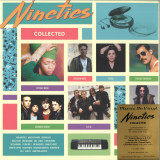
- A1: Kaiser Chiefs - Ruby
- A2: P!Nk - Just Like A Pill
- A3: Owl City - Fireflies
- A4: Melee - Built To Last
- A5: Nelly Furtado - I'm Like A Bird
- A6: Orson - No Tomorrow
- A7: Elbow - Grounds For Divorce
- B1: The Script - Breakeven
- B2: Amy Winehouse - Back To Black
- B3: Daniel Bedingfield - Gotta Get Thru This
- B4: Keane - Everybody's Changing
- B5: Uncle Kracker - Follow Me
- B6: Gabriella Cilmi - Sweet About Me
- B7: The Black Eyed Peas - I Gotta Feeling
- C1: La Roux - Bulletproof
- C2: Groove Armada - My Friend
- C3: Joss Stone - Super Duper Love
- C4: The Dandy Warhols - Bohemian Like You
- C5: Corinne Bailey Rae - Put Your Records On
- C6: Train - Drops Of Jupiter
- C7: Duffy - Warwick Avenue
- D1: The Feeling - Fill My Little World
- D2: Sia - The Girl You Lost To Cocaine
- D3: Hoobastank - The Reason
- D6: Mika - Grace Kelly
- D7: Amy Macdonald - This Is The Life
- D8: The Fratellis - Chelsea Dagger
- D4: Alphabeat - Fascination
- D5: Tatu - All The Things She Said
Black Vinyl[38,45 €]
The Decades Collected compilations are part of the new Collected compilation series, which is a collaboration between Universal Music and Music On Vinyl. The compilations bring together the biggest names of each decade, combined with forgotten hits and less discovered gems, giving the listener an experience of listening to their favorite tunes while uncovering new musical grounds at the same time.
Various Artists - Zeroes Collected features Nelly Furtado “I’m Like A Bird”, The Script “Breakeven”, The Black Eyed Peas “I Gotta Feeling”, Alphabeat “Fascination”, T.A.T.U. “All The Things She Said” and Mika “Grace Kelly” amongst others.
clear w/ black smoke vinyl
It would be easy to say that Molly Nilsson needs no introduction, but These Things Take Time is an introduction. Originally self-released in 2008 on a limited CDR run with hand-folded sleeve, Nilsson's debut album has slowly taken over the hearts of many. In 2014 this modern classic of autonomous, DIY pop and punk-as-you-like attitude is presented on vinyl for the first time in a beautiful edition featuring unreleased bonus tracks across two discs, an exclusive screen printed A2 poster and new sleeve notes from the artist.
Molly Nilsson's first recordings under her own name have grown in stature to occupy a prominent positioning in the global pop underground despite initially only being available on CDr. Though Nilsson's songwriting prowess and commandeering of other genres has grown since 2008, her unique voice is seen in raw form on These Things Take Time. Many of the themes she would develop later were inked first here: the romance of loneliness on The Lonely,' Whisky Sour,' Hey Moon!', the folly and intoxication of youth seen in Joyride,' Poisoned Candy' and dogged self-reliance as on The Diamond Song' or Wounds Itch When They Heal.' Also included here are unreleased recordings from the same period that were left off the original release, a further window into a turbulent, exciting time for an artist just discovering her power to touch and communicate with the listener.
Efficient Space presents Soft and Fragile by Ros Bandt and LIME (Live Improvised Music Events), originally released by Move Records in 1983. A pioneering figure in Australian music, Bandt is known for her work with sound sculpture, electronics, acoustic ecology, and invented instruments, as well as her writings and teaching.
Soft and Fragile comprises a series of structured improvisations performed on custom-built bells and gongs. On the side-long ‘Ocean Bells’, Bandt performs on her ‘flagong’, a three-tiered vertical glass marimba that she made in 1978, inspired by the ‘cloud chamber bowls’ of maverick instrument builder and microtonal composer Harry Partch. Over a long tape loop made up of slowed down sounds from the same instrument, she delicately strikes the glass bells with mallets, allowing individual pitch-es to ring out and decay with the aquatic wavering quality that suggested the piece’s title, eventually building into flowing melodic sequences. Structured as a series of events determined by the length of the performer’s breath, this gently undulating music invites listeners to lose themselves in delicate microtonal fluctuations and subtle yet expressive phrasing.
For ‘Shifts’, Bandt is joined by Julie Doyle, Gavan McCarthy, and Carolyn Robb on a collectively composed work for clay bells. Atop a steady pulse, melodic and rhythmic cells expand and contract, shifting between LIME’s four members. LIME also perform the closing ‘Annapurna’, where timbres sourced from glass, clay and metal are freely threaded through a pulsating tape backdrop generated from loops of the ensemble chanting.
Presented in a redesigned sleeve showcasing the performers and their instruments, the reissue repro-duces the extensive original liner notes. While Bandt’s ideas and techniques draw on aspects of the invented instrument tradition of Partch and Bertoia, Stockhausen’s intuitive music, and the cyclical structures of American minimalism and Javanese gamelan, the floating world of Soft and Fragile also resonates with the work of New Age outlier Stephan Micus and contemporary practitioners such as Tomoko Sauvage. In Bandt’s own words, this is ‘elegant and sensual music where the body and mind have the time to reflect and catch up with the moment as it passes…It is a music intended for res-pite’.
Möbius is an aerial ballet created by Cie XY in collaboration with the choreographer Rachid Ouramdane, and composers Jonathan Fitoussi & Clemens Hourrière.
One of the most sensitive sets of ears in Paris, GRM affiliate Jonathan Fitoussi meets Clemens Hourrière for a beautiful 3rd album called "Möbius". After their acclaimed "Five Steps" 2015 & "Espace Timbrés" 2018 on Versatile records, Fitoussi & Hourrière tethered again to the classic Buchla modular synthesiser, but this time for composed the soundtrack of an amazing aerial ballet in collaboration with Cie XY and famous choregrapher Rachid Ouramdane; Widescreen results
-
"For Möbius we have teamed up with two composers, Jonathan Fitoussi and Clemens Hourrière; for several years now they have shared a common passion for electronic instruments with their unique incredible sound. We soon found there was a lot of common ground between our own acrobatic research and the way they create music : their sounds meeting, colliding or clustering together in a slow and finely nuanced progression, requiring the same continuous adjustment as our own process. This constantly evolving music with its expansive percussion will leave the door wide open to flights of the imagination, transporting us to strange atmospheres, at times disturbing, at others invigorating..." Cie XY
Joseph Carvell returns to Karaoke Kalk with his sophomore album under the Pink Shabab moniker. »Never Stopped Loving You« was for the most part written between Spring and late Summer 2020 in his Camberwell home and like his 2019 debut »Ema by the Sea« recorded in the South of France together with Emmanuel Mario, better known as Astrobal. It’s a record informed by feelings of nostalgia, love, longing, romance and loss and, much like his previous album, displays Carvell's knack for making introversion sound extroverted. As a bassist, his approach to songwriting is both rhythmic and melodic, making the resulting music just as visceral as it is emotive. Much like the record’s title can be understood as both a lament or an expression of joyful dedication, the music on »Never Stopped Loving You« is profoundly ambiguous.
»I was lucky with the timing for this record,« says Carvell and at first that may sound counterintuitive: managing to play only one show in Zurich in early 2020, he had to cancel his planned European tour and go back to the United Kingdom, which soon went into lockdown. He made the best out of the situation, recording electric and upright bass for Nick Krgovich, Daniel O’Sullivan and Zooey’s new records while also working on tracks and demos by himself. »The world seemed to have stopped and I had more time to think about the past and find the best grooves, the suitable keyboard touches and the right words,« says Carvell. Everything came together slowly before he boarded a train to France with his keyboard: »The pace of life completely dropped and between takes Ema and I were going swimming and taking walks,« he says of the sessions.
»Never Stopped Loving You« is notably more electronic than its predecessor, but also full of the small melodic and harmonic details that made »Ema by the Sea« such an outstanding record. »I was listening to more 1990s dance and house music and 1980s pop and also a healthy amount of ambient music,« explains Carvell. These influences are clearly audible on songs like the Chicago House-esque beats of »Show Your Love« or »Why Did I Leave You that Morning«, the skittish rhythms on »Let Go« and the near-Balearic »San Junipero«. Especially the latter makes it clear that Carvell spent much time devoting himself to movies and TV shows, but also incorporated more piano sounds in his songs—he learnt the instrument by playing along to classic Beatles and Beach Boys songs.
Despite being more upbeat on a rhythmic level than before, Carvell’s use of texture and his peculiar voice add another note to the music. Even an anthemic song like »Run Away«, his first composition to follow a classic verse/chorus structure, is profoundly ambivalent, both overjoyed and deeply melancholic. By the same token however, even a torch song like »You Stepped Out of My Life« is enormously consoling. This, after all, has always been Carvell’s strength: creating music that will cheer you up when you’re down while also injecting a sense of futility into every moment of euphoria. It never shone more brightly than on »Never Stopped Loving You.«
Mimsy describes himself as someone with many interests and few skills, and sure, you can put it that way. But more precisely, he is a seeker and finder who has always felt more at home in the intermediary spaces. Since his first releases on Karaoke Kalk under the names Saucer, Motel and Wunder in 1997, he has mostly been active as Wechsel Garland, working with samples beyond recognition and thus blurring the lines between his own songwriting and the musical material he uses.
In 2011, he ended the project with the album »Dreams Become Things« and is now opening a new chapter as Mimsy with »Ormeology.« The album was ten years in the making and saw the producer work with sounds, voices and text fragments that were gathered over time. The twelve pieces—based on guitar pickings, looped textural sounds, rhythm boxes and shimmering organ sounds—install themselves in the unconscious through sound, melody and subtle rhythmic shifts to send the listener’s perception on a journey into the unknown.
The name Mimsy is a nonce word coined by Lewis Carroll in his famous nonsense poem »Jabberwocky,« a combination of »miserable« and »flimsy,« while the term »Ormeology« refers to the Italian film »Le Orme« (»Footprints on the Moon«), in which the main character is haunted by memories of a fictional film of the same name. While this alone creates a rich thematic frame of references for the album, it does not at all define its themes. Instead, the references are reflected in the methods with which the pieces on »Ormeology« were designed—sound and language orbit freely around one another, images within images are being layered, following their path unconsciously. In »Sans mobile apparent,« the lyrics get to the heart of this: »die Widersprüche aushalten / die Folien übereinanderlegen« (»enduring the contradictions / laying the foils on top of each other.«) Creative frictions emerge not out of binary decision-making patterns, but from additive layering.
Mimsy followed traces forth and back through time and space, collaborating for a few tracks with set designer and musician Lydia Schmidt and letting Wolfram Wire record various lyrics based on automatic writing that were gathered by Mimsy. Furthermore, he asked the photo blogger Lilia Katherine from Brazil and the Canada-based Andrea Hernandez to translate and record his lyrics in their own respective languages. Human global coincidences resulted in collaborations which are presented as discrete and thus make the album as a whole and even more complex meditation on the interplay of the concrete and the abstract. This is best exemplified by the song »Ginster,« throughout which Schmidt and Mimsy’s voices overlap more and more until they enter a sort of call and response pattern, although they never seem to address each other directly.
»Ormeology« is an album that whirrs and flickers, seeking to mediate between the tangible world and the intangible by blurring the boundaries between words and sounds and space. It is an archipelago that is in many ways connected to what surrounds it, while at the same time opening up a space of its own.
Forenzics is an exciting new project from former Split Enz members Eddie Rayner and Tim Finn. The project saw two artistic endeavours meet in the middle and started like when Eddie and Tim had been revisiting some of their favorite sections from lesser-known Split Enz works, using them as inspiration and the basis for new songs.
Along with Tim Finn and Eddie Rayner, there are musical contributions from Noel Crombie of Split Enz, Phil Manzanera of Roxy Music, Harper Finn and Elliot Finn. (the latter 2 being Tim’s children). Noel Crombie and Phil Manzanera; both dialled their parts in during Covid lockdown. And even though Eddie and Tim live in the same city they followed the same process. Tim says: “I love working this way, sharing files. You work when you want to, and my singing has an unforced intimacy that is very hard to achieve when there is someone else in the room.”
The Forenzics repertoire, like paintings in an exhibition, is an album of individual works that together form an immersive and cohesive whole. It is a genuine sabbatical journey into the artistic unknown, mapped out by two artists at the height of their creative powers.
Former New York club CBGB’s soundman Tommy Victor founded Prong in 1987 as his outlet for sonic fury. Having their roots in the thrash metal and hardcore scenes, Prong carved a niche for themselves - groovy, angry, massive; just perfect mosh music. The trio wrecked stages and impressed audiences all over the world. Their first album on a major label, Beg To Differ, promised a bright future for industrial New York hardcore metal band Prong. Beg To Differ contains 10 hard-hitting tracks, of which the video for “Beg To Differ” got heavy rotation on MTV. The single “Lost And Found” was even used for commercial breaks of MTV’s Headbangers Ball in the early Nineties.
We've not been able to get to the bottom of who Kenny Burns is (or at least this one - there was a famous Nottingham Forest footballer of the same name in the dim and distant past), and 89: Ghost main man Neil Tolliday is keeping tight-lipped. Either way, this label debut from the man of mystery includes some genuinely impressive moments. Picturesque closer 'Crease', where dreamy chords and kaleidoscopic synth sounds rise and fall atop an unfussy dancefloor beat, reminded us of Nail's own 1993 cut 'Cassiopeia', while 'Crank' is a thrusting slab of early morning techno peppered with squelchy acid motifs, chiming electronics and loopy, mind-mangling riffs. Elsewhere, 'Croak' is an angular slab of warped techno intensity, and opener 'Creak' is a hypnotic neo-trance number.
Rare South African Funk/Soul album from 1977 - First vinyl reissue since 1982 - First ever release outside of the African Continent - 180g black vinyl // Harari was a band that was deeply rooted in pan-African politics, the parallel cross-influences of the Black Panther Movement and Black Consciousness. African American soul music and Soweto Soul contributed to the way Harari became purveyors of all the styles we know today as Afro-soul, Afro-pop and Afro-jazz. The Beaters/Harari left behind a body of work that fused traditional African sounds with rock, funk, jazz, soul and psychedelia into a unique and coherent sound. It shows their ability to capture the many genres flying around South Africa during a time of intense political and cultural shifts. The album we are presenting you today (Genesis from 1977) comes swinging right out the gate with a set of six monster anthems, explosive up-tempo jams, gorgeous vocal harmonies and chants, Afro-centric fusions of rock, funk and indigenous influences. The album is packed with mesmerizing drum-grooves, psychedelic improvisations and catchy Afrobeat rhythms. This is a quintessential Harari record that every serious collector or fan needs to have in his collection. Originally released in 1977 on Gallo Records South Africa (and later repressed in 1982 on the same label), Tidal Waves Music now proudly presents the first official reissue of this rare album (original copies tend to go for LARGE amounts on the secondary market_that is if you're lucky enough to come across one). This is also the FIRST time 'Genesis' is being released outside of the African continent. This unique record comes as a deluxe 180g vinyl edition (strictly limited to 500 copies) with obi strip and featuring the original artwork.
"In the beginning of the 2000's being a producer or a DJ wasn't cool, it was something for nerds. And no one was so crazy to spend all their money in machines. I was going to the clubs in the weekend and when everyone was going to the afterparty i was going to work for a little money to be able to make music, music that I wanted to be play by all these big DJ's I had the chance to see, and I made it."
- Tells Hector Sandoval AKA Tensal Aka Syndromania to me and some other younger DJS (P.E.A.R.L, Jheal Bashta) while we drink a beer in Gijon north of Spain, city close to the town where Syndromania is based. -
After hundreds of records released and the recognition of every single artist of the scene. Few has changed for Syndromania, he keeps getting immersed in his studio with the same love although now with another point of view plus the experience to twist it to the next level.
DJing since 1993 his musical knowledge may be in the top 5 more knowledgeable people I ever met. As you can hear along the 6 cuts of this Sacrilegio EP it's fully rooted on straight messages and codes that have been filling up years of rave culture with a new take on them in order to optimize them for a contemporary rave experience.
From UK infected electro, mechanical-industrial techno music, leaning Chicago house cut to a tremendous take on techno-trance. This record is one of my favorites ever released on OAKS/KAOS and one of the ones that I'm sure that sets the level to inspire many to reinvent and develop our culture.
To be honest Sacrilegio is one of the records I'm more proud about of all in our catalogs. Thanks to Syndromania for this extraordinary piece of art and DJ apex tool which won't ever leave my record bag, neither probably yours."
Respeto.
Hector.
#oftenplusneverminus8
New school techno pioneer Avision will release his debut album ‘In My Mind’ on Ellum Audio this winter.
Avision grew up around the rich club culture of New York City and is now part of a new wave of artists defining the contemporary techno landscape. In just a couple of years, the American has become an absolute mainstay on labels like Drumcode, Machine, and We Are The Brave. His hard-hitting productions have found their way into the record bags of tastemakers like Adam Beyer, Maceo Plex and Chris Liebing. At the same time, he has been featured everywhere, from The Brooklyn Mirage and Time Warp in New York to festivals like Elrow, The BPM Festival, Electric Daisy Carnival and Dockyards. Now he offers up ‘In My Mind’, a widescreen artistic statement across 13 immersive tracks.
Says the artist, “I’m truly proud to share ‘In My Mind’ with the world, as I feel like this is another side of music that people haven’t heard from me. This album touches on a little bit of everything, and I wanted it to represent where I’m from. 90% of the album was written during the time we couldn’t be ourselves and do what we love, but I turned that frustration and disbelief into an album with emotion and meaning. I couldn’t be happier with the final outcome, and I hope everyone enjoys it.”
The LP kicks off with ‘Real Talk’, wasting no time getting going on a lush wave of Detroit-style techno full of hi-tek soul. 'Cut The Rope' features Robert Owens, the legendary house vocalist who lights up the deep, driving house drums with a typically impassioned vocal. The energy levels stay high on 'No Disco' with its oversized hi-hats, nimble bassline and chattery claps, while 'Baby' traps you in metallic techno loops with a playful vocal sample. After the bright lights of lead single 'Contrast,' and grinding peak time weapon 'In My Mind' is ‘Ground Rule’, an atmospheric spoken word interlude about NYC.
The album’s second half kicks off with the far-sighted cosmic pads of 'I'll Take You' with Xander and has you lost in another world. There is angst in the tense synth loops of interplanetary techno cut 'Your Soul' and hands-in-the-air trance energy on 'Where I Want To Be.' The monstrous 'All Night' is another wall of rich synth sound over big drums, and 'Lost Symmetry' then releases the pressure with a more dreamy melodic vibe built on tumbling breakbeats. 'In Your World' closes in an uplifting fashion across eight minutes of cantering techno and epic synth work.
‘In My Mind’ is an accomplished and adventurous album that takes melodic techno in bold new directions.
The Slow Show release their fourth studio album, their first for three years, entitled ‘Still Life’,
via PIAS. The four-piece, who first formed in Manchester, will support the release with a
European tour in February and March 2022, culminating in an already sold-out hometown show
at Manchester’s Hallé St Peters on 4th March.
Lead track ‘Blinking’ is a perfect taster to the new direction ‘Still Life’ offers. Same but different
again. “An ode to love and loyalty. The song is a defiant pledge to never giving up on the
people you love. Musically we wanted the song to have impact, a directness and powerful
punch that we’d previously shied away from.” - Robert Goodwin (vocals)
The making of ‘Still Life’ has been quite the ride. Following their breakthrough album, ‘White
Water’, it was clear The Slow Show were not just ‘another band from Manchester’. The legacy
of The Smiths, Joy Division and all those other great predecessors is not something to be trifled
with, but The Slow Show didn't need to wear their address on their sleeve: this was something
else, fully formed, with a mesmerising sound, rich in atmosphere and melody.
With the band’s desire to push each other outside of their respective comfort zones during the
recording process, ‘Still Life’ subsequently offers a more diverse, rich and interesting sound
than previous albums.
“We did develop our sound,” says Rob Goodwin. “We had to try something else. We felt we
owed that to ourselves, and to the people that come and enjoy the music. We explored a lot of
stuff: different sounds, different feelings, different ideas, different processes as well. Some of
them didn’t work at all, but some did. It was difficult and challenging, but it felt good in the end.”
This experimental side to the creative process allowed the band to introduce new elements to
their work. “Some new approaches and sounds crept in,” keyboardist Frederik ‘T Kindt admits.
“Some were far from our older work. For instance: after some initial encouragement from me,
Rob was keen to sing a bit higher on this record. Chris was encouraged to make his drums a
bit more present; some things almost sound like a breakbeat to my ears.”
Recorded remotely over the course of the past year, with Goodwin recording vocals from
Dusseldorf in Germany and the rest of band recording in the UK, ‘Still Life’, as a concept, takes
inspiration from the experiences of lockdown: “Before the virus arrived, I had a busy life;
spending two weeks in Germany with my girlfriend, and then flying to Manchester to work with
Fred or to a gig.” Goodwin remarks: “And then all of a sudden, life came to a halt. It took a little
getting used to, but I actually had a really nice realisation during that time. I understood that the
slower life got, the more I saw. I spent a lot of time in nature, seeing things in a different
perspective. And that's what you need when you're trying to create. You have to really look,
and then you see things happening everywhere.”
The tracks themselves are brimming with emotion and reverence towards the significant
relationships we encounter in life. Stand-out anthem ‘Blinking’ is a defiant pledge to never
giving up on the people you love. Musically the band wanted the song to have impact, a
directness and powerful punch that they’d previously shied away from. Whilst ‘Woven Blue’
deals with the aftermath of uncoupling. The idea that meaningful relationships are very often
woven and complex, making resolve difficult.
These very personal tracks are counterbalanced with the more topical, ‘Breathe’, which
documents some of the unjust and heart-breaking scenes of 2020 with spoken word references
to John Boyega’s emotional rallying cry in support of Black Lives Matter movement in London’s
Hyde Park.
In all, Still Life marks another evolution of a band that have never tried to fit in any particular
box but have inhabited their own unique universe.
LP pressed on white viny
Box Records is pleased to welcome the debut album from Leeds noise rock band THANK.
'Thoughtless Cruelty' is a stark observation of human cruelty filtered through the band’s grim fascinations including long term nuclear warnings, CNN’s Turner Doomsday Video (opening song 'From Heaven' is a partial reworking of the Latin verse from 'Nearer My God To Thee', the hymn performed in that video), the writings of Saint Ignatius of Loyola, and the "business as usual" liberal politics which has given way to the global rise of the far right.
Unlike THANK’s previous material, which was largely honed at gigs and then recorded almost entirely live, the pandemic found the band in unchartered territory as they hit the studio having not been in the same building for months, including most of the album’s writing period.
Says vocalist Freddy Vinehill-Cliffe on the recording of the album - "It was a very different way of working for us; most of the songs did not have an arrangement figured out, we added layers to serve each track without worrying about how it would translate in a live setting. I guess that's the norm for a lot of bands, but it was a very novel experience for us."
''I wanted to rock this time,'' says the multi-talented musical and literary
artist, and local Nashville hero, Tommy Womack, sitting making love to an
early morning cup of coffee at Bongo Java in East Nashville, ''they've
called me an Americana artist for over twenty years now, and it's a great
important genre; I've got nothing against it - I've had a great time being
part of the movement
But one day a while back, I had an epiphany. I thought, hey, I hate dobros
anymore! And if I hear another song about a train in the key of G, somebody's
gonna get hurt.'' ''I Thought I Was Fine' has more in common with the
Replacements than 'Car Wheels on a Gravel Road''' Womack continues as the
caffeine begins to kick in, ''It's up-tempo, and sometimes totally in your face. Look,
I'm 58 years old, I nearly died in a car accident on the way to a gig in 2015, I've
beaten back cancer three times since 2017. I've seen musician friends of mind
die before they hit my age, so I want to go back to my first love, rock and roll,
while I still have time.''Womack enjoys a tremendous affection in Nashville and
some among the rest of the world, for his (often intensely personal) songs that
are sometimes funny, sometimes sad, and have been noted by journalists and
fans of having songs able to raise laughter and tears within the same song. From
1985-1992, he played in the legendary post- punk college radio darlings
Government Cheese. Then came the bis-quits, from '92 to '94, who did a critically
acclaimed record for Jon Prine's 'Oh Boy!.' Womack has also written several
books, his first band, 'Cheese Chronicles', is a cult classic among both musicians
and fans.
In the years between 2018’s BAMBI and LP3, Minneapolis’ Hippo Campus -- made up of vocalist/guitarists Jake Luppen and Nathan Stocker, drummer Whistler Allen, bassist Zach Sutton, and trumpeter DeCarlo Jackson -- has grown up and into itself. Although the five-piece has been friends since middle school and put out a number of studio releases since its inception, it’s the new record, LP3, that’s the most honest portrait of who Hippo Campus is. It’s also a study in the nuances of growing up -- coming to terms with mortality, the confusing journey of sexuality, bottoming out, seeing decisions from the night before in the harsh morning light; finding your identity as a person and as an artist -- how that can be a collision of elation and shame, painful and joyful all at once. LP3 marks a sort of ego death -- and ultimately feeling okay with that. So much of LP3 was written in the chasm between grappling with the value of your own art and the larger, chaotic context of the world. It traverses the end of relationships, of careers, and the chance of meeting yourself as a brand new person. If you take the signifier of “musician” away, what does it mean? And how do you expand your identity outside of work? Here, it’s something the band works through. And, in the end, it happens with the same ride-or-die crew at your back to hold you down -- or up -- the entire time. Over the last few years, the Hippo universe has expanded outward. Luppen and Stocker both put out solo records as Lupin and Brotherkenzie respectively, and the two also teamed up with Caleb Hinz to put out the debut Baby Boys record while DeCarlo Jackson founded, and collaborated with multiple bands around the Twin Cities, including DNM, Arlo, and FPA. Navigating solo projects and new dynamics and the spotlight alone is humbling, bringing up new insecurities and defense mechanisms. It was challenging in its own way to branch outside of Hippo -- and it made the eventual return to the project feel like coming home. “With LP3, Hippo felt like a very safe space to express those things because you have your best friends around you, rallying behind you,” Luppen says. “And each person could chime in with their own experience. I felt like it was a very safe space to be earnest.” Here, Hippo Campus killed what they knew and started again.
Led by the unique lyrical and vocal talents of Larissa Stupar, VENOM PRISON’s rise to prominence has been swift and exhilarating. Both 2016 debut album “Animus” and its 2019 follow-up “Samsara” received widespread praise from media and fans alike, while the band’s ferocious live shows notched up acres of wide-eyed acclaim. As a result, the release of VENOM PRISON’s third full-length, “Erebos”, is destined to be one of /the/ metal events of 2022. A wildly inventive but utterly destructive onslaught of genre-defying extremity, “Erebos” is a giant leap forward and deafening confirmation that VENOM PRISON are the real, ground-breaking deal. “Everything needed to be bigger, better, catchier,” says guitarist Ash Gray. “We have said many times in the past that this band will not write the same record over and over again. It wasn’t about showing how heavy we can be. We know we’re a heavy band. We just wanted to be more creative, and this time we had the luxury of having time on our side. Larissa’s distinctive style comes through even stronger. It’s even more poetic, while still critical of the issues we face in Western society.” A thrilling explosion of artful savagery, warped melodies and tumultuous atmospherics, “Erebos” is a powerful, defining statement from one of the most exciting bands of the modern era. From humble origins to undisputed heavyweight status, VENOM PRISON are now an unstoppable force. “’Erebos’ has really opened our horizons as a band, making us want to be more creative as a whole. For us, it has always been about evolving musically and progress with every single step we take, and that will never change. We have a lot more to explore and we are confident that we’re capable of doing so. The grind must continue.”
After being out of print for years, we present the deluxe 10 year anniversary edition of Harm's Way - Isolation. Expanded over two LPs, packaged in a heavy weight tip-on gatefold LP jacket with UV spot varnish, printed inner sleeves and a gatefold insert. Disc one features a re-master of Isolation by Colin Jordan white Disc two features select tracks remixed & reimagined by Justin Broadrick (Godflesh, Jesu, JK Flesh), Andrew Nolan (Intensive Care, The Endless Blockade), Dylan Walker (Full of Hell, Sore Dream) and Petbrick (Igor Cavalera and Wayne Adams). Recorded in 2011 at Bricktop Studios by Andy Nelson and originally released the summer of that same year, Isolation acted as both a turning point in the sound of Harm’s Way and the foundation of their catalog to come. Elements of Industrial and Electronics expanded the vision of the group as they dove deeper into a metallic sound unheard on their prior releases. This gained the attention of many press outlets including Decibel Magazine, Revolver and Kerrang, as well as tour opportunities with acts such as Nails, Rise and Fall, The Acacia Strain, Terror, Foundation, and many more. After supporting the release of Isolation for two years, Harm’s Way signed to Deathwish Inc to release “Blinded” (2013) and “Rust” (2015) before moving forward to Metal Blade Records for the release of their most recent full length “Posthuman” (2018).
Second album from The Datsuns now available on vinyl at a cheaper price. The Datsuns lead the adrenalin-charge into the sheer unadulterated stomach-churning joys of rocking and rolling. The same energy and abandon which pulsed through their eponymous 100k plus selling debut album in 2002 is present and amplified but, with ‘Outta Sight/Outta Mind’, The Datsuns’ take you on a wild and unpredictable rock’n’roll rocket-ride, a ringside seat, if you will, for two years of inspirational madness, guitar wielding in the big wide world.
Funky organ groove with a spritual soul swing !
One of the most influential and underground Hammond organists of the 1960's was "Big" John Patton as he was then known. If it was the groove that you wanted Patton was your Man and he made several albums for the legendary Blue Note label, many of which went on to sell for eye watering prices. As his style went out of favor, some of the recordings never saw the light of day until almost 20 years later and at the same time Patton slipped into the background. He resurfaced in the 1980s and went into the studio. Among his albums Soul Connection, originally released in 1983 on Nilva Records has now been re-released
Patton had a strong band with him on this record. Avant Garde trombonist Grachan Moncur III fits in just nicely with some funky lines and solo's. Acid jazz Guitar Hero Melvin Sparks rides in the all important funk grooves but the revelation has to be saxophonist Grant Reed, who you may know from the Jazz Room Release of "Shamek Farrah & Folks" and who was a mainstay of the Mongo Santamaria set up. Jazz Exile Alvin Queen has been part of the sound set ups of Junior Mance, Stanley Turrentine and Charles Tolliver, among others.
The whole album sounds as if it was laid down in a Rudy Van Gelder session in the mid 60's and then languished in a vault somewhere, waiting until the fan base had returned.
- A1: Black Slate - "Sticks Man
- A2: Dee Sharp - "Rising To The Top
- A3: Asher Senator - "One Bible
- A4: Cymande - "Fug
- B1: Digital Mystikz - "Misty Winter
- B2: Winston Curtis - "Be Thankful For What You've Got
- B3: Trevor Hartley - "It Must Be Love
- B4: Shut Up & Dance - "Java Bass
- C1: Brown Sugar - "Black Pride
- C2: The Terrorist - "Rk1
- C3: Black Harmony - "Don't Let It Go To Your Head
- D1: Pebbles - "Positive Vibrations
- D2: Ragga Twins - "Ragga Trip
- D3: Janet Kay & Alton Ellis - "Still In Love
- E1: Funk Masters - "Love Money
- E2: Cosmic Idren - "Compelled
- E3: Harry Beckett - "No Time For Hello
- F1: Sandra Reid - "Ooh Boy
- F2: Tabby Cat Kelly - "Don't Call Us Immigrants
- F3: Brown Sugar - "I'm In Love With A Dreadlocks
Soul Jazz Records new ‘Life Between Islands’ collection coincides with the launch of Tate Britain’s exhibition of the same name. This landmark exhibition explores the links between Caribbean and British art and culture from the 1950s to now.
Soul Jazz Records album, sub-titled “Soundsystem Culture – Black Musical Expression 1973-2006,” focuses on the most important Black British musical styles to emerge out of the distinctly Caribbean world of sound systems. The album features an all-star line-up including Dennis Bovell, Shut Up and Dance, Cymande, Digital Mystikz, Brown Sugar, Funk Masters, Janet Kay, Ragga Twins and more.
The album is a lightning-rod journey across Roots Reggae, Jungle/Drum & Bass, Jazz-Funk, Lovers Rock, Jazz, Dubstep and more. Much of Soul Jazz Records’ catalogue comes out of these genres and this album is partly an overview of some of Soul Jazz’s earlier releases (including Digital Mystikz’ long-deleted groundbreaking and now highly-collectible single, ‘Misty Winter’) alongside some choice rare and classic tunes that span over 30 years of sound system culture.
Many of the tracks represent how Black British artists defined their own identity with songs such as Brown Sugar’s righteous ‘Black Pride’, ‘I’m In Love with A Dreadlocks’ and Tabby Cat Kelly’s powerful ‘Don’t Call Us Immigrants’. Aside from being musically rooted in the distinctly Jamaican-born phenomenon of the sound system, much of this identity is also shaped by the triangular relationship of being British-born, of Caribbean heritage, and with an equal love of African-American Jazz, Funk and Soul, as evidenced with many Lovers Rock tunes reggae covers of American soul tunes (such as those of Jean Carn, William de Vaughan and Rose Royce featured here). This stateside influence can also be heard in groups such as the Funk Masters, a group formed by reggae radio DJ Tony Williams, whose jazz-funk music successfully crossed over into New York’s clubland, as well as the great Cymande, whose unique street-funk became staple material for numerous US hip-hop artists in the years that followed.
In the early 1990s, jungle and drum and bass artists took the essence of reggae’s soundsystem culture – MCs, dubplates, crews – and applied them to their own music, applying heavy reggae bass lines to intense double-speed drum breakbeats. At the forefront of this new movement were the duo Shut Up and Dance, working closely with The Ragga Twins, aka Deman Rocker and Flinty Badman, both MCs for North London’s infamous Unity reggae soundsytem. In the early 2000s, dubstep, spearheaded by Digital Mystikz, became the latest instalment in this ever-evolving soundsystem culture.
- A1: Barry White - Change
- A2: George Mccrae - I Get Lifted
- A3: Andre Maurice - You're The Cream Of The Crop
- A4: Sir Joe Quarterman & Free Soul - I’ve Got So Much Trouble In My Mind (Part 1 & 2)
- A5: Isaac Hayes - Theme From Shaft
- B1: James Brown - Funky Men
- B2: The Whispers - And The Beat Goes On
- B3: Syl Johnson - Ms Fine Brown Frame
- B4: Sweet Thunder - Everybody’s Singin’ Love Songs
- B5: Incredible Bongo Band - Apache
- C1: Manu Dibango - Soul Makossa
- C2: Curtis Mayfield - Toot An' Toot An' Toot
- C3: Al Jarreau - The Same Love That Made Me Laugh
- C4: Stretch - Why Did You Do It?
- C5: Black Ivory - I Keep Asking You Questions
- C6: Bobby Byrd - Back From The Dead
- D1: Cymande - Brothers On The Slide
- D2: Clarence Reid - If It Was Good Enough For Daddy
- D3: The Jimmy Castor Bunch - The Mystery Of Me
- D4: Uncle Louie - I Like Funky Music (Feat Walter Murphy)
- D5: Joe Bataan - Rap-O Clap-O
- D6: Imagination - Music & Lights
- A1: Opening - 03 24
- A2: Call Center - 02 22
- A3: End Love - 00 58
- A4: Sister - 01 39
- A5: Mdma - 01 33
- A6: Paris 13Th - 01 52
- A7: Mother - 01 27
- A8: Arrival - 01 43
- B1: Nora - 02 05
- B2: Humiliation - 1 34
- B3: One Month Later - 02 37
- B4: Camille & Emilie - 01 39
- B5: Emilie Dance - 01 54
- B6: Looks - 01 10
- B7: Porno - 2 40
- B8: Nora & Amber - 2 56
Sixteen musical vignettes of electrifying emotion at the crossroads of ambient, modern synthesizer productions and organic orchestral music experimentation, which tint French director Jacques Audiard's new feature film with the illuminated glow of a whole new generation.
Textextext - (add your write up)
When Jacques Audiard contacted him, Rone was just a few weeks away from receiving the Cesar award for best film score for his very first soundtrack "Night Ride", the highest honor in French film for a composer.
Throughout his career, the French director has been able to surprise his audience by playing on the codes of "genre films", while remaining faithful to the aesthetics of "art film". His cinema is both profound and entertaining, sophisticated and accessible, dark and dreamlike.
"Jacques' cinema is physical, sensual, modern", Rone says about the director, "when he asked me to do the music for Paris, 13th District , I immediately accepted, without seeing any images or reading the script. He is simply one of the greatest contemporary filmmakers."
His new feature film deals with youth in general and their sexuality in particular in a way no one may have done before. The story is based on four young characters and their existential questionings, whose destinies intertwined against the backdrop of the Parisian "Olympiades" high rises in the 13th arrondissement.
But time was already running out, as the film was set to be nominated for *Cannes' Palm D'or* at the rescheduled edition of the festival in July 2021. Between the releases of "Rone & Friends" and his remixes for Agnes Obel, Go Go Penguin and Jehnny Beth (who also plays a role in the film), the producer decided to lock himself away in in his brand-new Isola Studio in Cancale, French Brittany. He also invested in a large screen on which he projected loops of the film and started manipulating his gear. "I had Miles Davis in mind and the way he composed "Ascenseur pour l'échafaud" by improvising with his band while watching excerpts from the film."
After a first conclusive test on three scenes of the film which allowed Rone to showcase the skills he had developed in composition in various musical fields, a relationship of trust developed between the musician and the director, which resulted in over 45 minutes of Rone's music used for the final cut.
"There was a lot of music to be made in a short time, but the talks with Jacques were very stimulating. He had a fairly precise idea of what he wanted, while at the same time, I think, having the desire to be surprised, or even a little shaken up."
If the black and white aesthetic recalls the great hours of the "Nouvelle Vague", Rone´s music gives a new layer to the film which fits resolutely with 2020's zeitgeist.
This second soundtrack by Rone is a sonic urban adventure in itself. As it is used in the film, colouring in the lives of Audiard's protagonists, it will have the same impact on us, the listeners, in our own everyday lives.
A real Black Ark flavoured recording, even though recorded in London at Ariwa by Mad Professor.
Supernatural finds our hero in a very good mood on a very spooky recording. “I escaped from the mud hut” Classic!!!
Coupled with Psychopath, a recording from the same session, with the same intensity as Supernatural Taken from “Lost Tapes from the 80’s”
Recorded in 2000 with essentially the same team as “Shades of Bey” and “River Man” and a similar variety of tunes and textures. It includes covers of two Milton Nascimento classics (“Bridges” and “Saidas e Bandeiras”), a cover of “Fragile” (by Sting) and standards such as “I’ll Remember April”, “Just Friends” (with strings), “Invitation" and “Little Girl Blue”, as well as the sultry original “Tuesdays In Chinatown”. This is Andy Bey in fine form, and includes performances by Ron Carter, Geri Allen, Mino Cinelu and Steve Turre. First time on vinyl.
After a 5 year hiatus, Tel Aviv based artist Naduve, returns to Cocktail d’Amore Music with Hypogeum. Each of these tracks facilitates its own special part in the life of party. Starting off on a hypnotic and forward driven note Echo Wave Bay leads dancers perfectly into hypnosis with its trance inducing melodies which wave upward and downward. Title track Hypogeum begins to pull on the heart strings with its soft synths floating over pastel textures before giving way to the aptly titled FX Jungle, a deep trip into the low lying canopies of your imagination. Ending where we began Thursday Gem explores the same cyclical themes as Echo Wave but in a subdued fashion making it a perfect choice for winding down any raucous party.
- A1: Roberto Musci - Kami Shintai (Lion's Drums Edit)
- A2: Vasilisk - Awakening (Lion's Drums Edit)
- B1: Budi Und Gumbls - Tanz Der Korperlinge (Lion's Drums Edit)
- B2: Freddy Spins - Journey To Middle Earth (Lion's Drums Edit)
- C1: Roberto Musci & Lion's Drums - Alap On Benares
- C2: Manos Tsangaris & Lion's Drums - Crying Tafel
- D1: Tullio De Piscopo - Fastness (Lion's Drums Edit)
- D2: Suzanne Ciani - Paris 1971 (Lion's Drums With Roberto Musci Lost Tapes Remix)
Lion's Drums full length exists as en exploration in multiple dimensions. First by challenging the notion of the album format by presenting a body of work that lies snuggly between remixes, edits and original works and secondly as a means to delve into the transcendent potential of the drum. The album sets the tone by putting these two concepts fully on display with its hypnotic chant, swaying one into ease over the first two songs. In orderly cue folding and unfolding, meditatively through, melodies as muddied pastelle whispers cast over the measured language of the drum. Breaking away from the musing themes of the opening songs we find an ecstatic ritual in "Tanz der Korperlinge" and "Journey to Middle Earth", two distinct varieties but both of the same perennial species. Inky ether seeps back in through the second half of the album with a peak of frenzied tumbling toms and incongruous textures hovering above in the Manos Tsangaris' collaboration "Crying Tafel" and his re-imagining of Tullio De Piscopo's unhinged drum excursion "Fastness". The closing exemplifies the edit/remix/original ethos proposed for this work with Lions Drums drawing from tapes and original material of electronic pioneers Suzanne Ciani and Roberto Musci. Drawing from unreleased music and song sketches by the original artists as well as field recordings from travels & studio sessions made by Roberto Musci & Manos Tsangaris in the 80's and early 90's he constructs a side winding journey through playful textures and ethereal moods.
On his aptly-titled Mascot Records’ debut, What Happens Next, roots singer-songwriter and guitarist Davy Knowles boldly steps forward with timeless and cohesive songwriting; sleek modern production; and a lyrical, play-for-the-song guitar approach informed from soul, folk, rock, and blues. The 12-song album is just as influenced by The Black Keys, Fantastic Negrito, Gary Clark Jr., as it is Muddy Waters, Junior Kimbrough, and R.L. Burnside. It is a cohesive body of work rather than a collection of disparate songs. On What Happens Next, Knowles’s poetic songwriting, and his soulfully emotive singing steal the show. The 12-song body of work offers forth a peaks-and-valleys album experience winding through brawny riffs, jazzy blues balladry, and vintage soul before concluding with one of Knowles’s most personal songs released to date. Throughout it all, his guitar playing is brilliantly understated, his rhythm work is deft and dynamic—beefy on the rockers, and subtly supportive on the slower tunes—and his leads are economical but feature juicy blues bends and thick as molasses lead guitar tones."What Happens Next" is released on CD and digitally on October 22, 2021 and on vinyl on December 3, 2021 via Mascot Label Group/Provogue Records.
Outernational Sounds very proudly Presents The Mallory-Hall Band "Song of Soweto" & "The Last Special".
Limited, fully licensed digital and vinyl reissues of two crucial South African sessions led by Charles Mallory and Al Hall, Jnr., featuring Kirk Lightsey, Marshall Royal, Rudolph Johnson, Billy Brooks and more! Essential companion pieces to Kirk Lightsey’s legendary ‘Habiba’.
Featuring tracks:
Song Of Soweto: Side A – ‘Song of Soweto’, ‘Hamba Samba’; Side B – ‘Cape Town Blues’, ‘Moroka Rock’, ‘The African Night’
The Last Special: Side A - ‘The Last Special’, ‘Princess of Joh’Burg’; Side B - ‘Amafu (Clouds)’, ‘Blue Mabone’
Never released outside South Africa, and out of print since 1974, Outernational Sounds presents two long-lost Johannesburg sessions from the Mallory-Hall Band – an all-star review of West Coast jazz stars who toured apartheid South Africa in the mid-1970s.
Sanifu Al Hall, Jnr. is a musician’s musician. During a storied career stretching across six decades, Hall has recorded with the greats of the music including Freddie Hubbard, Doug Carn, and Johnny Hammond, and leads his own Cosmos Dwellerz Arkestra. But until recent years, the only records on which he had appeared as leader were a brace of rich, funky LPs, Song Of Soweto and The Last Special, issued only in South Africa under the moniker of The Mallory-Hall Band (named for Hall and his co-leader, guitarist Charles Mallory – musical director for Martha Reeves and the Vandellas, Mallory was conductor for Dusty Springfield touring bands, and had worked with John Lee Hooker, Stevie Wonder, and many others). Neither LP had any wider release, and both have remained out of print since 1974. How did a young stalwart of the Los Angeles jazz scene end up in a recording studio in apartheid South Africa?
Al Hall, Jnr. and Charles Mallory had arrived in South Africa as part of the touring band for the singer Lovelace Watkins. Sometimes billed as ‘the Black Sinatra’, the Detroit-born Watkins sang standards and ballroom classics on the Las Vegas circuit. He never made it big in the US, but in his 1970s heyday he was a huge star in southern Africa, and 1974 he hired a jazz big band to accompany him on a tour of South Africa – Hall and Mallory were part of the line-up, alongside Mastersounds bassist Monk Montgomery, pianist Kirk Lightsey, tenorist Rudolph Johnson, drummer Billy Brooks, and Marshall Royal, musical director of the Count Basie band. The tour was a huge success, and during downtime from performing, members of the group managed to independently record no fewer than three albums. Lightsey and Johnson’s stunning Habiba was the first (reissued as Outernational Sounds OTR.013), and it was followed by two crucial sessions led by Hall and Mallory – Song of Soweto and The Last Special, issued on the local IRC imprint.
Visiting apartheid South Africa in 1974 was a controversial choice for any artist. Numerous artistic and cultural bodies around the world had already announced that their members would boycott the country in solidarity with the struggle against apartheid, and working in South Africa was severely frowned on by anti-apartheid activists everywhere. For a Black band, touring the country to play to mostly white audiences could have been seen by many both inside and outside South Africa as a questionable decision. ‘It was a batch of mixed reactions when I choose to visit South Africa whilst apartheid policies were in place,’ Hall recalls. ‘To me the choice was a simple one – “I wanna see for myself!” I also wanted to be a part of breaking down racial barriers, having been down some of the same roads in my own country.’
The albums were recorded by a twelve-piece band at Johannesburg’s Video Sounds Studios in December 1974, and feature the legendary pianist Kirk Lightsey, Black Jazz recording artist Rudolph Johnson, and the rest of the touring band. Both records are superbly arranged slabs of peak 1970s funky big band soul jazz, with tasteful Latin inflections and more than a nod to South Africa’s upful township jazz sound. They are the sonic traces left by a seasoned African American band who were touring South Africa in the depths of the apartheid era, and who immediately moved beyond the segregated hotels and ballrooms to build links with local South African players and audiences.
Never previously available outside South Africa, Outernational Sounds’ new editions of Song of Soweto and The Last Special (alongside our edition of Kirk Lightsey’s Habiba) represents the first time these albums have been in print for nearly fifty years. Fully licensed from Gallo Records and pressed at Pallas in Germany from Gallo’s original masters, they feature new sleeve notes from Francis Gooding (The Wire) based on interviews with Al Hall, Jnr., and a reminiscence from pianist Kirk Lightsey.
It’s been ten years since Sadie Dupuis recorded the first Speedy Ortiz songs, a solo experiment that quickly became her full-time band. Since then, Speedy has produced an expansive and critically revered discography, toured worldwide, and inspired next generations of bands with inventive songwriting and advocacy to better the music industry. But in 2011, the younger Dupuis was struggling through concurrent traumas: heartbreak from first love, leaving her hometown of New York for Massachusetts, and the grief of losing several young friends. Speedy’s first songs glowed within the contrast of noisiness and intimacy, raw sonic elements that came with closely processing vulnerabilities and Dupuis’ insistence on performing and recording each instrument alone. As the new project fielded show offers from favorite show spaces like Death By Audio and Shea Stadium, these early tracks became the springboard for the playfully melodic and cleverly distorted style for which Speedy Ortiz as a full band is celebrated. Now, ten years later, Speedy’s first self-released collections will be widely available for the first time and reissued as a double LP The Death of Speedy Ortiz & Cop Kicker…Forever, alongside previously unreleased tracks, reflective liner notes penned by Dupuis, and unearthed photos and journal scans from that era.
The tracks on The Death of Speedy Ortiz & Cop Kicker…Forever were written after student-created prompts while Dupuis was teaching a songwriting class at the same summer camp where she’d first learned guitar. "Hexxy Sadie” was written in an hour, like the rest of the songs, and on Dupuis’ twenty-third birthday; using explosive riffs and distorted harmonies, she explores her uncertain yearning as a twinless twin. "Frankenweenie" came from the prompt “dog,” and over brooding piano, spry tambourine, and eruptive snare, Dupuis sings from the perspective of a dead childhood pet about forgiveness. “Cutco,” which navigates tricky chord changes with deft guitar passages and ironic deadpan, grins at the bitterness of friendships gone awry. These early songs highlighted Dupuis’ remarkable talent at dissecting specific emotions and moments, analyzing the many ways the pieces fit together, and scrutinizing the places where they don’t.
During the recording process, Dupuis was inspired by the impulsive DIY methods of artists like Elliott Smith and Sparklehorse; a mixing note from September 2011 read, “It's important for the 'concept' of this 'album' that I don't redo anything.” The Death of Speedy Ortiz & Cop Kicker…Forever still holds onto the magic immediacy of lo-fi recordings, but this reissue is helped by the technical know-how gained through Dupuis’ solo production work as Sad13 (Lizzo, Backxwash). Remixing in 2021, Dupuis cleaned up edits on her triple-tracked drums, made space for instrumental flourishes performed on eclectic instruments like cello, banjo and timpani, and rewired digital sounds to warm up the layers of intersecting guitars. Co-mixer Justin Pizzoferrato (Dinosaur Jr., Sebadoh), who worked with Speedy on Sports EP, Major Arcana, and Real Hair, further clarified the mix with analog compressors, and mastering engineer Emily Lazar (Liz Phair, HAIM) added a glossy sheen to the stratified bombast.
As Dupuis’ cult-beloved early material finally re-enters the world in a substantive way, The Death of Speedy Ortiz & Cop Kicker…Forever is a seamless fit to the Speedy Ortiz discography that succeeded it, and evidence that Speedy’s biting lyrics, intricate compositions, and daring performances have been inherent to the project since its outset.
After the recent reissue of their first eponymous album, Favorite Recordings proudly presents Vegas, the second LP from Venezuelan band Esperanto. Rare and sought-after for many collectors, it was recorded in between Las Vegas and Caracas and originally released in 1981. Following bandleader Jorge Aguilar in his musical trip to the infamous American city bathing into flashing lights and vivid colors, we're invited to an excursion in Disco, Boogie and Jazz-Funk territories. Finally reissued, fully remastered, Vegas will be available as Gatefold Tip-On Vinyl LP.
With great care and attention to details, Esperanto managed to create a very convincing sequel to their Jazz-Funk debuts. Vegas keeps indeed a perfect balance between various influences. Through energic disco beats with intense funky solos, catchy AOR-influenced songs, where Jorge delivers convincing vocal performance, or sunny jazz-funk slow jams, the album still reveals something quite authentic. And this feeling echoes surely the one that could have been felt by Jorge Aguilar while discovering USA on a trip - where it all started for the music he loves. Like sometimes a foreigner's enriching view on some local specialty, he surely brought with the band all his authenticity and young but vibrant experience while convincing at the same time major labels for distribution.
With certain notoriety coming with the release of their first album, Jorge Aguilar and his drummer Pablo Matarazzo planned to go to Los Angeles for a few gigs. But once there, they realized their contact had to leave for Tina Turner's tour in Europe. Before that, he invited them to come along to Las Vegas and eventually meet musicians there. Luckily, the plan worked perfectly: Jorge came back to Los Angeles with a lot of contacts then moved to Boston and NYC before finally coming back to Caracas. He told: "I was so impressed with this trip that I told myself that one day I would return to Los Angeles and Las Vegas. The first tracks I did them in Los Angeles with Kenny More, James Gadson and other session musicians from that city. Later, I took the tracks to Caracas where the musicians of the band recorded overdubs. After that, I returned to Los Angeles to master with Bernie Grundman who was still working in his small studio at A & M records studios in Hollywood. As can be seen in the title of some of the songs like "Hollywood", "Vegas", "Kenny's Place", were only the translation of my experiences at the time."
Al Doum and the Faryds continue their journey toward a New Direction. Now, they live in a futuristic Garden of Delights, inhabited by strange bright bubbles, golden wheels, water secrets and mysterious plants. From their home of Love & Nature, they set out to travel the Universe to forge a new Being together. Their typical blend of Spiritual-Jazz, Psychedelia and Afro-Latin Rock remains on the same wave, accentuating the collective rite of liberation and expansion of the spirit. There's certainly a greater lightness and airiness, expecially in the most immediate and direct arrangements to convey the message of brotherhood; because the absolute weapon lies in female voices and choirs. These chants are incisive gospel and soul sermons and their narration magically permeates throughout the album. Everything is always supported by the balance between robust and biting guitar riffs, raga-rock incursions, tribal rhythm sections and impregnable and captivating sax drifts; and echoes of the soft lysergic sound of the 60s cannot be missing. This is music of multiple forces, a sacred harmony to overcome barriers, which sees no enemies and breaks down egos. It's the playfulness and the power in making music together, the true magic recipe of these Freaky People: we are what the Universe wants!
An outstanding raga-like drone lp with a distinctive cosmic vibe, Futuro Antico was a short living collaboration between the two italian Walter Maioli (Aktuala), Riccardo Sinigaglia and Gabin Dabiré (from Burkina Faso). The synthesis between ancient, ethnic and analog electronic music is just perfect, the minimalist repetition with slight changes gives associations of a slow growth; cyclic repetition gives the listener an opportunity to discover the sounds, to meditate, to go into the music, join the same journey trough ancient, primitive cultures and modern electronic soundscapes.Originally released in 1980, the sound is completly analog and warm, this reissue maintain the first tape artwork + info and photos.
- A1: Angel Dream (No. 2)
- A2: Grew Up Fast
- A3: Change The Locks
- A4: Zero From Outer Space
- A5: Asshole
- A6: One Of Life’s Little Mysteries
- B1: Walls (No. 3)
- B2: Thirteen Days
- B3 10: 5 Degrees
- B4: Climb That Hill
- B5: Supernatural Radio (Extended Version)
- B6: French Disconnection
Black Vinyl Version Of Angel Dream (Songs From The Motion Picture ‘She’s The One’ previously only available as RSD Release.
Original album sales notes:
To celebrate the 25th anniversary of the film She’s The One, 2nd July will see the release of Angel Dream (Songs From The Motion Picture ‘She’s The One’), a remixed, remastered and re-imagined version of the soundtrack. The original album included several songs that were left off the original Wildflowers album (recently included as the All The Rest disc in the Wildflowers & All The Rest re-issue), so this re-release is an appropriate ending to the campaign celebrating the Wildflowers-era.
Ryan Ulyate (Tom’s long time engineer and producer) has remixed the audio, and the song selection is designed to work as a TPHB album, rather than a soundtrack album. Four unreleased tracks have been added; the rocker “105 Degrees” (written by Petty), a cover of JJ Cale’s “13 Days”, “One of Life’s Little Mysteries” (another Petty original), and an instrumental (“French Disconnection”) in the same vein as the instrumentals on the original album. An extended version of “Supernatural Radio” is also included. The new title is a reference to one of the stand out tracks on the album. The new album will have brand new artwork.
Sarcasm has had a storied career. Originally formed in Sweden in 1987, Sarcasm would release blistering Death Metal throughout the early and mid-90’s. After a short-lived reunion in 1997, they would come back into the fold in 2015 with a new re-designed version of their lineup. Now they return with their new full-length album “Stellar Stream Obscured”. A concept-based album that is a journey. Managing to sound like their old selves, the bands launches a fine assault here featuring plenty of furious melodic rhythms alongside their traditional leanings. Although, they clearly have their ties in being an older Death Metal band, their sound still brings with it the youthful exuberance of newer Death Metal bands. They have this almost blackened style of Death Metal that cuts like a knife. The impressive guitar work is highlighted by the brutal blast beats and vile vocals emanating in every track. A surprising factor to their music is the slowing down of the tempo to offer up a more melodic sound. A lot of times the old school Death Metal bands seem to be stuck in their ways, but Sarcasm has implemented the more melodic sound to their brutal repertoire. One should appreciate the vile black metal styled vocals on the album, as they work so well together with the professional sounding musicianship. Take Black Metal, melodies, and Death Metal and blend it all up then you’ll have “Stellar Stream Obscured”. The music is beautiful, vile, and brutal all in the same. “Stellar Streams Obscured” is a triumphantly diverse Death Metal album that brings a complete and competent sound. Sarcasm deliver on every facet musically.
Formed in 1983, Hallows Eve was a thrash metal band hailing from Atlanta, GA, whose first brush with notoriety came via the inclusion of their song Metal Merchants” in the Metal Massacre, Vol. 6 compilation two years later. Duly signed by the collection’s parent label, Metal Blade, the group, comprised of vocalist Stacy Anderson, guitarists David Stuart and Steve “Skullator” Shoemaker, bassist Tommy Stewart, and drummer Ronny Appoldt, released their debut album, Tales of Terror, later the same year and then followed it with two more discs (1986′s Death & Insanity and 1988′s Monument).
- 1: Death And Insanity
- 2: Goblet Of Gore
- 3: Lethal Tendencies
- 4: Obituary
- 5: Plea Of The Aged
- 6: Suicide
- 7: D.i.e. (Death In Effect)
- 8: Attack Of The Iguana
- 9: Nefarious
- 10: Nobody Lives Forever
- 11: Death And Insanity (Reprise)
- 12: Nefarious (Live November 1985)
- 13: Valley Of The Dolls / Suicide (Live November 1985)
- 14: Death And Insanity (Live November 1985)
- 15: Lethal Tendencies (Live November 1985)
Formed in 1983, Hallows Eve was a thrash metal band hailing from Atlanta, GA, whose first brush with notoriety came via the inclusion of their song Metal Merchants" in the Metal Massacre, Vol. 6 compilation two years later. Duly signed by the collection's parent label, Metal Blade, the group, comprised of vocalist Stacy Anderson, guitarists David Stuart and Steve "Skullator" Shoemaker, bassist Tommy Stewart, and drummer Ronny Appoldt, released their debut album, Tales of Terror, later the same year and then followed it with two more discs (1986's Death & Insanity and 1988's Monument). By 1989, the band had folded but eventually re-formed in 2004 with plans to record a new, as yet unreleased, effort. - Eduardo Rivadavia (All Music Guide)
As funny as it may sound, Anaïs Mitchell has spent the past 15 years in some kind of hell. OK, not actual hell, but the multi-faceted world of Hadestown, a musical project she began in Vermont in 2006 that has grown into a Tony®- and Grammy®-award-winning Broadway phenomenon with touring editions now delighting audiences as far away as South Korea.
“I experienced so much joy working on Hadestown, but it just kept ramping up and up and requiring more and more attention,” Mitchell admits. “I had to become so single-minded and really put blinders on to my other creative life.” As it did for many artists, the COVID-19 pandemic unexpectedly offered Mitchell a blank slate to reconnect with her own music. The result is a new self-titled album made with close collaborators from Bon Iver, The National and her own band Bonny Light Horseman, Mitchell’s first collection of all-new material under her own name since 2012’s Young Man in America.
“I was nine months pregnant when the pandemic reached New York, so we made an 11th hour decision to leave and have the baby in Vermont,” Mitchell recalls. “We left the city and had the baby a week later, and then like everyone, we were in the midst of this unprecedented stillness. It felt like I could see behind me: oh, there’s New York City. There’s Hadestown. There’s my life with just one kid. A certain kind of stress and expectations. In Vermont, we moved onto my family farm and lived in my grandparents’ old house, with a new baby. I’d look at pictures on my phone from a few months earlier and wonder, whose life was that? This record, and the songs that are on it, came out of that time. I got into a flow again that I hadn’t felt in a really long time.”
Dubbed by NPR as “one of the greatest songwriters of her generation,” Mitchell is a master of the worlds of narrative folksong, poetry and balladry. Those talents are evident from the first moments of the new album, as Mitchell narrates what she calls “an unbearably romantic” trip over the Brooklyn Bridge colored by Bon Iver member Michael Lewis’ heartstring-tugging saxophone accompaniment. “Having left New York, I was able to write a love letter to it in a way I never could when I was living there,” she says. “It was like, fuck it. This is how I feel. There is nothing more beautiful than riding over one of the New York bridges at night next to someone who inspires you.”
Produced by Mitchell’s Bonny Light Horseman bandmate Josh Kaufman, the album proceeds to chronicle Mitchell’s reconnection with the Vermont roots that have been so formative in her life and music. “Bright Star” finds her making peace with the idea of being at peace in the familiar setting of her grandparents’ house, while “Revenant” was inspired by paging through a box of journals and letters belonging to herself and her grandmother — “a very pandemic activity,” she says. “That house is literally my happy place. I can picture myself as a kid, in this house, laying on the carpet with a sunbeam coming through the sliding glass door. There’s something about it that is really connected in my mind to my childhood and a very free, imaginative, creative time. “Revenant” has a lot to do with that house and reconnecting with my childhood self.”
Mitchell concedes that she tends “to be someone who thinks it has to be hard in order for it to be good or beautiful,” but that feeling has changed, partly thanks to her deep connection with musicians she’s met through the 37d03d collective established by The National’s Aaron and Bryce Dessner and Bon Iver’s Justin Vernon. During the pandemic, some of those artists participated in a “song a day” writing group — an idea Mitchell says is usually “totally opposite of how I roll. But it really helped me to gain access to some kind of trust and intuition and flow. I began a bunch of these songs while doing that.”
“It unlocked something that allowed me to finish a bunch of songs I’d been sitting on, and feeling a bit paralyzed about how to finish them,” she continues. “Because no one was touring, it’s not like I was playing them for anyone before we were in the studio. In other times, I’ve trotted things out in advance. Here, it was like, here’s all these brand new songs. Let’s discover what they can be. That was really exciting.”
That discovery process took flight at Dreamland Recording Studios outside Woodstock, N.Y., which Mitchell describes as “this weird, janky, beautiful church - it’s my favorite studio in the world.” Kaufman, Lewis and Big Red Machine drummer JT Bates formed a core band around Mitchell, while Aaron Dessner and Thomas Bartlett joined the sessions mid-week on guitar and piano, respectively.
After the appropriate COVID tests came back negative, “it was a pretty extraordinary feeling to hug, kiss and share the same space playing together,” Mitchell says. “We went into that world for a week and didn’t leave the studio for any reason. I felt very safe with all those guys. It was warm and joyful.”
Mitchell says this environment brought out unexpected details in the material, which was recorded almost entirely live together in the room. “Sometimes we tried separating things out, like vocals, but we always ended up back in the room together,” she says. Indeed, after spending the better part of a day recording overdubbed versions of “Little Big Girl” that nobody loved, the musicians gave up and tracked it again live. “We got so frustrated that we went in and I was like, I’m just going to sing this as hard as I fucking can. It felt like that’s what the song wanted to be,” Mitchell says. “It felt like all those songs wanted to be recorded as live as possible.” The exception to the rule was Nico Muhly's arrangements for strings and flute, which were added from New York City afterward.
Mitchell will debut the new material during various headline tours in the U.S. and Europe in 2022, at which she’ll be accompanied by players from the album. On stage, she can’t wait to further hone the sights, sounds and scenes that bring the songs to such vivid life. “I’ve spent a lot of time trying to write in the voice of other characters, especially with Hadestown. It’s fun for me, but these songs are not that,” she says. “Weirdly, they’re all me. The narrator is me. That’s why it felt right to self-title the album. It felt like after so many years of working on telling other stories, now here are some of mine.”
As funny as it may sound, Anaïs Mitchell has spent the past 15 years in some kind of hell. OK, not actual hell, but the multi-faceted world of Hadestown, a musical project she began in Vermont in 2006 that has grown into a Tony®- and Grammy®-award-winning Broadway phenomenon with touring editions now delighting audiences as far away as South Korea.
“I experienced so much joy working on Hadestown, but it just kept ramping up and up and requiring more and more attention,” Mitchell admits. “I had to become so single-minded and really put blinders on to my other creative life.” As it did for many artists, the COVID-19 pandemic unexpectedly offered Mitchell a blank slate to reconnect with her own music. The result is a new self-titled album made with close collaborators from Bon Iver, The National and her own band Bonny Light Horseman, Mitchell’s first collection of all-new material under her own name since 2012’s Young Man in America.
“I was nine months pregnant when the pandemic reached New York, so we made an 11th hour decision to leave and have the baby in Vermont,” Mitchell recalls. “We left the city and had the baby a week later, and then like everyone, we were in the midst of this unprecedented stillness. It felt like I could see behind me: oh, there’s New York City. There’s Hadestown. There’s my life with just one kid. A certain kind of stress and expectations. In Vermont, we moved onto my family farm and lived in my grandparents’ old house, with a new baby. I’d look at pictures on my phone from a few months earlier and wonder, whose life was that? This record, and the songs that are on it, came out of that time. I got into a flow again that I hadn’t felt in a really long time.”
Dubbed by NPR as “one of the greatest songwriters of her generation,” Mitchell is a master of the worlds of narrative folksong, poetry and balladry. Those talents are evident from the first moments of the new album, as Mitchell narrates what she calls “an unbearably romantic” trip over the Brooklyn Bridge colored by Bon Iver member Michael Lewis’ heartstring-tugging saxophone accompaniment. “Having left New York, I was able to write a love letter to it in a way I never could when I was living there,” she says. “It was like, fuck it. This is how I feel. There is nothing more beautiful than riding over one of the New York bridges at night next to someone who inspires you.”
Produced by Mitchell’s Bonny Light Horseman bandmate Josh Kaufman, the album proceeds to chronicle Mitchell’s reconnection with the Vermont roots that have been so formative in her life and music. “Bright Star” finds her making peace with the idea of being at peace in the familiar setting of her grandparents’ house, while “Revenant” was inspired by paging through a box of journals and letters belonging to herself and her grandmother — “a very pandemic activity,” she says. “That house is literally my happy place. I can picture myself as a kid, in this house, laying on the carpet with a sunbeam coming through the sliding glass door. There’s something about it that is really connected in my mind to my childhood and a very free, imaginative, creative time. “Revenant” has a lot to do with that house and reconnecting with my childhood self.”
Mitchell concedes that she tends “to be someone who thinks it has to be hard in order for it to be good or beautiful,” but that feeling has changed, partly thanks to her deep connection with musicians she’s met through the 37d03d collective established by The National’s Aaron and Bryce Dessner and Bon Iver’s Justin Vernon. During the pandemic, some of those artists participated in a “song a day” writing group — an idea Mitchell says is usually “totally opposite of how I roll. But it really helped me to gain access to some kind of trust and intuition and flow. I began a bunch of these songs while doing that.”
“It unlocked something that allowed me to finish a bunch of songs I’d been sitting on, and feeling a bit paralyzed about how to finish them,” she continues. “Because no one was touring, it’s not like I was playing them for anyone before we were in the studio. In other times, I’ve trotted things out in advance. Here, it was like, here’s all these brand new songs. Let’s discover what they can be. That was really exciting.”
That discovery process took flight at Dreamland Recording Studios outside Woodstock, N.Y., which Mitchell describes as “this weird, janky, beautiful church - it’s my favorite studio in the world.” Kaufman, Lewis and Big Red Machine drummer JT Bates formed a core band around Mitchell, while Aaron Dessner and Thomas Bartlett joined the sessions mid-week on guitar and piano, respectively.
After the appropriate COVID tests came back negative, “it was a pretty extraordinary feeling to hug, kiss and share the same space playing together,” Mitchell says. “We went into that world for a week and didn’t leave the studio for any reason. I felt very safe with all those guys. It was warm and joyful.”
Mitchell says this environment brought out unexpected details in the material, which was recorded almost entirely live together in the room. “Sometimes we tried separating things out, like vocals, but we always ended up back in the room together,” she says. Indeed, after spending the better part of a day recording overdubbed versions of “Little Big Girl” that nobody loved, the musicians gave up and tracked it again live. “We got so frustrated that we went in and I was like, I’m just going to sing this as hard as I fucking can. It felt like that’s what the song wanted to be,” Mitchell says. “It felt like all those songs wanted to be recorded as live as possible.” The exception to the rule was Nico Muhly's arrangements for strings and flute, which were added from New York City afterward.
Mitchell will debut the new material during various headline tours in the U.S. and Europe in 2022, at which she’ll be accompanied by players from the album. On stage, she can’t wait to further hone the sights, sounds and scenes that bring the songs to such vivid life. “I’ve spent a lot of time trying to write in the voice of other characters, especially with Hadestown. It’s fun for me, but these songs are not that,” she says. “Weirdly, they’re all me. The narrator is me. That’s why it felt right to self-title the album. It felt like after so many years of working on telling other stories, now here are some of mine.”
CELESTE have been breaking the outer boundaries of heavy music for over fifteen years. When they first evolved from the Lyon hardcore punk scene, they were absolutely brutal and entirely unique, delivering extremity on their own terms that they pushed further and further with each successive album. “We just wanted to get darker and more violent,” says drummer Antoine Royer, until 2017’s Infidèle(s) saw the incorporation of a more melodic streak. Their most focussed record yet, it was tremendously received, critically adored, and backed with the band’s biggest shows to date.
Its follow-up was always going to be something radical. Even by their own inordinately high standards, however, new record Assassine(s) is one hell of a step forward. Even if this album still contains cyclonic walls of guitar, of battering rhythm, and passages of blissful, rushing release. it’s unlike anything the band have ever released; embracing a modern and forward-thinking production, they're just as complex but more direct, diverse and accessible than before. “Our leitmotif here was to open our minds,” says guitarist Sébastien Ducotté. “We made a real effort to think outside of our box.”
During lockdown CELESTE’s members were forced to each write individually. “We each went further into our personal, inner views of what the songs were,” says bassist and vocalist Johan Girardeau. When eventually they began sessions under producer Chris Edrich, it was gruelling. “We ended up exhausted, physically and mentally” says Johan. “There was no break in two weeks. We didn’t see the sun at all during that time. Every night we were so tired that we didn’t enjoy being together as much as we’re used to.” Nevertheless, in the same way the hardships of isolation led to richer and more complex songwriting, it’s that relentlessness that led to the record’s razor-sharp edges.
Above all else, CELESTE are innovators. Whether by pioneering French avant-garde metal when they formed at the turn of the millennium, by making their boldest leaps despite being seven albums deep into their career, or using two years away from live shows to tightly finetune their stagecraft, they refuse at all costs to rest on their laurels. There can be consequences to this instinct – fans of the band’s older work might be thrown off by their constant shifts of pace – but they’re throwing caution to the wind. A bit of backlash “would be a good thing, because it would mean that we’ve really changed,” says Guillaume . “It's not disrespectful, it's just that we never made music to please people, but just to enjoy what we're doing.” In the end, CELESTE are a band so forward-thinking that they can only be judged on the strength of their latest work. And when it comes to a record as bold as Assassine(s), they’ve hit a whole new peak entirely.
There’s an ancient Japanese legend in which a horde of demons, ghosts and other terrifying ghouls descend upon the sleeping villages once a year. Known as Hyakki Yagyō, or the Night Parade of One Hundred Demons, one version of the tale states that anyone who witnesses this otherworldly procession will die instantly—or be carried off by the creatures of the night. As a result, the villagers hide in their homes, lest they become victims of these supernatural invaders.
Such is the inspiration for the latest album from EARTHLESS. “My son is really into mythical creatures and old folk stories about monsters and ghosts,” bassist Mike Eginton explains. “We came across the ‘Night Parade of One Hundred Demons’ in a book of traditional Japanese ghost stories. I like the idea of people hiding and being able to hear the madness but not see it. It’s the fear of the unknown.”
Whereas 2018’s Black Heaven featured shorter songs and vocals from guitarist Isaiah Mitchell on much of the album—an unprecedented move for the San Diego power trio—their latest is a return to the epic instrumentals EARTHLESS made their unmistakable name on. Night Parade Of One Hundred Demons is comprised of two monster songs—the 41-minute, two-part title track and the 20-minute “Death To The Red Sun.”
The scenario that allowed for this kind of exploration was a stark contrast to that of Black Heaven. At that point, Mitchell was living in the Bay Area, which made it difficult for the band to get together and work on the type of long instrumental pieces they’re known for. But in March 2020, the guitarist moved back to San Diego. More specifically, he moved back the night the pandemic lockdown kicked in. Bad timing, perhaps—or maybe perfect timing.
Plus, they were all on the same page about not wanting to do another record with vocals. “In a way, I think this album was a reaction to our last record,” Eginton says. “Black Heaven was outside our comfort zone. I think it was a good record, but it was challenging to write songs in a more traditional verse-chorus-verse format. This one was more enjoyable. I’m sure we’ll do more vocal tracks in the future, but for the time being I see that album as a one-off.”
Given the record’s inspiration, it should come as no surprise that Night Parade of One Hundred Demons strikes a more sinister tone than the rest of the band’s catalogue. “It definitely has a darker, almost evil kind of vibe compared to stuff we’ve done in the past,” Rubalcaba says. “There’s more paranoia and noise, and some of Isaiah’s whammy-bar stuff kind of reminds me of these Jeff Hanneman moments in Reign In Blood, where it just seems like everything is going to hell. It’s pretty fun.”
Night Parade of One Hundred Demons was recorded in San Diego with Rubalcaba’s childhood friend Ben Moore, who’s worked with everyone from DIAMANDA GALAS and BURT BACHARACH to CEREMONY and HOT SNAKES. When Eginton wasn’t tracking his bass parts, he worked on the album’s incredible sleeve art. “He really dedicated himself to the project,” Rubalcaba says. “He’d be drawing in the studio with, like, a coal-miner’s lamp on his head while we were doing overdubs. He really knocked it out of the park.”
All told, Night Parade of One Hundred Demons isn’t just a return to the band’s traditional format—it’s a return to their very beginnings. “This album actually has the very first Earthless riff in it,” Eginton reveals. “We just recorded it 20 years after we wrote it. But we’re really happy with how this record came out. We feel it might be our finest to date.”
24 Songs. A new project from The Wedding Present. A new 7” single every month throughout 2022. 24 Songs sees David Gedge writing with legendary Sleeper guitarist Jon Stewart for the first time, and a more perfect union could not have been predicted. The first release includes a gorgeous duet featuring David and Louise Wener also from Sleeper on ‘We Should Be Together’, and it’s coupled with a rousing new track called ‘Don’t Give Up Without A Fight’ which combines classic Wedding Present feistiness with a Krautrock finale. The notion of a monthly 7” single is not new to The Wedding Present, but 24 Songs shows us that even classic concepts can be reinvented. The series also continues the band’s association with photographer Jessica McMillan, who has created stunning images and films as a visual accompaniment to the recordings.‘We Should Be Together’ will be available to listen to at The Wedding Present’s official YouTube channel from Tuesday 19 October at 12 noon. Subscription details with an early bird incentive can be found at 24songs.scopitones Individual singles and a collector’s box can be ordered from the same site or via all participating record shops. Explaining 24 Songs, David Gedge said: “In 1991, The Wedding Present were rehearsing in a studio in Yorkshire when we hit upon an idea that immediately thrilled us all. Our bass player Keith Gregory had been a member of the ‘Sub Pop Singles Club’ - a service that allowed subscribers to receive 7”s released by that Seattle label on a monthly basis. Keith wondered if we, as a band, could attempt a similar thing. In that instant, The Wedding Present’s Hit Parade series was born and, during 1992, we managed to release a brand new 7” single each and every month. “The Hit Parade went on to become something of a significant milestone in the history of the band and it’s a project about which I’m often asked. As its thirtieth anniversary approached, I began to wonder if we should celebrate it in some way. A ‘Hit Parade Part 2’ didn’t feel quite right, though. Then, someone said to me: “Other bands have released music in similar ways but there has been nothing like the Hit Parade.” And they were right! A 7” single a month seems, somehow, very ‘Wedding Present’. So, inspired by that little idea from three decades ago, we’ve embarked on this new project, 24 Songs. “Even though The Wedding Present have never been known for taking the easy route, the idea of recording 24 tracks and releasing them in this way could seem daunting to any band. However, I’ve been inspired by the music that has been written since Jon and Melanie joined the group. The thought of celebrating this exciting new line-up with an exciting new series has motivated us all… and I suppose we also didn’t want any of these songs to be hidden away in the middle of an album!”
On August 27th 2021 The Third Sound released their fifth album ‘First Light’ on Fuzz Club Records and it is now being given a second pressing after selling out upon release the first time aorund. Dealing in a hypnotic blend of neo-psychedelia, post-punk and new wave, The Third Sound is a Berlin-based band led by the Icelandic musician Hákon Aðalsteinsson, who is the guitarist in Brian Jonestown Massacre and formerly played in the cult rock’n’roll outfit Singapore Sling. A mainstay of the European psych underground in his own right, not just through his collaborations with the likes of Anton Newcombe and Tess Parks, The Third Sound has been Hakon’s primary solo endeavor since the release of his self-titled debut on Newcombe’s A Recordings a decade ago. Arriving following 2018’s ‘All Tomorrow’s Shadows’ LP, ‘First Light’ marks an evolution into a brighter and at times uplifting sound. Marrying moments of light and dark, the result is The Third Sound’s most dynamic full-length to date. Talking about the album, Hakon said: “This album is definitely less gloomy than the previous one, although some ghosts from the past are lurking in the background. We always try to make something new on each album and never make the same album over again, but this feels like an even bigger change than usual, especially regarding the mood. Something new is beginning although the past is not forgotten. I think the title, First Light, describes the overall feel of the record pretty well.” ‘First Light’ is the fifth full-length from The Third Sound and arrives off the back of 2018’s ‘All Tomorrow’s Shadows’, 2016’s ‘Gospels of Degeneration’, 2013’s ‘The Third Sound of Destruction and Creation’ and their 2011 self-titled debut. With Hakon Aðalsteinsson leading the group on vocals and guitar, the rest of the band is currently comprised of Robin Hughes (Guitar / Organ), Fred Sunesen (Drums) and Andreas Miranda (Bass). With a number of European tours in tow, the band have previously shared the stage with the likes of the Brian Jonestown Massacre, The Warlocks, Singapore Sling, Crocodiles, Clinic, Tess Parks and more.
Many of you will be aware of the band Homegrown Syndrome (we released the single a few years ago). They were also known locally as Homegrown Funk & the band Memphis that put out one extremely rare two sider. A party Side 'Shake and Rock' flipped with a top of the rung ballad 'Inside My Love', it has everything collectors want, Rarity & Quality so sells for 500+ all day long, below Robert Garcia gives us the history....
"Memphis" were members of the Memphis based group "Home Grown Funk." Home Grown Funk was also known as "Homegrown Syndrome," a controversial name bestowed to them. Before heading to LA they gigged all over Memphis. Some of the members were from an earlier 70s group called "Brothers Unlimited" and had earlier ties during the 60s with the "Memphis Invaders" (a peaceful civil rights activist group).
With aspirations of pushing Homegrown further, a few members including Jerry Jones made the move out west. It was LA 1977 when they were introduced to Ike Tuner through a mutual friend "Ricky G". It was a casual meetup. Then one night Ike had his son Ike Jr. go check them out while performing at the Soul Train hangout spot "Maverick Flats". Ike Jr. praised their performance to Ike and he had them come out to his Inglewood studio. The group walked into the studio with a funky track already playing and that's when Jerry Jones improvised this opportunity and started singing. Ike then turned and said… "Who is that singing?" Jerry said, "Thats me." Then Ike replied " YOU BIG MUTHAF***A! You could be my new Tina." From that point the group cut bunch of tracks with Ike over the years up until they're feature on his 1980 album "The Edge."
In 1981 Perry Kibble (Keyboardist for Taste Of Honey) was at "Concerts In The Park" and heard Home Grown Funk performing. He linked up with the group and got them a deal with Arista. During this time they recorded their hit track " Confrontation." Perry suggested that the group change their name because he didn't want another group with the work "Funk" in it and hence "Homegrown Syndrome." They also use the Arista studio to cut an unreleased acetate with tracks "Got the love" and "Party Vibes" soon to be reissued on ATON.
Around the same time they were introduced to a fella named Roger Green. Green asked the group to come over to his home studio to cut the track "Inside My Love." Upon naming the record Roger Green suggested to go by "Memphis" since they were all from there. This record was eventually pressed in 1982 as small run becoming extremely hard to find.
Words by: Robert Garcia
Many of you will be aware of the band Homegrown Syndrome (we released the single a few years ago). They were also known locally as Homegrown Funk & the band Memphis that put out one extremely rare two sider. A party Side 'Shake and Rock' flipped with a top of the rung ballad 'Inside My Love', it has everything collectors want, Rarity & Quality so sells for 500+ all day long, below Robert Garcia gives us the history....
"Memphis" were members of the Memphis based group "Home Grown Funk." Home Grown Funk was also known as "Homegrown Syndrome," a controversial name bestowed to them. Before heading to LA they gigged all over Memphis. Some of the members were from an earlier 70s group called "Brothers Unlimited" and had earlier ties during the 60s with the "Memphis Invaders" (a peaceful civil rights activist group).
With aspirations of pushing Homegrown further, a few members including Jerry Jones made the move out west. It was LA 1977 when they were introduced to Ike Tuner through a mutual friend "Ricky G". It was a casual meetup. Then one night Ike had his son Ike Jr. go check them out while performing at the Soul Train hangout spot "Maverick Flats". Ike Jr. praised their performance to Ike and he had them come out to his Inglewood studio. The group walked into the studio with a funky track already playing and that's when Jerry Jones improvised this opportunity and started singing. Ike then turned and said… "Who is that singing?" Jerry said, "Thats me." Then Ike replied " YOU BIG MUTHAF***A! You could be my new Tina." From that point the group cut bunch of tracks with Ike over the years up until they're feature on his 1980 album "The Edge."
In 1981 Perry Kibble (Keyboardist for Taste Of Honey) was at "Concerts In The Park" and heard Home Grown Funk performing. He linked up with the group and got them a deal with Arista. During this time they recorded their hit track " Confrontation." Perry suggested that the group change their name because he didn't want another group with the work "Funk" in it and hence "Homegrown Syndrome." They also use the Arista studio to cut an unreleased acetate with tracks "Got the love" and "Party Vibes" soon to be reissued on ATON.
Around the same time they were introduced to a fella named Roger Green. Green asked the group to come over to his home studio to cut the track "Inside My Love." Upon naming the record Roger Green suggested to go by "Memphis" since they were all from there. This record was eventually pressed in 1982 as small run becoming extremely hard to find.
Words by: Robert Garcia
- A1: Stay Gold (Performed By Stevie Wonder)
- A2: Fate Theme
- A3: Country Suite
- A4: Cherry Says Goodbye
- A5: Incidental Music 1
- B1: Fight In The Park
- B2: Bob Is Dead
- B3: Deserted Church Suite
- B4: Sunrise
- C1: Fire At The Church
- C2: Incidental Music 2
- C3: Rumble Variation / Dallas’ Death
- C4: Brothers Together
- D1: Rumble
- D2: Stay Gold (Alternate - Performed By Stevie Wonder)
- D3: The Outside In
- D4: Stay Gold (Performed By Bill Hughes)
Francis Ford Coppola’s coming-of-age drama The Outsiders (1983) adapted S.E. Hinton’s successful 1967 novel of the same name, using a young cast of rising stars (C. Thomas Howell, Tom Cruise, Matt Dillon, Rob Lowe, Emilio Estevez, Patrick Swayze, Ralph Macchio and Diane Lane) many of whom came to be known as the Brat Pack, defining a genre of 80’s films. The plot focuses on the rivalry between two gangs of teenagers in Tulsa, Oklahoma, one poor (Greasers), the other wealthier (Socs).
Coppola’s ambition was to achieve the widescreen scope ‘of a teen Gone with the Wind’, and he asked his father, Carmine Coppola, to score the soundtrack. The result is epic and romantic, a return to a golden age of Hollywood film composing which suits the stylised and epic cinematography, becoming darker as the characters fulfil their tragic destinies. Stevie Wonder co-wrote and performed the song that plays over the credits, ‘Stay Gold’, which is included on this release.
The inner sleeves feature extensive notes by Daniel Schweiger on the history of the film, the soundtrack and an insight into the Coppola father and son partnership.
- A1: Gary Moore - Sea Lapping (Harbour & Estuary)
- D5: Gary Moore - Swifts & Swallows
- D6: Ame - Doldrums
- A2: Natural Calamity - Have You Seen The Sun Today
- A3: Gary Moore - Ships Horn
- A4: Paqua - Escondidio (Instrumental)
- A5: Gary Moore - Avocets
- A6: Coyote - The Fade
- A7: Gary Moore - Cormorants
- A8: Greymatter & Goldslang - Black Turns To Blue
- B1: Gary Moore - Nightjar (Heathland & Moorland)
- B2: Crack'd Man - Between The Midst & The Sun
- B3: Gary Moore - Wood Ants
- B4: Kirk Degiorgio Presents As One - Orwell Rising
- B5: Gary Moore - Stonechat
- B6: Turtle - Heathland Haze
- B7: Gary Moore - Natterjack Toads
- B8: Brainchild - Beyond Because
- C1: Gary Moore - Woodland Canopy (Woodland & Forest)
- C2: Richard Norris - Warm Hunger
- C3: Gary Moore - Great Spotted Woodpecker
- C4: Fug - From Little Seeds We Grow
- C5: Gary Moore - Tawny Owls
- C6: Bobby Lee & Mia Doi Todd - Walking With Trees
- D1: Gary Moore - Cliff Top (Beach & Cliffs)
- D2: World Of Apples - Bluemill Sound
- D3: Gary Moore - Puffins
- D4: Pablo Color & Hove - Licht
Warm presents a brand new compilation called 'Home'; a soundtrack for when we pause, take a breath, and use our senses to explore the magic of the world on our doorsteps. Morning to evening, dawn to dusk, our lives continue moving but sometimes the need to step back and reset is essential to create a balance in our lives. As we open our eyes and ears to our surroundings, our senses become stimulated by small details. Whether it be the sound of the sea lapping on the sand, the wind blowing through the canopy of trees or a robin heralding a new day; nothing is the same but all are unique.
'Home' has been pieced together over the last year by Warm’s Ali Tillett. With the majority of Warm - booking agents for Colleen ‘Cosmo’ Murphy, Gerd Janson, Horse Meat Disco, Hot Chip DJs, Lou Hayter, Luke Una - on pause, Ali took the chance to immerse himself in bringing together his passion for music, nature and art.
The 14 tracks, the majority exclusive and specially made for the compilation, includes contributions by Âme, Bobby Lee & Mia Doi Todd, Coyote, Crack’d Man (aka Crooked Man who produced Roisin Murphy's last album), Fug (with their first material for over ten years), Kirk Degiorgio presents As One, Turtle, and Ewan Pearson's World of Apples project (with their first material for nearly 20 years!). The tracks align with specific habitats in the local Dorset area, where Ali is situated, such as Harbour/Estuary, Heathland/Moorland, Woodland/Forest, and Beach/Cliffs.
To immerse the listener even further into the soundscape, critically acclaimed sound and field recording artist Gary Moore, of Springwatch/Autumnwatch fame, has been involved to help bring nature even further to the ears. Intertwined between the music are field recordings specific to area and habitat; whether it be the sound of a ship's horn in Poole harbour, avocets on the scrape, the tawny owl in the woodland or Puffins on the ledges of cliffs.
Gareth Fuller, a fabulous artist who previously lived in Dorset, has kindly allowed one of his artworks to become the centrepiece for the compilation. Titled 'Purbeck', it's a truly wonderful piece of art that encapsulates everything about the area and enables an added dimension to the immersive experience for the listener.
When Fred sent me the demos for his first release I remember being compelled to shut off all the lights and listen to them in complete darkness at full volume. I’m not sure why his music makes me want to do that but when he sent me this next batch I found myself needing to repeat the same process.
»Neon City« is the debut release by Erik K Skodvin & Otto A Totland's Deaf Center project, finally re-issued 18 years since its first appearance.
Listening to »Neon City« in 2022 is like taking a melancholy journey down rainy city streets of the early naughts, made by the then two young Norwegians in their mid 20s after spending time together in a basement full of vintage items. Armed with young optimism and a sense of musical experimentation, they started sampling everything around them, be it an old television broadcaster, tape recorders, a game of table tennis or conversations on film and merging it with pianos, plucked guitar, strings and anything in-between. The record turned out as something unique in the fields bordering post classical and ambient music, though without landing on any set genre. The record was filling a place in music that was barely touched upon and made them further experiment with samples and classical music which landed them on the 2005's classic »Pale Ravine«.
Although Erik and Otto both had been making music solo before, »Neon City« was the start of their more focused future paths as purveyors of both light and darkness in music that seeps through your soul to battle the anxieties of the world. We're glad to see this important start again be available to new ears. The record comes with a remix of the opener track “Dial” by Helios aka Keith Keniff, taken from the same original.
"""Riding SCORCHING hot on the heels of their recent self-titled debut, fans could be forgiven for expecting more of the same from Champyun Clouds’ second long player of
2021. A hodgepodge of cutting-room-floor-fodder and experiments that would’ve been b-sides or Japan-exclusive CD bonus tracks in those halcyon days of physical formats’ golden ages is not what we’re getting. Let’s save those for a deluxe anniversary reissue
one day. Nah - sheer, unabashed creativity fuels this album; and weirdly enough, they’ve managed to branch out in interesting ways while also creating an album that is more immediate and banger-centric. Although Nail’s eclectic psych-lounge tendencies and
Asa’s irreverent poetry and broad Nottingham lilt remain the key touchstones of CC’s sound, opener “Check For Silt”s rough drum’n’bass beats offer an immediate and clear sonic progression for the Nottingham duo. The LP ultimately plays a bit like a haunted
jukebox in outer space - with elements of dub, britpop, early house, trippy, blissed-out sunshine pop (reminiscent of mid-90s His Name Is Alive at their most Beach Boys-aping), William Orbit-esque 90s psych-pop electronica, distorted glam rock shuffles and
garage-y funk. There’s a particularly great moment of sequencing at the end of the first half where I got lulled into a state of near-euphoria with the Air-like “The Flowered Crown” before getting slapped ‘round the face by “I’m Not Right For You”, which sounds
like Nile Rogers producing a demo for Sheila & B. Devotion, except he recorded it at the bottom of a well. Sophomore slump? Never heard of him, mate."""
ACCIDENT IN HEAVEN was originally released in 1987 as a hand-made micro-edition of about 40 cassette tapes. It was only the third ever release on the short-lived now near legendary SDV label which had been established that same year by Konrad Kraft, Bernd Sevens and Dino Oon in Düsseldorf.
Finally finding a more substantial and appreciative audience on vinyl over 30 years after its original limited release, ACCIDENT IN HEAVEN is a strong testament to the explorative experiments of Detlef Funder a.k.a. Konrad Kraft, whose homebuilt studio sound attempted to bridge the clinical roughness of Severed Heads and the psychedelia of Coil with the density and force of industrial, post-punk and prototechno. Concurrent with his ever-expanding production skills, KONRAD KRAFT's sound work in the second half of the 80s stayed firmly rooted within a highly stylised underground spirit. Both his music and also the freshly launched SDV label first and foremost served as a medium for communication. The vital urgency of ACCIDENT IN HEAVEN underlines the record's core narrative which arguably sounds even more futuristic today than it did 30 years ago.
Hallmarks of ACCIDENT IN HEAVEN are an 8-track tape recorder, a Yamaha DX7 synth and a Roland 707 drum computer and the late 80s’ internationally ubiquitous shift from analogue to digital music production. Whilst its predecessor ARCTICA (another cassette-only release from 1986/87, previously reissued on TAL in 2018) was significantly more experimental and almost an in-between-states affair, ACCIDENT IN HEAVEN was the point at which Konrad Kraft really began to experiment with beat structures, sequenced synth pads and the framework of 'dance' music. However, the rhythmic elements are submerged so far beneath his expertly crafted drones it's almost impossible to label these sounds as “dancefloor oriented” work at all, as the tracks on the album joyfully disrespect the rules and boundaries of that or indeed any other genre.
ACCIDENT IN HEAVEN also epitomizes the decade's ending energy and sharp momentum with its successful merging of highly individual production and irresistible rhythm tracks.
The rich wealth of references is mirrored within the silhouettes and the graphics of the album’s unique artwork, which was created by Dino Oon. The new mastering has all sounds on ACCIDENT IN HEAVEN emerge in fresh shades and three dimensional plasticity, inviting the listener not to merely revisit the full palette of KONRAD KRAFT’s creation but offering an entirely new sound experience.
A 150/160 BPM mental prog' acid tribe/tekno. Tripy at the trance frontier... or at least very musical : for instance the ambiance of "Biolumiescence" definitely fits perfectly with the Jellyfish design.... And the flip keeps on offering the same dark sweetness pleasure.
Spacial !
PS : fits perfectly with CC ATOM 04 Pain-Beurre tune and the Acid Night 07 Sevenum Six A side ... The Truth :)
Brion Starr lives and works in New York City, joined by a group of foreign and domestic collaborators. Their latest album 'A Night To Remember' is a meditation on night itself, a spinning sci-fantasy through this future darkness we all contemplate, a journey to the end of the night told as a story of one evening in an internationalist future city with no up and no down, no beginning and no end. Passing through the seedy clubs, with all their trappings, when the night is just turning into morning. Have you lost your mind? Blackout and wake on a train. Is this a dream? We are nocturnal. There’s fire in the streets. The first tier looks down on you. So find the ones you love and hold them tight.
Recorded at the Chateau d’Herouville and produced by Tony Visconti (David Bowie, T. Rex, Sparks).
Starr’s current collaborators include Jaie Gonzalez (Splashh), Hayden Tobin (Hanni El Khatib), Pete Sustarsic (Public Access TV), James Hurst (Beach Party), Ben McConnel (Beach House), Grace Kennedy, Charlie Sands, and composer Nigel Wilson.
“We had a listening party when we finished, Tony was so happy that day, he told me he hadn't had a listening party in "probably 30 years" (and we were in the middle of the pandemic!) I smile when I think of him suggesting we do it. It was a true celebration, I still have the cork from the champagne!”
This album comprises hits from the repertoire of the most famous Cuban and Boriquen orchestras in the late '50s, performed by young Peruvian percussionist Ñiko Estrada and his sonora. However, due to contractual restrictions, the album was released under the fictitious Sonora MAG name.
Fascinated by the music of the Cuban orchestras broadcast on the radio and the colourful and flamboyant outfits they sported when played Lima, Ñiko Estrada named his first band Los chicos de Cuba (The Cuban Boys). In 1958 he put together his own group, sonora, signing to the local label Smith and recording a number of hits. At the same time, he also agreed to anonymously record more music for MAG, the Peruvian company owned by Manuel Guerrero. An imaginary Sonora MAG was born…
"El Negro Bembón con la Sonora MAG" includes, with the only exception of the instrumental track 'Té Para Dos', mostly vocal songs -guarachas and boleros- by the likes of Manolo Castro, Rafael "Chivirico" Dávila, and Vicky Zamora, being her take on 'Pepito' the biggest hit of the album.
This album is currently almost impossible to find in its original edition, so we are now happy to present the first ever reissue of "El Negro Bembón con la Sonora MAG" in its original artwork and 180g vinyl pressing.
- A1: Money Is
- A2: Snow Creatures
- A3: Rubber Ducky
- A4: Redeye Runnin' Train
- A5: Shady Lady
- A6: Money Runner
- A7: When You're Smiling (The Whole World Smiles With You) (The Whole World Smiles With You)
- B1: Do It - To It! (Feat Little Richard)
- B2: Candy Man
- B3: Passin' The Buck
- B4: Kitty With The Bent Frame
- B5: Brooks' 50C Tour (Main Title Collage)
$ (Original Motion Picture Soundtrack) is the soundtrack to the 1971 movie of the same name. The soundtrack was composed and produced by Jazz legend Quincy Jones and includes performances from Roberta Flack, Little Richard and Doug Kershaw. This version will be the first repressing since 2002, and will be pressed the color of money on mint green vinyl.
‘U.S. Velvet’ is the debut release from the LAbased duo of the same name, made up of Zahara
Jaime and Collin Davis.
Their debut single is a raw, post-punk mission
statement about the anxieties of living in the 21st
Century.
The 12” single includes an instrumental version
(exclusive to the 12”) and a dub version by ATOsigned artist, Pachyman.
Collin is currently an engineer and producer at
Stones Throw Studios in Los Angeles and Zahara
is a touring musician with The Simps and
Eyedress. Zahara and Collin both create solo
music as Zzzahara and Ynes Mon respectively.
The duo will release a video to accompany their
‘U.S. Velvet’ single, which features a cameo from
Stones Throw’s founder Peanut Butter Wolf’s alter
ego, Folerio.
Dub version of the single by Pachyman, who just
released his new album ‘The Return of…’ with ATO
Records and opened two shows for Khruangbin.
For fans of Automatic, Anika, Beak>, Snapped
Ankles, Crack Cloud, Girl Band, Slaves, Yves
Tumor, Wu-Lu, Wire.
In an effort to sublimate the negative energy surrounding everyone in 2020, legendary Japanese post-rock band Boris focused all of their energy creatively and turned out the most extreme album of their long and widely celebrated career, NO. The band self-released the album, desiring to get it out as quickly as possible but intentionally called the final track on the album “Interlude” with anticipation
of a follow-up.
The follow-up comes with W the band’s debut album for their new label Sacred Bones Records. The record opens with the same melody as “Interlude” in a piece titled “I want to go to the side where you can touch...” and in contrast to the extreme sounds found on NO, this new album whispers into the listener’s ear with a trembling hazy sound meant to awaken sensation.
In an effort to sublimate the negative energy surrounding everyone in 2020, legendary Japanese post-rock band Boris focused all of their energy creatively and turned out the most extreme album of their long and widely celebrated career, NO. The band self-released the album, desiring to get it out as quickly as possible but intentionally called the final track on the album “Interlude” with anticipation
of a follow-up.
The follow-up comes with W the band’s debut album for their new label Sacred Bones Records. The record opens with the same melody as “Interlude” in a piece titled “I want to go to the side where you can touch...” and in contrast to the extreme sounds found on NO, this new album whispers into the listener’s ear with a trembling hazy sound meant to awaken sensation.
- A1: Willie Ninja - I’m Hot (Louie Vega & Josh Milan Remix)
- A2: Willie Ninja - I’m Hot (Expansions Nyc Dub)
- B1: Willie Ninja - Hot (Louie Vega’s Why Because I’m Hot Original Mix)
- C1: Ralph Falcon - Break You (Radio Slave Remix)
- D1: Ralph Falcon - Break You (Original Mix)
- E1: The Messenger - End This Hate (Tensnake Remix)
- E2: The Messenger - End This Hate (Todd Edwards Original Mix)
- F1: Beltram Presents Phuture Trax - Future Groove (Agent Orange Dj Rework)
- F2: Beltram Presents Phuture Trax - Future Groove (Maxed Out Original Mix)
- G1: Kim English - Unspeakable Joy (Dr Packer Remix)
- G2: Kim English - Unspeakable Joy (Maurice Joshua Original Mix)
- H1: Byron Stingily - You Make Me Feel Mighty Real (Kevin Mckay Remix)
- H2: Look Out - Let Your Body Go (Franky Rizardo Remix)
part 2[37,77 €]
Nervous Records, the iconic label synonymous with the rise of house from the streets of New York City, will mark 30 years in the music industry by releasing the celebratory compilation LP ‘Nervous Records: 30 Years’ on October 1st (Part 1) and October 15th (Part 2).
Featuring original mixes of the label’s biggest tracks, plus remixes by some of its most celebrated acts, ‘Nervous Records: 30 Years’ is both a celebration of the past and of the future. Featuring a who’s who of electronic dance music, the long player sees names including Louie Vega, David Morales Darius Syrossian, Tensnake, Monki, Franky Rizardo, Danny Howard and more take on iconic Nervous cuts: ‘You Make Me Feel Mighty Real’, ‘Treat Me Right’, ‘Future Groove’, ‘Feel Like Singing’, ‘Get Up Everybody’, ‘Break You’, ‘Hot’, ‘End This Hate’, ‘Unspeakable Joy’, ‘Can Ya Tell Me’, ‘Jerk It’, ‘The Anthem’, ‘It Makes A Difference’, ‘Learn 2 Luv’ and ‘Don’t You Ever Give Up’.
The album marks one of the most enduring, extraordinary legacies to grace America’s illustrious music history, not just in electronica but far beyond. Founded in 1991 by Michael and his father Sam Weiss, and recognizable immediately by its distinctive character logo, the label grew rapidly, in no small part due to Michael Weiss’ practically unmatched passion for discovering new music.
“Louie Vega and Kenny Dope woke me at 4am on Tuesday night, Wednesday morning from their studio telling me they had something really different that I needed to hear,” Michael recollects. “I asked if they could play it over the phone. They said if I wanted to hear it I had to come to the studio. So of course I got myself up, got dressed and went there. That “really different track” ended up being ‘The Nervous Track’, a tune that became our signature release and was also highly instrumental in the emergency of London’s ‘Broken Beat’ movement.”
The label’s willingness to take chances on fresh sounds and innovative concepts rising up from the melting pot sidewalks of NYC ensured a body of work that has become a living musical history of the city. House cuts ‘Unspeakable Joy’ and ‘Nitelife’ (Kim English), ‘Get Up (Everybody)’ (Byron Stingily) and ‘Feel Like Singing’ (Sandy B) bump up against hip-hop anthems like ‘Who Got Da Props’ (Black Moon) and “Bucktown” (Smif-n-Wessun) and reggae cut ‘Take It Easy’ (Mad Lion); soulful flows from Mood II Swing (Kim English ‘Learn 2 Luv’, Loni Clark “Rushing”), Armand Van Helden (‘The Anthem’) and Nuyorican Soul (‘Mind Fluid’) sit alongside seminal techno singles like Winx’ ‘Don’t Laugh’. The young artists and producers who joined the Nervous Records’ family have gone on to become some of the most hallowed and celebrated dance acts of all time: Louie Vega, Kenny Dope, David Morales, Tony Humphries, Roger Sanchez, Armand Van Helden, Kerri Chandler, Kim English, Byron Stingily, Josh Wink, to name just a handful.
“We did a release with Josh Wink under his Winx alias entitled ‘Nervous Build-Up’,” Michael said. “It did well and it was obvious how talented Josh was. Subsequent to that release I was pretty persistent in asking him to continue to play me his new demos. During one phone conversation he said, “Mike I’m gonna play you something over the phone but don’t laugh when you hear it.” That demo ended up being ‘Don’t Laugh’, which became one of our biggest international hits and still to this day is one of America’s earliest and most impactful techno hits.”
As much a celebration of the label’s future as it is of their past, Nervous Records: 30 Years is but a marker in the imprints’ history, a clear sign of where they’ve been and also where they’re going. With 30 years behind them, the label’s determination to unearth new raw diamonds in the rough is as unwavering as ever.
“I’ve always been one to look at what others are doing (the industry at large) and think, “ok, are they doing this specific thing for a reason, or doing it because everyone else is doing the same thing” and make my decision based on that,” says Nervous Records’ General Manager Andrew Salsano. “In an age where data metrics and analytics reign supreme, I remain steadfast that they should be complementary to your decision and not the sole indicator to make one. So many songs today are written with 15 second hooks in mind for social media, and while there’s nothing wrong with that business model you will always be chasing the wave instead of carving out your own path and identity.
“My primary focus for the sound of the label has and will continue to revolve around signing good songs and music that has the ability to react at the street level first. The best results come from artists that are firstly given a bit of local love that grows into a global impact. Fresh ideas that express child-like curiosity and artists showing vulnerability in their music are also something I look for, artists and producers that are not making music with certain markets in mind, but rather their own style and signature that is unique but able to straddle the fine line of underground and overground.”
Still as raw, as underground and as finely tuned to the dance floor as they ever have been, perhaps the secret to the success - and the longevity - of Nervous Records has something to do with that hard, dogged, no-holds-barred NYC edge that runs through the veins of the label. With the next generation of producers rising from the clubs of New York, one thing is certain; Nervous Records will be there to find them, nurture them and bring them to the world at large, over the next decade and beyond.
As the 21st century was born, so Kreator underwent what was nothing less than a seismic creative rebirth. By this time, the iconic German band had released nine studio albums in the 1980s and '90s, which had established them as one of the most important metal names of these decades.In the first period, they had helped to shape and pioneer the thrash scene through such releases as 'Pleasure To Kill' (1986), 'Terrible Certainty' ('87) and 'Extreme Aggression' ('89). During the following decade, the band had opened up exciting horizons of experimentation on albums like 'Coma Of Souls' (1990), 'Renewal' ('92) and 'Endorama' ('99).
Now, though, it was time to move into a fresh era, as vocalist/guitarist Mille Petrozza explains.
“During the 1990s, we were definitely experimenting with what the band were doing. But (drummer) Ventor and I decided that for this album – our first of the new millennium – we wanted to go back to the sort of sound that we had at the start of Kreator. In other words, to get back to the reason why we began the band in the first place.”
There was also new guitarist introduced, as Sami Yli-Sirniö (who had made his reputation with Finnish band Waltari) took over from Tommy Vetterli. The latter (also known as Tommy T. Baron) had joined in 1996 and played on the 'Oucast' (1997) and 'Endorama' albums.
The producer for this album was Andy Sneap, who was now making a name for himself as one of the pre-eminent masters of this art in the modern metal world.“I had known and liked Andy since the days he had been the guitarist in Sabbat, as they were signed to Noise Records as Kreator were on that label. He was our first choice to work on this new project. I liked what he'd done for Testament on their album 'The Gathering' (released in 1999). He had given them a sound they'd never had before, and that really was what we were after. It was natural and organic, and also very modern. I remember phoning him at his Backstage Studios in England (Ripley in Derbyshire). And Warrel Dane, the vocalist in Nevermore, answered. Andy was producing their new album at the time ('Dead Heart In A Dead World', 2000). And when I heard this, again I was very impressed. So, I was delighted when he agreed to produce the new Kreator album.”
The album title came from something Petrozza had read. “In a book I came across a comment that John F. Kennedy said (in 1962). This was: "Those who make peaceful revolution impossible will make violent revolution inevitable”. I thought 'Violent Revolution' would make a good title for an album. So, I kept it in my mind for this record. I think 'Violent Revolution' is a title that makes a real impact.”
One interesting aspect of the track listing was that the 52 second instrumental 'The Patriarch' actually came after the opening song 'Reconquering The Throne'. Fans might have been expected that it would have opened the album. But for Petrozza, there was a logical reason for this not to happen. “We really wanted to lead off with a thrashing track, to show everyone what we were now doing musically. After 'Endorama', it was important that everyone should recognise this was a new era for Kreator.”
'Violent Revolution' is without question an excellent album. While in some ways it does hark back to the glories of the band's earlier days, nonetheless it does not sound at all nostalgic. The performances and production values are very much part of the contemporary era, and the strength of the compositions themselves are of the highest values. Rising to the challenge offered by a new generation of ambitious metal bands, Kreator proved they were far from being a spent force. Unlike so many of their peers, here was a band who still had so much creativity to offer, and were also clearly excited themselves by what they were doing. And when you hear the band themselves enjoying the entire process, then you know this is a bona fide revitalisation.
„Sybilline“, „unique“ and „peerless“. These are some of the adjectives that were used to describe Everyone Is A Door – Panoram’s first full-length on Edinburgh’s Firecracker Recordings. Since then, the elusive producer, founded his own label Wandering Eye, produced automated piano music in Los Angeles (Thom Yorke Sonos playlist approved), composed synth lines underwater for Amen Dunes Freedom and toured two years with the band as well being involved in their collaboration with Sleaford Mods Feel Nothing and their upcoming album on SubPop. But Panoram can also hold its own very well. His debut on Running Back’s Incantations series lets you hear and experience that after the first few bars already. Acrobatic Thoughts is surreal, abstract, puzzling and urgent, yet filled with beautiful, slow-moving melodies and emotional passages. Eccentric humor meets serious soundscapes, acrobatic thoughts evolve around abstract key notes, while an out-of-time and out-place atmosphere surrounds a microcosmos that seems to be otherworldly and very natural at the same time. Panoram manages to build a house that can be as much of a home for ambient record collectors as for futuristic pop fans and all the ones in-between those poles. Or to describe it one sentence while quoting two titles of this enigmatic record: Seabrains controlled by beautiful engines.
The Israeli producer Yotam Avni, though not one of the main players in the Stroboscopic Artefacts story to date, nevertheless shows that he is definitely here for a reason: having contributed with an entry in the Monad series back in July, he returns with a new set of tracks that fit perfectly into the label's overall aesthetic of evolving hyper-reality, while also being a strong personal statement. With both his S.A. debut and this new offering, Avni shows himself to be a truly 'progressive' musician: a creator whose musical techniques are informed by his creative disposition and not the other way around, an individual who seems to be using the richness and differentiation of human experience in order to let yet more of it arise.
The new record begins with the galloping rhythm of "Tehillim", bringing a whole inventory of struck wood and metal elements into play, and leading listeners on an adventurous voyage through liturgical chanting and volcanic eruptions of synthesizer magma, all the while being accented with nimble percussive fills that convey the improvisational feel of classic bebop drummers. The following "Orma," while more stripped down in terms of individual elements, continues down the same path with clever spatial arrangements, and with tonal and percussive elements that seem snatched out of their buys urban environments and placed under austere laboratory investigation: this holds true for the isolated bits of sax and vaguely middle-Eastern percussive accents that the improvisational feel of classic bebop drummers. The following "Orma," while more stripped down in terms of individual elements, continues down the same path with clever spatial arrangements, and with tonal and percussive elements that seem snatched out of their buys urban environments and placed under austere laboratory investigation: this holds true for the isolated bits of sax and vaguely middle-Eastern percussive accents that distinguish this track, and which leap out mischievously from their carefully controlled setting.
"Shlok" begins with a deep subterranean kick pattern and percolating bell tones that, while first bringing to mind recent efforts from Planetary Assault Systems, soon transform into something much unique to Avni's imagination - smooth arcing vocals and contrasting shades of nocturnal ambience turn this into a very sinuous and sultry piece of rhythmic music. Once the listener has been lured in by this siren song, the closer "Even" brings the EP's most forceful and demanding beat - though its heavy punch is tempered with a sense of contemplative sophistication. Once the insistent beat is overlaid by a shimmering latticework of piano, breezelike pads, and concentrated string plucks, it testifies to Avni's ability to create tracks that are loaded with emotional nuance and defy easy description.
- 1: Flip Me Upside Down
- 2: This Car Drives All By Itself
- 3: If You Ever Leave, I’m Coming With You
- 4: Ready For The High
- 5: Method To The Madness
- 6: People Don’t Change People, Time Does
- 7: Everything I Love Is Going To Die
- 8: Work Is Easy, Life Is Hard
- 9: Wildfire
- 10: Don’t Poke The Bear
- 11: Worry
- 12: Fix Yourself, Then The World (Reach Beyond Your Fingers)
Cassette[14,92 €]
The Wombats kick off the most exciting phase of their constantly evolving success story today with the announcement of their fifth studio album Fix Yourself, Not The World, due for release on 7th January 2022 via AWAL. Alongside this, the indie heroes have revealed plans for a five date headline UK arena tour in April 2022, playing massive nights in Leeds, Glasgow, Cardiff and Liverpool, as well as their biggest ever headline show at The O2, London on 15th April. Tickets will go on sale from 9am BST on 20th August.
The announcement comes accompanied by a brand new single ‘If You Ever Leave, I’m Coming With You’, which is BBC Radio 1’s Future Sounds Hottest Record In The World.
Recording remotely over the past year from their respective homes, the band have been working hard to produce some of the most captivating, inventive and forward-thinking music of their career to date. With frontman Matthew “Murph” Murphy in Los Angeles, bassist Tord Øverland Knudsen in Oslo and drummer Dan Haggis in London, they discussed each day’s plan via Zoom, then recorded separately, sending individual files to producers Jacknife Lee (U2, The Killers), Gabe Simon (Dua Lipa, Lana Del Rey), Paul Meaney (Twenty One Pilots, Nothing But Thieves), Mark Crew (Bastille, Rag‘n’Bone Man) and Mike Crossey (The 1975, The War on Drugs, Yungblud) to mix into the finished tracks. “It was pure madness, to be honest,” explains Murph.
“We’re so excited for people to hear this new album! We’ve explored new genres and pushed ourselves further than ever musically. It will always stand out for us in our memories from our other albums as we recorded it across three cities during lockdown, and we weren’t all in the same room at the same time!” says Dan Haggis.
- 1: Flip Me Upside Down
- 2: This Car Drives All By Itself
- 3: If You Ever Leave, I’m Coming With You
- 4: Ready For The High
- 5: Method To The Madness
- 6: People Don’t Change People, Time Does
- 7: Everything I Love Is Going To Die
- 8: Work Is Easy, Life Is Hard
- 9: Wildfire
- 10: Don’t Poke The Bear
- 11: Worry
- 12: Fix Yourself, Then The World (Reach Beyond Your Fingers)
Vinyl[20,13 €]
The Wombats kick off the most exciting phase of their constantly evolving success story today with the announcement of their fifth studio album Fix Yourself, Not The World, due for release on 7th January 2022 via AWAL. Alongside this, the indie heroes have revealed plans for a five date headline UK arena tour in April 2022, playing massive nights in Leeds, Glasgow, Cardiff and Liverpool, as well as their biggest ever headline show at The O2, London on 15th April. Tickets will go on sale from 9am BST on 20th August.
The announcement comes accompanied by a brand new single ‘If You Ever Leave, I’m Coming With You’, which is BBC Radio 1’s Future Sounds Hottest Record In The World.
Recording remotely over the past year from their respective homes, the band have been working hard to produce some of the most captivating, inventive and forward-thinking music of their career to date. With frontman Matthew “Murph” Murphy in Los Angeles, bassist Tord Øverland Knudsen in Oslo and drummer Dan Haggis in London, they discussed each day’s plan via Zoom, then recorded separately, sending individual files to producers Jacknife Lee (U2, The Killers), Gabe Simon (Dua Lipa, Lana Del Rey), Paul Meaney (Twenty One Pilots, Nothing But Thieves), Mark Crew (Bastille, Rag‘n’Bone Man) and Mike Crossey (The 1975, The War on Drugs, Yungblud) to mix into the finished tracks. “It was pure madness, to be honest,” explains Murph.
“We’re so excited for people to hear this new album! We’ve explored new genres and pushed ourselves further than ever musically. It will always stand out for us in our memories from our other albums as we recorded it across three cities during lockdown, and we weren’t all in the same room at the same time!” says Dan Haggis.
Proper reissue of Ikebe Shakedown’s 2nd 45 Colemine is finally here! Newly remastered and now being pressed at Gotta Groove, the mid-tempo funky burner “No Answer” was an absolute standout track from their debut EP, Hard Steppin’. The flip features the same song, “No Answer”, done by labelmates The Jive Turkeys for a BATTLE RECORD SPECIAL!
To start the year 2014, Stroboscopic Artefacts bring you SA021 - a remixes selection of tracks from Lucy's forthcoming LP Churches Schools and Guns. In presenting four of the album cuts in altered impressions, SA021 helps the label keep on re-examining the timbres, tones and textures of techno.
First up is the unsettled edit of 'Catch Twenty Two' by the young Italian producer Shapednoise. The infamous Heller novel of the same name (though in numerals rather than letters) was a satirical rampage through the futility and tragedy of conflict; this is also a rampage, littered with opaque utterances of sonic thrust, stood stoutly on an unpredictable and emotional structure of aural dissonance. Following this is the Italian maestro Donato Dozzy and his presentation of 'The Illusion of Choice'. The track bounds along like a train through the jungle, powered by a distant rumble and purring synths. Skittering and melodic percussion sounds a little like birds; the drums are made of rawhide, strong, insistent, controlled. Third in line is the remix of 'Laws and Habits' by Milton Bradley. This cut is hypnosis with little regard - not an accident, but effortless. Metallic distortion buzzes like bees across your head, zipping across the top of delicate hi-hats and an elastic groove. This is a walk through the 4am night, appreciative of the glimmering streetlamps, and fearful of nothing. Last is Eomac's rework of 'The Self As Another', bringing the record to a resonant conclusion. One half of label favourite Lakker, the Irish producer begins with a melody line cut from razor-sharp cloth. The pulsating beat is dressed in metallic shimmer, confidently pursuing a dangerous course. And yet there is a pause amid this brief insistence, a moment of perspective, perspicacity. The record considers its place, and asks for contemplation.
With a selection this strong, and of such ideas and identities, this contemplation is surely a worthy vice. This may be a prelude to the full record, but it is a cut made of vehement conviction.
The third entry in Lucy's trio of adventurous full-lengths is visually introduced by artwork of a pearl-bearing shell, designed by Stroboscopic Artefacts' resident visual artist (and Lucy's brother) Ignazio Mortellaro. This drops a subtle hint as to the nature of its contents: just as a pearl slowly forms within its enclosing body in response to organic challenges, Lucy's work is also a kind of crystallization of memory and experience into an artifact of great value.
Listeners to this album will be struck immediately by how different it sounds from past Lucy productions, while still retaining the feel of relentless questing that defined his previous two solo LPs Wordplay for Working Bees and Churches, Schools, and Guns (or, as Lucy himself defines the feeling, the equal valuation of precision and exploration'). Initially feeling like Lucy is guiding his listeners on a slow and slightly apprehensive down-river trip through the Amazon, or some similarly thriving but as-of-yet undiscovered terrain, the album is enriched by several layers of ambience and by the wordless, improvisational (yet still somehow narrative) vocals and flute of Jon Jacobs. Without a doubt, it's an album with an initiatory' atmosphere that listeners should commit themselves to hearing in one sitting, with as little interruption as possible. However, unlike many initiatory rites, this is no arduous ordeal at all: great care has gone into connecting each chapter of the album with the same silver thread of entrancing story-telling. On standout pieces like She-Wolf Night Mourning,' electronic arpeggiation and persistent synthetic flutters perfectly merge with the unique tone colors of resonant acoustic percussion and pensive woodwind. Elsewhere, pieces like A Selfless Act' reconcile technoid pulses with melancholic, yet intoxicating echoes of Mediterranean musical traditions.
Interestingly, many of the tracks on Self-Mythology refer to old legends and well-known fairytales (e.g. the opening track which references Baba Yaga's magical hut), or to more broadly defined states of consciousness ( Samsara,' which features an especially strong, sustained choral interplay between glassy synth sequences and earthy flute sonorities). This is where the album is truly unique and relevant in its ambition. The interplay between the graphic design, the vocal and flute performances of Jacobs, and the sound design chosen by Lucy aims to be an intimate audio autobiography of its creators while also referring back to the stories that have shaped human destiny for millennia. This work is a meditation upon the reciprocity between personal hopes and fears and collective dreams and nightmares, an exploration of the endless interplay between the universal and the deeply individual. It is the tale of that uncanny process by which our own conscious experience draws from the pool of archetypal information, while also contributing to it.
Sharing the same forward-facing approach to techno music, it was about time that Roman DJ and producer Adiel lands her debut EP on Stroboscopic Artefacts. Following on from an array of 12-inches on her own imprint, including a recent joint effort with Anthony Linell, 'If Not Now When?' is an ode to the all-enveloping strangeness of eternal nights that cuts a path of ecstatic light in the dark.
Hector Oaks and Coco-Paloma bring forth a unique collaboration. Different backgrounds but a shared love for electronic music. With the help of CLUBQU, an innovative Label born in Berlin during the first lockdown, their paths crossed at a music studio in what once was Berlins airport.
As the daughter of an opera singer Coco-Paloma grew up internationally, amidst chaos and music. Her lyrics reflect existentialism and a bittersweet melancholy. Dramatic, yet always a hint of hope.
Defiant of any genre, Hector Oaks daring production breaks boundaries. Showcasing a variety of rhythms, tempos and intensities that converges with Coco-Paloma's poetry, into the future without forgetting lessons of the past.
If there is no tomorrow, why would you act the same?
- 1: Twilight
- 2: Hanging On
- 3: In A Million Years
- 4: Lighting Up My Dark
- 5: Staring At The Sun
- 6: The Warrior
- 7: Up To You
- 8: Ain’t Gonna Let You Go
- 9: Only You Can Teach Me How To Love Again
- 10: Not Tonight
- 1: Let The Good Times Rock
- 2: Burning Heart
- 3: Save Me
- 4: Open Your Heart
- 5: Momentum
- 6: Superstitous
- 7: Ready Or Not
A mandatory disc for those who loved Europe and Fair Warning, but highly recommended for those who love good music of those years.“ METAL HAMMER (IT), Andrea Lami „OUT OF THIS WORLD has it all. An album and musicians who will give you total happiness!“ METAL INTEGRAL (F), Laudrome „This album was just sheer enjoyment from start to finish“ METAL TEMPLE (ISR), Will Travers "1988 saw the release of Swedish hard rock superstars EUROPE‘s fourth album entitled “Out Of This World”, which has sold over 3 million units to date and contains hits such as “Open Your Heart”, “Superstitious” and “Let The Good Times Rock” . Ex-EUROPE guitarist Kee Marcello intends to tie in with that era’s style with his new formation that he recruited the perfect companion for: FAIR WARNING-vocalist Tommy Heart. Their self-titled debut album was mixed by Ron Nevison (KISS, OZZY OSBOURNE), who had also refined the aforementioned EUROPE classics in 1988. So they connected all of the obvious dots, with a neverending list of renowened musicians joining in on the recordings. Don Airey (DEEP PURPLE) contributed the keyboards on four songs, while the rhythm section is complemented by Darby Todd (GARY MOORE, THE DARKNESS) and Ken Sandin (ALIEN). Every track of their debut work deserves undivided attention, be it the anthemic “Twilight”, the gripping “Lightning Up My Dark”, the timeless “Warrior” or the amazing ballad “Only You Can Teach Me How To Love Again”. This epic piece makes melodic rock dreams come true and sounds modern while traditional at the same time. Kee Marcello is a genius in his field and carries that certain something in his blood, so wonderfully and emotionally implented by Tommy Heart‘s vocals. OUT OF THIS WORLD is the new star in Melodic Rock heaven, a liaison that has yet a lot left in store. "
Earlando Arrington Neil became Early B on the Jamaican sound system scene, working his way through Soul Imperial, King Majesty and other sets before coming to prominence in the early 1980s on Kilimajaro, where he became known as ‘The Doctor’ for unleashing his lyrical cures on the mic. Recording for various producers from 1981, Early B reached another level upon linking with deejay-turned-producer Jah Thomas in 1984, the humorous hit ‘Sunday Dish’ leading to this explosive LP of the same name, an enduring classic of early dancehall that also features the equally hilarious ‘Learn Fi Drive.’ All killer, no filler!
After years spent living on opposite sides of the Atlantic world events threw Laura Mary Carter and Steven Ansell of Blood Red Shoes back together into what has become the must fruitful era of their 17 years together.
“It’s been a loooong time since we both lived in the same city”, explains Steven. “I mean we actually wrote this album in LA at Laura’s place, then came to the UK to record it…and then everything went nuts”.
Realising very quickly that they wouldn’t be able to release the album or tour until the world returned to some kind of normality, the band found their energies quickly spilled over into other projects. Laura-Mary started a podcast, Never Meet Your Idols, with her best friend in LA, interviewing everyone from Zack Snyder to Mark Lanegan to CHVRCHES. It is now about to start its third season. Steven started applying his love of electronic music by writing and producing other alternative artists like Circe, ARXX, Aiko and XCerts, racking up millions of streams in the process.
Having worked together on Laura–Mary’s forthcoming solo mini album Town Called Nothing and restless from the lack of touring, the duo started jamming out in rehearsal rooms, which led to the light-speed writing, recording and release of the impossibly-titled Ø EP in the summer of 2021. Which concludes what the band call an “off year”.
And that brings us back to GHOST ON TAPE. It appears that like David Lynch’s The Lost Highway, nothing is linear in the world of Blood Red Shoes. Written and recorded before their most recent EP, GHOSTS ON TAPE is a huge jump into new terrain for the band. Musically and emotionally their most mature work, it is a complex, imaginative, and very gothic development on their sound. Musically, it leaves almost no trace of their former selves.
This is the repress of celebrated American rock band Against Me!'s album 'Shape Shift With Me' on blue double vinyl. Originally released back in 2016, it has been out of stock on vinyl since 2018. It is the follow up album to the band’s critically acclaimed studio album, Transgender Dysphoria Blues, and came out at the same time as frontwoman Laura Jane Grace announced her memoir titled TRANNY: Confessions of Punk Rock’s Most Infamous Anarchist Sellout. Recorded, mixed and engineered by Marc Jacob Hudson (Taking Back Sunday, Saves The Day) at Rancho Recordo, ‘Shape Shift With Me’, Against Me!’s seventh full length album, has the distinction of the first album frontwoman Laura Jane Grace has written truly from the heart, with no metaphorical cloaks cast over the lyrics. It’s an album about love, that deceptively complex emotion we all struggle with yet has somehow eluded most of Grace’s songwriting for the past 20 years. In a career already full of classic punk records, Shape Shift With Me feels like the definitive Against Me! album—it’s poppy and catchy (“Rebecca,” “Suicide Bomber”), aggressive and in-your-face (“ProVision L-3,” “Dead Rats”), sentimental and longing Crash,” “All This (And More”). Moreover, it’s the culmination of four years of existence as Laura Jane Grace—there’s no going back now, so she might as well embrace it.
There’s an element of emotional abstraction and also something very intimate simultaneously on ‘Break into Blossom’. The stories find characters experiencing (and trying to make sense of) certain circumstances, but there’s at the same time a kind of distance from those experiences — a kind of cognitive reckoning that eventually gives way to understanding and actually feeling them.
Like picking up a tiny stone from the bottom of a riverbed. Turning it over in your hand. Holding it up to the sun. Inspecting it from every angle. But instead of a rock, it’s memories, dreams, relationships, losses, desires, anxieties, triumphs.
I took the title of the record from a poem called “A Blessing” by James Wright (1927-1980).
In the poem, the narrator is experiencing a moment of sublime beauty that’s also colored with a tinge of loss and of loneliness. The poem ends with, “Suddenly I realize That if I stepped out of my body I would break Into blossom.”
When you’re wading in the river, it may be gold… or it may just be a plain old rock. And that’s okay. Sometimes the loss itself creates a space for something profoundly beautiful.
So you keep going out and digging around, nonetheless. That’s the important thing.
Pelagos come from the deep, dark waters on the southwestern coast of Finland, the same city as Circle and a few other remarkable local underground acts. Pelagos’ sound is melancholy in a decidedly post-industrial minimalist, repetitive urban Finnish way, but it is also soaked in romantic wanderlust and Balearic exotica. New album "The Boat" will be released 10th of December 2021.
As the world circles the abyss at gathering speed, WIEGEDOOD have returned to provide a perfectly vicious soundtrack. Formed in 2014, the Belgian trio have built an unassailable reputation as purveyors of visceral and bleak black metal in its purest and most destructive form. Since unveiling their debut album “De Doden Hebben Het Goed” in 2015, WIEGEDOOD have blazed an unending trail for musical darkness, bolstering their burgeoning notoriety with some of the most apocalyptic live performances in recent memory, and producing two subsequent albums – “De Doden Hebben Het Goed II” and “III”, released in 2017 and 2018 respectively – which hammered home the band’s unique creative powers. Emerging once more, this time from the involuntary solitude of a plague-bound world, WIEGEDOOD are back with their fourth studio album, “There’s Always Blood At The End Of The Road”. A ferocious tour-de-force, born of frustration and the ever-burning flame of hatred for the modern world, the new record marks a significant departure for this most ruthlessly singular of modern metal bands. “Musically I think we’ve made our most uncomfortable record so far. It’s once again faster than anything we’ve done before, and more unforgiving than the whole trilogy combined”, says vocalist/guitarist Levy Seynaeve. “To me, it feels like a soundtrack, for a movie yet to be made. A movie about the filthiest and most disgusting parts of human nature and society, and about the struggle we lead within, trying to overcome the fact we are all made from that same filth.” “There’s Always Blood At The End Of The Road” is available as: Ltd. CD Edition, 2x 180g LP (with etching on side D) that come in a Wide Spined Sleeve and 2 printed Discobags, Digital Album.
Soundtrack from Academy Award-nominated actor Ethan Hawke’s 2001 film Songs written by Wilco’s Jeff Tweedy with the score performed by Tweedy and Glenn Kotche Featuring two previously unissued bonus tracks and available on CD and (for the first time) Vinyl. Includes performances by Wilco, Billy Bragg, Robert Sean Leonard, “Little” Jimmy Scott, and more Packaging features new liner notes from Ethan Hawke, Glenn Kotche, and a conversation between Jeff Tweedy and Grammy®-winning set producer Cheryl Pawelski “It was pivotal for me. There was a burst of creativity that continues to this day because I took the last remaining guardrails off of what I’d been willing to allow myself to do.” –Jeff Tweedy The same year of his Oscar®-nominated performance in Training Day, Ethan Hawke made his full-length film directorial debut with Chelsea Walls (starring Kris Kristofferson, Uma Thurman, Vincent D’Onofrio, Robert Sean Leonard, and more). A fan of Wilco, Hawke approached Jeff Tweedy about scoring the film, and Tweedy agreed. Around this time, Tweedy had collaborated with musician and producer Jim O’Rourke (Sonic Youth, Stereolab) for a special live performance. As fate would have it, O’Rourke had been working with Glenn Kotche, and O’Rourke introducing Tweedy to Kotche would lay the groundwork for the trio’s work together on the debut album by their band, Loose Fur. Tweedy also asked Kotche to work with him on an improvised soundtrack to the movie he had agreed to score.
[m] 13. Finale (Extended) [Bonus Track]
[n] 14. Promising [Bonus Track]
Dodging Dues is a startlingly expansive record “startling” in part because it’s relatively short (seven songs, all but one hovering around the four minute mark), but also because it traverses so many moods and styles: languid and dreamy one moment, surging and intense the next. Garcia Peoples (these days a six-person band) “hit their stride” a long time ago, but here they seem to be hitting a dierent one, working themselves loose of in‑uences (though this tree has roots: traces of Thin Lizzy, of more arcane bits of U.K. folk-prog, of vintage Meat Puppets in some of the softer passages) while at the same time opening themselves up to their own individual strangeness, becoming ever more singular and ever more free.
- 1: Anders P. Jensen – Gamut (Uddrag)
- 2: Ib101 – Real (Demo)
- 3: The Bleeder Group – Here Come The Dead
- 4: Small White Man – The World To You
- 5: Eric Copeland – Fool
- 6: Homies– Live Tomorrow Edit
- 7: Bona Fide – Slouching Towards Bethlehem
- 8: Smerz – Før Og Etter
- 9: Yangze – Keep Me Cold
- 10: August Rosenbaum – Selfish (Selma Harp)
- 11: Bishbusch – Svl Lvn
- 12: Liss – My Lovin
- 13: Søren Kjærgaard – Hiatus 7
- 14: Baby In Vain – Unlikely
- 15: Puyain Sanati – The Rest Is Silence
- 16: Astrid Sonne – Tiden Der Gik
- 17: Joanne Robertson – Doubt
- 18: Ydegirl – Yde In Me
- 19: Søren Kjærgaard – Hiatus 3
- 20: Varnrable – There Are So Many Things Without Any Meaning
- 21: Gullo Gullo – Love Boat
- 22: First Hate – Vampire Boy ¯\_(ツ)_/¯
- 23: Søren Kjærgaard – Hiatus 8
- 24: Iceage – Lord Knows Best
- 25: Collider – When Will It End
- 26: Dane Ts Hawk – Tribute To Cockpit Music
- 27: Søren Kjærgaard – Hiatus 6
- 28: Kh Marie – Hvor Mange
- 29: Thulebasen – Detroit
- 30: Excepter – Abelene
Copenhagen based label Escho release “Escho 15 år: Burgers for my new life” - an extensive compilation of exclusive material for their 15th anniversary (2005-2020). The compilation gathers music by all the currently active artists of Escho - both Danish and international - 27 artists in total. Contributing artists for the compilation are (in alphabetical order): Anders P Jensen, August Rosenbaum, Astrid Sonne, Baby In Vain, BishBusch, The Bleeder Group, Bona Fide, Collider, Dane TS Hawk, Eric Copeland, Excepter, First Hate, Gullo Gullo, Homies, iB101, Iceage, Joanne Robertson, Kh Marie, Liss, Puyain Sanati, Small White Man, Smerz, Søren Kjærgaard, Thulebasen, Varnrable, Yangze and Ydegirl. About Escho and the compilation: The Escho sound was born 15 years ago in small apartments around Enghave Plads, a slightly run-down square at the west end of Vesterbro, Copenhagen, past the kebab shops and the porno shops and the drunks. A few years earlier, as teenagers, several members of the Escho crew had made extremely strange, crisp metal in a very popular band. Escho was a promoter and booking agent as much as it was a label in the early days. They put on small shows to foster and hype the local scene and they brought important performers from all over the world to Copenhagen for the first time. Black Dice, Gang Gang Dance, White Magic, Excepter, Hype Williams, Boredoms, Charles Hayward, they rippled through Copenhagen after they came. Eric Copeland stayed for months. Lorenzo Senni, now well known as a vanguard dance producer, brought his high-school hardcore band to Copenhagen. Escho found and asked these artists to play. And Escho played their humble part in giving sound back to the world. Iceage, Posh Isolation and the Mayhem scene went global. Escho is a lot about being in Denmark, what that sounds like, and projecting it for anyone to hear. Across its releases, Escho’s aesthetic has allowed for the amateurish and the obsessive, the soft and the hard. Escho is about the power of shared experimental experience. Escho has been going for such a long time that the kids who started it are now twice as old as they were when they came up with the name, the idea, the desire to start something. Much younger people, generations younger, work at the label. The world has transformed since then. Escho was born in a period of time where alternative and underground music existed on a private, separate plane to mass culture, and it now finds itself in a time where mass culture and the underground are porous. Tribalism and niche knowledge has been blended by the internet, erasing the border between mainstream and underground modes. Alternative thinking takes many forms now, and new artists continue to expand and interpret the sound of Escho, carrying with them the same curiosity that lit the first Escho sparks 15 years ago. As a whole, this compilation — it is important to note — is jagged in form and tone. It is not even close to a conventional scene compilation, where the sound of a clan flows together. This record doesn’t flow like that. And this, fittingly, makes this anniversary album a ‘classic’ Escho release, because conventions about form and presentation are thrown out the window and new conventions proposed. It is a reminder that Escho quietly remains an ongoing art project as much as anything else. More than its form and tone, however, this compilation is jagged because it is a document of today. It is not final, or conclusive in any way, because the contours of contemporary music are boundless. It’s jagged because Escho has been to a million shows, and put on a million shows, and still loves going to shows. It is a picture of pluralism, discovery and openness. It makes a case for having ears, and making art, and propagating this so that successive generations of young people do it too. This is exactly as it was in the beginning
[v] 22 First Hate – Vampire Boy ¯\_(ツ)_/¯ [2020 Demo]
From its earliest utterances, experimental music has been particularly disposed to transnational and cross-cultural collaboration. Seeking the answer for a fundamental problem - how to transcend the boundaries of difference, distance, and time - it presents a means to find common ground and communicate through the elemental form of sound. Over the last 5 years, this precisely what the duo of Félicia Atkinson & Jefre Cantu-Ledesma has achieved, intertwining sublime sonorities across the geographic expanses between their respective homes in France and the United States. Their third album for Shelter Press, ‘Un hiver en plein été’ (‘A winter in the middle of summer’) - the first to have been largely recorded by Atkinson and Cantu-Ledesma together in the same space - distills a mesmerizing pallet of acoustic and electronic sources into an open discourse of radically poetic forms, offering glimpses of warmth and intimacy waiting in the post-covid world to come.
Both veteran experimentalists with celebrated bodies of solo work behind them - each traversing the challenges of electroacoustic practice in their own singular ways - prior to their first recorded outing in 2016, Félicia Atkinson and Jefre Cantu-Ledesma had only crossed paths in person once, initially meeting in San Fransisco during 2009. The mutual bond formed during that brief encounter flowered into their first LP, ‘Comme Un Seul Narcisse’, followed two years later by 2018’s ‘Limpid As The Solitudes’. Both recorded remotely - sending files back and forth, fortified by conversations on a vast range of subjects - these two albums were guided by impassioned conceptual nods to Guy Debord, Baudelaire, Brion Gysin and Sylvia Plath, while seeking resolutions for the challenges and unique possibilities that working at a distance provoked.
Where the triumphs of its predecessors rose from the bridging of disparate moments and divergent spaces, ‘Un hiver en plein été’ culminates as a celebration of closeness, a result of Atkinson and Cantu-Ledesma working together in the studio, responsively in real time, for the first time. Recorded in Brooklyn during August of 2019 - a handful of months before the pandemic would impose chasmic distances across the globe - its six discrete works, carefully crafted and finalized over the ensuing year, evolve seamlessly across the album’s two sides, weaving a sprawling tapestry of sonority, within which both artists retaining their own voices and visions, while drawing each other towards uncharted ground.
Atkinson likens the recording of ‘Un hiver en plein été’ to have been akin to “a playground”, each artist “hungry for each sound, a bit like the rush in the Louvre in Godard’s Bande à part”, to which Cantu-Ledesma adds that the process seemed to have had “a mind of its own”, with both “along for the ride”. This organic sense of entropy and enthusiasm - a joyous exploration of the unknown - guides the momentum of the album’s evolving arc, as unfolding chasms of ambient space ripple with humanity, life, and fleeting glimpses of the actions that led to its material core.
Crafted from deconstructed melodic elements and drifting long-tones - laden with subtle nods to Indian classical ragas and free jazz - searching patterns of speech, textural elements captured within the studio and the outside world, and searching tonal and percussive interventions, ‘Un hiver en plein été’ coheres as a multi-faceted series of electroacoustic dialogues; nesting conversations between two artists working at the juncture of abstraction and narration, field recording and harmony, and the philosophical and phenomenological, in search for the meaning of friendship, and its manifestation in pure sound.
HOUND is proud to present its first Various Artists compilation available on 12” vinyl, featuring tracks by OTHR, Poison Point, Ćyan ID, and BLUSH RESPONSE.” ” HOUND is an Industrial / EBM techno vinyl label and podcast channel based in Georgia. The main idea of the project is to support underground culture and create the first Georgian podcast channel, with a unique VA feature. Accordingly, not only do we provide rare podcast compilations but release VA of the same artists that took part in podcast compilation as well. We believe this is the best way to create and spread a full range of sensations from underground music and leave it in history.”
For a number of years now, A Guy Called Gerald has largely made music only for himself. But this special EP is borne from Gerald’s unique and long-lasting friendship with Analog Room founders Mehdi Ansari, Siamak Amidi and Salar Ansari. They first met in 2013 when Siamak booked Gerald to play his Analog Room party in Dubai – a leading underground light in the UAE’s then emergent scene. Away from the glossy VIP hotels and expensive bottle service parties
typically associated with Dubai, Analog Room only deals with quality bookings of the caliber of Move D, Roman Flügel, Moritz Von Oswald and the likes. Gerald immediately fell in love with the party. Its strict music-first, no-nonsense policy appealed to him and he’s returned many times over the years.
By then, of course, A Guy Called Gerald’s musical legacy was already assured. The Manchester icon is best known for his 1988 hit single Voodoo Ray – the touchstone of his hometown’s dawning acid house scene. As well as being an early member of 808 State, Gerald embraced breakbeat and jungle, ran his own Juice Box Records label and worked with the likes of Columbia, Perlon, K7! and many other vital labels. His skills on everything from synths to keys, samplers to
drum machines stood him apart then – and still do today.
“This release is based on a real friendship,” Gerald explains. “I feel part of the Analog Room family. Back in the early days, that’s how it was. These days, it’s like, ‘Oh, you’re famous, let’s do something.’ I’m not interested in that. I’m not interested in being a celebrity or living that life. I’m the same as I was 30 years ago, all I care about is the music. With Mehdi, we have spent hours jamming in private in Dubai, we have partied together. We’ve vibed together for so long and he’s shown me new parts of the world I should be making and playing music in, away from the trendy scenes in other places. So this is an exclusive just for him.
I’m not looking at doing anything else with anyone, and the music is just about celebrating individuality rather than trying to fit in anywhere.”
When Iranian-born Mehdi decided to start Moozikeh Analog Room – which translates from Farsi as “the music of the Analog Room” – Gerald was one of the first artists he asked to release on the label. It might have taken some time for Britain’s Dirty Little Secret to materialize, but boy it’s been worth the wait.
Says Mehdi, “The magic comes through proper relationships and friendships.
That’s why Analog Room worked. It was a great room, an amazing sound system, with amazing artists doing their thing. Bookings were so on-point because we had agents around the world, on the dancefloors, spying up artists who were killing it,
and Gerald was one of them. He was a perfect fit from the first gig and our friendship grew from there. He’s always been very kind to me. We have this common language of music without any bullshit, and that is where this EP comes from.”
The EP is a mixture of different things. Some of it is unreleased material from the vaults revisited, some of it is brand new. It opens up with the devastating Old Skool – a writhing, physical track with naughty bass. The drums hark back to Gerald’s early days of making jungle but reimagined through a modern perspective. As the synths spray about the mix and the percussion bounces atop the jostling drums, muttered vocals draw you in deeper. Sugoi is an experimental
track that fuses ambient synth design with the spacious and eerie atmospheres of jungle. Nimble drums get you on your toes as the spangled synths twist and turn in all directions. It is a thrillingly original, impossible to define track.
Flash Fight is built on a captivating rhythm that sits in the area where house, techno and jungle intersect. It is warm and cavernous, physical yet elegant as it bounces on rubbery kicks and lithe synths roam in and out of earshot. Perfect for those sweaty, cozy back rooms, it’s another masterclass from Gerald. Closing out the EP is False Religion, a deep-rooted house track with elastic drums and
haunting, wispy pads. As a subtle acid bassline rises and falls way down below,
Gerald’s own mystic whispers leave listeners hypnotized.
Following on from Analog Room co-founder Salar Ansari’s debut release on the label, this EP is a statement of intent. More releases will follow from some of Analog Room’s most frequent international guests, but only when the time is right. Moozikeh Analog Room is a label of love, one that is focused on putting out the best possible music at all times rather than chasing hype.
A timely reminder of why A Guy Called Gerald is one of the world’s most enduring electronic artists.
- A1: I Dig Everything
- A2: You've Got A Habit Of Leaving
- A3: The London Boys
- B1: Karma Man
- B2: Conversation Piece
- B3: Shadow Man
- C1: Let Me Sleep Beside You
- C2: Hole In The Ground
- C3: Baby Loves That Way
- D1: Can't Help Thinking About Me
- D2: Silly Boy Blue
- D3: Toy (Your Turn To Drive)
- E1: Liza Jane
- E2: You've Got A Habit Of Leaving (Alternative Mix)
- E3: Baby Loves That Way (Alternative Mix)
- F1: Can't Help Thinking About Me (Alternative Mix)
- F2: I Dig Everything (Alternative Mix)
- F3: The London Boys (Alternative Version)
- G1: Silly Boy Blue (Tibet Version)
- G2: Let Me Sleep Beside You(Alternative Mix)
- G3: In The Heat Of The Morning
- G4: Conversation Piece (Alternative Mix)
- H1: Hole In The Ground (Alternative Mix)
- H2: Shadow Man (Alternative Mix)
- J1: The London Boys (Unplugged & Somewhat Slightly Electric Mix)
- J2: Karma Man (Unplugged & Somewhat Slightly Electric Mix)
- J3: Conversation Piece(Unplugged & Somewhat Slightly Electric Mix)
- K1: Shadow Man (Unplugged & Somewhat Slightly Electric Mix)
- K2: Let Me Sleep Beside You (Unplugged & Somewhat Slightly Electric Mix)
- K3: Hole In The Ground (Unplugged & Somewhat Slightly Electric Mix)
- K4: Baby Loves That Way (Unplugged & Somewhat Slightly Electric Mix)
- L1: Can't Help Thinking About Me (Unplugged & Somewhat Slightly Electric Mix)
- L2: Silly Boy Blue (Unplugged & Somewhat Slightly Electric Mix)
- L3: Toy (Your Turn To Drive) (Unplugged & Somewhat Slightly Electric Mix)
- H3: Toy (Your Turn To Drive) (Alternative Mix)
- I1: In The Heat Of The Morning (Unplugged & Somewhat Slightly Electric Mix)
- I2: I Dig Everything (Unplugged & Somewhat Slightly Electric Mix)
- I3: You've Got A Habit Of Leaving (Unplugged & Somewhat Slightly Electric Mix)
Parlophone Records/ISO Records are proud to announce TOY:BOX. The previously unreleased TOY album will be released on 7th January 2022, the day before David Bowie’s birthday. Available in six 10” vinyl versions, TOY:BOX is a special edition of the TOY album. The ‘capture the moment’ approach of the recording sessions are extended to the sleeve artwork designed by Bowie featuring a photo of him as a baby with a contemporary face. The package also contains a 16-page full-colour book featuring previously unseen photographs by Frank Ockenfels 3.
TOY was recorded following David's triumphant Glastonbury 2000 performance. Bowie entered the studio with his band, Mark Plati, Sterling Campbell, Gail Ann Dorsey, Earl Slick, Mike Garson, Holly Palmer and Emm Gryner, to record new interpretations of songs he’d first recorded from 1964-1971. David planned to record the album ‘old school’ with the band playing live, choose the best takes and then release it as soon as humanly possible in a remarkably prescient manner. Unfortunately, in 2001 the concept of the ‘surprise drop’ album release and the technology to support it were still quite a few years off, making it impossible to release TOY, as the album was now named, out to fans as instantly as David wanted. In the interim, David did what he did best; he moved on to something new, which began with a handful of new songs from the same sessions and ultimately became the album HEATHEN, released in 2002 and now acknowledged as one of his finest moments.
Few artists are storytellers as deft and disarmingly observational as Andy Shauf. The Toronto-based, Saskatchewan-raised musician's songs unfold like short fiction: they're densely layered with colorful characters and a rich emotional depth. Like he's done throughout his career, Shauf wrote, performed, arranged, and produced every song on his new album Wilds at his studio space in the west end of Toronto. Over the course of a year-and-a-half, Shauf had written more than 50 songs, and pared down this massive body of work, into a single album's worth of material, which became 2020's highly acclaimed The Neon Skyline album. These songs focused on a theme by intertwining the individual characters stories of a group of friends who gathered for one night at the same local bar. Wilds includes songs from those same writing sessions, that did not fit into the Skyline storyline and had their own singular iden?tity apart from that album, though he does revisit with his old friends Judy and Jeremy in this outing.
- A1: Consequences
- A2: Starstruck
- A3: Night Call
- A4: Intimacy
- A5: Crave
- B1: Sweet Talker
- B2: Sooner Or Later
- B3: 20 Minutes
- B4: Strange And Unusual
- B5: Make It Out Alive
- B6: See You Again
Years & Years has today announced details of brand new album, ‘Night Call’, which will see a release on Polydor Records on January 7th. Olly further introduces the record today with a brand new track, the pulsating ‘Crave’, and its incredible video featuring some of the cast of ‘It’s A Sin’ (Omari Douglas, Nathaniel Hall, David Carlisle) plus the likes of Munroe Bergdof. The record-breaking show won Best New Drama at the National Television Awards earlier this month, continuing a phenomenal year for Olly (which has also seen the release of first single ‘Starstruck’, its rework with Kylie, and a show-stopping performance of ‘It’s A Sin’ alongside Elton John at the BRIT Awards).
A daring dance track about leaning into submission to the point of embracing it, ‘Crave’ – says Olly – “is a playful way of inhabiting the deranged sexual energy I’ve always wanted. In the past I felt like I’ve been dominated by toxic relationships, and I felt like it would be fun to turn it on its head.” Consider this a risqué cut of kinked-up, club-ready pop, and Olly Alexander using his platform to push the boundaries of mainstream superstardom.
From its iconic artwork to its euphoric, rejuvenated sound, ‘Night Call’ is a thrilling new chapter for Years & Years. Inspired as much by pioneering figures like Sylvester as it is French House, at the centre of the record is that mermaid of a muse: a beautiful icon luring men to their death, on an album partly about those searching for love (or a lover) but ultimately finding power in themselves. Embodying the new perspective of a character – like Ritchie in ‘It’s A Sin’ - also deeply influenced Olly’s songwriting, with songs that blur the line between fantasy and reality but are bound together by their explorations of queer life. Hedonistic and escapist, ‘Night Call’ captures that joy and anticipation of going out precisely because, says Olly, “I was writing from a fantastical space, stuck in the same four walls. I wanted to have as much pleasure as possible in the music.”
As Years & Years, Olly Alexander has become one of the world’s most trailblazing modern pop stars. Across two hugely successful albums to date, the singer, actor, fashion icon and cultural vanguard has earned 5 Brit Award nominations, surpassed 4.4 billion global streams, and played triumphant homecoming shows at London’s O2 and Wembley Arenas. Along the way, Olly has also become a fearless, once-in-a-generation voice on important discussions around mental health, and issues affecting the LGBTQ+ community - all of which, in its own way, has taken him to ‘Night Call’, and the most essential Years & Years album to date.
Seit ihrer Gründung im Jahr 2008 hat sich die moldawische Progressive Modern Metal-Macht INFECTED
RAIN rund um Multi-Talent und Frontfrau Lena Scissorhands zu einem der aufregendsten Szene-Acts
entwickelt. Mit ihrem frenetisch gefeierten 2019er Album „Endorphin“ gewann die Band weltweit eine
treue Fanbase für sich, welche sich nun mit Spannung auf den heiß erwarteten Nachfolger, „Ecdysis“,
freuen darf. Vom ersten Ton an elektrisiert das Album mit messerscharfen Riffs, kosmischem Elektro,
Lena‘s Schatzkammer an stimmlichen Fähigkeiten sowie lyrisch tiefgehenden Themen, die von Depression
und Verlassenheit bis hin zur allumfassenden Realität reichen. Die Band scheint eine Metamorphose zu
durchleben, während sie gekonnt Extreme Metal mit progressiven Groove und dunklen, eindringlichen
Melodien verbindet.
Erneut von Voluta Valentin produziert, demonstriert „Ecdysis“ auf sehr erfolgreiche Weise ultramoderne
Brutalität, ohne dabei auf Emotion und Melodie zu verzichten – und präsentiert INFECTED RAIN auf
einer neuen Ebene, der sich langjährige Anhänger der Band und zahlreich neue Fans ebenfalls anschliessen
dürften
„Vicennial - 2 Decades of Seether“ ist eine karriereübergreifende Zusammenstellung der größten Hits,
darunter Fanliebling ”Careless Whisper”. Die gefeierte Rockband kann auf acht Studioalben und zwei
Jahrzehnte unglaublicher Leistungen zurückblicken, die auf diesem Album erstmals gemeinsam präsentiert
werden. Seether sind bekannt für ihre Zielstrebigkeit, ihr Engagement und ihre Hingabe zur Musik, und das
ist auch bei dieser Veröffentlichung nicht anders - mit einer von der Band sorgfältig zusammengestellten
Tracklist, die ihre Geschichte erzählt. Das 20-Track-Album führt durch ihre beeindruckende 20-jährige
Karriere - von ihren frühen Durchbruchssingle „Broken“ und ”Fine Again” bis zu ihrem jüngsten Radioerfolg
„Dangerous“. So sehr sich die Band ihrer Musik verschrieben hat, so sehr sind sie auch ihren Fans zugetan,
denn das Artwork wurde von einem Fan gefertigt.
"The new album ""Canzoni segrete"" is about the power of music, the
consequences of prosperity, about a strange plague and changing
passions, about dreams, hopes, disappointments
The songs have their roots in recent decades, ""Leo""– adapted in 1994 from the
French original by Georges Moustaki – being one example. Predominantly,
however, they were written during the months between January 2019 and June
2020. Recorded in studios in Italy, France, Germany and Switzerland, the album
turned into a profound project that challenged Pippo Pollina as a composer and
poet, but also as a thinker, musician and arranger.
With a rough and at the same time sonorous voice, Pippo Pollina rejoices and
argues, chats and reflects. At times with a touch of the laconic, but never without
a fundamental reverence for the beauty of sound and the power of art, in the
knowledge that music is a gift. That is the foundation, despite all doubts, for an
ambitious, mature and coherent album, which Pippo Pollina will bring to the stage
from the beginning of 2022, culminating in a grand finale in the Verona Arena in
August 2023.
Legacy recorded very few songs under the guidance of Don Davis. The only two
songs to be released were: "I Must Confess" and "Believe In Yourself" on Tortoise
International Records.
The other 2 songs on the same master tape were "Boy, You've Been Acting
Strange" and "Celebrate (Legacy To The Bone)"
After several conversations with Eddie Watkins who wrote all the songs he agreed to
license the tracks to Soul-Direction for a 7" Vinyl Release
This the debut is being repressed for the first time in a few years. Red Fang is the formation of long time friends and collaborators Bryan Giles (Last of the Juanitas, Party Time), Aaron Beam (Dark Forces, Lachrymator), David Sullivan (Party Time, facedowninshit, Shiny Beast) and John Sherman (Party Time, Bad Wizard, Trumans Water, All Night). Unleashed on New Year's Eve of 2006 in Portland, Oregon, Red Fang stormed out of the gates, introducing a sweaty, seething basement to a new kind of unforgettable fist-pumping, beer-chugging rock music. Since that night, the band has continued with the same intensity, energy, and intimacy to quickly become a touring juggernaut, playing shows all over the US with bands like The Melvins, Big Business, and The Sword, to name just a few. Residing somewhere between Black Flag and Black Sabbath, Red Fang recall a time when rock was more urgent and horrifying. Synthesizing a variety of heavy music influences into their own distinct musical identity, the band easily shifts from barn-burning punk to mid-tempo, hyper-distorted bass destruction all while maintaining a cohesive sound. Red Fang create gigantic rock songs that are easy to listen to (not easy listening, mind you) and qualify the simultaneous usage of both the thinking and the banging head, which are usually mutually exclusive. Their instrumentation is fluid and effortless, and the vocals are delivered melodically and forcefully, with enough rasp and effect saturation to fit nicely within the music. Paired with elemental imagery, the lyrics are immense and satisfying without any pretense.
Vice Squad are a UK Punk Rock band who’s first single releases included the classic ‘Last Rockers’ 7” in 1981. This was followed by the landmark albums ‘No Cause For Concern’ in the same year and ‘Stand Strong Stand Proud’ in 1982 which were both released on EMI. Since then Vice Squad have delivered short sharp songs with incisive political lyrics and a dash of humour spat out over a thunderous rhythm and machine gun Rock ’n’ Roll guitars. Their latest releases are the EPs 'Born In A War' and 'Ignored To Death V2' taken from the forthcoming album ‘Battle of Britain’ set for release on their own Last Rockers label in May 2020. The band have become 100% DIY since forming Last Rockers Records in 2009. In keeping with the DIY ethic the previous albums were recorded in the band’s own ‘Sci Fidelity’ studio South London and the new album ‘Battle of Britain’ continues this with the band maintaining full artistic control with the benefit of global distribution via Cargo. Their last album ‘ Cardboard Country’ was launched on the back of a very successful Pledge campaign raising funds for the Shelter homeless charity in line with the album title which was inspired by 'Cardboard City', the name given to the settlement of homeless people living in cardboard boxes near London's Waterloo station. Vice Squad is fronted by raucous voiced singer/guitarist Beki Bondage who was famed for being a teenage champion of Animal rights long before the current popularity of veganism. Vice squad’s song ’Humane’ was one of the first ever Animal Rights songs. Beki has been featured on the front cover of a number of influential music tabloids such at Melody Maker, NME, Sounds, Record Mirror and Smash Hits. After a hiatus, Beki formed a new version of Vice Squad in 1997 featuring longstanding members of her post VS outfit The Bombshells and they have released several quality albums of powerful punk songs that have been very well received across the world. Vice Squad are considered one of the most influential punk rock bands of all time, paving the way for other female Punk and Rock singers and influencing male performers such as Dave Grohl of Nirvana and Foo Fighters fame who was introduced to Vice Squad via his sister’s record collection. The first rule of Punk is there are no rules and Vice Squad ably illustrate this with ‘Battle of Britain’. Written, Recorded and Mixed by Beki Bond and Paul Rooney in their home studio. The 13 track album opens with the blistering ‘Ruination’ which cuts through the bullshit of small time promoters and blaggers with consummate swagger and melody while ‘I Dare To Breathe’ is an amphetamine driven anthem to paranoia. ‘When You Were 17’ is almost-tender and tells of first tattoos and under age booze whilst the more chilling ‘Ignored To Death’ rails against isolation and homelessness. The explosive ‘Born In A War’ rages along like a missile ravaging a third world country and warns ‘See how they treat refugees? That’s how they’ll treat you and me’. Elgar’s ‘Nimrod’ reworked with a pulsating industrial bass segues into title track, 'Battle Of Britain' where Beki's vocals soar like a Spitfire over the crunching de-tuned riff and spit fury over the hypocrisy of putting war memorials before people. The dystopian ‘Poverty Face’ hits you with the opening line ‘Disinheriting the meek, slyly killing off the weak’ and is counter balanced by the more upbeat ‘How The Other Half Lives’. ‘No Evil’ is a relentless attack on the normalisation of the suffering and death of billions of animals for the meat industry. Battle of Britain's hard hitting collection of anger and riffage pulls no punches in covering topics from austerity and factory farming to the pernicious influence of the Mainstream Media - ‘Led by lies lambs to the slaughter, tax exiles say who you vote for’. Brexit, fake patriotism and cognitive dissonance all get a good kicking too. The penultimate track, 'You Can’t Fool All Of The People' mixes baritone guitar with violin and Celtic rhythms climaxing in an epic James Bondesque heavy guitar/orchestral blend and breaks every rule in the Punk Police hand book whilst pleading for unity against a rigged political system. ‘Pulling Teeth’ with its ominous riff and hilariously frustrated lyrics ‘Dithering jibbering solid as jam, is it fair I’m both the woman and the man’ closes the album in manic style
Hip-Hop lost one of its most talented wordsmiths when Fred The Godson passed away due to complications with COVID-19 last year. However, his family has continued his legacy by launching the nonprofit Fred The Godson Foundation, as well as releasing some of his most sought-after music on vinyl and CD. Ascension is the first posthumous release with all new material from the South Bronx emcee. The tracks were handpicked by Fred's brother Russ and they are a prime example of the creative high he was on just before his passing. The collection of songs includes production from The Heatmakerz and guest spots from G Mims, Guap Sinatra, M City, Reef Hustle, Bandz Dinero and more. This album is a celebration of Fred's life and so, fittingly, the LP dropped digitally on his birthday, February 22. On the same day, New York City officials unveiled a new street name in the South Bronx honoring the respected lyricist: Fredrick "Fred The Godson" Thomas Way. A lot of artists make street music, but only a handful have ever received a tribute with street signs
- A1: The Disappearance
- A2: 60 For The Lawyer
- A3: Diamonds
- A4: Just Another Rapper
- A5: Go Off (Feat. G-Herbo)
- A6: Uncle Ric (Feat. Benny The Butcher)
- A7: The Product
- B1: Money Or Power (Feat. Jim Jones)
- B2: The Storm
- B3: Dolla And A Dream (Feat. Steven Young)
- B4: Count It Up (Feat. French Montana)
- B5: The Win (Feat. Cruch Calhoun)
- B6: Yeah I Know (Feat. Kiing Shooter)
- B7: Red Fox Restaurant (Feat. Curren$Y)
It’s likely that Dave East was both ready and willing to lock in for a full-length Harry Fraud produced album well before he heard Fraud’s work with Jim Jones (The Fraud Department) and Benny the Butcher (The Plugs I Met 2). But it’s just as likely that the synergy and flawless execution of those projects couldn’t have hurt East’s inclination. Fraud shows up for East on HOFFA the same way he did for Jones and Benny, finding a sturdy balance between moody synth lines, obscure rock samples, and ’90s-hip-hop drum patterns to act as an idyllic backdrop for East’s hand-to-hand street-life memories, basketball references, and straight-faced acknowledgment of the way drugs have affected his own family. Fellow barsmiths Jim Jones, G Herbo, Benny the Butcher, and Curren$y round out the features, but longtime Dave East fans might be most excited to hear a new verse from Kiing Shooter, the Queens-hailing Dave East associate who passed away in 2020 following complications from COVID-19.
Transparent Red Single Colour Vinyl Edition! YEAR OF NO LIGHT`s lengthy, sprawling compositions of towering walls of guitars and sombre synths irradiate a sense of dire solemnity and spiritual gravity, and couldn't be a more fitting soundtrack for such grim medieval scenarios. But there is also the element of absolution, regeneration, elevation, transcendence in the face of death. Consolamentum is dense, rich and lush and yet somehow feels starved and deprived. With debut album Nord (2006) and sophomore release Ausserwelt (2010), the band made themselves a name in the European avant-metal scene. Extensive tours of Europe, North America and Russia in 2013 and 2014, including two appearances at Roadburn festival, Hellfest and a spectacular performance in a 17th Century fortress in the Carpathian mountains introduced them to a broader and quickly growing international audience. The cinematic scope of their music implies that YEAR OF NO LIGHT are a group of artists that pay a great deal of attention to their visual representation, from the classy album artworks and merch designs to the carefully designed lighting design of their live show. With their seminal 3rd album Tocsin, released in 2013, YEAR OF NO LIGHT reached the peak of their career thus far - a logical decision that Consolamentum was made with the same team again: recorded and mixed by Cyrille Gachet at Cryogene in Begles / Bordeaux, mastered by Alan Douches at West West Side. "We wanted this album to sound as organic and analog as possible", comments the band. "All tracks were recorded live. The goal was to have the most natural, warm and clean takes possible, to give volume to the dynamics of the songs. We aimed to have a production with a singular personality." Consolamentum is huge, poignant, frightening, sublime, smothering and cathartic - and, much like its predecessor, "audacious, memorable and supremely confident." (Decibel magazine).
Wendell Harrison was born in Detroit in 1942 where he began formal jazz studies for piano, clarinet and tenor saxophone. At 14, while still in high school, Harrison started performing & recording professionally with artists such as Marvin Gaye, Grant Green, Sun Ra, Hank Crawford … and many others.
In 1971, Harrison began teaching music at Metro Arts (a multi-arts complex for youth) where he also connected with Marcus Belgrave, Harold McKinney and Phil Ranelin…soon after they formed the (now legendary) Afro-centric TRIBE record label and artist collective. TRIBE used the Metro Arts complex as a vehicle to convey a growing black political consciousness. Wendell Harrison also published the very popular TRIBE magazine, a publication dedicated to local and national social and political issues, as well as featuring artistic contributions such as poetry and visual pieces.
In 1978 Harrison and McKinney co-founded REBIRTH, a non-profit jazz performance and education organization, in which many notable jazz artists have participated. Around the same time Wendell Harrison also created the WENHA record label and publishing company, which released many of his (now classic) recordings as well as those of other artists, such as Phil Ranelin, Doug Hammond and Reggie Fields (The Real ShooBeeDoo).
In the early 1990s, Wendell Harrison was awarded the title of “Jazz Master” by Arts Midwest. This distinction led Harrison to collaborate with fellow honorees and gave him the chance to tour throughout the United States, Middle East and Africa. Even to this day Wendell Harrison's recordings for the TRIBE, WENHA and REBIRTH labels have a large worldwide fanbase.
It is on WENHA that Harrison released the opus: DREAMS OF A LOVE SUPREME (1980), which we are presenting you today.
DREAMS OF A LOVE SUPREME is a monster album that features an all-star line-up that includes Phil Ranelin (Freddie Hubbard, Solomon Burke, Mulatu Astakte) on trombone, Harold McKinney (Tribe) on Keyboards and Roy Brooks (Yusef Lateef, Chet Baker, Mingus) on percussion. Although you can hear the 80ies creeping in with a smoother sound, more synths, and disco/R&B vocals… this remains a very spiritual (and soulful) jazz record. The record’s an irresistible blend of soul jazz combined with funky electric instrumentation…a groovy sound which is very much of its time, yet overtly timeless and as relevant today as it was back when it was initially released.
Tidal Waves Music now proudly presents the first ever vinyl reissue of ‘Dreams of A Love Supreme’ since its release in 1980. This official reissue is now available as a deluxe 180g vinyl edition (limited to 500 copies) and comes with an unreleased bonus track.
Soul4Real bring you the last 45 in their trio of previously unreleased Jimmy Gresham Playground Studios recordings from the mid-70’s; a perfect tribute to a great but under-recognized.
“A Million Things” has been a huge collaborative effort, meticulously pieced together in 2020 from an unfinished vocal track. Jimmy’s trademark rich, velvet voice, imbued with soul and inflected with a large pinch of southern grit, has been complemented perfectly by the addition of multitalented Marc Franklin’s evocative vibes, horn and string arrangements. Clayton Lancaster laid down the gorgeous, choppy guitar licks which drive the whole mid-tempo groove, and the absolute pinnacle is formed by the glorious, soaring backing vocals of Jimmy’s sister, Mary.
A recording that sounds as though everybody had been in that same Florida studio in the mid-70’s, bouncing off each other’s talent, on a day when they could feel the electricity in the air and they knew something special had been created.
Flip it over to find Jimmy in a more down-home style on "No Way to Stop It", a worthy track getting its first release on vinyl thanks to the efforts of the Soul4Real team.
Miles Davis Kind of Blue meets Analogue Productions' UHQR, the pinnacle of high-quality vinyl!
Best-selling album in jazz history; mastered from the original master tapes by Bernie Grundman
Pressed at Quality Record Pressings using Clarity Vinyl® on a manual Finebilt press
Purest possible pressing and most visually stunning presentation and packaging!
Dream team of Davis, Adderley, Coltrane, Evans, Kelly, Chambers, Cobb make history.
Legends have a way of sticking around. If there was ever an album awaiting a high-fidelity, custom-pressed vinyl treatment of the level you now hold in your hands, it is Miles Davis' Kind of Blue. The top-selling jazz album of all time, it has been lauded, entered into "Best Of" lists and Halls of Fame, and universally acknowledged as a landmark recording — a five-track masterpiece of melancholy mood and melody.
It continues to be one of the most listened-to and studied recordings of all time, a required primer for many young musicians, and one of the most transcendent pieces of music ever recorded. Davis played trumpet sublime with his ensemble sextet featuring pianist Bill Evans, drummer Jimmy Cobb, bassist Paul Chambers, and saxophonists John Coltrane and Julian "Cannonball" Adderley with Wyton Kelly playing piano on "Freddy the Freeloader."
Now Analogue Productions, together with Quality Record Pressings, is putting Kind of Blue where it belongs: the Ultra High Quality Record (UHQR) pressed on Clarity Vinyl on a manual Finebilt press with attention paid to every single detail of every single record.
The 200-gram records will feature the same flat profile that helped to make the original UHQR so desirable. From the lead-in groove to the run-out groove, there is no pitch to the profile, allowing the customer's stylus to play truly perpendicular to the grooves from edge to center. Clarity Vinyl allows for the purest possible pressing and the most visually stunning presentation. Every UHQR will be hand inspected upon pressing completion, and only the truly flawless will be allowed to go to market. Each UHQR will be packaged in a deluxe box and will include a booklet detailing the entire process of making a UHQR along with a hand-signed certificate of inspection. This will be a truly deluxe, collectible product.
Kind of Blue is more than Miles Davis's most enduring recording, it's a testament to Miles' experimental approach, drastically simplifying modern jazz by returning to melody unlike the chord complexity more often heard at the time. "The music has gotten thick," Davis complained in a 1958 interview for The Jazz Review. "... There will be fewer chords but infinite possibilities as to what to do with them." Kind of Blue is, in a sense, all melody — and atmosphere.
None of the musicians had played any of the tunes before heading into the first of two recording sessions in early spring of 1959. In fact Miles had written out the settings for most of them only a few hours before the session. Miles also stuck to his old recording procedure of having virtually no rehearsal and only one take for each tune.
Miles remained proud of the album, performing at least two of its tracks — "So What" and "All Blues" — for years after, until his musical path took him in a different direction.
History was on the side of Kind of Blue; it was born in 1959, at the peak of the golden age of high-fidelity, featuring innovations in studio equipment (magnetic tape, high-quality condenser microphones), matched by advancements in home audio reproduction (long-player records — LPs; high-end turntables, and other stereo components). Kind of Blue also benefited from Miles' being signed to the leading major record company of the day — Columbia Records, a part of the CBS media conglomerate. Columbia had the means and wisdom to invest in cutting edge recording technology, and their own professional recording studio.
A minor audio complication with Kind of Blue has been addressed with this UHQR edition. The motor on the studio's 3-track master recorder was running slowly the day of the album's first session. This speed issue affected the album's first three tracks, "So What," "Freddie Freeloader" and "Blue in Green," making them a barely perceptible quarter-tone sharp. Before now, it was only addressed in 1995 for the Classic Records edition and by Columbia Records — or their latter-day parent, Sony Music — on a CD reissue in the late '90s.
Sixty years have passed; this LP bridges that time span in the best way possible, struck from the master reel of Kind of Blue, free of speed issues and replete with all the instrumental detail, sonic environment and minimal noise. As we set out to make our UHQR series the world's best-sounding vinyl records, we have also used Clarity Vinyl, which is free of any carbon black pigment which might introduce surface noise. All-in-all this edition of Kind of Blue meets the highest audiophile standards and offers the truest sound for the most enjoyment.
Bathurst is pleased to announce the debut album 'All One' by The Motion Orchestra.
The group formed in 2017 in Hamburg as a studio project and outlet for lead writer and bandleader - David Hanke (Keno, Renegades Of Jazz) to explore his Neo-Classical and Jazz sensibilities in a new setting.
Comprising of the US-based Andy Sells on Drums, with Germans Alexander Bednasch on Double-Bass, Mark Matthes on Violins, and David Hanke on electronics and production, as well as a one-off guest appearance from other long term Hanke collaborators - Tristan de Liege on clarinet (for the track 'Maylight'), David Nesselhauf on electronics (for the track 'All One') and Ingo Möll on additional Bass (for the track 'Everything We Are').
Strangely, when considering the intimacy of the album the group has never actually fully met in person, with live recordings taking place over 4 years across studios in Seattle, Los Angeles and Hamburg. With Hanke and Matthes contributing the majority of the writing and arranging, the wonderful musicianship of the group as a whole is obvious to hear in the record, which expertly showcases the performers rare understanding of musical space and compositional balance, yet still allowing for flashes of individual brilliance.
As the first tracks were arranged it became clear that The Motion Orchestra occupy a musical space that sits aside from their obvious stylistic influences, instead bearing a compositional style that deftly fuses the orchestral and electronic worlds more akin to that of modern cinematic composition than most commercial releases. Matthes' lush string arrangements are a beauty to behold, layered elegantly upon the muscular and oftentimes swinging rhythm section low end, all the while Hanke's cerebral sound design and production elements interplay with all throughout, providing an eclectic array of wonderful foils and musical partners to the palette.
With only a small clutch of singles and tracks being released so far they have already turned the heads of Huey Morgan on BBC 6Music and Bandcamp Weekly, as well as closing in on 500,000 streams on Spotify. Exploring themes as time and space, transience, life and death – their music is delightfully relevant, timeless and contemplative in comparison to much of today's disposable music culture.
''All One' is a collection inspired by the notion that everything comes from the same source, the same starting point. And throughout its play time it builds out this concept from the reserved, poignant strings and ambience beginnings of opener 'From Dust', through to the delicate pitter-patter rhythm and memorable melodies of 'Threadspin', before picking up in tempo and dynamics ahead of the epic penultimate track - Sonorous' and its piano chord harmonics, tasteful bass notes, and swirling jazz drum patterns. Indeed by the last notes of title track 'All One' there is a real sense of having mentally journeyed some distance to arrive exactly where you are for the listener. It's a truly atmospheric audio experience that is constantly engaging and inspiring both feelings and thought throughout.
Perhaps the mastermind of the project - David Hanke, sums it up best himself:
"It begins where it ends. Turning these subjects into sounds, creating an emotional sound journey with a deeper note is the idea."
The Artists Formerly Known As The Connection Machine (Utrecht, Netherlands) go raw and mean on this one! If the underground The Hague-style from the 90s is your thing, this 12" is your cup of tea. 4 hectic 808/303 trax, all mixed in a dirty way, with loadsa fx on the 303.
The Connection Machine/Cray Emoticon is the multi-talented duo of Natasja Hagemeier and Jeroen Brandjes, who debuted on U-TRAX in 1993 with their instant classic and much sought after 'The Dreamtec Album' (catalogue no: 3 UTR UMM 1). They went on to create another epic release called 'The Black Hole EP' on U-TRAX (catalogue no: 5 UTR UMM 2), but not after they presented 'Bitflower', a true work of art on Planet E from Detroit. Later they released the CD album 'Painless' on Down Low Music and in more recent years two 12"s (shared with The Lost Trax) and an album on Tabernacle Records from the UK.
The title track is originally meant as a replacement for the original game music of level 9 of the 2nd episode (E2L9) of the computer game Doom. The artists thought the original score wasn't doing right to the intensity of the game and made their own apocalyptic soundtrack. 'Gnawing The Heart' already proved its usefulness on many a dancefloor, whilst 'Choice Chip' will satisfy the ultimate speed freaks amongst you. If you're not into drugs or mushrooms, 'I Wish My Zapper Was A Gun' can deliver you the same effects: it's a psychedelic space-acid trip, built around a sample of the sitcom 'Neighbours'.
You can't get wrong with this vintage and merciless dance floor material from the mid-nineties.
Original release date: October 1995.
The third release on U-TRAX in 1993 was also a third debut, this time by Natasja Hagemeier and Jeroen Brandjes. Early in their career, they used several artist names, but became most commonly known as The Connection Machine. With their debut mini-album The Dream Tec Album they more or less described their style: dreamy techno. It became an instant Dutch techno classic and U-TRAX is proud and delighted to offer a fully remastered re-release, including three never before released bonus tracks (one of which is digital-only).
Natasja and Jeroen resided in Utrecht back in the 90s. In 1991 they assembled all their ideas and recorded the track "24 Hours" with DJ Paradize. Soon after this experience, they started to buy their own gear, all strictly MIDI (which wasn't too obvious in those days). In their early recording years, they had three producer-names (Syndrome, The Connection Machine and Bitch&Bites), that were all collected under the The Utroid Machine Missions umbrella, which was used for their debut on U-TRAX.
All tracks on The Dream Tec Album are The Connection Machine's earliest works, from the 1991/1992 years.
"An Overflow of the Mind" is a beautiful, dreamy track with almost divine sounds and strange voice-samples that serves perfectly as an introduction to their entire repertoire.
Their first production was "24 Hours", and what a brilliant one it is! A well-known jazz-musician talks about a "24 hour party going on", on top of a sinister and trancey rug, woven of sampled sounds from pioneers in electronic music and nailed down to the floor with a deep pounding bassdrum. At the time they made this track, 141 bpm was unbelievably fast...
"Evilish Cosmos" is all about a very sad and personal emotion, so everything we say about it will be absolutely wrong. Just listen to the meandering piano line, distorted voice samples - and feel it.
The first bonus track on this release is "Recognized Pain", which was intended to be part of the original The Dream Tec Album. It had appeared on the Phuture Classical Section C cassette in 1993, on the famous Drome Tapes label that formed the roots of U-TRAX. It truly is an amazing track: pure sonic terror with haunting rhythms, psychedelic synth lines and shards of voice samples that make the listener feel slightly uncomfortable.
"X_Manray" is many electronic music lover's favorite track. It is sooo deep that it is hard not to get hypnotized by it. Warm strings are coupled with deep beats that show up and disappear every now and then. Could serve perfectly to start off any DJ's set, as long as she or he has the guts.
Though "Braindrain" is probably the most danceable track on this album, it is carefully designed to tease the listener. Everything in this track drops in too late and every tone, melody or loop last exactly a few bars too long. Designed as a DJ-teaser and so it is.
The second bonus track, "Cafe d'Anvers", is another previously unreleased work, of which unfortunately no master recording was saved. All that is left, as far as we know, was an old VHS Hifi tape from the U-TRAX Archives. And that is where this bonus track was taken from. Mastering engineer Thee J Johanz managed to restore the quality of the recording somewhat, while at the same time maintaining its dark, clubby sound, a tribute to the famous club of the track's name in Antwerp, Belgium.
"Dream Affected Dream" is one of the most recent productions on this album. It was recorded with CNN playing live on top of it. At this exact moment, CNN was having an interview with David Koresh, the leader of the infamous Branch Davidians sect from Waco, Texas, while they were under siege by an armed police force. Natasja and Jeroen were just ready to record Dream Affected Dream, and spontaneously decided to mix in the audio from CNN. Not very long after that, the cult members set fire to themselves. A very strange and oddly funky track, that also serves as a time-document.
The final track is another bonus track. Like Cafe d'Anvers, "Voight-Kampff" is taken from on old U-TRAX VHS Hifi tape and masterfully mastered into a lovely relaxed dreamtech piece. Very suitable to start the Sunday after a long night of clubbing. This track is available for free to buyers of the complete digital album only.
Original release date: July 1993.
Habibi Funk presents a selection of works by Algerian-born, Amazigh artist Majid Soula. Majid’s music blends the best of Arab-disco, highlife and groovy funk into something wholly unique.
Born in Kabylie, Algeria - a place that remains fundamental to his career - Majid Soula is a self-made musician, artist and producer. With no formal music education, Majid’s tenacity has led to a career that is still blossoming. His synths, driving drums, guitar & strong lyrics make a unique sound. A strong proponent for the rights of the Amazigh, he has a band that to this day plays shows, most linked to cultural events of the Amazigh diaspora in France, as well as in Belgium, Russia the UK and Sweden. He was part of a new wave of widely popular and successful Kabyle artists in the 1980s, such as Ait Menguellet, Lounès Matoub, Takfarinas, Idir and many more.
Habibi Funk as a label is dedicated to re-releasing music from “The Arab World”, but this release shows how reductive this term can be, as the countries from North Africa and West Asia being summarized under this term include a vast number of languages and identities. Obviously, headlines sometimes come with limited space, and one can’t avoid using terms that paint a half-finished picture. That being the case, however, we are even more happy that Majid Soula liked our idea to work on a release of a selection of his music with us. The tracks here are incredible and need to be introduced to a new generation of listeners.
For Majid Soula music is more than just entertainment. He considers himself an activist through music, and foremost a “chanteur engagé”, as he says of himself: „I take my inspiration from the daily life of my people and I share all their aspirations, mainly the official recognition of Tamazight as a language, culture and identity.”
He still works on new music in his small home studio in Belleville and occasionally plays concerts for the Amazigh community of the city.
We sincerely hope that for you reading this and listening to Majid’s album, his music will have the same revelatory feeling it had on us, and that this will be part of a momentum that will allow Majid to keep on working, playing, and sharing his message for many years to come.
- A1: Motherless Jazz
- A2: Mama Gave Ya
- A3: Let's Go (Feat Cw Jones)
- A4: Beast On Beat (Feat Ra The Rugged Man)
- B1: Over The Limit (Feat Mysdiggi)
- B2: Stick Up (Feat Pav4N & Illaman)
- B3: Dirty Waters (Feat Non Genetic)
- C1: Prohibition 3 (Feat Yoshi Di Original)
- C2: No Reflection (Feat Blackout Ja)
- C3: Culture Clash (Feat Mysdiggi & Yoshi Di Original)
- D1: Get It Done (Feat Yudimah)
- D2: Hope (Feat Blake Worrell)
- D3: War Is Over
60 million streams after their 2nd opus Running To The Moon, the duo's 3rd album, War Is Over, is a dive into 70's funk and soul with the same will to get the essential: the beauty of the melodies and the implacable groove. The Hip-Hop instrumentals on which singers and MCs seem to have more fun than ever, serve as a link to the whole.
Recorded mainly in Bordeaux, this new opus marks a turning point in the group's production method. The brass section present on the Running To The Moon tour was involved in the composition and thus brings a more organic touch to the sound of the album.
As usual, the duo has surrounded themselves with a horde of cult singers and MCs: R.A The Rugged Man, Pav4n & Illaman, Yoshi Di Original, Blake Worrell, MysDiggi or the young hopeful Yudimah (Fair 2020 winner) and the Englishman C.W Jones.
War is Over sounds like a declaration of love to black American music, from Early Jazz to Hip Hop, via Soul and Funk.
By the time of their second album, 1989’s ‘Unfinished Business’, EPMD were firmly cemented in the rap stratosphere. With one certified classic album under their belts, they proved they were no one-hit wonders, with the sequel possibly even better. A concise 12 tracker once again produced by the artists themselves, it saw them adhering to the ‘if it ain’t broke, don’t fix it’ maxim, while going somewhat ‘bigger’.
In other words, guests started to appear – not just on the records, but in the videos – and marketing budgets were higher. None of which watered down their sound. In fact, this is the ultimate EPMD record: a beat that’s simple but perfect, and two top-of-their-game MC’s going back and forth. But the appearance of NWA in the video for ‘The Big Payback’ hints at their reputation at the time – and at the cordial relations between coasts before the deadly beef that was to come.
‘Payback’ takes both its title and core sample from James Brown’s ‘The Payback’ from 1973, and then weaves two more JB elements with it, including the addictive stabs from ‘Baby, Here I Come’. It’s a golden track from the golden age.
The B-side is another gem from the same album, and only released before on 7” in a very rare, limited pressing. ‘So Wat Cha Sayin’ was the album’s lead single, and shows EPMD’s wide sampling palette. There’s bits of BT Express, a whole lot of Funkadelic and, brilliantly, some drums lifted from Soul II Soul’s gem from just the year before, ‘Fairplay’. Lyrically, it’s just all about threats to sucker’s MC’s – what else do you want from EPMD?
• A certified Hip Hop classic.
• Samples James Brown’s ‘The Payback’ from 1973.
Four Flies' new record series, ITALIAN LIBRARY SONGBOOK - Masters of Cinematic Music Reimagined into Song, hopes to build a bridge between the modern and the contemporary. Producers and songwriters from today's music scene put their spin on hidden tracks and outtakes from the catalogues of Italian soundtrack maestros, reimagining them into new, previously unheard songs poised between pop and club culture – a sound nestled somewhere in between Balearic, downtempo, and organic grooves.
Volume I focuses on Alessandro Alessandroni, a composer whose trajectory is emblematic with respect to Four Flies' journey as a label and publisher. Despite being best known in his lifetime for his unmistakable whistle in Ennio Morricone's soundtracks for Sergio Leone's spaghetti westerns, Alessandroni was way more than that. He was a refined composer and multi-instrumentalist, and one always ahead of his time. Partly thanks to Four Flies and its contribution to the rediscovery of the Maestro with releases such as the EP "Afro Discoteca" and the compilation album "Lost & Found", this has become unquestionably clear in the past few years, which have seen his name climb to the top of collectors' want lists and gain recognition in the international music industry.
This release goes back to one of Alessandroni's lesser known film scores, Sangue di sbirro (written for Alfonso Brescia's 1976 poliziottesco Cop's Blood), where he created his own version of the soul-infused jazz-funk music typically found in 70s Blaxploitation movies.
More specifically, Neapolitan producer pAd and London singer-songwriter Jessica Duncan reimagine the original "Philadelphia", which appears on Side B and whose title clearly refers to the city that, back in the 70s, saw the birth of (mellow) disco. The result of their collaboration is "Do You Wanna Get Close?" on Side A, a downtempo, jazz-funk and Balearic gem pervaded by warm, sexy and elegant pop-soul vibes that make it a perfect club track to enjoy the night until the early hours of the morning.
To ensure maximum audio quality, the mastering was done by Fabrizio De Carolis at his Reference Mastering studio in Rome's Prati neighborhood (the same neighborhood that was once the epicenter of Roman library music) while the vinyl cut at the The Carvery, the multiple Grammy-nominated London studio behind some of the best organic grooves records of the past decade. The result is a deep, full, rich and three-dimensional sound that enhances the beauty of both tracks.
The series and volume artwork is by graphic designer and calligrapher Luca Barcellona, an artist used to working with analog tools such as ink, brushes and pencils. He drew inspiration from the world of literature, imagining each release as one of the volumes in an elegantly bound classics book series - an analogy that reminds us of the tactile element that makes vinyl records so unique and precious, while also suggesting the cultural value of a music that aims to connect the legacy of the past and the creativity of the present.
Charismatic trombonist and pianist Malcolm Jiyane debut album as frontman is more than merely one individual’s breakthrough. Workshopped and recorded within two days in Johannesburg, UMDALI stretches the idea of what it means to improvise within the context of jazz.
Operating from the fringes of the South African jazz scene, the enigmatic yet charismatic trombonist and pianist Malcolm Jiyane delivers a major contribution to the canon -- one shaped around dedications to key figures in his personal and professional life. Several years ago, Jiyane was dealing with the death of a band member, the birth of a daughter and the passing of his beloved mentor Johnny Mekoa, founder of the Music Academy of Gauteng, which Jiyane attended from a young age. These life-altering events give shape to the music’s emotional register and its thematic concerns.
In Black Music, his book of essays and critiques, Amiri Baraka makes the point that jazz musicians, be it in the construction of solos or in other aspects of composition, always draw on the works of their contemporaries or elders. How much outsiders pick up on that is really dependent on how au fait they are with the music. In this album, Jiyane finds comfort in this well-trodden path. Two songs make for great examples. Umkhumbi kaMa, a jazzfunk track celebrating the creative force as inhabited by women, the motif to Herbie Hancock’s Ostinato (Suite for Angela) is a clear reference, connecting in one swift move, not only the musical traditions of the Black Atlantic but also the struggles and triumphs of women across space and time. On the same note, the free-form Solomon, Tsietsi & Khotso, conjured in the same jam session that yielded SPAZA’s UPRIZE!, appears here in a more fleshed out form as Senzo seNkosi; a tender dedication to Malcolm Jiyane Tree-O bass player Senzo Nxumalo.
Jiyane’s path to the realisation of his debut album as frontman is more than merely one individual’s breakthrough. Workshopped and recorded within two days in Johannesburg, UMDALI, not unlike Miles Davis’ landmark Kind of Blue, stretches our idea of what it means to improvise within the context of jazz.
Romantic proto-acid written and composed by a young Ukrainian student Maxim Shubski in 2010 on a cold winter day in East Germany and subsequently released later same year as a limited run of 100 vinyl copies under “Andreuccio Torelli” moniker. This release was accompanied by a fake story about the lost & found master tapes by an unknown Italian producer from the 80’s. The story is still available as a PDF on the label’s website. Since the original vinyl stampers are long lost, Baran Records has made a new limited 7″ vinyl reissue featuring artwork by Pavel Golubovski from the “Elektroherd” band and careful mastering by Dunkeltier aka DJ Sneaker from Dresden/Berlin at Tail Out Mastering studio.
As said on the A1 tune... it's a trip to Frankie Mind !! Pure Pumpin oldschool tune ! The 3 other tunes are in the same vein with a sweet funky speed hardtek humble sound. Superb Modular !
Big second release on Kromozom's SHAMAN records. 2 Acid chantaz with a Hardcore « Disorder » and a trancy « Civilisation » making of techno the music of the game from the same name ^^ fun ^^ ENJOY !
'My first deep exposure to LEONARD COHEN was the "Bird on a Wire" documentary by Tony Palmer, which was, against the odds, broadcast on public television in New Zealand around 1974 or 1975. At age 15 or 16 I thought it was too dark. A few years later, in the late '70s, I wanted things darker. The first Cohen LP was very clever but a little too "up." The second was too public and political for me. Songs of Love and Hate seemed more honest, more about personal failure. I liked it, although Cohen tended to disown it, especially 'Dress Rehearsal Rag' and 'Last Year's Man', neither of which he performed live later on. I like 'Last Year's Man' for the same reason I like Nick Drake's 'Poor Boy'. It wallows and parodies at the same time. I came across the Suzuki OMNICHORD OM-27 because it was mentioned in relation to another Canadian, Joni Mitchell. It looked like a mystery box of potentially very good or very bad sounds, like a Bontempi chord organ customized for space travel in a Stanley Kubrick film. Irresistible... I was fortunate to meet JESSICA MOSS because of the 12 hour Drone event at Le Guess Who Festival in Utrecht in November 2017. I thought it would be cool to jam with some of the other people scheduled to play their own pieces so I asked the organisers, Bob Helleur and Jacob Hagelaars, to sound out the other droners a few weeks before the festival. Jessica replied, I sent a sample piece, and we talked, more than rehearsed, a day before the performance. We did our piece live and then some months later I sent her a recorded piece to which she added her magical playing.'
Roy Montgomery
- 2021 repress / blue vinyl / comes in stickered sleeve / incl. dl code -
Hide your kids! Ghost in the Machine is back and fully intent on setting fire to your pants with yet another quartet of their unique brand of techno. It's all really dark, heavy and pounding, yet you somehow really seem to like it. It's basically more of the same, which is great. The only real difference with their previous EPs is that this one is pressed on blue vinyl.
Disclaimer: digital copies may not all be the same shade of blue.
Argentine producer Pedro Canale returns from a three-year sojourn with his long awaited third album. Originally coming out of Buenos Aires's famed digital cumbia scene, Chancha has notoriously broken way outside those boundaries to forge unprecedented mergers between Brazilian rhythms, Paraguayan harp, Andean mysticism and the solitude of Argentinian folklore - all processed through his own futuristic style of postdubstep.
Chancha's sound is without question truly unique and instantly recognizable to the point he has become a key reference point for an entire crop of artists that have begun to carry his genes.
Hailed by the Washington Post, the New York Times, Pitchfork, NPR and countless others, Chancha Via Circuito defies even the shrewdest of marketing geniuses. On one hand, he is something of a cult artist within micro-circles of electronic music, having been invited to perform at Montreal's MUTEK as well as the Roskilde and Vive Latino Festivals. At the same time, Chancha's music has found broad appeal outside of the avant-garde, most notably his magnificent remix of Jose Larralde's "Quimey Neuquen" which was heavily featured in 2013 as part of the final season of the critically acclaimed television series Breaking Bad. Fans of the show undoubtedly remember Walter White burying his millions in the desert, soundtracked by the wide and gentle grooves of Chancha Via Circuito.
Amansara is a natural progressing of Chancha's special strain of electronic South America. Lead single "Coplita" features the haunting vocals of previous collaborator Miram Garcia, while "Sueno En Paraguay" merges Andean folklore sounds with bleeps and blips and pounding drums in a way that sounds completely natural and ordained. "Jardines" features the driving vocals of Lido Pimienta merging with heavy synths, percussion and bells into an unforgettable track, while both "Tarocchi" and "Guajaca" ramp things up into deep, electronic dancefloor inna rainforest territory.
Art for Amansara comes from Argentinian psychedelic folklore painter Paula Duro who has crafted the look of all of Chancha's previous releases.
The second and, as later would turn out, also the last release in Heinrich Tillack's critically acclaimed Tick Trax-series. The first Tick Trax-release by this talented producer from Braunschweig (Germany) was released as Volume 1 on U-TRAX in 1994 (cat. no.: 13 UTR SYS 1). It was a very successful record, however a bit too 'rough' for U-TRAX. Therefore, Volume II is launched on the U-TRAX sublabel Phoq U Phonogrammen, that has a more raw approach to techno, acid and electro.
Heinrich is a bit of an enigma. Having released some 12"s on Detroit's Plus 8 Records (as Sysex), Force Inc. Music Works (as Absolute) and Disko B (as Festival) and his own label Jakpot (both as Festival, as well as Co-Jack, together with Olivier Bondzio aka Hardfloor), he more or less disappeared from the face of the earth. It is said that he is a developer of children's apps for mobile phones nowadays.
This second Tick Trax release has 6 tracks, all in the distinctive raw Chicago-style that Heinrich uses only in his Tick Trax-identity. For minimalists, the CR-78 orientated beats on 'Samba Track' (from '93!) will be the track to go for. For heavy pounding floor fillers you can rely on 'Heavy Weight Track' and 'Super Heavy Weight Track'. Our personal favorite is 'Rush Track', another minimal track, but heavy and dark at the same time. The power is the drive in this one!
Original release date: October 1995.
The third release on U-TRAX in 1993 was also a third debut, this time by Natasja Hagemeier and Jeroen Brandjes. Early in their career, they used several artist names, but became most commonly known as The Connection Machine. With their debut mini-album The Dream Tec Album they more or less described their style: dreamy techno. It became an instant Dutch techno classic and U-TRAX is proud and delighted to offer a fully remastered re-release, including three never before released bonus tracks (one of which is digital-only).
Natasja and Jeroen resided in Utrecht back in the 90s. In 1991 they assembled all their ideas and recorded the track "24 Hours" with DJ Paradize. Soon after this experience, they started to buy their own gear, all strictly MIDI (which wasn't too obvious in those days). In their early recording years, they had three producer-names (Syndrome, The Connection Machine and Bitch&Bites), that were all collected under the The Utroid Machine Missions umbrella, which was used for their debut on U-TRAX.
All tracks on The Dream Tec Album are The Connection Machine's earliest works, from the 1991/1992 years.
"An Overflow of the Mind" is a beautiful, dreamy track with almost divine sounds and strange voice-samples that serves perfectly as an introduction to their entire repertoire.
Their first production was "24 Hours", and what a brilliant one it is! A well-known jazz-musician talks about a "24 hour party going on", on top of a sinister and trancey rug, woven of sampled sounds from pioneers in electronic music and nailed down to the floor with a deep pounding bassdrum. At the time they made this track, 141 bpm was unbelievably fast...
"Evilish Cosmos" is all about a very sad and personal emotion, so everything we say about it will be absolutely wrong. Just listen to the meandering piano line, distorted voice samples - and feel it.
The first bonus track on this release is "Recognized Pain", which was intended to be part of the original The Dream Tec Album. It had appeared on the Phuture Classical Section C cassette in 1993, on the famous Drome Tapes label that formed the roots of U-TRAX. It truly is an amazing track: pure sonic terror with haunting rhythms, psychedelic synth lines and shards of voice samples that make the listener feel slightly uncomfortable.
"X_Manray" is many electronic music lover's favorite track. It is sooo deep that it is hard not to get hypnotized by it. Warm strings are coupled with deep beats that show up and disappear every now and then. Could serve perfectly to start off any DJ's set, as long as she or he has the guts.
Though "Braindrain" is probably the most danceable track on this album, it is carefully designed to tease the listener. Everything in this track drops in too late and every tone, melody or loop last exactly a few bars too long. Designed as a DJ-teaser and so it is.
The second bonus track, "Cafe d'Anvers", is another previously unreleased work, of which unfortunately no master recording was saved. All that is left, as far as we know, was an old VHS Hifi tape from the U-TRAX Archives. And that is where this bonus track was taken from. Mastering engineer Thee J Johanz managed to restore the quality of the recording somewhat, while at the same time maintaining its dark, clubby sound, a tribute to the famous club of the track's name in Antwerp, Belgium.
"Dream Affected Dream" is one of the most recent productions on this album. It was recorded with CNN playing live on top of it. At this exact moment, CNN was having an interview with David Koresh, the leader of the infamous Branch Davidians sect from Waco, Texas, while they were under siege by an armed police force. Natasja and Jeroen were just ready to record Dream Affected Dream, and spontaneously decided to mix in the audio from CNN. Not very long after that, the cult members set fire to themselves. A very strange and oddly funky track, that also serves as a time-document.
The final track is another bonus track. Like Cafe d'Anvers, "Voight-Kampff" is taken from on old U-TRAX VHS Hifi tape and masterfully mastered into a lovely relaxed dreamtech piece. Very suitable to start the Sunday after a long night of clubbing. This track is available for free to buyers of the complete digital album only.
Original release date: July 1993.
‘Marathon’ continued SAGA’s long musical tradition and highlighted that more than 25 years into their career, the classic line-up consisting of Gilmour, Negus, vocalist Michael Sadler and the Crichton brothers Jim and Ian sounded as vibrant and exciting as ever. It’s in SAGA’s DNA that the new album nevertheless featured several surprises and exciting digressions. On the one hand, ‘Marathon’ included another three ‘chapters’ with more information about the story that was so popular with the fans and yet remained open to interpretation. At the same time, ‘Marathon’ sees SAGA celebrate once again the noble art of atmospheric songs, for example on ‘Rise And Shine’ or ‘Blind Side Of Your Heart’, which combine delicate melodies with an emotive instrumentation. Never been released on vinyl before, ‘Marathon’ will finally become available as 2LP Gatefold edition on heavyweight vinyl. The album is reissued with enhanced artwork and personal liner notes by Ian Crichton and will also been released as a CD Deluxe Edition.
- A1: Stadiums And Shrines Ii
- A2: They Took A Vote And Said No
- A3: Us Ones In Between
- A4: I’m Sorry I Sang On Your Hands That Must Have Been In The Grave
- A5: Snake’s Got A Leg Iii
- B1: The Empty Threats Of A Little Lord
- B2: Swimming
- B3: The Men Are Called Horsemen There
- B4: Q-Chord
- B5: Shut Up I Am Dreaming Of Places Where Lovers Have Wings
Critically allaimed debut full-length available for the first time on vinyl. First pressing of 3,000 on “pear” vinyl. Originally released in 2006 on Absolutely Kosher Records, Shut Up I Am Dreaming is the first full-band effort from Montreal’s Sunset Rubdown, a project previously reserved for the solo experiments of Wolf Parade’s Spencer Krug. Alongside Michael Doerksen (guitar), Jordan Robson-Cramer (drums, keys, guitar), and Camilla Wynne-Ingr (keys, percussion, vocals), Krug and his new band recorded the songs in just five days with the help of engineers Jace Lasek and Dave Smith at Breakglass Studios. Though met with praise by fans and critics alike, placing 15th on Pitchfork’s Top 50 Albums of 2006, Shut Up I Am Dreaming was never made available on LP. Now, fifteen years later, Krug is having the album pressed to vinyl via his own tiny record label, Pronounced Kroog. Remastered for vinyl at Greymarket Mastering by Harris Newman (the same engineer who mastered the original), and with original cover art by Matt Moroz reformatted for LP jacket, this first-ever pressing of a now cult classic will be available this winter. After a decade and a half of earnest inquiries, Sunset Rubdown fans are finally able to add Shut Up I Am Dreaming to their record collections. About time!
Orfeu Da Conceição was originally a stage play in three acts by poet and lyricist Vinicius De Moraes with music by Antonio Carlos Jobim. Premiered in 1956 in Rio de Janeiro. The play put the basis for the classic films Orfeu Negro. Needless to remember that Jobim and De Moraes were two seminal figures in Brazilian music, two modernists whose work was a major influence for generations to come. In fact Orfeu Da Conceição can be considered the beginning of their songwriting relationship. First released as 10" in the same year of the theater premier, the album features vocalist Roberto Paiva and guitarist Luiz Bonfà. An essential release for all Brazilian music fans out there.
Clear Vinyl
For our second anniversary, KR3 is excited to present the second installment of our Various Artists series with contributions from 8 artists.
Vortex Chronologies Evo.2 – will be available both 2×12” Double Transparent Vinyl and Digital.
The concept embodied in the label’s logo once again comes to life in this compilation;
Each artist involved was asked to represent their Sonic Idea of a Vortex, resulting in a selection of tracks different in sound but connected by the same concept.
Like different paths of the same labyrinth, all converging in a common end.
This November, American cult hero Dev/Null debuts on Trickfinger & Aura T-09's Evar Records with MICROJUNGLIZM, an 8-track album that explores the power and beauty of darkcore, jungle tekno and breakbeat rave. Chopped drums, hairpin turns and alluringly emotional pads open up a time portal between the past and the future, decorated with haunting samples and musical Easter eggs that show off Boston-based Dev/Null's deep history as a rave historian and scholar.
MICROJUNGLIZM's fantasy suite was written over the last year, arranged and sequenced entirely without a computer. Dev/Null fell in love with Teenage Engineering's PO-33 Pocket Operator – a portable, pocket-sized sequencer that he started using during his DJ sets to create special versions on the fly. The limitations of making entire tracks inside the PO-33 immediately suggested the sampling techniques and stylistic hallmarks of early jungle, already one of Pete's longtime obsessions.
"The PO-33 has some of the same low-fi sonic charm as retro gear used back in the day," Pete explains. "8-bit samples, 11khz mono sound, kind of like an Amiga computer. It's been really fun and exciting to have my own tracks to throw into sets – even if they're raw, unfinished 3-minute things which get played once and never again. A few of these tunes were done for my sets at parties thrown by Aura T-09 in L.A., so I'm happy they're coming out on her label."
Freestyle Records in association with Rare Sounds USA present a stellar repress of Speedometer's 2003 debut LP This Is Speedometer.
Originally released on Clive Johnson's Blow It Hard (started after the demise of the well-loved weekly Soho club night of the same name, and home to the New Mastersounds first releases alongside choice cuts from JTQ and others) This Is Speedometer showcased the sounds of one of the UK's premier acts in the deep funk scene of the early noughties for the first time on the long player format.
Starting out back in 1999, Speedometer started out as an instrumental quartet gigging in small clubs in the Southeast of England, paying homage to classic funk tunes by artists such as The Meters and The JB's. The band soon expanded and began writing original material, adding the highly regarded horn section and vocalists in 2001, which enabled them to deliver the powerhouse deep funk sound on display here. In addition to their own albums, singles and live shows, Speedometer have backed many US funk & soul legends including Sir Joe Quarterman, Eddie Bo, Marva Whitney, Sharon Jones & Lee Fields and more.
Now coming up on 20 years since it's original release, you can now marvel at Speedometer's classic, original soul-funk sound thanks to a sparkling new cut. Dig in!
d 04: Just Keep On (Doin the Do) feat. The Speedettes
Basic Fingers returns!
Sameed brilliantly join the dots between dusty disco samples cut 'n paste frenzy and jackin' house on 'Old Songs'.
Don't let the name scare you though, these are timeless joints.
The jazzy interlude 'Quarterback' sets things off perfectly with its mellow strings followed by 'Join The Party', an uplifting slice of drivin' soul.
On the flip Sameed continues the roof-raising treatment with 'Horns N Tht', last but not least Sameed gives us a chi-town inspired track, 'Walkin', proper dirt...
Simona Zambolis first album on Mille Plateaux "Ethernity" is a piece of haunting music - vibrating, pulsing and cutting through the concrete and the chaos at the same time, when you listen close enough. The album is a journey through trans-reality, not only as a melancholic drama, but also as a travel to alien worlds, hence as a necessity of an electronic intervention. "Ethernithy" is radical fictioning in a non-expressive, non-melancholic and ultrablack sense. Profound music demands blackness, not silence. When we speak of communication or mediation, the reference is always that of the mystical tradition of the via negativa; mediation and communication always imply the dissolution of sender and receiver, leaving not only the message that is the gulf or abyss, but a perception out there, which senses should be able to recognize and even love.
KiNK is back with number six on his sometimes experimental, often exemplary, but always exciting Sofia outfit. The driving force of Clap On 2 are the tropes of acid and its numerology (101/202/303/). The opener Disco Spectrum shows why the sound rose from the shards of smashed mirror balls in Chicago – updated and optimized for today. Turbo – nomen best omen – takes it even further, faster and fiercer, while the theme song completes the pogo picture. Finally, Almond Break lulls you into a false sense of security (think yoga camps, namaste cults, kale drinks and Balearic sunsets), before it turns into a pagan ritual to complete this acid test. Remember: wo wants to own the future needs to conquer the past!
SOFIA: Founded by Strahil Velchev and Konstantin Petrov, Sofia is not only the physical location where this music was made, the city where they met and developed as artists, but also a paradox that is reflected in the art and music that comes from the place. Beautiful and ugly at the same time, clean and dirty, brutal as well as romantic, it’s a place where aesthetically seemingly incompatible styles come together in a twisted, yet unifying form. The photographs for the sleeves are made by influential local selector DJ Valentine, effortlessly capturing the local reality.
Baltimore, Maryland’s Angel Du$t have announced details of their new album ‘YAK: A Collection of Truck Songs’, which will be released on CD on 10th December on Roadrunner Records and the band have also shared the new song ‘Big Bite’, which is joined by a music video directed by Ian Shelton.
Vocalist / guitarist Justice Tripp commented, “People get really married to the idea of making a record that sounds like the same band. If one song to the next doesn’t sound like it’s coming from the same band, I’m ok with that.”
Put simply, Angel Du$t are the guys who do whatever you don't expect.
Produced by Rob Schnapf (Kurt Vile, Elliott Smith), ‘YAK: A Collection of Truck Songs’ follows Angel Du$t’s 2019’s album ‘Pretty Buff’, and sees the group channelling an anything-goes philosophy into their tightest, most forward-thinking material yet. Recorded over a two-month period in Los Angeles last year, the album is a rotating smorgasbord of percussion, guitar tones, effects, genres, and influences, fashioned in the spirit of a playlist as opposed to a capital-R ‘Record.’ The album’s 12 tracks span jangle-rock gems (‘Big Bite’), piano-spiked power pop (‘No Fun’), and a breezy duet with Rancid’s Tim Armstrong (‘Dancing On The Radio’).
‘YAK: A Collection of Truck Songs’ also features ‘Love Is The Greatest’, ‘All The Way Dumb’, ‘Turn Off The Guitar’ and ‘Never Ending Game’, all of which appeared on Angel Du$t’s 2021 EP ‘Bigger House’,
Breezy but determined as they imbue their laid-back acoustics with sharpness, Angel Du$t continue to prove they are band averse to boundaries. The band’s Roadrunner Records debut ‘Pretty Buff’ was produced by Will Yip and earned the band critical acclaim. Widespread international attention included UK praise from Kerrang! (“13 super-accessible, honest and artfully crafted songs… there’s lots to love about them”), NME (“the fun-first hardcore group bringing ‘90s pop-rock to the pit”) and The Line of Best Fit (“a cacophony of good times and soul”).
**LIMITED BLACK VINYL** Rival Consoles returns with a resonant
and explorative soundscape of original
music, composed for renowned
choreographer Alexander Whitley’s
contemporary dance production
Overflow.
Exploring themes of the human and emotional
consequences of life surrounded by data, the piece
echoes the concept of social media, advertising,
marketing companies and political factions
exploiting our data to gain wealth, political
advantage and sow division. Key reading for the
project was based around the contemporary
philosophical work Psychopolitics: Neoliberalism
and New Technologies of Power by Byung-Chul
Han.
“The piece opens with Monster which has a kind of
drunken madness to it, highly repetitive to mirror the
repetitive nature of how we as humans engage with
technology such as social media. It’s sometimes
edging towards chaos but yet always returning back
to the same starting point, but eventually giving way
to exhaustion. I wanted to create a bold opening
piece for Overflow,” states West.
I Like features the mapping of data from dancer Tia
Hockey’s personal monologue, which allows chords
to be heard - but only based on the activity of her
voice, drawing attention to things happening behind
the curtain, invisible systems, algorithms.
The album also features the previously released
standalone slice of euphoria, Pulses of Information
— described by UK mag Clash as “typically
entrancing, Pulses of Information seems to
encourage a form of internal dialogue, between our
inner and outer selves.”
Overflow was premiered by the Alexander Whitley
Dance Company in May 2021 at the Sadler’s Wells
in London and is scheduled to tour through theatres
in Europe in spring 2022. The score will be released
by Erased Tapes on limited edition vinyl and CD as
well as digital formats on December 3.
Finding a rich seam in stark minimalism, soundsystem pressure and fractalised rhythm, Cassius Select is at the vanguard of contemporary broken beats and punishing low end.
This new Select transmission comes correct on Bruk, prodding at the same bold dance futurism already laid down by Siete Catorce and FFT, whilst sounding nothing like either of them. 'Dread Percent's swelling pads and dislocated MC shards are a foil for the ruff angles of 'Fish Tek'. 'Mess Mutual' teases and stalks at a lower tempo and then twists up another set of bars over a bed of alien drone, laying the groundwork for the massive, grime-licked hooks of 'Shake Like Me'.
Hinting at the anthemic while remaining steadfastly cool and deadly, Cassius Select's mutant brand of club has the space and versatility to slip between scenes, doing damage wherever it lands.
- A1: Let Her Rest
- A2: Queen Of Hearts
- A3: Under My Nose
- A4: The Other Shoe
- A5: Turn The Season
- B1: Running On Nothing
- B2: Remember My Name
- B3: A Slanted Tone
- B4: Serve Me Right
- C1: Truth I Know
- C2: Life In Paper
- C3: Ship Of Fools
- C4: A Little Death
- D1: I Was There
- D2: Inside A Frame
- D3: The Recursive Girl
- D4: One More Night
- D5: Lights Go Up
In 2011, Toronto’s Fucked Up delivered an album
that chafed the edges of punk rock’s conceptual
boundaries - a set of songs that splayed freely into
unexpected instrumentation, psychedelic drift, and
situationist philosophy. Its ambition was limitless
and its run time opulent. Which is to say, they
made a concept album.
Matador Records celebrate the 10th Anniversary of
Fucked Up’s titanic 78-minute early ‘10s
masterpiece, ‘David Comes to Life’, with a special
edition double LP reissue on lightbulb-yellow vinyl.
‘David Comes to Life’ is a story of lost love, global
meltdown, depression, bombs, guilt and madness.
Or is it? A modern-day morality tale set amid the
dour backdrop of a British industrial town in the
late ’70s, it’s a four-part play that follows the dark
moods and inner psyche of the titular hero. At the
same time, the reliability of the narrator gets called
into question. The tables are turned, responsibility
shifts, and the story goes meta. Of course, you
could always ignore the backstory and just listen to
a fiercely imaginative double album of blistering,
melodic rock ‘n’ roll shot through with all manner of
psychic weirdness.
- A1: Begin
- A2: Betweemus
- A3: Soaky In The Pooper
- A4: Because You Are The Very Air He Breathes
- B1: Under The Same Moon
- B2: I Will Drive Slowly
- B3: Oh, What A Disappointment
- B4: Hellmouth
- C1: Bon Soir, Bon Soir
- C2: Hickey
- C3: Breathe Deep
- C4: So I Hear You're Moving
- D1: Let's Go Bowling
- D2: What Was He Wearing?
- D3: Cowboy On The Moon
- D4: Or Thousands Of Prices
- D5: The Pack-Up Song
Back in 1994, when Lambchop first lurched lackadaisically into public view, they seemed to many people freakish, outlandish, destined at best for the pages of photocopied fanzines and the graveyard hours of specialist radio stations. A sprawling collective of Nashville musicians —eleven were credited on the sleeve of I Hope You’re Sitting Down / Jack’s Tulips, one of them apparently responsible for “open-end wrenches” —they’d named themselves after a sock puppet, inexplicably given their album two titles, and stuck a painting on the cover of a small, barefooted child holding a dog whose cock and balls are on proud display. Perhaps to counteract this bold depiction of canine masculinity, the inner sleeve offered a black-and-white shot of what the more refined sometimes call a “lady garden.” The back cover offered a painting detail of a wedding dress. So far, so weird.
Where Lambchop brought us was somewhere so singular and bewilderingly gripping that — to perhaps no one’s greater surprise than
the band themselves, whose homeland remained baffled for quite some years to come — the album ended up in British music paper NME’s Top 50 Albums of the Year. In case anyone were to consider this an anomaly, France’s similarly influential Les Inrockuptibles placed it at number 25 on their own list. Not bad for a band who had gathered since the mid-1980s, once a week, purely for pleasure, in that smoky, dimly lit basement. Not bad, either, for a record whose sessions were initially only expected to produce enough material for a handful of 7 -inch singles. Disheveled yet tender, anarchic yet intricate, I Hope You’re Sitting Down / Jack’s Tulips instead provided the springboard for a career — still ongoing, despite repeated reinventions, and still compelled by stubbornly freakish, outlandish intentions — during which Lambchop’s ever-changing line-up has continued to confound expectations. Wagner, meanwhile, remains one of our most cryptic but crucial voices, an authentic poet of the magical banal. Sure, it was weird here, but it was wonderful, too. Over a quarter century later, it still is.
New solo record from Philip Frobos of Omni (Sub Pop, Trouble in Mind), this record is released in conjunction with a novel by Philip of the same name.
Philip Frobos' ‘Vague Enough to Satisfy’ will be released on 180g black vinyl - Only 500 Pressed Worldwide October 1st 2021. The novel will be published by Hex Enduction Books in Seattle on the same day.
‘Vague Enough to Satisfy’, is Philip Frobos’ debut solo album, it is also the original soundtrack to his debut novel of the same title. This lounge-inspired punk album acts as the musical bedrock for the story of a young man who revels in the day to day details (both romantic and mundane) of his experiences in Leipzig and Atlanta. The tone of the record reflects the tides of the protagonist’s confidence and self-doubt throughout the novel.
‘Vague Enough to Satisfy’ rushes straight to the point with it's bossa nova beat and seductive lo-fi musings. ‘Vague Theme’ opens the album with a groove reminiscent of ‘Whammy’ era B-52s while the vocals tell the story of a young romantic confused of his place within a relationship and the city around him.
‘Vacant Street’ proceeds with a hooky bassline, the revolving, cryptic sort that Frobos is known for as a member of Atlanta post-punks Omni. ‘No Packages Today’ is similarly sprightly and circuitous, sounding like the Au Pairs refining an obsession with Bowie’s ‘Lodger’. “I’m afraid that you need more than I can offer” opines Frobos bedecked by shuffling beats and burgeoning waves of saxophone. ‘Never Noticed’ and ‘Through with Buzz’ introduce notes of tension and intrigue to the frisson of the story, “you’re stuck in the same day” confesses Frobos in the former.
Instrumental tracks help to prolong an uneasy feeling of ambiguity too, with compositions like ‘Pool Disturbance’ and ‘Inflatable Flamingo’ taking their musical cue from Henry Mancini. Curious flourishes, a metronomic headiness and shuddering xylophones bring to life the intensely vivid imagery and cynical humor that suffuse the novel.
‘Pathetic’ collides the casual, magnetism of Serge Gainsbourg with tight Cars-style vocals and choruses. Meanwhile ‘Singer Not The Song’ and ‘Saturn Return’ showcase a more sedate approach, languid and arch. ‘Vague Enough to Satisfy’ is a trip, plunging you into a curious world populated by the unexpected.
2021 repress of Tupperwear’s 2017’s sophomore album, Mokele Mbembe.
Rising from the ashes of legendary underground Tenerife outfit Colectivo Drone are Tupperwear - an organic electronic duo formed by Daniel García (Salétile) and Mladen Kurajica (Gaf) in 1999, Tenerife. Since then, and for the most of 20+ years they have been unleashing electronic waves of sound from the Atlantic island by way of intense live and a series of uncompromising and unclassifiable albums and EPs.
Taking cues from a wide spectrum of electronic music classics, mostly the more pastoral and frantic electronica of Aphex Twin et all circa the late 90’s, whilst at the same time adding their own mischievous and tongue in cheek approach to composition and performance, Tupperwear have for the last 20 years been responsible for some of the most intense live performances the island has seen whilst also taking their anything goes, improvisation first approach all over the world, tis includes virtually all of Europe (east or west), Japan, China, Peru, Colombia, Equador or Mexico, you name it!
In 2017 the local festival and label Keroxen published ‘Mokele Mbembe’, their 2nd LP of twisted electronica which is here repressed to a wider public after the success of their collaboration with São Paulo Underground and Chicago legend Rob Mazurek. (Saturno Mágico, 2021, Keroxen).
Bill Thompson is a sound artist and composer. His work is concerned with various aspects of perception and embodied presence. Using found objects, field recordings, repurposed electronics and digital media, his installations encourage active attention to each moment. He applies this same strategy within his compositions which often include sustained tones, densely layered textures and indeterminate or improvised structures.
Although trained as a guitarist, Thompson has worked primarily with live electronics for 20 years. In 2016, he returned to guitar (by Moog) combined with miscellaneous tabletop devices, found objects, flashing lights and the occasional vibrator.
His work has been released on Ash International, Burning Harpsichord Records, Mikroton Records, State Sanctioned Records, and/Oar, Autumn Leaves, Phonography and several compilations. Notable recent performances and installations include the Venice Biennal (2020/21), Pauline Oliveros Tribute (Café Oto 2018), Intraspect Concert 2018, Edinburgh Fringe (2016-2018), NAWR 2017, Sonic Atlas 2017, Organ Reframed 2016 (Installation), What Remains Festival 2016, Sound Festival 2016.
"Black Earth Tongue" is based on material composed when working on the project Mushroom! with the contemporary dance group In the Making for the Edinburgh Fringe Festival 2016. Track titles are taken from (mis)translations of Japanese or Latin names for various fungi.
10Questions is a record label by Dam Swindle’s Lars Dales and graphic designer Bas Koopmans. After two prolific first releases, 10Questions drops another EP, this time by long time friend and synth wizard Lorenz Rhode. Lorenz finds himself exploring the depths of 80’s inspired Italo disco with a modern touch. Just how we like it.
The ‘Le Noir EP’ is spearheaded by two A sides of which title track ‘Le Noir’ is the first one. “Le Noir’ features the sensual vocals of ‘Margerita’ and is one of those tracks that we love instantly because of it’s strong theme and even stronger execution. Italo drama in optima forma. The chord progression on this track gets you hooked and never seems to end; a perfect example of why we call Lorenz the ‘synth wizard’.
The second A side ‘Yayoi’ is a track with a big nod to Lorenz’ memories of 8bit games and early days music programming. This track pulls you in from the start with an emotional theme but with the drop into bassline and percussion it’s clear this theme is not one to linger on. The addition of both claps and stabs add loads of energy on top making this track a wolf in sheep’s clothing.
The full B side is reserved for ‘Pan Di Stelle’ and is the exact counterpart of ‘Yayoi’. It starts of with an Italo inspired bassline and with the percussion on top, it immediately dictates the energy. Only after the two minute mark the spacey theme comes lurking around the corner and fits perfectly in it’s own sonic pocket. This track is a another example of Lorenz’ expertise in utilising vintage synths and why he has been immensely popular for his production and playing skills.
10Questions is a label build on the concept that the record and record sleeve are an integral part of the full experience of an EP. The artist is given a questionnaire and depending on his/her answers the artwork is made. This way the music and art co-exist in the same creative universe, that of the artist and the label alike.
For their first album, Caravan was surprisingly strong. While steeped in the same British psychedelia that informed bands such as Love Children, Pink Floyd, and Tomorrow, Caravan relates a freedom of spirit and mischief along the lines of Giles, Giles & Fripp or Gong. The band's roots can be traced to a British blue-eyed soul combo called the Wilde Flowers. Among the luminaries to have passed through this Caravan precursor were Robert Wyatt, Kevin Ayers, and Hugh Hopper and Brian Hopper (pre-Soft Machine, naturally). The Caravan album never sold in serious numbers, and for much of 1968 and early 1969, the members were barely able to survive -- at one point they were literally living in tents. Suddenly, Caravan was an up-and-coming success on the college concert circuit, even making an appearance on British television's Top of the Pops. With national exposure and a growing audience, the group was at a make-or-break moment in their history. They rose to the occasion with their second Decca LP, In the Land of Grey and Pink, which showed off a keen melodic sense, a subtly droll wit, and a seductively smooth mix of hard rock, folk, classical, and jazz, intermingled with elements of Tolkien-esque fantasy.