Two years after the release of the hard-hitting EP Act-U-All, Yesterdaze are ready to release their first
full-length album, Sentences. An unforgiving, raw album filled to the brim with energetic and
unapologetic rock. Sentences is an album built by contrasts. Emotionally deep messages are conveyed
through large melodic soundscapes, driven forward by playful guitar riffs, sweet bass lines and explosive
drums.
Поиск:sen
Все
»Nuts of Ay«, the thirteenth album by the Berlin-based electronic pop duo Tarwater (Ronald Lippok and Bernd Jestram), is their first in a decade, since 2014’s »Adrift«. Beautifully poised and smartly dressed, it's an album that draws Tarwater’s various pasts into a high-definition present, while bringing the duo, yet again, into productive dialogue with all kinds of fellow travellers.
Tarwater’s music has always been marked by a hypnotic pop-ness, but that’s particularly evident on »Nuts of Ay«, where a song like »Hideous Kiss« weaves together jangling guitar, pastoral flute, and flittering electronics into a gem-like construction. While the lyrics of »Hideous Kiss« are written by the duo, »Nuts of Ay« also continues a longstanding Tarwater tradition of recasting the words of others in their own mould. This time, their remit is broad: poetry from Derek Jarman (»All Nuns«) and Millner Place (»Trapdoor Spider«); lyrics from Jean Kenbrovin (»I’m Forever Blowing Bubbles«), the late Shane MacGowan (»USA«) and, again, John Lennon (»Everybody Had a Hard Year«).
This cast of found and borrowed lyricists also finds collaborative echo in the guest musicians dotted throughout »Nuts of Ay«. Schneider TM turns up on the lovely, Felt-like »Spirit of Flux«, where guitars channel the tangled reveries of Vini Reilly and Maurice Deebank into lush pop. Carsten Nicolai joins, as Alva Noto, dappling »On Waves and Years« with intimate glitching textures; he also provides the album cover art. Elsewhere, Masha Qrella appears on »Down Comes the Goose«, and actor Lars Rudolph pitches in for »USA«.
It may have been ten years since the album's predecessor, but Lippok and Jestram have kept active with other projects. They’ve collaborated with Masha Qrella, Immersion, and Iggy Pop; worked on radio plays with Kai Grehn, some based on the writing of Nick Cave (»The Sick Bag Song«, featuring Tilda Swinton, Paula Beer and Alexander Fehling) and William S. Burroughs (»The Cat Inside«); and made music for several radio-tatorts (radio plays based on »Tatort«, a long-running German police TV series) by playwright Tom Peuckert.
Both voracious and committed in their creative energies, Jestram and Lippok report back from these experiments with »Nuts of Ay«, one of their most compelling, deeply lustrous, dreamlike albums yet. They say there was no concept for the album, which is surprising, perhaps, given its holistic mood, explaining it »grew together like a coral reef in the studio over a period of several years«. There’s something to be said for letting an album gather and mutate naturally, without an overarching framework in place, and »Nuts of Ay« certainly feels like an unforced collection of material that nonetheless inhabits a similar space, one where guitars twist like driftwood next to amorphous, aqueous electronics, Lippok’s droll yet completely convincing vocal delivery riding songs that pulse and plume with curious, unpredictable rhythms.
But you can also hear elements – submerged but still present – of other music that’s inspired the duo: they’ve drawn some connections for us with psychedelic folk, Bowie in Berlin, Burial, and the film music of Popol Vuh and Krzysztof Komeda. This music shares a strong sense of place – whether in the world, or the mind – and the twelve songs on »Nuts of Ay« have such similar presence; a shared mood, a shared world, a shared sense of the possibilities of what electronic pop music could, and should, be. A bold and brave pop experiment.
Artwork by Carsten Nicolai
Mastering by Bo Kondren, Calyx Berlin
»Trapdoor Spider«, »On Waves and Years« & »Breaking Day«: lyrics by Milner Place
»All Nuns«: lyrics by Derek Jarman
»USA«: lyrics by Shane MacGowan
»Down Comes the Goose«: lyrics from a traditional song
»Forever Blowing Bubbles«: lyrics by Jaan Kenbrovin
»Everybody Had a Hard Year«: lyrics by John Lennon
Die Post-Punk Sensation SPRINTS aus Dublin mit ihrem Debut-Album bei City Slang! Das Album enthält den 2022 Hit 'Literary Mind' und neue Singles wie 'Up And Comer' und 'Adore Adore Adore'!
Die Post-Punk Sensation SPRINTS aus Dublin, bestehend aus Karla Chubb (Gesang/Gitarre), Gitarrist Colm O'Reilly, Schlagzeuger Jack Callan und Bassist Sam McCann, reiste in 2023 ins französische Loire-Tal, um das Album in zwölf Tagen mit Daniel Fox von der Gilla Band aufzunehmen. Das Ergebnis ist ein umwerfend kraftvolles Album mit der Botschaft für mehr Selbstakzeptanz.
Colpo Grosso third volume is a powerful and sensual edits wax that you need it!
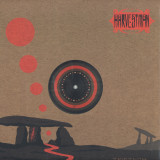
Woven together from home studio recordings that span two decades, and with some notable guest appearances including; The Bug, Douglas Leal of Deafkids, Wayne Adams of Petbrick, Dave French of Yob and Sanford Parker, this final part of the Harvestman Triptych seeks once again for a lost world, with the voice of poet Ezra Pound extolling the virtues of "gathering from the air a live tradition".
Cloudy Clear plus Black Galaxy effect vinyl in dub style jacket. Limited and Non-Returnable.
At its heart, music has always been a questioning of inheritance – a dialogue with predecessors and forebears, the forging of one’s own perspective in relation to what has come before, and for some, a plunge into the boundless realms between. For Steve Von Till, that process has always taken on an added dimension to become the most sacred of tasks. Whether through the apocalyptic uprising of Neurosis, the sonic deconstructions of their sister project, Tribes of Neurot, the invocatory intimacy of his eponymous solo albums or his instrumental psychedelic reveries in the guise of Harvestman, that dialogue has never just been with musical influences, but with what underpins them: the primordial, elemental forces now banished to the peripheries of our contemporary consciousness, yet still broadcasting a signal for all who will listen.
Drawn to the megaliths, ruins and ancient sites mapped out along the British and European mainland’s geographical and psychic landscapes, the folklore and apocrypha forever resurfacing as portals from a rational world, Triptych is a meditation forged from traces and residues, and an hallucinatory recollection of artists who have tapped into that enduring otherworldliness embedded within us all. It’s a dream diary narrating a passage through Summer Isle where Flying Saucer Attack are wafting out of a window, a distant Fairport Convention are being remixed by dub master Adrian Sherwood, celestial scanners Tangerine Dream are trying to drown out Bert Jansch and Hawkwind are playing Steeleye Span covers, all prised out of time yet bound to its singularity.
"Herne's Oak" provides seismic bass waves that physically halt the track in its steps - giant footfalls as Herne's antlers themselves are dragged along a corridor. Another curious and mysterious piece of British folklore brought to life by Harvestman.
If Triptych is a multi- and extra-sensory experience, it extends to the remarkable glyph-style artwork of Henry Hablak, a map of correspondences from a long-forgotten ancient and advanced civilization. As with Triptych itself, it’s an echo from another time, an act of binding, a guide to be endlessly reinterpreted, and a signpost to the sacred that might not indicate where to look, but how.
Cover art is by Henry Hablak, who also designed the art for Part One and Part Two.
Multi-talented artist Poppy Ajudha will be announcing her sophomore album, titled ‘Poppy’, which will be released 22nd November 2024. This follows Poppy’s triumphant return to releasing music this year with the release of 'My Future', following a two year hiatus. ‘Poppy’ was created alongside Mike Malchicoff (Kanye West/King Princess) with contributions from the likes of producers Maestro (Rihanna), Fred Ball (Alicia Keys/Raye/Mariah Carey), Grades, (Kali Uchis, Dua Lipa, Britney Spears), and Travis Sayles (Ariana Grande).
Poppy says: “I can’t believe I’m writing this, but my sophomore album is finally coming out! After numerous trips back and forth from London to LA, millions of revisions to perfect each song and a lot of moving the track listing around, I’ve made an album I’m so in love with, with people who I felt truly seen by, who I respected and found a natural synergy with. I really put everything into this album, it is a reflection of my growth over the last 2 years, an outward pouring of my raw vulnerability, the inner workings of my chaotic brain and the deep desire I have to challenge myself with everything I do. I’m really proud of what we made, and I hope that when you hear it, it means something to you too.
Thank so much to all the special people who contributed to the making of this project, the producers, engineers, musicians, visual creatives, the friends who listened to me while I processed my life in order to write it down, I wouldn’t have been able to manifest this dream without you.”
Alongside the announcement of her upcoming album, Poppy has also released new single ‘Lean On Me’, a bold pop banger about the importance of community and showing support for each other even during challenging moments. ‘Lean On Me’ was written by Poppy with production from Wesley Singerman (Kendrick Lamar/Anderson Paak).
On ‘Lean On Me’, Poppy says: “We realise true friendship in the moments we are most vulnerable with each other. When I wrote ‘Lean On Me’ I was going through a breakup and struggling to make sense of my world. My friend who was experiencing their own kind of grieving found the time to give me the advice I needed, and the next day I wrote this song about the power of friendship, community, unconditional love and showing up for each other through our hardest times.”
“Music is my forever cove,” writes Portland, Oregon’s Luke Wyland of the ideas that give shape to Kuma Cove, his latest album under his own name. Though named after a real place on the Oregon coast, Kuma Cove casts its gaze far beyond the sightseer’s line of vision. Recorded live in the studio and blurring obvious lines between computer-based composition and electro-acoustic instrumentation, it is an album about flow, borders, transitory states, and shelter. Composed of discontinuous ripples and repetitions (“I’m forever searching for a better descriptor than looping, which feels too simple and flattened by overuse,” Wyland says), shaped into richly emotive arcs, and informed by his experience as a person who stutters, it is also an album about identity, self-expression, and the energies that sluice through and across what we perceive as linear time—like floodwaters seeking an exit, like streams running into the sea.
Artist’s Statement:
I made this record while spending significant time in the woods by the Sandy River in Corbett, Oregon,
where I've had my studio for the last five years. It is a diary of spontaneous live recordings edited to highlight the moments of clarity that emerge from long-form improvisations. These compositions express a slowing internal rhythm. An unwinding. A somatic recalibration as I enter middle age. A newly empowered vulnerability.
Here are the internalized cadences of my stutter, flowing freely from my fingers. The musicality of my disfluency is revealed in its frictions, elongations, and foreshortenings. Disruptions in linear time, where the bubbling cadences of my stutter find unexpected pathways, reveal the elasticity of the present moment. This is my idiosyncratic language, shaped and inspired by my disability. Subliminally mirroring internal processes, neural firings, cognitive entanglements...
The title, Kuma Cove, refers to a beloved cove on the coast of Oregon my wife and I return to yearly. There has always been something so magnetic about coves. The way they cradle one from the overwhelming enormity of the ocean beyond, muting a primordial fear. I experience these improvisations as ecosystems I'm able to inhabit for stretches of time, embodying the particular rhythms and sensorial textures within each. Music is my forever cove. Everything you hear is created live in Ableton on a setup I've been honing for 15 years. I celebrate MIDI and computer music as an extension of self and strive to make it as expressive as any analog instrument. I was a visual artist for the first half of my life and quickly adapted those skills to composing and producing on a computer. The transition felt natural within the landscape of DAW's interfaces, especially as a synesthete. Ableton and its community of Max creators continue to surprise me with its expansiveness.
I'm forever searching for a better descriptor than looping, which feels too simple and flattened by overuse. I envision sonic loops as tangled masses of time, three-dimensional knots spinning on tilted axes, or overlapping wreaths refracting out a myriad of colors. My practice is continually refocusing my ear to what is revealed in the repetitions, searching for the fingerprint of each. I find it incredible how technology lets us manipulate time like this. Nothing on this record is quantized or locked to a universal bpm. Experiencing numerous tempos at once feels important. Recordings as mirrors. Freedom from expected (conversational) flow as we hold time for each other.
-Luke Wyland, August 2024
Artist Bio:
Luke Wyland is an interdisciplinary artist, composer, and performer based in Portland, OR (USA). Wyland has been releasing critically acclaimed records for the past 20 years in the groups AU and Methods Body, as LWW, and under his own name, working with such labels as New Amsterdam, Beacon Sound, Balmat, The Leaf Label, and Aagoo Records. As a person who stutters, Wyland’s approach to music is informed by his idiosyncratic relationship with language. Wyland believes deeply in the cathartic power of live performance as a means for collective healing. Through an interdisciplinary art practice that focuses on improvisation, somatic embodiment, bespoke tuning systems, the cadences of disfluent speech, and time manipulation technologies, he’s collaborated with choreographers, high-school choirs, filmmakers, sound designers, and renowned musicians such as John Niekrasz, Holland Andrews, Colin Stetson, and Abraham Gomez-Delgado. He’s also the co-creator of the “It’s A Fucking Miracle” dance class with Tahni Holt.
Wyland has toured nationally and internationally and performed at the Whitney Museum, Ecstatic Music Festival, Issue Project Room, PICA’s Time-Based Arts Festival, End of the Road Festival, and Les Nuits Botanique, among others.
- Once Upon A Time
- Come To Me
- Premonition
- Herr Knock
- Ellen's Dream
- Incantation
- Goodbye
- The Inn / Moroi
- Shrine
- A Carriage Awaits
- Come By The Fire
- Destiny
- The Castle
- Covenant
- The Crypt
- Lost
- Hysterical Spell
- Devourance
- The Monastery
- Solomonar
- Increase Thy Thunders
- The Professor
- Dreams Grow Darker
- Possession
- An Arrival
- A Return
- Grünewald
- Despair In My Coming
- A Curious Mark
- Orlok's Shadow
- The Vampyr
- The First Night
- Death, All Around Us
- I Know Him
- The Second Night
- These Nightmares Exist
- A Priestess Of Isis
- Last Goodbye
- Never Sleep Again
- The Third Night
- The Prince Of Rats
- Daybreak
- Liliacs
Oxblood Vinyl[30,04 €]
Robin Carolan's latest soundtrack for Robert Eggers' highly anticipated Nosferatu is a haunting, gothic-infused and meticulously crafted work that draws from a vast palette of sounds, instruments, and inspirations. Following their successful collaboration on The Northman, Carolan reunites with Eggers to bring the legendary tale of Nosferatu to life, infusing the film with a score that is as complex and nuanced as the story itself. With Daniel Pioro, one of Britain's most exciting young classical musicians, at the helm as the orchestra leader and first chair for a vast majority of the recording, the soundtrack features a vast orchestration, including 60 string players, a full choir, various horns and woodwinds, a harpist, and two percussionists. Despite the grandeur of the orchestration, one of the most challenging pieces was the music box used at the film's beginning. Carolan and Eggers struggled to perfect its sound, a process marked by their meticulous attention to detail, which Carolan describes as almost telepathic. Set in the 1800s, Nosferatu allowed Carolan to incorporate contemporary instrumentation, though he made a deliberate effort to ensure the score didn't sound overly modern. Letty Stott, who also worked on The Northman, contributed ancient horns and pipes, enhancing the soundtrack's eerie atmosphere. Additionally, percussionist Paul Clarvis custom-built a toaca-like instrument for added authenticity. Carolan's inspirations for the soundtrack were as eclectic as they were profound. He frequently drew upon the works of Bartok and Coil, while films like The Innocents, Angels and Insects, and Eyes Wide Shut provided cinematic inspiration. Additionally, he explored the more obscure side of Hammer Horror soundtracks and found a deep connection to the music of the Ukrainian film The Eve of Ivan Kupalo, which helped shape the score's otherworldly tone. Carolan intentionally moved beyond the typical horror score, focusing on capturing the tale's melancholy and tragic elements while weaving in a sense of warped romanticism. The result is a soundtrack that not only complements the film but also stands on its own as a testament to Carolan's artistry and the enduring power of collaboration.
- A1: Once Upon A Time
- A2: Come To Me
- A3: Premonition
- A4: Herr Knock
- A5: Ellen's Dream
- A6: Incantation
- A7: Goodbye
- A8: The Inn/Moroi
- A9: Shrine
- A10: A Carriage Awaits
- A11: Come By The Fire
- A12: Destiny
- A13: The Castle
- B1: Covenant
- B2: The Crypt
- B3: Lost
- B4: Hysterical Spell
- B5: Devourance
- B6: The Monastery
- B7: Solomonar
- B8: Increase Thy Thunders
- B9: The Professor
- B10: Dreams Grow Darker
- C1: Possession
- C2: An Arrival
- C3: A Return
- C4: Grunewald
- C5: Despair In My Coming
- C6: A Curious Mark
- C7: Orlok's Shadow
- C8: The Vampyr
- C9: The First Night
- C10: Death, All Around Us
- C11: I Know Him
- D1: The Second Night
- D2: These Nightmares Exist
- D3: A Priestess Of Isis
- D4: Last Goodbye
- D5: Never Sleep Again
- D6: The Third Night
- D7: The Prince Of Rats
- D8: Daybreak
- D9: Liliacs
Black Vinyl[28,78 €]
Robin Carolan's latest soundtrack for Robert Eggers' highly anticipated Nosferatu is a haunting, gothic-infused and meticulously crafted work that draws from a vast palette of sounds, instruments, and inspirations. Following their successful collaboration on The Northman, Carolan reunites with Eggers to bring the legendary tale of Nosferatu to life, infusing the film with a score that is as complex and nuanced as the story itself. With Daniel Pioro, one of Britain's most exciting young classical musicians, at the helm as the orchestra leader and first chair for a vast majority of the recording, the soundtrack features a vast orchestration, including 60 string players, a full choir, various horns and woodwinds, a harpist, and two percussionists. Despite the grandeur of the orchestration, one of the most challenging pieces was the music box used at the film's beginning. Carolan and Eggers struggled to perfect its sound, a process marked by their meticulous attention to detail, which Carolan describes as almost telepathic. Set in the 1800s, Nosferatu allowed Carolan to incorporate contemporary instrumentation, though he made a deliberate effort to ensure the score didn't sound overly modern. Letty Stott, who also worked on The Northman, contributed ancient horns and pipes, enhancing the soundtrack's eerie atmosphere. Additionally, percussionist Paul Clarvis custom-built a toaca-like instrument for added authenticity. Carolan's inspirations for the soundtrack were as eclectic as they were profound. He frequently drew upon the works of Bartok and Coil, while films like The Innocents, Angels and Insects, and Eyes Wide Shut provided cinematic inspiration. Additionally, he explored the more obscure side of Hammer Horror soundtracks and found a deep connection to the music of the Ukrainian film The Eve of Ivan Kupalo, which helped shape the score's otherworldly tone. Carolan intentionally moved beyond the typical horror score, focusing on capturing the tale's melancholy and tragic elements while weaving in a sense of warped romanticism. The result is a soundtrack that not only complements the film but also stands on its own as a testament to Carolan's artistry and the enduring power of collaboration.
Ltd Edition!
Die avantgarde-Modular-Zauberin Kaitlyn Aurelia Smith + Joe Goddard von Hot Chip haben sich für die Produktion einer gemeinsamen EP zusammengetan. Mit knallharten Beats, komplexem Synthesizer-Programming und melodischer Sensibilität ist hier purer Body-Moving-Stoff entstanden, der alle Neuronen im Gehirn zum Feuern bringt.
Kaitlyn Aurelia Smith ist eine amerikanische Komponistin, Performerin und Produzentin mit klassischer Ausbildung, die die unendlichen Möglichkeiten elektronischer Instrumente und die Beziehung zwischen Klang, Form, Farbe, Körper, Bewegung und Ausdruck erforscht. Ihre Musik ist eine Form der auditiven Interpretation, die von Neugier und ihrem Instrumentarium aus modularen, analogen und seltenen Synthesizern angetrieben wird. Joe Goddard ist nicht nur Bandmitglied bei Hot Chip und The 2 Bears, sondern auch einer der führenden britischen Produzenten, der Sounds kreiert, die sein gesamtes musikalisches Spektrum von House, Techno und Disco bis hin zu UK-Garage, R&B und Elektropop abdecken. Joe Goddard hat vor kurzem sein drittes Soloalbum Harmonics veröffentlicht.
- No One Mourns The Wicked - Ariana Grande Ft. Andy Nyman, Courtney Mae-Briggs, Jeff Goldblum, Sharon D. Clarke & Jenna Boyd
- Dear Old Shiz - Shiz University Choir Ft. Ariana Grande
- The Wizard And I - Cynthia Erivo Ft. Michelle Yeoh
- What Is This Feeling? - Ariana Grande & Cynthia Erivo
- Something Bad - Peter Dinklage Ft. Cynthia Erivo
- Dancing Through Life - Jonathan Bailey Ft. Ariana Grande, Ethan Slater, Marissa Bode & Cynthia Erivo
- Popular - Ariana Grande
- I’m Not That Girl - Cynthia Erivo
- One Short Day - Cynthia Erivo & Ariana Grande
- A Sentimental Man - Jeff Goldblum
- Defying Gravity - Cynthia Erivo Ft. Ariana Grande
Part 2[34,03 €]
Wicked: The Soundtrack features performances by the stars of Universal Pictures’ new cinematic event, Wicked, with music and lyrics by legendary Grammy and Oscar® winning composer and lyricist Stephen Schwartz. The soundtrack includes songs performed by Emmy, Grammy, and Tony winning powerhouse and Oscar® nominee Cynthia Erivo (Harriet, Broadway’s The Color Purple) as Elphaba and Grammy-winning, multi-platinum recording artist and global superstar Ariana Grande as Glinda. In addition, the soundtrack features the musical talents of Oscar® winner Michelle Yeoh as Shiz University’s regal headmistress Madame Morrible; Olivier Award winner and Emmy nominee Jonathan Bailey (Bridgerton, Fellow Travelers) as Fiyero, a roguish and carefree prince; and pop culture icon Jeff Goldblum as the legendary Wizard of Oz. Based on one of the most beloved and enduring musicals on stage for the past two decades, the spectacular, generation-defining film adaptation of Wicked is destined to be the most talked-about film of the holiday season. The official soundtrack track list includes iconic Wicked songs “Defying Gravity,” “Popular,” “Dancing Through Life” and more, performed as you’ve never heard them before! Wicked, in theaters November 22, 2024, is the first chapter of a two-part immersive, cultural celebration. Wicked Part Two is scheduled to arrive in theaters next year, on November 21, 2025.
Founded during 2015 in New York’s Hudson Valley, Shadow Witch is an enigmatic beast of a band, harnessing decades of varied influences with a decidedly ‘vintage rock’ sensibility. Beginning with their first release “Sun Killer” in 2016 and “Disciples Of The Crow” in 2017, the band has garnered excellent reviews from the international heavy music community. The band returned in 2020 with their brooding occult-rock ode to obsession with their third album “Under The Shadow Of A Witch”. Now with their new full length, ”Eschaton (The End Of All Things)”, Shadow Witch explore new boundaries, digging into folk, prog and hard rock best traditions; a monumental heavy metal album made of retro, classic and proto rock/metal sonorities, occult doom vibes and enigmatic psychedelic twists.
"Entitled Silêncio, the new album is due in September and will arrive as a natural continuation of the first, featuring songs that had been left out as well as those that were part of Nigro's shows with the band. ""The songs have come to life. Today I feel more confident about doing my own thing, more assured. I want to propose this listening to silence, to the hidden subtleties that are revealed in existence"", he concludes.
Recording the first album was a personal adventure with an uncertain destination. Apocalip Se embodies this feeling of conducting an internal investigation, a rediscovery from the inside out. On the new album, the image on the cover is about being open, with your hands absorbing the outside, feeling the power of nature reflected in its greatness,"" Nigro reflects.
""I always woke up at 4 a.m. to the sound of a variety of birdsongs, and I kept thinking 'what are these birds saying? Do they even think about us?'"". The artist then composed the instrumental part with his guitar and sent it to the poet Eveline Sin suggesting this theme, and she responded years later, at the time of the recording of Apocalip Se. The song was formed in several movements, also bringing together pianist and partner Dustan Gallas, with a new arrangement featuring more than 20 musicians, taking the new version to another level of interpretation. As for the construction of the melodies, Nigro reflects: ""I think the voice is an instrument, a fascinating harmonic instrument"". In addition to producing for numerous well-known artists, such as Russo Passapusso, Francisco el Hombre, Curumin, and Anelis Assumpção, onalbums that have marked the history of independent Brazilian music, Zé Nigro has used his role as a singer as a long experiment in self-knowledge."
"Can machines sing? With his Synthetic album cycle, Rich Aucoin answers that question with a resounding, exuberant ""yes."" The four-part project sweeps listeners through a gallery tour of synthesis history, giving voice to a chorus of specimens from the past century of electronic sound. On Season 3, Aucoin deepens his dive into the variegated genealogy of dance music, charting a joyful course through the many flavors of rave euphoria.
From March 2020 through February 2024, Aucoin recorded Synthetic: Season 3 during a series of visits to the National Music Centre in Calgary and the Vintage Synthesizer Museum in Los Angeles. Among these collections, he found historic synthesizers ranging from the ubiquitous to the esoteric, each with its own voice just waiting to be jolted to life. During these sessions, Aucoin took the opportunity to air out some of synth history's most iconic instruments.
From the mass-produced to the bespoke, each synthesizer on Synthetic: Season 3 sends a transmission from its makers' own historical vision of the future. The instruments' tactile interfaces -- from fields of patch jacks to 50-year-old optical discs to rows and rows of voltage dials -- all lend embodied dimension to the practice of shaping sound from raw electricity. Each of them carries a story about what might have tumbled into being from the moment of their creation. In awakening these machines, Aucoin cross-pollinates a choir of futures into an ecstatic, reverential present."
None of Scattersun’s principal collaborators could easily meet in person. When Fax Gang and Parannoul began work on the album in 2023, they encouraged themselves to throw all caution to the wind with regard to genre and sound palette, ultimately weaving together intense strains of blown-out electronica that pull on a whole manner of stylistic threads, from two-step beats, to flashes of breakcore, cloud rap passages, and pop serenity. Jarring turns that lead to booming, emotional climaxes form the animating logic behind Scattersun. Album opener “Quiet” lulls listeners into a false sense of security before the breakdown tells them do not pay any heed to your expectations as it dismantles itself before exploding into a climax the artists describe as a spirit bomb. Such crescendos and dime-turns are all over Scattersun, defining characteristics which, in their scattered unpredictability, always culminate in enrapturing, playful mimicry of human nature.
Flat Duo Jets: White Trees 2024 Remaster Fronted by the late Dex Romweber. The duo’s fourth album was the first album of all original material. Produced by Caleb Southern, White Trees is a Jets’ masterpiece that proved that Romweber could diversify his band’s material without losing his recklessness and urgency.
Dex passed away earlier this year on February 16th and this reissue is dedicated to his memory and legacy. Jack White from the White Stripes has called Dex and the Flat Duo Jets a major influence when starting out. White declared that seeing the Jets for the first time “opened up a whole new inspiration for me about the guitar.” And he was downright effusive in the 2006 cult-classic Romweber documentary ""Two Headed Cow"", calling Romweber “a huge influence on my music… one of the best-kept secrets of the rock & roll underground.” In 2009, White recorded a seven-inch with Romweber, and in 2011 he reissued the Jets’ long-out-of-print 1991 album Go Go Harlem Baby on his Third Man Records imprint.
“[White Trees] by North Carolina’s Jets is a tarnished neo-rockabilly gem. Dexter Romweber’s battered honk is the perfect voice to wrap around these twisted tales about Charlie Dick (Patsy Cline’s hubby), UFOs, and dining with Van Gogh. It’s as if the ”Eraserhead” soundtrack were recorded at Sun Studios and sent to Weekly World News for editing.”- Entertainment Weekly Arguably the busy Duo’s most accomplished set, ‘93s handily diversified White Trees jumbled stylistically antiquated originals in a cohesively dignified manner. -Beermelodies"
Last Dinosaurs has found a rhythmic succession over the last decade, one that’s plucked them out of Australia, pulled them through the eye of the European needle, off to write in ancient Japanese ghost towns, onto America’s most iconic stages, and somehow grounded them in the middle of a sacred loophole - a ring of fire, really - that few artists find. They call it a loophole because it hasn’t been linear, it hasn’t been promoted, it hasn’t been announced and popularized and pushed through the press. Blame it on the Latino and Asian kids streaming the sh*t out of their trifecta of indie-rock records or the internet’s international party knuckles banging at their digital door 24/7, but Last Dinosaurs are erupting. They’ve all felt it onstage and backstage in every sold-out sanctuary of sound they have ripped through.
Two years ago, after Covid sent the industry into a tailspin I made the sad decision to stop pressing Holding Hands records to vinyl. This was gutting as the label had been putting records out from the first release and it had always felt like an integral part of the label’s identity.
It sucked but I always hoped that in the future I would be able to feel confident in pressing records again and I am so happy to say that the time has finally come again!
Earth Trax popped into my inbox with some demos and I instantly knew there was something special here. The tracks are absolutely timeless and will do the business on any dancefloor from now until the end of time.
The A sides have more of loopy club quality that you could listen to all night. The sort of thing that you just lose yourself to when it comes on in the club. You aren’t sure exactly when it came on but you suddenly realise that you’ve been gurning with your eyes closed for some indeterminate amount of time. Basically, they’re very chewy loops (note to self: potential cereal idea).
The B sides have more of a...for lack of a better word, B side quality to them. They’re both broken and they make me want to move my body from side to side in a sort of jagged cool 80’s way. Ones to make you move and think at the same time.
OK enough of my blather. Go and listen to the damn things yourself and decide if you like them, rather than trying to work it out from reading a bloody press release you weirdos.
All four tracks are produced and sculpted for the club. They want big sound systems and dark rooms.
Close your eyes, hold hands and experience transcendental space flight...
With "Ululo", pianist and composer Koki Nakano immerses us in the depths of his emotions, carried by the striking voices of Jordy, WAYNE SNOW and Yael Naim. For his fourth album, Japanese pianist and composer Koki Nakano moves beyond the conceptual to reveal an intimate and visceral musical expression, a reflection of his deep emotions. Each piece conveys the desire and passion of a cry. The title "Ululo" (which translates to "Howl" or "Cry" in Latin) echoes a childhood memory of being in his father"s arms, yearning to touch the moon. This unfulfilled desire, reminiscent of a famous haiku by famous poet Issa Kobayashi, symbolizes his early realization of his limitations in the face of the vastness of the world and the seemingly unattainable. Koki reinvents himself with a unique fusion of piano and modern vocal collaborations. He is joined by UK rap sensation Jordy and the captivating voices of WAYNE SNOW and Yael Naim. He offers an avant-garde music style distinguished by its emotional simplicity and sonic depth. Beyond virtuosity, Koki explores his classical sensibilities by blending subtle ambient textures with his poignant and sophisticated melodies. While "Ululo" is a cry of frustration with melancholic tones, it is also romantic, filled with beauty, humor, and light.
Deep Inspiration Show stands for quality deep house, returning with “One More Wax” as part of their international artist series. Zarenzeit (Zürich) featuring Roger Versey (Arkansas) opens with “So Smooth,” offering rich keys, a sensual bassline, soulful loops, and dynamic vocals. Next, Melchior Sultana (Malta) delivers “Nothing Like It Seems,” featuring silky chords and a shuffling house rhythm, perfect for late-night vibes. On the B side, Jan Kincl (Zagreb) brings “Sugar,” blending house and cinematic disco over organic drums. Finally, Barcé (Spain) closes with “Stigma,” fusing Deep House and Techno into a melodic, rejuvenating experience. These 4 tracks offer deep house fans an exquisite selection, bringing them closer to perfection.
A1 Northern Lights
Darkly, tense tones take center stage as Northern Lights kicks the LP off, introduced with an eerie synth before classic, striking old school breaks that aficionados will recall from the likes of John Bs Secrets drop, chopped expertly by our Spatial duo to create a quietly vengeful beat pattern with heavy kicks and a unique stuttering detail. Circling menacingly around the mix we are treated to swathes of choral detail, subtle vocal samples and shimmering ambience..
A2 Sunset on Mars
Showcasing the strengths of both producers through a delightfully rich atmosphere, Sunset on Mars opens with soothing echoed effects that ooze a welcoming sense of wonder. Delicate in composition yet still packing a punch, the breaks sit over a sumptuous deep sub bassline which carries our journey through simple key melodies, vivid mood-changing synths superbly to create a pure, wholesome atmospheric bliss.
B1 Totality
Dominant hats and cymbals surf the peaks of the mix early in Totality, detailed old school breakbeats quickly seizing our attention constructed with an effortless attention to detail. A stark, thick atmosphere is carved from a broad backdrop of sound blending vocals and synths, enveloping the listener with a dense, bleak soundscape that develops continually as the breaks roll on with memorable intent.
B2 Reincarnation
A deeply evocative, interstellar intro opens Reincarnation, generating images of lonely spacewalks with trademark Spatial aplomb. The vibe continues through a barrage of heavy analogue amens which crush the mix, edited with a chunky, commanding panache. The listener can picture pillars of isolation and thundering defiance dancing in duality as the elements weave their way fluidly throughout.
C1 Seraphim
Into an intense, epically atmospheric piece next as Seraphim channels the spirit of yesterday for a journey into the souls core via scene-trademark Hot Pants breaks, a moody 808 bassline and swirling atmospheric pads, melodies & synths. Layered with detailed FX demanding repeated listens to soak it all in, Seraphim is a special track which will take over your setlist and the journey home.
C2 Prism of Light
Sit back and relax to another slice of classic atmospheric bliss with Prism of Light, opening with a DJ-friendly hi hat intro before melodic synths generate an instantly unforgettable late-90s vibe. Hot Pants breaks drive us forward with a wondrously simple yet effective mix of 2 step and double kick edits, as blissful ambient washes and vocal hits are drizzled over the mix. Delightful.
D1 Harmonic Function A uniquely constructed beat pattern guaranteed to move you opens Harmonic Function, building up from rushing cymbals and hats intertwined with a fantastic crunchy, metallic half-time snare. Throw in a slew of mournful melodies and blanketed pad work around the mix and youre left with a superbly laid back yet danceable piece from ASC & Aural Imbalance, continually innovating in their music as ever on Spatial.
D2 Fade to Grey
Old school rhythms are on the agenda as our duo close out the album with a tense, meandering exploration through space, circling the planets through mellowed out beats before a layer of dense, analogue breaks are added to the mix as the atmosphere escalates. Exquisitely programmed vocals provide texture and feeling, while an understated bassline rumbling on below, completing a timeless collage of sound.
Words by Chris Hayes (Spatial / Red Mist)
As a key representative of French neo-soul with ambitious intentions, the singer, songwriter, and composer Enchantée Julia has truly made her mark on the French scene with her second EP LONGO MAÏ, released in 2022 and available on vinyl for the first time. On this cathartic yet hedonistic project, whose title is a nod to her southern origins, she collaborates with the Saint-Etienne duo Terrenoire and rapper Benjamin Epps.
Julia places even more emphasis on vocal harmonies and sophisticated arrangements, whether on upbeat, sunny tracks or delicate, intimate ballads like "MOUSSA" (produced by The Hop), a personal and sensitive ode to the one she shares her life with—a mix of cathartic song and a message of hope, referencing the tough challenges they’ve faced together. The fear of happiness and love slipping through her fingers is also present in "VÉNUS," composed and arranged by Bastien Cabezon and Oscar Emch. As the opening track of the EP, it showcases Julia’s mastery in blending the French language with neo-soul influences from across the Atlantic, laying the foundation for a unique universe that unfolds throughout the project. The second single, "PLUS FORT QUE MOI," breaks down genre barriers: Julia’s enchanting voice is wrapped in a pop-driven production with electronic hints, crafted by Terrenoire. She continues this pop momentum with "QUESTIONS," where she releases her torments—both trivial and profound—over a groove-laden production with sharp percussion, courtesy of the much sought-after Parisian producer Crayon. Julia's bewitching voice shines on the bittersweet "SOS," which bears the scars of a past relationship. On "LONGO MAÏ," a dreamy ballad with trap-inspired rhythms, Enchantée Julia invites rapper Benjamin Epps for an anthem about brighter days ahead, reminding us of the importance of familial love. To close this second EP, Julia reunites with long-time friends, brothers Théo and Raphaël Herrerias, who form the duo Terrenoire. "TOUCHER TOI" forms a diptych with the track "MOUSSA" and reveals Julia's full potential, as she shines here in a French chanson style that she has previously explored less.
Back in 2019 when we launched Vinyl Fanatiks we dropped the first two of the Ellis Dee Project series. Well, its taken us a while but 5 years later we follow up with Part 3! And what an absolute monster release it is!
A little bit of extra info on the remix that Rennie sent me today (25.9.24):
'I was honoured to be asked to remix Dance Factor for a couple of reasons. Firstly, Roy AKA Ellis Dee was the first person in the Rave scene I met and he made the time to encourage me and believe in me and he became one of the most important DJs in the scene. Secondly, it was literally my first ever remix out of about 100. It’s a bit crazy, but back then, things were pretty crazy. I even had hair!'
b b1 | Dance Factor Rennie Pilgrem Remix)
- Versteinert
- Time Will Paint Another Picture
- (Einschlafphase)
- Roter Traum
- Woodbury Hollow
- Eigengrau
- The Slow Wave
Oase is the sophomore album from Berlin-based progressive rock collective Weite, and the follow-up to the band’s 2023 debut LP Assemblage. Clocking in at almost an hour, Oase—German for "Oasis"— takes listeners on an intricate and textured journey that draws inspiration from the pioneering spirit of 70s psychedelic rock, blending influences from “Canterbury scene” prog, Krautrock, early electronica, post rock, and Americana. The new album show cases Weite's ability to merge the old with the new, creating an immersive, exploratory sound that moves from contemplative and pastoral to riffy and doomy without ever sacrificing melody. Oase is characterized by longer expansive, atmospheric compositions yet is undoubtedly more composed than the band’s debut, with more of a focus on songs, albeit in the broader sense of the word. With the focus on melody, texture and mood—although not necessarily always in that order—Weite create a sound that’s intricate and meditative, inviting the listener to embark on a journey through shifting soundscapes and evolving musical narratives. Weite was formed in Berlin in winter 2022 by bassist Ingwer Boysen (delving) recruiting drummer Nick DiSalvo (Elder, delving) and guitarists Michael Risberg (Elder, delving) and Ben Lubin (Lawns). Initially intended as a one-of recording session, the four recognized an obvious musical chemistry and common ground and decided to turn the project into a proper band. Keyboardist Fabien de Menou (Perilymph) joined in 2024.
The third EP by the adventurous and unstoppable Stefan Schwander that you might already know from one of his other disguises such as Harmonious Thelonious, A Rocket In Dub or Antonelli Electr. - just to name a few. All tracks were virtuously and solely jammed out on Elektron's Monomachine once again.
Deep basslines, ravy bleeps, piano chords and synth melodies are awaiting us and let us reminisce of Jamaica, UK and Chicago while stepping and dancing into tomorrow.
The EP starts off gently with 'Title Track'. The first bleeps, chords, an incisive bassline and we're already grooving. Strings are building the framework while some house piano and a ravy melody let us hum along.
'Sublime' speeds things up with its shuffling, minimalistic beat but the dub bassline holds it down and functions as a resting pole to the vibrancies around. A pristine synthline comes in and supports the meandering chords. Dance off.
On the flipside 'Definition Of ...' sums it up what While My Sequencer Gently Bleeps is all about: a deep bass as bedrock, lively percussion, a little melody, tiptoeing chords. Everything sensitively used, telling a story. Listen on repeat.
In den 1970er Jahren wurde Romy Schneider durch ihre französischen Filme mit Regisseur Claude Sautet
ein internationaler Star. Besonders diese Meisterwerke bewegen und begeistern bis heute ihre Fans.
Die wunderbar sentimentale Musik zu den Filmen stammt vom berühmten Oscar-Gewinner Philippe Sarde.
Die Compilation „Romy Schneider, un portrait musical“ versammelt jetzt das erste Mal die Musik aus den
vier Filmklassikern „Die Dinge des Lebens“, „Das Mädchen und der Kommissar“, „César und Rosalie“ und
„Eine einfache Geschichte“. Ebenfalls zu hören ist Romy Schneider als Sängerin des „Chanson d’Hélène”
zusammen mit Michel Piccoli (französische und italienische Version) und “La Lettre de Rosalie”.
Green Vinyl[33,82 €]
"Good Lovelies are proud to reissue their holiday classic EVERGREEN just in time for the upcoming holiday season. Originally released in 2019, this fifth anniversary limited edition of 500 has been pressed on beautiful peppermint green vinyl.
Caroline Brooks, Kerri Ough and Susan Passmore are a trio of songwriters, multi-instrumentalists, and gorgeous harmonizers known for their nostalgic sound during the holidays that crosses between folk-roots, old-time swing, soul and bluegrass. ""Evergreen"" includes three original songs that the band have added to the Christmas canon alongside their versions of songs like ""Little Saint Nick"", ""Christmas (Baby Please Come Home)"" and ""(Everybody’s Waiting For) The Man with the Bag"" to really get you in the mood for the season ahead.
The band’s annual Christmas tour hits the road again this December, bringing classic holiday songs, timeless winter selections, and original Good Lovelies material to the stage. A Good Lovelies holiday show is a guaranteed good time for the whole family.
“...while most festive albums are best experienced during the correct season, when it comes to the amazing talents of the Good Lovelies, the rule book can be tossed out.” - GREAT DARK WONDER -
“Some of the most gorgeous Christmas harmonies you’ll ever hear on an album jammed full of warmth and good cheer. Featuring a mix of fun favorites, lesser-heard gems and three truly fine originals, the trio strikes the perfect blend of smiles and sentiment...” - BOB MERSEREAU
Good Lovelies first came together in 2006 and have since recorded thirteen albums, including two Christmas collections. They have toured extensively across North America, Europe, the UK, and Australia, and have earned such accolades as a JUNO Award, a SOCAN #1 Single award, and four Canadian Folk Music Awards. Their latest album “We Will Never Be the Same” is in stores now."
- Go-Go Gadget Gospel
- Crazy
- St. Elsewhere
- Gone Daddy Gone
- Smiley Faces
- The Boogie Monster
- Feng Shui
- Just A Thought
- Transformer
- Who Cares
- Online
- Necromancer
- Storm Coming
- The Last Time
In 2006, Danger Mouse is King Midas of the music world. He has an uncanny knack for creating jagged, dense, frenzied beats and odd, eerie, vivid soundscapes that never compromise the music's natural flow. Meanwhile, rapper and singer Cee-Lo, a veteran of Atlanta's Dirty South scene, has never been one to be constrained by hip-hop conventions, and is a willing partner in adventure. The result is an intrepid psychedelic blend of pop, hip-hop, soul, and rock that consistently challenges and delights. It's no wonder that "Crazy," with its modest riff, irresistible hook, and disarming opening line ("I remember when, I remember, I remember when I lost my mind") became a worldwide Internet sensation a full six months before the official release of St. Elsewhere. But that relatively simple soul-pop gem is the tamest track on this wide-ranging, often dark and introspective collaboration. (In fact, the duo considers Gnarls Barkley to be a wholly new creation, as opposed to a collaboration of existing artists.) "Everybody is somebody, but nobody wants to be themselves," Cee-Lo croons on "Who Cares?" He and Danger Mouse try very hard not to be their old selves as they creatively and confidently break down boundaries, but the brilliant cores of their musical personae--Cee-Lo's eccentric spiritual soul man and Danger's bold sonic explorer--remain. --Marc Greilsamer
- (We're Not) The Jet Set (Feat. Iris Dement)
- So Sad (To Watch Good Love Go Bad) (Feat. Connie Smith)
- Wedding Bells/Let's Turn Back The Years (Feat. Lucinda Williams)
- When Two Worlds Collide (Feat. Trish Yearwood)
- Milwaukee Here I Come (Feat. Melba Montgomery)
- I Know One (Feat. Emmylou Harris)
- It's A Cheating Situation (Feat. Dolores Keane)
- Back Street Affair (Feat. Patty Loveless)
- Loose Talk (Feat. Connie Smith)
- Let's Invite Them Over (Feat. Iris Dement)
- Til A Tear Becomes A Rose (Feat. Fiona Prine)
- In A Town This Size (Feat. Dolores Keane)
- We Could (Feat. Iris Dement)
- We Must Have Been Out Of Our Minds (Feat. Melba Montgomery)
- In Spite Of Ourselves (Feat. Iris Dement)
- Dear John (I Sent Your Saddle Home)
Red Transparent Vinyl[26,68 €]
his release marks the first complete album reissue on Canopy. Originally released in Nigeria in 1987, “Oppressor” was executive produced by Myke Moul himself and distributed domestically by EMI Nigeria & Tropic Records.
“Oppressor”, the album, finds the sweet spot between synth reggae, boogie, and euphoric Balearic island vibes.
Written by Myke Moul and arranged in collaboration with reggae star Majek Fashek in Nigeria, it was later re-crafted and recorded in France with a host of French musicians. Most notably the contribution of multi instrumentalist Pierre de St Front added engaging synthesiser parts and electronic drums.
Unfortunately the pressing of the album suffered from inherent technical flaws which adversely affected the sound quality and therefore even those lucky enough to find a copy, will not be able to enjoy it without considerable sonic defects. Therefore this remastered reissue will prove welcome to both collectors and new discoverers.
The titular track “Oppressor” stands out as a mid-tempo synth-reggae-boogie jam espousing the turbulent political times in Nigeria that were present in the late 80s. Elsewhere “Shadows in the Rain” is an instrumental cut displaying a jazz-funk sensibility which was unusual for a Nigerian artist at that time, and reflects Myke’s influences outside his home country. “Heading for the Top” is a boogie dance floor gem that shows the popularity of this genre at the time, as evidenced in many Nigerian releases and still sounds just as vital today. “Rescue us. O! Lord” shows Myke’s great song writing and Pierre’s fine musical skills working in tandem to create a reggae boogie tune, displaying the reggae & ska tendencies that were present in pop music in this era, from artists such as Grace Jones, Sly & Robbie or The Police.
All in all, the album demonstrates something fresh & exciting for Nigerian album reissues, touching down in a reggae fusion direction, with some fuller sounding production aesthetics, making the dynamics full and crisp on sound systems while also well suited to home listening.
Dreems returns with his second full-length album, a languid journey through ambient dimensions. Following up his self-titled debut from 2014, these two LPs will stand together as test of time, a snapshot of the atmosphere that surrounded him throughout the decade.
As a versatile club-DJ with a respected catalog of mixed-tempo club remixes, and as half of the ‘Krautback’ / elementally Australian industrial act ‘Die Orangen,’ Dreems merely hints at his musical identity as an album artist, an expansive space in which he truly does soar with the spirit of a true artist, plumbing the depths of his emotional being, achieving catharsis in the shimmering pleasure of sound.
Diamond Bay’s 12 tracks surprise and reward the listener with the great gift of capturing your attention without ever attempting to hijack it. In a world gripped by the algorithmic nightmare of millennial whoops and material hooks, Dreems has charted a course for something altogether different - a peaceful kind of sonic painting. These are pastoral, passing vignettes. They highlight our awareness without forcefully directing our thoughts, except on the vocal pieces which reinforce the contemplative themes, adding not only specificity, but bringing a real sense of intimacy to the record.
The making of a maiden album can be a capricious process. One moment of outright musical flow paired with another period of sustained creative struggle are feats experienced by seasoned producers the world over. So when Miraclis was forced to hole away in his makeshift studio - in the midst of a global pandemic - the stage was set for something magical. Now it will see the light of day for the very first time.
Having released two singles on Secret Teachings to critical acclaim already this year, Chilean talent Miraclis will accomplish a milestone achievement in July with the release of his debut album: Origin Of Truth.
Difficult experiences were fundamental to the creation of such work, as were Miraclis’ inherent musical interests. He explains: “Origin Of Truth had its birth during the pandemic. I created it as a way of communicating to myself the sensations and feelings that were spinning around my head at the time. I've always been inspired by Bristol trip hop, as well as classical rock, and these genres definitely contributed to the making of these melancholic tracks. In a way I wanted to fuse all the musical influences that were part of my childhood, up until this point now, so this album really means a lot to me. It was my way of communicating, when there was a lack of social contact and communication itself was hard to come by.”
It's this meditative quality that initially drew Damian Lazarus to the project. “It’s a record that has its roots in electronic music, but it’s a very alternative, very deep, melancholic album. I find it both soothing and stirring at the same time, and that’s a quite interesting juxtaposition in that it feels edgy but delicious at the same time,” says Lazarus. “The fact that this was written in this place surrounded by the most incredible desert landscapes makes this a very important piece of work to me. It doesn’t sit in any particular genre, which is why it feels right for a Secret Teachings release. It hints at so many genres that I as a DJ am quite into, and it feels like a first as it’s unique and unclassifiable. That mystical, esoteric, edgy feel makes this a perfect release for the label.”
Sonnet opens proceedings, with ghostly vocals residing next to raw instrumental elements throughout. Miraclis’ signature guitar riffs soon converge on saddened keys, paving the way for Scienter. It takes the form of an instrument-based, electronic-inspired cut, building slowly before reaching a crescendo midway through via an enrapturing acoustic solo.
Floating Child comes next, brimming with a darker intensity courtesy of broody synth pulses and rhythmic hi-hats, as Shiver arrives next. There’s a rock-leaning sensibility to the piece that gives way to earnest lyrical offerings, opening swiftly into the breakbeat-esque world of Perceptions. Hard-hitting drums act as the focal point, with electric chords adding depth and intrigue, whilst Bright continues in a similarly heartfelt vein.
Introspective pads leave us feeling pensive, ahead of Interstellar taking us on a celestial journey through warped bass tones. Acting as the LP’s penultimate number, it’s a four-and-a-half minute showcase of guitar-based musical goodness and one that perfectly sets the stage for Trapped, a closing saga of suitably emotive proportions.
Miraclis earned his stripes as a DJ under the name Max Clementi in his native Chile, as well as Spain after a stint at the Barcelona SAE Institute. Playing and writing music since his parents gave him his first guitar at age twelve, he found himself inspired by synth wave, electronic pop, trip hop, and psychedelic rock of the ‘80s and ‘90s, drenching himself in music by the likes of Massive Attack, Tricky, Depeche Mode, and Nine Inch Nails. However, it wasn’t until he had to move back to Pucón to take care of his father during the pandemic that he began working on what would become Origin Of Truth.
Serendipity seems to play a large part in Crosstown Rebels’ new label Secret Teachings. Just look at the story of how Damian met Miraclis in the first place. It involved a chance midnight encounter in Pucón, Chile at a woodland campfire after the DJ was locked out of his hotel room. This meeting of minds was the start of a remarkable friendship, where Miraclis invited Lazarus to stay at his house and break bread with his family. The two kept in touch, exchanging music and ideas as a result.
Marionette presents 'dessus oben alto up', the first collaborative recording by Andrea Belfi and Jules Reidy. Hailing from different ends of the globe (Australia and Italy) but both longtime residents of Berlin, Reidy and Belfi’s approaches have much in common, bringing together compositional precision and electroacoustic rigour with improvisation freedom, the immediate gratifications of rhythmic pulse, and an overtly lyrical sensibility. Working together during a residency at the sound studio of Berlin’s Callie’s, an arts institution housed in a 19th century machine factory, the pair (with Marco Anulli manning the desk) have conjured up four expansive pieces where the beautifully recorded percussive clarity of Belfi’s drums threads through a sparkling haze of guitars and electronics.
Opener ‘dessus’ begins with Reidy’s distinctive just-intoned guitar figures, shimmering over a delicate substratum of Befli’s brushwork and bass drum accents. As in all of Reidy’s recent work, the guitar is twisted out of cliché by the unfamiliar tuning and electronic processing. Hanging almost inaudibly in the background for much of the piece, a rush of synthetic tones surges into the foreground to end it. ‘oben’ is built from kinetic patterns of picked guitar arpeggios, locking into irregular grooves with Belfi’s drums, which move from elegant rolls and cymbal patter to driving closed hi-hats and explosive rock interjections. Around the traditional instruments and across the stereo field, electronic sounds swarm and swirl, fizzing and popping in a sun-drenched soundscape that at points suggests both vintage analogue synth destruction and glitching harmonies. ‘alto’ begins in similar territory but turned up a notch, eventually settling into a propulsive 6/8 groove of shifting drum accents, manically strummed 12 string acoustic, and burbling synth chords.
The B side is dedicated to the fifteen-minute ‘up’, where the strategies adopted on the other pieces are put in the service of a more relaxed, slowly unfolding epic. Anchored by a steady pulse throughout, the piece combines chiming guitars, dubbed-out bass lines and constantly adjusted percussive details into a complex flux of sound. Change is at once so subtle and so ever-present that, at any given moment, the listener can never be entirely sure quite how they got there.
- (We're Not) The Jet Set (Feat. Iris Dement)
- So Sad (To Watch Good Love Go Bad) (Feat. Connie Smith)
- Wedding Bells/Let's Turn Back The Years (Feat. Lucinda Williams)
- When Two Worlds Collide (Feat. Trish Yearwood)
- Milwaukee Here I Come (Feat. Melba Montgomery)
- I Know One (Feat. Emmylou Harris)
- It's A Cheating Situation (Feat. Dolores Keane)
- Back Street Affair (Feat. Patty Loveless)
- Loose Talk (Feat. Connie Smith)
- Let's Invite Them Over (Feat. Iris Dement)
- Til A Tear Becomes A Rose (Feat. Fiona Prine)
- In A Town This Size (Feat. Dolores Keane)
- We Could (Feat. Iris Dement)
- We Must Have Been Out Of Our Minds (Feat. Melba Montgomery)
- In Spite Of Ourselves (Feat. Iris Dement)
- Dear John (I Sent Your Saddle Home)
Black[26,68 €]
The only album to soundtrack both late-'70s Minneapolis lounges and a Travis Scott x Dior fashion show. Recorded in a host of living rooms with only a Fender Rhodes piano, a Donca Matic Mini Pops drum machine, and Senrick's wide-eyed, 20-year-old voice, the 1977 LP disappeared into the wild and joined the Wendigo in Minnesota lore. A provocative mix of marina soul, easy listening, and loner folk, Dreamin' is a sanguine sliver of the American private mind garden. Harsh winters coupled with a relative lack of interest amongst siblings allowed Chuck Senrick years of unfettered access to the family piano in their Farmington, Minnesota, home. Learning both by ear and by instruction, Senrick began gigging professionally at age 15, joining John Zimmer and the CR4 for a weekly rundown of Allman Brothers, Blind Faith, and Cream covers at the Sea Girt Inn in Lake Orchard. Tapping into James Taylor's pop-chart achievements in songwriting and enunciation, Senrick composed the bulk of the songs featured on Dreamin' before graduating from Farmington High School. At 20, Senrick migrated 30 miles north to the Twin Cities to pursue music full-time. Using borrowed equipment and borrowed living rooms, a string of informal recording sessions generated the quarter-inch tape for Dreamin'. "I didn't know how to do it," Senrick says about producing an album. "I just knew it could be done." Constructed with vocals, Fender Rhodes, and an assortment of rhythm presets on his Donca Matic Mini Pops drum machine, a mere 200 copies of the private-press masterpiece were stamped and sleeved and sold hand-to-hand at performances. Chuck's wife Lesli illustrated the album cover_a pen-to-paper portrait of her husband against the backdrop of the Minneapolis Skyline, she and their newborn son situated on a nearby knoll. Any plans for a re-press were quashed when producer Bruce W. Hansen lost the reels during a messy divorce. "I was a kid with big ideas and not much hope to do anything but play," Senrick said of the Dreamin' era. "It still amazes me that people are interested in it."
- A1: Snoop Doggy Dogg - "Murder Was The Case" (Remix) 4 20
- A2: Dr Dre & Ice Cube - "Natural Born Killaz" 4 46
- A3: Tha Dogg Pound - "What Would U Do?" 5 09
- B1: Snoop Doggy Dogg & Tray Dee - "21 Jumpstreet" 5 24
- B2: Nate Dogg - "One More Day" 5 12
- B3: Jewell - "Harvest For The World" 5 27
- B4: Snoop Doggy Dogg - "Who Got Some Gangsta Shit?" (Feat Tha Dogg Pound & Lil' Style 7 Young) 5 51
- C1: Danny Boy - "Come When I Call" 4 44
- C2: Sam Sneed - "U Better Recognize" (Feat Dr Dre) 3 53
- C3: Jodeci - "Come Up To My Room" (Feat Tha Dogg Pound) 4 29
- C4: Jewell - "Woman To Woman" 5 14
- D1: Dj Quik - "Dollars & Sense" 5 45
- D2: Slip Capone & Cpo - "The Eulogy" 4 47
- D3: B-Rezell - "Horny" 4 41
- D4: Young Soldierz - "Eastside - Westside" 4 40
Now celebrating its 30th anniversary, and arriving as a specially expanded edition to mark the occasion, the Murder Was The Case soundtrack remains an iconic work in hip-hop history. Originally accompanying the short film directed by Dr. Dre and Fab Five Freddy, this album embodies the essence of West Coast gangsta rap of the 90s. Featuring tracks from legends of the game like Snoop Dogg, Tha Dogg Pound, and more, it captures the gritty realities of street life with raw lyricism and infectious beats. From the haunting title track to the catchy grooves of 'Natural Born Killaz,' each song immerses you in the vivid world of the film and the era's burgeoning rap scene.
Finding herself in different emotional and physical spaces over the past years, The Hague-based Seina creates four ambiguous tracks for Juni, her debut EP out on Präsens Editionen. The material, which comfortably sits between ambient, glitch and noise, feels like a long-overdue update of Mille Plateaux and Raster-Noton's golden days. The result, however, is much richer in texture and much more sensual than these dinosaurs of electronic music.
On Juni, Seina, who has a background in electroacoustic music and live performance, layers a range of source material created with different means and techniques—from Supercollider-generated elements, to field recordings gathered in Finland, France and The Netherlands, to analog electronic instruments, digital feedback and manipulated human voices.
The EP, which is partly composed and partly improvised, does not point in one particular direction but in many at the same time, making it an immersive experience and, at the same, a bold debut.
* Edition of 100 copies
* Special artwork by Paris-based visual artist Caroline Ventura in custom snapbox
* Designed by Swiss graphic designers Denise Häberli & Alina Scharnhorst of INTR
Originally released during the heyday of rave culture in 1992, Kirsty Hawshaw’s ethereal vocals remain the main focal point of this reimagination of the track, keeping all optimistic, hypnotic elements intact while generating a multi-layered anthemic sense of euphoria. The production by Adam F and Shadow Child maintain the elation of Edward Barton’s lyrics, while Hawkshaw’s newly recorded vocals are as crisp, clear, innocent and all-knowing as ever.
“We are delighted to share that "Fine Day" continues to be a cherished anthem of positivity,” say Hawkshaw and co-producer Adam F. “It is a humble reminder of the power of spreading good vibes into the world. As we celebrate the milestones achieved and our journey in the world of music, we are thrilled to present a reimagined rendition of this timeless song.”
Eine hochkarätige Mischung aus Queensrÿche, Solitude Aeturnus, Marillion, Ghost und My Dying Bride! Epischer als episch, mit einer sehr starken
Produktion und einfach wunderschön... Eines vorweg - in diesem Jahr wird mit ziemlicher Sicherheit kein Album an das Debütalbum von Aiwaz
emotional heranreichen. Und selbst in meinen jährlichen Umfragen der letzten zehn Jahre würde "Darrk... It Is!" verdammt oft ganz oben auf dem
Siegertreppchen gelandet. Da das nun geklärt ist, möchte ich Aiwaz beschreiben. Man nehme die tiefgründigsten musikalischen Momente von
Solitude Aeturnus, Wheel, Marillion und Warning's 'Footprints'-Song und füge dem Ganzen sensationelle Vocals hinzu, was natürlich an Wheel's letzte
Tour de Force "Preserved In Time" erinnert (natürlich singt Arkadius auf beiden Combos), aber noch einen Tick stärker ist, und obendrauf sechs
fantastische Texte, an denen offensichtlich jahrelang gearbeitet wurde - das Ergebnis ist ein bahnbrechendes Debüt für Genre-Fans, das hoffentlich
für Furore sorgen wird und bei allen geschmackssicheren Freunden epischer Musik am Ende des Jahres auf den vorderen Plätzen landen wird. Wer
einmal 'The Ghost That Once Was I', 'Garden of Despair' und meinen Favoriten 'When Judas Spins the Wheel' gehört hat, wird sie nie wieder
vergessen
- A1: Nobuo Yagi - Mi Mi Africa
- A2: Nobuyuki Shimizu - Silver Spot
- A3: Piper - Samba Night
- B1: Haruko Kuwana - Akogareno Sundown
- B2: Aru Takamura - Koi Wa Saikou
- B3: Hitomi Tohyama - Love Is The Competition
- B4: Homma Express -What The Magic Is To Try
- C1: Colored Music - Colored Music
- C2: Shohjo-Tai & Red Bus St Project - Electric City
- C3: Yumi Murata - Krishna
- D1: Eri Ohno - Live Hard, ,Live Free
- D2: Minnie - Rocket 88
- D3: Shoody - Tokyo Melody
2024 Repress
at mule musiq, we've focused on shining light on the many aspects of what electronic music can be, putting out house, techno and ambient releases on our main label, while releasing alternative-leaning dance music through our endless flight imprint. but with the launch of our new label, studio mule, we are stepping away from electronic club music for a bit. the label will not be tied to a specific genre, as we will instead focus on releasing any kind of music that we feel is a little bit different and interesting, but somehow make sense in this day and age. for our first batch of releases, we will be focusing on japanese music.
to be honest, i have been watching the recent rise of global interest in japanese music with a skeptical eye, not sure of how to feel about all these labels overseas licensing great albums that were birthed in our country. but then, i was told by somebody i greatly respect that i should do something similar with mule, and put our own spin on it, which sounded like a good idea to me. after a period of procrastination, i finally got around to doing it. we are starting things off with a compilation of japanese disco, boogie and soul music that we selected from a modern dance music perspective — the kind of songs that we feel would intrigue music fans across the world.
at first, i started seeking authentic-sounding disco that sound like it could have been recorded in the states, but after struggling to get licensing rights for many of those tracks, i started to wonder if that was really the direction we should be going in. when we start new labels or projects, we often come up with the title or artwork first, before deciding on the actual music. we came up with the title midnight in tokyo first, which dictated that we needed to find music that would be a perfect soundtrack to listen to at night in tokyo. we ended up compiling a selection of tracks that you could both listen to at home, and play in clubs at certain time slots. the compilation also ended up sounding a lot more pop than we initially imagined...
during the selection process, we did not care whether the tracks have been reissued already or not, and how rare the original copies of the records were. our sole purpose was to gather a handful of songs from across labels, major or otherwise, that we felt could be listened to for many years to come — even after this whole japanese music trend dies down. although we put together this release mainly for listeners outside of japan, the compilation can also be a chance for japanese music lovers to rediscover the greatness of domestic music, as we did during the process.
the compilation starts off with the afro disco classic 'mi mi africa' by harmonica player nobuo yagi, which was also included in the compilation mastercuts.
'silver top' is a jazzy fusion disco taken from composer, arranger and multi-instrumentalist nobuyuki shimizu's first album, which he released when he was 19. the track features singer epo, whom he worked with many times over the years as an arranger.
'samba night' is by vocalist keisuke yamamoto and his band piper, from their masterpiece second album summer breeze. a delightful city pop number that should appeal to tatsuro yamashita fans.
'akogareno sundown' is a japanese soul classic, sang by singer haruko kuwana (the sister of well-known musi-cian masahiro kuwana). recorded in hawaii and produced by mackey feary band, known for the soulful classic 'a million stars.'
'koiwa saiko (i'm in love)' is a mellow and groovy track by singer aru takamura, the great-grandchild of sculptor kouun takamura, whose son kotaro takamura is a famed poet and sculptor. can be thought of as japan's answer to cheryl lynn's 'got to be real.'
'what the magic is to try' is a cult electropop track by honma express, a project helmed by producer kanji honma. hailed as japan's trevor horn, he is also known as the producer of legendary techno pop band tpo.
'colored music' is a song by colored music, a duo of pianist ichiko hashimoto and her partner atsuo fujimoto, who have gone on tour with ymo. taken from colored music's sole album, the japanese rare groove treasure is a mesh of new wave, synth pop and jazz influences.
the dubby electronic new wave disco 'electric city' is a b side of pop idol group shohjo-tai's debut 12' single, but the girls aren't actually singing on it, making the instrumental one of japan's greatest '80s dance tracks.
'love is the competition' is a breezy disco jam by okinawa-born bilingual artist hitomi tohyama. featured on her album next door, the song's melody seems like an interpolation of the whispers' 'it's a love thing.'
taken from mariah project's diva yumi murata's first album, 'krishna' is a funky and soulful rockin' disco cut.reminiscent of chaka khan's 'i know you, i live you,' 'live hard, live free' is a song by jazz vocalist eri ohno who is known for her work with dj krush and singing on the soundtrack to anime rupin the third.
'rocket 88' is a melancholic disco number by singer minnie. though the track was released through sapporo's independent label paradise records, the superb production quality suggests otherwise.
closing out the 13-track compilation is japanese disco staple 'tokyo melody,' sang by half african and half swedish american singer shoody and backed by tetsuji hayashi's disco band the eastern gang.
lim. to 200 180Gr Vinyl!
Schnieke is rich and fruitful, yet carries a sadness within. A 5-string violin charts its melodious journey from Istanbul to Belin, accompanied by electronics, breakbeats, live drums and percussions. An authentic oriental funky mood keeps you in a trance or gets your body moving tribally…
This is Schnieke, a.k.a. Özgür Akgül, with his first studio album Hediye, or Gift. The album is intended as a gift to Özgür's grandmother, Hadiye, who was very important to him and to whom he dedicates a song. But his debut album will also come as a gift to anyone interested in how a sophisticated musical sensibility brings together electronic elements with stringed instruments of all kinds. Özgür plays the violins himself, as well as the analogue synths and drum machines. Guest musicians include Hasan Gözetlik (trumpet and trombone), Göksun Çavdar (saxophone), Korhan Erol (electric guitar and bass), Burhan Hasdemir and Baris Güney (live percussion), Zafer Tunç Resuloglu (live drums), John Gürtler (church organ) and the Istanbul Strings, Turkey’s most vibrant string ensemble.
Their diverse influences create a wide emotional range on Hediye - sometimes dark and melancholic, sometimes wild, groovy and danceable, somewhere between jazz, dub and electro, each song surprising in its own way. Despite the variety of the individual songs, a captivating pulse runs like a thread through Schnieke's first album. Incidentally, Özgür came up with the band name during a night out in a bar, when a friend explained to him what Berlin slang he absolutely had to know. He liked the sound of the word ‘schnieke’ – it means something approximating ‘snazzy’ - and perhaps he secretly also wanted to flatter himself a little! Well, shouldn't we all do that much more often?
Hediye consists of eight tracks, three of which are traditional: Aman Doktor comes from Istanbul, Özgür's birthplace, and is a homage to his own origins. Kadioglu comes from the Aegean region and features the zeybek dance form which, despite its ‘standardisation’ in recent times, still summons up the ecstasy, inspired improvisation and musical finesse of its historical roots. The other five tracks are Özgür's own compositions, with Pasali providing the soundtrack for the 2010 Turkish feature film Memleket Meselesi. Creating compositions for film has been Özgür’s primary passion since his time as a student at the Filmakademie Baden-Württemberg. You can hear that in his music, because on his debut album Özgür does completely without vocal support, the instrumental depth stands for itself, and, in the style of The Cinematic Orchestra, space is created for us to develop our own images while listening – it is a soundtrack for the film we want to make of it.
- A1: A Festa Do Santo Reis
- A2: Não Quero Dinheiro (Só Quero Amar)
- A3: Salve Nossa Senhora
- A4: Try It (Um Dia Eu Chego Lá)
- A5: Não Vou Ficar
- A6: Broken Heart (Coração Partido)
- B1: Você
- B2: Preciso Aprender A Ser Só
- B3: I Don't Know What To Do With Myself
- B4: É Por Você Que Vivo
- B5: My Country (Meu País)
- B6: I Don't Care (Não Quero Nem Saber)
One of the funkiest records ever from Brazilian soul legend Tim Maia - and a set that also has him singing a bit of English language lyrics too! The groove here is that classic Maia blend of Brazilian roots with American funk and soul - echoes of forro or samba in some of the rhythms, mixed with psychedelic touches, and some harder-hitting funky lines too - all in a mindblowing blend that's perfectly topped with Maia's vocals - which are every bit as large and powerful as the man on the cover himself! Tim shifts effortlessly between Portuguese lyrics and American English - the latter of which really showcases his love of American soul on the titles"I Don't Know What To Do With Myself", "Broken Heart", and "I Don't Care". The album also features a version of Marcos Valle's "Preciso Aprender A Ser So", plus the cuts "Meu Pais", "A Festa Do Santo Reis", "Nao Vou Ficar", and "Salve Nossa Senhora" - all wonderful, all the way through!
- A1: Date
- A2: Favorite Lover -Mizuhara Chizuru Solo Ver
- A3: Date (Instrumental)
- A4: Mami Rap
- A5: Favorite Lover -Nanami Mami Solo Ver
- A6: Mami Rap (Instrumental)
- B1: Kanojo Sengen
- B2: Favorite Lover -Sarashina Ruka Solo Ver
- B3: Kanojo Sengen (Instrumental)
- B4: Sakura Selfish
- B5: Favorite Lover -Sakurasawa Sumi Solo Ver
- B6: Sakura Selfish (Instrumental)
**Synopsis:** Kazuya Kinoshita is a fairly ordinary college student who has just been dumped by his girlfriend, who decided to move on. Devastated and feeling at rock bottom, he decides to download the new trending app, Diamond, on his phone and rents a new girlfriend to feel better. He ends up meeting a certain Chizuru Mizuhara, a young woman who, at first glance, seems to have everything he's looking for.
This vinyl includes songs dedicated to each girl from the anime (Ruka, Chizuru, Nami, Sumi) sung by their respective Japanese voice actresses, as well as the corresponding instrumental versions. Each song reflects the adventures, thoughts, and emotions that each of the girls experiences.
- Suffire (En Duo Avec Elodie Frégé)
- L'archipel Des Séquelles (En Duo Avec Zazie)
- Son Âme D'enfant (En Duo Avec Carla Bruni)
- Le Désamour (En Duo Avec Isabelle Boulay)
- Inestimable
- Le Rire (En Duo Avec Anne Sila)
- Inconsolables (En Duo Avec Nawel Ben Kraiem)
- Plaire (En Duo Avec Sharon Laloum)
- La Dernière Fois (En Duo Avec Nolwenn Leroy)
- Ne Serait-Ce
Pascal Obispo, französischer Singer-Songwriter aus Bergerac, begann 1988 ber der New-Wave-Band Senso als Bassist und übernahm später die Rolle des Leadsängers. Sein erstes Soloalbum, Le Long du Fleuve, erschien 1990 und wurde mit den Mitgliedern von Senso aufgenommen. Das Album blieb von den Kritikern weitgehend unbeachtet, aber es verhalf Pascal Obispo zu einem Plattenvertrag mit Epic, wo 1992 Plus Que Tout au Monde erschien. Mit dem Titeltrack und anderen Singles wie Tu vas me manquer" festigte er seinen Status als einer der am schnellsten aufsteigenden Stars der französischen Popmusik. Diesem Erfolg ließ er 1994 Un Jour Comme Aujourd'hui folgen, das Platz 17 der französischen Charts erreichte und mit Platin ausgezeichnet wurde. Sowohl Superflu (1996) als auch Soledad (1999) erreichten in Frankreich Platz 2, und das Live-Album Live 98 (1998) brachte ihm seine erste Nummer-1-Platte ein. In den folgenden Jahren wiederholte Pascal Obispo dieses Kunststück noch einige Male mit den Alben Studio Fan - Live Fan (2004), Les Fleurs du Bien (2006), Millésimes (2013) und Billet de Femme (2016). France, sein elftes Album, erschien 2021 und verfehlte nur knapp den Spitzenplatz der Albumcharts und landete auf Platz 2. Das neue Album L'Archipel des Séquelles besteht aus unveröffentlichten Songs von Pascal Obispo - aufgenommen und abgemischt von seinem treuen Begleiter Youri Benaïs in seinen Pariser Studios. Dieses Konzeptalbum mit intimen, akustischen, jazzbeeinflussten Liebesliedern wurde erneut von seinen beiden New-Wave-Jazz-Freunden Fred Nardin und Max Pinto produziert und basiert ausschließlich auf Begegnungen mit Künstlerinnen mit inspirierenden Stimmen: Da wären Zazie, mit der Obisipo seit ,Les meilleurs ennemis" nicht mehr gesungen hatte, mit einem Lied, das sie gemeinsam geschrieben und nie aufgenommen hatten, Carla Bruni, die zwei Songs beisteuert, Elodie Frégé, mit der er bereits auf ihrem Album ,Le grand amour" gemeinsam aufgenommen hat. Oder Nolwenn Leroy, für die er seine allererste Single ,Cassé" produziert hat. Anne Sila, die grandiose Interpretin der Maria in seinem Musical über Jesus von Nazareth. Sharon Laloum, die Interpretin der Myriam in der neuen Version der Zehn Gebote, und nicht zu vergessen sind Isabelle Boulay, die große Künstlerin aus Quebec, für die er bereits Lieder geschrieben hat, und Nawel Ben Kraïem, die junge tunesische Künstlerin, mit der er an seinem ersten Musikprojekt gearbeitet hat. Der Rest des Albums wurde gemeinsam mit Pierre-Dominique Burgaud geschrieben. Mit dem Album ,L'archipel des Séquelles" setzt Pascal Obispo seine Suche nach Schönheit und Stille fort. Als CD oder farbiges Vinyl.
Krauty electrocis from FACTORY FLOOR re-promoted now! The music is taken from a project originally commissioned by London's Science Museum to live score Fritz Lang's 1927 cinematic landmark, Metropolis on its 90th anniversary. The band performed the score live at the Science Museum's IMAX in April 2017 in an event that was part of the acclaimed Robots exhibition. This new release is a studio recording of the 150 minute score, recorded in its entirety and mixed by Nik Void with the exception of the tracks `Heart of Data' and `Babel' which was mixed by award-winning producer Marta Salogni. It's something of a rite of passage for electronic artists to compose music for the classic sci-fi movie Metropolis, and with the simply named Soundtrack for a Film, Factory Floor join the ranks of Giorgio Moroder and Jeff Mills. ... While Soundtrack for a Film is subtler than Factory Floor's albums, it still bears the duos signature approach. ... Soundtrack for a Film also takes Factory Floor's skill at making expansive, evolving tracks to its logical conclusion, and the album could be heard as one two-and-a-half-hour cut. Despite its length, Gurnsey and Void never lose focus thanks to their carefully chosen motifs. ... As Factory Floor balance the organic and mechanical aspects of Metropolis and their music on Soundtrack for a Film, they achieve the best of both worlds -- a commissioned work that's just as original as their own albums. - Available as a box set comprising four 12" vinyl on the band's own imprint H/O/D Records. The artwork is by British artist Haroon Mirza adapted and arranged by Nik Void in collaboration with illustrator Sam Moore.
Equal parts soft and sorrowful, Myriam Gendron’s stunning Not So Deep As A Well LP became something of a sleeper hit upon its initial release back in 2014. Her debut album shone a warm lamp-light glow upon a curious and captivating new voice in the Quebecois folk world.
Nearly ten years on from its release in her native Canada and America, Not So Deep As A Well gets a European release for the first time this autumn, with a new pressing on the Basin Rock label (Julie Byrne, Aoife Nessa Frances, Trevor Beales, Juni Habel) which features two tracks not included on the original release - ‘Bric-à-brac’ and ‘The Small Hours’ - both written and recorded in the early days of 2014.
Recorded alone in her apartment, with no knowledge of sound engineering, it could almost be a lost artefact, a dust-lined document of a forgotten time and place. Taking the poems of Dorothy Parker, whose work Gendron stumbled upon by chance in a Montreal bookstore, she imbues the words with a graceful, gentle expression, a lingering sense of sorrow always present.
A stark, spellbinding collection, Not So Deep As A Well is raw and unyielding in so many ways we no longer expect to hear. As if sitting in the room with her, Gendron’s voice is cracked and unadorned, quietly forced into a push and pull between
“Music for Lovers” is the new solo outing of multi-instrumentalist Samuel Rohrer (playing a combination of percussion, modular synthesizer and keyboard-based instruments on this recording).
The album’s title, which has been used for other albums in unrelated musical genres, might be deceiving: those who expect overly sentimental, fluffy pieces full of levity from start to finish, or sarcastic and cynical attempts at rejecting such “easy” listening, will be surprised by the emotional and tonal complexity on display here. In Rohrer’s own words, it is dedicated to “those brave lovers, who are ready to not only find, but eventually become truth,” and as such is an exploration of an evolving process rather than an idealized state.
The eighth and latest slate of refined retro-futuristic synth-pop by Liz Wendelbo and Sean McBride aka Xeno & Oaklander is named after and inspired by "the study of what not to do, a negative image of a positive, the other side, the other:" Via Negativa (in the doorway light). Recorded in the fall of 2023 at their modernist Connecticut home fashioned into a two-story synthesizer laboratory and mixing studio, the album is uniquely visionary in spirit yet precision in execution, a contrast central to the duo's enduring chemistry. Embryonic piano sketches were translated to nuanced modular systems, which McBride weighted with "harmonic padding," tuned percussion, and a spectral transfer device capable of "rendering spasms of rhythmic overtonal filigree." Despite the technological complexity of their craft, emotively the songs require no deciphering - these are technicolor widescreen anthems of the cybernetic age. The eponymous opening track sets the pace, soaring sleekly over glittering synths and call-and-response vocals about arias, shattered light, and faces in stereo. From there the record expands and contracts, cycling through a gallery of moods and masks, animated by the band's fascination with drama, "the idea of personae," and theatrical characters. Track by track, a murky, tragic backstory reveals itself: forlorn figures navigating a treacherous mercury mine, alternately poisoned by fumes or buried in collapsing caverns. The tension between Teutonic, utopian synthetic pop and lyrical narratives of ghosts in silos, ruined mills, and the traumas of mineral excavation creates a compelling friction, alternately futurist and obsolete, elevated and subterranean. Wendelbo describes the music's polarities perfectly: "The heavy machinic din of extraction in contrast with the enchantment of the mined precious gems and metals." From bilingual odes to bloodstones ("O Vermillion") to cosmic chrome dance floor classics ("Lost & There" "The present tense can never feel real / So many pasts conspire in the burning sun") to strutting EBM sensualities ("Actor's Foil"), Xeno & Oaklander re-prove themselves masters of the axis of technology and poetry, snaking cables and synesthesia, mining melodies and myths across 15 years of focused artistry. Theirs is a muse still gilded and gleaming, burnished red and silver, attuned to "the unobservable, the unfamiliar, that which you don't see directly."
Claude is the number one pop sensation of the past year. He broke through with the mega
hit 'Ladada (Mon Dernier Mot)', which spent no less than 4 weeks at #1 in the Top 40. On
his debut album 'Parler Français' you will, in addition to this double Platinum song, also find
other hits such as 'Layla', 'Écoutez-moi' and his duet 'Vas-y (Ga Maar)' with the duo Suzan
& Freek.
On this album, Claude shows all his different sides. In addition to up-tempo hits, he also
goes into depth with singles such as 'La Pression', and there are a number of surprising
collaborations.
- A1: Zwischen Planeten
- A2: Stimme Des Wegelagerers
- A3: Aus Dem Feuer, Aus Dem Licht
- A4: Immer Wieder Im Kreis
- A5: In Den Tiefen
- A6: Hinein, Hinaus, Hinüber
- A7: Fantasiegebilde
- A8: Der Verwunschene Hain
- A9: Blick Nach Drüben
- B1: Innerlich Außerhalb
- B2: Schimmernde Chimäre
- B3: Gemeinsam Hindurch
- B4: Mit Verbundenen Augen
- B5: Purpur-Trank
- B6: Im Sternstrom
- B7: Schlingerling
- B8: Endstation Sehnsucht
Turning their gaze to the buoyant culture of wyrd, modernist German folk music, Quindi welcome a spectacularly idiosyncratic offering from Johannes Schebler, aka Baldruin. Bewildering narrative twists, high drama and intricate delicacy make Mosaike der Imagination an engrossing listen from the outset, as baroque atmospheres and tumbledown drums intertwine with tactile string plucks and needlepoint synthesis in an authoritative bridging of ancient and hypermodern sonic sensibilities.
Schebler's catalogue as Baldruin is extensive, reaching back to the late 00s and covering a lot of ground through cassette albums on respected underground labels like SicSic, A Giant Fern and Lullabies For Insomniacs. Meanwhile, his work has been recognised as part of a broader movement of experimental electronic music in Germany taking inspiration from folk traditions, as documented on last year's essential Bureau B compilation, Gespensterland. Beyond his solo work, Schebler also works with Jani Hirvonen as Grykë Pyje (mappa), and both collaborate with Paul Wilson as Yayoba (Not Not Fun). Christian Schoppik of leading dark folk project Brannten Schnüre joins him as Freundliche Kreisel (STROOM). It's a tangled, fascinating and evocative sound world which Mosaike der Imagination offers a compelling window into.
No two tracks on the album follow the same pattern or palette, whether gliding through the Giallo synth undulations and post rock tonal arcs of 'Stimme des Wegelagerers' or spelling out miasmic incantations through flickering flames on 'Aus dem Feuer, aus dem Licht'. 'Hinein, hinaus, hinüber' revolves around meditative drum mantras and cascading melodic phrasing, densely layered and evolving with purpose. 'Gemeinsam hindurch' flicks between swooping strings and pizzicato plucks in a purely romantic expression of orchestration, 'Mit verbundenen Augen' is a bewildering choral voice study and 'Im Sternstrom' revels in ecstatic synth arpeggios. Nothing can be predicted except the vibrancy and clarity of Schebler's vision.
It's a vision which extends to the front cover artwork for Mosaike der Imagination — a glorious tapestry created by Finnish artist Jan Anderzén, with a responding design and layout from Schebler adorning the rear sleeve.
Stepping to the side of the cosy daydream reveries that inhabit much of the Quindi output, Mosaike der Imagination indulges the label's penchant for sophistication in a freakily fascinating new framework from the heart of an exciting movement in experimental folk music.
Lili Holland-Fricke and Sean Rogan’s debut album “dear alien” is a constellation of radiant improvised impulses, imagined in lucent fragments of cello, guitar and voice. Spacious, tender and glistening with rich electronic distortion, the record melds a spectrum of processed and natural sound as the artists invite listeners into their dreamlike world of synergetic introspections.
Cultivated through a shared spirit of resourcefulness and play, “dear alien” emerges as an organic meeting place in the compositional output of British-German experimental cellist Lili Holland-Fricke and Manchester-born guitarist and producer Sean Rogan. Having studied their respective instruments at the Royal Northern College of Music, both artists have flourished in eclectic solo and collaborative projects, creating intricate and intimate spheres of sound with a deep appreciation for songwriting and improvisation.
Holland-Fricke’s transition from the classical world to writing her own material, and later vastly expanding her palette with electronics, first converged with Rogan’s distinctive flair for production in 2022 on her EP “birdsong for breakfast” and single ‘draw on the walls’. Now, the duo present an album envisioned through true ‘50/50’ collaboration during the summer of 2023, written across two intensive weeks of improvising and experimenting at Rogan’s Greenwich home studio. A convergence of the artists’ sounds and influences, the music was fostered by the idea of making an album with ‘no plan’ and their shared recent discovery of Arthur Russell, to whom the final track is dedicated.
“dear alien” assembles eight compositions that emerged naturally as the duo created sketches with cello and pedals, guitar, tape loops and poetic vocal musings, forming songs that explore themes of waiting, circling back around, and glitchy communication. Moments of drifting through pillowy layers of sound contrast with saturated visions of electronic modification, where the record’s glowing instrumental contours are pushed to the extremes.
The plaintive shades of ‘half blue’ and meandering deliberations of ‘slow thing’ are teased by the friction of static signals and a sense of ever-mutating sonic mass – a sensibility most acutely realised in ‘dawning’, where cello-vocoder eruptions grow in magnitude, the absence of sound between them burdened with something sinister and unspoken. As the artists expand on this piece, ‘It’s the sound equivalent of squeezing your eyes shut to shield against the brightness of something you don’t want to see, only to find that each time you open them again the world is not softening but getting more relentlessly overwhelming, to the point of being totally blinding.’
Three tracks with lyrics – ‘at first’, ‘dear alien’ and ‘seem asleep’ – refract the album’s wistful and melancholic colours into poetic imagery and metaphors, ushering in reflections on relationship tensions and someone close feeling unknown, with hints towards wider unsettled feelings about climate change. In the spirit of lyrical improv, ‘seem asleep’ compiles lone lines from Holland-Fricke’s journals into a cut-and-paste collage around hopeful patience or futile lingering – either way conjuring a softness that welcomes the hazy ambience of ‘for a. r.’, the final composition which soundscapes the summer days spent making the album. As the artists describe of this track, ‘The music kind of leads somewhere, but then kind of leads nowhere, and just meanders around where it is, content to just be walking in a circle back to where it started.’
Indignation Meeting are punky rail fans from Leeds. 15-year-old Peter is the driver - he's the drummer and lead singer, writes most of the songs, and also plays bass and trumpet on the album. The rest of the crew is his dad Michael on guitar, Hugo on bass, and with Keith, Heather and Sally often along for the ride when they play out. Here at DGHQ we loved listening to their self-released debut album Trouble In The Shed so much we eventually released it on vinyl for the first time. They now have a second album! Vocalist/drummer Peter very kindly talks us through the (train) tracks_ * "The Trainspotting Song" - Now, as a train geek, I go out filming trains an awful lot, and one thing you can't help noticing whilst out in the wilds of Staffordshire or the moors of Lancashire are a whole load of unnecessary 'Private Land' signs. This song is my response_ * "The Talyllyn Railway" - The history of the Talyllyn Railway is a fascinating one that I've long since wanted to explore, due to its unique nature as the first railway to ever be taken over by volunteers. This is the result! * "The Middleton Railway" - As a volunteer at the Middleton Railway, I had felt that a song needed to be written for quite a while. However, our guitarist Michael, ended up beating me to it! * "A Model World" - It was late one night, and I was lying on my sofa, trying my hardest to gain an ounce of enjoyment from 'Hornby; A Model World.' It was proving quite hard, due to the alarming lack of substance in the programme, so instead I decided that its name was rather good, and could be the basis of a song explaining my 'model world.' And, well, here it is! * "The Fifth Black Five" - This song is dedicated to the railway preservationists of old, who spent countless hours in cold, damp, dreary sidings, all to make sure us future generations would be able to enjoy the smell of a steam train. Thanks guys! * "Case Study" - This song is a commentary on the sensationalisation of disasters, when there's a massive tragedy and people at home just sit in their comfy sofas, watching the news and drinking tea. We know what's going on, but we can just choose to turn off the TV and forget it ever happened and continue with our lives. It also relates to the dehumanisation of those disasters you experience in school, where you have to write essays on someone who's just become homeless. It seems quite heartless sometimes_ * "Loco Motives" - This song is a fictional story of a man's personal struggle with a railway company, and the drastic measures he took to fix them_ * "That Would Never Suit His Grace" - With model railways, you always seem to get a few people who can never be satisfied with a layout or a model - no matter how hard someone's tried, there's always something to improve on, and they're never nice about it either. This song is a reality check for them_ * "Small Black Shunter" - This is our second homage to Zounds - Electrification would never be truly complete without its B-side. And this B-side is the story of a little loco who wanted to see the world. * "Rhydyronen" - Slowly but surely, we're going to pick off all of the stations on the Talyllyn Railway. Starting where Abergynolwyn left off, this is the story of our second favourite station on the TR. * "Typically English Day" - This is an homage to Mark Astronaut, a true punk genius who was gone before his time. Although there were many songs we could've picked to cover, it only seemed right to punk up one of his most popular tracks, and one of the main ones that got me into the Astronauts in the first place - Typically English Day, a heart-wrenching tale of an elderly couple trapped in the middle of a nuclear war, following their last moments before their inevitable demise. * "Just For The Record" - There is too much misinformation in the media these days, and one case I found particularly egregious was the gross misrepresentation of the strikers, who aren't so evil as the media want you to believe_
Blake Lee has always been fascinated by the unknown, and space, in its isolating, mysterious vastness, embodies this theme immaculately. The open void, captured so memorably by Stanley Kubrick in '2001: A Space Odyssey', is Blake's far-reaching canvas on 'No Sound In Space', a cinematic meditation on the cosmos that's painted in nuanced, emotionally sincere colors. The Los Angeles-based composer has been contemplating his full-length debut since 2021, using his guitar as a sonic paintbrush rather than find himself snared in its traditional aesthetic constraints. Transforming its characteristics with effects and subtle processes, he layers sustained tones and intimate improvisations, creating richly visual polychromatic utopias teeming with unknown life.
Since 2011, Blake has been most known for being the guitarist and a music director for Lana Del Rey, notching up three songwriting credits on her acclaimed ‘Ultraviolence’ full length. He sees his solo work is a form of escapism, a place where he can experiment and find comfort and catharsis outside of expectations and formal structure. The album was written instinctively, and Blake made sure he didn't force anything, letting go and getting out of his own way, listening intently as sounds and textures materialized organically. "I didn't want to ruin it by being a perfectionist," he laughs. And his collaboration with Kenyan sound artist KMRU, who runs the OFNOT label and contributes to two of the tracks on the album, occurred similarly organically.
Blake was moved to reach out to KMRU when he caught a performance of 'Natur' at Los Angeles' Zebulon in 2022, leading to a prolonged back-and-forth. They didn't meet in person until earlier this year, by which time they'd become firm friends, continuously sharing music and conversation. KMRU had lent a valuable ear to Blake, who sent early playlists of 'NSIS' that, over the months, slowly evolved into the finished album. It's the first release on OFNOT that's not by KMRU himself; the label emerged last year with the release of KMRU's own 'Dissolution Grip', and Blake's debut immediately expands its sonic universe. Alongside the playlists, Blake also provided KMRU with the tracks' raw stems, which KMRU began to edit and expand in his Berlin studio. 'Miura' and 'Waiting' are the result of this process, two sublime abstractions that augment Blake's dreamlike, euphoric tones with KMRU's pebbly distortions and booming low-end rumbles. And this same playful sense of freeness seeps into Blake's other compositions.
On the misty 'In A Cloud', he surrounds cascading string tones with soft-focus pads that swell until they're like crashing waves, and on the two 'Echoplexx' pieces, he uses delay and reverb to smudge his sounds until they're viscous residue, the harmonies obscured by whooshes of white noise and distant chimes. The mood is quieted somewhat on 'Moving Air', as Blake's swirling tones form half-heard lullabies, coalescing into a dense, melancholy crescendo, and he fills out the sound with reverberant airport recordings on 'Pan Am', letting pitchy My Bloody Valentine-esque drones warble beneath the transitory chatter. Each track melts into the next, forming a billowing, cryptic narrative that leaves more questions than answers. Blake is constantly searching, and fills his unoccupied space with warmth, perception and sensitivity.
Blake Lee has always been fascinated by the unknown, and space, in its isolating, mysterious vastness, embodies this theme immaculately. The open void, captured so memorably by Stanley Kubrick in '2001: A Space Odyssey', is Blake's far-reaching canvas on 'No Sound In Space', a cinematic meditation on the cosmos that's painted in nuanced, emotionally sincere colors. The Los Angeles-based composer has been contemplating his full-length debut since 2021, using his guitar as a sonic paintbrush rather than find himself snared in its traditional aesthetic constraints. Transforming its characteristics with effects and subtle processes, he layers sustained tones and intimate improvisations, creating richly visual polychromatic utopias teeming with unknown life.
Since 2011, Blake has been most known for being the guitarist and a music director for Lana Del Rey, notching up three songwriting credits on her acclaimed ‘Ultraviolence’ full length. He sees his solo work is a form of escapism, a place where he can experiment and find comfort and catharsis outside of expectations and formal structure. The album was written instinctively, and Blake made sure he didn't force anything, letting go and getting out of his own way, listening intently as sounds and textures materialized organically. "I didn't want to ruin it by being a perfectionist," he laughs. And his collaboration with Kenyan sound artist KMRU, who runs the OFNOT label and contributes to two of the tracks on the album, occurred similarly organically.
Blake was moved to reach out to KMRU when he caught a performance of 'Natur' at Los Angeles' Zebulon in 2022, leading to a prolonged back-and-forth. They didn't meet in person until earlier this year, by which time they'd become firm friends, continuously sharing music and conversation. KMRU had lent a valuable ear to Blake, who sent early playlists of 'NSIS' that, over the months, slowly evolved into the finished album. It's the first release on OFNOT that's not by KMRU himself; the label emerged last year with the release of KMRU's own 'Dissolution Grip', and Blake's debut immediately expands its sonic universe. Alongside the playlists, Blake also provided KMRU with the tracks' raw stems, which KMRU began to edit and expand in his Berlin studio. 'Miura' and 'Waiting' are the result of this process, two sublime abstractions that augment Blake's dreamlike, euphoric tones with KMRU's pebbly distortions and booming low-end rumbles. And this same playful sense of freeness seeps into Blake's other compositions.
On the misty 'In A Cloud', he surrounds cascading string tones with soft-focus pads that swell until they're like crashing waves, and on the two 'Echoplexx' pieces, he uses delay and reverb to smudge his sounds until they're viscous residue, the harmonies obscured by whooshes of white noise and distant chimes. The mood is quieted somewhat on 'Moving Air', as Blake's swirling tones form half-heard lullabies, coalescing into a dense, melancholy crescendo, and he fills out the sound with reverberant airport recordings on 'Pan Am', letting pitchy My Bloody Valentine-esque drones warble beneath the transitory chatter. Each track melts into the next, forming a billowing, cryptic narrative that leaves more questions than answers. Blake is constantly searching, and fills his unoccupied space with warmth, perception and sensitivity.
Lily Seabird is a perceptive songwriter who can channel moments when everything feels raw and overwhelming into something healing and galvanizing. With Alas, the Burlington, VT-based artist's sophomore album, she confronts grief with palpable clarity on tracks that careen from delicate folk to blistering indie rock. While it's her second LP, it serves as a proper introduction to an undeniable and idiosyncratic voice. "Alas, sounds way more like me," she says. "This is the album I wanted to make in the first place." Though Seabird is now known as a solo artist and collaborator in Burlington's vibrant music community as the bassist for Greg Freeman and other acts, her journey started in Pennsylvania when she picked up the saxophone as a kid. At 14, she learned guitar and started performing as Lily Seabird. After a brief stint in New York City playing in bands, she moved to Vermont, which has been her home since 2018. "When I came to Vermont, I was playing solo a lot but then I started a band with Greg Freeman," she says. "Since 2018, it's been me and Greg and a bunch of different casts of characters have been in the band since then it's an ever-evolving thing. It's just us playing my songs."The songs on Alas, came from a particularly unmoored period for Seabird. "I wrote this album in 2021 and 2022 on the road, trying to figure out who I am," she says. "A lot of them also deal with the time when my close friend passed away. The title Alas, meant a lot to her." Even if the songs don't always directly tackle this specific loss, there's a sense of mourning in how relationships change and dissolve. Take "Grace," a reflection on female friendship, which features the lines, "I hope she's happy now she should be 25 / She taught me something that I thought I'd always hide." Elsewhere, the knotty and unpredictable "Dirge" finds her singing, "I don't know if I believe in god / I don't know if I know how to go on." Seabird and Benny Yurco produced Alas, which was recorded at Burlington's Little Jamaica Studios with Freeman and drummer Zack James (Benny Yurco). It's a quietly expansive album full of subdued, organic textures and moods. Songs like "Cavity" are lush and inviting with silky guitar and Seabird's expressive saxophone playing. The 10 songs on Alas, stretch out and leave space for introspection and deep listening with some tracks taking nearly seven minutes to mesmerizingly unfold. It's a remarkably assured and vital statement from one of the most promising new songwriters alongside peers Merce Lemon, Squirrel Flower, and Allegra Krieger."The album is about loss, coming of age, and sadness but there are also all these moments where happiness takes over," says Seabird. "It can be two things at once: life isn't just pain and sadness, there's also joy. They can all exist at the same time. Alas, is an expression of grief but it's also for letting go."
- A1: Vertigo
- A2: She Killed And Smiled
- A3: Destination Day
- A4: Take My Blood
- A5: No Sign Of Life
- B1: Submission
- B2: The Unknown
- B3: Dangerous Heritage
- B4: Prayers Of Steel 94
- B5: The Blow In A Row (Medley)
- B6: Brainsucker
- C1: Introduction (Opus 32 No. 3)
- C2: Sent By The Devil
- C3: Visions
- C4: The Price Of War
- C5: Higher Than The Sky
- C6: Shadow Out Of Time
- C7: Motörbreath
- D1: Jawbreaker
- D2: Forgive But Don’t Forget
- D3: Tie The Rope
- D4: Submission (Demo 1985)
- D5: Take My Blood (Demo 1993)
1985 war das Jahr, in dem der Grundstein für die Karriere einer Band gelegt wurde, die auch fast 35 Jahre danach noch genau so aktiv ist,
wie am ersten Tag. Die Rede ist natürlich von RAGE, die zunächst als AVENGER gestartet sind, bevor es dann zur Umbenennung kam.
Nun werden die legendären Alben der Herner Metal-Legende mit Bonus-Material mit etlichen Demoversionen (inkl. bisher
unveröffentlichten Titeln) auf Doppel-Vinyls neu veröffentlicht.
„10 Years In Rage“ (1994) enthält neben dem Album etliche Bonus-Titel auf einer Doppel-Vinyl. Ein absolutes Muss für alle RAGE-Heads!
The eighth and latest slate of refined retro-futuristic synth-pop by Liz Wendelbo and Sean McBride aka Xeno & Oaklander is named after and inspired by "the study of what not to do, a negative image of a positive, the other side, the other:" 'Via Negativa (in the doorway light)'. Recorded in the fall of 2023 at their modernist Connecticut home fashioned into a two-story synthesizer laboratory and mixing studio, the album is uniquely visionary in spirit yet precision in execution, a contrast central to the duo’s enduring chemistry. Embryonic piano sketches were translated to nuanced modular systems, which McBride weighted with "harmonic padding," tuned percussion, and a spectral transfer device capable of "rendering spasms of rhythmic overtonal filigree." Despite the technological complexity of their craft, emotively the songs require no deciphering – these are technicolor widescreen anthems of the cybernetic age.
The eponymous opening track sets the pace, soaring sleekly over glittering synths and call-and-response vocals about arias, shattered light, and faces in stereo. From there the record expands and contracts, cycling through a gallery of moods and masks, animated by the band’s fascination with drama, "the idea of personae," and theatrical characters. Track by track, a murky, tragic backstory reveals itself: forlorn figures navigating a treacherous mercury mine, alternately poisoned by fumes or buried in collapsing caverns. The tension between Teutonic, utopian synthetic pop and lyrical narratives of ghosts in silos, ruined mills, and the traumas of mineral excavation creates a compelling friction, alternately futurist and obsolete, elevated and subterranean. Wendelbo describes the music’s polarities perfectly: "The heavy machinic din of extraction in contrast with the enchantment of the mined precious gems and metals."
From bilingual odes to bloodstones ("O Vermillion") to cosmic chrome dance floor classics ("Lost & There" "The present tense can never feel real / So many pasts conspire in the burning sun") to strutting EBM sensualities ("Actor's Foil"), Xeno & Oaklander re-prove themselves masters of the axis of technology and poetry, snaking cables and synesthesia, mining melodies and myths across 15 years of focused artistry. Theirs is a muse still gilded and gleaming, burnished red and silver, attuned to "the unobservable, the unfamiliar, that which you don’t see directly."
The eighth and latest slate of refined retro-futuristic synth-pop by Liz Wendelbo and Sean McBride aka Xeno & Oaklander is named after and inspired by "the study of what not to do, a negative image of a positive, the other side, the other:" 'Via Negativa (in the doorway light)'. Recorded in the fall of 2023 at their modernist Connecticut home fashioned into a two-story synthesizer laboratory and mixing studio, the album is uniquely visionary in spirit yet precision in execution, a contrast central to the duo’s enduring chemistry. Embryonic piano sketches were translated to nuanced modular systems, which McBride weighted with "harmonic padding," tuned percussion, and a spectral transfer device capable of "rendering spasms of rhythmic overtonal filigree." Despite the technological complexity of their craft, emotively the songs require no deciphering – these are technicolor widescreen anthems of the cybernetic age.
The eponymous opening track sets the pace, soaring sleekly over glittering synths and call-and-response vocals about arias, shattered light, and faces in stereo. From there the record expands and contracts, cycling through a gallery of moods and masks, animated by the band’s fascination with drama, "the idea of personae," and theatrical characters. Track by track, a murky, tragic backstory reveals itself: forlorn figures navigating a treacherous mercury mine, alternately poisoned by fumes or buried in collapsing caverns. The tension between Teutonic, utopian synthetic pop and lyrical narratives of ghosts in silos, ruined mills, and the traumas of mineral excavation creates a compelling friction, alternately futurist and obsolete, elevated and subterranean. Wendelbo describes the music’s polarities perfectly: "The heavy machinic din of extraction in contrast with the enchantment of the mined precious gems and metals."
From bilingual odes to bloodstones ("O Vermillion") to cosmic chrome dance floor classics ("Lost & There" "The present tense can never feel real / So many pasts conspire in the burning sun") to strutting EBM sensualities ("Actor's Foil"), Xeno & Oaklander re-prove themselves masters of the axis of technology and poetry, snaking cables and synesthesia, mining melodies and myths across 15 years of focused artistry. Theirs is a muse still gilded and gleaming, burnished red and silver, attuned to "the unobservable, the unfamiliar, that which you don’t see directly."
- Always
- Like Licorice
- My Baby Just Squeals (You Heel)
- The Devil's Wife
- Tipsy Woman
- My Baby Just Purrs (You Re Mine, Not Hers)
- My Baby Just Whistles (Here Come The Missiles)
- World Serious
- Early Shirley
- Yesteryear Is Near
- Birkenhead Girl
- Smoke Ring Angle
- Wooden Women
- (I Don T Want Your) Lyndon Johnson
- Lotta Money
- Pure Bubblegum
- Cathy Come Home
- Bygones
- Row Me Once
- Clown Around Town
The exact relationship between Henry (T-Bone Burnett) and Howard Coward (Elvis Costello) remains ambiguous. They often referred to themselves as “One and a Half Brothers,” which might hint at their height difference or imply they were not actually siblings but were involved in an elaborate ruse. Their musical partnership, known as The Coward Brothers, was initiated by Smiley “Doc” Snipson, who discovered Henry Coward in 1956 and signed him for a UK tour. The brothers' hit single, “My Baby Just Squeals (You Heel),” was followed by less successful records and a controversial Cold War-themed song. To preserve their fading fame, Snipson orchestrated their supposed death in a plane crash, but they were actually in hiding on a Caribbean island, secretly recording music and sending it back to Snipson. When their funds ran out, they returned to Miami and made sensational claims about writing famous songs, leading to a brief stint as songwriters for Bill Bogguss. They later resumed recording, but their partnership eventually fractured, leading to years of estrangement. Their music, from early rock and roll hits to later, more introspective songs, is compiled in the album, The Coward Brothers. After years of silence, their story was explored in a radio program, revealing the complexity of their relationship and their enduring bond. Despite their tumultuous history, their music remains a testament to their unyielding spirit. The Coward Brothers are Elvis Costello and T-Bone Burnett. The Audible Original radio play, The True Story Of The Coward Brothers, is directed by Christopher Guest, and stars Howard Coward, Henry Coward, Harry Shearer, Edward Hibbert, Rhea Seehorn, Stephen Root, and Kathreen Khavari.
This re-issue faithfully replicates the original 1970 Island Records UK release in gatefold sleeve and is pressed onto high quality 180g vinyl. After their 1969 album Liege and Leif paved the way, Fairport Convention pushed further into traditional music, led by charismatic and renown fiddle-player Dave Swarbrick, who had joined the group in 1969 after making his name with Martin Carthy earlier in the decade. Vocalist Sandy Denny and bassist Ashley Hutchings left after Liege and Leif, and for the first time since the group's inception in 1967, there would be no female voice on a Fairport album.Guitarists Richard Thompson and Simon Nicol took vocal leads with Swarbrick and, with new bassist Dave Pegg joining drummer Dave Mattacks, the group made Full House, released in July 1970. Picking up where its predecessor left off, and again recorded with Joe Boyd at London's Sound Techniques, the album continued the standards set by their previous four albums. Four of the seven songs on Full House were adapted from traditional folk melodies, such as Dirty Linen and Sir Patrick Spens, while of the originals, Thompson and Swarbrick's nine-minute opus Sloth gave the group one of their all-time anthems. The sleeve sent up their new role as ambassadors of the rustic by inventing a string of traditional British games that didn't really exist.
Around the making of Mouthfuls, Fruit Bats had coalesced into a duo with Gillian Lisée and myself. It was sort of like our own mini cocaine-free version of Rumors. She wrote the bridge to 'Magic Hour,' which is totally about her. We also co-wrote 'Track Rabbits' together which is still one of my favorite things I've ever done and probably my favorite song on Mouthfuls.' 'I wrote 'When U Love Somebody' at the very last minute right before we started to record. It was kind of the throwaway track, which of course became by far the most popular song on the album and still probably the most popular Fruit Bats song, I was just trying to make something that sounded like Ray Davies, or even more specifically The Beatles' 'Two of Us.' Also, I spelled 'you' with a 'U' to reference Prince. People still like dancing to this one. Pressed on Straw Color Vinyl & exclusive to independent record stores!
How wild did things get in 1967? So wild that a label (Audio Fidelity) not particularly known for its hipness put out a record with an insert to send away for “psychedelic ornaments” so you, too, could throw an acid party! And the back cover offered “instructions” referencing everybody from Emmett Grogan of the Diggers to Albert Hofmann, the discoverer of LSD. But perhaps the most amazing thing about this album was that, despite its almost comical (though well- informed) attempt to cash in on the psychedelic craze, How to Blow Your Mind and Have a Freak-Out Party wound up being a charming and even entrancing psych-pop gem of a record, albeit one with its requisite share of Eastern-influenced mumbo-jumbo. For its first-ever American vinyl reissue, we’re pressing up just 500 copies in “orange sunshine” vinyl, complete with the insert (you can try sending it in, but don’t get your hopes up). Groovy, man!
13 Ways To Bleed On Stage is the second studio album by American rock band Cold. The singles “No One” and “Just Got Wicked” gained substantial commercial success and were used in the soundtrack to the film A Walk To Remember and in the video game Jet Grind Radio. The album peaked at #98 on the Billboard Top 200 charts and was certified gold in 2002.
13 Ways To Bleed On Stage is available on vinyl for the first time and includes an insert with song lyrics.
Man muss es als eine glückliche Fügung des Himmels bezeichnen, dass diese drei Musiker zusammengefunden haben: Am Kontrabass der Schwede Anders Jornim, einer der wichtigsten Tieftöner der europäischen Jazz-Szene mit acht Alben als Bandleader für ECM und einer prallvollen künstlerischen Vita mit Touren und Aufnahmen an der Seite von Legenden wie Elvin Jones, Albert Mangelsdorff, Joe Henderson, Lee Konitz oder Kenny Wheeler. An der Gitarre Arne Jansen, der zweifach mit dem "ECHO Jazz" ausgezeichnete Berliner, der mit dem senegalesischen Orchestra Baobab, Nils Landgren oder Jazzanova spielte und dessen Duo-Aufnahme mit Nils Wülker unlängst sogar auf Platz 15 der deutschen Pop-Charts kletterte. Am Saxofon der ebenfalls in Berlin lebende Uwe Steinmetz, der sich neben seiner Zusammenarbeit mit u.a. Joe Maneri oder Tord Gustafvsen einen Namen als Komponist für die NDR Bigband oder das Fitzwilliam String Quartet machen konnte. Erstmals trat das deutsch-schwedische Trio 2016 in der Kathedrale in Göteborg im Rahmen eines nordischen Kirchenmusikfestivals auf. Sofort war klar, dass es eine spezielle Verbindung zwischen den drei Musikern gibt. Eine in dieser Form nicht oft zu beobachtende Gleichgestimmtheit, die auch die gemeinsame Tournee des Trios im Herbst 2022 prägte - und im besonderen Maße das Abschlusskonzert in der Waldkirche am Timmendorfer Strand am 22. Oktober. Nicht umsonst trägt das aus dem Live-Mitschnitt entstandene Album nun den Titel "The Pilgrimage". Zum einen, weil es mit "La Peregrinacion" beginnt, einem Pilgerlied des Argentiniers und "Misa Criolla"-Komponisten Ariel Ramirez. Zum anderen, weil Jansen, Jormin und Steinmetz in ihren zwischen Jazz, Klassik, nordischer und außereuropäischer Folklore wandelnden Stücken den Urgründen eines universellen menschlichen Phänomens nachspüren.
- A1: Mending Space Entering Streams Of Mist For Visible Becomes The Rays Of Light, Time Touches
- A2: The Equilibrium In Transition
- A3: Echoes Of Ephemeral Breathing To The Floating Forest
- B1: Folding Futures Present Wake The Dust In Obscurity
- B2: The Sea Brings, Waves Of Casted Silver Softly Crawls, Into Moss We Sink
- B3: Shallow Winds In Atoms Kissing, Harvest Nights Forgotten Lights Strain The End Of New Beginnings
Ben Kaczor and Niculin Barandun reveal their debut album on Dial Records, dedicated to the healing properties of sound. »Pointed Frequencies« contains six mesmerizing compositions. The collaboration between Niculin Barandun and Ben Kaczor started in 2022 with a carte blanche for an audiovisual show at Digital Art Festival Zurich. While working on the performance, a common understanding of sound aesthetics emerged and the foundation for the duo’s project was laid. At that time Ben Kaczor studied sound therapy. Niculin Barandun was intrigued by the concept, and it became subject of the album's creation.
The intention behind »Pointed Frequencies« is to explore the therapeutic potential of binaural beats and solfeggio frequencies, providing listeners with a healing experience. These elements are subtly integrated into the recordings, becoming a freeform blend of experimental and ambient music. A contemporary approach suspends the esoteric background common in this field. Instead, the focus is on crafting a unique sound that is appealing to those seeking a more accessible form of musical recreation. With the dynamics of free improvisation, Ben Kaczor and Niculin Barandun create virtuosly interwoven sound structures. Ambient timbres evoke the presence of the room and create an experience of wordless thinking. An immersive journey invites the listener to sense of intimacy and movement. Calmness and contemplation, beauty and melancholy meet unconventional and stochastic scenes of dramatic character.
- 01: Un Mondo - Generato Da Un Seme Casuale - Con Un Inventario Vuoto
- 02: Sottaceti Di Mare Che Si Generano In Un Burrone Sotterraneo
- 03: Il Nether Presenta Un Terreno Unico Simile A Una Caverna Senza Cielo
- 04: La Foresta Cremisi È Densa Di Funghi Distorti
- 05: Slime In Un Mondo Superpiatto Nella Versione 1.1
- 06: Una Immagine Ingrandita Di Una Foresta Distorta
- 07: Il Portale Dell&Apos;End Conduce Ad Una Dimensione Oscura Che Si Trova Nel Vuoto
nobile, one half of the former Milanese duo Voronoi, presents a new series of recordings of ephemeral ambient soundscapes, organic throbs and broken rhythmic textures that sublimate the more instinctual and playful side of his poetics.
The project is haunted by cavernous sounds and an obsession with the 'netherworld' of the videogame Minecraft, and by Le Matin des Magiciens - the classic and revolutionary book that popularised occultism, alchemy and paranormal phenomena in the 1960s. "...FANTASTICO INTERIORE is" - as the artist puts it - "a fantastic journey inside the body, perhaps also a journey into the unconscious to understand my gastritis?"
The seven tracks traverse underworlds, infused with fantastic realism, where odd sounds materialise like poltergeists of digital folklore. Creepy voices emerge from the hell-like nether, intertwined with clusters of gelatinous percussive sounds that trudge to the surface. Earthy streams of crackling white noise carry volatile sonic particles that bounce off walls with short delays and reverberations, giving an almost visible form to the space.
But it is not always serious. As soon as you come across the curiously long titles of the tracks (which are rough translations of the Minecraft manual into Italian) a subtle irony emerges. The imagery appears to be harmless and eventually, as in a video game, you can switch to safe-mode and refill your health-bar along the way...
No panic attacks in the soft-occultism of FANTASTICO INTERIORE ;)
Hard-Fi make their welcome return with brand new single ‘Don’t Go Making Plans’ on Ignition Records. Their first new material in ten years, the track marks the first taste of an EP of brand new songs, as well as a big UK headline tour this November. Rolling around a sun-scorched groove and boisterous beats, ‘Don’t Go Making Plans’ is an immediate, soul-infused summer anthem, recorded at the band’s own Staines studio, produced by frontman Richard Archer and long-term contributor Wolsey White. It’s the end result of the first session together since 2011 album Killer Sounds and follows a series of sold-out tours and live shows over the last 18 months - listen here. As with many of the band’s songs, there is a thought-provoking depth behind Hard-Fi’s pop sensibility. The song’s defiant themes were initially inspired by the UK Government’s attempts to criminalise many aspects of popular protest through the 2022 Public Order Act, while the issue has been thrown into even sharper focus over the last year as police and people have repeatedly clashed on streets around the globe. SGB50LPXX
- 1: Pendelen Svinger
- 2: Octagon
- 3: Den Første Lysstråle
- 4: Clock Of The Long Now
- 5: Mycelium
- 6: Hvit Lotus
‘Dyp Tid’, the fifth album from Norwegian psych-rock group Electric Eye, is a contemplation of the unknown and the ineffable. Crafted in a landscape where time and space collapse, the record is Electric Eye's most ambitious and experimental project to date. Originally commissioned by Sildajazz – the Haugesund International Jazz Festival – and premiering there in 2022, ‘Dyp Tid’ (Norwegian for ‘Deep Time’) is both a meditative journey and an exploration of what it means to exist in a universe where time stretches far beyond humanity’s grasp. First performed live in Skåre Kirke, an octagonal wooden church in Haugesund, Norway that was built in 1858, these six atmospheric compositions centre church organs, synths and choral vocals over any traditional ‘rock’ instrumentation. Gradually winding through ambient minimalism, kosmische improvisations and experimental psych-jazz, ‘Dyp Tid’ isn’t just an album but a space; a mental landscape where sound and time intersect. Talking about the album, Electric Eye’s Øystein Braut says: “We have always been drawn to the cinematic, to the sense that something feels larger than life, and in Dyp Tid we wove these elements together into something both deeply personal and utterly elusive.” Setting up in Bergen´s Duper Studio, the recording space became a laboratory to further develop these new ideas and transform the ‘Dyp Tid’ piece into a fully-fledged studio album: “We delved into analogue technology, explored vintage machines, and experimented with what lay at the edge of our control. We sought the sound of time’s depths, something that felt infinite and uncontrollable. In an age where everything seems algorithmic and predictable, we aimed to create something that refused to be boxed in – something that lives and breathes by its own rules. The album intricately weaves together live recordings from the wooden church and studio sessions, often oscillating between the two in the course of a single track.”
- Rejection Letter Sample
- No Network
- Contactless
- Gift Shop
- Every Elevator
- A4:
- Bad Deal
- Ketchup
- Brainfog
- Covfefe
- Homework
- Tennis
- Portal
Dischi Fantom’s Sussurra Luce series, blurring the boundaries between text, music and voice, returns with their fifth instalment, an expanded version of Hanne Lippard’s “Talk Shop”. Sculpting a fascinating bridge between radically experimental sound practice, conceptual art, and sound poetry, across its two sides the Berlin based multidisciplinary artist taps an almost dada sensibility, delivering a suite of poems and texts where singular words and sentences are looped and repeated creating a sensory experience of the efficiency and stress found in our private as well as public life.
Roughly a year ago, we had the pleasure of exploring the first two releases from Dischi Fantom’s emerging Sussurra Luce series, Ginevra Bompiani, Caterina Barbieri, and Tomoko Sauvage’s “Il Calore Animale” and Francesco Cavaliere’s “Zoomachia Disc 1”. An extension of the Milan based cultural platform Fantom’s broad and diverse activities (exhibitions, installations, performances, etc.) across numerous artistic disciplines, the series, curated by Francesco Cavaliere and Massimo Torrigiani, delves into the “science of imagination”, working with contemporary authors to explore and blur the boundaries between text, music and voice. Now the brilliant series returns with its latest entry, the Berlin based multidisciplinary artist Hanne Lippard’s “Talk Shop”. Released in a limited edition of 200 copies and coming with an LP-sized booklet, it combines orality and textuality with the idea of loop and repetition to explore the notion of time, and it’s a stunning gesture of performative poetics that plums a startling range of subjects through its sonorous forms.
Working across the fields of text, vocal performance, sound installation, printed objects and sculpture, for more than a decade Hanne Lippard has deployed language as the raw material for her work. Working within a practice that rests at the juncture of the spoken and written word, drawing upon content appropriated from the public sphere (found text) intertwined with her own words, Lippard’s work investigates how the rise in digital communication and mediation reprograms our relationship to language, presenting the subsequent fragility of language - its flaws, oddities, and potential for misinterpretation - and its attempts to convey meaning and sense.
“Talk Shop”, the fifth instalment of Dischi Fantom’s Sussurra Luce series and Lippard’s third recorded release - building upon the ground of 2020's “Work”, issued by Collapsing Market, and 2021's “PigeonPostParis”, released by Boomkat Editions - began as a live performance. Combining orality and textuality with the idea of loop and repetition to explore the notion of time, its relationship with the world of work today, and its personification through the experience of the human body - anonymity as the spearhead of the digital economy - the conceptual underpinnings of the piece depart from the notion that the human voice has become commodified by the ubiquitous nature of contemporary productivity, and intertwined with the mechanics of capital - the voices of satnavs, smart speakers and voicemail systems - while the written word has become increasingly anonymous online.
Addressing vocal anonymity as a spearhead of the digital economy, Lippard’s “Talk Shop” - regarded by the artist as “a compilation of poems and texts where singular words and sentences are looped and repeated creating a sensory experience of the efficiency and stress found in our private as well as public life” - taps an almost dada sensibility through its unexpected layers of meanings drawn from a maximalized approach to the potential of the human voice, creating an engrossing and challenging listen from the first sounding to the last, that continues to reveal itself and unfold with every return.
Sculpting a fascinating bridge between radically experimental sound practice, conceptual art, and sound poetry, it culminates as one of the most strikingly singular creative gestures we’re likely to encounter this year. Highly recommended and not to be missed.
Hanne Lippard (Milton Keynes, 1984) explores the social forms that govern discourse. Her artistic practice, which mainly takes the form of reading and sound installations, investigates the voice as an instrument of emancipation and alienation in times of hyper-connectivity. By mixing personal thoughts and appropriating texts from advertising, slogans and newspaper articles, the text becomes a mix of private and public that regains inventiveness and authorship through the use of the voice, becoming a body of its own. Her recent artistic research has focused on the use of the female body as a container of sounds, on the conscious and unconscious automation of speech and language.
- Big Love
- Seven Wonders
- Everywhere
- Caroline
- Tango In The Night
- Mystified
- Little Lies
- Family Man
- Welcome To The Room…Sara
- Isn’t It Midnight
- When I See You Again
- You And I, Part Ii
A Universe of Pop: Fleetwood Mac’s Tango in the Night Features Meticulous Production, Includes the Hits “Big Love,” “Everywhere,” “Seven Wonders,” and “Little Lies”
Experience the 1987 Album in Audiophile Sound for the First Time:
Mobile Fidelity’s Numbered-Edition 180g 45RPM 2LP Set Captures the Perfectionist Details
1/2" / 30 IPS analogue master to DSD 256 to analogue console to lathe
The perfectionism involved in crafting Fleetwood Mac’s Tango in the Night reached a level of intensity experienced by few artists before or since. Commercially and creatively, the painstaking efforts paid off. Recorded over the span of 18 months, the triple-platinum album spawned four hit singles and put Fleetwood Mac back at the center of mainstream conversation. Its demands also ultimately forced its primary architect, guitarist-singer Lindsey Buckingham, to leave the group shortly after its completion. Was it all worth it? A thousand times “yes.”
Sourced from the original master tapes, pressed at Fidelity Record Pressing, and housed in a Stoughton jacket, Mobile Fidelity’s numbered-edition 180g 45RPM 2LP set of Tango in the Night presents the 1987 record in audiophile sound for the first time. Everything co-producers Buckingham and Richard Dashut sought to instill in the music — the exacting tones, gauzy textures, plush atmospherics, shifted harmonics, unique pitches, pristine acoustics, biting rhythms — can now be heard with elevated accuracy, range, depth, and detail.
Made under challenging circumstances, Tango in the Night is as much a universe of sound as it is an album. This reissue conveys that sonic spectrum in exhaustive manners that go beyond prior editions by playing with a combination of transparency, imaging, openness, and dynamics that provides uncanny insight into the meticulously layered vocal and instrumental tracks. Equally important, it also amplifies your connection to the elaborate melodies, contagious hooks, and airy highs that account for the album’s ageless pop brilliance.
As for the wondrous array of percussive accents, synthesizer elements, interlaced guitars, and lush choruses — all seemingly occupying the exact right place amid the soundstages and taking on shapes and forms that lend them a living, breathing quality? If your audio system is up to the task, the realism, presence, and warmth of Mobile Fidelity’s collectible edition will have you considering Tango in the Night from a new perspective — one that puts its lavish, gorgeous creations on a par with those from Rumours and Tusk.
Unlike those records, Tango in the Night began from a more individualistic perspective in that it sprang from what originally was intended to become a Buckingham solo effort. Instead, it remains the final album credited to the peak Fleetwood Mac lineup involving Buckingham, Stevie Nicks, Christine McVie, Mick Fleetwood, and John McVie. Though the participation of all the members varies from track to track, the cohesive arrangements and alchemic production on Tango in the Night suggest a unity that remains on a par with the band’s other landmark works.
Largely constructed from laborious methods that involved recording at half speed to achieve the desired sonics and tonal nuances, piecing together verses and choruses to attain seamless synchronicity, and Buckingham using a Fairlight CMI synthesizer/workstation in visionary ways, the songs pair electronic and acoustic elements to radiant effect. Tango in the Night also possesses light dance structures that resulted in several tunes being recast as dance mixes on extended-play singles. Above all, however, this is music that appears to float and cast dreamy spells.
Surrender to the frisky interplay of the opening “Big Love,” big pop punctuated with Buckingham’s back-and-forth “oh-ah” sighs that ping the Top 5 smash with innocuous sensuality and toe-tapping momentum. Delight amid the shimmering lights of “Seven Wonders,” whose shades and shadows shift amid Nicks’ raspy vocals and a large group chorus. Wrap yourself in the warmth of the weightless “Everywhere,” a flawless slice of hummable pop that topped with Adult Contemporary charts for three weeks and towers as an ode to the love everyone desires. Stare into the mysterious landscape of the title track (and dig the synthesized harp) just before it explodes, briefly ceding to a terse riff and locked-in grooves.
Tango in the Night teems with delightful surprises and well-honed specifics, especially when Buckingham and Christine McVie team together. In addition to the aforementioned “Everywhere,” the singer born Christine Anne Perfect plays a major role on four more cuts — all highlights — from the breathy, head-over-heels emotionalism of “Mystified” to the sweet, sweeping escapism of “Little Lies,” a cover-up of romantic despair aided by Nicks’ irreplaceable background vocals.
“If I see you again/Will it be the same,” asks Buckingham on “When I See You Again,” finishing up a song a longing-sounding Nicks had started while voicing words that many likely knew would resonate far beyond the confines of the heartfelt song — a goodbye wearing a faint disguise. Though Fleetwood Mac would never again reach the heights maintained throughout Tango in the Night, and members would go their own way, the album towers as a paean to what’s possible in the fields of pop, rock, and studio wizardry.
‘Leon’ is the highly anticipated fourth album from Grammy Award-winning recording artist, songwriter, and producer Leon Bridges. With 13 tracks featuring Leon’s signature storytelling and a unique blend of organic genre alchemy, ‘Leon’ is his most poignant, powerful, and personal work to date. He takes fans on a trip through the heart of Ft. Worth he knows best, the things he holds dear, and the people and places that shaped him. Featuring production by Ian Fitchuk (Beyonce, Noah Kahan), Daniel Tashian (Kacey Musgraves), and Tyler Johnson (Harry Styles, Miley Cyrus), Leon describes the album as “somewhat of a self-portrait… I’m excited to share these stories about my home, about nostalgia, about my upbringing, about where I’m from, with all of you. I hope this music brings you back to your roots and your journey.”
Quote from Leon:
“‘Leon’ has been a long-time coming. I started writing pieces of it as far back as ‘Gold-Diggers Sound.’ They didn’t fit what I was trying to do with that album and I tried moving on. But I couldn’t shake them because they’re part of me. And, if I’m honest, also because I think this is some of my most excellent work yet.In many ways, Leon has been in the works since my childhood. This record is about simpler days. It’s about time spent in my beloved Fort Worth and the experiences that made me the man I am today. It’s soulful music in the truest sense - it’s imbued with my soul.I’m excited to share these stories about my home, about nostalgia, about my upbringing, about where I’m from, with all of you. I hope this music brings you back to your roots and your journey.”
Across seven tracks of widescreen ambient music, 45 minutes of visuals shot over four years in multiple countries, seven photographs, and a multi-sensory, multiple channel live performance, Willits has created something which might better be thought of as an experience than a simple album. OPENING features Willits latest music since Ancient Future, his 2012 collaboration with Japanese pianist Ryuichi Sakamoto, and his recent production and mastering work on Tychos Awake. The vibrant, enveloping sounds we have come to expect from him are on full display. The vinyl LP includes a download code.
Did you know there are horses on the cover of Earth 2: Special Low Frequency Version? There are at least three in the right hand corner, gathered inexplicably near a white canvas tent, a human possibly perched among its folds. As widescreen and vast as the cover may seem, those little details-the horses, the possible human, the faint wisp of white clouds-give it depth and wonder, something to which the imagination can return. Did you know that the music on Earth 2-repressed now for its 30th anniversary, back in its original artwork, and accompanied by a riveting set of remixes that demonstrate the reach of what Dylan Carlson long ago called "ambient metal"-works much the same way? The surface is massive and obvious, the meatpaw riffs of Carlson and bassist Dave Harwell pounding and swiping and pawing at the speakers, a true bludgeon in three-dimensional sound. Listen, though, for the details in the corners, for the finesse beneath the force, and Earth 2 reveals new levels of depth and wonder. The widespread impact of Earth 2 suggests that others have indeed been leaning in, listening to these minutiae and making something new of them. A masterpiece without many genre precedents, Earth 2 surely helped send doom metal down its more modern drone, ambient, and avant-garde avenues. Those descendants are obvious. Perhaps more surprising and gratifying are the ways it has influenced electronic music, modern composition, and even hip-hop by realigning our senses of tempo, time, and texture. Earth 2 engendered a rearrangement of expectations, regardless of preferred form.
- A1: Guess It's Wrecked Feat. Olan Monk
- A2: Cubby
- A3: Family Way Feat. Sophia Al-Maria
- A4: What If You Didn't Need A Reason Feat. James K
- A5: Lift You Feat. Sophia Al-Maria
- A6: It's Messy Coping
- B1: We Know What Gives Feat. Coby Sey
- B2: C’mon Dive
- B3: Anything But Sopo
- B4: Happy In The Wrong Way
- B5: Just Married
You Never End is the third album from Valentina Magaletti, Tom Halstead and Joe Andrews (Moin) out via AD 93 on the 25th October. Its title alone expresses the teetering and shifting nature of both the album and band. This record marks the Moin’s shift into a new phase with vocal collaborations across the album from Olan Monk, james K, Coby Sey and Sophia Al-Maria.
The album’s collaborators all have voices that are alluring in their own right whilst hard to pin down: from james K’s ethereal, reverb drenched vocals, Coby Sey’s words that bounce and echo across London’s concrete streets and Olan Monk’s emotive songwriting, while artist Sophie Al-Maria’s voice and thoughts are known to stretch across her multidisciplinary practice as an artist, filmmaker and writer. The unique mystique of each collaborator is maintained throughout the record while simultaneously opening Moin up to new possibilities, in a gentle shifting alchemy.
Continuing their enigmatic re-configuring of the traditional band, Moin use a mix of conventional and unique production and compositional techniques. Subtly re-framing the current conversation about what band in 2024 needs to be, Moin walk the line between what's reassuringly familiar and what's unsettling and inquisitive. You Never End is a more sensitive record in sentiment, it re-contextualises grunge, shoegaze and indie rock with a weirdly comforting melancholy while still sounding direct and alive.
Showing Moin at their most accessible, the vocal collaborations bring the most articulate moments and lucid emotion while still remaining uniquely within Moin's established world. Alongside this, the record fine tunes the elements of electronic production that have always been a feature of the band's unique sound in a deeply subtle way. Elements are simpler and more direct, offering robust functional support as well as textural and emotional resonance. Together they show the potential for both practices to intertwine.
You Never End is both produced and mixed by Tom and Joe, demonstrating the extended range of control the pair have over the band's sound, and their ability to truly hold together Moin’s intricate world.
Re-mastered from original mono master tapes.
Limited edition 1000 copies.
180 gr vinyl pressed by Pallas in Germany.
Deluxe high-gloss flipback album jacket.
Facsimile reissue using the original cover art.
Double insert using an original photo by JP Leloir from 1955.
Each record has been visually checked to prevent defects.
Recorded December 27 and 29, 1955 at the Pathé Magellan studio, Paris.
Original LP issue: Barclay 84.023.
After hitting Paris in 1950, saxophonist Bobby Jaspar enthralled jazz fans and jazzmen alike with his smooth, elegant playing, with the lyricism of his tranquil phrases heavily influenced by Stan Getz in particular. So when Jaspar began regularly performing with a small ensemble at the Club St-Germain five years later, he adopted the same instrumentation as that of his idol’s illustrious quintet, with Sacha Distel on guitar and René Urtreger on piano in the roles of Jimmy Raney and Al Haig, respectively.
Contrary to what its title might suggest, ‘Modern Jazz au Club St-Germain’ was actually recorded in the studio. It features compositions by Milt Jackson, Dizzy Gillespie and Miles Davis along with a handful of standards, in which the angular aridity of bebop gives way to the generous and yet sensitive idiom of cool jazz.
Jaspar’s premature death in 1963 robbed the jazz world of a promising talent; this record is among his best efforts as a leader. Bobby Jaspar is in top form here !!!
Text – Pierre de Chocqueuse
Bobby Jaspar (Tenor Saxophone & Flute)
Sacha Distel (Guitar)
René Urtreger (Piano)
Benoit Quersin (Bass)
Jean-Louis Viale (Drums)
Red Laser continue their prolific purple patch, unpacking four more slabs of red lit Manctolo from a host of box jammers, old and new.
Frank Butters wastes no time at all, 'The Call Of The Wild' engaging photon tubes with a highly kinetic array of crystalline synth shards, thunderous bass and hyperactive sfx. Without geeking out too much, special mention has to go out to the synthesis on display here - Butters advancing up the levels of sonic shamanism as he conjures up never-before-heard patches of interstellar cosmic NRG...
Bob Swans' 'Bodyform4U' unites the robots with a universal message of togetherness. Its multiple layers of shuddering arpeggios and star-aligned synths working in unison to quell any fears and send us off into a space age utopia. One that'll work as well soundtracking the end of the session as it will as the dancefloor's filling up; its subtle anthemic qualities sure to rouse the spirits of even the most dehumanized cyborgs.
New signing Lone Saxon drops 'Hypersleep' which utilises rich piano chords and a hefty breakbeat, switching up the vibe but keeping things super uplifting. This one reminds us of that innocent period when you could get on the megabus for 50p and score three for a tenner on the dancefloor. An evocative vocal refrain adds a moment of thoughtful introspection in between the e-rushes and arm-raising for another moment of interactive harmony.
Finally, 'Webo' sees Franz Scala (with a little help from Il Bosco) return to source, delivering a bona fide slice of maximum balls out MANCTALO chug. With tension-wrought chord progressions, delicious layers of lead melodies and a soaring vocal, there's few that can resist the charms of this late night electro-disco hyper anthem.
All aboard the starship !
RL x
- A1: New Hook - Lebenskonzept Perfektion
- A2: Innere Tueren & Map Ache - Xxii (The Goodbye)
- A3: Curses - In Disarray
- A4: Mano Le Tough - Keep Noddin’
- B1: Skelesys - Synesthetic Serenade
- B2: Rebolledo - Alright Pingüino Rodriguez
- B3: Moderna Y Theus Mago - Amor De Verano
- C1: Massimiliano Pagliara - Get Moving
- C2: Man Power - Unbekannt
- C3: Dj Oyster - House Of Bookla (Gerd Janson Remix)
- D1: Lydia Eisenblätter - It Doesn’t Stop
- D2: Alinka - Light Tunnel 8
- D3: Dc Salas - A Journey
- E1: Llewellyn - High5, Twenty5
- E2: Benjamin Fröhlich - Perfectly (Version Pour Offenbach)
- E3: Peter Invasion & Gregor Habicht - Kasalina
- F1: Kalexis - Pulsar Radio Star
- F2: Adana Twins - Neue Realitä
- F3: Oskar Offermann - Live Forever
- G1: Robert Dietz - Deny The Flaw
- G2: Cromby - Lost Tool
- G3: Odopt - Gristlecut
- H1: Kadosh Feat Tony Y Not & Common Occupation - Wake Up
- H2: Ali Schwarz - Tougana
- J1: Ludwig A F. - Sky
- J2: Shubostar - First Children
- J3: Jennifer Touch - Shiver (Robert Johnson)
- H3: Current Location - Terrace Dub Tool
- I1: Hcl - Riv
- I2: Irakli - Infinite Errors
- I2: Rkjvk - Memory Lane
In the heart of Offenbach, where the city's pulse synchronizes with the beat of the night, stands the illustrious Robert Johnson Club. For a quarter of a century, it has stood as a bastion of sonic exploration, a sanctuary for those who seek solace in the rhythm, and a beacon of inspiration for the global electronic music community. As it proudly raises its glass to toast 25 years of unrivaled musical excellence, the echoes of countless memories reverberate through its storied halls. To honor this landmark anniversary, „Live at Robert Johnson“ presents a kinda like masters blueprint of sound: "Tell Me Something Good - 25 Years of Famous When Dead!" This compilation, aptly named after the club's mantra, serves not only as a celebration of its rich history but also as a testament to the enduring legacy of the artists who have graced its stage. Crafted with meticulous attention to detail, each track on the compilation is a sonic journey unto itself—a symphony of beats and melodies that weave together to tell the story of Robert Johnson's evolution over the past quarter-century. From the pulsating rhythms of underground techno to the ethereal melodies of deep house, the compilation encapsulates the club's eclectic spirit and unwavering commitment to pushing the boundaries of electronic music. But beyond the music lies something deeper—an intangible energy that permeates every aspect of Robert Johnson's existence. It's the sense of camaraderie that binds together the club's patrons and artists alike, the shared experience of losing oneself in the music, and the profound sense of belonging that transcends language and culture. As the compilation reverberates through the speakers, it serves as a rallying cry—a call to arms for all who have ever felt the transformative power of music. It's a reminder that, even in the darkest of times, there is beauty to be found in the simple act of coming together and losing oneself in the rhythm of the night. So let us raise our voices in celebration of Robert Johnson Club and the indelible mark it has left on the world of electronic music. Here's to 25 years of passion, of creativity, and of "something good" that will echo through the ages for generations to come.
Giuseppe Crisci is a musician and composer who splits his life in between London and Naples.
Known for his previous Acid House projects under the pseudonyms of DoTheDu and Crishi, he released several records on labels like Senseverse Records, Stealth Mission, and Pareidolia Recordings.
Conceived and written in his apartment in London and mostly recorded in his studio in Santa Maria Capua Vetere, this album proposes the sound of an evolving artist who drags himself into the deepest corners of heart and soul using profound synthesisers sounds which are coloured by intimate saxophone solos and rusty piano chords that enfasise strengthen the true sentiment of his lyrics narrated in English and Neapolitan dialect.
“My aim is to reach people’s soul and humbly influence them positively by trying to express what I feel deep inside myself, beyond meanings and words”— Giuseppe Crisci
The seeds of composer Rafael Anton Irisarri’s latest LP were first planted during his 2016 tour in Italy, months before that Autumn’s unexpected presidential election. The linguistic glitch of an innocuous diner in Milan named “il Mito Americano” – meant as “The American Dream” but translated literally to English as “The American Myth” – sparked a series of ideas, both conceptual and musical.
Amid the chaos of 2020, while exploring the stark world of brutalist architecture and inspired by the false fronts of Potemkin villages, a vision started to take shape: FAÇADISMS. Composed over three years, it’s a late capitalist lament of simmering electric despondency.
Irisarri’s obsession with repeating motifs mirrors the cyclical nature of our tumultuous political history. The album’s eight tracks heave and storm like a tempest being drained of its rage. This is the sound of majestic dissipation, of morning afters, fashioned from a mournful haze with cavernous guitars and granular twilight. A euphony of a receding tide as one sifts through the remnants of what remains: dust, delusion, and memory.
Opening with the somber gauze of “Broken Intensification," FAÇADISMS moves fluidly between moments of absence and abandon. Ashen swaths of electronics billow above smoldering embers of melody, guitar, and scattered streaks of processed strings and voice, as on the rapturous doom of “Control Your Soul's Desire for Freedom,” featuring Julia Kent on cello and Hannah Elizabeth Cox on vocals. "The impoverished peoples of the Americas have known all along that 'freedom' is a cruel illusion crafted by the elites, akin to Potemkin's fake villages designed to impress Catherine the Great," Irisarri indicates. "FAÇADISMS illustrates a twisted inversion where the rulers deceive their subjects with illusions of safety, democracy, and free speech to create a grotesque mirage of control over their own lives.”
Elsewhere, Irisarri leans into passages of hushed oblivion (“Hollow,” “Dispersion of Belief”), while ragged drones rumble and disintegrate into wind-battered ambient wreckage. One has the sense that it’s all too late. The hour of fury has passed. The beauty has come and gone. Irisarri’s muse has become the crack in the façade of the unraveling myth.
The record closes with a climax of grand departure. Co-written with Kenyan sound artist KMRU, “Red Moon Tide” surges from flickering elegy to celestial disquiet, roiling waves of hymnal descent, and bristling noise. The effect is unsettling and unmooring: a soundtrack for the soul leaving the body, only to discover a void. It’s the sound of the center not holding, of shared illusions being dissolved in a tunnel of white light.
The cover photograph captures a profound sense of desolation. Taken in the historic shanty town of La Perla, Puerto Rico, where Irisarri spent his childhood, brutal colonial mysteries are lost to time. A skeletal concrete structure decays against an expansive blue horizon. Only the shadow of its shell ripples on the empty sea.
Has the American myth finally run its course?
The seeds of composer Rafael Anton Irisarri’s latest LP were first planted during his 2016 tour in Italy, months before that Autumn’s unexpected presidential election. The linguistic glitch of an innocuous diner in Milan named “il Mito Americano” – meant as “The American Dream” but translated literally to English as “The American Myth” – sparked a series of ideas, both conceptual and musical.
Amid the chaos of 2020, while exploring the stark world of brutalist architecture and inspired by the false fronts of Potemkin villages, a vision started to take shape: FAÇADISMS. Composed over three years, it’s a late capitalist lament of simmering electric despondency.
Irisarri’s obsession with repeating motifs mirrors the cyclical nature of our tumultuous political history. The album’s eight tracks heave and storm like a tempest being drained of its rage. This is the sound of majestic dissipation, of morning afters, fashioned from a mournful haze with cavernous guitars and granular twilight. A euphony of a receding tide as one sifts through the remnants of what remains: dust, delusion, and memory.
Opening with the somber gauze of “Broken Intensification," FAÇADISMS moves fluidly between moments of absence and abandon. Ashen swaths of electronics billow above smoldering embers of melody, guitar, and scattered streaks of processed strings and voice, as on the rapturous doom of “Control Your Soul's Desire for Freedom,” featuring Julia Kent on cello and Hannah Elizabeth Cox on vocals. "The impoverished peoples of the Americas have known all along that 'freedom' is a cruel illusion crafted by the elites, akin to Potemkin's fake villages designed to impress Catherine the Great," Irisarri indicates. "FAÇADISMS illustrates a twisted inversion where the rulers deceive their subjects with illusions of safety, democracy, and free speech to create a grotesque mirage of control over their own lives.”
Elsewhere, Irisarri leans into passages of hushed oblivion (“Hollow,” “Dispersion of Belief”), while ragged drones rumble and disintegrate into wind-battered ambient wreckage. One has the sense that it’s all too late. The hour of fury has passed. The beauty has come and gone. Irisarri’s muse has become the crack in the façade of the unraveling myth.
The record closes with a climax of grand departure. Co-written with Kenyan sound artist KMRU, “Red Moon Tide” surges from flickering elegy to celestial disquiet, roiling waves of hymnal descent, and bristling noise. The effect is unsettling and unmooring: a soundtrack for the soul leaving the body, only to discover a void. It’s the sound of the center not holding, of shared illusions being dissolved in a tunnel of white light.
The cover photograph captures a profound sense of desolation. Taken in the historic shanty town of La Perla, Puerto Rico, where Irisarri spent his childhood, brutal colonial mysteries are lost to time. A skeletal concrete structure decays against an expansive blue horizon. Only the shadow of its shell ripples on the empty sea.
Has the American myth finally run its course?
The seeds of composer Rafael Anton Irisarri’s latest LP were first planted during his 2016 tour in Italy, months before that Autumn’s unexpected presidential election. The linguistic glitch of an innocuous diner in Milan named “il Mito Americano” – meant as “The American Dream” but translated literally to English as “The American Myth” – sparked a series of ideas, both conceptual and musical.
Amid the chaos of 2020, while exploring the stark world of brutalist architecture and inspired by the false fronts of Potemkin villages, a vision started to take shape: FAÇADISMS. Composed over three years, it’s a late capitalist lament of simmering electric despondency.
Irisarri’s obsession with repeating motifs mirrors the cyclical nature of our tumultuous political history. The album’s eight tracks heave and storm like a tempest being drained of its rage. This is the sound of majestic dissipation, of morning afters, fashioned from a mournful haze with cavernous guitars and granular twilight. A euphony of a receding tide as one sifts through the remnants of what remains: dust, delusion, and memory.
Opening with the somber gauze of “Broken Intensification," FAÇADISMS moves fluidly between moments of absence and abandon. Ashen swaths of electronics billow above smoldering embers of melody, guitar, and scattered streaks of processed strings and voice, as on the rapturous doom of “Control Your Soul's Desire for Freedom,” featuring Julia Kent on cello and Hannah Elizabeth Cox on vocals. "The impoverished peoples of the Americas have known all along that 'freedom' is a cruel illusion crafted by the elites, akin to Potemkin's fake villages designed to impress Catherine the Great," Irisarri indicates. "FAÇADISMS illustrates a twisted inversion where the rulers deceive their subjects with illusions of safety, democracy, and free speech to create a grotesque mirage of control over their own lives.”
Elsewhere, Irisarri leans into passages of hushed oblivion (“Hollow,” “Dispersion of Belief”), while ragged drones rumble and disintegrate into wind-battered ambient wreckage. One has the sense that it’s all too late. The hour of fury has passed. The beauty has come and gone. Irisarri’s muse has become the crack in the façade of the unraveling myth.
The record closes with a climax of grand departure. Co-written with Kenyan sound artist KMRU, “Red Moon Tide” surges from flickering elegy to celestial disquiet, roiling waves of hymnal descent, and bristling noise. The effect is unsettling and unmooring: a soundtrack for the soul leaving the body, only to discover a void. It’s the sound of the center not holding, of shared illusions being dissolved in a tunnel of white light.
The cover photograph captures a profound sense of desolation. Taken in the historic shanty town of La Perla, Puerto Rico, where Irisarri spent his childhood, brutal colonial mysteries are lost to time. A skeletal concrete structure decays against an expansive blue horizon. Only the shadow of its shell ripples on the empty sea.
Has the American myth finally run its course?
Recorded at the Studio Acousti, Paris, September 23, 1965.
Original LP issue: International Polydor Production – 46.871.
This self-titled album is a testimony of the short lived-band led by New-York drummer Ron Jefferson during his stay in Paris in the mid-60s. After a first album under his name on Pacific Jazz in 1962, the founding member of The Jazz Modes and the Les McCann trio made the trip overseas.
Here, he made his living by playing with the popular pianists Errol Parker or Hazel Scott but his main drive was this trio that he formed with two other US expats, bassist Roland Haynes (the same musician who recorded an album on Black Jazz as a pianist, as confirmed by Kirk Lightsey) and guitarist Buz Saviano. After a highly successful show at ‘Palais de Chaillot’ in 1965, they were invited for a series of concerts in Dakar Sénégal. On their return, Polydor International proposed them this session. You can hear the deep impact their stay in the Motherland had on their music on the stand-out track ‘Africa the Beautiful’. On pair with the best of Yusef Lateef’s afro-eastern explorations from the time, it showcases Ron on flute and Senegalese percussion. The album release nonetheless was a commercial failure that prompted the band’s separation and Ron’s return to New-York where he performed until his passing in 2007.
Only a few copies of this record ever made it to the shops at the time and very few have had the chance to listen to it before this legit reissue remastered from the original MONO master tapes.
– Antoine Rajon –
Ron Jefferson (Drums & Flute)
Buz Saviano (Guitar)
Roland Haynes (Bass)
Jackie Robinson (Vocal on The Speaker)
The Rills haben sicherlich ein oder zwei Häute abgestreift, um diesen Punkt am Vorabend ihres spritzigen Debütalbums zu erreichen. Produziert von Dave McCracken (Indie-Mastermind hinter Ian Brown, dEUS, The Rifles), nehmen diese drei jungen Freunde auf "Don't Be A Stranger" die ungenutzte Energie, die sie zu viralen Sensationen und Lieblingen der Grassroots-Szene gemacht hat, und verwandeln sie in etwas Überlegteres, Vollständigeres und Herzlicheres.
- "The Rills sind eine Mischung aus einer Northern Oasis inspirierten und einer trendy Post-Punk-Band aus London. Damit schafften sie es nicht nur mit ihrer Musik, sondern auch über Tiktok zu begeistern." - Budde Talent Agency (Tourveranstalter)
Joel Sarakula's new album "Soft Focus" is a mid-career album spanning his many influences and genres including Soft-Rock, Funk and Indie Pop, all brought under the umbrella of his gentle gaze and a 'soft' aesthetic. "Soft Focus" is also the name of a photographic technique born out of a spherical abberation of the lens where the image is a bit blurry and undefined: it's both flattering and forgiving on the subject. It's an apt title. As a lifetime wearer of (vintage) glasses, Sarakula knows a lot about spherical abberations. Perhaps he produced these songs with his glasses off as these are abstract and warm vignettes, never overstaying their welcome and for this reason Sarakula manages to feature twelve new tracks on "Soft Focus".
Highlights include one of the two Shawn Lee produced tracks "I'll Get By Without You", the rockier, iberic beat of "King Of Spain", the soulful affirmation of "Back For Your Love" and the psychedelic-tinged "Bird Of Paradise" and "Microdosing". This is a lovingly crafted album, well polished and it feels like the culmination of Sarakula's adventures in soulful soft-rock and his defining statement in the genre. While comparisons will be made with contemporary projects like Shawn Lee's Young Gun Silver Fox, Drugdealer, Benny Sings and Prep, echoes of soft-rock icons Ned Doheny, Boz Scaggs, Todd Rundgren and Michael Franks also ripple gently through the album.
Imagine if Ray Manzarek was the frontman for the Bee Gees... It's a neat visual introduction to Joel Sarakula, a UK-based Australian artist who writes, produces and sings Soulful Pop, gazing out at a contemporary world through vintage glasses, vintage threads and long blond hair. His music is informed by a rich, 1970s-inspired palette, drawing on soft-rock, funk and disco influences: sunny, uptempo jams for darker times. Self-aware that he looks and occasionally sounds like the love child of Ray Manzarek and the Gibb brothers, his self-deprecating sense of humour is always there just below the fringe.
Born in Sydney, based in UK and international in outlook Sarakula is a songwriter who has travelled the world in search of his muse, experiencing everything from being a victim of Caribbean carjackings to performing in the remote fishing villages of Norway before finally establishing his career in the UK and Europe. Since then he has released albums such as "Island Time" (2023), "Companionship" (2020), "Love Club" (2018) and "The Imposter" (2015) that have racked up plays on rotation across national UK and European radio and got him noticed in The New York Times, The Independent (UK), The Irish Times, Rolling Stone Germany, El Pais (Spain) and Sydney Morning Herald. It's- been a long road finding his current cult status starting out at the piano from a young age in suburban Sydney, writing and singing songs by the time he was a teenager and onstage by fifteen years old playing jazz standards in his local golf club. "I came from humble beginnings, it's best not to mention" as he sings in his 70s boogie influenced song "I'm Still Winning". Joel Sarakula is a fixture on the festival and club circuit having previously performed at SXSW, Primavera Sound and Glastonbury festivals. Ever the internationalist, he tours with pickup bands sourced from each territory he plays in: a Barcelona band for Spain, a Berlin band for Germany and so forth. This cross-cultural exchange is another echo of the 1970s when world travelling soul and pop artists from the US did the same and guarantees that his live shows remain fresh, exciting and absolutely contemporary.
While fighting through label limbo and placing his budding film career on freeze, Antwan “Big Boi” Patton spent a couple years readying the artillery for his solo close-up. Sir Lucious Left Foot: The Son of Chico Dusty is both a testament to the maturation of Big Boi and a tribute to his late father; underneath, it’s a speakeasy at breakneck speed, sittin’ on 32s. Where many other formidable MCs would be eaten alive, Big Boi shapeshifts across every mood and landscape with his trademark tenacity. He’s an effortless showboat who can portray sleaze with ease, but he’s a true class act who’s got nothing left to prove, yet will never let it show. Flanked by his known co-conspirators and many more, Big Boi blesses the senses the way only an East Point playboy can; it’s an intergenerational time warp, and another funky ride in HD. The final product is a natural progression of his Organized Noize lineage, sent across dimensions to return with an assemblage of time-tested potent Black grooves, then pressure-cooked in the kitchen of thefinest booty club in Georgia.
Belgian independent label De:tuned, founded by Ruben Boons and Bert Hermans, celebrates its 50th release with the long-awaited 10-track studio album 'Analog Days' by Swedish electronic music pioneer Robert Leiner. During the first years of De:tuned, Robert Leiner (aka The Source Experience) played a vital part in kick-starting the label. He also graced the De:tuned parties with his outstanding dj sets and captivating live acts.
Continuing the label's 15th anniversary celebrations, De:tuned and Robert Leiner mark the occasion with an extraordinary collection of mostly hardware productions recorded between 2005 and 2015. These diverse jams have now been mixed and completed for this momentous milestone. On offer a unique interplay of rhythmic movement and soothing sounds, each presenting Robert's distinct characteristics. Enjoy the trip. It has always been there, you just have to discover it!
Kevin Foakes (Openmind, DJ Food, Ninja Tune) created all the graphic work. Mastered by Matt Colton at Metropolis. A separate digital release will also be available at the usual digital shops. Stay tuned!
Belgian independent label De:tuned, founded by Ruben Boons and Bert Hermans, celebrates its 50th release with the long-awaited 10-track studio album 'Analog Days' by Swedish electronic music pioneer Robert Leiner. During the first years of De:tuned, Robert Leiner (aka The Source Experience) played a vital part in kick-starting the label. He also graced the De:tuned parties with his outstanding dj sets and captivating live acts.
Continuing the label's 15th anniversary celebrations, De:tuned and Robert Leiner mark the occasion with an extraordinary collection of mostly hardware productions recorded between 2005 and 2015. These diverse jams have now been mixed and completed for this momentous milestone. On offer a unique interplay of rhythmic movement and soothing sounds, each presenting Robert's distinct characteristics. Enjoy the trip. It has always been there, you just have to discover it!
Kevin Foakes (Openmind, DJ Food, Ninja Tune) created all the graphic work. Mastered by Matt Colton at Metropolis. A separate digital release will also be available at the usual digital shops. Stay tuned!
- A1: Ollie Lishman - Scarymode
- A2: 6 Sense - Planetary Defence System
- A3: Grace Dahl - Don't Stop
- B1: Antigone - The Battle
- B2: Alec Dienaar - Make My Body Move
- B3: Bad Boombox - Alba
- C1: Isaiah - Tool W
- C2: David Moleon - Span
- C3: Dj Swisherman - Kie
- D1: Hertz Collision - Catalyst
- D2: Flits - Baklava
- D3: Lacchesi - Babock Faceplant
- E1: Disguised - Blurred Vibrations
- E2: Regent - Interpolation
- E3: Ferdinger - Dry Ice
- F1: The Chronics - Pump
- F2: Obscure Shape - Maze
- F3: Zisko - Lost In The Night
- A5: Where Have I Been All My Life
- A3: Maniac
- A1: Oo Cute
- A2: Heart Of Lead (Take It Off!!!)
- A4: Leo’s Song (The Social Media Guy)
- A6: Stay Wid De Money (Go Home!!!)
- B1: Footyliciou$
- B2: The Bomb (Is It The Tear Gas Or Babe Are You)
- B3: Sukc My Dikc
- B4: Vip Parties
- B5: An Old Country Ballad
- B6: Best Dj Ever (I’m The!!!)
In a world of division, BEÃTFÓØT’s delayed second album is as an invitation to unite at a utopian celebration of life. Originally scheduled for release in October 2023 but postponed due to the ongoing Israel/Palestine war, the intrinsically-political ‘TOO CUTE’ has taken on more prominence than the Tel Aviv duo of Udi Naor and Adi Bronicki could have imagined.
“It's more urgent than ever for us to share this now, even though the album has been ready for a while,” says producer Naor. “BEÃTFÓØT are against any war, and believe that people should talk and not use violence - never,” he adds vehemently. “We feel the pain of Palestinians and Israeli loss of life, and are devastated by it. We hope the war will be finished soon and that peace and prosperity will come soon for both sides.”
While both Naor and vocalist Bronicki have been active in protests, charity work and community efforts over the past year - explicitly against the current government in Israel - such values of peace, acceptance, coexistence, inclusiveness and anti-hate from all sides are further instilled in the songs that form ‘TOO CUTE’.
“We're really trying to highlight that there are people here working tirelessly for a brighter future for our ill kids and our neighbour’s kids,” adds Naor, who is also co-founder of techno duo Red Axes. Having had to flee the country with his family, it’s through music that Naor and Bronicki have found hope.
In light of such conflict, the multi-layered yet sonically-bonkers record also enables escapism, which is needed more now than ever. Following their self-titled 2021 debut (released on DJ Tennis’ label Life and Death), ‘TOO CUTE’ is a refreshingly-ridiculous dark-rave rollercoaster which careers between hard-dance, big-beat, post-punk, techno, hyperpop, country and everything in between.
Things blast off at breakneck speed with the chaotic title track’s hyperpop snares, instantly-catchy lyrics (which feel ominously striking considering the war) and a stadium-ready chorus that erupts into rolling breakbeats, punishing EDM and even a nod to The Bloodhound Gang’s ‘The Magic Touch’. Somehow, we’re just three minutes into the record.
The tongue-in-cheek ‘HEART OF LEAD (TAKE IT OFF)’ still bangs despite its silliness, like if Kero Kero Bonito got in the studio with will.i.am. Later, ‘LEO’S SONG (THE SOCIAL MEDIA GUY)’s wittily satirical one-liners - “I just wanna get high with AI” - come thick and fast amid a barrage of glitches and guitars. ‘SUKC MY DIKC !!!’, meanwhile, pairs flute with pulsing hardstyle beats.
While their first record’s experimental explosion captured the pure carnage and energy of the BEÃTFÓØT universe in a conceptual fashion (though remaining polished in its own way), album two is primed to connect with a bigger audience thanks to its pop melodies, structures and songwriting.
Much of ‘TOO CUTE’ was written while the duo toured Europe for the first time, with rough sketches of tracks created in the moment during their incendiary live shows, and then recorded in planes and cars.
If their first record was a case of testing the vibes, album two is more assured and confident within their sonic world. “In the first album, we stepped into the club, metaphorically, and started making eye contact with everyone to figure out the energy,” Bronicki says. “But, this time round, I already had an idea of the story that I wanted to tell to these random people.”
And what is that story? “Radical silliness, or radical fun – that’s the essence of BEÃTFÓØT,” Naor confirms. “What we really want to do is goof around and have fun, and that brings out something very profound and honest,” he explains. A sense of nostalgic freedom is also at the album’s core, thanks to the removal of adult predetermined social constructs that decide how people should behave or look. “There’s a very honest and positive energy in holding onto your childlike wonder and trying to explore that with others,” Bronicki suggests, adding that “the adult world can be so wrong and angering”.
She feels this relates to both the album’s lyrics and the artistic state of mind that the duo always work to: “the goal is to feed a really thought-out and profound idea, but through a playful spoon,” she says. With this in mind, the recurring theme of ‘TOO CUTE’ stems from the duo’s “radical and lived experience of existing in a place that holds a lot of guilt and fear – because death is so imminent and prevalent in a very confronting way”. This is clearly represented on ‘FOOTYLICIOU$’, on which Bronicki screams “someone’s gonna die tonight!” before emphatically shouting “NOT ME!”
The album title is BEÃTFÓØT’s response to that: “We want to be a celebration of life, and that applies to all lives, of all backgrounds, including animals… that’s our guiding light,” Bronicki says.
“We create in the context of living in a country where the current government’s anti-democratic measures are limiting who is included in the celebration of life. Because different people are always being pushed out and excluded: whether it’s queers, Palestinians or people from different religions.”
BEÃTFÓØT - who have found a home among the LGBTQIA+ community - are fighting back against oppression. “We want everybody to come to the party and celebrate life together,” says Naor, setting out his and Bronicki’s mission… “and our goal is to widen that party as wide as it can go.”
c MANIAC ft. Princess Rani
e WHERE HAVE I BEEN ALL MY LIFE ft. Bugle Boy
c MANIAC ft. Princess Rani
[e] WHERE HAVE I BEEN ALL MY LIFE [ft. Bugle Boy]
[c] MANIAC [ft. Princess Rani]
[e] WHERE HAVE I BEEN ALL MY LIFE [ft. Bugle Boy]
Unbound by place or genre, mercurial, experimental pop duo Soft as Snow find freedom to intuitively reflect the disarray of human connection with their intricate, shape-shifting pop production. With each successive release, the duo evolves, unfurling into their own poetic sound, now fully realized on their intimate, third full-length, Metal.wet.
The oft-present trappings of male-female duos are eschewed here as the Berlin-based Oda Starheim and Øystein Monsen contribute equally across a canvas of analogue synthesizers, samplers, live drums, and processed guitars. At once a part of and yet apart from the zeitgeist, their forward-thinking modernity stretches the limits of expectations across Metal.wet's ten insouciant tracks. Fans of Tirzah, Hype Williams, and even Angelo Badalamenti will find much to love in this haunting work peppered with ASMR moments and rough sampling wrapped in high production –– twinkling glasses and sirens in the distance, rhythms and voices up front. The result is synth-driven, noisy, and dripping with laidback, confident sensuality.
Although Starheim's voice begins the album in a whisper, it quickly becomes apparent that the group has jettisoned their previous tendency to bury and distort her vocals. Nested in a bed of thorny electronics and broken rhythms, her multifaceted vocals might bring to mind Kazu Makino of Blonde Redhead or Hope Sandoval fronting Massive Attack. London MC Brother May (Mica Levi, CURL) makes an appearance on the driving and ethereal “Whip,” while Øystein’s own voice appears for the first time in a state of languid background haze.
Soft as Snow create and record across Europe. Defiantly averse to genre, the pair become vessels for their “electronic music pushed to the brink of collapse” (The Wire), previously released by Infinite Machine and Houndstooth. Informed by backgrounds in film and performance art, “there’s a surrealism that comes with watching Soft as Snow in the flesh,” (Vice) as seen at L.E.V. and Lunchmeat Festivals. Collaborations with visual artist Guynoid, designer AGF Hydra, and sculptor Camilla Steinum add depth to the corporeality of their “strange, mesmerising and utterly unforgettable” electronic experimentations. (DJ Mag).
Peni Candra Rini (she/her), the Indonesian composer and performer whose musical practice encompasses a wide range of traditional and experimental Javanese styles, announces her new album Wulansih (July 12, 2024) via New Amsterdam Records. Kronos Quartet's David Harrington, a frequent collaborator of Rini, recently called her “one of the world's greatest singers”, and on Wulansih she places her voice in conversation with a wide array of experimental and traditional musicians, including Andy McGraw, Lester St. Louis, Shahzad Ismaily, John Priestley, Curt Sydnor, and many others. Produced by Ismaily at New York's Figure 8 Recording, Wulansih creates a world all its own.
The 8 songs on Wulansih exert a deep sense of spiritual calm and act as, in Rini’s words, “a reminder that you are still human, listening to expressions of other humans.” Her music is deeply inspired by the poetry of Rumi and Hafez, Wayang Kulit (Indonesian shadow play), and Serat, the tradition of Sufi thought in Central Javanese court poetry. Rini says that Wulansih aims to “express my inner feelings, my soul, to provide inspiration to younger Indonesian composers, and to introduce Indonesian new compositions to new global audiences.”
Wulansih is a small encyclopedia of Indonesian music. Rini explains: “The album mixes a wide range of materials, including traditional Javanese gamelan singing, Balinese chant, stringband music of the 1960s, and intercultural improvisations, bringing them all together through my contemporary compositional approach. We created experimental ensembles, and even experimental instruments and tunings to create an album that, whatever you think of it, sounds like nothing else.”
Rini’s lyrics are poems, strongly inspired by Javanese Sufism, with a deep emphasis on love and the inner self. Estu explores the idea of “love as a sacrifice; it takes a commitment to put one’s heart in the right place. It requires the seriousness of an artist,” while Warahsih explores how “always through understanding and sincerity, teaching Love to those who study the ways of life, through the ages.”
The music on Wulansih transforms these poems of love and compassion into open and lush sonic spaces that are crafted using synthesizers, traditional Indonesian instruments, Rini’s wide vocal range, guitars, and Ismaily’s production.
The Mellons are set to enchant and enthrall with their new 7” release, ""Tell Me Why b/w Please Baby Please,"" marking a vibrant follow-up to their acclaimed 2022 album “Introducing... The Mellons!”. Continuing their homage to '60s psych pop, these singles encapsulate their signature blend of shimmering harmonies, intricate baroque touches, and rock sensibilities.
""Tell Me Why"" offers a lush tapestry of melody and emotion, while the B-side, ""Please Baby Please,"" emerges as a raw, urgent cry for relief amid life's chaos. With its grittier edge and desperate energy, this track delves deep into the turmoil of personal and collective struggles.
Adding an extra layer of intrigue, the B-side features a ghost track, an unexpected surprise that promises to captivate listeners with its enigmatic allure. Accompanied by a visually arresting music video directed by A.C.B. and filmed by the Captain, ""Please Baby Please"" embodies the Mellons' evolving sound and their commitment to pushing creative boundaries. Get ready for a sonic journey that mixes sunshine pop with stormy introspection, and let The Mellons' captivating new release sweep you off your feet.
Where would a painter paint if it were not on a white canvas? Where would a composer compose if it were not on the stave and the spaces in between the lines? How would a musician play his instrument if there were no melodies composed, written down, painted for him to follow?
The magic of art needs a frame, a somewhat solid container to hold the freedom that can only be found once we integrate some form of structure. And that also holds in every other area of life. We all need a frame, a structure, a rhythm, or else, we fall apart. This human form needs the body, and yet it transcends the limitations of the body - through art.
Consistency being one of them seems oftentimes less tangible, for it resides more in the act of doing, and showing up for the practice, for devoting energy and presence. Strangely, if we consistently show up for our practice, regardless of its form, the solid frame of the hour we devote to playing the instrument, learning a language, doing the sport, sitting silently for that meditation: It feels different every single time. It feels new every single time.
The repetitive consistency in being present again and again allows for nothing short of magic to happen. Magic feeds consistency. Consistency feeds magic. Consistency sets a foundation that strengthens over time. It allows us to slowly but surely develop any kind of skill, to find and hence to embody expertise. On the fertile grounds of such a solid foundation, creativity fosters, and innovation blossoms.
Establishing consistent rituals and routines can bring a sense of comfort and safety into every-day-life. For routine beholds repetition and its frame enables our experience within to change. In the familiar, we dare to explore, maybe even experiment, merely because a part of us remembers we depart from, and always return to, a safe space. We do not get lost. We do not fall apart. As we practice, again and again, we build resilience in overcoming obstacles or literally persevering through challenging situations and stretches of time.
While consistency gifts steadiness and stability, its overdose risks to result in what may appear as uniformity. It feels like constantly - consistently - dancing on the fine line of freedom within a structure. Life is filled with unexpected twists and turns, adjustments need to be made to accommodate change and avoid rigidity. By striking a balance between consistency and flexibility, we can create harmony in our lives, just like a beautiful melody that flows smoothly from one note to the next.
Within the magical waves of music, skills are needed, too. Consistency is key to show up and do the work. It frames the freedom of magic that resides beyond and only beyond effort. Learning to play an instrument, learning to sing, does never happen within the blink of the eye. It takes time. Time to show up for the practice, to do precisely that: practice. Again and again, every single time, again and again. Precision feeds perfection that falls apart inside the structure of a song, a line, a rhythm, dissolving into magic.
Consistency in practicing, in composing and sharing music with the world regardless of the form allows any musician to refine his style, to carve out his uniqueness. For any artistic expression is, after all: Unique. And this uniqueness is born inside the vessel of any structure, over and over again. Sharing music in the form of new releases and public performances nourishes the bond between artist and audience. And for that to unfold, both parties need to show up - while the underlying beat of this never-ending practice is presence fuelled by consistency.
"As I'm getting older, chip up on my shoulder..." is the opening line from Mac DeMarco's second full-length LP `Salad Days,' the follow up to 2012's lauded `Mac DeMarco 2.' Amongst that familiar croon and lilting guitar, that initial line from the title track sets the tone for an LP of a maturing singer/songwriter/producer. Someone strangely self-aware of the positives and negatives of their current situation at the ripe old age of 23. Written and recorded around a relentless tour schedule (which picked up all over again as soon as the LP was done), `Salad Days' gives the listener a very personal insight into what it's all about to be Mac amidst the craziness of a rising career in a very public format. The lead single, "Passing Out Pieces," set to huge overdriven organ chords, contains lines like "...never been reluctant to share, passing out pieces of me..." Clearly, this isn't the same record that breezily gave us "Dreamin," and "Ode to Viceroy" but the result of what comes from their success. "Chamber of Reflection," a track featuring icy synth stabs and soulful crooning, wouldn't be out of place on a fantasy Shuggie Otis and Prince collaboration. Standout tracks like these show Mac's widening sound, whether insights into future directions or even just welcome one-off forays into new territory. Still, this is musically, lyrically and melodically good old Mac DeMarco, through and through. The same crisp John Lennon / Phil Spector era homegrown lush production that could have walked out of Geoff Emerick's mixing board in 1972, but with that peculiar Mac touch that's completely of right now. "Brother," a complete future classic, is Mac at his most soulful and easygoing but with that distinct weirdness and bite that can only come from Mr. DeMarco. "Treat Her Better" is rife with "Mac-isms," heavily chorused slinky lead guitar, swooning vocal melodies, effortless chords that come along only after years of effort, and the other elements seriously lacking in independent music: sentiment and heartfelt sincerity. We're only at Part 2 and 1/2 (one EP and two LP's in) into Mac's career. As you read this and as you hear the album on April Fool's Day of this year, he'll probably be on tour, or preparing for one... or maybe already writing new music. A relentless work ethic is something to be admired in today's indie music scene, but when it's of the quality Mac is giving us time and time again, it starts to turn from admiration to awe.
Vision of Disorder is the first album by American hardcore/metalcore band Vision of Disorder, released on October 22, 1996.
The album showcases a band with a solid sense of songwriting, good melodic riffs, and a lot of variety in tempos and textures. Likewise, the social consciousness of the lyrics is handled in a Rage Against the Machine-reminiscent fashion. Raw, naked anger about everything wrong with American society in the 1990s. Listeners looking for just those qualities will love this album. Elements” and “Excess” are some of the highlights on the album.
Vision of Disorder is now available on black vinyl and contains an insert.
Idiosynkratisch, großformatig gedacht und in seiner Grundanlage einzigartig, ist Florian Webers Imaginary
Cycle, der für die ungewöhnliche Besetzung von Blechbläserensemble und Klavier konzipiert wurde, ein
Hybrid aus mehreren musikalischen Sprachen, der das Harmonische mit dem Gewagten nahtlos verbindet.
Weber präsentiert hier einen Zyklus in vier Teilen, plus einer Eröffnung und einem Epilog. Darin wird der
deutsche Pianist von einer Gruppe von vier Euphonien, einem Posaunenquartett sowie der Flötistin AnnaLena Schnabel und Michel Godard auf dem selten verwendeten historischen Blechblasinstrument „Serpent“
begleitet. Gemeinsam führen sie ein Werk auf, das die Grenze zwischen Improvisation und Komposition
verwischt. Während das Ensemble elegant durch Webers mehrere Idiome umfassendes Werk reist, mischen sich symphonische Passagen mit komplizierten Kontrapunkten, pastorale Vorstellungen werden mit
zeitgenössischeren Texturen kontrastiert, und jede Stimme des Ensembles spielt eine eigenständige Rolle
und fügt sich zu einem Ganzen. Imaginary Cycle ist ein gewagtes und spektakuläres Unterfangen, das an
Webers Beiträge zu den Alben von Matthieu Bordenave, Ralph Alessi und seiner eigenen Quartettaufnahme
Lucent Waters anschließt - auch wenn die musikalischen Überschneidungen zwischen diesen Aufnahmen
und dem vorliegenden Album eher gering und zweideutig sind. Das Projekt, das im 2023 im Sendesaal
Bremen aufgenommen wurde, ist in enger Zusammenarbeit mit Manfred Eicher entstanden.
One Way Trip to Gaia, Alberta Balsam's debut album, propels listeners into uncharted territory, delivering a futuristic fairytale--a utopian world that serves as a sonic refuge from reality. Building on the electro-IDM foundations of her earlier releases , this record evolves into an odyssey of bass-driven beats, breakbeat rhythms, and dub-infused atmospheres. As her most vocal project to date, the album showcases her ability to merge pop sensibility with otherworldly sound design, all while maintaining that club-ready energy. Limited edition: pressed on a black and silver marbled vinyl. Sleeve design by Timaeus
Two of the most sensitive and sweet big room bangers to ever fill a floor, here’s Stay Here and Writer, the results of a recent machine jam between heavyweights of emotional dance music, Fort Romeau and Gold Panda.
Stay Here strikes first with slowly simmering synthesizers intertwining with slinky guitars and delicate vocal samples, while b-side Writer shows up to the party loaded with restrained euphoria, steady beats paving the path for the fragile acoustic elements of its glorious, beatless ending.
All of this spiked with just the right amount of acid to keep things constantly entrancing!
The record comes wrapped up in designer Eliot Axelsson's blurry shapes and vivid colours, arriving on vinyl and in digital form through Studio Barnhus on November 8.
Amandra, half head honcho behind Ahrpe Records, goes for subtly evolving and droning atmospheres. With releases spanning electronic genres and record labels: Nous klaer Audio, AD 93, Tikita or Semantica, just to name a few; the French producer ba with coherence his own vision of acid and tribal rhythms that can be presented with either bright and soft feelings or through a
Brera Som Som EP
As always with Amandra, there is a blend of poetic and soft hidden touch given to the music through carefully crafted personal Som is a 4 tracker EP, recorded back when he lived in Warsaw Poland, showcasing the artists ability to navigate through nich double 12 package cherry topped with four intelligent and eclectic remixes from artists with their own unique identity: Shieldin Brainwaltzera.
Amandra on disc 1
Brera Som Som
I want my music to breathe dirty so its alive to my ears, trying to stay away from surgical, clean, electronic music. The Prophet recorded by hand, with assumed offbeat imperfections, as always. I wanted to get a naive Asian mood out of it, just to try and c track. I tend to think a lot about my tracks and their meaning more in terms of feelings, art and techniques than in terms of dee
dance floors or whatever. Brera Som Som is a try at using the chiaroscuro technique depicted in classical paintings for instance interesting focus on some very specific elements.
Cyborg Pelikana
Recorded out of a jam on a Soma Pulsar 23 and some heavy distorted synths, it ended up sounding like no other recordings bit different as I wanted to have a more composed like approach here.
Fanfaron
Here is a try at going jungle... with a Moog DFAM and a 303 processed through a Sherman Filterbank.
Prorokini
This one belongs to a phase where I was exploring the sampling side of electronic music. Until that moment I was building 100 based on raw drum machines and some processing, then started feeling how it would feel to sample some raw external beats and process them my way. I didnt pursue that sampling lead much afterward because it felt like a boring approach to me that
stood out anyway, like this one, which Im very proud of. The synths are clearly programmed on the Prophet 08, it cant go any Instruments than that, if you like them, go grab that synth
Remixers on disc 2
Cyborg Pelikana Shielding Remix
I liked the dry and direct qualities of the original track and wanted to maintain that feeling while collaging it using my own proc Recorded in my old home studio in Stockholm.
Brera Som Som Brainwaltzera Remix
no comment.
Fanfaron Whylie Remix
The remix was made using resampling techniques, the rhythmic noises were transformed into driving percussive layers pushi character. A more emotional overlay was added to the track based on the sentimental and personal approach I built through.
Brera Som Som Martinou Remix
Interpreting Amandras work has been on my bucket list for a while. Theres something in it that is innately humanizing and raw capture in my remix. The melody line from the remix is just a snapshot of a small part of the full original track, but it stuck with my improvisation to what you see before you today. With this remix I wanted to make something that would swell slowly and ring o
All original tracks written and produced by Amandra.
Remixes written and produced by Brainwaltzera, Whylie, Martinou and Shielding.
Mastered by Amandra.
Artwork by Neurotypique.
- A1: Cingolati / A2. Avanscoperta / A3. Disfatta
- A4: Offensiva Di Primavera / A5. Allarme
- A6: Ora X / A7. Reclutamento
- B1: Guerra Lampo / B2. Retata / B3. Attentato
- B4: Colpo Di Mano / B5. Distruzioni
- B6: Commandos B7. Rappresaglia
- C1: Sentinella C2. Reazione Nazista
- C3: Crescendo Marziale C4. Truppe In Movimento
- C5: Guerra Di Posizione C6. Avvistamento
- C7: Desolazione C8. Caccia Alla Spia
- C9: Pattuglia
- D1: Dinamica Militare D2. Repressione
- D3: Dopo La Battaglia D4. Funerale Di Un Eroe
- D5: Ex Deportati D6. Ostinato Marziale
- D7: Ostinato Misterioso
Dive into the evocative soundscapes of the past with the first ever vinyl reissue of Piero Umiliani's 1972 library masterpiece, "Guerra E Distruzione." Known for his innovative and genre-defying compositions, Umiliani's work on this album encapsulates the raw emotions and tumultuous energies of war and destruction through a unique blend of orchestral finesse and experimental brilliance.
This exclusive reissue has been remastered for vinyl by Davide "Bassi Maestro" Bassi to capture the full depth and richness of the original recordings, bringing to life every nuanced note and intricate layer. Presented in a stunning gatefold jacket with opening in the inside, replicating the original pressing, the album's artwork is a tribute to its historical significance and artistic value, offering fans and collectors a visual and auditory feast.
Limited to just 500 copies, this release is a rare gem for connoisseurs of library music, soundtrack enthusiasts, and vinyl aficionados. Immerse yourself in the hauntingly beautiful and profoundly stirring world of "Guerra E Distruzione," a timeless work that stands as a testament to Piero Umiliani's enduring legacy in the realm of cinematic soundscapes.
©℗ 1972 – Liuto Edizioni Musicali. Licensed to Holy Basil Records.
Rian Treanor keeps knocking new doors of possibility with his new label Electronic Music Club and its initial focus on Rotherham Sight & Sound, participants of a community-based initiative in their shared post-industrial home town Rotherham. Utilising software synths designed by Rian and his dad Mark Fell, the trio twist out vortices of shearing, asymmetric anarchitecture, rudely resembling the sort of hyper-contemporary styles alluded to in Rian’s solo works, but inflected with cranky timing and an intuitive freedom that bears extraordinary results, especially when considering the fact the trio had no prior musical ability, and only encountered electronic music a few years ago.
After a couple of years of practice and performance, ‘Action Potential’ now firms up their quicksilver sound for club and home buzzes with seven actions that warp and morph from the needling jolts and hoof of ‘Pass The Go’, to shuddering detonations in ‘Dial’, each with a properly electrifying force carrying a genuine futureshock. Working within Rian’s systems-based framework, Anne, Kathleen, and Mick deploy a tactile feel for the machines, finely honed over the course of many sessions at the Rotherham Sight & Sound facility, that uses their visual impairments to synaesthetic advantage.
Between the wickedly metallic ragga swivel of ‘Hold’, the diffractive chain reactions of ‘When It Ends’, and more tempered, sloshing sensuality of ‘30 Seconds’, the trio follow their noses down wormholes that manifest an ideal of accessibility and expressionism within electronic music contexts that Rian and Mark have long worked towards, with Anne, Kathleen and Mick’s relative lack of cultural conditioning in this paradigm prompting them to act on pure instinct
Matter-of-factly, Lycox exclaims "Yaaahh" right at the beginning. That's an affirmation but in times of distress it can also mean resignation, something like "Yeah, whatever". Lycox says he was only freestyling though. Then the bassline appears. Elastic, expressive, full-bodied. And it's not even present the whole time. He was "trying to develop a new formula for the Kuduro beat."
Songs for the club? Most certainly. Different sensibilities, one same focused mind. Lycox evolves within tradition, he has mastered the groove, the ambience, the right tones. Simply called "Energia", the last track circles above wistfully, menacing but maybe just promising some sort of action. With a few drops one could almost switch over to a parallel universe of old school Trance, a reference that feels as alien here as maybe this track feels to someone for whom the standard Afro House sound represents modern African music.
These songs pile up in a threshold balanced between styles, sensations, maybe in the middle of life itself. Such a concentration of energy is bound to need release and that comes figuratively through details in the music reaching out to receptive ears. "To Bem Loko" explicitly tries to "literally drive everyone crazy on the dancefloor." Once again Lycox provides vocals, as in "Edson no Uige", about a friend who embarked on a trip to the Angolan province of Uige and came back speaking only the local dialect known as lingala. A nod to tradition, very emotional, without compromising complex arrangements. Consequently, we the listeners are kept believing there is still enough space for a bright future. To ears accustomed to Lycox productions the title "Contemporaneo" (opening of side B) reads like a redundancy, then.
Maybe this music can never be quite as massive as other Afro styles. Without sounding pretentious, it avoids simplistic patterns, it demands a bit more mental processing while it certainly aims to loosen the limbs. Universal in vocation, underground at the core, Lycox definitely calls it Batida but for some it is still Ghetto Music. Like DJ Veiga said when describing a previous release for Príncipe, Ghetto is home, though. Lycox adds it is a foundation of personality. "Few in our community will recognize your work when you come from the same environment, but once you establish your reputation outside of the neighbourhood and even outside of the country, people will look at you differently, as if you were a star."
Błoto’s bold 2020 debut brought forth three albums in just twelve months. This prolific creative burst, followed by an ongoing tour and involvement in other projects, meant that fans had to wait over three years for the next release. During this time, new ideas took shape, and the vision for their fourth LP crystallized. The wait for Błoto's new album is nearly over. As always, autumn signals the arrival of Grzybnia (Mycelium).
The idea for the album had been simmering within the band since the release of Kwasy i zasady and finally took shape in late January 2023 at Warsaw's Studio Pasterka, under the careful guidance of Piotr Zabrodzki. It was by far the most fruitful session in the group's history, with ideas flowing in abundance. The chosen tracks not only resulted in two well-received singles, Szlam / Ścieki and Bakteria, but also provided enough material for an EP set to drop next year.
The seemingly chemical title of the album Kwasy i zasady (Acids and Bases) ultimately referred to interpersonal relationships, describing traits that prevent harmony. The album embodied the polarization of societies in the 21st century. The metaphor of Grzybnia (Mycelium) goes a step further. It emphasizes the importance of cooperation as a fundamental skill that can yield various results (fruits, fungi)—both good and bad. Above all, it underscores the power of collective action beyond divisions.
In a complex, unstable modern world that is breaking apart into pieces, the concept of mycelium offers a powerful model. Mycelium thrives in degraded, seemingly lifeless environments created by humans. A key aspect of the broader significance of mycelium is that cooperation benefits all involved parties, where each contributes something and receives something in return. Mycelium is a symbiont, meaning it forms a symbiotic relationship with certain tree species through mycorrhiza, where the roots of the trees and the mycelium exchange essential life-sustaining substances. This results in mutual benefits. The world of mycelium exemplifies cooperation.
A single mushroom, like a person, dies, but mycelium endures, much like humanity itself. Thus, similar to culture, it is immortal. Błoto operates in a manner akin to mycelium. It undoubtedly belongs to the underground realm, embodying the essence of the underground. It is also a destructor of music. In what sense? The Polish Nobel laureate Olga Tokarczuk noted in her book Primeval and Other Times that “... Mycelium thrives by drawing the last remnants of life from what dies, decomposes, and seeps into the earth. Mycelium is the life of death, the life of decay, the life of what has died.” In the same way, Latarnik, Cancer G, Wuja HZG, and OlafSaxx, through their collaboration, process cultural products to create entirely new and surprising combinations. The result of this work is both edible and poisonous mushrooms, manifested in the form of fat beats, house, spiritual jazz, improvised music, illbient, organic techno, and genre-defying electronics.
The peak mushroom season in Poland occurs in autumn, which is why Grzybnia will be released on October 11, 2024, via Astigmatic Records.
Keshavara tragen prächtige Schnurrbärte, verwegene Kopfbedeckungen und sprechen ein abenteuerliches Patois aus Englisch, Hindi, Deutsch und Gibberish. Auf ihrem neuen Album "III" kreieren die Kölner um den deutsch-indischen Musiker Keshav Purushotham Klänge, wie andere Leute Drinks mixen, nachdem sie schon drei genossen haben: Verwaschener Kraut-Pop und diasporische Dub-not-Dub-Exkursionen werden nach Augenmaß miteinander kombiniert und wild geschüttelt. Zuckersüß mäandernde Melodien, entlehnt einem fantastischen Niemandsland in der Grenzregion zwischen exotischen Library-Kompositionen und psychedelischen Soundtracks, verschmelzen mit den Grooves einer Rhythmusgruppe, die sich auch in den Tonstudios des funky Beirut der Mittsiebziger Zuhause gefühlt hätte. Das Ergebnis sind mit surrealistischem Zuckerrand gekrönte Cocktails mit der Wirkung einer halluzinogenen Götterspeise. Musik, die schillert und flirrt, wie eine Fata Morgana in der Wüste. Keshavara klingen in einem Moment, als hätte Ennio Morricone einen Bollywood-Film vertont, und im nächsten wie ein von Curt Boettcher produzierter Eden-Ahbez-Song, oder - nicht ganz so spinös aber nichts desto weniger fantastisch - als hätten Khruangbin und Sven Wunder endlich ein gemeinsames Album aufgenommen. In den glanzvollsten Momenten fügt sich das alles wie von magischer Hand zusammen und kulminiert dann in Songs wie "Spiegelmann" und "Tableau Vivant" - fantasmorgiastischen Partys voller transkultureller Clashes, die uns Hörer dazu einladen, sie in farbenprächtige Gruppenchoreografien zu überführen.
War das Debüt von Keshavara noch ein Solo- und der Nachfolger "Kabinett der Fantasie" im Kern ein Duo-Album, so sind Keshav Purushotham, Niklas Schneider, Benedikt Filleböck und Christopher Martin mit ihrem selbstproduzierten, schlicht "III" betitelten dritten Album endgültig zu einer vierköpfigen Band zusammengewachsen … und zwar um eine alte Farfisa-Orgel herum, die eines Tages als Geschenk im Proberaum gelandet ist: Ein, auf sämtlichen Songs mal mehr, mal weniger präsentes UFO aus einer Zeit der Slow-Jams, Live-Takes und des exzessiven Space-Echo-Einsatzes. Sein analoges Blubbern und sein wabernder Funk rollt dem warmen, organischen Bandsound den roten Teppich aus, und verpasst ihm einen zärtlichen Schubs Richtung 70er. Erfrischenderweise kommt er dort niemals so richtig an, sondern bleibt immer im Fluss. Denn das eigentliche Ziel der halldurchtränkten Korridore dieses Albums ist stets der Weg, genau genommen der kunstvoll gezimmerte Holzweg, der phantastische Irrpfad. "III" ist eine Reise, auf der Zeiten und Orte keine Fixpunkte sind, sondern austauschbare Koordinaten eines augenzwinkernden Vexierspiels. Da ist es nur folgerichtig über "Indische Götter im Sauerland" zu singen. Dass ungeachtet der Nostalgie, die alle neun Songs durchweht wie ein warmer Mittelmeerwind, niemals Sentimentalität aufkommt, ist nicht zuletzt diesem Humor geschuldet.
Die ätherischen Drones, sanft nuschelnden Akkorde und geisterhaft seufzenden Soundschwaden, die Keyboarder Benedikt Filleböck seiner altersschwachen Farfisa bevorzugt in den ruhigeren Momenten und den Instrumentalnummern des Albums entlockt, bilden einen stimmungsvollen Kontrast zu den beiden anderen Säulen des Keshavara-Sounds: Christopher Martins leichtfüßig hüpfenden Bass-Dreiecken und Keshavs sonnendurchfluteten Gitarren-Ornamenten. Im Zusammenspiel mit Niklas Schneiders crispen Drumbeats entsteht ein Fundament, mit dem die kaleidoskopischen Texturen und Melodien vollständig verschmelzen.
Das Ergebnis ist das bisher homogenste Album des Quartetts. Mit "III" erweisen sich Keshavara als gewiefte Soundalchemisten und Weltenwanderer, als eine softe Macht, deren Stärke sich aus ihrer enormen Musikalität, ihrer Fabulierlust und ihrem surrealistischen Witz speist.
- Untitled
- Really Insane
- Wondinwil
- Chokechain
- K-Sensa-My
- High School
- Afraid Of Babies
- Brand New Love (Strumental)
- Strange Love
- The Free Man
- Organ
- Run To You (Bryan Adams)
- Losercore
- Cello
- Not Nice To Be Nice
- Heartness Crane
- No Matter What
- Untitled Strumental
- Bells
- Spoiled (Live)
- End
Lou Barlow personified home recording’s rise in the late ’80s and was arguably one of the few key players that changed the trajectory of songwriting as the ’90s charted its cultural course. For the 30th anniversary of his Really Insane 7-inch and Winning Losers EP, Emil Amos and Steve Shelley have compiled an overview of Barlow’s best solo work under the name Sentridoh. Based around an even mix of legendary tracks and extra deep cuts, this compilation focuses on Barlow’s arrangement innovations, signature textural explorations, and radical ability to turn psychological upheaval into classic songs.
Forging his own path into the future... With roots in the U.K. club and hip-hop scenes, drummer Richard Spaven brings a fresh approach to the instrument that's at once modern and traditional. Combining machine-like accuracy with jazz-influenced improvisational sensibilities, Spaven's drumming has landed him gigs with vastly varied artists such as UK rapper Loyle Carner, Guru of hip-hop duo Gang Starr, producer Flying Lotus, vocalist José James and Brainfeeder artist Jameszoo. Spaven's brilliance is evident beyond his world-class performance abilities; he's equally impressive in production and compositional territories.
Sole Subject, a captivating crossover of electronica, hip hop, and jazz, explores the nuanced relationship between live drumming and electronic elements, a theme intricately woven throughout Spaven's sixth solo record. Originating from deep, rhythmic ideas, each track is a testament to intense experimentation and precision. At the core of the album are the drums, captured as full live takes which often blur the lines, appearing as if they were programmed or sampled. Dive into Sole Subject and experience a musical journey where innovation meets tradition, and where each beat tells a story of relentless creativity and dedication. The release of the record will be celebrated with a headline show at Jazz Café October 30th.
Water ripples all around, and echoing sounds stretch out into a shady sub aquatic habitat. Its dark corners slowly burst into view as cresting noises reveal fresh caverns teeming with liquid life. This is Sueños acuáticos, the latest sonic exploration from Lamina, a musical project by French artist, Clarice Calvo-Pinsolle. Built from years of carefully gathered field recordings, the album constructs immersive, detailed soundscapes where watery environments, caves, and forests intertwine with digital manipulations.
Rooted in the myth of the ‘Lamina’, a creature from Basque folklore, the project blends this oral tradition with technology to build a geological myth. The Lamina’s world—a nocturnal ecosystem of water and stone—serves as the foundation for the album’s sound design. Lamina reshapes these natural recordings into something new: stretching, pitching, and layering them to build intricate sound environments that feel simultaneously organic and synthetic. “I transform these sounds much like I would sculpt in ceramics,” explains Calvo-Pinsolle, “by adding, removing material, and imagining landscapes.
Drawing from hydrofeminist and posthuman ideas, particularly those in Astrida Neimanis’ Bodies of Water, the album treats sound like water—shifting, flowing, connecting, and buoying life. Tracks flow into one another without clear boundaries, much like the natural currents they represent. The result is a continuous listening experience, inviting deep focus on texture above melody.
Lamina is exploring the potential of the field recording as a compositional tool. Natural sounds, like trickling water or wind through trees, are processed out of recognition—or cliché. A sense of weightless immersion takes hold as Lamins’a music unfolds, and listeners float freely and choose their own adventure in the Lamina’s home. Less a set of songs than its own evolving environment, Sueños acuáticos (‘Aquatic Dreams’ in English) is a meticulously constructed work in which we can freely float.
Sasha continues his current hot streak with a new single on Last Night On Earth alongside Jody Barr, with a killer Einmuisk Remix on the flip.
Pioneering electronic force Sasha has found plenty of success in recent creative partnerships. The Last Night On Earth founder has worked with the likes of Super Flu and Sentre and dropped a steady stream of fresh solo sounds such as 'Florian Drift' and 'How to Wear Raybans Well'. All this means he continues to lead the melodic house and techno scene from the front with expertly crafted sounds. Here, he works with Jody Barr who has long been close to this label having also established himself with music on Krankbrother, Configurations Of Self and Nofitstate. He heads up Portable Minds and is renowned for his rugged, hardware-centric sound.
'Phaxon' is a beautifully elegant affair with shimmering chords rising and falling over a serene electronic groove. It's packed with smart sound design and subtle touches that make it glow from start to finish as the emotions build and sweep you up into a delightful dance floor reverie.
Hamburg's Einmusik has a cultured techno sound that has lit up his own self-titled label as well as the likes of Diynamic and Sincopat. His version is more rugged with a darker feel thanks to the rasping bassline that rumbles below. There is still plenty of great chord work but the whole track is a little more direct for poignant club deployment.
Jawad Nawfal and Mazen El Sayed, better known by their stage names of MUNMA and EL RASS, met for the first time in Beirut, during the summer of 2011. A common friend told Jawad wonders about an MC who rapped and slammed in the classical Arabic language, as opposed to the vernacular Lebanese dialect. The two musicians met in a small café in Beirut’s Hamra neighborhood, spoke of music, argued about politics, and decided to collaborate at once. They began working on tracks the following day. A month later, they had already produced a dozen sketches, instrumental beds and accapella vocal tracks. These demos eventually landed in the hands of Ziad Nawfal and Fadi Tabbal, who set out to bring to life the duo’s first recorded album. “Kachf el Mahjoub” (the title is from a Sufi master-work penned some 900 years ago) was eventually released as a limited edition of 500 CD’s, during a launch event at then-budding alternative venue Metro al Madina in Hamra, on the 22nd of February 2012. These CDs went out of print in record time, as can be expected, and the album’s mythical status became reinforced over time – El Rass & Munma collaborated sporadically during the next ten years, but never fully grasped the level of musical intensity and explosive tension attained on this first outing. It has been a longstanding dream of ours, here at Ruptured, to produce a vinyl version of this album, and we are thrilled to say this moment has finally come. Artist ALI RAFEI’s original artworks have been painstakingly reproduced, the music has been dutifully remastered for vinyl by CEDRIK FERMONT, and the records were pressed by our friends at Mother Tongue in Verona. We added bonus track "Fi Kala'at Tarablus" to this 10th anniversary reissue for good measure – recorded during the same sessions that yielded “Kachf el Mahjoub”, it appears on the digital version of the album. “Kachf el Mahjoub” is a landmark album in Lebanon’s alternative music scene, and the MENA region’s hiphop and indie scenes writ large. At the time of their collaboration, El Sayed was a prolific writer and musician, at ease with a variety of instruments, notorious for his masterful flow in the classical Arabic language, with lyrics tackling both social and political sensitive subjects; Nawfal has previously released an impressive number of albums and EPs, exploring downtempo electronica and ambient dubstep, for a number of Lebanese and international labels. The collision of the former’s brazen, slammed vocals and the latter’s harsh beats works wonders on “Kachf el Mahjoub”, Munma’s sound-world perfectly fitting El Rass’s agitated discourse, alternating between broken beats, elaborate percussion, and ambient layers of synths. At times reminiscent of mutant hiphop outfit Shabazz Palaces, at others of the collaboration between dubstep producer Kode9 and the late vocalist The SpaceApe, this album is an uncanny meeting of Arabic hip-hop and electronica, an exceptional event in the realm of contemporary Lebanese alternative music.
Pique is the sensational debut solo album from Dora Morelenbaum, one of the key talents spearheading Brazil’s new musical wave. A member of the Latin Grammy award-winning band, Bala Desejo, Dora showcases a new side to her solo productions on this special LP. Whereas Dora’s first solo EP, Vento de Beirada, was a leap of faith, Pique sees her soaring as one of Brazil’s standout stars, emboldened, emphatic but ever elegant. Building bridges between past and present, it’s a funkier, more groove-based affair, weaved together with those signature, slower, celestial tracks. Touching on disco, MPB, soul, R&B and jazz, the album is enriched with an indie pop aesthetic courtesy of fellow Brazilian star and co-producer, Ana Frango Elétrico.
With an ethereal, enveloping air few can match, Dora’s gift shines through both the serene and the spirited songs contained within. The blissful, sun-soaked ‘Não Vou Te Esquecer’ opens, before the funk-fuelled, feel-good ‘Venha Comigo’ and ‘Sim, Não.’ give a glimpse of the creativity bursting from the production partnership between Dora and Ana Frango Elétrico. Elsewhere, the album reclines into hazy lean-back realms via ‘A Melhor Saída’ and ‘Petricor’, virtuoso jazz funk in the form of ‘VW Blue’ and radiant MPB through the album’s title track ‘Pique’.
The drumming is tight, fresh and swung, the horns and strings deftly arranged, as funk-driven basslines and strutting guitars mesh with playful production touches that give an added vibrancy to the record. It is an album that exhibits every side of Dora and one she has been involved in from the ground up, from the songwriting, singing, arrangement and production to booking the studio time and sourcing the artwork designer, Maria Cau Levy.
An exchange of musical ideas powers every great scene and Rio’s contemporary landscape is no different - a family of interconnected musicians and friends that collaborate on each other’s productions. Pique is graced by a wealth of these leading Brazilian lights including her Bala Desejo bandmates Lucas Nunes, Julia Mestre and Zé Ibarra, as well as Guilherme Lirio, Alberto Continentino and Tom Veloso to name just a handful. This exchange crosses generations merging tradition with modernity. In a full circle moment, Dora’s parents Paula and Jaques Morelenbaum, who featured in countless recordings from Tom Jobim's Nova Banda and Ryuichi Sakamoto to Gal Costa and Gilberto Gil, join on the album through backing vocals and arrangement.
Pique sees Dora embrace a freedom through fresh forms, showcasing the depth and diversity of her creative artistry. An infinitely listenable release that nods to Brazilian greats like Gal Costa, Banda Black Rio and Lincoln Olivetti, fused with the indie pop edge of Ana’s production. The result is truly unique and sure to be a future Brazilian classic.
Blue vinyl repress
With a voice of pure gold and a startling sensitivity for heartfelt pop songwriting, on No Reino Dos Afetos (In the Realm of Affections), Berle firmly embraces earnestness, through starry-eyed Brazilian love songs, ambient vignettes, warm, home-cooked beats and gentle strokes of MPB genius.
Maceió, the capital of Brazil’s Alagoas state on its sprawling east-coast, is home to pastel coloured colonial houses, white sand beaches and a brilliant young composer, poet and multi-instrumentalist named Bruno Berle.
With a voice of pure gold and a startling sensitivity for heartfelt pop songwriting, on No Reino Dos Afetos (In the Realm of Affections), Berle firmly embraces earnestness, through starry-eyed Brazilian love songs, ambient vignettes, warm, home-cooked beats and gentle strokes of MPB genius.
“It’s an album that was built from my desire to find beauty”, Berle explains - his simple, graceful words mirroring the graceful simplicity in his music. But amongst the simplicity, the compositions, arrangements and productions on No Reino Dos Afetos tingle with nuance and detail.
On the contemporary R&B inspired lead single “Quero Dizer” - produced by Berle and longtime friend and collaborator Batata Boy - the swirling, lo-fi, kalimba and guitar-fronted beat is turned into a feel-good hit by the ingenuity of Berle’s honey-soaked vocal melody.
Powerfully intimate, “O Nome Do Meu Amor” (My Love’s Name) is a guaranteed tearjerker, with Berle’s stunning voice soaring over gently plucked acoustic guitar and the textural flutter of soft movement, as if we hear him writing the song in the moment.
Drawing upon a close-knit, collaborative scene of Maceió artists and musicians, (of which Berle and Batata Boy are vital members), Berle also recorded some of his friends songs on the album, including João Menezes’ “Até Meu Violao”, the album’s beautifully laid back sunshine soul opener, which has all the charm of early-70s João Donato.
Having cut his teeth in soft-rock group Troco em Bala, and more recently finding himself embedded in both Rio and Sao Paulo’s contemporary music scenes - collaborating with the likes of Ana Frango Eletrico, who took the photo for the album cover - No Reino Dos Afetos is as musically diverse as Bruno himself. It’s hazy indie rock (“É Preciso Ter Amor”), calming ambient and field recording (“Virginia Talk”) as well as Berle’s own take on West African High Life (“Som Nyame”).
Instantly recognisable as a truly special artist, Berle’s character fills every corner of the sound, which is unsurprising considering he played most of the instruments.
Back in 2022, James Burnham aka Burnski started a White sub-series of his much-hyped Instinct label and the first one sold out as quick as a flash. Now he is finally back with a follow-up that will likely do the same. This limited one-sided 12" slab of sonic filth features just one tune, but what a tune it is. '02' is a house cut with elements of garage percussion, old-school dirty bass, and even some trance-infused chords that chime with what's going on in the dance world right now. Some return horns at the breakdown really send it into overdrive and it's not hard seeing this one blow the roof off many a club this summer.
UK artist Risk Assessment is back once again with some potent sonic weaponry that is designed to make a big impact in the club. All four of the disco cuts are peak time sounds starting with 'Something New' which is awash with some crystalline synths and gloriously lush pads. 'Party People' is nice raw and live-sounding disco with lo-fi drums, slapping hits and a James Brown-style funk vocal. 'Like This Like That!' brings some funky little guitar motifs and a jumble of percussion while last of all, 'Girl At The Disco' shuts down with a more sensuous sound and slinky grooves that worm their way into your affections.
No one has lived a life quite like Marcos Valle. He became an overnight international sensation, fled a military dictatorship, dodged the Vietnam war draft, had his music sung by Homer Simpson, made enemies with Marlon Brando, and became an unsuspecting fitness guru for multiple generations. But to truly understand the great Brazilian composer, arranger, singer and multi instrumentalist, one must listen to his music.
Lead Single (Life Is What It Is) : Between the release of his first album in 1962 and today, Marcos Valle has released twenty-two studio albums traversing definitive bossa nova, classic samba, iconic disco pop, psychedelic rock, nineties dance and orchestral music. He has also had his songs recorded by some of the all time greats, including Frank Sinatra, Sarah Vaughn, Sergio Mendes, Elis Regina, and (last but not least), Emma Button of the Spice Girls. He has also had his music sampled by Jay-Z, Kanye West, Pusha T and many more.
With his twenty-third studio album Túnel Acustico, Valle set out to bring it all together.
“I believe my music is many things. It goes in different directions. I have many different ways of writing music, sometimes it’s melodies and harmony, sometimes the groove is the focus. But all the music I have made over my sixty year career is unified. It is all natural and it is all sincere. And this is what I wanted to bring to my new album.”
A prominent feature of Valle’s career has been his dual residence between Brazil and the USA. Originally moving over in the mid-sixties on the back of bossa nova’s international proliferation, Valle toured with Sergio Mendes and became hugely in demand as a composer and arranger. But the Vietnam War loomed and the threat of being drafted saw him return to Brazil. He spent the following years in Rio writing music for TV and film, as well as four cult favourite albums in collaboration with some of Brazil’s most groundbreaking musicians including Milton Nascimento, Azymuth, Som Imaginario and O Terco.
By 1975, Brazil's military dictatorship was at its most oppressive, making living and working increasingly difficult. Valle moved back to the US where he would reside in LA, writing songs for, and collaborating with the likes of Eumir Deodato, Airto Moreira, Chicago, Sarah Vaughn and Leon Ware, amongst others.
Túnel Acústico features two songs originally conceived during Valle’s time on the West Coast: “Feels So Good”, a stirring two-step soul triumph written in 1979 with soul icon Leon Ware, and the sublime AOR disco track “Life Is What It Is”, composed around the same time, with percussionist Laudir De Oliveira from the group Chicago.
Built around an unfinished demo Marcos found on a shelf in his house 44 years after it was made, the “Feels So Good” demo was restored with the help of producer Daniel Maunick, who also utilised AI stem-separation to remove the placeholder vocal ad-libs. Valle added Portuguese lyrics to sit alongside Ware’s vocal hook, as well as extra keyboards and percussion.
Also written in late seventies LA, “Life Is What Is It” was co-penned by Laudir De Oliveira from the band Chicago and first released on the bands’ Chicago 13 album with lyrics by Robert Lamb. Another nod to his good times in LA, Valle recorded his own version for Túnel Acústico, upping the tempo and deepening the groove for a blast of irresistible summer soul.
On Túnel Acústico, Valle's core band features two members of the renowned Brazilian jazz-funk group Azymuth: Alex Malheiros on bass and Renato Massa on drums. The rhythm section is completed by percussionist Ian Moreira, with additional contributions from guitarist Paulinho Guitarra and trumpeter Jesse Sadoc.
The contemporarily composed music on Túnel Acústico features an impressive lineup of guest lyricists, including renowned Brazilian artists: Joyce Moreno (Bora Meu Vem), Céu (Nao Sei), and Moreno Veloso (Palavras Tão Gentis) as well as Valle's brother Paulo Sergio Valle (Tem Que Ser Feliz).
The album closes with "Thank You Burt (For Bacharach)", a tribute to the legendary composer who passed away in 2023.
Túnel Acústico will be released on 20th September 2024 via Far Out Recordings. Valle is set to tour Europe and America in support of the album.
2024 Reissue
The music of LSN always has a certain level of grit texture and foreboding. In the background chains drag the drums always contain a certain amount of breaking snap. The sum total though is not a haunting but more of a three dimensional submersion into a rhythmic organisation of these sounds. The work in a way announcing how it’s been made by giving you beds of variant sounds mixed so well that can create your own narrative story to the soundtrack that you’re hearing. That narrative potential is something that marks this album as notable in the electronic music sphere.
Brain Thrust Mastery, the second album by Californian art rockers We Are Scientists was originally released on Virgin Records in March 2008, its heady brew of retro futurism, indie and sparkling shiny power pop make it sound thoroughly contemporary - Working in conjunction with the band, this 2LP version of the album adds B-sides and tracks recorded live at London's Union Chapel and is pressed onto high-quality 180g vinyl. Named after founder members Keith Murray and Chris Cain's dress sense led a truck rental supervisor to surmise that they had to be academics, We Are Scientists were formed in Berkeley, California around the turn of the century. Their first 'proper' album, 2005's With Love And Squalor, became an underground hit as the band toured Britain, where they gained a substantial fanbase before the album was released in America the following year. Material for Brain Thrust Mastery was debuted on an early 2007 UK tour, before the band returned to the studio with producer Ariel Rechtshaid (who would go on to win Grammys with Vampire Weekend). We Are Scientists maintain a strong sense of theatre and comedy in their live performance - at this time, the group acted as their own support, offering seminars in self improvement called 'Brain Thrust Mastery'. The album is full of well-written pop songs, rich in hooks and melody. Lead single After Hours reached No 15 in March 2008, and after the release of the album the same month, it was followed by further hit singles Chick Lit and Impatience. A summer of touring, including performances at Glastonbury, T In The Park and Reading and Leeds underlined the group's popularity.
2024 Reissue
The syndicate manifests its sonic potential in full glory. Giving rise to this collection of colossal heavyweights, Sentry demonstrates its spotless record of selecting certified heavyweights for the discography once again, twenty-fold. Stepping into the ring are some of the scene's most prolific artists alongside a plethora of promising, choice newcomers.
Boasting more than an hour of supercharged sound system pressure with names like Caspa, Truth, Bukez Finezt, Nomine and Youngsta himself on the controls - the subsequent inferno proves to be an authoritative display of quality bass music, that is sure to reach roaring stacks of speakers all around the globe for years to come."
"Vintage flavours transmute into fiery low-end excursions in 'Sun Ra' as Onhell reigns with fire and brimstone and makes way for what's to come. Rolling on, Taso lays waste with dimly lit half-time flows as we enter the smoke-filled mansion of Argo's meticulously crafted 'Since Then' - a prime cut of hip-hop infused breakbeats and bass.
Abstrakt Sonance & Substance set the heater into overdrive and blunts aflame as we proceed into the shelling of 207's 'Gypsy Dub' - then promptly being crunched to bits by 'Crocodile' - encapsulating Dayzero's cold-blooded dance floor armaments. Brace yourself for battle as we step to the drums of Caspa's tribal warfare, full-frontal assault engineered for the club.
Unrestrained power surges propelling us onwards in Coltcut & Ourman's decidedly high-grade collaboration as listeners march through Khiva's haunting sound system belter 'Teeth' and a zealous dosage of Dubstep as envisioned by Truth. Led through eerie alleys and pressure-ridden environments with LSN on the buttons, the onslaught proceeds with the relentlessly driving 'R U Broke' in Mr. K's signature style.
Opus merciless injects straight fury in an auditory form in the spiked 'Lime Pickle' - Bukez Finezt keeping pace with a murderous Cembalo-ridden thug anthem, lunacy! Minimal instrumentation to its fullest effect, Sukh Knight's 'Modulate' keeps it spicy - as does the claustrophobic sub-bass chiming by Leftlow. Thanom ignites what's left of the residual air in 'Tumble It' - dangerous goods.
The subsequent time bomb armed by A:Grade & Feonix, cast into the abyss that is Nomine's space-bending 'Judas' - big speaker business. The clock strikes its final hour - Youngsta & Cimm finish off the survivors with a no-holds-barred showdown, the 'Last Judgement' executing its massive verdict.
In the age of streaming platforms and social media, stimulation is easy to come by. Real pleasure, however_the kind that feeds our soul rather than draining it_is in shockingly short supply. The second LP by THUS LOVE is full of that kind of nourishing euphoria. It swoons, shakes, and swaggers with a combination of grit and sensuality that's been hard to locate in music lately. It's called, fittingly, All Pleasure. The album came out of a period of dizzying growth and transformation for the group. When they began work on it, vocalist/guitarist Echo Mars and drummer Lu Racine were still reeling from the runaway success of their 2022 debut Memorial_a set of lush, elegant post-punk that brought praise from The FADER, the NME, and the Guardian_along with processing the departure of the founding bassist. With All Pleasure, the band re-formed with new bassist Ally Juleen and guitarist/keyboardist Shane Blank. The group convened in a barn in the woods that Mars had transformed into a recording studio, and kept one rule at the forefront: "If it's not joyful, don't do it." What emerged from that mission is a stunningly gorgeous album, full of big, arcing melodies and a range of kinky stylistic twists that will surprise listeners who know the group just for Memorial's chorus-drenched 80s-style psychedelia. "Birthday Song" gives grungy glam rock with a transcendent hook that underlines Echo's lyrical tribute to communal joy. "Get Stable" transmutes existential panic into sharp-angled punk pop. The anthemic title track is something like the album's mission statement, paying tribute to the power of joyful creation. Mixed by Matthew Hall and Rich Costey and mastered by Bob Weston, All Pleasure was recorded as live as possible, capturing the sheer infectious ecstasy that comes from sharing space together and making a divine racket. Put on All Pleasure, tap into the energy that THUS LOVE is putting out, and you just might find an escape.
“Reflex” is Gábor Lázár’s debut album on raster. His new record is a collection of seven tracks, featuring an extended sound palette of percussions and synthesizers drawing our attention towards the essential soundscapes of techno while maintaining his distinct, uncompromising and meticulously detailed style. While the tracks do not follow traditional narratives, the album has an evolution: it gently builds up from challenging, unpredictable, and organically composed structures to linear yet playful forms of techno-infused tracks, taking us on a journey from home listening environments to club contexts.
Our senses are stimulated by micro-variations of textures and patterns, leading us to the feeling of here and now, allowing us to observe our own reactions and thoughts evoked by the listening experience. Gábor’s consistent production techniques and intuitive compositional approach work together coherently, addressing the listener’s cognition from different angles simultaneously, offering a variety of ways for the listener to get immersed.
“Reflex” will be released on raster in September 2024 on vinyl and CD.
- Duke Ellington - Drop Me Off In Harlem 03:48:00
- Duke Ellington - I Let A Song Go Out Of My Heart 03:52:00
- Billy Strayhorn - Lush Life 06:40:00
- Duke Ellington - Come Sunday 04:57:00
- Duke Ellington - In A Mellow Tone 06:02:00
- Billy Strayhorn - Take The "A" Train 04:12:00
- Duke Ellington, Jonny Hodges, Don George, Harry James - I'm Beginning To See The Light 03:53:00
- Duke Ellington - Sophisticated Lady 04:19:00
- Duke Ellington, Don George - Ain't Got Nothing But The Blues 04:38:00
- Duke Ellington - I Got It Bad 06:20:00
- Duke Ellington, Billy Strayhorn - Satin Doll 03:56:00
Al Jarreau hat immer gesagt, dass er Al Jarreau-Musik singt, und er war wirklich einzigartig: Seine sechs Grammy-Awards und neunzehn Nominierungen als "Bester Sänger" decken nicht weniger als drei Kategorien ab – Jazz, Pop und R&B – mit anderen Worten, musikalische Genres interessierten ihn nicht wirklich. "Musik mag für andere Leute in Kategorien fallen, und ich verstehe das", sagte er, "aber für mich gilt: Wenn ich einen Song mag, muss ich ihn machen, und das war's. Wenn du zu meinen Konzerten kommst, setze ich mich auf deine Schulter und flüstere dir etwas ins Ohr. Ich öffne den Geist und gehe durch viele Türen." Diese Art von reichhaltigen, beschreibenden Bildern beschwört die Höhenflüge der stimmlichen Fantasie herauf, zu denen sein Gesang jederzeit fähig war. Er konnte einen Song plötzlich in neue und unerwartete Richtungen lenken. Er erklärte es immer so: "Wenn es ein Rückgrat für das gibt, was ich tue, dann ist es die Jazz-Umgangssprache."
Musik, Klänge und Rhythmus schienen ihn zu durchströmen, und das war kein Wunder. 1940 in eine musikalische Familie geboren, war er ein überdurchschnittlicher Student und schloss sein Studium mit einem Bachelor of Science in Psychologie und anschließend einem Master in beruflicher Rehabilitation ab. Und doch war die Musik nie weit von ihm entfernt. In den späten 1960er Jahren schloss er sich einem Trio an, das vom Pianisten George Duke geleitet wurde, und arbeitete daran, das Singen zu einer Vollzeitbeschäftigung in Los Angeles zu machen.
Zu diesem Zeitpunkt hörte ihn Siggi Loch, der damals ein hochkarätiger Manager bei Warner Brothers Records (WEA) war und später ACT Records gründete. "Ich sah Al Jarreau 1974 zum ersten Mal im Troubadour in Los Angeles und war sofort von seiner Stimme und seiner Bühnenpräsenz gefesselt", erinnert er sich. "Am nächsten Tag ging ich zu Mo Ostin, dem Präsidenten der WEA, um ihn davon zu überzeugen, ihn zu unterschreiben." Nach anfänglichen Widerständen erhielt Loch grünes Licht und 1975 erschien Jarreaus Debütalbum für WEA, "We Got By". "Ich habe Al nach Deutschland gebracht, bevor er in den USA Erfolg hatte", fährt Loch fort. "Al trat drei Nächte lang in Hamburg auf und ich schaffte es, Michael Naura, den Chef der Jazzabteilung des NDR, davon zu überzeugen, den dritten Abend für die Live-TV-Übertragung aufzunehmen." Diese Show machte Al über Nacht in Deutschland berühmt, und seitdem hat er immer einen besonderen Platz in den Herzen des deutschen Publikums. "We Got By" gewann den Preis der Deutschen Schallplattenkritik und seine erste Deutschlandtournee füllte große Konzertsäle.
Es folgte "Glow" (1976), das in Europa erneut gut ankam und einen zweiten Preis der Deutschen Schallplattenkritik gewann, in den USA aber nicht so gut ankam: "Das richtete sich an ein 'Smooth Jazz'-Publikum", so Loch. "Es hat Al nicht vor einem Live-Publikum eingefangen. Also bat ich darum, dass seine nächste Veröffentlichung ein Live-Album sein sollte. Mo Ostin stimmte widerwillig zu", und "Look to the Rainbow" wurde in Europa ein Riesenerfolg, "Als es in den USA veröffentlicht wurde, wurde es Al's Durchbruchsalbum und brachte ihm seinen ersten Grammy ein, also ist es wirklich richtig zu sagen, dass seine Karriere vor allem in Deutschland begann!", sagt Loch.
Jarreaus langjährige Zusammenarbeit mit dem NDR veranlasste Jörg Achim Keller, Chefdirigent der NDR Bigband, 2016 eine Zusammenarbeit mit dem Sänger vorzuschlagen: "Eine Produktion mit der Musik von Al und Ellington zu machen, war etwas, was ich schon seit Anfang der 2000er Jahre machen wollte", erinnert er sich. "Die Reaktion von Al war von Anfang an sehr positiv." Jörg bereitete eine Liste von einigen hundert Ellington-Titeln vor, und wie sich Jarreau später erinnerte: "Wir gingen einfach die Liste durch, und es war ein Fall von 'Oh, der funktioniert für mich' und 'Lass uns das als alten Darm-Blues machen – was für mich wichtig war, war, mich in der Musik wiederzufinden und vielleicht eine andere Art von Aussage über Ellington zu machen, damit die Leute die Musik auf eine andere Art und Weise hören konnten. alles, was sie vorher gehört hatten."
Beim Schreiben der Charts achtete Jörg darauf, Jarreaus Herangehensweise an das Material zu respektieren, indem er ihm Raum ließ. Tracks wie "I'm Beginning to See the Light" oder "I Got It Bad (and that Ain't Good)" geben den Solisten der Band ebenfalls Spielraum, um ihr Bestes zu geben. "Das sind hochentwickelte, intelligente Solisten, die mit jedem auf der Welt spielen können", sagte Jarreau. "Sie pushen mich, und ich liebe den Push, und sie lassen mich wie eine echte Sängerin klingen!"
Jarreau und die Band tourten in der zweiten Hälfte des Jahres 2016 mit der Musik, "Es gab immer noch einige Feinabstimmungen während der Tour, von Konzert zu Konzert", fügte Jörg mit einem Lächeln hinzu. "Er liebte es, diese Balladen zu singen – und jede hatte ein anderes Gefühl. "Am Sonntag" war ihm aber sehr wichtig. Diese Tabelle wurde zweimal überarbeitet, bevor er schließlich damit zufrieden war! Bei einigen Songs entschied er sich für einen reinen Balladenstil – 'I Got It Bad (and that Ain't Good)', einige Melodien wurden in eine Pop/R&B-Tasche gesteckt ('Lush Life', 'Come Sunday') und er liebte das 'Old Gutbucket Blues'-Feeling von 'I Ain't Got Nothing but the Blues'."
Rückblickend auf diese Sessions und Tour sagt Jörg: "Es waren Al's Stil und Persönlichkeit, die alles zusammenhielten. Das Ganze war eine echte Kombination aus der musikalischen Meisterschaft von Jarreau und Ellington – es hat das Publikum in ganz Europa angesprochen, sie liebten das Programm." Dieses Gefühl teilt auch Siggi Loch, der Jarreau mit der NDR Bigband in Paris erwischte: "Es war offensichtlich, dass er es wirklich genoss, diese Musik aufzuführen, und er tat es mit so viel Energie und Emotion, es war eine Freude zu sehen und zu hören. Leider verstarb Al nur wenige Monate später."
In vielerlei Hinsicht schließt sich mit "Ellington" ein Kreis: Es fühlt sich sehr richtig an, dass Jarreaus letztes Album auf ACT veröffentlicht wird, dem Label, das von Siggi Loch gegründet wurde, dessen starkes und unerschütterliches Eintreten für den Sänger ihn ursprünglich auf den Weg zum Superstar brachte. Und die Tatsache, dass es vom NDR und seiner hauseigenen Bigband aufgezeichnet wurde, ist eine passende Erinnerung daran, dass es sich um eben jenen Sender handelte, dessen TV-Sendung Jarreau einst über Nacht in Deutschland berühmt gemacht hatte. Darüber hinaus wurde "Ellington", genau wie "Look to the Rainbow", das Jarreaus internationales Durchbruchsalbum war, auch live aufgenommen. Manchmal gibt es Verbindungsfäden zwischen Ereignissen, die auf den ersten Blick in keinem Zusammenhang zu stehen scheinen, und das Ergebnis erweist sich nicht nur als besonders und magisch, sondern auch bedeutungsvoll und tief berührend. Das ist hier auf jeden Fall der Fall.
Stuart Nicholson, Musikjournalist und Autor

Die finnische Modern Metal-Band ARCTIS veröffentlicht ihr selbstbetiteltes Debütalbum Arctis über Napalm Records.
ARCTIS ziehen Inspiration aus der mythischen Natur des Nordens und ihren extremen Jahreszeiten, die sie in futuristisches Szenario übertragen. Einen
ebenso großen Spagat machen sie auf der Soundebene, wenn sie Modern Metal gekonnt mit Pop kombinieren und so ein episches und originelles
Klanguniversum erzeugen. Produziert wurde das Debüt von dem mehrfach mit Platin ausgezeichneten Jimmy Westerlund (Sturm und Drang), gemixt
von Stefan Glaumann (Rammstein) und gemastert von dem zweimal Grammy-nominierten Svante Forsbäck (Rammstein).
Mit dieser geballten Expertise als Rückenwind verspricht Arctis die Szene mit frischem Wind aufzuwirbeln, was sie unmittelbar im Anschluss an die
Veröffentlichung auf den Bühnen Europas beweisen werden. Denn ARCTIS haben die Ehre die legendären Metal Cellisten von Apocalyptica auf ihrer
Tour zu begleiten, was ihren Status als Senkrechtstarter unterstreicht.
An expedition in sound in 10 sequences: Enfoncement Deep Sink, Gouffre circulaire [Circular Abyss], Noyau secret [Secret Core], Apesanteur [Weightlessness], Entrailles [Entrails], Four solaire [Solar Furnace], Fissures [Cracks], Mer intérieure [Inner Sea], Éruption [Eruption], Remontée [Ascension]. "Labyrinthe !" is not only a very unique piece in Pierre Henry's masterful repertoire, but also a remarkable demonstration of his compositional skills and musical singularity. Indeed, for this piece, Pierre Henry was deprived of his own, otherwise essential, sonic material. Here, the sounds, provided by GRM collaborators at the time, carry their own distinct stories, sensitivities and qualities. Yet, despite this discrepancy, Pierre Henry's voice, the breath and dynamics of his own music, quickly appear. Through this sonic maze, a music arises, utterly focused on sounds, their development and their use, which Pierre Henry applies with extraordinary clarity and determination.
- Make It Big (Ft. Khrysis)
- Band Practice (Instrumental)
- Enjoy (West Coastin’) (Ft. Warren G, Murs, & Kendrick Lamar)
- Streets Of Music (Ft. Tanya Morgan & Enigma Of Actual Proof)
- Hearing The Melody (Ft. Skyzoo, Fashawn, & King Mez)
- Loyalty (Ft. Masta Killa & Halo)
- Now I’m Being Cool (Ft. Mela Machinko & Median)
- Never Stop Loving You (Ft. Terrace Martin & Talib Kweli)
- Band Practice Pt. 2 (Instrumental)
- Piranhas (Ft. Blu & Sundown Of Actual Proof)
- Peanut Butter & Jelly (Ft. Marsha Ambrosius)
- Your Smile (Ft. Holly Weird & Thee Tom Hardy)
- No Pretending (Ft. Raekwon & Big Remo)
- 20: Feet Tall (Remix) (Ft. Erykah Badu & Rapsody)
- That’s Love (Ft. Mac Miller & Heather Victoria)
- A Star U R (Ft. Terrace Martin, Problem, & Gq)
Finally back on vinyl, this 2011 release was the first proper full-length showcase for the Grammy Award-winning superproducer. The signature soulful style of 9th’s beats was a sensation in hip hop and R&B--for underground fans and in the mainstream--and he played a leading role in bringing North Carolina to the forefront of American music culture in the 21st century.
The 2015 edition of Winnipeg’s send + receive festival, focussed on rhythm, turned out to be a generative meeting of minds. There, Mark Fell encountered the music of Will Guthrie, a meeting that was eventually to result in the frenetic acoustic drumkit and digital synthesis pairing heard on Infoldings and Diffractions (2020). At the same festival, Limpe Fuchs first heard and appreciated the music of Mark Fell, planting the seed of a collaboration that came to fruition when Fell (along with his son Rian Treanor) visited Fuchs at her home in Peterskirchen, Germany in September 2022. Black Truffle is pleased to announce the release of the results of this extensive session in the audacious form of a triple LP, housing over two hours of music across its six sides. The collaboration might appear unlikely: what common ground could exist between Fuchs, classically trained pianist, legend of improvised music, instrument builder and sound sculptor active since the 1960s, whose group Anima Sound connected the dots between free jazz, krautrock and ritual, and Fell, proponent of radical computer music, known for his bracingly austere productions that twist remnants of club music into algorithmic stutters? For all their seeming disparity in technology, approach and background, the music on Dessogia/Queetch/Fauch makes it immediately evident the pair share a great deal in their essentially percussive approach and ability to, in Fuch’s phrase, ‘establish silence’. Recording at her home studio, Fuchs had the use of her entire array of instruments, found, invented, and traditional, and treats the listener to some that don’t often make their way to concerts, including extensive passages performed (with Gundis Stalleicher) on pieces of wooden parquetry. Alongside metallic, wooden and skin percussion of all kinds, sounded and struck in every conceivable way, we also hear bamboo flute, viola, and Fuchs’ distinctive free-form vocalisations. Fell also stretched himself, with his contributions ranging from characteristically fizzing pitched percussive pops to swarms of sliding tones and abstract digital noise. Showing both remarkable restraint and improvisational freedom, much of the music consists of duets between a single percussion instrument and a distinctive mode of digital sound, often lingering in one timbral-rhythmic space for minutes at a time. Improvisational forward momentum coexists with a free-floating, wandering quality. On opener ‘Dessogia I’, the shimmering almost-gilssandi tones of Fuchs’ enormous set of microtonally tuned metal tubes ripples across Fell’s rubbery pulse, which moves up the frequency spectrum as Fuchs becomes more animated and switches to horn. At some points, as on the metallic chiming tones that open ‘Fauch I’, only the unexpected dynamic behaviour of Fell’s sounds distinguish them from Fuchs’ acoustic instruments. At others, like on ‘Queetch III’, the waves of sliding tones and noise textures are bracingly synthetic, joined by piercing squeaks and scrapes from Fuchs’ metal objects. Epic in scope, immersing the listener in an entirely distinctive world of sounds, and thrillingly bold in its melding of the most ancient musical procedures with cutting edge technologies, Dessogia/Queetch/Fauch is an unexpected major statement from two of the great mavericks of contemporary music.
With his Premise EP, Felix Fleer unites long-held ideas into a cohesive and deeply personal collection, offering a unique blend of intricate textures and fragile harmonies that reward attentive listeners with its meticulous attention to detail. The title track “Premise“ opens the A- side with an infectious garage groove and Fleer’s signature brand of detuned vintage polysynths, building up to a bright crescendo that reveals a rhythmically captivating vocal hook. “Know U” features a piercing drum groove, occasionally interrupted by abstract Buchla glitches and a reduced RnB vocal chop paired with ethereal, almost organ-like layers of pads to culminate in a stripped-down moment for the bass line to take center stage. The main theme of “Thinkage” is a classic break paired with a layered pattern of abstract, percussive vocal chops. This rhythmic pulse is accompanied by a wild harmony of constantly warping and evolving pads and drawn-out bass sounds. Opening the B-side, “Real Love” is the darkest tune on the EP. Its unstable chords and intricate, unpredictable textures induce a constant sense of unease, held together by a subtle techno groove. “Rush” contrasts this with a euphoric chord progression reminiscent of early post-dubstep anthems. The EP closes with “Drift,” a final climax that revisits previous themes, offering a powerful and uplifting resolution.
Silver Metallic Vinyl[31,72 €]
Body Meπa is the New York-based quartet of Greg Fox (drums), Sasha Frere-Jones (guitar), Melvin Gibbs (bass), and Grey McMurray (guitar). As luminaries in the intersecting traditions of improvised music, rock, jazz, fusion, and contemporary classical music, the four artists have each spent decades building diverse practices that extend beyond sound into multiple disciplines. Prayer in Dub, their second release on Hausu Mountain, follows the band’s 2020 album The Work Is Slow.
The album presents a band whose collective intuition as instrumentalists and live-in-the-room songwriters has deepened with each take that they put to tape. Prayer in Dub finds Body Meπa taking up new experiments with song structure and atmosphere, fanning out into a wide menu of both longer and more concise pieces that suggest deliberate shifts in energy and emotional resonance. The album presents a thrilling contrast between storms of precise rhythmic interplay and slowly expanding fields of multi-guitar and bass texture, alternately pushing the narrative toward explosive peaks of intensity and dipping into ambient expanses. Contemplative guitar lines, both bone dry and effected into total abstraction, ripple together over dub-indebted rhythm section grooves before shifting the dial towards beatific twang. Knotty distorted solos surge out of the fray over networks of arpeggios and drum fills.
On Prayer in Dub, Body Meπa pursues a strain of euphoria charged with elegiac grandeur and the looming potential to crumble at any moment under the psychic weight of confusion. It speaks to the band’s goals and general outlook that chaos never completely consumes their sessions. The band channels the kinetic energy of a “supergroup” of veteran musicians into communal works that evolve beyond their creators’ extensive pedigrees into new forms both intimate in sentiment and majestic in scope.
Black Vinyl[28,99 €]
Body Meπa is the New York-based quartet of Greg Fox (drums), Sasha Frere-Jones (guitar), Melvin Gibbs (bass), and Grey McMurray (guitar). As luminaries in the intersecting traditions of improvised music, rock, jazz, fusion, and contemporary classical music, the four artists have each spent decades building diverse practices that extend beyond sound into multiple disciplines. Prayer in Dub, their second release on Hausu Mountain, follows the band’s 2020 album The Work Is Slow.
The album presents a band whose collective intuition as instrumentalists and live-in-the-room songwriters has deepened with each take that they put to tape. Prayer in Dub finds Body Meπa taking up new experiments with song structure and atmosphere, fanning out into a wide menu of both longer and more concise pieces that suggest deliberate shifts in energy and emotional resonance. The album presents a thrilling contrast between storms of precise rhythmic interplay and slowly expanding fields of multi-guitar and bass texture, alternately pushing the narrative toward explosive peaks of intensity and dipping into ambient expanses. Contemplative guitar lines, both bone dry and effected into total abstraction, ripple together over dub-indebted rhythm section grooves before shifting the dial towards beatific twang. Knotty distorted solos surge out of the fray over networks of arpeggios and drum fills.
On Prayer in Dub, Body Meπa pursues a strain of euphoria charged with elegiac grandeur and the looming potential to crumble at any moment under the psychic weight of confusion. It speaks to the band’s goals and general outlook that chaos never completely consumes their sessions. The band channels the kinetic energy of a “supergroup” of veteran musicians into communal works that evolve beyond their creators’ extensive pedigrees into new forms both intimate in sentiment and majestic in scope.
Black Vinyl[31,89 €]
"Good Lovelies are proud to reissue their holiday classic EVERGREEN just in time for the upcoming holiday season. Originally released in 2019, this fifth anniversary limited edition of 500 has been pressed on beautiful peppermint green vinyl.
Caroline Brooks, Kerri Ough and Susan Passmore are a trio of songwriters, multi-instrumentalists, and gorgeous harmonizers known for their nostalgic sound during the holidays that crosses between folk-roots, old-time swing, soul and bluegrass. ""Evergreen"" includes three original songs that the band have added to the Christmas canon alongside their versions of songs like ""Little Saint Nick"", ""Christmas (Baby Please Come Home)"" and ""(Everybody’s Waiting For) The Man with the Bag"" to really get you in the mood for the season ahead.
The band’s annual Christmas tour hits the road again this December, bringing classic holiday songs, timeless winter selections, and original Good Lovelies material to the stage. A Good Lovelies holiday show is a guaranteed good time for the whole family.
“...while most festive albums are best experienced during the correct season, when it comes to the amazing talents of the Good Lovelies, the rule book can be tossed out.” - GREAT DARK WONDER -
“Some of the most gorgeous Christmas harmonies you’ll ever hear on an album jammed full of warmth and good cheer. Featuring a mix of fun favorites, lesser-heard gems and three truly fine originals, the trio strikes the perfect blend of smiles and sentiment...” - BOB MERSEREAU
Good Lovelies first came together in 2006 and have since recorded thirteen albums, including two Christmas collections. They have toured extensively across North America, Europe, the UK, and Australia, and have earned such accolades as a JUNO Award, a SOCAN #1 Single award, and four Canadian Folk Music Awards. Their latest album “We Will Never Be the Same” is in stores now."
Mit ihrer neuen EP ,audiochimaere" brechen DYSE wieder einmal die Grenzen und zeigen, wieviel musikalischer Wachstumswillen und Kreativität in ihnen steckt. Sechs Lieder werden hier mit der Nadel aus der Rille gekratzt. Dabei trifft Hip Hop auf Punk, Punk auf Elektro und Elektro auf Hörspiel. Als hätten sich die Beastie Boys Deichkind, Dendemann, Turbonegro und David Bowie zu einer Session eingeladen. Darf man das? Nein, man MUSS es sogar tun. DYSE senden mit ihrer EP eine klare Botschaft: Wir lassen uns nicht einschränken. Öffnet euch und erlebt die Begeisterung Neues zu entdecken. Neugierig?
- 1: Red Mist White Knuckles
- 2: The Story Of War
- 3: Should Be Heaven
- 4: Don’t Be Afraid
- 5: Where’s The One?
- 6: Like An Avalanche
- 7: I Am Dead
- 8: What Is This Love?
- 9: Sunflowers And Starlight
- 10: The World I See Is Not The World I Want
On How It Ends (?), slinky melodies snake through nocturnal atmospherics, drawing you into a world built on poetic, painterly lyricism. Night Crickets, a long-distance groove affair that materialized during the drawn-out days of lockdown, has emerged once again to soundtrack our waking dreams.
David J (Bauhaus, Love & Rockets), Victor DeLorenzo (Violent Femmes) and multi-instrumentalist Darwin Meiners spearhead a loose collective of like-minded creative souls whom, through sheer tenacity and a burning desire to collaborate and create, transcend the restrictions of space and time. Audio files shared from Los Angeles to Milwaukee, from London to the San Francisco Bay, and the ghosts of Candlestick Park shimmer through the fog, coalescing in a glorious ‘gesamtkunstwerk’ that draws from the past, the present and the imagined future.
Declaring Bauhaus, Love And Rockets, and Violent Femmes iconic, foundational bands in the history of alternative music would receive little pushback from those in the know. San Francisco born artist Darwin Meiners is a fan of all three. A chance meeting with David J grew into a friendship, and Darwin not only became a bandmate, but his manager. After reaching out to Victor DeLorenzo through e-mail, Darwin met the Violent Femmes drummer after their set at Coachella. Soon, after the three collaborated on Darwin’s 2014 release Souvenir.
As the pandemic took hold, Darwin was looking for a new project to occupy the lock down time and approached Victor, who was keen to proceed and suggested that David join as well. The musical trust established between these three was immediate and Night Crickets were born. Within weeks a global process was initiated between them, the recordings eventually forming the album, A Free Society.
Following that release, inspired by how well – and quickly – they all worked together, the trio kept up their collaboration. “We are each free to discover musical connections that could only exist in an ideal creative setting” explains Victor. “We are very lucky to have three musicians who write, sing and play various instruments in one trio… our egos seem to melt into one when we face musical decisions, so our expeditions are always filled with pure discovery, humor and drive!”
How It Ends (?) was crafted with the same collaborative spirit as A Free Society. Each member contributed contributed unique elements to spur their collective creativity—whether a drum pattern, a lyrical concept, or a musical idea—and together, they expanded these initial sparks into the finished work. True to their approach, much of what you hear was captured in the first take, reflecting a genuine, unfiltered moment.
The music on the How It Ends (?) is a true evolution of the debut album. It is deeper and darker. Having said that, the dark tone is alleviated by a healthy measure of the buoyant, bouncy and melodic. “Much of the new material is very psychedelic and the contrast between this heavy, dark psychedelia and the more uplifting pop elements puts me in mind of The Beatles’ ‘Revolver’ album to some degree,” tells David J. “The recording process for the new album was exactly the same as the first in that we all recorded remotely, taking turns to share files and reacting spontaneously to the previous track, overdubbing then passing on once again until we all felt that the track was done.”
“While we didn’t start with a specific theme, the album emerged as a contemplative exploration of endings” says Darwin. “It touches on the loss of individuals, the shifting of ideas, and the fragility of systems. Beneath this sense of darkness and finality, however, there are threads of beauty and glimpses of hope. We invite you to immerse yourself in the album and experience the journey we’ve embarked upon.”
Machen Sie Ihrem Schallplattenspieler mal eine Freude und lassen Sie ihn einen Hit nach dem anderen
spielen! Und zwar nicht irgendwelche Hits, sondern die dreizehn größten, lässigsten, swingendsten, sentimentalsten von Dean Martin!
Auf dieser LP im stylischen Cover-Artwork versammeln sich mit “That’s Amore,” “Ain’t That A Kick
In The Head,” “Volare,” “Sway” und anderen Ohrwürmern nur Mega-Klassiker aus dem an Klassikern
nicht gerade armen Werk von „Dino“. Frisch remastert für LP klingen sie so brillant als wären sie erst
gestern aufgenommen worden.
Rolf Gehlhaar (1943-2019) was an instrumental and electronic music composer, and a pioneer in computer controlled interactive music. He grew up in the US where he studied philosophy and composition at Yale University. In 1967 he moved back to Germany to become Stockhausen’s personal assistant and member of his performing ensemble. In 1969 Gehlhaar co-founded, along with Johannes Fritsch (Metaphon 012) and David Johnson, the Feedback Studios in Cologne, a new-music performance center and publishing house. He later moved to England, where he became in 1979 a founding member of the Electro-Acoustic Music Association and later on senior lecturer in design and digital media. Gehlhaar's compositions include symphonies, instrumental works, experimental and electronic music, interactive computer controlled music and everything in between. The three previously unreleased tracks on this LP only show a glimpse of the versatility of his adventurous and innovative musical ideas.
We welcome Habgud back on Warg Records after his release on our various artists compilation.
The rumbling and driving low end combined with the rhythmic hats in each of the tracks brings out a lively energy. Dominics use of stylistic and funky vocals is
distinctive, adding a sense of ambience to such a powerful style of production.
Just under a year after their acclaimed self-titled debut, dreampop duo deary release a brand new six-track EP – Aurelia – via Sonic Cathedral on November 1. It includes the singles ‘The Moth’, ‘Selene’ and ‘The Drift’ and features Slowdive drummer Simon Scott playing on three songs. It will be available on three different vinyl variants, a CD with three bonus tracks and digitally. It’s a stunning record, which displays a new-found maturity in terms of production as well as musically and lyrically. The band – singer Rebecca ‘Dottie’ Cockram and guitarist/producer Ben Easton – have had to grow up in public since the release of their debut single at the start of 2023, supporting legends such as Slowdive and Cranes and TikTok sensations like Wisp along the way. An aurelian is a rare old term for a lepidopterist – someone who studies and collects moths – derived from the Latin aurelia, meaning chrysalis. The perfect title for an EP which is based around the theme of metamorphosis and change. “It leans on the natural world, the human body, the earth and sky as well as human emotion,” says Ben of how the EP represents physical and metaphysical growth. “Change can be daunting but equally exciting, which is something we’ve come to learn.” “While writing the EP, I found a letter I had written to myself when I was 22,” adds Dottie. “I was fresh out of university and had moved back in with my parents as Covid was in full force. I was uninspired and lost and reaching out to my future self for some hope. It was a physical representation of what can happen in a few years; how much can change and how you never know what’s coming next. “I found it interesting that – at the age of 26 – here I was looking back to my younger self for hope or just some comfort in the fact that things will and do move on. It was important to me to bring both of these versions of myself into the new songs.” “Personally, I had noticed a change in myself; a new level of social anxiety, a strange disassociation to things that once brought me joy as well as negative repetitions in my daily life,” reveals Ben. “I began the year sober which allowed me to finish the writing process as a letter of care to my own mental health. There are motifs throughout the EP – for example the riffs in ‘The Moth’ and ‘The Drift’ being reminiscent of each other – which are like musical reflections of these repeated cycles.” It’s musically where the change deary have undergone is most obvious. ‘The Moth’ mixes howling guitars atop a strident breakbeat making it more Curve than Cocteaus; ‘Selene’ is a slow-building wall of noise; ‘The Drift’ combines a perfect pop melody with an incredible sense of urgency. These three singles are balanced by the brief but beautiful ‘Where You Are’ which leads into the Portishead-style trip-hop of ‘Dream Of Me’. The title track has been a staple of their live sets for about a year as ‘Can’t Sleep Tonight’, but its mix of The Cure circa Disintegration and Mezzanine Massive Attack has grown and evolved so much that they renamed it ‘Aurelia’ as the embodiment of the change they have been through. “We’ve allowed deary to naturally grow over the past year, we didn’t want to force it to take a certain shape or sound,” explains Dottie of the duo’s slow and steady approach. “A lot of the last EP was written by sending ideas back and forth over WhatsApp, but this time we were able to sit in the same room and I think that really shows. We know each other a lot better now as we have experienced this journey together and that benefits the writing process as we are more open with each other and can be vulnerable.” “Aurelia definitely feels a lot more collaborative, more personal and more fully realised than the first EP,” concludes Ben. “It feels like a real document of what has been a very important time in both of our lives. Ironically, the band has changed and matured even more since the recording, so we’re both excited to document the next stage
Alternative Jazz. This is a 5 track EP of brand new, previously unreleased material from The Near Jazz Experience (Terry Edwards, Mark Bedford and Simon Charterton). Whilst recording the new album Terry asked pianist Mike Garson (best known for his work with David Bowie, Nine Inch Nails, Smashing Pumpkins) - whom Terry has toured with if he'd like to play on a track. Mike said yes, recorded a stupendous solo for Character Actor at his home studio and sent it over. All in the space of 24 hours! On hearing the piano part NJE bassist Mark Bedford came up with the idea of having the piano mixed with the original track (as intended) but also using it as the basis for a completely new recording with the piano leading rather than complementing the band. Side 1 of the EP has these two very different versions from the same seed. Unidentical twins indeed. Side 2 of the EP contains 4 outliers from the album sessions. These aren't out-takes or unfinished pieces. They simply couldn't find a place for themselves within the album - along the lines of the tunes Tom Waits put together for his Orphans compilation of 2006. They are standalone tunes which have found a home together on this EP because in some way they all have filmic qualities. Side 1 contains 2 takes on Character Actor (the title being a nod to Cracked Actor, a tune on Aladdin Sane, the album that introduced Bowie fans to Mike Garson), and Side 2 has The Loping Four; Projector; MacGuffin and Lockstep, all titles which contain strong cinematic elements, MacGuffin in particular. It was Alfred Hitchcock's favourite word for a red herring in the plot. The musical cast on this release has a remarkable pedigree. The NJE consists of Terry Edwards (solo artist and session player with PJ Harvey, Franz Ferdinand, Siouxsie, Jimi Tenor, Piroshka, Tindersticks etc); Mark Bedford (Madness, Robert Wyatt, Robyn Hitchcock, Nightingales etc); Simon Charterton (The Higsons, Alex Harvey, Zook, Serious Drinking etc). Alongside featured guest Mike Garson there is an appearance by Oliver Cherer (Aircooled, Miki Berenyi Band) on keys and synth. This is an RSD exclusive, 500 copies on black vinyl in full colour sleeve which reflects the filmic quality of the recorded material. No download. The title track will appear on the next Near Jazz Experience studio album. The 4 additional tracks, however, will remain exclusive to Record Store Day.
- 1: Goodbye Jimmy Dean
- 2: Submarine
- 3: Song Of Sixpence
- 4: Platform Boots
- 5: Hot Rod
- 6: Soho Sunday Morning
- 7: Shine On Me
- 8: Elvis 75
- 9: I'm Alright Jack
- 10: Come On Love
- 11: Now What Earthman
- 12: I've Never Been To Mayfair
- 13: Lady Hangover
- 14: Ten Million Ton Headache
- 15: We All Hate Honesty
- 16: Tomorrow
- 17: Stop It
- 18: Hey Mister
- 19: Hello Angels
- 20: Baby It's No Joke
- 21: Never Steal Anything Small
- 22: Viva Boyswonder
Imagine a late-1980s British band who ignored the prevailing chest-beating roots rock and jangly indie, and opted instead for terrace chant pop choruses, lyrical wit and a high-fashion boot-boy image: Queen meets the Sex Pistols. But wait ... the band actually existed and quite possibly invented Britpop. Reviled by the press at the time, Boy Wonder's recently discovered recordings now sound remarkably prescient: Blur's London; the Sladeier side of Oasis; Supergrass' sense of fun; and the arched eyebrow of Pulp. Never previously available, Question Everything is a revelation.
Peaceville, This edition of Complete & Total Fucking Mayhem is presented on limited white vinyl. The combined early and rare recordings of Hellripper - Scotland's blackened Thrash Metal sensation.
The title combines numerous recordings which featured on a series of demos and underground releases unleashed primarily in the more formative years since Hellripper mastermind James McBain created the band in 2014. Commencing with 2015’s initial recordings of the cult The Manifestation of Evil demo, Complete & Total Fucking Mayhem offers fifteen anthems to the dark side, with a masterful repertoire of pure, raw, unadulterated high octane blackened thrash/speed metal.
Inspired by the likes of old-school legends including Venom, Kreator, Sabbat JPN and Metallica, James McBain formed Hellripper in 2014 and with the release of the debut EP The Manifestation of Evil shortly after, the Scottish band was already making a very clear statement of hellish destruction with an electrifying brand of blackened thrash. Building on the momentum of the debut EP with a string of split releases, the debut album Coagulating Darkness was released in 2017 to media acclaim, with the UK’s Metal Hammer hailing Hellripper as “Scotland's King of the arcane mosh” & the band receiving attention throughout Europe and the US. This was followed by the EP - Black Arts & Alchemy, before an eventual deal was inked with Peaceville, resulting in 2020’s The Affair of the Poisons, leading on to 2023’s monumental breakthrough release, Warlocks Grim & Withered Hags.
Philip Clemo’s seventh studio album, Through the Wave of Blue, is a journey through a father’s response to profound adversity. His narratives traverse through fear, darkness and disorientation as his youngest daughter becomes seriously ill, culminating in the eventual light of joy as she recovers.
From the haunting depths of “Stalker” and intensity of “Maze” to the serene “Rest” and celebratory “Dawn, Through the Wave of Blue offers an immersive experience that engages both viscerally and emotionally.
Each composition has its own sonic identity, inviting listeners to delve deep into the intricate dialogues and textures that unfold. Clemo blends complex drones & atmospherics with brass, woodwind, strings, guitar, piano, electronics and hypnotic rhythms to create mesmerising soundscapes that captivate the senses.
Angelo Harmsworth's lands on Warm Winters Ltd. with his newest album titled 'Without Blinking', imbued, as usual, with a kind of gentle de(con)struction. Comprising of two longer compositions and a shorter piece featuring Felisha Ledesma, 'Without Blinking' is music on the verge of collapse, barely held together by its syrupy textures, intoxicated rhythmic gestures and characteristically raw emotionality. It's Harmsworth trying to map the limits of the senses, playing with our perceptions of time, place and sound, creating something hallucinatory, pseudo-slow-motion, yet fundamentally cathartic in its extremes. He describes his approach as "gestural complexity alongside uncomplicated tonality", and recommends listening with your "eyes wide shut" – telling descriptions from an artist who tries to reconcile false dichotomies through intense yet captivating sonics.
'Without Blinking' follows Harmsworth's releases on enmossed/Psychic Liberation, Angoisse, Opal Tapes, and Lime Lodge, and continues his ongoing collaboration with Felisha Ledesma.
- A1: Somewhere But Here
- A2: Like Dust, I Linger
- A3: Ad Infinitum
- A4: Only In Shadows
- A5: Time Loop
- A6: Perhaps We Never Were
- A7: Clouds Of Grey
- A8: Paratheque
- A9: Half Past Three
- A10: Static Memory I
- B1: Beneath The Veil
- B2: All Who Wander
- B3: Where Silence Lies
- B4: The Girl In The Garden
- B5: Static Memory Ii
- B6: Spirit Box
- B7: They Speak As One
- B8: Ghost Of You
- B9: Seance
- B10: Beyond Hope Of Greening
Using a variety of tape stocks, Black Swan creates a haunting atmosphere that evokes the sensation of uncovering long-lost, sacred recordings hidden in time on his ninth album, Ghost.
The New York-based artist reveals that he was inspired by musique concrete and ambient while making the record, which is made up of 20 pieces that all form a continuous suite. Each track varies in length and complexity from short and sweet sketches to more elongated studies and that are made from intense layering and harmonic surges using an array of tape stocks.
The result is a haunting, unearthly atmosphere that sounds perfect in this cassette format.
2024 Reissue
The second album of songs resulting from the collaboration between Teho Teardo and Blixa Bargeld was released in 2016, three years after the celebrated debut with "Still Smiling". Often the nature of collaborations is fleeting, usually not involving a sequel; in this case, however, we are faced with the evident settling of a bond, human and artistic, that is no longer occasional but has reinvented itself to explore other territories and will not stop there either. The album cover is inspired by the famous 1533 painting by Holbein the Younger, "The Ambassadors": a work celebrating an official visit, a meeting between two friends, the pride of their gazes still strong despite time, distance, despite everything. Teho and Blixa return with an album of new songs, sung in German, English and Italian. "Nerissimo" is the superlative of black in Italian and there is something rather black about the music on this album. Not in the sense of dark, an adjective often used to define certain sounds, but just as it happens with the colour black, which contains all other colours, so this music contains a multitude of possibilities."Nerissimo" is also the title of the track in English that opens the album and closes it, as if between two parentheses, in Italian. A temporal passage between languages that links Rome and Berlin, where the album was recorded, ever more intimately. A crossing of the last three years of work together for Teho and Blixa. This record is also a nocturnal story of apparitions, of colours that disappear from the world just by naming them, of aeroplane flights with the lights off in the cabin, of objects whose symbolism represents the passions and interests of the two artists (starting with the objects reproduced on the cover); a sort of tale through objects, continuous movements and the discovery of sounds, even random ones. Sounds intercepted in the space of these three years and which ended up on the disc as interferences that challenged the structure of some songs, resulting in their adaptation to the invasion of foreign sound bodies. "Nerissimo" does not only contain songs but also features experimental tracks, such as "Ulgæ", in which the lyrics explain, like a subtitle, the sounds that follow one another in a story.
2024 Repress
Sublunar proudly presents "Pareidolia II," the latest EP by Sciahri, marking the next chapter in an evolving sonic journey following its first installment. This four-track release explores a spectrum of techno landscapes, offering a blend of pulsating rhythms, hypnotic sequences, and emotive soundscapes.
On the A-side, "One Letter" captivates with its infectious groove and fluid bassline, while "Homid" invites listeners on a minimalist journey, where hypnotic synth sequences create an enthralling atmosphere that captivates from start to finish.
Flipping to the B-side, "10k In One Year" enthralls with its sharp stabs and captivating rhythms, while "No Tears" delves into deeper, more introspective territories, combining classic elements with modern sensibilities.
"Pareidolia II" invites listeners to immerse themselves in a diverse array of techno experiences, each track offering a unique perspective on the genre. It's a testament to Sciahri's artistry and Sublunar's commitment to pushing sonic boundaries.
Robert Sotelo is a bedroom pop songsmith who lives in Glasgow. Sotelo has released six albums since 2017, three of which came out on Upset The Rhythm. He also performs in Order of the Toad, Dancer and Nightshift. Mary Currie is best known as half of touchstone DIY experimentalists Flaming Tunes, alongside Gareth Williams (of This Heat). Currie also performed in Officer! with Mick Hobbs amongst others.
Introduced via a mutual friend, Sotelo approached Currie last year about collaborating on four songs he was constructing with producer/electronic guru Joe Howe. This resulted in the ‘Dream Songs’ 7” EP (out October 4th on Upset The Rhythm).
Not only does the title capture the hazy, reflective nature of the music it also expounds on the origin of tracks. Sotelo experienced several lucid dreams in the first half of 2023 that left him in a state of confusion. He recalled visiting parts of London vividly, including a disused theatre of great familiarity, yet it slowly transpired that these places and circumstances were not real, much to Sotelo's disbelief.
These reveries informed the lyrical narrative of the four songs from the forthcoming EP. Currie took a similar approach with her lyrics, focusing on memory and time for her passages on the record. Currie recorded her parts in London (assisted by her good friend Alison Craig) and then sent them to Howe, alongside additional location recordings to consolidate into the mixes. These four tracks flutter with a minimalist bass, drum machine and keys dynamic, allowing Sotelo and Currie’s vocals to speak deeply into the back of your mind. ‘Expectations’ is a pensive triumph of whirled moments and momentum with Currie’s final words lending much gravity “the outcome of my days is always the same, a void that must be filled, a battle against time that drags us along; mutating, spinning, ebbing, flowing. Begin again, we work to give value to time.” ‘Telegraph Hill’ boasts a glossy fluidity, as it plays with images of motorways, ancient citadels, crows, paralysis and emanations. ‘Lady Fortune’ meanwhile is a tranquil treatise on fate, imbued with finessed electronic embellishments and clarinet flourishes. You can't quite trust where these songs will take you, they feel particularly mercurial. Dreams indeed.
‘Dream Songs’ by Robert Sotelo & Mary Currie will be released on October 4th, followed by some live performances from the band. These will include the aforementioned EP tracks, as well as recreated cuts from the Flaming Tunes era, leaning into happenstance rather aptly.
Expected late October/early November
Scott Gilmore’s Volume 01, an Analog Synth Gem, Makes Its Vinyl Debut - Pressed at 45RPM for maximum fidelity.
Recorded on a vintage Tascam 388, the LP version of Gilmore’s alluring, easy-going instrumental electronic record arrives in the physical world via In Sheep’s Clothing Hi-Fi Records.
Los Angeles, CA — When the Los Angeles electronic musician and multi-instrumentalist Scott Gilmore recalls the creation of the songs on Volume 01, he describes specific moments of spontaneous inspiration. “I remember sitting at the tape deck, watching the leaves outside the window as they flittered in the sunlight—a moment of stillness that became intertwined with the melody I was recording,” Gilmore recalls, speaking of the track “Song For Cate.”
This sense of simplicity and presence is at the heart of Volume 01, which was recorded entirely on a Tascam 388 using a carefully curated selection of instruments.
Volume 01, an intimate, instinctual album that mixes lo-fi digital rhythms, strummed guitar, and melodic synth layers, is a collection of songs that captures Gilmore’s magnetic fluidity and the spontaneity of his process. Initially released digitally and as a limited edition cassette, Volume 01 is set to be issued on vinyl for the first time by In Sheep’s Clothing Hi-Fi.
The Tascam 388 is a classic mid-1980s analog machine that combines an 8-track reel-to-reel tape recorder with a built-in mixing console. Volume 01 exudes the kind of hazy, nostalgic warmth that only such recorders can provide. For the nine-song album, Gilmore harnessed analog synths including the Arp Odyssey, Yamaha CS-01, Korg DW-8000, Hohner Pianet T, Roland TR 606, and Roland SH 101, as well as bamboo alto saxophone, clarinet, electric guitar, and electric bass.
The album is awash in brief, propellant pieces. At just over four minutes, the relatively epic “Horizon Line” is driven by a three-note snare pattern, a two-note cymbal tap, with a humble bass-line serving as the rudder; Gilmore’s improvised keyboard runs move with an intuitive, conversational glee. The pensive "Shade" sounds like it could be a Penguin Cafe Orchestra demo. Closing track “D. Hareem” runs on a wobbly time signature but with an insistent, determined rhythm that belies genre descriptives. “I prefer to not know what I’m making as I compose,” Gilmore says. “It’s when I can’t clearly define what the music is that it’s then something that I want to put out into the world.”
In hindsight, Volume 01 was a portent. After its 2016 cassette release, Gilmore connected with International Feel, the Balearic imprint run by Marc Barrot, to release the sublime Subtle Vertigo. In 2019, Gilmore’s music caught the attention of Marc Hollander, the experimental composer and founding member of Aksak Maboul, which led to a signing with the Belgian label Crammed Discs. That deal enabled the creation of Gilmore’s solo album Two Roomed Motel and Doctor Fluorescent, a retro-futuristic, Vocoder-heavy 2020 collaboration with Eddie Ruscha V, a.k.a. Secret Circuit). Across these projects, Gilmore’s work has been mentioned in the same sentences as Stereolab, Arthur Russell, Woo, Air, R. Stevie Moore, and others, all of whom have combined synths and non-synths to memorable effect.
With the upcoming vinyl release, Volume 01 will set into wax an enduring set of works, offering listeners the chance to experience analog artistry in its most authentic, tangible form. In Sheep’s Clothing Records is honored to bring Gilmore’s work to vinyl.
- Kitchen
- Skin On Skin
- Highfield
- Breaking In Reverse
- You Are The Morning
- Best Friend's House
- Guy Fawkes Tesco
- Dissociation
- Tall Girl
- New Shoes
- Roan
- Elephant
- Transition
- Woman
You Are The Morning was formed amid personal upheaval in 2021. "I came out as trans to my nearest and dearest," she says, "Some did not accept me, but some did." Jasmine got divorced, and a difficult home life meant she was writing while experiencing homelessness and precarious housing, sleeping on friend's couches and relying on community support. Despite the pain of some of its background, the record is an uplifting look at t4t love. Jasmine describes her first trans romance as the first time she experienced joy in a deep sense, because of her experience of living as a woman. First single `Skin on Skin' explores the new joy of physical touch. Usually a quick writer, it's a rare song that grew over time, during which a close connection with a friend began to form. "Sticking to the physical boundaries we wanted to have with each other became increasingly difficult. We were spending lots of time together, then falling in love. This song became a celebration of healing and physical catharsis found through unrepressed queer love." The first UK signee on Saddest Factory Records, the album was produced by Julien Baker, Phoebe Bridgers and Lucy Dacus. Jasmine and her band travelled to L.A. to record at Sound City Studios. It was made across 12 days in a highly collaborative and emotional process, and because Jasmine sees her songs as fluid and ever-changing, the recordings carry that free and spontaneous spirit. jasmine.4.t is supported by an all-trans band, Phoenix Rousiamanis contributes piano and strings, with Eden O'Brien on drums and Emily Abbott on bass. With Jasmine's voice and songwriting at the centre, the record incorporates a wider cast of voices. `Best Friend's House' features a chorus including her bandmates, Julien Baker, Phoebe Bridgers and Lucy Dacus ("the girls and the boys"), Saddest Factory Records label-mate Claud, Becca Mancari and E.R. Fightmaster. The song carries the communal spirit of the record's creation. On the closing track, `Woman', she is backed by the Trans Chorus of Los Angeles, a cross-generational group of trans singers who, like Jasmine, use their voice as a source of communal power. The song blossoms from solo performance to wider group catharsis. All the while, Jasmine sings unwaveringly about the power of knowing yourself at a core level: "I am, in my soul, a woman". The writing of You Are The Morning pulled from dark moments to tell its story. Surrounded by friends, the recording process was full of light. Through her performances, activism and artistry, jasmine.4.t is ushering in a new dawn.
Plastic Estate is a contemporary synth-pop act from Wales, UK.
With an onus placed on atmosphere and refinement, the duo evoke a rich palette of romance and lustre with their polished marque of pop music.
They have garnered support from the likes of Simon Le Bon of Duran Duran, KEXP and BBC Radio, and played sold-out shows with the likes of LA Priest, Home Counties, and Real Lies, as well as playing at large regional festivals like Ritual Union and Sŵn Festival.
Having previously released a 7” and LP with Avant! Records, they are now releasing their second album on 11th October with new tracks gaining critical acclaim being added to BBC Radio Wales’s ‘Welsh A-List’.
Their sophomore album hails a new era for the act; moving away from darker sonic roots, their sound has progressed to a brighter, more polished aesthetic with fresh influences from the ‘Hi-Fi luxury’ of West Coast Sound, and the gloss of 2010s Chillwave.
What’s more, ‘Code d’Amour’ makes you wonder: What is Pop today?
For many years it has been synonymous with melody, harmony and emotions. These days it seems to be still about emotions but not very good ones, probably because the world is as ugly as it’s ever been, have you noticed?
But what about the fundamental role of popular music which is to represent and at the same time to celebrate and enforce the ties of social living? What about the good times?
Yes, there is a lot to be changed and to fight for but good vibes are not just for recreational use, they can literally build a sense of community among people. If you are looking for that kind of sound right now, you should look no further.
FFO: Talk Talk, Blue Nile, Spandau Ballet, Ian Broudie’s Care, Small Black, Alan Palomo of Neon Indian, Wild Nothing.
3 Years After His First Ep on the Label, Souffle Caramel Is Back on Aurore 404 With Club De Jazz 2. to Balance the Long Hiatus, Souffle Is Treating Us with a Full 11 Track Album Making the Project Our First Ever Lp. Once again, He Collaborates With Many Musician Friends (Piano, Saxophone, Flute, and Trumpet) to Create a True Jazz symphony.With Ample Time for Personal expression, This Record Is Rich With Lush, Smooth-Jazz Elements, Seamlessly woven With Deeper, More Contemplative Sounds, Making It a Perfect Blend Of artistry and Soul....
Next up on Feral Child, sees not only a second ever release from New Zealand based VOR-STELLEN but a teaming up with one of label head dom’s favourite ever labels, the mighty Flying Nun. Despite some patchy European distribution the first VS release “Parallelograms”, was a constant player at FC HQ; 4 superb tracks of super laid back, kraut flavoured slow burners, (lead track “Voyager” especially, comes hugely recommended with its accompanying film clip), so when the band OK’d a second release for Feral Child, we were stoked. Vor-stellen is the experimental project of Brendan Moran, which blends fixated guitars and drums with ad-hoc electronic layers producing perforated waves of sustain which echoes off the fourth wall. Brendan has released work previously as part of avoid!avoid (their album “Particle and Wave” was released by Flying Nun in 2016) and The Subliminals, of which Flying Nun re-released -in 2021- a vinyl edition of their highly acclaimed album “United State”. With Vor-stellen he picks up where those other projects have left off as a foray into 'kraut' inspired compositions “which seek to transform pre-determined ideas of music into open-ended sound objects, untethered from any sense of conventional outcomes”. On this, second VS record, he teams up with his Subliminal buddies once again to continue on an exploration, “folding the weird and the eerie into a dark ecology of long-sound via indefatigable environments of modulation and improvisation, creating sonic counterpoints that hinge on a reanimation of musical gestures”. The record features two side long slow builders and are released in a beautiful Brendan Moran designed sleeve.
Latin funk at its finest. A kingpin player of Miami’s Cuban music scene, Ray Fernandez, brought together his ‘court’ for this sensational Afro-Cuban funk triumph. Largely a family affair, the album features his wife, two sons and a range of other talented musicians including Rickey Washington on saxophone, father of the contemporary jazz maestro Kamasi Washington. Originally released in 1973 on Manuel J. Mato’s iconic and collectible Sound Triangle Records, Ray & His Court is a dose of Miami heat fuelled by a Cuban fire, taking in salsa, soul, funk, calypso and Afro-Cuban rhythms.
A kaleidoscopic album that draws influence from a range of different genres and scenes blended together in true Ray Fernandez style. Side A, showcases an array of traditional Latin workouts including the addictive enticing opener 'La Señorita Lola' and the pulsating 'Lo Sabia' with its punchy horns and Ray’s wonderful, quirky bubbling organ groove. The tantalising ‘Venimos Acabando’ and bouncing organ stabs of ‘El Alacran’ are two further tickets to get a dancefloor vibing.
The B-side then steps things up, slipping a hit of heavy-weight Miami funk into the mix. Take the DJ favourite ‘Cookie Crumbs’ with its fiery bassline, tripped-out voiceovers and breakbeat drums. Or the amazing, memorable and truly unique funk instrumental ‘Soul Freedom’ with some mighty fine bass clarinet work courtesy of Gary Gottfried. Also featured is a seductive organ-led Cuban funk rework of Bobby Hebb's 'Sunny' (are there any bad versions of this song?), with a sumptuous female vocal that combine to serve up a seductive take us this much-loved classic.
'Ray And His Court' is a brilliant blend of Afro-Cuban gems and Miami funk heat from an influential group on Miami’s Latin music scene. A majestic and magnetic classic where every track is a surefire winner.
“Friends, they are my ticket out of this place I am in… feels like nothing more than a dirt bike vacation stop between Phoenix and San Diego.” Dirt Bike Vacation—for Worried Songs Records—explores the sonic world of the late amateur guitar player, Charles ‘Poppy Bob’ Walker, through a captivating set of instrumental songs made in the mid-1980s. Recorded on a single-track, Marantz field recorder, the project is a transportive document of Walker’s days spent as a meatpacking employee in Yuma, Arizona and the dailiness of that existence: driving to work, sitting in his backyard, walking around drunkenly, unwinding on the couch with a friend. These sketches, showing an experimental tendency, are surprisingly ahead of their time; some exhibit ad hoc tape delay (“Granite Bluffs,” “Goodbye YMCA”), while others make use of primitive overdubbing (“Continuation to Moon Doctor”). Not dissimilar to works such as Bruce Langhorne’s The Hired Hand soundtrack, Walker’s guitar playing is melodic, texturally rich and beautifully sober. On a musical tour from Nashville to Los Angeles, musician-archivist, Cameron Knowler, uncovered these songs from a series of dusty cassette tapes housed at a branch of the Yuma County Library. Originally tipped off by cryptic metadata entries found through an online finding aid, Knowler requested a sound sample and was immediately drawn in by their eerie, yet hopeful nature: “I didn’t care what they sounded like at first, but once I heard just a few seconds, I had to find out everything I could about Charles, who he was, and if he was still alive.” As it turns out, the two had miraculously crossed paths over 20 years prior when Cameron was a young boy accompanying his mother, a gem trader, on a biyearly sojourn to Quartzsite, a town 80 miles north of Yuma: “Charles, sitting down and smoking in a recliner, withdrawn, held what I now understand to be a mid-1990s Martin D-28 guitar. Unlike other old-timers, his instrument was sharply tuned and had a nice sound, even to my young and uncalibrated ears. Though his left hand showed signs of highly developed arthritis, his musical ideas were animated by a palpably deep understanding of fretboard anatomy, arrangement and harmony.” Sorting through the index cards associated with these tapes, Knowler was able to gain a detailed sense of most recording’s provenance, whereabouts and time: Walker’s Datsun pickup truck chugging along boiling hot Interstate 80, the Marine Corps Air Station parking lot, the Eastern Wetlands on the banks of the Colorado River, a fishing trip to Martinez Lake. Trying to reduce the amount of his own subjectivities coloring the work, Cameron constructed titles and track sequences by borrowing information gleaned from Charles’ handwritten notes: “I tried to organize everything by time of day, giving the listener the sense of how a Yuma day might sound and feel like, and each song title—even the record itself—is borrowed from his own words.” This proved no small task, as many notecards had to be deciphered and then coupled with their native tapes which needed extensive restoration treatments. The result is a project very much out of the blue, and one that is intensely personal to Knowler, having grown up in the same town under similar circumstances. “It feels like a part of my own journey as a guitarist reckoning with the defining marks of a gothic border town,” he remarks. “At the time I would’ve met Walker, I didn’t have much outside influence, but he has been in there all the while.” In their current form, the tracks combine to create a sonic journey that boldly contributes to the traditions of acoustic guitar soli, archival digs and field recordings all the same; most importantly, it is a creative document which shows a day-in-the-life of a man grappling with the human experience under a ubiquitous Yuma sun.
Emerging from the same circle of musicians that spawned Squirrel Bait and Slint, Rodan formed in 1992 out of a failed high school rap project. Guitarists Jason Noble and Jeff Mueller enlisted Tara Jane O’Neil on bass and a couple drummers before Kevin Coultas came aboard permanently. After a couple 7”s and self-released cassettes, Quarterstick Records released the band’s first and only full-length Rusty in 1994. The band broke up at the end of the year, aiding their growing cult following. Jason went on to form Rachel's, Jeff started June of 44, and Tara began a solo career after recording with Retsin, and The Sonora Pine. Jason and Jeff later reunited in The Shipping News. Rodan was Quarterstick’s indie rock super group that spawned numerous other intriguing projects. “(Thirty years ago) a Louisville band called Rodan released the only record they’d make in their two year tenure. Rusty would become one of those records that launched a thousand very f**king good bands in the 90’s, an historical moment in real need of poets and punks and beautiful freaks who could render some sense and beauty out of the cultural grey water”. Joe Manning // “Whatever scene or geographical associations Rodan dealt with by being from Louisville, KY, in the early '90s, setting those aside and looking at the music straight up reveals one key fact: this was an amazing band, one with clear roots but also one with a sense of its own strong fusion… this is an album to readily get lost in”.




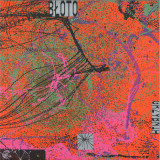


![El Rass & Munma - Kachf el Mahjoub / Unveiling the Hidden [10th Anniversary Reissue]](https://www.deejay.de/images/l/7/0/997770.jpg)