Limited to 500 copies ww. Independent heavyweights Spearmint return this year to follow-up 2021's highly acclaimed 'Holland Park', with the superb new album 'This Candle Is For You'. Spearmint have been making great records for a couple of decades now: this will be their tenth album proper. Still the same line-up: Shirley Lee (singing, guitar), Simon Calnan (singing, keyboards), James Parsons (guitar, bass) and Ronan Larvor (drums). This album will be the 60th release on their own hitBACK label. Missed out so far? The new album provides the perfect place to start! The dizzying multiverse of an album covers a wide array of themes, including the search for a missing sister, the ways we remember lost loved ones, Prince's encounters with Joni Mitchell, the story of John Gavin, the James Bond star who never got to make a film, late-night drinking in Soho, the joys of B-movies & video nasties, changing attitudes to mental health, the plight and wonder of older cats, the reaction to the death of Sarah Everard, and the afterlife. Re-united with producer Rhodri Marsden (Scritti Politti), the band feel that this record is their best yet. Singer Shirley explains "We started off just wanting to make an album that would stand alongside our last one 'Holland Park', but it ended up surprising us - we love it!"
Buscar:sim one
For years Feeling Figures have tinkered away at the edge of the Montreal scene, never fitting neatly into the ebb and flow of the city's cultural trends or its more traditionalist camps. A geographer, a music therapist, a writer, and an underground arts biz maverick, the four Figures have long been friends and collaborators in various musical formations and continue to propel multiple projects. At the core of Feeling Figures is the Zakary Slax and Kay Moon songwriting partnership, which itself stretches back a decade, the pair first crossing paths in a vibrant period of musical upheaval in Sackville, NB - a college town on Canada's East Coast. In the big city, a series of self-releases, shifting monikers, and revolving live lineups eventually coalesced with Thomas Molander & Joe Chamandy as the ultimate rhythmic vehicle and spiritual consorts for Slax & Moon's unconstrained syntheses of multiple eras of indie rock, punk, psychedelia, folk, and outsider pop. Their debut 7" of 2021 was an early entry in Montreal upstart label Celluloid Lunch's catalog. We're nearly 3 years past the debut 7" from Montreal quartet Feeling Figures and in some ways it feels like 300, Such are the seismic changes that have occurred during that spell. But enough about Feeling Figures' musical depth and laser-like lyrical focus, I understand some things have happened in the real world, too. 'Migration Music' is not this generation's first ramshackle-as-fuckk art punk album and I'm not sure it's even the 30 thousandth. But I do know Feeling Figures have arrived fully formed, with a real voice of their own (several in fact, that must be a really good microphone). This album is simply too much fun to have been the product of years of serious study, though I'm told students occasionally have fun, too. I wouldn't know, i'm a university drop out. I did once see an episode of the television adaptation of "The Paper Chase" where one of the new Harvard Law hopefuls had a Kiss poster over his bed and that seemed highly implausible. The utter lack of affectation on 'Migration Music' may or may not be considered a selling point (affectation seems pretty huge — almost always) but Feeling Figures' rock'n'roll atom smashery is nothing short of astonishing. Maybe there will be a better record in 2023 perhaps two or three, even. But for now, this is the band to beat. 10 tracks 33RPM
After more than 15 years producing singles and dubplates, DAYS OF DUB is Simon Nyabinghi's first full lenght album.
It offers 12 original dub tracks produced and mixed at All Nations studio, and includes Featurings with innovative artists:Youthie, Kulture D, Iman Onedub.
The album particularly explores the sounds of synthesizers and drum machines typical of the 80s while remaining in the pure tradition of dub, mixed with lots of echo and reverbs.
Built on the same format as the greatest dub albums, it takes us progressively an alternative rhythmic and atmospheric journey such as experienced in a sound system session.
From the initial percussion-based phases through the powerful meditative stages until the biggest "stepper" hits.
Faithful to the codes of the genre and reinforced by true originality of composition, it is destined both to purists and to younger fans.
For this special release he provides 8 cuts of advanced techno, from mental and hypnotic to broken and industrial or simply arpeggiated and beatless.
WHEN THE UNCANNY ARISES starts with No Gender Role an elastic mental exercise with metallic and processed components flying over a solid kick and white noise percussive elements add some hypnotic pads and you have a powerful mind and body tool.
Blue follows in a similar approach, clean drum programming, bleepy synth lines and a progressive arrangement constantly evolving and changing Flipping the vinyl, it’s time for the broken rhythms of Feel and understand combining distorted kicks with gummy sequences again administered in a quite wise structure.
Klonger closes the B side with obsessive metallic hits repeating until madness, a powerful industrial beat for the experienced dj’s out there.
The second vinyl slice begins with Negative One, returning to the martial beat combining a precise drum workout with floaty and liquid components, followed by Anonimo coercitivo exploring the deepest side of techno using textures and drones to spice the relentless beat.
Zero opens the C side, providing a solid distorted groove with metallic details and sci fi interstellar bell like sequences, proper futuristic vibes here.
Saying goodbye, the beatless Nothing To fear, an arpeggiated synth solo reminiscent of the old Berlin School of electronics from the seventies.
A touchable proof of his craftsmanship in the studio by one of the key figures in the European techno scene.
- A1: Scream + Dance - In Rhythm
- A2: Talisman - Wicked Dem
- B1: Animal Magic - Get It Right
- B2: X-Certs - Untogether
- B3: Electric Guitairs - Don't Wake The Baby
- C1: Talisman - Run Come Girl
- C2: Scream + Dance - Giacometti (Wicked Mix)
- D1: Ivory Coasters - Mungaka Makossa
- D2: Animal Magic - Trash The Blad
- D3: Scream + Dance - In Pink & Black
Collecting orders for repress!
Afro Dub Funk & Punk Of Recreational Records '81-‘82
Emotional Rescue returns to what it does best by unearthing musical gems of the British post punk scene with a double pack compilation of Bristol's short lived Recreational Records.
Teaming up with Bristol Archive Records, 10 songs are remastered, reissued and cut loud for DJs and collectors. What is most striking is, although created in the space of just two years, with a disparate collection of artists, musicians and producers coming together, the music holds a considerable cohesive sound.
Set up in 1981 by Bristol based shop, Revolver Records, Recreational was formed as an independent label with its own distribution, as part of the co-operative, Cartel. The label was a natural progression from the shop's punk's DIY aesthetic, acting as a hang out and inspiration for local artists from Mark Stewart to later staff member, Daddy G.
'Get It Right' starts with a one-off project in Scream + Dance, who similarly, alongside local bands Glaxo Babies, Maximum Joy and Rip Rig & Panic, explored post-punk with funk and jazz all underpinned with heavy tribal and dub influenced rhythms. 'In Rhythm', with its infectious groove, acts as a call to arms for the compilation, coming in two parts, the latter dropping away to explore the links with dub.
Next is possibly the label's biggest band in Talisman, going on to be active up to today, their release 'Run Come Girl / Wicked Dem' are both featured in long 12" mixes that explore the classic 'discomix' of vocal and dub in longform.
Animal Magic lead with the pack's title, 'Get It Right' a short-driven punk funk burst that captures the label's sound to perfection. However, much of the compilation is given over to the more experimental side of the bands, with a high percentage the B sides where they headed to the mixing desk for echo chambered dub inspired versions.
X-Certs' 'Untogether; Electric Guitars' 'Don't Wake The Baby' and Animal Magic's 'Trash The Blad' are culled from the flips of various 7" singles and all are a fusion of percussive rhythms, studio trickery and dub inspired techniques, played out against the "Do it Yourself" aesthetic of the time.
To complete is London based, soukous, kwela and afrobeat inspired collective, Ivory Coasters' 'Mungaka Makossa' and two rhythmic curveballs by Scream + Dance in 'Giocometti (Wicked Mix)' and their riotous (and short) closer, 'In Pink & Black'. "Get it right this time, get it right!".
180g limited edition on high-definition premium vinyl for super fidelity the great Nina Simone's style encompassed a broad range of musical genres ncluding jazz, blues, folk, R&B, gospel, pop, and classical music. This collection ompiles some of her best performances of jazz ballads and blues, the album's A ide programmed to feature the ballads, and the B side for the blues. mong the many highlights are her classic readings of the ballads 'I Loves You orgy', 'Little Girl Blue', and 'Black Is the Color of My True Love's Hair', as well as lues such as 'Trouble in Mind', Billie Holiday's 'Fine and Mellow', and 'Nobody nows You When You're Down and Out'. s a bonus, one of Simone's biggest hits, 'My Baby Just Cares for Me', has been dded to this essential collection.
Devilish is an album surrounded by a darkest atmosphere, its lyrics show urges experienced in our century, such as the constant degradation of the Amazon rainforest and the population increasingly affected by psychological illnesses such as anxiety and depression At the same time, it opens windows of escape for an imaginary world inspired by games, series and fiction books. In their second album with the new lineup, Mayara Puertas (Voice), Rene Simionato (Guitar), Castor (Bass) and Amilcar Christofaro (Drums) transcend the sound of extreme metal with maturity, incorporating progressive metal, influences from Brazilian music and symphonic elements.
The album also honors Brazilian heroes with a participation of Andreas Kisser (Sepultura) in the track "Buried Alive", and a tribute to Rickson Gracie the resilient fighter of Jiu Jitsu considered one of the greatest legends in this sport, the theme of the track "Warrior". The band also mobilized several musicians related to indigenous causes in their country to collaborate on the song "Uatuma", making an appeal for the preservation of the Amazon in a song that flows in an powerful way with the speeches of the indigenous leader Raoni Metuktire and tribal rhythms. For the cover art, the band had Marcelo Vasco, a Brazilian illustrator who has already created artworks for Slayer, Dimmu Borgir, Soulfly among others.
A national musical treasure" The Guardian // Steven Adams, formerly of The Broken Family Band releases new album DROPS on Fika Recordings in November 2023. Since calling time on TBFB at the height of their success, Adams has released half a dozen albums under various names (Singing Adams, Steven James Adams, Steven Adams & The French Drops), his witty, incisive lyrics and melodic sensibilities taking in DIY indie rock, folky introspection, and off-kilter pop hooks. Originally from South Wales, Adams now lives in East London. “Every record I’ve made has been in a hurry of some sort” says Adams of his new album, “and with this one I took my time”. DROPS is the first album to be credited to him as a solo artist since 2016’s Old Magick, his first new music since 2020, and his noisiest record to date. Armed with a new batch of material, he began by upping sticks to the Welsh countryside to experiment with drummer Daniel Fordham and bassist David Stewart - both formerly of psych oddballs The Drink. The trio then took the songs to Big Jelly, a converted chapel on the south coast, with co-producer Simon Trought (Comet Gain, Johnny Flynn, The Wave Pictures) to lay down the basic tracks for DROPS. Eschewing a full band set up (“I wanted to concentrate on one thing at a time”), recording sessions in East London followed with Laurie Earle (Absentee) on guitar and Michael Wood (Hayman Kupa Band, Michaelmas) on keyboards. Adams then took the recordings home and to the French countryside, to work alone. “I finally got my head around home recording in 2020, while things were a bit quiet. Once I worked out how to record things I realised I didn’t have to think about time. I could let the songs evolve and change once we had the basic tracks down. After a while I started to think of them as paintings; trying something one morning, painting over it in the afternoon and attempting something completely different… it was about enjoying the process, making some bangers, playing around... and giving Simon the producer a mess to sort out when it came to mixing the record". Whenever Tom from Fika Recordings checked in to see how the album was progressing Adams would reply, “it’s taking ages but it’ll sound like it was recorded in an afternoon”. The result is a dynamic and spirited collection of songs, with Adams's love of 90/00s US underground rock (Pavement's Bob Nastanovich is a fan) to the fore. DROPS is a sonically compelling piece of work: from bleak/exultant opener Out to Sea and the motorik Living in the Local Void to the weirdly funereal Fascists (where Adams imagines the “little skip in our steps” that we’ll have upon outliving some baddies), and Day Trip's psychedelia in miniature. There are also moments of tenderness: the avalanche of empathy on closing track Cheap Wine Sad Face, and I Tried to Keep it Light’s “worse things could happen… I don’t know how, but give me time”. Adams says: “I'm preoccupied by the passing of time and the way it affects how we feel. This record is about time and bewilderment and trying to make sense of things". “…astonishing tenderness in its simplicity … brilliant lyrics.” Q Magazine //“…the tunes are instant and uplifting, but the real wallop comes from the lyrical imagery.” The Guardian // “…barbed modern life chronicles.”
- A1: Star (Ricardo Villalobos Master)
- A2: Custard Last Stand / Amo1 Ambient Version (Ricardo Villalobos Master)
- B1: Make My Love Grow (Ricardo Villalobos Mix Down)
- B2: Black Apple Pink Apple (Ricardo Villalobos Remix)
- C1: Make My Love Grow (Ricardo Villalobos Make My Love Groove Remix)
- C2: Softlanding (Ricardo Villalobos Remix)
- D1: Dealer (Ricardo Villalobos Remix)
tom Ravenscroft at 6music amongst others. And now, in true AMO1 creative fashion they are presenting an off-shoot release of that album, one completely reimagined by the man, the myth: Ricardo Villalobos.
Much has been written and talked about when it comes to producer/DJ Ricardo Villalobos over the years.
The mercurial Chilean-German artist has consistently redefined the boundaries of techno and electronica over the past 30-years as a producer, whilst also traversing the world and expanding minds as a DJ who can equally delight as he does challenge.Like a great jazz drummer (he was a percussionist before discovering mixing records), Villalobos has not so much as broken “the rules” of structure as just created his own unique approach. One that is often surprising, ever open-minded, and clearly lead by whatever happens to be inspiring him at any given moment. Watching him work or hearing him play music always feels live and free. He’s an artist. And that is exactly how this (perhaps unlikely) collaborative album has come to light – but then this is Ricardo, so maybe we should all know by now that anything is possible.
Villalobos explains, “In my scientific search for some electroacoustic musical landscapes, the offer of remixing ‘Black Apple Pink Apple’ was just perfect for me… In general, the song writing is so very good and particular, with all the instruments played into a sequencer, so it was very inspiring to strip down these pop songs into my dubby extensions, taking only the drums, bass, and vocals of the song.” Expanding further, “After delivering the first remix, Mo and myself came up with the idea of reimagining the whole album in a new way, mixed simple with other ears and my inspirations, with a new and different point of view of what instruments are important to hold the song to bare itself.”
It says a lot, and somehow captures the essence of Ricardo’s approach to music (and life), that one remix soon evolved into a whole plethora of reimagined works, driven by a creative slipstream and a clear connection to the songs created by A Mountain of One.
Mo Morris provides more insight into his own connection with Villalobos, “I lived in Berlin back in 2002-04 and used to religiously go to dance to Rici at the after (after) hours parties: little, tiny events. And he just used to blow my mind, I hadn’t heard anything like it before (or since). Ultra-modern and forward thinking.”
Mo continues, “A good friend connected to Ibiza happenings introduced me to Ricardo as it transpired that he was a fan of our early material, so I sent him some demo’s when we were in the studio creating ‘Stars Planets Dust Me’ and he loved ‘Black Apple Pink Apple’. The relationship and collaboration grew from there really, and I hope that this release is still at the start of what we can all create together.”
Focussing in on the album at hand – ‘Ricardo Villalobos reimagines: Stars Planets Dust Me’ – we are treated to a concept listen that guides us from dreamy daytime Balearic pop – staying very true to the original songs – all the way through to completely original deep dubby techno excursions. And to Villalobos fans, it will perhaps surprise (and hopefully delight) how light a touch he has provided to the opening tracks, focussing more on enhancing the sonics, and allowing the originals to shine brighter through remastering and mixing down. It’s in these moments that we see Ricardo as a pure music fan, needing not overly change or alter what’s already been created, but simply doing what he can to maximise what’s already there.
What will certainly delight Ricardo fans are the four full ‘klub’ remixes provided of ‘Black Apple Pink Apple’, ‘Make My Love Grow’, ‘Softlanding’ and ‘Dealer’ that each boldly explore the outer regions of the dancefloor in a way that only Villalobos can.
Mo rounds off, “From an electronic and sonics standpoint he’s kind of out there on his own. It’s such a unique sound. Weatherall also had this, and Harvey has that unique flavour, and also people like Nils Frahm and Max Richter have this gift. It’s not an easy thing to produce. Ricardo has his own personal cosmic trademark.”
Indeed he does. Take a trip with him around the stars and planets and see for yourself.
- A1: Celloloop / More That Connects Us
- A2: Rain Gutter
- A3: Fourth Floor
- A4: Nairobi Traffic Light
- A5: Possibility / Kardio Loop (A)
- A6: Stonerella
- A7: Don't Kill It By Naming It
- A8: Insanely Alive
- A9: El Condor Pasa
- A10: Kardio Loop (B)
- B1: Can't Escape Into Space
- B2: Kardio Loop (C)
- B2: Celloloop / Stronger Than This
- B4: Im Treppenhaus (A)
- B5: Late For The Webinar
- B6: Kardio Loop (D)
- B7: Kantine
- B8: Ocean Walk
- B9: Give Me A Shadow
2023 Repress
Moon in Earthlight describes the phenomenon one can see in the first few days after a New Moon, when the slim crescent of the moon is completed into a full circle by a faint light that is not lit by sunlight but by the light reflected from Earth. It is also the apt title for the first album from an artist whose first love was astronomy. After 6 EPs over the course of 5 years, Wolfgang Tillmans now releases his first album, Moon in Earthlight, a singularly plural 53-minute piece comprised of 19 tracks.
Opening with more that connects us than divides us, 'Celloloop / More That Connects Us', a looped cello sets out a discursive path for a bright keyed melody to flirt with while the sounds of the organ and synthesizer build their supporting roles, all along a bouncing four-to-the-floor beat punctuated with bright electronic chimes and the rhythmic tempo of a shaker. The invitation is hard to resist as a yearning voice opens up to let us know he's left his "place in security." And, "you're shining … All the way down to this glittering place … you're shining." Where voices and laughter are then overheard in the background of another field recording sounding water dripping from a 'Rain Gutter' later caught by the soft, warm rhythmic bounce between two synth notes on 'Fourth Floor' where chime-like and percussive timbres resonate from the metal tine keys of the kalimba creating a meditative acuity, which Tillmans peppers with arpeggiated synth riffs.
A composition of multiplicities, Tillmans' album debut is a collage of sounds, field recordings, words, studio jam sessions and live recordings, voice, soundscapes, and instrumentation scored with audible space to breathe along the way. Keeping pace, the first 'Kardio Loop' is a vocal callisthenics contemplating 'the possibility of a happy life' and/or the propositional properties of its semantic constructions backed by the recording of a heartbeat from a cardiogram. This movement is gradually accompanied by a set of orchestral synth pads that build to a crescendo before the soft, twirling melody of 'Stonerella' carries us along a carousel-like melodic, pop, instrumental timed in the percussive clapping of pebbles.
Not knowing where one leaves off and the other begins is part of this album's enigma, as we move in and out of these aural spaces choreographed with the slightest, open hand, where we can float through 'Don't Kill It by Naming It' before dancing along 'Insanely Alive' all the while contemplating the inherent, fragile complexities of language and being.
This enigma also stems from the raw vulnerability of Tillmans' voice. Whether lyrically playful or introspective, it is always giving: intimately unfolding as in the surprising take on Simon & Garfunkel's 'El Condor Pasa' or shapeshifting in 'Can't Escape into Space' or fully naked as raw material expression in 'Kantine' and 'Ocean Walk'.
Whether it's Tillmans voice or voices overheard, a field recording or a pop synth melody, these sounds defy track listings, audibly held together as one of many in an aural space that becomes a reflective cycle that develops over the course of the album. The accumulative effect of which (reminiscent of the artist's installations), drives the singularity of each of the album's elements into a complete, unconsolidated whole. Like a phenomenon that marks time, Moon in Earthlight is the shadow and the reflection, fifty-three minutes in time.
Most of Gen X-ers who grew up in the mid-1980s Indonesia must have seen Soedjarwoto Soemarsono, known with his nom de guerre “Gombloh” performing on a state-run television station, playing some of his biggest hits from that era, pop gems like “Kugadaikan Cintaku (I Pawn Off My Love)”, “Setengah Gila (Half-Crazy).”
But of course, it is not fair to judge Gombloh only from these hits. Dig deeper and you will find buried treasure in his early stuff from Indra Records, and there are many of them.
His album with the band Lemon Tree’s Anno ‘69 (yes, that’s the name of the band) is all remarkable, but what he did for Chandra Records was no less spectacular. How can you go wrong with songs like “Kebyar-Kebyar”, the unofficial national anthem for Indonesia, dan “Berita Cuaca” one of the better epic songs in a catalogue full of epochal songs? These were all long out of print and in our journey to source the original master for these albums we met Bob Djumara of Nirwana Records, the Surabaya, East Java-based label which broke Gombloh into the mainstream in the mid-1980s. Almost all albums Gombloh recorded for his early labels, Indra Records and Chandra Records were critically acclaimed, but commercially they bombed, big time. Nirwana Records came up with an ingenious plan. What if they recorded Gombloh performing live and release it as is. After all, the first song in Gombloh debut record Nadia & Atmospheer is him strumming on his guitar backed by the cheering of a crowd, who could be heard going wild when he hurled that epithet “bastard” at the end of the song
The end result is a brilliant recording which despite being recorded live the sound quality so pristine leading many to doubt the claim of being live. Regardless, Nirwana shipped a decent number of units and Gombloh could buy his first car, a Katana Jeep, with money from the royalty.
One of the best things about Live Gila is its perfect sequencing, beginning with Gombloh’s social commentary on the rich’s debauched lifestyle of preying on young boys and girls, one of the most popular subjects allowed by the censoring machine of the New Order authoritarian government. The second song “Untuk Persada” is a soaring ode to the nation. For this song, Gombloh could be heard drawing his inspiration from The Police, which was undoubtedly popular in the early 1980s, even in a faraway port city like Surabaya.
Listening to this record as a whole (we omitted the last song from the original master tape “Bagimu Negeri” which sounds too jingoistic), we could not help but point to some of similarities it has with Bob Dylan’s Blood on the Tracks. Not a single composition in this record sound indigenous (the Malay-influenced rock of Panbers or Koes Plus come to mind); they all sound modern and effortlessly catchy, and had it not been for the language, this album could be mistaken for a musical output from someone growing up in Laurel Canyon or Southern France.
There are only limited copies of vinyl records in the second-hand market today available for Gombloh music, if at all. For his ardent fans, they have to scavenge for old cassettes to continue to be able to enjoy his music and have to pay top dollar for that. In Indonesia, where he was a superstar in the early 1980s, Gombloh was largely forgotten. With this project, we can only hope that the time is ripe for Gombloh to reemerge and now, more than ever, his music could speak to a bigger audience.
In the wake of Young Marble Giants’ breakup, two acts were created, with Stuart Moxham taking minimalist, geometric play to extremes while Alison Statton added more warmth and feeling to a similar template, creating something stunning yet based in popular forms. Those two opposing means of forging paths away from one of music’s most astonishingly unique debuts both included Stuart’s brother, Phil. More recently, both have reversed course, with Stuart proving himself a master of classic pop form, with Alison’s work again approaching a modern abstraction of quiet folk music - experimental but accessible. But that’s another tale. With no template to guide him, Stuart’s new music - as The Gist - was regarded as wildly uneven. Stuart admits that he didn’t know which way to go, so perversely, he decided to take all directions at once. The Gist’s original discography stood at a scant 18 songs, yet only seven featured Stuart’s own voice, often in heavily processed and oddly-mixed form. The Gist’s label, Rough Trade, dropped the band. Starting with a critical re-evaluation of The Gist’s sole album Embrace The Herd in an issue of Mojo, the tide begin to turn. Ambience in pop has long enjoyed a cult following, and the nonlinear structure of many of The Gist’s songs have parallels with artists such as Aphex Twin and Seefeel. One song from the era was covered by Etienne Daho in France - sounding rather advanced for French pop at the time, it ended up selling over a million copies and was later covered by Lush and sampled by DJ Koze with Lambchop singer / songwriter Kurt Wagner. Recent discovery of a trove of unreleased recordings show that Stuart had held back an array of excellent material, in demo and completed forms, often in different arrangements. Interior Windows adds 13 new performances or alternate versions to the band’s catalogue, and does the service of making both sides of The Gist’s first 7” 45 (recorded at the same session as the final YMG single) available again, along with their contribution to the NME / Rough Trade cassette compilation C81, and in keeping with The Gist’s tradition, at least one song on which Stuart does not appear
Orange vinyl. Time is supposed to mellow us, but for Petrol Girls it has distilled their feminist politics into an ever more potent cocktail. Fitting, given that their logo from day one has been a flaming molotov. Since their formation in 2012, the band has been known for playing fast-paced, chaotic punk that takes aim at everything from sexual violence to immigration policy, but over the last few years their sound has evolved in a more nuanced direction. Their 2016 debut album Talk of Violence was a blast of pure political rage, while 2019's Cut & Stitch saw vocalist Ren Aldridge exploring familiar themes from a more personal perspective. Now their latest offering, Baby - to be released through the London-based independent label Hassle on June 24th - sees the band turn another new corner. This time, by embracing irreverence. "We wanted this album to be less epic and less preachy from day one," Aldridge says. "I hate sanctimoniousness. Like, really fucking hate it. But I also know that I have been mega preachy, and felt very pressured to be sanctimonious, because we've always played in a very political punk scene. I lost my fun side, and I really needed to come back to that." Recorded with Pete Miles at Middle Farm Studios in Devon, Baby embraces a more playful sound. A focus on groove and repetition - driven by guitarist Joe York, drummer Zock and bassist Robin Gatt - give the songs a Talking Heads feel, while retaining the band's formative post-punk energy. The lyrics, too, are a departure for Aldridge. While she continues to address heavy topics like burn out, femicide and police violence, the lyrics balance directed anger with tongue-in-cheek humour where appropriate. Angular opener "Preachers" puts the self-aggrandising nature of call-out culture on blast with lyrics like "feeling dead important in the comments", while lead single "Baby, I Had An Abortion" is intentionally puerile from title to finish. On the flip side, tracks like "Violent By Design" see the band kicking back against carceral feminism in the wake of a news cycle dominated by Black Lives Matter protests and PC Wayne Cousins' brutal murder of Sarah Everard. Similarly, "Fight For Our Lives" - a harsh, borderline industrial song - was lyrically co-written by activist and vocalist Janey Starling. Aldridge deliberately wrote the verses to sound like a manifesto, and the lyrics reference Starling's Dignity For Dead Women Campaign with Level Up, which successfully called for the UK media to change the way it reports on fatal incidents of domestic violence. Baby saw Petrol Girls working in new ways - scrapping entire songs rather than trying to force things that didn't feel right, recording to tape for the first time, and deliberately leaving in imperfections. It was a more carefree process, which Aldridge - having gone through a particularly bad period of mental ill-health at the start of 2021 - welcomed. "Our whole thing for a long time, and a big focus of the last record, was making political struggle sustainable," Aldridge says. "And I think having a good time where possible, and things being not totally serious all the time, is really essential."
The undisputed Godfather of Boogie, Leroy Burgess’s Logg project is his grand masterpiece.
The self-titled LP, originally released on Salsoul in August 1981, is one of the greatest albums of the post-disco era. It’s one of Be With’s favourite ever LPs and so it’s a complete honour to be giving it our reissue treatment. With all the touchstones of Burgess’s finest work - breezy grooves, undulating synths, funk-drenched bass and life-affirming lyrics - delivered with gospel-derived vocals and harmonies - it’s a record to uplift both body and spirit.
Already a cult soul figure as lead singer of seminal vocal group Black Ivory, Leroy Burgess cut his teeth as arranger, vocalist and songwriter with legendary producer Patrick Adams on essential late-70s projects like Phreek and Dazzle. He went on to define the essence of “boogie”: the vibrant underground dance sound that stood in contrast to commercial disco. With its reduced speed - mid-90 to under 110 BPM - the cool boogie of Burgess has the disco bounce, just more laidback.
All six tracks here could have been stand alone 12" hits. Indeed, some of them were. But together they are also an incredibly cohesive album, where all the compositions are deeply relevant to each other. In short, it’s essential; a thrilling showcase for Burgess’s finest arranging and production work - with his vocals at their euphoric peak alongside the inventive rhythm section of Aaron (Sonny) T. Davenport on drums and James Calloway on bass.
Opener “(You’ve Got) That Something” is a balmy sunshine groover with an insistent chorus whilst the timeless vocal of “Dancing Into The Stars” - married to percolating synth and airtight drums - showcases the chemistry between Burgess and the rhythm section.
The fusion of funk and gospel-influenced harmonies which propels “Something Else” is remarkable - deep, joyous and bouncy. Infamously mixed by Larry Levan, “I Know You Will” is an easy glide, all rollicking electric piano underpinned by a precise and relentlessly upbeat groove. “Lay It On The Line” radiates smooth, understated brilliance, elevated by interstellar keys and finally album-closer “Sweet To Me” is a chilled-out gem of profound soulful elegance.
Logg has long been a hit with the likes of Kenny Dope and Dam-Funk whilst, in the last decade, MCDE and Harvey Sutherland have routinely cited it as a huge influence. Accordingly, finding original copies on vinyl at affordable prices has been a thankless task. This fresh Be With reissue ensures this legendary record now sounds, looks and feels as sensational as it deserves to.
Mastered brilliantly by Simon Francis, cut by Pete Norman and with lovingly reproduced artwork, we think this is a reissue that does justice to this classic LP.
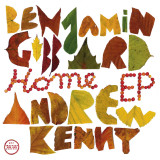
Originally released in 2003 on CD via Post-Parlo Records, and two years later on vinyl via Morr Music, the »Home EP« sees Benjamin Gibbard (Death Cab for Cutie, The Postal Service) and Andrew Kenny (The American Analog Set) each contributing three original tracks and playing one of the other's songs. This 2023 vinyl edition is released via Morr Music (EU+UK) and Barsuk Records (US). It features the artwork by Jan Kruse, that was originally made for the 2005 Morr Music version.
The EP was released as the fifth and final volume of the early-’00s series of split albums on Austin, TX indie Post-Parlo, the Gibbard/Kenny pairing followed short contributions in the series from such varied notable early-aughts indie artists as Kind of Like Spitting, Britt Daniel (Spoon), Bright Eyes, Pavo and Super XX Man.
Gibbard and Kenny’s installment came out during a prolific era for both writers: The American Analog Set had released the classic »Know By Heart« album in 2001 and followed it in 2003 with the acclaimed »Promise of Love«, while Gibbard’s profile was rising significantly via the critical and commercial success of The Postal Service’s »Give Up« and Death Cab’s »Transatlanticism«. Unlike the more lush arrangements of their main projects, both Kenny and Gibbard took a simple approach for their entry into the Home series, recording on cassette four-track machines in their respective living rooms in New York and Seattle and each performing four exclusive stripped-down tracks (including a cover of one of the other’s songs – Kenny choosing a rendition of Death Cab’s »Line of Best Fit« and Gibbard delivering his version of AmAnSet’s »Choir Vandals«).
»Home EP« showcases two brilliant songwriters whose legacies continue to shine twenty years later. The American Analog Set recently announced »For Forever«, their seventh album and first new music in 18 years, which was released last week and followed the band’s announcement earlier this year that The Numero Group will reissue their first three albums »The Fun of Watching Fireworks« (1996), »From Our Living Room to Yours «(1997), and »The Golden Band« (1999) as a vinyl boxset in early 2024.
Benjamin Gibbard has recently finished fronting both bands on the sold out Death Cab for Cutie / The Postal Service co-headline tour of arenas and amphitheaters in the United States celebrating the 20th anniversary of »Give Up« and »Transatlanticism«.
Zaratustra Is a Young French Producer Strongly Inspired by Indie Dance, Italo Disco, Ebm, New Beat, Acid and Ethnic Music. His Style Matured Over the Course of This Year & We Actually Received This Extraordinary "Uprising" Demo. This Track Symbolizes the Perfect Mix of Rock, Italo and Ebm, for the Older Ones We Will Notice the Incredible Similarity in the Voice With Ian Astbury Singer of the Cult. a Bit as if This Fabulous Group Would Have Teleported to 2022 Accompanied by a Very Modern Production. It Is Once Again Stolt Who Strikes the Blow With One of His Finest Vocal Performances. We Called Again on the Brilliant Lauer for a Rereading Halfway Between Suicide, Alan Vega & the Cramps. This Record Is More Than a Statement, It's a Miracle. ...
Synth pioneer and musical polymath, Wally Badarou is a genius. But you know that already. A vinyl version of his majestic Colors Of Silence has been craved by the Balearic cognoscenti ever since its low-key 2001 release. Indeed, when we first started work on Be With, we asked some pals with exquisite taste what their dream release would be. We asked Balearic legend Moonboots and, without hesitation, he said Colors Of Silence by Wally Badarou. We didn't know Wally had made this album. And most still don't. But that's about to change.
Colors Of Silence is ostensibly a new age album. As ever though, Wally's sophisticated synth textures and expressive keyboard runs are so full of character, so full of life, that this work of art transcends any easy genre categorisation. It's simply stunning, throughout. It sounds like A.r.t. Wilson or Suzanne Kraft, with traces of CFCF and Jonny Nash. But it was made a good decade earlier than the work of these modern giants. Sometimes, it doesn't seem far from some Larry Heard albums.
Island Records founder Chris Blackwell's friend Nathalie Delon asked Wally to provide music for the yoga DVD she was to release. Lack of time on both sides made them agree on using "quality demos" Wally had in his ideas bank. It's understandable why Colors Of Silence remains somewhat of a lost gem. As Wally explains: "Total lack of promotion made it an 'intimate' release, which was exactly what I was looking for: just a buzz-maker and time-buyer that would allow me to concentrate on the real thing as soon as I'd have time, which could also turn into a rare collecting item later, once the final versions made their way to success. You never know."
Over the years, Colors Of Silence has become a true cult record for the ambient/Balearic heads.
The beguiling but brief "Dance In The Dust" is the shuffling, hyper-percussive, hypnotic opener. It gives way to the deep serenity of "Amber Whispers". It's a gliding, divine, mini melodic masterpiece. It'll make you swoon in its extreme beauty. The bright and breezy "Where Were We" follows, a tropical, reggae-tinged bounce through the islands.
The uptempo groove is maintained on the keys-drizzled soca-funk of "The Lights Of Kinshasa" before Side A is rounded out with "Pictures Of You". It starts with stately, melancholic, unadorned piano and this alone would make for a beautiful song. But Wally always gives us that bit extra and he effortlessly introduces warm, dreamy pads and minimal, slo-mo percussion to augment a frankly stunning piece of work.
Ushering in Side B, Wally's mesmeric piano playing is to the fore again, in the intro to uber-chilled "Serendipity For Two". The playing becomes more mellifluous as the track progresses and adds warmth through exotic percussion, woodwind, sweeping synths and digi-drums. It has echoes of, er, Echoes. It segues seamlessly into the more propulsive, wavy "Smiles By The Millions". If you're not nodding and grinning along widely to the gently throbbing bassline underpinning this, we can't help you. The meditative "Higher Still" follows, cinematic in feel and ever so slightly sinister with the strings. It sounds particularly Badalamenti-esque, if you ask us.
That unmistakable, almost peculiar Badarou funk - so lyrical, so texturally rich and so rhythmically spacious - is all over "Oriental". Next up, "Days To Wonder" brings the serenity back, insistent yet melodic keys, as if played in a place of worship, coupled with birdsong, conjure a kind of instant nostalgia for halcyon days of youth. The contemplative "Dawn Of Europa" is a sombre, beatless, ambient journey whilst the glorious, too-brief "Crystal Falls" features soft percussion and sparkle before fully glistening with some gentle head-nod beats. Wally brings this incredible collection to a mellow, tender close with the graceful "Purple Lines".
There can be few artists more under-appreciated given their vast influence than Wally Badarou. His solo work practically defined the sound of the Balearic DJs of the 1980s, and thus the more sophisticated sound of dance culture thereafter. A synth specialist, Badarou was the long-time associate of Level 42. He was one of the Compass Point All Stars (with Sly and Robbie, Barry Reynolds, Mikey Chung and Uziah "Sticky" Thompson), the in-house recording team of Compass Point Studios responsible for a series of albums in the 1980s recorded by Grace Jones, Tom Tom Club, Mick Jagger, Black Uhuru, Gwen Guthrie, Jimmy Cliff and Gregory Isaacs. Badarou's keyboard playing could also be heard on albums by Robert Palmer, Marianne Faithfull, Herbie Hancock, M (Pop Muzik), Talking Heads, Manu Dibango and Miriam Makeba. He also produced Fela Kuti. Phew!
Meticulously remastered and cut by both Simon Francis and Cicely Balston respectively, it has been pressed to the highest possibly quality at Record Industry in Holland. Special thanks must go to Apiento from Test Pressing who first introduced us to Wally and facilitated all those early zoom meetings. It couldn't have happened without his help. Not least on pulling the art together, too, which features striking original photography by Mads Perch. Benji Roebuck of Roebuck Press did his thing brilliantly in art working the whole package to completion. All in all: essential.
New West Records is proud to present Strange Country, the new full-length album from the young and gifted cousin-duo Kacy & Clayton. The ten-song collection was recorded over seven freezing Canadian winter days at Ghetto Box Studios, a historic community hall turned studio. The product of a lifetime of deep kinship, the record showcases the purity and astounding beauty of Kacy Anderson's voice, one that has been notably compared to Fairport Convention's Sandy Denny. Only Clayton Linthicum's intricate guitar work, expert time changes and vocal harmonies could forge the foundation for Kacy's voice to soar even higher - the result being an enormously satisfying and organic album. Drawing a wide swath of inspirations ranging from the Greenwich Village folk scene to the ancestral music of Southern Appalachia and the British Isles, the cousins fashion songs steeped in those traditions, simultaneously paying homage and building on those sounds.
- 1: You Have Arrived
- 1: 2Neil Finn - Here Comes The Season Again
- 1: 3My Calendar Lied
- 1: 4Annabella Lwin - It Felt Like A Dream
- 1: 5Puddles Pity Party - Maids Can't Mop Up Memories
- 1: 6Coming Apart At The Seams
- 1: 7Erik Paparozzi - I Passed It By
- 1: 8Alan Bishop - Security Guard
- 1: 9Screen Time
- 1: 0Miranda Paparozzi - Cats And Dogs
- 1: Neil Hamburger And A.j. Lambert - Sleeping For Free
- 1: 2Bonnie
- 1: 3If This Long Season
- 1: 4Natalie Peyser - Check-Out Time Is A.m
- 1: 5Sugar Packets
Neil Hamburger presents a new work from the songwriting team of Gregg Turkington and Erik Paparozzi. Seasonal Depression Suite is an album-based musical, sung by an all-star cast whose voices embody various guests stuck in a perfectly average chain-hotel, wallowing in self-pity and paranoia, re-living personal catastrophes both real and imagined, or simply trying to use the hotel vending machine. Expert music played by an all-star band, to boot! To sing these parts, a once-in-a-lifetime all-star cast was assembled - including Neil Finn (Split Enz, Crowded House, Fleetwood Mac), Annabella Lwin (Bow Wow Wow), Alan Bishop (Sun City Girls), Bonnie Prince Billy, acclaimed singer/performance artist Puddles Pity Party, voice actress Natalie Peyser, J.P. Hasson (Pleaseeasaur), enigmatic vocalist (and Frank Sinatra"s granddaughter) A.J. Lambert, Paparozzi himself and, of course, Neil Hamburger. Among the many musicians accompanying the cast were Scarlet Rivera (Bob Dylan"s Rolling Thunder Revue), Danny Heifetz (Mr Bungle), Bär McKinnon (Mr Bungle), Prairie Prince (The Tubes), Atom Ellis (Dieselhed), Jason Schimmel (Secret Chiefs 3), and Alex Jules (The Monkees band) - an international assemblage whose talents give Seasonal Depression Suite its epic sweep. With all hands on board, Turkington and Paparozzi created their own kind of masterpiece, like Sinatra"s late-period concept album Watertown fused with the misfit comedy of Neil Hamburger - a work that looks at a cast of characters both ordinary and bizarre, as they make their way from one grievance to another, traveling from place to place, hoping to live, while waiting to die.
Grafh is one of only a handful of rappers from the early 2000s NYC scene to successfully transition into the new underground movement. After releasing two solo LPs and collab albums with Flee Lord and DJ Shay (RIP) in the last four years, he recently dropped his highest profile project to date, Art of Words, entirely produced by the top emcee/producer in the game, 38 Spesh. The 10-track offering reaffirms Grafh is a force to be reckoned with on the mic. To add gas to the already blazing fire recruited an all-star guest line-up for the album that includes Conway The Machine, Rome Streetz, Bun B, Dave East, and Giggs.
Since their formation in 1977 Mark Perry’s group Alternative TV have moved far away from their more direct punk rock beginnings into all manner of other areas of music that have sometimes themselves drawn from improvisation, free jazz, industrial and electronic music. On Direct Action, Alternative TV’s first studio album since Opposing Forces in 2015, we are presented with six instrumental tracks which steadily rip apart all expectations as they shed all allusions to rock music in favour of the kinda sonic mutilations that once helped 1979’s classic (and Nurse With Wound list endorsed) Vibing Up the Senile Man (Part One) stumble into weird and wonderful shapes. Direct Action marries guttural electronics to sounds most artists would consign to the bin and through Perry’s long perfected mastery of pulling together disparate strands to create something entirely alchemical and invigorating delivers a unique stamp to the ATV story. With the help of longtime collaborator Dave Morgan alongside the input of Gareth Matthews, Ruth Tidmarsh and Cos Chapman, abstract patterns of dishevelled sound rub alongside occasional percussion, disembodied plasma guitar strums and even what seems like an oboe groaning in a murky corner. Similar to its distant cousin of Vibing…, everything adds up to a whole that’s demanding yet completely rewarding as every listen prises open the dark scab of contemporary malaise to reveal something fresh. The front cover’s homage to an incredible album by a pioneering electronic group we are not going to name should in itself point to the unpredictable nature of the music here. If you are savvy enough to get that reference, then you’re on the right path to understanding where Direct Action resides. Easy listening this ain’t. Limited to 600
As soon as Spike discovered punk, he wasted no time forming Reptile Ranch (Wales’ own Scritti Politti), starting a label (Z Block), and releasing the compilation of the Cardiff scene, Is The War Over? After an act dropped out of the cooperatively-funded venture, Spike approached the disbanded Young Marble Giants to contribute a track or two. Bemused, they agreed to reform, and it wasn’t long before Rough Trade rang the public phone listed on the back cover of the LP to poach the combo, leading to an album which hit immediately and has inspired hundreds of artists since. All the while, Spike worked with Debbie Pritchard in a number of unheard bands - but that’s another tale. After YMG’s breakup, singer Alison Statton started Weekend with Spike and Simon Booth, a project which saw chart success and the birth of a nouveau-retro style as individualistic as YMG’s, one later co-opted by lesser acts. Weekend, too, split after their debut album. Despite Weekend having become Alison’s second big act, Rough Trade passed on her next project with Spike. Vinyl Japan stepped in to release the duo’s debut, Tidal Blues and other releases followed, but as real life, jobs, and children beckoned, both Alison and Spike stepped away from music . . for more than twenty years. Their return is both unexpected. Bimini Twist is the work of the two alone. Apart from some vocal tracking in a local studio to best capture Alison’s still wondrous voice - everything was recorded in their homes, much of it ‘live’, and these new songs show the duo’s charm and diversity, featuring Alison’s most personal lyrics and Spike’s peculiar musical genius
Chainsaw Massacre Garage Dirty Rock'n'Roll Ultra Trash Punk from Bern Switzerland, incl. Blow Um Mau Mau and disturbing Scorpions cover version of: Speedy's coming Beat-Man: "1986 Bern, Schweiz, die Monsters wurden gegründet 2011 ihr Neues und insgesammt 8thes Album wird geboren POP UP YOURS , alles hat angefangen als Mix zwischen ihren Rockabilly und Garage Punk legenden und in der zwischenzeit sie die Monsters zu Richtigen Monster herangewachsen, die ihr ganzes leben Tun und Schaffen in eine ihr eigene musik 'SIMPLE RAW TRASH ROCK' rein bringen, eine ins Minimalste gezerrte von trash triefende Ein Riff Gitarre gekopelt mit einem Stupiden ein Ton direkten in den magen hauenden Bass zusammen mit 2 Schlagzeuger die differenter nicht sein können einer virtuos der andere stupid Bum-Täg das ist das rezept der Musik der Monsters, angefangen mit der inspiration und das lebensgefühl der mitte 50er rock'n'roll bewegung und jetzt angekommen im jahre 1974 die geburt der Blues Explosion, inspiriert von bands wie AC/CD, TEN YEARS AFTER, CREAM, THE RAMONES etc mit ihrem eigenen Dreh drin Chainsaw Masseacre Garage Punk Trash, the Monsters woollen ihrer musik Pop up Yours nennen wir nennens einfachheitshalber TRAAAAASHHH !!! die Scheibe fängt an mit einem der einfachsten und direktesten Love songs ever I WANT YOU ein Riff und eine Linie wo direct sagt auf was es ankommt, noch mehr Einfachheit findet man in 'more you talk less I here you' was auch heute eigentlich zu fast einer politischen aussage gewertet werden kann , aufegommen wurde fast das ganze album in Italien's Outside Inside Studios und abgemischt von Nene/Guz und Pumi die Trashigsten der songs wurden im Hauseigenen Jesus Loves you studio aufgenommen, die Songs sind alles eigen kompositionen ausser das von den Kraut Rock Legenden Scorpions gecoverte Speedy's coming aus ihrem Fly to the Rainbow album aus dem jahre 1974 . so ..wilkommen zu den Monsters und ihrem SIMPEL RAW ONE RIFF TRASH ROCK!"
Born in Roma in 1959, Guiseppe “Peps” Cotumaccio arrived in South Africa when he was two years old. He was the mastermind behind the band “Sweet Reaction”, singing and playing keyboards.
In the early 80’s, the group used to back various artists including one of the South African top singer “Neville Nash”. Both artists were on the same record label: Music Team. Throughout his lengthy career, Peps has collaborated with Johnny Clegg, Ronnie Joyce, Sipho "Hotstix" Mabuse, P.J. Powers, Mark Alex, Neville Nash, and Mara Louw just to name a few.
The lead singer of the band, Dion Williamson, started performing in Johannesburg’s nightclubs and got quickly very successful, always in demand! People loved his gravel and sensual voice as he used to sing some of Joe Cocker’s popular songs. Unfortunately, during the Apartheid, the South African Government were not allowing black and white audiences, and the band split.
On this BIG5 Boogie#2, Enoch Ndlela produced 2 Modern Soul killer tracks.
Recorded in 1981, "Take it easy", where the music is evidently influenced by Willie Hutch (Easy does it - 1978) offers Dion a way to fully explain himself doing his own version of the tune. And what an explosive result!
On the same side of this 12”, our 2 Frenchies in Cape Town aka Simbad & Fred Spider enjoyed delivering us a fat broken beat version of the track, while the very “En Vogue” Aroop Roy from London turned it into a funky house summer hit.
Side B starts with a superb composition from the band: “African Sunrise” where Dion Williamson is on top, this tune is a bomb!
To finish this E.P, the well-known Kid Fonque from Johannesburg, who freshly moved to London working for the glorious house record label Defected, couldn’t wait to produce a super groove deep house refix. The result is a second essential dancefloor release from Voom Voom Records!
Considered one of the most innovative groups on the Colombian musical circuit in 1973, Columna de Fuego forged its sound by creatively and organically mixing elements of heavy rock with rhythms rooted in the music of the Pacific and Caribbean coasts of the country. Columna de Fuego, the first Colombian rock band to tour outside South America, was the supporting act for Leonor González —La Negra Grande de Colombia— for months and featured members of Los Young Beats, Los Speakers and Siglo Cero. Their only LP, recorded in Spain and released in Colombia only in 1974, was a turning point in the history of Colombian rock, an album full of funk, soul, cumbia and currulao that maintains a fast pace from start to finish. After unsuccessful attempts to establish themselves in Europe, the group parted ways; some members returned to Colombia and others stayed in Europe as part of La Banda Salsa, a vibrant and little mentioned chapter in the history of Latin rock. Roberto Fiorilli, the stand-out drummer of Colombian rock, returned to his native Italy. Over the following five decades, the myth of Columna de Fuego, that wonderful Bogota rock band that dared to experiment with the music of the Colombian coastline, grew. The curiosity of musicians interested in the traditional music and folklore of the coasts since the late 80's, the consequent mixture of different musical genres (modern and roots) at the end of the 20th century and the almost impossible desire of collectors to find a copy of the album or one of the band’s singles, gave it the status it should always have had as a pioneer, milestone and beacon. After remaining unavailable for five decades, we are proud to now present the first-time reissue of this obscure gem with its original artwork, including an insert with notes and rare photos. Sleeve
"Sweet Justice" ist das zweite Album von Tkay Maidza, der ersten Rapperin, die bei 4AD unter Vertrag ist. Der Nachfolger des selbstbetitelten Debüts aus dem Jahr 2016 enthält Produktionen von Flume und Kaytranada und zeigt alle Facetten der in Los Angeles lebenden, in Simbabwe geborenen und in Australien aufgewachsenen Tkay. "Sweet Justice" ist kein Rachealbum, wie der Titel vermuten lässt, sondern das Ergebnis dunkler Nächte und der Erleuchtung am Tag danach. Das Album klingt nach innerer Befreiung und Spaß am Leben. Sie wechselt zwischen den Stilen und überwindet so mühelos Genregrenzen - Musik ohne Zwänge, Regeln und Vorgaben. Dazu trennte sie sich von ein paar alten Freunden, fand einige neue, die auf der gleichen kreativen Wellenlänge lagen: die kanadischen Produzenten Stint und Kaytranada sowie ihr australischer Kollege Flume, die alle zur Produktion beitragen haben. "Sweet Justice" ist ein Album, das die wunderbaren Widersprüche von Tkays Kunst verkörpert: Es ist eine Coming-of-Age-Platte von jemandem, der langsam versteht, wie das Spiel des Lebens läuft. Ein Album über Gerechtigkeit und Verantwortlichkeit, das hell, luftig und unglaublich lustig ist und diejenigen, die unehrlich und respektlos sind, mit bittersüßer Musik niederstreckt. Wie Tkay in "Love Again" singt, einem Song, der wie eine Meditationssitzung klingt: "Vorbei sind die Tage, an denen ich fiel und sah, dass es kein Entkommen gibt." Ein gutes Leben ist die beste Rache. Auf "Sweet Justice" lebt Tkay Maidza dieses Motto.
- A1: Willie Williams & The Sound Dimension – Jah Righteous Plan
- A2: Al Campbell – Take A Ride
- A3: Cedric 'Im' Brooks – Satta
- A4: Ken Boothe & Joe Higgs – A Message Of Old
- A5: Jackie Bernard – Jah Jah Way
- B1: Devon Russell – Jah Hold The Key
- B2: Zoot Sims – Small Garden
- B3: The Saints – Sleeping Trees
- B4: Larry Marshall – Run Babylon
- B5: 5. Vin Gorden – Babylon Rock
- C1: The Gladiators – Talawah
- C2: Prince Francis – African Skank
- C3: Cedric 'Im' Brooks – Full Time
- C4: Prince Lincoln – True Experience
- C5: Joseph Hill – Behold The Land
- D1: Winston Matthews – Sun Is Shining
- D2: Karl Bryan – Lk Strut
- D3: Count Ossie & The Zion All Stars – Holy Mount Zion
- D4: Tommy Mccook & The Discosonics – Tenor On The Call
New one-off press limited edition transparent green double vinyl edition of Soul
Jazz Records long unavailable Studio One Roots 2, featuring classic tracks recorded
at Studio One.
Studio Roots Vol. 2 delves deep into the vaults of the legendary Jamaican Reggae
label and features rare and classic roots as well as an unprecedented seven
unreleased tracks that up till now had never seen the light of day.
Roots and rastafarian music was being recorded at Studio One by Clement "Sir
Coxsone" Dodd from the early 1960s onwards to the 1990s and this album reflects
the depth and diversity of roots music at the label.
From the slow-ska of Dudley Sibbley, to the deep instrumental jazz cuts of Cedric Im
Brooks over classic roots rhythms such as "Satta Massagana" to Winston Mathews
stunning eerie version of Bob Marley and the Wailers "Sun Is Shining". The Zion All
Stars features the Burro rastafarian drumming of Count Ossie and the Mystic
Revelation of Rastafari.
This album features many of the classic Studio One artists – Willie Williams, Tommy
McCook, Cedric Brooks, The Gladiators, Vin Gordon – as well as many less wellknown artists – all who produced classic roots music under the guidance of producer
Clement "Sir Coxsone" Dodd and recorded at the legendary Studio One Records.
- A1: Backstreet Boys - Everybody (Backstreet’s Back)
- A2: Spice Girls - Wannabe
- A2: East 17 - It’s Alright (The Guvnor Mix)
- A4: S Club 7 - Bring It All Back
- A5: Sugababes - Push The Button
- A6: New Kids On The Block - Tonight
- A7: Atomic Kitten - Whole Again
- B1: Take That - Back For Good
- B2: Solid Harmonie - I’ll Be There For You
- B3: Westlife - Uptown Girl
- B4: Steps - Last Thing On My Mind
- B5: Tlc - No Scrubs
- B6: 98° - I Do (Cherish You)
- B7: Girls Aloud - Sound Of The Underground
- C1: Boyzone - No Matter What
- C2: All Saints - Never Ever
- C3: Five - Keep On Movin’
- C4: Liberty X - Just A Little
- C5: Eternal - Angel Of Mine
- C6: Another Level - Freak Me
- D1: Pussycat Dolls - Don’t Cha
- D2: Blue - Guilty
- D3: No Mercy - Where Do You Go
- D4: Hear’say - Pure & Simple
- D5: Swv - Right Here (Human Nature Radio Mix)
- D6: All-4-One - I Swear
Boy bands and girl groups were a huge factor in 90’s and 00’s pop culture. From the Backstreet Boys and Take That to the Spice Girls, Sugababes and many more great pop-bands, they sparked mass hysteria among their young fanbase. Being one of the first bands in the late 80’s, New Kids On The Block kicked off the hype, although in the 60’s bands like Jackson 5 and The Supremes had been around for quite some time.
The pop genre sparked a whole new breed of both boys and girl bands, with #1 hits all around, fueled by the sing-a-long lyrics, catchy videos on MTV, magazines and tours targeting a young audience around the world. Girlz ‘n Boyz Collected represents the legendary 90’s and 00’s girl- and boy bands including Backstreet Boys, Spice Girls, Sugababes, Take That, Atomic Kitten, New Kids On The Block and many more acts.
The 2LP Girlz ‘n Boyz Collected is available as a limited edition on blue
(LP1) and pink (LP2) coloured vinyl and includes an insert.
- A1: The Smell (4 16)
- A2: Panties In A Jumble (3 00)
- A3: Diamonds (3 42)
- A4: The Aura (3 38)
- A5: Dalai Lama Slang (Feat Willie The Kid) (3 10)
- A6: Tiger Bone (2 50)
- A7: Duffles (3 36)
- A8: Avant Garde (3 10)
- B1: Deep In The Casket (3 16)
- B2: Fire (Feat Tristate) (3 39)
- B3: Speak Volumes (2 57)
- B4: Pain (3 21)
- B5: Get Back (3 20)
- B6: Nine Steamin' (Feat Guilty Simpson) (3 34)
- B7: You Love Me (3 35)
- B8: Golden Chakras (Bonus Track) (1 25)
- B9: Broke Encomposs (Bonus Track) (1 25)
Classic Hip-hop meets minimalism and dusty vinyl on Anchovies Cali Agents alum Planet Asia is as sharp as ever with his lyrical smithing. Apollo Brown's style is evident behind the dust and grime of these smoky samples. The Detroit producer approached this album like a director would a movie. Apollo painstakingly laid out every detail of the project and knew what he wanted from the finished product. He knew that only one rapper could execute his vision. Enter Planet Asia. The West Coast legend was able to fit directly into the plan and bring his talents to the album, creating a perfect match.
Planet Asia. The West Coast legend was able to fit directly into the plan and bring
his talents to the album, creating a perfect match.
Five groups, one mythical studio - documenting the emergence of a generation!
The initial postulate was simple: five groups, one emblematic studio and 24 hours for each to imagine and record two unreleased tracks with one objective - the will to document a French jazz scene in the midst of renewal.
In these last few years, several innovative currents have shaken up the world of jazz and attracted new fans. They have bubbled up from Los Angeles, impregnated with hip-hop culture (Kamasi Washington, Terrace Martin, Thundercat), or from London, tinged with African rhythms (Nubya Garcia, Kokoroko, Ezra Collective). Meanwhile, in France, a new scene is emerging, carrying with it more of a dancefloor-oriented sound influenced by electronic music - an obvious kinship with the French Touch explosion of the late 90s.
Historically, every movement has been assimilated to a certain neighbourhood, to specific clubs where late at night, young guns stayed up to imagine the jazz of tomorrow - the Cotton Club for the jazz of the 20s, Minton’s Playhouse in Harlem for Be-Bop, the Black Hawk in San Francisco for West Coast jazz, Birdland in New York for Hard-Bop or a lot more recently, the Total Refreshment Centre which has been the playing field for the new London scene.
In Paris too, this new sound is associated with actual venues, places which have allowed these groups to form, create a repertoire and forge an aesthetic - Le Baiser Salé for Monsieur Mâlâ, La Gare/Le Gore for Photon, La Pêche in Montreuil for Ishkero, La Petite Halle for Underground Canopy and also le Duc des Lombards and le 38 Riv’ for Alex Monfort; it’s in a live context that this music will always continue to evolve.
Keeping this “live” spirit, with all its spontaneity, was actually the guiding line for the elaboration of this Studio Pigalle compilation. Each take was recorded in the most organic way possible, bringing all the musicians together in the same room to limit post-production alterations before the final cut was assembled, in just one day, by studio in-house sound engineer, Felix Rémy.
A feeling of urgency permeates a record guided by an artistic production taking care to crystalise the essence of this artistically free-range generation whose childhoods were rocked just as much by Bill Evans and Roy Hargrove as by J Dilla and Jeff Mills. One of the two tracks recorded is geared towards the dancefloor, and the other, more cosmic/ambient gives freer rein to individual interpretation.
There were therefore many possible ways of interpreting these guidelines for the five formations which number among the most distinctive on the current French musical landscape, and the occasion, for some, to rummage through their archives! With Transe (Mbappé) and Da Verdere (Vella), Monsieur
Mâlâ present us with two unreleased tracks issued from the very first rehearsals of the quintet reworked especially for this compilation. “Seen the aesthetic range of this group, it all worked out very naturally in the studio”, recounts keyboardist Nicholas Vella “Recording like they did in the sixties with all the channels live and working with small imperfections was a very interesting task, even when it came to the mix, we had to make do with the takes we had... “
“Our group is very recent, and with this session, in just two tracks, we had the opportunity to present the entirety of our musical universe,” says Photons pianist Gauthier Toux. “All too often, we assimilate this fusion between jazz and dance music to computers and post-production modifications. For “Dessine”, we kept the first take, and we must have recorded just three or four for the other track with more of a techno bent. In one day, we understood that we could play our entire repertoire live, from A to Z”.
“When the Komos label offered me this project, it immediately spoke to me”, remembers Alex Monfort “Straight away, I thought of “Since I Met You”, a track with a nine/four time signature which really is reminiscent of a new- soul groove, but with this extra cosmic vibe! I wrote the words to the chorus and Nina Tonji placed her voice on the track, adding her own verses. For “Tonight”, the up-tempo track, I wanted to head off in more of a hybrid direction inspired by Kaytranada or the Black Radio series by Robert Glasper. A cross-over between jazz and hip-hop which really does represent my world, and I also tried to place vocals centre stage (Emcee Agora)”.
“We truly resonated with the way Antoine Rajon imagined this compilation and the recording session”, confide Warren Dongué and Jérémy Tallon from Underground Canopy. “When arriving in this studio we felt as if we had gone backtothe70s! Inkeepingwiththespiritofthisera,heknewhowtoletus keep our spontaneity, without recording in too many takes, and that’s how we like to work”.
“We managed to adhere to the themes of the compilation without changing our instrumentation, we wanted to remain faithful to the sound of Ishkero on these new compositions and take them somewhere else” – says drummer TaoEhrlich -“Withoutaddinganyelectronics.Thesessionwassupervisedin a truly subtle and benevolent manner. From a human perspective, it was also a wonderful experience”.
Whether turned towards hip-hop, ethnic or electronic music, the artists featured on this Studio Pigalle compilation represent the eclecticism of a new generation in the process of writing the first chapters of its history. Open to experimentation, these artists continue to hold high an immutable love for improvisation and creation in the moment... another definition of the word Jazz!
The late percussionist Milford Graves was one of the most unique artists the world has ever seen. Born in Jamaica, Queens in 1941, he began his career in the early '60s as a part of New York's vibrant Latin jazz scene. His focus quickly turned inward, shifting towards a practice that explored the very nature of self. From his work in the New York Art Quartet and collaborations with Albert Ayler, Sonny Sharrock and more to his important contributions during NYC's loft era – he is, simply put, free jazz royalty.
In April 1966, the duo of Graves and pianist Don Pullen played at Yale University. As John Corbett writes in the liner notes, "This performance was something of a turning point for Graves. Until then he had been working in other people's bands or collective ensembles. He was phenomenally busy. In 1965 alone, he recorded with NYAQ (two LPs), Giuseppi Logan Quartet, Paul Bley Quintet and Lowell Davidson Trio, and he made his first recording released under his own name, Percussion Ensemble. Every one of these is important in its own way, but none of them quite anticipate how radical was the music that he and Pullen would unleash that evening in New Haven."
Originally released on the artists' own Self-Reliance Program label, this legendary one-night performance would be split into two volumes: In Concert At Yale University and Nommo. While rooted in African rhythms, Graves' music has its own sense of time. As the drummer stated in a 1966 DownBeat interview, "Time was always there, and the time I see is not the same as what man says time is. It works by impulsion."
The late percussionist Milford Graves was one of the most unique artists the world has ever seen. Born in Jamaica, Queens in 1941, he began his career in the early '60s as a part of New York's vibrant Latin jazz scene. His focus quickly turned inward, shifting towards a practice that explored the very nature of self. From his work in the New York Art Quartet and collaborations with Albert Ayler, Sonny Sharrock and more to his important contributions during NYC's loft era – he is, simply put, free jazz royalty.
In April 1966, the duo of Graves and pianist Don Pullen played at Yale University. As John Corbett writes in the liner notes, "This performance was something of a turning point for Graves. Until then he had been working in other people's bands or collective ensembles. He was phenomenally busy. In 1965 alone, he recorded with NYAQ (two LPs), Giuseppi Logan Quartet, Paul Bley Quintet and Lowell Davidson Trio, and he made his first recording released under his own name, Percussion Ensemble. Every one of these is important in its own way, but none of them quite anticipate how radical was the music that he and Pullen would unleash that evening in New Haven."
Originally released on the artists' own Self-Reliance Program label, this legendary one-night performance would be split into two volumes: In Concert At Yale University and Nommo. While rooted in African rhythms, Graves' music has its own sense of time. As the drummer stated in a 1966 DownBeat interview, "Time was always there, and the time I see is not the same as what man says time is. It works by impulsion."
- A1: String Quartet No. 5 I
- A2: String Quartet No. 5 Ii
- A3: String Quartet No. 5 Iii
- A4: String Quartet No. 5 Iv
- A5: String Quartet No. 5 V
- B1: String Quartet No. 4 (Buczak) I
- B2: String Quartet No. 4 (Buczak) Ii
- B3: String Quartet No. 4 (Buczak) Iii
- C1: String Quartet No. 2 (Company) I
- C2: String Quartet No. 2 (Company) Ii
- C3: String Quartet No. 2 (Company) Iii
- C4: String Quartet No. 2 (Company) Iv
- D1: String Quartet No. 3 (Mishima) 1957 – Award Montage
- D2: String Quartet No. 3 (Mishima) November 25 – Ichigaya
- D3: String Quartet No. 3 (Mishima) 1934 – Grandmother And Kimitake
- D4: String Quartet No. 3 (Mishima) 1962 – Body Building
- D5: String Quartet No. 3 (Mishima) Blood Oath
- D6: String Quartet No. 3 (Mishima) Mishima/Closing
When Kronos plays a piece, they become fellow composers, true collaborators. Without them, we wouldn’t have the kind of string quartet playing that we find around us today. There are two kinds of string quartet playing: the ‘Before Kronos’ and the ‘After Kronos’.” – Philip Glass
‘Kronos Quartet has broken the boundaries of what string quartets can do.’ – New York Times
Nonesuch releases Kronos Quartet’s acclaimed album Kronos Quartet Performs Philip Glass on vinyl for the first time to coincide with Kronos Quartet: Five Decades, a year-long celebration marking the quartet’s 50th anniversary. Originally released in 1995, the album features David Harrington (violin), John Sherba, (violin), Hank Dutt (viola) and Joan Jeanrenaud (cello) performing Quartet No. 2 (Company) (1983), No. 3 (Mishima) (1985), No. 4 (Buczak) (1990), and No. 5 (1991), the first piece Glass wrote especially for Kronos. Recorded at Skywalker Sound in California, the album was produced by Judith Sherman, Kurt Munkacsi and Philip Glass. The cover art features Francesco Clemente’s painting The Four Corners (1985). At the time of the album’s release, the New York Times said, ‘It contains some of Glass's best music since Koyaanisqatsi. His ear for sumptuous string sonorities is undeniable,’ while the Washington Post called it ‘An ideal combination of composer and performers.’ It was a top 10 hit on Billboard’s Top Classical Albums, and spent 12 weeks on Billboard’s Classical chart.
In his original liner note, critic Mark Swed wrote, ‘Glass’ string quartets may contain his most intimate music. They are works through which a very public composer, perhaps the most important opera reformer of our age and a longstanding collaborator in large-scale music theater, holds up a mirror to himself and his way of composing. “In an odd way,” Glass explains, “string quartets have always functioned like that for composers. I don’t really know why, but it’s almost impossible to get away from it. It’s the way composers of the past have thought and that’s no less true for me. It’s almost as if we say we’re going to write a string quartet, we take a deep breath, and we wade in to try to write the most serious, significant piece that we can.” Glass says that as he sat down to write String Quartet No. 5, he had discovered that perhaps not taking a serious tone might be the most serious way to deal with it. “I was thinking that I had really gone beyond the need to write a serious string quartet and that I could write a quartet that is about musicality, which in a certain way is the most serious subject.”’
Glass’ first numbered quartet was written in 1966; however, he did not return to the string quartet medium until 1983, when he provided incidental music for a dramatization of Samuel Beckett’s prose poem, Company. During those 17 years, Glass had formed an ensemble and developed his style in a series of increasingly elaborate pieces for it. String Quartet No. 3 is also adapted to dramatic music, this time from his score to the 1985 Paul Schrader film, Mishima. It was with the music of Mishima that Kronos became associated with Glass, recording the string quartet sections of the soundtrack and subsequently working extensively with the composer on all five of his numbered quartets. Kronos also gave the first concert performances of Company and Mishima. String Quartet No. 4 was composed in remembrance of the artist Brian Buczak, who died of AIDS in 1988.
As Kronos’ anniversary season continues with further concerts around the world, Nonesuch will reissue Black Angels on vinyl on February 16. First released in 1990, the award-winning album includes George Crumb’s title piece, which inspired David Harrington to found the quartet. Called ‘an unusually elevated and searing Vietnam War protest’ by the New York Times, it sets a dark, powerful tone for this collection, which addresses the political/physical/spiritual consequences of war. Also featured are works by Charles Ives, István Márta, Thomas Tallis, and Dmitri Shostakovich. ‘Stylishly packaged, intelligently programmed, superbly recorded and brilliantly performed,’ proclaimed Gramophone. ‘In short, very much the sort of disc we’ve come to expect from the talented and imaginative Kronos Quartet.’ The Evening Standard included it among its ‘100 Definitive Classical Albums of the 20th Century’.
Born in Baltimore, Maryland, in 1937, Philip Glass is a graduate of the University of Chicago and the Juilliard School. By 1974, he had created a large collection of music for The Philip Glass Ensemble. The period culminated in the landmark opera, Einstein on the Beach. Since Einstein, Glass’s repertoire has grown to include music for opera, dance, theatre, orchestra, and film. His scores have received Academy Award nominations (including Kundun and The Hours, as well as Notes on a Scandal) and a Golden Globe (The Truman Show). Recent works include his memoir, Words Without Music, his first Piano Sonata, opera Circus Days and Nights, and Symphony No. 14. Glass received the Praemium Imperiale in 2012, the US National Medal of the Arts from President Barack Obama in 2016, and 41st Kennedy Center Honors in 2018.
Nonesuch’s relationship with Glass began in 1985, with the release of the score for Paul Schrader’s Mishima featuring Kronos Quartet. Over the years other Glass works on Nonesuch have included Einstein on the Beach (1993), Kronos Quartet Performs Philip Glass (1995), Music in Twelve Parts (1996), Glass Box (2008), as well as the soundtracks for Powaqqatsi (1988), Kundun (1997), Koyaanisqatsi (1998), and The Hours (2002), amongst others.
For 50 years, San Francisco’s Kronos Quartet – David Harrington (violin), John Sherba (violin), Hank Dutt (viola), and Paul Wiancko (cello) – has challenged and reimagined what a string quartet can be. Founded at a time when the form was largely centred on long-established, Western European traditions, Kronos has been at the forefront of revolutionizing the string quartet into a living art form that responds to the people and issues of our time. In the process, Kronos has become one of the most celebrated and influential groups of our era, performing thousands of concerts worldwide, releasing more than 70 recordings of extraordinary breadth and creativity, and collaborating with many of the world’s most accomplished composers and performers. Through its nonprofit organization, Kronos Performing Arts Association, Kronos has commissioned more than 1,000 works and arrangements for string quartet – including the Kronos Fifty for the Future library of free, educational repertoire. Kronos has received more than 40 awards, including three Grammy Awards and the Polar Music, Avery Fisher, and Edison Klassiek Oeuvre Prizes.
Kronos is prolific and wide-ranging on recordings. The ensemble’s expansive discography on Nonesuch includes three Grammy-winning albums: Terry Riley’s Sun Rings (2019), Landfall with Laurie Anderson (2018), and Alban Berg’s Lyric Suite featuring soprano Dawn Upshaw (2003); the 40th-anniversary boxed set Kronos Explorer Series; Nuevo (2002), a Grammy- and Latin Grammy–nominated celebration of Mexican culture; Pieces of Africa (1992), a showcase of African-born composers that simultaneously topped Billboard’s Classical and World Music charts; and Folk Songs (2017), Nonesuch’s 50th album with Kronos, which featured Sam Amidon, Olivia Chaney, Rhiannon Giddens, and Natalie Merchant singing traditional folk songs.
"Stop Violence Against Women" has been the life-long credo from Rico Puestel and "Make A Way (For Women)" is a stomping protest of 11 minutes and 11 seconds that proclaims the fortitude of women! Playing this one out there is more of an solidary act than just "a track being played"...
What Rico himself has to say about it: "With my 2022 Friebe-projects 'Jenni' and 'Jenni II', I started to make a public appearance on this topic of violence against women musically. Back in childhood days, I already felt an intensely unjust manner and imbalance regarding women in society and an almost predetermined non-equality. The violence always seemed so ever-present, even in the smallest details of behaviour and the associated self-understanding of men within their deeper planted attitude towards. I always felt an honourable glory and profound importance in women that seems impeccable and unreachable for men. It's clear that men would just be memories and ghosts without women... Musically speaking, while grewing up with Gabba and Trance i. a. in the 1990s, I simply feel no charm to nowadays reflection on these times with productions and releases that somehow just sound insincere and scheming. I'm missing the real attitude, feel and groove that doesn't even care if it's Techno, House or whatever and I'm also missing some of the stylistic approaches as well as the spirit from the "Minimal"-era. Based on all those thoughts, "Make A Way (For Women)" became this clenched fist - raised for good!"
What are the differences and similarities between human and artificial sound, between oscillations generated by vocal cords and synthesizer voices, voltage amplified by speakers? On Silencio, his latest album for Tresor Records, Moritz von Oswald works with a 16-voice choir to explore this concept.
Drawing from the ensemble works of long-standing inspirations Edgard Varèse, György Ligeti and Iannis Xenakis, von Oswald and Vocalconsort Berlin delve into the space between sounds, creating a deeply textured collection that shifts between light & ethereal and
dark & dissonant.
As masterfully demonstrated in the early work of von Oswald and Mark Ernestus’ influential Basic Channel project, repetition and reduction are key elements here, much in the tradition of techno and minimalism. The vast dynamism of the human voice adds to the
profound weight of electronics while offering up a rhythmic source and sonic noise palette unexplored in von Oswald’s repertoire. In Silencio, von Oswald dredges a dank murk, pulling clouds over a distant pulse. It hangs, ready to take on new forms.
The compositions were written in von Oswald’s Berlin studio on classic synthesizers, such as the EMS VCS3 & AKS, Prophet V, Oberheim 4-Voice and the Moog Model 15. These abstract recordings were transcribed to sheet music for choir by Berlin-based Finnish composer and pianist, Jarkko Riihimäki and performed by Vocalconsort Berlin in Ölberg church in the city’s Kreuzberg district, only few metres down the road from where Dubplates & Mastering and Hard Wax opened their doors for music enthusiasts for many years so long. The recordings of the choral versions were then incorporated into the synthesized parts of the album and brought into anew electronic context; in Silencio, the focus is not on using one means to imitate the other, but to sonically discuss the tensions and harmonies between the two worlds and create a dialogue between them.
The relationship between von Oswald and Tresor Records goes back thirty years, all the way to Blake Baxter’s Dream Sequence in 1991 - which von Oswald engineered alongside Thomas Fehlmann. The collaboration with Fehlmann lived on, seeing the duo team up as 3MB with Eddie Fowlkes or Juan Atkins. More recently, the Detroit-Berlin connection continued as Juan Atkins & Moritz von Oswald present Borderland.
For von Oswald, Tresor Records and also the participating guest musicians of the choir, this release brings together audiences from other musical areas, cross-pollinating; Silencio is an album that stands for itself beyond the musical genre boundaries.
Morikawa Seiichirou, vocals, bass
Yamagiwa Hideki, electric & classical guitar
Takahashi Ikuro, drums & percussion
je prie pour que la goutte ne tombe pas
(I pray that the drop does not fall) is the first international release by Japanese trio Chi To Shizuku. While they have released five albums and a 7” in Japan, their spectral, haunted rock songs haven’t yet reached a much wider audience overseas. With this album, then, a live recording taken at Koenji HIGH, Suginami, Tokyo on 23rd November 2021, the unique, quartz-like character of Chi To Shizuku’s music is writ large, the bleak bliss of their songs carved onto twelve-inch vinyl.
Perhaps the best-known member of Chi To Shizuku, at least for audiences with an ear turned to Japanese psychedelia, is drummer Takahashi Ikuro, known for his membership of almost every group worth a damn from that scene – Fushitsusha, Nagisa Ni Te, Ché-SHIZU, Kousokuya, High Rise, Maher Shalal Hash Baz, LSD March, the list goes on. But the core of Chi To Shizuku’s music is the collaboration between vocalist, bassist and lyricist Morikawa Seiichirou, and guitarist and arranger Yamagiwa Hideki. Morikawa is a member of long-running punk/goth group Z.O.A., and has also played with YBO , Zzzoo, and as collaborator with Takeshi and Atsuo of Boris in A/N; he’s also recently been performing with Mitsuru Tabata. Yamagiwa’s history takes in stints with Katsurei and Cock C’ Nell, and he also recently guested with la scene 裸身.
All this contextual information does relatively little, though, to prepare you for the unique vibration of Chi To Shizuku’s lustrous songs. They shimmer in the same half-light, perhaps, as Shizuka and the quieter moments of LSD March, sharing a similar poise and classicism, and there’s a tenderness and wracked poetry to Morikawa’s voice that reminds of the emotional intensities both of traditional Japanese folk, and of British folk music: on “Musuu No Nemuri No Naka De Kumo Wo Tukamu”, the combination of his singing, backed with gorgeously plangent guitar, reminds of no-one so much as it does The Pentangle or Spriguns Of Tolgus. Chi To Shizuku’s love for the ballad as form gifts their music an archaic, sometimes arcane resonance, and from what you can hear on this album, it’s clear they’re in love with graceful melancholy.
But this is not a folk album, by any means; it just shivers with the same eternal spirit. There are also hints of prog rock, and you can catch some passages of scratchy, distended free rock, on the extended spirit invocation of “Nanhito Hanhito”. je prie pour que la goutte ne tombe pas is an extraordinary album, a melancholy surprise, that reminds dedicated listeners of the seemingly bottomless well of great music to be found via the Japanese underground in its many forms. Perhaps Michel Henritzi says it best, though, in his liner notes, when he writes, “Chi To Shizuku’s music reminds us that our life is a dream that lasts only a season, and that oblivion will follow.”
Recorded at Koenji High Suginami, Tokyo, 23 November 2021
Mix & Mastering: Taku Unami, photography : Noriko Akiyama
Liner notes by Jon Dale Printed by Alan Sherry
For over a decade, Dean Johnson’s rustic tenor and simply strummed acoustic guitar have been perking up ears around the Pacific Northwest and beyond. Johnson has gradually built a devoted fan base — strictly through live performances and word of mouth — singing existential cowboy waltzes, ballads about wishing one could find a way out of heaven, honest confessionals, and other heartbreakers from a unique perspective. The phrase “hidden gem” would seem appropriate here, but it’s a misnomer when talking about Dean Johnson. He shines bright, in plain sight, and it was only a matter of time before people stopped to take a look. Dean’s gentle and passionate approach to songwriting has inspired many, and his work provides the listener the opportunity to believe once more that a song can be more than the sum of its parts. If you catch even a phrase of his melodies or the sobering tone of his voice, it waltzes its way into your heart like a letter written, signed, sealed, and delivered just for you. His debut album 'Nothing for Me, Please' (Mama Bird Recording Co.) was recorded at Mashed Potato Records in New Orleans with the help of Sam Gelband and Charlie Meyer, Dean’s bandmates in The Sons of Rainier; as well as Mashed Potato regulars Sam Doores (The Deslondes), Duff Thompson and Steph Green. The record is a hazy, relaxed daydream – anthems for those who know the sweetness and coldness of quiet moments, the power and the pain of love. Whether you’ve been waiting patiently these many for Dean to release these songs, or you’re just now coming across his work for the first time, the name Dean Johnson, much like his songs, won’t soon leave your mind.
A side is from Mr Rêve, a tune orginally produced on his own label with the hand of Will Apocalypse... legendary track.... With its crazy outro... ambient hidden second tune.
After this full side of emotion comes the Venin 6Tem 01 B-side : Ash is the Ash... a dark tune with a long clap call intro, really good as a DJ tool... and then the tune opens on a banging downtempo Industrial new-wave feeling...
Both tunes are 130/140 BPM and both are bloody weapons to play... One side per track with a Simon The Exchange cut... You ask me if it sounds good ?
A devil project really...
ENJOY !
In 2013 Tristan dreamt George Harrison and Tom Petty were on motorcycles circling one of those huge roundabouts in Canberra. Their long hair was blowing as they sang "You Can't Hide in Time". The Small Intestines play spare room rock'n'roll with a penchant for three-piece harmonies. They formed in Melbourne, Australia in 2016 while Matt and Rob were taking some downtime from Chook Race and Tristan was on the tail-end of his solo project, Peach Happening. Their debut album 'Hide in Time' will be released on September 29, 2023. For fans of The Go-Betweens and The Bats and any genuine big-hearted knockabout indie jangle with sweet singalong group vocals and simple pared-down arrangements. Tristan Peach - guitar, vocals - Matt Liveriadis - drums, vocals - Rob Remedios - bass, vocals
Spirit of Sundaze Ensemble (SOSE) is the latest evolution from London based DJ / producer, label and party series Secretsundaze. Sitting at the intersection of live music and electronic music innovation, leading contemporary musicians reimagine, record and perform a selection of tracks which have been foundational across Secretsundaze’s 20+ year history, embracing a myriad of influences from Balearic to synth pop to Brit funk.
EP 1 opens with their first single, a re-imagination of Photek’s seminal ‘Mine to Give’. Featuring Wayne Snow on vocals and garnering wide support from the likes of BBC 6 Music heads Gilles Peterson and Nabihah Iqbal, through to NTS and Worldwide FM tastemakers including Zakia, Moxie and Colleen ‘Cosmo’ Murphy, the tempo is slowed and explored in a more synthy 80s production style.
Next is their take on Joyce Sims’ (RIP) ‘Come into My Life’, moving the original Mantronix production into a more contemporary UK / Street Soul / Balearic territory.
The B-side sees them take on beloved Phil Asher (RIP) production, Nathan Haines’ stunning ‘Earth is the Place’, a classic Secretsundaze record if ever there was one. Featuring the vocals of Cherise, the SOSE version is a dance floor ready update which will appeal to all lovers of proper deep, soulful-leaning house music, one for the heads.
Closing the record is a flip of Wbeeza’s ‘Coast Spotting’. Featuring synths from the excellent Hinako Omori, this one goes in with an extended late night transcendental electronic / jazz rework with the original’s looped lead line modulating throughout the piece.
Leading musicians feature on the record including Myele Manzanza (Theo Parrish, Sound Signature), Lewis Moody (Zeitgeist Freedom Energy Exchange), Nikos Ziarkas (Theon Cross, Chelsea Carmichael), Oli Savill (Basement Jaxx), and Johnny Brierley (Fofoulah).
Following their debut sold out show at Southbank’s Centre Queen Elizabeth Hall, the Ensemble next take to the London stage at the iconic EartH Theatre, Dalston on September 21st for an EP launch party as well as a headline open-air concert at Las Dalias, Ibiza as part of Beat Hotel on September 30th.
All in all, an impressive debut showcasing the breadth and scope of this exciting new live project from Secretsundaze founder James Priestley, one to watch.
2023 Repress
Two lovely House mixes produced by Frankie Knuckles and Brett Wilcotts (Gherkin Jerks). From the mid 80s era when dance music was shaken up between disco, boogie, Italo and the emerging house sounds from Chicago. Claudio Simonetti was a titan of the Italian groove, but his monster jam as Kasso, "One More Round", reached the stratosphere when Windy City godfather Frankie Knuckles gave the track his Midas touch. The Knuckles mix is already worth the pressing, but the flip side contains the overlooked 80s remix by supremo Brett Wilcots. The Chicago master is known for his Gherkin Records and lays his hands on "Walkman" to turn it up to a boogie frenzy of the highest order. Must have!
Malian and French pair Siraba unveil their much-anticipated self-titled debut LP on Damian Lazarus’ Secret Teachings label, a 10-track odyssey fusing Mali’s rich musical traditions with cutting-edge electronic music.
Malian hunter Boubacar Samake and Damien Vandesande, one half of the French electronic band dOP, have won plenty of plaudits for the early singles taken from their debut album as duo Siraba. Those singles, spanning across the summer months, have found the pair bring the traditional sound of the Wassoulou - a river valley of West Africa - to the electronic world after 20 years of friendship. The music comes with an important underlying message of love and respect and results in spellbinding tracks that move heart, body and soul, finding a perfect home on Secret Teachings - a left-of-centre alternative label to Lazarus’ celebrated and often more club- focused Crosstown Rebels. With the arrival of the full album, the pair exhibit and showcase the emotional breadth and depth of their music, with detailed explorations of organic textures and native sounds merged with future-focused ideas and concepts.
The title track opens with an atmospheric mix of spoken words and spine-tingling chords that bring rich Afro flavours, while ‘Dounoiia’ is a languid groove made from hand drums and pixelated synth leads that cast a fine spell. The slow-blooming ‘Bani’ brings rich Malian blues and melancholic horns, while ‘Komafly’ is a rich mix of acoustic strings and broken beats that transports you to a hot and dusty landscape. A vital component of the sounds of the Wassoulou, the indigenous stringed instrument the Ngoni features again on the rousing ‘Nanse’ as spiritual vocals sung in Bambara rouse the soul.
‘Djandjo’ is another rich infusion of Malian culture with simmering electronics to make for something both ancient sounding yet futuristic, and the hypnotic ‘Ngana Fôlly’ with its rich bass is a song ‘dedicated to those who fight for the well-being of their families, for unity... a song for the people who also fight a great disease, between life and death’. The sublime ‘Toro’ is a wavy groove perfect for sundown - a deep and inviting sound rich in soulful vocals and dreamy melodies, while ‘Tolonawoulile’ is driven by the intense strumming of the Ngoni with busy hand claps and hurried drums and last of all ‘Fo Te Mokobana’ sinks into a heart-warming slow groove with sweeping strings and Malian percussion all overlaid with impassioned vocals.
A rich listening experience, Siraba’s debut album is an immersive journey and absorbing dive into the minds of two artists breaking new grounds while spotlighting native traditions and musical techniques spanning hundreds of years.
‘Desert Queen’ stands as Adam Beyer’s fourth original release of the year, making 2023 one of the most prolific of his career.
The boss has set the standard in 2023, with a string of first-rate EPs and singles highlighting the year. From the ‘Legend’, to ‘Simulator’ with Green Velvet and more recently the excellent AI-referencing ‘Robotic Arms’ which dropped in August, he’s been on an inspired run of form.
Next up is ‘Desert Queen’, a momentous cut only finished in late September that mixes up formidable bass tones, a celestial chord-driven melody and a striking vocal effect utilising a re-sung vox from the iconic Israeli singer Orfa Hazra. This is large in every sense. We can’t wait to see it light up the Gashouder during the massive Drumcode x Awakenings party at ADE.
‘Soulful’ delivers on its promise, a richly satisfying jam imbued with bags of warmth and groove that’s primed for a variety of dancefloor scenarios.
The Sad Clown Bad Dub series first started as a string of limited cassette tapes and CD-R's for Atmosphere to sell exclusively on tour. Since its inception in 1999, the Sad Clown series has seen over a dozen iterations in numerous formats, including rare 4-track demos, live recordings, a DVD of behind-the-scenes tour footage, a mixtape, 7” vinyl singles and more. To this day, one of the earliest volumes – Sad Clown Bad Dub 2 – still remains one of the most celebrated and coveted installments from the series.
Originally released in 2000, Sad Clown Bad Dub 2 was a rather stripped-down DIY release – a simple CD tucked behind an illustrated cover with handwritten tracklist and liner notes. The recordings were equally as rough, consisting of a dozen raw 4-track demos that hadn't been treated to any sort of mixing or mastering. Although Atmosphere initially produced only 500 copies of these CD's to sell on the road for extra cash, the buzz and the subsequent demand from fans eventually led the group to pressing more of the CD's, this time stamp- ing the cover art with the phrase "Authorized Bootleg" as a sly nod to those who'd been ripping and sharing the files. The unpolished nature of Sad Clown Bad Dub 2 was no deterrent from the appeal of its contents though.
Generally considered an underground classic in hip-hop circles, Sad Clown Bad Dub 2 is often mentioned as one of the standout releases in Atmosphere's extensive discography. It is a deeply introspective project that explores a range of complex thoughts and emotions, counter-balanced by occasional moments of darkly humorous sarcasm and wit. Slug's writing is sharp and insightful with a knack for turning his personal struggles into universal themes that listeners can relate to. Ant's production is minimalistic, moody, even eclectic in nature, full of atmospheric textures and unconventional rhythms. This release is very clearly one of the early stepping stones in developing their unique and distinctive sound together, helping to establish their reputation as one of the most innovative and boundary- pushing acts in hip-hop.
We're excited to reintroduce the legendary Sad Clown Bad Dub 2, digitally remastered from the original 4-track tapes and available on vinyl for the first time ever!
Straight Outta Caledonia is the first commercially available “Greatest Hits” of the outsider songwriter Jackie Leven, an artist
who has largely remained in obscurity in his native Scotland despite being one of the greatest wordsmiths – and singers – it ever
produced. A well-travelled musician who began making psychedelic, progressive music in the late 60s before emerging as an
epic storyteller full of pathos, humour and humanity in the 90s, Leven lived and wrote like many of the fragile, gregarious
characters of his songs; large, full of life and empathy. Leven passed away in 2011 after recording 30+ albums under different
guises or with his briefly successful New Wave band Doll by Doll. Straight Outta Caledonia is a compilation collated by Night
School Records on its Archival label School Daze that seeks to introduce Leven’s music to new generations.
In an age of isolation, alienation and loss of visceral experience, Jackie Leven’s music can be massive and welcoming. It feels
connected to some universal humanity and vibrates with vitality. His songs are often full of tragedy and comedy simultaneously,
cutting straight to the heart, often plugging directly into the nervous system of the listener. His lyrics are rich, dense with imagery
that can veer from apocalyptic to the comically banal in a sentence, with a songwriting panache that can be heavy handed to
almost bursting point before skewering the song with a clownish, warm punchline. His productions ranged from Bob Dylan’s
Rolling Thunder Revue style rock band orchestrations with strings and organ as on the epic Ancient Misty Morning or they could
be pared down to the purest form of folk song as on Poortoun: Leven on stage alone with an acoustic guitar, albeit played with a
mastery of the instrument that he often only hinted at. Musically his sound can bend traditional structures or stay completely
confined within them yet still forever push towards an ecstatic release, as on the cinematic Snow In Central Park.
The most exciting, jaw-droppingly effective tool at Leven’s disposal was his voice. A multi-octave instrument that, though
damaged during a savage assault in Fife, he used with flair; he had both a brazen disregard for the rules and a deep humility, all
of which is evidenced with every phrasing. A baritone that could flit up through the register – always touched by his gentle
Kirkcaldy accent – it’s the prime delivery method for his songs. Leven’s voice enabled him to inhabit the characters in his songs to
an uncanny degree, a skill that in turn enables the listener to empathise with them and, subsequently, the singer. It’s most evident
in stand out song The Sexual Loneliness Of Jesus Christ, a breathtaking re-telling of the life of its protagonist, not as a pure,
sinless messiah but as a sexually frustrated, solitary man condemned to an existential loneliness no one else will ever feel. In
many ways the track is the archetypal Jackie Leven song. Produced by Pere Ubu’s David Thomas, what strikes the ear first –
after the samples of unemployed workers in Glasgow following the closing of the Clyde shipyards – is the audacious, rhythmic
tremolo effect Leven employs through the verses before the production opens up to allow Leven’s vocal to lift into a soar, a
freeing glide powered both by the force of the singer’s chutzpah and the inherent, doomed destiny of the protagonist. With any
other singer such subject matter could come across as gauche or worse, pretentiously sonorous, but Jackie Leven’s genius was
such that he could be this cinematic and brazen while touching something elemental and true in the beholder. It’s a skill evident in
every song on Straight Outta Caledonia, the trademark of a songwriter who revelled and excelled in intensity with a lightness of
touch.
In his lifetime, Jackie Leven toured, wrote and recorded at a ferocious rate. He recorded under aliases to avoid record contract
restrictions, played house shows in Europe after or instead of official concerts, events which were often spoken word story telling
masterclasses as well as performances of his often bewilderingly dense songbook. His music has traditionally been catalogued
as “folk” music and has been largely banished to a small, dedicated group of international fans and apostles both private and well
known, like author Ian Rankin or Glenn Matlock. Since his passing in 2011 however, there has been a growing recognition
amongst a newer generation, with artists like James Yorkston or Molly Nilsson publicly stating the influence of the unsung
troubadour on their own craft. Jackie Leven’s fairytales for hard men are often forensic deconstructions of masculinity, sad and
ecstatic, light and shadow, always endlessly rich, a resource as bountiful as Leven himself’s human spirit undoubtedly was.
'Tema di Susie' is one of the main themes from the soundtrack composed by Alessandro Alessandroni for the 1976 Italian noir Sangue di sbirro, known in English as Blood and Bullets, as well as Knell, Bloody Avenger (the Susie in the original title refers to the female love interest of the film's hero, who is on a mission to seek revenge for the gangland murder of his policeman father).
At once sweet and sentimental, haunting and melancholic, 'Tema di Susie' stands out from the other tracks in the film, which are more action oriented. Like the rest of the score, however, it exemplifies the way in which, during the '70s, Italian film composers created their own version of the sound of American blaxploitation cinema, with its groovy blend of funk, jazz, and soul. It is no coincidence that the film's director, B-movie specialist Alfonso Brescia, specifically requested music in the style of Shaft, the iconic film that defined that sound in 1971.
Though seemingly simple, 'Tema di Susie' is a perfect example of Alessandroni's style – in particular his unique ability to effortlessly blend groove and melody, funk and feeling, into one musical piece. So, we invited different artists with different backgrounds, influences and approaches to bring their individual take on this elegant and now timeless tune.
Neapolitan duo Fratelli Malibu have taken Alessandroni's melodic theme and woven it into a mesmerizing tapestry of rhythmic beats, world percussion and ethereal atmospheres. Drawing inspiration from funk/Afrobeat, synth-pop and Italo-disco, they've conjured a psychedelic-tinged, afro-cosmic groove that's bound to transport you to another dimension.
As the music unfolds, you'll feel like you've stepped into a vibrant, fantasy world. The breaks, outro, and intro are woven with a psychedelic thread that leaves you yearning to return once the final note fades away. And that's not all – they've injected an irresistible pop sensibility into the track with the use of drum machines and synths. The result? A rework that not only amplifies the dreaminess of the original but also seamlessly marries the past with the future.
We love the track so much that we decided to double the fun with a vocal retouch version, courtesy of the Italian funk/soul collective Banda Maje. Their vocalists, Chiara Della Monica and Cristina Cafiero, elegantly infuse cinematic and Balearic vibes into the mix, paying a wonderful homage to Fratelli Malibu's exquisite arrangement.
2023 Repress
Reiko Kudo first debuted on the Tokyo underground music scene in 1980 with NOISE, a duo which apart from herself under her then maiden name Reiko Omura on voice, guitar and trumpet featured Tori Kudo on organ. Their only album TENNO (1980 on Engel) is probably one of the most outstanding and uncompromising records of all time.
Like other pioneering female producers from Japan such as NON (of NON BAND), PHEW and HACO, who had all begun their startling careers in the early days of the japanese Punk era, Reiko Kudo can surely be regarded as one of the most unique, uncategorisable and daring voices in the entire field of electronic and experimental music ever.
RICE FIELD SLOWLY RIPING IN THE NIGHT was REIKO KUDO's second album under her own name. It features TORI KUDO (MAHER SHALAL HASH BAZ) and SAYA and TAKASHI UENO (TENNISCOATS) on various instruments. The recordings took place in 2000 at Reiko' s and Tori's house in the rural surroundings of Shikoku island.
All recorded music on this album sounds like it originates in a parallel dimension where time and key signatures simply don't exist, Some might describe this as outsider music, but this doesn't really begin to do justice to the quality of the tracks, there is nothing accidental or forced here, this is simply music created in a very different way. Yet again REIKO KUDO had conceived of something utterly beautiful.
"After producing the album "Souvenir de mauve" with Maher Shalal Hash Baz which we released on our label Majikick, the idea came to us, to release Reiko Kudo's work. For Reiko's work, we brought our recording equipment from Tokyo to Shikoku and recorded the entire album at her house.
The piano was positioned in a room with a high ceiling. We would set up our small recording equipment in the room and started to record. The basic tracks were recorded without any rehearsal and just a few overdubs were added on top of it. To have a distant sound on the recording, Tori played trumpet in the next room. The choir was standing outside the house, singing "Enya-totto, enya-totto" through the open window. It was early spring, I remember that it was still a bit cold and the members of the choir were freezing outside.
Reiko plays only at certain times of the day, so that we were able to complete only two or three recordings a day. Therefore we had plenty of free time. We went to a hot spring, to a cafe, or we tried pottery on a spinning wheel at Tori's workshop. It was a very rewarding time.
When this album was finished, we brought it to her to listen to. She said happily "I think this is the best work I have ever done." We felt that all our efforts were richly rewarded. Secretly, we thought the same, so we are delighted that this album will be re-issued." - Saya and Ueno (Tenniscoats), Tokyo 2018
Originally released on Majikick Records, Japan, 2000 Restauration and mastering by Detlef Funder at Paraschall Mastering, Düsseldorf. Vinylcut at Calyx, Berlin Translation by Miki Yui and Claus Laufenburg. Many thanks to Reiko Kudo, Tori Kudo, Saya and Takashi Ueno, Satoru Higashiseto.
- A1: Euphoria 1 49
- A2: Soft Hallucinations 2 00
- A3: Sky Move 2 40
- A4: Destroyed Dreams 2 06
- A5: Horror Trip 1 39
- A6: Floating Illusions 2 23
- A7: Lost Chance 1 46
- A8: The Morning After 3 15
- A9: Random Thoughts 1 12
- B1: Heroin 2 44
- B2: Night Trip 2 54
- B3: Day Trip 1 21
- B4: Dealer's Corner 3 23
- B5: Sad And Hopeless 1 53
- B6: Riding Pegasus 3 32
- B7: Hopeless Chaos 2 15
- B8: Goin' Mad 2 06
Sven Torstenson's notorious Drugs is a loopdigga's fever dream, bursting with breaks for days and featuring possibly the most iconic cover of all library music's cult classics. First released in 1980, it's now a hyper-rare and seriously sought-after electronic album full of experimental soundscapes and samples just waiting to be flipped. It's both terrifying and terrifyingly good. So much so, it's been brilliantly sampled by Kendrick Lamar and Chance The Rapper.
The sleeve describes Drugs as containing "the newest dimensions of electronic sounds. Dramatic underscores for all problems of today's life and society, at the border between reality and delusion." That's pretty spot-on. The fast moving "Euphoria" is an incredible, unignorable opener. It's loaded with disorientating effects and really needs to be heard to be believed. It's followed by the gorgeous "Soft Hallucinations", containing quiet, meditative and beautiful sounds - as the title suggests. One listen and you'll want to live in the warm embrace of this beatless, harmonic gem. Sinister squelchy synth stabs don't distract from the sheer beauty of the track's main (gentle) thrust. They only serve to elevate its trippy magic.
Next up, "Sky Move"'s agitated and repetitive rhythm makes it an intense listen but with a broad melody that will appeal to many. "Destroyed Dreams" utilises a muffled church organ and it sounds heavenly to begin with but it gradually invites increasingly distorted elements. Yes, you've had trips like this, we're pretty certain. Mental! Talking of bad trips, never have they sounded so good as "Horror Trip"; this fractured drama-synth just needs some some dusty beats to hold it up - get involved.
"Floating Illusions" almost sounds like a beatless Spiritualized bomb from the early-mid 90s; melodic, synthy, church organ-drenched. The mournful, dramatic "Lost Chance" pulses along on a bed of acidy synths whilst "The Morning After" is the sonic equivalent of the extreme fear and doom experienced in the aftermath of the previous night's carnage. Whilst somewhat uncomfortable listening, again, it's pretty compelling thanks to the myriad effects being expertly utilised. Fascinating. The sprawling, fragmented "Random Thoughts" is described as containing "confused melody phrases" - yeah, pretty much sums this one up.
The B-Side is ushered in by "Heroin" and it's as sketchy as you might think, all mysterious minor chords with a dominating - but not overbearing - bass refrain. Next up, the dream-like synthy fanfare of "Night Trip" climaxes after a few minutes of dramatic, ecclesiastical sounds whilst "Day Trip" layers its melody over a repetitive rhythmic base.
Next up, one of the *REAL* highlights makes itself known. Absolutely not to be missed, "Dealer's Corner" is all shifting tenors from quiet to hectic and back around again. The hectic parts are like a totally synthed-out-the-eyeballs jazz-funk collective wigging out with the latest electronic toys from 1980. This one totally SMOKES.
The dramatic "Sad And Hopeless" is appositely replete with dissonant, minor church-organ chords whilst "Riding Pegasus" uses a creepy ostinato bass melody to create irrational bleepy menace that's ripe for sampling. The penultimate track, "Hopeless Chaos" is another disorientating trip, a bleepy confection of sounds and phrases whilst closer "Goin' Mad" is all electronic percussion with an unpleasant rhthymic feel and irritating melody. Music to annoy your partner with!
Established in Munich in 1965 by Gerard and Rotheide Narholz, Sonoton introduced library music to Germany. Initially intended to cater to the country's new TV market, the library also provided an avenue for Gerhard Narholz's astonishing musical prolificacy, and soon became a haven for a wide range of European composers and musicians. In 1969, Sonoton struck a deal with the British label Berry Music for international publishing rights, exposing its catalog to a worldwide audience; when Berry was bought out by EMI in 1973, Sonoton transitioned into a full-fledged international label, with successes in the library and commercial fields and many innovations to its credit. Now a worldwide operation with hundreds of producers and composers under its employ, Sonoton nonetheless remains an independently run business still helmed by its founders - a remarkable achievement in an era when nearly every other major library has been absorbed by a multinational conglomerate.
The audio for Drugs has been remastered by Be With regular Simon Francis, ensuring this release sounds better than ever. Cicely Balston's expert skills have made sure nothing is lost in the cut whilst the original, iconic sleeve has been restored here at Be With HQ as the finishing touch to this long overdue re-issue.
The evolution of Swampmeat Family Band continues apace. When the Birmingham outfit released
their incendiary third album, Muck, three years ago, it marked the culmination of the kind of vision that
frontman Dan Finnemore had always had for them; having returned from the U.S. after a spell as a key
member of Philadelphia rockers Low Cut Connie, he was burning with ideas and inspiration,
channeling a renewed creative energy into a new-look version of the garage band he’d formed, as
simply Swampmeat, with drummer T-Bird Jones in 2006. Muck certainly felt like a family affair, one
that saw the group expand to a five-piece and broaden their musical palette, boldening their bolshier
side with brass, lending their forays into country some authenticity with the addition of pedal steel and,
by welcoming vocalist Joni Coyne into the fold, providing Finnemore with a new foil. The new
accoutrements came together to form the basis of Swampmeat 2.0, a slicker, sharper band anchored
by Finnemore’s handsome arrangements and melodic sensibilities. Polish Your Old Halo continues
Finnemore’s hot vein of songwriting form with Muck and capitalises upon that album’s creative
momentum, without being afraid to try new things and remove old ones; the brass and strings that
made it on to Muck have been left to one side, propelling Finnemore’s writing to the fore. The
freewheeling blues rock that came to define their last album is still alive and well. But there’s also
progression, something particularly evident in the album’s bookends; ‘Do It All’ brings the curtain up
with juddering, synth-led punk energy, while closer ‘Plant Your Feet Correctly’ is a swooning acoustic
cut, initially envisioned as having a string section but now presented in vulnerable, bare-bones fashion.
There’s a connection between the musical history of the Mediterranean that can’t be explained through academia alone. It’s an expression of simultaneous grief and celebration that trespasses cultures and generations; and demands to be felt, or even better, danced, to be understood. The same spirit weaves Rebetiko from the ashes of the Ottoman empire to the heavy Hafla soundtracks on the Koliphone label in ‘70s Jaffa, or rebellious Turkish psychedelic music to the first generation of surf guitarist migrants in America. It's an infectious feeling that travelled and evolved wherever it was called, and that passion is embodied in “Back to the Taverna”, the new album by Berlin based bouzouki quintet, Cherry Bandora.
On the milestone of their third release, original members Liad Vanounou (Bouzouki) and Lorena Atrakci (Vocals) have bolstered their sound with longtime friends and collaborators Moshe ‘Moosh’ Lahav on Keyboards and flute, Tamir ‘Hassan’ Chen on Bass and Nimrod Lieberman on Drums to create an album celebrating the ecstasy of being able to drink and perform together again, freed from the anathema of the last years. The band has evolved considerably since their beginnings ten years ago as an Agean-influenced part of the local Balkan Swing scene; the most significant addition being the deployment of “The Hardest Working Man in Tropical Music” Alex Figueira as musical director for this album. His scorched fingerprints are unmissable throughout the extended psychedelic breakdowns and percussive overdubs that make “Back to the Taverna” such a dynamic offering.
Cherry Bandora have always been a very personal band; collecting songs from nearby cultures and history and blending them into their own experience by developing new arrangements or lyrics, just as musicians from those times would have. Lorena delights in expressing herself away from her mother tongue or providing modern lyrics for an updated feeling, as she does to the beloved Turkish standard, “Rampi Rampi”. In this interpretation she uses her native Hebrew in a saucy lockdown-delivery-guy romance... This track also features Baris Öner from local Turkish rock band Kara Delik on his signature flanging Saz.
Singing in Greek, English, Turkish and Hebrew was also a natural choice on the album, representing the “multikulti” area of Berlin that the band lives and records in. These languages would all be heard on the street as they walked to record in the analog Studio Wong in Kreuzberg.
“As descendants of Mizrahi Jews (Jewish migrants from non-European countries), growing up listening both to Beatles and Umm Kulthum, playing in jazz music departments in high school, and now living in Kruezkölln, we basically pay tribute and revive this shared heritage in the context of the global music scene of today” says Lorena.
The opening track, The Sound Of Baglama, is an interpretation of the anthemic Tsitsanis homage to the tavernas and sweethearts of Thessaloniki. It lays the ground for what to expect from Cherry Bandora’s exceptional live performances, featuring effortless switch-ups between surf rock choruses and laid-back verses dipping into Persian disco funk. This song will be accompanied by a tour-collage “found footage” style film clip in production at this
time.
Cherry Bandoras show their dedication to the bit with a rousing English version of the canonical rembetiko tune Dimitroula Mou. This amour song, popular with generations of female singers, is accompanied by real studio plate smashing, a ritual which sealed their final session for the album. 2 bonus tracks are included on the digital release, both a little more raw from the band’s home studio: the reeling dervish Rubi Rubi (which will be released as a second single with a video clip) and the emotionally dense and hypnotic slow burner Esý.
The album will be released digitally and on vinyl as a collaboration between Rebel Up Records (Belgium) and Rumi Sounds (Berlin) on Friday 3 november 2023 and is a prime example of what a raunchy, open minded and tireless bouzouki band can do as they hit their prime.
An extensive highlighted review will appear in Songlines magazine #135 December issue and the track ‘Benimde Canim Var’ will be featured on their free compilation. Also radioplay on Radio Campus France playlist (allover) during November and December.
Tkay Maidza, die erste Rapperin, die bei 4AD unter Vertrag steht, veröffentlicht ihr mit Spannung erwartetes neues Album "Sweet Justice". Der Nachfolger ihres selbstbetitelten Debüts aus dem Jahr 2016 enthält Produktionen von Flume und Kaytranada. Es ist ein flirrendes und zeitgeistiges Kaleidoskop des aktuellen Pops einer Künstlerin, die nach den Sternen greift, um selber einer zu werden. Das zweite Album der in Los Angeles lebenden, in Simbabwe geborenen und in Australien aufgewachsenen Tkay Maidza, ist strahlend, gefühlvoll und verführerisch und zeigt alle Facetten der unbändigen Tkay: ihren beißenden Witz und ihre Ansteckungskraft, ihren unerschütterlichen Glauben an sich selbst und ihre Weigerung, Kompromisse einzugehen. Maidza wechselt zwischen den Stilen und überwindet so mühelos Genregrenzen - Musik ohne Zwänge, Regeln und Vorgaben
Foundation Music is proud to present ‘The Flowers EP’ by Foremost Poets aka Johnny Dangerous. Back in the news after being featured on the Grammy winning Alien Superstar from Beyonce’s latest album - but for those that know - he has never gone away as he is always on someone’s dance floor.
Foremost Poets productions and his vocals are simply devastating and label head, Ross Allen, has been a fan since he first heard the Nu Groove classic ‘Reason’s to Be Dismal’ on the reworked Richard Long Edition. It was a record that blew him away then and now, recently played by Pete Tong on Radio One, with Sven Vath including it on his anniversary compilation too. Ross signed this record when he hooked up with Johnny in New York 3 years, but wanted to wait until the time was right. That time is now.
‘Flowers In the Attic’ is no normal dance record, clocking in at thirteen minutes. It’s an epic Johnny D production, falling into that place where funk and house come together in the most magical, danceable way. It’s long but enticing, taking you through different phases and surprises you as it sucks you in, twists you up, and pulls you out.
‘Escape From Dubai’ is almost trance like but with that New York lean that keeps it very much on the right side of the Foundation Music fence. Full of funk, it has a deepness that builds and swells into an epic journey that takes you to another dimension.
The broken beat of ‘Don’t Shut Your Eyes’ closes out and is another piece of New York/ New Jersey up-tempo funk, syncopated and grooving with a repetitive hook, that goes deep via its Hammond organ solo and jazzy vocal.
Breezy headwinds, orange-tinged skies, hazy, serene bliss – just some of the profound feelings to be had on the latest release from Oath, a masterclass in melody and mood from one of the finest ever to do…..
Italian producer and DJ Jacy remains one of the stand-out musical characters from a dazzling ensemble of atmosphere builders who were so prevalent during the late 80s and early 90s. His craftsmanship is simply legendary, his music quite simply some of the finest to exude from this period of time, and of which is still making waves in the collective sands now. His dedication to the creation of emotive sweeps, gorgeous rippling tones and easy going, freeing atmospheres has remained a cornerstone of his sound, from the early days through to his excellent work on his imprint Home of House, along with sublime releases on Kalahari Oyster Cult and Hot Haus Recs. Jacy’s sound was broadcast to the world once again via Safe Trip’s ‘Welcome To Paradise’ compilations, where his inclusions were something that lingered long in the memory – an essential component of what is known as the ‘Dream House’ sound. It’s difficult to convey into words exactly how a Jacy record can take the listener, but perhaps it’s different for everyone – one thing can be agreed on though, it’s an experience like no other.
‘Night Fantasy’ is Jacy’s first EP in 4 years, and much like his other records, this one blesses us with warmth, delight and joy, in the softest and most subtle of manners. The title track, which opens up the record, greets the listener with a familiar drum pattern, one which then gives way to the rock-hard bass line, and then the pads arrive. Heavenly angelic in form, their presence is complimented by the arrival of the breathy vocal sample, which evolves to provide a wondrous narrative with the cascading synth line that comes soon after. As a combination its intoxicating, with the breakdown giving us time to get to know this mixture very well, indeed, before powering home with excellence. ‘Just Change’ comes on next, and this one opens up with that classic and explicitly dreamy chord sequence we all know and cherish, with Jacy allowing us to soak up this goodness before shifting the perspective to the rhythm. The interplay that occurs here between keys and drums is something different, before everything transitions into a sequence to close your eyes too. ‘Dat Tape’ shifts perspective to more of a swing in terms of the groove, with sweeping background pads doing much to tug at the heartstrings. The vocal sample is so very effective at crafting an audial narrative, inviting the listener to swim deeper into the goodness, with the subtle transitions doing much to keep things ticking over. Finally, we have ‘Come On’, and this one keeps a spacious feel between the keys and the drums, and it works ever so well. The bass line occupies the bottom ends superbly, with interchanges in chords and some ever-so-familiar vocal samples thrown into the mix – and its simply wonderful.
To convey deep set feelings is to have faith in musical dexterity, to understand the grooves in the record, to follow instinct and trust in the process and precedent. Jacy has always found the sweet spot in his music by following this approach, it seems, and this new record of his is an accumulation of a lifetime of dedication and passion to music and all of its many flavors. Soaring, effective melodic undulations and rapturous, fluctuating rhythms, coupled with atmospheres to drift into – what more could you wish for? Lets get lost within it once again….
- 01: Letter To My Countrymen Feat. Dr. Cornel West
- 02: Only Life I Know
- 03: Stop The Press
- 04: Mourning In America
- 05: Gather Round Feat. Amir Sulaiman
- 06: Work Everday
- 07: Need A Knot
- 08: Won More Hit
- 09: Say Amen
- 10: Fajr
- 11: Namesake
- 12: All You Need
- 13: My Beloved Feat. Choklate And Tone Trezure
- 14: Singing This Song
Originally released in 2012 following unprecedented changes in the music industry, Mourning in America and Dreaming in Color found Brother Ali reborn and rejuvenated. Teaming up with famed platinum-selling producer Jake One (Drake, J. Cole, Wiz Khalifa, MF DOOM), Brother Ali was prepared to tell the American story from a very different viewpoint. Inspired by his first trip to Mecca, the 2011 uprisings in the Middle East, and the Occupy movements that were building steam worldwide, Ali linked with Jake One during a two-month sabbatical in Seattle to create this brave new phase in his remarkable discography. The album presented a scathingly honest critique of America and its many flaws while simultaneously presenting a hopeful outlook for the future and its possibilities. At a time when many felt powerless against an overreaching government with all its militarist and corporate interests, Mourning In America and Dreaming In Color provided the voice of a critical American consciousness, as well as a beacon of hope for those that hold fast to its ideals and potential. In honor of its 10th anniversary, we've pressed this limited edition 2xLP vinyl offering with redesigned packaging and layout that features a custom-built slash case with an illustrated flag, a full-color jacket housing tri-color red/white/blue galaxy effect vinyl, printed record sleeves and a 4-panel lyric booklet.
Repress!
In the mid-1970s, a force of nature swept across the continental United States, cutting across all strata of race and class, rooting in our minds, our homes, our culture. It wasn’t The Exorcist, Goodbye Yellow Brick Road, or even bell-bottoms, but instead a book called The Secret Life of Plants. The work of occultist/former OSS agent Peter Tompkins and former CIA agent/dowsing enthusiast Christopher Bird, the books shot up the bestseller charts and spread like kudzu across the landscape, becoming a phenomenon. Seemingly overnight, the indoor plant business was in full bloom and photosynthetic eukaryotes of every genus were hanging off walls, lording over bookshelves, and basking on sunny window ledges. The science behind Secret Life was specious: plants can hear our prayers, they’re lie detectors, they’re telepathic, able to predict natural disasters and receive signals from distant galaxies. But that didn’t stop millions from buying and nurturing their new plants.
Perhaps the craziest claim of the book was that plants also dug music. And whether you purchased a snake plant, asparagus fern, peace lily, or what have you from Mother Earth on Melrose Avenue in Los Angeles (or bought a Simmons mattress from Sears), you also took home Plantasia, an album recorded especially for them. Subtitled “warm earth music for plants…and the people that love them,” it was full of bucolic, charming, stoner-friendly, decidedly unscientific tunes enacted on the new-fangled device called the Moog. Plants date back from the dawn of time, but apparently they loved the Moog, never mind that the synthesizer had been on the market for just a few years. Most of all, the plants loved the ditties made by composer Mort Garson.
Few characters in early electronic music can be both fearless pioneers and cheesy trend-chasers, but Garson embraced both extremes, and has been unheralded as a result. When one writer rhetorically asked: “How was Garson’s music so ubiquitous while the man remained so under the radar?” the answer was simple. Well before Brian Eno did it, Garson was making discreet music, both the man and his music as inconspicuous as a Chlorophytumcomosum. Julliard-educated and active as a session player in the post-war era, Garson wrote lounge hits, scored plush arrangements for Doris Day, and garlanded weeping countrypolitan strings around Glen Campbell’s “By the Time I Get to Phoenix.” He could render the Beatles and Simon & Garfunkel alike into easy listening and also dreamed up his own ditties. “An idear” as Garson himself would drawl it out. “I live with it, I walk it, I sing it.”
But as his daughter Day Darmet recalls: “When my dad found the synthesizer, he realized he didn’t want to do pop music anymore.” Garson encountered Robert Moog and his new device at the Audio Engineering Society’s West Coast convention in 1967 and immediately began tinkering with the device. With the Moog, those idears could be transformed. “He constantly had a song he was humming,” Darmet says. “At the table he was constantly tapping.” Which is to say that Mort pulled his melodies out of thin air, just like any household plant would.
The Plantae kingdom grew to its height by 1976, from DC Comics’ mossy superhero Swamp Thing to Stevie Wonder’s own herbal meditation, Journey Through the Secret Life of Plants. Nefarious manifestations of human-plant interaction also abounded, be it the grotesque pods in Invasion of the Body Snatchers or the pothead paranoia of the US Government spraying Mexican marijuana fields with the herbicide paraquat (which led to the rise in homegrown pot by the 1980s). And then there’s the warm, leafy embrace of Plantasia itself.
“My mom had a lot of plants,” Darmet says. “She didn’t believe in organized religion, she believed the earth was the best thing in the whole world. Whatever created us was incredible.” And she also knew when her husband had a good song, shouting from another room when she heard him humming a good idear. Novel as it might seem, Plantasia is simply full of good tunes.
Garson may have given the album away to new plant and bed owners, but a decade later a new generation could hear his music in another surreptitious way. Millions of kids bought The Legend of Zelda for their Nintendo Entertainment System back in 1986 and one distinct 8-bit tune bears more than a passing resemblance to album highlight “Concerto for Philodendron and Pothos.” Garson was never properly credited for it, but he nevertheless subliminally slipped into a new generations’ head, helping kids and plants alike grow.
Hearing Plantasia in the 21st century, it seems less an ode to our photosynthesizing friends by Garson and more an homage to his wife, the one with the green thumb that made everything flower around him. “My dad would be totally pleased to know that people are really interested in this music that had no popularity at the time,” Darmet says of Plantasia’snew renaissance. “He would be fascinated by the fact that people are finally understanding and appreciating this part of his musical career that he got no admiration for back then.” Garson seems to be everywhere again, even if he’s not really noticed, just like a houseplant.
Multi-instrumentalist Oscar Browne's roots lie in the foundational intricacy of golden-age songwriting A founding member of the London based folk- collective Broadside Hacks (amongst other banded- ventures), Oscar Browne's debut solo endeavour 'Never Quite Right' was released in 2022 to critical acclaim; an established inauguration which saw him eventually signing to So Young Records in the spring of 2023. Following a six-month spree in which Browne found himself tirelessly writing in order to process the changes taking place around him, the five songs which would eventually go on to form his debut EP 'If Only', are a deep- dive into the heart and soul of an artist who masterfully captures all the joys and heartaches of life in your early-twenties. Recorded over one week at Bristol's The Playpen, home to producer Ali Chant (Aldous Harding, Katy J Pearson), 'If Only' was all-in-all, a long time coming. Selfaccustomed to doubling things up and hiding imperfections, it was through the art of collaboration, and Ali's teachings in the power of emotional transparency that the pairing of Browne and Chant really shined. "Ali was a massive part in keeping the recordings minimal" notes Browne "he kept the rawness". Oscar Browne's creative- capability is a limitless array of captivating delights. These aren't simply re-interpretations of eras gone by. Browne channels as much Ben Howard or Kurt Vile as he does Nick Drake and John Martyn. Rather, it's through his ear for musical- lucidity, highlighted throughout the course of these selected songs, that enables Browne to transport his love of traditional folk and folklore, into a uniquely contemporary realm. His fearlessness in baring- all to those who'll listen creates an artistic magnitude will only keep growing with fine prowess, as Browne continues to cut his teeth as a beguiling 'one to watch'
Vladislav Delay presents the fourth EP in his "Hide Behind The Silence" series with five 10" releases coming throughout 2023. Intuitive and raw music, momentary and reflective, released on Ripatti's own label "Rajaton".
Stillness is a myth. Consider concepts such as ”still water”, or ”still air” for that matter. Go to a restaurant, ask them for a glass of still water, hold it against the light and see where we’re at. Even though the water itself has been captured and imprisoned in the glass, it never stops breathing. It’s filled with tiny particles, dancing. Everything can be explained on a molecular level, but since we’re not scientists – and even if you happen to be – it’s the natural world of perception that moves me.
Still air is very similar. A hot summer’s day with zero wind feels completely still. It’s the closest I have felt to complete stillness. Or for a more urban adaptation, imagine the same vibe inside a normal apartment. In those moments, revelations and mind- blowing experiences can be had with experiments in stillness.
Try this: Just sit down for a minute on a sunny day, making sure there’s enough natural light. Do absolutely nothing. Try not to breathe for a bit. (If you need a mental anchor, you can play Cage’s 4’33” in your head but nothing else.) Watch the tiny dots of dust dancing :..’ ̈.:; ́ ́*°.,’:,. ̈ ̈ ̈ ̈:,.’
The movement is crazy, but the feeling of stillness comes from witnessing how subtle it is. In (perceived) complete stillness, every act of microscopic mobility seems to speak volumes. Yet, it feels both reassuring and oddly threatening that the stillness is never complete. What if we would need absolute stillness? Or is it just enough that we can perceive something as such? Extremes attract, so for both water and air, extraordinary movement is equally fascinating. That is also a luxury item of sorts. For us to enjoy a very ”loud” body of water or air, we need to be safe, in enough control of the situation. So when you are, it’s worthwhile to pay attention and take it all in.
A rapid flowing free with extreme strength and just barely in control. Look at that water go! No still water on this one, only ”sparkling”. A windy day when birds seem surprised how hard it is to fly, but in the end they make it. Trees bend but don’t break. The wind shows you its movement but doesn’t hurt you. It feels friendly, like a big clumsy dog that doesn’t quite understand its size.
It’s beautiful to be a guest of the elements, but not at the mercy of them. A new kind of dialogue forms.
Q&A with Sasu Ripatti:
1) Tell us something about the EP series ”Hide Behind the Silence”, what’s the idea and what can we expect?
Exploration of inaction. Of many kinds. In arts and in personal life, or at bigger and more serious levels. Questioning myself as a human being as well as an artist. Acknowledging the growing activism all around, and the very clear need for it, and how it reflects my own inaction.
Musically speaking, after Rakka, Isoviha and Speed Demon, I finally found some relief, but more importantly lost the need to go musically ever more outward and intensive. I felt quite strongly certain periods/moods from the past and they made me revisit some musical ideas or states of mind I was exploring early on.
It’s about live moments being captured, not much premeditation or editing. More intuitive and raw, even though the end result (to me) feels and sounds quite introspective and calm. It’s not very ambitious. Momentary and reflective.
2) Your music doesn’t sound very silent. Does it come from somewhere behind the silence?
Oh, this time to me it sounds quite quiet and playing with space if not silence. I don’t know what’s actually behind silence, but I think silence is the source of everything. We just don’t understand it yet.
3) What kind of thoughts or experiences gave inspiration to this series?
Writing this in Nov ’22, it’s not a stretch to say the world has been really unwell. Sometimes, like Mika Vainio put it, the world eats you up. I feel a bit like that. And I try to hide in my studio and stay away from it all, but it’s getting harder by the day. I’ve been questioning myself and thinking if what us artists are doing is worth anything, and whether it’s just a selfish thing I’ve been doing for the past 25 years, running away from everything. I haven’t come to a conclusion yet.
4) Is it easy for you to be in silence, or around silence?
Absolutely. I not only hide behind silence but I also love silence. It’s only since I started going back to nature as a grown-up person that I sensed and was enveloped by silence, true silence. I have begun to appreciate it a lot. I think all the people should spend more time in silence.
All tracks composed and produced by Sasu Ripatti.
Artwork by Marc Hohmann, photography by Shinnosuke Yoshimori.
Mastering by Stephan Mathieu for Schwebung Mastering.
Vinyl cut by SST Brueggemann.
Publishing by WARP Music Ltd.
Aho Ssan debuts on Other People with second solo album and book 'Rhizomes' featuring Nicolás Jaar, Moor Mother, Angel Bat Dawid, clipping., Blackhaine and more
Paris based composer Aho Ssan, the artist moniker of Niamké Désiré, presents his new full-length 'Rhizomes' on the Other People label following his debut LP 'Simulacrum' (2020) and collaborative record 'Limen' (2022) with fellow musician KMRU.
'Rhizomes' draws inspiration from a concept coined and developed between Gilles Deleuze and Felix Guatarri. The idea of an ever evolving structural model, constantly in motion and spreading out in all directions at once. It has no beginning and no end, but always remains in a middle, through which it grows and overflows.
"The root thought is the one that kills everything around itself while the rhizome is the root that stretches out to meet other roots," Désiré explains considering the works of French writer Édouard Glissant who addresses questions of identity, crossbreeding of cultures and its evolution.
Much like the name it borrows, Aho Ssan's 'Rhizomes' is a multimedia project that embarks on a myriad of disparate, unique musical and artistic partnerships. This piece adapts this concept to explore the influence of sound materials on creation, the appropriation of a sound object, and the collaborative nature of a composition that responds to modernity.
"Rhizome represents an underground stem system that fosters connections between various organisms and allows them to flourish collectively. It's an album that celebrates collaboration and brings together a diverse group of talented artists," Désiré continues.
Aho Ssan collaborated with a comprehensive cast of artists to create a musical rhizome including Nyokabi Kariuki, Josefa Ntjam, Blackhaine, Nicolás Jaar, Resina, R?n C?p ?uôi, Richie Culver, clipping., Lafawndah, 9T Antiope, James Ginzburg, Exzald S, Valentina Magaletti, Moor Mother, Angel Bat Dawid and Mondkopf. Cooperation and community are at the root of this project and the lens through which all the compositions can be understood through.
Aho Ssan will present 'Rhizomes' AV show together with visual artist Sevi Iko Dømochevsky at Berlin Atonal 2023. 'Rhizomes' received a Honorary Mention at Prix Ars Electronica 2023 Digital Music
Ouverture feat Nyokabi Kariuki
- A1: Bye Bye Love
- A2: Wake Up Little Susie
- A3: This Little Girl Of Mine
- A4: Bird Dog
- A5: Problems
- A6: Rip It Up
- A7: All I Have To Do Is Dream
- B1: Take A Message To Mary
- B2: (‘Til) I Kissed You
- B3: Let It Be Me
- B4: Claudette
- B5: I Wonder If I Care As Much
- B6: Leave My Woman Alone
- B7: Maybe Tomorrow
- C1: Cathy’s Clown
- C2: When Will I Be Loved
- C3: Should We Tell Him
- C4: Keep A-Knockin’
- C5: So Sad (To Watch Good Love Go Bad)
- C6: I Want You To Know
- C7: Brand New Heartache
- D1: Crying In The Rain
- D2: Devoted To You
- D3: Be Bop A-Lula
- D4: Like Strangers
- D5: Roving Gambler
- D6: Made To Love
- D7: Down In The Willow Garden
- E1: Walk Right Back
- E2: Don’t Blame Me
- E3: Temptation
- E4: Love Of My Life
- E5: Just In Case
- E6: Put My Little Shoes Away
- E7: That Silver Haired Daddy Of Mine
- F1: Step It Up And Go
- F2: Barbara Allen
- F3: Stick With Me Baby
- F4: That’s Old Fashioned (That’s The Way Love Should Be)
- F5: I’m Here To Get My Baby Out Of Jail
- F6: Long Time Gone
- F7: Who’s Gonna Shoe Your Pretty Little Feet
“I believe that if they ever had a singing Olympics Donald and I would get (into the) top 3, if not win some gold. If you put us all together and let us have a singoff, we could hold our own with anybody from any era. That maybe sounds a little prideful, but that’s what I believe.” Phil Everly’s words to author and music historian Joe Smith will ring very true to anyone who listens to this compilation. All the tracks on it are half a century old, yet sound as fresh as ever. The fact is, that the harmonies Don and Phil brought to the charts were widely influential on a generation of pop performers on both sides of the Atlantic. For most of their recordings, Don sang the baritone and Phil the higher tenor part. Paul Simon and Art Garfunkel were just one of the acts that copied the Everlys, while Bob Dylan added to the praise by saying, ‘We owe these guys everything. They started it all.’
What we love about this compilation is that it’s not one of these boring best off type of stuff, but a gathering of all songs that were published on rare vinyl releases that Hooded Menace put out during the last 15 years. So, in case you had no chance to buy any or all of these 7”s or splits (that go for high prices these days) this compilation is a chance for you to hear some more splendid stuff from these masters of horror. All songs are presented in chronological order, so... The feast begins with two songs which also ended up on the debut album of Hooded Menace “Fulfill the Curse”, but recorded in different versions the year before the album was recorded. We all love how Hooded Menace combines heavy, Doomy riffage with that gloomy, horror atmosphere and some melody. And of course their Doom is strongly infected with old school Death Metal, so this is also why the music of Hooded Menace speaks to many of you so well. Later there’s some stuff from the split with Anima Morte, splits with Coffins, Asphyx and Ilsa. All in all, we have to say that “Gloom Immemorial” is a fantastic compilation of rare stuff from one of the best Doom/Death Metal bands ever. We would love to have them all as originals, as playing such music in vinyl format is simply pure magic and it always give you a special feeling, but if you cannot have what you want, you will be very happy with this substitute. The band and the label took it all seriously and came up with a fantastic booklet, which shows you each original release in details - with lyrics, original artwork and band photographs from that era. It cannot be done better, so this is just a near-perfection type of release with 75 minutes of horror soundtrack on a killer 2-LP.
British rock legend GRAHAM PARKER returns with his first album of new material since 2018. LAST CHANCE TO LEARN THE TWIST finds the veteran singer-songwriter in top form, offering up thirteen new compositions with exquisitely tasteful backing by The Goldtops (bassist Simon Edwards, drummer Jim Russell, guitarist Martin Belmont and keyboard player Geraint Watkins) and frequent contributions from the Easy Access Orchestra horns and backing vocal duo The Lady Bugs. It's a dazzlingly diverse album: sweet classic soul grooves and roots rock sounds dominate, framing lyrics dripping with Parker's vintage "Wicked Wit" (as one song title has it) and his inimitable, impassioned vocal delivery. Two early singles have hinted at the record's depth: the devastatingly stark "We Did Nothing" with its heartbreaking examination of the cost of inaction on both the personal and global stages, and the delightfully playful reggae-tinged "Them Bugs." The beautifully bittersweet ballad "It Mattered To Me" is set to follow, while the folk-informed meditation on mortality "Last Stretch Of The Road" has proven an instant fan favorite at recent solo performances. But there's much more waiting to be discovered on the full album, which is at once one of Parker's most relaxed and boldest statements to date.
For 14 years Throat have been the sonic equivalent of forcing a square peg into a round hole; often abrasive, causing utmost irritation at times and on a rare occasion a feverishly pleasant dose of brooding darkness in one's otherwise dull existence. The peg now fits. We Must Leave You sees Throat dropping pegs of all shape and size through the same hole. The last confines of musical genres are behind them, resulting in an album which can be regarded as the easiest listening Throat has ever presented or simultaneously their most difficult and puzzling work to date. Thematically what we have here is a breakup album. Never ones for thinking small, Throat breaks up with the world. Enough is enough. Bring back lockdown. No need for petty social commentary on how the world is burning. Let it burn. Throat is already walking away and it remains to be seen where they end up next. If anywhere. Breakups always require dramatic music and We Must Leave You more than fits the purpose. Throat have already hinted at new directions and new sounds on their previous two albums, but here it all breaks loose. Rooted in the same heavy, dark rock sound as always, but a touch of gothic drama from the 80s has been injected to the band's sonic palette which obviously means a few deeper shades of black. The noise and dissonance remains, but this time it all has been dipped in honey and black grease paint. We Must Leave You was written over a few years time and finally recorded in 2023 at Tonehaven Recording Studio with Tom Brooke and the band's own Amplified Human Audio. Once again, Andrew Schneider mixed the album at Acre Audio and Carl Saff handled mastering duties at Saff Mastering. Photography by Dorota Brzezicka and design by Stefan Alt of Ant-Zen.
Originally released in January 1962 and simply titled 'Howlin' Wolf (aka The Rockin' Chair Album), this is one of the blues legend's best-loved LPs and widely recognized as one of the all-time cornerstones of Chicago Blues and named the third greatest guitar album of all time by Mojo magazine in 2004.
Now reissued as 'Little Red Rooster', the first side features iconic singles like 'The Red Rooster, (aka Little Red Rooster). However, it is on the second side that Wolf really steps into the light and delivers his dynamic and unique voice like never before, with songs such as Back Door Man and his variation on Willie Dixon's Spoonful, one of the finest blues songs ever recorded.
"One of the pinnacles of early electric blues and an essential album for any quality blues collection." - AllMusic
- A1: The Bo Street Runners – Bo Street Runner (Single Version)
- A2: The Others – Oh Yeah
- A3: David John And The Mood – Bring It To Jerome
- A4: Mickey Finn And The Blue Men – I Still Want You
- A5: Ronnie Jones And The Night-Timers – I Need Your Loving
- A6: The Second Thoughts – Seventh Son
- A7: James Royal – Work Song
- A8: Alexis Korner’s Blues Incorporated – Taboo Man
- A9: The Trendbender Band – Unchain My Heart
- B1: The Syndicats – Crawdaddy Simone
- B2: The In Crowd – Things She Says
- B3: The Boys Blue – You Got What I Want
- B4: The Rocking Vicars – It’s Alright
- B5: The Artwoods – I Take What I Want
- B6: The Favourite Sons – That Driving Beat
- B7: The Moody Blues – And My Baby’s Gone
- B8: The Stormsville Shakers – Number One
- B9: The Union – See Saw
- C1: Rod Stewart – Shake
- C2: Laurel Aitken And The Soul Men – Last Night
- C3: Barry St John – Gotta Brand New Man
- C4: The Soul Brothers – Good Lovin’ Never Hurt
- C5: Lucas & The Mike Cotton Sound – Ain’t Love Good, Ain’t Love Proud
- C6: J.j. Jackson – But It’s Alright
- C7: Carl Douglas & The Big Stampede – Something For Nothing
- C8: Wynder K Frog – Turn On Your Lovelight
- D1: The Spencer Davis Group – Looking Back
- D2: Double Feature – Baby Get Your Head Screwed On
- D3: Scots Of St. James – Tic Toc
- D4: The Attraction – She’s A Girl
- D5: John’s Children – But She’s Mine
- D6: The Drag Set – Day And Night
- D7: Rupert’s People – Hold On
- D8: The Action – Look At The View
Modernists loved the latest R&B, blues and soul sounds coming from US cities such as Chicago, Memphis and Detroit and when British groups started playing their own interpretations in clubs and dancehalls they gained their own mod followings, their music remaining popular on the mod scene today.
Side 1 of this bespoke collection spotlights the British R&B scene and features a founding father of British blues Alexis Korner with the rare ‘Taboo Man’ alongside ace mod tracks from The Bo Street Runners, The Others, Mickey Finn and The Blue Men (featuring a youthful Jimmy Page on harmonica) and more.
Side 2 starts with British R&B groups developing their own sound by turning up their guitars, employing distortion, feedback and fuzz pedals to take the music in a new direction. Highlights include the Joe Meek produced ‘Crawdaddy Simone’ by The Syndicats (described as proto punk because of its ferocity), The In Crowd’s snarling ‘Things She Says’ and The Artwoods’ fuzz drenched mod favourite ‘I Take What I Want’ featuring future Deep Purple organist Jon Lord on organ.
Denny Laine (later of Wings) sings with The Moody Blues calming things down with some soulful beat.
Side 3 focuses on UK soul music - Rod ‘the mod’ Stewart backed by The Brian Auger Trinity takes on Sam Cooke’s ‘Shake’, the godfather of ska Laurel Aitken proves he’s also a natural soul man with his floor filling version of The Mar-Keys’ ‘Last Night’ and the amazing Barry St. John sings the funky ‘Gotta Brand New Man’. Popular club acts Lucas & The Mike Cotton Sound and Carl Douglas & The Big Stampede would regularly bring the house down at mod clubs and also feature.
Side 4 includes mod club dancefloor smashes from The Spencer Davis Group and Rupert’s People (AKA mod group Fleur De Lys) while mod heroes The Action go psychedelic with ‘Look At The View’. A moonlighting Jeff Beck of The Yardbirds plays on John’s Children’s ‘But She’s Mine’ and there are brilliant singles revered by freakbeat and psych collectors such as Double Feature’s ‘Baby Get Your Head Screwed On’ and The Drag Set’s ‘Day And Night’.
Rarities from The Trendbender Band and The Union (featuring Elmer Gantry) appear on vinyl for the first time.
- One Of Many Voices
- Dreams Of Lamp Filament Numbers
- The Full Del Monte Variety (Ft.malcolm Delmonte)
- Momma Mia! Imade You Some Sangria( Ft.malcolm Del Monte & Kadesha Drija)
- The Provocation (Ft. Malcolm Delmonte)
- Ajourney Towards Total Inward Isolation
- Then, Nothing
- Let’s See What You Could Have Won
- The Jolly Green Giant (Ft. My Name Isian)
- Milk Tray Man (Ft. Mathias Kom)
- Jet From Gladiator (Ft. Kadesha Drija)
- Malcolm, Come Back
- Plenty Of Fish In The Sea
- Better Than We Could Have Been (Ft. The Full Cast)
Orange vinyl, 100 only
Cardiff-based, DIY-folk-pop collective, Quiet Marauder, are set to release their 5th album at the end of October 2023. This follows on from their madcap 111-song debut album, MEN (2013), as well as the more recent Tiny Men Parts (2020) and The Gift (2021), and continues their long-established relationship both with their label, Bubblewrap Collective, and Canadian collaborators, The Burning Hell.
Recorded in a Snowbird Studios pop-up in Lourinha, Portugal, Introducing Malcolm Del Monte continues the band’s fascination with high concepts and musical, album-length storytelling. At its core, it is an album about self-identity, isolation, and our innate fluctuations as human beings. Set during the pandemic, the album's a very loosely autobiographical (read: almost entirely false) account of band leader Simon M. Read's day-to-day life during Covid lockdowns with partner, Kadesha Drija, and imaginary friend, Malcolm Del Monte.
Choosing to largely avoid the topic of the pandemic altogether, Introducing Malcolm Del Monte instead charts the highs and lows of these living arrangements. These range from outrageous daytime drinking (high) to disagreements on the nature of perversion (low), with the first half of the album covering Malcolm’s emergence and ultimate expulsion from the house. With his absence being sorely felt, the second half sheds light on the alternative voices looking to fill that Malcolm-shaped space: a murderous green giant; a despondent Milk Tray Man; and a broken-necked, hypersexual Jet from Gladiators.
As with their previous story-based albums, the foreground narratives act to enable background allusions to other core concerns: the power of nostalgia; advertising and cultural consumption; well-being and isolation; balancing acts of the self. Ultimately, the album’s message is of striking a balance between self-questioning and improvement, and most of all, not being too hard on yourself when things don’t feel quite right.
Sonically and seamlessly ranging from alt-folk to industrial synth to melodic indie-pop, Introducing Malcolm Del Monte covers a lot of ground. Injected with the musicality of Quiet Marauder themselves, as well as Canadian kindred spirits, The Burning Hell, instrumentation includes flute, piano, chunky bass, acoustic and electric guitar, programmed beats, synthscapes, bamboo clarinet, bongos, and a heap load of vocals. Indeed, alongside the main lead voices of Simon M. Read, Kadesha Drija and Malcolm Del Monte (Rowan Liggett) there are guest performances from My Name Is Ian and The Burning Hell’s Mathias Kom.
The album will be preceded by lead single and video Momma Mia! I Made You Some Sangria! on 22nd September,
- A1: Requiem For Dying Mothers, Pt. 1
- A2: Requiem For Dying Mothers, Pt. 2
- A3: Requiem For Dying Mothers, Down 3
- B1: Austin, Tx Mental Hospital, Pt. 1
- B2: Austin, Tx Mental Hospital, Pt. 2
- B3: Austin, Tx Mental Hospital, Pt. 3
- C1: Broken Harbors, Pt. 1
- C1: Broken Harbors, Pt. 2
- C1: Broken Harbors, Pt.3
- D1: Mullholland
- D2: The Lonely People (Are Getting Lonelier)
- D3: Gasfarming
- E1: Piano Aquieu
- E2: Fac 21
- E3: Ballad Of Distances, Pt. 1
- E4: Ballad Of Distances, Pt. 2
- F1: A Lovesong (For Cubs] Pt. 1
- F2: A Lovesong (For Cubs] Pt. 2
- F3: A Lovesong (For Cubs] Pt. 3
2023 Repress
"Put simply, 'Tired Sounds Of...' is one of the most unremittingly beautiful albums I've ever heard." Drowned In Sound
"Unspeakably beautiful." AllMusic
"One of the most beautiful recordings we have ever heard." Aquarius Records
"A fantastic masterpiece, missing this would be foolish." Touching Extremes
"Their relentless commitment to subtlety sets them apart, as does their masterful hand with tone... dissonance is doled out in small portions, perfectly coloring the sculpted elds of sound." Pitchfork
"When all else fails and you need to shut the rest of the world out, this is a guaranteed mute button." Self- Titled
I f1. A Lovesong For Cubs Pt. 1
With a timeless sound that blends heavy soul and psych-rock, Monophonics have built a reputation over the past decade as one of the best live bands in the country. Led by singer Kelly Finnigan, the band of has drawn on their colorful history _ both their experiences as veteran touring performers and as individuals growing up in the Bay Area _ to create "It's Only Us," their fourth release since 2012.A reflection of what they see as the current state of the world, the record touches on difficult subjects such as broken relationships, mental health issues, gun violence and power struggles, all with an underlying message of unity, resilience and acceptance. The band's signature style of arrangement has been expanded with top-notch production and creative instrumentation to round out the Monophonics' trademark soul sound, while Finnigan's vocals are more powerful than ever. At times these tracks can feel classic, as familiar as an old song you grew up with, while simultaneously raising questions about the state of music in 2020 and what the future might hold."It's Only Us" is the sound of a group continuing to grow as songwriters, musicians, performers and people _ reflecting on where they've been, and pushing the boundaries of what's possible in the years to come.
In March of 2020, after learning that a dear friend’s life was coming to an end, Johansing sat down and in one sitting wrote the song “Daffodils”. An elegiac tribute to someone facing death with grace and curiosity, the lyrics confront Johansing’s own mortality by observing the brief lifespan of a Hlower. Only a week later when the world came to an abrupt standstill, she soon found herself processing this recent loss while trying to make sense of a new global reality. Across the ensuing months, Johansing found herself increasingly untethered by a world of isolation and political upheaval.
Having been a frequent touring member of bands like Hand Habits and Fruit Bats, and often being called into the studio to lend her harmonies and multi-instrumental talents to records, Johansing’s phone no longer rang. Living in Los Angeles she feared her musical community was vanishing, as friends and collaborators continually announced they were leaving the city. It was in returning to her piano nightly that she found the greatest solace, feverishly writing the songs that would be collected on her next album. Resulting from this new sense of time and focus was a deepening of her songwriting. As Johansing recalls, “I felt like a metamorphosis happened during that time. There was a lot of personal growth and healing.”
Throughout Year Away Johansing traverses uncharted emotional landscapes brought upon by the changes occurring all around her. The forced self-reflection of the moment is aptly captured by “Old Friend”, featuring an aching melody and swooning production that recalls the best of Harry Nilsson. The epic piano and saxophone-driven “Smile with My Eyes” addresses the loss of community as friends became distant and political divides between family grew. On “Smile” Johansing pushes her vocals further than ever, expanding her range and using her peerless voice as the singular instrument it is. Facing the loss of a family home due to environmental destruction, “Shifting Sands” is marked by soaring Hlutes, Hield recordings and glassy synthesizers that nod to Japanese New Age.
“Daffodils”, the stunning album centerpiece, is built from a pastiche of looping samples, swirling Mellotron and dazzling vibraphone. “Keep your heart open wide, you never know your time / Keep your heart wild, true Hlower child”, Johansing sings as she says goodbye to an elder, while the band reaches a grief-stricken crescendo of woodwinds and chiming bells. On the title track, Johansing takes listeners on an eerily meditative journey of collective experiences. “I wanted to keep the progression simple and repetitive so that musically we could add new elements little by little, while the emotional tone of the lyrics becomes increasingly more strained and expressive”. The song grows to a fever pitch as Johansing sings higher than she thought possible; the tension of the repeating chords Hinally resolving into a hopeful coda as multiple soloists weave around each other.
Amidst heavier themes, Johansing still leaves room for her love of irresistible pop melodies and lush production. The driving “Last Drop” and mid-tempo “Valley Green” are two of her catchiest songs to date. On the former Johansing sings the anthemic chorus, “As if it were the last drop, and nothing ever lasts forever / As if it were the last stop, too far out to come back ever”, longing for a love that she’ll never take for granted, while also admitting that she doesn’t always know how good she has it. “Valley Green” features shimmering layers of 12- string guitars, stacked horns and an impeccable solo by co-producer and multi- instrumentalist Tim Ramsey (Vetiver, Fruit Bats), hinting at a love for bands like NRBQ.
Having been eager to capture the initial spark of songwriting, Johansing booked time at Highland Park’s 64 Sound Studio the week that it reopened. Over the course of three days, she and her band gathered basic tracks for 10 songs, before returning home to Hinish the record with Ramsey. Setting forth to make an album that paid homage to the music that kept them company during the months spent alone together, the duo pulled inspiration from a wide net including Burt Bacharach, John Carroll Kirby & Haruomi Hosono. Ramsey’s newfound love of early digital synthesizers dovetailed effortlessly with Johansing’s fondness for classic 70’s horn and string arrangements, creating a sound that is distinctly modern yet warm and familiar.
Once again Johansing called upon some of the Hinest players of Northeast Los Angeles’ vibrant music community to lend a hand with the record. The 70s R&B-folk of “Watch It Like a Show” features an electric guitar solo from Hand Habits’ Meg Duffy, while album closer “Endless Sound” boasts backing vocals from electronic musician Kaitlyn Aurelia Smith and swooping Indian-inspired violins from Amir Yaghmai (HAIM, The Voidz). The record shines brightly thanks to an ace mix from veteran producer Rob Schnapf (Beck, Elliott Smith, Cat Power), woodwinds from Logan Hone (John Carroll Kirby, Eddie Chacon), and a featured rhythm section of drummer Josh Adams (Jenny Lewis, Bedouine) and bassist Todd Dahlhoff (Feist, Devendra Banhart). Recorded across multiple studios including LA’s famed Sunset Sound, the album remains steadfastly buoyed by the adept engineering of Tyler Karmen (MGMT, Alvvays).
Though born of turbulent times, Year Away is ultimately interested in moving forward. The album ends with “Endless Sound,” where Johansing laments seismic global changes, (“The water is hotter, the mighty thaw / The current’s reversing, the last are lost”) but vows to keep going (“No storm can take me down / Endless light, endless sound”). It’s Year Away’s resilience that shines through despite the darkness. It’s a sound all her own and Johansing’s most cohesive set of songs yet.
- A1: Darling Dears “I Don’t Think I’ll Ever Love Another”
- A2: Eddie Finley & The Cincinnati Show Band “Treat Me Right Or Leave Me Alone”
- A3: Thomas East “Slippin’ Around”
- A4: Hot Chocolate “We Had True Love”
- B1: The Equatics “Merry Go Around”
- B2: Black Conspirators “Love”
- B3: Jazzie Cazzie And The Eight Sounds “Young Girl”
- B4: Rhythm Machine “Whatcha Gonna Do?”
- B5: Ed. Nelson “I’ll Give You A Ring (When I Come, If I Come)”
- B6: Darling Dears “And I Love You”
- C1: Symphonic Four “Who Do You Think You’re Fooling (Part I)”
- C2: Lee Bonds “I’ll Find A True Love”
- C3: Black Exotics “What Am I Waiting For”
- C4: Black Velvet “Is It Me You Really Love”
- C5: The Conspiracy “I Believe (Our Love Has Gone Away)”
- D1: Little Janice “Since You’ve Been Gone”
- D2: Primitive “You Are Everything To Me”
- D3: Eunice Collins “At The Hotel”
- D4: Hunts Determination Band “Are We Through”
- D5: Disciples Of Soul “Together”
- D6: Symphonic Four “Who Do You Think You’re Fooling (Part Ii)”
Repress! We at Now-Again unearthed so much information about the bands that recorded the definitive disco and modern soul contained in our recently launched Soul Cal anthology that we decided we had no choice but to release an album and a book at the same time. Well, following that line, the music contained on Loving On The Flip Side music is too damn good to be anonymously relaunched, decades after musical visionaries blended the best of heavy funk and sweet soul into a unified whole. And simply telling the stories of these vocalists and bands without allowing their lovelorn pleas to be heard again wasn’t an option. Thus, Loving On The Flip Side again offers the enthused a chance to listen to, read about and reflect on another great burst of black American creativity: the creation of the sublime
genre we like to call “sweet funk.”
It seems laughable to skip past Thomas East’s “Slipping Around” 7” for the cheesy funk of ‘Just A Trip,” or to listen obsessively to Lou Ragland’s instrumental funk on the Hot Chocolate LP and ignore his indolent-yet-stirring “We Had True Love.” Yet we did just that, until we first heard the Darling Dears and Funky Heavy’s beautiful
two-sider nearly ten years back. This was the record that set Loving On The Flip Side in motion, as the Darling Dears and Funky Heavy’s two songs precipitated the sweet funk genre: the dichotomy of Funky Heavy’s skull snapping rhythm section and the teenage Dears’ angelic harmonies didn’t sound like anything we’d heard before. That discovery set off a decade long search for the band and culminated in their discovery, the documenting of their stories, the emergence of their master tapes and the inclusion of their songs on Loving On The Flip Side.
The excitement we felt while listening to the Darling Dears and Funky Heavy’s masterworks forced us back into the field, in search of other sweet funk swooners and beat-heavy ballads to round out this anthology. The opportunity to present anew such wondrous soul music made the exhaustive process that produced Loving On The
Flip Side worthwhile, and allowed us to collect one-offs that escaped prior investigations into the deep funk and sweet soul genres.
- Jordan And The Nile
- Bring Out The Lillies
- Shine A Little Light
- Floodgates
- The Abyss
- I'm Getting By
- So Damn Good
- Keep Me In Your Heart
- White Berets
"The process of grieving my mother's death, of watching my life kind of fall apart around me brought me to this weird sort of nirvana," he explains. "In those moments, I could feel these different worlds colliding around me, and I knew I wanted to find a way to capture it."
With his extraordinary new album, Thin Places, Harris has done precisely that. Written from start to finish as one continuous artistic statement, the set draws on Harris' extensive background in classical music to create a work of beauty, pain, and catharsis. Blurring the lines between country, gospel, soul, and chamber folk, the songs here are deeply personal, staring down loss, self- destruction, and recovery with unflinching honesty, and the arrangements are similarly bold and cinematic.
Mr. K’s series of edits on Most Excellent Unlimited is nothing if not eclectic, and utilitarian — as befits a veteran DJ of Danny Krivit’s stature. For our latest, Krivit pulls two disparate gems out of his bag of tricks and fits them neatly on a single 7-inch piece of vinyl.
In 1972 Ralph Bakshi’s landmark underground animated film Fritz the Cat was released, featuring a soundtrack performed by an all-star cast of San Francisco area musicians associated with the Berkeley-based Fantasy label. Perhaps Fantasy’s biggest artist was the vibes player Cal Tjader, who debuted in 1955 and was still going strong when songs were gathered for the movie’s soundtrack nearly twenty years later. Rather than simply using one of his older, already-recorded tunes, Tjader laid down a completely new version of his earlier hit record “Mamblues.” This time however, he swapped his standard latin percussion accompaniment for a can’t-miss rhythm section of Bernard Purdie, Chuck Rainey, and Arthur Adams. The result was a searing funk workout that took the latin jazz classic to new heights. Mr. K subtly warms this one up by adding a hint of reverb and bringing the tempo down a notch, pushing things from frenetic to funky, and firmly into friendly mixing territory for the DJs.
For our flip side, we turn to an unsung jewel amongst Philadelphia’s many contributions to disco music. Executive Suite released a series of singles in ’74 and ’75 that were recorded at the famed Sigma Sound Studios and had ties to a number of better known disco luminaries, among them the holy trinity of Baker-Harris-Young and, on “You Believed In Me,” the mighty Patrick Adams. Along with his longtime associate Stan Lucas, Adams garnished the vocal quartet’s composition with a driving arrangement and epic, soaring strings. The combined effect produced a vibrant, uplifting club cut that echoes the positive spirit of Curtis Mayfield’s “Move On Up” while being altogether its own thing. For our latest release Mr. K focuses solely on Adams’s instrumental section, returning repeatedly to that addictive string riff and creating a propulsive rhythm track that just doesn’t quit. And we don’t want it to!
As always, these connoisseur’s choice cuts have been remastered and pressed to Most Excellent Unlimited’s standards, and are primed and ready on 7-inch for DJs and home listeners alike.
Now on vinyl - limited to 200 copies. Brazilian composer, guitarist and singer Pedro Rosa release his debut album ´Midnight Alvorada". Pedro, who was born in São Paulo in Brazil but has lived in Spain for over 15 years, has a long musical road behind him and soon share his debut album that reveals his most intimate and respectful relationship with music and composition since he was 10 years old. Midnight Alvorada is an invitation to see with someone else's eyes. Above all, to feel with the heart of the other.
The album features a combination of rhythms, such as samba, baião, ijexá, bossa nova and waltz and features the participation of prominent names in Brazilian music, such as Jurandir Santana, Mônica Salmaso, Vanessa Moreno, Zé Luis Nascimento and Ivan acerdote.. "This album was conceived with my songwriting partner Rafael Mourão, who wrote 8 of the 10 songs on the album in partnership with me.
Rafael is an extension of me and vice versa. A bizarre similarity in the way of seeing and feeling the universe " says Pedro. In Midnight Alvorada, Pedro had great support from Jurandir Santana, an instrumentalist, composer and music director residing in Barcelona. "Jurandir, who has been one of those favorite musicians for a long time, and I started to have an increasingly strong friendship. He is an artist who is motivated by the sound. If he likes
Early 90s' UK club oriented project comprised by "two young lads that made a record", as innocently described by Mark Lloyd, one half of Deep Pearl together with Mark Robertson. Originally released on mysterious private press label called "Big Apple" based in Croydon (South London).
A dancefloor oriented production that seems to transition from earlier acid sounds into more hypnotic early progressive directions, propelled by an established Mediterranean appreciation of its epoch combined with a somewhat naive rawness and energy in the studio, keeping it simple and effective at upper 130's BPM. Clearly the work of someone with veteran status in rave mileage. A-side features dreamy female vocals (courtesy of two other young lads from Germany, at the time, also known as "Air Liquide"), easy to imagine being played over a dusky horizon in Ibiza or an airfield in Suffolk. B-side mix is another peak dancefloor torpedo armed with heavy breakbeat shrapnel, hard to miss - if you know you know - newly re-issued with new artwork channeling Sean Connery memorabilia in acid mode "Hunt for Tie-dye October".
Polish jazz rebels sneaky jesus are back with their second studio album For Chaching Taphed.The highly imaginative quartet out of Wroclaw comprising Maciej Forreiter (Guitar), Matylda Gerber (Saxophones), Ben Łasiewick i(Bass) and Filip Baczyński (Drums) have won fans around the world for their restless, quirky brand of jazz which takes in breakbeats, twisting chord progressions and improvisation as well as a wealth of musical influences.
The band have been touring their asses off ever since they surprised the world with their debut album For Joseph Riddle in 2021. From out of nowhere their debut LP of 500 copies sold out in a month and they quickly went on to sell close to 1,000 CDs of the album. Fast-forward to 2023 and the band are sharing stages with artists such as Ill Considered and Theon Cross.
For Chaching Taphed was created in complete isolation. The group locked itself in a barn at the Museum of Agricultural Technology in Piotrowice Świdnickie. It worked on its sophomore output surrounded by machinery, trucks and carriages. These new compositions mirror the abstract conversations which the group frequently has just for fun. Contrary to For Joseph Riddle, this album is simple and does not rely on ongoing grooves. This enabled the group to be much more experimental. The band was joined by friends Flautist Mariya Mavko on Piękno Niemożliwe (Impossible Beauty) and her playing is sampled in Hipotetyczny Taras (Hypothetical Terrace). Pięciu Pszczelarzy (Five Beekeepers) closes the album featuring EABS' Jakub Kurek on trumpet. His fiery solo is one of the most intense moments of the album.
Spacer Po Nadodrzu (A walk around Nadodrze) opens the album and is inspired by one of the districts of Wrocław. It is a sonic story depicting a walk through Nadodrze late at night. A steady bass rhythm imitates a careful pace and the responding sax line is a spooky theme that might pop to oneʼs head in a moment of uncertainty.
The album's first single Krztusiec (Whooping Cough) finds the group diving head first into their most recent influences. The trackstarts with drum improvisation, rolling into a solid hip-hop backbeat provided by Ben Łasiewicki on Bass and Drummer Filip Baczyński. Sax and Guitar weave steady but dissonant lines, written by Maciej Forreiter after many hours spent listening to the Ethiopian jazz greats. The track takes off right after that. Matylda Gerber delivers a fiery Sax solo, while the group picks up the tempo and quickens the groove. The essence is the middle section, a dubby collective improvisation. Forreiter, Gerber and Baczyński take turns playing both classic dub phrases and fierce avant grade lines. Łasiewicki keeps everybody in check with a steady bassline. The energy slows down until Baczyński's drum solo, which explores phrasing detached from the rest of the tune.
Second single Chiński Sprzedawca Smażonych Kasztanów (Chinese roasted chestnut seller) is a fusion of breakbeats, energized songo rhythms and motifs inspired by South African melodies. Presenting the group with spacious and rhythmic horn lines, guitarist Maciej Forreiter wrote a chord progression while Beniamin Łasiewicki and Filip Baczyński took care of the rhythm section. This first part of the track suddenly drops out and explodes into the dramatic main motif which includes double sax and fierce guitar playing in harmony, plus the rhythm section playing more and more jungle-esque. Powerful guitar and sax solos feature before we return to the main theme with a completely different rhythmic backdrop.
W Klatce z Bykiem (In a cage with a Bull), starts like a race. The music plays with an incredible nerve and when the theme is right on edge it suddenly stops. It is followed by an animalistic growl on the saxophone and a doom metal-esque bash of downtuned, distorted guitars and heavy drums. In this heavy fashion it slowly approaches the finishing line hitting one final metallic clang.
Piękno Niemożliwe (Impossible Beauty) features wonderful flute playing of Mariya Mavko (Kadabra Dyskety Kusaje). Her work in the opening motif evokes sounds of Polish and Ukrainian folklore. This brief mellow moment serves as a contrast to the usual frantic sounds of sneaky jesus. It is an appreciation of thepolish jazz music of the past, intrinsically-linked to folklore. The band took this idea and reworked it into their own unique style.
Hipotetyczny Taras (Hypothetical Terrace) is built on top of a lengthy vamp in an unusual 7/8 time-signature. The bass anchors the quartet in a simple line, while the rest of the quartet share an emotional conversation. This track is the most open of the whole project and it ends accordingly. The final burst is a call back to the basics ofspiritual jazzand the whole band shows every emotion simultaneously and gracefully fades out.
Pięciu Pszczelarzy (Five Beekeepers) is For Chaching Taphed's conclusion and is a non stop assault of heavy horn lines, punk rhythms and noise. The band is joined by the extraordinary trumpeter Jakub Kurek from EABS, who blends in perfectly with sax and guitar. His exchange of solos with Maciej Forreiter is a combination of classic jazz phrasing and discordant clatter. In the same fierce manner the whole group works within the motif, switching up accents and breaks.
In the short space of two years, sneaky jesus has gone from ambitious upstart looking to break out from its home city playing spit and sawdust venues, to touring Europe as well as prestigious Jazz clubs such as Jassmine in Warsaw. In the process, it has delivered two full-length albums that don't stay in lane or pander to established jazz sub-genres as so many groups do. Some artists make the same record twice or even more than that, but not sneaky jesus. For Chaching Taphed shows the band as restless, experimental, fun, irreverent but purposeful as never before.
“A lot of over-hyped improv / jazz projects out there at the moment and Sneaky Jesus are genuinely excellent and out on their own. Drawing on the expansive atmospherics of a barn as the recording's setting, the album immediately pulls you in with the unsettling 'Spacer Po Nadodrzu' and lifts off on 'Krztusiec', effortlessly moving from angular, abrasive jazz to trippy dub and cinematic intrigue. Tempos shift and intensities shift naturally. The whole set warrants a deep listen from start to finish and watch out for two great guest features from flautist Mariya Mavko and Jakub Kurek bringing some mad fuzz licks to the boisterous closer. Brilliant album.”
Quinton Scott — Strut Records
2023 Repress!
A stunning follow-up to his late 2018 release. Mostly recorded live at the Apollo Hotel Amsterdam in 1991. This is a compilation of the ''Apollo Hotel CD box'', that Ronald made himself, for family and friends.. BIG tip!
Some words from the label:
From 1986 until 1992, Ronald had a residency in the lounge of Amsterdam’s Apollo Hotel. He would play there 5 days a week, for 5 hours a day. In 1991, throughout several sessions, he recorded himself on a cassette recorder. The recordings were ranging from re-interpreted cover versions to multiple own compositions.
The Apollo was particularly known for its sophisticated and elegant crowd. Guests would come to meet in the lounge to talk business, or end the day with a drink at the bar - dancing was never an option.
Listening to the album, one must wonder how some of this music would go hand in hand with a place like that. It seems Ronald gets lost in music and returns in unequally balanced patterns. Lounge sounds meet drum computer rhythms, punchy baselines, distorted space noises, reoccurring clarinet interludes and improvised piano solos.
Back then, just as now, Ronald never liked to be the center of attention. He simply tried to interact with the surrounding as a provider of the mood - as he explains himself.
Instruments
Live: Grand Piano, Yamaha QX1 Sequencer, 2x Yamaha TX7 Tone Generator, Drumtraks Sequential Circuits, Clarinet, Voice
Added at home: Yamaha DX7 Sounds, Roland R-8
Space Train: Kurzweil Piano, Yamaha DX7, Roland R-8, Soprano Sax, Voice
Recorded live at the Apollo Hotel Amsterdam in 1991, except 'Space train', which was recorded in Ronald’s living room.
All instruments played and arranged by Ronald Langestraat.
All tracks written an composed by Ronald Langestraat, except 'Lowdown' which was written by David Paich & Boz Scaggs, 'Give and take' which was written by Michael Shrieve, Tom Coster & Carlos Santana and 'Orpheus' which was written by David Sylvian.
- Intro 0.45
- Punk Rock Is Back! 2.02
- New York City Punk 2.09
- When The Two 77’S Clashed 3.17
- Down The Roxy 0.57
- 45: Random Punk Memories 4.05
- Looking At The Decals On Steve Jones Guitar 3.03
- We Will All Lose Some Good Friends Along The Way 3.01
- Punk Rock Fanzines 2.22
- Machine Bubble Disco 2.07
- Corrugated London 2.15
- Shakespeare Meets Chuck Berry On Shepherds Bush Green 3.14
- London’s Turning 2.09
‘Hey don’t touch that dial, good news Punk Rock Is Back!’ Mal-One
Mal-One’s new album starts with running through the radio dial, looking for some suitable music to listen to. These snippets are actually samples of songs from his previous album ‘It’s All Punk Rock’. Leading the listener nicely into a new set of songs to get their Punk Rock teeth into.
Songs that cover… the great New York punk scene of the 1970’s that grew out of a little bar in the Bowery District of New York City called CBGB’s ‘New York City Punk’. The Clash’s first album discussed in ‘When The Two 77’s Clashed’. The excitement of London’s Roxy Club revisited with its one line chant ‘Down The Roxy’. Those great ‘Punk Rock Fanzines‘, that kept us all so well informed. An early Sex Pistols gig at the Chelsea School of Art, ‘Machine Bubble Disco’. So named after what was to be the main event of that nights entertainment!!!.’45 Random Punk Memories’ sprang from Mal-One’s own reminisces. Talking of memories ‘Looking At The Decals On Steve Jones Guitar’, the recollection of Steve Jones, future guitarist of the Sex Pistols, stealing Mal-One’s bike when he was the tender age of seven years old. An incident that might have triggered this whole road of discovery in the first place.
A reflection on London’s harsh setting in those heady Punk times in ‘Corrugated London’ alongside a call and response to remember that ‘London’s Turning’ all the time for better or worse and that we can’t always pick and choose the bits we want to keep. The self-explanatory, ‘We Will All Lose Some Good Friends Along The Way’. ‘Shakespeare Meets Chuck Berry On Shepherds Bush Green’, a great story when Joe Strummer was asked by a reporter what he was up to and what he might call The Clash’s next album, which would turn out to be the timeless ‘London Calling’. Joe’s rather
tongue in cheek answer was “Shakespeare Meets Chuck Berry On Shepherds Bush Green’’.
A place close to Mal-One’s heart and a great title, that was crying out to be reused. Which Mal-One does via what he calls his Punk Art Poetry. Sometimes these lines are turned into lyrics and reworked into songs.
The album ends with such a call, ‘An Open Letter To…’ all those people who helped influence us all along the way. As the lyric states often without thought of financial gain, but done so, quiet simply because it had to be done.Maybe some young guns might in some small way, be inspired and find in Mal-One’s current efforts that ‘anything is possible’ and the true meaning of Punk was in fact, ‘Do It Yourself’.
The vinyl version of this release includes a poster that is part of Mal-Ones continuing Street Art project that involves putting up posters around London. This time declaring the news ‘Punk Rock Is Back!’. Included in the album packaging also is a signed and blind stamped limited print of one of Mal-One’s works ‘What Is It About Punk That’s So Different So Appealing’. A punk collage that just carries one word in among its multiple punk images and that word is PUNK. We hope you enjoy the indulgence.
The rising Tamil-Swiss artist Priya Ragu is set to release her long-awaited debut album ‘SANTHOSAM’ on October 20th.
‘SANTHOSAM’ (the Tamil word for ‘happiness’) is a standout dynamic album which takes her raguwavy sound – simmering R&B, masterful pop hooks, earthy soulful vocals, dance beats, and the warm tabla rhythms, and spiralling melodics of Tamil music – to even more adventurous heights. Defined by Priya’s contagiously positive spirit, it pulsates with gorgeously varied musical textures and urgent political themes. Once again crafted in collaboration with her brother and producer Japhna Gold, it’s an album that originates from Priya’s quest for self-discovery.
‘SANTHOSAM’ opens with ‘Ammama’s Note’, which features a voice recording in which Priya’s grandmothers is questioning why she isn’t married. Like many young South Asian women, Priya felt like she wanted to achieve much more before she settled down, regardless of other people’s preconceptions of what direction her life should take. That ability to write one’s own destiny continues the euphoric ‘School Me Like That’, set to a rumbling tambla beat and breezy synths. More universal issues are explored in the blazing anger of ‘Black Goose’, which was written in the wake of the murder of George Floyd and the Black Lives Matter protests, and ‘Let Me Breathe (Reprise)’, a spiritual call for freedom, emancipation, and peace.
Elsewhere, the record brims with highlight-after-highlight, taking in everything from the dancefloor disco energy of ‘One Way Ticket’ to ‘Power’ which features a rousing string arrangement that was written by Indian composer Bala and recorded with an orchestra in Budapest. It closes with ‘Mani Osai’, a song which continues a yearly family tradition in which Priya, Japhna and their father write a song together. Never intended to be a Priya Ragu track, it nonetheless felt like the perfect way to close the album – especially as the concluding “santhosam” chant conveys the meaning of the word with life-affirming zest.
BLUE-BLACK COLOURED VINYL! LIMITED TO 100 UNITS
Irakli’s new album is due to come out October 2023 on Live at Robert Johnson. Mechanical Moon is a retrofuturistic adventure of beautiful compositions and pulsating rhythms which are weaved together over the span of eight tracks.
We are immersed into evocative atmospheres, full of intricate textures. This is techno where you close your eyes and board an ocean liner that slowly rises and floats towards the moon.
Happy human with sad eyes roamed the neon-lit streets of the artificial island. This section of the metropolis had been designed as a necessity more than any other amenities. It had been allocated a budget surpassing the one for waste management in a city housing over a billion inhabitants.
Society had managed to eradicate love, yet it still grappled with untamed primal instincts such as dancing, sex, or violence. The island provided a discreet haven, away from the prying eyes of telescreens that silently stared into all souls. Similar to Las Vegas centuries ago, it was a safe space where anything was fair game.
Once there, night time lasted all day. Everything retained an analog essence. Music emanated from vintage record players. Amidst the laughter and tears, the artificial glow of the mechanical moon had become the last reminder of life outside.
A life so repetitive that he had been consumed by the desire to transform into a machine or a human satellite. Yet, breaking the cycle in such a manner remained impossible. And so, he wandered for hours on the island, among the weary faces.
Happy as one could be.
AN ABRASIVE POST-PUNK WITH A HINT OF PSYCHE GARAGE, PRODUCED BY SYD KEMP. After a short briefing on the steps of the Saint-Etienne Cathedral of Toulouse, the band chose the name Cathedrale. A simplicity that can also be found in their sound: sharp and abrasive guitars, nervous rhythm and a touch of pop in the vocals. Cathedrale draw their influences mostly from British punk and American power pop, bands such as the Buzzcocks, Wire, Parquet Courts or Protomartyr. To follow up their two previous EPs, recorded locally at Swamp Land Studios, the quartet chose to cross the channel to record their third album in London at Haha Sound Studios. Under the supervision of producer Syd Kemp, their sound gained both in clarity and scale, whithout losing any of the urgency that made their previous recordings so endearing. The 13 tracks of Houses Are Built The Same will undoubtedly confirm Cathedrale as one of the most exciting rock bands in the French indie scene.
- A1: The Sugarhill Gang - Rapper's Delight
- A2: Joe Bataan - Rap-O Clap-O
- A3: Funky 4 + 1 - That's The Joint (Remix)
- A4: Afrika Bambaataa X Zulu Nation & Cosmic Force - Zulu Na
- B1: Grandmaster Flash & The Furious Five - The Message
- B2: Super-Wolf - Super-Wolf Can Do It
- B3: Spoonie Gee - Spoonin' Rap
- B4: Cold Crush Brothers - Basketball Throwdown
- B5: Fab 5 Freddy - Down By Law
- C1: Boogie Down Productions - 9Mm Goes Bang
- C2: Jungle Brothers - Straight Out The Jungle
- C3: Digital Underground Feat 2Pac - Same Song
- C4: Monie Love Feat True Image - It's A Shame (My Sister)
- C5: Grand Puba - I Like It (I Wanna Be Where You Are)
- D1: The Pharcyde - Runnin
- D2: Capone-N-Noreaga - Invincible
- D3: D I.t.c. Feat. Ag., Big L & O.c. - Thick
- D4: Dj Honda Feat Mos Def - Travellin' Man
- D5: Rza - Grits
- E1: Percee P - Raw Heat (45 Version)
- E2: Guilty Simpson Feat Spacek - Smoking
- E3: Brooklyn Academy - Black Out
- E4: Dizzee Rascal - Fix Up, Look Sharp
- E5: Chinese Man Feat Kendra Morris & Dillon Cooper - Liar
- F3: Brand Nubian - Slow Down
- F4: Bozoo Bajou Feat Oh No - Back Up
- F5: Greyboy Feat Main Flow & Elgin Park - Uknowmylife
- F1: Beat Assailant - Hard Twelve (The Ante)
- F2: Lanu Feat Kero One - It's Time
Initial LOSER copies pressed on lovely Transparent Sun Yellow vinyl! This 2023 edition of The Shins's beloved second album, Chutes Too Narrow, celebrates the album's 20th anniversary with a fresh remaster by Adam Ayan, supervised by band leader James Mercer, and lovely new packaging for the vinyl. Following The Shins's breakout 2001 debut, Oh, Inverted World, singer/songwriter/guitarist James Mercer and drummer Jesse Sandoval moved from Albuquerque to Portland, OR and bassist Neal Langford was replaced with Dave Hernandez (ex-Scared Of Chaka), who played bass on the stand-out track from the first record, "New Slang." Chutes Too Narrow, their heavily anticipated follow-up, was recorded in James' basement home studio, with later mixing assistance from Phil Ek (Built to Spill, Modest Mouse, David Cross, Les Savy Fav, etc.). And, with 10 songs, clocking in at just over 30 minutes, Chutes Too Narrow is a brief yet entirely scintillating glimpse at chiming, reflective and perfectly skewed pop innovation. It was released to widespread acclaim in 2003, garnering Pitchfork's Best New Music, four stars from Rolling Stone, and raves from the New York Times, MOJO, the Village Voice, SPIN, and tons more. It subsequently made best-of-the-decade lists from The AV Club, NME, Paste, Pitchfork, and Uncut. Critically acclaimed on release, and widely considered one of the best albums of the 2000s. Remastered from original tapes by Adam Ayan at Gateway Mastering.
This 2023 edition of The Shins's beloved second album, Chutes Too Narrow, celebrates the album's 20th anniversary with a fresh remaster by Adam Ayan, supervised by band leader James Mercer, and lovely new packaging for the vinyl. Following The Shins's breakout 2001 debut, Oh, Inverted World, singer/songwriter/guitarist James Mercer and drummer Jesse Sandoval moved from Albuquerque to Portland, OR and bassist Neal Langford was replaced with Dave Hernandez (ex-Scared Of Chaka), who played bass on the stand-out track from the first record, "New Slang." Chutes Too Narrow, their heavily anticipated follow-up, was recorded in James' basement home studio, with later mixing assistance from Phil Ek (Built to Spill, Modest Mouse, David Cross, Les Savy Fav, etc.). And, with 10 songs, clocking in at just over 30 minutes, Chutes Too Narrow is a brief yet entirely scintillating glimpse at chiming, reflective and perfectly skewed pop innovation. It was released to widespread acclaim in 2003, garnering Pitchfork's Best New Music, four stars from Rolling Stone, and raves from the New York Times, MOJO, the Village Voice, SPIN, and tons more. It subsequently made best-of-the-decade lists from The AV Club, NME, Paste, Pitchfork, and Uncut. Critically acclaimed on release, and widely considered one of the best albums of the 2000s. Remastered from original tapes by Adam Ayan at Gateway Mastering.
- A1: I'm Getting Out While I Can
- A2: All Of My Friends Are Going To Hell
- A3: There Is Power In The Blood
- A4: Idumea
- A5: I Will Be With You Always
- A6: Precious Lord Take My Hand
- B1: May This Comfort And Protect You
- B2: The Poor Wayfaring Stranger
- B3: Nothing But The Blood Of Jesus
- B4: I Know His Blood Can Make Me Whole
- B5: How Can I Keep From Singing
Red Vinyl[27,69 €]
SAVED! is an apocalyptic revelation on the complex, sometimes ugly, always nonlinear process of healing. Herein, Reverend Kristin Michael Hayter documents an earnest attempt to achieve salvation through the tenets of charismatic Christianity, focusing on the Pentecostal-Holiness Movement, which dictate that one's closeness to God is demonstrated through transcendental personal experience. Sonically and thematically, the record is both a logical conclusion to and a significant departure from Hayter's previous work as Lingua Ignota. Mirroring her personal evolution away from pain, she sheds the moniker that made her successful for its unflinching expression of lived trauma and instead builds herself anew, claiming her full given name, determined to see value within. Musically, while she continues to use historical avant-garde technique and formal constraints superimposed over accessible frameworks, she also strips down her instrumentation and degrades audio to provide a sense of musicological antiquity. Similar to Lingua Ignota, the record is steeped in pathos, but now the wrath of God gives way to His deliverance: "His boundless love shall make you whole."
- 1: I'm Getting Out While I Can
- 1: 2All Of My Friends Are Going To Hell
- 1: 3There Is Power In The Blood
- 1: 4Idumea
- 1: 5I Will Be With You Always
- 1: 6Precious Lord Take My Hand
- 1: 7May This Comfort And Protect You
- 1: 8The Poor Wayfaring Stranger
- 1: 9Nothing But The Blood Of Jesus
- 1: 0I Know His Blood Can Make Me Whole
- 1: How Can I Keep From Singing
Black Vinyl[28,99 €]
SAVED! is an apocalyptic revelation on the complex, sometimes ugly, always nonlinear process of healing. Herein, Reverend Kristin Michael Hayter documents an earnest attempt to achieve salvation through the tenets of charismatic Christianity, focusing on the Pentecostal-Holiness Movement, which dictate that one's closeness to God is demonstrated through transcendental personal experience. Sonically and thematically, the record is both a logical conclusion to and a significant departure from Hayter's previous work as Lingua Ignota. Mirroring her personal evolution away from pain, she sheds the moniker that made her successful for its unflinching expression of lived trauma and instead builds herself anew, claiming her full given name, determined to see value within. Musically, while she continues to use historical avant-garde technique and formal constraints superimposed over accessible frameworks, she also strips down her instrumentation and degrades audio to provide a sense of musicological antiquity. Similar to Lingua Ignota, the record is steeped in pathos, but now the wrath of God gives way to His deliverance: "His boundless love shall make you whole."
Teichmann + Söhne’s »Flows« is not so much the result of a collaborative process as it is a process in itself. Over the course of nine pieces, the Gebrüder Teichmann—Andi and Hannes—and their father Uli repeatedly find common ground between the very different musical styles, sound aesthetics, and subcultural codes they have internalised throughout their lives. The source material out of which the album evolved was culled from several recordings of rehearsal sessions in preparation for the trio’s concerts that took place between the years 2012 and 2022. The three added only a few overdubs to those recordings but edited them rigorously to both preserve and transform the spirit of their unlikely collaboration. The combination of Uli’s background as a versatile jazz artist and multi-instrumentalist with his sons’ penchant for dub techniques, modular synthesis, and live sampling as well as their interest in electronic dance music take on ever-different shapes. »Flows,« released on the occasion of Uli’s 80th birthday, is as joyful, lively and free-spirited as its makers.
It took the three musicians decades to get together to jam. Uli and Lu, the mother of Andi and Hannes, ran the legendary Jazzclub Kneiting between 1978 and 1983 while he also made a name for himself as a musician who, besides jazz, is knowledgeable in a plethora of music styles from all over the world and has an instrument collection to match. Naturally, Andi and Hannes rebelled against this versatility by opting for simplicity. Already as pre-teens, they formed a punk band and once they got a whiff of the burgeoning techno scene, strayed even further from their father’s path. They eventually moved from their native Regensburg to Berlin where they made a name for themselves with a slew of releases on seminal labels like Disko B or Kompakt before starting to more regularly collaborate with musicians from the realms of Contemporary Music, Improv, and Sound Art. Even after Uli had finally contributed some saxophone licks to the brother’s 2011 »They Made Us Do It« LP, it indeed needed someone else to make them do it, i.e. finally get together to reconcile their musical differences in a creative way.
Finding out that the three had never performed together, Yoichi Osaki from Berlin’s iconic Miss Hecker venue, a focal point of the city’s so-called Echtzeitmusik (real-time music) and Improv scene, scheduled them to play their first concert on April 1, 2012. Even though the date was chosen deliberately, things got serious very quickly and this first joint concert proved to be the first of many. It also laid the foundation for »Flows« since the three would start recording their rehearsals. Revisiting the roughly 90 recordings, some of which clock in at a full hour, after ten years of playing with each other then started what Hannes describes as a »form-finding process.« It was a holistic one and involved all three of them, extending also to their choice of cover artwork, a piece created by Lu, who died in 2016 and to whom the album is dedicated. For the collage, she had used photos of the place where it all began, Regensburg, and the river that flows through it, the Danube. This made the piece, coincidentally created around the time Teichmann + Söhne started playing their first concerts together, correlate perfectly with the working process of the three musicians on a visual level.
Similarly, Teichmann + Söhne can be thought of as a human-musical collage. It is a meeting of three different musicians who all have in common that they have occupied alternative spaces and perfected a variety of musical styles and subcultural codes throughout their lives. When those flow into each other, this necessarily creates something that is as unique as the nine tracks collected on this album. While it is mostly Uli who takes the lead on pieces like the appropriately titled »Im Zwischen« (»In the Inbetween«), the brothers respond by live sampling his playing, thus serving as a creative interface between acoustic sounds and electronic responses. This in turn provides a framework in which Uli can improvise on a variety of acoustic instruments like the saxophone and the clarinet as well as a mandolin and glockenspiel or even percussion. This indeed makes their music flow—across different generations, between different musical ideas and genres, into previously uncharted territory.
- A1: Dj Unknown Face - Dat's Cool
- A2: Dead Calm - Searchin
- A3: The Ballistic Brothers - Come On (Simon Templar Remix)
- B1: Omni Trio - Nu Birth Of Cool
- B2: Pfm - One & Only
- B3: Skanna - Find Me
- C1: Count Basic - Speechless Drum & Bass
- C2: Hunch - Visible From Space (Aquasky Remix)
- D1: Space Link - Time Zone
- D2: Earl Grey - The Lick
Remastered by Mischa Janisch 2LP
Das österreichische Musikduo Kruder & Dorfmeister, bestehend aus Peter Kruder und Richard Dorfmeister, startete in den 1990er Jahren eine Weltkarriere. Das Duo ist bekannt für seine Downtempo-Remixe von Hip-Hop-, Pop- und Drum-and-Bass-Songs. Ihr erfolgreiches Mix-Album "The K&D Sessions" (1998) wurde in Clubs von Ibiza bis New York rauf und runter gespielt und gilt als Klassiker des Genres. Im Laufe der Zeit wurden die beiden Musiker mit Remix-Arbeiten von Künstlern wie Madonna, Depeche Mode und Roni Size beauftragt. Danach gingen Kruder & Dorfmeister getrennte Wege und waren mit Soloprojekten erfolgreich. Mitten in der Pandemie 2020 veröffentlichten sie ein weiteres gemeinsames Album. Es trägt den Titel "1995" - eine Anspielung auf die Glanzzeit von Kruder & Dorfmeister. Im Oktober 2023 wird nun erstmals eine remasterte "Conversions - A K&D Selection" auf Doppel-Vinyl erscheinen. Ein nahezu historisches Musikdokument eines der erfolgreichsten österreichischen Musikduos
Reissued on limited edition 180 gram Clear vinyl. On The Blackened Air (her second album but first for Touch and Go, originally released in 2002), Nina Nastasia and her band are not content to just support a vocal melody; they pry it apart and look down its throat. The stringed and wind instruments (viola, cello, mandolin, accordion, bowed saw, acoustic and electric guitars) reach up out of the songs into rarefied territory. Little stories of Peeping Toms and the police lights they bring with them, graveyards and impolite family, epigrams against disaster, depression, simple forgetfulness, all delivered so effortlessly that the precision of the delivery registers long after its substance has left its mark. When she sings "I'm not hiding anything / I'm not trying to fool you at all," in a song titled "That's All There Is," it is all the truth. A generation-plus of young troubadours pine for things they never had to lose, as if sadness and depression were inevitable consequences of being alive. Nastasia's music is an antidote to all of that. The Blackened Air is a darkish record not just in title, but by examining everything without caving in to decadence or solipsism, it is a rejuvenating experience. It is informed, without affect, unique, and succinct. Above all, it is beautiful to hear and a pleasure to have in one's home.
Sampha announces the full details of his highly-anticipated, sophomore album LAHAI, out October 20th on Young. Taken from his paternal grandfather’s name, which is also Sampha’s middle name, LAHAI revels in the awe and magic of our existence, synthesizing the exquisite chaos that one experiences confronting the cycle of life and the beyondness. Spanning 14-tracks, with contributions from some of Sampha’s closest friends, peers and collaborators including: Yaeji, Léa Sen, Sheila Maurice Grey (Kokoroko), Ibeyi, Morgan Simpson (Black Midi), Yussef Dayes, Laura Groves and Kwake Bass, LAHAI, in contrast to Process, is a communal affair seeing Sampha explore the many ways in which we as humans connect to each other, and to something bigger than ourselves. On the album’s latest single “Only,” premiering today via a new music video directed by Dexter Navy in collaboration with Sampha, which follows the recent “Spirit 2.0,” we meet a newly energized Sampha, as he spits melodically over a fragmented hip-hop hued beat with co-production from El Guincho.
Not unlike its maker, LAHAI defies clear categorization. Spanning jazz, soul, rap, dance, jungle and west African music, LAHAI sees Sampha elevating his production and vocal ambition to great new heights. A notable singer, songwriter and producer, it’s no wonder that artists like Kendrick Lamar, Stormzy, Travis Scott and previously, Drake, Solange, Frank Ocean, Beyoncé, Lil Wayne and Alicia Keys have all tapped the artist for his inimitable voice plus songwriting and production contributions to their music. His work expands across multiple disciplines, with previous creative partnerships including the fashion designer Grace Wales Bonner, the Shy Light zine with Durimel (who also shot the LAHAI artwork) his Process film with director Kahlil Joseph, and most recently creative director Jonny Lu, with whom Sampha worked to create the LAHAI album artwork and logo.
If Process, Sampha’s 2017 Mercury-Prize-winning debut album, was an artist figuring out his own place in the world, engulfed in the shadows of grief and loss, LAHAI is an exercise in the radical acceptance and joy in the human condition, and the beauty in the journey itself. Welcome to Sampha’s next musical chapter: LAHAI.
Sampha announces the full details of his highly-anticipated, sophomore album LAHAI, out October 20th on Young. Taken from his paternal grandfather’s name, which is also Sampha’s middle name, LAHAI revels in the awe and magic of our existence, synthesizing the exquisite chaos that one experiences confronting the cycle of life and the beyondness. Spanning 14-tracks, with contributions from some of Sampha’s closest friends, peers and collaborators including: Yaeji, Léa Sen, Sheila Maurice Grey (Kokoroko), Ibeyi, Morgan Simpson (Black Midi), Yussef Dayes, Laura Groves and Kwake Bass, LAHAI, in contrast to Process, is a communal affair seeing Sampha explore the many ways in which we as humans connect to each other, and to something bigger than ourselves. On the album’s latest single “Only,” premiering today via a new music video directed by Dexter Navy in collaboration with Sampha, which follows the recent “Spirit 2.0,” we meet a newly energized Sampha, as he spits melodically over a fragmented hip-hop hued beat with co-production from El Guincho.
Not unlike its maker, LAHAI defies clear categorization. Spanning jazz, soul, rap, dance, jungle and west African music, LAHAI sees Sampha elevating his production and vocal ambition to great new heights. A notable singer, songwriter and producer, it’s no wonder that artists like Kendrick Lamar, Stormzy, Travis Scott and previously, Drake, Solange, Frank Ocean, Beyoncé, Lil Wayne and Alicia Keys have all tapped the artist for his inimitable voice plus songwriting and production contributions to their music. His work expands across multiple disciplines, with previous creative partnerships including the fashion designer Grace Wales Bonner, the Shy Light zine with Durimel (who also shot the LAHAI artwork) his Process film with director Kahlil Joseph, and most recently creative director Jonny Lu, with whom Sampha worked to create the LAHAI album artwork and logo.
If Process, Sampha’s 2017 Mercury-Prize-winning debut album, was an artist figuring out his own place in the world, engulfed in the shadows of grief and loss, LAHAI is an exercise in the radical acceptance and joy in the human condition, and the beauty in the journey itself. Welcome to Sampha’s next musical chapter: LAHAI.
“Cinematic electronica embraces intelligent Indian infused beat making”.
Belgian beat collective Up High Collective return with their new album 'Koinonia.' Their second full-length comes five years after their debut album in 2018. For 'Koinonia' they have invited Belgian iconic drummer Lander Gyselinck (STUFF.) and several other guest musicians. The first single 'Koi' is available now, the record is set for release on Wednesday October 11 on vinyl, Bandcamp and via all digital platforms via San Kofa Rhythm Records.
"Going with the cinematic tides of sound: first single 'Koi' features compelling South-Asian sitar, imminent strings, drums by Lander Gyselinck and carefully constructed beat making."
Spearheaded by producer duo Koen De Petter and Renaldo Maria, this record is Up High Collective’s most ambitious music project to date and has been in the works since 2015. The name of the record - Koinonia is Greek for "fellowship" or "community" - refers to the intense and inspiring interplay between the collective and several musicians they invited to contribute.
Raw analog recordings and beats by the producer duo, brimming with imperfections and samples from original Indian music, laid the foundation for live studio sessions by Bert Cornelis, one of the few sitar players in Belgium, drummer Lander Gyselinck (Lander & Adriaan, STUFF.), double bassist Jens Similox (Orchestre Collone) and multi- talented bassist Boris van Overschee (Okon, Delv!s). From their intrinsic penchant for deconstruction, the live elements were cut up by the producers, heavily rearranged and presented as new sounds. After several sessions in their Up High Studio (Leuven), carefully constructed collages gradually started to form with all of its layers filling the deepest corners of the sound space.
The result is a record that balances perfectly between cinematic electronica with complex harmonies to get lost in and solid club oriented beats with crunching textures and off the grid rhythmic patterns.
"All of these songs share an underlying, invisible force bound by the intense interplay and mutual inspiration between us and the live musicians.
Ben Bondy dives deep into the aether on this latest full length for Good Morning Tapes, folding blissed chorus-pedal shimmers into smudged dreampop vapours, a bit like like how we’d imagine claire rousay if she were releasing on Chain Reaction.
Mining a similar path to Jake Muir’s Mana album, Bondy explores a late, late night mood on this one, obscuring delicate digital processes behind gossamer webs of static, windchimes and smeared guitars drifting into bliss. Over the space of half an hour, breathy atmospheres blur into a pastel-hued paradise, feeding digitally distressed melodies into whirring machinery and swirling pads.
On ‘Omni Field’ diffracted dub chords swirl around a rainstorm, before ‘Pool’ arranges a guitar arpeggio like some lost E2 E4 edit, and ‘conté' evokes the meditative calm of Harold Budd or Roger Eno with its enigmatic, pastoral ambience. The album’s central point comes with 'kanga', a fuzzy dreamscape assembled from booming subs and psychoactive bells that feel more potent than a blotter under the tongue...
Channeling the speed of youth and the heaviness of a fleshy, lived life in equal proportion, Upchuck’s second LP, Bite the Hand That Feeds, is a Trojan Horse par excellence, craftily smuggling in waves of sentimental emotion and clever pop songwriting under a veil of pulsing rhythms and scorching riffs. What binds Upchuck together is a purity of intention, an organic loyalty to a thick knot of uncalculated friendships, struggles, and desires. These are songs about the joy of continuing to live, songs that find each other in the rush of a crushing reality, propelling the listener onward towards a collective release, however brief it may last. Themes of surviving through the night, youth-blinded love, cheap champagne soaked back-alley parties, and chaotic street protests are subsumed under a single unifying thread: the needs we have for one another, our shared hunger for connection. In a world saturated with arbitrary rules and paper-thin moralism, Upchuck offer free¬dom through sensation, a type of unserious transcendence found through the swirl of bodies melting into one another in the passion of dance. With Bite the Hand That Feeds, Upchuck isn’t trying to tell anyone how to live. Rather, they are simply trying to find a way to make life more worth living for both themselves and their friends—if the music compels you to move, you might as well consider yourself their friend too. Shortly after the release of their debut album Sense Yourself, Upchuck absconded to Southern California to record Bite the Hand That Feeds, enlisting the production talents of Ty Segall and the airy reprieve of his secluded Topanga Canyon home studio. Upchuck credits Segall, who recorded the entire record live to tape over the span of five days, with helping to elevate the arrangements of their second record to bold new heights—fans of Segall’s extensive catalog will undoubtedly recognize the shadow of his creative touch in Bite the Hand That Feeds’ commanding, layered drum polyrhythms, tasteful use of oddball effects, and fuzzed out, every-guitar-pushed-into-the-red ethos. All the same, final credit for Upchuck’s evolution from Sense Yourself to Bite the Hand That Feeds must be paid to the band itself. Following the release of their debut LP, Upchuck embarked upon a break-neck string of live shows, touring alongside the likes of Segall’s Fuzz, Amyl and the Sniffers, Negative Approach, OFF!, and Sub¬humans. The razor tight focus of Bite the Hand That Feeds was forged in the fire of these live shows, speaking directly to the power of their in-person presence—these are songs meant to be heard pressed up against a barricade, blasted through dimed guitar amps placed so close to your ears that you can practically reach out and touch them. In its totality, Bite the Hand That Feeds offers a sonic portrait of what it feels like to be young and caught up in the thrill of it all, coursing between ripping dance grooves and thundering dirges, anti-self-serious crowd anthems and charming pop hooks.
Dan Lacksman is a Belgian electronic music pioneer who co-founded the Electro Pop Dance formation Telex and is credited for their classic 'Moskow Diskow.' He also worked under the Transvolta name but put out only one single, 1978's impossibly hard-to-find classic 'Disco Computer.' Dan himself has carefully remastered the original for this special 12" reissue. It's still a retro-future sound all these years later with the signature talk box vocals and sleek drum machines under cosmic synths. On the flip is a long version of 'You Are Disco' which is a similar vibe but with a slightly more lively groove and vocal. Two serene dancefloor gems by any standards.
Repress.
If God had a disco, the DJ would be playing California gospel-soul group The Supreme Jubilees. 'We won't have to cry no more,' the tuxedo-clad group would sing, in high, angelic vocals over smooth grooves. 'It'll all be over.' Prepare to dance and contemplate death all at the same time.
A band of brothers and cousins, the group was founded from two familes: brothers Joe and Dave Kingsby plus Dave's son David Kingsby Jr., and keyboardist Leonard Sanders plus his brothers Phillips (drummer), Tim (bassist), and Melvin (tenor). The Sanders clan grew up singing together in the Witness of Jesus Christ church in Fresno CA, where dad Marion was pastor. Guitarist Larry Price-who belonged to neither family-completed the line-up that recorded the group's first-and, prophetically, only-album, It'll All Be Over.
Released in 1980 on the group's own S&K (Sanders & Kingsby) label, It'll All Be Over pinpoints a fatalistic mood exemplified by the title. Its lyrics drawn from the Old Testament, its sound from the church by way of the disco, and it's a feel captured by the album cover-a low, orange sun setting over the Pacific ocean. It is, as Jessica Hundley observes in the brand new liner notes, 'both apocalyptic and seductive.'
Making the album was not easy. Sessions began in Trac Record Co, a country and western studio in Fresno, CA, where the engineer was so put out by the group's requests for heavier bass in the mix, he stopped the session and kicked them out. They left with four songs-one side of the album-and the record was completed at Sierra Recording Studio in Visalia, CA. Leonard Sanders reported having a spiritual encounter in his sleep while in Visalia; the next day he recorded his part of the album's title track in a single take.
After the LP was pressed, the group took their music on tour, first in California, where they played with acts including the Gospel Keynotes, The Jackson Southernaires, and the Mighty Clouds of Joy, and then on an ill-fated trip to Texas. A follow-up album was planned for 1981, but it never materialized; having slept sometimes a dozen to a room in Texas, the men in the band were reluctant to leave jobs, wives, and kids for the hardship of the road. The group simply fizzled out, even if the friendships never did.
A copy of the album sold to a fan on that Texan tour made its way to a San Antonio record store, where it was discovered nearly three decades later by collector David Haffner (Friends of Sound). He managed to track down the Kingsby-Sanders clan at a Fourth Of July barbeque in Fresno in 2004. And he eventually introduced the group to Light In The Attic Records, which now presents the album, restored, remastered, and available to the public for the first time.
Even as a little boy, Johnny Cash has a feeling he was going to be famous one day. It wasn’t the kind of premonition he could go about telling people. They’d have thought dreams of fame and riches pretty far removed from the Cash’s barely-productive 40-acre cotton farm in Arkansas. Especially since Johnny had no idea how he was going to make his mark.
Johnny left the farm to go into the Air Force — and in his travels he acquired first, a wife — and secondly, a guitar. Assigned to Germany and forced to leave his wife behind, Johnny found a faithful companion in his guitar. The boys in his barracks seem to like his “pickin’ and singin'” and gradually the plan for a career began to take shape. He would be a singer — a country singer.
When he got back from service, Johnny was not so modest about his plans for the future. He let his Memphis friends know he was going to be a singer — a good singer, a famous singer — a singer who would revolutionize country music. No matter how long it took — he was determined!
As it happened, Lady Luck inclined her face toward Johnny almost immediately. His releases on the Sun label were instantly acclaimed, and in 1956, one year after Johnny Cash launched his recording career, he was named the most promising country and western artist of the year in four separate polls.
After the success of “I Walk the Line” as a simultaneous C & W and popular hit, it was indicated the course Johnny’s career should take. Though always identifying himself as a singer for the country fans — a favorite entertainer on the Grand Ole Opry — Johnny Cash with “Ballad of a Teen-Age Queen” came to be a top selling artist in the pop recording field.
Almost reluctantly, Johnny evolved a pop-county style in arrangement and instrumentation, evident in such hits as “Guess Things Happen That Way” and “The Ways of a Woman in Love” to supply the demand for Cash records by fans of both types of music. It is ironic that Johnny Cash caused more of a revolution in pop music than in country music, as was his aim, by being one of the first C & W artists exposed on national “general entertainment” TV shows; and the first C & W artist to capture the LP market with one great release (Sun 1220).
Johnny Cash — in his voice, looks and demeanor — carries a certain aura of “specialness.” He is a very dramatic figure — tall, muscular, with blue-black hair. He looks the part of a folk singer — a 20th century wandering minstrel. And his fatalistic style, both in composing and singing, has a quality of monotone, but of “emotional monotone” that defies analysis, but which is genuinely powerful.
Johnny Cash is one of those persons endowed with an exceptional talent which has to express itself. And being expressed, his talent has been uniquely recognized and applauded by many loyal fans, who will enjoy this reminiscent album of the songs which to date are landmarks in the career of the one and only Johnny Cash.
I feel a deep sense of loss listening to this music, but at the same time the possibility of going beyond it through sound. It doesn't want to illustrate anything, but I would like it to be transformative, even of a feeling that sounds like death. It is an elegy." — Furtherset
The Infinite Hour is a shattered elegy synthesized in electronics. Furtherset's music does not explain, settle or justify, it rather simply manifests the grip of anguish. As a whole, the album's six compositions resemble the labored breathing of one who mourns a disappearance and fears oblivion. A feeling like having one's chest weighed down by a stone, while still being attentive to one's breath, and aware of what remains. From this dimension The Infinite Hour arises and transfigures loss into a space that is always extending: the hour is infinite, the melody is circular, and even stasis has its own measure that is exceeded into eternity.
The album was created between 2020 and 2022, in a slow process of writing and continuous refinement parallel to the previous EP, Auras. The compositions found their final form during the mixing process carried out together with composer & sound artist Bienoise (Mille Plateaux). They were later named based on references to authors who influenced and are dear to Furtherset: Amelia Rosselli, Vladimir Chlebnikov, Hubert Damisch, Dante Alighieri. Each track, composed with its live rendition in mind, manifests itself to the listener as a possible variant of a path that is never definitive. Their live performance, an increasingly distinctive moment within Furtherset's work, is a gesture of concentration and extension, where every composition is developed through meticulous variations of each singularity.
The Infinite Hour is one possible manifestation of an ever-changing musical landscape, a universe with unmistakable sounds but always on the verge of disintegrating, collapsing, and opening up spaces, times, infinities.
Furtherset is the musical project of artist and musician Tommaso Pandolfi (1995). His compositions' distinctive traits are stratifications and recursive shifting modulations, synthetic clusters and sampling, alongside rhythmic and embracing harmonies. The project is envisaged as formal research that follows a path towards saturation and layering, but is always capable of generating voids in which the listener can take their place and fill them according to their own focus.
Second Second Coming', Mary Vision’s sophomore LP, is a pastiche of many of Alex Fippinger’s influences, from Lou Reed to Spacemen 3. It is an effort to maximalize the minimal, and to create sound that is at once layered and clear. With that, the lyrics also touch on many subjects with an overarching general thesis: the exploration of self and culture under duress. The album allows you to tune into these explorations via different sonic sounds. You’ll find the pop sound in the first single, 'Fantasy (Ba Ba Ba)', for instance, right before you find yourself indulged in the psychedelic swirl of 'Love Drone'.
The writing experience was one initially based in home recordings. Alex Fippinger would manifest these recordings in his Brooklyn apartment and show them to the 7-piece band who always added a flavor not imagined by Alex himself. Yukary Morishima, who played bass on the record, is very prominent throughout. Aaron Peart found himself to be an integral piece to the writing as well, providing a specific flavor to the songs via lead guitar. Jack Dawson played keys for the first time on a Mary Vision record, adding a playful vibe that Mary Vision fans haven’t heard before. Guido Colzani added drums that are full, yet simple, giving the simple song structures a meaningful foundation. Max Braun held it down on the rhythm guitar, the crux of the songs. Mark Perro was a utility man, adding major guitar licks throughout as well as playing harmonium and providing next level backup vocals. Paul Blackwell engineered and produced this record to where it is now. From the opening chords of 'Window Pane' all the way to the come down of 'Riding Into the Sun', the album is a novel, an unforgettable night out on the town that you won’t forget. If a record could have a character-arc, 'Second Second Coming' would be the textbook example.
Since forming in 1999, Suishou No Fune (A Ship Of Crystal), the vehicle for long-term musical collaborators Pirako Kurenai (guitar, voice) and Kageo (guitar), have been one of the most compelling groups in the Japanese underground. Their long, languorous songs are devastating in their simplicity, as though the gently sung ballads of the Velvet Underground’s third album were re-scored by the legendary Japanese free-rock gang, Les Rallizes Denudes. Their new album, 風は春、空は虹、愛は波間に隠れている (The wind is spring -. There is a rainbow in the sky - Love is hiding in the waves.), documents a live performance from May 2021, at Silver Elephant, where the duo are joined by Matsuedo Hideo on bass, and Mark Anderson (Greymouth, Mysteries Of Love) on drums.
The duo of Pirako Kurenai and Kageo have come a long way since their early performances and self-released CD-Rs – in the intervening decades, they’ve released albums on P.S.F., Holy Mountain, Important, Archive, 8mm and Essence, amongst others, each album another manifestation of the duo’s ever-changing same. You can hear them patiently toiling over these beauteous songs, with their choral melodies and lush waves of tonology, Kageo’s guitar radiating bejewelled chimes and dense passages of texture, pulling the songs into a black hole of quietude and sadness. And as Kurenai once told journalist Phil Kaberry, “Suishou No Fune’s songs, sounds and words are often born from heartrending feelings like sadness and pain”.
The wind is spring. There is a rainbow in the sky. Love is hiding in the waves begins with the deep blues of “Cherry”, a drawn-out drift-song that pivots on a most elegant two-chord mantra, as Kurenai sings, siren-like, amidst the sheets of noise Kageo peels from six strings. There’s something painterly about the duo’s playing here, and indeed, Kageo was a painter and Kurenai was a doll maker and watercolour painter when they met in the late ‘90s. On the flip side, a spare, spaced-out improvisation, “A Rainbow Is Floating”, acts as a prelude to “Endless Descent”, one of Suishou No Fune’s most remarkable songs, where a mesmeric guitar line endlessly coils and twines around the flicker and toll of Kurenai’s hypnotic one-chord strum. It’s a bruised, quietly desperate ending to an album that has an achroamatic air, as though the songs were transmitting to a cabal of lost spirits.
Black vinyl, in 3 colour variations of silkscreened jacket with obi in black or kraft, with inserts and a postcard Liner notes by Jon Dale Printed by Alan Sherry
Red Vinyl[26,47 €]
South London ne-er-do-wells Meatraffle make huge strides forward with this third album of funky trumpet-laced street pop combining a caustic wit with a tender heart. “The best band in the country bar none!” Fat White Family // “A collective of individuals who refuse to be pigeonholed…..they conjure a rich, imaginative and often simply funny world” The Quietus // “Humorous alt-punk…potent…surreal” CLASH // “Their direct and confrontational attitude has not been seen since punk really grabbed England by the balls” FAR OUT // “Your mind will be liberated” Louder Than War // Meatraffle are thrilled to announce they will be releasing 'Base and Superstructure', their third studio album on Blang Records on 29.09.2023. Recorded during lockdown, produced & mixed by Meatraffle keyboardist Chris OC, Dante Traynor (SWEAT, Fat White Family 'Feet'), additional mixing by Angelica Björnsson (Hi - Texas feat. Wu Tang Clan) and mastered by Dean Honer (Eccentronic Research Council, I Monster, The Moonlandingz), ‘Base and Superstructure’ marks a new sonic departure for the band rightly acknowledged as godfathers of the now infamous South London scene, centred around the Windmill in Brixton. The band will be touring in support of the new album later in the year. Founded in 2014, Meatraffle have toured extensively across the UK and Europe as both a headline act and support to the likes of Fat White Family, Sleaford Mods and Warmduscher. Festival appearances include SXSW, Green Man and Liverpool Psych Fest. In addition to their previous two LPs ('Hi Fi Classics' and 'Bastard Music'), the band have released singles on Dan Carey's Speedy Wunderground and Moshi Moshi, plus numerous remixes including 'Meatraffle on the Moon' by the one and only Andrew Weatherall. The band have also played sessions for Marc Riley (BBC 6Music) plus regular plays from other 6Music DJs including Iggy Pop, Gideon Coe and Amy Lamé. “We were looking for labels for a while, sending out demos to small ‘indie’ labels to which we often had the response, “we really like it but we’re not signing anyone at the moment”, which feels like the new “don’t call us we’ll call you!”... We knew we had a good record so didn’t get knocked back and knew it would be a climb as many of these small and large ‘indie’ or ‘alternative’ labels can be even more conservative than the mainstream, I guess having less money and therefore having to ‘play it safe’. We bumped into Blang one night at The George Tavern and instantly had a good feeling about them…and guess what? They loved the music!” - Meatraffle frontman, Zsa Zsa Sapien. Genre-bending independent label Blang Records is a wildly non-commercial label firmly rooted in the DIY/anything goes attitude of punk and antifolk, and has remained consistent in its commitment to releasing outsider music by the likes of David Cronenberg's Wife, Jack Medley's Secure Men, Brix & The Extricated, Milk Kan, Thomas Truax and many more. Live Dates: 13th July 2023 - Peckham Audio, London w/SLEAZE, Brian Destiny, Neuro Placid (headline show).
Black Vinyl[23,11 €]
South London ne-er-do-wells Meatraffle make huge strides forward with this third album of funky trumpet-laced street pop combining a caustic wit with a tender heart. “The best band in the country bar none!” Fat White Family // “A collective of individuals who refuse to be pigeonholed…..they conjure a rich, imaginative and often simply funny world” The Quietus // “Humorous alt-punk…potent…surreal” CLASH // “Their direct and confrontational attitude has not been seen since punk really grabbed England by the balls” FAR OUT // “Your mind will be liberated” Louder Than War // Meatraffle are thrilled to announce they will be releasing 'Base and Superstructure', their third studio album on Blang Records on 29.09.2023. Recorded during lockdown, produced & mixed by Meatraffle keyboardist Chris OC, Dante Traynor (SWEAT, Fat White Family 'Feet'), additional mixing by Angelica Björnsson (Hi - Texas feat. Wu Tang Clan) and mastered by Dean Honer (Eccentronic Research Council, I Monster, The Moonlandingz), ‘Base and Superstructure’ marks a new sonic departure for the band rightly acknowledged as godfathers of the now infamous South London scene, centred around the Windmill in Brixton. The band will be touring in support of the new album later in the year. Founded in 2014, Meatraffle have toured extensively across the UK and Europe as both a headline act and support to the likes of Fat White Family, Sleaford Mods and Warmduscher. Festival appearances include SXSW, Green Man and Liverpool Psych Fest. In addition to their previous two LPs ('Hi Fi Classics' and 'Bastard Music'), the band have released singles on Dan Carey's Speedy Wunderground and Moshi Moshi, plus numerous remixes including 'Meatraffle on the Moon' by the one and only Andrew Weatherall. The band have also played sessions for Marc Riley (BBC 6Music) plus regular plays from other 6Music DJs including Iggy Pop, Gideon Coe and Amy Lamé. “We were looking for labels for a while, sending out demos to small ‘indie’ labels to which we often had the response, “we really like it but we’re not signing anyone at the moment”, which feels like the new “don’t call us we’ll call you!”... We knew we had a good record so didn’t get knocked back and knew it would be a climb as many of these small and large ‘indie’ or ‘alternative’ labels can be even more conservative than the mainstream, I guess having less money and therefore having to ‘play it safe’. We bumped into Blang one night at The George Tavern and instantly had a good feeling about them…and guess what? They loved the music!” - Meatraffle frontman, Zsa Zsa Sapien. Genre-bending independent label Blang Records is a wildly non-commercial label firmly rooted in the DIY/anything goes attitude of punk and antifolk, and has remained consistent in its commitment to releasing outsider music by the likes of David Cronenberg's Wife, Jack Medley's Secure Men, Brix & The Extricated, Milk Kan, Thomas Truax and many more. Live Dates: 13th July 2023 - Peckham Audio, London w/SLEAZE, Brian Destiny, Neuro Placid (headline show).
Introducing a super charged split LP featuring the talents of Cameron Stallones aka Sun Araw and Spencer Clark’s duo with Jan Andersen, Tarzana.
What originally started as an Aquapelago inspired residency in the summer of 2021 quickly developed into its own thing. Truth be told, both artists always surfed their own personal waves of musical freedom, so Aquapelagos Vol.2 album became AQUA X, a split offshoot work featuring rehashed Tarzana compositions on one side and a live presentation form Cameron’s residency in the island of Tenerife around Keroxen festival’s 13th Edition. With two artists very dear to us this split LP picks up perfectly on the aquapelagic concept and twists inside out into worlds high and below creating a further testament to both’s artists oeuvres. Here’s an extract of Professor Haywards original liner notes regarding the music:
‘’The tracks on this album reflect the geo-cultural position of Californian-based musicians, Cameron Stallones, (who records here under the Sun Araw moniker), and Spencer Clark and Jan Andersen’s (performing as Tarzana) with oceanic atmospheres and structures of feeling.
Sun Araw’s dedication to producing subtle, flowing, psychotropic compositions can be read as an attunement to the oceanic sublime. Recorded within the disused Keroxen tank in Santa Cruz harbour in Tenerife, The Canary Suite is an extended piece that features a mix of electronic pulses, short synthesizer fragments and distorted guitar bursts. The textures are relatively sparse throughout, with a linear emotional contour sustained by an ongoing melodic play within a defined band of possibilities before settling into a calmer, soothing and floating mood, like an aural floatation tank.
Tarzana’s tracks artfully blend simple synthesizer tones, vocal exhortations, and an assortment of treated instrument sounds to create a pulsing, wandering and restless music. Short rhythmic ostinato fragments push and pull against bold blown pipes and horns while subtle darker colours and shades intermittently move through the soundscape to intensify the mood. This is busy and dense music but with an orderly flow and internal sense of motion that sweeps up the listener in its wake, like a sailing ship propelled through tropical seas.’’
**AVAILABLE ON BLACK VINYL AND INDIE EXCLUSIVE OPAQUE PINK** Elvin Jones, one of the true great drummers in jazz, recorded this album in 1971 after having led his own band for several years following his immortal work with the John Coltrane Quartet. This unique recording has a spacious feel with plenty of room for the players to work out the melodic compositions created by the members of the group. At times the recording creates an almost cinematic space, yet always propelling forward into unexpected territory. No pandering to contemporary tastes at this date or following the trends of the time, this is simply a great example of mature musicians given the freedom to create their own vision and place in time. Saxophonists Frank Foster and Dave Liebman instruments intertwine in a spellbinding way with opportunities to showcase Jones’ incredible virtuosity as a drummer. An album that reveals itself to the listener slowly with new delights every time it’s removed from the jacket.
Emerging from the ashes of Ireland's early rave era - that had been absorbed into the vastly commercialised club scene of the late '90s - was an oft forgotten, but exceptionally fertile period for electronic music in Ireland. Spearheaded by the then Dublin duo of Decal (later becoming the solo project of Alan O' Boyle), nurtured through nights like Phunk City at The Funnel, Model One at Switch and at a later point midweek club haunt Electric City, an unlikely Irish electro movement was born; breeding an abundance of new labels, parties and producers hungry to make their mark. "Dreams of Electric Bleep" revisits a crucial time of development (1999-2005), when production standards on the island of Ireland rose in perfect synchronicity with the collapse of the music industry as we knew it.
While Detroit, The Hague and London heavily influenced the sounds heard in the clubs, clubs in pubs, warehouses and great outdoors of Ireland - it was producers from Belfast, Cork, Donegal, Dublin, Limerick and Mayo who created the first significant chunk of high-quality Irish electro, demonstrated here over a range of styles (originally released a variety of local and international labels). This double 12" release - featuring key tracks from Decal, Magnetize, Metroneem, Americhord, Phil Kieran, Takeover Sound, Chymera and John Braine - comes on picture-sleeved coke bottle clear vinyl, and includes a download code.
Designed by Jonny Costello (Adult Art Club) with liner notes from Stephen Rennicks (Drexciya Research Lab). Mastered by Paul Mac at Hardgroove Mastering, vinyl mastered and cut by Simon Davey at The Exchange Vinyl.
Green Vinyl[16,39 €]
We are thrilled to kick off our label endeavors with one of the rarest and simultaneously best-recorded independently released German new wave singles in history: "Jede Nacht derselbe Traum" ("The Same Dream Every Night") by Total.
Back in late 1983, Total found themselves in a pivotal rendezvous with CBS Records in a Frankfurt hotel lobby. The entire band was present, along with the esteemed NDW manager Jim Rakete, who had played a role in launching Nena to national and international stardom. Also in attendance were the A&R representatives from CBS. It was on this day that Total was presented with the opportunity to ink an album deal with CBS. However, since they had only recorded the titular song thus far, negotiations hit a snag. CBS insisted on a full album rather than a standalone single.
Ultimately, the band decided to independently issue a limited 7" run of "Jede Nacht derselbe Traum" under Günther Mannschreck's Schreckschuss label in January 1984. These vinyl copies became the band's currency for pursuing record deals and promotional prospects. However, despite the potential to achieve commercial success and garner radio airplay, the song and the "Total" project gradually waned from the music landscape. Regrettably, only a few vinyl copies have managed to endure over time. This NDW "holy grail" may have prompted a fair share of dreams for serious vinyl collectors, as to this day, not a single physical copy has been put up for sale on platforms like eBay or Discogs. Interestingly, Maisenbacher has even fielded an offer of over 400 Euros for an original copy, although he regretfully couldn't fulfill the request due to possessing just a single copy himself.
The song itself is a fusion of diverse musical styles. Crafted using the Oberheim OB8 system, complete with the DMX drum machine and a bassline woven from a Jupiter 8 keyboard, it carried a groove reminiscent of New York's electro hip-hop sound in "The Message," setting it apart from typical German new wave productions. Additionally, a Korg Polysix was integrated, and guitar effects were layered to finalize the infectious synth-pop instrumental. Newcomer to the band, Andrea Ströbel, laid down a flawless vocal layer that steered the song towards a straightforward NDW direction, giving it a resonance that surely resonated with mainstream and radio audiences. To complete a B-side for the original vinyl single, the legendary state-of-the-art L480 Lexicon reverb was used. In the more experimental "Maxi Mix," now known as the "Dub Mix," Mannschreck expertly manipulated the machine. The outcome stands as a historical example of incredible studio craftsmanship and the cutting-edge techniques of the 80s.
For the new 12" release, Mannschreck unearthed an alternative mix of the song on the original tapes, featuring a distinct introduction, break, and exciting edits. In addition, DJ Friction, who contributed to the transfer and mastering for the release, treated us to a superb edit that cleverly melds all versions of the song while incorporating a few extra bassline groove elements.
The captivating reissue cover spotlights vocalist Andrea Ströbel, who gazes with determination. A hand reaches out to grab her shirt, attempting to pull her down. Symbolizing the song's theme, it embodies the unsettling dream conveyed by the lyrics-yet she steadfastly resists.
In summary, we are elated to present a significant gem for vinyl enthusiasts: a splendid mid-tempo tune that dances on the boundary of synth-pop, new wave and electro. The new 12" single underwent meticulous mastering, and the outcome is nothing short of astounding, surpassing the sonic quality of the original pressing.
Black Vinyl[14,24 €]
We are thrilled to kick off our label endeavors with one of the rarest and simultaneously best-recorded independently released German new wave singles in history: "Jede Nacht derselbe Traum" ("The Same Dream Every Night") by Total.
Back in late 1983, Total found themselves in a pivotal rendezvous with CBS Records in a Frankfurt hotel lobby. The entire band was present, along with the esteemed NDW manager Jim Rakete, who had played a role in launching Nena to national and international stardom. Also in attendance were the A&R representatives from CBS. It was on this day that Total was presented with the opportunity to ink an album deal with CBS. However, since they had only recorded the titular song thus far, negotiations hit a snag. CBS insisted on a full album rather than a standalone single.
Ultimately, the band decided to independently issue a limited 7" run of "Jede Nacht derselbe Traum" under Günther Mannschreck's Schreckschuss label in January 1984. These vinyl copies became the band's currency for pursuing record deals and promotional prospects. However, despite the potential to achieve commercial success and garner radio airplay, the song and the "Total" project gradually waned from the music landscape. Regrettably, only a few vinyl copies have managed to endure over time. This NDW "holy grail" may have prompted a fair share of dreams for serious vinyl collectors, as to this day, not a single physical copy has been put up for sale on platforms like eBay or Discogs. Interestingly, Maisenbacher has even fielded an offer of over 400 Euros for an original copy, although he regretfully couldn't fulfill the request due to possessing just a single copy himself.
The song itself is a fusion of diverse musical styles. Crafted using the Oberheim OB8 system, complete with the DMX drum machine and a bassline woven from a Jupiter 8 keyboard, it carried a groove reminiscent of New York's electro hip-hop sound in "The Message," setting it apart from typical German new wave productions. Additionally, a Korg Polysix was integrated, and guitar effects were layered to finalize the infectious synth-pop instrumental. Newcomer to the band, Andrea Ströbel, laid down a flawless vocal layer that steered the song towards a straightforward NDW direction, giving it a resonance that surely resonated with mainstream and radio audiences. To complete a B-side for the original vinyl single, the legendary state-of-the-art L480 Lexicon reverb was used. In the more experimental "Maxi Mix," now known as the "Dub Mix," Mannschreck expertly manipulated the machine. The outcome stands as a historical example of incredible studio craftsmanship and the cutting-edge techniques of the 80s.
For the new 12" release, Mannschreck unearthed an alternative mix of the song on the original tapes, featuring a distinct introduction, break, and exciting edits. In addition, DJ Friction, who contributed to the transfer and mastering for the release, treated us to a superb edit that cleverly melds all versions of the song while incorporating a few extra bassline groove elements.
The captivating reissue cover spotlights vocalist Andrea Ströbel, who gazes with determination. A hand reaches out to grab her shirt, attempting to pull her down. Symbolizing the song's theme, it embodies the unsettling dream conveyed by the lyrics-yet she steadfastly resists.
In summary, we are elated to present a significant gem for vinyl enthusiasts: a splendid mid-tempo tune that dances on the boundary of synth-pop, new wave and electro. The new 12" single underwent meticulous mastering, and the outcome is nothing short of astounding, surpassing the sonic quality of the original pressing.
Minimal Wave presents the first vinyl reissue of French legends Martin Dupont’s seminal album from 1987, ‘Hot Paradox’. Martin Dupont was originally founded by Alain Seghir in Marseille in 1980. He enlisted numerous collaborators throughout the years, including Beverley Jane Crew, Brigitte Balian, and Catherine Loy. Martin Dupont was immensely talented with a rare dynamic between its varying members that was likely inspired by a combination of their magnetic personalities, creative vision, and the home studio where they recorded. Their music was colorful, enthusiastic, delicate, melancholy, and mysterious. A mixture of hot and cold, light and dark. They created electronic music that incorporated guitars, clarinets, and saxophones and is described by many as New Wave yet truly transcended genres.
Aside from having been released as part of ‘The Complete Collection: 1980-1988’ 5-LP box set, the ‘Hot Paradox’ album hasn’t been available on vinyl since 1987. It is one of Martin Dupont’s most exquisite albums, illustrating the band’s mastery of synthesizer work, drum programming, and vocal duets. The album is vibrant and emotive, simultaneously somber and bright, theatrical and danceable. It is an essential album in the French cold wave, new wave, and minimal synth scenes, and in recent years, has finally received the recognition it deserves beyond any musical categorization.
The Hot Paradox album reissue is pressed on 180-gram black vinyl, is accompanied by the original insert/lyrics sheet, and is housed in a heavy-weight sleeve featuring art by Yves Cheynet. After remaining under the radar for 35 years, Martin Dupont reformed in 2022 and returned to the stage in 2023 with a US tour and the Kintsugi album. The band continues to tour Europe and record new material in their new studio in France.
- A1: Virgin Spring
- A2: India
- B1: A Blanket In My Muesli
- B2: Lazy Days
- B3: Devil's Wisper
Obscure British prog-rock band Mighty Baby evolved from a Mod group called The Action, but moved heavily into experimental psychedelia in 1969, when they cut an incredible debut for the Head label. Glastonbury Fayre Festival 1971 captures the legendary group in live action, ‘A Blanket In My Muesli’ being a free-form jam that remains their best-loved effort; ‘India’ is a similarly hefty instrumental mega-jam with lilting flute amidst the bluesy guitar work, and there are awesome renditions of ‘Virgin Spring,’ ‘Devil’s Whisper’ and ‘Lazy Days.’ If you like your prog thoughtful, complex, and multi-layered, this one’s for you!
Works for the Ever Present Orchestra Vol. II continues Black Truffle’s documentation of the late work of legendary American experimental composer Alvin Lucier, who sadly passed away in 2021 at the age of 90. Like the first volume of the series, the two works recorded here were written for The Ever Present Orchestra, an ensemble founded in Zürich in 2016 to perform Lucier’s work exclusively. At the core of the music Lucier wrote for the ensemble is the electric guitar, an instrument he began to explore in 2013. Played with e-bows, in these works electric lap steel guitars take on roles akin to the slow sweep pure wave oscillators heard in many of Lucier’s works since the early 1980s. This strikingly elegant pair of compositions would serve as an ideal introduction to Lucier’s late music for a listener as yet unfamiliar with its graceful exploration of beating patterns and other acoustic phenomenon.
The two pieces have quite different characters, exemplifying Lucier’s ability to harvest a remarkable range of musical results from closely related compositional procedures and concerns. In Arrigoni Bridge (2019), Lucier uses a technique familiar from earlier works such as Still Lives (1995), where sine waves traced the shapes of household objects. Here, three lap steel electric guitars (played by Oren Ambarchi, Bernhard Rietbrock, and Jan Thoben) follow the form of the Arrigoni Bridge that connects Middletown and Portland, Connecticut. The bridge’s two enormous steel arcs become slowly sweeping pitches, alongside which alto saxophone (Joan Jordi Oliver Arcos), violin (Rebecca Thies) and cello (Lucy Railton) sustain long tones, creating a variety of audible beating patterns depending on their distance from or proximity to the guitars. With its stately pacing, warm middle register tones, and rich timbral variety in the sustaining instruments, Arrigoni Bridge is a beautiful example of compositional reduction producing immersive results. Flips (2020), on the other hand, is more austere. Scored for two lap steel electric guitars (Rietbock and Thoben), double bass (Ross Wightman) and glockenspiel (Trevor Saint), the two acoustic instruments played with bows, the piece zooms in on the range of a major second (two semitones). The two guitars sweep in opposite directions within the range, crossing every four minutes; the double bass and glockenspiel sustain long tones, producing beats of different speeds determined by their distance from the guitar tones. This limitation of the tonal range means the music is often dissonant and forces the phenomenon of audible beating to the surface, resulting in a paradoxical music composed entirely of long tones yet alive with pulsating rhythm. Exemplifying Lucier’s ability to uncover near-infinite complexity within seemingly simple materials, Works for the Ever Present Orchestra Vol. II is a fitting tribute to one of the major figures of the experimental music tradition and a testament to the continuing power of his work.
FFF joins Straight Up Breakbeat with two slabs of hybrid hardcore! Connecting the dots between original jungle, footwork, rave, and then some, FFF taps into his multi-faceted musical history with two tracks aimed straight at the floor. Modern day Dance Mania !!
Dead Man's Chest - 5/5 “Sick, always got time for some rolling bongo jungle!”
Sherelle - “Sounding Big!”
Settle Down - "These are silly good"
Jay Cunning - 5/5 “LOVE IT! Full support from me!”
Louise Plus One & Simon Hughesee (Distant Planet) - 5/5 “A great release, both great tracks!”
Further support from Gremlinz, Mister Shifter, Yorobi, Jaise, Esc, Glowkid & more.
- 1: Pesticide
- 2: Vultures
- 3: Enforcer
- 4: Deflowered Soul
- 5: Dismemberment Of Sanity
- 6: Realms Of Darkness
- 7: Die Drunk
- 8: Few Lines And Tones About Dr Mengele
- 9: No Future, No Past 10. Legal Security Act
- 11: Brainwash
- 12: Sons Of Mother Earth
- 13: This Man
- 14: Satan's Back
- 15: Why?
- 16: For The Jackals Sake
- 17: No Return
- 18: Sick Standard Of Living
No Future, No Past – Svart Records set to release a compilation of the lost treasures of Finnish speed and thrash metal in October The roots of speeding thrash metal stretch out to the early and mid 80’s. It did not take long for the waves arising from the shores of California, central Europe and the United Kingdom hit Finland hard as well. The guiding light of Finnish thrash metal from that era was Stone from Kerava, but the entire scene that was bubbling beneath the surface was surprisingly vivid for such a small country. As the old saying goes, in the late 80’s there was not a single town in Finland without a speed metal band. These dozens – or hundreds, to be more precise – of vivacious bands formed by the long-haired youth didn’t just stay in the basements of their parents’ houses. Soon the youth centres of every county and open-minded venues such as the legendary Lepakko in Helsinki would arrange wild speed and thrash metal gigs. Studios run by more experienced musicians such as Timo Tolkki from Stratovarius were fully booked by hungry young bands eager to record their future metal classics. Many bands released 7” singles and demo tapes by themselves or with support from a record company, yet most of them permanently stayed at the demo stage through the golden era of the eighties. Svart Records is set to release a compilation of the absolute top tunes culled from these sought-after, long-lost demo tapes and singles on vinyl and CD in October. No Future, No Past – Finnish Speed & Thrash Metal Explosion combines the strongest, rarest, and most obscure Finnish metal tracks from the years 1986-1992. Backgrounds of the bands presented on the compilation differ a lot from one another. Vendetta and Damage were born from the ashes of the members’ previous hardcore and punk bands. A.R.G. and Catalepsy got their feet in the door fast of record companies such as Poko Records and Megamania, while other metal acts from that time simply faded away. After a few decades passed, some bands saw it fit to restart their careers, Sacred Crucifix and The Hirvi being examples of such comeback artists. No Future, No Past – Finnish Speed & Thrash Metal Explosion 1986–1992 will be released on October 13th on a limited 2LP vinyl edition and CD version. The compilation is packed with 18 remastered tracks of pure Finnish metal mayhem and accompanied by a booklet that contains band histories, photos, and song details. The compilation’s predecessor Real Delusions: Finnish Speed & Thrash Metal Explosion 1987-1991 was released in 2018 and its limited vinyl edition was sold out in a heartbeat, so get this rare gem now before it’s too late!
Inhale. Exhale. Mind your breathing. Squeeze your butt muscles together, and release. Pay no attention to the world on fire around you. This is fine. Written in the most claustrophobic months of 2020, Husbands' third full-length record, "Full-On Monet", plays out like a meditation gone toxic. Densely layered. Lush pop melodies. Surf-rock harmonies. Distorted synth hooks and psychedelic flourishes. All of it coming together to create something that's free-spirited, brainy, fun - and simultaneously jarring, synthetic, and off-kilter. "From far away, it's OK, but up close, it's a big ol' mess."
The debut recording by Setting, a trio comprising Nathan Bowles (solo/trio, Pelt, Black Twig Pickers); Jaime Fennelly (Mind Over Mirrors, Peeesseye); and Joe Westerlund (solo, Califone, Sylvan Esso, Jake Xerxes Fussell). Deluxe LP edition features 140g black virgin vinyl and a reverse board jacket with art by Timothy Breen. Deluxe CD edition features a gatefold jacket with art by Timothy Breen. RIYL: Popol Vuh, Brian Eno’s Ambient 4, Harmonia, The Necks. Setting, befitting its name which can be read as noun or verb, and simultaneously suggests the sun, or any star in the firmament from our earthbound perspective; a story and its surroundings, its scenic context or mise en scène; or a psychedelic experience, as in the prescription to mind one’s “set and setting” arose outdoors, uncontained and unconstrained by architecture. The group’s debut recording Shone a Rainbow Light On traverses textural, phosphorescent topography with a certified organic folk-engine. Kosmische correspondences are inevitable and valid, but also somewhat deceptive, given this meditative music’s terrestrial rootedness in the familiar natural world, more in native humus and humidity than in outer space. Fuelled by a vibratory hybrid of acoustic and electronic instrumentation, these four stately longform pieces sound like a UFO slowly sinking into a peat bog (or, as we call it in North Carolina, a pocosin). An instrumental trio comprising Nathan Bowles (solo/trio, Pelt, Black Twig Pickers) on strings, keys, and percussion; Jaime Fennelly (Mind Over Mirrors, Peeesseye) on harmoniums, synthesizers, and piano zither; and Joe Westerlund (solo, Califone, Sylvan Esso, Jake Xerxes Fussell) on drums, percussion, and metallophones, Setting established its own setting and found its footing in regularly scheduled improvisational sessions outside Westerlund’s home in Durham, North Carolina, beginning in 2021. The three players began as two, in the context of occasional Bowles and Westerlund percussion duo performances dating back to 2018. Fennelly provided the initial impetus to gather and play together with intentionality and discipline, as well as an harmonic adhesive and thickening agent in the grain and gravity of his harmonium and synthesizer. As always, Bowles’s background as a pianist and drummer informs his approach to banjo, imparting a woodiness, a piney verticality and resinous tang. Westerlund’s training with Milford Graves is apparent in his polyrhythmic flow and its correspondences to human circulatory and corporeal rhythms. They recorded their collective discoveries with engineer Nick Broste in the spring of 2022.The record begins, like the group’s name, and like the language of its unique instrumental interplay, with ambiguous grammar: “We Center,” the first and longest track at thirteen and a half minutes, builds patiently to a percolating climax of tidal heaving, with ceremonial connotations. “Zoetropics,” the shortest piece, follows, offering a more diaphanous counterpoint to the density of its predecessor. The zithery, shivering “A Sun Harp,” its title redolent of Sun Ra, showcases Westerlund’s unfettered drumming, which skitters restlessly until anchored, at its conclusion, by a minor bass progression. Finally, “Fog Glossaries” exhales through the maritime and meteorological evocations of its title, distant buoys clanging. Although certainly elements and strategies of so-called ambient and drone musical traditions are invoked and deployed, those diffuse terms feel inadequate to describe everything else happening here: the devotional valences, the minimalist rigor, and even submarine jazz inclinations perceptible beneath the surface. Throughout this four-movement program, which invites deep listening, it is often difficult to differentiate individual instruments from the massed choir of the group’s unified sonic presence. At times what sound like field recordings cicadas, birds, wind, water splash out of this slow but powerful current, only to be revealed as overtones produced by harmonium, banjo, or cymbals. Setting’s sound is fundamentally synthetic in the sense of synthesis, not artifice—in a manner remarkable for its almost entirely acoustic arsenal of instrumentation, often registering as the product of a single alien technology, perhaps the rainbow lights of that bog-marooned UFO. (“Setting,” of course, can also refer to a machine’s variable operational amplitude its temperature, volume, speed, elevation, etc.) Sometimes the most seemingly extraterrestrial lifeforms are in fact our unfamiliar earthbound neighbors. Despite the destruction of many such habitats, the coastal plains of eastern, tidewater North Carolina is home to more pocosins freshwater, evergreen wetlands with deep, acidic, sandy, peat soils than anywhere else in the world. These threatened peat-bog ecosystems are the only native environment to sustain the carnivorous Venus flytrap, among other oddities. The sonic ecosystem of Setting similarly deep, acidic, and boggy contains equivalent wonders, savage and delicate, for listeners willing to take the time to sink.
2023 Repress
Best Record lights up a surefire classic from the annals of Italian dance music, made courtesy of Italo-Disco heavyweights Klein & MBO, who were not a company looking to get rich, but just 2 individuals: Tony Carrasco (USA), Mario Boncaldo (Italy), in one word... LEGENDARIES! with something burning inside to share. Italy certainly had a huge influence on the nascent Chicago house scene which embraced the best jams of Italo-Disco and created a movement of those simple yet complex sounds like those of "The MBO Theme", beautiful song, smooth and sweet, to give you time to think about some amazing dance moves and bring back very beautiful memories. The song was originally a hit created by the likes of Ron Hardy thanks to his punchy synth bass and captivating European vocals. So this was the first house song ever made and it's from the '80s, loved from the beginning by Derrick L. Carter, one of the pioneers of House Electronica in Chicago and Farley "Jackmaster" Funk, who broadcast on WBMX-FM of Chicago as a member of the DJ team Hot Mix 5. Pure Italo-Disco! Simple analog drum machine (sounds like a TR-606) and analog synthesizer, which in the case of Klein & MBO, is most likely a Sequential Circuits Pro-one. Italo's first purely minimal songs from the early 80s. This sought-after dancefloor gem has been given a faithful remastering touch, as is the Best Record method, which also brought out a previously unreleased edit of the track called "Italian Version", which extends the club qualities of the jam to the maximum impact of the party.
Espen Eriksen – piano Lars Tormod Jenset – bass Andreas Bye – drums Andy Sheppard – saxophone. The combination of Espen Eriksen Trio and UK saxophone giant Andy Sheppard is truly a match made in jazz heaven, and in the words of Andy: “I knew from the first time I heard the trio play that I would fit right in. I loved the melodic sense and vibe and was thrilled when I was invited to guest with the trio in London in 2016”. The common conclusion drawn in reviews of their first album Perfectly Unhappy five years ago was simply “more, please”, and now we are delighted to introduce As Good As It Gets, the quite brilliant follow-up. The two album titles aptly indicate a subtle change in mood, and it´s fair to say that the new album finds the trio slightly more lively and sunny in parts, still highly melodic and lyrical, often with a typically Nordic melancholic signature (check the Grieg nod in album closer Drifting Clouds). Eriksen is a master of catchy tunes and when Sheppard adds his inimitable playing to the trio´s minimalistic approach, magic is created. Espen Eriksen Trio was formed in 2007 and released their debut album in 2010. As Good As It Gets is their seventh album, all on Rune Grammofon. They have toured on four continents, becoming an increasingly popular concert attraction in several countries. Eriksen´s background is ranging from jazz to pop music and the church organ, while Jenset lived and worked as a musician in Copenhagen for seven years before relocating to Norway. Andreas Bye is one of Norway´s most requested drummers in jazz and pop and has played with Bugge Wesseltoft, John Scofield, Joshua Redman, Dhafer Yousef, Nils Petter Molvær and many others. With a career spanning over four decades, working together with the likes of George Russell, Gil Evans, Carla Bley, Steve Swallow and numerous others, Andy Sheppard is truly one of Europe’s leading saxophonists. As a leader he has recorded for labels like Antilles, Verve, Blue Note and lately four albums for ECM.
RIYL: The Fall, Royal Trux, The Dead C, Shirley Collins, ’70s British progressive rock, Dean Blunt.
Throughout their legendary, decade-long run, the Shadow Ring were an enigmatic force on the international musical sub-underground. Before their disbandment in 2002, this shambolic rock outfit, formed by a group of rowdy teenagers in southeast England, left behind a mighty run of eight LPs, a handful of 7"s, and a spate of raucous live shows and cryptic zine appearances on both sides of the Atlantic, all which have bolstered their enduring word-of-mouth mystique. Beginning this year with the first-ever vinyl pressing of the self-released pre-Shadow Ring tape The Cat & Bells Club (1992), Blank Forms Editions is conducting a systematic retrospective of the storied group, including a multi-year LP reissue effort and a forthcoming comprehensive CD box set and an over five hundred page book. Recorded in summer of 1994 at S.H.P studios (frontman Graham Lambkin’s parents’ home), the group’s sophomore record Put the Music In Its Coffin is a more sinister, saturnine affair than their debut City Lights. Coffin was many listeners’ introduction to the Shadow Ring, who had hitherto self-released their music, courting a steady stable of international fans through the magazine and mail-order catalog Forced Exposure. For their follow-up, the duo reached out to the ascending Philadelphia label Siltbreeze, whose eclectic roster of sneering, low-fidelity rock and noise connected disparate subterranean scenes from rust-belt America to the English Midlands, Dunedin, and beyond. As luck would have it, Siltbreeze proprietor Tom Lax was already a fan of the band’s first record and arranged to release both a 7” and their “difficult second album.” The connection proved to run deeper than vinyl within six months, Lax would pick up the pair from the airport for their spring 1995 US tour. This episode marked not only their first trip to the States but their first live performances at all, formally introducing the Shadow Ring to the American underground and solidifying the allure of the Folkestone pair. From the get-go, the record has a menacing, vile ambience. Its opening track “Horse-Meat Cakes,” inspired by an anecdote by pulp author Philip K. Dick about how he and his wife subsisted off low-grade pet food when he first arrived in San Francisco, sets the tone lyrically and sonically. Subsequent tracks are filled with Rabelaisian body horror and sinewy, haptic diction. “I try to pass out vital organs, convinced that they are waste,” intones Lambkin in “Heart, Liver & Lungs,” before a chorus of detuned guitars kicks in, nearly drowning out the speaker’s account of consuming chevaline intestines. Later songs similarly detail vernacular cooking (“Caribbean Porridge,” about a cornmeal hangover cure), bodily processes (“Nocturnal Middle Rumbles,” about nighttime defecation), and creaturely conflict (“Crystal Tears” and “Spin The Animal Dial”). The album’s makeshift percussion and teenaged rawness resembles the verve of City Lights, while its screeching strings and gnarly distorted vocals give it a sparse, miasmic atmosphere that look towards the uncompromising, otherworldly experimentation of the band’s Hold Onto I.D. (1996) and Lighthouse (1997), making this one of the Shadow Ring’s most distilled musical statements
Tube Alloys have made a type of record that is in short supply these days. A record that is untethered to prevailing musical trends, punk or otherwise, in either their native Los Angeles or further afield. It's in keeping with a tradition, sure, one pioneered by bands like Wire, Swell Maps and This Heat, who sought to combine the vitality of punk music with an omnivorous ear for the avant-garde. But Tube Alloys honour this tradition with their disinterest in nostalgia and their ability to cast an irreverent eye towards our present and - crucially - our future, rather than endlessly rehashing our past. In short, Tube Alloys are adventurous where many of their contemporaries are content to play it safe. In doing so they tick a lot of boxes for those with open minds and open ears, while simultaneously making sense of the innate contradictions found in any great work of art. Their songs are muscular without being boneheaded, clever without being nerdy. A dry Australian humour is barked with an American sense of self-assuredness. Songs end before you've had a chance to digest their brilliance, or they explode right when you think they've already peaked. And just when you think you're comfortably along for the ride, the songs disappear altogether, and the record's centrepiece abruptly takes shape as an oblique spoken riff on Time. And Time it is, for something a little different. Finally! If you are in need of refreshment, then look no further, you have found your Oasis!
- A1: Hasvat Informant - Iridescence
- A2: Vost - Dela7
- B1: Uncrat - Numbers
- B2: Raël - Endgame
- B3: Dj Bazootka & Ryacet - Ghetto Girl
- C1: Cerrot - The Light
- C2: Werfol - De-Esser
- C3: Lacchesi - Jeopardizer
- D1: Gaston Fiore - Watch Me
- D2: David Löhlein - Facelift
- D3: Shaven - Forever
- E1: Benjamin Damage - Whaa
- E2: Tangerine - Luminescence
- F1: Pernox - Flexible Response
- F2: Zoë Mc Pherson - Ussy
- F3: Disjoli - Perseverance
- G1: Bxtr - D4Ncefloor Killer
- G2: Vel & Lds - Velds1
- H1: Boys Noize - Higherpvsh
- H2: A Strange Wedding - Temples Of Quantum (Straigth Backward Mix)
On October 20, 2023, Anetha will release her third tempetuous compilation on her label Mama told ya entitled MTY-AIR «Mille attaques, les vents contrèrent», just one year after MTY-TERRE «Contre tout, toutes et tous, la terre demeure» and two years after MTY-EAU «L’eau repousse les feux agressifs».
Through air element, the compilation comes up with the collaboration of 22 artists with 20 tracks, divided into 4 vinyls: Once again, Anetha carried away with her a generation of electronic artists from around the world to simply blow our mind.
------
ON AIR: After twelve successful releases on Mama told ya, Anetha paraglides in our skies with the stormful MTY-AIR, a volatile new compilation: 4 swirling vinyls, 20 aerodynamics tracks, 1 wind blowing perfume.
Entitled «Mille attaques, les vents contrèrent», it will be the third of a series around the four elements. Capricious yet vigorous, air sweeps out everything on its way. Nothing can save you when you’re in the eye of the cyclone: prepare to fly hard. Alongside our windbreaker artists, skydive into the celestial vastness of sound: Gusts of disturbed techno, squalls of groove, mental tornado, minimal bass hurricane, cloudburst of psytrance… Time to get some fresh air.
Piercing pampero, mad mistral, forceful cierzo are blowing, blazing khamsin, steady sirocco, sharp shamal, dank nor’wester are entwining… Techno winds from all around the world are joining the fight against humanity. This is « Endgame » (B2). Final chapter, twisters and typhoons are cleansing the surface of earth, overthrowing everything on their path. Poor soul, don’t try to confront air’s blast as it will « Facelift » (D2) the shit out of you in less than a second. Take shelter as air is untouchable, unpredictable, unstoppable. Or if you’re brave enough, you’ll jump into the sky, looking for the currents to carry you up, sailing whirlwinds, riding airwaves, on the road to the « Temples of Quantum » (H2). Now jump!
The artwork has been once again entrusted to visual artist Karin Kimel, who worked on MTY-EAU’s artwork. She delivers an aerial scenery where supernal wafts are swirling, embalming our air. Diplomatie Studio took care of the design, mastering was entrusted to Sixbitdeep. And for the second time, with a direct message from earth to Earth, we opted for recycled vinyls.
Sublime ethereal minimalism from Hiroyuki Onogawa on this retrospective compilation album for
Mana, the first dedicated release and remaster of his soundtrack compositions.
The album August in the Water: Music for Film 1995-2005 plots a decade of Onogawa’s compositions for films by the renowned filmmaker Gakuryū Ishii (formally known as Sogo Ishii). Ishii’s leftfield and trailblazing cinema has proven highly influential - Crazy Thunder Road (1980) is frequently cited as the starting pistol for the Japanese cyberpunk genre - and unfathomably difficult to source outside of Japan. This, coupled with the mysterious and artistic nature of the films, has seen him build a cult-like following. Most of his oeuvre remains undistributed outside Japan, though Third Window Films has recently taken great strides toward making some titles available internationally.
This retrospective publication, sequenced into an album by Onogawa himself, spans a fertile period of collaboration with Ishii, through soundtracks for three remarkable films: August in the Water (1995), Labyrinth of Dreams (1997), and Mirrored Mind (2005). Each feels texturally and sensually linked with the spiritual, ambient, dreamlike quality that lingers in Onogawa’s music.
The sound Onogawa conjures for these films is elegant and patient, often minimal or essential in form, but saturated in a poetic emotion and atmosphere that feels strange and otherworldly, touched by the metaphysical in subtle ways. Boundaries are crossed between New Age and science fiction, locating a blissfulness, melancholy and paranoia within the same spectrum, and moving toward an enchanting sense of mood and colour.
It’s notable that the compositions on this album straddle the millennium, and the mix of divine and uncertain themes in the music carry that currency. New listeners might hear links to Mark Snow’s compositional work for the X-Files and Millennium, or other celebrated future-facing and future-fearing Japanese anime or cyberpunk.
Onogawa’s music adds great depth and tenor to the sensory experience of the films themselves, but it stands just as strongly as a listening experience on its own terms, a virtuosic example of ambient that changes in hue when turned in the light. Remarkably, and in similar circumstances to Ishii, Onogawa’s work has never been widely available outside of (always highly enthusiastic) underground fan posts, usually sourced from extremely limited and private CDs limited to Japan. This retrospective seeks to remedy that, and hopes to achieve recognition for Onogawa as one of the great composers of the last three decades.
Onogawa continues to work in film, both in the creation of soundtracks, and now as a producer and director. He composed the music for Koji Fukada’s Harmonium (2016), which won the Jury Prize in the Un Certain Regard section at the Cannes Film Festival, as well as for Fukada’s A Girl Missing (2019). As a director, he received the Grand Prize for Best Short Film in the Noves Visions category at the Sitges Festival in 2022 for Flashback Before Death (Guu), co-directed with Rii Ishihara.'
Was als Lockdown Homerecording Projekt von Lars Schmidt Subterfuge begann, ist mittlerweile zu einer passablen Band aus alten Bekannten herangewachsen durch Christoph Schneider Klee, Clayton Farlow, Soccer, Philipp Breuer [Pale] und Mark Specht [ehem. Subterfuge]). Mit Don'ts and Dos liegt nun das Debut-Album vor, welches am 25. August digital sowie als CD und Anfang Oktober auf Vinyl über Subjangle und Less Records erscheint und über Cargo vertrieben wird. Nach der hochgelobten Simple EP im letzten Jahr (drei dieser Tracks sind als neue Versionen auf diesem Album zu finden) ist The Radio Field zurück, um uns mit ihrem Debüt "Don'ts and Dos" eine Art musikalische Archäologie des Jangle-& Twee-Pop der 80er und 90er Jahre zu liefern, mit herrlich knackigen, klaren, hochmelidiösen Riffs plus des den einehmenden Vibes des College-Rocks, welcher nie weit entfernt anklingt. "Die Songs von The Radio Field bohren sich wie ein kleiner fieser Alien-Wurm durch meinen Gehörgang direkt in das Wohlfühlzentrum meines Gehirns - und bleiben dort für immer! Schon das Debüt 'Simple EP', die Lars (man kennt ihn von der institutionellen Düsseldorfer Band Subterfuge) noch ganz alleine eingespielt hat, war grandios, jetzt kommt endlich das erste Album. Die zehn im Domblick Studio von Bassist Christoph in Köln eingespielten und mit einigen prominenten Gästen (Robert Stadtlober, Stefanie Schrank, Phantom Handshakes, Bukahara) veredelten Stücke sind durch die Bank weg Hits! Und Ohrwürmer! Und Meilensteine! Oder wie nennt Ihr denn Songs, die ihr sofort mitsingen und niemals vergessen könnt?" MARK KOWARSCH (ANTIKÖRPER AUF BYTE FM, SHARON STONED)
Out on 6 October, the music for Certainty of Tides was initially recorded with the Norwegian Broadcasting Orchestra with Nils Petter Molvaer as a soloist in 2020. He had asked several wonderful Norwegian composers to arrange a set of music from his back catalogue. “Have a listen to the recordings I did with the orchestra and tell me what you think” he told Norwegian composer, musician, and producer Jan Bang. Since the original recording was close mic’ed for broadcasting purposes, Bang saw an unfulfilled potential in the material due to lack of space in the initial recordings.
Bang came up with the idea of re-amping the mixes playing the music through speakers in a concert house followed by re-recording of the result through distant microphones. With 76 speakers (one per instrument) carefully placed exactly like the orchestra would have been seated onstage, Certainty of Tides was recorded from microphones strategically placed in the large hall of Kilden Concert House with phenomenal acoustics.
The re-amping and re-recording produced astonishing results. Some of the pieces needed additional color. Bang invited two of his highly talented electronic music students at the University of Agder (Kristian Isachsen and Even Sefenias Sigurdsen Frodesønn Røsstad). Both given freedoms to create their own sound based on their own personal taste.
The final mixes were put together by Øyvind Kurszus at Kilden Studios supervised by both students, Molvaer and Bang. Helge Steen has mastered the recording. Knut Sævik has re-sampled the drum track (played by Peter Baden) on “Simply so” and mixed the Song as well.
To celebrate the 50th Anniversary year of ‘The Dark Side Of The Moon’, Roger Waters announces the release of his homage to the original, ‘The Dark Side Of The Moon Redux’ Waters says ‘when we recorded the stripped down songs for the Lockdown Sessions, the 50th anniversary of the release of The Dark Side Of The Moon was looming on the horizon. It occurred to to me that The Dark Side Of The Moon could well be a suitable candidate for a similar re-working, partly as a tribute to the original work, but also to re-address the political and emotional message of the whole album. I discussed it with Gus and Sean, and when we’d stopped giggling and shouting ‘You must be ****ing mad’ at one another we decided to take it on. It’s turned out really great and I’m excited for everyone to hear it. It’s not a replacement for the original which, obviously, is irreplaceable. But it is a way for the seventy nine year old man to look back across the intervening fifty years into the eyes of the twenty nine year old and say, to quote a poem of mine about my Father, “We did our best, we kept his trust, our Dad would have been proud of us”. And also it is a way for me to honor a recording that Nick and Rick and Dave and I have every right to be very proud of.’ As founding member, lyricist, and principal composer of Pink Floyd during the band’s most influential and creative period, Roger Waters has achieved global success and global renown. Waters co-founded Pink Floyd in the mid-1960s. Under Waters’ guidance, Pink Floyd made a series of best-selling albums during the 1970s, of which the most successful and iconic were The Dark Side Of The Moon, Wish You Were Here, Animals and The Wall. Roger Waters left Pink Floyd in 1985 and is now one of the most successful solo artists in the world.
Jacob Bellens’ new solo Off My Meds took shape over two turbulent years in Jacob’s life. Several major life events happened back to back in a very short time, and it ended up breaking him down to a point of total exhaustion. The energy needed to uphold the outer self we all need to function was no longer there, and his inner actual beliefs and values began to show themselves one by one, which was not pretty to look at. Change was inevitable, simply because the price of not changing would be much higher in the long term.
The album is a pop-poem about accepting the premise of the life given to you. It is an ode to the perils of modern existence and our birthgiven right to love, laugh and cry, whatever hand we may have been dealt to begin with. Lyrically it is centered around self care and the courage to love someone and be loved in return. About taking responsibility for everything in your life instead of using your life history as an excuse for not living, no matter how tragic or unique your situation might be or seem to yourself.
Musically it draws upon an eclectic mix of influences and genres, while still maintaining a distinct underlying red thread throughout the album. It is a melancholic funk hybrid with a positive DNA, and though it sounds like pop music in the best sense of the word, it doesn’t quite look and feel like pop music. It is rather a collection of sounds and feelings put into words that are deeply personal - but personal for all.
- A1: Mr. Hood At Piocalles Jewelry / Crackpot
- A2: Who Me? (With An Answer From Dr. Bert)
- A3: Boogie Man!
- A4: Mr. Hood Meets Onyx
- A5: Subroc’s Mission
- B1: Humrush
- B2: Figure Of Speech
- B3: Bananapeel Blues
- B4: Nitty Gritty (Feat. Brand Nubian)
- C1: Trial N’ Error
- C2: Hard Wit No Hoe
- C3: Mr. Hood Gets A Haircut
- C4: 808 Man
- C5: Boy Who Cried Wolf
- D1: Peachfuzz
- D2: Preacher Porkchop
- D3: Soulflexin’
- D4: Gasface Refill
Repress of classic first LP by MF DOOM's first group KMD! KMD (Kausing Much Damage, or a positive Kause in a Much Damaged society) was a Hip Hop group in the early 90s perhaps best known for launching the career of acclaimed MC/Producer MF DOOM (known during his KMD tenure as Zev Love X). After guesting on 3rd Bass’ “The Gas Face,” the trio (Zev, brother Subroc, and Onyx) released the acclaimed and overlooked “Mr. Hood” full-length. Their political outlook was similar to the group Brand Nubian, who guested on Hood; however, the style was more comical and included a great deal of clips from old children’s recordings, mostly notably a sample of the Seaseme Street character Bert on the single “Who Me?” This is the official Elektra Records/Traffic Entertainment Group re-release with original artwork and track listing in it’s entirety. Cutting edge, ahead of it’s time production and skits from KMD and Stimulated Dummies (John Gamble and Mr. Dante Ross). Features the singles “Peachfuzz”, “Who Me?” and “Nitty Gritty” (feat. Brand Nubian). This is one Rap album that is not to be missed.
Kevin Morby writes (and records, and imagines) at an almost incomparable clip, and his most recent album, This Is A Photograph, studies life, time and mortality through myriad lenses. It's a dynamic, buoyant record on big, heavy themes, so it only makes sense that Morby found he wasn't quite done with it on its completion. More Photographs (A Continuum) finds new nooks, corners and vantage points. "If This Is A Photograph is a house that you have been living inside of," says Morby, "then More Photographs is, perhaps, the same home just experienced differently. As if you, its inhabitant, have taken a tab of something psychedelic and now, suddenly, you've replaced your eyeglasses with kaleidoscopes." Here, Morby returns to his landmark album's bottomless themes with new wisdom, new imagination, and the winking, looping call backs that tie his full body of work together in uniquely special ways." Everything you once thought was familiar," he continues, "suddenly appears differently, shifting shapes, color and sonic landscapes." "Five Easy Pieces Revisited" captures the same moment from Bobby's point of view; "This Is A Photograph II" takes a similar tact, revisiting its predecessor from a different angle. "Triumph" explores more of the myths and deaths that surround Memphis, TN, this time inspired by Big Star's Chris Bell. And "Kingdom Of Hearts" arrives as an origin story to both This Is A Photograph and its new companion." With every collection of songs," says Morby, "I feel I must cast them out of me before moving onto the next project, and here I knew that what I had begun with This Is A Photograph was not finished. Releasing this collection is my tying a bow on that time and place in my creative life." With a luxurious nine tracks - three re-imaginings and six brand new songs - More Photographs (A Continuum) is prequel, sequel and primer to an already rich and generous record from one of our most luminous modern songwriters.
Too Pure are excited to get Moonshake’s debut album, ‘Eva Luna’, back in
print, releasing a deluxe edition, re-mastered from analogue 1Ú2” tape, on
blue double vinyl.
The reissue contains 19 tracks - the album’s original 10, the non-LP threesong single ‘Secondhand Clothes’, the two B-sides from the ‘Beautiful
Pigeon’ single and four tracks from a November 1992 John Peel session.
The release also includes an 8-page full-colour booklet.
Moonshake were formed in 1991 by David Callahan (vocals, guitars,
samplers), formerly of The Wolfhounds, and New York musician Margaret
Fiedler (vocals, guitars, samplers). Callahan and Fiedler recorded a demo for
Creation Records, and were joined by John Frenett (bass) and Miguel
Morland (‘Mig’, drums) to record and release the ‘First EP’ for Creation in
1991.
They took their name from a 1973 single by Can. Both Fiedler and Callahan
wrote songs, and they would (generally) sing on the songs that they wrote.
Their output of shared inspiration produced wildly different results - Can, PIL,
Kraftwerk, MBV and Erik B & Rakim were a melting pot that made
Moonshake somewhat uncategorizable, and as Margaret noted in an
interview, “Moonshake was a collision - it was supposed to be a collision.”
Their debut album, ‘Eva Luna’, took its name from a novel by Chilean author
Isabel Allende, and the tracks on it are split evenly between the two
songwriters. Callahan’s songs are somewhat angry, dissonant, post-punk
affairs, while Fiedler’s are just as angular, but her quieter sometimes near
whispered vocals compliment her writing partner’s equally. Producer /
engineer Guy Fixsen, fresh from his work on My Bloody Valentine’s
‘Loveless’, was instrumental in making the album cohesive.
This album has been critically revisited often since its original release, with
Tiny Mix Tapes describing their sound as “an updated take on Can and
Public Image Limited’s rhythmic propulsion with noisier guitar work and a
predilection for sampling influenced by The Young Gods.” Last year, in a
wonderfully long piece to celebrate the album’s 30th anniversary, Louder
Than War wrote that they were blown away by the album’s “utterly
spellbinding, dizzyingly genre-defying approach at articulating explicitly the
sound of a city in the throes of urban psychosis and derangement... ‘Eva
Luna’ really is one hell of a ground-breaking record, and it stands resolutely
alone among all of the albums released in 1992 as no other band has
managed to create anything remotely similar before or since. It really is a
unique album with few equals.”
In 1993, the original incarnation of the band split up, and Margaret Fiedler
and John Frenett went on to form Laika with Guy Fixsen. Callahan and
Morland continued on with guest musicians, with Callahan ultimately
remaining the band’s sole original member. Moonshake ended in 1997 but
their legacy is indisputable.
Acclaimed NY-based singer songwriter Jordan Lee aka Mutual
Benefit announces ‘Growing At The Edges’, on Transgressive
Records, his first record since 2019.
‘Growing at the Edges’ is sonically expansive, artfully blending
genres from country to classical with the help of multifaceted
co-producer Gabriel Birnbaum (Wilder Maker) and critically
acclaimed string arranger Concetta Abbate. The band,
alongside Lee and Birnbaum, was made up of Wilder Maker
members Sean Mullins (Andy Shauf) and Nick Jost (Baroness)
and features help from Jonnie Baker of Florist and Eva
Goodman of Nighttime among others.
“I approached ‘Growing at the Edges’ as an act of worldbuilding. It was a place we visited often over the past 5 years
collaging and sonically redecorating until it reflected the joy and
the pain of being human in a universe that will always be
changing. I wanted to make music that could simultaneously
mourn versions of the past but still find hope in the seedlings
which could, perhaps, bloom into better futures” - Jordan Lee
The album cover is a purposefully ‘unfinished’ weaving by fibre
artist Natalie Phillips.
“I had this theme for ‘Growing at the Edges’ where I was
thinking about the first little life forms that pop up after
something natural like winter or less natural like a disaster and
kind of channeling their spirit for the art and music. That got me
imagining one of Natalie’s beautiful weavings but in-process
with stray yarn and loom still visible. Incomplete yet still
beautiful. I couldn’t be happier with how it turned out.”
Mutual Benefit’s live shows are known for their rotating cast of
wide-ranging musicians leading to inspired interpretations of the
extensive catalogue on notable stages like MoMA’s sculpture
garden or UK’s Green Man Festival as well as the occasional
surprise park or basement show at home in Brooklyn.
Throughout the years Mutual Benefit has been in Album Of The
Year lists among Pitchfork and Stereogum, as well as Folk
Musician Of The Year by New York’s Village Voice.
Capra made a name for themselves with the adrenaline jolt that is In Transmission, and return with their riveting sophomore effort Errors. Maintaining all the elements that made their 2021 debut so compelling--raucous energy, frantic riffs, the from-the-gut lyrics and soul-searing delivery of vocalist Crow Lotus—they’ve stepped things up, with stronger songwriting and a determination reach the next level. “We wanted to create something authentic, something real and honest. Nothing more and nothing less,” says Lotus. Adds guitarist Tyler Harper, “I knew that I wanted it to pick up where the first album left off, but that it needed to have an entirely new attitude. If you listen to the last song from In Transmission into the first song on Errors, it’s a continuation. From there the album steers off into a direction that still feels similar, but is new.” Coming primarily from a hardcore background but incorporating elements of metal that complement the overall tone, everything the band do on Errors resonates with emotion; nothing is forced. Kicking off with the vicious “CHSF,” which is pure sonic bile and pounds the listener, they work their way through “Silana,” with its grinding, punishing riff, and the thrashy “Kingslayer.” The LP culminates with the frankly gorgeous “Nora,” showing yet another dimension to their sound. “My main goals going in were to structure the songs to let the vocals shine more often, more breakdowns, and to keep the raw attitude of the first album alive,” says Harper. “This album is a party. A heavy, fast, fun, loud party. The first album was definitely more chaotic but this one brings something to the table for everyone to enjoy.”
The most potent memories I have of music are from my early childhood listening to the oldie's station, riding in the back of my Pops' 1975 Cadillac Seville to work alongside him moving plants in Sacramento at the now long gone Capitol Nursery during white hot summer afternoons, and then the drives back home in the purple twilights and oily blue-oranged nights. I'm talkin' The Temptations, War, Earth Wind and Fire, Al Green, Sly and the Family Stone, The Delfonics, Stevie Wonder, Chaka Khan...soul music. I loved the melodrama of it all. The world outside refracted and transmuted through the crackling speakers past Pops' thumping thumb and my tiny whirring mind and left whatever road behind us fundamentally changed in our wake. Through the years other sounds too left its imprint well before I picked up a guitar. Rap, Punk, hardcore, dub, R&B--and a little later in middle school, blues, folk and country. But those early Cadillac memories always remained the bedrock. With folk and blues music, I fell in love with the immediacy of it and found the acoustic guitar economical for all the solitary roaming of my early 20's. All the while I knew that one day, when I had something I felt like I could add, I wanted to incorporate the sound of those early Cadillac memories. But only after I felt established as a songwriter in its most simple form, banging on a wooden guitar and yodeling up some melody did I feel comfortable exploring other sounds and only recently did I find the time and space to do that. The pandemic trapped all the world in their rooms. While recording my last record in the height of it and at the behest of my friend and You, Yeah, You producer Brad Cook and his friend Justin Vernon, I bought my first keyboard. A Roland Juno DS. I started tinkering on it throughout the past couple of years and as I became more stationary started writing songs on different instruments that I accumulated. Layering sounds on garageband in my apartment writing bass and horn parts, making drum loops, adding synth... I became pretty obsessive with the endless possibilities it brought and got quicker and quicker at making songs that way. It was just so fun and limitless.
20 albums and 25 years into her recording career and only now does Thea Gilmore feel enough of herself to make the self-titled album that renews her vows to music - her first love. The album is released on 6th October. The album was entirely written, played and produced by Thea. Thea Gilmore is absolutely the record she wanted to make. In many ways the record she had to make. Sustained by the very public dissection of her personal life laid bare on her last full-length release, the stunningly intimate Afterlight, Thea's hard-earned reputation as one of the most distinctive, strident and bold singer songwriters of her generation propels her to reach for new ground and this new release feels like a great leap forward into tomorrow. "That's why this is my first self-titled album," she explains. "On my last album I changed by name to Afterlight and drew a line under everything I'd done up to that point. Not to invalidate it, but to put an end to the 'before'. It was a very inward-looking record that was rooted in the darkness of everything that happened to me up to 2019, whereas this album has its head up and is eyeing the world as a challenge. It's a logical forward motion - the emergence from the shadows of Afterlight into the relative lightness of Thea Gilmore - in a renewal of my vows to music; my first love. In a weird way it feels like a debut of sorts so it made sense to make it eponymous." Across 12 tracks Thea delves into the cracks between the paving slabs of life's big themes. She's exploring the understanding that comes with experience, choosing her battles and finding out who she is now. The stunning 'She Speak In Colours' is a song for love and loss written as part of BBC Radio 2's critically lauded 21st Century Folk project; while 'The Next Time You Win' with its simple piano figures and its collage of spoken and sung lines seems to both accept the way the world works while reaffirming the pledge to stand on the frontline of change. Thea is also excited to bring the album to the stage. She will play London’s Union Chapel on 12th October and then an 11-date tour around the UK in early 2024. Full dates below. Thea Gilmore has made 20 albums since the release of her first, Burning Dorothy, in 1998. The veteran of hundreds of festivals, she has sold out shows across the globe.
The iconic voice of Luzmila Carpio rings out from the Andes, spreading messages of indigenous struggle, female empowerment and unceasing love for both the people and planet around us. An undeniable icon of Bolivian Andean culture whose career spans multiple decades, Luzmila has released more than 25 albums (there’s a reason that Rolling Stone described her as”one of the most prolific indigenous singers of South America”), inspiring millions while singing in both her native Aymara-Quechua language and Spanish. Yet Luzmila Carpio isn’t someone who’s content to simply rest on her laurels; she continues to take risks and push her music into vibrant new soundworlds. On new album Inti Watana: El Retorno del Sol (her first LP in a decade), she’s teamed up with Argentinian producer Leonardo Martinelli (a.k.a. Tremor), a ZZK veteran who’s spent the bulk of his career finding the common ground between Latin American folk rhythms and modern electronics. Building off the momentum created by 2015’s Luzmila Carpio Meets ZZK collection in which her music was reworked by not only Tremor, but standout electronic artists like Nicola Cruz, Chancha Vía Circuito and El Búho this new album is meant to stretch across genres, generations and continents, with Luzmila’s sonorous, occasionally birdsong-inspired vocalizations gracefully gliding amongst ambient textures, programmed beats and (of course) a bevy of traditional instrumentation from around the globe. Over the course of the LP, Bolivian charangos and quenas sit comfortably alongside the sounds of harmonium, violin, acoustic and electric guitar, Argentinian bombo leguero and sacha guitar, Armenian duduk and a litany of Asian percussion. Inti Watana: El Retorno del Sol which will be accompanied by a full length documentary might not sound like previous Luzmila Carpio releases, but on a spiritual, political and lyrical level, her core values remain unchanged. A native of Bolivia’s Potosí region, she’s long been a beacon for indigenous communities in not just her home country, but throughout Latin America, her voice inspiring joy and pride amongst ancient peoples whose culture and inherent beauty are often overlooked. Her pursuit of music a field traditionally dominated by men in Andean communities long ago made her a pillar of women’s empowerment, but Carpio has also been a vocal proponent for social change, using her influence to advocate not just for the rights of women, but for the protection and increased visibility of all indigenous people. Yet it’s the planet itself that Carpio is most passionate about, and she’s devoted much of her new album to conversations with Mother Earth and Father Sun
- A1: Intro (Ghetto Kumbé Remix) 05 00
- A2: Sola (Les Enfants Sauvages Remix) 07 37
- B1: Vamo A Dale Duro (Uproot Andy Remix) 05 24
- B2: Djabe (Monte Remix) 05 42
- B3: Pila Pila (Trooko Remix) 02 44
- C1: Cara A Cara (Dj Firmeza Remix) 03 54
- C2: Tambó (Nickodemus Remix) 04 21
- C3: Está Pillao (Studio Bros Remix) 05 39
- D1: Pide Mas (Montoya Remix) 04 02
- D2: Lengua Ri Suto (Cero39 Remix) 03 50
- D3: Bomba Feat Walshy Fire & Sky Monroe
Purple[23,49 €]
For this album Ghetto Kumbé has enlisted an all-star roster of artists from four different continents, they’ve put together a fresh version of their debut album that’s been specifically geared to the world’s diverse slate of dancefloors, whether at home or in the club, this double 12” 45 RPM is the perfect format to experience this music. There's no denying the power of the drum. It's primal, it cuts across borders and most importantly, it makes you want to move. Ghetto Kumbé don't just understand that they celebrate it, and it's why the tambor was at the heart of the Bogotá-based trio's 2020 self-titled debut album. Rooted in mysticism and the Afro-Caribbean rhythms they'd grown up with all their lives, the critically acclaimed LP thrillingly updated the traditional Latin template, folding in elements of modern hip-hop, house and bass music while also delivering a transportive Afro-futurist vision. On Clubbing Remixes, that vision has been further amplified, as Ghetto Kumbé who were already one of Colombia's most prominent alternative acts have now gone fully global; enlisting an all-star roster of artists from four different continents, they've put together a fresh version of their debut album that's been specifically geared to the world's diverse slate of dancefloors. As the title implies, the new LP is meant for the club, which is why Ghetto Kumbé have turned to Latin music heavyweights like Trooka a multiple Grammy winner whose resume includes work with Lin-Manuel Miranda and Residente and Monte (a.k.a. Bomba Estéreo founder Simón Mejía), along with top-shelf DJs like Nickodemus and Uproot Andy, two NYC artists who've spent decades championing Afro-Latin rhythms. True to the LP's global spirit, the record also includes reworks from batida maestro DJ Firmeza, fellow Afro-Portuguese outfit Studio Bros and Parisian house groovers Les Enfants Sauvages, plus genre-blurring remixes from sonically adventurous Colombians Montoya (himself another ZZK artist) and Cero39. Even the artwork on Clubbing Remixes is a remix, as Ghetto Kumbé have tapped Uganda's Denzel Muhumuza to transform the cover of their debut album into a new, explicitly Afro-futuristic illustration. Depicting a strong Black face and glowing neon fauna beneath a sparkling moonlit sky, the fantastical image speaks to both the ritual magic and Afro-indebted heritage of Ghetto Kumbé's music, and thanks to Clubbing Remixes, the group's passionate, drum-fueled sounds will soon be blasting out of soundsystems around the globe.a
In a world seemingly gone crazy a bit of good old common sense is as necessary as a simple cup of black coffee.” A random quote out of the ether but one that could define the sound, the style and craftmanship of The Irrational Library. Based on a foundation of groove set forth by Mishal Zeera on the bass guitar and Lars van der Weiden on drums; this sets the locomotive in motion for the guitar and baritone sax of Tom de Haan to build upon. A sonic sound that continues to search in between the lines, to reach where most musician dare not to dwell. A musical landscape so familiar yet fresh and new for these times. And
always waiting and watching, ready to jump that train are the poetic and socially zoomed in words of Joshua Baumgarten.
- A1: The Orielles - Beam/S (Space Afrika Remix)
- A2: Amber Arcades - Turning Light (Justin Robertson’s Deadstock 33’S Meditation)
- A3: Unloved - Number In My Phone (Black Science Orchestra Dub)
- B1: Confidence Man - Toy Boy (Raw Silk Instrumental Remix)
- B2: David Holmes & Raven Violet - It’s Over If We Run Out Of Love (Lovefingers & Heidi Lawden Low Tide Mix)
- B3: Baxter Dury - Miami (Pilooski Instrumental Dub)
- C1: Out Cold - Loving Arms (Hardway Brothers Remix)
- C2: Working Men’s Club - Cut (Mella Dee Spangled On The Terrace Dub)
- D1: Eyes Of Others - Safehouse (Decius Remix)
- D2: Katy J Pearson - Howl (Umlauts Remix)
- D3: Fran Lobo - All I Want (Tone Remix)
Heavenly Recordings release the next two volumes in their series of remixed classics and unreleased versions. ‘Heavenly Remixes 7 & 8’ sees the label going back into the archive, as well as picking off some more recent remixes, and both albums primarily feature either previously unreleased versions or re-workings available for the first time on vinyl and CD.
Heavenly have always seen immense value in the remix, a value way beyond what it might bring commercially. Since their first release in 1990 (where Andrew Weatherall overhauled a one-off single by club kids Sly and Lovechild) Heavenly remixes have been carefully curated and treated as a key part of the A&R process. It’s an opportunity to view an artist through a different prism, to play out a musical ‘what if’ scenario. It’s the kind of exploration that’s happened consistently through the thirty plus years the label has released music.
The ‘Heavenly remixes’ series continues to showcase the very best remixes, versions, meditations, re-rubs and dubs from all around the world of artists right across the roster of the country’s most exciting record label. In most cases, the albums offer the first physical release for a remix, elevating them from streaming playlists to their rightful, spiritual home on super heavy vinyl (or shiny, super-packed compact disc).
Heavenly remixes 7’ heads to Belfast, where David Holmes - a producer who first appeared on Heavenly in 1994 amping up the acid on Saint Etienne’s ‘Like A Motorway’ - appears as solo artist and as one third of Unloved, who get a lift right to the heart of a Vauxhall sweatbox by Horse Meat Disco. It draws a line between Amsterdam and Frankfurt as Ludwig A.F. amps up the electronics on Pip Blom’s ‘Keep It Together’. It stops off in a south London studio where super producer Dan Carey plays the desk with Toy, then relocates LA psych rock band Fever The Ghost to an Ibizan shoreline as the sun sets on the horizon. It cements Sheffield’s reputation as the home of modern British techno with the return of true originators Forgemasters. And it pitches up in front of a renegade soundsystem late night at Glastonbury as Erol Alkan’s mighty rework of Con Man gets its third rewind of the night.
‘Heavenly remixes 8’ opens with Space Afrika’s lush, ambient reimagining of the Orielles’ ‘BEAM/S’ before Justin Robertson stretches Amber Arcades’ ‘Turning Light’ into eight minutes of electronic dub. Elsewhere, Baxter Dury’s peerless ‘Miami’ becomes a string-laden electro skank in the hands of French producer Pilooski; Edinburgh’s bedroom techno genius Eyes of Others’ ‘Safehouse’ turns into an East End bathhouse courtesy of disco deviants Decius; Ashley Beedle’s Black Science Orchestra turns Unloved’s heartworn torch song into seven minutes of glimmering dreamlike percussive house and Katy J. Pearson’s freak flag is flown high thanks to The Umlauts’ throbbing filtered electro mix. It ends similarly to how it began as TONE takes
Fran Lobo’s ‘All I Want’ on a gorgeous slow motion spacewalk.
EP opener ‘Scary Movies’, is a wickedly euphoric slice of driving techno that rushes the bassbins and dials up the serotonin levels to the max. A true mutant roller that’s guaranteed to drain the smoke machine dry. Following that is ‘Getting’ a snarling and unpredictable masterclass that traverses through jagged techno and twisted breaks. A proper hard working number, loaded with attitude and built specifically for all night sessions.
‘Esvedra’ kicks off the B-side and keeps things moving at a blistering pace. A laser-focussed club cut that is guaranteed to run amok through every space it graces. A razor sharp face melter stacked with hammering percussion and lethal drum work. Rounding off the release is Yushh’s brooding and expertly restructured remix of ‘Getting’. A heady cocktail of UK Bass in its most sinister form and a heavy dose of the more off-kilter and forward-thinking sounds coming out of not just Bristol but the UK as a whole. This is proper lights down and sound system up material at its finest.
‘Scary Movies’ unequivocally displays Dawn Razor’s skills as an increasingly confident producer and one of the most important artists emerging out of the Russian scene. While simultaneously showcasing Yushh’s inherent ability to think well outside of the box each and every time. Blue Vinyl Edition.
One of the most prolific and celebrated blues-rock artists in the UK,
Danny Bryant is to release a brand-new album - 'Rise' - on 29 September through Jazzhaus Records
His 13th album, it is Danny at his dynamic best - his distinctive guitar once again complementing his gravel tone vocal that exudes with the raw emotion this new body of work intended.'Rise' follows the release of his critically acclaimed 2021 album 'Rage To Survive' which Blues Matters! Magazine described as"... everything I part with money for and this will be played and played" and Classic Rock Magazine noted Danny's true blues- rock credentials by describing it as"... new songs with blues- rock provenance." Written by Danny (except for the Bob Dylan cover 'I Want You') and co- produced with Ian Dowling and mastered by Gwyn Mathias, 'Rise', like all twelve albums previous, further deepens Danny's authority as one of the leaders in British blues- rock proving his genuine authenticity.
The album opens with title track 'Rise' - 2 mins 52 of pure blues-rock with Danny's playing evolving throughout to then fade and almost blend into 'Animal In Me' which raises the tempo with its more classic blues rhythmic pattern allowing his vocal to stretch and shine before track three - 'Louise' - slows the album back down with a more solemn acoustic feel that brings anguish out in the track.
Track four - 'Hard Way To Go' - goes back to the more riff- heavy- guitar playing Danny is known for before beautifully contrasting with the toned down acoustic playing of 'Scarlett Street'. 'Into The Slipstream' moves the album into a positive optimistic direction beautifully encapsulated by a gospel vocal accompaniment that supports and builds the track throughout before once again contrasting yet blending brilliantly with track seven 'Julienne' that is more piano focused, relying on Danny's vocal to bring the emotion while still running gospel vocal through the track.
The final three tracks of the album are almost an encapsulation of the whole album. 'Silver and Gold' has a more traditional, stripped back blues feel, whilst Bob Dylan cover 'I Want You' follows a simple acoustic chord pattern and once again Danny's vocal carries the tracks passion throughout with light and shade demonstrating his vocal power before going into the final track 'Drown Jam' that as the title suggests, is Danny playing with pure feel. The album's final trio of
tracks is testament to why Danny is one of Britain's great blues-rock artists.
KID FRANCESCOLI, leader of the French Riviera Touch is back with the stellar album SUNSET BLUE out Sept 22nd 2023.
After a first sold-out world tour (over 200 concerts in Europe, USA, Asia...), and successful hits such as Nopalitos, Blow Up or Moon (now certified diamond, with more than 200 millions streams), the Marseille-based producer, crooner and multi-instrumentalist, Mathieu Hocine, is eager to share his most accomplished LP ever. This fine collection of soulful songs honor his Mediterranean roots, with elegant and pop melodies. His most recent success and the creation of his first original soundtrack with AZURO, installed him as one of the best French songwriters of his generation, with a unique signature sound.
"I live in Marseille, I spent my childhood in Corsica, I have Algerian origins, my first vacations with friends were in Barcelona, vacations with my first girlfriend in Roma,... Then, I had the chance to perform in Morocco, Greece, Turkey and Egypt: each time I spent time in the Mediterranean region, the people I met there made me feel like I was part of the same country. This shared multiculturalism is really comforting, it has its own poetry and strength, bringing uniqueness and empathy to the people. It is essential for me. I love my city: it’s the perfect place to feel good with sun, sea, family, friendships, love... It gets me emotional, bringing tears with a smile".
With his new musical gem, Mathieu Hocine unveils 11 elegant tunes of his finest craft: sunbathed French Touch (Run Run, 1986), romantic chillwave (Corsica), uplifting synthpop (You Are Everywhere, Like Magic), electronic-soul (Casino Soul), cinematic disco (Solaris), cosmic R&B (Sweet and Sour, Take Time), … Everything is in this record.
For the first time ever, Kid Francescoli paid tribute to his mixed origins with his collaboration with world-renowned lute and mandolin player Hakim Hamadouche (Rachid Taha, Patti Smith, Brian Eno, Tricky...), whom added Algerian patterns to the introspectives songs Drift in Blue and The Morning After.
"My ambition is to create pictures in people's heads with music, to transport them instantly into a movie"
SUNSET BLUE is an instant-crush album: crystal-clear, strong, personal but universal at the same time.
It's an ecstatic soundtrack for this moment when time is suspended, the golden hour when everything seems possible. It feels like Love is in the air, you're living your best life and you're at the right place at the right time. This album embodies this magic moment where we would like to last forever… Like an epiphany, Kid Francescoli's new album is a moment of pure pleasure, a soothing way to escape reality.
"I see myself as a melodist.I would like my music to feel like velvet. There's something cinematic, classy about it, and yet comforting. It's very simple, popular and synonym of love and passion"
His friend French 79 co-produced the album, while the american rapper Bamby H2O brought his NYC swag (on Sweet & Sour), Stan Neff (Polo & Pan, Kungs, Christine and the Queens...) took care of the mix and Alex Gopher (Daft Punk, The Blaze, Bon Entendeur...) added a final touch of magic when mastering. Nicolas Despis (known for his work with Etienne Daho, Hoshi, Juliette Armanet... and many famous French rappers) later joined this dream-team to craft custom-made artworks. SUNSET BLUE is a deeply personal quest, a human adventure for Mathieu Hocine (whom explores his maghrebian origins, his feminine side, his subconscious space, ...). It's a male's work, but don't get it wrong, this LP would be nothing without women’s touch : Julietta (on Run Run and Take Time), Sarah Gaugler from Turbo Goth (on You Are Everywhere and Like Magic), and iOni (on Drift in Blue).
“Music has this magical power to broaden your vision of the world. It's fascinating because, like dreams, it's the kind of irrational things science can't explain and that makes life exciting."
Planets aligned perfectly on this project and thanks to this five-star cast of collaborators, Kid Francescoli achieved his personal holy grail : he orchestrated a great 21st century pop-music album.SUNSET BLUE is a new turning point between organic and electronic, both a mediterranean travel and a Californian dream, a bridge between Ennio Morriconne and modern electronic music.
Also, while it might be called SUNSET BLUE in honor of the sea and the Portuguese / Brazilian concept called “saudade”, but it is a really optimistic album, whose true colors would rather be "yellow-orange-red" in nod to the sun.
Created in the midst of the world tour, SUNSET BLUE is a direct result of the lives’ energy and fans’ joyful vibes: going back in the studio after smiling, singing and dancing with people all around the world inevitably gave Kid Francescoli the desire to retranscribe this ecstatic feeling in music. This album is a sensitive experience, from sunrise to sunset, from first track to last one. It’s an exploration of an everlasting summer, reaching its climax in the very final seconds of the track Corsica, making us want to press play and dive into this jewel all over again.
A beautiful cosmic trip, whether you like to stay in bed cocooning, to travel far, far away or to dance ‘till dawn, to catch the first rays of light.
Make sure to catch Kid Francescoli on his next world tour to have a good time.
As every year anniversary, Bonkers has the tradition of the special annual compilation, bringing a bunch of new extraordinary artists to the label. This VA is the sound that Bonkers represents, a sound to trip, to listen, to dance and to enjoy, now for year IV we have on board: Sobek, Colossio Feat Animales Nocturnos, Ludviq & Radial Gaze, Moisees & ZEA, ID_UA and Oblako Maranta.
For the first track of the VA, debuting on the label, the Hungarian producer Sobek ,named after the Egyptian crocodile god, resident of Aether club, with releases on TAU, Get Physical, Borders of Light, and owner of Complaint Kulture.“Conscious Raveness” is a harsh and enjoyable journey, with a rough bass and drilling mind synths, his sound simple has no boundaries.
Talking about sick collabs, “Retaliation” definitely is one of them, also is the first collab between the head of the label, Luis(Ludviq) and Andrey (Radial Gaze), this track has a great power in it, with a lot of trippy Fx, home-made recorded percs, mind-blowing leads and a massive bass line. Just listen and enjoy the ride.
Igor Dyeyev mostly known as ID_UA, is an Ukrainian producer, with releases on labels like Calypso and Duro, now debuting on the label with “Crucial Moment”.
This track was made during the escalation of tension on the borders of Ukraine, what happened next is known to the whole world.
With releases on Exit Strategy, Duro and Scatcity Fernando Luna aka Colossio, presents his track “Reflejos” featuring Animales Nocturnos, is inspired by the Spanish electro-trash scene where the beat and the lyrics evoke the most hidden and dark feelings that spring up at night, inviting you to enter the trance that provokes the dance.
For the first time have the pleasure to have one of the Duro Label bosses Moisees, joining forces with ZEA with “Recuerdo Futuro” is a flash of the forgotten rave parties of the nineties, the nostalgia of a past that was not lived.
To close this VA we have the honor to have, a new fresh and visionary project called Oblako Maranta, is the fusion project between the Italian Producer A-Tweed and the Russian producer Radial Gaze. “Viper Attack” is special track ,weird, slow and raver, with psychedelic nuances, definitely a trippy journey.
McKowski is pleased to confirm details of his debut solo album: ‘Notes From The Boneyard’, a new release that arrives courtesy of the Deltasonic label.
In anticipation of the record, the Irish songwriter and multi-instrumentalist has unveiled the single “Return of Pygmy Pony”.
“Return of Pygmy Pony” is one of 10 cinematic tracks, alongside previous single “Lake”, that comprise upcoming album ‘Notes From The Boneyard’. Envisioning a fictional world known as ‘The Boneyard’, McKowski’s debut will promise a purely instrumental album of atmospheric folk and otherworldly soundscapes to capture your imagination and seep into your soul.
Utilising a unique blend of acoustic guitars, strings, analog synths, and electronic toys, Mckowski creates a haunting and evocative journey across its transient 35 minutes. Gifted with the talents of some old allies, ‘Notes From The Boneyard’ sees guest musicianship from the likes of Steve Wickham (viola), Howe Gelb (guitar), Laura Mcafadden (cello), Dave Murphy (pedal steel), with St Francis Hotel also adding further elements of atmosphere and production.
With one foot rooted in a dark woodland and the other foot stepping into unknown territory, the end result is a must-listen for fans of soundtracks, the surreal, or simply those searching for the unexpected. Like the wooden beauty of Angelo Badalementi’s ‘Straight Story’ mixed with the dark synth undertones such as Carpenter-esque Moog; it’s the ideal companion for those pensive days and long nocturnal hours.
: Written and recorded in a series of bedroom studiosin England and France, London-based Gareth Donkin’s extraordinary debut, Welcome Home, showcases the 23-year-old’s stunning mix of instrumental virtuosity and emotional intuition, blending highly sophisticated melodic and harmonic craftsmanship with deeply moving lyrical explorations of longing, desire, and determination. The songs here draw on soul, funk, pop, yacht rock,hip-hop, jazz, and even bossa nova, hinting at times to everything from Michael Jackson and Bill Evans to George Benson and Jamiroquai, and Donkin’s performances are nothing short of mesmerizing, layering up instrument after instrument in the best one-man-band tradition of Prince or Stevie Wonder. The result is a moving work that’s equal parts brain and brawn, a masterful coming-of-age self-portrait from a young artist discovering himself—and his sound—one song at a time. Born with perfect pitch, Donkin was already fanatically obsessed with both jazz piano and drums before he turned twelve. In high school, he began DJing and teaching himself to record and sample, and by the time he headed to the Leeds College of Music to pursue a degree in production, he was already writing and recording his own material at home. His first single, “Catharsis,” would go on to rack up more than a million streams on Spotify, and a series of subsequent tracks would find similarly organic success and help land him a deal with the burgeoning drink sum wtr label.
Wewantsounds is delighted to announce the release of Ryuichi Sakamoto's classic LP "Ongaku Zukan", originally issued in Japan on his own School label in 1984.
The reissue will replicate the original Japanese release which offered two versions: a normal edition featuring the LP with a bonus 2-track 7" EP (WWSLP71), and a limited edition which includes a 3-track 12" EP in place of the 7" (WWSLP72)
Remastered by Saidera Mastering in Tokyo the reissue boasts the original gatefold artwork plus an extra 2-page insert with new liner notes by Andy Beta
The early '80s were a turning point for Japanese musician Ryuichi Sakamoto. As a solo artist, the smash hit soundtrack he had composed for 1983's "Merry Christmas Mr. Lawrence" (a film in which he had also acted), had put him on the verge of becoming a global superstar. Meanwhile he had called a halt to his work with Yellow Magic Orchestra; the influential, globally successful pop trio calling it quits after the release of their 1983 album "Naughty Boys".
Against this backdrop, Sakamoto descended on Tokyo's Onkyo Haus Studio to record his fourth solo album, "Ongaku Zukan" ("Musical Encyclopedia") accompanied by a handful of musicians including his ex-YMO partners Haruomi Hosono and Yukihiro Takahashi, and the prolifically talented Yasuaki Shimizu, Tatsuro Yamashita and Toshinori Kondo. Sakamoto began with no particular plan in mind, recording 30 basic tracks over the best part of 1983. It was on his return to the studio the following year that the album truly began to take shape. Accompanied by a newly acquired Fairlight CMI sampler, the musician made extensive use of the revolutionary equipment to create a wide palette of sound textures which he added to the tracks, a creatively fertile process that was captured on film for the French documentary "Tokyo Melody, A Film about Ryuichi Sakamoto".)
Released in August 1984 the album "Ongaku Zukan" proved a huge success, providing Sakamoto with his first top 5 hit in Japan. Filled with inspired melodies that showcase his unique gift as a composer, it offers up a fascinating mix of styles. Asiatic electro pop nuggets ("Tibetan Dance") share space with futuristic ambient pieces ("Hane no Hayashi de"), and brilliantly creative fusions of jazz, funk, techno and reggae ("Etude" and "Tabi no Kyokuhoki.")
Two simultaneous editions of the album were released in Japan: the regular one featuring a bonus 7" EP with two extra tracks: "Replica" and "Ma Mère l'Oye" while a limited edition added a 12" EP (in lieu of the 7") which included a third track, "Tibetan Dance (Version)." An international version was released two years later in 1986 by 10 Records/Virgin under the title "Illustrated Musical Encyclopedia," but with a very different track list. Five tracks from "Ongaku Zukan" were dropped, namely "Self Portrait," "Tabi no kyokuhoku," "Mori no Hito," "A Tribute to N.J.P" and "Tibetan Dance (Version)", to be replaced by two non-album singles from 1985, "Stepping Into Asia" and "Field Work."
This is the very first time that the two 1984 Japanese editions of Ryuichi Sakamoto's classic album have been released internationally in collaboration with the artist's management and Midi Inc., with remastered audio and the original artwork faithfully reproduced, paying tribute to one of contemporary music's undisputed geniuses.
Wewantsounds is delighted to announce the release of Ryuichi Sakamoto's classic LP "Ongaku Zukan", originally issued in Japan on his own School label in 1984.
The reissue will replicate the original Japanese release which offered two versions: a normal edition featuring the LP with a bonus 2-track 7" EP (WWSLP71), and a limited edition which includes a 3-track 12" EP in place of the 7" (WWSLP72)
Remastered by Saidera Mastering in Tokyo the reissue boasts the original gatefold artwork plus an extra 2-page insert with new liner notes by Andy Beta
The early '80s were a turning point for Japanese musician Ryuichi Sakamoto. As a solo artist, the smash hit soundtrack he had composed for 1983's "Merry Christmas Mr. Lawrence" (a film in which he had also acted), had put him on the verge of becoming a global superstar. Meanwhile he had called a halt to his work with Yellow Magic Orchestra; the influential, globally successful pop trio calling it quits after the release of their 1983 album "Naughty Boys".
Against this backdrop, Sakamoto descended on Tokyo's Onkyo Haus Studio to record his fourth solo album, "Ongaku Zukan" ("Musical Encyclopedia") accompanied by a handful of musicians including his ex-YMO partners Haruomi Hosono and Yukihiro Takahashi, and the prolifically talented Yasuaki Shimizu, Tatsuro Yamashita and Toshinori Kondo. Sakamoto began with no particular plan in mind, recording 30 basic tracks over the best part of 1983. It was on his return to the studio the following year that the album truly began to take shape. Accompanied by a newly acquired Fairlight CMI sampler, the musician made extensive use of the revolutionary equipment to create a wide palette of sound textures which he added to the tracks, a creatively fertile process that was captured on film for the French documentary "Tokyo Melody, A Film about Ryuichi Sakamoto".)
Released in August 1984 the album "Ongaku Zukan" proved a huge success, providing Sakamoto with his first top 5 hit in Japan. Filled with inspired melodies that showcase his unique gift as a composer, it offers up a fascinating mix of styles. Asiatic electro pop nuggets ("Tibetan Dance") share space with futuristic ambient pieces ("Hane no Hayashi de"), and brilliantly creative fusions of jazz, funk, techno and reggae ("Etude" and "Tabi no Kyokuhoki.")
Two simultaneous editions of the album were released in Japan: the regular one featuring a bonus 7" EP with two extra tracks: "Replica" and "Ma Mère l'Oye" while a limited edition added a 12" EP (in lieu of the 7") which included a third track, "Tibetan Dance (Version)." An international version was released two years later in 1986 by 10 Records/Virgin under the title "Illustrated Musical Encyclopedia," but with a very different track list. Five tracks from "Ongaku Zukan" were dropped, namely "Self Portrait," "Tabi no kyokuhoku," "Mori no Hito," "A Tribute to N.J.P" and "Tibetan Dance (Version)", to be replaced by two non-album singles from 1985, "Stepping Into Asia" and "Field Work."
This is the very first time that the two 1984 Japanese editions of Ryuichi Sakamoto's classic album have been released internationally in collaboration with the artist's management and Midi Inc., with remastered audio and the original artwork faithfully reproduced, paying tribute to one of contemporary music's undisputed geniuses.
Back in Black is the third album by American Hip-Hop group Whodini. The album was certified Gold in the US and spawned three singles; "Funky Beat", "One Love" and "Growing Up". All singles charted in Billboard's Hot R&B/Hip-Hop Songs. Like the group's previous work, Back In Black is produced by Larry Smith, who also co-produced with Russell Simmons on Run-DMC.
Back In Black is available as a limited edition of 1000 individually numbered copies on smokey coloured vinyl.
Aurora Records proudly presents Temporal Gardening, featuring
composer and performer Stephan Meidell and the baroque ensemble
Bergen Barokk
The new album will be available on vinyl and digital platforms on15th of
September 2023.
Temporal Gardening was originally a commission written in 2020 for Bergen
Barokk. The idea was to explore using early music instrumentation in dialogue
with new electro-acoustic technology. The unique and remarkable ecology grew
from pseudo- baroque music playfully reimagined, reinterpreted, disassembled,
remixed, and resampled.
The trio has been expanded with drums, functioning as speakers for the
electronic manipulations of the ensemble. A double-bass recorder vibrates a subwoofer speaker mounted inside a bass drum, and a live sampled harpsichord
sounds through cymbals, gongs, and a snare drum. Meidell himself part takes as
a musician in the performance, doing live sampling and electronic contributions.
Musician-composer Stephan Meidell is a musical adventurer who, in a nomadic
fashion, improvises his way through a plentitude of styles. Meidell's music exists
where genres dissolve into fragments that canbe picked apartand combined in
new ways. He frequently combines sounds from electronic, acoustic, and
electromechanical instruments and machines and then recontextualises them
with his finely tuned intuition and sense of detail. Meidell has a plentitude of
releases and commissions, including with Erlend Apneseth Trio, Strings &
Timpani, Cakewalk, and TRIGGER on labels such as Hubro, Clean Feed, Playdate,
and Ideophone.
Bergen Barokk was established in 1994 and is today one of Norway's leading
early- music ensembles. The group has concertized and appeared in radio
broadcasts in Europe, Russia and USA. Their recordings on Simax Classics, BIS,
Bergen Digital Studio and Toccata Classics include German, English, Italian and
French repertoire. Bergen Barokk has collaborated with several ensembles
through the recent years, some of them are Pratum Integrum (Moscow),
Norwegian Soloists' Choir and Barokksolistene (Norway). Bergen Barokk has
performed in festivals like Festspillene i Bergen, Bach Festival of Philadelphia,
Moscow Early Music Festival and Janacek International Music Festival (Czech
Republic).
Bay Area technical death metal entity FABRICANT leverages any musical
tool for their riff and song fabrication
Speed, stillness, technicality, simplicity, consonance, dissonance... are all at play
for the express purpose of telling the stories of humanity's hubris, madness, and
frailty. FABRICANT glimpsed into this black vortex, extracted the raw materials of
inspiration, and refined the chaos into the ten fully actualized, death metal songs
on their debut album "Drudge to the Thicket".
This album was FABRICANT's obsession: a forbidden riddle to solve. From its
beginnings stretching as far back as their 2010 demo and to its ultimate end, this
album inhabited the deepest recesses of their minds as an omnipresent
consumer of thought. With the arrival of this debut, FABRICANT frees themselves
of this thicket. The battle was hard-won, but the next ones inexorably begin. From
new obsessions to delirium to the mundane, consciousness marches onwards,
screaming out at all of existence for answers, only to feebly fall on deaf ears.
Descend into the chaos with FABRICANT.
FABRICANT's debut album "Drudge To The Thicket" is unlike anything you'll hear
in the technical death metal genre all year, truly a unique and singular album of its
own kind. One that has been in the works for over a decade.
FABRICANT features members of celebrated technical death/ black metal outfit
Mefitis.
For fans of Necrophagist, early Pestilence, early Atheist, Defeated Sanity, and
Gorguts
LiV Warfield's live show has been described as "like watching Tina Turner,
Sade and James Brown all in one"
Throw in Mary J. Blige, Etta James and Nina Simone and you're getting closer to
an accurate description of singer-songwriter and dynamic performer LiV Warfield.
A Soul Train Music Award winner and former member of Prince's New Power
Generation, Warfield showcases her wide-ranging musical tastes on The Edge.
From the rock- tinged title track, which bears the stamp of her mentor, to her
autobiographical "Bloom" and her take on the Phil Collins' power ballad, "Another
Day in Paradise," LiV inhabits a myriad of attitudes while expressing her inner
strength and soul on her third album overall and first for Leopard.
As one of the most triumphant and beguiling directorial debut features to emerge from the fruitful Polish New Wave, Andrzej Zulawski’s 1971 film Third Part Of The Night not only earned the thirty-year-old filmmaker a place next to other radical Polish directors such as Polanski, Skolimowski and Has, but also galvanised a creative bond with long running collaborator and composer Andrzej Korzyński, providing fans of foreign abstract/suspense cinema with a potent creative fusion to match those of Polanki/Komeda, Fellini/Rota and Argento/Goblin, amongst others.
Quite simply one of the heaviest psych rock film soundtracks of all time Andrzej Korzyński’s short and unreleased score matched the blueprint that adorned the drawing boards of conceptual French jazz orch rock composers like Jean-Claude Vannier, Francois De Roubaix and Alain Gourageur, creating a soundtrack that unknowingly begs comparison to Masahiko Satô’s Belladonna Of Sadness and Billy Green’s Stone. As one of the first progressive pop writers to come out of the vibrant (but carefully scrutinised) Polish beat scene with his bands Ricecar 64 and later Arp Life (and composing for national heroes such as Czeslaw Niemen, Niebiesko-Czarni and Test) Korzyński’s growing passion for conceptual rock and jazz music soon lead to instrumental composition and soundtrack scores.
His cinematic debuts scoring two consecutive transitional new wave films for Andrzej Wajda (in collaboration with the radical Polski pop groups Trubadurzy and Grupa ABC) also provided Korzyński with another significant cinematic muse in that of the stunning actress Malgorzata Braunek with whom they would both eventually achieve their finest performances under the direction of the ravenous first-timer Żuławski. Third Part Of The Night (1971) perhaps epitomises that triangular on-screen unison in its vibrant youth and feeds it through a hallucinogenic mangle finding astonishing beauty (within a repulsive synopsis) against a bleak and shattered backdrop and accompanied by progressive, psychedelic orchestral rock music – elements which would intensify for all three creatives with the next film, Diabel, which was banned by the Polish government the following year until 1988.
Third Part Of The Night also marks the public unison of Żuławski and Braunek whose later private romantic relationship is said to form the basis for another defining Żuławski/Korzyński defining endeavour with the 1981 film Possession exactly a decade later, encapsulating a period that bequeaths a previously unopened vault of some of the composers finest and most inspired sonic adventures.
A frequent collaborator of THE BANSHEES OF INISHERIN writer/director Martin McDonagh’s, Academy Award®-nominated composer Carter Burwell previously worked on three of his films, starting with In Bruges. He also worked on Seven Psychopaths, as well as his Oscar-nominated score for Three Billboards Outside Ebbing, Missouri, their last collaboration.
For THE BANSHEES OF INISHERIN, McDonagh already had, for one section of the film, a piece in mind that’s performed by a Balinese gamelan ensemble – mostly metallic instruments. Taking that inspiration, Burwell weaved gamelin instruments alongside the score’s three main instruments: the celeste – a keyboard that plays bell sounds, the harp, and the flute to create the film’s highly-acclaimed score.
“The score to Banshees is, like its slow simmering conflict, delicate and nuanced and heartbreaking all at once,” said Mondo Creative Director Mo Shafeek..” It takes small steps backwards and forwards like crashing waves on a lonely island, strings and woodwinds dancing with one another, in a waltz. The whole score plays like a dance between two overlapping voices - occasionally harmonizing, but never connecting. Occasionally beautiful, but always a bit melancholy.”
- 1: Donna Non Vidi Mai
- 2: Nessun Dorma
- 3: Parigi! E La Citta Dei Desideri
- 4: Che Gelida Manina
- 5: O Soave Fanciulla
- 6: Dunque È Proprio Finita!
- 7: Recondita Armonia
- 8: E Lucevan Le Stelle
- 9: Ah! Manon, Mi Tradisce
- 10: Io So Che Alle Sue Pene
- 11: Quello Che Tacete
- 12: Ch'ella Mi Creda
- 13: Luigi! Luigi ... Dimmi, Perchè Gli Hai Chiesto
- 14: Non Piangere, Liu
- 15: Torna Ai Felici Dì
After his much-acclaimed Deutsche Grammophon début Arias (“This disc is quite simply a sensation”– BBC Music Magazine), Chilean-American tenor Jonathan Tetelman turns his attention to Giacomo Puccini, to mark the centenary of the composer’s death in 2024. For Tetelman, Puccini is one of the greatest of all composers of Italian opera: “I listen, study and enjoy his music daily. There is always something to learn from him, and my mind is forever open to him. Without Giacomo Puccini, opera wouldn’t be the same. Grazie, Maestro!”. Celebrating the very best of Puccini , the album is released to mark the 100th anniversary of the death of one the world’s most popular opera composers.The album consists of well-known tenor arias such as Nessun dorma, E lucevan le stelle, Donna non vidi mai and Che gelida manina, popular ensembles from "Madame Butterfly", "La bohème" and "Il tabarro" as well as rarities such as Torna ai felici from "Le Villi" and Parigi nè la città dei desideri from "La Rondine".
GER JUNG IN WIEN - NEUE JANGLE-POP GRUPPE MIT 80ER INDIE WAVY VIBE. IHRE ERSTEN BEIDEN MINI-ALBEN "TROUBLE" & "LIGHTNING TRAILS" JETZT AUF EINER LP. "Der gerade erst volljährig gewordene Tobias Hammermüller steht für weichgespülten Bedroom-Wave und formte für sein Debütalbum auf Siluh Records die Band Laundromat Chicks." (THE GAP) - Hinter dem Namen LAUNDROMAT CHICKS verbirgt sich das Musikprojekt von TOBIAS HAMMERMÜLLER, der gerade 19 Jahre alt geworden ist. Nach dem selbstproduzierten Debüt "Trouble" haben die LAUNDROMAT CHICKS ein neues Album vorgelegt, das deutlich ruhigere Töne anschlägt. "Lightning Trails", das Band-Mastermind Tobias Hammermüller zusammen mit Martin Rupp (Jansky) produziert hat, ist ein folkiges Manifest für die leisen Töne geworden, die wir dringend brauchen. Beide Alben sind jetzt auf einer LP verewigt. Seite A mit dem eher ruppigeren "TROUBLE", auf der B-Seite das folk-inspirierte Kleinod "LIGHNTING TRAILS" "Lightning Trails" ist ein Meisterwerk an Musikalität und Zurückhaltung zugleich, eine Ode an die Verträumtheit und Nachdenklichkeit in Zeiten des Aufruhrs und der aufeinanderprallenden Ideologien. Es ist eine Einladung, aus dem Fenster zu klettern und eine aus den Fugen geratene Welt von einem versteckten Sims aus zu betrachten. Wie das Nachglühen eines Blitzes auf der Netzhaut, in der nahen Ferne." (Paul Buschnegg) Für Freunde von PASTELS, THE RADIO FIELD, THROW THAT BEAT, COMET GAIN, UK-Indie, Teen Angst, Twee-Pop...
[ENG] BEING YOUNG IN VIENNA - NEW JANGLE-POP GROUP WITH SOME 80S INDIE WAVY VIBE. THEIR FIRST TWO ALBUMS "TROUBLE" & "LIGHTNING TRAILS" ON ONE LP "Conversational lyrics depict a night on the phone amid claustrophobic misgivings and obsessive mental wanderings. Energetic, bittersweet sentiments ignite wandering clusters of shimmering strumming riffs and jangly wistful guitar melodies to weave swaying paths of vibrant nostalgia through low pulsing bass lines, skipping drumbeats, and pinpoint synth stabs to accompany heartfelt yet angsty vocal harmonies, haloed in distant echoes of doubt, through a sad discomforting timeline of uncertainty and dread." (WHITE LIGHT / WHITE HEAT) Behind the name LAUNDROMAT CHICKS is the music project of TOBIAS HAMMERMÜLLER, who just turned 19. After their selfproducued debut "Trouble", LAUNDROMAT CHICKS has presented a new album that touches on much quieter tones. "Lightning Trails", which band mastermind Tobias Hammermüller produced with Martin Rupp (Jansky), has become a folky manifesto for the quiet nuances that we desperately need. Both albums are now immortalised on one LP. Side A with the rather rough "TROUBLE", on the B-side the folk-inspired gem "LIGHNTING TRAILS". "Lightning Trails is a masterpiece of musicality and restraint at the same time, an ode to dreaminess and thoughtfulness in times of turmoil and clashing ideologies. It is somehow an invitation to climb out the window to view an unhinged world from a hidden ledge. Similar to the afterglow of a flash on the retina, in the near distance." (Paul Buschnegg) RIYL Pastels, The Radio Field, Throw That Beat, Comet Gain, UK-Indie, Teen Angst, Twee-Pop...
Hailing from Wellington, Aotearoa, the land of the long white cloud, Scent is a newcomer to the scene but long time GC of Modern Hypnosis. His first sighting featured a track 'Devils Dread' on Indigo Movement's 5-year digital compilation December 2017.
Heaving at 140 beats per minute, 'Trax' creates a certain energy similar to early jungle riddims. Chopped percussion, giant synth stabs, weighty driving kicks with underlining sub bass and the odd flute build the track to a halt before commencing it's minimal technoesq break down.
'Just a Dream' a rooted scentimental dub which takes you deep into a place amongst your rem sleep with sparse whaling strings and swinging percs.
Scent debut solo release. One to watch.
- 1: We Said
- 2: Different Rings
- 3: Unbeknownst
- 4: Predestined Confessions
- 5: How Prophetic
- 6: A Caged Dance
- 7: I Have Long Been Fascinated
- 8: Enthralled Not By Her Curious Blend
- 9: No Way Chastened
- 10: But I Never Heard A Sound So Long
- 11: The Promise
- 12: Shake My Bones
- 13: A(Way) Is Not An Option
- 14: For They Do Not Know
- 15: Others Each
- 16: Ain't I...your Mystery Is Our History
Celebrated composer, performer, saxophonist, soloist, band leader, educator, activist, and mixed-media artist Matana Roberts returns with a new installment of their acclaimed Coin Coin series. For over a decade, Coin Coin has been the central artistic project for Roberts, a remarkable exploration of American ancestry and the nature of memory through "sound quilting": modern composition that draws on a wide range of musical sources and traditions, along with research-driven historical and genealogical narratives that yield prose and poetry both spoken and sung, field recordings, and graphic scores. The Quietus declares "when the 12-album cycle is complete, it will be regarded as a singular masterpiece of 21st century sonic and narrative art" and Pitchfork calls it "one of the most provocative ongoing bodies of work by any American musician." Coin Coin Chapter Five: In the garden... is the first new recorded audio chapter since 2019 and centers upon reproductive rights, summoning the story of a family ancestor who died in early adulthood, from a cause kept obfuscated and hushed, shrouded in disinformation and shame. Roberts reimagines diaristic and oral narratives, delivered in strident streams of spoken word that punctuate the hour-long work, with recurring musical themes frequently accompanied by the declarative refrain "my name is your name / our name is their name / we are named / we remember / they forget." As Roberts writes in the accompanying liner notes essay: I find it absolutely disgusting that the same trauma my grand ancestor, whose story we are telling in this chapter, is closely mirroring the experiences of some poor soul today as I write this... Our aforementioned grand, who perished at a young age, leaving her growing children motherless, did not have to die. The negative consequences of her death have reverberated down through generations in my family line, in the same way that a similar resounding might happen for someone else's ancestral line generations from today. While often jazz-adjacent, and with Matana's inimitable saxophone and indomitable voice at the core, Roberts situates Coin Coin outside the Jazz genre and within heterodox pathways of post-modern composition, electroacoustic music, sound collage, experimental voice, and sound art. In the garden... undeniably continues to express and expand upon the project's magnificent iconoclasm, nonetheless being the most jazz-inflected chapter since Coin Coin Chapter Two: Mississippi Moonchile(2013). Recorded in Brooklyn with a stellar acoustic ensemble that includes Stuart Bogie, Gitanjali Jain, Darius Jones, Matt Lavelle, Mike Pride, Ryan Sawyer, Corey Smythe, and Mazz Swift, abetted by some sparkling pieces featuring modular synthesis courtesy of album producer Kyp Malone (Bent Arcana, TV On The Radio), In the garden... traverses a vivid stylistic array of thematic overtures, excursions and set pieces, ranging from spacious textural invocations to gorgeously tempered horn-led compositions to driving free jazz and exhilarating through composed bursts of cacophony. With storytelling spoken-word lead vocals by Roberts channeled recurringly throughout, alongside various other deployments of layered and group voices, the album is alternately a meditation and fever dream of narrative potency. This is some of the most intense and intensive music Roberts has composed and captured to date, richly conceived and deeply felt, restless yet focused, unflinchingly substantive and unique. Coin Coin Chapter Five: In the garden... channels epigenetic trauma and tragedy with teeming complexity and fierce beauty _ a eulogy, testimony, and celebration, melding music and language in a stunning polychromatic flow of vernaculars and poetics. A powerful work of subjective commemoration and historical-cultural communion that speaks indelibly to the present moment.
2x10” in 350 gsm widespine jacket w/interior colour flood + 300 gsm printed inners + 20”x 10” fold-out insert + DL card
What comprises a dream?
An astral plane of our own making where thoughts, love, and desires of the inner mind abound with irreverence - ripe with connection & perspective beyond constraints of time, set, and setting.
Azu Tiwaline exists within the wonders of these interstitial worlds, diving deeper towards inner sanctums of mystic imagination, sublime intrigue, & profound understanding on her second full length LP “The Fifth Dream”.
Released again through her beloved partnership with I.O.T Records, “The Fifth Dream” finds Azu painting an expansive vision towards unified multitudes, mercurial realities, & abundant inner sanctums.
Where her first album “Draw Me a Silence” was a loving ode to her family & upbringing in the form of an elegant diptych, “The Fifth Dream" is the enactment of actualizing her roots into new routes, taking her multifaceted identity into new means of communication towards herself, the world, & the cosmic unknowns that surround her.
Throughout The Fifth Dream’s 54-minute runtime, we hear all elements of the uniquely transcendental sound that Azu is beloved for worldwide. “Antennae Opening”, “Blowing Flow”, & “Amen Dub” embody her talents for tectonic, dubwise soundscapes that channel the innately maternal elements of bassweight into bold & abstracted pulsations, indebted to the most psychedelic & body activating ends of dubstep.
Still attuned to the spatial awareness of dub sonics but giving way to the hypnotic syncopation & synaptic frequencies of techno, “Reptilian Waves”, “Long Hypnosis”, & “Mei Long” bring forth her spectacular expertise for entheogenic rave rhythms - guiding us warmly towards trance-inducing hyper states of dance & delight. Fluctuating between an adventurous velocity and enveloping stasis, the expansive abyssal planes of “Golden Dawn”, “Night in Palm Tree”, & “Canope Imaginaire” conjures a wondrously invigorating rhythmic enlightenment & celestial comprehension - simultaneously moving us forward, inwards, & outwards through Azu’s uniquely omnidirectional & kaleidoscopic musical visions.
Adorned with sampled field recordings of her deeply inspiring home in the desert of El Djerid in South Tunisia, Azu opens a portal into the synergistic inner sanctums of being, self, and the world around us that’s essential to her work as an artist - from the macro levels of humanity’s naturally intimate connection to the Earth we share, down to each of our own micro levels of culture, ancestry, and belonging. All of this is alchemized through a combination of timeless Saharan knowledge & modern cybernetic tools, creating new dimensions of bewitching, euphonious sonic energy. This is music that gives back as much as the listener wants to give themselves unto it - detailed and layered, orbiting a steady core as ethereal swirls and intonations of the natural world embrace us warmly within a spellbinding journey.
8 of the album’s 9 tracks feature a deep level of collaboration from innovative Franco-Iranian percussionist Cinna Peyghamy. Cinna’s use of Tombak, the principle drum of Iranian music throughout time, is beautifully sonorous - channeling the passion of centuries of Southwest Asian rhythm & expression into his own personalized flourishes, with Azu adding her own electrifying frequencies & undiluted artistic freedom to their shared interplay. This profoundly communicative diasporic essence is transmuted between Azu & Cinna, their expression, & the listener. Both are music lovers, intimately connected to their respected Iranian and Tunisian cultures - concurrently acknowledging the wisdom of their resonant pasts, while proudly bringing the sounds of their heritage into the present & future.
“The Fifth Dream” embodies a cosmic anodyne for those feeling caught in between life’s abyssal inbetweens, whilst aiming for a consonant awareness of where our home truly lies in the swells of life’s spiritual maelstrom. This dream belongs at once to none & to many, that of a common language unified in concentric depth - finding beauty in all aspects of our world, and ultimately, within oneself.
Brotherhood Of Peace (aka B.O.P.) brought the world some of the best breezy power pop, Southern rock and heavy boogie all packed into one brilliant album in 1976, the fittingly titled Cuttin’ Loose. The album is a free-flowing nine song collection of genre blending would-be hits suited for both ’70s AM gold and FM album rock that never received its proper due, until now. The album flows somewhat similar to the way Big Star combined heavy riffs with airy pop sweetness, but B.O.P. brought more of a blues rock groove to the proceedings, resulting in heavier undercurrents to songs with glowing three-part harmonies and impeccable power trio musicianship. By the mid-’70s, rock ’n’ roll was truly anything goes. Experimentation, excess and inventing new genres was all the rage, and the trio of spritely young men—guitarist / vocalist Dennis Tolbert, bassist / vocalist Mike Arrington and drummer / vocalist Ronnie Smith—gamely tackled whatever sound they pleased. Fortunately, the band captured it all on their lone album, released on the small independent label Avanti Records in March 1976. The Mount Airy, North Carolina trio got its start as teens in 1969 as the backing band to a large 20-50 person traveling church choir called the New Americans. By 1970, the band was ready to move on to performing on their own. First as a sextet, the band soon trimmed down to a three-piece, working the local club circuit like madmen, sometimes playing three shows a day. At the height of their live tightness, B.O.P. recorded the album with local musicians Don Dixon and Robert Kirkland of the band Arrogance who worked at Charlotte recording studio Reflection Sound in October 1975. The band laid out the highlights of their live set in the studio, which ran the range of influences from The Raspberries to Deep Purple, Doobie Brothers to Nazareth, Lynyrd Skynyrd and Grand Funk. The initial pressing of 1000 copies was released in March 1976, but without major label machinery for retail distribution, radio and press, the album never took off. The band mostly sold them at live shows, via consignment at local stores and in limited distribution in the Southeastern region. However, to date, the record still occasionally pops up for sale online worldwide at exorbitant collectors’ prices. Until now, finally getting a proper reissue via Riding Easy Records.
In 1995 the self-titled full-length debut of Die Anarchistische Abendunterhaltung (DAAU) was released. The band consisted of four young, 'classically derailed' musicians who played their own compositions with acoustic instruments such as violin, cello, clarinet and accordion. Their work contained influences from Roma music, Eastern European folk, klezmer and jazz, but was performed with the energy, rebellious spirit and Sturm und Drang of a bona fide punk band. DAAU was part of the fertile Antwerp scene, which also produced dEUS, Zita Swoon and Kiss My Jazz, and soon signed an international record deal with Sony Classical.
The group's influential first record, which has been out of print for a while, is now finally being released again and is available on vinyl for the very first time.
In those early days, DAAU consisted of four young, classically trained musicians who tackled their instrumental compositions with a true punk spirit. 'If we'd had guitars, bass or drums at that time, we would probably have been just another rock band', says accordionist Roel Van Camp, who, together with his schoolmates Buni Lenski on violin, the latter's brother Simon on cello and Han Stubbe on clarinet made up the Antwerp quartet. 'With our acoustic instruments we tried to create our own version of the music we loved listening to, from sixties rock and prog to new wave.'
The quartet, which initially played in streets and cafes, appealed to a diverse audience and sometimes joked that they were a classically trained unit that had 'gone off the rails'. 'As befits teenagers, we wanted to shake things up', Stubbe remembers, 'even though we always kept cherishing our classical backgrounds.' Van Camp: 'Our education was never supposed to feel like a straitjacket. We were free-spirited enough to ignore the laws and regulations of the music academy and to create our own sound. Our compositions were open to influences from Roma music, Eastern European folk, klezmer and jazz'. 'That eclecticism was a direct result of the zeitgeist', Han Stubbe adds. 'We loved different styles and happily mixed them together'.
The monniker Die Anarchistische Abendunterhaltung was derived from Steppenwolf, a novel by German writer Hermann Hesse about a character who was outside society. 'In the book, the narrator talks of a theatre', Van Camp explains. 'And at the entrance there is a warning sign sign that says: if you go in here, you are guaranteed to lose your mind. That was an apt description of the way our music worked'.
Almost all tracks on DAAU's first album were 'Drieslagstelsels' (or 'three-course rotations'). The term referred to an agricultural method of the early Middle Ages, but also to the fact that each song of the group consisted of three major movements. Van Camp: 'The titles of those pieces referred to our method of writing. We piled up a huge bunch of ideas, because we wanted to tell more than just one story. With each composition, we took the listener for a ride'.
In 1995 the self-titled full-length debut of Die Anarchistische Abendunterhaltung (DAAU) was released. The band consisted of four young, 'classically derailed' musicians who played their own compositions with acoustic instruments such as violin, cello, clarinet and accordion. Their work contained influences from Roma music, Eastern European folk, klezmer and jazz, but was performed with the energy, rebellious spirit and Sturm und Drang of a bona fide punk band. DAAU was part of the fertile Antwerp scene, which also produced dEUS, Zita Swoon and Kiss My Jazz, and soon signed an international record deal with Sony Classical.
The group's influential first record, which has been out of print for a while, is now finally being released again and is available on vinyl for the very first time.
In those early days, DAAU consisted of four young, classically trained musicians who tackled their instrumental compositions with a true punk spirit. 'If we'd had guitars, bass or drums at that time, we would probably have been just another rock band', says accordionist Roel Van Camp, who, together with his schoolmates Buni Lenski on violin, the latter's brother Simon on cello and Han Stubbe on clarinet made up the Antwerp quartet. 'With our acoustic instruments we tried to create our own version of the music we loved listening to, from sixties rock and prog to new wave.'
The quartet, which initially played in streets and cafes, appealed to a diverse audience and sometimes joked that they were a classically trained unit that had 'gone off the rails'. 'As befits teenagers, we wanted to shake things up', Stubbe remembers, 'even though we always kept cherishing our classical backgrounds.' Van Camp: 'Our education was never supposed to feel like a straitjacket. We were free-spirited enough to ignore the laws and regulations of the music academy and to create our own sound. Our compositions were open to influences from Roma music, Eastern European folk, klezmer and jazz'. 'That eclecticism was a direct result of the zeitgeist', Han Stubbe adds. 'We loved different styles and happily mixed them together'.
The monniker Die Anarchistische Abendunterhaltung was derived from Steppenwolf, a novel by German writer Hermann Hesse about a character who was outside society. 'In the book, the narrator talks of a theatre', Van Camp explains. 'And at the entrance there is a warning sign sign that says: if you go in here, you are guaranteed to lose your mind. That was an apt description of the way our music worked'.
Almost all tracks on DAAU's first album were 'Drieslagstelsels' (or 'three-course rotations'). The term referred to an agricultural method of the early Middle Ages, but also to the fact that each song of the group consisted of three major movements. Van Camp: 'The titles of those pieces referred to our method of writing. We piled up a huge bunch of ideas, because we wanted to tell more than just one story. With each composition, we took the listener for a ride'.
- Merci
- Salade
- Buee Du Miroir
- Portrait De L'artiste
- Genre
- 5: Bpm
- Impression
- 3: E Main
- Album (10)
Here, they intentionally embrace aspects of jazz, but contrary to expectation, this only makes their unclassifiable essence more apparent. Olivier Fairfield (FET NAT, Timber Timbre) and his co- conspirator Simone Provencher (VICTIME ) are well aware of how elusiveness can be wielded persuasively. Their inimitable sound is often a difficult one to describe.
Morning Glory
Every twenty four hours is a chance to begin again and it is a renewed commitment to be involved in the cycle of nature - to play by rules set forth by something greater than ourselves that constantly resonates in the ears of those who are at peace. At the edge of each one of these beginnings, there is a brief moment that belongs to only "it". A special portion of time that directly connects to the circular motion of Space and Time. It is truth before reality. Realness before rationality. Self before consciousness.
We can feel it when we first see light and the recognize an indication that the new day has begun. It is honoring what makes all this possible.
Axis Expressionist Series.
A collection of vinyl and limited digital releases, curated by Millsart, an alias of Jeff Mills, of his most eclectic and transcendent compositions that derive from his Every Dog Has Its Day project as well as new unreleased works.
Vernacular creations that fall off from the "other side" of the Electronic Music tree, this project is designed for the experienced Techno music listener, and its goal is to reflect upon the pure artistry of the craft of storytelling. A realization between music and life.
Whereas "dancing" is the goal of Dance Music, the goal of this music is about "reflecting on the complexity and simplification of life". Soundtracks for people in their evolutionary process.