Slow Glass is not only the debut release by Le Frère it is also a very personal diary of the last two years of his life. All four tracks are based on recordings, samples and ideas he collected while travelling the world. With the concept of 'Slow Glass' in mind Le Frère tried to catch moments of his life without stripping them of their dynamic and evanescence.
The EP starts with lots of positive energy and light but already reveals glimpses of the shadows that slowly emerge throughout the following tracks. 'Nice' is a lightly humming version of an (almost) innocent summer morning. It's a collage of field-recordings, synth-pads and manipulated guitar sounds. 'Candid' is a light and open dialog between a simple guitar theme and a playful synth-arpeggio. 'V1b1n'' creates the dense atmosphere of a rainy Caribbean afternoon dominated by field recordings and everyday noises. 'Nttt8'sets a counter point to the previous three tracks as the energy of Le Frère's travels cumulates in 'Nttt8', making it a more dance-floor oriented piece carried by a dark and heavy bass-line and almost rave-sirens.
Search:slow glass
“One foot out the door, another in the otherworld…”
So begins Hannah Lew’s debut, self-titled solo record, soaked in imperious, wide-eyed pop songwriting and a girl-group/post punk aesthetic that belies the artist’s history in the U.S. underground. A towering, hook-laden album, it’s infused with an optimism and surrealism that conversely deals with the times we find ourselves in.
Recorded at home in Richmond, CA and in The Best House studio with Maryam Qudus in Oakland CA, with the assistance of a crack team of West Coast musicians, this album sees Hannah Lew stepping out from behind the legacy of her two groups Grass Widow and Cold Beat. While musically bearing similarities with her previous work, “Hannah Lew” is a bold leap into direct pop territory, making ample use of a vocal style that teases out the inherent melancholy in her melodies. Mastered by Sarah Register, each song is a perfectly honed nugget that frequently pulls the heart in two directions at once.
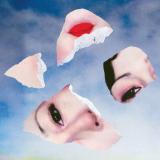
Themes of change, breaking up, shattering old ways of being are shot through the record. For the front cover, a photograph of the artist’s face was printed, ripped up and re-assembled, resembling the creative process embarked upon by Lew for her first “solo” material. The album feels instinctual, almost dream-like in its assemblage of sweeping synths and pulsating, propulsive drum machine beat patterns with Lew’s vocal performances sensitive and caressing over the top. Increasingly relying on the subconscious and dreams to guide her creative process, Hannah Lew frequently abandons literal interpretations or linear narratives, the songs seeming to exist in a swooning, effortless flow-state while remaining emotionally hard hitting.
On an album where every song could be a single, there are kaleidoscopic shades and varying emotional tones in abundance. First single Another Twilight is carried along a pumping, Italo-disco-style 4/4 beat and mono-synth bass line, the low end pulling at the heart and body. Lew’s vocal melody teases the track before swan-diving into a gorgeous chorus as she sings “it’s all over baby and I don’t mind… in decline, I take my time…” The album is suffused with moments like this. On slow builder Damaged Melody, an arpeggiated synth elongates the verse before a cascading synth showers down melodic glitter. The stunning Replica uses dual swirling synth patterns before a driving, synthpop chorus for the ages carries Hannah Lew’s vocal into the stereo field, sailing in on a high register singed with the embers of a break up.
In a departure from previous groups, her solo songs are guided by dreams and free association inspired by Dada and the Surrealist movement and sculpted afterwards. As such, the songs reveal themselves on repeated listens, revealing traces of heartbreak inspired by both personal and global elements - Hannah Lew regards the album “a wartime album.” On Move In Silence, Lew intones “there’s a war outside, just out of view,” revealing the dichotomy at play throughout. With the songs evolving naturally and in a flow state, the pressures and sadnesses of the modern age bleed through, mixed in with Lew’s inherent love, sensitivity and fractured-but-intact optimism. On the swooning, sublime Sunday layers of Numanoid synths open up for the commanding vocal performance pontificating on grief, love, pain as she “feels the ache on Sunday…” As the chorus builds and Lew’s call-and-response vocal adds to the emotional tension, it almost feels like too much to take.
Elsewhere, there are echoes of Hannah Lew’s previous work. On Time Wasted a bass guitar comes in with a heavy, punk attack before the synths and vocal harmonies reminiscent of later Cold Beat elevate everything. The glassy, sweetly resigned closer The Clock sounds like so classic it could be cover, a sweetened Jesus & Mary Chain tune perhaps, before it erupts into volcanic chorus that could only come from Hannah Lew in 2026.
Trajectories collide in a wormhole as Tokyo-based Igaxx and Amsterdam-based Gropina converge on a crepuscular four-track 12-inch and digital release for Paesaggi Records. Igaxx drifts through near-beatless, spiralling psychedelia: “The Perception” is a slow-burn ascent, suspended in a state of perpetual anticipation, forever circling a climax that never arrives. “Someday in Time” settles into a steady pulse that glides outward, dissolving into the distance as if lost in quiet contemplation.
On the flip, Gropina reshapes the two pieces through his own sonic lens, like stepping through the looking glass. “The Perception (Version)” brings a supernatural, Kraut-inspired vibe, opening with a deceptive 2:35 intro before unfolding into Mother Sky-esque drums, primitive flutes, and reversed guitars. “Some Day In Time (Version)” is a dubby reinterpretation driven by a ’70s Ace Tone drum machine, a funky bassline, dub-soaked guitars, noir alto saxophone, and subtle details swirling through the mix.
Convergence is an ambient album formed through a series of morning rituals during rehabilitation following a severe medical event and an extended hospital stay. After weeks immersed in the constant alarms, beeps, and environmental signals of medical equipment, the act of listening itself became recalibrated. The music was performed and assembled using glass marimba, flute, and analog synthesizers, with each instrument treated as a source of resonance and gradually dissected through spectral analysis—allowing melody to emerge from fragments through repetition, attention, and daily practice, where synthesis functions not as traditional composition but as an exchange of signals.
Working slowly and intuitively, Stardust Multiplier approaches sound as a communicative medium between humans, the natural environment, and non-ordinary states of perception. Motifs evolve through repetition and subtle variation, informed by ceremonial music, mythic structures, and speculative communication frameworks associated with non-human intelligence—not as narrative devices, but as metaphors for attuned listening and pattern recognition.
Rather than moving toward resolution, Convergence documents moments of alignment—instances where intention, system, and environment briefly synchronize. The result is a restrained, deeply focused record, less concerned with atmosphere than attention, where synthesis functions as both a grounding practice and a method of inquiry.
Deep, deep stuff on the debut album from K Wata. Long and dubwise, dark and detailed. With bass that fills and warms a space.
All noir. Cast shadows against the wall. Weight being shifted and distributed with singularly delicate poise, like a knife being balanced on the end of a finger.
There’s a silvery, loose flow state to this record that maybe reveals the way some tracks were first written to be deployed live at Sustain Release 2025. Then taken back to the lab and tightened up further into the album’s final form, with beautiful mixing work between Kenzo and Chris Botta.
With that in mind, Give U Space unfolds slowly and fluidly, giving the listener the chance to access and open up to the deepness of the sound, being led down a path. It rolls and builds momentum and groove, and ratchets tensions up toward peaks of energy "Whisper Dub" and "There Will Be Love".
The tunes feel architectural. Rooms to be in and settle into. Simultaneously stripped back and then etched with neat little details and characterful or atmospheric sound choices. The silhouette of slo mo Memphis and Houston trap is a leading influence, especially with the drums. Mixing with bits of click’n’cut sampling and psychoacoustic tricks, the penumbra of dub techno and drowsier dubstep, and SG’s soft vocals rising in the ether.
The presence and inspiration of the sound system is obvious in all of Kenzo’s work, the music can rattle when spun up louder or blended into the club. But K Wata’s uniqueness and signature comes from an often equally inward facing quality, touched by distance and longing and a sort of chiaroscuro incandescent light set up.
Written and produced by K Wata.
Mixed by K Wata and Christopher Botta at Fer Sound Studio.
Vocals on “Give You Space” and “Go” by SG.
Clarinet on “Radio Embrace” by Eugene Lai.
Mastered and cut by Mike Grinser at Manmade.
Art by S. Gong
Cinna Peyghamy unveils new album fusing Persian tombak and modular synthesis Five years in the making, "Music For Tombak & Synth" bridges heritage, technology, and personal identity. The project, initiated in 2019 during Peyghamy's master's thesis research on contact microphones, was conceived as a means to reconnect with his Persian roots while exploringexperimental sound design. In the album, Peyghamy seamlessly blends the traditional Persian tombak with modular synthesis and digital signal processing, creating a distinctive musical landscape that bridges live improvisation and studio production. The album’s genesis traces back to Peyghamy’s exploration of improvised electronic music and his desire to craft a performance-ready setup. Over
several years, the project evolved from capturing the energy of his live shows into a fully composed studio work.
"Music For Tombak & Synth" stands as the first record where Peyghamy unites his dual identities as a live performer and producer, resulting in a body of work that reflects his deep connection to family, memory, and cultural heritage. The album features personal elements such as his father’s voice reciting the poetry of Ahmad Shamlo on the track Dar Shab ,?? ??collaborations with long-time friend Quelque Bourdon on clarinet, and the evocative sounds of the Persian setar, all anchored by the physicality and rhythms of the tombak. A sentiment further reflected in the album cover; a photograph taken by his father, Khosrow ‘Payram’ Peyghamy, picturing both his parents and grandparents.
With this release, Peyghamy moves beyond conventional boundaries of "traditional versus contemporary" or "acoustic versus electronic," instead offering a nuanced exploration of identity through sound. Each track serves as a keepsake, referencing cherished memories, emotions, and musical influences that define his experience as a French-born artist of Iranian descent, unable to visit his home country. "Music For Tombak & Synth" invites listeners to engage with a deeply personal narrative, rooted in both cultural history and sonic innovation.
Sticking a dirty thumb in the eye of fate, our third collaboration sees this marrow deep family malarky turn official as Pace Yourself teams up with YS’s own imprint ERF REC for a split release. As if our status as minor celebrities and footnotes of the underground could level off no further: the unification no one asked for is here. Sticking it to the man, handing your arse to ya on plate; cauterising infected suburban minds world over.
Burn is the second YS album and written as a direct follow-up album to Brutal Flowers. If their first album was an exercise in the incremental, a construction of poise and patience, Burn, should be taken way the fuck at it’s word: it quite literally finds catharsis in twisted reverse. Birthed out the malignant kick found in deconstruction and chaos. Evil twin, psychotic younger sibling, call it what the hell you like. It might take you a moment to get the lay of the land in this darkly mutated world. Like a bug eye’d native first confronted with a zippo, the hit is radical and instant: a new way for the world to go up in smoke.
Splice the Seattle slacker scene with the spliffhead soundsystem culture of the 90s Bristol trip-hop scene, then cross-breed that with the DIY optimism and glee in creation found in the cut-and-paste worlds of skate, graffiti and hiphop, now run that through the skitzo basement mind of John.T. Gast and you’re close to the kind of scorched earth and spiked suburbia that birthed Burn.
Dunno quite what YS have been ingesting of late but this massively twisted LP touches on a host of gloriously fucked totemic underground sources while not sounding much like any of them. It has the ballsy swagger and hard flipping of the script as Massive Attack’s seminal Blue Lines. Indeed, the eponymous album tracks sound similar - the opener ‘Burn’ is like a hard nosed jammed out redux of ‘Blue Lines’. Getting into a kind of slow-spinning overdubbed maximal euphoria ending with mumbled downer vocals, struggling to conceal their tongues in their cheeks there’s an air of paranoia and proto-conspiracy theory. It’ll leave you scratching your head, feeling like you’ve stepped into a New World Order governed by a cacophony of drop outs, dope fiends and apocalyptic stoners. A cracked out world somewhere between Richard Linklater’s movie Slacker (1990) and Marc Singer’s Dark Days (2001).
The rest of the album parts like a tongue on a wine glass: Smith and Mighty, Bandulu, ambient Luke Slater records, Wah Wah Wino, Nurse with Wound, Land of the Loops, Placid Angels, Adrian Sherwood, Urban Tribe and DJ Shadow can all be heard in momentary splatters - but Burn like other works by YS, is its own ritual beast. ‘Moth’, a track which has been knocking about the underground deejai circuit for many moons, is a real raw chopped and screwed slice of stoner erotica that reeks of obsession and unrequited desire. Elsewhere, on tracks like ‘Switch’, ‘Trying’ and ‘Drift’ the throughline from Brutal Flowers can be heard. Underneath the driving heavy gravity the trademark emotional intimacies of YS linger: eternal recurrence, ghosts of static and shortwave, worn memories of the playful and painful sort. The brief moments where flashes of orchestral ambience get out from underneath the swagger are so pure, personal and unguarded that for a moment they leave you completely lonesome. In the album’s closer ‘End’, you can hear the fleeting promise and DIY possibilities of an analogue world and embers of ash that flutter in its wake: where it seemed, for a brief moment, that collective of DJs, engineers, rappers, graffiti artists and skate crews were emerging from the streets, giving the middle fingers to the system, before just as quickly disappearing back to the doldrums of obscurity. ‘End’ is a bittersweet ode to early soundsystem culture, MCs and pirate radio - an out of step time where for a moment the underdogs and weirdos seemed to be kicking on the door of something bigger.
A veritable teenage doof suite dosed with desire, claustrophobia and deviance. Burn is a good old howl at the moon: lonely, raw, and out for blood; basement style exegesis at its best. A thump to the gut, a stud through your blood. A dubbed-to-death classic straight out of the annals of nowhere. A perfect post card from oblivion. A bleak, bold and personally ferocious vision of tomorrow and tomorrow and tomorrow.
This is everything that record collectors skip dates for. Fuck the scene and keep that shit underground. That’s what it is all about. Know what I mean, if you do? You’re in…
Space Dimension Controller (Ninja Tune, R&S, Dekmantel, Royal Oak) returns with a six-track EP that pays homage to the early 90s Artificial Intelligence era—think Warp Records, ambient techno, and the roots of IDM—but with his signature futuristic twist. While the foundation is unmistakably retrofuturist, SDC propels the sound into new dimensions, blending slow-motion acid lines, ethereal textures, and subtly propulsive rhythms for daydreamers and dancefloors alike.
Reclaim Your Cities next frequency-jammer comes in the form of a heavyweight split 4-tracker, courtesy of two true techno pioneering figures: Mike Parker and Steve Bicknell.
The continued influence of these two artists on both our early raving days and now as a team working on providing you the most exciting, boundary-pushing tech wares is second to none. As you'll experience from the four jams constitutive of this unparalleled mindtrip of an EP, 'In The Years Ahead' is the living evidence the steadfastness of Parker and Bicknell's vision remains absolutely untouched. Zeroed in on taking ravers on an entrancing ride across pulsating corridors of whirring machine funk, sizzling acid and shape-shifting waves of sound, both sides of this EP share the best lot of both producers' uniquely innovative approach to rhythm and production.
Parker's opening cut, 'Solar Limb' is a textbook example of his complex, and heavily layered sound-design. An unflinching swing keeping time, brutal kicks punching holes in your head like giant steel hammers, the track may evolve slowly, repeating its post-industrial mantra over and over again, its flame doesn't flicker one iota. Switching onto red-level dance floor menace, 'Badlands' pulls out the heavy artillery: an overkill bombardment of puncturing 909 drums, vortical winds blowing in the back like some solar storm of sorts, and this ebb-and-flow of FX-drenched synth ripples branded on your cortex like odd signs of cult belonging. Bicknell's takeover starts with the rugged and wild 'Chaotic World', whose title is definitely not usurped. Enter a blazing maelstrom of frantic synth assault knocked askew, intense bass tectonic movements and smashing arpeggios on the path of war. The track develops a massive momentum, swelling from primordial raw matter into weirdly arranged modular constructions, like that of Kubrick's monolith emerging with ominous presence. 'In The Years Ahead' serves up a much distinctively elegant, glossy type of textural experience, synths playing pong in a hall of mirrors, interlacing and distorting as the percussive line unfolds its linear train-like groove. It dashes across landscapes of hypermodern glass and concrete with unrelenting horsepower, from techno's early sanctuary right up onto tomorrow's temple of unmapped potentialities.
This much special release, so dear to our heart, comes clad in a beautiful piece of design, and will be pressed to 180g audiophile quality vinyl for an enhanced listening experience.
All those creatures, standing there, making time. Fury eyes, golden dust on artificial fog. Dancing on glass, repetitive poems, looping long after the last loop looped away. Oriental acid, frenzied samples, low hanging film noir suspense. This is DALO. Or not. She is many. Dry maniac downbeat is her craft. Or dark-ish pop-not-pop. There is dub, trance, techno, too. She is known for releases on labels like ESP Institute, WARNING, or Tresor. She is part of bands like Init. She played them all, those clubs, that matter, and those that matter more. Live. Alone. As an artist. With a band. Here she comes with her first album. On the R.i.O. sphere. Her homebase. A trusted zone for experimentation. She brings “Duster”. Seven tunes twisted in different dreams. Fast, slow, veiled, enchanted, haunting trenchant. She sings. These songs. To dance. For a different, stripped-back trance. DALO. Her record longs for a stage. Exporting grace, face to face. A work like a mirror. Hypnotizing. A psychedelic portrait of a performer. Nuanced industrial veils ceremonial journey music. Claps, Jungle. Desolate vocal snippets. A whirlwind of words. All those chords, hanging there, kick drum time. Fury eyes, golden horns amid acid fog. Dancing on glass, cyclic synth-lines. DALO. Duster. A-round-and-a-around. Circulating the ritual.
Clikno Is Proud To Present The Second Strike Of Dr.nojoke's Double Ep 'zero'.
'aplose' Is A Straight 10 Minute-stomper, Which Sounds Like A Wild Horde Of Percussionists Clanging And Banging Cans And Pots. The Truth Is The Doctor Just Threw Glass Marbles On A Wooden Floor. Fun-time! For The Hips He Adds A Low Rolling Bassline And For The Head Some Freaky, Randomly Pitching Chords And Off It Goes! Call It Afro-kraut-jazz-tech Or Just Clikno - Aplose Is A Counter-action To Electronic Music Production With Electronic Machines - Marbles Do It As Well!
'kumuestu' On The Flipside Is The Antagonal Piece On Zero.two - More Dark And Deep It Is Music For A Fictional Ritual. Carried By A Hypnotic Fluctuating Bass-figure And Drones The Tune Slowly Mutates Into A Shamanic Rhythm Monster Creating A Resonating Field For Transcendental Dancefloor Action - From Here To Eternity.
Zero.two Is Purely Audiophile Electricity To Twitch Your Body In All Directions. Do The Clikno!
Again Zero.two Is A Limited Vinyl-only Release Pressed On Transparent Vinyl Coming In A Transparent Sleeve - Transparent As Light, As Ideas, As Music And As The World Should Be - No Borders, But Freedom, Peace And Equality For Everyone!
comes in deluxe gatefold edition with lyrics sheets and colored vinyl limited to 500 copies
Early 20th century. Barbarism on an industrial scale. After the final shots had rung out Europe was left a husk, a shell to be rebuilt. And she did rebuild. Slowly, but surely, normality returned. Different zones. Different ideologies. One Europe. Yet not everyone was happy. Within this struggling continent there were those who saw the hand of authoritarianism at the wheel, past criminals ruling and lands being led back to dictatorship. The solution: the sub machine gun.From Reason to Ritual is Rude 66´s most ambitious album to date. Amsterdam´s premier electronic musician maps the rise and fall of terrorism over two slabs of wax. Gruesome naivety, one that led to countless deaths, is given an electro beat on the first record, 'Reason.' Warbling wave vocals from Ruud's wife Shaunna tell a bitter tale of paranoia and looming violence. That violence is truly realised on the second record 'Ritual.' Beats rain like shards of broken glass, constricted acid and echo as the enemy closes in for the final hollow defeat. An album that takes you from manifesto to death march.
On a class debut for Biscuit’s choice Good Morning Tapes label, Kyoto’s dub specialist G Version III runs signature fusions of digidub steppers, drill, and holographic, minor-key FM synths.
One up on her 12” for Riddim Chango last year (plus the »Scenery From Double Glazing« tape for Digital Sting in ’24), G Version III’s »Chapter II« most finely chisels her lucidly rugged definition of the late ’80s / early ’90s mystic steppers sound. The OG Caribbean spirit is heard filtered through UK dances and shored up in Japan, where G tessellates its salient points with a palette of glassy Japanese synth tones and chamber music to exquisite effect. If Wendy Carlos was a soundgyal?
Across six cuts she builds the dance around digidub x drill waltz »Livin 4« and a haunted dancehall special in the harpsichord/horn riff of »An Idyll«, impressing her prowess in the fusion of subcontinental scales with a drill-tipped skip in »Queen G Theme Chapter II«, and tucking right into an aerodynamic, flying steppers mode, shades away from Element, in »Motherearth Guidance«. At a slower, wider stride her »Higher Grade« goes eyes-down on massive subs, and »Voice of Mystique Warriyah« adapts the classic-schooled sound like TNT Roots in Tokyo.
After their recent LP Mirages (Kraak Records, 2025) with French turntablist Guilhem’All, the group continues to explore collaborations with artists and instruments from diverse musical traditions. Building on decades of uncompromising acoustic exploration, Razen delves deeper into their practice with five improvisational pieces that unfold slowly in time and space. The duo’s radical core - Brecht Ameel and Kim Delcour - finds in Van der Harst a longtime kindred spirit, united by the impact of sound, intonation, and the sheer joy of playing.
To be released on April 24 via VIERNULVIER Records, the artwork for Stained Glass Starling was created by American visual artist Robert Beatty (Oneohtrix Point Never, Christina Vantzou, The Weeknd, Tame Impala). The physical release comes with a 16-page booklet including artwork and an interview.
A long-standing artistic kinship lies at the heart of this project, with first encounters dating back to the early 2000s in Belgian musical improv theatre. Van der Harst’s lifelong experience in improvised music and music theatre, spanning back to the 1980s, combined with a vast arsenal of rare and historical instruments, opens new tonal territories within the Razen universe.
These explorations are not incidental: his family roots in the former Dutch East Indies — through his great-grandfather — provide a quiet backdrop to his enduring affinity for Asian musical traditions. Instruments such as erhu, Javanese kacapi, and others introduce timbres
that bring the music its most pronounced Asian inflections to date.
Yet despite this shift in colour, the underlying ethos remains unmistakably Razen. Working from sound rather than form, the ensemble approaches music as painters approach a canvas: adding layers, contrasts and shades with care. There is no soloist’s ego here; all voices are equal, echoing principles found in gamelan traditions.
Over the decades, Razen and Dick Van der Harst have crossed paths repeatedly, notably through cult theatre productions by Belgian theatre maker Eric De Volder, including Zwarte vogels in de bomen (2002) and Huis der Verborgen Muziekjes I–II (2000–2006). Recording an albumtogether had long been a shared aspiration — a wish that crystallised after a 2024 concert at Concertzaal Miry in Ghent, part of the Ruiskamer series by VIERNULVIER Art Centre.
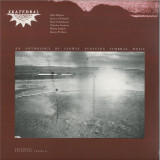
XKatedral Anthology Series II (An Anthology Of Slowly Evolving Timbral Music), featuring exclusive music from Kali Malone, Jessica Ekomane, Mats Erlandsson, Theodor Kentros, Wilma Hultén, and Maria W Horn.
"XKatedral Anthology II is the second instalment in a series of archival releases dedicated to presenting music by composers affiliated with XKatedral working within the realm of slowly evolving harmonic and timbral music. This double-vinyl set contains an array of pieces dating from 2018 - 2020. This collection of pieces focuses on the use of synthetic sound and algorithmic composition languages as tools for precise work within the realm of spectral exploration. In addition to this, the electronic instrumentation in many of the pieces is augmented by acoustic instruments.
The first piece on side A is Kali Malone’s Music for Low Quartet. This piece is an adaptation of the composition “Rose Wreath Crown” originally released on The Sacrificial Code in 2019. In this iteration, the music is scored for two double basses played by Vilhelm Bromander and Zach Rowden, and sine tone electronics performed by Malone herself. The recording of this piece was made at EMS in 2019.
Closing side A is Jessica Ekomane’s ‘First Light’. This computer music piece focuses exclusively on digital sound, layering razor sharp synthetic textures into an otherworldly dynamic weave. The music heard here is a reworked version of a piece originally commissioned by Semibreve in 2020.
Side B contains the work ‘Hands Melt In The Sun’ by Mats Erlandsson. This composition is built from electronically processed tuned zithers and synthetically generated tones arranged in a series of chordal inversions over a sustained fundamental tone. This music, written as a love-letter to the localized drone tradition of Stockholm in the years 2008-2012, was composed and recorded in seven days while in residence at Ställbergs Gruva in Bergslagen, in the summer of 2018.
Opening the second half of the collection is Rough Draft v.7 by Theodor Kentros. Kentros’ compositional practice usually combines acoustic and electronic source material and in this piece he molds the sound of the Buchla 200 and a collection of recorded wind instruments into a molten mass of sound. In its original form, this music was presented as a multichannel immersive work and even in the current stereo configuration it retains some of that enveloping sense of depth.
The second piece on side B, Inertia, is by Wilma Hultén, who makes her debut on record here. An exclusively synthetic piece, Inertia utilizes internal digital feedback in a sealed synthetic system to manifest a harmonic field that swells and abates throughout the length of the piece, interspersed by small gestural elements.
Closing Anthology II is Maria W Horn's work ‘Dies Irae’ for female vocal quartet, pitched glass and synthesis. ‘Dies Irae’ uses a modified form of traditional tonal harmonic language to invoke an uncanny and restless middle ground between the classical western polyphonic vocal tradition and contemporary electronic music. The version heard here is a live recording from Eric Ericssonhallen in Stockholm on May 30th 2020. Performing the piece here are the vocalists Katarina Henryson, Lisa Holmgren, Vilma Ogenblad and Paula Wegmann, as well as Maria herself on glass and electronics."
Music To Watch Seeds Grow By continues its second season with Seoul-based left of centre ambient duo Salamanda - Uman Therma (Sala) and Yetsuby (Manda) - and their meditation on the inner life of a basil plant. Seeds 008 is an ambient composition born from quiet domestic observation: a single basil on a windowsill, its days shaped by light, warmth, and the slow passage of time.
The album moves through a full day in the plant's life opening with ‘introduce my atom which is my favorite one’, an act of quiet self-declaration in morning light, before settling into the unhurried rhythmic pulse of ‘to to ki toki tok’- the drip of water, the tick of a clock, the slow beat of photosynthesis. ‘allez, pousse!’ - one of the standouts in this journey - carries the basil's gentle will to grow, to push, to tilt toward the sun, while ‘hungry snail’ captures a moment of creaturely encounter on the glass: an uninvited visitor, moving slowly, wanting. As the afternoon deepens, 'Basil's Ritual' traces the daily ceremony of light and warmth, repeated with calm devotion from root to leaf. Night falls across 'Basil's Dream', and in the stillness something like sleep arrives - the plant resting, imagining tomorrow's sun. The album closes with ‘the blue wine’, a final mysterious reverie in which the basil seems to contemplate its own fate, somewhere between acceptance and wonder.
As Nathan Fake rises from the nocturnal subterranea and rave catharsis of his previous records, on Evaporator, he resurfaces into the domain of daylight, bringing a tangible sense of air rushing against your face, of big skies, and endless landscapes.
The idea of pop accessibility that trickled into 2023’s Crystal Vision is refracted here through the prism of sweeping ambient, deep electronica, and trance uplift. Evaporator is Fake’s idea of “airy daytime music”, with each track a different barometer reading across the album’s varying atmospheres, which range from vibrant sunbursts, bracing rainscapes, and fine mists of clement melodics. “It’s not overtly confrontational electronic club music,” states Fake. “It’s quite pleasant, it’s accessible. As I was progressing through making the tracklist, I called it a daytime album. It doesn’t feel like an afterparty album.” For the past decade Fake has been gingerly introducing collaborations with heroes and friends alike into his lone, idiosyncratic working process.
Border Community alumni Dextro AKA Ewan Mackenzie transmutes his ferocious drumming for Pigs Pigs Pigs Pigs Pigs Pigs Pigs into the blurred choral thump of ‘Baltasound’. ‘Orbiting Meadows’, meanwhile, is his second collaboration with Clark, an eerily idyllic duet where microtonal 18EDO piano clangs slowly twirl around wailing pads. Evaporator marks the junction point of old technology and ever fresh creativity for Nathan. The trusty “dinosaur” age software, particularly Cubase VST5, that has powered two decades of music is rarely updated. “I used to sort of feel a bit ashamed of using such old software, and then I kind of had an epiphany – that’s just how I work”, comments Fake. “That’s just how I play. I’m very fond of these old tools, and I get the most joy out of them, but now I’ve incorporated new technology too.” When an artist accumulates so much synergy with their instrument, music making becomes instinctual. By Fake’s account, much of Evaporator just fell into place. The album title arrived randomly in his head (“it felt completely perfect. Airy.”), ideas looped and developed until things locked into place and just felt right. ‘The Ice House’ is a fleeting glimpse of the sonic world he taps into in this creative state, its glassy FM synths built around a counterpoint between rough-hewn crystalline arpeggios and sparse yet gravitas-bearing bass. “That riff I just wrote out on the keyboard, I just played it forever and ever and ever.
The original track ended up being really short. Here you go, and it’s gone!” These unplanned channellings of sound call forth records from Fake’s past while he looks ahead, perhaps getting at the very essence of his musicianship. The opener ‘Aiwa’ (“the breeziest,” he muses) reminds of the introspection that characterised Providence, excited by the fire and grit of Steam Days’ textural experiments, its chunky slams and clatters surging into a flood of harmonic buzzing as they reach out for old wisdom. ‘Hypercube’ stampedes in a similar chronological confluence, infusing an incessant synth line reminiscent of the golden age of rave with the crackling, ecstatic energy of modern festival anthems. Like the vaporisation of liquid to particles, everything that Evaporator presents has a mutant desire to be amorphous. Sounds rarely settle; the irradiated garage beat of ‘Bialystok’ is pitched downwards to driving, rebounding effect, while ‘You’ll Find a Way’ warps static into shivering energy, cinematic synth strings building anticipation into a gradual gush of chords. This translates into a more expansive stereo field than Fake has explored before.
‘Slow Yamaha’ saves the wildest, most kinetic transformations for last with a cornucopia of crispy melodies and fried drums; a sibilance of cymbals on the left, a susurrus of shakers on the right, and kaleidoscopic lasers pulsing and fizzing all around. Evaporation culminating in pure excited atoms.
As Nathan Fake rises from the nocturnal subterranea and rave catharsis of his previous records, on Evaporator, he resurfaces into the domain of daylight, bringing a tangible sense of air rushing against your face, of big skies, and endless landscapes. The idea of pop accessibility that trickled into 2023’s Crystal Vision is refracted here through the prism of sweeping ambient, deep electronica, and trance uplift. Evaporator is Fake’s idea of “airy daytime music”, with each track a different barometer reading across the album’s varying atmospheres, which range from vibrant sunbursts, bracing rainscapes, and fine mists of clement melodics. “It’s not overtly confrontational electronic club music,” states Fake. “It’s quite pleasant, it’s accessible. As I was progressing through making the tracklist, I called it a daytime album. It doesn’t feel like an afterparty album.” For the past decade Fake has been gingerly introducing collaborations with heroes and friends alike into his lone, idiosyncratic working process. Border Community alumni Dextro AKA Ewan Mackenzie transmutes his ferocious drumming for Pigs Pigs Pigs Pigs Pigs Pigs Pigs into the blurred choral thump of ‘Baltasound’. ‘Orbiting Meadows’, meanwhile, is his second collaboration with Clark, an eerily idyllic duet where microtonal 18EDO piano clangs slowly twirl around wailing pads. Evaporator marks the junction point of old technology and ever fresh creativity for Nathan. The trusty “dinosaur” age software, particularly Cubase VST5, that has powered two decades of music is rarely updated. “I used to sort of feel a bit ashamed of using such old software, and then I kind of had an epiphany – that’s just how I work”, comments Fake. “That’s just how I play. I’m very fond of these old tools, and I get the most joy out of them, but now I’ve incorporated new technology too.” When an artist accumulates so much synergy with their instrument, music making becomes instinctual. By Fake’s account, much of Evaporator just fell into place. The album title arrived randomly in his head (“it felt completely perfect. Airy.”), ideas looped and developed until things locked into place and just felt right. ‘The Ice House’ is a fleeting glimpse of the sonic world he taps into in this creative state, its glassy FM synths built around a counterpoint between rough-hewn crystalline arpeggios and sparse yet gravitas-bearing bass. “That riff I just wrote out on the keyboard, I just played it forever and ever and ever. The original track ended up being really short. Here you go, and it’s gone!” These unplanned channellings of sound call forth records from Fake’s past while he looks ahead, perhaps getting at the very essence of his musicianship. The opener ‘Aiwa’ (“the breeziest,” he muses) reminds of the introspection that characterised Providence, excited by the fire and grit of Steam Days’ textural experiments, its chunky slams and clatters surging into a flood of harmonic buzzing as they reach out for old wisdom. ‘Hypercube’ stampedes in a similar chronological confluence, infusing an incessant synth line reminiscent of the golden age of rave with the crackling, ecstatic energy of modern festival anthems. Like the vaporisation of liquid to particles, everything that Evaporator presents has a mutant desire to be amorphous. Sounds rarely settle; the irradiated garage beat of ‘Bialystok’ is pitched downwards to driving, rebounding effect, while ‘You’ll Find a Way’ warps static into shivering energy, cinematic synth strings building anticipation into a gradual gush of chords. This translates into a more expansive stereo field than Fake has explored before. ‘Slow Yamaha’ saves the wildest, most kinetic transformations for last with a cornucopia of crispy melodies and fried drums; a sibilance of cymbals on the left, a susurrus of shakers on the right, and kaleidoscopic lasers pulsing and fizzing all around. Evaporation culminating in pure excited atoms. In a world where music has increasingly become background content, making albums remains lifeblood for Fake: “It makes me realise how long; twenty years is ages! It’s weird to see how much the world has changed. Release day back then you did fuck all, now you spend all day on socials. When I grew up the people who made the electronic music I was into were quite mysterious, and the artwork was very abstract. There was a massive distance between you and that music, and that was a key part of it, really. Now it helps to be an extrovert, and I'm just not, but the album marks the first time my face has graced the cover art. I’ve never wanted to do this before, I'm very shy, and generally I don’t like being seen,” he professes. “But, twenty years in, I supposed I could try something new. I'm very lucky that I'm somehow surviving in this world, where the media world favours extroverts and interesting looking people. It’s not my world but somehow I’m still in it.” Evaporator continues to prove Nathan’s necessary presence, with some of his most engaging, varied, and magical music yet.
- 1: Rhizoid
- 2: Space Ray
- 3: Shadow Casting Glass
- 4: Wave Field
- 5: Mayan Bees
If you’ve been following the wanderings of prolific psychedelic magicians Elkhorn, you might be surprised that Elkhorn guitarist Drew Gardner’s solo LP Wave Field is the most out and out “rock” record on VHF in many years. Working here in a small group with excellent players Tom Malach (guitar), Andy Cush (bass), and Ryan Jewel (drums), Gardner cuts loose on a set of propulsive and swinging material that allows him to greatly expand his sound into unexpected areas. “Rhizoid” starts with a sneaky groove riding the nimble bass and drums of Cush and Jewel before a leap into the ripping Sonic Youth/NEU! hybrid of “Space Ray.” “Shadow Casting Grass” brings things back down to end the side with some Elkhorn-adjacent gentle guitar weave backed again by the sly rhythm section. “Wave Field” kicks off side 2 with an extended buzzy guitar raga with Cush’s melodic and fat bass providing jammy counterpoint. The epic “Mayan Bees” closes the LP with an extended workout on another extremely fine drum and bass ostinato, a hypnotic minor key riff that slow builds over 10+ minutes.
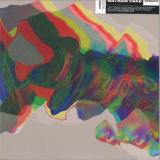
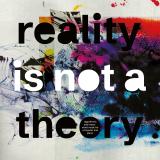
Recorded in concert at the University of Sheffield in March 2025, Reality Is Not A Theory is the first collaboration between Mark Fell and Pat Thomas. Major figures in British experimental music since the 1990s, Fell and Thomas have developed their rigorous practices from radically different backgrounds and perspectives: where Fell’s singular take on synthetic abstraction emerged from Sheffield’s electronic underground, Thomas is a virtuoso improvising pianist steeped in jazz and modernist art music who has simultaneously worked with sampler-based electronics for decades. As the record’s wonderfully academic subtitle explains, we are presented here with two sides of ‘algorithmic and improvised music for computer and piano’, exemplifying both players’ insatiable search for new (and sometimes uncomfortable) playing situations.
The performance begins with Fell’s electronics close to the timbres of acoustic percussion, attacks that suggest wood, metal or glass threaded along a rapid pulse while Thomas focuses on the lowest registers of the piano, deadening the strings. As Fell’s electronics start to ring out and occupy more harmonic space, Thomas turns to wide, repeated clusters, which slowly expand into patterns of chords. Like in his recent solo recordings and his trio work with Joel Grip and Anton Gerbal, Thomas’ playing combines extreme dissonance with a deep lyrical sense. Fell’s work gradually shifts its focus toward drum sounds, drawing on the microtemporal processes that have characterized his practice in recent decades. Heard together with Thomas’ probing piano, the computer sounds call up unexpected associations with the klangfarben antics of improv drummers like Paul Lovens or Tony Oxley. Throughout its second half, the music grows increasingly frenetic, as Thomas sounds out rapid, irregularly repeated figures and beautifully sour chords in the upper register, while Fell’s percussion develops into angular pan-pipe-like feedback and waves of glissandi.
With great confidence and patience, Fell and Thomas often let their individual contributions remain rhythmically distinct and unsynchronised, allowing unexpected correspondence and coincidence to guide the music’s development. Recorded in a hall named after Sheffield steel manufacturer and Master Cutler Mark Firth, the location might suggest a model for understanding how Fell and Thomas interact here: two workers in the same workshop, each immersed in their own part of the production process. Arriving in a striking sleeve designed by Mark Fell, with liner notes by Francis Plagne, Reality Is Not A Theory is an invigorating document of the meeting of two mavericks of contemporary music.
2025 Repress!
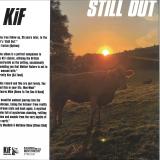
Recorded in a remote cabin on the Devon coast, STILL OUT is an album-length collaboration between musician-filmmakers – and childhood friends – Will Cookson and Tom Haverly. A reflection on friendship, landscape and the passing of time, it inspired a road trip from North Yorkshire to North Devon they took together in the summer of 2024, and forms the soundtrack to a film of the same name which had its premiere screening as part of Stroud Film Festival in March 2025.
Like the film, STILL OUT is also an oblique homage to The KLF’s iconic 1990 album Chill Out, which the Gloucestershire-based pair revisited after it turned up unexpectedly a few years back in Tom’s dad’s record collection. Inspired to create their own recording using a similarly free-spirited process, Will and Tom relocated to the Devon coast in late summer 2023, splicing together a 40-minute mix from their personal archive of recordings and found sounds in a remote cabin with no electricity or mobile reception.
"It came together using cut-and-paste techniques, with ongoing shifts and tweaks,” says Will. “The final result was an audio collage that felt like something legendary hip hop producers The Bomb Squad might make - if ambient music was the only material in their sample library."
Using ‘ambient’ as a starting-point rather than an end in itself, they took inspiration from across the musical spectrum – classic-period Brian Eno, Philip Glass, Bill Evans, plus outliers such as 80s singer-songwriter Virginia Astley and the late DJ-producer Andrew Weatherall. The connections, though, are anything but obvious as the audio shifts seamlessly from field recordings and spoken-word interludes to mood pieces and snatches of vintage pop.
Edited and assembled using freely available open source programs, the source material was often radically altered using tools such as “PaulStretch”, a digital sound-morphing algorithm that allows users to stretch audio files to extreme lengths.
"When we found ourselves in a creative slump or unsure how to navigate a tricky part, we'd say, ‘Let's put some syrup on it and slow it down,’” says Tom. “That always helped us get back on track during late-night recording sessions at the cabin."
Part-soundtrack, part-meditative experiment, STILL OUT is intended as a reflection on the mental and emotional shift that occurs when stepping away from the routine of daily life – an album that forms a celebration of our ever-changing relationship to the world around us and the mystery of what it means to pass through time and space.
“The true follow up, 35 years later, to The KLF’s ‘Chill Out’”.
JD Twitch (Optimo).
An ambient journey reflecting on friendship, the British landscape - and The KLF’s landmark album Chill Out
"This record and film are just lovely. You need this in your life. Moo-Moo!” Balearic Mike (Down To The Sea & Back)
"The album is a perfect companion to the KLF classic, utilising the British countryside as the setting, occasionally reminding you that Mother Nature is not to be messed with.” Strictly Kev (DJ Food)
"A beautiful ambient journey into the landscape, taking the listener from reality to dream state and back again. A mystical realm full of mysterious chanting, rattling trains and sounds from the very depths of the earth."
Lally MacBeth & Matthew Shaw (Stone Club)
Repress!
200 COPIES ONLY
Nils Frahm has unexpectedly confirmed details of a new collection of solo piano music, his first album since 2022’s three-hour Music For Animals. Day will be released by LEITER on March 1st, 2024, and it will be available on limited edition vinyl as well as via all digital platforms. Recorded in the summer of 2022 in complete solitude and away from his studio at Berlin’s famed Funkhaus complex, it is preceded by a single, ‘Butter Notes’, out on January 19. Day may come as a surprise to those who, over the last decade, have watched Frahm shift slowly away from the piano compositions with which he first made his name in favour of a nonetheless still-distinctive approach that’s considerably more instrumentally complex and intricately arranged. In addition, in 2021, having spent the early part of the pandemic arranging his archives, he released the 80 minute, 23-track Old Friends New Friends, a compilation of previously unreleased piano music intended to enable him to ”start over” with a clean slate. Judging from the extended, ambient nature of Music For Animals, it proved a successful gambit, but Frahm has never been able to resist returning to his first love, and those who enjoyed earlier acclaimed albums like The Bells, Felt and Screws will once again revel in Day’s familiar, personal style. Day, which contains six tracks, three over the six-minute mark, is the first in a pair of albums Frahm has lined up for 2024. In keeping with their nature, however, he won’t be making a song and dance about the release. Instead, he’ll resume his ongoing world tour, which has already included fifteen sold-out dates at Berlin’s Funkhaus as well as a show at Athen’s Acropolis. It will continue with shows all over the world, among them several sold-out dates at London’s Barbican in July 2024, where he previously curated a weekend of music, film and art, Possibly Colliding, in 2016. The album is best enjoyed in the manner in which it was recorded, in the intimacy of a peaceful, cosy room. There are muffled pedal creaks on the cyclical, quietly jazzy ‘You Name It’ and, during the palliative ripples of ‘Butter Notes’’ arpeggios, the sound of dogs barking in the streets outside. The compassionate, hesitant ‘Tuesdays’ and emotionally ambiguous ‘Towards Zero’ linger with the poignant persistence of Harold Budd’s earliest work, while ‘Hands On’ is a sometimes brighter, airier tune that sets its own, deliberate pace, and, as he has on occasions before, ‘Changes’ sees Frahm employing elements of his instrument’s construction in a ‘prepared piano’ fashion. Characterised by its confidential mood, Day confirms that, while Frahm is arguably now best known for elaborate, celebratory concerts calling upon an arsenal of pianos, organs, keyboards, synths, even a glass harmonica, he’s still a prolific master of affecting simplicity, tenderness and romance.
Berlin-Hamburg duo Session Victim return to the ever-reliable Delusions Of Grandeur imprint with Chapter Two of their Sidequests trilogy, marking yet another high point in their almost twenty year journey through heartfelt, sample-rich music. Overflowing with analog warmth, sundrenched textures and irresistible grooves, the release also features a stellar remix from label cofounder and deep house pioneer Jimpster who kicks off the EP. Here he takes Behind The Glass into spaced out house-not-house territory. With crisp drum programming, trademark Rhodes, and subtle pads that build over time, his version delivers that late-night sophistication he's known for—steering the downtempo original in a clubbier direction without losing its blissed-out essence. Up next we have a brand new collaborative effort with long time friend, label mate and fellow sample nerd Nebraska. Make It Happen is a dusty, slo-mo house groove featuring delicate keys, euphoric strings and that unmistakable sense of journey. It’s just the kind of low-slung epic house they do best—intimate yet club-ready, nostalgic but never retro. Flipping over, Too Soft To Be Loud, another collaboration with Viken Arman, follows with a jazzy, almost samba-esque rhythm and swirling atmospherics. Loose percussion, catchy guitar riffs and Rhodes stabs collide with off-kilter dub FX and soft vocal snippets giving the track a laid-back, live-band feel that harks back to their See You When You Get There era. Hubcap Candy dives deep into funk territory. Nebraska’s on point boogie bassline drives the track forward as crunchy drums and layers of synths create a dreamlike haze. It’s loopy, moody, and finds Session Victim at their very best. Closing out the EP we have the original of Behind The Glass, a headsy, beatdown piece that slowly unfolds over an unconventional brass-like bassline and delicate guitar textures, paying homage to the golden age of Trip Hop haziness and it’s pioneer turntable spirit. Blending crate-digging sensibilities with forward-thinking production, this latest release solidifies Session Victim’s reputation as genre-blurring tastemakers, and their chemistry with Delusions Of Grandeur remains as strong as ever
- Fight Another Day
- Save A Place For Me
- The Man Who Can't Be Loved
- Cry Your Tears On Me
- Little Wings
- Ten Thousand Men
- Closest Thing To Love
- Something That I Can't Forget
- Slow Heart Attack
- Silver Lining
- Made Of Man
- New Day
- Fill My Glass
GREEN COLORED Vinyl[23,49 €]
James Morrison"s new album Fight Another Day is born of difficult times and heavy emotions but one that, ultimately, leans into the light and joy and hope. Written after a period of reflection and therapy, the songs deal with his own struggles, childhood, and personal battles, with Morrison saying, "Every day being a bit of a battle. Trying to eke the light out after what felt like darkness for ages." From the defiant title track to the soul-baring Something I Can"t Forget and the feelgood New Day, the album captures a wide emotional spectrum. "I"m really proud of the album in terms of the creative, sonic elements and how I dealt with truthful stuff," he says, "but also... it"s an album of songs that hopefully make you feel better and make you nod your head and stamp your feet and singalong."
- A1: Suzanne - Greg Bowman
- A2: Livin’ In The Middle - Rick Steffen
- A3: A Place In Your Heart - Charmer
- A4: Warmth - Bluejays
- A5: Oh Realle - Saffire
- A6: Love Be Kind - Greg Boehme
- B1: Gypsy Wind - Allan Mackey
- B2: Small Talk - David Ireland
- B3: Back In My Arms - Dan Strimer
- B4: Let It Flow - David Hollen
- B5: Paradise Island - Gasper & Dukes
A warm breeze drifts through the open cabin of the boat, carrying the scent of salt and sunwarmed teak as it stirs the linen curtains. The man moves easily, bare feet against the wooden floor, the slow rhythm of the harbor rocking beneath him. He flips through his records with a knowing touch, pulling out a favorite—something smooth and mellow, with buttery vocals and melodies that drift like a sailboat on calm waters. The needle drops, and honeyed guitar riffs spill into the air, effortless and sunlit. He reaches for the bottle of rum, the ice in his glass chiming softly as he pours, then adds a squeeze of lime, a lazy stir. Outside, the water glows in the last light of day, golden ripples stretching toward the horizon. He leans back against the cushioned bench, drink in hand, the music swirling around him like the evening breeze—unhurried, weightless, exactly where he wants to be.
Small Talk brings together a carefully curated selection of long-forgotten, yet remarkably smooth and captivating soft rock and AOR tracks from the ‘70s and ‘80s, compiled by Brandon McMahon. These lesser-known songs are drenched in lush harmonies, dreamy guitar riffs, and mellow rhythms, capturing the essence of an era without the mainstream recognition. For those with an ear for the obscure and a taste for the subtle, Small Talk offers a fresh perspective on an era’s most overlooked gems.
Transitioning from the successful 2 Years EP (O Sótão Records, 2023), Tiago Fonseca became an up and coming Producer and DJ based between Lisbon and Porto. On the back of gigs at some of the best clubs in the country, he also transitions from Tiago A.F. to TGZ (sounding Tigz) as his moniker for what’s to come ahead. Long Shape, his latest project, is O Sótão’s first vinyl release, and the first to be delivered with higher standards of professionalism. Learning the trade, the processes, the timeframes, the costs, and having just completed 10 years of existence. A good time to go a bit deeper.
In the summer, Tiago sent me a golden playlist of unfinished projects for a second opinion. The idea for a new record started there, and from the bunch we handpicked a selection that ended up making really a lot of sense for us. We were looking for wet deepness and eternal warm ups, pulling up the fader slowly. An invitation to leave our mental capsules and divert attention towards a seductive bassline cliff-hanging a dream. Progressiveness and jazz. Long shapes and melodies in the last frontier between nostalgia and hope.
To help, we invited Miguel Tenreiro (a.k.a. Gazpa) to master the tracks, with him adding a smooth-extra-delicious pump on the beautiful original elements. Miguel also picked up the title-track for a remix treatment, breaking up the tempo with a hip-hop-electronica finale, sprinkled by a guitar solo from Zé Nuno - another great musician stemming from Mr. Bean’s bar, where we held a residency for the past year.
Long Shape will drop on March 21st. Vinyls might be only available a bit later. It will be a landmark moment for us, being Tiago’s most complete work to date, and a better representation of his rich musical influences, expanding it, as we speak, to another level. It’s also been 10 years for O Sótão, so there’s that too. To sum up, I’m just very glad that Long Shape sounds exactly where we would like to be after all this time, with a quick image of a nite-lit skyscraper cutting into a couple of rocks being dropped in the coolest whiskey glass, and the people warming up to a dream.
Edition of 100 Vinyl 12’’, Cover 3mm spine
- 1: Vomiting Glass
- 2: Half Life Of Changelings
- 3: Schizoid Rapture
- 4: Doors To Mental Agony
- 5: Vacuous Dose
- 6: Transmuting Chemical Burns
- 7: Gasping Dust
- 8: Fractured Bonds To Mecca
- 9: Gelding Of Men
- 10: Coagulated Bliss
- 11: Malformed Ligature
- 12: Bleeding Horizon
Full of Hell Coagulated Bliss bio Full of Hell burst forth with incredible force from the small, dagger-shaped city of Ocean City, Maryland, 15 years ago. Over five full-lengths, five collaborative full-lengths, and countless splits, EPs, singles, and noise compilations, they’ve evolved at extraordinary speed, their music becoming more complicated and technical without ever slowing down or losing its soul. Everything on a Full of Hell album feels like a blur: smears of guitar, harsh noise shaken like gravel in a bag, singer Dylan Walker’s snarl and bite carrying him into outer space or into the core of the earth. They’re coiled, interlocking, impossible to penetrate, and they move with alarming speed. They have now reached terminal velocity. Having created their own context, they’re now able to walk around within it, to survey its terrain, to visit far corners and see who’s nearby. Coagulated Bliss sounds like Full of Hell, but it’s nothing like any Full of Hell record that’s come before it.
Black Truffle is pleased to announce a new edition of Kassel Jaeger’s Fernweh, returning François J. Bonnet’s electroacoustic project to the label five years after the acclaimed Meith (BT069). Originally released on Giuseppe Ielasi and Jennifer Veillerobe’s impeccably curated Senufo Editions in 2012, Fernweh stands near the beginning of the gradual expansion of Bonnet’s approach after the austere acoustic textures of Aerae and Algae (both released on Senufo), leading to the lush, layered environments of recent solo works on Shelter Press and the epic electronic expeditions undertaken in duo projects with Stephen O’Malley and Jim O’Rourke.
A major work in the Kassel Jaeger oeuvre, stretching over two LP sides, Fernweh draws together synthesized and musique concrète materials into a drifting assemblage. Its title’s meaning is close to the concept of ‘Wanderlust’, fitting for this music that moves freely and unexpectedly between what Bonnet calls ‘climates’. Beginning with fizzing electronics whose rhythm of gradual approach suggests breaking waves, the clinical atmosphere is soon haunted by intangible traces of lived reality. Textures call up wind, water, insects, the crunch of feet on sand or the clinking of glasses, yet they can never be identified with any certainty. At times these concrete elements possess a vivid ‘closeness’; at others, the sounds shade into a formless distance. Though the listener forms no clear picture from the concrete sounds, these elements aerate the music, lending it their space.
Drawing from the rigorous formal language and conceptual apparatus of the French musique concrète tradition—with which Bonnet, as director of the GRM and researcher into its deepest archival recesses, is intimately familiar—the music of Kassel Jaeger is equally informed by how underground experimental music has rethought electroacoustic techniques, with Fernweh at times calling up the grit and grime of para-industrial eccentrics like Maurizio Bianchi or the Toniutti brothers, and at other moments suggesting the slow-moving grandeur of early Olivia Block. Subtle features of dynamics and rhythm act as connective tissue between the numerous ‘scenes’, with wave-like envelopes, rapid pulsations, and short, tape-loop patterns all recurring throughout the piece, shared ambiguously between electronic and concrete sounds. Amid these shifting, often inharmonic textures, the electronic elements sometimes cohere into melodic shapes and chordal patterns, cutting through the fog in distorted arcs or underpinning the layered surface with slow-moving harmonies. Like his friend and collaborator Jim O’Rourke, Bonnet displays a radical openness at odds with academic tradition, allowing unabashed emotion to coexist with rigorous experimentation. As Fernweh dies away with mysterious shudders, listeners are left at once moved and unsure of exactly what they just heard.
Glasgow-based Effective Dreaming—the solo project of Scottish artist and musician Iain Ross—unveils Dream Catalogue Vol. 1, arriving June 21st, 2025 (Summer Solstice) via Swedish experimental label Fluere Tapes.
Issued as a limited run of 50 cassettes, each adorned with hand-worked, corroded copper sheet inserts and labels, Dream Catalogue Vol. 1 feels less like a release and more like an unearthed artefact: weathered, humming, quietly alive. The materials echo the music’s exploration of fragile impermanence and erosion: oxidised metal, magnetic tape, hiss, hum. A tactile world where sound wears its decay like a patina.
Across its length, the album unfolds in a series of flickering vignettes—drifting, dissolving, reappearing. Shaped by synths, environmental recordings, tape loops, and soft drones, the pieces move like glints of light on water—never fixed, always in motion. Achingly beautiful melodies rise and vanish, tracing fragile pathways through a landscape of shifting sensations. Some moments glow with a gentle warmth, like sunlit glass or breath on a fogged mirror. Others slip into shadow: slow, submerged passages feel closer to memory than music. The album feels loose and weightless, yet dense with feeling—a presence more sensed than held.
There is no fixed narrative here—only fragments and artefacts, half-remembered places, echoes of dreams. Each track hovers just at the edge of clarity, evoking not specific stories, but moods, textures, and the quiet drift of time. It’s music that feels both intimate and remote, like overhearing a distant signal only you can understand.
The name Effective Dreaming is drawn from Ursula K. Le Guin’s The Lathe of Heaven, where a dreamer's visions alter the very fabric of reality—past and present reshaped, histories rewritten, unnoticed by all but the dreamer himself. In a similar spirit, Ross’s music inhabits a space where memory, perception, and matter blur—where each sound carries the residue of something once real, now transformed and dissolving as one drifts through the seams of the world.
Dream Catalogue Vol. 1 is a meditation on texture, transience, and the quiet resonance of what slips away.
For listeners of: Wave Temples, Dolphins Into the Future, Guenther Schlienz"
An’archives present the debut album by Tokyo avant-pop duo Jyuriaano, Dreaming Glass. Consisting of Morimoto Ariomi and Cobalt, the two members of Jyuriaano have long histories in Japanese underground music. Morimoto’s history traces back to the late nineties; his nascent interests in noise collage and solo acoustic performance slowly transmuted to group endeavours, and more recently he’s performed with the likes of Akiko Toshimitsu (Usurabi), Maki Miura (Shizuka) and Doronco (Los Doroncos).
Cobalt has released a string of excellent singer-songwriter albums, many on his Poet Portraits label, which has also released material by the likes of Kazumi Nikaido, Place Called Space, Cuthberts, and moools, the latter of which he also performs with on occasion. While Morimoto and Cobalt have known each other for decades, they decided to form Jyuriaano in 2016, and since then have performed at live houses and small bars in Japan, all while slowly working together on their gentle, spirited songs.
The group’s formation story is typically playful – “It all started when we brought an acoustic guitar into the car on a rainy afternoon and started writing songs while eating Japanese sweets,” Cobalt recalls. That sense of play is important to the songs on Dreaming Glass, which vary wildly, from bright, infectious pop songs with a sixties lilt (“Dreaming Baby”, “How Close”), through slinky jazz-pop numbers (“Drawing A Nude”) to melancholy folk laments (“Erica”, “Night Window”). There’s something in Jyuriaano’s collaborative dynamic that gifts Morimoto and Cobalt a particularly open field, when it comes to their creative endeavours.
Some of this might also be down to their listening habits. When asked about their interest in Japanese folk precursors, legendary groups like Folk Crusaders and Itsutsu-no-Akai-Fusen, Cobalt agrees that they have a place in the duo’s listening pantheon, but that’s not where the story ends. “We’ve also listened to commercial folk music outside of those core genres,” he reflects, “We don’t just listen to one genre, but also rock and roll, noise industrial, punk, new wave, jazz, chanson, and more.”
You might also hear touches of groups like the forementioned Usurabi, or Maher Shalal Hash Baz, or songwriters like Kazumi Nikaido and Shintaro Sakamoto. But Jyuriaano’s songs, somehow, feel quite sui generis in the way they magic up alternative visions for pop’s possibilities. Dreaming Glass is, quite simply, a lovely, unpretentious joy of an album.
- It's Luxury
- Instinct (Backtosense)
- Under Glass
- Memories Of Skin And Snow
- The Spirit Behind The Circus Dream
- The Ghost Never Smiles
- A Second Breath
- Everybody Is Christ
- Disintegrate
Cindytalk is the mercurial, expressionist outlet of Scottish artist Cinder, inspired by the crossroads of exploratory UK post-punk and early European industrial. Her work thrives on chance and transformation, collaging elements of noise, balladry, soundtrack, catharsis, and improvisation. "We were trying to find our own space," says Cinder of the formative period Camouflage Heart emerged from, amidst a move from Edinburgh to London and Cinder's evolving exploration of gender identity, well before culture at large was equipped to understand. With contemporary discourse we see that the project manifested her transgender ideas as visceral music. The guttural, feral sound marked a notably darker turn from The Freeze's sixyear run on the fringes of punk. Changing the project's name became vital, not just because they kept hearing the former was already taken, but the desire to embody the spiritual and sonic shift, "to uncover new pathways_to feminize it," she says. Cinder, with bandmates David Clancy and John Byrne, arrived at Cindytalk, a winking nod to Sindy, the British fashion doll rival to Barbie known then for its pull-string talking mechanism. "The goal was to have a more interesting narrative, more interesting dialogue. Music was ultimately my only way of talking to people. That was my conversation with the world, an abstracted conversation_an attempt to make some kind of tiny, tiny mark, if possible, you hope somebody will notice." Over the years, Cinder has heard from fans who did pick up on the signals and find refuge in Camouflage Heart. Camouflage Heart plays with tension and pace, from creeping to feverish to claustrophobic. The percussion moves between restless marches and barely-there pulses; for some parts, they scratched and hit a tin bath, among other objects. Guitar lines vibrate and stab as Cinder contorts her voice freely. She pulls poetry from a cerebral abyss, like "make the snake in your eye, pierce the camouflage heart" on the slow-droning centerpiece "The Spirit Behind the Circus Dream." In that register is raw power, both vulnerable and menacing, an ability to locate something deep and emotionally charged within. "I still remember that person who was way too intense for their own good," Cinder reflects. "I couldn't make a record like that now, certainly not vocally, while that anger hasn't dissipated; there's still a kind of warrior." For all the destruction and disintegration of Camouflage Heart, Cinder maintains the objective was never full-on fatalistic; these songs seek not to destroy but to poke and provoke, to transform and heal, to find cracks of light in a crumbling world. She points to the last lines of the opening track, "It's Luxury": "Don't look down," the lyric pines through static and rhythm. Cinder extrapolates, "I'm essentially saying, just keep fucking going. As time went on, for me, that falling became flying. Camouflage Heart is the beginning of believing in flight."
Legendary New Zealand-born experimental composer and sound art pioneer Annea Lockwood returns to Black Truffle with On Fractured Ground / Skin Resonance, her third release for the label. Having recently celebrated her 85th birthday, Lockwood shows no sign of slowing down in her exploration of new sound sources and collaborations with an ever-growing intergenerational pool of performers – here with Vanessa Tomlinson. Her creative vibrancy is alive as ever on the two recent works presented here, which demonstrate both her engagement with the social dimensions of sound and the deeply reflective, meditative aspect of her art.
On Fractured Ground derives from material recorded with Pedro Rebelo and Georgios Varoutsos for the soundtrack of Maria Fusco and Margaret Salmon’s opera-film, History of the Present (2023). Working together in Belfast, Lockwood, Rebelo and Varoutsos made extensive recordings of the city’s ‘peace lines’, the dozens of walls erected since the beginning of the Troubles in the late 1960s to separate Catholic and Protestant areas of the city. Struck by the immensity of these barriers, ‘the brutal way they sever neighbourhoods’, Lockwood and her collaborators focused not on the sound environment of the city, but on the walls themselves, playing them as gigantic resonant instruments, using their hands and objects such as stones and leaves. Continuing to work in her studio with the material collected for the soundtrack after its completion, Lockwood composed the work presented here, occupying a space somewhere between her own extended-technique percussion music and the Cagean tradition of hyper-amplified small sounds. From deep, gong-like metallic tolling to dry scrapes and uneasy groans, the piece’s sustained attention to single sounds derived from unorthodox sources draws a line all the way back to Lockwood’s classic Glass World (1967-1970). Its spaciousness and delicacy are at odds with the dark historical background of the Troubles, creating a moving listening experience somehow haunted by the shadow of violence and conflict.
Skin Resonance is a collaboration with Australian composer and percussionist Vanessa Tomlinson. Developed through conversations in which the two discussed the idea of ‘sonic attraction’, the piece focuses on Tomlinson’s relationship to the bass drum, reflecting on the complex web of connections embodied in this seemingly simply instrument, which is at once ‘animal, wood, and metal’. Approaching the instrument in a suitably elemental fashion, Tomlinson’s performance strips away conventional technique to explore the resonance and timbral properties of skin, drum, and metal hardware, producing overlapping waves of texture that at times seem closer to wind swishing through leaves or the ocean than anything usually associated with a drum. Emphasising the symbiotic relationship between performer and instrument, Tomlinson’s voice is heard at times, exploring the field of associations and connections the bass drum suggests to her: ‘Maybe the bass drum skin is an ear as well?’
Accompanied by insightful liner notes on both pieces and photographs documenting the recording of On Fractured Ground and a performance of Skin Resonance, this LP is a moving testament to the engagement, generosity, and openness that sustain Annea Lockwood’s work, still finding new directions after more than fifty years of activity.
After a strong first release on Fuse Imprint with 'The Wall', resident Phara returns to his home base for a mirage of introspective tracks. Furthering his research of emotive club music, 'Soft Glow, Fierce Light' seems more than appropriately named. Shimmering melodies, swinging rhythms, and a comforting ambiance, Phara proves that his constantly evolving musical persona and relationship with the Brussels club are built to last.
Beginning with 'Unfold', the Belgium-native sets the board with a warm introduction. Reminiscent of his recent endeavor as In Glass, a balance is struck between the slower tempo dub techno of his secondary alias and the higher club energy that he's been known to bring as Phara. Steady at first, filters open wide half way through the track to ensure maximum euphoria off or on the dance floor. 'Flow' follows in suit and here the producer keeps the level constant and tense with intricate melodic design. A steady groove with blossoming synth lines make 'Flow' a beauty to witness unravel. Warm chord stabs make for a nostalgic EP and shows once more that the seasoned producer frequently enjoys prioritizing emotion over drive. Flipping the vinyl to the other side, 'Wave to Wave' points a finger to all things dub, even a discrete appreciation of house music, through the harmony of his keys to the sound design of his square bass, and its common borders with techno. Juggling in snare rolls and rides throughout, Phara sets the tone with a soothing piece of work for lovers of the eyes-closed genre. To conclude, 'Solitude' brings a polished vintage effect to the project that 'Wave to Wave' introduced, this time with heightened intensity worthy of a set closer. Punchy stabs make this a particularly extraverted track, fitting into almost any record bag - Room 01 or Motion Room friendly. Thundering claps over an electric melody, these kinds of tracks aren't new to Phara. Pouring soul into his tracks, Phara proves once again to be a truly central artist in developing the Fuse sound and continuing his stylistic journey.
Priori’s hit EP Pareidolia gets a well deserved remix treatment. The relation between Priori and Midgar started early 2023 with the release of his Pareidolia EP, where a remix for Keplrr followed quickly the year after. Now, early 2025, a group of close friends and admired artists were invited to rework the Pareidolia’s originals. Midgar affiliate Forest Drive West uses the opportunity to present not one but two remixes.
Presenting one half-time 85 bpm twist of Hazard and another slowpaced murky techno groover. Originally from Montreal, Maara forms the Canadian connection and she turns Memory Palace into a beautiful bouncy dub-techno floater. Sound experimentalist Notte Infinita takes his turn on Pareidolia’s title track and creates some magnificent eyesclosed drum & bass hypnotism. At last, Amsterdam’s upsammy brings back the light with her iconic playful approach. She flips the steady groove of Glass Shards into a jumpy interplay of rhythms and joy
Another foggy day in Yorkshire. A steel grey sky. Raindrops tracing one another down the windowpane. Kirk Barley sits in his studio and assembles compositions from scraps of found sound and live instrumentation. Melodies swell, withdraw and repeat like waves. Time slows. Accelerates. Slows again. The light bends, tweaked at the edges. Twisted by rhythms that never quite resolve.
Written, recorded and produced by Barley in Yorkshire in early 2024, Lux picks up where 2023 LP Marionette leaves off, conjuring a mystical, reflective space between formal minimalism and sonic imaginaries of northern landscapes.
And yet, where Marionette relied at times on more recognisable field recordings, Lux leans into Barley’s skill as an instrumentalist and sound designer, working from a palette of short samples and utilising a variety of alternate tuning systems to build, layer and coax his compositions into being. Most evident on tracks ‘Vita’, ‘Sprite’ and ‘Descendent’, these tunings create an otherworldly harmonic language that is easier to perceive than describe.
Alongside more familiar instruments of guitar, bass, drums, organ and clarinet, here Barley draws on plastic saxophones and bells, and recordings of glass, wood and metal sound objects to provide the organic matter. Rather than directly representative of the natural world, Lux enters into a dialogue with it which, like the grasses and flowers of the album’s cover, exists somewhere between reality and artifice.
On album opener ‘Cache’, Barley constructs his own sense of time from a recording of an umbrella crank, a sparse and spectral piece which hints at memories embedded in the track’s title. Introspection blossoms into new life on ‘Vita’, crumpling again into the percussive ambience of ‘Verre’. A track that takes its harmonic lead from the clinks of glass, it features Barley’s long-time collaborator Matt Davies on drums, whose nuanced, tonally sensitive playing gives ‘Verre’ a fizzing, ice-like quality.
There are several moments where Lux picks up on themes Barley explored under electronic moniker Church Andrews on recent works with Davies, stretching and distorting temporalities most explicitly on ‘Descendent’, whose ritualistic air unfurls around a pattern in exponential decline.
Embracing the surrealism Barley absorbed over years watching classic film noir and the works of David Lynch and Federico Fellini, Lux wends its way through the enchanted sound worlds of ‘Sprite’ and ‘Balanced’ before arriving at the album’s title track.
An expression of his recent experiments in live, prepared guitar, ‘Lux’ brings the album back to earth, returning us to the room where the rain has stopped, the clouds have parted, and the soft warmth of the spring sun is pouring in through the open window.
12" + 7"[18,45 €]
Wellen.Brecher is an electronic band with punk attitude, which has been transcending and subverting electronic music genre boundaries for the past 6 years. After the release of Tierisch Verboten, which can confidently be described as the "soundtrack to inclusion", and a strong second release on our label Killekill, LIEBESERKLARUNG is the band's first full length album. Including a series of first-class remixes.
Refreshingly, the entire release is not based on the corny bad trance traditions loved by contemporary Buffalo shoe wearers. Instead - intentionally or not - it follows a series of almost historical musical quotations from over the last 40 years with each track on the album feeling like a new adventure.
The album opens with TUROFFNER, which has a kind of an Afrika Bambaataa intro, before turning into a wonderfully tresoresque/Detroit techno beast, always commented on or counteracted by the vocals - just like (almost) all the tracks on the album: a new round, a new crazy ride - bumper car lyrics on a powerful stomping reduction of a 90s track.
From here we leap backwards in time into grey West Berlin of the 80s with ROBOT GIRL which shifts and drifts like a bug in buttermilk somewhere between Grauzone and Alan Vega. Next track KAPUTT kicks in with a bang and smashes everything in the best EBM tradition - this could have been played in a techno club in Frankfurt, both in terms of lyrics and sound. Line up for Elektropogo please!
After all the stomping Wellen.Brecher bring in something completely different with VOICE OF A GENERATION: dramatic vocals over delicate breaks which gradually dissolve into arpeggios on a high-quality trance carpet. Challenge complete!
JULIA takes us back to the late eighties in the dark but fun Belgian-Detroit early trance with new beat appeal. TUNNEL TRANCE would have been a good fit for dancing around the Berlin Siegessaule in, let's say, 1998. Relentless 4/4 beats with a hook-line on speed surrounded by acidophilic bows and, on top, the vocal commentary arriving as if from the man behind the glass of the Ferris wheel. In
your mind's eye, you can see fur-shoed gym ravers in bright neon jumping through the Tiergarten like rubber balls. The cover version of the classic TECHNO DJ is an hommage to good old punk - torn apart and reassembled in true Wellen.Brecher style. The closer TIERISCH VERBOTEN brings all the emotion rushing back: fat beats beckon slowly from afar, before the curtain comes up for an epic synth finale.
The harsh, albeit true words really drive you in. It's not necessary, but perhaps it's good to point it out: Inclusion can easily be experienced with music like this. Fuck AfD!
Wellen.Brecher is an electronic band with punk attitude, which has been transcending and subverting electronic music genre boundaries for the past 6 years. After the release of Tierisch Verboten, which can confidently be described as the "soundtrack to inclusion", and a strong second release on our label Killekill, LIEBESERKLARUNG is the band's first full length album. Including a series of first-class remixes.
Refreshingly, the entire release is not based on the corny bad trance traditions loved by contemporary Buffalo shoe wearers. Instead - intentionally or not - it follows a series of almost historical musical quotations from over the last 40 years with each track on the album feeling like a new adventure.
The album opens with TUROFFNER, which has a kind of an Afrika Bambaataa intro, before turning into a wonderfully tresoresque/Detroit techno beast, always commented on or counteracted by the vocals - just like (almost) all the tracks on the album: a new round, a new crazy ride - bumper car lyrics on a powerful stomping reduction of a 90s track.
From here we leap backwards in time into grey West Berlin of the 80s with ROBOT GIRL which shifts and drifts like a bug in buttermilk somewhere between Grauzone and Alan Vega. Next track KAPUTT kicks in with a bang and smashes everything in the best EBM tradition - this could have been played in a techno club in Frankfurt, both in terms of lyrics and sound. Line up for Elektropogo please!
After all the stomping Wellen.Brecher bring in something completely different with VOICE OF A GENERATION: dramatic vocals over delicate breaks which gradually dissolve into arpeggios on a high-quality trance carpet. Challenge complete!
JULIA takes us back to the late eighties in the dark but fun Belgian-Detroit early trance with new beat appeal. TUNNEL TRANCE would have been a good fit for dancing around the Berlin Siegessaule in, let's say, 1998. Relentless 4/4 beats with a hook-line on speed surrounded by acidophilic bows and, on top, the vocal commentary arriving as if from the man behind the glass of the Ferris wheel. In
your mind's eye, you can see fur-shoed gym ravers in bright neon jumping through the Tiergarten like rubber balls. The cover version of the classic TECHNO DJ is an hommage to good old punk - torn apart and reassembled in true Wellen.Brecher style. The closer TIERISCH VERBOTEN brings all the emotion rushing back: fat beats beckon slowly from afar, before the curtain comes up for an epic synth finale.
The harsh, albeit true words really drive you in. It's not necessary, but perhaps it's good to point it out: Inclusion can easily be experienced with music like this. Fuck AfD!
- A1: Forget About You
- A2: Believe In Me
- A3: Down This Road (Feat. Highway Superstar)
- B1: Sad City
- B2: Dulcinea
- B3: Falling Clouds
- B4: Love In Slow Motion (Feat. Electric Youth)
- C1: Million Ways
- C2: Tell Me How (Feat. Tommy ’86)
- C3: Christmas Escape
- D1: Fading Away
- D2: Holiday
- D3: Why Did I Say Goodbye (Feat. Tommy ’86)
Iconic Swedish duo Sally Shapiro’s 4th studio album is finally here. Sad Cities enters our atmosphere & we couldn’t be more excited to share it tonight.
15 years ago, their breakout debut 12” “Disco Romance” was released on Diskokaine by our dear friend Wolfram. No one was even close to doing what they were doing back then & the world quickly took notice. Two years later, Johan reached out to Johnny to remix Glass Candy’s After Dark classic “The Chameleon” & the two stayed in touch.
Emerging like a phoenix from a 5 year hiatus, the duo worked in deep seclusion & recorded a gorgeous bouquet of pure electronic bliss. Mixed by Johan Agebjörn & Johnny Jewel, the album includes features from Highway Superstar, Electric Youth, Tommy ’86 & our very own Jorja Chalmers.
- A1: Inni
- A2: Kyrrð
- A3: Ókyrrð
- A4: Var
- B1: Í Ösku Og Eldi
- B2: Ólga
- B3: Gráminn
- B4: Flækjur
“Eerie, wailing sounds over distorted feedback drones… Vibrato-heavy harmonies chirrup and throb in agonisingly slow motion.”
The Guardian, Album of the Month
“Cinematic...carefully orchestrated...delicately explores unfamiliar territory with uncanny finesse.”
The Wire
Acclaimed Icelandic theremin musician Hekla returns with Turnar, her third album of devastatingly heavy, spectral soundscape-songwriting, entering a sublime paranormal plane of haunting dread.
Now augmenting her virtuosic solo theremin work with cello, voice, and the sacred church organ of Icelandic master Kristján Hrannar, the evolution of Hekla’s unique magic summons new worlds with Turnar. The album was recorded partly in (and named after) a medieval castle tower in rural France, its ruinous black broken in spare beams of angelic stained-glass light. But, writes Hekla, “the sound of theremin kind of opens up a portal into a new realm that both looks into a dark old world and to the future.” The record is an alternately beautiful and crushing space voyage into a glacial underworld cascading with phosphorescence and cave drip, conjuring ancient choral ritual just as readily as redolent sci-fi gloam.
Opener “Inni” begins with swooning and shimmering lines of theremin that shiver with electrified energy before subfrequency bass elevates them into a glowing plasma, hovering above a crystallised surf. Key moment “Gráminn” wails with ghostly harmonics while distorted drones crash together in a stormy and blackened netherworld sea. It traces a neat progression from Hekla’s last album - the acclaimed Xiuxiuejar - while also welcoming an expanded timbral palette and flourishing compositional confidence. At the end of side A, “Var” delicately places sonic artefacts about a desolate negative space, creating a dense inverse gravity. As with the rest of the record, a claustrophobic gauze hangs over music that could otherwise be called subverted songwriting, aligning Hekla’s sonics with avant-garde, musique concréte and sound-art.
Meet Leng’s latest signings, Liminal – a Danish duo comprised of guitarist, multi-instrumentalist and producer David Rosenkilde, and DJ, producer and sound engineer Morten Troest.
The pair first met when Rosenkilde was booked to perform as a session musician at Troest studio. They clicked immediately so with Troest’s studio skills and inherent knowledge of what works on dancefloors paired with Rosenkilde’s abilities as a musician they decided to produce their own music together working to one simple rule: try out every idea, however outlandish!
Since then Rosenkilde and Troest have been recording their debut album that’s set for release on Leng later in 2025. First, though, we get a taste of their talents via ‘Keep Coming Back To Me’, an impressive debut single that blends electric and electronic instrumentation while keeping its focus fixed on the dancefloor.
Ushered in by shakers, rubbery bass and flanged guitar licks, ‘Keep Coming Back To Me’ giddily blurs the boundaries between colourful nu-disco, low-slung dub disco and the sun-splashed beauty of the more club-friendly end of the Balaeric spectrum. It boasts a hazy, multi-tracked and lightly glassy-eyed lead vocal, as well as a nagging TB-303 acid line that works its way to the fore as the track progresses, adding extra layers of excitement and energy as it unfolds.
Remixer Ray Mang (AKA long-time friend of the label Raj Gupta) takes the latter element as his inspiration on a stunning, nine-minute plus remix that brilliantly re-frames the track as a blend of tactile 21st century nu-disco colour, hypnotic proto-house and analogue-rich, acid-fired Chicago jack. Re-playing the bassline in an early Chicago house style and reaching for lo-fi and spacey synth sounds, the veteran British producer frequently strips the track back to the groove before re-introducing the vocal and the dreamiest of chords.
Liminal also display their sonic diversity on bonus cut ‘The Moon Is Changing’, a wonderfully atmospheric and star-lit affair in which spacey ambient chords, twinkling electric piano keys and intergalactic electronics slowly usher in a mid-tempo Norse nu-disco groove. The pair build slowly, adding vocals and layered guitar licks. The results are hard to pigeonhole but thoroughly impressive, offering a tantalising glimpse of what’s to come on their must-check debut album.
An ingenious musician with a harmonious sense of melody, French pianist and composer Maxence Cyrin releases Passenger, his 9th album, composed and performed entirely on the piano. With influences ranging from Ryuichi Sakamoto and Brian Eno to Philip Glass and composers such as Erik Satie and Frédéric Chopin, this album weaves together ambient, minimalism and neo- classical music. This time around, the artist has sought to convey his emotions and ideas in a more intuitive and spontaneous way, even keeping improvisations such as "Under A Glass Bell" and "Dive" recorded during a residency in Brittany. Maxence Cyrin is one of France's most internationally acclaimed pianists.
While 1995's Washing Machine LP moniker was a thinly-veiled jab at the corporate aesthetic ("no, you cannot turn Sonic Youth into a household appliance brand", the band even considered changing its name to Washing Machine but settled on the album title instead), their major label relationship was indeed a curious buzzpoint of talk on the street after their intake to DGC in 1990. It wouldn't be fair to say that this state of existence propelled the band to reinforce its independent mindset by releasing a series of opaque-looking, French-language-dipping, highbrow-looking releases on their own that focused on the more abstract improv/compositional side of the band; in all truths they had been heavily steeped in self-releasing spillover material prior to that. But after a pressure pot of the early 90's indoctrination into a new operational mode for the band and its visibility, and the forces around it attempting to shape their direction, it seemed like a good time to create a strong show of radical concept.
The Anagrama EP became the first in a series of the SYR label's Perspective Musicales releases seemingly cementing Sonic Youth's connectivity to an increasing public awareness in experimental composers of the 20th century (French or otherwise). The irony was that many of those original avant composers being rediscovered by the indie audience (Partch, Neuhaus, Reich, Messaien) often found themselves on major labels anyway! So, perhaps this reverse approach was a necessary concept/comment given the music biz climate of the 90's. Regardless of how apples and oranges fell in Xenakian probability/theory, it was clear that both Sonic Youth's stature in progressive music, aided by now unlimited taperoll time thanks to a home base studio downtown established after their Lollapalooza stint, gave the band plenty of trailblazing time for their self examination of untraveled avenues.
"Anagrama" unfolds into nine minutes of delicate textures, starting with thick drone segueing into moments reminiscent of the post-crescendo flutter/comedown of "Marquee Moon's" trail-out; Thurston, Lee and Kim's guitars all circling round each other taking delicate pokes and stabs before drifting into some post-rock rhythmic moves tapered with delicate percussive guidance from Steve Shelley. "Improvisation Ajoutée" reaches further out into dissolve with whirring oscillations, guitars hissing and clanking radiator-style in a short blast format that continues into "Tremens" and a spooked-out landscape of gelatinous notes snaking up slowly. The sparseness of attack is colorful, textures emit and linger, silent spots shine, all flanked by tasteful drumming that provides the thread to all the abstraction. Shelley's approach here is interestingly sideways to any kind of usual rock action, it's tempered, mutant and metronomic simultaneously. The finale track "Mieux: De Corrosion" is a real pedal-palatte showcase. Here, Plutonian guitar wash flanges upwards to buoy a myriad of colorful eruptions of amp-spuzz, chopped up tone blasts and general confusion. Out of the blue, some metallic one-note choogle kicks in and threatens to explode into some Judas Priestly motion, before it all sputters into aural glass showers, clang, and finally a ferocious wave of more flange hiss that crashes down on a dime.
This initial foray into SY's Perspectives Musicales series continued onward with releases featuring other co-conspirators, peaking with the ambitious 2CD Goodbye 20th Century that finally connects the band into full-on interpretations of other composers' pieces (as well as displaying their own new ones). The whole series is not so much an outlet for another "side" of the band, but a run that went hand in hand building new approaches of songcraft onto their own, more overground direction which included Jim O'Rourke (who hopped on during SYR3), adding additional density to A Thousand Leaves and other LPs of his era. Fans of the '86 Spinhead Sessions as well as the recently-exhumed later jams of In/Out/In will take in the sounds of SYR1 with glee.
On this new LP Harry Bertoia shows why he may have been the first industrial musician. Bertoia often referred to his sound sculptures as a "collaboration with industry" and on this LP Bertoia is intentionally creating heavy, rhythmic music he described as "mechanized," "mechanical" and "factory like."
Recorded in 1971, percussion and repetition emulate the pounding rhythms of machinery on this unique pair of conceptual Bertoia compositions. Bertoia utilizes innovative performance techniques to create new sounds unheard in his ouevre. Even in the busy factory of Bertoia's mind, distant stillness rises up as Bertoia exhibits the massive amount of control he possesses over his many looming sculptures.
"Mechanization" is just one of the many sonic directions Bertoia took while composing and recording between the late 1950's and his death in 1978. He documented all of his ideas and directions in notes accompanying the hundreds of tapes discovered in his barn.
Bertoia's recordings are as much a celebration of sustained tones, intervallic relationships, healing vibrations, deep listening and shimmering harmonics as Indian Classical music, singing bowls, The Well Tuned Piano or Benjamin Franklin's glass armonica. Through these rich harmonics and pulsing pure tone, Bertoia was able to more clearly articulate his inner spirit than he could with sculpture alone – a point he made himself many times in interviews.
Harry Bertoia first came into artistic prominence in the late 1930s and his sculptural, ergonomic chairs, produced by Knoll Furniture beginning in 1952, were soon modernist furniture classics. Inspired by the resonant sounds emanating from metals as he worked them and encouraged by his brother Oreste, whose passion was music, Harry restored a fieldstone "Pennsylvania Dutch" barn as the home for this experiment in sounding sculptures which he had begun in the 1950s. Bertoia was an obsessive composer and relentless experimenter, often working late into the night and accumulating hundreds of tapes of his best performances; Oreste, too, would explore and record the sculptures' sounds during his annual visits to his brother's home in rural Pennsylvania.
Learning by experimentation was common for Bertoia and he mastered the art of tape recording, turning the Sonambient barn into a sound studio with four overhead microphones hanging from the rafters in a square formation. He would experiment with overdubbing by performing along to previous recordings, sometimes backwards, constantly improving his methods while also honing his performance skills. Bertoia was a careful editor of his own work and only chosen recordings remained, each with a date and carefully considered observations written on a note included with each tape. Through these pieces of paper a greater logic can be uncovered, a careful approach to composition, ideas, feelings and forms. The story of Sonambient barn collection will slowly be told through the release of recordings from the archive as well as installations and performances built from Bertoia's own recordings, lectures and a book.
Jon Hopkins 2nd album 'Contact Note' on standard double black vinyl. Divided in three distinct movements, 'Contact Note' slowly evolves into a deep, compelling musical experience concluding with the stunning third part where Jon masters to perfection his skills as a classically trained musician, to give his most abstract work delicate impressionist touches. Classical piano contrasts with drifting atmospheres and twisted rhythms on the dark, edgy and gripping 'Black And Red' - to culminate with the waving synths and sumptuous vocals of the blissful 'Luna Moth', the perfect end of a glorious sonic adventure.
- Milan Knízák - (Maybe) Sonata (1971)
- Henning Christiansen - Mond-Glass-Fiber-Rohr (1986)
- Milan Knízák - Novelties (From The Cycle Processes Mainly For The Space Of Mind) (1978)
- La Monte Young - Piano Piece For David Tudor #2 (1960)
- Philip Corner - Cello Walking - I. Walk The Walk (2017)
- Philip Corner - Cello Walking - Præludium: Cello Slow Drag (2017)
- Bengt Af Klintberg - Triad No. 2 (2021)
- George Maciunas - Solo For Violin (For Sylvano Bussotti) (1962)
- Milan Knízák - Negations (From Cycle Processes Mainly For The Space Of Mind) (1978)
- Takako Saito - Untitled (2018)
- Toshi Ichiyanagi - In Memoriam Of John Cage (1992-93)
- George Maciunas - Solo For Sick Man (1962)
- Milan Knízák - Destroyed Händel & Chopin (1981)
- Philip Corner - Good Jew, After A Listen To Julius Eastman's Evil Nigger Version Iii
- Philip Corner - Man In Field (Sound As "Hero") (2020)
- John Cage - Mozart Mix (Edit) (1991)
- Geoffrey Hendricks - Sky Music V. Ii (1985)
- Nam June Paik - Video Flag (1985)
- Sara Miyamoto - Peck And Plunk (2022)
- Ken Friedman - Rational Music (1987)
- Yoko Ono - Voice Piece For Soprano (Scream Against The Sky) (1961)
- Yoko Ono - Voice Piece For Soprano (Scream Against The Wall) (1961)
- Yoko Ono - Voice Piece For Soprano (Scream Against The Wind) (1961)
- Josef Anton Riedl - Tabchiernchau (Für Sprechen) (1998)
- Giancarlo Cardini - Foglie D'autunno Lentamente Trascolorano (1983)
- Ay-O - Ha He Fu Hi Ho (1976)
- Milan Knízák - Tramp Sonate (2021)
- George Brecht - Water (1963)
- Philip Corner - Good Jew, After A Listen To Julius Eastman's Evil Nigger Version I (2021)
- Jen Friedman - Zen For Record (1966)
In April 2023, there was released the first part of the Fluxus edition called Stolen Symphony. The year has come and gone and there is the second part of the Fluxus edition called Keep Together. At the centre of both parts of this edition was a broken piano, acquired by the Opening Performance Orchestra for the purpose of making live and studio recordings. During this time other new works for this broken piano were written by diverse Fluxus and non-Fluxus composers. In the spring of 2022, the Opening Performance Orchestra and broken piano participated in an event hosted by Mieko Shiomi. This was a new version of her early work Spatial Poem, documentation of which was presented at the 2022 Aichi Triennale in Tokyo. At present, broken piano lies in the open air in Prague and is subject to gradual decay.
These both parts of this edition contain 73 new and old pieces, live and studio recordings, finished pieces and scores to be performed, solos and pieces for ensemble, using classical and special instruments from 33 Fluxus artists, which have been played by 10 soloists and 4 ensembles. There are new essays and articles from 15 writers on the theme Fluxus, original photos and other documentation in the booklets.
Produced by J Lloyd (Jungle 12M MLs) and James Skelly, What Can I Say After I'm Sorry? ushers in the start of the band's 5th album campaign. The album titled Gary is named after a 8 foot fibre glass gorilla was stolen from a Lanarkshire Garden Centre in early 2023, and since then there has been a campaign to locate him, his rear end was recently found, but his frontage is still missing! Cameo from Everton Football Manager Sean Dyche…
The band's 5th album comes after four top 5 albums in the UK. Blossoms’ 2016 debut topped the album charts for two consecutive weeks and went on to earn the band BRIT Award and Mercury Prize nominations, while 2018’s Cool Like You charted at Number 4 in the UK album chart, spawning the anthemic singles I Can’t Stand It, There’s A Reason Why (I Never Returned Your Calls) and How Long Will This Last? Their third studio album, 2020’s Foolish Loving Spaces was the band’s second UK Number 1 album and following the release of In Isolation/Live From The Plaza Theatre, Stockport in 2020
Produced by J Lloyd (Jungle 12M MLs) and James Skelly, What Can I Say After I'm Sorry? ushers in the start of the band's 5th album campaign. The album titled Gary is named after a 8 foot fibre glass gorilla was stolen from a Lanarkshire Garden Centre in early 2023, and since then there has been a campaign to locate him, his rear end was recently found, but his frontage is still missing! Cameo from Everton Football Manager Sean Dyche…
The band's 5th album comes after four top 5 albums in the UK. Blossoms’ 2016 debut topped the album charts for two consecutive weeks and went on to earn the band BRIT Award and Mercury Prize nominations, while 2018’s Cool Like You charted at Number 4 in the UK album chart, spawning the anthemic singles I Can’t Stand It, There’s A Reason Why (I Never Returned Your Calls) and How Long Will This Last? Their third studio album, 2020’s Foolish Loving Spaces was the band’s second UK Number 1 album and following the release of In Isolation/Live From The Plaza Theatre, Stockport in 2020
Coming out on September 6th on Sharptone Records, Sundiver is Boston Manor’s fifth album and one that represents a glimmering dawn for the Blackpool five-piece. Grown from a seedbed of optimism and sobriety, the LP celebrates new beginnings, second chances and rebirth. With two members recently stepping into fatherhood, hope is baked into every note. “Datura came out of these really dark few years over the hangover of the pandemic,” Henry reflects. “I'd been struggling a lot with drinking and not taking care of myself and bad mental health and stuff. We wanted Sundiver to be the next morning of the following day.” He explains that it feels good this time round to write through the lens of positivity. “The themes began to emerge, of rebirth, spring, dawn, sunshine and then other elements just started to fit into that.” It was during the making of Sundiver that Henry found out he was going to be a dad. This album is a significant one for the band. Originally coming out of the emo and pop punk scene, they’ve explored sonics and genres throughout their career, taken risks and achieved more than they could ever had dreamed of. They’ve grown up as Boston Manor – their lives and the world changing around them. They’re now taking stock, at a crossroads of the band they were and the band they could be.
While writing the album, they revisited the bands that shaped them in the late 90s and early 00s. “I was listening to the music I loved when I was a teenager and I just thought, why don't we make music like our favourite bands?”, guitarist Mike Cuniff remembers with a smile. “So we brought our interests to the table that way. Y2K kind of vibe. There are elements of Deftones, there are elements of Portishead in there, some Garbage, The Cardigans.” He laughs and adds NSYNC to the list of inspirations. From this cocktail of classics comes a dynamic and ambitious record, rich with depth, groove and more hooks than Peter Pan’s nightmares. Lyrics that foxtrot from parallel universes to personal growth, vivid dreamscapes to raw grief. Individually they’re single strokes full of meaning and magic. Together they’re a landscape.
Container (out Feb 15th) is the first single and it’s them at their best – impassioned and infectious. “This song is about the stagnancy of life creeping up on you & how that can bring about change.,” Henry explains, citing Ocean Song by US band Daughters as an inspiration.
The concept of the butterfly effect is present on Sundiver – how small actions can lead to big changes. This is no clearer than on their second single, Sliding Doors (out April 5th). It has the golden sound of late 90s Lollapalooza rock – think Smashing Pumpkins - rebooted with crisp 2024 production and a potent heaviness. In the lyrics Henry wonders, what if?, pondering on what could be. The idea that there are infinite versions of you whose lives splinter off in different directions at every decision you make. That there’s another you out there somewhere right now reading this sentence, and another me writing it. “So much is down to chance and circumstance,” Henry says. “You might catch that train and your life totally changes. Or you might miss it and things stay the way they are.”
Heat Me Up (out May 30th) is defiant and victorious, the audio equivalent of quitting your shit job and driving into the hot summer sun with a head full of dreams. “The lyrics are about love and gratitude,” Henry shares. “Another theme on the record is just appreciating what you have. It’s about not taking for granted the things that you've been afforded.”
There was some natural magic in the creation of Sundiver. They worked with their usual producer, Larry Hibbitt, and engineer, Alex O’Donovan, but instead of recording in London again they ended up in the green pastures of Welwyn Garden City. “Because Larry lives out in the countryside now, it was a way different environment and way different experience recording this time,” Mike remembers. “That contributed a lot to the brighter sound of the record.” The daily barbecues they had during their recording sessions imbued the process with harmony – five old friends spending quality time together and making quality music.
However, the album is by no means one-note. Birthing this new world they’ve created wasn’t without it’s pain, and that can be heard in the heavier moments on Sundiver. What Is Taken Will Never Be Lost is the most-stripped back on the album, a slow rock number seasoned with the downtempo Portishead influence. The heartfelt lyrics are Henry’s way of processing the loss of his grandfather, who died in a hospice last year(?). “It was just fucking horrible. It was always cold when I went there and they were always trying to get rid of me. The song title, What Was Taken Can Ever Be Lost, is the idea of his memory fading at the time because of dementia.” Henry goes onto explain that shoeboxes of photographs, diaries and a legacy is what he’s left behind. “He lived a really rich life and it has really impacted me and my father. His legacy is etched into the fabric of history in a very small way.” This song continues the connection between his grandfather and the band, as his painted face is emblazoned on the cover of the very first Boston Manor EP, Driftwood. As well as emotionally heavy themes, there’s heaviness in the music of Sundiver too. The closing song, Oil In My Blood, descends into an intense shoegaze outro with Debbie Gough from Heriot screaming hellfire. It’s in moments like this that the band show us aggression and fury can be as much a part of positive change as quiet introspection. The last lyrics of the song, “It resets and starts again,” leaves us in contemplation as the final chord rings out.
Touring the US, Europe and Japan over the years makes for an impressive CV, but if you know anything about Boston Manor you’ll know that they’re all about their hometown. Their choice to work with Blackpool-based photographer Nick Barkworth is testament to that. They’ve been working with him since the pandemic. “He captures Blackpool in a light that really reflects the weirdness and quirkiness of the town,” Henry says.” He's got a really good way of presenting that.” For the Sundiver cover, Nick photographed a 30ft tall abstract glass sculpture made by the local artist John Ditchfield. A striking and bewitching monolith that’s familiar to them but unusual to most people. “It has such kind of a gravity and power to it,” Henry describes the sculpture which stands in a field just outside of the seaside town. “It reminds me of either an explosion or a star or a supernova. To me it represents new life, power and radiance.” Boston Manor have got a knack for that - connecting the otherworldly and the everyday, the stars and the streets.
They’re a band known for using their music to make bigger statements about society. This time round they’re harnessing the uplifting power of music, and the communion it creates, as an antidote to the daily doom and isolation. “It seems like absolute chaos out there at the moment,” Henry says. “You’ve got Gaza and Israel, you've got Russia, you've got the fact that 40% of the world is going to have an election this year and increasingly most governments are leaning very far to the Right. The internet is dividing everybody, people are getting poorer and more desperate. It's really, really scary.” They considered trying to tackle the weight of it all in their music. “We could’ve written Welcome to the Neighbourhood on steroids, where it's just absolute darkness and misery”. He’s referring to their 2018 concept album that deals with class, inequality and the bleaker side of Blackpool. “But I think it's really important to write something that people can be immersed in and find some sort of solace in. Somewhere they can escape to from the modern day pressures and everything that’s going on. We’re all in this together.”
"Fucked Up formed in 2001 in Toronto, Canada. Meeting each other through the local diy hardcore punk scene they developed a cult following early on which blossomed into a long career of releasing genre expanding music.
""Another Day"" is their 7th full length album, they have released over 60 7” singles, countless hours of open-format guitar music, and toured consistently all over the world since early in their career.
Their first three LPs, “Hidden World,” “the chemistry of common life,” and “David Comes to Life” have all been canonised as classic, critically acclaimed, genre defining efforts. The three to follow, “Glass Boys,” “Dose Your Dreams,” and “One Day” have challenged expectations in scope, style, and delivery, the latter which was written and recorded within the span of 24 hours.
Alongside their LPs, the band have been releasing their more experimental “Zodiac” series since 2006. Fucked Up have released 9 12”s of compositional, genre-less, long format songs (20mins plus) corresponding to the Chinese Zodiac, diving ever deeper into narrative forms including a 4 act opera (year of the horse), a musical palindrome (“onno”).
Fucked Up has toured the world extensively and under extraordinary circumstances – a vegetable oil powered school bus through the mountains of the American West Coast, a literal slow boat to China across the sea of Japan, and of course a humble van on any highway that will have them – and bring the same idiosyncrasy to the stage that they do to their records."
Two tracks from Chicago’s mighty Salem Travelers, from their brief time on the Chess subsidiary Checker in 1968. The A-side, ‘Tell It Like It Is’, goes for around £45 on seven, its follow up, an previously unheralded classic from the same year. Both tracks are a unique funky take on gospel.
‘Tell It Like It Is’ is filled with wah wah guitar chops and some excellent lead breaks that spice up the conga-adorned upbeat; a heady song grasping for the truth.
‘Give Me Liberty Or Death’ is slightly slower, with a Motown-styled backbeat behind a fist pumping anthem that reels in its churchy roots and some great vocal interplay, a message song filled with emotion.
Two fantastic tunes from a transient ever-changing group who, in the 1960s and 1970s, were known for soulful harmonies and glass-shattering lead singing. Typical of their repertoire of songs that provided social commentary on the troubles of the world from the war in Vietnam, drugs, violence, prejudice, civil rights and child delinquency.
Pleasure Planet’s kaleidoscopic debut album has been a long time coming, but good things come to those who wait. Developed over years of late-night studio improvisations, ‘Pleasure Planet’ is an affectionate and colorful patchwork of the New York City-based trio’s knotted influences that’s suspended between the rave and the chill-out room, weaving glistening pads and chunky basslines into vocal earworms and warm, saturated rhythmic cycles. Bandmates Andrew Potter, Kim Ann Foxman and Brian Hersey enter into a lysergic dialog with their discrete personal musical histories, drawing inspiration from vintage EBM, ambient music and heady early ’90s West Coast rave sounds and launching these classic elements into a transcendent new sonic universe.
Celebrated DJ and producer Foxman was a lead singer of Hercules and Love Affair when she first ran into DC rave veteran Potter, and the two rapidly realized their musical interests overlapped. So when Potter was recording with his studiomate Hersey, a NYC underground club scene mainstay, and they needed to bring in a vocalist, the choice was simple. Working together was a refreshing, freeing experience for the three seasoned artists, and the more they experimented, the closer they became; Foxman ended up moving into the studio, and Pleasure Planet was manifested into existence. “We’re like family,” says Potter. “We’re always on the same page – we couldn’t make this music solo.”
For Foxman, the open-ended jam sessions provided her with a chance to try something new, a few steps from the dancefloor-forward DJ tracks she’s best known for producing. And as the trio pooled their adolescent rave memories, reflecting on them with more mature ears, they began to develop the signature sound that was first heard on the Throne Of Blood-released ‘Animals’ 12″. Pleasure Planet aren’t trying to re-capture the past, but suggest a poetic contemplation that layers their recollections and musical obsessions into a hypnotic sci-fi dream. Harnessing a self-described “Aladdin’s cave” of analog and digital gear that help galvanize the timeline, they bridge the gap between avant-pop and icy bleep techno, curving suggestive words through lattices of tightly-engineered electronics.
On ‘Endless’, Foxman’s voice is echoed into a glistening haze that hovers around ethereal pads and tense, electroid pulses. Slow-moving and evocative, it’s a track that capture the open endedness of post-rave euphoria, touching the afterparty but moving far beyond the material world. She’s more recognizable on ‘Alien’, the album’s most upfront track, singing in a glassy, upper-register coo over urgent bass bumps, taut guitars and florid electronic atmospheres. “Are you an alien, or are you an angel?” she asks, fractalizing the borders between genres. And the band’s sense of cosmic togetherness bubbles to the surface on ‘Saved by the Bells’, a meditative after-hours experiment that diminishes the pulsing beats for a moment to bring out a spectrum of interconnected, serpentine melodies.
Modular bleeps and echoing percussion anchor the swooning ‘Planet Love’, one of Pleasure Planet’s most recent compositions and one of the album’s most outwardly psychedelic cuts, while the urgent and anthemic ‘Go With Madness’ steps back towards the main stage, evaporating Foxman’s memorable calls into a thumping procession of analog drums and squelchy, acidic bass tweaks. But they save the best for last, tugging at the heartstrings with ‘Remember (In Dreams)’, a giddy spiral of blipping synth arpeggios and haunting, reverberated chorals. It’s the perfect way to conclude an album that cryptically gestures towards the vulnerability of friendship, celebrating the shared experiences that result in some of the most meaningful memories of all.
Sun Reflector is the debut LP collaboration by Heffernan (Ivan The tolerable, All Structures Align, King Champion Sounds, University Challenged) and Pärk (Black Tempel Pyramid, Teeth Of Glass, Kosmonaut). Sun Reflector is steeped in a haze of primitive drum machines, fanned phase and sustained scuzz-rippled guitar chimes, an ambient electronic creation with emphasis on repetitive trance-inducing rhythmic pulsations of electronic sound and subtle counterpoints that slowly unfold as the rhythmic drive marches forth utilizing the Motorik 4/4 beat with the lysergic kosmische sonic textures of Cluster. With Heffernan (bass, guitars and drones) based in the Northeast of England and Pärk (synths, drones and loops) based in Colorado USA on the border with New Mexico - the portal they opened up between these environments creates a travelogue that unites physical and inner space, a series of trance induced states rendered in vivid colour, a delirious portal into the ether. ‘Harmonic Coast’ opens and is a heady downtempo affair, an earthly vibration that slips effortlessly between peyote peaking trekking trips & Balearic sunset vibes. The somnambulistic drift of 'The Sun' sets the stage with a series of shimmering, circular synth pulses where hidden details slowly emerge over multiple listens. Album closer ‘Fever Mirage’ creates a clear-eyed appreciation of the pastoral beauty that surrounds us, it’s a journey that summons up an occult-like dream of glacial arpeggios and whispering synths that pull your attention in to this hypnotizing listening experience. Sun Reflector is a collective sound in which a lot is allowed, and a lot is done. That combined with the compositional ingenuity where the heterogeneous timbres create a time travelled cosmic mysticism that summons up the spirits and visions of Harmonia, Cluster, Eno and Phillip Glass. Shimmering and transcendent we present to you for your listening experience ‘Sun Reflector’
Repress!
** Now available on vinyl* Steve Reich remains one of the most important figures in
20th century music. Though he studied at the prestigious
arts institutions Julliard and Mills College, by the mid-
1960s Reich set about dismantling the very orthodoxy that
he had been trained in. Forming a new musical language
based on repetitive processes, Reich became established
as part of the so-called 'Big Four' of New York minimalists
(along with La Monte Young, Terry Riley and Philip
Glass). Reich's influence can easily be seen today in both
the classical world and contemporary pop music.
'Four Organs' is the ultimate minimalist composition.
Performed by Reich, Glass, Art Murphy and Steve Chambers,
four identical Farfisa organs strike a single chord and
gradually lengthen each note to produce polyrhythms between
the players. Anchored by Jon Gibson's stoicallysteady
pulse on maracas, the piece deconstructs its opening
burst to a sustained mass of sound - stretching the tones to
create (in Reich's words) 'slow-motion music.'
Inspired by Reich's early training on drums, 'Phase Patterns'
treats the keyboards like tuned percussion instruments:
a basic rhythm pattern is played in unison and almost imperceptibly increases tempo to move out-of-sync.
Each progressive cycle emphasizes unique figures that are
not generated by an individual alone, but rather emerge
from the communal expression of the group.
Originally released on Shandar in 1971, Four Organs /
Phase Patterns is one of most highly regarded avant-garde
recordings in the past 45 years. This CD release features
cover photography by artist Michael Snow and is recommended
for fans of Neu!, Glenn Branca and Tim Hecker.
Steve Reich remains one of the most important figures in 20th century music. As part of the so-called "Big Four" of New York minimalists (along with La Monte Young, Terry Riley and Philip Glass), Reich influenced both the classical world and contemporary pop music.
Back in print ! Steve Reich remains one of the most important figures in 20th century music. Though he studied at the prestigious arts institutions Julliard and Mills College, by the mid-1960s Reich set about dismantling the very orthodoxy that he had been trained in. Forming a new musical language based on repetitive processes, Reich became established as part of the so-called "Big Four" of New York minimalists (along with La Monte Young, Terry Riley and Philip Glass). Reich's influence can easily be seen today in both the classical world and contemporary pop music."Four Organs" is the ultimate minimalist composition. Performed by Reich, Glass, Art Murphy and Steve Chambers, four identical Farfisa organs strike a single chord and gradually lengthen each note to produce polyrhythms between the players. Anchored by Jon Gibson's stoically-steady pulse on maracas, the piece deconstructs its opening burst to a sustained mass of sound – stretching the tones to create (in Reich's words) "slow-motion music."
Inspired by Reich's early training on drums, "Phase Patterns" treats the keyboards like tuned percussion instruments: a basic rhythm pattern is played in unison and almost imperceptibly increases tempo to move out-of-sync. Each progressive cycle emphasizes unique figures that are not generated by an individual alone, but rather emerge from the communal expression of the group. Originally released on Shandar in 1971, Four Organs / Phase Patterns is one of the most highly regarded avant-garde recordings of the past 50 years. This first-time vinyl reissue features cover photography by artist Michael Snow and is recommended for fans of Neu!, Glenn Branca and Tim Hecker.
Limited vinyl edition of 300 copies on 180g white vinyl with download card. Deleted Scene, the 8th studio album from UK producer Stumbleine, overflows with beautiful nostalgia-tinged electronica. The album is steeped with cloud-like beauty, with opener I Can Stop Anytime I Like fusing addictive sampled vocals with soft, glassy guitars, as if a reflecting pool of the listeners' memories. Cinderhaze ripples that pool with a more driving, magnetic force, shifting and pulling its emotional weight in cyclic waves. Ursa Minor Sleeps Forever is fittingly sleepy, circling soft slow synth arpeggios in a dreamy haze, a sound built upon by Somnia to an epiphany-like string bed, never straying too far from Stumbleine's serene haven of melodic grace. On Catastrophette Stumbleine crafts a more dramatic and poignant web of sound, as if running through the memories created by the rest of Deleted Scene. The album as a whole is an escape to a dream-state of Stumbleine's making, captivating, yet familiar, and completely enveloping. According to Peter, "Deleted scene refers to the memories that play over and over inside your own head, replaying hazy copies of hazy copies that evolve into a bittersweet fever dream. Everybody has their own unique collection of deleted scenes slowly distorting and fading away." 'Stumbleine is the alias of Peter Cooper. With roots in the UK post rock scene, the reclusive producer began blending slow dream-like pop with fractured lo-fi beats as Stumbleine in 2012. Melancholic rnb vocals ebb and flow above submerged guitar ballads. Sand blasted samples intertwine with broken beats to create music with a nostalgic fragile warmth. Stumbleine is known for a DIY ethic, releasing music directly to fans or via the independent label Monotreme Records.'
"Trails" is a 7-track EP by Guitarist and composer Robbie Belchamber, which draws upon elements of jazz, brazilian, west african and folk music. The compositions are centered around the soft timbre of fingerstyle nylon-string guitar, with subtle arrangements incorporating voice, flute, percussion, mandolin, accordion and electric guitar filling out the texture.
"During lockdown I spent a lot of time exploring Melbourne's northern waterways, riding my bike along the Birrarung, Darebin creek and Merri creek. These opportunities to slow down, reflect, observe and spend time in nature formed the genesis of many of the compositions. "Trails" sonifies these experiences, the bubbling rhythms of water, melodic inventions of currawongs and magpie-larks, pervasive scents of the bush, all changing with the seasons."
"Trails" is the first release under Robbie Belchamber, and features collaborations Melbourne musicians such as Lucky Pereira (Glass Beams, 30/70), Hannah McKittrick, Grace Robinson (Empress), Moses Carr, Aidan Ryan (NoLess) and Erica Tuccerri.
Warehouse Find!
With Manuel Tur's Es Cub LP just out and winning high praise from all corners of the electronic music press we present you DJ's and vinyl aficionados with the second part of the two separate 12's highlighting Manuel's brilliant third album. As RA put in their review - 'This is among the most seductive collection of house tracks so far this year.'
In 2012 Manuel spent a year living in Ibiza, the birthplace of his father and somewhere he has always felt a strong connection with despite never having lived there. This period became something of a sabbatical, a year of orientation both privately and musically and despite managing to visit not one single club in his
entire time there the esoteric and cabalistic nature of the island clearly became a big influence.
Here in Part 2 things get off to a suitably raw and bumpy ride with El Soplo where a depth and certain majestic beauty are created from the simple, stripped back, rolling beats and flowing pads. Flux takes things in a more minimal direction with echoing percussion hits and plucked synth line giving a sense of space, the driving, the single note bass reminding us of the more techno side of say Ame or Baikal. Flipping over we have Basilia which picks up the tempo and pushes a single reverberating vocal hit to the front of the mix before we are introduced to the glassy chiming arpeggiations that have become Manuel's signature sound for this LP. Finally, El Dub goes for a subaquatic vibe with a slow pace and dubby FX allowing us to get absorbed in the foggy haze Manuel creates with his thoughtfully conceived
minimalism and minute attention to detail. Expect to be hearing much more from Manuel in the coming months. He has become
in demand for his mixing skills, working regularly with Andre Hommen for Objektivity, Shit Robot for DFA and Marcus Worgull for Innervisions.
Glasgow’s Somewhere Press return with their inaugural vinyl release, a new album from Madelyn Byrd aka Slowfoam. Mining the seam between ecology and technology, Byrd offsets syrupy, dissociated electronics with sparse acoustic instrumentation and expressive field recordings.
The polyrhythmic pulse of the natural world surges through Byrd’s productions, and though the sounds are mostly electronic and strictly metered, a landscape teeming with insects, birds, and wildlife fills the horizon. We’re languidly ushered through the gates on the opening 'Enlightened Smudge on the Machine', juxtaposing glassy tones with flute (from Berlin-based sound artist Diane Barbé) and skittering percussion that could have been lifted straight off Björk’s 'Vespertine'. "No traffic, under the stem," a stoic voice muses while sounds dissolve into waterlogged ambience. There are hints of vintage West Coast new age music, but Byrds' over-arching theme is one of a contemporary digital reality slowly harmonising with its distant, bucolic past.
Field recordist Pablo Diserens provides some of the album's most arcane material, handing over environmental recordings of sulphur pools, Arctic terns and glacial streams. The lengthy 'Divine Morpho, Shimmering' deploys a swarm of insects, forming a looped, uneven rhythm that counters Byrd's pulsing electronics. Choral stems mesh with uncanny strings, blurring the line that separates artificial from organic sound sources. Byrd uses mutation and reconstruction as a form of "speculative melting" to bring us closer to utopia. On 'Like Phantom Memories In The Slinking Storm’, one of the album's most levitational moments, they tease twangy harp-lyre plucks into dubbed-out smudges, eventually given a reprise on 'Grief Rituals' where the same riffs are stretched into slower phrases, queered against giddy, xenharmonic drones.
Bird calls and tremulous exotica mark the brilliant 'Fragrant Dusking', and ‘Soft Body Virisdescence' takes us to a gurgling, kaleidoscopic climax, with electronic processes thrust into the foreground. 'Of Data & Delight' distills all the album’s sonic elements into a sort of delirious fever dream, using pitched animal calls to signal sensuality. It's not ambient, exactly, even if it shares space with the 3XL crew's sludgy eroticism, and it's not wholeheartedly electro-acoustic either. The record exists at a place of convergence, as one era wrestles with a new dawn, and real life glimpses high fantasy.
Full of Hell Coagulated Bliss bio Full of Hell burst forth with incredible force from the small, dagger-shaped city of Ocean City, Maryland, 15 years ago. Over five full-lengths, five collaborative full-lengths, and countless splits, EPs, singles, and noise compilations, they’ve evolved at extraordinary speed, their music becoming more complicated and technical without ever slowing down or losing its soul. Everything on a Full of Hell album feels like a blur: smears of guitar, harsh noise shaken like gravel in a bag, singer Dylan Walker’s snarl and bite carrying him into outer space or into the core of the earth. They’re coiled, interlocking, impossible to penetrate, and they move with alarming speed. They have now reached terminal velocity. Having created their own context, they’re now able to walk around within it, to survey its terrain, to visit far corners and see who’s nearby. Coagulated Bliss sounds like Full of Hell, but it’s nothing like any Full of Hell record that’s come before it. These songs are trimmer, less freighted with anxiety, more interested in opening up than speeding away. Its bile is sometimes funneled into traditional song structures. It never shies away from the extreme harsh noise, unrelenting spirit, and pitch-black sadness of previous Full of Hell records; if anything, the leanness of these songs makes them feel even heavier. Nevertheless, there are tracks here you might find yourself whistling hours after listening. It’s an extraordinary and unexpected evolution in sound for a band who made their name on rapid metamorphosis, and it’s the logical endpoint of everything Full of Hell has covered so far..
TIPP!
Moisk aka Pletnev & Fourmi Rouz delve into the depths of psychedelia soundscapes with their latest release “Tetris Life’’ on Terra Magica Rec. The duo skillfully balances modular sounds and shimmers through acid synthesizers with a wide range of psychedelic soundscapes from uptempo half-beat to raw, energetic techno trance, inviting you into a mesmerizing sci-fi universe.
The EP features tracks like “Tetris Life” and “A Glass of Coke with Ice”, that explore underground ambient deserts and immersive jungle improvisations. This is followed by dark and slow breakbeat cuts that transition into faster-paced, floating atmospheric IDM tunes. The 12’’ contains many choppy old-school loops and uptempo trance breakdowns, as in “Orange Button’’ and “Wrong Stability”. Featuring two weird dub/IDM/breaks remixes by Anatolian Weapons and HSDJs X Listensport to round off the wax. Don’t sleep on it!
OOH-sounds family members more eaze, pardo & glass join forces on a celestial album linking ambient neo-folk, fractured electronics and romantic escapism.
Referencing to Wim Wenders' 1984 road-movie drama masterpiece, 'paris paris, texas texas' is a strikingly cinematic tapestry of americana, resampled guitars, glistening electronics, subtle field recordings and processed vocals.
The beginnings of this project date back to the summer of 2022 when pardo and glass started recording some improvisations in a small studio with the aim of making an experimental guitar record. Over time, the drafts developed into mesmerizing slabs of guitar textures, simultaneously immense and intimate. No material was better suited for more eaze to add to the recordings her transversal and sensitive approach, linking the past and the present.
Ranging from gentle ambient folk to winding pedal steel passages, from twinkling electronics to distorted drones, 'paris paris, texas texas' is an album that's not just "atmospheric", it conjures its own unique atmosphere from thin air. Like a snake shedding its skin, the record slowly mutates from track to track - an epiphany, a transformation, a tangible and perceptible moment. Despite its distant trans-Atlantic origins, it evokes a warmth and intimacy that is hard to deny, an emotion that has perhaps been held back for too long. A landmark release in OOH's catalogue, capturing the magic of its curation and sensibility in one sublime record.
Mastered by Giuseppe Ielasi, artwork by incepBOY, words by Adam Badi Donoval
Black Truffle is thrilled to announce a major archival release from legendary American composer and live electronics innovator Richard Teitelbaum, centred around his soundtrack for Suzan Pitt’s cult 1978 animation Asparagus. Best known to some listeners for introducing Europe to the Moog synthesizer as a founding member of Musica Elettronica Viva in Rome, Teitelbaum’s extensive and radically experimental body of work includes collaborative recordings with master improvisers like Anthony Braxton, Andrew Cyrille and George Lewis, intercultural experiments combining electronics with non-Western instruments such as the shakuhachi, works for computer controlled piano, and large-scale multi-media operas. Recorded at York University, Toronto in 1975–1976, ‘Asparagus (European Version)’ sprawls across both sides of the first LP. Discovered by composer Matt Sargent in Teitelbaum’s tape archive, this is a previously unheard major work for Moog modular and Polymoog synthesizers, unique in Teitelbaum’s oeuvre for its lushness and gently melodic quality. The music unfolds slowly, submerging lyrical melodies and burbling arpeggios into uneasy, glacially shifting harmonic swells, the luscious texture thickened with subtle changes of modulation and phase, calling up the shifting layers of Costin Miereanu’s classic Derives or the kosmische Musik tradition more than any academic synthesizer exercise. Teitelbaum incorporated much of this material into his soundtrack for Suzan Pitt’s Asparagus, which receives its first official release here. Asparagus, famously paired with David Lynch’s Eraserhead for a two-year run of midnight screenings at New York’s Waverly Theatre, uses hand-drawn and stop animation to unfurl an oneiric succession of images, beginning with a sequence in which the female protagonist defecates two stalks of asparagus, which multiply and float out of the toilet bowl to form the letters of the title. Teitelbaum’s soundtrack interweaves delicate drifting tones from the ‘European Version’ with contributions from Steve Lacy and Steve Potts on saxophones, George Lewis on trombone and Takehisa Kosugi on violin. Edited closely to the film, even without images the soundtrack proposes a surreal journey through floating synth tones, squealing horns, propulsive arpeggios, distant chatter, and an old-timey waltz. The final side of the set presents a new realisation of Teitelbaum’s text score ‘Threshold Music’, performed at a memorial concert at Roulette, New York in 2022 by Leila Bourreuil (cello), Alvin Curran (sampler and objects), Daniel Fishkin (daxophone), Miguel Frasconi (glass objects) and Matt Sargent (lap steel). The piece asks musicians to match their instrumental volume to that of the sounds of the environment in which they play, sometimes with the addition of recorded environmental sounds, reinforcing frequencies they encounter in listening deeply to their surroundings. Here the players use a field recording taken at Teitelbaum’s home in Bearsville, New York, their long tones and shimmering, glassy textures delicately emerging from the white noise of the location recording. Released with the full approval of both Richard Teitelbaum and Suzan Pitt’s estates, Asparagus is illustrated with striking images from Pitt’s film and accompanied by detailed liner notes by Francis Plagne. These previously unheard pieces shed new light on the work of a key composer in the American experimental tradition, offering up some of Teitelbaum’s most beautiful and engaging music.
Violist, violinist and singer-songwriter Marla Hansen returns to Karaoke Kalk with "Salt", her second full-length album to date. Building upon the sonic palette the Berlin-based musician established with her debut "Dust" in 2020, "Salt" takes the delicate mixture of acoustic instruments such as viola, violin, piano and guitar combined with subtle electronics to the next level. The new album is both a remarkable departure and at the same time sheds a new yet reassuring light on Hansen's work and creativity. "Salt" features numerous collaborations with like-minded musicians and friends, e. g. producer and composer Simon Goff, The Notwist's drummer Andi Haberl and the renowned artist DM Stith.
The "Dust" has settled. After having recorded her solo debut of that name, in 2020 the world came to a grinding halt, leaving Marla Hansen left to her own devices in her adopted home of Berlin. For Hansen, who previously had lent her talent to many creative minds such as The National, Sufjan Stevens, The Hidden Cameras, Jay-Z and Ravi Coltrane, the collaborative aspect of writing and producing music had always played a crucial part in finding her own path as a solo artist.
"I started to explore synthesizers and electronic production myself," she remembers of the time when meeting other musicians in person was out of the question. "I am proud that I accomplished many of the electronic elements of the new album by myself, and otherwise laid the groundwork for the final electronic structures through my own experiments. I always wanted to record a 'big' record, one that has a lot of power and sound, and this one is 'bigger' than anything I have done so far."
"Salt" is big, indeed. The opener "Chains" is driven by a gliding bass line, bobbing 808 snares, deep chords and a mesmerizing chorus doubled by luscious strings, marking the beginning of a new chapter in her creative journey. A stark statement, both musically and lyrically. Meanwhile, the title track of the album is an almost abstract sounding ambient miniature, sketch-like, dark and haunting, showcasing Hansen's voice in a shy, brittle and fragile state. If This Mortal Coil/The Hope Blister were ever to record another album, these songs should be high up on the shortlist of tunes to pick. "The One Time" - a duet with Hansen's long-time friend DM Stith - gently meanders between a Philip Glass-inspired piece for chamber orchestra and a vocal ensemble performing on Top Of The Pops. In this range of styles and approaches, Hansen's vision is more present than ever.
For refining and finishing the songs, Hansen turned to Simon Goff, who produced the album and engineered much of the recording, merging Hansen's newly-found songwriting approach with the artistic delicacy which made her debut album an exceptional piece of work. Features include among others: Alice Dixon (Oriel Quartett) on cello, Kyle Resnick (The National, Beirut) on trumpet, Benjamin Lanz (The National, Beirut) on trombone and tuba, and Miles Perkin on bass. And then there is The Notwist's Andi Haberl, who "crafted perfect drum and percussion parts to move the songs wherever they needed to go, either into their driving grooves, slow-build explosions or gentle swells of feeling."
But what are songs actually about? "The themes revolve around a feeling of being trapped. Having to stay inside during the pandemic, with all the silence and stillness coming with it. Simultaneously, I was caught up in a professional situation that was not working for me, yet it required a lot of energy and time. I was thinking a lot about how to break old habits and patterns. Patterns in my life, patterns I saw my friends and loved-ones stuck in. There are a lot of ways that people can be trapped, and breaking out of that requires a lot of courage and energy - on all levels. The title 'Salt' seemed to fit, ocean themes showed up naturally in some of the songs, and I thought often about the quote: 'The cure for anything is salt water: sweat, tears or the sea.' Maybe I was just dreaming of the ocean, since it was inaccessible for the first time! But I wanted a cure for this feeling of being trapped, in a time of uncertainty and anxiety, salt as a remedy seemed to have some truth in it: sweat, tears or the sea."
Perseverance and the urge for freedom prevailed in the end. "Salt" is a bold artistic achievement, with songs as big as the biggest waves imaginable. With melodies as alluring as the most comfortable breezes. Perfect from start to finish.
“I like to work with a variety of instruments and set ups,” says Mark Van Hoen, sometimes known as Locust or Autocreation but here working under his own name on the excellent Plan For A Miracle, his first physical release of solo music since 2018’s Invisible Threads. ”Sometimes it’s literally in my studio, with all the hardware electronics available. Sometimes the laptop, using software instruments. Some of the tracks on this record were recorded in the desert (Joshua Tree) using a 4-track tape machine and small modular synthesiser set up. Each track was recorded in different location using different instruments, which accounts for the distinction between each piece. It’s also about my own reaction to my environment, and what’s going on in my life at the time.”
The Croydon-born Van Hoen started musical life in the early 1990s, signing for R&S records in 1993 but developing his own, myriad and distinctive style across a range of releases on Touch, Editions Mego and other labels, using a battery of instruments, including analogue synthesizers and taking a number of different approaches to recording, rather than ploughing a single sonic furrow. He has worked on a number of collaborations, including with Nick Holton and Neil Halstead of Slowdive, under the moniker of Black Hearted Brother - their Stars Are Our Home was released in 2013. “I have known Neil Halstead since 1992,” says Van Hoen. “He shared a house with me for a couple of years, and the music I was making and listening to along with clubs I was attending had an influence particularly on Pygmalion, the final Slowdive album on Creation.”
Each track on Plan For A Miracle does indeed sound like a world unto itself, a mini-environment, a weather condition, an ecosystem created for the moment. It’s a collection of tracks recorded over the past few years, released on Bandcamp - despite his apparent absence, Van Hoen works constantly. Opener “Climates”, in its exquisite limpidity, feels like a homage to Brian Eno, one of his most formative influences in his teen years, commencing with Music For Films, which he bought in 1979. “This Is For Them”, feels like a ghostlike throwback to early drum & bass or electronica, reminiscent of his own, earliest outings. “There have been a number of requests from labels to make some more music like my very early releases on R&S,” says Van Hoen. “This is part of ‘letting go’ and realising that there’s nothing less creative about going back to those styles again.”
“Pencil Of Spheres” is something else again, a magnificent, imaginary glass structure, shimmering, refracting, without visible means of suspension, a thing of impossible beauty. “Electric Lights” evokes an abandoned fairground, its lights still pulsating, its music lingering. “The Underpass”, meanwhile, insofar as it reminds of anything at all, is faintly reminiscent of Cluster or Neu’s! West German ambience, the urban mundane rendered magical, the sodium lights, the whitewashed walls. The reverberant, faintly oriental chimes of “Insight” transport us yet again, burgeoning and intensifying.
The landscapes, the skyscapes rendered on Plan For A Miracle feel unpopulated as a rule - but when he does introduce vocal elements, Van Hoen has a history of doing so to spectacular effect - think of “Real Love” from 1998’s Playing With Time, the seductive intonation of its title recurring throughout like a series of massive holograms, echoing, stuttering, breaking up, surging. Here, there are just the faintest of vocals, barely distinct, disquieting. “There’s been a bit of a game changer in recent times,” explains Van Hoen. “AI software that enables you to extract vocals and instrument parts from virtually any recording. That means sampling individual parts from existing sources is no longer limited to the original mix exposing certain parts soloed. The vocal parts I use are from multiple sources and often pitch shifted altered rhythmically and melodically.“ There’s further vocal chatter on “I Really Do”, proceeding at a faster pace as if giving chase, or being pursued - distant, enigmatic. “The Music”, meanwhile, its beat tolling, lost in its own fog of static, features a curious intonation, like the ghost of a lost Walker Brother.
Sadly, the album’s title is in reference to a personal tragedy on Van Hoen’s part - the loss of his wife. Titles such as “I Won’t Give Up”, which faintly reminds of another Eno masterpiece, Another Green World, in its nautical hurly-bury, or the pastoral strains of “Mrs Who”, heavily clouded with sadness, seem to allude to this. “In fact the record was recorded entirely before she passed away,” says Van Hoen, “most of it before she even became very ill. The title was given to the album when it started to look like she wasn’t going to make it beyond a few months. It was something Osho said - “plan for a miracle” - so it was a statement of hope. Unfortunately it was not to be.” Although the album is non-thematic, non-specific in its atmospheres, sound paintings, elegant structures it most certainly stands as a magnificent monument to Osho’s memory.
-David Stubbs.
Percolating in the same watery diner coffee that spawned American Football and Hum, C-Clamp shrugged on and off the '90s slowcore and emo scenes in a hurry. Compiled here are the band's two albums for the venerable Ohio Gold label - Longer Waves and Meander + Return, plus a third LP of singles and compilation tracks, and a meticulously annotated book stuffed with lyrics, photos, flyers, and ephemera from their all-too-brief existence. This one's colder than a Chicago winter - better plug in that space heater.
Repress!
Little Dragon return with a spectacular second album offering in August, a pulsating electro pop epic that Prince would be proud of (only fronted by a beautiful Swedish lady with a sultry voice). A bold and surprising side/two step onwards from their self titled debut, released two years ago to great acclaim especially among specialist circles. Machine Dreams, with its nagging hooks and gloriously infectious tunes, should finally see the band break out into the mainstream.
Recorded in their home city of Gothenburg, Machine Dreams is a gigantic leap on from previous material but still maintains a distinct sound that can only be Little Dragon. Be it Yukimi s warmly inviting vocals, Erik s dextrous drumming, the vast array of synths and bleeps created by Hakan or Frederik s bubbling bass lines, together they don t sound like anything else around right now. The move towards a more electronic sound was a conscious one, as Yukimi explains; The title Machine Dreams seems obvious. These days, humans seem more and more like machines, and as technology evolves, machines feel more human and it becomes fuzzy and beautiful and science fiction-ish. We feel dependent on our machines to create and live, and their sounds reflect us .
Album opener A New breaks us in gently with a single whirring note on the synthesiser, an almost alien sound that gradually morphs into a slow, thumping bassline. Yukimi s vocals flow alongside Hakan s assortment of sound effects interspersed with militaristic drums breaks. A magical opener that sets the scene and seems to sink into itself, taking us with it, until the pace is swiftly ratcheted skywards with Looking Glass , the massive snare, crisp driving beat and experimental synths revealing the band s current penchant for the 80 s. This influence continues apace into stand out track My Step . Utilising a solid drumbeat that nestles next to jagged and playful synthlines, the track breaks down into motorik propulsion with a scuzzy techno bassline that Yukimi works with ease.
Upcoming single Feather finds Yukimi s voice at its most detached and blaze, seemingly nonchalant yet magnificently seductive. Backed by Hakan s keyboard atmospherics, the song creates a soundscape reminiscent of Tears For Fears more reflective moods. Gradually layering more vocals, synths, echoes and reverb, it builds to a quietly psychedelic, dreamy cosmic swirl. Runabout brings forth a mini Airto style percussive breakdown at the tail end of yet another Little Dragon pop gem. Swimming bursts forth into vision with stabbing keys and reflective bass alongside yet another wonderful vocal performance from Yukimi who sings of young love and now so many years have past, my memories as clear as glass . The song is over as quickly as it started, flowing into the next miniature masterpiece in the form of Blinking Pigs
The album closes with the stunning track Fortune , which has already caught the attention of none other than DJ Shadow. It s no wonder really, as the textured melodies blend with the drifting percussion, creating a blissful sonic mood. With a smattering of drums and bass and the magic of Yukimi s voice and Hakan s electronic dynamics floating on top, it s the perfect track to end this fascinating journey through Little Dragon s brave new world.
With disparate influences from Depeche Mode to Prince, LCD Soundsystem to James Holden, Dancehall to R&B, Jazz and Soul, Little Dragon take their place among artists who straddle many genres, yet somehow create their own and in doing so create sounds that make time stop (Yukimi). Futuristic yet somehow retro, Machine Dreams sees Little Dragon achieve something timeless; that elusive pop classic.
- A1: Chasing Shadows - Deep Purple
- A2: One Way Glass - Manfred Mann Chapter Three
- A3: Hold Onto Your Mind - Andwella
- A4: Hot Pants - Alan Parker & Alan Hawkshaw
- A5: Do It - Pink Fairies
- B1: Tomorrow Night - Atomic Rooster
- B2: Taken All The Good Things - Stray
- B3: Out Demons Out - Edgar Broughton Band
- B4: For Mad Men Only - May Blitz
- B5: Back Street Luv - Curved Air
- C1: Ejection - Hawkwind
- C2: Meat Pies ’Ave Come But Band's Not ’Ere Yet - Stackwaddy
- C3: Lovely Lady Rock - James Hogg
- C4: Third World - Paladin
- C5: Taking Some Time On – Barclay James Harvest
- D1: Ricochet - Jonesy
- D2: Led Balloon - Steve Gray
- D3: Big Boobs Boogie - Slowload
- D4: Freelance Fiend - Leaf Hound
- D5: Confunktion - Dave Richmond
“Incident At a Free Festival” is a tribute to the mid-afternoon slots at Deeply Vale, Bickershaw, Krumlin, Weeley, and Plumpton – early 70s festivals that don’t get the column inches afforded the Isle of Wight or Glastonbury Fayre, but which would have been rites of passage for thousands of kids. Bands lower down the bill would have been charged with waking up the gentle hippies and appealing to both the greasy bikers and the girls in knee-high boots who wanted to wiggle their hips. And the best way to do that was with volume, riffs and percussion.
Compiled by the venerated Bob Stanley and Pete Wiggs of Saint Etienne, this is the heavier side of the early 70s they summarised on the acclaimed “English Weather” collection. There’s an air of menace and illicit thrills among tracks by Andwella, Stack Waddy and Leaf Hound (whose “Growers of Mushroom” album is worth well over £1,000). Bigger names include the rabble-rousing Edgar Broughton Band and kings of the festival freakout, Hawkwind. They are represented by their rare version of ‘Ejection’
For every mystical Tyrannosaurus Rex performance there was something like Atomic Rooster’s Tomorrow Night or Curved Air’s Back Street Luv to capture the spirit of the day and stir the loins of festival goers; the tracks on “Incident At a Free Festival” were inspired by both Chicago’s percussive wig-outs and the Pink Fairies’ anarchic spirit. The sounds were heavy and frequently funky, with a definite scent of danger. Their message was clear and simple: clap your hands, stamp your feet, hold on to your mind.
So, put on your wellies in your living room, drop the needle and enjoy...
The Blips self titled debut, 'The Blips', struck lightning when Little Steven's Underground Garage declared "Inside Out" The Coolest Song In The World in the spring of 2021. And here we are with The Blips, 'Again'. Back with more boogie, beast and beauty
This band swaggers like The Stones, Haggards like Merle, and snots like Mike Ness. 'Again' carries you on a not-too-long trip through a varied landscape of far out, well made and dusty rock songs that stick to your black boots and go with you when you go. While there are four different lead singers and writers throughout this album, it is apparent 'Again' is executed by a band, rather than disparate musicians playing along on a track in a cold studio. A band that sweats. The Blips haven't "grown" or "matured" with their "sophomore effort" --These ideas don't apply to the Blips. The band is wholly made up of veteran front men of some of the most revered bands of the Birmingham rock scene. Making records is what all of these guys do on the regular. Once upon a time, The Blips came together, rose above, braved the elements, forced the issue, carried the weight and dealt with the demons that require the making of a record. And now they have done it . . . 'Again'.
Swedish singer and composer Elin Piel returns to Mystery Circles after making a debut appearance on the Las Vegas-based ambient label back in 2020. Piel's sound deals in microscopic layers of textural detail slowly shifting around delicately embellished melodies - 'Tunnlar' is a perfect opening statement in this sense as glassy synth phrases pass through prismatic DSP and faint flickering interference skips around in the background. If you enjoy the work of artists like Emily A. Sprague and The Humble Bee you'll certainly find much to savour on this beautifully rendered album.
Mit ihrem fünften Album "Calling the Dogs" setzen Citizen ihre Bemühungen fort, melancholische, energiegeladene Rockmusik zu machen, die sich nicht auf einen einzigen Sound festlegen lässt, sondern eine Vielzahl von Einflüssen einbezieht. Produziert von Rob Schnapf (Saves the Day, Joyce Manor, Elliott Smith) ist "Calling the Dogs" ein Album, das mit dem Blick nach innen beginnt und mit dem Blick nach außen schließt. Es ist ein Album, das sich mit den Menschen beschäftigt, die wir durch die Menschen um uns herum werden. Es läutet nicht nur personell eine neue Ära der Band ein, sondern atmet auch thematisch neue Luft. Es ist ein Album der Selbstreflexion, aber auch eines, das die Wut auf direktere Weise als je zuvor zum Ausdruck bringt. Mit Einflüssen von Künstlern wie den Ramones, Violent Femmes und Bloc Party fühlt sich "Calling the Dogs" wie ein neues Kapitel für Citizen an. Songs wie der Opener "Headtrip" und die Leadsingle "If You're Lonely" wirken wie typische Citizen-Songs, die von Produzent Rob Schnapf mit einer neuen Energie versehen wurden. Wie schon bei ihrem 2021er Album "Life In Your Glass World" ist bei Songs wie "Hyper Trophy" und dem groovigen "Can't Take It Slow" ein deutlicher Einfluss des NYC-Garage-Rock-Revivals zu erkennen. Aber Citizen lässt auf "Calling the Dogs" nie eine einzige Stimmung zu lange bestehen - auf der Platte gibt es Momente der Pop-Seligkeit, der Punk-Aggression und der üblichen Citizen-Melancholie. Auf der Grundlage ihrer persönlichen Erfahrungen und ihres kollektiven musikalischen Könnens haben Citizen ein Album geschaffen, das Grenzen überschreitet und den Hörer herausfordert, seine eigenen emotionalen Landschaften zu erkunden. Für Fans von Turnstile, Fiddlehead, Angel Du$t, Militarie Gun, Drug Church, Narrow Head.
The inaugural release on KMRU's own fledgling OFNOT imprint, 'Dissolution Grip' is an ambitious project that emerged from his studies at Berlin's prestigious UDK. The Kenyan composer and sound artist is best known for his field recording work, and as he traveled across Europe and the wider world for regular live performances, he made a point to snapshot each city. But the more he studied and the more he examined his practice, the more KMRU began to wonder what the purpose of these recordings were, and what bearing they might actually have on his self-expression. Simultaneously, he'd begun to dive more wholeheartedly into the world of synthesis. In a way, synthesis is the most basic form of sound, and KMRU started to wonder not just how he could harness these sounds but how he might be able to more dynamically combine them with field recordings.
Guided by Jasmine Guffond at Berlin's Universität der Künste (better known as UDK), KMRU looked at waveforms - the visual representation of sound itself - and embarked on a process where he would write scores from the shapes, gradually turning the scores into raw synth sounds. Considering the spaces he was inspired by and shuttled through, KMRU decided that instead of using environmental recordings as an aesthetic marker, he would use these captured moments to guide the waveforms. So each sound is birthed from a field recording, but none of those recordings are audible in their original form. For example, on the digital bonus track 'Along A Wall', KMRU recorded in an old shack on his family's compound in Nairobi, where wind was shaking the building to its foundations. Listening to the finished piece, we can hear subtle electronic tones that rub and vibrate against each other, slowly saturating and mimicking the erratic motion of the wind. The original recording has been removed, but the feeling remains.
The album's opening side 'Till Hurricane Bisect' is a 15-minute epic that evolves at its own glacial pace, carefully transforming blustering wind sounds into gasping drones, glassy oscillations and choked distortion. Cosmic and meditative, it's a testament to KMRU's skill as a sound engineer and patience as a composer, combining the gentle world building of his acclaimed Editions Mego album 'Peel' with the rumbling energy of 'Limen', last year's collaboration with Aho Ssan. On the title track, KMRU takes the opportunity to flex his orchestral muscle, conducting a cast of warbling synth tones into a durational symphony. Starting as quietly as a whisper, 'Dissolution Grip' expands at its own pace until it's a dense wall of harmony, powerful but never completely overwhelming. It's music embedded with a rich sense of place that informs us of KMRU's past and present, and signals where his musical philosophy might take us in the future.
- A1: The Allman Brothers - Dreams
- A2: The Allman Brothers - Revival
- A3: The Allman Brothers - Midnight Rider
- A4: The Allman Brothers - In Memory Of Elizabeth Reed
- A5: The Allman Brothers - Statesboro Blues
- B1: The Allman Brothers - Melissa
- B2: The Allman Brothers - One Way Out
- B3: The Allman Brothers - Ramblin' Man
- B4: The Allman Brothers - Jessica
- B5: The Allman Brothers - Win, Lose Or Draw
- C1: The Allman Brothers - Crazy Love
- C2: The Allman Brothers - Just Ain't Easy
- C3: The Allman Brothers - Angeline
- C4: The Allman Brothers - Straight From The Heart
- C5: The Allman Brothers - Good Clean Fun
- C6: The Allman Brothers - All Night Train
- D1: The Allman Joys - Crossroads
- D2: The Hour Glass - Ain't No Good To Cry
- D3: Duane Allman - Goin Down Slow
- D4: Gregg Allman - These Days
- D5: Gregg Allman - The Dark End Of The Street
180gr./Gatefold/Pvc Sleeve/Black Vinyl
The Allman Brothers Band was one of America’s greatest Southern rock bands. Both their massive hits as the hidden gems are now all available on the exclusive 2LP Collected release. It covers the music from their late ‘60s to the ‘90s, including hits like "Ramblin' Man", "Jessica" and "Melissa". Besides tracks from the band The Allman Brothers Band Collected also includes songs by the related projects The Allman Joys, The Hour Glass and solo work from Duane & Gregg Allman.
After the famous 1971 live release At Fillmore East, The Allman Brothers Band represented an artistic and commercial breakthrough. With their extended live jam improvisations they became famous all over the world. As one of the pioneering bands in the Southern rock they recorded several successful albums and singles. The group largely infused hints of the blues, jazz, and country into their music.
Miss Tiny is a brand-new musical project featuring acclaimed record producer and Speedy Wunderground label founder Dan Carey (Wet Leg, Slowthai, Fontaines D.C.) alongside Ben Romans-Hopcraft of Warmduscher / Insecure Men / Childhood fame.
A spiritually, and methodically united front, Miss Tiny’s universe is a thoroughly explored romance between heritage, rebellion, and years old friendship; a triptych of variables all gravitating towards one signalled output, with no real sense of time, or external pressures. Having spent the best part of a decade orchestrating haphazard jam-sessions, Carey and Romans-Hopcraft would eventually go on to discover a fundamental principle of their own. One which would come to define Miss Tiny, throughout her various forms and guises.
“We called it anti-recording,” continues Carey. “Only doing it for the pleasure of doing it”. When fully committing to this practice, the music meticulously follows two courses; refine, or degrade. Perfect the moment, or let it go; never to be heard, or re-lived ever again for fear that the action of pressing record, would inevitably take ownership of the occasion and lead the experimentation into a downward spiral towards something all-together tangible.
The irony of a seminal producer and critically revered musician banding together out of mutual distaste for recording, is not one that’s gone amiss. In fact, they’ll be the first to proudly call it into question- and yet still, Miss Tiny holds her own despite all peripheral associations, and would eventually go on to be documented. These aren’t ‘sit-down-and-write-a-song’ kinda songs. These spurts of spontaneity which would, in time, ultimately form the duo's debut EP ‘DEN7’, are years’ worth of trial and error. Trial and elation. A process in which strong technique and melodic-manipulation are the sole foundations required to reinvent the meaning of memory; be it guitar and drums, or flesh and blood.
Produced and recorded at Carey’s ‘Speedy Wunderground’ studio in Streatham, ‘DEN7’ is a masterful introduction to a group whose members need none. Through chopping, editing, and re-defining their improvised segments into songs which they could eventually go on to learn, Carey and Romans-Hopcraft by chance, stumbled upon gold-dust. Like Alice and her looking glass, our two protagonists effortlessly pass through all notions of engineered logic in order to see beyond the expected. The bigger picture perhaps. Or the magic in the small things that matter most.
- 1: Summertime In London
- 2: I've Been Watching You / You've Been Watching Me
- 3: Jim
- 4: Like A Face That's Been Starved Of A Kiss
- 5: It's A Brand New Morning
- 6: Me & My Old Guitar
- 7: A Town Called Home
- 8: Bob & Veronica's Big Move
- 9: It Isn't Easy Being An Angel
- 10: If I Make It Back To Mary's House
- 11: Together Through The Rain
They drift with phantom ease from spare, intimate, literate alt-country to a nuanced, weighted music bearing the marks of rock'n'roll history..." Classic Rock 8/10 // ”...slow burning, emotional intensity" Mojo **** // ”Alluring and seductive." Uncut **** // Morton Valence’s eighth, and eponymously titled album, comes to you, courtesy of Cow Pie Recordings, featuring 11 new songs, produced by the legendary BJ Cole. Robert ‘Hacker’ Jessett and Anne Gilpin, who form the nucleus of Morton Valence, effortlessly take the country music genre, which is generally considered a uniquely American musical form, and create something uniquely English, without ever compromising their authenticity. The atmosphere that BJ Cole brings to the album is palpable, in both production values, and his unmistakable pedal steel guitar performances, on songs such as the plaintive ‘Together Through the Rain’, where an estranged Anne and Hacker reunite under the shelter of an umbrella, walking through the rain and trading verses along the way. Or the more upbeat country rock of ‘I’ve Been Watching You/You’ve Been Watching Me’, which is almost as if Richard and Linda Thompson had touched down in some Nashville backbar before heading for the bright lights. And of course, the scintillatingly down-beat opener, and instant urban-country classic; ‘Summertime in London’, where Hacker reflects on his home city from afar, through simultaneously tear-stained and rose-tinted glasses. What gives the album its country hallmark, are the narratives in the songs. However, they forego the typical Americana for an altogether more kitchen-sink aesthetic. We see the return of MV alter egos Bob and Veronica in ‘Bob and Veronica’s Big Move’, as they make their way from the big city to what could only be the arcadian blue-collar tranquillity of Hastings, or Skegness perhaps? There’s the bewildered small-town homecoming of a wannabe prodigal son in ‘A Town Called Home’. And a conversation with ‘Jim’, a seemingly old-school kind of bloke, with a penchant for midday drinking and late-night city shenanigans. As well as BJ Cole’s steel guitar, there are other collaborations too. ‘Like a Face that’s Been Starved of a Kiss’, co-written with Band of Holy Joy front man, and lyrical visionary Johny Brown. Flamenco guitar genius, Amir John Haddad, sits in on the urban-cowboy ballad, ‘Me & My Old Guitar’, the skewed violin of Dylan Bates brings something of the vaudeville to songs such as ‘It Isn’t Easy Being an Angel’, Guy Jackson adds his sublime keyboards throughout, and the whole thing is held together by unsung rhythm section heroes Jamie Shaw on drums and Josh De Mita on bass. As with all Morton Valence albums, along with the shade, there is always some light, in particular the escapist cosmic romp of ‘It’s a Brand-New Morning’, or the wryly observant, ‘It Isn’t Easy Being an Angel’, where the protagonist discovers that he’s living in some weird kind of purgatory where even the late Johnny Thunders has quit smoking. This is an ambitious album, formed through a unique symbiosis of musical characters, which is ready to redefine UK country music, put ‘urban country’ centre-stage, and should be heard by everyone
Close your eyes and merge into Benedikt Frey’s 'Fastlane'. Imagine sitting in the driver’s seat of a an automobile, one with exceptional horsepower and torque, as you stare out the windshield at the red light, warping in fata-morgana a mile down the road. It’s a straight-away, a black top with two lanes, and against your better judgment you decide to floor the gas. No hesitation in your muscle, your ankle or the ball of your foot, which you now realize is some kind of universal pivot, the first point of contact fusing your body with the will of machine. In this moment you’re in awe that you, a human, an animal, grew from pond scum into something so advanced as to engineer this thing, a mechanical beast capable of overwhelming power and exhilaration. But you also feel a seductive dread, an outside force diverting you from caution toward a dangling carrot of curiosity, asking yourself, ‘How far can I take this thing?’ The dread, now a constant, is numbed, equalized by an adverse intoxicating gratification. You feel both sensations in real time, however, rather than take responsibility for yourself, friends, family and innocent bystanders, you cement your foot to the floor and lean your head back. Noise around you fades to mute. Smell the benzene-scented air, feel the wind on your face, the menacing vibration of the vessel you control beneath you and every grain of asphalt under its tires. This mile has now lasted an eternity and you’ve left your body for some objective view, as if watching climax of a film. Past the point of no return, you embrace abandon and lean into fate. The film becomes slow motion, a crawling pace so mesmerizing you convince yourself of an option to eject yourself from this madness, but as you finally let go of your last morsel of fear, you run the red light head-on into the nucleus of a fantastic glistening sculpture of torn metal, glass, oil, broken dreams and heartache. 'Fastlane' may be just drum machines and synthesizers if you’re timid, but listen harder and know the catastrophic reality of existence, a wreckage so gruesome we dare not rubberneck, but afterall it is our nature to stare.
Stephen Steinbrink discovered a short YouTube video of a street magician who approaches a highschooler walking home in Barstow, California. “Here, let me show you my idea,” he says, as he places a quarter on the kid’s hand. The magician performs some relaxed flourishes, and the coin vanishes. In silence, the kid stares at his hand at the nothing where there once, indisputably, was something, until his wonder finds a single word: “Cool.” The title of Disappearing Coin, the new album from Oakland songwriter Stephen Steinbrink, comes from this short clip. “When I look at it now,” he says, “I relate to the kid, who’s obviously uneasy in his body, and going through the experience of being a teenager in the early 2000s growing up in a bleak desert town like I did. I also relate to the coin, an inanimate disc of possibility. And I relate to the magician, an absurd facilitator of sending what is tactile and concrete into the wispy conceptual realm.” “I’ve watched it probably a hundred times,” he says. “It cracked me up but also blew my mind open the feeling of wonder I experienced watching this video became a guide as I navigated new ways of staying in the realm of what’s both real and magical.” Following the 2018 release of Utopia Teased, Steinbrink completed an apprenticeship in the nearly-lost art of Stained Glass, becoming a glazier at a studio that over three years, fully restored the enormous 90-year-old windows in San Francisco’s Grace Cathedral. He committed to his Buddhist study, beginning lay monastic training before the process was thwarted by the pandemic. He dove deeper into music production for other artists, engineering two albums by Boy Scouts released on Anti- Records in 2018 and 2021. Steinbrink delighted in the way these pursuits pulled at the thread of ego’s tapestry and decentralized him from his craft, allowing him to embody a new role as a creative caretaker engaging in practices that felt communal and restorative. “As I slowly began writing for myself again, I tried to imbue my new songs with this sense of playfulness and wonder I felt while exploring these other interests.” He says. Feeling unlocked from the pressures of perfection that he often felt in his earlier work, creating Disappearing Coin felt buoyant and healing. “The album feels like an integration of all of my past musical selves zeroing in on the present,” Steinbrink explains, “I felt free to explore new ways of writing, through different perspectives, experimenting with fictional songwriting, visual archetypal language, and total collaboration.” This “total collaboration” was a joyous new venture after years of solo performing and recording. The album can be seen as a 42 minute session of show and tell, the manifestation of Steinbrink repeating the mantra of “Here, let me show you my idea” to himself over and over. Disappearing Coin is at once a welcome return for the veteran Steinbrink and the debut of a totally new artist, one who has found a new path to himself with new goals of openness, curiosity, and self-acceptance. “Recalls the magic pop purity of Arthur Russell...its minimalism manages to feel enlightened and transformative.” PITCHFORK // “Melodic and self-assured. Steinbrink delivers his knotted lyricism with a smooth lilt.
Born of a thousand nights lost in a surrender to stillness and contemplation, In The Air is Anna St. Louis’ second full length album and her most considered work yet. St. Louis’ debut If Only There Was a River seemed to emerge fully formed out of the recesses of her mind; a gritty, mesmerizing affair, filled with jagged edges and ghostly apparitions. The type of record that announces a new voice; one haunted by what has come before.
But this time, St. Louis is no longer concerned with what could have been and sets her sights to exploring what could be. It’s an outlook on the world that was formed when her immediate one was small. The intervening years since her last album found St. Louis in a small one-bedroom cabin in the middle of the woods of upstate New York with a new love and time to think of what she wanted to express with her music. For weeks on end, the only trips she took were to and from her job as the front desk clerk at a nearby hotel. The previous years she had spent on tour and performing constantly in the venues of Los Angeles felt like they had occurred in another lifetime.
“It really compelled me to surrender to the unknown,” she says. And in this surrender, she found liberation. St. Louis is more self-assured, open-hearted and ready to say what she wants. St. Louis describes the writing period as one of a slow harvest; a fertile time but one that required a newfound patience. Instead of documenting her first thoughts, she spent more time with each song, going deeper with the themes and ideas she wanted to express.
This slower approach also guided the sonic textures of the album. Working with producer Jarvis Taveniere (Purple Mountains, Woods) in two extended recording sessions in Los Angeles in 2021, St. Louis used the studio in a previously unexplored way, opening up her songs to more experimentation featuring brighter tones and a more orchestral sound to accompany her new perspective. To that end, she was aided by a cast of friends and collaborators including Jess Williamson, Kacey Johansing, Oliver Hill (Kevin Morby, Vagabon) on strings, Alex Fischel (Spoon) on piano, Josh Adams on drums (Bedouine, Tim Heidecker) and Keven Lareau (Cut Worms, Hand Habits).
In the Air has the sound of a joyous consideration of the present moment; a quiet morning revealing a new snowfall outside, steam coming from the kettle, just before it whistles, St. Louis with her guitar, staring out the window, with a few free hours before work. She’s reflecting on the scene in front of her, imagining the times yet to come. You can hear it; she’s a long way from the noisy bars of Los Angeles, the rigors of the road. As she intones in “Rest”: “You spend your whole life believing in the chase. And then you realize that being somewhere doesn’t matter like it used to.” She doesn’t need a river to carry her anymore ... She’s in the air.
Black Truffle is pleased to announce Symphony No. 107 –The Bard, a previously unheard archival recording of the legendary improvising ensemble MEV (Musica Elettronica Viva), captured in concert at Bard College, New York in 2012. Formed by a group of American expat composers in Rome in 1966, the MEV ensemble played an important role in the development of free improvisation, bridging the live electronics tradition begun by Cage and Tudor and the high-energy squall of free jazz. Early recordings like Spacecraft or The Sound Pool unleash volleys of metal and glass amplified with contact microphones, howling winds, primitive synthesizer bleep and raucous audience participation, the intensity of which puts much later ‘noise’ to shame. In later decades, the ensemble would go through many iterations, often including legendary free players like Steve Lacy and George Lewis. In its final years, MEV settled into the core trio of founding members heard here: Alvin Curran, Frederic Rzewski, and Richard Teitelbaum, using piano, electronics, and small instruments.
Curran, Rzewski, and Teitelbaum were life-long friends blessed, as Curran says, with ‘incompatible personalities’: major figures in the post-Cagean experimental tradition, they explored countless divergent and even contradictory paths as composers and performers, from agitprop songs to brainwave-controlled synthesis. MEV is the sound of these three personalities coming together, their contributions radically individual yet attaining a state of ‘fundamental unity’ that Rzewski, in a text written in the collective’s earliest years, defined as the ‘final goal of improvisation’. Of course, listeners familiar with aspect of the trio’s individual works might hazard some guesses about who is doing what: the crisp piano figures are probably Rzewski’s, the cut-up hip-hop samples most likely Curran’s, the sliding, squelching synth possibly Teitelbaum’s. But often these identities are dissolved in a constantly shifting hall of mirrors, the listener unable to tell which of these pianos is live and which is a sample of a past virtuoso, or whether a horn blast derives from ethnographic documentation or Curran cutting loose on Shofar. The two side-long sets here occupy a similar terrain of constantly shifting texture and instrumentation, unexpected interruptions, and moments of sudden beauty. The first set is sparser, at times almost ominous, as a bell repeatedly sounds across wheezing harmonica, seasick orchestral textures, and creaking wood, making room for episodes of yodelling and delicate prepared piano before exploding into a storm of buzzing synth and piano fragments. The second set is more frenetic, moving rapidly across centuries and continents: cars crash into post-serial piano pointillism, wailing voices collide with chopped and screwed hip-hop samples, Hollywood strings are buried under layers of electronic gurgles. The performance slows in its final moments, making way for a sampled voice repeating the phrase ‘protest and the good of the world’, reminding us that MEV’s idea of freedom was always more than musical. Symphony No. 107 –The Bard is a beautifully recorded example of the endlessly multi-layered later MEV sound, accompanied by new liner notes by Alvin Curran (now the only surviving member of the group) and a selection of previously unseen photographs from across the many decades of the group’s activity. Arriving in an elegant sleeve bearing a beautiful photograph by Francis Zhou of the Olin Hall at Bard College where the concert was recorded, this is an essential document from a major group in the history of experimental music. As Rzewski wrote, this music is ‘like life, unpredictable, sometimes making sense, mostly not’.
How about you forget for a moment all the things you thought you knew about Saroos, okay? First of all, let’s forget about all the other projects these guys are part of. Why? Because thinking of The Notwist, Driftmachine, Lali Puna, Tvii Son, to name “only” half a dozen things, might be misleading in this case. What’s more, please make sure to forget the fact that they’re mostly filed under “instrumental,” “post-rock dub,” or “kraut-flavored indie-tronica,” you know, all that. And most importantly, let’s forget that they’re a closed, three-minded system: a fixed and fully committed entity of three. No more!
Known to reinvent themselves in less drastic ways, Christoph Brandner, Max Punktezahl and Florian Zimmer, have opened the floodgates to COLLABORATION – making things open, porous, different, new, in many ways, on their quietly explosive latest album “Turtle Roll”.
Announced by 2021 singles “Tin & Glass” feat. Ronald Lippok and aptly titled “Frequency Change” feat. Leila Gharib aka Sequoyah Tiger, the sixth full-length sees the Berlin threesome add another handful of vocal guests along the way – thus turning into shape-shifting full bands and/or temp quartets, perfectly at home in about as many genres as there are tracks on the LP.
Kicked off by the motoric B-funk (Berlin represent) of the Lippok-assisted “Tin & Glass,” complete with retro-futuristic effects, spoken declarations, and non-terrestrial vibes, it might not be Daft Punk playing at their house, but a byobv (vibe) house party of musical minds isn’t too far off, actually! Once again as much a mixtape as an album, the mood, vibe, and color changes with every new collaborative tune: From ethereally soothing and dreamy (“The Mind Knows” feat. Solent from Canada) to clap-driven and wildly hypnotic (that pounding “Mutazione,” featuring vocals and rhymes courtesy of Eva Geist from Italy) and almost radio-ready (“current, bass-heavy alternative indie hits only!”), when that stadium-sized oomph of “Frequency Change” feat. Sequoyah Tiger arrives around halfway in.
Elsewhere, Japanese guest Kiki Hitomi (WaqWaq Kingdom) adds exotic ecstasy to the hypothermic beatscapes of “The Sign,” while Ukrainian vocalist Lucy Zoria pushes poetic layers over “Southern Blue”’s wonky foundation that hardens and finds more direction with each round the beat clock takes – until it’s impossible to escape that undertow. “My baby makes it better,” sings Caleb Dailey on the faithful and still-loving “Being with You,” a sepia, softly churning look back by the US songsmith, a sweetly shimmering ode to a relationship.
Speaking of foursomes, there’s four instrumental tracks scattered throughout the new LP – ranging from a painting in crystal clear colors of night (“Organ of Recall”) to the highly dramatic sonic tapestry of “Thicket” (actually feat. vocals as well). Before the perfect goodbye of slow-moving album closer “Here Before,” “Passed Out” sounds like Odd Nosdam finding his feet after blacking out on a German carnival.
Titled after a surf maneuver that allows you to break through the crests on the way out, Saroos have skipped the obvious waves with “Turtle Roll” – creating their own kind of sonic “Hang Ten” by adding 7 new voices to the mix.
- A1: Jpye & E11E - Freedom Ain't Free
- A2: Jpye & Da Roc - You Freak Out
- A3: Jpye & E11E - Shiver
- B1: Jpye & Da Roc - Xcuse My French
- B2: Jpye & Renato - Va La-Bas (Feat Michael T)
- B3: Jpye & Renato - Tutto Ok
- C1: Jpye & Leonidas - Lazyjack
- C2: Jpye & Renato - Take Off
- C3: Jpye & Da Roc - Spinnaker
- D1: Jpye & Iamrobd - Fingers Crossed
- D2: Jpye - Freedom Ain't Free (Instrumental)
- D3: Jpye & Da Roc - Spinnaker (Instrumental)
Jean-Philippe Altier’s first full-length excursion as Jpye, 2021’s Samba With You, was heralded a contemporary Balearic pop gem – a superbly summery, sun-kissed set full of atmospheric instrumentation, colourful synth sounds, strong songs and star turns from a wide variety of musical friends and guest performers.
Bleu Your Mind, his hotly anticipated follow-up, takes a similar sonic approach to its predecessor, with Altier being joined in the studio by friends old (vocalist e11e, keyboardist Michael T and fellow Twonk members Leonidas and Renato Tonini all reprise their roles from ‘Samba With You’) and new (Da Roc and Iamrobd) on a set that effortlessly mixes and matches elements of nu-disco, jazz-funk, laidback synth-pop, Italo-disco and Balearic beats.
Those who savoured ‘Samba With You’ will feel at home right away, as e11e sings softly and sweetly atop the gentle Latin infused shuffle, dusk-ready instrumentation and chiming vibraphone solos of ‘Freedom Ain’t Free’. French composer and keyboardist Da Roc make’s his first appearance on the following track, the duelling electric pianos and synths of sun-splashed instrumental Balearic pop gem ‘You Freak Out’, before e11e returns on the throbbing and suspenseful ‘Shiver’– a re-imagined and genuinely glassy-eyed cover of Marie Laure Sachs’ sleazy 1978 Italian disco jam of the same name. So, it continues, with Altier and his collaborators painting scintillating sonic pictures in kaleidoscopic colours.
Impeccable arrangements and pin-sharp instrumentation work in perfect harmony with seductive grooves that pack plenty of subtle swing. Even more impressively, ‘Bleu Your Mind’ is an album that genuinely rewards repeat listens, with each successive spin revealing more musical touches and cannily crafted melodic motifs. As a result, highlights come thick and fast throughout, from the delay-laden jazz-funk-goes-electrofunk fizz of ‘Xcuse My French’ (with Da Roc), and the humid afternoon heat of ‘Va Là-Bas’ – a gorgeous and immersive, sunset-ready affair produced alongside Renato and featuring dazzling kets from Michael T) – to the slow-motion Gallic/Italian reggae-pop of ‘Tutto OK’ (a nod to the tropical-tinged reggae sounds created in France during the 1980s), and the slap-bass sporting, smoothed-out (but low-down) grooves of Renato hook-up ‘Take Off’.
As ‘Bleu Your Mind’ progresses, the musical details become more refined, the grooves drowsier and the mood more horizontal. This subtle shift can be heard in Leonidas co-production ‘Lazyjack’ – all chiming lead lines, languid bass guitar, snappy drum machine beats and glistening guitar motifs – the vocoder-sporting stoner funk of ‘Spinnaker’, and the yearning brilliance of ‘Fingers Crossed’. The album’s most emotive and immersive moment by some distance, ‘Fingers Crossed’ sees Altier and collaborator Iamrobd (also a fellow Twonk member) tease out a slow-motion groove in combination with lilting Spanish guitar solos, ultra-dreamy chords, twinkling pianos and delay-laden drum machine hits. Bittersweet and brilliant, it’s a track guaranteed to send shivers down your spine. By the time it fades out, via a sustained piano chord, you’ll be sat or stood in wide-eyed, open-mouthed wonder.
- A1: Erstes Kapitel (Verschliffen)
- A2: Zweites Kapitel (Ruckartig)
- A3: Drittes Kapitel (Ungesagt, Dann Vergessen)
- A4: Viertes Kapitel (Bewusstseinsfrei)
- B1: Fünftes Kapitel (Kreuzweis)
- B2: Sechstes Kapitel (Herausgewunden)
- B3: Siebentes Kapitel (Verflochten)
- B4: Letztes Kapitel (Halb Vermutet, Halb Gesehen)
11th album by the one-of-a-kind collective: psychedelia and free form jazz (not jazz) trigger a sophisticated excursion into weird textures with drastic turns. Dislocated dense music full of secret connections!
Kammerflimmer Kollektief – "Schemen"
Before reason prevails, invoked by those who want everything to remain as it is, Kammerflimmer Kollektief disrupts the established supply chains of sound. It seeks more interesting ways to assemble them. Trusting in this, because of the fact that every sound that still comes out of a guitar, a bass, a harmonium, drums and electronic devices has already been taken into the common mangle of meaning anyway. Enough of all that. Here, nothing is explained. Here we speak in schemes. Polished and jerky.
The images that Kammerflimmer Kollektief conjures up therefore happen not in the focus of consciousness, but rather in its outer realms. In those to which one does not give one's full attention at the moment, but which are nevertheless perceived. For example, when a leaf falls from the ground back up to the tree in the corner of your eye, and for an instant you think this is possible, before you realize it was a small bird flying into the tree; it is in just such irritating moments between perception and realization that the art of the Kollektief also unfolds. On "Schemen", familiar fragments float gently around their core – a Fender Rhodes tone, a bass figure, a guitar motif, a masterful drum shuffle, a moment of icy stasis borrowed from the harmonium playing of Christa 'Nico' Päffgen. Triggering brief associations, they slowly rush off in other directions through free jazz-informed editing work, whereupon such zones can also arise in which perception has a few tricks ready and earlier experience suddenly breaks into the now in a completely different way. Half suspected, half seen.
Half-music like Can from Cologne – also masters of improvised editing – sometimes produced a few decades ago in their in-between moments. The first minutes of "Future Days" for example, which fade in gently, sketch a barely graspable figure emerging from all directions of the room. Kammerflimmer Kollektief also engages in similarly open moments of development. Loosely, it eludes the first formative impressions, keeping itself ready for moments that do not follow any logic of appointment. This looseness in handling makes Kammerflimmer Kollektief so fluidly audible, even when dissonant peaks and free playing arise. What Karlheinz Stockhausen is to Can's understanding of composition, the recordings of The Cocoon are to Kammerflimmer Kollektief. The Cocoon, a meeting of garage psychedelics from the Hannover area with free jazzers from the Galaxie Dream Band, whose album "While The Recording Engineer Sleeps", recorded in 1985 in unguarded moments, operates in a very similar way with decentralized perceptual ambivalences and only appeared more or less secretly four years later on Wilhelm Reich Schallspeicher. Other traces of "Schemen" lead to the debut album of Quicksilver Messenger Service. The guitars of Gary Duncan and John Cipollina, which refer to themselves in an unforced manner, are instructions to let go. They don't want to be traced in every note as a solo, but they give their music a sense that the essential takes place off center, in the mutual and intuitive gift of loving attentions. Consciousness-free.
Loving turns like the little guitar phrase that, like a kind of leitmotif, is repeatedly ghosting more or less unchanged through all of the Kammerflimmer Kollektief albums. A Coricidin induced, very catchy slide idea filtered out of ancient Æther, which – who knows – maybe even centuries ago found its way from somewhere to America – the old, the eerie – and from there wafted on through the ages to southern Germany, to a smoky studio in the Upper Rhine lowlands. A memory of which even the memory no longer knows what it once reminded. Unsaid, then forgotten.
In Kammerflimmer Kollektief you will also find a friend of slowly building, unhurried music, which probably would have been appreciated by the old Franz Mesmer, who 200 years ago, after tranquilizing treatments, sometimes used to play for his patients ambient melodies on the enormous glass harmonica. However, in order not to surrender completely to the flow of one's own life energy, as Mesmer had in mind with his therapies, Kammerflimmer Kollektief occasionally adds hectic tensions, gently embraced by the droning of a sine wave generator, as if a trance could briefly refesh. This old analog sine wave generator is new in the Kammerflimmer assortment of sounds. So, the art of the Kollektief likes to dock occasionally in modern times, yet with the past in mind. Mental states begin to flicker between imagination and certainty, between culture-bound art expression and coincidences: A cawing and scraping can always just be a cawing and scraping with Kammerflimmer Kollektief, the way Andy Warhol's mushroom eater just eats a mushroom.
Heike Aumüller's cover works, which illustrate all the Kammerflimmer Kollektief albums, additionally act as amplifiers of unexplained refractions. Her style consists of eye-corner art that remains so, even when looked at directly. Her shots remain disquieting because they do not jolt themselves into a reassuring order, even in retrospect. Rather than evading the fear that arises when looking at them by trying to impose some irrational rhyme or reason, that fear must simply be endured. This strategy of endurance is equally applicable to the music. The trick is to let parts be parts without compulsively seeking delusional patterns that lull us into a false sense of security and in doing so, possibly delude ourselves. In this context, freedom means not having to anxiously attach a fantasized superior meaning to everything. "Schemen" has an conspiracy disintegrating effect.
b A2 Zweites Kapitel (ruckartig) [feat. Heike Aumüller]
Over the course of a 19-year career, Marshall Watson has released all manner of musical treats for a similarly wide array of labels, yet it’s the effortless beauty of his downtempo works – and particularly his ambient and Balearic excursions – that have often left a lasting impression.
It certainly caught the attention of NuNorthern Soul founder Phil Cooper, who brought the West Coast producer to the label in the summer of 2021. That EP, Sunsets on Larkin Parts 1 & 2, was undeniably special. The same can be said about his belated return to the label, Foothills, an EP packed to the rafters with slow-burn melodies, sustained chords, becalmed textures and gently unwinding grooves.
Watson’s distinctive take on Balearic naturally comes to the fore on EP opener ‘High Desert’, a soft-focus delight where languid electric guitars, starry electric piano lines, echoing chords and gently pulsing electronics stretch out across a shuffling groove. While tailor-made for watching the sun set off his beloved Pacific Coast – and over the Mediterranean Sea – ‘High Desert’ offers a dose of hazy sonic sunshine that can brighten up even the greyest of days.
Fittingly, the accompanying remix comes from long-time friends of the label Seahawks, whose textured, layered and atmospheric productions similarly blur boundaries between Balearic, ambient, pitched-down dancefloor grooves and glassy-eyed psychedelia. Employing opaque, shape-shifting pads, effects-laden guitars, subtle spoken word snippets and yearning, almost melancholic chords – all atop a crunchy, head-nodding beat and toasty bassline – the duo deliver a remix that’s as emotive and sonically stunning as Watson’s original mix.
The EP’s three other tracks amply demonstrate the subtle variety within Watson’s downtempo output. Vocalist Julie Childe makes her mark on ‘Sweet Sounds’, a brilliant blend of warming deep house and laidback Balearic nu-disco that sports subtle hints to his work as one half of synthwave duo Causeway, while ‘Open Sky’ brilliantly wraps undulating TB-303 acid lines and echoing Spanish guitars around a hypnotic, locked-in dancefloor groove.
Then there’s ‘The Landscape’, a deliciously saucer-eyed slab of breakbeat-powered, TB-303-sporting genius that evokes the immersive, early morning waviness of the ambient house era, the beach party psychedelia of San Francisco’s free party movement, and the bleeping wonder of turn-of-the-90s UK dance music. Like the rest of the EP, it’s an enveloping, head-soothing and mind-expanding treat.
e B2 High Desert Seahawks High Sky Remix
All of us carry a piece of where we’re from with us, but these parcels of fallow land often in a uniquely mysterious way become the prey that nourishes our aspirations. Agnès Gayraud a refined thinker by day that transforms into la Féline at night left Tarbes many years ago in search of greener pastures. After making a name for herself with Adieu l’Enfance (2014), Triomphe (2017), and Vie Future (2019), the author and musician has evolved once again. Her latest release Tarbes reinvents the circle of life and challenges our preconceived notions. She welcomes us to her hometown with sweet and clear melodies over the backdrop of an electronic hum, reminiscent of Mark Twain classic Tom Sawyer. Tarbes is no more than a listen away. Physically prevented from returning to her hometown by the viral threat we all know all too well, Agnès found her way back with a small Electone home organ. The constraints of off-peak hours that called for some DIY savvy, slowly but surely, roused her spirit. With a drum machine, a bass and a guitar, she succeeded in making the young girl inside her smile again. With 13 songs and just as many adventures Tarbes is a concept album that tells the story of a young woman’s formative years, as spent in her hometown. The returning hymn doesn’t only imprint nostalgia, it paints the full emotional portrait of a town. Because for Agnès, Tarbes is not just her theater, but her whole world, showing how fiercely protective she is of her hometown in the song Solazur. Under a magnifying glass of emotion, and with the sentimental testimony that is La Panthère des Pyrénées, the artiste shows us the skeletons in our own closets. Tarbes, more than a brief stopover in a rail journey to the coast, broaches issues that touch on abandonment, desertification, aging and redevelopment that many French towns and cities face today. Alexandre Guirkinger’s photographs serve as album art that illustrates this strangely unique singularity. While fine-tuning this collection of stories, in an oh-so-intimate album where solitude rips away the mask of confidence, Agnès found solace in uniting with other spirits. For 3 songs Tarbes, Jeanne d’Albret and Fum, inspired by an Occitan poem of Louisa Paulin (1888-1944), she invited the young voices of Conservatoire Henri Duparc a building she knows intimately, despite never feeling allowed to enter as a child to breathe the energy of their adolescence into this record. She also collaborated with Lyon’s own François Virot to imbue his delicate rhythms into her work, as well as Belgian guitarist Mocke Depret. Lastly, La Féline entrusted the last production stages to her eternal partner in music, Xavier Thiry, with Stéphane “Alf” Briat on the mixing board. The final piece has a complex tranquility, surrounded by non-verbality, with Jeanne d’Albret, Louisa Paulin and the Pyrénées safeguarding Agnes’ secrets. With the calm reassurance of her metamorphoses, La Féline delivers a slice of silence to her town, serving as both her cradle and theater. Tarbes’ Théâtre des Nouveautés is where Agnès Gayraud, La Féline, has decided to present Tarbes to its residents on October 14, 2022. While “nouveautés” evokes newness, this theater is reminiscent of a future which is already outdated, where modernity is only vague and fictional, carrying reminders of French haute-kitsch accordionist Yvette Horner, whose parents were the caretakers of what was then called the Cani Eldorado a bastion of virtue through the 30s, with its lineup of Catholic films. However, by the 60s, it would have become a temple of pornographic cinema. Tarbes, “Les Nouveautés”, end card. In the mid 90s, then 16 years old, Agnès discovered the volatile dust and the ghosts of the past that were hidden in this apostate theater. This phantom bequeathed song the teenager with the gift of her undeniable talent at her first appearance on stage a high school performance of a guitar-laden ballad sung in Spanish, a language her Andalusian mother has infused her with. On October 14, 2022, Agnès returns to the stage, bass in hand and joined by François Virot (drums), Mocke Depret (guitar), Léa Moreau (keyboard) and the Conservatoire de Tarbes singers to perform the album in its entirety
Full Dose kick your door in with this prime selection of cuts from a new name on the label: Tuck Chains. Who is Tuck Chains? Who knows! But with a crew known for their futuristic and dub-inflected sound, "Tapes" manages to take the label to new heights.
Serving as a masterclass in the sacred art of sample chopping, Tuck Chains offers up a platter of instrumentals that wouldn't sound out-of-place coming from LA in the late 2000s. True to its name, FD013 feels like a mixtape in its delivery, but has a depth and refinement that's difficult to find. Instrumental hip hop of this quality may well have disappeared from the underground but Tuck Chains has successfully iterated on a style guaranteed to bring blunted energy.
"Lock Down", the opening track, quickly sets the scene with metallic and saturated drums. Interspersed with surgical sample chops, the track oscillates between lively and chill after an almost musique concrète sounding intro. This contrast between straight and faded becomes a theme of the album, with moments of intensification punctuating the mellow.
Tracks like "Chrome and Glass" balance fizzy snares, rumbling low end and stabby piano hits to take you on a slow motion coastal journey, while "Ewan Hughes-Army" has an erratic and head-nodding feel that demands your attention. Warbly, downtempo tape vibes feature throughout the release, a combination ripe for repeated, couch-bound listens. With this in mind, "Spanish" feels like the perfect closer - the type of track that oozes sun and THC. Let this be the soundtrack to your hazy holiday.
Arriving directly from the plant and mastered by the label's own Lvcchesi, this could well be the beat tape you knew you were missing! "
- A1: Hadone - What I Was Running From
- A2: Hadone & Askkin - Sonar
- B1: Hadone - Nobodies Oscillation
- B2: Hadone - Katy In Your Eyes
- C1: Hadone Feat Fragrance - Things We Never Did
- C2: Hadone - A Key To The Shadow
- D1: Hadone - Step Away From June
- D2: Hadone - Slow Burn Confessions
- D3: Hadone - Was Max A Charcter From Jojo
green vinyl / printed sleeve / 180 grams
Hadone's nine-track LP shares a first glimpse of his immersive 'Things We Never Did' concept.
November 2022 sees the inception of not only Hadone's first ever feature LP but also his artistically driven and expansive label project 'Things We Never Did'. Marking the first release on the imprint, 'What I Was Running From' spans nine individually unique records, including a special collaboration with friend and fellow French producer Askkin. One of the standout breaks tracks on the LP, it was the first track they made together.
A culmination of all things influential in modern underground techno, blending 4x4 raw techno tracks with more spirited melodic pieces, Hadone's debut LP is a telling celebration of several immersive sub-genres combined with his renowned sonic despondency. The result: a careful balance of richly electronic emotional cuts and racy industrialised techno with a gritty minimalist feel. "Not only the music is destined to evolve, but the whole environment that goes with it will be rethought on a recurring basis" adds Jeremy.
Title track 'What I Was Running From' was made after he finally found inspiration after the pandemic and was written in an hour. "I think my best tracks are made fast, as they don't reply in any intention but feelings only, therefore they are natural and reflect my true style" adds Jeremy.
Its fast paced bassline and jittery stabs, give the track a choppy break beat influenced vibe opening the album with true intent. 'What I Was Running from' offers a transcendental eye through the looking glass at a project that incorporates music, a digital interactive universe, a fashion collaboration with precocious
Parisian footwear brand Phileo. A creative collaboration which has resulted in a limited collection of 2 styles, available on both TWND's digital universe and Phileo direct.
For the 1st year designs, graphism by Raphael Clerget "leverages the power of art to underline the importance of saving our relation to time and improve focus." Raphael brings his vision of complexity and darkness through refined aesthetics carried out for the digital universe, label and merchandise.
Meg Baird’s songs are rarely made up of tidy stories. In fact, for Meg, mystery itself is often the
medium. With ‘Furling’, Meg’s fourth album under her own name, she explores the breadth of
her musical fascinations and the environments around them - the edges of memory,
daydreams spanning years, loose ends, loss, divergent paths, and secret conversations under
stars. ‘Furling’ moves through these varied spaces with the slippery, misty cohesiveness of a
dream - guided by an ageless, stirring voice that remains singular and unmistakable.
Since co-founding the beguiling and beautiful Espers in the mid-aughts amid Philadelphia’s
fertile underground music community, Meg’s solo recordings have constituted just a fraction of
her work.
Her first solo LP, the disarmingly out-of-time ‘Dear Companion’ (2007), saw her carve a quiet,
sunlit space away from the flickering swirl of Espers. Since her last solo releases, ‘Seasons on
Earth’ (2011) and ‘Don’t Weigh Down the Light’ (2015), Meg has lent thunderous drumming,
lead vocal, and poetry to Heron Oblivion (Sub Pop) on an album that garnered praise from the
New York Times and made Mojo’s Top Ten Albums Of 2016 list. She collaborated with harpist
Mary Lattimore on the mesmerizingly hazy ‘Ghost Forests’ (2018). She’s played drums with
Philadelphia scuzz-punks Watery Love (In The Red, Richie Records) and explored her deep
familial folk roots in the Baird Sisters (Grapefruit Records). She also contributed her vocal
arrangements to albums from Sharon Van Etten, Kurt Vile, Will Oldham and Steve Gunn, and
toured with Angel Olson, Dinosaur Jr., Bill Callahan, Thurston Moore and Bert Jansch, among
others.
Yet ‘Furling’ is the album that most irreverently explores the span of her work and musical
touchstones. It showcases her natural tether to 1960s English folk traditions. But it also reveals
her deep love for soul balladry, the solitary musings of Flying Saucer Attack and Neil Young
shackled to his piano deep in the foggy pre-dawn, dubby Bristol atmospherics, the melancholy
memory collage of DJ Shadow’s ‘Endtroducing’, and the delicious, Saturday night promise of
St. Etienne.
‘Furling’ was primarily recorded at Louder Studios by Tim Green (Bikini Kill, Nation of Ulysses,
Melvins, Wooden Shjips). Additional piano and vocal recording were captured at Panoramic
Studios in Stinson Beach, CA with Jason Quever (Papercuts). It was mastered in Brooklyn by
Heba Kadry, who mixed Bjork’s ‘Utopia’ and mastered albums for Slowdive, Cass McCombs
and Beach House.
For all its adornments, ‘Furling’ remains deeply intimate. The entire album was performed by
Meg and her long-time collaborator, partner, and Heron Oblivion bandmate Charlie Saufley.
While her prior solo work hinted at more expansive horizons, ‘Furling’ explores the idea of Meg
Baird as a band much more freely. Venturing beyond the musical confines of fingerstyle guitar,
she plays drums, mellotron, organs, synths, and vibraphone over her piano and guitar
foundations. Her distinctive, simultaneously elegiac and uplifting vocals, meanwhile, connect
surreal dream montages, graft sunshine sonics to swooning mediations on romantic solidarity
in trying times, and weave odes to the simple gestures of friendship - and the loss of family and
friends.
This rich sound world makes the songs a varied bunch: ‘Twelve Saints’ mates Pacific sunset
ambience and Pink Floyd pastoral to a meditation on mortality and escape. The infectious and
kinetic ‘Will You Follow Me Home’ contemplates hope and longing through the looking glass of
a Jimmy Miller-era-Stones strut. And in the closing piece, ‘Wreathing Days’, language
disintegrates over tone clusters that feel somewhere between falling and flying.
‘Wreathing Days’ also reveals much about Meg’s mastery of contrast - situating the dear and
delicate adjacent to chaos. And while it’s true that some songs on ‘Furling’ grapple with
humanity’s existential unknowns in stark terms, they primarily revel in the mysteries that hide in
nature and humanity at their most ordinary. ‘Furling’ lives in the notion that whole universes of
experience, enlightenment, elation and ecstasy can bloom in these corners.
One of These Nights occupies an important, unique place in the Eagles' discography given it represents the final album the group made before releasing the bajillion-selling Their Greatest Hits (1971-1975) compilation. The timing is telling. A coming-out party for Glenn Frey and Don Henley's songwriting skills, the studio record – the band's fourth, and its first to hit #1 on the charts – signifies the group's ascent to superstar status. Home to three massive singles (the title track, "Lyin' Eyes," and "Take It to the Limit") and nominated for four Grammy Awards, the quadruple-platinum 1975 effort solidified the Eagles' Southern California-reared sound and made the band a household name.
Mastered from the original analog tapes, pressed on MoFi SuperVinyl, and limited to 10,000 copies, Mobile Fidelity's UltraDisc One-Step 180g 45RPM 2LP vinyl box set takes One of These Nights to the limit. And then some. Playing with reference sonics and a practically indiscernible noise floor thanks to MoFi SuperVinyl's special formula, it provides a rich, dynamic, transparent, and three-dimensional view into a release that moved country-rock ahead by leaps and bounds – and paved the way for the Eagles' ascendancy to global superstardom. The opportunity to zero in on the particulars of the Eagles' golden harmonies, distinct vocal timbres, and cohesive interplay has never been better.
Visually, the premium packaging and presentation of the UD1S One of These Nights pressing befit its esteemed status. Housed in a deluxe box, it features beautiful foil-stamped jackets and faithful-to-the-original graphics that illuminate the splendour of the recording. From every angle, this UD1S reissue exists as a curatorial artefact meant to be preserved, touched, and examined. It is made for discerning listeners that prize sound quality and production, and who desire to fully immerse themselves in the art – and everything involved with the album, from the renowned cover art to the meticulous finishes. As much as any Eagles LP, the connection between the imagery and the music and the band on One of These Nights runs deep. No wonder it led to a Grammy Nomination for Best Album Package.
Devised by West Texas artist Boyd Elder, the striking skull-and-feathers themed piece gracing the front of One of These Nights represents where the Eagles have been and where they were headed. Album art director Gary Burden explained: "The cow skull is pure cowboy, folk, the decorations are American Indian-inspired, and the future is represented by the more polished reflective glass beaded surfaces covering the skull." Moreover, Elder had met the group years earlier when Henley and company performed at one of his gallery openings in California. MoFi's UD1S box set allows Elder's vision (and Burden's debossed treatment of the image) to pop and appear as if it was a stand-alone object.
Of course, what's inside the sleeves, and in the grooves, proves equally compelling. Though One of These Nights marks the final appearance of band co-founder Bernie Leadon on an Eagles LP and contains three of his tunes, the record's tremendous success owes to Frey and Henley's timeless contributions. Taking the next step in their maturation and evolution, the pair crafted several songs while living together as roommates in a rented house in which they converted a music room into a recording studio.
The duo's bond and chemistry pulse throughout the record – particularly in the tight arrangements, tasteful instrumental flourishes, and seamless blending of the folk, country, and rock elements. The musical combinations and partnership not only produced the Eagles' first million-selling single (the slow-dancing "Take It to the Limit," co-written with bassist-vocalist Randy Meisner) and the Frey-led cheating classic "Lyin' Eyes," but the famed title track, which nods to the era's nascent disco scene as well as Kenneth Gamble and Leon Huff's Philly soul platters.
Frey named "One of These Nights" as his favorite Eagles composition of all-time; Meisner's high harmonies alone send the track into a galaxy of its own. Speaking of the latter, Leadon's instrumental "Journey of the Sorcerer" ventures into another universe and was soon used by Douglas Adams as the theme to his "The Hitch-hiker's Guide to the Galaxy" radio series. Inspiration and creative experimentation also dragged the Eagles into the blues. Another Frey-Henley gem, the self-probing "After the Thrill Is Gone" serves as a response song to B.B. King's signature track and more evidence the band was turning the lens inward for lyrical narratives. Like everything on One of These Nights, the song confirms the Eagles were breathing rare musical air.
More About Mobile Fidelity UltraDisc One-Step and Why It Is Superior
Instead of utilizing the industry-standard three-step lacquer process, Mobile Fidelity Sound Lab's new UltraDisc One-Step (UD1S) uses only one step, bypassing two processes of generational loss. While three-step processing is designed for optimum yield and efficiency, UD1S is created for the ultimate in sound quality. Just as Mobile Fidelity pioneered the UHQR (Ultra High-Quality Record) with JVC in the 1980s, UD1S again represents another state-of-the-art advance in the record-manufacturing process. MFSL engineers begin with the original master recordings, painstakingly transfer them to DSD 256, and meticulously cut a set of lacquers. These lacquers are used to create a very fragile, pristine UD1S stamper called a "convert." Delicate "converts" are then formed into the actual record stampers, producing a final product that literally and figuratively brings you closer to the music. By skipping the additional steps of pulling another positive and an additional negative, as done in the three-step process used in standard pressings, UD1S produces a final LP with the lowest noise floor possible today. The removal of the additional two steps of generational loss in the plating process reveals tremendous amounts of extra musical detail and dynamics, which are otherwise lost due to the standard copying process. Every conceivable aspect of vinyl production is optimized to produce the most perfect record album available today.
MoFi SuperVinyl
Developed by NEOTECH and RTI, MoFi SuperVinyl is the most exacting-to-specification vinyl compound ever devised. Analogue lovers have never seen (or heard) anything like it. Extraordinarily expensive and extremely painstaking to produce, the special proprietary compound addresses two specific areas of improvement: noise floor reduction and enhanced groove definition. The vinyl composition features a new carbonless dye (hold the disc up to the light and see) and produces the world's quietest surfaces. This high-definition formula also allows for the creation of cleaner grooves that are indistinguishable from the original lacquer. MoFi SuperVinyl provides the closest approximation of what the label's engineers hear in the mastering lab.
Producer and multi-instrumentalist Ben Marc, who's emerged as a key figure of London's cutting edge jazz scene, has just announced his debut full length, a follow up to last September's widely acclaimed Breathe Suite EP (heralded by NPR, Pitchfork, The Wire, The Guardian, and more)
Glass Effect is an assured and accomplished 13-track realization of a singular vision that unifies a multitudinous profusion of influences (free-jazz, broken beat, hip-hop, electronica and beyond) into a sublime whole, underscoring the evolution of his quest for a distinctive sound: lambent, low-key, and yet dizzyingly intricate.
It's a rare talent that can link Radiohead's Jonny Greenwood, Ethio-jazz pioneer Mulatu Astatke, Afrofuturists Sun Ra Arkestra, and grime legend Dizzee Rascal, but Marc has long blurred musical worlds and criss-crossed boundaries. One of the reasons that he started writing Glass Effect, says Marc, was going to nightclubs in Ibiza and experiencing the heady sun- dappled euphoria of a summery dancefloor, as well as the beat-driven production of artists like Four Tet, Bonobo, Machinedrum, DJ Shadow, and Madlib.
Milly make songs that simmer and spark. The Los Angeles-based band, led by songwriter Brendan Dyer, finds power in the slow burn: their music carries the tension of a lake’s surface moments before a storm hits, or a cracking pane of glass moments before it shatters. Their debut album, Eternal Ring, is kinetic, physical, and often a little bit volatile — a mixture of emo music and 90s-indebted indie that tastes as if it’s been fermenting for years, feeding on itself until it becomes something new entirely. A profound first full-length statement from Dyer and his closest collaborator, bass player Yarden Erez, it’s a record that takes the anxiety of modern-day America and filters it through a prismatic, powerfully individualistic lens, resulting in something intense, bracing, and deeply modern
Laila Sakini's new album 'Paloma' arrives via Modern Love and is her most striking and ambiguous to date - a pointed and timely meditation on hope and hierarchies that riffs on Zbigniew Preisner's magical "The Double Life of Veronique" score and enduring outsider music tome "The Langley Schools Music Project". Subtly transcendent, fathoms-deep music.
When Laila Sakini's debut album ‘Vivienne’ arrived in 2020, it felt like the record we were waiting for to map out our tangled reactions to an uninvited reality. Never self-consciously strange, it revealed itself slowly and cautiously, like a shadow in the corner of the eye, or an alchemical symbol in a bowl of alphabet spaghetti. This time around Sakini has worked her unique world-building to an even finer point, forming six tracks around a theme that's so close to our heart it's almost beating in time. Initially inspired by Krzysztof Kieślowski's 1991 arthouse classic "The Double Life of Veronique", the cult Polish director's enduring modern fairytale that serves as a cosmic rumination on identity and choice. Detailing two identical women - both singers, both in love - the film lets one live as the other dies, forcing us to consider the implications of art and endurance in the face of life's myriad challenges.
Sakini takes Polish composer Zbigniew Preisner's influential score for the film and uses it as a jumping-off point for ‘Paloma’, bending the more grandiose moments into baroque awkwardness on opening track 'Fluer D'Oranger' and evoking the mood of scene-setting cues 'Weronika' and 'Véronique' on the recorder-led 'The Light That Flickers In The Mirror'. And while Preisner's score zeroed in on the musical virtuosity of the film's lead characters, Sakini reinterprets that as a metaphor for self-discovery. Playing piano, violin, glockenspiel, timbale, recorder, and occasionally singing, Sakini captures a mood of innocence that immediately transports the listener back to simpler times. Her music isn't self-consciously simplistic, but forcing herself to interface with instruments impulsively rather than studiously, her sounds are all heart, no filigree.
In spirit, it reminds us of cult Canadian album "The Langley Schools Music Project", a collection of 1970s recordings of school kids singing rudimentary renditions of pop songs in a school gymnasium. That album's genius was in the bottling of hope and innocence: the feeling of joy from hearing and wholesomely interacting with music that's known and loved without a sense of hierarchy or desire for cultural clout. Sakini subtly subverts this by evoking the amateur spirit in the most bewitching way; instead of sourcing her ideas from Bowie, Fleetwood Mac and the Beach Boys, her stock is the established art canon, and by reforming those sounds she makes an insightful comment on intellectualism and access. European classical music is all too often trapped behind the frosted glass of respectability and assumed skill - craft replaces spirit, and technique replaces soul. By approaching these gestures from a different angle, Sakini softens the edges sonically and intellectually, finding music that bubbles with emotion, and most strikingly - hope.
Her choice of instruments and the way she interacts with them allows us to feel as if we're not only listening but contributing. It's a bottom-up way of absorbing art that's traditionally been top-down, and a reminder that we're all part of the experience, whether we're humming along to the remnants of a theme as it dribbles out of an ear in the shower, or dreaming of spotlights in a parallel life that may or may not be real. Sakini's music is nostalgic in a sense, but nowhere near the buttered popcorn and high-fructose candy migraine of the Netflix/Spotify algorithm generation of regurgitated churn. She makes sounds that remind us of what time and experience may have stolen from us, and how we might recover it.
repress
Levon Vincent returns with his fourth full-length studio album Silent Cities a striking departure from his previous records. This, his first release experimenting with the cassette format, Silent Cities is a kind of mixtape through more private moods and personal pitches (literally given Levon’s non-standard tunings).
While Levon has always pro
duced dance floor jams with the intention of raising people’s heart rates, Silent Cities began with 72 bpm: his average resting heart rate, and the concept of tuning the music he was making to his own body rather than increasing anything. This brought the tempos down to 72 bpm or even half of that, at 36bpm. Programming the record during the empty cityscape of Berlin lockdowns, this is the first time Levon’s created an album for the home stereo or for headphone listening whilst navigating through a city. A mixtape specialist in his youth; he was always wanted to play with the cassette format. The results are sure to delight any listener, with the ever-present ambient, krautrock, shoegaze, hip-hop and electro influences coming to the foreground on this work.
“I was expanding further along the lines of a surprise favourite from my previous LP, a song called She Likes To Wave To Passing Boats which was not a 4 on-the-floor piece to play in clubs but a more impressionistic piece of music that I wrote to expound some emotions one day” says Levon. “It was a song written using just intonation. I really love how warm the pure 4ths sound, so when working on the new LP Silent Cities I decided to use my own tunings”.
Historically, the use of just intonation has meant that such instruments could sound "in tune" in one key but at the expense of more dissonance in the other keys. None of the songs on Silent Cities use standard Western equal temperament, Levon created his own scale designs coupled with the ancient ratios found in just intonation.
Born in Houston in 1975, Levon’s life changed dramatically when his parents moved their family to New York in 1981, uprooted from what he knew, the shock, the change from Houston to New York at 6 years old, is referred to constantly in Levon’s Musical output over the years. Levon's family moved houses in and around NYC from 1981 -2010, never more than a mile or two from the WTC. He lived on the Lower East Side during his teenage years and early 20s. This time period and this locale are also a big theme recurrent in his music as he tries to convey how the "downtown" lifestyle and culture-melding affected him so much at a tender age. He cut his teeth working in record shops around lower Manhattan, and while working at the Halcyon Record shop in Brooklyn he (alongside DJ Jus-Ed) was instrumental in creating the wave that came to be known as the "NYC House Renaissance" circa 2010. During the Y2K years he studied 20th C post-minimalism at Purchase college of New York under James McElwaine (who tangentially produced Man Parrish’s Self-Titled proto-hip-hop debt LP). Levon was fortunate to study theory with avant-garde composer Dary John Mizelle and orchestration under conductor Joel Thome. He undertook masterclasses with Philip Glass and also served as intern for John Kilgore, engineer for Steve Reich, where he was present for notable mix sessions such as “Violin Phase.”
Post-minimalism clearly remains an influence not to mention the early sampler stars of 80s freestyle and synth pop. Mixing such far-reaching influences is something Levon executes tremendously well. The first track Everlasting Joy moves at a head nodding 96 BPM tempo, reflecting formative influences like Paul Hardcastle’s Rainforest or Art Of Noise’s Moments in Love. “Those types of songs were a big eye opener for me as a youth, because it was where I realised songs in popular culture didn’t have to be kept to just 3 minutes, and they didn’t require vocals either. So, Everlasting Joy is a song with that intention, one that might be radio-friendly, despite the long arrangement and without vocals. You could say it was inspired by 107.5 in NY because that was a station I listened to a lot in the 1980’s.”
The majority of demos on Silent Cities were recorded before Covid-19 hit the world - when Levon had found a studio space outside of home in his adopted city of Berlin. It was a career first - working on music outside the bedroom. This riding the train or bicycling ‘going to work’ in Berlin opened up a new mood in his music, using the time back and forth to be inspired - commuting as an NYC transplant who still feels as a tourist in Berlin, with a pair of headphones, looking out the window on the train, or stopping on bridges and parking his bike to enjoy Berlin's skyline and horizon. Then, the pandemic struck and “work” came to a halt. Levon had recorded so much material during that year in the studio out of house it seemed like an inflection point for him to lighten the burden of the possessions he was carrying.
“People close to me have watched me give away synths and hardware regularly and I have given away my record collection every few years for my whole life. As a struggling artist in my 20s who had worked in record stores that whole time, I learned that moving constantly with 12k records just wasn't the way to live. So, in light of the pandemic, I set up a shop online, and sold all my music equipment. I also created a separate shop for all my sneakers and clothes. Easy come, Easy go. This provided me with a slow drip type of income that carried me quite well through the pandemic and it allowed me to focus on my own art and music. Getting rid of all my possessions felt like a weight being lifted from my shoulders and I was able to stay the course and remain committed to the music. I needed a further 2 years to mix and arrange the LP. If it weren’t for the pandemic, I would not been able to make this type of LP, so in light of everything, I was able to turn a depressing time in to something lasting and musically very positive.”
You can hear how his approach to a cassette release retains the "Medium is the Message." ethos. Silent Cities is a spooling, warm piece about life memories and embodiment.
From their new millennium rise to MTV superstardom through pop-punk’s modern resurgence that has introduced their iconic, multi-platinum sound to new audiences around the world, SIMPLE PLAN have been an indelible part of pop culture for more than two decades because they’ve never lost sight of what got them there in the first place: their fans.It’s this same sense of mutual respect that’s fully on display on “The Antidote,” the first single from their sixth studio album, HARDER THAN IT LOOKS., their first new music since 2016’s Taking One For The Team, and the most authentically Simple Plan album since 2004’s Still Not Getting Any. Free agents for the first time in their storied career, the band kept their circle tight during the recording process, enlisting longtime songwriting partners like We The Kings’ Travis Clark and producers Brian Howes and Jason Van Poederooyen (who worked on the band’s 2011’s album Get Your Heart On!) and Zakk Cervini (blink-182, Good Charlotte). From the skyscraping choruses of “Congratulations” and “Ruin My Life” (ft. Sum 41’s Deryck Whibley) to the unflinching poignancy of the album-closing “Two,” which instantly ranks alongside “Perfect” and “Untitled (How Could This Happen To Me?)” as one of the band’s best closers ever, HARDER THAN IT LOOKS certainly respects Simple Plan’s storied career – and the same spirit that helped the band sell 10 million albums worldwide – without being overtly reverent. The album-opening “Wake Me Up (When This Nightmare’s Over)” is a cathartic rush of familiarity and freshness – not to mention a bit lyrically prescient, as the COVID-19 pandemic hit shortly after the band wrapped the album. (“We certainly didn’t set out to write a pandemic album,” Bouvier says with a laugh. “It’s funny how some of the songs might seem like that, though.”) There are even spiritual successors to early material, like the glass-half-full skate-punk-leaning “Best Day Of My Life,” quite a 180 for a band who put a song called “The Worst Day Ever” on their genre-defining, Platinum-selling 2002 debut No Pads, No Helmets...Just Balls. But you won’t find an ounce of fat on the 10-song album, no obvious plays to recapture the radio waves they claimed in the early aughts with smash hits like “I’d Do Anything,” “I’m Just A Kid” and “Addicted.”
As three souls plunge down from the heavens, death and destruction can be felt hanging in the air like a foul stench. Red clouds swirl around a black sun that never sets and an erratic clock ticks off-tempo, moving faster and slower before rewinding and starting anew.
“Let me paint you a picture…” vocalist Mikey Arthur sings, welcoming listeners with a dramatic opening scene. It takes a skillful guide to navigate the darkest depths of hell. And, as The Gloom In The Corner depict in their second full-length album Trinity, death is merely the beginning of the series of chilling adventures
Purposefully aligning their song count with unlucky number thirteen – a reoccurring symbol in the ever-unfolding Gloom Cinematic Universe or GCU – it comes as little surprise to longtime fans that each of the Australian quartet’s enticing tracks intertwine to form an interlocking tale; this time centered around the appropriately labeled unholy trinity.
Comprised of previously deceased characters Rachel Barker, Ethan Hardy, and Clara Carne, the group’s bloody battle is woven throughout the album as the anti-heroes determinedly claw their way back to Earth from the Rabbit Hole dimension, slashing, shooting, and extinguishing anyone who dares to oppose their quest. Yet, for the Girl of Glass, Ronin, and Queen of Misanthropy, there is clearly more to the story than what can be contained within a single package.
Projecting a wide and complex web of lore, plot twists, and tongue and cheek humor, frontman Mikey Arthur, guitarist Matt Stevens, bassist Paul Musolino, and drummer Nic Haberle, have been producing highly detailed concept releases since their formation. And, consistently filling in more missing pieces of the puzzle with every body of work, the band equate each new record to a fresh season of The Umbrella Academy dropping on the streaming service of your choice. Because, just as a great TV series captivates viewers with its music and storytelling, the quartet’s work provides a complete experience designed to allow fans to check in with their favorite characters, all the while enjoying a cinematic new soundtrack.
For those just joining the GCU, as well as those looking for a quick refresh, 2016 debut album Fear Me introduced listeners to main protagonists Julian “Jay” Hardy, a Section 13 agent consumed by anger over his girlfriend Rachel’s death, and Jay’s gloom (later known as Sherlock Adaliah Bones), a demonic entity who at times takes over Jay’s body as a host vessel. 2017 EP Homecoming tells the tale of Jay’s brother Ethan, a war veteran suffering from PTSD, who upon discovering his brother’s struggle, kills himself as part of a Dante-style rescue mission to bring Rachel back to life. In 2019 EP Flesh and Bones, we’re introduced to Clara Carne, a past witness to one of Jay and Sherlock’s crimes, who instead of taking revenge, began a twisted love story with Sherlock, only to be murdered by his forced hand. And 2020’s Ultima Pluvia EP where we finally learn of Sherlock’s past as an ancient warlord under the tyrannical King Baphicho, and see Sherlock and Jay’s deaths ushered in by Section 13 opponent and New Order leader Elias DeGraver and his gloom Atticus Encey.
After 2016’s Fear Me, the band admit that their original intention was to jump straight into the events of Trinity before pivoting to create Homecoming, Flesh and Bones, and Ultima Pluvia. However, upon reflection, primary storywriter Mikey Arthur believes that pushing the timeline back actually provided greater opportunity for the group to properly flesh out the songs and plotlines for their sophomore studio record.
Indeed, while Trinity re-introduces the three central “heroes” of this new arc, it’s important to understand that while familiar, the characters are not carbon copies of who they were earlier in the story. And neither is the band who brought them to life.
Fully embracing the weird and whacky has never been a struggle for The Gloom In The Corner. Rather, it’s together with this attitude that the group come away with special moments such as the fascinating old and new dynamic between neighboring tracks “Red Clouds” – a song whose initial version predates the formation of The Gloom In The Corner as an official band – and “Gravity” in which a demo intended for future material was adjusted to fit the sonic drop.
Mirroring this evolution in the band’s musical approach, a sense of growth can also be seen projected in the characters and story that the quartet chronicle across the thirteen tracks.
Classifying their individual sound as an intricate form of “cinema or theater-core” due to the depth and breadth of their musical approach, features, samples, symphonic elements, and conceptual nature, The Gloom In The Corner continue to prove that they’re more than just a simple concept band.
In fact, similar to character theme music in movies and video games, the group seamlessly play off their diverse sonic story in a variety of ways. Continuing to breathe new life into older staples from their catalog, the quartet reworked their infamous “Oxymøron” breakdown from Fear Me into an impactful moment in Trinity’s “Nor Hell A Fury” and sprinkled audio easter eggs of this sort all throughout their new music for fans to discover.
Listeners are also brought further into the world of the GCU with the help of what The Gloom In The Corner call their “casting process.” Like picking actors for a musical, the band meticulously selected eleven different vocal features and several additional voice actors to bring the album and characters to life. Described as a 50/50 split between notable talents such as Ryo Kinoshita (Crystal Lake), Joe Badolato (Fit For An Autopsy), and Lauren Babic (Red Handed Denial), as well as talented friends and family like Elijah Witt (Cane Hill) and Mikey’s sister Amelia Duffield, each featured artist brought their own touch and realistic spark to the characters they portrayed.
For in the end, as much as Trinity and it’s cast live within the confines of their own supernatural worlds, themes such as falling out of love (Gatekeeper), battling depression (Obliteration Imminent), and standing behind women’s empowerment (Nor Hell A Fury), are ones that many can relate to or understand. And, while most individuals may avoid drowning their woes by way of transforming into full-on egotistical murderers like the Queen and King of Misanthropy and the gang, The Gloom In The Corner have illustrated that time and time again, life’s a little more fun when you can crack a smile. Taking a page from the trinity’s playbook: try to avoid the end of the world. But if you can’t…at least spend it with a killer soundtrack.
WRWTFWW Records couldn't be happier to announce the release of Yutaka Hirose’s never-heard before 11-track collection TRACE: Sound Design Works 1986-1989, available on double LP and double CD, with liner notes from the artist.
TRACE is a collection of 11 unreleased tracks produced by Yutaka Hirose between 1986 and 1989, during the Sound Process Design sessions, right after the release of his classic Soundscape series album Nova. Sound Process Design was Satoshi Ashikawa's label, home of the Wave Notation trilogy (Hiroshi Yoshimura’s Music For Nine Postcards, Satsuki Shibano's Erik Satie 1866-1925 and Satoshi Ashikawa's Still Way). Following Wave Notation, Sound Process Design worked with museums, cafes and bars to create site-specific soundscapes, starting with the sound design of the Kushiro Museum. Yutaka Hirose was called to work on these projects.
Rather than simply providing pre-recorded compositions, Hirose sought to create a "sound scenery". To achieve this, he participated in the conception of the space and paid particular attention to the accidental combination of sounds by placing the speakers, using a multi-sound source, and following the concept of "sculpturing time through sound".
The composer explains: "sculpturing time through sound means that time, the space itself, the sound played in it, and the audience all become one sculpture. It is close to the idea of a Japanese tea ceremony where you use all of your 5 (or 6) senses to taste the tea."
TRACE: Sound Design Works 1986-1989 is divided into two parts. The Reflection segment is based on an ambient soundscape. It narrates "a sleep that starts with the sound of water droplets at dawn and slowly disappears into darkness" and feels like a natural and soothing progression of Nova. It was played in entrance halls, at events, in cafes and bars. The Voice from Past Technology segment expresses the dream world born out of that sleep and is based on what Yukata Hirose calls hardcore ambient, environmental music with a noise approach. It was played in museums and science centers.
All in all, TRACE is a crucial addition to every Japanese environmental music fan’s collection, alongside Midori Takada’s Through The Looking Glass, Hiroshi Yoshimura’s Green, Satoshi Ashikawa’s Still Way, Motohiko Hamase’s Notes of Forestry, Inoyamaland’s Danzindan-Pojidon, and Yutaka Hirose’s very own Nova.
It's been three years since Jessie Ware released her second album Tough Love. Described by Pitchfork as an album that moves into the territory of real, messy love' Tough Love was the critically-embraced follow up to Jessie's landmark debut Devotion in 2012. Signed to the influential London label PMR, Jessie's deep roots into UK music saw collaborations with SBTRKT and Disclosure bear fruit before her acclaim reached international levels. With both albums now gold-certified in the UK, a million albums sold worldwide and her influence undeniable, Jessie has spent the last three years working on her third album Glasshouse. The album includes multiple Radio 1 & 2 playlist singles and Jessie is confirmed for Sunday Brunch and Later with Jools around album release.
REPRESS
Acid bass, slow funk and cosmic energy make for a mind expanding trip in the Liquid Canoe.
Load up on edibles, make it a macro-dose and let the music lead the way.
Whether you’re hard at work on a Hamburg allotment, basking in the heat of a Balinese beach or enjoying the cool waters of the Salish Sea, remember that the same sky stretches over all of us.
And if you forget your finger for a minute and soak in the heavenly beauty instead, you might just catch the cosmic vibrations of Liquid Canoe, the latest members of the Growing Bin family.
A loose ensemble, Liquid Canoe is the brainchild of Wolfgang Matthes, a lost Angelino who’s swapped the rush and push of a mega city for the space of the Pacific Northwest - and listening to this eight track offering, you’ll realise that space is the place. Armed with an array of vintage synths and programmed rhythms, Wolfgang sketched out a slew of inter dimensional transmissions, inspired by the commune electronics and space rock of 70s Germany and inhabited by the spirit of the boogie. Inviting friends to drop by and lend their own instrumental skill, Wolfgang quickly turned Liquid Canoe into a true collaboration. Finalised in a converted stable on Galiano Island, the LP is a perfect marriage of the electronic and organic, shimmering arps and spheric synth bass intertwined with American primitive guitar, nuanced hand percussion and glassy chimes. As this mind expanding collection stretches out towards infinity, you’ll hear Floyd-ian funk, cosmic dub, tangerine daydreams and micro-dosed ambience, all imbued with the memories of New York lofts, Bay Area warehouses, skyscraping pines or the world wide web of fungi. Liquid Canoe taking you on an oarsome trip.
Andrew Heath describes his music as 'lower case', but although this cross-nation collaboration with Anne Chris Bakker and M Cosa de Resistance is understated, serene and slow moving, it's also capable of painting ambitiously widescreen images at the same time. The seven tracks here revolve around the UK producer's trademarks - solitary sounding piano and atmospherics both courtesy of field recordings and electronics - but with extra embellishments, most notably the eerie sound of the zither and six string experiments from Dutch guitarist Bakker. It's a horizontal listen, certainly, but one that's full of life and creativity all the same.
Tape
Charlemagne Palestine (born Charles Martin ni 1947 in Brooklyn, New York) wrote intense, ritualistic music in the 1970s, intended by the composer to rub against audiences' expectations of what is beautiful and meaningful in music. A composer-performer, he always performed his own works as soloist. His earliest works were compositions for carillon and electronic drones, and he is best known for his intensely performed piano works. He also performs as a vocalist. Palestine's performance style is ritualistic; he generally surrounds himself (and his piano) with stuffed animals, smokes large numbers of kretek (Indonesian clove cigarettes) and drinks cognac.
Oren Ambarchi (born 1969 in Australia) is a composer and multi-instrumentalist with longstanding interests in transcending conventional instrumental approaches. His work focuses mainly on the exploration of the guitar, "re-routing the instrument into a zone of alien abstraction where it's no longer easily identifiable as itself. Instead, it's a laboratory for extended sonic investigation". (The Wire, UK).
Oren Ambarchi's works are hesitant and tense extended songforms located in the cracks between several schools: modern electronics and processing; laminal improvisation and minimalism; hushed, pensive songwriting; the deceptive simplicity and temporal suspensions of composers such as Morton Feldman and Alvin Lucier; and the physicality of rock music, slowed down and stripped back to its bare bones, abstracted and replaced with pure signal.
From the late 90's his experiments in guitar abstraction and extended technique have led to a more personal and unique sound-world incorporating a broader palette of instruments and sensibilities. On releases such as Grapes From The Estate and In The Pendulum's Embrace Ambarchi has employed glass harmonica, strings, bells, piano, drums and percussion, creating fragile textures as light as air which tenuously coexist with the deep, wall-shaking bass tones derived from his guitar.
Ambarchi works with simple constructs and parameters; exploring one idea over an extended duration and patiently teasing every nuance and implication from each texture; the phenomena of sum and difference tones; carefully tended arrangements that unravel gently; unprepossessing melodies that slowly work their way through various permutations; resulting in an otherworldly, cumulative impact of patiently unfolding compositions.
Ambarchi has performed and recorded with a diverse array of artists such as Fennesz, Otomo Yoshihide, Pimmon, Keiji Haino, John Zorn, Rizili, Voice Crack, Jim O'Rourke, Keith Rowe, Phill Niblock, Dave Grohl, Gunter Muller, Evan Parker, z'ev, Toshimaru Nakamura, Peter Rehberg, Merzbow, Kassel Jaeger, Anthony Pateras, Crys Cole, Giuseppe Ielasi, Judith Hamann, Sunn 0))), James Rushford, Stephen O'Malley and many more.
For 10 years together with Robbie Avenaim, Ambarchi was the co-organiser of the What Is Music? festival, Australia's premier annual showcase of local and international experimental music. Ambarchi now curates the Maximum Arousal series at The Toff In Town in Melbourne and has recently co-produced an Australian television series on experimental music called Subsonics. Ambarchi co-curated the sound program for the 2008 Yokohama Triennale. Ambarchi has released numerous recordings for international labels such as Touch, Southern Lord, Table Of The Elements and Tzadik.
Belgian drummer Eric Thielemans is one of the most idiosyncratic figures in Belgian music, someone who not only demonstrates that special musicians always seek out (and find) their own place, but above all that they always remain students of the art of questioning and listening. No musician better illustrates the difference between playing music and playing with music than percussionist Eric Thielemans. He gets to the heart of the matter with an at times extremely minimalist approach, but on the other hand he frequently relies on a range of objects beyond the regular drum kit: a drum placed on its side, a bicycle wheel with a bow, hands and the body.
Tape
Charlemagne Palestine (born Charles Martin ni 1947 in Brooklyn, New York) wrote intense, ritualistic music in the 1970s, intended by the composer to rub against audiences' expectations of what is beautiful and meaningful in music. A composer-performer, he always performed his own works as soloist. His earliest works were compositions for carillon and electronic drones, and he is best known for his intensely performed piano works. He also performs as a vocalist. Palestine's performance style is ritualistic; he generally surrounds himself (and his piano) with stuffed animals, smokes large numbers of kretek (Indonesian clove cigarettes) and drinks cognac.
Oren Ambarchi (born 1969 in Australia) is a composer and multi-instrumentalist with longstanding interests in transcending conventional instrumental approaches. His work focuses mainly on the exploration of the guitar, "re-routing the instrument into a zone of alien abstraction where it's no longer easily identifiable as itself. Instead, it's a laboratory for extended sonic investigation". (The Wire, UK).
Oren Ambarchi's works are hesitant and tense extended songforms located in the cracks between several schools: modern electronics and processing; laminal improvisation and minimalism; hushed, pensive songwriting; the deceptive simplicity and temporal suspensions of composers such as Morton Feldman and Alvin Lucier; and the physicality of rock music, slowed down and stripped back to its bare bones, abstracted and replaced with pure signal.
From the late 90's his experiments in guitar abstraction and extended technique have led to a more personal and unique sound-world incorporating a broader palette of instruments and sensibilities. On releases such as Grapes From The Estate and In The Pendulum's Embrace Ambarchi has employed glass harmonica, strings, bells, piano, drums and percussion, creating fragile textures as light as air which tenuously coexist with the deep, wall-shaking bass tones derived from his guitar.
Ambarchi works with simple constructs and parameters; exploring one idea over an extended duration and patiently teasing every nuance and implication from each texture; the phenomena of sum and difference tones; carefully tended arrangements that unravel gently; unprepossessing melodies that slowly work their way through various permutations; resulting in an otherworldly, cumulative impact of patiently unfolding compositions.
Ambarchi has performed and recorded with a diverse array of artists such as Fennesz, Otomo Yoshihide, Pimmon, Keiji Haino, John Zorn, Rizili, Voice Crack, Jim O'Rourke, Keith Rowe, Phill Niblock, Dave Grohl, Gunter Muller, Evan Parker, z'ev, Toshimaru Nakamura, Peter Rehberg, Merzbow, Kassel Jaeger, Anthony Pateras, Crys Cole, Giuseppe Ielasi, Judith Hamann, Sunn 0))), James Rushford, Stephen O'Malley and many more.
For 10 years together with Robbie Avenaim, Ambarchi was the co-organiser of the What Is Music? festival, Australia's premier annual showcase of local and international experimental music. Ambarchi now curates the Maximum Arousal series at The Toff In Town in Melbourne and has recently co-produced an Australian television series on experimental music called Subsonics. Ambarchi co-curated the sound program for the 2008 Yokohama Triennale. Ambarchi has released numerous recordings for international labels such as Touch, Southern Lord, Table Of The Elements and Tzadik.
Belgian drummer Eric Thielemans is one of the most idiosyncratic figures in Belgian music, someone who not only demonstrates that special musicians always seek out (and find) their own place, but above all that they always remain students of the art of questioning and listening. No musician better illustrates the difference between playing music and playing with music than percussionist Eric Thielemans. He gets to the heart of the matter with an at times extremely minimalist approach, but on the other hand he frequently relies on a range of objects beyond the regular drum kit: a drum placed on its side, a bicycle wheel with a bow, hands and the body.
Gondwana Records sign LA bassist and composer Seth Ford-Young's Phi-Psonics project and announce a remastered deluxe-edition of The Cradle featuring bonus material
Phi-Psonics is a meditative, immersive instrumental group from Los Angeles, led by bassist Seth Ford-Young and featuring Sylvain Carton on woodwinds, Mitchell Yoshida on electric piano, and Josh Collazo on drums. Their deeply soulfulmusic draws on jazz and classical influences together with Ford-Young's own musical experiences, relationships, and his introduction to spirituality, yoga and philosophy at a young age, to create something uniquely its own. Phi-Psonics' name and ultimate aim is to find 'Phi' – the golden mean – in art, nature and self. Ford-Young explains:
"It's a bit of a cliché, but music saved my life many times and instilled in me a belief in the great power of healing through art. It is my hope and intention that this music provides healing to someone somewhere."
Originally from Washington DC area, Ford-Young moved to California in the early 90s and fell in love with the deep sounds of the upright bass and the music of Charles Mingus, John and Alice Coltrane, and Duke Ellington along with Bach, Chopin, Pärt, and Satie. He immersed himself deeply in music and keen to learn combinedintense personal study with collaborations, tours, and recordings with artists such as Tom Waits, Beats Antique, and John Vanderslice. In 2010 he moved from the San-Francisco Bay area to the Los Angeles hills and continued his explorations. But great music is rarely just about music and Ford-Young's meditative, soulful music draws on more than just the twin wellsprings of jazz and classical music:
"My mother was a yoga teacher from the early 70's until recently and taught me yoga and meditation at an early age, my stepfather is an Aikido instructor and student of the teachings of Gurdjieff. Those were all early areas of study that I came back to many times throughout my life. Phi-Psonics has been a project that unapologetically synthesizes some of these ideas into our music".
It's this mixture of influences, musical and extramusical, that gives the music of Phi-Psonics it's immersive quality and quiet power. Revealingly the music that would becomeThe Cradle, wasn't written specifically for an album, originally Ford-Young was just writing down what was coming through. As time went by and the album began to take shape, the world situation seemed to be getting darker and his compositions aim to offer hope as a response to the negative influences that abound today. Remarkably for such a beautiful sounding record, it was recorded at the composer's home, rather than in a studio, but the relaxed nature of this process gives the music an airy lightness that propels the music to some magical spaces.
Originally self-released on vinyl in a limited run just as the world went into lockdown, The Cradle reached Matthew Halsall (founder of Gondwana Records) when he aws looking for music for his Worldwide FM show and he was blown away, hearing a kindred spirit at work. Halsall explains:
"Phi-Psonics make beautiful, humble and honest music, it's not showy, but it has a deep vibe that will elevate your mind and soul if you let it. When we heard The Cradle we reached out and are really super delighted to welcome Seth and his band to our label". Whereas for Ford Young: "Connecting with Matthew and the Gondwana records family has been a light in the darkness of the last years - to have my music make connections even as we are more isolated."
Ford-Young is currently putting the finishing touches to the second Phi-Psonics record, but aware that only a select few had heard The Cradle, let alone had the chance to buy a copy, and entranced by its deceptive simplicity and elevating energy, Halsall suggested that Gondwana present the album as a remastered 'deluxe edition' with an extended running time featuring extra tracks and new artwork from Daniel Halsall.
The Cradle starts with First Step, perfectly setting the tone for the whole album, it is a beautiful, soulful slice of musical calm gently propelled by Ford-Young's resonant bass and elevated by sublime flute and Wurlitzer electric piano solos. The seductive title track The Cradle was written way back in 2011 during a time of great personal change that led the composer to a feeling of newness and nurture. The magical, winsome Desert Ride is inspired by many rides through the grandly cinematic Mojave Desert. You can experience how incredibly full of life it's harsh landscape is if you slow down to its tempo. The gentle, sublime Mama is a tribute to mothers of all kinds, beautiful and heroic. Drum Talk was largely improvised, Ford-Young and the band agreed on a topic and recorded their conversation. Choosing their notes based on how Josh's drums were tuned. Like Glass is named for the special properties of Glass. Like some music, glass is delicate, yet has structure. The first of the two bonus tracks Still Dancing was written during the early days of 2020 in response to the challenges we all were facing then. It's a reminder that the figurative dance continues and that real dancing is essential. And the second, The Searcher, also written as a response to 2020, is a gently hypnotic song about the introspection and growth that can spring from a difficult situation.
This then is The Cradle, a quiet self-contained masterpiece, life-affirming and elevating in equal measure and the first offering from a wonderful new voice in spiritual jazz and the latest members of the global Gondwana Records family.
Gondwana Records sign LA bassist and composer Seth Ford-Young's Phi-Psonics project and announce a remastered deluxe-edition of The Cradle featuring bonus material
Phi-Psonics is a meditative, immersive instrumental group from Los Angeles, led by bassist Seth Ford-Young and featuring Sylvain Carton on woodwinds, Mitchell Yoshida on electric piano, and Josh Collazo on drums. Their deeply soulfulmusic draws on jazz and classical influences together with Ford-Young's own musical experiences, relationships, and his introduction to spirituality, yoga and philosophy at a young age, to create something uniquely its own. Phi-Psonics' name and ultimate aim is to find 'Phi' – the golden mean – in art, nature and self. Ford-Young explains:
"It's a bit of a cliché, but music saved my life many times and instilled in me a belief in the great power of healing through art. It is my hope and intention that this music provides healing to someone somewhere."
Originally from Washington DC area, Ford-Young moved to California in the early 90s and fell in love with the deep sounds of the upright bass and the music of Charles Mingus, John and Alice Coltrane, and Duke Ellington along with Bach, Chopin, Pärt, and Satie. He immersed himself deeply in music and keen to learn combinedintense personal study with collaborations, tours, and recordings with artists such as Tom Waits, Beats Antique, and John Vanderslice. In 2010 he moved from the San-Francisco Bay area to the Los Angeles hills and continued his explorations. But great music is rarely just about music and Ford-Young's meditative, soulful music draws on more than just the twin wellsprings of jazz and classical music:
"My mother was a yoga teacher from the early 70's until recently and taught me yoga and meditation at an early age, my stepfather is an Aikido instructor and student of the teachings of Gurdjieff. Those were all early areas of study that I came back to many times throughout my life. Phi-Psonics has been a project that unapologetically synthesizes some of these ideas into our music".
It's this mixture of influences, musical and extramusical, that gives the music of Phi-Psonics it's immersive quality and quiet power. Revealingly the music that would becomeThe Cradle, wasn't written specifically for an album, originally Ford-Young was just writing down what was coming through. As time went by and the album began to take shape, the world situation seemed to be getting darker and his compositions aim to offer hope as a response to the negative influences that abound today. Remarkably for such a beautiful sounding record, it was recorded at the composer's home, rather than in a studio, but the relaxed nature of this process gives the music an airy lightness that propels the music to some magical spaces.
Originally self-released on vinyl in a limited run just as the world went into lockdown, The Cradle reached Matthew Halsall (founder of Gondwana Records) when he aws looking for music for his Worldwide FM show and he was blown away, hearing a kindred spirit at work. Halsall explains:
"Phi-Psonics make beautiful, humble and honest music, it's not showy, but it has a deep vibe that will elevate your mind and soul if you let it. When we heard The Cradle we reached out and are really super delighted to welcome Seth and his band to our label". Whereas for Ford Young: "Connecting with Matthew and the Gondwana records family has been a light in the darkness of the last years - to have my music make connections even as we are more isolated."
Ford-Young is currently putting the finishing touches to the second Phi-Psonics record, but aware that only a select few had heard The Cradle, let alone had the chance to buy a copy, and entranced by its deceptive simplicity and elevating energy, Halsall suggested that Gondwana present the album as a remastered 'deluxe edition' with an extended running time featuring extra tracks and new artwork from Daniel Halsall.
The Cradle starts with First Step, perfectly setting the tone for the whole album, it is a beautiful, soulful slice of musical calm gently propelled by Ford-Young's resonant bass and elevated by sublime flute and Wurlitzer electric piano solos. The seductive title track The Cradle was written way back in 2011 during a time of great personal change that led the composer to a feeling of newness and nurture. The magical, winsome Desert Ride is inspired by many rides through the grandly cinematic Mojave Desert. You can experience how incredibly full of life it's harsh landscape is if you slow down to its tempo. The gentle, sublime Mama is a tribute to mothers of all kinds, beautiful and heroic. Drum Talk was largely improvised, Ford-Young and the band agreed on a topic and recorded their conversation. Choosing their notes based on how Josh's drums were tuned. Like Glass is named for the special properties of Glass. Like some music, glass is delicate, yet has structure. The first of the two bonus tracks Still Dancing was written during the early days of 2020 in response to the challenges we all were facing then. It's a reminder that the figurative dance continues and that real dancing is essential. And the second, The Searcher, also written as a response to 2020, is a gently hypnotic song about the introspection and growth that can spring from a difficult situation.
This then is The Cradle, a quiet self-contained masterpiece, life-affirming and elevating in equal measure and the first offering from a wonderful new voice in spiritual jazz and the latest members of the global Gondwana Records family.
Gondwana Records sign LA bassist and composer Seth Ford-Young's Phi-Psonics project and announce a remastered deluxe-edition of The Cradle featuring bonus material
Phi-Psonics is a meditative, immersive instrumental group from Los Angeles, led by bassist Seth Ford-Young and featuring Sylvain Carton on woodwinds, Mitchell Yoshida on electric piano, and Josh Collazo on drums. Their deeply soulfulmusic draws on jazz and classical influences together with Ford-Young's own musical experiences, relationships, and his introduction to spirituality, yoga and philosophy at a young age, to create something uniquely its own. Phi-Psonics' name and ultimate aim is to find 'Phi' – the golden mean – in art, nature and self. Ford-Young explains:
"It's a bit of a cliché, but music saved my life many times and instilled in me a belief in the great power of healing through art. It is my hope and intention that this music provides healing to someone somewhere."
Originally from Washington DC area, Ford-Young moved to California in the early 90s and fell in love with the deep sounds of the upright bass and the music of Charles Mingus, John and Alice Coltrane, and Duke Ellington along with Bach, Chopin, Pärt, and Satie. He immersed himself deeply in music and keen to learn combinedintense personal study with collaborations, tours, and recordings with artists such as Tom Waits, Beats Antique, and John Vanderslice. In 2010 he moved from the San-Francisco Bay area to the Los Angeles hills and continued his explorations. But great music is rarely just about music and Ford-Young's meditative, soulful music draws on more than just the twin wellsprings of jazz and classical music:
"My mother was a yoga teacher from the early 70's until recently and taught me yoga and meditation at an early age, my stepfather is an Aikido instructor and student of the teachings of Gurdjieff. Those were all early areas of study that I came back to many times throughout my life. Phi-Psonics has been a project that unapologetically synthesizes some of these ideas into our music".
It's this mixture of influences, musical and extramusical, that gives the music of Phi-Psonics it's immersive quality and quiet power. Revealingly the music that would becomeThe Cradle, wasn't written specifically for an album, originally Ford-Young was just writing down what was coming through. As time went by and the album began to take shape, the world situation seemed to be getting darker and his compositions aim to offer hope as a response to the negative influences that abound today. Remarkably for such a beautiful sounding record, it was recorded at the composer's home, rather than in a studio, but the relaxed nature of this process gives the music an airy lightness that propels the music to some magical spaces.
Originally self-released on vinyl in a limited run just as the world went into lockdown, The Cradle reached Matthew Halsall (founder of Gondwana Records) when he aws looking for music for his Worldwide FM show and he was blown away, hearing a kindred spirit at work. Halsall explains:
"Phi-Psonics make beautiful, humble and honest music, it's not showy, but it has a deep vibe that will elevate your mind and soul if you let it. When we heard The Cradle we reached out and are really super delighted to welcome Seth and his band to our label". Whereas for Ford Young: "Connecting with Matthew and the Gondwana records family has been a light in the darkness of the last years - to have my music make connections even as we are more isolated."
Ford-Young is currently putting the finishing touches to the second Phi-Psonics record, but aware that only a select few had heard The Cradle, let alone had the chance to buy a copy, and entranced by its deceptive simplicity and elevating energy, Halsall suggested that Gondwana present the album as a remastered 'deluxe edition' with an extended running time featuring extra tracks and new artwork from Daniel Halsall.
The Cradle starts with First Step, perfectly setting the tone for the whole album, it is a beautiful, soulful slice of musical calm gently propelled by Ford-Young's resonant bass and elevated by sublime flute and Wurlitzer electric piano solos. The seductive title track The Cradle was written way back in 2011 during a time of great personal change that led the composer to a feeling of newness and nurture. The magical, winsome Desert Ride is inspired by many rides through the grandly cinematic Mojave Desert. You can experience how incredibly full of life it's harsh landscape is if you slow down to its tempo. The gentle, sublime Mama is a tribute to mothers of all kinds, beautiful and heroic. Drum Talk was largely improvised, Ford-Young and the band agreed on a topic and recorded their conversation. Choosing their notes based on how Josh's drums were tuned. Like Glass is named for the special properties of Glass. Like some music, glass is delicate, yet has structure. The first of the two bonus tracks Still Dancing was written during the early days of 2020 in response to the challenges we all were facing then. It's a reminder that the figurative dance continues and that real dancing is essential. And the second, The Searcher, also written as a response to 2020, is a gently hypnotic song about the introspection and growth that can spring from a difficult situation.
This then is The Cradle, a quiet self-contained masterpiece, life-affirming and elevating in equal measure and the first offering from a wonderful new voice in spiritual jazz and the latest members of the global Gondwana Records family.
Via tape loops and synth motifs sent from LA to NY, sound artist Christopher Royal King has teamed with violinist and composer Christopher Tignor toward richly timbral, emotionally gripping works of spontaneity that unfurl immense details with each replay while marrying west coast outboard-ambient to studied east coast modern classical. The resulting debut album, A Wave From A Shore, exhibits both artists' sonic identifiers falling in and out of cooperation before binding into a new entity distinct from either's solitary palettes. A visual artist whose work includes album covers for Thrice and Deftones in addition to video bumps for Adult Swim, Christopher Royal King spent his teenage years cutting his teeth on heavy metal and punk before gravitating, quickly and perhaps unexpectedly, toward experimental composers like Philip Glass and Terry Riley. This unlikely seesaw of influences led directly to King forming the post-rock pillar This Will Destroy You with fellow San Antonio native Jeremy Galindo. Similar to his former band's output, King's solo meanderings impart a mood of buoyancy and contemplation while hinting at darker, more shadowy hues beneath the glimmer, making his music stand apart from the glut of New Age droners and modular-synth influencers.
Repressed !
Hear & Now's Story Is One Of Friendship And A Shared Passion For Music. It Began With A Chance Meeting On The Dancefoor At Red Zone In Perugia, One Of Italy's Most Legendary Clubs
Of The 1990s. Nearly Three Decades On, These Glassy-eyed Clubbers Have Joined Forces To Deliver One Of The Most Magical And Sun-kissed Albums That Claremont 56 Has Ever Released. By The Time Ricky L And Marcoradi Frst Joined Forces In The Studio In 2016, Both Had Become Established Producers Within Italy's Vibrant Deep House Scene. Between Them, They'd Released Records And Remixes On Such Labels As Ibadan, Uomo, Reincarnation, Top Tracks, Restricted
Tracks And Vega. Keen To Step Away From The Dancefoor, They Decided To Simply Create Beautiful Music For Bleary-eyed After-hours Sofa Sessions, Lazy Summer Afternoons And Early
Mornings Spent Blinking At The Rising Sun.
Aurora Baleare, Their Debut Album, Follows On From A Fantastic Double A-side 12' For Claremont 56 In February 2017. Those Two Tracks Take Pride Of Place Amongst An Eight-track Selection Simply Brimming With Evocative Workouts, Gentle Soundscapes And Noon-bright Sonic Bliss. While You'll Fnd Luscious Instrumental Cuts Designed To Inspire Baggy, Glassy-eyed Shuffing - See The Mid-tempo, Spine-tingling Brilliance Of salsedine', Mind-massaging hirundo' And Dreamy Slow-house Treat sabbia Magica' - It's The Effortless Brilliance Of Marcoradi's Improvised Guitar Playing And The Duo's tmospheric Approach That Really Catches The Ear.
Check, For Example, The Heady Horizontal Shuffe Of trasimeno', Where Poignant Ambient Chords, Jazzy Electric Guitar Solos And Deep Space Electronics Tumble Down Over Shuffing Beats And A Squeezable Synthesizer Bassline, And The Sun-down Adriatic Wonder Of stella Dei Venti', A Track So Effortlessly Loved-up And Blissful That You Might Be Overcome By Emotion (it Certainly Had Us Daydreaming Of Days Spent Exploring The Intense Natural Beauty Of Italy's Adriatic Coast).
Moments Like This, Where The Duo's Dreamy Electronics And Smile-inducing Melodies Seemingly Shimmer Across The Sound Spectrum, Can Be Found Dotted Throughout Aurora Baleare. There's The Darting Digital Synthesizer Motifs, Sparse Hand Percussion And Ricocheting Solos Of airone', The Italo-disco-inspired Chugging Positivity Of la Marsa' And The Title Track's Humid Beachside Breeze, Where Intertwined Electronic And Acoustic Lead Lines Seemingly Glimmer Like Rays Of Sunshine Bouncing Off The Surface Of A Becalmed, Crystal Clear Ocean. Their Roots May Be On The Dancefoor, But Hear & Now Are Fast Becoming Down Tempo Masters. You Can Dance If You Want To, But You May Just Want To Hug A Stranger Instead.
Efficient Space presents Soft and Fragile by Ros Bandt and LIME (Live Improvised Music Events), originally released by Move Records in 1983. A pioneering figure in Australian music, Bandt is known for her work with sound sculpture, electronics, acoustic ecology, and invented instruments, as well as her writings and teaching.
Soft and Fragile comprises a series of structured improvisations performed on custom-built bells and gongs. On the side-long ‘Ocean Bells’, Bandt performs on her ‘flagong’, a three-tiered vertical glass marimba that she made in 1978, inspired by the ‘cloud chamber bowls’ of maverick instrument builder and microtonal composer Harry Partch. Over a long tape loop made up of slowed down sounds from the same instrument, she delicately strikes the glass bells with mallets, allowing individual pitch-es to ring out and decay with the aquatic wavering quality that suggested the piece’s title, eventually building into flowing melodic sequences. Structured as a series of events determined by the length of the performer’s breath, this gently undulating music invites listeners to lose themselves in delicate microtonal fluctuations and subtle yet expressive phrasing.
For ‘Shifts’, Bandt is joined by Julie Doyle, Gavan McCarthy, and Carolyn Robb on a collectively composed work for clay bells. Atop a steady pulse, melodic and rhythmic cells expand and contract, shifting between LIME’s four members. LIME also perform the closing ‘Annapurna’, where timbres sourced from glass, clay and metal are freely threaded through a pulsating tape backdrop generated from loops of the ensemble chanting.
Presented in a redesigned sleeve showcasing the performers and their instruments, the reissue repro-duces the extensive original liner notes. While Bandt’s ideas and techniques draw on aspects of the invented instrument tradition of Partch and Bertoia, Stockhausen’s intuitive music, and the cyclical structures of American minimalism and Javanese gamelan, the floating world of Soft and Fragile also resonates with the work of New Age outlier Stephan Micus and contemporary practitioners such as Tomoko Sauvage. In Bandt’s own words, this is ‘elegant and sensual music where the body and mind have the time to reflect and catch up with the moment as it passes…It is a music intended for res-pite’.
NYC-based collective MICHELLE release their debut album,
‘AFTER DINNER WE TALK DREAMS’, via Transgressive
Records.
MICHELLE recently announced new 2022 US tour dates with
Mitski. The band also toured with Arlo Parks and followed with a
string of dates with Gus Dapperton in November and a UK and
European headline tour in February.
Born-and-bred New Yorkers, MICHELLE formed in 2018 and
are comprised of Sofia D’Angelo, Julian Kaufman, Charlie
Kilgore, Layla Ku, Emma Lee and Jamee Lockard. The
predominantly POC and queer collective mix and match the
writing and production groups amongst the six of them.
The hallmarks of MICHELLE’s music - layered vocal harmonies,
analogue synthesizers, vibrant percussion, smouldering hooks -
dominate the sonic landscape of their upcoming album, with the
four female vocalists pushing the boundaries of their
considerable singing talents while Charlie and Julian fine tune
the production. Despite all the tinkering elsewhere, it is
important to note that the vocals remain largely untouched and
appear in their organic state.
Songs hop across genres, from funky R&B to bedroom slow
jams to amped-upbeat-heavy anthems and more. The
songwriting on ‘AFTER DINNER WE TALK DREAMS’ has been
elevated, as there is a depth and prowess at work that makes
good on the promise of the band’s early songs, something they
admit was learned by reflecting and allowing room for artistic
growth.
“crisp R&B with a bright indie flourish… musical serotonin you’ll
want to bathe in for hours” - NME
“A formidable new collective with a genre-bending approach to
songwriting” - The Line of Best Fit
“like an aural hit of Vitamin D” - DIY
“we can’t get enough” - Gay Times
LP pressed on Ocean Blue vinyl.
The third entry in Lucy's trio of adventurous full-lengths is visually introduced by artwork of a pearl-bearing shell, designed by Stroboscopic Artefacts' resident visual artist (and Lucy's brother) Ignazio Mortellaro. This drops a subtle hint as to the nature of its contents: just as a pearl slowly forms within its enclosing body in response to organic challenges, Lucy's work is also a kind of crystallization of memory and experience into an artifact of great value.
Listeners to this album will be struck immediately by how different it sounds from past Lucy productions, while still retaining the feel of relentless questing that defined his previous two solo LPs Wordplay for Working Bees and Churches, Schools, and Guns (or, as Lucy himself defines the feeling, the equal valuation of precision and exploration'). Initially feeling like Lucy is guiding his listeners on a slow and slightly apprehensive down-river trip through the Amazon, or some similarly thriving but as-of-yet undiscovered terrain, the album is enriched by several layers of ambience and by the wordless, improvisational (yet still somehow narrative) vocals and flute of Jon Jacobs. Without a doubt, it's an album with an initiatory' atmosphere that listeners should commit themselves to hearing in one sitting, with as little interruption as possible. However, unlike many initiatory rites, this is no arduous ordeal at all: great care has gone into connecting each chapter of the album with the same silver thread of entrancing story-telling. On standout pieces like She-Wolf Night Mourning,' electronic arpeggiation and persistent synthetic flutters perfectly merge with the unique tone colors of resonant acoustic percussion and pensive woodwind. Elsewhere, pieces like A Selfless Act' reconcile technoid pulses with melancholic, yet intoxicating echoes of Mediterranean musical traditions.
Interestingly, many of the tracks on Self-Mythology refer to old legends and well-known fairytales (e.g. the opening track which references Baba Yaga's magical hut), or to more broadly defined states of consciousness ( Samsara,' which features an especially strong, sustained choral interplay between glassy synth sequences and earthy flute sonorities). This is where the album is truly unique and relevant in its ambition. The interplay between the graphic design, the vocal and flute performances of Jacobs, and the sound design chosen by Lucy aims to be an intimate audio autobiography of its creators while also referring back to the stories that have shaped human destiny for millennia. This work is a meditation upon the reciprocity between personal hopes and fears and collective dreams and nightmares, an exploration of the endless interplay between the universal and the deeply individual. It is the tale of that uncanny process by which our own conscious experience draws from the pool of archetypal information, while also contributing to it.
‘The Centre is Everywhere’ is our first album. We created it in rather extraordinary circumstances, at a time when we were all slowly sinking into the banal dystopia of a pandemic-stricken world. Our lives, it felt, had slowed to a crawl. Normally we’re fuelled by our audiences, but touring was off the menu. So, we made this record. For us, it was personal.
In such an uncertain time, we wanted to play music that we loved. We ended up with a set of work written over a 120-year period – weightless and transcendent new music alongside Schoenberg’s anguished fin de siècle storytelling.
Edmund Finnis’ work in particular (the titular ‘The Centre is Everywhere’) is important to us. He’s a friend and a colleague, and it’s been a profound experience for us to live with this piece, to tour it, and to make the first ever recording. Somehow in the writing of it, Edmund seems to have prefigured the lack of certainty that has been one of the defining characteristics of this period. His music spins freely through time and space, wraithlike and beautiful.
Whilst recording both ‘Company’ by Philip Glass and ‘Transfigured Night’ by Arnold Schoenberg, we found ourselves drawn to a pervading sense of wildness and nature. The hypnotic rise and fall of the rhythms and textures in Glass’ quartet (presented here in an arrangement for string orchestra) feel quite separate to industrial, man-made structures and forms. Like Edmund’s work, these short movements feel out of time and cyclical, like eternally repeating tides or moon-phases.
Schoenberg’s masterpiece for string sextet opens on a moonlit forest scene, two lovers venturing through a bare, cold grove. We’ve tried to create a recording that paints the violent contrasts of this piece as vividly as possible, from the claustrophobic confessions that open the work through to the gleaming sound world of the second half. As the piece closes, our wooden, earthbound instruments seem to have been transmuted by the glamour and glow of Schoenberg’s music. We finish amongst the stars.
Headline performance at this summer's BBC Proms at the royal Albert Hall
What or HOO do you get if you mix guitarist Neil Halstead, Farmer Dave of Beechwood Sparks with uncompromising folk angel- Jackie Oates, producer-songwriter and organic gardener with a penchant for wah-wah, Nick Holton? The answer is the widescreen, heartbreaking glory of HOO’s second album WE SHALL NEVER SPEAK. A more song filled leap forward from debut CENTIPEDE WISDOM’s post-rock electro adventures. Holton is a master builder of woozy dynamics, his songs unfurl with a mysterious, hooky logic all their own - this is cinematic and deeply emotive machine music. A glorious hybrid of electro, shoegaze, dubby ‘niceness’ and floating dream pop. The spooked, narcotic throb of opener GHOST IN YOU. The pounding, chewy Kraut/Space rock of CRANIUM. THE MIGHTY’s exquisite slow build towards Can-like lift-off. The snarly, groovy drive of centrepiece & single STILL DREAM. A brief flirt with musique concrète on the metronomic NO ONE CAN SEE THIS. The Halstead co-penned shoegazy, echoey swagger of WE SHALL NEVER SPEAK. The album’s poisoned chalice & peak song moment, POWDER MOON. The synthpop of YOU CHANGED THE WAY YOU SMILE. Closer SEA OF GLASS sounds like Leonard Cohen visiting Kraftwerk’s Klingklang studio. Let that sink in - the idea is perhaps the heart of this venture.The detail and texture is extraordinary. A glorious hybrid of an album that over eight songs builds into something unique. Epic and homegrown. Upbeat and melancholic. Questing and questioning. Haunted by loss but future-facing. It’s a genuine marvel. Holton’s HOO co-conspirators this time are Neil Halstead, Charlie Holton, Ian McCutcheon, Paul Blewett, Chris Monger and Lee Lavender. Guests include acclaimed folk singer Jackie Oates and West Coat Legend Farmer Dave Scher
- A1: Take It Slow
- A2: Lend A Hand
- A3: So You Wanna Change The World
- A4: Looking For An Old Friend
- B1: Spirit Of A Workin' Man
- B2: Midnight Rider
- B3: Be Good To Yourself
- B4: Half Glass Woman
- C1: Dancin' With The Devil
- C2: Can I Get A Witness
- C3: Walk Tall Man
- D1: It's Alright
- D2: Set Me Free
- D3: Better Run From The Beast (Vinyl Bonus Track)
Whether it be on the banks of the Mississippi River or deep in the heart of the English countryside, rock 'n' roll lives, breathes, and burns on the outskirts. Hailing from Rome, GA, at the foothills of the Appalachian Mountains, The Georgia Thunderbolts rise up with a scorching signature style steeped in soulful southern swagger. On, Can We Get A Witness, their full-length debut for Mascot Records, the quintet—TJ Lyle vocals, harp, piano, Riley Couzzourt [guitar], Logan Tolbert [guitar], Zach Everett [bass, keys], and Bristol Perry [drums]—conjure a tried-and-true spirit through a fresh fire.
“We all grew up on rock music,” Riley says. “Rock ‘n’ roll comes back around, but longevity depends on grinding it out. That’s what we want to do. We try to put in the work our favorite bands did. If I could think of three words to describe us, they would be ‘Hardworking, Determined, and Humble’.”
Gigging tirelessly, they cut their teeth by playing with Black Stone Cherry, The Kentucky Headhunters, Blackberry Smoke, Tyler Bryant & The Shakedown, Atlanta Rhythm Section, Molly Hatchet and The Cadillac Three. The band began when Bristol and Riley initially bonded over rock ‘n’ roll in high school. By sophomore year, they had a regular jam schedule, and eventually joined up Zack, TJ, and Logan to round out the group. They share a wide swath of inspirations, ranging from southern gospel to Hank Williams, Jr., Neil Young, Little Feet, Waylon Jennings, Ray Charles, Merle Haggard to the hard rock of Ozzy Osbourne, Audioslave, Bad Company and of course, The Allman Brothers & Lynyrd Skynyrd.
The band recorded at the iconic Barrick Recording Studio in Glasgow, KY, with producer Richard Young. The album comprises of thirteen undeniable anthems, beginning with opener “Take It Slow.” Distilling whisky-soaked riffs, wild harmonica, and pulse-pounding drums into a simmering groove, it struts out of the gate with confidence and charisma. “There’s a message to what we’re doing,” Bristol leaves off. “It’s okay to be yourself. If you’re going through hard times, the music will always be there. We’d love to remind everyone of that.” The Georgia Thunderbolts embody the blue-collar working man who has put their foot down on the accelerator towards the rock ‘n roll American dream.
"‘Arise, Dan Sartain, Arise’, the latest studio album by America’s infamous rock ‘n’ roll troubadour Dan Sartain, will be released by One Little Independent Records. Made up of thirteen wickedly wisecracking, vintage surf-rock bangers, this concise and classic record incorporates everything that’s made Dan Sartain the genres favourite underdog over the last two decades.
Seeped in obsidian black humour with tracks like ‘Glasses Houses’, ‘Rooster In The Henhouse’ and ‘I Heard Laughing’ ruthlessly calling out those who would slight him while also riding the hard line of self-awareness, the biting witticism of these tracks pair wonderfully with the playful tone of Sartain’s slick-back dark doo-wop. Elsewhere on the likes of ‘True Love’ and ‘Fires and Floods’ the crooner gets a chance to flex his punk muscles, pushing the guitars further into distorted territory taking the late 50s garage-rock influence via the late 70s in much the same way The Ramones and The Damned did. But we’re transported right back again when Sartain slows down for ballad standouts such as ‘Kisses In The Morning’ and ‘Personal Injury Law’. Throughout ‘Arise, Dan Sartain, Arise’ searing surf guitars intertwine with beautifully haunted organ jabs, with rhythms pulled straight from saloon bars way out west, and cheeky wink-to-the-camera lyrical whimsy."
Oak Corridor is the second full-length album from Newcastle, Australian duo Troth (Amelia Besseny & Cooper Bowman). It follows 2020’s warmly received album, Flaws In The Glass (Altered States Tapes) and 2021’s Small Movements In Radiance mini-album (Not Not Fun). While the same themes and intentions remain, this time Troth channel their ambient experiments into an environ located somewhere closer to minimal-wave and synth-pop.
While Oak Corridor is their most ‘song-based’ album to date, it continues the respectful treatment of natural themes found in their previous releases, further tying in elements of balance, truth, justice, humility, strains of mysticism from varied origins and an opposition to the encroachment of ill-advised development surrounding them in Newcastle (and Australia more broadly). The album is a truly collaborative affair and offers something of a sound-diary of the two’s relationship.
Portico Quartet announce Terrain, a three-part suite drawing on American minimalism and ambient music alongside their own rich heritage as they explore new musical vistas
When Duncan Bellamy and Jack Wyllie – the driving force behind Portico Quartet got together in their East London studio in May 2020 and started work on the music that would become their new album, the world, or most of it, was in the midst of the first lockdown. The unique impact of the events of 2020 became the backdrop to their time composing and recording; causing them to take stock, re-think, and plot a new musical path.
Indian novelist Arundhati Roy expressed the sense of grief and rupture from the pandemic as "a portal, a gateway between one world and the next", and as they created the music that would become Terrainthey were drawn towards longer, slowly unfolding pieces, which are perhaps the most artistically free and also the most beautiful they have ever made.
These are compositions more in the lineage of Line and Shed Song (Isla/2009), Rubidium (Portico Quartet/2012) and Immediately Visible (Memory Streams/2019). Wyllie expands: "We've always had this side of the band in some form. The core of it is having a repeated pattern, around which other parts move in and out, and start to form a narrative. We used to do longer improvisations not dissimilar to this around the time of our second record Isla. On Terrain we've really dug into it and explored that form. I suppose there are obvious influences such as American minimalism, but I wasparticularly inspired by the work of Japanese composer Midori Takada. Her approach, particularly on 'Through the Looking Glass', where she moves through different worlds incorporating elements of minimalism with non-Western instruments and melodies were at the front of my mind when writing this music".
Terrain I, II & III are all subtly different, but a short rhythmic motif that repeats is the starting point in all three movements. There is a sense of a shared journey to all these pieces, they move throughdifferent worlds, with a sense of horizontal movement that lends the music real momentum. Terrain I was the first piece they worked on and it started with a hang drum pattern, improvised by Bellamy, who added cymbals and synthesiser. From there on it grew, Wyllie adding saxophone, another synthesiser section, strings. For Bellamy "It felt more like filmmaking than music making, a bricolage of conflicting, shifting signs, subtle tension and multiple narratives. Andrei Tarkovsky's 'Mirror' and British artist John Akomfrah's incredible 'Handsworth Songs' were pivotal points of reference for me." Wyllie expands the point. "There is a sense of conversation between us both, in that someone presents a musical idea, the other person responds to it with something else, which would then be responded to again... until it feels finished. These responses are often consonant with each other but there is also a dissonance to some of this work. The music slowly evolves through these shared conversations."
It is this sense of dialogue, both between the composers, and between tranquillity and a subtly unsettling melancholy, that makes Terrain such a powerful statement. One that speaks to both our interior and exterior worlds, to our own personal landscape, to our Terrain.
Razen are back with a second album on Blue Rot, follow up to last year's release Robot Brujo on HITD.
On Blue Rot, the band introduces a softer palette and a new quartet, as the core duo of multi-instrumentalists Brecht Ameel and Kim Delcour is augmented with new band member Berlinde Deman on Serpent and guest Thomas Bloch on Glassharmonica and crystal Baschet. Drawing inspiration from late 19th-Century Symbolist art, Blue Rot summons heartbreak and the perils of isolation in languid, hypnotic modes, laying bare the beauty of stillness, the solitary gaze at drifting clouds.
Notwithstanding its hushed and melancholy tone colours, the album provides the listener with the customary disorientation, instrument clashes and tension between stasis and slow-moving development so firmly entrenched in the sound world of Razen. These five improvised pieces offer another testimony to the uniqueness of this outfit, their esoteric ancient-modern approach and to their dedication to explore new ground on each release while managing to sound only like themselves.
Over the last few years, NuNorthern Soul has established a number of traditions, most notably annual releases that provide a snapshot of the label’s output while also considering their suitability for certain seasons. Perhaps the most popular is founder Phil Cooper’s Summer Selections series, which each year showcases warm and sunny gems mined from a range of forthcoming releases.
The 2021 edition of the sampler, the third in total, may well be the best yet. Six tracks deep and as subtly varied as you’d expect, the entertaining set features tracks from a mixture of exciting newcomers, experienced producers and long-time members of the NuNorthern Soul family.
To kick things off, Cooper introduces us to Marshall Watson, an American producer who later in the year will release two five-track EPs on the label. ‘A Door To The Sky’, which will feature on the Sunsets On Larkin Part 1 EP, is sumptuously sun-kissed, with delay-laden electric guitar textures and sparkling electronics reclining over a tactile electronic groove.
LOVA’s ‘Echoes of Memories’, the track that follows, recalls the atmospheric, synthesizer-sporting new age Balearica popularised by Quiet Force in the late 1980s. The Italian producer was signed after bringing a USB stick of productions to one of Phil Cooper’s gigs in Ibiza; his Gypsophilia EP will be one to check when it drops later in the year.
Gusk’s ‘Sketch #4 - Anafi Nights’ is seductive and exotic. It’s a crackling and atmospheric musical painting that daubs starry stabs and yearning melodies atop a bubbly, lo-fi drum machine beat. It provides a perfect snapshot of the Greek musician’s Mediterranean Sketches EP, which gathers together home recordings made between 1997 and 2003.
Arguably even more immersive and enveloping is ‘Aqua Blancas Sunrise’ by Tambores En Benirras, the musical project of Cumbrian selector DJ Gripper. A slow-burning delight full of intricate musical flourishes –think drifting female vocalizations, Indian-influenced percussion, twinkling pianos and haunting clarinet motifs the track is one of the many highlights on the Barrow in Furness based producer’s forthcoming debut album for NuNorthern Soul.
To round things off, Cooper has chosen to offer-up cuts from two very experienced artists. George Solar (real name Georg Boskamp) is an Ibiza-based German producer who has been collaborating and releasing music since the late 1980s. ‘Infrared’, his contribution to Summer Selections 3, is a languid and glassy-eyed slab of slow-motion Balearic dub. His Los Ra-yos Del Sol EP will be one to look out for later in the year and is his debut solo release.
The sampler’s final missive fittingly comes from long-time friend of the family B.J Smith, a regular contributor to NuNorthern Soul releases who has reunited with Huw Costin – a vocalist he previously worked with on Smith & Mudd releases for Claremont 56 for a double A side single due later in 2021. ‘Sun When You Come’ is as warming and hazy as you’d expect and features Costin’s emotive, reverb-laden vocals and mazy electric piano solos rising above a suitably horizontal groove. It provides a stunning, sunset-ready conclusion to another superb set of Summer Selections.
- 1: Unsuccessfully Coping With The Natural Beauty Of Infidelity
- 2: Der Untermensch
- 3: Xero Tolerance
- 1: Prelude To Agony
- 2: Glass Walls Of Limbo (Dance Mix)
- 1: The Misinterpretation Of Silence
- 2: And Its Disastrous Consequences
- 3: Gravitational Constant
- 4: G = 6.67 X 10 – 8 Cm – 3 Gm – 1 Sec – 2
- 5: Hey Pete (Pete’s Ego Trip Version)
Type O Negative is an American goth-metal band formed in Brooklyn in 1989 by Peter Steele (lead vocals, bass), Kenny Hickey (guitar, backing vocals), Josh Silver (keyboards, backing vocals), and Sal Abruscato (drums, percussions), who was later replaced by Johnny Kelly. Slow, Deep and Hard is their debut studio album, released in 1991 on Roadrunner Records. The album, originally titled None More Negative and released in 1990 under the group’s former name Repulsion, launched the band’s career. The album has a rawness that was prominent in Peter Steele’s previous band, Carnivore, but it incorporates elements that became standard for Type O Negative, merging styles including doom metal, gothic rock, new wave and industrial music.
Slow, Deep and Hard is a semi-autobiographical album with heavy amounts of black humour, based on a failed relationship in which the vocalist/bass guitarist Peter Steele was involved. In keeping with the band’s notable humour, the album’s cover artwork is a blurred image of sexual penetration. According to guitarist Kenny Hickey, Steele based a riff of “Gravitational Constant: G = 6.67 x 10 – 8 cm – 3 gm – 1 sec – 2” (later known as “Gravity”) from the theme song of the 1964 American sitcom The Munsters. For the 30th anniversary of Slow, Deep and Hard, Roadrunner Records in conjunction with Run Out Groove, is reissuing the debut on vinyl in all it’s remastered glory.
Imperium Droop brings two mavericks of sweeping exploration together into new avenues of musical expression. Kid Millions and Jan St. Werner explore a liminal space between improvisation and composition, a fluid yet defined sound-space, founded on the unique chemistry of their friendship and pushing into the future. Kid Millions stands as one of the most sought after drummers and improvisers in NYC, known for his work as the drummer for Oneida, his expansive solo work as Man Forever, as well as collaborations and performances with the likes of Laurie Anderson, Philip Glass, Royal Trux, Boredoms, White Hills, and Spiritualized. Regardless of who he's working with Kid Millions radically redefines the drums as an instrument. Jan St. Werner has consistently remained at the vanguard of electronic music. In his work as one half of the visionary duo Mouse On Mars, as well as his acclaimed solo work both as a composer and sound artist, and in collaborations with The Fall's Mark E Smith, Oval's Markus Popp, Stereolab, and The National St. Werner constantly pushes the limits of recorded sound. Together, Millions and Werner have crafted a monument of unpredictable beauty built on breathless forays into the unknown. Werner's application of a seemingly infinite arsenal of textures unleashes colorful swaths of energy. Mats Gustaffson joins Werner on the maximalist "Color Bagpipes," unleashing torrents of swiveling melody and breathy clicks over the exponential thunder of Millions' drum kit. Pieces like "Dark Tetrad" and "Astral Stare" demonstrate the duo's mastery of space and surprise. Dark flutters flow in slow pulses across "Apotropaic" where erratic swirls of sound twist and mutate on "Sorrows and Compensations," unified as a single force by the overwhelming diversity of sounds. Millions' drums effortlessly rides each wave of Werner's prismatic deluges and channels their energy into dynamic movements. Through his singular prowess, Millions' tireless rhythms and subtle gestures mirror Werner's boundless textural palette and drive each piece towards transcendence. On Imperium Droop, Kid Millions and Jan St. Werner have combined their powers into an incomparable work of gripping and intrepid sonic fluctuations.
Audio visual sculptor Kero operates the multidisciplinary arts collective Detroit Underground record label and continues to produce bit crushed experimental electronic music with over two decades under his belt.
Demo Vectors showcases Kero's sonic range—bouncing back and forth between IDM fractures, broken electro shapes and an all around low-end forcefield. Splicing machined modular tunes with syncopated rhythms and Detroit-inspired slivers, Kero's fingerprints can be found on imprints like Blueprint, Wild oats, Ghostly International, Shitkatapult, Semantica, Touchin' Bass, BPitch Control, and many others.
Using different studio setups from 1998 to 2021, Demo Vectors culminated from many different locations including Detroit, Windsor, Barcelona, Berlin and Los Angeles and reveals Kero's curriculum vitae packaged in a 60 minute robust collection.
The downtempo groove of "ABSTR_B&B" offers a classic bricolage of collapsed mechanical percussion straight from the foundry as the definitive sound design and glitchy bits of "BLISS" take shape. Fluid robotics and bass jabs progress on "GROUNDZEROBACK" pushing each pixel to their breaking point. You'll also find stark industrial elements on tracks like "PREFREAK.EPS" and spastic acid on "COMOFFICE-1" displaying the wide angle lens Kero employs to capture improvised dark drill'n bass techniques with a Squarepusher sheen. From the slow burning "PILL'LATHE2" humming its way across laid back digitized acrobatics to the aptly titled "COLOR_CUB" that clicks, cuts and collects subtle low frequency modulations, Demo Vectors is a tightly compacted and forward thinking IDM album.
Sandblasted electronics mixed with shattered glass and corrosive blips'n bleeps, Demo Vectors acts as Kero's raison d'etre as each piece eclipses itself.
Master craftsman James Welburn’s new LP, Sleeper in the Void, marks the 50th Miasmah release.The six years after his monumental debut have bred six tracks Welburn brings to fruition with the help of past co-conspirators from the Norwegian underground scene - Tomas Järmyr (Motorpsycho, Zu, Barchan), Hilde Marie Holsen (Hubro Records), and vocal artist Juliana Venter (W/V, Phil Winter).
On Sleeper in the Void, Welburn expands the domain of his sound, unveiling surprises until the very end of the album’s 36 minute playtime. While the character of the record is unmistakably his own, the tracks veer into many different territories, including a banging foray to the dancefloor.
The LP begins slowly with Raze, where Järmyr’s ritualistic cymbals introduce layers of Welburn’s signature sculpted bass drones and noise, building into a heart-wrenching epic of a track. This is perhaps the closest we ever get to Hold - Welburn’s previous LP. Falling from Time immediately surprises with it’s subdued mechanical techno beat, stark and cold as a glacier. Welburn’s texture-work is the star of the show, creating curious nooks and crannies of drone adorned with eerie melodies straight out of oblivion. This sense of wonder shines through to the album’s title track as well, where Welburn and Järmyr build another patient, echoing, and deeply cinematic piece, the drum patterns slowly shifting around a metallic hum that evokes the vision of church bells, ringing out under tonnes of seawater.
Sleeper in the Void feels like a story in two parts, rising lethargically, but with gargantuan power. The second begins with the momentous In and out of Blue, where Juliana Venter’s disembodied, spectral dirge takes center stage among the furious drums and bassy riffs, reaching a full crescendo with seconds to go. Parallel marks a release - Hilde Marie Holsen’s nostalgic soundscapes, pristine as glass, meeting the distant thunder of Welburn’s strings on the horizon. And finally, Fast Moon ends the record in a most surprising way - a tribal industrialized banger, complete with vile distorted beats and every other spice in demand on a blackened dancefloor.
Welburn’s Sleeper in the Void is a generous shapeshifter. Every inch of its soundwave breathes emotion and imagery - an invitation to take a dive and linger.
· First release of the Jagjaguwar 25th anniversary celebration happening in 2021. · Features production and composition accompaniment from Bon Iver, Mary Lattimore, Angel Bat Dawid, Gia Margaret, and Sam Gendel. · Limited edition Opaque Green vinyl. Over the last 12 years, Ross Gay's poems have given us indelible images and phrases of radical empathy and unabated gratitude; about community, collaboration, connectedness and hard work. They have crept into our hearts and made a home of all of us. And so we are launching our 25th Anniversary celebration with `Dilate Your Heart', our first spoken word album since titan Robert Creeley's self-titled release twenty years ago. "Catalog of Unabashed Gratitude" is given a gorgeous, slowly creeping bed of vines by Bon Iver, as Gay's unadorned voices speaks a lifetimes of Thank You's. On "Burial," harpist and composer Mary Lattimore's lunar landscape follows Gay's voice into space, telling of our endless energy exchange with nature. Chicago's Angel Bat Dawid dances with the frenetic, joyous scene Gay leads us through on "To the Fig Tree on 9th and Christian," in which a group of Philadelphia strangers scramble together to harvest the fruit of the titular urban fig tree. Songwriter Gia Margaret provides a mystical, amniotic environment for Gay's "Poem To My Child If Ever You Shall Be," a love letter to an imagined future child, treating Gay's voice like a message in a bottle to a far off idea made only of love and potential. Sam Gendel, a secret weapon collaborator, affects Gay's voice on "Sorrow Is Not My Name" to something glassy and almost singsongy. Throughout, Gay recites his poems with bright aliveness, his voice as warm and easy when he speaks about death as when he speaks about mercy, or love.
A quick, spontané voyage to the French Riviera ca. 1968, good times long before things went south, Organi’s “Parlez-vous Français?” is a woozy, tripping, soothing sojourn: DIY dream pop, hazy psychedelia, blurred-but-steady beats dripping down the golden boulevard, complete with mystical chants, a dash of half-remembered Franglais that goes down like some vintage eau-de-vie. There’s a fine massage waiting behind those venetian blinds. Pay half an hour, you’ll be relaxed and revived after 22 minutes. Très irrésistible when streamed, Organi’s haunting, hard-boiled French lesson is even better with that classique vinyl crackle in the mix.
Following the cinematic title skit with its bass loop appendix, Oakland-based producer and multi-instrumentalist Mike Walti (and his songwriting partner Maryam) aka Organi invites singer Jessica Bailiff along for the majestic entrée, an interpretation of Philamore Lincoln’s 1970 tune “The North Wind Blew South” (doesn’t it always?), adding anticon. heavyweights Jel and Odd Nosdam on synths and bass for à la mode enhancements and additional bric-à- brac.
Whereas the theme tune “Organi” comes with big drums, big organ, seductive overtones, pure hypnosis, “Whispers” is the soundtrack to some kind of psychedelic campfire tableau vivant: all brumeux, hazy, with spare guitar, Gauloises or Gitanes dangling, a glass of Bordeaux waiting on the dusty old amp, and featuring guest vocalists Yea-Ming Chen & Susy Borhan. It gets even more Parisienne after that: a French woman just knows how to look classic, even when all she’s got is some attitude, a ramshackle tambourine, a craving for old Sukia weirdness and those budget-couture “4 Dolla Jeans”...
Clearly in love with analog equipment, Organi turn The Vaselines’ “Slushy” into a slow- moving, bottomless lullaby – “... you'll never miss what you never had” –, and the femme fatale minimalism of “Stay The Night” is too magnétique and alluring: A fuckin’ sexy chanson, très léger and yet such a hard-knockin’ head-nod anthem, it’ll make you stay for sure, hungry for la petite mort.
Before the expansive denouement – a bank robbery in style: with bangs and a bucket bag (“Danger Walked In”) – the session gets super loose on “The Getaway,” head scarves and berets shimmering in the cabriolet, and featuring Jena Ezzadine on vocals & Headnodic on bass.
Mike Walti aka Organi is an Oakland-based musician and producer. A third generation Bay Area native, Walti has been running wyldwood Studios in Oakland CA for 10+ years (recording artists like Why?, Latyrx, Del, Dan The Automator, and Big Freedia, to name but a few). A longtime friend of Odd Nosdam, he loves to work with analog equipment (“We just love us some analog!” “Just listen to those relays purr...”). Recorded and mixed by Mike Walti at wyldwood, and mastered by Odd Nosdam.
The collaborative debut of American minimal techno pioneer Troy Pierce and Colombian audiovisual artist Natalia Escobar aka Poison Arrow was conceived in reverse: first they created a collection of shadowy surrealist videos, then wrote music inspired by them. This inverted process proved remarkably fruitful. Shatter is a simmering, slow-burn noir odyssey inspired by the Greek myth of Echo and Narcissus, traversing subtle shades of sleepwalker dub, metallic lament, broken beats, and erotic negative space. It's an effectively unsettling evocation of the legend's core theme: “There is nothing more complex than a shattered heart, or a heart that can't love.”
Considering their shared background trafficking in darkened dance floor modes, what's most striking about Pierce with Arrow's partnership is its rhythmic restraint. The album's 10 tracks seethe and shudder between glamor and gloom, with only occasional dread-steeped metronomes mapping the malaise to a grid. They speak of pursuing a “spatial approach” with this project, which manifests in the music's immersive design and patient execution, each mangled clang and rippling pool of bass allowed to reverberate
its full flickering waveform.
The collaborative debut of American minimal techno pioneer Troy Pierce and Colombian audiovisual artist Natalia Escobar aka Poison Arrow was conceived in reverse: first they created a collection of shadowy surrealist videos, then wrote music inspired by them. This inverted process proved remarkably fruitful. Shatter is a simmering, slow-burn noir odyssey inspired by the Greek myth of Echo and Narcissus, traversing subtle shades of sleepwalker dub, metallic lament, broken beats, and erotic negative space. It's an effectively unsettling evocation of the legend's core theme: "There is nothing more complex than a shattered heart, or a heart that can't love." Considering their shared background trafficking in darkened dance floor modes, what's most striking about Pierce with Arrow's partnership is its rhythmic restraint. The album's 10 tracks seethe and shudder between glamor and gloom, with only occasional dread-steeped metronomes mapping the malaise to a grid. They speak of pursuing a "spatial approach" with this project, which manifests in the music's immersive design and patient execution, each mangled clang and rippling pool of bass allowed to reverberate its full flickering waveform. Guest appearances by austere techno producer Konrad Black ("Obsidian Glass") and drum n bass institution dBridge ("It's A Love Story, After All") flow seamlessly into the whole, subtle sculptural accents on a dimly lit descent through purgatories of longing and lust. But the shadows recede for the record's closing cut, "Narcissus," which swells elegiacally in a mass of devotional drones over a muted heartbeat, like Narcissus gazing upon his reflection in holy awe: elusive true beauty, finally beheld, by itself.
Montreal art pop group Freelove Fenner release their long-awaited album, The Punishment Zone, on Moone Records. The 14-song collection is an exercise in pleasing sounds, diaphanous textures, and concise song structure. The group listened to a century's worth of experimental, often cacophonous sounds and reshaped it into a mellow pop music.
The group’s workshop is the strictly analog Bottle Garden Studio, a small room full of tape machines and homemade equipment that is integral to the group’s sound and process. Avoiding 21st century technology not out of any sort of snobbery or nostalgia but rather a desire to avoid the work habits inherent with contemporary tools, the band embraces the different results that come with a slower, more tactile process: the happy accidents; the absence of visual stimuli (no screens); the difficulty in attaining high gloss finishes.
Freelove Fenner have released two EPs, In the Bottle Garden (2009), and Pineapple Hair EP (2012); as well as the full-length album Do Not Affect a Breezy Manner (2013), all on Montreal’s Fixture Records. The Punishment Zone will be released on Arizona’s minimal art label Moone Records, joining an eclectic roster featuring artists like Tori Kudo, John Dieterich, Little Wings, Lithics, and others.
The Glass Passenger is the second album by American alternative rockers Jack’s Mannequin. It captures frontman Andrew McMahon during a darker period, after he was diagnosed with leukaemia. Some painful subjects are woven into the pop- rock and orchestral sounds. From the slow-burning “Spinning” to the razor sharp single “Swim”, it’s a versatile and colourful album.
Jack’s Mannequin is the side project of Andrew McMahon from pop punk band Something Corporate. They recorded three albums during their existence. McMahon crafted some incredible pop songs for the band.
The album, which also contains bonus track “Miss California”, is available as a limited edition of 2500 individually numbered copies on silver vinyl.
- 01: Jasmine Guffond - Surrogate Calculus
- 02: John Bischoff - Circuit
- 03: Ragnhild May - Slow Waves Oresund
- 04: Svarte Greiner - Existential Rat
- 05: Claus Van Bebber - Himmlisches Gelachter
- 06: Krachkisten Orchester - 2 1-2 Kisten Bier
- 07: Tina Tonagel - Yelente
- 08: Achim Zepezauer - Ploppy Phone
- 09: Seiji Morimoto - Music For Glasses
- 10: David Toop - Animals And I We Had Dealings Together
mex is a non-profit-organization for intermedia and experimental music projects, located in Dortmund, Germany. Since 1992 more than 650 musicians and media artists from around the world presented their subtle, noisy, improvised or conceptual works. mex’s traditional venue for those projects of concerts in combination with performance, video and intermedia, is the mexKeller at the Künstlerhaus with it’s special acoustic and atmosphere. Jens Brand began inviting artists and later Maija Julius went on until Achim Zepezauer took over in 2015. mex is a member of Medienwerk NRW. Kindly supported by: Department of cultural affairs of the City of Dortmund, Pro Jazz e.V. and Künstlerhaus Dortmund.
The artists featured on this sampler were guests within the curation of Achim Zepezauer and performed live for the mex audience between 2013 & 2019. Due to global pandemic conditions mex was unable to host any concerts in 2020 and therefore decided to release this special compilation in cooperation with the label Ana Ott.
- 1: Bad Man Feat. Million Teeth (Rob Smith Aka Rsd Version)
- 2: Cuss Cuss (Subatomic Sound System Version)
- 3: Wicked Babylon Must Go Down (Dub Spencer & Trance Hill
- 4: Skylarking (Oliver Frost - Eva Be's Dub Version)
- 5: Do You Love My Music (Black Star Liner "Special" Versio
- 6: Money Money (Dreadzone Version)
- 7: Skylarking (Noiseshaper Version)
- 8: Money Money (Dubblestandart Version)
Horace Andy's voice is an instrument that once heard is never forgotten, regardless of whether you first hear it on one of the numerous Jamaican reggae singles that he recorded during the 70s or - like most people - on one of the Massive Attack albums he collaborated on as a vocalist. His falsetto and his characteristic slow-motion vibrato breathed life into tracks like "Spying Glass", "Cuss Cuss", "In The Light", "Skylarking" or "(You are My) Angel", ensuring that they still continue to resonate deeply with listeners. His vocal style influenced countless root singers and the combination of his timbre with Massive Attack's spartan hip hop beats still inspires legions of fans and copyists all over the world. Echo Beach has now picked up on this tradition - and the much older tradition of versioning - by asking friends of the label to rework Horace Andy's classic tracks in their own sound outfit. But this time the label hasn't trawled old Studio One tapes for historic vocal snippets - that would sooo nineties; no, Horace Andy personally put in an appearance to sing new versions of his classic tracks on top of timeless and contemporary riddims. Age may have deepened his voice, but it is by no means weaker, as can be heard on this album, on which Echo Beach welcomes old friends and new faces: there's Rob Smith, who as part of More Rockers and Smith & Mighty was just as crucial for Bristol's musical reputation as Massive Attack or DJ Krust & Roni Size. Today, he ensures continuity by working under the label and producer name.
As Midnight Sister, multi-disciplinary LA artists Juliana Giraffe and Ari Balouzian make motion pictures. Yes, sometimes with moving images _ but most often only with the music they create together. Balouzian's serpentine, string compositions are movie scenes that allow Giraffe, a brilliant character actor, to cloak herself in a new roles and voices. A bit of Jon Brion's score work; some old Hollywood strings; a solid dose of glam and outsider disco from 70s independent cinema. Any perceived artifice is always matched by an indelible human fingerprint, something perfectly off. Giraffe and Balouzian's respective work in fashion, visual art, video and film scoring _ along with the gang of virtuosos with which they surround themselves _ all wonderfully coalesce as Midnight Sister. And if 2017's `Saturn Over Sunset' was their collection of short films about outcast life in The San Fernando Valley, then their new album `Paining the Roses' is the inventive, meta motion picture that cements them as auteurs. `Painting the Roses' is in many ways a fairy tale -- not so much the sweet-and-happyending kind as something richer, packed with imagination and rooted in the complex human messiness beneath a story's artifice. Frontwoman Giraffe describes it as "this tightrope of being real yet synthetic, organic yet staged, light yet dark, logical yet irrational, beautiful yet dilapidated. Joyful nonsense." Here, disguises like masks and paint are not meant to hide but to liberate, to "set a part of us free", and Midnight Sister often embody this themselves, appearing highly stylized, curious, warm and inviting but a little askew. `Painting the Roses' is a story told through the looking glass, one where we examine ourselves in a funhouse mirror but find clarity in its twists. Giraffe traveled to visit family in Argentina during the making of the album and reconnected greatly with that part of her family history, art and culture. Balouzian created the core album opener "Doctor Says" during a session in the desert outside of LA. The guitar, which reminded Giraffe of South America, has a slow, sweltering surf-tango to it, like Dick Dale doing Carlos Gardel. And even though the song was inspired by Giraffe's reconnection with Argentina, the song is about the fading of some close friendships during the making of the album. "Man, you have changed," Giraffe sings, unclear if tis directed to a friend or to herself. Later on the album, "Wednesday Baby" _ named after Giraffe's rescue dog _ is patient, subtly baroque pop. It follows Giraffe through one of those gloomy days spent in tunnelvision doldrums from which only a sunbathing turtle or your canine companion can pull you out. By the time collaborator Max Whipple's saw comes beaming down from heaven in the song's 3rd part, we're hypnotized by the song's charming ennui. The song lands someplace both familiar and aloof, a little slice of timelessness taken straight from The Cake of Perfect Songcraft.
Compilation of slow industrial punk EBM edits by Russian duo Olta Karawane. This is their second appearance on Maturre after their previous release on I'm a Cliché last year.
Following a stellar run of recent releases including best-of-year EPs from the likes of DJ Plead and DJ JM, Nervous Horizon are back with their first record of 2020 — a unique new collaborative EP by object blue and label co-head, TSVI. Out on September 25th, ‘Hyperaesthesia’ details four sweltering new club tracks — described by the pair as “body music” — that mesh together object blue’s widescreen, experimental club tones and TSVI’s borderless percussive styles. “I was curious to see how TSVI and I could merge our sounds, whether we could supplement each other without eclipsing one another, and I'm so happy with the result”, explains object blue. “I never thought I could write with somebody else but this happened so easily. It's been a liberating process, just a pure pursuit of fun, yelling in our chairs when we dropped the beat.” Inspired by ‘ever-present conversations about machines and sentience’, the EP’s mechanical crux plays out in the narrative of the tracks too; from a sense of machines ‘waking up’ on near 8-minute opener ‘Thought Experiment’ to the frantic, processing energy of ‘Turing Machine’. The record also comes complete with a special remix by Loraine James and vinyl-only bonus track, ‘Syntax’. ‘Hyperaesthesia’ follows a fruitful 12 months for both object blue and TSVI: Following the release of her breakthrough debut EP, ‘Do You Plan To End A Siege?’, for Tobago Tracks back in 2018, object blue has since become one of dance music’s most crucial new artists. As well as releasing her third, critically acclaimed EP last summer (‘FIGURE BESIDE ME’), she’s turned in remixes for everyone from Murlo to Seb Wildblood, been invited to record a BBC R1 guest mix for Benji B and performed live at Paris Fashion Week, after composing the music for Andreas Kronthaler for Vivienne Westwood SS20. object blue was also announced a SHAPE artist for 2020 earlier this year, alongside artists like Afrodeutsche, Rian Treanor, Jay Glass Dubs, Oli XL and more. TSVI’s upward trajectory shows no sign of slowing down either. From the release of his enchanting debut album ‘Inner Worlds’ in 2018, he’s since gone on to put out a series of game-changing records under his Anunaku moniker for both Nic Tasker’s AD93 label and Martyn’s 3024 imprint, including July’s ‘032’ — a joint EP written with DJ Plead. Alongside fellow co-heads Wallwork and Federico Ciampolini, he’s also overseen the rise of Nervous Horizon since the label’s inception in 2015, moulding it into of the UK’s trailblazing new-school dance labels.
Recumbent Speech, Ezra Feinberg’s second album, opens with a lament. Named for the Robert Frost poem, “Acquainted with the Night” was written during one of the many devastating spectacles of injustice under our current regime. Repeating flutes and synths beam out of a low-end darkness, reflecting a collective sense of loss and alienation. Rising slowly, thickening with guitars and strings, “Acquainted with the Night” lifts off, and so too does the album from there. The second track, “Letter to my Mind,'' features the dynamic interplay of Feinberg's guitar with the loose and playful drumming of Tortoise's John McEntire, both pushing and pulling atop a looping bass figure. "Palms Up" begins with a lockstep pulse recalling early Terry Riley before jumping into an Ashra-like jam with Afrobeat accents. Side B opens with "Ovation," a tryptic with McEntire on drums which sets a wide lens onto a sweeping landscape, with soaring flutes, wordless vocals, and a hypnotic bassline played on a humming fretless that recalls classic ECM jazz-fusion. The piece plunges into an ambient, interior space before reemerging with a guitar solo fried through an old Space Echo effects processor, conjuring lidded Pompeii-era Pink Floyd. The album's title-track finale, "Recumbent Speech," features the magical pedal steel of Chuck Johnson. Unwinding atop a Balearic analog synth pattern, Feinberg stretches textures of Fender Rhodes and acoustic guitar around Johnson’s lyrical steel, with nods to Japanese ambient legend Hiroshi Yoshimura, as well as Cluster & Eno. Recumbent Speech refers to the possibilities, pleasures, fears, and fantasies that occur the moment the noise dies down, when we are recumbent, in repose but still awake, still speaking, and still aware of ourselves as part of the maddening world. Ezra Feinberg is a guitarist, composer, and psychoanalyst living in Jackson Heights, NY. Feinberg was the founding member of the San Francisco psychedelic rock collective Citay, releasing albums on Important Records and Dead Oceans throughout the 2000s. After relocating to NYC, he issued his first solo record, Pentimento and Others, on his imprint Related States and on cassette on Stimulus Progression in 2018. The release, his first since Citay folded in 2012, earned praise from numerous music outlets including Paste Magazine, The Wire, Stereogum, Vice, and Aquarium Drunkard. In recent years, Feinberg has performed and toured near and far with Jefre Cantu-Ledesma, Steve Gunn, Alexander Turnquist, Cruel Diagonals, Daniel Carter, Jonas Reinhardt, Christopher Tignor, Kath Bloom, Robbie Lee, High Aura’d, Glasser, Ava Mendoza, Buck Curran, Real Estate, and many others, and has ongoing studio collaborations with Jefre Cantu-Ledesma and Arp, contributing both guitar and songwriting to the last Arp album Zebra.
"On this seven track album we hear MinaeMinae (alias Bastian Epple) playfully scurry through his dense soundscapes on a tightrope. The sounds lying somewhere on the crossroads of psychedelic trance, exotica, ambient and melodic dance music – veering further off orbit with nontypical rhythms and dystopian percussive patterns.
MinaeMinae understands musical material similar to documentary footage which he would cut up, repitch, and rearrange freely. Most of his tracks are a mix of analog, synthetic sounds and recordings of ethnic percussion and guitar. Recently Bastian began experimenting with modular synthesis and self made tape echoes - seeking a more reduced and minimal composition style compared to his earlier quite whimsical tunes.
Growing up in a small village in southern Germany, Bastian was never interested in kitschy folk sounds that everyone would mindlessly clap and sing along to, rather he took solace in the time he would spend delving into patterns and repetitions that pleased him. His guitar strumming and what sounded to his mother like a young Philip Glass on a cheap Casio keyboard encouraged little Epple to continue on this self-taught path of developing his musical language. He then started to experiment with a tape recorder and layering sounds with non-musical samples, which his former village friends found too weird – then to eventually working with a small freeware DAW. Bastian went on to study Media Art at the Center for Art and Media (ZKM) in Karlsruhe – initially enrolled in music but the frustration and doubt of not being able to produce the music he wanted led him into film and documentary media. During his studies, Bastian was living with Florian Meyers (Don’t DJ) for several years where they would philosophize life and music into the wee hours – he encouraged Bastian to start sharing what he’s been quietly working on all these years and slowly emerge from this anonymity which eventually led to his first release on Human Pitch last fall.
Disproportionate forms, color changes, backdrops weaved into the foreground, all lay the dense earth for Gestrüpp through Benjamin Kilchhofer’s artwork."
Fully immersive electronic music by US composer Maggi Payne, inspired by the arctic winds. Maggi Payne's sound worlds invite the listeners to enter the sound and be carried with it, experiencing it from the inside out in intimate detail. The sounds are almost tactile and visible.
The music is based on location recordings, with each sound carefully selected for its potential—its slow unfolding revealing delicate intricacies—and its inherent spatialization architecting and sculpting the aural space where multiple perspectives and trajectories coexist. With good speakers, some space in your schedule, and a mind-body continuum willing to resonate with Payne’s electroacoustic journey, but then it will take you to places that other music can’t reach.
From the sounds of dry ice, space transmissions, BART trains, and poor plumbing she immerses the listener in a world strangely unfamiliar. Maggi Payne is a composer, video artist, recording engineer, photographer, and flutist and is Co-Director of the Center for Contemporary Music and a faculty member at Mills College, in the San Francisco Bay Area.
The classiest of deep spiritual soul on 45 for the first time. These tracks were previously unreleased until I found Avelino Pitts when working at jazzman a few years back who has since sadly passed away, but we are working with his wife Deborah to keep his wonderful music alive. Ocean of tears was always here to be a vanity project for my love of deep soul and slowys, so when listening to the LP in my car a few months back I was like WTF, why did i never do these on 45? So here we are, two sides of deep and well-produced soul, Rotary Connection comes to mind but it has its own sound. I have done 500 of these only, no repress. End of nighter, warm-up, radio, one to enjoy on your own with a glass of whisky at 2am.
a A1 You Are So Wonderful clip
b B1 Without You clip
If you’ve visited Ibiza in the last few years, there’s a fair chance you’ll have encountered DJ Pippi and Willie Graff. The experienced duo has been DJing together on the White Isle for years, finding time between sundown sets to make music together in Italian veteran Pippi’s home studio. The pair’s first collaborative EP dropped on Drumpoet Community way back in 2007, with the belated follow-up appearing a decade later on Compost Disco. Here they make their bow on Leng with the “Lunares EP”, a typically warm and woozy collection of cuts named after the Spanish word for “polka dots” (a fashionable item in Spain and the Balearic islands throughout the 1980s).
They begin with the slow-burn sunrise bliss of “Lunares”, a shuffling and glassy-eyed affair in which evocative, emotion-rich strings, heady vocal samples, echoing sitars and lilting guitars slowly rise above a thickset backing track rich in dubby bass, swelling pads, starry electronics and snappy drums. Capable of tugging at the heartstrings, it’s a sublime slab of mood-enhancing bliss perfect for both weary dancing and sofa-bound relaxation. “Saxolicious” lives up to the premise of the title, with Pippi and Willie wrapping snaking, effects-laden saxophone solos around a languid, slow motion groove bristling with hazy intent. Expect chiming electric piano chords, dreamy pads, rolling grooves and another fine bassline that will worm its way into your subconscious, spark up a spliff and stay there for days.
The EP’s final musical moment is, if anything, even more spaced-out and intoxicating. Employing extra-slow beats and a prominent jazzy bass guitar part, the pair invites us to get locked in to a chuggy rhythm. Throw in druggy synth lines, tactile electric piano stabs and some suitably cosmic effects and you have a hallucinatory treat that would no doubt have gained the approval of the late, great Andrew Weatherall.
Vinyl includes mp3 coupon. Shabazz Palaces' Black Up, the group's Sub Pop debut, was recently hailed as one of the best albums of the decade by outlets like Pitchfork, Gorilla Vs Bear, and Variety. Pitchfork summed it up thusly: "Black Up is drowned in murky instrumentals and bombastic, introspective rhymes. The sounds flirt with jazz but also root themselves in a firm understanding of silence, or the sparse magic of simplicity. The songs teem with unexpected climaxes...From great mystery exploded an album of impossible vision." That "impossible vision" has continued to confound and engage Shabazz Palaces fans over the course of four acclaimed albums and two EPs. Each release feels like an evolution, letting the music speak for itself, while slowly revealing more about its creator. With The Don of Diamond Dreams, the group's fifth album, that spirit remains, this time embracing modernism in hip-hop and rap. Featuring 10 tracks in 43 minutes, the album features the highlights "Fast Learner (ft. Purple Tape Nate)," "Chocolate Souffle," "Bad Bitch Walking (ft. Stas THEE Boss), and "Thanking The Girls." It also features contributions from singer/keyboardist Darrius Willrich, Seattle's OCnotes (who collaborated with Shabazz leader Ishmael Butler on the Knife Knights project), Los Angeles musician Carlos Overall, and bassist Evan Flory-Barnes. The Don of Diamond Dreams was recorded throughout 2019 and produced by Shabazz Palaces at Protect and Exalt: A Black Space in Seattle, mixed and engineered by Erik Blood at Studio 4 Labs in Venice, California, and mastered by Scott Sedillo at Bernie Grundman Mastering in Los Angeles.
LP SKY BLUE VINYL/LOSER-EDITION
Vinyl includes mp3 coupon. Shabazz Palaces' Black Up, the group's Sub Pop debut, was recently hailed as one of the best albums of the decade by outlets like Pitchfork, Gorilla Vs Bear, and Variety. Pitchfork summed it up thusly: "Black Up is drowned in murky instrumentals and bombastic, introspective rhymes. The sounds flirt with jazz but also root themselves in a firm understanding of silence, or the sparse magic of simplicity. The songs teem with unexpected climaxes...From great mystery exploded an album of impossible vision." That "impossible vision" has continued to confound and engage Shabazz Palaces fans over the course of four acclaimed albums and two EPs. Each release feels like an evolution, letting the music speak for itself, while slowly revealing more about its creator. With The Don of Diamond Dreams, the group's fifth album, that spirit remains, this time embracing modernism in hip-hop and rap. Featuring 10 tracks in 43 minutes, the album features the highlights "Fast Learner (ft. Purple Tape Nate)," "Chocolate Souffle," "Bad Bitch Walking (ft. Stas THEE Boss), and "Thanking The Girls." It also features contributions from singer/keyboardist Darrius Willrich, Seattle's OCnotes (who collaborated with Shabazz leader Ishmael Butler on the Knife Knights project), Los Angeles musician Carlos Overall, and bassist Evan Flory-Barnes. The Don of Diamond Dreams was recorded throughout 2019 and produced by Shabazz Palaces at Protect and Exalt: A Black Space in Seattle, mixed and engineered by Erik Blood at Studio 4 Labs in Venice, California, and mastered by Scott Sedillo at Bernie Grundman Mastering in Los Angeles.
We instantly fell in love with Razen the first time we saw them live in September 2018. It was during a unique Sunday morning mass at the Friedenskirche (which translates literally to mean ‘the church of peace’), as part of the Meakusma Festival. Slightly sleep deprived and still euphorically intoxicated from the night before, their performance in front of a full mass of devotees had a biblical aura to it from the first note they played. They delivered a stunning set which was somehow, paradoxically, both relaxing and formidably tense.
Two years later and the group are now bringing their talent for restraint and slow tension-building to the fore on “Robot Brujo”. Each of the six improvisations on this double LP is made up of the barest of materials, with the three musicians relying on a limited combination of tones. They lay their focus on small variations in timbre, timing, articulation and vibration, which creates a narrowing of consciousness, and feels something a bit like staring meditatively at the minute changes of leaves blowing in the wind.
Recorded over two sessions, in what Razen themselves refer to as their detached playing style, "Robot Brujo" stands as an auditory magnifying glass of concentration, in all its uncanny and minimal glory.
It is yet another new step up from the deep listening ensemble from Brussels, after 10 years exploring music together.
- A1: Concrete & Glass
- A2: Back To Your Heart (Feat Kate Nv)
- A3: We Forgot To Love (Feat Kadhja Bonet)
- A4: What Makes Me Think About You
- A5: Time On My Hands (Feat Kirin J Callinan)
- B1: The Foundation (Feat Cola Boyy)
- B2: Catch Yourself Falling (Feat Alexis Taylor)
- B3: The Border
- B4: Turn Right, Turn Left
- B5: Cite Radieuse
- C1: Concrete & Glass
- C2: Back To Your Heart (Feat Kate Nv)
- C3: We Forgot To Love (Feat Kadhja Bonet)
- C4: What Makes Me Think About You
- C5: Time On My Hands (Feat Kirin J Callinan)
- C6: The Foundation (Feat Cola Boyy)
- C7: Catch Yourself Falling (Feat Alexis Taylor)
- C8: The Border
- C9: Turn Right, Turn Left
- C10: Cite Radieuse
When Air’s Nicolas Godin released his debut solo album, Contrepoint (2015), he channelled the influence of Bach into a rich, resonant and hugely rewarding spread of musical explorations. One soundtrack (A Very Secret Service) later, Godin builds on equally fertile conceptual foundations for the follow-up. Released through Because Music on 24th January, Concrete and Glass is an exquisitely crafted set of variations on architectural reference points: mounted with minimalist precision and delivered with an abundance of pop warmth, it finds Godin in his element, working seductive wonders with poise and style to spare.
For Godin, the album circles back to his formative work as half of ground-breaking French electronic group Air. Revered modern architect Le Corbusier was an influence on the young architecture graduate’s music, notably on his 1997 debut “Modular Mix”. Twenty-plus years later, Le Corbusier featured on a list of modernist architects Godin was invited to compose tributes for, tributes intended to be heard as the soundtrack to site-specific installations around the world.
In its soft ambient pulse and melting minimalism, lead track “The Border” is a perfect entry-point to Godin’s hymns to buildings, arranged and co-produced with Pierre Rousseau. Its levitating synths, vocoder vocals and scudding bass hove into view with understated elegance, all the better to accommodate the discreet slow-build of delicate details within. As with Air, Godin makes gorgeously light work of every angle: this is music that seems entirely unperturbed by gravity, occupying an elevated atmosphere of its own.
Elsewhere, the title-track’s clean synth lines, crisply apportioned arrangements and tender timpani offer another inviting entry-point, sculpted with architectural clarity. While Godin’s vocoder vocals also hark back to Air’s early work, the album accommodates a diverse spread of guest vocalists elsewhere. Hot Chip’s Alexis Taylor guests on the falsetto-soul dream-pop of “Catch Yourself Falling”, one of Godin’s sweetest melodies yet. Oxnard singer/activist Cola Boyy brings soul to the righteously engaged “The Foundation”; the squelchy synths and buoyant grooves burn slow, allowing the stealthy arrangements and message room to resonate. Psychedelic soul singer Kadhja Bonet sings with measured serenity over tremulous synths on “We Forgot Love”, while Russian experi-pop artist Kate NV brings a gracefully aching romanticism to the blissful swoon-pop of “Back to Your Heart”.
Additionally, Australian conceptual provocateur Kirin J Callinan contributes a vocal of restrained drama to “Time on My Hands”, a midnight-drift soft-pop ballad with a silky allure. One of the quickest tracks to record for the album, it emerged in collaborations between Los Angeles (”During some lively sessions in Mac DeMarco’s studio,” notes Godin) and Paris. After he missed his flight home, Callinan stayed in France for a day as the guitar solos were recorded, complementing the song's air of sleek luxuriousness.
Between its title-track and the sultry, smoky jazz stylings of closer “Cité Radieuse”, Concrete and Glass is an album that truly travels, in tune with its global pitch. For Godin, it marks another milestone in a musical journey that began when Air’s 1998 debut album, Moon Safari, became the sublimely weightless soundtrack of its time. For Concrete and Glass, Godin builds on his storied past with tremendous finesse, charm and fluency, opening fresh windows of perspective at every lovingly executed turn.
WRWTFWW Records is insanely happy to announce the first ever vinyl reissue for both volumes of Yoshio Ojima's superb environmental music project Une Collection des Chaînons I and II: Music For Spiral, originally released in 1988 on CD only. Each volume is sourced from original masters and comes as a double vinyl LP with liner notes in English and Japanese . This marks the inaugural release from the ESPLANADE SERIES by WRWTFWW Records which focuses on the works of Yoshio Ojima and friends.
Une Collection des Chaînons II (along with its complementary predecessor Une Collection des Chaînons I) gathers selected music pieces conceptualized and produced for sound-designing the Wacoal Art Center in Aoyama (Tokyo) also known as Spiral, a hub for a wide range of sophisticated cultural proposals spanning visual arts, theatre, music, design, fashion, and lifestyle.
Named after its superb curled-shaped structures laid in a vast atrium, Spiral is a monumental work of architecture by Fumihiko Maki, designed according to the principles of Metabolism, a movement advocating the fusion of the notions of megastructures and organic biological growth - in essence, evolving designs and constructions, adapting to human needs naturally.
Evolving, organic, adapting, these are notions that perfectly describe Yoshio Ojima's divinely designed brand of environmental music. Continuing, embellishing and bringing the Collection des Chaînons (which translates as collection of links) full circle, this second volume approaches sound design in relation to various contexts, sizes, and shapes. The nanoscopic neoclassical lullaby "Les Trois Grâces" brings attention to the importance of small details, "Pulse at Soothe" starts with the minimalism of a Satoshi Ashikawa piece and slowly drifts into mystical landscapes and cavernous echoes, "Entomology" and its melancholic artificial forest feels like a Twin Peaks mirage, and "Atrium" literally feels like a floating visit of a gigantic open space structure. With each timbre selected with extreme precision, each element placed in space with the utmost care, and textures worked to allow a wide canvas of emotion for the listeners, Yoshio Ojima's music is the constantly transforming connecting point between humanity and architecture.
Sitting alongside Midori Takada's Through The Looking Glass, Satoshi Ashikawa's Still Way, Hiroshi Yoshimura's Green, or Yutaka Hirose's NOVA, Une Collection des Chaînons is a pivotal work of Japanese environnmental/ambient/minimalist music.
A note from Yoshio Ojima: "Please listen to this album at around the same volume as daily life sounds such as air conditioners and refrigerators."
Following the Stardancer EP and his remix for All I Need To Get High by Damian Lazarus & The Ancient Moons, Ae:ther unveils his most accomplished and daring work yet on the highly anticipated debut album Me released on Crosstown Rebels. Blazing a trail with his natural aptitude for crafting emotive, captivating compositions that have landed him releases on Crosstown Rebels Afterlife and Fabric, Ae:ther presents his debut LP. The album is a painstakingly produced collection of haunting melodies and narcotic rhythms that display his love and inspiration for ambient electronica, deep underground music and introspective atmospheres, culminating in dreamlike soundscapes programmed with taut percussion. The album begins on Stardancer, setting the tone with gentle keys and space influenced licks that portray a cosmonaut ascending into the stratosphere. This moves into the glistening, atmospheric Finferli, where synths depict aliens conversing in a distant, just-discovered world. Sub-aquatic ambient fills We’ll be Together, boosts of energy and intricate melodies weave in and out of the vocal, locked to the dubby groove. Ice cold subtlety and the otherworldly electronics of Costes drip slowly like water down a pane of glass. A mood of relaxation and weightlessness continues on Tina, a tender beat combined with pattering echoed chimes. N.62, a special ethereal piece, features warm chords and reduced percussion, gradually developing like the morning sun rising. Mysterious, playful charm unfurls on Elf, progressive harmony teases towards a crescendo before dropping back into the hypnotic beat. Clark is light and airy, funky melody constructing an interplanetary anthem. Stimulating a brooding mood, fuzzy clicks and glitches dance on the deep bass of Spektre II, conveying dust spraying off the surface of a moon landing. The shimmering ripples of electronica on title track Me fuse with delicate human vocals creating a heart-warming, personal account of Ae:ther’s relationship with his instruments. Trademark bleeps and blips wash over natural broken beats in one last final call to his utopia in the album outro.
- A1: Rainbow Deux (6 57)
- A2: Let Love In (6 14)
- A3: Sigh (4 08)
- B1: The Darkest Night (7 32)
- B2: Surrender Now (6 08)
- B3: Summer Is Her Name (4 37)
- C1: Are You Ready (3 18)
- C2: Streets (Keep Me Runnin’) (7 00)
- C3: Samba Dreams (3 20)
- D1: Let’s Go Deep (5 27)
- D2: We Should Be Laughin’ (3 45)
- D3: Wishful Thinking (4 00)
TThe melodically adventurous soul of Leon Ware continues its expression in his final opus Rainbow Deux, released on double vinyl on September 13th. The album features new songs recorded and performed by Leon before his health turned, leading to his transition on February 23rd 2017. Co-produced by Taylor Graves, it has stellar musical contributions from the likes of Kamasi Washington, Thundercat, Ronald Bruner Jr, Rob Bacon and Wayne Linsey.
Taylor Graves came into Leon’s musical family in 2002 when he, his brother Cameron and the Bruner brothers Ronald Jr and Stephen (Thundercat) were playing along with their schoolmate Kamasi at an L.A. jazz club. Taylor, Cameron, Ronald and Stephen became Leon’s band for his debut shows in Japan in 2002 and Taylor continued to work with Leon as his mentor and collaborator over the next 15 years.
“Leon was ALWAYS writing something or developing his musical palette” his wife Carol Ware tells us, so it’s impossible to pinpoint any single moment of Rainbow Deux’s genesis. Six of the songs go back to 2012/2013 and were released in 2014 as part of Sigh, a Japan-only CD collection heavy with Rob Bacon’s tasteful licks and Wayne Linsey’s piano vibes. The rest of the material comes from Leon’s sessions with Taylor.
Describing Leon’s and his process, here’s Taylor: “We’d start by having some great homemade food! Then a glass of wine ‘to slow down time’. After we’d have our fill and smoked our joints we’d go into his studio room to listen and create.”
The album was finished-up around August of 2016 in a back-and-forth between Leon and his go-to mastering engineer Toni Economides in the UK.
Leon worked on Rainbow Deux with life’s greatest challenge looming over him, yet it is one of his most focused and cohesive solo offerings since the 1980s. The entire record is a vibe: mellow, deep and smooth as silk. The lyrical themes are eternal, and the music is elegant, soulful and sensual.
The album opens with the hypnotic throb of “For The Rainbow”, coming on like a percussive, slow-mo house shuffle. Gilles Peterson is a fan. The exotic “Let Love In” follows, with its gradual-build Island Funk, intricate guitar picks and sassy female vocals. It explodes when it hits its stride. “Sigh” is the stylish slow jam close-out to side A. Serene guitars and polished drums create neck snapping funk, with a swaggering finger-snap strut.
Side B opens with the easy-burning broken-beaty “The Darkest Night”, the centrepiece of the album. Kamasi Washington’s lurking sax, restrained and beautiful, unfurls into the dank, sticky atmosphere of Thundercat’s signature creeping bass laid over his brother’s in-the-pocket drums. Leon’s vocals are perfect, a masterclass in seductive sax-soul.
“Surrender Now” conjures waves of vocals to swell and wash over the glossy piano, subtly bumping hip-hop drums and bubbling synth-bass stabs. It’s got the trademark Leon layers. “Summer Is Her Name” has Kamasi’s effortless, melancholic sunshine sax give way to rising tempos and propulsive rhythms.
“Are You Ready” is a total highlight (and we’ve been playing it out for ages). It’s a nimble groove of piano and synth rolling around Theo Croker’s sensual trumpet playing. Digi-soul at its finest. With lush G-Funk sensibilities “Streets (Keep Me Runnin’)” sounds like a lost Dam-Funk produced gem. All tough kicks and snares and street sounds. Leon’s hood pass will be forever intact.
“Samba Dreams” is the first of two tracks that bring a little Rio magic to Rainbow Deux. Leon created a whole body of work in partnership with Brazilian legend Marcos Valle that includes “Rockin’ You Eternally” - a hit for Leon - and “Estrelar” – a hit for Marcos. Leon channels his obvious love of Brazilian music here through more of Croker’s sumptuous trumpet, played over loose percussion. “Let’s Go Deep” is next up. A dreamy between-the-sheets quiet storm anthem and a real showcase for Leon’s vocals.
The dripping, honeyed harp-funk of “We Should Be Laughin’” marks the star turn of the brilliant Kimbra. Leon first met her on-stage to do an impromptu duet of “Inside My Love” during an open-air celebration of Minnie Riperton in July of 2014. Kimbra was working with Taylor on her music and he brought her to Leon’s house to do some writing. This was the result.
Warm synths radiate shuffling samba soul on “Wishful Thinking” as those Brazilian rhythms return to bring Rainbow Deux to a close.
During an apartment move Leon and Carol rediscovered some watercolours Leon had done years ago. One of these paintings had been dubbed “Deux Hearts” and Leon decided it should be on the cover of Rainbow Deux, getting as far as approving a draft concept for the artwork.
Carol has overseen developing that draft into the final gatefold sleeve. It brings together quotes, photographs and tributes in what is a reflection on the music, relationships and philosophy of the sensual minister.
Gerry “the gov” Brown, Leon’s long-time sound engineer, was by his side throughout the project, recording and mixing. The album was mastered by Toni Economides and Simon Francis’ additional sensitive work makes sure this double LP sounds like it should on vinyl.
Be With’s first ever release was Leon’s eponymous LP. Re-issuing that album planted the seed of a relationship that has grown to grant us the privilege of presenting his crowning achievement. We know that Leon’s fans all over the Earth will love Rainbow Deux. But we also hope that this album, the final entry in a phenomenal body of work, will reach new fans and find fresh conduits for the spirit of this oft-unsung hero of Soul.
Leon always said “they will get it when I'm gone.”
He also said that “the spirit never dies”…
WRWTFWW Records is blissful to announce the expanded reissue of one of the most fascinating Japanese ambient/environmental albums ever made, NOVA + 4 by Yutaka Hirose. The double LP includes the album known as Soundscape 2: Nova, sourced from its original masters, as well as 50 minutes of never-released-before recordings. It comes in a beautiful gatefold sleeve, packed with liner notes from the artist in English and Japanese. NOVA + 4 is also available on double digipack CD.
Initially released in 1986 as part of the Soundscape series* commissioned by Misawa Home Corporation for use in their prefabricated houses, Yutaka Hirose's NOVA has grown to become a mythical piece of the Japanese minimalist/ambient/environmental scene of the eighties. Initiated around the enchanting landscapes of the two first tracks recorded for the project, "Nova" and "Epilogue", Yutaka Hirose's magnum opus serenely blends vintage synth with nature sounds, exploring soothing palettes and organic backdrops. For "Slow Sky", Hirose explains he "went for a pointillism-like sound, and tried to express a scenery of awakening, where the portal of a heart is opening up", while on "Humming The Sea", he "tried to compose a kind of music that expresses the daily, lazy life of child-like innocence in a summer vacation in some small town."
The bonus LP gathers four long unreleased pieces created around the same period of time for installations, described by Yutaka Hirose as "not music per se but rather sound sculptures", and including the haunting "Shadow Of A Water Droplet" which was recorded for an Ikebana exhibition.
All in all, NOVA + 4 is a transcendent experience of nature in the urban context, an oeuvre which, much like Midori Takada's Through The Looking Glass or Satoshi Ashikawa's Still Way, holds the power to appease the soul in turbulent times. As one inspired YouTube commenter once said when describing Yutaka Hirose's masterstroke: "I can't tell if the birds are singing inside or outside! Thank you!"
*The Soundscape series also includes Hiroshi Yoshimura's Surround album.
Over the last decade, we’ve come accustomed to Jason Letkiewicz releasing material under a dizzying array of aliases, each utilized to explore a different side of his multi-faceted musical persona. Now, some 14 years after he made his recording debut alongside Ari Goldman as Manhunter, Letkiewicz has joined forces with Into The Light Records to release his first album under his real name.
The Reflecting Pool sees Letkiewicz exploring the uncomplicated and uncluttered in the pursuit of pure aural beauty. While his recent album as Opposing Currents was dense, dark, urban and industrial, The Reflecting Pool is stripped back, quiet and melodious. The contrast between the two projects is marked, with The Reflecting Pool drawing more on Letkiewicz’s love of crystalline ambient, slow burn synthesizer soundscapes, early ’80s library music and the kind of obscure electronic new age music that has been a hallmark of Into The Light’s releases to date.
The set’s 12 tracks gently ebb and flow, with Letkiewicz making great use of dusty old drum machines, effects units and a range of vintage analogue and digital synthesizers. It’s a set-up that results in a range of complimentary mood pieces and interludes, from the delay-laden military drums and lilting lead lines of “Out of Body Experiences”, to the drowsy, sunrise bliss of “Sunspot”, the bubbling Tangerine Dream style shuffle of “Mind Awake Body Asleep” and the outer-space atmosphere of “The Kill Fee”.
Throughout, Letkiewicz showcases his seemingly intrinsic grasp of mood, atmosphere and melody. It can be heard within the glacial guitar motifs, occasional beats and elongated chords of “The Reflecting Pool”, the rhythmic bustle of “Numb Drums”, the glassy-eyed melancholia of “Arhythmia” and the cinematic paranoia of “Burning Off The Morning Fog”. It’s also evident amongst the classically beat-less ambient of closing cut “Weightless”, whose alien electronics, effects-laden pulses and opaque chords recall established masters of the genre.
With The Reflecting Pool, Letkiewicz has provided us with a much-needed dose of stress-free musical escapism, at the same time offering hope that in these troubling times, love may still save the day.
Robert Steenkamer is known as a purveyor of exquisite house music. Under his Roberto S guise, the Torontonian has released several landmark records. Besides this, he is known as a valued selector in his native Canada. The collaborative releases with Jex Opolis under their "Conga Radio" moniker have received worldwide praise throughout the house community. For his Pulp debut, Steenkamer has created a diverse body of music that touches different moods and genres.
On the A-side, the opening track "Inner Rhythm" is a orchestrated piece of work that uses an uplifting vocal cut and ethereal flute sounds to create a calm and positive dancefloor experience. Also on the A-side "Swizik" is a melody-heavy work where Steenkamer uses fun sequences, euphoric pads and well balanced drum patterns.
The title track is placed on the A3 position and is a genre-transcending cut. The tempo is is low and the beats are dragging along with the well-executed pads and synth riffs. On the B-side, the title track is being remixed by fellow Canadian "Florist". On this remix, Florist turns the slow vibe of the original into a soul touching dancefloor creeper that will definitely gain a lot of support in melodic circles. "Remember When" is a positive work with a snappy bassline and oozing synth sounds. Glass Road EP will be available from all specialized retailers in early 2019.
- A1: I Made A Date (With An Open Vein)
- A2: I Can Tell You're Leaving
- A3: Ferrari In A Demolition Derby
- A4: Ain't Nothing Wrong With A Little Longing
- B1: Excursions Into Assonance
- B2: Everytime I Close My Eyes (We're Back There)
- B3: Love Is A Velvet Noose
- B4: My Husband's Got No Courage In Him
- B5: Riding
- B6: Lord Bless All
Alt. folker Will Oldham - better known as Bonnie 'Prince' Billy - is set to drop a joint record with gently psychedelic crew Trembling Bells
Just four years after their debut album Carbeth, Trembling Bells are amassing a formidable body of work at a startling velocity. Just twelve months after the release of their critically acclaimed third album The Constant Pageant, the Glasgow quartet return to share the billing with a similarly restless creative spirit. A few thousand miles separate Will Oldham and Trembling Bells' drummer and principal songwriter Alex Neilson, but their stories intersect as far back as 2005, when the young Leeds-raised Neilson found himself playing drums on Alasdair Roberts' No Earthly Man, with Oldham producing. In time, a friendship between mentor and student became one between two kindred musicians. Neilson augmented his work with free-psych-drone practitioners Directing Hand by playing with the Bonnie 'Prince' Billy band. The drummer's eagerness to experience new epiphanies yielded unforgettable memories. In Big Sur, he recalls, 'we took mushrooms at midnight, then visited a natural hot spring built into the dramatic cliffs overlooking the Pacific Ocean. The stars were as vivid as frozen fireworks.' All of which is worth dwelling on, because without that background of mutual openness and empathy, it's hard to imagine The Marble Downs existing.
Neilson recalls a conversation about a 'collaboration' in the summer of 2010, though stresses that it 'was nothing too formal at first'. By the end of that year, a limited-edition seven-inch New Year's Eve Is The Loneliest Night of the Year showed what an inspired match the vocals of Trembling Bells singer Lavinia Blackwall and Will Oldham made. The cut-glass precision of the classically-trained student of medieval music and the worldly, careworn tones of Oldham created an unlikely chemistry. It must have seemed that way to Neilson too. He set about assembling a cache of songs with the purpose of further harnessing that chemistry. The result is an album that has, once again, redrafted the boundaries of what Trembling Bells can achieve together. Indeed, genre-lines aren't terribly helpful this time around. Yes, Trembling Bells' love affair with traditional music remains a constant — most emphatically so on the unaccompanied Blackwall/Oldham two-hander, My Husband's Got No Courage In Him. Then there is Blackwall's musical setting of Dorothy Parker's poem Excursion Into Assonance — and the thorough-going new-found classicism of Neilson's increasingly assured songwriting. Albeit delivered with Trembling Bells' rain-lashed sense of abandon, Love Is A Velvet Noose sounds like a standard of sorts — a warped consequence of Neilson's increasing fascination with the songbooks of Cole Porter and Hoagy Carmichael. 'I'm not saying I stand any chance of emulating them,' he adds, 'but the appreciation is definitely there.'
The knowledge that Oldham and Blackwall would be sharing centre-stage on The Marble Downs gave Neilson extra impetus to flex his songwriting muscles. I Can Tell You're Leaving finds both vocalists on irresistible form, dissecting their dying relationship with no heed to the other's feelings. 'You treat me like a child,' sings Oldham. 'I need a man,' she responds, barely catching breath. 'Now like Merle Haggard, you'll see the fighting side of me,' he later promises. 'I guess that's one of the lighter moments on the album,' ponders Neilson, 'I was trying to get a Planet Waves-era Bob Dylan feel there, with the piano and walking bassline.'
Here and elsewhere, the band — Blackwall, Neilson, bassist Simon Shaw and guitarist Mike Hastings — has never sounded more psychically attuned to one-other. On the slow-reveal sonic establishing shot of I Made A Date (With An Open Vein), two minutes of manic modal chaos elapses before Oldham takes the narrative reins of a majestic call-and-response folk-rock epic. The electrifying free-folk portent of Riding — a revival of the Palace Brothers classic — is no less compelling, calling to mind the words of broadcaster Stuart Maconie when he praised Trembling Bells for their ability to invoke simultaneously 'the charm of folk music and the power of rock.' Ditto Ain't Nothing Wrong With A Little Longing, in which Neilson slams down a four-to-the-floor beat over a synergy of demonic krautrock keys and a dialogue between Oldham and Blackwall that scales Nancy & Lee levels of romantic intrigue.
With nine songs gone and one remaining, the album's sonic undulations find an arresting denouement in the form of an inspired cover. Adapted from Robin Gibb's 1970 solo masterpiece Robin's Reign, Lord Bless All sees Trembling Bells tease out the hymnal qualities of Gibb's original with a slow volcanic upswell which — on four minutes — explodes into heavy psychedelic technicolour. What pleases Alex Neilson when he listens back is 'a sense of a common vocabulary and identity being forged.' If, by that, he means that there isn't another band on the planet that quite sounds like Trembling Bells, it would be hard to disagree. The evidence is right here.
'I didn't know anything about Trembling Bells. I just heard them and was knocked out. I instantly became a fan.' Paul Weller
'Trembling Bells are my kind of band.' Joe Boyd
"Jesus fucking shit! These jamz claw so hard at the tatties below methinks the Lord misnamed them, having intended to say Trembling BALLS." Will Oldham
'A poetic incantation of British identity far brighter than Michael Gove's GCSE syllabus.' Stewart Lee
'This time, I'm attempting to reclaim the art of songwriting from the charity shop bargain bin.' Alex Neilson
DGTL Records hits close to home with their latest release 'Dancing Glass Figures' by De Sluwe Vos. The dj/producer has been affiliated with DGTL since the beginning, as he played at numerous of their festivals from day one. So it was only a matter of time for De Sluwe Vos to release his music on DGTL's label. With Dancing Glass Figures he delivers a strong 4-tracker that is truly hard to resist. De Sluwe Vos has been making waves lately, not only with his steady sets but also with his own label Patron Records, which has seen a string of well-supported releases since its launch. Never Know, the first track of the EP, takes no prisoners, as this straight-up banger with the hard-hitting synth line keeps you captivated throughout the entire track. The repetitive vocoder vocals give the track a spacey touch, especially during the break. De Sluwe Vos teamed-up with fellow Amsterdammer Sjamsoedin, who's known for his exceptional synth knowledge and hard-hitting live-sets. Together they produced a strong lead track that you will definitely get to hear a lot on the dance floor.
Fast rolling drums and a dreamy warm synth lure you into the title track Dancing Glass Figures. But don't get too comfortable, halfway into the track you will get a sturdy surprise, which only makes the track more interesting, while taking you back to where it all started at the end of it all.
Moving on to the B-side. Sophisticated Topless Raver is mesmerizing, with an intriguing and hypnotizing melody that comes and goes throughout the track. Bringing in some hard claps and an eerie laughing vocal, this track for sure is one for the later hours.
Bambounou has the honour to close-off the EP with a remix of Sophisticated Topless Raver. The French dj/producer, who's been on everybody's radar this past year, slowed down the original version and added a sleazy bassline, synth stabs and extra percussion, while keeping the melody and the vocal. Making the track just as enticing as De Sluwe Vos' version.
- A1: Introduction
- A2: City Of Dreams
- A3: Over The Edge
- A4: The Night Shift
- A5: Paper Chase
- A6: Outside Looking In
- B1: Midnight Sun
- B2: Behind The Wheel
- B3: Thicker Than Blood
- B4: A Sort Of Homecoming
- B5: Winner Take All
- C1: Death Mask
- C2: Jackie's Eyes
- C3: The Fading Faces
- C4: Mind Games
- C5: The Maze
- C6: Threshold
- D1: Flashback
- D2: Blood Sport
- D3: Survival Instinct
- D4: Hall Of Mirrors
- D5: Eulogy
- D6: The Messenger
- E1: Love Theme
- E4: Cruise Control
- E5: Wave Goodbye
- E6: Magic Gardens
- E7: An Eye For An Eye
- F1: The Point Of No Return
- F2: Cremation
- F3: The Nightshift (Reprise)
- F4: Memories Are Forever
- F5: Echoes Of The Mind
- F6: Streets Of Fire
- E2: Through The Gauntlet
- E3: Ghost Town
The neon lights that decorate a dive bar's window cast a vivid reflection in rainwater on the pavement outside, as steam rises from deep beneath the ground. A slow pan across the scene, past alleys cast in shadow, twilit corners & glass doorways streaked with the mist of humid bodies fuming inside: the camera catches the denizens of an unnamed city, studying faces heavy with secrets too sad to bear. Cut to the motorway. Sleek cars barrel through the night. Sirens moan. Engines rev. You're behind the wheel, over the edge as the credits roll.
This film does not exist — but the soundtrack does. Symmetry is Johnny Jewel & Nat Walker, & Themes For an Imaginary Film is their two-hour cinematic opus pokus, a sprawling score for a movie that screens only in your mind. A 'conceptual tangent between Glass Candy, Chromatics, Mirage, & Desire's more abstract sides,' as Jewel himself describes the project, Symmetry is a vigorous, electric, restless exploration of ideas on the bleeding edge of instrumental sound. Analog synthesizers roll and crest, drums collide, keys cascade clear & crystalline. These themes evoke the phantasmic images that inspired them: urgent and ethereal, sinister & romantic. It's a neo-noir epic of pink fog & femme fatales hidden behind rain drenched windshields after dark.
Produced By Johnny Jewel & Nat Walker
Lerosa's 25th solo EP will be released on German label eudemonia. Known for his deep-house sound, the Dublin based Italian producer showcases a different palette for this release. The four tracks gravitate somewhere between Electro, Italo, Synthwave and imaginary film themes. "Glider", a fast electro track, opens the EP combining acid drops and dystopian sci-fi elements. "The Minister' is much slower and serves as an emotional homage to those gone too soon. "Plateau Rosa" connects Italo and Detroit delivering a rolling bassline and glassy synth clouds for the delight of the afterhour-dancefloor. And if Lerosa had scored the soundtrack of a Michael Mann film in the 80's, "Theme of Perception" would have been right at home, a fitting end for this EP. The cover is a painting by the Irish artist Sibyl Montague. It was originally exhibited in London at an exhibition called - Totem'.
a1. Innocent Bystander
a2. Goodnight Old Friend
a3. Drop Back
a4. Silverbird
a5. The Show Must Go On
a6. The Dancer
b1. Tomorrow
b2. Don't Say It's Over
b3. Slow Motion
b4. Oh Wot A Life
b5. Why Is Everybody Going Home
c1. Telepath
c2. Train
c3. The Bells Of St. Mary's
c4. One Man Band
c5. In My Life
d1. When I Came Home This Morning
d2. Long Tall Glasses
d3. Another Time
d4. Solo
d5. Giving It All Away
e1. Bedsitterland
e2. Unlucky In Love
e3. The Last Gig of Johnny B. Goode
e4. On The Old Dirt Road
e5. I Will Not Stop Fighting
f1. Moonlighting
f2. Streets Of Your Town
f3. The Kids Grown Up
f4. Only Dreaming
f5. Another Year
Of all the releases on Italy's legendary Cramps Records, Raul Lovisoni and Francesco Messina's seminal LP from 1979 has long remained among the most beloved. Prati Bagnati Del Monte Analogo not only introduced the world to the work of two gifted composers, but also is notable for being produced by electronic pioneer Franco Battiato. A sister album to Prati Bagnati would be Giusto Pio's breathtaking Motore Immobile, likewise graced with the maestro's gentle hand around the same time.Lovisoni and Messina are both central figures within the Italian avant-garde. Part of a generation of artists who contributed to a radical rethinking of musical practices and composition, they reveal Minimalism as it's rarely known: delicate melodies, subtle harmonic interplay, incorporating diverse creative traditions and slowly giving way to an ever-expanding open space.Prati Bagnati Del Monte Analogo's meditative title track, inspired by René Daumal's surrealist novel Le Mont Analogue, features Messina on synthesizer and Michele Fedrigotti's impressionistic piano, while on Lovisoni's "Hula Om" and "Amon Ra," solo harp, crystal glasses and Juri Camisasca's radiant vocal drones further ascend into the stratosphere. Skirting the outer edges of ambient, new age and experimental music, Prati Bagnati has a transformative beauty unlike anything else.Superior Viaduct's edition reproduces the original sleeve design and is recommended for fans of Jon Hassell, Luciano Cilio and Popol Vuh.
Danny McLewin (Psychemagik) and Jamie Cruisey have a new label of original signed artists called SPIRITS. The first release is from Mexican hotness 'Lokier' of She Made Monster and 'Jason Greer' aka 'The Machine', one of the Californian undergrounds best kept secrets. They met in 2015 at a festival in London and after spending a few days together, became musically obsessed with each other. That summer, as Jason bounced around Europe, he stayed with Lokier in Barcelona for some weeks and after long night walks, some tapas and absinthe bars they came up with their first EP together.
A1 "White Room's" slo-mo headnod film score, kick starts the EP, brooding synths buzzing with electric cocaine gloss, their oscillators fluttering like cyborg butterflies around the pulsating strobelight beat. Creepy.
A2 "Stained Glass" hits tough straight out the gate with subterranean bubbling acid bass and charges headlong into deep psychedelic territory with a goth-inspired guitar, reverb on 11, turning the track into a next-level robo-Giallo monster!
B1 "Pearly Hate" begins as if a menacing swarm of bionic rave bees is slowly surrounding you, the tension of their impending drone amping up steadily as your brain thinks: Do I run This midtempo Carpenter-esque jam is atmospheric putty in the hands of sleazoned DJ's and sounds like the beginning of a long, strange trip.
B2 "Red Floor" is a chugging, barely restrained dark disco beast, flagrantly wearing its Weatherall and Neu Beat-ing heart on its tattered sleeve, elliptical melodies keeping you from your sanity with a solid drop for the dancefloor - another one for DJ's who ride it rough.
Thus completes the first release for new label SPIRITS. Four tracks exploring another corner of otherworldly analogue hedonism for extra-dimensional travel. Keep your ear on "Red Floor", as its potential for dancefloor uplift is proven and Machine-ready! Stay jacked in for more missives soon...
Ivan Smagghe:
"When your best Mexican chola low-rider meets our favourite Californian mechanic, you get a proper slice of (Lokier and) Machine funk. This is grease electronics, black leather under the very dark sun of 'Pearly Hate' or in the bright isolation tank of 'White Room''
- A1: Van Broussard - Mojo
- A2: The Little Bits - Girl Give Me Love
- A3: The Chapters - If You Can't Love Me - Pity Me
- A4: The Looking Glass - B-Side
- A5: The Four - Good Thing Going
- A6: Gene & The Team Beats - I'll Carry On
- A7: Gino Scorza - Little By Little
- B1: Frozen Sun - Jamm, Pt. 1
- B2: The Turks - Adventure Of Love
- B3: Phlegethon - You're No Good
- B4: Bread Machine - Thieves
- B5: Pump - Ashtray Candle
Part 2[14,08 €]
"A heavy selection of mod-rockers, garage and psych-funk tracks," runs the sub-title of new compilation series, Down In The Valley from Perfect Toy, encapsulating in a nutshell the multifarious pleasures on offer.
And what better way to open such a set than with Van Broussard's banging titty-shaker Mojo This is followed by The Little Bits' screaming garage-soul cut Girl Give Me Love (recorded when the band members were all between nine and twelve years old!) and Frozen Sun's Jamm Pt.1 - a monster psych-soul number secretly laid down in the lobby of radio station KTKT (in Tucson, AZ) on a Sunday after midnight and about as aptly named as a track can get. Phlegethon's You're No Good provides cover song thrills by getting heavy-psychedelic on the Clint Ballard-penned classic, while yet more garage-soul delights are locked down by offerings from The Chapters, The Looking Glass and The Four. Closing the set is Pump's previously unreleased Ashtray Candle 6:33 - a slow-grooving psych masterpiece.
Once again, Chan the Man - previously the guiding light for Perfect Toy's Down & Wired series - was the driving force behind this project. It is his incredible knowledge, combined with the network of record collectors, DJs and vinyl nerds that he has established over the past few decades which have made it possible to come up with such a high-octane selection of super-heavy and extremely rare tracks. Accompanied by detailed liner notes and never-before-seen photos of the artists, Down In The Valley 1 sets the bar high for future volumes.
Haiku's Raw Waxes label is delighted to welcome the famously unconventional Stanislav Tolkachev with a new track EP of experimental techno and IDM sounds. Entitled Champions' Breakfast and with brilliant artwork from German Benedikt Rugar, the releases features six cuts, one of which is a previously digital-only track landing here on vinyl for the very first time.
Haiku has long been a fan of Ukrainian Tolkachev having previously collaborated on a remix for the label, while Tolkachev has also released on Haiku's other label Inkblots. This new EP is one that not only shows off the label's willingness to take risks and put out diverse and interesting electronic music, but also one that proves Tolkachev is a truly unique artist with his own musical voice. He has been that way for more than a decade now, and has put out three long players as well as countless EPs that get heavy support from the tastemakers of the day. This latest offering contains his take on the essentialness of groove, enriched by his use of atonality, dissonance and acid-not-acid textures, all in a minimal style.
The deep 'Shady' kicks things off with spangled synth lines and eerie pads off in the distance. It's a lonely and insular piece with kinked rhythms that keep you locked. The excellent 'The Main Thing Is To Survive' is then less constrained, with kicks that rock back and forth as off kilter synth lines warp and wrap around each other in mind melting and tripped out fashion. Switching up the mood with ease, 'Fuck This Guy' is a dark and musty passage of humid ambient techno with static electricity buzzing about over smeared pads that are filled with menace, then the curious 'Hair In My Mouth' is about blurting, busted frequencies, loose and scattered drums and glassy melodies. It's a mangled and mashed up track that sounds like little else. 'Negative Space' is horror soundtrack techno with urgent, driving drums and nervy sound design that keeps you on edge, and closer 'Self Destruction' is built on broken, bristling beats. A rhythm slowly emerges from the haze and it is one that is physical and restless and sure to make a big impact in the club.
This is a varied and vital EP that oozes essential electronic invention.
- Black and Purple vinyl versions.-LP includes download.
-Son of Blue Note legend Bruce Lundvall.
-12 years since his last record to feature vocals.
Dais Records is proud to unveil the new dark pop masterpiece from artist and composer Tor Lundvall. His first vocal album since 2009's Sleeping and Hiding, and following the release of two instrumental albums and three CD box sets since that time, Tor returns with an album of beautifully intricate sadness and reflection: A Dark Place.Born in 1968 in Wyckoff, NJ, Tor Lundvall is a painter and ambient composer.
The son of Blue Note Records legend Bruce Lundvall, Tor was exposed to artwork, music, and creativity from a young age, and began his professional painting and music output in the late 80s. Widely known for his dark imagery and thoughtful, provocative soundscapes, Tor Lundvall's artwork is all-encompassing. His music, when paired with his paintings, creates a world within which one could easily disappear. An intensely private individual, Tor Lundvall eschews the gallery circuit and live performances for his private studio in Eastern Long Island, NY, preferring to show his artwork privately and focus on studio production and writing without the pressures of the audience and all it encompasses.
Dais Records is honored to provide another glimpse into his world through his recordings. We hope you find it as special and as unforgettable as we do. Artist Statement:It's been twelve years since I recorded my last vocal album, "Sleeping and Hiding" (released in 2009, but recorded in 2005). After completing those sessions, I felt that I had said just about everything I wanted to say lyrically. I wasn't sure if another vocal album would ever materialize, but slowly and surely, new lyrics came with new songs to accompany them. Finding the words to describe this album is almost as difficult as the past couple of years. There is a lot of pain, fear and sadness wrapped into these eight songs. More so than usual, I think. The loss of my father in 2015 and coping with his absence certainly hangs heavily here. I recorded this album at night while I stared out from my bedroom window into the shadows of the garden and the neighbor's house next door. The reflections of the flower lights encircling my bedroom window looked like distant, golden constellations through the glass while I worked. A nice memory. A few of the melodies were inspired by, or constructed around some of my earliest riffs and abandoned sketches, one dating all the way back to 1985. The lyrics to the final track, "The Next World", came to me while swimming alone in the bay one clear October afternoon about five years ago. I originally envisioned a lighter, more optimistic song to accompany my first draft of lyrics, but the piece evolved into a song about final reflections, lost dreams and the terrible sadness of the passing of time.