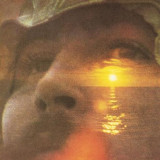
"Bright Future" ist das zweite Solo-Album von Adrianne Lenker, bekannt als Sängerin und Songwriterin der amerikanischen Indie-Band BIG THIEF, auf 4AD. Ihr erstes eigenes Album seit "Songs & Instrumentals" aus dem Jahr 2020 wurde von Philip Weinrobe co-produziert und enstand unter der Mitwirkung von Nick Hakim, Mat Davidson und Josefin Runsteen. Adrianne wagte sie sich ins Unbekannte, fasste sich ein Herz und schrieb ihre bis dato berührendsten Solo-Songs, die sie im Herbst 2022 mit einigen ihrer Lieblingsmenschen aufnehmen konnte. Abseits der Zivilisation und urbanen Einflüssen wagten sich Hakim, Davidson, Runsteen und Lenker ins Ungewisse. Der Co-Produzent und Tontechniker von "Bright Future", Philip Weinrobe, bereitete das Studio vor. Er war schon bei früheren Soloalben Adriannes Partner, aber dieses Mal war es etwas Neues. Adrianne hatte nicht die Absicht, ein Album zu machen. Stattdessen wollten sie die Songs ohne Erwartungen erforschen. Die Geborgenheit und Leichtigkeit des Waldes um das Double Infinity Studio ist ein prägendes Element der Aufnahmen. Das Ergebnis ist, dass "Bright Future" die besten Eigenschaften von filigranen Sounds mit der Spontanität von Field-Recordings vereint. Es gibt Details, die man erst beim zweiten oder dritten Hören entdecken wird und das macht die neuen Songs zu einem ungefilterten Erlebnis und beweist einmal mehr, dass Adrianne Lenker zu den größten Songwriterinnen ihrer Generation gehört. Das Album enthält zudem auch die Originalaufnahme des inzwischen zum modernen Klassiker gereiften Big Thief-Songs "Vampire Empire", der zuletzt sogar in der Playliste von Barack Obama auftauchte - unbewusst gibt der Albumtitel "Bright Future" einen Fingerzeig, wohin sich Adriannes Lenker Karriere als Musikerin entwickeln wird.
Search:solo sounds
Big Crown Records is proud to present the debut full length offering from Les Imprimés, Rêverie. The stirring and ethereal sounds of Les Imprimés have been making fans of anyone who hears them since their first 7" single hit the speakers. Morten Martens is the man behind the band. Born, raised, and working in Kristiansand, Norway, he keeps a low prole while making his heart felt, highly infectious, and unique music. This album is a long time coming for Martens and it is sure to make him a name to be reckoned with. The first thing you notice listening to Les Imprimés is the high level of musician-ship. Martens plays nearly every instrument on the recordings and handles the production and arranging. He has been making records for decades, winning a Spellemann Award (aka, the Norwegian Grammy) in 2006 for producing a HipHop album as well as getting nominations across three other genres. While awards and accolades speak to the level of his talent, this new album really shows who he is an artist on his own terms. Moving away from being a hired gun on the touring scene naturally led him to start doing more studio work. Slowly collecting gear and getting more experi-ence behind the boards he built his own studio on the island of Odderoya and was making a living playing with and recording other people's music. As the story goes, after those sessions would end he would work on his own project into the wee hours of the night. From these late night sessions, Les Imprimés was born and Rêverie began to take shape. However, "it wasn't until COVID, when things locked down, that I was really able to nd the time to focus on Les Imprimés" Morten says about creating and leading his own solo project. "It was a scary time. But I knew I had to do something with it." He took the sum of his inuences, combined them with his own vibe and got busy writing the music, playing the instruments, and singing the songs. "It's soul music, but I don't exactly have the soul voice," Morten explains humbly. "But I do it my own way, in a way that's mine. "It is his sound, his fingerprint, his sensibility, that makes his music hard to put in a box. The album showcases both Martens' range and his ability to make a cohesive album. The lead single "Falling Away" starts with a raw drum break and turns into a lushly arranged tune that paints the picture of love when it slips away. On "Still Here" he professes his resilience through life's twists and turns over a thundering track that puts a new spin on the B side ballad genre. Songs like "You" and "Our Love" mix tones from 60s and 70s Soul with arrangement nods to Doo Wop records while Martens' lyrics and delivery leave you singing the melodies long after they finish. "Love & Flowers" finds Martens in a moment of clarity with a song that ts the niche sub genre of happy break up tunes, the four on the floor track will move the dancefloor or while the message will resonate with anyone who put too much effort into the wrong situation in their lives. However, it is songs like "Muse" and "Chess" that really encapsulate the uniqueness of Les Imprimés as they push the boundaries of genre, one a profession of love for music and the other a cover of an electronic record respectively. Martens' lyrics, emotion, and delivery truly make the whole thing come together and stand out from any of his peers. There's an infectiousness and a pop sensibility in the writing that is done with the utmost class and taste giving Les Imprimés the rare quality of immediate attraction that only deepens the more you listen.
This is a repress of Tycho's second release with Ghostly International to celebrate the 10 year anniversary of this masterpiece, while Ghostly International celebrates its 25th year anniversary. For nearly a decade, Tycho has been known as the musical alias of Scott Hansen, but with the release of Awake - his second LP for Ghostly International - the solo project evolved into a three-piece band. Relating closer to post-rock than ambient soundscapes, the record is situated in the present, sounding more like Hansen than drawing from his influences. This is, in many ways, the first true Tycho record. Following 2011's Dive LP, the San Francisco-based designer toured extensively, and with a full band on stage, his sound coalesced into a percussive, organic whole. Zac Brown (guitars, bass) rejoined Scott on the road for this tour, but it was the particular addition of Rory O'Connor's live drumming that ultimately sent Hansen back to the studio with a more precise vision. "After the tour, I decided that I wanted to capture the more energetic, driven sound of the live show on the next album," Hansen recalls. Bringing musicians into Tycho's creative process was a step towards expanding his own songwriting and advancing the project beyond its current sound. In a cabin near Tahoe last winter, Zac and Scott began fleshing out the structure of the new record, but it wasn't until they set up shop in the hills of Santa Cruz with Rory that it all fell into place. "It crystallized the vision of how the drums would come to the forefront on this record," says Hansen. The sound was much more stripped-down and concise with more organic instruments in the fold. Songs like "Montana" and "Awake" are a departure from Tycho's previous material - unique to the group effort poured into the songs on the new record - while "See" and "Dye" echo ideas from previous works, bridging a middle ground between the old and new. Working with Count Eldridge, who also engineered Dive, the team could fixate on the pulses that Tycho might previously layer under synthesizers and exhume them with distinct bass and guitar patterns. Also known for his design work as ISO50, Hansen's visual and sonic efforts have dovetailed throughout the course of his career. "This is the first time in my life I've dropped everything to focus on one artistic pursuit," notes Hansen. Previous Tycho releases came to fruition when an amalgam of songs were nearing completion, but Awake is where music becomes the focus and true expression becomes the result.
London polymath producer Josh Ludlow, co-founder of the already seminal MAD Records and one half of the dynamic Make a Dance Duo, explores new sonic territories with his inaugural solo EP release on Belfast imprint Nocturne. Embracing his passion for eclectic disco, hypnotic chug, and music tailored for those transcendent nocturnal hours, Ludlow showcases his versatility and distinctive flair on his debut outing.
Leading the charge on Josh Ludlow's debut solo EP is the bass-led 80's influenced odyssey of 'MindwayS.' A sonic journey through contemporary psychedelia, inviting audiences to lose themselves in the sweet spot where boundaries between reality and imagination blur. In 'Touch,' Ludlow ventures into seductive sonic territory, delving into a world of cowbell-laden, slo-mo erotic disco. Live guitar licks sit comfortably shoulder to shoulder with low slung hypnotic grooves and alluring vocals in "Little Love" - perfect for the more discerning european dancefloors.
'Diska Tek!' delivers a fusion of playful cosmic energy, sitting comfortably between Cowley-esque hedonism and the contemporary Scandinavian greats. The track pulsates with infectious rhythms evoking the carefree spirit of the dancefloor while showcasing Ludlow's ability to blend nostalgic influences with modern sensibilities. With its vibrant energy and irresistible grooves, 'Diska Tek' is a testament to Ludlow's prowess in bridging the gap between disco's golden age and contemporary dance music."
Through MindwayS, Josh Ludlow not only introduces his solo endeavors but also marks the resurgence of Nocturne after a short hiatus. This statement intent by the imprint positions it as a platform to continue to champion forward-thinking sounds.
2024 Repress
Queeste emerges with the nocturnal sounds of Haron's Wandelaar, an album exploring his long-term interest in music's talent for inducing and affecting dreams, successfully turning listening into an act of transport, leaving you in the midst of falling asleep, at a junction of dislocation, hazily arriving in a liminal world. In Wandelaar we hear Haron's playful reaction against the confines of dance music, gathering energy from his estrangement from the scene and using it as a means to reorder and interrogate sound. The modest piano takes centre stage, allowing each solo note to becoming fertile and full, suspended and considered, guided by the principles of minimal composers such as John Cage and Ryuichi Sakamoto. Haron delicately translates sparse chords into a cinematic narrative of ascension, conjuring up a 'moony landscape,' grey and desolate from afar, intricately detailed on approach. Haron's Wandelaar is available 6 July 2018 on LP. The vinyl release includes an art print by Fallon Does, who is also responsible for the graphic design of Wandelaar. All tracks written and produced by Haron Aumaj, mastered by Wouter for Brandenburg Mastering. Words by Jo Kali.
Early support by Ben UFO, Call Super, Beatrice Dillon, Kara-Lis Coverdale, Matt Werth (RVNG), Blowing Up The Workshop, Oceanic, Khotin.
Ivan The Tolerable is the alter ego solo project of Middlesbrough based musical wizard Oli Heffernan. Aside from his solo work as ITT, Oli has played in numerous bands over the years including Year Of Birds, King Champion Sounds with members of the Ex, Detective Instinct, and Shrug, and has collaborated with icons like Mike Watts of the Minutemen, and J Mascis of Dinosaur Jr.
Ivan The Tolerable started by accident in 2013 when Heffernan recorded a bunch of songs for his band at the time (Year Of Birds). These were a bit too left-field for a speedy garage band, so Oli decided to put them out on tape himself, and hasn’t looked back since with releases on Up In Her Room, Stolen Body Records and Library of the Occult to name just a few.
We are delighted to bring you our next entry from the Ivan The Tolerable archive reissue series, 2019’s ‘Wild Nature!’ Originally released on CD by Ack Ack Ack Records back in 2019, the album has now been remastered and repackaged, and will be released on super ltd edition orange wax. Here’s a bit about the album in Oli’s own words.
‘Wild Nature was originally recorded sporadically during the first half of 2019. It started life in one house, then I moved and it was finished in another. I remember screenprinting the original CD artwork on the sly at my old job during my lunch breaks and hand-assembled a small run of about 50 that are all long gone. I also remember walking around Albert Park early one morning in thick fog with a field recorder to capture the sounds that were then processed to form 23 Minutes Over Albert Park (condensed to 4 mins for the reissue due to time constraints). I think this was also the last album I recorded vocals on and also the last one I recorded completely by myself - all instruments, recording, mixing, mastering and artwork done by me at home. I know the first and last tracks were recorded as a birthday present for someone but I cant remember much about the other songs i'm afraid - 4 years is a long time in my speedy world. I've been asked a bunch over the years about a vinyl edition of this one - so here it is. Enjoy - especially everything that went through the delay pedal, which is sadly no longer with us.’
Miles Davis created just one studio album with his original sextet: Milestones. And he made every moment count. Pairing with Cannonball Adderley, John Coltrane, Red Garland, Paul Chambers, and Philly Joe Jones, Davis not only laid the groundwork for the modalism that immediately followed but tailored a genuine modern-jazz masterwork laden with performances among the most explosive of his distinguished career. Sandwiched between the more famous 'Round About Midnight and the epochal Kind of Blue, Milestones remains a seminal work of art.
Sourced from the original master tapes and pressed on dead-quiet SuperVinyl, Mobile Fidelity's numbered-edition 180g LP grants each musician their own space amid broad soundstages. Afforded the benefits of a nearly non-existent noise floor and supreme groove definition, this vinyl reissue doubles as a time machine back to the February-March 1958 recording sessions.
Colors, shapes, and dimensions appear in the manner that resembles what you'd glean from behind a studio control room's window. Davis' burnished trumpet is rendered in three-dimensional perspective and seemingly coaxes the band to play with unburdened zest. Coltrane's trademark saxophone teems with lifelike tonality and images with specificity; his solos work in tandem with and against the driving rhythms. Garland's swaggering piano lines? Visualize the keys as he hits full stride, the chords and fills slithering around skeletal frameworks.
Inducted into the Grammy Hall of Fame and selected as a "Core Collection" record by the Penguin Guide to Jazz, Milestones is as famous for its title track – widely considered ground zero for modalism and bolstered by Jones' hallmark "Philly Lick" rim shot – as the players that produced it. The launching pad for many of Davis' improvisational flights, the album teases the explorations Coltrane would soon chase. Davis' own solo work broaches territories that far exceed what he had done in his bop-rooted past. Every song is a highlight.
Take the bravado "Dr. Jackle," featuring a hot-foot pace and bebop strains, or "Sid's Ahead," which continues the album's blues theme while juggling edgy harmonics and inside-out structures. On "Billy Boy," distinguished with an arco bass solo from Chambers, Garland gets a turn in the spotlight and channels the openness practised by one of his heroes, Ahmad Jamal. Even more instructive is the band's reading of Dizzy Gillespie's "Two Bass Hit." Three years removed from the version Davis and company recorded for the trumpeter's Columbia debut, this interpretation demonstrates the extent to which the group had jelled in a relatively short amount of time.
Then there's "Straight, No Chaser," the definitive rendition of Thelonious Monk's signature piece. Coltrane's marbled playing pulls at the tune's borders, Adderley takes liberty with solos, and Davis dances around his mates, at one point quoting "When the Saints Go Marching In" while demonstrating his knowledge of tradition and casting an eye towards the future.
About that future. Garland already had one foot out the door during the Milestones sessions to the extent Davis spells him on "Sid's Ahead." Jones would stick around for a bit longer but soon plot his exit. History proves Davis navigated the changes with visionary aplomb. Yet the chemistry, excitement, and beauty the sextet achieves on Milestones cannot be overstated. This reissue helps put the album in proper perspective – and presents the music the fidelity it deserves.
Dire Straits never made a big to-do about its final run. In classic understated British fashion, the band simply let its music speak for itself. And how. Originally released in September 1991, On Every Street became the group's swan song – a lasting testament to the influence, musicianship, and integrity of an ensemble whose merit has never been tainted by cash-grab reunions or farewell treks. It remains an essential part of the Dire Straits catalog and a blueprint of the distinctive U.K. roots rock the collective played for its 15-year career.
Sourced from the original master tapes, housed in gatefold packaging, and pressed at RTI, Mobile Fidelity's 180g 45RPM 2LP set of On Every Street presents the album like it has always been meant to be experienced: in reference-grade audiophile sound. Recorded at AIR Studios in London and produced by Dire Straits leader Mark Knopfler, it features all of the band's sonic hallmarks – wide instrumental separation, visceral textures, seemingly limitless air, broad soundstages, atmospherics that you can almost reach out and feel. Each element is made more vibrant, physical, and lifelike on this collectible reissue, which marks the first time this 60-minute work has been available at 45RPM speed.
Afforded generous groove space and black backgrounds, the songs from On Every Street burst with nuanced details and vibrant colors. Dire Straits' playing appears to float, their intricate performances organized amid hypnotic, fluid, three-dimensional arrangements. Mobile Fidelity's definitive-sounding set also brings into transparent view Knopfler's finely sculpted guitar lines, expressive tones, and laid-back vocals – as well as the balanced accompaniment from his band mates. Here's a record on which you can hear the full blossom and decay of individual notes, and imagine the size and shape of the studio. It is in every regard a demonstration disc. And it happens to be filled with timeless fare.
Remarkably, On Every Street almost never came to light. Dire Straits initially dissolved in September 1988 after touring behind its blockbuster Brothers in Arms and suffering the departure of two members. At the time, Knopfler professed his desire to work on solo material; bassist John Illsley also explored side projects. But Knopfler's decision in 1989 to form the country-leaning Notting Hillbillies reignited a spark to reconvene his primary band and craft a fresh batch of songs. Six years removed from Brothers in Arms, Knopfler, Illsley, keyboardist Alan Clark, and keyboardist Guy Fletcher teamed with A-list session pros – steel guitarist Paul Franklin, percussionist Danny Cummings, saxophonist Chris White, guitarist Phil Palmer included – to create what still stands as an unforgettable farewell.
The platinum record brings the band full circle in that it returns Dire Straits to a quartet formation; finds the group refreshingly out of step with the era's prevailing trends; and sees Knopfler and Co. knocking out song after song with the deceptive ease of a punter tossing back a pint at a pub. That subtle cool, clever poise, and innate control – signature traits that no other band ever matched – dominate On Every Street. Knopfler's clean, virtuosic six-string escapades unfurl with dizzying melodicism and economical efficiency. Led by his winding fills and focused solos, Dire Straits traverse a hybrid landscape of rock, jazz, country, boogie, blues, and pop strains with near-faultless prowess.
More than any other entry in the group's oeuvre, On Every Street welcomes quick detours down back alleys and into the depths of human souls. What makes it more brilliant is its staunch refusal to cater to commercial expectations or take advantage of prior successes; every passage feels true, every measure echoed in the service of song. It's evident in the humorous satire of "Heavy Fuel," closeted desperation of the witty "Calling Elvis," and shake-and-bake bounce of "The Bug." It pours from the album's darker corners, as on the high-and-lonesome melancholy of the title track and bruised emotionalism of "When It Comes to You."
Hinting at the open-minded approaches and boundless curiosity he'd embrace as a solo artist, Knopfler doesn't limit himself when it comes to style or subject matter. Look no further than "You and Your Friend," a shuffle whose all-inclusive lyrics encourage an array of interpretative meanings. Another of the album's deep cuts, "Iron Hand," comes on as one of the band's most memorable moments – the narrative addressing the abuses of power at the 1984 Battle of Orgreave during the U.K. miners' strike. Given cinematic heft by the expert production, the true-fiction account puts into perspective the richness, poetry, and depth of On Every Street.
"Every victory has a taste that's bittersweet," sings Knopfler on the title track. At least that bittersweetness seldom sounded so damn good on record.
Miles Davis' A Tribute to Jack Johnson is the best jazz-rock record ever made. Equally inspired by the leader's desire to assemble the "greatest rock and roll band you have ever heard,” his adoration of Johnson, and Black Power politics, Davis created a hard-hitting set that surges with excitement, intensity, majesty, and power. Bridging the electric fusion he'd pursued on earlier efforts with a funkier, dirtier rhythmic approach, Davis zeroes in on concepts of spontaneity, freedom, and identity seldom achieved in the studio — and just as infrequently accepted by the mainstream.
Sourced from the original analog master tapes, pressed on MoFi SuperVinyl, and housed in a Stoughton jacket, Mobile Fidelity's 180g LP reissue brings it all to fore with startling realism. Benefitting from SuperVinyl’s nearly inaudible noise floor, superb groove definition, and clean, ultra-quiet surfaces, this 180g LP showcases everything — from the bold tonality of the headliner's white-hot trumpet solos to the decay of crashing cymbals, carry of wiry guitar notes, and echoes of the studio — in reference fashion.
Bristling with exuberance, Davis' high-register passages explode with authority and commanding presence. Around him, a barrage of urgent backbeats, knifing riffs, and supple bass lines emerge amidst black backgrounds. One of the most prominent differences long-time fans will notice is how much more aggressive, immediate, and vibrant the music sounds, with those aspects central to the composer's original desires.
Utilizing wah-wah and distortion, the go-to instrumentalist of the performances— guitarist John McLaughlin — attacks with a nasty edge, slashing style, and vicious streak that allows A Tribute to Jack Johnson< cross the until-then-impenetrable divide between rock and jazz. Davis puts both feet in the former camp and erases any gap. The stories of the record’s creation are nearly as legendary as the sounds within: Two sessions, multiple jams, different sets of musicians (several uncredited), and near-miraculous production perfectionism that made it all appear cohesive.
The least-well-known masterpiece of Davis' career, the 1971 record — seamlessly assembled and spliced together by producer Teo Macero — was a victim of limited record-label promotion. Audiences also didn’t immediately know what to make of its original cover art — faithfully replicated here. In addition, the powers that be at Columbia Records were directing the public’s attention to Miles at Fillmore, a completely different kind of album guided by two keyboardists. A Tribute to Jack Johnson practically lives in a different universe, one from the future. To many listeners who did manage to hear it — among them critic/musician Robert Quine, Stooges leader Iggy Pop, and renowned critic Robert Christgau — it surpassed everything that came before.
Indeed, Davis treated it as a personal manifesto: An opportunity to salute the Black championship boxer admired for his threatening image to the establishment and impeccable taste in clothes, cars, women and music. Davis explains in the liner notes his affinity for Johnson — a stance mirrored by the defiant music, which hits with a prize fighter's force and reflects the graceful elegance with which a pugilist navigates the ring — and closes the album with a Johnson quote read by Brock Peters.
Inspired not only by Johnson but by Jimi Hendrix and Sly Stone, Davis changed his approach and his band. He surrounds himself with a cadre of musicians in their 20s and, in the case of bassist Michael Henderson, a 19-year-old fresh from touring with Stevie Wonder. Henderson gives Davis what he requested: boogie-based grooves that don’t lose shape or direction. Soprano saxophonist Steve Grossman, drummer Billy Cobham, and organist Herbie Hancock adhere to a similar aesthetic that prizes brazenness, innovation, and energy.
In that vein, during a portion of “Yesternow,” Davis segues into a separate performance (which became known in its entirety as “Willie Nelson”) played by guitarists McLaughlin and Sonny Sharrock, bass clarinetist Bernie Maupin, keyboardist Chick Corea, bassist Dave Holland, and drummer Jack DeJohnette. Dig it!
Talking with jazz scholar Bill Milkowski — who himself noted how McLaughlin’s unrestrained style, decibel-forward volumes, and rapid-fire power chords engendered himself to the rock crowd at the same time that his harmonics and syncopation still definitely made him a jazz player — guitarist Henry Kaiser summed up part of the appeal of A Tribute to Jack Johnson as well as anyone, saying: “It’s a jazz record that way way more open than other jazz records at the time, but still not free jazz. McLaughlin’s rhythm guitar playing on ‘Right Off’ — the use of different chords in a rock shuffle than what anybody had used before — was revolutionary.”
And to think that’s just one aspect of a record that contains multitudes. “Never let them forget it.” Indeed.
2024 repress :)
The long-awaited repress of "Baby EP" - Ricardo Villalobos's first solo single on raum...musik under the Villalobos moniker - is finally here. Featuring two tonally and energetically distinct cuts of dancefloor minimalism that are undoubtedly Ricardo. "Baby EP" sounds as cutting-edge as when it was initially released 12 years ago.
From the slightly euphoric and light-hearted atmosphere of 'hansup' (A) to the emotionally charged groove of 'Baby' (B), "Baby EP" travels through a world of intricately layered micro/macro percussions, eloquently programmed synths, and Ricardo's own vocals spread across the frequency spectrum - an added human touch to his usual machine funk. And while rhythm seems to be at centre stage here, in usual Villalobos fashion, both tracks resolve into pure jazzy melancholy. After dragging the listener into a world of (very) human feelings so uncommon in electronic dance music, "Baby EP" makes it very clear you are listening to Villalobos.
Authenticity is important in music culture, at least to those whose relationship with it is a lifelong love affair. As listeners, we instinctively respond to artists whose musical output is an authentic representation of their inspirations, experiences and working methods.
By any measure, Guillaume Metenier’s collaborative Soul Sugar project oozes authenticity. It began in the late 2000s as an outlet for the virtuoso organist and producer’s updated takes on ‘60s and ‘70s soul-jazz and Hammond funk, but over the years it has evolved into something entirely different: a vehicle for classic dub and reggae inspired musical fusions made in collaboration with friends and like-minded musicians. As a result, Soul Sugar albums mix impressive musicianship with great grooves and untold nods to the sounds and artists that have helped shape Metenier’s musical outlook.
This authentic approach and soul-enriching sound is naturally in evidence on Soul Sugar’s firth studio set, Just a Little Talk, which is set to be released by Metenier’s own Gee Recordings label in March 2024. This time round, Metenier’s close circle of musical collaborators includes Blundetto, Samuel Isoard, Yvo Abadi, Jolly Joseph, Jahno, Shniece, Slikk Tim and Leo Carmichael. While many are old friends who have appeared on previous albums and singles, there are some first-time collaborators too.
This familiar-but-also-fresh approach is mirrored by the blend of tracks on offer on Just a Little Talk. New songs and instrumentals sit side by side with a small selection of on-point cover versions – something Metenier has been doing since the inclusion of Jimmy Smith and Dr Lonnie Smith covers on 2009 debut album Nothing But The Truth. Memorable covers since have included ‘Why Can’t We Live Together’, ‘I Want You’ and ‘Never Too Much’, all featuring the honeyed voice of Leo Carmichael.
This time round, the headline-grabbing covers are undeniably special. You’ll find takes on Curtis Mayfield’s ‘Makings Of You’, re-framed as a languid roots reggae song featuring voiced by the returning Carmichael, and Donald Byrd’s ‘Blackbyrd’, which Metenier has brilliantly re-imagined as a fabulous fusion of Studio One dub and Blaxploitation funk.
Yet it’s the album’s original compositions that arguably stand out. For proof, check lovers rock-influenced reggae-soul treat ‘The End of Your World’ (featuring heart-aching roots style lyrics and Junior Murvin-esque lead vocals by Jolly Joseph), the similarly conscious ‘Just a Little Talk’ and recent single ‘Top of My List’– an effortlessly emotive gem marked out by Metenier’s weighty dub bassline and Shniece’s incredible lead vocal.
The original instrumentals, in which Metenier often trades licks and solos with guitarists Slick Tim and Samuel Isoard, are similarly impressive – and, to return to our theme, as authentic as they come. Fittingly, one of these – ‘Tubby’s Ghost’ – was originally written and recorded in 1998 with bassist Patrick Bylebyl, who was then Metenier’s partner in a project called Seven Dub. It is, then, a new cover of one of Metenier’s own tunes – and a pleasingly heavyweight one at that. It delivers a genuinely pleasing conclusion to Soul Sugar’s most true and authentic album to date.
As a composer Martijn Comes has a special interest in timbral music and various musical traditions, with an emphasis on the electro-acoustic history. His works for the carillon were performed live at festivals like Le Guess Who and Rewire. He also released several solo-albums and collaborated with a wide range of contemporary artists like Frans de Waard, Lukas Simonis, Nicoleta Chatzopoulou and Hessel Veldman, with whom he co-produced the album EPoX, published by Bedouin Records in 2020.
Veldman is a veteran of the Dutch musical avant-garde and published several legendary cassettes on his label EXART in the early 80’s. His experimental soundscapes are laced with industrial elements, creating a hypnotic, dark undercurrent of sounds. Besides operating under his moniker Y Create, he was a member of the improvisation group Gorgonzola Legs and kept working intensively with Fluxus artist and Dutch underground cult-figure Willem de Ridder. The home-taping era shaped his free approach to music. His diverse musical practices have been traversing several decades by now and he continues to play music according to his own insights and intuitions.
Because of the emotional and poetic weight of the pieces, reverend Tom de Haan was consulted for this collaborative album. It was the start of a musical exploration and a search for peace, balance and above all freedom. Reaching out to a distant world, a place to come to terms with ourselves. A journey full of obstacles and setbacks. Sometimes persistently moving forward, sometimes doubtful. 'Are there Gods among us or inside us?' The music as a manifest, the expression of an inner struggle.
Throughout the chapters of this album layers of sound and distant voices arise and seem to float on the surface before they disappear again. Swaying on the gentle waves, running ashore, we find ourselves in unknown places. Manifest Exodus is an album for deep listening in the vein of Lustmord, Lawrence English or Rafael Anton Irisarri. It contains 4 rich, immersive pieces with austere drones, ambience, intense sonic textures and an incredible sense of detail to create a multi-layered escape to a better world.
Der Dark-Ambient-Pionier, die stygische Drone-Legende und das fast schon mythische Wesen LUSTMORD durchstößt mit "Much Unseen Is Also Here" einmal mehr den Schleier - die neueste Solo-Veröffentlichung des Künstlers in einer beeindruckenden, 40-jährigen kreativen Karriere an der Spitze der Industrial-Musik. Auf Drängen von Cosey Fanni Tutti und Chris Carter von Throbbing Gristle, Musik zu machen, die seine unverwechselbare Aura einfängt, übernahm Brian Williams 1980 Lustmord und begann mit Sounds zu arbeiten, weil die Musik, die er hören wollte, einfach nicht existierte. Lustmord veröffentlichte 1989 sein drittes Album "Heresy", das zu einem Meilenstein in der Industrial-Szene wurde und heute allgemein als Ursprung des Dark-Ambient-Genres gilt. 35 Jahre später führt Much Unseen Is Also Here" das Vermächtnis von Heresy" fort und knüpft an dessen fesselnden Erzählbogen an. "Much Unseen Is Also Here" besteht aus drei verschiedenen Teilen und ist dazu gedacht, in einer einzigen, ununterbrochenen Durchgang angehört zu werden; es entführt den Hörer in eine kompromisslose Parallelwelt, die nur in der Musik existiert, bevor es ihn am Ende für immer verändert wieder hinauswirft. Lustmord, der seit 1994 in L.A. lebt, hat auch als Komponist und Sounddesigner an der Musik für ikonische Film- und Fernsehproduktionen mitgewirkt, darunter "The Crow", "Strange Days", "From Dusk Till Dawn", "Underworld" und in jüngerer Zeit die FX-Serien "Fear The Walking Dead" und "First Reformed"von "Taxi Driver"-Autor Paul Schrader aus dem Jahr 2017. Immer noch entschlossen, die Grenzen von Sound, Genre und Medien zu erweitern, hat Lustmord auch zu den Soundlandschaften von Videospielen wie Assassin's Creed, League of Legends und, passenderweise, dem von H.R. Geiger inspirierten Survival-Horror-Spiel Scorn von 2022 beigetragen. Other Woes Are Yet To Come Edition (single colored (pink) vinyl, ltd to 220 copies ww)
Bringing to life intensely personal memories of her native County Derry and the
people, places, and customs she holds closest to her heart, Cara reveals a new
found freedom to express herself within the tiniest of details and life's larger
mysteries, leaving a profound impression.
Originally written for entirely personal reasons and without an intention to be
shared publicly, Cara's collection of poetry didn't resist the pull to be set to music
for very long. However, allowing the process of writing and recording to unfold
unconstrained by time and pressure has resulted in the finished album exceeding
expectations.
Comprising ten tracks, "Coming Home" was produced and recorded under the
expert guidance of long time musical partner Sam Lakeman and its sonic
character was brought to life with mixing by multi- Grammy winning producer/
engineer Kevin Killen, known for his work with music legends such as Kate Bush,
David Bowie, U2 and Peter Gabriel. The album marks a return to the singersongwriter style she and Sam first explored on her first solo recordings over 23
years ago, sitting within an original and contemporary soundscape. Significantly,
this is also the first of Cara's releases comprised entirely of original material.
Hailing from an exceptionally strong cultural background in the North of Ireland
and with a profound connection to her home- place and people, Cara's "Coming
Home" succeeds in distilling her reflections and feelings into compelling and
highly emotive pieces.
* Press/Publicity/Highlights:
»Other Rooms« is an uncompromisingly adventurous and engaging listen. It manages the rare feat of remaining concise while brimming with detail and inventiveness.
Ten years into a multifaceted career in experimental sound, Belgium’s Adriaan de Roover presents »Other Rooms«, his second solo album and a product of the thoroughly unexpected things we all experience, from societal freeze to the dissolution of individual relationships. Originally recorded for a performance with Fennesz at Église Notre-Dame de Laeken in 2020, »Other Rooms« was reworked into its final form in 2023. De Roover notes an inspiration from »looking at different versions of a life, sitting in a space between them; a constant focus on those alternate things... What if, what if.« It is introspective music informed by a desire for connection to oneself, to others, and to the boundless scale of everything else.
»Other Rooms« is Adriaan’s second outing through the acclaimed Dauw imprint, which is also the home to Midori Hirano, Dylan Henner, H.Takahashi, Lieven Martens and Taylor Deupree. Stepping back from rhythm-oriented motifs, this latest work is a concise but varied collection of weightless melodies and expertly sculpted, computerized soundscapes.
The Knife’s Olof Dreijer continues his new adventure as a solo producer with a three-track EP, also marking a unique sonic chapter in his work.Olof has been pushing the borders of electronic music for two decades, both as a part of The Knife and with the secret pseudonym Oni Ayhun - releasing music that traverses experimental avenues, exploring themes surrounding gender.
The Coral EP draws inspiration from the lively steel-drum experiments featured in last year's "Souvenir" EP with Mt. Sim
Vibrant compositions and distinct melodies create an ambient progression where electronic and acoustic sounds delicately dance together, forming friendships and blending seamlessly, reminiscent of white magic.
Olof has recently co-produced several tracks on Fever Ray’s critically acclaimed 2023 album “Radical Romantics”, produced Tunisian multi-instrumentalist and composer Houeida Hedfi’s debut album “Fleuves De L'âme”, as well as helped create music with Planningtorock and Zhala.
The ever poignant yet exceedingly elusive Chorg Dorgon speaks on the new album by Charles Moothart, entitled Black Holes Don’t Choke: “For the sake of clarity, and its clarity that we seek, Charles has been a pillar of our musical experience since he began playing eons ago in the various projects and countless albums he has contributed to. Charles is a musician who has been constantly on the road for years playing in Ty Segall’s Freedom Band and Fuzz. When there has been a rare time away from those engagements especially in the post-pandemic scramble to catch up world of gigs and tours, he has been spending all of his time in his laboratory figuring out how to synthesize all of the info he has collected and musical ideas he has developed in the past few years since the last CFM record and subsequent shows for this new solo work. Just before the pandemic started, he was out playing solo shows in a project that revolved around an MPC sampler, just to give an example as to the wideness of his explorations. His result is Black Holes Don’t Choke. Love songs for the apocalypse. A prayer toward optimism amid chaos. A plea toward nature. The themes on this album are the themes of today. Charles appeals for us to visualize evolution. And with a signature, the music sounds exactly as you want it to. It sounds like Charles Moothart’s music only more evolved and with greater focus and direction. With greater textural dynamic and more sonic variation and realization, but never sacrificing the insane riff that he is clearly the master of. He gets to the point on this record. He is presenting a voice you can understand and rely on as you make your own journey into it. Create your own meanings. The record now belongs to the world. Because we all start a thought as that which is beginning-less and endless and at some certain point it becomes its own thought, takes it owns shape and becomes itself, separate from the thinker, separate from the observer. alive in the ether!”
The time has come and my first solo album sees the light of day. I made the songs on it formyself.
The desire to write, experiment and play with sounds has never stopped. The artists you will hear on
this record, some are real life friends of mine and others are people with whom I have never spoken
a personal word to this day. I‘ve been friends forever with artists like Brixx, Farina Miss and of course
Mr. David A. Tobin for years. Andre Espeut and I have maintained an online friendship for a very long
time.
I hired all the other artists from the vastness of the Internet. Some of the artists didn‘t know the
parts of the other artists involved. In the end I puzzled all the pieces together and created a fine dish
with beautiful ingredients from all over the world. I know that an album like this might have a hard
time in this digital world and of course I don‘t have the marketing budget of a major release. But
time will tell and well produced music will find its ways.
Creating music has had a positive influence on my entire life, even though criticism and other
obstacles require you to build strong armor. The good news is when you grow older, many things are
no longer as important to you and you set priorities, focus more on the good things and good people
in your life. I hope you have fun with my music and my people and by listening and spinning my
record you will help to spread the good vibes.
It‘s truly a GOOD TIME FOR GOOD TIMES…
Following 2022' acclaimed 'Topical Dancer' album with Charlotte Adigéry, here comes 'Letter To Yu', the debut solo album by Bolis Pupul : produced by fellow Belgians Soulwax & released on DEEWEE/Because Music. Exploring many themes including loss, grief, ancestry, culture, belonging/not belonging and identity. It's no coincidence that Bolis Pupul's music sounds the way it does. Born in Belgium to a Chinese mother and Belgian father and raised in the super-cool creative city of Ghent, Bolis' music is a joyous cross-cultural assemblage. Mixing widescreen electronica with the warm-hearted and wonky naivete of Belgian New Beat, Bolis' singular sonics are at once playful, emotive, unrelenting and tender. The real key to unlocking Bolis' musical secret, however, is that conversation he has between his Eastern and Western roots. The creation of the album is built around Bolis' trip to Hong Kong earlier this year, made to reconnect with his late mother's roots.
- A1: Fred Und Luna - Intro (Future Sounds Of Kraut 2) (2 47) * Exclusive
- A2: Sankt Otten - Angekommen In Der Letzten Reihe (6 30)
- A3: Ghost Power - Vertical Section (2 14)
- A4: Fred Und Luna - Monotonikum (Edit) (4 46)
- A5: Formant B - Kater (Single Version) (4 24)
- B1: Thomas Fehlmann - Permanent Touch (3 23)
- B2: Roman Flügel - Rules (4 50)
- B3: Sordid Sound System - It's About Time (4 37)
- B4: I Cube - Basso (4:15) * Exclusive
- C1: Lucas Croon - Krautwickel (7 22) * Exclusive
- C2: Minami Deutsch - Your Pulse (5 22)
- C3: Gilgamesh Mata Hari Duo - Johan (4 46) * Exclusive
- D1: Kosmischer Läufer - Spargelspiegel (4 43) * Exclusive
- D2: Young Solo - Twin Shadow (3 51) * Exclusive
- D3: Schlammpeitziger - Runzreich (4 04) * Exclusive
- D4: Halwa - Schmetterling (5 45) * Exclusive
- D5: Fred Und Luna - Outro - Auf Wiederhören 2 (1 52) * Exclusive
Wir haben so großartiges Feedback zur Future Sounds Of Kraut Vol. 1 bekommen, also kommt hier Volume 2: 17 moderne Kraut-Elektronik-Tracks (9 davon exklusiv und vorher unveröffentlicht) inspiriert von Kraftwerk, Can, Neu!, Cluster, Harmonia, Klaus Schulze und vielen anderen. Kuratiert und zusammengestellt von Compost-Künstler Fred und Luna. Die Collage auf dem Cover wurde - wie schon auf Vol. 1 - exklusiv von der fantastischen Künstlerin Norika Nienstedt aus der Kraut-Metropole Düsseldorf gestaltet.
Gar nicht einfach oder im Grunde unmöglich, den Begriff "Kraut" stilistisch zu beschreiben. Dennoch begeben sich Compost Records und Fred und Luna auf eine Zeitreise, um die unterschiedlichen Elemente deutscher elektronischer Musik der 1970er- und 1980er-Jahre und ihre Auswirkungen auf die neuere deutsche und weltweite Musikszene zu entdecken.
Nach dem großen Erfolg von Volume 1 wurde umgehend ein Nachfolger gestartet, der stilistisch an seinen Vorgänger anknüpft und darüber hinaus - da dies eine der Grundideen der Reihe ist - das musikalische Spektrum Schritt für Schritt um neue krautige Elemente erweitert. Auf Volume 2 finden sich deshalb nun auch ein paar cluborientierte und experimentelle Tracks.
Compost und Fred und Luna wünschen viel Pläsier beim Krautifizieren!
Format: - Schwarze 2LP mit Content-Sticker inkl. 9 exklusiven/unveröffentlichten Tracks
DJ Quotes:
- "A great compilation with a unique approach!" - Hans Nieswandt
- "Amazing contributions from all the artist involved ! Love this album ! Thank you Fred & Luna !" - Peter Kruder
- "Very interesting compilation ... Great music" - Laurent Garnier
- "Superb in every way" - Nick Warren
Shay Hazan radiates with musical diversity on "Wusul", His second solo album on Batov Records. Acclaimed Tel Aviv bassist, band leader, composer and producer, Shay Hazan emerges into the limelight with his highly anticipated second solo album "Wusul". This groundbreaking musical odyssey artfully melds the enchanting sounds of Gnawa music, spiritual jazz, hip hop grooves, and electronic production, with a rich tapestry of Middle Eastern and African influences.
dog-rose is an exploration of musical articulation and vocalization. Its themes can be felt gnawing at the surface of the world: people's clumsy everyday intimacies, the neverending pursuit of self-knowledge, God. Of foremost interest was the unreliability of memory as a tool through which we experience life, yielding an attempt to dismantle it into its minute elements.
"I arrived at a combination of diary entries in the form of field recordings, various, mostly acoustic, instruments through which I invoke different modes of memory // its associative functions, and my own voice, more an agent of introspection than any conventional vocal. The lyrics were originally written as pop-songs, but committed to the form of contemporary music they appear as field recordings made to be sung. They are field-songs."
"To me, musicmaking is a dialogue with sounds where I seek to understand their character and how to handle them. This is a performative process and admittedly also a projection – what I am actually discussing is myself. The recording took place at a remote cabin in the forests of Tribeč. Most of my work is created in isolation, regardless of the social distancing and lockdowns of the outside world."
Tomas Pristiak is a member of Tante Elze, Pain Palace (FKA Weltschmerzen), and dog-rose is his first solo album and the 11th release by contemplative label Weltschmerzen.
Red Vinyl[20,97 €]
REKORDER is "a kind of retrospective of myself", says M.RUX about his second, long-awaited solo album. For over 10 years, Marten Rux aka M.RUX appears as a DJ, producer, editor, remixer and multi-instrumentalist all over the world and has developed an idiosyncratic sound that opens up subtle fields of tension: M.RUX mixes a sound between experimental sound design and hooklines that stay in your ears forever. Between wild percussion and contemplative harmonies, between ecstasy and meditative calm. In his DJ and live sets, M.RUX usually steps up to the controls with a smile, discreetly bobbing his head, while the audience goes wild. He circumnavigates clichés with trustworthy certainty and develops his very own guiding threads in his selection beyond BPM or genre straitjackets. One constant is his warm, often stoically slow kick drum, which holds all that playfulness together. REKORDER is a manifestation of this typical M.RUX sound. Similar to his concept album "Vermonische Melodien" from 2020 (on the Pingipung label), the artist's curiosity is directed towards the musical visions of the past. When new music technology projected great visions of the future and when new sounds had not yet solidi ed into clichés. REKORDER refers to the recording device, spelled in a German way, because most of the recordings were made in Germany (and in England as well). Phonography is a miracle that has only been around for 150 years: Technology gifts upon us prosthetics for remembering sound. Every recording is a process, and every playback a new performative act. Recordari (Latin) is a beautiful word. It literally means to take something to heart (cor) once again (re-). This doesn't just refer to remembering, but also to a ponderous, loving, sometimes doubtful contemplation. It is a perfect headline for M.RUX’ approach to processing sound. REKORDER draws deeply from its own archive, which has ourished quite splendidly during the pandemic. Multi-instrumentalist M.RUX mixes his own recordings of banjo, guitar, auto-harp, synths, percussion and jews harp with fragments from sessions with friends that have accumulated since 2020. They unfold in the process of re-listening in the mix and transform into a solid musical tapestry. A typical gesture for this album? M.RUX bows deeply to the history of pop music - especially the blues and its melancholy, coolness and shuf ing groove. The harmonic framework of the album is based on blues scales throughout. Instead of conveying blue emotions via lyrics or the tone of the voice, as the original genre does, the synthesizer takes on this role on REKORDER. With his sound design, M.RUX achieves an ecstatic sorrow in his melodies, this gurgling portamento that is reminiscent of R&B (or even the ingenious title melody of the series "Bojack Horseman”). If voices are heard on REKORDER, then as hypnotic fragments that guide us through the groove as conjunctions: "Because...", says the voice in the track of the same name. That's enough. There are no lyrics, no literal weariness, no love-songs or storytelling, REKORDER processes all of this into timbres and groove as vessels for the album’s individual, contemplative melancholy. Never forgetting, with a gentle smile, to swing a leg.
Black Vinyl[17,61 €]
LIMITED RED COLOURED VINYL!
REKORDER is "a kind of retrospective of myself", says M.RUX about his second, long-awaited solo album. For over 10 years, Marten Rux aka M.RUX appears as a DJ, producer, editor, remixer and multi-instrumentalist all over the world and has developed an idiosyncratic sound that opens up subtle fields of tension: M.RUX mixes a sound between experimental sound design and hooklines that stay in your ears forever. Between wild percussion and contemplative harmonies, between ecstasy and meditative calm. In his DJ and live sets, M.RUX usually steps up to the controls with a smile, discreetly bobbing his head, while the audience goes wild. He circumnavigates clichés with trustworthy certainty and develops his very own guiding threads in his selection beyond BPM or genre straitjackets. One constant is his warm, often stoically slow kick drum, which holds all that playfulness together. REKORDER is a manifestation of this typical M.RUX sound. Similar to his concept album "Vermonische Melodien" from 2020 (on the Pingipung label), the artist's curiosity is directed towards the musical visions of the past. When new music technology projected great visions of the future and when new sounds had not yet solidi ed into clichés. REKORDER refers to the recording device, spelled in a German way, because most of the recordings were made in Germany (and in England as well). Phonography is a miracle that has only been around for 150 years: Technology gifts upon us prosthetics for remembering sound. Every recording is a process, and every playback a new performative act. Recordari (Latin) is a beautiful word. It literally means to take something to heart (cor) once again (re-). This doesn't just refer to remembering, but also to a ponderous, loving, sometimes doubtful contemplation. It is a perfect headline for M.RUX’ approach to processing sound. REKORDER draws deeply from its own archive, which has ourished quite splendidly during the pandemic. Multi-instrumentalist M.RUX mixes his own recordings of banjo, guitar, auto-harp, synths, percussion and jews harp with fragments from sessions with friends that have accumulated since 2020. They unfold in the process of re-listening in the mix and transform into a solid musical tapestry. A typical gesture for this album? M.RUX bows deeply to the history of pop music - especially the blues and its melancholy, coolness and shuf ing groove. The harmonic framework of the album is based on blues scales throughout. Instead of conveying blue emotions via lyrics or the tone of the voice, as the original genre does, the synthesizer takes on this role on REKORDER. With his sound design, M.RUX achieves an ecstatic sorrow in his melodies, this gurgling portamento that is reminiscent of R&B (or even the ingenious title melody of the series "Bojack Horseman”). If voices are heard on REKORDER, then as hypnotic fragments that guide us through the groove as conjunctions: "Because...", says the voice in the track of the same name. That's enough. There are no lyrics, no literal weariness, no love-songs or storytelling, REKORDER processes all of this into timbres and groove as vessels for the album’s individual, contemplative melancholy. Never forgetting, with a gentle smile, to swing a leg.
If I Could Only Remember My Name was the debut solo record from David Crosby. Recorded in 1970 after the passing of his girlfriend Christine and released in February of 1971, the album explores themes including loss and disorientation. The album features a who's who of contributors from the San Francisco Bay area including Paul Kantner and Grace Slick of Jefferson Airplane, Jerry Garcia of the Grateful Dead, and Santana, and his cohort from Los Angeles including Graham Nash, Neil Young, and Joni Mitchell.
The album has attained a cult status throughout the last 50 years, hailed for its spooky, psychedelic, and truly unique sounds.
AllMusic gave the album 4.5 stars, with reviewer Stanton Swihart writing: "With his ringing, velvety voice — the epitome of hippie crooning — and inspired songwriting, he turns If I Could Only Remember My Name into a one-shot wonder of dreamy but ominous California ambience."
All the hallmarks of a top-notch Analogue Productions reissue are here for you to savor: Mastered directly from the original master tape by Bernie Grundman and cut at 45 RPM. Pressed on 180-gram vinyl at Quality Record Pressings, and housed in tip-on old style gatefold double pocket jackets with film lamination by Stoughton Printing.
Felix Machtelinckx is a singer, composer, producer and lyricist from Belgium. Featuring an array of film scores, dance soundtracks, pop, folk and electronic music, Felix's music resonates with a familiar, almost nostalgic patina, applied with a distinctly crooked touch. Through artistic collaboration, coaching and production, Felix has cut a dash in the pop and indie cult scenes of Belgium, especially with his band Tin Fingers, who are feted as one of the most promising indie acts of the moment. Night Scenes, Felix’s solo debut is, in contrast to his other work, more humble and less traditional, roughly hewn from a series of ambient soundscapes, earthy textures and playful structures. Felix’s voice, normally the flagship of his music, becomes more of a distant memory, an indistinct emotion feathered throughout the music. Many lyrics are improvised, sometimes unintelligible, conjuring haunted, uncertain undertones. Similarly, the album is innately peripatetic to the core, being created, written and recorded in Lithuania, Belgium, France, mastered in the US, and finally released in the UK. In the first instance, some of the tracks were created for the contemporary dance piece Doggy Rugburn by Brandon Lagaert of Kaiho and Peeping Tom; others were created enigmatically for a film that never surfaced; while the remainder are the product of more personal work and research. As Felix began to collect and review these disparate parts, the concept of a unified album began to evolve. With 'night' featuring as a suitably dark leitmotif, or backdrop to a series of emotionally fraught 'scenes', each track depicts a form of trauma, locked within the confines of the mind. Felix observes: "Imagine yourself in a dusty old room unable to sleep. Emotions, fears and other demons haunt your mind. This in-between state makes your mind reach for other worlds. This is Night Scenes." For the most part, Night Scenes was created using a variety of old, and rare, analogue equipment. With almost no digital editing, the record was primarily mixed through a vintage cassette desk, giving it a nostalgic character with a noisy undertone. Felix fully embraced the synergy of his emotional themes and retrograde gear, enthusing: "A lot of textures were created on an old Soviet synthesizer that causes a blackout when you hit the lowest note on the keyboard. The dysfunctionality of the synths was often used to create rhythm and texture." This unnerving ability Night Scenes has to comfort and confound the listener is summed up by Jordan Hudson, House Of Media producer, and music podcaster, when he concludes: "Some songs on the album have this sort of fleeting comfort and tonality, which dissolves into a subtle rhythmic/structural or modulated disarray the moment I settle into them - this really fits with my experience of the night .. This record is a winner, and will be something I'll listen to a lot from here on
French pianist Dorian Dumont is an exceptionally gifted, Brussels-based jazzman and member of electronic experimentalists, ECHT! In 2021, he released his debut solo album 'APHEXionS' - a challenging exercise of solo piano focussed entirely on the music of one of the most influential and important artists in contemporary electronic music, Richard James, aka Aphex Twin. Dumont's sophomore album, 'to the APhEX', released 23rd February via W.E.R.F. Records, continues that fascination with his musical hero and acts as a musical love letter of sorts - a groundbreaking experience, where the enchanting world of classical piano collides with the electronic brilliance of Aphex Twin. Richard James' music serves as a starting point for Dumont's musical developments which are sometimes composed and often improvised, letting him find his playing field around the concepts and the poetics of the genius of electro music. Contrary to what one would expect, there are no electronics involved but Dumont carefully transcribes a wide selection of Aphex Twin's music to the grand piano, giving the songs a whole new dimension. Dumont starts from the melody lines and rhythmic structures found in the original tracks but builds on them, deconstructing pieces and adding his own improvisations. Lovingly recreated, the songs take on a completely new dimension, and it exposes both the genius and musicality of Aphex Twin and Dumont himself. "Aphex Twin is a fascinating artist and character. At first, I started transcribing his pieces just to understand them. I then sat on my acoustic piano for the pleasure of hearing these pieces that I loved so much only to realize that in the end I was improvising, I was playing. In short: I was having fun. That's how this project was born: through pleasure and games. The challenge then was to develop the concept of this project to find my own playground and my own responses around the musical principles of Mr. Richard James, in order to make this project a celebration on my own terms."
Always curious about new sounds and cultivating eclecticism, 'to the APhEX' stays truthful to the minimalistic aesthetics from the original tracks. From the unruly, emotionally stirring '180db_ 130' to the simple beauty of 'Windowlicker', Dumont is part of a new generation of musicians who have no intention of sticking to the rules. Dumont dances across the keys, perfectly capturing the mood and feeling of Aphex Twin, where classical meets electronic. Elsewhere, 'PAPAT4 155[pineal mix]' is stripped to the core showcasing Dumont's ingenuity, while 'Avril 14th' and album finale '#3 (Rhubarb)', unfolds with delicate piano, evoking a sense of tranquil introspection.
Born in Montpellier where he studied classical piano at the Conservatory, in 2005, Dumont achieved the highest distinctions in piano and chamber music. With a broadening interest in jazz and improvised music, he moved to Brussels in 2008 and after studying in the Jazz sections at the Royal Conservatory of Brussels then at the Koninklijk Conservatorium van Brussel, he obtained his master's degree in 2013. In recent years, he has played an integral part of the critically acclaimed four-piece 'ECHT!' which breaks the boundaries between jazz, electronic music and hip-hop. In addition, Dumont also participates in numerous other projects across various genres including 'Edges' with Guillaume Vierset, Jim Black, and Anders Christensen or 'Easy Pieces' with Ben Sauzereau and Hendrik Lasure. He also collaborates with bands including Juicy, Vaague, Kuna Maze, and Pol Belardi's Force, among others.
[a] A1. 180db_ [130]
[d] A4. PAPAT4 [155][pineal mix]
When Mick Mars stepped back from touring with Motley Crue - the band he co-founded more than 40 years ago - following their massive summer 2022 Stadium Tour, it seemed like the end of an era.
It was really the beginning of a new one...
The legendary guitarist, whose riffs, solos and overall devastatingly heavy sound powered the L.A. icons through four decades of world-conquering, multi-platinum sonic mayhem is, as he demonstrates on his debut solo effort, still a serious force to be reckoned with. Only now, listeners are reckoning with more Mars than ever before. "When it comes to my playing, there's the Motley side and the Mars side," the guitarist says. "Either way, I always have a very clear vision of what I want to do."
On the aptly- titled 'The Other Side of Mars', fans get that vision in its full, multifarious glory. To be sure, there are plenty of characteristically riff- tastic, tough-as-nails hard-rock anthems (the rampaging "Loyal to the Lie," the deep-in- the-pocket groove-rocker "Ain't Going Back," the hooky and melodic "Right Side of Wrong") to be heard on the record. But 'The Other Side of Mars' also shows the 71- year- old guitarist heading into new and uncharted territory, tearing through caustic, modern metal ("Broken On the Inside"), conjuring gothic- tinged soundscapes ("Undone"), digging into anguished, slow- burning power balladry ("Killing Breed") and unspooling bluesy, cinematic instrumental workouts (the album- closing guitar showcase, "L.A. Noir"). The music throughout the 10- track collection, meanwhile, is otherwise studded with slide guitars, violins, violas, keyboards, glitchy freak-outs and all manner of sonic surprises
Returned to us from early 90s Japan are the holy holy sounds of Ghost. Their collective, clearly inspired by various forms of transcendental music throughout history, created a new syncretic psychedelia with these albums, mixing the texture and vibe of multinational forms of traditional music, with strummed antique stringed instruments and the haunting wail of a recorder on top of their heavy beats and guitars. The considerable depth of this approach was explored through 2014 over another five Ghost LPs, as well as the further explorations to the present day of leader Masaki Batoh, as a solo artist and with The Silence, Damon & Naomi, Helena Espvall and most recently, nehan. These first three Ghost titles were originally released by P.S.F. on CD in 1990, 1992 and 1994, respectively, radiating enigma and energy in palpable waves with their original sound. After the acclaim that greeted Drag City"s 1996 US release of Lama Rabi Rabi, we quickly reissued all three on vinyl - and they quickly went out of print! At which point, Ghost had Snuffbox Immanence and Free Tibet ready to go. And then, Hypnotic Underworld. And then, and then . . . . Now, it"s been 25 years since they were last offered on vinyl. In the twenty-year sweep of Ghost history, these first three releases qualify as primitive early Ghost - sort of like a German Os Mutantes (or perhaps a Brazilian Amon Düül). The subterranean presence of a diversity of progressive/avant classic rock influences (Pink Floyd, Incredible String Band, Captain Beefheart, Scott Walker, Led Zeppelin, Popol Vuh, Third Ear Band, to name but a few) provokes further synthesis, making for an entirely new meditation on the traditional order of psychedelic music. The first two studio albums, each one an iteration of Ghost"s unique lysergic folk music, were followed by the monolithic "live in various places" happening of Temple Stone, which raised the trippiness levels considerably. But this was only the end of the beginning . . .
Black vinyl LP. Debut album by striking experimental duo featuring Aboriginal songman Fred Leone. Mixed by Jake Miller (Björk, Arca), mastered by Alex Wharton (The Beatles, MBV). RIYL: Autechre, Arca, Björk. Yirinda means 'Now' in Butchulla language. Australian duo Yirinda combine ancient Aboriginal language with sublime modern production. Fred Leone and Samuel Pankhurst's music invokes thousands of generations of story and culture, while emerging as something entirely new. Fred is one of three Butchulla songmen - a song and language custodian for the Butchulla people from the Fraser Coast region of Queensland, including K’gari (formerly known as Fraser Island). He sings the songs on this album in the endangered Butchulla language, now spoken by only a handful of people. Samuel is an internationally acclaimed contrabassist / producer known for his kaleidoscopic harmonies and polyrhythmic mastery. Their self-titled debut album was recorded in Brisbane by Samuel, then mixed in London by Jake Miller (Björk, Arca, Yves Tumor) and mastered at Abbey Road by Alex Wharton (The Beatles, My Bloody Valentine). The album sets Fred’s powerful vocals against striking experimental soundscapes, rich with strings, horns, double bass, synthesizer, piano and percussion. Every arrangement began with Fred's voice alone and from there sounds and systems were constructed. The result is otherworldly, a timeless art music outside Western convention. Yirinda have performed at the Australian Art Music Awards, Vivid Festival, Golden Plains, Dark Mofo, Supersense and elsewhere, and been covered by ABC Radio and NME Australia. Fred has toured Europe as a member of The Black Arm Band, and as a solo artist supporting Ash Grunwald. He founded Australia’s first Aboriginal hip hop label Impossible Odds in the late 2000s. Samuel has performed with the Brodsky Quartet and is a member of the Australian Art Orchestra. He has scored extensively for contemporary dance, and his studio work covers everything from the Bluey TV show to Hiatus Kaiyote
Textures and sounds spanning from the virtues of 90’s grunge/alt-rock to renaissance-like melodies bound together with the opposites pop-music structures sliced with contemporary collage techniques. On Mija Milovic’ second solo album “Still Life” (Escho), there is easily no conformity to constraints of simple boxes, instead it focuses on emoting with intonation, stress, rhythm and pace. It's about tender and aggressive transformations, figuring out who you are and how to be in the world. The lyrics tell lived stories of locating magic in the mundane, being swept away by the energy of fellow humans and holding space for each other in a community, feeling estranged in the urban landscape, and learning to let go. Mija Milovic is a Danish/Montenegrin musician, composer and producer based in Copenhagen. She has a background in theatre, performance, alternative notation and improvisational music creation. With several release under her own name she is also member of the rock band SLIM0 and is a part of various other collaborative.
Musique Infinie is the collaborative project of Manuel Oberholzer a.k.a. Feldermelder and Noémi Büchi.Their album »Earth«, released through the Hallow Ground label, is based on a spontaneously composed live score for Alexander Dovzhenko’s groundbreaking 1930 silent movie »Zemlya« (»Earth«) created for the 24th edition of the VIDEOEX festival for experimental film.
Frequently cited as a masterpiece of early 20th century filmmaking, the movie deals with the collectivisation of Ukraine’s agriculture. The Swiss duo complemented it with atmospherically rich electronic soundscapes that are both deeply immersive and highly evocative. As a stand-alone music release, the two-piece »Earth« album captures the essence of Büchi and Oberholzer’s collaboration that is marked by mutual trust and musical versatility that puts them in a state of »togetherness trance,« as they call it.
Oberholzer has been highly productive as a composer, musician, sound designer, and installation artist in recent years, releasing a slew of solo albums as well as a variety of collaboration records with artists such as Sara Oswald and Julian Sartorius. Büchi has recently debuted as a solo composer and sound artist working with electroacoustic techniques to create a »symphonic maximalism for the end of the world,« as she dubs it.
Both are prolific and versatile artists with a penchant for working conceptually, however their collaboration as Musique Infinie is an improvisational and thus by design an intuitive one.
Their sessions start with an exchange on emotions and thoughts rather than theoretical questions or aesthetic debates. When they get to work—often for several hours—they rarely talk.
They approached »Earth« the same way, improvising freely together and using only a few select samples from the film’s original score in the process. Their open-ended approach is marked by an aesthetic ambivalence that perfectly corresponds with the movie’s own inherent contradictions.
Dovzhenko approached his socio-political subject with poetic imagery and philosophical rigour, juxtaposing notions of traditionality with the depiction of modernity.
Büchi and Oberholzer accordingly work with motives that at o ce seem anthemic and elegiac, working with sounds and musical motives that evoke a sense of familiarity in one moment before transforming into something futuristic and uncanny in the next. Their score for »Zemlya« is not to be understood as a mere interpretation of the movie, but rather a re-narration or even re-negotiation of its aesthetic and emotional qualities under their very own terms. »Earth« is an album that concisely depicts what is at the core of the duo’s musical partnership
2023 Repress
Frank Maston’s Tulips is a sample-ready film score to the best 70s movie never made. Originally a super-limited self-release on his Phonoscope label in late 2017, Tulips has already become incredibly sought-after. Be With were introduced to Maston by mutual friends Aquarium Drunkard and it didn’t take long before we decided this modern classic deserved a reissue.
Inspired by the deep-grooving soundtracks of Italian cinema - think Morricone, Umiliani and Alessandroni - Maston conceived the entire Tulips project as a continuation of these revered works. Frank designed the artwork and made two 16mm films to accompany the music: “It wasn’t just the LP… it was kind of a whole vibe I was trying to create. Not really trying to emulate the things that influenced me but more trying to make something that could sit alongside those records on a shelf. I’m still very proud of the project.”
There’s a distinct library music feel too, with wiry organ, spacey keyboards and loping 60s guitar hinting at KPM and DeWolfe. Like the best library music, Tulips creates a cinematic universe through sound alone, evoking moving images in the listener’s technicolour imagination. It turns out that was accidentally on purpose: “I was discovering a lot of library music for the first time… listening to a composer’s entire catalog or finding all this obscure stuff. I wasn’t entirely conscious of the influence until I started making this music and realized I was channeling the vibe. That’s when I began focusing more on weaving melodic themes throughout the record to make it function more like a soundtrack”.
Tulips was recorded between 2015 and 2017 in a small studio in a village called Zwaag in Holland, during downtime from Frank’s touring duties with Jacco Gardner’s band. “Tulips” comes from the title of the very first demo he made in Holland, it was the first thing that came to mind. Makes sense.
Recording in Europe with some very European influences in mind, Frank wanted to eschew any American influences. But we can still feel the studio wizardry of the likes of Brian Wilson and Harry Nilsson in there somewhere. A psychedelic bedroom-pop song-cycle, full of hypnotic hooks and dusty drums, Tulips manages to sound charmingly homemade yet wholly widescreen.
Dreamy opener “Swans” is an exquisite soul instrumental and recalls the soft-psych of Koushik, which Be With loves of course. Tropicalia influences abound in the cool and breezy “New Danger” and the KPM-references are loud and proud on the lush organ pop of “Old Habits”. Fast-paced “Chase Theme No. 1” manages to be both tense and laid back, decorated by acid-drenched spaghetti Western guitars. The glorious Gainsbourg-esque melancholia of “Infinite Bliss” is all gauzy flutes and happy-sad vocalizing and the title is almost perfect: it’s bliss, no question; *if only* it went on forever. Side A closes with “Evening”, a subtle bossa nova beat thing. Gorgeous.
Side B opens with the heat-shimmer guitars of “Rain Dance”, evoking an unreleased Byrds or Buffalo Springfield backing track. Yes, it’s that good. “Sure Thing” is music to accompany an elevator ride you never want to end, but in a good way! The ornate “Garçon Manqué” is as beautiful as the instrumentals on Pet Sounds (think “Let’s Go Away For A While”) and the wistful “Turning In” starts like a stroll in the park before Maston introduces a scorched-Earth guitar solo that would startle if it wasn’t so pitch-perfect. “Chase Theme No. 2” is a briefer, more keening counterpart to what we hear on side A. The head-nod bass-drums-keys funk of “Hues” rounds out this staggeringly assured set; still opening each phrase with a plaintive strum, but using vibrato and heavy reverb to accent the electric organ melody. Sublime.
All these top drawer musical references might sound like just more of the usual release notes hyperbole, but there’s a reason that this still-young LP already changes hands for big money. It really is that good. Of course that first pressing didn’t hang around for long and Frank’s regularly been asked about a re-press pretty much ever since.
Re-issuing Tulips on Be With made sense to Frank “because the record would fit in so well with the catalogue”. Having already delved into the archives of KPM and Themes, and beginning to do the same with Coloursound and Selected Sounds, the collaboration “just makes sense and seems inevitable”. We agree.
Frank wasn’t sure a record of instrumentals with obscure soundtrack references would be an easy sell when it was originally released, and was surprised when Tulips turned out to be exactly what some people wanted to hear. We reckon its timeless beauty ensures that it’ll *always* have an audience.
The record was originally cut to be played at 45rpm, a technical quirk that grants the home listener the opportunity to go deeper, for longer. Played at 33rpm, the more languid unfurling of the tracks proves just as wonderful a trip. As a psilocybin-soaked case study from Aquarium Drunkard back in January of 2019 describes, some of the songs sound as if they were intended to be heard that way. The slower speed allowing the listener to step inside and perhaps even “crack the code” of the music’s meaning.
Mastered for this vinyl reissue by Simon Francis and featuring alternative burnt orange artwork from Maston himself, this Be With pressing is limited to just 500 copies. Hypnagogic it may be, but please don’t sleep.
J. Robbins on Basilisk:
2020 gave us the pandemic, which despite all its awfulness also gave me a lot of opportunities to write and demo music - but everyone was terrified to get into the same room together to play. Finally, around February of 2021, I called up Brooks Harlan and Darren Zentek and asked if they would be down to meet me at the studio and do a 2-day session and see how it turns out. Brooks and Darren were into the idea - we were all in full cabin fever mode at that point and dying to do anything - so I sent them the demos and we did it. The musical connection had always already been there, but the energy that came from all being in the same room doing this together - something we had just spent a year wondering if we’d ever get to do again - was wonderful. It felt like having been lost in the desert, and then finding an oasis. I’ve never been so happy with a session - both the results and the experience, and the outcome was exactly what I had wanted: something more stripped down and very immediate.
We were all fired up and we did a second session in March 2022. In the interim I enlisted some collaborators:Gordon Withers to add cello and second guitar to a few songs, Janet Morgan and her two sisters to sing some harmonies, Dave Hadley to play pedal steel on “Not The End,” and Chicago punk legend John Haggerty to add an actual blazing guitar solo to the song "Exquisite Corpse." And I went on working on vocals and overdubs at home. The lyrics were (as always) somewhat therapeutical: “Automaticity” came out of thoughts on aging and remaining present in a world increasingly going on auto-pilot; “Last War” and “Dead Eyed God” work out fears prompted by January 6th and the rise of neo-fascism. More personal matters were trying to work themselves out as well. Recurring childhood dreams ("Deception Island"), surrealist games ("Exquisite Corpse"), and trephination guru Amanda Feilding ("Open Mind") were also in the mix.
Another result of pandemic isolation was that I had also been working on more abstract, electronic based music(inspired by my love of film soundtracks, Peter Gabriel’s music, and by studio work I had done not long ago with the band Locrian), using granular synthesis, sampling, and software synths. So as Basilisk came together, I wanted to see if I could pull those sounds into the flow of the record, open up its vocabulary a little and still make something cohesive. Connection has always been the whole point of music making for me. There are so many ways to come at it, and i don't want to close any of those doors. Going forward, I only want to open more of them.
"Profiler is a Nu-Metal reawakening from the mind of vocalist and guitarist Mike Evans.
This band is inspired by those who have incited change in genres, arts, and theories. It's a weight of legacy that Profiler is comfortable shouldering, backed by SharpTone Records, its home since 2020.
After starting as a solo project in Bristol, UK, Mike stepped out from the studio and onto the stage, enlisting bassist/vocalist Joe Johnson and drummer Oscar Hocking. In early 2023, Oscar departed to be replaced by Brad Ratcliffe, cementing the line-up that would forge 2024 debut album, A Digital Nowhere.
Profiler's nu-metal-grunge-alt-rock, call it what you want, is an abrasive distorted soundscape that reverently glances back to those genres' heydays. Profiler is for anyone who misses or missed the contagious nineties Seattle grunge movement or the explosion of nu-metal that dominated the 00s and the genre-bending bands they made a path for. "
Egil Kalman has levelled up on this one; we were stunned by his last solo opus, and on ‘Forest of Tines’, the bassist/synthesist has traded the EMS Synthi 100 for the Buchla Series 200, recording at Stockholm’s illustrious Elektronmusikstudion (EMS). Here, he builds on themes he explored on his debut with a generous 20 track double album that marks firmer lines between Scandinavian folk music and contemporary electro- acoustic minimalism.
Using woody, synthesised tones that gradually open into sawing wails, Kalman suggests harmonies that lie between the 17th century polska and earlier, pre-Renaissance sounds, mimicking the tonal and textural fluctuations of strings with advanced tuning and sequencing techniques. There are plenty of artists delving into the past to unravel their identity, but Kalman’s approach is refreshingly unadulterated. He recorded the entire set on the fly, using just spring reverb to add extra texture, without overdubs or modern DAW-style layering, the Buchla 200 played almost like an acoustic instrument.
There’s a glimmer of vintage acid on the lithe ‘Dub One’, a complex, rhythmic experiment that lashes its pulses together with willowy portamento slides. And on ‘Klystron’, he absorbs warehouse techno’s architectural oomph, splaying psychedelic, reverberating ascending sequences over jagged kicks; listen carefully, and there’s something else going on in the background too, as Kalman meets his stabs with flute-like echoes. It’s a peculiar cocktail of ideas and provocations: ‘Mbira’ finds the composer shaping his synth into dusty, fluttering hits that resemble the titular Zimbabwean finger harp, and on ‘Drums’, he pipes pre-recorded percussion through the system, triggering its oscillators and helping shape its rhythmic patterns. He’s most comfortable when he’s mines a hazier past, ‘Autumn Leaves’ is a mystickal, just intoned droner that harmonises with Mattias Petersson’s awesome ‘Triangular Progressions’, and ‘Subtines’ sounds as if Kalman has deployed his instrument in a subterranean crevice, resonating his rumbles around synthetic water droplets.
If it’s uncanny court music you’re particularly interested in, there’s plenty of that too. ‘Polska’ is another sublimely hauntological Swedish folk interpolation, while closing track ‘Ocquet’ appears to blur Kalman’s ideas more thoroughly, melting folk phrasing and peaceful, uneasy drones to draw us to a neat conclusion. Soft-hearted but animated, it’s modern electronic music that isn’t afraid of employing vintage techniques to suggest new directions.
When Paul Murphy released his critically acclaimed debut solo album, Claremont 56, in 2006, many thought it would be the first of many. In a way, it was, as in the years since he’s released a string of collaborative sets alongside Benjamin J Smith (as Smith & Mudd), and as part of underground ‘supergroups’ Paqua, Bison and Hillside. But that second solo album? Well, it just had to wait. In early 2023, Murphy finally decided to scratch that itch, roping in some of his most trusted collaborators (keyboardist and bassist Michele Chiavarini, percussionist Patrick Dawes, guitarist Dave Noble and HF International’s Kashif included) to lay down a sumptuous set of tracks that not only showcases his now familiar (bit hard to pigeonhole) neo-Balearic sound, but also proves how much he has matured as a writer and producer since 2006.
In The Garden of Mindfulness is richly musically detailed, expertly arranged and full to bursting with fluid instrumental solos, with Murphy and his collaborators serving up tracks that brilliantly blur the boundaries between languid jazz-funk, downtempo, vintage synth-laden krautrock, dubby grooves and sun-splashed soundscapes. It simply sparkles from the moment that opener ‘Eighty Three’ slowly rises like the morning sun, with gentle, undulating synth sounds ushering in a slow-motion jazz-funk excursion rich in twinkling electronics, spacey pads and warming bass. Recent single ‘Katanaboy’, a lusciously layered dub disco-infused dancefloor excursion in Murphy’s familiar style, raises the temperature a touch, before ‘Bonne Anse’ and the sublime ‘Unka Paw’ (whose combination of evocative fretless bass, extended electric piano solos, Clavinet licks and acoustic guitars is genuinely spellbinding) invite a combination of wavy shuffling and flat-on-the-back, eyes-closed appreciation.
And so it continues, with gorgeous title track ‘In The Garden of Mindfulness’ making way for the boogie-influenced, Japanese-British brilliance of ‘Hangsang’ (check the jaunty pianos, yearning breakdown and exotic melodies). Murphy’s long held love of warm, weighty bass, hypnotic disco grooves, colourful analogue synth sounds and jazzy guitars once again comes to the fore on ‘Way Of The Hollow’ before the album reaches a fittingly triumphant conclusion with ‘Late In March’.
A neat sonic summary of all that makes the set such a rewarding and entertaining experience, repeat listens reveals a wealth of musical details, from off-kilter triple-time drums and surprise bass guitar solos, to impeccable piano solos (provided by the immensely talented Chiavarini), fizzing jazz-funk synth doodles and stirring synth-strings. It’s a breathlessly brilliant way to end an album that was genuinely worth waiting for.
Three years on from the desolate beauty of their debut, Quindi Records is proud to present the second album from Dead Bandit. The ghosts of their past endeavours still haunt their guitars, but on Memory Thirteen the duo's delicately dishevelled Southern gothic feels tonally distinct from their prior outing.
Dead Bandit is Ellis Swan and James Schimpl - the former a noted solo singer-songwriter from Chicago with a penchant for eerie, witching hour murder ballads and the latter an accomplished Canadian multi-instrumentalist with a bias towards heartworn, roaming soundscapes. Their instrumental collaboration has an open, lyrical quality which says as much as any spoken line, and on this album they've especially embraced the power of contrast as we're guided between scenes, sometimes within the confines of one track.
'Peel Me An Orange' is especially instructive in this regard, beginning as a blown-out paean to sonic degradation and the acute sense of hopelessness it projects, only to yield to a lilting tape loop of twanging guitar before entirely widening out in an emphatic burst of post-rock optimism.
Post-rock isn't noted for its banal cheeriness as a genre, and Dead Bandit aren't about to lay down feel-good drive-time anthems, but the sense of pulling at extremes of energy and introspection show Swan and Schimpl to be testing the emotional limits of their weatherbeaten sound. The cautiously sentimental mood of 'Blowing Kisses' hints at the hard-won light which can be encountered while pointedly driving into darkness.
Sometimes noise is a subtle device - a looming bed of unease under the forthright pluck of Swan's distinct guitar tone or the cracking round the edges of a beaten up drum machine. On 'Memory Thirteen' the distortion on the bass becomes a central figure in its haggard waltz, while 'Staircase' and 'Perfume' leave the signal wet until the delay feedback becomes the body of the riff. Either way, the sound is never left untouched as Swan and Schimpl grow more comfortable in their exchange, blurring their respective sonic languages as they expand their shared vocabulary to create an album of depth, difference and devoted distortion.
Sylvain Chauveau has been releasing quiet and minimal compositions on various labels for more than two decades. ultra-minimal marks his debut for Sonic Pieces and takes the minimal approach even further, centring on reduction and limitation.
The album was recorded live at Café Oto, London in March 2022 - one of Sylvain’s rare solo concerts and the first time he performed publicly with only acoustic instruments; no machines, no recorded sounds have been used, only piano, guitar, harmonium and melodica, played one at the time. While some of the compositions are completely new, others are live versions of previously released pieces which have either been performed close to their original or stripped-down, reduced to a single instrument and partly rearranged. This reveals a predilection for repetitions and variations that Sylvain shares with Jim Jarmusch, and at the same time it is a personal attempt to avoid electronic devices as a tool for live music.
The artwork and track titles follow this reductionist idea and an aesthetic of miniaturization that Sylvain has developed for many years. They refer to the minimalist, concrete poetry that he writes regularly. In this context rewriting some of the original titles was a consistent implication to achieve a complete work, an album that perfectly represents Sonic Pieces’ aesthetics, both musically and visually.
REPRESS of the sophomore album Sang Dragon. "The whole tone of the album is one of pure DOOM though shades of Psych Rock and Stoner Metal do appear to show you there is much more to the bands sound. Though this will take a few listens to fully appreciate as Witchthroat Serpent have created quite a complex album at times. Tracks such as - Lady Sally, Into The Black Wood and Mystical Detective - even venture into the world of Prog Rock as some of the guitar solos can only be described as epic." - Outlaws of the Sun
What Do We Do Now is the fifth solo studio LP recorded by J Mascis since 1996. This is obviously not a very aggressive release schedule, but when you figure in the live albums, guest spots, and records done with his various other bands (Dinosaur Jr., The Fog, Heavy Blanket, Witch, Sweet Apple, and so on), well, to paraphrase Lou Reed, "J's week beats your year." What Do We Do Now began to come together during the waning days of the Pandemic. Utilizing his own Bisquiteen Studio, J started working on writing a series of tunes on acoustic with a different dynamic than the stuff he creates for Dino. "When I'm writing for the band," he says, "I'm always trying to think of doing things Lou and Murph would fit into. For myself, I'm thinking more about what I can do with just an acoustic guitar, even for the leads. Of course, this time, I added full drums and electric leads, although the rhythm parts are still all acoustic. Usually, I try to do the solo stuff more simply so I can play it by myself, but I really wanted to add the drums. Once that started, everything else just fell into place. So it ended up sounding a lot more like a band record. I dunno why I did that exactly, but it's just what happened." Two guest musicians are playing this time out; Western Mass local Ken Mauri (of the B52s) plays piano on several tracks. Since J himself has some experience with keys, when asked why he needed a hired gun, he says, "Ken is great, and he plays all the keys. I tried playing some keyboards on the first Fog album, but I'm really only comfortable playing the white notes, so it's kind of limiting. laughs Nowadays, I could just turn the pitch on a mini Mellotron to play different sounds, but black keys just seem hard. For whatever reason, I just like banging on the white ones. Seems like it's harder to figure out how to stretch your fingers around the other ones." Mauri has no such qualms and plays all the keys very damn well. He sounds especially great on "I Can't Find You," where he is Jack Nitzsche to J's Neil Young, creating one of the album's loveliest tunes. The other guest musician, Matthew "Doc" Dunn, is also prominent on this track. Dunn's steel guitar manages to both widen and soften the musical edges of the music, giving it a full classicist profile. Dunn is an Ontario-based polymath who J met through Matt Valentine. After J played on Doc's great 2022 Sub Pop single, "Your Feel," he figured it was time for payback. Both Dunn and Mauri add beautifully to the songs here, helping to transform them from acoustic sketches into full-blown post-core power ballads. What Do We Do Now is the finest set of solo tunes J has yet penned, and the way they're presented is just about perfect. Asked if he would be touring to support the album, J says he'll be doing some weekend dates, but he probably won't be putting a band together. And I'm sure these songs will sound great solo and acoustic, but the arrangements on this album are truly great and put a cool, different spin on Mascis' instantly Recognizable approach to making music. So, what do we do now? Not sure. But apparently, what J does is to make one of his most killer records ever. Hats off to him. - Byron Coley
After nearly two decades releasing music on prominent Drum n Bass labels such as Creative Source, Soul:R and Paradox Music, Paris based producer Naibu is finally launching his own imprint, Minato Music. Starting things off with this new solo LP entitled ‘Sans Soleil’, Naibu draws inspiration from the very best of 90s Drum n Bass and Anime film scores of that period, to create a modern day soundtrack that is relevant both at home and on the dancefloor.
Featuring a 40-piece strings orchestra, a Japanese women’s choir and the vocal talent of legendary singer Robert Manos, this album masterfully blends the evocative beauty of the human soul with cold synthesized sounds, deep sub basses and original hand-crafted breakbeats. This massive project, which took nearly 5 years to complete, is an emotional journey through time and a future classic.
Fay Hallam is a hugely respected Hammond organist, singer and songwriter.She first came to
prominence in Wolverhampton Mod-popsters, Makin' Time, in the early 1980's, along with a Martin Blunt.
She and Martin, along with drummer John Brookes, then went on to form The Gift Horses, which were the
embryonic beginnings of The Charlatans, which Martin and John then went on to form. Fay’s next project
was as the vocalist and organist in the now legendary, Prime Movers, including the 'Earth Church' LP,
which was hailed by the now-defunct Sounds Music Weekly, as LP of the year. Since then, Fay has gone
on to make over 10 albums, as Phaze, The Fay Hallam Trinity, and then as a solo artist
Legendary Hip Hop Producer and Emcee Large Pro aka The Large Professor returns with his highly anticipated 3rd instrumental album, BEATZ VOLUME 3. Back with his traditional signature Boomp Bap sound, LP brings you more well-crafted soulful BEATZ that you can rhyme to, DJ with, skateboard, or even dance to! This album features 10 bangers that are sure to make DJs want doubles to back spin!
Large Professor states:
"Beatz Vol. 3 was made to lift the spirits. From the youthful "Let It Fly" to the ghetto love story sounds of "Rooftop Love", all of the Beatz on this project were made to make the listener feel good. After learning more about my family history, I had to dedicate the song "Ancestors" to my predecessors who are in the "Friendly Skies". Overall, I want to keep that original Boomp Bap style of hip hop alive for my generation, and the real ones to follow."
Large Professor is a founding member of the Hip Hop group Main Source. In 1991 their classic debut album "Breaking Atoms" introduced the world to NAS, who was featured on the track "Live at the Barbeque". LP's debut solo album "The LP" (PSP006) was finally released in 2009 featuring hits like "IJuswannachill", "Mad Scientist" & More.
Some of Large Pro's production and remix credits include tracks for NAS, Eric B. & Rakim, A Tribe Called Quest, Slick Rick, Pete Rock & CL Smooth, Tragedy Khadafi, Mobb Deep, Busta Rhymes, Big Daddy Kane, Lord Finesse, Akinyele, Masta Ace, Czarface, Cormega and many more. Recent production credits: RawWattage "Eyez" (2020), "Pressure" Soundtrack (2020), The Lox/Westside Gunn & Benny "Think of the Lox" (2021), Al Skratch "Be Original" (2021), Neek The Exotic ft. Large Pro "XtraExotic" (album) (2021), K.McGyver Hemisphere (2021), Papoose "Represent" (2021), Papoose "Cold Winter" (2021) and the "All The Streets are Silent" Motion Picture Soundtrack (2021).
Legendary Hip Hop Producer and Emcee Large Pro aka The Large Professor returns with his highly anticipated 3rd instrumental album, BEATZ VOLUME 3. Back with his traditional signature Boomp Bap sound, LP brings you more well-crafted soulful BEATZ that you can rhyme to, DJ with, skateboard, or even dance to! This album features 10 bangers that are sure to make DJs want doubles to back spin!
Large Professor states:
"Beatz Vol. 3 was made to lift the spirits. From the youthful "Let It Fly" to the ghetto love story sounds of "Rooftop Love", all of the Beatz on this project were made to make the listener feel good. After learning more about my family history, I had to dedicate the song "Ancestors" to my predecessors who are in the "Friendly Skies". Overall, I want to keep that original Boomp Bap style of hip hop alive for my generation, and the real ones to follow."
Large Professor is a founding member of the Hip Hop group Main Source. In 1991 their classic debut album "Breaking Atoms" introduced the world to NAS, who was featured on the track "Live at the Barbeque". LP's debut solo album "The LP" (PSP006) was finally released in 2009 featuring hits like "IJuswannachill", "Mad Scientist" & More.
Some of Large Pro's production and remix credits include tracks for NAS, Eric B. & Rakim, A Tribe Called Quest, Slick Rick, Pete Rock & CL Smooth, Tragedy Khadafi, Mobb Deep, Busta Rhymes, Big Daddy Kane, Lord Finesse, Akinyele, Masta Ace, Czarface, Cormega and many more. Recent production credits: RawWattage "Eyez" (2020), "Pressure" Soundtrack (2020), The Lox/Westside Gunn & Benny "Think of the Lox" (2021), Al Skratch "Be Original" (2021), Neek The Exotic ft. Large Pro "XtraExotic" (album) (2021), K.McGyver Hemisphere (2021), Papoose "Represent" (2021), Papoose "Cold Winter" (2021) and the "All The Streets are Silent" Motion Picture Soundtrack (2021).
Lead single from Skinshape’s 8th Studio Album ‘Craterellus Tubaeformis’. For fans of Khruangbin, El Michels Affair, Madlib, Bonobo. A perfect taster of Skinshape’s latest album ‘Craterellus Tubaeformis’ is this double header featuring the laid-back vocals from the man himself. The joyous feel of ‘It’s Real’ sounds as if it’s been lifted from a classic blues album but with a contemporary feel. ‘Amnesia’ keeps a similar vibe with thoughtful lyrics leading to a deeper track than the production may initially suggest. Will Dorey’s ambiguous words on the tracks It's Real: “I shall leave you to decide what the song is about. Musically, it's straight-up 1960s British blues era style. Phased guitar solos, 12-string acoustic chugging along. All that.” Amnesia: “Following the course of slightly psych-edged bedroom pop. Is it pop? I shall leave you to discern the lyrical meaning.” Support from BBC 6 Music, BBC Radio 2, Jazz FM, Soho Radio, Mojo, Uncut, Shindig etc
Mirage is a cosmic collaboration between the Silver Apples and Makoto Kawabata of Japan's Acid Mothers Temple. Packaged in a deluxe jacket printed with metallic silver ink. This album is dedicated to the memory of Simeone Coxe who died September 8, 2020 while this project was being assembled. Dragonfly's First Flight, taking up the full side A, features Simeon Coxe and Kawabata Makoto jamming over familiar Silver Apples hypnotic rhythms. Fans of both groups will delight in the interplay between Simeon's keyboard and Makoto's drone guitar feedback soloing. Side B ranges from free-form freakouts to ambient poetry readings by Simeon with Japanese translation spoken by Makoto. Future Reminiscence, which closes side B, sounds like a long-lost Silver Apples
* Lou Reed's final solo album finally available again * First time on vinyl * Produced in partnership with Laurie Anderson and the Lou Reed Archive * Booklet features unseen photography by Lou, Q&A with Laurie Anderson & Jonathan Cott, essay by Eddie Stern, and archival interviews with Lou and Hal Willner * Remastered by GRAMMYr-nominated engineer John Baldwin * Package designed by multi-GRAMMYr-winning artist Masaki Koike // "I first composed this music for myself as an adjunct to meditation, Tai Chi, and bodywork, and as music to play in the background of life, to replace the everyday cacophony with new and ordered sounds of an unpredictable nature. New sounds freed from preconception. ...over time, friends who heard the music asked if I could make them copies. I then wrote two more pieces with the same intent: to relax the body, mind, and spirit and facilitate meditation." - Lou Reed Light in the Attic Records in cooperation with Laurie Anderson and the Lou Reed Archive, proudly announces a definitive re-release of Hudson River Wind Meditations, the pioneering artist's final solo album. Originally released in 2007, the deeply personal project combines Reed's love of creating drone music with his passion for Tai Chi, yoga and meditation. The album's ambient soundscapes have been described as a counterpoint to his intense Metal Machine Music album-but they are similar outliers in Reed's 40+ year exploration of drone music and feedback harmonics. The album has been remastered by the GRAMMYr-nominated engineer John Baldwin with vinyl pressed at Record Technology Inc. (RTI). The Double LP set is presented in a gatefold jacket designed by GRAMMYr-winning artist, Masaki Koike and features new liner notes by renowned Yoga instructor and author, Eddie Stern, who guided Reed's practice for years. Also included in the physical editions is a fascinating conversation conducted earlier this year between author/journalist Jonathan Cott (Rolling Stone, The New Yorker) and Reed's wife, artist Laurie Anderson, who discusses the album, as well as her husband's devotion to Tai Chi - one of the album's primary inspirations. Hudson River Wind Meditations marks the latest release in LITA's Lou Reed Archival Series. Launched in 2022 in tandem with the late artist's 80th birthday, the ongoing series has celebrated one of America's most influential songwriters through such acclaimed collections as Words & Music, May 1965 featuring many of Reed's earliest (and previously-unreleased) recordings, including the earliest-known versions of "I'm Waiting for the Man" and "Pale Blue Eyes."
Gruff Rhys is pleased to announce his new album "Sadness Sets Me Free" which will be released by Rough Trade Records on 26.01.2024. This incredibly will be the 25th album he has released in his 35 year career individually, collaboratively and as a member of various bands. "Sadness Sets Me Free" is also the follow up to 2021"s "Seeking new Gods", his first solo top ten record. The album will be available in a range of formats including a unique Dinked edition on "honeycomb neo-neapolitan" vinyl, an LP sleeve with "container doors" and a bonus 7" with exclusive audio for the first 1500 copies. A gatefold soft pack CD also includes a pull out poster. Lead-off single "Celestial Candyfloss" is a telling four minute glimpse of the forthcoming album, revealing the heady wonders and classic pop sounds within. Soaring strings carry the sweet melodies along, anchored by just enough necessary melancholy to add emotional ballast. The eye-popping video was created by long-time collaborator Mark James and compliments the scope and style of the song on a galactic scale. "Celestial Candyfloss" is, Gruff says, "an attempted pocket symphony about the cosmic lengths that people will travel in the pursuit of love and acceptance. Mark James has brought the Sadness Sets Me Free album cover to life & managed to place me watching TV interference in a shipping container that"s lost in space. For what is apparently the 25th album I"ve had a hand in writing I"ve reverted to a rich seam of inspiration relating to shedding some light on sadness and the general terror of cosmic loneliness." And so it was that Gruff and his band - Osian Gwynedd (piano), Huw V Williams (double bass) and former Flaming Lips drummer turned Super Furry Animals archivist Kliph Scurlock (drums) piled into a van driven by the late, legendary tour manager "Dr" Kiko Loiacono and raced from Dunkirk, where they had just played the final show of a tour of Spain and France, to the outskirts of Paris in the early hours of a March morning in 2022. There, in La Frette Studios, a recording facility installed in a 19th-century house, Gruff and his road-hardened group tracked "Sadness Sets Me Free" in just three days. Backing vocals were added along the way by Kate Stables from This Is The Kit along with additional strings and orchestration and it was mixed between Marseille and Cardiff. What finally emerged from these intense bouts of cross-continental activity was Gruff"s most accomplished and beautiful record to date. In a career that has taken him from the slate-mining towns of north-west Wales, down to the expat communities of Patagonia, up to the Mandan tribe of the Great Plains of North America and across to the Tuareg rock groups of the Saharan Desert, Gruff Rhys, one of Britain"s most beloved and successful singer-songwriters, has always been willing to follow an opportunity, wherever it may lead him. "At this point I quite like working with serendipity," he says. "Not in a cosmic way, but I try and leave things open to chance encounters and chance geography. As I"m around 25 albums in I"m always looking for ways to make a different-sounding record".
With her distinct sound treatment and signature improvised performances, Liliane Chlela has been pushing forward the boundaries of ‘Experimental and Electronic Music’ in Lebanon and the Middle East/West Asia and North Africa for over a decade both as a solo artist and via her various local and international collective projects. One of the most versatile female producers/musicians in the Middle East/West Asia and North Africa, Chlela constructs a characteristic sound both as a composer/producer and as a live musician. She further explores the connections between improvisation and sound treatment by approaching numerous musical genres with her signature techniques. Relentless and heavy dark electronic beats mingle with anger and anguish on Liliane Chlela’s album “Safala”. The Lebanese producer and hybrid DJ tapped into her personal memories to bring forth a sonic concoction anchored in the inherited oral epistemologies of her ancestors. Memories intertwine with Beirut, using incantations inherited from Chlela’s grandmother as building blocks to build an eight track album. From warding off the evil eye to protest sounds from the past year of events in Lebanon, the album haunts the listener to invoke a striking elegy on terror and anger, while inducing a rollercoaster of sonic eruptions.
Dutch lute player and composer Jozef Van Wissem's new album The Night Dwells in the Day out 19th January 2024. “It's like a part of my body,” says Jozef Van Wissem of the relationship he has to his chosen instrument, the lute. “The complexity of it is what keeps me going because you can always find something new.” The ability to constantly extract something different and explore fresh terrain is evident throughout Van Wissem’s sprawling back catalogue and up to his latest album, ‘The Night Dwells in the Day’. Over the years he’s released countless solo albums stretching into double figures, there’s been collaborations with Jim Jarmusch and Tilda Swinton, award-winning computer game soundtracks, along with award-winning film soundtracks, from Jarmusch’s Only Lovers Left Alive to Pierre Creton’s 2023 film A Prince. Since studying the lute in New York with Patrick O'Brien in the 1990s, Van Wissem has gone on to create works equally as rooted in classical Renaissance and Baroque forms of lute music, as contemporary sounds spanning drones, electronics and field recordings. Throw in some of his formative influences from the no wave and industrial scenes, alongside a dedicated approach to minimalism and this has resulted in Van Wissem producing distinct and singular work whose sound is often a marriage of opposites; meditative and intense, forward thinking but with a sense of the arcane. The Quietus has called him “probably the most famous lutenist in the world”. The genesis for his latest album began during lockdown in Warsaw, where Van Wissem splits his time between Rotterdam. “The Call of the Deathbird” was the first song he wrote from the album and is the first to be shared, along with an accompanying video today. Over a hypnotic yet beautifully fluid and plucked melody - captures scenes of deserted streets, death and the intense isolation that gripped us all. One of the relatively rare tracks that Van Wissem sings on - along with some stirring and enveloping guest vocals from Hilary Woods (who will tour with Van Wissem later this year – details below) - his towering voice circles above the music much like the swooping deathbird he sings of. Normally Van Wissem writes all the music for one album within a confined period but this one song from a few years ago stuck around and took on a new lease of life and so joined a bunch of freshly written songs for the album. While one song written during, and about, the pandemic came to be the album’s centerpiece, the rest of the album grapples with the world as it moved on and all the dualism and dichotomies that followed. “It has to do with darkness and light,” Van Wissem says of the album. “The title can mean different things to people but sometimes people say that if I play a happy piece of music that it still sounds sad. So this is why I came up with that title.”
Known for weaving together complex rhymes with style, Elzhi has been rapping circles around the competition for more than two decades. After years as a member of iconic group Slum Village, Elzhi’s impressive solo career has included projects produced by acclaimed artists like Black Milk, Georgia Anne Muldrow, Khrysis, and Will Sessions. Now, the Detroit emcee is linking with California beat maestro Oh No for the new collaborative album Heavy Vibrato. A multitalented underground hip-hop luminary, Oh No has built a formidable resume behind the boards, crafting tracks for Mos Def, Freddie Gibbs, MF DOOM, Action Bronson, Talib Kweli, Ab-Soul, Danny Brown, and more. Heavy Vibrato is a thrilling showcase for Elzhi’s lyrical wizardry and cinematic storytelling, as Oh No breathes new life into a compelling tapestry of jazz samples, producing the entire collection. “The only thing you need to absorb this experience is an open mind,” says Elzhi. With guest appearances by Blu and Guilty Simpson, Heavy Vibrato taps into an undeniable frequency.
* Lou Reed's final solo album finally available again * First time on vinyl * Produced in partnership with Laurie Anderson and the Lou Reed Archive * Booklet features unseen photography by Lou, Q&A with Laurie Anderson & Jonathan Cott, essay by Eddie Stern, and archival interviews with Lou and Hal Willner * Remastered by GRAMMYr-nominated engineer John Baldwin * Package designed by multi-GRAMMYr-winning artist Masaki Koike // "I first composed this music for myself as an adjunct to meditation, Tai Chi, and bodywork, and as music to play in the background of life, to replace the everyday cacophony with new and ordered sounds of an unpredictable nature. New sounds freed from preconception. ...over time, friends who heard the music asked if I could make them copies. I then wrote two more pieces with the same intent: to relax the body, mind, and spirit and facilitate meditation." - Lou Reed Light in the Attic Records in cooperation with Laurie Anderson and the Lou Reed Archive, proudly announces a definitive re-release of Hudson River Wind Meditations, the pioneering artist's final solo album. Originally released in 2007, the deeply personal project combines Reed's love of creating drone music with his passion for Tai Chi, yoga and meditation. The album's ambient soundscapes have been described as a counterpoint to his intense Metal Machine Music album-but they are similar outliers in Reed's 40+ year exploration of drone music and feedback harmonics. The album has been remastered by the GRAMMYr-nominated engineer John Baldwin with vinyl pressed at Record Technology Inc. (RTI). The Double LP set is presented in a gatefold jacket designed by GRAMMYr-winning artist, Masaki Koike and features new liner notes by renowned Yoga instructor and author, Eddie Stern, who guided Reed's practice for years. Also included in the physical editions is a fascinating conversation conducted earlier this year between author/journalist Jonathan Cott (Rolling Stone, The New Yorker) and Reed's wife, artist Laurie Anderson, who discusses the album, as well as her husband's devotion to Tai Chi - one of the album's primary inspirations. Hudson River Wind Meditations marks the latest release in LITA's Lou Reed Archival Series. Launched in 2022 in tandem with the late artist's 80th birthday, the ongoing series has celebrated one of America's most influential songwriters through such acclaimed collections as Words & Music, May 1965 featuring many of Reed's earliest (and previously-unreleased) recordings, including the earliest-known versions of "I'm Waiting for the Man" and "Pale Blue Eyes."
Der Raum zwischen dem Alten und dem Neuen, dem Klassischen und dem Modernen, dem Erbe und dem Fortschritt haben Martin Rott schon immer fasziniert. Mit 11 hatte der Sohn klassischer Musiker seinen ersten Gig als Drummer, seitdem hat er als Live- und Studiomusiker, Arrangeur und Komponist in den verschiedensten Genres und Ecken des Musikbusiness gearbeitet, von Indie-Künstlern bis hin zu großen Pop-Bands und TV-Shows. Auf seiner Solo-Debüt-LP verschmilzt der in den USA geborene, in Berlin lebende Komponist und Multi-Instrumentalist die Ideen der neoklassischen Filmmusik mit spielerisch detaillierten Beats und Soundscapes, eine Filmmusik zu einer Reise, die noch nicht auf Film gebannt wurde.
red marbled vinyl
After early work with Lady Gaga, Lady Starlight immediately entered techno's upper echelons playing live alongside Surgeon, earning the respect of one of the genre's most legendary hard asses, no small feat for an artist only then emerging. Forming a strong alliance with Len Faki's Figure reinforced her upward trajectory, so it's with considerable stature we introduce 'Choose', her first full solo EP since 2020.
'Choose' makes its choice from the beginning when the mutated, squealing vocal sample and insistent percussion command dancers to the floor. She adds sophistication with melodic ideas, quick breakdowns, and constantly shifting drums, the instability maintaining momentum. 'Permian-Triassic' could refer to earlier eras of techno Lady Starlight seeks to bury, although droning pads poke out of her deep soundscapes like fossils from the 90s framed elegantly. Excited like its title, 'In a Tizzy' centers its nervous energy around a seesawing motif until it breaks apart halfway through, then rides it into oblivion on top of rapid-fire drum fills and a return of the theme. The title track closes in the darkest mode, its tricked-out breakbeat evading dancer's expectations and the heavily-processed noises squalling in the background providing no respite.
SOURCED FROM THE ORIGINAL MASTER TAPES: 2LP SET PRESENTS 1991 ALBUM IN 45RPM SPEED FOR FIRST TIME.
PCM Digital Master to Analog Console to Lathe.
Dire Straits never made a big to-do about its final run. In classic understated British fashion, the band simply let its music speak for itself. And how. Originally released in September 1991, On Every Street became the group’s swan song – a lasting testament to the influence, musicianship, and integrity of an ensemble whose merit has never been tainted by cash-grab reunions or farewell treks. It remains an essential part of the Dire Straits catalog and a blueprint of the distinctive U.K. roots rock the collective played for its 15-year career.
Sourced from the original master tapes, housed in gatefold packaging, and pressed at RTI, Mobile Fidelity’s 180g 45RPM 2LP set of On Every Street presents the album like it has always been meant to be experienced: in reference-grade audiophile sound. Recorded at AIR Studios in London and produced by Dire Straits leader Mark Knopfler, it features all of the band’s sonic hallmarks – wide instrumental separation, visceral textures, seemingly limitless air, broad soundstages, atmospherics that you can almost reach out and feel. Each element is made more vibrant, physical, and lifelike on this collectible reissue, which marks the first time this 60-minute work has been available at 45RPM speed.
Afforded generous groove space and black backgrounds, the songs from On Every Street burst with nuanced details and vibrant colors. Dire Straits’ playing appears to float, their intricate performances organized amid hypnotic, fluid, three-dimensional arrangements. Mobile Fidelity’s definitive-sounding set also brings into transparent view Knopfler’s finely sculpted guitar lines, expressive tones, and laid-back vocals – as well as the balanced accompaniment from his band mates. Here’s a record on which you can hear the full blossom and decay of individual notes, and imagine the size and shape of the studio. It is in every regard a demonstration disc. And it happens to be filled with timeless fare.
Remarkably, On Every Street almost never came to light. Dire Straits initially dissolved in September 1988 after touring behind its blockbuster Brothers in Arms and suffering the departure of two members. At the time, Knopfler professed his desire to work on solo material; bassist John Illsley also explored side projects. But Knopfler’s decision in 1989 to form the country-leaning Notting Hillbillies reignited a spark to reconvene his primary band and craft a fresh batch of songs. Six years removed from Brothers in Arms, Knopfler, Illsley, keyboardist Alan Clark, and keyboardist Guy Fletcher teamed with A-list session pros – steel guitarist Paul Franklin, percussionist Danny Cummings, saxophonist Chris White, guitarist Phil Palmer included – to create what still stands as an unforgettable farewell.
The platinum record brings the band full circle in that it returns Dire Straits to a quartet formation; finds the group refreshingly out of step with the era’s prevailing trends; and sees Knopfler and Co. knocking out song after song with the deceptive ease of a punter tossing back a pint at a pub. That subtle cool, clever poise, and innate control – signature traits that no other band ever matched – dominate On Every Street. Knopfler’s clean, virtuosic six-string escapades unfurl with dizzying melodicism and economical efficiency. Led by his winding fills and focused solos, Dire Straits traverse a hybrid landscape of rock, jazz, country, boogie, blues, and pop strains with near-faultless prowess.
More than any other entry in the group’s oeuvre, On Every Street welcomes quick detours down back alleys and into the depths of human souls. What makes it more brilliant is its staunch refusal to cater to commercial expectations or take advantage of prior successes; every passage feels true, every measure echoed in the service of song. It’s evident in the humorous satire of “Heavy Fuel,” closeted desperation of the witty “Calling Elvis,” and shake-and-bake bounce of “The Bug.” It pours from the album’s darker corners, as on the high-and-lonesome melancholy of the title track and bruised emotionalism of “When It Comes to You.”
Hinting at the open-minded approaches and boundless curiosity he’d embrace as a solo artist, Knopfler doesn’t limit himself when it comes to style or subject matter. Look no further than “You and Your Friend,” a shuffle whose all-inclusive lyrics encourage an array of interpretative meanings. Another of the album’s deep cuts, “Iron Hand,” comes on as one of the band’s most memorable moments – the narrative addressing the abuses of power at the 1984 Battle of Orgreave during the U.K. miners’ strike. Given cinematic heft by the expert production, the true-fiction account puts into perspective the richness, poetry, and depth of On Every Street.
“Every victory has a taste that’s bittersweet,” sings Knopfler on the title track. At least that bittersweetness seldom sounded so damn good on record.
Analogue Productions (Atlantic 75 Series)
Celebrating the 75th Anniversary of Atlantic Records!
Hello, I Must Be Going! — Phil Collins' second solo studio album
Featuring "You Can't Hurry Love" and "I Cannot Believe It's True"
180-gram 45 RPM double LP release
Mastered by Chris Bellman at Bernie Grundman Mastering and cut to lacquer from a 1/4" EQ'd Dolby tape copy of the original master tape
Pressed at Quality Record Pressings and RTI
Tip-on old style gatefold double pocket jackets with film lamination by Stoughton Printing
On his first solo album, 1981's Face Value, Genesis drummer-singer Phil Collins showed that he wasn't about to be left behind in the mire of classical-rock sludge. That LP boasted shorter songs and demonstrated that Collins had a true pop sensibility. Hello, I Must Be Going! continues that trend, with some familiar patterns emerging, wrote Rolling Stone's John Milward.
"First, there are the dramatic rock dirges that use drums as a lead instrument; 'I Don't Care Anymore,' with Collins' one-man band playing alongside Daryl Stuermer's atmospheric guitars, wins in this category. Then there are the buttery ballads, of which "Don't Let Him Steal Your Heart Away" is the best by virtue of a Beatles-like melody that buoys Collins' anonymously sweet voice. Both of these styles were already Genesis staples; it was Collins' uptempo soul tunes on Face Value and Genesis' Abacab that surprised old fans and found new ones. 'I Cannot Believe It's True,' with Earth, Wind and Fire's Phoenix Horns casting out clean lines, clobbers the other soul contenders on Hello, I Must Be Going!, especially his remake of the Supremes' 'You Can't Hurry Love.' Collins took the golden-oldie route on that song and the result isn't soulful, it's superfluous. Despite its trend-bucking boast of an 8-track recording, the album's rich luster is of the old classical-rock school. In fact, the LP sounds like stripped-down Genesis, ornamental but not too ostentatious. — John Milward, Rolling Stone (3 Stars)."
This Analogue Productions (Atlantic Series) reissue of Hello, I Must Be Going! has the essential elements that make it a standout for your collection. First, we turned to Chris Bellman at Bernie Grundman Mastering to cut lacquers from a 1/4" EQ'd Dolby tape copy of the original master. Pressing on 180-gram vinyl is by Quality Record Pressings and RTI, and the album is housed in tip-on old style gatefold double pocket jackets with film lamination by Stoughton Printing.
Hello, I Must Be Going! was a triple-platinum-selling hit in the U.S. for Collins in the 1980s and it stayed on the U.K. album charts for more than a year, peaking at No. 2. For the fans it is a drummer's album, a record that expresses rage and desperation as well as loneliness and longing. Not an album for every day, but one that really speaks to you when you need it, wrote Martin Klinkhardt, in a review for genesis
Colbie Caillat is a master storyteller whose breezy SoCal folk-pop songs laced with a country shimmer speak truth to both the pain of endings and hopefulness of what’s to come when you’re brave enough to follow your wild, wild heart. Along The Way, Caillat’s solo country debut, embodies the positivity in heartbreak’s wake. Though her move to Nashville was done as one-half of a romantic partnership - a personal and professional adventure to the southern city for this west coast girl - she thrived in all of life’s changes. In her musical journey and experimentation with new sounds, Caillat vividly captured a moment in her life through song. The California-raised, Nashville-based girl delivered songs with gratitude for having known this love, learned so many lessons and the joys shared along the way. “The love that you shared shouldn’t be wasted: you help each other grow and become a wiser and more evolved person. We needed to be together to become who we are today, even if we didn’t end up together.” If Joni Mitchell’s quintessential Blue is the deep dive into the caverns of grief following a break-up, Along The Way is a bright, shiny compass Caillat offers to guide people through the tough times and raw feelings that accompany any dissolution. Lover, leaver, left, the woman who’s sung at the Nobel Peace Prize Concert wants to sow compassion for all parties involved.
Straight from the heart of downtown Bruxelles comes Instructor, a band that formed out of a group of friends who have been working hard to grow a local DIY scene centred around the Cobra Jaune Club. The CJ might as well be a time warp back to the CBGBs of the 80s, a truly raw punk affair where all freaks are welcome. Anyone who’s anyone on the hardcore punk tour circuit in the past 5 years will tell you playing the Cobra Jaune is what dreams are made of, bringing together punks and skins, together as one. Very much catching this vibe musically as well, Instructor sound like they got together in an alleyway and made some instruments out of garbage cans to play Breakdown’s ‘87 Demo and Kickback’s Cornered LP. As hardcore gets more and more polished, the truly meat-and-potatoes variety is becoming a rare sight, but that’s exactly what you get with Instructor, with bucketloads of attitude and energy from people living and breathing the life. Vocalist Dario sounds like he has smoked 2 million cigarettes, whilst guitarist Bert whips out some wild solos only a mother, and punk enthusiasts, could love. And that’s the point. Recorded at Spector Studio, a DIY space where analog equipment is crafted on-site, and with artwork by the infamous hardcore artists Spoiler and ‘Diamond’ Dave Decat, this is a snapshot of all things great from Belgium
Sparky Deathcap AKA Los Campesinos! multi-instrumentalist R N Taylor is the first to admit he’s an unlikely candidate for viral stardom. And yet, almost 15 years on from his final EP, Taylor’s alt-folk solo project is now getting a much-deserved reappraisal, entrancing a whole new generation of listeners. Championed by prominent Twitch streamer/YouTuber Wilbur Soot, his beautifully bruised pocket symphony ‘September’ has racked up over 36m streams on Spotify and soundtracked more than 750,000 creations on TikTok. Now, Los Campesinos!’s own indie imprint Heart Swells are delighted to release a newly mixed edition of its parent EP, Tear Jerky. Musically, you can trace the influence of Phil Elverum’s Microphones, of Magnolia Electric Co and Sufjan Stevens, and of Ys-era Joanna Newsom. From the beautifully lo-fi baroque-pop of ‘Glasgow Is A Punk Rock Town’ to ‘Send It To Oslo’s’ maximalist mix of analogue sounds, these ambitious yet intimate compositions prove the perfect foil for deeply autobiographical tales of heartbreak and recovery.
Ever wondered what a Brian Wilson solo album
from 1969 would sound like?
Look no further. (No A.I. needed...)
Exquisitely arranged by ex-Animal Vic Briggs and
featuring several Wrecking Crew musicians who
also played on Pet Sounds, MARK ERIC’s A
Midsummer’s Day Dream is a unique blend of
Beach Boys/Four Freshmen sensibilities coupled
with wistful, lush surf psychedelia.
Defiantly soft, the 1969 LP captured the tail end
of L.A.’s pop innocence perfectly, just as it
slipped into infinity. First time on vinyl since its
original release.
Coming this summer! Our 2002 & 2009 CD reissues
of A Midsummer’s Day Dream caught the soft pop
collector’s world entirely off guard: Very few
were aware of the LP’s existence, and the
reaction was united: A masterpiece was
unleashed and a new generation of daydreamers
was born! The result was glowing reviews in MOJO
and UNCUT, a Japanese edition, as well as soaring
prices for the original long out-of-print vinyl
pressing. The full-colour gatefold jacket includes
EXCLUSIVE, rare photos, and UPDATED and
EXPANDED liner notes that feature the
participation of Mark Eric himself. Reissue
produced, annotated, and designed by STEVE
STANLEY.
Mega rare soundtrack to the obscure Venezuelan sexploitation film “Sobre la Hierba… Virgen” originally released in 1976 and almost impossible to find in any condition. The album includes a wide variety of music to enjoy, from thrilling psychedelic jazz-funk to spacey experimental tracks, killer drum-breaks or romantic instrumental tunes. Composer and keyboard player Schneider had an outstanding body of work for the TV/film industry and recorded with the likes of Baby Bell, Grupo Syma, Vytas Brenner as well as huge mainstream artists like José Luis Rodríguez and Pecos Kanvas. He was also producer to Phirpo Y Sus Caribes’s highly collectable only LP, a brilliant Afro-Latin funk masterpiece. His much sought-after 1975 solo album on Polydor anticipated the sounds comprised on “Sobre la Hierba… Virgen”, featuring a variety of exotic arrangements ranging from Latin mood to jazz funk to electronic psychedelic. “Sobre la Hierba… Virgen” is one of the best recordings of Pablo Schneider at the peak of his career.
Gonzalez Smith's debut album: "Roll Up A Song" is an album of classic popular songs with music by Jay Gonzalez and lyrics by Pete Smith. Best known as the guitarist/keyboardist for rockers Drive-By Truckers, Jay's musical tastes range from 'baroque' to 'A.M. Gold' and 'power' pop. His collaborations include local pop legends The Possibilities, power pop stalwart Scott McCaughey (The Young Fresh Fellows), and performances with Chris Stamey of The dB's and Bill Berry of R.E.M. Pete Smith, acclaimed lyricist, made waves with his contributions to the legendary jazz composer Gary McFarland's album "Butterscotch Rum". His journey led him to comedy writing for Adult Swim's animated shows. Classic pop composer Brent Cash's exceptional string arrangements elevate the album's depth and emotion, enriching Gonzalez and Smith's melodies and lyrics. Jay Gonzalez and Pete Smith are like a modern day Bacharach/David, if Burt spent his nights tearing it up with one of the best live rock bands in America, and Hal was a writer for Space Ghost Coast to Coast and The Brak Show. Their debut album as Gonzalez Smith, "Roll Up a Song," is a seamless fusion of power pop, piano ballads, bossa nova, and pure spun sugar confection. Jay brings the same multi-instrumental compositional skills found on his first three solo albums, and Pete pens lyrics by turns honest, romantic, arch and comedic, sometimes in the same verse. The results are so stellar, it's a shock to find out that the Drive-By Truckers guitarist/keyboardist and the Adult Swim comedy scribe haven't been writing together for decades. Arriving in December 2023, via Bobo Integral Records, "Roll Up A Song" transcends eras and genres. It's a harmonious journey, uniting melodies and lyrics into a timeless masterpiece. Get set to roll up the music, immersing in captivating soundscapes.
.- "Wishah" (meaning veil in Arabic) is a composition in five stages, written by Youmna Saba between 2021 and 2022, for voice, oud and electronics. Following her previous solo works "Njoum" (2014) and "Arb’een" (40) (2017), this album marks a significant turning point in Saba's journey. Created after leaving Beirut and settling in Paris, "Wishah" reveals a profound shift in her musical expression, informed by rigorous research in the sonic properties of sung Arabic phonemes and their role in shaping synthesised electronic sounds. The album employs a digital extension for the oud, a concept developed by Saba in her research project 'Taïma’. This device enhances the oud's sonic range, seamlessly integrating synthesised electronics. It also amplifies subtle, often overlooked sounds generated during playing, such as resonances and fingerboard friction. The composition is organized into five distinct stages, each contributing to a process of gradual revelation. As the tracks unfold, they strip away layers of constructed emotions and perceptions that have been intricately woven over time, to expose a space that no longer exists. Wishah is a farewell to home. Youmna Saba (born in Beirut, 1984) is a musician, composer and musicologist. Her current research focuses on instrument and space resonances in different sonic and musical contexts. With four albums to this date, she has collaborated with musicians of different musical expressions such as Kamilya Jubran, Floy Krouchi, Mike Cooper and the Neue Vocalsolisten ensemble, and has taken part in numerous artist residencies. She is the laureate of the first sound residency at Quai Branly Museum, Paris (2022-2023) with her research project and installation “La Réserve des Non-Dits”, now on view at the museum; and a laureate of the music residency program at the Cité Internationale des Arts, Paris (2020-2021).
Listen Here Limited-edition double green/ red vinyl. 12 tracks spread across three sides and a screen-printed fourth side. We are very pleased to announce a special 10th anniversary vinyl version of this classic Dean Wareham live album, recorded over two nights in London back in December 2013 and featuring a mix of songs by Galaxie 500 and Luna as well as solo material. It is pressed on double red and green vinyl, with the 12 tracks spread across three sides and a screen-printed fourth side. The recordings were mixed by Britta Phillips and have been remastered especially for this release by Mikey Young (of Eddy Current Suppression Ring, Total Control and others). The new artwork by Marc Jones includes a printed insert featuring photos from the shows, which almost didn’t happen at all after Dean and his band got stuck on a train between Manchester and London. “We left Piccadilly Station at 12:15 but stopped rolling after just 20 minutes,” he recalls. “A voice informed us that a tree had fallen on the track somewhere up ahead, and this tree was on fire. We sat there for a couple of hours and started to think about alternate ways to get down to London, someone sent out a plea on Twitter and one kind fan did offer to drive us, if only there was a way to get off the train. But at around 3 o’clock the train lurched forward at last, we made it to Euston and cabbed it straight to St Pancras Old Church. “I’m not a believer but there’s something special about playing in churches, especially one that dates to the 12th century; the cavernous spaces and wooden pews make you speak softly and play quietly too – if you play too loud the sounds will just bounce all over the place. And the engineer doesn’t need to add reverb to your vocals – it is there already. “Nat from Sonic Cathedral promoted the shows and had the presence of mind to record them to multi-tracks, and I’m so glad he did. When we got back to Los Angeles, Britta mixed the live tracks, and the result is this record
Big Crown Records is proud to present the debut full length offering from Les Imprimés, Rêverie. The stirring and ethereal sounds of Les Imprimés have been making fans of anyone who hears them since their first 7” single hit the speakers. Morten Martens is the man behind the band. Born, raised, and working in Kristiansand, Norway, he keeps a low profile while making his heartfelt, highly infectious, and unique music. This album is a long time coming for Martens and it is sure to make him a name to be reckoned with.
The first thing you notice listening to Les Imprimés is the high level of musicianship. Martens plays nearly every instrument on the recordings and handles the production and arranging. He has been making records for decades, winning a Spellemann Award (aka, the Norwegian Grammy) in 2006 for producing a Hip Hop album as well as getting nominations across three other genres. While awards and accolades speak to the level of his talent, this new album really shows who he is as an artist on his own terms.
Moving away from being a hired gun on the touring scene naturally led him to start doing more studio work. Slowly collecting gear and getting more experience behind the boards he built his own studio on the island of Odderøya and was making a living playing with and recording other people's music. As the story goes, after those sessions would end he would work on his own project into the wee hours of the night. From these late night sessions, Les Imprimés was born and Rêverie began to take shape.
However, "it wasn't until COVID, when things locked down, that I was really able to find the time to focus on Les Imprimés" Morten says about creating and leading his own solo project. "It was a scary time. But I knew I had to do something with it." He took the sum of his influences, combined them with his own vibe and got busy writing the music, playing the instruments, and singing the songs. "It's soul music, but I don't exactly have the soul voice," Morten explains humbly. "But I do it my own way, in a way that's mine."
It is his sound, his fingerprint, his sensibility, that makes his music hard to categorize. He has crafted an album of songs with different energies that all fit together to make one gorgeous record. The lead single “Falling Away” starts with a raw drum break and turns into a lushly arranged tune that paints the picture of love when it slips away. On “Still Here” he professes his resilience through life’s twists and turns over a thundering track that puts a new spin on the B side ballad genre. Songs like “You” and “Our Love” mix tones from 60s and 70s Soul with arrangement nods to Doo Wop records while Martens’ lyrics and delivery leave you singing the melodies long after they finish. “Love & Flowers” finds Martens in a moment of clarity with a song that fits the niche sub genre of happy break up tunes, the four on the floor track will move the dancefloor while the message will resonate with anyone who put too much effort into the wrong situation in their lives. However, it is songs like “Muse” and “Chess” that really encapsulate the uniqueness of Les Imprimés as they push the boundaries of genre, one a profession of love for music and the other a cover of an electronic record respectively. Martens’ lyrics, emotion, and delivery truly make the whole thing come together and stand out from any of his peers. There’s an infectiousness and a pop sensibility in the writing that is done with the utmost class and taste giving Les Imprimés the rare quality of immediate attraction that only deepens the more you listen.
It’s rare to come across new talent that hits the spot with their music at just the right time. But then again you never know when it will happen, when that right one comes along, and for Vega Records that time is now. Mr. X a young new talent from Northern Jersey, USA takes it to the raw underground with driving electronic stabs and a deep pulsating bassline with swinging beats and unique perc sounds that pop in and out abruptly within the arrangement on the track entitled “The Curse” on Side A1.
Early distribution of the track to impacting djs in the dance scene, Honey Dijon, Kenny Dope, Anané, Luke Solomon, Melvo Baptiste, Joseph Capriati, & Louie Vega have all been championing the new hot track entitled “The Curse”. Side A2 “The Underground” has a hooky flip flop keys action happening with vocals saying “Thank You” creating a hypnotizing groove ala Mr. X Style. The B-side of the 12” starts with a steaming revisit to “The Curse” giving it another life on the dance floor along with the sample hits and catchy groove on “B-Side Only” created only in the way Mr. X can to make you jump on the dance floor. All hot club bombs, CATCH THE FIYAAAH
The A side of this 45, a brand new track from Aaron Frazer, is about how pressure makes diamonds. The last couple years have been really challenging, especially for those navigating relationships amidst the chaos. This song celebrates the connections of love that are strong enough to weather any storm, and the certainty that comes from making it through together. The B side features a track from Aaron's first solo LP, Introducing. Lyrically, Frazer sounds lovesick; the imagery he paints of demons "so close behind" and the repetition of these lyrics emphasize his longing. The song starts with piercing guitar, dark bass, and chime piano and Frazer himself drums throughout the song. The orchestration is swell while the strings and voices blend well with the transcendent feel of the music.
Elements of Life brings a full on boogie disco tune with some 80s synth goodness. The backgrounds are provided by an all star cast of singers including Cindy Mizelle, Audrey Wheeler, Anané, Dawn Tallman, and Ramona Dunlap. The song is penned by Nico Vega, just at 19 years old writing lyrics with the soul of a person who’s been through various experiences in life. It isa statement song coming from an adolescent stating where we are in the world today with war, and encouraging all to stop fighting, “no more war”,“Let Us Shine Bright As Day”, “Let Us Find A Peaceful Way”, “Let Me Hear You Say”, these words are crying out to the world.
Remixes by Josh Milan on the Josh Milan Honeycomb versions, feeding us an early 80s tune reminding us of the seminal label West End Records. The Louie Vega mixes stay true to the Elements Of Life sound mixed with some Detroit bass groove and synth overtones. A bonus track also added to the release featuring Axel Tosca on keyboards is entitled “Los Tonos Sagrados” which means The Sacred Tones.This instrumental has the early afrobeat rhythm with Axel Tosca ripping through with an organ solo and snare hits accenting the drums and music.Take a listen and enjoy the sounds of “Let Us Shine” and “Los Tonos Sagrados” and it’ll sure to have you with your arms up and eyes closed singing along with the choon in no time!! Available soon at all streaming and digital outlets, with vinyl coming too!!
With its tenth record from Fortunato Durutti Marinetti, Quindi continues to celebrate songwriting and storytelling framed by curious musicality. In keeping with the label's trajectory to date, this is an album which draws on a universal human sentimentality and presents it with an uncommon flair. In the case of Toronto-based Daniel Colussi, the man behind Eight Waves In Search Of An Ocean, his melancholic poetry cuts through with a clarity which calls to mind all-time greats from Anette Peacock through to Lou Reed and Leonard Cohen.
Turin-born Colussi has drifted through various bands, guises and styles over the past 20 years, but since settling into Fortunato Durutti Marinetti as a vehicle for his songs, he's found a strong expressive impetus which transcends genre to become entirely hinged on the power of his words and melodies. The first album under this alias was a 2020 cassette album, Desire, later pressed on vinyl due to demand in tandem with the release of 2022's Memory's Fool. On each record, Colussi has found distinct arrangements of players to set the mood, ranging from gently lilting art and folk rock through to orchestrated balladry, but Eight Waves In Search Of An Ocean widens the palette of Fortunato Durutti Marinetti to create an album in which each song feels like a tale unto itself.
Colussi's renewed approach is instantly apparent as album opener 'Lightning On A Sunny Day' unfurls, informed greatly by producer Sandro Perri's input pursuing a hybrid electro-organic sound. The addition of drum machines and synths to the musical palette bring with them the strong connotations of pop while the sax and violin sounds similarly smooth and silky, and one can't help but think of John Martyn's slide into the digital sound of Sapphire or Kraftwerk's bittersweet synthetic tenderness.
Within this sound, there's still space for the energy to fluctuate according to the whims of songs. 'The Flowers' turns inward with a soft-touch composition as delicate as the petals Colussi describes falling to the floor. 'Misfit Streams' and first single 'Clerk Of Oblivion' savour the fluid, luxuriant tone of fretless bass with all the 80s connotations intact. Colussi remains the central focus whatever happens around him, in possession of the kind of unforced charisma which drives a song deep into the listener's heart. It's at once entirely his own style and yet comforting and familiar. The lyrics might sweep you into the singer's inner world, similarly to the experience listening to late 60s Tim Buckley, or you might well inhale the mellow jazziness of the harmonic movement like you would Joni Mitchell on Hejira.
The emotional direction of each track is never linear - 'Smash Your Head Against The Wall' snarls its rhythm section before the strings sow their aching beauty to cool the song's temper, winding up as a track of distinct halves jabbing at each other. "I Need You More' leaves space for spiralling flute solos and strangely stiff, militaristic drum rolls in the midst of a sweet, slightly sad synth ballad, the final wave receding back into the tidal undulations of Colussi's unique exploration of his muse.
The artist himself dubs his musical expression as "poetic jazz rock" with a sideways glance - it's not exactly poetry, far from trad jazz and it doesn't really rock, yet the tag feels uncannily like it fits, just like the curious music it's used to describe.
Seven Steps to Heaven arrived at a crucial junction in Miles Davis' career. Recorded at two separate locations in spring 1963, it served as Davis' first release in more than a year – a layoff that was then unprecedented for the jazz visionary who had issued at least one LP a year since debuting in the early '50s. Equally notable, Seven Steps to Heaven marks the point at which the core of Davis' Second Great Quintet started to assemble. The twice Grammy-nominated effort is also Davis' final studio record to blend standards with originals. And it happens to be one of the expressive, well-played albums in the jazz canon.
Sourced from the original master tapes, pressed at RTI, and housed in a Stoughton gatefold jacket, Mobile Fidelity's 180g SuperVinyl LP of Seven Steps to Heaven adds yet another step (or more) towards the bliss suggested by the album title. Playing with standout clarity, detail, tone, and balance, this audiophile reissue pulls back the curtain on the instrumentalists. Afforded the tremendous advantages of SuperVinyl – including a nearly inaudible noise floor, dead-quiet surfaces, and superb groove definition – this numbered-edition version presents Davis and Co. amid a wide, deep soundstage whose dimensions and solidity help bring the record's historical importance and musical merit into focus. Warm, organic, and present, the SuperVinyl LP of Seven Steps to Heaven is what great-sounding hi-fi is all about.
And there's nary a passage on this 1963 landmark that isn't great. That Davis manages to make it feel so cohesive and seamless is a testament to the inspired performances and engaging compositions. Davis didn't draw it up the way it unfolded. No matter. He held trump cards that stayed up his sleeve for the next three decades: A drive to be nothing less than superb, a refusal to settle for mediocrity, and standards to which nearly no other composer or player could match. "The toughest critic I got, and the only one I worry about, is myself," Davis wrote in the liner notes. "The music has to get past me."
Davis' demanding approach partly explains why he switched up his band between the first and second sessions – and underscores how fast his mind was racing with new ideas. Seven Steps to Heaven acts as the stable bridge between the transitional period that followed the dissolution of his First Great Quintet and formation of the Second; without it, Davis perhaps doesn't invite then-23-year-old Herbie Hancock and a still-teenage Tony Williams into the fold. The trumpeter not only got his men – he preserved in amber for the only time (well, magnetic tape anyway) the chemistry and vibe he achieved with pianist Victor Feldman, drummer Frank Butler, tenor saxophonist George Coleman, and bassist Ron Carter.
That line-up gels for half of the six songs on Seven Steps to Heaven. Captured in Los Angeles April '63, the quintet stretches out on a luxurious reading of the late '20s New Orleans staple "Basin Street Blues"; lays on the romance for a candlelit stroll through the '40s standard "I Fall in Love Too Easily"; and explores the rounded contours and melodic crevices of the early blues "Baby Won't You Please Come Home." The performances are refined, elegant, emotional; the band lets the feelings linger and gives the listener time to absorb the colours and textures.
A month later, Davis returned to New York City with Coleman and Carter, and partnered them with Hancock and Williams. Tellingly, the quintet tried its collective hand at the title track and "Joshua" – Feldman-penned songs already recorded in Los Angeles – as well as the yearning "So Near, So Far." Those are the tunes that comprise the other piece of Seven Steps to Heaven, with the revised quintet's liquid pulse, articulate dynamics, and timing shifts a harbinger of things to come.
It's also worth mentioning that the interpretations of the bounding "Seven Steps to Heaven" – a showcase for Davis' trumpet – and interlocking "Joshua" netted considerable radio airplay and attracted the attention of other contemporaries who covered the songs. Keeping Carter and Williams as the rhythmic engine, and Hancock as the anchor between solo flights and structural motifs, Davis would soon soon welcome Wayne Shorter into the family and transform jazz. Again. The aptly – and, in hindsight, perhaps prophetically titled Seven Steps to Heaven – is how he got there.
Flying Wig is an album of recurrent dualities; a can of paradoxes, a box of worms. The redwood and pine-surrounded cabin studio where Banhart was “constantly listening to The Grateful Dead” somehow birthed something slick, modernist, city pop-adjacent and Eno-esque. Banhart's eleventh record, it's the actualisation of a “precious friendship” with the acclaimed solo artist, multi-instrumentalist, producer and Mexican Summer stable-mate Cate Le Bon — a coming together prophesied by the mirror-image titles of their early solo albums (Banhart’s 2002 Oh Me Oh My to Le Bon’s 2009 Me Oh My) and a tenderness built on crude haircuts (“we finally met, soon after she was cutting my hair with a fork and that was that”) and home-made tattoos — but never previously translated into the recording studio. “It’s about transmuting despair into gratitude, wounds into forgiveness, and grief into praise,” - the product of a ritualistic creative practice that melts down and re-casts as it mulls, the stuff of sadness beautified as it changes shape — culminating in a record that “sounds like getting a very melancholic massage, or weeping, but in a really nice outfit… if I’m going to cry, I wanna do it in my best dress.”
»In Words« is the first solo album by the Danish musician, composer, and visual artist Alexander Tillegreen. The album represents a series of varied electronic music pieces while also carrying examples of ongoing work with psychoacoustic phenomena. Composed partly of material taken from his artistic practice as an installation artist and his ongoing interdisciplinary artistic research into psychoacoustic phenomena, Tillegreen investigates subjective sonic perception and the negotiation of language. Particularly, these investigations are done through the use of the phantom word illusion, originally discovered by music psychologist Diana Deutsch. Parts of the album were conceived when Tillegreen was the first artist ever in resident at the Max Planck Institute for Empirical Aesthetics. Triggering the brain’s tendency to interpret language-based auditory illusions as meaningful information and as words within the mind of the listener, Tillegreen’s unique sound works unfold like a kaleidoscope of phonetic mirrors which render possibilities to reflect upon the listener’s own psychological and culturally situated linguistic embeddedness. Gender-distorted voice perception, speech and language borders are all challenged and thematized throughout Tillegreen’s work. The listener’s head and bodily movement drastically affect the listening and the word interpretation. Their psychological subconsciousness, recent events, memories, and expectations as well as the listener’s motion in space all become co-creative and co- composing factors in a reactive and choreographic process of listening. The polyrhythmic seriality of spatialized syllabic structures is accompanied by elements of heavy bass drops, high-frequency tensions, undulating synth lines, and hypnotic effects. Some of the many compositional potentials of the phantom word illusions are exercised and unfolded in selected tracks throughout the album. The notion of language borders is approached from an entirely different and even more “anti-logocentric” perspective on the “eponymous” closing track »Assimilate (in Words)«, where the listener experiences the struggle and collapse of interpersonal communication through conversation. Other parts of the album represent more diverse approaches to abstract electronic music. »In Words« morphs soundscapes into glacial, spherical passages of ambient backdrops, while at other times emphasizes raw tectonic blocks of hyper-panning drones that erupt into high-velocity outlets of energetic, granular fields. Tillegreen is alternating between cyclical, minimalist, hypnotic approaches and complex, glitchy polyrhythmic melodic structures that shift and melt into evocative ambiences. The phantom words and the nature of Tillegreen’s musical visions progressively demand more of the listener’s attention and represent the artist’s ongoing artistic work and scientific research into psychoacoustics and language. While »In Words« is a highly conceptual album, the musical bandwidth is extensive.
This 1957 date, produced by Norman Granz, finds the two tenors matching wits with accompaniment from Oscar Peterson, Herb Ellis, Ray Brown, and Alvin Stoller. From Hawkins' screaming solo on the opener "Blues for Yolanda" to the beautiful give-and-take on the ballads "It Never Entered My Mind" and "Prisoner of Love", this classic set is warm, lyrical and essential. Verve’s Acoustic Sounds Series features transfers from analog tapes and remastered 180-gram vinyl in deluxe gatefold packaging.
Black Truffle is pleased to announce the first LP documenting master khene player Sombat Simla, the label’s first collaboration with Japanese sound artist, field recordist, and researcher Yasuhiro Morinaga. Simla is known in Thailand as one of the greatest living players of the khene, the ancient bamboo mouth organ particularly associated with Laos but found throughout East and Southeast Asia. His virtuosic and endlessly inventive renditions of traditional and popular songs have earned him the title ‘the god of khene’, and he is known for his innovative techniques and ability to mimic other instruments and non-musical sound, including, as a writer for the Bangkok Post describes, ‘the sound of a train journey, complete with traffic crossings and the call of barbecue chicken vendors’. Aided by a group of Thai friends, in 2018 Morinaga travelled to the Maha Sarakham province in the Isan region, arranging to meet Simla in a remote spot surrounded by rice fields. Then and there, Morinaga recorded the solo performances heard on the LP’s first side. At Morinaga’s request, Simla began with a rendition of the train song ‘Lot Fay Tay Lang’. Beginning with long tones that seem to mimic a train horn, the performance soon moves into a rapid chugging rhythm, interrupted at points by vocal exclamations and the remarkable timbre Simla produces by singing through the khene. To listeners unfamiliar with Thai music, the pentatonic scales and rhythmic chug of many of the pieces can have surprising echoes of the rawest American blues. The range of Simla’s performance is astonishing, moving from compulsive rhythmic workouts on single chords and rapid-fire runs of single notes to gentle sing-song melodies, and using a fascinating array of techniques, including a rapid tremolo that sometimes sounds almost electronic. Later the same day, Morinaga followed Simla to a cattle shed where he met percussionist Mali Moodsansee to play some molam (folk songs found in Isan and neighbouring Laos), with Pattardon Ekchatree joining in on cymbal. At times, these molam songs have a wistful, romantic character quite different from the solo pieces. Backed up by the propulsive hand drums, Simla again dazzles with his melodic fluidity, rhythmic drive, and wild displays of unorthodox technique. As Morinaga writes, ‘It felt like they had been playing together so long that their breathing was perfectly in sync, and it was like listening to the precision of James Brown’s funk’. Accompanied by extensive liner notes by Morinaga detailing the day of recording, this is a stunning document of a master musician, seamlessly integrating tradition and innovation.
Introducing Biel Solsona: A Barcelona pianist with a vibrant musical background. His debut solo album, "· i · ", showcases a fusion of jazz, electronic, and cinematic sounds. Featuring Ferran Puertas on double bass and Eudald Font on drums, they weave a mesmerizing tapestry of original compositions where piano harmonies blend seamlessly with synthesizers and rhythmic beats, revealing a unique musical landscape. Their rendition of "Sunday Disco Dawn", an original composition of spanish disco dons Fundación Tony Manero, stands out, taking things into a more spacy direction. Experience the synergy of melodies, discover new textures, and immerse yourself in Biel Solsona's musical universe.
The A side of this 45, a brand new track from Aaron Frazer, is about how pressure makes diamonds. The last couple years have been really challenging, especially for those navigating relationships amidst the chaos. This song celebrates the connections of love that are strong enough to weather any storm, and the certainty that comes from making it through together. The B side features a track from Aaron's first solo LP, Introducing. Lyrically, Frazer sounds lovesick; the imagery he paints of demons "so close behind" and the repetition of these lyrics emphasize his longing. The song starts with piercing guitar, dark bass, and chime piano and Frazer himself drums throughout the song. The orchestration is swell while the strings and voices blend well with the transcendent feel of the music.
Some of the earliest works by American composer Phill Niblock, including three never before released pieces: "Index" (1969), "Tenor," and "Boston III" (both from 1972). Until now, it's been impossible to encounter Niblock's compositions from earlier than the 1960s, a reality thankfully rectified by the long overdue publication of this Boston/Tenor/Index LP on Alga Marghen.
"Tenor" (1972) represents the first evolution of Niblock's musical thought towards the aesthetics of microtones, overtones, and drones which the composer would develop in following decades. The piece was recorded by the photographer Martin Bough on tenor saxophone and gradually dubbed back and forth by the composer in his New York studio. "Boston III" (1972) was recorded at the Intermedia Sound studio in Boston with Rhys Chatham (flute, voice), Martin Bough (tenor saxophone), and Gregory Reeve (viola, voice); the composer himself also contributed with his voice. The LP also includes "Index" (1969), an improvised sound performance by the composer himself. Guitar (both its body and strings), fingers and fingering fuse in a vehement action around which barely listenable sounds and resonances vibrate. Considering the extended pulsation as an organic blend of impulse, rhythm, drive, strength, vitality and passion, the end of this sole solo in Niblock's complete oeuvre is not defined by the fixed duration of the piece but as the consequence of the tiredness of the performer. The music changes according to the loudness of playback. The interaction of the upper harmonics changes especially, with much richer overtone patterns being produced at louder levels.
‘Rituals’ is the new album of spiralling drone & ambient formations by Italian artist Danilo Betti aka April Clocks (Union Editions / Mixed Up); a new work of sublime disorientation by the Rimini-based outlier, arising from a period of reinvigorated artistic practice.
Emerging just over a year after the project’s second album ‘It Takes Time’, ‘Rituals’ heads deeper into spheres of consuming, hypnagogic haze, coursing through nine coalescent compositions of amorphous yet absorbing electronics.
Where ‘It Takes Time’ represented an autodidactic interpretation of Betti’s formative influences – namely shoegaze & proto-ambient - ‘Rituals’ is an enigmatic proposition, the product of subconscious resonances, a mysterious sound world that finds traces of evanescent beauty and uncanny captivation in sustained tones, cavernous oscillations, and aesthetic imperfections, like the notes of subtle surface noise embedded within many of these productions.
Attesting to the value of Betti’s background as an industrious solo artist, making music away from prevailing sites of activity, ‘Rituals’ consolidates the inspirations and hallmarks of the April Clocks project into an acute reflection of Betti’s vision, one that feels completely his own.
In the buried somnolent splendour of the opener ‘Hypersleep’, through the sound art rustle and time-stretched cycles of ‘A Cure’, into the stroboscopic magnitude of ‘Ceremony’ and the haunting string loops of ‘Coward’, Betti captures compelling impressions drawn from a submerged perspective; a deluge of smokescreens and crosscurrents from the other side.
Bearing the influence of subliminal states, ‘Rituals’ is nevertheless lucid and arresting. There are sumptuous holding patterns of ambient evaporation that stream into vast maelstroms of sound (‘Displaced Euphoria’), enervated organ themes that distil sensations of stasis and dissociation (‘Wound’), as well as psychedelic movements in wide tracts of negative space (‘No Time, No Land’). From here, the acoustic glitch of ‘Disappearer’ and the stratospheric slipstreams of ‘Mirror Being’ bring the album to an astonishingly dramatic conclusion.
Throughout such moments of reverie and tension, ‘Rituals’ makes for a hypnotic listening experience. It’s an album that signals a pronounced sense of development for the April Clocks project, from past vestiges of physicality to present degrees of heightened abstraction and ethereality, from the Warp-influenced rhythms and frameworks of ‘It Takes Time’ to the wide- ranging, experimental sounds that unfold here.
Encompassing forms of decomposition and otherworldly futurism, decay and sublimation, distortion and lustre, this is unique, cerebral music that reaches inward and ascends outward, drifting elsewhere, according to its own coordinates.
Recorded and Mixed at Tower of Disintegration, 2022.
Mastered by Miles Whittaker.
da Googie is the solo project of Deb Googe, bass player with My Bloody Valentine, Thurston Moore Group and Brix Smith. Taking a bass IV, a looper and a pile of FX pedals, da Googie blends traditonal basslines with more abstract noises to make intricate, layered soundscapes.
Too Many Things are duo Marion Andrau (The Wharves/ Underground Railroad/Throw Down Bones) & Jem Doulton (Thurston Moore Group/The Oscillation). Marion & Jem play each other’s songs best described as gloomy noise, politico-romantic psych; expect well oiled electronics, guitar, keys and vocals leading you to an underworld reminiscent of the red room of Twin Peaks.
- A1: Brandnewtrumpets & Macc - We Are The Tightrope Walkers 06 30
- A2: Arkaik, Dexta & Fearful - Old Skool (Feat Mc Gq) 05 32
- A3: Lakeway - Even Though 07 40
- A4: Dexta & Hyroglifics - Boxgroove (A Fruit Remix) 04 16
- A5: Amir De Bois & Fearful - 73 05 18
- A6: Itti - Rumbling 05 25
- A7: Cuelock - Pages Of Snow 05 31
- A8: Illexxandra & Tgrbass - Swampy Swami 02 55
- B1: Crypticz - Could Have Been (Eusebeia Remix) 04 15
- B2: Dexta - Se4 (Silent Dust Remix) 05 50
- B3: No Nation, Sheba Q & Bk Balance - Too Late 05 37
- B4: Gaunt - Firefloor (Pepsi Slammer Remix) 04 09
- B5: Cuelock - Departed (Mauoq Remix) 05 19
- B6: Dexta - Giraffes On Acid 06 50
- B7: Chills - Everyone's Mad (Spaja S.e. Remix) 06 10
- B8: Sense Mc Vs Dexta - Please Hang Up 02 13
- B9: Beezy X Mntx - Aftaparty 03 25
Diffrent Music roars back into action after an extended hiatus to raise a couple of young giraffes with the electrifying new compilation, ‘Revolution Of The Giraffe’ LP.
Launched in 2010 with the aim of bringing something new to a drum & bass scene that had become overly formulaic, the label has continuously pushed in new directions, often incubated tomorrow’s stars, and evolved beyond even that original grand ideal. ‘Revolution Of The Giraffe’ unleashes 17 tracks of bleeding-edge electronic music, proving that after 13 years, Diffrent still sounds like nothing else.
Core artists from the label’s distinguished history bring their expertise, such as drum & bass mainstay Arkaik and sound architect Fearful, who team up with label boss Dexta for the MC GQ-sampling ‘Old Skool’ — a new track with a classic Diffrent sound. And there are numerous debuts: A.Fruit reworks an all-time Diffrent classic, ‘Boxgroove’ by Dexta & Hyroglifics, into a glitchy halftime stomper; none60 bosses Silent Dust turn Dexta’s ‘SE4’ into a rebellious dancefloor juggernaut; and the mysterious Gaunt’s ‘Firefloor’ becomes locked ‘n’ loaded rave artillery in the hands of Pepsi Slammer.
Label stalwart Mauoq puts his signature psychedelic future dub spin on ‘Departed’ by Cuelock, who in turn delivers the ice-cold, grime-indebted ‘Pages Of Snow’. Lakeway conjures the epic ‘Even Though’, nearly eight minutes of ecstatic, spell-binding, hyper-rave wonder. Dexta goes solo with squelchy techno jungle stormer ‘Giraffes On Acid’. Even Sense MC makes an… appearance.
New-gen Diffrent acts are in fine form too. The inimitable BrandNewTrumpets opens the album alongside Macc; ‘We Are The Tightrope Walkers’ is a powerful spoken word piece that erupts into a hail of punishing breaks. No Nation, Sheba Q and BK Balance, meanwhile, turn out explosive, hi-tek junglism on ‘Too Late’. From Diffrent’s industrial-toned sister label Are We Really Alone? (A.W.R.A.), Amir De Bois joins forces with Fearful for the paranoid, jittering ‘73’; Tokyo’s Itti summons thunderous bass on the ritualistic ‘Rumbling’; and Croatian artist Spaj.A.S.E.’s competition-winning, mind-mashing remix of the first ever Diffrent release, ‘Everyones Mad’ by Chills, finally sees the light of day.
Always looking to the future, Diffrent also welcomes modern jungle visionary Eusebeia, who puts his ethereal touch to Crypticz’s ‘Could Have Been’, and Stateside up-and-comers Illexandra & TGRbass, who deliver the supercharged, elastic bounce of ‘Swampy Swami’.
Closing out with one from deep within the vaults, ‘Aftaparty’ is Beezy and MNTX’s ode to seeing where the night takes you. It’s a fitting note to end on, as a new era of Diffrent Music begins. Where will it take you? Join us on the ride and find out.
"I've loved every moment of the label so far: the fast-paced release schedules, the slow years, the podcasts, albums, singles, EPs, parties, etc. This compilation album signposts where we are at — a bunch of classic Diffrent artists, a load of new faces, and a few remixes thrown in for good measure. Each tune stands alone, but stands tall next to each of its siblings. I hope you all enjoy it as much as we have! The revolution is here, join the revolution!"
- Dexta
The new recordings from The Dengie Hundred unfurl on Tain Records after a busy year releasing a solo tape on Sagome and a collaborative LP and tape with Japan Blues on Demdike Stare's DDS imprint.
Lammas Land is an album which meditates on the Walthamstow Marshes, an ever-changing watery landscape, rich with history and wildlife. The Dengie Hundred writes:
"I am sitting at my table overlooking the marshes listening to Lammas Land in November 2023, watching crows fight a never-ending aerial battle with the gulls. In summer, you can see bats from here every evening, fluttering around the windows as the light begins to fade, but today it is colder so there is smoke rising from the boats on the River Lea and the dog walkers are wrapped up tight against the wind.
Most of Lammas Land was made sitting right here, playing guitar and recording the sounds passing by. I would hang a microphone out of the window to capture the ‘putput’ boat which delivers provisions, or the trains that rattle along the tracks that cut across the marshes and up to Stanstead, carrying passengers to the airport and away.
I wonder what tourists make of the marshes as they cross them, the landscape opening up for a moment between the urban sprawl of the East End and the rampant development of Tottenham. They offer a jarring pause of green and sky. I feel very lucky to be living in that pause, a resident, for now…
The album contains a whole year of found sounds recorded from the window and while out walking. It is full of bird song and radio sounds, singing, life.
Many others have been inspired by this space, this pause. The author Esther Kinsky who wrote River, published by Fitzcarraldo Editions, captures this area so perfectly. I borrowed the two track names for this album from her book. I hope she doesn’t mind.
Also, the photographer Paul Fuller whose work reflects the atmosphere I feel here precisely. On hearing the music he wanted to collaborate on the Lammas Land project, He spent a year filming the marsh through the seasons. Some of his images are included with the vinyl release, and there is an accompanying film close to completion. I am so pleased this project is continuing in new forms.
The vinyl also contains a piece of writing, ‘Sound Fishing’, by Gemma Blackshaw, an author, art historian and curator who in a twist of fate also found herself spending time on the marshes, but that is her story, for another day."
The Dengie Hundred
Lammas Land
LP, with essay insert + five photographic prints
Cat No: TAIN02
Price: £14.49
Due next week
A: A hand full of ever thickening twilight
(Sample clips 1 / 2 / 3)
B: A string of pearls pulling
the night away
(Sample clips 1 / 2 / 3)
Fixed Abode labelhead Rainy Miller met Space Afrika through regular nights he runs at Salford’s The White Hotel, a hub for leftfield electronic music. What started out as an idea for a collaborative EP between Rainy and Space Afrika turned into a longer form project, with features from Mica Levi, Coby Sey, Richie Culver, Voice Actor and Iceboy Violet, amongst others. ‘A Grisaille Wedding’ is an immersive experience that fills the space these artists have come to dwell in during their creative journeys. It not only pushes the boundaries of music but also bridges regional dialects within the conversation of contemporary electronic music. Rainy Miller: “‘A Grisaille Wedding’ is a project based in the personification of the semi-fictitious world that Space Afrika have come to build over the years. Using musique concrete and British soundscapes, I wanted to fuse the sonic with both noise and the contemporary.” Space Afrika: “The record’s title figuratively describes the marriage of two similarly motivated perspectives, each affected by a common backdrop and familiar ground tread amongst the scrimmage of urban sprawl, sombre, a boisterous landscape and clouds of uncertainty.” Rainy Miller’s 2022 solo album was included in 6 Music’s Albums Of The Year and Crack Magazine’s Best Albums Of 2022. Following the LP release, Rainy Miller and Space Afrika will be announcing joint UK and EU live shows taking place at the start of 2024. For fans of Actress, Dean Blunt, Lee Gamble, Loraine James
- A1: Outside Chatter (Intro)
- A2: Ball Of Confusion
- A3: World Of Stone
- A4: The Death Of Hip-Hop (A Dedication)
- B1: Raincoatman
- B2: Nightdrive Memories
- C1: Riding My Nightmare
- C2: Chasing Fire (Part I & Ii)
- C3: This Could Be The Last Time
- C4: Autumn Leaves
- D1: Anything About Nothing (Revised)
- D2: Can't Someone Tell Me My Name (Outro)
- D3: The Death Of Hip Hop (Instrumental)
2023 Repress / Gatefold sleeve
"For Better, For Worse" is the debut album by DJ Scientist, the founder and head of the Equinox Records label. The music on the album was produced between 2001 and 2006 and offers a unique, fully-sample based instrumental body of work that, even 6 years after its originally scheduled release date, has the power to spellbind and steer the listener into the widespread musical world of one of Germany's most passionate record collectors and artist.
Some tracks of the album were 'leaked' early. In 2006 on the "Journey Goodbye EP" and in the form of the song 'Raincoatman' which appeared on the first Equinox Records compilation. These early releases raised excitement levels for the album and fans of Scientist's unique approach. Unfortunately the album never materialised, partly due to the complexity of some of the songs, consisting of more than 50 layers. Moving from his hometown of Munich to Berlin in that period and coping with the increasing work the label was requiring of him as founder and manager also didn't help. Scientist then decided to focus on his collaboration with American rapper and multi-instrumentalist Ceschi Ramos in 2007, sealing the album off for a few more years. On the collaboration Scientist proved his skills as a producer across four singles and EPs (featuring popular cuts such as 'Same Old Love Song' and 'Bad Jokes') and an album, "The One Man Band Broke Up", released in 2010. The instrumental version of the album acted as Scientist's official solo debut. Until now…
In 2012 Scientist began to revisit the body of work that made up "For Better, For Worse" and finalised the tracks from the vast archive of finished and unfinished songs. In April he released "The Artless Cuckoo EP" which featured additional tracks from the same early production period that makes up the bulk of the album. The EP introduced the album, catching the attention of fans who had been waiting for quite some time.
"For Better, For Worse" therefore picks up from where "Journey Goodbye" had ended and where "The Artless Cuckoo" had restarted. All the tracks on the album show the musical power that resides in the "instrumental hip hop" genre, for lack of a better word. Despite the time it took to make and release, or perhaps precisely because of it, the album defines Scientist's talent and knowledge as a sample-based musician. Even if the crashing drums and melancholic samples which mark the music have now often been replaced by glitches and Dilla-esque drums elsewhere, the music on the album still sounds like little else in hip hop today. The instrumental side of the genre has rarely been purer, more powerful or more uncompromising.
It's with great pleasure that nearly 10 years after work on the music started Equinox Records finally gives spotlight to the man in the back. So stop, and listen. For better, and for worse.
ME LOST ME led by Newcastle-based artist Jayne Dent announces a new album RPG via Upset The Rhythm on 7th July, and is touring across the UK including support dates with Pigs x7. RPG (recorded in Blank Studios with Sam Grant of Pigs x7) is ME LOST ME’s fourth outing as a collective, having transitioned from an ambitious solo project in 2017, Jayne now regularly collaborating with acclaimed North-East jazz musicians Faye MacCalman and John Pope.
ME LOST ME delights in experimenting with songwriting and storytelling, creating a beguiling mix of soaring vocals and atmospheric electronics that playfully weave together disparate genres, drawing influence from folk, art pop, noise, ambient and improvised music. Hauntological in part, RPG is concerned with tales and with time - are we running out of it? Does insomnia cause a time loop? Do the pressures of masculinity prevent progress? Jayne Dent asks these questions and more on RPG, her homage to worldbuilding and the story as an artform, calling back to those oral traditions around a campfire, as well as modern day video games - bringing folk music into the present day as she does so.
ME LOST ME presents sound reaching in opposite directions, straddling time towards the archaic and timeless traditions of folktales, and towards the possible and potential futures of pastoral Britain and the world at large. Part speculation, part reminiscence, what results on the new album RPG is music that sounds ultimately displaced and yet omnipresent, adjacent to a hapless Vonnegut hero whose life is scattered throughout time and history, but full of wonder and curiosity rather than fear.
On track “The Oldest Trees Hold The Earth”, we see time stretched out between the branches of impossibly old beings in the woods. This track was co-written in Aarhus, Denmark with fellow Newcastle folk musician (with Danish heritage) Ditte Elly. The pair wordlessly passed a sheet of paper between each other to write the lyrics, inspired by Højbjerg and Mosegård, the woods they were sitting in. “How long should I wait/Before the moss grows?/On my skin, on my outstretched arms,” the lyrics are sung in a round, the close harmonies delicate and detailed.
A central thesis of this album is the joy of creation, something which is paid homage to in the album’s final track, “Science And Art” (Not because we need it to last/just because we needed to make it - so we invented the words/this language). It is also reflected in the definition that Jayne gives for “folk” itself. She comments, “To me, folk is quite an expansive idea. I think of it as creative work that's often made ad-hoc, with things that are at hand and more often than not it's born of a DIY ethos. It is songs and stories of the people, as in the traditional sense, but also creative coding, game design etc. Whatever outlet someone has for their creative expression could be described as folk. It's the things we make because humans need to make things, and the stories we tell about ourselves and the world around us.”
Crucially, on latest album RPG, Dent expands her songwriting and looks towards the unreal locations of worldbuilding in video games for inspiration. She comments, “I think the main similarity is the importance of a song's setting/environment to inform its narrative and textures, I'm often most inspired when out walking in the natural landscape, in cities and travelling to places I've never been before - the environment I'm in really impacts the work I make. While writing this album, however, I found myself inspired by imaginary landscapes, those in video games, paintings, etc. I was writing stories into these unreal locations instead. Even the songs inspired by real places, like The Oldest Trees Hold the Earth, have a very surreal quality to them in the songs, like they're being warped and turned into something not of this world. I think that's the main difference for me in terms of the thematic content and inspiration behind this album - I've been getting more and more interested in balancing surreal and fantastical environmental elements with ordinary and everyday settings.”
RPG upends the concept of the eternal return - we may be in the midst of inevitable repetition, but we tell stories whilst awaiting the passage of time.
"Being familiar with, and a fan of Jayne's earlier work, it was great to get the opportunity to work with her on the production of her new record. I had in mind a sense of what the record might be, but what came of the sessions, led by the vision Jayne had for the record, totally exceeded my expectations. As far as albums go, it has a breadth of writing and a sonic depth that made it a truly brilliant record. Having Jayne join us on a leg of the Pigs x7 tour in April is going to be ace. The creative nature, the sincerity and bold strokes of ME LOST ME put it in that space outside of any genre pigeonholes, and between our two sets I imagine the audience is going to have a proper sonic bath..."
Sam Grant, Pigs Pigs Pigs Pigs Pigs Pigs Pigs, 2023
“The music of Me Lost Me is beguiling, idiosyncratic and cinematic - or should that be video-game-omatic? This suite of songscapes often hits the sweet spot between ancient and modern with its masterful blend of stark folk, neon electronic burbling and unusual arrangements. Jayne's singing is refreshingly straightforward and nuanced - it's exquisite! - and perfectly punctures the nebulae of synths and brass which billow around the old wooden frames of the songs. Whilst listening I had images in my mind of what Northumberland might look like through the eyes of Simon Stalenhag - foggy moors, a robot looking across the sea to Lindisfarne, twinkling lights on metal towers.... that sort of thing. It's a really great album.”
Richard Dawson, 2023
Filled with aural magic and enchanting musical spells, Sorcerer is true to its name. The third of five albums devised by Miles Davis' legendary second quintet – and the second record in a still-unprecedented string of eight consecutive releases within a four-year period that forever changed the face of jazz – the 1967 magnum opus mesmerizes with instrumental colours, subdued musings, and subtle details.
This is a reference-standard reissue. You'll hear poetic lyricism pouring out of Wayne Shorter's horn, the breadth and definition of the notes spreading across an enormous soundstage. Never before have drummer Tony Williams' rim shots ricocheted with such purpose or his light percussive work mirrored that of a feather touching skin. Similarly, Herbie Hancock's piano runs now occupy their own space, where their relationship to the central rhythms and front line becomes clearer.
Prizing inflection and nuance more so than heady solos or uptempo flights, Sorcerer mesmerizes with cerebral properties and cascades of emotional interplay. Such beauty emerges in the mellow ballad "Pee Wee," an indelible statement of restrained authority and sophisticated expression. The swirling title track unfolds as jazz shadowplay, Hancock, Shorter, and Williams mirroring one another's moves with guile and purpose. The opening "Prince of Darkness" showcases the ensemble's reach and communication, every musician going in seemingly different directions yet ending up on the same page
A lasting example of Davis' visionary insight, Sorcerer is comprised entirely of pieces written by his band mates. Indeed, save for the closing "Nothing Like You" – a brief tribute to Davis' eventual wife, who also graces the cover, recorded in 1962 and adorned with vocals from Bob Dorough, the album represents a further maturation and refinement of a quintet that stands as one of the finest in jazz history.
Since I started collecting records I have been slightly obsessed with underwater music. I could analyse this in many ways but the most obvious starting point for me was the weekly dose of Sunday afternoon TV onboard the Calypso with Jacques Cousteau throughout the 1970s.
My collection of underwater LPs and singles is now extensive - in the hundreds I reckon. But in amongst it all is only one underwater soundtrack from the UK. And this is it. It took me an age to track down Jezz, but I did. And now you don’t have to take an age to track down an original super rare copy of the 1981 pressing.
These days when there are so may represses, rediscoveries and reissues, I thought we’d make this stand out a little more, so I decided to take us all back to my childhood 1970’s when I used to get a little “Action Transfer” set on very special occasions, and stick the little transfers of scuba divers, fish and mini subs all over a small paper underwater landscape. Sadly we couldn’t get classic rub down Letraset style transfers but I think Kev (DJ Food) has done a miraculous job in creating a modern version.
So sit back (mess about with the stickers) and wonder at the beautiful, submersive electronic sounds created by Jezz all those years ago. Dive in, the water is lovely.
Jonny Trunk 2023
THE SLEEVE
To put together such a unique sleeve Jonny Trunk teamed up with Kevin Foakes / DJ Food who used AI programming to generate this underwater wonderland, the sleeve images and the record labels. The sticker sheet was generated using influences from vintage 1970s “Action Transfer” imagery and period graphic styles. The result is a magical clash of then and now tech and a totally unique sleeve for an incredible soundtrack.
THE MUSIC
As underwater albums go, this is the very peak. Made using the best cutting edge synth tech of the day (see tech list below - most used by Vangelis at the time too!!!), the result is a sublime wash of underwater ambience, emotions and more. IT GETS NO BETTER.
THE COMPOSER
Jezz Woodroffe (aged 29 when this LP was originally made), having played keyboards from the age of five and reaching musical distinction at the age of ten, has played in many bands.
Jezz left ‘Black Sabbath’ in his pursuit to find alternative ways to stretch his ability and because of his obsession with perfection released his first solo album “Opposite Directions” and single “Peace In Our Space” (Graduate Records). The resulted in the offer to score for the film ‘Wonders Of The Underwater World”. Faced with a difficult task, Jezz set up his complex of equipment at the foot of the screen (as in the silent movies) and played to the action. It soon became obvious that his talents and sympathy for the underwater environment were enhancing the filming beautifully.
Having been totally involved in this project from its original conception I could only sit back in awe and admiration during the three months it took Jezz to complete the soundtrack, which, when viewed with the film is a very moving experience. The music, listened to in its own right - as an album - is for me as much an amazing trip as the two years around the world it took to make the film!
THE STUDIO EQUIPMENT USED ON THE LP
Yamaha Polyphonic Synthesisers CS80 & CS60 ~ Yamaha Symphonic Ensemble SK20 ~ Yamaha Monophonic Synthesisers CS30, CS150 & CS20M ~ Yamaha Electric Grand CP708 ~ Roland Monophonic Synthesisers SH1, PRO-MARS ~ Roland Digital Sequencer CSQ600 ~ Roland Vocoder VP330 ~ Roland Organ / String Synth. RS09 ~ Mini Moog & Moog Prodigy Monophonic Synthesisers ~ Godwin String Concert 649 ~ H/H Electric Piano P73
Gatefold sleeve / Black vinyl / Limited to 500 copies - Brand new solo release from YES guitar maestro, Steve Howe – Steve explains the concept of the Motif series of releases - The MOTIF idea pulls together my solo guitar writing and performances combining new tunes and refreshed and revisited studio performances of other tunes. My solo guitar tunes combine country picking with classical guitar pieces that have broader influences, jazz, rock, flamenco and folk, they've all been absorbed in my approach to writing and playing. It's 15 years since Volume 1 was released so it's delightful to announce the release of MOTIF Volume Two. Again I present some new tunes and further explore pulling the selection together to present a clear focus on all things 'solo guitar'. I record these myself onto a hard drive and then work on selecting takes and giving the sound some due consideration. Assembling the running order and then the final mastering means it's on to the sleeve information and design. Soon it's a 'wrap' and you're holding it in your hand!
Reissue number seven for Heels & Souls Recordings sees them look back to the sounds of South Africa’s townships in 1991, cherry picking four of Tashif Kente’s finest cuts from his sought after album A Boy And A Dream, giving them space to breathe on a 12" pressing.
Clearly influenced by the flavours bubbling over from the UK and US in the late ‘80s and early ‘90s, from R&B through to boogie, proto house to new jack swing, Tashif’s productions are a melting pot of ideas and influences, laced with a distinctive South African flavour.
Born in Soweto, Mzwandile ‘Tashif’ Kente, cut his teeth with Harari for a brief period, a group that birthed greats like Condry Ziqubu, Sipho Mabuse and Alec Khaoli, before going solo in 1984 and releasing just one album as Tashif Kente, 1991’s ‘A Boy And A Dream’. An album that speaks of love, lust and longing, produced by Kente and Selwyn Shandel with Marc Rantseli also joining the fold, it has that signature South African synth bass, drum machine and killer keyboard combo of the Bubblegum and Kwaito scenes, topped with Kente’s buttery vocals.
Heels & Souls Recordings take four favourites from the LP and press them loud on either side of a 12”. On the A, the audacious new jack, dancefloor bubbler ‘Tell Him I Became Your Lover’ leads into the lovestruck, boogie-tinged grooves of ‘Somebody’s Got My Love’. Flip it over to find a jealousy jam of the highest order with the synthy soul number ‘Who’s That Boy’, before ‘I Like The Way You Love Me’, a lights down low, R&B flavoured lovesong rounds off the EP.
Licensed from Gallo, who transferred the original ¼ inch tapes for their archives, Heels & Souls have enlisted the expertise of Justin Drake to remaster these South African beauties for a new generation of listeners.
Get ready for psych funk and a cover from far left field. PP12005 has all the makings of an instant classic.
Enter the dark opium den — a release reminiscent of those pioneers of funk, early Parliament and Funkadelic. These found tracks by Bruce Marshall and Bill Thomas were likely recorded around the time of “Osmium” and “Maggot Brain” — in fact, the artists featured here may have been directly influenced by the movement as it was happening, making these discoveries remarkable entries into the history of psych funk.
Where to begin with Bruce Marshall’s Gimme My Wife on the A side? Try to imagine a psychedelic football game, with driving wah wah funk as the halftime show. The frenetic instrumentation is guided by an infectious guitar hook, coupled with a loose chorus of voices and whistle blows. They all come together at the end to chant what sounds like “parrrr-tay,” a foreshadowing of that refrain the Beastie Boys would popularize.
For our EP-exclusive track on the A side, we present to you a haunting cover of the Ides of March song, Vehicle. Bruce Marshall’s version is much more sparse — a psychedelic dirge that’s almost unrecognizable compared to the original. Dark, simmering and sensual, it explodes into a soul-splitting vocal wail as the track reaches its end.
Things get a little more solemn on side B with an instant classic by Bill Thomas, Ease My Mind Pt. 1. A surprising dirge of fuzzy guitar leads into a chorus that sings, like a mantra, “I have seen much trouble...ease my mind.” Things morph into tight horns backed by some prominent organ — in fact, this is one of the tightest horn sections on any of our releases to date.
For the exclusive EP B-side, Bill Thomas and band pick up right where they left off with Ease My Mind Pt. 2 — an extended instrumental of “Ease My Mind Pt. 1.” It kicks off with a drum solo, then throws you into some horn-driven funk, with guitars holding down the background. Sax and organ take turns on the lead in this hot and delicious track that’s ready for your enjoyment.
Funk is alive and well on our fifth release — adding a new dimension to the amazing body of psych funk that’s already out there. Who knows what could have happened had these cuts reached ears during the 70s — but the time for the Marshall-Thomas ship to land is now. Put this on to get your next party going, and it’ll do most of the work for you.
Mostly known for his work as founder, vocalist and main songwriter for The Legendary Pink Dots, Edward Ka- Spel has long forged an equally prolific career as a solo artist given to sometimes exploring similar sonic realms as his group but clearly working at such a pace the need to channel ideas and songs in this capacity must be enforced. And just as well too, because Edward Ka-Spel is one of those rare and exceptional artists whose high workrate doesn’t betray a keen sense of quality control. Long known as somebody unafraid to venture wherever he pleases, his work has for a few decades now long traversed the more outward-bound or so-called ‘fringe’ areas of electronic music, psychedelia, hypnotic rock, kosmische sounds and the avant-garde. Heartily sewn into all of this is Edward’s fantastic grasp of spinning a twilight tale or spiralling deep into the mind’s recesses to craft a song from comparatively nimble melodies and words of Kafka-esque proportions. It’s a strikingly rich blend that’s always deserved far more attention than the cult audience it thankfully at least has.'Tales from the Trenches' is the second release by Edward for Lumberton Trading Company. Following on from the abstract-flavoured ‘Permission to Leave the Temple’ 10” released at the start of 2023, this LP collects eight tracks of a personal nature mostly pinned into place by some refined electro rhythms, molten cosmic textures, plaintive strings, introspective keys and a late night hue that sways effortlessly between the beautiful, haunted and even, a couple of times, a steam-pumped and sweat-ravaged dancefloor. Limited to 500 only, 'Tales from the Trenches' delivers exactly as the title indicates. Everything may at first feel ominous or sombre in tone, but there’s also a glimmer of hope laid bare in all its sun-drenched glory poking between the cracks.
Keplar releases a vinyl reissue of 2001’s »Curve,« the second album released by Frank Bretschneider on Mille Plateaux under his real name. »Curve« saw him pick up on the underlying concept of 1999’s »Rand,« but gave his explorations of the sonic and stylistic range of electronic music notably more space and time to unfold.
Merging compositional minimalism with sonic complexity, the eight tracks display an affinity for the production techniques of dub music, which had already been a major reference point for Bretschneider’s work before. Its subtle grooves, especially in the rhythmically charged pieces towards the end of the album, also nod at the dance music-inspired work of contemporaries such as SND or Vladislav Delay. Produced during a prolific time for Bretschneider, who had previously co-run the Rastermusic label and was at that time still active under his Komet moniker, he considers »Curve« to be a crucial album in his discography.
Bretschneider was an important figure in the 1980s Karl-Marx-Stadt (Chemnitz) scene and released his first solo experiments with electronic music through his own klangFarBe tape label as early as 1985. Throughout the 1990s, he was part of projects such as Produkt and Tol and also released solo albums as Komet on Rastermusic, which he had co-founded in 1995 together with Olaf Bender a.k.a. Byetone. At the turn of the millennium, he gradually started releasing more solo records under his real name. After 1999’s »Rand,« followed »Rausch« on 12k—with whose owner Taylor Deupree he would collaborate for 2002’s »Balance,« reissued in 2020 by Keplar—in the following year and, finally, »Curve.« Produced after he had moved to Berlin, Bretschneider used a Clavia Nord Modular as his primary sound source and the Logic DAW to modulate and synchronise the sounds, adding only drum loops to some tracks in the second half of the album.
»Curve« is a record that is hard to pigeonhole and thus an archetypical Bretschneider album: marked by a meticulous attention to detail, infinitely playful, and fully dedicated to pushing the envelope of electronic music. It is no wonder that it left a lasting mark on the international scene for adventurous electronic music.
All tracks composed and recorded by Frank Bretschneider.
Originally released on Mille Plateaux in 2001.
Remaster and cut by Lupo @ Loop-O.
Artwork by Frank Bretschneider & Tim Tetzner.
Text by Kristoffer Cornils.
Vecchio's Afro-Rock is one big horn-heavy, bass-blasting, Latin groove funk-rock party. Only now, you're all invited because this, ladies and gentleman, is officially...a grail no more. With copies currently starting at 400 Euros for an original, this beautifully presented reissue, part of Be With's fresh campaign with Music De Wolfe, is well overdue. A magnificent and somewhat obscure library set that's just a total, cohesive joy from start to finish, this here is the soundtrack to all your smokin' summer BBQs and communal cookouts.
Afro-Rock is the debut album by Argentine keyboardist Luis Vecchio. Recorded for the sound library label De Wolfe, the album is frequently mentioned in hushed reverence among the beat digger DJ collecting crowd. It features fiery brass charts, funky bass lines, fluttering flute, choppy organ and additional hand tribal percussion. The band let loose too and jam hard; yet there's a certain thread of solidity that runs throughout, the tracks just belong together, not disparate sound and rhythm experiments like some library records; this is just straight up, no messin', consistent funk-rock FIRE! Hips will sway, heads will nod to the steady vibes. It's insanely good.
The humid, building funk of the appropriately titled "Megaton" is a dramatic explosion of swirling, dazzling organ lines, ferocious beats and heavy horns throughout. It just don't stop. The tempo slows slightly for the deep and deeply addictive "Renegade". It's all heavy jazz horn refrains, always triumphant, coupled with devastating percussive breakdowns and killer guitar riffing. It's an insistent organ-led juggernaut. The frenetic "Facade", up next, is no less driving, horns high up in the mix over rattling percussion and brilliant organs lines. Just sensational. The bright "Chabati" is another glorious extension of the optimistic Vecchio sound, the organs wilder than ever before. The moody "Green Hell" is a real highlight and closes out the A-Side with some outrageously funky refrains - be it horns, organ or guitars - and is complimented by gorgeous flute work that galvanises the piece, elevating it to downright heavenly status.
Knowing full well that he's on to a surefire thing, Vecchio opens the flipside in much the same vein. Indeed, "Boss" is yet another uptempo highlight, a sensual orgy of proud horns, hand percussion and melodic flute playing over driving organ and guitars. It's followed by "Nsambei", which is rightly adored for its briefly open drum break, fantastically propulsive percussion breakdowns throughout and the jazzy, loose organ and guitar shreds. The bright "Waboco" ups the tempo and the pressure, hanging on one hell of a guitar hook and infectious horn refrain. Perhaps foreseeing how this album would come to be viewed, the aptly-titled "Cult" is possibly the finest song on the record. Which is saying something, because this record is insanely good. Riding a steady, confident organ groove straight out the gate, the kinda melancholic flute line over the top serves as a beautiful counterpoint which the horns often come in and imitate/riff off. Goddamn this is so so good, it needs to be played everywhere. The overwhelmingly mighty 7-minute jam "Ngoma-ku" rounds out this quite staggering record brilliantly in its heavy, mid-tempo blues with countless extended solos.
The audio for Afro Rock has been meticulously remastered by Be With regular Simon Francis, ensuring this release sounds better than ever. Cicely Balston's expert skills have made sure nothing is lost in the cut whilst the records have been pressed to the highest possible standard at Record Industry in Holland. The original, iconic sleeve has been restored here at Be With HQ as the finishing touch to this long overdue re-issue.
“Murderock - Uccide a passi di danza” (internationally released as “Murder Rock”) is a thriller/horror 1984 film directed by legendary
Lucio Fulci about a dance school in which a mysterious murderer kills female students with a long pin.
Its soundtrack was entrusted by the producers to Keith Emerson, In those early 1980s,
having temporarily shelved the prog-rock experience of Emerson, Lake & Palmer,
Keith Emerson launched a solo career that led him to compose a number of soundtracks
“Murderock”: an energetic mix of 80s pop/rock anthems, perfectly in line with the sounds of the time,dressed up with typically extravagant Keith Emerson arrangements.
“Murderock” has become a cult title among genre film fans over the years, and is here reissued on the occasion of
Black Friday 2023 in a new clear blue vinyl version with gatefold sleeve and audio remastered by Claudio Fuiano.
The last four tracks - Murderock (Part 1-4) - are released on vinyl for the first time ever. Artwork by Eric Adrian Lee.
Blues guitarist JOHNNY LAPORTE (Barrelhouse, Oscar Benton) releases his first solo album.
With twelve bluesy songs on which he proves to be an all-round bluesman. Parallel to this
album, he makes his debut as a writer with an Indian novel.
Johnny makes his debut as an accomplished singer with a slightly weathered voice. He also
presents himself as a multi-instrumentalist. Of course his guitar work is most in the
foreground. But in the quiet 'Storyteller', for example, his piano playing creates a tranquil
atmosphere. In the reggae-like 'We Gotta Tie Her Down' you can even hear a synthesizer.
In the blues ballad 'Forbidden Blues', inspired by the old 'Summertime', you can fully enjoy
his slow-hand guitar playing. Piano and guitar play a leading role in one of the two tracks
not written by Johnny on this album: a wonderful mid-tempo version of Robert Johnson's
traditional 'Ramblin' On My Mind' (from 1936).
Grand River and Sofie Birch are set to unveil their collaborative EP, titled “Our Circadian,” on November 24, through Melantónia.
The two-track release follows Grand River’s final release under the now-discontinued Editions Mego label earlier this year, and Sofie Birch’s two solo albums from 2022. Our Circadian represents the second collaborative release on Melantónia, a platform founded by Hanna Maria & Mattia Onori in 2021, dedicated to music for non-dance environments, featuring early contributions from artists like Polygonia, Plants Army Revolver, and Melantónia co-founders Hanna Maria & Mattia Onori themselves, amongst others.
“Our Circadian” was conceived remotely in 2021 during the lockdown, with the aim of encapsulating two distinct moments of those days – early morning and late afternoon – along with their subtle emotional nuances. The first track of the release – 7PM – conveys dreamy atmospheres that flow into colorful rhythms, recalling the electroacoustic nature of the label’s melancholic sounds. The gloomier 3AM, on the other side of a 7“ record, offers a timeless introspection of a gently intensifying synth sound’s fling.
Grand River, a composer and sound designer, brings her background in linguistics to her work. She draws inspiration from minimalism and ambient music, resulting in atmospheric and rhythmically intricate compositions. Her artistic pursuits traverse the realms of art and electronic music, exploring forms of communication that transcend language, often influenced by nature, scale, and movement. Grand River’s impressive portfolio includes sound installations at 4DSOUND/Monom and Terraforma’s Il Pianeta, as well as performances at prestigious venues like Barbican, Rewire, MUTEK, Le Guess Who?, CTM, Draaimolen, and Atonal’s Kraftwerk. She has also worked on remixes for notable acts like Tangerine Dream. Since 2016, she has curated the label One Instrument, offering a unique creative challenge to artists: creating music using only a single instrument.
Sofie Birch, a celebrated sound artist and producer, is known for her lush ambient releases, art installations, live performances, DJ sets, and her NTS show “Ambient Abracadabra.” Her sonic creations can manipulate space, infuse it with a profound sense of calm, and invite listeners to engage in meditation and introspection through the healing qualities of sound and vibrations. Her music acts as a conduit for understanding the complexities of the mind and body through artistic expression, characterized by a distinct emphasis on stillness, suspension, and sustain. Sofie’s soundscapes open gateways to dream-like states of perception and heightened presence, providing a transcendental journey into an alchemical biosphere. Her extensive repertoire includes performances at renowned events such as Barbican, Roskilde Festival, MUTEK, Unsound, CTM, Rewire, Monom, and Terraforma, as well as award-winning compositions for VR experiences and animated films, in collaboration with artists like Baum & Leahy and animation director Pernille Kjaer.
As Our Circadian takes its final form, it promises a narrative of resilience, creativity, and the indomitable human spirit guided by the artistic mastery of Grand River and Sofie Birch.
After her album with producer High John on MPM in 2019 and collaborations with agajon, Àbáse, KUOKO, Cap Kendricks and Move 78, soul singer douniah returns with her debut solo project!
douniah imparts her debut solo project "A Lot, Not Too Much" to an unexpecting audience. Thoughtfully, the singer-songwriter invites us to embark on our own saviour. The collection of songs is steeped in artistic and emotional integrity. Production was ledand executed by Dhanya Langer, one half of band project Modha, and producer of JujuRogers' 2019 album "40 Acres N Sum Mula". Written amid the pandemic, this piece is aneffort of immense proportions - experimenting with her sound in time, wading through spirals of arduous personal challenges. 'A first impression of how my journey sounds.'Agadir-born and Hamburg-raised, douniah engages in the practice of interpreting herspirit, impressively, in German, Darija and English. We find here, a body of work that threads together the tenets of free-form poetry and romanticism, backdropped by neo-experimental jazz tendencies. In euphony, a worldly array of instruments act insymbiosis to carry us through "A Lot, Not Too Much". douniah's voice is one to fall into; her message is enunciated with every word, delivered delicately with an inventory ofriffs and ranged tone. The utilisation of choppy, note-like, freestyles bridges the EP's strong singles, into a rhapsodic whole.
SOARS is the solo project of Kristian Karlsson, synth player in CULT OF LUNA and bass player/vocalist in PG.LOST - and yes, `Repeater', a truly epic instrumental rock album bustling with delay-drenched drama and joyful yet melancholic melodies will make every PG.LOST fan very, very happy. Why is it not a PG.LOST album then? "I got tired of discarding ideas I've written that didn't ft PG.LOST, but at the same time were too good for my ears to throw away. PG.LOST as a collective works at a relatively slow pace, while I by default write music all the time_ so eventually it became clear to me that I needed a new outlet for all those ideas". Karlsson released his debut solo album `Enfold' under the Soars moniker in 2021. Recorded and released all by the artist himself, `Enfold' made waves in the post rock world and the vinyl pressing sold out quickly. Repeater connects seamlessly with the debut album: propelled by the powerful drumming of Christian Augustin (Stiu Nu Stiu, live drummer of Cult of Luna) and Karlsson's charismatic synths melodies, these eight tracks share a distinct reference to the cinematic works of artists like Vangelis and Jean-Michelle Jarre, as well as post rock acts like God is An Astronaut, Caspian and Mogwai. "Soars is a personal journey and expression of a sound that has been developed over the years," explains Karlsson. And this long-term development of his artistry ensures that while painting with a familiar palette of tones and textures as the aforementioned artists, Karlsson always paints a picture that is very much his own. Title track «Repeater» comes saturated with orchestral grandeur and melancholy, and yet somehow exudes a sense of hopefulness which lingers throughout the album. Driven by layers of processed vocals and glorious melodies, «Uprise» literally gives rise to waves of exalted joy, while tracks like «The Waiting» or «Grow» demonstrate that Repeater shines through sheer strength of composition. Wrapping his retro synth sounds into a fat modern production, Repeater is stuffed with stunning dynamic arcs, catchy melodies and atmospheric density. The recording and mix are fawless and, in a sense, timeless. "The recording process was pretty simple," explains Karlsson matter-of-factly. "A lot of the ideas was formed at home in my kitchen and took its fnal form in the studio." With Soars, Karlsson is proving his innate ability to convert his blithe spirit into sound waves. Repeater is a manifestation of a man who lives and breathes music - an album that grabs you and carries you away.
- A1: Across The Spider-Verse (Intro)
- A2: Spider-Woman (Gwen Stacy)
- A3: Vulture Meets Culture
- A4: Spider-Man 2099 (Miguel O'hara)
- A5: Guggenheim Assemble
- A6: The Right To Remain Silent
- A7: Across The Titles
- A8: My Name Is… Miles Morales
- B1: Back Where It All Started
- B2: Miles Sketchbook
- B3: Under The Clocktower
- B4: Spider-Man India (Pavitr Prabhakar)
- B5: Mumbattan Madness
- B6: Spider-Punk (Hobie Brown)
- B7: Spot Holes 2
- B8: Indian Teamwork
- C1: Welcome To Nueva York (Earth-928)
- C2: Spider Society
- C3: Canon Event
- C4: All Stations - Stop Spiderman
- C5: Nueva York Train Chase
- D1: The Go Home Machine
- D2: Falling Apart
- D3: The Anomaly
- D4: Five Months
- D5: Across The Spider-Verse (Start A Band)
Experience the captivating soundscape from one of 2023’s biggest blockbusters on the Spider-Man: Across the Spider-Verse (Original Score) vinyl. The sequel to 2019’s Oscar-award winning Spider-Man: Into the Spider-Verse broke the global box-office on release, and the critically acclaimed, viral hit-making score is now available on vinyl and CD for the first time.
Academy Award, Golden Globe and BAFTA-nominated composer Daniel Pemberton returns to expand upon the Spider-Verse’s iconic, multi-versal soundscape with a genre-defying score that seamlessly combines a 100-piece orchestra with DJ scratching, operatic vocals, techno beats, punk rock, acid-house-inspired Indian percussion, soaring synth solos, and even…a prominently sampled goose. From the Gwen Stacy’s fan favorite motif to Spider-Man 2099’s internet-breaking theme music, the film and its intricately-woven score is sure to transport you into some wildly unexpected parallel dimensions.
This double vinyl release comes pressed on two white and dark purple marbled LPs, featuring highlights from the score hand-selected by Daniel Pemberton. The package includes a stunning soft-touch gatefold jacket with spot gloss, a double-sided collectable poster and two printed sleeves with custom art – plus, an 8-page art booklet featuring liner notes from Daniel Pemberton and art from the film.
Synth pioneer and musical polymath, Wally Badarou is a genius. But you know that already. A vinyl version of his majestic Colors Of Silence has been craved by the Balearic cognoscenti ever since its low-key 2001 release. Indeed, when we first started work on Be With, we asked some pals with exquisite taste what their dream release would be. We asked Balearic legend Moonboots and, without hesitation, he said Colors Of Silence by Wally Badarou. We didn't know Wally had made this album. And most still don't. But that's about to change.
Colors Of Silence is ostensibly a new age album. As ever though, Wally's sophisticated synth textures and expressive keyboard runs are so full of character, so full of life, that this work of art transcends any easy genre categorisation. It's simply stunning, throughout. It sounds like A.r.t. Wilson or Suzanne Kraft, with traces of CFCF and Jonny Nash. But it was made a good decade earlier than the work of these modern giants. Sometimes, it doesn't seem far from some Larry Heard albums.
Island Records founder Chris Blackwell's friend Nathalie Delon asked Wally to provide music for the yoga DVD she was to release. Lack of time on both sides made them agree on using "quality demos" Wally had in his ideas bank. It's understandable why Colors Of Silence remains somewhat of a lost gem. As Wally explains: "Total lack of promotion made it an 'intimate' release, which was exactly what I was looking for: just a buzz-maker and time-buyer that would allow me to concentrate on the real thing as soon as I'd have time, which could also turn into a rare collecting item later, once the final versions made their way to success. You never know."
Over the years, Colors Of Silence has become a true cult record for the ambient/Balearic heads.
The beguiling but brief "Dance In The Dust" is the shuffling, hyper-percussive, hypnotic opener. It gives way to the deep serenity of "Amber Whispers". It's a gliding, divine, mini melodic masterpiece. It'll make you swoon in its extreme beauty. The bright and breezy "Where Were We" follows, a tropical, reggae-tinged bounce through the islands.
The uptempo groove is maintained on the keys-drizzled soca-funk of "The Lights Of Kinshasa" before Side A is rounded out with "Pictures Of You". It starts with stately, melancholic, unadorned piano and this alone would make for a beautiful song. But Wally always gives us that bit extra and he effortlessly introduces warm, dreamy pads and minimal, slo-mo percussion to augment a frankly stunning piece of work.
Ushering in Side B, Wally's mesmeric piano playing is to the fore again, in the intro to uber-chilled "Serendipity For Two". The playing becomes more mellifluous as the track progresses and adds warmth through exotic percussion, woodwind, sweeping synths and digi-drums. It has echoes of, er, Echoes. It segues seamlessly into the more propulsive, wavy "Smiles By The Millions". If you're not nodding and grinning along widely to the gently throbbing bassline underpinning this, we can't help you. The meditative "Higher Still" follows, cinematic in feel and ever so slightly sinister with the strings. It sounds particularly Badalamenti-esque, if you ask us.
That unmistakable, almost peculiar Badarou funk - so lyrical, so texturally rich and so rhythmically spacious - is all over "Oriental". Next up, "Days To Wonder" brings the serenity back, insistent yet melodic keys, as if played in a place of worship, coupled with birdsong, conjure a kind of instant nostalgia for halcyon days of youth. The contemplative "Dawn Of Europa" is a sombre, beatless, ambient journey whilst the glorious, too-brief "Crystal Falls" features soft percussion and sparkle before fully glistening with some gentle head-nod beats. Wally brings this incredible collection to a mellow, tender close with the graceful "Purple Lines".
There can be few artists more under-appreciated given their vast influence than Wally Badarou. His solo work practically defined the sound of the Balearic DJs of the 1980s, and thus the more sophisticated sound of dance culture thereafter. A synth specialist, Badarou was the long-time associate of Level 42. He was one of the Compass Point All Stars (with Sly and Robbie, Barry Reynolds, Mikey Chung and Uziah "Sticky" Thompson), the in-house recording team of Compass Point Studios responsible for a series of albums in the 1980s recorded by Grace Jones, Tom Tom Club, Mick Jagger, Black Uhuru, Gwen Guthrie, Jimmy Cliff and Gregory Isaacs. Badarou's keyboard playing could also be heard on albums by Robert Palmer, Marianne Faithfull, Herbie Hancock, M (Pop Muzik), Talking Heads, Manu Dibango and Miriam Makeba. He also produced Fela Kuti. Phew!
Meticulously remastered and cut by both Simon Francis and Cicely Balston respectively, it has been pressed to the highest possibly quality at Record Industry in Holland. Special thanks must go to Apiento from Test Pressing who first introduced us to Wally and facilitated all those early zoom meetings. It couldn't have happened without his help. Not least on pulling the art together, too, which features striking original photography by Mads Perch. Benji Roebuck of Roebuck Press did his thing brilliantly in art working the whole package to completion. All in all: essential.
The album is the proverbial musical journey, made to be listened to from beginning to end, then flipped over for another spin.
SONLIFE is an 8 track LP that spans genres from Downtempo to Jazz, and is an amalgamation of live instrumentation, field recordings and samples. A lot of the tracks on the album started out as very simple ideas; repetitive, single, distorted loops - “very odd and rough ideas conjured up in the middle of the night in my early twenties”. He originally imagined the project being an experimental solo project in 2015, trying out new sounds and genres. The tracks were back under wraps for a few years when he took a break from making music, and when he returned, they were all reimagined with a brand new life.
The album has heavy influences from the likes of Massive Attack, “Black Sands”-era Bonobo, Portico Quartet and the more dance orientated musicians such as Overmono and Mount Kimbie.
Lovers Grain and The Quiet feat James Mollison
Piecebypiece features Plumm
First music in 10 years from cult favourites Dark Dark Dark.
B Side is a solo cut from the bands lead vocalist Nona Maie Invie.
10” EP limited to 500 in UK/EU.
Fans of contemporaries Weyes Blood (of which DDD multi-instrumentalist Walt McClements is now a full-time member) and Angel Olsen (in whose live and studio band Invie is now a staple) will find much to love in these songs, as well as the b-side, Invie’s solo piece, “For Now” which, not unlike Invie’s 2017 solo release under the moniker IN / VIA, makes use of seamlessly interwoven piano and swelling, liquid synthesizer.
Invie sounds a bit like an alternate dimension Sharon Van Etten here and elsewhere. The three song set has the understated intensity of Nick Cave’s The Boatman’s Call and the promise of emotional liftoff that characterizes Kate Bush’s The Sensual World.
Dark Dark Dark’s rich history is punctuated by house shows and train hopping; touring as support for The National in Portugal;
playing both the National and TV on the Radio’s ATP Festivals, and years of indefatigable coast-to-coast U.S. touring. It’s a
history rich with recordings, including a pair of celebrated full-lengths produced by Tom Herbers (Low, The Cactus Blossoms),
three EPs, and a feature film score. Now, ten years later, –– surprise –– a new 10” single.
In 2013, when Dark Dark Dark released the What I Needed EP, anyone might have guessed it was a bridge between the previous year’s lauded LP Who Needs Who and the next big venture. The band had closed out 2012 as part of Australia's touring Harvest Festival, during which they stepped up to fill an unexpectedly vacant slot much later in the day, enchanting thousands of unsuspecting festival goers. Alas, after that, the band went silent.
The release of these new songs is certainly delightful and perhaps startling, as is the promise of more solo work from singer Nona Marie Invie. On the gorgeous and stately “Didn’t I Try,” Invie’s voice is elegant as ever, couched in the familiar sounds of Marshall LaCount’s distorted banjo and Mark Trecka’s rolling drums. The loping and haunted “Something Was There” follows –– a staple of Dark Dark Dark’s live sets in the last year of their touring.
Considering this band's history, their distinctive and dramatic sense of identity, this music is really and truly for fans of Dark Dark Dark.
"Fast Rate" blends echoes of nostalgia with futuristic innovation, crafting a sonic landscape. In the relentless rush of life's high-speed journey, it invites introspection, courageously urging listeners to delve into the intricate web of contemporary life.
This EP is inspired by deep reflections on the meaning of life in a fast-paced world filled with thoughts and emotions. It symbolizes a futuristic journey, mirroring the human struggle to gain an external perspective in our busy lives. Random Alias prompts users to contemplate their existence, offering a musical experience that transcends mere dance rhythms.
The 5 tracker showcases a wide array of sounds, from aggressive tones to captivating and atmospheric elements unveiling a new face of the label that keeps exploring the interconnection between human and technology.
The A side roars with high bpm and furious rhythms."Keep me high" express the need of escaping ordinary life, seeking something that keeps us "high" and allows to escape and reset.
Following up "Fast Rate" spans a variety of influences, blending the allure of old-school Detroit electro with futuristic sounds achieved through bold experimentation and advanced wave modeling. This fusion results in a diverse and innovative sonic aesthetic, ranging from nostalgic '80s/'90s vibes to experimental dimensions where tones morph and evolve.
"Solo in Space" and "Restless" on the filp side deliver direct, pulsating sounds and rhythms, embracing an impactful electro-techno vision. These tracks merge both worlds, combining the energy and drive of electro with the power and tension typical of techno, resulting in a sonic journey that blurs genre boundaries.
Completing the collection is a digital bonus track, "Galactic Power," which serves as a soulful embodiment of the EP's essence. With its otherworldly alien-style pitched vocals,The track intricately crafts a cosmic palette of bright pulses and ethereal FM synthesis.
This release represents a bold and progressive vision of electro, confirming and solidifying the eclectic direction and the concept of inter genre flexibility. Music can be an ever-evolving form of art, blending elements that transport listeners to distant cosmic realms.
Time shapes people, people shape technology, technology shapes music, music shapes time.
Xavier Boyer, the lead singer of Tahiti 80 and one of the most distinctive voices in French indie pop, returns solo with a melodic and timeless new EP entitled "Soda Coda".
After "Tutu To Tango" (2007, under the name Axe Riverboy), "Some/Any/New" (2017), and not forgetting Tahiti 80's nine studio albums, Xavier Boyer has composed five songs navigating between soft rock, folk sounds and pop experimentation. "On previous albums, I'd done everything on my own, but this time I was looking for something more lively, more organic, more collective. I also wanted to exchange ideas with other musicians.
This mini-album (the vinyl version will include five alternative versions recorded on a 4-track cassette) was created with the help of three emblematic figures from the French music scene, Mehdi Zannad (Fugu, April March, A Girl Called Eddy) on keyboards, Laurent Blot (Le Superhomard) on drums and Stéphane Laporte (Domotic, Egyptology) on mix.
Recorded between tours and studio sessions with his main band, "Soda Coda" once again confirms his talent as a melodist and his appetite for sonic adventures. The power pop of "D Day" or the lyricism of "Children Of The Sun" would not be out of place on albums by Emitt Rhodes or Richard Swift (producer of Tahiti 80's "Ballroom" in 2014). "Oh Liza" is as smooth as an Elliott Smith novelty.
The singer assumes his influences: "My aim has always been to write timeless songs without pretending it's 1975, or 1998. I want my music to remain rooted in its time." "Read The Room" blends Jamaican music and avant-garde pop with its crystalline guitars and soaring synths, while "Soda Coda" brings a touch of Soul to the EP with its distorted piano and slap-back vocals.
More than a journey or a nostalgic trip, Soda Coda is a succession of luminous songs, and as Xavier Boyer sings on the eponymous track: "I'm singing something good, I can hear this tune lighting up my path".
and Sebastian Kokus and the prolific Ulf Schütte, the Hamburg-based trio has tirelessly expanded upon its sound and extended its musical style. After 2022’s »S/T« documented the results of their first jam sessions as a newly-founded group, »V.A.« started even more modestly and became an even bigger undertaking. Originally conceived as a small one-off release, it grew into a full record which sees the group embracing dub music, collaborating with Peaking Lights’ Aaron Coyes and inviting other artists—No UFO’s, Seekers International, Coco Em—who reworked select tracks in true dub style. »V.A.« is marked by inconsistency, openness, and heterogeneity in the best sense of those words: ever-changing, constantly surprising and consistently in motion.
The starting point for »V.A.« was a Hamburg concert in December 2022 together with Coyes, who played a solo set as Peaking Lights. On the request of the event organiser, Cloud Management teamed up with him for a jam session after the gig, laying the foundation for a track that the group took to the studio before sending it to Coyes to record vocals for it. Another song quickly followed and even though the band initially intended to release »PST« and »0rten Pitch« as standalone 7” single, they soon decided to have others create versions of the two tunes to round them off in the form of a 12” EP. Once more though, one thing led to another and now »V.A.« collects five original pieces by Cloud Management as well as three—four on the digital version—remixes by other artists.
Collaborating with Leipzig-based Canadian producer No UFO’s, the Canadian Seekers International collective, and Kenyan multi-disciplinary artist Coco Em came about organically. As fans of their friend Konrad Jandavs’ work for labels such as Spectrum Spools, Root Strata and his own Nice Up International, Korf, Kokus and Schütte asked him for a remix and granted him full creative freedom for his take on »PST«. Jandavs also connected them with the prolific Richmond-based soundsystem worshippers, who present their take on the same track on this record as well as a version of »Electric CD.« Also this track appears three times on the record, having been re-rubbed by Emma Mbeki Nzioka, who was introduced to the the trio by its label Altin Village & Mine.
There isn’t really a common thread running through the rough digi-dub of No UFO’s take on »PST«, Seekers International’s traditionally-minded yet infinitely playful dub-psychedelia and Coco Em’s bass-heavy, percussive, pulsating take on »Electric CD.« However, as a group dedicated to staying in flux at all times, Cloud Management ended up embracing the creative differences between their own work and those of their respective collaborators. In calling it »V.A.,« they paid tribute to their somewhat loose, but conceptually consistent concept of giving various artists full creative licence over their own work. Neither a true album in the strict sense of the world nor just a compilation, »V.A.« is actually the essential Cloud Management record: ever-changing, constantly surprising, consistently in motion.
As an important agent of Gothenburg’s underground scene, Dan Johansson has been a member of several experimental harsh noise projects such as Sewer Election, and lo-fi indie folk bands like Enhet För Fri Musik and Amateur Hour. Ordeal is his latest solo output, and might as well be ashes stuck in the blast furnace's edges of his last longing career. Not by means of summing up genres or as a culmination of his musical development, but as a profound music piece weaved in his own household.
With not much more than a synthesizer, Vätterns Pärla is built by trembling, dissonant drones stained in feedback and reverberation, thickly textured by the no-fi quality of the recording, depicting a menacing atmosphere congested with heavy fumes. In Johansson's words, Ordeal "takes inspiration from the early 80’s albums of Maurizio Bianchi, filtered through a Gothenburgian no-fi bleakness. It’s an album for inner voyage, childhood memories, and places that now lost purpose and meaning”.
There's certainly intimacy and nostalgia, yet a claustrophobic, hypnotic ambiance wraps it all up in a contained and narrow space. Emphasis is put on texture rather than on detail, on color rather than on progression, on suspense rather than on conclusion. Tension varies stiffly, sometimes a drone layer dismantles and the mood seems to filter, but ragged edges are never polished. We can feel the walls and the air, which although tarnished, can be breathed in somehow. It's as if waking up in a dark room and having to recognize it with our ears and tact, testing its dimensions and its surface. The stillness in the chamber is like the stillness between gasps of storms.
Without visible stars, an enclosed share of night sky hides a heavy load of industrial debris underwater. These remnants are maybe the pearl regarding the album's title. It all can seem like a dream, a grim mechanical soundscape deafened by hefty, yet sporadic winds. Soil strives to make something grow, but sprouting is kept suspended, held by a dismal presentiment. Long shadows on the ground prove that darkness is about to befall. And as these shadows stretch, almost about to break up in a loud strike, the noise turns white.
A World Outside is a breakthrough album for composer-pianist Sophie Hutchings, seeing her expand into cinematic soundscapes with strings, electronics and vocals alongside her signature intimate solo piano sound. An avid surfer and deep lover of the outdoors Sophie draws inspiration from the land for her new album, and ventures to new horizons collaborating with indigenous singers, including the highly-respected Yolngu songman Rrawun Maymuru from Yirrkala (a remote community in Australia's Northern Territory).
Moraes has an uncanny ability and acute gaze for building warm and endearing stories and characters in the old school tradition of Robert Artl and his "aguafuertes". His songs, both powerful and melancholic, are felt portraits of people who have crossed his path at various times in his life. 'Hogar' is his third album as a solo artist, and it includes a variety of genres: ballads and candombe, blues and milonga, like a mix between Bob Dylan and Tom Waits with Eduardo Mateo and Alfredo Zitarrosa. In 'Hogar', Santiago Moraes reaffirms the identity that he had previously explored in his previous works, but now it is revitalized by the participation of the musicians from Transeúntes, as well as several guests from both banks of the river, such as the Nautilus band and Uruguayan guest musicians that give the final touch to a more than interesting production. Hogar is made up of nine songs in which Moraes returns to his lyrical debt to Javier Martínez (in Los Espiritus he had quoted Manal in "Perro viejo", one of the best songs of his career) and manages to mix it with popular sounds that look towards Uruguay, the land of his parents.
180g virgin vinyl limited edition, the complete album + 1 bonus track Big Bill Broonzy was among the finest and most influential of the pre-World War II Chicago bluesmen, bringing the blues to new levels of sophistication. A finger picker and singer without compare, Broonzy combined ragtime and hokum blues with elements of folk, country, and urban sounds in his songs. Big Bill's Blues consists of ten solo recordings made in February 1956 at Philips' studios in Baarn, Holland. Includes the classic "Key to the Highway.
- A1: Zak Abel - No Limit
- A2: All Stand - Together
- A3: Tom Gregory - Dive
- B1: Elley Duhé, X Ambassadors - Back To You
- B2: The Feeling
- B3: Leave You In The Past
- C1: Declan J Donovan - Just Wanna Know
- C2: Calum Scott - Where Are You Now
- C3: James Arthur - Questions
- D1: Alexander Stewart - Gone
- D2: Fall At Your Feet
Nach einem monumentalen Jahr macht sich der belgische Superstar-Produzent, DJ und Live-Performer Lost Frequencies bereit, das Jahr 2023 mit einem großen Finale abzuschließen: mit seinem dritten Album 'All Stand Together', das am 10. November über Sony Music erscheint! Auf "All Stand Together" nehmen Lost Frequencies und eine Reihe von alten und neuen Kollaborateuren die Zuhörer mit auf eine Reise voller Wohlfühl-Elektronik. Vom internationalen Nr. Hit 'Where Are You Now' mit Calum Scott, über die aktuelle Soloveröffentlichung 'The Feeling' und einem Titeltrack, der die Szene zum Kochen bringen wird. Featurings mit Netsky, James Arthur, Tom Gregory und vielen anderen. Von House- und Tropical-Sounds über Einflüsse von Folk, akustischen Instrumentals und starken Gesangsdarbietungen bis hin zu tanzbaren Hymnen - "All Stand Together" wird das bisher charakteristischste Album von Lost Frequencies.
Having toured the world with Mczo and been at the helm of his own studio Pamoja Records since he was just 18, influential Singeli producer Duke, now 25, is one of Tanzania's busiest club alchemists. On his acclaimed solo debut "Uingizaji Hewa" we were introduced to his idiosyncratic "hip-hop Singeli" sound, a slower cousin to the Dar Es Salaam-rooted hard 'n fast club template that takes as much special sauce from Busta Rhymes and Eminem as it does the 200BPM clatter of genre veterans Jay Mitta and Sisso. On September's "Sounds Of Pamoja," we were treated to a closer look into Duke's studio, and specifically at his work with the city's best young MCs like Dogo Kibo, Pirato MC and MC Kuke. "Early Instrumentals" allows us to witness the depth of Duke's evolution with a selection of unearthed genre melting Singeli mutations laid completely bare without vocals. This 11-track set features some of his most arresting hybrid dance music yet, expressing his visionary fusion of contemporary rave sounds, US rap attitude, and Tanzanian dance history. While the roots of Singeli are in taraab, a popular fusion of East African and Middle Eastern traditional dance rhythms and melodies, Duke steers the sound into a synth-led, syncopated firework display that sounds spry and futuristic. Centered arounda bumping staccato melody and urgent synth strings 'Dukelo Fl Sing' echoes the lo-swung swagger of early Dr. Dre productions, but kicks the tempo into overdrive, decorating any gaps with flickering late-nite synths. 'Beat Kali Duke' meanwhile drives carnival trance leads through hard and fast rolls of kick drums, whistles and woodblock cracks. It's not all completely high speed either: 'Duke Selecta' is almost afro-house, with slow, sexy bass and woozy vocal melodies, and 'KKKKKKKKKKKKKKK' absorbs the propulsive spirit of South African gqom. "Early Instrumentals" is the most varied picture we've been presented yet of Duke's rousing dance cocktail. IT's a physical call to action that assures listeners the genre is for movement, not headphone listening
Obliques and Atmospheric are very happy to present their new album “Golden Apples of the Sun”. It is the result of a close cooperation between Suzanne Ciani and Jonathan Fitoussi. The American electronic music pioneer (5 time Grammy award-nominated) has joined the French composer to sign a four-hand album around mythical synthesizers like Buchla, Moog and Ems...
Mainly recorded in California, facing the Pacific Ocean, the white sound of synthesizers mixes constantly with the sound of the waves and wind.The music generated is directly blended with the surrounding elements of nature.It is both organic and live, hypnotic and rhythmical, powerful and dreamlike.
Suzanne is a five-time Grammy award-nominated composer, electronic music pioneer, and neo-classical recording artist who has released over 20 solo albums. Her work has been featured in films, games, and countless commercials as well. She was inducted into the first class of Keyboard Magazine's Hall of Fame alongside other synthluminaries. Most recently, she is the recipient of the Independent Icon Award from A2IM. Suzanne has provided the voice and sounds for Bally's groundbreaking "Xenon" pinball machine, created Coca-Cola’s pop-and-pour sound, designed logos for Fortune 500 companies, and carved out a niche as one of the most creatively successful female composers in the world.
Just what the doctor ordered...
Next up on Q1E2 Recordings - for the label's fifth release so far - is Dr Sud. He's a Rome-born, Berlin-raised producer whose music is a fusion of percussion-centric soundscapes and integrated jazz-leaning harmonies, drawing inspiration from diverse genres like electronica, funk, and house.
On 'Heading South', the broken beat don serves up his specialist percussive sound, folding all manner of drums into synth-smothered house. The EP explores the undulating cycle of morning into night, back into morning, inviting you to dance your way through it all.
'Brina', a word which in Italian refers to morning dew - perhaps found on a tent on the morning of a festival - represents the breaking of dawn with broken beats. The track breaks and squints into the start of the day with spacious kick drums leaving room for warm, almost familiar pads and keys.
Then, 'Life Itself' reflects daytime, revolving around an arpeggiating synth that soon makes way for luscious keys.
An excursion into percussive bliss concludes side A in the form of the magical, grin-inducing 'Evening Breath'. This, as you might have guessed, is where the listener cruises through smoothly into the final stages of the day. It encapsulates that last burst of light as the sun sets and a slight shiver of the evening air slivers up your spine.
Then, before you know it, the mysterious night arrives. Flip to that B side, and 'Tramontana' will greet you, inviting you to dance deep into the late hours.
When you're there, the chugging '3/4AM' will hit the spot like an unforgettable dance floor moment, bursting with low and slow Balearic tendencies.
Finally, 'Mondgesicht' - "Moonface" in German -fittingly concludes proceedings with deep lounge vibes. Mumbles of effortless trumpet manoeuvre through a swaying sea of percussion and delicious, wavering synth solo. The day is here again. The cycle is complete.
This is some seriously high-quality music on show here from Dr Sud. The EP is out on Q1E2 Recordings in October.
Off World presents the final album in its trilogy of surreal and spacious leftfield electronics. "A stellar project headed by Sandro Perri, one of the most singular producers in contemporary music" (Boomkat), this third volume is another distinctive collection of tracks constructed from semi-improvised ensemble recordings made over the past decade with a varied cast of coconspirators. Drew Brown, Matthew Cooper, Susumu Mukai and Andrew Zukerman join Perri again on a variety of synths and machines, along with violinist Jesse Zubot (Tanya Tagaq, Fond Of Tigers). Perri also continues to add organ and piano to the mix, while Volume 3 notably features first-time Off World contributors Nicole Rampersaud on trumpet and Martin Arnold on guitar, both mainstays of Toronto's vibrant improv and out-music scenes. The Quietus calls Off World "genuinely explorative_the musical equivalent of a Dali-esque landscape" which through all sorts of genre-defying twists and turns, at times evokes "offkilter, late Miles Davis ambience". Off World 3 doubles down on that jazz-adjacent trope in certain respects, while holding fast to Pitchfork's dictum that Perri "cultivates his own genreless brand of futurism." Marked by longer tracks than previous collections, three of the album's five songs clock in around the 10-minute mark, where overtly improvised instrumental playing wends its way across alternately bubbling and woozy electronic beds. "Impulse Controller" is a languidly skewed rhumba where ambling melodic undercurrents and dubby electronic pointillism provide a dulcet promenade for Rampersaud's Miles-esque trumpet excursions. "Ludic Loop" see-saws along in a slow synthy two-step, punctuated by Perri's restrained piano chords and Arnold's fried electric guitar. "Empasse" is perhaps most reminiscent of earlier Off World collections, though again slowed and stretched, with oozing synth bass ostinatos counterposed by ambient layers of viola and violin filigree from Zubot. These three centerpiece longform tracks each highlight one of the album's instrumental improvisers, and taken together, make for the most scintillating sedate and ruminant album in the trilogy. Off World 3 sounds as sui generis as ever, but in wrapping up the series, Perri sprinkles the project's emblematic alien surrealism with decidedly anthropic elements and temporalities. This final volume in the trilogy could also be seen as a re-statement of Perri's politico-aesthetic mission, as aptly celebrated by Pitchfork and its glowing 8.0+ reviews of Perri's 2018/2019 solo albums In Another Life and Soft Landing (released between Off World 2 and the present volume): a uniquely purposeful, subtly detailed cannon of songs "busy, vibrant, and bursting with life, but that aren't ever in a rush to get anywhere."
On "Tambor De Cura", producer Daniel David (The Pendletons) and Bay Area staples Jazz Mafia team up with Rio De Janeiro artist Guinu to cook up a genre defying dancefloor hitter that blends dirty analog Brazilian funk, sci-fi synth sounds and raw horn lines with an unstoppable bass hook. Midway, the song transitions into a Samba break with a beautiful trumpet solo, while seamlessly returning to its infectious house tempo. Guinu's passionate vocals highlight the healing power of the music.
On "Devotion", producer/singer and multi-instrumentalist Daniel David (The Pendletons) teams up with Jazz Mafia to bring a rich up-tempo offering. Building off of a hypnotic jazzy house piano and tapestry of congas and live percussion, Daniel soulfully paints a picture of connecting to spirit through one's inner world. Jazz Mafia's driving horns build throughout, propelling the track, with relief by an energetic drum breakdown and conga solo.
"These sides from 1970s band Smith & Gordera are prototypical for the ""Sounds Like Santana"" genre coined at the Friends of Sound record store in Austin, TX years ago. Heavy Latin Rock fusion on these tracks with just a pinch of Jazz thrown in for good measure.
""Evil Deeds"" starts right into it the moment the needle hits the groove on your turntable - heavy organ, percussion, shakers, and guitar all greet your ears. Moving into the track you get the typical shredding guitar solo, organ solo, and a sax solo, for good measure.
""Time and Space"" starts with a nod to the classic Dave Brubeck ""Take Five"" and continues on an adventure into a more psychedelic groove and more of a Rock vibe. Time changes and tempo shifts and big solos round out the side."
"These sides from 1970s band Smith & Gordera are prototypical for the ""Sounds Like Santana"" genre coined at the Friends of Sound record store in Austin, TX years ago. Heavy Latin Rock fusion on these tracks with just a pinch of Jazz thrown in for good measure.
""Evil Deeds"" starts right into it the moment the needle hits the groove on your turntable - heavy organ, percussion, shakers, and guitar all greet your ears. Moving into the track you get the typical shredding guitar solo, organ solo, and a sax solo, for good measure.
""Time and Space"" starts with a nod to the classic Dave Brubeck ""Take Five"" and continues on an adventure into a more psychedelic groove and more of a Rock vibe. Time changes and tempo shifts and big solos round out the side."
British rock legend GRAHAM PARKER returns with his first album of new material since 2018. LAST CHANCE TO LEARN THE TWIST finds the veteran singer-songwriter in top form, offering up thirteen new compositions with exquisitely tasteful backing by The Goldtops (bassist Simon Edwards, drummer Jim Russell, guitarist Martin Belmont and keyboard player Geraint Watkins) and frequent contributions from the Easy Access Orchestra horns and backing vocal duo The Lady Bugs. It's a dazzlingly diverse album: sweet classic soul grooves and roots rock sounds dominate, framing lyrics dripping with Parker's vintage "Wicked Wit" (as one song title has it) and his inimitable, impassioned vocal delivery. Two early singles have hinted at the record's depth: the devastatingly stark "We Did Nothing" with its heartbreaking examination of the cost of inaction on both the personal and global stages, and the delightfully playful reggae-tinged "Them Bugs." The beautifully bittersweet ballad "It Mattered To Me" is set to follow, while the folk-informed meditation on mortality "Last Stretch Of The Road" has proven an instant fan favorite at recent solo performances. But there's much more waiting to be discovered on the full album, which is at once one of Parker's most relaxed and boldest statements to date.
Chicago-based producer/multi-instrumentalist Ben Billington makes music under the name Quicksails.
A pillar of the Chicago experimental scene and its branches across the midwest and national DIY circuits, Billington has enriched his communities through overlapping roles as a musician and curator /
promoter of freak sounds for more than two decades. In addition to his work as a solo artist, he has performed with bands such as ONO, ADT, Circuit Des Yeux, Tiger Hatchery, and Ryley Walker’s
band. Billington’s solo recordings as Quicksails encompass everything from free jazz-inspired electro-acoustic production to rhythmic synth-pulse tapestries to music focused on what could be
considered one primary instrument among the many he works with: the drum kit and auxiliary percussion. Surface, his fifth release to appear on Hausu Mountain, combines all of these idioms into
one diverse program while also expanding his palette to rope in his more recent experiments with touch-sensitive custom synthesizers and modular systems. Surface shimmers with a sense of tonal
sophistication and emotional resonance that sets a high-water mark for the Quicksails project.
The album’s mind-bending juxtapositions of electronic and acoustic sound sources of contrasting fidelities charge each composition with energies at once alien and familiar — rooted in free improvisation and
jazz traditions while streaking off into realms of lush synth arrangement, and textural abstraction.
Within Quicksails’s dense fields of sound, one voice stands out with particularly bold contrast: the saxophone of modern experimental stalwart Patrick Shiroishi (Fuubutsushi, The Armed, a multitude of
improvised collaborations on labels like Astral Spirits and Touch Records), who guests on three of the album’s ten tracks. Shiroishi’s sax performances alternately burst out in squalling atonal spirals and
glow with neo-noir melodicism as if glimpsed in the smoke under a streetlamp on a darkened city corner.
Leave Me Alone is the debut album of Nick Oliveri's Uncontrollable, a solo project created by Nick Oliveri (Kyuss, Queens of the Stone Age, Dwarves, Mondo Generator) released in 2014 on Schnitzel Records. It was recorded in 2013 at Thunder Underground Studios in Palm Springs, California by Harper Hug & Trevor Whatever. Nick Oliveri performs all of the instruments (vocals, guitar, bass & drums) on the album as well as all of the production & writing of the songs. He also recruited guest performers in such as Blag Dahlia of The Dwarves & Motörhead's Phil Campbell. The album is dedicated to deceased Eyehategod drummer Joey LaCaze. Heavy Psych Sounds is releasing a brand new REPRESS with new coloured vinyl.
Magenta coloured vinyl, limited to 300 copies. Leave Me Alone is the debut album of Nick Oliveri's Uncontrollable, a solo project created by Nick Oliveri (Kyuss, Queens of the Stone Age, Dwarves, Mondo Generator) released in 2014 on Schnitzel Records. It was recorded in 2013 at Thunder Underground Studios in Palm Springs, California by Harper Hug & Trevor Whatever. Nick Oliveri performs all of the instruments (vocals, guitar, bass & drums) on the album as well as all of the production & writing of the songs. He also recruited guest performers in such as Blag Dahlia of The Dwarves & Motörhead's Phil Campbell. The album is dedicated to deceased Eyehategod drummer Joey LaCaze. Heavy Psych Sounds is releasing a brand new REPRESS with new coloured vinyl.
100 only
AhGeeBe is the stage name of Welsh songwriter, pedal-steel player and general all-round multi- instrumentalist, Rhodri Gwyn Brooks. Through the past decade performing and recording with various artists (Melin Melyn, Gia Margaret, Novo Amor, Georgia Ruth & Ivan Moult to name a few), Rhodri has drawn on inspiration from artists such as George Harrison, Wilco and Neil Young, to produce his distinct brand of country Americana.
Through Bubblewrap, Rhodri has released lo-fi home
recordings and a couple of EP’s under his own name, as well as a Welsh Music Prize nominated album ‘Pontvane’, alongside Eugene Capper. Now, a decade in the making, AhGeeBe’s debut album ‘Chin Up, Chief‘ drops on November 3rd, through Bubblewrap Collective.
Rhodri shares some of his thoughts and processes...
Over the years I’ve come to realise that I much prefer playing for other artists, and collaborating with people, more than writing and releasing my own music with all the ffaff and headspace it takes up. But here we are.
The name of the record comes from a line in TV show Fargo, where police officer Molly tries to cheer up the police Chief. It stuck with me and seemed all too fitting a title for the songs as a whole.
Musically I wanted to make an album with all the sounds and feel I really love from artists like George Harrison, Wilco, Neil Young etc with piano and acoustic guitar, interupted by spikey electric guitars or mad fuzz solos with a solid slight funk to the rhythm section - my attempt to sound like a David Axelrod record. I got a pedal steel guitar around 3 years ago so there’s a veriety of bottleneck slide, lapsteel, and pedal steel guitar on the record. And then on the flip side, have moments of calm and sparsity, with room to woozily meander around.
“Praying to god whether or not I believe there is one” - PH
Petra Hermanova and Unguarded announce In Death’s Eyes (UGD-009), the debut solo LP under the artist’s own name. This LP features nine tracks utilizing folk and sacred musical technique and instrumentation which drift between song and heavy distorted drones. In a disciplined display of beauty, pain, and astute musicianship, Hermanova brings forth a notable accomplishment of an album. In Death’s Eyes confronts death from start to finish with a rare fervor that leaves one feeling it was utterly necessary for Hermanova to produce - to survive. The transcendent impulse, or the influence of religious music, bears heavily on Hermanova’s compositions in her choir arrangements, but is most apparent in her use of pipe organ, opening the record on Black Glass. Having written organ parts for a significant portion of the record, she sought out the renowned organist Denny Wilke to record with her in the Merseburg Cathedral. Captivated by Wilke's profound skill as a player and knowledge of the Ladegast organ, Hermanova invited him to collaborate on Two Deaths where he delivers an impressive improvisation. While religious music offers spiritual solace from grief, folk speaks to the human and earthly as told by the individual, be they songs of suffering or joy, sin or salvation. To Hermanova, the clean promise of liturgical music is not enough to alleviate the blunt pain of grief. Contrasting the spiritual is the voice of the individual sufferer - the folk musician. For Hermanova, the autoharp embodies this contrast. The autoharp, a familiar sound in Appalachian folk music since its mass production in the late 1800’s, is an affordable instrument designed for the unskilled player. It is the antithesis of the organ which is costly, gargantuan, reserved for skilled players, and quite literally a part of the church. Through In Death’s Eyes the sounds of transcendence blend with the worldly, the tension between them poignantly expressing Hermanova’s struggle for spiritual resolution against the reality of death and loss. Like Hermanova’s lyrics, the artwork, conceptualized by Enes Güç and Evelyn Bencicova, is riddled with symbolism and allusion. We find Hermanova on the cover, digitally rendered. Reclining like an anatomical Venus, her vital organs are exposed, suggesting she is denied a transcendent death and is instead immaculately human. Bearing a sickle, her legs are metallic like armor, both symbols of protection. We see here in this image, as we hear in the nine tracks of IDE, the metaphoric state of someone ravaged by loss, choosing to tear herself open in an attempt to heal. - Reece Cox Petra Hermanova is a musician and visual artist based in Berlin. In 2018, Hermanova began working with the autoharp, which has since become the central pillar of her musical practice. Drawing inspiration from folk, medieval drone, and contemporary textural expressions, as well as Appalachian autoharp music, she creates emotionally driven arrangements accompanied by vocals. In her lyrics, she speaks to the fragility and tenderness of the human condition, religious conceptions of death, and introspective landscapes through narrative and symbolism. Hermanova debuted live at the Berliner Festspiele event The Sun Machine is Coming Down, performed at Trauma Bar und Kino accompanied with her choir, and recently took part in Sorour Darabi’s durational performance From the Throat to the Dawn. Her debut solo album, In Death’s Eyes, is set for release in 2023 on the art platform and label Unguarded. The album, where she wrote for the autoharp, pipe organ, solo voice and choir, features the acclaimed organist Denny Wilke playing the 19th century Ladegast organ of the Merseburg Cathedral. She has toured internationally with previous projects, including extensive sound and visual collaborations with Jon Eirik Boska (Hydropsyche) as well as with her award-winning band Fiordmoss. She was recently announced as a SHAPE+ platform artist.
Polish jazz rebels sneaky jesus are back with their second studio album For Chaching Taphed.The highly imaginative quartet out of Wroclaw comprising Maciej Forreiter (Guitar), Matylda Gerber (Saxophones), Ben Łasiewick i(Bass) and Filip Baczyński (Drums) have won fans around the world for their restless, quirky brand of jazz which takes in breakbeats, twisting chord progressions and improvisation as well as a wealth of musical influences.
The band have been touring their asses off ever since they surprised the world with their debut album For Joseph Riddle in 2021. From out of nowhere their debut LP of 500 copies sold out in a month and they quickly went on to sell close to 1,000 CDs of the album. Fast-forward to 2023 and the band are sharing stages with artists such as Ill Considered and Theon Cross.
For Chaching Taphed was created in complete isolation. The group locked itself in a barn at the Museum of Agricultural Technology in Piotrowice Świdnickie. It worked on its sophomore output surrounded by machinery, trucks and carriages. These new compositions mirror the abstract conversations which the group frequently has just for fun. Contrary to For Joseph Riddle, this album is simple and does not rely on ongoing grooves. This enabled the group to be much more experimental. The band was joined by friends Flautist Mariya Mavko on Piękno Niemożliwe (Impossible Beauty) and her playing is sampled in Hipotetyczny Taras (Hypothetical Terrace). Pięciu Pszczelarzy (Five Beekeepers) closes the album featuring EABS' Jakub Kurek on trumpet. His fiery solo is one of the most intense moments of the album.
Spacer Po Nadodrzu (A walk around Nadodrze) opens the album and is inspired by one of the districts of Wrocław. It is a sonic story depicting a walk through Nadodrze late at night. A steady bass rhythm imitates a careful pace and the responding sax line is a spooky theme that might pop to oneʼs head in a moment of uncertainty.
The album's first single Krztusiec (Whooping Cough) finds the group diving head first into their most recent influences. The trackstarts with drum improvisation, rolling into a solid hip-hop backbeat provided by Ben Łasiewicki on Bass and Drummer Filip Baczyński. Sax and Guitar weave steady but dissonant lines, written by Maciej Forreiter after many hours spent listening to the Ethiopian jazz greats. The track takes off right after that. Matylda Gerber delivers a fiery Sax solo, while the group picks up the tempo and quickens the groove. The essence is the middle section, a dubby collective improvisation. Forreiter, Gerber and Baczyński take turns playing both classic dub phrases and fierce avant grade lines. Łasiewicki keeps everybody in check with a steady bassline. The energy slows down until Baczyński's drum solo, which explores phrasing detached from the rest of the tune.
Second single Chiński Sprzedawca Smażonych Kasztanów (Chinese roasted chestnut seller) is a fusion of breakbeats, energized songo rhythms and motifs inspired by South African melodies. Presenting the group with spacious and rhythmic horn lines, guitarist Maciej Forreiter wrote a chord progression while Beniamin Łasiewicki and Filip Baczyński took care of the rhythm section. This first part of the track suddenly drops out and explodes into the dramatic main motif which includes double sax and fierce guitar playing in harmony, plus the rhythm section playing more and more jungle-esque. Powerful guitar and sax solos feature before we return to the main theme with a completely different rhythmic backdrop.
W Klatce z Bykiem (In a cage with a Bull), starts like a race. The music plays with an incredible nerve and when the theme is right on edge it suddenly stops. It is followed by an animalistic growl on the saxophone and a doom metal-esque bash of downtuned, distorted guitars and heavy drums. In this heavy fashion it slowly approaches the finishing line hitting one final metallic clang.
Piękno Niemożliwe (Impossible Beauty) features wonderful flute playing of Mariya Mavko (Kadabra Dyskety Kusaje). Her work in the opening motif evokes sounds of Polish and Ukrainian folklore. This brief mellow moment serves as a contrast to the usual frantic sounds of sneaky jesus. It is an appreciation of thepolish jazz music of the past, intrinsically-linked to folklore. The band took this idea and reworked it into their own unique style.
Hipotetyczny Taras (Hypothetical Terrace) is built on top of a lengthy vamp in an unusual 7/8 time-signature. The bass anchors the quartet in a simple line, while the rest of the quartet share an emotional conversation. This track is the most open of the whole project and it ends accordingly. The final burst is a call back to the basics ofspiritual jazzand the whole band shows every emotion simultaneously and gracefully fades out.
Pięciu Pszczelarzy (Five Beekeepers) is For Chaching Taphed's conclusion and is a non stop assault of heavy horn lines, punk rhythms and noise. The band is joined by the extraordinary trumpeter Jakub Kurek from EABS, who blends in perfectly with sax and guitar. His exchange of solos with Maciej Forreiter is a combination of classic jazz phrasing and discordant clatter. In the same fierce manner the whole group works within the motif, switching up accents and breaks.
In the short space of two years, sneaky jesus has gone from ambitious upstart looking to break out from its home city playing spit and sawdust venues, to touring Europe as well as prestigious Jazz clubs such as Jassmine in Warsaw. In the process, it has delivered two full-length albums that don't stay in lane or pander to established jazz sub-genres as so many groups do. Some artists make the same record twice or even more than that, but not sneaky jesus. For Chaching Taphed shows the band as restless, experimental, fun, irreverent but purposeful as never before.
“A lot of over-hyped improv / jazz projects out there at the moment and Sneaky Jesus are genuinely excellent and out on their own. Drawing on the expansive atmospherics of a barn as the recording's setting, the album immediately pulls you in with the unsettling 'Spacer Po Nadodrzu' and lifts off on 'Krztusiec', effortlessly moving from angular, abrasive jazz to trippy dub and cinematic intrigue. Tempos shift and intensities shift naturally. The whole set warrants a deep listen from start to finish and watch out for two great guest features from flautist Mariya Mavko and Jakub Kurek bringing some mad fuzz licks to the boisterous closer. Brilliant album.”
Quinton Scott — Strut Records
2023 Repress!
A stunning follow-up to his late 2018 release. Mostly recorded live at the Apollo Hotel Amsterdam in 1991. This is a compilation of the ''Apollo Hotel CD box'', that Ronald made himself, for family and friends.. BIG tip!
Some words from the label:
From 1986 until 1992, Ronald had a residency in the lounge of Amsterdam’s Apollo Hotel. He would play there 5 days a week, for 5 hours a day. In 1991, throughout several sessions, he recorded himself on a cassette recorder. The recordings were ranging from re-interpreted cover versions to multiple own compositions.
The Apollo was particularly known for its sophisticated and elegant crowd. Guests would come to meet in the lounge to talk business, or end the day with a drink at the bar - dancing was never an option.
Listening to the album, one must wonder how some of this music would go hand in hand with a place like that. It seems Ronald gets lost in music and returns in unequally balanced patterns. Lounge sounds meet drum computer rhythms, punchy baselines, distorted space noises, reoccurring clarinet interludes and improvised piano solos.
Back then, just as now, Ronald never liked to be the center of attention. He simply tried to interact with the surrounding as a provider of the mood - as he explains himself.
Instruments
Live: Grand Piano, Yamaha QX1 Sequencer, 2x Yamaha TX7 Tone Generator, Drumtraks Sequential Circuits, Clarinet, Voice
Added at home: Yamaha DX7 Sounds, Roland R-8
Space Train: Kurzweil Piano, Yamaha DX7, Roland R-8, Soprano Sax, Voice
Recorded live at the Apollo Hotel Amsterdam in 1991, except 'Space train', which was recorded in Ronald’s living room.
All instruments played and arranged by Ronald Langestraat.
All tracks written an composed by Ronald Langestraat, except 'Lowdown' which was written by David Paich & Boz Scaggs, 'Give and take' which was written by Michael Shrieve, Tom Coster & Carlos Santana and 'Orpheus' which was written by David Sylvian.
Reissue of the only self-produced solo album by Barney "Blair" Perry, historic guitarist of the Blackbyrds, is a great production directed by Donald Byrd, "Nightlife" is a cult album, fusion sounds and midtempo funk disco, recorded in 1978, it is simply stunning, a powerful bass and wonderfully soulful sounds thanks to the superb guitar work of the masterful Mr Perry.
- A1: Intro
- A2: 2Rbostate Of Mind
- A3: Chords
- A4: Jazzbreaks
- A5: Lostgamez
- A6: Grinding
- A7: Plus
- A8: Ellipsis
- A9: Rightnow
- A10: Early Years
- A11: No Love
- A12: Ferror
- A13: She's A
- A14: Money
- B1: Exper
- B2: 2Rbo (Dub)
- B3: Never
- B4: Keep
- B5: Still Alive Feat King Solomon
- B6: Shifting Gears
- B7: Nightcap
- B8: Horse Opera
- B9: Leave For Good
- B10: Memento
- B12: Spacecowboy
- B13: Trial & Error
- B11: Brettmix
Catalogue number 6 from Dedicate highlights a reissue from a timeless beat mixtape dropped in a pre-streaming era in 2012. The original 2rbostatic was released as a handmade USB flash drive/Cassette tape hybrid in combination with a free download. For the first time now the remastered version will be on vinyl.
On 50 minutes playtime Kollege Schnürschuh expresses his affection for Hip-Hop with 27 (almost) exclusively instrumental tracks representing the full spectrum of musical influences in all shapes and forms. A short entertaining journey through MPC sampling and synth sounds with an extraordinary love for details.
country songwriter from Brooklyn's indie underground, Dougie Poole blurs the lines between genre and generation on his third solo album, The Rainbow Wheel of Death. Rooted in sharp songwritingvand the organic sounds of a live-in-the-studio band, it's a classic-sounding record for the modern world. The Rainbow Wheel of Death's title nods to the colorful pinwheel that appears onscreen whenever a computer's application stalls. For Poole _ who found himself working as a freelance computer programmer once the pandemic brought his touring schedule to a temporary halt in 2020 _ it's also a reference to the holding pattern that's left much of society feeling stuck, unable to move ahead in an uncertain world. That feeling was pervasive when he in his New York City bedroom and wrapping up the songwriting process in the recording studio itself. Once hailed as the "patron saint of millennial malaise" for his sardonic wit and topical, tongue-in-cheek songwriting, Poole broadens his reach here. "High School Gym" builds a bridge between 2020s lo-fi textures and 1980s pop vibes, while "Must Be In Here Somewhere" _ whose narrator sits at a lap top, searching through "every server burning in North Carolina" for a digital souvenir of a long-lost relationship _ mixes modern concerns with classic country instrumentation. If records like 2017's Wideass Highway and 2020's breakthrough release The Freelancer's Blues told stories about uninspired Millennials languishing in dead-end jobs and no-good relationships, then The Rainbow Wheel of Death focuses on more universal issues like mortality, love, and the passing of the time. With The Rainbow Wheel of Death, Dougie Poole breathes new life into country music, retaining the acclaimed elements of his previous work _ drum machines, synthesizers, and his deep-set voice _ while pushing toward something warm, organic, and prismatic.
OVERVIEW: This is essential. We don't just refer to the album title: this new record by multi-instrumentalist and producer Thysenterprise is essential material for lovers of spiritual jazz with a hip-hop edge. As described in the liner notes: "The spirit of Pharoah Sanders, Archie Shepp, and Coltrane permeate the music here. At times, Thysenterprise and his guests meld the influence of the great jazz cannon with the rhythms of hip-hop."
'ESSENTIAL' moves with ease from spiritual sounds to hip-hop-infused head nods. The liner notes by writer John Morrison perfectly encapsulate the type of sonic trip you're in for: "While the improvisational heights that Thysenterprise and crew reach throughout the album owe a debt to hardbop and the avant-garde, there are beats and textures here akin to the work of Karriem Riggins or A Tribe Called Quest. The result is a truly contemporary sound that plays freely within the depths of human feeling."
'ESSENTIAL' is by far Thysenterprise's most personal album to date. From beginning to end, he pays a heartfelt tribute to his late father. The artist revisits and rearranges melodies from iconic jazz records that formed a profound connection between the two of them. Throughout the album, there are nods to songs that were essential for Reinier's musical upbringing. It shows that the saxophonist plays with heart and doesn't shy away from expressing grief and loss. Or as stated in the liner notes: "We play for pleasure, we play to understand ourselves and the world around us, we play to celebrate and remember our loved ones."
Renowned Dutch alto saxophonist Benjamin Herman joins Thysenterprise for intimate call-and-response on "Feedback of Silence." Next to that, Michael Moore graces "Happiness Is a Memory" with a heartfelt bass clarinet solo. Moore is part of the Han Bennink-founded ICP Orchestra. It's safe to say that Thysenterprise builds on that rich lineage of improvisation, playfulness, and distinct originality. On 'ESSENTIAL,' he takes that to new heights. The album comes beautifully packaged as a gatefold 2LP with vinyl-exclusive alternate takes on the D-side.
Singer-songwriter Dora Morelenbaum is one of the stunning voices at the forefront of Brazil’s exciting new musical wave. Her sublime 'Vento De Beirada' EP takes you on a trip into the sensuous sounds of Dora's world. On first hearing her music, we were reminded of the transformational moment when we first discovered the Brazilian singer-songwriter, Joyce. The music is completely new to you, yet instantly familiar, like rediscovering a past love.
Dora is a member of the Brazilian Latin-Grammy-winning superstar quartet Bala Desejo; a trailblazing light opening up Brazilian music to a whole new audience outside of the country. 'Vento De Beirada' EP showcases a different sound to the riotous, joyful, avant-garde Tropicália sound of Bala Desejo. This solo set takes a more dream-like, downbeat, MPB stance. It is firmly contemporary, yet you can also trace the lines of influence back to idols such as Gal Costa and Maria Bethânia.
The EP is comprised of four tracks that have already garnered critical acclaim following their digital release. It starts with the tender and gentle 'Japão', which was inspired by the melodies of the legendary Japanese composer, Ryuichi Sakamoto. Sakamoto once collaborated with Dora's musician parents, Paula and Jaques Morelenbaum, when she was young. 'Dó a Dó' is drenched in lush, sweeping strings that were arranged by her father himself, and is co-written by Dora and Tom Veloso of the band, Dônica. There’s further collaboration on the EP, including production from one of the lynchpins and stars of the current Rio scene, Ana Frango Elétrico. Fellow Bala Desejo band member, Lucas Nunes, contributes towards the production, writing, and guitar with Guilherme Lírio also on production, guitar, and bass. Whilst Bala Desejo’s Zé Ibarra penned the song 'Vento De Beirada' with Lucas and Victor Vasconcellos.
The four-track EP has been cut to 12" and mastered for vinyl by Joker (Liam McLean). With crystalline beauty and a breezy sense of ease and serenity, sounding classic yet contemporary. This release serves as the perfect introduction to an extraordinary talent.
Los Caneyes was the first ever solo project from Cuban funk master Juan Pablo Torres and now Future Rootz - in collaboration with Canal Sounds and EGREM - is serving up a first-ever vinyl release of his early singles 'No Estabas No estabas Tu' and 'Oye Ven Y Baila Mi Son' on 7". These two superbly funky Afro-Cuban tracks were recorded in 1973 by this influential musical innovator. The first is a flame-hot and percussion-laden groove that is loose-limbed and sure to get those bones shaking and the second is similar - pure Latin heat for the floor.
2023 repress as double heavy weight black vinyl , with original artwork & gatefold sleeve. Originally released in 2006,even though 5:55 isn't technically Charlotte Gainsbourg's first solo album (that would be Charlotte for Ever, which was released in 1986 when she was 15), it is her first solo album as an adult and, with the help of a dream team of collaborators, it's a fittingly sophisticated set that touches on her father Serge's brilliantly louche, literate pop without being overshadowed by it. Air's Jean-Benoit Dunckel and Nicolas Godin (who paid tribute to Serge Gainsbourg particularly well on 10,000 Hz Legend's 'Wonder Milky Bitch') wrote 5:55's delicate music, while Jarvis Cocker and the Divine Comedy's Neil Hannon penned its lyrics. This mingling of French and English influences is mirrored in Charlotte Gainsbourg's subtly expressive voice and accent, which provides the perfect complement to the album's lush sounds and vivid imagery.
Nearly fifteen years of touring with peripheral regional projects (Mixtapes, Ogikubo Station, The Homeless Gospel Choir, Direct Hit!, The Mimes, Boys) has kept her tethered to both the road and to sounds that were not always her own.The solo endeavor marks the beginning of an autonomous output for her vision, harkening to sounds that are distinct to Ohio's brand of humble experimentation, roots aesthetics and pop-centric reliability.
Emerging from the ashes of Ireland's early rave era - that had been absorbed into the vastly commercialised club scene of the late '90s - was an oft forgotten, but exceptionally fertile period for electronic music in Ireland. Spearheaded by the then Dublin duo of Decal (later becoming the solo project of Alan O' Boyle), nurtured through nights like Phunk City at The Funnel, Model One at Switch and at a later point midweek club haunt Electric City, an unlikely Irish electro movement was born; breeding an abundance of new labels, parties and producers hungry to make their mark. "Dreams of Electric Bleep" revisits a crucial time of development (1999-2005), when production standards on the island of Ireland rose in perfect synchronicity with the collapse of the music industry as we knew it.
While Detroit, The Hague and London heavily influenced the sounds heard in the clubs, clubs in pubs, warehouses and great outdoors of Ireland - it was producers from Belfast, Cork, Donegal, Dublin, Limerick and Mayo who created the first significant chunk of high-quality Irish electro, demonstrated here over a range of styles (originally released a variety of local and international labels). This double 12" release - featuring key tracks from Decal, Magnetize, Metroneem, Americhord, Phil Kieran, Takeover Sound, Chymera and John Braine - comes on picture-sleeved coke bottle clear vinyl, and includes a download code.
Designed by Jonny Costello (Adult Art Club) with liner notes from Stephen Rennicks (Drexciya Research Lab). Mastered by Paul Mac at Hardgroove Mastering, vinyl mastered and cut by Simon Davey at The Exchange Vinyl.
Recital publishes the first vinyl edition of Let the Darkness Fall, a forgotten corner from the vast discography of Suzanne Langille & Loren Connors. Joined here by David Daniell and Andrew Burnes (of the Atlanta-based group San Agustin), Darkness was recorded in the summer of 1998 on a Tascam Porta-5 in Loren and Suzanne’s Brooklyn living room, and issued the following year as a limited CD by Secretly Canadian.
The tender gloom of Let the Darkness Fall sounds like a broadcast of some private séance. The trio of guitarists here show a beautiful restraint, hovering just underneath vocalist Suzanne Langille’s ephemeral poetry. Once they hit RECORD, the sensitivity of the players melded this quartet into a sole-entity; finishing each other’s phrases in slow motion. Suzanne’s gentle voice glows through the wispy guitar shadows with a quiet determination. One could almost imagine her building a nest out of the guitar lines she’s gathered.
This collection of musicians is a precursor to the band Haunted House, a wild sort of jam-band playing the blues without playing structure. Recital continues the series of Loren Connors-related editions, stretching from his art books Wildweeds & Night of Rain, to his masterpiece solo LPs Airs & Lullaby. And Recital is equally thrilled to highlight Suzanne Langille’s mystifying command of voice and word and the intricate guitar work of Andrew Burnes and David Daniell. Come revisit the mist that filled that living room 25 years ago.
2nd installment in RZA's brandnew 2022 Bobby Digital Trilogy on Electric Blue vinyl! Rza returns with the second of his three record Bobby Digital Trilogy, coming on the heels of his critically acclaimed first installment "Saturday Afternoon Kung Fu Theatre Rza vs Bobby Digital, Produced by DJ Scratch! The album is also the soundtrack and addition to the new Bobby Digital comic of the same name. "Dating back to the 1990's RZA has been using Bobby Digital as a pseudonym for various solo projects. These are not strictly outside of the Wu-Tang Clan diaspora as various members make cameos or co-produce, but they've allowed Diggs to explore musical and lyrical ideas that fight better with his alter ego. Bobby Digital can be considered a comic book superhero, fighting evil in both the physical realm and the virtual world of cyberspace, achieving a "meta" reality long before Facebook thought to trademark the term." - rap revies 2022 2022 release. The founding member of the multimedia supergroup, The Wu-Tang Clan, introduced the world to his alter-ego in his 1998 album Bobby Digital in Stereo. With lush digital orchestral sounds and inventive beats, he was putting the love of comic books on full display through it's concept and execution. Now, exactly 23 years since it's original release, RZA announces a partnership with Z2 Comics to give the character a story in the medium which inspired his creation! Bobby Digital: Pit Full of Snake pairs RZA with White Noise Studios member Ryan O'Sullivan, whose last collaboration with Poppy was widely celebrated by fans and critics alike, with Sound & Fury artist Vasilis Lolos rounding out the team to bring the world of Bobby Digital to life.
Jacob Bellens’ new solo Off My Meds took shape over two turbulent years in Jacob’s life. Several major life events happened back to back in a very short time, and it ended up breaking him down to a point of total exhaustion. The energy needed to uphold the outer self we all need to function was no longer there, and his inner actual beliefs and values began to show themselves one by one, which was not pretty to look at. Change was inevitable, simply because the price of not changing would be much higher in the long term.
The album is a pop-poem about accepting the premise of the life given to you. It is an ode to the perils of modern existence and our birthgiven right to love, laugh and cry, whatever hand we may have been dealt to begin with. Lyrically it is centered around self care and the courage to love someone and be loved in return. About taking responsibility for everything in your life instead of using your life history as an excuse for not living, no matter how tragic or unique your situation might be or seem to yourself.
Musically it draws upon an eclectic mix of influences and genres, while still maintaining a distinct underlying red thread throughout the album. It is a melancholic funk hybrid with a positive DNA, and though it sounds like pop music in the best sense of the word, it doesn’t quite look and feel like pop music. It is rather a collection of sounds and feelings put into words that are deeply personal - but personal for all.
Hier hatten sich die Klänge aus dem nahen Mali und Guinea mit den lokalen Stilen vermischt und eine reiche Musikszene hervorgebracht: Bands wie Bembeya Jazz, Super Djata Band und andere Mandingue-Giganten gehörten zu den Bestsellern der Region. Leon Keïta, eine feste Größe in der malischen Musikszene, wurde 1947 in Conakry an der Atlantikküste von Guinea geboren. Leon half bei der Gründung der legendären Rail-Band, die zu einer gefeierten Stütze des Nachtlebens in Bamako wurde und die internationalen Karrieren von Salif Keita, Mory Kanté u.v.a. begründete. Leon selbst schloss sich Les Ambassadeurs Internationaux an, mit denen er durch Westafrika tourte, bevor er sich der Arbeit an seinen eigenen Kompositionen zuwandte. Als Leon bereit war, ins Aufnahmestudio zu gehen, lud er seine Freunde von Les Ambassadeurs Internationaux ein, ihm als Begleitband zu dienen; aus dieser Zusammenarbeit gingen zwei Platten hervor, die beide 1978 auf dem Label Papa Disco veröffentlicht wurden. Ein Jahr später veröffentlichte Leon "Rythmes et Mélodies du Mali", das er gemeinsam mit seinem Bruder Germain geschrieben hatte und das vom großartigen Orchestre Black Santiago begleitet wurde. Obwohl Leon nicht viele Soloaufnahmen gemacht hat, erwecken seine Lieder weiterhin die Verehrung aller, die das Glück haben, sie zu hören. In den letzten Jahren wurde der Song "Dalaka" von Carlos Estrada, dem Betreiber des Soundsystems in Barranquilla, wiederentdeckt und wurde zu einem unerwarteten Hit an der kolumbianischen Karibikküste. Zwölf Jahre nach der Veröffentlichung der von der Kritik hochgelobten Bambara Mystic Soul Compilation taucht diese neue Zusammenstellung erneut tief in die Mandingue-Kultur ein, die während Leon Keïtas legendären Sessions Ende der 70er Jahre aufgenommen wurden.
"""Down to Earth"" is an album by jazz organist Freddie Roach, released in 1962. This recording offers an irresistible fusion of soul jazz and blues, highlighting Roach's mesmerizing organ sound. With
infectious grooves and captivating solos, the album captivates listeners with its earthy energy and warm atmosphere.
""Down to Earth"" is a must-have for jazz enthusiasts and lovers of organic sounds. 180GRAM VINYL - LIMITED EDITION 1,000 UNITS - ONE TIME PRESSING."
It is with great fanfare that we proudly announce the return of the esteemed improvisational chainsaw blues trio Young James Long. Young James Long formed in Dallas in 2003 with a weekly residency at a local (and appropriately named) dive bar called Muddy Waters. PW Long (guitar, vocals) and Kirkland James (guitar) had known each other socially since the 90s when Long was fronting Quarterstick Records’ Mule, and James was playing with Tenderloin. Long would go onto make a series of incredible solo records under his own name and that of PW Long’s Reelfoot and James would play with Alejandro Escovedo (among many others) before their paths finally crossed again. They recruited Taylor Young (Hi-Fi Drowning, Young Heart Attack, The Polyphonic Spree) on drums and a raw, blues-punk-rock-and-roll band emerged fully formed, songs flying out of them with enthusiasm and ease. They recorded the You Ain’t Know The Man EP with their friend (and eventual Grammy winner) Stuart Sikes not long after. The EP came out via Southern Records in 2007, and thanks to the tasteful ears of the people this side of the pond, a European tour followed. If you saw that tour, you’ll agree that it felt like the band were really hitting their stride. However, here we are in 2023, so what happened? Answer: geography - the age-old enemy of creativity. One member left Texas and the others (being the extremely able and skilled musicians that they are) were perpetually wooed away to play in other bands. Everyone’s got bills to pay, right? And with that, things just kind of fizzled out. Long even insists he quit playing music around 2010. One of the most recognisable voices in underground music: out of the game. Incredible. Inconceivable.
Then, last year we at Wrong Speed got an email asking if we’d be interested in some new music Young James Long had been working on. We thought it might be a joke. They sent some mixes through, and it became very quickly apparent that it was anything but. Turns out the trio had started chatting about music again in 2020 (before the world had other plans) and had finally made their first full-length album Orogeny in the summer of 2021. Orogeny sounds live and thrillingly immediate, as though all obstacles between their delivery and your ears have been removed and discarded as irrelevant. There is no filler, no treading of water at any point. Amps buzz, songs teeter on the edge of collapse, you feel like you’re sitting in the middle of the band as they play and it’s a pretty sweet place to be. The album contains a whopping 17 songs, most under 2 minutes long. They don’t want to waste your time, or most importantly (after sixteen years away), theirs. If you’re familiar with Long’s previous bands, you’ll know he has a rare gift for pairing extreme volume with extreme tenderness and it’s thrilling to find that gift present and correct after over a decade away. And that voice – holy shit, that voice. He can go from a Beefheart howl to the sweetest country baritone in the space of a single line. In James and Young he’s found the perfect foils, a power trio of instinctive and soulful musicians able to conjure shining gems of magic out of the grit and the dirt. Young James Long is risen from the ashes – it’s a miracle!
Essential South African jazz, funk and soul - An anthology dedicated to the legendary Black Disco ensemble. Distilling the group’s recorded output into a single commemorative document, Discovery 1975-1976 compiles cuts from the lauded Night Express album alongside rare gems from the group’s long-out-of-print first and third albums. The newly remastered selection features previously unissued single versions of the mighty “Night Express” itself, a funk juggernaut with piercing flute whistles and rapturous sax cries as well as “Dawn” from the album Black Disco 3, a trippy, flute-driven awakening of soft light and gentle colours.
With a Yamaha organ and a dream, Pops Mohamed started his musical journey in the mid-1970s as the bandleader and composer of Black Disco, creating a hip melange of chill-out jazz with futuristic drum machine sounds and spiritual overtones. His cosmic organ transmissions were accompanied by two of the most sought-after session players on the South African scene, the sax and flute wizard Basil Coetzee, who had risen to fame in 1974 as one of the soloists on the hit “Mannenberg,” and Sipho Gumede, the young bass prodigy who was already rubbing shoulders with the old guard at the outset of his career. Backed at first with polyphonic beats from Mohamed’s electric organ and later taking on a drummer, Black Disco created a signature sound and a trilogy of innovative albums in a burst of studio creativity between 1975 and 1976.
On the heels of their epic various artists compilation, As-Shams Archive have produced a doozy of a compilation of some very essential South African jazz.
- A1: The Orielles - Beam/S (Space Afrika Remix)
- A2: Amber Arcades - Turning Light (Justin Robertson’s Deadstock 33’S Meditation)
- A3: Unloved - Number In My Phone (Black Science Orchestra Dub)
- B1: Confidence Man - Toy Boy (Raw Silk Instrumental Remix)
- B2: David Holmes & Raven Violet - It’s Over If We Run Out Of Love (Lovefingers & Heidi Lawden Low Tide Mix)
- B3: Baxter Dury - Miami (Pilooski Instrumental Dub)
- C1: Out Cold - Loving Arms (Hardway Brothers Remix)
- C2: Working Men’s Club - Cut (Mella Dee Spangled On The Terrace Dub)
- D1: Eyes Of Others - Safehouse (Decius Remix)
- D2: Katy J Pearson - Howl (Umlauts Remix)
- D3: Fran Lobo - All I Want (Tone Remix)
Heavenly Recordings release the next two volumes in their series of remixed classics and unreleased versions. ‘Heavenly Remixes 7 & 8’ sees the label going back into the archive, as well as picking off some more recent remixes, and both albums primarily feature either previously unreleased versions or re-workings available for the first time on vinyl and CD.
Heavenly have always seen immense value in the remix, a value way beyond what it might bring commercially. Since their first release in 1990 (where Andrew Weatherall overhauled a one-off single by club kids Sly and Lovechild) Heavenly remixes have been carefully curated and treated as a key part of the A&R process. It’s an opportunity to view an artist through a different prism, to play out a musical ‘what if’ scenario. It’s the kind of exploration that’s happened consistently through the thirty plus years the label has released music.
The ‘Heavenly remixes’ series continues to showcase the very best remixes, versions, meditations, re-rubs and dubs from all around the world of artists right across the roster of the country’s most exciting record label. In most cases, the albums offer the first physical release for a remix, elevating them from streaming playlists to their rightful, spiritual home on super heavy vinyl (or shiny, super-packed compact disc).
Heavenly remixes 7’ heads to Belfast, where David Holmes - a producer who first appeared on Heavenly in 1994 amping up the acid on Saint Etienne’s ‘Like A Motorway’ - appears as solo artist and as one third of Unloved, who get a lift right to the heart of a Vauxhall sweatbox by Horse Meat Disco. It draws a line between Amsterdam and Frankfurt as Ludwig A.F. amps up the electronics on Pip Blom’s ‘Keep It Together’. It stops off in a south London studio where super producer Dan Carey plays the desk with Toy, then relocates LA psych rock band Fever The Ghost to an Ibizan shoreline as the sun sets on the horizon. It cements Sheffield’s reputation as the home of modern British techno with the return of true originators Forgemasters. And it pitches up in front of a renegade soundsystem late night at Glastonbury as Erol Alkan’s mighty rework of Con Man gets its third rewind of the night.
‘Heavenly remixes 8’ opens with Space Afrika’s lush, ambient reimagining of the Orielles’ ‘BEAM/S’ before Justin Robertson stretches Amber Arcades’ ‘Turning Light’ into eight minutes of electronic dub. Elsewhere, Baxter Dury’s peerless ‘Miami’ becomes a string-laden electro skank in the hands of French producer Pilooski; Edinburgh’s bedroom techno genius Eyes of Others’ ‘Safehouse’ turns into an East End bathhouse courtesy of disco deviants Decius; Ashley Beedle’s Black Science Orchestra turns Unloved’s heartworn torch song into seven minutes of glimmering dreamlike percussive house and Katy J. Pearson’s freak flag is flown high thanks to The Umlauts’ throbbing filtered electro mix. It ends similarly to how it began as TONE takes
Fran Lobo’s ‘All I Want’ on a gorgeous slow motion spacewalk.
McKowski is pleased to confirm details of his debut solo album: ‘Notes From The Boneyard’, a new release that arrives courtesy of the Deltasonic label.
In anticipation of the record, the Irish songwriter and multi-instrumentalist has unveiled the single “Return of Pygmy Pony”.
“Return of Pygmy Pony” is one of 10 cinematic tracks, alongside previous single “Lake”, that comprise upcoming album ‘Notes From The Boneyard’. Envisioning a fictional world known as ‘The Boneyard’, McKowski’s debut will promise a purely instrumental album of atmospheric folk and otherworldly soundscapes to capture your imagination and seep into your soul.
Utilising a unique blend of acoustic guitars, strings, analog synths, and electronic toys, Mckowski creates a haunting and evocative journey across its transient 35 minutes. Gifted with the talents of some old allies, ‘Notes From The Boneyard’ sees guest musicianship from the likes of Steve Wickham (viola), Howe Gelb (guitar), Laura Mcafadden (cello), Dave Murphy (pedal steel), with St Francis Hotel also adding further elements of atmosphere and production.
With one foot rooted in a dark woodland and the other foot stepping into unknown territory, the end result is a must-listen for fans of soundtracks, the surreal, or simply those searching for the unexpected. Like the wooden beauty of Angelo Badalementi’s ‘Straight Story’ mixed with the dark synth undertones such as Carpenter-esque Moog; it’s the ideal companion for those pensive days and long nocturnal hours.
Aurora Records proudly presents Temporal Gardening, featuring
composer and performer Stephan Meidell and the baroque ensemble
Bergen Barokk
The new album will be available on vinyl and digital platforms on15th of
September 2023.
Temporal Gardening was originally a commission written in 2020 for Bergen
Barokk. The idea was to explore using early music instrumentation in dialogue
with new electro-acoustic technology. The unique and remarkable ecology grew
from pseudo- baroque music playfully reimagined, reinterpreted, disassembled,
remixed, and resampled.
The trio has been expanded with drums, functioning as speakers for the
electronic manipulations of the ensemble. A double-bass recorder vibrates a subwoofer speaker mounted inside a bass drum, and a live sampled harpsichord
sounds through cymbals, gongs, and a snare drum. Meidell himself part takes as
a musician in the performance, doing live sampling and electronic contributions.
Musician-composer Stephan Meidell is a musical adventurer who, in a nomadic
fashion, improvises his way through a plentitude of styles. Meidell's music exists
where genres dissolve into fragments that canbe picked apartand combined in
new ways. He frequently combines sounds from electronic, acoustic, and
electromechanical instruments and machines and then recontextualises them
with his finely tuned intuition and sense of detail. Meidell has a plentitude of
releases and commissions, including with Erlend Apneseth Trio, Strings &
Timpani, Cakewalk, and TRIGGER on labels such as Hubro, Clean Feed, Playdate,
and Ideophone.
Bergen Barokk was established in 1994 and is today one of Norway's leading
early- music ensembles. The group has concertized and appeared in radio
broadcasts in Europe, Russia and USA. Their recordings on Simax Classics, BIS,
Bergen Digital Studio and Toccata Classics include German, English, Italian and
French repertoire. Bergen Barokk has collaborated with several ensembles
through the recent years, some of them are Pratum Integrum (Moscow),
Norwegian Soloists' Choir and Barokksolistene (Norway). Bergen Barokk has
performed in festivals like Festspillene i Bergen, Bach Festival of Philadelphia,
Moscow Early Music Festival and Janacek International Music Festival (Czech
Republic).
Black Truffle is pleased to announce Tender Membranes, the label’s first release from Swedish-Finnish sound artist and electro-acoustic composer Marja Ahti. Active for a decade in the Finnish underground music scene, in recent years Ahti has developed a distinctive approach to patiently unfolding electro-acoustic constructions, documented on a string of solo releases and collaborative projects with Judith Hamann and her husband Niko-Matti Ahti. Working with concrete and instrumental sounds, field recordings, and electronics, Ahti favours neither disjunctive collage nor monolithic consistency; rather, her work is composed of organically unfolding sequences of details and textures, which, as she says, ‘can stretch out or cut fast as long as they have a sense of inner stillness’, a sense that she connects to moments of heightened attention in everyday life. Tender Membranes consists of four lengthy pieces, partly inspired by the image of the senses and mind as membranes allowing for the passage between inner and outer spaces, sensation and its causes, creating a world. Ahti’s unhurried pacing encourages this sense of listening as an opening or surrender to sound, which can often create the impression that the listener is moving through a space zooming in on details. The opening Shrine (Aether) exemplifies this aspect of Ahti’s approach: a bell clears the air with a single long tone, followed by the ambience of outdoor spaces, crackling electronics, an archival recording of a horsefly on a windowpane. Dozens of these moments, varying in length, density, and intensity, move past the listener’s attention, momentarily brought into focus then slipping away. Like those of the masters of the French musique concrète tradition, Ahti’s sounds are not often recognisable, though they might suggest proximity or distance, open environments or closed spaces, the urban or rural, day or night. In Ahti’s work, we do not encounter spectacular metamorphoses à la Parmegiani but rather a state of ambiguity where the listener is often unsure what is organic and what is inorganic, where the careful productions of the synthesizer might end and sounds discovered in the environment begin. What Ahti calls her ‘poetic way of experiencing and organising the familiar and the unfamiliar’ is sustained throughout Tender Membranes, but each piece has its own character. On Dust / Light, human presence is more overt, as what appear to be whispers, singing, and distant speech thread between high frequencies, untraceable drips and pops, and metallic shimmers. In all this there is a melody that you can sing and to which you may dance makes more prominent use of musical instruments, gaining a sombre beauty from half-buried piano chords and organ tones. On the closing Oh Fragrant Witness, a delicate cloud of subtly bending pitches is repeatedly disrupted by a resounding, almost ominous mass of low tones, at once a strange detour from much of what has gone before and an almost classical finale. Arriving in a sleeve reproducing contemporary Finnish photographer Sini Pelkki’s fragmented visions of the everyday, Tender Membranes is a balm to reawaken tired ears.
David Eugene Edwards has always been larger than life. His music with innovative heavy droning folk band Wovenhand, and before that the haunting revivification of high lonesome sound antique Americana of 16 Horsepower breathed a near apocalyptic sense of urgency and power into musical archetypes long abandoned in the latter-20th Century. On his first-ever solo album under his own name, Hyacinth, David Eugene Edwards delivers a sound uniquely his own, with a vulnerability and introspection unheard from him before. Stripping back the heavy rock of his recent work with Wovenhand, Hyacinth puts the man's voice, and sparing instrumentation into the main focus. There's a somber beauty and world-weary tone throughout these songs. The album could've been considered a slight return to the more melodic sounds of 16 Horsepower's Secret South (2000) and the first, self-titled Wovenhand album (2002). But there's more going on here: a rhythmic, pulsating undercurrent reminiscent of the tape loops and rudimentary rhythms of 80s Industrial post-punk as well as 808 Drill Style beats. The overall effect is often as if we're hearing the clock ticking away our own mortality. "Hyacinth was a sort of vision," Edwards says. "A dream. I sought out of my old wooden banjo and nylon string guitar a hidden path. Secrets they had kept from me within themselves all these years and created a new Mythos to myself of philosophical and spiritual ideas or concepts." Once he'd harnessed the music within, he enlisted multi-instrumentalist and producer Ben Chisholm (The Armed, Chelsea Wolfe, Converge) to help him realize the album's recording and mix. "Overall, the album is a weaving of narratives ancient and modern, of humankind's search for understanding of this world we find ourselves in and of each other. In all its simplicity and complexity," Edwards continues. "Hyacinth is a reference to the Greek myth of Apollo. And, the word meaning a precious stone and blue larkspur flower of purple and pall."
a-Musik, the Cologne-based bastion of sonic exploration, unveils a new chapter in their quest for boundary-pushing sounds.
Timekeepers II, a split LP featuring recordings of two duos by Marcus Schmickler with Jaki Liebezeit and with Hayden Chisholm. Side A bears the imprint of Liebezeit's rhythmic flow fusing with Schmickler's digital Shepard Tone interpretation. A studio recording taken before a performance at Moers Festival in 2014. On side B, Schmickler's electronics converge with Chisholm's bagpipe drones. The piece was composed for their show at Art's Birthday at Berghain and a-Musik's 20th anniversary at Gebäude 9.
Tim Berresheim's artwork serves as a visual backdrop. Berresheim mostly works with computer rendered images, which have been created for a solo exhibition at JUBG in Cologne in 2022.
Dan Auerbach’s debut solo album, Keep It Hid, returns to physical formats, with the seminal 2009 collection being reissued on vinyl and CD via Easy Eye Sound - the label that Keep It Hid first inspired him to create. The fourteen-song debut marked Auerbach’s first major work outside of The Black Keys, helping to establish his multifaceted career as a Grammy®-winning producer, mentor to emerging talent and founder of Easy Eye Sound, which is now Billboard’s reigning Blues Label Of The Year. Keep It Hid was originally recorded by Auerbach as he was building his first home studio in Akron, Ohio - a precursor to his Easy Eye Sound Studio in Nashville, where Auerbach now records and produces most of the label’s current releases. Inspired by trips to many of his all-time favorite rooms - from Suma Recording in Cleveland to Robin Hood in Texas to Toe Rag in London - Auerbach discovered a passion for studio work that remains at the center of his musical world nearly fifteen years on. Also tapping into his love of record-collecting and crate-digging more than ever before, Keep It Hid was inspired by forgotten 60s psych rock, obscure British power-pop, bluegrass family bands and even the lyricism of his own father, Chuck Auerbach (Dan would go onto produce Chuck’s debut album, Remember Me, in 2018). The album was hailed as “intimate and thrilling” by NPR’s Fresh Air upon its original release, with reviewer Ken Tucker adding it “sounds like a clearing of the throat and mind.”
David Eugene Edwards has always been larger than life. His music with innovative heavy droning folk band Wovenhand, and before that the haunting revivification of high lonesome sound antique Americana of 16 Horsepower breathed a near apocalyptic sense of urgency and power into musical archetypes long abandoned in the latter-20th Century. On his first-ever solo album under his own name, Hyacinth, David Eugene Edwards delivers a sound uniquely his own, with a vulnerability and introspection unheard from him before. Stripping back the heavy rock of his recent work with Wovenhand, Hyacinth puts the man's voice, and sparing instrumentation into the main focus. There's a somber beauty and world-weary tone throughout these songs. The album could've been considered a slight return to the more melodic sounds of 16 Horsepower's Secret South (2000) and the first, self-titled Wovenhand album (2002). But there's more going on here: a rhythmic, pulsating undercurrent reminiscent of the tape loops and rudimentary rhythms of 80s Industrial post-punk as well as 808 Drill Style beats. The overall effect is often as if we're hearing the clock ticking away our own mortality. "Hyacinth was a sort of vision," Edwards says. "A dream. I sought out of my old wooden banjo and nylon string guitar a hidden path. Secrets they had kept from me within themselves all these years and created a new Mythos to myself of philosophical and spiritual ideas or concepts." Once he'd harnessed the music within, he enlisted multi-instrumentalist and producer Ben Chisholm (The Armed, Chelsea Wolfe, Converge) to help him realize the album's recording and mix. "Overall, the album is a weaving of narratives ancient and modern, of humankind's search for understanding of this world we find ourselves in and of each other. In all its simplicity and complexity," Edwards continues. "Hyacinth is a reference to the Greek myth of Apollo. And, the word meaning a precious stone and blue larkspur flower of purple and pall."
- A1: Inhalation / Вдох
- A2: 1981
- A3: Ambinature / Амбинатура
- A4: Binaural / Бинауральный
- A5: Choral / Хорал
- A6: Quiescence (Grain Version) : Покой (Гранулярная Версия)
- A7: Stone / Камень
- B1: Aurora (Feat. Alek Fin) / Аврора (Совместно С Алек Фин)
- B2: Grainy Dialogue / Зернистый Диалог
- B3: Soviet Power / Советская Власть
- B4: Echo / Эхо
- B5: Childhood (Alternative Version) (Feat. Alek Fin) / Детство (Альтернативная Версия) (Совместно С Алек Фин)
- B6: Mirror (Synth Version) / Зеркало (Синтезаторная Версия)
Now in its eleventh year and following hype for recent releases from Osaka's Kiji Suedo (Hosek EP & Riot album) and Edinburgh's George T (Roll On, King's Cross single), Edinburgh's Hobbes Music label burrows deeper into experimental ambient terrain with brand new signing Galun. With a discography over 15 years deep, Galun brings no shortage of his own props.
Galun is the solo project of Moscow musician, artist, and producer Sergei Galunenko (currently based in Tallinn), who has performed at numerous prestigious Russian events and collaborated on projects internationally in a career spanning more than 15 years, with a discography to match, turning his attention to myriad styles: IDM, funk, techno, juke, post rock, beatboxing, free improvisation, drone.
“In my project, Galun, I do not use musical instruments,” he explains. “All the sounds are produced with only the use of my voice through beatbox and special vocal skills. Some effects are used to produce electronic sounds.”
Hot on the heels of the new Golos album (out now via Berlin's One Instrument) plus a remix for US collaborator Alek Finn via Nevada's Mystery Circles label, Galunenko’s eighth studio album, Glagol (or Glagolь / Глаголь in Russian) is an ambient collection, recorded between 2013 and 2022. The title is an old Russian word which translates as ‘Speak’.
"This album consists of tracks written in different periods, so it turned out to be diverse," he says. "There are classic ambient tracks, as well as experimental ones in search of new possibilities for voice processing."
Why "glagol"? “Since the music on this album is 90 percent processed voice, it's a form of conversation for me," he reveals, “where I talk about my thoughts and mood, so speak music, while using my voice, is an amazing way of expressing.”
Five singles will be released on streaming platforms only, at intervals, over summer, with the full album released on digital 25.8.23 and a limited edition cassette plus lathe cuts out from 8.9.23.
"How gorgeous is that?! I have heard the rest of the LP and it is all equally gorgeous" DEB GRANT played ‘Mirror’ (New Music Fix show, BBC 6 Music, 17.8.23)
"'Glagol' translates as 'speak', an apt title when you consider 90 percent of the noises contained on it originated as recordings of his own voice, and that lends the ambient experiments here a very human, tactile feel. Closing tune 'Mirror' is a serene masterpiece, '1981' is an evocative phase-fest, the stuttery 'Stone' is endearing and enrapturing and Galunenko generally displays a knack for communicating clear emotions through abstract sounds. Recommended." ELECTRONIC SOUND
‘Really beautiful’ AVALON EMERSON (US)
‘Really loving the Galun tracks!’ INTERGALACTIC GARY (NL)
‘Super!’ JD TWITCH (Optimo, UK)
'Wow, this sounds amazing. Loving the atmosphere here, ambient with some groove somehow, really feeling this one.' DAN CURTIN (US/DE)
"Sounds great. Looking forward to getting into this properly" LORD OF THE ISLES
‘Wicked. It’s great stuff’ DRIBBLER (Pikes, Ibiza // Paradise Lost, Red Light Radio, Pure; SP)
‘Very nice, will play on Cashmere Radio here in Berlin. Keep up the good musical works x ALEX VOICES (DE)
‘Sounds really nice. The sort of thing I’d absolutely listen to on streaming etc’ AUSTIN ATO (UK)
‘Excellent stuff as always’ PAT BENSBERG (The Eccentric Selection, Phonic FM, UK)
‘Digging this one! Right up my street and just the ticket for my Radio Buena Vida show’ TOM CHURCHILL (UK)
A/B-Side effect green/yellow/purple vinyl. Limited to 200 copies. "I had just got off the road and went right into the studio out in the desert at Rancho de La Luna. I was living in the house just behind at the time making sessions super convenient. I was set to record with my band the Bros in a couple weeks but I decided to go into the Rancho early and get some sounds. Tony and I ended up recording a bunch of songs that I was writing on the fly. A week later the Bros showed up and we recorded another batch of songs with the band playing live in the front room. After we wrapped I combined both my solo session and the Bros session and released in as one record called Saved By Magic on my label Duna records. That was 2005. Now I'm rereleasing this record on HPS and I've decided to separate the two sessions into their original bodies of work. My solo session and the Bros session. I mostly did this because I feel the Bros deserve to have something of their own as they were a magical band. I also just thought it would be cool. I call both records Saved By Magic Again."
Colour in colour vinyl, transparent and red with blue splatter. Limited to 200 copies. "I had just got off the road and went right into the studio out in the desert at Rancho de La Luna. I was living in the house just behind at the time making sessions super convenient. I was set to record with my band the Bros in a couple weeks but I decided to go into the Rancho early and get some sounds. Tony and I ended up recording a bunch of songs that I was writing on the fly. A week later the Bros showed up and we recorded another batch of songs with the band playing live in the front room. After we wrapped I combined both my solo session and the Bros session and released in as one record called Saved By Magic on my label Duna records. That was 2005. Now I'm rereleasing this record on HPS and I've decided to separate the two sessions into their original bodies of work. My solo session and the Bros session. I mostly did this because I feel the Bros deserve to have something of their own as they were a magical band. I also just thought it would be cool. I call both records Saved By Magic Again." New album cover by Maarten Donders. Remastered by John McBain !!
REPENTANCE wurde 2018 vom ehemaligen SOIL- und DIRGE WITHIN-Gitarristen Shaun Glass aus Chicago, Illinois gegründet und ist eine primitive, aggressive Metal-Band. Im Frühjahr 2018 veröffentlichte die Band ihre ersten beiden Demo-Tracks, gefolgt von einem von der Kritik gefeierten Debütalbum ("God For A Day", 2020) und zahlreichen Shows mit hochkarätigen Acts wie TRIVIUM, DEVILDRIVER, JINJER, SKULL FIST, TOXIC HOLOCAUST, SACRED REICH und anderen.
"REUE kam ganz natürlich zusammen, was eine sehr reinigende Erfahrung war. An diesem Punkt in meinem Leben hatte ich gehofft, mit einer fast völlig neuen Gruppe von Menschen zu arbeiten und neue Musik zu machen -- und diese Crew war organisch eingesperrt. " Shaun Glas
Im September 2021 kündigten REPENTANCE ihren weltweiten Vertrag beim deutschen Label Noble Demon an und veröffentlichten ihre brandneue Single "Reborn". Ausgehend von der nächsten EP der Band und mit Corey Beaulieu vom mächtigen TRIVIUM an der Gitarre für ein Gast-Solo, war "Reborn" ein beeindruckender erster Blick auf das, was in naher Zukunft von REPENTANCE zu erwarten ist! Aber nicht nur mit einer neuen Single, sondern auch mit einer erneuerten Besetzung ist dieser Track der perfekte Einstieg in die Wiedergeburt des aggressiven, modernen Metal Sounds der Band. Die Ankunft der wilden Stimme von Adam Gilley setzt die Messlatte hoch und macht deutlich, dass es sich hier um eine wahrhaftige Reinigung des Sounds der Band auf allen Ebenen handelt.
Im Mai 2023 kehrt die Band mit einer weiteren Ohrfeige zurück, die in der Metal-Szene Wellen schlagen wird, indem sie die erste Single des kommenden Albums auf den Markt bringt, die Gesangsaufgaben von MILO SILVESTRO, dem neuen Sänger von FEAR FACTORY, beinhaltet!
Das neue Album "The Process of Human Demise" erscheint am 4. August 2023.
REPENTANCE wurde 2018 vom ehemaligen SOIL- und DIRGE WITHIN-Gitarristen Shaun Glass aus Chicago, Illinois gegründet und ist eine primitive, aggressive Metal-Band. Im Frühjahr 2018 veröffentlichte die Band ihre ersten beiden Demo-Tracks, gefolgt von einem von der Kritik gefeierten Debütalbum ("God For A Day", 2020) und zahlreichen Shows mit hochkarätigen Acts wie TRIVIUM, DEVILDRIVER, JINJER, SKULL FIST, TOXIC HOLOCAUST, SACRED REICH und anderen.
"REUE kam ganz natürlich zusammen, was eine sehr reinigende Erfahrung war. An diesem Punkt in meinem Leben hatte ich gehofft, mit einer fast völlig neuen Gruppe von Menschen zu arbeiten und neue Musik zu machen -- und diese Crew war organisch eingesperrt. " Shaun Glas
Im September 2021 kündigten REPENTANCE ihren weltweiten Vertrag beim deutschen Label Noble Demon an und veröffentlichten ihre brandneue Single "Reborn". Ausgehend von der nächsten EP der Band und mit Corey Beaulieu vom mächtigen TRIVIUM an der Gitarre für ein Gast-Solo, war "Reborn" ein beeindruckender erster Blick auf das, was in naher Zukunft von REPENTANCE zu erwarten ist! Aber nicht nur mit einer neuen Single, sondern auch mit einer erneuerten Besetzung ist dieser Track der perfekte Einstieg in die Wiedergeburt des aggressiven, modernen Metal Sounds der Band. Die Ankunft der wilden Stimme von Adam Gilley setzt die Messlatte hoch und macht deutlich, dass es sich hier um eine wahrhaftige Reinigung des Sounds der Band auf allen Ebenen handelt.
Im Mai 2023 kehrt die Band mit einer weiteren Ohrfeige zurück, die in der Metal-Szene Wellen schlagen wird, indem sie die erste Single des kommenden Albums auf den Markt bringt, die Gesangsaufgaben von MILO SILVESTRO, dem neuen Sänger von FEAR FACTORY, beinhaltet!
Das neue Album "The Process of Human Demise" erscheint am 4. August 2023.