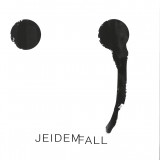
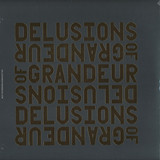
Legendary Utrecht DJ and producer P.A. Presents (Peter Aarsman) returns with his first new release since 2000 with this vintage techno stunner, Swirling Gas. This EP also marks the first new music on U-TRAX in more than 21 years, kicking the label s comeback into a higher gear.
Peter ironically is the only artist on U-TRAX that actually is born and bred in the city of Utrecht. Even more irony lies in the fact that he hasn t lived in the city (or stadsie in Utregs, the local dialect) for the past 25 years.
Peter knew he wanted to be a DJ since he was ten years old, in a time when this was still a very unusual career to dream about. Long before house music had landed in Europe, Peter was fiddling around with disco and italo 12 -es and all those years of training is what made him the superior DJ that he still is today. In terms of skills, flair, energy and feel for the dance floor, there are probably not a lot of DJs that can rival with Peter.
While the era of house of techno of the late 80s and the 90s brought him countless DJ gigs, his reputation didn t cross the city borders much, until he bought his first gear and started producing techno music himself. Again, his DJ background proved helpful with producing his tracks, as most of his tracks are dancefloor orientated and usually have an impeccable timing.
Peter debuted with the mini-album Salicylic Acid on U-TRAX in 1993, followed by the Flight Stimulator EP a year later. Both are classics today, but neither brought him as much fame as his 12 Entangled did on Deviate, a record label that was started by a couple of our friends from Utrecht a year prior to U-TRAX. Entangled made it to many charts and compilation albums, including Carl Craig s mix CD as part of !K7 s DJ-Kicks series.
Besides two releases on U-TRAX and three 12 -es on Deviate, Peter recorded a full length album for the latter label. Unfortunately, before the album ever saw the light of day, Deviate closed their doors and the tracks remained on the shelves for the next 17 or so years. These tracks still sound surprisingly fresh and original today and we are super excited to be able to release some of them on this Swirling Gas EP!
The title track Swirling Gas obviously gets its name from the documentary sample that the track kicks off with. The almost heartbeat-like electro rhythms, layered choruses and dreamy synths will give you goose bumps all the way to the soles of your feet.
Raw is quite another thing, but way more complicated and sophisticated than the title suggests. An in-your-face electro bass drum pattern supports layer after layer of additional rhythms, some even touching on salsa, and then big fat layers of pulsating synths take you away into deep space. A unique track that will instantly reward the DJ that has the guts to play it for her/his audience.
Drum Magic on the flipside is exactly that: a magic techno trip built around complicated syncopated drum rhythms, which should serve the adventurous DJ well as a foundation for mixing all sorts of weird stuff on top of. We can t wait to see videos appear with creative mixing ideas.
Final track Freaky is opening with some heavy pounding, yet jumpy beats before it opens up into a bit of a space trip around the 3 minute mark. Though the track has a touch of the Basic Channel sound, its echoing synth tones are very distinct and will light up any venue, no matter how big.
All tracks have been revamped and edited into more current lengths by DJ Zero One, blessed by DJ White Delight and mastered by Thee J Johanz. Label art by Bonk Artwork.
quête:space trac three
On his new EP Three Colours for Couldn’t Care More the ever-searching RVDS (Golden Pudel Club, Bureau B, It's) keeps his senses wide open and comes up with three amazing tracks as diverse as coherent:
While Clicks in Pink House is enthusiastic warm House Music with a big bassline, Blue Signals in Space' flow of hypnotic meditation has a strange tension underneath that effortlessly connects with the delicate elegance of Purple Dreams in March’s playful piano chords. Three quite different colours that make a beautiful whole.
- A1: Simon & Garfunkel - Bridge Over Troubled Water
- A2: Bread - Make It With You
- A3: Elvis Presley - Suspicious Minds
- A4: Deep Purple - Black Night
- A5: Free - All Right Now
- A6: Smokey Robinson & The Miracles - The Tears Of A Clown
- A7: The Jackson 5 - I Want You Back
- A8: Stevie Wonder - Signed, Sealed, Delivered (I'm Yours)
- B1: Elton John - Your Song
- B2: Rod Stewart - Maggie May
- B3: Slade - Coz I Luv You
- B4: The Who - Baba O'riley
- B5: Ike & Tina Turner - Proud Mary
- B6: Marvin Gaye - What's Going On
- B7: Diana Ross - I'm Still Waiting
- C1: Don Mclean - American Pie - Pt. 1
- C2: Sly & The Family Stone - Family Affair
- C3: Bill Withers - Lean On Me
- C4: Harry Nilsson - Without You
- C5: Roxy Music - Virginia Plain
- C6: T. Rex - Metal Guru
- C7: Mott The Hoople - All The Young Dudes
- C8: Lou Reed - Perfect Day
- D1: Roberta Flack - Killing Me Softly With His Song
- D4: Sweet - Ballroom Blitz
- D5: Wizzard - See My Baby Jive
- D6: Billy Joel - Piano Man
- D7: Bob Dylan - Knockin' On Heaven's Door
- E1: Queen - Killer Queen
- E2: Paul Mccartney, Wings - Band On The Run
- E3: Mike Oldfield - Tubular Bells
- E4: Suzi Quatro - Devil Gate Drive
- E5: Mud - Tiger Feet
- E6: Sparks - This Town Ain't Big Enough For Both Of Us
- E7: Barry White - You're The First, The Last, My Everything
- E8: The Three Degrees - When Will I See You Again
- F1: John Lennon - Imagine
- F2: 10Cc - I'm Not In Love
- F3: Barry Manilow - Mandy
- F4: Bay City Rollers - Bye Bye Baby
- F5: David Essex - Hold Me Close
- F6: Steve Harley & Cockney Rebel - Make Me Smile (Come Up And See Me)
- F7: The Stylistics - Can't Give You Anything (But My Love)
- F8: Minnie Riperton - Lovin' You
- G1: Abba - Dancing Queen
- G2: Frankie Valli & The Four Seasons - December, 1963 (Oh, What A Night)
- G3: Chicago - If You Leave Me Now
- G4: Joan Armatrading - Love And Affection
- G5: Electric Light Orchestra - Livin' Thing
- G6: Thin Lizzy - The Boys Are Back In Town
- D2: Harold Melvin & The Blue Notes - If You Don't Know Me By Now
- G7: John Miles - Music
- H1: Fleetwood Mac - Don’t Stop
- H2: Meat Loaf - Bat Out Of Hell
- H3: Status Quo - Rockin' All Over The World
- H4: Donna Summer - I Feel Love
- H5: Baccara - Yes Sir, I Can Boogie
- H6: David Soul - Don’t Give Up On Us
- H7: Commodores - Easy
- J1: Kate Bush - Wuthering Heights
- J2: Althea & Donna - Uptown Top Ranking
- J3: Chic - Le Freak
- J4: Boney M. - Rivers Of Babylon
- J5: The Jam - Down In The Tube Station At Midnight
- J6: The Boomtown Rats - Rat Trap
- J7: Siouxsie And The Banshees - Hong Kong Garden
- K1: The Clash - London Calling
- K2: The Police - Message In A Bottle
- K3: Pretenders - Kid
- K4: Blondie - Heart Of Glass
- K5: Earth, Wind & Fire With The Emotions - Boogie Wonderland
- K6: Tubeway Army - Are 'Friends' Electric?
- K7: The Buggles - Video Killed The Radio Star
- D3: Kiki Dee - Amoureuse
Coloured Vinyl[126,01 €]
NOW Music is delighted to introduce our new sub-brand ‘NOW Presents…’. This new series starts with ‘NOW Presents… The 1970s’, the first-ever NOW vinyl boxset featuring 5 LPs uniquely designed to reflect the era.
The boxset is a musical time capsule of the decade that saw so many different genres find chart success. Across its 74 tracks over 10 sides of vinyl, the massive hits sit alongside enduring classics from each year. The set not only includes 5 beautifully designed front covers on the individual albums (that slot into a rigid slip case), but also features track by track annotations with chart positions and facts about the artists and songs.
Each year, 1970-1979 is presented as 1 side of each LP… Kicking off with the iconic ‘Bridge Over Troubled Water’ by Simon & Garfunkel from the biggest selling album of the year, and of the decade. 1970 also includes Motown classics from Stevie Wonder, Smokey Robinson & The Miracles, and the debut hit ‘I Want You Back’ from the Jackson 5.
1971 includes the seminal ‘What’s Going On’ from Marvin Gaye, alongside Elton John’s breakthrough – the timeless ‘Your Song’, Rod Stewart’s breakthrough ‘Maggie May’, and The Who’s defining rock anthem ‘Baba O’Riley’.
The charts in 1972 began to reflect the popularity of ‘Glam Rock’ – and ‘Virginia Plain’ by Roxy Music, and ‘Metal Guru’ by T. Rex are included, as is the David Bowie-produced ‘Perfect Day’ from Lou Reed.
‘Killing Me Softly With His Song’ – one of the most beautiful songs, and vocals ever from Roberta Flack opens 1973’s side – and is joined by, amongst others, Billy Joel’s signature song ‘Piano Man’ and Bob Dylan’s ‘Knockin’ On Heaven’s Door’.
1974 celebrates Queen having their first Top 5 single with ‘Killer Queen’, and title tracks from two of the decades’ biggest selling albums: Paul McCartney & Wings with ‘Band On The Run’, and ‘Tubular Bells’ from Mike Oldfield.
John Lennon released ‘Imagine’ in 1971 – but it became a UK hit in 1975, and so, starts this side… and finds space for some of the year’s perfect pop from Steve Harley & Cockney Rebel, David Essex, 10cc, and the biggest hit ‘Bye Bye Baby’ from Bay City Rollers, at the peak of their popularity.
ABBA enjoyed 7 UK Number 1’s in the 1970s, and their biggest was the enduringly popular ‘Dancing Queen’ which leads into 1976. Electric Light Orchestra had a huge hit with ‘Livin’ Thing’, as did Thin Lizzy with ‘The Boys Are Back In Town’ – plus Joan Armatrading emerged with ‘Love And Affection’.
1977 saw Fleetwood Mac release their mega-selling album ‘Rumours’, and from it ‘Don’t Stop’ is here, as is Donna Summer’s ‘I Feel Love’ – one of the most influential dance tracks of all time – and one of 1977’s favourite TV stars, David Soul, enjoyed a #1 single with ‘Don’t Give Up On Us’.
With ‘Wuthering Heights’, Kate Bush not only had 4 weeks at number 1 in 1978, but became the first female artist to achieve this with a self-written song. The Jam, The Boomtown Rats and Siouxsie And The Banshees all found consistent success as Punk & New Wave established new chart stars.
1979 concludes the set and opens with the iconic ‘London Calling’ from The Clash, and includes two of the biggest bands of the era, The Police and Blondie. A couple of years later the first video played on MTV would be ‘Video Killed The Radio Star’ from The Buggles – and it’s fitting that this is the final track on the collection, a #1 in late 1979 – it signposted the synth-pop wave that would define the early 80s…. (but that’s a different box set).
strumentalist Teddy Lasry's story is noteworthy not just in regards to the music he released, but in the ways approached the craft of composing and experimenting with sounds and sonics.
Always intrigued with the capabilities of instruments, their groove and their feel, it was very much his family’s influence that helped to fuel these life long affections. As a performer in a parisien cabaret, Teddy’s father Jacques would mingle with giants like Serge
Gainsbourg and Charlie Chaplin (impressed by his ability to improvise, Chaplin wanted him to become his accompanist, but the pianist politely refused). Jacques and his wife (Teddy’s mother Yvonne), would later become members of the innovative experimental group Les Structures Sonores, and surround their children’s lives with sounds. Electronic music was still in its infancy and Les Structures Sonores, with their resonators that produced long, mysterious tones, were deemed ‘cosmic’. It was the era of the launching of the first Russian Sputnik and every time a radio or television station wanted music for their science fiction programs, they turned to one of their compositions. Showing a natural ability with multi instrumentalism, Teddy was rewarded with a spot in the band, allowing him to really explore unconventional methods of composition.
Following a brief stint with Ariane Mnouchkine's avant-garde Théâtre du Soleil after graduating school, Teddy joined the pioneering prog band Magma, with whom he would record three groundbreaking records during the early 1970s (According to former member
Laurent Thibault, their album Mëkanïk Dëstruktïẁ Kömmandöh and its sound were strong influences on David Bowie during the recording
of Low and Iggy Pop’s The Idiot at Hérouville). Despite the successes with these projects, Teddy was constantly searching for new ways
of expressing himself through music, leading him into the beginnings of a solo career that would last the better part of three decades.
Teddy’s transition into his solo career came with contrasting fortunes, in that he was now becoming a music to image composer but with the unfortunate realisation that his eyesight was gradually worsening (due to being diagnosed with retinitis pigmentosa at an early age). Nonetheless, his solo career would begin in 1975, and for the rest of the decade his sound would become increasingly mired in electrified Funk-Fusion and its endless sonic possibilities. The resulting music would serve to highlight Teddy’s love affair with the possibilities found within tireless instrumentation, with the flute and particularly synthesisers becoming a mini-obession of his (he once spent a 7,000 Francs loan, which was meant to be spent on fixing his roof, on synths).
To this day Teddy continues to record and experiment with music, a passion which in many ways has never left his sid, even at the age of 75. His career was one that was fuelled by innate curiosity and an intrinsic desire to discover new methods of expressionism, be it through the realms of Jazz-Funk, ambient electronics, Swing music or indeed through the medium of instrumentation itself. On this compilation, we look to encapsulate the essence of his innovative sound, and from start to finish a sense of his ingenious approach to composing structure and mood is made abundantly clear. The funk-jazz fusion style that embodied the majority of his 70s work is on full display here, with the vibrant flute driven "Los Angeles", the Miles Davis inspired "Blue Theme", the progressive and driving
"Chamonix", and the deeply intricate "Krazy Kat", along with one of his finest 80s slow jams, "Funky Ghost". Two cuts off the ‘Back To
Amazonia’ album are also featured (Teddy’s last album including his Prophet T8, Yamaha DX7 and Oberheim drum machines). "Raising
Sun in Bali" and the title piece both emphasise an ever present passion for synthesisers. "Birds of Space", a standout track off the e=mc2 album, closes the comp, and is a fitting way to end this journey.
Pulled together in close collaboration with Teddy and his family, this collection of songs looks to introduce new listeners to his work and we are proud to present this limited and carefully remastered compilation on vinyl, including extensive liner notes.
Originally hailing from Scotland, now based in Copenhagen, Numbers present 23-year old producer and deejay Perko with his debut release NV Auto.
The six tracks on this EP hear Perko mining the grooves between his favourite genres for building blocks of inspiration. Drawing from UK soundsystem culture and modern experimental music, half of the record explores deeper atmospheric passages and meditative repetition, characterised by layers of subtly shifting chords, field recordings and delicate polyrhythms.
Three dancefloor cuts, spread throughout the rest of the record, retain this detail and interplay with added energy. Perko's sense of rhythm & space is clear with 'Rounded's glacial synths, blown out drum machines and sculpted sub sine waves. 'What Otters' forges playful UKG touches within a paperclip framework of space-echoes and sparks, whilst 'Songbirds' flips into 4/4 drive with percolated alarms and shimmering pads.
'Density, Noise, Dust, Distortion, Space...' says Perko, if you want it simple.
- A1: Blank Gloss - Coiling
- A2: Yui Onodera - Cromo 6
- A3: Markus Guentner / Joachim Spieth - Kari
- A4: Reich & Würden - Grainscan
- A5: Triola - Mutterkorn
- B1: Thomas Fehlmann - Rosen Fliegen
- B2: Morgen Wurde Feat Maria Estrella - Weiht
- B3: Thore Pfeiffer - Isola
- B4: Max Würden / Pepo Galán - Seis Minutos Mas
- B5: Andrew Thomas - Kiss The Horizon
IMPORTANT NOTE: UNFORTUNATELY THE SIDES ARE REVERSED ON THE VINYL, I.E. THE A-SIDE IS THE B-SIDE AND VICE VERSA. WITH THE PURCHASE OF THE VINYL OR THE CD YOU WILL GET THE SINGLE MP3 FILES AS WELL AS A CONTINOUS MIX VIA E-MAIL.
With the cover artwork for Pop Ambient 2022, longtime KOMPAKT graphic artist Veronika Unland has once again outdone herself. Following the almost baroque, blood-red and jet-black, extremely physical sculptures of Pop Ambient 2021, which emerged from a dark, floral sea like bodies erect for dancing, the front of 2022 is adorned with a pastel-white form, intertwined, folded many times and crisscrossed with delicate shading, which seems to float on a pale pink background; soft, gentle waves woven from Venetian colors that leave the viewer puzzled: Is it a flower, a coral, a mollusk?
Again, the current edition of the tradition-steeped compilation series curated by Wolfgang Voigt is about the persistent and ever-necessary definition of beauty, of reduction, of electronic music of heavy lightness and light heaviness, of ambient's eternal promise of a state of physical and acoustic weightlessness and Pop's of redemption. And about the question why a never arbitrary combination of soundscape, drones, samples and loops, put together in a certain way, can create this feeling of warmth, depth and space, - something three-dimensional, where the imagination feels at home as a fish in the water or a bird in the sky. A key aesthetic stimulus that sends all the senses into a slow glide and drift, after which your synapses feel like they've been bathed in essential oil. Next to Soul, Ambient is probably the most effective musical healing plant of mankind.
Behind the aural test tubes, the who's who of Pop Ambient is once again at work, led for the first time by the highly trafficked Californian duo Blank Gloss, whose debut album "Melt" this year was certified by The Guardian as nothing less than "heartaching beauty". Yui Onodera's "Chrome" as well as "Kari", a cooperation of Markus Guentner and Joachim Spieth, could also be imagined in the score of Denis Villeneuve's new film version of DUNE - however, colleague Hans Zimmer managed that quite well without the three. After such wonderful and stylish contributions by Reich & Würden, Triola and Thomas Fehlmann, the ear then lingers a bit longer on the ghostly "Weiht" by Morgen Wurde feat. Maria Estrella, a track like a temple of sound, a deep electronic immersion in a Japanese onsen. In this sea of unnameable time you could sink forever, but with the tracks of Andrew Thomas, Thore Pfeiffer and Max Würden & Pepo Galán the journey slowly comes to an end.
Mit dem Cover-Artwork für Pop Ambient 2022 hat sich die langjährige KOMPAKT-Grafikerin Veronika Unland einmal mehr selbst übertroffen. Nach den geradezu barocken, in blutrot und tiefschwarz gehaltenen, äußerst physischen Formationen von Pop Ambient 2021, die wie zum Tanz aufgerichtete Körper aus einem dunklen, floralen Meer auftauchten, ziert die Vorderseite von 2022 eine pastell-weiße Skulptur, in sich verschlungen, vielfach gefaltet und von zarten Schattierungen durchzogen, die auf einem blass-rosa Hintergrund zu schweben scheint; weiche, sanfte Wellen aus venezianischen Farben gewebt, die dem Betrachter Rätsel aufgeben: Ist es eine Blüte, eine Koralle, eine Molluske?
Natürlich geht es auch in der aktuellen Ausgabe der traditionsreichen, von Wolfgang Voigt kuratierten Compilation-Reihe um die beharrliche und immer wieder notwendige Definition von Schönheit, von Reduktion, um elektronische Musik von schwerer Leichtigkeit und leichter Schwere, vom ewigen Versprechen des Ambient auf einen Zustand körperlicher und akustischer Schwerelosigkeit und dem von Pop auf Erlösung. Und um die Frage, warum eine nie beliebige Kombination aus Klangfläche, Drones, Samples und Loops, auf eine bestimmte Art zusammengefügt, dieses Gefühl von Wärme, Tiefe und Raum entstehen lassen kann, - etwas dreidimensionales, in dem die Fantasie sich so zuhause fühlt wie ein Fisch im Wasser oder ein Vogel in der Luft. Ein ästhetischer Schlüsselreiz, der alle Sinne in ein langsames Gleiten und Driften versetzt, wonach sich deine Synapsen wieder anfühlen, als habe man sie in ätherischem Öl gebadet. Neben Soul ist Ambient die wahrscheinlich wirksamste musikalische Heilpflanze der Menschheit.
Hinter den auralen Reagenzgläsern hantiert einmal mehr das Who-is-Who der kompaktschen Pop Ambient-Riege, erstmals angeführt vom hoch gehandelten kalifornischen Duo Blank Gloss, deren diesjähriges Debüt-Album “Melt” der englische Guardian nichts weniger als “herzergreifende Schönheit” bescheinigte. Yui Onodera’s “Chrome” sowie “Kari”, eine Kooperation von Markus Guentner und Joachim Spieth, könnte man sich auch gut im Score von Denis Villeneuve’s Neuverfilmung von DUNE vorstellen, - das hat der Kollege Hans Zimmer allerdings auch ohne die drei ganz gut hinbekommen. Nach so wundervollen wie stilsicheren Beiträgen von Reich & Würden, Triola und Thomas Fehlmann verharrt das Ohr dann etwas länger beim geisterhaften “Weiht” von Morgen Wurde feat. Maria Estrella-Weiht, ein Track wie ein Tempel aus Klang, ein tiefes elektronisches Eintauchen in einen japanischen Onsen. In diesem Meer aus unnennbarer Zeit könnte man ewig versinken, doch mit den Tracks von Andrew Thomas, Thore Pfeiffer und Max Würden & Pepo Galán geht die Reise langsam zu Ende.
- A1: Noriko Miyamoto - Arrows & Eyes
- A2: Mishio Ogawa - Hikari No Ito Kin No Ito
- A3: Yoshio Ojima - Days Man
- B1: Mkwaju Ensemble - Tira-Rin
- B2: Rna Organism - Weimar 22
- B3: Naoki Asai - Yakan Hikou
- B4: Takami Hasegawa - Koneko To Watashi
- C1: Mammy - Mizu No Naka No Himitsu
- C2: Dip In The Pool - Hasu No Enishi
- C3: Wha Ha Ha - Akatere
- D1: D Day - Sweet Sultan
- D2: Perfect Mother - Dark Disco-Da Da Da Da Run
- D3: Neo Museum - Area
- D4: Sonoko - Wedding With God (A Nijinski) (A Nijinski)
LTD. COLORED VINYL
Somewhere Between: Mutant Pop, Electronic Minimalism & Shadow Sounds of Japan 1980–1988 hovers vibe–wise between two distinct poles within Light In The Attic’s acclaimed Japan Archival Series—Kankyō Ongaku: Japanese Ambient, Environmental & New Age Music 1980–1990 and Pacific Breeze: Japanese City Pop, AOR & Boogie 1976–1986. All three albums showcase recordings produced during Japan’s soaring bubble economy of the 1980s, an era in which aesthetic visions and consumerism merged. Music echoed the nation’s prosperity and with financial abundance came the luxury to dream.
Sonically, Somewhere Between mines the midpoint between Kankyō Ongaku’s sparkling atmospherics and Pacific Breeze’s metropolitan boogie. The compilation encompasses ambient pop, underground electronics, liminal minimalism and shadow sounds—all descriptors emphasizing the hazy nature of the nebula. Out–of–focus rhythms wear ethereal accoutrements, ballads are shrouded in static, and angular drums snake skyward on transcendent tones. From the Avant–minimalism of Mkwaju Ensemble and Yoshio Ojima, to the leftfield techno-pop of Mishio Ogawa and Noriko Miyamoto (featuring members of YMO), and highlights from the groundbreaking Osaka underground label Vanity Records, these are blurry constellations defying collective categorization.
These tracks also exist in a space of transition when the major label grip on the Japanese recording market began to give way to the escalation of independents. Thanks to the idyllic economic climate and innovations in domestically–manufactured music gear, creators on the edges were empowered to focus on satisfying their artistic visions in the open headspace of home studios. While labels like Warner Music and Nippon Columbia explored new sounds through traditional channels, it was possible for Vanity, Balcony and other indie labels, not to mention self–released artists like Ojima and Naoki Asai, to publish their work via affordable media such as cassettes, 7" vinyl, and flexi–discs.
Expertly curated by Yosuke Kitazawa and Mark “Frosty” McNeill (dublab), Somewhere Between is a collection of music, much of it released for the first time outside Japan, that is bound more by energetic vibration than shared history, genre or scene. They are the sounds of transition and searching—a celebration of the freedom found in floating.
Note: The track “Days Man” by Yoshio Ojima is only available on the LP and Cassette versions.
- 1: I Will Be Your Only One (Monika Werkstatt Version) Monika Werkstatt 03:42
- 1: 2 Paradise (Monika Werkstatt Version) Monika Werkstatt 04:55
- 1: 3 Radiator (Monika Werkstatt Version) Monika Werkstatt 03:26
- 1: 4 Komm Darling Lass Uns Tanzen Gehen (Monika Werkstatt Version) Monika Werkstatt 03:32
- 1: 5 You You (Monika Werkstatt Version) Monika Werkstatt 03:28
- 1: 6 Schreiender Tag (Monika Werkstatt Version) Monika Werkstatt 03:50
- 1: 7 Geld (Monika Werkstatt Version) Monika Werkstatt 03:27
- 1: 8 Mother (Monika Werkstatt Version) Monika Werkstatt 03:35
- 1: 9 White Sky White Sea (Monika Werkstatt Version) Monika Werkstatt 03:46
- 1: 0 Herzschlag (Monika Werkstatt Version) Monika Werkstatt 03:53
- 1: Zukunft (Monika Werkstatt Version) Monika Werkstatt 02:42
- 1: 2 Nite Time (Monika Werkstatt Version) Monika Werkstatt 04:02
- 2: 1 Zukunft (Sender Freies Berlin) Mania D. 0:18
- 2: Radiator (Zossener Straße Cute Version) Mania D. 56
- 2: 3 I Will Be Your Only One („Malaria!“ Ep) Malaria! 03:09
- 2: 4 Nite Time („A Touch Bcl“ Album Version) Matador 04:46
- 2: 5 Herzschlag (7Inch Single, Monogam) Mania D. 0:56
- 2: 6 Paradise (Demo Version) Matador 03:04
- 2: 7 White Sky White Sea (Edit, „Weisses Wasser“ Ep) Malaria! 04:5
- 2: 8 Zukunft (Live In Düsseldorf) Mania D. 0:56
- 2: 9 Komm Darling Lass Uns Tanzen Gehen (Live In Düsseldorf) Mania D. 01:54
- 2: 10 Mädels Sind Toll (Live Berlin) Malaria! 04:35
- 2: 11 You You (Live In Washington D.c., 9:30 Club, 1983) Malaria! 05:37
- 2: 1 Schreiender Tag Matador 04:13
- 2: 13 Mother (Demo Version) Matador 03:00
M_SESSIONS - THE PROCESS
"M_Sessions" is offering a contemporary version of Mania D., Malaria and Matador’s music for the 40th anniversary plus the rare originals. Bringing the past into the now and into the future.
Monika Werkstatt seemed the perfect choice for new interpretations. Founded in 2015, comprising female electronic musicians and producers from the entourage of Monika Enterprise and Moabit Musik. The loose collective played dozens of improvised concerts around Europe and released a studio album and live recordings in everchanging artist constellations.
The M_Sessions involved Pilocka Krach, Beate Bartel, Midori Hirano, Mommo G, Lucrecia Dalt, Antye Greie-Ripatti, Natalie Beridze, Annika Henderson and myself. Here the form of interpretation is focussing on keeping the freedom of their improvised work and adapting it to the collective appropriation of songs. I cannot imagine a better reinterpretation of the material with its real life ups and downs and with its enthusiasm.
The original core team of Beate Bartel, Bettina Köster, Manon P. Duursma and myself selected "Rare Originals" from the repertoire of the 3 bands where we saw special relevance and beauty - these tracks are on LP2. We rediscovered live tracks, living room recordings and demo versions from our times long gone. (G.Gut)
M_DOKUMENTE // THE BOOK - THE RECORDS - THE EXHIBITION
The project M_Dokumente focuses on the All Female bands Mania D., Malaria! and Matador in the West Berlin music and art scene of the late 1970s and 1980s. We celebrate this 40 years retrospetive with a big festival weekend from 21.-24.10.2021 at Silent Green from a explicitly female perspective.
The three bands around their members Beate Bartel, Bettina Köster and Gudrun Gut played concerts in different formations from 1979 on, released records and toured around the world. The self-determined appearance of the musicians was new, raised some eyebrows and was reflected both in the music and the lyrics, but also in their unique style and the genre-crossing approach of "more art in the music, more music in the art". To this day, the bands are considered visionary, they shaped a new image of women in pop culture and are pioneers and role models for the still important and necessary emancipatory movement in the music industry. Far beyond the borders of Berlin.
3Ms
The three, reunited: Malaria, Matador and Mania D, unter einem Dach, but gutted, replaced with electronic hearts, new beats, new beasts, the time has changed, yet the politics, the problems, the heartache remains the same. 2021 sees the anniversary of the 3 M’s and therewith the production of an album of songs, covering a selection of the bands’ finest output, this time assembled by a new set of feminist misfits; producers, fangirls, instrumentalists, under the strict guidance of original members Gudrun Gut and Beate Bartel. M-Sessions features: AGF, Lucrecia Dalt, Sonae, Midori Hirano, Islaja, Natalie Beridze, Pilocka Krach, Annika Henderson (Anika), Lupe, Gudrun Gut and Beate Bartel. Beginning in West Berlin, in 1979, with the inception of Mania D, spawning Malaria! and later Matador; in a time when music was essential to movement, to escape, to space, to the scene and to the rebellion of the people; three bands stood for trial and error, trial and terror, anti- conformity, and anti-consumerism, for girl power and sticking it to the man, and for just doing whatever the hell they wanted. The three, their existence slightly staggered, with different members, different grudges, different heartbreaks, different instrumental expressions, were joined by a string of barbed wire, piecing pigeon hearts, within the playground that was the desolate ex-capital, now again capital, Berlin; a place where artists and freaks could run free amongst the wrinklies and army dodgers; no microscopes, no rules, no property developers. (ANNIKA HENDERSON)
HONNE have announced the release of their much-anticipated new album, ‘Let’s Just Say The World Ended A Week From Now, What Would You Do?’ – a record that toasts the start of a new era of music from one of the UK’s most inventive and original outfits.
Releasing on October 22, ‘Let’s Just Say The World Ended A Week From Now, What Would You Do?’ forms HONNE’s third studio album following critically acclaimed LPs, ‘Warm On A Cold Night’ (2016) and ‘Love Me / Love Me Not’ (2018), as well as ‘no song without you’ – a surprise 14-track mixtape released last summer.
Written throughout the course of 2020, ‘Let’s Just Say The World Ended A Week From Now, What Would You Do?’ captures HONNE in limitless full bloom – as songwriters, producers and collaborators. “In the past, we’ve limited ourselves”, HONNE explain. “We might get to a section of a song and things are getting really exciting, but we then pull ourselves back and say, ‘Can we really do that?’. Now, we’ve sidestepped the rules and done whatever we wanted to do.”
This sense of freedom permeates the tracklist, which is defined as much by its eye-catching collaborations – Khalid (‘Three Strikes’), Griff (‘Back On Top’), 88 Rising’s NIKI (‘Coming Home’) – as it is by its musicianship, shimmering pop feel and intelligent song-writing; Sam Smith (‘Back On Top’) and MNEK (‘Easy On Me’) also co-wrote songs on the album.
Bold and ambitious , ‘Let’s Just Say The World Ended A Week From Now, What Would You Do?’ brings together everything HONNE have worked towards in their career so far, while simultaneously pushing them into broad and exciting new spaces.
HONNE have announced the release of their much-anticipated new album, ‘Let’s Just Say The World Ended A Week From Now, What Would You Do?’ – a record that toasts the start of a new era of music from one of the UK’s most inventive and original outfits.
Releasing on October 22, ‘Let’s Just Say The World Ended A Week From Now, What Would You Do?’ forms HONNE’s third studio album following critically acclaimed LPs, ‘Warm On A Cold Night’ (2016) and ‘Love Me / Love Me Not’ (2018), as well as ‘no song without you’ – a surprise 14-track mixtape released last summer.
Written throughout the course of 2020, ‘Let’s Just Say The World Ended A Week From Now, What Would You Do?’ captures HONNE in limitless full bloom – as songwriters, producers and collaborators. “In the past, we’ve limited ourselves”, HONNE explain. “We might get to a section of a song and things are getting really exciting, but we then pull ourselves back and say, ‘Can we really do that?’. Now, we’ve sidestepped the rules and done whatever we wanted to do.”
This sense of freedom permeates the tracklist, which is defined as much by its eye-catching collaborations – Khalid (‘Three Strikes’), Griff (‘Back On Top’), 88 Rising’s NIKI (‘Coming Home’) – as it is by its musicianship, shimmering pop feel and intelligent song-writing; Sam Smith (‘Back On Top’) and MNEK (‘Easy On Me’) also co-wrote songs on the album.
Bold and ambitious , ‘Let’s Just Say The World Ended A Week From Now, What Would You Do?’ brings together everything HONNE have worked towards in their career so far, while simultaneously pushing them into broad and exciting new spaces.
HONNE have announced the release of their much-anticipated new album, ‘Let’s Just Say The World Ended A Week From Now, What Would You Do?’ – a record that toasts the start of a new era of music from one of the UK’s most inventive and original outfits.
Releasing on October 22, ‘Let’s Just Say The World Ended A Week From Now, What Would You Do?’ forms HONNE’s third studio album following critically acclaimed LPs, ‘Warm On A Cold Night’ (2016) and ‘Love Me / Love Me Not’ (2018), as well as ‘no song without you’ – a surprise 14-track mixtape released last summer.
Written throughout the course of 2020, ‘Let’s Just Say The World Ended A Week From Now, What Would You Do?’ captures HONNE in limitless full bloom – as songwriters, producers and collaborators. “In the past, we’ve limited ourselves”, HONNE explain. “We might get to a section of a song and things are getting really exciting, but we then pull ourselves back and say, ‘Can we really do that?’. Now, we’ve sidestepped the rules and done whatever we wanted to do.”
This sense of freedom permeates the tracklist, which is defined as much by its eye-catching collaborations – Khalid (‘Three Strikes’), Griff (‘Back On Top’), 88 Rising’s NIKI (‘Coming Home’) – as it is by its musicianship, shimmering pop feel and intelligent song-writing; Sam Smith (‘Back On Top’) and MNEK (‘Easy On Me’) also co-wrote songs on the album.
Bold and ambitious , ‘Let’s Just Say The World Ended A Week From Now, What Would You Do?’ brings together everything HONNE have worked towards in their career so far, while simultaneously pushing them into broad and exciting new spaces.
HONNE have announced the release of their much-anticipated new album, ‘Let’s Just Say The World Ended A Week From Now, What Would You Do?’ – a record that toasts the start of a new era of music from one of the UK’s most inventive and original outfits.
Releasing on October 22, ‘Let’s Just Say The World Ended A Week From Now, What Would You Do?’ forms HONNE’s third studio album following critically acclaimed LPs, ‘Warm On A Cold Night’ (2016) and ‘Love Me / Love Me Not’ (2018), as well as ‘no song without you’ – a surprise 14-track mixtape released last summer.
Written throughout the course of 2020, ‘Let’s Just Say The World Ended A Week From Now, What Would You Do?’ captures HONNE in limitless full bloom – as songwriters, producers and collaborators. “In the past, we’ve limited ourselves”, HONNE explain. “We might get to a section of a song and things are getting really exciting, but we then pull ourselves back and say, ‘Can we really do that?’. Now, we’ve sidestepped the rules and done whatever we wanted to do.”
This sense of freedom permeates the tracklist, which is defined as much by its eye-catching collaborations – Khalid (‘Three Strikes’), Griff (‘Back On Top’), 88 Rising’s NIKI (‘Coming Home’) – as it is by its musicianship, shimmering pop feel and intelligent song-writing; Sam Smith (‘Back On Top’) and MNEK (‘Easy On Me’) also co-wrote songs on the album.
Bold and ambitious , ‘Let’s Just Say The World Ended A Week From Now, What Would You Do?’ brings together everything HONNE have worked towards in their career so far, while simultaneously pushing them into broad and exciting new spaces.
Horace Tapscott's Pan-Afrikan Peoples Arkestra (P.A.P.A.) was one of the most transformative, forward-thinking and straight-up heavy big bands to have played jazz in the 1960s and 1970s. If P.A.P.A. doesn't have the interstellar rep of that other famous Arkestra, and if the name Tapscott doesn't ring bells like Monk or Tyner, there's a reason why: in an industry dominated by record labels, a band that doesn't record doesn't count. And the Pan-Afrikan Peoples Arkestra didn't record for nearly twenty years. But recording success was never their concern -- they weren't about that. First formed as the Underground Musicians Association in the early 1960s, Tapscott always wanted his group to be a community project.
From their base in Watts, UGMA got down at the grassroots. The group was renamed the Pan-Afrikan Peoples Arkestra in 1971, and soon after they established a monthly residency at the Immanuel United Church of Christ which ran for over a decade, while still playing all over LA and beyond. But they never released a note of music. It was the intervention of fan Tom Albach that finally got them on wax. Determined that their work should be documented, Albach founded Nimbus Records specifically to release the music of Tapscott, the Arkestra, and the individuals that comprised it. The first recording sessions in early 1978 yielded enough material for two albums, and the first release was Flight 17. The album commences with the magnificent title track. It is effectively in three parts. It begins with unaccompanied pianos. Then the ensemble embark on a dense, circular and mechanical movement, a platform for horns and pianos to swoop and dive. We return to Earth with a beautiful solitary flute. The second track, the piano-centric, ‘Breeze’ is different to ‘Flight 17’ in intensity and also brevity but it is quietly as daring as the title track. It concludes with a moving lush wash from the full Arkestra, which sound almost like strings only more substantial. These first two tracks take full advantage of the texture of the unusual mix of the various instruments. Next though, it’s a significant change with ‘Horacio’, which is an exuberant Latin infused jingle. It’s unlike anything else on the album. I like to think it was named after the conductor’s Cuban alter-ego! ‘Clarisse’ gracefully switches between slow blues and bop and is bookended with a grand vaguely East Asian theme. The busy bass line introduces ‘Maui’. As with the previous track, it moves between a number of contrasting melody lines and rhythms but there’s still space for a tuneful sax solo.
This is a must-have album. I think the first two tracks on their own make this release essential. Kevin Ward/UK Vibe/Boomkat
Analha was one of the first approaches I had with the design of analog basses and drums, to understand the way in which we can involve so many sounds and transform them to our own liking, to give it its own narrative, a sense, an identity in which it can be navigated about different styles without problem.
They are two pieces that make up totally different break paths where "Mi ama Dic K no" A1 is my own exploration and vision of the break beat, three melodies written in F # that count the subtlety, while the bass contrasts in an aggressive idea to the beat of many changing rhythms in the drums, which sorfs between a Mpc, 808, Dsm & V Modular ; Classic trip hop voices samples that guide the way this own idea progresses on the breaks and pads that generate a more complete environment with a very energetic atmosphere that is constantly on the rise in the active and natural development of the track.
Towards the B side "Run mami run" B1 is composed by a classic intro of acid cut while some seconds of drums interpose which are accompanied by a radio narration of a chase, a return change is present with a vinyl spin between voices from GTA & WU TANG CLAN which make an intro for an infusion of breaks fully aligned to the beginnings of oldskool drum and bass which are accompanied by voices recorded, treated and edited to connect more directly between the spaces interrupted by the glitch acid chords.
Among contrary structures "Analha" contains hidden but marked criticisms, it is a project that comes from 2018 and ended at the beginning of 2019 which made him think about how to involve more than music within his own sound narrative.
The sonorous identity of rachiid today is different, he understands his environment but does not believe in adapting, he tells us that each exploration and discovery during these years have led him to think how this first release was born until now but is not connected at all with what nowadays, describes his sonority today as changeable, essential and highly with IDM, experimental and breaks.
Maisie Peters treated fans to their first taste of ‘You Signed Up For This’ earlier this year with ‘John Hughes Movie’. The track soared to No. 1 on iTunes the weekend of release, was playlisted across BBC Radio 1 and 2, and has been streamed over 11.5 million times globally to date.
Revered for her songwriting, Maisie has spent the past three years honing her craft in sessions across London, LA and Nashville, creating songs for ‘You Signed Up For This’ alongside the likes of Ed Sheeran, Steve Mac, Fred again.., Johnny McDaid, Miranda Cooper, and producers Joe Rubel (Tom Grennan, Benjamin Francis Leftwich), Afterhrs (Niall Horan, GRACEY), Rob Milton (Easy Life, Holly Humberstone) and Brad Ellis (Jorja Smith, Little Mix).
Impressively, ‘You Signed Up For This’ is Maisie’s second full length release in the space of three months, as she recently became one of the youngest musicians in history to write and curate a soundtrack for the second season of Apple TV+ Original Series, ‘Trying’, at only 20 years old. Written in just two months last winter, the stunning body of work includes duets with her friends and favourites, including Griff, James Bay and Bear’s Den.
With her knack for transforming everyday experiences in to vividly written diary-style songs, ‘You Signed Up For This’ is both Maisie’s coming of age story and a love letter to girlhood; penned with the wit, charm and quiet confidence that has seen her ascend from busking on the streets of Brighton, to recently making her US TV debut on The Late Late Show with James Corden. Transporting us directly in to her world as she navigates from small town teenager to adulthood, there’s a universal sense of familiarity and nostalgia as she shares memories of blossoming relationships (‘Outdoor Pool’, ‘My Elvis Song’), being played (‘Boys’, ‘Volcano’), heartbreak (‘Tough Act’, ‘Villain’), and first holidays with her twin sister (‘Brooklyn’).
Fractal City, the latest Cubenx album is a collection of terrestrial jams and arachnean ambient ballads that are particularly apt for urban listening. If its predecessors cracked the musical codes in force and shone by the versatility of their references, this new opus offers its listener an intense and symbolic sound environment.
The raw material of Fractal City was first conceived as a series of sound patches, designed to run in parallel with Canadian digital artist Maotik's installation. Broadcasted in real-time by generative patches reacting to various external and non-human data, those musical excerpts have been rendered in hundreds of nuances and extended over infinite durations. This unusual approach confers to the recording of the finished album's outstanding immersive strength.
Recorded live on a single track over a short period of a few weeks, the nine compositions of Fractal City capture the obsessions of its author for postmodern urban landscapes, and the revelation of new perspectives on the city of Paris.
The opening piece `Ssarg´ seems to hide the figure of the Mexican ambient producer Jorge Reyes. Cubenx built a cocoon of energetic layers, a new home of the mystical kind harmoniously integrated in a flourishing rainforest ecosystem.
`Transect ´refers to the urban development model of the same name, which is based on a division of the city into autonomous "fractal" zones. It also echoes the concept of "metro polarities" which considers the city as a mosaic of social groups. "By cycling in the evening with a friend, we could get away from the city centre to the suburbs of Paris. The contrasts are striking. You move from chic districts to bedroom communities, from industrial zones to improvised caravan camps. But there is a kind of energy in this heterogeneity that pushes you to always pedal further."
A few miles away, it would look like Art and urbanism have tried to level the cultural and social discrepancies of the outskirts of Paris. "Architectural sites like the Arcades of Bofill are splendid. There are completely extravagant projects, which seem to emerge from nowhere."
These buildings with ambitious aesthetics off the beaten tourist track, deteriorate over time and often remain far from the expectations of the local population. A feeling of nostalgic beauty is particularly perceptible on the slowest and most introspective ballads of the album as 'Urban Decay', 'Hagel' or 'Axe Majeur'. The producer leaves nonetheless no room for melancholic emptiness. "Every time, I have the impression that urban culture is taking its rights back and that young people appropriate the places in one way or another."
Just like `Transect', ` Quantified' and `Fractal City' present themselves as mirrors of a daily urban life in constant motion. All three are empowered by an overheated factory, which dispatches hypnotic beats and burst of analogue compressors with a clinical precision and direct them straight away to the reptilian areas of their listener's brains.
The sequencing leaves however space and time to take breath and makes way for aerial sonic excursions of spiritual and enlightened nature. On `Human Dilemma', Cubenx shows some concerns to opening the Pandora's box of transhumanist theories. While a long cosmic wave gives the listener a feeling of perfect fullness, a dizzying guitar distortion cast doubts on long term outlooks. `Smash Other' on the other way alternates gentle dissonances over an ocean of white noise and concludes the album on ethereal note.
With ´Fractal City", Cubenx eludes his irreconcilable love for shoegaze pop song and techno to concentrate exclusively on the production of mutant experimental materials. The result is an uncanny musical object, rich in image and sensation. Cubenx give us a guiding framework, enthralling enough to engage the listener to a tour of town. But he leaves it to the sole listeners to design their own projection of the city.
For RE:WARM 006 we present a collection of music from one of San Francisco’s best kept secrets, Dr Robert Blackman. “The Unimaginable DreamWorks” is a collection of five tracks from three musical masterpieces he put out between 1983-1985 on his own ‘Riverwinds’ imprint. A practising chiropractor by day with his own holistic health centre in San Francisco, these songs became his love, passion and focus. Together with Michael Pluznick, a very accomplished percussionist they painstakingly put together an ensemble of musicians to bring the tracks to life. The melting pot for this body of work was Hyde Street Studios which still today is based in deepest San Francisco and has seen names such as Neil Young, Earth Wind & Fire and John Waters to name a few grace its studio space. Singers and musicians alike came together from all over the world to bring Robert’s vision to reality. This included an Australian didgeridoo player, an electric violin and piano player from Paraguay as well as singers and a choir from the surrounding local churches. Together through Dr Robert Blackman’s eyes they created a fabulous sound of twisted disco punk funk like no other that still sounds relevant today as it did back in the eighties. The energy and the stories are clear to hear throughout the five tracks which make up “The Unimaginable DreamWorks” of Dr. Robert Blackman 1983-1985. Artwork was key to the releases and the “Peace Is Alive” painting incorporated on the label of the release appeared in TIME magazine in 1984 when Dr Robert Blackman was treating combat vets, suffering from PTSD and this was the name of the job fair for veterans he set up. To promote the album at the time Dr Robert Blackman flew up over San Francisco in a single engine prop airplane loaded with 50,000 leaflets
‘Part I’ is the debut LP from Indigo, the moniker and ongoing project of Melbourne-based composer and arranger, Nick Roder.
The first release in what will be an ongoing three-part series, Part I features nine tracks for bass guitar and tenor saxophone. Part II, an exploration of a slightly larger, more sonically diverse musical world will feature string quartet and voice. Finally, Part III will collaborate with choreographer Siobhan McKenna, who alongside Nick will develop a percussive movement work that seamlessly intertwines with the musical work.
“My aim is to create music that is sonically and musically atypical whilst still belonging to an accessible contemporary scene. Each project, album or ‘part’ will set out to explore a single ensemble or group of instruments. In the case of Part I, that ensemble is hollow body bass guitar and tenor saxophone. “ - Indigo (Nick Roder)
The Indigo project itself was inspired by Saxophone & Bass Guitar by Sam Gendel and Sam Wilkes, which prompted Nick to write an album of music for the same type of ensemble. Having only just purchased a bass guitar for a different project, the instrument was still very new to him.
“I was curious to see what I would write with my self-imposed rule of not being able to overdub material, and further, how my limitations as a relatively green bass guitarist would influence the writing of the material. A strong focus on harmonic movement and melodic material was where I eventually found my happy place.”
The result is a phenomenal debut. Burrowing into the space between it’s sparse instrumentation and dulcet tones, Part I is the realisation of a minimalist and concise vision of what a symbiotic relationship between two instruments can yield.
About Indigo
Indigo is the moniker and ongoing project of Melbourne-based composer and arranger, Nick Roder. The Indigo project was conceptualised in 2020 and focuses on deep sonic exploration of little-heard ensembles in a contemporary space.
Since 2018, Nick has been composing soundtracks for video games including The Invisible Hand, Roadwarden, N1NE: Splintered Mind, This Dead Winter and Miska. Nick has also played in art-rock ensemble, Tulalah, exploring sonic textures, combining contemporary jazz/rock with chamber sounds. The modular ensemble released The Flood (Equinox Recordings, 2015) and The Question (Independent, 2017).
The Forbidden Dance label is marking their first year of existence and with already top-notch names (Vick Lavender, Alton Miller, The Mechanical Man) with the first three releases, they are celebrating the one year mark with another global gem, disco and house finest - Ilija Rudman!
Where Wild Horses Go is conveying an unquestionable sense of 80's electro and synth boogie filled with smooth and heavily reverberated rhythmics drenched in strong snares. Aligned with catchy and spaced-out disco pads, the album is riddled with ever strong analogue elements processed in a light, quirky and summerish way but with enough groove in some tracks easily applicable on the dancefloors in the late hours.
Dead Horse Gang is a brainchild music band/brand by Ilija Rudman dedicated to cinematic dance concept laying on the Los Angeles funk attitude, Art Of Noise perception of sound and raw 12-bit grooves making a statement of mid 80's culture with surf vibe of California summer.
"Dead Horse Gang Music is more than music, it's a way of life, a way of thinking, a path to a maximum freedom of the one, who can accept it."
-Ilija Rudman
The first release in what will be an ongoing three-part series, Part I features nine tracks for bass guitar and tenor saxophone. Part II, an exploration of a slightly larger, more sonically diverse musical world will feature string quartet and voice. Finally, Part III will collaborate with choreographer Siobhan McKenna, who alongside Nick will develop a percussive movement work that seamlessly intertwines with the musical work.
“My aim is to create music that is sonically and musically atypical whilst still belonging to an accessible contemporary scene. Each project, album or ‘part’ will set out to explore a single ensemble or group of instruments. In the case of Part I, that ensemble is hollow body bass guitar and tenor saxophone. “ - Indigo (Nick Roder)
The Indigo project itself was inspired by Saxophone & Bass Guitar by Sam Gendel and Sam Wilkes, which prompted Nick to write an album of music for the same type of ensemble. Having only just purchased a bass guitar for a different project, the instrument was still very new to him.
“I was curious to see what I would write with my self-imposed rule of not being able to overdub material, and further, how my limitations as a relatively green bass guitarist would influence the writing of the material. A strong focus on harmonic movement and melodic material was where I eventually found my happy place.”
The result is a phenomenal debut. Burrowing into the space between it’s sparse instrumentation and dulcet tones, Part I is the realisation of a minimalist and concise vision of what a symbiotic relationship between two instruments can yield.
About Indigo
Indigo is the moniker and ongoing project of Melbourne-based composer and arranger, Nick Roder. The Indigo project was conceptualised in 2020 and focuses on deep sonic exploration of little-heard ensembles in a contemporary space.
Since 2018, Nick has been composing soundtracks for video games including The Invisible Hand, Roadwarden, N1NE: Splintered Mind, This Dead Winter and Miska. Nick has also played in art-rock ensemble, Tulalah, exploring sonic textures, combining contemporary jazz/rock with chamber sounds. The modular ensemble released The Flood (Equinox Recordings, 2015) and The Question (Independent, 2017).
Lagoon is the protagonist of the ninth release of the Spanish label Several Roots, a collective of national artists that aims to roll out native talent and of which they are co-founders together with other travelling companions. Alta Ley is formed by three original tracks and three remixes by Músculo!, Jackwasfaster and Adhesive. This EP is the third work by the Galician duo and the first vinyl release by Several Roots. Electronics that, far from being linked to any specific style, offers a musical variety that goes from downtempo to breaks, including space disco or IDM.
Riding the razor’s edge between rigorous experimentation, innovation, and tradition, London based, Italian composer, cellist, and electronic performer, Sandro Mussida, joins the Die Schachtel family with Rueben, his 3rd solo LP.
Active since the early 2000s, Sandro Mussida worked extensively with Mark Fell, Curl Collective, Lorenzo Senni, Oren Ambarchi, and Alessandra Novaga, among others, as well as a founding member of the interdisciplinary artists' group TQS Collective, before releasing his solo debut, Ventuno Costellazioni Invisibili, on Metrica in 2017, followed by Eeeooosss, released by Soave in 2019. Rueben, like its predecessor, deploys a microtonal vocabulary within a three-instrument sound palette and builds upon Mussida’s long-standing investigations of active listening, augmented by a developing practice that challenges aural perceptions of historical, non-equal-tempered tuning systems.
The 3rd instalment of Die Schachtel’s Decay Music series - launched to highlight inspired contemporary experimental efforts in the ambient, ethereal, and emotively abstract music - Rueben was recorded during 2018 in the church of St.Giusto in Volterra, Italy. Deeply inspired by Italian Renaissance paintings encountered by Mussida during the work’s composition, and conceived at the intersection of acoustic and electronic aural fields, in careful response to the space itself, the sounds of electric guitar, bass clarinet and cello - treated as minuscule sound atoms, rapidly projected to form structures of evolving densities - harmoniously enter into dialogue, forming a multi-layered, contemplative sonic landscape, within the interwoven complexity of their own reflections.
Central to Mussida’s work is the role of the performer, the experience of sound in a given space, and the relation of those sounds to memory and observation. Across the length of Rueben, bound to the work’s inspiration in the visual realm, the interplay between the senses blurs, presenting the act of listening as a mirror for the experience and legacies of seeing. In Mussida’s hands, sound emerges as a trace or memory suspended in a non-linear conception of time, where imprint, movement, and event, as they relate to place and happening, are perceived by the ear, recalling the Russian theologian Pavel Florenskij’s idea of ‘reverse time’, that likens temporal condition activated by experiences with art as similar to that of dreams.
Vast in scope and intricate detail, the 9 discrete compositions that form Rueben unfold in a series of interconnected, shimmering landscapes of tone and texture, each, through the interplay of their elements, configuring a radically dense rendering of minimalist, ambient music that challenge the perceived boundaries of those historical definitions. The identity of individual sound sources fades against their collective whole, sculpting an inward-looking aural image of the church of St.Giusto, that echoes the radiance of the paintings that lay at the heart of the album’s inspiration.
An inspired and radically forward-thinking realization of electro-acoustic music, Mussida pushes toward innumerable possible futures of experimental practice, imbued with ghosts and histories of the past. Rueben is issued Die Schachtel on vinyl in a one-time edition of 250 copies, pressed to 180g marble vinyl and housed in a pro-printed inner sleeve and jacket, featuring an original Sumi-e painting by Japanese artist and avant rock drummer Akihide Monna (Bo Ningen), contained in a silk-screen PVC sleeve.
- 1: Dearest Frederica (Opening The Proposal)
- 2: Grass Horns For The Proposal Dinner
- 3: Manufacture
- 4: Copyright Implications
- 5: Void Room And Reliquary
- 6: St. Gallen
- 7: Word Guitar
- 8: The Jeweler
- 9: Poised
- 10: Architecture Of Noise
- 11: The Nun With A Chipped Tooth
- 12: As Ever
- 13: Grass Horns For The Proposal Credits
Hand-numbered vinyl edition of 500 copies is 180gramLP in window-cut artboard jacket that frames eight different images from Magid's The Barragan Archives project, printed on four 12"x12" art card inserts including an artworked inner sleeve. The original score for the acclaimed feature-length artworld documentary by multi-disciplinary artist Jill Magid: an exploration of the contested legacy of the Mexican architect Luis Barragan and an art intervention in its own right. Griffin wrote, performed and recorded The Proposal soundtrack with an understated but wide-ranging electro-acoustic sensibility that organically compliments the film's enigmatic narrative and the discreet beauty of Barragan's architectural spaces. Various acoustic instruments combine with electronics, sampling and ambient treatments for an ever-shifting suite of musical vignettes across the album's thirteen tracks. Guest musicians include Matana Roberts, Reut Regev, Jim White (Xylouris White, The Dirty Three), Jason Ajemian (Helado Negro), and Sophie Trudeau and Timothy Herzog (Godspeed You! Black Emperor) alongside Griffin's own contributions on multiple instruments, field recordings and production. Griffin weaves an iridescent musical tapestry, threading various genres with sublime thematic and atmospheric coherence, echoing Magid's contemplative, cerebral journey. The music also works enchantingly on its own as a subtly haunted, evocative and meditative album.
Nonesuch Records releases an album of songs written and performed by Caroline Shaw and Sō Percussion, Let the Soil Play Its Simple Part. The musicians, who have known each other since their student days, were presented with three days of gratis studio time and decided to experiment with ideas they had begun putting to tape during the sessions for their January 2021 Nonesuch release Narrow Sea. With Shaw on vocals and Sō – Eric Cha-Beach, Josh Quillen, Adam Sliwinski, and Jason Treuting – filling out this new band, they developed songs in the studio, with lyrics inspired by their own wide-ranging interests: James Joyce, the Sacred Harp hymn book, a poem by Anne Carson, the Bible’s Book of Ruth, the American roots tune ‘I’ll Fly Away’, and the pop perfection of ABBA, among others. The album is co-produced by Shaw, Sō Percussion, and the Grammy Award–winning engineer Jonathan Low (The National, Taylor Swift).
Shaw, who won a Pulitzer Prize for her vocal composition Partita for 8 Voices, written for and performed with Roomful of Teeth, makes her solo vocal debut with Let the Soil Play Its Simple Part. The album’s first track, ‘To the Sky’, from the Sacred Harp, takes its lyrics from Anne Steele. “I love the songs about death, and going home, and looking toward a time that is better or brighter, which, if there’s one thing to think about in the world, maybe that’s the thing,” Shaw says. “This one I love in particular. There’s a line, ‘Frail solace of an hour / So soon our transient comforts fly / And pleasure blooms to die.’ It’s meditation on the ephemeral, and I love it.”
“I hadn’t written very many songs, but I have certainly loved many in my life. I’ve been thinking of making a solo album for seven or eight years, but it takes having the right friends and community in the room,” Shaw says. “The prompt for all of us was: What would we make in the room together with no one person in charge, like a band writes in the studio?”
Cha-Beach recalls of the early test run during the Narrow Sea session: “It had that capturing-lightning-in-a bottle feeling.” When the opportunity to have three days in their friends’ studio, Guilford Sound, came up, the five musicians decamped for Vermont with engineer/co-producer Jonathan Low. “Jon is an amazing editor,” Cha-Beach says. “He is so helpful in thinking about: ‘We have these ideas: how do we shrink those and make them come across on an album?’”
One such idea was for Shaw to do a duet with each member of Sō. She sings with Josh Quillen on steel drums on the title track, which she wrote in under an hour in a “free-writing zone, very inspired by James Joyce, taking on that brain space,” she says. Lyrically, the song is “related to some math bits that I love, but also memory, and love songs of somebody who’s gone or passed away, or that you’re no longer with: what is the sound of that kind of devastation or confusion or love?” They recorded the song only twice, and the first take is on the album. “It’s very spare. The playing is very Josh; it’s so sensitive,” Shaw says.
Adam Sliwinski’s marimba duet with Shaw is an interpretation of the ABBA song ‘Lay All Your Love On Me’. She explains, “It’s really a Bach chorale. Also, the idea of someone singing ‘Don’t go wasting your emotion / Lay all your love on me / Don’t go sharing your devotion / Lay all your love on me,’ over and over again very slowly, there’s a certain tragedy in it. And then Adam did some absolutely exquisite layering that built this stunning world from the marimba.”
Jason Treuting on the drum kit joined Shaw for ‘Long Ago We Counted’. She suggested, “Why don’t we start with the voice and the kit having a weird conversation, sort of like two babies talking to each other? And then we built this loop, and we go from this place that’s totally uncomfortable and nonsensical to something that’s rich and rolling and satisfying.” For ‘Some Bright Morning’, the duet with Cha-Beach – who here plays electronics, piano, and Hammond organ – Shaw drew upon a twelfth century liturgical hymn she had sung regularly in church during her college years: ‘Salve Regina’.
“Some songs on Let the Soil… were very specifically composed by Caroline,” Cha-Beach says. “But others were this assemblage of ideas: finding words, an idea for how a melody could work, a harmony, and then tossing it in a blender and trusting each other.” Shaw adds, “What I love about Sō is the curiosity about how objects make sounds and how they speak to each other. There was an underlying thread of thinking about what goes into soil, how we take care of it, how we allow it to be itself, how we contain it, and what can come out of it if you cultivate the right environment, which for me is always this wonderful metaphor for creativity and collaboration: let people be themselves and see what happens,” she concludes.
Caroline Shaw is a New York–based musician – vocalist, violinist, composer, and producer – who performs in solo and collaborative projects. She was the youngest recipient of the Pulitzer Prize for Music in 2013 for Partita for 8 Voices, written for the Grammy–winning Roomful of Teeth, of which she is a member. Shaw’s film scores include Erica Fae’s To Keep the Light and Josephine Decker’s Madeline’s Madeline as well as the upcoming short 8th Year of the Emergency by Maureen Towey. Hailed for ‘astonishing both the pop and classical music worlds’ (Guardian), she has produced for Kanye West (The Life of Pablo; Ye) and Nas (NASIR), and has contributed to records by The National and by Arcade Fire’s Richard Reed Parry. Shaw currently teaches at NYU and is a Creative Associate at The Juilliard School. Her 2019 Nonesuch/New Amsterdam album Orange won a Grammy Award.
Through its interpretations of modern classics, innovative multi-genre original productions, and ‘exhilarating blend of precision and anarchy, rigor and bedlam’ (New Yorker), Sō Percussion has redefined the scope and role of the modern percussion ensemble. Sō’s repertoire ranges from twentieth century works by John Cage, Steve Reich, and Iannis Xenakis, to commissioning and advocating works by contemporary composers such as David Lang, Julia Wolfe, and Steven Mackey, to collaborations with artists who work outside the classical concert hall, including Shara Nova, choreographer Susan Marshall, The National, Bryce Dessner, and many others. Sō has recorded more than twenty albums, including a performance of Reich’s Mallet Quartet on the Nonesuch record WTC 9/11; appeared at Carnegie Hall, Lincoln Center, Walt Disney Hall, the Barbican, the Eaux Claires Festival, MassMoCA, and TED 2016; and performed with Jad Abumrad, JACK Quartet, the Mostly Mozart Festival Orchestra, and the LA Phil and Gustavo Dudamel, among others.
Transmeridian is the first album from Departure Lounge (ex-Bella Union) in 19 years. It features all four original members plus a guest appearance from legendary REM guitarist, Peter Buck, one of many long-standing admirers of a band that embodied a lost age of reflective, experimental pop music coming to the fore at the turn of the Millennium alongside The Beta Band, Tunng, Boards Of Canada and Gorky’s Zygotic Mynci.
The surprise new album, named after the defunct ‘golden age of aviation’ cargo airline for which singer/guitarist Tim Keegan’s dad was chief pilot, is released on Violette Records (formed by Michael Head (Shack, The Pale Fountains) and Matt Lockett ) on digital and vinyl formats on Fri 26 March 2021.
Originally scooped up by Simon Raymonde’s Bella Union label (labelmates with John Grant’s Czars) following the self-funded release of their debut album Out Of Here (1999), Departure Lounge’s sophomore outing, Too Late To Die Young (2002) was equally acclaimed and was honoured as the first ever Album Of The Week on the emergent BBC 6 Music. The band toured extensively in the UK, Europe and the US, including outings with The Go-Betweens, Morcheeba, Paul Heaton and Robyn Hitchcock, peers whose stylistic contrasts reflect the eclectic nature of Departure Lounge themselves.
Calling a halt in late 2002, citing family and geographical reasons (drummer Lindsay lives in Nashville, where their second album Jetlag Dreams (2001) was recorded), the four members remained firm friends and occasional collaborators, before reuniting in late 2019 for shows at The Green Door Store, Brighton and The Lexington, London, ostensibly to support the digital reissues of their first three cult-classic albums. With no plans other than to make some new music, the next day they set off for Middle Farm Studios, Devon.
Tim Keegan (vocals/guitar), Chris Anderson (lead guitars/keyboards/bass), Lindsay Jamieson(drums/keyboards) and Jake Kyle (bass/guitar/drums) channelled their evident joy at being back together into a complete 13-track album, largely conceived and recorded in just one 24-hour session in the company of studio owner and co-producer, Peter Miles. Ranging from soulful Americana to piano and mellotron-fuelled melancholia via pastoral musings on the nature of post-youth and eerie Spaghetti Western-tinged instrumentals, the next leg on the Departure Lounge journey is a multi-mood expression of pure artistic freedom.
The ‘leak’ of instrumental track Al Aire Libre (remixed by Parisian groovemeister Kid Loco) in October 2020 gave little away as to what fans could expect from a new Departure Lounge record, the track going gracefully everywhere and nowhere on a whistled Latino breeze. First single proper, Mercury In Retrograde, covered in the twinkling lights of a music box Casio CZ101 melody, turned the clock back - this was an old live favourite that never got past the studio door. Unfinished business brought to a happy conclusion, the single returned Keegan’s honest and distinctive lyrical voice back to British music at just the time listeners needed it.
It was an emotional thread, rather than one musical style, which gave the first three Departure Lounge albums their coherence. The songs told the story of the band. Transmeridian has the same sense of deeply connected musical energy. The purring, campfire acoustica of Timber and So Long bear no obvious resemblance to the ethereal, end-of-the-evening, piano-led interlude Paging Marco Polo, whilst the quasi-glam stomp of Mr Friendly would normally have no business sharing space with the strange, spacey Gurnard Pines (named after an abandoned holiday camp on the Isle Of Wight). Yet the journey’s ebb and flow, accelerations and pauses make for compelling, grown-up listening. Australia, showcasing the chiming Rickenbacker 12-string of Athens, GA’s finest guitar slinger, leaves no doubt that Departure Lounge’s pop sensibilities also remain solidly intact.
These four friends from different musical backgrounds came together originally with the stated aim of ‘creating music to soothe the troubled soul’. Citing their love of (and placing on record their debt to) influences including Robert Wyatt, Nick Drake, Talk Talk, Lou Reed, Arvo Pärt and Cocteau Twins, the band’s diversity of taste is reflected in the music they create.
Transmeridian is only the second full-length LP released by Violette Records, formed by Michael Head (Shack, The Pale Fountains) and Matt Lockett as a platform for Head’s work and developing into a respected independent label as well as multi-disciplinary event organiser, drawing in outsiders working in music, literature, art and design. The label continues to host live events whenever possible and recently initiated an ELP (halfway between and EP and an LP) vinyl series, putting out acclaimed releases by The Pistachio Kid and Studio Electrophonique.
It’s testament to the man they call Medlar, that you never quite know what you might get with one of his releases. WOLF Music family since the early days, his latest mini-LP on the label is no exception. Seven cuts that prove this man can do anything, taking you on an otherworldly, island tour.
First stop, ‘Aerial’, channelling that inner Wally Badarou for a cosmic, sand-stomping chuggathon, heavy on the juiced-up basslines, tripped out synth wizardry and space delay goodness. Your pace quickens, ‘Iguanadon’ rattles the world around you, shamanic echoes swirling through your skull as that acidic stab hypnotises you into a stupor.
Out the other side, you stumble across an ‘Elephant Bingo’. Cup of tea, track three. Slap bass, bongos and synth stabs lifting the spirits.
Back on the beach you drift off into a slice of sleazed up Balearic business, turning the funk dial all the way up to 11 via ‘ELV’. Suddenly things take a trippier turn. Are you dreaming? ‘CR78-108’ booms in the background, pure jungle-tinged, digi dubwise movements.
A few stiff drinks and you’re on your feet again. ‘Phoenix Lights’ New York house stylings pump you with life, even if your hazy brain is still hearing wild echoes all over the place.
How did you end up here, 10 hours later? One too many ‘Sin Prisa’ homebrews no doubt, yet you’re still stompin through, granted it’s of the slow-mo, acid-laced variety though.
What was in that welcome drink Medlar handed you at the start? Who knows, who cares when you get that kinda bang for your buck.
The Scientists’ powerful brand of deranged swamp-rock returns with
a vengeance as In the Red Records unleashes Negativity, an allnew
magnum opus featuring the first new full length album by the
Australian band’s penultimate line-up in thirty-five years.
The bruising eleven-track collection features a Scientists
configuration much beloved by connoisseurs of the band’s work:
singer-guitarist Kim Salmon, lead guitarist Tony Thewlis, and bassist
Boris Sujdovic, all veterans of the group’s defining 1981-85 outfit,
and drummer Leanne Cowie, who replaced drummer Brett Rixon on
the storming 1986 release Weird Love.
A solid crop of fresh originals is highlighted by the opening
statement of purpose “Outside”; the offbeat, yowling waltz “Naysayer”;
the hilarious, self-mocking “Suave,” which Salmon says was inspired
by the work of his countrymen the Moodists; and the utterly surprising
“Moth-Eaten Velvet,” a Velvet Underground homage in ballad form
that features a three-piece string section. Instrumental guests on the
album include producer Mumford, who contributes trombone on
“Make It Go Away,” and Salmon’s daughter Emma, who essays piano
and background vocals.
Negativity is the third Scientists release and the first fulllength
album for In the Red. The current quartet cut the single
“Braindead”/“SurvivalsKills” in 2018 and the five-song 2019 EP
9H2O SiO2, the title of which translates (in a hat tip to the lyrics of
the group’s classic “Swampland”) as Nine Parts Water, One Part Sand.
Those recordings were issued in conjunction with the group’s first two
U.S. tours during that period.
Raw, freewheeling, and spattered with the high-voltage sound, the
Scientists have drawn from such influences as the Stooges, Suicide,
the Gun Club, and the Cramps, Negativity is jubilant, unpredictable
listening.
- A1: Axumites Feat Booker Gee & Lone Ark
- A2: Out In The Rain Feat Booker Gee
- A3: Never Too Much Feat Leo Carmichael
- A4: Matumbee Feat Booker Gee & Blundetto
- B1: Faith Feat Booker Gee & Lone Ark
- B2: I Want You (Sly & Robbie Remix) With Leo Carmichael
- B3: Cool Down Feat Booker Gee & Blundetto
- B4: Greedy G Feat Booker Gee
Since first emerging in the latter half of the noughties, Guillaume Metenier’s Soul Sugar project has evolved considerably. Initially a trio built around the virtuoso organist’s love of ‘60s and ‘70s soul-jazz and Hammond funk – Metenier studied under jazz organ legend Dr Lonnie Smith – Soul Sugar is now a collaborative collective that draws just as much influence from classic Jamaican dub and reggae as the works of Jimmy Smith and Jimmy McGriff.
The outfit’s musical evolution comes into sharp focus on Excursions in Soul, Reggae, Funk & Dub, a collection of hard-to-find tracks that have been released at different points, and on different vinyl formats, over the last three years. Taken as a whole, the set offers a stunning snapshot of Soul Sugar’s rapidly expanding catalogue of classics. Metenier is once again at the controls but this time round Soul Sugar’s cast list of contributing musicians includes Sly & Robbie, Blundetto, Lone Ark, Slikk Tim, Thomas Naim and honey-voiced soul singer Leo Carmichael. Metenier also stars as a musician, providing lively and ear-catching organ solos under his now familiar Booker Gee alias.
What’s most noticeable from the off is the richness of the reggae riddims, the warmness of the instrumentation and the effortlessly soulful nature of the music. This is particularly evident on the collective’s stunning covers of Luther Vandross’s "Never Too Much" and Marvin Gaye’s "I Want You": effortlessly sunny and life-affirming interpretations that re-imagine the tracks as sumptuous slabs of reggae-soul and provide a platform for Leo Carmichael’s inspiring and comforting voice. Metenier and friends’ take on dub reggae – toasty, authentically bass-heavy and seeped in analogue effects – can also be admired on "Matumbee" and "Cool Down", the latter a digi-dub influenced affair rich in colourful synths sounds, echoing delay trails and sub-bass so deep it will rattle your teeth. Both also contain lusciously jazzy guitar licks and some incredible keys-work from Metenier.The guiding hand of Spanish multi-instrumentalist and producer Lone Ark can be heard on album opener "Aximites" – think Lee ‘Scratch’ Perry producing Jimmy Smith – and "Faith", an expertly breezy concoction that sports Jackie Mittoo-esque Hammond B3 solos from Metenier over a luscious backing track that sounds like something that may have emerged from Studio One in the mid 1970s. The collective’s love of Studio One is explored further on a sweaty, reggae-funk cover of "Greedy" that features fabulous drums, bass and guitar from Slikk Tim, while "Out In The Rain" is an authentically sparse, spaced-out dub number laden with fluid instrument solos and devilishly heavy riddim.
Part compilation, part artist album, part collaborative celebration of dub-soul fusion, Excursions in Soul, Reggae, Funk & Dub is the strongest statement yet of who Soul Sugar are, and where they’re going.
As a New Era beckons globally, Manchester’s primo Manctalo merchants – Red Laser Records – quietly unveil their latest clutch of specialist space-age kinetics. A fifth-kind encounter enabling users to bridge the continuum of dance & interaction between our Earth-dwelling selves and the inter-dimensional overlords.
Containing three brand new movements in machine music from our treasured production stable of Kid Machine, Bob SwanS and Il Bosco; it also houses an honorary appearance from revered Danish spearhead Flemming Dalum, who serves up a particle-splitting redux of a lesser-known proto-techno nugget from Belgium. Dalum’s been traversing the star-clusters on his own intrepid missions for a while, so we’re mega buzzed to have him back on the RL mothership.
Stretford based synthesizer technician, Bob SwanS has been drafted in specifically by RL head Il Bosco for his advanced skills on the patch bays. “Aphelion Run Theme”, the point of which an object’s orbit is furthest from the Sun, vividly detailing in sound the journey our collective consciousness must undergo in order to reach the Highest Elders. We highly recommend utilising this track alongside Dr. Greer’s outstanding work with extra terrestrials.
KID Machine’s celebratory, vocoder-led Manctalo message: “It’s The K.I.D” is a sonic motif to our interplanetary relatives; this cybernetic b-boy’s way of spray painting the Red Laser logo over Proxima Centauri B’s subway network in neon-blue, pyroxene paint.
Bosco lets loose with one of his most impassioned creations to date too. “We Almost Lost Oddbins” previously titled: “Save Our Scene”, a universe-wide cry for help recorded when worldwide limitations on dancing and human co-exchange were at their most aggressive; its nonetheless positive outlook inviting us all to look both inward and outward for solutions in the New Normal.
Encased within a striking monolith art print, depicting the mystic energies of ancient galaxies it heralds the now widely-accepted belief that we are in no way alone in this universe and that channels of communication between more advanced civilisations than ours have already begun…
- Now
- Unbelievable
- You're So Beautiful
- Everyday
- Long Long Way To Go
- Four Letter Word
- Torn To Shreds
- Love Don't Lie
- Gravity
- Cry
- Girl Like You
- Let Me Be The One
- Scar
- 20: Th Century Boy
- Rock On
- Hanging On The Telephone
- Waterloo Sunset
- Hell Raiser
- 1053: 8 Overture
- Street Life
- Drive-In Saturday
- Little Bit Of Love
- The Golden Age Of Rock 'N' Roll
- No Matter What
- Stay With Me
- Go
- Nine Lives
- C'mon C'mon
- Love
- Tomorrow
- Cruise Control
- Hallucinate
- Only The Good Die Young
- Bad Actress
- Come Undone
- Gotta Let It Go
- Now (Radio Edit) (B-Side - Now)
- Long Long Way To Go (Radio Edit) (B-Side - Long Way To Go)
- Kiss The Day (X – Japanese Bonus Track)
- 10: X Bigger Than Love (B-Side - Long Way To Go)
- Love Don't Lie (Demo) (B-Side – Now)
- Let Me Be The One (Demo) (B-Side - Now)#
- Gimme A Job (B-Side - Long Way To Go)
- Now (Acoustic Version) (B-Side - Long Way To Go)
- Long Long Way To Go (Stripped Version) (X Bonus Track)
- Nine Lives (Joe Only Version) (Sparkle Lounge Japan Bonus)
- Perfect Girl (Demo)
- Love (Piano Version) (Sparkle Lounge Japan Bonus)
- Only After Dark (B-Side - Let’s Get Rocked)
- You Can’t Always Get What You Want (B-Side Have You Ever Needed Someone So Bad)
- He's Gonna Step On You Again
- Little Wing (B-Side Have You Ever Needed Someone So Bad)
- Ziggy Stardust (B-Side Slang)
- Under My Wheels (B-Side Goodbye)
- Who Do You Love? (B-Side Goodbye)
- Rebel Rebel (B-Side Now)
- Led Boots (B-Side All I Want)
- Cause We Ended As Lovers (B-Side All I Want)
- Search And Destroy (Yeah! 2)
- How Does It Feel (Yeah! (Itunes Exclusive)
- Roxanne (Phil's Demo)
- Dear Friends (Yeah! 2)
- Winter Song (Yeah! 2)
- American Girl (Yeah! 2)
- Heartbeat (Yeah! 2)
- Space Oddity (Yeah! 2)
- When I'm Dead And Gone (Yeah! 2)
- Stay With Me (B-Side Now)
- Elected (B-Side Heaven Is)
- Action (Yeah!)
- No Matter What (Yeah! 2)
- Rock On (Yeah!)#
- Travellin' Band (Radio Edit) (Pyromania Bonus Disc)
- Now I'm Here (A Tribute To Freddie Mercury)
- 20: Th Century Boy (Vh1 Rock Honours)
- All The Young Dudes (Once Bitten Twice Shy)
- Don't Believe A Word
81355 (pronounced `bless') is a meeting of the minds between three pillars of the Indianapolis music scene; Sirius Blvck, Oreo Jones, and Sedcairn Archives. While the three have worked together in the past, this is their first start-to-finish collaboration, and the result is the stunning and distinctive debut Time I'll Be of Use. Simultaneously mystical and stark, somber and danceable, the project grapples with hard-wired truths and imagines alternate realities with better futures. These lucid wanderings amongst the street fires sound like a cross between the ghost of progressive electronic music of the 70s with its innovative eccentricities, and acrobatic wordplay delivered with sharp resolve. While surrealist in its metaphors and abstraction, it doesn't betray a present awareness. Reflecting on Black struggle in the pandemicridden and democracy faltering landscape of 2020, each member arrived from a synchronistic space, and the recording process ended up being largely intuitive. On "Capstone," the opening track on the album, Sirius Blvck offers a look from inside his space, "This is what we've come to. Generational curses I still can't undo. Just taught my lil girl to tie her shoes now she running to. Holy smokes lungs made of leather like it's comfortable. Climbing up this infinite ladder to get a better view." These three musical vagabonds have met up to find even themselves surprised with the results. Drawing inspiration from the likes of biting poetic commentary of the late Naptown residents, Etheridge Knight and Kurt Vonnegut, OJ summons a golden-era flow and paints a picture of the group's influences, surroundings, and trajectory in one fell swoop in "Thumbs Up." "Alright, in my feelings tonight, Honda Civic overturned as it burns through the night. Bone Thugs in these streets no Surender in sight. I'm writing poems from a jail cell, Etheridge Knight. I throw a fit when I flip it, it's all vintage. A pearl white Bronco like OJ you done did it. The sunshine shatters the rock painted so vivid. Two-hundred fifty pounds of gifted we so lifted_ wassup?" Sirius, with poetry present even in his speaking voice, adds, "It's a way to carve our story in the sky before we're gone. This is us choosing to believe that this time, things will be different. It is an affirmation to the universe. This time I'll see the whole blessing. This time I'll be of use."
GEORGIA's new kaleidoscopic hyper-music-entity "State Effect (Accel)" expands the NYC's duo project in a high-dimensional phase space—and does so within their all-kind-of-music frame.
State Effect (Accel) is happening this very moment, it is a positive cry for change—a brilliant plan.
This record is "viscous" — whatever I do, wherever I am, it sort of "sticks" to me.
It is "nonlocal" — its 'accelerated' effects are globally distributed through a huge tract of time. It forces me to experience time in an unusual way.
It is "phased" — I only experience pieces of it at any one time.
It is "inter-objective" — it consists of all kinds of other/multiple entities but it is not reducible to the sum of its parts.
This music reveals the present and its psychic dimension, no titles could have been more relevant.
Justin Tripp and Brian Close's new kaleidoscopic hyper-music-entity expands their GEORGIA project in a high-dimensional phase space. A great work of cognitive music mapping that plots all the states of a system — Lovely bubbly HTML.
The eight tracker long playing make extensive use of the vocal participation of Paris/Berlin-based artist/DJ MARYLOU aka OISEAU DANSEUR and Gabi Asfour of visionary NY fashion collective threeASFOUR.
Wah Wah 45s make a welcome return to the world of re-issues. Having started out over two decades ago releasing dance floor funk from Benny Poole, Cheyenne Fowler and The Googie Rene Combo, and later re-releasing obscure Kompa-funk from Haitian pianist Henri Pierre Noel, they now turn their attention to an overlooked early 90s acoustic soul gem.
About thirty years ago, music teacher and budding producer Alex Boyesen found himself working as part of the Haringey Music Workshop - a community programme and outreach project funded by the local council in Haringey, North London (coincidentally the area in which the Wah Wah head office is now based!).
"Anyone could come and get lessons for free - ranging from piano, sax, guitar, drums, bass, singing and workshops including choral, jazz band and more." Alex Boyesen
It was during that time that Alex came across a young Sam Edwards.
"One day I went into one of the rehearsal rooms and there, by herself, was this girl playing a piano and singing. It was the most incredible voice I had ever heard."
Before long, the pair were playing all over London as a duo with Alex on guitar and Sam on vocals.
"Sam had never had professional training, she was simply an utter natural."
The Haringey Music workshop was connected with other projects in the borough, in particular a community project called the Selby Centre. Here they ran training programs for young people and one of these was a music business course. The idea was that they found an artist, recorded them and then promoted them. One way or the other they ended up picking Alex and Sam to be on their roster.
"My good friend Nixon Rosembert was brought in to oversee the recordings and they hired the Islington Music Workshop to do the recording. We got musicians from the Haringey Music Workshop to play on the sessions and spent a day recording two songs -American CarsandLife. The training workshop had created a label called Progression Music and out the record went."
Three decades later and out of the blue Alex started to get interest again in the record he'd almost forgotten about all those years ago. It had become something of a sought after gem on Discogs, and there seemed to be an interest in that 'acoustic soul' sound once again.
"I got three people asking if they could re-release it and finally here we are with Wah Wah 45s doing the business after all these years."
It was Hospital Records and Wah Wah 45s founder, Chris Goss, who first brought the idea of releasing this record to the table.
"This is a really special record for me, picked up 30 years ago, from a young James Lavelle at Honest Jon's in Ladbroke Grove. Sam Edwards would go on to perform and write songs with North London's Izit, the acid jazz collective fronted by Tony Colman - with whom I have built a music company, these past 25 years. Alex Boyeson worked with Tony at the Haringey Arts Project, who produced a one-off vinyl release of Alex's two compositions back in 1991. Thanks to Alex and Tony, we have been able to clean-up the original audio, uncover photos and lyric sheets to present, with real love and affection, these two lost gems from a bygone era." Chris Goss, Feb 2021.
The project was then expanded by Dom Servini, who got heavy disco legend Ashley Beedle and co-label owner and erstwhile producer Adam Scrimshire in to take on remix duties.
"When approached by Dom Servini to reworkAmerican CarsI had no idea about the history of the original song. After a good listen myself and studio partner Darren Morris set to work and all I can say that it was a lovely experience keeping the vibe of the original but giving it a spaced out feel in true Afrikanz On Marz fashion." Ashley Beedle, Feb 2021.
"Remixing without multi-tracks always brings a bunch of challenges, getting the balance between the bass and drums in the original and what you want to do with your own version. The song really dictates certain things to you.
But it was such a pleasure to explore that with this beautiful song and vocal performance. So many ways to approach it. I just wanted to draw out more of the melancholy in the original and make it an absorbing experience." Adam Scrimshire, Feb 2021.
Perhaps the last word should be given to Alex himself, who's very much enjoying the new lease of life that his music with Sam is getting.
"As I write this we are trying to locate her, she's somewhere singing something, that's all she ever did. Thanks for being part of my life Sam and I am so glad that this small bit of that time is being remembered." Alex Boyesen, Feb 2021.
The three players in Chicago’s Moontype orbited each other for years before they came in phase. Bodies of Water, their debut album for local label Born Yesterday, documents travel, insecurity, friendship, and the titular element—all of which are representative of the band members’ strong connection to place and to one another. “Being rooted in the landscape became important to me while studying geology, which completely changed how I think about the world,” offers songwriter, vocalist and bassist Margaret McCarthy of the album’s central themes. The arrangements themselves feel like open-hearted negotiations; sparse fingerpicking gives way to saturated tube-screaming as naturally as the changing of tides. Over twelve tracks, Moontype revels in the woozy concoction of its many influences, but always lands on punchy hooks, shifting between arrangements both spacious and mystifying without abandoning their conversational warmth.
Conservatory students at Oberlin College’s prestigious music program, each member focused on exploring different sounds. Guitarist Ben Cruz, who came up on classic rock shredding and migrated into jazz performance, admired the indie pop of Fountains of Wayne, the groundbreaking composition work of pianist Vijay Iyer, and the genre-morphing folk of heavy hitters like Neil Young and Joni Mitchell. He played in several projects alongside Emerson Hunton, who’d drummed from age six and entrenched himself in the Twin Cities improvised music scene before even heading to college. Margaret—who grew up outside of Boston playing piano, singing in choirs and writing on guitar—spent her time creating knotty, riot grrrl-and-hyperpop inspired songs for bass and voice, as well as noise soundtracks for art installations. Inspired by artists like Adrianne Lenker and Gillian Welch, she recorded the EP bass tunes at home in an apartment over the town’s optician, releasing it upon graduation. A week later she migrated even farther west to Chicago, where Ben and Emerson had already enmeshed themselves in several projects, from avant garde ensembles to a country group.
Ben was instantly impressed by Margaret’s songs, at once “challenging and unlike anything I had played before.” The duo decided to try performing together, but knew this special music would be even better fortified with drums. Emerson was the obvious choice—as Ben puts it, “He’s our great friend and also the best drummer we know. Who else do you call?” Moontype-as-trio gigged around town, eventually embarking on a first fall tour in Emerson’s Prius. On that trip, they felt the music morph into something living, and the care and trust between them intensified. They decided to put together songs for a record, recorded at the end of 2019 with Jamdek Recording Studio’s Doug Malone, a dependable collaborator whose patient process perfectly captured the magic of their newfound familiarity. While Margaret’s skeletal demos still informed the bulk of Moontype’s full-band debut (some of which are re-recordings of bass tunes cuts), the resulting arrangements are songs reborn and strengthened by the three musicians’ absorption of one another’s ideas.
On Bodies of Water, Margaret’s soothing, unadorned alto is often peppered by the gliding, eerie harmonies of her bandmates. “We love the act of singing together,” explains Ben, who describes it as “connecting and grounding and wholesome.” The push-pull search for common ground characterizes the instrumentals as well. Round basslines occupy higher octaves, trading space with guitars chugging in lower registers, and all the while drums break apart and glue back together in idiosyncratic grooves that never lose the pocket. Of the complicated rhythms that sometimes result: “Any mathy moments are based on how the lyrics fall naturally, which feels like it frees us up from having to stay in one time signature,” says Emerson. “Rhythmic elements never feel like they’re being added in, more like they’re already there and we just float on through.”
Touring’s restlessness informed these songs, but so did the DIY scene that welcomed Moontype to Chicago—including, according to Margaret, the “wild harmonies” of Ohmme, the “deadpan explanatory rock” of Ratboys, and the “luxe math rock pattern music” of The Knees. Working at beloved venue Sleeping Village inspired Margaret’s observational vignettes; “We are sitting at the desk and you are mixing all the bands,” she reports in the middle of the dextrous folk hammer-ons of “3 Weeks,” gently admitting, “I am trying to have fun and I am trying to get paid” in a world of bikes, trucks, and velvet. “About You,” a robust power-popper written about a post-gig romp around Richmond with artist Bebé Machete, opens with a Phair-ian quip: “Looking at you with my fuck me eyes / Do you wanna get inside of mine?” Meanwhile, the spectre of lost camaraderie looms over “Ferry,” an atmospheric and anthemic standout that questions, “If I’m not your best friend / then who am I to anyone?” Alongside water, this preoccupation with friendship is a focal concern lyrically, but the palpable love between Moontype’s players is essential in communicating that desire for connection, and all three members are dedicated to exploring sound and meaning organically and together. Care and generosity are at the core of Moontype, and Bodies of Water is a clever album full of insightful music, as cosily enveloping as it is incisively honest.
- A1: Height/Dismay - Mother's Footsteps
- A2: The Frenzied Bricks - Vicious Circle
- A3: Modern Jazz - Zoom Dub
- A4: Mr Knott - Poor Galileo (He Has Gone Mad)
- A5: Aeroplane Footsteps - Arabia
- B1: Shanghai Au Go-Go - I Cried All Winter
- B2: Matt Mawson - Open The Goddam Door
- B3: The Horse He's Sick - Terminal Rebound
- B4: Wrong Kind Of Stone Age - Ravi Dubbi
- B5: Les Trois Etrangers - Luna
Oz Echoes peels away another layer of Australia's '80s DIY hive mind. The Oz Waves successor exposes a deeper circuit of micro-run cassettes, community radio archives and irrationally abandoned studio sessions, as Steele Bonus sequences a 10-track compendium of drone pop, psyche-electronics and agitated tape cut-ups.
From the Sydney cassette network, The Horse He's Sick returns with an industrial car crash, alongside Wrong Kind of Stone Age's pagan cacophony and primal riddims. M Squared dynamo Patrick Gibson appears in both Height/Dismay and Mr Knott, his respective studio-as-an-instrument collaborations with Dru Jones (Scattered Order) and ex-Slugfucker Gordon Renouf - the former's worn out apparition hails from an instantly deleted 1981 7", while Mr Knott entrust one of the compilation's five previously unreleased tracks.
Matt Mawson represents Brisbane music media-printed matter collective ZIP, as Adelaide's Three D Radio grants access to their vaults of live-to-air recordings and aspiring demo submissions, rescuing the slap-happy punk-funk of The Frenzied Bricks and Jandy Rainbow's prodigious beginnings in Les Trois Etrangers and Aeroplane Footsteps. Synchronously in Melbourne, Ash Wednesday (Karen Marks, The Metronomes) leads Modern Jazz' improvised proto-techno and EBM pioneers Shanghai Au Go-Go home record their sardonic synth-wave.
A cherry-picked cast of unusual suspects, Oz Echoes' unfamed artist and non-band narratives are detailed by track-by-track liner notes with rarely published archival visions and artwork from Video Synth, prompting further rabbit hole ventures into this golden era of creative risk-taking and instant action.
- A1: In A Silent Way – Joe Zawinul
- A2: Sweet Pea – Wayne Shorter
- A3: In Search Of Truth – Lonnie Liston Smith & The Cosmic Echoes
- B1: Arjen’s Bag – John Mclaughlin
- B2: Politician Man – Betty Davis
- B3: Uhuru Sasa – Gary Bartz Ntu Troop
- C1: Directions (16 December 1970, First Set) – Miles Davis
- C2: Common Mama – Keith Jarrett
- D1: Song Of The Wind (Alt Take) – Chick Corea
- D2: You’ll Know When You Get There - Herbie Hancock
• In 1970 Miles Davis released “Bitches Brew”, which crystalised the trumpeter and bandleader’s experiments in rhythm, electronics and musical structure which he had been building on over the previous three years. The album has since become one of the most influential in musical history and was joined over the next couple of years by “Jack Johnson” and “On The Corner” in defining the future of music.
• Miles was the master bandleader and his LPs at the time declared that these were his ‘Directions In Music’, but he forged them with the help of a hand-picked group of musicians who proved themselves good enough to share his space on stage and in the studio. These players would all become central to jazz’s continued relevance and many would go on the record best-selling jazz records of their own. This compilation looks at the records that they made around the time they played with Miles and how they fed into or were fed by their time in his group.
• So we have Wayne Shorter and Joe Zawinul with versions of tracks they cut with Miles. Herbie Hancock’s journey into the electronic instruments that Miles convinced him to play, and Keith Jarrett’s firm rejection of them. Lonnie Liston Smith borrows the Indian percussion from “On The Corner” for his take on electronic funk. Chick Corea, John McLaughlin and Gary Bartz all show their distinctive talents that were allowed to shine in Miles’ band. As a bonus, we have Miles’ musicians alongside Betty Davis (his wife at the time) on a take of Cream’s ‘Politician Man’ and Miles’ 1970 group live at The Cellar Door on Joe Zawinul’s ‘Directions’.
• Available on CD and double vinyl with in-depth sleeve notes. The Miles Davis track is available on vinyl for the first time.
• One of the first punk rock bands of the 70s music revolution, and certainly the first in Ireland, the Radiators From Space came roaring out of a 7-inch 45 with (I’m gonna smash my Telecaster through the) ‘Television Screen’ in April of 1977, a month after ‘White Riot’.
• Before the year’s end, a second 45 ‘Enemies’ (sometimes NMEies) and the “TV Tube Heart” long-player had appeared. Although the second single was on there, the debut was recorded in an altogether more relaxed style, presaging that there would be more to the Radiators than three chords and a polemic. In fact, they were obviously more sophisticated players than some of their contemporaries.
• The album was a full-on assault on all that any self-respecting youth would find wrong about the world at the time. All band members contributed to the songs, but it was Philip Chevron’s acerbic, angry, pointed and literary lyrics that gave the band such an edge. Philip strutted a gritty lead guitar counterpointing Pete Holidai’s underpinning rhythm, with Mark Megaray’s flowing bass lines belying the instrument’s more usual role to sit in with drummer Jimmy Crashe’s taut, driving rhythm. Steve Rapid fronted the band on some tracks, but Pete and Philip carried most of the lead vocals. Steve left before the record came out – he became a successful graphic designer and has re-imagined the sleeve for this 10-inch issue. He also designed the original.
• A second album, “Ghostown”, produced by Tony Visconti, came out in 1979, hailed now as one of the classic Irish albums of all time. Over the years the band periodically re-formed, first with the gay love song of great yearning ‘Under Cleary’s Clock’, and then making two more great albums in “Trouble Pilgrim” and “Sound City Beat”, covering great Irish 45s of the 60s and early 70s.
• Philip went on to a career as a Pogue, sadly leaving us way too young in 2013. Mark Megaray likewise departed at an early age. Pete and Steve keep the flame alive with Trouble Pilgrims, and if you are lucky you can catch them at a Dublin club sometime – well worth it.
• But “TV Tube Heart” is where it all started for Dublin’s finest.
- A1: Children Of Zeus - Fear Of A Flat Planet (Feat Layfullstop)
- A2: Ladi6 - Ikarus
- A3: Creative Principle - Caught In The Middle
- A4: Bosq Ft Induce - Step Into Midnight (Disco Stepper)
- B1: Massimo Vanoni - Exciting Groove
- B2: Nightmares On Wax - Good Ship (Feat Steve Spacek)
- B3: Dim Zach - Innocence
- B4: Ladi6 - Royal Blue (Silent Jay, Sensible J And Leigh Fisher Remix)
- C1: Chieftain - Out Of My Life (Instrumental)
- C2: Steve Cobby - Lefthanded Books Feat Danielle Moore
- C3: Soulphiction Presents Sbm - Gotta Have It
- D2: Nightmares On Wax - Look Up (Feat Andrew Ashong& Sadie Walker)
- D3: Fat Freddy's Drop - Russia (Nightmares On Wax Remix)
*Repress*
The iconic album series Back to Mine returns in 2019, to mark it's 20th anniversary, with the indomitable Nightmares on Wax, to share his personal collection of music for after hours grooving. The series was renowned for its eclectic selection and selectors which includes some of the biggest names in electronic and pop music, from the likes of Faithless to Pet Shop Boys, Groove Armada to New Order.
Building on Back To Mine's heritage for quality this edition comes as limited edition heavyweight vinyl and extra thick cardboard sleeve with full coloured bespoke artwork, commissioned from illustrator Rich Fairhead, depicting the artist's influences along side personal sleeve notes form Nightmares On Wax.
The collection includes three exclusive tracks, one new track from Nightmares on Wax, along with a remix from the man himself of seminal band Fat Freddy's Drop and brand new project Creative Principle. The album is impeccably mixed and blended, as you'd expect from a DJ and collector of George's pedigree. His selection includes a strong representation from his roots in Northern England. Opening with respected Manchester soul duo Children of Zeus, Hull's Steve Cobby provides his own 'Lefthanded Books' featuring Crazy P's Danielle Moore and also introduces his chuggy-disco project Chieftain. There's also room for the recent Nightmares on Wax recent single 'Look Up'. Moving internationally; there's Greek producer Dim Zach who doffs a cap to Imagination on the synth-heavy 'Innocence', US-born/Colombian based Afro/Latin/disco/funk producer Bosq, Italy's Massimo Vanoni with the slo-mo funk 'Exciting Groove', the deep and jazzy 'Gotta Have It' by Berlin's SoulPhiction side project SBM and two tracks by New Zealander Ladi6.
This first re-instalment of Back to Mine is a triumphant return for the iconic and music loved series. Nightmares on Wax delivers an incredible selection of tracks that gives the listener a real insight into the artists personal and extensive taste. To coincide with the series release, Nightmares on Wax will embark on extensive Back to Mine worldwide DJ tour which sees the producer touch down in various cities across Europe and USA, including six dates in the UK.
'I always hoped that when the time was right I would be asked to do a Back To Mine release and so when the call came there was absolutely no hesitation'. - Nightmares on Wax.
“Nothing ever really disappears,” Cassandra Jenkins says. “It just changes shape.” Over the past few years, she’s seen relationships altered, travelled three continents, wandered through museums and parks, and recorded free-associative guided tours of her New York haunts. Her observations capture the humanity and nature around her, as well as thought patterns, memories, and attempts to be present while dealing with pain and loss. With a singular voice, Jenkins siphons these ideas into the ambient folk of her new album.
An Overview on Phenomenal Nature honors flux, detail, and moments of intimacy. Jenkins arrived at engineer Josh Kaufman’s studio with ideas rather than full songs — nevertheless, they finished the album in a week. Jenkins’ voice floats amid sensuous chamber pop arrangements and raw-edged drums, ferrying us through impressionistic portraits of friends and strangers. Her lyrics unfold magical worlds, introducing you to a cast of characters like a local fisherman, a psychic at a birthday party, and driving instructor of a spiritual bent.
Jenkins’ last record, 2017’s Play Till You Win, confirmed the veteran artist’s talent. Evident of Jenkins’ experience growing up in a family band in New York City, the album showcased her meticulous songwriting and musicianship, earning her comparisons to George Harrison and Emmylou Harris. Jenkins has since played in the bands of Eleanor Friedberger, Craig Finn, and Lola Kirke, and rehearsed to tour with Purple Mountains last August before the tour’s cancellation. Her new record departs from her previous work in its openness and flexibility, following her peripatetic lifestyle. “The goal is to be more fluid, to be more like the clouds shifting constantly,” she says. The approach allowed Jenkins to express herself like she never has.
On album opener “Michaelangelo,” before the heavy drum beat and fuzz guitars enter, Jenkins sings quietly “I’m a three-legged dog, working with what I’ve got / and part of me will always be looking for what I lost // there’s a fly around my head, waiting for the day I drop dead.” Phenomenal Nature thrives in this dichotomy between ornate sonics and verbal frankness, a calming guided tour to the edge. Later, on “Crosshairs,” amid lush strings, she sings conversationally: “Empty space is my escape / it runs through me like a river / while time spits in my face.”
“Hard Drive,” the third track and album centerpiece, opens with a voice memo Jenkins recorded at The Met Breuer: a guard muses about Mrinalini Mukherjee’s hybrid textile and sculpture works, which were then on display in a retrospective titled Phenomenal Nature. “When we lose our connection to nature, we lose our spirit, our humanity,” she explains. Stuart Bogie's saxophone & Josh Kaufman's glittering guitar make way for Jenkins' spoken word which constellates scenes from her life, gradually building and blossoming as she recreates a meditation guided by a friend who incants, “One, two, three.”
Sounds of footsteps and bird calls run through the album’s glittering conclusion, “The Ramble.” Meditative and bright, it recalls how Jenkins felt while writing and recording her new material: “Everything else is falling apart, so let’s just enjoy this time,” she said. If Phenomenal Nature has a unifying theme, it’s the power of presence, the joy of walking in a world in constant flux and opening oneself to change.
- A1: Impulsion (03 02)
- A2: Tension Build (00 30)
- A3: Fast Action (02 28)
- A4: The Chaser (01 57)
- A5: Heat On (01 03)
- A6: Runaway (02 04)
- A7: Power Source (00 30)
- A8: Percussion Power (02 51)
- A9: Shivers (03 08)
- A10: Gathering Storm (02 21)
- A11: Drums On Parade (02 16)
- B1: Samba Street (A) (03 00)
- B2: Samba Street (B) (03 00)
- B3: Child’s Theme (A) (01 14)
- B4: Child’s Theme (B) (00 40)
- B5: Child’s Theme (C) (01 04)
- B6: Child’s Theme (D) (01 26)
- B7: Child’s Theme (E) (01 25)
- B8: Spanner In The Works (02 17)
- B9: Tropical Peace (01 45)
- B10: Clippity Clop (01 15)
- B11: Red Indian Drums (00 35)
- B12: Fairy Wand (A) (00 08)
- B13: Fairy Wand (B) (00 09)
- B18: Timpani (B) (00 05)
- B19: Timpani (C) (00 05)
- B20: Vibraphone (A) (00 15)
- B21: Vibraphone (B) (00 15)
- B22: Bell Chimes (00 27)
- B23: Clock Chimes (00 37)
- B14: Fairy Wand (C) (00 12)
- B15: Snare Drum Roll (A) (00 12)
- B16: Snare Drum Roll (B) (00 07)
- B17: Timpani (A) (00 25)
They Say: “Exploring the wide range of moods and sounds produced by percussion”.
We say: MPCs at the ready because this does exactly what it says on the tin, to devastating effect. Oh, and the sleeve is stunning.
Originally released in 1979, Percussion Spectrum was produced by the legendary percussionists Barry Morgan and Ray Cooper. With dope beats taking in diverse styles, from funk and soul and jazz through to Latin, Brazilian, samba and Afro-Cuban, this is an amazing sample source filled with killer drum-breaks and percussion flares. Unsurprisingly it’s one of the most sought-after records from the Themes catalogue.
This library LP is a library in itself, with its mix of short themes of single beats, short breaks and some longer, more fully-formed DJ-friendly tracks. Trust us when we say that this is a box full of percussion firework ready to be thrown onto the dancefloor at the just right moment. We don’t have anywhere near enough space to describe all 34 tracks (there isn’t even enough room on the labels to list them all!) so we’ll pick out some favourites.
Favourites like opener “Impulsion”, a percussive masterclass with drum upon drum upon drum making it feel like a neat prototype to the percussive underscores of Peter Lüdemann and Pit Troja’s eternal The Now Generation LP. And the dramatic “Fast Action” is exactly that, racing along on a rapid roll of congas, cymbal crashes and throbbing kicks. “The Chaser” is classic library cop-funk with dilapidated drum figures, and the outrageously funky “Heat On” is the perfect accompaniment to your wild action sequences.
A real highlight is “Runaway”, and not just because it sounds like nothing else on the record. Here are drums and percussion in that tight funk style that just cries out to be sampled. “Percussion Power” is an extended, near-three minute suite of funky drum solo after funky drum solo that just aches to be looped: open drums to die for people! “Shivers” is a tense, apprehensive underscore with shock stabs that builds to a climax whilst “Drums On Parade” is a showcase of head-nod drums and cymbals in march time. Did someone say “funky”?
Side B starts with a stroll down “Samba Street”. With the noise of the crowd in the background, this is riotous, authentically drawn samba that sounds like it’s been beamed straight in from Rio in full flow. Drop this at midnight and watch the cobwebs fly off any dancefloor. Prefer it without the fake crowd? “Samba Street (b)” has you covered.
The simple, innocent “Child’s Themes” (all five of them) provide a nice, sweet respite from all the funk. Nursery sounds tinged with only a touch of melancholy. The gentle marimba solo of “Tropical Peace” only adds to the sense of serenity we get from the relatively calm second side. The album closes out with a veritable toolkit of tom toms, snare drum rolls, timpani, vibraphones and chiming bells.
Percussion Spectrum is a joyous collection of sounds, as bright, beaming and downright funky as the vibrant cover. The Themes series is known for each record having its own particularly striking sleeve, which was unusual for library records at the time, and Percussion Spectrums’s multi-coloured drumsticks make for one of the most eye-catching.
As with all of our other Themes re-issues, the audio for Percussion Spectrum comes from the original analogue tapes and has been remastered for vinyl by Be With regular Simon Francis. As usual Richard Robinson has taken the same care with restoring the original sleeve from archive scans. This is another one ticked off the list of library records that should be out there for anyone who wants a copy.
pink vinyl limited to 500
Insides’s music shimmers and tingles with the tantalising promise of a different direction that UK pop could’ve gone: future-facing and fresh, rather than nostalgic regurgitation.” Simon Reynolds, author and music critic, writing in Euphoria re-issue liner-notes in 2019
“A sound still as dew fresh, dawn dazzled and shot through with luscious darkness as it was nigh on three decades ago.” Neil Kulkarni, The Wire, 2019
Insides are Julian Tardo and Kirsty Yates. They first recorded together in the early 90s as Earwig, and released an album, 'Under My Skin I am Laughing', which brought them to the attention of 4AD. Earwig morphed into Insides and two further albums were released on 4AD’s Guernica imprint: ‘Euphoria' (1993) and 'Clear Skin' (1994). In 2019 ‘Euphoria' was reissued for US Record Store Day by Beacon Sound, and was hailed as a lost treasure by discerning outlets.
'Soft Bonds' is Insides’ first release for 20 years. It’s the sound of heart-stopping slow motion, blood rushes, fingers digging into bruised flesh, and sleeping with clenched fists.
“We found some things that were recorded a long time ago. We added some things that have been haunting us for for years and recorded some other ideas that we’d just thought of. Recording started at home in 2012, and continued every now and then in our studio, on trains, in the Greek island of Naxos and while wandering around Cissbury Ring, Chanctonbury Ring and Devil’s Dyke in the South Downs. We finally walked away from the recordings in late 2019 and decided to release a small run of CDs and LPs on our own Further Distractions label.
'Soft Bonds' is about the past haunting the present, and gripping onto your crumbling sense of self. It’s informed by the spirit of This Heat/This Is Not This Heat, Patty Waters, Annette Peacock, Eartheater, Mhysa, Hailu Mergia, Scott Walker and Arca.”
The first track to be released, 'Ghost Music', was also the first to be finished and came about by scrapping the original structure, leaving only the trace elements. Working in the negative space that’s left behind, where rhythms are pulses and heartbeats and melodies are memories, it’s insistent, staring, but not shouting. Almost absent, or heard from another room. The video uses footage of Kirsty and Julian filmed and used in live shows in 1993 and cut with more recent footage from 2016. The past haunts the present.
“Pop loving the sound of itself to death. And hating the fact that it can’t stop loving.” Rob Young, The Wire, 1993
“...they seemed to be creating an entirely new version of pop. Their hooks were unmistakable, in that they triggered movement like perpetual-motion clockwork. Their grooves were sparse and spectral and nagged at you like breakbeats but made your heart and hair-follicles dance more than your feet. Their music was amniotic, ebbing and alive with iridescent melodic detail and lyrics that turned the turmoils and trauma of love into the sweetest searing honesty you’d been privy to since you first heard the Supremes.” Neil Kulkarni, The Quietus, 2011
Founded by childhood friends Evan Stephens Hall and Zack
Levine, Pinegrove have already crafted three fantastic albums
- ‘Everything So Far’ (2015), ‘Cardinal’ (2016) and ‘Skylight’
(2018) - and achieved massive critical acclaim and a
widespread and devoted listenership. The band’s latest
album (and first for Rough Trade), ‘Marigold’, arrived in
January of 2020 and its themes of reflection and resilience
have resonated through an especially tumultuous year. Now
with tours cancelled and time on their hands, the band have
decided to put together something special for their fans.
‘Amperland, NY’ is yet another full album, this time
accompanying a feature film of the same name. The
collection features 21 brand new studio recordings spanning
Pinegrove’s career and catalogue, captured upstate in the
house where the band lived and recorded for 4 years - a
place they lovingly referred to as ‘Amperland’. But all good
things (and leases) come to an end and, before they bid
adieu to the space permanently, they gathered together for
one last performance with friends and family.
Featuring original member and keyboardist / vocalist Nandi
Rose (Half Waif) on many tracks - this collection will thrill old
and new listeners alike - with the band breathing new life
into fan favourites and deep cuts. From acoustic versions to
unique arrangements featuring piano, pedal steel and organ,
‘Amperland, NY’ touches on notes of folk and progressive
rock previously unheard on their studio albums. This will be
an essential addition to the Pinegrove catalogue and
encompasses all of the earnest and ecstatic live energy the
band is known for.
Double vinyl format housed in a heavyweight matte gatefold
package and comes with a fully annotated script and behind
the scenes photos from the film.
Jupiter, the gas giant in our Solar System, with thunderstorms a thousand times more powerful than on Earth, rainfalls of diamonds in the atmosphere, temperatures below -100°C, plenty of hydrogen, 79 moons and a South pole that looks like an abstract painting, has just the kind of environment this music seems to emanate from.
Jupiter and Beyond, the second collaborative effort of composer/performer Rafael Toral and percussionist João Pais Filipe as a duo (after Saturn in 2016), is definitely not quite a record of Earth music. On the contrary, Jupiter and Beyond, is indeed gas music, unfolding over two long movements without solid body or any tangible outline, between ambient and noise. A music of sheer volume and beauty, icy, massive, in which the elements of Toral's signature, in particular his use of jazz-inspired electronics and feedback, dissolve to become a labile, nebulous, expansive material, occasionally struck by abyssal depressions and masterful densities, magnified by the return, after 17 years of silence, of the electric guitar in Rafael Toral's instrumentarium.
Towards the end of Beyond, the second piece on the record, lurking behind the volutes of feedback, a bell and a bass drum, one can detect from the distance... a barking dog, as a surreptitious and prosaic reminder of where we are here and now, a calling back to Earth. Between sadness and joy, anger and peace, movement and stillness, Jupiter and Beyond is indeed a mirror held out to us, music reflecting our times and that emotionally speaks first of all about us.
"While João Pais Filipe was drummer in the Space Quartet, we played a live duo set. During soundcheck we were jamming for a while on bowed gongs and feedback and lost track of time, it just flowed so well. I joked "we could make a whole record with this!". But later we took the idea seriously and set to record an improvised session at his cymbalsmith workshop (he made the gong on the cover and it was used in the recording). When we listened to the first take the mass of sound was amazing. At some point it reminded me of the complex clusters of sound in Ligeti's music as it appears on Kubrick's 2001 scene "Jupiter and Beyond the Infinite". In the end the title felt like an apt choice for Saturn's successor. Back at my studio I felt the need for some more layers of density in some sections. I thought of using trombones, but ended up picking up the electric guitar, which I hadn't used since 2003.” Rafael Toral
- A1: Noriko Miyamoto - Arrows & Eyes
- A2: Mishio Ogawa - Hikari No Ito Kin No Ito
- A3: Yoshio Ojima - Days Man
- B1: Mkwaju Ensemble - Tira-Rin
- B2: Rna-Organism - Weimar 22
- B3: Naoki Asai - Yakan Hikou
- B4: Takami Hasegawa - Koneko To Watashi
- C1: Mammy - Mizu No Naka No Himitsu
- C2: Dip In The Pool - Hasu No Enishi
- C3: Wha Ha Ha - Akatere
- D1: D-Day - Sweet Sultan
- D2: Perfect Mother - Dark Disco-Da Da Da Da Run
- D3: Neo Museum - Area
- D4: Sonoko - Wedding With God (A Nijinski) (A Nijinski)
Somewhere Between: Mutant Pop, Electronic Minimalism & Shadow Sounds of Japan 1980–1988 hovers vibe–wise between two distinct poles within Light In The Attic’s acclaimed Japan Archival Series—Kankyō Ongaku: Japanese Ambient, Environmental & New Age Music 1980–1990 and Pacific Breeze: Japanese City Pop, AOR & Boogie 1976–1986. All three albums showcase recordings produced during Japan’s soaring bubble economy of the 1980s, an era in which aesthetic visions and consumerism merged. Music echoed the nation’s prosperity and with financial abundance came the luxury to dream.
Sonically, Somewhere Between mines the midpoint between Kankyō Ongaku’s sparkling atmospherics and Pacific Breeze’s metropolitan boogie. The compilation encompasses ambient pop, underground electronics, liminal minimalism and shadow sounds—all descriptors emphasizing the hazy nature of the nebula. Out–of–focus rhythms wear ethereal accoutrements, ballads are shrouded in static, and angular drums snake skyward on transcendent tones. From the Avant–minimalism of Mkwaju Ensemble and Yoshio Ojima, to the leftfield techno-pop of Mishio Ogawa and Noriko Miyamoto (featuring members of YMO), and highlights from the groundbreaking Osaka underground label Vanity Records, these are blurry constellations defying collective categorization.
These tracks also exist in a space of transition when the major label grip on the Japanese recording market began to give way to the escalation of independents. Thanks to the idyllic economic climate and innovations in domestically–manufactured music gear, creators on the edges were empowered to focus on satisfying their artistic visions in the open headspace of home studios. While labels like Warner Music and Nippon Columbia explored new sounds through traditional channels, it was possible for Vanity, Balcony and other indie labels, not to mention self–released artists like Ojima and Naoki Asai, to publish their work via affordable media such as cassettes, 7" vinyl, and flexi–discs.
Expertly curated by Yosuke Kitazawa and Mark “Frosty” McNeill (dublab), Somewhere Between is a collection of music, much of it released for the first time outside Japan, that is bound more by energetic vibration than shared history, genre or scene. They are the sounds of transition and searching—a celebration of the freedom found in floating.
Note: The track “Days Man” by Yoshio Ojima is only available on the LP and Cassette versions.
South London-based band Soothsayers are set to release their ninth studio album 'We Are Many'. Held together by heavy basslines, solid grooves, and socially and politically charged lyrics; the album takes the listener into different sonic spaces with elements of dub, Afrobeat, improvisational jazz and electronica.
The initial steps in recording 'We Are Many' came in January 2019 when the band's founders - saxophonist Idris Rahman and trumpeter Robin Hopcraft - set out on a journey to Brazil. With executive production in the Sao Paulo studio by renowned music journalist and author David Katz, they hooked up with bass player and producer Victor Rice who they'd met sharing the bill at Freedom Sounds festival in Cologne, Germany a year earlier. Victor organised a session in Studio Traquitana, home of acclaimed Brazilian band Bixiga 70, and invited a selection of local musicians. Percussionist and singer Ligia Kamara contributed lyrics and melodies written in the studio, and drummer Bruno Buarque, guitarist Joao Erbetta and bassist Victor provided some solid, personality-driven input. Fresh and vital, what came out was a fascinating blend of Soothsayers' dub and Afrobeat mixed with distinctly Brazilian inflections.
After arriving back in the UK, Idris and Robin set about creating the remainder of the album in a different, yet complimentary way, and called on the services of Wu-Lu and Kwake at their The Room studio in South London. Things started to take shape very quickly, Wu-Lu and Kwake combining Soothsayers' music with electronic elements, while also referencing elements of the current UK jazz scene.
When lockdown hit in March 2020, there was still a lot of work to do in order to complete a full album and Robin and Idris set about working on tracks with their musicians remotely. Having time to consider the album as a whole, they found strong connections between the music recorded in Brazil and the tracks recorded in London and they set about fusing and combining these elements further into a satisfying whole.
UK based Sengalese singer Modou Toure was enlisted to guest on one track while percussionists Satin Singh and Maurizio Ravalico were engaged to help affirm a sound-world where Brazilian flavours, such as the low-end Surdo drum, were combined with sounds more readily associated with reggae and Afrobeat.
Soothsayers' three part vocal harmony is a defining factor in this album. With strong references to the vocal styles of reggae legends such as The Gladiators, Mighty Diamonds, Heptones, and Abyssinnians; it has benefited from the long-standing friendship between Robin, Idris and Julia Biel. Lyrics, melodies and harmonies were presented, discussed, explored and recorded at Idris' and Julia's home studio in Streatham in a relaxed and positive way, with concepts from social and political commentary turned into powerful songs.
Themes cover political observations of Trump and beyond alongside Brazil's president Bolsanaro (Rat Race), speaking out against increasing levels of violence from the Brazilian government towards its native and indigenous people (Love And Unity) and keeping hopeful despite the impending horrors of a no-deal Brexit (We Won't Lose Hope).
Elsewhere they discuss striving to create space for meditation and reflection against the background noise of 24/7 news and social media (Move In Silence), the daily grind (No Sacrifice) and workers' rights (Slave), while highlighting those that fall through the cracks in society and end up without a permanent address, what led to this and how close we all are from this happening (One Step Away).
'We Are Many' represents a positive and uplifting statement in the face of challenging times - the overriding force, power and positivity of the music to continue forward, pushing the boundaries of musical concepts into the future.
"Whilst heavy questions of life and death and the future of our species surround us all, music is a guide that can help us perceive the challenges in a different way - a guide that can help us towards a deep inner peace. If we listen, music can help light the way. We hope you will listen, and we hope you will experience the joy, meditative power and beauty in the connection of different musical cultures that was experienced in the creation of this album."
Yotogi' sees the light of day through Vessel records. The record itself contains three tracks and three sound skits that recreate the atmosphere in which it was produced - deep in the bowels of Osaka, Japan. A big arigatou to Shindo for allowing us to make it available, and to our friends in Japan for sharing their honest approach to house music culture.
South London-based band Soothsayers are set to release their ninth studio album 'We Are Many'. Held together by heavy basslines, solid grooves, and socially and politically charged lyrics; the album takes the listener into different sonic spaces with elements of dub, Afrobeat, improvisational jazz and electronica.
The initial steps in recording 'We Are Many' came in January 2019 when the band's founders - saxophonist Idris Rahman and trumpeter Robin Hopcraft - set out on a journey to Brazil. With executive production in the Sao Paulo studio by renowned music journalist and author David Katz, they hooked up with bass player and producer Victor Rice who they'd met sharing the bill at Freedom Sounds festival in Cologne, Germany a year earlier. Victor organised a session in Studio Traquitana, home of acclaimed Brazilian band Bixiga 70, and invited a selection of local musicians. Percussionist and singer Ligia Kamara contributed lyrics and melodies written in the studio, and drummer Bruno Buarque, guitarist Joao Erbetta and bassist Victor provided some solid, personality-driven input. Fresh and vital, what came out was a fascinating blend of Soothsayers' dub and Afrobeat mixed with distinctly Brazilian inflections.
After arriving back in the UK, Idris and Robin set about creating the remainder of the album in a different, yet complimentary way, and called on the services of Wu-Lu and Kwake at their The Room studio in South London. Things started to take shape very quickly, Wu-Lu and Kwake combining Soothsayers' music with electronic elements, while also referencing elements of the current UK jazz scene.
When lockdown hit in March 2020, there was still a lot of work to do in order to complete a full album and Robin and Idris set about working on tracks with their musicians remotely. Having time to consider the album as a whole, they found strong connections between the music recorded in Brazil and the tracks recorded in London and they set about fusing and combining these elements further into a satisfying whole.
UK based Sengalese singer Modou Toure was enlisted to guest on one track while percussionists Satin Singh and Maurizio Ravalico were engaged to help affirm a sound-world where Brazilian flavours, such as the low-end Surdo drum, were combined with sounds more readily associated with reggae and Afrobeat.
Soothsayers' three part vocal harmony is a defining factor in this album. With strong references to the vocal styles of reggae legends such as The Gladiators, Mighty Diamonds, Heptones, and Abyssinnians; it has benefited from the long-standing friendship between Robin, Idris and Julia Biel. Lyrics, melodies and harmonies were presented, discussed, explored and recorded at Idris' and Julia's home studio in Streatham in a relaxed and positive way, with concepts from social and political commentary turned into powerful songs.
Themes cover political observations of Trump and beyond alongside Brazil's president Bolsanaro (Rat Race), speaking out against increasing levels of violence from the Brazilian government towards its native and indigenous people (Love And Unity) and keeping hopeful despite the impending horrors of a no-deal Brexit (We Won't Lose Hope).
Elsewhere they discuss striving to create space for meditation and reflection against the background noise of 24/7 news and social media (Move In Silence), the daily grind (No Sacrifice) and workers' rights (Slave), while highlighting those that fall through the cracks in society and end up without a permanent address, what led to this and how close we all are from this happening (One Step Away).
'We Are Many' represents a positive and uplifting statement in the face of challenging times - the overriding force, power and positivity of the music to continue forward, pushing the boundaries of musical concepts into the future.
"Whilst heavy questions of life and death and the future of our species surround us all, music is a guide that can help us perceive the challenges in a different way - a guide that can help us towards a deep inner peace. If we listen, music can help light the way. We hope you will listen, and we hope you will experience the joy, meditative power and beauty in the connection of different musical cultures that was experienced in the creation of this album."
- Idris Rahman and Robin Hopcraft
Wretched Cuts is the new solo EP by gender-nonconforming techno artist, Projekt Gestalten. The release comes via the New York’s Mild Fantasy imprint run by DJ Elle Dee and features three original themes focusing on introspective techno plus a remix by veteran, The Lady Machine.
The project reflects an array of themes using as the starting point the story of Estamira and the Brazilian documentary of the same name, telling her life story. Estamira was an incredibly enlightened older woman who scattered one of the largest landfills of Rio de Janeiro for food. Not because she had to, but because she loved that place as she loved “her own children” and enjoyed making a living out of other people’s disposable goods. Simultaneously, while dealing with schizophrenia and abuse, she believed she was a superior spiritual being whose magical powers could control time, space, and other elements of nature.
The tracks are inspired by some of her most memorable quotes and moments that made an impact on Projekt Gestalten. “Wise People In Reverse” goes into a darker approach and samples Estamira’s voice talking in a mysterious unknown language with an unrevealed force, using only a broken piece of a telephone that she had just found it in the trash. “Morte Macaca” takes a rhythmic approach towards dub techno, and “Holographic Principle” gets trippier and hallucinogenic with Projekt Gestalten’s signature acid lines. The Lady Machine’s “Wise People In Reverse” remix takes the original theme to a driving, peak hour approach and transforms it into an effective DJ tool.
“There are no more innocent people on Earth, only wise people in reverse”.
This reissue of pianist Dave Brubeck’s classic 1959 album ‘Time Out’
features the classic quartet of Brubeck with Paul Desmond on alto sax, Eugene Wright on bass and drummer Joe Morello.
The bonus album is ‘Countdown - Time In Outer Space’ recorded in 1961 by the same line-up. The 20-page booklet contains complete information with specially prepared liner notes by Penguin Guide to Jazz’s writer Brian Morton and by France’s prestigious Jazz Magazine. “Time Out by the Dave Brubeck Quartet has never lost its power of fascination. On these unforgettable tunes, Dave Brubeck and his alter ego Paul Desmond seem to be painting a canvas. Every note is like a touch of colour, expertly distilled, subtly hypnotic, ideally thought. “ Jazz Magazine
In 1978 Pharoah Sanders went into the studio with pianist, Ed Kelly, who was an important figure in the local San Francisco and Oakland jazz scene. The two of them recorded six tracks which ranged from covers of standards, through soul jazz through to two real gems. The album was originally released as Ed Kelly and Friend due to Pharoah being contracted to Arista Records at the time. Indeed, as you can see, the cover shows Kelly playing next to Pharoah’s hat, shoes and Selmer tenor saxophone.
Rainbow Song, a Kelly composition, opens matters in a manner far removed from Pharoah’s work on his Impulse albums (although there had been a dramatic change of course when he signed with Arista and recorded). This is firmly in Grover Washington Junior territory with a liberal sprinkling of oh so tasteful strings. The Master’s sound is full and mighty as ever.
With the radio track out of the way it is business as hoped for and Newborn is a Sanders composition that burns with intensity. The power of his solo is as good as anything he has produced and he runs over the full span of the tenor’s range and onwards into territory lesser known or explored by 99% of sax players.
Sam Cooke’s You Send Me is treated with reverence and respect, with Pharoah delivering a sensitive and heartfelt rendition and ending with some extraordinary phonics, which we will meet again on later albums. Kelly’s accompaniment complements Sander’s playing before he receives his own space for a shimmering yet restrained solo which discloses what this non-pianist assumes to be an agile right hand.
Answer Me My Love is an early 50’s ballad with a fascinating back story. On its initial release in post-war Britain, covers of this fine melody stirred sufficient controversy for the song to be banned by the BBC. What led to it being barred from broadcast on the Light Programme and treated like Anarchy For The UK, Wet Dream and Give Ireland Back To The Irish? I can reveal that the reason for this draconian action was that the original version was entitled ‘Answer Me, My Lord’. In the olden days, it seems that a direct appeal to God was considered to be blasphemous- especially if set in a secular or selfish. Further research indicates that Nat King Cole made the most celebrated recording and that Bob Dylan used to sing it live in the 1990’s, presumably during his overtly Christian phase. Anyway, it is a grand tune.
Pharoah went on to record at least three studio versions of his great anthem You’ve Got To Have Freedom but the one here is the earliest incarnation that I am aware of. It is also the most restrained treatment of the theme, although Pharoah’s solo shows his ability to play with fire and power over the entire range of the horn. There’s plenty of space for Kelly’s piano too and he provides an elegant setting for Sanders’ exploratory work.
After a brief period of studio lock-down at the start of 2019, Brame & Hamo are back and present their fifth EP ‘Pressure’ on their eponymous imprint, due out on the 24th of June.
Having recently appeared in the Mixmag Lab, and put out a highly-curated mix via Ninja Tune’s Solid Steel Radio late last year, the duo from Sligo have an ever-increasing tour schedule, which is taking their vibrant brand of music to dancefloors worldwide. They recently completed a sell out four-show tour in Australia, and have trips to the USA, Canada and Asia booked for later in 2019.
This EP is a contagiously energetic three tracker. Starting off with ‘Pressure’, an infectious drum pattern morphs into a driving and spacey dance floor weapon. ‘Transit’ is an intricate commute of driving synths, whilst ‘Dial Up’ is the guy’s take on breakbeat rave, taking inspiration from Josh Wink and Chemical Brothers.
“The start of 2019 has been a few months locked away in the studio juggling demos for various labels and making sure everything is just the way we wanted it. We have been putting ourselves under a lot of (self-inflicted) pressure to continue to deliver music of the standard of previous releases, and finally we got there. Each of the tunes took only a few hours and were all done in one take, using all the hardware in our studio during some intense jam sessions’.
Germany’s Jacob Groening is one of those hard to pin down artists working within the space of organic dance music. As a live performer and hybrid DJ, Jacob somehow manages to infuse everything from gypsy to jazz, blues to soul, with distinctly electronic elements. Never one to settle for anything less than unique, his gentle touch and international influences create music that is both sweet and powerful. This sound has already been felt across the likes of Bar 25, teyoyoke, Delicieuse Musique, and his own Kamai Music imprint, and now Jacob
provides the 4th instalment on Amsterdam’s The Gardens of Babylon eponymous label. Jacob’s Leslie Ep is a three-track excursion, Inspired by travels yet constructed in quarantine. It is a testament to the connective power of music through uncertain times, where some dancefloors may be empty, but hearts and minds remain full. Until we meet again, let Jacob’s playful and pulsating Ep satisfy those Communal urges with a journey through sound and culture. Starting this journey, its title track gently swells throughout with subtle chants and hypnotic percussion. Kabir then kicks things up a notch, Bouncing between its own pulsating rhythm and powerful chord progressions. Finally, Iguazu draws direct inspiration from Jacob’s travels through India during times before the world changed. With field audio and local musicians interjected throughout its explorative atmosphere, Iguazu is the perfect representation of Jacob’s distinct style: gentle, shifting, and cultural. If you know The Gardens of Babylon, you know Jacob Groening. His sets from The Dunes of Babylon and ADE’s The Seekers of Light have placed him firmly within family status. Now, with Leslie Ep Jacob Groening joins Geju with his own solo release on the label.
Strut present the 4CD edition of Sun Ra's 'Egypt 1971' along with the original albums 'Dark Myth Equation Visitation', 'Nidhamu' and 'Horizon' released as individual LPs, documenting Sun Ra's first trip to Egypt with his Arkestra in December 1971. In the years leading up to 1971, Sun Ra wrote many compositions and poems specifically inspired by the ancient African Kingdoms and many others with associated mythological and heliocentric connotations. As such, a visit to Egypt and the opportunity for the Arkestra to play there was a matter of necessity. Ra's first ever concerts outside of the US had occurred in late summer and autumn of 1970 with performances in France, Germany and the UK and a second European tour was arranged for late 1971. At the end of that second tour, Ra caught wind of cheap flights from Denmark to Cairo. This release comprises recordings made by Arkestra member Thomas "Bugs" Hunter made in December 1971 in the streets around the Mena House Hotel, Giza, from a concert held at the house of Goethe Institute ex-pat Hartmut Geerken in Heliopolis, from a live Cairo TV channel broadcast and a concert at the Ballon Theatre in Cairo. The impact and significance of these few weeks upon Sun Ra can be measured by the growth and development of his output over the next few years; the immediate post-Egypt period included new studio and live recordings on the Saturn, Blue Thumb, Atlantic and Impulse labels and the 'Space Is The Place' movie. Ra also edited the three LPs of the 'Live In Egypt' series which were subsequently released on his Saturn record label and its affiliated twin, Thoth Intergalactic: 'Dark Myth Equation Visitation', 'Nidhamu' and 'Horizon'. These three albums are now reissued as single LP editions in their original artwork. The 4CD set features these albums alongside previously unreleased material from the December 1971 recordings. All tracks are remastered from the original tapes and the CD set also features a 24-page booklet featuring new sleeve notes and rare photos by Hartmut Geerken and background information on the recordings by Paul Griffiths.
Twenty vinyl releases is a strong landmark in any labels life most especially in these ever unpredictable days. Tropical Disco Records have reached that number with some verve. Over the last three years they have had a succession of chart-topping, sell-out releases fusing their love of the Jazzier edges of house music with contemporary disco and plenty of sure-fire club hits. So successful has the label been that they have in a short space of time that they have quickly become one of the most established labels releasing across the disco spectrum.
As you would expect Tropical Disco Records have put together a very special collection of tracks to celebrate their twentieth edition. Uniting Italian producer Paul Older with England’s Tung-Sol, Greek disco don C. Da Afro and London’s label head Sartorial the EP marks all points on the European compass. It’s an EP which shows the clear impact that Disco has had across the continent and indeed that we are all united by the power of music.
The opening move goes to Paul Older with his delightful track ‘Nothing’ and it’s the perfect feel-good moment. Wonderfully warm vocals, layers of Saxophone, guitar licks aplenty and some tight drum programming give it an energetic live feel as if Salsoul’s band are playing this in the corner of your club. ‘Nothing’ is a track which transcends pigeon holing and as such is perfect for a variety of situations from sun soaked day parties to peak-time dance-floors.
Tung-Sol’s ‘One for Frida’ is packed with layers of brass giving it a truly enigmatic feel. It’s a track which has discernible African overtones but as seen through the lens of American funk and transcribed by a disco loving auteur. Its effervescent feel is hammered home even further with the addition of Jazzy keys. ‘One For Frida’ is as multicultural a track as you will find in the Disco pantheon and as such will see this picked up by a multitude of genre hopping DJ’s.
‘Shiva’s Chant’ see’s label co-boss Sartorial adding Eastern influences to what is already a globe trotting selection of sounds on Volume 20. Its smooth keys and brass stabs give it an undeniable charm which will see it in heavy demand with sun worshiping DJ’s and for summer playlists alike. Sitars, guitars and trumpets combine here for an intoxicating mix of sounds which help this track stand out from the crowd.
Closing the EP out is perhaps Disco’s most prolific producer C. Da Afro. His sure hands deliver yet another club smash in the shape of 'Street Jam'. Powerful strings immediately establish this as a track which has no intention of letting you do anything other than dance with abandon. It’s a straight to the dance-floor combination of percussion, guitar licks and delightfully effusive vocals. Combining the best moments of 70’s disco he’s crated a sensational club jam.
With their twentieth release Tropical Disco Records continue to redefine the notions of what disco is in 2020. With releases this exciting we can’t wait for the next twenty.
"...The most beautiful thing about my burrow is the stillness. Of course, that is deceptive. At any moment it may be shattered and then all will be over. For the time being, however, the silence is with me." - Franz Kafka
In early 2019, at the Sonic Pieces 10 year anniversary in Berlin, label head Monique Recknagel hand-picked three duos from the imprint to perform live together for the first time. One of the collaborations was between Deaf Center's Erik K Skodvin and electronic composer Jasmine Guffond. The performance went so well that Monique commissioned the duo to record a full-length together.
Six months later, Guffond and Skodvin headed to Berlin's VOX-TON studio and recorded for two days, joined by Finnish musician Merja Kokkonen (Islaja), who improvised wordless vocals. With Guffond on laptop and a cymbal and Skodvin using piano, feedback, farfisa organ and percussion, the two composed an album of deep, enveloping sound that slithers through genre, absorbing Kokkonen's unique voice into five intricate and evolving pieces.
"The Burrow" takes its name from Franz Kafka's unfinished short story that was written only six months before his death. The tale, published posthumously in 1931, centres around a small creature who builds a burrow that's anxiously fortified in an attempt to protect against perceived attacks. This sense of fear of the outside world feels even more focused in 2020. Each track is named after animals that are either extinct or almost extinct, adding a sense of loss that hangs in the air, punctuated by screams and deep reverberating piano hits. As the world we thought we knew quickly retreats from view and the idea of safety shifts rapidly, Skodvin and Guffond explore the impulse to protect what we know with an emotionally charged sound that provides a foil with cautious, haunting spaces in between.
Italian mainstay Leon makes a long-awaited debut on Hot Creations with Disco 3000. Set for release on 9th October, the three-track EP draws inspiration from a range of influences, most notably the early American house scene.
As the title suggests, Disco 3000 kicks things off in a feel-good fashion with punchy kick drums and an echoing lyric that states “making it for sure.” Groove It makes an appearance next, as spacey synths conjoin on a no-nonsense, up- tempo bassline to form a real peak-time dance number, before T-House rounds off proceedings with a fast-paced kick-hat backbone and infectious, echoing vocals.
A regular in the electronic music scene for more than a decade, Leon is no stranger to producing dance floor ready house music, having released on the likes of Relief, Defected and Crosstown Rebels to name a few. Performances at places such as Sunwaves and Pacha have helped cement his standing as one of the true heavy-hitters, whilst his recent releases, including those on Crosstown Rebels and Moan Records, have further confirmed his reputation.
Five years after his critically acclaimed debut album Throwback, Glenn Astro returns with his deeply personal album Homespun.
Marking a change in course from his first release on Tartelet Records, Glenn Astro is set to showcase his sophomore album Homespun, a testament to a visionary artist who has come into his own. Made up of ten tracks spanning 45 minutes, the record twists and turns between electronic meditations, soulful vocals by Ajnascnet, and futuristic electro, carving out a world of spacey eclecticism that is as nostalgic as it is experimental.
“This album is in all facets different from the first one, which was a deliberate decision. No vintage sounds and references, no sampling, combined with futuristic sound design and song structures.I tried to keep it as current and intuitive as possible,” he says.
Known for his chunky beats and fuzzy textures, Glenn Astro has released on labels such as Ninja Tune and Apollo, leaving a distinctive signature on everything he touches.
But Glenn Astro has quietly been crafting a new sound for himself. Sometimes taking detours – morphing into his dark alter ego and experimenting with artist collaborations.
The sound of Homespun is a culmination of several years of reflection and artistic development – however, the album itself was produced in less than three months. “I set myself an ultimatum to finish the album within three months. If I didn’t make it, I’d
have to rethink my career path and keep music as a hobby, he says.
On the introspective first single and album title track “Homespun,” Ajnascent’s vocals lend a sincerity to the melancholic production. “It’s about the regret of not taking chances and giving in too much, but also about taking responsibility and being honest with yourself. Homespun is a nod to nostalgia and a desire for simplicity and prudence, being equally the culprit and the cure,” elaborates Ajnascent.
On “The Yancey,” an homage to J Dilla, Glenn Astro paints his vision of contemporary dance music with shimmering melodies, deep ambient soundscapes, and advanced drum programming. “Moreira” and “Look at You” feel like spaced-out electronic funk hybrids, while “Taking Care of Business” goes back to the future with Glenn Astro’s take on jungle. Other tracks such as “Mezzanine,” “Slow Poke Flange,” and “Viktor’s Meditation” provide the finest dubby electronics.
- A1: Das Goldene Zeitalter - Don't Give Up Your Smile Today
- A2: Nu Art Quartet - Black Bandit
- A3: John Tinsey - Freedom Excelsior (Part 2)
- A4: Obie Jessie Quartet - Black King
- A5: Walt Bolen - Peace Chant
- B1: Genghis Kyle - Bakit Ba
- B2: Luna Brothers Trio - Mozambique
- B3: Hozan Yamamoto - Spotlight On Sapporo
- B4: The Milestones - Funk
From 1963 to 2014: "Peace Chant - raw deep and spiritual jazz" exhibits 51 years of music. A well matched anthology with sounds to dive into, hard rhythms to dance to and vocals to meditate on.
The Tramp Records crew has compiled 9 tracks in nice order and dramaturgy. Some tunes you might have never heard before unless you own one of the rare original vintage vinyl records. Peace Chant is released on two separate LPs with own catalogue numbers and on one CD. Some songs I can't get out of my mind:
The previously unreleased "Don't Give Up Your Smile Today" is opening the compilation. It's from Das Goldene Zeitalter, a band that didn't survive - but whose members had a huge influence on German jazz, soul, afrobeat and funk within the last years merging into groups like The Poets of Rhythm, The Whitefiled Bros., and The Malcouns. Boris Geiger aka. Bo Baral sings a Pharoah Sanders like tune, his voice deeply resonating, the rhythm section heavily grooving.
After the first three woolly recorded tracks Walt Bolen's "Peace Chant" with its dry and funky sounds with flute, two guitars and percussion is quite a pleasure to listen to. Organ and voice are Bolen's who used to play the keys in San Fernando Valley church when he was a child. "Peace Chant" was recorded for his own Ar-Que label in 1972 and is one of the few cuts with him as a leader. He has played sessions and clubs for years and today he is sitting at the church organ again.
This publication's oldest recording dates back to 1963: "Mozambique" by Luna Brothers Trio, a Caribbean and hypnotic instrumental. For my jazz trained ears it is rather unusual that the güiro (the gherkin played with a stick) is being played throughout the entire song. Heavily laid back cowbell, concas and timbales and the slightly detuned piano are wonderful! "Mozambique" sounds like from another star but its origin is Los Angeles, where the brothers Fred and Ricardo Luna had their night club band. You could imagine a bast skirt strip and at the same time the great Raumpatrouille (Space Patrol) landing on German B&W TV screens in 1966.
Hozan Yamamoto recorded crime jazz with the Japanese bamboo flute shakuhachi. He belonged to Tony Scotts "Music for Zen Meditation" in 1964, played with Ravi Shankar, avant-garde jazz bassist Gary Peacock and appeared at Donaueschingen Festival for contemporary music. Tokio university's open minded lecturer recorded the funky and modal "Spotlight on Sapporo" in 1972.
Rickard Jäverlings music can deservedly be described as playful and searching but for that sake not fumbling or too loose around the edges. On Album 4, the second album release from Jäverling on Höga Nord Rekords, he dwells more in dub than on his prior album release, and Jäverlings skillful songwriting is carried smoothly by the soft and fluffy production: the rhythm section sounds as if resting upon a sun warm bed of moss and elements flows in and out of the production like a freshly rippling stream of water deep in the summer forest. Echoes shoots through the pines, the hills and the valleys and makes the album a premium dub experience which dominates large parts of the album.
Aside the obvious references to nature that comes in mind listening to Jäverlings music, this album is more than a romantic view on the Swedish wilderness. It flirts, like all quality dub from the seventies and eighties with science fiction and space with broad synthesizer sweeps and delay drenched clouds like imploding and exploding stars somewhere in the outskirts of the Milky way, spreading dust over the Swedish forest. On the final three tracks, Ganjaman_72 takes the album out of the galaxy with spaced out-remixes on some of the songs.
With his feet steadily grounded in jamaican music tradition whit a non sentimental and curious view on production, Rickard Jäverling have together with Johan Holmegård (Dungen, Goran Kajfes), Andreas Söderström (ASS, Goran Kajfes) och Ganjaman_72 created the natural follow up to Album 3.
- A1: Brian Bennett - The Swan 1
- A2: Francis Monkman - Stargazing
- A3: Steve Gray - Billowing Sails
- A4: Frank Ricotti - Vibes
- A5: Frank Reidy & Eric Allen - Reflections
- A6: John Cameron - Tropic 2
- B1: Orlando Kimber & John Keliehor - One Language
- B2: Johnny Scott - Utopia Revisited
- B3: Les Hurdle & Frank Ricotti - Dissolves
- B4: John Cameron - Floatation
- B5: John Cameron - Drifting
- B6: John Cameron - Trek
- B7: Alan Hawkshaw - Saturn Rings
Rare musical magic from the Bruton library catalogue – ambient, spacey, pastoral and electronic. Music by John Cameron, Alan Hawkshaw, Fran-cis Monkman, Brian Bennett and more – all total masters of the scene. All very cool. All very now. All will sell very fast.
Over the last three decades Jonny Trunk has collected and written about library music. But he’s never had a great deal of luck with the Bruton catalogue. By this he means that he’s never stumbled across a massive stash, or lucked-out buying a huge run for practically nothing –that’s the kind of thing that used to happen in the 1990s and the early noughties if you were out there looking hard for library music. But he did manage to get about 25 in one hit about 20 years ago when the BBC shut down their “TV Training Department” near Lime Grove and also when a box of Brutons ended up being dumped at a hospital radio, and they didn’t want the records, so Jonny got a call.
There are lots of Bruton albums in existence – over 330 LPs in the vinyl catalogue, issued between 1978 and 1985. That’s a lot of music to wade through if you are looking for sublime modern day sounds. For many years now the “trophies” from the Bruton catalogue have been the beat or action driven LPs – the two Drama Montage albums (BRJ2 and BRJ8) have always been the big hitters, and others such as High Adventure (BRK2) too.
But Jonny has always found himself drawn to the lime green LPs, the pastoral, peaceful albums (The BRDs), which were full of the kind of gentle, lovely music that would turn up in Take Hart as Tony was paint-ing a woodpecker or a badger or an Autumn tree. The other Brutons he likes are the orange ones (The BRIs) simply because they are full of ex-perimental futuristic electronics and would remind him of 1980s ITV backgrounds. This LP series includes Brian Bennett’s cosmic classic Fantasia (BRI 10). Jonny has been knows to refer to this style of library music as “Krypton Factor library”, because it’s exactly what that strange but successful 1980s TV quiz show sounded like.
In recent years as interest in library music has expanded, we’ve watched
the price of a handful of Brutons really going through the roof - not the just the action and drama ones, but the more esoteric and experimental LPs too – like the BRDs and the BRIs. Jonny gets the vibe that people fi-nally want to hear this other more interesting and experimental side of the Bruton catalogue. So what better time than now to put together a compilation of such sublime period sounds.
Not only does this album bring together a set of fabulous cues that would cost the average man in the street a month’s wages (if the origi-nals were all wanted and if you could even track them all down), but it also chops out the need to listen to other tracks on library albums that are nowhere near as good.
The cues here all date from between 1978 and 1984. They come from the BRD, BRI, BRH, BRJ, BRM, BRR and BRs catalogues.
The composers are all legends within the genre, and here, were doing what great library composers do best – fulfilling a brief and utilising modern studio equipment to both commercial and beguiling effect.
The Danish label/imprint arbitrary announces the release of Framework 3 (arbitrary11) by Mads Emil Nielsen. Framework 3 is the latest instalment in Nielsen’s sequence of graphic scores and recordings. The series includes the Danish composer’s own subjective translations of visual materials and sound pieces accompanied by visual notations.
On this release he collaborates with Katja Gretzinger and Nicola Ratti. Published as a limited edition art print folder, Framework 3 consists of risographed scores and recordings on 10” vinyl and CD – with recordings by Nielsen, along with graphic scores by Gretzinger and contributions by Ratti.
Raised in a family of architects Nielsen has for several years been occupied with the question of “how do you intuitively sonify an image?” along with the complementary processes of translating sounds and music into illustrations and scores. In early 2019, he produced various drawings and sound pieces which formed the starting point for the three tracks on this 10” vinyl EP. The audio is derived from synthesizer recordings and basic electronic sound sources (sine waves, feedback, noise) and percussive loops combined with recordings made in the studios at EMS (Elektronmusikstudion, Stockholm).
The audio material was translated by graphic designer Katja Gretzinger into a series of visual notations made while listening to the music. Gretzinger developed various symbols, forms and structures, such as points, bars, 3D balls, irregular patterns / “swarms” and regular patterns (vertical hatchings). These were combined with found image materials and cut-outs from old prints and layered with large geometric forms, which define the individual character of each of the three parts. The resulting 18-page graphic score is included in the release in the form of risograph printed sheets.
Nielsen then invited musician Nicola Ratti, who is also trained as an architect, to create sonic re-interpretations of the graphic score. Ratti reinterpreted the imagery as a selection of sound elements positioned in a three-dimensional area; which he visualized as the space between the composer / artist, Ratti himself and the loudspeakers. These recordings are included on the CD.
1, 2, 3 written & produced by Mads Emil Nielsen, Copenhagen / Berlin, 2019 / 2020 (reworked and combined with a live recording from Standards, Milan, September 2019). Recording by + thanks to URSSS. CD: 1, 2, 3 written & produced by Nicola Ratti, Milan, 2020.
Scores by Katja Gretzinger. Artwork/design (packaging, discs, text) by Mads Emil Nielsen.
When your roots have a broad geographical diversity, it’s very likely this will resonate in the music you make. This is certainly the case with Alma Negra and their new release on Heist. It seems they have embraced all their cultural influences more than ever in their new ‘Dakar Disco EP’. The whole record oozes class and musicality and feels like a carefree collage of the rich musical lives they live. The three originals on this EP vary in tempo and energy, giving you something for each moment of the day or night. They are accompanied by a remix from none other than the Japanese master of cosmic funk: Kuniyuki.
The EP kicks off with the title track ‘Dakar Disco’; an island style mid-tempo burner, rich with filtered guitars, bells and bleeps. Soothing chords and synth melodies are introduced for a lovely build up, but it’s the live horn section that takes centre stage. Here, the track really comes to full fruition, with a squeaky lead accompanying the horns for an electronic twist to what is above all a lovely summer jam.
‘Contra’ ups the pace and moves more into dance floor territory with loose claps, spacey pads and faraway chants. This track really gets to you with the live percussion and extremely catchy lead running throughout the track. This is afro house just the way we like it.
We’re very proud to have Kuniyuki remixing ‘Dakar disco’. This master of his craft has done an outstanding job with his cosmic take on ‘Dakar disco’. He lays down a great riff on bass guitar, while playing around with all the live elements and adds a serious bit of reverb for a stunning effect. This track is a perfect example of Kuniyuki’s musical skills and we can almost see him jamming this out, eyes closed and directed towards a distant point in space only he can see.
The EP’s closing track ‘Back in town’, is perhaps the clubbiest track of the set. A friendly acid line squeaks over tribal drums & chants and you immediately get pulled in by a great balafon hook. You can really hear how the guys feel at ease combining these worldly elements with modern electronics and ‘Back in town’ is a great example on how to blend these sonic worlds.
So there we are. A taste of the Alma Negra summer with a healthy dose of Japanese funk. Enjoy!
Yours sincerely,
Maarten & Lars
Sublime, unique, sexy and peculiar unreleased scores by electronic and jazz pioneer Ron Geesin, made for the sublime, unique, sexy and peculiar films by maverick director Stephen Dwoskin. There. we’ve said it. And if you have not heard of one or either of these two dudes it doesn’t really matter. Geesin made great music and worked with Pink Floyd. Dwoskin made odd films, most of them are in the BFI permanent collection. They are great and a bit strange.
These superb unreleased soundtracks come from a fascinating, progressive and important period in British film history. They represent an intriguing collaboration between the lively Ron Geesin from Scotland and the American Stephen Dwoskin, who both met in London.
Musically they are minimal, charismatic and quite groundbreaking. Here is the story…
HISTORY:
Steve Dwoskin arrived in London in 1964, aged 25, with several 16mm films in his trunk, shot in the cold-water flats of Greenwich Village. He had been on the fringe of the Factory scene, and some of his films starred Beverly Grant, ‘the queen of the underground’. But they had scarcely been seen, and they didn’t have soundtracks. For almost a year they stayed in the trunk, and stayed silent. Then he met Ron Geesin, somewhere around Portobello Road.
‘Slept last night, completely dressed after working over 12 hours on sound tracks at Ron’s,’ wrote Dwoskin in his diary for 29 July 1965. ‘My films are not anywhere near being anything. I need more energy, more concise and positive ideas and less inhibition. And of course space, money and people.’ Dwoskin, who taught and practised graphic design by day, had recently decided to stay in London beyond the term of the Fulbright scholarship that had brought him there.
Ron, living with Frankie in a basement flat in Elgin Crescent – they would marry the next year, with Dwoskin as best man – was about to leave the Original Downtown Syncopators, the trad jazz band he had joined aged seventeen-and-a-half, and was trying to go solo. On stage he would make vigorous use of piano and banjo; at home Frankie had bought him a new kind of instrument – a tape recorder. ‘Soon I had one tape recorder, two tape recorders, three tape recorders.’
Ron, wrote Dwoskin in his unpublished autobiography, ‘loved to record, and to cut and splice the quarter-inch recording tape to make new sounds. This triggered in me the idea of getting back to my films and finishing them’. Soon he was living in a dank basement in Denbigh Road, a few minutes’ walk from Elgin Crescent. Ron’s soundtracks for Dwoskin’ films, recorded in the Geesins’ flat, encompassed Ron’s very eclectic range of styles – madcap piano and fretted banjo as well as tape manipulation.
Aside from Ron’s soundtracks, some of which belong to films that no longer exist (including Pot Boiler), Frankie would act in one of the films that Dwoskin either lost or never finished during these years. He was disabled, having contracted polio as a child, and Ron and Frankie were both carers and collaborators; Ron had met him when he was struggling into his car.
There was no London equivalent to the underground film scene that Dwoskin had known in New York, and his films remained unseen until such a scene began to come into being, in the autumn of 1966. Some of them made their debut at the Mercury Theatre, near Notting Hill Gate, that September. Dwoskin wrote that Alone, starring Zelda Nelson (from Ron Rice’s Chumlum), and Chinese Checkers, with Beverly Grant and Dwoskin’s friend Joan Adler, went over best.
Soon both Dwoskin and Geesin became involved in the nascent London Film-Makers’ Co-op, which put on screenings in Better Books on Charing Cross Road – ‘if you can call them screenings,’ Ron recalls; ‘I’d call it fifteen blokes in various stages of disarray, peering through the smoke’. One or more of the films had been ‘striped’ with magnetic audiotape; with others ‘we had no means of direct syncing to the picture, so he started the film and I started the tape recorder’.
In the same autumn, Dwoskin moved into a flat almost opposite the Geesins on Elgin Crescent. More collaborations followed, including Naissant, on which Gavin Bryars, whom Geesin had met during a stint on the northern club circuit with novelty act Dr Crock and His Crackpots, played double bass.
Around the end of 1967 Geesin released his first solo LP, A Raise of Eyebrows, and Dwoskin won recognition the Fourth Experimental Film Competition, aka EXPRMNTL 4, an occasional film festival staged at Knokke-le-Zoute in Belgium. By now the films had optical soundtracks.
It was only after this that Dwoskin completed his first ‘British’ films, including Me Myself and I, with Barbara Gladstone, an American dancer who had appeared in Barbara Rubin’s Christmas on Earth, and with whom Dwoskin and Geesin had at one point devised a stage show, never produced. For Moment, a single-shot film, Geesin provided his most experimental score yet. At the time of its debut in 1970, Dwoskin and the Geesins were sharing a house in Ladbroke Grove.
By then, Ron was working with Pink Floyd, and soon afterwards he and Frankie moved out to the country, to be replaced by Bryars both in the house and as Dwoskin’s principal collaborator.
Until now these scores have remained part of the Geesin Archive and have never been issued.
The man in the crowd is a wonderer with relaxed habits. In him the course of things and movement of the city is reproduced. The Düsseldorfer Detlef Weinrich is such a man in the crows. Some one who is constantly listening to future winds through rushes of the past. He loves the night for its free will. And his music tells stories about it. You might know him as a member of the band Kreidler. As a solo artist he goes under the name Tolouse Low Trax. And he's already got three Eps and two albums under his belt. His first solo album „Mask Talk“ thrives on a feathery beat frequency and cool new-wave-strength. His recently released piece „Corridor Plateau“, which appeared as a limited edition to accompany the exhibition „Corridor Plateau“ contains percussive electronics and Industrial sounding like its from the second industrial revolution. His third album „Jeidem Fall“, is also not from here. It sounds like music brought down to earth from the heavens. But its a dark cosmos in which there are only fleeting glimpses of light. All eight tracks were composed in a short space of time over the period of just a few months and fit together perfectly atmospherically. With a musical expressiveness that undoubtedly twists your emotions, „Jeidem Fall“ attacks the subconscious and clouds the mind. The drums have more movement that on „Mask Talk“. Along with the constant tapping of drumsticks goes melodical arpeggios dancing dark and dirty. At times longing vocals drift abstractly through the room, as on „Sa Seline“ or „Geo Scan“, without telling any obvious story.
To sound like stylistic cross references from the present and past is all just speculation for nothing on „Jeidem Fall“ really sounds like anything that has gone before. You could compare the dark minimal timbre of the drum computer aesthetic with Craig Leon's first reductive album „Nommos“. There is also a hint of the minimallist industrial of the Spanish band Esplendor Geometrico in the bubbly textures. But Tolouse Low Trax is still looking from the present into the future and filter and filters all his personal preferences through his MPC and his small synth setup to make them come alive here and now in a new way. Again Tolouse Low Trax has created a truly mysteriously vibrating drum computer music which offers hypnotic magic for the shadowy dance floor. Only a little light should illuminate the whole thing and the bodies that move above them should have no fear from threatening percussion which are displaced into a misty trance. A dark swaying shadowy mass, ideal for a journey at the end of the night and all those non-places where longing sleeps and the last romantics dance while getting drunk.
Ju/Na is a collaborative project between Juri Corrado and Nathan Dawidowicz and was borne in Berlin where both of them live. It's a conjunction of free verse and analog soundscapes - which could be described as 'analog poetry'
This debut album 'Haiku' is an exploration of contemporary narcisism which unfolds against a backdrop of different facets of contemporary life in imaginary/imagined or concrete urban spaces. Each side of the record contains three tracks - reflecting the three phrases of Japanese Haiku poetry. With a surreal language and quotes from mythology, the opus potrays the dreamy delirium of the Ego, from Love to disenchantment.
For the second instalment of Subaltern’s 2020 program, we welcome one of the scene’s best-kept secrets – Imajika. The three hard-hitting tracks take listeners on a sonic journey through tribal rhythms, punchy drums and immaculate sound design. Calling upon ancient forces, Imajika makes a powerful statement with the Stagger EP.
Stagger
Ethereal glass chimes sing in the distance underneath an airy pulse to create an eerie intro until the groove enters to break the tension. We are offered a moment to breathe before being submerged by staggering drums driven by powerfully persistent bass-waves. Playful dubby FXs, gritty wobbles and naughty drum fills keep the head nodding throughout this stomper. After offering one last breath, the second drop hits with a relentless grunt that leaves us gobsmacked and then proceeds to devastate any sub to cross its path.
Unti Pundi
Mystical textures set a ghostly tone, overlaid by the meditative ‘Unti Pundi’. We are whisked through the caverns of time - space is created through reverbs and echoes of snares and droplets. A sinister pitch-oscillating synth takes your hand and as Imajika takes you deeper down the rabbit hole. Evolving basslines and masterfully placed drum fills add new depth to this monstrous beat before a shattering second drop wreaks havoc - Imajika shows no mercy.
Inside the Sycamore Root
Foreboding voices whisper in a secret language, seemingly summoning ancient spirits in a circular tree-based ritual. A cataclysmic drop fused with a tribal rhythm and propels us deep Inside the Sycamore Root. The spirits have been awoken. A gnarly bass pulsates as calls of the wild and menacing laser-synth stabs respond to the ancestral voices. The summoning continues and takes us even deeper into the wilderness as rumbling bass and tribal percussion take over - the descent into the great unknown continues.
Lascelle 'Lascelles' Gordon - the driving force behind Vibration Black Finger – astonishes us yet again with a magnificent second album. Once more his inspiration is drawn from the obscure spiritual jazz collectives of the 1970s where he employs a vast array of like-minded collaborators to create a listening experience infused with an ever-present undercurrent of personal expression and cultural empowerment that's as enriched with ideas as it is progressive in its form.
Having earned his chops as founding member of the Brand New Heavies, Campag Velocet and Heliocentric World, Lascelle's latest album Can You See What I'm Trying to Say bursts with energy and vivid contrasts, flowing effortlessly between beat-laden grooves, oscillating improvisations, soulful recitations, audio verité and moody atmospherics. The album drops like a post-hip-hop reimagining of foundational genres, with a prayer to the future.
''Can You See What I'm Trying to Say' is a quote from Marion Brown, the great alto saxophonist' explains Gordon. 'The album was put together over the last three years, not in the conventional way of going into the recording studio with musicians, but starting from ideas I had on various formats (cassettes, mini disc, DATs & reel to reel). I also used field recordings. I did a lot of home recording with long time musical friends Ben Cowen & Diana Gutkind, some of them going back 20 years. The voices of my nieces (heard on Law of the Universe) were recorded 25 years ago. 'Only in a Dream' and 'Empty Streets' are the only songs that were recorded live in the studio.'
'I was blown away by the New Life Trio 'Empty Streets' (from 1978) and was fascinated by the vocals' continues Lascelles. 'I always thought it would be great to cover this tune'. Such is the power of this song, it's used to open the album, with vocalist Ebony Rose turning in a thoroughly haunting vocal performance. While not a concept album as such, Lascelles has nonetheless conceived and presented Can You See What I'm Trying to Say to be heard as a complete listening experience, with each track blending into the next, resulting in a seamless expression of music.
Following 'Empty Streets', some instrumental interludes segue into a dimensional drift of beats, space synths, horns and electronics; there's a vocal reprise of 'Acting For Liberation', sung with gusto by Maggie Nichols, and then there's the album's momentous finale, 'Only In A Dream', which takes off as an ominous drone before a delicious bassline from the late Ken Kambayashi transforms it into an intense, soaring epic which finally descends onto another world.
In a career spanning several decades, Lascelle Gordon remains an omnivorous musical force, whether as DJ, collaborator or radio broadcaster. As amply demonstrated on Can You See What I'm Trying to Say, he refuses to rest on his laurels and continues to impress with music that is as rich, vital and contemporary as anything he's done before, covering an incredible amount of musical ground in the process.
Long-time collaborators, longer-time best friends, lifelong analog appreciators; the German duo Iron Curtis & Johannes Albert join cosmic forces once again for another LP mission 'Moon II', a heartfelt voyage through the sounds, movements, styles and machines that created this music in the first place.
Think late 80s New York, early 90s Sheffield and the perennial sounds of Italo and Detroit, 'Moon II' is a lunar safari that celebrates the deepest foundations of house, techno and electronic soul while resolutely refusing to get nostalgic. Written and recorded during an intense two-and-a-half month session in Berlin last autumn, there's a consistency and tangible narrative running throughout as the pair play inspiration ping-pong over the course of 10 tracks.
A little Drexcyian glacial nod here, a hazy Boards Of Canada wink there. The Other People Place, Kerrier District, Environ Records, the Hacienda, Sub Club, Heaven 17, classic electro… All these ingredients are constantly bubbling in the mix for both Curtis and Albert (as individuals and even more so as a duo) and the end result is an album that works as a proper album should. Peaks, troughs, dreamy departures and all beautiful things in between.
Taking off where their debut collaborative album 'Industrie & Zärtlichkeit' (soon to be retitled 'Moon I') left us three years ago, the opening modem sounds on the intro track 'Canggu Laundry Club' dial us into a special sense of time and space.
It's a space where anything feels possible; Visual-inspired acid lines on 'Tiger Trek', lino-spinning body pops and windmills to the street sounds electro style of 'The Ultimate Seduction', the club-focused, Traxx-style Cutie Schamuthie collaboration 'Hurting', the melancholy plucks and struts of 'Feingold', the provocative, slinky, smoky finale piece 'Nektar'… The list of intergenerational and cross-genre landmarks on this adventurous body of work go and on, each track complementing the last as they fuse to create a bigger collective picture. A picture that's charmed together through the consistent use of key classic studio machines.
They call it Introverted Electronic Body Music, we call it warm, free-spirited and ultimately timeless. Perfect for your sets, your afterhours or your headphones alike; it's time to let Iron Curtis and Johannes Albert take you to the Moon and back… Once again.
When people talk about Italian dance music, they tend to focus on Rome and Napoli rather than Bologna. Yet the city in Northern Italy not only played a key role in the development of “Italo-house” in the late 1980s and early ‘90s, but also boasts a vibrant contemporary scene. To prove the point, Boogie Café has put together “Bologna On The Move”, a four-track selection of sizzling hot cuts from some of the city’s latest wave of deep and soulful dance music talents.
Leading the charge is Sam Ruffillo, a producer who first appeared on Boogie Café last year following an impressive 2018 debut on Irma Dance floor. He kicks off proceedings with the infectious “U Make Me Sing”, a heavyweight slab of rolling breakbeat goodness rich in tight vocal samples, jazzy guitar licks and wonderfully warm and weighty bass.
Later in the EP Ruffilo returns to action alongside Brine, another rising star with links to legendary Italian label Irma. “Request Line” is a fine slab of chunky, U.S garage-influenced deep house that sees the duo pepper swinging drums and toasty bass with heady organ stabs, cut-up vocal samples and trippy electronics.
Fittingly, Brine gets a chance to showcase his skills as a solo producer via “Star Chaser”, a looser and jazzier house excursion that doffs a cap to the glory years of jazz-funk whilst championing rich deep house synth riffs, jaunty bass and more spaced-out vocal snippets.
You’ll hear a similar jazz-funk influence at the heart of the EP’s only contribution from Red Rooster founder and former House of Disco artist D’Arabia. The most experienced of the three artists on show, he offers up “Straight Outta Fire”, a bouncy, deep and percussive affair that wraps drowsy male vocals, sustained chords and harmonica samples around disco-influenced house beats and what may well be the squelchiest bassline ever to emerge from Bologna.
DJ Support:
Bedmo Disco, Lord leopard, Melon Bomb, Dave Harvey, Haze City, Aroop Roy, Lay Far , Danvers, Kassian, Dave Jarvis,
Jimmy The Twin & Cengiz.
It's auspicious that Sonic Boom-the solo project and nom-de-producer of Peter Kember (Spectrum, Spacemen 3)-returns in 2020 with its first new LP in three decades. Kember's drawn to the year's numerological potency, and this intentionality shines into every corner of All Things Being Equal. It's a meditative, mathematical record concerned with the interconnectedness of memory, space, consumerism, consciousness-everything. Through regenerative stories told backwards and forwards, Kember explores dichotomies zen and fearsome, reverential of his analog toolkit and protective of the plants and trees that support our lives. Sonic Boom's second album and first for Carpark began in 2015 as electronic jams. The original sketches of electronic patterns, sequenced out of modular synths, were so appealing that Stereolab's Tim Gane encouraged Kember to release them instrumentally. "I nearly did," confesses Kember, "but the vibe in them was so strong that I couldn't resist trying to ice the cake." Three years later, a move to Portugal saw him dusting off the backing tracks, adding vocals inspired by Sam Cooke, The Sandpipers, and the Everly Brothers (which he admits "don't go far from the turntable pile"), as well as speculative, ominous spoken word segments. His new home Sintra's parks and gardens provided a different visual context for Kember's thoughtful observations, and he thematically incorporated sunshine and nature as well as global protests into the ten resulting tracks. "Music made in sterility sounds sterile," he says, "And that is my idea of hell."
First album in 8 years from legendary Dearborn duo . Windy and Carl have been crafting inner space electric guitar and bass vistas for nearly three decades now, but their latest feels as vital and vaporous as any peak opus in their vast catalog. Written and recorded across six years, the songs swirl between shoegaze minimalism and stargaze drift, over which Windy Weber whispers veiled poetic narratives of transformation, isolation, and escape. Allegiance and Conviction is their first album since 2012's We Will Always Be. The six compositions are something of outlier in their catalog, shorter in nature than most on their previous releases. All of the tracks are saturated with Hultgren's signature guitar work, intimate constructions of murmurs, drones and his trademark layered filigree, gently amassed into alternately lighter and heavier than air atmospheres. Despite being their first full-length in more than half a decade,the album fully belongs to the bewitching galaxy of sound Windy and Carl innovated and within which they remain the sole occupants: music of thresholds and peripheries and eternities. Allegiance and Conviction is the multifaceted, contemporary take on their sound.
Substance, the second album by producer Moisture, sets out to deliver an immersive tech-noir fantasy of emotional and physical deconstruction. Inspired in part by William S. Burroughs 1959 novel Naked Lunch, the conceptual narrative of the album follows a humanoid subject through an urban landscape and the exploration of its depravations.
Sampling and filtering sounds from other music, movies and own field recordings, the tapestry of Substance is a three-dimensional world of hard industrial spaces and fluid organic matter. While it's conception is rooted equally in literature and film as well as music, one can draw comparisons in particular to Barry Adamsons 1989 album Moss Side Story, in that it also works as a chronological narrative; the tracks aligning to make a world of its own.
And while Adamson was aiming to create an imaginary soundscape of his native Manchester, the geography of Substance is based on the city of Malmö. Using field recordings from it's city streets, the album paints a rain soaked, neon-clad portrait of the city's hedonistic nightlife.
On the opening "The Marketplace" we are teleported to Bergsgatan at night (the track title a subtle nod towards Eden Ahbez 1960 song of the same name).
This introduction is similar in line with the experience Burroughs once had in 1957 upon entering Malmö for the first and only time, which he details briefly in Naked Lunch: "averted eyes and the cemetery in the middle of town (every town in Sweden seems to be built around a cemetery), and nothing to do in the afternoon (...)"
This image of Malmö portrayed with dread and loathing holds a longstanding narrative tradition over the cultural geography of the town. Yet it is often paired with an image of great promise and bohemian splendor, seemingly a paradox but often perversely intertwined. This duality has always been a vital mindset in the underground music scene of the town and its illegal after hours clubs. Substance is a work steeped in the grayscale prism of techno and its post-industrial fetischism. Yet in picking it apart, one can find elements of everything from post-punk, drum & bass, trip hop and new age.
The theme of depravation that soaks through Burroughs Naked Lunch seems oddly befitting to this side of Malmö (one wonders what the author would have made of it had he stayed longer) Through rhythmic excursions and the exploration of repetition, the tracks of Substance are arranged to convey this self-destructive longing for depravity. Michel Foucault's ideas on limit experiences serves as context for this peculiar form of endeavour, as he puts it: "the point of life which lies as close as possible to the impossibility of living, which lies at the limit or the extreme."
F.S.Blumm enters Andi Otto's studio with a whole palette of strings and a mission to create quirky, peaceful soundscapes. The artists intertwine acoustic and electric guitars, harps, electric bass, psaltery and cello in eleven electronica compositions ranging from neo-classical gravity ("Entangleland") to spaced-out dub jams ("Active Fault Map"). "Yukiyama" evolves in multilayered patterns braided over warm tape-noise. "Kilani" reminds of Rabih Abou Khalil's ECM recordings, with its oriental scale and a beat that counts to seven. The tunes shine most when silence takes over, when the sounds find space to unfold and decay. Far from being trivial ambient lullabies, these compositions burst with detail: Bells rattle, a kalimba resonates, and vintage synths induce their voltage into the acoustic framework. Andi Otto and F.S.Blumm have been musical collaborators in the studio as well as on stages between Berlin and Tokyo for more than a decade now, the heyday being their previous duo album "The Bird And White Noise" in 2014. On "Entangleland", Andi Otto contributes the cello, harp and synth recordings and takes care of the mixing. Compared to his recent releases on Multi Culti or Shika Shika, these tracks are less dancefloor oriented. The calm of this album is a flourishing environment for Otto to pluck the acoustic cello which we usually hear in a more processed way in his solo works. F.S.Blumm contributes guitar and bass recordings as well as saturated percussion echoes from his self-made spiral box. Blumm is famous for his acoustic solo productions since his early outings on Morr Music or Tomlab. He has also appeared on Pingipung a few times, for example with his album "Up Up And Astray" or as a Lee 'Scratch' Perry collaborator with the "Quasi Dub Development" project. He recorded three duo albums together with Nils Frahm and is a member of the mighty "Jeff Özdemir & Friends" collective in Berlin. "Entangleland" sees the two artists weave together a mass of acoustic motifs, synthetic melodies, riddims and improv jams where the magic emerges from the sum of the parts. "It's not about accompanying a cello theme with the guitar or vice versa," Andi Otto says. "Entangling sound means letting go of hierarchies, that no one is first. Our studio is not a control room, it's a place of imagination where we take things apart and make things whole."
In October 2018 DJ Rocca and Almunia member Leo Ceccanti joined forces to deliver “Rhythm Collision”, a three-track EP of jangling, sun-kissed grooves, psychedelic dub disco and Afro-Cosmic flavours on Really Swing. 18 months on, one of that set’s standout cuts has been given a new lease of life courtesy of fellow Italian producer Alessandro Pasini AKA Deep 88. Since making his debut a decade ago, Pasini has earned a reputation as one of house music’s understated heroes – an artist whose hardware driven, retro-futurist take on deep house tends towards the timeless, melodic and atmospheric. With a deep love of turn-of-the-90s dream house, Larry Heard productions and sun-baked chords, his dancefloor-focused productions have often been called Balearic.
It’s perhaps fitting then that his reworks of Rocca and Cecanti’s “Ever Changing Bubbles” are as Balearic as they come. His “Balearic Mix” sets the tone, with Pasini layering trippy, dubbed-out and ear-catching elements – Ceccanti’s eyes-closed electric guitar solos, jangling acoustic guitar chords, warm dub disco bass, echoing spoken word samples, fluttering flute solos, drowsy organ motifs and the pair’s delay-heavy vocals – atop a crunchy, head-nodding, live style beat. While it deviates from the duo’s original version, it inhabits a similar sonic space – albeit in a more dancefloor-friendly way. Pasini excels himself on the accompanying “Balearic Dub”, stripping the cut back to its raw essentials – drums, metronomic bass –while toughening up the percussion and adding delay-laden instrumental snippets. It’s warm, woozy and otherworldly, with echoing voices, tactile musical motifs and restless delay trails combining to create a suitably hazy and intoxicating mood. By the time the touchy-feely flute and acoustic guitars begin to dance across the sound space, you’ll be lost in the groove and too happy to notice.
Bastard Jazz is proud to present the sophmore solo album by one of the gems of the New Zealand underground soul scene, Isaac Aesili. Woven through electronic soul, with threads of jazz, funk, R&B and house music, Isaac's 'Hidden Truths' is the stylistic unification of all his previous projects (Karl Marx, Funkommunity, Sorceress) into a dazzling and diverse body of work. Three years in the making, its depth is clear from the first listen, and is peppered with some of New Zealand's finest soul and jazz musical talent, including two stunning female feature vocalists from New Zealand; Ladi6 and Rachel Fraser.
The album opens with an ominous instrumental 'Mirror' setting a dark a tone for the album the start, shimmering with shades of Dilla swing snapping over metallic chords and a graceful trumpet solo that enters midway through. Wild feat. Ladi6' is a heavy downbeat future soul joint with stratospheric synths layered over driving beats that build alongside the elegant vocal weavings of New Zealand's first lady of soul, Ladi6, while 'Player' sees Isaac's unique vocals tell a tale of dangerous seduction within a synth funk-driven dancehall cum house music that feels like the Gap Band on a tropical vacation. 'Jungles' is a deep, native and ocean-like soundscape that begins with syncopated synths and beats that collide dramatically into a frantic, sweeping synth outro, followed up by'Realms' , an intricately crafted song that has sonic elements from techno-house that are other-worldly accompanied by live drums that flip after the breakdown into a swinging conclusion of the album's first half.
'Run Every Way' is an epic percussion-driven electronic blues that begins with a vocal chorus from Isaac that could just as easily be interpreted lyrically as a warning about climate change as it could an expression of the inner-self, while "Refugee" is also a heavily percussion orientated joint that fuses romantic classical strings with otherworldly synth stabs and Isaac's haunting vocals moving climactically into a tender coda conclusion. "Rain Gods" feat. Rachel Fraser is a heavenly pathway into Rachel's luxurious vocals with clever lyrics merging the soaring synths and looped bassline into a short yet memorable chorus'and 'Steps' is classic Isaac Aesili production including deep Rhodes chord changes, a knocking beat with layers of percussion, synths and horns providing a warm emotive accompaniment to Isaac's vocals. 'Last Minute' is a simple yet sophisticated jewel of space and time that concludes the vocal tracks of the album in a proper soulful style, and 'Maureen' rounds out the album as an expressive instrumental outrolude that features Isaac's trumpet.
Isaac Aesili is an Internationally acclaimed solo artist and the producer and creative force behind Funkommunity, Sorceress and Karlmarx. Isaac's original productions have been supported internationally by DJs such as Gilles Peterson (BBC Radio 6 Music), Benji B (BBC 1), and Lefto (Belgium, Worldwide FM). His trumpet playing features on many collaborations including 'Layer' by Julien Dyne (Wonderful Noise/BBE) and 'Midnight in Peckham' by Chaos in the CBD (Rhythm Section). A world-renowned musician on both trumpet and percussion, Isaac is a member of the Lord Echo band. His music fuses Soul, Funk, Jazz, Afro and Latin styles with R&B, Hip Hop and Electronic music. Isaac's much anticipated sophomore solo album "Hidden Truths" is out on Bastard Jazz (NYC) in 2020.
To coincide with the announcement, the pair have shared a video for the album’s title track directed by Sam Davis and Tom Andrew, who has previously received two UK Music Video Awards nominations for his work with Avery. Speaking about the video, Andrew explains, “We were keen to capture a visual representation of the tempo and atmospheric emotion of the track and make a video exploring the notion of collaboration. A super-motion approach allowed us to explore details of motion shared between two people, in tactile actions of aiding and supporting.” Cortini adds, “The video embodies the volatility and hidden nature of the music’s subject and meaning. A meaning that is ultimately personal and unique the listener/spectator.” Watch the clip .
Beginning as a collaborative experiment before the pair had even met, Avery and Cortini then worked remotely and free of concept or deadline over several years. The result, finally completed when both artists were touring with Nine Inch Nails in 2018, is a quietly powerful album rooted in trust, process and experimentation. The first fruits of their labour were unveiled last year when ‘Water’ and ‘Sun’ appeared online, subsequently released as a very limited 7” run that was sold at FYF Festival and Mount Analog in Los Angeles, and Phonica Records in London. Both tracks are included on the album.
“It was very much a shared process”, notes Avery. “I would like to credit Alessandro with his belief that music has a life of its own, as well as the importance he places on the first take... That even something that may be considered out-of-step by some should be respected. Some of the tracks were borne simply out of a tiny synth part, or a bit of tape hiss that we had recorded. And that approach taught me a lot. It’s a record that’s been worked on hard, but not laboured over.”
“I was a big fan of Daniel’s, and his work always spoke to me in a certain way,’’ explains Cortini. “Then, when we started working together, it just clicked. It’s very hard to explain, but I can always hear the love in his work, and that is true on this record. After our first collaboration, we just kept sending each other music and maintaining that dialogue. Next thing you know, we’re sitting in a hotel room in New York and had finished the record in three hours.”
The collaborative album follows Avery’s second record Song For Alpha, released in early 2018, and last year’s expanded edition B-sides & Remixes. Mixmag called the sophomore LP “A beautiful maturation of Avery’s work as a producer,” while The Guardian hailed its “Majestic, cavernous techno” and Loud & Quiet praised Avery as “A producer fast approaching the peak of his powers,” “This album cements Daniel Avery as one of the best,” wrote DIY. The London-based producer will perform at BBC Radio 3’s Unclassified Live on April 3rd, a new series of concerts in the Southbank Centre's Queen Elizabeth Hall presented by Unclassified host and presenter Elizabeth Alker and conducted by André de Ridder – tickets are available here. Avery has also just been announced in the first wave of acts for London festivals Re-Textured and the inaugural Wide Awake, taking place in April and June respectively.
Cortini released his most recent solo album Volume Massimo on Mute in July 2019, following Fine, the Italian artist’s final album under his SONOIO alias, which came out the previous year. The Quietus called the former “an album that showcases just how much Cortini‘s aesthetic has developed since his early days,” while Exclaim! hailed it “a melodic exploration of textures and layers … an instrumental masterpiece that adds to an already incredible body of work by the gifted and skilled composer.”
Following on from Myele Manzanza's acclaimed 2019 jazz album, 'A Love Requited', we have a 2020 addendum to that project; an EP of remixes by a set of diverse musicians from all corners of the globe.
Detroit legend Theo Parrish starts off the proceedings. Theo & Myele have previously worked together on various projects over the years, such as with live outfit, The Unit, whilst Myele's 'Surgery Session' of Theo's track 'Moonlight' was picked up by The Vinyl Factory last Summer as well. On his remix of 'Itaru's Phone Booth', Theo maintains the tempo & structure of the original track, whilst tempering the horns and adding some spaced-out keys & a little low end theory to the equation, making this a flip seasoned with Theo's unique flavour.
Mark de Clive-Lowe follows with the most uptempo track on the EP, a delightful bruk refix of 'Big Deal'. Fellow New Zealander, regular collaborator (notably on Manzanza's sophomore album 'OnePointOne') and hugely respected musician in his own right, MdCL delivers a hefty groove direct for the clubs; heavy drums & sci-fi synths lead the way atop of the original's powerhouse horns, switching up with some MAW-esque 4/4 tribal business to close out.
Cardiff's finest, Earl Jeffers & Don Leisure, aka First Word label-mates Darkhouse Family, kick off the flipside with their take on the appropriately titled 'Family Dynamics'. Fresh from their solo & combined projects (producing for Kamaal Williams, running house label Melange, and creating beat-tapes like Halal Cool J & Shaboo), the duo turn out some punchy boom-bap vibes which pulsate throughout the track, accompanied by some sweet vocal hooks, transposing the original into a plucky heads-down neo-soul tinged stomper.
Borrowed CS is another New Zealand artist that's been bubbling away in the underground NZ electronic scene for several years now, as a DJ and a musician. He ends this selection of remixes, taking the original jazz components of 'Pencarrow' and transforming it into a synth-boogie lead piece of brooding broken beat - a 'Clear Path Depiction' even.
Released on Worldwide Award-winning UK label, First Word Records, the original album was also co-produced by another antipodean label-mate, Ross McHenry, who released a new album recently.
The son of a Congolese master percussionist, Myele Manzanza's roots in jazz and African rhythm are well established. Adding his long-time influences of hip hop and dance music into the mix, this EP exemplifies his approach to fusion, and his persona as an ever-evolving artist, drummer & composer. Since his days as part of Electric Wire Hustle, he had his debut release on BBE, has released three solo albums, and done tours & collabs with folks like Jordan Rakei, Miguel Atwood-Ferguson, Recloose & Amp Fiddler. Since moving to London from New Zealand late last year, he has already shared stages with Hiatus Kaiyote, The Bad Plus & Alfa Mist, rocked The Jazz Cafe & Ronnie Scott's, and ably demonstrated his DJ side-hustle chops at stations like Soho Radio, Worldwide FM & NTS, as well as behind the decks in a few danceries across the capital, and behind his drum kit daily.
Already hard at work on brand new material, expect to catch Myele Manzanza live at various shows & festivals across the UK & Europe this coming Summer.
'A Love Requited - The Remixes' is available on 12" vinyl & all digital outlets from March 6th 2020.
10” clear vinyl) Five years on since their last joint outing in Stroboscopic Artefacts Monad series, Speedy J and Lucy team up again as Zeitgeber on 'Seventeen Zero Four', a new three-tracker descending deep into the filthy, tenebrous outskirts of club music.
Five years on since their last joint outing in Stroboscopic Artefacts Monad series, Speedy J and Lucy team up again as Zeitgeber on 'Seventeen Zero Four', a new three-tracker descending deep into the filthy, tenebrous outskirts of club music. Torchbearers of techno as a life-affirming vehicle for human expression, as can be experienced through their multi-dimensional back catalogue of solo records and shared live performances at some of the finest clubs and events including Concrete, Goa Club and London’s E1, it's safe to say Jochem and Luca share a certain taste for taking things off the beaten path and into new perspectives. True to their bold approach towards production, 'Seventeen Zero Four' proudly continues the pair's tradition of chiselled floor-focused shifts and divagations outside the ringfenced domain of no-nonsense 4/4 mechanics initiated on their self-titled debut album in 2013.
Drawing first blood, the title-track 'Seventeen Zero Four' submerges us in a state of amniotic solitude as hell's all set to break loose around. Sonar bleeps drip and dissolve across invisible plateaux as thunder rumbles and roars in the distance, mirroring and shattering all linearity between the bars. 'One Zero Five' then implements a further straightforward groove, sequenced hats and kicks carving out a more familiar scenario for the dancers to appropriate, whilst maintaining that oddball, slightly off kind of minimal, dubbed-out blur. Rounding off the package, 'Twenty Zero Two' throws further jazz into the mix, letting its sine curves hula hoop into the upper layers of the outer-audio-space as a shrewdly engineered industrial swing drops the hammer for an epic last stretch.
Paella Hair Sex is the beginning of a new chapter in Alexis Raphael’s musical story. The first two EPs will be from the label boss himself, kicking off with ‘Digital Music Almost Killed Me EP’. Then attention turns to new artists joining the PHS family - please email demos to paellahairsex
Alexis came to prominence in 2011 with his seminal track ‘Spaceship’ and followed with a series of lush, sexy and warm house records that gained universal praise and put Alexis’ sound all around the world with fans from Australia to Peru. As the music and scene evolved, so too did Alexis’ sound becoming somewhat harder whilst still retaining some of his signature elements; references to acid house, hardcore and jungle, deep pads and sweet vocals.
However, by 2016, Alexis had become somewhat disconnected with the path of the music and scene he was involved in. It took a long time to put together what was wrong, but what followed was a three year path to this point now of launching PHS.
A return to and playing vinyl at the end of 2016 was the first step to finding his love again and feeling good about the music. This was followed by a halt to gigs where the music expected from him was different from what he wanted to play and a feeling of disconnect from the crowd. Then came the gradual move away from constant social media output.
The final and most important part of this transition was going back to making music simply without any thought of where it can fit or who can play it, or what label it will go into. In essence this is a return to how Alexis started - making music solely from the feeling inside.
And so PHS returns to some of that more sexy, emotive house music that Alexis was originally known for, but with a fresh sound for the new decade.
Paella Hair Sex is set to be a representation of the music Alexis loves, both his own and other artists.
The first EP: PHS001 – Digital Music Nearly Killed Me kicks off with the main room groover ‘Respect & Belief’ . A jazz-infused bass line underpins chunky rolling beats, punctuated with vocal samples calling for unity and love and laden with floating classical pianos and warm pads. A definite party banger !
.
The second A side track “Sex Appeal” references back to Alexis’ original signature House sound. An emotive and sexy track bound to get temperatures rising on the dance floor .
Flip to the B-side and find the after party brother of Respect & Belief - ‘Liberty’. A seminal minute long speech paves the way to the single breakdown moment of the track when lush Jupiter-8 chords make way for an epic moment as the beats drop back in. A unique piece of minimalistic House music for the after hours .
The bonus track, House of Chorge. ends the EP with a bang. An upbeat cheeky groove that stays in your head long after the turntable stops spinning. But who is Chorge.?
As the world turns the page towards yet another decade the Two Swedes from SpaceTM in MLU embraces new beginnings and paves the way for their very first, and very own musical outlet. MLU Private Press is their new label-not-label and the result of years of joint music making. “We looked ourselves in the mirror and all we saw was us” - it’s a vanity label in the truest sense. An audial outlet candidly and simply releasing streams of future and past sounds flowing through a crack from their Stockholmian mountain and out into the world.
The first release features three tracks of MLU-matic electronics, spanning in making over the last decade. From the energetic rave-sentimentality of “Blue...” eloquently dreaming of approaching future skylines to the sound of breakbeats, to the nostalgic arpeggios of “Astro Travelling Pt. 2”. A track which got lost but recently resurfaced in the MLU lost-and-found bin, recorded almost 10 years ago and sound-wise very reminiscent of their earliest work. The aptly named “Madame of the Magic Mushroom” with it’s mix of acoustic drums and shroomy synthesis ends the 12” in weightless psychedelia recollecting memoria of ecstatic driven 70’s loft-rock.
First EP by Flegon as a three piece band, Extra Twist takes you through different episodes of a mysterious investigation. Five fragments of an unsolved case that almost had the inspector lose his mind, after decades tracking down a fugitive woman he never quite got his hands on. Embark on a journey through time and space, full of shadowing, chase and unexpected encounters.
Justin Strauss and Max Pask have joined up to form the new project Each Other, who will release their self-titled debut EP ‘Be Nice To Each Other’ on February 7th, 2020 via Soulwax/2manydjs label DEEWEE. While Strauss and Pask have DJ’d together on numerous occasions, this is the first time that they’ve collaborated on a production project.
The EP finds Each Other creating an eclectic range of sounds in the space of just three tracks. The opener ‘Same As It Never Was’ is the most immediate of the set, becoming more hypnotic as the minimalist topline buries itself into your subconscious. The downtempo ‘Burn It Down’ then darkens the mood, feeling closer to a dystopian sci-fi soundtrack than an underground club classic, before the playful and progressive ‘Six Weeks’ up the energy with jittering beats, sparkling synths and a cooly understated vocal.
“What we were trying to do and what we’ve hopefully achieved was to merge our influences with a nod to what many consider to be the ‘golden age’ of New York,” explains Justin Strauss. “You don’t realise that these periods were becoming important markers in history when we were living through them. It only comes later with the added benefit of time. I hope that in years to come, history will find a place for what we’re doing now” - Each Other.
As with all DEEWEE releases, ‘Be Nice To Each Other’ was recorded produced and mixed at DEEWEE.
From the cosmic creative musical mind of Swiss/Catalan studio whizz, Zeleste Nightclub engineer, video nasty film composer, occasional Jaume Sisa (Muìsica Dispersa) collaborator and future electronic music therapy pioneer J. M. Pagaìn comes the synth-ridden, vocoder-loaded 1984 sci-funk soundtrack to Barcelona’s daytime TV response to the universal E.T. phenomena. Get ready to meet your new alieniìgena amic and the unidentified flying object of thousands of Catalonian kids’ affections through the 1980's as Finders Keepers present Pagaìn’s lost lunar modular synth score to ‘Kiu I Els Seus Amics’ (Kiu And Friends aka Kiu Is Your Friend).
From the same intergalactic phenomenon that brought such delights as Turkey’s exploito cash-in ‘Badi’ or South Africa’s lo-rent homage ‘Nukie’ to our unregulated small screens and the same craze which filled international airwaves with the likes of Extra T’S electro smash single ‘E.T. Boogie’ or the million selling Columbian ‘Cumbia De E.T. El Extraterrestre’ smash hit... not to mention a wide range of unofficial theme-tune cover versions from Holland, Austria, France and Germany (lest we forget an inspired late period Lee Scratch Perry Album).
In 1982 the diaspora from Steven Spielberg’s small fictional mid-American neighbourhood that played host to everyone’s favourite torch fingered, three toed, Skittle-scoffing space goblin touched virtually every family home in every major city resulting in one of the biggest cinematic merchandise phenomenas of the 21 st Century, resulting in an unexpected high-demand / short-supply play-off in which bootleggers, copyists and counterfeiters rose to the challenge like never before.
When Spielberg regrettably told interviewers that he had no intention of making a sequel to ‘E.T. The Extra Terrestria’ it instantly became open-season for the imitators... but way before somebody squeezed-out ‘Mac & Me’, ‘ALF’ and ‘The Purple People Eater’, a team of kid’s TV executives in Catalunya were ready to fill the widening gap in the market without haste. Created in 1983 by Luna Films and Televisioì de Catalunya (TV3) and screened exclusively in Catalunya, ‘Kiu I Els Seus Amics’ was one of the first E.T. ‘tributes’ to make it out of the gate and with a crew of five individual directors and writers to ensure that the five episode, one-off series hit the wave of phone-home-fever, Kiu has since remained a short but sweet micro- memory in the hearts of an entire generation of Catalonian cosmonauts.
This special Finders Keepers edition comes complete with all of Pagaìn’s cosmic synthesiser soundscapes fully intact (barring striking comparisons with the likes of Tangerine Dream, John Carpenter, Vangelis and the soundtrack music of Suzanne Ciani), as well as some rare, unreleased, incidental TV edits. The bulk of this LP is made up of tracks taken from the rare full-length album, which was released after the TV programme had already been aired and coincided with sales of jigsaws and rubberised play figures in an attempt to catch-up with the unexpected mega-success of the show, needless to say, with a short promotional window, the LP (and cassette edition) did not benefit a re-press and with most copies sold to children, few vinyl pressings have escaped repeat needle scratches and decorated sleeves.
Andy Ash has been quietly sneaking out seriously good analogue-driven electronic music on some of the best underground labels for over a decade.
The Liverpool-based producer, DJ and visual artist (the artwork for this re- lease is Andy’s own oil on canvas) has graced the likes of Chicago’s Stilove4music, NYC’s On The Prowl, Sydney’s People Must Jam and has remixed Fantastic Man for Detroit label Kolour LTD amongst many others.
The bottom line is that he’s definitely one of the UK’s unsung heroes when it comes to deep, raw, Chicago and Detroit-influenced house music and we’re proud to welcome him to Delusions Of Grandeur with an amazing three tracker entitled the Bottleneck EP.
The title track opens with snappy hats, flappy congas and sloppy baseline all sitting perfectly in the mix and with a looseness that is much harder to achieve that it may seem. A simple synth melody doubles up the bassline while an extra square wave lead adds that little extra hook without distracting us from the bouncing groove. With Bottleneck, less is definitely more.
Flipping over we have Hump, an altogether darker affair with a twisting acid line joining distorted 808 drums and tripped-out snippets of spoken word coming in and out of focus. The low-slung bumpy groove and spacey synth parts make this a compelling warehouse track which will draw everyone into it’s seductive confines.
Closing the release we have Actual Price, a shuffling, deep groover with rumbling low end and machine-like analogue synth part skipping around the crunchy beats. A cerebral yet punchy and dynamic closer to an excellent release!
... After his first appearance on Subaltern’s 'Kaleidoscope Vol.1’ with the scorching ‘Alter’, far-east sonic assassin and Back To Chill member Helktram makes his comeback on Subaltern Records with a heavy-as-stone three tracker. Each of the cuts is a dance-floor weapon which shows a different side of the Japanese mastermind’s razor-sharp production.
- Recoil: Opening with a crunchy guitar melody, ‘Recoil’ sets the pace
of the EP: a catchy and relentless bass-line takes us on a march
through forests and mountains, as distant pads and SFXs remind us
to stay alert. After the first round the guitar comes back, warning us
we’re not done yet. A straight hitter which will keep playing in your
head long after the night is over.
- Mineral: The aptly titled ‘Mineral' is hard as diamond and rough as
coal. This triplet juggernaut tramples systems all over the world
leaving its mark on any raver who encounters it. A sinister
thereminesque melody paves the way to a stripped-down beat with a
militant bass riff. Skilfully executed distortion engulfs the low-end
turning it into a powerful growly wobble.
- Beware: A threatening melody paints the post-apocalyptic landscape
of the EP’s third cut in what is Helktram’s trademark style. In this
track distortion is the name of the game: an unforgiving lead
matched by grimy and glitchy stabs evolves into an uninterrupted riff
which carries the rhythm leaving space for the bass melody. As the
title suggests, extreme caution is required when handling this
blaster.
Ellen Allien Keeps It Raw with the Third Release from Her UFO Label Ellen Allien returns with the third release from her label UFO. Focused on a raw aesthetic, UFO serves as a space for artists to explore the dark, rugged side of the music. On this third installment from the label we get three deliciously dark productions... First out of the block is 'La Musica Es Dios' (Music Is God), which comes in two mixes. The first works from the deep tremor of its juddering bassline, subtle beats tease this cut along with a contagious rhythm. As a master of vocal hooks, Ellen skillfully introduces a distorted clip that repeats over and over as the drama unfolds. Wistful pads and a sombre riff keep it melancholy. On the second mix the mood is a little more upbeat with brighter frequencies and skipping beats. Though, once the main body of the track comes in, a menacing swathe of analogue growls and snarls at you with aplomb. A breakdown tinged with 8-bit leads us into a rousing section of the track before another slight break ushers in more menace in the low end. Finally, 'Junge' penetrates our minds with its punchy drums and snares. The pace is quicker and more energi- sed with a pervading sense of dread emanating from the background. This cut is downright nasty, with a snee- ring riff and shadowy atmospherics. Rough, rugged and raw analogue technoid funk from an unknown future.
Nuova Musica Ostinata is the new Ep by Nordic/Mediterranean duo N.M.O.
This new Ep follows the N.M.O. heritage of merging acoustic drums with synthetic sounds in their self-called Military Space Music, as heard on past releases on labels such as Diagonal,The Death Of Rave and Anòmia, exploring fresh and undiscovered territories.
All three tracks are a lysergic caleidoscope of sound collage, dancehall, militaristic marches and kuduro, in a playful superimposition of patterns at 160 bpm and 128 bpm at the same time.
Nuova Musica Ostinata does exactly what it promises in its title, going head down into new directions, where white galleries and dark sweaty dancefloors coincide.
We’ve been waiting a while for this one… Dark Sky return after a brief hiatus with this incredible EP featuring band of the moment Afriquoi. Many of you will already know one particular tune here: ‘Cold Harbour’ used by Bonobo on his Fabric mix compilation back in January. This gem is now backed with three more blissful, vital fusions. All created with different members of the deeply-rooted London-based live band.
‘Valmer’ sets the tone with its chimes, bells and chants, featuring the drumming of percussionist Andre Marmot aka Minioca. It's measured, restrained and impossible not to get goosebumps to, a near-spiritual experience the deeper you get into the groove. Elsewhere ‘Love Walk’ takes a much more subdued sojourn into the cosmic dusk. Mid tempo and much more focused on the rich layers of atmospherics than the beats, this will disarm a crowd at 50 paces. Next our minds are altered by eight-minute synth-striking mystique marathon ‘Cambia’ featuring the Kora playing of Jally Kebba Susso. Finally, ‘Cold Harbour’, one of the highlights from Bonobo’s evergreen mix from the London club institution, the combination of those rattled strings, pregnant bass staccatos, rolling percussion and deep undulating bass make it one of the most versatile and touching tracks Dark Sky have given us so far. And that’s saying something.
Breaking the Dark Sky silence that’s been almost two years, the ‘Clod Harbour’ EP opens up a whole new page in the London act’s legacy. And there’s plenty more to come. Watch this space...
2x12"
Adam X’s highly respected, deep, science fiction laden, Traversable Wormhole project celebrates its 10-year journey with a first full-length studio album titled Regions Of Time. Lying mostly dormant since 2012, with a cameo appearance on Hospital Record back in 2016 with two tracks, TW is now fully awoken from the long travel through the space-time continuum with eight new songs of thought-provoking, psychedelic, bass-heavy, galaxian techno.Adam X’s back catalog is, of course, vast, spanning over a period three decades under several aliases. The New York native recently released his devious escapade through rumbling EBM and industrial techno in the form of his full-length album Recon Mission, released under his Sonic Groove Imprint. With this project being under the Traversable Wormhole alias, be sure to expect a completely different facet to X’s repertoire of pounding excursions.
Step through the wormhole portal and take a deep cerebral mind trip into “Regions Of Time “
2x12"
"Reactions" is the debut album from First Tone, the musical partnership of New Orleans-based artists Turk Dietrich (Second Woman, Belong) and composer Duane Pitre (Important Records). While the project has been at work quietly sculpting their sound for years, "Reactions" is the first available set of recordings. Those familiar with the respective works of the two artists will be happy to find a collection of music that is very much of the duo, and yet totally unlike anything they've produced before.
Over six tracks, First Tone unfurl poignant, flickering compositional works that utilize pitch material that is tuned using the system known as Just Intonation (which Pitre has studied for nearly 15 years) in conjunction with various software and a single hardware synth. The result is a collection of music that is both organic and alien. Layers of tone and texture build and dissolve from the ultra minimal to the enormous, on occasion seamlessly blending the two. A wide array of striking timbres patiently wash over one another, at times sounding like organic instruments, at other times sounding completely otherworldly.
"Reactions" is a masterclass not only in sound design and dynamic range, but also in sonic depth. The album's approach to the usage of time and dynamics work together to create the perception of a three-dimensional spaciousness of sound. The holographic effects produced from the spaces between the album's sounds are mesmerizing, with discreet arrangements that demand repeat listens to fully absorb.
- A1: Coyu Feat Lazarusman – You Don’t Know (Intro)
- A2: Coyu Feat Mike Leary – We All Try
- A3: Coyu – Out Of The Pain
- B1: Coyu Feat The Black 80S – The Three Chimney
- B2: Coyu Feat Thomas Gandey – 1+1 (Album Mix)
- B3: Coyu – Insania
- C1: Coyu & Moby – I May Be Dead, But One Day The World Will Be Beautiful Ag Ain
- C2: Coyu – Waking Up From Anxious Dreams (Metamorphosis)
- C3: Coyu – Dia Uno (The Beginning Of A New Era
- D1: Coyu - Volare
- D2: Coyu – Happiness? Go Ahead
- D3: Coyu – La Coherencia De No Ser Coherente
- E1: Coyu Feat The Horrorist – My First Pill
- E2: Coyu Feat Gabriella Vergilov – Unite
- F1: Coyu – Fear Is Gonna Be A Player In Your Life
- F2: Coyu – Wanna Do Right, Wanna Do Wrong
Influential Spanish artist Coyu is stepping out on his own Suara label with a long overdue debut album entitled ‘You Don’t Know’ that is going to shatter all conceptions about him. Due for release this September 23rd, the 16 track affair showcases his broad range and takes in collaborators like Moby, Lazarusman, The Horrorist, Thomas Gandey and many more.
Coyu quickly rose through the ranks to become one of the most prominent names in underground dance music. The Spanish man famous for his love of cats has established his Suara label as a go-to outlet for the most essential house and tech tracks, as well as releasing his own expressive grooves on Cocoon Recordings, Diynamic, Bedrock Records, Turbo Recordings and MORE. Now he really stretches his legs across a fantastic full length album that goes way beyond the dance floor and shows many new sides to his sound. The artist has been working on it since 2012 and aims to show people that whatever they think about him is wrong.
Says the artist himself, “the album is named ‘You Don't Know’ because many people have a preconceived idea of who I am. Until now, maybe I wasn't smart enough to show them my roots, what I love and what I can offer to the music. I'm not just a DJ or a producer who can play or make grooves – I love many different genres and many different kinds of music. With this album I want to change that preconception.”
The album kicks off with a dramatic spoken word from legendary vocalist Lazarusman before exploring low slung and sleazy grooves on ‘The Three Chimney’, floaty light melodic and dreamy house on ‘Out of The Pain’ and more club focussed but just as dreamy fair on ‘We All Try’ with Mike Leary.
Proving he can do everything from poolside gems to peak time techno, ‘Fear Is Gunna Be A Player In Your Life’ is one to get you in a trance with its sonar like synths and rolling deep space drums. Thomas Gandey aka Cagedbaby then steps up to guest on ‘1+1’ which is a hands in the air piano anthem to pump the party, and ‘Wanna Do Right, Wanna Do Wrong’ is a techno cut with brilliantly energetic drum programming and a big, perfectly placed vocal sample.
Switching up the vibe is ‘I May Be Dead, But One Day The World Will Be Beautiful Again’ with none other than dance legend Moby. It is a heavenly track with break beats, angelic melodies and a celestial feel that leaves you refreshed. The second half touches on raved-up drum & bass, gurgling minimal techno and harder techno with mind melting acid synths. The Horrorist contributes to the banging ‘My First Pill’, while the techno journey continues with ‘Unite’ featuring Gabriella Vergilov before the album finishes on the fluttering ambient track ‘Insania’, with mad church bells and manic percussion all bringing things to a close in style.
This is a broad, adventurous album that covers plenty of music ground and takes you on a true electronic trip from one of dance music’s most accomplished names.
The album »Pillars of Salt« creates a space of freedom and activity in which Ozan Tekin shows his various skills as a keyboard player and producer, but also turns his innermost to the outside: Nothing sweet or narcissistic here. Three of the seven tracks were produced for the independent Turkish film »Tuzdan Kaide«, which had its premiere at Berlinale 2018. The surreal epos is transformed into a seductive hypnosis, not least thanks to Tekin’s music. Although just a few people have heard about Ozan Tekin before, the artist from Istanbul has already shown up in prestigious scenes: as the keyboarder of the Libyan disco star Ahmed Fakroun, as a part of Cologne’s nextbigthing Boddy and also under his singer-songwriter alias Seyrek Rifat.
Suha's "Hora EP" consists of organic bodies composed by an electronic mind.
On his first release on The Magic Movement, the emerging electronic musician from Istanbul imagines a three-track story: The mythical figures - Hermes and Hezarfen - are in search of a unified space named Hora above variant timelines.
Under the arabesque shadow of occidental chords and oriental strings, the EPs multi-layered tracks take you on a cosmic flight: Folkloric dance elements build up progressively over a driving rhythm while Suha's ethereal vocals flow alongside old chants. Massive brass and gritty 70's synths accompany ancestral lyrics that herald of unknown realities soon to be realised.
The EP is produced and mixed by label head-honcho Noema, whose magical touch reflects through well-thought arrangements of Suha's compositions and their powerful sound.
In this EP, you'll be witnessing a harmonic gathering of two figures on the obscure mountain of Hora.
“Bandiera Di Carta” represents the ongoing collaboration between instrument builder and composer Pierre Bastien and the
London based experimental duo Tomaga (Valentina Magaletti and Tom Relleen).
Bastien has been called a “mad musical scientist with a celebrity following” by The Guardian (UK) having collaborated with the
likes of filmmaker Pierrick Sorin, fashion designer Issey Miyake, singer and composer Robert Wyatt as well as Aphex Twin,
who released three of his albums on his label Rephlex.
Tomaga have made more than a dozen records since forming in 2014, pursuing a path of fearless experimentation and sonic
brinksmanship that has won them fans and plaudits from far and wide, including Thurston Moore, with whom they collaborated
on the CAN Project with Malcolm Mooney, Deb Goodge and others in 2017, as well as Wire, Silver Apples and Stereolab, with
whom they toured extensively in summer 2019.
The artistic collaboration between Pierre and Tomaga began with two commissions: from Fructose Festival in Dunkirk and the
revered underground festival Supersonic in Birmingham UK. Recording initially at a studio in the industrial port of Dunkirk, the
uneasy bond between borders and states seems to have been a theoretical motor to the collaborative sessions, as well as the
bleak landscape of the seaport frontier. This inspiration found further manifestation in the cover image for ‘Bandiera Di Carta’.
Resembling a white paper flag, it is, in fact, a photograph of Bastien’s paper and air sound machine installed on stage at
Teatro Carignano in Turin as part of the trio’s performance there. This charged, ambivalent image of a blank flag evokes the
transcendence of the national, a prescient visual motif that meditates on the contemporary uncertainty around notions of
national identity and borders but perhaps also a ‘carte blanche’ for the artists involved, in which they can deviate from the
confines of their usual practice into new and strange territories.
For each piece, Bastien’s unique sonic style: by turns his kinetic mechanoid motors, capriciously arrhythmic pipes, or the
peculiar susurrus of paper, creates a world in which Tomaga introduce their musical palette. Magaletti’s percussion anchors
these sometimes chaotic forces into beguiling syncopations, with Relleen’s synthesizer and organ work creating harmonic
counterpoints and interruptive provocations, to which Bastien responds with lyrical turns on prepared trumpet, rubber band, tin
foil and bass ocarina.
The results are curiously evocative of free jazz by the likes of Sun Ra or Art Ensemble of Chicago paired with the percussive
sound worlds of artists like Francis Bebey or Muslimgauze along with unique and sometimes bizarrely exotic tonal landscapes
of composers like Catherine Christer Hennix, Carl Stone, or Egisto Macchi. All three musicians seem to find space to bloom in
ways that are markedly different from their individual work and the resulting album is a strikingly original and powerfully bold
affirmation of what can happen when venturing beyond the normal in pursuit of the other.All tracks written & produced by Tomaga (Tom Relleen & Valentina Magaletti) & Pierre Bastien.
Mixed and mastered by Rashad Becker.
Back in stock!
Extracting a rich sense of emotion from an evolving analogue set-up, Hammer follows up his previous FMB outings Dahlia and C-Space with a similar tone and sound palette as he lays out a new EP with 3 tracks that capture the Feel My Bicep sound perfectly, striking the balance between delicate melody and power with aplomb. This EP follows what has been a heavy 2019 gig schedule, with stand out sets at many top festivals and clubs such as Glastonbury, Panorama Bar and Parklife, along with both an Australian and Indian tour under his belt. The lead track ‘Parabola’ manifested as a slow burning percussive experiment that, as Hammer explains, ‘quickly got fired up by an extra 10bpm for the dance floor effect, turning itself into an acid led epic’ and as a consequence accidentally becoming the A1 at the same time. ‘Parabola’ is followed by ‘Panoptic’ and ‘Entropy’; all three track names inspired by his recent love for physics podcasts. He describes how ‘they are based around types of curvatures and levels of order that, in my head, are the visualisation of the 3 tracks inside workings; the engine room of the time machine.’ All three tracks were created with Hammer’s much loved Yamaha CS1-X, ‘a spaceship in its own right’, he explains. ‘A Xoxbox and a Roland SH-2 did the rest of the hard work. Time to enter the twilight zone with this one’! Bicep continue to add substance to what has now become a distinctive and singular label with this new 12" courtesy of their long term friend and blog contributor Hammer. With their previous offering from James Shinra still in many roving record bags and with a release catalogue full until the end of the year, the development of the label has reached a certain zenith and here - as head strong and highly effective as ever - Hammer makes a welcome return to the label with another batch of machine-driven dance tracks.After 12 years of promoting parties in Glasgow, The Hammer Hits goes on tour inviting guests such as Sally C, Jennifer Cardini and fellow FMB signee Cromby across the UK, Ireland and Berlin.
- A1: Catherine Brénot – Et Tout Est Yin Et Tout Est Yang (Club Mix)
- A2: 1 Plus 1 – Coming Up For Air (Instrumental)
- A3: Fragile - We've Got Tonight, Boy
- B1: Jarmaz – Night City Life (Disco Remix)
- B2: Friend Of Mine – Just Your Pride
- B3: Mac & Monica – You’re So Good To Me
- B4: Sala & H – Feel The Love
- C1: Alexandra – Fantasia (Fantasy)
- C2: Gioia – No Secrets (Instrumental)
- C3: Janelle – Don’t Be Shy (Dub)
- D1: Alessandro Scellino – Dinner In The Jungle (Erotic Mix)
- D2: Brian Tatcher – Hot Love (Instrumental Dub Version)
- D3: Preludio – Mysterious Nights
Should you find yourself taking a Thames-side stroll in the shadow of the City of London, keep an eye out for the headphone-clad figure of Ilan Pdahtzur. While be-suited bankers and frustrated office workers scurry home to their families, Ilan can frequently be found casting admiring glances towards the blinking lights of towering skyscrapers while filling his ears with the synthesizer-driven sounds of lesser-known 1980s dance music.
Ilan, an avid but little-known record collector best known for sharing the artwork of obscure and under-appreciated early-to-mid ’80s club cuts on his popular Instagram feed, has been digging for vibrant, kaleidoscopic records since his teens. Now, thanks to Spacetalk, he’s been given a chance to offer a glimpse into his neon-lit nocturnal musical world.
The result is Night City Life, a killer collection of 1980s synthesizer songs inspired by Ilan’s admiration for the glow of London’s late night skyline. Over the course of 13 essential tunes, Ilan escorts us on a vibrant sprint through rare Italo-disco, steamy South African synth-boogie, fizzing American freestyle, oddball Austrian electrofunk and so much more.
There are naturally a fair few sought-after cuts present, but also a fine selection of under-appreciated gems that for one reason or other have been all but ignored since they were released three and a half decades ago. In fact, some selections are so obscure that barely any information exists about them online.
Check for example Preludio’s “Mysterious Nights”, an evocative fusion of slow electronic grooves, dreamy chords and twinkling piano motifs previously buried on a lesser-known album of unremarkable German synth-pop, or the dollar-bin brilliance of Fragile’s sweet synth-pop gem “We’ve Got Tonight, Boy”, a cut that Ilan says is capable of “wrapping itself like tendrils around your soul”. He’s not wrong.
At the other end of the scale you’ll find the ultra-rare Italo-disco breeziness of Friend of Mine’s incredible “Just Your Pride” and Mac & Monica’s soulful 1986 South African synth-boogie cut “You’re So Good To Me”, copies of which regularly change hands for hundreds of pounds online. Ilan originally reached out to the men behind the record last year to tell them how one of their other forgotten gems had been played on a Boiler Room session; naturally, they were thrilled.
There’s plenty to admire elsewhere on the compilation, too, from the waves of analogue synths, bubbly melodies and bobbing beats of the instrumental dub version of Brian Tatcher’s “Hot Love” – a cold-war era cut inspired by the idea of love blossoming in the midst of a nuclear meltdown – to the Bobby Orlando-esque freestyle bustle of Janelle’s “Don’t Be Shy (Dub)” and the sparkling post-boogie brilliance of Jarmaz’s “Night City Life (Disco Remix)”, a track Ilan has listened to countless times while admiring the midnight skyline of his home city.
Steve Bicknell has been at the forefront of the ever-growing electronic music since it's
infancy. His career spanning over 25 years, has seen Steve grow as a Dj and producer
to one of the UK's most established, accomplished and respected techno artists and
credited by many as a true pioneer.
After stepping away from producing and traveling as a Dj, in 2005, Steve resurfaced in
2013, producing three e.p's for his Cosmic records imprint, exclusive tracks for Ostgut
ton, leading to the birth of 6dimensions and the collaborative projectLSDwith
Function and Luke Slater.
early support by
Function
Dimmi Angelis
Dj Nobu
DVS1
Jeff Mills
Laurent Garnier
Luke Slater
Mike Parker
Ron Morelli
- A1: Crazy Stockings On The Moon - The Swinging Astronauts
- A2: The Moon Man Is Back (Feat. Moon Man)- La La Wilson Band
- A3: Baby As Time Goes By - The Moon-Dawgs
- A4: Wir Fliegen Weiter (Mondsong) - Hase Cäsar
- A5: Walking On The Moon (Men Are Starving) - Rev. Jamel & Bob Johnson
- A6: Sputnik (Feat. North South Connection) - Sidney Owens
- B1: Moon Child - Ernest & D.l. Rocco
- B2: Mondgesicht - Orchester Ambros Seelos
- B3: Moon Child - Scott Cunningham Band
- B4: Voyage To The Moon - Black Fox
- B5: Mars In 75, Pt. 1 - Sunny Man Kado
When the Tramp Records crew read the internet-sweeping spam/story of Nigerian Astronaut and Air Force pilot Abacha Tunde, they knew that they had to spring into action to help this unfortunate fella out. Dr. Bakare Tunde, the cousin of Abacha Tunde explained the situation as follows: "My cousin was the first African in space when he made a secret flight to the Skylab Space Station in 1979, shortly before it crashed to Earth. 19 years later he was on his second spaceflight, this time to a secret Moon Base located on the far side of the Moon. In 1999 his crew members returned to earth, but his place was taken up by return cargo. There have been occasional supply flights to keep him going since that time. Although he is in good humor, he wants to come home, now, after 20 years in space."
After this hilarious story the idea of a compilation album was born - and "Trip To The Moon" is the result. The goal to raise three million dollars to cover the cost of Abacha Tunde's return flight may never be achieved. Nevertheless, a 41 year experience in the music business is the basis for a fantabulous track listing of 11 amazing and highly underrated Rare Grooves about the Moon!
The Swinging Astronauts open the set, followed by La La Wilson's equally great rhythm & blues rocker "The Moon Man Is Back". With The Moon-Dawgs, this album makes a slight turn into the 1960s garage rock era while Hase Cäsar (backed by none other than the famous Ingfried Hoffmann and his orchestra!) contributes one of two songs of german origin. Now it's time for some funk: Rev. Jamel & Bob Johnson's "Walking On The Moon (Men Are Starving)" criticizes the US government for spending millions of dollars for their space program instead of supporting their own people. "Mars in 75" is deepfunk at its best although some may lament the lack of production. Sidney Ownen's breakbeat-laden "Sputnik" is sought after in collector's circles and needs no justification as to why it is included on this album. Ernest & D.L. Rocco's "Moon Child" is our personal favourite, closely followed by the hypnotic groove of "Mondgesicht" by legendary german saxophonist Ambros Seelos. Scott Cunningham's name should ring a bell as he was featured on several Tramp compilations over the past few years. Finally, the album closes with a psychedelic folk track titled "Voyage To The Moon".
Tramp Records is absolutely convinced that this album will surely be the best way to shorten the wait for Abacha until a rescue space mission finally brings our African soul brother back home.
Key selling points:
- deluxe gatefold LP with detailed liner notes and unseen photographs
- the vinyl LP comes with a full album download code
- most of the songs appear on a 12" album for the very first-time
The past few years, we've watched from afar as Tokyo based DJ Haruka has established himself as one of Japan's top DJs and a crucial figure in the dance music scene. Since inviting him to play a Butter Sessions party in Melbourne and catching him multiple times in Japan, our online curiosities were met in real life with his impeccable taste and personalised style of house and techno. Needless to say, when Haruka sent us his debut EP "Senko", we instantly heard something special in his approach to music creation.
The three original tracks, entitled by their respective BPMs, encapsulate everything we loved about his DJ sets - bold, acidic and relentless synth sequences that are as intense as the Shibuya crossing, paired with masterful live percussion and drumming from Izpon (of Japanese salsa band Banderas) and Shigekazu Otake (of cult group Cro-Magnon) to create a unique sonic space. The recordings snarling nature reflects the pure force of DJ Nobu's Future Terror crew, of which Haruka is a key member. Additional live dubbing and mixing work from Naoyuki Uchida of Dry & Heavy - "Flying Rhythms" glues this raging bull together while purveying it's raw energy.
On the flip side, label heads Sleep D offer an unflinching club-ready version of "120", while French royalty Zadig contributes a mesmerising 14+ minute dubbed out, psychedelic burner that brings a new focus to the soundscapes of the original.
d 4. 120 (Sleep D Remix) feat. Izpon, Shigekazu Otake & Naoyuki Uchida
[e] 5. 106 (Zadig Remix) [feat. Izpon, Shigekazu Otake & Naoyuki Uchida]
[d] b1 | 120 (Sleep D Remix) [feat. Izpon, Shigekazu Otake & Naoyuki Uchida]
[feat. Izpon, Shigekazu Otake & Naoyuki Uchida]
[d] b1 | 120 (Sleep D Remix) [feat. Izpon, Shigekazu Otake & Naoyuki Uchida]
[feat. Izpon, Shigekazu Otake & Naoyuki Uchida]
[d] b1 | 120 (Sleep D Remix) [feat. Izpon, Shigekazu Otake & Naoyuki Uchida]
[feat. Izpon, Shigekazu Otake & Naoyuki Uchida]
[d] b1 | 120 (Sleep D Remix) [feat. Izpon, Shigekazu Otake & Naoyuki Uchida]
[feat. Izpon, Shigekazu Otake & Naoyuki Uchida]
It had taken him almost three years to record, but in 1985 Jake Hottell finally finished his debut solo album, Break The Chains. Inspired by his opposition to fracking, anger at government corruption and a series of profound spiritual experiences, a hundred copies of the album were pressed and given away to radio stations, friends and local business interests in Hottell’s home state of New Mexico.
The album would have remained an obscure footnote in musical history had it not been for the efforts of DJs Danny McLewin and Jeremy Spellacey. Between them, they tracked down Hottell to hear his story, offering the former electronics engineer and Nashville-based music producer the chance to get his music to a whole new audience. Now, some 34 years after the private press edition was produced, Spacetalk is giving Break The Chains a full release for the very first time. Hottell began recording the album in 1982 after reading Your Body’s Many Cries For Water, a best-selling book by Dr Fereydoon Batmanghelidj about the health benefits of clean, purified water. Remembering the poisonous, methane-laden water that came out of his mother’s taps in the 1970s – a by-product of extensive fracking activity in the area around the family farm – Hottell wanted to create a set of tracks that registered his concerns, reflected his recent spiritual experiences (many of which he still finds it difficult to discuss today) and offered a meditative listening experience.
The resultant set is suitably cosmic and emotive, with Hottell cannily fusing gentle drum machine rhythms and dreamy synthesizer motifs – influenced, he says, by a love of the contemporaneous new age output of former jazz label Windham Hill Records – with his own glistening guitar passages, which sit somewhere between the homespun riffs of country music and the classical guitar solos that have long been a sonic staple of Spanish styles such as Flamenco. Many of the tracks have stories attached. “Horizon” features a profound spoken word vocal from local man Darald McCabe – whose homemade purified water helped Hottell recover from serious illness – while “El Rio dos les Delores” was composed after discovering that fracking was taking place on a local Native American reservation. “The Truth Is All I Want”, meanwhile, reflects Hottell’s growing exasperation at the extent of corporate greed and government corruption in the United States.
This new edition of Break The Chains has been painstakingly re-mastered from the original master tapes, while extensive new liner notes shed light on the remarkable musical and personal experiences that inspired Hottell to create an obscure, overlooked classic.
Analog and digital electronic devices, vocals
All tracks written, produced & mixed by MIRCO MAGNANI and LUKASZ TRZCINSKI
Recorded & mixed in Berlin at Undogmatisch in 2018/19
Mastered by KEN KARTER at DECODE STUDIO, Berlin
Publishing by KIZMAIAZ
Original artwork VALENTINA BARDAZZI
Sleeve design LAPO BELMESTIERI/THE ANTI-B NYC
“Lumiraum” is a neologism, the suffix AUM included in the title, according to the Hindu tradition is the basis of their ethical and spiritual conception.
Its meaning involves the passage and overcoming of four levels of knowledge that are expressed by the three letters A-U-M, plus the extension of the M as maintenance of the vibration.
Operating in a similar way Lukasz and Mirco through sessions of various kinds have taken a similar empirical path through improvisation, coding, editing and re-elaboration and finally mixing.
Recalling in their imaginary the spirituality of ancient cultures, symbologies and concepts that had analogue cosmogonic conceptions of origin of the universe. An imaginary that slips into a remote and anachronistic world.
“Lumiraum” also means a space of light, a circumscribed place in which a message is received and from which a spark arises, an idea.
The tight knit groove specialists ESHU return with another excellent split EP featuring core members Jocelyn Abell and Ivano Tetelepta. They take one track each and collaborate on one other and again they lock you into their excellent drums from start to finish. First up the Dutch pair work together on Bury The Chains, a super deep and smoky dub cut that is cavernous, mystical and all consuming. The drums are buried way down below the surface as distant pads bring a feeling of automatic and icy hi hats ride up and own the mix. Abell then offers 1949 - 1952, a driven bit of spaced out techno that glides on rubbery drum programming and is fleshed out with gorgeous swirling pads. Last of all, It Was Not A Choice is a quick and slick deep techno affair with deft synths and wet hits all sinking you into the journeying groove. These are three devastatingly effective and atmospheric tracks of heady techno.
Following on from their recent album on Italian imprint Just This, Hunter/Game present the Silence Remixes out June 7th, featuring contributions from Radio Slave, Inland and Jamaica Suk amongst others.
Silence is a spiralling voyage into the depths of blissful ambience and meditative techno from Milan-based duo Hunter/Game. Arriving after a series of acclaimed EPs on the same label, it is an aesthetic statement of intent, carving out serene spaces of melancholy and upliftment.
For the remixes EP, a carefully chosen selection of artists provide varying interpretations of stand-out tracks from the album. Radio Slave turns ‘Dead Soul’ into a marching ground of melodic techno, whilst Inland breathes robotic life into ‘Crashed Sounds’ and Wrong Assessment levitate ‘Fragments’ over murky waters. Closing off the vinyl is Jamaica Suk’s ominous restructuring of ‘Reaction’.
Owners of the digital release will receive three further remixes. Vessels turns ‘Evolution’ into a broken dreamscape of stepping percussion, whilst Just This affiliate Scissors forges a stripped back, tripped out version of ‘Memories’. Also featured digitally is a second version of Jamaica Suk’s ‘Reaction’ remix.
sychosis-inducing’ club tracks from Moscow. Ushi333 shares Green EP on PG TUNE, label by Philipp Gorbachev. The 4 track vinyl version of the EP is balanced with both functions: a fresh idea for DJ peak time moments and laid back Detroit influenced soundscapes. The digital version of the EP has three more tripped-out tracks: Space Mania, Tribal 1and Ophiuchus. Ushi333 is a Moscow based low-profile producer and this material was recorded live with hardware machines in the years 2018 – 2019.
Almost four decades since it’s domestic release, Karen Marks’ 1981 single Cold Café has finally reaped it’s deserved international credit to become one of Australia’s most recognised minimal wave recordings. Efficient Space now showcases the Melbourne artist’s brief but entire discography, including two previously unheard demos, all produced with experimental synthesist Ash Wednesday (The Metronomes, Modern Jazz, Thealonian Music). A rarity in the then male dominated industry, Marks found her footing in music, first through rock journalism and then in band management. Formally of Adelaide, newly arrived synth-punks JAB (Johnny Crash, Ash Wednesday and Bodhan X) approached her for representation, subsequently contributing tracks to seminal 1978 snapshot Lethal Weapons and playing the Crystal Ballroom’s opening night. Wednesday and Crash would soon dissolve JAB, enlisting Mark Ferry and Sean Kelly to create Models. Still under Mark’s management, Models became one of the fastest rising new bands of the punk movement, playing to full houses of dedicated and frenzied fans everywhere. Sadly, internal frictions forced Wednesday and Marks to leave after two years, with Crash following three months later. Her creative relationship with Wednesday fortified with the co-production of his 1980 machine-pop prank Love By Numbers, her swooning chorus uplifting his deadpan count to 100, before the two collaborated on Marks’ own recording persona. Immortalised by the icy Oz wave of Cold Café, her Astor issued 7″ also boasted the caffeinated flip Won’t Wear It For Long - a should be hit with guitar from future Icehouse member Robert Kretschmer.
Alex Jann returns to Censor for the label’s second excursion into the unknown with three direct communications and a mix of the title track from Rotterdam’s Animistic Beliefs.
The EP’s title track Computoid.Transmission.X is a pulsating drum workout laced with dystopian pads, laser-cut leads, anxious bass lines and an evocative mutant vocal from an A.I. system gaining consciousness.
Animistic Beliefs create a darker texture in their Electric Eye Mix of the title track, sending the vocal and lead sound straight through the stratosphere via complex bass and arp phrases that filter and stalk around the lead bringing a deeper and more contrasting A2.
Firewall Culture comes as an intoxicating trip on the B1 with off-world FX, feral acid lines and a spacetime-defying style of vocal that haunt Alex’s work.
Jupiter Storms on the B2 ascends the EP to a higher plane with deep washes created from evolving pads adding space and movement to the final track of the release, all accented with glacial micro drops, syncopated beats and tight trickling synth sections. The release was mastered by Keith Tenniswood at Curve Pusher.
Alt-rock icon Josephine Wiggs is best known as bassist in The Breeders, rising to superstardom in the '90s and continuing to draw crowds and critical acclaim in the wake of their 2018 album All Nerve.
But over the years, Wiggs has released several of her own albums, all of which delightfully defy genre. Her new solo record, We Fall, is both a departure and a distillation of an enduring personal aesthetic: moody and spare but also melodic, at once contemporary and nostalgic.
Some influences are clear: We Fall is reminiscent of the experimentalism of Brian Eno's Another Green World and recalls the delicate, languid minimalism of Harold Budd. The album's classical inflections, sharpened by a dialog with electronic elements, evoke Alva Noto and Ryuichi Sakamoto. This is an album of juxtapositions: minimalist at moments, richly layered in others; ambient while also sharply focused; melancholy yet resolute.
There's something both dreamy and scientific about We Fall. Wiggs, an enthusiastic amateur mycologist, has an impressive collection of mushrooms she's photographed in her travels. We Fall could be the soundtrack to what can't be captured in a single photo—the growth and decay of miraculous creatures that a less astute and sensitive eye might overlook entirely.
Composed, performed and recorded by Wiggs, with drums and electronics by her longtime friend and collaborator Jon Mattock (Spacemen 3, Spirit , We Fall is a lyrical, bucolic album with an undercurrent of disquiet. Think of a wintertime walk in the woods as dusk falls too soon. True to the classic album form, the 10 almost entirely instrumental tracks on We Fall form a compelling whole: a crystalline meditation on paths not taken and words unspoken, an elegy for moments lost and last embraces.
JOSEPHINE WIGGS BIO
Josephine Wiggs grew up in an unconventional family north of London. Returning home from a summer holiday with a donkey riding in the back of the family's 1927 Rolls Royce was not considered at all bizarre. Wiggs studied cello as a child, segued from college in London to undertake a master's degree in Philosophy, and then, in a move few would have predicted, joined a rock band.
After making three albums with The Perfect Disaster (1987-1990), Wiggs left to join Kim Deal (Pixies), Tanya Donelly (Throwing Muses), and Britt Walford (Slint) in forming indie supergroup The Breeders, whose debut album Pod came out in 1990. Following a shift in line-up—with Kelley Deal on guitar and new drummer Jim Macpherson—The Breeders released Last Splash in 1993; with its hit single 'Cannonball' and 'Divine Hammer,' they became alternative rock superstars.
During the same period, Wiggs released two lower-key albums with Jon Mattock (Spacemen 3, Spiritualized): Nude Nudes (1992) under the name Honey Tongue, and Bon Bon Lifestyle (1996) using the moniker The Josephine Wiggs Experience. She also recorded and produced Klassics with a K (1996), the beloved and only album by the Kostars (Luscious Jackson's Jill Cunniff and Vivian Trimble). During a brief run of shows, Wiggs joined the band on drums, showing her range of musical ability.
In the late '90s Wiggs collaborated with Vivian Trimble as Dusty Trails, whose eponymous 2000 album is an homage to neo-noir soundtracks, spaghetti westerns, and Gallic pop. Time Out described it as 'one of the most subtly suggestive, understatedly elegant...things likely to have caressed your cochlea in years.'
Allusions in Dusty Trails to film music foreshadowed the next stage of Wiggs's career, writing scores for feature and documentary films—from Happy Accidents by Brad Anderson in 1999 to Appropriate Behaviour by Desiree Akhavan in 2014. Her new album We Fall began as a suite of short pieces for the documentary film Built on Narrow Land. Wiggs has also composed and recorded music to accompany live performance and short films by the acclaimed Brazilian choreographers chameckilerner.
In 2013, following the 20th anniversary of Last Splash, the classic lineup of The Breeders reunited for a world tour. Five years later in 2018 they released All Nerve, with Wiggs co-writing two songs and singing lead on the standout track 'Metagoth.' We Fall, Josephine Wiggs' third album of her own design and ninth album in a career spanning three decades, will be released on vinyl and available for download and streaming on April 12, 2019 by Sound of Sinners.
Visions Recordings is back with the second volume of their compilation 'the chromatic Universe' presented by Alex and Stephane Attias. This second opus is full of exclusives tracks mixing styles and genres with a colourful palette of grooves from Paris to New York, from Detroit to London, from Italy to Switzerland and beyond. This compilation is international as you can see and Visions is very happy to release 3 vinyls singles as the compilation to have a collection and a better sound quality rather than squeezing all the tracks on an album. We will also have the digital release and an exclusive and very limited CD.
Those three Ep are holding 4 tracks of pure fire. This FIRST part is offering you a new version of Just One 'stay my way remixed by Detroit/Atlanta star Kai Alçé on a house journey with a killer bass groove and keys. We got on the same side a deep experimental groovy number by Daniel Maunick aka Dokta Venom taking us on a spacey journey with fat beats and unique shuffle. On the B side Hugo LX Parisian rising Star is providing a deep jazz house special jam with Florian Pellissier on keys and the last track is an intense electronic future jazz fusion jam produced by Alex Attias. There is music for everybody who love jazz, soul, house, fusion and broken rhythms.
Alisú is the electronic project of Chilean producer and graphic designer Jessica Campos de la Paz. Alisú started her career in 1998 by performing live sets of dub, techno, IDM and experimental sounds, not only as Alisú but also in the project Manziping with Rodrigo Rivera and Antonio Díaz, performing at many South American festivals. On her first release for Bottom Forty, Alisú composes three beautiful, purely hardware based tracks for the Rompiente EP with rhythmic vibes that take you from resonant underwater depths up into reflective cosmic atmospheres.
The opening track “Cyberspace” shows Alisú’s synth prowess with a driving and building yet ambient electric world that eventually dissolves into different sparkling arpeggiations, while “Rompiente’s” fractured vision of a perfect aural reality spreads across a beautiful seven minutes of hyper active arp’s and bass rhythms. “Wake Up” has been a club and festival favorite as it’s dance floor driving kicks create a solid groove mixed with transcendent pads and spaced out sounds are the perfect formula for keeping a dance floor moving while also elevating the listener to a higher level of emotion. Rounding out the Rompiente EP is a percussive rhythmic remix from one of our all time favorites In Flagranti who give us the deep and disco influenced bass lines we know and love.
With 2019 marking 50 years since David Bowie's first hit, Space Oddity, Parlophone is set to release a 7" vinyl singles box set of nine previously unreleased recordings* from the era during which Space Oddity was first conceived.The title 'Spying Through A Keyhole' is a lyric taken from the previously unknown song, Love All Around, and though most of the other titles are known, these versions have never been officially released until late last year. Most of the recordings are solo vocal and acoustic home demo performances, unless otherwise stated.
The design of each single label is presented to reflect the way David sent many of his demos to publishers and record companies, featuring his own handwritten song titles on EMIDISC acetate labels. The singles themselves are all mono and play at 45 r.p.m.
Due to the nature of some of the solo home demos where Bowie accompanied himself on acoustic guitar, the recording quality isn't always of a usual studio fidelity. This is partly due to David's enthusiastic strumming hitting the red on a couple of the tracks, along with the limitations of the original recording equipment and tape degradation. However, the historical importance of these songs and the fact that the selections are from an archive of tracks cleared for release by Bowie, overrides this shortcoming.
The fourth AF Trax release is a three-track EP from our long time ally The Fantastic Twins, who has the following to say about her EP:
This EP is a small collection of works I crafted over the past couple of years in the process of working on my live show. I have been performing versions of these tracks countless times and yet never played them twice the same way. To me, they have been material in constant motion, so shaping them into a 'finished' form was a risky challenge. Something I was also wary of - would it mean they would become set in stone Would it mean I'd have to somehow 'rationalise" the music - via the mind - as opposed to letting it run into the wildness of its physical live experiences
Whilst editing these tracks into a format that could be released, I realised that instead of shaping them into the mould my mind first intended to give them, I could in fact use the power they revealed each time I performed them to an audience and inject some of that energy - as much as it is possible to capture and recreate it in the studio - back into this EP. Then of course, it meant letting go on things I usually like to control more, and better.
But isn't it the power of music to let it take you where you didn't plan to go And how incomplete would the music be if our inspiration didn't feed off the collective experience of dancing to music together I've lost myself (and my twins) many times throughout the process - not only on German soil - I have sometimes landed in the wrong place, but I may have found one answer yet in the form of another question. Why are we here if we can't dance
That reminds me of the words of Pina Bausch 'Dance, dance or we are lost'. Lost in our internal struggles as individuals (or imaginary twins). Lost in a society where our relation to the other is often marked by fear, power or violence. We feel the need to resist. Yet nowadays, taking a political stance as an artist is too often being instrumentalised as another tactics or accessory to gather more popularity, reducing the political message to nothing else but a branding attempt. Isn't it anyway the power of capitalism to assimilate everything, even contradictory or once-upon-a-time subversive voices All to end up on a 'Rave' or 'Feminist' H&M t-shirt. Slogans that have been emptied of their initial force and substance, now replaced by their commercial value. I strongly doubt that more empty words poured in vain on social media will help us much. But, like Pina Bausch, like JD Twitch, I have always firmly believed in dancing as a physical, social and fundamental act that leads us to share a common space with others and embrace otherness. Standing together, dancing together when everything else forces us to divide.
The First Release On Power Trio, The New Label From Ben Nevile Dedicated To A Return To Musicality. More Than 15 Years Ago This Montreal-based Artist Created Many Of The Seminal Deep, Minimal Tracks For Labels Such As Mosaic, Telegraph, Context, Background, And Vancouver's Nordic Trax. Ben's Contributions To Music Extend Into The Technical Realm As One Of The Programmers Of Max/msp, The Signal Processing Environment Integrated Into Ableton. But As A Musician In The Studio, This Artist's Work Is Intentionally Not About Technology. It's About Performing Songs That Tell A Story. The Three Tracks On This Power Trio Record Are Inspired By Physical Instruments And Acoustic Space. The Power Trio Is An 808, A Rhodes Piano, And A Bass, With Stunning Saxophone By Erk Hove. Vital Sales Points: - Previous Releases On Mosaic, Telegraph, Context, Nordic Trax
Swazi Gold have created a debut album that shimmers like the coast. There are six songs, two created by each member; through pure collaboration and participation. Swazi Gold are a true democracy.
Formed by the chief songwriters from Melbourne bands Crepes, Dreamin' Wild and Sagamore, this new band brings old friends together. Chris Jennings and Sam Cooper grew up in the Victorian coastal towns of Barwon Heads and Ocean Grove, while TimKarmouche was an inland man, hailing from Ballarat in the state's north-west
"We've been playing together for so long; in different mediums and in different bands. We've played our own key roles, but now we know what each other wants. Swazi Gold shows off our relationship from over the years, which is really cool," says guitarist and bassist Jennings.
Swazi Gold's other guitarist and bass player, Cooper, has a theory about the unifying power of their regional origins:
"It's this kind of small town thing where you strive to be different and creative. Because you're more isolated, you focus on your creativity and align yourself to similar people. I think growing up down the coast has meant I've continued to be drawn to people from other isolated places," he says.
It's this togetherness that's at the heart of Swazi Gold's debut album,Jehovah's Whispers.Recorded in a single weekend in 2017 at the Cooper's family home in Ocean Grove (affectionately termed the "Cooper Ranch")Jehovah's Whisperscaptures a musical intimacy and deep friendship between the three members.
"The bond with all the tracks on the album isn't necessarily lyrical, but it's 100% sonic. The simplicity of the instruments we use and the set-up we have is what's really rad," says Jennings.
"It's a fantasy of what we imagined Jehovah might be whispering in your ear," he adds, grinning.
Drawing from their collective love of African music, American funk, and quirky, melody-driven pop music, the album explores the space between conventional genres and styles of production.
"Using drum machines has made the song-writing process a lot quicker and opened up a whole new avenue stylistically.
A third of Italian production act Agents Of Time, Sharp Felon loops out of the trio's orbit to land his debut solo EP on Maceo Plex's Lone Romantic, 'Let The Game Begin' - featuring three stunt-driving cosmonautical bangers that aim to abolish all sense of gravity in the club and beyond. Breaking in at fierce speed, 'Devil Trail' attacks pedal to the metal and leaves prismatic wisps of vapor in its wake. A proper electro-magnetic dasher, the track alternates steady shooting sequences of 303-marinated bass with eloquent kosmische-indebted synth maneuvers and laser-precise breaks, all joining forces to have your feet shuffling and mind drifting up into higher spheres of consciousness in one potent backhanded caress.
A more straightforward affair, B-side opener 'Telework Titan' lifts its listener off to a further compelling state of meditative balance through a nonetheless muscular groove and epic-sized sub-bass moves. Cruising in the upper layers of the stratosphere, Sharp Felon's stamps on the accelerator of his shark-mouthed spaceship and hedgehops across craggy alien reliefs with personal hands-on skills. Intergalactic transmissions announce an imminent extra-terrestrial invasion, it's time to tune out and enter the melee. Laser guns blazing and acid stabs smoking, 'Cyber Fex' nose-dives in an enemy-occupied territory and washes over the ground brawl like a hi-tech tsunami. Purebred Donald-ian face-melter in sheer Dopplereffekt meets Arpanet fashion, this one lacks no oomph.
Just before Maceo Plex's Ellum Audio label reaches its half century, the influential outlet serves up a standout EP from fast rising talent Fred Lenix.
Iago Frederici is a young Brazilian music producer who merges new era electronic melodies with his unique perspective of Latin American and Turkish cultures. Always expressing himself well, he is a regular face in Sao Paolo who is driving the thriving local scene forwards, and this new EP is sure to win him plenty of new fans across Europe.
It kicks off with 'The Rails', a bristling tech track that is run through with wiry synths and frosty filters. It's cold and austere and perfect to shake up a big warehouse space with a real sense of futuristic drama.
Next comes 'Manipulated Dead', an excellent electro tinged number that builds the suspense with some edgy drum work and rumbling synths. A sense of cosmic ambiance lights up the background and make this a track with real feeling.
The slick electro bomb 'Manipulated Living' closes things out with excellent drum programming and taught kicks. The slippery synths bring real fluidity to the grooves and some distant pads enrich the whole thing with a sense of real serenity.
These are three fantastic tracks from a producer who is all set to blow up.
So Here We Go, Album Number Three By Till Von Sein. Attentive
Observers Of Tilly's Record History Might Notice, Something
Different Is Going On With This Cycle Of Tunes. Other Than The
Constitution Of His Previous Two Full Lengths, ocean' Tends To
Elaborate An Idea, A Pallet Of Sounds, An Overall Aesthetic, That
Come From Just One Place. Appropriate To The Release On Von
Sein's Own Label Imprint Tilly Jam, These Cuts Indeed Feel Like
Proper Jams. Deriving From A Certain Mindset, Building Up A
¢ow, Drifting Into Various Spheres, Delving Into Moods, And
Meanwhile, Forgetting About Time And Principles Of Structure,
Most Of His Previous Efforts Complied With. Surprisingly, No Vox
On Here. But Evidently, The Arrangements, Textures And Sonic
Nuances On ocean' Create A Narrative On Their Own. It Is An
Album That Puts Musicality Over Functionality. An Album To
Immerse Into, A Piece Of Music That Claims Attention And
Rewards With An Embracing Listening Pleasure. aloha', As The
Introducing Track, Sets The Tone Of Ever Reoccurring Leanings
Towards Balearic- And Mellowed Down House- And Funk
In¢uences. neptune' Directly Picks Up, Leading The ¢ow Of
Soothing Harmonies Into Slightly More Dancey Vibes. It's
Meeting The Relaxed Tempo Of cruise Control', Introducing Its
Catchy Synthbass And That Heart Melting Piano Hook. We Couldgo On, How The Funk Bass, The Spaced Out Break, The Tender
Chimes And The Harmonica Solo Of mission Muizenberg' Kind
Of Form The Centre Piece Of This Record, How junjung' Refers To
The Inciting Verve Of A Marching Band And At The Same Time
Grounds The Tune On Warm And Longing Melodies. How la
Boum' Is Bringing A Saturated Kickdrum Into Its Organic ¢ow,
How level 61' Merges G-funk Hints With A Neo-disco Attitude
Or How ocean' Lands This Record On A Dreamlike Loop. Yet, It
Wouldn't Paint The Picture Colourful And Bright Enough. Only
ocean' Itself Can Do. Album (release 22.02.19):
Book/ Cd/ 7''/ Flexi
There are still precious few women at the helm of record labels, let alone Indian women, but Vinita stands out as a proud anomaly... a champion of the underdog, an underdog herself, a surrogate mother to unsung musicians, a relentless workerbee, a fan, a carer, a catalyst...' (Richard Milward, from the Rocket Girl 20 book)
2018 marked the 20th anniversary of Rocket Girl, one of the most eclectic and resilient small independent labels in the UK, steered single-handedly by Vinita Joshi. To celebrate this milestone, in March 2019 Rocket Girl will release a very special collection of music and literature, comprising a 16-track CD compilation of Vinita's artists past and present, a collectable 7' and flexi disc, exclusive Anthony Ausgang print, full 20 track download, plus a strikingly illustrated 70-page hardback book uncovering the history of the label.
Based on extensive interviews with Vinita, with contributions from many of her bands (Füxa, God is an Astronaut, Coldharbourstores, Pieter Nooten), the book's text is written by Faber author and long-time Rocket Girl supporter Richard Milward. Beginning with Vinita's formative years in Rugby in the 1970s and 1980s, the story covers not only the eventful history of Rocket Girl but also Vinita's teenage initiation into the music industry: managing The Telescopes, founding Ché with Nick Allport out of the ashes of Cheree, before finally going it alone and setting up her own label in 1998. It is both an inspiring and bittersweet tale. Vinita's staying power alone in such a challenging industry is worthy of its own tribute: she has built a record label on her own terms from scratch, she has overcome the loss of loved ones, survived a breakdown at the height of her label's popularity, and all in all her immense love of music, her strength and positivity in the face of adversity blazes throughout the book. Along the way we learn of the hits (and why Kurt Heasley's vocal cords seemed to be malfunctioning during the Lilys' Top of the Pops appearance), the near-misses (including a never-before-seen letter from Richey Edwards of the Manic Street Preachers), the triumph of Vinita's first self-released LP A Tribute to Spacemen 3, her heartbreak losing Jason DiEmilio of The Azusa Plane in 2006, plus sad revelations concerning Television Personalities' Daniel Treacy's condition following his brain trauma in 2011...
Regular Rocket Girl designer Xiaofei Zhang has been given access to Vinita's vast collection of personal photographs, letters, flyers, press clippings and other keepsakes, arranging these alongside the text to give the book the feel of a technicolour scrapbook, a vivid chronicle of indie music past, present and future.
As Milward writes: 'The artists Vinita has worked with over the years are undisputed luminaries of alternative music, and stand up to any major indie label's roster: Spacemen 3, The Telescopes, Bark Psychosis, Disco Inferno, Lilys, Low, Bardo Pond, Mogwai, Cocteau Twins' Robin Guthrie, My Bloody Valentine's Kevin Shields, Patti Smith, Jonathan Richman, Television Personalities, to name just a handful.' Likewise, the artists featured on the accompanying CD compilation reveal just how far-ranging Vinita's taste is, and how loyal her bands have been to her over the years. The disc opens with a special 'Rocket mix' of Silver Apples' 'Susie' - the band that adorned the A-side of rgirl1, the label's first 7'. From here, there are cuts from Rocket Girl stalwarts like Füxa and Bell Gardens, as well as tracks contributed by friends and supporters of the label, such as Andrew Weatherall and Mogwai. Arguably the most notable track (certainly the most poignant) is the Television Personalities' 'All Coming Back', one of just a few unreleased songs recorded before Treacy's accident, and released here with Daniel's sister's blessing.
Vinita began her career selling Loop/Telescopes flexi discs on New Year's Eve 1988 and, in homage to this bygone format, she has included a 7' flexi (featuring 'Fight For Work', an outtake from Mogwai's most recent LP, Every Country's Sun) as well as a standard 7' bringing together rare tracks from two Philadelphia bands she has championed since their formation: Bardo Pond and The Azusa Plane. The three discs are housed in pockets found in the book's inside covers, and there are yet more gifts: an exclusive print by Anthony Ausgang (the instantly recognisable artist behind MGMT's Congratulations and Füxa's Electric Sound of Summer covers), plus a free download code for all tracks featured across the various formats of the collection.
Vinita's story is anything but ordinary, and this extraordinary collection is the most fitting tribute to the label's legacy so far: a treasure trove of rare tracks and unheard stories for Rocket Girl devotees, a comprehensive introduction to the label for the uninitiated, and both an inspirational chronicle and cautionary tale for anybody interested in the history of British independent music in the past thirty years...
Silk Road Assassins, a trio consisting of Tom E Vercetti, Chemist and Lovedr0id, return to Planet Mu with their debut full-length 'State Of Ruin' two years after their first EP 'Reflection Spaces'.
The trio recorded over two years, working together to start with, then across different studios and via the internet when their lives became more separated. They also finessed the album at Abbey Road studios, making use of some short time to add in extra layers.
The three producers day jobs are in production music, music designed and created specifically for film and games, and this album uses these skills to explore the musical forms that they love. The album explores how trap and grime's minimalist form can be built and curved into musical architecture: elegant, opaque and layered, turning the sound into lush, melodic world-building.
The work gone into the album is revealed on repeated listens, every sound on this record feels built to sit within it's delicate ecosystem. The fundamentals of the music are given their own sense of purpose: hand claps spray, bells tumble, guitars splinter and lush melodies waft over and fill the track's spaces like light, glinting across snapping, crisp rhythms and deep bass tones.
Left Ear are issuing two previously unreleased Full-Length versions of Space Farm's mid 90's Egyptian inspired tracks. Both, 'The Dawn of Birds' and 'Camels in Desert Air' were initially cut short to allow for additional remixes on the original release. For their 2019 issue, Left Ear have decided to focus only on these downtempo original songs allowing the heavy percussion and synth workouts to shine through on a loud 45RPM press.
Space Farm is the story of three friends Darrin, Bill and Waleed their love for 80's NY culture, Egyptian music and a cross continental business plan that never materialised. Darrin and Bill grew up in North New Jersey only a few miles from NY city and met while studying in '90. Bill spent his formative years listening to the emerging sounds of 80's left-leaning New York radio stations, while Darrin immersed himself in the DJ and B-Boy culture. Fast-forward to '94 and the two found themselves living in Boulder, Colorado. By this time the tag-team had started producing music and would look to their NJ roots for a group name, deciding on the title 'Space Farm' after a kooky local petting farm they often cracked jokes about. Armed with an open mind and a bunch of old studio gear the duo began producing music inspired by 80's NY, however after a budding friendship began with Egyptian native Waleed they were inspired to start experimenting with Egyptian and Arabic sounds. After hearing their output Waleed pushed for the release of an Egyptian inspired record saying 'it would sell like crazy in Egypt', that 'he would bring it back to Egypt on his next visit and get it to all the right people that need to hear it'. The record got done but, due to circumstances beyond their control it never made it over to Egypt. The duo performed live a few times in Boulder before finally returning to NJ. Darrin recalls playing their final party in Boulder in which the Space Farm record was played from start to finish, 'Some joker ran up to us while we were playing and kept signalling to up the tempo we were like F Off! raver boy'.
Moff & Tarkin's second Lagaffe installment marks the label's 8th vinyl release. The release sports three original tracks from the Austrian-based Icelander and a remix from label boss Jonbjorn.
The record starts of with the track 'Buzz Lightyear', who flies us off out of the atmosphere filled beginning into the depths of the spacey synths, delays and feedback.
Followed is the track 'Friends Be like', which feels like a refreshing strut down the boulevard where everyone you meet knows you and you know them but instead of saying hello you are wearing headphones and just strut down the street nodding, winking and walking in beat with true swagger. A track with confidence written all over it.
The flip side features the track 'Takk!' which roughly translates as Thank You! in Icelandic. Maybe not roughly, but rather exactly. The track is dramatic and starts off rather stress inducing but takes a whole new direction when Moff n Tarkin adds in soothing piano chords and makes the track's whole mood switch.
Maybe its a fitting goodbye for the listener as you make your way through label boss Jonbjorn's remix which has a very warm and feel good atmosphere, lush drums and elements that add on layers to the already great original. A very personal remix and a good ending to a great record that we hope you can enjoy.
V & B
Les Disques du Crepuscule presents Signals Into Space, a brand new studio album by acclaimed electronic duo Ultramarine. SIS is their seventh album, having debuted on Crepuscule back in 1990.
The new long player was conceived by Ian Cooper and Paul Hammond over a three year period and features four songs co-written with North American musician Anna Domino, a firm favourite of the group since her leftfield pop releases on Crepuscule and Factory in the 1980s. 'For this project we wanted to do something more ambitious and perhaps more accessible than our last album in 2013,' explains Paul. 'We were keen to start collaborating with other musicians again, as well as develop our method of performance-based writing and recording, which is partly improvised.'
Signals Into Space also features contributions from saxophonist Iain Ballamy (ECM, Food, Loose Tubes) and percussionist & vibraphone player Ric Elsworth. It was recorded and mixed in London with Andy Ramsay (Stereolab) and mastered by Noel Summerville.
'To some extent Signals Into Space is an escapist record,' reveals Ian. 'Our rehearsal space is a small windowless room on an industrial estate in Essex. Possibly as a result we ended up with a collection of visually suggestive tracks, conjuring mental images of cities, deserts and tropical islands, which gradually came into focus as Anna's lyrical ideas developed. So while the music might have been conceived in a closed space it's imbued with a positive spirit - looking outwards, seeking contact.'
Cover art by Studio Heretic. Available on CD, digital and vinyl LP (vinyl format includes a free digital copy on MP3).
After Heading Up The First Three Releases Of His Akoya Circles Label, Look Like Brings A Brand New Name Into The Fold.
On The Motorsport Ep, New Swiss/ Serbian Talent Parco Palaz Takes Familiar Club Sounds And Reanimates Them Through His Own Prism Of Rhythm And Sound Design, Presenting An Unconventional And Sophisticated Debut Release. The Tracks Show A Mouth-watering Combination Of Heady Textures And Impulsive Movement That Mark The Young Producer As One To Watch For The Future.
The Lead Track, Motorsport Takes An Acid Trip Through An Imaginary, Nocturnal Landscape Of Hissing Percussion. Raw And Hypnotic, The Track Has A Looseness And Swing To It That Tempers A Tight Rhythmic Focus, Swelling And Pulsing For Sure Fire Dance Floor Heat.
On The Flip Side Palaz Steps Away From The Peak Time With A Pair Of Spacey, Ambient Leaning Electronic Pieces. Prelude To A Dream Is Wandering And Cinematic, Tinged With Psychedelic Melodrama. Slow Motion Is More Upbeat But Similarly Wide-eyed And Explorative. The Young Producer Experiments With Junglist Rhythms Against Soft Keys, Creating A Meditative Rave Homage To Round Off The Ep.
Time for some completely fresh business from a relative newcomer to the scene, though we're sure the name Cosmonection will be on your radars soon enough. The Parisian producer knocked us off our feet with a beautiful debut back in March this year on the fledgling Pont Neuf imprint. His '10 Feet Before The Horizon EP' was loaded with the just the kind of spaced- out, synth-heavy deep late night house that gets us all aquiver over here, so when a demo popped into the inbox we were all over it like a donkey on a waffle.
Here we present you with the Menorca EP; three blissed-out synth jams which explore the space between Balearic euphoria and Detroit futurism. On the title track a mournful Moog lead takes centre stage floating over a rising chord progression whilst punchy 909 drums bring the groove to the dance floor.
Next up, You picks up the pace for a deep and dubby house workout where soft focus pads converge with clattering percussion. Fragments of chiming melody bouncing around the stripped back groove.
Flipping over we have Light which shows Cosmonection at his most musical, layering up arpeggiating synths lines through a slowly building intro until a heavy groove with hefty kick joins the scene. The arrangement ebbs and flows as the rhythm drops out, rising synths creating anticipation and tension. This track feels like an ambitious fusion of musical styles and textures with 90's ambient colliding with Underground Resistance and coming up with a fresh sound for 2018 in the process.
Rounding off the record we have Delusions regulars, DJ supremos and all- round good guys Session Victim taking the reins on a remix of You. Keeping the warm, feel-good pads, the German duo inject a new found shuffle to the groove, bringing a wide-screen sensibility which adds a sublime yet dance-floor pleasing dimension to the release.
The name Hugo Mari might not ring a bell just yet, but we've got a feeling this is about to change real soon. He's released a handful of EP's under his former alias Books on Omena and XVI including his own edit series on the latter label (check out his killer track 'in the groove or his jazzy deep house collaboration with Zodiac called 'Feel it in my Bones'). Considering he's also remixed well known artists like afrobeat legend Dele Sosimi and grime master Trim, you might share our view of this amazingly talented and versatile producer. His 'Change ur ways' EP for Heist is soulful, jazzy, deep and energetic with three varied originals and a classic soulful house remix by man of the moment, NDATL label head Kai Alcé.
'Get Loose' features the silky-smooth vocals of Zodiac, some lovely solo work on the Rhodes and a 'free jazz' vibe on the horns. There's a constant funk bassline looping throughout the track to keep the energy going while the loose arrangement as well as the drum programming give the track that care-free feeling of a never-ending live jam. With that, 'Get Loose' is a great club track that crosses the boundaries between funk, jazz and house.
The title track still has that jazzy feeling but moves towards a quirkier territory with some 'Frits Wentink' style harmonization, detuned piano's and loosely chopped samples. There's a definite gospel feel to the track, thanks to the choice in vocal chops, which is complemented perfectly by a filtered disco bassline. The percussion layer and rhythmic elements are full of energy without ever crossing the line where of subtlety that makes this track so catchy.
On the flip, there's 'Feel ur senses', the most straightforward deep house track of the release, that gets its mood from an ongoing tremolo on the Rhodes pads. Space bleeps, bells, a hidden arp and 'reverbed-out' hits give the track an almost balaeric sound that will certainly put a smile on your face.
The B side is complemented with a vocal and instrumental remix of 'Get Loose' by Kai Alcé, who has been throwing out one killer tune after the other, remixing Volcov's Isoul8 project (one of our favorites of the year), as well as kicking out releases on his own NDATL label. Kai goes for a full-on soulful house vibe, giving his own chord progression center stage along with a set of rimshots. He chooses to leave the horns out, and instead work the vocal, Rhodes, and cowbells from the original to great effect, adding a little solo work of his own on a bell-like piano where he freestyles happily throughout the track and copies the vocal for added harmonies.
The instrumental version is perfect for those moments where you're done with all the vocals and just want a tight soulful groove.
We couldn't be happier with this release so play it loud and get loose!
Yours Sincerely,
Maarten & Lars
Bristol-based producer Drone finally makes his bow for Coyote Records with the release of new four-track EP, 'Light Speed'. Written over the first six months of 2018, 'Light Speed' forms Drone's most accomplished and absorbing release to date, bringing new textures, layers and depth to his music and to the club - a space where his beats have been a mainstay in the sets of producers like Kahn & Neek since debuting on Hear Other Sounds in early 2017. A regular at Coyote's Bristol parties over the course of 2016 and 2017 and inspired by the clinical, freeze-dried grime of label contemporaries like Last Japan, as well as Sector 7 bosses Boofy and Lemzly Dale, Drone has probed, honed and developed his sound to marry the raw impact of his early beats with detailed, widescreen scope. There are nods to the soundsystem culture of his new home city of Bristol on the coarse textures and booming, dubby low-end of 'Narroways' for example, while title-track 'Light Speed' captures the icy, shimmering Coyote sound aesthetic in full view. B-side tracks 'Probiscus' and 'Fangz' continue this theme apace, bleeding into one another like patchwork to showcase a grime sound moulded by the club, but finessed away from it. Born in Hastings, Drone has spent the last three years studying Music Production in Bristol, during which time he's guested on Rinse FM, released on London's Hear Other Sounds and Boofy and Lemzly Dale's influential Sector 7 imprint, as well as self-releasing a limited edition USB - comprised of a slew of unreleased beats - in February 2018.
Friend and supporter of the Bass Cadet team, Jenifa Mayanja steps up for the new chapter of the Orbits series. She offers three very personal tracks, carefully crafted, evolving in their own space-time, showcasing a crossbound vision of deepness and soulfulness. Partner in life, DJ Jus-Ed is also here on the remix duty. This release definitely wraps up a family affair about good vibes !
Ever since Onom Agemo & The Disco Jumpers broke the dreaded curse of the difficult second album by releasing "Liquid Love", a cocktail so spicy and delectable that it could warm the cockles of the grumpiest man alive's heart, even in the most Arctic conditions, everybody wondered how the Onom crew could top that one. But now you have an opportunity to whip out your "Magic Polaroid" as proof that this wasn't an impossible Project. Never before has the band so successfully captured their full-on live sound as they do here, thanks to three days of recording frenzy at Daniel Nentwig and Sebastian Maschat's Butterama studio, a haven of analog hardware hidden in a remote part of Berlin's Neukölln district. The exploding kaleidoscope of styles that make up this album, perfectly reflected by the stunning cover artwork from Nick Henderson and photography by Christoph Rothmeier, means that they can no longer be confined to their early description as an "Afro-Funk Quintet" or merely described as a lively tribute to the artists which have influenced them: their sound is 100 per cent pure uncut Onom Agemo, even though every track feels like a new beginning. The presence of a charismatic in-house vocalist who brought her own lyrics along has also boosted their confidence considerably and provided a further knock-out punch to their onstage performances.
And no one will be disappointed as soon as the first bars of "The Trumpets Of Denmark" stomp on stage like a boisterous fanfare, with Johannes Schleiermacher's impressive wall of sound production making the musicians sound like a much bigger band than what their line-up suggests (with Maria Schneider from Andromeda Mega Express Orchestra adding some extra percussive clout) and just the right amount of dizzying cross-rhythms to steer it away from potential bombast. When Onom Agemo's powerhouse vocalist Natalie Greffel starts chanting what at first sounds like a string of Onomatopoeia, it soon becomes clear that she's laying down her manifesto for a nostalgic Space-Age yet to come, with a few key words serving as Mantra (Focus, patience, tears and creation): an invitation to drive off the Information Superhighway and its endless litany of polite noises, to redirect our gaze inside ourselves and learn to understand and sometimes question how others perceive us.
Following the recent 'Aset Forever EP' by label bosses Dusky, 17 Steps announces its next release in the form of the 'Off Peak EP' by innovative Russian duo Formally Unknown.
The three broken beat originals will be familiar to anyone who has seen label owners' Dusky DJ recently.
Lead track 'Off Peak' offsets a breakdown of deep, Detroit-nodding chords with thunderous bass, modular bleeps and broken percussion that will test the outer limits of any sound system.
On the remix, Warehouse Music's Mella Dee flips the original with 4x4 kicks, spacey pads and layered percussion that glides in and out seamlessly, providing the EP with a hazy, dubbed out techno gem.
Industrial broken beat jam 'Burnin' again blends atmospheric chords with chopped samples to create a carefully crafted leftfield trip that feels like the perfect soundtrack to an industrial How It's Made video.
Closing things off 'Arp Three' brings things to a darker, stripped back close in a panic alarm buzz of broken bass and twisted FX - with distant rave divas crackling through the mix.
Following a first vinyl appearance on You And Your Hippie Friends' 'A Very Nice Combinado Volume Dos' (YAYHF 03) earlier this year, Mexican producer PAULOR aka Paulo Rodriguez gets ready for his first solo outing with Hippie Dance's sister label.
Curated by Rebolledo, the imprint has established an impressive talent pool within only three releases, including both veteran and upcoming talent such as Sebastien Bouchet, El Güero, Zombies In Miami, Beyou, Roman Flügel and more. It's a testament to the label's chiselled vision that an idiosyncratic and diverse group such as this is able to sustain individual approaches to electronic music while weaving a coherent sonic tapestry from all its ingredients, the whole quite organically being more than the sum of its parts.
Now, it's up to PAULOR to flesh out his own sound cosmos on You And Your Hippie Dance's latest 12' drop, presenting a concoction of salt-caked beats, riffing guitars and flexing bass that evokes a sense for space and untouched, psychedelic landscapes not unlike Rebolledo's very own desert funk vignettes. After 'La Race' (his contribution to 'A Very Nice Combinado Volume Dos') and the 'Discótico Desértico' remix for Rebolledo's 'Mondo Re-Alterado' (HIPPIE DANCE 10 LP) started making the rounds in tastemaker DJ sets, PAULOR caught a major moment of inspiration while performing at Monterrey's TOPAZDeluxe - which lead to the husky, hypnotic cut PAULOR'S BLUES, pièce de résistance and headstone in one, as it set the scene and also birthed enough follow-up tracks to naturally grow into a cohesive, full-blown EP.
From echo-drenched, beatless opener NEBLINA to the percussion-infused intrigue of DELIRIO EN CARRETERA, the athletic pop minimalism of AMIGOS or the slow burn of brooding mystery shuffle LUCES CALLING, PAULOR creates a unique, atmospheric sound panorama that excites minds and bodies alike. Adorned with a starry night sky, the record's cover artwork couldn't be more fitting - it's a dominant musical vista in PAULOR's work, whose vantage point is not necessarily a specific place (although all tracks were recorded in Xalapa), but a feeling of exquisite duality: the feeling of being lost between the stars, lonely and connected at the same time, a speck of dust and the center of the universe.
Return of the UK producer Allen Saei aka Aubrey on the mighty Barba label is another bold statement in the discography of this well-versed artist. Building on the relationship with the Burek/Barba/Pomalo family established through remixes of Information Ghetto's "Inspiration" track (Burek 2013), DJ Stingray's "Communication System" (Barba 2015) and his solo "Clock Funk EP" (Barba 2017), for this record Aubrey presents us with a continuation of his previous Barba release, simplistically titled "Clock Funk 2" EP. As is to be expected from a guy who's been spending time in the studio for better part of the last three decades, this 12" is pure techno, in the best sense of the word. As mature and consistent as the previous record of the series, we have Aubrey building on that ground and expanding the range into more abrasive and rough on one side, and even more subtle and humane on the other. A1, titled "Clock Funk 2" is among the subtle ones. Beautiful cascading keys, glitchy synth bleeps and lead lines intertwine into a gorgeous composition grounded by a driving bassline and counterpinted with distorted ride cymbals. Uniquely sounding track which draws influences from many corners of the planet. A2, titled "Sel Moulo" sets a point for the other side of the spectrum. The heaviest and roughest, it locks the frame in which this EP works. Direct, abstract and firmly aimed towards the dancefloor, this cut is for the peak moment of the night when its combination of jacking beats and trippy leads will just push the craziness off the edge. B1, the most humane and gentle track on the EP, "Triads" is a perfect match for the A1 cut, although slower and calmer. Again, the similar approach is used, where the perfectly tuned combination of small synth and keys elements form a complex image which will stay ingrained into anyone's mind once you play it in the right moment. Again, it's hard not to reach for the word "beautiful" when describing this one. B2, Ghost Mist, is on the other hand a match for the heavy A2, but also not as intense. A repetitive affair, with abstract synth lines and disharmonic pads serving as an emotion injection just when they're needed. Common thread moving through all four cuts is an infectious groove intertwined with synth lines that would not be misplaced amongst the best examples of space-influenced techno music firmly grounded on the floor. All that, pressed onto a heavy duty 180 gram vinyl and beautifully packaged in an original artwork by local artist EmaEmaEma.
- A1: Ohiyee
- A2: Yabaal
- A3: Heelo
- B1: Hiyeeley
- B2: Aw Baahilowlow
- B3: Doon Baa Maraysoo
- C1: Intro Vol 2
- C2: Jaceyl Mirahiis
- C3: Dab
- C4: Saafiyeey Makaa Saraayeey
- D1: Jaajumoow Jees
- D2: Diinleeya
- D3: Caashaqa Maxaa I Barayee
- E1: Keene Gardaran
- E2: Jubba Aaka
- E3: Aduun Hawli Kama Dhamaato
- F1: Salkuu Dhigey
- F2: Haddi Aanan Gacaloy
In the expansive sleeve notes accompanying this superb triple-album, Analog Africa founder Samy Ben Redjeb accounts, in great detail, the epic tale of Dur-Dur Band, a Mogadishu-based deep funk outfit that took Somalian radio by storm during the early 1980s. It's a remarkable story, all told, but nowhere near as remarkable as the music contained on this essential retrospective. Redjeb has managed to license both of their previously cassette-only albums, stretching them across three slabs of wax. Brilliantly played and performed, the songs mix killer American and African style funk grooves with hooky Somalian vocals, spacey synths and occasional nods towards other styles (most notably reggae on later period cut "Diinleeya" and Juju on "Salkuu Dhigey"). Simply essential.
Continually pushing the boundaries of jazz, funk, electronic music and disco, as expressed through their signature samba swing, the Brazilian mavericks have recreated the energy of those spellbinding seventies' sessions which would launch them into international recognition and confirm their status as one of Brazil's most successful bands. Since the passing of keyboard maestro Jose Roberto Bertrami in 2012, remaining members Ivan Conti and Alex Malheiros have worked tirelessly to keep the spirit of Azymuth alive, and to continue the legacy of Bertrami's genius. But Fênix also marks a new era as the Azymuth trio is complete once again, by special guest keyboardist Kiko Continentino. A hugely talented pianist, composer and arranger, Kiko has worked with the likes of Milton Nascimento, Gilberto Gil and Djavan, and the fresh energy and inspiration he has brought to the group is undeniable. The album also features Brazilian percussion legend Robertinho Silva, one of Brazil's most important and influential players.
From the disco-carnival title track to sunny jazz-funk head-nodder Orange Clouds, through to the deep-space samba Corumbá, Azymuth have drawn upon five decades of consummate craftsmanship - which coupled with their endless desire for experimentation and improvisation - has resulted in a 10-track journey encapsulating the full spectrum of Azymuth's brilliantly coloured expressionist fusion. With all the cosmic energy and masterful musicianship you'd expect from the three-man orchestra, Azymuth rise from the ashes!
Recorded in Rio De Janeiro in May 2016 with producers Daniel Maunick and Joe Davis the official release date is set for December 2016, on super-heavyweight vinyl.
Making his first appearance on the label, Argy lays down a three-part heavyweight production for Crosstown Rebels this October. The Greek producer effortlessly showcases his unique style and ability to create music that is sure to create heat on the dance floor.
Title track Worthless opens up the EP with a bouncy groove and sensual, breathy male vocal. Next, La Vida introduces a more percussive-led beat, creating an industrial soundscape. Get Ready closes the EP with its darkly hypnotic beat, lending itself to a more tribal aesthetic.
The word 'diverse' is most definitely one that can be used to describe Argy. Having been in the game for more than a decade, he's released music on Poker Flat, Cocoon, Objektivity, Desolat and Cuttin' Headz. He's worked alongside a range of key figures in the industry including Kerri Chandler and Manuel Göttsching. Argy has proved his prowess as a DJ holding down residencies at Amnesia, Space, Destino and Pacha as well as regular appearances at Berlin's Panorama Bar.
As bottom end provider for Cinematic Orchestra and Paper Tiger, Hunrosa (AKA Sam Vicary) already has something of a pedigree for a man of such tender years. His music glides effortlessly between Bonobo at his most sonorous, Jon Hopkins at his most ethereal and Flying Lotus at his most freaky. Currently based in Manchester, his music captures the wild organic senses of his Cornish childhood, anchoring it with a darker 2am undercurrent. Following the success of 'Ransom' (a firm favourite of BBC 6 Music's Tom Ravenscroft) Hunrosa returns with his newest offering 'We Know'. An eerie, ethereal track full of haunting atmospheres, Vicary enlists Austrian percussion maestro Manu
Delago, who lends his hang drum expertise to the proceedings weaving it amongst the twisting, intricate beats and Anna McLuckie's delicate vocals. the original is accompanied by a white label 12' containing three reworkings from burgeoning producers Lavan, Etherwood and Danvers. Newcomer Lavan is up first, moulding the organic melodies and earthy percussion into a dubbed out, soulful and bouncy 4/4 number. Hospital Records golden boy Etherwood (whose band Hunrosa is also a member of) brings a late-night liquid DnB atmosphere into play, harnessing the raw emotional power of the lyrics, as reverberating piano chords strike out into the darkness. Having turned the
heads of Bradley Zero and Gilles Peterson with his recent releases, CoOp and WotNot Music's Danvers resets the atmosphere with a zen like extended intro, before launching headfirst into a hypnotic and enthralling looped rhythm section. The groove locked in place, it rises and falls with precision, joined by spaced-out synths throughout the nine-minute duration, allowing the majestic instrumentation to gather pace as the spine chilling vocals drift overhead.
Composer Tashi Wada has performed for years with his father Yoshi Wada—artist, composer, and early member of the Fluxus movement. However, they have rarely appeared together in studio settings. Nue, the fourteenth entry in RVNG Intl.'s intergenerational FRKWYS series, finally brings Tashi and Yoshi, along with an eclectic group of close friends and extended family, together on tape.
Nue draws on aspects of Tashi's background for his widest vision to date—among them the minimalist bagpipe music of Yoshi, who co-composed three of the tracks, the psychoacoustic and perceptual explorations of his mentor, composer James Tenney, and reimagined forms of ancient and devotional music. The album, however, is not a tribute to the past or a recapitulation of familiar sounds. Instead, Nue is an intertwining of people and ideas as a means of growing, of looking inward to move outward, and of looking back to move forward.
To achieve this growth, Tashi assembled a core group of fellow travelers, including Yoshi, composer Julia Holter, producer Cole MGN, and percussionist Corey Fogel, to give life to this multifaceted suite. As an experience, Nue subtly navigates the interactions, intimacy and spaciousness of this group.
The album's title itself is a nod to Tashi's abiding interest in duality and the unknown: nue is a mythological Japanese chimera with the face of a monkey, the legs of a tiger, and a snake for a tail, a composite form, at once disturbing and otherworldly. But, as the composer points out, nue is also French for naked—stripped of complexity, bare and exposed, but also raw and essential.
From the doubling of tones—and the world of harmonic nuances such an action produces—to the rich interplay between individual musicians, all baring their own personalities and experiences through shared performance, Tashi's compositions allow space for these elements to join and grow. The multipartite creature that is an ensemble melds in the simplicity and purity of the music itself.
As explained by Tashi, each part was written with an individual in mind, not simply an instrument. And each individual performer makes their mark, from Holter's vocal performances on the cresting, oceanic 'Mutable Signs' and 'Ondine' with guest vocalists Simone Forti, Jessika Kenney and Laura Steenberge, to Fogel's resonant, precise percussion on 'Bottom of the Sky.' Producer Cole MGN, who has worked extensively with artists like Beck and Ariel Pink, helped to create a world of sound with minimal yet multi-dimensional materials. Like many of its influences, Nue uses deceivingly simple means to create complex, coherent worlds and narratives.
Tashi notes the influence of legendary Brazilian writer Clarice Lispector, whose work looked inward, investigating memory and emotion and dream, to understand the often overwhelming world outside the self. Like Lispector's classic novel Near to the Wild Heart, Nue cleaves these archetypal dualities—world/self, old/new, complex/simple—to create a work that allows them to coalesce into something singular.
As Tashi states in his liner notes: 'My desire was to create something both old and new sounding—ancient and futuristic—and ultimately something of its own world and other. Nue is a vision, an endless night of dreams, and a personal history of sorts, full of joys and demons.'
If you check the credits of The Rolling Stones' Goats Head Soup LP from 1973 you'll find a certain "Pascal" listed on the percussion section. That is none other than Los Angeles based artist Nicolas Pascal Raicevik (1933-1994), aka 107-34-8933, aka Head, aka Nik Pascal, aka Nik Raicevic. Besides his hitting the bongoes on the Stones album, Nik was a great artist on his own, both as a painter and as a musician. As a musician, he was a pioneer in the use of synthesizers, preceeding the Berlin school by some years when his Head LP was released on on Buddah in 1970. Buddah probably saw in Head the opportunity to cash in some money from the remains of the psychedelic scene - the three tracks on the LP are named after drugs used in the late sixties. The sounds, however, are accomplished works that show Raicevic as one of the most interesting pioneers in the use of synths. The album probably didn't do too well, since Buddah didn't renew the contract with Raicevic, who instead took his own way releasing his works on his very own Narco Records and Tapes label. Between 1968 and 1975 Narco would issue 4 LPs credited either to Nik Raicevic (Beyond The End... Eternity) or Nik Pascal (The Sixth Ear, Magnetic Web and Zero Gravity) plus one credited to 107-34-8933 (Numbers, which is in fact the same LP as Buddah's Head, albeit with different cover art). Copies of these LPs came with an ironic sticker over the shrinkwrap that read "Do not listen to this LP if you are stoned".
1972 saw the release of The Sixth Ear (Narco NR666), this time credited to Nik Pascal. A more complex work than Beyond The End..., it adds consistent rhythmic patterns to the mix with the addition of bongoes and also explores some interesting chord progressions.
Besides his musical explorations, Nik was also an interesting painter. His paintings are auctioned from time to time, and are consciousness expanding works influenced by abstract cubism and surrealism, some kind of Salvador Dalí on drugs exploring the outter and inner space. All the artwork on the sleeves of his LPs is done by himself. Spacey landscapes and psychedelic colours that fit perfectly to the music they contain.
"Nik Raicevic's music is at the intersection of radical psycho-electronic weirdness and kraut kosmische music (in particular the scifi-hypno-minimal modules of Conrad Schnitzler in Grun, Rot and Blau). It presents mega epic & tripped out electronic improvisations.
"This is an absolute must for collectors and fans of visceral, neurotic soundscapes." (progarchives)
"As far as late-60s / early-70s American Bedroom' Electronic Music goes, these LPS have to be among the first transmissions from this sector, made all the more attractive when coupled with Raicevic's alien topographIes - the covers are high-color portrayals of Venusian lanes, knotted growths, & future-past architecture in a style you might equate with Vintage' sci-fi pulp-novel covers - & copious Downer' sentiment. This music is imbued with a sort of lonely, anti-social sensibility that's about as far as you can get from the Academic' Early Electronic vector. I will say that if the Steve Birchall, Cellutron & the Invisible, and/or Pythagoron™ seed your garden, this will likely do the same." (twoheadeddog)
Never reissued before on vinyl format, the Wah Wah reissue features original sleeve artwork made of paintings and drawings by Nik himself and reproduction of the famous ironic "Do not listen if you are stoned" sticker. Limited edition, 500 copies only.
If you check the credits of The Rolling Stones' Goats Head Soup LP from 1973 you'll find a certain "Pascal" listed on the percussion section. That is none other than Los Angeles based artist Nicolas Pascal Raicevik (1933-1994), aka 107-34-8933, aka Head, aka Nik Pascal, aka Nik Raicevic. Besides his hitting the bongoes on the Stones album, Nik was a great artist on his own, both as a painter and as a musician. As a musician, he was a pioneer in the use of synthesizers, preceeding the Berlin school by some years when his Head LP was released on on Buddah in 1970. Buddah probably saw in Head the opportunity to cash in some money from the remains of the psychedelic scene - the three tracks on the LP are named after drugs used in the late sixties. The sounds, however, are accomplished works that show Raicevic as one of the most interesting pioneers in the use of synths. The album probably didn't do too well, since Buddah didn't renew the contract with Raicevic, who instead took his own way releasing his works on his very own Narco Records and Tapes label. Between 1968 and 1975 Narco would issue 4 LPs credited either to Nik Raicevic (Beyond The End... Eternity) or Nik Pascal (The Sixth Ear, Magnetic Web and Zero Gravity) plus one credited to 107-34-8933 (Numbers, which is in fact the same LP as Buddah's Head, albeit with different cover art). Copies of these LPs came with an ironic sticker over the shrinkwrap that read "Do not listen to this LP if you are stoned".
Magnetic Web was released in 1973. It appeared under the Nik Pascal monicker and showed a clear evolution in sound, favoured by the addition of an Arp 2600 and some rhythm boxes. It also included percussions and cymbals. The Two Headed Dog site thinks "this is his masterpiece in all of its acid-laced glory."
Besides his musical explorations, Nik was also an interesting painter. His paintings are auctioned from time to time, and are consciousness expanding works influenced by abstract cubism and surrealism, some kind of Salvador Dalí on drugs exploring the outter and inner space. All the artwork on the sleeves of his LPs is done by himself. Spacey landscapes and psychedelic colours that fit perfectly to the music they contain.
"Nik Raicevic's music is at the intersection of radical psycho-electronic weirdness and kraut kosmische music (in particular the scifi-hypno-minimal modules of Conrad Schnitzler in Grun, Rot and Blau). It presents mega epic & tripped out electronic improvisations.
"This is an absolute must for collectors and fans of visceral, neurotic soundscapes."
"As far as late-60s / early-70s American Bedroom' Electronic Music goes, these LPS have to be among the first transmissions from this sector, made all the more attractive when coupled with Raicevic's alien topographIes - the covers are high-color portrayals of Venusian lanes, knotted growths, & future-past architecture in a style you might equate with Vintage' sci-fi pulp-novel covers - & copious Downer' sentiment. This music is imbued with a sort of lonely, anti-social sensibility that's about as far as you can get from the Academic' Early Electronic vector. I will say that if the Steve Birchall, Cellutron & the Invisible, and/or Pythagoron™ seed your garden, this will likely do the same."
Never reissued before on vinyl format, the Wah Wah reissue features original sleeve artwork made of paintings and drawings by Nik himself, and reproduction of the famous ironic "Do not listen if you are stoned" sticker. Limited edition, 500 copies only.
If you check the credits of The Rolling Stones' Goats Head Soup LP from 1973 you'll find a certain "Pascal" listed on the percussion section. That is none other than Los Angeles based artist Nicolas Pascal Raicevik (1933-1994), aka 107-34-8933, aka Head, aka Nik Pascal, aka Nik Raicevic. Besides his hitting the bongoes on the Stones album, Nik was a great artist on his own, both as a painter and as a musician. As a musician, he was a pioneer in the use of synthesizers, preceeding the Berlin school by some years when his Head LP was released on on Buddah in 1970. Buddah probably saw in Head the opportunity to cash in some money from the remains of the psychedelic scene - the three tracks on the LP are named after drugs used in the late sixties. The sounds, however, are accomplished works that show Raicevic as one of the most interesting pioneers in the use of synths. The album probably didn't do too well, since Buddah didn't renew the contract with Raicevic, who instead took his own way releasing his works on his very own Narco Records and Tapes label. Between 1968 and 1975 Narco would issue 4 LPs credited either to Nik Raicevic (Beyond The End... Eternity) or Nik Pascal (The Sixth Ear, Magnetic Web and Zero Gravity) plus one credited to 107-34-8933 (Numbers, which is in fact the same LP as Buddah's Head, albeit with different cover art). Copies of these LPs came with an ironic sticker over the shrinkwrap that read "Do not listen to this LP if you are stoned".
Nik's last album, Zero Gravity (Narco NR123) came under the Nik Pascal name and had a fantastic side long piece on the title track which reminisces of the works of Cluster. B side features four tracks that also bear some Conrad Schnitzler reminiscences. This was to be Nik's last LP before he would sell all his synths to ex car racer and future electronic/ambient music star Steve Roach.
Besides his musical explorations, Nik was also an interesting painter. His paintings are auctioned from time to time, and are consciousness expanding works influenced by abstract cubism and surrealism, some kind of Salvador Dalí on drugs exploring the outter and inner space. All the artwork on the sleeves of his LPs is done by himself. Spacey landscapes and psychedelic colours that fit perfectly to the music they contain.
"Nik Raicevic's music is at the intersection of radical psycho-electronic weirdness and kraut kosmische music (in particular the scifi-hypno-minimal modules of Conrad Schnitzler in Grun, Rot and Blau). It presents mega epic & tripped out electronic improvisations.
"This is an absolute must for collectors and fans of visceral, neurotic soundscapes."
"As far as late-60s / early-70s American Bedroom' Electronic Music goes, these LPS have to be among the first transmissions from this sector, made all the more attractive when coupled with Raicevic's alien topographIes - the covers are high-color portrayals of Venusian lanes, knotted growths, & future-past architecture in a style you might equate with Vintage' sci-fi pulp-novel covers - & copious Downer' sentiment. This music is imbued with a sort of lonely, anti-social sensibility that's about as far as you can get from the Academic' Early Electronic vector. I will say that if the Steve Birchall, Cellutron & the Invisible, and/or Pythagoron™ seed your garden, this will likely do the same."
Never reissued before on vinyl format, the Wah Wah reissue features original sleeve artwork made of paintings and drawings by Nik himself, and reproduction of the famous ironic "Do not listen if you are stoned" sticker. Limited edition, 500 copies only.
Catch Recordings return with their 13th release, this time from DJ Najaora. He's an emerging talent from the ever growing Techno region in Georgia who's mature, fully formed sound is showcased here across three innovative left-field Techno & electro tracks. The excellent 'Night Dreamers' takes the A1 spot. It's an analogue electro cut throughout. With forceful broken drums accompanied by electric lead lines that provide a powerful energy for the dance floor.'Space Call' is a more cerebral and less dance floor affair that has you day dreaming amongst the meandering pads and classic Detroit electro vibes. A soft acid line runs throughout, while the whole cuts creates nostalgia of old Warp Records.Last of all 'Simulaq' which takes the B-side has wide and vast rubber kicks alongside booming bass. Making this side a merge of Bass and Electro. Trippy stabs and dark energy pervades the whole thing, making it track for the late hours.
While 13 is an unlucky number for some, this certainly doesn't seem to be the case for Catch Recordings.
Almost three decades after he put out his first record as one half of Tummy Touch twosome Tutto Matto, Paulo Guigliemino continues to produce effortlessly brilliant music that joins the dots between vintage disco, boogie, proto-house and sun-kissed Balearica. For proof, just check the heavyweight dancefloor sunshine that is 'Bella Topa', his first release on Leng Records.
Slow, sensual and blessed with all manner of delay-laden drum machine percussion hits, the track fixes the producer's usual colourful, boogie-era synth flourishes and ear-pleasing instrumentation (think fluid electric pianos, fluttering flutes, eyes-closed jazz guitar solos, lilting saxophones and spacey electronic chords) to a chugging, head-in-the-clouds groove reminiscent of Lindstrom and Prins Thomas's early collaborative work. 'Bella Topa' cleverly shifts shape several times throughout, utilising jazzier rhythms and bolder melodies to light up key moments.
Remixes come from Guigliemino's old pal Federico Marton, a producer best known for being one half of sometime Get Physical, Superfiction and Snatch Recordings artists Italoboyz. He lays down two distinctive revisions, starting with a 'Slow' club reconstruction that adds additional percussive heaviness and sparkling electronics to Super Paolo's twinkling, sun-baked original.
His other version, a 'Fast' club reconstruction, drags Guigliemino's track towards peak-time dancefloors kicking and screaming. Making the most of his friend's killer groove and finding sufficient time and space for each life-affirming musical element to sparkle, his mix bobs, weaves and eventually soars for 12 mesmerizing minutes. The mix, like his slow version, makes use of additional percussion and wisely gives more prominence to the A-side's spacey electronics and boogie-influenced synthesizer flourishes. The results are little less than breathtaking.
Cassegrain announce collaborative EP. The Berlin based duo of Alex Tsiridis & Hüseyin Evirgen will release new work recorded alongside DJ Nobu, Tensal & Lady Starlight via their own Arcing Seas imprint in September. Leaning towards the more heady, high octane end of the genre - the three track EP showcases the duo's natural affinity for collaboration, maintaining Evirgen & Tsiridis' characteristic finish and atten-tion to detail, whilst providing ample space for the guests to properly colour the work. CT01, alongside Tensal, marries caustic drones with a potent lead sequence to produce a perfect peak time roller; whilst CN01, with DJ Nobu, riffs on a more melodic, stepping approach - maintaining that same rousing energy, but with a more psychedelic bent. CLS01, the duo's collaboration with La-dy Starlight comes in at almost 11 minutes, an ambient Techno journey that warps and shifts organi-cally across it's extended run time - complete with beat-less intro and multiple segues that work to bind the piece and it's different sections into one, cohesive narrative. Effective and impeccably produced - but with a keen ear for new & exciting sonics within the genre - this first collaborative outing proves an enviable addition to the duo's already impressive discogra-phy.
Ben Buitendijk returns to his Rotterdam based label, Oblique Music with three stirring techno cuts entitled 'Alternative Hypothesis'.
After Buitendijk's quintessential 2013 'Promised land' track on Mosaic, his sound's transition into tougher territories, prevalent in his series of releases via Oblique that demonstrate a palette of space-induced modulations. The label continues to create
emotionally driven techno of a deeply layered nature, having also released music by Deniro, Koen Hoets, Emmanuel Top, Refracted, and more.
Kicking off with a journey enveloping 9-minute track, 'Contamination Zone' is delicately filled with synthetic ambience and undulating minimalism. The track's energy gently grows throughout as the bleeped synth line and looping percussion patiently rises in intensity. 'Stardust' follows, continuing to transcend visionary type melodies in symmetry with acutely composed drums.
'Alternative Hypothesis' adopts a left-of-centre drum groove, harmonising authentically with the uplifting, otherworldly swells constant throughout, keeping the force of the track totally balanced.
- 1: The Room
- 2: Hbw
- 3: Rythm A
- 4: Groovin' With The Eternal Now
- 5: Don't Move!
- 6: Feel Better
- 7: Like A River
- 8: Just The Rain
- 9: Haha Lol
- 10: Two Doors
"The Room", Fenster's fourth album and their first release on Altin Village & Mine marks the beginning of a new chapter for the band. After releasing three albums, a feature length film, and touring extensively throughout Europe and North America since 2012, "The Room" serves as an entry point into their sonic evolution. The essential characteristic of the band is transformation - within and between genres, albums, and songs. Their sound is a window framing psychedelic, groovy, hypnogogic, playful pop.
Fenster is Elias Hock (Germany), Jonathan Jarzyna (Germany), Lucas Ufo (France) and JJ Weihl (USA). Their mission in creating this album was to compose and arrange every song together in a room. It is an experiment in collective creativity that pushed all of them to transcend their individuality and create something together which is greater than the sum of its parts.
The songs were tracked live in a house where the band ate, slept, and played together. Often the songs were recorded without implementing a click track. They were intent on finding and locking into a human groove—one open to imperfection—while still maintaining a tightness between them. They wanted to make the songs feel alive—as if the listener were present in the room with them in the moment of creation.
The album's title track "The Room" opens the record like a rollercoaster ride. There is a tension in the first bars that ties us to earth, a minimal riff that guides us to the first chorus where we feel we are slowly lifting into the air—and by the time we reach the second chorus it has exploded into a space far away from the planet's gravitational pull.
The band's use of juxtaposition is not just a way of channeling a vast library of musical genres and concepts, it is a means of expression. Combining tender pop melodies with kraut-beats, disco grooves and psychedelia frees the band from any one sound and creates a genre all its own.
This playfulness is especially vibrant in songs like "Rhythm A" and "HAHA lol" which deconstruct and fuse together disparate moments of explosive rock, tender harmonies, percussion made of splashing water, voices from a radio, and electric piano. Even "Feel Better", a sparkly pop ballad is cracked wide open by a long trippy interlude that appears unexpectedly within an otherwise classic structure.
The cover art, created by the band's own Lucas Ufo, invites us into a room in the shape of a human skull. If one looks "out" the window in the picture, one finds oneself looking in to an infinite portal of rooms within rooms. The record plays a lot with this idea of perception. In "HBW", the relationship between the bass and the drums creates the feeling of an infinity loop. The lyrics lend an enigmatic tint to the landscape of so called objective reality v. perceived reality: "I was a phase — you were going through — said I was the one but there is no one — there's only the sun — that gives shape to the moon"
The record starts with "The Room" and ends with "Two Doors". Maybe one door is an exit, and one leads to another room... who knows The song has something mysterious and expansive, like a digital ocean flooding the room, carrying everything away. The whole process of making a record is about capturing a moment in time. This is the record they made - in this point in time, all together, in a room. The last words of the record roll out with the waves: "What you leave behind for someone else to find — Two doors inside — neither one is right"
Tracklisting
Matt Edwards' reissue label R-Time Records presents 'After Dark' this September with three tracks from Mark The 909 King.
Following reissues of excellent music by Sir Lord Commix, FBK and Sanasol (Thor & Yagya), Rekids offshoot R-Time Records now presents definitive cuts from Mark The 909 King. Debuting with the timeless 'Can You Dig It!' on Sex Trax in '94, the producer went on to release via a number of New York house legend DJ Duke's labels throughout the mid-nineties. A huge fan of DJ Duke since the 90s, Matt Edwards even held a Sex Mania night at Berghain in 2009 featuring a rare DJ performance from the Duke himself.
Alongside tracks by Roy Davis JR and Trackman (Jon Cutler), 'After Dark' featured as part of a VA release on the label DJ Exclusive, whilst 'Into Space' landed on Rated X Records, and 'The Loft' appeared on the 'Can You Dig It' album via Power Music Records.
'After Dark' set the tone of the package with a piercing drum groove, airy arpeggios and a funky bassline, before cosmic synths and crunchy snares work alongside scintillating chords in 'Into Space.' Concluding the package, 'The Loft' begins with a hooky bass sequence and filtered effects before soothing melodies come into play.
Francis Harris' exceptional run of releases for his own labels Scissors & Thread and Kingdoms now extends to this perfectly formed EP for hafendisko, which sees him rework some of hfn music's finest moments of the last two years. Harris, the Brooklynite whose feel for subtlety and space seems to infuse all his work, takes on three of the Hamburg label's cannon - kicked off with Kasper Bjørke's 'Cloud 9', featuring Urdur. Here Harris deconstructs the original and reforms it into a some quite removed from its origins - shuffling drum machines bring about a Kraftwerkesque feel, before beautiful tones and atmospheres reveal themselves. The track seems to develop along two paths simultaneously, somehow creating a truly affecting piece of leftfield electronica.
Null + Void's huge Dave Gahan-featuring-track 'Where I Wait' has been heavily remixed over the past months, but also gets the Harris treatment. Completely flipped form the original, this is a haunting remix with tough and funky underbelly, utilizing Gahan's vocals only sparingly.
Danish alt-pop trio ticktock have their single 'Hatefuck' refixed also, and Harris zones in on the glitchy vibe and adds layers of claustrophobic depth to the production.
It is said that every generation casts its mind back to a previous era in times of crisis; the resources that will allow us to decode the questions of our moment may lie in the myths of another era.
Le Renard Bleu, the new musical and cinematic collaboration between Lafawndah and composer Midori Takada, and filmmakers Partel Oliva, takes a cross- generational echo as ground zero for recovering a crucial myth for uncertain times: the blue fox.
As transmitted by Takada, the fox appears in both ancient Senegalese and Japanese folktales as the trickster archetype; belonging both to the heavens and to the earth, the fox is the agent of chaotic good, shaking the world up when its energy has become stagnant. Above all else, the fox is famous for its cunning nature.
Renard Bleu marks the first new music released by Takada in nearly twenty years; it would be difficult to overstate the importance of her return to the public eye. Her first solo record, 1983's Through the Looking Glass, has been rediscovered and heralded as a lost classic; the influence of her percussion trio, the Mkwaju Ensemble, continues to permeate and inspire a new generation entranced by its lucid beauty, playfulness, and sensual patience. Takada has performed in numerous film score orchestras, including the ensemble for Akira Kurasawa's Dreams, coincidentally a key influence on Renard Bleu.
In the ensuing years, Takada has worked closely with theater group the Suzuki Company of Toga on productions of Electra and King Lear, an experience, she says, that allowed her to pursue 'a unity of music, body and space.' Recent live solo performances have evinced the depths of her exploration of all three.
Equally, it is Lafawndah's freedom of tone, decentralized maps of ancient and modern music cultures, and alloying of devotional intensity with modern songcraft casts her as a distinct relative of Midori Takada's.
Over the course of two EPs, self- directed music videos, and countless live performances, Lafawndah has drawn out an uncompromising exploration of how theater, situational intervention, and choreography can amplify the affective palate of forward pop music. One can trace the influence of artists such as Meredith Monk, Carlos Sara, and Andy Kaufman as much as musical antecedents AR Rahmann, Missy Elliott, or Geinoh Yamashirogumi.
It is in a mutual commitment to this unity that Lafawndah, Takada and Partel Oliva find fertile aesthetic common ground.
The music of Renard Bleu originated in Takada's preoccupation with the legend of the fox; after constructing a vivid instrumental composition dramatizing the spirit animal's journeys through waterphone, bells, marimba and various forms of drums, Lafawndah responded - in her inimitable mix of fairytale and undertow-- with melodies and lyrics capturing a dialogue between her and the fox himself. Eventually, the duo met in Tokyo for a week of communing with the material at Avaco Creative Studios, where new elements were composed on site.
Created in partnership with KENZO and premiered today via their channels, it was Partel Oliva who imagined a contemporary cinematic frame for the myth of the fox to re- appear, creating a hybrid of choreography and narrative around Takada and Lafawndah's performance of their joint composition (also titled Le Renard Bleu.) Returning to film in Japan for the third time, Partel Oliva's moving image work (Club Ark Eternal, The Pike and the Shield) has set the standard for and revolutionized the fashion art film. Their deployment of original music, dance, and a highly stylized mis en scene coalesces here in the casting of Los Angeles krump artist Qwenga as the eponymous fox, stalking the halls of the ancient Noh theater in which Takada and Lafawnda's performance takes place.
Why call up the myth of the fox now In Le Renard Bleu, Lafawndah and Takada's collapsing of distance between generations, styles, and milieus intimates that the relationship to time must be shaken. The future lies in fragments in the past; to remember is to recover it; the fox rises to thicken the plot.
At first, it's difficult to pinpoint exactly what makes Our Girl so special, or why the Brighton-formed, London-based trio's music stands out within a busy crowd of fellow guitar-wielding-types. But if an explanation didn't jump out when they first emerged with a debut EP of mighty fuzz-soaked songs in November 2016, it surfaces with 'Stranger Today', a debut album of personal, emotional juggernauts that could have only been made by these three people: Guitarist / vocalist Soph Nathan, bassist Josh Tyler and drummer Lauren Wilson.
Since forming in Nathan and Tyler's Brighton home four years ago - Wilson joining as a late recruit when she was wowed by a demo of their self-titled debut track, and 'Stranger Today''s opener - Our Girl's members have only had pockets of time to work together. A day booked in a local studio here, a soundcheck there, full-time jobs and other projects meant the three rarely had a concentrated, collective patch. This changed in September 2017, when they stayed in Eve Studios in Stockport for a week, recording with Bill Ryder-Jones. Their week in Stockport became a crucial catalyst for what would follow. Ryder-Jones is a guitar virtuoso himself ('He did stuff neither me or Soph had ever seen anyone do before,' Tyler remarks), and he became an unofficial fourth member of the group.
'Stranger Today' is a special debut for several reasons: First, because it's the sound of a band beginning to grasp their own value and place in the world. Secondly, because you can hear the trio's hunger to finally get in the same room and put to tape years' worth of scrapbooks, half-finished ideas, and a slowly-forming feel for how their first album would actually sound. 'What band isn't itching to make their debut But it's quite frightening, knowing you're about to do it,' Wilson remembers.
The real clincher, however, is Our Girl's dynamic, and how it plays out across 'Stranger Today'. Best friends in person, the trio share the same close kinship and chemistry on record. On one side is Nathan's visceral lyricism, which has a habit of detailing and chipping away at precise moments; the first heart-flutter of a new crush; the moment a long-term friendship begins to ebb away. Around her, Tyler and Wilson's rhythm section carefully mirrors each feeling Nathan conveys. When she sings pointedly about love ('I Really Like It'), she's backed by a major-key afterglow. When the subject turns on its head ('Josephine'), out steps a wall of taut, earth-shaking noise. They each 'serve the song,' in Wilson's words, moving in sync but with their own personal slant. Not least on the closer 'Boring', where all restraint is thrown aside and the trio let out one final, violent thrash. They inhabit a space bigger than the first loves, sleepless nights and growing pains that define this record.
Nathan remembers being in Brighton four years ago, shortly after Our Girl formed, and realising, 'I was finally in the band I wanted to be in.' Almost half a decade later, and this eureka moment is sewn up on 'Stranger Today'. It's the sound of three friends totally at ease in their own space, discontent with being anywhere else; a vibrant document of what it's like to be young, invigorated and amongst people who feel the same.
The music on this EP was conceived in China, between 1989 and 1993. The original tracks were mixed to DAT in real time, in a small neighbour-proof studio inside my apartment in Macau, a 19th floor with a view to the hurricanes. There's a small, unexpected or improbable story behind each track, some little magic fused with the local atmosphere, certainly guaranteeing their lasting authenticity 25 years later.
TAIPEI DISCO
Late 80s Guangzhou was an exotic city where the traditional past coexisted in harmony with the present and even already with the future.
I'd rather spend my weekends in Guangzhou than diving into Hong Kong consumerism - as most ex-pats in Macau did. I took a cab at the border and travelled 150 Km through chaotic roads with family and friends until reaching the hot, humid, mega South China metropolis.
We ate on street joints in the evenings, went on to a karaoke bar and ended up at Taipei Disco, the only proper club in town. All the others were inside hotels and played generic music or they were seedy, sleazy, smoky cabarets.
Taipei Disco used to be a cinema and played cantonese pop music and anglo-saxon pop/rock (that was new). The spacious dance floor was generously lighted, the atmosphere was airy and modern. Boys and girls were in the habit of dancing in pairs, one in front of the other, observing a respectful yet sensual distance. When the girl took a few steps back, the boy went along and vice versa. With legs and feet (more than the upper bodies) synchronized with the music, they never exceeded in extroversion. Cool.
I always carried a MicroComposer and a portable DAT recorder in my travels through China and weekends in Canton. Any spontaneous musical idea was imediately recorded and memorized. The MicroComposer allowed multitrack recording, which was very handy on the road. Based on the emphatic choreography of Taipei Disco's dancers, i started to compose a rhythm track while sitting at a table, with headphones, listening to Cantopop in the background. As if by magic - not a rare occasion in music - everything began fitting together. Odd as it may seem, the track ended up sounding more germanic (Kraftwerkian) than Cantonese pop.
The story ends in a circle: the cantonese DJ at Taipei Disco, whom i used to ask to play certain records, wanted to play my music at the disco when it was basically only just a rhythm track and little else. From a cupboard under his set up he took out a battered keyboard (unrecognizable brand) and invited me to play over the track with the available sounds on the keyboard. The circle was complete, with Cantonese clubbers happily dancing forwards and backwards, as if it were another Cantopop hit.
I didn't get payed but the house offered us free ice cream cups in which little Portuguese flags were sticked.
The track would be finished later, in studio, with vocoder strings ensemble and synth solos.
TAIPEI DISCO (LIVE)
The live version of 'Taipei Disco' was recorded during a live set at the China Pop venue, in Macau, 1993. China Pop was a rock club built in the ample space of an old fishing warehouse, located in the labyrinthic Inner Harbour area. It was decorated with large Mao Zedong and Cultural Revolution posters and memorabilia and had a unique atmosphere, fusing Pop Art with film noir. We began our performance at 1AM, pretty early for Macau's nightlife standards. We were lucky. An audience showed up. And in Macau there were always several friends among the audience, which tranformed a musical performance into a relaxed party.
The atmosphere was particularly surreal on that night. The front row was dominated by French Crazy Horse dancers, a sort of Oriental Moulin Rouge. The girls had finished their last performance of the evening at the Crazy Horse and were still energized from their show. During our performance, right in front of us and perfectly synched, we could hear the famous irreverent screams of can-can dancers. You always had to expect the unexpected in Macau.
RED MAMBO (IMPROMPTU)
I was familiar with the Portuguese-speaking African countries well before having lived in China. I found myself returning several times to one in particular, always attracted by its magic and very distinct, identitary culture and music: Cape Verde.
During the early years of DWART a lot of the inspiration for drum machine rhythms (Roland's TR series) came from African music, especially from new musical trends that gained full autonomy with Cape Verde's independence from Portugal, as was the case with funaná.
I had the privilege of having known and befriended some of the greatest Capeverdian composers, musicians and singers during the 70s and 80s, such as Bana, Luís Morais, Cesária Évora, Paulino Vieira, Chico Serra, Tito Paris, and historical bands such as Bulimundo (ambassadors of funaná) and Os Tubarões (great innovators of morna, coladera and funaná, with the sonic impact of an afro-beat big band).
When Luís Filipe de Barros began playing Os Tubarões for the first time on Portuguese radio, that was the turning point for African music in Portugal. The 'Tabanca' album was so widely heard and talked about that it quickly got a Portuguese release through one of the big labels of the time.
The mystic of this band from the Santiago Island would reach the East. Os Tubarões played to a packed room in Macau in 1992, and after the bombastic gig we arranged a dinner and party at my place.
We ate and drank generously and the moment came for a jam session at the small studio on the 19th floor. Because Os Tubarões didn't all fit in the studio, we recorded an impromptu with only three of the musicians: Tótó Silva (electric guitar), Mário Russo Bettencourt (bass) and Zeca Couto (piano). And there we were improvising without barriers, suddenly detached from cultural roots, labels and constraints, a truly unique moment. The track is now being released exactly as it was recorded, imbued with the real communion between the musicians. And it could only be titled 'Red Mambo'. I wish to dedicate it to the memory of Ildo Lobo and Jaime do Rosário, founders of Os Tubarões, sadly and too soon departed from the land of music.
After their psychedelic tour to Alice's Wonderland on their adventurous second album, CRuNCH 22, the Tel Aviv based Rhodes, turntables & drums power-trio, is back with "LUSH FLUSH", a fiercer than ever EP of raw, in-your-face grooves.
Opening track "Cairo" places a persistent Egyptian orchestra sample on top of a Led Zepplin-styled heavy beat; "Osaka" sounds like an early 2000s indie-pop with vocals sampled from a japanese folk song; "Baba" fuses Middle Eastern leads with broken beats; "Minderbinder" is a quirky afrobeat and "Young & Happy" is an odd metered pseudo-house track. While this list might seem as eclectic as you can get, the band's unique instrumentation and live playing style manages to make it sound completely coherent.
On the flip side of this 12" vinyl are three remixes by some of Israel's finest producers: Markey Funk's space-rock version of Cairo; Mule Driver's techno edit of Baba; and Obas Nenor's house remix of Young & Happy take these tunes deep into the dancefloor, making the "LUSH FLUSH" EP an important tool in any DJ's arsenal.
- A1: Mattheis - Pt4
- A2: Aera - Glass Channel
- B1: Isole¦Üe - No Let
- B2: Dokumn - Come For You
- C1: Ed Davenport - Mendocino
- C2: The Drifter - Three Words Max
- D1: Human Space Machine - Mitochondria
- D2: Oliver Deutschmann - The Infidel
- E1: Mano Le Tough - An Hour In The Morning
- F1: Nathan Jonson - There's A Pink In There
- F2: Kev Sheridan - Samhain
Maeve kicks off their first label compilation 'Heavy Rotations Vol 1', covering all facets of the labels sound with tracks from Mano Le Tough, Isolée, Oliver Deutschmann, Ed Davenport, Aera and more. Comes as 3 LP in a specially designed cover consisting of 3 differently printed innersleves in a cut out outersleeve.
Dark Matters label head Amirali returns with the expertly crafted Odyssey EP, employing his vital understanding of
space and texture to construct a highly emotive release featuring a remix from Fort Romeau. The three track
package is out digitally on May 14th followed by the vinyl release a few weeks later.
Leading on from his critically acclaimed discography and curatorial work with the inimitable Dark Matters imprint,
Amirali enters 2018 with grand plans for the future. He is currently conceptualising a live stage show whilst
continuing to provide a platform for all manner of weird and wonderful music.
'Odyssey' is a striking example of Amirali's penchant for songwriting, as well as a testament to his sonic identity,
merging memorable harmonies with heartfelt vocals and complex soundscapes. 'Hidden Past' veers more towards
the dancefloor, brandishing vast sonic explorations and levitating pads amongst detailed drum patterns. For the
'Hidden Past' remix, Fort Romeau mutates the delicacy of the original into a spaced out dose of peak time house,
gradually building rich harmonies around a fierce rhythmic motif.
On the creation of this forthcoming EP, Amirali states:
"Nothing is more important than my craft which is the main reason I'm here. There's no better satisfaction than to
create an amazing piece of music, that's my happiest point in life. I don't want my work to just be good or ok and that
takes a lot of effort and sacrifice in life. I got to a point where I said to myself I have to go and disappear for a while,
go be normal and do normal things. Instead of being on the road all the time, stay home, create an environment I
like to write music. There have been many experimentations involved in my upcoming material. I wanted to try and
push myself to the limit and I believe I've succeeded. For me, it's all about evolving and exploring areas I haven't
touched. That's why sometimes it takes a bit longer than expected, I don't just want to meet people's expectations,
sometimes I want to blow them away. There is so much music coming out week in and week out, the music is
evidently becoming more disposable and I would like to stay out of that chaos. When you stay true to your heart and
try to do something different you put yourself in an uncomfortable situation, that's when you grow as an artist and
also as a person, but the satisfaction you get when you finish a work cannot be put into words.
Deep space techno electro on TRUST celebrating the label's year XX. /DL/MS/ is the viennese duo behind recent Frustrated Funk outing, 'Omakuda', last year's TRUST29, 'Rogue Intent', as well as one of the most-played electro tracks of 2017 - their remix of Second Storey's 'Attack Of The Modlings'. 'Exit Ghosts' takes the /DL/MS/ sound far into haunted new orbits, trading some of its earthy rumble for more ethereal emanations. stark and sombre bass signals return, but find themselves enveloped in delicately threaded string anomalies, copious amounts of melodic ectoplasm, and spirit-like liquid funk dilutions. Vinyl 12" contains three locked grooves and ships in new TRUST XX color sleeves.
Bombay Springrolls contains three tracks which all have their own strengths. The A side is a wide 45 rpm print of Thee J Johanz's uplifting and pretty cosmic 'Intergalactic Rabbits remix' of the original 'Still Fukkin' With It' on side B, a catchy slomo disco track by Jim Lok. Here you also find Thee J Johanz's Bombay Springrolls, which just happened on an afterparty in a studio in Bombay (energized by the best spring rolls around). With pre-production on the spot by Bombay's underground house and techno producers Abhi Meer (modular synth), Spacejams (Tr707) and Chhabb (bassmachine). A digestive and spicy disc with a variety of flavors. Masala!
AZZUR owner, Melokolektiv returns on Galaktika with his first solo vinyl Ep on the imprint 'Where Are You Earth '.
A side brings three amazing original tracks to the table made of synthetic melodies, spacey beat and acid basslines. "Control the Night" and "How to be Drawn" will, with no doubt, pleased the dancefloor while "Where are You Earth" presents something deeper and melancholic.
On the B side, we are happy to welcome two of our all time favorite producers.
First, Langenberg, who offers us a sublime reinterpretation in the line of his deep and organic releases on Liebe*Detail, Drumpoet Community and Poker Flat.
Then, UK legend Mark E who delivers a functional, raw and hypnotic reinterpretation. Definitely something which will please Dj's. Timeless!
Three original tracks by French tyrant Moteka who continues the exploration of his beloved dark techno territories. The first two tracks more hard hitting, where on the flip, title track Zvezda is more spaced out and comes with a crispy electro rework by none other than Dutch versatile heavyweight Tripeo.
Strut presents the brand new album from cosmic jazz travellers The Pyramids, led by saxophonist Idris Ackamoor, 'An Angel Fell'. I wanted to use folklore, fantasy and drama as a warning bell,' explains Ackamoor. The songs explore global themes that are important to me and to us all: the rise of catastrophic climate change and our lack of concern for our planet, loss of innocence and separation... but positive themes too, the healing power of music, collective action and the simple beauty of nature.' Produced by Malcolm Catto of The Heliocentrics, the album was recorded during an intense week at Quatermass studios in London and is one of the deepest, richest works yet from a band reaching their highest creative peak since the early '70s. Some of the many highlights include the poignant title track depicting a fallen angel in purgatory, outrage and grief on the powerful, hard hitting 'Soliloquy For Michael Brown' and the lilting, beautiful album closer, 'Sunset'.
The Pyramids originally came together in 1972 at Antioch College, Yellow Springs, Ohio where teachers included renowned pianist, Cecil Taylor. After forming in Paris and embarking on a cultural odyssey' across Africa, the group recorded three independent albums, 'Lalibela' (1973), 'King Of Kings' (1974) and 'Birth / Speed / Merging' (1976) and became renowned for their striking live shows, mixing percussive, spiritual and space-age jazz with performance theatre and dance. After migrating to San Francisco, they disbanded in 1977. 35 years later, the band reunited in 2012 following growing demand for their music from vinyl collectors. German label Disko B released the freeform album 'Otherwordly' and in 2016, they released their first album for Strut, the acclaimed 'We Be All Africans'.
'An Angel Fell' is released on Strut on 11th May 2018 and features full hand-painted artwork by Lewis Heriz.
New concept album by leading cosmic jazz collective exploring global apocalypse, climate change and the healing power of music
Produced by Malcolm Catto of The Heliocentrics - Superb cover painting by Lewis Heriz
Full priority worldwide PR campaign and marketing
Release supported by major European tour dates in May and key Summer festivals
Ryuji Takeuchi provides Instruments Of Discipline with an EP of noisy, hypnotic tracks, ranging from giddy, stomping, left-field techno to melancholic ambience; the EP's title 'One's Sentiment' provides a thoughtful angle to this at times cacophonous collection, for while they are bristling with noise there is something contemplative about the pieces, expressed in a way that suggests more than one thought trying to take life at the same moment, Ryuji finds space for conflicting voices both spatially and in terms of mood, the first three tracks, 'Ambivalence', 'Sadness' & 'Sorrow' crawl with competing elements, synth lines drool over and meld with throbbing kick patterns, anxiety & excitement are tightly wound in focus as tracks build and develop, leaving the listener to navigate these abstract planes, intoxicated; while the final track 'Regret' is a compelling piece of noisy, ambient minimalism that allows for an austere pause after the eruption of the initial works. It becomes evident that Ryuji's journey as a producer, through periods of hard-techno, deep-minimalism and the more abrasive ventures on HueHelix, has created a powerful and nuanced voice that is fully on display in 'One's Sentiment'.
Ryuji Takeuchi - Artist Bio
Ryuji Takeuchi (Local Sound Network / LSN, HueHelix) was born in Osaka, in the late 90s, he moved to the United States where he discovered Techno, House and Electro Music, influencing his desire to produce & DJ. His first wave of releases on LK Records, Arms, Mastertraxx, FK Records, SWR, Innervate, I.CNTRL, Impact Mechanics, Silent Steps, GSR & Brood Audio to name a few, were straight-up, hard techno,
In 2011, Ryuji started his own imprint, 'Local Sound Network / LSN', a platform for a new generation of both Japanese & global electronic music & later on, in collaboration with Tomohiko Sagae, Go Hiyama & Kazuya Kawakami, the label, 'HueHelix / HHX', developing further the voice of Japanese techno & experimental electronics, with a focus on distorted, industrial sounds.
In 2012, Ryuji launched the 'Local Sound Network Digital Solutions / LSNDS' series born from a desire to both discover and introduce a wider range of electronic music to the world.
Ryuji Takeuchi provides us with an EP of noisy, hypnotic tracks, ranging from giddy, stomping, left-field techno to melancholic ambience; the EP's title 'One's Sentiment' provides a thoughtful angle to this at times cacophonous collection, for while they are bristling with noise there is something contemplative about the pieces, expressed in a way that suggests more than one thought trying to take life at the same moment, Ryuji seems to find space for conflicting voices both spatially and in terms of mood, the first three tracks, 'Ambivalence', 'Sadness' & 'Sorrow' seem to crawl with competing elements, synth lines drool over and meld with throbbing kick patterns, anxiety & excitement are tightly wound in focus as tracks build and develop, leaving the listener to navigate these abstract planes, intoxicated; while the final track 'Regret' is a compelling piece of noisy, ambient minimalism that allows for a pause after the . It is testament to Ryuji's journey as a producer through periods of hard-techno, electronic minimalism
· Bart Davenport's 7th album since his 2002 solo debut
· West Coast yacht rock meets '80s English pop
· Produced by L.A. Takedown's Aaron M. Olson
· Confirmed live dates in Los Angeles, San Francisco, Portland, Seattle, San Diego, Vida Festival (Spain)
Recorded in Boyle Heights, Los Angeles, Blue Motel is the new album by Bart & The Bedazzled, a brand new musical enterprise by Bart Davenport and his seventh album proper since his solo breakout in 2002. Alluding to Los Angeles with the lights down, it's an amalgam sound of '80s English pop and West Coast yacht rock jams, sprinkled with cinematic flourishes clearly influenced by the understated production of L.A. Takedown's Aaron M. Olson. The jangly pop aesthetic, resplendent with choppy chorus tinted guitar, snappy snares, sax and bass is underlined with life trodden stories about day jobs, dating, financial insecurities, lost innocence and most prominently, time travel.
The album lives somewhere in an imagined past (or future) that is curiously both the 1960s and 1980s conveying the groups's nostalgia for a fantasy world with a cheeky cynicism, despite a perception of a world that is, for Bart, on the downfall. To that end, Davenport's songs are, as always, delivered with a happy and sad sensibility reminiscent of the great Burt Bacharach. From the surreal yet humorous 'The House That Built Itself' to the sad surf music of 'Halloween By The Sea' or the romantic L.A. noir of the title track, Blue Motel arrives with a spoonful of tears, a nod and a wink.
The Bedazzled band lineup, united by their love of the 'Elegant '80s', includes the guitar of Wayne Faler (Dream Boys), drums, percussion and beats by Andres Renteria (Jose Gonzales) and post-punk bass lines from Jessica Espeleta (L.A. Takedown). The four friends from Los Angeles, united in their affection for the more sophisticated sounds of English '80s groups like Prefab Sprout and Style Council give the setlist a more distinctively pop flavour compared to Bart's soulful last outing on his album Physical World, also released on Lovemonk. Blue Motel features regular appearances from female vocalist Nedelle Torrisi (Domino, Asthmatic Kitty) who notably adds the lush layers of harmony on 'The Amateurs'. Saxophonist Billy McShane is also featured on three songs with improvisations that evoke the scene of whales in outer space.
Producer Olson often incorporates soundtrack and avant-garde elements in his own work. His gift for song arrangement, understanding of the synth and penchant for subtlety all shine brightly on Blue Motel.