Berlin-based Mor Elian is back as Alloy Sea with a new work exploring spacious dub and tape-processed soundscapes following an ambient outing, Xoomin, back in 2023. This is music for quiet moments and private contemplation with slowly unfolding arrangements and many layers made from synth, hiss, texture and the scantest of melodic motifs. The release also features the project's first vocals with Emkay of Trickpony on 'Air Index' adding a human soul to the widescreen designs. It's a hugely evocative and cinematic world and another doozy from Elian that culminates with the eerie and sparse 'The Receiver', which is full of scattered found sounds that slowly coalesce into a rhythm.
Chloe Lula Announces Syntax: A Singular Vision Connecting Ambient Meditations and Hypnotic Techno San Francisco-born, Berlin-based artist Chloe Lula announces the launch of Syntax, a record label that codifies her unique position within the electronic music landscape. Arriving as the definitive home for her work as a DJ, producer and cellist, Syntax follows her established residency at Tresor and acclaimed releases on foundational labels including Mord, Blueprint and the highly esteemed experimental imprint Subtext. Her label is the culmination of a decade spent as both a participant in and a defining voice in the scene—a space where Lula’s deep and cohesive vision of electronic music finally converge. The label’s name refers to the arrangement of elements to forge new meaning, a philosophy Lula applies to her singular musical grammar. Whether through her slow-burning, exacting techno or her instrumental compositions, Lula’s work is characterized by a patience that understands nuance and counterpoint. This vision is reflected in the label's structure: releases will arrive in thematic series that bypass traditional genre markers to focus on atmosphere, immersion and hypnotica. The imprint’s debut, SYN-PLS01, marks the beginning of the Pulse series, a collection specifically engineered for the floor. For this inaugural release, Lula took recordings from Swiss electroacoustic composer Alexandra Bellon as a jumping-off point, molding Bellon's architectural sense of space into six tracks of driving techno. Future series will expand the catalog into ambient and instrumental territories, reconciling formal acoustic tradition with the raw functionality of the electronic landscape. With a career spanning editorial leadership at Resident Advisor and her work shaping the dialogue of the culture through her writing and interviews, Lula brings a deep, analytical knowledge to her craft. Syntax is the connective tissue between her work in the booth and her critical contributions to the field—a project that formalizes her distinct perspective as both a curator and a creator. SYN-PLS01 arrives on May 8. Follow @syntax.records for updates.
out of Stock
Last delivered 55 days ago available to reorder, subject to availability
With "sYn," Soulbound present their most uncompromising work to date. The fourth studio album from the melodic industrial metal band strikes a dark, direct tone, remaining both catchy and unsettling.
Dina Summer is the Berlin-based collaborative project of Greek-German dark-disco couple Local Suicide and Bavarian electronic producer Kalipo. The supergroup began working together in 2019 and have since been refining their combined sound. It is a unique blend of their influences, drawing from 80s italo disco, new wave, EBM and early 00s electroclash for a dark retro-futuristic synth/wave pop sound that stands out with club-ready basslines, epic melodic hooks, and lyrics ranging from dadaist abstractions to empowering, thought-provoking themes.
The trio will return with their new mini album, “Children Of The Night”, bringing together all the elements that have defined their sound so far. From the disco infused synth pop of “Burning Heart” and “Bats In Paris,” recalling their debut album Rimini (2022), to the dark club driven tracks “Fuel”, “Komodo 3000”. and the title track “Children Of The Night,” which echo the atmosphere of Hide & Seek (2024), and the dark wave influenced indie songs “Rat Race” and “On The Road”, which would have felt right at home on “Girls Gang” (2025), the release showcases the full spectrum of the band's musical identity. The nine track record takes its title from and pays homage to Bela Lugosi's iconic line in Dracula (1931): “Listen to them. Children of the night… what music they make”.
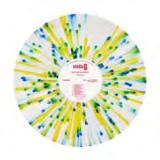
Format: Ltd transparent clear vinyl
Dina Summer ist das in Berlin ansässige Gemeinschaftsprojekt des griechisch deutschen Dark Disco Duos Local Suicide und des bayerischen Elektronikproduzenten Kalipo. Die Supergroup begann 2019 gemeinsam zu arbeiten und hat seitdem ihren gemeinsamen Sound kontinuierlich weiterentwickelt. Dieser verbindet auf einzigartige Weise ihre Einflüsse und schöpft aus Italo Disco der 1980er Jahre, New Wave, EBM und Electroclash der frühen 2000er. Das Ergebnis ist ein dunkler, retro futuristischer Synth Wave Pop Sound, der sich durch clubtaugliche Basslines, epische melodische Hooks und Texte auszeichnet, die von dadaistischen Abstraktionen bis hin zu empowernden und zum Nachdenken anregenden Themen reichen.
Das Trio kehrt nun mit seinem neuen Mini Album „Children Of The Night“ zurück, das alle Elemente vereint, die ihren Sound bisher geprägt haben. Von dem Disco geprägten Synth Pop von „Burning Heart“ und „Bats In Paris“, der an ihr Debütalbum „Rimini“ (2022) erinnert, über die düsteren, cluborientierten Tracks „Fuel“, „Komodo 3000“ und den Titelsong „Children Of The Night“, die die Atmosphäre von „Hide & Seek“ (2024) aufgreifen, bis hin zu den von Dark Wave beeinflussten Indie Songs „Rat Race“ und „On The Road“, die ebenso gut auf „Girls Gang“ (2025) hätten erscheinen können, zeigt die Veröffentlichung die gesamte Bandbreite der musikalischen Identität der Band.
Das Album mit seinen neun Tracks trägt seinen Titel in Hommage an Bela Lugosis ikonische Zeile aus dem Film Dracula (1931): „Listen to them. Children of the night… what music they make.“
For over 30 years the Midwest machine menace that is Paul Birken has been developing and exploring his love for the limitless potential that exists when you chain together synths, sequencers, samplers and beat makers, he is a true audio explorer communicating his own unique sonic exploration through his machines + odd dreams. Starting out back in the day merely with a Commodore 64 computer and a few synths, his studio gear arsenal has constantly evolved over the years into a myriad of unfathomable boxes, cables and bangin’ in his attic allowing him to freely manipulate his random audio creations into the most serious and fun grooves anywhere in the techno realms. Along-with his own imprint Tonewrecker Recordings, Paul’s appeared on a huge stack of the most impressive labels including Don’t Recordings, Fun In The Murky, Earwiggle, Mord and of course a plethora of remixes and tracks on our very own RIOT Radio Records.
From within a tomb in ancient lands comes this 'Bandage Boogie.' A hallowed homage to all things that are non-stop breakin' n' stompin' n' boppin' to the RIOT beats that have now manifested themselves on a 'Mummificated' dance floor near you. This aint street life, this is tomb life, and you'll need as many sacred tanna leaves to keep you movin’ as your fiendish high priest will bestow upon you. This brewed techno fluid that we're administering will ultimately invoke 'The Curse of RIOT’ and you’ll be doomed to eternal bouncin' aboot to its 'Pyramid Pongo' beats that go mysteriously THUMP in the night. Each track on here, and especially in his infamously legendary live sets, are unique in that they get erased from his machines after their creation and won’t ever be spawned again, but ssssssssssssssh, Mummy's the word.
The full digital release also features two bonus immortal tracks delving you deeper into the life-giving sounds of this ‘Mummy Wrapsody.’
WARNING: THESE UNWRAPPED TECHNO BEATS CREATE A WONK-A-THON YOU WILL NOT ESCAPE FROM
Big welcome to Time is Now for J Wax for a bit of a statement EP and I am coming out swinging here cos this is a really good record. There’s good, and then there’s this, the kind of good that stays good.
You know that feeling when something’s just right. When flow state becomes clarity. Well listening to this EP from J Wax gives me that feeling. This is proper Goldilocks business. It’s equal parts Gun Fingers and Loved up hugs. Just right.
By now we all know that something very special happens when Speed Garage collides with 1st wave UK Hard House - but - what makes this just right is that J Wax didn’t stop there, just like the Dutch 2nd Wave of Hard House he’s slid onwards into euphoric trance and oh boy am I here for it. In 1997 we got Double99’s Rip Groove and Nalin & Kane’s Beach Ball and for me this EP has as much in common with perfectly formed ‘97 Trance as it does with Speed Garage. Who says you can’t have it all!
We’ve been following J Wax’s output for years. He has been grafting hard. And for me he’s already firmly a part of the long lineage of globally significant Scottish party starting producers and DJ’s. So when we signed this EP to Time is Now I was gassed. Four big tunes. Sick EP. For me it’s crystal. J Wax is now a producer operating in rarefied air.
Run the Tracks….
A1. The dubplate of ’Peaches’ has been causing mayhem for a minute. Gliding in smooth before that big diva vocal screams down the bassline.
A2. J Wax tags in Edinburgh local RUA.DJ. The pair double up on ‘Shift’ for a slice of Trance infused but no-nonsense Speedy G. Reece bass & gun shots + bouncy synthline & ethereal chords. Lose it and yourself.
B1. ‘Soul Movement’ is a big room weapon. Serious levels on this one that leave no doubt - this is a producer at the top of his game, writing high energy weapons to destroy the dance.
B2. ‘Smokin’ is peak time bizness. Harder darker house with a diiirty dirty south vocal chop. This one is heads down & lock in…
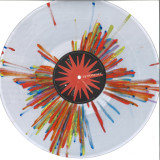
Mainrecords shop is becoming 25 years, therefore we requested tracks from befriended artists and longtime fellows. The Recordshop started in 2001 when 2 record shops from Offenbach combined their power. In the same year Matthias and Christian started working in the shop and soon took it over, the rest is history. 25 years and countless releases later we are happy to celebrate it with some parties and this dedicated release which will be released on multicoloured recycled vinyl .
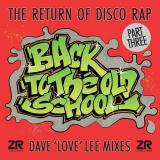
They say 3 is the magic number so here we are with Part 3 of our 'Back To The Old School' 12" series. Four cuts of the finest Disco-Rap remixes by Dave 'Love' Lee, we start things right off with some uptempo disco in the shape of Eddie Cheeba's " Lookin' Good" with it's clav stabbing & synth jabbing funk, ready to rock any dance floor with it's brilliant part-rapped, part-sung vocal play. Two versions are included of the B-Boys early 80's breakers anthem 'Rock The House'. First up is the breakbeat underpinned 'Magic Funk' mix that utilises one of the funkiest basslines of all time. On the flip the 'Roller Rink' mix is a mid tempo floor filler reprising a much loved 90s r&b jam to great effect. Finishing affairs is the 'Maximus Boogie Mix' of Maximus Three, leaning heavily into the classic disco-rap sound of fat Good Times bass, squelching synths under the bragging raps of TJ Swann and Pee Wee Mel.
Bali-based producer/DJ STAY GOLDEN makes his debut on All Day I Dream with Silent Covenant, a seven-track album exploring unseen connections, out now.
Silent Covenant traces a near 40-minute path through hypnotic indie-dance textures, melodic techno tones, and deep house grooves. The title track opens with funky drive and a quick-tongued topline before ‘Fragments of a Dream’ pushes into darker territory. From there, ‘RITUAL PAUSE’ and ‘Stay With Me’ return to organic rhythms and deep vocals, balancing cohesion and contrast across the project.
“A seven-track journey through emotions and the invisible connections that shape our lives. Each track is another step in the same journey. The strongest connections are often the ones that never need to be spoken. They live in shared moments and the memories we carry with us. Silent Covenant is my way of translating those invisible bonds into music.” – STAY GOLDEN
Collaborations with Alexey Union, Broken Hill, Kinky Sound, ÜNAM, ANTICALM, and David LeSal broaden the project's sound throughout its second half. ‘Synth Lines’ adds a deeper edge, while ‘In Your Heart’ turns toward airy melodies. Closing with ‘Everything Sacred,’ Silent Covenant brings its themes of memory, connection, and shared experience full circle.
J.S. ZEITER comes through heavy on Accelerate EP, four cuts built for deep pressure and late-night motion. Raw grooves, sharp textures, no filler — just straight underground energy from start to finish. A serious weapon for heads into stripped-back, hypnotic techno.
This 3-track masterpiece is a true testament to the Berlin-based DJ's exceptional production skills and deep understanding of dancefloor dynamics. From the hypnotic groove of the title track "Camarque" to the infectious basslines of "Mental Nutrition" this EP is sure to get your body moving and your heart pumping.
French composer, artist and co-founder of Transversales Disques, Jonathan Fitoussi has developed a distinctive body of
work over the past two decades, blending analog synthesis, minimalism and electronic music.
Inspired by the mineral landscapes and luminous atmosphere of southeastern France, DELTAS is his fifth solo studio album.
Combining hypnotic drum patterns, flowing pulses, shimmering electronic textures and contemplative movements, it unfolds as a deeply immersive journey through space, light and motion.
A rich and evocative work from one of the most singular voices in contemporary electronic music.
From the fires and floods of the Australian bush on her debut, Soon, which Phil Elverum reissued via his label, P.W. Elverum & Sun, tiarn now takes us to the shores of the Pacific Ocean where classical and electronic arrangements move with an ever-present longing for connection and nature. Stretton has weaved a new world, set on the brink of night, when the world is soft and suspended in blue. Living in isolation near the ocean, overlooking the winter migration of whales, Stretton would regularly swim during the brief 20-minute period known as the blue hour. Ideas would come to her in the icy salt water, and walking home in the dark, she would carry melodies back to record that night. At its heart, tiarn reflects ecological grief and the search for connection in a changing world. tiarn is also inspired by a piece of home camera footage Stretton found of her family in Japan where they lived in the ‘90s before she was born.
It shows the distant mountains, and Stretton’s young family looking over the valley in the soft static of one summer evening. Decades later, using the untouched synth her parents had bought in Tokyo in 1991, Stretton began recording music directly to that footage, letting the images dictate the melody. Voices, insects, weather, movement, and the ambient sounds of the valley are woven throughout the record itself, blurring the line between documentation and composition. The result is an album that feels less created than uncovered — something remembered rather than made. Stretton’s work continues to carve a singular path in contemporary music, balancing environmental awareness, experimental composition, and deeply personal storytelling.
Since its original release, Aging has taken on an interesting wider significance. OCA’s music came to the attention of Kelela, who featured the duo in her Aquaphoria mix before later working with Yo van Lenz and Florian T M Zeisig in their Berlin studio. Those sessions would go on to play an important role in shaping the sound of her acclaimed 2023 album Raven, on which both artists are credited.
2019 Press Release:
Berlin based duo OCA present Aging, their sophomore album and first for Métron Records. Following up last year's Preset Music (recently featured in Kelela's Aquaphoria mix) Aging is an album that focuses on memory, experience and the passing of time.
A collaboration between producers Yo van Lenz and Florian T M Zeisig, OCA formed after the pair met and became friends while studying in Berlin. Originally from small towns in Bavaria, the duo now live and work in the German capital.
Through a series of 10 vignettes, Aging transports the listener on a trip across a series of life events that retain a special personal importance to both of the artists. These emotional touchstones range from the profound to the prosaic - the discovery of something new, the relief from annoyance or the familiarity found in an old companion - and have been fully explored with playful sonic introspection.
Whilst the concept retains a certain ambiguity, it is the sound palette, created solely on an Alesis QS6 synthesiser - that brings these experiences to life. OCA blend and weave classic dance music motifs with shimmering synths, Japanese wet ambient, and even anthemic 80s rock to create a soundscape rich with texture and sensation.
The bass notes and tentative lead of ‘Baby’s First Blade of Grass’ reference the memory of first consciously or subconsciously experiencing something new, whilst the decaying ripples of ‘Stretching in Water’ paired with sounds of flowing streams conjure up images of tranquil pools. Their most developed work to date, Aging showcases OCA as rising stars of progressive pop and modern ambient.
A mysterious artist pays tribute to Scandinavian dark synth pop pioneers, featuring reimagined versions of two cult classics.
Blending contemporary production techniques with the timeless atmosphere of the original recordings, the record offers a fresh perspective on these beloved tracks while preserving their distinctive vintage character.
Bridging past and present, celebrating the legacy of the genre's pioneers for both longtime fans and new listeners..
Charlotte de Witte now unleashes her slamming three-track EP ‘The Resistance’, featuring Theo Nasa and XSALT, out on KNTXT. It follows the astonishing summer tour of her new audiovisual show ‘The Resistance’, including a spectacular ‘XXL’ version at Belgium’s Rock Werchter in July, for a 40,000 audience watching from inside and outside the tent.
World #1 techno artist Charlotte de Witte’s new show continues a standout year of experimental ventures and celebrations, global pop-up shows, monster street parties, incredible new music (EPs and Deluxe LP)… and most recently ‘The Resistance’ AV show world premier at UNVRS Ibiza and the EU tour. The new ‘The Resistance’ EP is hard, fast, and uncompromising. It features Theo Nasa, whose raw, deep techno EP ‘Lifeline’ was released on her KNTXT label; vocal artist / longtime collaborator XSALT, (previously on ‘No Division’, ‘Overdrive’, ‘Roar’, ‘How You Move’); and Charlotte’s own vocals on a personal track ten years in the making.
‘The Resistance’ EP title track feat. Theo Nasa is urgent, demanding, unapologetic. Juddering main theme, rattling hyperspeed beat, spacey hoover swoops form a matrix for the deep, amused authoritative voice of Nasa – ‘we are unity, we are techno’. The brief ‘The Resistance (Intro Version)’ opens with futuristic FX and Nasa’s voice to the fore introducing the techno credo.
‘Never have I ever teased a track this much as I teased ‘The Resistance’. From the moment the track was being made in the studio, I knew this was going to be a special one. Theo Nasa captures the spirit of the underground and guides you through the essence of club culture like no one did before. An entire A/V show grew out of this feeling, this philosophy. It’s one of the biggest tracks I’ve ever made.’ Charlotte de Witte
‘See Through The Lies’ feat. XSALT: futuristic FX, fast stabby synth theme, and XSALT intoning ‘see through the lies. It’s time to take control’. A message of defiance. ‘XSALT delivers again on ‘See Through The Lies’, offering his own take on the EP's theme. Open your eyes. Break the illusion, see through the lies. Release the pressure. It’s time to take control!’ de Witte says.
‘Another Place’ has relentless pace, twanging pizzicato synth, and de Witte’s whispered phrases becoming full voice. ‘’Another Place’ has been in the making for over a decade. It saw the light of day in Brussels, where the lyrics took shape together with my friend One Track Brain. The track was forgotten and resurfaced years later, leading to an entirely new track created around that magical vocal from all those years ago. This is an EP very close to my heart.’
At the heart of ‘The Resistance’ EP and AV show is a message central to de Witte’s work: Protect Club Culture and the communities that sustain it. That’s why de Witte is donating all proceeds from The Resistance EP to The Nighttime Foundation, a global nonprofit dedicated to safeguarding and shaping the future of nightlife, empowering grassroots communities and promoting nightlife as a vital form of culture worldwide.
Repress 2026
Two years after releasing the acclaimed Crash Recoil, Anthony Child aka Surgeon returns to Tresor with new LP, Shell~Wave. Retaining the minimal equipment list and studio-version-of-live-show-sets approach of the previous album in order to focus on the work itself, Shell~Wave is a deeply personal document of both where Surgeon is and has been, converging three decades of experience with a continued curiosity in the untested.
“To make this project, I had to dig really deep in terms of what my relationship was to techno; I’ve been involved with it for a really long time and there’s a lot about it I feel dislocated from, so I had to really think hard about what techno is to me. I often get asked “what is techno to you?” but I can’t answer that with words; this album is the answer.” From the complex, twisting track Infinite Eye to the caustic Soul Fire, the eight tracks that make up the body of the album are single-take explorations of the vast, hard yet minimal techno Child is synonymous with.
Neatly dividing the record in two, the emotional centre of the record comes in the form of Dying, a vibrating, beatless piece that with a mantra-like vocal loop steeped in reverberating effects. Further echoes of dub production appear throughout the record as tracks like Divine Shadow, and Empty Cloud have an almost ever-present mist of reverberation, driven by the appearance of a new delay unit in the equipment list; while much of the philosophy of Crash Recoil’s creation is present, the process and the instruments have changed as Child again switches up his approach to studio work.
This insistence on trying novel techniques doesn’t preclude returning to old ones, as this use of modern digital machines with live, hands-on takes that are as inspired by 60s producer Joe Meek and 70s reggae as they are by this year’s synthesiser expos.
“For me, it’s an interesting experience returning to old techniques again after 30 years. I’m always exploring and finding myself back at the beginning. Connecting the present with the past.”
This philosophy of ‘time travel’ is inherent to the music itself as the synchronised loops repeat while the delay and effects branch out, forming unique eddies; distinct quantum moments within the circular whole; the future leaking through the spaces between the sounds. All of the concepts on the album are perfectly communicated through the painting by Taiwanese artist Jazz Szu-Ying Chen which suggests the movement of water, sound waves, and the chitinous shells of sea creatures.
Celebrating ten years of independent music, Nerang Recordings returns with its sixteenth vinyl release, A Decade of Nerang Recordings - Mix Selections. Bringing together six artists from across the label’s history and extended community, the compilation showcases the diverse sounds that have shaped Nerang over the last decade. Featuring DJ Swagger, Nasty King Kurl, Subjoi, DOS, Low Tape and Moody McIvor, the release moves effortlessly between UK Garage, House, Tech House, Lo-Fi House, Electro and Synthwave while maintaining a clear identity throughout. Since its inception, Nerang Recordings has never been interested in following a single genre, scene or trend. Instead, the label has always focused on releasing music based on quality, individuality and atmosphere. Over the years that philosophy has resulted in a catalogue that crosses stylistic boundaries while remaining connected by a shared spirit. A Decade of Nerang Recordings - Mix Selections serves as both a celebration of the label’s first ten years and a statement of intent for the future. Each track represents a different corner of the Nerang universe, reflecting the sounds, influences and artists that have helped shape the label’s journey so far.
From rolling UK Garage rhythms and club-focused house cuts through to hazy lo-fi textures, cinematic synth work and darker electronic excursions, the compilation highlights the freedom that has always sat at the heart of the label. Rather than being confined by genre expectations, Nerang continues to embrace music on its own terms, allowing each release to find its own identity and audience. While thisrelease reflects on the past decade, it is equally focused on what comes next. The goal remains the same as it was on day one: support great artists, release music without limitations and continue exploring new territory wherever it may lead. Ten years in, Nerang Recordings remains committed to doing things its own way
After a 4 year break, Travel Light Records returns with a four track EP titled "This Is A New Life" by Madezh. Blending house, techno and minimal elements, this release delivers a colorful sound driven by lush synths, heavy basslines and vocal elements.
Repress 2026
The Visions EP is the debut release from London based DJ/Producer duo Suburban Architecture. Drawing heavily on influences from one of Drum & Bass' most innovative and rapidly changing eras, the mid to late 90s, the duo's productions place a contemporary spin on sounds rooted in this golden era of dance music.
This 4 track EP explores a selection of sounds that meet at the intersection of nostalgia and modern production: "Visions '96" fuses atmospheric jazz samples and haunting horns with fractured drums in a manner reminiscent of Source Direct, Photek et al. "Equilibrium" meanwhile gives a modern take on the classic roller, complete with lush synth pads and rolling Amens. On the flip are a pair of jazzy steppers: "Cubic Nature" delivers more lush pads, this time paired with subtle vocals and deep atmospherics whilst "Pulses" brings some bounce to proceedings fusing 80s soul style keys and jazzy horn licks giving stylistic reference to material by the likes of Alex Reece.
Terrestrial Funk welcomes Parisian producer Raymond D. Barre with a fun exploration into FM Synthesis. Bouncing in that sweet sweet midtempo zone all six tracks squelch to your heart’s delight. Simply put, “light-hearted and good vibes electro acid tracks”, as Monsieur D. Barre described them when he demoed the tracks to Terrestrial Funk two years ago. But they’re much more. Perfect programming brings that slow swing, wonky warped vocals on songs like ‘Broken Nose’, and the bells that chime in the releases final song ‘Mes Bêtes’ leave you in a paradox of fulfillment and desire. That’s the best part, you can flip the record back and listen to the release right over. DJs and home listeners alike are in for a treat with this one. Heck, get yourself two copies and mix every track back to back in the club. We guarantee it’ll go off.
Kvrk makes a debut on Distant Gaze with Synthetic Memories, a four-track EP exploring shadowy electronics where organic textures and synthetic forms constantly blur into one another.
Opening with Pulsewidth, the EP begins as a slow burn – a restrained piece of synthwave shaped by drifting ambience, hypnotic sequences and a steady sense of tension.
The pace gradually lifts with Void Caller and title track Synthetic Memory, pushing deeper into prog sound. Straight, driving rhythms form the backbone, occasionally dissolving into broken-beat passages, while warped synths and psychedelic details keep everything in constant motion.
Beneath the electronic framework runs something more primal: forest-like soundscapes, mystic undertones and subtly shamanic motifs give the music an earthy, ritualistic dimension.
Closing the release, Blu:sh reworks Void Caller through his signature deep and trippy approach, stretching the original into a spacious late-night interpretation with a submerged, dreamlike pull.
Across the past decade, KAS has established herself as a unique voice in experimental electronic music, a composer and synthesist whose work dissolves the boundaries between ambient electronica, contemporary classical, composition, and immersive sound design. Her new album “Ruin: It’s Not Just Music” arrives with a distinctive gravitational pull. The record moves with greater physical force, placing rhythm and impact at the centre of its architecture, revealing a more confrontational and embodied dimension of KAS’s musical language.
The first single “Ruin” arrives May 22nd, with the full album released October 2nd via SOMEONE SPECIAL the new label co-founded by KAS.
Where much of KAS’s earlier work explored harmonic environments, the forthcoming album is built around tension and release. Inspired by the sound of drum and bass, breakbeats fracture through dense fields of synthesis, percussive patterns and her signature melodic fragments – motions that feel closer to the kinetic language of club music than the meditative spaces often associated with her past catalogue. The result is a body of work that feels both recognisably hers and newly charged, music that moves through the body as insistently as it engages the mind.
For listeners who first encountered KAS through the glowing synthesis of “Ears” (2016) or the intricate experimental pop of “The Kid” (2017), this direction may feel initially surprising, yet the shift has been quietly unfolding across the past several years. KAS’s practice has steadily expanded beyond the expectations placed upon experimental electronic artists, moving between orchestral composition, audiovisual installations, film scoring, and large-scale commissions while retaining the unmistakable sonic signature that defines her work.
The 2022 albums “I Could Be Your Dog / I Could Be Your Moon” (2022) and “Let’s Turn It Into Sound” (2022) explored a deeply immersive approach to composition, expanded her reputation and instinct for constructing detailed sonic ecosystems while continuing to blur the lines between experimental electronics and contemporary pop structures. KAS’s most recent output has continued to widen that field including the rhythm oriented electronic album “Gush” (2025) and her return to more orchestral roots with “Thoughts on the Future” (2025). Together these releases underscored the breadth of her practice.
Her prolific collaborators and creative partners have ranged from Patti Smith and Suzanne Ciani to Danny Elfman, Tycho, Glass Beams, RY X, Caribou, Four Tet, Reggie Watts, and Max Richter, while her compositions have appeared in projects with Apple, Chanel, Meow Wolf, the BBC Orchestra, and major film and television productions.
On “Ruin: It’s Not Just Music”, that vocabulary becomes more kinetic than ever before. The record draws energy from jungle, drum and bass, and dance-floor focused electronic music while retaining the intricate synthesis and tonal curiosity that have defined KAS’s work from the beginning. The result is a record that feels equally at home within club culture, contemporary composition, and the experimental spaces that have long championed her artistry.
On May 27th KAS will present a major performance at London’s Barbican Centre alongside the London Contemporary Orchestra, marking the ten-year anniversary of her landmark album Ears. The evening will trace the arc of her creative evolution while also introducing material from the new album.
The sun sat high above the desert outside Joshua Tree on October 17, 2024, baking the rocks and shrubbery outside the Farrington Observatory as a small group of invited guests ventured up a steep path towards the telescope. Kyle Simon, the artist and printmaker who founded the Observatory, was standing outside the print studio sat below the towering cylindrical building, greeting friends alongside his wife Sarah and lifelong friend Brian Weitz, the musician widely known as Geologist of Animal Collective. Simon and Weitz had spent the previous day testing and retesting a system that would transform the light of the oncoming full moon captured by the gigantic telescope into a signal that would modulate the control voltage of Weitz’s modular synthesizer. As the sun dipped below the horizon line, the audience gathered on a small wooden patio surrounded by speakers while Weitz readied himself behind the array of patches and knobs. Simon addressed the group, presenting the history of The Sirens, the sonic exploration of the night sky’s mystical and scientific significance about to unfold.
The music conjured under the Hunter’s Moon that night is now documented on this first official release of The Sirens, which was conceived by Simon and Weitz as a recurring performance piece and sound installation. Over a decade ago, Simon began immersing himself in literature on humanity’s sonic relationship to the celestial realm, including Homer’s Odyssey, Plato’s “Spindle of Necessity, ” Kepler’s Harmonices Mundi, and the field of astroseismology. He fitted homemade telescopes with photodiodes and optical sensors to make the images audible, finding latent patterns in the noisy sonic signals he began receiving from the stars. With Weitz, the process expanded as the signal was routed through an analog amplifier and set to modulate the pitch, filter, and other elements of his synthesizer. Together they developed a system of improvisation, with Simon adjusting the telescope to change the intensity of the light based on its relationship with the moon’s position (imagine a theremin player moving their hands in subtle, meaningful motion), and Weitz responding to that input in real time: bending it, amplifying it, or letting it stand on its own. The duo debuted the piece at the Integretron in Joshua Tree in 2018, providing a crucial proof of concept for the performance at Farrington featured here.
The first thing the listener hears on The Sirens is the opening of Farrington Observatory, the cranking of motor and metal. As the lens of the telescope is exposed to the evening air, a wavering drone emerges from the synthesizer, flickering at the margins, the tuning of the oscillators adjusting to the rapidly cooling desert air. The piece progresses and the drone becomes a luminous, spherical constant, bathing the listener in pure tone as Weitz draws out harmonically ambiguous melodies that spiral upwards. Electronics crackle and convulse, coalescing into dense dissonance before widening out into an open octave. Just as the moon orbits the Earth and the stars shift as the planet rotates, so each sonic element appears in flux, interrelationships slowly forming and falling away. Divided into two parts, The Sirens flows as a continuous conversation between the artists and the starlight completing its thousand-year journey across the galaxy.
The Sirens belongs primarily to a lineage beyond music: of sea captains navigating by looking skyward, of astrophysicists studying the formation of the Milky Way, of the modern myths of werewolves, of the stories embedded in constellations. As Simon writes in the album’s extensive liner notes, “These stories and explorations reveal a collective yearning to become conscious of our connection to the universe, our deep-seated desire to understand how we fit into it all.” This music underscores the history of the night sky as the place where poetry and science find common ground, where exploration hinges on the imagination. Driven by curiosity and ingenuity, Weitz and Simon look up and wonder.
After decades contributing to records where a single riff could transform a dancefloor, Charlie May turns that instinct inward on Trusted Farms.
For over thirty years, Charlie has occupied a position that seems increasingly rare in electronic music: the musician’s musician, the person behind the machines, the extra pair of hands in the studio, and quite often, the person responsible for the melody you end up carrying around in your head for weeks on end.
Alongside Duncan Forbes as Spooky, Charlie helped shape some of the most important electronic music to emerge from the UK in the early ’90s. That partnership would also sow the seeds for one of Sasha’s defining records: the central riff behind Xpander began life in Spooky’s live material, before Charlie brought the idea into the studio with Sasha and helped transform it into one of electronic music’s most enduring anthems.
Listen closely to Charlie’s work and there’s a particular instinct that keeps returning: knowing when a simple synth line is enough. Knowing which note needs to change. Knowing when repetition stops being repetition and starts becoming the entire reason a track works. More recently, as one-third of Quiet Places on ASIP, he’s taken those same instincts somewhere looser — beatless, gridless and led by improvisation.
Trusted Farms puts those instincts front and centre.
Tiny melodic phrases appear and refuse to leave. Synth lines repeat just long enough to become lodged in your head. Parts rub against each other without being tidied into submission. There’s a sharpness and directness to it all amongst the purposeful analogue warmth.
Some of these tracks feel almost ridiculously simple at first. But simplicity is difficult when you’ve spent decades learning every possible way to complicate something. Many of the parts on Trusted Farms were performed live with minimal editing. A synth line might be doubled, distorted, re-recorded and pushed back through another piece of equipment, but it remains the same idea. Instead of filling the gaps, Charlie works on the weight and character of what is already there. The melodies become physical; slightly worn around the edges.
For someone whose fingerprints can be found across some genuinely monumental moments in electronic music, Charlie has spent decades knowing what to add.
Trusted Farms is about knowing exactly what to leave alone.
Available on black 12”, mastered by Andreas Lupo LOOP-O Lubich and featuring artwork by Peter Skwiot Smith,
Courtney Storer is Aerofunk, a UK producer who broke out back in 2023 and has been dropping heat ever since., This new EP for Funk Dubs is no different: 'At The Tone' opens with a blend of woozy synth tones and answering machine messages that are offset by gritty and cold drum textures that remind of early tech house greats. 'Relax' is another cut that blends body-popping and elastic bass with snappy drums and odd samples that work perfectly. 'Wet One' is a hot stepping acid-laced tech house slammer with plenty of machine soul and 'White Heat' then closes with more hefty drums that spark plenty of physical reactions and come laced with tactile synth designs.
Keroxen presents Spandauer Damm 103, a new album by Dancelwerk.
Bringing together modular systems, worn drum machines and digital synthesis, the record nods directly to the first decade of Warp Records and the early logic of bleep culture.
Dancelwerk is a Tenerife-based electronic pioneer and one of the foundational figures of the Canary Islands underground. Active for over 30 years, Spandauer Damm 103 marks both a personal milestone and a renewed point of focus, reaffirming his role in shaping the region’s electronic lineage. The album draws on 1990s electronic futurism, filtering those references through a contemporary production approach rather than nostalgia.
The music moves between places and periods: from the early rave circuits of southern Tenerife, where Dancelwerk built his reputation through DIY releases and warehouse-level experimentation, to his later relocation to Berlin, famously arriving with a shipping container of vintage synthesizers and modular equipment.
Balancing melody and impact, Spandauer Damm 103 sets custom-programmed percussion against detailed sound design. FM, spectral and wavetable synthesis shape its harmonic and textural focus, resulting in music that remains physical without sacrificing clarity.
A long-standing practitioner reconnecting with his roots while pushing the system forward.
Detroit techno visionary Keith Tucker returns through his acclaimed alter ego Optic Nerve with AUGMENTATIONS EP, a forward-thinking exploration of minimalist machine funk, futuristic sound design, and deep electronic movement.
Crafted with precision and unmistakable Detroit character, AUGMENTATIONS merges hypnotic analog sequences, mechanical rhythm structures, atmospheric synth textures, and driving electronic beats into a powerful sonic statement rooted in the city’s enduring techno legacy. Sparse yet immersive, the EP balances raw underground energy with cinematic futurism — designed equally for dark warehouse floors and deep headphone listening.
Pressed as a Limited Collector’s Edition Clear Vinyl 12-inch, PBX-38 captures the sleek, transparent aesthetic of the music itself: pure signal, machine emotion, and uncompromising Detroit innovation.
A1 — Augmented 1 (Optic Nerve Original Mix)
A deep, stripped down Detroit techno workout driven by pulsing drum programming, evolving synth modulation, and hypnotic minimalist sequencing. Functional futurism engineered for late-night motion.
B1 — Augmented 2 (Infinite Worlds Mix)
Built around a rolling funky bass line and eerie flowing string textures, this expansive composition moves through layers of atmospheric electronics and mechanical groove architecture. The track creates an immersive sense of drifting through endless digital landscapes while maintaining a sharp rhythmic intensity designed for the underground dance floor.
B2 — Augmented 3 (Visual Shapes Mix)
Abstract melodic fragments, and precision electronic rhythms collide to form a futuristic minimalist soundscape filled with movement, tension, and cinematic pulsed chords.
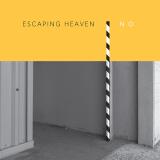
From his home city of Montréal, NO brings us synth infused with lyricism mapped over the dark undercurrent of an intensively driving beat. From vocals suffused with a compelling nihilistic charge, NO draws the listener into narratives with a somber core. This is synth unprocessed and raw edged, with an immediacy that goes straight to the heart of the matter. This album is a collaborative release with Kernkrach Records and TONN Recordings.
Palms Trax returns to production with his first release since 2019. The first single off his upcoming 2 track EP 'Soft Trance, Hard Gossip' is a journey through bold basslines, ear tingling acid lines and hopeful synth lines. It feels measured in its temperament for a listen on the bus home whilst punchy enough to earn its place across festival and club sets this summer. The title track Keys To A Printed Garden captures him at his best, moving deeper into a lush, melodic setting that stretches beyond the dancefloor while never fully leaving it behind. The track is built around warm deep house grooves, hazy nu groove textures and subtle IDM notes. The record unravels with a dreamlike smoothness. Swirling synth work, jazz-inspired saxophone lines and soft lo-fi textures give the record an immersive, almost weightless quality, while moments of glitch and ambient drift push it into more experimental territory. Even at its most reflective, steady percussion and rolling grooves maintain a subtle club-rooted pulse, balancing emotional depth, introspection and atmosphere with movement, rhythm and understated precision.
Tropical Fu*k Storm revisit the live album concept on ‘Inflatable Graveyard Vol. 2’, their second live album and the follow-up to the critically acclaimed ‘Fairyland Codex’. Recorded over three nights during a sold-out residency at New York venue TV Eye, the album finds the band at the height of their incendiary powers, turning already combustible songs into something even more ferocious and unpredictable.
Fine-tuned and road-tested through heavy touring, songs from ‘Fairyland Codex’ are stretched into new forms. Ballad “Stepping on a Rake” takes on heavier undertones, “Irukandji Syndrome” becomes a launchpad for a guitar solo worthy of the Velvets’ “I Heard Her Call My Name” and “Moscovium” sounds more urgent than ever.
The band also revisit back catalogue favourites including “Who’s My Eugene” and “You Let My Tyres Down”, alongside a cover of Australian punk heroes The Saints’ “This Perfect Day”.
Tropical Fu*k Storm have built a catalogue worth obsessing over, but their live show is where the band’s brilliance really breaks open, and ‘Inflatable Graveyard Vol. 2’ catches that chaos in the act.
Key Quotes:
“Tropical Fuck Storm are masters of tension and release.” The Guardian.
“If anyone's qualified to make music about all-encompassing terror, it ought to be Tropical Fuck Storm.” Pitchfork.
“Thrilling noise-rock pranksters” Uncut.
“End times chaos… A gloriously imperfect storm” MOJO.
“A galvanising opus of incredible political bite” The Line Of Best Fit.
“One of the most rewarding listens in rock music” Consequence Of Sound.
Tropical Fu*k Storm revisit the live album concept on ‘Inflatable Graveyard Vol. 2’, their second live album and the follow-up to the critically acclaimed ‘Fairyland Codex’. Recorded over three nights during a sold-out residency at New York venue TV Eye, the album finds the band at the height of their incendiary powers, turning already combustible songs into something even more ferocious and unpredictable.
Fine-tuned and road-tested through heavy touring, songs from ‘Fairyland Codex’ are stretched into new forms. Ballad “Stepping on a Rake” takes on heavier undertones, “Irukandji Syndrome” becomes a launchpad for a guitar solo worthy of the Velvets’ “I Heard Her Call My Name” and “Moscovium” sounds more urgent than ever.
The band also revisit back catalogue favourites including “Who’s My Eugene” and “You Let My Tyres Down”, alongside a cover of Australian punk heroes The Saints’ “This Perfect Day”.
Tropical Fu*k Storm have built a catalogue worth obsessing over, but their live show is where the band’s brilliance really breaks open, and ‘Inflatable Graveyard Vol. 2’ catches that chaos in the act.
Key Quotes:
“Tropical Fuck Storm are masters of tension and release.” The Guardian.
“If anyone's qualified to make music about all-encompassing terror, it ought to be Tropical Fuck Storm.” Pitchfork.
“Thrilling noise-rock pranksters” Uncut.
“End times chaos… A gloriously imperfect storm” MOJO.
“A galvanising opus of incredible political bite” The Line Of Best Fit.
“One of the most rewarding listens in rock music” Consequence Of Sound.
Back from ‘96 — Abacus’ legendary The Abacus EP returns, now reissued as Erotic Illusions. Deep, soulful and hypnotic house at its finest, straight from the Guidance era. Pure timeless heat — grab it before it vanishes again.
DJ Feedbacks :
Laurent Garnier : Classic <3 <3
Nick Hoppner : OOOOOH YES
Dan Beaumont (Chapter 10 / NTS) : Decadent dub for me! lovely
Louise Chen (NTS) : Huge fan, this is a wonderfully sexy reissue!
Joel Martin (Quiet Village) : Timeless Classic from one of the masters - Essential!
Kölsch (IPSO / Kompakt) : Still sounds so fresh
Sven von Thuelen (SVT / Work Them) : Sublime!
Josh Wink (Ovum) : Sounds just as great as when it first came out!
Satoshi Tomiie (Abstract Architecture) : Soooo good! Every details tuned precisely
Carista : sickkkk
Crackazat (Freerange / Local Talk) : yes. of course
Anthony Collins (Frank & Tony / Scissor & Thread) : fantastic record
Hunee (Rush Hour) : classic!
Call Super (Houndstooth) : lovely thxxx
Erol Alkan (Phantasy Sound) : Downloading Thanks!
Radio Slave (Rekids) : Such a big fan !!! Full support and congrats on the re-release. Peeps need to know about "Abacus".
Ben Sims : Now downloading... will check asap!
nd_baumecker (Ostgut Ton) : YAAAAAS! Finally I have this in a better quality than my vinyl rip from the original 12". Vinyl is preordered. Thanks!
Jonnie Wilkes (Optimo) : SEMINAL.
Lawrence (Dial) : OMG Fave Classic!
Fouk (House of Disco / Razor N Tape / Room With A View / Heist) : Ooooh yes! <3
Hector Romero (Def Mix) : Love it. H
Aleqs Notal : Lovely repress
Alinka (Twirl / Classic / Crosstown Rebels / Batty Bass) : Beautiful tracks
Terry Farley : fantastic reissue for those that missed the golden era
Ian Pooley (Pooledmusic) : Sooooooooo good !
Marcia Carr : The Dub without a lot less of the sleazy vocal is cool.
Nick Holder : FIRE
DJ Bone (FURTHER) : Poetic Illusions and Decadent Dub both work for me.
Nat Wendell (Depth of My Soul / Courtesy of Balance / Love & Loops) : classy!!
Luke Solomon (Classic / Freaks / Music For Freaks) : absolute classic Kenny Hawkes special xxx
ROD / Benny Rodrigues : !!!!
Domenic Cappello (Subclub) : still sounds fresh
Alexkid (Rawax / FUSE / NG Trax) : Total Dopeness
Jimpster (Freerange) : An absolute classic from the golden era! Got the vinyl but I'm sure these new masters will sound better than my well worn vinyl rip! Will keep on banging this beauty.
Bake (All Caps / Rinse FM) : the best! thank you for reissuing :)
Dj Deep (Deeply Rooted) : Nice to see this beautiful release available again
Kai Alce (Real Soon) : CLASSIK!!
Mr. V (Sole Channel / Strictly Rhythm / Salter / Defected) : Solid work on this classic Thanks
Baby Rollen (Holding Hands / Slump / Futureboogie) : timeless
DJ Gregory (Point G / Faya Combo) : Alwayes loved that classic
Tom Esselle (YAM / Rhythm Section / WOLF Music) : Killer reissue!
Harri (Sub Club) : nice, will play and support
Hifi Sean (Defected / Plastique) : Diggin' this dub big time
Jenifa Mayanja (Bumako Recordings) : This reissue sounds just as good second time around. Straight dance floor magic. Moody and dubby perfect to zone out to in a dark corner somewhere.
Demuja (MUJA / Let's Play House / Madhouse / Freerange) : nice!!
Marcel Dettmann : thx
Kosh (Syncrophone) : doesnt get any better than this
Dj Hutch (Ambers / Rinse FM) : Lovely deep business! Thank you!
Geir Aspenes (G-Ha / Sunkissed) : Kool, thanks
D'Julz (Bass Culture) : classic alert!
Yuvi Havkin aka Rejoicer returns with an exceptional collaborative album, California Space Craft. On this aptly titled record, he joins forces with seasoned LA bass polymath Sam Wilkes — known for his inspired studio work with Sam Gendel and his dynamic live performances alongside Louis Cole and KNOWER — and drummer Tamir Barzilay, completing the LA-connected trifecta alongside a select handful of key featured guests. The idea for California Space Craft was born out of a series of inspired live sessions in Los Angeles between 2019 and 2022, notably at Listen to Music Outside in the Daylight Under a Tree, where the trio’s natural chemistry first began to bloom. The resulting recordings encompass a wide variety of inspired sound stylings, as one would expect from any of these accomplished artists on their own; however, the sum is truly greater than the parts here, with the fluidity of their freeform improvisations over a dedicated three-day recording session feeling remarkably focused as a cohesive whole. Opening track “Traveling Light” sets the LP’s tone with equal parts Sly & Robbie-style, space echo– drenched rhythms and the cozy kosmische, guitar-led feel of early-2000s genre-fluid explorers like Tortoise. As we continue on to “Ritual in G#,” we are reminded that this is indeed a unique and timeless sonic space the trio has created, as Havkin’s crisp Rhodes chords anchor an ever-evolving psychedelic sound bed. The soaring trumpet of Avishai Cohen adorns the Afrobeat-indebted “Lion Water,” with Barzilay laying down a proper Allen-esque groove, while “Further (with you),” featuring Nitai Hershkovits on keys, offers a defining look at the titular concept of the album — with pure Cali feels coalescing effortlessly into sciNew Release Information fi narrative modes and a proper dose of Rejoicer futurism. Elsewhere, “Her Hair in the Air” shines with fresh polyrhythmic intention, illustrating the balanced bond between the three collaborators at their conversational peak, and the brisk synth strokes of “Early Porpoises,” alongside LP closer “Oceanic Friends” — again ideally named — double as a grand, in-stereo ride into the blissful Pacific sunset horizon. California Space Craft embodies the power of open, collective intention and musical kinship, offering memorable, uplifting moments and an aural glimpse of hope, warmth, and loving melodious calm in an otherwise quite chaotic time for humanity.
The Soft Chaos captures the essence of music “in the moment “ - the interaction of three musicians within the improvisation. It embodies the true spirit and essence of “jazz” - music created spontaneously, yet within the boundaries of an art form that has influenced the sound of modern music and many genres for nearly a century.
A collaborative, improvisational, and free-form trio project led, produced, and mixed by Nathan Haines with Joe Kaptein (keyboards) and Elijah Whyte (drums), recorded in just one day at Auckland Lab Studios.
The Soft Chaos showcases live, in-the-moment, top-quality musicianship with a vintage vibe reminiscent of classic 1970s experimental jazz rock, but with a modern jazz-house aesthetic, featuring live human lead drums and synthesisers rather than programmed beats.
The wonderful Scruniversal takes a sidestep into electro here with a remix of a tune by Liza Gromova, a talented musician and rising star in the pop and indie world who hails from Moscow. Lipelis reframes her 'Papa, Poputny Veter' with 80s synth shimmers, glassy melodies and minimal electronics that maintain the emotional vocal of the original and manage to marry its optimism with a bittersweet edge. The flipside instrumental is another intimate sound but with an irresistible groove that will appeal to wave and Italo fans. Two ageless cuts that are subtly hooky.
Sublime frequencies from the golden era of ambient electronica.
Plumbing hidden depths beneath a deceptively tranquil surface, MLO's mid-90s masterpiece Io is an overlooked gem from a golden era for ambient electronic music. Originally released in 1994, Jon Tye and Pete Smith's collaborative album responded to the growing chill-out movement by leaning into classical and avant-garde influences from Satie, Debussy and Cage through to Soft Machine, Incredible String Band and Eno. Recorded across various studios stacked with classic and rare synths, Io was patiently composed into slowly unfolding suites punctuated with ripples of arrhythmic interference to arrive at a purist vision of true ambient.
The next instalment in Forever Records' ongoing reissue series shines a light back on this landmark piece of UK electronica with the first official reissue since its original edition on Rising High. As well as the original double LP pressing and a new CD digipak version, there will also be a uniquely numbered, limited edition housed in a gatefold sleeve that comes with a bonus 10" featuring two previously unreleased versions of the album's opening cut, 'Wimborne'.
Press response to Io:
"Not so much ambient, more environmental music, Io lets you bring as much (or as little) of your surroundings in as suits your mood. Every listen can be different. Interactive ambient at last.”
IO is pure ambience. Relying on motif as opposed to melody, MLO have produced a truly evocative album.
Peter McIntyre, Mixmag, UK 1994.
"MLO's influences range from the likes of Eric Satie and the intellectual salon music of his era to the more predictable reference point of dubby, modern techno, though they feel, perhaps rather contentiously, that "ambient music can exist in isolation from the rest of the dance music arena". Can it? Take a trip to Io, and find out."
Generator Magazine, UK 1994.
"If you like your ambient deep and moody with long chords that creep along at approximately the speed of drying paint then check out MLO’s Io."
Mixology, UK 1994.
"MLO set the controls for the heart of headspace for their first full album release. Io is top grade ambient brain… Ace album…"
Select, UK 1994.
Sublime frequencies from the golden era of ambient electronica.
Plumbing hidden depths beneath a deceptively tranquil surface, MLO's mid-90s masterpiece Io is an overlooked gem from a golden era for ambient electronic music. Originally released in 1994, Jon Tye and Pete Smith's collaborative album responded to the growing chill-out movement by leaning into classical and avant-garde influences from Satie, Debussy and Cage through to Soft Machine, Incredible String Band and Eno. Recorded across various studios stacked with classic and rare synths, Io was patiently composed into slowly unfolding suites punctuated with ripples of arrhythmic interference to arrive at a purist vision of true ambient.
The next instalment in Forever Records' ongoing reissue series shines a light back on this landmark piece of UK electronica with the first official reissue since its original edition on Rising High. As well as the original double LP pressing and a new CD digipak version, there will also be a uniquely numbered, limited edition housed in a gatefold sleeve that comes with a bonus 10" featuring two previously unreleased versions of the album's opening cut, 'Wimborne'.
Press response to Io:
"Not so much ambient, more environmental music, Io lets you bring as much (or as little) of your surroundings in as suits your mood. Every listen can be different. Interactive ambient at last.”
IO is pure ambience. Relying on motif as opposed to melody, MLO have produced a truly evocative album.
Peter McIntyre, Mixmag, UK 1994.
"MLO's influences range from the likes of Eric Satie and the intellectual salon music of his era to the more predictable reference point of dubby, modern techno, though they feel, perhaps rather contentiously, that "ambient music can exist in isolation from the rest of the dance music arena". Can it? Take a trip to Io, and find out."
Generator Magazine, UK 1994.
"If you like your ambient deep and moody with long chords that creep along at approximately the speed of drying paint then check out MLO’s Io."
Mixology, UK 1994.
"MLO set the controls for the heart of headspace for their first full album release. Io is top grade ambient brain… Ace album…"
Select, UK 1994.
Ohm & Octal Industries made their mark on this label with their Northwest Passages album back in 2023, and now they return with more heavy but equally serene dub tech excursions. 'Blizzard' has none of the frenzy of that weather type but does have gentle synth winds swirling around the rooted drums. 'Fly Boy' is a delicate dub with the most subtle pads and effects marbling the airwaves, while 'Goodbye Sunshine' has more forward intent and beautifully hits that glide over the minimal drums. 'Jah Rule' then dials into a heads-down and more warehouse-ready dub techno sound built from the sort of perfect loops that could play for days and never get annoying.
On Last Night At Marienbad's latest, the imprint brings together three of the brightest souls found within the realms of Jazz, namely Mauricesax, 9ick and Milan93, with their collective talents synergising effortlessly on 'A Garden Between Us', alongside a stellar cast of remixers who add even further delight between the grooves….
As a genre, Jazz has perhaps lent itself the most to other musical universes, in that its curious heart, endlessly experimental nature, and parameter-defying spirit have wrapped itself deep within the core of countless albums, scenes, and music makers. It's a genre that welcomes reinvention, consistently defying its contents and always reaching out to find new methods of expressionism. Electronic music, in its many forms, has truly embraced Jazz perhaps like no other movement of music has, with a truly astonishing array of records surfacing in the past 40 years which have blended Jazz's unique motifs with grooves, chords, and emotive excellence. From 90s Jazz house and UR Techno, through to Future Jazz, downtempo, and Hip Hop, and around many other suns, there remains such an intrinsic and symbiotic relationship between the two musical realms that caters to those who wish to live music both within and out with themselves.
As practitioners of blending electronica and Jazz, few do it like the trio of Mauricesax, 9ick, and Milan93. All three are known for their distinctive soundscapes, yet share commonalities in terms of musical language, feel, and sense of progression. Bringing them together allows for overlaps in their sounds to emerge, and just like Jazz itself, this is where the intrinsicness of sound begins to blossom. 9ick brings his softly evolving vibe to the table, one which was so prevalent and celebrated on his 2025 album 'SMIL'; Milan93 draws from his focal point of exploring fill-laden grooves and a myriad of emotive sensibilities; and Mauricesax draws up his extensive musicality that exists at the corner of jazz, electronic, and experimental music, along with running musical workshops all over the globe.
'A Garden Between Us' represents the trio's core tenets, with this immediately obvious from the record's opener, 'Rhodora'. A gentle solo piano quickly evolves into a series of powerful rhythmic pulses, with brass lines bringing vitality and feel to proceedings. The track shifts gears with purpose, transitioning between musical vignettes of the highest order, with the synth work doing much to bind the transitions together. 'Tulip' emerges slightly differently, with glossy Rhodes tones and an unravelling rhythmic undercurrent setting an enthralling stage. The track flourishes amongst sweeping textures, coming up for air amongst a deeply hypnotic rhythmic section that holds on and never lets up. 'Honeysuckle' lands next, which sees the trio emerge with a boundless, dynamic soundscape. The drums shift within the undertones, as keys, chords, horns and hip-hop vocal samples dance around the pulse, capturing the imagination with their narrative-like placement. Wrapping up the A side comes 'Camellia'. A dazzling array of harmonic sounds converges around the transfixing rhythm section, which emerges from deep below to lavishly roll out over the midsection, with the delicateness of the instrumentation a real highlight here.
The B side features two exquisite remixes, with Pacific Coliseum's version of 'Tulip' landing first. Beginning with a signature four to the floor to get things going, his careful handling of the source material is seen in the tactful introduction of the blissful elements that made the original cut so impactful, with great focus placed on emotive fidelity. The result is a summer-bound house number that reimagines the original in all the right ways, flipping it into a euphoria-driven jazz-laden pacer that reaches for the heavens as much as it drives right into the heart. Teuteu then showcases their take on 'Honeysuckle', and at 9 minutes long, represents the longest cut on the record - and the experience is all the richer for it. Leaning heavily into dance music flavours, Teuteu shifts perspective totally into the realm of the club, with the walls beating hard to the kicks. The sax lines that drift ethereally up top keep eyes closed and souls full, as the dance shifts into the next phase.
An experience that drifts from the daydreaming, to soul-warming through to the club shaking - what else is left to experience, except for 'A Garden Between Us' and how it will brighten up life itself….
Balvanera is the project of Agustina Vizcarra and Lucas Palavecino from Buenos Aires, Argentina.
Since 2016, the duo has been building a sonic narrative that moves between the corporeal and the spectral, exploring waves and minimal synth as well as more intense and rhythmic directions closer to Body music, all while sharing the stage with artists such as Clan of Xymox, Boy Harsher, Die Selektion, Kontravoid, NNHMN and Ashcode.
New album Hasta tocar el fondo vacío del lenguaje arrives as an attempt to push expression to the limit, focused on language and sound as expressive forms.
With all tracks sung in Spanish, the album is a declaration of identity and at the same time an exercise with Spanish itself: how to play with a language that sometimes feels baroque and turn it into something stark while retaining its richness. Musically direct, the album occasionally returns to some minimalism reminiscent of the band’s early releases while preserving the intensity and club-oriented feel of their later work. At times intensifying in speed, the record brings the energy of their live performances to visibility, while other tracks feel like an unsettlingly dreamlike atmosphere. The title – meaning Until Touching the Empty Bottom of Language – borrowed from a fragment of Arturo Carrera’s poem Escrito con un nictógrafo, offers a clue to Balvanera’s nocturnal sensibility: those thoughts and images that can only emerge in the sleepless hours of the night, when they reach their most revealing edge.
Hasta tocar el fondo vacío del lenguajen explores death as something hidden within language while allowing each track to find its own form rather than adhering to genre conventions.
Split released with DKA. Out October 1st, 2026 on aquamarine vinyl LP limited to 500 with lyrics insert.
Keen listeners who have dug below the surface of Oren Ambarchi"s triple-digit discography know that alongside hypnotic minimalism, veins of irreverent and joyously wayward exploration run deep. Cooked is something of a landmark in Oren"s work, bringing this gloriously cuckoo sensibility right into the heart of his most high-profile solo work. Carrying on the grand Ambarchi tradition of meticulously constructed all-star studio jams (which reached new heights with Shebang), Cooked brings together collaborators from Australia, Germany, Japan and Sweden for two side-long epics where the foot keeps tapping even as the mind boggles. Cooked is a long way from the spacious, light-dappled grooves of Ghosted, but Oren"s Swedish bandmates play starring roles here, with Johan Berthling"s double bass anchoring both sides, and drummer Andreas Werliin lending his delicate touch to the second piece, "Sleight of Hand". Beginning with glistening layers of electric 12-string guitar, "Sleight of Hand" takes some key cues from electric Miles touchstones like "Feio" or his epic take on David Crosby"s "Guinnevere", with Berthling"s sparse basslines punctuating an almost weightless cornucopia of shifting detail, glimmering with subtle contributions from Michiko Ogawa on sho and James Rushford on a panoply of acoustic keyboards. Suddenly, everything is overwhelmed by a knotty, hyper-complex "solo" from Marcus Pal on digital synthesis, teleporting us to an alternate history where Allan Holdsworth traded the SynthAxe for Xenakis" UPIC. Building with additional drums and percussion from Will Guthrie to a peak of sizzling intensity, the music then goes sideways into a gently surreal coda, where some distinctly Zawinul-esque chords and Fredrik Rasten"s guitar float over a sprightly rhythm box, the avian inventions of Swedish virtuoso whistler Isak Hedtjärn wafting atop the sunlit stew.
American DJ, producer, and Ovum label boss Josh Wink remixes Chris Liebing's 'Eye C' via CLR on 25th September 2026, one of the standout tracks from Liebing's first fully solo-produced LP, 'Evolver', which landed in March. The album featured collaborations with the likes of Luke Slater, Charlotte de Witte, and Daniel Miller, with Josh Wink the latest to rework material from the project. The Philadelphian is an electronic music veteran who has shaped countless releases on his own Ovum, while also remixing the likes of Depeche Mode, Moby, and Radiohead.
Josh Wink showcases his production skills once again with a blistering take on Chris Liebing's 'Eye C', rewriting it with fizzing synth modulations and prickly acid lines. The track grows in intensity as rumbling drums march on, and the synths become ever wilder before pulling back into a deep, atmospheric groove, rebuilding beneath the menacing vocals and icy, incendiary hi-hats.
The original version of Chris Liebing's 'Eye C' is a deep, rolling techno masterclass with pulsing synths and deft percussion peeling away from the groove. It's linear and heady, perfect for the small hours, with unsettling vocal fragments refracted around the mix and subtle hypnotism floating overhead as the drums grow ever harder.
Die Welt war nie bereit für The Monsters, und The Monsters waren nie bereit für diese Welt. Nach vierzig Jahren, in denen sie zu einem echten Monster aus Fleisch und Blut herangereift sind, präsentieren sie ihr neuntes Album: gut ein Dutzend kompromissloser, wilder, lärmiger und fuzz-geladener Tracks. Ein Mix aus Ein-Riff-Beat, Trash, Garage, "Bern Metal", Boogie, Punk und Grunge - Songs, die einen von innen nach außen stülpen, aufgenommen mit "Miracle" Robert "Worker" Butler und abgemischt von Jim "Dirtbomb" Diamond - ein echtes Garage-Punk-Dreamteam. Vor vierzig Jahren, 1986, war die Jugendkultur-Revolution in Bern (Schweiz) in vollem Gange, Jugendliche und junge Erwachsene wollten sich aus den konservativen Fesseln befreien. Die Straßen brannten, Clubs entstanden und eine neue Schweizer Musikkultur wurde geboren. Dies markierte auch den Beginn von The Monsters. Vierzig Jahre später hat sich der Zustand der Musikkultur - oder vielmehr der Welt im Allgemeinen - wohl eher verschlechtert. Individuelles Denken und Schaffen sind nach wie vor nicht sonderlich anerkannt oder gar erwünscht (Hey KI!). Im März 2026 blieb der Band also nichts anderes übrig, als ihre Instrumente, das Aufnahme-Equipment und ihre Ideen in den Proberaum zu verfrachten. Sie verbrachten einen Monat mit Robert Butler (u. a. The Miracle Workers) und seinem mobilen "Two Cent Recording Studio". Sie schrieben Texte (insgesamt etwa 100 Wörter - mal sinnvoll, mal unsinnig, über das ganze Album verstreut), tüftelten am Sound und nahmen Gitarren in allen erdenklichen Variationen auf. Das Ganze wurde gewürzt mit Percussion, Schlagzeug, Bass sowie obskuren Orgeln und Synthesizern, die sie auf Flohmärkten oder in den Kellern von Freunden aufgetrieben hatten. Nach diesem vierwöchigen Trip schickten sie das gesamte Chaos an Jim Diamond (Ghetto Recorders Studios in Detroit, Dirtbombs, White Stripes, Gories, André Williams... klar, worum es geht, ne?!), um es einem umwerfenden Mix-Abenteuer zu unterziehen. Das Ergebnis ist ein Dutzend Songs ohne Kompromisse, Schwächen oder Stärken. Einfach nur roher, ungeschliffener Lo-Fi-Garage-Punk'n'Roll voller Energie - und das mit vierzig Jahren "Nicht-Erfahrung". Erhältlich sind schwarzes Vinyl und eine pinke Picture-Disc (beide mit Insert & DLC), eine höchst audiophile CD sowie Kassette, die bei doppelter Geschwindigkeit leiert! Für Fans von Reverend Beat-Man, VRR, The Mummies, Oblivians, Billy Childish, Damaged Goods, Monks, very early Hives, Garagepunk, Lo-Fi-Roll, Alternative Beat
Die Welt war nie bereit für The Monsters, und The Monsters waren nie bereit für diese Welt. Nach vierzig Jahren, in denen sie zu einem echten Monster aus Fleisch und Blut herangereift sind, präsentieren sie ihr neuntes Album: gut ein Dutzend kompromissloser, wilder, lärmiger und fuzz-geladener Tracks. Ein Mix aus Ein-Riff-Beat, Trash, Garage, "Bern Metal", Boogie, Punk und Grunge - Songs, die einen von innen nach außen stülpen, aufgenommen mit "Miracle" Robert "Worker" Butler und abgemischt von Jim "Dirtbomb" Diamond - ein echtes Garage-Punk-Dreamteam. Vor vierzig Jahren, 1986, war die Jugendkultur-Revolution in Bern (Schweiz) in vollem Gange, Jugendliche und junge Erwachsene wollten sich aus den konservativen Fesseln befreien. Die Straßen brannten, Clubs entstanden und eine neue Schweizer Musikkultur wurde geboren. Dies markierte auch den Beginn von The Monsters. Vierzig Jahre später hat sich der Zustand der Musikkultur - oder vielmehr der Welt im Allgemeinen - wohl eher verschlechtert. Individuelles Denken und Schaffen sind nach wie vor nicht sonderlich anerkannt oder gar erwünscht (Hey KI!). Im März 2026 blieb der Band also nichts anderes übrig, als ihre Instrumente, das Aufnahme-Equipment und ihre Ideen in den Proberaum zu verfrachten. Sie verbrachten einen Monat mit Robert Butler (u. a. The Miracle Workers) und seinem mobilen "Two Cent Recording Studio". Sie schrieben Texte (insgesamt etwa 100 Wörter - mal sinnvoll, mal unsinnig, über das ganze Album verstreut), tüftelten am Sound und nahmen Gitarren in allen erdenklichen Variationen auf. Das Ganze wurde gewürzt mit Percussion, Schlagzeug, Bass sowie obskuren Orgeln und Synthesizern, die sie auf Flohmärkten oder in den Kellern von Freunden aufgetrieben hatten. Nach diesem vierwöchigen Trip schickten sie das gesamte Chaos an Jim Diamond (Ghetto Recorders Studios in Detroit, Dirtbombs, White Stripes, Gories, André Williams... klar, worum es geht, ne?!), um es einem umwerfenden Mix-Abenteuer zu unterziehen. Das Ergebnis ist ein Dutzend Songs ohne Kompromisse, Schwächen oder Stärken. Einfach nur roher, ungeschliffener Lo-Fi-Garage-Punk'n'Roll voller Energie - und das mit vierzig Jahren "Nicht-Erfahrung". Erhältlich sind schwarzes Vinyl und eine pinke Picture-Disc (beide mit Insert & DLC), eine höchst audiophile CD sowie Kassette, die bei doppelter Geschwindigkeit leiert! Für Fans von Reverend Beat-Man, VRR, The Mummies, Oblivians, Billy Childish, Damaged Goods, Monks, very early Hives, Garagepunk, Lo-Fi-Roll, Alternative Beat
Die Welt war nie bereit für The Monsters, und The Monsters waren nie bereit für diese Welt. Nach vierzig Jahren, in denen sie zu einem echten Monster aus Fleisch und Blut herangereift sind, präsentieren sie ihr neuntes Album: gut ein Dutzend kompromissloser, wilder, lärmiger und fuzz-geladener Tracks. Ein Mix aus Ein-Riff-Beat, Trash, Garage, "Bern Metal", Boogie, Punk und Grunge - Songs, die einen von innen nach außen stülpen, aufgenommen mit "Miracle" Robert "Worker" Butler und abgemischt von Jim "Dirtbomb" Diamond - ein echtes Garage-Punk-Dreamteam. Vor vierzig Jahren, 1986, war die Jugendkultur-Revolution in Bern (Schweiz) in vollem Gange, Jugendliche und junge Erwachsene wollten sich aus den konservativen Fesseln befreien. Die Straßen brannten, Clubs entstanden und eine neue Schweizer Musikkultur wurde geboren. Dies markierte auch den Beginn von The Monsters. Vierzig Jahre später hat sich der Zustand der Musikkultur - oder vielmehr der Welt im Allgemeinen - wohl eher verschlechtert. Individuelles Denken und Schaffen sind nach wie vor nicht sonderlich anerkannt oder gar erwünscht (Hey KI!). Im März 2026 blieb der Band also nichts anderes übrig, als ihre Instrumente, das Aufnahme-Equipment und ihre Ideen in den Proberaum zu verfrachten. Sie verbrachten einen Monat mit Robert Butler (u. a. The Miracle Workers) und seinem mobilen "Two Cent Recording Studio". Sie schrieben Texte (insgesamt etwa 100 Wörter - mal sinnvoll, mal unsinnig, über das ganze Album verstreut), tüftelten am Sound und nahmen Gitarren in allen erdenklichen Variationen auf. Das Ganze wurde gewürzt mit Percussion, Schlagzeug, Bass sowie obskuren Orgeln und Synthesizern, die sie auf Flohmärkten oder in den Kellern von Freunden aufgetrieben hatten. Nach diesem vierwöchigen Trip schickten sie das gesamte Chaos an Jim Diamond (Ghetto Recorders Studios in Detroit, Dirtbombs, White Stripes, Gories, André Williams... klar, worum es geht, ne?!), um es einem umwerfenden Mix-Abenteuer zu unterziehen. Das Ergebnis ist ein Dutzend Songs ohne Kompromisse, Schwächen oder Stärken. Einfach nur roher, ungeschliffener Lo-Fi-Garage-Punk'n'Roll voller Energie - und das mit vierzig Jahren "Nicht-Erfahrung". Erhältlich sind schwarzes Vinyl und eine pinke Picture-Disc (beide mit Insert & DLC), eine höchst audiophile CD sowie Kassette, die bei doppelter Geschwindigkeit leiert! Für Fans von Reverend Beat-Man, VRR, The Mummies, Oblivians, Billy Childish, Damaged Goods, Monks, very early Hives, Garagepunk, Lo-Fi-Roll, Alternative Beat
What an unbelievable record. From the wild cover to the iconic breakbeats, Roots from Ian Carr’s Nucleus is one of the dopest albums we know. This is seriously thick, funky-prog jazz-rock heaven. Originally released on Vertigo in 1973, other than a couple of versions at the time for other territories, Roots was never re-pressed since so it’s gone on to become another one of those impossible to find records.
Maybe it was a little too out there for the time, but it’s aged very, very well indeed and this Be With re-issue, re-mastered from the original analogue tapes, shows off just why this deserves to be back in press.
Genius trumpeter and visionary composer Ian Carr was one of the most respected British musicians of his era. He was a true pioneer and saw the potential in fusing the worlds of jazz with rock, just as Miles Davis and The Tony Williams Lifetime did in the US. In late 1969, following the demise of the Rendell-Carr quintet, and tiring of British jazz, Carr assembled the legendary Nucleus. Regarding music as a continuous process, Nucleus refused to “recognise rigid boundaries” and worked on delivering what they saw as a “total musical experience”. We can get behind that.
Under bandleader Carr, Nucleus existed as a fluid line-up of inventive, skilled musicians. This constant evolution and revolution was all part of the continuous musical exploration and discovery that took jazz to new levels.
Working together with producer Fritz Fryer and engineer Roger Wake, the seven compositions by Carr, Brian Smith and Dave MacRae that make up Roots flirt with perfection, and Nucleus at that time made up of the cream of 1970s UK jazz with Brian Smith on tenor saxophones and flutes, Dave MacRae on piano and electric piano, Jocelyn Pitchen on guitar, Roger Sutton on bass, both Clive Thacker and Aureo De Souza on drums and percussion, Joy Yates delivering the vocals and of course Carr on trumpet.
The spellbinding title track immediately renders the album indispensable. Riding the illest of loping breakbeats, “Roots” is low-slung, doped-out heist-funk. An absolute monster. If it sounds familiar then that’s likely down to it being sampled by Madlib for Lootpack and Quasimoto’s “Loop Digga”, as well as by a whole host of beat manipulators. “Roots” conjures prime instrumental hip-hop / beat music, only 20 years ahead of its time. Truly, these are the roots. Through sinuous bass, twinkling keys and a hypnotic guitar riff, a smoky brass motif weaves its way into a gloriously deep haze around Carr’s solos. “Roots” is over 9 minutes long, but there’s not a single wasted second, not surprising given that this is a condensed version of an originally 40 minute long commissioned composition.
The soothing vocal fusion delight of “Images” follows. Meticulously constructed, with gorgeous flute work from Brian Smith, with Joy Yates’ silky vocals and Dave MacRae’s Rhodes never sounding better. The cool, driving “Caliban” closes out the first side. Originally the third movement in a four part commission to celebrate Shakespeare’s birthday it stands up on its own, all robust rhythms and blended brass. Keyboard colour and Carr’s trumpet are splashed across the funk drums and basslines (and there’s even some bamboo flute). This really is fusion: the elements of jazz and rock coming together in beautifully synthesis.
Side two opens in riotous fashion with the short, thrilling samba of “Wapatiti”. Next up, “Capricorn” forms a smoothed-out, jazzy constellation. Mellow and dreamy, its twinkling percussion and languid horns slowly build the vibe before head-nod drums and a killer bassline enter the fray. With a distinct heaviness that Black Sabbath would’ve envied, “Odokamona” is a venomous slice of riff-soaked jazz metal (yes, you read that right), elevated by Carr’s wah-wah horns.
The album closes with MacRae’s exceptionally cosmic “Southern Roots and Celebration”. Very much in conversation with Weather Report, it opens as a languorous, spiritual jazz of chiming keys and serene guitar that turns slowly, gorgeously into a mid-paced, brass-laced banger. It’s another sure-fire party starter and the sound of the band having a righteous blast, building an ecstatic chaos that ends with Yates screaming.
And of course we need to talk about Keith Davis’ cover for Roots. Perhaps the coolest record cover of all time? Certainly one of the most bonkers. Just your run-of-the-mill high-gloss, acid-tinged airbrush dystopian/utopian living-room party scene. Consider this your chemical flashback trigger warning.
Front-and-centre the hip-to-death green robot holds court with their giant ball of yellow barbwire wool, hooked up to… something(?) being teased out from under the stairs (probably best not to ask). A thoroughly zoned-out, long-legged Pop Art party-goer lounges half-plugged in to the painting behind her as a pair of legs flail into shot from the the top of the stairs opposite. We won’t even begin to guess what the chap’s up to in the middle, but the view out of the windows is rather nice, and someone’s already got the hoover out ready to tidy up. All of the Nucleus sleeves are something special, but this particular one? Crikey.
This Be With edition of Roots has been re-mastered from the original Vertigo master tapes, Simon Francis’ mastering working together with Pete Norman’s cut to weave their usual magic with these wonderful recordings. The crazy cover has been restored at Be With HQ as the finishing touch to this long overdue re-issue.
Larry June has built a career on making hard work look effortless, and his album Who Coppin’ stands as a masterclass in smooth, lifestyle-driven West Coast hip-hop. The album delivers a high-grade mix of Bay Area luxury, entrepreneurial motivation, and unbothered charismatic flows. Spanning a laid-back audio palette designed for early-morning juice runs and late-night freeway cruises alike, Uncle Larry balances the discipline of a hustle-first mindset with warm, sun-drenched production anchored by crisp organic instrumentation and heavy-knocking bass.
The album features a tightly curated roster of collaborators who align seamlessly with Larry's signature aesthetic. Spoken-word encouragement from Wallo267 sets an intentional tone on the opener "Go Outside Intro," framing the record around execution and focus. Soulful contributions from Jhené Aiko on "California Dream" and Musiq Soulchild on "Pretty Green Eyes" provide lush R&B textures, while NorCal legend B-Legit and longtime partner DJ.Fresh reinforce June’s deep West Coast roots. Meanwhile, Swizz Beatz injects high-energy bounce into "Flex," offering a vibrant contrast to Larry’s understated, cool-headed cadence.
Behind the boards, top-tier producers like Cardo, Teeko, Beat Butcha, Jay Versace, and June Santana craft a nostalgic yet modern backdrop filled with warm sample flips, smooth G-funk synthesizers, and relaxed soul grooves. The project builds to an emotionally grounded conclusion on "God Got Us (Ain't Too Many)," where June strips away the flexes to offer direct encouragement to his audience, proving once again that consistency, self-belief, and steady progress remain the ultimate luxuries.
After the acclaimed Bar Mediterraneo, Massimo Di Lena and Lucio Aquilina return with People Of The Moon, expanding their sound into a space of creative freedom. The “People of the Moon” are not fictional, but a dimension within us all: a deeply personal yet universal force, an alternative mindset that emerges when freed from social constraints.
Under moonlight, the album explores anxieties and aspirations through groove and rhythm, expressed in Neapolitan, Arabic, English, Spanish, and Portuguese. It moves fluidly from Afro-Cuban influences in “Celavì” to Anatolian textures in “Ma Tu Che Bbuò”, blending highlife guitars with Nu Genea’s signature mandolins-new rhythms filtered through an Italian lens.
The first single “Sciallà” (2025) introduced this direction: dance as catharsis, not escape. The title track reflects a quiet resilience-persistent rather than triumphant. “Onenon”, featuring Tom Misch, channels Mediterranean brit-funk, while “Acelera”, with María José Llergo, evokes a flamenco-tinged pursuit of the unattainable.
“Puleza” recalls Nuova Napoli with driving energy and vintage synths, while “Shway Shway”, sung by Celinatique, captures the album’s orbital flow-measured, rich, and rhythmically complex, echoing afrobeat explorations with Tony Allen.
Melody remains central, as in “Carè”. Across ten tracks, falling, flying, and dancing merge in a suspended groove. Gabriel Prado’s “Ondas Do Mar” embodies this pull: a cyclical motion, like the tides—irresistible, transformative, and alive within us.
We’re ecstatic to welcome to play:musik one of the scene’s most diverse producers, Sl8r, who brings with him some of the most eagerly anticipated music around currently. It also happens to be some of his finest work to date! Callisto EP covers different shades of jungle in a fresh, exciting way - from the wonderful loopy riff and shuffling beats of the title track, through a future ’95 hardstepping vibe, to deep synth grime influences, and a crazy jump-up meets edits workout.
After 10 years of Andy Shauf"s The Party... it"s time for the afterparty. The Party (10th Anniversary Edition) adds nine never-before-released tracks to the original studio version of this essential indie album of the last decade, including two brand new songs plus alternate cuts and demo recordings. With The Party, Shauf masterfully creates a cast of memorable and unique characters. They show up "Early to the Party," reveal secrets ("To You") or try to reveal nothing ("The Magician"). In "a city the size of a dinner plate," everyone knew the guy who keeled over after smoking what he promised would be his last pack of cigarettes ("Alexander All Alone"). There"s the girl dancing by herself in the middle of the room, with the "Eyes of Them All" upon her. One moment you"re dancing with someone who bears an uncanny resemblance to your ex ("Martha Sways") and later slagging your best friend as way of endearing yourself to his recently dumped ex ("Quite Like You"). All of this is set to ornate arrangements of fuzzed-out guitars, string sections, clarinets and dreamy synths, all draped over delicate piano, acoustic guitars and rainy-day drums.
The third and final volume of remixes of 'Come Into My Life' by Nathalie Capello and Rose Lonegran is yet another doozy for lovers of emotive, meaningful deep house. Another bunch of heavyweights step up, starting with Mystic Bill who teases out a steamy-hot lead and builds a vibe around it. UK mainstay Jimpster plays with a dubby and bubbly low end, while Move D finds jazz-funk in the squelchy bass. Last of all, Underground Quality head DJ Jus-Ed steps up with his remix and explores more dusty textures, a slightly unsettling synth vibe and roomy, hypnotic grooves for late-night dancing.
NNHMN — DARKLINGS: a lethal club edge of dark electronic, pounding EBM and gothic synths that turn floors into battlegrounds. Headliners at Ombra, Grauzone, Extramuralhas, Subkult, Infest and Unterwelt Berlin.
Opera of Lust & the Art of Sorrow II — an intoxicating, cinematic opera of longing and loss: razor‑sharp arpeggios, cavernous bass, hypnotic rhythms and ghostly vocals—sensual, melancholic and brutally dancefloor‑proven.
Proto-Jackin'-Hip-House/Punk-Funk von der ,Third Coast". Ursprünglich erschienen im Jahr 1984 auf dem für die Chicagoer Szene prägenden Mitchball-Label: Das ,Dance Party Album" von Z-Factor ist das Werk, mit dem die Kindheitsfreunde Jesse Saunders und Vince Lawrence die 909 für das Warehouse, WB MX und darüber hinaus neu erfanden. Kommen Sie wegen der spacigen, Lo-Fi-Italo-Synths, bleiben Sie wegen der mit minimalem Budget produzierten, vier-auf-den-Boden-Drum-Machine-Klänge.
Major figure in electronic music and pioneer of cosmic disco, Space was founded in 1977 by Didier Marouani.
"Magic Fly", its first single, embodies its futuristic DNA (a melodious, cosmic and disco-inspired composition). Following its worldwide success, 3 albums were released in 2 years :
- "Magic Fly" (1977), blending melodic richness with synthetic innovation, delivered both dancefloor hits and midtempo tracks.
- "Deliverance" (1977) is a typical 70s concept album, ranging from disco to cosmic electronic music.
- "Just Blue" (1978) is a more melancholic album featuring broader orchestrations and complex harmonies.
These 3 records sold over 10 million copies worldwide.
"The Art Of Space Disco (1977-1978)" presents Space's most iconic tracks and sums up two fruitful intense years of musical innovation.
- The Vinyl comes in as 1LP Crystal Clear. It includes 4 edits : Carry On Turn Me On, My Love Is Music, Deliverance & Running In The City.
- The Double CD features original versions . It includes 2 additional tracks (Symphony, Velvet Rape) and 8 remixes (never released physically before) produced in 2026 by artists whose musical careers were shaped by Space.
- CD & Vinyl Exclusive liner notes by Jean-Yves Leloup.
- All tracks have been remastered by Alex Gopher
Iconic Dutch techno pioneer Stefan Robbers returns to De:tuned with Nodes, a mesmerizing new 8-track album under his legendary Terrace alias. Serving as the sixth Terrace LP and the highly anticipated follow-up to 2025's Branches, Nodes further refines Stefan's signature blend of Detroit-inspired futurism and warm, dub-infused textures. Drawing on decades of studio experience, he delivers another finely balanced collection of expertly produced techno, enriched with warmth, groove and precision. Stefan's relationship with De:tuned spans many years and reflects a shared passion for timeless electronic music. From his acclaimed Phosphenes EP (2017) and his memorable remix of LA Synthesis - Agraphobia, to standout appearances on label compilations such as 10 Years of De:tuned with Estrings, Terrace has remained an integral part of the label's catalogue. Nodes is the latest chapter in that enduring collaboration. Rich in detail, depth and emotion, Nodes once again demonstrates why Terrace remains one of the most respected and enduring names in Dutch techno. The creative heartbeat of Eindhoven is still beating stronger than ever. Artwork has once again been created by Al White and Kevin Foakes (Openmind, DJ Food, Ninja Tune), while mastering duties were handled by Matt Colton at Metropolis. A separate digital edition will also be available through all major digital platforms.
Iconic Dutch techno pioneer Stefan Robbers returns to De:tuned with Nodes, a mesmerizing new 8-track album under his legendary Terrace alias. Serving as the sixth Terrace LP and the highly anticipated follow-up to 2025's Branches, Nodes further refines Stefan's signature blend of Detroit-inspired futurism and warm, dub-infused textures. Drawing on decades of studio experience, he delivers another finely balanced collection of expertly produced techno, enriched with warmth, groove and precision. Stefan's relationship with De:tuned spans many years and reflects a shared passion for timeless electronic music. From his acclaimed Phosphenes EP (2017) and his memorable remix of LA Synthesis - Agraphobia, to standout appearances on label compilations such as 10 Years of De:tuned with Estrings, Terrace has remained an integral part of the label's catalogue. Nodes is the latest chapter in that enduring collaboration. Rich in detail, depth and emotion, Nodes once again demonstrates why Terrace remains one of the most respected and enduring names in Dutch techno. The creative heartbeat of Eindhoven is still beating stronger than ever. Artwork has once again been created by Al White and Kevin Foakes (Openmind, DJ Food, Ninja Tune), while mastering duties were handled by Matt Colton at Metropolis. A separate digital edition will also be available through all major digital platforms.
Driveline Records presents its first solo EP, welcoming Maltese producer Patient to the label. Across four tracks, Patient showcases his signature blend of deep low-end grooves, hypnotic atmospheres and driving rhythms, staying true to the label's vision of timeless, dancefloor-focused techno. The title track, "Genetic Mutation", opens the record with a powerful and atmospheric journey, combining hypnotic textures with a driving groove built for peak-time moments. On "Sphynx", rolling hi-hats, evolving percussion and subtle tension create a hypnotic, constantly moving groove that keeps the dancefloor locked from start to finish. Flipping to the B-side, "Drift" shifts the focus towards deep low-end frequencies. Rolling basslines, immersive atmospheres and subtle movement give the track a dynamic yet restrained energy. Closing the EP, "Not A Replica" delivers a classic syncopated groove, full of tension, punch and infectious swing. A functional dancefloor weapon that provides the perfect finale to the record. With DLR002, Patient delivers four distinctive cuts that balance atmosphere, groove and functionality, reinforcing Driveline Records' commitment to timeless, vinyl-focused techno.
Manfredi and Marijn met for a studio retreat in Paris and quickly found common ground in their love for synthesizers, strange vocals, punk, leftfield electronics and music that doesn't necessarily fit into one box.
In the early '90s, Manfredi joined Wide Records in Pisa, becoming part of a post-punk and DIY network that stretched from Fugazi and The Make-Up to Coil, Clock DVA and early Nine Inch Nails, while spending time on the road tour managing bands across Europe.
Marijn grew up in a completely different generation, but has always had an old soul when it comes to making music. He's drawn to old machines, unconventional sounds and records made long before he ever entered a studio himself. The weirder the vocal or synthesizer, the better. credits
Originally released in 2003, Gravel Muncha became one of the biggest and most recognisable records of the Bassline Breaks era and remains one of DJ Quest’s defining productions.
More than two decades later, this breakbeat classic returns on Cyberfunk as CFUNK 040, pairing a brand-new remix from Datafunk with a fully remastered 2026 version of the original.
Built around everything that made the early Quest sound so distinctive - huge rolling basslines, tough breakbeats, twisted synth work and relentless dancefloor pressure - Gravel Muncha is a record that has never really disappeared. The original continued to surface in DJ sets, mixes and collections around the world, earning genuine classic status within the breakbeat scene.
For 2026, Datafunk takes the track into new territory while respecting the character and attitude of the original, giving one of breaks’ most enduring records a fresh weapon for modern dancefloors.
A piece of breakbeat history, rebuilt and reloaded for a new generation.
4/5 REVIEW IN MOJO: “HEARTBEAT TONES DISSOLVE INTO BEAUTEOUS SHIMMER AND STELLAR SYNTH MEDITATIONS GIVE WAY TO CAREFULLY ORCHESTRATED ELECTRONICA.”
4/5 REVIEW IN UNCUT: “IT'S MASTERFUL, THOUGH IT WILL LEAVE YOU FEELING LIKE A SPECK OF GRAVEL IN A SELF-DESTRUCTING WORLD.”
NME - 8/10 review (w/c 14 October) "He’s mastered this stylistic skittishness and you’ll do well to find much dispute about his talent."
NARC - 5/5 review (October issue) "An immersive soundtrack to your own personal psychodrama."
WIRE - ONE PAGE REVIEW (October issue) "The sentiments it stirs to life are shadowed and ambiguous, simultaneously personal and impersonal. It is also fantastically immersive, dragging the listener into its turbulent undertows, then washing them back on dry land, intact but changed.’’
Virgins was recorded during three periods in 2012, mostly in Reykjavik, Montreal and Seattle, using ensembles in live performance.
While this album remains committed to a painterly form of musical abstraction, it is also a record of restrained composition recorded live primarily in intimate studio rooms. This record employs woodwinds, piano and synthesizers towards an effort at doing what digital music does not do naturally—making music that is out of time, out of tune and out of phase.
Some pieces go off the rails before forming into anything, others eschew crescendo
compositional structures or bombastic density while going sideways instead. It points to the ongoing development of Hecker's work. It suggests illusory memories of drug- hazed jams or communal music performance that may have never been performed or been heard.
It is an offering of music into the void, a gift of digital filler between distractions. Yet hopefully it also stands as a document of the enduring faith in the narcotic, enigmatic function of music as long-form expression.
Mixed by Valgeir Sigurðsson and Tim Hecker. Additional assistance by Randall Dunn and Ben Frost. Mastered by Mandy Parnell at Black Saloon Studios in London, UK.
Across four tracks of lean and potent workouts with his unmistakable sonic signature, Peverelist returns to Livity Sound with his first release of 2026. After three years shaping out the Pulse series, Pace The Wrecks EP finds Pev shifting focus in subtle ways while upholding his focus on impactful, sprightly club modernism.
It's clear there are fresh inputs into the Peverelist sound from the very first note of 'Wreck I', which opens on an ominous lower-register piano note leading into a brooding house-tempo cut laced with sci-fi synth licks. On 'Wreck II' the dial shifts towards a more rapid-fire, electro-informed rush before swerving towards the bass-heavy, bleep-loaded jack of 'Wreck III'. 'Wreck IV' closes the EP out on a more sparsely arranged broken beat tip primed for lighter moments in the mix.
True to Pev's singular sound while maintaining the consistently fresh, uplifting energy of his recent output, Pace The Wrecks opens up the next phase in his studio work with assured poise and a sustained commitment to keep pushing forwards.
A cosmic collision between Perzeptiverdampfkesselqualmtbesinnlich, the psycho-cognitive alter ego of acclaimed electro alien entity pdqb, and Edward Ka-Spel, experimental music icon, apparent half-Earthling and vocalist of The Legendary Pink Dots and The Tear Garden - and, according to pdqb, the owner of the most beautiful voice in the universe.
A storytelling dream team brought together by a fortunate twist of fate, with visual transmissions by the enigmatic Nicola Samorì.
Two Songs. Four Transmissions. One Missing Captain.
Following hot on the heels of the Frequency Damage EP, DJ Quest returns to Cyberfunk with Squeaks / Snake Style— a two-track release that dives deep into the unmistakable sound that made Quest’s productions stand out during the early 2000s.
Rather than simply recreating the past, both tracks tap directly into the DNA of the original Cyberfunk sound: rolling breakbeats, huge basslines, twisted analogue synths and the kind of distinctive production that became synonymous with DJ Quest at the height of the Bassline Breaks era.
Built around original analogue synth work throughout, Squeaks / Snake Style is a deliberate throwback to the raw, futuristic sound of the early 2000s, produced with the weight and clarity needed for today’s sound systems.
It’s classic Quest, strange noises, big bass, rolling drums and plenty of attitude.
A. Squeaks
Everything DJ Quest became known for rolled into one track. Squeaks is an unapologetic throwback to the classic Quest sound of the early 2000s, driven by heavyweight breaks, deep bass and original analogue synth work throughout.
Twisted electronic squeaks and evolving analogue sounds weave their way around the drums, giving the track that instantly recognisable combination of funk, darkness and futuristic weirdness that characterised so many of Quest’s early productions.
Raw, energetic and built firmly for the dancefloor, Squeaks takes the spirit of the original Bassline Breaks era and brings it straight back onto a modern sound system.
AA. Snake Style
On the flip, Snake Style takes the same analogue-driven approach but moves into deeper rolling territory.
A more hypnotic, heads-down breaks roller, the track develops around a heavyweight bass groove, rolling drums and constantly shifting analogue synth lines. There’s less emphasis on the immediate impact of the A-side and more on building a groove that locks into a DJ set and keeps moving.
Still unmistakably Quest, Snake Style combines the rawness and character of early-2000s breakbeat with modern low-end weight and production, proper rolling Cyberfunk business.
Special Vinyl Edition
Making this release particularly special for collectors, the 12” vinyl comes with an exclusive book showcasing the artwork from some of DJ Quest’s biggest and most memorable releases.
The book looks back through Quest’s extensive catalogue and the visual identity that accompanied the records, bringing together a selection of classic release artwork from across his career plus photo collages of memories made across his journey.
It turns Squeaks / Snake Style into more than just a new DJ Quest 12”, it’s also a celebration of the music, artwork and history surrounding one of the original pioneers of the Bassline Breaks sound.
For long-time followers it offers a piece of Quest history alongside two brand-new productions, while newer listeners get an introduction to the catalogue and imagery behind the sound
DJ Support: Dj Harvey, Bicep, TEED, Sarah Story, Joe Goddard, Make A Dance, Dj Subaru, Demi Requismo, Horsemeat Disco, Greg Wilson, Crazy P, Justin Strauss, Sean Johnston (ALFOS), Masilmiliano Pagliara, Red Rack’em Jordan Nocturne , Gina Breeze, Heidi Lawden, Eugene Whang, Neil Diablo, Gina Breeze, Marcel Vogel.
After a mysterious hiatus, one of The essential edit labels of the 2010’s has returned just as inexplicably as it disappeared..
The previous 4 volumes now change hands with private collectors for $$ .. These limited run edits will no doubt sell out in similar fashion..
The A side see’s the most dance floor oriented but often over looked track from Bjork’s album Debut receive the DJ edit it always needed . A2 a unique rework of a very rare nrg record that started out like as Aerobics accompaniment album..
On the Flip B1 take Turn toward the Funk , PBR giving the heavy dub treatment to one of The Whispers most criminally ignored tracks. Rounding things off the B2 drifts into the work of wonky, sleazy Italo.. Magari uses the little understood “wrong speed” technique to sublime effect, combined with some extra synth work it delivers a an entirely different track…one for the heads..
Seven years after 2019’s ‘The Dusk Loom’, Petrels returns with a pair of new albums, Infangthief and Outfangthief. The first of these releases, Infangthief, was originally written and recorded in 2022, before being reworked in light of a subsequent album, Outfangthief, due to be released later this year.
The two albums act as companion pieces, mirrors revealing facets of the other, overlapping in sound and subject matter. Though Outfangthief may have been written after Infangthief, it is no mere follow-up, with it's own creation causing a re-visiting and re-working of the earlier album, which in turn informed the writing of its twin.
Taking their titles from Old English legal terms ("thief seized without" and "thief seized within”), the central thread running through both albums is the illusion of assumed human authority - that which is given and that which is taken by force. With Western society seemingly hellbent on willingly embracing a brutally destructive economic model (even in its death throes), these albums attempt - in their own small way - to undertake the essential task of imagining alternative ways of being.
Petrels is the solo project of musician and artist, Oliver Barrett. Since releasing his debut, Haeligewielle, in 2011 (#9 in A Closer Listen's Best Albums of the Decade), Petrels has toured across Europe and shared a stage with the likes of Jóhann Jóhannsson, Tim Hecker, FIRE!, Nate Young (Wolf Eyes), Trouble Books, Demdike Stare, Nadja, and Hans-Joachim Roedelius (Cluster). Working from his home in Somerset, UK, Barrett has released numerous albums through his Floating Limb imprint, as well as mixing and/or mastering hundreds of releases for the likes of Keiji Haino, Loren Connors & Alan Licht, Judith Hamann, Incapacitants, Mette Rasmussen & Sofia Jernberg, Yasunao Tone and more
“Petrels sidesteps the chilliness found in much of the music of his peers, replacing it instead with an almost spiritual ecstasy, his ravishing synths and almost choral vocal treatments calling out in cosmic, wide eyed wonder at the universe.” – Paul Margree, Louder Than War
Produced by François Tétaz and Luke Howard and recorded primarily at Melbourne's Synth Temple, Tina Arena's Way Of The World reimagines “True Faith” (New Order), “Way of the World” (Max Q / Michael Hutchence), “Enjoy the Silence” (Depeche Mode), “Ordinary World” (Duran Duran), “Torno Bambina” (Ada Mori) and “Cayendo” (Frank Ocean) through stunning orchestral arrangements, prepared piano, analogue synthesis and electronic textures.
Rather than traditional cover versions, these are complete artistic reimaginings that reaffirm Tina Arena as one of Australia's most expressive and enduring vocalists. Of first single “True Faith”, Tina says: “Making the deliberate choice to focus on the lyric of true faith was musically revelatory for me. It presented a blank musical canvas with endless vulnerability and space for me to explore.”
François Tétaz, a Grammy and ARIA-winning producer known for his work with Gotye, Kimbra and Architecture in Helsinki, contributes synthesisers, Rhodes, prepared piano and drum machines throughout, while pianist and composer Luke Howard shapes the EP's restrained, cinematic language. The pair are joined by an ensemble including the Budapest Art Orchestra, Peter Knight, James Rushford, Mindy Meng Wang and orchestrator Felix Watson, giving the collection its rich, orchestral backbone.
The EP announcement lands amid a landmark 50-year career anniversary for Tina — one of Australia's highest-selling artists of all time, having sold more than 10 million albums worldwide.
After establishing their identity with their debut EP, Alma de Baile, Geneva-based duo Roshâni unveil Planet R, their first album, set for release on October 15, 2026, via Stonepixels and distributed by The Orchard.
More than just a record, Planet R is a world of its own: a planet shaped like a disco ball, where languages blend, synthesizers intertwine with organic grooves, and dancing becomes a form of futuristic therapy. Sung in Farsi, Spanish, French, and English, the album moves freely between futuristic disco, alternative pop, experimental electronic music, and contemplative ballads, never seeking to belong to a single scene or territory.
Mutant präsentiert in Zusammenarbeit mit WaterTower Music und DC Studios stolz die erste physische Veröffentlichung von Claudia Sarne’s Original-Soundtrack zu „Supergirl“. Die Komponistin Claudia Sarne sagte über die Entstehung der Musik für „Supergirl“: „Die Vertonung von ‚Supergirl‘ war wie ein wilder Fiebertraum. Ich habe mich besonders mit der Unordnung und Komplexität ihrer Figur identifiziert und liebte die Bandbreite, die der Film erforderte. Die Möglichkeit, von dreckigen Synth-Basslinien und -Sequenzen zu großen thematischen Orchesterstücken und traurigen Solo-Klavierpassagen zu wechseln, war eine unglaubliche Reise. Craig wünschte sich Musik, die das Gefühlsleben der Figuren zum Ausdruck bringt – von Ruthyes Herzschmerz und Idealismus über Karas Verzweiflung und Rebellion bis hin zu Lobos Nihilismus und Krem’s Schrecken; all das verbunden durch die Liebesgeschichte zwischen Kara und Krypto.“ Mit einem Cover-Artwork von Bilquis Evely, gepresst auf 2x 140 gm Farbvinyl, mit einer im Siebdruckverfahren bedruckten D-Seite.
Das Aufeinandertreffen zweier Pop-Ikonen: Madonna und Kylie Minogue veröffentlichen mit "Love Sensation" eine gemeinsame Nu-Disco-Hymne. Die Kollaboration erscheint als limitierte 7"-Single auf Coloured Vinyl und kombiniert pulsierende Synth-Basslines mit glamourösen Vocals. Neben der Main Version auf der A-Seite enthält das Release einen Extended Club Mix auf der B-Seite und kommt in einem veredelten Sleeve mit exklusivem Artwork auf den Markt.
Nach ersten limitierten Singles veröffentlicht The Operator Sound INC. sein Debütalbum "Esoteric Audio For Space Age Witchcraft" innerhalb der "21st Century Library Music"-Reihe des englischen Labels Library Of The Occult. Die Aufnahmen erfolgten direkt auf Tonband unter Verwendung modularer Synthesizer, einer alten elektronischen Orgel und einfacher Rhythmusmaschinen und liefern den klassischen Space-Age-Lounge-Vibe der 1960/70er Jahre, jedoch auf eine düstere und okkulte Weise verfremdet, die aus einem Planetarium der 70er Jahre zu stammen scheint.
Fontaines D.C. announce their fifth studio album, Dopamine Chamber, released on 16th October via XL Recordings. Produced by James Ford, it is the follow-up to 2024’s UK platinum-certified Romance – and the sound of a band moving decisively away from the guitar language of their early records into something colder, stranger and more synthetic. It arrives today alongside lead single “Marianne” and its accompanying video, directed by Dave Meyers.
Dopamine Chamber arrives like a constellation behind undulating sighs of smog: potent balladry, anthemic melodies glinting through the murk. In a world tipping towards collapse, it asks how pleasure mutates amid peril—and what our pursuit of it reveals about us. Across the album, Fontaines D.C. – Grian Chatten, Carlos O’Connell, Conor Curley, Conor Deegan and Tom Coll – move between gratification and dread until the two meld together, reflecting the overwhelm of artificial intelligence, environmental collapse and political violence all riding the same algorithms as memes, jokes and celebrity culture. “The album itself is a dopamine chamber,” says Chatten. “You step inside and we test these different mind- or mood-altering pieces of music on you.”
Where Romance held its tension in balance, this record tips it. “I think Romance was maybe 60 per cent human and 40 per cent corrupted by automation, and a loss of feeling,” says Chatten, who spent time among the faded grandeur of Venice, Vienna and Sicily in search of lyrical inspiration. “This one feels more like 60 per cent corrupted — the mask is wearing the face a little more.” He resisted any pull towards easy optimism: “I felt it would be more powerful to leave the hope out and reflect the ugliness honestly. This one needed to feel more like a catastrophic warning.”
“Our albums have always questioned a sense of place,” says bassist Conor Deegan. “First Dublin, then being away from Dublin, and then trying to find the romance elsewhere. On this record, the question became: where do you escape to?” Into the self, perhaps – or hedonism, fantasy, cosmetic perfection, eternal youth or the endless refresh of a screen.
Fontaines D.C. have spent five albums refusing to repeat themselves – from Dogrel (2019) through A Hero’s Death (2020), the No. 1 Skinty Fia (2022) and the anarchic, kaleidoscopic Romance (2024). Dopamine Chamber is their most radical turn yet: cold synthesiser tones, marching drums, samples and triggers, several songs with no guitars at all, and the swooning strings of 1960s Italian pop pulled into something synthetic. For guitarist Conor Curley, the aim was to break from the band’s own reference points: “I was trying to find stuff that pointed into the future.” It was made with James Ford between London, the English countryside and Palermo, where Chatten recorded vocals in a makeshift booth built from mattresses and cushions.
“There’s a poignant sense of us being on the brink of some other kind of form of humanity, or non-humanity,” says Chatten. For their fifth album, Fontaines D.C. have built the chamber. What happens to the listener inside it will be the experiment.
Fontaines D.C. announce their fifth studio album, Dopamine Chamber, released on 16th October via XL Recordings. Produced by James Ford, it is the follow-up to 2024’s UK platinum-certified Romance – and the sound of a band moving decisively away from the guitar language of their early records into something colder, stranger and more synthetic. It arrives today alongside lead single “Marianne” and its accompanying video, directed by Dave Meyers.
Dopamine Chamber arrives like a constellation behind undulating sighs of smog: potent balladry, anthemic melodies glinting through the murk. In a world tipping towards collapse, it asks how pleasure mutates amid peril—and what our pursuit of it reveals about us. Across the album, Fontaines D.C. – Grian Chatten, Carlos O’Connell, Conor Curley, Conor Deegan and Tom Coll – move between gratification and dread until the two meld together, reflecting the overwhelm of artificial intelligence, environmental collapse and political violence all riding the same algorithms as memes, jokes and celebrity culture. “The album itself is a dopamine chamber,” says Chatten. “You step inside and we test these different mind- or mood-altering pieces of music on you.”
Where Romance held its tension in balance, this record tips it. “I think Romance was maybe 60 per cent human and 40 per cent corrupted by automation, and a loss of feeling,” says Chatten, who spent time among the faded grandeur of Venice, Vienna and Sicily in search of lyrical inspiration. “This one feels more like 60 per cent corrupted — the mask is wearing the face a little more.” He resisted any pull towards easy optimism: “I felt it would be more powerful to leave the hope out and reflect the ugliness honestly. This one needed to feel more like a catastrophic warning.”
“Our albums have always questioned a sense of place,” says bassist Conor Deegan. “First Dublin, then being away from Dublin, and then trying to find the romance elsewhere. On this record, the question became: where do you escape to?” Into the self, perhaps – or hedonism, fantasy, cosmetic perfection, eternal youth or the endless refresh of a screen.
Fontaines D.C. have spent five albums refusing to repeat themselves – from Dogrel (2019) through A Hero’s Death (2020), the No. 1 Skinty Fia (2022) and the anarchic, kaleidoscopic Romance (2024). Dopamine Chamber is their most radical turn yet: cold synthesiser tones, marching drums, samples and triggers, several songs with no guitars at all, and the swooning strings of 1960s Italian pop pulled into something synthetic. For guitarist Conor Curley, the aim was to break from the band’s own reference points: “I was trying to find stuff that pointed into the future.” It was made with James Ford between London, the English countryside and Palermo, where Chatten recorded vocals in a makeshift booth built from mattresses and cushions.
“There’s a poignant sense of us being on the brink of some other kind of form of humanity, or non-humanity,” says Chatten. For their fifth album, Fontaines D.C. have built the chamber. What happens to the listener inside it will be the experiment.
ADULT. kooperiert nicht. Seit über 25 Jahren verkörpert die dystopische Detroit-Synth-Punk-Institution, gegründet von Nicola Kuperus und Adam Lee Miller, unbeirrbare Frustration, Misstrauen und Beklemmung. Man könnte erwarten, dass sich die Kanten mit der Zeit abschleifen, doch ADULT. hat kein Interesse am Komfort eines Vermächtnisses. Noch nie klang die Musik des Duos so unmittelbar, so dringlich und so unverhohlen wütend wie auf dem abschließenden, kompromisslosen Kissing Luck Goodbye.Mit aufgerüstetem Equipment und einer neuen Klangbibliothek gebaut, ist das Material erdrückend dynamisch, lauter - und zugleich klarer. Kuperus' dominante Darbietung rückt im Mix stärker in den Vordergrund und skizziert ein Arsenal aus lebhaften, ätzenden Rufen, Sprechchören und Gedankensplittern. Lachen - ob in den Texten oder als besessene Präsenz - fungiert als Leitmotiv und verweist auf die bedrohliche Absurdität der modernen Zeit.,THE CHAOS IS WHAT THEY WANT", singt sie in ,R U 4 $ALE" - zugleich eine Absichtserklärung: einer brennenden Welt aus Gier und Unordnung mit trotzigem, meisterhaft zusammengebautem Chaos zu begegnen. ,Du hast in dieser Höllenlandschaft, in der wir gerade leben, zwei Möglichkeiten: kämpfen oder depressiv sein", sagt Miller. ,Beides ist okay. Aber, na ja, die Entscheidung war einfach."ADULT. ist bekannt für hochriskante Katharsis auf der Bühne und griff kürzlich auf seinen Backkatalog an Bassgitarren-Songs aus den 2000ern zurück, wobei sie die vorausschauende Anxiety Always-Ära erneut nachzeichneten - teils aus Notwendigkeit angesichts der heutigen politischen und technologischen Angsttemperatur. Die Reaktion war sofort spürbar: ,Wir waren in Paris, und die Kids sind von der Bühne gesprungen. Und ich dachte nur: Das ist großartig. Das ist irgendwie die Energie, in die ich wieder zurückwill", sagt Kuperus.Diese Erkenntnis fiel mit einer Reihe von Rückschlägen zusammen - Kuperus' Anfällen von chronischem Schwindel, dem Verlust ihres engen Freundes und Kollaborateurs Douglas McCarthy von Nitzer Ebb, dem das Album gewidmet ist - alles unter dem drohenden Regime noch einmal erheblich verschärft. ,Wir dachten nur: Alles zerbricht. Wir zerbrechen. Wir sind kaputt." Dieses Gefühl hielt jedoch nicht an, denn letztlich waren sie viel zu sehr von Wut aufgeladen, um stillzuhalten. Die Stimmung vor Kissing Luck Goodbye waren vier Mittelfinger, die kerzengerade nach oben zeigten.Anstatt sich zurückzuziehen, konzentrierten sie sich auf den Prozess und überarbeiteten ihr Setup - inklusive der ersten neuen Mikrofone seit 20 Jahren. Hält man das Album an irgendeiner Stelle an, zählt man wahrscheinlich ein Dutzend Dinge, die gleichzeitig passieren, in seltsamer, schwindelerregender und dissonanter Harmonie. ,No One Is Coming" attackiert Untätigkeit angesichts des Faschismus - ,NO ONE IS COMING TO YOUR RESCUE". ,None of It's Fun" feuert mit atemloser Dringlichkeit, rasenden Glissandi und pointierten Zeilen wie: ,OH I AM TEARING MY GUTS OUT / LOOK AT ME_ DO YOU THINK THAT THIS IS AMUSING?"Eine geradlinige Basslinie und Kickdrum prallen im Abschlusstrack ,Destroyers" auf pulsierende Mantras, werden dann vollständig gesättigt und kakophonisch. Ihre jüngeren Ichs hätten den Song vielleicht sich selbst zerstören lassen, doch hier gelang es ihnen, die Lautstärke durch alle Extreme hindurch zu stabilisieren und Raum für ein eindringliches, abschließendes A-cappella zu schaffen: WE PAY THE PRICE FOR THOSE IN POWER EXPLOITING YOU EXPLOITING ME CONSUMING YOU CONSUMING ME SICK SICK SICK SICKENING IT IS US THAT ARE DEVOURED BY EVERYTHING I WILL EAT YOUR HATE
,Beyond the Fleeting Gales" ist das Debütalbum der New Yorker Band Crying und verbindet eingängigen Indie-Rock mit elektronischen Elementen, Prog-Rock-Einflüssen und kraftvollen Gitarren. Die zehn Songs vereinen atmosphärische Synthesizer, starke Melodien und dynamisches Songwriting zu einem energiegeladenen und emotionalen Gesamtwerk.
Label head Len Faki joins forces with Icelandic dub techno pioneer Exos for Infinity In Loop, a joint exploration into cavernous depths and shifting tonal landscapes.
Two versions of the title track fill the entire A-side, each unfolding with patient intent. Drifting across icy atmospheres and static hums, Infinity In Loop’s first incarnation slowly builds into a mesmerizing, minimalistic loop—punctuated by delicate percussion and a faint, comforting sprinkle of melodic warmth amidst the arctic chill. The second iteration leans more into a classic 90s dub techno framework, launching straight into a steady pulse anchored by echoing chord pairs and crisp, high-energy percussion.
On the B-side, the duo shifts towards raw, dancefloor-driven territory. Aurora delivers impressive tension with dry, jacking rhythms, snappy percussion, and haunting vocal fragments cut up to drive the groove forward. Closing out the EP, Circuit Flux pairs sub-heavy low-end with unpredictable rave energy. Nostalgic 90s vocal cues, pitched-up hooks, and fidgety FX swell and recede over staunch synths—creating a dynamic, deeply layered track that constantly shifts between space and peak-time momentum.
Yesca is back on Shall Not Fade with ‘Paint on Walls’ 12” EP.
2024’s Yesca EP on SNF - “Mood Loops” - set a high bar, so when we say this record is something special you should take note. Of course if you already know Yesca’s music or have had the pleasure of a Yesca DJ set then you will have already this queued up.
Sweet Spot: Ben Sims, Deetron, Oliver Ho, Vince Watson, Grain (Artwork’s Techno alias). Planet-E, Primate Recordings, Paul Mac & Stimulus Recordings found the sweet spot.
According to the OED the first use of the phrase “Sweet Spot” was in 1976 in reference to tennis rackets and golf swings. It’s where everything hits just right. And that’s what this EP does, hits just right. What strikes me is how descriptive the phrase ‘Sweet Spot’ is. Given enough swings and some luck we all know what it feels like to hit the sweet spot in some regard. Finding the sweet spot regularly though takes time and skill. But being able to hit the sweet spot by design every time, well that’s something different. That’s what makes the greats great.
For us at SNF there’s a consensus that in the lineage of electronic music there have been many moments where artists & labels converged on a sweet spot. One such sweet spot for us is in Techno
around 2003 when at the tail end of Hardgroove tempos began to slow and a groovier more refined tech house infused goodness appeared in the racks from a group of killer techno labels & artists (some mentioned above) that moment before the fuller emergence of the 2nd wave of Tech House in the mid 00’s.
That sound, while often emulated, never quite hit the same for us at least – until Yesca came along. His music has everything that we love about that sweet spot. Raw driving groove, rolling basslines and hip shaking percussion. What’s different on ‘Paint on Walls’ is that Yesca stepped on - he had already found the sweet spot on 2024’s Mood Loop EP - now his sound (or swing) is natural. Repeatable, refined and seemingly effortless. To revisit the tennis and golf analogy, this is the start of a Grand Slam run from an artist ready to etch their name in dance music history. Tiger..... Serena......Yesca.
Run the Tracks:
‘How I Do It (They Wonder)’ - A masterclass in less is more, and a serious DJ tool. Full of groove - slow it down and it will light the touchpaper in a house set - speed it up and you’ve got techno weaponry. Forget gatekeeping, this will make you feel like you just found a 2004 techno white label from the likes of Grain or Ben Sims.
‘I Desire’ - House music that I reckon Deetron would be proud of... Blissed out machine funk, whispered vocals, slick jazzy chords and dubbed out techno stabs are all grounded by Yesca’s impeccable, loopy drum programming. The best tunes always end too soon.
‘Domination’ - The ever rising bass, err, dominates this track and this track will dominate on many a dancefloor, but Yesca's knack for dubbed out swinging synth lines has to get a shout out here too. He turns what would be melodic elements into what feels like part of the percussion. Double Threat. Hands Up and Heads Down business.
‘Paint on Walls’ - It would be a tough call to say Yesca’s saved the best til last with the EP’s eponymous track given what’s come before, but Paint On Walls works all the highlights from the rest of the EP into a latin techno/house infused anthem. Skittering percussion, a hint of Detroit goodness and a deep deep rolling bassline and THAT vocal. In every way hopeful yet resistant, and that is what techno is all about.
Fila Brazillia is the name of the decidedly singular collaboration between Steve Cobby and David McSherry, born in the coastal town of Hull in the UK. Bending—and often outright breaking—more or less every rule in the book, they've been effortlessly blending deep house, downtempo, breaks, ambient, and wry humour, sampling anything they can get their hands on. Their first outing was the 1990 single-sided white label 12" Mermaids, an airy deep house tune featuring a cheeky sample taken from the theme from Robison Crusoe. Since then, they've released a boat load of singles, seven highly regarded full-lengths, and more than 60 remixes for artists such as Radiohead, Busta Rhymes, and Lamb.
Black Market Gardening is their third full-length and marks a creative high-point for the duo. Over nine tracks, Fila Brazillia guides you through hazy, bass-heavy trip hop, cosmic synth lines, brisk breakbeats, funky guitar riffs, and even touch of drum 'n bass (it's the mid-1990s after all...). There's just so much to take in, leaving the listener wondering where the samples end and the live instrumentation begins. Yes, Fila Brazillia's output fits squarely within the chill-out tradition prevalent in the UK at that point in time, but their unmatched creativity and boundless approach to the studio process makes their music truly timeless.
Black Market Gardening is available as a 30th anniversary edition for the first time since 2001.
With over 26 years, 8 full-length albums and performances in 40+ countries, GOTHMINISTER is regarded as “one of the most iconic gothic/industrial acts” (Terra Relicta). For the first time, the entire album is fully recorded, produced, mixed and mastered by Bjørn Alexander Brem himself – delivering the raw and uncompromising sound he always envisioned. Gothminister, an acclaimed icon in the gothic industrial metal scene, delivers a monumental masterpiece with “We are all Demons.” This 11-track album plunges into the depths of our inner darkness, revealing that we all carry demons beneath the surface. Through its bold thematic arc, the album urges listeners to confront their darkness, embrace strength within it, and emerge fearless. Musically, it’s a powerful fusion of gothic industrial metal and modern EDM elements. Expect ferocious synths, thunderous drums, and industrial guitars that cut like steel. Screaming vocals intertwine with female duets, soaring operatic moments, and grand choral sections. All of this creates a dark yet beautiful atmosphere—one that culminates in unity and completion. This is not just an album; it’s a legendary sonic journey, cementing Gothminister’s iconic status.
Celebrating Rekids’ 300th release and 20th anniversary, Detroit legend Robert Hood and Rekids boss Matt Edwards aka Radio Slave collaborate for the first time on the double-A side ‘Radio Hood’.
First appearing on Rekids with iconic remixes of Radio Slave’s ‘Don’t Stop No Sleep’ in 2015, followed by Floorplan remixes of ‘Feel The Same’ in 2017, Hood went on to drop two EPs and the critically acclaimed ‘Mirror Man’ LP between 2020 and 2021. Now, a long-gestated collaboration between the two producers arrives as ‘Radio Hood’ complete with an alternative ‘Version’ mix.
While Radio Slave and Robert Hood are best known for a minimalist approach, ‘Radio Hood’ and ‘Radio Hood’ (Version) flip the script with rich, maximalist textures and sweeping synths. The lead track is spacious, with unmistakable and persistent stabs pulsing from start to finish, whilst Version is an indulgent, nine-minute-fifty-two stunner with sweeping, emotive strings, a subtly growling Reece bassline and serious emotional impact.
Discrepant presents Fantarombo, a new album by Giovanni Lami.
While his previous works often moved through memory, residue, degradation, and dialogue with existing materials, Fantarombo takes shape as an unstable, bodily gesture.
Sound is not recalled or reconstructed, but triggered, pushed, and set in motion as an active force. Lami approaches modular synthesis as a physical, hands-on practice rather than a technical exercise or display of system mastery. The modular setup becomes a responsive body: something to be nudged, listened to, and occasionally resisted.
The pieces unfold through slow accumulations, unstable feedback paths, and carefully misaligned sequences. Rather than driving toward resolution, the music lingers in states of suspension, allowing small shifts in voltage, timing, and texture to reshape the whole. Chance and duration play a central role, with structure emerging gradually from repetition and drift.
There is an unmistakably organic quality to the sound: porous, tactile, and quietly resonant. A sensitivity to space, grain, and micro-movement, where subtle changes carry as much weight as overt gestures. On Fantarombo, process takes precedence over control, and the circuitry is allowed to speak back, resulting in music that feels intimate, unstable, and quietly insistent, revealing itself slowly through sustained attention.
A music of unresolved behaviours, suspended somewhere between obsolete digital optimism, imaginary systems and malfunctioning computational folklore.
Für die Feier des Miteinanders! Mit ihrem zweiten Album "Wenn man das Licht zurückverfolgt, weiß man, wie alt die Sterne sind" gelingt WIM ein eindrucksvoller Schritt nach vorn. Die Hamburger Künstlerin verbindet erstmals ihre poetische Tiefe mit einem neuen, synth-poppigen Sound, der Raum für Leichtigkeit und Bewegung schafft. In zehn Songs erzählt sie von prägenden Momenten, Verlust, Erinnerung und dem, was Menschen im Verborgenen formt. Dabei entsteht ein Album, das Empathie einfordert, ohne zu beschweren - und das zeigt, dass selbst schwere Themen tanzbar sein können. Produziert von Tobias Siebert (Kettcar, Enno Bunger), klingt die Platte organisch und frisch - unverkennbar WIM, aber mutiger und offener als je zuvor, fast schon moderner, urbaner XL-Pop: Die Songs werden rhythmusgetriebener, luftiger und teils konsequent vom Beat getragen. Und wenn es inhaltlich doch zu schwer wird, tanzt WIM im Studio zu Paula Hartmann, hört Chappell Roan und lässt sich von Wir Sind Helden inspirieren. LP farbiges Coke Bottle Green Vinyl (140g), CD Digipak mit Posterbooklet.
Proto jackin’ hip-house/punk-funk from the third coast. Originally is- sued in 1984 on Chicago’s scene- defining Mitchbal label, Z-Factor’s Dance Party Album is where boy- hood friends Jesse Saunders and Vince Lawrence reinvented the 909 for the Warehouse, WBMX, and be- yond. Come for the spaced-out, lo-fi Italo synths, stay for the micro-bud- get four-on-the-floor drum machine rattles.
„Nature’s World“ taucht noch tiefer in das Universum ein, das durch die gefeierte 2025er-Compilation
„Dream a Dream“ mit Studio G erschlossen wurde, und präsentiert die synthielastigen Melodien des LibraryMusic-Kollektivs, die für Naturdokumentationen komponiert wurden und zwischen der grandiosen Ehrfurcht
vor einer Vulkanexplosion und der psychedelischen Ruhe eines Insekts, das auf einem Seerosenblatt ruht,
hin- und herpendeln. Nach vier Jahrzehnten kehrt diese Neuauflage von Jazz Dispensary auf Vinyl zurück
und erscheint als Splatter-Vinyl-LP.
After more than 20 releases as Not a Headliner, José consolidates his real-name identity with his second release
Four tracks, 28 minutes. José's first record under his own name.
Femenino Singular is José's first record under his own name, following more than 20 releases as not a headliner and an earlier take on the project with not a headliner presents José.
That same gesture moves with the record itself: side A happens at night, side B in the morning, and what the titles hint at shifts with that transition. Built with real instruments - bass, guitar, percussion, synths - reaching for a swing that breaks away from a machine's quantized grid, somewhere between house and techno.
Plush shag carpeting, jazz flutes, analogue synths, funk grooves, exotica, and sultry, Italian-style vocalising: Erotica 70 is the new album from Larry Manteca, known for their inventive, tongue-in-cheek reimaginings of classic Italian soundtrack aesthetics.
This time around, the Milanese collective sets its sights on the distinct sonic landscape of 1970s commedia sexy—a film genre that, for better or worse, defined an era and fed richly into the cinematic education of Larry Manteca’s members.
Through this lens, Erotica 70 also becomes a way of celebrating Piero Umiliani in his centenary year—a composer whose name is closely linked to the erotic comedies of the time.
The nod to Umiliani is baked right into the details, starting with the choice of vintage gear like the Eminent synth and the Wurlitzer electric piano. These instruments deliver that particular blend of jazz, groove, electronics, and sensual charm that made the golden age of Italian film music so unique.
Standout track “Lando” is a joyful, playful homage to actor Lando Buzzanca, who starred in numerous films scored by Umiliani, including the iconic 1973 comedy La schiava io ce l’ho e tu no (My Darling Slave).
Larry Manteca is spearheaded by multi-instrumentalists Alessandro Paiola and Riccardo Danieli, flanked by the cinematic flute of Carlo Pelsa, the swinging drums of Andrea Quattrini, and the magnetic vocals of Valentina Castelli and Alessandra Maria Manzoni.
Recorded across various studios in Northern Italy, Erotica 70 is the imaginary soundtrack to an Italy that no longer exists, recreating its atmosphere while rendering it in full, vivid colour. It’s a record whose music seems to come straight out of a provincial cinema, a smoky late-night club, or a long-lost 70s film. But while it looks back to a bygone era, it does so only to bring it straight into the present, making the past sound surprisingly fresh and contemporary.
In The Dark Again continues to stand for timeless electronic music at its finest. Release No. 14 is yet another testament to that.
The journey begins with the stunning anthem «Tomb of Ligeia» by Scottish artist Sebastian Swarm.
Next up is synth master Heinrich Dressel, delivering the beautifully melancholic and effortlessly cool «Elka Snow Cat.»
Electro hero Konerytmi rounds off Side A with a deep and bleepy cut.
The flip side opens with the massive, brooding «Ruined Horizons» by Be Dellow, a project by Violet Poison, whom the label fans will also know as Bakunin Commando.
Another familiar face brings the record to a close: Igors Vorobjovs, whose unmistakable sci-fi electro never fails to captivate.
Die langjährigen Freunde Bibio und Dorian Concept tun sich nach diversen Kollaborationen für das gemeinsame Instrumentalalbum "Answers" zusammen. Ein Großteil der Musik entstand aus der Ferne; Ideen wurden zwischen Wales und Österreich hin- und hergeschickt, was die Vorliebe beider Künstler für einen eher zurückgezogenen, prozessorientierten Schaffensprozess widerspiegelt. Der britische Produzent Bibio, bekannt für die Verbindung von Folk, Ambient und Lo-Fi-Tape-Texturen, steuert eine greifbare, von der Gitarre geprägte Wärme bei, während der Wiener Dorian Concept, Autodidakt am Keyboard und Improvisationskünstler am Synthesizer, seinen fließend-experimentellen Ansatz elektronischer Komposition einbringt. Auch an der visuellen Gestaltung arbeitete das Duo eng zusammen; Videos und Artwork entstanden gemeinsam, inspiriert von der geteilten Liebe zu Vintage-Kameras und visuellem Spiel. Das Ergebnis ist ein texturreiches Instrumentalalbum, das sich weniger wie eine erste Zusammenarbeit anfühlt, sondern vielmehr wie eine Fortsetzung: Zwei eigenständige Stimmen treffen in einer gemeinsamen Sprache aufeinander, die über Jahre gegenseitiger Inspiration und stillen Experimentierens gereift ist. Beide Formate enthalten ein Concertina-Booklet, gefaltet in Ziehharmonika-Form.
The fifteenth release of Barro comes with an exclusive: behind the Transylvanian mask of Orlok 101 lies Nöle himself, the boss of the label.
Remember that he used this vampiric AKA to kick off Barro—his The End Of The Beginning being the first release, published in late 2018. That same year, his techno-industrial sound—packed with references from the famous work of Bram Stoker and nightmare atmospheres—helped launch another label: Soil, the Valencia-based imprint, with a project that included a suitably fitting remix of The Horrorist. The following year, he released an EP with five original tracks, titled Runaway, while also “spreading blood” on Antikhrist Visions Vol I alongside his Industrias Mekanikas comrades.
His dark influence has been felt across Barro’s catalogue, whether through his own tracks or remixes—sinking his teeth into artists like The Hacker (under his real name, Amato) or Nebula Circuit. In 2025, Orlok made his debut on Aspecto Humano with a powerful EP, equally gritty and dark. In Barro, we’ve recently had Nöle—the most techno side of Imanol Pagola—with the EPs Electro Bloody Music and Demencial Chico Aceleradom, two great showcases of his ability to keep us dancing nonstop, following the popular Mendekua, released by Xtraperlo.
For Barro 15, the two sides of the producer and DJ come together on this EP, titled Sex With a Cop—four tracks released on vinyl and digitally, plus an alternate version of the final composition as a bonus track.
Nöle's knowledge of the dancefloor and Orlok 101's ability to create atmospheres that will give you goosebumps come together on this EP to create an explosive mix.
Sex With a Cop starts with Hilerri, a techno EBM track where Orlok provides repetitive, screeching sounds and a ghostly melody, while Nöle adds incisive synths and a catchy, addictive vocal sample that warns you of the danger of the material you’re listening to. Orlok then takes over with his industrial and metallic sonorities on the next track, Amets Fabrika, although Nöle’s influence still comes through with his powerful bass and addictive synth lines. A stifled scream and a production packed with a thousand details create an unsettling atmosphere that will surprise you on the dancefloor.
The flip side begins with No Voy A Quedar Con Nadie, a track closer to Nöle’s technooid world. Even with its unsettling opening, it doesn’t take long to turn into a danceable bomb, with that dark touch typical of the Navarro producer.
Surprisingly, he saves the best for last: Harina de Huesos Humanos is one of the most interesting tracks created by Imanol Pagoda, and we can hear it in two versions, one as a bonus track. Thanks to complex production full of details and sounds that come and go, a punchy, hard as granite kick drum, and a carefully crafted industrial atmosphere, it all ends up being the perfect union between the two sonic worlds. A spectacular finale for the label’s fifteenth release.
Acclaimed, Swedish composer, producer and live artist Sebastian Mullaert, and Georgian electronic artist Tamarma (Tamara Davitashvili), are set to release the deeply personal and genre-fluid album ‘Holds the Sky’ on the 25th September via Awesome Soundwave, the label curated by Christopher Coe and Carl Cox.
Spanning ambient, experimental and alternative electronic forms, alongside a set of dancefloor-oriented reworks that expand the project’s sonic spectrum, at its core, the album is the result of an unusual artistic convergence that traces back to 2020. Tamarma entered Mullaert’s successful In Bloom mentorship programme on a scholarship, and over a year-long deep exploration of album creation, her work revealed a rare clarity and emotional depth.
One piece in particular became the catalyst. Developed further through Mullaert’s 4 step studio process, it unfolded into a full length album collaboration. What began as a single composition has since grown into an album that documents an organic and intuitive exchange between two distinct artistic voices.
The result is less a collection of tracks than a continuous unfolding; a dialogue shaped by trust, listening and shared curiosity. Rather than aiming for a fixed genre position, the album operates as a living process: a meeting point between tradition and experimentation, between voice and synthesis, between two artists allowing something larger to emerge through their collaboration.
With compositions such as the chiming ‘Being Colours’ and hypnotic ‘Holds The Sky,’ Mullaert and Tamarma have created a body of work that resists easy categorization. The album moves through intimate, meditative passages and more rhythmically driven moments, always anchored in a sense of presence and emotional immediacy. The flickering beats of ‘Winnow’ and ambient manifestations of ‘Lost In Dimension’ and ‘Field of Us’ add a sense of tranquillity, stillness and convergence.
Tamarma’s voice carries both a personal and cultural depth throughout the album, while remaining fluid and responsive to the moment. The result is a sound that feels both intimate and spatial, where voice, texture and atmosphere are closely connected. Her Georgian musical heritage combined with Mullaert’s open-ended electronic exploration, allows something beautiful to emerge, shaped by listening, space and a sense of something larger than either artist alone.
Widely celebrated in the electronic music community, Mullaert has spent the last three decades moving beyond the boundaries of electronic music, from shaping the sound of cult duo Minilogue to creating the fully improvised global platform, Circle of Live, which has seen him perform and collaborate with artists such as Mathew Jonson, Âme, Amp Fiddler, Aurora Halal, Speedy J, Sam Barker, Dorisburg, Move D, Sleep D, Kuniyuki, Pantha du Prince, Leafar Legov, Wayne Snow, Laurence Guy, VRIL, Neel and Erika.
Initially making a name for himself in the world of techno, his performances have moved fluidly between environments, from underground spaces including Berghain’s Panorama Bar to festivals around the world, and venues including the Barbican, London, where he has appeared alongside artists including Joep Beving, Laura Misch and JakoJako. Platforms such as ARTE have featured his performances, placing his work within a broader European cultural context, while support from Resident Advisor and Boiler Room reflect his continued presence within the core of electronic music culture. He has received a Swedish Grammy and the P3 Guld award from Swedish National Radio.
His 2020 album ‘Natthall,’ developed in collaboration with Tonhalle Orchestra Zürich and performed with Subchamber Ensemble, saw Mullaert enter the world of contemporary composition, and merged electronics with chamber music and improvisation. The album was later named among the top post classical releases of the year by BBC Music Magazine.
A new documentary film by Ableton, set for release this summer, captures Mullaert’s Circle of Live project through a performance at Brighton Dome in the UK, featuring Mullaert and electronic artists Clark and Rival Consoles. The film offers a rare insight into the inner workings of collective improvisation at a high artistic level, further cementing Mullaert’s role as a leading voice in contemporary live electronic practice.
Tamara's background is rooted in the landscapes and traditions of Georgia. Raised near the Caucasus Mountains, classically trained in piano and shaped by years as a jazz vocalist, her work carries traces of Georgian polyphonic singing and a strong connection to nature and place. Her transition into electronic music is not stylistic but transformational; a recontextualisation of heritage into new sonic forms.
‘Holds The Sky’ will be available on vinyl and digitally on the 25th September via Awesome Soundwave. The digital release includes three exclusive album track reworks from Mullaert.
You've never played a game like Blippo+ before, and you've never heard a video game soundtrack quite like Greatest Hits from Planet Blip.
Composed by Rob Kieswetter and Jona Bechtolt from the LA-based trio YACHT, the soundtrack collects 71 tracks from the cult classic video game Blippo+, reworked and sequenced into a continuous listen for this special release —a TV static-speckled gatefold double LP, out Oct. 16 via Hologram Opera, marking the soundtrack’s physical debut.
Taking the form of a cable TV simulator, Blippo+ captures the magical feeling of seizing a mysterious signal from outer space and discovering the television programming of an alien culture. Soundtracking the game’s pastiche of programs is Rob and Jona’s genre-spanning score—synth-heavy, eccentrically electronic, with a skewed sensibility that pays homage to cable access, library music, video art, and the late-night margins of the 80s and 90s underground.
TV obsessives will find plenty to love in Greatest Hits from Planet Blip: with surreal theme songs, jangly jingles, zippystings, catchy kitsch, period-accurate menu music and even pop hits from the alien airwaves, this propulsively playful soundtrack will have channel-flippers tingling with nostalgia.
“Planet Blip is an alien planet where art and music are the only currency and ‘consciousness particles’ form the basis of all media. To capture the spirit of this world, we drew inspiration
from all the music we felt best embodied this ethos and ran it through our own utopian blender,” say Bechtolt and Kieswetter.
Blippo+ is an award-winning, experimental, live-action video game created by YACHT and Telefantasy Studios, along with developers Noble Robot and Dustin Mierau, and published by Panic Games. It was released for Steam, Playdate and Nintendo Switch in 2025 to widespread
critical acclaim and has earned a devoted fandom. A Mac version followed earlier this year, and was nominated for an Apple Design Award.
"Simultaneously nostalgic and futuristic, otherworldly yet
welcoming, Blippo+ is an absolute artistic triumph.
" —Deven McClure, Screen Rant
"Blippo+’s presentation might ape old traditions, but the collective impact of its content is richer, deeper, and more entertaining than any mere remembrance.
" —Garrett Martin, Paste/Endless Mode
"In the increasingly reactionary and prescriptive landscape of video games, it is remarkable to encounter something so distinctive, so hopeful, so celebratory, so devoted to expanding the possibility space of art beyond a single medium." —Sam Bodrojan
Over the last two decades, Ste Roberts has quietly established himself as one of the UK's more distinctive underground electronic producers. Drawing equally from house, techno, electro, IDM and experimental electronic music, his productions blur the line between dancefloor functionality and sonic exploration. His debut release for Cyphon Recordings continues that trajectory. Four transmissions exploring machine rhythms, synthetic environments, and fractured dancefloor architecture, where melody emerges through corrosion and groove survives mutation.
(remastered classic incl DL card) Environ is proud to present the Metro Area 15th Anniversary Edition, Metro Area's eponymous debut album, meticulously remastered using the original source tapes and generously spread across three slabs of vinyl. The12-track triple LP and digital package combines all the songs from both the original US and licensed European releases, and features new commemorative artwork unique to this edition. In the late nineties, the budding producers Morgan Geist and Darshan Jesrani bonded over their shared love of slower tempos and '70s and '80s NYC club culture. Obsessed with record digging and the sounds they heard on late-night "club classics" radio shows—and turned off by current releases they saw as artlessly "updating" sublime disco by sampling, filtering and subjugating them with huge kick drums —the duo set out to discover how their favorite old 12" records were made. They naturally gravitated towards extended dubs of songs—full of strange mistakes and echoing backing tracks—instead of the better-known vocal versions. Lacking the big budgets and gear that made so many of their favorite classic records come together, they were forced to take a guerrilla approach. They reprogrammed their techno-oriented arsenal of secondhand synths and samplers, using novel digital recording technology to capture live instrumentation and prioritizing mood over hooks, and the resulting music was just wrong enough to sound unlike anything else being released at the time.After just four underground 12" releases, the duo—now well-known as Metro Area—released their first and only album, Metro Area, in the fall of 2002. Fifteen years later, it's time to celebrate the culmination of their shared history and inspiration once again. Environ is proud to present the Metro Area 15th Anniversary Edition, Metro Area's eponymous debut album, meticulously remastered using the original source tapes and generously spread across three slabs of vinyl. The 12-track triple LP and digital package combines all the songs from both the original US and licensed European releases, and features new commemorative artwork unique to this edition.
Jasmín returns to fabric Originals with the second instalment in her four-part series, Concrete Summer / Skeletal.
Following her debut release It’s Girls Night / Long Hair, the Dutch-Argentinian producer delivers two stripped-back, percussive techno cuts shaped by the architecture, tension and atmosphere of cities after dark.
Concrete Summer opens with a primordial pulse: saturated drums and feverish shaker rhythms lock into a raw, hypnotic groove. On the flip, Skeletal pushes deeper into the night, pairing a driving kick and syncopated percussion with distorted drones and mounting pressure.
Sparse, physical and deeply immersive, both tracks leave space for the dancer to complete the picture, continuing Jasmín’s singular exploration of stripped-back techno and the nocturnal worlds at the heart of her ongoing collaboration with fabric.
Tomorrow’s World is the new album from synth-punk/darkwave artist N8NOFACE. Fully produced by Dave Sitek of TV on the Radio, the record also features contributions from Hudson Mohawke, Snow Wife, and Angélica Garcia.
On Tomorrow’s World, N8NOFACE pushes beyond the DIY spaces that formed him, delivering his most ambitious album yet: a collection of hard-as-nails songs that manage to be furiously catchy. In line with N8's cyberpunk aesthetic, Tomorrow's World's title comes from the 1960s British TV show of the same name about tech and science. N8 came across the show when he found a clip of Kraftwerk performing and breaking down their music on it, with Tomorrow's World being credited in breaking the band to a wider audience. In N8's words, the album sees him “imagining what the punks and the street kids might be listening to in 2077.”
A genre- blurring statement born from bedrooms and late- night studio sessions, the album fuses live drums, analogue synths, samples, and dense percussion into something critics struggled to pin down - baggy grooves meet electro-pop meets rave culture. Originally designed as an extension of the band's unpredictable live shows, Harder Than It Should Be captures a rotating cast of collaborators and a core four-piece that expanded into an eight-member spectacle. Tracks like Atom Bomb City, Cut It Loose and the cult single These Boys Are Athletes (featuring Bis vocalist Manda Rin) earned radio play and industry buzz - yet the album itself was never formally released. Recovered from early recordings and demos, this reconstruction reflects the original intent: a high- energy journey mirroring the band's live intensity. A document of a moment when MySpace buzz, indie discos and electro experimentation collided in small venues and word-of-mouth scenes.
Swivel inaugura su nuevo sello Swivel Traxx produciendo cinco tracks originales recién salidos del horno.
Swivel Traxx steps up with ‘Out of Circle EP’, a 5-track trip delivered by label head Swivel. Blending raw 90s vibes with modern hypnotic soundscapes, the EP shifts gears from tense ambient to direct, Birmingham-influenced techno and high-energy cosmic madness. Built for both deep head-trips and pure dancefloor mayhem:
A1. Out of Circle (Prelude): A beatless atmospheric opener setting a mystical vibe for the whole record. A hypnotic, bell-like arpeggio glides over a warm Moog bassline and thick tension, teasing the concept behind the EP.
A2. Out of Circle: The title track drops straight into club territory while keeping things dark and mysterious. Massive cavernous pads, a driving rhythmic base, and a relentless sequenced synth loop pay homage once again to classic Birmingham techno.
A3. The Black Knights: A dark, dystopian trip. Driven by a hypnotic groove and sharp triplet hi-hats, this one brings a combat-ready energy made for peak-time dancefloor moments.
B1. Starlight: The fastest joint on the record (140 BPM). Equal parts melodic and club-focused, it locks TR-909 drums, Moog bass, and lush pads together for an astral trip into the unknown.
B2. Roundtable: A heavy, mental, and dark closer. Packed with raw analog-filtered synths, broken beats, and a relentless interplay of open and closed hi-hats, it delivers pure energy for the floor.
For UnExposed Records first vinyl release, Uruguay’s Marcos Coya wanted to show the world a different side of his artistic approach. In a world of monotonous copy/paste, Marcos wanted to bring something unique to the table. A compilation of spacey, dreamy & emotional tunes custom built for the dance floor yet still experimental as well. Deep grooves & long developments. No fluff. No overbearing bangers. True underground production principles. Crafted for those with a refined palate.
The A-side is dedicated to Marcos Coya’s four to the floor production work. This sonic expedition begins w/ a bang: the record’s title track “Moon Trippin”! A showcase of freaky melodies accompanied by groovy percussions which bolster a vocal of Prince speaking his mind about the true essence of creating musical art & his disdain for mainstream music industry critics.
“Delirium” closes out the A-side w/ a dreamy acid house tune adding an emotional touch to the record. After hours material. A real step forward for Marcos and his production work. Leaning heavier than ever into trusting his melodies. Taking a bit more risk with his approach by creating something you’ve never heard from him on any of his nearly 20 vinyl releases over his career.
For the B-side we shift over to a more breakbeat approach with 2 absolute heaters. B1 introduces the track Hearthug has claimed to be one of the tracks of the year: “Rage Dog”. Rage Dog is a Marcos Coya signature track due to its rock & hip hop influences developed during his adolescence. Marcos even purchased new synthesizers specifically to improve this track & its melodies. The cherry on top is the vocal from Rage Against The Machine’s front man, Zack de la Rocha, which adds a rebelliously political undertone to the record, something UnExposed & Marcos both are very proud to address w/ passionate conviction during this time of war and injustice.
We close out the record with “D.N.A.”, the most experimental piece of art on this vinyl release. A wild combination of breakbeats, guitars, melodies & crazy vocals. The perfect bizarrely fascinating conclusion to this wild trip to the moon and back.
Early support from heavy hitters such as: DJ Koolt, Anthea, Velasco, KT, Hearthug, Mario Liberti, Daïf & many more!
Rakete returns with its fourth release from Minneapolis-based producer and DJ, Baher.
The Cairo-raised artist has spent years carving out club-focused hardware-driven sounds that drift between different shades of techno, house, and the spaces in between, drawing inspiration from old school rhythms, underground culture and distant memories.
The artist’s debut EP on Rakete, Fragments, is a reflection of those moments. From the desert winds of Cairo to the intimate warehouse raves of Minneapolis, each track from the founder of Rakete carries an emotional imprint and raw energy onto the dancefloor, shaped by the artist’s diverse and wide-reaching influences that feel distant yet familiar.
Fragments EP is the founder's first complete body of work stitched together with precision through classic drum machines and old school synthesizers. Music full of soul, movement, and energy, made for the dance floor.
Teal return on October 2 with Love Comes Thru, the trio's nine-track debut album. Expanding their emotionally resonant blend of downtempo trip-pop, the record reaches into street soul, dub, and experimental grooves, marking a confident new chapter for the group.
At its core, Love Comes Thru is a reflection on the quiet strength of love—not through grand gestures, but through the steady presence that carries us through uncertainty, change, and connection. Written over the course of a year of bi-coastal collaboration, the album became a testament to the bond Teal share as artists, friends, and family.
From the lush synth landscapes of "Aries Moon" to the footwork-inspired pulse of "Time Is Blind," the album explores themes of patience, vulnerability, longing, and intimacy. Standout singles "Kissing in a Dream" and the title track lean into left-field street soul, while stripped-back, 808-driven tracks like "Change Your Mind" and "Anomaly" demonstrate the power of restraint without sacrificing momentum. Building on the group's love of ambient improvisation, Love Comes Thru also features instrumental pieces with percussion by Brandon Valdivia (Mas Aya/Lido Pimienta).
The album closes with the sensual "Bubbling," bringing the journey full circle with a reminder that love ultimately comes through in its most embodied, physical form. Love Comes Thru is presented in a deluxe, limited-edition matte-finish, double-embossed jacket with a printed inner sleeve. Available on LP and digitally through Rubadub, In Sheep's Clothing, and Forced Exposure beginning October 2.
The Synewave label has legendary status amongst those who know and now boss man Damon Wild is back on it with a quartet of deep techno treasures. 'Avoidant' is a roaming, cavernous sound with gentle synth notes rising and falling over hefty kicks. 'Invincible' is more sci-fi in style with icy modulations and roaming pads over slinky, kinetic drum patterns and 'Organica' is a jumbled mix of feather hi-hats and more bleeping pulses with kicks pulled far apart. After the Detroit stylings of 'Coronas,' Sonic Mind records boss Donnel Knox aka D-Knox remixes it into something more direct and rhythmically rugged.
For the second installment of its renewed imprint, Fuse's own in-house resident and one of Belgium's proudest exports Phara takes the reins for a deep dive into thick percussion and vibrant club landscapes. 'The Wall' puts current dance music under a microscope with a brush of truly vintage spontaneity, merging techno's confrontational nature with house's harmonic genuineness. This duality is reflected through Phara's own relationship with his home base Fuse and the complementary contrast between its two rooms.
The EP's title track serves as a hypnotic introduction for the A1, imposing a bass-heavy rhythm and a persistently oscillating synthline. A dense production full of energy, 'The Wall' inspires intrigue throughout its duration, revealing its true intentions through a capable sound system. Sharing the first side of the press is 'Blaes 208', a name that Fuse club goers will likely recognise, that guides the listener from effect into embrace. With lush keys echoing past a comforting drum sequence fit for a close-eyed dancefloor experience, Phara's impactful tendencies meet his affinity for the melodic through a blissful six minutes of crowd to selector connection. Switching sides, a return to a cold cold aesthetic is quickly apparent through 'Hush Now 206'. A pummeling, saturated bass competes with a kick of equal effect, rolling through a storm of metallic stabs. Mastering the message of urgency, Phara presents a lightshow of resonating percussive work, defining his space just to cut right through it. To close out with a lasting impression, the producer mutes the acoustics of his work through razor-sharp sound design dotting along playful snares, a duality reminiscent of the dynamism of Detroit electro. 'Motion Steps', referring to the stairs that ascend from Fuse's main room to its more left-field counterpart, captures the atmosphere of the almost shimmering music that can be expected to be played there; a place where Phara and many others have been known to explore the extremities of their music. He swiftly throws in melodic elements to recontextualize an otherwise pressing composition, and after three chapters of considerable weight, he concludes his record with infectious groove that flaunts technical ability.
Over the last decade and a half, Rotation Sound System’s annual gathering in the Staffordshire countryside has become one of underground dance music culture’s true success stories – an intimate gathering of like-minded friends and partygoers, powered by a custom-built six-way sound system, with music provided by a carefully curated line-up of dusty-fingered diggers, selectors and hand-picked live performers.
At the heart of the collective’s unique and much-loved approach lies a dedication to finding and sharing lesser-known gems and audio obscurities – fantastic records whose charm and quality has long been overlooked.
Last year, the core members of the crew – founders Dean Meredith and Ben Shenton (renowned for their productions as Mind Fair), and Wrekin’ Havoc trio Rob J, Stuart Robinson and Rich Hall – offered a snapshot of their unique musical approach via debut compilation Everything You Are About To Hear Is True, Volume 1, in the process introducing a global audience to some of the countless unknown mid-tempo classics nestled in their collections.
Fresh from another sold out edition of their acclaimed micro-festival, they’re back with volume two, another must-have collection of slept-on classics, loved-up shufflers and wide-eyed Balearic beats, all of which have played a part in Rotation’s story over the last 13 years.
Appearing on gatefold double vinyl with extensive liner notes telling the stories behind the tracks, Everything You’re About To Hear Is True, Volume 2 is full to bursting with music that sounds mind-blowing on the crew’s high-end sound system.
For proof, check the analogue-rich intergalactic shuffle of Paul Atreides’ 2015 jam ‘Arrakis Walk’, the relaxed boogie-soul of Rocky Winters’ Chaz Jankel produced ‘Vicious Circle’, the easy-listening-jazz-rock bliss of Vincent Maclin’s ‘Should’ve Took a Chance’, the 80s soul squelch of ‘Ecstasy (Centurion Mix)’ by Endgames and the immersive British dub drift of Sigma’s ‘Remember (Dub Style)’.
Everywhere you look, you’ll find eye-opening and ear-pleasing delights. There’s Pinky’s lightly acid-flecked, breakbeat-fuelled, acid house-era street soul classic ‘I Wanna Be The One (Instrumental Groove)’, the 1992 new age downtempo seduction of Linda Myers (‘Shine On Me’), the Clavinet-and-synth sporting jazz-rock/space-rock fusion of Wolfhound (1984 gem ‘Another Moon Song’), the Gallic colour of Buzy’s ‘Keep Cool (Version Maxi)’ and the guitar solo-laden electrofunk explorations of mid-80s UK act Lifesighs (‘Get Serious’, here presented in its extended instrumental form).
Australia's Dancing in Space crew have thus far kept their vinyl releases to a minimum, reappearing every so often with a fresh batch of their own excellent disco edits. Here they try something different, delivering a typically assured two tracker from one of the most talented and productive scalpel fiends in the business, Chicago scene stalwart Rahaan. A-side 'Allright' is a typical Rahaan rub, with the talented re-editor skilfully rearranging and lightly dubbing out what sounds like a turn-of-the-80s fusion of classic disco, synth-splattered boogie and soaring jazz-funk. On 'My Strategy', he successfully breathes new life into an old Philadelphia International favourite, opting for a largely instrumental extension that subtly pitches the track up, tempo wise, for greater dancefloor pleasure.
On edit imprint Disco Mind's tenth release, they hand over the reins to iconic Italian DJ, producer and remixer Beppe Loda, once resident DJ at influential rural club Typhoon during the 1980s - and it's that period that inspired the four scalpel jobs on show. 'Mr Rocket' is a chugging chunk of oddball early 80s headiness, while 'Tu Sei' sees Loda rework what sounds like a synth-laden fusion of space rock and intergalactic jazz-funk. On side B, he does a great job on spiralling, big hair-sporting disco-rock number 'Falling', before showcasing more spacey synths and chugging rock riffs on 'Marzio'.
Dungeon Meat and SlapFunk sit right at the vanguard when it comes to house music that truly kicks. It's deep but driving and never too much of a slave to tradition. This is a second collaborative outing that welcomes emerging producers to submit tunes for the chance to feature. Khun goes first with 'Prince,' a delightfully well-swung sound with subtle synth tones and room for the atmosphere to land. Nay Barr's 'Kidnapped' is a more hunched over slammer with a firmer groove, while Patrizio Scope's 'Terdiek8' gets more loose with squirming FX and liquid bass. Yugwan's 'Fungeondunk' is a razor-sharp garage, tech and house fusion to get the floor sweating.
Phwoar! TD go four for the floor on Volume 9, letting loose with a set of sure-shot hits from all corners of their sonic spectrum.
A tag team match up, this action spectacular trades peak-time pump, Balearic cool, Italo thrust and dance-punk theatrics on its way to snatch the championship.
Obviously TD ooze subtlety and taste, so as we sat sipping Schnapps from our Stanley cups, we couldn't help but take a little inspo from our kitchen decor. 'Live Love Pump' - what a mantra. In musical form, this philosophy takes the shape of a capital D-isco delight, equal Pats Cowley & Adams, EQ-freaked and filtered into something dafter than a pair of chrome clad millionaires. Big room mirrorball magic if ever we've heard it.
The A2 sees the drunk AOR funk of 'Sure Line' take a leisurely stroll down the coast, a Gauloises in the gob and tattered Baldwin in the back pocket, flipping and flopping along the prom to buoyant bass, melting brass and more than a little melancholy.
Booting off the B-side, 'Un America' is a massive mid-tempo chugger replete with laser fire, synth scree and nipple high guitar. Powering along on a serious bass sequence armed with hooks-a-plenty, mostly incomprehensible lyrics and a groove which won't quit, this has all the ingredients required for an Italo all-timer.
The finale finds us in the company of some punk pioneers at their absolute silliest, bringing the kind of whacky vocal vibe, surf-centric style and off kilter groove the B-52s made a career of. Add in animal chatter and scratchy guitars and you've got the sort of secret weapon the Idjuts unleash waaaay post peak.
Limited Press - Numbered Insert - Drum Fun Guaranteed
Killer Groove Records presents a new 7" by Electric Circus, pairing "High Fever" and "Ogres": raw, hypnotic funk built on obsessive bass lines, sharp horns, dub delays and wah-wah guitars.
Both tracks are taken from Rites, the band's second studio album, out November 27 on limited-edition LP, CD and digital. The 7" is limited to 500 copies worldwide and is out September 25.
On the A-side, "High Fever" maps Electric Circus's territory: '70s funk, Afrobeat and psychedelia meet in a steady build toward a climax of synths and groove. The track grew from a bass line written over one feverish weekend and runs as a single continuous rise in tension.
The groove takes its cue from The Meters, locking syncopated accents into place while a punchy horn section cuts through from the opening bar. Dub delays and layered textures then open the arrangement out, trading space with wah-wah guitars and a treated clavinet that sounds vintage without dating the mix. After a darker, nocturnal passage, the saxophone rises over percussion and synths for the climax.
On the B-side, "Ogres" was the first track conceived for the album and the last to be completed. It began as a bass-and-percussion ostinato in an Ethiopian pentatonic scale, modelled on a war march, and grew into a dense groove with psychedelic and trip-hop textures. Its rhythm conjures a twilight bestiary of dark, menacing or perhaps merely curious creatures, building to a tense climax before resolving into a smooth, dreamlike finale that suggests awakening, or re-emergence.
Like the rest of Rites, both tracks started in jam sessions and were recorded in stages: live takes of the core arrangements first, then dedicated sessions for synths, horns and overdubs. Marco Sirio Pivetti engineered at Metrò Rec Studio in Riva del Garda, Gio Solo at Sberdia Studio in Turin. Overdubs were reamped through tube amplifiers and analog outboard. The band co-produced with Pivetti, who also mixed; Riccardo Ricci mastered at Velvet Room Mastering Studio in Brighton.
Electric Circus are based in Turin. They released their debut album, Canicola, in 2018 and have toured the U.S. Scoring Contrecourant (2021), a documentary series shot in Senegal and Mali, led them to Sahel Roots, a duo from the north of the country. The two groups recorded On est ensemble (Mieruba, 2023) remotely between Turin and Bamako, each writing two pieces for the other to finish.
For fans of The Heliocentrics, Calibro 35, BADBADNOTGOOD.
UK-based DJ and producer Drum Dance returns with a fresh three-track dance 12” on his Into The Cosmos label. Opening title track ‘Space Ritual’ is an almost 12-minute-long journey beginning somewhere in dreamy ambient, dub techno territory before evolving into a deep meditative trance with hypnotic percussive rhythms, rolling dubbed out hi-hats and euphoric synths; like Balearic meets Black Ark. The track then veers off in a new direction; playful arpeggiated synthesizers and stripped-back electronic drums taking it somewhere resembling early house or a cosmic Italo disco dub mix.
Techno goes outernational on ‘Arp Sequence 3 Dub’; stuttering lo-fi machine sounds and samples collide with pitched calypso percussion, dubbed out roots steppers drums and a deep walking bassline before heating up into a driving frenzy of 4/4 drums, siren synths and run-away FX.
‘Cosmo Jam’ starts life like a raw, moody Detroit house jam; tape-saturated kalimba, electric keys and loose drums skipping in and out of time. The track eventually gives way to a more ruff UK broken beat sound; cosmic jazz keys weave around outernational percussion, rhythmic vocals and a heavy low-end.
The new album ‘Notte Davvero’ will be a surprise for Castelli's fans and lovers of the Italic synth-pop scene. The solo project of Milanese Stefano Castelli, former frontman of the post-punk band Clone Culture, combines 80s-inspired synth-pop and new wave
Often credited as the father of multi-media theatre, Alwin Nikolais (1910-1993) took complete creative control over his productions - including cutting-edge approaches to lighting and costume that transformed human bodies into shifting sculptural shapes, while also composing wildly innovative electro-acoustic and synth-based audio as accompaniment.
After initially experimenting with musique concrète and tape manipulation (as demonstrated on the 1959 LP Choreosonic Music of the New Dance Theatre of Alwin Nikolais) Nikolais became the first owner of Robert Moog's synthesizer at the Audio Engineering Society convention in New York in late 1964. Relying heavily on the Moog and later the Synclavier synth/sampler, these 21 tracks document Nikolais' highly-prescient compositions across the mid 1960s through to the late 1980s - existing not only as extensions of his other-worldly choreographic productions, but standalone pieces of foundational mid-century American electronic and experimental music.
"Born in Southington, Connecticut in 1910, Nikolais’s early years and early career were in acting, music and puppetry. It was not until the late 1930s that he began his work as dancer/choreographer in Hartford, Connecticut, where he was commissioned by the Avery Memorial Theatre, a part of the Wadsworth Atheneum, to create an evening-length work to the music of Ernst Krenek. Previously his work and study as a pianist-organist found him accompanying silent films. This sort of accompaniment required from the musician not only a playing skill but also a versatility in improvisation, matching movement to sound, and evoking mood to situation.
Nik was drawn initially to dance by his involvement with the percussion scores used by the illustrious early twentieth century German dancer Mary Wigman. In trying to learn more about percussion, he was lured into dance class and thus his career began. His development of music and dance occurred simultaneously. His introduction to the twelve-tone technique opened his mind to the expanding areas of atonal music, and his dealing with music as sound per se. In 1948, after being appointed director of the Henry Street Playhouse in New York, Nikolais formed the Playhouse Dance Company, later known as the Nikolais Dance Theater, and began his aesthetic orientation toward dance as a study of motion. By the 1950s, he had ceased creating literal dances and began his explorations and eventual milieu as an abstractionist.
Sound became an important part of his abstract theatre. For his first dances, which involved his new thinking of dance as both a visual and kinetic art, he used live percussion scores in which he directed his dancers to play instruments of all nature. There was a combination of children’s toy instruments as well as harsh and resonant automobile brake drums, and other pitched auto parts which he also used to accompany classes. Once he installed his own tape recording machines, he quickly used the limited range these instruments provided in a new way, slowing and increasing speed and reversing sound. He also made the sounds adhere to the choreographic structure (not the other way around), thereby giving the dance its independence from the musical phrasing. But the real need remained: the search for new sound. Nik made a sound library, recording noises and percussion and vocal sounds, which the French aptly called musique concrète. Needless to say, he became a master at splicing bits and pieces.
From 1956 to 1962 Nikolais composed eleven major scores for his theatre pieces using such techniques. In 1963, James Seawright, who at the time was assisting Nik in his productions and also working at the Columbia-Princeton Center for Electronic Music, recorded a sound bank for the production Imago (1963). With this material, Nikolais created his first synthesizer score. Imago won the Paris Grand Prix in 1968 and launched the Nikolais Dance Theatre towards its national and primarily international acclaim.
During the same period, Seawright came to Nik and told him of a young man who had invented and constructed a simplified synthesizer and insisted that Nik visit the electronic fair currently being held in New York. Nik did so and met Robert Moog. He was completely taken by the new machine and after making some suggestions to Moog, (which Moog made), Nik bought the inventor’s first machine with the aid of a Guggenheim Fellowship. Moog himself was astonished by what his machine could produce for Nik. This machine was later acquired by the Museum of Musical Instruments at the University of Michigan at Ann Arbor as the first Moog synthesizer. The Synclavier was Nik’s next source of sound and since the mid-1970s remained the major instrument in the Nikolais soundroom.
Alwin Nikolais has been honored and awarded throughout the world. He has received the French Legion of Honor, the Kennedy Center Honors, National Medal of the Arts, two Guggenheim Fellowships, as well as Mellon, Ford, and Rockefeller grants. He has been a recipient of NEA grants since 1966, been awarded five honorary doctorates, all for his remarkable achievements in Dance Theater. His genius has influenced several generations of artists."
—Murray Louis
Ediciones Espectro Oculto returns with EOD003, its third release and the opening instalment of a new Split Series — a side each for two artists who deal in the shadows: Mick Wills & Blackmoon77.
Mick Wills handles the A-side in familiar territory, mining the margins of European DIY synth culture for cuts & edits. A1, “Six Six Six Sex”, resurrects a forgotten wave track laid down in 1983 by Venlo duo Carin & Henk, Carin Kollenbrander’s conspicuous, sexed-up vocals carrying the unmistakable spirit of the early-’80s minimal synth underground. A2 cuts “New York” by MCL a new beat staple first issued on German’s Boy Records, tightened into a playful, dancefloor-ready tool. Closing the side, Mick Wills turns to Folkvett’s “Kommando Kamprad” — originally out on Pater Noster Ltd. in 2012 — an ethereal, out-of-body drift that pulls the mood inward.
On the flip, Blackmoon77 doubles down on their signature across three originals: dark, raw and hypnotic wave built for bold & audacious DJs and fierce dancers.
All tracks mastered by Alden Tyrell.
As always, this is a one-time pressing of 250 copies — no repress, and no digital until the vinyl is gone.
Muyei Power or Orchestre Muyei (muyei means 'our country') was one of the top dance bands of the1970s in Sierra Leone. Soundway Records' first collection of music from this West African country ('Muyei Power: Sierra Leone in 1970s USA') is an album of rock-infused, 'afro' music from a group that traveled the world throughout the mid 1970s. Fusing elements of electric Congolese and Nigerian music with fast, syncopated, uptempo modernised arrangements of traditional music, Muyei Power produced a series of unique single-only releases that have been unavailable for 35 years. The rare recordings featured here are a glimpse of a dynamic and powerful band at the very height of its powers.
Even though lyrically Orchestre Muyei focused on traditional themes and songs, the arrangements and formulation of the instrumental side of things still very much reflected the mixed nature of urban Sierra Leone music, exemplified by a small collection of bands that also included Afro National, Sabanoh 75 and Super Combo.
For the early part of 1970s the band toured extensively throughout Sierra Leone, Liberia and Côte d'Ivoire before making a handful of 45s in local TV and radio studios. The recordings featured here however come from a period of touring the college circuit in California during late 1975 and early 1976. Later that year, as they played the colleges of the east coast, they gave the tracks to the owner of the African Record Centre in Brooklyn, New York. He initially released two of them on his in-house Makossa Records label as 7-inch 45rpm singles in 1976. The tracks from 1975/6 were then not heard of again until 1979/80 when the African Record Centre released many of them on a series of Makossa Records 12's that sounded far superior than the records that had been released a few years earlier.
Orchestre Muyei Power finally split up in 1979 leaving no proper album releases and only a handful of recordings for us to enjoy all these years later.
180g Heavy double vinyl LP with liner notes by Tyran Grillo. Limited Japanese Obi for the first pressing. Original artwork by Russell Mills and photography by Jean-Baptiste Mondino.
The third Time Capsule is a body of dub reinterpretations by celebrated producer Bill Laswell of Ethiopian singer Gigi. Curated by Tokyo record collector, music researcher and seasoned reissue supervisor Ken Hidaka, it is the first time Illuminated Audio is pressed to vinyl after its CD release in 2003.
Ejigayehu Shibabaw was born in 1974 in Chagni, northwestern Ethiopia and by pursuing a career as a singer, went against her father’s strict, traditional gender roles. As Gigi, she embraced the same musical freedom she had strived for in her personal life, incorporating the Ethiopian church, funk, hip-hop, West and South African music into her work. She first settled in Nairobi, then Addis Ababa, where she quickly established herself as one of the city’s leading singers. A move to San Francisco in 1998 led to a long and fruitful creative partnership with bassist and producer Bill Laswell.
Around the same time, Chris Blackwell had stepped away from Island Records to start the art house film company and label Palm Pictures. He took an interest in Gigi and together with Laswell, pulled together an all-star cast of musicians for her self-titled US debut album, including Herbie Hancock, Pharoah Sanders and Wayne Shorter. It won international critical acclaim, not just for its musicianship but for making Gigi a “defining voice for the Ethiopian expatriate community”, as journalist Tyran Grillo praises in his Time Capsule liner notes. From the nation-defining 1896 victory over Italian invaders to the quiet revolutionaries who wear simple shemma garments, Grillo believes the themes in Gigi make it “a shower of sunlight on her homeland for those ignorant of its struggles.”
After its success, Blackwell encouraged them to go back into the studio to rethink the album and Illuminated Audio was born. “Anyone can make a voice sound worldly”, Grillo remarks, “but rare are those who can make one sound inner-worldly.” Gigi was clear with Laswell to give her vocals a minor role “because it’s already been done.” Instead her Amharic verse is fleeting, exhaling through the textures like ghostly fragments; soaring yet muted. Yet the album is still titled under her name, an assertion by Laswell of her central role in the album’s creation. Not only was it a fully endorsed project by Gigi, but she would be present throughout its development, giving feedback on half-finished ideas as Laswell played them back in the studio. “It works perfectly”, she reflected after the album’s release. “We wanted to capture the whole spirit of each track, and Bill’s remixes create a different music language that really puts you in a pleasant place”.
This new vocabulary takes its lead from a technical approach that Laswell had been perfecting during a furtive creative period at the turn of the millennium. Much like his ambient interpretations of Miles Davis (Panthalassa, 1998), Bob Marley (Dreams of Freedom, 1997), and Carlos Santana (Divine Light, 2001), Laswell approached Illuminated Audio by returning to the original multitrack masters. Gigi wasn’t just reworked, but recomposed into an expansive lattice of instruments, submerged in a watery ambience of dub and trance undercurrents.
Sonically, this new language that Gigi refers to, is manifested by the original album’s more understated parts being pushed to the fore. Explaining his contrasting methods, Laswell saw Gigi as being “put together in a way that fits”. Contrastingly, in Illuminated Audio, “a lot of things that I featured in the remix weren’t as audible in the original.” Instrumentation laying near-dormant, deep in the mix, are brought to the fore: the acid rock guitar and Wayne Shorter’s saxophone on ‘Tew Ante Sew’, Graham Haynes’ flugelhorn on ‘Nafekeñ’, Laswell’s bass on ‘Kahn’, the melodica in Mengedegna or the floating synths and talking drums in ‘Gud Fella’.
Brought to his attention by mentor DJ Nori, Hidaka describes Illuminated Audio as a “masterful sonic exploration into ethereal ambience and dub” and made sure this reissue also contained a full remaster to give its “deep musicality” much better dynamics and density in the overall sound. Hidaka admits that Laswell's music “is sometimes so out-there, it is often misunderstood” and, indeed, to dub album non-believers this might seem like a prolific producer imposing himself on another artist’s work; eternally developing rearrangements that never quite get to its destination. But that’s missing its true power and triumph. This is more than the reissue of a remix, but “a wholly unique musical entity”, as Hidaka describes. Illuminated Audio refers to the illuminated manuscripts that comprise the major part of Ethiopian art and its new compositions stand in proud solitude as a rare body of reworks that both informs and enhances their originals.
Vinyl Packaging: Gatefold LP + download card. Indie Exclusive Transparent Orange vinyl in gatefold jacket Limited to 1000. CD 6 panel Digipak. Gnosis is the highly anticipated 8th full length from Russian Circles. Across the span of their previous seven studio albums, Chicago-based instrumental trio Russian Circles traversed a diverse topography of sounds, moods, and approaches with their limited armory of drums, bass, and guitar. It’s difficult to chart an evolution in their sound when their records have always felt like well-curated playlists. It wasn’t uncommon to hear drone-heavy meditations, dazzling prog exercises, knuckle-dragging riff-fests, haunting folk ballads, and tension-baiting noise rock all within the span of one album. Still, it’s difficult to ignore the progression from the pensive and intricate melodies of Enter (2006) to the layered distorted dirges of Blood Year (2019). It’s been a gradual sonic shift owing to the band’s rigorous tour schedule and a predilection towards playing their more authoritative material on stage. But with their latest album, Gnosis, Russian Circles eschew the varied terrain of their past work and bulldoze a path through the most tumultuous and harrowing territory of their sound. As was the case for so many artists in the age of COVID, the obstacles of geography and isolation forced Russian Circles to reevaluate their writing process. Rather than crafting songs out of fragmented ideas in the practice room, full songs were written and recorded independently before being shared with other members, so that their initial vision was retained. While these demos spanned the full breadth of the band’s varied styles, the more cinematic compositions were ultimately excised in favor of the physically cathartic pieces. Gnosis was engineered and mixed by Kurt Ballou. Drums and bass were tracked at Electrical Audio in Chicago to maximize the natural room sounds of the rhythm section. Guitar and synth overdubs were conducted at God City in Salem, MA to take advantage of Ballou’s vast inventory of amps and effects pedals. Despite the entirety of the album being written remotely, the songs were recorded with the full band playing together to retain the live feel of the material. Owing to the climate of the times and a new writing method, Russian Circles created their most fuming and focused work to date—an album that favors the exorcism of two years’ worth of tension over the melancholy and restraint that often colored their past endeavors. European Co-Headline tour with Cult of Luna slated for Marc 2023 (Dates TBA). Russian Circles have received coverage from most notable press including Pitchfork, Rolling Stone, Stereogum, FADER, AV Club, Consequence, Decibel, Revolver and much more.
Djrum's first release since 2019, the Meaning’s Edge EP is an introduction to a whole new world. For the artist also known as Felix Manuel, it was created in the final stretches of six rather traumatic years work. Having carefully honed his techniques and aesthetics, and learned some hard-won emotional lessons over this time, finally he began to work in a quicker, lighter fashion – and to cleanse his palate a little by bringing in a fresh ingredient: his own flute playing. For listeners, though, it will serve as an appetiser, a way into the delights and complexities of this new phase of his creativity.
It’s a serious work in its own right, mind. The use of flutes – including Bansuri, Shakuhatchi, Western Classical, and synthesised all blending and blurring into one another – gives it a coherence and a sense of airiness that unites the five tracks over half an hour, however divergent their beats get. And as in all his music, Felix’s whole life is in here. Ethnomusicology studies, untold hours of DJing everywhere from the gnarliest squat raves to the most rarefied deep house clubs, explorations of his own neurological and emotional makeup, and the technical finesse of someone who is never not creating music or art, all roll into an experience that’s dazzling, delightful and keeps on giving.
Just the opening track ‘Codex’ alone touches on OG dubstep, Aphex Twin-like braindance, post-classical exploration, movie themes and more. The gentle tones and melodies that rise up out of it perfectly conjure Felix’s running theme of a protective bubble that provides a sense of safety and tranquillity even as the beats and acid gurgles and spurts all around it conjure up the slings and arrows of life’s difficulties.
The tone set, the EP moves through ultra-rarefied glass-like percussion in an almost ambient setting, hints of grime’s counterintuitive patterns, and even more hectic patterns influenced by Tanzania’s hyperspeed singeli style of dance music – but always with that perfect balance of chaos and control, unpredictability and protection. It rewards playing and replaying endlessly, it’s a profound and often joyous experience… and it’s only just the beginning. This is the return of a master craftsperson more focused than ever on his vision and vocation and ready to blow your mind all over again.
Mastered and cut on 140g black vinyl by legendary mastering engineer Matt Colton at Metropolis Studios, London. Pressed at optimal media, Germany.
Manchester-based producer Lily Mumby, the creative force behind Lapalace, has chosen Lavender as her botanical muse for this sixth instalment. Like the aromatic herb that grows from tiny seeds to fragrant purple stalks, her compositions unfold with a similar patience and elegance. Her synthesisers breathe with a natural rhythm, creating textures that emerge and recede like morning dew on lavender buds waiting to bloom.
The standout track ‘new age night’ – a stunning love child of William Basinski's decaying tape loops and Aphex Twin's intricate programming—carries subtle lavender-inspired tones, balancing the plant's calming essence with hypnotic rhythms. Just as lavender requires thoughtful tending before rewarding the gardener with its distinctive aroma, Lapalace's landscapes reveal deeper complexities with each listen.
Much like gardening itself, Mumby demonstrates an innate understanding of when to intervene and when to allow natural development. This approach echoes throughout her career, from her debut EP "Ephemera" which caught the attention of Insult to Injury Records' Timothy Clerkin, through to her contributions to Chez De Milo's "So It Goes" Remix EP and Manchester label Skiptrace's various artists compilation.
Her work across BBC Introducing and fossil.radio reflects this same philosophy – creating environments where sound, space, and organic movement find their natural harmony. But this composition really feels that Mumby has come of age. "Music To Watch Seeds Grow By Vol. 6" represents the continued cultivation of Lapalace's distinctive sound and demonstrates the maturity of an artist way beyond her years. This music stands as a lighthouse through a thick fog of nostalgia, much like lavender standing tall amidst an English cottage garden.
Early DJ support including - Auntie Flo, Ruf Dug, Courtesy, Vladimir Ivkovic.
Released in 1982, Upstairs at Eric's is the groundbreaking debut album by Yazoo. It features the international hits ‘Don’t Go’ and ‘Only You’, alongside fan favorites ‘Goodbye 70s’ and ‘Midnight’ plus the haunting ballad “Winter Kills.” Produced by Eric Radcliffe and Yazoo, the album is a masterclass in electronic pop, blending Vince Clarke’s innovative synth work with Alison Moyet’s idiosyncratic vocals. Pressed on limited edition Crystal Clear Vinyl.
Devotional music most often gets distilled into earthy chants and ancient folklore, it doesn't always ascend to the sky like Julinko’s ‘Naebula’ an album that from the first organ note clearly trades in terrestrial dreams for ethereal visions. A feverish quality permeates the whole record, as if a ritualistic performance was being captured from start to finish, a collection of hallucinatory doom, synthetic neo-folk hymns and ghostly art-rock.
Julinko, stage name for Giulia Parin Zecchin, has long been one of the best kept secrets of the experimental community in North-East Italy, with three records that helped define her unique blend of heavy psychedelia, slowcore and dark ambient. On ‘Naebula’ what really stands out is how powerful and soaring her voice is, a weapon of undeniable force that can transform into a vessel of raw fervour or glide effortlessly as a delicate lament. Her unconventional approach shines through on tracks like ‘Jeanne De Rien’, where a marching pulse acts as a pillar for an extended mantra, almost verging into powwow territory. ‘Peace Of The Unsaid’ uses its arrhythmical structure to create space, a crepuscular night ode that reaches the heights of Sinead O’Connor’s most intimate force-fulness while retaining a sweet composure. Whether it’s glacial murderous shrieks or gospel-esque vitality, songs like ‘Cloudmachine’ or ‘Kiss The Lion’s Tongue’ seem to draw as much from a tradition of European minimalism, the use of drones and repetition, to the tradition of folksongs as hymns, where modal harmonies make way for an apparent stasis. Another key element in Julinko’s songwriting is the seamless blend of her minimalistic approach with these dense textures borrowed from a distant outsider metal heritage, Lynchean noir on steroids or wordless exorcisms with deep undercurrents.
Joe Fujinoki centered the compositions of his latest album Glass Torso round the idea of the fragility of the human body. Fujinoki described the narrative thread of the album as that of “holding the shape of a human body as if it might shatter like glass”. The precariousness of the body, the essence of the body as defined by Fujinoki as the torso, and the object relations between the boundaries of dialectical exercises pack themselves into his creative process.
Fujinoki recorded Glass Torso exclusively with analog synthesizers, stumbling in and out of structural loops to find space for accidental discoveries. The ten pieces of recorded material feel somewhere on the edge of typified form, feeling like a vascular system pumping in and out its undulating liquidities. Maybe this is the hollowed space held together by Fujinoki’s notion of the torso where you hear a microscopic world, dubby and generative. Fujinoki is adept at organizing this realm of subtle sound sources, giving proper considerations of shared tonal space. Seemingly, this handling of the precarity of sonic material elucidates Fujinoki’s mature attention to detail.
Ambient music genre tropes often affirm the listeners vessel for escape and dissociation. It provides an intoxicating allure by respite from an overwhelming exterior reality far outside the listeners controls. Here this space becomes apolitical, or its protest vocabulary softer and subtle. Fujinoki does not aim to tackle hyperobject topics on how to course correct the world, but he does something increasingly rarer to come across. On Glass Torso an alternative space is created not as shelter, but as a meditation on negotiation and compromise. This twenty eight minutes of audio lays down a foundation for imagination, for imagining how to negotiate the fragility of the self. Zoomed out, the implications of his negotiative sonics can be a playground for broader reflections on distributive care and attention.
Fujinoki says he feels “alert” to his physicality and placement in the world amidst vast digital cultures creating impositions on him and his surroundings. On Glass Torso he creates a concretized space on a vinyl record, where the virtual and the tangible antagonize one another that create the spectacle of the listening experience. This spectacle is a soft one, a considered one, and an utmost enjoyable one. Fujinoki juggles opposing forces brilliantly, and formulates an exquisite palette of soft passing music so he can also help the listener with the exquisite burden of their own Glass Torso.”
A highlight from Sleaford Mods' acclaimed The Demise Of Planet X album, Elitest G.O.A.T. had already brought together the duo's minimalist electronics and Aldous Harding's light-as-a-cloud guest vocals, but why not throw another visionary artist into the mix? Bolstered with vicious beats and squelchy synths, The Prodigy have upped the elite levels with their Acid Thunder Mix, seamlessly fusing their pioneering spirit with Sleaford Mods' innovative energy. The G.O.A.T. just got greater..
Building up from his multiple appearances on the label, one of our closest producers, Luca Durán, makes his full studio album debut on TraTra. This work is meant to showcase the vast world of influences the diasporic experience comes with: his rhythm-driven tracks coexist in high contrast, but fluidly, with the experimental and textures of his european school of sound. The title itself works amongst these two edges of Luca's aesthetic existence, the softness from the flight of a Mariposa with the harsh hit of a death blow.
Killing Mariposas is filled with seemingly clashing techniques, field recordings, acoustic instruments, and analogue synthesis, which converge with modern and forward-thinking production tools to build heavily layered music. Constructing an emotional narration from the contemplative to the euphoric. A sort of contextual shapeshifter, with hints of cumbia, grasps of reggaetón and dembow, but always submerged deeply in a windy and fragmented memory.
This whole project gets rounded up by the packed lineup of collaborators, both vocal features and production partners. Astute minds from distinct internet niches: Kelman Durán, Gavsborg, Iceboy Violet, Debit, Rosa Pistola, BEBE YANA, Kamohelo & Kacha.
One true reflection of Luca's production abilities and sonic poetry.
Luca Lozano has long been an artist whose output as both a producer and designer we've admired and after many years of seeing his records fly off the shelves here at Phonica, we're delighted to be releasing the 'Da Vinci' EP by the Klasse Wrecks boss on our main label. We'll let Lucas, the modern day renaissance man himself, take it from here:
"These four tracks were created over a few sessions while I was settling into a dank basement studio (which was new at the time and now long gone).
‘The Magnificent’ and ‘Delta Force’ were made just after I acquired an old Korg Delta synth, I spent a lot of time getting the 1970s beast to sync up with modern equipment and both tracks make use of it in various elements.
‘Eau De Dave’ is a cheeky homage to a UK producer legend, I’ve been digging into his various older productions recently and went back to a fidget sound for the fun of it.
‘Crunchy Nut’ was kind of inspired by early U.K. tech house, it was the last track confirmed on the EP and came together super quick. As usual it’s a mix of old drum machines like a modded 707 and a bunch of old samples I’ve had on my computer for a couple of decades now. I’m happy I managed to work some slap bass into a track finally…"
Duke Harrison is based on the Gold Coast, where he cooks up irresistible garage house tunes with a retro flavour but new school flair. This latest highly effective EP comes on Rhythm N Vibe and kicks off with 'Movin On', a full-blooded vibe with a kicking low end, scraping percussion and liquid synths that bring warmth and soul. 'Givin U' has kicks that swing low and hit hard, natty chords that are busy and ever on the move while a fat bassline adds the weight. 'Deep In' then turns up the heat with more brilliant synth work - its lithe and neon and brings great movement to the groove before the deeper 'Let's Testify' closes with a humid, dusty swagger and aching r&b vocal. Super stuff for summer and beyond.
A couple of years after his last outing on Constant Black, Rotterdam-based Fabio Santos is back with another precision -tooled tech house EP that mangles dub, tech, minimal and house. 'Slow Burner' isn't really - it's a full-flavour sound with a dubby undercurrent and weighty kicks. 'Fever Dreams' pulls back and zones out musically, but with another forceful and deep groove that burrows into the cosmos. 'Changes' is balmy tech house that marries an irresistible snap down low with nice swirling pads up top, perfect for smooth cruising in the club. There is a more playful vibe to 'Feeling It?' With its tribal percussion and wigged-out synth details, 'Dancing To The 00's' throws it back to prime tech house dons like Terry Francis. A very useful EP
Galcher Lustwerk's 'Vestibule EP' is one of the best of the year if you ask us, (and the remix package by some genuine heavyweights is also worth seeking out). That the leftfield US producer is now back with another outing is literal and metaphorical music to our ears. This one strips away his usual muttered vocals and opens with the stuttering, dubby rhythms of 'North Coast Nostalgia' before 'Cat Video' suspends you in uneasy synths and a skeletal minimal rhythm. 'Thick Description is a deeper, more insular sound for the afters and 'Mock Tudor' is dusty, beautifully imperfect analogue house that is scuffed up and soulful in Lustwerk's signature low-key style.
Recently hailed by The Guardian as "British techno's great survivor," Nigeria-born, UK-based Ibrahim Alfa Jnr continues with the fine form shown on his recent Infinite Black Inside LP with this first EP on his newly minted label Infinite Black Audio. The music was made after the end of a time of bad health, which means there is a feeling of both relief and reflection here. The nameless tracks are all overtly technological in their DNA - spanned synths warp around mechanical kicks on the opener as detuned jazz keys tumble through the mix. ''Track 2' floats on skittish breakbeats, there's moody downtempo on 'Track 4' melodically-inspired hope on 'Track 6.' An adventurous and rewarding EP.
Hidden Sounds Record store – with the help of Emotional Recordings – launches the Dark Times label with the first of two club orientated EPs from Canadian brother-production duo Lex and Rew MacCrimmon and their project Alkahest.
Released on their own Post Contemporary label between 1994 – 1996, Alkahest contrasted with the spacious electronica of their influential and still on-going project, Legion Of Green Men.
Growing up in suburban city life in Burlington, Ontario, the MacCrimmon brothers’ interest in music and collecting records started early, always looking for interesting sounds in new places. With a limited local music scene or record stores, the alternative and college radio stations were the only way to discover new music or the type of music they sought.
The German electronic sounds of Kraftwerk, Klaus Schulze and Tangerine Dream were early obsessions, alongside Neu, Cluster (& Eno) and the post punk and synth pop emanating from Britain. The Flying Lizards, John Foxx / Ultravox, Gary Numan and The Normal were favourites, before diving into the 80s industrial experiments of Cabaret Voltaire, Severed Heads, Nurse With Wound and Throbbing Gristle.
Making their own music soon followed, first experimenting with 4 track cassette and digital delay, drum machines and synths soon followed, steadily building their own studio. All these influences merged in the early 90s with the dawn of house and techno and the progression to start the Post Contemporary label launched in 1992.
With the project Legion Of Green Men achieving early success, their diversion with Alkahest explored a post-industrial techno hybrid. Unsubtle, night music, the rhythm and sonic textures are more prominent over melody.
Contact High covers this Alkahest sound, from the 133 bpm trippy, psychedelics of opener Black Tabs, the acid breaks of Ground Zero or the charging nature of closing Séance 333, where all bets are off – together this 4 track EP perfectly captures the early spirit of Canada’s electronic music scene finding its place in dance culture, from the raves of the Toronto’s outer rim to the beaches of Anjuna.
However, in the title cut Contact High, there is something else happening, as electronic dub is explored, where the space in the music, between the beats, is as important at what happens on the surface. A love of this ethereal feeling would lead the brothers to head further in this direction and here is a perfect example of that early journey.
Hackney based Hidden Sounds Records launches – with support from Emotional Recordings – it’s Dark Times label by diving in the the music of Alkahest, a short-lived project from Canadian brother-production duo Lex and Rew MacCrimmon.
For the second EP, the Twisted Up release is re-examined, with a tweaked track list to represent the times and how their sound continues in relevance today. Released in 2 years (1994-1996), Alkahest was the darker side of the MacCrimmon’s productions and allowed them to focus on twisted, psychedelic electronics, away from their main Legion Of Green Men project.
Self-described music obsessives from a young age – lying under a home-made harpsichord, with their heads in the resonator box was an early indication of a love outside the norm. Experiments with forks and pencils on strings – totally unaware of the likes John Cage – highlighted an interest in sound from unusual places.
Anything with a synth notably grabbed their attention, going to the public library to take out BBC Sound Effects and Morton Subotnick albums, sat alongside contacting European mail order catalogues, to grow their knowledge and record collections.
As early productions formed, working under the sound production name of Incarnate, their love of art was just as influential as music. The likes of M.C. Escher, Salvador Dali, Bridget Riley and the Op Art movement, was all part of brothers in their progression to form the Post Contemporary label in 1992.
Following the DIY ethos of the music they had long been buying, their “indie ethic” influences all coalesced in the label, not conforming to one sound or tempo, placed them within the electronic music coming from Canada, but also, out on their own.
Twisted Up expands the Alkahest sound, the title cut a stomping anthem, it’s unrelenting drums and lifting strings a call to arms. The compelling Shake arrives, acid techno rewiring synapsis, dub static between the beats.
On the flip, Twisted Another is just that, a reversion excursion, pushing the psychedelic synthesis to the forefront, stabs call and respond. Closing the EP with the perfectly titled, Kiss My Acid, a journey of industrial bang, reflexed, Alkahest showing their sound is pulsating, widescreen overtures.
Paraiso has been doing vital work in Portugal - documenting the underground dance scene's history and pioneers in various mediums while also showcasing equally brilliant artists from newer generations. And they've been doing it for a decade now: we all know that a label dedicated to its local scene through and through is something rare and should be celebrated. This compilation 'X - 10 Years of Underground House Music from a Paradise Called Portugal' is a manifestation of that cross-generational spirit, with ten never-before-heard pieces of music by initiators and legends like The Advent alongside more recent veterans like Roundhouse Kick and Vil or younger talent like Phoebe or Van Der. Things start off with Salbany's 'Trax 10', oozing a techno elegance and irrefutable groove that wonderfully portrays the spirit of the Lisbon sound: raw yet ethereal, disarming in its simplicity while containing rave, romance and rhythmic complexities. Label founders Maria Amor & Shcuro firmly carry on the torch with 'Intracellular', gelled by dubby washes, syncopated drums, infectious rhythmic sense and layered with a melodic vocal motif. Vil's 'Cave' brings in stone-cold tight percussion offset by rich, evocative pads and technoid know-how for days. The Advent steps in with an ode to acid-minimalism, raw and slow-burning, with curious and twisted moments peppered with the skill of an expert. Van Der storms in with a piece of hybrid qualities, impeccably blending a swing onto industrial territories for a hypnotic-yet-banging hands in the air dancefloor moment. Scam Dust (the duo of Tiago and Shcuro, from adjacent generations) picks up on the industrial flavours, adds furious jacking rhythmics and live sonic experimentation that takes us to peak-quality effect and noise manipulation. 'Subvert' follows and goes deeper, as if into the depths of the ocean, with aquatic arpeggios and sparse drums that morph into an 303-driven state of mysterious oceanfloor mania - Roundhouse Kick sending us messages from the South. Violet and her 'Dream Machine' emerge with its mutant noisy motif, delay-drenched percussion and steady beat interrupted by keys, drum variations - and a u-turn to its paranoid loopy beginnings. Phoebe enters the chat and brings sonic sun rays in 'Galaxia 2000', a wide-eyed moment lead by colourful, open synthesisers with gates and filters taking us on a beautiful ride on tense, swingy drum patterns. The tenth track comes from Lisbon's rkeat and is full of closing act ear-candy with its beautifully chiseled, groovy as hell percussion, organic sonics and metallic instruments that seem to announce that the next decade is about to be just as good, if not better than this lovely 2016-2026 stint of boundary and scene-pushing.
Richard Sen debuts on Phantasy with ‘Space 1999 / Bergen Light Rail’, the first transmission from the illustrious DJ and producer since his vinyl-only solo LP, 2024’s ‘India Man’.
Deeply invested in electronic music for over thirty years, first at the intersection of London’s acid house and graffiti art scenes, evolving in cult duos Padded Cell and Bronx Dogs, and now generously sharing his formidable knowledge of club culture on London’s Do!! You!!! Radio, Sen is known to take listeners anywhere. On this occasion, he locks into two distinct influences from his winding creative journey, with ecstatic results.
The title of ‘Space 1999’ mirrors Sen’s own hand-painted accompanying artwork, yet its sonic influence sits much closer to our own orbit; A tribute to a slice of London nightlife history, Space at Bar Rhumba was a midweek party led by residents Luke Solomon and Kenny Hawes, whose selections helped sculpt the deep house scene at the turn of the millennium. ‘Space 1999’ transports contemporary dancers back there in no less than ten minutes, led by a deep bassline and swinging drums, while an intergalactic melody slowly takes hold, resulting in pure satisfaction.
‘Bergen Light Rail’ embraces a different kind of kosmische, looking to the northern light of space disco and following the tram route of its namesake to the Norwegian city’s beloved Club Ostre, riding a rhythm of pogoing toms and crashing drums. Conjuring a dreamy tête-à-tête between ever-expanding, heavenly synths and tightly-wound arpeggiators, Sen’s transmission to the stars is a deeply human call to dance.
Following on from his electric appearance on Diamonds in the Night, Tallac returns with a four‑tracker of low‑orbit elation. Tessitura blends floor‑facing energy with sleek space synths, elegant undercurrents washed in bold bars to produce a one‑of‑a‑kind sound. Drums hit hard on “Carbon Copy,” driving percussion providing the launchpad for synthlines to swoop and soar. Tempos are taken down a notch for the analogue embrace of “Kiss Me Quick.” Notes bend and flow in this smoky dreamscape, samples pulling the listener ever deeper. The rumbling kicks and hissing hi‑hats of “Pythia” are punctured by a throbbing beat; gliding above the rolling snares and luxurious breaks is a melody that thrums with palpable intensity and unbridled joy, a track made to ignite audiences. Never adhering to genre tags or style pigeonholes, Tessitura closes with “Cybersyn.” Touches of cosmic melt into late‑night glow‑stick energy, dawn’s light piercing the warehouse windows while the speakers continue to bounce blissfully.
Step into the backroom of the Bordello, the lights dim and the soundtrack adopts a different tone. L.F.T. leans against the wall. Nestled under his arm, Sonic Boom: four tracks of acid-inflected electro disruption. Love, Fist, Tears is no stranger to the more gnarled side of the machines, and that unadulterated rawness is evident from the needle drop of “Locked in My Head.” From its bent and buckled intro, the track launches a beat that punches before drawing the listener in for more. Vocoder lyrics are mangled with distortion, static soaked chords blighted by corrosive chemicals and industrial decay as the knives are drawn from the outset (and this is only the beginning). Blistered and cracked beats are doused in a pestilent haze for “Las Plagas” and a message of intent is firmly stated: there will be no let up on Sonic Boom, no reprieve. “Ningen” opens the flip. Grisly, petrol smeared beats splutter below a juddering synthline that coils and twists with serpentine menace. A probing tom is lanced before being set alight in the finale. Sinister and unsettling, “Schmutzig Personality” is as physically powerful as it is psychologically gripping. Barrages of drums rain down, barbed snares and sharpened claps, as an assault of acid is further weaponised by machined vocals. L.F.T. doing what he does with an EP that will leave bodies and speakers broken.
Nicolas Balmer reveals the heavy silence of his soul.
Facing his own mirror.
The soundscape unfolds.
Fire sets the tone.
Kindling of the abyss, driven to go on and on.
Passion in his language contains suffering.
A silver lining, found in delicately layered noise.
A myriad of intertwined sounds paint the melodies of a life.
Holding the memories of those who danced with his shadows and light.
Nicolas releases his album “Leben” on Zürich based Subject To Restrictions Discs. While moving between New Wave, Kraut and Electronics, his intuition for ambient oozes from each composition, fast-paced or slow. As Nicolas Balmer lays bare his most intimate sources of inspiration with Leben. He holds nothing back.
The album is shaped by a sense of optimistic melancholy: restless and contradictory, yet full of hope. The music is not about arriving, but about the journey: loss and finding oneself; despair, love, guilt and forgiveness. This is an album that does not seek to explain life, but rather embraces it in all its contradictions.
Nicolas Balmer is a Zurich-based multi-instrumentalist, producer and synthesizer enthusiast who has been exploring contemporary music for over fifteen years. Working across music, theatre and interdisciplinary projects, he moves between genres and forms. His work includes the electronic project Nico Sun, the experimental duo Gūsū with Xueyan Chen, the collaborative project Konstant with Angelo Repetto and Kenel/Sonne. He also composes and produces music for theatre and performance, as well as working in mixing and production. Across his projects, Balmer is driven by raw textures, emotional authenticity and a search for an independent musical language.
Compiled onto one vinyl album for the first time, Landlocked (Numbers, 2026) presents Hallucinator’s 1999 debut album originally released under Mark Ernestus and Moritz von Oswald’s label Chain Reaction. Writing much surrounding the culture of what would be later considered ‘Dub Techno’ and its’ primary distribution center, Hard Wax, leads one down roads of shifting primary sources and decades old overheard smoke break recollections. Maybe brevity primes the listener to the paralinguistic to approach the sound on its terms; focusing on how things are uttered and not what.
This theory will remain unconfirmed. Hallucinator original press release left us with three or so gestures to consider over the years since:
“A new act on CHAIN REACTION”s distinct productional thesis. HALLUCINATOR are 3 people from he UK/London and this their first release ever- that’s all what the artists want to let us know…. This record is dedidacted to the memory of Stephen Lawrence!”
The first gesture is one of personnel. Since ’99, we’ve gotten to learn a bit more about the artists behind the Hallucinator project. All London-based, all writers, composers, and sound-designers— Anna Piva, Edward George, Trevor Mathison. These three seem to flow between parameters as aesthetic tactic and tacit structure to the work itself. For example, other collaborative shapes have come from this lineup including Flow Motion (Piva, George and Mathison) as well as the now defunct Black Audio Film Collective of which George and Mathison are founding members.
The second gesture is in the second line of the previous press release, “distinct productional thesis.” Much of Landlocked’s affect and sequencing seems to suggest an emotional study of entropy at the level of sediment. Rhythms play with space and capacity through polyvalence. The production chose subtractive vertigo, often switching and bringing back in elements that vanished from the track 6 minutes ago. Dubbing out so much of a track, one begins to associate sound akin to memories held in the experience of running your hand across a concrete block as a child. Felt (re)memberance in lieu of narrative tale. Using textures that flicker between colour and percussion, Hallucinator’s 12-tracker of loudspeaker perception music might be a mediation on the psychic wake of the Cold War. Intermittent strata of ambience and groove convects an active margin rifting event underneath a scorched geology of power in Western Europe. Again, this is all grapevine hearsay.
But it’s silence that voices the third gesture. The album’s sparse application of the written word touches on the ennui paradox of being landlocked on an island. Stuck. Trapped in the psychosis of occidental hypercentricism. A looping silence of Black British tragedy: “to the memory of Stephen Lawrence”. 18 year-old Lawrence was stabbed to death at a bus stop in southeast London by six white men in 1993. The rift of grief and implicit reiteration of modern subordination left by this hate act went legally silent for almost two decades until Lawrence’s killers were ultimately sentenced to virtually life in jail in 2012. Only six years removed at the time of Hallucinator’s initial invocation of rememory, the mind-numbing accretion of what Black Studies Professor Denise Ferreira da Silva might call “unpayable debt”, finds demonic ground across Landlocked, forming an aural sense of what continues to be refused.
The album ventures through spaces of overactive non-happenings: ‘Red Angel’’s factory floor dub flashes between smokestack and jungle visions, or the halfway mark’s stilted breath of ‘Dusk’ lending its mood to the sort of sedated dreams built from daily life under colony rule for instance. That linked rhythm links us back to our linked fates across Black and Brown folk is real, thus the syncopated signals through this work behave on the level of transnational radiotelegraphy, sounding out its windswept tension of a body negotiating a meat-grinder schema of linear production and wage for others to know that unspeakable thing can be broadcast in every drum tongue.
As the silence continues to reverb, we return to the sort of meaning-making that cannot be told but felt. Soothing to some, disturbing to others. Landlocked, a Rorschach test for a crumbled empire.
The open skies of Ochre's new album, Oversail, replace the dense canopies of his last, Understory back in 2020. This time, UK-born, Netherlands-based talent Christopher Leary trades rhythmic intricacy for something more exposed and reflective on a record that unfolds in measured steps, with each passage revealing fragile melodies set against sparse, shifting frameworks. There's a tactile quality to the sound design, hardware elements clicking and sighing like ageing machinery still in motion. Tracks feel suspended and the focus is on slow revelation across the quietly affecting 'Casadastra', airy beauty of 'Meristem' and hopeful synth sequencing of 'Canthropa.'
Presenting this limited edition 300 picture disc vinyl on Warehouse Manifesto from label boss GAMADON with the original track TERMINATION and five amazing remixes. Each remix is a collaboration between two different artists. The original tracks is a mind-bending, hard-edged electro stomper, shaped with harsh, distorted industrial beats, warped synths and hypnotic bleeps that will make you bounce! Power & X-Tuder's menacing remix growls throughout and drenches you in dystopian dread. Nasty Boxes & Robodrum's cyber-punk banger is filled with cinematic soundscapes and 80's synth-lines, that invite you on an epic electro journey. Code Rising & Geon bring some Miami Bass to the table and provide us with a brutal, percussion heavy, monster. ADJ & Errorbeauty's remix is a metallic, blisteringly harsh journey across a desolate electro wasteland. EXM & Kim Cosmik end the proceedings with an experimental, IDM, glitchy, anthem.
12th Isle return to familiar downtempo, club-adjacent ambient and analogue house stylings with eight tracks from Japan’s sprawling metropolis. After a series of split releases and dancefloor focused EPs over the last decade, Tokyo based producer Igaxx lands on the label with their debut full length album to close out the year.
Influenced by leftfield electronic music from the 1990s such as releases on Elektrolux and Rising High, Igaxx (Shota Ikawa) works with multi-tracked hardware synthesizers manufactured throughout the 1990s and 2000s, embracing subtle variations and unexpected moments that emerge through performance. Allowing chance and unpredictability to become an integral part of the music, Ikawa’s process and sound design also speaks to the lighter side of vintage UK labels such as Irdial and Radioactive Lamb or the psychedelia-infused touch of the West Coast scene in the states. New Lights exists somewhere between the dancefloor and music for focused listening, carrying a sense of weightlessness and a quiet sense of humour, balancing immersive sonic environments and moments of sly unexpected detail and improvisation.
“To date, I have released several EPs on my own label in Japan as well as on labels across Europe. I am truly happy to finally present my work in the form of a full-length album. It has allowed me to express and unify a broader musical world than was possible within the format of an EP, and that, to me, is one of the album’s greatest meanings.”
Als Post Animal ihr neues Album IRON aufnahmen, waren zum ersten Mal seit fast einem Jahrzehnt alle sechs Originalmitglieder wieder zusammen im Studio. Das Ergebnis ist die Verkörperung von 30 Tagen voller Kameradschaft und grenzenloser musikalischer Entdeckungsreise – ihre erneuerte Verbundenheit ist unerschütterlich. Das Album nutzt die neue Schärfe, um Genregrenzen zu überwinden und erweitern, von Synthpop über Folk und Vintage-Radiorock bis zu spannungsgeladener Psychedelia. IRON versetzt den Hörer direkt in den Raum der Band – freizügig und experimentell, aber dennoch präzise gespielt. "Das Zusammentreffen all dieser kreativen Kräfte war wie geschärftes Eisen," sagt Sänger/Bassist Dalton Allison. "Wenn wir nah beieinander sind, machen wir uns gegenseitig besser."
Portuguese musician and expert experimentalist Diogo steps up for Heion Records second outing. Diogo signs two originals for his Healiocentric EP, joined by a remix from legendary Wild Bunch selector and producer Milo Johnson, aka DJ Nature whose roots in New York’s late-80s underground shaped his raw blend of early house. The EP opens with "Healiocentric" unfolds as a deep atmospheric journey where modular synthesis meets live instrumentation and tuned percussion. Arpeggiated sequences glide through hovering brass-like tones and modulated pads with effortless positivity, riding a syncopated landscape of rim shots and broken beats.
"Traums" dives deeper into Diogo's intricately woven world. Monochordal spoken word samples drift sparingly across organic clicks and rich analogue textures, conjuring a jazz-like atmosphere that rewards careful listening. Lush pads echo the craft of artists like Two Lone Swordsmen or Ricardo Villalobos, but the steady thump of a 909 kick and a fluid bassline leave no doubt: this is a deep-of- night heater for the enlightened dance floor. DJ Nature closes the EP by taking "Healiocentric" on an inspired tangent into disco-techno territory. Acoustic beats anchor a minimalistic take on acid funk, while a near-naive piano line sets Chicago house against Berlin school repetition. Gated noise, field recordings, wah-wah electric piano pads and classic house organs complete the picture. Cannon fodder of the highest order.
Discover the world of Swiss artist Dominique Savioz. An anthology of self-released rarities, made between 1984 and 1997, that blend funk, synth-pop, and balearic vibes.
Limited pressing, comes with insert - carefully remastered, fully licensed, and including previously unreleased tracks.
A1, A3 Originally released on Jambo and Evasion Disques « Jambo » (EB 100 129)
A2 - Originally released on Dominique Savioz’s record «Intime»
A4 - Originally released on Dominique Savioz’s record «Nous sommes du soleil»
B1, B2, B3 - Previously unreleased
Cari Lekebusch is an enigmatic figure but was a key early player in the Swedish techno scene with a big say in the wider evolution of European techno. 'Fred 2' is one of his most sought after records from those early years and this reissue features three massive tunes written back in 1993. The EP opens with the deep and funky techno rhythms of stone cold classic 'Nightshade', before 'Prototype' brings a trippier vibe with manic synths darting around a booming kick. The 10 minute behemoth 'Mono Flight' closes out the record with a lesson in classic dance floor hypnosis, its swirling layers gradually building and growing over deep and throbbing bass. Three cuts that very much make their mark, even three decades on.
For their next release, Phase Group invites you deep into the mind of a singular artist to offer a glimpse of their prolific body of work, zooming in on music composed specifically between 2018 and 2021.
Across 16 tracks, ‘Summa 2018-2021’ by Serbian producer Andria reveals a highly unique approach to sound design and composition, spanning the realms of futuristic IDM, ritual ambient, fourth-world techno and other elusive electronic genres.
Listening to this album in its entirety feels like entering a self-contained sonic world, where animistic and ancestral traditions are refracted through unfamiliar forms of technology. It’s an album which moves effortlessly from moments of deep and contemplative abstraction, as heard in tracks like ‘Sunlessness’, with it's atmosphere of otherworldly field recordings and ancient rites, to propulsive tracks that will guide clubs through ceremonial trance states such as ‘Floating Island’, where industrial kicks underline expressive poly-rhythms, evocative synths and snarling digital glitches.
The release is a gripping and immersive listening experience filled with spellbinding and expertly conjured sounds alongside highly effective moments of dance music that will surely find their way into the sets of the most expressive and fearless DJs. This is one for fans of Coil, Shackleton, Andy Stott and Demdike Stare.
Behind the work is Andrija Čugurović the Belgrade-based artist. A graphic designer by day (and in-house designer here at Phase Group), he dedicates his nights and time away from work and production to Belgrade’s underground electronic scene, digging deep into the worlds of Bass, Techno, Industrial, Ambient, IDM, Experimental and Computer Music.
A regular attendee at spots like Drugstore and the 20/44 boat since a young age, Andrija has honed a deep connection with the music he creates and DJs and that is evidenced in this highly original collection of music. This is his second release on Phase Group, coming after his debut EP ‘o o o o o’ in 2020, the second release on the label.
'Summa 2018-2021’ is available digitally and on high-fidelity C-90 cassette, dubbed at Tapeline UK and distributed by Rubadub.
All tracks composed and produced by Andrija Čugurović.
Mastered by Giuseppe Ielasi.
Artwork by Andrija Čugurović.
DJ Support: Mad Matts, Jimpster, Rainer Truby, Craig Smith, Giles Smith, Shane Johnson (Fish Go Deep), Lars Berhenroth, Leo Luscher, Ricky Chong, Rafa Santos, Buti Mabutana and many more
FORMA002 sees label co-founder Glenn Davis back with a deep original production that also does real damage on the dancefloor. Flip over for a true masterpiece remix from Trinidadian deep with his trademark Caribbean rhythms and deep sonics. When you know..
Glenn's deep driving baseline, jazzy chords and synth stabs elevate you to a hypnotic house nirvana. A love for deep atmospheric and melodic house music creates an instant classic from the Dublin producer.
Trinidadian Deep takes the original Davis production, adds his Caribbean magic with layers of live percussion, vocals, organs and sub bass that needs to be heard on a proper club system. Don't sleep on this one.
This is the reissue of original 1993 Rephlex double vinyl album, completely remastered from DATs by Beau Thomas, with the original artwork, and photography by Richard James. µ-Ziq's Tango N'Vectif was released in 1993, a classic year for auteurist electronic music that didn't always fit on the dancefloor. Written by Mike Paradinas in his late teens with some help from Frank Naughton, it still stands up really well today and its influence on electronic music in the decades since is obvious. Across an expanse of ideas, taking influences from early Aphex, Detroit Techno and UK Hardcore, Mike created this spirited, funky, jerry-rigged, lo-fi version of rave; with crunchy drums and a knack for melody that fell somewhere between John Barry and classic TV themes. Without owning a computer, Mike had been writing techno, house and industrial tracks on and off since 1990, playing live keys alongside drum machine rhythms on his 4-track recorder. µ-Ziq started when Mike linked up with Frank who was also writing dance-influenced music, and importantly owned an Atari 1040ST computer with Cubeat software. They pooled their equipment and Mike would travel up to Frank's house a couple of miles away in Wimbledon to record together. By 1992, and after a false start when a proposed EP for Mark Pritchard and Tom Middleton's Evolution label got shelved, Mike had started at Kingston University where he deejayed and met like-minded people including a couple of guys who knew Aphex Twin who was also a student at Kingston too, and they passed Aphex a demo of Mike's material. A few days later Mike got a message from his mum to 'call Aphex Twin' and he gave Mike some advice, and seemed interested in releasing something. So when Frank and his family went on holiday that summer Mike borrowed his Atari and synths and wrote the majority of the Tango N'Vectif album during that 2 weeks. By the end of 1992 a release with Aphex Twin and Grant Wilson Claridge's Rephlex label had been agreed - Aphex had moved to the house in Clissold Crescent where he recorded a lot of his early classic albums and Mike went over to collect his advance, in the form of his very own Atari computer.
here is a direct and enduring connection between the roots of Italian electronic music and the underground club culture of today.
Boldly pulling that thread are Marta Paradise, the duo from Martina Franca (Puglia, Italy), who have established themselves as a go-to name for anyone craving an elegant, refined sound that remains unapologetic.
For their latest release, they team up once again with a true legend: Fred Ventura. As one of the most iconic artists of early Italo Disco, Ventura brings an unmistakable vocal timbre that turns every track into an instant classic.
The result of this cross-generational collaboration is Call In The Night, a track that bridges authentic Italian heritage with the sharpest edges of modern Indie Dance. It delivers everything discerning clubbers live for: shimmering synths cutting through the dark, an octave-driven bassline that locks you to the dancefloor and a nocturnal, dreamy, relentlessly catchy vocal line.
Elevating the package even further is a stellar remix package featuring some of the hottest names on the current circuit, including Mystery Friend, Day Ventura, the unmistakable touch of the legendary Flemming Dalum, and Slow Motion label boss Franz Scala.
Far from a simple nostalgia exercise, Call In The Night is a forward-looking journey with a vintage soul that never falls into cheap clichés. Past and present merge to set the world’s most visionary DJ booths ablaze.
Written by GIANLUCA SERVETTI
HEY CABRERA
Owner of the Magazine “rockerilla”
Party Store Records is back with their third release and are digging deep into the current Detroit
underground with a debut EP from live duo Lock & Hammer and an ethereal remix from legend
Terrence Dixon as Population One.
The four cuts are locked in across a range of vibes making this record a useful weapon across
the spectrum of peak time intensity to deep after-hours absurdity.
The title track, “Hofmann’s Bicycle”, is a mind melter that has the promise of a psychedelic
anthem. A driving, swirling stomper that will push you to limits you didn’t know existed. Fire up
the grill as your brain’s about to get cooked.
Population one aka Terrence Dixon delivers a cathartic and ultra deep remix of “Hofmann’s
Bicycle”, injecting a classic Detroit take with heavy strings overlaying a dense kick and hypnotic
groove.
“Freq” is a trip into the void, with sinister synth lines and hard hitting percussion propelling the
journey. Peak time engagement awaits any dancefloor it’s played on.
To round the package out “Sour Monkey” dives right back into pure absurdity, hanging at the
edge of right and wrong with drug addled rhythms and low end attack, this is already a cult hit in
the darkest of rooms.
Season Two continues with its fifth edition - a shift south this time, from KiF's English hedgerows to the island of Lutruwita, Tasmania, and the work of Soda Lite.
A gooseberry plant took root in the sand between the bricks of Alex's back patio - nutrient-deficient leaves and all - and fruited regardless. That's most of the appeal: "I'm drawn to species that survive in the interstices of human industrialisation." The husk itself carries the same idea, shielding the berry until it's ready to be let go.
Past Soda Lite records - Earthbound, Aqua Solar Cura, Vale & Stone - built outward from field recordings first. Here that flipped: you can't field-record a plant, only the noise around it, so only two tracks (Vibrant Matter and An Sí Gaoithe) carry field sound at all. The rest came from narrowing to a single species instead of the wider non-human world, and "trying to create and replicate sound and energy on the level of the plant and its perceptive world."
Two more things worth knowing. ‘Bryn Celli Ddu’ takes its name from a Neolithic burial chamber in Wales, aligned so the summer solstice sunlight reaches its back wall - the sun turning up again as its own recurring character. And ‘An Sí Gaoithe (Return)’ is a reworking of a Vale & Stone title, old fragments reprocessed into something new - "a bit like composting."
Soda Lite is the recording project of Alex Last, a gardener and composer working from Lutruwita on unceded Palawa land. Their music moves through field recordings gathered directly from the island's own biomes - coastline, forest, alkaline lake bed - alongside slow, warbling synth work, built less as backdrop than as document: proof of a specific place, at a specific time, being listened to closely. Past records have taken their titles and themes from geology and land relationships as often as botany - Aqua Solar Cura, Earthbound, Vale & Stone - so a plant with its own mineral-adjacent etymology (soda, found in dried alkaline lakebeds; lite, from the Greek for stone) suits the pairing.
Subject Sue is an Amsterdam-based artist creating dystopian nightclub music at the intersection of darkwave and ethereal techno. Inspired by queer club culture and the fragile edge between euphoria and estrangement, her music unfolds into a cinematic nocturnal haze.
Music has always been part of her life. As a vocalist and keyboard player, she performed in various projects and studied Visual Arts, where she explored themes of alter egos, personal realities, and the tension between subjectivity and objectivity in storytelling. Over time, she shifted from being an observer of these themes to embodying them herself. What began as an alter ego gradually evolved into something more personal.
Through Subject Sue, she explores desire, identity, and the strange beauty of the night, transforming fragments of her subjective inner world into cinematic club music. Drawing inspiration from Amsterdam’s queer nightlife and fleeting moments of intimacy, she creates music that inhabits the space between desire and isolation.
Debut EP Details In The Dark explores the blurred boundaries between lust and romance, intimacy and alienation through six tracks rich with pulsating synthesizers, textured soundscapes, and haunting vocal harmonies.
Dark Entries is Filling Your Silence with the help of J.D. Slater. Legendary actor, director, and composer J.D. Slater is sometimes known as “the Lou Reed of gay porn.” Slater cut his teeth in the New York punk scene, even opening for the Talking Heads and Blondie at CBGB with his project Frenzy. A true polymath of the erotic, he co-founded Raging Stallion Studios with Chris Ward in 1999, which has remained a prolific outlet in the world of gay pornography. Having spent years in front of and behind the camera, 1999’s Filling Your Silence was his debut as maestro. This album collects the soundtracks from the first two Raging Stallion films - Sexpack One and Sexpack Two - to bring us nine tracks of sleazy beats and trance-like moments of pure ecstasy. Album opener “Seduction” begins with the iconic synthetic pan flute, one of the defining sounds of the 1990s, before pulling us along with its wild grooves.
Halfway through its nine-and-a-half- minute course, it breaks down to bust out a jazzy electric piano vamp. “Running with Scissors” ups the tempo with some crunchy breakbeats to undergird its portamento-laced lead synth. Elsewhere, like on “Mercy” and “Mercy (2nd Movement),” we see Slater embracing a bleep-adjacent sound close to early Nightmares on Wax or 808 State. Filling Your Silence’s endless grooves pursue that oceanic feeling. This record comes with a one-sided insert that includes archival Raging Stallion press materials. In the words of the Bay Area Reporter, Filling Your Silence is “quite possibly the best music for sex ever written.” A bold claim, but we can’t help but agree.
Hackney Electronica come to Dark Entries with the Feedback Memory EP, featuring 5 cuts of acidic rave-inflected wave. Quinn Whalley (Paranoid London), Unai Trotti (Cartulis Music), and Margo Broom (Hermitage Working Studios) formed Hackney Electronica during COVID era. Trotti and Whalley were spending countless hours digging through records and making music during lockdown. As their sound took shape – heavy and hypnotic – they invited Broom to join, cementing the motley trio. Following their debut EP, Synaptic Shadows, the five pieces on Feedback Memory muse on the loss of self in the digital era and the fine line between pleasure and paranoia. Each track pulses like a memory from the backstreets of Hackney, where the night transforms the city into an electrified maze of fleeting highs and inevitable crashes. Their hard-hitting dancefloor indulgences shine on “Trapped in the Circuit” and “Six Foot Seven,” which features Mutado Pintado on vocals, while tweaked-out wave sounds blossom on “Feedback Memory” and “Lost Trip - Destino.” Things close out with “Compressed Air,” a lush, breakbeat-laced affair that veers into trip-hop territory. Housed in a sleeve designed by Germán Bardo, Feedback Memory continues Hackney Electronica’s tumultuous journey through the flickering alleys of the mind, where tension and transcendence intertwine.
Following the success of Denshi Ongaku No Bigaku Vol. 1 and Vol. 2 in 2023, Cosmocities returns in 2026 with two new chapters in its acclaimed compilation series dedicated to the rich heritage and continuing evolution of Japanese electronic music.
Compiled by label owner Matt Soulie, Denshi Ongaku No Bigaku Vol. 4 further explores the depth, sophistication and diversity that have long made Japan's electronic underground one of the world's most inspiring musical landscapes.
Since its inception, the Denshi Ongaku No Bigaku project has celebrated the artists and sounds that have profoundly influenced the Cosmocities vision. Across four volumes, the series has journeyed through ambient soundscapes, deep house, boogie, jazz-infused electronics and forward-thinking club music. Volume 4 shifts the focus firmly towards the deeper end of the dancefloor, bringing together timeless classics, rare gems and sought-after reinterpretations from some of Japan's most respected producers.
Opening proceedings is Kaoru Inoue's remix of Soft's "Art Farmer", a rolling percussive Afro-house excursion rich in hypnotic groove and organic rhythm. XTAL's "Heavenly Overtone" follows with a beautifully cosmic house journey, combining shimmering keys and celestial atmospheres that perfectly capture the compilation's expansive spirit.
On the B-side, Slow Didi's "Follow Me (Hidaway Mix Instrumental)" delivers a deep and hypnotic groove before Tokyo Black Star's "Fantastique Voyage" channels the soulful, sophisticated energy of classic 1990s deep house. The journey continues with Manabu Nagayama and Soichi Terada's "Low Tension", presented here in a sublime instrumental remix by Satoshi Fumi and Yoshi Horino, where warm piano melodies and elegant synth work create a timeless late-night mood.
The final stretch moves into more driving territory. Hiroshi Watanabe's "The Orionids (2025 Revised)" subtly raises the tempo, blending deep house sensibilities with sleek tech-inflected textures. Kaoru Inoue's "Ground Rhythm", reworked by The Backwoods, plunges deeper into hypnotic territory with a heads-down groove designed for intimate basement spaces and low-lit dancefloors.
Closing the compilation is Bitowa and YAMADAtheGIANT's "Forest (Mixtacy Exclusive Version)", a trippy, immersive finale that leaves listeners suspended in a dreamlike state between nature, rhythm and imagination.
A carefully curated collection of deep, cosmic and forward-thinking sounds, Denshi Ongaku No Bigaku Vol. 4 once again showcases the enduring creativity, innovation and global influence of Japanese electronic music.
2026 Repress
Sun Electric - the legendary Berlin duo of Tom Thiel and Max Loderbauer - returns with Episodes, an enticing new album. While the pair has been active and creating over the years (remember their track 'Every Now And Then' on the 10 Years De:tuned compilation in 2019), Episodes marks their first album of original material in nearly 20 years. Now, with a renewed way of working together, they present fresh and captivating music on the Belgian De:tuned label, built from recordings made with the vintage 1960s Subharchord Synthesizer. Across 6 tracks, Sun Electric takes listeners on a strange yet wonderful journey through shifting moods and sonic textures, capturing their unmistakable sense of exploration and atmosphere. With kind support of the Studio for Electroacoustic Music of the Akademie der Kunste. Stay tuned!
The wonderful Ian Anderson at The Designers Republic created all the graphic work. Mastered by Mike Grinser at Manmade Mastering. Available on 180g vinyl and CD, with a separate digital release through all the usual online stores.
Mining the rich seam between transcendental escapism and crushing physical pressure, Sciama delivers his first album for Samurai Music. Exploring an energetic pitch between half-time and full-tilt 170, the London-based producer sculpts brooding soundscapes of sheer peaks and deep pits, driven by unrelenting but light-footed forward motion and an imposing strain of sound design. As Sciama, Michael Watters has been marking out his exacting sound since 2019 with an assured run of albums on ASC's Auxiliary label. His second EP for Samurai — the Wave Interaction 12" released earlier this year — pointed to his current area of focus inspired by the teachings of electronic music pioneer Daphne Oram. Contemplating the relationship between precise electronic frequencies and human perception, Celetal Form now delivers the full findings of his exploration. Oram coined the term 'celetal' in her 1972 book An Individual Note of Music, Sound and Electronics, trying to sum up a connection between the celestial and electrical. It's this spiritual dimension contained within sound waves Watters is concerned with, and the shape of the music on Celetal Form follows suit. In an opening statement of abyssal ambience, 'Overload Into Silence' establishes an atmosphere that endures throughout the album. Caught between steely textures, vaporous reverb tails and subtle harmonic interactions, the glacial shift of the many layers under Watters' control reveals an intense amount of detail at play even before drums and bass come into play. From there on in, the intensity ramps up from one heavyweight stepper to the next. There is agile, brittle top-end percussion at work on the likes of 'Induced Resonance' and 'Consuming Pulse', perhaps the most closely connected to D&B, while 'Rational Echoes' and 'Scanning Waveband' deal in urgency and techno-coded tension. A half-time roll guides the huge kick drum undulations of 'No Panacea', and 'Celetal Emergence' opens up into more spacious surroundings to let the subtle microtonal inflections of the synth tones set a curious mood. The two 'Intermodulation' tracks bring Watters' exacting approach into sharp focus, pushing the drums back and foregrounding alien frequencies that coalesce into unfamiliar yet strangely uplifting forms. Throughout Celetal Form this uncanny sensation charges the music with a power that reaches beyond its immediate, surface level impact. This intentional reflection on Oram's visionary thinking charges the current sound of Sciama with energetic intrigue that stands apart and invites a mindful, maybe even spiritual, engagement.
“Neither from here nor from there” is often used to describe migrant identities in territorial terms. In the case of Siete Catorce, it works better temporally: his music has always been so far ahead of its moment that it ultimately carved out a space of its own within both Latin American and global electronic music.
Born in Mexicali and shaped between the Bay Area and northern Mexico, his musical identity emerged through hip hop, dubstep, and the independent borderland scenes. After several years in Mexico City — without a clear place inside the local circuit — he created his own space through his music, developing a distinctive DJ/live set and a singular vision of contemporary Mexican electronic music, becoming a key figure within the city’s most forward-thinking underground.
In 2026, he releases El Valle, his first album in nearly three years. The record moves through different currents of electronic music — ambient, techno, cumbia, and tribal — filtered through a unique rhythmic language marked by syncopation, unpredictable breaks, and a constant tension between restraint and energy.
The album opens with “Mexicali,” alongside Andre Pereda, a tribal track stripped down to its percussive essence, evoking the genre through an ambient and synthetic approach. From there, “Aragón” and “El Rancho” progressively increase the tempo and intensity, combining cadenced phrases with minimalist tribal beats and unexpected turns.
In the second half of the album, now moving through territories of 140 BPM and beyond, tracks like “Montecarlo 1” and “Tierra Roja” drift between futuristic bass music and large-scale techno structures. This is followed by the 8-minute epic “East LA,” where Siete Catorce expands the energy of syncopated techno before releasing it into a pre-Hispanic tribal journey with flute and all the drums required for the occasion.
The closing section arrives with “Tlatelolco,” accelerating into an epic cumbia infused with trance references, and “Los Pinos,” a direct and forceful finale sustained by some of the album’s most precise sound design.
More than genres, Siete Catorce’s work is defined by meticulous sound design and an exceptional rhythmic sensibility — qualities that have established him as one of the most respected drum programmers of his generation.
UK underground legend Acerbic aka Ant, Chicago Loop and many other alias returns to Perc Trax after the huge success of this Acerbic remix of Perc's 'Imperial Leather' last year. A regular on labels such as Stay Up Forever, Cluster, Hydraulix, Maximum Minimum and his own Power Tools label, now it is time for his over overdue first full EP for Perc Trax. Across the four tracks on the Doom Circuit EP Acerbic sets out is vision of club techno. Hard driving and powerful with a constant sense of forward momentum. Opening track 'Doom Circuit' has been a key part of Perc's sets for months now. Acid techno without the acid as a succession of computer bleeps take over the role a 303 would usually play in tracks like this. Next up 'Lukla' floats echoing lead lines, looping house music stabs and just a touch of London underground acid to create a fusion of key underground sounds. B1 track 'Metroliner' is the most energetic track on the EP as a stomping kick and clap rhythm is topped off synths stabs reminiscent of Luke Slater's classic 'Forklift. Finally 'Helter-Skelter' takes things down a notch to finish the EP to focus more percussion intricacy making it the perfect mixing tool for the more creative DJ.
2026 Repress
Sun Electric - the legendary Berlin duo of Tom Thiel and Max Loderbauer - returns with Episodes, an enticing new album. While the pair has been active and creating over the years (remember their track 'Every Now And Then' on the 10 Years De:tuned compilation in 2019), Episodes marks their first album of original material in nearly 20 years. Now, with a renewed way of working together, they present fresh and captivating music on the Belgian De:tuned label, built from recordings made with the vintage 1960s Subharchord Synthesizer. Across 6 tracks, Sun Electric takes listeners on a strange yet wonderful journey through shifting moods and sonic textures, capturing their unmistakable sense of exploration and atmosphere. With kind support of the Studio for Electroacoustic Music of the Akademie der Kunste. Stay tuned!
The wonderful Ian Anderson at The Designers Republic created all the graphic work. Mastered by Mike Grinser at Manmade Mastering. Available on 180g vinyl and CD, with a separate digital release through all the usual online stores.