Mega hypnotic minimalism and micro house! TTM003 on Taka Taka Label brings together Kolhida and Cezar Lazar for Break And Escape EP, a razor-focused 12" built for late hours and locked-in floors. Rooted in micro house and minimal, the release balances hypnotic momentum, crisp percussion, and deep, rolling basslines with an understated, heady elegance.
Suche:taka
Hypnotic minimal grooves and leftfield rhythms with a sharp sense of detail. Kholida delivers the second release on the newly launched Taka Taka label with the Suli Da Skheuli EP - a sleek fusion of micro house, tech house, and broken beats. Trippy textures, subtle swing, and groove-driven experimentation define this standout 4-tracker. A strong follow-up for the label, pushing its identity deeper into the underground and spotlighting an artist with a clear sonic vision.
Prospect Park,Taka Boom,Lou Casablanca,Angela Johnson,Da Funk Junkies&Discogalactix,Massimo B
Groove Is In The Heart Vol. 2
DJ Support: Dimitri From Paris, David Morales, Dave Lee, The Shapeshifters, Brian Tappert, Quentin Harris, Michael Gray, Dr. Packer, Marcel Vogel, Dj Pippi, Sebb Junior, Dj Pope, Dj Oji and many others
Groove Culture main men Micky More and Andy Tee are once again at the controls as the label presents its' second collection of 'Groove Is In The Heart'. As with the popular imprint's various EPs, the focus is on joining the dots between organic house, revivalist disco, uplifting dancefloor soul and colourful jazz-funk. There's much to admire from start to finish, a very strong bunch including MM & AT's celebratory Mix of Prospect Park's swirling disco-funk treat Feat Taka Boom 'i Got This Feelin', a wonderfully rolling and soulful Groove Assassin rework of Lou Casablanca and Angela Johnson's 'Gimme Your Love', Da Funk Junkies and DiscoGalactiX tasty Feel Good house Tune 'Holding On' and the revivalist Italo-house warmth of Massimo Berardi's 'Who I Am' Feat. Sheree Hicks.
Civil Disobedience's seventh and debut vinyl release welcomes Polish artist, TAKA, to the family. TAKA presents 1610, an exceptionally personal and moving collection of music written and produced during a period of coming to terms with her father's passing. In her own words, "I began to feel strong again when I was creating this music." This is an EP where emotions of the darkest and lightest kind dance together.
TAKA executes her story in rough and ready beats, quirky and randomised percussion, with intense and emotive leads progressing throughout each track.
Entrusted to remix such precious material is TAKA's friend, Gareth Wild, who has crafted a signature heavy duty techno destroyer of "Cry Cry. "Cry Cry" especially promises to leave its mark on listeners, its leading chords are a raw melodic masterpiece, underpinned with a pummelling bassline. This piece of music penetrates the soul, awakens the subconscious, and leaves you radiating with profound hope and knowing. Those who hear it do not forget it.
''Stealth' is certainly an apt title for this disarming collection of crypto-New Age. From its opening, one might be forgiven for assuming that what follows is a tableau of digital disruption, and noise in one of its less offensive iterations.
However, Takao instead presents a rich and detailed tapestry of compositions that take New Age affectations, fashioning them into something far grander. There's a penchant for the nai¨ve, the more garish of digital instruments in the vein of James Ferraro - but importantly, Takao steers away from submitting to gestures themselves nai¨ve or garish, opting instead to focus attention to a more nuanced, delicate style.
Indeed, a more intrinsic tradition to posit 'Stealth' as an inheritor of would be the Impressionism of Debussy, or even Satie, with Takao's approach drawing light and composure from his instruments at their most bare and unadorned. Ever so pleasing and atmospheric, 'Stealth' is remarkably affecting in its subtlety.' (Nico Niquo)
- A1: Medley
- A2: Plastic Tears
- A3: Thunder Storm
- B1: Soon
- B2: Finger Dancin
- B3: Heartache
- B4: Tropic Birds
OCEAN BREEZE" (originally released June 1, 1982): 180g clear green vinyl Remastered and cut by Alex Wharton (Abbey Road Studios, London)
Described as “the best take from the best concert” (from the original obi).
This live album captures performances from Takanaka’s 1980–81 "POWER PLAY ’80 & ’81" tour, featuring a medley of classics such as "BELEZA PULA,"
"Tokyo Reggae," "TAJ MAHAL," and "MAMBO NO.5 (DISCO DANGO)," as well as selections from "The Rainbow Goblins" and his debut album "SEYCHELLES."
A dynamic showcase of Takanaka’s
live brilliance.
Musicians: Hirokuni Korekata (guitar), Kiyosumi Ishikawa (keyboards), Mimi Kobayashi (keyboards), Akihiro Tanaka (bass), Masahiro Miyazaki (drums), Hiroki Sugawara
(latin percussion), Makoto Kimura (latin percussion)
- A1: Tokyo...singin' In The City
- A2: Warera Hoshi No Ko
- A3: Sail On Fire
- A4: Straight From Your Heart
- A5: Jumping Take Off
- B1: Santiago Bay Rendez-Vous
- B2: Funk'n'roll Train
- B3: Cry Baby Cry
- B4: Noon
- B5: Can I Sing...for You
"CAN I SING?" (originally released October 5, 1983): 180g clear blue vinyl Remastered and cut by Alex Wharton (Abbey Road Studios, London)
Takanaka’s 10th original studio album, showcasing his signature “singing guitar.”
With guest appearances by Takao Kisugi (vocals), Yuji Toriyama (rhythm guitar), Yoshihiro Naruse (Casiopea; bass), and Daiji Okai (Yonin Bayashi; drums).
Blending techno-based sequencing with Takanaka’s warm, expressive guitar sound, the album radiates energy and melodic joy.
- A1: A Fair Wind
- A2: Saudade
- A3: Eona
- A4: Breakin’ Loose
- A5: Ride’em High
- B1: Chill Me Out
- B2: New York Strut
- 03: The Forest Of My Heart
- B4: Manifestation
"SAUDADE" (originally released September 10, 1982): 180g clear salmon pink vinyl Remastered and cut by Alex Wharton (Abbey Road Studios, London)
Produced by Narada Michael Walden and recorded at THE AUTOMATT in San Francisco, featuring T.M. Stevens on bass and Sheila E. on percussion.
A danceable, relaxed masterpiece where Takanaka’s ultimate resort-guitar sound truly comes alive.
- A1: Wolf's Theme
- A2: Harappā
- A3: Body And Soul
- B1: Doxie
- B2: Chattanooga Choo-Choo
- B3: I Can't Get Started
- B4: Viva Giappone
During his time with the Yosuke Yamashita Trio, Nakamura poured his entire being into every note, weaving flashes of inspiration and raw impulses into powerful blows in the early 1970s. With this work, he undergoes yet another transformation. As Nakamura himself described: “Sharing space with everyone, feeling as if we’re flying freely like birds that’s the ideal.” Here, layers of sound and moments of silence expand the sonic space, and within it, Nakamura’s saxophone runs vibrantly and unrestrained.
Highlights include the exhilarating “Wolf’s Theme”, inspired by Kazumasa Hirai’s Wolf Guy series; the nostalgic melodies and relaxed groove of “Harappa”; elegant, richly textured interpretations of standards like “Body & Soul” and “I Can’t Get Started”; and the dynamic, liberating energy of “Viva Giappone”. In every track, Nakamura’s ideal is vividly realized. Featuring contributions from Toshiyuki Daitoku, Aki Takase, and Ryojiro Furusawa.
- A1: Ismistik - Cassis
- A2: Acid Junkies Feat The Doctor - Telephone Terror
- B1: China White - No Sell Out
- B2: Greyhawk - Epidemic Future
- B3: Storm - Takaru
- C1: Hexagone Burning - Trash Floor
- C2: Phase Phorce - Complications
- D1: Mike Dearborn - Raw Acid
- D2: Mike Dearborn - Outer Limits (Trance Mixx)
- D2: Planet Gong - Eight Miles High
- E1: Group X - Tranze X
- E2: Edge Of Motion - La Orilla
- F1: Random Xs - Aftermath V1 2
- F2: Miss Djax - Killer Train
Delsin is pleased to announce an extensive compilation series combing through the catalogue of landmark Dutch techno label Djax-Up-Beats. The series, curated by Rush Hour co-founder Christiaan Macdonald, launches with a look at the label's legacy in the development of acid music through the 90s. In total, this first entry in the Djax-Up-Beats 1990-2005 series comprises 20 tracks, presented as a main triple-vinyl album plus two additional 12" EPs. The compilation also features all-new illustrations from Alan Oldham, the Detroit-rooted visual artist who gave Djax-Up-Beats a distinctive visual identity from very early on, and design by Lost Communication. Each volume of the series also features liner notes from music journalist Oli Warwick. Crucially, every track featured on the series has been carefully mastered by Johanz Westerman, bringing the best out of tracks that often had very little post-production treatment before they were originally pressed to wax. Volume 1 - The Acid Trip focuses on an area the label is best known for - acid house and techno. After the pioneering breakthroughs Chicago-based producers made with the Roland TB-303 in the late 1980s, acid music creation was starting to become more widespread when Djax-Up started in late 1990. The rebellious, rave-ready sound was an instant draw for label founder Miss Djax, and so her label ended up reflecting the development of acid as it spread from the Chicago roots across the world. Volume 1 - The Acid Trip looks at the diverse approaches to acid taken by artists on Djax-Up. Tracks on the compilation include an early outing from Ludovic 'St Germain' Navarre and Bjorn Torske's Ismistik alias, as well as Dutch pioneers such as Edge Of Motion, Spasms, Random XS and Acid Junkies, and Chicago heavyweights Mike Dearborn and Gene Hunt. With five more, equally extensive, volumes to come in this series, Djax-Up-Beats 1990-2005 is a thorough exploration of a true totem of techno culture - a renegade label that operated on its own terms and carried surprises and slammers in equal measure.
WRWTFWW Records is very happy to announce the release of Interwoven, the deeply moving collaborative album from Ken-ichiro Isoda and aus (Yasuhiko Fukuzono) — now available on limited edition transparent sea green colored vinyl LP housed in a heavyweight sleeve with selective-varnish 3D print, as well as in digipack CD and digital formats.
Recorded between Hachijo Island and Tokyo, Interwoven distills two visionary voices of Japanese ambient and electronic music into a single breath of feather-light and quietly luminous meditative sound.
Isoda is a revered figure of New-age and environmental music whose work on Oscilation Circuit – Série Réflexion 1 (originally released on famed label Sound Process) has long attained mythic status. He composes, notably with harp and wind instruments, produces contemporary music and video game scores, and crafts his very own brand of ambient music from the volcanic island of Hachijo-jima. Tokyo-based electronic composer and synth master aus is known for tender, melody-driven soundscapes. From the two artists comes a dialogue suspended between land and sea, bridging the generation gap and the physical distance between them.
What began as a series of sketches — impressions of water, islands, and shifting light — gradually evolved into an exchange without explanation, a correspondence of sound that dissolved boundaries. In that anonymity, both artists discovered an uncommon freedom: a place where each could move lightly and intuitively, without expectation. The music drifts with a gentle, intuitive grace: lingering piano, soft cinematic synths, and field recordings that unfold like whispered recollections, while flute and saxophone lines pass through like occasional breezes — a human presence felt as warmth more than form.
Interwoven is music for those who cherish stillness and the delicate beauty of the everyday. It’s music for admirers of Satoshi Ashikawa, Midori Takada, Satsuki Shibano, Hiroshi Yoshimura, Takashi Kokubo, Brian Eno, and all who seek a quiet refuge in sound.
the first-ever reissue on studio mule of the debut album by japanese jazz legend and bassist yoshio ikeda.
having performed with such illustrious figures as sadao watanabe, masabumi kikuchi, and terumasa hino, ikeda’s first album as a leader features pianist and vocalist ichiko hashimoto—also known for her involvement with yellow magic orchestra—berlin-based jazz pianist aki takase, and leading japanese drummer motohiko hino.
avant-garde yet imbued with a distinctly japanese sense of melancholy, this is a work that resonates profoundly with the present moment.
the gem “whispering weeds,” highlighted by thrilling piano and hashimoto’s evocative scat vocals, was also included on a compilation by bbe.
remastered from the original master tapes by kuniyuki, the album has been revived with a richer, more lustrous sound in this definitive reissue.
WRWTFWW Records is very happy to announce the release of Nighthawks, the new collaborative album from composer Azumi Okamura and musician / sound designer Andrea Esperti, available on limited edition LP (300 copies worldwide!) cut at 45rpm, and housed in a heavyweight sleeve with inside-out print.
A sublime convergence of Japanese piano poetry and Swiss sonic craftsmanship, Nighthawks brings together Azumi Okamura's intimate, emotionally resonant compositions with Andrea Esperti's refined approach to sound design. Esperti is known for his work alongside ambient legend Takashi Kokubo, and here he extends that sensibility into an intimate and immersive space.
Echoes of dreams from an imaginary world drift through the album: forgotten memories rising gently, only to fade again. The music unfolds like a series of inner scenes - reflective, rich with atmosphere - where minimal piano motifs meet organic textures and subtle electronic detail.
Rooted in the emotional solitude of Edward Hopper's urban landscapes, Nighthawks balances stillness and warmth. Gentle, simple melodies glow softly, wrapped in environmental music that evokes autumn air and walks by the beach.
Resisting excess and spectacle, the record embraces poetic minimalism and emotional clarity. Each piece feels suspended in time, offering quiet moments that linger long after the sound has faded...a drifting, cinematic journey shaped by sensitivity and restraint.
First time reissue of JP free jazz rarity, pre-Seikatsu Kōjyō Iinkai group.
The single album self-released by the quartet Shūdan Sokai in 1977 is one of the most vital documents of mid-seventies Japanese free jazz, documenting Tokyo’s free scene at the precise moment when it began to shift to a handful of tiny venues on the western fringes of the city. In Free Jazz in Japan, Teruto Soejima identifies the extant venue Aketa no Mise in Nishi-Ogikubo as the pioneer of this decamping from the centre: a cramped basement beneath a rice shop, seating just 20 people. Musician-run, operated on a shoestring, these spaces offered a vital site for community, creativity, and a small measure of financial independence — “even though it was in a basement, in spirit it was a loft.”
Among the most active of the new venues was Alone in Hachiōji, nearly an hour from Shinjuku, in a district shaped by universities, lower rents, and a thriving counterculture. Originally opened in 1973 as a jazu kissa, Alone was unusually spacious and equipped with a stage, grand piano, and drum kit. Around 1974, Junji Mori and Yasuhiro Sakakibara began working there, booking free jazz players on weekends and establishing the venue as a crucial hub. Mori recalls early appearances by figures including Kazutoki Umezu, Toshinori Kondo, and others who would define the scene.
In early 1976, Umezu and pianist Yoriyuki Harada — recently returned from New York’s loft jazz environment, where they had played with musicians such as David Murray and William Parker — formed Shūdan Sokai with Mori and drummer Takashi Kikuchi. The name, meaning “mass evacuation,” pointed to their self-chosen exile in Hachiōji. With Alone as their home base, the quartet developed a music characterized by an infectious sense of enjoyment and a willingness to integrate free jazz with elements of song structure. Harada switched between piano and bass; the group experimented with rap-like vocal pieces, jabbering nursery rhymes over bass rhythms.
They returned to Alone on December 24 to record Sono zen’ya (Eve), releasing it on their own Des Chonboo Records, partially funded by advertisements from local businesses printed on the rear cover. The closing “Ballad for Seshiru,” dedicated to Harada’s newborn son, unfolds over a delicate piano melody that moves into emphatic chords as intertwining alto lines rise and spiral.
Alone closed in September 1977, and Shūdan Sokai soon dissolved, later morphing into the expanded Seikatsu Kōjyō Iinkai Orchestra. What remains is a recording rooted in a specific place and moment: a fiercely independent scene sustained by small rooms, close listening, and collective commitment.
- A1: Kakegurui
- A2: Tagiru
- A3: Hito No Shuen
- A4: Gepita Emi
- A5: Henyou
- A6: Shiro Ka Kuro Ka
- A7: Iki Wo Nomu
- B1: Ri Wo Ronzu
- B2: Koreha Ikaga Shitamonoka
- B3: Tsume Wo Kamu
- B4: Hotobori
- B5: Yuetsu No Waltz
- B6: Takaburu Ru Kokoro
- B7: Tsuyayakana Kyouki
- B8: Hana Hiraku Hebi
- B9: I Wo Furuu Mono
- C1: Sokohakatonai Yuetsu
- C2: Shinobigoto
- C3: Futatsutonai Hana
- C4: Akira Rui Nichijou
- C5: Midarini Hossu
- C6: Kyoso Hiideshitoki
- C7: Shigyaku Shikou
- C8: Seiseito
- D1: Sakayoseru
- D2: Koi No Roshian Ruretto
- D3: Koi No Roshian Ruretto
- D4: Koi No Roshian Ruretto
- D5: Deal With The Devil Tv Size
- D6: Layon-Theline Tv Size
- D7: Layon-Theline : Re-Make A Bet On Soul
Synopsis: Welcome to Hyakkaô Academy, a prestigious institution where gambling rules supreme and determines the students’ social hierarchy. Here, those most skilled at betting accumulate wealth and power, while the losers sink into humiliation and bullying. Yumeko Jabami, a new student as elegant as she is unpredictable, shakes up the established order and quickly becomes someone to watch. Unlike the others, she seeks neither fortune nor status—only the adrenaline of risk excites her… and beware to anyone who thinks they can manipulate her.
Featuring 31 thrilling tracks across 2 LPs, "Notes for Kakegurui" takes you on a wild ride through electrifying instrumentals, stylish remixes, and unforgettable vocal duets like "Koi no Russian Roulette.”
This striking and thought-provoking album, born from the encounter between a towering jazz personality and youthful sensibilities, captures the direction of Japanese jazz in the 1980s. It will be reissued as the fourth release in the "Spin This Now!" series.
Double Bass, Acoustic Piccolo Bass, Percussion: Isao Suzuki
Drums, Congas, Percussion: Keiyu Hirayama
Electric Guitar: Takayuki Kato
Piano, Electric Piano, Synthesizer: Masayoshi Yoneda
Trumpet, Flugelhorn: Shuji Miyake
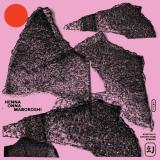
From Wisdom Teeth’s recent compilation nagoyaka na kaze / 和やかな風 (quiet wind)—which cast a spotlight on the Japanese city of Nagoya—emerges “2++”, a new label launched by abentis, who curated the compilation alongside Facta and K-LONE as a central figure in the scene. Conceived as a series introducing facets of Nagoya’s underground electronic music to the world on vinyl, its inaugural release is abentis’ debut album, Dim Grow.
Across the album, intricately designed electronic mallet sounds—created using Ableton Live’s physical-modeling synthesizer—take center stage. Fresh and percussive like marimba or kalimba, yet simultaneously carrying an otherworldly, unreal quality, these tones form the core of the record’s sonic identity. In moments of near-silence, a crystalline resonance poised between glass and metal shimmers with subtle shifts in temperature, giving the album its distinctive texture.
While resonating with the sonic sensibilities of fellow Wisdom Teeth affiliates such as K-LONE, Tristan Arp, and Salamanda, abentis’ uniquely strange palette can be traced back to one of his strongest influences: Haruomi Hosono. In particular, Hosono’s mid-’70s tropical-infused solo albums — Tropical Dandy (1975), Bon Voyage Co. (1976), and Paraiso (1978) — serve as a key reference point. Symbolically reflected in Hosono’s marimba and vocal performance at a 1976 live show in Yokohama Chinatown, the marimba functioned as a central instrument for constructing imagined exotic landscapes inspired by Martin Denny and Hawaiian music.
For abentis—who worked at a local jazz bar before becoming active as a hip-hop beatmaker—the language of “tension chords,” a harmonic vocabulary rooted in jazz and R&B that hovers ambiguously between brightness and darkness, forms a consistent grammar throughout Dim Grow.
Behind the album’s core theme of “mallets + tension chords” lies a broad musical lineage: the harmonic sensibility of Claude Debussy, who anticipated the tensions of jazz; the proto-minimalist spirit of Erik Satie; the marimba-centered structures of Steve Reich; their continuation in Japan through Mkwaju Ensemble (with Midori Takada and production by Joe Hisaishi); and the subsequent branches into post-rock, electronica, and ambient music.
Growing up in Nagoya—an industrial city where creative independence is deeply valued—and being rooted in punk and hip-hop counterculture scenes naturally fostered abentis’ affinity with these predecessors. His practice between genres, combined with an encounter with the highly cross-pollinated musical perspective cultivated around Wisdom Teeth, provided the framework through which his own musical language crystallized. Dim Grow stands as the natural culmination of that journey.
- 2026 repress -
Released under the January full moon, 2025.
Early support from Abstract Division, Albert van Abbe, Brando Lupi, Iori, Lewis Fautzi, Samuli Kemppi, Svreca, Takaaki Itoh, Tommy Four Seven, Atomic Moog, Blazej Malinowski, Cassegrain, D-Leria, Forest on Stasys, Joachim Spieth, Ness and Yuka.
The union of Antwerp synthesist David Edren and Tokyo minimalist Hiroki Takahashi is a fit so natural as to feel preordained. Both traffic in subtle shades of contemplative electronics, marked by patience, space, and poetic restraint. And both have rich histories of curation and collaboration – Edren in the duo Spirit & Form alongside Bent Von Bent, and Takahashi as proprietor of the Kankyō record shop, as well as one fourth of cosmic ambient quartet UNKNOWN ME. Mutual fans of one another’s work, they began sharing stems in the latter half of 2020, which slowly blossomed into a collection of multi-hued compositions inspired by notions of connectivity and impermanence, translated for east and west: Flow | 流れ.
Opener “Dusk Decorum | 黄昏 礼節” maps the mood of what’s to come, elegantly pirouetting and percolating through an expanding vista of looming stars and half-light horizons. Takahashi describes Edren’s arrangements as evoking “a strange feel, something we haven't heard much of before.” The sensation is one of “in-betweenness,” a restless current whispering beneath the beauty, like seasons seen in time-lapse footage: flickering but infinite, transience turned permanent. Takahashi’s signature sculpture garden tones plot spiral patterns over which Edren cascades dazzling pointillist synthesizer coloration. The pieces veer between delicate and dilated, micro and macro, their aperture forever softly in flux.
From the oscillating orchestral lullaby of “Stalactime | 鍾乳石時計” to the sweeping, sparkling dream sequence closer, “Shift Register | シフトレジスタ,” the album achieves the elusive goal of being more than the sum of its parts. This is music of rare air, elevated and amorphous, shimmering just out of reach. Though Edren and Takahashi have yet to cohabitate the same room in person (a fact that should be rectified soon by an astute festival booker), their palettes and poise are perfectly paired, twin fragilities woven into seven radiant and regenerative vibrational states. The cover design of a beatific, beaded leaf rippling on the surface of a hidden pond aptly captures the record’s muted majesty. Takahashi’s quiet pride is justified: “We are very happy with this time-consuming and carefully crafted work.”
- Romance Of The Black Pain Otherwise Falin’ Love With
- Reapers Of The Night
- The Night Wind, The Candle Flame At Dawn
- Bird Cals In The Dusk
- White Awakening
- The Night, Assassin's Night
Les Rallizes Dénudés returns with Disque 4 -’76 Studio et Live-, the latest in the ongoing series of official archival releases from the celebrated Japanese underground band.
In 1991, Les Rallizes Dénudés released what would become the only official albums issued during the band’s lifetime: ’67-’69 STUDIO et LIVE, MIZUTANI / Les Rallizes Dénudés, and ’77 LIVE. What no one knew at the time was that Takashi Mizutani was already deep into preparing another record.
Disque 4 reconstructs the track list Mizutani had put together for that fourth album. This includes the single “White Awakening," recorded in 1976 at the studio in Takadanobaba BIG BOX as part of the sessions that would become known among collectors as the “Virgin Demos.” Production and mastering of this archival release were handled once again by Makoto Kubota, assembling the album from the masters left behind by Mizutani, utilizing newly discovered tapes as additional sources.
Prepared by Mizutani using a variety of formats, including U-Matic, open reel, and DAT, the tracks were originally labeled with working titles such as “Disque 4” and “Record No. 4,” indicating that Mizutani intended them for inclusion on a possible fourth album. The recordings were taken primarily from studio sessions that all seemed to have taken place around 1976, which aligns with the claim that Mizutani himself once made that “there exists an album of studio recordings made with the same members as ‘77 LIVE.” His notes also suggest an attempt to sequence the tracks as a vinyl LP, splitting them into A and B sides. It's not hard to imagine that in the era of CDs in the early 1990s, an album on analog LP would have been an extremely difficult sell. Thus, the “Fourth Album” had become another lost piece of the intricate Rallizes myth.
Les Rallizes Dénudés may be notorious for the colossal volume and extended song lengths in their live settings. But this work, centered around studio recordings and condensed onto a single LP record, transcends the common impression of the band’s aggressive flood of noise. Instead, the “lyricism” at its core emerges with striking clarity. And needless to say, this is precisely the charm of the Rallizes that continues to captivate fans worldwide today.
BLACK VINYL[25,84 €]
Following the reissue of The Pocket of Fever, Ambient Sans presents the second chapter in Masahiro Sugaya’s visionary work for the avant-garde performing arts company Pappa TARAHUMARA.
Founded by Hiroshi Koike in 1982, Pappa TARAHUMARA blended dance, theater, music, and visual art into abstract, immersive stage worlds. Sugaya’s compositions became the sonic counterpart to this radical aesthetic—minimal yet deeply evocative, combining electronics, ambient textures, and delicate melodic gestures into a sound language both intimate and expansive.
Music From Alejo marks his first original stage score for the company: a work where repetition and silence intertwine with shimmering synthesizers and dreamlike motifs, conjuring atmospheres that feel suspended between reality and reverie. More structured than The Pocket of Fever yet equally poetic, the album reveals Sugaya’s gift for translating movement into sound, balancing modern composition with subtle echoes of Japanese tradition.
Reissued for the first time on vinyl, Music From Alejo includes a printed insert featuring an exclusive interview with the artist, alongside photographs from our visit to his home in Japan. Essential listening for anyone drawn to the ambient minimalism of Hiroshi Yoshimura, Midori Takada, or Brian Eno—reimagined here through the lens of Tokyo’s experimental scene of the 1980s.
Legowelt & Takafumi Noda aka Mystica Tribe with their third Noda & Wolfers album, this one is for the real dub headz!
RED VINYL VERSION[29,37 €]
Following the reissue of The Pocket of Fever, Ambient Sans presents the second chapter in Masahiro Sugaya’s visionary work for the avant-garde performing arts company Pappa TARAHUMARA.
Founded by Hiroshi Koike in 1982, Pappa TARAHUMARA blended dance, theater, music, and visual art into abstract, immersive stage worlds. Sugaya’s compositions became the sonic counterpart to this radical aesthetic—minimal yet deeply evocative, combining electronics, ambient textures, and delicate melodic gestures into a sound language both intimate and expansive.
Music From Alejo marks his first original stage score for the company: a work where repetition and silence intertwine with shimmering synthesizers and dreamlike motifs, conjuring atmospheres that feel suspended between reality and reverie. More structured than The Pocket of Fever yet equally poetic, the album reveals Sugaya’s gift for translating movement into sound, balancing modern composition with subtle echoes of Japanese tradition.
Reissued for the first time on vinyl, Music From Alejo includes a printed insert featuring an exclusive interview with the artist, alongside photographs from our visit to his home in Japan. Essential listening for anyone drawn to the ambient minimalism of Hiroshi Yoshimura, Midori Takada, or Brian Eno—reimagined here through the lens of Tokyo’s experimental scene of the 1980s.
a1. Straight Line Floating In The Sky
a2. Oldfashioned
b1. An Afternoon When Fish Appeared
b2. Mistral
b3. Alejo's Theme
- A1: A Long Distance Call
- A2: The Book Of Self Doubt
- A3: In A Rut Ft Sydney Spann
- A4: Score Ft Anysia Kym
- A5: Seems Like I A6. Flatline Ft Miho Hatori
- B1: Peak Again Ft Alan Sparhawk
- B2: Habits And Patterns Ft Tirzah
- B3: Wish I Was Like U
- B4: Ending Us All Ft Le3 Black X Fyn Dobson
- B5: Forever Still (Steel)
- B6: See Through
Forged from the fire of internal struggles, Loraine James was wrestling with confidence and a desire for change when she embarked on “Detached From The Rest Of You”. A guiding hand came through producing 2025's “Clandestine” EP with singer Anysia Kym, which gave her the experience of a more 'pop' setting and the tools and insight to work her instrumentals into more conventional shapes; a shift from club driven sounds and winding instrumentals into more precise song forms.
Loraine’s production is stripped to the bone, soundscapes of clicks and glitches inspired by Aoki Takamasa, Ryoji Ikeda, and the early-00s Clicks & Cuts school. Here, often with not much more than sparse keyboard chords to fill in with subtle colouring, she uses the space around the sounds and vocals to draw the listener in to a succinct and direct album, her most confident yet.
Guest contributors include vocalist Sydney Spann on “In a Rut”, Alan Sparkhawk (Low) on downcast anthem “Peak Again”, Miho Hatori (Cibo Matto) on “Flatline”, Anysia Kim on “Score”, and Tirzah on “Habits and Patterns”. Finally her old spar, the rapper Le3 bLACK returns to spit fire with the jazz-indebted track “Ending Us All” with Fyn Dobson backing on tumbling drums.
- A1: Kuniyuki Takahashi - Asia
- A2: Brian Eno, Moebius, Roedelius - The Belldog
- A3: Anchorsong - Windmills
- A4: Monde Ufo - Vallee
- B1: Mariah - Sokokara
- B2: Mytron, Zongamin - 08932168
- B3: Liquid Liquid - Scraper
- B4: Five Green Moons - Spider Dub
- C1: Fun Boy Three - Faith, Hope & Charity
- C2: Meat Beat Manifesto - Drop
- C3: African Head Charge - Orderliness, Godliness, Discipline And Dignity
- C4: Cristina - You Rented A Space
- C5: The Cramps - Garbageman
- D1: The Durutti Column - Sketches For Summer
- D2: The Third Bardo - I’m Five Years Ahead Of My Time
- D3: Sordid Sound System - Inanna
- D4: Daniel Avery - Drone Logic
- D5: Spectrum - True Love Will Find You In The End
Two Piers proudly announces the upcoming release of Bridges Towards Open Spaces: Circadian Rhythms 1967–2025.
This new collection brings together a wide range of artists and styles, weaving immersive sonic landscapes that explore a connection between natural cycles and the rhythms within.
Featuring artists such as Brian Eno, Moebius, Roedelius, Meat Beat Manifesto, Fun Boy Three, Daniel Avery, and Spectrum, the compilation moves fluidly between shimmering ambient textures and raw, straight-ahead garage rock.
Bridges Towards Open Spaces: Circadian Rhythms 1967–2025 follows in the footsteps of Two Piers acclaimed previous releases, Night Train: Transcontinental Landscapes 1968–2019 and Music for the Stars: Celestial Music 1960–1979, continuing the label’s exploration of expansive, time-spanning musical journeys.
“I wanted once again to shape a compilation around a time period, this collection is a nod to my days behind the counter of a record shop, the people I met and the styles of music that was played and I was introduced to. Some are from that time, some are of the style/feeling, that I can associate & with the friends I met there; from the early shift to the late shifts as the tempo rose throughout the day and the neons of London started to buzz”
The album will be available on Limited Vinyl and CD in May, arriving just in time for the longer, warmer days and the shifting light of the Seasons Sun.
- A1: Kuniyuki Takahashi - Asia
- A2: Brian Eno, Moebius, Roedelius - The Belldog
- A3: Anchorsong - Windmills
- A4: Monde Ufo - Vallee
- B1: Mariah - Sokokara
- B2: Mytron, Zongamin - 08932168
- B3: Liquid Liquid - Scraper
- B4: Five Green Moons - Spider Dub
- C1: Fun Boy Three - Faith, Hope & Charity
- C2: Meat Beat Manifesto - Drop
- C3: African Head Charge - Orderliness, Godliness, Discipline And Dignity
- C4: Cristina - You Rented A Space
- C5: The Cramps - Garbageman
- D1: The Durutti Column - Sketches For Summer
- D2: The Third Bardo - I’m Five Years Ahead Of My Time
- D3: Sordid Sound System - Inanna
- D4: Daniel Avery - Drone Logic
- D5: Spectrum - True Love Will Find You In The End
Limited Glacier Green[42,23 €]
Two Piers proudly announces the upcoming release of Bridges Towards Open Spaces: Circadian Rhythms 1967–2025.
This new collection brings together a wide range of artists and styles, weaving immersive sonic landscapes that explore a connection between natural cycles and the rhythms within.
Featuring artists such as Brian Eno, Moebius, Roedelius, Meat Beat Manifesto, Fun Boy Three, Daniel Avery, and Spectrum, the compilation moves fluidly between shimmering ambient textures and raw, straight-ahead garage rock.
Bridges Towards Open Spaces: Circadian Rhythms 1967–2025 follows in the footsteps of Two Piers acclaimed previous releases, Night Train: Transcontinental Landscapes 1968–2019 and Music for the Stars: Celestial Music 1960–1979, continuing the label’s exploration of expansive, time-spanning musical journeys.
“I wanted once again to shape a compilation around a time period, this collection is a nod to my days behind the counter of a record shop, the people I met and the styles of music that was played and I was introduced to. Some are from that time, some are of the style/feeling, that I can associate & with the friends I met there; from the early shift to the late shifts as the tempo rose throughout the day and the neons of London started to buzz”
The album will be available on Limited Vinyl and CD in May, arriving just in time for the longer, warmer days and the shifting light of the Seasons Sun.
- A1: Makafushigi Adventure! / Hiroki Takahashi
- A2: Mezase Tenkaichi / Hiroki Takahashi
- A3: Dragon Ball Densetsu / Hiroki Takahashi
- A4: Mr. Dream Wo Sagase / Ushio Hashimoto
- A5: Aoki Tabibitotachi / Hiroki Takahashi
- B1: Fushigi Wonderland / Wonderland Gang
- B2: Mutenroushi No Oshie / Kohei Miyauchi
- B3: Son Goku Song / Masako Nozawa
- B4: Wolf Hurricane / Toru Furuya
- B5: Romantic Ageruyo / Ushio Hashimoto
A collection of hit songs released at the time of the TV anime "Dragon Ball", including rare insert songs, has been reissued on clear orange vinyl. This is a truly one-star ball (Yishinchu) disc!
A collection of hit songs that also includes the opening theme song "Makafushigi Adventure!" and ending theme song "Romantic Ageruyo" released in 1986. The "Son Goku Song" is sung by Masako Nozawa, the voice actor for Son Goku, the main character of Dragon Ball, and the "Wolf Hurricane" is sung by Toru Furuya, Yamcha's voice actor, Hyuma Hoshi from Star of the Giants, and Amuro Ray from Mobile Suit Gundam. Contains a total of 10 songs, including "Mutenroushi no Oshie" song by Kohei Miyauchi, the voice actor of Master Roshi! A must-have for Dragon Ball fans!
2026 Repress
Supported by Cio D'Or, Deepbass, Etapp Kyle, Mattias Fridell, Ness, Samuli Kemppi, Svreca, Takaaki Itoh, Unam Zetineb, Exium, Alessio Pili, Antonio de Angelis, Artefakt, Edit/Select, Jonas Kopp, Kwartz, Mod21, Reggy van Oers, Juho Kahilainen, Eric Cloutier, Johanna Knutsson, Tom Bonaty, Arnaud le Texier, Brando Lupi, I/Y, Iori, MTD, Nima Khak, Par Grindvik, SNTS, The Noisemaker, VSK, Attemporal, Casual Violence, Rasmus Hedlund, Sleeparchive, Terence Fixmer, Eastern Renaissance, Victor Martinez and many, many more.
Luigi Tozzi / Deepbass / Claudio Prc - Deep Blue
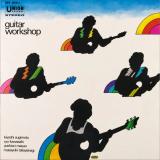
- A1: Froggy Day
- A2: These Things
- A3: Hi Beck
- A4: Palo Alto
- B1: Higashi 32-Chome 317-Ban-Chi
- B2: Subconsciously
- B3: My New Frame
- B4: Lennie's Pennies
The sixth Subetasch release comes from long-time friends and collaborators TakaTuka and vaZdaZ.
Side A opens with Stamina, a hard-hitting tekno track by TakaTuka, the result of his first deep dive into the DFAM synth he’d just gotten his hands on. Track two, Olga by vaZdaZ, hits just as hard - driven by the screams of a free smartphone synth, it sounds like it’s been tearing up proper parties for the past decade.
On Side B, TakaTuka and vaZdaZ join forces on both tracks, diving into their shared love for breaks, ambient and IDM. The first, Teenage Carcrash, is driven by the tiny drum sampler “PO-12,” which also inspired its (hopefully not too controversial) title. But don´t worry, your Car´s Hifi-System isn´t broken, it´s just gritty distortion and a pulsating bass, sweetened with a catchy tune.
The final track, Unknown Food Can, originated in a circuit-bending session with a trashy old electric piano. Starting out calm and melodic, it slowly unfolds - this food can was found in Kamyshovo, who knows what's hiding inside?
Swiss-born, Berlin-based artist Stallo makes his anticipated vinyl debut on Casanova Bar Records with Mifepan EP.
After first appearing on the label in 2020 with a contribution to CBB007 a digital VA, he now returns as the main artist on CBR008, delivering two original tracks that define his signature sound.
The EP opens with Bleenthal, a hypnotic journey built on rolling drums and immersive textures. On the flip, "Wavoom" pulsates with a constantly evolving synth, pushing forward with relentless energy.
Elevating the release, Japanese techno legend Takaaki Itoh delivers a raw and powerful remix of Wavoom, while Italian innovator Fabio Florido reinvents Bleenthal with his cutting-edge sound design.
Mifepan EP is a bold statement from Stallo, an immersive exploration of deep grooves and evolving driving textures.
d B2 Bleenthal Reinvented (Fabio Florido remix)
Reinvented (Fabio Florido remix)
DJ Support: Antal, I Cube, Noel Watson, Colleen Cosmo Murphy, Sean Johnston, San Soda, Takaya Nagase, Tina Edwards, Pete Herbert, Kenneth Bager, Severino, Aaron Paar, Felix Joy, Harri Harrigan, Laroye, Telford, Darker Than Wax, Rocky (X Press 2), Shane Johnson, Dan Tyler, Felix Dickinson and many more
Having previously released selected retrospectives focused on the musical output of Ryo Kawasaki and Joan Bibiloni, NuNorthern Soul has now turned its attention to the vast back catalogue of Jasper Van’t Hof’s pioneering electro-acoustic, Afro-fusion collective, Pili Pili.
The band was established in 1984 by Van’t Hof, a Dutch pianist who began his career in Europe’s jazz scene of the late 1960s, as a way of combining his love of jazz-fusion and the music of North-West Africa. Van’t Hof already had a reputation for combining roles in traditional jazz combos with more experimental and abstract projects. These included a spell in violinist Jean-Luc Ponty’s first band, years spent masterminding jazz-rock outfit Jasper Van’t Hof’s Porkpie, the recording of an all- electronic album (1982’s Visitors), and a celebrated collaborative live album with the great Archie Shepp, Mama Rose.
Pili Pili, though, was another step forward for Van’t Hof. Working with percussionists and vocalists from Benin and Mali (including the now legendary Angelique Kidou) and a string of adventurous jazz soloists (saxophonist Tony Lakoto and trumpeter Annie Whitehead included), Van’t Hof’s collective frequently combined live and programmed percussion, electronic and acoustic instrumentation, and the talented improvisor’s own memorable melodies and impactful solos.
NuNorthern Soul’s retrospective focuses on the most productive and celebrated period of Pili Pili’s near three-decade history, showcasing tracks originally recorded and released on studio albums released between 1984 and 2002. The six tracks on show offer an essential glimpse into the musical gold to be found across the Pili Pili catalogue.
In keeping with NuNorthern Soul’s previous retrospectives, the vinyl version of Selected Works 1984-95 comes with extended liner notes telling the remarkable story of this most unusual of cross-cultural collaborations. These feature extensive quotes, reflections and memories from Jasper Van’t Hof and were written by music historian Matt Anniss.
AOKI takamasa and Tujiko Noriko’s 2005 album »28« has become a cornerstone in the artists’ respective discographies. 20 years after its initial release, Keplar issues it on vinyl for the very first time. Three years in the making, »28« saw the sound artist and the avant-pop singer-songwriter combine their distinct aesthetics for an album that defied categorisation. Their combination of advanced electronic experimentation and pop appeal paved the way for a new generation of artists and turned »28« into an enduring fan favourite. Remastered by Stephan Mathieu, the reissue comes with a brand-new artwork by Joji Koyama and a changed track listing—authorised by Takamasa and Tujiko—for the vinyl version to fit it on a single LP, while the digital version remains identical to the original release.
Tujiko and Takamasa first shared the stage together after the turn of the millennium. Both were emerging solo artists, with Takamasa a mainstay on the Progressive Form label and Tujiko forging a connection with Mego in Vienna, Austria. »I simply liked Noriko’s voice and music, and since we often performed at the same events, it felt like a natural progression for us to start working together,« remembers Takamasa. They first collaborated in 2002 for two shows at the Fondation Cartier in Paris and at SonarLab in Barcelona, respectively. The first joint piece was a rework of Tujiko’s »Fly« from »Hard Ni Sasete (Make Me Hard)« by Takamasa, appearing as the album opener »Fly2« on »28.«
After that, the Paris-based Tujiko and Takamasa, still based in Osaka, worked sporadically and remotely on new material. For the first two years of their collaboration, the two met in the context of live events or Takamasa’s visits to the French capital to discuss their process and exchange hard drives while also occasionally sending each other CDrs in the mail. »Aoki made beats and sounds that complemented my music perfectly, building the foundation on which my voice could float,« Tujiko says today. Takamasa used hardware such as the Nord Modular, the Korg Z1, and the Korg ER-1, while also working with different kinds of software and plug-ins as well as Logic. Tujiko was using Cubase, her preferred piece of gear at the time being an AKAI MPC.
After Takamasa moved to Paris in 2004, this enabled the duo to finish the album together in person. Starting with its subtle use of glitches to the almost-anarchic way in which it deals with the structures of a song, »28« came to be an incomparably intricate album. 20 years on, it remains timeless because of its flawless synthesis of the cutting-edge avant-garde ideas of early 2000s electronica with an idiosyncratic but accessible pop sentiment. Both artists look back fondly—though not uncritically, with Takamasa noting a certain »youthfulness« in his contributions—to the album that was titled after their respective age at that time. »Maybe we should make ›51‹ now?,« quips Tujiko. See you in three years, perhaps.