Phi-Psonics is a meditative, deeply soulful immersive jazz group from
Los Angeles, led by bassist Seth Ford-Young and featuring Sylvain
Carton on woodwinds, Mitchell Yoshida on electric piano, and Josh
Collazo on drums. Their deeply soulful music draws on jazz and
classical influences together with Ford-Young’s own musical
experiences, relationships, and his introduction to spirituality, yoga and philosophy at a young age, along the way they create something
uniquely their own, beautiful landscapes for your thoughts to roam
within.
Octava is their second album and like the Cradle before it’s emotional,
introspective, and unusual approach to spiritual jazz offers us a
beautiful space for uplifting contemplation and wields a quiet power to create a spiritually inspiring world of timeless, warm melodies and
instrumental exploration for the deep listener. Originally from
Washington DC area, Ford-Young moved to California in the early 90s
and fell in love with the deep sounds of the upright bass and the music of Charles Mingus, John and Alice Coltrane, and Duke Ellington along with Bach, Chopin, Pärt, and Satie. He immersed himself deeply in music and keen to learn combined intense personal study with
collaborations, tours, and recordings with artists such as Tom Waits,
Beats Antique, and John Vanderslice. In 2010 he moved from the SanFrancisco Bay area to the Los Angeles hills and continued his
explorations and although Phi-Psonics music has been described as
spiritual jazz, or deep immersive listening music but this is music for
fans of Radiohead and The Invisible as well as fans of Alice Coltrane
and Pharaoh Sanders.
The album opens with Invocation as we embark on our journey. The
repeated melody at the end feels ancient but also contains an energy
that is driving forward. An Offering is a humble but beautiful tune full of texture and colour. We Walk in the Gardens of Our Ancestors shows clear eyed reverence for those who came before us as we walk through their gardens. Green Dreams is a tender, gentle love song to Seth’s wife.Where We've Been Is a group improvisation centered around the drums. Lunar Reflections is a romantic ode to nature that draws inspiration from where Seth lives a green oasis within the sprawling cityscapes of LA. Becoming draws on memories of the dark days of 2020 but this was a period that was also full of beauty and light and this song elevates and uplifts us. Finally New You offers hope of change
Поиск:text
Все
Phi-Psonics is a meditative, deeply soulful immersive jazz group from
Los Angeles, led by bassist Seth Ford-Young and featuring Sylvain
Carton on woodwinds, Mitchell Yoshida on electric piano, and Josh
Collazo on drums. Their deeply soulful music draws on jazz and
classical influences together with Ford-Young’s own musical
experiences, relationships, and his introduction to spirituality, yoga and philosophy at a young age, along the way they create something
uniquely their own, beautiful landscapes for your thoughts to roam
within.
Octava is their second album and like the Cradle before it’s emotional,
introspective, and unusual approach to spiritual jazz offers us a
beautiful space for uplifting contemplation and wields a quiet power to create a spiritually inspiring world of timeless, warm melodies and
instrumental exploration for the deep listener. Originally from
Washington DC area, Ford-Young moved to California in the early 90s
and fell in love with the deep sounds of the upright bass and the music of Charles Mingus, John and Alice Coltrane, and Duke Ellington along with Bach, Chopin, Pärt, and Satie. He immersed himself deeply in music and keen to learn combined intense personal study with
collaborations, tours, and recordings with artists such as Tom Waits,
Beats Antique, and John Vanderslice. In 2010 he moved from the SanFrancisco Bay area to the Los Angeles hills and continued his
explorations and although Phi-Psonics music has been described as
spiritual jazz, or deep immersive listening music but this is music for
fans of Radiohead and The Invisible as well as fans of Alice Coltrane
and Pharaoh Sanders.
The album opens with Invocation as we embark on our journey. The
repeated melody at the end feels ancient but also contains an energy
that is driving forward. An Offering is a humble but beautiful tune full of texture and colour. We Walk in the Gardens of Our Ancestors shows clear eyed reverence for those who came before us as we walk through their gardens. Green Dreams is a tender, gentle love song to Seth’s wife.Where We've Been Is a group improvisation centered around the drums. Lunar Reflections is a romantic ode to nature that draws inspiration from where Seth lives a green oasis within the sprawling cityscapes of LA. Becoming draws on memories of the dark days of 2020 but this was a period that was also full of beauty and light and this song elevates and uplifts us. Finally New You offers hope of change
'Chaos For The Fly', das Solo-Debütalbum des Fontaines D.C. Sängers, erscheint am 30. Juni via Partisan Records.
Das gesamte Album, jeden einzelnen Teil, von den Chord Progressions bis hin zu den String Arrangements, so Chatten, konnte er mit einem Mal hören. Bei einem windgepeitschten Nachtspaziergang entlang des Stoney Beach, dreißig Meilen nördlich von Dublin. Er arbeitete die Songs mit der Gitarre aus und nahm erste Demos auf, ganz alleine. 'Chaos For The Fly' handelt von Isolation und Verletzlichkeit. Vom Verlust des Glaubens an die Menschheit. Und an sich selbst. Die Songs haben meist einen dunklen Unterton und strahlen doch eine berauschende Stärke aus. Chatten verarbeitet auf dem Album schmerzliche Emotionen, Geschichten aus seinem Leben und verpackt sie auf eindrucksvolle Art und Weise in seine bisher wohl poetischsten Texte.
Koproduziert hat wie auch schon die Alben seiner Band der langjährige Fontaines D.C. Produzent Dan Carey.
Wenn Afrob ein neues Album produziert, darf man zurecht alles erwarten. Er lässt sich nicht beschränken und geht jeden Weg. Das gilt auch für „König ohne Land“. Die neue Platte erscheint im Juni ’23 und stellt die Vielfalt des Godfather of Deutschem Rap erneut unter Beweis. Seit 25 Jahren dabei, ist er der letzte seiner Art und der erste, der voran in eine neue Richtung geht. Er repräsentiert HipHop immer
noch wie am ersten Tag. Er ist so real wie man es nur sein kann. Er kennt die Geschichte des Games und ist immer offen für neue Sounds. Und genau so ist auch die neue Platte. Von der Ansage im Intro bis zum letzten Gospel im Schlussstück rundet sie sich musikalisch wie textlich.
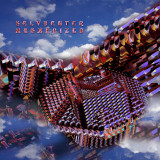
Going past musical genres and instead straight towards something more elemental - Selvhenter’s music creates a strikingly direct, physical experience of sound composed of polyrhythms, acoustic and electric melodies, heavy music and improvised beauty.
Since forming in Copenhagen in 2010, drummers Jaleh Negari and Anja Jacobsen, saxophonist Sonja LaBianca and trombonist Maria Bertel have forged a unique approach to making music that starts with their instrumental setup: two drummers that interlock as frequently as they go their own way, a trombone put through a bass amplifier loud enough to rattle your chest and a saxophone put through a range of effects so that it often sounds unrecognisable. Selvhenter work within their own idiom, drawing from the individual players’ personalities and interests to make a highly collective music, where all four musicians are absorbed into a total sound where an improvised free jazz approach collides with experimental electronic music and avant-garde noise/post-punk sonorities.
Their new LP Mesmerizer - which marks their first physical album release in nearly a decade and their debut on the French label Hands in the Dark - carries forward this process of exploration, deploying original and complex patterns of rhythm through various percussive instruments and finely textured horns and synths. The attention to sonic details is also almost pushed to an extreme on this new offering, making the open auditory adventure suggested by the title of the album all the more captivating. These creative developments have brilliantly kept Selvhenter’s music alive to new uncharted moods and possibilities, while at the same time strengthening their core elements: a propulsive, dense and often ecstatic music.
Clear LP[22,65 €]
Blue Lake is the musical moniker of American born, Copenhagen based multidisciplinary artist and musician Jason Dungan, who signs to the Tonal Union imprint for the release of his new longform album ‘Sun Arcs’. It follows 2022’s release ‘Stikling’, earning a nomination for ‘Album of the Year’ at the Danish Music Awards plus warm praise from The Hum blog and musicians and DJs alike including Jack Rollo (Time is Away/NTS) and Carla dal Forno. A self taught player, Dungan began freely experimenting with self-built multi-string instruments, preferring to build his own hybrid 48-string zither and working in the realms of left-field ambient music, off kilter folk and improvised acoustic minimalism.
The starting point of ‘Sun Arcs’ saw Jason travel for a week alone to Andersabo, a cabin set in the idyllic Swedish woods just outside of Unnaryd, known also as the music project, festival and residency space which has been run by Dungan since 2016, hosting artists like Sofie Birch, Johan Carøe and Ellen Arkbro. Whilst writing 1-2 pieces per day, a conscious decision was made to leave behind everyday distractions and shut out the outside world to instead focus on the natural passage of time as Dungan recalls: “My only sense of time came from these daily walks out in the woods with my dog, and an awareness of the sun’s path as it moved across the sky each day.”
The album’s immersive world unfolds with the opener ‘Dallas’, an ode to his home state and a musical synthesis of these two disparate spaces (Texas and Denmark), the touchstones of Dungan’s life. A folk-esque single acoustic builds to a flowing arrangement of clarinets, organ and cello drones coupled with percussion. ‘Green-Yellow Field’ chimes in as the first of two solo oriented zither recordings twinned with the dreamlike title track ‘Sun Arcs’, both densely rich as cascading and overlapping harmonic tones resound. ‘Bloom’ emerges with a krautrock psyche before an eruption of cello drones, slide guitar and free-ranging zither playing, ushering in the anticipation of spring. With half of the recordings conceived in Andersabo, Jason returned to Copenhagen to form the album's centre piece ‘Rain Cycle’ which features a tempered Roland drum machine alongside shifting zither improvisations. ‘Writing’ explores the shimmering harp-like qualities of sweeping playing figurations with Dungan mapping out adjusted tuning “zones” on the zither for unconventional but creatively liberating effects. ‘Fur’ captures the feeling of openness and the momentum of time, seeing Dungan perform waves of solo clarinet, often in one takes and embellished with textural drones, a zither solo, and layers of guitar. ‘Wavelength’ the album's closer is fondly inspired by the film works of Michael Snow and Don Cherry’s seminal live album ‘Blue Lake’ (1974), as it builds out from a drone-generated zither chord and features an alto recorder solo. Dungan found a deep connection to Cherry’s stripped back performance ethos, focusing on the core beauty of minimal instrumentation creating a genre-less meeting between folk and jazz. A dialogue is formed between the solo and the bandlike performances, interlinked in a geographical duality with all finding a sense of commonplace as musical sketches of visited landscapes. The bountiful instrumentation ebbs and flows as further layers emerge with Dungan constructing his material much like an artist would, recording and reviewing, adding and subtracting.
Musically it portrays a form of double life led by an American-identifying person living in Scandinavia, and a new found presence in Denmark, seeking out underdeveloped marshlands and barren stretches of beach adrift from other rhythms and distractions. Highlighting their individual and potent importance Dungan concludes: “Both places feel like “me”, I think on some level the music is always some kind of self-portrait.” ‘Sun Arcs’ depicts the intricate balance of nature’s cycles and the paths outlined by the seasons, from a winter dormancy to a warm sun drenched scene. The album scales new glorying heights and further defines Dungan’s musical narrative, inhabiting a unique space in left-field, improvised and experimental music, borning his most accomplished compositions to date. A singular and visionary expression, drawing on an array of instruments and sound worlds with a renewed sense of joy and discovery.
The album's rich tapestry was mixed by Jeff Zeigler (Laraaji, Mary Lattimore, Kurt Vile /Steve Gunn) and mastered by Stephan Mathieu (Kali Malone, KMRU, Félicia Atkinson).
MEANTIME das neue Album des kanadischen Songwriters Grant Davidson aka Slow Leaves, handelt vom Warten auf etwas Bedeutsames im Leben und davon, wie all die alltäglichen Dinge, die während des Wartens passieren, das eigentlich Bedeutsame ausmachen. Wenn man blinzelt, verpasst man es; wenn man zu viel nachdenkt, verpasst man es. Wenn man Glück hat, gibt es in der Zwischenzeit die Liebe und den Tod und nicht viel weniger. Das Album ist durchzogen von einer eleganten Erdigkeit, Meantime ist eine Sammlung von Folksongs, die mit paisleyfarbenen 1960er- und 70er-Jahre-Tönen verziert sind. Während die Musik eine Retro-Sensibilität aufweist, wird diese durch eine Unmittelbarkeit in den Texten ausgeglichen, die ihn fest in der heutigen Zeit verankert. Slow Leaves ist ein in sich geschlossenes Soloprojekt, bei dem Davidson jeden Aspekt der Musik und ihrer Präsentation kuratiert, einschließlich der Rolle des Multiinstrumentalisten, Produzenten, Coverdesigners, Fotografen und Videofilmers. Er betrachtet die Gesamtheit dieser verschiedenen Aspekte als wesentliche Teile eines größeren Projekts der Selbsterkenntnis durch künstlerische Methoden. Sein Folk- und Psych-Rock-Stil erinnert an ältere Songwriter wie Mickey Newbury, Nick Drake, Roky Erickson, Gene Clark und Neil Young. Aber sie leben auch in der Welt der modernen Klassiker wie Andy Shauf, Bonny "Prince" Billy, Bedouine, Big Thief und Bill Callahan. Seine seidige Stimme wurde schon mit Roy Orbison oder Bryan Ferry verglichen.
Wenn Afrob ein neues Album produziert, darf man zurecht alles erwarten. Er lässt sich nicht beschränken und geht jeden Weg. Das gilt auch für „König ohne Land“. Die neue Platte erscheint im Juni ’23 und stellt die Vielfalt des Godfather of Deutschem Rap erneut unter Beweis. Seit 25 Jahren dabei, ist er der letzte seiner Art und der erste, der voran in eine neue Richtung geht. Er repräsentiert HipHop immer
noch wie am ersten Tag. Er ist so real wie man es nur sein kann. Er kennt die Geschichte des Games und ist immer offen für neue Sounds. Und genau so ist auch die neue Platte. Von der Ansage im Intro bis zum letzten Gospel im Schlussstück rundet sie sich musikalisch wie textlich.
The Junkyard 2 came into fruition when it was released in May of last year, as an intimate collection of what she considered her best material. Scott has been taking piano lessons since she was eight years old growing up in California, and that instrumental talent is one of the most striking elements on the record. The songs reckoned with touchy subjects -- emotional labor, insecurity, healthcare -- with razor-sharp wit and care. Even if it was recorded poorly, the brilliance of the writing and performance still resonated. After that, she realized she had to do better, and so she unveiled Public Void in September. She ditched the piano, played with software, and gave her music a texture that was bolder, weirder, and catchier. Together, the two projects and Scott’s other singles have combined to amass 87.8 million on-demand U.S. streams, according to MRC data. The landscape of TikTok is cluttered, and hits are ephemeral, but Scott’s strike a unique chord and her image is constantly growing. When asked if she considers that music will be her full time job, she pauses, reluctant to think too far ahead. “I think, for the near future, yes,” she ultimately answers. “I’m definitely not leaving college for it. But the next couple of years are locked in.” As of April 2022, “Rät” is now a gold single. The album has streamed over 350M times in under 2 years.
The Junkyard 2 came into fruition when it was released in May of last year, as an intimate collection of what she considered her best material. Scott has been taking piano lessons since she was eight years old growing up in California, and that instrumental talent is one of the most striking elements on the record. The songs reckoned with touchy subjects -- emotional labor, insecurity, healthcare -- with razor-sharp wit and care. Even if it was recorded poorly, the brilliance of the writing and performance still resonated. After that, she realized she had to do better, and so she unveiled Public Void in September. She ditched the piano, played with software, and gave her music a texture that was bolder, weirder, and catchier. Together, the two projects and Scott’s other singles have combined to amass 150 million on-demand U.S. streams, according to MRC data. The landscape of TikTok is cluttered, and hits are ephemeral, but Scott’s strike a unique chord and her image is constantly growing. When asked if she considers that music will be her full time job, she pauses, reluctant to think too far ahead. “I think, for the near future, yes,” she ultimately answers. “I’m definitely not leaving college for it. But the next couple of years are locked in.”
American Football (LP3) is the third album from the scene giants - American Football. American Football’s original triumph, on their 1999 self-titled debut, was to reunite two shy siblings: emo and post-rock. It was a pioneering album where lyrical clarity was obscured and complicated by the stealth musical textures surrounding it. Like Slint’s Spiderland, or Codeine’s The White Birch, even Talk Talk’s Laughing Stock, American Football asked far more questions than it cared to answer. But there wasn’t a band around anymore to explain it, anyway. The three young men who made the album – Mike Kinsella, Steve Holmes, and Steve Lamos – split up pretty much on its release. Fifteen years later, American Football reunited (now as a four-piece, with the addition of Nate Kinsella). They played far larger shows than in their original incarnation and recorded their long-anticipated second album, 2016’s American Football (LP2). The release was widely praised, but the band members still felt like their best work was yet to come. ‘I feel like the second album was us figuring it out,’ says Nate. ‘For me, it wasn’t quite done. I knew there was still more.’ Enter American Football (LP3). ‘We put a lot of time and a lot of energy into it,’ says Mike. ‘We were all thoughtful about what we wanted to put out there. Last time, it was figuring out how to use all of our different arms. This time, we were like – Ok we have these arms, let’s use them.’ The band used the same producer, Jason Cupp, and recorded the album at the same studio (Arc Studios in Omaha, Nebraska) as its predecessor – yet they approached it in a markedly different way. There was a determination to let the songs breathe, to trust in ideas finding their own pace. The final result is a definite, and deliberate, stretching of the band.
Tucked in the heart of Koreatown, Los Angeles, lies The Libra Hotel—the titular architecture of Nick Malkin's new album and site of his musical and psychogeographic exploration. Unlike most musical "site-specific" studies, Malkin remains wholly ambivalent to the documentarian approach, instead sharpening an auteur-like focus on the site as a conceptual and highly expressive backdrop. The Libra is musically explored as a space that houses a noir fragmentation of identity—the exhausted trope of a complicated protagonist walking through rain-soaked street corners and fumy neon lights—where an inner monologue is rendered in both miniature and at a cosmic scale. Casting aside stifling tropes around field recording, ambient, and improvised music, Malkin's work finds its own unique fidelity and emotional core through the assembly and reassembly of memory. Nearly every sound on the album—from frayed saxophones, lambent pianos, and dissected jazz drum kits—are multiplied, shattered, and reconstituted into shapes that adorn The Libra in a motion-blurred fog. The narrative of the Hotel suddenly appears as if out of the mist, with intersecting characters interacting within its walls by happenstance. Adminst the languid set pieces, wraith-like sonic grains gravitate around wide subbass beams that give structural form to The Libra, a narrative tension like when a scene is shot from hundreds of different perspectives: an image both luminous and veiled.
Much like Frank Sinatra's own spatial residency immortalized on "Live at The Sands," "At The Libra Hotel" showcases an exuberant view of entertainment, hospitality, and a form of masculinity, one that can quickly detourn into darkness. Knowing this, Malkin extracts a melancholic core out of The Libra locale. The flickering shadows of American decadence are shown in their ephemeral honesty, lines that trace how even in everyday life virtue is tested, sanity is tested, even reality is tested within the confines of desire, within the night. The album is draped in fleeting textures, carefully arranged with a trance-like microtonality, the faint inflections and articulations of a jazz band cascading into dissipated stillness. Voicemails about changed locations and covert eavesdropping on guests' whispered conversations provide an atmosphere of missed connection and voyeurism—a purloined letter of desire receding into a vanishing point. Like the music itself, The Hotel, a chapel perilous at the intersection of desolation row, the center of it all, yet simultaneously at the edge of town, becomes a structure between libidinous virtuality and actuality—our inevitable half-light.
Ultimately, the pensive atmosphere of "At The Libra Hotel," powerfully asserts a plea for the kinds of intimacy only possible in transient spaces. Here, memory cascades into a force that feels like something supernatural, perhaps even religious, yet always subject to the infidelity of our imagination. Here, the album opens into its primary psychodrama, the transient nature of subjectivity itself and how this becomes fractured in the tumult between our commitments and desires. Within this nocturnal space, to quote Louise Bourgeois, "you pile up associations the way you pile up bricks. Memory itself is a form of architecture."
Reformed Society joins the roster of Brussel's, Belgium's Basic Moves this June with a 2x12'' EP, comprising six original compositions from the New Delhi born now Barcelona based artist. After many years sharing music, Basic Moves boss Walrus welcomes Indian artist Harsh Puri onto the imprint for a special double pack vinyl release. The material was gradually reduced down to the six compositions that make up BM19 after received over a hundred demo tracks from Harsh the past few years.
Much of the release is inspired by UK tech house of the late nineties and the turn of the millennium and embraces a heads down, dance floor focused aesthetic throughout.
Opening the release is 'Constant State Of Hustle', perfectly setting the tone with an amalgamation of bubbling synthesizer tones, a choppy bass groove, sporadic pads and a heavily swung drum groove. 'Touch' then shifts focus over to fluttering stab sequences, bright chords, airy strings and a crunchy rhythm section before 'Hammer The Keys' embraces the core essence of the early Tech House sound, fusing organic percussion with multilayered machine funk melodies, all infused with an underlying acid feel.
Next up is 'Hug Pit' which dives into deep realms via ethereal, cinematic pad textures, wandering resonant synth lines and shuffled drums. The aptly named 'Adrenaline Rush' follows next, picking up the pace again courtesy of a gnarly bass melody, squelchy synth tones and a robust drum machine workout. 'Dream Shuttle' then rounds out the release, employing hazy atmospheric textures and a bumpy bass groove alongside dynamic, crisp drums.
Returning to his home base, Rotterdam based electro-techno mainstay Conforce presents a heavy pack of angular, experimental approaches on his latest offering into the Delsin databank.
Boris Bunnik's accomplished machine language has traversed deep and dubby soundscapes with punchy, club-focused fare alike, since 2010's Grace EP he has found a regular home on Delsin and it's always exciting to see what he comes up with next.
Where Conforce has commonly housed Bunnik's more melancholic, introspective work, the sound palette on Sins Of Synthesis is more tipped towards darker dimensions. The shadow of braindance looms large, guiding the music towards twitchy pattern manipulation, alien textural design and dissonant harmonics.
Bunnik's signature sense of melody can still be detected around the edges, from the distant, hazy pads of 'Charlatan' to the lingering chimes of 'Fragile', but this is a pointed new direction for Conforce and it's leading somewhere very interesting...
Glitching through pop music, cruising around the borders of the avant garde, passing by the edge of coldwave and tumbling into dance and club vibes: after her debut Bad Woman Céline Gillain is back with her second album: 'Mind is Mud'.
On Mind is Mud' Gillain let herself sink in the swamp of emotional confusion, the perpetual brain fog caused by a post Covid-world asking herself: do we have to get used to paradox as a way of life from now on?*
A musical dissection in nine songs of the mudflow, a flow which reveals its rich complexity the more Gillain dived into it: from the demanding intro 'Together' Céline opens up her highly personal and unique vision, shifting between high definition lost dimensions and emotionsthe mud slowly transfers in a crackling and sparkling stream of consciousness.
The mud is well alive in all its weirdness and unclarity. At times, it even glows in the dark.
The answer to that question is yes. The story of Mind is Mud by Céline Gillain: "Music is a place where intuiting is a work in itself. For me, it's the one place where I'm in charge, free to think and do what I want. Mind is Mud is the fruit of a collaborative practice with a DAW, a research around the palliative power of rhythm and the dancefloor, music as a space where emotions and ideas merge, storytelling, the comic potential and imaginative nature of sound. I don't really write, I copy paste and then I arrange and rearrange. Every sound I use comes from software, field recording, Instagram, movies and midi scores I collect here and there. In the hierarchy of sounds, you might call them cheap sounds. The lyrics are collages as well, made of pieces of texts from various contradictory sources. In addition to using the voice as a vehicle for ideas, I investigate its percussive and polyphonic potentialities, the possibility to have more than one voice/mouth."
- A1: Daytime Tv (Rainy Miller Remix)
- A2: It’s Hard To Get To Know You (Space Afrika Ambiv)
- B1: Pigeon Flesh (Mobbs' Butcher Mix)
- B2: Love Like An Abscess (Aho Ssan Remix)
- C1: Nervous Energy (Teresa Winter Remix)
- C2: I Was Born By The Sea (Morgane Polanski Remix)
- D1: I Was Born By The Sea (Fila Brazillia Remix)
- D2: Dream About Yourself (Bonus)
Richie Culver had been waiting his whole life to record I was born by the sea. His debut album immediately and messily inscribed the artist into the canon of outsider music and experimental electronics, serving both as an arresting statement of intent and a painful reckoning with the difficult path that lead up to it, stealing one last glance back at a place he always knew he had to escape. Between grim lamentations, faded memories and anxiety attacks, all told with searing honesty and disarming openness, I was born by the sea excavates a space for hope, finding Culver digging through Humberside silt to find a world weary optimism, the raw material from which his visual and sound art is shaped. For this collection of expansions and inversions, Culver invites a collection of kindred spirits, contemporary inspirations and old heroes to wade into the salt water of his formative years spent living for impromptu raves and afterparties, connecting vivid memories of his birth place of Withernsea to artists hailing from as nearby as Preston and Bridlington, further afield, from Manchester and London, Berlin and Paris, before returning back to Hull, to where it all began.
For some, responding to I was born by the sea means diving even deeper into the record’s furthest reaches. Space Afrika clear away the pummelling loops of noise from ‘It’s hard to get to know you,’ revealing a cool and cavernous expanse in its wake. Distant chatter, previously heard as though through thin, plasterboard walls, now echoes from outside the maddening claustrophobia of the original’s Sisyphean sonics, illuminated as a dense storm cloud suspended amidst a more open scene, washed clean by a lighter rain, allowing the tender heart of the track to beat clear. London producer MOBBS stretches out ‘Pigeon Flesh’ into an epic, 10-minute, cold-sweat spiral, strung-out tension wrung from disconnected phone tones twisted in unexpected directions, snatches of Culver’s voice turned inside-out and deep fried bass threatening to tip the track over into oblivion, the build-and-release of a nervous breakdown experienced in real time. In an act of subversive self-reflection, Morgane Polanski switches one kind of ennui for another in her adaption of ‘I was born by the sea,’ swapping the sea for the city, English seaside towns in January for summer evenings in Paris and flashing lighthouses and sparkling oil rigs for the Eiffel Tower and the traffic around L’Arc de Triomphe. Even Culver finds time to revisit ‘Dream About Yourself,’ a track taken from his EP Post Traumatic Fantasy, breathing new words into its glacial drift, the half-remembered testimony of a shut-in: Woke up in the evening / Pray for me / Don’t trust anyone / Pray for algorithm. Reframed in a more melancholy light, the track’s reverberant keys even more clearly evoke a mournful nostalgia, fresh pain felt in old wounds.
Others find a parallel universe in Culver’s visceral world building. Rainy Miller flips the script with a scorched, avant-drill rework of ‘Daytime TV’, threading puncturing hi-hats and queasy low-end surge through the track’s steady ambient cascade, invoking the irresistible Preston beat magic of Miller’s own essential debut album, Desquamation. Aho Ssan melts away the crystalline textures of ‘Love Like an Abscess’ with the ominous crackle of a nascent fire, building through swathes of organic Max/MSP squelch and brittle, nails-down-chalkboard scrape, swelling and metastasising the original to spill over Culver’s desperate hymn to corporeal desire, at once flesh and not. Teresa Winter transports us an hour up the coast from Withernsea to her native Bridlington, replacing the sea wall of synthesis on ‘Nervous Energy’ with muffled ASMR murk and fever dream whispers, transforming Culver’s unflinching observations into a haunting call-and-response, filling in the blanks with her own eerie utterances, a fleeting conversation with a ghost. In a touching victory lap, Fila Brazillia, eccentric stalwarts of beloved ‘90s trip hop imprint Pork Recordings, whose performances at Hull institution The Lamp convinced a young Culver of the necessity to make his mark on club culture, resurface for their first remix in 20 years. Steve Cobby and David McSherry lead a low-slung, heartfelt stroll back through a suite of tracks from I was born by the sea, tracing a full circle saunter from Culver’s origins to his current musical practice, the sounds of his present repurposed by the sound of his youth. In a gesture that reflects the emotional complexity of the project, Fila Brazillia find joy at the end of Culver’s troubled reflection, picking out an undeniable groove in the stasis of feeling trapped in your hometown. Underlining Hull’s vital musical legacy, from Baby Mammoth to Throbbing Gristle, Cobby and McSherry demonstrate that, though there are certainly storms, by the sea there is also sun and through the fog, if you listen, you can hear a singular sound, a sound now carried by Richie Culver.
Participant is a record label and creative studio run by William Markarian-Martin and Richie Culver
In the quiet surrounding the pandemic, Madeline Kenney made sonic sketches in the basement studio she shared with her then-partner. She arranged phrases that called her—the sharp knife of a synth cutting a path along a blooming arpeggio, drums stuttering firm and tight. Working this way, she amassed a collection of songs she had no particular aims for. Some formed her 2021 EP Summer Quarter, others languished.
But in 2022, Kenney’s partner left suddenly and without warning, plunging her into the solitary act of untangling what happened. In the wake of her ensuing depression, she revisited these songs and found in them something prescient. She’d already laid the foundation for A New Reality Mind.
That her relationship’s end came without warning is only half true, though. The warnings were in the feelings and fears that inspired Kenney’s critically-acclaimed third album, Sucker’s Lunch (2020), which was co-produced by Jenn Wasner (Flock of Dimes) and centered around the idea of flinging oneself freely into the seemingly-assured destruction of new love, come what may.
If sonically Sucker’s Lunch was letting yourself be pulled into the warm bath of a good story, A New Reality Mind reflects the harsh light of truth coming to break the spell. But as sobering as morning light can be, there’s brilliance to it, too. To see in the clarity of day is a gift. A revolution. Rather than reckoning with love lost, the songs on A New Reality Mind grapple with the self that chose to fall. “I guess I only needed to look twice / Reflected in my attitude, my constant compromise,” Kenney sings on “Red Emotion,” the musical landscape screeching and gasping around her observations of how she made herself small to keep the dream of love alive.
These notions of sight and vision pervade the record as Kenney stands before the infinity mirror of selves she’s been to preserve bonds in her life. On “I Drew a Line,” Kenney contends with the stories she’s told herself to keep plodding along, and the way those stories shape her perceived reality. She invokes John Berger’s Ways of Seeing—“Everything around the image is part of its meaning,” we hear him say. “Everything around it confirms and consolidates its meaning.” Here, Kenney isn’t interested in shaming herself for being carried away by the fantasies of the heart, but rather in investigating the unavoidably human propensity to do so. “I, like everyone else, am muddling through my most ordinary disaster of a life,” she acknowledges, a sentiment which reverberates through album opener “Plain Boring Disaster.” “I don’t need to start again,” she sings at the song’s close. “But I can change when it ends.” We may all be doomed to repetitive, ordinary heartbreaks, Kenney realizes, but at least we can cultivate a capacity to witness our missteps and build new realities for ourselves.
This is Kenney’s most expansive work, while also her most solitary. Produced and recorded alone in her basement, these songs are manifestations of what it feels like to be transformed by pain. Textures collide and collude; sonic ornaments emerge and dissipate capriciously; saxophones soar untamed, as on the 80s pop elegy to self-sacrifice, “Reality Mind”. These songs beg you to dance, then pull the rug out from under you once you’ve caught the beat, leaving you dizzy like the whiplash of love’s end.
But in the propulsive power of A New Reality Mind, there’s also acceptance, self-forgiveness, and a willingness to move forward into life, with all its ways of making a sucker of you. “That way of living, I’m over it,” Kenney declares of the habits that hold her back on “Superficial Conversation”. “I do not need to be reminded of what I did,” she assures, the song opening wide and beaming, like a smile expanding to taste a new breath of air.
A growling echo came from deep within the tunnel. There was movement, he was sure of it, but was it living? The wind brushed the darkness, stroking his ears as it passed through the entrance where he stood. Whispers of air danced along the concrete walls and he felt the presence of another. Something stirred down there, but whether it was friend or foe, he could not be sure...
As the name suggests, this EP guides the listener with voices, vocal samples, and choral pads, glueing dub techno soundscapes together. The work brings a dark and brooding, yet warm sonic structure. Distortion provides textured atmospheres, while analogue rhythms build on sturdy 4/4 foundations in meditative cycles.
Guided By Voices: The title track beats with heartthrob kicks, gently arpeggiated melodies, and flecked, illusive vocal samples. Messier808 builds curiosity in the listener, as we try to catch hold of the voices. Each time they remain out of reach. Understated and subtle, the release marks a new outlet - bringing psychedelic, dub, and meditative techno under one roof.
Road to Frederikshavn: Driving, robust and punchy. This track comes with a clarity and forward motion that energises the meditative feel of the previous song. Falling choral pads juxtapose sturdy drums to combine meditation with movement.
Redshift: Bleepy stutters chime like electronic birdsong, looping in with the cyclical soundscapes of the EP, inducing another trance-like state.
This engaging and thoughtful release from the Dutch producer, Messier808, marks the first imprint on The Messier Objects. The tone has been set with breathtaking artwork and intricate soundscapes for what is to become an absolutely intriguing record label and a talented emerging artist.
Debut vinyl by Cruz Perro Maldito, a Tenerife based trio forever imbued in the collective imagination and folklore myths of the magical and misty mountain of Agua García, located in Tacoronte district at the foot of Teide Volcano (Tenerife/Canary Islands). Their music is an explosion of free jazz improv where sophisticated sound textures emerg-ing from modular synths and processed guitar create abstract and random rhythmic patterns with complex saxophone lines guiding the ensemble from quiet to menacing passages of sudden bursts of noise and frenzy.
Entitled Truquetin Resorte, the album takes inspiration from the rich history of mechanical automata, such as Talos, the bronze giant who defended the island of Crete and was eventually defeated by Jason and his Argonauts. Or Apega de Nabis, a replica of King Nabis’ wife whom crossed unsuspecting victims with its iron spikes hidden in the device's lower arms, hands and breasts.
Or even René Descartes and his infamous daughter- like Automaton replica, an eerie creation from the renown philosopher to evoke his dead daughter
These myths and more serve as reminder of a mechanical world’s past, a world of complex automata stories with me-chanic ‘imitating’ beings as its problematic protagonists. An eerie counterpoint to our current uber modern digital world and its rapid advancing A.I.s.
Eaux proudly announces the second full length LP from Rrose, Please Touch, released on vinyl, CD, and digital download. The LP follows 2019's Hymn to Moisture in ways that are both subtle and striking: Please Touch further hones the artist's tensile sound while exploring new aesthetic vistas and basking in an undeniably erotic sense of play. Moving with undulating power, the album's nine tracks drift across tempos from a weightless 0 bpm to a crawling 100 to a lunging 140 and back, with a rich palette of sculpted noise and cross-talking microtones.
Rrose's compositional process, rooted in their studies with West Coast avant garde trailblazers at Mills College, centers on "seed" sounds being fed through elaborate webs of interrelated audio processing. The result is a world where changes in any one element have downstream implications for some or all the others. It's a rich interdependence that lets the tracks breathe, grow and mutate with uncanny organicism. Please Touch addresses in equal measure the perceptual and the corporeal: these are sounds that sink into the body, exhibiting a tactility that pushes, pulls, bends and yields with fearsome vibrancy.
The album splits its time between radical techno iterations and pieces which pare back the percussion, letting the synth textures uncurl in their own time and space. The quivering drone and rolling sub-bass of "Joy of the Worm'' set the tone for the record, while "Rib Cage," Spore" and "Spines " swing with stepping rhythmic underpinnings. Building with finely calibrated tension, they use their few elements to startling, snarling effect. "Pleasure Vessels" is a rare moment of becalmed introspection in Rrose's oeuvre, hinting at a melodic ambiance that is practically unseen in previous works. It glows with a soft, dawn-like light before dissolving into a tidal fizz. "The Illuminating Glass'' brings the tempo down to a languorous chug, nodding its way through a field of glistening chirps and leaden gasps. "Feeding Time," "Disappear" and album closer "Turning Blue'' meanwhile nod to the cerebral psychedelia of Rrose's forebears, with mesmeric, looping textures and long, magisterial tones not dissimilar to the spectral works of James Tenney (whose work Rrose regularly performs) and the deep listening pieces of Pauline Oliveros.
The title of the album refers playfully to the tactile quality of the music while hinting at a forbidden sensuality that is only permitted within the confines of this microcosm. The phrase is also another nod to Marcel Duchamp, who gave this title to a 1947 exhibition of Surrealist art. Across the nine tracks, Rrose follows the lead of the sound(s) rather than trying to impose on the flow of the sonic material. Each move changes the parameters of a track's evolution. Thus, a non-hierarchical, symbiotic relationship forms between the so-called "music-maker" and the music itself. Please Touch acts as a collection of limbs, organs, parasites, and growths which both devour each other and keep each other alive.
Following the 2022 release of The Soft Moon's highly praised fifth full-length album Exister, 2023 sees the release of Exister Remixed, a harsh and textured collection of 5 remixes by some of Europe's boldest industrial techno EBM and experimental electronic artists: Phase Fatale, Unhuman, OTHR, Gael and Norbak. Hailed as "The Soft Moon's most expansive statement to date..." (Brooklyn Vegan) and a "meticulously crafted, vividly greyscale industrial post-punk" (The FADER), Exister is a post-punk industrial masterpiece engulfed in a brooding yet thundering atmosphere - and these reworkings offer an even greater layer of intensity. The Soft Moon's 'Exister' tour will continue through spring and summer 2023 across Europe, UK, Asia, and USA.
Exister Remixed is out June 23rd, 2023 on digital and vinyl 12" format. This is a joint-release between Sacred Bones Records and Bite Records (Phase Fatale's imprint).
- A1: Breaking News - El Queeno, Deado
- A2: Made In M - Pronto
- A3: Tom Doolie - Yacht
- A4: Flofilz - La Première Fois
- B1: Ellosophy - Lost In Music
- B2: Digitalluc - Never Loose
- B3: Rick Flair - Freedom
- C1: Imaginary Friend - Joke
- C2: Flofilz - Meteora
- C3: Made In M - Balsa
- C4: Digitalluc - Morgentau
- D1: Tom Doolie - Pick Up
- D2: Klaus Layer - Type 2
- D3: Ellosophy - Katanga Nights
Introducing "Beats on Boat Vol. 2" - the highly anticipated compilation album featuring some of the most talented and respected names in the lofi hiphop scene With tracks from the likes of FloFilz, Made in M, digitalluc, and Klaus Layer, to name a few. This project promises to deliver a unique blend of chill beats and groovy rhythms that
will transport listeners to a world of laid-back vibes.
Released through ear-sight, tracks from "Beats on Boat Vol. 2" will be released every two weeks starting from
May 31st and will be accompanied by a live set, filmed on Berlins river Spree.
One of the standout features of this album is how each artist brings their own unique style to the table. From FloFilz's jazzy beats to Made in M's dreamy soundscapes, listeners can expect a diverse range of sounds and textures that will keep them hooked like fish on a rod.
Another thing that sets "Beats on Boat Vol. 2" apart from other compilations is the focus on both lofi hiphop and lofi house. While these two genres may seem vastly different at first glance, they actually share a lot of common ground - both are built on a foundation of warm textures, and infectious grooves.
A must-listen for anyone who loves lofi music, chill beats, or just wants to experience something truly unique. With this roster of top-tier artists, the focus on both lofi hiphop and lofi house, and its live beat sets on a boat in Berlin, this compilation is sure to make waves. Hop aboard and tune in!
Mastered by digitalluc
Cover design by Otto Stobbe
It's always good to have Norbak onboard again with this brand new slice of plastic. Four cuts of precise and gymnastic techno aimed for the most advanced dancefloors energetic and intelligent at the same time, as we like.
A side starts with "Tell me I'm wrong" a fast paced hypnotic exercise with adrenalinic synth lines running over complex rhythms, properly arranged in a constantly changing structure.
"Amongst Them" follow, textured flanged sounds running across the stereo field, shuffled beats and lots of space, the definition of how profound techno should be.
Flipping the vinyl, B1 is "Pure and Faithful", funk infused sequences constantly altered in shape, complex grooves and as always a profound structure full of twists.
Last cut in this exercise is "Unbearable Lightness", continuous and repetitive randomized synth lines spiced with lots of reverb over a well crafted drum workout, intense and spacious at the same time.
Another demonstration of studio skills and sound design from this young Portuguese producer.
Über Iris aus dem Raum Stuttgart/Esslingen ist nicht viel bekannt. 1981 hat die siebenköpfige Band ihr einziges Album für das kleine Label PEAK aufgenommen, die natürlich nicht die finanziellen Mittel hatten, Iris zu etablieren. Zudem klang das anspruchsvolle und dennoch teils hart rockende Material nach dem, was man allgemein als Krautrock bezeichnet, oder bezeichnen kann. Somit war ein Drängen in die damals angesagte NDW-Richtung absolut ausgeschlossen.
Der Übergang von den späten Siebzigern zu den frühen Achtzigern war musikalisch auch in Deutschland extrem spannend. Iris hielten stilistisch eher an den Siebzigern fest, was ihnen heute mit dieser Wiederveröffentlichung posthum neue Fans bringen wird. Auch in der Hardrock- und Heavy Metal-Szene gibt es immer mehr junge Bands, die mit der Klangästhetik spielen, die auch auf „Iris“ zu hören ist. Ein
„veralteter Sound“ wird wieder modern.
Die CD und LP kommt mit Liner Notes von Fachmann Michael Lörber. Ausserdem wurden alle Komponenten des Albums, also auch das Textblatt, gescannt und hinzugefügt. Den Audiotransfer hat Patrick Engel (Sony Music, High Roller, etc.) vorgenommen, das Remastering erfolgte durch Neudi.
Ein in Zukunft nicht mehr vergessenes Stück deutscher Rockgeschichte!
Not much is known about Iris from the Stuttgart / Esslingen area.
In 1981, the seven-member band recorded their only album for the small label PEAK, which of course did not have the financial means to mainstream Iris. In addition, the sophisticated yet sometimes hard rocking stuff sounded like what is generally called, or can be called, Krautrock. Thus, a push towards the NDW style that was in vogue at the time was absolutely out of the question.
The transition from the late seventies to the early eighties was musically extremely exciting, even in Germany. Iris stuck stylistically more to the seventies, which will bring them new fans posthumously today with this re-release. Also in the hard rock and heavy metal scene there are more and more young bands playing with the sound aesthetics that can also be heard on „Iris“. An „outdated sound“ is becoming modern again.
The CD and LP comes with liner notes by expert Michael Lörber. In addition, all components of the album, including the lyric sheet, were scanned and added. The audio transfer was done by Patrick Engel (Sony Music, High Roller, etc.), the remastering was done by Neudi.
A piece of German rock history that will not be forgotten in the future!
Wye Oak, das Duo bestehend aus Jenn Wasner und Andy Stack, veröffentlicht mit Every Day Like The Last eine Sammlung brandneuer Songs und bereits veröffentlichter Singles, mit der die Band neue Wege beschreitet. Die neun Songs auf Every Day Like The Last stammen aus einer Zeit, in der sich Wye Oak nach mehr als einem Jahrzehnt kontinuierlicher Albumveröffentlichungen und Tourneen im Umbruch befanden. Die musikalische Partnerschaft von Jenn Wasner und Andy Stack erblühte in der Ungewissheit dieser Zeit, wann immer sie spürten, dass Wye Oak etwas zu sagen hatten. Sie gingen dazu über, schnell EPs und Singles zu schreiben, aufzunehmen und digital zu veröffentlichen. Klanglich kehrten Wasner und Stack zu den Grundlagen zurück. Sie balancierten das Organische und das Künstliche aus und nutzen Elektronik und Programmierung, um neue Texturen hinzuzufügen. Für Stack gibt es einen roten Faden, der sich durch das scheinbare Chaos zieht: "Freude im Untergang der Welt zu finden". Every Day Like The Last tut genau das, indem es den Hörer an die neuen Höhen erinnert, die Wye Oak seit 2018's The Louder I Call, The Faster It Runs erreicht haben, während es einen Blick ins Ungewisse wirft, was vor uns liegt. Der Titel dieser Sammlung erkennt diese Dualität an, indem er sie wie eine Frage stellt: "Jeder Tag wie der Tag davor" oder "Jeder Tag wie der letzte Tag auf der Erde"? "Beide Bedeutungen treffen zu", sagt Wasner. Es gibt keine einfachen Antworten.
Schwarz auf weiss' war das vierte Album der Vollgas Rock'n'Roller aus St. Pauli, original erschienen in 2011. Die Fans bekommen wie immer straighten, ehrlichen Rock'N'Roll geliefert. Die Songs rocken gradlinig mit fetten Riffs und treffsicheren Hooks, wie man es sonst nur von den australischen Riff-Göttern von AC/DC erwarten darf.
Bis heute sind Songs wie "Heul Den Mond An" oder "Sie hat Ihr Herz An St. Pauli Verloren" aus keine Ohrenfeindt Show wegzudenken und genießen bei den zahlreichen Fans der band absoluten Kultstatus.
OHRENFEINDT überzeugen mit jeder Menge Spielfreude, deutschen Texten, die fast schon überraschend nicht-peinlich sind und einer einwandfreien Produktion. Perfekt in Szene gesetzter Rotzrock, der schlicht und ergreifend Spaß macht.
Neuauflage erscheint mit einer einzigartigen Version des Rose Tattoo Klassikers "Nice Boys" als CD bonus track und als Ltd. White Vinyl Edition.
Splatter Vinyl[20,80 €]
High Roller Records, black vinyl, ltd 500, A4 insert, Cassette transfer, audio restoration and mastering by Patrick W. Engel at TEMPLE OF DISHARMONY in November 2020 / January 2022. Artwork and text restoration and extension by Alexander von Wieding.
Black Vinyl[18,45 €]
High Roller Records, splatter vinyl, ltd 500, A4 insert, Cassette transfer, audio restoration and mastering by Patrick W. Engel at TEMPLE OF DISHARMONY in November 2020 / January 2022. Artwork and text restoration and extension by Alexander von Wieding.
Splatter Vinyl[20,80 €]
High Roller Records, black vinyl, ltd 500, insert, Cassette transfer, audio restoration and mastering by Patrick W. Engel at TEMPLE OF DISHARMONY in November 2020 / January 2022. Artwork and text restoration and extension by Alexander von Wieding.
Black Vinyl[18,45 €]
High Roller Records, black vinyl, ltd 500, insert, Cassette transfer, audio restoration and mastering by Patrick W. Engel at TEMPLE OF DISHARMONY in November 2020 / January 2022. Artwork and text restoration and extension by Alexander von Wieding.
Black Truffle is pleased to announce Symphony No. 107 –The Bard, a previously unheard archival recording of the legendary improvising ensemble MEV (Musica Elettronica Viva), captured in concert at Bard College, New York in 2012. Formed by a group of American expat composers in Rome in 1966, the MEV ensemble played an important role in the development of free improvisation, bridging the live electronics tradition begun by Cage and Tudor and the high-energy squall of free jazz. Early recordings like Spacecraft or The Sound Pool unleash volleys of metal and glass amplified with contact microphones, howling winds, primitive synthesizer bleep and raucous audience participation, the intensity of which puts much later ‘noise’ to shame. In later decades, the ensemble would go through many iterations, often including legendary free players like Steve Lacy and George Lewis. In its final years, MEV settled into the core trio of founding members heard here: Alvin Curran, Frederic Rzewski, and Richard Teitelbaum, using piano, electronics, and small instruments.
Curran, Rzewski, and Teitelbaum were life-long friends blessed, as Curran says, with ‘incompatible personalities’: major figures in the post-Cagean experimental tradition, they explored countless divergent and even contradictory paths as composers and performers, from agitprop songs to brainwave-controlled synthesis. MEV is the sound of these three personalities coming together, their contributions radically individual yet attaining a state of ‘fundamental unity’ that Rzewski, in a text written in the collective’s earliest years, defined as the ‘final goal of improvisation’. Of course, listeners familiar with aspect of the trio’s individual works might hazard some guesses about who is doing what: the crisp piano figures are probably Rzewski’s, the cut-up hip-hop samples most likely Curran’s, the sliding, squelching synth possibly Teitelbaum’s. But often these identities are dissolved in a constantly shifting hall of mirrors, the listener unable to tell which of these pianos is live and which is a sample of a past virtuoso, or whether a horn blast derives from ethnographic documentation or Curran cutting loose on Shofar. The two side-long sets here occupy a similar terrain of constantly shifting texture and instrumentation, unexpected interruptions, and moments of sudden beauty. The first set is sparser, at times almost ominous, as a bell repeatedly sounds across wheezing harmonica, seasick orchestral textures, and creaking wood, making room for episodes of yodelling and delicate prepared piano before exploding into a storm of buzzing synth and piano fragments. The second set is more frenetic, moving rapidly across centuries and continents: cars crash into post-serial piano pointillism, wailing voices collide with chopped and screwed hip-hop samples, Hollywood strings are buried under layers of electronic gurgles. The performance slows in its final moments, making way for a sampled voice repeating the phrase ‘protest and the good of the world’, reminding us that MEV’s idea of freedom was always more than musical. Symphony No. 107 –The Bard is a beautifully recorded example of the endlessly multi-layered later MEV sound, accompanied by new liner notes by Alvin Curran (now the only surviving member of the group) and a selection of previously unseen photographs from across the many decades of the group’s activity. Arriving in an elegant sleeve bearing a beautiful photograph by Francis Zhou of the Olin Hall at Bard College where the concert was recorded, this is an essential document from a major group in the history of experimental music. As Rzewski wrote, this music is ‘like life, unpredictable, sometimes making sense, mostly not’.
Panthera returns to Bordello, their identity still shrouded in secrecy.
Following on from the four tracks of Synthesizer Hits, this unknown entity is back with a further quarter for Synthesizer Hits Vol. 2. Rich melodies and pulsing percussion characterise the infectious “Demon.” Key shifts and samples linger as textured toms and crisp snares keep the energy high. The tempo lowers for the considered “Stallion.” Bright and hopeful bars ascend before breaking to shimmering dawn. The juddering arpeggios and drum rolls of “Newlook” draw us back to the dancefloor. Melodies glow overhead in this celestial composition. The finale is steeped in the unforgettable tradition of italo. A heartwarming tribute to spaghetti dance, Panthera delivers an addictive rift, sparking synthwork and rhythms that are crisp. A perfect end by an artist who is garnering deserved attention amongst the faithful.
BLUE/TURQUOISE VINYL.
Echocord welcomes the return of Mathimidori to the imprint with his ‘Anata’ EP, accompanied by a remix from New Yorker and Novel Sound boss Levon Vincent.
Mathimidori is the dub techno leaning guise of Germany’s Mathias Kaden, known for his works under his own name on imprints such as REKIDS, Ovum and Freude Am Tanzen, while Mathimidori material has found a home on the likes of Mule Musiq, Raum, Ornaments and of course Echocord where he returns here following 2020’s ‘Akebono’ LP.
Opening the release is ‘Anata’, a texturally dense six-and-a-half-minute composition fusing pulsating subs, billowing synth atmospherics, spiralling dub echoes and sporadic dubbed out spoken word running atop a crisp 4/4 rhythm. ‘Zanziba’ follows and dives deeper via ethereal pads, snaking low-end pulsations, choppy stab sequences and heavily echoing reggae chants.
Levon Vincent steps up to remix ‘Zanziba’ next, delivering a typically raw and dynamic rework, upping the energy levels as dub stabs dynamically unfold and retract amongst a thunderous low-end drive, intricate synth flutters and low-slung drums across its ten minute duration.
Cory Hanson"s third solo LP follows upon 2020"s luminescent Pale Horse Rider, upping the heat to molten levels, six strings at a time. In search of further adventures, Cory draws with vampiric glee from the madness coursing through the world outside; a spiraling shitshow that"s reawakened a compulsion in him - an old ambition, even! - to crush brutality and elegance together into a fresh set of rocks to hail down upon us. Western Cum is a high-stepping, hard-dancing, first love/heartbreak, tonight"s-the-night, future nostalgia kind of good time - the sound of guitars through the speakers of luxury cars. Like the dream you had once, alone, asleep in an amplifier, blasting Guns N" Roses through every last orifice in your body. And it"s coming through! Western Cum"s map to the treasure is less about pastiche, though; more toward executing the songs by executioner"s axe, rolling their decapitated rhythm heads and soaring melodies, the panoply of Cory"s melodic impulses with guitars, guitars, guitars. Harmony leads are just the tip of the iceberg, but be quick - the guitars like to melt everything in their path! The eight songs of Western Cum are driven by the stalwart bass of brother Casey Hanson and the drums of Evan Backer with a few passing acoustics from Cory and the intermittent spirit-moans of Tyler Nuffer"s steel guitar. The quartet sound - two guitars, bass and drums - acts as beat-making principle/phrasing device, as well as template for Cory"s layers of six-string and vocal textures. From the rooftop of their musical safe house - the band in their makeshift hut and Cory ensconced in an outhouse - they let loose with a blast both face-melting and mind-blowing: a social service that gives constipation a good name.
Black Duck captures a band already deeply in tune with one another. The three-piece super-group consists of Douglas McCombs, Charles Rumback, and Bill MacKay each has a distinct musical voice that is instantly recognizable, yet blends seamlessly with one another-their time performing together, playing to the moment and reading each other and the spaces they"re in formed a fluency between the trio which allows them to follow each other down winding paths and short tangents alike. McCombs is a founding member of Tortoise, Pullman, and Brokeback and the long-standing bassist for Eleventh Dream Day, an artist whose contribution to the music world can not be overstated. MacKay began releasing records in the early 2000s. He has released several acclaimed solo albums with Drag City as well as a duo album each with Nathan Bowles (Banjo, Black Twig Pickers), and Katinka Kleijn (Cello, Chicago Symphony Orchestra (CSO)), and two beloved records with Ryley Walker. Rumback burst onto the fertile Chicago improvised music scene in the early 2000"s. His fluid technique and expressive playing garnered him much attention. In addition to his solo releases, Rumback has recorded with Ryley Walker, jazz greats such as Jim Baker, James Singleton, and Greg Ward. Black Duck"s debut is a testament to that fluency, an expedition led by three veterans into alluring worlds bathed in myriad splendors. Black Duck is a gallery of sonic tapestries, unbound by any genre constraints. Black Duck redefines what two guitarists and a drummer can do, pieces move from breezy shuffles to stormy blues rumbles to gorgeous textural drones. Playing entirely improvised live sets for years helped develop the trio"s acute senses for one another, knowing precisely how to listen to the others and bolster whatever direction they move in. In the short time the trio have played together, they have performed at Big Ears Festival and alongside acts like Yo La Tengo.
100-150 TRANSPARENT ORANGE / BLACK VINYL EDITIONS Sunfruits are pleased to announce their forthcoming debut album, One Degree. In high anticipation ever since the Melbourne/Naarm band released their Certified Organic EP in 2020, the album sees their most mature and conceptual songwriting to date. As heard in recent singles ‘End Of The World’, ‘Believe It All’ and ‘Made To Love’, the album showcases Sunfruits’ knack for writing memorable pop songs and their desire to use their music for good. The album is filled with anthemic choruses, melodic psychedelia, harmonious ballads and danceable indie pop, interplaying with potent lyrical messages of hope and despair. Through the album’s 11 tracks the band explore environmental collapse, resilience, self-reflection, love and relationships, all textured with a coming-of-age feel. On their debut album One Degree, the band presents new-age, anthemic psychedelia and indie-pop, similar to MGMT and Pond. The album’s memorable guitar hooks and garage-rock grit nods to artists such as Ty Segall and 70s glam-rocker, T. Rex, while the album’s softer moments echo the cinematic folk of Weyes Blood. Sunfruits take this eclectic mix of influences and create something uniquely their own, branded by euphonious four part vocals that have become a big part of their new sound. One Degree lets the listener sit with their feelings and encourages them to experience the rawness of human existence — highs, lows and the in-betweens. Touring UK/EU in September, including a date at the Manchester Psych Fest.
It has been some years now since Nail came back from the wilderness after one of his early EPs was re-released by Fear of Flying. Since then he has turned out plenty of new material as well as digging deep into his vast and vital vaults to serve up the sort of lo-fi but kicking house sounds that made him and his Nottingham crew such a driving force back in the 90s. And that's what we get here on For Those That Knoe - no fewer than eight masterfully stripped-back cuts of deep house. Some are laced with dreamy melodies, some roll deep for days, some are raw and textured pumpers and some are jazzed-up bangers with charm to spare. Essential stuff.
Repress!
Leeds soul and funk label ATA Records are proud to announce the new single from The Sorcerers. Available on 7" vinyl and Digital Download from Friday 30th March, this single is a driving Ethiojazz track aimed squarely at the dancefloor, backed by the Yorkshire Film & Television's original recording of "The Anderson Spectrum" (Later re-recorded and re-named by The Sorcerers as "The Viking Of 5th Avenue")
Taking influences from Ethiopiques Ethiojazz as well as the soundtracks to the European horror films of the 60s and 70s, The Sorcerers seamlessly blend these disparate elements into one cohesive package. Based in ATA Records' home of Leeds, The Sorcerers are made up of the cream of the city's jazz and world scene. Forming the backbone of the ATA Records house band they incorporate bass clarinets, flutes, and vibraphone alongside bass, guitar organ and drums, providing Ellingtonian textures on top of a solid rhythmic foundation.
Initially inspired by the work of Ethiopian composer Mulatu Astatke, The Sorcerers have developed their sound from the foundations laid out on their debut LP "The Sorcerers"."In pursuit of Shai Hulud" eschews the atmospheric textures of their previous material, replacing them with driving percussion and propulsive bass. Organ and flute tear into the melody as temple blocks beat out an insistent rhythm throughout.
The B-Side ("The Anderson Spectrum") is the original track from The Yorkshire Film & Television Orchestra that The Sorcerers re-recorded and re-named "The Viking Of 5th Avenue" when they recorded it for their debut. Tremolo-fuzz guitar and heavy brass place the track firmly in the sonic realm of 1960s British Library Music, bringing to mind the work of John Barry and Portishead rather than Mulatu Astatke.
Remotely Together introduces new works by claire rousay & Morita Vargas, Maria Chavez & Valentina Magaletti, and KMRU, all commissioned through remote residencies for Rewire’s 2021 - online edition. In the midst of COVID-19 lockdowns, Rewire initiated these collaborations between disparate artists from all over the world, connecting them remotely to explore new creative practices both online and in isolation. The audiovisual results of these residencies were presented during the online edition of the 2021 festival. Newly edited versions of a selection of these performances have now been compiled for this release.
Featuring an enthralling mix of ambient, noise, field recording, and experimental sound art, the scene of Remotely Together is set by the crunching sounds of footsteps over a grassy environment on atmospheric opener Humo De Margatina Dulce, a collaborative song between North American percussionist and improviser claire rousay and Argentinian vocalist Morita Vargas. rousay’s textural mix of field recordings, everyday sounds, and deep electronics coalesce with Vargas’s ethereal vocals, paving the way for compelling music that gradually draws its listeners deeper into its mysterious soundworld.
Meanwhile, New York–based turntablist Maria Chavez and celebrated Italian percussionist Valentina Magaletti collaborate on Particle, featuring hypnotic textures and dreamlike percussion that seems to sonically propel itself forward, slowly expanding into a rich and layered work of stretched-out free jazz.
During his online residency, Kenyan sound artist KMRU teamed up with Dutch filmmaker Donna Verheijden. MicroVerse showcases his evocative mixing of field recordings, entrancing noise, and improvisation, resulting in a piece where the seemingly gentle sounds of the natural world begin to blend in with the artificial muck of droning noise.
Peruvian-born and Amsterdam-based graphic designer Jonathan Castro Alejos has designed the artwork of Remotely Together. It was thought of as a sculptural documentation of the unnoticed urban gestures between Amsterdam and Lima during the pandemic – further reinforcing the relationship between isolation and interconnectivity explored during the remote residencies of Rewire.
Naarm alchemists Sleep D's revelatory new synthetic 'Electronic Arts' is ready for circulation.
Having released 4 EPs of mind-altering club tackle since 2019's 'Rebel Force', the duo overcome second album syndrome, boiling down their chaos with a more developed sense of songwriting. Never banging one drum, 'Electronic Arts' mirrors the anything goes mania of their DJ sets, tactfully shifting through different sounds and styles. Tempos intensify and decelerate, at times pushing the threshold to 150 bpm from docile canine dreamscapes to full tilt Space Invaders in AR mind games.
Largely built on road tested material from their live performances, the album is a tangible Butter Sessions gathering, busting out the gate with Martian rave initiation Planet Waves, Outdoor System's polyrhythmic beatdown and the Orb-like hero dose affirmations of Sunrise In The Crater (I Exist). While 'Electronic Arts' is otherwise a self-dependent effort, Punch Drunk is brewed ever more potent by the hypnagogic vocals and lucid trumpet cycles of former futsal team member YL Hooi. Their unified energy incidentally manifests a profound matrix of ambient techno, motorik, Don Cherry and Everything But the Girl.
Also touching on apocalyptic doof and minimal, the album is not exclusively peak time with Maryos Syawish and Corey Kikos' specialty curveballs also playing their part. From Village To Empire finds the duo rooting down in Syawish's heritage with a tapestry of purposefully deployed Iraqi and Syrian ethnographic samples and field recordings, dubbed within range of Muslimgauze and On-U Sound. As minimal techno finale Textile trails off into footsteps wandering back to base camp with a satisfied exhale, one wonders where Sleep D's existential pathfinding could possibly take us next?
After a convincing self-released EP in 2019 and a first introduction on BMM Records with a track feature on the "Groove
Dingueries Vol. 1" compilation, Swiss quartet mohs. present their debut album "Mirage", an ode to creativity.
Guitarist Erwan Valazza, trumpeter Zacharie Ksyk, bassist Gaspard Colin and drummer Nathan Vandenbulcke distill jazz,
hip hop and afrobeat elements in an ocean of blissful synths while keeping a wary eye on the sound texture. From the funky
instrumentation surrounding Fang The Great's vocals on "Heartbreaker" to the the nostalgic guitar loops of "Mirage", all the
way to the relaxing, almost ambient soundscapes of "Lonely Cowboy", this album will comfort your ears like a warm blanket.
Gladio Operations inaugurates 2023 with its seventh release titled “Split Machine”, a new series of shared EPs, where in this first episode the producers Jauzas The Shining and Cycloplex go halves on the EP.
The French producer returns to Gladio with three cuts which possess his peculiar and characteristic rugged sound. The EP launches with “Business Machines” and “Isla De Encanto”, two powerful cuts with aggressive and noticeable basslines filled-up with dark textures. Jauzas gifts us a last cut titled “Equation”, a nod to the EBM sound, where he preserves the same darkness as in the previous cuts.
On side B we encounter the Spanish producer Francisco Aguado, who has recently released his first work under the “Cultivated Electronics” label under his new electro alias, Cycloplex. With two cuts titled “Intercepted” and “Acid Machine”, Cycloplex reveals his particular minimalist vision of electro sound in an abstract journey of excellent monotonous rhythms.
Bruce Falkian is a world famous contemporary artist who exhibits at the world's most prestigious art galleries and fairs. Bruce Falkian moonlights as an agent of espionage against the Terrorism Industrial Complex. Wait... what?
To understand Bruce Falkian we first must understand the link between image and war. In the late 1800s the precursor to the video camera was invented. It was directly inspired by guns, specifically, Samuel Colt's Revolver. It borrowed not only its barrel mechanics, swapping bullets for exposures, but its terminology too. Load, point, scope, aim, shoot, flash. The camera and the gun, united by cordite, would go on to prove the most efficacious tools in shaping the modern world.
The 20th century was a laboratory when it comes to killing and image making, glorified through Hollywood and the Western genre. Propaganda would prove highly effective in creating and sustaining support for militaries fighting for ideological global control. Devised first in the aptly title 'Propaganda' (1928) by Edward Bernays, a nephew of Sigmund Freud, Advertising and Public Relations became the leading media industries, learning how to control the population through images, usually just to buy random crap they didn't need, but other times to overthrow democratically elected politicians in foreign countries. Eventually Western Liberal Democracy assumed domination, built of course on the enslavement of all peoples and nations who didn't fall in line with its specific ideas of living. The Red Scare inspired countless anti-leftist, anti-communist works of art throughout the Cold War, notably and most bizarre, funding the abstract expressionist movement as a non-ideological alternative to socialist realism art. When the Soviet Union fell, Western Liberal Democracy was able to promulgate its unhindered views around the world through its various media empires and actor states. Is it a coincidence that a third of the almost $85 billion dollar global camera equipment market is represented by the greatest propaganda beast the world has ever seen, the USA?
Guns are dangerous because of the obvious. Images are dangerous because we are bad at perceiving what is real (as any jump scare, deepfake, newsreel will attest to.) Videos aren't technically real, they are only a collection of rapidly changing static images which give the illusion of movement. It's easy for us to collectively decide that a video is real, because that's the way our brains perceive reality. People who lead the world of media understand this, which is how they are able to control us, make us invade foreign countries, vote for specific politicians, feel ugly or fat etc. However, ubiquitous as they are, it seems that the image is in crisis. It seems that we've run out of them. Or perhaps our understanding of an image is changing, with the aid of near instantaneous text-to-image AI technology. So what does this mean for guns? What does this mean for war? How will images be used as an aid to war in the 21st century? It remains to be seen, but Bruce Falkian will be a useful agent.
Stoned Part I was the first self-released album from lost soul phenomenon Lewis Taylor. His third album proper, it was initially released on his own label Slow Reality in 2002 and it's been licensed to Be With for this long-awaited double LP release, its first ever vinyl edition. The songs are varied, hook filled and outstanding. Beloved by his legions of diehard fans, it's nothing short of a masterpiece.
After parting ways with Island, and without a label deal, Lewis went back to his home studio and began to record Stoned Part I in 2001. Co-written and co-produced with longtime collaborator Sabina Smyth, Lewis sings and plays all the instruments on this beautiful, emotional and very human album. It represents Lewis at his most accessible and finds him in the middle ground between his two Island releases. In some ways, Stoned Part I distills the best of his musical sensibilities. The flawless production is dense, layered and very early-2000s slick. The bottom end is thick, funky and sexy.
The complex, proggy-soul of title track "Stoned" opens the album and instantly captivates. Deep swinging funk with truly sweet soulful vocals, complemented by wah-wah guitar and swelling acidic synths. As Lewis himself told us, the ad libs at the end of the track were a nod to Paul McCartney at the end of "Hey Jude". Fan favourite "Positively Beautiful" has shades of Curtis and Marvin; its richly layered harmonies propelled by a simple, metronomic click-track that gives way to a more fully fleshed beat for the magnificent coda.
The slow, sweeping majesty of "Lewis IV" is all moody atmosphere, featuring dense, richly textured music and heavenly multi-tracked harmonies. The stop-you-in-your-tracks incredible "Send Me An Angel" could have been a huge AM radio hit, beautifully crafted sophisticated soul-pop songwriting in the vein of the very best Sade records. Yep! *That good* The smooth, psychedelia-lite "Til The Morning Light" is a gorgeous, sun-dappled love song, layered with Lewis' distinctive honey drenched vocals and, again, the type of record you could've easily heard all over the radio at the time of initial release.
The remarkable, wide-eyed "Shame" packs so many shifting styles into one song, it has to be heard to be believed. Opening in a laconic, breezy style, not unlike a Dallas Austin or Rodney Jerkins produced R&B hit of the day, it morphs into a heavy psych-soul Soulaquarians wig-out (the solo bearing an uncanny resemblance to Carlos Santana’s on "She’s Not There") before elegantly sliding into string-assisted symphonic soul and then back around again. And again. Sheer brilliance. The sublime, gentle head-nod funk-soul of "When Will I Ever Learn" (Part 1) is a strikingly well-turned-out tune, a neat, sweet bass-driven guitar-soul jam that ensures our jaw won't be leaving the floor anytime soon. "Lovin’ U More" sounds like a classic turn-of-the-century Neptunes production, the likes of which they'd lay on for JT BITD. A Latin-tinged groover with more than a little Nile Rodgers-driven slick funk stylings, it's yet another instant Lewis bomb with those gorgeous harmonies and chart-friendly irresistible key-changes to boot. Another indisputable (non-)HIT!
The funky seductive swagger of "From The Day We Met - Part II" opens the final side of wax, giving way to the gigantic buzzing synth-funk beast "Lovelight", a track so insouciantly mighty it should have been a massive hit for someone. Wait, what's that? Robbie Williams covered it? Ah, OK, well, I guess that says something about the effortless pop genius contained within. Containing a seemingly unnoticed nod to Kraftwerk’s "Computer World", it's Lewis's favourite song on the album. It's easy to hear why: "Sabina’s production totally nails it. I love the restraint and the subtlety, and that mixture of warmth and sweetness from the singing against the slightly cold, yet beautiful airy-ness of the backing track." To close this phenomenal album, the twisted electronic soul of "Sheneverdid" marries Lewis's beautiful falsetto to his virtuoso playing and an easy-cum-ominous musical backdrop. Stunning.
Simon Francis’s vinyl mastering, approved by Lewis himself, presents the eleven tracks over a double LP so, as ever, it sounds sensational. The records have been cut by Cicely Balston at Air Studios and pressed at Record Industry. Allow Lewis Taylor to get you Stoned.
Nachdem seine intime Underplay-Show-Tour „SHHH“ im März binnen Sekunden ausverkauft war, kündigt Archy Marshall sein mittlerweile viertes Studioalbum „Space Heavy“ als King Krule an. Erscheinen wird es am 9. Juni bei XL Recordings. Zehn Jahre nach der Veröffentlichung seines umjubelten Debütalbums „6 Feet Beneath the Moon“ zeigen die 15 neuen Songs den britischen Songwriter auf der Höhe seines Schaffens.
Entstanden ist das Album zwischen 2020 und 2022, als Archy Marshall sowohl London als auch Liverpool seine Heimat nannte und viel Zeit auf den Reisen von einem zum anderen Ort verbrachte. Während diesen Trips entstand seine Faszination für „the space between“, wie er es nennt: die Orte, die von Träumen voller Liebe verfolgt werden, während sich Archy in seinen Texten mit persönlichen Verlusten befasst. Nachdem die Texte fertig waren, entstand die Musik gemeinsam mit dem Produzenten Dilip Harris sowie seiner langjährigen Band, bestehend aus Ignacio Salvadores (Saxophone), George Bass (Schlagzeug), James Wilson (Bass) und Jack Towell (Gitarre).
In den 15 Songs von „Space Heavy“ verbinden sich viele Elemente seiner bisherigen Karriere mit dem klanglichen Kosmos, der ihm das Attribut als eine der Stimmen seiner Generation einbrachte. Die dichten Lyrics seines Debüts, die Verschiebung seines Sounds bei „The OOZ“ (2017), die Ursprünglichkeit von „Man Alive!“ und die rohe Verletzlichkeit, die er auf „You Heat Me Up, You Cool Me Down“ zeigte, fließen in den Sound seines neuen Albums ein.
Mit der Albumankündigung erscheint die erste Single „Seaforth“ mitsamt Video, bei dem seine regelmäßige Kollaborateurin und Visual Artist Jocelyn Anquetil Regie geführt hat.
Blue Marbled Vinyl
Opening the EP we have a serious sensory treat from Aural Imbalance, as he ditches his own rulebook unleashing a myriad of rapidly combining elements synergising over glorious echoed intro-beats, before an uncharacteristically heavy slice of breaks punches its way into the track, electrifying the atmosphere while the trademark melodies dance above like fireflies in the night.
A2 - Luminosity
An airy intro slowly welcomes in snappy snares, staunch forthright bass tones and those delicious airy pads we know Aural
Imbalance so well for, gradually enveloping the listener in a luscious web of glorious serenity. Layers of intricate textures and rhythms build upon one another, creating a mesmerizing and hypnotic sonic journey inviting repeated listens.
AA1 - Moonscape
Aural Imbalance crafts a true gem here as Moonscape opens with a serene hit of soothing pads before the wonderfully analogue breakbeats join the party, laden with hi hats and subtle poise. The backdrop exudes whimsical birdsong until halfway we are treated to a true earworm melody carrying us through to the clean ritualistic outro.
AA2 - Sunlight Through Clouds
Simon closes the EP with Sunlight Through Clouds, opening with wistful muffled grooves before the bubbly apache break reveals itself and whisks us on a synthful audio feast, built on the immersive, meditative soundscapes he is so well known for. The track has a soothing, reflective vibe and fits perfectly as a curtain call for his latest extended player.
Words by Chris Hayes (Spatial / Red Mist)
Für Fifth Angel-Fans oder Fans von melodischem Power Metal ist dieses Album einfach ein Muss. Die Texte und Themen der letzten Trilogie der Fifth Angel-Alben werden zu einem doppelten Konzeptalbum verwoben, das sich in die Reihe von Helloweens "Keeper of the Seven Keys", Pink Floyds "The Wall" oder Queensryches "Operation Mindcrime" einreiht: "When Angels Kill" ist ein Paradebeispiel für "All Killer No Filler" US Metal. Jeder Song ist ein eigenständiges Werk, und die Doppelvinyl-, CD- und Digitalversionen sind fast siebzig Minuten lang. Fifth Angel melden sich nach ihrem gefeierten "The Third Secret" (2018) mit einem Paukenschlag zurück, der herausragende Tracks wie "When Angels Kill", "On Wings of Steel", "We Are Immortal", "Resist The Tyrant" und "Empire of Hate" zu bieten hat.
Extrem melodischer, eingängiger und makelloser Metal für Fans von Queensryche, Judas Priest und Metal Church ist, was FIFTH ANGEL auf dem Titeltrack ihres vierten Werks "When Angels Kill" liefern. Obwohl die Band in den 80er Jahren gegründet wurde, ist Retro nicht das, was diese Jungs wollen. Das hier ist zeitloser, kraftvoller Metal in seiner besten Form!
AVKRVST wurde von Martin Utby und Simon Bergseth gegründet - zwei Musikern und Freunden, die zusammen aufwuchsen und einen Pakt schlossen, dass sie eine Band gründen würden, wenn sie älter sind. Jetzt, 22 Jahre später, ist ein Album fertig: 49 Minuten Musik, inspiriert von allem, was sie in ihrer Kindheit gehört haben - von Mew, Anekdoten und Porcupine Tree bis hin zu Opeth, Neal Morse und King Crimson. "The Approbation" ist ein Konzeptalbum über eine düstere Seele, die nur mit ihren Gedanken allein gelassen wird, isoliert in einer Hütte tief in den dunklen Wäldern, weit weg von der Zivilisation. Das Album führt den Hörer durch die Gedanken eines Mannes, der mit der Akzeptanz des Todes kämpft und in den Abgrund gezogen wird. Klanglich ist "The Approbation" ein wuchtig klingendes Stück Musik: Es bietet alles von üppigen, melancholischen Stimmungen bis hin zu schweren, aggressiven Atmosphären. Es versucht, das Gefühl eines kalten, düsteren Herbstes einzufangen - ein dunkler Himmel, gefüllt mit Sternen, die über dem Nebel schweben. Das gesamte Album wurde in einer Hütte in Alvdal (Norwegen) während eines regnerischen, kalten Herbstes und Winters geschrieben und aufgenommen. Während des gesamten Albums kann man Regengeräusche und das Hupen eines Zuges aus der Ferne hören, die tatsächlich nachts unter dem Sternenhimmel in der Hütte aufgenommen wurden. Das Artwork von "The Approbation" ist ein Werk von Mastermind Eliran Kantor, der Folgendes über das Cover zu sagen hat: "Ich wollte das Element der vergehenden Zeit während einer Zeit der Abgeschiedenheit und Selbstreflexion in einer Waldhütte finden und dachte an die Sterne über mir. Alles auf dem Boden schläft und schlummert, während direkt über uns das Universum auf niemanden wartet. Das passte gut zu vielen Texten, da in ihnen die Elemente des Himmels immer die Rolle spielen, die unaufhaltsam ist und ständig auf den Menschen da unten einwirkt, der nach oben starrt und sich von der Schwerkraft seiner Umgebung mitreißen lässt und wie sie ihn zum Nachdenken anregt."
Ace Records freut sich, mit Singer-Songwriter, Ex-Pulp-Tour-Gitarrist und Sheffield-Legende Richard Hawley an diesem ersten Teil einer Compilation-Reihe mit von Hawley ausgewählten Lieblingssingles zusammenzuarbeiten. Dies ist eine Auswahl von 28 7inch-Singles, die Hawley auf seinen Tourneen gesammelt hat: Secondhand-Shop-Funde, Kneipen-Jukebox-Juwelen und alles dazwischen. Hawley bezeichnet den Klebstoff, der diese Auswahl zusammenhält, als "Little Bangers", da es sich bei allen um Mini-Handgranaten handelt; helle Lichter, die explodieren und verpuffen, einige große Namen, einige Raritäten, einige verlorene Seelen, einige Obskuritäten, einige von Künstlern, von denen er fast nichts weiß, außer dass sie ihn zum Tanzen bringen wollen. Viele sind Garagen-Instrumentals mit Gitarrenlinie als Lead-Melodie und der Kunst, eine Geschichte ohne Text zu erzählen. Eine 7inch-Single kann nur eine limitierte Menge an musikalischer Info enthalten - es muss knallen. The Shadows, Link Wray, The Troggs, The Champs, Jimmy Gordon und viele mehr zeigen wie das funktioniert. Kuratiert von Richard Hawley für CD und Doppel-LP mit umfangreichen, informativen Liner Notes.
Eindringliche Melodien durchziehen Pendant World, das mit Spannung erwartete zweite Deutsche GrammophonAlbum der texanischen Band Balmorhea. Die 13 Tracks offenbaren ein breites Spektrum an Stilen, Texturen, Rhythmen und Farben und lösen Genregrenzen auf. Gefundene Sounds, Samples, Vinylaufnahmen, Synthesizer, Blechbläser und Flöten ergänzen Balmorheas reguläre „Stimmen“ aus Klavier, Akustikgitarren und Streichern. Zusätzlich gesellen sich zu Rob Lowe und Michael A. Muller auf Pendant World auch die Geigerin/Sängerin Aisha Burns, die Cellistin Clarice Jensen sowie eine ebenso herausragende Besetzung anderer Gastkünstler: der experimentelle Jazzsaxophonist Sam Gendel, Joseph Shabason an Tenorsaxophon und Flöte, Klarinettist Jonathan Sielaff, Schlagzeuger Jason Treuting, die Sängerinnen Steph Jenkins und
Lisa Morgenstern. Produziert wird das Album vom Grammy-Gewinner und Produzenten Jonathan Low, der auch noch Synthesizer und Schlaginstrumente einarbeitet. Pendant World erscheint digital, auf CD und auf Vinyl.
- A1: Edweena (Lp1: Not Available)
- A2: The Making Of A Soul
- B1: Ship's A'going Down
- B2: Never Known Questions
- B3: Epilogue
- C1: Mehico Ron Devoo (Lp2: X Is For Extra - A Conclusion)
- C2: Theme From X (With Roman Overtones) (With Roman Overtones)
- C3: Theme From X (Part 2)
- C4: Solome & Goiter
- C5: New Mexico Dream
- C6: Where To Begin?
- C7: Fairly Well
- C8: Love Sprong
- D1: Ah Spare Us, Gus
- D10: Mehico Ron Devoo Finale
- D2: Slow Texture
- D3: Tennessee Williams
- D4: Little A (An Authentic Folk Song) (An Authentic Folk Song)
- D5: Asonarose
- D6: Anaconda Montana
- D7: Tune Of The Unknown
- D8: Soundtrack Music Piece 17
- D9: O Solo Meow
The next chapter of the Natural Information Society is here. Since Time Is Gravity, credited to Natural Information Society Community Ensemble with Ari Brown, presents a newly expanded manifestation of acclaimed composer & multi-instrumentalist Joshua Abrams nearly 15 year, 7 albums &-counting flagship ensemble. Joining the core NIS of Abrams (guimbri & bass), Lisa Alvarado (harmonium) Mikel Patrick Avery (drums) & Jason Stein (bass clarinet) are Hamid Drake (percussion), Josh Berman & Ben Lamar Gay (cornets), Nick Mazzarella & Mai Sugimoto (alto saxophones & flute), Kara Bershad (harp) & Chicago living legend of the tenor saxophone Ari Brown. Recorded live to tape at Electrical Audio & The Graham Foundation, cover painting Vibratory Cartography: Nepantla, by Lisa Alvarado. 2xLP on Eremite USA, 2xLP & CD on Aguirre/Eremite Europe. Out 14-04.
Since first developing Natural Information Society in 2010, Joshua Abrams has been gradually expanding the group’s conceptual underpinnings, its musical references & the sheer number of the group’s members. Its music is, in a sense, an expansive form of minimalism, based in repeated & overlaid rhythmic patterns, ostinatos & modality. Its roots, its scale & its meaning become clearer in time. If time is gravity, it also allows us to carry more. Having begun as fundamentally a rhythm section with Abrams’ guimbri at its core, the version here can stretch to a tentet, including six horns.
Abrams has been expanding his minimalism gradually, but he has long understood a key to minimalism’s potential: the breadth of its roots in the late 1950s & early 1960s, ranging from the dissatisfaction of young European-stream composers with the limitations of serialism to the simultaneous dissatisfaction of jazz musicians with the dense harmonic vocabulary of bop & hard bop. The former began exploring rhythmic complexity & narrow tonal palates in place of harmonic abstraction (Steve Reich’s Drumming, Philip Glass’ Music with Changing Parts; perhaps above all Terry Riley’s In C & his late ‘60s all-night organ & loop concerts); the later reduced dense chord changes to scales (signally with Miles Davis' Kind of Blue, but rapidly expanding with John Coltrane’s vast project). In the 1950s the LP record opened the world with documentation of Asian & African musics, key influences on both minimalists & jazz musicians. If John Coltrane’s soprano saxophone suggested the keening shehnai of Bismillah Khan, the instrument was rapidly taken up by two key minimalists, LaMonte Young & Riley, similarly appreciative of its flexible intonation, the same thing that kept it out of big bands.
If the guimbri, the North African hide-covered lute that Abrams plays with NIS, involves a rich tradition of hypnotic healing music associated with the Gnawa people, Abrams’ music also touches on other musics as well — other depths, memories & healings, different drones, rhythms & modes. As the group expands on Since Time Is Gravity, he has made certain jazz traditions in the same stream more explicit as well. If there is a mystical & elastic quality involved in the experience of time, both in direction & duration, you will catch it here. The parts for the choir of winds expand on the roles of Abrams’ guimbri, Mikel Patrick Avery & Hamid Drake’s percussion & Lisa Alvarado’s harmonium: at times, the winds are almost looping in the tentet version, each hitting a repeating note in turn, at once drone & distinct inflection on temporal sequence. The brilliance of the work resides in Abrams’ compositions, the NIS’ intuitive execution & in Ari Brown’s singular embodiment of the great tenor saxophone tradition, including the oracular genius of Eddie “Lockjaw” Davis, & Yusef Lateef. The three pieces by the expanded NIS featuring Brown —the opening “Moontide Chorus” & “Is” & the ultimate “Gravity”— have an immediate impact, & togther might be considered a kind of concerto for tenor saxophone. Here Brown presses almost indistinguishably from composed melody to improvised speech, getting so close to language that he might have a text. Everything here is a sign. Note the tap of the Rhythm Ace that links “Moontide Chorus” to “Is”, the attentive heart always present, even when signed by a machine. There’s a link here to the methodologies & meanings of dub music & the linear & vertical collage of beats, textures & tongues: treated with reverence, a sample of a beat-box can be as soulful, as hypnotic, as a mbira or a tamboura. If those pieces with Brown are heard as a suspended concerto, the three embrace & enfold the other works, like the sepals of a flower. That placement will also touch on the mysteries of our perception of time.
Particularly in “Is”, but elsewhere as well, a phenomenon of transcendence arises in which time appears to be tripartite, at once moving backwards & forwards & standing still. This is an act of technical brilliance certainly, but also an illumination of music’s ability to represent temporal consciousness through polymetrics. This particular listener has only heard it before in a few places, including the horn shouts & bowed basses of Coltrane’s Africa, in moments of Charles Mingus’ The Black Saint & the Sinner Lady, in certain pieces where tapes were literally running backwards, & earlier still in Dizzy Gillespie’s Cubana Be, Cubana Bop, in which the composer George Russell & conguero Chano Pozo found a music that spoke at once in the voices of Stravinsky’s Rite of Spring & the vestigial rites, rhythms & songs of the Yoruba language & Santeria religion of inland Cuba.
In Joshua Abrams’ compositions & the realization of them by the NIS, in the time of one’s close listening & memory thereof, distinctions between the “natural” & the “social”, the “quotidian” & the “transcendent” are erased, suspended or perhaps irrelevant. Consider two of the ensemble pieces, one named for nature, the other social science. In “Murmuration” the repeated wind figures of flute & alto saxophone combine with the interlocking patterns of harp, guimbri & frame drum (tar) to create a perfect moving stillness, not an imitation but a witness to the miracle of the starlings’ astonishing collective art, a surfeit of beauty that might be the ultimate defense tactic.
“Stigmergy” takes its name & concept from the Occupy movement’s Heather Marsh, who proposes a social system based on a cooperative rather than competitive models, one in which ideas are freely contributed & developed as ideas rather than an individual’s property. In its form, Abrams’ “Stigmergy” is the closes thing to traditional jazz, a series of accompanied solos by each of the wind players. However, the composed accompaniment is a radically collectivist notion: a repeated rhythmic figure, call it ostinato or riff, in which the different winds each play only a note or two of the figure, a concept both more collectivist & individualistic in its conception than any typical unison figure. It suggests another of the underlying recognitions that propel the Natural Information Society, the group as social organism, the teleology of hypnotic anarchy, all parts in place, functioning systematically, evolving & expressing itself, its nature & society, as a transformative organism.
George Lewis has described music as “a space for reflection on the human condition”. This suggests that, rather than a “distraction”, at least some music might serve as a distraction from distraction. It’s a focus, a clarity, a awareness, an external invitation to interiority, as if music itself is a model for form & contemplation, an organism contemplating for us or as us. If that is a possibility, & I am sure I have heard such musics, than this music is among them. How many of our rhythms, melodies & harmonies (cultural, historical, biological, psychic) might such music carry, translate & transform in the particulate ecstasy of our own murmuration? (Stuart Broomer, April 2022)
After the acclaimed ΠΟΛΙΣ, Subheim returns with RAEON; a collection of eight new tracks for lonely evenings and long night drives. With RAEON, Subheim continues to expand into the sonic territory he has steadily been exploring since 2015’s Foray, the album that marked the project’s shift towards moodier, highly textured, lofi compositions through the use of sampling and heavy audio manipulation. While this EP feels like a natural continuation of the producer’s most recent work, it is intentionally stripped of any percussive elements, with the focus being entirely placed on space and melody.
Each composition feels like a distant, fading memory that unfolds faster than you expect it to and dissolves into an echoing nothingness before you’re able to hold on to it for more than a few seconds. Much like a long-distance train passing by or perhaps like a song you might hear in your sleep.
Every piece serves as a different chapter of the same open-ended narrative; one where stillness, grief and hope simultaneously coexist in perfect harmony. Intentionally imperfect, naturally gritty, spacious as ever, this new record balances between fragility and conviction, and once more illustrates the deeply human side of its creator.
In contrast to some of the producer’s darker work, RAEON is filled with an undertone of bittersweet hopefulness and a strong desire for new life. With the juxtaposition of nostalgic, synthesized, analog sounds and neoclassical elements, Subheim strikes the perfect balance between past and future, between melancholy and hope. And while the closing track is almost ironically called “Forget”, its ending will leave you longing for more and wondering what else is there.
»Nifbin Circle« is the fourth release by Detlef Funder, aka Konrad Kraft, on the Cologne label aufabwegen. Sounds generated with two apps on the iPad,provided the basic structures and the sound space. The strangely enraptured textures created in this way, with a subtle percussive touch, were partly combined with supporting beats in the course of further processing. Thus, after more than 30 years, tracks with rudimentary melodies and rhythms were created again.
For fans of Khruangbin, El Michels Affair, Tame Impala and Bonobo. “I spent a while thinking about the title for this album; it was quite hard to pin down the feeling I felt it represented. At a certain point I realised it was nostalgia, for everything; our life passed by, childhood, moments of happiness and sadness, where we grew up”. – Skinshape // Will Dorey aka Skinshape has proven himself time and again as a connoisseur for the cosmopolitan, across a prolific career expertly exploring understated sounds and theatrical textures. Taking his place alongside the likes of Khruangbin, Tame Impala, Bonobo and Madlib, Skinshape’s global kaleidoscopes are loaded with warmth and wisdom created on vintage analogue equipment applying a perfectionist’s touch. As a former member of indie band Palace, he has played everywhere from Glastonbury and BBC Maida Vale to headlining Shepherd’s Bush Empire. Conversely as a solo artist Skinshape has never played live preferring to record, releasing an album a year (two in 2020’s lockdown) and keeping away from the trappings of stardom.
Damian Lazarus’ Secret Teachings imprint welcomes a unique project from Malian and French pairing Siraba, unveiling their debut single ‘Ngana Fôlly’ alongside remixes from Philou Louzolo and Peaking Lights. Meaning ‘The Great Path’ in Bambara, Siraba - the duo consisting of Malian hunter Boubacar Samake and Damien Vandesande, one half of French electronic band dOP - are on a path of bringing the traditional sound of the Wassoulou to the world. They met in 2003 when Damien visited Mali to work with local artists and met Boubacar’s father - the legendary Sibiri Samake. Working together on multiple occasions, the two promised to work with one another and Boubacar on a project one day, and 17 years later, the two connected to begin to develop their unique sound and showcase their shared universe.
Inspired by the music of the master hunters from across Mali, the ‘Dozo’, the project transmits values based on justice and righteousness, love and respect for others, moral and spiritual rectitude and protection for everyone. Debuting on Damian Lazarus’ Secret Teachings imprint, an outlet for the Crosstown Rebels boss to delve deeper into musical realms outside of the norm and away from the dance floor, the pair will release their debut album in September, with a series of live performances set to be announced. Their first single arrives in early June with ‘Ngana Fôlly’
A spiritual and hypnotic production rooted within Dozo musical tradition, featuring Boubacar playing the Ngoni while singing in Bambara, ‘Ngana Fôlly’ is a resonant and rich production combining organic textures with warping synths, rich bass and sweeping electronics, capturing the magical essence of Mali across a fascinating journey. Providing the first remix on the package, Dutch DJ/producer and DJ Mag ‘Artist To Watch for 2023’ Philou Louzolo harnesses Boubacar’s vocal and places it at the heart of his soaring remix as stripped-back percussion and a commanding low-ends guide sweeping synths, before handing over to San Francisco husband-and-wife pairing and Dekmantel signees Peaking Lights who tip things down a bright and blissful rabbit hole of soundscapes as vibrant guitar riffs and twisting leads work amongst off-kilter melodies and acid flecked tones for an eight-minute trip.
Wenn die Dämmerung auf das Land der tausend Seen fällt, werden die Schleier zwischen unserer Realität und der Anderswelt dünner im Zwielicht der Wälder und Sümpfe. In solchen Momente gelangen Geschichten wie "das Märchen, das es nie gab" in die Texte und Musik von TENHI. Auf ihrem sechsten Album "Valkama", was unter anderem so viel wie "Hafen" oder "Zuflucht" bedeutet, erzählen die Finnen von einer die ursprünglich als Märchen gedachten Reise aus einem brennenden, vom Krieg zerrissenen Dorf über dunkle Gewässer zu einer Insel der Toten. Auf dieser Insel, die in der finnischen Folklore Verisurma ("der Ort für diejenigen, die den Blut-Tod erlitten haben") genannt wird, wohnen diejenigen, die im Krieg starben oder mit einer Klinge getötet wurden. An den Ufern vergießen sie für immer ihr Blut. Doch in den zehn Jahren, in denen TENHI an dem Album arbeiteten, sickerte zunehmend die blutige Realität mit ihren aktuellen Schrecken und Kriegen in die Märchenwelt ein. Jahr für Jahr spürten die Musiker, wie ihre Geschichte immer wirklicher erschien. Schließlich war ein Pegelstand erreicht, an dem die Band beschloss, ihren Kurs zu ändern. Obwohl noch immer Anklänge an das ursprüngliche Werk hörbar und im Artwork auch sichtbar sind, fühlt sich das finale Album ruhiger, harmonischer und sogar heller an als die erste Fassung. Die Band hätte kaum einen passenderen Namen als TENHI wählen können. Das alte finnische Wort bezeichnet einen "Ältesten" oder "Schamanen". Während die Schamanen des finnischen Nordens unter anderem als Vermittler zwischen ihrer Gemeinschaft und der Geisterwelt dienten, sind TENHI musikalische Grenzgänger zwischen dunklem Folk und Folkrock, die sogar bis in die elektrifizierte Welt des Metal hinein wirken. Dies legt zwar einen Vergleich mit WARDRUNA und HEILUNG nahe, doch nur im spirituellen Sinne und nicht in Hinblick auf den Stil. TENHI wurden im Jahr 1996 von Gitarrist und Sänger Tyko Saarikko ins Leben gerufen. Ein paar Jahre später stieß Ilmari Issakainen zur Band. Gemeinsam bilden die beiden Musiker den kreativen Kern der Gruppe. Nach der Selbstveröffentlichung ihres Demos "Kertomuksia" (1997) und der MCD "Hallavedet" (1998) trafen die Finnen 1999 mit dem Debütalbum "Kauan" auf Anhieb einen Nerv. Ins neue Jahrtausend starteten TENHI dann mit einer weiteren MCD namens "Airut:ciwi" (2000). Es folgte eine Reihe von Alben, die von "Väre" (2002) über "Maaäet" (2006) und "Airut:aamujen" (2006) bis zu "Saivo" (2011) reichte. Mit jedem neuen Album vergrößerten die Finnen ihre treue Fangemeinde, die aus diversen musikalischen Richtungen kommt. TENHI verbanden von Anfang an akustische Instrumente und traditionelle Töne mit Strukturen aus der zeitgenössischen Rockmusik. Während das Vorgängeralbum "Saivo" zuletzt verstärkt in Richtung Ambient und Panorama-Soundtrack tendierte, kehrt "Valkama" zu Songstrukturen zurück - wenn auch oft mäandernd und im epischen Format. "Valkama" kommt mit den typisch finnischen Gefühlen der Sehnsucht und anhaltender Melancholie daher. Doch trotz der hörbaren Dunkelheit bieten TENHI ein musikalisches Antidot für die Schrecken der modernen Welt an. Im Zwielicht der Welt des Nordens ist "Valkama" der Silberstreif am Horizont, der innere Geborgenheit und Frieden verspricht.
Gatefold 2LP (clear vinyl) with etching on side D, insert, padded inner sleeves and protection sleeve (300 copies)
Wenn die Dämmerung auf das Land der tausend Seen fällt, werden die Schleier zwischen unserer Realität und der Anderswelt dünner im Zwielicht der Wälder und Sümpfe. In solchen Momente gelangen Geschichten wie "das Märchen, das es nie gab" in die Texte und Musik von TENHI. Auf ihrem sechsten Album "Valkama", was unter anderem so viel wie "Hafen" oder "Zuflucht" bedeutet, erzählen die Finnen von einer die ursprünglich als Märchen gedachten Reise aus einem brennenden, vom Krieg zerrissenen Dorf über dunkle Gewässer zu einer Insel der Toten. Auf dieser Insel, die in der finnischen Folklore Verisurma ("der Ort für diejenigen, die den Blut-Tod erlitten haben") genannt wird, wohnen diejenigen, die im Krieg starben oder mit einer Klinge getötet wurden. An den Ufern vergießen sie für immer ihr Blut. Doch in den zehn Jahren, in denen TENHI an dem Album arbeiteten, sickerte zunehmend die blutige Realität mit ihren aktuellen Schrecken und Kriegen in die Märchenwelt ein. Jahr für Jahr spürten die Musiker, wie ihre Geschichte immer wirklicher erschien. Schließlich war ein Pegelstand erreicht, an dem die Band beschloss, ihren Kurs zu ändern. Obwohl noch immer Anklänge an das ursprüngliche Werk hörbar und im Artwork auch sichtbar sind, fühlt sich das finale Album ruhiger, harmonischer und sogar heller an als die erste Fassung. Die Band hätte kaum einen passenderen Namen als TENHI wählen können. Das alte finnische Wort bezeichnet einen "Ältesten" oder "Schamanen". Während die Schamanen des finnischen Nordens unter anderem als Vermittler zwischen ihrer Gemeinschaft und der Geisterwelt dienten, sind TENHI musikalische Grenzgänger zwischen dunklem Folk und Folkrock, die sogar bis in die elektrifizierte Welt des Metal hinein wirken. Dies legt zwar einen Vergleich mit WARDRUNA und HEILUNG nahe, doch nur im spirituellen Sinne und nicht in Hinblick auf den Stil. TENHI wurden im Jahr 1996 von Gitarrist und Sänger Tyko Saarikko ins Leben gerufen. Ein paar Jahre später stieß Ilmari Issakainen zur Band. Gemeinsam bilden die beiden Musiker den kreativen Kern der Gruppe. Nach der Selbstveröffentlichung ihres Demos "Kertomuksia" (1997) und der MCD "Hallavedet" (1998) trafen die Finnen 1999 mit dem Debütalbum "Kauan" auf Anhieb einen Nerv. Ins neue Jahrtausend starteten TENHI dann mit einer weiteren MCD namens "Airut:ciwi" (2000). Es folgte eine Reihe von Alben, die von "Väre" (2002) über "Maaäet" (2006) und "Airut:aamujen" (2006) bis zu "Saivo" (2011) reichte. Mit jedem neuen Album vergrößerten die Finnen ihre treue Fangemeinde, die aus diversen musikalischen Richtungen kommt. TENHI verbanden von Anfang an akustische Instrumente und traditionelle Töne mit Strukturen aus der zeitgenössischen Rockmusik. Während das Vorgängeralbum "Saivo" zuletzt verstärkt in Richtung Ambient und Panorama-Soundtrack tendierte, kehrt "Valkama" zu Songstrukturen zurück - wenn auch oft mäandernd und im epischen Format. "Valkama" kommt mit den typisch finnischen Gefühlen der Sehnsucht und anhaltender Melancholie daher. Doch trotz der hörbaren Dunkelheit bieten TENHI ein musikalisches Antidot für die Schrecken der modernen Welt an. Im Zwielicht der Welt des Nordens ist "Valkama" der Silberstreif am Horizont, der innere Geborgenheit und Frieden verspricht.
Gatefold 2LP (clear vinyl) with etching on side D, insert, padded inner sleeves and protection sleeve (300 copies)
Following on from the Bergisch-Brandenburgisches Quartett’s anarchic Live ’82 (BT095), Black Truffle continues its deep dive into the archives of legendary drummer/accordionist/photographer/composer/conceptual prankster Sven-Åke Johansson with Scheisse ’71. Recorded in November 1971 during the Berliner Jazztage at a heavy-hitting concert that also included the Spontaneous Music Ensemble and groups led by Peter Brötzmann, Manfred Schoof, and Masahiko Sato, Scheisse ’71 is the only document of a wild, otherwise unrecorded quintet featuring Johansson on drums, accordion and oboe d’amore, legendary free jazz vocalist Jeanne Lee, her husband Gunter Hampel on vibes, flute and bass clarinet, live electronics pioneer Michael Waisvisz on modified Putney (VCS 3) synthesizer, and the unknown Freddy Gosseye on electric bass. Part of a festival centred on giants of jazz like Duke Ellignton and Dizzy Gillespie, the radical performance shocked its audience, who can be heard heckling and yelling abuse at points, including the titular exclamation of ‘Scheiße!’ Clocking at just over half an hour and recorded in raw but detailed stereo by Johansson himself, the music burns with intensity while also making room for spacious passages and frequent dynamic movement. Beginning with Lee’s voice, Hampel on flute and Johansson on oboe d’amore in a bird-like game of call and response, the unexpected entry of Waisvisz’s tortured, squelching synth bursts prompts the first of many changes in energy and instrumentation, as Gosseye’s busy, roving bass enters and Johansson moves to the kit, his swinging cymbal work and juddering toms extending the approach of Sunny Murray or early Milford Graves. The presence of synthesizer, electric bass, and Lee’s highly amplified voice moves the quintet away from conventional free jazz textures, at times pushing into zones of abstract free sound reminiscent of what groups like MEV, AMM or Johansson’s MND were exploring in the same years. But the energy and joyful melodicism of the music keep it rooted in the tradition of American fire music and its European inheritors. Capable of changing gears in an instant from ferocious blow outs to fragile tapestries of chiming vibes and fizzing synth, the music finds space for Lee’s post-bop free scat (which integrates shrieks and howls just as a post-Ayler saxophonist might), Gosseye’s virtuosic bass runs (a rare attempt to apply the classic free jazz style of players like Alan Silva or Henry Grimes to the electric instrument), Johansson’s folkish accordion interjections, and even a sustained passage of unison bass clarinet and electric bass riffing in its second half. Special mention should be made of Waisvisz’s Putney performance, one of the earliest documents of this under-recorded instrument inventor and player, here playing a major role in giving the music its wildly exploratory, primordial air, his buzzing glissandi and bubbling filter sweeps at times howling like a distressed monkey. Arriving in an austerely stylish sleeve with beautiful black and white photographs by Johansson, Scheisse ’71 is an essential recording that adds yet another layer to our appreciation of this golden era of radical free music.
Timo Kaukolampi, frontman for Finnish electronic rock group K-X-P and tireless sonic wanderer, is releasing his second solo album, this time on Optimo Music. Exquisitely rendered, shadowy, curiously claustrophobic and even occasionally paranoid, Inside The Sphere is an album wholly deserving of its name.
A sense of paranoia is one of the threads through this glittering, winking electronic maze. Kaukolampi says “I came up with this metaphysical concept of the “sphere”. When you are manipulated you are ‘Inside The Sphere’. It’s like this dome of ‘undue influence’ that you don’t know exists around you. It’s a bit like the inside of a cult.”
Indeed, it’s amazing the effects achieved with a few sparse electronic textures, the odd smattering of studio trickery, and two or three well-placed synthesizer parts. Though the result might sound ostensibly simplistic, Inside The Sphere is an album of reduction rather than addition. The rhythmic and textural scaffolding is based around what’s not there, rather than what is. Take ‘VCS3’. At first listen, it seems forged from a few synth lines and a simple percussion part – so far, so simple. But listen closer, enter the sphere, look behind the mask – notice the slightly detuned drones, the chattering percussive textures, that distant swell of bass, the way the central fugue shifts and mutates somehow statically, like a barber’s pole.
Might we be listening to an album within an album, a more complex song cycle hiding within the folds of an ambient electronic album? This ties in with another of Kaukolampi’s thematic frameworks – that of the mask. He references Oscar Wilde’s quotation that “Man is least himself when he talks in his own person. Give him a mask, and he will tell you the truth.”
Inside The Sphere is not a one-note album. For every moment where a clammy ambient space enters, a buttery analogue bassline is there to fill it. This clash seems to be the album’s engine room, its power supply.
Timo references devotional and choir music as an influence on this album. The paranoia and foreboding is tempered by these headier aspects. Kaukolampi mentions “empty and hollow spaces” in relation to several of the songs. Perhaps this is the very space behind the mask, where outward disguise merges with inner reality. Perhaps inside the sphere is not always such a bad place to be.
Hatıralar was Anadol's second album, originally composed between Berlin and Istanbul around 2012 and released years later only in digital form on the Istanbul based label Inverted Spectrum. The title Hatıralar ("Memories") turns out to be a self-fulfilling prophecy. Anadol recalled and revisited the music in 2023, gently editing and mixing the compositions for the newly mastered LP format in which they now see the light of day. Hatıralar represents an early version of the melodic, instrumental synth-pop that Anadol refined on her album Uzun Havalar (2019) before exploring the more free, krautrock-inspired musique concrète of her last album Felicita (2021). Here is the text that accompanied the original 2017 release:
Anadol, named after an old-fashioned Turkish automobile brand, is an instrumental synth-pop project by Gözen Atila, an artist, dj and keyboard player. She records with mini organs manufactured during the 70s and 80s, the built-in rhythms and arpeggios of these machines provide the backbone of her sound, and her melodies are influenced by pop music and soundtracks from France, Italy and Turkey from the same period. The music is awash with allusions to the moods of old Turkish and European cinema, from the erotic to the melodramatic, and with a reminiscence of the sound and spirit of so-called "tavern music" popular in Turkey's urban nightlife in the 1980s, a flexible pop style usually performed by a solo keyboardist-singer. Anadol is a continuation of the tradition of lone synth experimentalists like Bruce Haack and The Space Lady with their childlike curiosity for electronic sounds, and of the keyboardists pushing the boundaries of minimal equipment to entertain middle aged drunk couples in pubs and wedding parties of Istanbul.
Teesy (Künstlername für Toni Mudrack) musste sich immer öfter Zweifeln stellen, hat die Freude am Musikmachen verloren - Doch irgendwann platzt der Knoten und er nimmt die Studioarbeit wieder auf. »Das war ein Gefühl wie früher. Eine Leichtigkeit, die ich sehr lange nicht mehr gespürt habe.« Die neue Motivation zeigt sich nicht nur im Texten, sondern auch in der Musik selbst. Er spielt Drums, Klavier, Gitarren und Bässe selbst ein. Keine Libraries, Loops. Kein Copy'n'Paste. Stattdessen handgemacht von vorne bis hinten, wie aus einem Guss. Eben richtige Songs. Mit Dynamik und Struktur. Keine Zweifel, keine Ängste. Wenig Kopf, stattdessen viel Bauch und noch mehr Herz. Teesy ist eben doch Kein Künstler.
It fell on me in the spring, like a Normandy storm. Piece after piece, day after day, guided by the experience, I found the pleasure of making music again. Once satisfied, I sent a selection to my manager. I had gotten into the habit of regularly sending him projects with no connection, and he
had gotten into the habit of not answering them. His text message at 1:10 a.m.: «Damn, that’s good!» was a commitment.
10 Year anniversary reissue of Citizen's debut fan-favorite LP on "Evergreen" vinyl including updated deluxe artwork with die-cut slip-case o-card and new gatefold cover. To celebrate 10 years of YOUTH, Citizen and Run For Cover Records have teamed up to completely update the band's debut LP. Since it's initial release in 2013, the songs that make up Youth's tracklist have been staples in mixtapes, playlists and record collections for listeners chasing what felt like a long-lost feeling in alternative music. YOUTH takes notes from the headbanging tempo of grunge, the hazy reverb of shoegaze, and the catharsis of emo together to make something deeply personal and profound. Songs like opener "Roam the Room" and the anthemic sing-a-long "The Summer" have been soundtracked a thousand stagedives at live shows, while pensive and moody songs like "Figure You Out" and "Sleep" offer brief, downtempo respites with blissful melodies. YOUTH also features Citizen's two most popular songs: "The Night I Drove Alone" builds from a quiet, isolated guitar strum into vocalist & lyricist Mat Kerekes' diary-like confessional, exploding mid-song into a full-band barrage, while "How Does It Feel?" incorporates dreamy shoegaze elements into a somber mid-tempo wall of sound. New additions to the vinyl packaging include a die-cut slip-case cover to hold a new rendition of the album's classic flower text done by artist Mike Adams. Packaging also includes an updated printed inner sleeve with photos from the era as well as lyrics and updated liner notes. This updated version of Citizen's first record pays homage to a landmark record for the band and re-contextualizes it alongside their ever-growing catalog.
Silbermond zählen seit ihrem Durchbruch zu den deutschen Top-Acts – und haben die Entwicklung deutschsprachiger Rock-Musik maßgeblich beeinflusst. Die Hymnen mit Texten aus eigener Feder sind längst Teil des kollektiven musikalischen Gedächtnisses. Nach mehr als 6 Millionen verkauften Tonträgern, hunderten von ausverkauften Konzerten und dutzenden von Gold- und Platinauszeichnungen, nach fast 20 Jahren unter Strom im Musikgeschäft, nach Hymnen wie „Symphonie“, „Durch die Nacht“, „Das Beste“, „Krieger des Lichts“, „Irgendwas Bleibt“ und „Leichtes Gepäck“, veröffentlichten Silbermond 2019 ihr sechstes Studioalbum „Schritte“.
Dynamic British pop trio Flawes are set to release their second album ‘One Step Back, Two Steps Forward’ On June 9, 2022. With its taut production, skittering percussion and effortlessly woven textures, ‘One Step Back, Two Steps Forward’ offers a sense of euphoria to its listeners. Featuring 10 brand new tracks, it’s a driving-with-the-top-down record, one that has propulsive rhythms, yearning guitars and choruses that soar.
- A1: Moon Rise Over The Ocean
- A2: Setting Sail On A Distant Horizon
- A3: Lost At Sea (Feat Lana Del Rey)
- A4: The Texture Of Dreams
- A5: The Poetry Of Wind & Waves
- A6: A Beautiful Delirium
- A7: Deep Ocean Swells
- A8: My Deep Blue Dream
- B1: Reflections Of Light On Water
- B2: In The Dying Light Of Day: Requiem For Mother Earth
- B3: A Delicate Mist Surrounds Me
- B4: The Mermaids' Lullaby
- B5: Song Of The Eternal Sea
- B6: Hollywood Bowl (Feat Lana Del Rey)
Rob Grant präsentiert sein atemberaubendes Debütalbum ”Lost At Sea”.
Grant hatte nie den Plan, Musiker zu werden. Er hat keinerlei musikalische Ausbildung genossen. Noten lesen kann er nicht. Aber wenn er sich an ein Klavier setzt, geschieht etwas Magisches. Die Noten strömen aus ihm heraus und es entsteht eine Komposition nach der anderen.
Als Vater der internationalen Ikone Lana Del Rey hat er eine ganze Reihe von Talenten eingeladen, an der Entstehung des Albums mitzuwirken.
Seine Tochter Lana Del Rey ist als Autorin und Produzentin tätig, während Jack Antonoff, Luke Howard, Laura Sisk und Zach Dawes an der Produktion beteiligt sind.
Sein Album inklusive der Tracks ”Hollywood Bowl” und ”Lost At Sea”, mit Vocals seiner Tochter Lana Del Rey, erscheint am 09. Juni und ist vorbestellbar auf CD und Vinyl.
**Debut album from former 'Eighties Matchbox B Line Disaster' front man Guy McKnight's new band.** **ORANGE MARBLE COLOURED VINYL - VERY LIMITED!!** The DSM IV’s debut album, “NEW AGE PARANOIA,” is an impressive collection of stories, beats, guitars, and noise. The album seamlessly weaves together sobering but dream-filled songs that explore the ways in which our collective minds are influenced by mass media, entertainment industries, and social media. Formed by Guy McKnight of critically acclaimed and cult favourite The Eighties Matchbox B-Line Disaster. The DSM IV has a dark sound that blends noise-rock, synth-pop and industrial, that delivers a unique musical experience. Their music is cacophonous and epic, featuring rich textures and melodic hooks that keep listeners captivated. The band’s powerful soundscapes, combined with their thought-provoking lyrics, create a mesmerizing atmosphere that both entertains and encourages introspection. The album prompts important questions about our society, such as what’s driving the normalization of a narcissistic culture that prioritizes personal desires over altruism. It delves into the ways in which technology, social media, and mass media shape our collective psyche and affect our relationships with ourselves and each other. The DSM IV’s music offers a timely and compelling commentary on these issues. The DSM IV is a band that creates music with a powerful message that resonates with people who feel that a kinder world is possible. Their songs are both nasty and nice, reflective and entertaining. With “NEW AGE PARANOIA,” The DSM IV has crafted an album that will captivate and inspire listeners, while also prompting deeper reflection on our society’s values and priorities.
Ltd. LP/White Vinyl
Musik ist in der letzten Zeit wichtiger denn je geworden. Aus diesem Grund kommt die triumphale Rückkehr von AMARANTHE besonders gelegen. Die sechsköpfige schwedische Band hat sich in den letzten zehn Jahren als eine beeindruckende, positive und inbrünstige melodische Kraft für metallisches Wohlbefinden etabliert.
Manifest wurde in Dänemark mit seinem langjährigen Mitarbeiter Jacob Hansen aufgenommen und ist ein Album mit vielfältigen Stimmungen und Texturen, von immenser Kraft und Aggression und von erlesener Schönheit. Diese kühne Vermischung unterschiedlicher Elemente war schon immer Teil des Ethos von AMARANTHE, aber auf ihrem sechsten Album zeigt die Band einen verstärkten Sinn für lyrische und konzeptuelle Substanz. Mit Liedern, die alles von der drohenden Klimakatastrophe bis zur theistischen Mythologie berühren, sind Olof und Elize als Kommentatoren der Prüfungen und Drangsale der Menschheit wahrhaft aufgeblüht. Es sind aufregende, akribisch gearbeitete Future-Metal-Hymnen, die eigens dafür gebaut wurden, um Köpfe platzen zu lassen, die aber von einem tiefen Sinn für Menschlichkeit und emotionaler Ehrlichkeit untermauert werden. Wie die Vorab-Single Do Or Die - die am Valentinstag dieses Jahres veröffentlicht wurde und auf der die legendäre Angela Gossow zu hören ist - ist Manifest eine Platte, die der realen Welt ebenso viel verdankt wie der Fantasie und dem Realitätsverlust.
Pacific Northwestern doom metal monolith BELL WITCH will see the
release of their new album "Future's Shadow Part 1: The Clandestine
Gate" on 2LP/2CD, June 9th.For their new album, bassist/vocalist Dylan
Desmond and drummer/vocalist Jesse Shreibman exploded Bell Witch's
bounds
Like 2017's lauded "Mirror Reaper", "The Clandestine Gate" is a single 83-minute
track -- a composition that pulses and breathes on a filmic timeframe. It
constitutes the first chapter in a planned triptych of longform albums, collectively
called "Future's Shadow." While traces of organ and synthesizer hovered over
"Mirror Reaper" and Bell Witch's 2020 collaboration with Aerial Ruin, "Stygian
Bough Volume 1", "The Clandestine Gate" drew those instruments closer to the
center of its compositions.The band reunited with their longtime producer Billy
Anderson as they began negotiating these new compositional weights. On "The
Clandestine Gate", Bell Witch's twinned voices build off of the chantlike textures
of previous records while steering toward more developed melodic lines,
structured harmonies, and rhythmic death metal growls.
The immense gravity of a work like "The Clandestine Gate", which features
exclusive stunning cover art by Jordi Diaz Alama, allows ideas to simmer in a way
that feels profoundly and somatically intuitive -- not just a philosophical exercise,
but an embodied truth. By slowing down both their creative process and the
tempo of the music itself, Bell Witch digs even deeper into their long standing
focus: the way life spills on inside its minuscule container, both eternal and
fleeting, a chord that echoes without resolution.
Myriad Path takes us down JUNO's many roads of style, texture, and mercurial sonic (r)evolution, where catchy chaos meets elaborate compositions in the band's trademark uncompromising style. The record is a biting and fiercer sequel to the debut album “Young Star” (Jazzland Recordings, 2020), with the band becoming more conceptual and showing a darker side of JUNO than we have heard before.
The album ranges from dissonant sounds in the face of fierce drum grooves and explosive rap to big, dreamy pop choruses, floating improvisation, and beautiful harmonies. Surrealism, caricatured over-the-top scenarios, vulnerability and inner turmoil create a zig-zag pattern of textual and musical revelation, which integrates the listener into JUNO's multifaceted reality.
On Myriad Path, the band members' individual voices are displayed more clearly than ever before, and the music takes inspiration from, among others, the experimental and progressive Rock in Opposition scene, pop stars Charli XCX and Caroline Polacheck, hip-hop legends such as The Notorious B.I.G. and Kendrick Lamar, as well as the groundbreaking poet and musician Moor Mother.
When JUNO debuted with the single "Mike" in 2020, they were already one of the country's most sought-after live bands, and since their inception they have played over a hundred concerts at festivals and venues across Europe. The band made waves at both By:Larm and Trondheim Calling, and was also selected to represent Norway in the showcase festival Nordic Jazz Comets in 2022. The unusual line-up with two vocalists, tenor saxophone, double bass and drums gives the music an unmistakable and immediately identifiable sound.
The debut album "Young Star" (Jazzland Recordings, 2020) received uniformly excellent reviews from the Norwegian and foreign press. In the same year, they also received the Subjekt award for "Artist of the Year".
Nachdem seine intime Underplay-Show-Tour „SHHH“ im März binnen Sekunden ausverkauft war, kündigt Archy Marshall sein mittlerweile viertes Studioalbum „Space Heavy“ als King Krule an. Erscheinen wird es am 9. Juni bei XL Recordings. Zehn Jahre nach der Veröffentlichung seines umjubelten Debütalbums „6 Feet Beneath the Moon“ zeigen die 15 neuen Songs den britischen Songwriter auf der Höhe seines Schaffens.
Entstanden ist das Album zwischen 2020 und 2022, als Archy Marshall sowohl London als auch Liverpool seine Heimat nannte und viel Zeit auf den Reisen von einem zum anderen Ort verbrachte. Während diesen Trips entstand seine Faszination für „the space between“, wie er es nennt: die Orte, die von Träumen voller Liebe verfolgt werden, während sich Archy in seinen Texten mit persönlichen Verlusten befasst. Nachdem die Texte fertig waren, entstand die Musik gemeinsam mit dem Produzenten Dilip Harris sowie seiner langjährigen Band, bestehend aus Ignacio Salvadores (Saxophone), George Bass (Schlagzeug), James Wilson (Bass) und Jack Towell (Gitarre).
In den 15 Songs von „Space Heavy“ verbinden sich viele Elemente seiner bisherigen Karriere mit dem klanglichen Kosmos, der ihm das Attribut als eine der Stimmen seiner Generation einbrachte. Die dichten Lyrics seines Debüts, die Verschiebung seines Sounds bei „The OOZ“ (2017), die Ursprünglichkeit von „Man Alive!“ und die rohe Verletzlichkeit, die er auf „You Heat Me Up, You Cool Me Down“ zeigte, fließen in den Sound seines neuen Albums ein.
Mit der Albumankündigung erscheint die erste Single „Seaforth“ mitsamt Video, bei dem seine regelmäßige Kollaborateurin und Visual Artist Jocelyn Anquetil Regie geführt hat.
Ein zentrales Album für die heutige Zeit: hell, frei, unnachgiebig, optimistisch. Brain Worms ist das bisher vollste und makelloseste Album von RVG. Auf "Brain Worms" wird deutlich, dass die Band in bester Form ist. Der Album-Opener 'Common Ground' gibt den Ton an für das, was kommen wird; ein glänzendes, mitreißendes, schlagkräftiges Album mit allen geliebten RVG-Merkmalen. Vagers Stimme ist ungefiltert und souverän wie immer, wenn sie ihre cleveren, nicht ganz ironischen Texte vorträgt. Hier fühlen sich diese Texte jedoch viel weniger resigniert und sehnsüchtig an, sondern viel mehr trotzig und fröhlich. Tambourine" ist der einzige Covid-Song, den Vager schrieb, als sie "versuchte, keine Covid-Songs zu schreiben", und es ist ein schmerzhaft ehrliches Porträt der Trauer inmitten der Isolation. Brain Worms" erzählt die nur allzu bekannte Geschichte eines Menschen, der in den Kaninchenbau des Internets fällt und Trost in Verschwörungen findet. Nothing Really Changes" ist ein Keyboarder-lastiges New-Wave-Ding, während das abschließende "Tropic of Cancer" mit Vagers selbstbewusstem neuen Manifest glänzt: Ich weiß, wie ich bin, und ich weiß, wie ich werde. Wenn du denkst, ich bin seltsam, hast du noch nichts gesehen. Bloxham, Nolte und Wallace erwecken Vagers Songwriting mit Bravour zum Leben. Aufgenommen in den Londoner Snap Studios mit James Trevascus (Nick Cave & Warren Ellis, PJ Harvey), strotzen alle zehn Tracks vor üppigen Klängen, klaren Absichten und der Magie einer Akustikgitarre, die einst Kate Bush gehörte und die ihr von Tears for Fears geschenkt wurde (die, so die Legende, "Everybody Wants to Rule the World" darauf geschrieben hat). Die vier Bandmitglieder - Leadsänger und Gitarrist Vager, Gitarrist Reuben Bloxham, Schlagzeuger Marc Nolte und Bassist Isabele Wallace - sind so selbstbewusst wie noch nie bei RVG. Sie haben ihre Einflüsse hinter sich gelassen, sich selbst vorangetrieben und neue Dinge ausprobiert. Und sie haben ein Album gemacht, das sie nach allem, was sie sagen, als ihr bestes bezeichnen können. Brain Worms" fühlt sich an wie die Antithese zu dem, was eine Post-Pandemic-Platte leicht sein könnte. Für eine Band, die bereits Musik über das Zurückgezogensein schrieb, "wir waren deprimiert und gingen auf unseren ersten beiden Alben nicht nach draußen", gab die erzwungene Isolation und die Zeit zum Nachdenken Vager Raum, über alles zu schreiben, was sie wollte. Und es stellte sich heraus, dass sie bereit war, über Akzeptanz zu schreiben. "Wenn wir nur ein weiteres Album machen könnten, wäre es dieses", sagt Vager. Rolling Stone: "Eine Visitenkarte für Außenseiter... dynamischer und vitaler Post-Punk" The Guardian: "Eine der vitalsten Bands der australischen Szene von heute.
Powder Blue Vinyl. In den letzten fünfzehn Jahren haben Beach Fossils ihren Status als eine der definitivsten und beständigsten Bands des New Yorker Undergrounds der 2010er Jahre stetig ausgebaut und neue Hörer erreicht, während sich ihr Sound vom DIY-Soloprojekt von Dustin Payseur zu einer einflussreichen vierköpfigen Dream-Pop-Band entwickelt hat, die selbst produziert, selbst gemanagt und selbst veröffentlicht wird. Bunny steht für Stärke durch Verletzlichkeit. "Bunny" setzt die atemberaubende Entwicklung des Beach Fossils-Sounds fort, indem es Elemente aus der jangligen Melancholie der "What a Pleasure" EP (2011), den düsteren, Post-Punk-inspirierten Tracks von "Clash the Truth" (2013) und den üppigen Arrangements von "Somersault" (2017) aufgreift und ihren "Dream-Pop-Instinkt mit jeder weiteren Veröffentlichung schärft" (INTERVIEW). Inspiriert vom Psych-Pop der frühen Verve- und Spiritualized-Alben sowie von Einflüssen wie The Cure, Wire, den Byrds und Velvet Underground wurde "Bunny" von Payseur selbst produziert und aufgenommen, wobei Lars Stalfors (St. Vincent, Soccer Mommy, Lil Peep) als Mixer fungierte. Payseur merkt an, dass bei der Entstehung dieses Albums mehr Wert auf eine stärkere Ausrichtung auf Popstrukturen gelegt wurde. "Als ich die erste Platte schrieb, gab es keine Refrains, sondern nur instrumentale Gitarrenparts zwischen den Strophen. Dies ist die erste Platte, bei der ich bewusst darüber nachgedacht habe, einen Refrain zu schreiben." Unterstützt wird er dabei von den Bandmitgliedern Tommy Davidson (Gitarre), Jack Doyle Smith (Bass) und Anton Hochheim (Schlagzeug). "Bunny" ist das bisher lebendigste und persönlichste Werk der Band. Die Songs handeln von Depressionen, Liebe, Abenteuern, Verlusten, Fehlern, New York City, Freundschaften, die kommen und gehen - eine Melange aus körnigen Stücken im Prozess der Selbstfindung. Payseurs collageartige Texte kommunizieren durch Ton und Stimmung ebenso wie durch Erzählungen; New Yorker Dichter wie Frank O'Hara, Ted Berrigan und Anne Waldman sind Einflüsse, ebenso wie das Tao Te Ching.
The HAVEN white label series is back after a year's break with the fifth instalment of the infamous Sardonic Tonality compilation series - this time with three newcomers to the imprint and one existing label artist visiting the series for the first time.
The A1 kicks off the record with Otautahi (Christchurch) local techno legend Keanu Raves - a regular DJ at HAVEN events in their hometown. Booming kicks, rolling percussion, and emotive synth work come together in this perfect dance-floor killer that's already been making the rounds at Aotearoa warehouse raves and outdoor parties. Following up is Valerie Ace on the A2 with a tripped-out slab of techno weight. Eerie synth textures, creeping vocal whispers and pounding drum rhythms combine in another delight for all club creatures from the promising German producer.
On the flip French production demon Draugr revisits the label again following on from his Nine Nights EP at the end of 2021. Menacing melodies, charging drum work and ominous atmospheres pour out of yet another industrial-tinged mammoth from the Parisian nightmare weaver. Ending the record is the label debut of Berlin-based Puerto Rican heavyweight Xiorro. Off-beat bass, hypnotic percussions, and grungy synth blasts close out the compilation with another certified club weapon.
Lanterns On The Lake kündigen ihr neues Album 'Versions Of Us' an, das am 2. Juni über Bella Union erscheint. Die selbstproduzierte fünfte Studio-LP folgt auf das 2020 für den Mercury-Prize nominierte Album 'Spook the Herd'.
Die neun Songs werfen große Gedanken auf, die sich mit den Möglichkeiten des Lebens auseinandersetzen, und der Frage, ob wir unser Schicksal ändern können oder dazu verdammt sind, dieselben Fehler im Leben immer und immer zu wiederholen. Die Stimme von Songwriterin Hazel Wilde liegt schwer über den Songs, die mit melodischen Gitarren, aufwühlenden Vintage-Synthesizern und verträumten Streichern musikalisch und textlich neues Terrain erkunden.
Mental health Probleme und persönliche Konflikte innerhalb der Band hatten einen großen Einfluss darauf, dass eine erste Version des Albums bereits frühzeitig Gestalt annahm, dann aber doch so nicht erschien. Die Band verwarf die Arbeit von fast einem Jahr und ging zu Song-Demos zurück, bei denen nur Hazel Wilde mit Philip Selway von Radiohead am Schlagzeug und an den Percussions neu begann.
- Ltd. Col. LP: (Transparent Orange Vinyl)
Red Vinyl[31,30 €]
Einer der legendärsten und erfolgreichsten Acts der britischen Musikgeschichte präsentiert endlich alle seine Hits auf einer umfangreichen, brandneuen Compilation auf CD und Vinyl. Natürlich inkl. 'I'm Too Sexy', 'Deeply Dippy', 'Don't Talk Just Kiss' und viele mehr.
FRED-FAKTEN:
Die Musik der Band ist durch Dancefloor-Rhythmen und anzügliche Texte gekennzeichnet. Gleich die erste Single 'I’m Too Sexy' ging 1991 durch die Decke und verkaufte sich weltweit etwa drei Millionen Mal. In Großbritannien kletterte der Song bis auf # 2 der Charts, in den USA bis auf # 1. Damit schrieben Right Said Fred Musikgeschichte, denn seit den Beatles war es keiner britischen Band gelungen, drei Wochen in Folge den ersten Platz der US-amerikanischen Billboard-Charts mit einer Debütsingle zu belegen. Außerdem belegte ihr Debütalbum # 1 der britischen Charts. Sie haben zwei Ivor Novello Awards und vier BMI Awards (Broadcast Music Industry) gewonnen. Ganz nebenbei hatten sie u.a. Co-Writing-Credits auf den folgenden Tracks:
- Drake: 'Way Too Sexy' - 300.000.000 Streams
- Taylor Swift: 'Look What You Made Me Do' - 700.000.000 Streams
- Beyoncé: 'Alien Superstar' - 100.000.000 Streams
Lucky For You is Bully's most close-to-the-bone album yet. It's an album that's searing and unmistakably marked by its creator's experiences, while still retaining the massive sound that Alicia Bognanno has become known for over the last decade. Her fourth album draws from personal pain and the universal struggle that is existing, learning, and moving on-and it's all soundtracked by Bognanno's rock-solid melodic sensibilities and a widescreen sound that's impossible to pin down when it comes to the textures explored. These ten songs are simply the most irresistible Bognanno's put to tape yet, making Lucky For You her greatest triumph to date in a career already packed with them. Work on Lucky For You began last year, when Bognanno brought some in-progress demos to producer J.T. Daly in his Nashville studio to see if they could strike creative kismet. "Authenticity is always on my mind, without even knowing it," she explains while discussing their recording process together. "It was great with J.T., because I could tell he was a genuine fan who wanted to emphasize what's actually good about my writing instead of changing it. I could tell how much he cared about the project, and it meant alot to me." The album came together over the course of seven months, the longest gestation process for a Bully record to date, but that time allowed inspiration to emerge in new ways. The result is a kaleidoscopic rock record spanning punk's grit, the crunchy bliss of shoegaze, explosive Britpop, and the type of classic anthems Bully has been known for. Lucky For You's thematic focus zooms in on grief and loss: The record is largely inspired by Bognanno's dog and best friend Mezzi passing away, at a time when her life already felt as if in metamorphosis. The oceanic first single "Days Move Slow" was written shortly after Mezzi's passing, reflecting the persistence of Bognanno's incisive wit in the face of adversity. "There was nothing I could do except sit down and write it, and it felt so good." And then there's the passionate opening track "All I Do," which kicks in the door with huge riffs atop her lyrical reflections on three years of sobriety. "Once I stopped drinking, I felt like I was still haunted by mistakes and things that had happened when I was drinking, and it's still taking me a long time to forget about that while existing in this house. How do I shed the skin from a path I've moved on from?" In that vein, Lucky For You is a document of perseverance in the face of the big and the small stuff. "I'm so overly emotional and sensitive, it's a blessing and a curse" she says with a laugh, but there's no downside to her expressions of vulnerability on this record; it's the latest bit of evidence that nothing can hold Bognanno back.
Jansky nehmen uns auf ihrem zweiten Album LP2 mit zurück in die Kindheit im elterlichen Garten Es wird wieder wärmer waren die abschließenden und dabei ungeahnt vorhersagenden Worte von Janskys Erstlingswerk LP1. Hier setzt der Nachfolger LP2 als klangliche Emanzipation an.
Das modulierende Delay der gezupften Akustik-Gitarre zwitschert, während das Atemholen der gesummten Melodien dem Rauschen der Blätter gleicht, und verortet klangmalerisch an den Fuß eines Baumes, der textlich erklommen wird. Eine surreale Flucht, begleitet von zerschnittenen Perkussion-Kollagen und verwobenen Streicher- und Saxofon-Arrangements, über die Blätterkrone hinaus.
Limitierte Auflage: honiggold-farbene Vinylschallplatte, alternatives Cover-Artwork, 2 Einleger mit Bildern und Texten, antistatische Innenhülle. SHE KEEPS BEES, Jessica Larrabee und Andy LaPlant (auch privat ein Paar), fanden 2006 zusammen, ein garagig, souliges Blues-Rock Duo aus Brooklyn, NY. Nach einigen selbstveröffentlichten Aufnahmen, sorgte hierzulande erst ,Eight Houses", ihr jüngstes, im September 2014 über BB*ISLAND erschienenes und vielgelobtes Album für größeres Aufsehen, sowie die darauf folgenden Konzerte. "Nests" ist das Debüt des Vollzeit-Duos. Aufgenommen 2008 in ihrem Brooklyn Appartement, mit einem Fünfdollar-Verstärker und einer akustischen Gitarre aus einer Satanisten-WG ist das ein neu zu entdeckendes Juwel in Sachen bassloser Boy-Girl-Duo-Sound und Bedroom-Blues. Howlin Wolf und Millie Jackson könnten hier Taufpaten gewesen sein. Cat Power, frühe PJ Harvey, The Kills sind auch nicht weit. Jessica Larrabee hat mit ihrem rauhen, beseelten Gesang und ihrem intuitiven Gitarrenspiel eine sehr eigene Intensität und Präsenz. Ihre betörend schlafwandlerische Stimme ist durch und durch soulful. Ihr Partner Andy La Plant ergänzt das mit seinem direkten, wie zurückgenommenem Schlagzeugspiel kongenial. LaPlant kümmert sich dabei auch um die Produktion. Die Selbstbeschränkung der Mittel sowie der Ort an dem sie aufnehmen ist sicher ein Vorteil. ,Nests" ist ein New York Album und She Keeps Bees Musik ist wirklich blank bis auf die Knochen, bestimmt von weiblicher Stärke und Emotion, und buchstabiert alten Blues: Minimal, dunkel, roh, heilend.
What’s Mu about? Mu is about everything: Songs about heartbreak and parting share the album with songs marvelling at the scale of the universe. Mu is a concept from Zen and Chan Buddhism that means: “nothingness” and also, “pure awareness.” The awareness at the source of all things. In Hannah’s words: “There is so much life in every moment. Endless patterns, algorithms and instances repeating and changing and adapting. Spiralling outwards from the source. What source? The source.” In search of the source, Hannah has composed and arranged an undefinable, cinematic album that leads the listener on a winding path through her imagination. Sonically as well as thematically, Mu is an album of extremes and lofty ambitions. Fragile and delicate vocal and violin textures contrast with crunchy noisescapes and brooding synthesizers. Hannah’s commanding voice shares the spotlight with a string section and is backed by spacious production featuring many acoustic instruments. Sonically, producer Nick Herrera has brought a reassuring chunkiness to this unplugged palette, in particular the head nodding drums that anchor Hannah’s celestial musings. Like a film soundtrack or a symphony Mu is best listened to and understood as a whole - it circles back to themes and refrains and re-examines them. Sometimes a song is a song, sometimes it’s a soundscape dreaming of a song. “When making this album, I had a specific concept for how I wanted the music to sound. I don’t mean in terms of genre… it was more of a visceral, sensory concept which I knew I could only realise by allowing myself to experiment and create simultaneously, believing in my rough ideas enough to grow them, to weave them into stories. I began allowing myself to enter and remain in a very heightened state of awareness, which is a state I have continued to pursue and learnt to enjoy ever since. I let my mind dissolve into blackness each day. From there the most wonderful colours can appear. I have decided to call the album “Mu” to signify the empty chasm I allowed to hold within me whilst these songs were born.”
Such Ferocious Beauty is vintage Cowboy Junkies and another dimension from the lo-fi Canadian band comprised of, well, family. A tangle of sonic textures, Beauty is a rumination on aging, losing parents, facing mortality and creating space for one"s life in the midst of the ruin that comes from merely living. "Mike has never shied away from the darker, harder and sometimes uglier realities of our human condition," Margo Timmins explains of the band"s singular focus, "nor has he shied from its beauty. Thankfully, with one comes the other." Cowboy Junkies are an alternative country and folk rock band formed in Toronto, Ontario, Canada in 1985 by Alan Anton (bassist), Michael Timmins (songwriter, guitarist), Peter Timmins (drummer) and Margo Timmins (vocalist). The band gained wide recognition with their second studio album, The Trinity Session (1988), recorded in 1987 at Toronto"s Church of the Holy Trinity. Their sound, again using the ambisonic microphone, and their mix of blues, country, folk, rock and jazz earned them both critical attention and a strong fan base. Cowboy Junkies have gone on to record 16 studio albums and five live albums.
Night shifting patiently, slowly drifting in constant flux. Where Ancient Plastix’ debut used rhythm to create geometrical sound architectures and craft elaborate mazes, his new offering ‘II’ glides effortlessly, combining incredibly rich textures with soft swan-like strokes, oscillating gently, an unhurried pace that combines the depth of Japanese ambient maestros and the choppy British mist.
Liverpool producer Paul Rafferty aka Ancient Plastix, recorded ‘II’ straight to cassette with a number of different synths (Yamaha Reface, Korg MS20) and keyboards (90s casio and 70s Gem organ) via a collection of guitar pedals, outboard (Roland Space Echo, Melos delay, spring reverb). His tape machine this time was a Japanese Sansui from the 90s, a strange 6 track machine with a pleasing fidelity bought off from an old rave dad who was finally giving up the ghost.
“Musically, this album is more patient in its approach to the predecessor. Recorded towards the end of lockdown in my highstreet basement below a used record shop, the arrangements reflect the personal era. No responsibility, no reasons to adhere to the previous patterns in my music making. As a result the album is a patient trawl through new discoveries and possibilities presented by improvising with old technology.”
There is a widescreen grandeur that permeates Ancient Plastix’ production, a cinematic instinct that steers clear of crescendos by creating paths that revel in warmth and emotion. Flotsam & jetsam, instinct, burnout, heartbreak.
Die neue Death Thrash Macht mit Metal-Größen David Ellefson (ex-Megadeth), Guilherme Miranda (exEntombed A.D.) und Michał Łysejko (ex-Decapitated).
Bereits 2022 versetzten DIETH die Metal-Szene in Aufruhr, als die neu formierte Band Mitte des Jahres ihre Debütsingle „In The Hall of the Hanging Serpents” veröffentlichte. Nachdem es einige Zeit ruhig um
die einzelnen Musiker war, bündelten der mit dem Grammy Award ausgezeichnete Bassist David Ellefson (ex-Megadeth), Schlagzeuger Michał Łysejko (ex-Decapitated) und der für den schwedischen Grammy nominierte Gitarrist und Sänger Guilherme Miranda (ex-Entombed A.D.) ihre Kräfte zu einer Death Thrash Allianz, die es in sich hat, und begeisterten mit dieser Überraschung Fans und Medien gleichermaßen.
Am 02.06.2023 erscheint mit To Hell And Back nun endlich das heiß ersehnte Debutalbum über Napalm Records. To Hell And Back steht für einen Neuanfang in sämtlichen Belangen – textlich, musikalisch
und natürlich nicht zuletzt persönlich, für die Musiker selbst. In Eigenregie produzeiert und gemischt und gemastert von Tomasz Zed Zalewski in den Zed Studios in Chechło, Polen, haben DIETH die früheren Genre-Stereotype hinter sich gelassen und setzen nun neue, ganz eigene Akzente. Unerbittlicher Death Metal mit Tech-Anteilen trifft auf rasante Thrash-Attacken und präsentiert ganz nebenbei Ellefsons Debut als Lead-Sänger auf einem der zehn Tracks.
The Joshua Jaswon Octet is a Berlin-based contemporary jazz ensemble, featuring a broad cross-section of exceptional young musicians from Europe's leading jazz scenes. Lead by the London-born saxophonist and composer, the ensemble released its debut album Silent Sea in October 2020, which was selected by BBC Music as one of the best jazz recordings of 2020/21 and received 4 and 5 star reviews across the UK and international media. Polar Waters draws out the distinct musical personalities of each member of the Octet into the group's collective sound was a part of the ensemble's natural evolution from its first record and something that has developed through extended time living with and performing the music. Jaswon focused on exploring the fluidity of roles, sound colours and textural combinations in the ensemble and how this related to both the collective and individual.
"As long as you come to my garden", the sixth release in the cherished Die Schachtel’s series “Decay Music” as well as the debut of the duo Damāvand (Gianluca Ceccarini and Alessandro CIccarelli) on the prestigious Italian label, is a tribute to the Armenian troubadour Sayat Nova, through his lyrics and freely inspired by the cult movie about his life The Color of the Pomegranates (Nřan guynə, 1968, USSR) directed by Sergei Parajanov. The feature film tells the life of the poet, who lived in the 17th Century, from childhood in the royal court, to retirement until his death in the monastery of Haghpat, through a series of episodes, static like paintings that do not tell but show, evoke, they suggest through metaphors, analogies, surrealist flair, dreamlike landscapes, liturgical pauses.
The six tracks are inspired by the dreamlike imagery contained in the movie, weaving sound textures ranging from ambient to noise, to references to the musical tradition of the Middle East.
Gianluca Ceccarini and Alessandro Ciccarelli alternate, without fixed roles, with analog synths, drones, amplified common objects, generative music, audio samples from the film and acoustic instruments such as the tar - a stringed instrument of Persian origin, the trombone and the cornet. In addition, two of the songs on the album contain Sayat Nova’s poems recited in Persian by Nahid Rezashateri.
The sound materials are revealed gradually like episodes, evoking the visual suggestions staged by Parajanov in the movie. As long as you come to my garden is intended as an imaginative journey to distant spaces and indefinite archaic times.
DAMĀVAND is a musical project by Gianluca Ceccarini (electronics, electroacoustic objects, tar) and Alessandro Ciccarelli (electronics, electroacoustic objects, trombone, cornet)
Gianluca Ceccarini, guitarist, electroacoustic experimenter, luthier specialized in the restoration and construction of plucked musical instruments for early music. In 2021 his first album Starving Night was released for the netlabel Laverna and in 2022 the Sarab Label published a CD version. He also works in photographic research, video-art, graphics and independent publishing with the Sarab collective.
Alessandro Ciccarelli is an author who ranges between different languages: photography, video, sound. He is involved in several collective research projects in the musical and theatrical fields. His solo records are released under the nom de plume Elnath Project. The latest work, after six years of silence, from Italian berlin-based composer, performer and publisher (Black Letter Press) Claudio Rocchetti, and a welcomed return on the Die Schachtel imprint after the brilliant Another Piece of teenage wildlife (2008), Labirinto verticale (Vertical Maze) takes its origin from the four years long collaboration of Rocchetti with the Parma-based Fondazione Lenz, a contemporary theatre research collective/organization.
Pointillist club rhythms and dense, porous dub clouds encircle the Wrecked Lightship as Laurie Osborne and Adam Winchester set sail for phantom islands once more. The nocturnal boatswains chart a course guided by pronounced percussive impulses, using physicality to navigate the looming atmospheric pressure that has become their signature style.
Opening tracks ‘Arial’ and ‘Third Law’ speak to the roots of Osborne and Winchester’s respective work as Appleblim and Wedge, dealing in dancefloor abstractions where techno, electro and dubstep once stood, but there’s much more at play than simple genre tags could ever express. ‘Third Law’s electro-static interference calls back to Winchester’s work in Dot Product, while the twitchy urgency and gnarly bass echoes Osborne’s ALSO project with Second Storey.
Wrecked Lightship is an anchorless concern, free to drift into experimental waters if the currents surge that way, and so ‘Kill Mirror’ and ‘Hydrotower’ head away from forthright structures to play around with sound design and full-frequency manipulation. It’s too kinetic and jagged to be considered ambient, even if it willfully shirks the dancefloor. But for every starboard swerve there’s a prevailing wind, and the likes of finely-tuned club weapon ‘Take It Back’ whip ahead with laser-eyed focus.
Nailing their split interests between immediacy and the avant-garde to the mast, Wrecked Lightship deepen the reach of their project on their second album. Whatever shape a specific track might take, Oceans & Seas serves as a paean to the art of sonic manipulation and spatial processing.
Written and produced by Adam Winchester and Laurence Osborne
Artwork by Chloe Grove
Layout by Takashi Makabe
Text by Oliver Warwick
Mastered and cut by Simon at The Exchange
Dire Straits' arresting self-titled debut arrived in the midst of punk's reign but couldn't have been further removed from the era's slash-and-burn style. Recorded in West London in February 1978, the band's tasteful, jazz-inflected set embraces folk, blues, and pub rock while also tracing a direct line back to the beat-oriented sound of early rock n' roll. Country and roots accents further distinguish the British quartet's stripped-down music from any 1970s peers, as does the transparent production, which has remained revered among audiophiles the world over – and which has never been better than on this meticulous pressing.
Mastered from the original master tapes and pressed at RTI, Mobile Fidelity's 180g 45RPM 2LP version of Dire Straits features natural tonalities, superb balances, you-are-there imaging, deep-black backgrounds, and pristine clarity. Even if you've heard this album hundreds of times before, you've never experienced it with such lifelike sonics and premium richness. This numbered-edition collector's set immerses you within the smoky, laidback atmospherics of every song. This is how all vinyl should sound.
Crucial to every arrangement, Mark Knopfler's winding guitar lines emerge with supreme transparency and multi-hued textural detail. His intricate playing comes across as if it's being transmitted via his 60s-era Fender Vibrolux amplifier placed right before you. The cleanliness, dimensions, and live feel are that good. His bandmates, too, benefit from the extra groove space afforded by this 45RPM edition. Rhythms skate and swirl; percussive effects resonate with crispness and attack; the leading edges of notes naturally decay.
Dire Straits' strong, well-edited batch of original material further enhances the overall enjoyment and makes the record one whose pleasures go far beyond the organic sonics. Just as Knopfler's narratives pour forth with poetic and surrealist texts, the musical settings – an intoxicating combination of easygoing shuffles, back-hall boogies, and pop-honed ballads – mirror the old-fashioned soulfulness inherent in the classic recordings of the late 50s and early 60s. The lyrics are equally captivating.
Drawing from his time as a youth in Newcastle, Leeds, and London, Knopfler invests tunes with an autobiographical slant and emotional connectivity that become obvious the moment he opens his mouth to sing. "Down to the Waterline," "Wild West End," and "Lions" all feature colloquial touches that add to their reach. By extension, "In the Gallery" functions as a tribute to Leeds sculptor Harry Phillips (father of future Knoplfer collaborator, Steve Phillips) while the record's breakout smash, "Sultans of Swing," pays homage to struggling bar bands.
Through it all, Dire Straits performs with a subtle cool and clever poise that no band ever matched. Just how good is the chemistry? Bob Dylan heard the quartet and invited Knopfler and drummer Pick Withers to play on Slow Train Coming. But even Dylan himself didn't hear Dire Straits sound this magnetic back in its original heyday. Now, everyone can.
ugne&maria is the duo project of Ugne Vyliaudaite and Marija Rasa Kudabaite, both based in Brussels. Their music is made from a mosaic of samples and carefully triggered field recordings, in dialogue with Vyliaudaite's violin. Intricate and calming but far from ambient, in that where ambient music recedes ugne&maria's music sounds always close to the skin. The compositions are subtle and precise, setting up a logic and then gently manipulating it or letting it hover for several minutes. Elements move seamlessly from background to foreground and then return. Snatches of text or recognisable samples serve as textures rather than as location markers or figures to which one could reliably ascribe meaning. (Henry Andersen)
African Singer-songwriter Blick Bassy is back with a fifth album, again sung in the Baasa language of Cameroon. Madíbá brings together twelve songs in the form of fables, dedicated to the theme of water, in which his high and angelic voice dominates, carried by delicate guitar, synthesizer melodies, and sober brass arrangements. The cuts are diaphanous and nevertheless modernist songs, which testify to a contemporary and poetic Africanity at the crossroads of soul, folk, and electro.
Blick Bassy’s albums have a humanist and universal dimension. His fifth and new solo album, titled Madíbá, which means water in the Douala language of Cameroon, comes in the form of songs close to the fable, in which Bassy explores "a theme shared by all” of water, the source of life.
The fables of the album, all born in the imagination of Blick, explore in a more concrete way different themes related to water, its rarity, its necessity, its energy or its vital power. The twelve songs all bring together a series of figures, animals, or various characters, embodied in turn by Blick Bassy. "I have fun stepping into the shoes of a bird, a cat conversing with an elephant, a flower worrying about its declining beauty, a monkey looking for a spring or a storyteller with his grandchildren. In these texts, water can even take on a human appearance.”
Beyond the tale, the texts of the album also refer to our climate crisis, or to the problems of access to water, a way for the artist to approach serious subjects through a poetic form which avoids didactic or moralizing speeches.
- A1: Goin Bad
- A2: Switch
- A3: Opposite
- A4: Goofy
- B1: Cater (Feat. 2 Chainz)
- B2: Throwback
- B3: Mine (Feat. Muni Long)
- B4: 25 Reasons Interlude
- C1: Cum See Me
- C2: Oooh Triflin (Feat. Fabolous)
- C3: Balance
- C4: Drunk Text’n (Feat. Layton Greene)
- D1: News (Feat. Russ)
- D2: Ghetto Luv (Feat. G Herbo)
- D3: Cum’n 2
- D4: I Choose Me
You never have to guess what Tink’s thinking. The Chicago-born songstress and rapper says it all in her music. She spits, speaks, and sings straight from the heart without filter or apology. At the same time, she breaks boundaries, dropping off bars with uncontainable charisma and belting out hooks with show-stopping range. She can be romantic in one crescendo before getting raw in a bout of wild wordplay. This versatility consistently affirms her as a force in her own lane. Following her 2011 debut mixtape Winter’s Diary, she dropped projects at a prolific pace, including Alter Ego, Blunts & Ballads, and Boss Up. 2014 saw Winter’s Diary 2: Forever Yours arrive to widespread critical acclaim, landing on year-end R&B album lists from Billboard and Rolling Stone. It also yielded “Treat Me Like Somebody,” which gathered 64 million Spotify streams and counting. A year later, XXL touted her among its coveted “Freshman Class.” Following a stint in the major label system, she embraced independence again with Winter’s Diary 4 2016, Voicemails [2019], Hopeless Romantic [2020], and A Gift And A Curse [2020]. She collaborated with everyone from Sleigh Bells and Pentatonix to Future, G Herbo, 6lack, and K Camp. During 2021, she served up Heat of the Moment powered by “Rebel” [feat. Jeremih] and “Might Let You” [feat. Davido]. After raking in streams in the hundreds of millions and earning acclaim from Pitchfork, The FADER, HYPEBEAST, and more, she opens up like never before on her 2022 album, Pillow Talk.
Italian techno sensation Alignment is back with a fifth EP Close Your Eyes on Charlotte de Witte’s KNTXT label out on Friday 31st March.
Close Your Eyes is four tracks of thrilling all-out industrial assault from the Barcelona-based artist.
Title track ‘Close Your Eyes’ rips into a slamming turbo-charged beat accompanied by metal textures and warehouse atmospherics. Next up, ‘Deep Space’ is pure evocative melodrama, riding on a wave of ghostly vocals and piercing synth stabs. ‘Dance For Me’ ups the ante with a trance-tinged roller underscored by slamming bass, before ‘Fight For A New World’ closes out the EP with an epic journey to euphoria.
“I really thought of the Close Your Eyes EP as a travel in my current dreams and maybe a bit of my nightmares as well.” Alignment explains. “For this EP, I tried to combine the “original” Alignment influences with a touch of the new hard techno sounds.”
Charlotte de Witte adds: “Alignment is back, and his 5th release on the label is an absolute killer! I’ve been playing these tracks all over the world for the past couple of months and they don’t disappoint. I’m very excited to finally put them out there and have Alignment on board again!”
Italian-born artist Alignment, whose real name is Francesco Pierfelici, has emerged as an unstoppable force in the techno world in recent years. He has had an outstanding array of vital productions - with four previous EPs on Charlotte de Witte’s KNTXT label, including 2022’s acclaimed Attack - and his sound helps carry forward the diversity and musical
identity the label stands for. Describing his style as “a journey to the dark corners of one’s inner self”, Alignment’s industrial techno is reminiscent of an endless post-apocalyptic warehouse rave.
‘Close Your Eyes’ is another exhilarating offering from the new school techno giant. An EP you won’t want to miss.
‘Where is Agartha? What is the specific region in which it lies? Along what road, through what civilizations, must one walk in order to reach it?.’ Saint-Yves d’Alveydre in 1886
Agartha, the debut full-length album by Japanese producer Wata Igarashi, is a mysterious, divine thing. Named for the mythical secret kingdom, understood as a complex maze of underground tunnels, perhaps designed by Martians who colonised the Earth tens of thousands of years ago, it’s a similarly mystical, perhaps even cosmic trip – but this time, exploring an inner, deeply personal cosmos. Beautifully detailed and bustling with rich incident, it takes Igarashi’s music to new places, which still retaining his unique sonic imprimatur; in this respect, it’s perfectly at home with Kompakt, a label that’s always encouraged artists to make the visionary music they need to create, to take risks and make sideways steps into uncharted territory.
An eloquent producer and DJ, Igarashi has been releasing techno for eleven years now, appearing on such imprints as The Bunker NY, Delsin, Midgar, and Time To Express; he has also self-released his productions via his WIP net label. Throughout, Igarashi has consistently explored his unique approach to techno and electronic music, one that’s eloquent and poised, even when it shifts into more psychedelic terrain; he’s a master at balancing the sensual and the functional, and he has an unerring ear for the right texture, the right tone, at the right time. He brings all of this into Agartha, his most thorough-going expression of self to date.
For Agartha, Igarashi had a strong concept he wanted to explore. Visualising specific scenes from an imaginary film based on the titular secret kingdom, he created soundtracks for those scenes, spending time during the pandemic in his studio, working away carefully at the ten tracks here. Given his background in creating music for television and advertisements, Igarashi is well-placed to explore the marriage of the sonic and the visual in such intimate ways, but freed from commercial concerns, he let his imagination run riot. He also drew on a rich palette of musical influences – techno is in there, of course, but you can also hear the smoky, improvised jazz of the likes of Miles Davis (to whom the album’s title is an indirect nod), and the minimalism and systems music of Steve Reich.
The latter is particularly pronounced on the gorgeous, beatless drift of “Floating Against Time”, where an arpeggiated sequence lingers, lovingly, around your ears for nine blissful minutes, coasting across swooning drones and waves of ambient noise. “Ceremony Of The Dead”, originally composed as part of a Sony 360 Reality Audio spatial sound concert, is a deep pass into systems composition, with various patterns overlaid and interlocking, before a wordless vocal rises from the depths, a gorgeous counterpoint to the swarming textures that gather across the track. On the other hand, tracks like “Burning” and “Subterranean Life” nudge toward Fourth World territory, painting deluxe dreamscapes of uncertain provenance; the title cut is an abstract drift-world, Igarashi painting an alien tableau dotted by shape-shifting creatures.
Agartha’s conceptual framework means that everything on the album sits perfectly together; listening to it in one sitting is a dizzying, lush experience. Its imaginings of inner landscapes recall, in some respects, the nautical, aqueous mythologies of the Drexciyan universe, though from different perspectives. But the result is Igarashi’s own creation, a deluxe, enchanting trip through the visionary Agartha of this unique producer’s cinematic mind’s-eye.
Wo liegt Agartha? In welcher spezifischen Region liegt es? Auf welchem Weg, durch welche Zivilisationen muss man gehen, um dorthin zu gelangen?'
Saint-Yves d'Alveydre im Jahr 1886
Agartha, das Debütalbum des japanischen Produzenten Wata Igarashi, ist ein geheimnisvolles, göttliches Ding. Benannt nach dem mythischen, geheimen Königreich, das als ein komplexes Labyrinth unterirdischer Tunnel verstanden wird, die vielleicht von Marsmenschen angelegt wurden, die vor Zehntausenden von Jahren die Erde kolonisierten, ist es eine ähnlich mystische, vielleicht sogar kosmische Reise - aber dieses Mal erforscht es einen inneren, zutiefst persönlichen Kosmos. Wunderschön detailliert und voller reichhaltiger Begebenheiten, führt es Igarashis Musik an neue Orte, die dennoch seine einzigartige klangliche Handschrift bewahren. In dieser Hinsicht hat es bei Kompakt ein perfektes Zuhause gefunden - einem Label, das Künstler immer ermutigt hat, jene visionäre Musik zu machen, Risiken einzugehen und seitwärts Schritte in unbekanntes Terrain zu tun.
Der eloquente Produzent und DJ Igarashi veröffentlicht seit elf Jahren Techno auf Labels wie The Bunker NY, Delsin, Figure und Time To Express; außerdem hat er einige Produktionen über sein Label WIP net selbst veröffentlicht. Dabei hat Igarashi stets seinen einzigartigen Ansatz für Techno und elektronische Musik verfolgt, der kontrolliert und ausgeglichen ist, selbst wenn er sich in psychedelisches Terrain begibt; er ist ein Meister der Balance zwischen dem Sinnlichen und dem Funktionalen und hat ein untrügliches Gespür für die richtige Textur, den richtigen Ton zur richtigen Zeit. All das bringt er in Agartha ein, dem bisher umfangreichsten Ausdruck seiner selbst.
Für Agartha hatte Igarashi ein starkes Konzept, das er erforschen wollte. Er stellte sich bestimmte Szenen eines imaginären Films vor, der auf dem titelgebenden geheimen Königreich basiert, und schuf Soundtracks für diese Szenen. Während der Pandemie verbrachte er Zeit in seinem Studio und arbeitete sorgfältig an den zehn Tracks. Mit seinem Hintergrund als Komponist von Fernseh- und Werbemusik ist Igarashi prädestiniert dafür, die Verbindung von Klang und Bild auf solch intime Weise zu erforschen, aber frei von kommerziellem Dünkel ließ er seiner Fantasie freien Lauf. Er schöpfte auch aus einer reichen Palette musikalischer Einflüsse - Techno ist natürlich dabei, aber man hört auch den rauchigen, improvisierten Jazz von Miles Davis (an den der Titel des Albums eine indirekte Anspielung ist) und den Minimalismus und die Systemmusik von Steve Reich.
Letzteres ist besonders ausgeprägt in dem wunderschönen, beatlosen "Floating Against Time", wo eine arpeggierte Sequenz neun Minuten lang liebevoll um die Ohren fliegt und über schwelende Drones und Wellen von Umgebungsgeräuschen gleitet. "Ceremony Of The Dead", ursprünglich als Teil eines Sony 360 Reality Audio-Raumklangkonzerts komponiert, ist ein tiefes Eintauchen in eine Systemkomposition, bei der sich verschiedene Muster überlagern und ineinander greifen, bevor sich ein wortloser Gesang aus der Tiefe erhebt, ein wunderschöner Kontrapunkt zu den wimmelnden Texturen, die sich über den Track legen. Andererseits bewegen sich Tracks wie "Burning" und "Subterranean Life" in Richtung der Vierten Welt und malen luxuriöse Traumlandschaften ungewisser Herkunft; der Titeltrack ist eine abstrakte Scheinwelt, in der Igarashi ein außerirdisches Tableau malt, das von formwandelnden Kreaturen übersät ist.
Der konzeptionelle Rahmen von Agartha ermöglicht, dass alles auf dem Album perfekt zusammenpasst; es in einem Zug durchzuhören ist eine schwindelerregende, opulente Erfahrung. Wata's Vorstellungen von inneren Landschaften erinnern in gewisser Hinsicht an die nautischen, wässrigen Mythologien des drexciyanischen Universums, wenn auch aus einer anderen Perspektiven betrachtet. Aber das Ergebnis ist Igarashis ureigene Schöpfung, ein luxuriöser, bezaubernder Trip durch das visionäre Agartha dieses einzigartigen Produzenten mit seinem cineastischen Blick.
mule musiq dives into the archives of humanoid ambient music history, bringing the vinyl premiere of a masterwork by german dj, producer, and musician david moufang, globally known as move d. released in 1995 on pete namlook’s fabled fax +49-69/450464 label, the album marks his only output as solitaire, featuring heroic, supple ambient music, that some folks call one of the best works by move d.
just three years before he dropped it, moufang launched with jonas grossmann the celebrated label source records, active from 1992 to 2005. it was the platform for his first move d album “kun-ststoff”, likewise released in 1995, highlighting diverse genres like techno, house, idm, ambient, electro, and downtempo.
“solitaire” works with pulsating rhythms, too. gentle ones, that cater sensations beyond the propel-ling dance sectors. a spiritual album. recorded at the resource studios/heidelberg in july/august 1994. it reaches out to higher ground, never leaving the sediment.
still state of the art. not a single melody, note, tone has aged. all sparkle, all innocence is still there, somewhere deep in the arpeggiated space, absorbing time. an exploratory early electronic work by an artist, who still had his most prolific years to come.
and yet, “solitaire” sounds like being shaped by a fully mature creative mind, that defined his sonic language already profoundly. six epic tunes between five and 16 minutes, listening to emblematic titles like “damaskus/dakar, “sergio leone’s wet dream”, or “indian mantra”, while opening ambient into investigative textural layer landscapes, that subtly incorporate acid, downbeat, idm, or early techno districts.
for those who have been around in the electronic music sphere for a while, “solitaire” is a classic. for those who are young at heart, it opens new horizons. each new passive or active listing loop fresh ones. hidden in the harmonies. hidden in the melodies. somewhere inside the sound. leading outside into a visual texture, where you can almost see the music!
Like a winding system of trails and paths cutting through a digital forest-scape, M. Sage's Paradise Crick is shaped by time. Full of wonder and charm, designed patiently and from a rich, curious mulch of synthesized and acoustic sound, the versatile American artist and magic realist's new suite of music is an imaginary destination and a pastoral fantasy that envisions the natural and fabricated worlds as one. Matthew Sage is a musician, intermedia artist, recording engineer and producer, publisher, teacher, partner, and parent. Assembling a sprawling and idiosyncratic catalog of experimental studio music between Colorado and Chicago since the early 2010s, recent highlights include The Wind of Things (Geographic North, 2021), an ensemble-recorded expression of bow-splashed nostalgia, and the four seasonal albums of Fuubutsushi, the improvisatory ambient jazz quartet he formed with friends from afar in 2020. Sage renders projects with nuanced velocity and a completist sensibility _ when it's finished, it's done _ which is what makes Paradise Crick, his debut for RVNG Intl., a compelling outlier. Sage first staked his tent in Crick's conceptual campground five years ago from his home studio in Chicago (he's since returned to Colorado, home to the mountains and prairies often personified in his work). He had just read Richard Brautigan's Trout Fishing in America, a kaleidoscopic reflection of pastoral America's shifting identity by way of magical fishing sojourns. Inspired by that feeling, of getting lost but finding oneself in through the outdoors, he amassed over seventy demos documenting a fictional soundtrack for camping. Pull up to this park, and the sign might read, "Welcome to Paradise Crick. Fire Danger Is Low." The sequence, pruned down to thirteen tracks, courses the dewy mornings, afternoon hikes, and firelit nights of a weekend expedition. While Sage is not a filmmaker, he views the method of making this album as a similar form of world-building via structure, narrative, formal elements, and editorial refinement. Contrasted with his collaborative craft, here he is a sole auteur reclined in total autonomy, able to improvise scenes and implement special effects at will. A parallel precedent for such unchecked imagination in the M. Sage canon is A Singular Continent, his 2014 album that tilted its compass to a faraway land. Where Continent built its world layering samples as composition, Paradise Crick deploys a balance of accessible song structures with experimental instrumentation and sound design. Speckled with harmonica, autoharp, chimes, penny whistle, voice, hand percussion, and other mysteries, Crick's texture is treated as a sensorial adventure; the swamps gurgle, the lakes glisten, and the valleys breathe in robust HD. The rhythms are loose and buoyant, bursting with a few `kick and snare' moments shaped by Sage's lifelong love for drumming and headphone prone electronic music. Crick bumps more than most anything he's done before; crackling static pulses and lush vibrations reveal an intrinsic groove, a hidden beat map. In the landscapes of Paradise Crick, science and magic co-exist, 5k boulders and midi frogs share the frame with real-life memories of Midwest camping trips and the desire to feel extra human in a digitized space. Sage strived for "nature in the holodeck" but couldn't help leaving fingerprints in the simulation, and it's these traces of spirit and character that give Paradise Crick its strange allure. The album's bubbling sense of play, melody, and timbre takes cues from left-field electronic lineage; synth pioneers like Tomita and Raymond Scott up through the more expressive pop tendencies of Woo, Stereolab and the Cocteau Twins, and into contemporary composers like Sam Prekop. The album's vocabulary is uncomplicated; the gestures are sweet and inviting, intended to lull the listener. As much as Sage continues to be an experimentalist by nature in his work, with Paradise Crick, he spins a narrative. Not necessarily a concept album, but rather an invitation to take off for a weekend. That's the modus operandi down here in the Crick, we stretch out. M. Sage's Paradise Crick will be released May 26, 2023 in LP, CD, and digital editions. A portion of the proceeds from this release will benefit Earthjustice, the premier nonprofit public interest environmental law organization.
Jimmy LaValle’s The Album Leaf has spun from solo outlet to full band and back in its nearly 25 years. His acclaimed catalog spans releases for labels such as Sub Pop, City Slang, Relapse, and others. He also composes music for film and television, scoring over 20 projects (narrative features, documentaries, and TV series) since 2009. The cinematic sensibilities of The Album Leaf were present from the beginning. His 1999 debut introduced the start of a signature sound: melodic and meditative electro-organic soundscapes constructed with guitar, percussion, Rhodes, and field recordings.
His seventh full-length LP, and first since 2016, arrives in 2023 via Vancouver’s Nettwerk Records. FUTURE FALLING finds LaValle working with an array of musicians, shaping slightly darker, more spacious, and synth-driven songs with contributions from Bat For Lashes, Kimbra, and many others.
The music registers a shade darker and more synth-driven than most moments in his acclaimed catalog, a bridge between shadowy, cerebral terrain and dreamy precision pop, where softly percussive frameworks meet shimmering sound design and emotive instrumentation.
LaValle sees the construction of FUTURE FALLING as less conventional than past work. Contributions were done remotely with a “throw everything at it” mindset, making LaValle the arranger of layers from all over: drums, synths, horns, violins, voice, and more. LaValle created a pastiche of these layers and elements; in some cases even moving vocal takes to new tracks entirely. Without the in-the-room dynamics, he had more time to experiment, adding and subtracting ad infinitum.
The album opens on “PROLOGUE,” an evocative, slow-building instrumental that rides a pattern into a symphonic sea of static. Keys and horns glide atop the rhythmic pulse of “DUST COLLECTS,” setting the contemplative scene for “AFTERGLOW,” the record’s most pop-minded performance. Here Kimbra, the Grammy-winning New Zealand singer-songwriter, renders a striking recollection of past love as percussive elements shimmer and swirl.
A plaintive piano line moves throughout “Cycles 19.9” encircled by light ambient washes, both a valley between two peaks and a powerful composition in its own right. “Future Falling” follows; with origins tracing back to 2015, the track embodies the full sonic journey LaValle has taken. All the hallmarks of The Album Leaf — melodic builds, vivid sprawl, tonal shape-shifting — assemble to a blissful finish.
For the next stretch, “Cycles” begins with a uneasy Rhodes loop that builds and erupts into a wall of texture paving its way into “Give In,” where LaValle models a movement that begins subtle and measured before curving up with skyward, percussive bursts (“Stride”) and settling back down to the album’s back-half centerpiece, “Near” featuring the acclaimed English artist Natasha Khan aka Bat For Lashes. “Do you feel me near?” she sings into a mist of widescreen synths and soothing, distant drum beats as if searching through the dark.
Lola Young’s neues Album „Sometimes My Mind Wanders And Leaves Completley‘‘ erscheint auf Vinyl und CD!
Die 21-jährige Sängerin aus dem Süden Londons ist eine außergewöhnlich talentierte Künstlerin mit einem unbestreitbar kreativen Fokus. Als Absolventin der renommierten BRIT School, die auch schon Superstars wie Adele, Amy Winehouse & Jessie J hervorgebracht hat, zählt sie mit ihrer gefühlvollen, bewegenden
Stimme und packenden Texten zu einem der aufregendsten neuen Talente Großbritanniens.
Ihre Musik spiegelt ihre Individualität wider und ihre Lyrics treffen direkt ins Herz, wofür sie ihre Fans lieben und sie sich einen Platz auf der BRIT Rising Stars 2022 Shortlist sichern konnte.
Zu ihren Supportern gehören auch bekannte Namen wie Kylie Jenner, Bella Hadid, Madonna und SZA, die Lola Young kürzlich als ihren „new favorite artist“ betitelte.
Fans dürfen sich freuen: Am 26.05.2023 erscheint „Sometimes My Mind Wanders And Leaves Completely‘‘ auf CD und Vinyl !
Das Leben ist im Moment furchtbar düster und dennoch ist es nicht ganz unlustig. Das ist genau das Gefühl, das Water From Your Eyes auf ihrem ersten Album für Matador beseelt. Auf dem Nachfolger ihres Debüts "Structure" tanzen Albernheit und Fatalismus im Gleichschritt. Rachel Brown und Nate Amos verwenden herzklopfende Rhythmen und zum Teil absurde Texte, um ihre Geschichten von persönlichem und gesellschaftlichem Unbehagen zu erzählen. Das Duo begann 2016 in Chicago gemeinsam Musik zu machen und beschloss, eine "Sad Dance Band" zu gründen. Schnell veröffentlichten sie eine EP. In den folgenden Jahren entwickelte sich die Musik von Water From Your Eyes in Richtung schräger und weniger konventioneller Klänge, die ruhige industrielle Polyrhythmen, Ambient-Drone-Musik und zeitgenössische Kompositionen verschmelzen ließen. Amos und Brown trennten sich, zogen aber beide nach New York und begannen mit der Arbeit an "Structure". Dieses Album brachte die Pop-Momente und die experimentellen Impulse des Duos in Einklang, bestand aus hauchdünnen Popsongs, die sowohl von ihrem Gespür für klassische Hooks als auch von ihrem Sinn für Humor zeugten. Obwohl beide Trost in der Band fanden, beschreiben sie das Jahr 2021 als eines der schlimmsten Jahre ihres Lebens - Brown musste sich mit dem Unbehagen auseinandersetzte, den beide empfanden, als sie sahen, wie Kapitalismus und Establishment-Politik wieder auf Hochtouren liefen, als die Pandemie in ihre letzten Monate eintrat, und Amos mit Browns Unterstützung seine Drogenprobleme bewältigte. Das Ergebnis ist, dass "Everyone"s Crushed" von ungelösten Spannungen durchzogen ist. Die neun Tracks weigern sich beharrlich, ein eindeutiges Ende zu finden oder sich an traditionelle Strukturen zu halten. Viele Songs wurden unter Verwendung von Serialismus und Mikrotonalismus geschrieben und erinnern zuweilen an die futuristisch-poppigen Bewegungen des japanischen Komponisten Haruomi Hosono und den Brutalismus von Glenn Branca.
“Talk West is the project of Dylan Aycock. Aycock has forged a small series of intriguing and beautiful missives through the cassette underground with his explorations on guitar and pedal steel. On Black Coral Sprig, Aycock negotiates the terrain between stately and homely by stretching a ringing country tone into an all-encompassing atmosphere, much like the ambient realms of Stars Of The Lid. His unhurried, gentle playing style comes to reveal understated textures that weave into a whole alternately spirited, warming and often haunting.” —Preservation
The Last Kingdom is a British historical fiction TV series based on novels called The Saxon Stories by author Bernard Cornwell (originally aired on BBC 2 & BBC America). John Lunn's music possesses a unique voice that spans a wide spectrum of musical styles. Classically trained, yet contemporary in attitude, he combines a highly intelligent and sensitive approach with a sound that always hits at the emotional heart of a piece. He is probably best known for scoring the hugely successfuldrama Downton Abbey, for which he has received two Primetime Emmy Awards, as well as a BAFTA nomination.
Eivør often envisions the dramatic landscape of her Nordic homeland, a remote archipelago known as the Faroe Islands. “It can be very harsh and very gentle at the same time, and when I sing, I see that wildness and softness blended together”. Now based in Copenhagen, Eivør brings that stark contrast to a darkly textured, yet brightly melodic sound centred on her captivating vocals. While her origins lie in Faroese folk singing, Eivør's most recent output reveals her fascination with the infinite possibilities of electronic music. Along with earning comparisons to Kate Bush in the pages of MOJO, Eivør's otherworldly ingenuity has led to her role in co-composing the soundtrack to the BBC/Netflix flagship series The Last Kingdom.
- A1: Mahi Sona (Aka The Wedding Song)
- A2: Convincing Kaz
- A3: Mo The Matchmaker
- A4: Aisha & Zahid
- A5: Fairytale
- A6: The Matchmaker
- A7: Yasmin & Farooq
- A8: Skype
- A9: Waking Up
- A10: Mahi Sona - Wedding Dance
- A11: The Sister
- B1: Argument
- B2: The Ceremony
- B3: The Screening
- B4: Jamilla
- B5: A Good Son
- B6: Divorced
- B7: Family Coming Together
- B8: Finding Zoe
- B9: Treehouse
- B10: Nachho Gaao
- B11: Apni Suno
- B12: Mahi Sona - Joy Crookes Version
Von den Produzenten von Notting Hill und Bridget Jones’s Diary kommt eine kulturübergreifende romantische Komödie über die Suche nach der Liebe in der modernen Welt. Die unterschiedlichen Kulturen und Traditionen Londons und Lahores prallen in ”What’s Love Got To Do With It?” aufeinander - ein lustiges und bewegendes Fest der Liebe und Familie in all ihren Formen.
Zusätzlich zur Filmmusik hat Sawhney mit dem britisch-pakistanischen Grammy-Preisträger, Plattenproduzenten, DJ, Songwriter und Musiker Naughty Boy zusammengearbeitet, um drei Originalsongs für den Film zu schreiben. Nachho Gaao” und ”Apni Suno”, mit Musik und Text von Sawhney, sowie die Leadsingle des Soundtracks ”Mahi Sona” (auch bekannt als ”The Wedding Song”) mit dem legendären pakistanischen Sänger Rahat Fateh Ali Khan, der indischen Superstar-Sängerin Kanika Kapoor und der Emmy-nominierten Schauspielerin und Sängerin Lily James.
* 300 COPIES FOR UK/EU* With a friendship stretching back nearly 20 years, it strangely ended up being a couple of childhood photographs that finally brought Ben Chasny and Rick Tomlinson together as collaborators. Both have rich musical backgrounds: Chasny being a member of the psych-rock outfit Comets on Fire but probably best known for his solo project, Six Organs of Admittance, while Tomlinson has released numerous records as Voice of the Seven Woods/Thunders and under his own name. “A mutual acquaintance, Jamie Tugwell, took me to go see Rick play live around 2005,” remembers Chasny. “Jamie kept saying how Rick was sort of an ornery fellow and that I would like him a lot. He was right. I loved his guitar playing right away, which seemed so far from what a lot of players were doing. We had drinks and hit it off. We remained friends over the years.” Chasny became a regular visitor to Tomlinson when on tour in the UK and one particular stay unearthed something serendipitous that would kickstart the making of a joint album. “I was staying at Rick’s house after a show and I looked over and saw a photo of him in a Halloween costume as a box of matches,” Chasny recalls. “It cracked me up because I have a similar photo of me as a robot and I tried to explain to him how it matched his photo.” About 6 months later Chasny found it and sent it to Tomlinson to show him the uncanny likeness of their childhood outfits. “Pretty soon after that we realized we needed to do a duo record and have those photos be on the cover,” says Chasny. “The entire record comes from the photos on the cover.” Tomlinson adds: “It was a pretty odd coincidence. Even down to us both standing on flags with a conifer behind us. We obviously had no option but to use these for the sleeve.” Recorded at Tomlinson’s house in Todmorden over three days one June, initially the pair didn’t quite know where they wanted to go with their musical direction. Tomlinson kept pulling out super rare records from his vast collection for inspiration and they sat and listened to the solo piano recordings of Popol Vuh’s Florian Fricke but they knew they needed to land on something that was intrinsically them. “We knew we wanted to do a record together but we weren’t sure what direction to take,” says Chasny. “When we first sat down to work out some ideas it was pretty much just us getting down to finally having a guitar showdown where each of us tried to outdo each other with flashy moves and ridiculous riffs and playing. After we got that out of our system, we were able to settle down and concentrate on a mood for the record to focus on.” The result is 6 instrumental tracks that capture beautifully fluid and interlocking guitars played with deft grace and skill but also a subtle looseness. On the 9 minute-plus ‘Wait For Low Tide’, the sparse and spacious back and forth playing becomes utterly hypnotic, neatly capturing the kind of natural and intuitive playing that can only come from music made between friends who understand the crucialness of leaving space for one another. While acoustic guitars are the primary means of expression on the record - from the soothing and gentle ‘i’ to the intricate playing of ‘Waking of Insects’ - the pair delve into ambient drone tape loop territory on the humming 16 minute ‘Paths of Ocean Currents and Wind Belts’, which further adds to the deeply textural, spacious and immersive feel of the album. All the tracks were recorded in one take, with the titles all stemming from translations from the Chinese book, The Dream Pool Essays, and then mixed in London at Jimmy Robertson's SNAFU studio, with additional mixing and mastering from Andrew Liles. The laid back, breezy and spontaneous approach to making this record is one that was reflective of the pair’s friendship and camaraderie, with their relationship ultimately driving the tone and feel of the finished album. “We hiked around the countryside, climbed into church bell towers, drank delicious beer in the middle of sunny afternoons, and had fantastic dinners,” says Chasny of the three-day recording period. “I think all of that wound up in the music. I really had the best time in the world.
New INDEX:Records transmission comes courtesy of Texan vibist Gi Gi. Trodding his own path of introspective, nu-age-infused ambient scapes and trip-hop-laced downtempo divagations, Gi Gi eases us in a distinctively soothing headspace. A self-driven, immersive audio bubble engineering a polychromatic mix of organic field-recording, exotic dub shades, lushly textured envelopes and smooth loungey jazz accents.
From the A1, “The Lower”, a steady-churning combo of retro-stepping UK dynamics, 90s-schooled atmospheric dub and low-slung, LA beat-style swagger, down to the verbed-out summer pop of “Sinews” featuring Hysterical Love Project, Gi Gi puts on a riveting synthesis of seemingly distant varietals.
On “Maiolica”, the mystique-imbued power of drums and shadowiness of the bass collides with the faux-organic vibrancy of singing robot birds; “Pyxis Glint” shows off an ambiguously feverish ASMR-like temper with its tightly woven web of chimey Andean melody and straight out Rephlex-fashioned escapism, whereas “Palm Slick” heads for further exhilarating heights through Hassellian brass flights a la “Blues Nile" and breaksy off-piste, all set at buckling a few knees along the way.
A full-fledged, soulful trip-hop number disguised in matching neo-vintage camo, “Lilted Song” treats us to a fulfilling blend of bleached pads and FX-laden slo-mo percussions swaying with a strong couldn’t-give-a-damn attitude. Gi Gi coming up with the mind trip.
Shortly after Arnic's debut on the imprint, Tresydos is back for its second EP of 2023 with another fresh talent. Signed by Italian artist Deyayu, "A Taste Of Intelligence" showcases Alessandro's colourful, deeply cosmic productions. Seamlessly blending elements reminiscent of house, trance, breaks, garage and dub, Deyayu's 4-tracker gathers a versatile collection of contemporary house music drenched in feeling and groove that sits superbly within the evergrowing catalogue of Tresydos.
While the EP's A-side is drizzled in interstellar melodies, chunky basslines and bleepy warm textures, its B-side ventures into jazzier territory with "film noir" undertones where syncopated and funky drum programming perfectly complement the bouncy bass and tumbling synth leads. The EP includes a dub-infused deep-house groover exclusive to Bandcamp, adding extra depth and
Waage is a firm favourite amongst dub techno fans. The Icelandic producer has long been turning out icy and atmospheric rollers for the heads and here he works alongside a fresh name, Quantal, who is sure to go on to big things. Here they land on Thule Records, a legendary label in its own right with roots going back to 1995. They kick off with the textured dub of 'WQ1' which has glitchy sounds paying over the rolling drums. 'WQ2' is much more smooth and streamlined, with an underwater current that sweeps you off your feet, then 'WQ3' leans into the wind with hypnotic techno drums and vamping chords that melt the mind. Last of all comes 'WQ4', a timeless dub with infinite horizons and the most frictionless drum loops.
LIMITIERTE VINLY-EDITION DES GLEICHNAMIGEN ALBUMS ZUM ERSTEN MAL AUF VINYL.
"Kunst ist Krieg". Und vor allem Musik ist Krieg - der NACHTMAHR unserer westlichen Zivilisation. Wie eine bassdröhnende Lawine rollen die elektro-industrial-inspirierten Sperrfeuerbeats des neuen Soloprojekts von Thomas Rainer (L'AME IMMORTELLE) mit dem beängstigenden Namen auf die schwarzen Tanztempel zu, begleitet von elementaren Textfetzen, die keine Deckung zulassen: "Feuer frei!"
NACHTMAHR erscheint als "Deus ex machina", entfesselt im sadomasochistischsten Sinne "Ein Spiel" oder gibt sich schlicht elementar: "BoomBoomBoom" lässt den Titel Programm werden - "Ich habe nur ein einziges Interesse. Ob ihr lebt oder krepiert ist mir egal. Ich will Euch tanzen seh'n!" Peitschende Beatstrukturen, Elektro-Industrial im Stile von COMBICHRIST, SUICIDE COMMANDO oder FEINDFLUG und provokative Samples schlagen einen ebenso apokalyptisch-kriegerischen wie unwiderstehlichen Ton an. "Feuer frei!"
- Schwarzes, 180 Gramm schweres 12" Vinyl
- Extra audiophiler Tonträger von hoher Qualität - deutsche Pressung!
- Stabile Kastentasche
- Bedruckte Innenhülle
- Bedruckte Vinyletiketten
- Handnummeriert
- Limitiert auf 500 Exemplare
Es ist endlich an der Zeit das neue Album von Sleep Token anzubeten: 'Take Me Back To Eden' ist jetzt vorbestellbar!
Die Verehrung ist intensiver denn je, und die weltweite Faszination wächst rasend schnell, so dass Sleep Token mit ihrem dritten Studioalbum neue Höhen erreichen werden.
Das neue Album 'Take Me Back To Eden' (mehr als eine Stunde Musik mit 12 unverwechselbaren Tracks) ist Teil 3 einer Trilogie, ein spektakulärer Abschluss der laufenden Sleep Token-Saga, die vor vier Jahren mit dem Debütalbum 'Sundowning' ihren Anfang nahm.
Was als nächstes kommt, wird nur die Zeit zeigen, aber was sicher ist, ist, dass es nicht an Konventionen gebunden sein wird. 'Take Me Back To Eden', enthält die schwersten Momente, die Sleep Token bisher aufgenommen haben, zusammen mit einigen der kommerziellsten und sicherlich den emotionalsten Songs und einer Reihe von anderen Tönen, Texturen und Tangenten, die dazwischen berührt werden. 'TMBTE' verschiebt die Grenzen des Sleep Token-Sounds in neue Richtungen und lässt Genres verschwimmen, während der charakteristische Sound beibehalten wird.
Die Extreme Metaller CRAVING um Sänger/Gitarrist Ivan Chertov, Gitarrist Jonas Papmeier und Drummer Wanja "Nechtan" Gröger präsentiert ihr 4. Album "Call Of The Sirens". Es ist ein Album, das vom Leben der Band, der Welt an sich und der Gesellschaft, in der wir leben, inspiriert wurde.
"Call Of The Sirens" ist der vierte Teil des Vermächtnisses von CRAVING - einer epischen Extreme Metal Band aus Deutschland.
Nach dem erfolgreichen Album "By The Storm" setzt die Band ihr Konzept aus melodischem Black und Death Metal mit einer Portion traditionellem Heavy Metal fort und ist bereit, die Bühnen dieser Welt zu erobern.
Freut euch auf 8 eingängige, auf den Punkt gebrachte Songs und zwei Coverversionen als Bonus auf der CD Version des Albums: "Shum" von der ukrainischen Elektro-Folk-Band Go_A und "El Diablo" von der griechischen Sängerin Elena Tsagrinou.
Die Texte des Albums sind in vier verschiedenen Sprachen verfasst: Deutsch, Englisch, Russisch und Ukrainisch.
Die Extreme Metaller CRAVING um Sänger/Gitarrist Ivan Chertov, Gitarrist Jonas Papmeier und Drummer Wanja "Nechtan" Gröger präsentiert ihr 4. Album "Call Of The Sirens". Es ist ein Album, das vom Leben der Band, der Welt an sich und der Gesellschaft, in der wir leben, inspiriert wurde.
"Call Of The Sirens" ist der vierte Teil des Vermächtnisses von CRAVING - einer epischen Extreme Metal Band aus Deutschland.
Nach dem erfolgreichen Album "By The Storm" setzt die Band ihr Konzept aus melodischem Black und Death Metal mit einer Portion traditionellem Heavy Metal fort und ist bereit, die Bühnen dieser Welt zu erobern.
Freut euch auf 8 eingängige, auf den Punkt gebrachte Songs und zwei Coverversionen als Bonus auf der CD Version des Albums: "Shum" von der ukrainischen Elektro-Folk-Band Go_A und "El Diablo" von der griechischen Sängerin Elena Tsagrinou.
Die Texte des Albums sind in vier verschiedenen Sprachen verfasst: Deutsch, Englisch, Russisch und Ukrainisch.
Einige Leute haben angemerkt, dass Tinariwen schon immer eine Country-Band waren, wenn auch eine nordafrikanische Interpretation dieses nordamerikanischen Genres. Dieser Gedanke wird auf dem neuen Album Amatssou noch verstärkt. Hier verschmelzen die für die Tuareg-Band typischen schlängelnden Gitarrenlinien und hypnotischen Rhythmen nahtlos mit Pedal Steel, Klavier und Streichern von Gastmusikern wie Daniel Lanois, wobei die verschönerten Arrangements den Liedern eine epische, universelle Bedeutung verleihen. Die Texte sind voller poetischer Allegorien und rufen zu Einheit und Freiheit auf. Es sind Lieder des Kampfes und des Widerstands mit schrägen Verweisen auf die jüngsten verzweifelten politischen Umwälzungen in Mali und die zunehmende Macht der Salafisten. Der Albumtitel Amatssou ist tamashekisch für 'Jenseits der Angst', und das passt. Tinariwen haben sich schon immer durch ihre Furchtlosigkeit ausgezeichnet oder wie Bob Dylan einmal sagte, besteht die Kraft des Rock'n'Roll darin, dass er uns 'die Angst vergessen lässt', uns die Kraft und die Widerstandsfähigkeit gibt, uns den Widrigkeiten zu stellen. In den zwei Jahrzehnten, seit Tinariwen ihre Basis in der afrikanischen Wüste verlassen haben, um durch die Welt zu touren, haben sie viele bekannte Country-, Folk- und Rockmusiker aus den USA kennengelernt, darunter Kurt Vile, Stephen O'Malley, Jack White und Wilco. Der zeitlose Horizont der endlosen Sahara und die wilde Grenze des Alten Westens - mehrere tausend Meilen Ozean mögen den Wüstenblues von Tinariwen und die authentische Country-Musik des ländlichen Amerikas trennen, aber die Verbindungen sind ebenso greifbar wie romantisch.
Klang ihre erste EP Piccolo Family noch wie ein Schrei der Ermächtigung, so haben Bipolar Feminin sich seither durch ihre mitreißenden Live-Gigs eine leidenschaftliche Anhänger*innenschaft erspielt, sind tatsächlich zu einer Art Macht geworden. "Wir spüren jetzt eine andere Form von Verantwortung", sagt die Band, "Durch die veränderte Reichweite ist es für uns wichtiger geworden, uns intensiver mit der Musik und dem Texten auseinanderzusetzen. Die Arbeit ist bewusster und reflektierter geworden. Ein immer fortlaufender Prozess." Um dabei nicht im eigenen Saft zu braten, haben Frontfrau Leni Ulrich, Jakob Brejcha (Gitarre), Samuel Reisenbichler (Schlagzeug) und Max Ulrich (Bass) sich mit Produzent FAZO666FAZO (u.a. Baits, DEATHDEATHDEATH) zusammengetan. Ein fragiles System enthält zehn hochgradig mitsingbare Konfrontationen mit der Bipolarität von Wut und Liebe.
- A1: More Songs About Chocolate And Girls
- A2: There Goes Norman
- A3: Hypnotised
- A4: See That Girl
- A5: Whizz Kids
- A6: Under The Boardwalk
- A7: The Way Girls Talk
- A8: Hard Luck
- B1: My Perfect Cousin
- B2: Boys Will Be Boys
- B3: Tearproof
- B4: Wednesday Week
- B5: Girls That Don't Talk
- B6: Nine Times Out Of Ten
- B7: What's With Terry
The Undertones um Sänger Feargal Sharkey wurden 1975 in Derry, Nordirland, gegründet und veröffentlichten 1980 ihr zweites Album "Hypnotised", das auf Platz 6 der britischen Charts landete. Die Themen entsprechen denen ihres Debüts und konzentrieren sich auf Teenagerängste, Übermut und Herzschmerz. Allerdings ist "Hypnotised" sowohl textlich als auch musikalisch deutlich anspruchsvoller als sein Vorgänger. Das Album enthält 14 punkige Pop-Klassiker mit einer etwas härteren Gangart als das wegweisende Debüt. Repress erstmalig auf rotem Vinyl.
Golden-voiced Mavericks frontman Raul Malo lets his guitar do the singing in this 10-song collection highlighting his skill as an arranger and instrumentalist. From midnight in Havana to the beaches of California, hear Malo‘s full range of musical influences on display as he explores a wild variety of textures from surf guitar licks, lush earthen tones, spaghetti western to big band jams and more, accompanied occasionally by his Mavericks bandmates. It’s a sonic adventure befitting his time leading music’s most shape-shifting band.
Ten years ago, Parish Bracha anonymously released his Disconscious album Hologram Plaza, significantly influencing the still nascent Vaporwave scene. He continued producing a number of disparate anonymous projects until Cascade II was released in 2020 on Arca's Mutant Mixtape.
Cascades of Refinement, which includes the single Cascade II, is Parish's debut album released under his own name and his focus on the dialogue between the digital and the organic continues. The techniques that defined his influential early sound have been refined into a flawless hybrid of analog and digital textures which give his post-minimalist compositions an unmistakably personal expressivity.
Classical instruments are mutilated and transmuted into razor-sharp shards of glass suspended on piano wire above warped opalescent metal while never losing sight of their tonal integrity. Much like the impartial juxtaposition Parish employs in his timbral exploration, each composition explores the concepts of beauty and gentleness through and with extremity, violence, and chaos as equal counterparts, with each successive piece refining and relieving the artificial tension between these states. Employing use of the Una Corda, prepared piano, bowed piano, plucked piano, harpsichord, church organ, untuned violin, voice, synthesizers, and resampled field recordings, Cascades of Refinement lies somewhere in the indefinite space between acoustic and electronic and is beholden to neither.
Parish's initial electroacoustic experiments with piano and strings were interrupted by the pandemic lockdown when he was limited to sampled instrumentation and digital processing available on a computer. Out of this necessity evolved an appreciation for the incidental nature of digitally sampled acoustic instrumentation and the unpredictability of its interaction with digital signal processing.
As work on Cascades of Refinement continued and acoustic recording was reintroduced, the focus turned to the tension between recorded and sampled instrumentation, with the goal of integrating the two into a singular indistinguishable material to be warped and shaped together. Each of the four pieces of the Cascade series explore this tension, successively integrating and collapsing their distinction with each piece.
The subtle artifacts of digital processing and incidental mechanical sounds of the acoustic are amplified and given presence alongside the tonal elements of each piece until a point of indivisibility is reached. The sound of a bow scraping along a string or a granular buffer freezing are neither discarded nor hidden, but selected as the ripest material to accompany and structure each composition. Cascades of Refinement is a dialogue between organic and digital, between the mercurial and infinitely reproducible, not as opposites, but as mereologically cohabiting counterparts with equal expressivity.
Canto A Lo Divino is the unique musical expression of the Chilean peasant world - a conversation with the divine nourished by Biblical and other sacred texts. It is communal music, played in packed rooms throughout the night on the 25-string guitarron, its ancient melodies transmitted through the 10-line decima form originating in Spain and found across the Caribbean, South America, and even into the Mississippi Delta. Rooted in the remote Central Valley of Chile at the skirt of the mountains and following the slopes of the major rivers, the Canto tradition has persisted for centuries in the voices of hundreds of men and women who sing of saints, divine images, and angelitos (very young children who have died). The verses are also centered around daily life in the valley - labor and drought, family, animals, and plants. There are countless entonaciones (melodies) that define this region, its communities, and its unique worldview. Mississippi Records is privileged to work with the Museo Campesino En Movimiento and their archive of hundreds of hours of intimate field recordings of the Canto - music rarely, if ever, heard outside of the region. Artwork is provided by another inhabitant of Chile's Central Valley, a baker called Frederico Lohse, who brought divine visions from the Cantos to life, painted on reused flour bags. Canto A Lo Divino celebrates the complexity and solemn, stunning beauty of this nocturnal, communal form of musical devotion. Double vinyl LP comes housed in deluxe gatefold jacket with 8 pages of lyric translations and liner notes about the Canto tradition by researcher Danilo Petrovich.
Power, Pain, Privilege is Specimens fourth album & most personal work to date, it follows up on his collaboration album ‘Intersections’ with Peter Broderick, Benoît Pioulard, Midori Hirano & Emilie Levienaise-Farrouch.
Power, Pain, Privilege is a commissioned piece by London’s Southbank Centre and is an abstract sonic exploration of biracial identity, in its historicity as well as through the lens of Ives’ own personal experience of being British-Jamaican. The album is a departure from his largely ambient work and explores haunted and twisted dancehall rhythms, industrial drones, and spoken word pieces that track a course through painful incidents of imposter syndrome, shame, privilege & racism.
The album opens with a computerised robotic voice reading excerpts of the 1930s Fletcher Report: “an Investigation into the Colour Problem in Liverpool and other ports” a report which heavily stigmatises children and mixed heritage families of African and European origin. It could be deemed the official outset in defining Liverpool's ‘half castes’ as a problem and blight to the “British way of life”. Ives’ states “this track sets the tone to the album, the cold analytical and dehumanising approach to reports like this, whilst over 80 years old set the standard for viewing biracial families and to have used a Human voice to recite these pieces of text would have been to give it too much life”
The album is accompanied by a film directed by the photographer & director Lucie Rox which was live scored at The Southbank Centre in London and in Paris at 3537.
Total Annihilation Beach is the latest collection from Caveman LSD, one of the handful of monikers of Special Guest DJ / uon / sometimes just shy. Their releases under this name have always had the character of sonic transmissions – crushed sine-waves hurtling out of a wormhole, remote pirate radio bandwidths, whale-song picked up on radar, and so on. Here, the signal seems to come from a place whose remoteness is not defined by distance, but adjacency: these are alternate reality bops.
What does it sound like? Kind of solarpunk, but dirty; not at all an artifact from a hopeless culture. Percussion at the forefront; warm timbres and tones – never have I heard this producer play with tabla and tambourine loops as they do in “Lost Hours,” the opening track of the EP. The buildup holds tension and dynamics tight, with a vocoder-smoothed moan – sampled from the caveman’s own voice, on the low – alternating between two notes; when the beat decompresses for the first time two and a half minutes in, one hears the amorphous and cavernous pads we know so well from shy. “Bottle Service Angels” picks up with another acoustic drum loop, and a clap entering 18 seconds in swings the rest of the track into your hips – there’s even an alternate percussion interlude
sandwiched in the middle. The drums are turned over by a distorted and delayed wave, almost like a cop siren, which finds an answer in the track’s final seconds: we hear them blaring, but distantly (the demo version of this track, from spring 2020, was called “ACAB Beat”).
The B side begins with a textured, heaving slab of ambience: “The Sun Will Sink Into the Ocean.” It is perhaps the sun one sees setting over “Total Annihilation Beach” – a phrase that came to shy while tripping on LSD in San Francisco, which felt to them like a post-apocalyptic haven for the rich. Seems on point. There is a machinic repetition to the track, but also sweeping curtains of sound that move like mist. But what comes at nightfall? Not cops, not raiders nor bottle service angels – nothing, actually. Just a void into which one lobs praise. “H6 Remix” adapts a Mesopotamian hymn to the divine wife of a moon deity, dated to 1400 BCE; the strings of the sampled oud playing it out are rich and trail beautifully with reverb. Caveman LSD’s gesture of remixing such a song reads sincere – the reality we inhabit is likely just as brutal as the one to which these transmissions belong; however, in both, honor exists. Love follows.
Releasing solo for years on his self-titled imprint, Berlin-based DJ/producer Amotik launched AMTK+ earlier this year to feature other artists via split EPs. Following the first instalment with the label boss and Deluka, Berlin-based Arthur Robert and Decka team up for the next EP, bringing another dose of deep and grooving techno to the table across four new tracks.
Unterwegs co-founder Decka kicks off the A-side with 'Bridging the gap', bringing punchy kicks under oscillating tones and razor-sharp hats. 'Sulphur' follows with reverberating synths, rattling percussions and moody bass textures, delivering another menacing techno workout.
On the flip, Figure affiliate Arthur Robert provides deep, dark and hypnotic productions with 'Husk' blending warping stabs over a rumbling bass, while 'Charisma' takes us on a futuristic trip, embracing metallic bleeps and staggered hits, luring us into the early hours.
First-ever reissue of the 1988 album. Gatefold LP includes new and restored artwork and a chapbook, featuring forty-eight pages of lyrics, essays, photographs, and Gordon's extraordinary drawings for each song. The Choctaw, Assiniboine, and Texan poet, journalist, visual artist, American Indian Movement activist, and musician Roxy Gordon (First Coyote Boy) (1945-2000) was above all a storyteller, known primarily as a writer of inimitable style and unvarnished candor, whose wide-ranging work encompassed poetry, short fiction, essays, memoirs, journalism, and criticism. Over the course of his career he recorded six albums, wrote six books, and published hundreds of shorter texts in outlets ranging from Rolling Stone and The Village Voice to the Coleman Chronicle and Democrat-Voice, in addition to founding and operating, with his wife Judy Gordon, Wowapi Press and the underground country music journal Picking Up the Tempo. Along the way he cultivated close friendships with fellow Texan songwriters such as Lubbockites Terry Allen, Butch Hancock, and Tommy X. Hancock, as well as Ray Wylie Hubbard, Billy Joe Shaver, and, most famously, Townes Van Zandt, whom he called his brother. Although his work covered a vast array of topics exploring strata personal, local, global, and cosmic alike, Gordon's primary subject as a writer, musician, and visual artist was always American Indian culture, specifically the ways it collided and coexisted with European American culture in the South and West-and within the context of his own life and braided identity. The ten songs on Crazy Horse Never Died, his first officially released and distributed album, were recorded in Dallas in 1988. "Songs" is perhaps an imprecise taxonomy for what Roxy captured on this and his other albums, all of which remain out of print or were released in instantly obscure limited editions of homebrew cassettes and CD-R's. (Paradise of Bachelors plans to reissue remastered, expanded editions of his catalog; Crazy Horse is the first.) He only occasionally attempted to sing, and his musical recordings are primarily corollaries of, and vehicles for, his poems. His sharp West Texan drawl, tinged by formative years of reservation living in Montana and unmistakable once you hear it-high, lonesome, flat, and cold-blooded as a bare rusty blade-instead patiently unfurls in skewed sheets of anecdotal verse and discursive narrative rants. Although Gordon's music at times incorporated powwow style drumming, fiddling, or unaccompanied ballad singing, the majority of it hews to an idiosyncratic spoken word style, accompanied by atmospheric, sometimes synth-damaged country-rock that skirts ambient textures and postpunk deconstructions. His songs are essentially recitations over backing tracks of finger picked guitars, rubbery washtub bass, and buzzing, oscillating keyboards. On the stark yellow and red jacket of Crazy Horse, which he designed himself, Gordon describes these recordings as innately ambivalent in terms of form, content, and identity: These are poems and/or songs about the American West, white and Indian. My life has been Indian and/or white. Maybe there's not a lot of difference-maybe. I guess that's mostly according to which white person or which Indian you're talking about. That's probably what this album's about. Crazy Horse Never Died comprises songs that span the personal and political arcs of his writing practice and the poles of his native and white ancestries.
Wie könnte man den 30. Geburtstag der schottischen Indieband Spare Snare besser feiern, als sich mit Steve Albini wieder zu vereinen, um ihr 12. Album aufzunehmen, unterstützt von Rod Jones (Idlewild). Mit 10 brandneuen, im vergangenen Jahr geschriebenen Songs stellt 'The Brutal' die neue sechsköpfige Besetzung der Dundee-Band zusammen mit zwei legendären Studiogästen vor: Gary Barnacle (The Clash, David Bowie, Simple Minds) und Terry Edwards (Nick Cave, Madness, Tindersticks) duettierten sich auf mehr als der Hälfte des Albums und brachten eine neue Textur und Dringlichkeit in den Spare-Snare-Sound.
'Hold Sacred' ist für das amerikanisch-britisch-deutsche Trio Esben And The Witch ein mehrfacher Neustart. Die Songs entstanden an einem Rückzugsort bei Rom und sind atmosphärisch, fast spirituell, grüblerisch und sanft, fast Ambient, ohne Live-Schlagzeug, während die Instrumentals aus einfachen, spärlichen Gitarren und Tasten bestehen. Aufgenommen ohne externe Produzenten und Tontechniker ist es eine Reminiszenz an frühe Tage, als E&TW ihre Songs im Schlafzimmer aufnahmen. Nach dem Ausflug zum französischen Metal-Label Season Of Mist mit schweren Post-Punk- und Metal-Texturen erscheint das neue Werk wieder auf dem eigenen Imprint Nostromo Records.
Speicher 125 is a most auspicious collaboration between two great, inimitable voices in techno: Kompakt co-founder Michael Mayer, and Magazine’s own Barnt. They’ve both been productive of late, Mayer with his “Brainwave Technology” EP in 2021, Barnt with his first release on Kompakt, "ProMetal Fan Decor Only Product" in 2022. Of course, they’re also busy with their respective record labels, and international DJing schedules.
You may already have heard their first track, which appeared on Michael’s "&" album from 2014, the psychedelic “Und Da Stehen Fremde Menschen”. For Speicher, though, they set their sights firmly on the peak time dance floor – the result is two stunning cuts of techno euphoria.
On “Teller” Barnt and Mayer unleash a synth storm, tense and thrilling. Percussion piles up against the incessant buzz, but before too long we’re submerged in waves of dense texturology, making the track an object lesson in tension and release. “Duration” is a bittersweet anthem about "life long love". A moving voice tells us about "faith in life" while gleaming, synths, choral swarms and snares shower down from above to form an epic tale about duration and devotion.
Weirding the groove and updating the emotions, Speicher 125 is a monster.
Speicher 125 ist die Zusammenarbeit zwischen zwei unnachahmlichen Stimmen des Techno: Michael Mayer, Mitbegründer von Kompakt, und Barnt von Magazine. Beide waren in letzter Zeit nicht unproduktiv, Mayer mit seiner "Brainwave Technology" EP, Barnt mit seiner ersten Veröffentlichung auf Kompakt, "ProMetal Fan Decor Only Product". Natürlich sind sie auch mit ihren jeweiligen Plattenlabels und internationalem DJing beschäftigt.
Vielleicht hast Du schon ihre erste Kollaboration gehört, die auf Michaels "&"-Album von 2014 erschienen ist, das psychedelische "Und Da Stehen Fremde Menschen". Für "Speicher" haben sie den Peak-Time-Dancefloor ins Visier genommen - das Ergebnis sind zwei atemberaubende Stücke voller Techno-Euphorie.
Auf "Teller" entfesseln Barnt und Mayer ein Synthie-Gewitter, spannend und mitreißend. Die Percussion türmt sich gegen das unaufhörliche Summen auf, aber schon bald tauchen wir in Wellen dichter Texturen ein, was den Track zu einer Lehrstunde in Sachen Spannung und Entspannung macht. "Duration" ist eine bittersüße Hymne über "lebenslange Liebe". Eine bewegte Stimme erzählt uns vom "Glauben an das Leben", während schimmernde Synthies, Chorschwärme und Snares von oben herab eine epische Geschichte über Ausdauer und Hingabe prasseln.
Speicher 125 ist ein Monster, das den Groove neu erkundet und die Emotionen auffrischt.
MD Pallavi & Andi Otto first crossed paths on a theatre stage in India ten years ago. They started collaborating instantly and in 2016 MD Pallavi's mesmerizing vocals for the downtempo raga Bangalore Whispers warmed hearts and ears. Their musical relationship flourished with artistic residencies in Bangalore and Hamburg, their respective hometowns, and a concert tour in Japan. The collaborative track Six made ears turn again on Andi’s album Bow Wave (Multi Culti 2019). And now, years later, the fruits of this artistic endeavour are fully formed here on Songs for Broken Ships - the debut album of the duo.
The album presents an interwoven pop-aesthetic vision of the two artists with their contrasting musical backgrounds. It ranges from organically woven folktronica to cut-up disco tracks and acoustic ballads. Reminiscent of, but not akin to Nicola Cruz, Beach House or Four Tet’s early productions the music is experimental but focused on the listener and their experience.
MD Pallavi is a singer, actress, filmmaker and performer from Bangalore, South-India, where she trained in Hindustani music and poetry since childhood. On Songs for Broken Ships, poems in her native tongue Kannada*, one of India's many languages, are performed over Andi’s alluring production, translating the stories into musical narratives. The poems address topics that are as timeless as the music itself. Social equality is touched upon in Bayalu (written by Bontadevi in the 12th century). Artistic struggles - communicated on An Unwritten Word (Gangadhar Chittala, 1865) - are almost prophetic and the surreal, dreamlike scenario of Clockshop (KS Narasimhaswamy,1958) brings you further inside the sonic journey.
Andi Otto is a composer, cellist and DJ based in Hamburg, Germany, He is known for his idiosyncratic and unconventional dance music productions on labels such as Multi Culti, Shika Shika and Pingipung (which he co-runs and curates). For this collaborative experience his dubbed out basslines gently interlock with the 7/4 and 5/4 beats to create a backbone for the instrumentation and expressive vocal timbres of MD Pallavi. His sound design combines graceful acoustic recordings, juxtaposed against modern drum machines, computer generated noise and vintage synthesizers.
*The LP comes with a text sheet containing all Kannada lyrics - which have their own vocabulary and script - together with the phonetic transcription and English translation.
- A1: Hyperactive Cracke
- A2: Love On Sale
- A3: Get Terminated
- A4: Johnny The Liar
- A5: Fiesta
- B1: Bohemian Life
- B2: Euphoria
- B3: Beat Me Up
- B4: Utopia
- B5: Where My Rats Play Snooker
- C1: Stamping White Horses
- C2: Like A Happy Reptile
- C3: One Lonely Summer (Ft Pia)
- C4: Dynamite Cocoa
- C5: The Quiller
- D1: Bay Rum
- D2: Mercer
- D3: Please Lighten Up
- D4: Walking Seaside Postcard
- D5: A Better Place To Be
Die deutsche Rocklegende Phillip Boa und seine Band Phillip Boa and the Voodooclub, in Zusammenarbeit mit Universal Music, freuen sich, anlässlich des 30-jährigen Jubiläums die Wiederveröffentlichung des
bahnbrechenden Albums Boaphenia anzukündigen.
Im Jahr 1993 veröffentlicht, stellte das Album aufgrund ihres musikkritischen so wie kommerziellen Erfolg eine wahre Zäsur in der Karriere der Band dar und gilt heute als Kultklassiker. So erreichte es in den deutschen Albumcharts Platz 25 und war auch in Österreich und der Schweiz in den Charts vertreten.
Boaphenia wird weithin als eines der bedeutendsten Alben der hiesigen Szene angesehen, welches vor allem Phillip Boas einzigartigen Ansatz beim Songwriting und seine Fähigkeit, verschiedene Genres und Stile zu vermischen, eindrucksvoll unter Beweis stellt. Mit seinem innovativen Ansatz zur Rockmusik und den
poetischen Texten etablierte sich die Band als einer der wichtigsten Acts in der deutschen AlternativeRock-Szene. Gleichzeitig reicht ihr Einfluss auch heute noch über deutsche Grenzen hinaus.
Die umfangreiche 30 Jahre Jubiläumsedition fährt mit edler weißer 2LP-Doppelvinyl und einem 2CDMintpack auf, und enthält außerdem ein nie zuvor dagewesenes Earbook, bestehend aus insgesamt vier
CDs, einem Hardcover-Fotobuch über 52 Seiten und einer 10“ Single auf Vinyl. Zudem befinden sich auf dem Release 10 komplett neue, bisher unveröffentlichte Songs.
Having emerged as a luminary of the Los Angeles Beat Scene, MatthewDavid immersed himself for several years in the rich, neglected, and all-too-often-derided archive of New Age sound/culture, stewarding a kind of New New Age sensibility into being. Mycelium Music constitutes a synthesis of these aesthetics, an alchemical marriage of sorts, in which the digital and the organic, the earthen and the aethereal, the bloom and the rot all collide and coexist. How might the Mycelium sing? Where other sound artists might be tempted to capture the phenomena, reaching for a field recorder, MatthewDavid responds with a succinct, impressionistic, and diaristic suite of “songs” (although, as with the mycelium itself, one cannot easily distinguish where one song/organism ends and another begins). Leaving Records founder Matthewdavid announces his new album Mycelium Music, his first proper full-length since 2018. The first single to be taken from the album 'Liquidity', was created as a direct response to ambient pioneer Laraaji encouraging Matthewdavid to innovate zither music. Beautifully textural, Mycelium Music constitutes an alchemical marriage in which the digital and the organic, the earthen and the aethereal, the bloom and the rot all collide and coexist. The record is a product of serious contemplation on the meaning, the problems, and the promises of interdependence.
The 5th release from Drifted comes through featuring Anna Wall & Corbi who have collaborated for DR005 and it’s a banger.
The release opens with the title track, "Satellite", a thumping 4x4 style club cut that immediately sets the tone for the rest of the EP. This track has a relentless beat that will keep the club jumping. "XTC" follows on the A2, a composition that showcases true rave textures. On the flip side, "Mind Sweeper" is a real bad boy that is sure to melt the dance floor. Rounding off this latest output on the London based imprint is "Basement Damage", a beautiful atmospheric design with fierce break drums.
This EP is a true testament to the power of collaboration and creativity in the
The »Icol Diston« compilation, released in 2002 on DIN, comprised the three first EPs released by Uwe Zahn under his Arovane moniker. Following up on vinyl reissues of his path-breaking debut album »Atol Scrap« as well as 2000’s »Tides,« the German Keplar label finally makes »Icol Diston« available in its entirety on vinyl for the first time in a remastered version with new artwork. This expansive reissue sheds a new light on Zahn’s first two outings as a producer on the »I.O.« and »Icol Diston« EPs on Torsten ›T++‹ Pröfrock’s legendary label as well as highlighting his radical inventiveness as a remixer with the two renditions of Pröfrock-produced material offered on »AMX.« Taken together, these musically complex and emotionally rich electronic compositions form the prologue to an artistic story like none other while also documenting a very specific era in cultural history.
The energy running through Berlin and its boundaryless electronic music scene at the end of the 1990s is reflected by and refined through these eleven tracks. »There was an overwhelming dynamic of liberation reverberating through the city—through the clubs, the arts, the people,« says Zahn today. At this early stage in his career, he had a head full of ideas and slowly started filling up his studio with samplers, synthesizers, and sequencers to put them into practice. »I would compose percussive structures in my mind during long metro rides and record them once I was back at the studio as well as composing melodies spontaneously on my sequencer.« The Yamaha QY700 would become his sketchbook that allowed him to experiment with different patterns, creating polymetric figures out of discrete musical elements.
Zahn’s sessions, recorded live in stereo and straight to DAT, resulted in two very different EPs of original material. His debut »I.O.« showcases a playful and gentle, albeit dubby and at times moody aesthetic. The four tracks are exercises in sonic worldbuilding, creating vast spaces and filling them with a plethora of intertwining melodies and rhythms. Its successor »Icol Diston« drew on similar parameters, but painted a very different picture in terms of atmosphere and mood. »Berlin’s history felt still so tangible and yet somewhat ghostly during the 1990s, and it is a reflection of all that,« explains Zahn. »The weight of its past, starting with World War II up to the end of the GDR, clashed with an atmosphere of departure, a new zest for life among the people in the city.« It is perhaps no surprise then that the five tracks put a firmer focus on beats, at times even approximating techno or electro grooves despite never eschewing the complexity that is so central to Zahn’s work.
The »AMX« EP features two remixes of tracks originally produced by Pröfrock under two different guises. »Außen vor« had been released under his Dynamo moniker and was reworked by Zahn after having been introduced to his label owner’s Studio 440 sampler, sequencer and drum machine. By leaving the groove at the core of the original track mostly intact but infusing it with more dub as well as anthemic synth drones, Zahn gave it more depth both sonically and emotionally. With his remix of »No. 8,« released under Pröfrock’s tongue-in-cheek pseudonym Various Artists, Zahn followed a more radical approach which led him even deeper into dub territory. »I used a relatively short sample as the tonal foundation and then added an incredibly deep bass and percussive elements,« he explains. Widely different from the original version, it perfectly translated the spirit of this singular masterpiece into another stylistic idiom.
The »Icol Diston« compilation is imbued with a forward-thinking spirit that remains exhilarating until today. It captures the sound of one unique artist, but also electronic music during that time more broadly. This is the sound of opening a new chapter, the willingness to venture into the unknown.
All tracks composed and recorded by Uwe Zahn in 1998/99.
D1 is a remix based on the track by Dynamo. D2 is a remix based on the track by Various Artists.
Originally released on three 12inches by DIN in 1998/99 and on CD in 2002.
Remaster and cut by Kassian Troyer @ D&M.
Cover art by Jim Kühnel based on a photograph by Uwe Zahn.
Text by Kristoffer Cornils.
- A1: Ten Hours (2023 Remaster)
- A2: Windy Wish Trees (2023 Remaster)
- A3: Passage To Nagoya (2023 Remaster)
- A4: Cry Osaka Cry (2023 Remaster)
- A5: Pink Lilies (2023 Remaster)
- B1: Lilies (2023 Remaster)
- B2: Tokyo Ghost Stories (2023 Remaster)
- B3: Instant Gods Out Of The Box (2023 Remaster)
- B4: Good Bye Forever (2023 Remaster)
Arovane's acclaimed 2004 album »Lilies« has been out of print on vinyl for nearly 2 decades now. It finally gets a well-deserved reissue through the Berlin based Keplar label. The new version has been remastered by Kassian Troyer at Dubplates & Mastering and comes with a brand new cover artwork.
»Lilies« was a follow-up to »Tides« in every sense, exploring a trip to Japan and drawing on shimmering textures and the sort of melodies that you might need some time to recover from. There's a hugely evocative sense to these tracks, emotionally driven, free of complexity or conceit, piano melodies providing the central focus for a twilight cascade of light that seems perfect for the Tokyo skyline - just as the sun sets. It's an album that radiates warmth and vulnerability, fusing the technological might at the heart of each track (and at the heart of the city) with an age-old understanding that certain echoes of sound, small melodic changes and cushioned lullabies can imprint sounds on your mind like childhood memories - remembered forever. Like a dreamlike score, or maybe even an alternate soundtrack to »Lost in Translation« - the sort of music that intertwines with images and stays in your mind indefinately.
After coming back from Tokyo and completing the production of »Lilies«, Uwe Zahn disassembled his studio in the big flat in an old building in Berlin's Prenzlauerberg district and stored it away in boxes. He needed a break from making music. »Lilies« was the last album prior to a nine-year hiatus for Arovane, ending in 2013 with the release of »Ve Palor«.
Offering a three track EP on Token, emblematic UK producer James Ruskin proves his capability and linear focus once again through 'From the Ashes'. Looking past trends to create a lasting record rich in texture and thick with impact, the project affirms what the scene has already known to be true about his work for the past 25 years.
Setting his intentions from the A1, Ruskin wastes no time by creating an intimidating introduction. Saturated percussion and stuttering keys whip through a 4 minute masterclass of sound system focused production. Adventurous in structure, Ruskin remains unquestionably in control of a bursting, almost chaotic track. 'From the Ashes 2' picks up what was left off, containing a hard-set groove with hi hats slithering in progressively from the stereo image to slightly destabilize an impressive club-heavy tool. With intricate work being done in the ambience, the EP's hard hitting second track booms through a cavernous acoustic, giving the record not only body, but dimension. Switching up the rhythm and focusing on more mental synth work for the third act, Ruskin quickly and mercilessly rips through his work with a shrill pad, creating overwhelming tension to be released in the first third of the recording. He brings a dosed dissonance between his elements, reflective of the qualities of vintage techno with today's capabilities and arrangement. Pushing intensity through waves, Ruskin leaves us in anticipation of a fourth track that is never given.
The second instalment in the Titrate series marks the debut of Pagan Red. This 180g vinyl album, housed in 350gsm reverse board print packaging, contains three experimental compositions featuring subtly enveloping drone, weightless percussion and immersive tonal resonance. Field recordings interweave with the synthetic, sparse rhythms emerge and dissolve, absorbing textures layer and evaporate. Exploring the symbiosis between the natural and the nonmaterial, Materia guides listeners on a journey across the threshold.
Essential UK experimental composer Richard Skelton returns to Phantom Limb for new album selenodesy, interweaving his newfound love of electronics and synthesis with mastery of gritty organic texture.
Skelton’s music has always been rooted in landscape, in the loam and grit of the earth: from his 2009 Pennine Moors-inspired modern classic Landings to his more recent Moraine Sequence of geological excavations, his work has been bound inexorably with the stark and untended wilderness of northern landscapes. With this new album, however, Skelton shifts his gaze skyward — in part the result of a move in 2017 to the countryside near the Kielder Observatory, and to a so-called ‘dark sky’ region of the UK. In this remote landscape, light pollution is minimal, allowing the austere majesty of the night sky to be seen with greater clarity.
The resulting album, selenodesy, reveals a new, reverberant spaciousness to Skelton’s use of electronics. It marries the twin worlds of his previous Phantom Limb release - 2020’s These Charms May Be Sung Over A Wound, and its abandoned-factory threnody - with the landscape-revering arcana of his earlier work, which saw him bury instruments in the soil to return months later to recover and record with them, newly imbued with the land they occupied. selenodesy was prefigured by a period of insomnia and the relief found
in stargazing, during which Skelton tried to transcribe his hypnagogic visions: “much of this music came to me in the early hours, in that nowhere state between dreaming and waking. I’d look out the window and the night sky would be swirling with stars. Mars or Venus would be hovering in the corner of the room. I’d lie there and watch the Aurora Borealis dance across the ceiling.”
In selenodesy, we find the lingering, distorted sine waves of album opener “Albedo” that thrum and fizz with an icy, foreboding moonlight, rays of subtle movement that illuminate and darken alternately. Next follows lead single “The Plot of Lunar Phases”, whose passive shrieks echo about a cold, yawning space, reaching an ecstatic crescendo of hissing sonics and swirling celestial drone. Its dynamic range acts like the light of a lunar passage, from utmost darkness to radiant luminosity. Elsewhere, the pulsing, precessional bass of “Faint Ray Systems” gradually opens to reveal mournful, elegiac synthesis that reaches high into the night sky with an unearthly beauty. It is as if, during those long months of lockdown in the Scottish countryside, Skelton tapped into a series of sidereal electromagnetic transmissions, and transposed them into musical form.
Since relocating to Brazil some years back, Needs Music co-founder Lars Bartkuhn has returned to his long-held love of musical improvisation. Although it’s a product of his jazz roots and classical training, the German producer has constantly found new ways to apply it to his work in the sphere of electronic music.
‘Dystopia’, his first solo album for almost nine years, was born out of two interlinked ideas: a desire to create improvised music without the aid of computer sequencers or an electronic drum set, and a deeply held love of storytelling through sound. Bartkuhn set to work improvising with modular synthesizers, acoustic instruments and hand percussion, later adding light-touch overdubs to a handful of pieces. When he listened back to the recordings, an aural narrative emerged, and you’ll hear it if you listen to the album from start to finish, as is intended.
As you’d expect from a musician and composer of Bartkuhn’s undoubted ability, ‘Dystopia’ is a stunning album – an undulating, expansive ambient journey packed with emotional resonance. While Bartkuhn naturally sees it as a logical progression of his previous ambient-leaning work with Kabuki as The First Minute of a New Day (and particularly their self-titled 2020 album Séance Centre), ‘Dystopia’ also features subtle nods to many of his long-held musical loves, including John Hassell’s ‘fourth world’ recordings, the impossible-to-pigeonhole 1970s catalogue of deep jazz imprint ECM, and the far-sighted American minimalism of Terry Riley and Steve Reich.
The album’s emotional depth is evident early on, with the slow-burn title track – all bubbling electronics, billowing chords, clarinet-style notes and gently strummed guitars offering the most melancholic and bittersweet of openings. The becalmed ‘A Drop Of Water In The Ocean’ follows, with discordant aural textures and hand percussion mimicking the rolling ocean, before ‘Largo (Calm Before The Storm)’ hints at unsettling times ahead.
‘Water and Warm Air’, the only track on the album whose starting point was not Bartkuhn’s cherished modular set-up, bleeps and bubbles across the sound space, adding a starry and otherworldly slant to proceedings, while ‘Disembodied Journey (Parts 1, 2 and 3)’ is a sublime, slowly unfurling journey in three movements – all Tangerine Dream style synthesizer motifs, Pat Metheny-esque guitars and jazz-fusion instrumentation.
So the album continues, with the poignant warmth and looped motifs of ‘Still Existing’ and the sparse, dubbed-out minimalism of ‘Do You Know How To Get Out?’ – a kind of 21st century jazz-fusionist’s take on sparse electronic hypnotism – giving wat to closing cut ‘Into The Waves’, a gentle combination of undulating electronic arpeggios and echoing instrumentation that offers a hopeful and undeniably picturesque conclusion.
Fittingly, the album cover features a painting by the late Dutch artist Franz Deckwitz (1934-94), whose images of alien landscapes were used by Phillips on a series of music concrete compilations. The image featured on the cover of ‘Dystopia’, depicting a deep blue ocean and shoreline, was painted by Deckwitz in Amsterdam in the late 1970s and inspired by a trip to the island of Ponza, Italy.
Matt Anniss
Scanone is a producer who has proven his versatility and so it's no wonder he's been tapped up for some killer tunes by the Reposition label. This blistering electro EP features three originals that mix up industrial textures with caustic drums and star-gazing synth work. 'Vivre' is an eye-watering opener with sheet metal sounds and frosty pads, 'Kraft' is then a slower more pensive electro soundscape and 'Vertabre' has a truly brutal groove that will rattle the walls of any club space, as well as dislodge brain cells. Sync 24 rounds things out with a remix of the same cut that becomes a sonic blizzard.
Blue Spirits was the last of trumpeter Freddie Hubbard’s 1960s studio albums for Blue Note. This bluesy and spirited offering featured five evocative Hubbard originals including “Soul Surge,” “Outer Forces,” and “Jodo,” each given a richly textured arrangement for an ensemble including four horns.
This stereo Tone Poet Vinyl Edition was produced by Joe Harley, mastered by Kevin Gray from the original analog master tapes, pressed on 180g vinyl at RTI, and packaged in a deluxe gatefold tip-on jacket.t
- A1: Boat
- A2: Salt Water
- A3: Eyes Closed
- A4: Life Goes On
- A5: Dusty
- A6: End Of Youth
- A7: Colourblind
- B1: Curtains
- B2: Borderline
- B3: Spark
- B4: Vega
- B5: Sycamore
- B6: No Strings
- B7: The Hills Of Aberfeldy
White Vinyl[36,93 €]
Ed Sheeran is set to release his new album ‘-‘ (Subtract) - the last in his decade-spanning mathematical album era - on 5 May 2023 through Asylum/Atlantic on vinyl, cassette and CD. An album that revisits Ed’s singer/songwriter roots, and one that was written against a backdrop of personal grief and hope, ‘-’ (Subtract) presents one of the biggest stars on the planet at his most vulnerable and honest.
In Ed’s own words - “I had been working on Subtract for a decade, trying to sculpt the perfect acoustic album, writing and recording hundreds of songs with a clear vision of what I thought it should be. Then at the start of 2022, a series of events changed my life, my mental health, and ultimately the way I viewed music and art.
Writing songs is my therapy. It helps me make sense of my feelings. I wrote without thought of what the songs would be, I just wrote whatever tumbled out. And in just over a week, I replaced a decade’s worth of work with my deepest darkest thoughts.
Within the space of a month, my pregnant wife got told she had a tumour, with no route to treatment until after the birth. My best friend Jamal, a brother to me, died suddenly and I found myself standing in court defending my integrity and career as a songwriter. I was spiralling through fear, depression and anxiety.
I felt like I was drowning, head below the surface, looking up but not being able to break through for air.
As an artist I didn’t feel like I could credibly put a body of work into the world that didn’t accurately represent where I am and how I need to express myself at this point in my life. This album is purely that. It’s opening the trapdoor into my soul. For the first time I’m not trying to craft an album people will like, I’m merely putting something out that’s honest and true to where I am in my adult life.
This is last February’s diary entry and my way of making sense of it. This is Subtract.”
Since he first learnt ‘Layla’ by Eric Clapton on guitar at the age of 12-years-old, Sheeran’s love of the singer/songwriter began. Growing up with the likes of Damian Rice, Bruce Springsteen and Bob Dylan playing on repeat in his parents’ house – artists that his dad, John, introduced him to – ‘-‘was always on Ed’s horizon. Yet as the songs and writing process took on a whole new meaning and direction after a series of hard-hitting events impacted Ed’s world in 2022, one thing that remained untouched was his strong desire to make a record anchored in his love of singer/songwriter compositions. And now, as he gears-up for the release of his most soul-baring work to date, ‘-‘ serves as a timely reminder for why Sheeran remains one of the most gifted lyricists of his generation; an artist who breaks down his own experiences for fans to seek comfort and belonging.
‘-‘ is the result of Sheeran pushing the boundaries of his songcraft, as he delivers the most profound songwriting of his career. Teaming-up with Aaron Dessner (The National) on writing and production after the pair joined forces following an introduction from mutual friend Taylor Swift, Ed and Aaron began crafting the album in February last year. Writing over 30 songs during their month-long studio stint, the album’s fourteen tracks are seamlessly tied together by exquisite production from paired back, folk-leaning textures to bolder, full-band/orchestral arrangements.
Ed Sheeran burst onto the UK music scene in 2011 with his debut album ‘+’. Rapidly establishing himself as a history-making artist, he followed with ‘x’, ‘÷’, ‘No.6 Collaborations Project’ and ‘=’ - a catalogue that has seen Sheeran become one of the world’s biggest musical success stories of the 21st century.
Ed Sheeran is set to release his new album ‘-‘ (Subtract) - the last in his decade-spanning mathematical album era - on 5 May 2023 through Asylum/Atlantic on vinyl, cassette and CD. An album that revisits Ed’s singer/songwriter roots, and one that was written against a backdrop of personal grief and hope, ‘-’ (Subtract) presents one of the biggest stars on the planet at his most vulnerable and honest.
In Ed’s own words - “I had been working on Subtract for a decade, trying to sculpt the perfect acoustic album, writing and recording hundreds of songs with a clear vision of what I thought it should be. Then at the start of 2022, a series of events changed my life, my mental health, and ultimately the way I viewed music and art.
Writing songs is my therapy. It helps me make sense of my feelings. I wrote without thought of what the songs would be, I just wrote whatever tumbled out. And in just over a week, I replaced a decade’s worth of work with my deepest darkest thoughts.
Within the space of a month, my pregnant wife got told she had a tumour, with no route to treatment until after the birth. My best friend Jamal, a brother to me, died suddenly and I found myself standing in court defending my integrity and career as a songwriter. I was spiralling through fear, depression and anxiety.
I felt like I was drowning, head below the surface, looking up but not being able to break through for air.
As an artist I didn’t feel like I could credibly put a body of work into the world that didn’t accurately represent where I am and how I need to express myself at this point in my life. This album is purely that. It’s opening the trapdoor into my soul. For the first time I’m not trying to craft an album people will like, I’m merely putting something out that’s honest and true to where I am in my adult life.
This is last February’s diary entry and my way of making sense of it. This is Subtract.”
Since he first learnt ‘Layla’ by Eric Clapton on guitar at the age of 12-years-old, Sheeran’s love of the singer/songwriter began. Growing up with the likes of Damian Rice, Bruce Springsteen and Bob Dylan playing on repeat in his parents’ house – artists that his dad, John, introduced him to – ‘-‘was always on Ed’s horizon. Yet as the songs and writing process took on a whole new meaning and direction after a series of hard-hitting events impacted Ed’s world in 2022, one thing that remained untouched was his strong desire to make a record anchored in his love of singer/songwriter compositions. And now, as he gears-up for the release of his most soul-baring work to date, ‘-‘ serves as a timely reminder for why Sheeran remains one of the most gifted lyricists of his generation; an artist who breaks down his own experiences for fans to seek comfort and belonging.
‘-‘ is the result of Sheeran pushing the boundaries of his songcraft, as he delivers the most profound songwriting of his career. Teaming-up with Aaron Dessner (The National) on writing and production after the pair joined forces following an introduction from mutual friend Taylor Swift, Ed and Aaron began crafting the album in February last year. Writing over 30 songs during their month-long studio stint, the album’s fourteen tracks are seamlessly tied together by exquisite production from paired back, folk-leaning textures to bolder, full-band/orchestral arrangements.
Ed Sheeran burst onto the UK music scene in 2011 with his debut album ‘+’. Rapidly establishing himself as a history-making artist, he followed with ‘x’, ‘÷’, ‘No.6 Collaborations Project’ and ‘=’ - a catalogue that has seen Sheeran become one of the world’s biggest musical success stories of the 21st century.
SQÜRL was formed by Jim Jarmusch and Carter Logan in 2009 to score Jarmusch's movie The Limits of Control. Over a decade later and with numerous EPs and film scores under their belt, SQÜRL are set to release their very first full length record. Silver Haze was produced by Randall Dunn, who has also worked with the likes of Sunn O))), Boris, Earth, Zola Jesus, and Marissa Nadler, all of whom are artists that SQÜRL cite as inspirations. The album enlists Charlotte Gainsbourg, Anika, and Mark Ribot as collaborators, resulting in a communal offering that shares an energetic lineage with the New York School of Poets, a school they nod to on the track "John Ashbery Takes a Walk," which features Gainsbourg and turns two early Ashbery poems into an irresistible melodic siren's song. Silver Haze expands on SQÜRL's passion for creating rich textural sounds, finessed by a keen ear for production. The band is known for playing with everything from analogue synths to broken radios and pulling inspiration from painters, writers, and birds on the street. Silver Haze is a poetic journey of spoken words, dynamic instrumentals, drone riffs and distorted effects, one that features tubular bells and a cello in addition to their signature stacks of delay, encircling the listener in a warm oscillation both delicate and devastating.
SQÜRL, the duo of filmmaker Jim Jarmusch and Carter Logan, have announced their debut album, Silver Haze, out May 5th via Sacred Bones.
‘SilverHaze’ was produced by Randall Dunn, who has also worked with the likes of Sunn O))), Boris, Earth, Zola Jesus, and Marissa Nadler, all of whom are artists that SQÜRL cite as inspirations. The album enlists Charlotte Gainsbourg, Anika, and Mark Ribot as collaborators, resulting in a communal offering that shares an energetic lineage with the New York School of Poets.
‘SilverHaze’ expands on SQÜRL’s passion for creating rich textural sounds, finessed by a keen ear for production. The band is known for playing with everything from analogue synths to broken radios and pulling inspiration from painters, writers, and birds on the street. ‘Silver Haze’ is a poetic journey of spoken words, dynamic instrumentals, drone riffs and distorted effects, one that features tubular bells and a cello in addition to their signature stacks of delay, encircling the listener in a warm oscillation both delicate and devastating.
The announcement of ‘Silver Haze’ comes on the back of sold out live shows across Europe. Originally intended to happen in 2020, the rescheduled dates saw Jarmusch and Logan perform an original live score to four films by Man Ray. More live dates will follow in due course.
BAG X COLLAPSING DRUMS is a collaboration between experimental producer Collapsing Drums (Charlie Behrens) and spoken word/electronic duo BAG (Jody DeSchutter and Dan Allison). Modular synth, spoken word, field recording, experimental play and abstract guitar are a few of the practices visited by the project.
Momentary Lapses was born of an improvisational outburst sewn into a back and forth process, the three diverse perspectives nurturing creation and dissection along the way. This album maps multiple landscapes and conditions as drawn by the trio in an exploratory document, providing a journey through textures and atmospheres, beats and spaces, construction and reassembly. During the 18 months of the album’s creation, a series of bereavements disrupted and informed BXCD’s journey.
DeSchutter’s dada-esque verse moves purposely forward, fragmented through synaesthetic habitats. Her words, woven into the electronic compositions of Behrens and Allison, touch on themes of re-interpretation, incongruity, and longing. Momentary Lapses celebrates all that is unknown, pluralistic, and paradoxical as proposed antidotes to a binary mode of knowing. Sonically bridging the gaps between postpunk, IDM and experimental, BAG X COLLAPSING DRUMS promises a fresh take on the possibilities of sonic abstraction.
Ltd coloured 2LP edition, w/ etching on side D! "I'm obsessed with late 90's Meshug- gah, early Dillinger Escape Plan, and early Cult of Luna," explains guitarist Pierre Carroz deftly about the influences behind the sound of his brainchild. Combining the sonic agility of the American math-core pioneers with the relentless ferocity of the Swedish progressive metal innovators, Herod produce a brand of heavy music that is truly face melting. Having played with le- gendary metal acts like Obituary, Napalm Death and Carcass, Herod are no strangers to the international metal scene, and it shows in the calibre of their music. Their upcom- ing third album The Iconoclast puts the full power of their artistry on display, redefining musical heaviness and atmosphere at every turn imaginable. Iconoclast sees the Swiss quintet paint with a consistent palette of groovy syncopated riff- ing, heavy breakdowns, and a diversity of vocal techniques and deliveries. Using similar col- ours and textures to create many different pictures, it's an approach that feels almost experi- mental. Like great abstract painters like Kazimir Malevich or Jackson Pollock, Herod continue to develop their technique and method throughout their oeuvre. Iconoclast is a creation of pure magnificence, combining an undeniable artistic mindset with the best of what modern metal has to offer. «The Edifice» features the incredible Matt McGachy from Canadian technical death metal legends Cryptopsy while the album closer sees the band collaborate with long-time friend Loi"c Rosetti: «The Prophecy» poses him against a most ferocious backdrop, capturing two amazing vocalists of the past and present Ocean Col- lective teaming up and facing off, since Herod's vocalist Mike Pilat was the main vocalist on The Ocean's «Precambrian» album (2007). FOR FANS OF Meshuggah, Gojira, Cult of Luna, LLNN, Vildjharta, Primitive Man, Uneven Structure
Wiederveröffentlichung des 2018er Albums!
Umse ist ein Kind des Ruhrpotts – und ewig Reisender. Ein Malocher-MC mit langem Atem, der sich endlich auszahlt. Der Top-20-Künstler chartete mit seinen letzten beiden Alben „Kunst für sich“ (#36) und „Haiwanischer Schnee“ (#16), die über die Indie-Institution Jakarta Records erschienen. Für sein neues Album nahm er sich zwei Jahre Zeit, musste Tiefschläge überwinden, um „Durch die Wolkendecke“ gehen zu können. Heute präsentiert er mit „Bescheid“ das erste Video zu seinem neuen Album, das am 28. September erscheint.
In zwei Jahren hat sich einiges angestaut: an Texten und Erfahrungen. So veröffentlichte Umse erst im Mai die 6-Track starke „Flammenwerfer“-EP und nun bereits Ende September ein neues Album. Der Ruhrpott-Rapper, der in einer Tugend-Tradition mit den lokalen Legenden RAGund Too Strong steht und doch nach State of the Art klingt, tourte jahrelang durchs Land und erspielte sich von Konstanz bis Kiel einen exzellenten Ruf als Live-MC.
Über die Jahre hat sich Umse eine loyale Fanbase aufgebaut, die ihn für seine Bodenständigkeit schätzt. Er verkörpert die Werte der alten Schule, vereint Technik und Tiefgang und befriedet mit seinem Neo-Boombap-Entwurf die Rap-Generationen. „Durch Die Wolkendecke“ setzt diesen Weg konsequent fort und zeigt dabei neue Impulse und Perspektiven auf. Der Titel deutet bereits an, dass es düsterer und nachdenklicher zugeht; er steht aber auch sinnbildlich für: „Sky is the limit“.
Dieses Limit ist für den Grown-Man-Rapper noch lange nicht erreicht: Er ist weder hängengebliebener Oldschooler noch gesichtstätowierter Mumble-Rapper, und doch fruchtet sein Scheuklappen-freier, samplelastiger Trademark-Sound im Hier und Jetzt. Mal erinnern die Sing-Sang-Hooks an den frühen 50 Cent, mal an die Crowd-Control-Choruse der Dilated Peoples.
Das Regionale und das Reisen sind zwei Konstanten und Extreme, die sich durch die Karriere von Umse zu ziehen scheinen. Nachdem er sich mit Hofproduzent Deckah für die Produktion von „Hawaianischer Schnee“ in einem Landhaus in der niederländischen Provinz einmietete, flogen sie für „Durch Die Wolkendecke“ bis nach Colorado und Teneriffa. Der Track „Wenn Die Ferne Ruft“ thematisiert dieses Fernweh, das für Umbeck so inspirierend wirkt, mit markanten Lines: „Man tut es wieder, wenn man merkt, das Reisen Wunder bewirkt.“
Der Opener „Bescheid“ ist nur vordergründig ein Representer und offenbart bei genauerem Hinhören reife Reflexionen eines Mittdreißigers. Auf „Mach Das Kleine Groß“ zeigt Umse dialektisches Talent, schließt von dem Großen auf das Kleine, vom Lokalen aufs Globale, von sich als Individuum auf die Gesellschaft und Szene. Das rührende Outro „Jederzeit“ klingt wie eine Art Testament, mit der sich Umse endgültig in den Real-Rap-Analen als eine der wichtigsten Stimmen seiner Generation verewigt.
Umse sagte einmal sinngemäß über die Langlebigkeit von Alben: „Es interessiert keine Sau, wie lange du daran gearbeitet hast, es zählt, wie lange sie rotiert.“ Und eine lange Haltwertszeit hat dieses zeitlose, detailverliebte Werk ganz sicherlich.
- A1: African Village (Side A)
- A2: Little Madimba (Side A)
- A3: May Street (Side B)
- B1: I Didn't Know What Time It Was (Side B)
- B2: The Surrey With The Fringe On Top (Side B)
- B3: I’ve Grown Accustomed To Your Face (Side B)
On his third Blue Note album pianist McCoy Tyner assembled a quartet with vibraphonist Bobby Hutcherson, bassist Herbie Lewis & drummer Freddie Waits for an album rich in ethereal textures that delivers visceral performances of three expansive Tyner originals and three radically reinvented standards.
This stereo Tone Poet Vinyl Edition was produced by Joe Harley, mastered by Kevin Gray from the original analog master tapes, pressed on 180g vinyl at RTI, and packaged in a deluxe gatefold tip-on jacket.
Lost in the depths of space, AAKAARA takes listeners on a journey to the outer limits of the sonic universe with their latest album “Obsidian Promises”. Blending influences from punk and metal, EBM, architectural design and certain celestial objects, AAKAARA offers a fresh take on industrial techno.
This body of work is dark and brooding, full of haunting and thought-provoking soundscapes. Metallic and cold one moment, blisteringly hot the next. Pounding drums create searing rhythms, acid-drenched synths weave abrasive textures, and noise permeates the stereo field. Inspired by the mysterious and alluring world of black holes, the producer explores the beauty of extremes through sound. “If you know my work or me,” AAKAARA says, “it’s no secret that I have a spiritual connection to, and an obsession with, black holes.
It’s not about doom and gloom, but about beautiful extremes: infinite calmness, ultra-high energy, being deeply centered, and inevitable attraction.” “I try to sonify this in a naive sense. It isn’t an attempt at science; it’s a way for me to practice a makeshift spirituality about these entities through craft and functional dance music for people.”
Spirituality and stellar inspiration were essential to AAKAARA’s life during the three years they spent between Los Angeles and London, while writing this album. It provided a sonic home during a period of transition, when they didn’t feel at home and didn’t have access to a studio.
Everything was made “in the box” using only Ableton 10. After collecting guitar pedals and amplifiers for years, AAKAARA has shifted away from a hardware-focused mindset and is now more invested in the conceptual framework, narrative, and cultural implications of their work. Visuals also play an integral role in this maximalist experience.
The outer sleeve (front and back cover) conveys the “big ideas” visually, while the companion poster includes custom typography, detailed drawings, symbol design, and poetry. The poetry provides a textual counterpoint to the lyric-less music, written in parallel but later stages of the production process. The visual identity of this work is inseparable from the music, describing it in an integral way. It’s the other side of the coin, not simply an accompaniment. With its spiritual connection to the infinite and mysterious, “Obsidian Promises” harnesses the beauty and intensity of celestial entities as musical inspiration, transforming the science into mystical, narrative-driven sonic experience. Get ready for a ride through the unknown as AAKAARA’s latest offering takes you on a high-energy trip through the black hole’s playground.
Tom Zé and Faust collide in Domenico Lancellotti's "machine samba"
Domenico Lancellotti's SRAMBA reaches back to the roots of samba whilst completely revamping its blueprint, indoctrinating guitar and percussion-led rhythms with analogue synthesisers, courtesy of album producer Ricardo Dias Gomes.
The majority of SRAMBA was recorded over two months in The Cave - Domenico's home studio in Lisbon, the city both Brazilian ex-pats reside in, where the arrival of a couple of Russian-designed synths purchased by Ricardo influenced the direction of their initial experimentation: "Ricardo had these instruments, modular machines" remembers Domenico, "and I had my guitar, some percussion instruments. On the first day we started making sounds and recording them, and songs started to appear, sambas started to appear."
The son of a renowned samba songwriter, at home Domenico would watch his father play and compose. At parties, the adults would hand his father a tamborim (a small tambourine) and ask him to play along. "I grew up inside samba, it's my roots", he says. "For me, everything is samba, I bring it into whatever style of music I am making".
Domenico and Ricardo instantly saw how the synthesisers were not at odds with the sambas they were playing, instead they had a similar sound to its typical percussion instruments (ganza, repinique, surdo, tarol). What's more, they saw a connection with roots samba, the samba that existed before bossa nova and samba jazz came along. This was rhythmic samba, with grooves that could go on ad infinitum. "It's samba de clave, geometrically structured" says Domenico. "It's ostinato samba", adds Ricardo.
"Diga" is a great example of what their proposal is capable of, as what begins as a glitchy machine whirring into action soon turns into a glorious samba in which the gurgles and scratchy beats coming from the analogue equipment only add to the arrangement. Likewise, on "Tá Brabo" it's an aching melody from one of the synths that gives the guitar rhythm its needed counterpoint, and shows how the duo's greatest accomplishment is not in invention alone, but in creating a great samba album. It's an album that can go from the opening track "Ere" with its reverberant bass thud, mantra-like vocals and staccato rhythms to the string-accompanied "Nada Sera de Outra Maneira", a swooning samba that pays tribute to the Brazilian ensemble Tamba Trio, who along with Tom Zé's Estudando O Samba, Domenico names as the biggest influence on their treatment of samba.
Other important reference points are made clear on "Um Abraço No Faust". One of three instrumentals on the album its title riffs off a JoãoGilberto song, "Um Abraço no Bonfá", but whereas JoãoGilberto was giving a hug (um abraço) to bossa nova guitarist Luiz Bonfá, Domenico and Ricardo are giving theirs to the German avant-gardists Faust. "Quem Samba", with its horn section and dramatic melody give a whiff of Domenico's Italian ancestry, while "Descomunal" is devoid of rhythm whatsoever, guest vocalist Tori singing over a bed of electronic drums, cello and swirling synths, that highlights the duo's unwillingness to stick to a particular formula.
Both Domenico Lancellotti and Ricardo Dias Gomes are revered names within Brazilian music over the past 20 years. As a member of the +2's, with Moreno Veloso and Kassin, Domenico released a trio of albums on Luaka Bop in the early 00s that pioneered a new Rio samba sound with elements of funk and psychedelia. With Veloso and Kassin he would later form Orquestra Imperial, a big band intent on reviving ballroom (gafieira) samba, and that has worked with guest vocalists such as Seu Jorge, Elza Soares and Ed Motta. SRAMBA is his fourth solo album. Multi-instrumentalist Ricardo Dias Gomes first came to notice as a member of Caetano Veloso's band Cê which helped reinvigorate Caetano's career with a sound influenced by British new wave. As well as collaborations with Lucas Santtana, Negro Leo and Thiago Nassif, and work with his own group Do Amor, he has released a series of acclaimed solo albums that reveal a restless music-maker.
SRAMBA is a glorious showcase of the duo's style, uniting Domenico's playful lyrics and rhythmic, samba-rooted songs with with Ricardo's assured accompaniment of unorthodox textures and instrumentations. It may be a new language for samba, machine samba (samba de máquina), but as Domenico says, "samba da máquina is samba".
Chart-topping afro house label MoBlack Records, favoured by the likes of Dixon, Black Coffee and Ame, returns with another scintillating four track sampler. Deep, emotive, richly textured afro-infused house cuts from the likes of Emmanuel Jal, Zakes Bantwini, Mowgan, Yass and Fnx Omar.
Recorded with a who's who of fusion titans including trumpeter Eddie Henderson, bassist Stanley Clarke, and keyboardist Herbie Hancock, Dance of Magic channels the lessons drummer Norman Connors learned in the employ of Pharoah Sanders, Sam Rivers, and Sun Ra, marshalling Latin rhythms, electronic textures, and cosmic mysticism to create non-denominational yet deeply spiritual funk-jazz. The sprawling 21-minute title cut spans the entirety of the record's first half, capturing a monumental jam session that explores the outer edges of free improvisation but never steps past the point of no return.
Connors' furious drumming is like a trail of bread crumbs that leads his collaborators back home. The remaining three tracks are smaller in scale but no less epic in scope, culminating with the blistering "Give the Drummer Some." by Jason Ankeny
DJ Plant Texture's latest EP, "JUST EP", is a heartfelt tribute to the 90s rave era. With its heavy influences from the Early Acid House and Hardcore hip hop movements, the EP features infectious beats and classic synthesizer riffs that will transport listeners back in time. Each track on the EP is a testament to DJ Plant Texture's skill in production and composition, creating a sound that feels both fresh and nostalgic. Whether you're a long-time fan of the 90s rave scene or just discovering it for the first time, "JUST EP" is a must-listen for anyone who loves electronic music.
Repress!
Jamuse Records from Switzerland is honoured to announce its first vinyl release in collaboration with Denis Kaznacheev.
"It Can Be" is one unique long minimal house musical story full of surprising energy.
"It Can Be About A Drug" on side A is a wild ride, not only with a perfect blend of bass and treble but also with a warm variety in glitch, percussion, and drums. The good balance of the texture gives a very pleasant lead in Denis's vocals.
"Or It Can Be About A Woman" on side B delivers a deeper tone that remains very dynamic and groovy. Lows are clear and chords are free float which guides us in a real dream-like atmosphere. A light touch of madness concludes this incredible musical journey.
Thanks to Denis Kaznacheev’s talent, this release embellishes Minimal in general with rich and dynamic tenderness and it suits perfectly well to dance-floors, without losing its extraordinary musical sensitivity.
First Two Pages of Frankenstein" ist ein spannendes neues Kapitel in der belebten Diskografie der Band. Die 11 Songs wurden von The National in den Long Pond Studios in Upstate New York produziert und beinhalten Gastauftritte von Taylor Swift, Phoebe Bridgers und Sufjan Stevens. Der Nachfolger des 2019 erschienenen "I Am Easy To Find" geriet zunächst ins Stocken als Leadsänger Matt Berninger "eine sehr dunkle Phase durchlebte, in der mir überhaupt keine Texte oder Melodien einfielen, und diese Phase dauerte über ein Jahr. Obwohl wir schon immer ängstlich waren und uns oft stritten, wenn wir an einer Platte arbeiteten, war dies das erste Mal, dass es sich so anfühlte, als ob die Dinge wirklich zu einem Ende gekommen wären". Stattdessen haben es The National "geschafft, wieder zusammenzukommen und alles aus einem anderen Blickwinkel anzugehen, und dadurch sind wir in einer gefühlten neuen Ära für die Band angekommen", so Gitarrist/Pianist Bryce Dessner, zu dessen Bandkollegen auch sein Bruder Aaron (Gitarre/Piano/Bass) sowie die Brüder Scott Devendorf (Bass, Gitarre) und Bryan Devendorf (Schlagzeug) gehören. "First Two Pages of Frankenstein" synthetisiert die neue Chemie in der Band. Entstanden ist ein Album, das eine wunderbare Balance zwischen dem eleganten Sound und den eigenwilligen Impulsen von The National hält. Tracks wie "Grease in Your Hair" und "Ice Machines" wurden 2022 auf Tour gespielt bevor sie aufgenommen wurden, so dass die Band das Material in Echtzeit auf der Bühne während der Konzerte verfeinern konnte. "Für mich hat die Kraft dieser Platte mit der Absicht und der Struktur der Musik zu tun, die auf eine Menge zufälliger Magie trifft", sagt Aaron Dessner.
- A1: Once Upon A Poolside (Feat Sufjan Stevens)
- A2: Eucalyptus
- A3: New Order T-Shirt
- A4: This Isn't Helping (Feat Phoebe Bridgers)
- A5: Tropic Morning News
- A6: Alien
- B1: The Alcott (Feat Taylor Swift)
- B2: Grease In Your Hair
- B3: Ice Machines
- B4: Your Mind Is Not Your Friend (Feat Phoebe Bridgers)
- B5: Send For Me
Black Vinyl[29,03 €]
Strictly Limited Red Coloured Vinyl Edition
First Two Pages of Frankenstein" ist ein spannendes neues Kapitel in der belebten Diskografie der Band. Die 11 Songs wurden von The National in den Long Pond Studios in Upstate New York produziert und beinhalten Gastauftritte von Taylor Swift, Phoebe Bridgers und Sufjan Stevens. Der Nachfolger des 2019 erschienenen "I Am Easy To Find" geriet zunächst ins Stocken als Leadsänger Matt Berninger "eine sehr dunkle Phase durchlebte, in der mir überhaupt keine Texte oder Melodien einfielen, und diese Phase dauerte über ein Jahr. Obwohl wir schon immer ängstlich waren und uns oft stritten, wenn wir an einer Platte arbeiteten, war dies das erste Mal, dass es sich so anfühlte, als ob die Dinge wirklich zu einem Ende gekommen wären". Stattdessen haben es The National "geschafft, wieder zusammenzukommen und alles aus einem anderen Blickwinkel anzugehen, und dadurch sind wir in einer gefühlten neuen Ära für die Band angekommen", so Gitarrist/Pianist Bryce Dessner, zu dessen Bandkollegen auch sein Bruder Aaron (Gitarre/Piano/Bass) sowie die Brüder Scott Devendorf (Bass, Gitarre) und Bryan Devendorf (Schlagzeug) gehören. "First Two Pages of Frankenstein" synthetisiert die neue Chemie in der Band. Entstanden ist ein Album, das eine wunderbare Balance zwischen dem eleganten Sound und den eigenwilligen Impulsen von The National hält. Tracks wie "Grease in Your Hair" und "Ice Machines" wurden 2022 auf Tour gespielt bevor sie aufgenommen wurden, so dass die Band das Material in Echtzeit auf der Bühne während der Konzerte verfeinern konnte. "Für mich hat die Kraft dieser Platte mit der Absicht und der Struktur der Musik zu tun, die auf eine Menge zufälliger Magie trifft", sagt Aaron Dessner.
- A1: Erstes Kapitel (Verschliffen)
- A2: Zweites Kapitel (Ruckartig)
- A3: Drittes Kapitel (Ungesagt, Dann Vergessen)
- A4: Viertes Kapitel (Bewusstseinsfrei)
- B1: Fünftes Kapitel (Kreuzweis)
- B2: Sechstes Kapitel (Herausgewunden)
- B3: Siebentes Kapitel (Verflochten)
- B4: Letztes Kapitel (Halb Vermutet, Halb Gesehen)
11th album by the one-of-a-kind collective: psychedelia and free form jazz (not jazz) trigger a sophisticated excursion into weird textures with drastic turns. Dislocated dense music full of secret connections!
Kammerflimmer Kollektief – "Schemen"
Before reason prevails, invoked by those who want everything to remain as it is, Kammerflimmer Kollektief disrupts the established supply chains of sound. It seeks more interesting ways to assemble them. Trusting in this, because of the fact that every sound that still comes out of a guitar, a bass, a harmonium, drums and electronic devices has already been taken into the common mangle of meaning anyway. Enough of all that. Here, nothing is explained. Here we speak in schemes. Polished and jerky.
The images that Kammerflimmer Kollektief conjures up therefore happen not in the focus of consciousness, but rather in its outer realms. In those to which one does not give one's full attention at the moment, but which are nevertheless perceived. For example, when a leaf falls from the ground back up to the tree in the corner of your eye, and for an instant you think this is possible, before you realize it was a small bird flying into the tree; it is in just such irritating moments between perception and realization that the art of the Kollektief also unfolds. On "Schemen", familiar fragments float gently around their core – a Fender Rhodes tone, a bass figure, a guitar motif, a masterful drum shuffle, a moment of icy stasis borrowed from the harmonium playing of Christa 'Nico' Päffgen. Triggering brief associations, they slowly rush off in other directions through free jazz-informed editing work, whereupon such zones can also arise in which perception has a few tricks ready and earlier experience suddenly breaks into the now in a completely different way. Half suspected, half seen.
Half-music like Can from Cologne – also masters of improvised editing – sometimes produced a few decades ago in their in-between moments. The first minutes of "Future Days" for example, which fade in gently, sketch a barely graspable figure emerging from all directions of the room. Kammerflimmer Kollektief also engages in similarly open moments of development. Loosely, it eludes the first formative impressions, keeping itself ready for moments that do not follow any logic of appointment. This looseness in handling makes Kammerflimmer Kollektief so fluidly audible, even when dissonant peaks and free playing arise. What Karlheinz Stockhausen is to Can's understanding of composition, the recordings of The Cocoon are to Kammerflimmer Kollektief. The Cocoon, a meeting of garage psychedelics from the Hannover area with free jazzers from the Galaxie Dream Band, whose album "While The Recording Engineer Sleeps", recorded in 1985 in unguarded moments, operates in a very similar way with decentralized perceptual ambivalences and only appeared more or less secretly four years later on Wilhelm Reich Schallspeicher. Other traces of "Schemen" lead to the debut album of Quicksilver Messenger Service. The guitars of Gary Duncan and John Cipollina, which refer to themselves in an unforced manner, are instructions to let go. They don't want to be traced in every note as a solo, but they give their music a sense that the essential takes place off center, in the mutual and intuitive gift of loving attentions. Consciousness-free.
Loving turns like the little guitar phrase that, like a kind of leitmotif, is repeatedly ghosting more or less unchanged through all of the Kammerflimmer Kollektief albums. A Coricidin induced, very catchy slide idea filtered out of ancient Æther, which – who knows – maybe even centuries ago found its way from somewhere to America – the old, the eerie – and from there wafted on through the ages to southern Germany, to a smoky studio in the Upper Rhine lowlands. A memory of which even the memory no longer knows what it once reminded. Unsaid, then forgotten.
In Kammerflimmer Kollektief you will also find a friend of slowly building, unhurried music, which probably would have been appreciated by the old Franz Mesmer, who 200 years ago, after tranquilizing treatments, sometimes used to play for his patients ambient melodies on the enormous glass harmonica. However, in order not to surrender completely to the flow of one's own life energy, as Mesmer had in mind with his therapies, Kammerflimmer Kollektief occasionally adds hectic tensions, gently embraced by the droning of a sine wave generator, as if a trance could briefly refesh. This old analog sine wave generator is new in the Kammerflimmer assortment of sounds. So, the art of the Kollektief likes to dock occasionally in modern times, yet with the past in mind. Mental states begin to flicker between imagination and certainty, between culture-bound art expression and coincidences: A cawing and scraping can always just be a cawing and scraping with Kammerflimmer Kollektief, the way Andy Warhol's mushroom eater just eats a mushroom.
Heike Aumüller's cover works, which illustrate all the Kammerflimmer Kollektief albums, additionally act as amplifiers of unexplained refractions. Her style consists of eye-corner art that remains so, even when looked at directly. Her shots remain disquieting because they do not jolt themselves into a reassuring order, even in retrospect. Rather than evading the fear that arises when looking at them by trying to impose some irrational rhyme or reason, that fear must simply be endured. This strategy of endurance is equally applicable to the music. The trick is to let parts be parts without compulsively seeking delusional patterns that lull us into a false sense of security and in doing so, possibly delude ourselves. In this context, freedom means not having to anxiously attach a fantasized superior meaning to everything. "Schemen" has an conspiracy disintegrating effect.
b A2 Zweites Kapitel (ruckartig) [feat. Heike Aumüller]
Die US Horropunk Band DARKER DAYS aus Salem, Massachusetts, präsentiert ihr Debütalbum "The Burying Point" - ein Muss für Fans von The Misfits, Blitzkid oder AFI!
DARKER DAYS, aus der Halloween-Hauptstadt Salem, Massachusetts, präsentieren ihr Debütalbum "The Burying Point"!
Die Band hat ihr ganzes Herzblut, in dieses Album gesteckt und sich dabei von einigen ihrer Lieblingsbands inspirieren lassen: AFI, The Misfits oder Blitzkid.
In den Texten von DARKER DAYS geht es um ihre Lieblings-Horrorfilme, aber auch um alltägliche Herausforderungen.
Die düstere Geschichte ihrer Heimatstadt Salem und ganz New Englands - mit Nathaniel Hawthorne in Salem, H.P. Lovecraft in Providence und Stephen King in Bangor - sowie die trostlose Landschaft hatten ebenfalls einen großen Einfluss auf sie.
VINYL-AUSGABE ZUM 10-JÄHRIGEN JUBILÄUM DES ALBUMS IN DER 'DEEP BLACK VERSION'.
- Klassisch schwarzes Vinyl
- 2x 180 Gramm 12" Vinyl
- Extra audiophile Tonträger von hoher Qualität - deutsche Pressung
- Gatefold Verpackung
- Mehrfarbig bedruckte Innenhüllen mit allen Songtexten
- Mehrfarbig bedruckte Vinyletiketten
- Fold-Out Poster (ca. 60x90 cm)
- Streng limitiert auf 400 Exemplare
Gemeinsam können wir die Aufbruchstimmung bei ASP wiedererleben und in der Geschichte des Fremden zurückwandern, denn nun soll auch der zweite Teil des "Fremder"-Zyklus als Jubiläumsversion erscheinen. "MASKENHAFT" - das Album, das bei seinem Erscheinen im Jahr 2013 auf Platz 2 in die Charts einstieg und die Fans mit einem bisher unerreichten Cliffhanger in der Geschichte der Band auf die Folter spannte. In gewohnt authentischer Weise präsentierten die Musiker ihre Kombination aus rockigen Klängen, filigranen Wave-Momenten, lyrisch-erzählerischen Texten und tiefgründiger Botschaft. Kaum eine Band schafft es, auf derart virtuose Weise unterhaltende und zugleich gesellschaftskritische Inhalte zu liefern, wie sie in dem stimmungsvollen Kosmos dieses Werkes geschickt verwoben wurden. Wir alle tragen zu oft Masken, wir alle begegnen uns viel zu oft als Fremde. Und ebenso düster wie fremd-artig verschmitzt weist Asp in seinen Songs darauf hin, hält uns den Spiegel vor, indem er sich selbst als fremdesten aller Aliens in dieser Welt zeichnet.
Ob die maskierte Kreatur, der umherstreifende Wanderer, die Liebenden im Schneefall oder der auf steinigen Pfaden taumelnde Protagonist - viele Bilder sind über die vergangene Dekade hinweg zu altvertrauten und heißbegehrten Begleitern geworden, die das Publikum auch auf Live-Konzerten immer wieder in Begeisterungsstürme versetzen. Die fesselnde Story, die Splitter der einzelnen Kapitel, die sich zu einem größeren Bild zusammenfügen, die unterschiedlichen Bedeutungsebenen - Asp ist und bleibt der Meister der Mehrdeutigkeiten. Ob Monumentalstück oder Ohrwurm (oder beides), die Lieder schaffen es auch nach zehn Jahren noch, den Zuhörer zu bannen und sofort in die Anfänge des "Fremder"-Zyklus zurück zu katapultieren.